
Articles | Volume 19, issue 1
https://doi.org/10.5194/acp-19-165-2019
© Author(s) 2019. This work is distributed under
the Creative Commons Attribution 4.0 License.
the Creative Commons Attribution 4.0 License.
https://doi.org/10.5194/acp-19-165-2019
© Author(s) 2019. This work is distributed under
the Creative Commons Attribution 4.0 License.
the Creative Commons Attribution 4.0 License.
Research article
| 
04 Jan 2019
Research article |
| 04 Jan 2019
| 04 Jan 2019
Vertical characterization of aerosol optical properties and brown carbon in winter in urban Beijing, China
Conghui Xie
State Key Laboratory of Atmospheric Boundary Layer Physics and
Atmospheric Chemistry, Institute of Atmospheric Physics, Chinese Academy of
Sciences, Beijing 100029, China
College of Earth Sciences, University of Chinese Academy of Sciences,
Beijing 100049, China
Weiqi Xu
State Key Laboratory of Atmospheric Boundary Layer Physics and
Atmospheric Chemistry, Institute of Atmospheric Physics, Chinese Academy of
Sciences, Beijing 100029, China
College of Earth Sciences, University of Chinese Academy of Sciences,
Beijing 100049, China
Junfeng Wang
School of Environmental Science and Engineering, Nanjing University of
Information Science & Technology, Nanjing 210044, China
Qingqing Wang
State Key Laboratory of Atmospheric Boundary Layer Physics and
Atmospheric Chemistry, Institute of Atmospheric Physics, Chinese Academy of
Sciences, Beijing 100029, China
Dantong Liu
Centre for Atmospheric Science, School of Earth, Atmospheric and
Environmental Science, University of Manchester, Manchester M13 9PL, UK
Guiqian Tang
State Key Laboratory of Atmospheric Boundary Layer Physics and
Atmospheric Chemistry, Institute of Atmospheric Physics, Chinese Academy of
Sciences, Beijing 100029, China
Ping Chen
Handix Scientific LLC, Boulder, CO 80301, USA
Wei Du
State Key Laboratory of Atmospheric Boundary Layer Physics and
Atmospheric Chemistry, Institute of Atmospheric Physics, Chinese Academy of
Sciences, Beijing 100029, China
College of Earth Sciences, University of Chinese Academy of Sciences,
Beijing 100049, China
Jian Zhao
State Key Laboratory of Atmospheric Boundary Layer Physics and
Atmospheric Chemistry, Institute of Atmospheric Physics, Chinese Academy of
Sciences, Beijing 100029, China
College of Earth Sciences, University of Chinese Academy of Sciences,
Beijing 100049, China
Yingjie Zhang
State Key Laboratory of Atmospheric Boundary Layer Physics and
Atmospheric Chemistry, Institute of Atmospheric Physics, Chinese Academy of
Sciences, Beijing 100029, China
Wei Zhou
State Key Laboratory of Atmospheric Boundary Layer Physics and
Atmospheric Chemistry, Institute of Atmospheric Physics, Chinese Academy of
Sciences, Beijing 100029, China
College of Earth Sciences, University of Chinese Academy of Sciences,
Beijing 100049, China
Tingting Han
State Key Laboratory of Atmospheric Boundary Layer Physics and
Atmospheric Chemistry, Institute of Atmospheric Physics, Chinese Academy of
Sciences, Beijing 100029, China
Qingyun Bian
College of Earth Sciences, University of Chinese Academy of Sciences,
Beijing 100049, China
CAS Key Laboratory of Regional Climate-Environment Research for
Temperate East Asia, Institute of Atmospheric Physics, Chinese Academy of
Sciences, Beijing 100029, China
Jie Li
State Key Laboratory of Atmospheric Boundary Layer Physics and
Atmospheric Chemistry, Institute of Atmospheric Physics, Chinese Academy of
Sciences, Beijing 100029, China
Pingqing Fu
State Key Laboratory of Atmospheric Boundary Layer Physics and
Atmospheric Chemistry, Institute of Atmospheric Physics, Chinese Academy of
Sciences, Beijing 100029, China
College of Earth Sciences, University of Chinese Academy of Sciences,
Beijing 100049, China
Zifa Wang
State Key Laboratory of Atmospheric Boundary Layer Physics and
Atmospheric Chemistry, Institute of Atmospheric Physics, Chinese Academy of
Sciences, Beijing 100029, China
College of Earth Sciences, University of Chinese Academy of Sciences,
Beijing 100049, China
Center for Excellence in Regional Atmospheric Environment, Institute
of Urban Environment, Chinese Academy of Sciences, Xiamen 361021, China
Xinlei Ge
School of Environmental Science and Engineering, Nanjing University of
Information Science & Technology, Nanjing 210044, China
James Allan
Centre for Atmospheric Science, School of Earth, Atmospheric and
Environmental Science, University of Manchester, Manchester M13 9PL, UK
National Centre for Atmospheric Science, The University of Manchester,
Manchester, UK
Centre for Atmospheric Science, School of Earth, Atmospheric and
Environmental Science, University of Manchester, Manchester M13 9PL, UK
State Key Laboratory of Atmospheric Boundary Layer Physics and
Atmospheric Chemistry, Institute of Atmospheric Physics, Chinese Academy of
Sciences, Beijing 100029, China
College of Earth Sciences, University of Chinese Academy of Sciences,
Beijing 100049, China
Center for Excellence in Regional Atmospheric Environment, Institute
of Urban Environment, Chinese Academy of Sciences, Xiamen 361021, China
Related authors
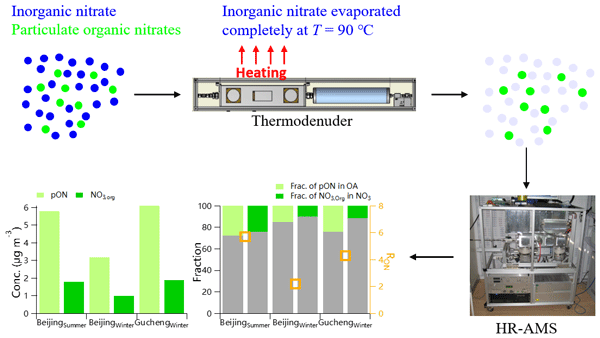
Weiqi Xu, Masayuki Takeuchi, Chun Chen, Yanmei Qiu, Conghui Xie, Wanyun Xu, Nan Ma, Douglas R. Worsnop, Nga Lee Ng, and Yele Sun
Atmos. Meas. Tech., 14, 3693–3705, https://doi.org/10.5194/amt-14-3693-2021, https://doi.org/10.5194/amt-14-3693-2021, 2021
Short summary
Short summary
Here we developed a method for estimation of particulate organic nitrates (pON) from the measurements of a high-resolution aerosol mass spectrometer coupled with a thermodenuder based on the volatility differences between inorganic nitrate and pON. The results generally had improvements in reducing negative values due to the influences of a high concentration of inorganic nitrate and a constant ratio of NO+ to NO2+ of organic nitrates (RON).
Max Gräfnings, Yuanyuan Luo, Jian Zhao, Claudia L. Cara-Ortega, Kirsten N. Fossum, Frans Graeffe, Lu Lei, Dagmar B. Stengel, Roseline C. Thakur, Jurgita Ovadnevaite, Mikael Ehn, and Camilla Gustafsson
EGUsphere, https://doi.org/10.5194/egusphere-2026-2159, https://doi.org/10.5194/egusphere-2026-2159, 2026
This preprint is open for discussion and under review for Biogeosciences (BG).
Short summary
Short summary
Biogenic volatile organic compounds emitted by Earth’s ecosystems have profound climate impacts, but emissions from marine benthic sources are poorly quantified. We quantified BVOC emission rates from three macrophytes across two contrasting marine regions and found highly diverse emission profiles with substantial intra‑ and interspecific variability. Our results underscore the need for more high-quality data, so that macrophyte emissions can eventually be integrated into marine BVOC budgets.
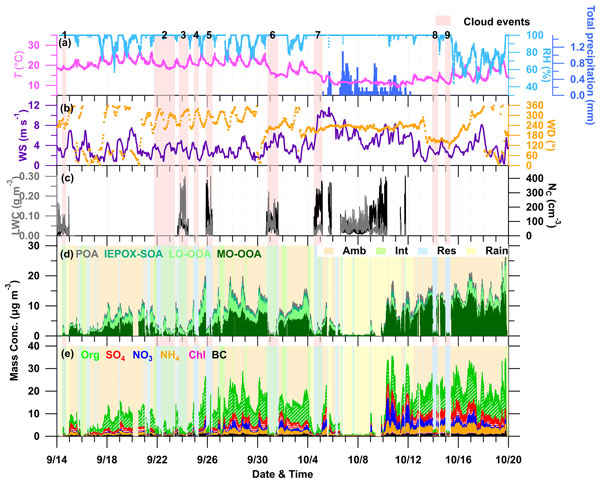
Yi Zhang, Weiqi Xu, Yan Li, Guohua Zhang, Dantong Liu, Ye Kuang, Yu Zhang, Wei Zhou, Xiaocong Peng, Bojiang Su, Weihong Huang, Zijun Zhang, Liu Yang, Yangzhou Wu, Siyuan Li, Shitong Zhao, Lanzhong Liu, Xiaole Pan, Zifa Wang, Xinhui Bi, Mikael Ehn, Douglas R. Worsnop, and Yele Sun
Atmos. Chem. Phys., 26, 5617–5634, https://doi.org/10.5194/acp-26-5617-2026, https://doi.org/10.5194/acp-26-5617-2026, 2026
Short summary
Short summary
This study explores how clouds influence the chemical composition of air particles through field research at a high-altitude station in southeastern China across different seasons. We found that different cloud types cause varying degrees of chemical changes in these particles. These findings enhance our understanding of the impact of clouds on air quality and contribute to improving climate models.
Jingye Ren, Songjian Zou, Honghao Xu, Guiquan Liu, Zhe Wang, Anran Zhang, Chuanfeng Zhao, Min Hu, Dongjie Shang, Lizi Tang, Ru-Jin Huang, Yele Sun, and Fang Zhang
EGUsphere, https://doi.org/10.5194/egusphere-2026-1347, https://doi.org/10.5194/egusphere-2026-1347, 2026
This preprint is open for discussion and under review for Geoscientific Model Development (GMD).
Short summary
Short summary
In this study, a new framework of cloud condensation nuclei (CCN) prediction in polluted region has been developed and it achieves well prediction of hourly-to-yearly scale across North China Plain. The study reveals the machine learning model can largely reduce the uncertainty in simulating cloud radiative forcing, illustrating the high sensitivity of climate forcing to changes in CCN. This improvement of our new model would be helpful to aerosols climate effect assessment in models.
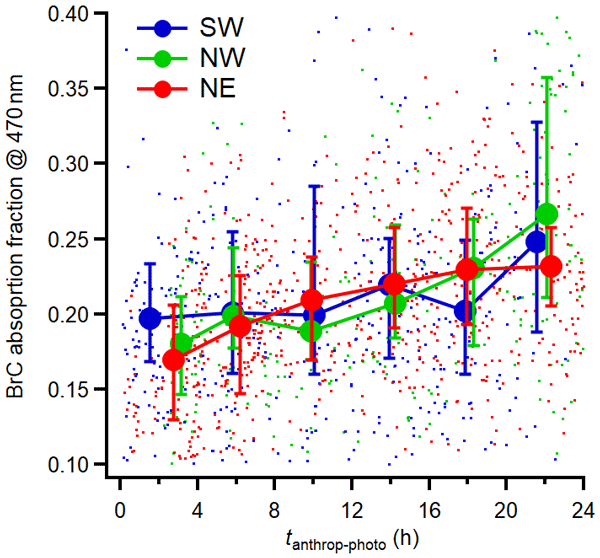
Chenjie Yu, Paola Formenti, Joel F. de Brito, Astrid Bauville, Antonin Bergé, Hichem Bouzidi, Mathieu Cazaunau, Manuela Cirtog, Claudia Di Biagio, Ludovico Di Antonio, Cécile Gaimoz, Franck Maisonneuve, Pascal Zapf, Tobias Seubert, Simone T. Andersen, Patrick Dewald, Gunther N. T. E. Türk, John N. Crowley, Alexandre Kukui, Chaoyang Xue, Cyrielle Denjean, Olivier Garrouste, Jean-Claude Etienne, Huihui Wu, James D. Allan, Dantong Liu, Yangzhou Wu, Christopher Cantrell, and Vincent Michoud
Atmos. Chem. Phys., 26, 5313–5332, https://doi.org/10.5194/acp-26-5313-2026, https://doi.org/10.5194/acp-26-5313-2026, 2026
Short summary
Short summary
We presented a field measurement in a Paris suburban forest region to characterise the impacts of photochemical aging process on aerosol physical chemical properties. Photochemical production of organic aerosols increased forest fine particle mass and significantly enhanced absorption of short-wavelength sunlight. This study highlights the critical need to incorporate light absorbing carbonaceous particles formation mechanisms into models to accurately simulate their direct radiative impacts.
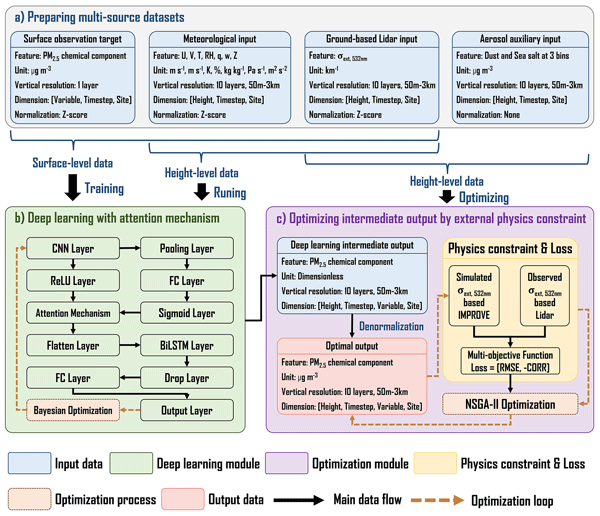
Hongyi Li, Ting Yang, Yele Sun, and Zifa Wang
Atmos. Meas. Tech., 19, 2225–2244, https://doi.org/10.5194/amt-19-2225-2026, https://doi.org/10.5194/amt-19-2225-2026, 2026
Short summary
Short summary
We develop a physics-constrained deep-learning framework to retrieve vertical profiles of particulate matter <2.5 µm chemical components from lidar measurements. Comparisons with surface, tower, and aircraft measurements validate the performance of the framework. A six-year vertical profile dataset generated for Beijing reveals that organic matter and nitrate are dominant chemical components. This work offers a new perspective on the lidar inversion of chemical component profiles.
Jiangyi Zhang, Yi Zhang, Hannu Koskenvaara, Jian Zhao, and Mikael Ehn
Atmos. Chem. Phys., 26, 3933–3949, https://doi.org/10.5194/acp-26-3933-2026, https://doi.org/10.5194/acp-26-3933-2026, 2026
Short summary
Short summary
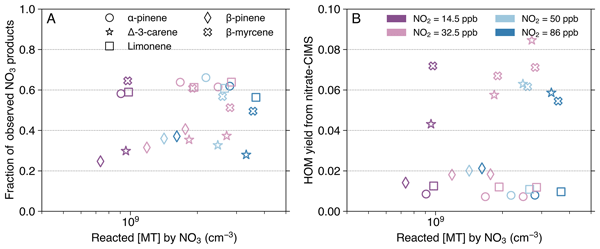
Using a free-jet flow-tube system, we observed a wide range of radicals and closed-shell products from NO3 oxidation of five monoterpenes (α-pinene, Δ-3-carene, limonene, β-pinene, and β-myrcene). Results highlight that the product formation is highly structure-dependent. Our study provides individual product yields, radical distributions, and HOM (highly oxygenated organic molecule) yields, which are all essential for correctly implementing monoterpene + NO3 oxidation mechanisms into models.
Lianfang Wei, Xueshun Chen, Wenyi Yang, Zhe Wang, Jie Li, Di Liu, Huiyun Du, Xiaole Pan, Yafang Cheng, Pingqing Fu, and Zifa Wang
EGUsphere, https://doi.org/10.5194/egusphere-2025-3649, https://doi.org/10.5194/egusphere-2025-3649, 2026
This preprint is open for discussion and under review for Atmospheric Chemistry and Physics (ACP).
Short summary
Short summary
1. We developed an isotope-enabled chemical transport model, which facilitates a comprehensive understanding of the sulfur isotope effects. 2. The isotope-enabled model reproduces the sulfur isotope effect and captures the spatiotemporal variations of δ34SO42− across Eastern China. 3. Our results help solve the mystery of the similarity of the isotopic composition between ambient samples and sulfur-containing fuels.
Qiu Wang, Tengyu Liu, Weiqi Xu, Jinbo Wang, Dafeng Ge, Caijun Zhu, Chuanhua Ren, Jiaping Wang, Qiaozhi Zha, Ximeng Qi, Wei Nie, Xuguang Chi, Sijia Lou, Xin Huang, and Aijun Ding
Atmos. Chem. Phys., 26, 3185–3194, https://doi.org/10.5194/acp-26-3185-2026, https://doi.org/10.5194/acp-26-3185-2026, 2026
Short summary
Short summary
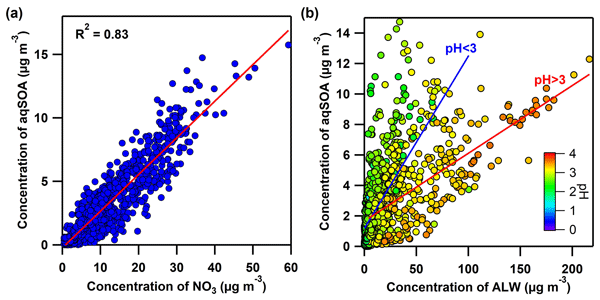
The sources and formation mechanisms of aqueous secondary organic aerosol (aqSOA) remain unclear. This study investigates the characteristics and processing of aqSOA in polluted suburban environments in Eastern China. The results highlight the critical roles of nitrate, aerosol liquid water, acidity, and photochemistry in aqSOA formation and contribute to an improved understanding of aqSOA formation in polluted environments.
Jingye Ren, Wei Xu, Ru-Jin Huang, Fang Zhang, Ying Wang, Lu Chen, Jurgita Ovadnevaite, Darius Ceburnis, Colin O'Dowd, and Yele Sun
Atmos. Chem. Phys., 26, 2985–3000, https://doi.org/10.5194/acp-26-2985-2026, https://doi.org/10.5194/acp-26-2985-2026, 2026
Short summary
Short summary
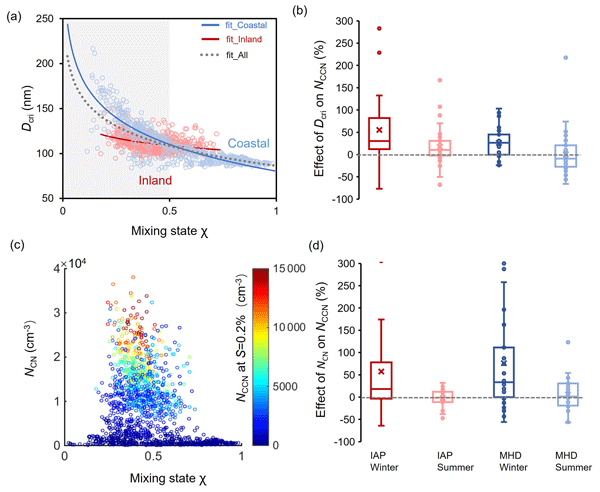
Impact of mixing state on cloud condensation nuclei (CCN) was incorporated in limited modeling with simplified assumption. This study derived a mixing state index from hygroscopicity and systematically investigated the covariation between the mixing state and CCN activity in inland and coastal air. We propose a practical approach for estimating critical diameter from mixing state index, applicable when the aerosol particles are not highly aged.
Yali Jin, Hao Luo, Siqi Tang, Shuhui Xue, Chengyu Nie, Xiaocong Peng, Yan Zheng, Weiqi Xu, Guohua Zhang, Xiaole Pan, Yele Sun, Qi Chen, Lanzhong Liu, and Defeng Zhao
Atmos. Chem. Phys., 26, 2813–2830, https://doi.org/10.5194/acp-26-2813-2026, https://doi.org/10.5194/acp-26-2813-2026, 2026
Short summary
Short summary
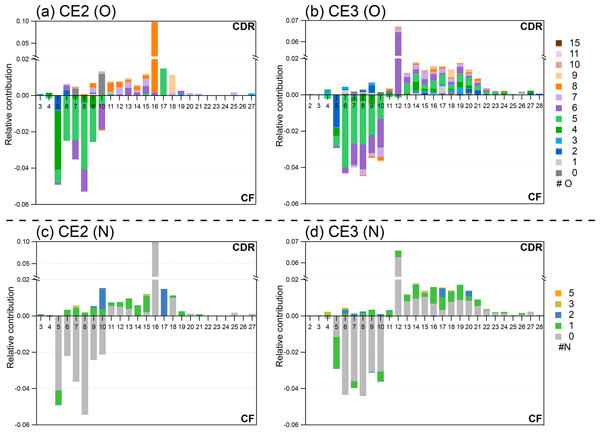
Cloud substantially changes the compositions organic aerosol. How cloud processing of organics occur on molecular level remains unclear. We found that compared with cloud free particles, organics in cloud contains more large molecules likely due to accretion reactions and has more nitrogen-containing compounds. We identify some new compounds formed in cloud. Such modifications of the organics in cloud can further change its physicochemical properties, and impact on climate and human health.

Wei Zhou, Liu Yang, Siqi Zeng, Yunping Kan, Lirong Yang, Weihong Zhang, Weijie Wang, Zijun Zhang, Yan Li, Weiqi Xu, Yucheng Gu, Yaozong Wang, Zhengyan Zuo, Jie Li, Zifa Wang, and Yele Sun
Atmos. Chem. Phys., 26, 2425–2441, https://doi.org/10.5194/acp-26-2425-2026, https://doi.org/10.5194/acp-26-2425-2026, 2026
Short summary
Short summary
Northwest China, situated in an arid and semi-arid climate region; air quality issues in this area have received less attention compared to other Chinese metropolitan clusters. This research identify a significant shift towards the coupling PM2.5 and O3 relationships over the past decade in northwest China, highlighting the great importance of urban terpenes and aromatic oxidation in secondary organic aerosol formation.

Loren G. Temple, Stuart Young, Thomas Bannan, Stephanie E. Batten, Stéphane Bauguitte, Hugh Coe, Eve Grant, Stuart E. Lacy, James D. Lee, Emily Matthews, Dominika Pasternak, Samuel D. A. Rogers, Andrew W. Rollins, Jake Vallow, Mingxi Yang, and Pete M. Edwards
Atmos. Meas. Tech., 19, 1165–1178, https://doi.org/10.5194/amt-19-1165-2026, https://doi.org/10.5194/amt-19-1165-2026, 2026
Short summary
Short summary
Sulfur dioxide (SO2) is a key precursor to aerosol formation, particularly in remote marine environments, ultimately affecting cloud properties and climate. Accurate quantification of atmospheric SO2 is therefore crucial. This work compares a custom-built laser-based instrument to two commercial SO2 analysers during measurements from a large research aircraft. Our results show that this custom-built system offers greater sensitivity at time resolutions required for aircraft measurements.
Weibin Zhu, Sai Shang, Jieqi Wang, Yunfei Wu, Zhaoze Deng, Liang Ran, Ye Kuang, Guiqian Tang, Xiangpeng Huang, Xiaole Pan, Lanzhong Liu, Weiqi Xu, Yele Sun, Bo Hu, Zifa Wang, and Zirui Liu
Atmos. Chem. Phys., 26, 1947–1965, https://doi.org/10.5194/acp-26-1947-2026, https://doi.org/10.5194/acp-26-1947-2026, 2026
Short summary
Short summary
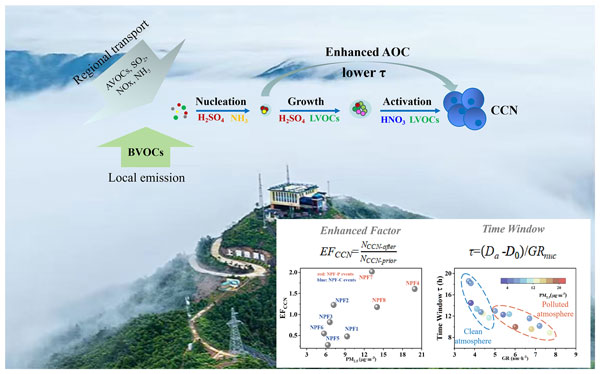
NPF (new particle formation) is a key global CCN (cloud condensation nuclei) source, but its contribution at the polluted boundary-layer top remains unclear. Based on mountaintop observations in the Yangtze River Delta, we show that under polluted conditions, NPF at the boundary-layer top is enhanced and accelerates its conversion to CCN. Ammonia plays a key role, and a newly defined "Time Window" metric highlights the importance of oxidation-driven growth and regional transport in this process.
Lindsay D. Yee, Emily B. Franklin, Robin J. Weber, Jessica Zhao, Tiger Zhang, Stephanie Xu, Isaac Santillan, Fangyuan Li, Coty N. Jen, Haofei Zhang, Yutong Liang, Gabriel Isaacman Van-Wertz, Rebecca A. Wernis, John Offenberg, Michael Lewandowski, Taekyu Joo, Masayuki Takeuchi, Gamze Eris, Weiqi Xu, Nga L. Ng, Yuzhi Chen, John E. Shilling, Mary Alice Upshur, Ariana Gray Bé, Regan J. Thomson, Franz M. Geiger, and Allen H. Goldstein
EGUsphere, https://doi.org/10.5194/egusphere-2026-116, https://doi.org/10.5194/egusphere-2026-116, 2026
Short summary
Short summary
An open-access mass spectral database of identified and unidentified compounds in atmospheric and laboratory-generated organic aerosols is released to aid in future molecular discoveries in the environmental sciences. Identification of air pollution sources and origins are improved using the ~27,000 mass spectral records in the UCB-GLOBES database.
Guochen Wang, Xuedong Cui, Bingye Xu, Can Wu, Minkang Zhi, Keliang Li, Liang Xu, Qi Yuan, Yuntao Wang, Yele Sun, Zongbo Shi, Akinori Ito, Shixian Zhai, and Weijun Li
Atmos. Chem. Phys., 26, 1483–1496, https://doi.org/10.5194/acp-26-1483-2026, https://doi.org/10.5194/acp-26-1483-2026, 2026
Short summary
Short summary
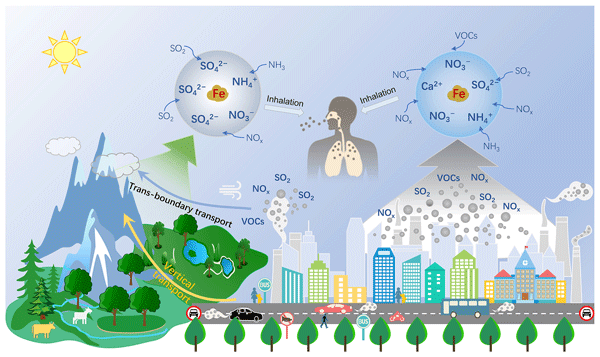
Iron acidification process is primarily driven by sulphuric acid in the upper mixing layer different from nitric acid at the ground-level. Enhanced atmospheric aging process contributes to high iron solubility in the upper mixing layer. Numerical models should consider vertical variations in iron dissolution to improve simulation accuracy.
Haoyuan Chen, Tao Song, Xiaodong Chen, Yinghong Wang, Mengtian Cheng, Kai Wang, Fuxin Liu, Baoxian Liu, Guiqian Tang, and Yuesi Wang
Atmos. Chem. Phys., 26, 1359–1371, https://doi.org/10.5194/acp-26-1359-2026, https://doi.org/10.5194/acp-26-1359-2026, 2026
Short summary
Short summary
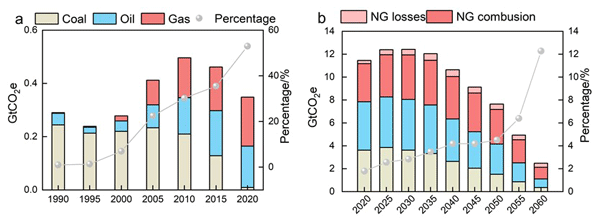
The methane leakage from natural gas may offset the reduced CO2 emissions from its combustion, To quantify its effect, we established the flux observation platform in Beijing, the results showed that natural gas has become a common source of both after the transformation of energy structure, the natural gas could escape during production, storage and use. Although the natural gas leakage rate is not high (1.12 %), the greenhouse effect caused by natural gas leakage can not be ignored.
Yuwei Wang, Aristeidis Voliotis, Emily Matthews, Rongrong Wu, Milan Roska, Max Gerrit Adam, René Dubus, Lukas Kesper, Franz Rohrer, Robert Wegener, Benjamin Winter, Kelvin H. Bates, Quanfu He, Thorsten Hohaus, Achim Grasse, Ralf Tillmann, Andreas Wahner, Hui Wang, Christian Wesolek, Sergej Wedel, Yizhen Wu, Sören R. Zorn, Manjula Canagaratna, Douglas Worsnop, Felipe Lopez-Hilfiker, Georgios I. Gkatzelis, Hugh Coe, and Thomas J. Bannan
EGUsphere, https://doi.org/10.5194/egusphere-2025-6102, https://doi.org/10.5194/egusphere-2025-6102, 2026
Short summary
Short summary
This work developed voltage scanning based calibration approach for a multi-reagent chemical ionization mass spectrometry. This approach improves sensitivity determination for gas-phase compounds. It does not require a calibrant for the target analyte and can estimate sensitivity with acceptable uncertainty based on the experimentally established relationship between binding energies and measured sensitivities. This work is broadly relevant to mass-spectrometric calibration strategies.
Jie Fang, Yunjiang Zhang, Didier Hauglustaine, Bo Zheng, Ming Wang, Jingyi Li, Yong Sun, Haiwei Li, Junfeng Wang, Yun Wu, Bin Yuan, Mindong Chen, and Xinlei Ge
Atmos. Chem. Phys., 26, 851–867, https://doi.org/10.5194/acp-26-851-2026, https://doi.org/10.5194/acp-26-851-2026, 2026
Short summary
Short summary
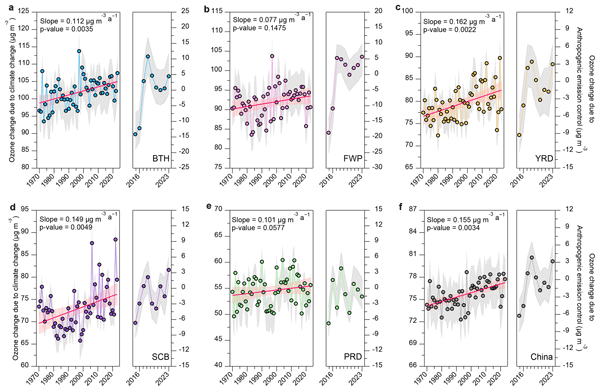
Surface ozone pollution is a pressing global challenge driven by human activities and a warming climate. Using nationwide observations (2013–2023) across China together with satellite data, we developed a new machine learning approach to decouple the impacts of emission controls and weather changes. Our results show that while emission reductions improved ozone in some regions, climate change is increasingly offsetting these gains, underscoring the need for joint air quality and climate actions.
Farhan R. Nursanto, Quanfu He, Sophia van de Wouw, Annika Zanders, Thorsten Hohaus, Willem S. J. Kroese, Robert Wegener, Max Gerrit Adam, Benjamin Winter, René Dubus, Lukas Kesper, Franz Rohrer, Yuwei Wang, Emily Matthews, Aristeidis Voliotis, Thomas J. Bannan, Gordon McFiggans, Hugh Coe, Yizhen Wu, Milan Roska, Manjula Canagaratna, Mitch Alton, Matthew M. Coggon, Chelsea E. Stockwell, Kelvin H. Bates, Eva Y. Pfannerstill, Sören R. Zorn, Hui Wang, Matthieu Riva, Sebastien Perrier, Boxing Yang, Lu Liu, Anna Novelli, Michelle Färber, Hendrik Fuchs, Andrea Carolina Marcillo Lara, Achim Grasse, Christian Wesolek, Ralf Tillmann, Rupert Holzinger, Maarten C. Krol, Georgios I. Gkatzelis, and Juliane L. Fry
EGUsphere, https://doi.org/10.5194/egusphere-2025-6310, https://doi.org/10.5194/egusphere-2025-6310, 2026
Short summary
Short summary
Urban air contains reactive gases that can form organic nitrate particles and carry nitrogen oxides pollution far from cities. We recreated urban emissions in a large atmospheric chamber and observed their reactions under day and night conditions. We found that these emissions form organic nitrate particles similar to those from natural sources, with higher amounts and heavier particles at night, making nitrogen pollution longer lived and likely to travel further before depositing on ecosystems.
Jialu Xu, Yingjie Zhang, Yuying Wang, Xing Yan, Bin Zhu, Chunsong Lu, Yuanjian Yang, Yele Sun, Junhui Zhang, Xiaofan Zuo, Zhanghanshu Han, and Rui Zhang
Atmos. Chem. Phys., 25, 18599–18616, https://doi.org/10.5194/acp-25-18599-2025, https://doi.org/10.5194/acp-25-18599-2025, 2025
Short summary
Short summary
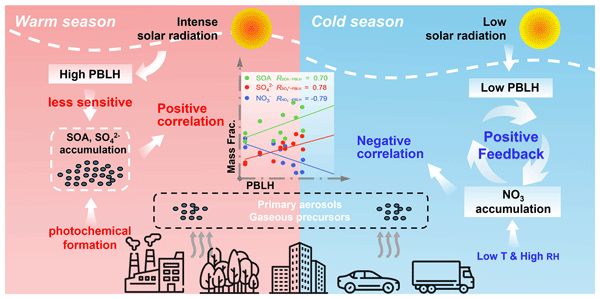
We conducted a year-long study in Nanjing to explore how the height of the atmospheric boundary layer affects fine particle pollution. We found that low boundary layers in winter trap pollutants like nitrate and primary particles, while higher layers in summer help form secondary pollutants like sulfate and organic aerosols. These findings show that boundary layer dynamics are key to understanding and managing seasonal air pollution.
Huihui Wu, Nicholas Marsden, Paul Connolly, Michael Flynn, Paul I. Williams, Declan Finney, Kezhen Hu, Graeme J. Nott, Navaneeth M. Thamban, Keith Bower, Alan Blyth, Martin Gallagher, and Hugh Coe
Atmos. Chem. Phys., 25, 18409–18429, https://doi.org/10.5194/acp-25-18409-2025, https://doi.org/10.5194/acp-25-18409-2025, 2025
Short summary
Short summary
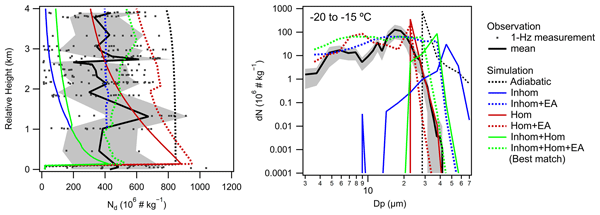
Airborne observations over the Magdalena Mountains in New Mexico underscore the combined influence of meteorological conditions and aerosol characteristics on the development of deep-convective clouds under different flow regimes. Model-observation comparisons emphasize the critical role of aerosol entrainment in reproducing the observed broad cloud droplet spectra. This study provides valuable constraints for improving parameterizations of aerosol-cloud interactions in deep convective systems.
Yutong Tian, Ting Yang, Hongyi Li, Ping Tian, Yifan Song, Jiancun He, Yining Tan, Yele Sun, and Zifa Wang
Atmos. Chem. Phys., 25, 17581–17594, https://doi.org/10.5194/acp-25-17581-2025, https://doi.org/10.5194/acp-25-17581-2025, 2025
Short summary
Short summary
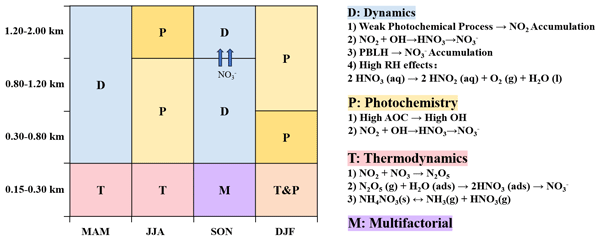
This study examines how nitrate pollution varies with height and season to combat urban haze. Nitrate levels peak near the ground in spring/winter due to humidity and temperature, while wind and sunlight drive high-altitude pollution in late autumn. Winter shows unique daytime peaks linked to sunlight and nighttime chemistry. Findings help cities design targeted strategies, like timing emissions cuts, to improve air quality by addressing pollution at specific heights and times.
Junhui Zhang, Yuying Wang, Jialu Xu, Xiaofan Zuo, Chunsong Lu, Bin Zhu, Yuanjian Yang, Xing Yan, and Yele Sun
Atmos. Chem. Phys., 25, 17413–17428, https://doi.org/10.5194/acp-25-17413-2025, https://doi.org/10.5194/acp-25-17413-2025, 2025
Short summary
Short summary
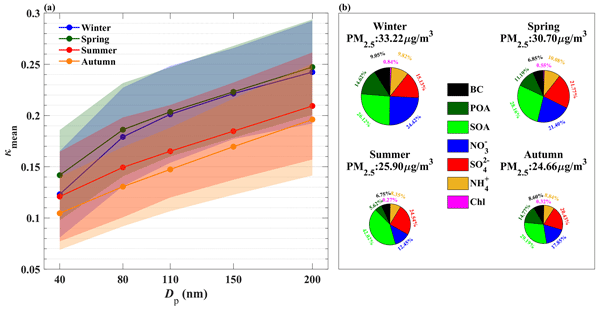
We conducted a year-long study in Nanjing to understand how tiny airborne particles take up water, which affects air quality and climate. We found that particle water uptake varies by season and size, with lower values in summer due to more organic materials. Local pollution mainly influences smaller particles, while larger ones are shaped by air mass transport. These findings help improve climate models and support better air pollution control in fast-growing cities.
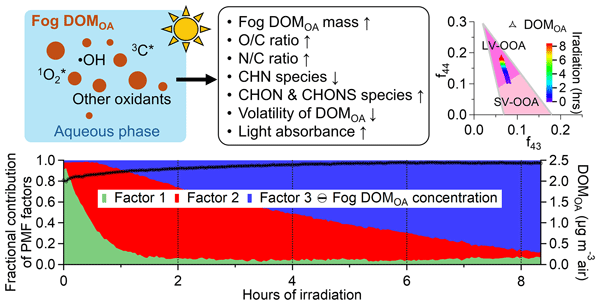
Wenqing Jiang, Lijuan Li, Lu Yu, Hwajin Kim, Yele Sun, and Qi Zhang
Atmos. Chem. Phys., 25, 16817–16832, https://doi.org/10.5194/acp-25-16817-2025, https://doi.org/10.5194/acp-25-16817-2025, 2025
Short summary
Short summary
We studied how sunlight changes natural organic matter in fog droplets and the tiny airborne particles formed after the water evaporation. Advanced analyses showed that sunlight makes this material more oxidized, nitrogen-enriched, chemically transformed, and different in light absorption and volatility. These sunlight-driven changes influence the particles’ behavior in the air, affecting air quality, climate, and how long they remain suspended in the atmosphere.
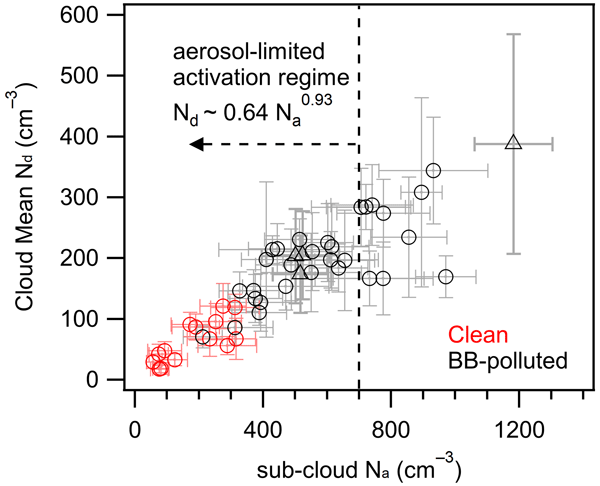
Huihui Wu, Fanny Peers, Jonathan W. Taylor, Chenjie Yu, Steven J. Abel, Paul A. Barrett, Jamie Trembath, Keith Bower, Jim M. Haywood, and Hugh Coe
Atmos. Chem. Phys., 25, 16589–16609, https://doi.org/10.5194/acp-25-16589-2025, https://doi.org/10.5194/acp-25-16589-2025, 2025
Short summary
Short summary
This study investigates the transport history of African Biomass-Burning aerosols (BBAs) over the Southeast Atlantic (SEA) and their impacts on cloud properties. Using in situ airborne measurements around Ascension Island, this work provides critical parameterizations of aerosol–cloud interactions to improve the assessment of radiative forcing in the SEA region. It also identifies key entrainment regions for understanding the vertical transport process of African BBAs.
Hua Zhang, Shuxiao Wang, Xi Zhao, Zhijun Wu, Yan Yin, Siyu Chen, Dantong Liu, Jingchuan Chen, Hui Jiang, Jiewen Shen, Da Gao, Dejia Yin, Yicong He, Zeqi Li, Shengyue Li, Zhaoxin Dong, Manish Shrivastava, and Bin Zhao
EGUsphere, https://doi.org/10.5194/egusphere-2025-5277, https://doi.org/10.5194/egusphere-2025-5277, 2025
Short summary
Short summary
Mineral dust can initiate ice formation in clouds, affecting cloud properties and regional climate. Using an improved model, we examined their contrasting impacts in mixed-phase and ice clouds over East Asia. In mixed-phase clouds, dust promotes liquid-to-ice conversion and reduces cloud reflectivity, causing moderate warming, whereas in ice clouds, it greatly enhances ice formation and leads to stronger warming. This study advances understanding of aerosol–cloud–climate interactions.
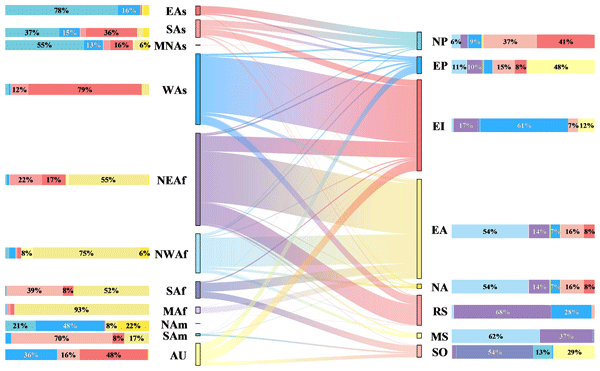
Yaxin Liu, Yunting Xiao, Lehui Cui, Qinghao Guo, Yiyang Sun, Pingqing Fu, Cong-Qiang Liu, and Jialei Zhu
Biogeosciences, 22, 6445–6464, https://doi.org/10.5194/bg-22-6445-2025, https://doi.org/10.5194/bg-22-6445-2025, 2025
Short summary
Short summary
Dust carries iron deposits into the ocean, providing essential nutrients for the growth of marine phytoplankton, influencing their carbon uptake capacity. A model constrained by global datasets on dust iron content, ocean iron solubility, and dissolved iron concentrations was used to assess the contributions of 11 major dust sources to carbon uptake in 8 marine areas, enhancing understanding of the impact of global dust emissions on marine deposition and carbon cycle with decreased uncertainty.
Mengjie Lou, Qizhong Wu, Wending Wang, Huansheng Chen, Kai Cao, Xiaohan Fan, Dingyue Liang, Fenfen Yu, Jiating Zhang, Wei Wang, and Zifa Wang
EGUsphere, https://doi.org/10.5194/egusphere-2025-4441, https://doi.org/10.5194/egusphere-2025-4441, 2025
Preprint archived
Short summary
Short summary
This study compares the performance of the independently developed EPICC-Model with CAMx and CMAQ in simulating PM2.5 and O3 in China. It finds that EPICC-Model excels in simulating summer ozone peaks, accurately captures pollution characteristics in highly polluted areas, and better reproduces persistent compound pollution processes. Furthermore, this study reveals common issues among the models and directions for improvement, providing a basis for optimizing global air quality models.
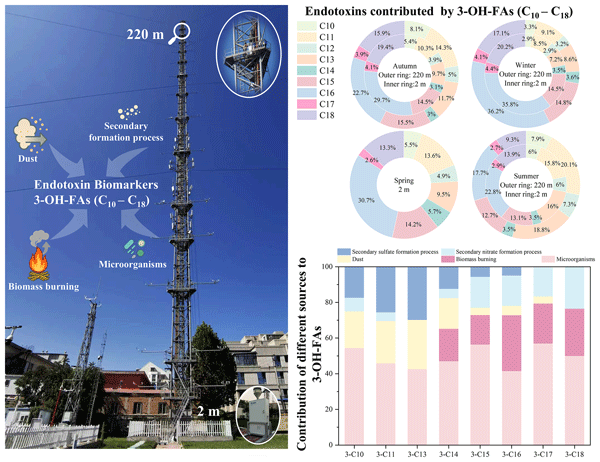
Wenxin Zhang, Wei Hu, Mutong Niu, Quanfei Zhu, Na An, Qiang Zhang, Rui Jin, Xiaoli Fu, Jian Hao, Jianbo Yang, Jingle Liu, Jing Shi, Suqin Han, Junjun Deng, Libin Wu, Yuqi Feng, Kimitaka Kawamura, and Pingqing Fu
Atmos. Chem. Phys., 25, 14513–14533, https://doi.org/10.5194/acp-25-14513-2025, https://doi.org/10.5194/acp-25-14513-2025, 2025
Short summary
Short summary
We quantified 3-hydroxy fatty acids (3-OH-FAs) in PM10 from urban Tianjin to assess airborne endotoxins, which showed clear seasonal and vertical variations. Mid-chain 3-OH-FAs were linked to microorganisms and regional secondary processes, while long-chain species were more associated with biomass burning and local secondary formation. These findings highlight distinct source pathways of 3-OH-FAs and provide insights into airborne endotoxins in urban environments.
Fei Zhang, Xingcai Li, Zifa Wang, Yunyun Wen, Xuyang Zhou, Zichen Wu, Zhuoran Wang, Huansheng Chen, Zhe Wang, and Xueshun Chen
EGUsphere, https://doi.org/10.5194/egusphere-2025-4439, https://doi.org/10.5194/egusphere-2025-4439, 2025
Short summary
Short summary
Solar power generation depends on weather conditions and photovoltaic modules, making accurate forecasts crucial for reliable grid operation. We combined weather prediction and artificial intelligence to improve the solar power prediction at different time scales for a plant. By improving sunlight predictions and incorporating physical constraints into the model, our approach reduced errors significantly. This can help integrate clean energy into power grids safely and efficiently.
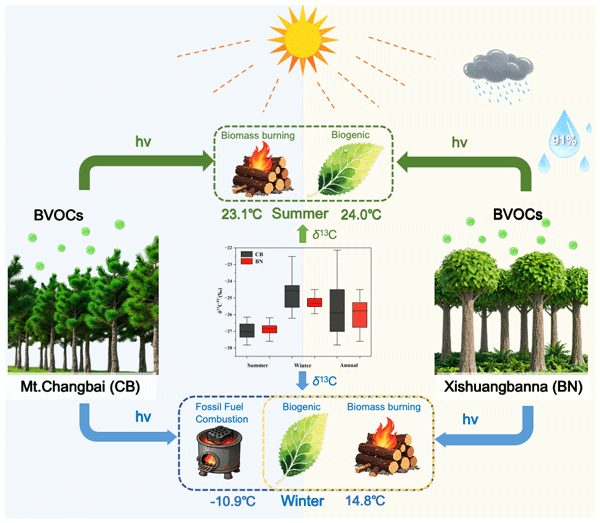
Mingyu Li, Zhanjie Xu, Zhichao Dong, Junjun Deng, Pingqing Fu, and Chandra Mouli Pavuluri
Biogeosciences, 22, 5329–5347, https://doi.org/10.5194/bg-22-5329-2025, https://doi.org/10.5194/bg-22-5329-2025, 2025
Short summary
Short summary
This study investigated the seasonal and diurnal variability of fine aerosol composition in two forest ecosystems in North and South China. Carbonaceous/nitrogenous compound concentrations were higher in winter than summer at both sites. The forest fine aerosols in high latitude exhibited significantly greater influence from fossil fuel combustion compared to that in low latitude.
Kai Cao, Qizhong Wu, Xiao Tang, Jinxi Li, Xueshun Chen, Huansheng Chen, Wending Wang, Huangjian Wu, Lei Kong, Jie Li, Jiang Zhu, and Zifa Wang
EGUsphere, https://doi.org/10.5194/egusphere-2025-2918, https://doi.org/10.5194/egusphere-2025-2918, 2025
Preprint archived
Short summary
Short summary
This study achieves significant acceleration by developing an optimized advection module for Emission and atmospheric Processes Integrated and Coupled Community Model on GPU-like accelerators. Through implementing thread-block coordinated indexing, minimizing CPU-GPU communication, and an hybrid parallelization framework, we demonstrate prominent speedups: 556.5× faster offline performance for the Heterogeneous Interface PPM solver and 20.5× acceleration in coupled simulations.
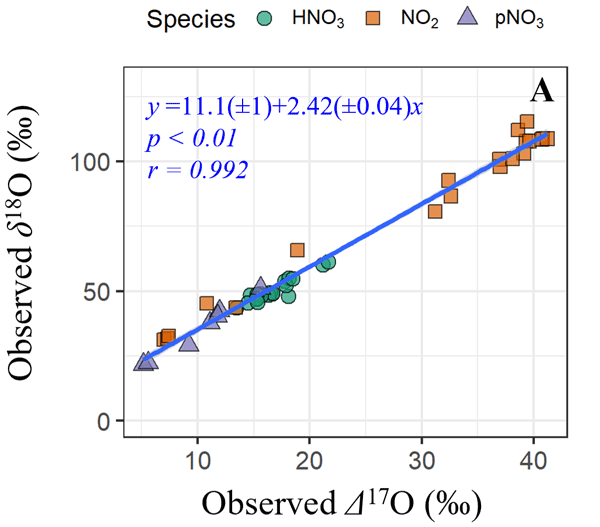
Wendell W. Walters, Masayuki Takeuchi, Danielle E. Blum, Gamze Eris, David Tanner, Weiqi Xu, Jean Rivera-Rios, Fobang Liu, Tianchang Xu, Greg Huey, Justin B. Min, Rodney Weber, Nga L. Ng, and Meredith G. Hastings
Atmos. Chem. Phys., 25, 10707–10730, https://doi.org/10.5194/acp-25-10707-2025, https://doi.org/10.5194/acp-25-10707-2025, 2025
Short summary
Short summary
We studied how chemicals released from plants and pollution interact in the atmosphere, affecting air quality and climate. By combining laboratory experiments and chemistry models, we tracked unique chemical fingerprints to understand how nitrogen compounds transform to form particles in the air. Our findings help explain the role of these reactions in pollution and provide tools to improve predictions for cleaner air and better climate policies.
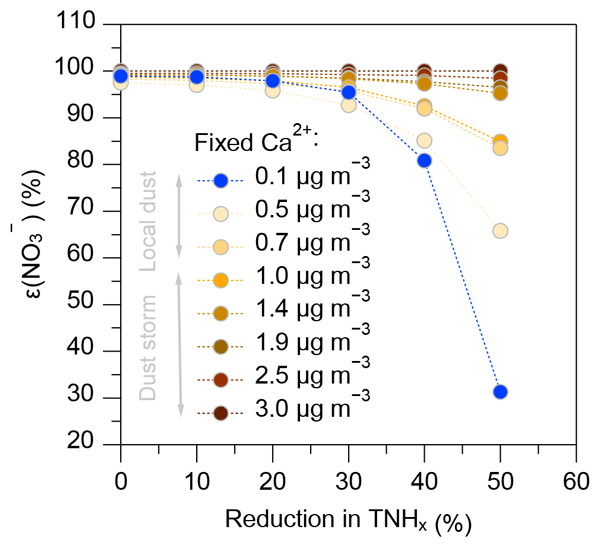
Hanrui Lang, Yunjiang Zhang, Sheng Zhong, Yongcai Rao, Minfeng Zhou, Jian Qiu, Jingyi Li, Diwen Liu, Florian Couvidat, Olivier Favez, Didier Hauglustaine, and Xinlei Ge
Atmos. Chem. Phys., 25, 10587–10601, https://doi.org/10.5194/acp-25-10587-2025, https://doi.org/10.5194/acp-25-10587-2025, 2025
Short summary
Short summary
This study investigates how dust pollution influences particulate nitrate formation. We found that dust pollution could reduce the effectiveness of ammonia emission controls by altering aerosol chemistry. Using field observations and modeling, we showed that dust particles affect nitrate distribution between gas and particle phases. Our findings highlight the need for pollution control strategies that consider both human emissions and dust sources for better urban air quality management.
Hongyi Li, Ting Yang, Lei Kong, Di Zhang, Guigang Tang, and Zifa Wang
EGUsphere, https://doi.org/10.5194/egusphere-2025-3960, https://doi.org/10.5194/egusphere-2025-3960, 2025
Short summary
Short summary
Chemical transport model-based data assimilation is computationally inefficient for large ensemble sizes and offers limited improvements in forecasting PM2.5 chemical components. This paper introduces a machine learning-based data assimilation system that facilitates rapid iterations for forecasting, assimilation, and incremental learning. Results show that our system achieves superior efficiency and accuracy in forecasting and assimilation compared to traditional data assimilation.
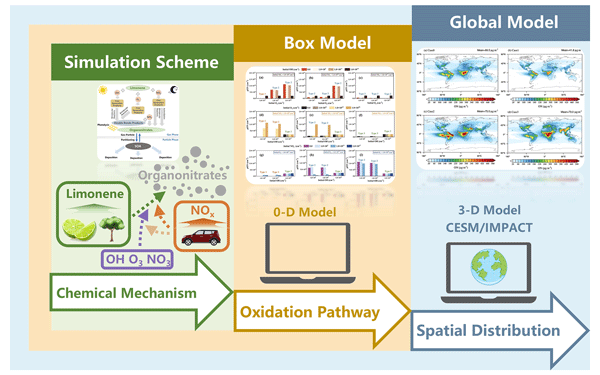
Qinghao Guo, Haofei Zhang, Bo Long, Lehui Cui, Yiyang Sun, Hao Liu, Yaxin Liu, Yunting Xiao, Pingqing Fu, and Jialei Zhu
Atmos. Chem. Phys., 25, 9249–9262, https://doi.org/10.5194/acp-25-9249-2025, https://doi.org/10.5194/acp-25-9249-2025, 2025
Short summary
Short summary
Limonene, a natural compound from plants, reacts with pollutants to form airborne particles that influence air quality and climate. Using advanced models with explicit chemical mechanisms, we show how different reaction pathways shape organonitrate formation, with some increasing and others decreasing particle levels. This approach enhances predictions of pollution and climate impacts while deepening our understanding of how natural and human-made emissions interact in the atmosphere.
Xi Chen, Ke Li, Ting Yang, Xipeng Jin, Lei Chen, Yang Yang, Shuman Zhao, Bo Hu, Bin Zhu, Zifa Wang, and Hong Liao
Atmos. Chem. Phys., 25, 9151–9168, https://doi.org/10.5194/acp-25-9151-2025, https://doi.org/10.5194/acp-25-9151-2025, 2025
Short summary
Short summary
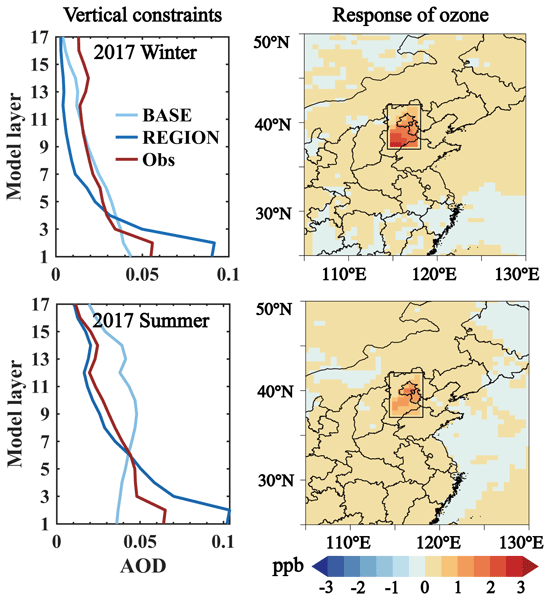
Aerosol vertical distribution that plays a crucial role in aerosol–photolysis interaction (API) remains underrepresented in chemical models. We integrated lidar and radiosonde observations to constrain the simulated aerosol profiles over North China and quantified the photochemical responses. The increased photolysis rates in the lower layers led to increased ozone and accounted for a 36 %–56 % reduction in API effects, resulting in enhanced atmospheric oxidizing capacity and aerosol formation.
John W. Halfacre, Lewis Marden, Marvin D. Shaw, Lucy J. Carpenter, Emily Matthews, Thomas J. Bannan, Hugh Coe, Scott C. Herndon, Joseph R. Roscioli, Christoph Dyroff, Tara I. Yacovitch, Patrick R. Veres, Michael A. Robinson, Steven S. Brown, and Pete M. Edwards
Atmos. Meas. Tech., 18, 3799–3818, https://doi.org/10.5194/amt-18-3799-2025, https://doi.org/10.5194/amt-18-3799-2025, 2025
Short summary
Short summary
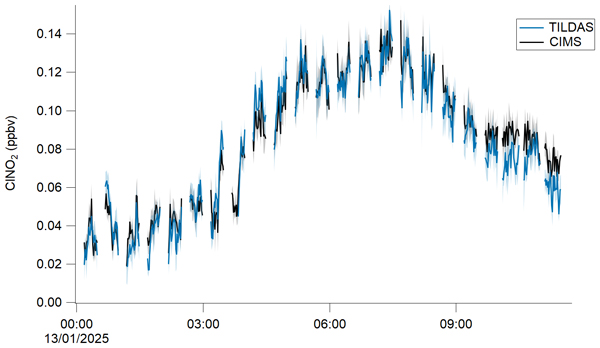
Nitryl chloride (ClNO2) is a reservoir of chlorine atoms and nitrogen oxides, both of which play important roles in atmospheric chemistry. However, all ambient ClNO2 observations so far have been made by a single technique, mass spectrometry, which needs complex calibrations. Here, we present a laser-based method that detects ClNO2 (TD-TILDAS – thermal dissociation–tunable infrared laser direct absorption spectrometry) without the need for complicated calibrations. The results show excellent agreement between these two methods from both laboratory and ambient samples.
Yu Huang, Xingru Li, Dan Dan Huang, Ruoyuan Lei, Binhuang Zhou, Yunjiang Zhang, and Xinlei Ge
Atmos. Chem. Phys., 25, 7619–7645, https://doi.org/10.5194/acp-25-7619-2025, https://doi.org/10.5194/acp-25-7619-2025, 2025
Short summary
Short summary
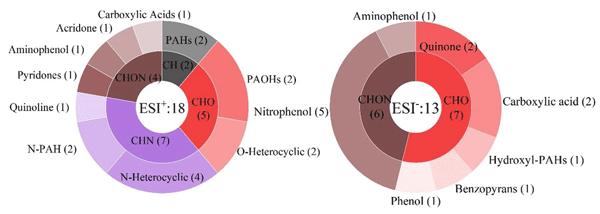
This work comprises a comprehensive investigation into the chemical and optical properties of brown carbon (BrC) in PM2.5 samples collected in Nanjing, China. In particular, we used a machine learning approach to identify a list of key BrC species, which can be a good reference for future studies. Our findings extend understanding of BrC properties and are valuable to the assessment of BrC's impact on air quality and radiative forcing.
Qingxiao Meng, Yunjiang Zhang, Sheng Zhong, Jie Fang, Lili Tang, Yongcai Rao, Minfeng Zhou, Jian Qiu, Xiaofeng Xu, Jean-Eudes Petit, Olivier Favez, and Xinlei Ge
Atmos. Chem. Phys., 25, 7485–7498, https://doi.org/10.5194/acp-25-7485-2025, https://doi.org/10.5194/acp-25-7485-2025, 2025
Short summary
Short summary
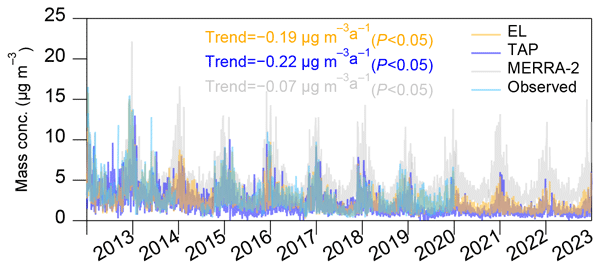
We developed a machine-learning-based method to reconstruct missing elemental carbon (EC) data in four Chinese cities from 2013 to 2023. Using machine learning, we filled data gaps and introduced a new approach to analyze EC trends. Our findings reveal a significant decline in EC due to stricter pollution controls, though this slowed after 2020. This study provides a versatile framework for addressing data gaps and supports strategies to reduce urban air pollution and its climate impacts.
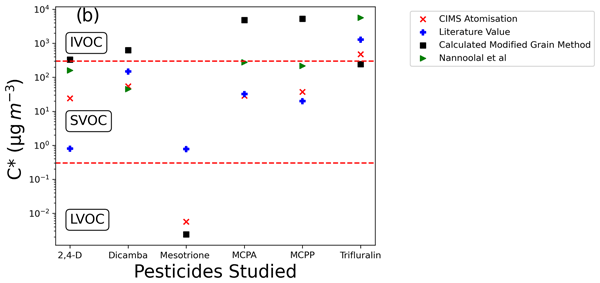
Olivia M. Jackson, Aristeidis Voliotis, Thomas J. Bannan, Simon P. O'Meara, Gordon McFiggans, Dave Johnson, and Hugh Coe
Atmos. Chem. Phys., 25, 6257–6272, https://doi.org/10.5194/acp-25-6257-2025, https://doi.org/10.5194/acp-25-6257-2025, 2025
Short summary
Short summary
This paper details a novel method of measuring the volatility of pesticides using the Filter Inlet for Gases and AEROsols coupled with a chemical ionisation mass spectrometer (FIGAERO-CIMS) calibrated using a set of poly(ethylene) glycols. This is compared to literature values and common models. The results show that the method used primarily matches current literature values. Additionally, a pesticide’s volatility as an indicator of the likelihood of atmospheric transport occurring is explored.
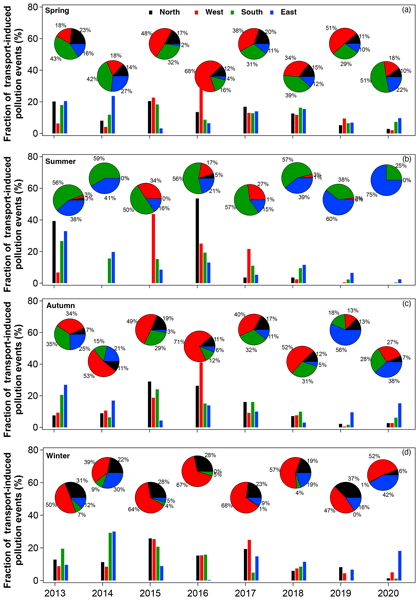
Kang Hu, Hong Liao, Dantong Liu, Jianbing Jin, Lei Chen, Siyuan Li, Yangzhou Wu, Changhao Wu, Shitong Zhao, Xiaotong Jiang, Ping Tian, Kai Bi, Ye Wang, and Delong Zhao
Geosci. Model Dev., 18, 3623–3634, https://doi.org/10.5194/gmd-18-3623-2025, https://doi.org/10.5194/gmd-18-3623-2025, 2025
Short summary
Short summary
This study combines machine learning with concentration-weighted trajectory analysis to quantify regional transport PM2.5. From 2013–2020, local emissions dominated Beijing's pollution events. The Air Pollution Prevention and Control Action Plan reduced regional transport pollution, but the eastern region showed the smallest decrease. Beijing should prioritize local emission reduction while considering the east region's contributions in future strategies.
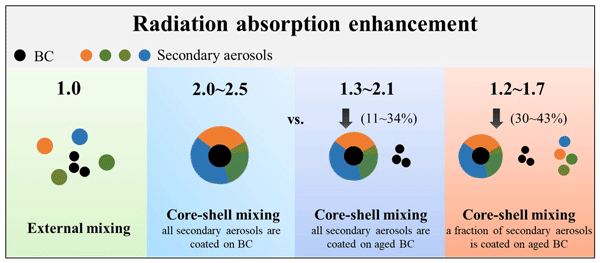
Huiyun Du, Jie Li, Xueshun Chen, Gabriele Curci, Fangqun Yu, Yele Sun, Xu Dao, Song Guo, Zhe Wang, Wenyi Yang, Lianfang Wei, and Zifa Wang
Atmos. Chem. Phys., 25, 5665–5681, https://doi.org/10.5194/acp-25-5665-2025, https://doi.org/10.5194/acp-25-5665-2025, 2025
Short summary
Short summary
Inadequate consideration of mixing states and coatings on black carbon (BC) hinders aerosol radiation forcing quantification. Core–shell mixing aligns well with observations, but partial internal mixing is a more realistic representation. We used a microphysics module to determine the fraction of embedded BC and coating aerosols, constraining the mixing state. This reduced absorption enhancement by 30 %–43 % in northern China, offering insights into BC's radiative effects.
Jingye Ren, Songjian Zou, Honghao Xu, Guiquan Liu, Zhe Wang, Anran Zhang, Chuanfeng Zhao, Min Hu, Dongjie Shang, Lizi Tang, Ru-Jin Huang, Yele Sun, and Fang Zhang
EGUsphere, https://doi.org/10.5194/egusphere-2025-1483, https://doi.org/10.5194/egusphere-2025-1483, 2025
Preprint archived
Short summary
Short summary
In this study, a new framework of cloud condensation nuclei (CCN) prediction in polluted region has been developed and it achieves well prediction of hourly-to-yearly scale across North China Plain. The study reveals a significant long-term decreasing trend of CCN concentration at typical supersaturations due to a rapid reduction in aerosol concentrations from 2014 to 2018. This improvement of our new model would be helpful to aerosols climate effect assessment in models.
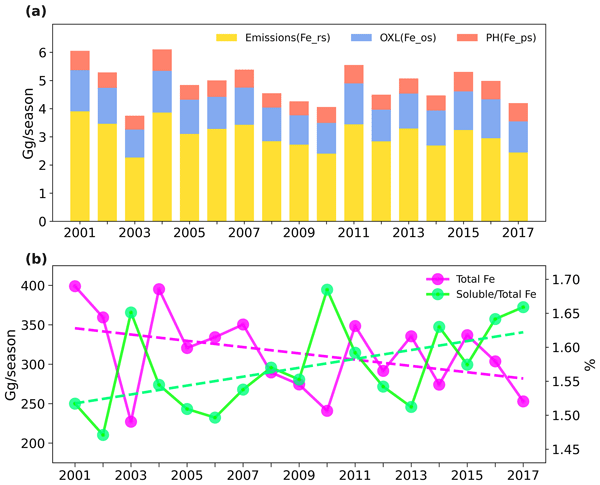
Hanzheng Zhu, Yaman Liu, Man Yue, Shihui Feng, Pingqing Fu, Kan Huang, Xinyi Dong, and Minghuai Wang
Atmos. Chem. Phys., 25, 5175–5197, https://doi.org/10.5194/acp-25-5175-2025, https://doi.org/10.5194/acp-25-5175-2025, 2025
Short summary
Short summary
Dust-soluble iron deposition from East Asia plays an important role in the marine ecology of the Northwest Pacific. Using the developed model, our findings highlight a dual trend: a decrease in the overall deposition of soluble iron from dust but an increase in the solubility of the iron itself due to the enhanced atmospheric processing. The study underscores the critical roles of both dust emission and atmospheric processing in soluble iron deposition and marine ecology.
Zhichao Dong, Subba Rao Devineni, Xiaoli Fu, Zhanjie Xu, Mingyu Li, Pingqing Fu, Cong-Qiang Liu, and Chandra Mouli Pavuluri
EGUsphere, https://doi.org/10.5194/egusphere-2025-899, https://doi.org/10.5194/egusphere-2025-899, 2025
Preprint archived
Short summary
Short summary
We developed new method to detect and measure organosulfates in PM2.5. By synthesizing organosulfates and combining them with commercial standards, we improved detection accuracy. Testing air samples from Tianjin, China, we found wintertime levels of organosulfates were much higher than in other regions. Our results show how human actions directly impact air quality and provide a tool to track pollution sources. This work helps scientists understand and address harmful aerosols in environments.
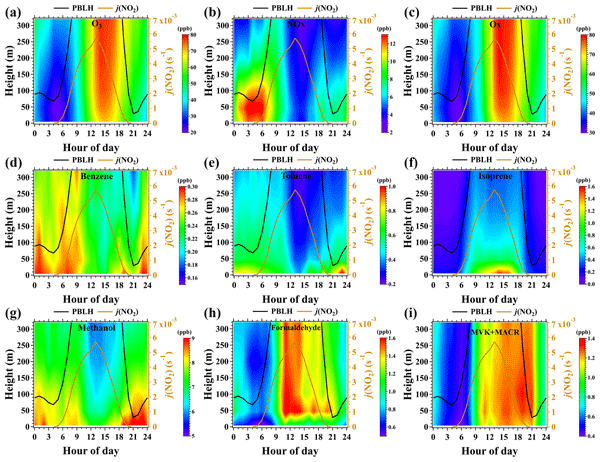
Xiao-Bing Li, Bin Yuan, Yibo Huangfu, Suxia Yang, Xin Song, Jipeng Qi, Xianjun He, Sihang Wang, Yubin Chen, Qing Yang, Yongxin Song, Yuwen Peng, Guiqian Tang, Jian Gao, Dasa Gu, and Min Shao
Atmos. Chem. Phys., 25, 2459–2472, https://doi.org/10.5194/acp-25-2459-2025, https://doi.org/10.5194/acp-25-2459-2025, 2025
Short summary
Short summary
Online vertical gradient measurements of volatile organic compounds (VOCs), ozone, and NOx were conducted based on a 325 m tall tower in urban Beijing. Vertical changes in the concentrations, compositions, key drivers, and environmental impacts of VOCs were analyzed in this study. We find that VOC species display differentiated vertical variation patterns and distinct roles in contributing to photochemical ozone formation with increasing height in the urban planetary boundary layer.
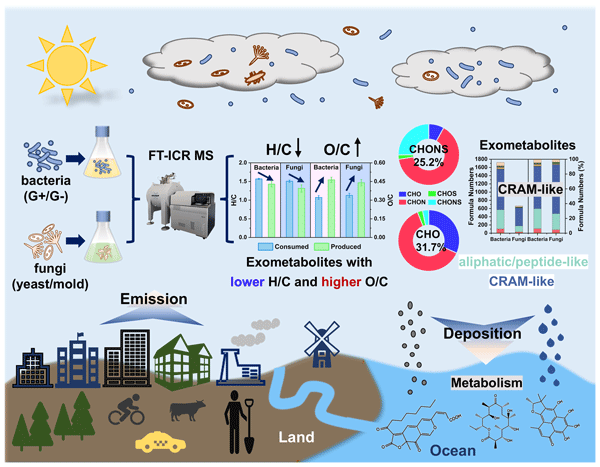
Rui Jin, Wei Hu, Peimin Duan, Ming Sheng, Dandan Liu, Ziye Huang, Mutong Niu, Libin Wu, Junjun Deng, and Pingqing Fu
Atmos. Chem. Phys., 25, 1805–1829, https://doi.org/10.5194/acp-25-1805-2025, https://doi.org/10.5194/acp-25-1805-2025, 2025
Short summary
Short summary
The metabolic capacity of atmospheric microorganisms after settling into habitats is poorly understood. We studied the molecular composition of exometabolites for cultured typical airborne microbes and traced their metabolic processes. Bacteria and fungi produce highly oxidized exometabolites and have significant variations in metabolism among different strains. These insights are pivotal for assessing the biogeochemical impacts of atmospheric microorganisms following their deposition.
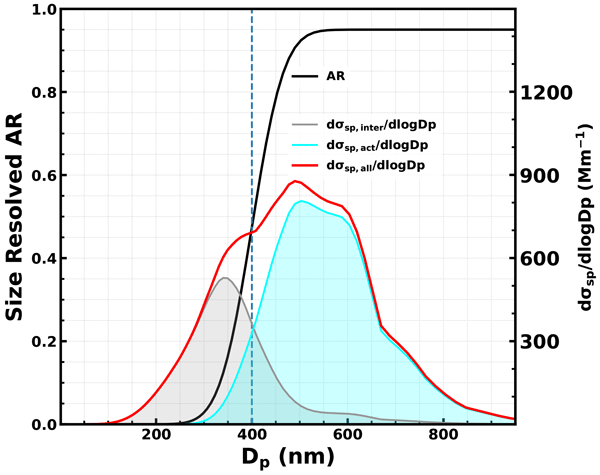
Ye Kuang, Jiangchuan Tao, Hanbing Xu, Li Liu, Pengfei Liu, Wanyun Xu, Weiqi Xu, Yele Sun, and Chunsheng Zhao
Atmos. Chem. Phys., 25, 1163–1174, https://doi.org/10.5194/acp-25-1163-2025, https://doi.org/10.5194/acp-25-1163-2025, 2025
Short summary
Short summary
This study presents a novel optical framework to measure supersaturation, a fundamental parameter in cloud physics, by observing the scattering properties of particles that have or have not grown into cloud droplets. The technique offers high-resolution measurements, capturing essential fluctuations in supersaturation necessary for understanding cloud physics.
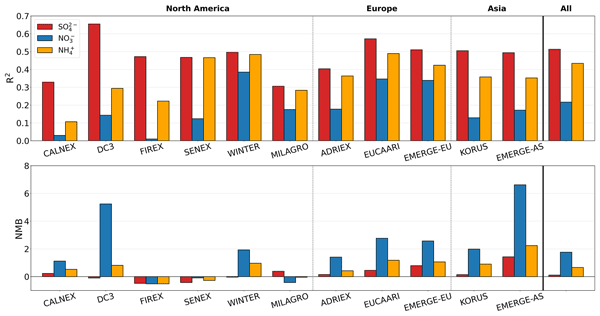
Olivia G. Norman, Colette L. Heald, Solomon Bililign, Pedro Campuzano-Jost, Hugh Coe, Marc N. Fiddler, Jaime R. Green, Jose L. Jimenez, Katharina Kaiser, Jin Liao, Ann M. Middlebrook, Benjamin A. Nault, John B. Nowak, Johannes Schneider, and André Welti
Atmos. Chem. Phys., 25, 771–795, https://doi.org/10.5194/acp-25-771-2025, https://doi.org/10.5194/acp-25-771-2025, 2025
Short summary
Short summary
This study finds that one component of secondary inorganic aerosols, nitrate, is greatly overestimated by a global atmospheric chemistry model compared to observations from 11 flight campaigns. None of the loss and production pathways explored can explain the nitrate bias alone. The model’s inability to capture the variability in the observations remains and requires future investigation to avoid biases in policy-related studies (i.e., air quality, health, climate impacts of these aerosols).
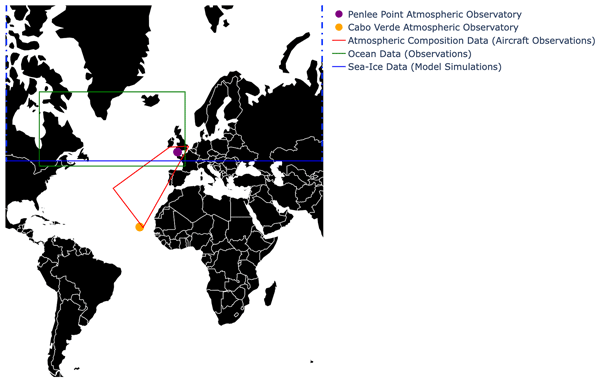
Alex T. Archibald, Bablu Sinha, Maria R. Russo, Emily Matthews, Freya A. Squires, N. Luke Abraham, Stephane J.-B. Bauguitte, Thomas J. Bannan, Thomas G. Bell, David Berry, Lucy J. Carpenter, Hugh Coe, Andrew Coward, Peter Edwards, Daniel Feltham, Dwayne Heard, Jim Hopkins, James Keeble, Elizabeth C. Kent, Brian A. King, Isobel R. Lawrence, James Lee, Claire R. Macintosh, Alex Megann, Bengamin I. Moat, Katie Read, Chris Reed, Malcolm J. Roberts, Reinhard Schiemann, David Schroeder, Timothy J. Smyth, Loren Temple, Navaneeth Thamban, Lisa Whalley, Simon Williams, Huihui Wu, and Mingxi Yang
Earth Syst. Sci. Data, 17, 135–164, https://doi.org/10.5194/essd-17-135-2025, https://doi.org/10.5194/essd-17-135-2025, 2025
Short summary
Short summary
Here, we present an overview of the data generated as part of the North Atlantic Climate System Integrated Study (ACSIS) programme that are available through dedicated repositories at the Centre for Environmental Data Analysis (CEDA; www.ceda.ac.uk) and the British Oceanographic Data Centre (BODC; bodc.ac.uk). The datasets described here cover the North Atlantic Ocean, the atmosphere above (it including its composition), and Arctic sea ice.
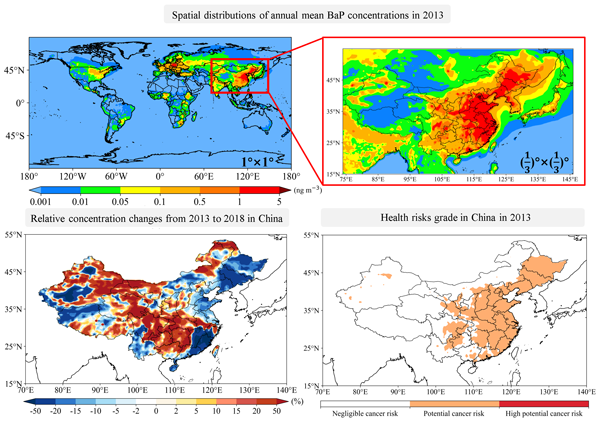
Zichen Wu, Xueshun Chen, Zifa Wang, Huansheng Chen, Zhe Wang, Qing Mu, Lin Wu, Wending Wang, Xiao Tang, Jie Li, Ying Li, Qizhong Wu, Yang Wang, Zhiyin Zou, and Zijian Jiang
Geosci. Model Dev., 17, 8885–8907, https://doi.org/10.5194/gmd-17-8885-2024, https://doi.org/10.5194/gmd-17-8885-2024, 2024
Short summary
Short summary
We developed a model to simulate polycyclic aromatic hydrocarbons (PAHs) from global to regional scales. The model can reproduce PAH distribution well. The concentration of BaP (indicator species for PAHs) could exceed the target values of 1 ng m-3 over some areas (e.g., in central Europe, India, and eastern China). The change in BaP is lower than that in PM2.5 from 2013 to 2018. China still faces significant potential health risks posed by BaP although the Action Plan has been implemented.
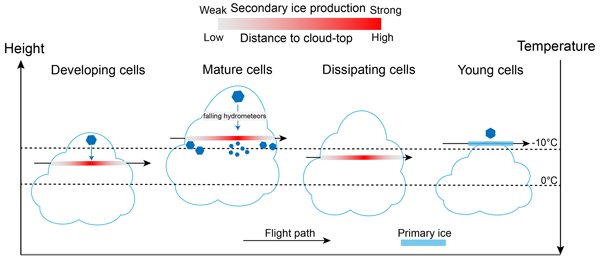
Yuanmou Du, Dantong Liu, Delong Zhao, Mengyu Huang, Ping Tian, Dian Wen, Wei Xiao, Wei Zhou, Hui He, Baiwan Pan, Dongfei Zuo, Xiange Liu, Yingying Jing, Rong Zhang, Jiujiang Sheng, Fei Wang, Yu Huang, Yunbo Chen, and Deping Ding
Atmos. Chem. Phys., 24, 13429–13444, https://doi.org/10.5194/acp-24-13429-2024, https://doi.org/10.5194/acp-24-13429-2024, 2024
Short summary
Short summary
By conducting in situ measurements, we investigated ice production processes in stratiform clouds with embedded convection over the North China Plain. The results show that the ice number concentration is strongly related to the distance to the cloud top, and the level with a larger distance to the cloud top has more graupel falling from upper levels, which promotes collision and coalescence between graupel and droplets and enhances secondary ice production.
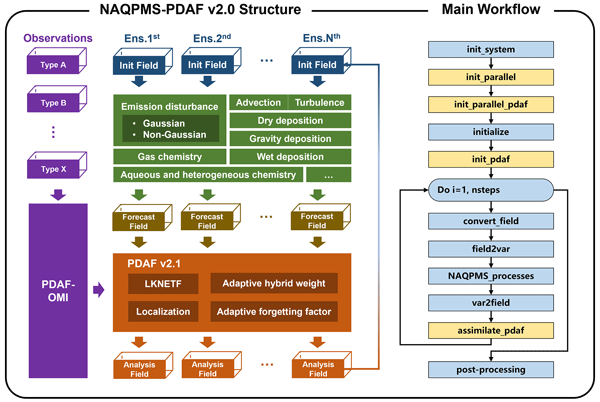
Hongyi Li, Ting Yang, Lars Nerger, Dawei Zhang, Di Zhang, Guigang Tang, Haibo Wang, Yele Sun, Pingqing Fu, Hang Su, and Zifa Wang
Geosci. Model Dev., 17, 8495–8519, https://doi.org/10.5194/gmd-17-8495-2024, https://doi.org/10.5194/gmd-17-8495-2024, 2024
Short summary
Short summary
To accurately characterize the spatiotemporal distribution of particulate matter <2.5 µm chemical components, we developed the Nested Air Quality Prediction Model System with the Parallel Data Assimilation Framework (NAQPMS-PDAF) v2.0 for chemical components with non-Gaussian and nonlinear properties. NAQPMS-PDAF v2.0 has better computing efficiency, excels when used with a small ensemble size, and can significantly improve the simulation performance of chemical components.
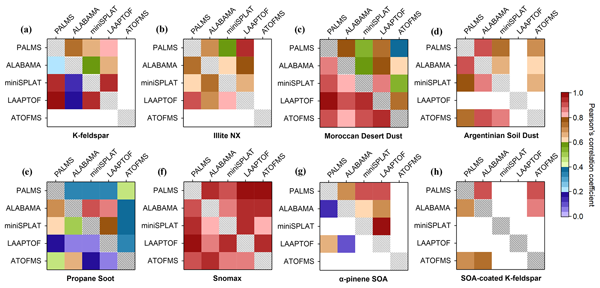
Xiaoli Shen, David M. Bell, Hugh Coe, Naruki Hiranuma, Fabian Mahrt, Nicholas A. Marsden, Claudia Mohr, Daniel M. Murphy, Harald Saathoff, Johannes Schneider, Jacqueline Wilson, Maria A. Zawadowicz, Alla Zelenyuk, Paul J. DeMott, Ottmar Möhler, and Daniel J. Cziczo
Atmos. Chem. Phys., 24, 10869–10891, https://doi.org/10.5194/acp-24-10869-2024, https://doi.org/10.5194/acp-24-10869-2024, 2024
Short summary
Short summary
Single-particle mass spectrometry (SPMS) is commonly used to measure the chemical composition and mixing state of aerosol particles. Intercomparison of SPMS instruments was conducted. All instruments reported similar size ranges and common spectral features. The instrument-specific detection efficiency was found to be more dependent on particle size than type. All differentiated secondary organic aerosol, soot, and soil dust but had difficulties differentiating among minerals and dusts.
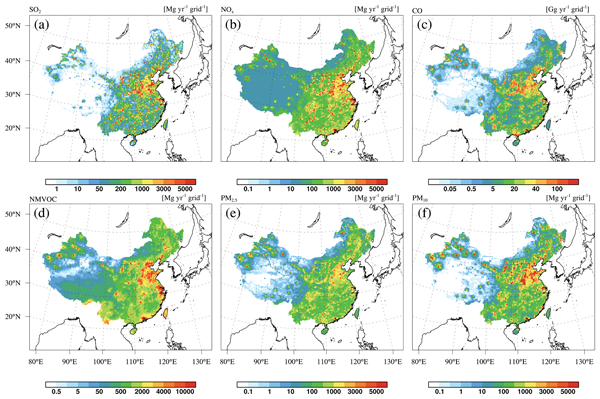
Lei Kong, Xiao Tang, Zifa Wang, Jiang Zhu, Jianjun Li, Huangjian Wu, Qizhong Wu, Huansheng Chen, Lili Zhu, Wei Wang, Bing Liu, Qian Wang, Duohong Chen, Yuepeng Pan, Jie Li, Lin Wu, and Gregory R. Carmichael
Earth Syst. Sci. Data, 16, 4351–4387, https://doi.org/10.5194/essd-16-4351-2024, https://doi.org/10.5194/essd-16-4351-2024, 2024
Short summary
Short summary
A new long-term inversed emission inventory for Chinese air quality (CAQIEI) is developed in this study, which contains constrained monthly emissions of NOx, SO2, CO, PM2.5, PM10, and NMVOCs in China from 2013 to 2020 with a horizontal resolution of 15 km. Emissions of different air pollutants and their changes during 2013–2020 were investigated and compared with previous emission inventories, which sheds new light on the complex variations of air pollutant emissions in China.
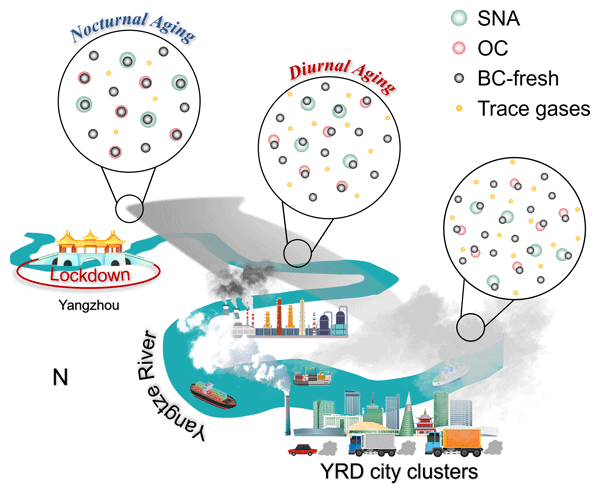
Yuan Dai, Junfeng Wang, Houjun Wang, Shijie Cui, Yunjiang Zhang, Haiwei Li, Yun Wu, Ming Wang, Eleonora Aruffo, and Xinlei Ge
Atmos. Chem. Phys., 24, 9733–9748, https://doi.org/10.5194/acp-24-9733-2024, https://doi.org/10.5194/acp-24-9733-2024, 2024
Short summary
Short summary
Short-term strict emission control can improve air quality, but its effectiveness needs assessment. During the 2021 summer COVID-19 lockdown in Yangzhou, we found that PM2.5 levels did not decrease despite reduced primary emissions. Aged black-carbon particles increased substantially due to higher O3 levels and transported pollutants. High humidity and low wind also played key roles. The results highlight the importance of a regionally balanced control strategy for future air quality management.
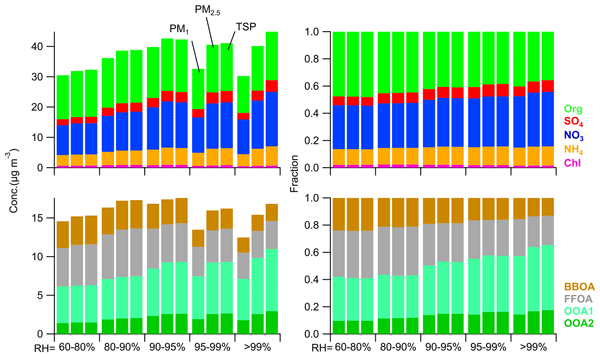
Weiqi Xu, Ye Kuang, Wanyun Xu, Zhiqiang Zhang, Biao Luo, Xiaoyi Zhang, Jiangchuang Tao, Hongqin Qiao, Li Liu, and Yele Sun
Atmos. Chem. Phys., 24, 9387–9399, https://doi.org/10.5194/acp-24-9387-2024, https://doi.org/10.5194/acp-24-9387-2024, 2024
Short summary
Short summary
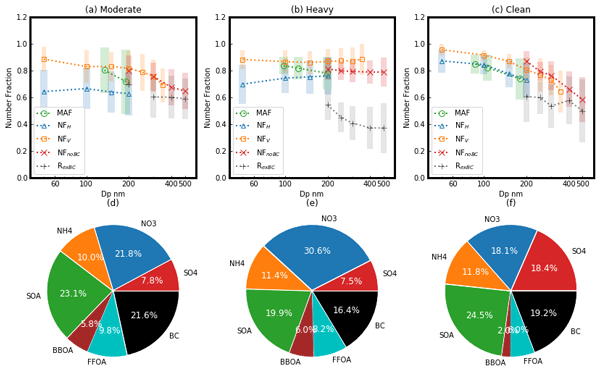
We deployed an advanced aerosol–fog sampling system at a rural site in the North China Plain to investigate impacts of aerosol hygroscopic growth and activation on the physicochemical properties of submicron aerosols. Observed results highlighted remarkably different aqueous processing of primary and secondary submicron aerosol components under distinct ambient relative humidity (RH) conditions and that RH levels significantly impact aerosol sampling through the aerosol swelling effect.
Jiangchuan Tao, Biao Luo, Weiqi Xu, Gang Zhao, Hanbin Xu, Biao Xue, Miaomiao Zhai, Wanyun Xu, Huarong Zhao, Sanxue Ren, Guangsheng Zhou, Li Liu, Ye Kuang, and Yele Sun
Atmos. Chem. Phys., 24, 9131–9154, https://doi.org/10.5194/acp-24-9131-2024, https://doi.org/10.5194/acp-24-9131-2024, 2024
Short summary
Short summary
Using simultaneous measurements of DMA–CCNC, H(/V)TDMA, and DMA–SP2, impacts of primary emissions and secondary aerosol formations on changes in aerosol physicochemical properties were comprehensively investigated. It was found that intercomparisons among aerosol mixing-state parameters derived from different techniques can help us gain more insight into aerosol physical properties which, in turn, will aid the investigation of emission characteristics and secondary aerosol formation pathways.
Saleh Alzahrani, Doğuşhan Kılıç, Michael Flynn, Paul I. Williams, and James Allan
Atmos. Chem. Phys., 24, 9045–9058, https://doi.org/10.5194/acp-24-9045-2024, https://doi.org/10.5194/acp-24-9045-2024, 2024
Short summary
Short summary
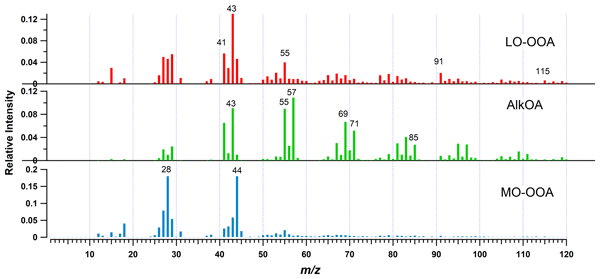
This paper investigates emissions from aviation activities at an international airport to evaluate their impact on local air quality. The study provides detailed insights into the chemical composition of aerosols and key pollutants in the airport environment. Source apportionment analysis using positive matrix factorisation (PMF) identified three significant sources: less oxidised oxygenated organic aerosol, alkane organic aerosol, and more oxidised oxygenated organic aerosol.
Zijun Zhang, Weiqi Xu, Yi Zhang, Wei Zhou, Xiangyu Xu, Aodong Du, Yinzhou Zhang, Hongqin Qiao, Ye Kuang, Xiaole Pan, Zifa Wang, Xueling Cheng, Lanzhong Liu, Qingyan Fu, Douglas R. Worsnop, Jie Li, and Yele Sun
Atmos. Chem. Phys., 24, 8473–8488, https://doi.org/10.5194/acp-24-8473-2024, https://doi.org/10.5194/acp-24-8473-2024, 2024
Short summary
Short summary
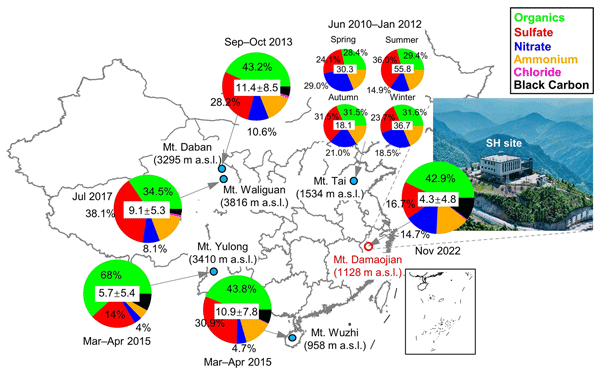
We investigated aerosol composition and sources and the interaction between secondary organic aerosol (SOA) and clouds at a regional mountain site in southeastern China. Clouds efficiently scavenge more oxidized SOA; however, cloud evaporation leads to the production of less oxidized SOA. The unexpectedly high presence of nitrate in aerosol particles indicates that nitrate formed in polluted areas has undergone interactions with clouds, significantly influencing the regional background site.
Sebastian Diez, Stuart Lacy, Hugh Coe, Josefina Urquiza, Max Priestman, Michael Flynn, Nicholas Marsden, Nicholas A. Martin, Stefan Gillott, Thomas Bannan, and Pete M. Edwards
Atmos. Meas. Tech., 17, 3809–3827, https://doi.org/10.5194/amt-17-3809-2024, https://doi.org/10.5194/amt-17-3809-2024, 2024
Short summary
Short summary
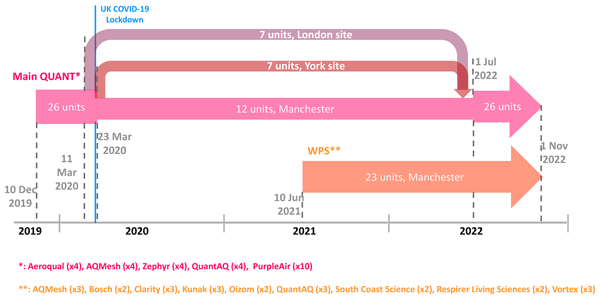
In this paper we present an overview of the QUANT project, which to our knowledge is one of the largest evaluations of commercial sensors to date. The objective was to evaluate the performance of a range of commercial products and also to nourish the different applications in which these technologies can offer relevant information.
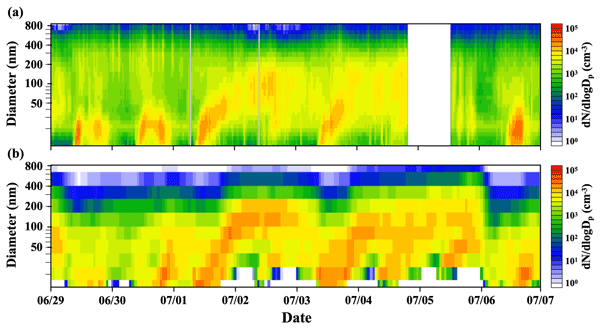
Ming Chu, Xing Wei, Shangfei Hai, Yang Gao, Huiwang Gao, Yujiao Zhu, Biwu Chu, Nan Ma, Juan Hong, Yele Sun, and Xiaohong Yao
Atmos. Chem. Phys., 24, 6769–6786, https://doi.org/10.5194/acp-24-6769-2024, https://doi.org/10.5194/acp-24-6769-2024, 2024
Short summary
Short summary
We used a 20-bin WRF-Chem model to simulate NPF events in the NCP during a three-week observational period in the summer of 2019. The model was able to reproduce the observations during June 29–July 6, which was characterized by a high frequency of NPF occurrence.
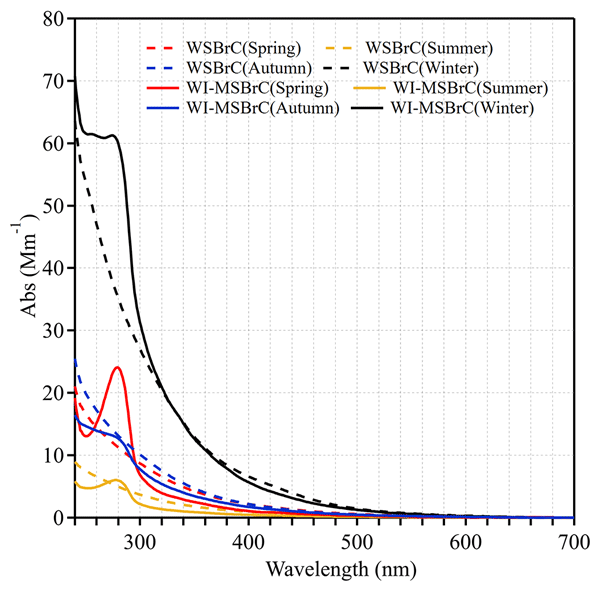
Zhichao Dong, Chandra Mouli Pavuluri, Peisen Li, Zhanjie Xu, Junjun Deng, Xueyan Zhao, Xiaomai Zhao, Pingqing Fu, and Cong-Qiang Liu
Atmos. Chem. Phys., 24, 5887–5905, https://doi.org/10.5194/acp-24-5887-2024, https://doi.org/10.5194/acp-24-5887-2024, 2024
Short summary
Short summary
Comprehensive study of optical properties of brown carbon (BrC) in fine aerosols from Tianjin, China, implied that biological emissions are major sources of BrC in summer, whereas fossil fuel combustion and biomass burning emissions are in cold periods. The direct radiation absorption caused by BrC in short wavelengths contributed about 40 % to that caused by BrC in 300–700 nm. Water-insoluble but methanol-soluble BrC contains more protein-like chromophores (PLOM) than that of water-soluble BrC.
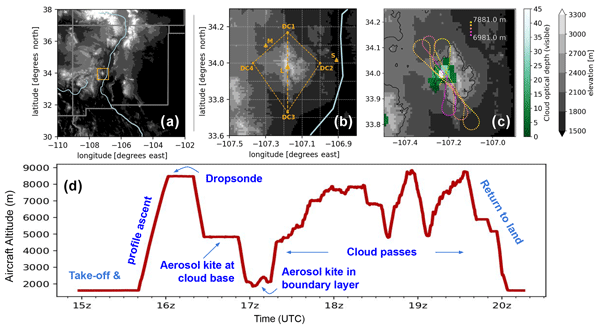
Declan L. Finney, Alan M. Blyth, Martin Gallagher, Huihui Wu, Graeme J. Nott, Michael I. Biggerstaff, Richard G. Sonnenfeld, Martin Daily, Dan Walker, David Dufton, Keith Bower, Steven Böing, Thomas Choularton, Jonathan Crosier, James Groves, Paul R. Field, Hugh Coe, Benjamin J. Murray, Gary Lloyd, Nicholas A. Marsden, Michael Flynn, Kezhen Hu, Navaneeth M. Thamban, Paul I. Williams, Paul J. Connolly, James B. McQuaid, Joseph Robinson, Zhiqiang Cui, Ralph R. Burton, Gordon Carrie, Robert Moore, Steven J. Abel, Dave Tiddeman, and Graydon Aulich
Earth Syst. Sci. Data, 16, 2141–2163, https://doi.org/10.5194/essd-16-2141-2024, https://doi.org/10.5194/essd-16-2141-2024, 2024
Short summary
Short summary
The DCMEX (Deep Convective Microphysics Experiment) project undertook an aircraft- and ground-based measurement campaign of New Mexico deep convective clouds during July–August 2022. The campaign coordinated a broad range of instrumentation measuring aerosol, cloud physics, radar signals, thermodynamics, dynamics, electric fields, and weather. The project's objectives included the utilisation of these data with satellite observations to study the anvil cloud radiative effect.
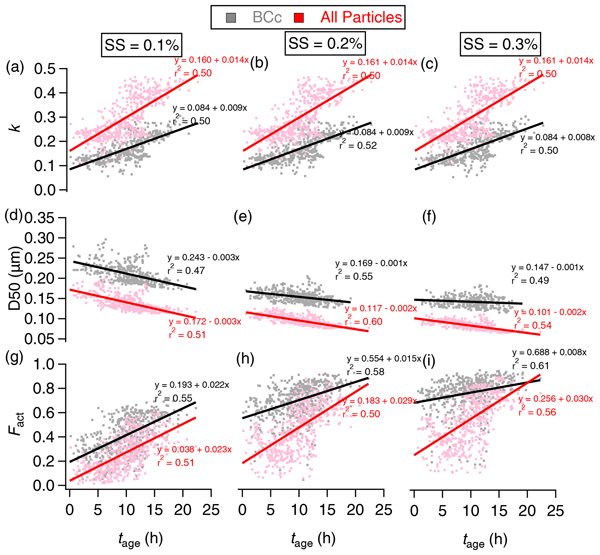
Ping Tian, Dantong Liu, Kang Hu, Yangzhou Wu, Mengyu Huang, Hui He, Jiujiang Sheng, Chenjie Yu, Dawei Hu, and Deping Ding
Atmos. Chem. Phys., 24, 5149–5164, https://doi.org/10.5194/acp-24-5149-2024, https://doi.org/10.5194/acp-24-5149-2024, 2024
Short summary
Short summary
The results provide direct evidence of efficient droplet activation of black carbon (BC). The cloud condensation nuclei (CCN) activation fraction of BC was higher than for all particles, suggesting higher CCN activity of BC, even though its hygroscopicity is lower. Our research reveals that the evolution of BC's hygroscopicity and its CCN activation properties through atmospheric aging can be effectively characterized by the photochemical age.
Chaman Gul, Shichang Kang, Yuanjian Yang, Xinlei Ge, and Dong Guo
EGUsphere, https://doi.org/10.5194/egusphere-2024-1144, https://doi.org/10.5194/egusphere-2024-1144, 2024
Preprint archived
Short summary
Short summary
Long-term variations in upper atmospheric temperature and water vapor in the selected domains of time and space are presented. The temperature during the past two decades showed a cooling trend and water vapor showed an increasing trend and had an inverse relation with temperature in selected domains of space and time. Seasonal temperature variations are distinct, with a summer minimum and a winter maximum. Our results can be an early warning indication for future climate change.
Zhiqiang Zhang, Ying Li, Haiyan Ran, Junling An, Yu Qu, Wei Zhou, Weiqi Xu, Weiwei Hu, Hongbin Xie, Zifa Wang, Yele Sun, and Manabu Shiraiwa
Atmos. Chem. Phys., 24, 4809–4826, https://doi.org/10.5194/acp-24-4809-2024, https://doi.org/10.5194/acp-24-4809-2024, 2024
Short summary
Short summary
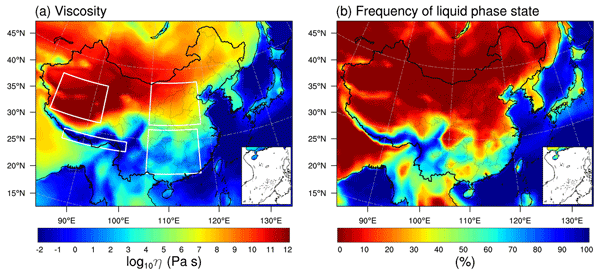
Secondary organic aerosols (SOAs) can exist in liquid, semi-solid, or amorphous solid states, which are rarely accounted for in current chemical transport models. We predict the phase state of SOA particles over China and find that in northwestern China SOA particles are mostly highly viscous or glassy solid. Our results indicate that the particle phase state should be considered in SOA formation in chemical transport models for more accurate prediction of SOA mass concentrations.
Jianzhong Xu, Xinghua Zhang, Wenhui Zhao, Lixiang Zhai, Miao Zhong, Jinsen Shi, Junying Sun, Yanmei Liu, Conghui Xie, Yulong Tan, Kemei Li, Xinlei Ge, Qi Zhang, and Shichang Kang
Earth Syst. Sci. Data, 16, 1875–1900, https://doi.org/10.5194/essd-16-1875-2024, https://doi.org/10.5194/essd-16-1875-2024, 2024
Short summary
Short summary
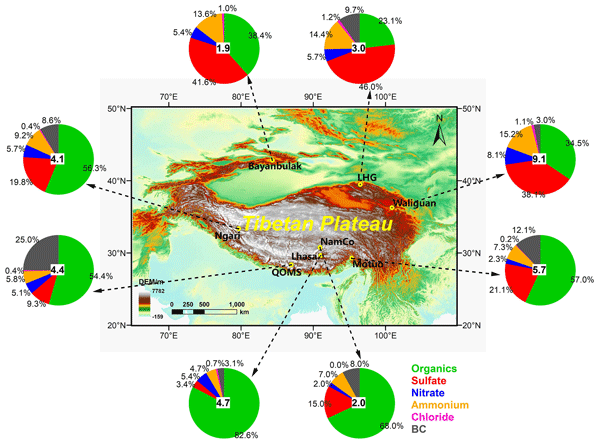
A comprehensive aerosol observation project was carried out in the Tibetan Plateau (TP) and its surroundings in recent years to investigate the properties and sources of atmospheric aerosols as well as their regional differences by performing multiple intensive field observations. The release of this dataset can provide basic and systematic data for related research in the atmospheric, cryospheric, and environmental sciences in this unique region.
Jiawei Li, Zhiwei Han, Pingqing Fu, Xiaohong Yao, and Mingjie Liang
Atmos. Chem. Phys., 24, 3129–3161, https://doi.org/10.5194/acp-24-3129-2024, https://doi.org/10.5194/acp-24-3129-2024, 2024
Short summary
Short summary
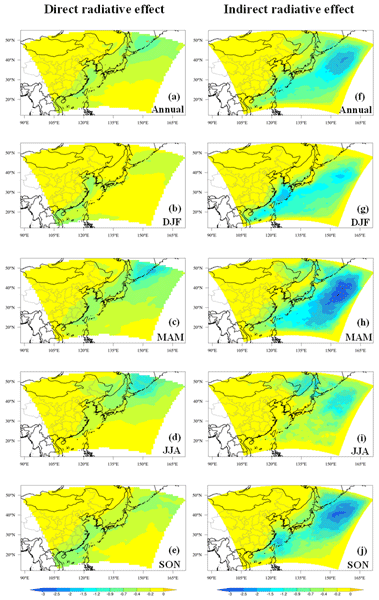
Organic aerosols of marine origin are important for aerosol climatic effects but are poorly understood. For the first time, an online coupled regional chemistry–climate model is applied to explore the characteristics of emission, distribution, and direct and indirect radiative effects of marine organic aerosols over the western Pacific, which reveals an important role of marine organic aerosols in perturbing cloud and radiation and promotes understanding of global aerosol climatic impact.
Jian Zhao, Valter Mickwitz, Yuanyuan Luo, Ella Häkkinen, Frans Graeffe, Jiangyi Zhang, Hilkka Timonen, Manjula Canagaratna, Jordan E. Krechmer, Qi Zhang, Markku Kulmala, Juha Kangasluoma, Douglas Worsnop, and Mikael Ehn
Atmos. Meas. Tech., 17, 1527–1543, https://doi.org/10.5194/amt-17-1527-2024, https://doi.org/10.5194/amt-17-1527-2024, 2024
Short summary
Short summary
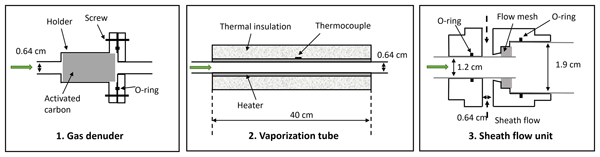
Organic aerosol constitutes a significant portion of atmospheric fine particles but is less characterized due to its vast number of constituents. Recently, we developed a system for online measurements of particle-phase highly oxygenated organic molecules (HOMs). In this work, we systematically characterized the system, developed a new unit to enhance its performance, and demonstrated the essential role of thermograms in inferring volatility and quantifying HOMs in organic aerosols.
Jiangyi Zhang, Jian Zhao, Yuanyuan Luo, Valter Mickwitz, Douglas Worsnop, and Mikael Ehn
Atmos. Chem. Phys., 24, 2885–2911, https://doi.org/10.5194/acp-24-2885-2024, https://doi.org/10.5194/acp-24-2885-2024, 2024
Short summary
Short summary
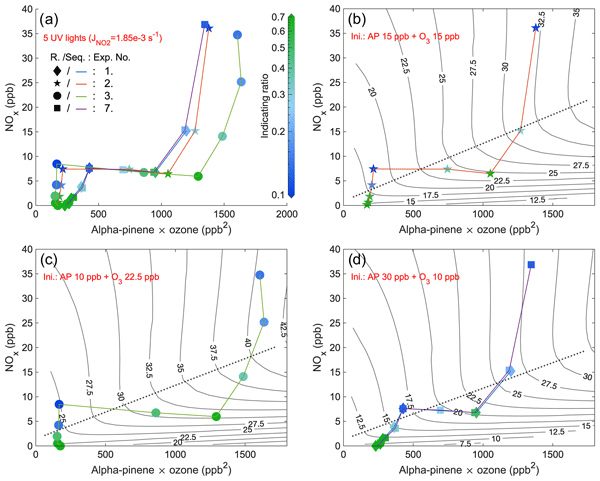
Due to the intrinsic connection between the formation pathways of O3 and HOMs, the ratio of HOM dimers or non-nitrate monomers to HOM organic nitrates could be used to determine O3 formation regimes. Owing to the fast formation and short lifetimes of HOMs, HOM-based indicating ratios can describe O3 formation in real time. Despite the success of our approach in this simple laboratory system, applicability to the much more complex atmosphere remains to be determined.
Xinlei Ge, Yele Sun, Justin Trousdell, Mindong Chen, and Qi Zhang
Atmos. Meas. Tech., 17, 423–439, https://doi.org/10.5194/amt-17-423-2024, https://doi.org/10.5194/amt-17-423-2024, 2024
Short summary
Short summary
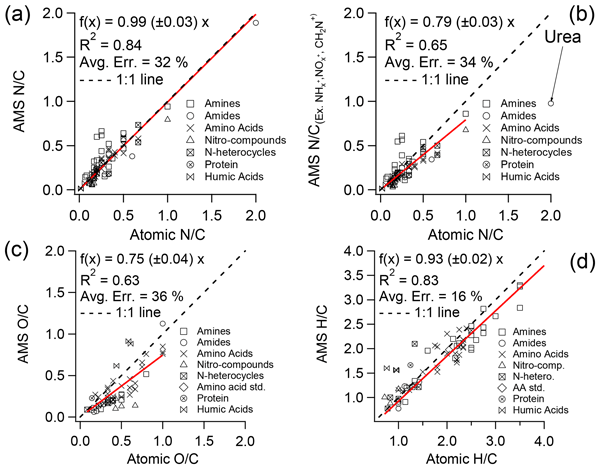
This study aims to enhance the application of the Aerodyne high-resolution aerosol mass spectrometer (HR-AMS) in characterizing organic nitrogen (ON) species within aerosol particles and droplets. A thorough analysis was conducted on 75 ON standards that represent a diverse spectrum of ambient ON types. The results underscore the capacity of the HR-AMS in examining the concentration and chemistry of atmospheric ON compounds, thereby offering insights into their sources and environmental impacts.
Mutong Niu, Shu Huang, Wei Hu, Yajie Wang, Wanyun Xu, Wan Wei, Qiang Zhang, Zihan Wang, Donghuan Zhang, Rui Jin, Libin Wu, Junjun Deng, Fangxia Shen, and Pingqing Fu
Biogeosciences, 20, 4915–4930, https://doi.org/10.5194/bg-20-4915-2023, https://doi.org/10.5194/bg-20-4915-2023, 2023
Short summary
Short summary
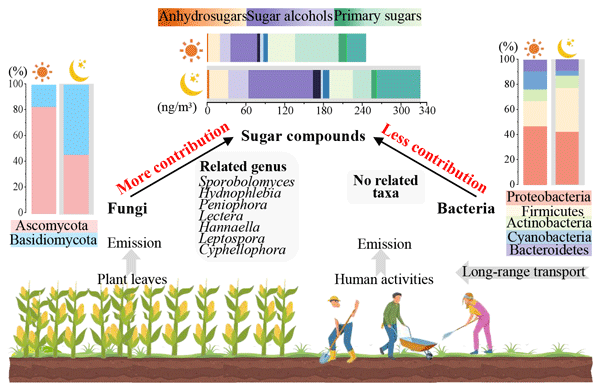
Sugar compounds in air can trace the source of bioaerosols that affect public health and climate. In rural north China, we observed increased fungal activity at night and less variable bacterial community diversity. Certain night-increasing sugar compounds were more closely related to fungi than bacteria. The fungal community greatly influenced sugar compounds, while bacteria played a limited role. Caution is advised when using sugar compounds to trace airborne microbes, particularly bacteria.
Lehui Cui, Yunting Xiao, Wei Hu, Lei Song, Yujue Wang, Chao Zhang, Pingqing Fu, and Jialei Zhu
Earth Syst. Sci. Data, 15, 5403–5425, https://doi.org/10.5194/essd-15-5403-2023, https://doi.org/10.5194/essd-15-5403-2023, 2023
Short summary
Short summary
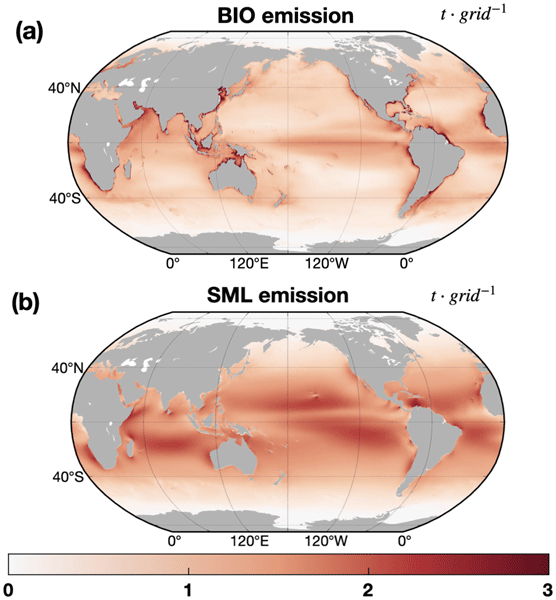
Isoprene is a crucial non-methane biogenic volatile organic compound with the largest global emissions, which has high chemical reactivity and serves as the primary source of natural secondary organic aerosols. This study built a module to present a 20-year global hourly dataset of marine phytoplankton-generated biological and photochemistry-generated isoprene emissions in the sea microlayers based on the latest advancements in biological, physical, and chemical processes.
Jingjing Meng, Yachen Wang, Yuanyuan Li, Tonglin Huang, Zhifei Wang, Yiqiu Wang, Min Chen, Zhanfang Hou, Houhua Zhou, Keding Lu, Kimitaka Kawamura, and Pingqing Fu
Atmos. Chem. Phys., 23, 14481–14503, https://doi.org/10.5194/acp-23-14481-2023, https://doi.org/10.5194/acp-23-14481-2023, 2023
Short summary
Short summary
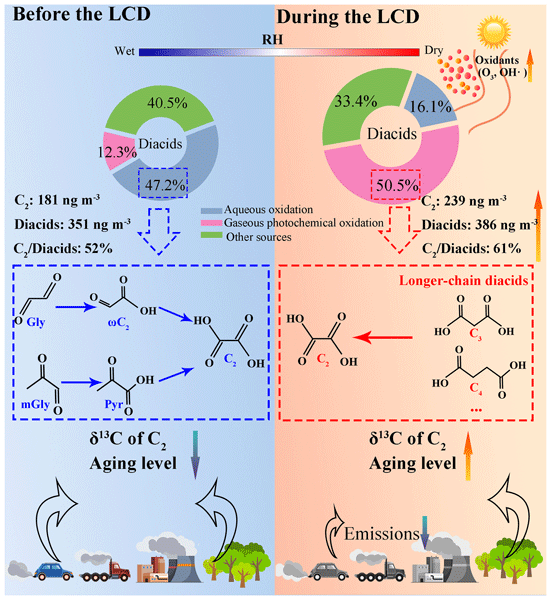
This study investigated the effect of COVID-19 lockdown (LCD) measures on the formation and evolutionary process of diacids and related compounds from field observations. Results demonstrate that more aged organic aerosols are observed during the LCD due to the enhanced photochemical oxidation. Our study also found that the reactivity of 13C was higher than that of 12C in the gaseous photochemical oxidation, leading to higher δ13C values of C2 during the LCD than before the LCD.
Calvin Howes, Pablo E. Saide, Hugh Coe, Amie Dobracki, Steffen Freitag, Jim M. Haywood, Steven G. Howell, Siddhant Gupta, Janek Uin, Mary Kacarab, Chongai Kuang, L. Ruby Leung, Athanasios Nenes, Greg M. McFarquhar, James Podolske, Jens Redemann, Arthur J. Sedlacek, Kenneth L. Thornhill, Jenny P. S. Wong, Robert Wood, Huihui Wu, Yang Zhang, Jianhao Zhang, and Paquita Zuidema
Atmos. Chem. Phys., 23, 13911–13940, https://doi.org/10.5194/acp-23-13911-2023, https://doi.org/10.5194/acp-23-13911-2023, 2023
Short summary
Short summary
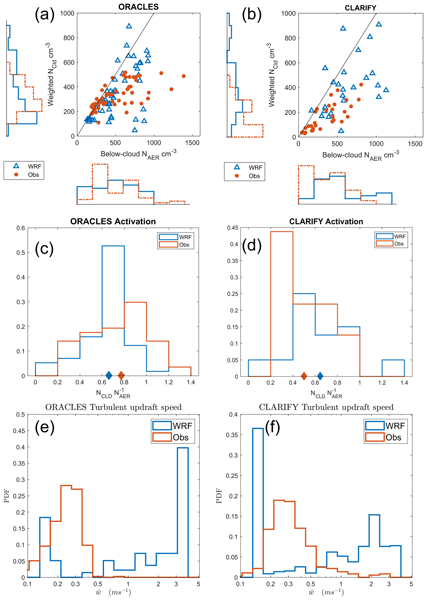
To better understand smoke properties and its interactions with clouds, we compare the WRF-CAM5 model with observations from ORACLES, CLARIFY, and LASIC field campaigns in the southeastern Atlantic in August 2017. The model transports and mixes smoke well but does not fully capture some important processes. These include smoke chemical and physical aging over 4–12 days, smoke removal by rain, sulfate particle formation, aerosol activation into cloud droplets, and boundary layer turbulence.
Aodong Du, Jiaxing Sun, Hang Liu, Weiqi Xu, Wei Zhou, Yuting Zhang, Lei Li, Xubing Du, Yan Li, Xiaole Pan, Zifa Wang, and Yele Sun
Atmos. Chem. Phys., 23, 13597–13611, https://doi.org/10.5194/acp-23-13597-2023, https://doi.org/10.5194/acp-23-13597-2023, 2023
Short summary
Short summary
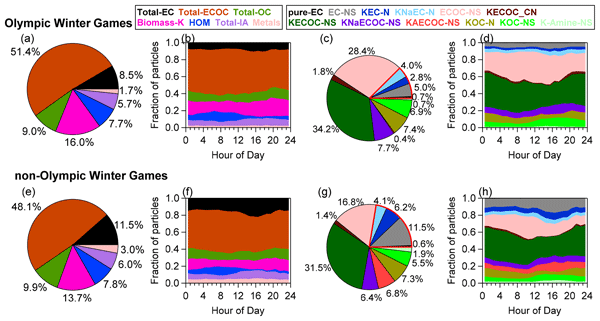
We characterized the impacts of emission controls on particle mixing state and density during the Beijing Olympic Winter Games using a SPAMS in tandem with a DMA and an AAC. OC and sulfate-containing particles increased, while those from primary emissions decreased. The effective particle densities increased and varied largely for different particles, highlighting the impacts of aging and formation processes on the changes of particle density and mixing state.
Tao Wang, Hang Liu, Jie Li, Shuai Wang, Youngseob Kim, Yele Sun, Wenyi Yang, Huiyun Du, Zhe Wang, and Zifa Wang
Geosci. Model Dev., 16, 5585–5599, https://doi.org/10.5194/gmd-16-5585-2023, https://doi.org/10.5194/gmd-16-5585-2023, 2023
Short summary
Short summary
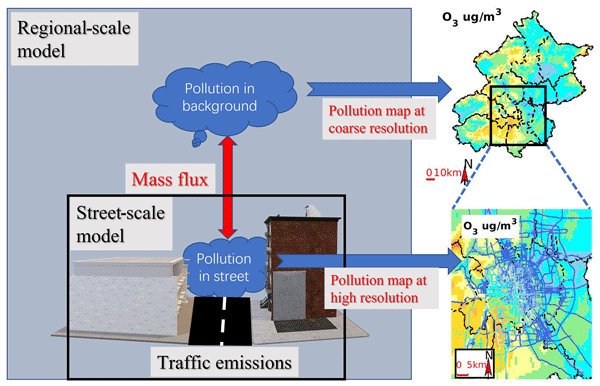
This paper developed a two-way coupled module in a new version of a regional urban–street network model, IAQMS-street v2.0, in which the mass flux from streets to background is considered. Test cases are defined to evaluate the performance of IAQMS-street v2.0 in Beijing by comparing it with that simulated by IAQMS-street v1.0 and a regional model. The contribution of local emissions and the influence of on-road vehicle control measures on air quality are evaluated by using IAQMS-street v2.0.
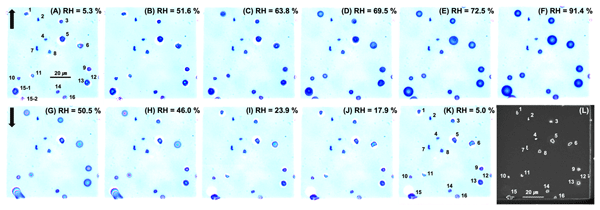
Li Wu, Hyo-Jin Eom, Hanjin Yoo, Dhrubajyoti Gupta, Hye-Rin Cho, Pingqing Fu, and Chul-Un Ro
Atmos. Chem. Phys., 23, 12571–12588, https://doi.org/10.5194/acp-23-12571-2023, https://doi.org/10.5194/acp-23-12571-2023, 2023
Short summary
Short summary
Hygroscopicity of ambient marine aerosols is of critical relevance to investigate their atmospheric impacts, which, however, remain uncertain due to their complex compositions and mixing states. Therefore, a study on the hygroscopic behavior of ambient marine aerosols for understanding the phase states when interacting with water vapor at different RH levels and their subsequent impacts on the heterogeneous chemical reactions, atmospheric environment, and human health is of vital importance.
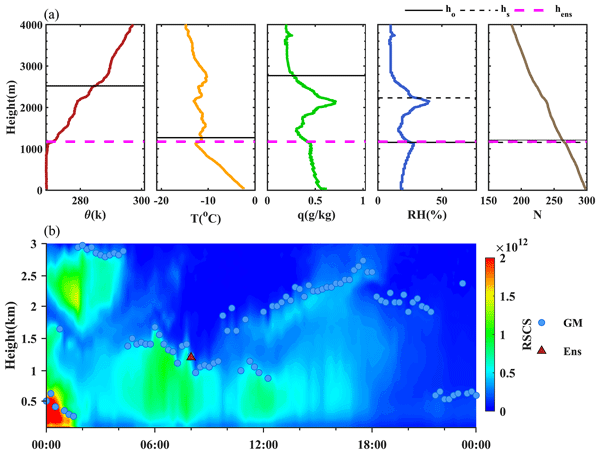
Xi Chen, Ting Yang, Zifa Wang, Futing Wang, and Haibo Wang
Atmos. Meas. Tech., 16, 4289–4302, https://doi.org/10.5194/amt-16-4289-2023, https://doi.org/10.5194/amt-16-4289-2023, 2023
Short summary
Short summary
Uncertainties remain great in the planetary boundary layer height (PBLH) determination from radiosonde, especially during the transition period of different PBL regimes. We combine seven existing methods along with statistical modification on gradient-based methods. We find that the ensemble method can eliminate the overestimation of PBLH and reduce the inconsistency between individual methods. The ensemble method improves the effectiveness of PBLH determination to 62.6 %.
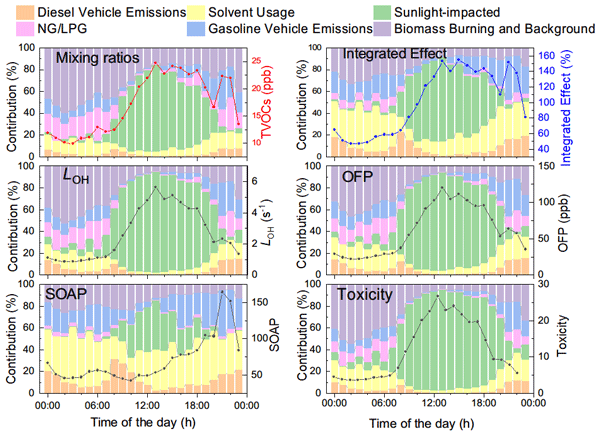
Chunxiang Ye, Shuzheng Guo, Weili Lin, Fangjie Tian, Jianshu Wang, Chong Zhang, Suzhen Chi, Yi Chen, Yingjie Zhang, Limin Zeng, Xin Li, Duo Bu, Jiacheng Zhou, and Weixiong Zhao
Atmos. Chem. Phys., 23, 10383–10397, https://doi.org/10.5194/acp-23-10383-2023, https://doi.org/10.5194/acp-23-10383-2023, 2023
Short summary
Short summary
Online volatile organic compound (VOC) measurements by gas chromatography–mass spectrometry, with other O3 precursors, were used to identify key VOC and other key sources in Lhasa. Total VOCs (TVOCs), alkanes, and aromatics are half as abundant as in Beijing. Oxygenated VOCs (OVOCs) consist of 52 % of the TVOCs. Alkenes and OVOCs account for 80 % of the ozone formation potential. Aromatics dominate secondary organic aerosol potential. Positive matrix factorization decomposed residential sources.
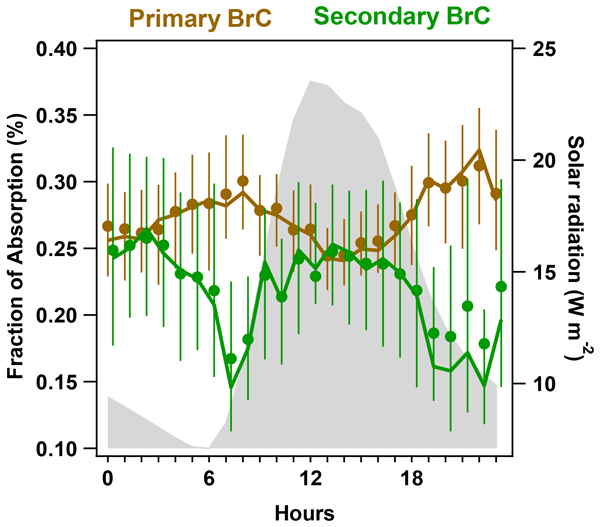
Qian Li, Dantong Liu, Xiaotong Jiang, Ping Tian, Yangzhou Wu, Siyuan Li, Kang Hu, Quan Liu, Mengyu Huang, Ruijie Li, Kai Bi, Shaofei Kong, Deping Ding, and Chenjie Yu
Atmos. Chem. Phys., 23, 9439–9453, https://doi.org/10.5194/acp-23-9439-2023, https://doi.org/10.5194/acp-23-9439-2023, 2023
Short summary
Short summary
By attributing the shortwave absorption from black carbon, primary organic aerosol and secondary organic aerosol in a suburban environment, we firstly observed that the photochemically produced nitrogen-containing secondary organic aerosol may contribute to the enhancement of brown carbon absorption, partly compensating for some bleaching effect on the absorption of primary organic aerosol, hereby exerting radiative impacts.
Yong Zhang, Jie Tian, Qiyuan Wang, Lu Qi, Manousos Ioannis Manousakas, Yuemei Han, Weikang Ran, Yele Sun, Huikun Liu, Renjian Zhang, Yunfei Wu, Tianqu Cui, Kaspar Rudolf Daellenbach, Jay Gates Slowik, André S. H. Prévôt, and Junji Cao
Atmos. Chem. Phys., 23, 9455–9471, https://doi.org/10.5194/acp-23-9455-2023, https://doi.org/10.5194/acp-23-9455-2023, 2023
Short summary
Short summary
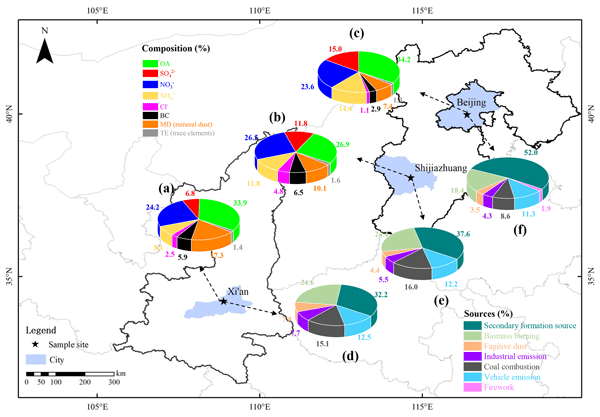
PM2.5 pollution still frequently occurs in northern China during winter, and it is necessary to figure out the causes of air pollution based on intensive real-time measurement. The findings elaborate the chemical characteristics and source contributions of PM2.5 in three pilot cities, reveal potential formation mechanisms of secondary aerosols, and highlight the importance of controlling biomass burning and inhibiting generation of secondary aerosol for air quality improvement.
Qi Yuan, Yuanyuan Wang, Yixin Chen, Siyao Yue, Jian Zhang, Yinxiao Zhang, Liang Xu, Wei Hu, Dantong Liu, Pingqing Fu, Huiwang Gao, and Weijun Li
Atmos. Chem. Phys., 23, 9385–9399, https://doi.org/10.5194/acp-23-9385-2023, https://doi.org/10.5194/acp-23-9385-2023, 2023
Short summary
Short summary
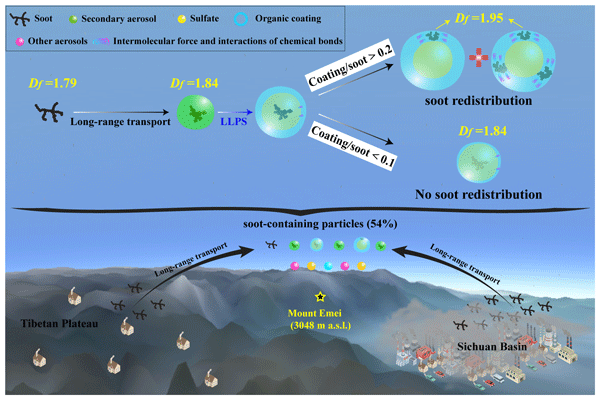
This study for the first time found large amounts of liquid–liquid phase separation particles with soot redistributing in organic coatings instead of sulfate cores in the eastern Tibetan Plateau atmosphere. The particle size and the ratio of the organic matter coating thickness to soot size are two of the major possible factors that likely affect the soot redistribution process. The soot redistribution process promoted the morphological compaction of soot particles.
Valerian Hahn, Ralf Meerkötter, Christiane Voigt, Sonja Gisinger, Daniel Sauer, Valéry Catoire, Volker Dreiling, Hugh Coe, Cyrille Flamant, Stefan Kaufmann, Jonas Kleine, Peter Knippertz, Manuel Moser, Philip Rosenberg, Hans Schlager, Alfons Schwarzenboeck, and Jonathan Taylor
Atmos. Chem. Phys., 23, 8515–8530, https://doi.org/10.5194/acp-23-8515-2023, https://doi.org/10.5194/acp-23-8515-2023, 2023
Short summary
Short summary
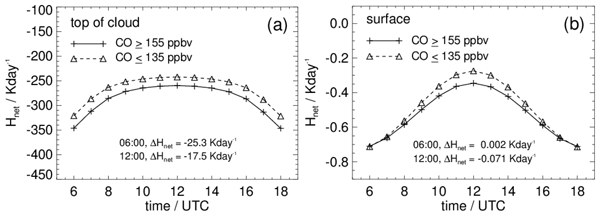
During the DACCIWA campaign in West Africa, we found a 35 % increase in the cloud droplet concentration that formed in a polluted compared with a less polluted environment and a decrease of 17 % in effective droplet diameter. Radiative transfer simulations, based on the measured cloud properties, reveal that these low-level polluted clouds radiate only 2.6 % more energy back to space, compared with a less polluted cloud. The corresponding additional decrease in temperature is rather small.
Dandan Liu, Yun Zhang, Shujun Zhong, Shuang Chen, Qiaorong Xie, Donghuan Zhang, Qiang Zhang, Wei Hu, Junjun Deng, Libin Wu, Chao Ma, Haijie Tong, and Pingqing Fu
Atmos. Chem. Phys., 23, 8383–8402, https://doi.org/10.5194/acp-23-8383-2023, https://doi.org/10.5194/acp-23-8383-2023, 2023
Short summary
Short summary
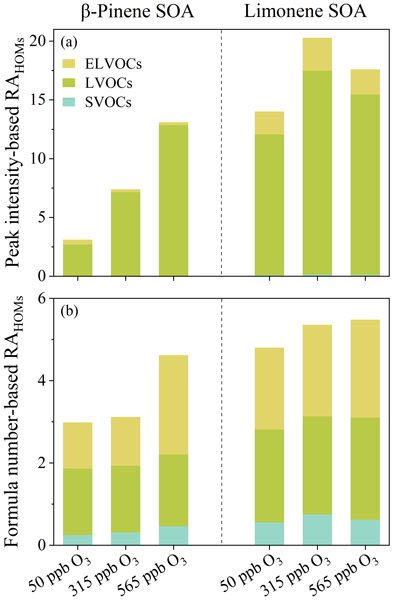
Based on ultra-high-resolution mass spectrometry analysis, we found that β-pinene oxidation-derived highly oxygenated organic molecules (HOMs) exhibit higher yield at high ozone concentration, while limonene oxidation-derived HOMs exhibit higher yield at moderate ozone concentration. The distinct molecular response of HOMs and low-volatile species in different biogenic secondary organic aerosols to ozone concentrations provides a new clue for more accurate air quality prediction and management.
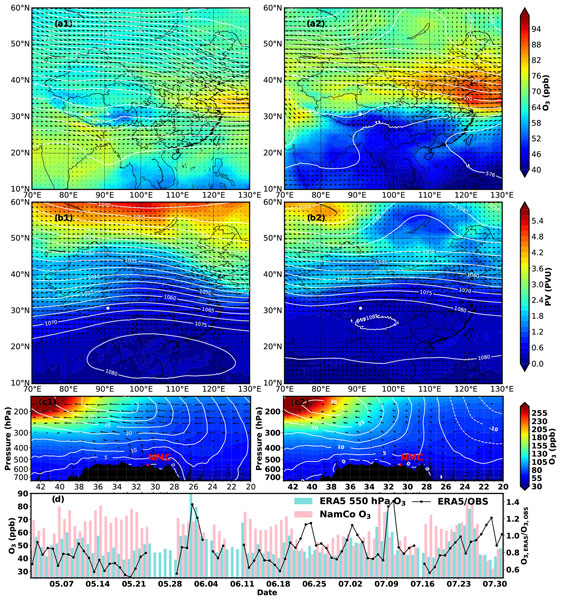
Wanyun Xu, Yuxuan Bian, Weili Lin, Yingjie Zhang, Yaru Wang, Zhiqiang Ma, Xiaoyi Zhang, Gen Zhang, Chunxiang Ye, and Xiaobin Xu
Atmos. Chem. Phys., 23, 7635–7652, https://doi.org/10.5194/acp-23-7635-2023, https://doi.org/10.5194/acp-23-7635-2023, 2023
Short summary
Short summary
Tropospheric ozone (O3) and peroxyacetyl nitrate (PAN) are both photochemical pollutants harmful to the ecological environment and human health, especially in the Tibetan Plateau (TP). However, the factors determining their variations in the TP have not been comprehensively investigated. Results from field measurements and observation-based models revealed that day-to-day variations in O3 and PAN were in fact controlled by distinct physiochemical processes.
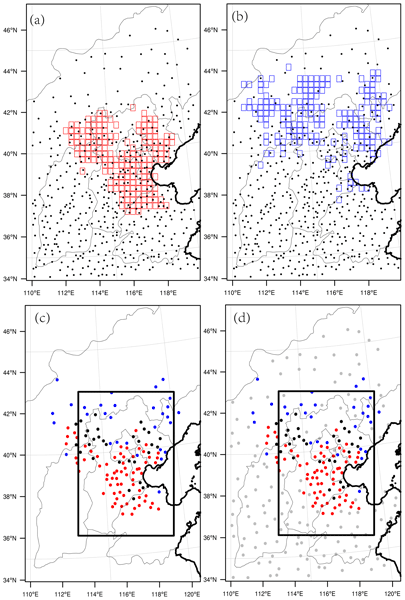
Lichao Yang, Wansuo Duan, and Zifa Wang
Geosci. Model Dev., 16, 3827–3848, https://doi.org/10.5194/gmd-16-3827-2023, https://doi.org/10.5194/gmd-16-3827-2023, 2023
Short summary
Short summary
An approach is proposed to refine a ground meteorological observation network to improve the PM2.5 forecasts in the Beijing–Tianjin–Hebei region. A cost-effective observation network is obtained and makes the relevant PM2.5 forecasts assimilate fewer observations but achieve the forecasting skill comparable to or higher than that obtained by assimilating all ground station observations, suggesting that many of the current ground stations can be greatly scattered to avoid much unnecessary work.
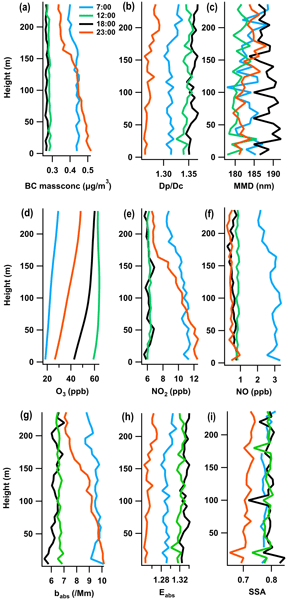
Hang Liu, Xiaole Pan, Shandong Lei, Yuting Zhang, Aodong Du, Weijie Yao, Guiqian Tang, Tao Wang, Jinyuan Xin, Jie Li, Yele Sun, Junji Cao, and Zifa Wang
Atmos. Chem. Phys., 23, 7225–7239, https://doi.org/10.5194/acp-23-7225-2023, https://doi.org/10.5194/acp-23-7225-2023, 2023
Short summary
Short summary
We provide the average vertical profiles of black carbon (BC) concentration, size distribution and coating thickness at different times of the day in an urban area based on 112 vertical profiles. In addition, it is found that BC in the residual layer generally has a thicker coating, higher absorption enhancement and hygroscopicity than on the surface. Such aged BC could enter into the boundary layer and influence the BC properties in the early morning.
Wen Lu, Bin Zhu, Shuqi Yan, Jie Li, and Zifa Wang
EGUsphere, https://doi.org/10.5194/egusphere-2023-1089, https://doi.org/10.5194/egusphere-2023-1089, 2023
Preprint archived
Short summary
Short summary
Parameterized the minimum turbulent diffusivity (Kzmin) by sensible heat flux and latent heat flux and embedded it into the WRF-Chem model. New scheme improved the underestimation of turbulence diffusion underestimation and overestimation of surface PM2.5 under stable boundary layer simulation over eastern China. The physical relationship between Kzmin and two factors was discussed. Process analysis showed that vertical mixing is the key process to improve surface PM2.5 simulations.
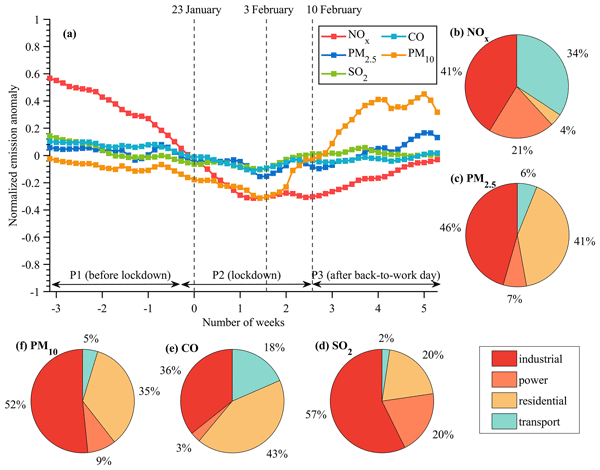
Lei Kong, Xiao Tang, Jiang Zhu, Zifa Wang, Yele Sun, Pingqing Fu, Meng Gao, Huangjian Wu, Miaomiao Lu, Qian Wu, Shuyuan Huang, Wenxuan Sui, Jie Li, Xiaole Pan, Lin Wu, Hajime Akimoto, and Gregory R. Carmichael
Atmos. Chem. Phys., 23, 6217–6240, https://doi.org/10.5194/acp-23-6217-2023, https://doi.org/10.5194/acp-23-6217-2023, 2023
Short summary
Short summary
A multi-air-pollutant inversion system has been developed in this study to estimate emission changes in China during COVID-19 lockdown. The results demonstrate that the lockdown is largely a nationwide road traffic control measure with NOx emissions decreasing by ~40 %. Emissions of other species only decreased by ~10 % due to smaller effects of lockdown on other sectors. Assessment results further indicate that the lockdown only had limited effects on the control of PM2.5 and O3 in China.
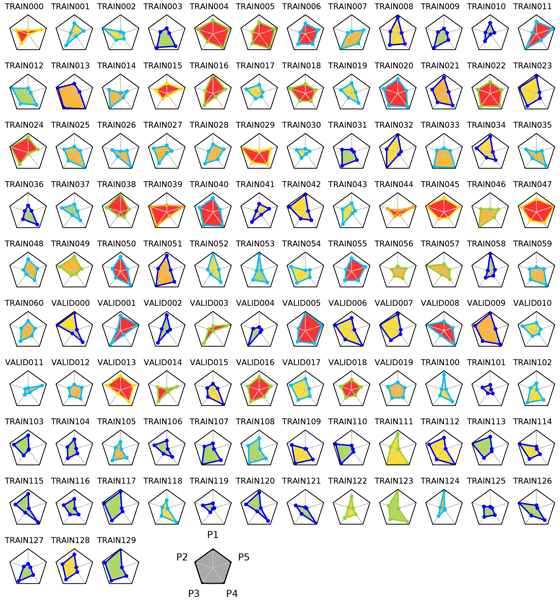
Ernesto Reyes-Villegas, Douglas Lowe, Jill S. Johnson, Kenneth S. Carslaw, Eoghan Darbyshire, Michael Flynn, James D. Allan, Hugh Coe, Ying Chen, Oliver Wild, Scott Archer-Nicholls, Alex Archibald, Siddhartha Singh, Manish Shrivastava, Rahul A. Zaveri, Vikas Singh, Gufran Beig, Ranjeet Sokhi, and Gordon McFiggans
Atmos. Chem. Phys., 23, 5763–5782, https://doi.org/10.5194/acp-23-5763-2023, https://doi.org/10.5194/acp-23-5763-2023, 2023
Short summary
Short summary
Organic aerosols (OAs), their sources and their processes remain poorly understood. The volatility basis set (VBS) approach, implemented in air quality models such as WRF-Chem, can be a useful tool to describe primary OA (POA) production and aging. However, the main disadvantage is its complexity. We used a Gaussian process simulator to reproduce model results and to estimate the sources of model uncertainty. We do this by comparing the outputs with OA observations made at Delhi, India, in 2018.
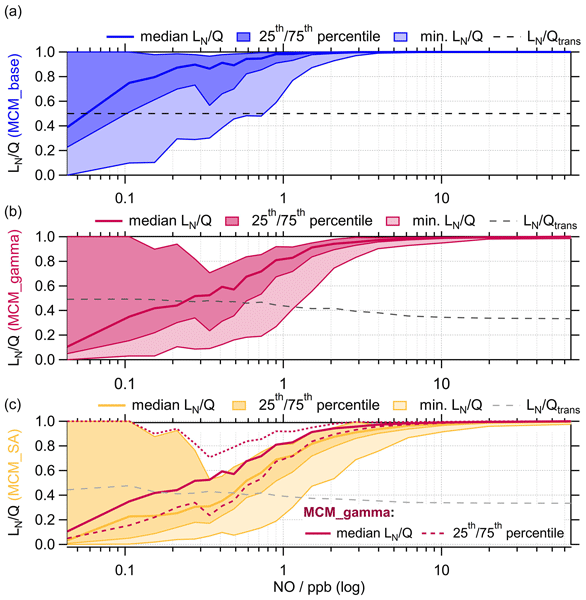
Joanna E. Dyson, Lisa K. Whalley, Eloise J. Slater, Robert Woodward-Massey, Chunxiang Ye, James D. Lee, Freya Squires, James R. Hopkins, Rachel E. Dunmore, Marvin Shaw, Jacqueline F. Hamilton, Alastair C. Lewis, Stephen D. Worrall, Asan Bacak, Archit Mehra, Thomas J. Bannan, Hugh Coe, Carl J. Percival, Bin Ouyang, C. Nicholas Hewitt, Roderic L. Jones, Leigh R. Crilley, Louisa J. Kramer, W. Joe F. Acton, William J. Bloss, Supattarachai Saksakulkrai, Jingsha Xu, Zongbo Shi, Roy M. Harrison, Simone Kotthaus, Sue Grimmond, Yele Sun, Weiqi Xu, Siyao Yue, Lianfang Wei, Pingqing Fu, Xinming Wang, Stephen R. Arnold, and Dwayne E. Heard
Atmos. Chem. Phys., 23, 5679–5697, https://doi.org/10.5194/acp-23-5679-2023, https://doi.org/10.5194/acp-23-5679-2023, 2023
Short summary
Short summary
The hydroxyl (OH) and closely coupled hydroperoxyl (HO2) radicals are vital for their role in the removal of atmospheric pollutants. In less polluted regions, atmospheric models over-predict HO2 concentrations. In this modelling study, the impact of heterogeneous uptake of HO2 onto aerosol surfaces on radical concentrations and the ozone production regime in Beijing in the summertime is investigated, and the implications for emissions policies across China are considered.
Junhua Wang, Baozhu Ge, Xueshun Chen, Jie Li, Keding Lu, Yayuan Dong, Lei Kong, Zifa Wang, and Yuanhang Zhang
Geosci. Model Dev. Discuss., https://doi.org/10.5194/gmd-2023-22, https://doi.org/10.5194/gmd-2023-22, 2023
Revised manuscript not accepted
Short summary
Short summary
We developed a quantitative decoupling analysis (QDA) method to quantify the contributions of emissions, meteorology, chemical reactions, and their nonlinear interactions on PM2.5. We found the effects of adverse meteorological conditions and the importance of nonlinear interactions. This method can provide valuable information for understanding of key factors to heavy pollution, but also help the modelers to find out the sources of uncertainties in numerical models.
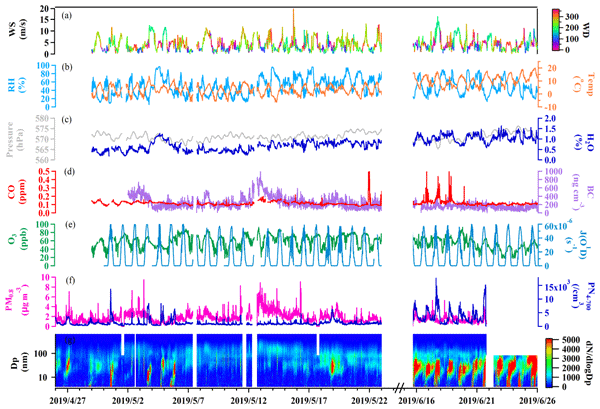
Lizi Tang, Min Hu, Dongjie Shang, Xin Fang, Jianjiong Mao, Wanyun Xu, Jiacheng Zhou, Weixiong Zhao, Yaru Wang, Chong Zhang, Yingjie Zhang, Jianlin Hu, Limin Zeng, Chunxiang Ye, Song Guo, and Zhijun Wu
Atmos. Chem. Phys., 23, 4343–4359, https://doi.org/10.5194/acp-23-4343-2023, https://doi.org/10.5194/acp-23-4343-2023, 2023
Short summary
Short summary
There was an evident distinction in the frequency of new particle formation (NPF) events at Nam Co station on the Tibetan Plateau: 15 % in pre-monsoon season and 80 % in monsoon season. The frequent NPF events in monsoon season resulted from the higher frequency of southerly air masses, which brought the organic precursors to participate in the NPF process. It increased the amount of aerosol and CCN compared with those in pre-monsoon season, which may markedly affect earth's radiation balance.
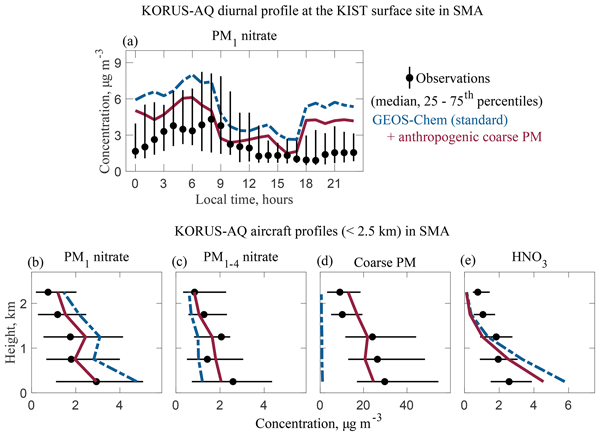
Shixian Zhai, Daniel J. Jacob, Drew C. Pendergrass, Nadia K. Colombi, Viral Shah, Laura Hyesung Yang, Qiang Zhang, Shuxiao Wang, Hwajin Kim, Yele Sun, Jin-Soo Choi, Jin-Soo Park, Gan Luo, Fangqun Yu, Jung-Hun Woo, Younha Kim, Jack E. Dibb, Taehyoung Lee, Jin-Seok Han, Bruce E. Anderson, Ke Li, and Hong Liao
Atmos. Chem. Phys., 23, 4271–4281, https://doi.org/10.5194/acp-23-4271-2023, https://doi.org/10.5194/acp-23-4271-2023, 2023
Short summary
Short summary
Anthropogenic fugitive dust in East Asia not only causes severe coarse particulate matter air pollution problems, but also affects fine particulate nitrate. Due to emission control efforts, coarse PM decreased steadily. We find that the decrease of coarse PM is a major driver for a lack of decrease of fine particulate nitrate, as it allows more nitric acid to form fine particulate nitrate. The continuing decrease of coarse PM requires more stringent ammonia and nitrogen oxides emission controls.
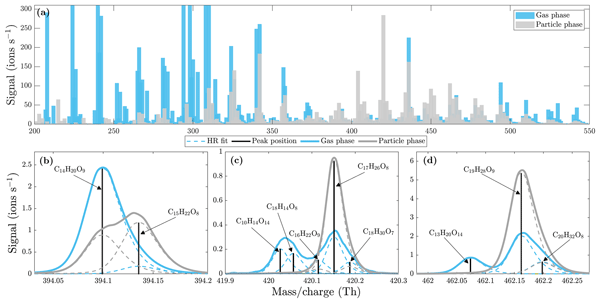
Ella Häkkinen, Jian Zhao, Frans Graeffe, Nicolas Fauré, Jordan E. Krechmer, Douglas Worsnop, Hilkka Timonen, Mikael Ehn, and Juha Kangasluoma
Atmos. Meas. Tech., 16, 1705–1721, https://doi.org/10.5194/amt-16-1705-2023, https://doi.org/10.5194/amt-16-1705-2023, 2023
Short summary
Short summary
Highly oxygenated compounds contribute to the formation and growth of atmospheric organic aerosol and thus impact the global climate. Knowledge of their transformations and fate after condensing into the particle phase has been limited by the lack of suitable detection techniques. Here, we present an online method for measuring highly oxygenated compounds from organic aerosol. We evaluate the performance of the method and demonstrate that the method is applicable to different organic species.
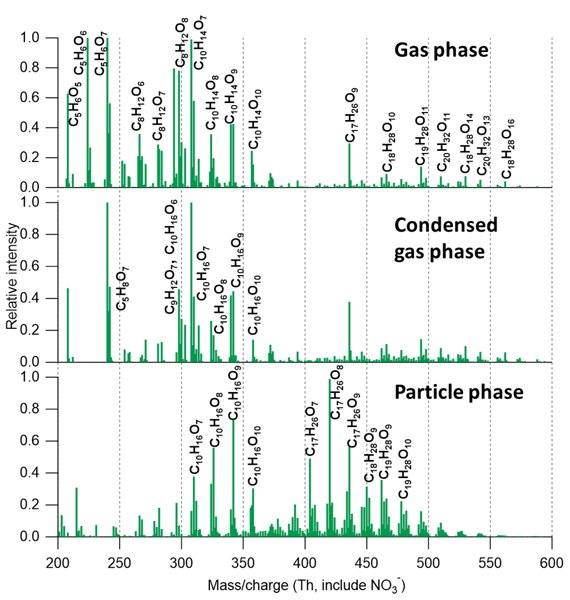
Jian Zhao, Ella Häkkinen, Frans Graeffe, Jordan E. Krechmer, Manjula R. Canagaratna, Douglas R. Worsnop, Juha Kangasluoma, and Mikael Ehn
Atmos. Chem. Phys., 23, 3707–3730, https://doi.org/10.5194/acp-23-3707-2023, https://doi.org/10.5194/acp-23-3707-2023, 2023
Short summary
Short summary
Based on the combined measurements of gas- and particle-phase highly oxygenated organic molecules (HOMs) from α-pinene ozonolysis, enhancement of dimers in particles was observed. We conducted experiments wherein the dimer to monomer (D / M) ratios of HOMs in the gas phase were modified (adding CO / NO) to investigate the effects of the corresponding D / M ratios in the particles. These results are important for a better understanding of secondary organic aerosol formation in the atmosphere.
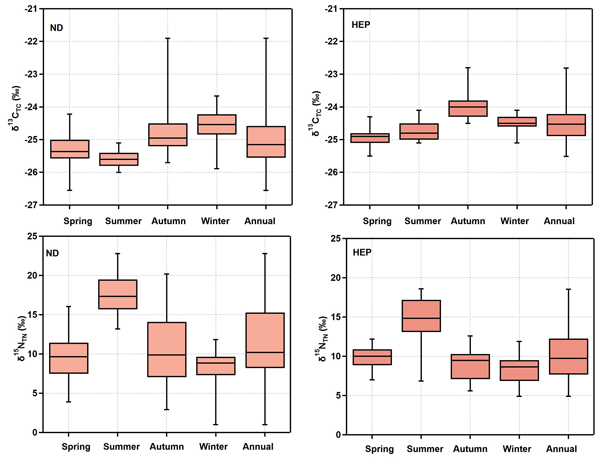
Zhichao Dong, Chandra Mouli Pavuluri, Zhanjie Xu, Yu Wang, Peisen Li, Pingqing Fu, and Cong-Qiang Liu
Atmos. Chem. Phys., 23, 2119–2143, https://doi.org/10.5194/acp-23-2119-2023, https://doi.org/10.5194/acp-23-2119-2023, 2023
Short summary
Short summary
This study has provided comprehensive baseline data of carbonaceous and inorganic aerosols as well as their isotope ratios in the Tianjin region, North China, found that Tianjin aerosols were derived from coal combustion, biomass burning and photochemical reactions of VOCs, and also implied that the Tianjin aerosols were more aged during long-range atmospheric transport in summer via carbonaceous and isotope data analysis.

Shujun Zhong, Shuang Chen, Junjun Deng, Yanbing Fan, Qiang Zhang, Qiaorong Xie, Yulin Qi, Wei Hu, Libin Wu, Xiaodong Li, Chandra Mouli Pavuluri, Jialei Zhu, Xin Wang, Di Liu, Xiaole Pan, Yele Sun, Zifa Wang, Yisheng Xu, Haijie Tong, Hang Su, Yafang Cheng, Kimitaka Kawamura, and Pingqing Fu
Atmos. Chem. Phys., 23, 2061–2077, https://doi.org/10.5194/acp-23-2061-2023, https://doi.org/10.5194/acp-23-2061-2023, 2023
Short summary
Short summary
This study investigated the role of the secondary organic aerosol (SOA) loading on the molecular composition of wintertime urban aerosols by ultrahigh-resolution mass spectrometry. Results demonstrate that the SOA loading is an important factor associated with the oxidation degree, nitrate group content, and chemodiversity of nitrooxy–organosulfates. Our study also found that the hydrolysis of nitrooxy–organosulfates is a possible pathway for the formation of organosulfates.
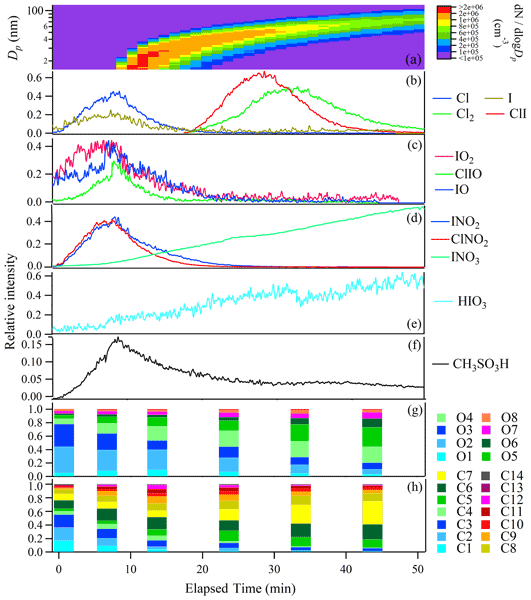
Yibei Wan, Xiangpeng Huang, Chong Xing, Qiongqiong Wang, Xinlei Ge, and Huan Yu
Atmos. Chem. Phys., 22, 15413–15423, https://doi.org/10.5194/acp-22-15413-2022, https://doi.org/10.5194/acp-22-15413-2022, 2022
Short summary
Short summary
The organic compounds involved in continental new particle formation have been investigated in depth in the last 2 decades. In contrast, no prior work has studied the exact chemical composition of organic compounds and their role in coastal new particle formation. We present a complementary study to the ongoing laboratory and field research on iodine nucleation in the coastal atmosphere. This study provided a more complete story of coastal I-NPF from low-tide macroalgal emission.
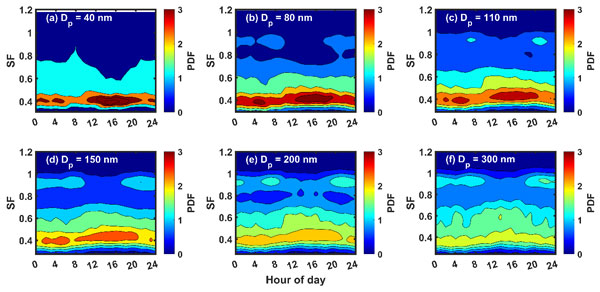
Yuying Wang, Rong Hu, Qiuyan Wang, Zhanqing Li, Maureen Cribb, Yele Sun, Xiaorui Song, Yi Shang, Yixuan Wu, Xin Huang, and Yuxiang Wang
Atmos. Chem. Phys., 22, 14133–14146, https://doi.org/10.5194/acp-22-14133-2022, https://doi.org/10.5194/acp-22-14133-2022, 2022
Short summary
Short summary
The mixing state of size-resolved soot particles and their influencing factors were investigated. The results suggest anthropogenic emissions and aging processes have diverse impacts on the mixing state of soot particles in different modes. Considering that the mixing state of soot particles is crucial to model aerosol absorption, this finding is important to study particle growth and the warming effect of black carbon aerosols.
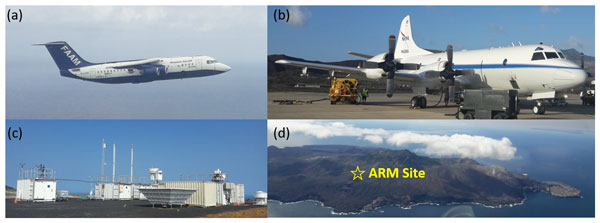
Paul A. Barrett, Steven J. Abel, Hugh Coe, Ian Crawford, Amie Dobracki, James Haywood, Steve Howell, Anthony Jones, Justin Langridge, Greg M. McFarquhar, Graeme J. Nott, Hannah Price, Jens Redemann, Yohei Shinozuka, Kate Szpek, Jonathan W. Taylor, Robert Wood, Huihui Wu, Paquita Zuidema, Stéphane Bauguitte, Ryan Bennett, Keith Bower, Hong Chen, Sabrina Cochrane, Michael Cotterell, Nicholas Davies, David Delene, Connor Flynn, Andrew Freedman, Steffen Freitag, Siddhant Gupta, David Noone, Timothy B. Onasch, James Podolske, Michael R. Poellot, Sebastian Schmidt, Stephen Springston, Arthur J. Sedlacek III, Jamie Trembath, Alan Vance, Maria A. Zawadowicz, and Jianhao Zhang
Atmos. Meas. Tech., 15, 6329–6371, https://doi.org/10.5194/amt-15-6329-2022, https://doi.org/10.5194/amt-15-6329-2022, 2022
Short summary
Short summary
To better understand weather and climate, it is vital to go into the field and collect observations. Often measurements take place in isolation, but here we compared data from two aircraft and one ground-based site. This was done in order to understand how well measurements made on one platform compared to those made on another. Whilst this is easy to do in a controlled laboratory setting, it is more challenging in the real world, and so these comparisons are as valuable as they are rare.
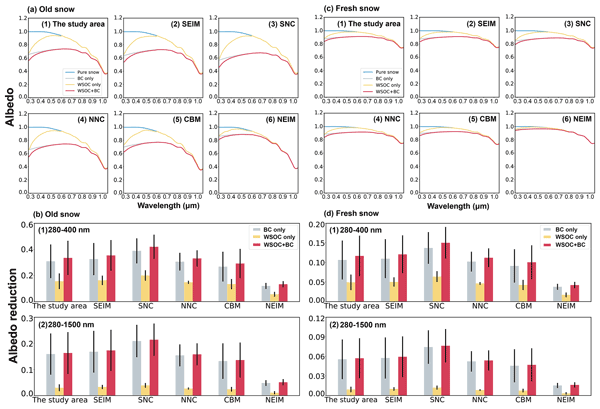
Xiaoying Niu, Wei Pu, Pingqing Fu, Yang Chen, Yuxuan Xing, Dongyou Wu, Ziqi Chen, Tenglong Shi, Yue Zhou, Hui Wen, and Xin Wang
Atmos. Chem. Phys., 22, 14075–14094, https://doi.org/10.5194/acp-22-14075-2022, https://doi.org/10.5194/acp-22-14075-2022, 2022
Short summary
Short summary
In this study, we do the first investigation of WSOC in seasonal snow of northeastern China. The results revealed the regional-specific compositions and sources of WSOC due to different natural environments and anthropogenic activities. The abundant concentrations of WSOC and its absorption properties contributed to a crucial impact on the snow albedo and radiative effect. We established that our study could raise awareness of carbon cycling processes, hydrological processes, and climate change.
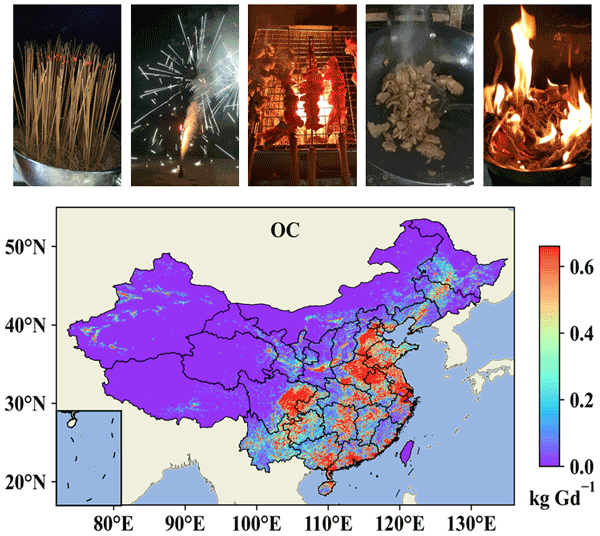
Yi Cheng, Shaofei Kong, Liquan Yao, Huang Zheng, Jian Wu, Qin Yan, Shurui Zheng, Yao Hu, Zhenzhen Niu, Yingying Yan, Zhenxing Shen, Guofeng Shen, Dantong Liu, Shuxiao Wang, and Shihua Qi
Earth Syst. Sci. Data, 14, 4757–4775, https://doi.org/10.5194/essd-14-4757-2022, https://doi.org/10.5194/essd-14-4757-2022, 2022
Short summary
Short summary
This work establishes the first emission inventory of carbonaceous aerosols from cooking, fireworks, sacrificial incense, joss paper burning, and barbecue, using multi-source datasets and tested emission factors. These emissions were concentrated in specific periods and areas. Positive and negative correlations between income and emissions were revealed in urban and rural regions. The dataset will be helpful for improving modeling studies and modifying corresponding emission control policies.
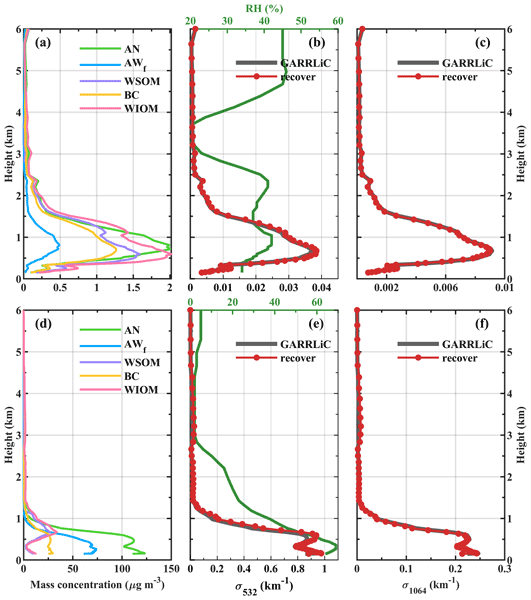
Futing Wang, Ting Yang, Zifa Wang, Haibo Wang, Xi Chen, Yele Sun, Jianjun Li, Guigang Tang, and Wenxuan Chai
Atmos. Meas. Tech., 15, 6127–6144, https://doi.org/10.5194/amt-15-6127-2022, https://doi.org/10.5194/amt-15-6127-2022, 2022
Short summary
Short summary
We develop a new algorithm to get the vertical mass concentration profiles of fine aerosol components based on the synergy of ground-based remote sensing for the first time. The comparisons with in situ observations and chemistry transport models validate the performance of the algorithm. Uncertainties caused by input parameters are also assessed in this paper. We expected that the algorithm can provide a new idea for lidar inversion and promote the development of aerosol component profiles.
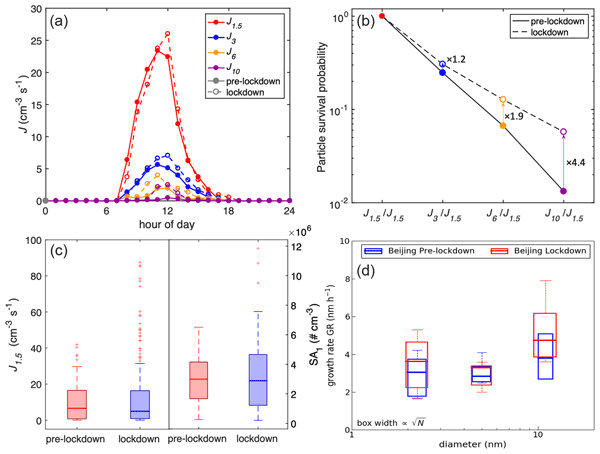
Chao Yan, Yicheng Shen, Dominik Stolzenburg, Lubna Dada, Ximeng Qi, Simo Hakala, Anu-Maija Sundström, Yishuo Guo, Antti Lipponen, Tom V. Kokkonen, Jenni Kontkanen, Runlong Cai, Jing Cai, Tommy Chan, Liangduo Chen, Biwu Chu, Chenjuan Deng, Wei Du, Xiaolong Fan, Xu-Cheng He, Juha Kangasluoma, Joni Kujansuu, Mona Kurppa, Chang Li, Yiran Li, Zhuohui Lin, Yiliang Liu, Yuliang Liu, Yiqun Lu, Wei Nie, Jouni Pulliainen, Xiaohui Qiao, Yonghong Wang, Yifan Wen, Ye Wu, Gan Yang, Lei Yao, Rujing Yin, Gen Zhang, Shaojun Zhang, Feixue Zheng, Ying Zhou, Antti Arola, Johanna Tamminen, Pauli Paasonen, Yele Sun, Lin Wang, Neil M. Donahue, Yongchun Liu, Federico Bianchi, Kaspar R. Daellenbach, Douglas R. Worsnop, Veli-Matti Kerminen, Tuukka Petäjä, Aijun Ding, Jingkun Jiang, and Markku Kulmala
Atmos. Chem. Phys., 22, 12207–12220, https://doi.org/10.5194/acp-22-12207-2022, https://doi.org/10.5194/acp-22-12207-2022, 2022
Short summary
Short summary
Atmospheric new particle formation (NPF) is a dominant source of atmospheric ultrafine particles. In urban environments, traffic emissions are a major source of primary pollutants, but their contribution to NPF remains under debate. During the COVID-19 lockdown, traffic emissions were significantly reduced, providing a unique chance to examine their relevance to NPF. Based on our comprehensive measurements, we demonstrate that traffic emissions alone are not able to explain the NPF in Beijing.
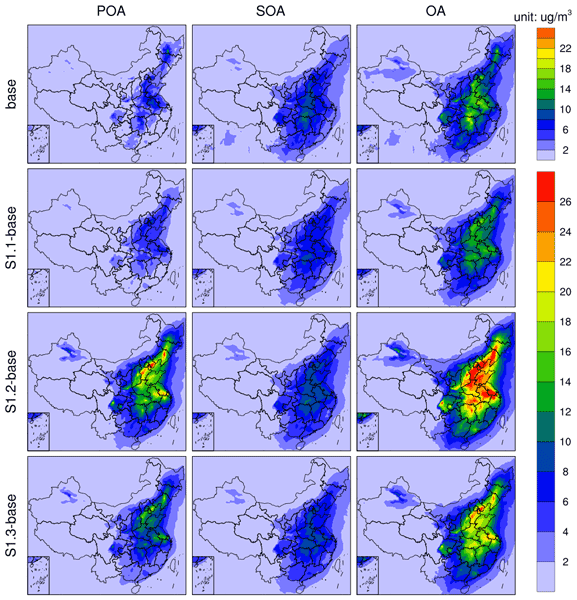
Mengying Li, Shaocai Yu, Xue Chen, Zhen Li, Yibo Zhang, Zhe Song, Weiping Liu, Pengfei Li, Xiaoye Zhang, Meigen Zhang, Yele Sun, Zirui Liu, Caiping Sun, Jingkun Jiang, Shuxiao Wang, Benjamin N. Murphy, Kiran Alapaty, Rohit Mathur, Daniel Rosenfeld, and John H. Seinfeld
Atmos. Chem. Phys., 22, 11845–11866, https://doi.org/10.5194/acp-22-11845-2022, https://doi.org/10.5194/acp-22-11845-2022, 2022
Short summary
Short summary
This study constructed an emission inventory of condensable particulate matter (CPM) in China with a focus on organic aerosols (OAs), based on collected CPM emission information. The results show that OA emissions are enhanced twofold for the years 2014 and 2017 after the inclusion of CPM in the new inventory. Sensitivity cases demonstrated the significant contributions of CPM emissions from stationary combustion and mobile sources to primary, secondary, and total OA concentrations.
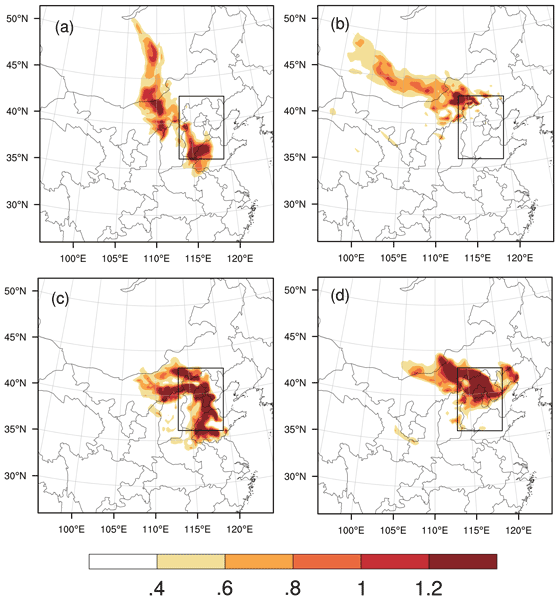
Lichao Yang, Wansuo Duan, Zifa Wang, and Wenyi Yang
Atmos. Chem. Phys., 22, 11429–11453, https://doi.org/10.5194/acp-22-11429-2022, https://doi.org/10.5194/acp-22-11429-2022, 2022
Short summary
Short summary
The initial meteorological state has a great impact on PM2.5 forecasts. Assimilating additional observations is an effective way to improve the accuracy of the initial meteorological state. Here we used an advanced optimization approach to identify where we should preferentially place the meteorological observations associated with PM2.5 forecasts in the Beijing–Tianjin–Hebei region of China. We provide evidence that the target observation strategy is effective for improving PM2.5 forecasts.
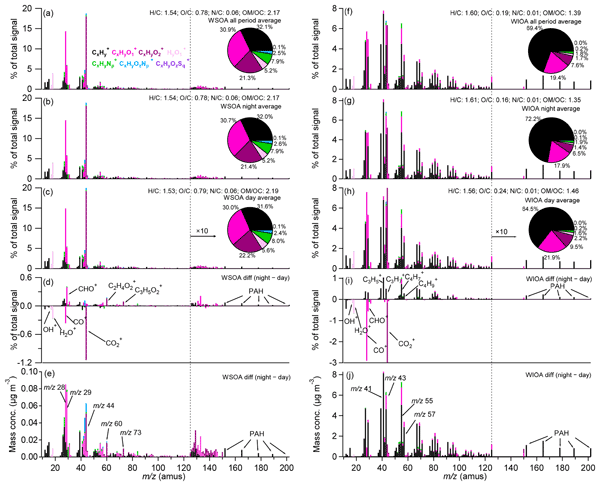
Zhiqiang Zhang, Yele Sun, Chun Chen, Bo You, Aodong Du, Weiqi Xu, Yan Li, Zhijie Li, Lu Lei, Wei Zhou, Jiaxing Sun, Yanmei Qiu, Lianfang Wei, Pingqing Fu, and Zifa Wang
Atmos. Chem. Phys., 22, 10409–10423, https://doi.org/10.5194/acp-22-10409-2022, https://doi.org/10.5194/acp-22-10409-2022, 2022
Short summary
Short summary
We present a comprehensive characterization of water-soluble organic aerosol and the first mass spectral characterization of water-insoluble organic aerosol in the cold season in Beijing by integrating online and offline aerosol mass spectrometer measurements. WSOA comprised dominantly secondary OA and showed large changes during the transition season from autumn to winter. WIOA was characterized by prominent hydrocarbon ions series, low oxidation states, and significant day–night differences.
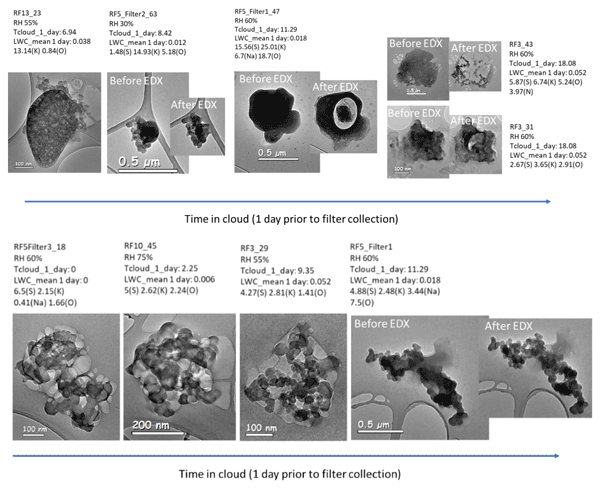
Caroline Dang, Michal Segal-Rozenhaimer, Haochi Che, Lu Zhang, Paola Formenti, Jonathan Taylor, Amie Dobracki, Sara Purdue, Pui-Shan Wong, Athanasios Nenes, Arthur Sedlacek III, Hugh Coe, Jens Redemann, Paquita Zuidema, Steven Howell, and James Haywood
Atmos. Chem. Phys., 22, 9389–9412, https://doi.org/10.5194/acp-22-9389-2022, https://doi.org/10.5194/acp-22-9389-2022, 2022
Short summary
Short summary
Transmission electron microscopy was used to analyze aged African smoke particles and how the smoke interacts with the marine atmosphere. We found that the volatility of organic aerosol increases with biomass burning plume age, that black carbon is often mixed with potassium salts and that the marine atmosphere can incorporate Na and Cl into smoke particles. Marine salts are more processed when mixed with smoke plumes, and there are interesting Cl-rich yet Na-absent marine particles.
Xinghua Zhang, Wenhui Zhao, Lixiang Zhai, Miao Zhong, Jinsen Shi, Junying Sun, Yanmei Liu, Conghui Xie, Yulong Tan, Kemei Li, Xinlei Ge, Qi Zhang, Shichang Kang, and Jianzhong Xu
Earth Syst. Sci. Data Discuss., https://doi.org/10.5194/essd-2022-211, https://doi.org/10.5194/essd-2022-211, 2022
Manuscript not accepted for further review
Short summary
Short summary
A comprehensive aerosol observation project was carried out in the Tibetan Plateau (TP) in recent years to investigate the properties and sources of atmospheric aerosols as well as their regional differences by performing multiple short-term intensive field observations. The real-time online high-time-resolution (hourly) data of aerosol properties in the different TP region are integrated in a new dataset and can provide supporting for related studies in in the TP.
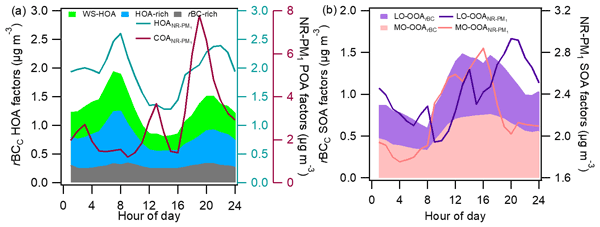
Shijie Cui, Dan Dan Huang, Yangzhou Wu, Junfeng Wang, Fuzhen Shen, Jiukun Xian, Yunjiang Zhang, Hongli Wang, Cheng Huang, Hong Liao, and Xinlei Ge
Atmos. Chem. Phys., 22, 8073–8096, https://doi.org/10.5194/acp-22-8073-2022, https://doi.org/10.5194/acp-22-8073-2022, 2022
Short summary
Short summary
Refractory black carbon (rBC) aerosols are important to air quality and climate change. rBC can mix with many other species, which can significantly change its properties and impacts. We used a specific set of techniques to exclusively characterize rBC-containing (rBCc) particles in Shanghai. We elucidated their composition, sources and size distributions and factors that affect their properties. Our findings are very valuable for advancing the understanding of BC and controlling BC pollution.
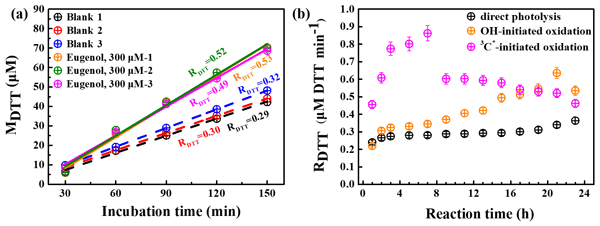
Xudong Li, Ye Tao, Longwei Zhu, Shuaishuai Ma, Shipeng Luo, Zhuzi Zhao, Ning Sun, Xinlei Ge, and Zhaolian Ye
Atmos. Chem. Phys., 22, 7793–7814, https://doi.org/10.5194/acp-22-7793-2022, https://doi.org/10.5194/acp-22-7793-2022, 2022
Short summary
Short summary
This work has, for the first time, investigated the optical and chemical properties and oxidative potential of aqueous-phase photooxidation products of eugenol (a biomass-burning-emitted compound) and elucidated the interplay among these properties. Large mass yields exceeding 100 % were found, and the aqueous processing is a source of BrC (likely relevant with humic-like substances). We also show that aqueous processing can produce species that are more toxic than that of its precursor.
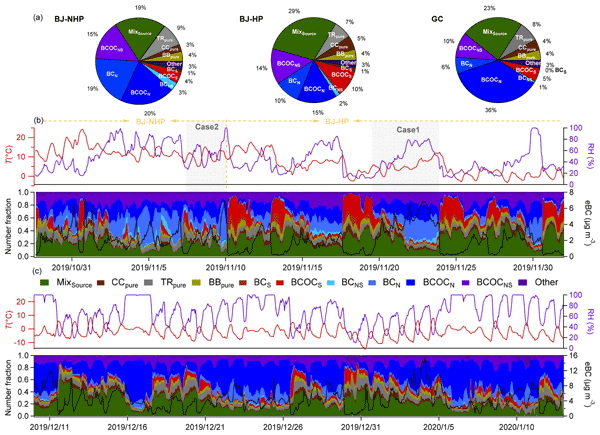
Jiaxing Sun, Yele Sun, Conghui Xie, Weiqi Xu, Chun Chen, Zhe Wang, Lei Li, Xubing Du, Fugui Huang, Yan Li, Zhijie Li, Xiaole Pan, Nan Ma, Wanyun Xu, Pingqing Fu, and Zifa Wang
Atmos. Chem. Phys., 22, 7619–7630, https://doi.org/10.5194/acp-22-7619-2022, https://doi.org/10.5194/acp-22-7619-2022, 2022
Short summary
Short summary
We analyzed the chemical composition and mixing state of BC-containing particles at urban and rural sites in winter in the North China Plain and evaluated their impact on light absorption enhancement. BC was dominantly mixed with organic carbon, nitrate, and sulfate, and the mixing state evolved significantly as a function of relative humidity (RH) at both sites. The absorption enhancement depended strongly on coated secondary inorganic aerosol and was up to ~1.3–1.4 during aging processes.
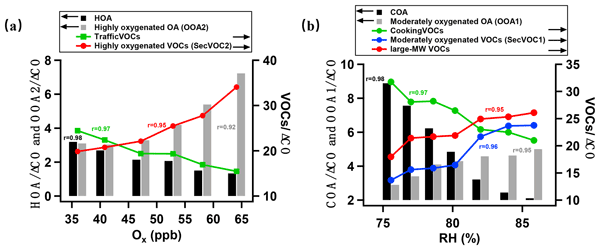
Siyuan Li, Dantong Liu, Shaofei Kong, Yangzhou Wu, Kang Hu, Huang Zheng, Yi Cheng, Shurui Zheng, Xiaotong Jiang, Shuo Ding, Dawei Hu, Quan Liu, Ping Tian, Delong Zhao, and Jiujiang Sheng
Atmos. Chem. Phys., 22, 6937–6951, https://doi.org/10.5194/acp-22-6937-2022, https://doi.org/10.5194/acp-22-6937-2022, 2022
Short summary
Short summary
The understanding of secondary organic aerosols is hindered by the aerosol–gas evolution by different oxidation mechanisms. By concurrently measuring detailed mass spectra of aerosol and gas phases in a megacity online, we identified the primary and secondary source sectors and investigated the transformation between gas and aerosol phases influenced by photooxidation and moisture. The results will help us to understand the respective evolution of major sources in a typical urban environment.
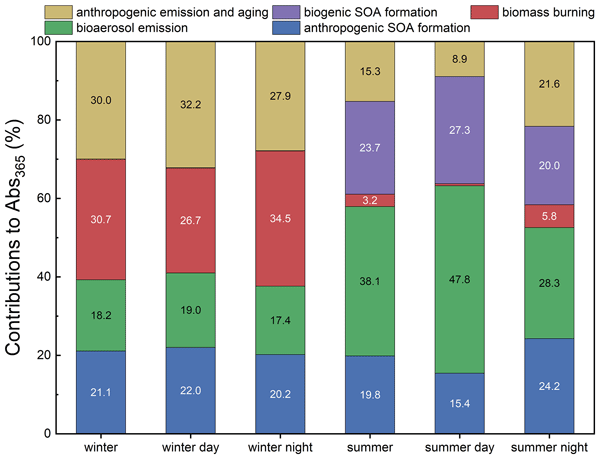
Junjun Deng, Hao Ma, Xinfeng Wang, Shujun Zhong, Zhimin Zhang, Jialei Zhu, Yanbing Fan, Wei Hu, Libin Wu, Xiaodong Li, Lujie Ren, Chandra Mouli Pavuluri, Xiaole Pan, Yele Sun, Zifa Wang, Kimitaka Kawamura, and Pingqing Fu
Atmos. Chem. Phys., 22, 6449–6470, https://doi.org/10.5194/acp-22-6449-2022, https://doi.org/10.5194/acp-22-6449-2022, 2022
Short summary
Short summary
Light-absorbing brown carbon (BrC) plays an important role in climate change and atmospheric chemistry. Here we investigated the seasonal and diurnal variations in water-soluble BrC in PM2.5 in the megacity Tianjin in coastal China. Results of the source apportionments from the combination with organic molecular compositions and optical properties of water-soluble BrC reveal a large contribution from primary bioaerosol particles to BrC in the urban atmosphere.
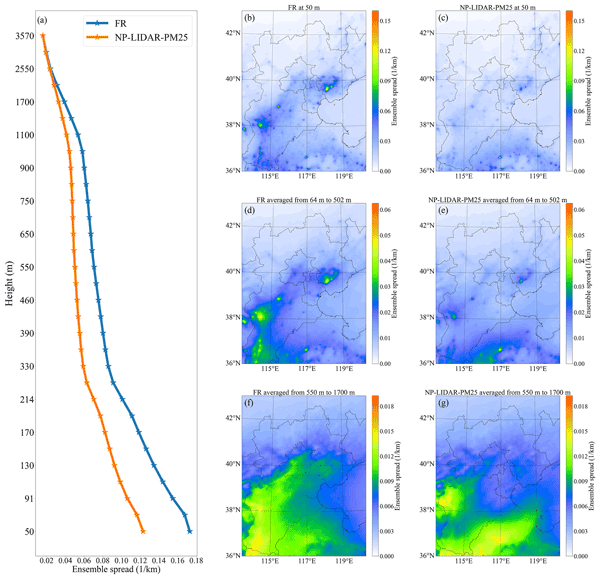
Haibo Wang, Ting Yang, Zifa Wang, Jianjun Li, Wenxuan Chai, Guigang Tang, Lei Kong, and Xueshun Chen
Geosci. Model Dev., 15, 3555–3585, https://doi.org/10.5194/gmd-15-3555-2022, https://doi.org/10.5194/gmd-15-3555-2022, 2022
Short summary
Short summary
In this paper, we develop an online data coupled assimilation system (NAQPMS-PDAF) with the Eulerian atmospheric chemistry-transport model. NAQPMS-PDAF allows efficient use of large computational resources. The application and performance of the system are investigated by assimilating 1 month of vertical aerosol observations. The results show that NAQPMS-PDAF can significantly improve the performance of aerosol vertical structure simulation and reduce the uncertainty to a large extent.
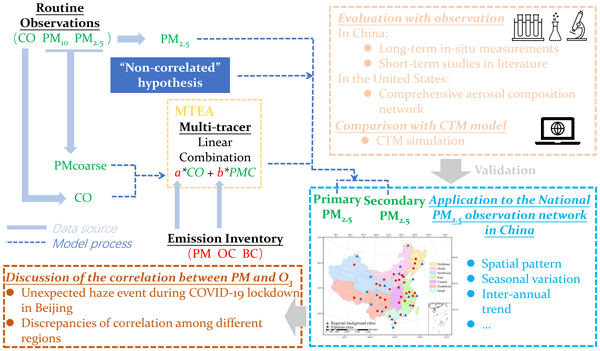
Haoran Zhang, Nan Li, Keqin Tang, Hong Liao, Chong Shi, Cheng Huang, Hongli Wang, Song Guo, Min Hu, Xinlei Ge, Mindong Chen, Zhenxin Liu, Huan Yu, and Jianlin Hu
Atmos. Chem. Phys., 22, 5495–5514, https://doi.org/10.5194/acp-22-5495-2022, https://doi.org/10.5194/acp-22-5495-2022, 2022
Short summary
Short summary
We developed a new algorithm with low economic/technique costs to identify primary and secondary components of PM2.5. Our model was shown to be reliable by comparison with different observation datasets. We systematically explored the patterns and changes in the secondary PM2.5 pollution in China at large spatial and time scales. We believe that this method is a promising tool for efficiently estimating primary and secondary PM2.5, and has huge potential for future PM mitigation.
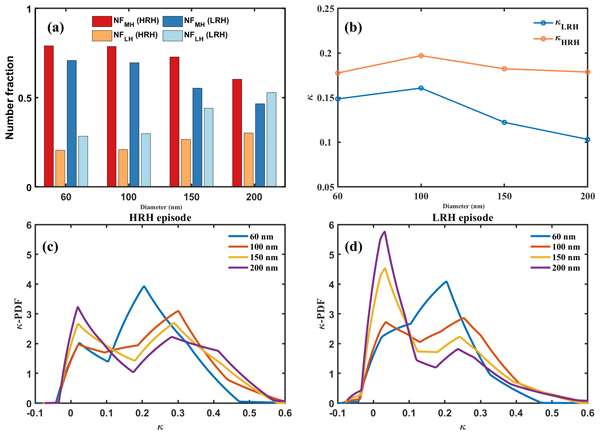
Jingnan Shi, Juan Hong, Nan Ma, Qingwei Luo, Yao He, Hanbing Xu, Haobo Tan, Qiaoqiao Wang, Jiangchuan Tao, Yaqing Zhou, Shuang Han, Long Peng, Linhong Xie, Guangsheng Zhou, Wanyun Xu, Yele Sun, Yafang Cheng, and Hang Su
Atmos. Chem. Phys., 22, 4599–4613, https://doi.org/10.5194/acp-22-4599-2022, https://doi.org/10.5194/acp-22-4599-2022, 2022
Short summary
Short summary
In this study, we investigated the hygroscopicity of submicron aerosols at a rural site in the North China Plain during the winter of 2018, using a HTDMA and a CV-ToF-ACSM. We observed differences in aerosol hygroscopicity during two distinct episodes with different primary emissions and secondary aerosol formation processes. These results provide an improved understanding of the complex influence of sources and aerosol evolution processes on their hygroscopicity.
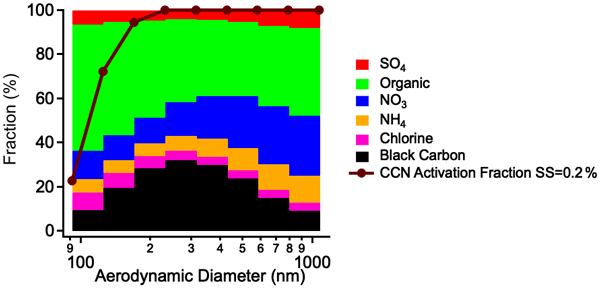
Chenjie Yu, Dantong Liu, Kang Hu, Ping Tian, Yangzhou Wu, Delong Zhao, Huihui Wu, Dawei Hu, Wenbo Guo, Qiang Li, Mengyu Huang, Deping Ding, and James D. Allan
Atmos. Chem. Phys., 22, 4375–4391, https://doi.org/10.5194/acp-22-4375-2022, https://doi.org/10.5194/acp-22-4375-2022, 2022
Short summary
Short summary
In this study, we applied a new technique to investigate the aerosol properties on both a mass and number basis and CCN abilities in Beijing suburban regions. The size-resolved aerosol chemical compositions and CCN activation measurement enable a detailed analysis of BC-containing particle hygroscopicity and its size-dependent contribution to the CCN activation. The results presented in this study will affect future models and human health studies.
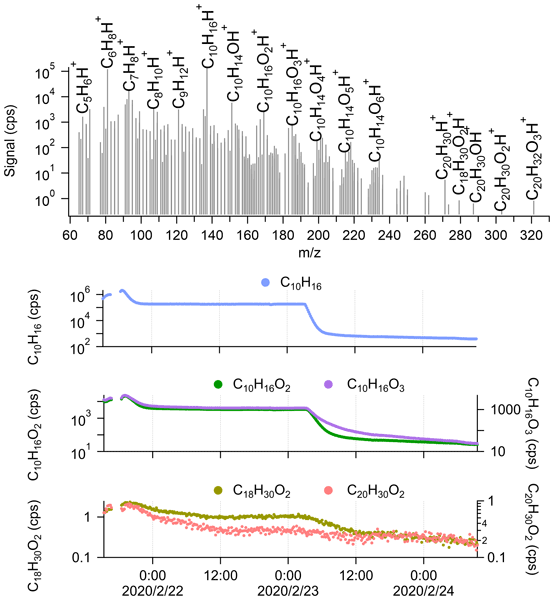
Haiyan Li, Thomas Golin Almeida, Yuanyuan Luo, Jian Zhao, Brett B. Palm, Christopher D. Daub, Wei Huang, Claudia Mohr, Jordan E. Krechmer, Theo Kurtén, and Mikael Ehn
Atmos. Meas. Tech., 15, 1811–1827, https://doi.org/10.5194/amt-15-1811-2022, https://doi.org/10.5194/amt-15-1811-2022, 2022
Short summary
Short summary
This work evaluated the potential for PTR-based mass spectrometers to detect ROOR and ROOH peroxides both experimentally and through computations. Laboratory experiments using a Vocus PTR observed only noisy signals of potential dimers during α-pinene ozonolysis and a few small signals of dimeric compounds during cyclohexene ozonolysis. Quantum chemical calculations for model ROOR and ROOH systems showed that most of these peroxides should fragment partially following protonation.
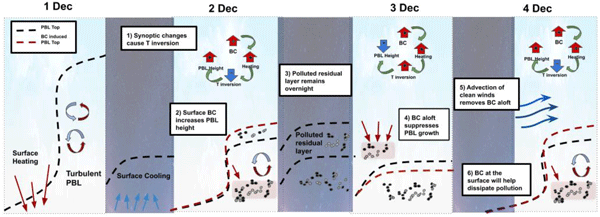
Jessica Slater, Hugh Coe, Gordon McFiggans, Juha Tonttila, and Sami Romakkaniemi
Atmos. Chem. Phys., 22, 2937–2953, https://doi.org/10.5194/acp-22-2937-2022, https://doi.org/10.5194/acp-22-2937-2022, 2022
Short summary
Short summary
This paper shows the specific impact of black carbon (BC) on the aerosol–planetary boundary layer (PBL) feedback and its influence on a Beijing haze episode. Overall, this paper shows that strong temperature inversions prevent BC heating within the PBL from significantly increasing PBL height, while BC above the PBL suppresses PBL development significantly through the day. From this we suggest a method by which both locally and regionally emitted BC may impact urban pollution episodes.
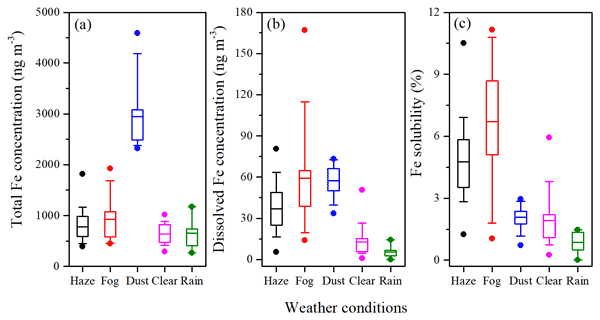
Yanhong Zhu, Weijun Li, Yue Wang, Jian Zhang, Lei Liu, Liang Xu, Jingsha Xu, Jinhui Shi, Longyi Shao, Pingqing Fu, Daizhou Zhang, and Zongbo Shi
Atmos. Chem. Phys., 22, 2191–2202, https://doi.org/10.5194/acp-22-2191-2022, https://doi.org/10.5194/acp-22-2191-2022, 2022
Short summary
Short summary
The solubilities of iron in fine particles in a megacity in Eastern China were studied under haze, fog, dust, clear, and rain weather conditions. For the first time, a receptor model was used to quantify the sources of dissolved and total iron aerosol. Microscopic analysis further confirmed the aging of iron aerosol during haze and fog conditions that facilitated dissolution of insoluble iron.
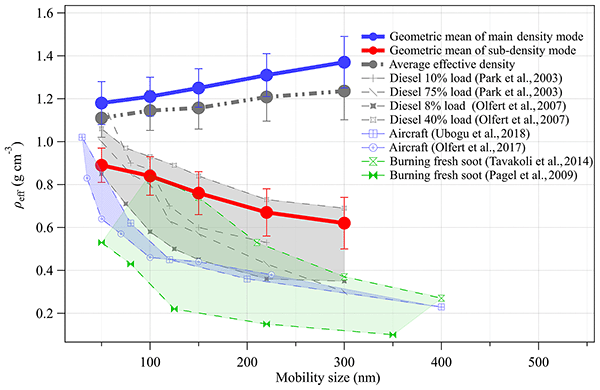
Yaqing Zhou, Nan Ma, Qiaoqiao Wang, Zhibin Wang, Chunrong Chen, Jiangchuan Tao, Juan Hong, Long Peng, Yao He, Linhong Xie, Shaowen Zhu, Yuxuan Zhang, Guo Li, Wanyun Xu, Peng Cheng, Uwe Kuhn, Guangsheng Zhou, Pingqing Fu, Qiang Zhang, Hang Su, and Yafang Cheng
Atmos. Chem. Phys., 22, 2029–2047, https://doi.org/10.5194/acp-22-2029-2022, https://doi.org/10.5194/acp-22-2029-2022, 2022
Short summary
Short summary
This study characterizes size-resolved particle effective densities and their evolution associated with emissions and aging processes in a rural area of the North China Plain. Particle effective density exhibits a high-frequency bimodal distribution, and two density modes exhibit opposite trends with increasing particle size. SIA and BC mass fractions are key factors of particle effective density, and a value of 0.6 g cm−3 is appropriate to represent BC effective density in bulk particles.
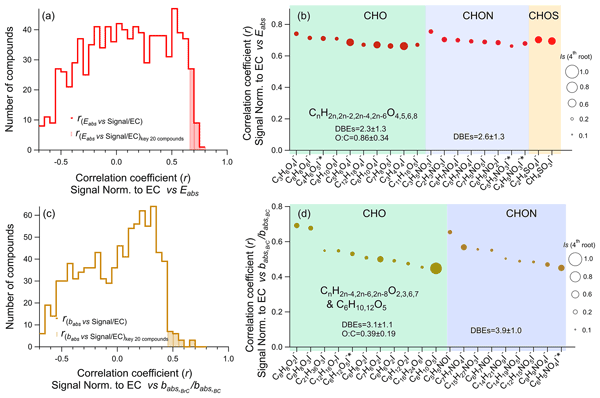
Jing Cai, Cheng Wu, Jiandong Wang, Wei Du, Feixue Zheng, Simo Hakala, Xiaolong Fan, Biwu Chu, Lei Yao, Zemin Feng, Yongchun Liu, Yele Sun, Jun Zheng, Chao Yan, Federico Bianchi, Markku Kulmala, Claudia Mohr, and Kaspar R. Daellenbach
Atmos. Chem. Phys., 22, 1251–1269, https://doi.org/10.5194/acp-22-1251-2022, https://doi.org/10.5194/acp-22-1251-2022, 2022
Short summary
Short summary
This study investigates the connection between organic aerosol (OA) molecular composition and particle absorptive properties in autumn in Beijing. We find that the molecular properties of OA compounds in different episodes influence particle light absorption properties differently: the light absorption enhancement of black carbon and light absorption coefficient of brown carbon were mostly related to more oxygenated OA (low C number and four O atoms) and aromatics/nitro-aromatics, respectively.
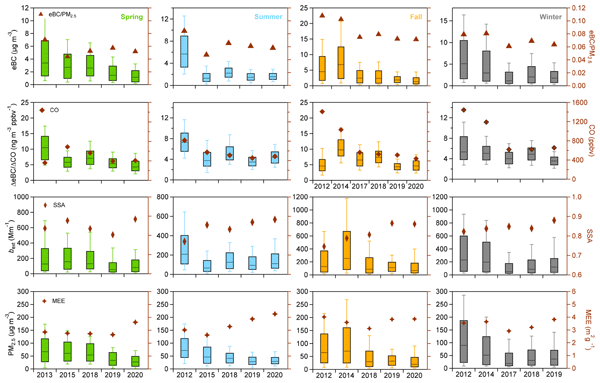
Jiaxing Sun, Zhe Wang, Wei Zhou, Conghui Xie, Cheng Wu, Chun Chen, Tingting Han, Qingqing Wang, Zhijie Li, Jie Li, Pingqing Fu, Zifa Wang, and Yele Sun
Atmos. Chem. Phys., 22, 561–575, https://doi.org/10.5194/acp-22-561-2022, https://doi.org/10.5194/acp-22-561-2022, 2022
Short summary
Short summary
We analyzed 9-year measurements of BC and aerosol optical properties from 2012 to 2020 in Beijing, China. Our results showed large reductions in BC and light extinction coefficient due to the Clean Air Action Plan. As a response, both SSA and mass extinction efficiency (MEE) showed considerable increases, demonstrating a future challenge in visibility improvement. The primary and secondary BrC was also separated and quantified, and the changes in radiative forcing of BC and BrC were estimated.
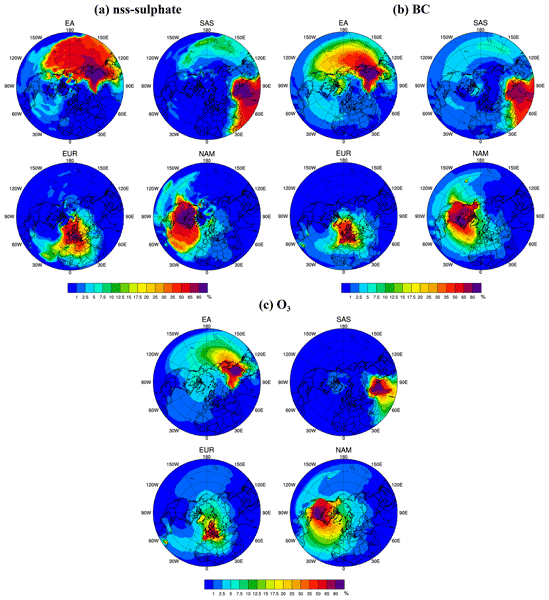
Qian Ye, Jie Li, Xueshun Chen, Huansheng Chen, Wenyi Yang, Huiyun Du, Xiaole Pan, Xiao Tang, Wei Wang, Lili Zhu, Jianjun Li, Zhe Wang, and Zifa Wang
Geosci. Model Dev., 14, 7573–7604, https://doi.org/10.5194/gmd-14-7573-2021, https://doi.org/10.5194/gmd-14-7573-2021, 2021
Short summary
Short summary
We developed a global tropospheric atmospheric chemistry source–receptor model. This model can quantify the contributions of multiple air pollutants from various source regions in one simulation without introducing the nonlinear error of atmospheric chemistry. The S-R relationships of PM2.5 and O3 from a global high-resolution (0.5° × 0.5°) simulation were given and compared with previous studies. This model will be useful for creating a link between the scientific community and policymakers.
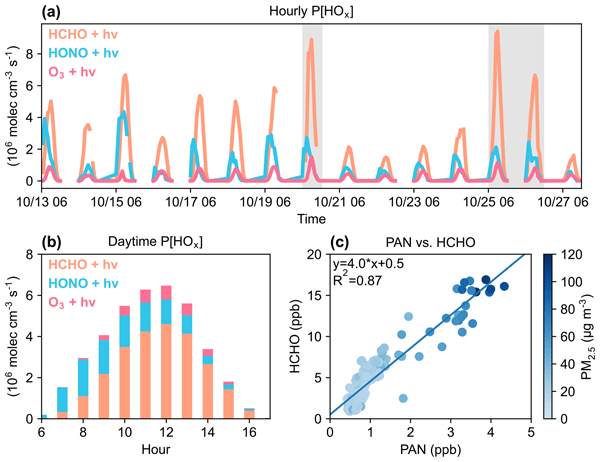
Yulu Qiu, Zhiqiang Ma, Ke Li, Mengyu Huang, Jiujiang Sheng, Ping Tian, Jia Zhu, Weiwei Pu, Yingxiao Tang, Tingting Han, Huaigang Zhou, and Hong Liao
Atmos. Chem. Phys., 21, 17995–18010, https://doi.org/10.5194/acp-21-17995-2021, https://doi.org/10.5194/acp-21-17995-2021, 2021
Short summary
Short summary
Photochemical pollution over the North China Plain (NCP) is attracting much concern. Our observations at a rural site in the NCP identified high peroxyacetyl nitrate (PAN) concentrations, even on cold days. Increased acetaldehyde concentration and hydroxyl radical production rates drive fast PAN formation. Moreover, our study emphasizes the importance of formaldehyde photolysis in PAN formation and calls for implementing strict volatile organic compound controls after summer over the NCP.
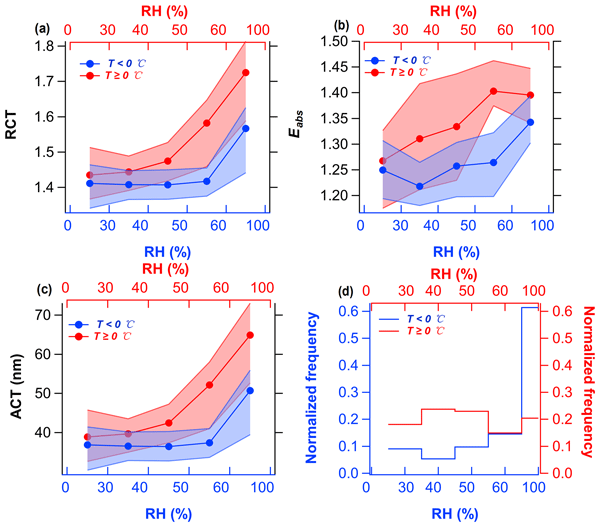
Yuting Zhang, Hang Liu, Shandong Lei, Wanyun Xu, Yu Tian, Weijie Yao, Xiaoyong Liu, Qi Liao, Jie Li, Chun Chen, Yele Sun, Pingqing Fu, Jinyuan Xin, Junji Cao, Xiaole Pan, and Zifa Wang
Atmos. Chem. Phys., 21, 17631–17648, https://doi.org/10.5194/acp-21-17631-2021, https://doi.org/10.5194/acp-21-17631-2021, 2021
Short summary
Short summary
In this study, the authors used a single-particle soot photometer (SP2) to characterize the particle size, mixing state, and optical properties of black carbon aerosols in rural areas of the North China Plain in winter. Relatively warm and high-RH environments (RH > 50 %, −4° < T < 4 °) were more favorable to rBC aging than dry and cold environments (RH < 60 %, T < −8°). The paper emphasizes the importance of meteorological parameters in the mixing state of black carbon.
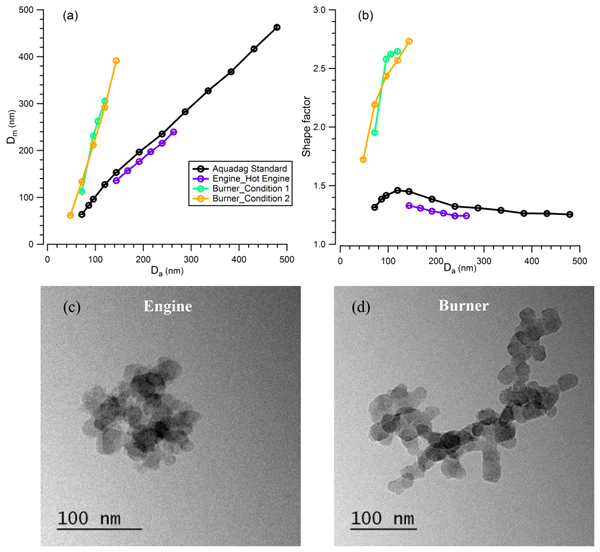
Dawei Hu, M. Rami Alfarra, Kate Szpek, Justin M. Langridge, Michael I. Cotterell, Claire Belcher, Ian Rule, Zixia Liu, Chenjie Yu, Yunqi Shao, Aristeidis Voliotis, Mao Du, Brett Smith, Greg Smallwood, Prem Lobo, Dantong Liu, Jim M. Haywood, Hugh Coe, and James D. Allan
Atmos. Chem. Phys., 21, 16161–16182, https://doi.org/10.5194/acp-21-16161-2021, https://doi.org/10.5194/acp-21-16161-2021, 2021
Short summary
Short summary
Here, we developed new techniques for investigating these properties in the laboratory and applied these to BC and BrC from different sources, including diesel exhaust, inverted propane flame and wood combustion. These have allowed us to quantify the changes in shape and chemical composition of different soots according to source and variables such as the moisture content of wood.
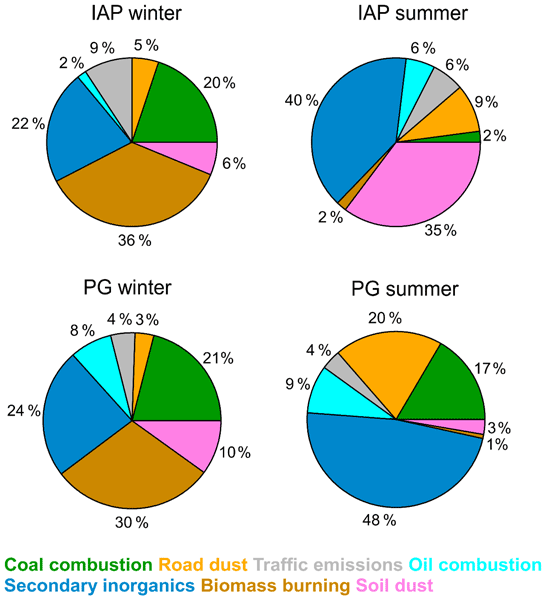
Deepchandra Srivastava, Jingsha Xu, Tuan V. Vu, Di Liu, Linjie Li, Pingqing Fu, Siqi Hou, Natalia Moreno Palmerola, Zongbo Shi, and Roy M. Harrison
Atmos. Chem. Phys., 21, 14703–14724, https://doi.org/10.5194/acp-21-14703-2021, https://doi.org/10.5194/acp-21-14703-2021, 2021
Short summary
Short summary
This study presents the source apportionment of PM2.5 performed by positive matrix factorization (PMF) at urban and rural sites in Beijing. These factors are interpreted as traffic emissions, biomass burning, road and soil dust, coal and oil combustion, and secondary inorganics. PMF failed to resolve some sources identified by CMB and AMS and appears to overestimate the dust sources. Comparison with earlier PMF studies from the Beijing area highlights inconsistent findings using this method.
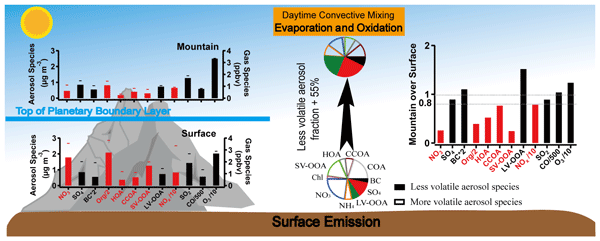
Quan Liu, Dantong Liu, Yangzhou Wu, Kai Bi, Wenkang Gao, Ping Tian, Delong Zhao, Siyuan Li, Chenjie Yu, Guiqian Tang, Yunfei Wu, Kang Hu, Shuo Ding, Qian Gao, Fei Wang, Shaofei Kong, Hui He, Mengyu Huang, and Deping Ding
Atmos. Chem. Phys., 21, 14749–14760, https://doi.org/10.5194/acp-21-14749-2021, https://doi.org/10.5194/acp-21-14749-2021, 2021
Short summary
Short summary
Through simultaneous online measurements of detailed aerosol compositions at both surface and surface-influenced mountain sites, the evolution of aerosol composition during daytime vertical transport was investigated. The results show that, from surface to the top of the planetary boundary layer, the oxidation state of organic aerosol had been significantly enhanced due to evaporation and further oxidation of these evaporated gases.
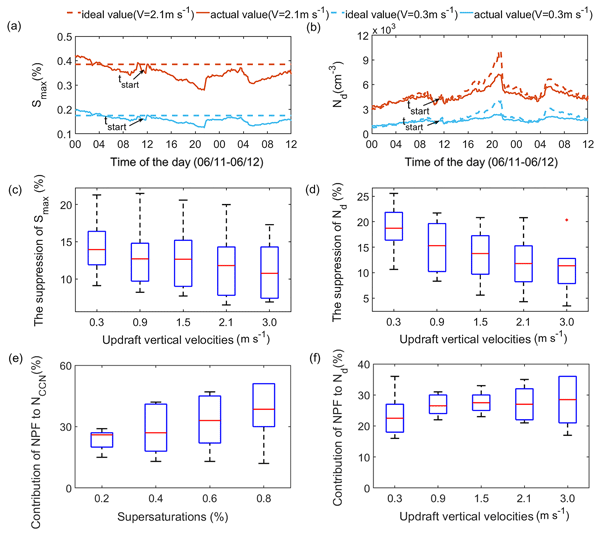
Sihui Jiang, Fang Zhang, Jingye Ren, Lu Chen, Xing Yan, Jieyao Liu, Yele Sun, and Zhanqing Li
Atmos. Chem. Phys., 21, 14293–14308, https://doi.org/10.5194/acp-21-14293-2021, https://doi.org/10.5194/acp-21-14293-2021, 2021
Short summary
Short summary
New particle formation (NPF) can be a large source of CCN and affect weather and climate. Here we show that the NPF contributes largely to cloud droplet number concentration (Nd) but is suppressed at high particle number concentrations in Beijing due to water vapor competition. We also reveal a considerable impact of primary sources on the evaluation in the urban atmosphere. Our study has great significance for assessing NPF-associated effects on climate in polluted regions.
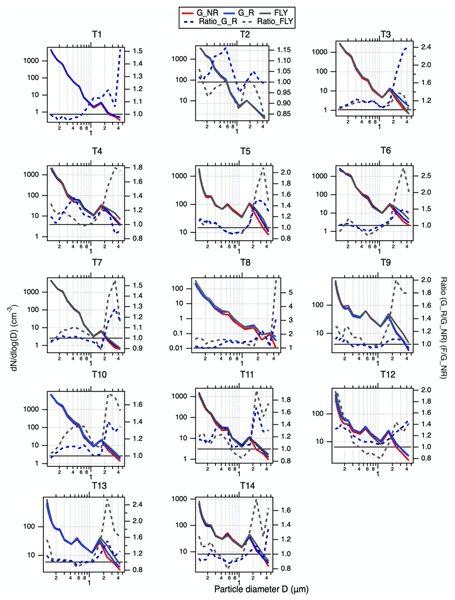
Zixia Liu, Martin Osborne, Karen Anderson, Jamie D. Shutler, Andy Wilson, Justin Langridge, Steve H. L. Yim, Hugh Coe, Suresh Babu, Sreedharan K. Satheesh, Paquita Zuidema, Tao Huang, Jack C. H. Cheng, and James Haywood
Atmos. Meas. Tech., 14, 6101–6118, https://doi.org/10.5194/amt-14-6101-2021, https://doi.org/10.5194/amt-14-6101-2021, 2021
Short summary
Short summary
This paper first validates the performance of an advanced aerosol observation instrument POPS against a reference instrument and examines any biases introduced by operating it on a quadcopter drone. The results show the POPS performs relatively well on the ground. The impact of the UAV rotors on the POPS is small at low wind speeds, but when operating under higher wind speeds, larger discrepancies occur. It appears that the POPS measures sub-micron aerosol particles more accurately on the UAV.
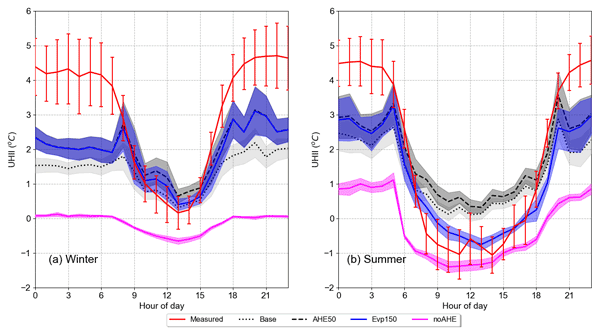
Michael Biggart, Jenny Stocker, Ruth M. Doherty, Oliver Wild, David Carruthers, Sue Grimmond, Yiqun Han, Pingqing Fu, and Simone Kotthaus
Atmos. Chem. Phys., 21, 13687–13711, https://doi.org/10.5194/acp-21-13687-2021, https://doi.org/10.5194/acp-21-13687-2021, 2021
Short summary
Short summary
Heat-related illnesses are of increasing concern in China given its rapid urbanisation and our ever-warming climate. We examine the relative impacts that land surface properties and anthropogenic heat have on the urban heat island (UHI) in Beijing using ADMS-Urban. Air temperature measurements and satellite-derived land surface temperatures provide valuable means of evaluating modelled spatiotemporal variations. This work provides critical information for urban planners and UHI mitigation.
Junhua Wang, Baozhu Ge, Xueshun Chen, Jie Li, Keding Lu, Yayuan Dong, Lei Kong, Zifa Wang, and Yuanhang Zhang
Geosci. Model Dev. Discuss., https://doi.org/10.5194/gmd-2021-259, https://doi.org/10.5194/gmd-2021-259, 2021
Revised manuscript not accepted
Short summary
Short summary
This paper developed a novel quantitative decoupling analysis (QDA) method to quantify the contributions of emission, meteorology, chemical reaction, and their nonlinear interactions on PM2.5 and applied it to a pollution episode in Beijing. This method can provides the researchers and policy makers with valuable information for understanding of key factors to heavy pollution, but also help the modelers to find out the sources of uncertainties among numerical models.
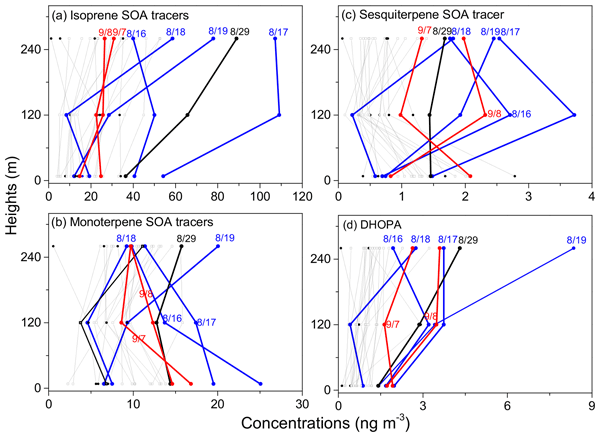
Hong Ren, Wei Hu, Lianfang Wei, Siyao Yue, Jian Zhao, Linjie Li, Libin Wu, Wanyu Zhao, Lujie Ren, Mingjie Kang, Qiaorong Xie, Sihui Su, Xiaole Pan, Zifa Wang, Yele Sun, Kimitaka Kawamura, and Pingqing Fu
Atmos. Chem. Phys., 21, 12949–12963, https://doi.org/10.5194/acp-21-12949-2021, https://doi.org/10.5194/acp-21-12949-2021, 2021
Short summary
Short summary
This study presents vertical profiles of biogenic and anthropogenic secondary organic aerosols (SOAs) in the urban boundary layer based on a 325 m tower in Beijing in late summer. The increases in the isoprene and toluene SOAs with height were found to be more related to regional transport, whereas the decrease in those from monoterpenes and sesquiterpene were more subject to local emissions. Such complicated vertical distributions of SOA should be considered in future modeling work.
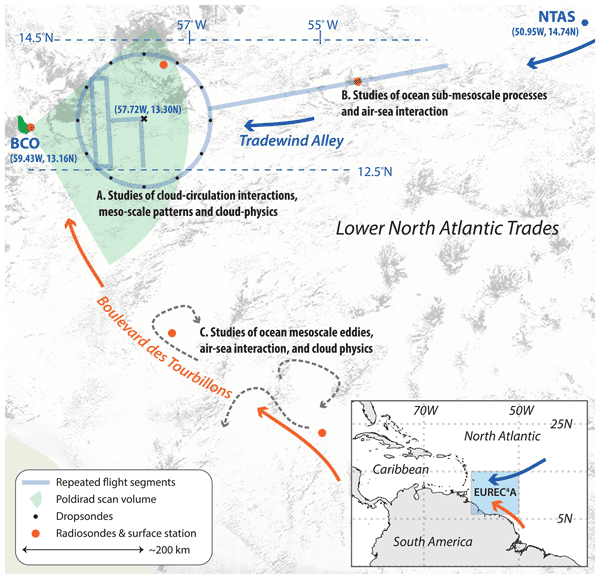
Bjorn Stevens, Sandrine Bony, David Farrell, Felix Ament, Alan Blyth, Christopher Fairall, Johannes Karstensen, Patricia K. Quinn, Sabrina Speich, Claudia Acquistapace, Franziska Aemisegger, Anna Lea Albright, Hugo Bellenger, Eberhard Bodenschatz, Kathy-Ann Caesar, Rebecca Chewitt-Lucas, Gijs de Boer, Julien Delanoë, Leif Denby, Florian Ewald, Benjamin Fildier, Marvin Forde, Geet George, Silke Gross, Martin Hagen, Andrea Hausold, Karen J. Heywood, Lutz Hirsch, Marek Jacob, Friedhelm Jansen, Stefan Kinne, Daniel Klocke, Tobias Kölling, Heike Konow, Marie Lothon, Wiebke Mohr, Ann Kristin Naumann, Louise Nuijens, Léa Olivier, Robert Pincus, Mira Pöhlker, Gilles Reverdin, Gregory Roberts, Sabrina Schnitt, Hauke Schulz, A. Pier Siebesma, Claudia Christine Stephan, Peter Sullivan, Ludovic Touzé-Peiffer, Jessica Vial, Raphaela Vogel, Paquita Zuidema, Nicola Alexander, Lyndon Alves, Sophian Arixi, Hamish Asmath, Gholamhossein Bagheri, Katharina Baier, Adriana Bailey, Dariusz Baranowski, Alexandre Baron, Sébastien Barrau, Paul A. Barrett, Frédéric Batier, Andreas Behrendt, Arne Bendinger, Florent Beucher, Sebastien Bigorre, Edmund Blades, Peter Blossey, Olivier Bock, Steven Böing, Pierre Bosser, Denis Bourras, Pascale Bouruet-Aubertot, Keith Bower, Pierre Branellec, Hubert Branger, Michal Brennek, Alan Brewer, Pierre-Etienne Brilouet, Björn Brügmann, Stefan A. Buehler, Elmo Burke, Ralph Burton, Radiance Calmer, Jean-Christophe Canonici, Xavier Carton, Gregory Cato Jr., Jude Andre Charles, Patrick Chazette, Yanxu Chen, Michal T. Chilinski, Thomas Choularton, Patrick Chuang, Shamal Clarke, Hugh Coe, Céline Cornet, Pierre Coutris, Fleur Couvreux, Susanne Crewell, Timothy Cronin, Zhiqiang Cui, Yannis Cuypers, Alton Daley, Gillian M. Damerell, Thibaut Dauhut, Hartwig Deneke, Jean-Philippe Desbios, Steffen Dörner, Sebastian Donner, Vincent Douet, Kyla Drushka, Marina Dütsch, André Ehrlich, Kerry Emanuel, Alexandros Emmanouilidis, Jean-Claude Etienne, Sheryl Etienne-Leblanc, Ghislain Faure, Graham Feingold, Luca Ferrero, Andreas Fix, Cyrille Flamant, Piotr Jacek Flatau, Gregory R. Foltz, Linda Forster, Iulian Furtuna, Alan Gadian, Joseph Galewsky, Martin Gallagher, Peter Gallimore, Cassandra Gaston, Chelle Gentemann, Nicolas Geyskens, Andreas Giez, John Gollop, Isabelle Gouirand, Christophe Gourbeyre, Dörte de Graaf, Geiske E. de Groot, Robert Grosz, Johannes Güttler, Manuel Gutleben, Kashawn Hall, George Harris, Kevin C. Helfer, Dean Henze, Calvert Herbert, Bruna Holanda, Antonio Ibanez-Landeta, Janet Intrieri, Suneil Iyer, Fabrice Julien, Heike Kalesse, Jan Kazil, Alexander Kellman, Abiel T. Kidane, Ulrike Kirchner, Marcus Klingebiel, Mareike Körner, Leslie Ann Kremper, Jan Kretzschmar, Ovid Krüger, Wojciech Kumala, Armin Kurz, Pierre L'Hégaret, Matthieu Labaste, Tom Lachlan-Cope, Arlene Laing, Peter Landschützer, Theresa Lang, Diego Lange, Ingo Lange, Clément Laplace, Gauke Lavik, Rémi Laxenaire, Caroline Le Bihan, Mason Leandro, Nathalie Lefevre, Marius Lena, Donald Lenschow, Qiang Li, Gary Lloyd, Sebastian Los, Niccolò Losi, Oscar Lovell, Christopher Luneau, Przemyslaw Makuch, Szymon Malinowski, Gaston Manta, Eleni Marinou, Nicholas Marsden, Sebastien Masson, Nicolas Maury, Bernhard Mayer, Margarette Mayers-Als, Christophe Mazel, Wayne McGeary, James C. McWilliams, Mario Mech, Melina Mehlmann, Agostino Niyonkuru Meroni, Theresa Mieslinger, Andreas Minikin, Peter Minnett, Gregor Möller, Yanmichel Morfa Avalos, Caroline Muller, Ionela Musat, Anna Napoli, Almuth Neuberger, Christophe Noisel, David Noone, Freja Nordsiek, Jakub L. Nowak, Lothar Oswald, Douglas J. Parker, Carolyn Peck, Renaud Person, Miriam Philippi, Albert Plueddemann, Christopher Pöhlker, Veronika Pörtge, Ulrich Pöschl, Lawrence Pologne, Michał Posyniak, Marc Prange, Estefanía Quiñones Meléndez, Jule Radtke, Karim Ramage, Jens Reimann, Lionel Renault, Klaus Reus, Ashford Reyes, Joachim Ribbe, Maximilian Ringel, Markus Ritschel, Cesar B. Rocha, Nicolas Rochetin, Johannes Röttenbacher, Callum Rollo, Haley Royer, Pauline Sadoulet, Leo Saffin, Sanola Sandiford, Irina Sandu, Michael Schäfer, Vera Schemann, Imke Schirmacher, Oliver Schlenczek, Jerome Schmidt, Marcel Schröder, Alfons Schwarzenboeck, Andrea Sealy, Christoph J. Senff, Ilya Serikov, Samkeyat Shohan, Elizabeth Siddle, Alexander Smirnov, Florian Späth, Branden Spooner, M. Katharina Stolla, Wojciech Szkółka, Simon P. de Szoeke, Stéphane Tarot, Eleni Tetoni, Elizabeth Thompson, Jim Thomson, Lorenzo Tomassini, Julien Totems, Alma Anna Ubele, Leonie Villiger, Jan von Arx, Thomas Wagner, Andi Walther, Ben Webber, Manfred Wendisch, Shanice Whitehall, Anton Wiltshire, Allison A. Wing, Martin Wirth, Jonathan Wiskandt, Kevin Wolf, Ludwig Worbes, Ethan Wright, Volker Wulfmeyer, Shanea Young, Chidong Zhang, Dongxiao Zhang, Florian Ziemen, Tobias Zinner, and Martin Zöger
Earth Syst. Sci. Data, 13, 4067–4119, https://doi.org/10.5194/essd-13-4067-2021, https://doi.org/10.5194/essd-13-4067-2021, 2021
Short summary
Short summary
The EUREC4A field campaign, designed to test hypothesized mechanisms by which clouds respond to warming and benchmark next-generation Earth-system models, is presented. EUREC4A comprised roughly 5 weeks of measurements in the downstream winter trades of the North Atlantic – eastward and southeastward of Barbados. It was the first campaign that attempted to characterize the full range of processes and scales influencing trade wind clouds.
Dongfei Zuo, Deping Ding, Yichen Chen, Ling Yang, Delong Zhao, Mengyu Huang, Ping Tian, Wei Xiao, Wei Zhou, Yuanmou Du, and Dantong Liu
Atmos. Meas. Tech. Discuss., https://doi.org/10.5194/amt-2021-221, https://doi.org/10.5194/amt-2021-221, 2021
Publication in AMT not foreseen
Short summary
Short summary
According to the echo attenuation analysis of mixed precipitation, the melting layer is found to be the key factor affecting the attenuation correction. This study hereby proposes an adaptive echo attenuation correction method based on the melting layer, and uses the ground-based S-band radar to extract the echo on the aircraft trajectory to verify the correction results. The results show that the echo attenuation correction value above the melting layer is related to the flight position.
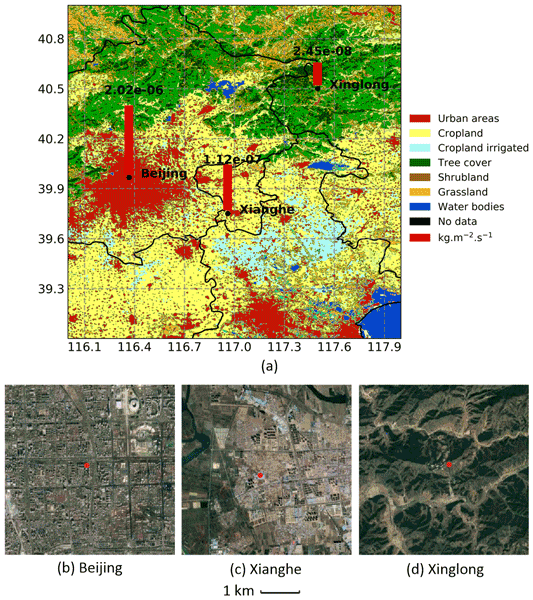
Yang Yang, Minqiang Zhou, Ting Wang, Bo Yao, Pengfei Han, Denghui Ji, Wei Zhou, Yele Sun, Gengchen Wang, and Pucai Wang
Atmos. Chem. Phys., 21, 11741–11757, https://doi.org/10.5194/acp-21-11741-2021, https://doi.org/10.5194/acp-21-11741-2021, 2021
Short summary
Short summary
This study introduces the in situ CO2 measurement system installed in Beijing (urban), Xianghe (suburban), and Xinglong (rural) in North China for the first time. The spatial and temporal variations in CO2 mole fractions at the three sites between June 2018 and April 2020 are discussed on both seasonal and diurnal scales.
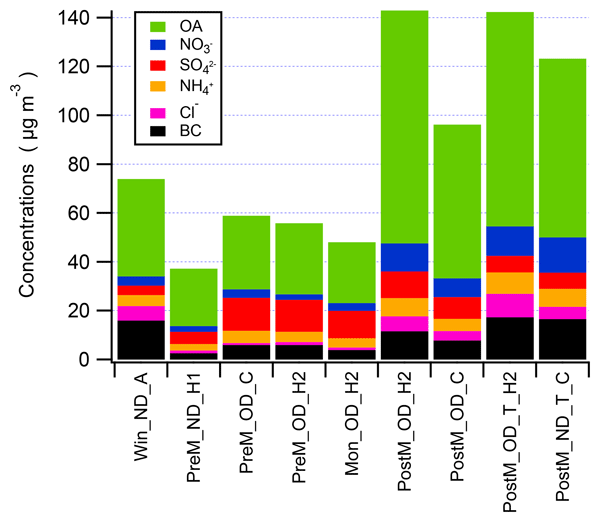
Ernesto Reyes-Villegas, Upasana Panda, Eoghan Darbyshire, James M. Cash, Rutambhara Joshi, Ben Langford, Chiara F. Di Marco, Neil J. Mullinger, Mohammed S. Alam, Leigh R. Crilley, Daniel J. Rooney, W. Joe F. Acton, Will Drysdale, Eiko Nemitz, Michael Flynn, Aristeidis Voliotis, Gordon McFiggans, Hugh Coe, James Lee, C. Nicholas Hewitt, Mathew R. Heal, Sachin S. Gunthe, Tuhin K. Mandal, Bhola R. Gurjar, Shivani, Ranu Gadi, Siddhartha Singh, Vijay Soni, and James D. Allan
Atmos. Chem. Phys., 21, 11655–11667, https://doi.org/10.5194/acp-21-11655-2021, https://doi.org/10.5194/acp-21-11655-2021, 2021
Short summary
Short summary
This paper shows the first multisite online measurements of PM1 in Delhi, India, with measurements over different seasons in Old Delhi and New Delhi in 2018. Organic aerosol (OA) source apportionment was performed using positive matrix factorisation (PMF). Traffic was the main primary aerosol source for both OAs and black carbon, seen with PMF and Aethalometer model analysis, indicating that control of primary traffic exhaust emissions would make a significant reduction to Delhi air pollution.
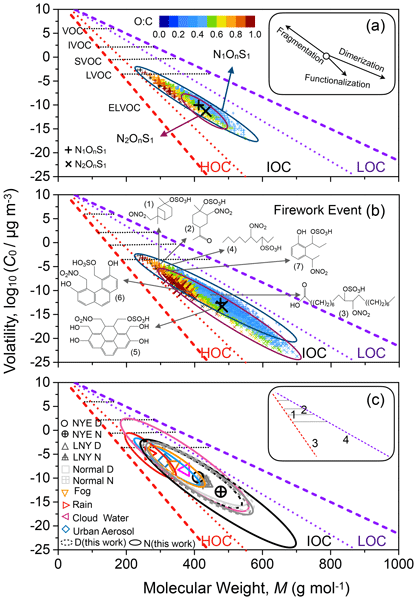
Qiaorong Xie, Sihui Su, Jing Chen, Yuqing Dai, Siyao Yue, Hang Su, Haijie Tong, Wanyu Zhao, Lujie Ren, Yisheng Xu, Dong Cao, Ying Li, Yele Sun, Zifa Wang, Cong-Qiang Liu, Kimitaka Kawamura, Guibin Jiang, Yafang Cheng, and Pingqing Fu
Atmos. Chem. Phys., 21, 11453–11465, https://doi.org/10.5194/acp-21-11453-2021, https://doi.org/10.5194/acp-21-11453-2021, 2021
Short summary
Short summary
This study investigated the role of nighttime chemistry during Chinese New Year's Eve that enhances the formation of nitrooxy organosulfates in the aerosol phase. Results show that anthropogenic precursors, together with biogenic ones, considerably contribute to the formation of low-volatility nitrooxy OSs. Our study provides detailed molecular composition of firework-related aerosols, which gives new insights into the physicochemical properties and potential health effects of urban aerosols.
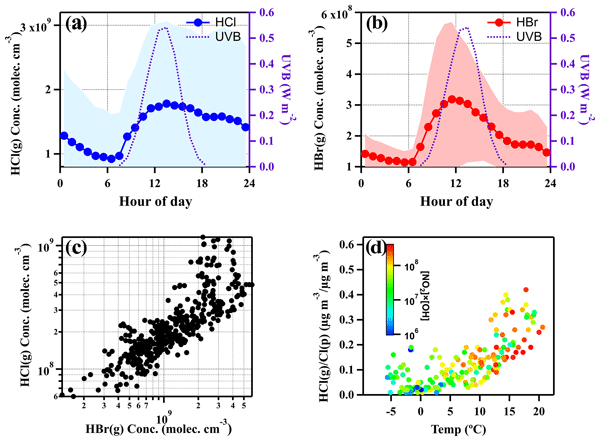
Xiaolong Fan, Jing Cai, Chao Yan, Jian Zhao, Yishuo Guo, Chang Li, Kaspar R. Dällenbach, Feixue Zheng, Zhuohui Lin, Biwu Chu, Yonghong Wang, Lubna Dada, Qiaozhi Zha, Wei Du, Jenni Kontkanen, Theo Kurtén, Siddhart Iyer, Joni T. Kujansuu, Tuukka Petäjä, Douglas R. Worsnop, Veli-Matti Kerminen, Yongchun Liu, Federico Bianchi, Yee Jun Tham, Lei Yao, and Markku Kulmala
Atmos. Chem. Phys., 21, 11437–11452, https://doi.org/10.5194/acp-21-11437-2021, https://doi.org/10.5194/acp-21-11437-2021, 2021
Short summary
Short summary
We observed significant concentrations of gaseous HBr and HCl throughout the winter and springtime in urban Beijing, China. Our results indicate that gaseous HCl and HBr are most likely originated from anthropogenic emissions such as burning activities, and the gas–aerosol partitioning may play a crucial role in contributing to the gaseous HCl and HBr. These observations suggest that there is an important recycling pathway of halogen species in inland megacities.
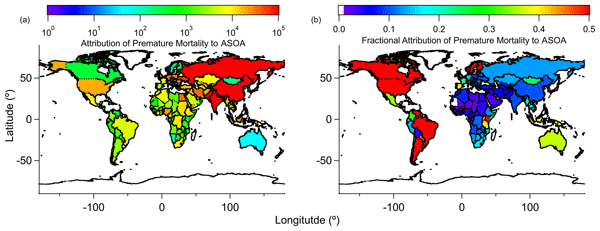
Benjamin A. Nault, Duseong S. Jo, Brian C. McDonald, Pedro Campuzano-Jost, Douglas A. Day, Weiwei Hu, Jason C. Schroder, James Allan, Donald R. Blake, Manjula R. Canagaratna, Hugh Coe, Matthew M. Coggon, Peter F. DeCarlo, Glenn S. Diskin, Rachel Dunmore, Frank Flocke, Alan Fried, Jessica B. Gilman, Georgios Gkatzelis, Jacqui F. Hamilton, Thomas F. Hanisco, Patrick L. Hayes, Daven K. Henze, Alma Hodzic, James Hopkins, Min Hu, L. Greggory Huey, B. Thomas Jobson, William C. Kuster, Alastair Lewis, Meng Li, Jin Liao, M. Omar Nawaz, Ilana B. Pollack, Jeffrey Peischl, Bernhard Rappenglück, Claire E. Reeves, Dirk Richter, James M. Roberts, Thomas B. Ryerson, Min Shao, Jacob M. Sommers, James Walega, Carsten Warneke, Petter Weibring, Glenn M. Wolfe, Dominique E. Young, Bin Yuan, Qiang Zhang, Joost A. de Gouw, and Jose L. Jimenez
Atmos. Chem. Phys., 21, 11201–11224, https://doi.org/10.5194/acp-21-11201-2021, https://doi.org/10.5194/acp-21-11201-2021, 2021
Short summary
Short summary
Secondary organic aerosol (SOA) is an important aspect of poor air quality for urban regions around the world, where a large fraction of the population lives. However, there is still large uncertainty in predicting SOA in urban regions. Here, we used data from 11 urban campaigns and show that the variability in SOA production in these regions is predictable and is explained by key emissions. These results are used to estimate the premature mortality associated with SOA in urban regions.
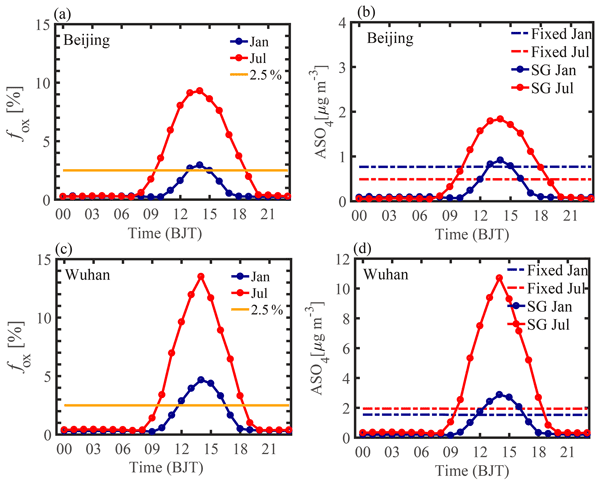
Ying Wei, Xueshun Chen, Huansheng Chen, Yele Sun, Wenyi Yang, Huiyun Du, Qizhong Wu, Dan Chen, Xiujuan Zhao, Jie Li, and Zifa Wang
Geosci. Model Dev., 14, 4411–4428, https://doi.org/10.5194/gmd-14-4411-2021, https://doi.org/10.5194/gmd-14-4411-2021, 2021
Short summary
Short summary
The sub-grid particle formation (SGPF) in plumes plays an important role in air pollution and climate. We coupled an SGPF scheme to a chemical transport model with an aerosol microphysics module and applied it to investigate the SGPF impact over China. The scheme clearly improved the model performance in simulating aerosol components and particle number at typical sites influenced by point sources. The results indicate the significant effects of SGPF on aerosol particles in industrial areas.
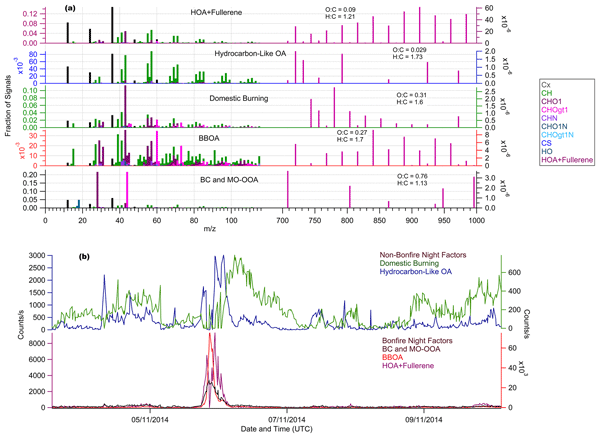
Zainab Bibi, Hugh Coe, James Brooks, Paul I. Williams, Ernesto Reyes-Villegas, Michael Priestley, Carl J. Percival, and James D. Allan
Atmos. Chem. Phys., 21, 10763–10777, https://doi.org/10.5194/acp-21-10763-2021, https://doi.org/10.5194/acp-21-10763-2021, 2021
Short summary
Short summary
We are presenting a new method to apportion black carbon/soot into multiple sources through the inclusion of fullerene and metal data into HR-SP-AMS factorisation. While this itself would be considered a technical development, we can present a budget of contributions to measured BC during the event studied, including the conclusion that fireworks contributed little compared to the bonfire, traffic, and domestic wood-burning emissions.
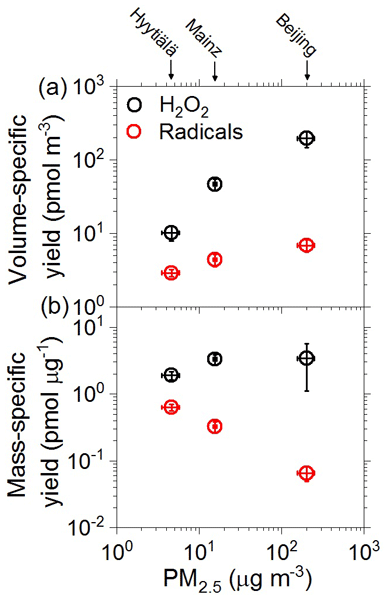
Haijie Tong, Fobang Liu, Alexander Filippi, Jake Wilson, Andrea M. Arangio, Yun Zhang, Siyao Yue, Steven Lelieveld, Fangxia Shen, Helmi-Marja K. Keskinen, Jing Li, Haoxuan Chen, Ting Zhang, Thorsten Hoffmann, Pingqing Fu, William H. Brune, Tuukka Petäjä, Markku Kulmala, Maosheng Yao, Thomas Berkemeier, Manabu Shiraiwa, and Ulrich Pöschl
Atmos. Chem. Phys., 21, 10439–10455, https://doi.org/10.5194/acp-21-10439-2021, https://doi.org/10.5194/acp-21-10439-2021, 2021
Short summary
Short summary
We measured radical yields of aqueous PM2.5 extracts and found lower yields at higher concentrations of PM2.5. Abundances of water-soluble transition metals and aromatics in PM2.5 were positively correlated with the relative fraction of •OH but negatively correlated with the relative fraction of C-centered radicals among detected radicals. Composition-dependent reactive species yields may explain differences in the reactivity and health effects of PM2.5 in clean versus polluted air.
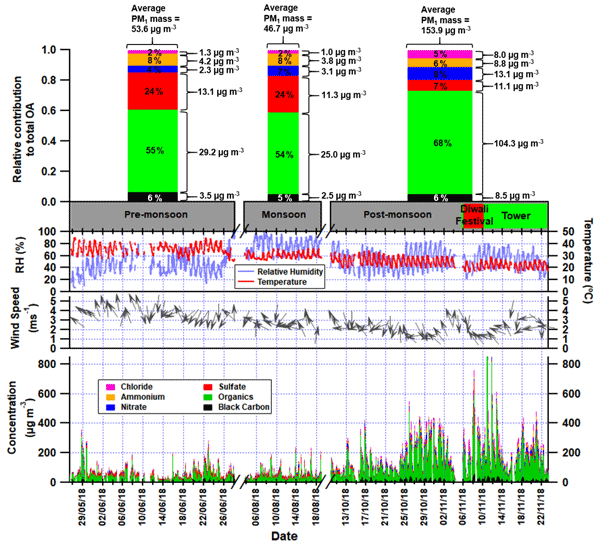
James M. Cash, Ben Langford, Chiara Di Marco, Neil J. Mullinger, James Allan, Ernesto Reyes-Villegas, Ruthambara Joshi, Mathew R. Heal, W. Joe F. Acton, C. Nicholas Hewitt, Pawel K. Misztal, Will Drysdale, Tuhin K. Mandal, Shivani, Ranu Gadi, Bhola Ram Gurjar, and Eiko Nemitz
Atmos. Chem. Phys., 21, 10133–10158, https://doi.org/10.5194/acp-21-10133-2021, https://doi.org/10.5194/acp-21-10133-2021, 2021
Short summary
Short summary
We present the first real-time composition of submicron particulate matter (PM1) in Old Delhi using high-resolution aerosol mass spectrometry. Seasonal analysis shows peak concentrations occur during the post-monsoon, and novel-tracers reveal the largest sources are a combination of local open and regional crop residue burning. Strong links between increased chloride aerosol concentrations and burning sources of PM1 suggest burning sources are responsible for the post-monsoon chloride peak.
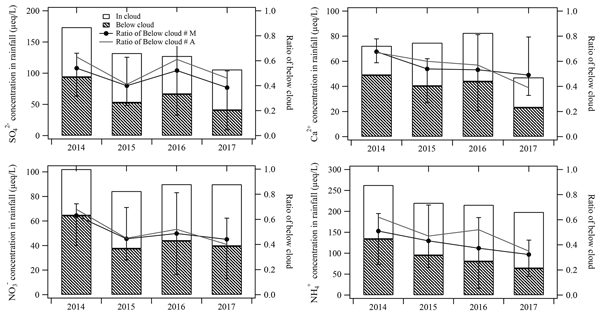
Baozhu Ge, Danhui Xu, Oliver Wild, Xuefeng Yao, Junhua Wang, Xueshun Chen, Qixin Tan, Xiaole Pan, and Zifa Wang
Atmos. Chem. Phys., 21, 9441–9454, https://doi.org/10.5194/acp-21-9441-2021, https://doi.org/10.5194/acp-21-9441-2021, 2021
Short summary
Short summary
In this study, an improved sequential sampling method is developed and implemented to estimate the contribution of below-cloud and in-cloud wet deposition over four years of measurements in Beijing. We find that the contribution of below-cloud scavenging for Ca2+, SO4 2–, and NH4+ decreases from above 50 % in 2014 to below 40 % in 2017. This suggests that the Action Plan has mitigated particulate matter pollution in the surface layer and hence decreased scavenging due to the washout process.
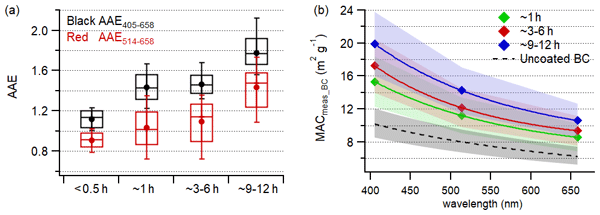
Huihui Wu, Jonathan W. Taylor, Justin M. Langridge, Chenjie Yu, James D. Allan, Kate Szpek, Michael I. Cotterell, Paul I. Williams, Michael Flynn, Patrick Barker, Cathryn Fox, Grant Allen, James Lee, and Hugh Coe
Atmos. Chem. Phys., 21, 9417–9440, https://doi.org/10.5194/acp-21-9417-2021, https://doi.org/10.5194/acp-21-9417-2021, 2021
Short summary
Short summary
Seasonal biomass burning over West Africa is a globally significant source of carbonaceous particles in the atmosphere, which have important climate impacts but are poorly constrained. We conducted in situ airborne measurements to investigate the evolution of smoke aerosol properties in this region. We observed absorption enhancement for both black carbon and brown carbon after emission, which provides new field results and constraints on aerosol parameterizations for future climate models.
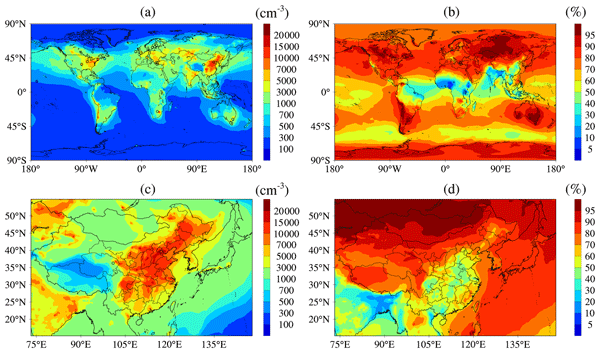
Xueshun Chen, Fangqun Yu, Wenyi Yang, Yele Sun, Huansheng Chen, Wei Du, Jian Zhao, Ying Wei, Lianfang Wei, Huiyun Du, Zhe Wang, Qizhong Wu, Jie Li, Junling An, and Zifa Wang
Atmos. Chem. Phys., 21, 9343–9366, https://doi.org/10.5194/acp-21-9343-2021, https://doi.org/10.5194/acp-21-9343-2021, 2021
Short summary
Short summary
Atmospheric aerosol particles have significant climate and health effects that depend on aerosol size, composition, and mixing state. A new global-regional nested aerosol model with an advanced particle microphysics module and a volatility basis set organic aerosol module was developed to simulate aerosol microphysical processes. Simulations strongly suggest the important role of anthropogenic organic species in particle formation over the areas influenced by anthropogenic sources.
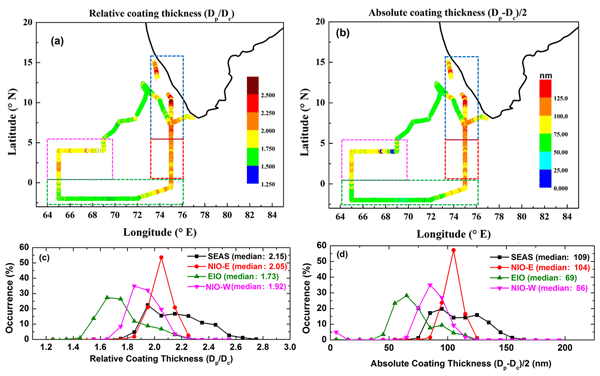
Sobhan Kumar Kompalli, Surendran Nair Suresh Babu, Krishnaswamy Krishna Moorthy, Sreedharan Krishnakumari Satheesh, Mukunda Madhab Gogoi, Vijayakumar S. Nair, Venugopalan Nair Jayachandran, Dantong Liu, Michael J. Flynn, and Hugh Coe
Atmos. Chem. Phys., 21, 9173–9199, https://doi.org/10.5194/acp-21-9173-2021, https://doi.org/10.5194/acp-21-9173-2021, 2021
Short summary
Short summary
The first observations of refractory black carbon aerosol size distributions and mixing state in South Asian outflow to the northern Indian Ocean were carried out as a part of the ICARB-2018 experiment during winter. Size distributions indicated mixed sources of BC particles in the outflow, which are thickly coated. The coating thickness of BC is controlled mainly by the availability of condensable species in the outflow.
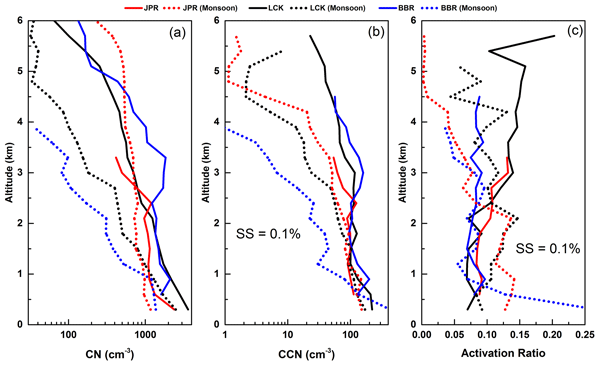
Mohanan R. Manoj, Sreedharan K. Satheesh, Krishnaswamy K. Moorthy, Jamie Trembath, and Hugh Coe
Atmos. Chem. Phys., 21, 8979–8997, https://doi.org/10.5194/acp-21-8979-2021, https://doi.org/10.5194/acp-21-8979-2021, 2021
Short summary
Short summary
Vertical distributions of atmospheric aerosols across the Indo-Gangetic Plain (IGP) and their ability to form clouds have been studied based on airborne measurements during the SWAAMI field campaign. The ability of the aerosols to act as cloud-forming nuclei exhibited large spatial variation across the IGP and strong seasonality with increase in this ability with increase in altitude prior to the onset of monsoon and decrease with increase in altitude during the active phase of the monsoon.
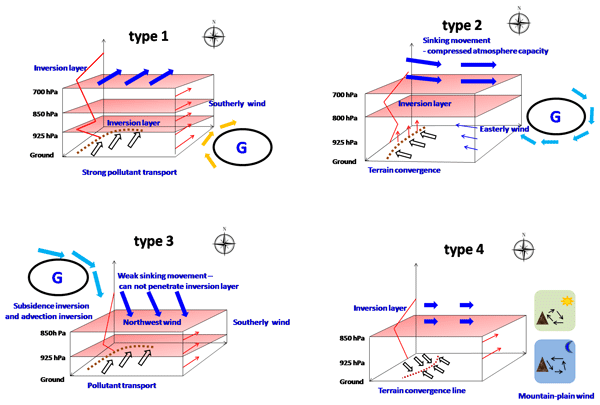
Zhaobin Sun, Xiujuan Zhao, Ziming Li, Guiqian Tang, and Shiguang Miao
Atmos. Chem. Phys., 21, 8863–8882, https://doi.org/10.5194/acp-21-8863-2021, https://doi.org/10.5194/acp-21-8863-2021, 2021
Short summary
Short summary
Different weather types will shape significantly different structures of the pollution boundary layer. The findings of this study allow us to understand the inherent difference among heavy pollution boundary layers; in addition, they reveal the formation mechanism of haze pollution from an integrated synoptic-scale and boundary layer structure perspective.
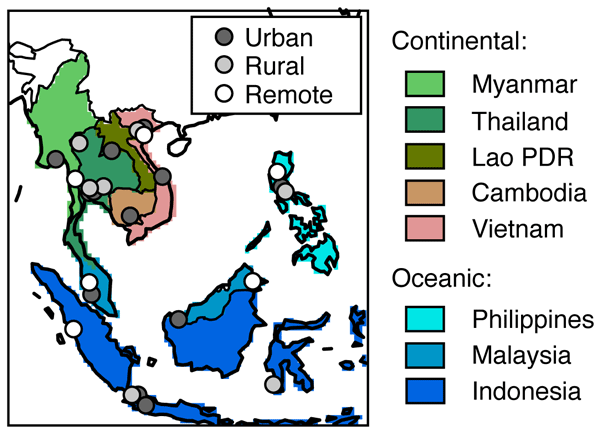
Syuichi Itahashi, Baozhu Ge, Keiichi Sato, Zhe Wang, Junichi Kurokawa, Jiani Tan, Kan Huang, Joshua S. Fu, Xuemei Wang, Kazuyo Yamaji, Tatsuya Nagashima, Jie Li, Mizuo Kajino, Gregory R. Carmichael, and Zifa Wang
Atmos. Chem. Phys., 21, 8709–8734, https://doi.org/10.5194/acp-21-8709-2021, https://doi.org/10.5194/acp-21-8709-2021, 2021
Short summary
Short summary
This study presents the detailed analysis of acid deposition over southeast Asia based on the Model Inter-Comparison Study for Asia (MICS-Asia) phase III. Simulated wet deposition is evaluated with observation data from the Acid Deposition Monitoring Network in East Asia (EANET). The difficulties of models to capture observations are related to the model performance on precipitation. The precipitation-adjusted approach was applied, and the distribution of wet deposition was successfully revised.
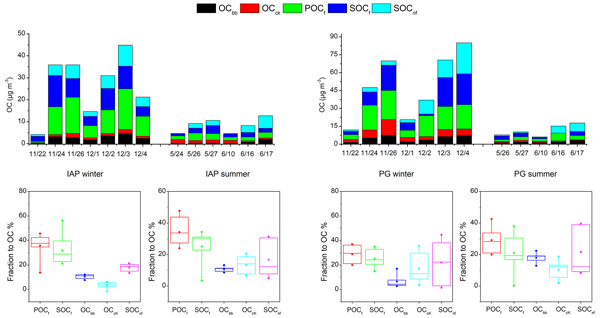
Siqi Hou, Di Liu, Jingsha Xu, Tuan V. Vu, Xuefang Wu, Deepchandra Srivastava, Pingqing Fu, Linjie Li, Yele Sun, Athanasia Vlachou, Vaios Moschos, Gary Salazar, Sönke Szidat, André S. H. Prévôt, Roy M. Harrison, and Zongbo Shi
Atmos. Chem. Phys., 21, 8273–8292, https://doi.org/10.5194/acp-21-8273-2021, https://doi.org/10.5194/acp-21-8273-2021, 2021
Short summary
Short summary
This study provides a newly developed method which combines radiocarbon (14C) with organic tracers to enable source apportionment of primary and secondary fossil vs. non-fossil sources of carbonaceous aerosols at an urban and a rural site of Beijing. The source apportionment results were compared with those by chemical mass balance and AMS/ACSM-PMF methods. Correlations of WINSOC and WSOC with different sources of OC were also performed to elucidate the formation mechanisms of SOC.
Weiqi Xu, Masayuki Takeuchi, Chun Chen, Yanmei Qiu, Conghui Xie, Wanyun Xu, Nan Ma, Douglas R. Worsnop, Nga Lee Ng, and Yele Sun
Atmos. Meas. Tech., 14, 3693–3705, https://doi.org/10.5194/amt-14-3693-2021, https://doi.org/10.5194/amt-14-3693-2021, 2021
Short summary
Short summary
Here we developed a method for estimation of particulate organic nitrates (pON) from the measurements of a high-resolution aerosol mass spectrometer coupled with a thermodenuder based on the volatility differences between inorganic nitrate and pON. The results generally had improvements in reducing negative values due to the influences of a high concentration of inorganic nitrate and a constant ratio of NO+ to NO2+ of organic nitrates (RON).
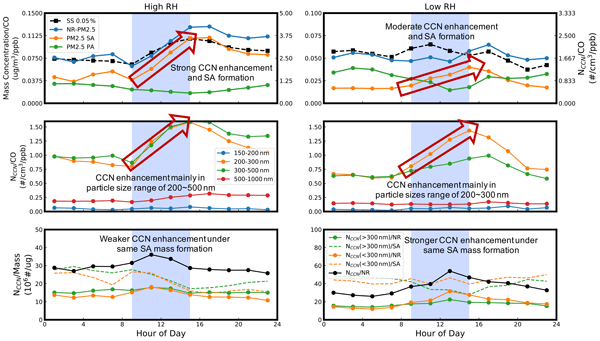
Jiangchuan Tao, Ye Kuang, Nan Ma, Juan Hong, Yele Sun, Wanyun Xu, Yanyan Zhang, Yao He, Qingwei Luo, Linhong Xie, Hang Su, and Yafang Cheng
Atmos. Chem. Phys., 21, 7409–7427, https://doi.org/10.5194/acp-21-7409-2021, https://doi.org/10.5194/acp-21-7409-2021, 2021
Short summary
Short summary
The mechanism of secondary aerosol (SA) formation can be affected by relative humidity (RH) and has different influences on the particle CCN activity under different RH conditions. In the North China Plain, we find different responses of CCN activity and enhancements of CCN number concentration to SA formation under different RH conditions. In addition, variations of aerosol mixing state due to SA formation contribute some of the largest uncertainties in predicting CCN number concentration.
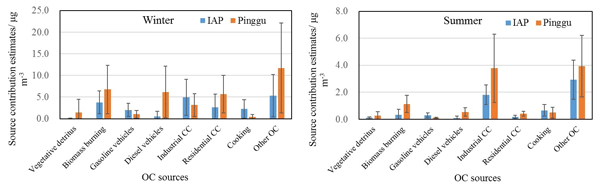
Jingsha Xu, Di Liu, Xuefang Wu, Tuan V. Vu, Yanli Zhang, Pingqing Fu, Yele Sun, Weiqi Xu, Bo Zheng, Roy M. Harrison, and Zongbo Shi
Atmos. Chem. Phys., 21, 7321–7341, https://doi.org/10.5194/acp-21-7321-2021, https://doi.org/10.5194/acp-21-7321-2021, 2021
Short summary
Short summary
Source apportionment of fine aerosols in an urban site of Beijing used a chemical mass balance (CMB) model. Seven primary sources (industrial/residential coal burning, biomass burning, gasoline/diesel vehicles, cooking and vegetative detritus) explained an average of 75.7 % and 56.1 % of fine OC in winter and summer, respectively. CMB was found to resolve more primary OA sources than AMS-PMF, but the latter apportioned more secondary OA sources.
Cited articles
Bond, T. C., Habib, G., and Bergstrom, R. W.: Limitations in the enhancement
of visible light absorption due to mixing state, J. Geophys. Res.-Atmos.,
111, D20211, https://doi.org/10.1029/2006jd007315, 2006.
Bond, T. C., Doherty, S. J., Fahey, D. W., Forster, P. M., Berntsen, T.,
DeAngelo, B. J., Flanner, M. G., Ghan, S., Kärcher, B., Koch, D., Kinne,
S., Kondo, Y., Quinn, P. K., Sarofim, M. C., Schultz, M. G., Schulz, M.,
Venkataraman, C., Zhang, H., Zhang, S., Bellouin, N., Guttikunda, S. K.,
Hopke, P. K., Jacobson, M. Z., Kaiser, J. W., Klimont, Z., Lohmann, U.,
Schwarz, J. P., Shindell, D., Storelvmo, T., Warren, S. G., and Zender, C.
S.: Bounding the role of black carbon in the climate system: A scientific
assessment, J. Geophys. Res., 118, 5380–5552, https://doi.org/10.1002/jgrd.50171, 2013.
Cappa, C. D., Onasch, T. B., Massoli, P., Worsnop, D. R., Bates, T. S.,
Cross, E. S., Davidovits, P., Hakala, J., Hayden, K. L., Jobson, B. T.,
Kolesar, K. R., Lack, D. A., Lerner, B. M., Li, S.-M., Mellon, D., Nuaaman,
I., Olfert, J. S., Petäjä, T., Quinn, P. K., Song, C., Subramanian,
R., Williams, E. J., and Zaveri, R. A.: Radiative Absorption Enhancements
Due to the Mixing State of Atmospheric Black Carbon, Science, 337,
1078–1081, https://doi.org/10.1126/science.1223447, 2012.
Chen, C., Sun, Y. L., Xu, W. Q., Du, W., Zhou, L. B., Han, T. T., Wang, Q.
Q., Fu, P. Q., Wang, Z. F., Gao, Z. Q., Zhang, Q., and Worsnop, D. R.:
Characteristics and sources of submicron aerosols above the urban canopy
(260 m) in Beijing, China, during the 2014 APEC summit, Atmos. Chem. Phys.,
15, 12879–12895, https://doi.org/10.5194/acp-15-12879-2015, 2015.
Ding, A. J., Huang, X., Nie, W., Sun, J. N., Kerminen, V. M., Petäjä,
T., Su, H., Cheng, Y. F., Yang, X. Q., Wang, M. H., Chi, X. G., Wang, J. P.,
Virkkula, A., Guo, W. D., Yuan, J., Wang, S. Y., Zhang, R. J., Wu, Y. F.,
Song, Y., Zhu, T., Zilitinkevich, S., Kulmala, M., and Fu, C. B.: Enhanced
haze pollution by black carbon in megacities in China, Geophys. Res. Lett.,
43, 2873–2879, https://doi.org/10.1002/2016gl067745, 2016.
Drinovec, L., Mocnik, G., Zotter, P., Prévôt, A. S. H., Ruckstuhl, C., Coz,
E., Rupakheti, M., Sciare, J., Müller, T., Wiedensohler, A., and Hansen, A.
D. A.: The “dual-spot” Aethalometer: an improved measurement of aerosol black
carbon with real-time loading compensation, Atmos. Meas. Tech., 8,
1965–1979, https://doi.org/10.5194/amt-8-1965-2015, 2015.
Du, W., Zhao, J., Wang, Y., Zhang, Y., Wang, Q., Xu, W., Chen, C., Han, T.,
Zhang, F., Li, Z., Fu, P., Li, J., Wang, Z., and Sun, Y.: Simultaneous
measurements of particle number size distributions at ground level and 260 m
on a meteorological tower in urban Beijing, China, Atmos. Chem. Phys., 17,
6797–6811, https://doi.org/10.5194/acp-17-6797-2017, 2017.
Du, Z., He, K., Cheng, Y., Duan, F., Ma, Y., Liu, J., Zhang, X., Zheng, M.,
and Weber, R.: A yearlong study of water-soluble organic carbon in Beijing
II: Light absorption properties, Atmos. Environ., 89, 235–241,
https://doi.org/10.1016/j.atmosenv.2014.02.022, 2014.
Han, T., Xu, W., Chen, C., Liu, X., Wang, Q., Li, J., Zhao, X., Du, W., Wang,
Z., and Sun, Y.: Chemical apportionment of aerosol optical properties during
the Asia-Pacific Economic Cooperation summit in Beijing, China, J. Geophys.
Res., 120, 12281–212295, https://doi.org/10.1002/2015JD023918, 2015.
Han, T., Xu, W., Li, J., Freedman, A., Zhao, J., Wang, Q., Chen, C., Zhang,
Y., Wang, Z., Fu, P., Liu, X., and Sun, Y.: Aerosol Optical Properties
Measurements by a CAPS Single Scattering Albedo Monitor: Comparisons between
Summer and Winter in Beijing, China, J. Geophys. Res.-Atmos., 122,
2513–2526, https://doi.org/10.1002/2016jd025762, 2017.
Haywood, J. and Boucher, O.: Estimates of the direct and indirect radiative
forcing due to tropospheric aerosols: A review, Rev. Geophys., 38, 513–543,
https://doi.org/10.1029/1999rg000078, 2000.
Horvath, H.: Experimental calibration for aerosol light absorption
measurements using the integrating plate method – Summary of the data, J.
Aerosol Sci., 28, 1149–1161, https://doi.org/10.1016/S0021-8502(97)00007-4,
1997.
Kim, D. and Ramanathan, V.: Solar radiation budget and radiative forcing due
to aerosols and clouds, J. Geophys. Res., 113, D02203,
https://doi.org/10.1029/2007jd008434, 2008.
Lack, D. A., Langridge, J. M., Bahreini, R., Cappa, C. D., Middlebrook, A.
M., and Schwarz, J. P.: Brown carbon and internal mixing in biomass burning
particles, P. Natl. Acad. Sci. USA, 109, 14802–14807,
https://doi.org/10.1073/pnas.1206575109, 2012.
Laskin, A., Laskin, J., and Nizkorodov, S. A.: Chemistry of Atmospheric Brown
Carbon, Chem. Rev., 115, 4335–4382, https://doi.org/10.1021/cr5006167, 2015.
Liu, D., Taylor, J. W., Young, D. E., Flynn, M. J., Coe, H., and Allan, J.
D.: The effect of complex black carbon microphysics on the determination of
the optical properties of brown carbon, Geophys. Res. Lett., 42, 613–619,
https://doi.org/10.1002/2014GL062443, 2015.
Liu, D., Whitehead, J., Alfarra, M. R., Reyes-Villegas, E., Spracklen,
Dominick V., Reddington, Carly L., Kong, S., Williams, Paul I., Ting, Y.-C.,
Haslett, S., Taylor, Jonathan W., Flynn, Michael J., Morgan, William T.,
McFiggans, G., Coe, H., and Allan, James D.: Black-carbon absorption
enhancement in the atmosphere determined by particle mixing state, Nat.
Geosci., 10, 184–188, https://doi.org/10.1038/ngeo2901, 2017.
Liu, S., Aiken, A. C., Gorkowski, K., Dubey, M. K., Cappa, C. D., Williams,
L. R., Herndon, S. C., Massoli, P., Fortner, E. C., Chhabra, P. S., Brooks,
W. A., Onasch, T. B., Jayne, J. T., Worsnop, D. R., China, S., Sharma, N.,
Mazzoleni, C., Xu, L., Ng, N. L., Liu, D., Allan, J. D., Lee, J. D., Fleming,
Z. L., Mohr, C., Zotter, P., Szidat, S., and Prevot, A. S.: Enhanced light
absorption by mixed source black and brown carbon particles in UK winter,
Nat. Commun., 6, 8435, https://doi.org/10.1038/ncomms9435, 2015.
Moschos, V., Kumar, N. K., Daellenbach, K. R., Baltensperger, U.,
Prévôt, A. S. H., and El Haddad, I.: Source Apportionment of Brown
Carbon Absorption by Coupling Ultraviolet–Visible Spectroscopy with Aerosol
Mass Spectrometry, Environ. Sci. Tech. Let., 5, 302–308,
https://doi.org/10.1021/acs.estlett.8b00118, 2018.
Onasch, T. B., Trimborn, A., Fortner, E. C., Jayne, J. T., Kok, G. L.,
Williams, L. R., Davidovits, P., and Worsnop, D. R.: Soot Particle Aerosol
Mass Spectrometer: Development, Validation, and Initial Application, Aerosol
Sci. Tech., 46, 804–817, https://doi.org/10.1080/02786826.2012.663948, 2012.
Onasch, T. B., Massoli, P., Kebabian, P. L., Hills, F. B., Bacon, F. W., and
Freedman, A.: Single Scattering Albedo Monitor for Airborne Particulates,
Aerosol Sci. Tech., 49, 267–279, https://doi.org/10.1080/02786826.2015.1022248, 2015.
Peng, J., Hu, M., Guo, S., Du, Z., Zheng, J., Shang, D., Levy, Z. M., Zeng,
L., Shao, M., and Wu, Y. S.: Markedly enhanced absorption and direct
radiative forcing of black carbon under polluted urban environments, P. Natl.
Acad. Sci. USA, 113, 4266–4271, https://doi.org/10.1073/pnas.1602310113, 2016.
Petzold, A., Ogren, J. A., Fiebig, M., Laj, P., Li, S.-M., Baltensperger, U.,
Holzer-Popp, T., Kinne, S., Pappalardo, G., Sugimoto, N., Wehrli, C.,
Wiedensohler, A., and Zhang, X.-Y.: Recommendations for reporting “black
carbon” measurements, Atmos. Chem. Phys., 13, 8365–8379,
https://doi.org/10.5194/acp-13-8365-2013, 2013.
Ran, L., Deng, Z. Z., Wang, P. C., and Xia, X. A.: Black carbon and
wavelength-dependent aerosol absorption in the North China Plain based on
two-year aethalometer measurements, Atmos. Environ., 142, 132–144,
https://doi.org/10.1016/j.atmosenv.2016.07.014, 2016.
Rosenfeld, D.: TRMM observed first direct evidence of smoke from forest fires
inhibiting rainfall, Geophys. Res. Lett., 26, 3105–3108,
https://doi.org/10.1029/1999gl006066, 1999.
Stocker, T. F., Qin, D., Plattner, G.-K., Tignor, M., Allen, S. K., Boschung,
J., Nauels, A., Xia, Y., and Bex, V.: The physical science basis.
Contribution of Working Group I to the Fifth Assessment Report of the
Intergovernmental Panel on Climate Change, Comp. Geom., 18, 95–123, 2013.
Sun, J., Zhi, G., Hitzenberger, R., Chen, Y., Tian, C., Zhang, Y., Feng, Y.,
Cheng, M., Zhang, Y., Cai, J., Chen, F., Qiu, Y., Jiang, Z., Li, J., Zhang,
G., and Mo, Y.: Emission factors and light absorption properties of brown
carbon from household coal combustion in China, Atmos. Chem. Phys., 17,
4769–4780, https://doi.org/10.5194/acp-17-4769-2017, 2017.
Sun, Y., Wang, Z., Fu, P., Jiang, Q., Yang, T., Li, J., and Ge, X.: The
impact of relative humidity on aerosol composition and evolution processes
during wintertime in Beijing, China, Atmos. Environ., 77, 927–934,
https://doi.org/10.1016/j.atmosenv.2013.06.019, 2013.
Sun, Y., Du, W., Wang, Q., Zhang, Q., Chen, C., Chen, Y., Chen, Z., Fu, P.,
Wang, Z., Gao, Z., and Worsnop, D. R.: Real-Time Characterization of Aerosol
Particle Composition above the Urban Canopy in Beijing: Insights into the
Interactions between the Atmospheric Boundary Layer and Aerosol Chemistry,
Environ. Sci. Technol., 49, 11340–11347, https://doi.org/10.1021/acs.est.5b02373, 2015.
Sun, Y., Wang, Z., Wild, O., Xu, W., Chen, C., Fu, P., Du, W., Zhou, L.,
Zhang, Q., Han, T., Wang, Q., Pan, X., Zheng, H., Li, J., Guo, X., Liu, J.,
and Worsnop, D. R.: “APEC Blue”: Secondary Aerosol Reductions from Emission
Controls in Beijing, Sci. Rep.-UK, 6, 20668, https://doi.org/10.1038/srep20668, 2016.
Sun, Y. L., Jiang, Q., Wang, Z. F., Fu, P. Q., Li, J., Yang, T., and Yin, Y.:
Investigation of the sources and evolution processes of severe haze pollution
in Beijing in January 2013, J. Geophys. Res., 119, 4380–4398,
https://doi.org/10.1002/2014jd021641, 2014.
Tang, G., Zhu, X., Hu, B., Xin, J., Wang, L., Münkel, C., Mao, G., and Wang,
Y.: Impact of emission controls on air quality in Beijing during APEC 2014:
lidar ceilometer observations, Atmos. Chem. Phys., 15, 12667–12680,
https://doi.org/10.5194/acp-15-12667-2015, 2015.
Tang, G., Zhang, J., Zhu, X., Song, T., Münkel, C., Hu, B., Schäfer, K.,
Liu, Z., Zhang, J., Wang, L., Xin, J., Suppan, P., and Wang, Y.: Mixing layer
height and its implications for air pollution over Beijing, China, Atmos.
Chem. Phys., 16, 2459–2475, https://doi.org/10.5194/acp-16-2459-2016, 2016.
Tao, J., Zhang, L., Gao, J., Wang, H., Chai, F., and Wang, S.: Aerosol
chemical composition and light scattering during a winter season in Beijing,
Atmos. Environ., 110, 36–44,
https://doi.org/10.1016/j.atmosenv.2015.03.037, 2015.
Wang, J., Onasch, T. B., Ge, X., Collier, S., Zhang, Q., Sun, Y., Yu, H.,
Chen, M., Prévôt, A. S. H., and Worsnop, D. R.: Observation of
Fullerene Soot in Eastern China, Environ. Sci. Tech. Let., 3, 121–126,
https://doi.org/10.1021/acs.estlett.6b00044, 2016.
Wang, J., Zhang, Q., Chen, M. D., Collier, S., Zhou, S., Ge, X., Xu, J., Shi,
J., Xie, C., and Hu, J.: First chemical characterization of refractory black
carbon aerosols and associated coatings over the Tibetan Plateau
(4730 m a.s.l), Environ. Sci. Technol., 51, 14072–14082,
https://doi.org/10.1021/acs.est.7b03973, 2017.
Wang, J., Liu, D., Ge, X., Wu, Y., Shen, F., Chen, M., Zhao, J., Xie, C.,
Wang, Q., Xu, W., Zhang, J., Hu, J., Allan, J., Joshi, R., Fu, P., Coe, H.,
and Sun, Y.: Characterization of black carbon-containing fine particles in
Beijing during wintertime, Atmos. Chem. Phys. Discuss.,
https://doi.org/10.5194/acp-2018-800, in review, 2018.
Wang, Q., Sun, Y., Jiang, Q., Du, W., Sun, C., Fu, P., and Wang, Z.: Chemical
composition of aerosol particles and light extinction apportionment before
and during heating season in Beijing, China, J. Geophys. Res., 120,
12708–12722, 2015.
Wang, Q., Sun, Y., Xu, W., Du, W., Zhou, L., Tang, G., Chen, C., Cheng, X.,
Zhao, X., Ji, D., Han, T., Wang, Z., Li, J., and Wang, Z.: Vertically
resolved characteristics of air pollution during two severe winter haze
episodes in urban Beijing, China, Atmos. Chem. Phys., 18, 2495–2509,
https://doi.org/10.5194/acp-18-2495-2018, 2018.
Wang, Z., Huang, X., and Ding, A.: Dome effect of black carbon and its key
influencing factors: a one-dimensional modelling study, Atmos. Chem. Phys.,
18, 2821–2834, https://doi.org/10.5194/acp-18-2821-2018, 2018.
Xu, W. Q., Sun, Y. L., Chen, C., Du, W., Han, T. T., Wang, Q. Q., Fu, P. Q.,
Wang, Z. F., Zhao, X. J., Zhou, L. B., Ji, D. S., Wang, P. C., and Worsnop,
D. R.: Aerosol composition, oxidation properties, and sources in Beijing:
results from the 2014 Asia-Pacific Economic Cooperation summit study, Atmos.
Chem. Phys., 15, 13681–13698, https://doi.org/10.5194/acp-15-13681-2015,
2015.
Xu, W. Q., Sun, Y. L., Wang, Q. Q., Zhao J., Wang, J. F., Ge, X. L., Xie, C.
H., Zhou, W., Du, W., Li J., Fu, P. Q., Wang, Z. F., Worsnop, D. R., and Coe,
H.: Changes in aerosol chemistry from 2014 to 2016 in winter in Beijing:
insights from high resolution aerosol mass spectrometry, J. Geophys.
Res.-Atmos, https://doi.org/10.1029/2018JD029245, accepted, 2018.
Yan, C., Zheng, M., Sullivan, A. P., Bosch, C., Desyaterik, Y., Andersson,
A., Li, X., Guo, X., Zhou, T., Gustafsson, Ö., and Collett Jr., J. L.:
Chemical characteristics and light-absorbing property of water-soluble
organic carbon in Beijing: Biomass burning contributions, Atmos. Environ.,
121, 4–12, https://doi.org/10.1016/j.atmosenv.2015.05.005, 2015.
Yan, C., Zheng, M., Bosch, C., Andersson, A., Desyaterik, Y., Sullivan, A.
P., Collett, J. L., Zhao, B., Wang, S., He, K., and Gustafsson, O.: Important
fossil source contribution to brown carbon in Beijing during winter, Sci.
Rep.-UK, 7, 43182, https://doi.org/10.1038/srep43182, 2017.
Yang, M., Howell, S. G., Zhuang, J., and Huebert, B. J.: Attribution of
aerosol light absorption to black carbon, brown carbon, and dust in China –
interpretations of atmospheric measurements during EAST-AIRE, Atmos. Chem.
Phys., 9, 2035–2050, https://doi.org/10.5194/acp-9-2035-2009, 2009.
Zhao, J., Du, W., Zhang, Y., Wang, Q., Chen, C., Xu, W., Han, T., Wang, Y.,
Fu, P., Wang, Z., Li, Z., and Sun, Y.: Insights into aerosol chemistry during
the 2015 China Victory Day parade: results from simultaneous measurements at
ground level and 260 m in Beijing, Atmos. Chem. Phys., 17, 3215–3232,
https://doi.org/10.5194/acp-17-3215-2017, 2017.
Zhou, W., Zhao, J., Ouyang, B., Mehra, A., Xu, W., Wang, Y., Bannan, T. J.,
Worrall, S. D., Priestley, M., Bacak, A., Chen, Q., Xie, C., Wang, Q., Wang,
J., Du, W., Zhang, Y., Ge, X., Ye, P., Lee, J. D., Fu, P., Wang, Z., Worsnop,
D., Jones, R., Percival, C. J., Coe, H., and Sun, Y.: Production of
N2O5 and ClNO2 in summer in urban Beijing, China,
Atmos. Chem. Phys., 18, 11581–11597,
https://doi.org/10.5194/acp-18-11581-2018, 2018.
Short summary
We present the first simultaneous real-time online measurements of aerosol optical properties at ground level and at 260 m on a meteorological tower in urban Beijing in winter. The vertical similarities and differences in scattering and absorption coefficients were characterized. The increases in MAC of BC were mainly associated with the coating materials on rBC. Coal combustion was the dominant source contribution of brown carbon followed by biomass burning and SOA in winter in Beijing.
We present the first simultaneous real-time online measurements of aerosol optical properties at...


Altmetrics
Final-revised paper
Preprint