
Articles | Volume 26, issue 10
https://doi.org/10.5194/acp-26-6825-2026
© Author(s) 2026. This work is distributed under
the Creative Commons Attribution 4.0 License.
the Creative Commons Attribution 4.0 License.
https://doi.org/10.5194/acp-26-6825-2026
© Author(s) 2026. This work is distributed under
the Creative Commons Attribution 4.0 License.
the Creative Commons Attribution 4.0 License.
Research article
| 
20 May 2026
Research article |
| 20 May 2026
| 20 May 2026
Airborne remote sensing of nitrous acid in the troposphere: potential sources of excess HONO
Benjamin Weyland
CORRESPONDING AUTHOR

Institute of Environmental Physics, Heidelberg University, Heidelberg, Germany
Simon Rosanka
Institute of Climate and Energy Systems – Troposphere (ICE-3), Forschungszentrum Jülich, Jülich, Germany.
Domenico Taraborrelli
Institute of Climate and Energy Systems – Troposphere (ICE-3), Forschungszentrum Jülich, Jülich, Germany.
Birger Bohn
Institute of Climate and Energy Systems – Troposphere (ICE-3), Forschungszentrum Jülich, Jülich, Germany.
Andreas Zahn
Karlsruhe Institute of Technology, Institute of Meteorology and Climate Research, Karlsruhe, Germany
Florian Obersteiner
Karlsruhe Institute of Technology, Institute of Meteorology and Climate Research, Karlsruhe, Germany
Eric Förster
Karlsruhe Institute of Technology, Institute of Meteorology and Climate Research, Karlsruhe, Germany
now at: DLR, Institut für Physik der Atmosphäre, Oberpfaffenhofen, Germany
Mariano Mertens
Deutsches Zentrum für Luft- und Raumfahrt, Institut für Physik der Atmosphäre, Oberpfaffenhofen, Germany
Faculty of Aerospace Engineering, Section Operations and Environment, Delft University of Technology, Delft, the Netherlands
Patrick Jöckel
Deutsches Zentrum für Luft- und Raumfahrt, Institut für Physik der Atmosphäre, Oberpfaffenhofen, Germany
Helmut Ziereis
Deutsches Zentrum für Luft- und Raumfahrt, Institut für Physik der Atmosphäre, Oberpfaffenhofen, Germany
Katharina Kaiser
Institute for Physics of the Atmosphere, Johannes Gutenberg University, Mainz, Germany
Max Planck Institute for Chemistry, Department of Aerosol Chemistry, Mainz, Germany
Horst Fischer
Max Planck Institute for Chemistry, Department of Atmospheric Chemistry, Mainz, Germany
John N. Crowley
Max Planck Institute for Chemistry, Department of Atmospheric Chemistry, Mainz, Germany
Nijing Wang
Max Planck Institute for Chemistry, Department of Atmospheric Chemistry, Mainz, Germany
Achim Edtbauer
Max Planck Institute for Chemistry, Department of Atmospheric Chemistry, Mainz, Germany
Jonathan Williams
Max Planck Institute for Chemistry, Department of Atmospheric Chemistry, Mainz, Germany
Maria Dolores Andrés Hernández
Institute of Environmental Physics, University of Bremen, Bremen, Germany
John P. Burrows
Institute of Environmental Physics, University of Bremen, Bremen, Germany
Flora Kluge
Institute of Environmental Physics, Heidelberg University, Heidelberg, Germany
now at: ECMWF, Bonn, Germany
Meike K. Rotermund
Institute of Environmental Physics, Heidelberg University, Heidelberg, Germany
now at: Department of Physics, University of Toronto, Toronto, Canada
Andre Butz
Institute of Environmental Physics, Heidelberg University, Heidelberg, Germany
Heidelberg Center for the Environment, Heidelberg University, Heidelberg, Germany
Interdisciplinary Center for Scientific Computing, Heidelberg University, Heidelberg, Germany
Klaus Pfeilsticker
Institute of Environmental Physics, Heidelberg University, Heidelberg, Germany
Related authors
Costanza Civale, Maria Dolores Andrés Hernández, Jean-Philippe Putaud, Francesca Barnaba, Henri Diémoz, Johannes Schneider, Helmut Ziereis, Katharina Kaiser, Jörg Schmidt, Ovid Oktavian Krüger, Bruna Holanda, Robert Baumann, Benjamin Weyland, Eric Förster, Midhun George, Yangzhuoran Liu, Daniel Sauer, Jennifer Wolf, Annachiara Bellini, Birger Bohn, Klaus Pfeilsticker, and John Philip Burrows
Atmos. Chem. Phys., 26, 9827–9855, https://doi.org/10.5194/acp-26-9827-2026, https://doi.org/10.5194/acp-26-9827-2026, 2026
Short summary
Short summary
This study combines measurements of gases and particles at the ground and on-board an instrumented aircraft to investigate pollution transport over the Po Valley, a major atmospheric pollution hotspot in Europe. Overall, the extensive data set obtained at different altitudes provides insight into the mixing of pollution plumes and their export towards the Adriatic coast as well as with naturally occurring dust and its impact on air quality over the Po Plain.
Matthew J. Rowlinson, Lucy J. Carpenter, Mat J. Evans, James D. Lee, Simone T. Andersen, Tomas Sherwen, Anna B. Callaghan, Roberto Sommariva, William Bloss, Siqi Hou, Leigh R. Crilley, Klaus Pfeilsticker, Benjamin Weyland, Thomas B. Ryerson, Patrick R. Veres, Pedro Campuzano-Jost, Hongyu Guo, Benjamin A. Nault, Jose L. Jimenez, and Khanneh Wadinga Fomba
Atmos. Chem. Phys., 25, 16945–16968, https://doi.org/10.5194/acp-25-16945-2025, https://doi.org/10.5194/acp-25-16945-2025, 2025
Short summary
Short summary
HONO is key to tropospheric chemistry. Observations show high HONO concentrations in remote air, possibly explained by nitrate aerosol photolysis. We use observations to parameterize nitrate photolysis, evaluating simulated HONO against observations from multiple sources. We show improved agreement with observed HONO, but overestimates in NOx and O3, beyond observational constraints. This implies uncertainties in the NOx budget and our understanding of atmospheric chemistry.
Adrien Deroubaix, Marco Vountas, Benjamin Gaubert, Maria Dolores Andrés Hernández, Stephan Borrmann, Guy Brasseur, Bruna Holanda, Yugo Kanaya, Katharina Kaiser, Flora Kluge, Ovid Oktavian Krüger, Inga Labuhn, Michael Lichtenstern, Klaus Pfeilsticker, Mira Pöhlker, Hans Schlager, Johannes Schneider, Guillaume Siour, Basudev Swain, Paolo Tuccella, Kameswara S. Vinjamuri, Mihalis Vrekoussis, Benjamin Weyland, and John P. Burrows
EGUsphere, https://doi.org/10.5194/egusphere-2024-516, https://doi.org/10.5194/egusphere-2024-516, 2024
Preprint archived
Short summary
Short summary
This study assesses atmospheric composition using air quality models during aircraft campaigns in Europe and Asia, focusing on carbonaceous aerosols and trace gases. While carbon monoxide is well modeled, other pollutants have moderate to weak agreement with observations. Wind speed modeling is reliable for identifying pollution plumes, where models tend to overestimate concentrations. This highlights challenges in accurately modeling aerosol and trace gas composition, particularly in cities.
Adrien Deroubaix, Marco Vountas, Benjamin Gaubert, Maria Dolores Andrés Hernández, Stephan Borrmann, Guy Brasseur, Bruna Holanda, Yugo Kanaya, Katharina Kaiser, Flora Kluge, Ovid Oktavian Krüger, Inga Labuhn, Michael Lichtenstern, Klaus Pfeilsticker, Mira Pöhlker, Hans Schlager, Johannes Schneider, Guillaume Siour, Basudev Swain, Paolo Tuccella, Kameswara S. Vinjamuri, Mihalis Vrekoussis, Benjamin Weyland, and John P. Burrows
EGUsphere, https://doi.org/10.5194/egusphere-2024-521, https://doi.org/10.5194/egusphere-2024-521, 2024
Preprint archived
Short summary
Short summary
This study explores the proportional relationships between carbonaceous aerosols (black and organic carbon) and trace gases using airborne measurements from two campaigns in Europe and East Asia. Differences between regions were found, but air quality models struggled to reproduce them accurately. We show that these proportional relationships can help to constrain models and can be used to infer aerosol concentrations from satellite observations of trace gases, especially in urban areas.
Midhun George, Maria Dolores Andrés Hernández, Vladyslav Nenakhov, Yangzhuoran Liu, John Philip Burrows, Birger Bohn, Eric Förster, Florian Obersteiner, Andreas Zahn, Theresa Harlaß, Helmut Ziereis, Hans Schlager, Benjamin Schreiner, Flora Kluge, Katja Bigge, and Klaus Pfeilsticker
Atmos. Chem. Phys., 23, 7799–7822, https://doi.org/10.5194/acp-23-7799-2023, https://doi.org/10.5194/acp-23-7799-2023, 2023
Short summary
Short summary
The applicability of photostationary steady-state (PSS) assumptions to estimate the amount of the sum of peroxy radicals (RO2*) during the EMeRGe airborne observations from the known radical chemistry and onboard measurements of RO2* precursors, photolysis frequencies, and other trace gases such as NOx and O3 was investigated. The comparison of the calculated RO2* with the actual measurements provides an insight into the main processes controlling their concentration in the air masses measured.
Chuan-Yao Lin, Wan-Chin Chen, Yi-Yun Chien, Charles C. K. Chou, Chian-Yi Liu, Helmut Ziereis, Hans Schlager, Eric Förster, Florian Obersteiner, Ovid O. Krüger, Bruna A. Holanda, Mira L. Pöhlker, Katharina Kaiser, Johannes Schneider, Birger Bohn, Klaus Pfeilsticker, Benjamin Weyland, Maria Dolores Andrés Hernández, and John P. Burrows
Atmos. Chem. Phys., 23, 2627–2647, https://doi.org/10.5194/acp-23-2627-2023, https://doi.org/10.5194/acp-23-2627-2023, 2023
Short summary
Short summary
During the EMeRGe campaign in Asia, atmospheric pollutants were measured on board the HALO aircraft. The WRF-Chem model was employed to evaluate the biomass burning (BB) plume transported from Indochina and its impact on the downstream areas. The combination of BB aerosol enhancement with cloud water resulted in a reduction in incoming shortwave radiation at the surface in southern China and the East China Sea, which potentially has significant regional climate implications.

Phuc Thi Minh Ha, Yugo Kanaya, Fumikazu Taketani, Maria Dolores Andrés Hernández, Benjamin Schreiner, Klaus Pfeilsticker, and Kengo Sudo
Geosci. Model Dev., 16, 927–960, https://doi.org/10.5194/gmd-16-927-2023, https://doi.org/10.5194/gmd-16-927-2023, 2023
Short summary
Short summary
HONO affects tropospheric oxidizing capacity; thus, it is implemented into the chemistry–climate model CHASER. The model substantially underpredicts daytime HONO, while nitrate photolysis on surfaces can supplement the daytime HONO budget. Current HONO chemistry predicts reductions of 20.4 % for global tropospheric NOx, 40–67 % for OH, and 30–45 % for O3 in the summer North Pacific. In contrast, OH and O3 winter levels in China are greatly enhanced.
Flora Kluge, Tilman Hüneke, Christophe Lerot, Simon Rosanka, Meike K. Rotermund, Domenico Taraborrelli, Benjamin Weyland, and Klaus Pfeilsticker
Atmos. Chem. Phys., 23, 1369–1401, https://doi.org/10.5194/acp-23-1369-2023, https://doi.org/10.5194/acp-23-1369-2023, 2023
Short summary
Short summary
Using airborne glyoxal concentration and vertical column density measurements, vertical profiles are inferred for eight global regions in aged biomass burning plumes and the tropical marine boundary layer. Using TROPOMI observations, an analysis of space- and airborne measurements is performed. A comparison to EMAC simulations shows a general glyoxal underprediction, which points to various missing sources and precursors from anthropogenic activities, biomass burning, and the sea surface.
M. Dolores Andrés Hernández, Andreas Hilboll, Helmut Ziereis, Eric Förster, Ovid O. Krüger, Katharina Kaiser, Johannes Schneider, Francesca Barnaba, Mihalis Vrekoussis, Jörg Schmidt, Heidi Huntrieser, Anne-Marlene Blechschmidt, Midhun George, Vladyslav Nenakhov, Theresa Harlass, Bruna A. Holanda, Jennifer Wolf, Lisa Eirenschmalz, Marc Krebsbach, Mira L. Pöhlker, Anna B. Kalisz Hedegaard, Linlu Mei, Klaus Pfeilsticker, Yangzhuoran Liu, Ralf Koppmann, Hans Schlager, Birger Bohn, Ulrich Schumann, Andreas Richter, Benjamin Schreiner, Daniel Sauer, Robert Baumann, Mariano Mertens, Patrick Jöckel, Markus Kilian, Greta Stratmann, Christopher Pöhlker, Monica Campanelli, Marco Pandolfi, Michael Sicard, José L. Gómez-Amo, Manuel Pujadas, Katja Bigge, Flora Kluge, Anja Schwarz, Nikos Daskalakis, David Walter, Andreas Zahn, Ulrich Pöschl, Harald Bönisch, Stephan Borrmann, Ulrich Platt, and John P. Burrows
Atmos. Chem. Phys., 22, 5877–5924, https://doi.org/10.5194/acp-22-5877-2022, https://doi.org/10.5194/acp-22-5877-2022, 2022
Short summary
Short summary
EMeRGe provides a unique set of in situ and remote sensing airborne measurements of trace gases and aerosol particles along selected flight routes in the lower troposphere over Europe. The interpretation uses also complementary collocated ground-based and satellite measurements. The collected data help to improve the current understanding of the complex spatial distribution of trace gases and aerosol particles resulting from mixing, transport, and transformation of pollution plumes over Europe.
Meike K. Rotermund, Vera Bense, Martyn P. Chipperfield, Andreas Engel, Jens-Uwe Grooß, Peter Hoor, Tilman Hüneke, Timo Keber, Flora Kluge, Benjamin Schreiner, Tanja Schuck, Bärbel Vogel, Andreas Zahn, and Klaus Pfeilsticker
Atmos. Chem. Phys., 21, 15375–15407, https://doi.org/10.5194/acp-21-15375-2021, https://doi.org/10.5194/acp-21-15375-2021, 2021
Short summary
Short summary
Airborne total bromine (Brtot) and tracer measurements suggest Brtot-rich air masses persistently protruded into the lower stratosphere (LS), creating a high Brtot region over the North Atlantic in fall 2017. The main source is via isentropic transport by the Asian monsoon and to a lesser extent transport across the extratropical tropopause as quantified by a Lagrange model. The transport of Brtot via Central American hurricanes is also observed. Lastly, the impact of Brtot on LS O3 is assessed.
Ulrich Löhnert, Maike Ahlgrimm, Felix Ament, Jens Bange, Kjell zum Berge, Birger Bohn, Yann Büchau, Leonie Esters, Lars van Gelder, Yohanes R. S. Ginting, Luise Helmstreit, Tobias Marke, Marcus G. Müller, Patrizia Ney, Anika Obermann-Hellhund, Andreas Platis, Bernhard Pospichal, Alexander Pschera, Anja Rapmund, Mirjana Sakradzija, Martin Schön, Jan H. Schween, Maria Toporov, and Andreas Wieser
Earth Syst. Sci. Data Discuss., https://doi.org/10.5194/essd-2026-784, https://doi.org/10.5194/essd-2026-784, 2026
Preprint under review for ESSD
Short summary
Short summary
Accurate weather forecasts require detailed measurements of temperature, humidity and wind. During a two-week campaign in Germany, we tested innovative instruments against established measurement techniques and satellite observations. Most ground-based instruments met international performance requirements and successfully captured daily atmospheric changes. The publicly available dataset supports improved weather forecasting and the development of future weather observation networks.
Sean M. Davis, William T. Ball, Yue Jia, Gabriel Chiodo, Justin A. Alsing, James Keeble, Hideharu Akiyoshi, Carlo Arosio, Ewa M. Bednarz, Andreas Chrysanthou, Melanie Coldewey-Egbers, Robert Damadeo, Sandip Dhomse, Mohamadou A. Diallo, Simone Dietmuller, Roland Eichinger, Stacey Frith, Birgit Hassler, Michaela I. Hegglin, Daan Hubert, Patrick Jöckel, Béatrice Josse, Natalya Kramarova, Diego Loyola, Eliane Maillard Barras, Marion Marchand, Olaf Morgenstern, David Plummer, Robert W. Portmann, Karen H. Rosenlof, Alexei Rozanov, Viktoria F. Sofieva, Johannes Staehelin, Timofei Sukhodolov, Kleareti Tourpali, Ronald J. Van der A, H. J. Ray Wang, Krzysztof Wargan, Shingo Watanabe, Mark Weber, Jeannette D. Wild, Yousuke Yamashita, and Jerry Ziemke
Atmos. Chem. Phys., 26, 13817–13843, https://doi.org/10.5194/acp-26-13817-2026, https://doi.org/10.5194/acp-26-13817-2026, 2026
Short summary
Short summary
This study investigates tropical ozone changes in models and satellite observations to determine how well they agree and whether observations can constrain model projections. At some levels, satellite records disagree significantly on the magnitude of ozone changes. While early and late 21st century trends are correlated across models, suggesting a potential emergent constraint, the spread in observations means they are unable to provide guidance on the credibility of model projections.
Johanna Margaretha Schüttler, Monika Frankowska, Achim Edtbauer, Joseph Byron, Miriam Ressler, Bettina Weber, and Jonathan Williams
EGUsphere, https://doi.org/10.5194/egusphere-2026-4600, https://doi.org/10.5194/egusphere-2026-4600, 2026
This preprint is open for discussion and under review for Atmospheric Chemistry and Physics (ACP).
Short summary
Short summary
Organisms forming biological soil crusts (biocrusts), like mosses, lichens, and bacteria cover much of Earth's dry regions but their gas emissions are poorly understood. We measured airborne chemical compounds released by these biocrusts from South Africa under different light and moisture conditions. They emitted many different compounds similar to other organism groups. These findings reveal biocrusts as an overlooked source of reactive gases affecting local air chemistry in dry landscapes.
Tobias D. Schmitt, Moritz Sindram, Benedikt A. Löw, Lukas Weis, Ralph Kleinschek, Nicole Bobrowski, and André Butz
Atmos. Meas. Tech., 19, 6145–6157, https://doi.org/10.5194/amt-19-6145-2026, https://doi.org/10.5194/amt-19-6145-2026, 2026
Short summary
Short summary
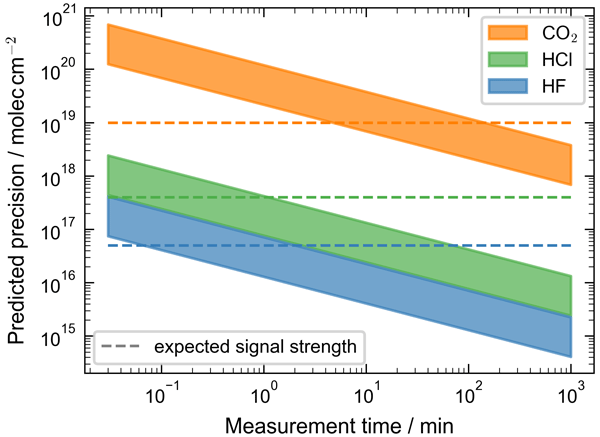
Monitoring systems for volcanic gases use ultraviolet and visible light, since the sky is brightest there.
We analyzed whether the concept extends to the near-infrared, where CO2 and halogen gases such as hydrogen chloride also absorb.
We find this realistic for the halogen gases at strongly emitting volcanoes, but very difficult for CO2.
We propose pairing it with the ultraviolet instruments already in use.
This could improve our understanding of volcanic processes and eruption risks.
Brian Auffarth, Mark Weber, Alexei Rozanov, Carlo Arosio, John P. Burrows, Melanie Coldewey-Egbers, Sean M. Davis, Doug Degenstein, Kimberlee Dubé, Stacey M. Frith, Lucien Froidevaux, Diego Loyola, Vitali E. Fioletov, Viktoria Sofieva, Ronald van der A, and Jeannette D. Wild
Atmos. Chem. Phys., 26, 13359–13386, https://doi.org/10.5194/acp-26-13359-2026, https://doi.org/10.5194/acp-26-13359-2026, 2026
Short summary
Short summary
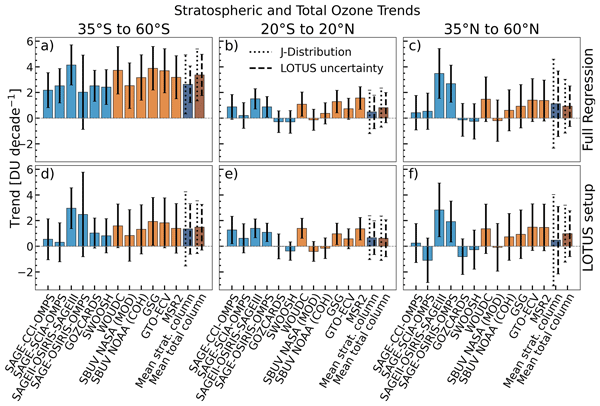
This study examines the trends of stratospheric and total ozone between 2000 and 2024, using long-term satellite datasets. Our results show positive trends in the upper stratosphere and a strong ozone recovery in the Southern Hemisphere, while changes in lower altitudes remain mostly small. The total and stratospheric trends show very similar results, indicating that tropospheric ozone contributes little to total column changes, while the stratospheric column is the dominant driver.
Bianca E. Krumm, Matthias Kohl, Anna Martin, Joseph Byron, Alexandra Gutmann, Michael Hewson, Jos Lelieveld, Andrea Pozzer, and Jonathan Williams
EGUsphere, https://doi.org/10.5194/egusphere-2026-5595, https://doi.org/10.5194/egusphere-2026-5595, 2026
This preprint is open for discussion and under review for Atmospheric Chemistry and Physics (ACP).
Short summary
Short summary
We present airborne DMS observations (0.3-14 km) over the Amazon rainforest and Pacific Ocean, revealing frequent high DMS in marine upper‑tropospheric convective outflows. EMAC model comparisons show the global terrestrial inventory overestimates Amazonian DMS threefold and convection parameterisations control the vertical distribution of DMS and its oxidation products. The results call for improved emission inventories and further research on the fate of lofted DMS in the upper troposphere.
Glenn-Michael Oomen, Jean-François Müller, Trissevgeni Stavrakou, Isabelle De Smedt, Vincent Huijnen, Flora Kluge, Antje Inness, and Johannes Flemming
Geosci. Model Dev., 19, 8959–8975, https://doi.org/10.5194/gmd-19-8959-2026, https://doi.org/10.5194/gmd-19-8959-2026, 2026
Short summary
Short summary
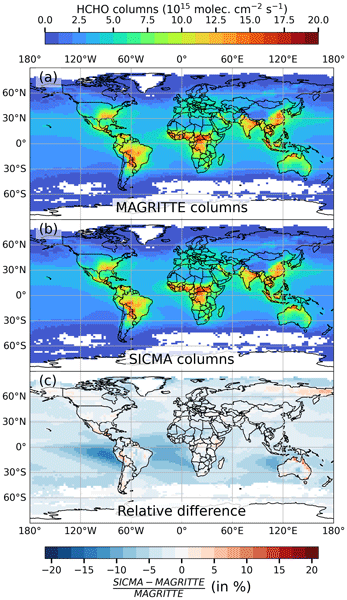
We developed a strongly simplified mechanism for isoprene oxidation that reduces the computational cost of atmospheric chemistry while retaining the key processes controlling formaldehyde formation. Its parameters were optimized using box-model simulations, and the mechanism reproduces the full chemistry well in global simulations. It also gives similar isoprene emissions when constrained by satellite formaldehyde observations, enabling faster large-scale simulations and emission inversions.
Linlu Mei, Vladimir Rozanov, Alexei Rozanov, and John P. Burrows
Geosci. Model Dev., 19, 8779–8800, https://doi.org/10.5194/gmd-19-8779-2026, https://doi.org/10.5194/gmd-19-8779-2026, 2026
Short summary
Short summary
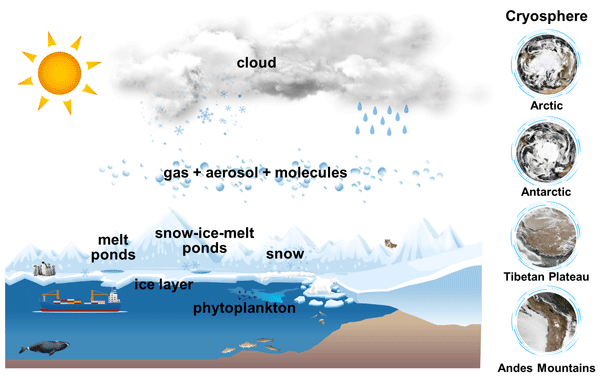
The cryosphere, including snow, ice, and melt ponds, strongly influences how sunlight is reflected and absorbed, affecting climate change. We developed a new version of radiative transfer model SCIATRAN, to better represent these complex surfaces and their interaction with the atmosphere. The model was validated using real measurements and showed good accuracy. These advances help scientists better understand climate processes in polar regions and improve satellite observations.
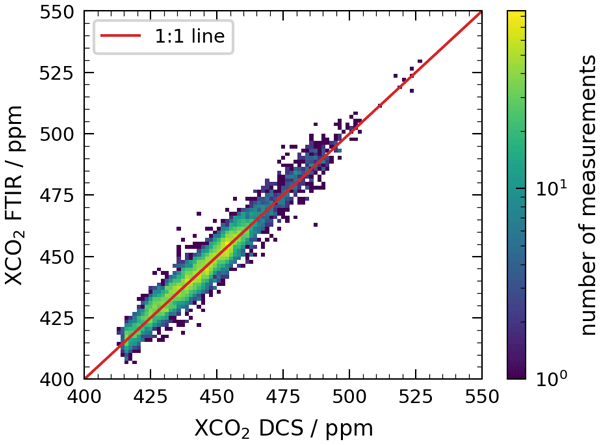
Tobias D. Schmitt, Romain Dubroeucq, Moritz Sindram, André Butz, Thomas Pfeifer, and Markus K. Oberthaler
Atmos. Meas. Tech., 19, 5717–5728, https://doi.org/10.5194/amt-19-5717-2026, https://doi.org/10.5194/amt-19-5717-2026, 2026
Short summary
Short summary
Urban areas account for a substantial share of global greenhouse gas emissions, yet measuring these emissions precisely is challenging due to spatial variability. This study implemented an advanced laser measurement technique, to directly average this spatial variability by measuring over a 3.1 km path, using only commercial parts. The high measurement precision and reliable operation, demonstrates that this technique is now accessible to the broader atmospheric measurement community.
Carlo Arosio, Alexei Rozanov, Vladimir Rozanov, Andrea Orfanoz-Cheuquelaf, John P. Burrows, Edward Malina, and Hartmut Boesch
EGUsphere, https://doi.org/10.5194/egusphere-2026-5113, https://doi.org/10.5194/egusphere-2026-5113, 2026
Short summary
Short summary
We present an improved method for retrieving ozone profiles from OMPS satellite limb observations. The aim is to mitigate an artifact related to the variation of surface reflectivity along the satellite line of sight. We prescribe surface reflectivity from VIIRS to mitigate the artifact, particularly in regions with sharp changes in reflectivity, such as coastlines and transitions between clouds and ocean. Updated stratospheric ozone profiles and tropospheric ozone column products are presented.
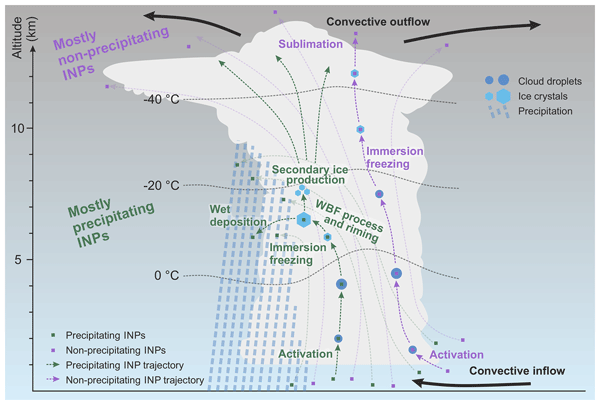
Jonas Schaefer, Sarah Grawe, Hans-Christian Clemen, Stephan Mertes, Johannes Schneider, Bruno Wetzel, Daniel Sauer, Jennifer Wolf, Laura Tomsche, Johanna Mayer, Roland Schrödner, Silvia Henning, Tina Jurkat-Witschas, Christiane Voigt, Helmut Ziereis, Theresa Harlaß, Mira Pöhlker, and Frank Stratmann
Atmos. Chem. Phys., 26, 12505–12520, https://doi.org/10.5194/acp-26-12505-2026, https://doi.org/10.5194/acp-26-12505-2026, 2026
Short summary
Short summary
Ice-nucleating particles (INP) are aerosol particles important for ice formation in clouds droplets and thereby influence climate. This study uses airborne measurements over Europe to show how INP are transported through thunderstorms. We show which particles are washed out and which are are transported into the higher troposphere, where they can again affect cloud ice formation. The findings improve understanding of atmospheric particle distribution and help refine climate models.
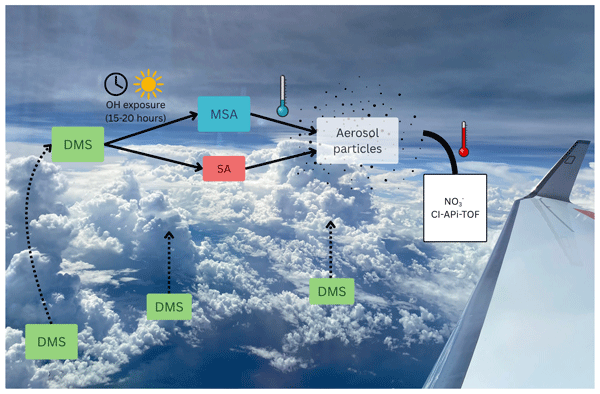
Hannah Klebach, Martin Heinritzi, Katharina Kaiser, Lisa Beck, Samuel Ruhl, Samira Atabakhsh, Nirvan Bhattacharyya, Lucía Caudillo-Plath, Philipp Joppe, Thomas Klimach, Peter Lloyd, Mira Pöhlker, Ulrich Pöschl, Sarah Richter, Douglas M. Russell, Johannes Schneider, Marcel Zauner-Wieczorek, and Joachim Curtius
Atmos. Chem. Phys., 26, 12355–12393, https://doi.org/10.5194/acp-26-12355-2026, https://doi.org/10.5194/acp-26-12355-2026, 2026
Short summary
Short summary
Marine atmospheric aerosols remain a major uncertainty in climate models. We report gas and particle phase measurements of two important aerosol forming vapours, sulfuric acid and methanesulfonic acid in the Indo-Pacific. We find that the latter typically dominates over sulfuric acid and contributes significantly to free tropospheric aerosol. Deep convection transports the precursor of both acids to the upper troposphere, providing a key aerosol source in the pristine remote Pacific Ocean.
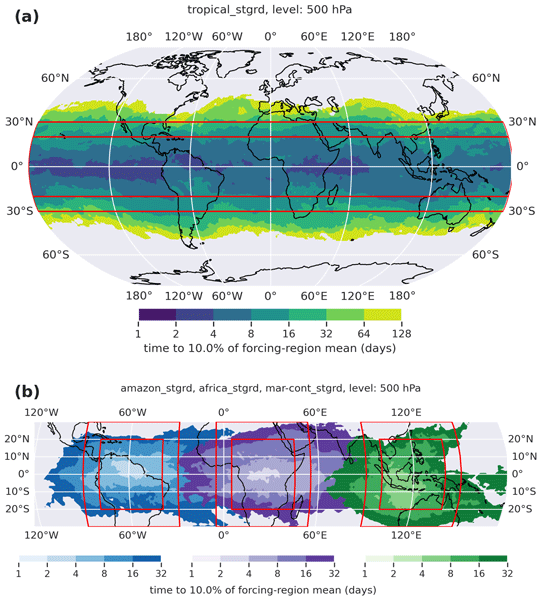
Lianet Hernández Pardo, Joachim Curtius, Patrick Jöckel, J. Moritz Menken, Christopher Pöhlker, Mira Pöhlker, and Anna Possner
Atmos. Chem. Phys., 26, 12275–12293, https://doi.org/10.5194/acp-26-12275-2026, https://doi.org/10.5194/acp-26-12275-2026, 2026
Short summary
Short summary
Many tiny particles are formed high in the tropical atmosphere, but their impact lower down is unclear. We studied how these particles move downward using long-term computer simulations. We found that particles can reach middle levels of the atmosphere within a week, carried by winds. These results help us understand how pollution and clouds might change as particles spread around the world.
Theo Glauch, Marcia J. Kroker, Sanam N. Vardag, Santiago Botía, André Butz, and Julia Marshall
EGUsphere, https://doi.org/10.5194/egusphere-2026-4847, https://doi.org/10.5194/egusphere-2026-4847, 2026
This preprint is open for discussion and under review for Biogeosciences (BG).
Short summary
Short summary
Ecosystems absorb CO2 through photosynthesis and release it via respiration, but sensors only measure the combined, net effect. This paper introduces pyVPRNN, an AI model to separate these two processes using satellite imagery, land-cover, and weather data. Tested at 32 European sites, it outperforms current methods, especially in forests and grasslands, and can even estimate carbon exchange in places without physical sensors – helping track how ecosystems absorb carbon as the climate changes.
Michael Weimer, Maximilian Reuter, Michael Hilker, Stefan Noël, Michael Buchwitz, Yasjka Meijer, Rüdiger Lang, Julia Marshall, Heinrich Bovensmann, John P. Burrows, and Hartmut Bösch
Atmos. Meas. Tech., 19, 5425–5455, https://doi.org/10.5194/amt-19-5425-2026, https://doi.org/10.5194/amt-19-5425-2026, 2026
Short summary
Short summary
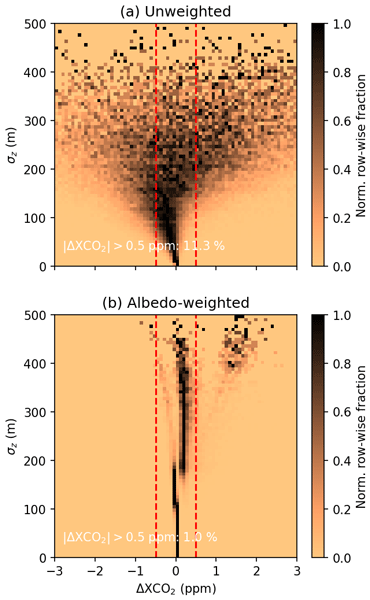
Greenhouse gas column measurements from space using reflected sunlight have to make assumptions about the Earth's surface elevation. Usually, it assumed that the elevation representing the satellite's spatial sample is the unweighted average of high-resolution surface elevation data. We find and show with many examples that the surface elevation should be weighted by the surface reflectance in the respective wavelength bands. This improves errors in the retrieval of trace gases.
Linda Smoydzin, Vera Bense, Heiko Bozem, Philipp Joppe, Daniel Kunkel, Hans-Christoph Lachnitt, Holger Tost, Andreas Zahn, Helmut Ziereis, Martin Riese, and Peter Hoor
Atmos. Chem. Phys., 26, 11857–11874, https://doi.org/10.5194/acp-26-11857-2026, https://doi.org/10.5194/acp-26-11857-2026, 2026
Short summary
Short summary
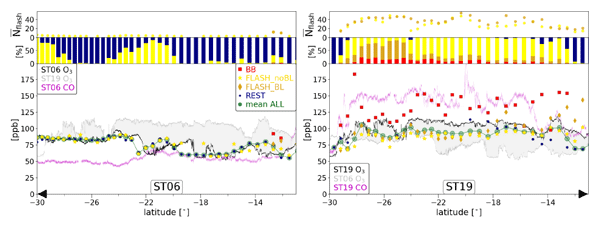
During a research flight in early October elevated upper tropospheric mixing ratios of CO, NO, NOy and O3 were observed over a distance of more than 1000 km east of the Brasilian coast. Ozone mixing ratios are 20–40 ppbv higher than during a flight in early September. By combining aircraft observations with model simulations we find that ozone production from biomass burning over Amazonia caused predominantly the ozone enhancements which have a local effect on the radiative forcing of 50 mW m−2.
Christian Fruck, Sebastian Wolff, Sven Krautwurst, Christoph Kiemle, Mathieu Quatrevalet, Martin Wirth, Jakob Borchardt, Oke Huhs, Konstantin Gerilowski, Michał Gałkowski, Christoph Gerbig, John P. Burrows, Heinrich Bovensmann, and Andreas Fix
EGUsphere, https://doi.org/10.5194/egusphere-2026-4578, https://doi.org/10.5194/egusphere-2026-4578, 2026
This preprint is open for discussion and under review for Atmospheric Measurement Techniques (AMT).
Short summary
Short summary
Waste sites near Madrid, Spain, release large amounts of methane, a powerful greenhouse gas. Using passive, active, and in situ instruments aboard the HALO aircraft, we measured methane concentrations near these sites. By combining these complementary measurements with an atmospheric transport simulation, we account for shifting winds that complicated earlier emission estimates, yielding a more accurate and robust method. We find a combined emission rate of 8.7 ± 1.5 t h-1.
Duong H. Do, Astrid Kerkweg, Yarê Baker, Birger Bohn, Hendrik Fuchs, Quanfu He, Thorsten Hohaus, Sungah Kang, Timo Kirfel, Finja Löher, Niklas Diepenthal, Anke C. Nölscher, Anna Novelli, Alexander Pschera, Felix Wieser, Sören R. Zorn, Andreas Wahner, and Domenico Taraborrelli
EGUsphere, https://doi.org/10.5194/egusphere-2026-4522, https://doi.org/10.5194/egusphere-2026-4522, 2026
Short summary
Short summary
This work builds a chamber simulation tool that mimics how air chemistry changes inside laboratory reactors, including injected gases, changing light, gas and liquid reactions, wall effects, and dilution. Tests in several chambers reproduced measured changes in reactive species, nitrogen compounds, and ozone, and helped capture how organic particles form. The same chemistry can be reused in larger, global air simulations to assess real-world impact.
Paolo Andreozzi, Mark D. Fielding, Robin J. Hogan, Richard M. Forbes, Adrian A. Hill, Samuel Rémy, Birger Bohn, and Ulrich Löhnert
Atmos. Chem. Phys., 26, 11309–11338, https://doi.org/10.5194/acp-26-11309-2026, https://doi.org/10.5194/acp-26-11309-2026, 2026
Short summary
Short summary
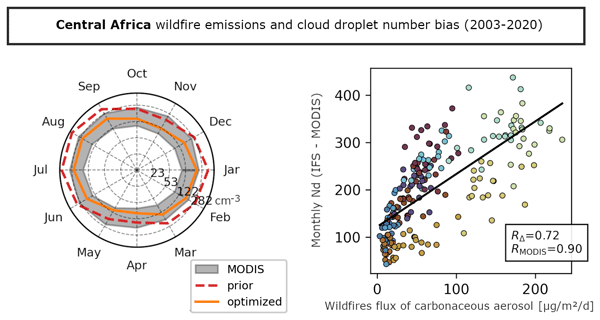
Aerosols significantly contribute to the Earth’s climate, but models still struggle to represent them. Here we use satellite observations of clouds to constrain aerosol processes in a weather and air-quality model. We show that African wildfires lead to overly bright simulated clouds and that the model removes too much aerosol in mixed-phase clouds. This demonstrates how cloud observations can target weakly constrained aerosol processes, with potential benefits for weather and climate modelling.
Kyriacos Sophocleous, Timo Kirfel, Domenico Taraborrelli, and Theodoros Christoudias
EGUsphere, https://doi.org/10.5194/egusphere-2026-2389, https://doi.org/10.5194/egusphere-2026-2389, 2026
Short summary
Short summary
We address a major bottleneck in Earth system models, the high computational cost of simulating atmospheric chemical reactions, using graphics processing units. The MEDINA code-to-code compiler supports switching from double-precision to single-precision arithmetic, thus reducing average processing times by 30 % and cutting memory usage. Tests showed that this more efficient approach maintains high accuracy, with results matching traditional methods within 0.004 %.
Gunther N. T. E. Türk, Simone T. Andersen, Patrick Dewald, Jan Schuladen, Jos Lelieveld, and John N. Crowley
Atmos. Meas. Tech., 19, 4815–4832, https://doi.org/10.5194/amt-19-4815-2026, https://doi.org/10.5194/amt-19-4815-2026, 2026
Short summary
Short summary
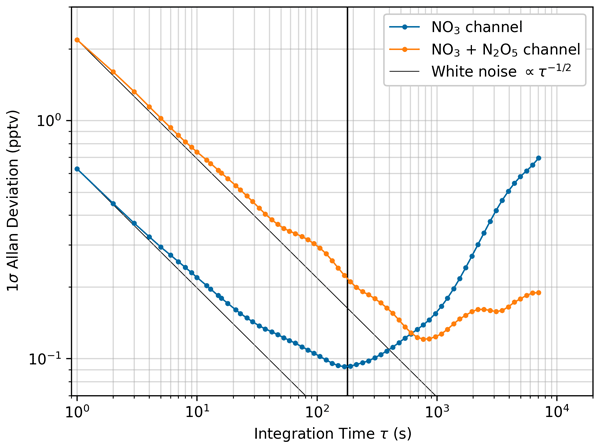
We built a small instrument to measure the air-borne molecules NO₃ and N₂O₅. These originate mostly from human-made nitrogen oxide emissions and are important for nighttime chemistry and air quality. Our instrument is lightweight and sensitive, detecting these molecules at levels below one part per trillion. Tests in the laboratory and during a field study show its ability to accurately measure these trace gases. Here, we present the design of the instrument and discuss its performance.
Alberto Álvaro-Díaz, Sanam N. Vardag, André Butz, Olga Puentedura, and Cristina Prados-Roman
EGUsphere, https://doi.org/10.5194/egusphere-2026-4045, https://doi.org/10.5194/egusphere-2026-4045, 2026
Short summary
Short summary
In August 2025, over 200 fires burned the northwest of the Iberian Peninsula and released over one million tonnes of carbon monoxide. We used satellite measurements over 15 of those wildfires, covering 70 % of the area burned, to estimate emissions of carbon monoxide and smoke composition. Satellite-based estimates were about three times higher than common fire-emission datasets, highlighting the value and complexity of tracking major wildfires from space and the limits of current inventories.
Leonie Olivia Scheidweiler, Ida Jandl, Lukas Häffner, Marvin Knapp, Lennart Resch, Benedikt Löw, Christian Mielke, Sanam N. Vardag, and André Butz
EGUsphere, https://doi.org/10.5194/egusphere-2026-3730, https://doi.org/10.5194/egusphere-2026-3730, 2026
This preprint is open for discussion and under review for Atmospheric Measurement Techniques (AMT).
Short summary
Short summary
Methane is the second-most important greenhouse gas produced by humans. Satellites are able to measure methane emissions for individual facilities. We compare three approaches for converting satellite measurements into methane concentrations, which is one step needed for estimating emission rates. The three approaches have similar results for sufficiently large sources, but diverge for smaller sources. We showcase a hybrid method that combines the advantages of two popular approaches.
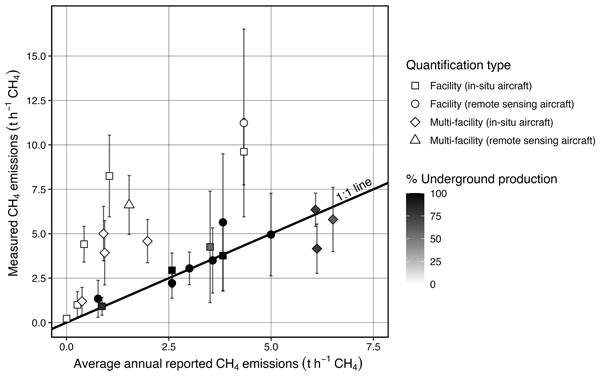
Stephen J. Harris, Sven Krautwurst, Jorg Hacker, Mark Lunt, Jakob Borchardt, Mei Bai, Hartmut Boesch, Tarra Brain, John Philip Burrows, Shakti Chakravarty, Robert A. Field, Rebecca E. Fisher, James L. France, Konstantin Gerilowski, Oke Huhs, Wolfgang Junkermann, Bryce F. J. Kelly, Martin Kumm, Mathias Lanoisellé, Wolfgang Lieff, Andrew McGrath, Adrian Murphy, Thomas Röckmann, Zoe Salmon, Josua Schindewolf, Jakob Thoböll, Carina van der Veen, and Heinrich Bovensmann
Atmos. Chem. Phys., 26, 10043–10069, https://doi.org/10.5194/acp-26-10043-2026, https://doi.org/10.5194/acp-26-10043-2026, 2026
Short summary
Short summary
The accuracy of methods used to estimate and report fugitive methane emissions from Australian coal mines remains unclear. This study compares airborne emission rate estimates with reported estimates from 17 coal mines in the Bowen Basin, a region accounting for 45 % of national coal production. Results show good agreement for underground coal mines, but poor agreement for surface coal mines, suggesting improvements to surface coal mine reporting methods is needed to improve inventory reporting.
Sanam N. Vardag, Sourish Basu, André Butz, and Eva-Marie Metz
EGUsphere, https://doi.org/10.5194/egusphere-2026-4054, https://doi.org/10.5194/egusphere-2026-4054, 2026
This preprint is open for discussion and under review for Biogeosciences (BG).
Short summary
Short summary
Using fourteen years of satellite observations, we study how much the net carbon dioxide exchange between land and atmosphere changes from year to year. We do this to test whether current vegetation models correctly capture responses to climate. We find that many models underestimate this sensitivity, especially in Australia, boreal and temperate North America, and temperate Eurasia. This study can help improve future predictions of how land will respond to climate change.
Costanza Civale, Maria Dolores Andrés Hernández, Jean-Philippe Putaud, Francesca Barnaba, Henri Diémoz, Johannes Schneider, Helmut Ziereis, Katharina Kaiser, Jörg Schmidt, Ovid Oktavian Krüger, Bruna Holanda, Robert Baumann, Benjamin Weyland, Eric Förster, Midhun George, Yangzhuoran Liu, Daniel Sauer, Jennifer Wolf, Annachiara Bellini, Birger Bohn, Klaus Pfeilsticker, and John Philip Burrows
Atmos. Chem. Phys., 26, 9827–9855, https://doi.org/10.5194/acp-26-9827-2026, https://doi.org/10.5194/acp-26-9827-2026, 2026
Short summary
Short summary
This study combines measurements of gases and particles at the ground and on-board an instrumented aircraft to investigate pollution transport over the Po Valley, a major atmospheric pollution hotspot in Europe. Overall, the extensive data set obtained at different altitudes provides insight into the mixing of pollution plumes and their export towards the Adriatic coast as well as with naturally occurring dust and its impact on air quality over the Po Plain.
Matthias Kohl, Christoph Brühl, Holger Tost, Christos Xenofontos, Theodoros Christoudias, Sergey Gromov, Oliver Appel, Stephan Borrmann, Adam Bourassa, Pedro Campunzano-Jost, Yafang Cheng, Oliver Eppers, Karl D. Froyd, Bruna A. Holanda, Jose L. Jimenez, Patrick Jöckel, Philipp Joppe, Katharina Kaiser, Joseph M. Katich, Klaus Klingmüller, Franziska Köllner, Agnieszka Kupc, Anna Martin, Christopher Pöhlker, Mira L. Pöhlker, Ulrich Pöschl, Landon Rieger, Samuel Ruhl, Gregory P. Schill, Johannes Schneider, Christiane Schulz, Joshua P. Schwarz, Alexandra P. Tsimpidi, Ryan Vella, Christina J. Williamson, Yifan Yang, Daniel Zawada, Jos Lelieveld, and Andrea Pozzer
EGUsphere, https://doi.org/10.5194/egusphere-2026-3649, https://doi.org/10.5194/egusphere-2026-3649, 2026
Short summary
Short summary
Aerosols are crucial for Earth's climate, yet their vertical distribution remains poorly understood. We present first consistent global simulations of aerosol distributions and composition from the Earth's surface to the stratosphere, validated by extensive observations. Key findings include a global minimum in aerosol mass in the free troposphere, a significant contribution of organic aerosol in the lower stratosphere, and limited transport of primary particles to the stratosphere.
Thomas Plewa, André Butz, Christian Frankenberg, Andrew K. Thorpe, and Julia Marshall
EGUsphere, https://doi.org/10.5194/egusphere-2026-2572, https://doi.org/10.5194/egusphere-2026-2572, 2026
Short summary
Short summary
In this paper, we present an improved deep learning method to estimate emissions of methane plumes from 2-D imagery. We present a new neural network architecture that provides insight into the wind speed used for the emission estimation and apply it to synthetic data that were used in previous studies. Our analysis illustrates that the performance increases by around 40% compared to the previous version, and that external wind speed data can be used to verify and improve the model's predictions.
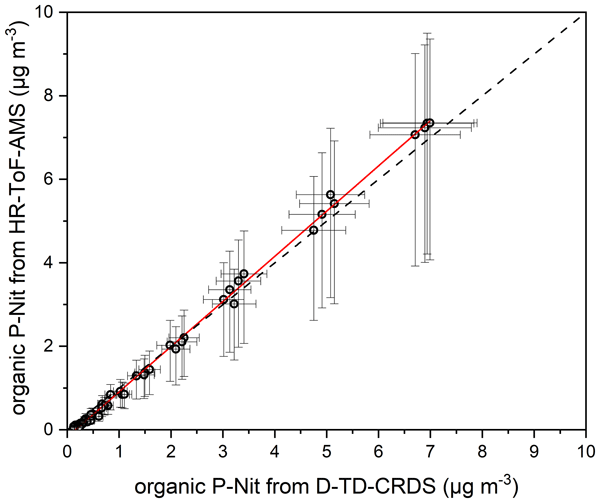
Patrick Dewald, Tobias Seubert, Laura Wüst, Jan Schuladen, Frank Drewnick, Friederike Fachinger, Thorsten Hoffmann, and John N. Crowley
Atmos. Meas. Tech., 19, 3445–3457, https://doi.org/10.5194/amt-19-3445-2026, https://doi.org/10.5194/amt-19-3445-2026, 2026
Short summary
Short summary
We have developed and tested an instrument that quantitatively detects particulate nitrate. Gas-phase reactive nitrogen species are denuded using an active-carbon surface and particle nitrate is converted to NO2, which is detected using cavity-ringdown-spectroscopy. Key to accurate measurement of particulate nitrate is drying of the sampled air. Excellent agreement with an aerosol-mass-spectrometer indicates that the instrument detects both organic and inorganic nitrate particle mass accurately.
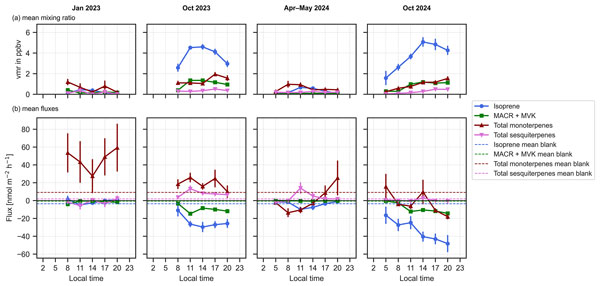
Johanna Margaretha Schüttler, Giovanni Pugliese, Joseph Byron, Cléo Quaresma Dias-Júnior, Carolina de A. Monteiro, Hartwig Harder, Jos Lelieveld, and Jonathan Williams
Biogeosciences, 23, 3467–3498, https://doi.org/10.5194/bg-23-3467-2026, https://doi.org/10.5194/bg-23-3467-2026, 2026
Short summary
Short summary
We measured how Amazon rainforest soils release and uptake compounds commonly produced by plants across seasons, including the severe 2023 El Niño drought. Soils took up isoprene most in the afternoon of dry seasons, while emissions of very reactive sesquiterpenes peaked during the drought. Removing the leaf litter changed which compounds transferred to and from the soil. These soil exchanges, though small compared to the canopy, can shape air chemistry near the ground and influence soil biota.
Timothy J. Wallington, Markus Ammann, John N. Crowley, Hartmut Herrmann, Michael E. Jenkin, V. Faye McNeill, Abdelwahid Mellouki, and Jürgen Troe
Atmos. Chem. Phys., 26, 6579–6592, https://doi.org/10.5194/acp-26-6579-2026, https://doi.org/10.5194/acp-26-6579-2026, 2026
Short summary
Short summary
Halogenated alkanes, alkenes, and oxygenated compounds play an important role in atmospheric chemistry. This article, the ninth in the series, presents kinetic and photochemical data sheets evaluated by the International Union of Pure and Applied Chemistry (IUPAC) Task Group on Atmospheric Chemical Kinetic Data Evaluation. It covers the gas-phase reactions (with HO radicals, NO3 radicals, and ozone) and photolysis of halogenated organic compounds. These data are important for atmospheric models.
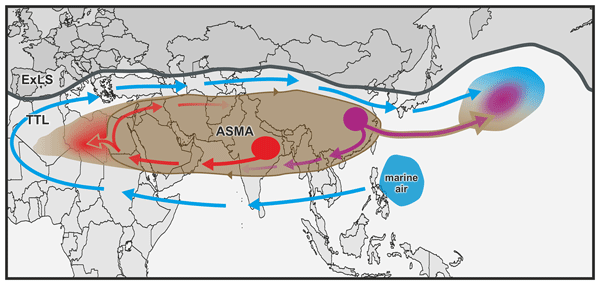
Bärbel Vogel, Valentin Lauther, Franziska Köllner, Fatih Ekinci, Christian Rolf, Johannes Strobel, Ronja van Luijt, C. Michael Volk, Stephan Borrmann, Antonis Dragoneas, Oliver Eppers, Sergej Molleker, Peter Hoor, Linda Ort, Franziska Weyland, Andreas Zahn, Jan Clemens, Gebhard Günther, Oleh Kachula, Rolf Müller, Felix Ploeger, and Martin Riese
Atmos. Chem. Phys., 26, 6283–6319, https://doi.org/10.5194/acp-26-6283-2026, https://doi.org/10.5194/acp-26-6283-2026, 2026
Short summary
Short summary
This work highlights the impact of the Asian summer monsoon on the chemical composition of the upper troposphere and lower stratosphere. Measurements of trace gases and aerosol particles uplifted by the Asian summer monsoon to higher altitudes are sparse. Here, we had the opportunity to use a whole suite of different measured trace gases and the chemical composition of aerosols, in combination with simulations, to better understand the complex transport and mixing processes in this region.
Marcus G. Müller, Birger Bohn, and Ulrich Löhnert
Atmos. Meas. Tech., 19, 3031–3048, https://doi.org/10.5194/amt-19-3031-2026, https://doi.org/10.5194/amt-19-3031-2026, 2026
Short summary
Short summary
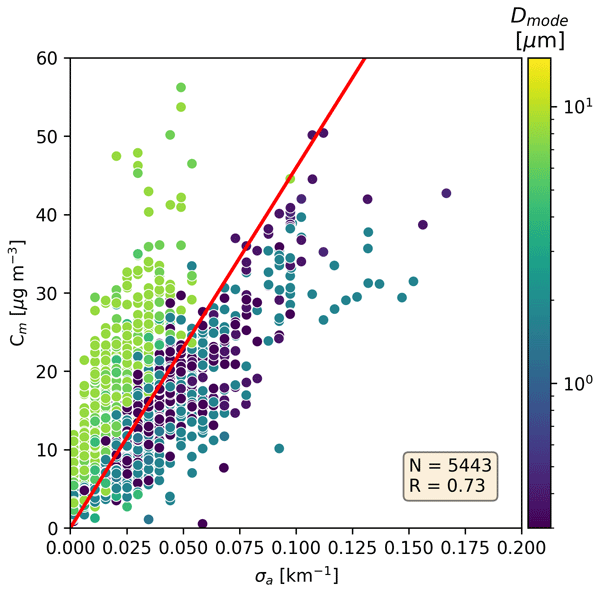
We present an uncertainty estimation for the retrieval of aerosol properties from a Vaisala CT25k ceilometer at JOYCE (Jülich Observatory for Cloud Evolution) with a forward inversion method. Ceilometer aerosol mass concentrations and extinction coefficients were compared to in situ observations (optical particle sizer) from a close-by tower at 120 m, showing a mean absolute percentage error of 39 % when deriving aerosol mass concentrations from ceilometer aerosol extinction coefficients.
Mian Chin, Jonathon S. Wright, Huisheng Bian, Qian Tan, Xiaohua Pan, Toshihiko Takemura, Hitoshi Matsui, Kostas Tsigaridis, Susanne Bauer, Paul Ginoux, Yiran Peng, Zengyuan Guo, Suvarna Fadnavis, Anton Laakso, John P. Burrows, Ghassan Taha, Jayanta Kar, Alexei Rozanov, Carlo Arosio, Landon Rieger, and Adam Bourassa
Atmos. Chem. Phys., 26, 6035–6059, https://doi.org/10.5194/acp-26-6035-2026, https://doi.org/10.5194/acp-26-6035-2026, 2026
Short summary
Short summary
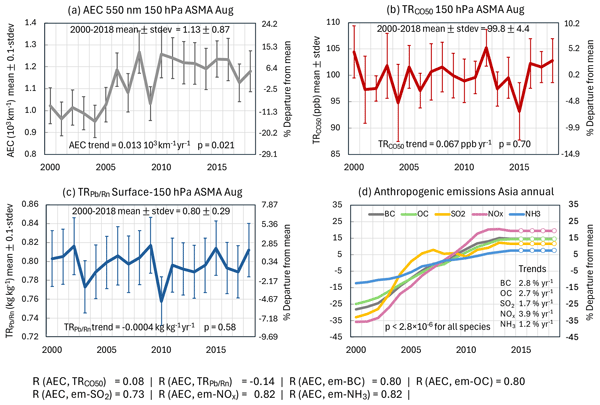
Aerosols in the upper troposphere influence weather and climate. The Asian summer monsoon efficiently transports surface pollutants upward, shaping aerosol amounts and variability in the upper troposphere. Using multiple global models, this study finds a summertime increase in upper-tropospheric aerosols at 1.2 % per year from 2000 to 2018 over Asia, consistent with rising pollutant emissions in Asia, while year-to-year changes are mainly driven by climate variability affecting monsoon dynamics.
Christine Frömming, Volker Grewe, Sigrun Matthes, Simone Dietmüller, Patrick Peter, Katrin Dahlmann, and Patrick Jöckel
J. Env. Com. Air Transp. Sys. Discuss., https://doi.org/10.5194/jecats-2026-7, https://doi.org/10.5194/jecats-2026-7, 2026
Revised manuscript under review for JECATS
Short summary
Short summary
Aviation non-CO2 climate effects could be reduced through rerouting using Climate Change Functions (CCFs) and its surrogate aCCFs. This study expands CCFs regionally and seasonally and enables a comparison with aCCFs. ACCFs simplify complex processes but reproduce magnitudes and most gradients, though they underestimate variability compared to detailed CCF simulations and limitations to certain altitudes were revealed. The present study promotes future development of refined and extended aCCFs.
Philipp Brauner, Oliver Appel, Oliver Eppers, Franziska Köllner, Hans-Christian Clemen, Tiziana Bräuer, Hans-Christoph Lachnitt, Katharina Kaiser, Johannes Schneider, Antonis Dragoneas, Andreas Hünig, Sergej Molleker, Bruce E. Anderson, Yafang Cheng, Hans Schlager, Christiane Voigt, and Stephan Borrmann
EGUsphere, https://doi.org/10.5194/egusphere-2026-2161, https://doi.org/10.5194/egusphere-2026-2161, 2026
Preprint archived
Short summary
Short summary
Airborne measurements of the aerosol chemical composition were conducted in the 2018 wintertime tropopause region over Germany using a hybrid aerosol mass spectrometer, regarding the atmospheric background and aircraft exhaust plumes. Biomass burning aerosol of North American wildfires contributes to the aerosol population. Soot and engine oil were attributed to aircraft exhaust, and were detected in contrail residuals, implying their impact on chemical processes and properties of contrails.
Marta Abalos, Thomas Birner, Andreas Chrysanthou, Sean Davis, Alvaro de la Cámara, Sandip Dhomse, Hella Garny, Michaela I. Hegglin, Daan Hubert, Oksana Ivaniha, James Keeble, Marianna Linz, Daniele Minganti, Jessica Neu, David Plummer, Laura Saunders, Kasturi Shah, Gabriele Stiller, Kleareti Tourpali, Darryn Waugh, Nathan Luke Abraham, Hideharu Akiyoshi, Martyn P. Chipperfield, Patrick Jöckel, Béatrice Josse, Marion Marchand, Patrick Martineau, Olaf Morgenstern, Timofei Sukhodolov, Shingo Watanabe, and Yousuke Yamashita
Atmos. Chem. Phys., 26, 5249–5291, https://doi.org/10.5194/acp-26-5249-2026, https://doi.org/10.5194/acp-26-5249-2026, 2026
Short summary
Short summary
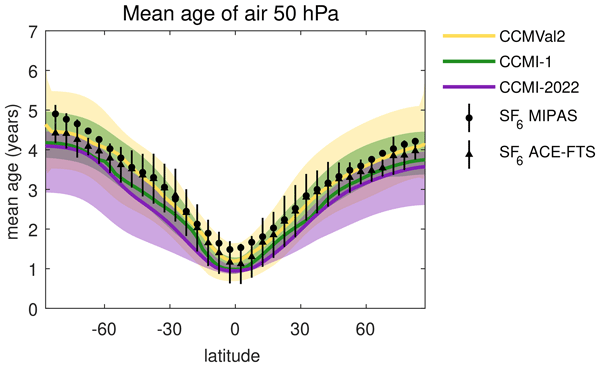
Accurate representation of stratospheric transport in Chemistry-Climate Models is essential for reliable climate projections. This study evaluates three generations of models using observational data and reanalyses, identifying persistent biases and their potential causes. Some biases persist or even worsen in newer models. These findings highlight key limitations and inform efforts to improve models and advance understanding through process-based studies and enhanced observations.
Chenjie Yu, Paola Formenti, Joel F. de Brito, Astrid Bauville, Antonin Bergé, Hichem Bouzidi, Mathieu Cazaunau, Manuela Cirtog, Claudia Di Biagio, Ludovico Di Antonio, Cécile Gaimoz, Franck Maisonneuve, Pascal Zapf, Tobias Seubert, Simone T. Andersen, Patrick Dewald, Gunther N. T. E. Türk, John N. Crowley, Alexandre Kukui, Chaoyang Xue, Cyrielle Denjean, Olivier Garrouste, Jean-Claude Etienne, Huihui Wu, James D. Allan, Dantong Liu, Yangzhou Wu, Christopher Cantrell, and Vincent Michoud
Atmos. Chem. Phys., 26, 5313–5332, https://doi.org/10.5194/acp-26-5313-2026, https://doi.org/10.5194/acp-26-5313-2026, 2026
Short summary
Short summary
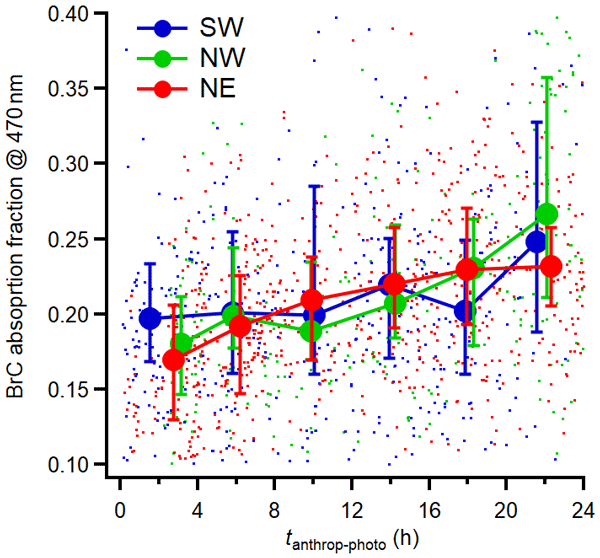
We presented a field measurement in a Paris suburban forest region to characterise the impacts of photochemical aging process on aerosol physical chemical properties. Photochemical production of organic aerosols increased forest fine particle mass and significantly enhanced absorption of short-wavelength sunlight. This study highlights the critical need to incorporate light absorbing carbonaceous particles formation mechanisms into models to accurately simulate their direct radiative impacts.
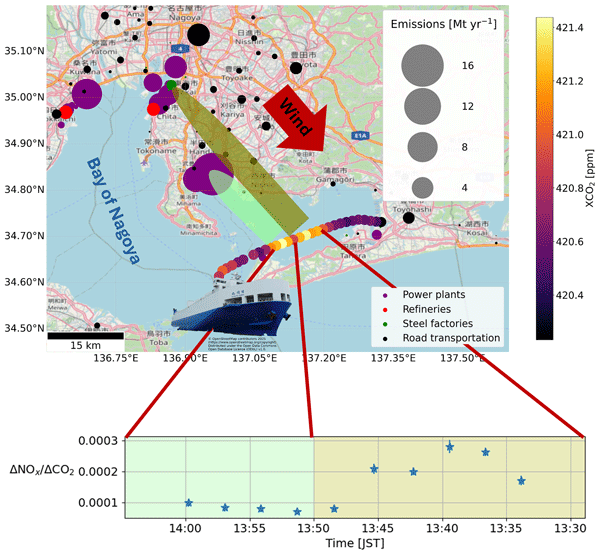
Vincent Enders, Astrid Müller, Matthias Max Frey, Frank Hase, Ralph Kleinschek, Marvin Knapp, Benedikt Löw, Isamu Morino, Shin-Ichiro Nakaoka, Hideki Nara, Hiroshi Tanimoto, Sanam N. Vardag, Karolin Voss, and André Butz
Atmos. Meas. Tech., 19, 2633–2655, https://doi.org/10.5194/amt-19-2633-2026, https://doi.org/10.5194/amt-19-2633-2026, 2026
Short summary
Short summary
We have deployed two spectrometers on a ship traveling along the coast of Japan. By that, we were able to repeatedly measure the greenhouse gas and air pollutant emissions of power plants, large industrial facilities, and cities. Using the ratios between the different gases, we are able to identify sources based on their unique signature. In addition, we are able to show that spectrometers can be operated on a ship, while still fulfilling the high standards of land-based observation networks.
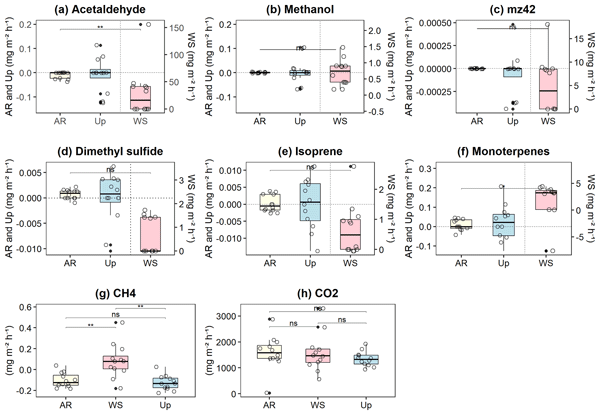
Débora Pinheiro-Oliveira, Hella van Asperen, Murielli Garcia Caetano, Michelle Robin, Achim Edtbauer, Nora Zannoni, Joseph Byron, Jonathan Williams, Layon Oreste Demarchi, Maria Teresa Fernandez Piedade, Jochen Schöngart, Florian Wittmann, Sergio Duvoisin-Junior, Carla Batista, Rodrigo Augusto Ferreira de Souza, and Eliane Gomes Alves
Biogeosciences, 23, 2451–2476, https://doi.org/10.5194/bg-23-2451-2026, https://doi.org/10.5194/bg-23-2451-2026, 2026
Short summary
Short summary
Forests release trace gases that influence air and climate. While plants are the main source, soil and leaf litter can also release significant amounts, especially in tropical forests like the Amazon. We measured these fluxes in different forest types and found soil and litter to be active sources and sinks. This can improves climate models by including realistic forest processes, vital for understanding and protecting the Amazon.
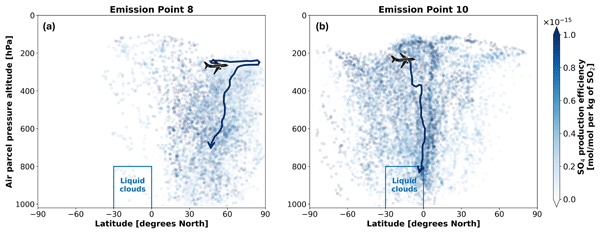
Jin Maruhashi, Mattia Righi, Monica Sharma, Johannes Hendricks, Patrick Jöckel, Volker Grewe, and Irene C. Dedoussi
Geosci. Model Dev., 19, 2747–2784, https://doi.org/10.5194/gmd-19-2747-2026, https://doi.org/10.5194/gmd-19-2747-2026, 2026
Short summary
Short summary
Aerosol-cloud interactions remain a major source of uncertainty in assessing aviation's net climate impact. We develop and evaluate a new Lagrangian tagging model that tracks aviation-emitted SO2 and H2SO4 as they are chemically transformed into SO4 aerosols and transported throughout the atmosphere. This development allows the identification of atmospheric regions with elevated potential for aerosol–cloud interactions driven by SO4 from aircraft.
Noelia R. Benavente, Santiago Botía, Luciana V. Rizzo, Angel Vara-Vela, Paulo Artaxo, Hella van Asperen, Felipe Santos da Silva, Flavio A. F. D'Oliveira, Horst Fischer, Michał Gałkowski, Theo Glauch, Alice Henkes, David Ho, Cléo Q. Dias-Júnior, Amauri C. P. Junior, Julia Marshall, Linda Ort, Ben-Hur M. Portella, and Luiz A. T. Machado
EGUsphere, https://doi.org/10.5194/egusphere-2026-979, https://doi.org/10.5194/egusphere-2026-979, 2026
Short summary
Short summary
The Amazon Basin plays a vital role in regulating Earth's climate by absorbing and releasing carbon dioxide and methane. We studied how a high-resolution atmospheric transport model captures these gases, comparing it with measurements from towers and aircraft over the forest. Adjusting for forest carbon exchange improved carbon dioxide results, while methane levels were heavily dependent on emission estimates. Remaining errors were linked to winds and atmospheric mixing.
Tim Butler, Tabish Ansari, Claudio A. Belis, Elisa Bergas-Masso, Willem van Caspel, Hilde Fagerli, Johannes Flemming, Marta Garcia Vivanco, Paul Griffiths, Douglas S. Hamilton, Coralina Hernandez Trujillo, Lena Höglund-Isaksson, Vincent Huijnen, Matthew Kasoar, Johannes W. Kaiser, Gerbrand Koren, Zbigniew Klimont, Florian Lindl, Aura Lupascu, Mariano Mertens, Martijn Schaap, Steven T. Turnock, Oliver Wild, Philipp Weiss, Jacek Kaminski, Rosa Wu, and Terry Keating
EGUsphere, https://doi.org/10.5194/egusphere-2026-1367, https://doi.org/10.5194/egusphere-2026-1367, 2026
Short summary
Short summary
Air pollution travels across continents, meaning emissions in one region can affect air quality far away. To better understand this, scientists from many groups are planning to run coordinated computer simulations of the atmosphere. By comparing results across models and emission scenarios, the planned study will show how pollution moves between regions and which sources matter most, helping governments design more effective air quality policies.

Chun Hang Chau, Peter Hoor, Katharina Kaiser, and Holger Tost
Atmos. Chem. Phys., 26, 3637–3652, https://doi.org/10.5194/acp-26-3637-2026, https://doi.org/10.5194/acp-26-3637-2026, 2026
Short summary
Short summary
This study examines the potential impact of different greenhouse gases to vertical mixing by clear air turbulence in the upper troposphere and lower stratosphere . We found that ozone is most sensitive to vertical mixing and could lead to cooling at the top of the atmosphere by -0.2 W/m2. We also found that the vertical mixing by clear air turbulence could lead to changes in atmospheric chemistry including changing the methane lifetime and the ozone sensitivity.
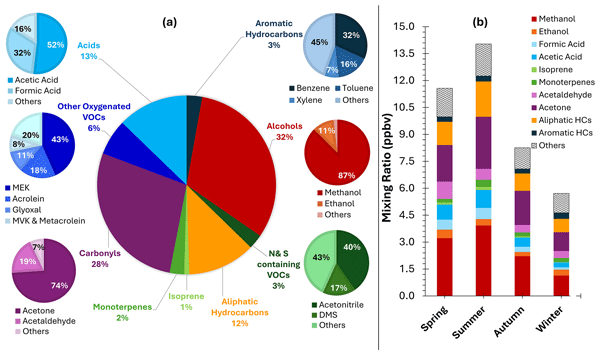
Anchal Garg, Maximilien Desservettaz, Aliki Christodoulou, Theodoros Christoudias, Vijay Punjaji Kanawade, Chrysanthos Savvides, Mihalis Vrekoussis, Shahid Naqui, Tuija Jokinen, Joseph Byron, Jonathan Williams, Nikos Mihalopoulos, Eleni Liakakou, Jean Sciare, and Efstratios Bourtsoukidis
Atmos. Chem. Phys., 26, 2597–2622, https://doi.org/10.5194/acp-26-2597-2026, https://doi.org/10.5194/acp-26-2597-2026, 2026
Short summary
Short summary
This study reports multi-year (2022–2024) measurements of 76 volatile organic compounds (VOCs) at a rural site in Cyprus. Oxygenated VOCs were the most abundant and showed strong daytime increases due to sunlight-driven chemistry. Air-mass analysis showed that transport from Middle East strongly influenced aromatic VOC levels. Climate–chemistry modeling underestimated most VOCs, highlighting gaps in current emission and chemical processes.

Oke Huhs, Jakob Borchardt, Sven Krautwurst, Konstantin Gerilowski, Heinrich Bovensmann, Hartmut Bösch, and John Philip Burrows
Atmos. Meas. Tech., 19, 871–898, https://doi.org/10.5194/amt-19-871-2026, https://doi.org/10.5194/amt-19-871-2026, 2026
Short summary
Short summary
Stray light is an error source in all optical instruments. In passive remote sensing observations of greenhouse gases, it creates false patterns in gas concentration maps. In this work, the impact of stray light in the full processing chain from measured spectra, retrieved concentration maps, to emission rate estimates using measured and simulated data is analysed for MAMAP2D-Light. Additionally, a hardware improvement mitigates stray light for onward missions.
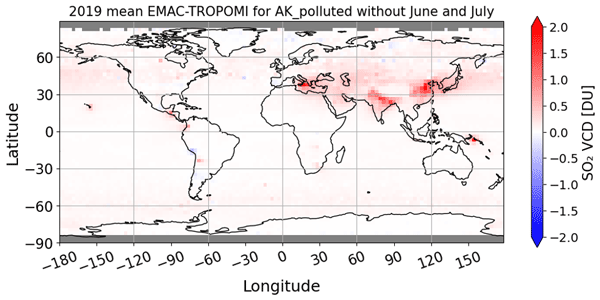
Ismail Makroum, Patrick Jöckel, Martin Dameris, Nicolas Theys, and Johannes De Leeuw
Geosci. Model Dev., 19, 447–476, https://doi.org/10.5194/gmd-19-447-2026, https://doi.org/10.5194/gmd-19-447-2026, 2026
Short summary
Short summary
We use a state-of-the-art numerical chemistry-climate model to study the atmospheric sulfur dioxide budget. We simulate the atmospheric concentration of sulfur dioxide (SO2) and corresponding sulfur deposition fluxes and compare the results with observational data from a satellite instrument and with ground-based in-situ measurements. For the evaluation of the simulated atmospheric lifetime of SO2, we also simulate the fate of SO2 emitted by two volcanic eruptions that happened in 2019.
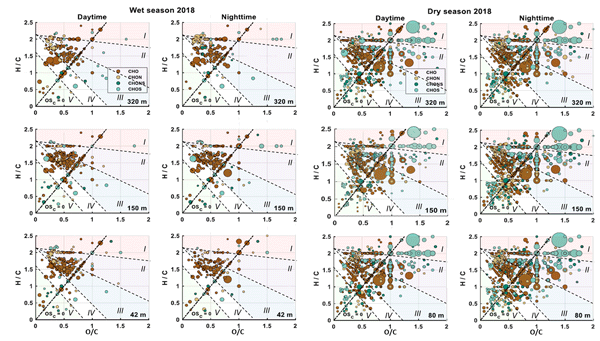
Denis Leppla, Stefanie Hildmann, Nora Zannoni, Leslie A. Kremper, Bruna A. Holanda, Jonathan Williams, Christopher Pöhlker, Stefan Wolff, Marta Sà, Maria Christina Solci, Ulrich Pöschl, and Thorsten Hoffmann
Atmos. Chem. Phys., 26, 365–390, https://doi.org/10.5194/acp-26-365-2026, https://doi.org/10.5194/acp-26-365-2026, 2026
Short summary
Short summary
The chemical composition of organic particles in the Amazon rainforest was investigated to understand how biogenic and human emissions influence the atmosphere in this unique ecosystem. Seasonal patterns were found where wet seasons were dominated by biogenic compounds from natural sources while dry seasons showed increased fire-related pollutants. These findings reveal how emissions, fires and long-range transport affect atmospheric chemistry, with implications for climate models.
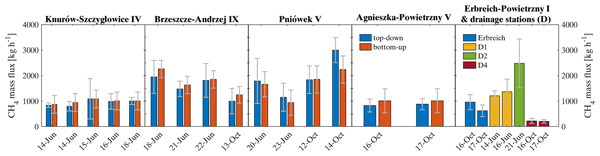
Eric Förster, Heidi Huntrieser, Michael Lichtenstern, Falk Pätzold, Lutz Bretschneider, Andreas Schlerf, Sven Bollmann, Astrid Lampert, Jarosław Nęcki, Paweł Jagoda, Justyna Swolkień, Dominika Pasternak, Robert A. Field, and Anke Roiger
Atmos. Meas. Tech., 18, 7153–7176, https://doi.org/10.5194/amt-18-7153-2025, https://doi.org/10.5194/amt-18-7153-2025, 2025
Short summary
Short summary
We introduce a helicopter-borne mass balance approach, utilizing the HELiPOD platform, to accurately quantify methane (CH4) emissions from coal mining activities. The comparison of our top-down mass flux estimates (up to 3000 kg h−1) against those from bottom-up in-mine CH4 safety sensors revealed very good agreement. This approach also has a great potential in quantifying emission source strengths (down to 20 kg h−1) from a wide range of other CH4 emitters (e.g. landfills, oil & gas industry).
Matthew J. Rowlinson, Lucy J. Carpenter, Mat J. Evans, James D. Lee, Simone T. Andersen, Tomas Sherwen, Anna B. Callaghan, Roberto Sommariva, William Bloss, Siqi Hou, Leigh R. Crilley, Klaus Pfeilsticker, Benjamin Weyland, Thomas B. Ryerson, Patrick R. Veres, Pedro Campuzano-Jost, Hongyu Guo, Benjamin A. Nault, Jose L. Jimenez, and Khanneh Wadinga Fomba
Atmos. Chem. Phys., 25, 16945–16968, https://doi.org/10.5194/acp-25-16945-2025, https://doi.org/10.5194/acp-25-16945-2025, 2025
Short summary
Short summary
HONO is key to tropospheric chemistry. Observations show high HONO concentrations in remote air, possibly explained by nitrate aerosol photolysis. We use observations to parameterize nitrate photolysis, evaluating simulated HONO against observations from multiple sources. We show improved agreement with observed HONO, but overestimates in NOx and O3, beyond observational constraints. This implies uncertainties in the NOx budget and our understanding of atmospheric chemistry.
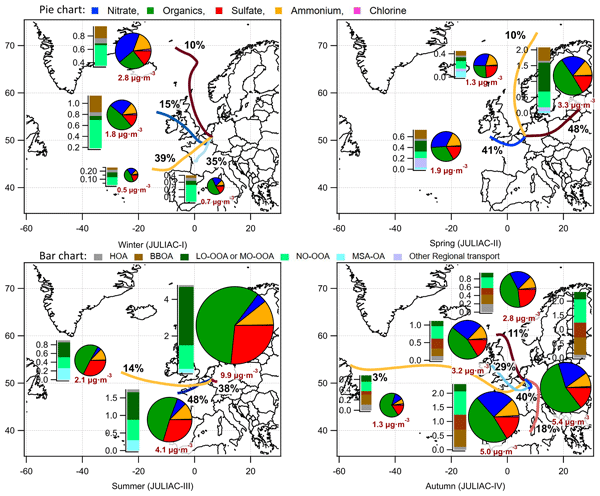
Lu Liu, Thorsten Hohaus, Andreas Hofzumahaus, Frank Holland, Hendrik Fuchs, Ralf Tillmann, Birger Bohn, Stefanie Andres, Zhaofeng Tan, Franz Rohrer, Vlassis A. Karydis, Vaishali Vardhan, Philipp Franke, Anne C. Lange, Anna Novelli, Benjamin Winter, Changmin Cho, Iulia Gensch, Sergej Wedel, Andreas Wahner, and Astrid Kiendler-Scharr
Atmos. Chem. Phys., 25, 16189–16213, https://doi.org/10.5194/acp-25-16189-2025, https://doi.org/10.5194/acp-25-16189-2025, 2025
Short summary
Short summary
We measured air particles at a rural site in Germany over a year to understand how their sources and properties change with the seasons. Particles from natural sources peaked in summer, especially during heatwaves, while those from burning activities like residential heating and wildfires dominated in colder months. Winds carrying air from other regions also influenced particle levels. These findings link air quality to climate change and energy transitions.
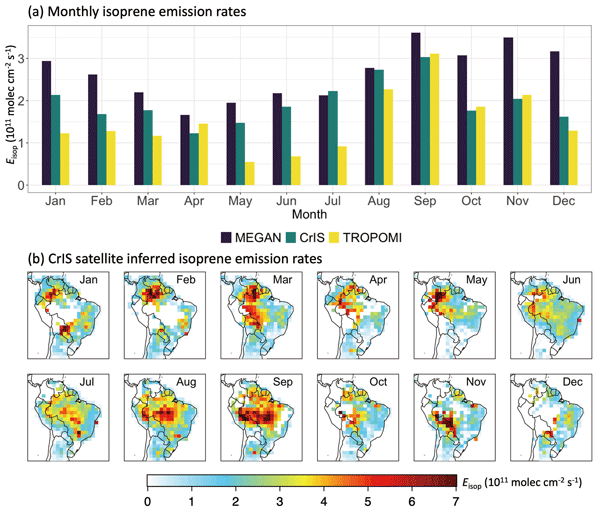
Shihan Sun, Paul I. Palmer, Richard Siddans, Brian J. Kerridge, Lucy Ventress, Achim Edtbauer, Akima Ringsdorf, Eva Y. Pfannerstill, and Jonathan Williams
Atmos. Chem. Phys., 25, 15801–15818, https://doi.org/10.5194/acp-25-15801-2025, https://doi.org/10.5194/acp-25-15801-2025, 2025
Short summary
Short summary
Isoprene released by plants can impact atmospheric chemistry and climate. The Amazon rainforest is a major source of isoprene. We derived isoprene emissions using satellite retrievals of isoprene columns and a chemical transport model. We evaluated our isoprene emission estimates using ground-based isoprene observations and satellite retrievals of formaldehyde. We found that using satellite retrievals of isoprene can help us better understand isoprene emissions over the Amazon.
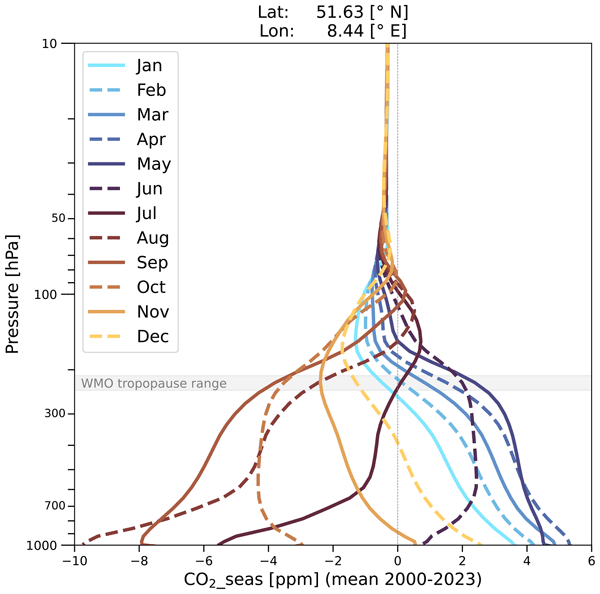
Johannes Degen, Bianca C. Baier, Patrick Jöckel, J. Moritz Menken, Tanja J. Schuck, Colm Sweeney, and Andreas Engel
Atmos. Chem. Phys., 25, 15741–15763, https://doi.org/10.5194/acp-25-15741-2025, https://doi.org/10.5194/acp-25-15741-2025, 2025
Short summary
Short summary
We investigate the distribution of CO2 in the upper troposphere and lower stratosphere using both, observations and an atmospheric model. Simulating an artificial tracer, we separate CO2 seasonality from long-term trend and transport variability. We found that patterns in the seasonal signal are attributable to large-scale transport features like the subtropical jet or the Brewer-Dobson circulation. Being a powerful diagnostic tool we recommend to use this tracer for model intercomparisons.
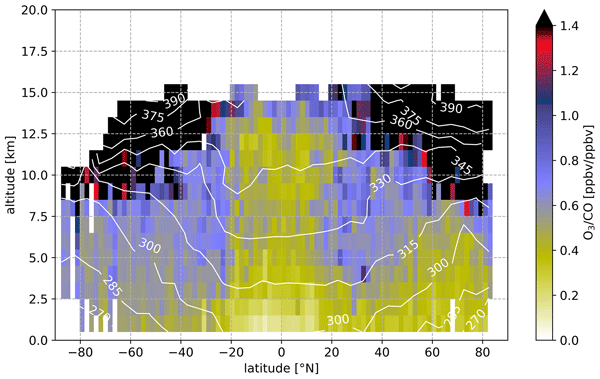
Linda Ort, Andrea Pozzer, Peter Hoor, Florian Obersteiner, Andreas Zahn, Thomas B. Ryerson, Chelsea R. Thompson, Jeff Peischl, Róisín Commane, Bruce Daube, Ilann Bourgeois, Jos Lelieveld, and Horst Fischer
Atmos. Chem. Phys., 25, 14987–15007, https://doi.org/10.5194/acp-25-14987-2025, https://doi.org/10.5194/acp-25-14987-2025, 2025
Short summary
Short summary
This study investigates the role of lightning emissions on the O3–CO ratio in the northern subtropics. We used in situ observations and a global circulation model to show an effect of up to 40 % onto the subtropical O3–CO ratio by tropical air masses transported via the Hadley cell. This influence of lightning emissions and its photochemistry has a global effect on trace and greenhouse gases and needs to be considered for global chemical distributions.
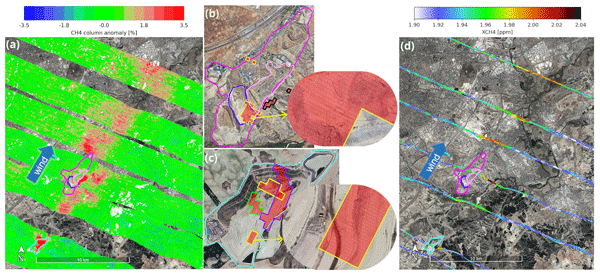
Sven Krautwurst, Christian Fruck, Sebastian Wolff, Jakob Borchardt, Oke Huhs, Konstantin Gerilowski, Michał Gałkowski, Christoph Kiemle, Mathieu Quatrevalet, Martin Wirth, Christian Mallaun, John P. Burrows, Christoph Gerbig, Andreas Fix, Hartmut Bösch, and Heinrich Bovensmann
Atmos. Chem. Phys., 25, 14669–14702, https://doi.org/10.5194/acp-25-14669-2025, https://doi.org/10.5194/acp-25-14669-2025, 2025
Short summary
Short summary
Anomalously high CH4 emissions from landfills in Madrid, Spain, have been observed by satellite measurements in recent years. Our investigations of these waste facilities, using passive and active airborne remote sensing measurements, confirm these high emission rates with values of up to 13 th−1 during the overflight and show excellent agreement between the two techniques. A large fraction of the emissions is attributed to active landfill sites.
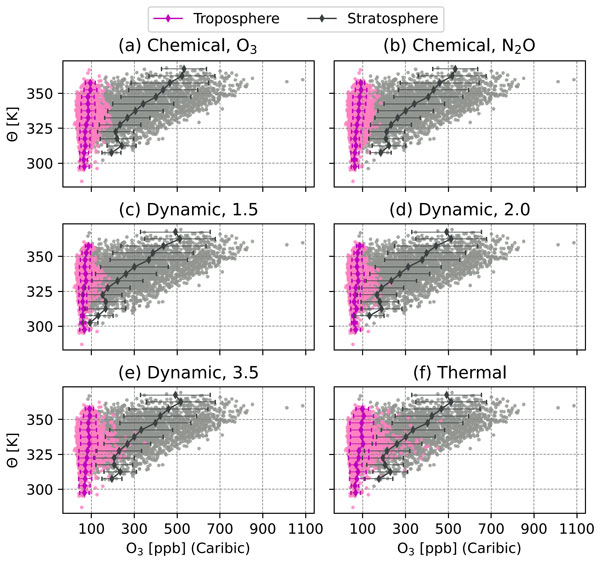
Sophie Bauchinger, Andreas Engel, Markus Jesswein, Timo Keber, Harald Bönisch, Florian Obersteiner, Andreas Zahn, Nicolas Emig, Peter Hoor, Hans-Christoph Lachnitt, Franziska Weyland, Linda Ort, and Tanja J. Schuck
Atmos. Chem. Phys., 25, 14167–14186, https://doi.org/10.5194/acp-25-14167-2025, https://doi.org/10.5194/acp-25-14167-2025, 2025
Short summary
Short summary
We compared different ways to define the upper barrier of the troposphere in the extra-tropics, the “tropopause”. By analysing ozone distributions sorted by different definitions, we found that the traditional temperature-based tropopause works less well than dynamic or tracer-based definitions. We saw a sharper transition of ozone across the tropopause using a higher value of potential vorticity than often used and recommend this value for future studies of exchange processes in this region.
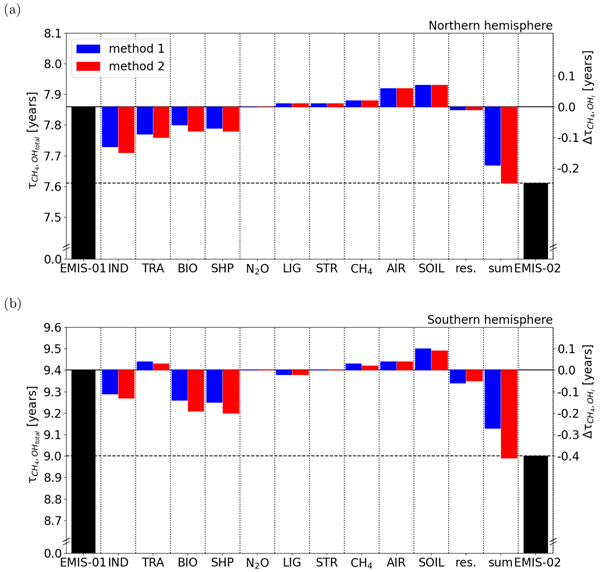
Catherine Acquah, Laura Stecher, Mariano Mertens, and Patrick Jöckel
Atmos. Chem. Phys., 25, 13665–13686, https://doi.org/10.5194/acp-25-13665-2025, https://doi.org/10.5194/acp-25-13665-2025, 2025
Short summary
Short summary
Short-lived ozone precursor species influence the formation of ozone and also the atmospheric lifetime of methane. Our study assesses the effect of two widely used emission inventories of these species on ozone and the methane lifetime. Our results indicate tropospheric ozone and methane lifetime differences of around 4 % even though both emission inventories aim at representing present-day conditions. We further attribute the differences to emissions of individual sectors, e.g. land traffic.
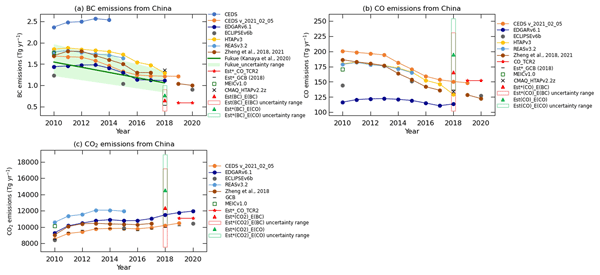
Phuc Thi Minh Ha, Yugo Kanaya, Kazuyo Yamaji, Syuichi Itahashi, Satoru Chatani, Takashi Sekiya, Maria Dolores Andrés Hernández, John Philip Burrows, Hans Schlager, Michael Lichtenstern, Mira Poehlker, and Bruna Holanda
Atmos. Chem. Phys., 25, 13429–13452, https://doi.org/10.5194/acp-25-13429-2025, https://doi.org/10.5194/acp-25-13429-2025, 2025
Short summary
Short summary
Black carbon and CO are important to climate change. EMeRGe airborne observation can identify the suitability of emission inventories used in the CMAQv5.0.2 model for Asian polluted regions. GFEDv4.1s is suitable for fire emissions. Anthropogenic BC and CO emissions from the Philippines (REASv2.1) are insufficient. The estimated Chinese emissions in 2018 are 0.65±0.25 TgBC, 166±65 TgCO, and 12.4±4.8 PgCO2, suggesting a reduction and increment for China's BC and CO emissions in the HTAPv2.2z inventory.

Harikrishnan Charuvil Asokan, Jochen Landgraf, Pepijn Veefkind, Stijn Dellaert, and André Butz
Atmos. Meas. Tech., 18, 5247–5264, https://doi.org/10.5194/amt-18-5247-2025, https://doi.org/10.5194/amt-18-5247-2025, 2025
Short summary
Short summary
Greenhouse gases like CO2 and CH4 drive climate change. Satellites enable monitoring of these emissions from space. Our simulations show that the upcoming Twin ANthropogenic Greenhouse gas Observers (TANGO) mission can detect about 500 targets per 4 d cycle under clear skies, but cloud cover reduces detection. Integrating cloud forecasts into TANGO’s manoeuvering boosts detection, highlighting its potential for improving global emission monitoring.
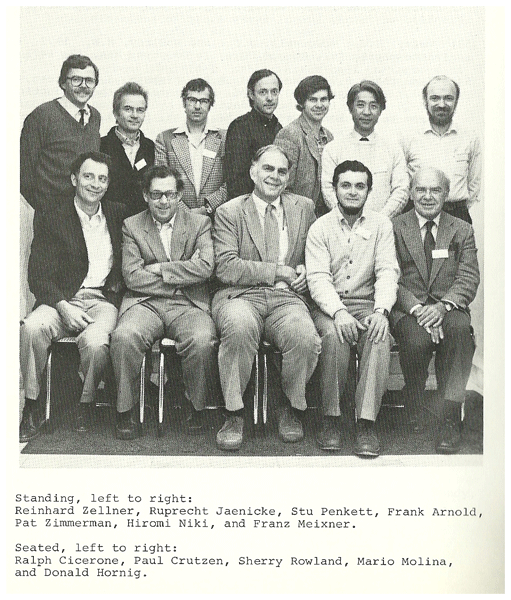
Rolf Müller, Lennart Bengtsson, John Birks, John Burrows, Ruprecht Jaenicke, and Richard S. Stolarski
Hist. Geo Space. Sci., 16, 31–40, https://doi.org/10.5194/hgss-16-31-2025, https://doi.org/10.5194/hgss-16-31-2025, 2025
Short summary
Short summary
This paper reports a few anecdotes from the life of Paul J. Crutzen that were contributed by friends and colleagues. Taken together, these anecdotes should shed some light on the person that Paul was, as this is perhaps sometimes obscured when focusing solely on his many scientific achievements.
Johannes Schneider, Christiane Schulz, Florian Rubach, Anna Ludwig, Jonas Wilsch, Philipp Joppe, Christian Gurk, Sergej Molleker, Laurent Poulain, Florian Obersteiner, Torsten Gehrlein, Harald Bönisch, Andreas Zahn, Peter Hoor, Nicolas Emig, Heiko Bozem, Stephan Borrmann, and Markus Hermann
Atmos. Meas. Tech., 18, 5103–5128, https://doi.org/10.5194/amt-18-5103-2025, https://doi.org/10.5194/amt-18-5103-2025, 2025
Short summary
Short summary
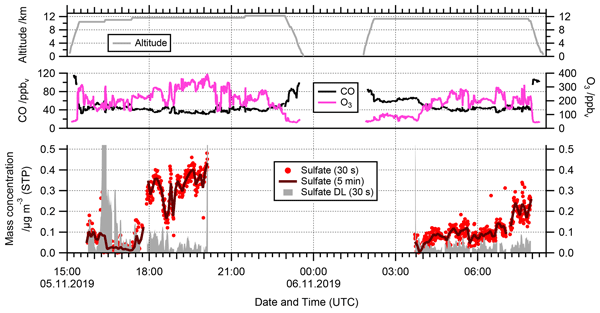
An instrumented container laboratory is operated on regular commercial passenger flights to obtain a long-term representative dataset on the composition of the upper troposphere and lower stratosphere. Here we report on the development of a fully automated aerosol mass spectrometer for this project. We present technical specifications, necessary modifications for the automation, instrument calibration and comparisons, detection limits, and the first in-flight data.
Herman G. J. Smit, Torben Galle, Romain Blot, Florian Obersteiner, Philippe Nédélec, Andreas Zahn, Jean-Marc Cousin, Ulrich Bundke, Andreas Petzold, Valerie Thouret, and Hannah Clark
Atmos. Meas. Tech., 18, 4985–5001, https://doi.org/10.5194/amt-18-4985-2025, https://doi.org/10.5194/amt-18-4985-2025, 2025
Short summary
Short summary
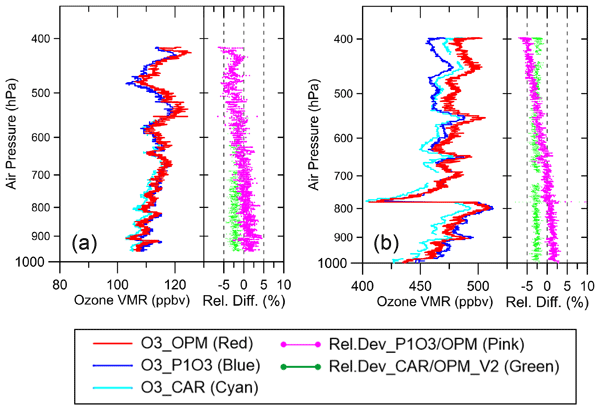
The two ozone instruments of IAGOS (In-service Aircraft for a Global Observation System) have been compared with the Ozone PhotoMeter (OPM) of the World Calibration Center of Ozone Sondes (WCCOS) in an atmospheric simulation chamber under realistic flight conditions of pressure, temperature, and ozone concentrations. The two IAGOS-instruments showed good agreement with the OPM within 5–6 %. The observed differences are small but systematic and reproducible during the intercomparison.
Miriam Latsch, Andreas Richter, John P. Burrows, and Hartmut Bösch
Atmos. Meas. Tech., 18, 4373–4395, https://doi.org/10.5194/amt-18-4373-2025, https://doi.org/10.5194/amt-18-4373-2025, 2025
Short summary
Short summary
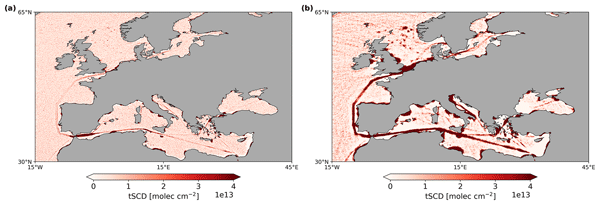
This study presents our advanced methods to qualitatively detect ship-related nitrogen dioxide (NO2) signals in TROPOMI satellite data. By applying filtering techniques, we identify numerous global shipping routes, including previously undetected ones, as well as emissions from offshore platforms. Additionally, we compare the filtered satellite data with high-pass-filtered CAMS global model data to estimate the differences between observed and modeled NO2 emissions.
Max Bechthold, Wolfram Barfuss, André Butz, Jannes Breier, Sara M. Constantino, Jobst Heitzig, Luana Schwarz, Sanam N. Vardag, and Jonathan F. Donges
Earth Syst. Dynam., 16, 1365–1390, https://doi.org/10.5194/esd-16-1365-2025, https://doi.org/10.5194/esd-16-1365-2025, 2025
Short summary
Short summary
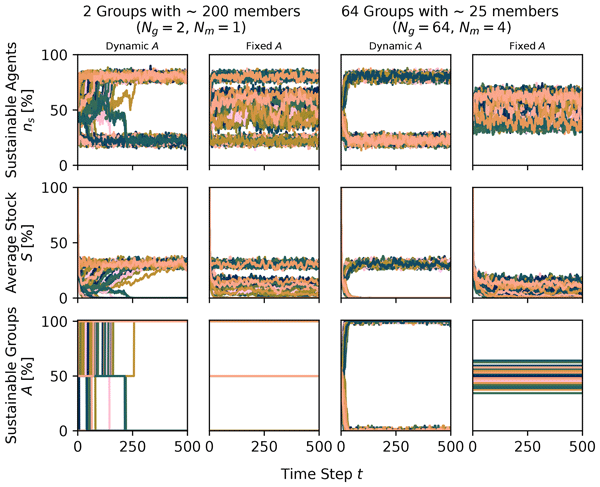
Social norms are a major influence on human behaviour. In natural resource use models, norms are often included in a simplistic way leading to “black or white” sustainability outcomes. We find that a dynamic representation of norms, including social groups, determines more nuanced states of the environment in a stylised model of resource use while also defining the success of attempts to manage the system, suggesting the importance of representing both aspects well in coupled models.
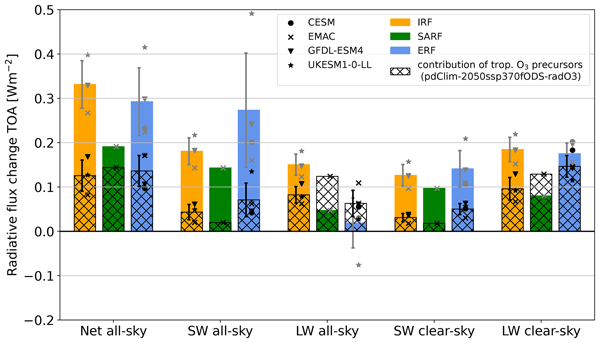
William J. Collins, Fiona M. O'Connor, Rachael E. Byrom, Øivind Hodnebrog, Patrick Jöckel, Mariano Mertens, Gunnar Myhre, Matthias Nützel, Dirk Olivié, Ragnhild Bieltvedt Skeie, Laura Stecher, Larry W. Horowitz, Vaishali Naik, Gregory Faluvegi, Ulas Im, Lee T. Murray, Drew Shindell, Kostas Tsigaridis, Nathan Luke Abraham, and James Keeble
Atmos. Chem. Phys., 25, 9031–9060, https://doi.org/10.5194/acp-25-9031-2025, https://doi.org/10.5194/acp-25-9031-2025, 2025
Short summary
Short summary
We used 7 climate models that include atmospheric chemistry and find that in a scenario with weak controls on air quality, the warming effects (over 2015 to 2050) of decreases in ozone-depleting substances and increases in air quality pollutants are approximately equal and would make ozone the second highest contributor to warming over this period. We find that for stratospheric ozone recovery, the standard measure of climate effects underestimates a more comprehensive measure.
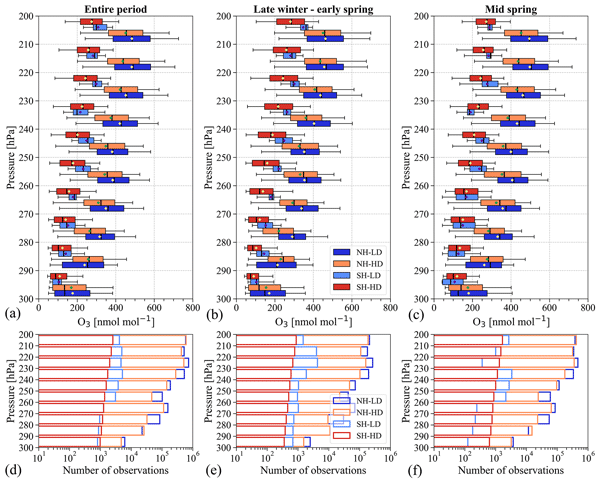
Rodrigo J. Seguel, Charlie Opazo, Yann Cohen, Owen R. Cooper, Laura Gallardo, Björn-Martin Sinnhuber, Florian Obersteiner, Andreas Zahn, Peter Hoor, Susanne Rohs, and Andreas Marsing
Atmos. Chem. Phys., 25, 8553–8573, https://doi.org/10.5194/acp-25-8553-2025, https://doi.org/10.5194/acp-25-8553-2025, 2025
Short summary
Short summary
We explored ozone differences between the Northern Hemisphere and Southern Hemispheres in the upper troposphere–lower stratosphere. We found lower ozone (with stratospheric origin) in the Southern Hemisphere, especially during years of severe ozone depletion. Sudden stratospheric warming events increased the ozone in each hemisphere, highlighting the relationship between stratospheric processes and ozone in the upper troposphere, where ozone is an important greenhouse gas.
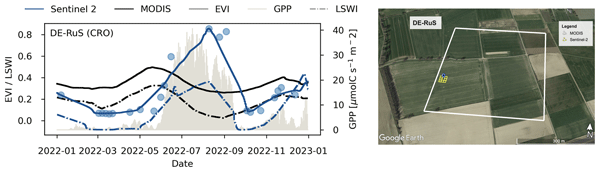
Theo Glauch, Julia Marshall, Christoph Gerbig, Santiago Botía, Michał Gałkowski, Sanam N. Vardag, and André Butz
Geosci. Model Dev., 18, 4713–4742, https://doi.org/10.5194/gmd-18-4713-2025, https://doi.org/10.5194/gmd-18-4713-2025, 2025
Short summary
Short summary
The Vegetation Photosynthesis and Respiration Model (VPRM) estimates carbon exchange between the atmosphere and biosphere by modeling gross primary production and respiration using satellite data and weather variables. Our new version, pyVPRM, supports diverse satellite products like Sentinel-2, MODIS, VIIRS, and new land cover maps, enabling high spatial and temporal resolution. This improves flux estimates, especially in complex landscapes, and ensures continuity as MODIS nears decommissioning.
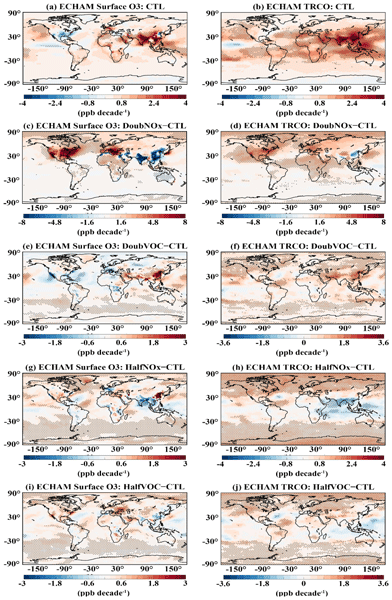
Suvarna Fadnavis, Yasin Elshorbany, Jerald Ziemke, Brice Barret, Alexandru Rap, P. R. Satheesh Chandran, Richard J. Pope, Vijay Sagar, Domenico Taraborrelli, Eric Le Flochmoen, Juan Cuesta, Catherine Wespes, Folkert Boersma, Isolde Glissenaar, Isabelle De Smedt, Michel Van Roozendael, Hervé Petetin, and Isidora Anglou
Atmos. Chem. Phys., 25, 8229–8254, https://doi.org/10.5194/acp-25-8229-2025, https://doi.org/10.5194/acp-25-8229-2025, 2025
Short summary
Short summary
Satellites and model simulations show enhancement in tropospheric ozone, which is highly impacted by human-produced nitrous oxides compared to volatile organic compounds. The increased amount of ozone enhances ozone radiative forcing. The ozone enhancement and associated radiative forcing are the highest over South and East Asia. The emissions of nitrous oxides show a higher influence on shifting ozone photochemical regimes than volatile organic compounds.
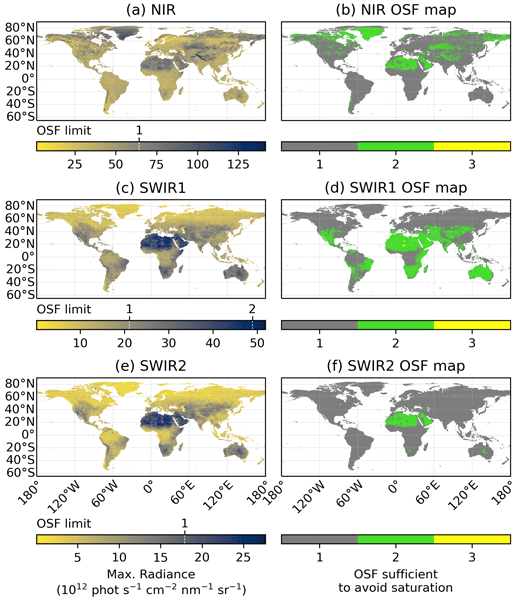
Michael Weimer, Michael Hilker, Stefan Noël, Max Reuter, Michael Buchwitz, Blanca Fuentes Andrade, Rüdiger Lang, Bernd Sierk, Yasjka Meijer, Heinrich Bovensmann, John P. Burrows, and Hartmut Bösch
Atmos. Meas. Tech., 18, 3321–3340, https://doi.org/10.5194/amt-18-3321-2025, https://doi.org/10.5194/amt-18-3321-2025, 2025
Short summary
Short summary
Optical detectors have a maximum signal (saturation). Exceedance means that the measurement has to be discarded. We investigate where saturation will occur for the future European satellite mission dedicated to CO2 monitoring (CO2M) and strategies to avoid saturation. Saturation impacts coverage and precision, both of which are important for estimation of local CO2 emissions. We find that taking two pictures per sampling should be sufficient to avoid saturation for CO2M, with some impact on CO2 precision.
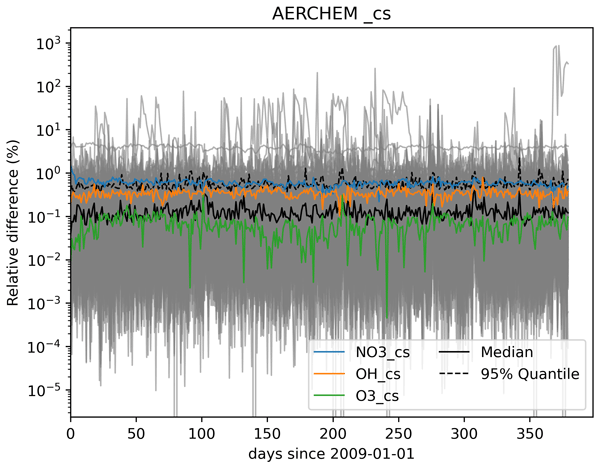
Raphael Dreger, Timo Kirfel, Andrea Pozzer, Simon Rosanka, Rolf Sander, and Domenico Taraborrelli
Geosci. Model Dev., 18, 4273–4291, https://doi.org/10.5194/gmd-18-4273-2025, https://doi.org/10.5194/gmd-18-4273-2025, 2025
Short summary
Short summary
Model simulations are essential for understanding the interactions between atmospheric composition and weather. However, models including chemistry are very slow. Hence, any computation speedup of such models is important for understanding the role of atmospheric chemistry within the Earth system. In this study we analyzed and optimized the time step for chemistry calculations. Our results show that atmospheric models could be run notably faster without any loss in accuracy.
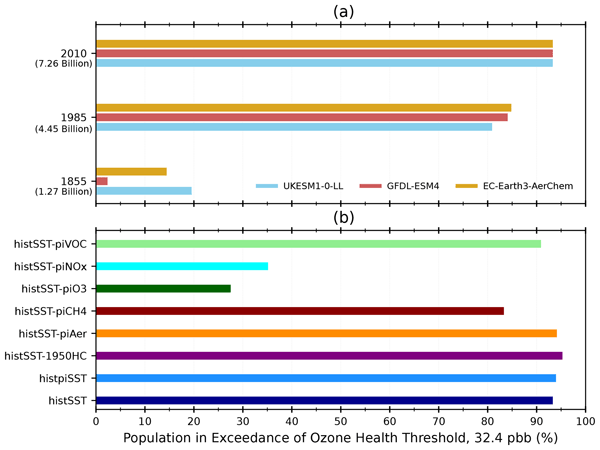
Steven T. Turnock, Dimitris Akritidis, Larry Horowitz, Mariano Mertens, Andrea Pozzer, Carly L. Reddington, Hantao Wang, Putian Zhou, and Fiona O'Connor
Atmos. Chem. Phys., 25, 7111–7136, https://doi.org/10.5194/acp-25-7111-2025, https://doi.org/10.5194/acp-25-7111-2025, 2025
Short summary
Short summary
We assess the drivers behind changes in peak-season surface ozone concentrations and risks to human health between 1850 and 2014. Substantial increases in surface ozone have occurred over this period, resulting in an increased risk to human health, driven mainly by increases in anthropogenic NOx emissions and global CH4 concentrations. Fixing anthropogenic NOx emissions at 1850 values in the near-present-day period can eliminate the risk to human health associated with exposure to surface ozone.
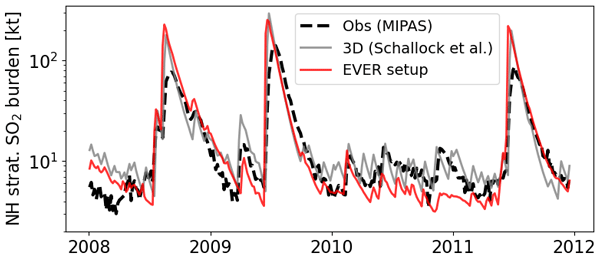
Matthias Kohl, Christoph Brühl, Jennifer Schallock, Holger Tost, Patrick Jöckel, Adrian Jost, Steffen Beirle, Michael Höpfner, and Andrea Pozzer
Geosci. Model Dev., 18, 3985–4007, https://doi.org/10.5194/gmd-18-3985-2025, https://doi.org/10.5194/gmd-18-3985-2025, 2025
Short summary
Short summary
SO2 from explosive volcanic eruptions reaching the stratosphere can oxidize and form sulfur aerosols, potentially persisting for several years. We developed a new submodel, Explosive Volcanic ERuptions (EVER), that seamlessly includes stratospheric volcanic SO2 emissions in global numerical simulations based on a novel standard historical model setup, successfully evaluated with satellite observations. Sensitivity studies on the Nabro eruption in 2011 evaluate different emission methods.
Yann Cohen, Didier Hauglustaine, Nicolas Bellouin, Marianne Tronstad Lund, Sigrun Matthes, Agnieszka Skowron, Robin Thor, Ulrich Bundke, Andreas Petzold, Susanne Rohs, Valérie Thouret, Andreas Zahn, and Helmut Ziereis
Atmos. Chem. Phys., 25, 5793–5836, https://doi.org/10.5194/acp-25-5793-2025, https://doi.org/10.5194/acp-25-5793-2025, 2025
Short summary
Short summary
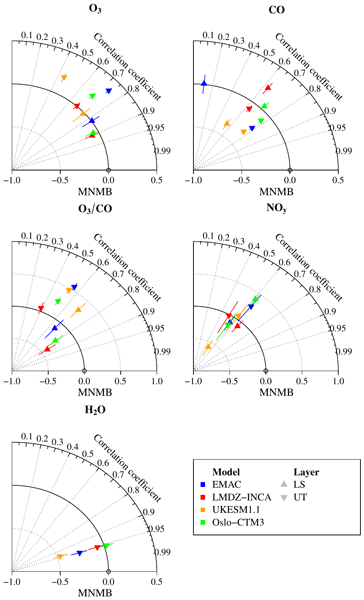
The chemical composition of the atmosphere near the tropopause is a key parameter for evaluating the climate impact of subsonic aviation pollutants. This study uses in situ data collected aboard passenger aircraft to assess the ability of four chemistry–climate models to reproduce (bi-)decadal climatologies of ozone, carbon monoxide, water vapour, and reactive nitrogen in this region. The models reproduce the very distinct ozone seasonality in the upper troposphere and in the lower stratosphere well.
Patrick Peter, Sigrun Matthes, Christine Frömming, Patrick Jöckel, Luca Bugliaro, Andreas Giez, Martina Krämer, and Volker Grewe
Atmos. Chem. Phys., 25, 5911–5934, https://doi.org/10.5194/acp-25-5911-2025, https://doi.org/10.5194/acp-25-5911-2025, 2025
Short summary
Short summary
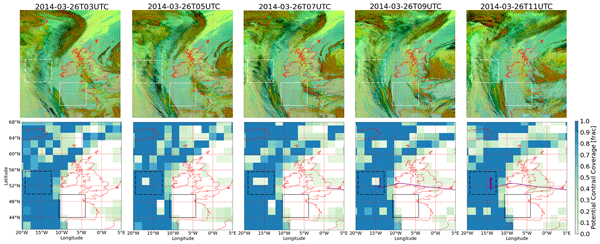
Our study examines how well the global climate model EMAC (ECHAM/MESSy Atmospheric Chemistry) predicts contrail formation by analysing temperature and humidity – two key factors for contrail development and persistence. The model underestimates temperature, leading to an overprediction of contrail formation and larger ice-supersaturated regions. Adjusting the model improves temperature accuracy but adds uncertainties. Better predictions of contrail formation areas can help optimise flight tracks to reduce aviation's climate effect.
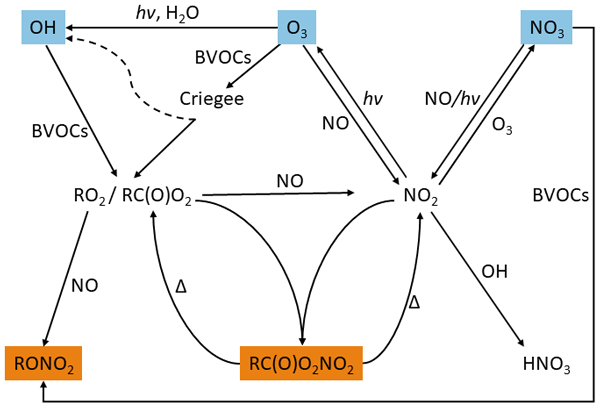
Simone T. Andersen, Rolf Sander, Patrick Dewald, Laura Wüst, Tobias Seubert, Gunther N. T. E. Türk, Jan Schuladen, Max R. McGillen, Chaoyang Xue, Abdelwahid Mellouki, Alexandre Kukui, Vincent Michoud, Manuela Cirtog, Mathieu Cazaunau, Astrid Bauville, Hichem Bouzidi, Paola Formenti, Cyrielle Denjean, Jean-Claude Etienne, Olivier Garrouste, Christopher Cantrell, Jos Lelieveld, and John N. Crowley
Atmos. Chem. Phys., 25, 5893–5909, https://doi.org/10.5194/acp-25-5893-2025, https://doi.org/10.5194/acp-25-5893-2025, 2025
Short summary
Short summary
Measurements and modelling of reactive nitrogen gases observed in a suburban temperate forest in Rambouillet, France, circa 50 km southwest of Paris in 2022 indicate that the biosphere rapidly scavenges organic nitrates of mixed biogenic and anthropogenic origin, resulting in short lifetimes for, for example, alkyl nitrates and peroxy nitrates.
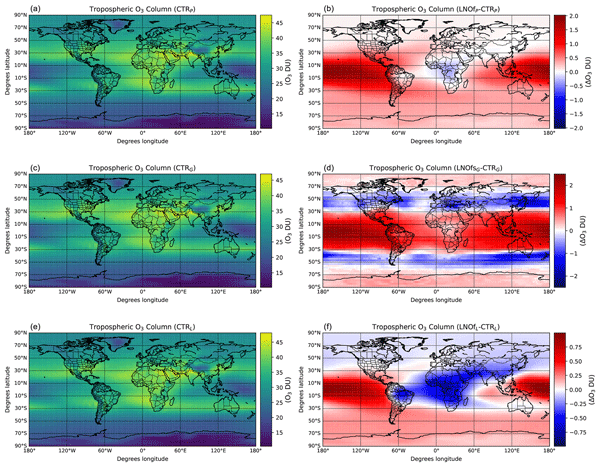
Francisco J. Pérez-Invernón, Francisco J. Gordillo-Vázquez, Heidi Huntrieser, Patrick Jöckel, and Eric J. Bucsela
Atmos. Chem. Phys., 25, 5557–5575, https://doi.org/10.5194/acp-25-5557-2025, https://doi.org/10.5194/acp-25-5557-2025, 2025
Short summary
Short summary
Lightning plays a significant role in tropospheric chemistry by producing substantial amounts of nitrogen oxides. According to recent estimates, thunderstorms that produce a higher lightning frequency rate also produce less nitrogen oxide per flash. We implemented the dependency of nitrogen oxide production per flash on lightning flash frequency in a chemical atmospheric model.
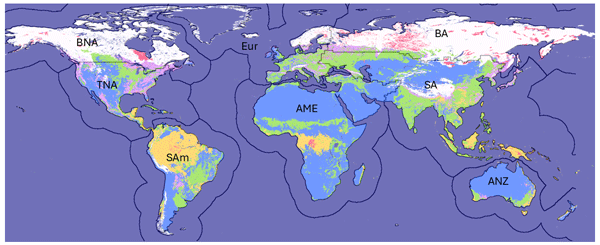
Cynthia H. Whaley, Tim Butler, Jose A. Adame, Rupal Ambulkar, Steve R. Arnold, Rebecca R. Buchholz, Benjamin Gaubert, Douglas S. Hamilton, Min Huang, Hayley Hung, Johannes W. Kaiser, Jacek W. Kaminski, Christoph Knote, Gerbrand Koren, Jean-Luc Kouassi, Meiyun Lin, Tianjia Liu, Jianmin Ma, Kasemsan Manomaiphiboon, Elisa Bergas Masso, Jessica L. McCarty, Mariano Mertens, Mark Parrington, Helene Peiro, Pallavi Saxena, Saurabh Sonwani, Vanisa Surapipith, Damaris Y. T. Tan, Wenfu Tang, Veerachai Tanpipat, Kostas Tsigaridis, Christine Wiedinmyer, Oliver Wild, Yuanyu Xie, and Paquita Zuidema
Geosci. Model Dev., 18, 3265–3309, https://doi.org/10.5194/gmd-18-3265-2025, https://doi.org/10.5194/gmd-18-3265-2025, 2025
Short summary
Short summary
The multi-model experiment design of the HTAP3 Fires project takes a multi-pollutant approach to improving our understanding of transboundary transport of wildland fire and agricultural burning emissions and their impacts. The experiments are designed with the goal of answering science policy questions related to fires. The options for the multi-model approach, including inputs, outputs, and model setup, are discussed, and the official recommendations for the project are presented.
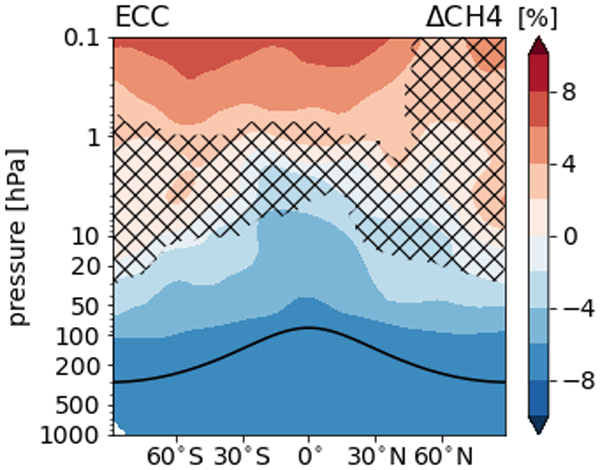
Laura Stecher, Franziska Winterstein, Patrick Jöckel, Michael Ponater, Mariano Mertens, and Martin Dameris
Atmos. Chem. Phys., 25, 5133–5158, https://doi.org/10.5194/acp-25-5133-2025, https://doi.org/10.5194/acp-25-5133-2025, 2025
Short summary
Short summary
Methane, the second most important anthropogenic greenhouse gas, is chemically decomposed in the atmosphere. The chemical sink of atmospheric methane is not constant but depends on the temperature and on the abundance of its reaction partners. In this study, we use a global chemistry–climate model to assess the feedback of atmospheric methane induced by changes in the chemical sink in a warming climate and its implications for the chemical composition and the surface air temperature change.
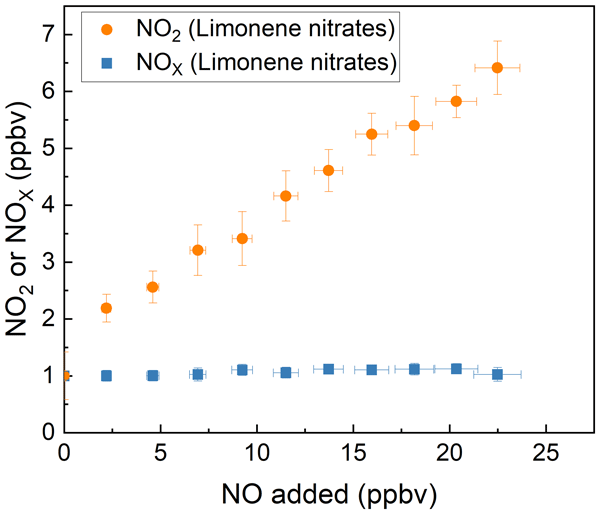
Laura Wüst, Patrick Dewald, Gunther N. T. E. Türk, Jos Lelieveld, and John N. Crowley
Atmos. Meas. Tech., 18, 1943–1959, https://doi.org/10.5194/amt-18-1943-2025, https://doi.org/10.5194/amt-18-1943-2025, 2025
Short summary
Short summary
Detection of NO2 via cavity ring-down spectroscopy (CRDS) after thermal dissociation (TD) of alkyl and peroxy nitrates can be used to detect total atmospheric organic nitrates originating from the interaction between biogenic emissions of volatile organic compounds and nitrogen oxides of anthropogenic origin. Here we present an improved TD-CRDS technique that avoids systematic bias resulting from secondary chemistry in the heated inlets and that can be deployed in regions with strong biogenic emissions.
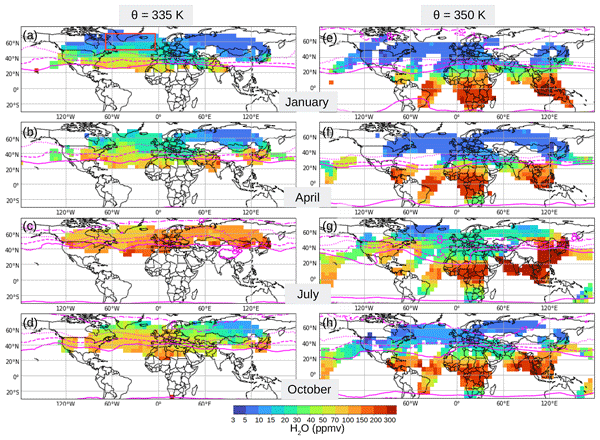
Patrick Konjari, Christian Rolf, Michaela I. Hegglin, Susanne Rohs, Yun Li, Andreas Zahn, Harald Bönisch, Philippe Nedelec, Martina Krämer, and Andreas Petzold
Atmos. Chem. Phys., 25, 4269–4289, https://doi.org/10.5194/acp-25-4269-2025, https://doi.org/10.5194/acp-25-4269-2025, 2025
Short summary
Short summary
This study introduces a new method to derive adjusted water vapor (H2O) climatologies for the upper tropopshere and lower statosphere (UT/LS) using data from 60 000 flights under the IAGOS program. Biases in the IAGOS water vapour dataset are adjusted, based on the more accurate IAGOS-CARIBIC data. The resulting highly resolved H2O climatologies will contribute to a better understanding of the H2O variability in the UT/LS and its connection to various transport and mixing processes.
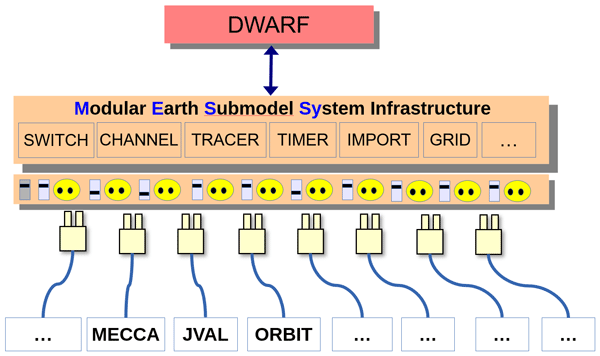
Astrid Kerkweg, Timo Kirfel, Duong H. Do, Sabine Griessbach, Patrick Jöckel, and Domenico Taraborrelli
Geosci. Model Dev., 18, 1265–1286, https://doi.org/10.5194/gmd-18-1265-2025, https://doi.org/10.5194/gmd-18-1265-2025, 2025
Short summary
Short summary
Normally, the Modular Earth Submodel System (MESSy) is linked to complete dynamic models to create chemical climate models. However, the modular concept of MESSy and the newly developed DWARF component presented here make it possible to create simplified models that contain only one or a few process descriptions. This is very useful for technical optimisation, such as porting to GPUs, and can be used to create less complex models, such as a chemical box model.
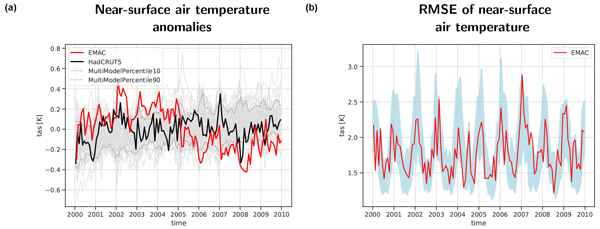
Axel Lauer, Lisa Bock, Birgit Hassler, Patrick Jöckel, Lukas Ruhe, and Manuel Schlund
Geosci. Model Dev., 18, 1169–1188, https://doi.org/10.5194/gmd-18-1169-2025, https://doi.org/10.5194/gmd-18-1169-2025, 2025
Short summary
Short summary
Earth system models are important tools to improve our understanding of current climate and to project climate change. Thus, it is crucial to understand possible shortcomings in the models. New features of the ESMValTool software package allow one to compare and visualize a model's performance with respect to reproducing observations in the context of other climate models in an easy and user-friendly way. We aim to help model developers assess and monitor climate simulations more efficiently.

Kerstin Hartung, Bastian Kern, Nils-Arne Dreier, Jörn Geisbüsch, Mahnoosh Haghighatnasab, Patrick Jöckel, Astrid Kerkweg, Wilton Jaciel Loch, Florian Prill, and Daniel Rieger
Geosci. Model Dev., 18, 1001–1015, https://doi.org/10.5194/gmd-18-1001-2025, https://doi.org/10.5194/gmd-18-1001-2025, 2025
Short summary
Short summary
The ICOsahedral Non-hydrostatic (ICON) model system Community Interface (ComIn) library supports connecting third-party modules to the ICON model. Third-party modules can range from simple diagnostic Python scripts to full chemistry models. ComIn offers a low barrier for code extensions to ICON, provides multi-language support (Fortran, C/C++, and Python), and reduces the migration effort in response to new ICON releases. This paper presents the ComIn design principles and a range of use cases.
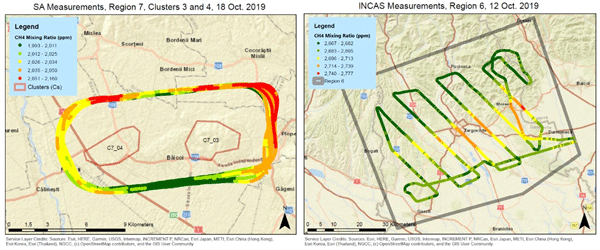
Hossein Maazallahi, Foteini Stavropoulou, Samuel Jonson Sutanto, Michael Steiner, Dominik Brunner, Mariano Mertens, Patrick Jöckel, Antoon Visschedijk, Hugo Denier van der Gon, Stijn Dellaert, Nataly Velandia Salinas, Stefan Schwietzke, Daniel Zavala-Araiza, Sorin Ghemulet, Alexandru Pana, Magdalena Ardelean, Marius Corbu, Andreea Calcan, Stephen A. Conley, Mackenzie L. Smith, and Thomas Röckmann
Atmos. Chem. Phys., 25, 1497–1511, https://doi.org/10.5194/acp-25-1497-2025, https://doi.org/10.5194/acp-25-1497-2025, 2025
Short summary
Short summary
This article presents insights from airborne in situ measurements collected during the ROmanian Methane Emissions from Oil and gas (ROMEO) campaign supported by two models. Results reveal Romania's oil and gas methane emissions were significantly under-reported to the United Nations Framework Convention on Climate Change (UNFCCC) in 2019. A large underestimation was also found in the Emissions Database for Global Atmospheric Research (EDGAR) v7.0 for the study domain in the same year.
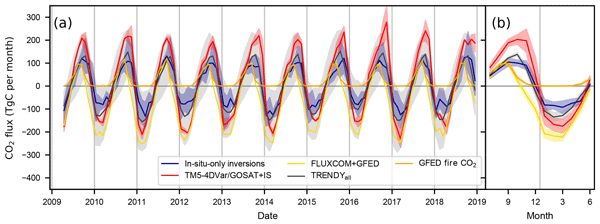
Eva-Marie Metz, Sanam Noreen Vardag, Sourish Basu, Martin Jung, and André Butz
Biogeosciences, 22, 555–584, https://doi.org/10.5194/bg-22-555-2025, https://doi.org/10.5194/bg-22-555-2025, 2025
Short summary
Short summary
We estimate CO2 fluxes in semiarid southern Africa from 2009 to 2018 based on satellite CO2 measurements and atmospheric inverse modeling. By selecting process-based vegetation models, which agree with the satellite CO2 fluxes, we find that soil respiration mainly drives the seasonality, whereas photosynthesis substantially influences the interannual variability. Our study emphasizes the need for better representation of the response of semiarid ecosystems to soil rewetting in vegetation models.
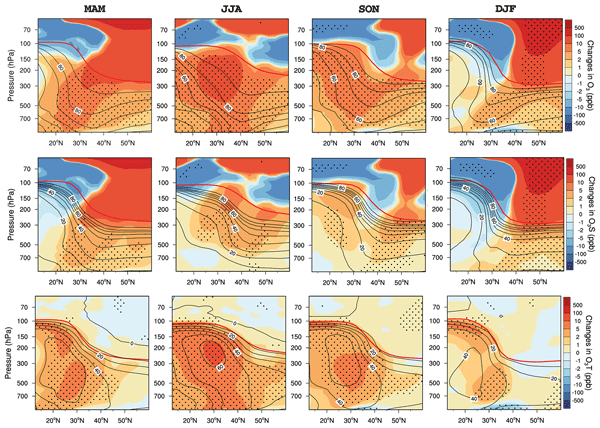
Xiaodan Ma, Jianping Huang, Michaela I. Hegglin, Patrick Jöckel, and Tianliang Zhao
Atmos. Chem. Phys., 25, 943–958, https://doi.org/10.5194/acp-25-943-2025, https://doi.org/10.5194/acp-25-943-2025, 2025
Short summary
Short summary
Our research explored changes in ozone levels in the northwest Pacific region over 30 years, revealing a significant increase in the middle-to-upper troposphere, especially during spring and summer. This rise is influenced by both stratospheric and tropospheric sources, which affect climate and air quality in East Asia. This work underscores the need for continued study to understand underlying mechanisms.
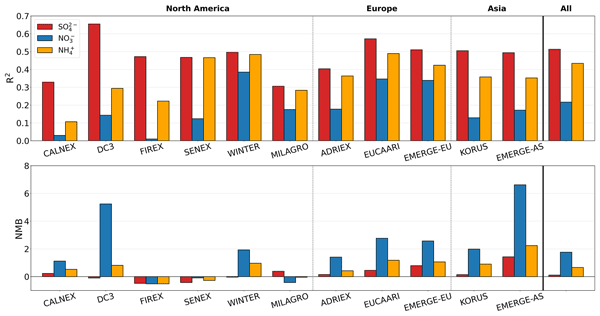
Olivia G. Norman, Colette L. Heald, Solomon Bililign, Pedro Campuzano-Jost, Hugh Coe, Marc N. Fiddler, Jaime R. Green, Jose L. Jimenez, Katharina Kaiser, Jin Liao, Ann M. Middlebrook, Benjamin A. Nault, John B. Nowak, Johannes Schneider, and André Welti
Atmos. Chem. Phys., 25, 771–795, https://doi.org/10.5194/acp-25-771-2025, https://doi.org/10.5194/acp-25-771-2025, 2025
Short summary
Short summary
This study finds that one component of secondary inorganic aerosols, nitrate, is greatly overestimated by a global atmospheric chemistry model compared to observations from 11 flight campaigns. None of the loss and production pathways explored can explain the nitrate bias alone. The model’s inability to capture the variability in the observations remains and requires future investigation to avoid biases in policy-related studies (i.e., air quality, health, climate impacts of these aerosols).
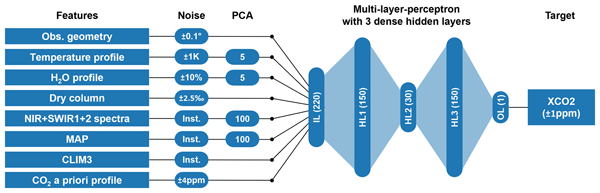
Maximilian Reuter, Michael Hilker, Stefan Noël, Antonio Di Noia, Michael Weimer, Oliver Schneising, Michael Buchwitz, Heinrich Bovensmann, John P. Burrows, Hartmut Bösch, and Ruediger Lang
Atmos. Meas. Tech., 18, 241–264, https://doi.org/10.5194/amt-18-241-2025, https://doi.org/10.5194/amt-18-241-2025, 2025
Short summary
Short summary
Carbon dioxide (CO2) and methane (CH4) are the main anthropogenic greenhouse gases. The European Copernicus CO2 monitoring satellite mission CO2M will provide measurements of their atmospheric concentrations, but the accuracy requirements are demanding and conventional retrieval methods computationally expensive. We present a new retrieval algorithm based on artificial neural networks that has the potential to meet the stringent requirements of the CO2M mission with minimal computational effort.
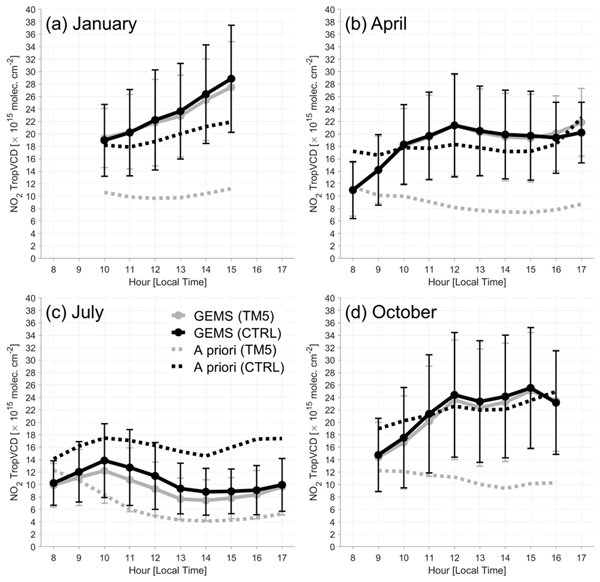
Seunghwan Seo, Si-Wan Kim, Kyoung-Min Kim, Andreas Richter, Kezia Lange, John P. Burrows, Junsung Park, Hyunkee Hong, Hanlim Lee, Ukkyo Jeong, Jung-Hun Woo, and Jhoon Kim
Atmos. Meas. Tech., 18, 115–128, https://doi.org/10.5194/amt-18-115-2025, https://doi.org/10.5194/amt-18-115-2025, 2025
Short summary
Short summary
Over the Seoul metropolitan area, tropospheric NO2 vertical column densities from the Geostationary Environment Monitoring Spectrometer show distinct seasonal features. Also, varying a priori data have substantial impacts on the observed NO2 columns. The a priori data from different chemical transport models resulted in differences of up to −18.3 %. Notably, diurnal patterns of observed NO2 columns are similar for all datasets, although their a priori data exhibit contrasting diurnal patterns.
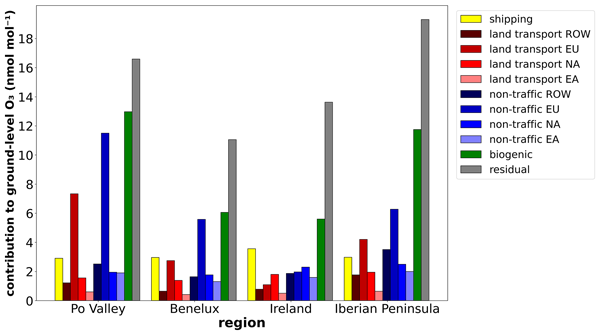
Markus Kilian, Volker Grewe, Patrick Jöckel, Astrid Kerkweg, Mariano Mertens, Andreas Zahn, and Helmut Ziereis
Atmos. Chem. Phys., 24, 13503–13523, https://doi.org/10.5194/acp-24-13503-2024, https://doi.org/10.5194/acp-24-13503-2024, 2024
Short summary
Short summary
Anthropogenic emissions are a major source of precursors of tropospheric ozone. As ozone formation is highly non-linear, we apply a global–regional chemistry–climate model with a source attribution method (tagging) to quantify the contribution of anthropogenic emissions to ozone. Our analysis shows that the contribution of European anthropogenic emissions largely increases during large ozone periods, indicating that emissions from these sectors drive ozone values.
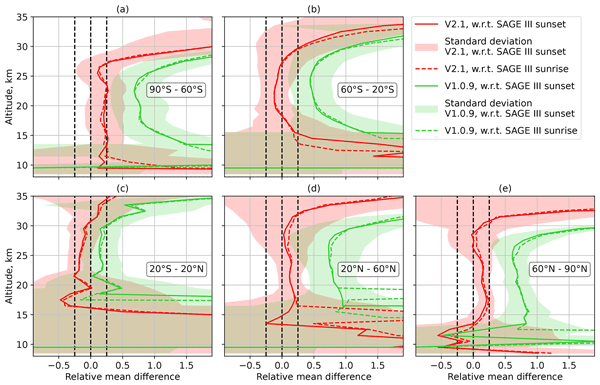
Alexei Rozanov, Christine Pohl, Carlo Arosio, Adam Bourassa, Klaus Bramstedt, Elizaveta Malinina, Landon Rieger, and John P. Burrows
Atmos. Meas. Tech., 17, 6677–6695, https://doi.org/10.5194/amt-17-6677-2024, https://doi.org/10.5194/amt-17-6677-2024, 2024
Short summary
Short summary
We developed a new algorithm to retrieve vertical distributions of aerosol extinction coefficients in the stratosphere. The algorithm is applied to measurements of scattered solar light from the spaceborne OMPS-LP (Ozone Mapper and Profiler Suite Limb Profiler) instrument. The retrieval results are compared to data from other spaceborne instruments and used to investigate the evolution of the aerosol plume following the eruption of the Hunga Tonga–Hunga Ha'apai volcano in January 2022.
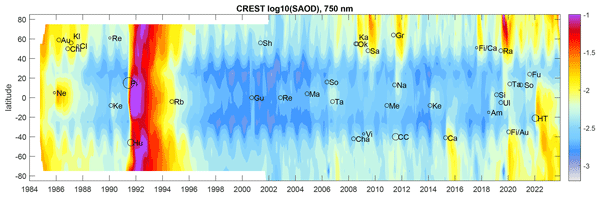
Viktoria F. Sofieva, Alexei Rozanov, Monika Szelag, John P. Burrows, Christian Retscher, Robert Damadeo, Doug Degenstein, Landon A. Rieger, and Adam Bourassa
Earth Syst. Sci. Data, 16, 5227–5241, https://doi.org/10.5194/essd-16-5227-2024, https://doi.org/10.5194/essd-16-5227-2024, 2024
Short summary
Short summary
Climate-related studies need information about the distribution of stratospheric aerosols, which influence the energy balance of the Earth’s atmosphere. In this work, we present a merged dataset of vertically resolved stratospheric aerosol extinction coefficients, which is derived from data of six limb and occultation satellite instruments. The created aerosol climate record covers the period from October 1984 to December 2023. It can be used in various climate-related studies.
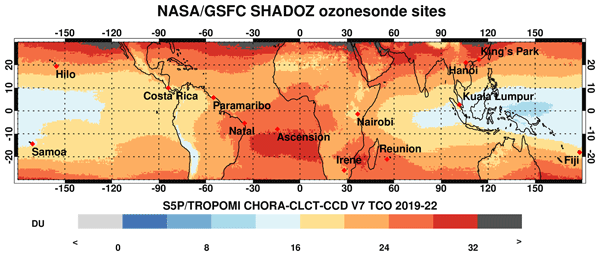
Swathi Maratt Satheesan, Kai-Uwe Eichmann, John P. Burrows, Mark Weber, Ryan Stauffer, Anne M. Thompson, and Debra Kollonige
Atmos. Meas. Tech., 17, 6459–6484, https://doi.org/10.5194/amt-17-6459-2024, https://doi.org/10.5194/amt-17-6459-2024, 2024
Short summary
Short summary
CHORA, an advanced cloud convective differential technique, enhances the accuracy of tropospheric-ozone retrievals. Unlike the traditional Pacific cloud reference sector scheme, CHORA introduces a local-cloud reference sector and an alternative approach (CLCT) for precision. Analysing monthly averaged TROPOMI data from 2018 to 2022 and validating with SHADOZ ozonesonde data, CLCT outperforms other methods and so is the preferred choice, especially in future geostationary satellite missions.
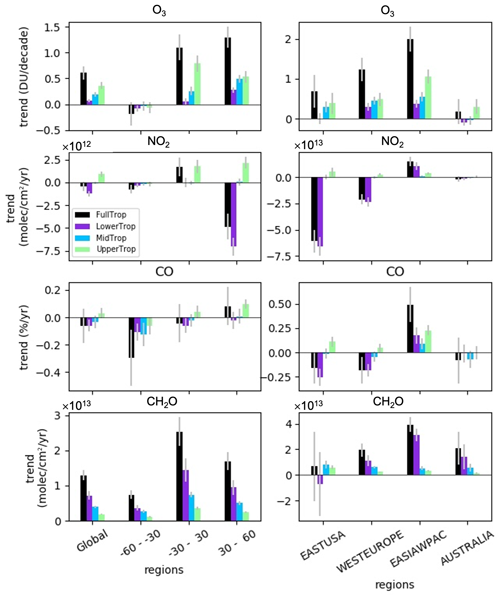
Yasin Elshorbany, Jerald R. Ziemke, Sarah Strode, Hervé Petetin, Kazuyuki Miyazaki, Isabelle De Smedt, Kenneth Pickering, Rodrigo J. Seguel, Helen Worden, Tamara Emmerichs, Domenico Taraborrelli, Maria Cazorla, Suvarna Fadnavis, Rebecca R. Buchholz, Benjamin Gaubert, Néstor Y. Rojas, Thiago Nogueira, Thérèse Salameh, and Min Huang
Atmos. Chem. Phys., 24, 12225–12257, https://doi.org/10.5194/acp-24-12225-2024, https://doi.org/10.5194/acp-24-12225-2024, 2024
Short summary
Short summary
We investigated tropospheric ozone spatial variability and trends from 2005 to 2019 and related those to ozone precursors on global and regional scales. We also investigate the spatiotemporal characteristics of the ozone formation regime in relation to ozone chemical sources and sinks. Our analysis is based on remote sensing products of the tropospheric column of ozone and its precursors, nitrogen dioxide, formaldehyde, and total column CO, as well as ozonesonde data and model simulations.
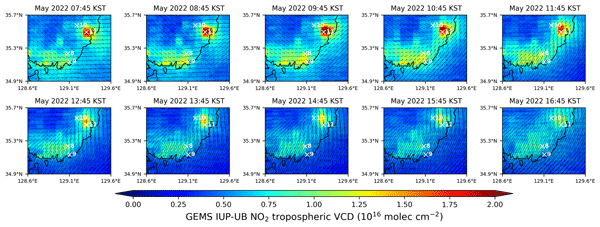
Kezia Lange, Andreas Richter, Tim Bösch, Bianca Zilker, Miriam Latsch, Lisa K. Behrens, Chisom M. Okafor, Hartmut Bösch, John P. Burrows, Alexis Merlaud, Gaia Pinardi, Caroline Fayt, Martina M. Friedrich, Ermioni Dimitropoulou, Michel Van Roozendael, Steffen Ziegler, Simona Ripperger-Lukosiunaite, Leon Kuhn, Bianca Lauster, Thomas Wagner, Hyunkee Hong, Donghee Kim, Lim-Seok Chang, Kangho Bae, Chang-Keun Song, Jong-Uk Park, and Hanlim Lee
Atmos. Meas. Tech., 17, 6315–6344, https://doi.org/10.5194/amt-17-6315-2024, https://doi.org/10.5194/amt-17-6315-2024, 2024
Short summary
Short summary
Instruments for air quality observations on geostationary satellites provide multiple observations per day and allow for the analysis of the diurnal variation of important air pollutants such as nitrogen dioxide (NO2) over large areas. The South Korean instrument GEMS, launched in February 2020, is the first instrument in geostationary orbit and covers a large part of Asia. Our investigations show the observed diurnal evolution of NO2 at different measurement sites.
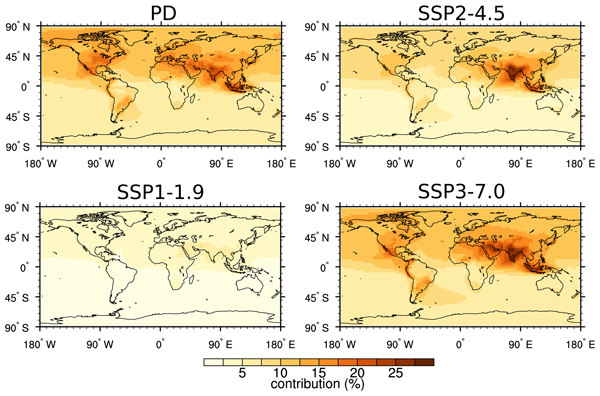
Mariano Mertens, Sabine Brinkop, Phoebe Graf, Volker Grewe, Johannes Hendricks, Patrick Jöckel, Anna Lanteri, Sigrun Matthes, Vanessa S. Rieger, Mattia Righi, and Robin N. Thor
Atmos. Chem. Phys., 24, 12079–12106, https://doi.org/10.5194/acp-24-12079-2024, https://doi.org/10.5194/acp-24-12079-2024, 2024
Short summary
Short summary
We quantified the contributions of land transport, shipping, and aviation emissions to tropospheric ozone; its radiative forcing; and the reductions of the methane lifetime using chemistry-climate model simulations. The contributions were analysed for the conditions of 2015 and for three projections for the year 2050. The results highlight the challenges of mitigating ozone formed by emissions of the transport sector, caused by the non-linearitiy of the ozone chemistry and the long lifetime.
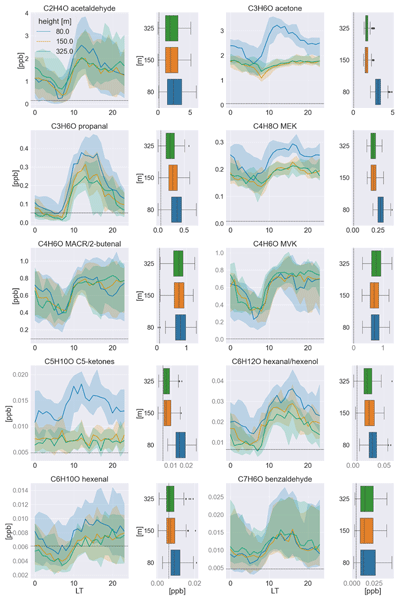
Akima Ringsdorf, Achim Edtbauer, Bruna Holanda, Christopher Poehlker, Marta O. Sá, Alessandro Araújo, Jürgen Kesselmeier, Jos Lelieveld, and Jonathan Williams
Atmos. Chem. Phys., 24, 11883–11910, https://doi.org/10.5194/acp-24-11883-2024, https://doi.org/10.5194/acp-24-11883-2024, 2024
Short summary
Short summary
We show the average height distribution of separately observed aldehydes and ketones over a day and discuss their rainforest-specific sources and sinks as well as their seasonal changes above the Amazon. Ketones have much longer atmospheric lifetimes than aldehydes and thus different implications for atmospheric chemistry. However, they are commonly observed together, which we overcome by measuring with a NO+ chemical ionization mass spectrometer for the first time in the Amazon rainforest.
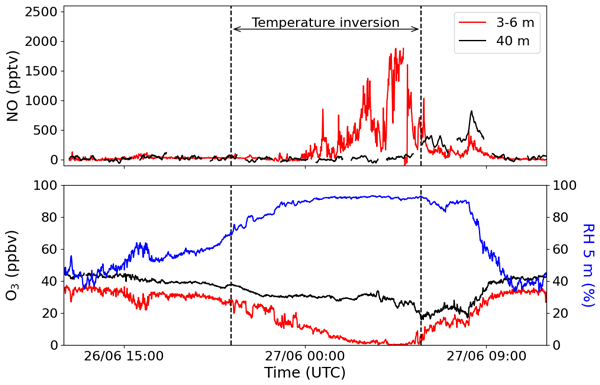
Simone T. Andersen, Max R. McGillen, Chaoyang Xue, Tobias Seubert, Patrick Dewald, Gunther N. T. E. Türk, Jan Schuladen, Cyrielle Denjean, Jean-Claude Etienne, Olivier Garrouste, Marina Jamar, Sergio Harb, Manuela Cirtog, Vincent Michoud, Mathieu Cazaunau, Antonin Bergé, Christopher Cantrell, Sebastien Dusanter, Bénédicte Picquet-Varrault, Alexandre Kukui, Abdelwahid Mellouki, Lucy J. Carpenter, Jos Lelieveld, and John N. Crowley
Atmos. Chem. Phys., 24, 11603–11618, https://doi.org/10.5194/acp-24-11603-2024, https://doi.org/10.5194/acp-24-11603-2024, 2024
Short summary
Short summary
Using measurements of various trace gases in a suburban forest near Paris in the summer of 2022, we were able to gain insight into the sources and sinks of NOx (NO+NO2) with a special focus on their nighttime chemical and physical loss processes. NO was observed as a result of nighttime soil emissions when O3 levels were strongly depleted by deposition. NO oxidation products were not observed at night, indicating that soil and/or foliar surfaces are an efficient sink of reactive N.
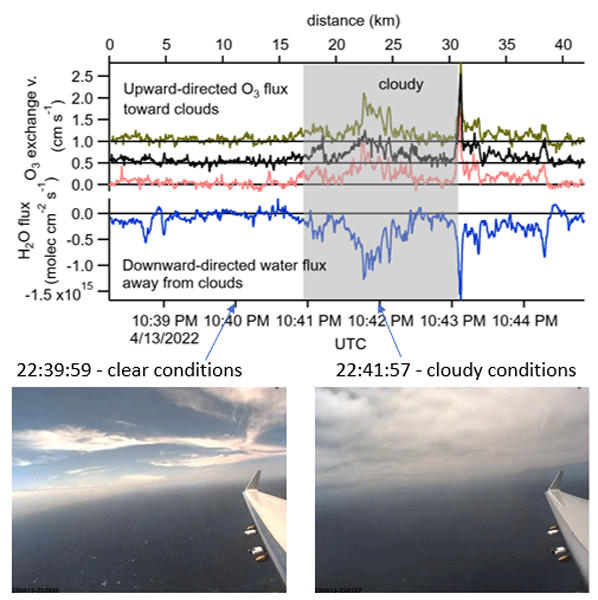
Randall Chiu, Florian Obersteiner, Alessandro Franchin, Teresa Campos, Adriana Bailey, Christopher Webster, Andreas Zahn, and Rainer Volkamer
Atmos. Meas. Tech., 17, 5731–5746, https://doi.org/10.5194/amt-17-5731-2024, https://doi.org/10.5194/amt-17-5731-2024, 2024
Short summary
Short summary
The ozone sink into oceans and marine clouds is seldom studied and highly uncertain. Calculations suggest O3 destruction at aqueous surfaces (ocean, droplets) may be strongly accelerated, but field evidence is missing. Here we compare three fast airborne O3 instruments to measure eddy covariance fluxes of O3 over the remote ocean, in clear and cloudy air. We find O3 fluxes below clouds are consistently directed into clouds, while O3 fluxes into oceans are much smaller and spatially variable.
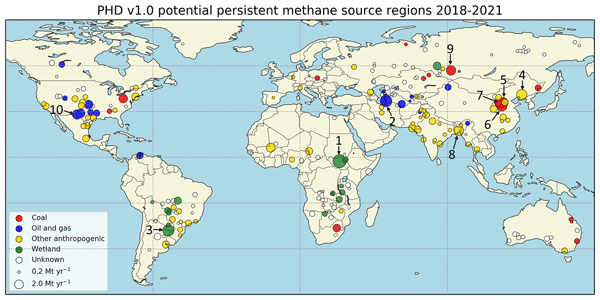
Steffen Vanselow, Oliver Schneising, Michael Buchwitz, Maximilian Reuter, Heinrich Bovensmann, Hartmut Boesch, and John P. Burrows
Atmos. Chem. Phys., 24, 10441–10473, https://doi.org/10.5194/acp-24-10441-2024, https://doi.org/10.5194/acp-24-10441-2024, 2024
Short summary
Short summary
We developed an algorithm to automatically detect persistent methane source regions, to quantify their emissions and to determine their source types, by analyzing TROPOMI data from 2018–2021. The over 200 globally detected natural and anthropogenic source regions include small-scale point sources such as individual coal mines and larger-scale source regions such as wetlands and large oil and gas fields.
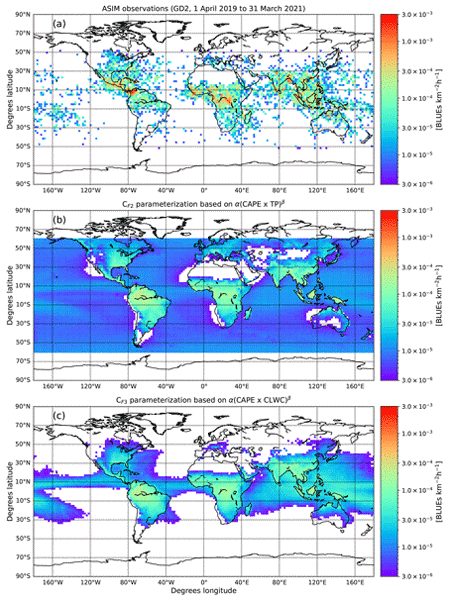
Sergio Soler, Francisco J. Gordillo-Vázquez, Francisco J. Pérez-Invernón, Patrick Jöckel, Torsten Neubert, Olivier Chanrion, Victor Reglero, and Nikolai Østgaard
Atmos. Chem. Phys., 24, 10225–10243, https://doi.org/10.5194/acp-24-10225-2024, https://doi.org/10.5194/acp-24-10225-2024, 2024
Short summary
Short summary
Sudden local ozone (O3) enhancements have been reported in different regions of the world since the 1970s. While the hot channel of lightning strokes directly produce significant amounts of nitrogen oxide, no direct emission of O3 is expected. Corona discharges in convective active regions could explain local O3 increases, which remains unexplained. We present the first mathematical functions that relate the global annual frequency of in-cloud coronas with four sets of meteorological variables.
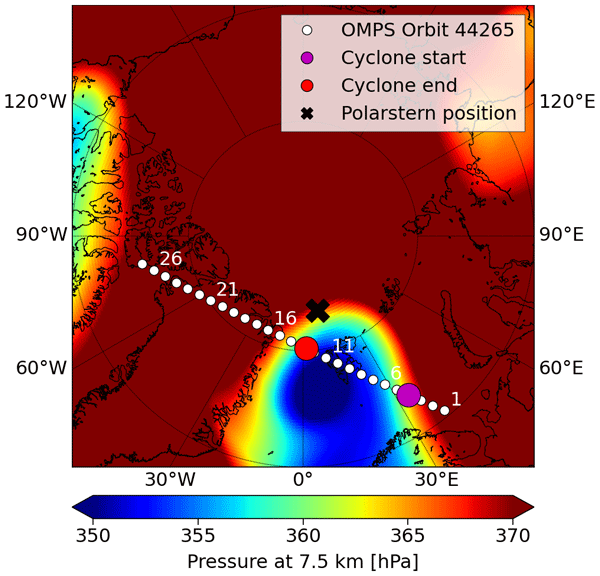
Falco Monsees, Alexei Rozanov, John P. Burrows, Mark Weber, Annette Rinke, Ralf Jaiser, and Peter von der Gathen
Atmos. Chem. Phys., 24, 9085–9099, https://doi.org/10.5194/acp-24-9085-2024, https://doi.org/10.5194/acp-24-9085-2024, 2024
Short summary
Short summary
Cyclones strongly influence weather predictability but still cannot be fully characterised in the Arctic because of the sparse coverage of meteorological measurements. A potential approach to compensate for this is the use of satellite measurements of ozone, because cyclones impact the tropopause and therefore also ozone. In this study we used this connection to investigate the correlation between ozone and the tropopause in the Arctic and to identify cyclones with satellite ozone observations.
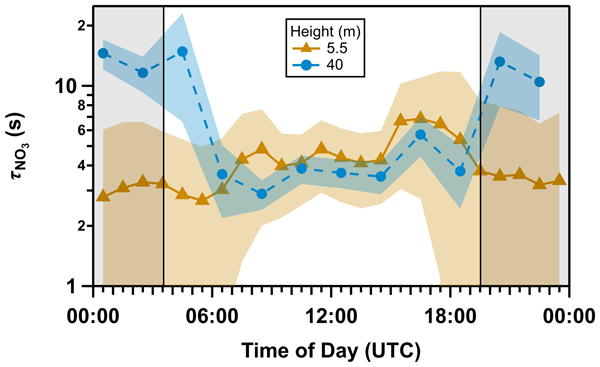
Patrick Dewald, Tobias Seubert, Simone T. Andersen, Gunther N. T. E. Türk, Jan Schuladen, Max R. McGillen, Cyrielle Denjean, Jean-Claude Etienne, Olivier Garrouste, Marina Jamar, Sergio Harb, Manuela Cirtog, Vincent Michoud, Mathieu Cazaunau, Antonin Bergé, Christopher Cantrell, Sebastien Dusanter, Bénédicte Picquet-Varrault, Alexandre Kukui, Chaoyang Xue, Abdelwahid Mellouki, Jos Lelieveld, and John N. Crowley
Atmos. Chem. Phys., 24, 8983–8997, https://doi.org/10.5194/acp-24-8983-2024, https://doi.org/10.5194/acp-24-8983-2024, 2024
Short summary
Short summary
In the scope of a field campaign in a suburban forest near Paris in the summer of 2022, we measured the reactivity of the nitrate radical NO3 towards biogenic volatile organic compounds (BVOCs; e.g. monoterpenes) mainly below but also above the canopy. NO3 reactivity was the highest during nights with strong temperature inversions and decreased strongly with height. Reactions with BVOCs were the main removal process of NO3 throughout the diel cycle below the canopy.
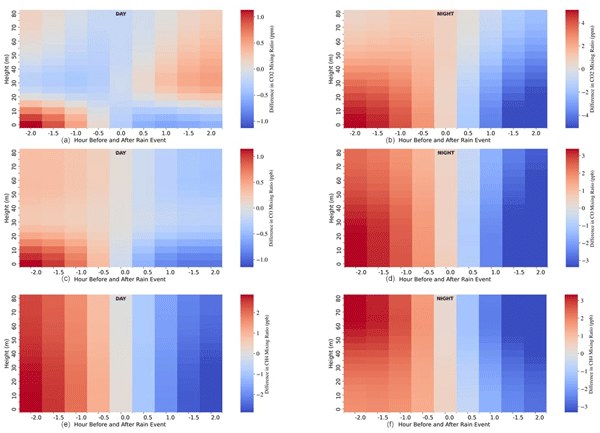
Luiz A. T. Machado, Jürgen Kesselmeier, Santiago Botía, Hella van Asperen, Meinrat O. Andreae, Alessandro C. de Araújo, Paulo Artaxo, Achim Edtbauer, Rosaria R. Ferreira, Marco A. Franco, Hartwig Harder, Sam P. Jones, Cléo Q. Dias-Júnior, Guido G. Haytzmann, Carlos A. Quesada, Shujiro Komiya, Jost Lavric, Jos Lelieveld, Ingeborg Levin, Anke Nölscher, Eva Pfannerstill, Mira L. Pöhlker, Ulrich Pöschl, Akima Ringsdorf, Luciana Rizzo, Ana M. Yáñez-Serrano, Susan Trumbore, Wanda I. D. Valenti, Jordi Vila-Guerau de Arellano, David Walter, Jonathan Williams, Stefan Wolff, and Christopher Pöhlker
Atmos. Chem. Phys., 24, 8893–8910, https://doi.org/10.5194/acp-24-8893-2024, https://doi.org/10.5194/acp-24-8893-2024, 2024
Short summary
Short summary
Composite analysis of gas concentration before and after rainfall, during the day and night, gives insight into the complex relationship between trace gas variability and precipitation. The analysis helps us to understand the sources and sinks of trace gases within a forest ecosystem. It elucidates processes that are not discernible under undisturbed conditions and contributes to a deeper understanding of the trace gas life cycle and its intricate interactions with cloud dynamics in the Amazon.
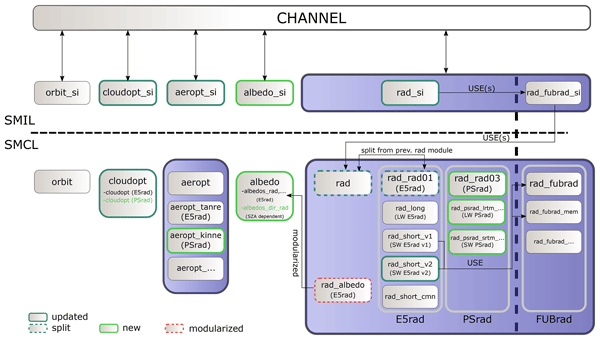
Matthias Nützel, Laura Stecher, Patrick Jöckel, Franziska Winterstein, Martin Dameris, Michael Ponater, Phoebe Graf, and Markus Kunze
Geosci. Model Dev., 17, 5821–5849, https://doi.org/10.5194/gmd-17-5821-2024, https://doi.org/10.5194/gmd-17-5821-2024, 2024
Short summary
Short summary
We extended the infrastructure of our modelling system to enable the use of an additional radiation scheme. After calibrating the model setups to the old and the new radiation scheme, we find that the simulation with the new scheme shows considerable improvements, e.g. concerning the cold-point temperature and stratospheric water vapour. Furthermore, perturbations of radiative fluxes associated with greenhouse gas changes, e.g. of methane, tend to be improved when the new scheme is employed.
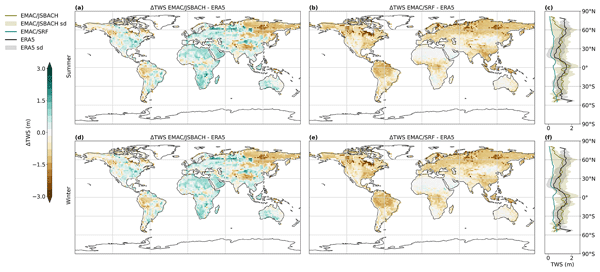
Anna Martin, Veronika Gayler, Benedikt Steil, Klaus Klingmüller, Patrick Jöckel, Holger Tost, Jos Lelieveld, and Andrea Pozzer
Geosci. Model Dev., 17, 5705–5732, https://doi.org/10.5194/gmd-17-5705-2024, https://doi.org/10.5194/gmd-17-5705-2024, 2024
Short summary
Short summary
The study evaluates the land surface and vegetation model JSBACHv4 as a replacement for the simplified submodel SURFACE in EMAC. JSBACH mitigates earlier problems of soil dryness, which are critical for vegetation modelling. When analysed using different datasets, the coupled model shows strong correlations of key variables, such as land surface temperature, surface albedo and radiation flux. The versatility of the model increases significantly, while the overall performance does not degrade.
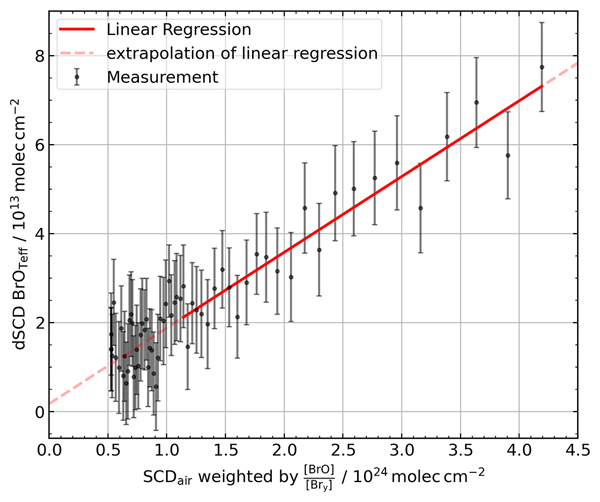
Karolin Voss, Philip Holzbeck, Klaus Pfeilsticker, Ralph Kleinschek, Gerald Wetzel, Blanca Fuentes Andrade, Michael Höpfner, Jörn Ungermann, Björn-Martin Sinnhuber, and André Butz
Atmos. Meas. Tech., 17, 4507–4528, https://doi.org/10.5194/amt-17-4507-2024, https://doi.org/10.5194/amt-17-4507-2024, 2024
Short summary
Short summary
A novel balloon-borne instrument for direct sun and solar occultation measurements of several UV–Vis absorbing gases (e.g. O3, NO2, BrO, IO, and HONO) is described. Its major design features and performance during two stratospheric deployments are discussed. From the measured overhead BrO concentration and a suitable photochemical correction, total stratospheric bromine is inferred to (17.5 ± 2.2) ppt in air masses which entered the stratosphere around early 2017 ± 1 year.
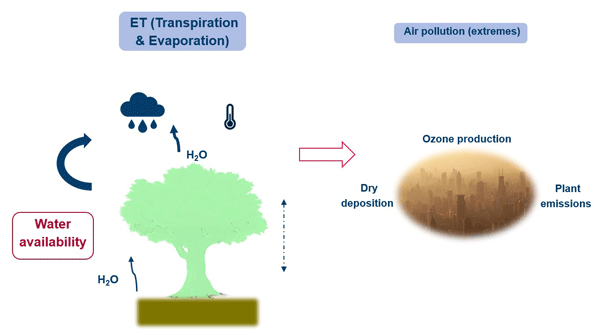
Tamara Emmerichs, Yen-Sen Lu, and Domenico Taraborrelli
Biogeosciences, 21, 3251–3269, https://doi.org/10.5194/bg-21-3251-2024, https://doi.org/10.5194/bg-21-3251-2024, 2024
Short summary
Short summary
We assess the representation of the plant response to surface water in a global atmospheric chemistry model. This sensitivity is crucial for the return of precipitation back into the atmosphere and thus significantly impacts the representation of weather as well as air quality. The newly implemented response function reduces this process and has a better comparison with satellite observations. This yields a higher intensity of unusual warm periods and higher production of air pollutants.
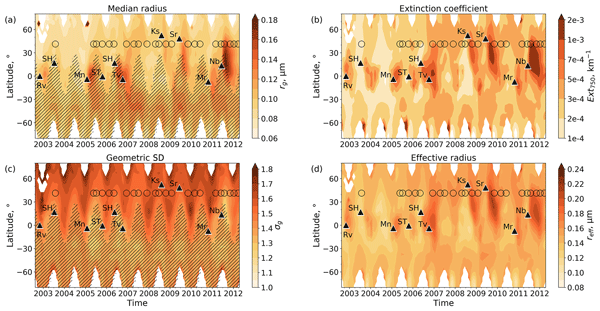
Christine Pohl, Felix Wrana, Alexei Rozanov, Terry Deshler, Elizaveta Malinina, Christian von Savigny, Landon A. Rieger, Adam E. Bourassa, and John P. Burrows
Atmos. Meas. Tech., 17, 4153–4181, https://doi.org/10.5194/amt-17-4153-2024, https://doi.org/10.5194/amt-17-4153-2024, 2024
Short summary
Short summary
Knowledge of stratospheric aerosol characteristics is important for understanding chemical and climate aerosol feedbacks. Two particle size distribution parameters, the aerosol extinction coefficient and the effective radius, are obtained from SCIAMACHY limb observations. The aerosol characteristics show good agreement with independent data sets from balloon-borne and satellite observations. This data set expands the limited knowledge of stratospheric aerosol characteristics.
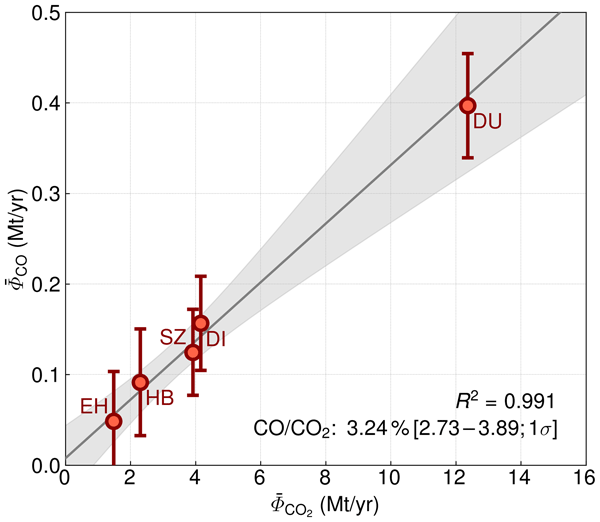
Oliver Schneising, Michael Buchwitz, Maximilian Reuter, Michael Weimer, Heinrich Bovensmann, John P. Burrows, and Hartmut Bösch
Atmos. Chem. Phys., 24, 7609–7621, https://doi.org/10.5194/acp-24-7609-2024, https://doi.org/10.5194/acp-24-7609-2024, 2024
Short summary
Short summary
Large quantities of CO and CO2 are emitted during conventional steel production. As satellite-based estimates of CO2 emissions at the facility level are challenging, co-emitted CO can indicate the carbon footprint of steel plants. We estimate CO emissions for German steelworks and use CO2 emissions from emissions trading data to derive a sector-specific CO/CO2 emission ratio for the steel industry; it is a prerequisite to use CO as a proxy for CO2 emissions from similar steel production sites.
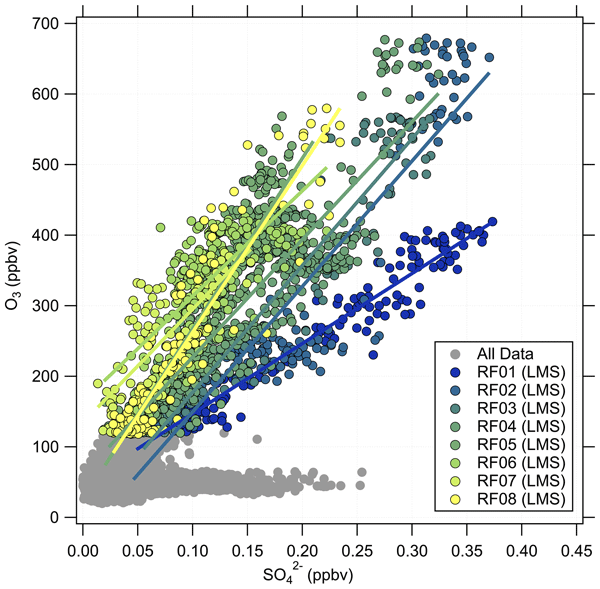
Philipp Joppe, Johannes Schneider, Katharina Kaiser, Horst Fischer, Peter Hoor, Daniel Kunkel, Hans-Christoph Lachnitt, Andreas Marsing, Lenard Röder, Hans Schlager, Laura Tomsche, Christiane Voigt, Andreas Zahn, and Stephan Borrmann
Atmos. Chem. Phys., 24, 7499–7522, https://doi.org/10.5194/acp-24-7499-2024, https://doi.org/10.5194/acp-24-7499-2024, 2024
Short summary
Short summary
From aircraft measurements in the upper troposphere/lower stratosphere, we find a correlation between the ozone and particulate sulfate in the lower stratosphere. The correlation exhibits some variability over the measurement period exceeding the background sulfate-to-ozone correlation. From our analysis, we conclude that gas-to-particle conversion of volcanic sulfur dioxide leads to observed enhanced sulfate aerosol mixing ratios.

Linda Ort, Lenard Lukas Röder, Uwe Parchatka, Rainer Königstedt, Daniel Crowley, Frank Kunz, Ralf Wittkowski, Jos Lelieveld, and Horst Fischer
Atmos. Meas. Tech., 17, 3553–3565, https://doi.org/10.5194/amt-17-3553-2024, https://doi.org/10.5194/amt-17-3553-2024, 2024
Short summary
Short summary
Airborne in situ measurements are of great importance to collect valuable data to improve our knowledge of the atmosphere but also present challenges which demand specific designs. This study presents an IR spectrometer for airborne trace-gas measurements with high data efficiency and a simple, compact design. Its in-flight performance is characterized with the help of a test flight and a comparison with another spectrometer. Moreover, results from its first campaign highlight its benefits.
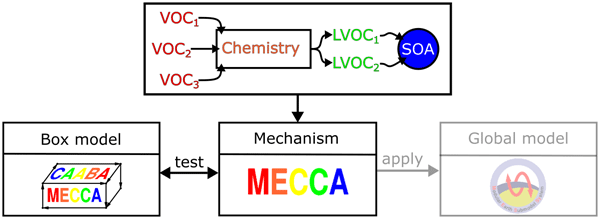
Felix Wieser, Rolf Sander, Changmin Cho, Hendrik Fuchs, Thorsten Hohaus, Anna Novelli, Ralf Tillmann, and Domenico Taraborrelli
Geosci. Model Dev., 17, 4311–4330, https://doi.org/10.5194/gmd-17-4311-2024, https://doi.org/10.5194/gmd-17-4311-2024, 2024
Short summary
Short summary
The chemistry scheme of the atmospheric box model CAABA/MECCA is expanded to achieve an improved aerosol formation from emitted organic compounds. In addition to newly added reactions, temperature-dependent partitioning of all new species between the gas and aqueous phases is estimated and included in the pre-existing scheme. Sensitivity runs show an overestimation of key compounds from isoprene, which can be explained by a lack of aqueous-phase degradation reactions and box model limitations.
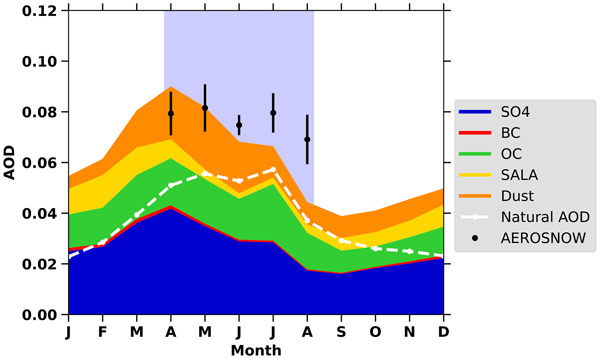
Basudev Swain, Marco Vountas, Aishwarya Singh, Nidhi L. Anchan, Adrien Deroubaix, Luca Lelli, Yanick Ziegler, Sachin S. Gunthe, Hartmut Bösch, and John P. Burrows
Atmos. Chem. Phys., 24, 5671–5693, https://doi.org/10.5194/acp-24-5671-2024, https://doi.org/10.5194/acp-24-5671-2024, 2024
Short summary
Short summary
Arctic amplification (AA) accelerates the warming of the central Arctic cryosphere and affects aerosol dynamics. Limited observations hinder a comprehensive analysis. This study uses AEROSNOW aerosol optical density (AOD) data and GEOS-Chem simulations to assess AOD variability. Discrepancies highlight the need for improved observational integration into models to refine our understanding of aerosol effects on cloud microphysics, ice nucleation, and radiative forcing under evolving AA.
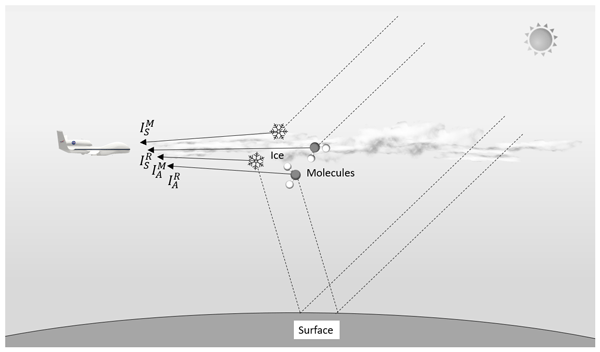
Santo Fedele Colosimo, Nathaniel Brockway, Vijay Natraj, Robert Spurr, Klaus Pfeilsticker, Lisa Scalone, Max Spolaor, Sarah Woods, and Jochen Stutz
Atmos. Meas. Tech., 17, 2367–2385, https://doi.org/10.5194/amt-17-2367-2024, https://doi.org/10.5194/amt-17-2367-2024, 2024
Short summary
Short summary
Cirrus clouds are poorly understood components of the climate system, in part due to the challenge of observing thin, sub-visible ice clouds. We address this issue with a new observational approach that uses the remote sensing of near-infrared ice water absorption features from a high-altitude aircraft. We describe the underlying principle of this approach and present a new procedure to retrieve ice concentration in cirrus clouds. Our retrievals compare well with in situ observations.
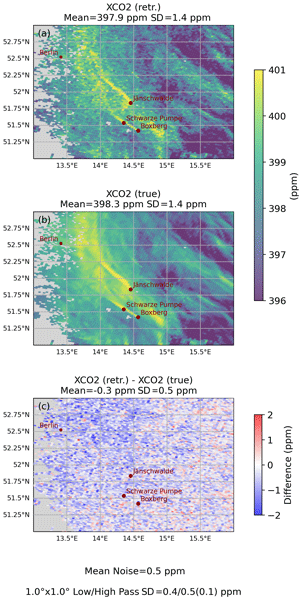
Stefan Noël, Michael Buchwitz, Michael Hilker, Maximilian Reuter, Michael Weimer, Heinrich Bovensmann, John P. Burrows, Hartmut Bösch, and Ruediger Lang
Atmos. Meas. Tech., 17, 2317–2334, https://doi.org/10.5194/amt-17-2317-2024, https://doi.org/10.5194/amt-17-2317-2024, 2024
Short summary
Short summary
FOCAL-CO2M is one of the three operational retrieval algorithms which will be used to derive XCO2 and XCH4 from measurements of the forthcoming European CO2M mission. We present results of applications of FOCAL-CO2M to simulated spectra, from which confidence is gained that the algorithm is able to fulfil the challenging requirements on systematic errors for the CO2M mission (spatio-temporal bias ≤ 0.5 ppm for XCO2 and ≤ 5 ppb for XCH4).
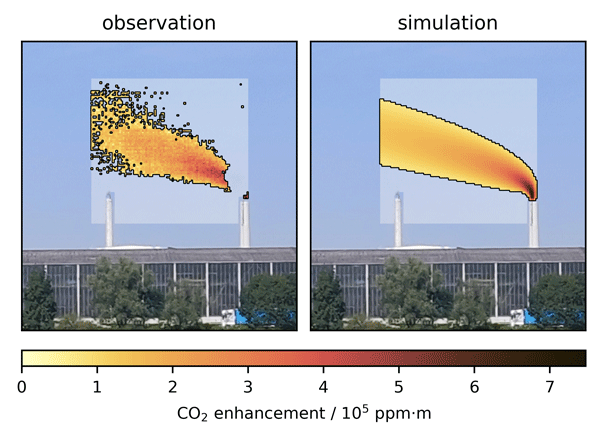
Marvin Knapp, Ralph Kleinschek, Sanam N. Vardag, Felix Külheim, Helge Haveresch, Moritz Sindram, Tim Siegel, Bruno Burger, and André Butz
Atmos. Meas. Tech., 17, 2257–2275, https://doi.org/10.5194/amt-17-2257-2024, https://doi.org/10.5194/amt-17-2257-2024, 2024
Short summary
Short summary
Imaging carbon dioxide (CO2) plumes of anthropogenic sources from planes and satellites has proven valuable for detecting emitters and monitoring climate mitigation efforts. We present the first images of CO2 plumes taken with a ground-based spectral camera, observing a coal-fired power plant as a validation target. We develop a technique to find the source emission strength with an hourly resolution, which reasonably agrees with the expected emissions under favorable conditions.
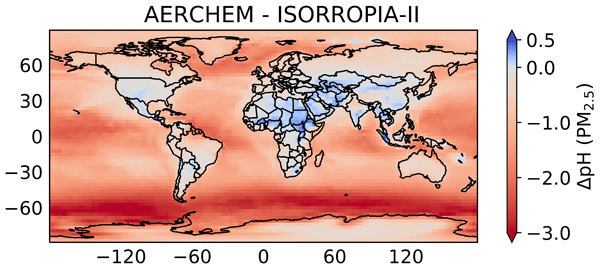
Simon Rosanka, Holger Tost, Rolf Sander, Patrick Jöckel, Astrid Kerkweg, and Domenico Taraborrelli
Geosci. Model Dev., 17, 2597–2615, https://doi.org/10.5194/gmd-17-2597-2024, https://doi.org/10.5194/gmd-17-2597-2024, 2024
Short summary
Short summary
The capabilities of the Modular Earth Submodel System (MESSy) are extended to account for non-equilibrium aqueous-phase chemistry in the representation of deliquescent aerosols. When applying the new development in a global simulation, we find that MESSy's bias in modelling routinely observed reduced inorganic aerosol mass concentrations, especially in the United States. Furthermore, the representation of fine-aerosol pH is particularly improved in the marine boundary layer.
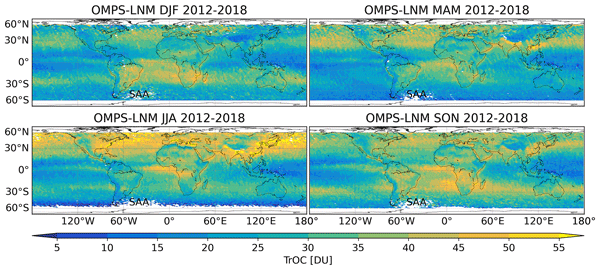
Andrea Orfanoz-Cheuquelaf, Carlo Arosio, Alexei Rozanov, Mark Weber, Annette Ladstätter-Weißenmayer, John P. Burrows, Anne M. Thompson, Ryan M. Stauffer, and Debra E. Kollonige
Atmos. Meas. Tech., 17, 1791–1809, https://doi.org/10.5194/amt-17-1791-2024, https://doi.org/10.5194/amt-17-1791-2024, 2024
Short summary
Short summary
Valuable information on the tropospheric ozone column (TrOC) can be obtained globally by combining space-borne limb and nadir measurements (limb–nadir matching, LNM). This study describes the retrieval of TrOC from the OMPS instrument (since 2012) using the LNM technique. The OMPS-LNM TrOC was compared with ozonesondes and other satellite measurements, showing a good agreement with a negative bias within 1 to 4 DU. This new dataset is suitable for pollution studies.
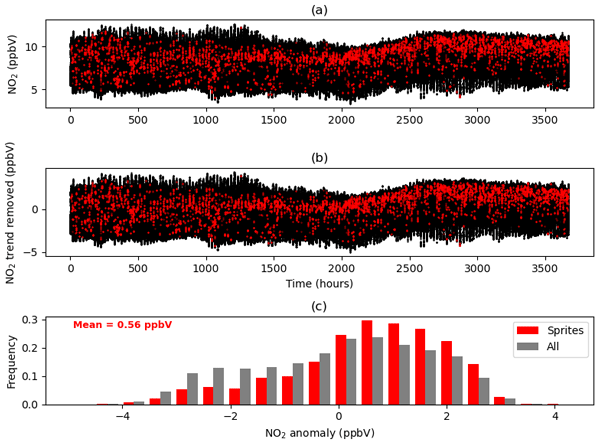
Francisco J. Pérez-Invernón, Francisco J. Gordillo-Vázquez, Alejandro Malagón-Romero, and Patrick Jöckel
Atmos. Chem. Phys., 24, 3577–3592, https://doi.org/10.5194/acp-24-3577-2024, https://doi.org/10.5194/acp-24-3577-2024, 2024
Short summary
Short summary
Sprites are electrical discharges that occur in the upper atmosphere. Recent modelling and observational data suggest that they may have a measurable impact on atmospheric chemistry. We incorporate both the occurrence rate of sprites and their production of chemical species into a chemistry–climate model. While our results indicate that sprites have a minimal global influence on atmospheric chemistry, they underscore their noteworthy importance at a regional scale.
Adrien Deroubaix, Marco Vountas, Benjamin Gaubert, Maria Dolores Andrés Hernández, Stephan Borrmann, Guy Brasseur, Bruna Holanda, Yugo Kanaya, Katharina Kaiser, Flora Kluge, Ovid Oktavian Krüger, Inga Labuhn, Michael Lichtenstern, Klaus Pfeilsticker, Mira Pöhlker, Hans Schlager, Johannes Schneider, Guillaume Siour, Basudev Swain, Paolo Tuccella, Kameswara S. Vinjamuri, Mihalis Vrekoussis, Benjamin Weyland, and John P. Burrows
EGUsphere, https://doi.org/10.5194/egusphere-2024-516, https://doi.org/10.5194/egusphere-2024-516, 2024
Preprint archived
Short summary
Short summary
This study assesses atmospheric composition using air quality models during aircraft campaigns in Europe and Asia, focusing on carbonaceous aerosols and trace gases. While carbon monoxide is well modeled, other pollutants have moderate to weak agreement with observations. Wind speed modeling is reliable for identifying pollution plumes, where models tend to overestimate concentrations. This highlights challenges in accurately modeling aerosol and trace gas composition, particularly in cities.
Adrien Deroubaix, Marco Vountas, Benjamin Gaubert, Maria Dolores Andrés Hernández, Stephan Borrmann, Guy Brasseur, Bruna Holanda, Yugo Kanaya, Katharina Kaiser, Flora Kluge, Ovid Oktavian Krüger, Inga Labuhn, Michael Lichtenstern, Klaus Pfeilsticker, Mira Pöhlker, Hans Schlager, Johannes Schneider, Guillaume Siour, Basudev Swain, Paolo Tuccella, Kameswara S. Vinjamuri, Mihalis Vrekoussis, Benjamin Weyland, and John P. Burrows
EGUsphere, https://doi.org/10.5194/egusphere-2024-521, https://doi.org/10.5194/egusphere-2024-521, 2024
Preprint archived
Short summary
Short summary
This study explores the proportional relationships between carbonaceous aerosols (black and organic carbon) and trace gases using airborne measurements from two campaigns in Europe and East Asia. Differences between regions were found, but air quality models struggled to reproduce them accurately. We show that these proportional relationships can help to constrain models and can be used to infer aerosol concentrations from satellite observations of trace gases, especially in urban areas.
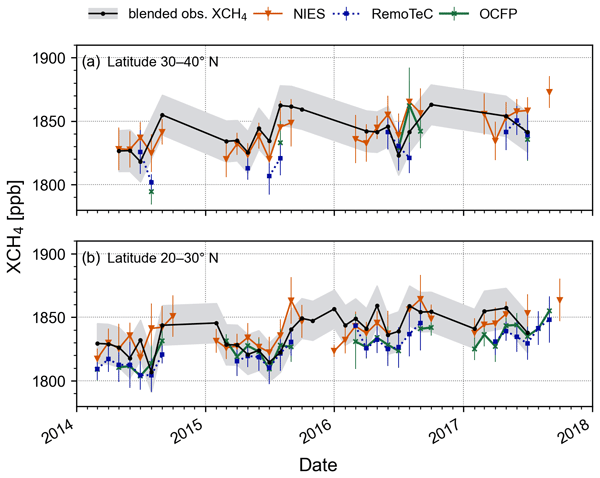
Astrid Müller, Hiroshi Tanimoto, Takafumi Sugita, Prabir K. Patra, Shin-ichiro Nakaoka, Toshinobu Machida, Isamu Morino, André Butz, and Kei Shiomi
Atmos. Meas. Tech., 17, 1297–1316, https://doi.org/10.5194/amt-17-1297-2024, https://doi.org/10.5194/amt-17-1297-2024, 2024
Short summary
Short summary
Satellite CH4 observations with high accuracy are needed to understand changes in atmospheric CH4 concentrations. But over oceans, reference data are limited. We combine various ship and aircraft observations with the help of atmospheric chemistry models to derive observation-based column-averaged mixing ratios of CH4 (obs. XCH4). We discuss three different approaches and demonstrate the applicability of the new reference dataset for carbon cycle studies and satellite evaluation.
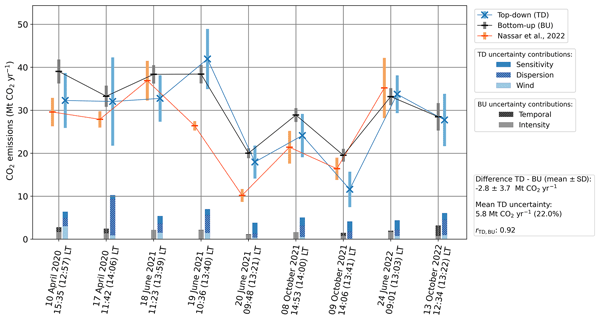
Blanca Fuentes Andrade, Michael Buchwitz, Maximilian Reuter, Heinrich Bovensmann, Andreas Richter, Hartmut Boesch, and John P. Burrows
Atmos. Meas. Tech., 17, 1145–1173, https://doi.org/10.5194/amt-17-1145-2024, https://doi.org/10.5194/amt-17-1145-2024, 2024
Short summary
Short summary
We developed a method to estimate CO2 emissions from localized sources, such as power plants, using satellite data and applied it to estimate CO2 emissions from the Bełchatów Power Station (Poland). As the detection of CO2 emission plumes from satellite data is difficult, we used observations of co-emitted NO2 to constrain the emission plume region. Our results agree with CO2 emission estimations based on the power-plant-generated power and emission factors.
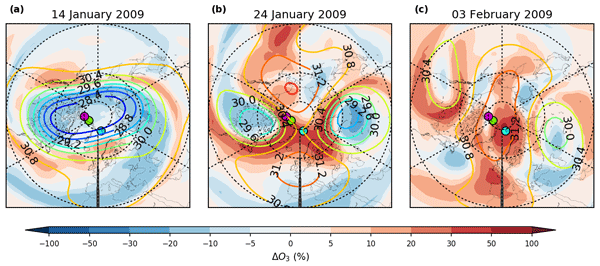
Ryan S. Williams, Michaela I. Hegglin, Patrick Jöckel, Hella Garny, and Keith P. Shine
Atmos. Chem. Phys., 24, 1389–1413, https://doi.org/10.5194/acp-24-1389-2024, https://doi.org/10.5194/acp-24-1389-2024, 2024
Short summary
Short summary
During winter, a brief but abrupt reversal of the mean stratospheric westerly flow (~30 km high) around the Arctic occurs ~6 times a decade. Using a chemistry–climate model, about half of these events are shown to induce large anomalies in Arctic ozone (>25 %) and water vapour (>±25 %) around ~8–12 km altitude for up to 2–3 months, important for weather forecasting. We also calculate a doubling to trebling of the risk in breaches of mid-latitude surface air quality (ozone) standards (~60 ppbv).
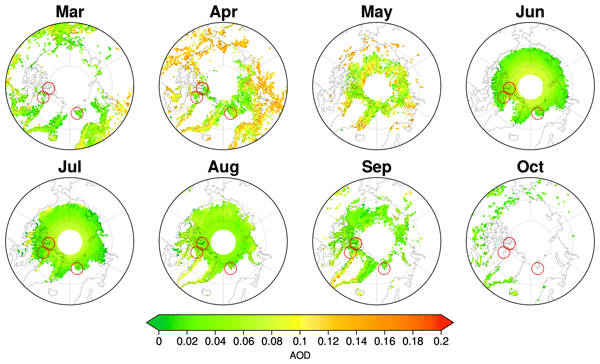
Basudev Swain, Marco Vountas, Adrien Deroubaix, Luca Lelli, Yanick Ziegler, Soheila Jafariserajehlou, Sachin S. Gunthe, Andreas Herber, Christoph Ritter, Hartmut Bösch, and John P. Burrows
Atmos. Meas. Tech., 17, 359–375, https://doi.org/10.5194/amt-17-359-2024, https://doi.org/10.5194/amt-17-359-2024, 2024
Short summary
Short summary
Aerosols are suspensions of particles dispersed in the air. In this study, we use a novel retrieval of satellite data to investigate an optical property of aerosols, the aerosol optical depth, in the high Arctic to assess their direct and indirect roles in climate change. This study demonstrates that the presented approach shows good quality and very promising potential.
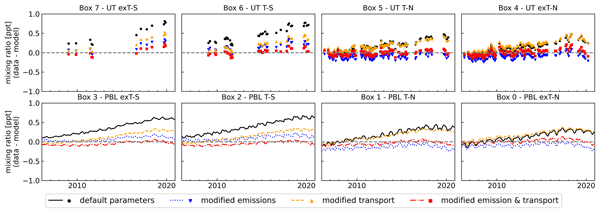
Tanja J. Schuck, Johannes Degen, Eric Hintsa, Peter Hoor, Markus Jesswein, Timo Keber, Daniel Kunkel, Fred Moore, Florian Obersteiner, Matt Rigby, Thomas Wagenhäuser, Luke M. Western, Andreas Zahn, and Andreas Engel
Atmos. Chem. Phys., 24, 689–705, https://doi.org/10.5194/acp-24-689-2024, https://doi.org/10.5194/acp-24-689-2024, 2024
Short summary
Short summary
We study the interhemispheric gradient of sulfur hexafluoride (SF6), a strong long-lived greenhouse gas. Its emissions are stronger in the Northern Hemisphere; therefore, mixing ratios in the Southern Hemisphere lag behind. Comparing the observations to a box model, the model predicts air in the Southern Hemisphere to be older. For a better agreement, the emissions used as model input need to be increased (and their spatial pattern changed), and we need to modify north–south transport.
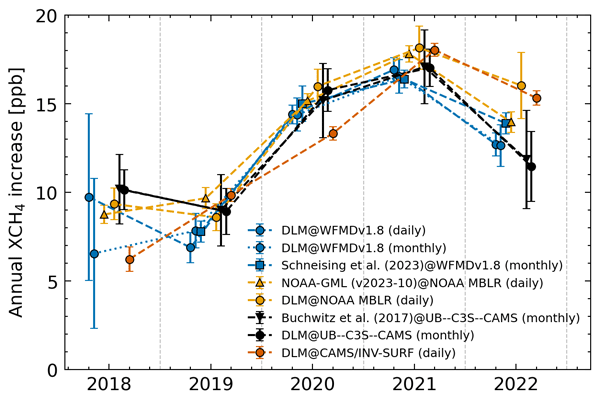
Jonas Hachmeister, Oliver Schneising, Michael Buchwitz, John P. Burrows, Justus Notholt, and Matthias Buschmann
Atmos. Chem. Phys., 24, 577–595, https://doi.org/10.5194/acp-24-577-2024, https://doi.org/10.5194/acp-24-577-2024, 2024
Short summary
Short summary
We quantified changes in atmospheric methane concentrations using satellite data and a dynamic linear model approach. We calculated global annual methane increases for the years 2019–2022, which are in good agreement with other sources. For zonal methane growth rates, we identified strong inter-hemispheric differences in 2019 and 2022. For 2022, we could attribute decreases in the global growth rate to the Northern Hemisphere, possibly related to a reduction in anthropogenic emissions.
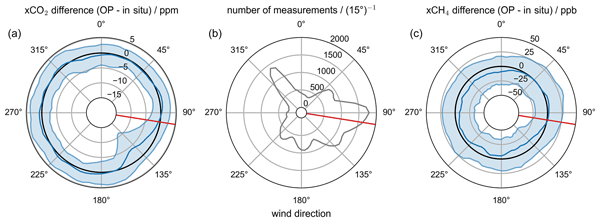
Tobias D. Schmitt, Jonas Kuhn, Ralph Kleinschek, Benedikt A. Löw, Stefan Schmitt, William Cranton, Martina Schmidt, Sanam N. Vardag, Frank Hase, David W. T. Griffith, and André Butz
Atmos. Meas. Tech., 16, 6097–6110, https://doi.org/10.5194/amt-16-6097-2023, https://doi.org/10.5194/amt-16-6097-2023, 2023
Short summary
Short summary
Our new observatory measures greenhouse gas concentrations of carbon dioxide (CO2) and methane (CH4) along a 1.55 km long light path over the city of Heidelberg, Germany. We compared our measurements with measurements that were taken at a single point at one end of our path. The two mostly agreed but show a significant difference for CO2 with certain wind directions. This is important when using greenhouse gas concentration measurements to observe greenhouse gas emissions of cities.
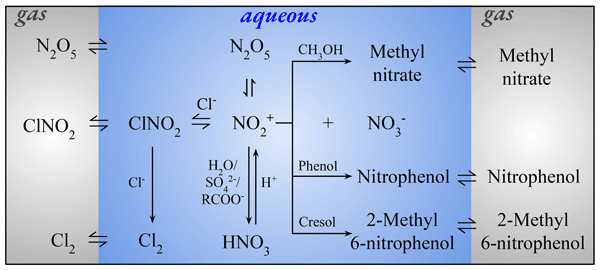
Meghna Soni, Rolf Sander, Lokesh K. Sahu, Domenico Taraborrelli, Pengfei Liu, Ankit Patel, Imran A. Girach, Andrea Pozzer, Sachin S. Gunthe, and Narendra Ojha
Atmos. Chem. Phys., 23, 15165–15180, https://doi.org/10.5194/acp-23-15165-2023, https://doi.org/10.5194/acp-23-15165-2023, 2023
Short summary
Short summary
The study presents the implementation of comprehensive multiphase chlorine chemistry in the box model CAABA/MECCA. Simulations for contrasting urban environments of Asia and Europe highlight the significant impacts of chlorine on atmospheric oxidation capacity and composition. Chemical processes governing the production and loss of chlorine-containing species has been discussed. The updated chemical mechanism will be useful to interpret field measurements and for future air quality studies.
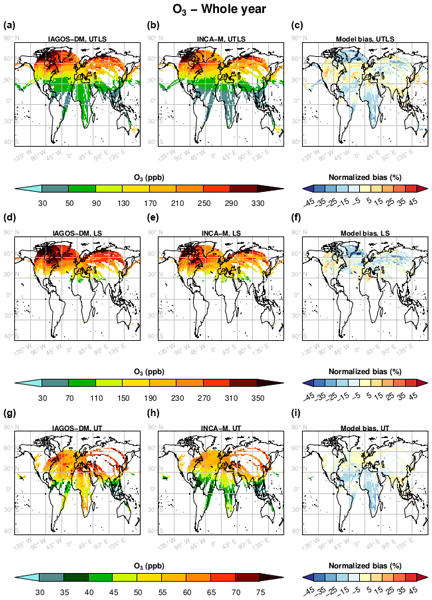
Yann Cohen, Didier Hauglustaine, Bastien Sauvage, Susanne Rohs, Patrick Konjari, Ulrich Bundke, Andreas Petzold, Valérie Thouret, Andreas Zahn, and Helmut Ziereis
Atmos. Chem. Phys., 23, 14973–15009, https://doi.org/10.5194/acp-23-14973-2023, https://doi.org/10.5194/acp-23-14973-2023, 2023
Short summary
Short summary
The upper troposphere–lower stratosphere (UTLS) is a key region regarding the lower atmospheric composition. This study consists of a comprehensive evaluation of an up-to-date chemistry–climate model in this layer, using regular in situ measurements based on passenger aircraft. For this purpose, a specific software (Interpol-IAGOS) has been updated and made publicly available. The model reproduces the carbon monoxide peaks due to biomass burning over the continental tropics particularly well.
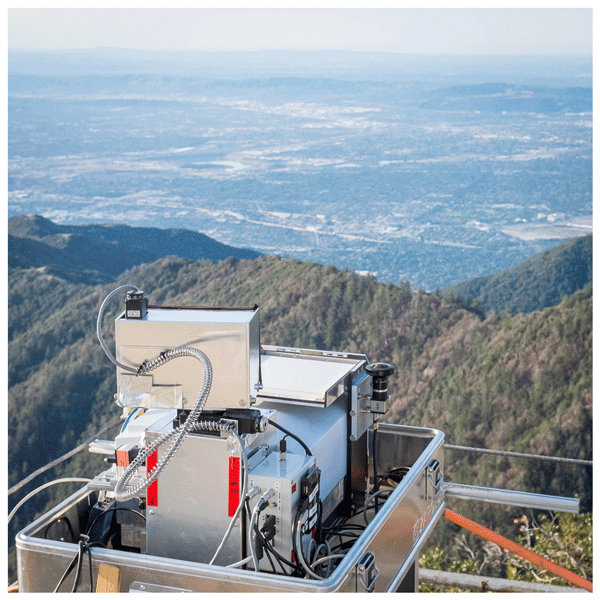
Benedikt A. Löw, Ralph Kleinschek, Vincent Enders, Stanley P. Sander, Thomas J. Pongetti, Tobias D. Schmitt, Frank Hase, Julian Kostinek, and André Butz
Atmos. Meas. Tech., 16, 5125–5144, https://doi.org/10.5194/amt-16-5125-2023, https://doi.org/10.5194/amt-16-5125-2023, 2023
Short summary
Short summary
We developed a portable spectrometer (EM27/SCA) that remotely measures greenhouse gases in the lower atmosphere above a target region. The measurements can deliver insights into local emission patterns. To evaluate its performance, we set up the EM27/SCA above the Los Angeles Basin side by side with a similar non-portable instrument (CLARS-FTS). The precision is promising and the measurements are consistent with CLARS-FTS. In the future, we need to account for light scattering.
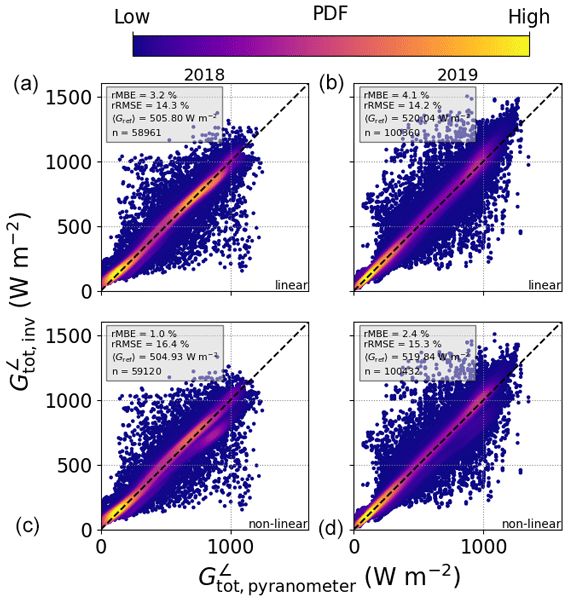
James Barry, Stefanie Meilinger, Klaus Pfeilsticker, Anna Herman-Czezuch, Nicola Kimiaie, Christopher Schirrmeister, Rone Yousif, Tina Buchmann, Johannes Grabenstein, Hartwig Deneke, Jonas Witthuhn, Claudia Emde, Felix Gödde, Bernhard Mayer, Leonhard Scheck, Marion Schroedter-Homscheidt, Philipp Hofbauer, and Matthias Struck
Atmos. Meas. Tech., 16, 4975–5007, https://doi.org/10.5194/amt-16-4975-2023, https://doi.org/10.5194/amt-16-4975-2023, 2023
Short summary
Short summary
Measured power data from solar photovoltaic (PV) systems contain information about the state of the atmosphere. In this work, power data from PV systems in the Allgäu region in Germany were used to determine the solar irradiance at each location, using state-of-the-art simulation and modelling. The results were validated using concurrent measurements of the incoming solar radiation in each case. If applied on a wider scale, this algorithm could help improve weather and climate models.
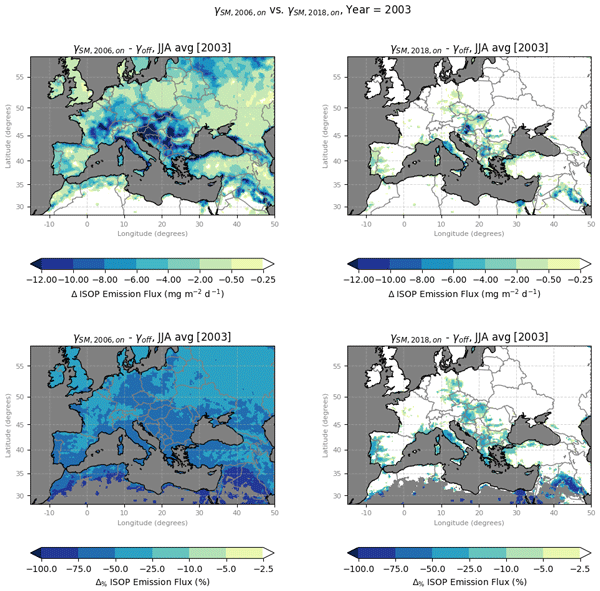
Susanna Strada, Andrea Pozzer, Graziano Giuliani, Erika Coppola, Fabien Solmon, Xiaoyan Jiang, Alex Guenther, Efstratios Bourtsoukidis, Dominique Serça, Jonathan Williams, and Filippo Giorgi
Atmos. Chem. Phys., 23, 13301–13327, https://doi.org/10.5194/acp-23-13301-2023, https://doi.org/10.5194/acp-23-13301-2023, 2023
Short summary
Short summary
Water deficit modifies emissions of isoprene, an aromatic compound released by plants that influences the production of an air pollutant such as ozone. Numerical modelling shows that, during the warmest and driest summers, isoprene decreases between −20 and −60 % over the Euro-Mediterranean region, while near-surface ozone only diminishes by a few percent. Decreases in isoprene emissions not only happen under dry conditions, but also could occur after prolonged or repeated water deficits.
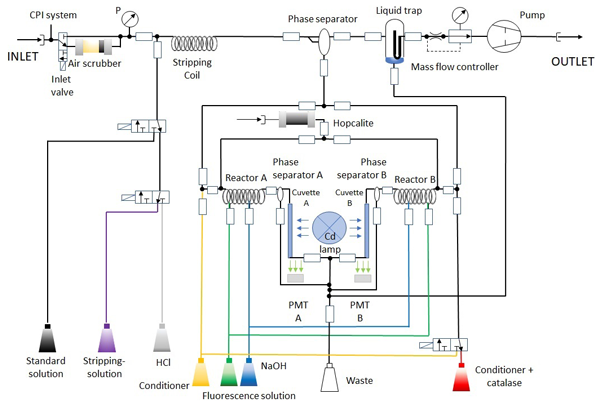
Zaneta Hamryszczak, Antonia Hartmann, Dirk Dienhart, Sascha Hafermann, Bettina Brendel, Rainer Königstedt, Uwe Parchatka, Jos Lelieveld, and Horst Fischer
Atmos. Meas. Tech., 16, 4741–4756, https://doi.org/10.5194/amt-16-4741-2023, https://doi.org/10.5194/amt-16-4741-2023, 2023
Short summary
Short summary
Hydroperoxide measurements improve the understanding of atmospheric oxidation processes. We introduce an instrumental setup for airborne measurements. The aim of the work is the characterization of the measurement method with emphasis on interferences impacting instrumental uncertainty. Technical and physical challenges do not critically impact the instrumental performance. The instrument resolves dynamic processes, such as convective transport, as shown based on the CAFE-Brazil campaign.
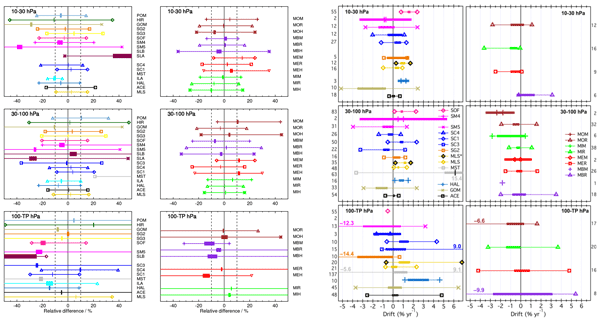
Michael Kiefer, Dale F. Hurst, Gabriele P. Stiller, Stefan Lossow, Holger Vömel, John Anderson, Faiza Azam, Jean-Loup Bertaux, Laurent Blanot, Klaus Bramstedt, John P. Burrows, Robert Damadeo, Bianca Maria Dinelli, Patrick Eriksson, Maya García-Comas, John C. Gille, Mark Hervig, Yasuko Kasai, Farahnaz Khosrawi, Donal Murtagh, Gerald E. Nedoluha, Stefan Noël, Piera Raspollini, William G. Read, Karen H. Rosenlof, Alexei Rozanov, Christopher E. Sioris, Takafumi Sugita, Thomas von Clarmann, Kaley A. Walker, and Katja Weigel
Atmos. Meas. Tech., 16, 4589–4642, https://doi.org/10.5194/amt-16-4589-2023, https://doi.org/10.5194/amt-16-4589-2023, 2023
Short summary
Short summary
We quantify biases and drifts (and their uncertainties) between the stratospheric water vapor measurement records of 15 satellite-based instruments (SATs, with 31 different retrievals) and balloon-borne frost point hygrometers (FPs) launched at 27 globally distributed stations. These comparisons of measurements during the period 2000–2016 are made using robust, consistent statistical methods. With some exceptions, the biases and drifts determined for most SAT–FP pairs are < 10 % and < 1 % yr−1.
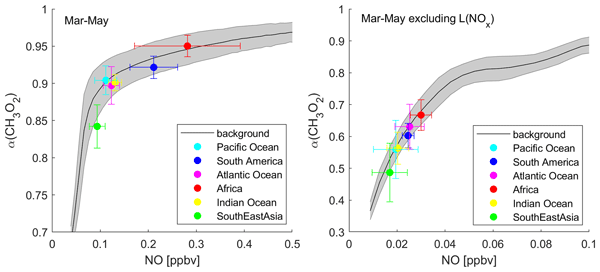
Clara M. Nussbaumer, Horst Fischer, Jos Lelieveld, and Andrea Pozzer
Atmos. Chem. Phys., 23, 12651–12669, https://doi.org/10.5194/acp-23-12651-2023, https://doi.org/10.5194/acp-23-12651-2023, 2023
Short summary
Short summary
Ozone is a greenhouse gas and contributes to the earth’s radiative energy budget and therefore to global warming. This effect is the largest in the upper troposphere. In this study, we investigate the processes controlling ozone formation and the sensitivity to its precursors in the upper tropical troposphere based on model simulations by the ECHAM5/MESSy2 Atmospheric Chemistry (EMAC) model. We find that NO𝑥 emissions from lightning most importantly affect ozone chemistry at these altitudes.
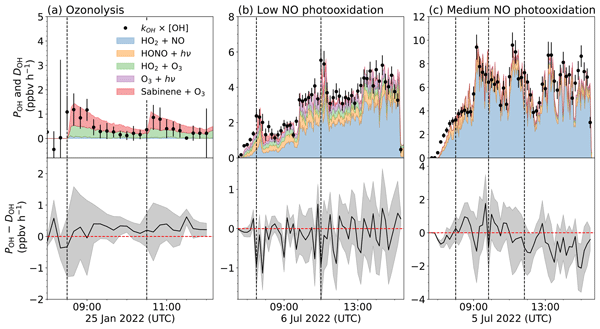
Jacky Y. S. Pang, Florian Berg, Anna Novelli, Birger Bohn, Michelle Färber, Philip T. M. Carlsson, René Dubus, Georgios I. Gkatzelis, Franz Rohrer, Sergej Wedel, Andreas Wahner, and Hendrik Fuchs
Atmos. Chem. Phys., 23, 12631–12649, https://doi.org/10.5194/acp-23-12631-2023, https://doi.org/10.5194/acp-23-12631-2023, 2023
Short summary
Short summary
In this study, the oxidations of sabinene by OH radicals and ozone were investigated with an atmospheric simulation chamber. Reaction rate coefficients of the OH-oxidation reaction at temperatures between 284 to 340 K were determined for the first time in the laboratory by measuring the OH reactivity. Product yields determined in chamber experiments had good agreement with literature values, but discrepancies were found between experimental yields and expected yields from oxidation mechanisms.
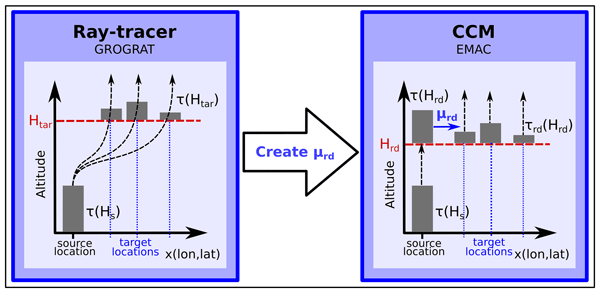
Roland Eichinger, Sebastian Rhode, Hella Garny, Peter Preusse, Petr Pisoft, Aleš Kuchař, Patrick Jöckel, Astrid Kerkweg, and Bastian Kern
Geosci. Model Dev., 16, 5561–5583, https://doi.org/10.5194/gmd-16-5561-2023, https://doi.org/10.5194/gmd-16-5561-2023, 2023
Short summary
Short summary
The columnar approach of gravity wave (GW) schemes results in dynamical model biases, but parallel decomposition makes horizontal GW propagation computationally unfeasible. In the global model EMAC, we approximate it by GW redistribution at one altitude using tailor-made redistribution maps generated with a ray tracer. More spread-out GW drag helps reconcile the model with observations and close the 60°S GW gap. Polar vortex dynamics are improved, enhancing climate model credibility.
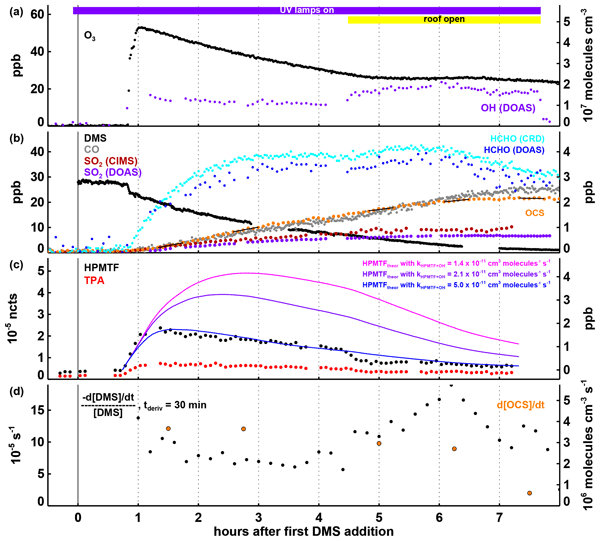
Marc von Hobe, Domenico Taraborrelli, Sascha Alber, Birger Bohn, Hans-Peter Dorn, Hendrik Fuchs, Yun Li, Chenxi Qiu, Franz Rohrer, Roberto Sommariva, Fred Stroh, Zhaofeng Tan, Sergej Wedel, and Anna Novelli
Atmos. Chem. Phys., 23, 10609–10623, https://doi.org/10.5194/acp-23-10609-2023, https://doi.org/10.5194/acp-23-10609-2023, 2023
Short summary
Short summary
The trace gas carbonyl sulfide (OCS) transports sulfur from the troposphere to the stratosphere, where sulfate aerosols are formed that influence climate and stratospheric chemistry. An uncertain OCS source in the troposphere is chemical production form dimethyl sulfide (DMS), a gas released in large quantities from the oceans. We carried out experiments in a large atmospheric simulation chamber to further elucidate the chemical mechanism of OCS production from DMS.
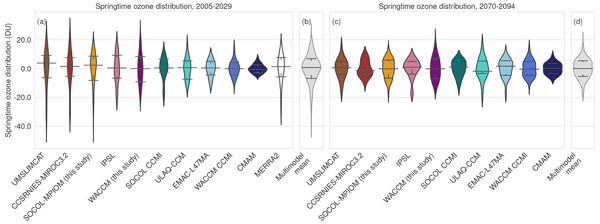
Marina Friedel, Gabriel Chiodo, Timofei Sukhodolov, James Keeble, Thomas Peter, Svenja Seeber, Andrea Stenke, Hideharu Akiyoshi, Eugene Rozanov, David Plummer, Patrick Jöckel, Guang Zeng, Olaf Morgenstern, and Béatrice Josse
Atmos. Chem. Phys., 23, 10235–10254, https://doi.org/10.5194/acp-23-10235-2023, https://doi.org/10.5194/acp-23-10235-2023, 2023
Short summary
Short summary
Previously, it has been suggested that springtime Arctic ozone depletion might worsen in the coming decades due to climate change, which might counteract the effect of reduced ozone-depleting substances. Here, we show with different chemistry–climate models that springtime Arctic ozone depletion will likely decrease in the future. Further, we explain why models show a large spread in the projected development of Arctic ozone depletion and use the model spread to constrain future projections.
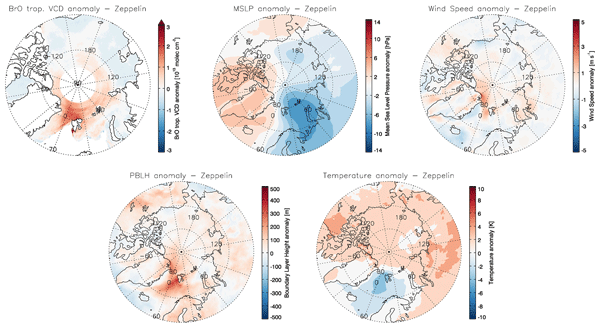
Bianca Zilker, Andreas Richter, Anne-Marlene Blechschmidt, Peter von der Gathen, Ilias Bougoudis, Sora Seo, Tim Bösch, and John Philip Burrows
Atmos. Chem. Phys., 23, 9787–9814, https://doi.org/10.5194/acp-23-9787-2023, https://doi.org/10.5194/acp-23-9787-2023, 2023
Short summary
Short summary
During Arctic spring, near-surface ozone is depleted by bromine released from salty sea ice and/or snow-covered areas under certain meteorological conditions. To study this ozone depletion and the prevailing meteorological conditions, two ozone data sets from Ny-Ålesund, Svalbard, have been evaluated. We found that during ozone depletion events lower pressure over the Barents Sea and higher pressure in the Icelandic Low area led to a transport of cold polar air from the north to Ny-Ålesund.
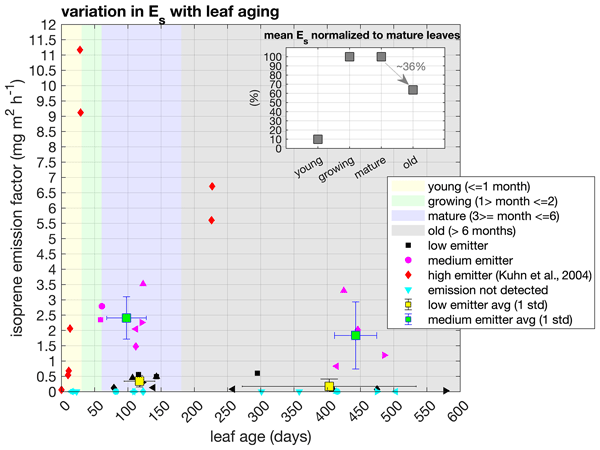
Eliane Gomes Alves, Raoni Aquino Santana, Cléo Quaresma Dias-Júnior, Santiago Botía, Tyeen Taylor, Ana Maria Yáñez-Serrano, Jürgen Kesselmeier, Efstratios Bourtsoukidis, Jonathan Williams, Pedro Ivo Lembo Silveira de Assis, Giordane Martins, Rodrigo de Souza, Sérgio Duvoisin Júnior, Alex Guenther, Dasa Gu, Anywhere Tsokankunku, Matthias Sörgel, Bruce Nelson, Davieliton Pinto, Shujiro Komiya, Diogo Martins Rosa, Bettina Weber, Cybelli Barbosa, Michelle Robin, Kenneth J. Feeley, Alvaro Duque, Viviana Londoño Lemos, Maria Paula Contreras, Alvaro Idarraga, Norberto López, Chad Husby, Brett Jestrow, and Iván Mauricio Cely Toro
Atmos. Chem. Phys., 23, 8149–8168, https://doi.org/10.5194/acp-23-8149-2023, https://doi.org/10.5194/acp-23-8149-2023, 2023
Short summary
Short summary
Isoprene is emitted mainly by plants and can influence atmospheric chemistry and air quality. But, there are uncertainties in model emission estimates and follow-up atmospheric processes. In our study, with long-term observational datasets of isoprene and biological and environmental factors from central Amazonia, we show that isoprene emission estimates could be improved when biological processes were mechanistically incorporated into the model.
Midhun George, Maria Dolores Andrés Hernández, Vladyslav Nenakhov, Yangzhuoran Liu, John Philip Burrows, Birger Bohn, Eric Förster, Florian Obersteiner, Andreas Zahn, Theresa Harlaß, Helmut Ziereis, Hans Schlager, Benjamin Schreiner, Flora Kluge, Katja Bigge, and Klaus Pfeilsticker
Atmos. Chem. Phys., 23, 7799–7822, https://doi.org/10.5194/acp-23-7799-2023, https://doi.org/10.5194/acp-23-7799-2023, 2023
Short summary
Short summary
The applicability of photostationary steady-state (PSS) assumptions to estimate the amount of the sum of peroxy radicals (RO2*) during the EMeRGe airborne observations from the known radical chemistry and onboard measurements of RO2* precursors, photolysis frequencies, and other trace gases such as NOx and O3 was investigated. The comparison of the calculated RO2* with the actual measurements provides an insight into the main processes controlling their concentration in the air masses measured.
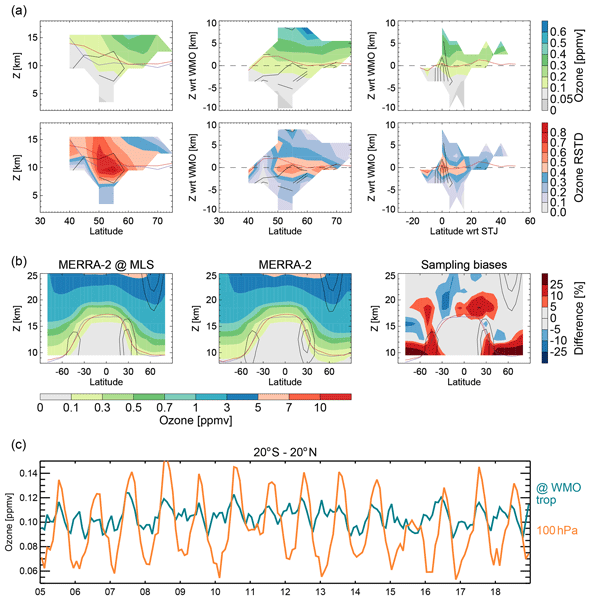
Luis F. Millán, Gloria L. Manney, Harald Boenisch, Michaela I. Hegglin, Peter Hoor, Daniel Kunkel, Thierry Leblanc, Irina Petropavlovskikh, Kaley Walker, Krzysztof Wargan, and Andreas Zahn
Atmos. Meas. Tech., 16, 2957–2988, https://doi.org/10.5194/amt-16-2957-2023, https://doi.org/10.5194/amt-16-2957-2023, 2023
Short summary
Short summary
The determination of atmospheric composition trends in the upper troposphere and lower stratosphere (UTLS) is still highly uncertain. We present the creation of dynamical diagnostics to map several ozone datasets (ozonesondes, lidars, aircraft, and satellite measurements) in geophysically based coordinate systems. The diagnostics can also be used to analyze other greenhouse gases relevant to surface climate and UTLS chemistry.
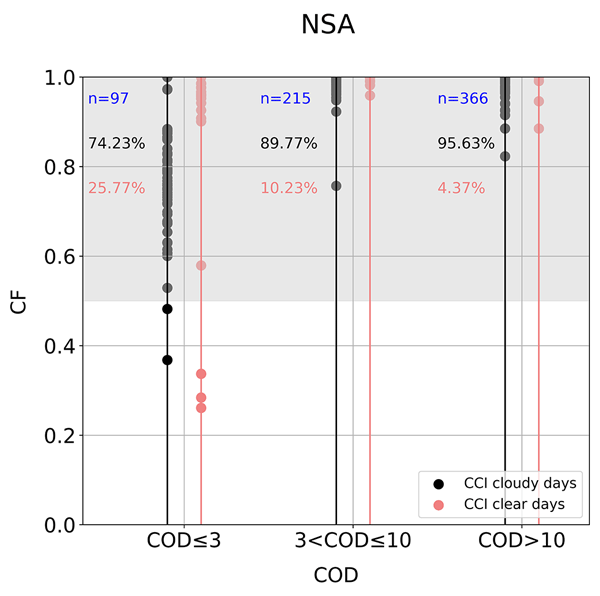
Kameswara S. Vinjamuri, Marco Vountas, Luca Lelli, Martin Stengel, Matthew D. Shupe, Kerstin Ebell, and John P. Burrows
Atmos. Meas. Tech., 16, 2903–2918, https://doi.org/10.5194/amt-16-2903-2023, https://doi.org/10.5194/amt-16-2903-2023, 2023
Short summary
Short summary
Clouds play an important role in Arctic amplification. Cloud data from ground-based sites are valuable but cannot represent the whole Arctic. Therefore the use of satellite products is a measure to cover the entire Arctic. However, the quality of such cloud measurements from space is not well known. The paper discusses the differences and commonalities between satellite and ground-based measurements. We conclude that the satellite dataset, with a few exceptions, can be used in the Arctic.
Basudev Swain, Marco Vountas, Adrien Deroubaix, Luca Lelli, Aishwarya Singh, Yanick Ziegler, Sachin S. Gunthe, and John P. Burrows
EGUsphere, https://doi.org/10.5194/egusphere-2023-730, https://doi.org/10.5194/egusphere-2023-730, 2023
Preprint archived
Short summary
Short summary
Aerosols are suspensions of particles distributed in the air. Depending on their chemical composition, they scatter and/or absorb sunlight and thus cool or warm the earth's atmosphere and its surface. They also provide as a surface in the atmosphere upon which ice or liquid clouds droplets nucleate and grow. In this study, we use satellite observations and model simulations to investigate the properties of aerosols with the goal of assessing their direct and indirect role in climate change.
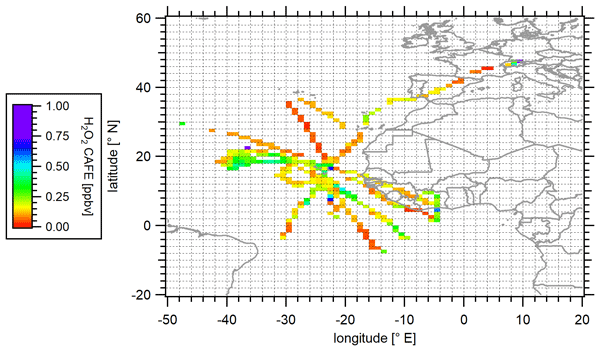
Zaneta Hamryszczak, Dirk Dienhart, Bettina Brendel, Roland Rohloff, Daniel Marno, Monica Martinez, Hartwig Harder, Andrea Pozzer, Birger Bohn, Martin Zöger, Jos Lelieveld, and Horst Fischer
Atmos. Chem. Phys., 23, 5929–5943, https://doi.org/10.5194/acp-23-5929-2023, https://doi.org/10.5194/acp-23-5929-2023, 2023
Short summary
Short summary
Hydrogen peroxide is a key contributor to the oxidative chemistry of the atmosphere through its link to the most prominent oxidants controlling its self-cleansing capacity, HOx. During the CAFE-Africa campaign, H2O2 was measured over the Atlantic Ocean and western Africa in August/September 2018. The study gives an overview of the distribution of H2O2 in the upper tropical troposphere and investigates the impact of convective processes in the Intertropical Convergence Zone on the budget of H2O2.
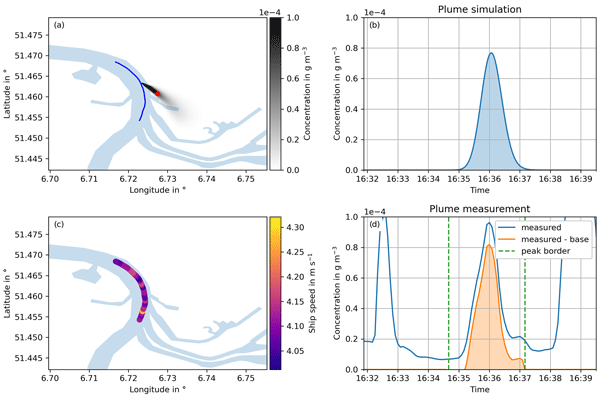
Kai Krause, Folkard Wittrock, Andreas Richter, Dieter Busch, Anton Bergen, John P. Burrows, Steffen Freitag, and Olesia Halbherr
Atmos. Meas. Tech., 16, 1767–1787, https://doi.org/10.5194/amt-16-1767-2023, https://doi.org/10.5194/amt-16-1767-2023, 2023
Short summary
Short summary
Inland shipping is an important source of nitrogen oxides (NOx). The amount of emitted NOx depends on the characteristics of the individual vessels and the traffic density. Ship emissions are often characterised by the amount of emitted NOx per unit of burnt fuel, and further knowledge about fuel consumption is needed to quantify the total emissions caused by ship traffic. In this study, a new approach to derive absolute emission rates (in g s−1) from onshore measurements is presented.
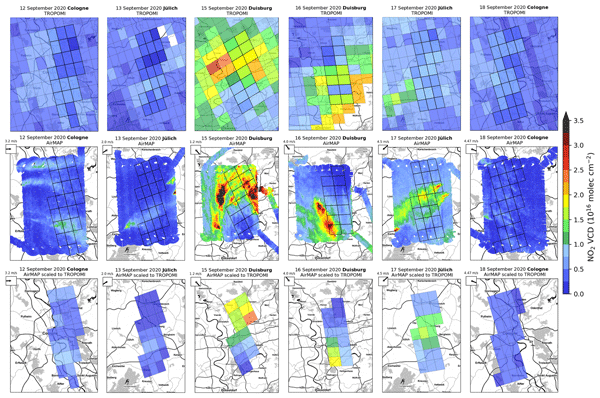
Kezia Lange, Andreas Richter, Anja Schönhardt, Andreas C. Meier, Tim Bösch, André Seyler, Kai Krause, Lisa K. Behrens, Folkard Wittrock, Alexis Merlaud, Frederik Tack, Caroline Fayt, Martina M. Friedrich, Ermioni Dimitropoulou, Michel Van Roozendael, Vinod Kumar, Sebastian Donner, Steffen Dörner, Bianca Lauster, Maria Razi, Christian Borger, Katharina Uhlmannsiek, Thomas Wagner, Thomas Ruhtz, Henk Eskes, Birger Bohn, Daniel Santana Diaz, Nader Abuhassan, Dirk Schüttemeyer, and John P. Burrows
Atmos. Meas. Tech., 16, 1357–1389, https://doi.org/10.5194/amt-16-1357-2023, https://doi.org/10.5194/amt-16-1357-2023, 2023
Short summary
Short summary
We present airborne imaging DOAS and ground-based stationary and car DOAS measurements conducted during the S5P-VAL-DE-Ruhr campaign in the Rhine-Ruhr region. The measurements are used to validate spaceborne NO2 data products from the Sentinel-5 Precursor TROPOspheric Monitoring Instrument (TROPOMI). Auxiliary data of the TROPOMI NO2 retrieval, such as spatially higher resolved a priori NO2 vertical profiles, surface reflectivity, and cloud treatment are investigated to evaluate their impact.
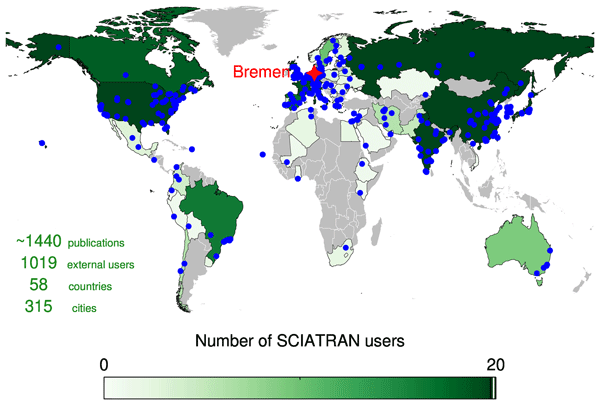
Linlu Mei, Vladimir Rozanov, Alexei Rozanov, and John P. Burrows
Geosci. Model Dev., 16, 1511–1536, https://doi.org/10.5194/gmd-16-1511-2023, https://doi.org/10.5194/gmd-16-1511-2023, 2023
Short summary
Short summary
This paper summarizes recent developments of aerosol, cloud and surface reflectance databases and models in the framework of the software package SCIATRAN. These updates and developments extend the capabilities of the radiative transfer modeling, especially by accounting for different kinds of vertical inhomogeneties. Vertically inhomogeneous clouds and different aerosol types can be easily accounted for within SCIATRAN (V4.6). The widely used surface models and databases are now available.
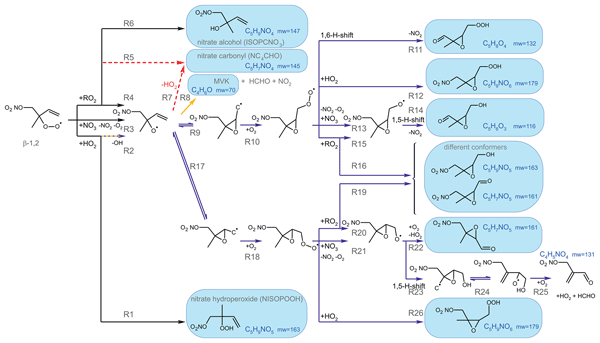
Philip T. M. Carlsson, Luc Vereecken, Anna Novelli, François Bernard, Steven S. Brown, Bellamy Brownwood, Changmin Cho, John N. Crowley, Patrick Dewald, Peter M. Edwards, Nils Friedrich, Juliane L. Fry, Mattias Hallquist, Luisa Hantschke, Thorsten Hohaus, Sungah Kang, Jonathan Liebmann, Alfred W. Mayhew, Thomas Mentel, David Reimer, Franz Rohrer, Justin Shenolikar, Ralf Tillmann, Epameinondas Tsiligiannis, Rongrong Wu, Andreas Wahner, Astrid Kiendler-Scharr, and Hendrik Fuchs
Atmos. Chem. Phys., 23, 3147–3180, https://doi.org/10.5194/acp-23-3147-2023, https://doi.org/10.5194/acp-23-3147-2023, 2023
Short summary
Short summary
The investigation of the night-time oxidation of the most abundant hydrocarbon, isoprene, in chamber experiments shows the importance of reaction pathways leading to epoxy products, which could enhance particle formation, that have so far not been accounted for. The chemical lifetime of organic nitrates from isoprene is long enough for the majority to be further oxidized the next day by daytime oxidants.
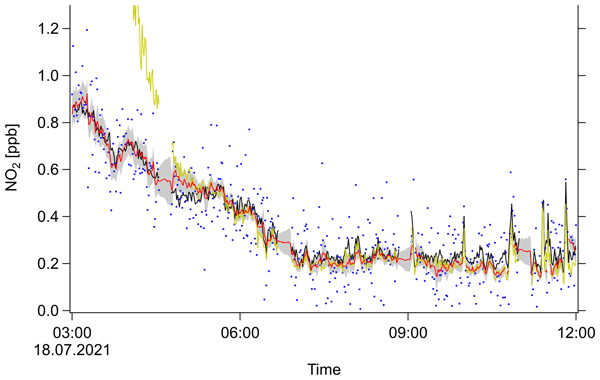
Lenard L. Röder, Patrick Dewald, Clara M. Nussbaumer, Jan Schuladen, John N. Crowley, Jos Lelieveld, and Horst Fischer
Atmos. Meas. Tech., 16, 1167–1178, https://doi.org/10.5194/amt-16-1167-2023, https://doi.org/10.5194/amt-16-1167-2023, 2023
Short summary
Short summary
Field experiments in atmospheric chemistry provide insights into chemical interactions of our atmosphere. However, high data coverage and accuracy are needed to enable further analysis. In this study, we explore a statistical method that combines knowledge about the chemical reactions with information from measurements to increase the quality of field experiment datasets. We test the algorithm for several applications and discuss limitations that depend on the specific variable and the dynamics.
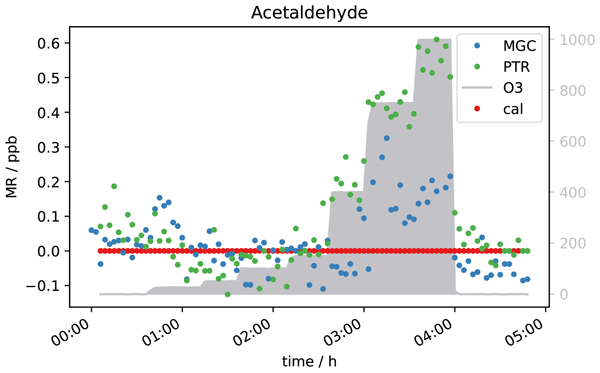
Lisa Ernle, Monika Akima Ringsdorf, and Jonathan Williams
Atmos. Meas. Tech., 16, 1179–1194, https://doi.org/10.5194/amt-16-1179-2023, https://doi.org/10.5194/amt-16-1179-2023, 2023
Short summary
Short summary
Atmospheric ozone can induce artefacts in volatile organic compound measurements. Laboratory tests were made using GC-MS and PTR-MS aircraft systems under tropospheric and stratospheric conditions of humidity and ozone, with and without sodium thiosulfate filter scrubbers. Ozone in dry air produces some carbonyls and degrades alkenes. The scrubber lifetime depends on ozone concentration, flow rate and humidity. For the troposphere with scrubber, no significant artefacts were found over 14 d.
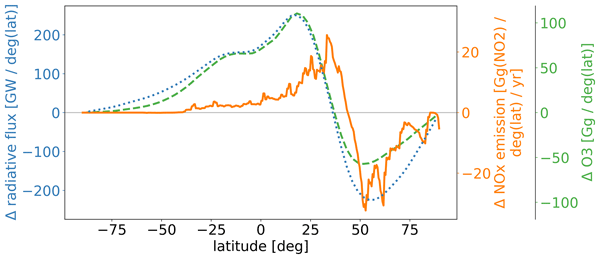
Robin N. Thor, Mariano Mertens, Sigrun Matthes, Mattia Righi, Johannes Hendricks, Sabine Brinkop, Phoebe Graf, Volker Grewe, Patrick Jöckel, and Steven Smith
Geosci. Model Dev., 16, 1459–1466, https://doi.org/10.5194/gmd-16-1459-2023, https://doi.org/10.5194/gmd-16-1459-2023, 2023
Short summary
Short summary
We report on an inconsistency in the latitudinal distribution of aviation emissions between two versions of a data product which is widely used by researchers. From the available documentation, we do not expect such an inconsistency. We run a chemistry–climate model to compute the effect of the inconsistency in emissions on atmospheric chemistry and radiation and find that the radiative forcing associated with aviation ozone is 7.6 % higher when using the less recent version of the data.
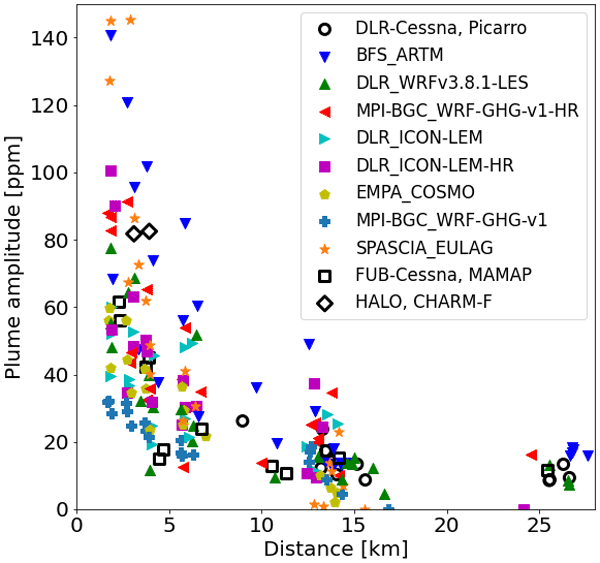
Dominik Brunner, Gerrit Kuhlmann, Stephan Henne, Erik Koene, Bastian Kern, Sebastian Wolff, Christiane Voigt, Patrick Jöckel, Christoph Kiemle, Anke Roiger, Alina Fiehn, Sven Krautwurst, Konstantin Gerilowski, Heinrich Bovensmann, Jakob Borchardt, Michal Galkowski, Christoph Gerbig, Julia Marshall, Andrzej Klonecki, Pascal Prunet, Robert Hanfland, Margit Pattantyús-Ábrahám, Andrzej Wyszogrodzki, and Andreas Fix
Atmos. Chem. Phys., 23, 2699–2728, https://doi.org/10.5194/acp-23-2699-2023, https://doi.org/10.5194/acp-23-2699-2023, 2023
Short summary
Short summary
We evaluated six atmospheric transport models for their capability to simulate the CO2 plumes from two of the largest power plants in Europe by comparing the models against aircraft observations collected during the CoMet (Carbon Dioxide and Methane Mission) campaign in 2018. The study analyzed how realistically such plumes can be simulated at different model resolutions and how well the planned European satellite mission CO2M will be able to quantify emissions from power plants.
Chuan-Yao Lin, Wan-Chin Chen, Yi-Yun Chien, Charles C. K. Chou, Chian-Yi Liu, Helmut Ziereis, Hans Schlager, Eric Förster, Florian Obersteiner, Ovid O. Krüger, Bruna A. Holanda, Mira L. Pöhlker, Katharina Kaiser, Johannes Schneider, Birger Bohn, Klaus Pfeilsticker, Benjamin Weyland, Maria Dolores Andrés Hernández, and John P. Burrows
Atmos. Chem. Phys., 23, 2627–2647, https://doi.org/10.5194/acp-23-2627-2023, https://doi.org/10.5194/acp-23-2627-2023, 2023
Short summary
Short summary
During the EMeRGe campaign in Asia, atmospheric pollutants were measured on board the HALO aircraft. The WRF-Chem model was employed to evaluate the biomass burning (BB) plume transported from Indochina and its impact on the downstream areas. The combination of BB aerosol enhancement with cloud water resulted in a reduction in incoming shortwave radiation at the surface in southern China and the East China Sea, which potentially has significant regional climate implications.

Luca Lelli, Marco Vountas, Narges Khosravi, and John Philipp Burrows
Atmos. Chem. Phys., 23, 2579–2611, https://doi.org/10.5194/acp-23-2579-2023, https://doi.org/10.5194/acp-23-2579-2023, 2023
Short summary
Short summary
Arctic amplification describes the recent period in which temperatures have been rising twice as fast as or more than the global average and sea ice and the Greenland ice shelf are approaching a tipping point. Hence, the Arctic ability to reflect solar energy decreases and absorption by the surface increases. Using 2 decades of complementary satellite data, we discover that clouds unexpectedly increase the pan-Arctic reflectance by increasing their liquid water content, thus cooling the Arctic.
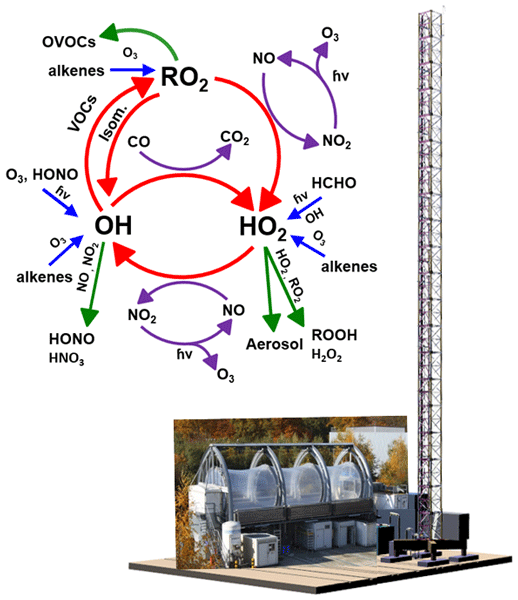
Changmin Cho, Hendrik Fuchs, Andreas Hofzumahaus, Frank Holland, William J. Bloss, Birger Bohn, Hans-Peter Dorn, Marvin Glowania, Thorsten Hohaus, Lu Liu, Paul S. Monks, Doreen Niether, Franz Rohrer, Roberto Sommariva, Zhaofeng Tan, Ralf Tillmann, Astrid Kiendler-Scharr, Andreas Wahner, and Anna Novelli
Atmos. Chem. Phys., 23, 2003–2033, https://doi.org/10.5194/acp-23-2003-2023, https://doi.org/10.5194/acp-23-2003-2023, 2023
Short summary
Short summary
With this study, we investigated the processes leading to the formation, destruction, and recycling of radicals for four seasons in a rural environment. Complete knowledge of their chemistry is needed if we are to predict the formation of secondary pollutants from primary emissions. The results highlight a still incomplete understanding of the paths leading to the formation of the OH radical, which has been observed in several other environments as well and needs to be further investigated.
Phuc Thi Minh Ha, Yugo Kanaya, Fumikazu Taketani, Maria Dolores Andrés Hernández, Benjamin Schreiner, Klaus Pfeilsticker, and Kengo Sudo
Geosci. Model Dev., 16, 927–960, https://doi.org/10.5194/gmd-16-927-2023, https://doi.org/10.5194/gmd-16-927-2023, 2023
Short summary
Short summary
HONO affects tropospheric oxidizing capacity; thus, it is implemented into the chemistry–climate model CHASER. The model substantially underpredicts daytime HONO, while nitrate photolysis on surfaces can supplement the daytime HONO budget. Current HONO chemistry predicts reductions of 20.4 % for global tropospheric NOx, 40–67 % for OH, and 30–45 % for O3 in the summer North Pacific. In contrast, OH and O3 winter levels in China are greatly enhanced.
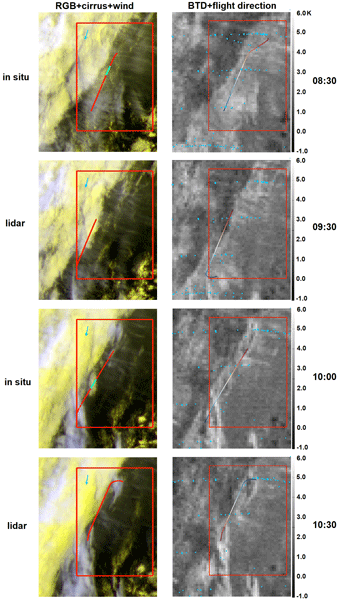
Ziming Wang, Luca Bugliaro, Tina Jurkat-Witschas, Romy Heller, Ulrike Burkhardt, Helmut Ziereis, Georgios Dekoutsidis, Martin Wirth, Silke Groß, Simon Kirschler, Stefan Kaufmann, and Christiane Voigt
Atmos. Chem. Phys., 23, 1941–1961, https://doi.org/10.5194/acp-23-1941-2023, https://doi.org/10.5194/acp-23-1941-2023, 2023
Short summary
Short summary
Differences in the microphysical properties of contrail cirrus and natural cirrus in a contrail outbreak situation during the ML-CIRRUS campaign over the North Atlantic flight corridor can be observed from in situ measurements. The cirrus radiative effect in the area of the outbreak, derived from satellite observation-based radiative transfer modeling, is warming in the early morning and cooling during the day.
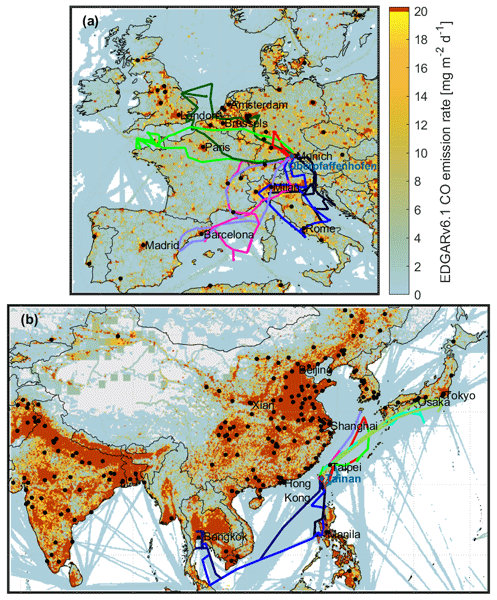
Eric Förster, Harald Bönisch, Marco Neumaier, Florian Obersteiner, Andreas Zahn, Andreas Hilboll, Anna B. Kalisz Hedegaard, Nikos Daskalakis, Alexandros Panagiotis Poulidis, Mihalis Vrekoussis, Michael Lichtenstern, and Peter Braesicke
Atmos. Chem. Phys., 23, 1893–1918, https://doi.org/10.5194/acp-23-1893-2023, https://doi.org/10.5194/acp-23-1893-2023, 2023
Short summary
Short summary
The airborne megacity campaign EMeRGe provided an unprecedented amount of trace gas measurements. We combine measured volatile organic compounds (VOCs) with trajectory-modelled emission uptakes to identify potential source regions of pollution. We also characterise the chemical fingerprints (e.g. biomass burning and anthropogenic signatures) of the probed air masses to corroborate the contributing source regions. Our approach is the first large-scale study of VOCs originating from megacities.
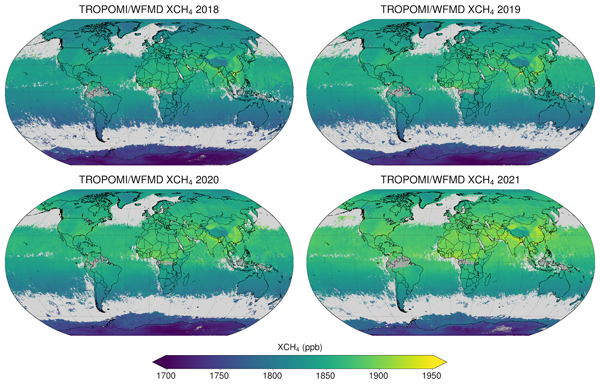
Oliver Schneising, Michael Buchwitz, Jonas Hachmeister, Steffen Vanselow, Maximilian Reuter, Matthias Buschmann, Heinrich Bovensmann, and John P. Burrows
Atmos. Meas. Tech., 16, 669–694, https://doi.org/10.5194/amt-16-669-2023, https://doi.org/10.5194/amt-16-669-2023, 2023
Short summary
Short summary
Methane and carbon monoxide are important constituents of the atmosphere in the context of climate change and air pollution. We present the latest advances in the TROPOMI/WFMD algorithm to simultaneously retrieve atmospheric methane and carbon monoxide abundances from space. The changes in the latest product version are described in detail, and the resulting improvements are demonstrated. An overview of the products is provided including a discussion of annual increases and validation results.
Flora Kluge, Tilman Hüneke, Christophe Lerot, Simon Rosanka, Meike K. Rotermund, Domenico Taraborrelli, Benjamin Weyland, and Klaus Pfeilsticker
Atmos. Chem. Phys., 23, 1369–1401, https://doi.org/10.5194/acp-23-1369-2023, https://doi.org/10.5194/acp-23-1369-2023, 2023
Short summary
Short summary
Using airborne glyoxal concentration and vertical column density measurements, vertical profiles are inferred for eight global regions in aged biomass burning plumes and the tropical marine boundary layer. Using TROPOMI observations, an analysis of space- and airborne measurements is performed. A comparison to EMAC simulations shows a general glyoxal underprediction, which points to various missing sources and precursors from anthropogenic activities, biomass burning, and the sea surface.
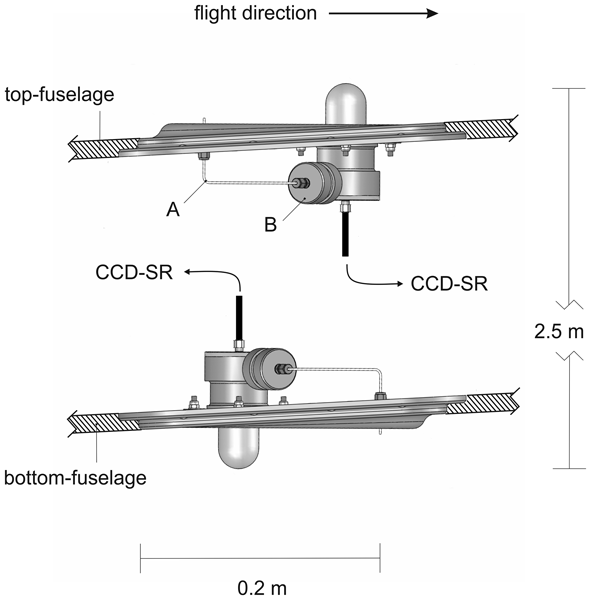
Birger Bohn and Insa Lohse
Atmos. Meas. Tech., 16, 209–233, https://doi.org/10.5194/amt-16-209-2023, https://doi.org/10.5194/amt-16-209-2023, 2023
Short summary
Short summary
Optical receivers for solar spectral actinic radiation are designed for angle-independent sensitivities within a hemisphere. Remaining imperfections can be compensated for by receiver-specific corrections based on laboratory characterizations and radiative transfer calculations of spectral radiance distributions. The corrections cover a wide range of realistic atmospheric conditions and were applied to ground-based and airborne measurements in a wavelength range 280–660 nm.
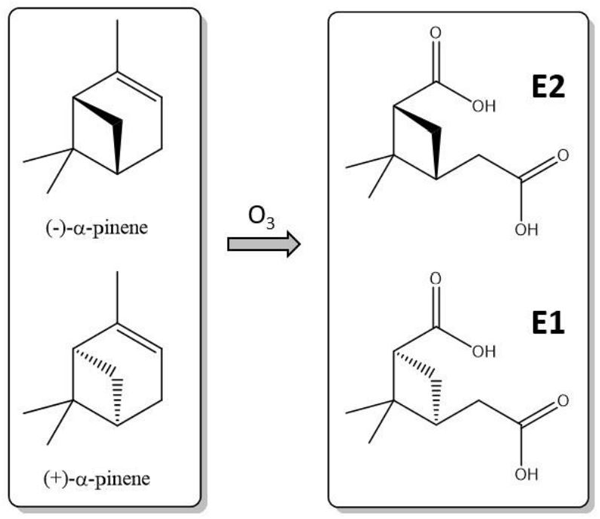
Denis Leppla, Nora Zannoni, Leslie Kremper, Jonathan Williams, Christopher Pöhlker, Marta Sá, Maria Christina Solci, and Thorsten Hoffmann
Atmos. Chem. Phys., 23, 809–820, https://doi.org/10.5194/acp-23-809-2023, https://doi.org/10.5194/acp-23-809-2023, 2023
Short summary
Short summary
Chiral chemodiversity plays a critical role in biochemical processes such as insect and plant communication. Here we report on the measurement of chiral-specified secondary organic aerosol in the Amazon rainforest. The results show that the chiral ratio is mainly determined by large-scale emission processes. Characteristic emissions of chiral aerosol precursors from different forest ecosystems can thus provide large-scale information on different biogenic sources via chiral particle analysis.
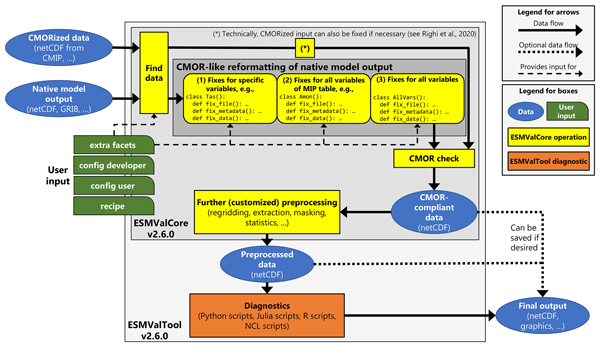
Manuel Schlund, Birgit Hassler, Axel Lauer, Bouwe Andela, Patrick Jöckel, Rémi Kazeroni, Saskia Loosveldt Tomas, Brian Medeiros, Valeriu Predoi, Stéphane Sénési, Jérôme Servonnat, Tobias Stacke, Javier Vegas-Regidor, Klaus Zimmermann, and Veronika Eyring
Geosci. Model Dev., 16, 315–333, https://doi.org/10.5194/gmd-16-315-2023, https://doi.org/10.5194/gmd-16-315-2023, 2023
Short summary
Short summary
The Earth System Model Evaluation Tool (ESMValTool) is a community diagnostics and performance metrics tool for routine evaluation of Earth system models. Originally, ESMValTool was designed to process reformatted output provided by large model intercomparison projects like the Coupled Model Intercomparison Project (CMIP). Here, we describe a new extension of ESMValTool that allows for reading and processing native climate model output, i.e., data that have not been reformatted before.
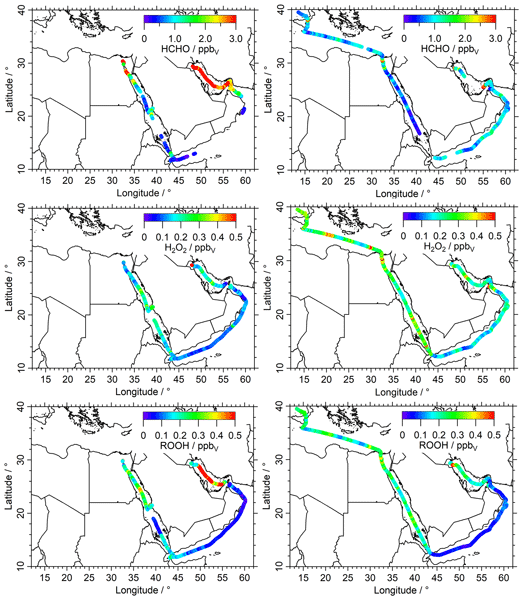
Dirk Dienhart, Bettina Brendel, John N. Crowley, Philipp G. Eger, Hartwig Harder, Monica Martinez, Andrea Pozzer, Roland Rohloff, Jan Schuladen, Sebastian Tauer, David Walter, Jos Lelieveld, and Horst Fischer
Atmos. Chem. Phys., 23, 119–142, https://doi.org/10.5194/acp-23-119-2023, https://doi.org/10.5194/acp-23-119-2023, 2023
Short summary
Short summary
Formaldehyde and hydroperoxide measurements were performed in the marine boundary layer around the Arabian Peninsula and highlight the Suez Canal and Arabian (Persian) Gulf as a hotspot of photochemical air pollution. A comparison with the EMAC model shows that the formaldehyde results match within a factor of 2, while hydrogen peroxide was overestimated by more than a factor of 5, which revealed enhanced HOx (OH+HO2) radicals in the simulation and an underestimation of dry deposition velocites.
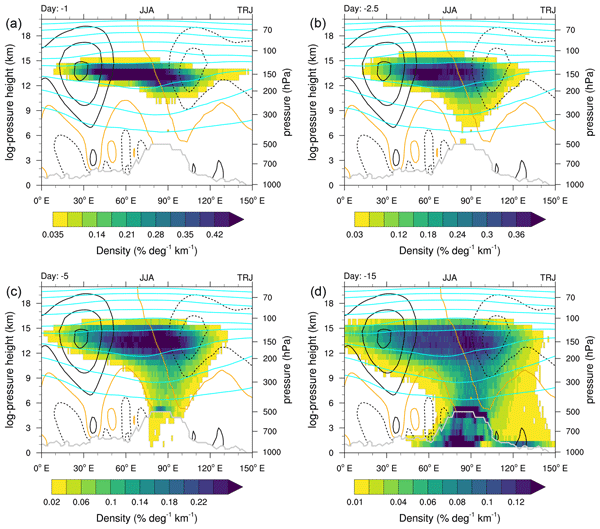
Matthias Nützel, Sabine Brinkop, Martin Dameris, Hella Garny, Patrick Jöckel, Laura L. Pan, and Mijeong Park
Atmos. Chem. Phys., 22, 15659–15683, https://doi.org/10.5194/acp-22-15659-2022, https://doi.org/10.5194/acp-22-15659-2022, 2022
Short summary
Short summary
During the Asian summer monsoon season, a large high-pressure system is present at levels close to the tropopause above Asia. We analyse how air masses are transported from surface levels to this high-pressure system, which shows distinct features from the surrounding air masses. To this end, we employ multiannual data from two complementary models that allow us to analyse the climatology as well as the interannual and intraseasonal variability of these transport pathways.
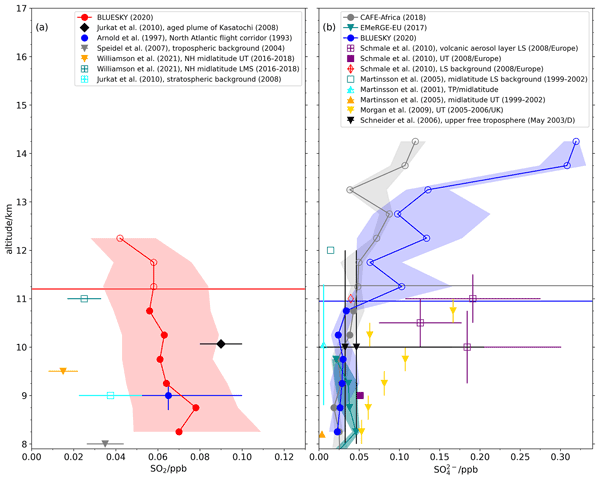
Laura Tomsche, Andreas Marsing, Tina Jurkat-Witschas, Johannes Lucke, Stefan Kaufmann, Katharina Kaiser, Johannes Schneider, Monika Scheibe, Hans Schlager, Lenard Röder, Horst Fischer, Florian Obersteiner, Andreas Zahn, Martin Zöger, Jos Lelieveld, and Christiane Voigt
Atmos. Chem. Phys., 22, 15135–15151, https://doi.org/10.5194/acp-22-15135-2022, https://doi.org/10.5194/acp-22-15135-2022, 2022
Short summary
Short summary
The detection of sulfur compounds in the upper troposphere (UT) and lower stratosphere (LS) is a challenge. In-flight measurements of SO2 and sulfate aerosol were performed during the BLUESKY mission in spring 2020 under exceptional atmospheric conditions. Reduced sinks in the dry UTLS and lower but still significant air traffic influenced the enhanced SO2 in the UT, and aged volcanic plumes enhanced the LS sulfate aerosol impacting the atmospheric radiation budget and global climate.
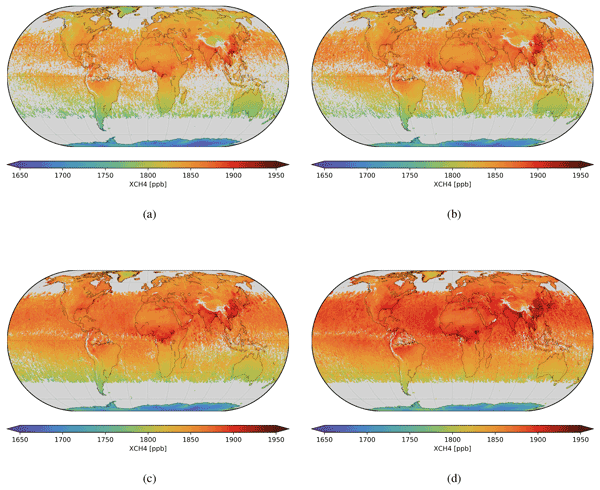
Alba Lorente, Tobias Borsdorff, Mari C. Martinez-Velarte, Andre Butz, Otto P. Hasekamp, Lianghai Wu, and Jochen Landgraf
Atmos. Meas. Tech., 15, 6585–6603, https://doi.org/10.5194/amt-15-6585-2022, https://doi.org/10.5194/amt-15-6585-2022, 2022
Short summary
Short summary
The TROPOspheric Monitoring Instrument (TROPOMI) performs observations over ocean in every orbit, enhancing the monitoring capabilities of methane from space. In the sun glint geometry the mirror-like reflection at the water surface provides a signal that is high enough to retrieve methane with high accuracy and precision. We present 4 years of methane concentrations over the ocean, and we assess its quality. We also show the importance of ocean observations to quantify total CH4 emissions.

Johannes Pletzer, Didier Hauglustaine, Yann Cohen, Patrick Jöckel, and Volker Grewe
Atmos. Chem. Phys., 22, 14323–14354, https://doi.org/10.5194/acp-22-14323-2022, https://doi.org/10.5194/acp-22-14323-2022, 2022
Short summary
Short summary
Very fast aircraft can travel long distances in extremely short times and can fly at high altitudes (15 to 35 km). These aircraft emit water vapour, nitrogen oxides, and hydrogen. Water vapour emissions remain for months to several years at these altitudes and have an important impact on temperature. We investigate two aircraft fleets flying at 26 and 35 km. Ozone is depleted more, and the water vapour perturbation and temperature change are larger for the aircraft flying at 35 km.
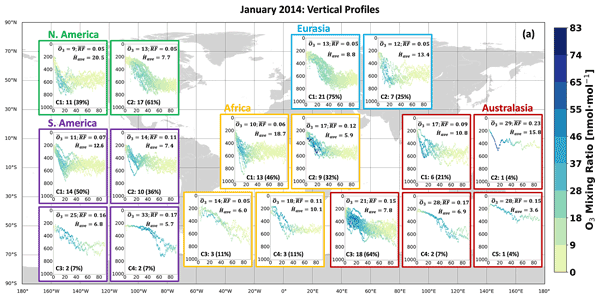
Jin Maruhashi, Volker Grewe, Christine Frömming, Patrick Jöckel, and Irene C. Dedoussi
Atmos. Chem. Phys., 22, 14253–14282, https://doi.org/10.5194/acp-22-14253-2022, https://doi.org/10.5194/acp-22-14253-2022, 2022
Short summary
Short summary
Aviation NOx emissions lead to the formation of ozone in the atmosphere in the short term, which has a climate warming effect. This study uses global-scale simulations to characterize the transport patterns between NOx emissions at an altitude of ~ 10.4 km and the resulting ozone. Results show a strong spatial and temporal dependence of NOx in disturbing atmospheric O3 concentrations, with the location that is most impacted in terms of warming not necessarily coinciding with the emission region.
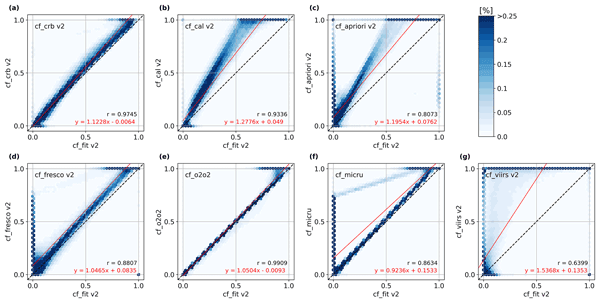
Miriam Latsch, Andreas Richter, Henk Eskes, Maarten Sneep, Ping Wang, Pepijn Veefkind, Ronny Lutz, Diego Loyola, Athina Argyrouli, Pieter Valks, Thomas Wagner, Holger Sihler, Michel van Roozendael, Nicolas Theys, Huan Yu, Richard Siddans, and John P. Burrows
Atmos. Meas. Tech., 15, 6257–6283, https://doi.org/10.5194/amt-15-6257-2022, https://doi.org/10.5194/amt-15-6257-2022, 2022
Short summary
Short summary
The article investigates different S5P TROPOMI cloud retrieval algorithms for tropospheric trace gas retrievals. The cloud products show differences primarily over snow and ice and for scenes under sun glint. Some issues regarding across-track dependence are found for the cloud fractions as well as for the cloud heights.
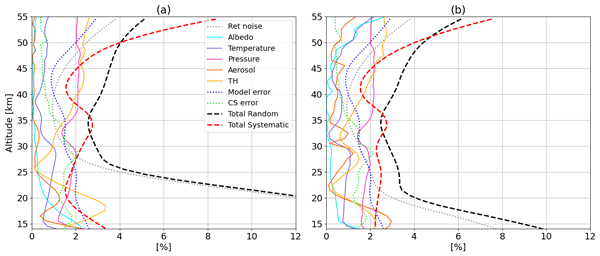
Carlo Arosio, Alexei Rozanov, Victor Gorshelev, Alexandra Laeng, and John P. Burrows
Atmos. Meas. Tech., 15, 5949–5967, https://doi.org/10.5194/amt-15-5949-2022, https://doi.org/10.5194/amt-15-5949-2022, 2022
Short summary
Short summary
This paper characterizes the uncertainties affecting the ozone profiles retrieved at the University of Bremen through OMPS limb satellite observations. An accurate knowledge of the uncertainties is relevant for the validation of the product and to correctly interpret the retrieval results. We investigate several sources of uncertainties, estimate a total random and systematic component, and verify the consistency of the combined OMPS-MLS total uncertainty.

Zhaofeng Tan, Hendrik Fuchs, Andreas Hofzumahaus, William J. Bloss, Birger Bohn, Changmin Cho, Thorsten Hohaus, Frank Holland, Chandrakiran Lakshmisha, Lu Liu, Paul S. Monks, Anna Novelli, Doreen Niether, Franz Rohrer, Ralf Tillmann, Thalassa S. E. Valkenburg, Vaishali Vardhan, Astrid Kiendler-Scharr, Andreas Wahner, and Roberto Sommariva
Atmos. Chem. Phys., 22, 13137–13152, https://doi.org/10.5194/acp-22-13137-2022, https://doi.org/10.5194/acp-22-13137-2022, 2022
Short summary
Short summary
During the 2019 JULIAC campaign, ClNO2 was measured at a rural site in Germany in different seasons. The highest ClNO2 level was 1.6 ppbv in September. ClNO2 production was more sensitive to the availability of NO2 than O3. The average ClNO2 production efficiency was up to 18 % in February and September and down to 3 % in December. These numbers are at the high end of the values reported in the literature, indicating the importance of ClNO2 chemistry in rural environments in midwestern Europe.
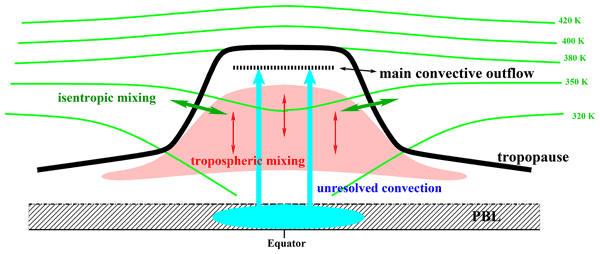
Paul Konopka, Mengchu Tao, Marc von Hobe, Lars Hoffmann, Corinna Kloss, Fabrizio Ravegnani, C. Michael Volk, Valentin Lauther, Andreas Zahn, Peter Hoor, and Felix Ploeger
Geosci. Model Dev., 15, 7471–7487, https://doi.org/10.5194/gmd-15-7471-2022, https://doi.org/10.5194/gmd-15-7471-2022, 2022
Short summary
Short summary
Pure trajectory-based transport models driven by meteorology derived from reanalysis products (ERA5) take into account only the resolved, advective part of transport. That means neither mixing processes nor unresolved subgrid-scale advective processes like convection are included. The Chemical Lagrangian Model of the Stratosphere (CLaMS) includes these processes. We show that isentropic mixing dominates unresolved transport. The second most important transport process is unresolved convection.
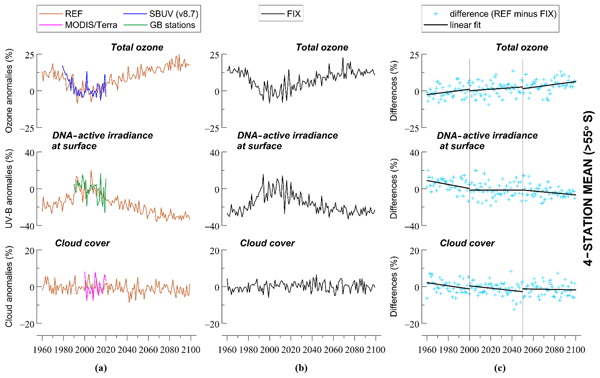
Kostas Eleftheratos, John Kapsomenakis, Ilias Fountoulakis, Christos S. Zerefos, Patrick Jöckel, Martin Dameris, Alkiviadis F. Bais, Germar Bernhard, Dimitra Kouklaki, Kleareti Tourpali, Scott Stierle, J. Ben Liley, Colette Brogniez, Frédérique Auriol, Henri Diémoz, Stana Simic, Irina Petropavlovskikh, Kaisa Lakkala, and Kostas Douvis
Atmos. Chem. Phys., 22, 12827–12855, https://doi.org/10.5194/acp-22-12827-2022, https://doi.org/10.5194/acp-22-12827-2022, 2022
Short summary
Short summary
We present the future evolution of DNA-active ultraviolet (UV) radiation in view of increasing greenhouse gases (GHGs) and decreasing ozone depleting substances (ODSs). It is shown that DNA-active UV radiation might increase after 2050 between 50° N–50° S due to GHG-induced reductions in clouds and ozone, something that is likely not to happen at high latitudes, where DNA-active UV radiation will continue its downward trend mainly due to stratospheric ozone recovery from the reduction in ODSs.
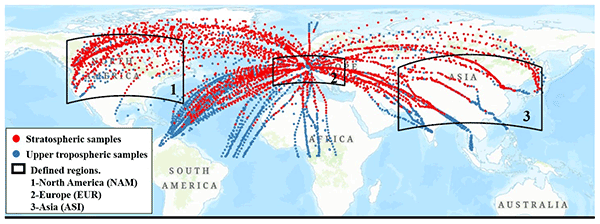
Mengze Li, Andrea Pozzer, Jos Lelieveld, and Jonathan Williams
Earth Syst. Sci. Data, 14, 4351–4364, https://doi.org/10.5194/essd-14-4351-2022, https://doi.org/10.5194/essd-14-4351-2022, 2022
Short summary
Short summary
We present a northern hemispheric airborne measurement dataset of atmospheric ethane, propane and methane and temporal trends for the time period 2006–2016 in the upper troposphere and lower stratosphere. The growth rates of ethane, methane, and propane in the upper troposphere are -2.24, 0.33, and -0.78 % yr-1, respectively, and in the lower stratosphere they are -3.27, 0.26, and -4.91 % yr-1, respectively, in 2006–2016.
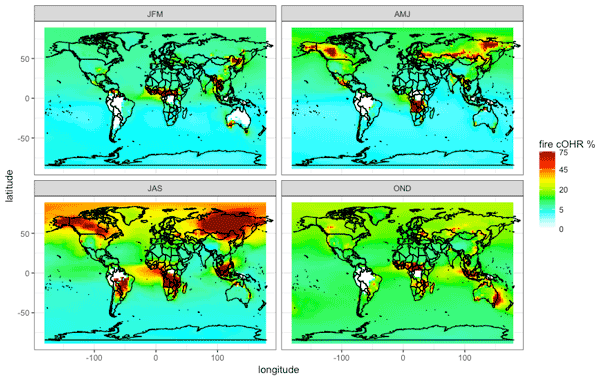
Therese S. Carter, Colette L. Heald, Jesse H. Kroll, Eric C. Apel, Donald Blake, Matthew Coggon, Achim Edtbauer, Georgios Gkatzelis, Rebecca S. Hornbrook, Jeff Peischl, Eva Y. Pfannerstill, Felix Piel, Nina G. Reijrink, Akima Ringsdorf, Carsten Warneke, Jonathan Williams, Armin Wisthaler, and Lu Xu
Atmos. Chem. Phys., 22, 12093–12111, https://doi.org/10.5194/acp-22-12093-2022, https://doi.org/10.5194/acp-22-12093-2022, 2022
Short summary
Short summary
Fires emit many gases which can contribute to smog and air pollution. However, the amount and properties of these chemicals are not well understood, so this work updates and expands their representation in a global atmospheric model, including by adding new chemicals. We confirm that this updated representation generally matches measurements taken in several fire regions. We then show that fires provide ~15 % of atmospheric reactivity globally and more than 75 % over fire source regions.
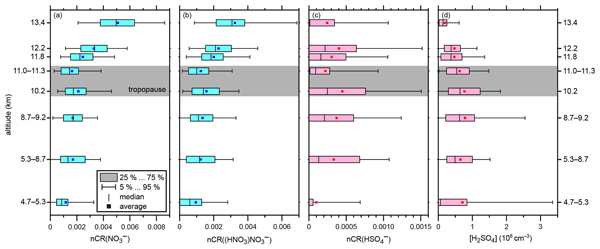
Marcel Zauner-Wieczorek, Martin Heinritzi, Manuel Granzin, Timo Keber, Andreas Kürten, Katharina Kaiser, Johannes Schneider, and Joachim Curtius
Atmos. Chem. Phys., 22, 11781–11794, https://doi.org/10.5194/acp-22-11781-2022, https://doi.org/10.5194/acp-22-11781-2022, 2022
Short summary
Short summary
We present measurements of ambient ions in the free troposphere and lower stratosphere over Europe in spring 2020. We observed nitrate and hydrogen sulfate, amongst others. From their ratio, the number concentrations of gaseous sulfuric acid were inferred. Nitrate increased towards the stratosphere, whilst sulfuric acid was slightly decreased there. The average values for sulfuric acid were 1.9 to 7.8 × 105 cm-3. Protonated pyridine was identified in an altitude range of 4.6 to 8.5 km.
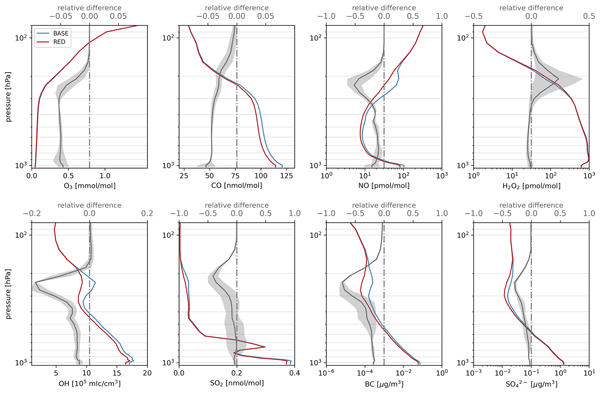
Simon F. Reifenberg, Anna Martin, Matthias Kohl, Sara Bacer, Zaneta Hamryszczak, Ivan Tadic, Lenard Röder, Daniel J. Crowley, Horst Fischer, Katharina Kaiser, Johannes Schneider, Raphael Dörich, John N. Crowley, Laura Tomsche, Andreas Marsing, Christiane Voigt, Andreas Zahn, Christopher Pöhlker, Bruna A. Holanda, Ovid Krüger, Ulrich Pöschl, Mira Pöhlker, Patrick Jöckel, Marcel Dorf, Ulrich Schumann, Jonathan Williams, Birger Bohn, Joachim Curtius, Hardwig Harder, Hans Schlager, Jos Lelieveld, and Andrea Pozzer
Atmos. Chem. Phys., 22, 10901–10917, https://doi.org/10.5194/acp-22-10901-2022, https://doi.org/10.5194/acp-22-10901-2022, 2022
Short summary
Short summary
In this work we use a combination of observational data from an aircraft campaign and model results to investigate the effect of the European lockdown due to COVID-19 in spring 2020. Using model results, we show that the largest relative changes to the atmospheric composition caused by the reduced emissions are located in the upper troposphere around aircraft cruise altitude, while the largest absolute changes are present at the surface.
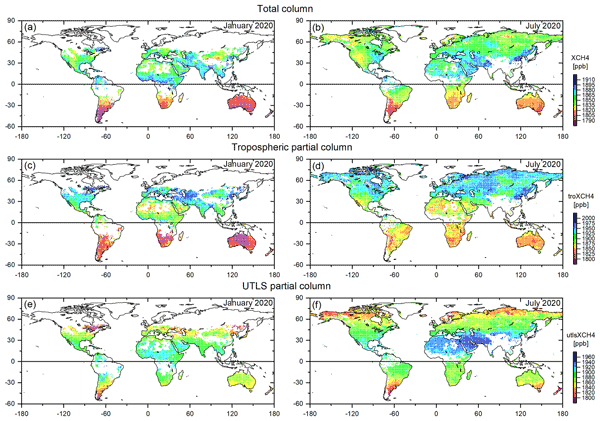
Matthias Schneider, Benjamin Ertl, Qiansi Tu, Christopher J. Diekmann, Farahnaz Khosrawi, Amelie N. Röhling, Frank Hase, Darko Dubravica, Omaira E. García, Eliezer Sepúlveda, Tobias Borsdorff, Jochen Landgraf, Alba Lorente, André Butz, Huilin Chen, Rigel Kivi, Thomas Laemmel, Michel Ramonet, Cyril Crevoisier, Jérome Pernin, Martin Steinbacher, Frank Meinhardt, Kimberly Strong, Debra Wunch, Thorsten Warneke, Coleen Roehl, Paul O. Wennberg, Isamu Morino, Laura T. Iraci, Kei Shiomi, Nicholas M. Deutscher, David W. T. Griffith, Voltaire A. Velazco, and David F. Pollard
Atmos. Meas. Tech., 15, 4339–4371, https://doi.org/10.5194/amt-15-4339-2022, https://doi.org/10.5194/amt-15-4339-2022, 2022
Short summary
Short summary
We present a computationally very efficient method for the synergetic use of level 2 remote-sensing data products. We apply the method to IASI vertical profile and TROPOMI total column space-borne methane observations and thus gain sensitivity for the tropospheric methane partial columns, which is not achievable by the individual use of TROPOMI and IASI. These synergetic effects are evaluated theoretically and empirically by inter-comparisons to independent references of TCCON, AirCore, and GAW.
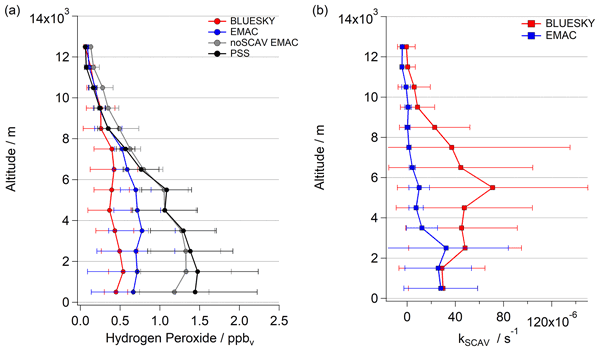
Zaneta T. Hamryszczak, Andrea Pozzer, Florian Obersteiner, Birger Bohn, Benedikt Steil, Jos Lelieveld, and Horst Fischer
Atmos. Chem. Phys., 22, 9483–9497, https://doi.org/10.5194/acp-22-9483-2022, https://doi.org/10.5194/acp-22-9483-2022, 2022
Short summary
Short summary
Hydrogen peroxide plays a pivotal role in the chemistry of the atmosphere. Together with organic hydroperoxides, it forms a reservoir for peroxy radicals, which are known to be the key contributors to the self-cleaning processes of the atmosphere. Hydroperoxides were measured over Europe during the BLUESKY campaign in May–June 2020. The paper gives an overview of the distribution of the species in the troposphere and investigates the impact of wet scavenging and deposition on the budget of H2O2.
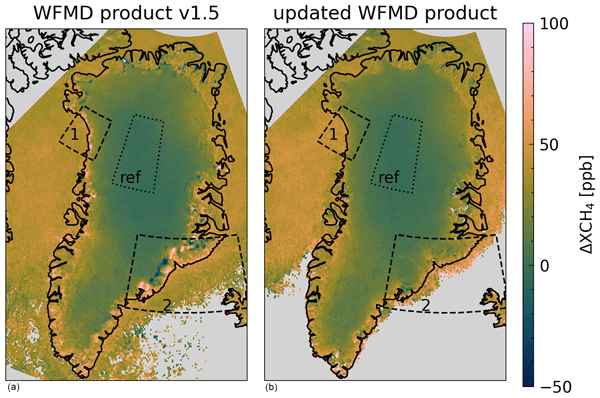
Jonas Hachmeister, Oliver Schneising, Michael Buchwitz, Alba Lorente, Tobias Borsdorff, John P. Burrows, Justus Notholt, and Matthias Buschmann
Atmos. Meas. Tech., 15, 4063–4074, https://doi.org/10.5194/amt-15-4063-2022, https://doi.org/10.5194/amt-15-4063-2022, 2022
Short summary
Short summary
Sentinel-5P trace gas retrievals rely on elevation data in their calculations. Outdated or inaccurate data can lead to significant errors in e.g. dry-air mole fractions of methane (XCH4). We show that the use of inadequate elevation data leads to strong XCH4 anomalies in Greenland. Similar problems can be expected for other regions with inaccurate elevation data. However, we expect these to be more localized. We show that updating elevation data used in the retrieval solves this issue.
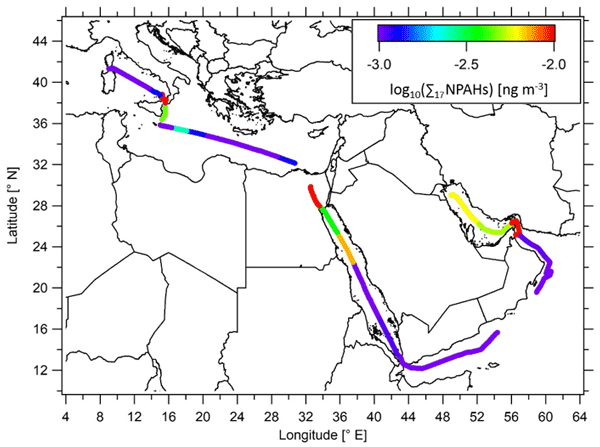
Marco Wietzoreck, Marios Kyprianou, Benjamin A. Musa Bandowe, Siddika Celik, John N. Crowley, Frank Drewnick, Philipp Eger, Nils Friedrich, Minas Iakovides, Petr Kukučka, Jan Kuta, Barbora Nežiková, Petra Pokorná, Petra Přibylová, Roman Prokeš, Roland Rohloff, Ivan Tadic, Sebastian Tauer, Jake Wilson, Hartwig Harder, Jos Lelieveld, Ulrich Pöschl, Euripides G. Stephanou, and Gerhard Lammel
Atmos. Chem. Phys., 22, 8739–8766, https://doi.org/10.5194/acp-22-8739-2022, https://doi.org/10.5194/acp-22-8739-2022, 2022
Short summary
Short summary
A unique dataset of concentrations and sources of polycyclic aromatic hydrocarbons (PAHs) and their alkylated, oxygenated and nitrated derivatives, in total 74 individual species, in the marine atmosphere is presented. Exposure to these substances poses a major health risk. We found very low concentrations over the Arabian Sea, while both local and long-range-transported pollution caused elevated levels over the Mediterranean Sea and the Arabian Gulf.
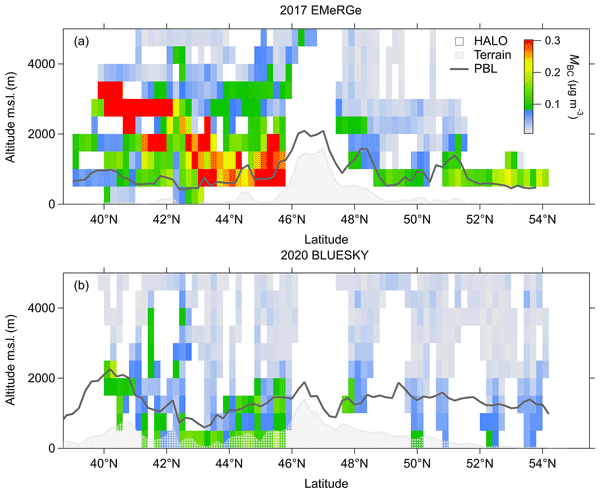
Ovid O. Krüger, Bruna A. Holanda, Sourangsu Chowdhury, Andrea Pozzer, David Walter, Christopher Pöhlker, Maria Dolores Andrés Hernández, John P. Burrows, Christiane Voigt, Jos Lelieveld, Johannes Quaas, Ulrich Pöschl, and Mira L. Pöhlker
Atmos. Chem. Phys., 22, 8683–8699, https://doi.org/10.5194/acp-22-8683-2022, https://doi.org/10.5194/acp-22-8683-2022, 2022
Short summary
Short summary
The abrupt reduction in human activities during the first COVID-19 lockdown created unprecedented atmospheric conditions. We took the opportunity to quantify changes in black carbon (BC) as a major anthropogenic air pollutant. Therefore, we measured BC on board a research aircraft over Europe during the lockdown and compared the results to measurements from 2017. With model simulations we account for different weather conditions and find a lockdown-related decrease in BC of 41 %.
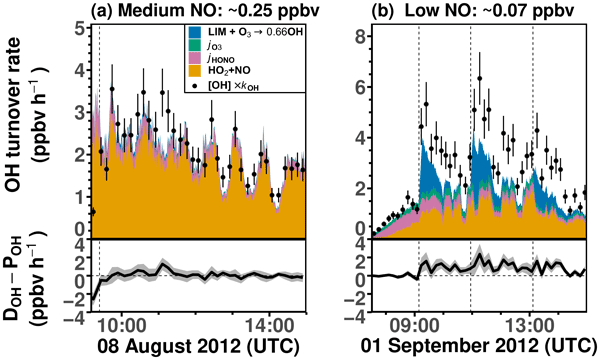
Jacky Yat Sing Pang, Anna Novelli, Martin Kaminski, Ismail-Hakki Acir, Birger Bohn, Philip T. M. Carlsson, Changmin Cho, Hans-Peter Dorn, Andreas Hofzumahaus, Xin Li, Anna Lutz, Sascha Nehr, David Reimer, Franz Rohrer, Ralf Tillmann, Robert Wegener, Astrid Kiendler-Scharr, Andreas Wahner, and Hendrik Fuchs
Atmos. Chem. Phys., 22, 8497–8527, https://doi.org/10.5194/acp-22-8497-2022, https://doi.org/10.5194/acp-22-8497-2022, 2022
Short summary
Short summary
This study investigates the radical chemical budget during the limonene oxidation at different atmospheric-relevant NO concentrations in chamber experiments under atmospheric conditions. It is found that the model–measurement discrepancies of HO2 and RO2 are very large at low NO concentrations that are typical for forested environments. Possible additional processes impacting HO2 and RO2 concentrations are discussed.
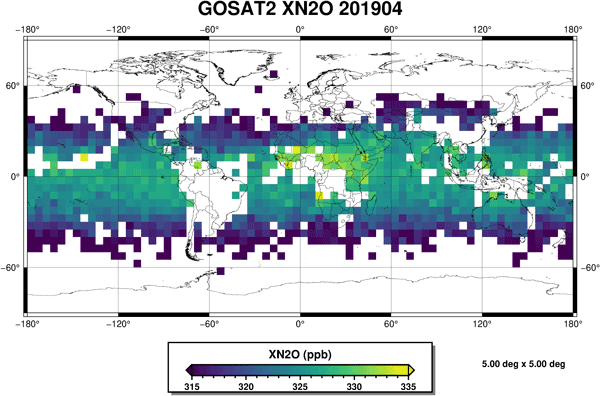
Stefan Noël, Maximilian Reuter, Michael Buchwitz, Jakob Borchardt, Michael Hilker, Oliver Schneising, Heinrich Bovensmann, John P. Burrows, Antonio Di Noia, Robert J. Parker, Hiroshi Suto, Yukio Yoshida, Matthias Buschmann, Nicholas M. Deutscher, Dietrich G. Feist, David W. T. Griffith, Frank Hase, Rigel Kivi, Cheng Liu, Isamu Morino, Justus Notholt, Young-Suk Oh, Hirofumi Ohyama, Christof Petri, David F. Pollard, Markus Rettinger, Coleen Roehl, Constantina Rousogenous, Mahesh Kumar Sha, Kei Shiomi, Kimberly Strong, Ralf Sussmann, Yao Té, Voltaire A. Velazco, Mihalis Vrekoussis, and Thorsten Warneke
Atmos. Meas. Tech., 15, 3401–3437, https://doi.org/10.5194/amt-15-3401-2022, https://doi.org/10.5194/amt-15-3401-2022, 2022
Short summary
Short summary
We present a new version (v3) of the GOSAT and GOSAT-2 FOCAL products.
In addition to an increased number of XCO2 data, v3 also includes products for XCH4 (full-physics and proxy), XH2O and the relative ratio of HDO to H2O (δD). For GOSAT-2, we also present first XCO and XN2O results. All FOCAL data products show reasonable spatial distribution and temporal variations and agree well with TCCON. Global XN2O maps show a gradient from the tropics to higher latitudes on the order of 15 ppb.
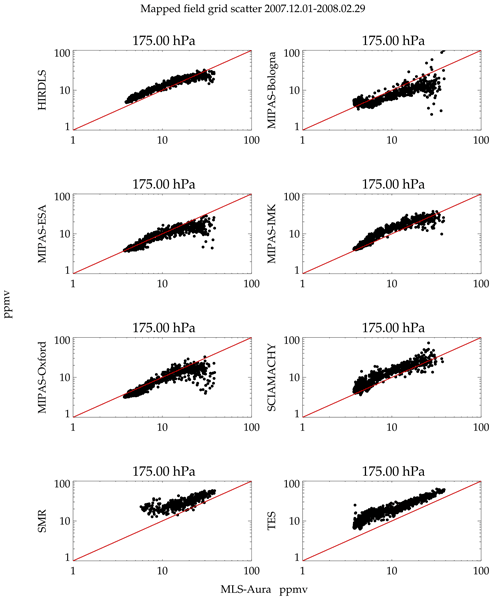
William G. Read, Gabriele Stiller, Stefan Lossow, Michael Kiefer, Farahnaz Khosrawi, Dale Hurst, Holger Vömel, Karen Rosenlof, Bianca M. Dinelli, Piera Raspollini, Gerald E. Nedoluha, John C. Gille, Yasuko Kasai, Patrick Eriksson, Christopher E. Sioris, Kaley A. Walker, Katja Weigel, John P. Burrows, and Alexei Rozanov
Atmos. Meas. Tech., 15, 3377–3400, https://doi.org/10.5194/amt-15-3377-2022, https://doi.org/10.5194/amt-15-3377-2022, 2022
Short summary
Short summary
This paper attempts to provide an assessment of the accuracy of 21 satellite-based instruments that remotely measure atmospheric humidity in the upper troposphere of the Earth's atmosphere. The instruments made their measurements from 1984 to the present time; however, most of these instruments began operations after 2000, and only a few are still operational. The objective of this study is to quantify the accuracy of each satellite humidity data set.
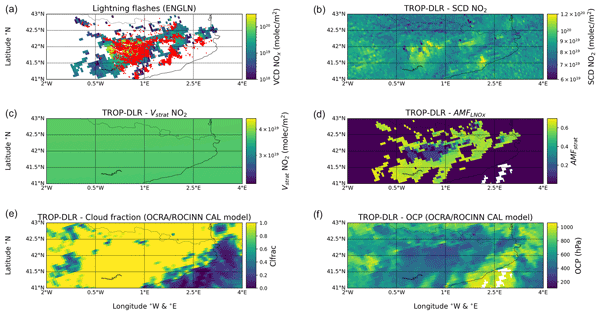
Francisco J. Pérez-Invernón, Heidi Huntrieser, Thilo Erbertseder, Diego Loyola, Pieter Valks, Song Liu, Dale J. Allen, Kenneth E. Pickering, Eric J. Bucsela, Patrick Jöckel, Jos van Geffen, Henk Eskes, Sergio Soler, Francisco J. Gordillo-Vázquez, and Jeff Lapierre
Atmos. Meas. Tech., 15, 3329–3351, https://doi.org/10.5194/amt-15-3329-2022, https://doi.org/10.5194/amt-15-3329-2022, 2022
Short summary
Short summary
Lightning, one of the major sources of nitrogen oxides in the atmosphere, contributes to the tropospheric concentration of ozone and to the oxidizing capacity of the atmosphere. In this work, we contribute to improving the estimation of lightning-produced nitrogen oxides in the Ebro Valley and the Pyrenees by using two different TROPOMI products and comparing the results.
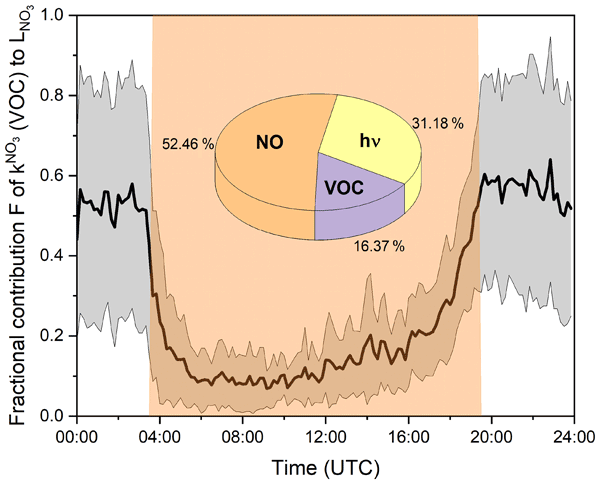
Patrick Dewald, Clara M. Nussbaumer, Jan Schuladen, Akima Ringsdorf, Achim Edtbauer, Horst Fischer, Jonathan Williams, Jos Lelieveld, and John N. Crowley
Atmos. Chem. Phys., 22, 7051–7069, https://doi.org/10.5194/acp-22-7051-2022, https://doi.org/10.5194/acp-22-7051-2022, 2022
Short summary
Short summary
We measured the gas-phase reactivity of the NO3 radical on the summit (825 m a.s.l.) of a semi-rural mountain in southwestern Germany in July 2021. The impact of VOC-induced NO3 losses (mostly monoterpenes) competing with a loss by reaction with NO and photolysis throughout the diel cycle was estimated. Besides chemistry, boundary layer dynamics and plant-physiological processes presumably have a great impact on our observations, which were compared to previous NO3 measurements at the same site.

Mark Weber, Carlo Arosio, Melanie Coldewey-Egbers, Vitali E. Fioletov, Stacey M. Frith, Jeannette D. Wild, Kleareti Tourpali, John P. Burrows, and Diego Loyola
Atmos. Chem. Phys., 22, 6843–6859, https://doi.org/10.5194/acp-22-6843-2022, https://doi.org/10.5194/acp-22-6843-2022, 2022
Short summary
Short summary
Long-term trends in column ozone have been determined from five merged total ozone datasets spanning the period 1978–2020. We show that ozone recovery due to the decline in stratospheric halogens after the 1990s (as regulated by the Montreal Protocol) is evident outside the tropical region and amounts to half a percent per decade. The ozone recovery in the Northern Hemisphere is however compensated for by the negative long-term trend contribution from atmospheric dynamics since the year 2000.

Nora Mettig, Mark Weber, Alexei Rozanov, John P. Burrows, Pepijn Veefkind, Anne M. Thompson, Ryan M. Stauffer, Thierry Leblanc, Gerard Ancellet, Michael J. Newchurch, Shi Kuang, Rigel Kivi, Matthew B. Tully, Roeland Van Malderen, Ankie Piters, Bogumil Kois, René Stübi, and Pavla Skrivankova
Atmos. Meas. Tech., 15, 2955–2978, https://doi.org/10.5194/amt-15-2955-2022, https://doi.org/10.5194/amt-15-2955-2022, 2022
Short summary
Short summary
Vertical ozone profiles from combined spectral measurements in the UV and IR spectral ranges were retrieved by using data from TROPOMI/S5P and CrIS/Suomi-NPP. The vertical resolution and accuracy of the ozone profiles are improved by combining both wavelength ranges compared to retrievals limited to UV or IR spectral data only. The advancement of our TOPAS algorithm for combined measurements is required because in the UV-only retrieval the vertical resolution in the troposphere is very limited.
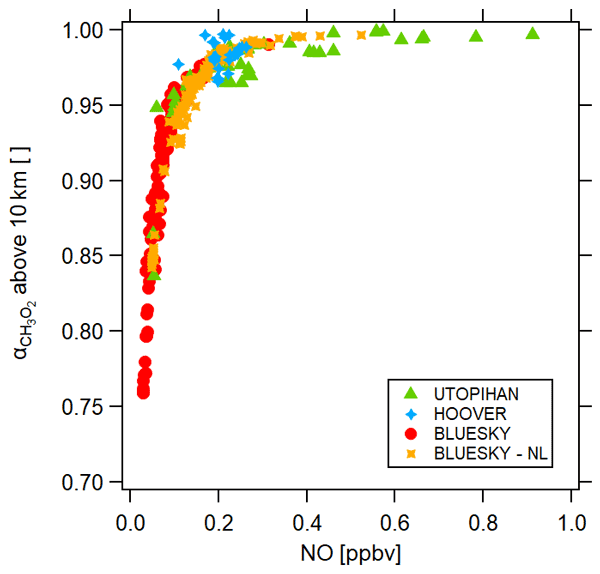
Clara M. Nussbaumer, Andrea Pozzer, Ivan Tadic, Lenard Röder, Florian Obersteiner, Hartwig Harder, Jos Lelieveld, and Horst Fischer
Atmos. Chem. Phys., 22, 6151–6165, https://doi.org/10.5194/acp-22-6151-2022, https://doi.org/10.5194/acp-22-6151-2022, 2022
Short summary
Short summary
The European COVID-19 lockdowns have significantly reduced the emission of primary pollutants such as NOx, which impacts the tropospheric photochemical processes and the abundance of O3. In this study, we present how the lockdowns have affected tropospheric trace gases and ozone production based on in situ observations and modeling simulations. We additionally show that the chemical regime shifted from a transition point to a NOx limitation in the upper troposphere.
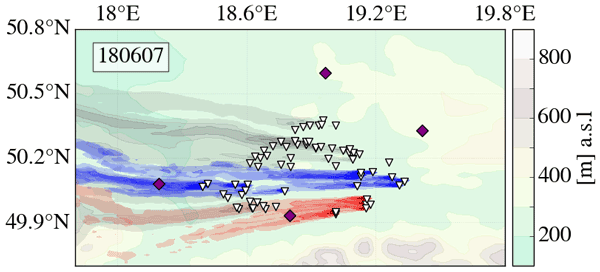
Andreas Luther, Julian Kostinek, Ralph Kleinschek, Sara Defratyka, Mila Stanisavljević, Andreas Forstmaier, Alexandru Dandocsi, Leon Scheidweiler, Darko Dubravica, Norman Wildmann, Frank Hase, Matthias M. Frey, Jia Chen, Florian Dietrich, Jarosław Nȩcki, Justyna Swolkień, Christoph Knote, Sanam N. Vardag, Anke Roiger, and André Butz
Atmos. Chem. Phys., 22, 5859–5876, https://doi.org/10.5194/acp-22-5859-2022, https://doi.org/10.5194/acp-22-5859-2022, 2022
Short summary
Short summary
Coal mining is an extensive source of anthropogenic methane emissions. In order to reduce and mitigate methane emissions, it is important to know how much and where the methane is emitted. We estimated coal mining methane emissions in Poland based on atmospheric methane measurements and particle dispersion modeling. In general, our emission estimates suggest higher emissions than expected by previous annual emission reports.
M. Dolores Andrés Hernández, Andreas Hilboll, Helmut Ziereis, Eric Förster, Ovid O. Krüger, Katharina Kaiser, Johannes Schneider, Francesca Barnaba, Mihalis Vrekoussis, Jörg Schmidt, Heidi Huntrieser, Anne-Marlene Blechschmidt, Midhun George, Vladyslav Nenakhov, Theresa Harlass, Bruna A. Holanda, Jennifer Wolf, Lisa Eirenschmalz, Marc Krebsbach, Mira L. Pöhlker, Anna B. Kalisz Hedegaard, Linlu Mei, Klaus Pfeilsticker, Yangzhuoran Liu, Ralf Koppmann, Hans Schlager, Birger Bohn, Ulrich Schumann, Andreas Richter, Benjamin Schreiner, Daniel Sauer, Robert Baumann, Mariano Mertens, Patrick Jöckel, Markus Kilian, Greta Stratmann, Christopher Pöhlker, Monica Campanelli, Marco Pandolfi, Michael Sicard, José L. Gómez-Amo, Manuel Pujadas, Katja Bigge, Flora Kluge, Anja Schwarz, Nikos Daskalakis, David Walter, Andreas Zahn, Ulrich Pöschl, Harald Bönisch, Stephan Borrmann, Ulrich Platt, and John P. Burrows
Atmos. Chem. Phys., 22, 5877–5924, https://doi.org/10.5194/acp-22-5877-2022, https://doi.org/10.5194/acp-22-5877-2022, 2022
Short summary
Short summary
EMeRGe provides a unique set of in situ and remote sensing airborne measurements of trace gases and aerosol particles along selected flight routes in the lower troposphere over Europe. The interpretation uses also complementary collocated ground-based and satellite measurements. The collected data help to improve the current understanding of the complex spatial distribution of trace gases and aerosol particles resulting from mixing, transport, and transformation of pollution plumes over Europe.
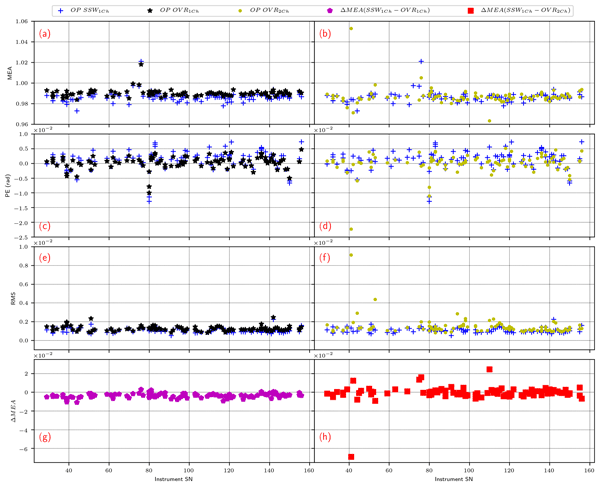
Carlos Alberti, Frank Hase, Matthias Frey, Darko Dubravica, Thomas Blumenstock, Angelika Dehn, Paolo Castracane, Gregor Surawicz, Roland Harig, Bianca C. Baier, Caroline Bès, Jianrong Bi, Hartmut Boesch, André Butz, Zhaonan Cai, Jia Chen, Sean M. Crowell, Nicholas M. Deutscher, Dragos Ene, Jonathan E. Franklin, Omaira García, David Griffith, Bruno Grouiez, Michel Grutter, Abdelhamid Hamdouni, Sander Houweling, Neil Humpage, Nicole Jacobs, Sujong Jeong, Lilian Joly, Nicholas B. Jones, Denis Jouglet, Rigel Kivi, Ralph Kleinschek, Morgan Lopez, Diogo J. Medeiros, Isamu Morino, Nasrin Mostafavipak, Astrid Müller, Hirofumi Ohyama, Paul I. Palmer, Mahesh Pathakoti, David F. Pollard, Uwe Raffalski, Michel Ramonet, Robbie Ramsay, Mahesh Kumar Sha, Kei Shiomi, William Simpson, Wolfgang Stremme, Youwen Sun, Hiroshi Tanimoto, Yao Té, Gizaw Mengistu Tsidu, Voltaire A. Velazco, Felix Vogel, Masataka Watanabe, Chong Wei, Debra Wunch, Marcia Yamasoe, Lu Zhang, and Johannes Orphal
Atmos. Meas. Tech., 15, 2433–2463, https://doi.org/10.5194/amt-15-2433-2022, https://doi.org/10.5194/amt-15-2433-2022, 2022
Short summary
Short summary
Space-borne greenhouse gas missions require ground-based validation networks capable of providing fiducial reference measurements. Here, considerable refinements of the calibration procedures for the COllaborative Carbon Column Observing Network (COCCON) are presented. Laboratory and solar side-by-side procedures for the characterization of the spectrometers have been refined and extended. Revised calibration factors for XCO2, XCO and XCH4 are provided, incorporating 47 new spectrometers.

Wenyu Sun, Matias Berasategui, Andrea Pozzer, Jos Lelieveld, and John N. Crowley
Atmos. Chem. Phys., 22, 4969–4984, https://doi.org/10.5194/acp-22-4969-2022, https://doi.org/10.5194/acp-22-4969-2022, 2022
Short summary
Short summary
The reaction between OH and SO2 is a termolecular process that in the atmosphere results in the formation of H2SO4 and thus aerosols. We present the first temperature- and pressure-dependent measurements of the rate coefficients in N2. This is also the first study to examine the effects of water vapour on the kinetics of this reaction. Our results indicate the rate coefficient is larger than that recommended by evaluation panels, with deviations of up to 30 % in some parts of the atmosphere.
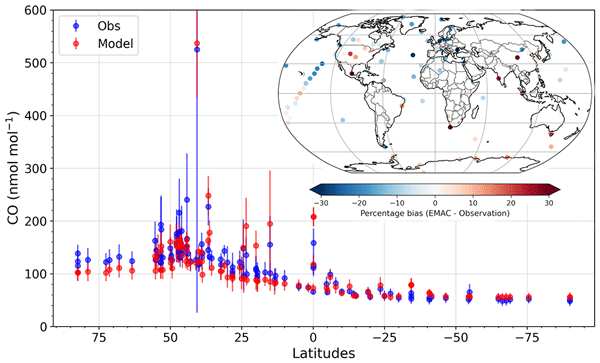
Andrea Pozzer, Simon F. Reifenberg, Vinod Kumar, Bruno Franco, Matthias Kohl, Domenico Taraborrelli, Sergey Gromov, Sebastian Ehrhart, Patrick Jöckel, Rolf Sander, Veronica Fall, Simon Rosanka, Vlassis Karydis, Dimitris Akritidis, Tamara Emmerichs, Monica Crippa, Diego Guizzardi, Johannes W. Kaiser, Lieven Clarisse, Astrid Kiendler-Scharr, Holger Tost, and Alexandra Tsimpidi
Geosci. Model Dev., 15, 2673–2710, https://doi.org/10.5194/gmd-15-2673-2022, https://doi.org/10.5194/gmd-15-2673-2022, 2022
Short summary
Short summary
A newly developed setup of the chemistry general circulation model EMAC (ECHAM5/MESSy for Atmospheric Chemistry) is evaluated here. A comprehensive organic degradation mechanism is used and coupled with a volatility base model.
The results show that the model reproduces most of the tracers and aerosols satisfactorily but shows discrepancies for oxygenated organic gases. It is also shown that this model configuration can be used for further research in atmospheric chemistry.
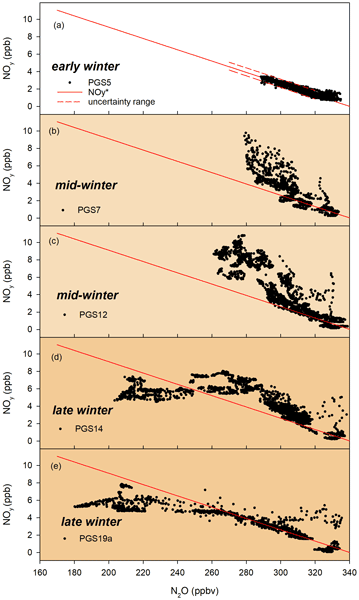
Helmut Ziereis, Peter Hoor, Jens-Uwe Grooß, Andreas Zahn, Greta Stratmann, Paul Stock, Michael Lichtenstern, Jens Krause, Vera Bense, Armin Afchine, Christian Rolf, Wolfgang Woiwode, Marleen Braun, Jörn Ungermann, Andreas Marsing, Christiane Voigt, Andreas Engel, Björn-Martin Sinnhuber, and Hermann Oelhaf
Atmos. Chem. Phys., 22, 3631–3654, https://doi.org/10.5194/acp-22-3631-2022, https://doi.org/10.5194/acp-22-3631-2022, 2022
Short summary
Short summary
Airborne observations were conducted in the lowermost Arctic stratosphere during the winter of 2015/2016. The observed distribution of reactive nitrogen shows clear indications of nitrification in mid-winter and denitrification in late winter. This was caused by the formation of polar stratospheric cloud particles, which were observed during several flights. The sedimentation and evaporation of these particles and the descent of air masses cause a redistribution of reactive nitrogen.

Kezia Lange, Andreas Richter, and John P. Burrows
Atmos. Chem. Phys., 22, 2745–2767, https://doi.org/10.5194/acp-22-2745-2022, https://doi.org/10.5194/acp-22-2745-2022, 2022
Short summary
Short summary
In this study, we investigated short time variability of NOx emissions and lifetimes on a global scale. We combined 2 years of satellite Sentinel-5P TROPOMI tropospheric NO2 column data with wind data. Fifty NOx sources distributed around the world are analyzed. The retrieved emissions show a clear seasonal dependence. NOx lifetime shows a latitudinal dependence but only a week seasonal dependence. NOx emissions show a clear weekly pattern which in contrast is not visible for NOx lifetimes.
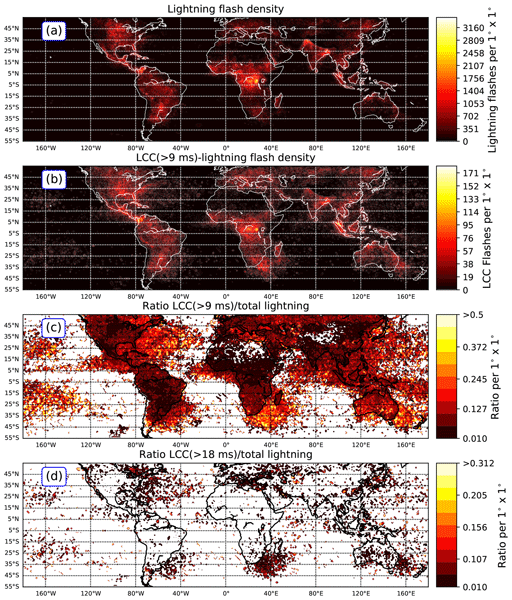
Francisco J. Pérez-Invernón, Heidi Huntrieser, Patrick Jöckel, and Francisco J. Gordillo-Vázquez
Geosci. Model Dev., 15, 1545–1565, https://doi.org/10.5194/gmd-15-1545-2022, https://doi.org/10.5194/gmd-15-1545-2022, 2022
Short summary
Short summary
This study reports the first parameterization of long-continuing-current lightning in a climate model. Long-continuing-current lightning is proposed to be the main precursor of lightning-ignited wildfires and sprites, a type of transient luminous event taking place in the mesosphere. This parameterization can significantly contribute to improving the implementation of wildfires in climate models.
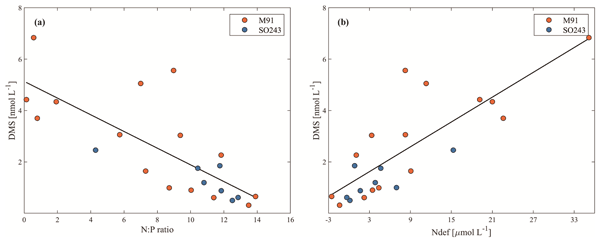
Yanan Zhao, Dennis Booge, Christa A. Marandino, Cathleen Schlundt, Astrid Bracher, Elliot L. Atlas, Jonathan Williams, and Hermann W. Bange
Biogeosciences, 19, 701–714, https://doi.org/10.5194/bg-19-701-2022, https://doi.org/10.5194/bg-19-701-2022, 2022
Short summary
Short summary
We present here, for the first time, simultaneously measured dimethylsulfide (DMS) seawater concentrations and DMS atmospheric mole fractions from the Peruvian upwelling region during two cruises in December 2012 and October 2015. Our results indicate low oceanic DMS concentrations and atmospheric DMS molar fractions in surface waters and the atmosphere, respectively. In addition, the Peruvian upwelling region was identified as an insignificant source of DMS emissions during both periods.
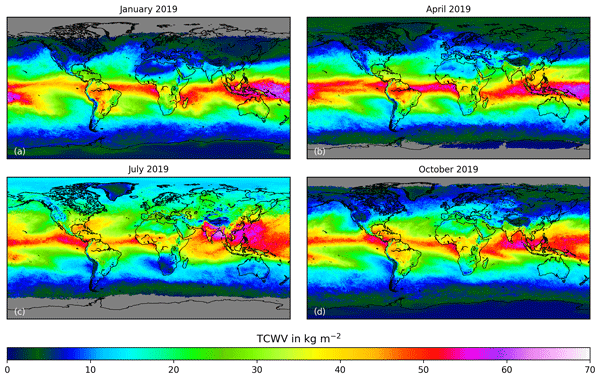
Tobias Küchler, Stefan Noël, Heinrich Bovensmann, John Philip Burrows, Thomas Wagner, Christian Borger, Tobias Borsdorff, and Andreas Schneider
Atmos. Meas. Tech., 15, 297–320, https://doi.org/10.5194/amt-15-297-2022, https://doi.org/10.5194/amt-15-297-2022, 2022
Short summary
Short summary
We applied the air-mass-corrected differential optical absorption spectroscopy (AMC-DOAS) method to derive total column water vapour (TCWV) from Sentinel-5P measurements and compared it to independent data sets. The correlation coefficients of typically more than 0.9 and the small deviations up to 2.5 kg m−2 reveal good agreement between our data product and other TCWV data sets. In particular for the different Sentinel-5P water vapour products, the deviations are around 1 kg m−2.
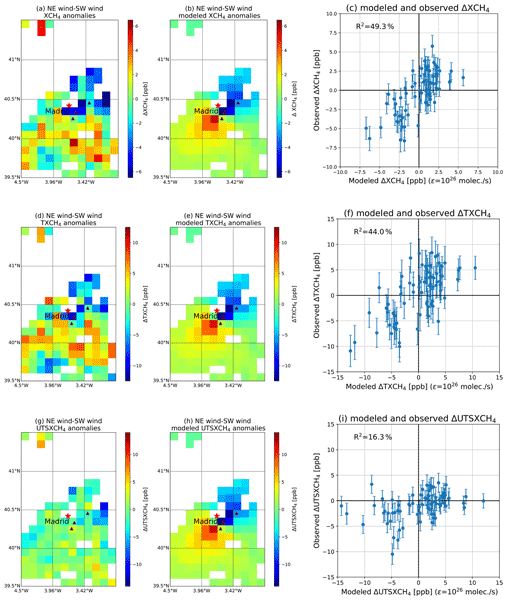
Qiansi Tu, Frank Hase, Matthias Schneider, Omaira García, Thomas Blumenstock, Tobias Borsdorff, Matthias Frey, Farahnaz Khosrawi, Alba Lorente, Carlos Alberti, Juan J. Bustos, André Butz, Virgilio Carreño, Emilio Cuevas, Roger Curcoll, Christopher J. Diekmann, Darko Dubravica, Benjamin Ertl, Carme Estruch, Sergio Fabián León-Luis, Carlos Marrero, Josep-Anton Morgui, Ramón Ramos, Christian Scharun, Carsten Schneider, Eliezer Sepúlveda, Carlos Toledano, and Carlos Torres
Atmos. Chem. Phys., 22, 295–317, https://doi.org/10.5194/acp-22-295-2022, https://doi.org/10.5194/acp-22-295-2022, 2022
Short summary
Short summary
We use different methane ground- and space-based remote sensing data sets for investigating the emission strength of three waste disposal sites close to Madrid. We present a method that uses wind-assigned anomalies for deriving emission strengths from satellite data and estimate their uncertainty to 9–14 %. The emission strengths estimated from the remote sensing data sets are significantly larger than the values published in the official register.

Clara M. Nussbaumer, John N. Crowley, Jan Schuladen, Jonathan Williams, Sascha Hafermann, Andreas Reiffs, Raoul Axinte, Hartwig Harder, Cheryl Ernest, Anna Novelli, Katrin Sala, Monica Martinez, Chinmay Mallik, Laura Tomsche, Christian Plass-Dülmer, Birger Bohn, Jos Lelieveld, and Horst Fischer
Atmos. Chem. Phys., 21, 18413–18432, https://doi.org/10.5194/acp-21-18413-2021, https://doi.org/10.5194/acp-21-18413-2021, 2021
Short summary
Short summary
HCHO is an important atmospheric trace gas influencing the photochemical processes in the Earth’s atmosphere, including the budget of HOx and the abundance of tropospheric O3. This research presents the photochemical calculations of HCHO and O3 based on three field campaigns across Europe. We show that HCHO production via the oxidation of only four volatile organic compound precursors, i.e., CH4, CH3CHO, C5H8 and CH3OH, can balance the observed loss at all sites well.
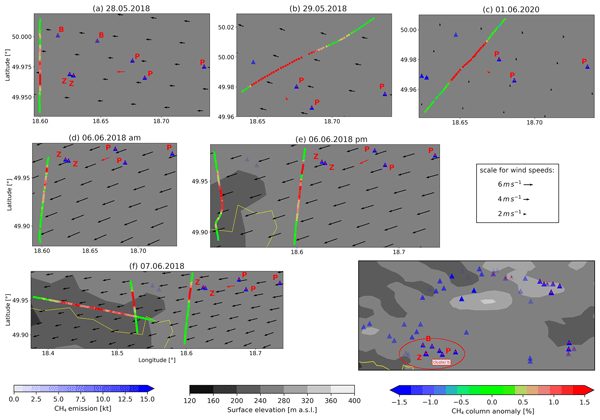
Sven Krautwurst, Konstantin Gerilowski, Jakob Borchardt, Norman Wildmann, Michał Gałkowski, Justyna Swolkień, Julia Marshall, Alina Fiehn, Anke Roiger, Thomas Ruhtz, Christoph Gerbig, Jaroslaw Necki, John P. Burrows, Andreas Fix, and Heinrich Bovensmann
Atmos. Chem. Phys., 21, 17345–17371, https://doi.org/10.5194/acp-21-17345-2021, https://doi.org/10.5194/acp-21-17345-2021, 2021
Short summary
Short summary
Quantification of anthropogenic CH4 emissions remains challenging, but it is essential for near-term climate mitigation strategies. We use airborne remote sensing observations to assess bottom-up estimates of coal mining emissions from one of Europe's largest CH4 emission hot spots located in Poland. The analysis reveals that emissions from small groups of shafts can be disentangled, but caution is advised when comparing observations to commonly reported annual emissions.
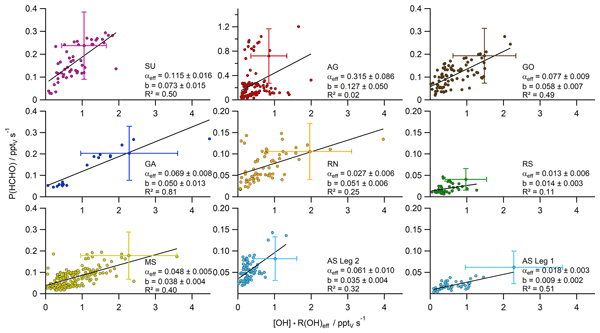
Dirk Dienhart, John N. Crowley, Efstratios Bourtsoukidis, Achim Edtbauer, Philipp G. Eger, Lisa Ernle, Hartwig Harder, Bettina Hottmann, Monica Martinez, Uwe Parchatka, Jean-Daniel Paris, Eva Y. Pfannerstill, Roland Rohloff, Jan Schuladen, Christof Stönner, Ivan Tadic, Sebastian Tauer, Nijing Wang, Jonathan Williams, Jos Lelieveld, and Horst Fischer
Atmos. Chem. Phys., 21, 17373–17388, https://doi.org/10.5194/acp-21-17373-2021, https://doi.org/10.5194/acp-21-17373-2021, 2021
Short summary
Short summary
We present the first ship-based in situ measurements of formaldehyde (HCHO), hydroxyl radicals (OH) and the OH reactivity around the Arabian Peninsula. Regression analysis of the HCHO production rate and the related OH chemistry revealed the regional HCHO yield αeff, which represents the different chemical regimes encountered. Highest values were found for the Arabian Gulf (also known as the Persian Gulf), which highlights this region as a hotspot of photochemical air pollution.
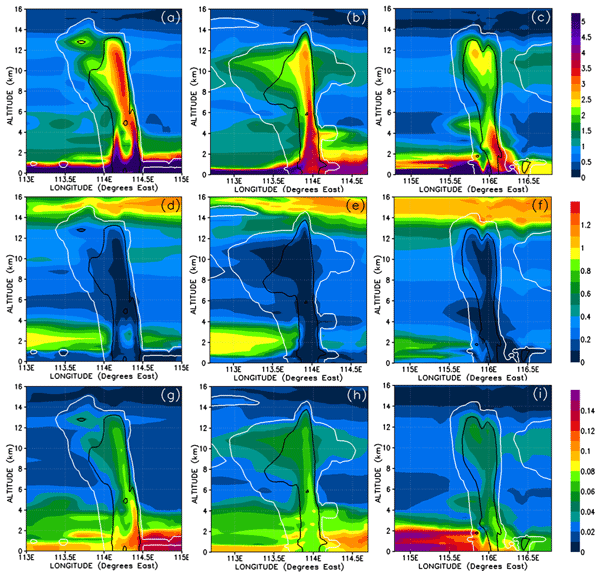
Paul D. Hamer, Virginie Marécal, Ryan Hossaini, Michel Pirre, Gisèle Krysztofiak, Franziska Ziska, Andreas Engel, Stephan Sala, Timo Keber, Harald Bönisch, Elliot Atlas, Kirstin Krüger, Martyn Chipperfield, Valery Catoire, Azizan A. Samah, Marcel Dorf, Phang Siew Moi, Hans Schlager, and Klaus Pfeilsticker
Atmos. Chem. Phys., 21, 16955–16984, https://doi.org/10.5194/acp-21-16955-2021, https://doi.org/10.5194/acp-21-16955-2021, 2021
Short summary
Short summary
Bromoform is a stratospheric ozone-depleting gas released by seaweed and plankton transported to the stratosphere via convection in the tropics. We study the chemical interactions of bromoform and its derivatives within convective clouds using a cloud-scale model and observations. Our findings are that soluble bromine gases are efficiently washed out and removed within the convective clouds and that most bromine is transported vertically to the upper troposphere in the form of bromoform.
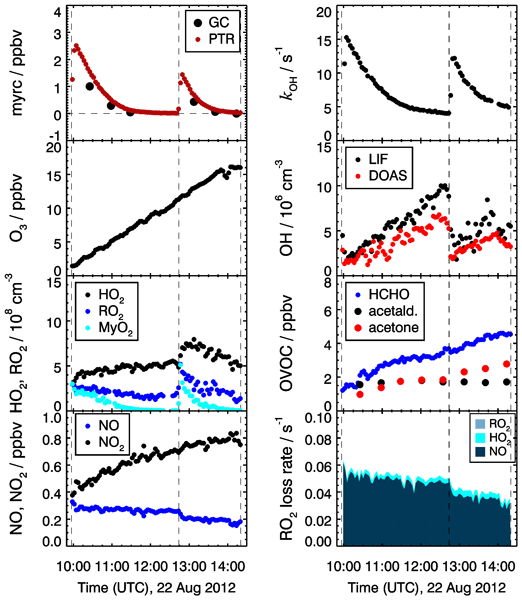
Zhaofeng Tan, Luisa Hantschke, Martin Kaminski, Ismail-Hakki Acir, Birger Bohn, Changmin Cho, Hans-Peter Dorn, Xin Li, Anna Novelli, Sascha Nehr, Franz Rohrer, Ralf Tillmann, Robert Wegener, Andreas Hofzumahaus, Astrid Kiendler-Scharr, Andreas Wahner, and Hendrik Fuchs
Atmos. Chem. Phys., 21, 16067–16091, https://doi.org/10.5194/acp-21-16067-2021, https://doi.org/10.5194/acp-21-16067-2021, 2021
Short summary
Short summary
The photo-oxidation of myrcene, a monoterpene species emitted by plants, was investigated at atmospheric conditions in the outdoor simulation chamber SAPHIR. The chemical structure of myrcene is partly similar to isoprene. Therefore, it can be expected that hydrogen shift reactions could play a role as observed for isoprene. In this work, their potential impact on the regeneration efficiency of hydroxyl radicals is investigated.
Yu-Wen Chen, Yi-Chun Chen, Charles C.-K. Chou, Hui-Ming Hung, Shih-Yu Chang, Lisa Eirenschmalz, Michael Lichtenstern, Helmut Ziereis, Hans Schlager, Greta Stratmann, Katharina Kaiser, Johannes Schneider, Stephan Borrmann, Florian Obersteiner, Eric Förster, Andreas Zahn, Wei-Nai Chen, Po-Hsiung Lin, Shuenn-Chin Chang, Maria Dolores Andrés Hernández, Pao-Kuan Wang, and John P. Burrows
Atmos. Chem. Phys. Discuss., https://doi.org/10.5194/acp-2021-788, https://doi.org/10.5194/acp-2021-788, 2021
Preprint withdrawn
Short summary
Short summary
By presenting an approach using EMeRGe-Asia airborne field measurements and surface observations, this study shows that the fraction of OH reactivity due to SO2-OH reaction has a significant correlation with the sulfate concentration. Approximately 30 % of sulfate is produced by SO2-OH reaction. Our results underline the importance of SO2-OH gas-phase oxidation in sulfate formation, and demonstrate that the method can be applied to other regions and under different meteorological conditions.
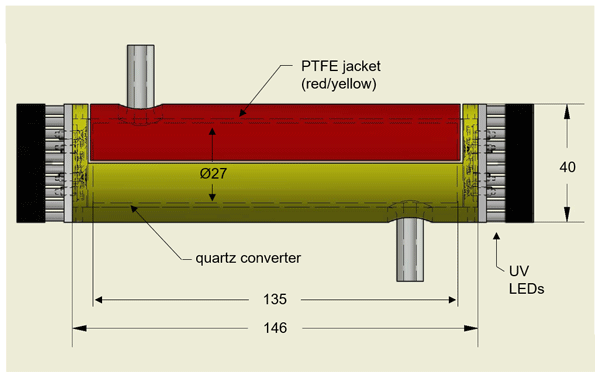
Clara M. Nussbaumer, Uwe Parchatka, Ivan Tadic, Birger Bohn, Daniel Marno, Monica Martinez, Roland Rohloff, Hartwig Harder, Flora Kluge, Klaus Pfeilsticker, Florian Obersteiner, Martin Zöger, Raphael Doerich, John N. Crowley, Jos Lelieveld, and Horst Fischer
Atmos. Meas. Tech., 14, 6759–6776, https://doi.org/10.5194/amt-14-6759-2021, https://doi.org/10.5194/amt-14-6759-2021, 2021
Short summary
Short summary
NO2 plays a central role in atmospheric photochemical processes and requires accurate measurements. This research presents NO2 data obtained via chemiluminescence using a photolytic converter from airborne studies around Cabo Verde and laboratory investigations. We show the limits and error-proneness of a conventional blue light converter in aircraft measurements affected by humidity and NO levels and suggest the use of an alternative quartz converter for more reliable results.
Meike K. Rotermund, Vera Bense, Martyn P. Chipperfield, Andreas Engel, Jens-Uwe Grooß, Peter Hoor, Tilman Hüneke, Timo Keber, Flora Kluge, Benjamin Schreiner, Tanja Schuck, Bärbel Vogel, Andreas Zahn, and Klaus Pfeilsticker
Atmos. Chem. Phys., 21, 15375–15407, https://doi.org/10.5194/acp-21-15375-2021, https://doi.org/10.5194/acp-21-15375-2021, 2021
Short summary
Short summary
Airborne total bromine (Brtot) and tracer measurements suggest Brtot-rich air masses persistently protruded into the lower stratosphere (LS), creating a high Brtot region over the North Atlantic in fall 2017. The main source is via isentropic transport by the Asian monsoon and to a lesser extent transport across the extratropical tropopause as quantified by a Lagrange model. The transport of Brtot via Central American hurricanes is also observed. Lastly, the impact of Brtot on LS O3 is assessed.
Cited articles
Acker, K., Möller, D., Wieprecht, W., Meixner, F. X., Bohn, B., Gilge, S., Plass-Dülmer, C., and Berresheim, H.: Strong daytime production of OH from HNO2 at a rural mountain site, Geophys. Res. Lett., 33, L02809, https://doi.org/10.1029/2005GL024643, 2006. a, b
Akimoto, H. and Tanimoto, H.: Review of Comprehensive Measurements of Speciated NOy and its Chemistry: Need for Quantifying the Role of Heterogeneous Processes of HNO3 and HONO, Aerosol Air Qual. Res., 21, 200395, https://doi.org/10.4209/aaqr.2020.07.0395, 2021. a
Alicke, B., Geyer, A., Hofzumahaus, A., Holland, F., Konrad, S., Pätz, H. W., Schäfer, J., Stutz, J., Volz-Thomas, A., and Platt, U.: OH formation by HONO photolysis during the BERLIOZ experiment, J. Geophys. Res.-Atmos., 108, 8247, https://doi.org/10.1029/2001JD000579, 2003. a
Alvarez, D.: JUWELS Cluster and Booster: Exascale Pathfinder with Modular Supercomputing Architecture at Juelich Supercomputing Centre, Journal of large-scale research facilities JLSRF, 7, A183–A183, https://doi.org/10.17815/jlsrf-7-183, 2021. a
Amedro, D., Parker, A. E., Schoemaecker, C., and Fittschen, C.: Direct observation of OH radicals after 565 nm multi-photon excitation of NO2 in the presence of H2O, Chem. Phys. Lett., 513, 12–16, https://doi.org/10.1016/j.cplett.2011.07.062, 2011. a
Amedro, D., Berasategui, M., Bunkan, A. J. C., Pozzer, A., Lelieveld, J., and Crowley, J. N.: Kinetics of the OH + NO2 reaction: effect of water vapour and new parameterization for global modelling, Atmos. Chem. Phys., 20, 3091–3105, https://doi.org/10.5194/acp-20-3091-2020, 2020. a, b, c
Ammann, M., Kalberer, M., Jost, D. T., Tobler, L., Rössler, E., Piguet, D., Gäggeler, H. W., and Baltensperger, U.: Heterogeneous production of nitrous acid on soot in polluted air masses, Nature, 395, 157–160, https://doi.org/10.1038/25965, 1998. a, b
Andersen, S. T., Carpenter, L. J., Reed, C., Lee, J. D., Chance, R., Sherwen, T., Vaughan, A. R., Stewart, J., Edwards, P. M., Bloss, W. J., Sommariva, R., Crilley, L. R., Nott, G. J., Neves, L., Read, K., Heard, D. E., Seakins, P. W., Whalley, L. K., Boustead, G. A., Fleming, L. T., Stone, D., and Fomba, K. W.: Extensive field evidence for the release of HONO from the photolysis of nitrate aerosols, Sci. Adv., 9, eadd6266, https://doi.org/10.1126/sciadv.add6266, 2023. a, b, c, d, e, f, g, h, i, j, k, l, m, n, o, p, q
Andrés Hernández, M. D., Hilboll, A., Ziereis, H., Förster, E., Krüger, O. O., Kaiser, K., Schneider, J., Barnaba, F., Vrekoussis, M., Schmidt, J., Huntrieser, H., Blechschmidt, A.-M., George, M., Nenakhov, V., Harlass, T., Holanda, B. A., Wolf, J., Eirenschmalz, L., Krebsbach, M., Pöhlker, M. L., Kalisz Hedegaard, A. B., Mei, L., Pfeilsticker, K., Liu, Y., Koppmann, R., Schlager, H., Bohn, B., Schumann, U., Richter, A., Schreiner, B., Sauer, D., Baumann, R., Mertens, M., Jöckel, P., Kilian, M., Stratmann, G., Pöhlker, C., Campanelli, M., Pandolfi, M., Sicard, M., Gómez-Amo, J. L., Pujadas, M., Bigge, K., Kluge, F., Schwarz, A., Daskalakis, N., Walter, D., Zahn, A., Pöschl, U., Bönisch, H., Borrmann, S., Platt, U., and Burrows, J. P.: Overview: On the transport and transformation of pollutants in the outflow of major population centres – observational data from the EMeRGe European intensive operational period in summer 2017, Atmos. Chem. Phys., 22, 5877–5924, https://doi.org/10.5194/acp-22-5877-2022, 2022. a, b, c, d, e
Bean, B. D., Mollner, A. K., Nizkorodov, S. A., Nair, G., Okumura, M., Sander, S. P., Peterson, K. A., and Francisco, J. S.: Cavity Ringdown Spectroscopy of cis-cis HOONO and the HOONO/HONO2 Branching Ratio in the Reaction OH + NO2 + M, J. Phys. Chem. A, 107, 6974–6985, https://doi.org/10.1021/jp034407c, 2003. a, b
Bejan, I., Abd El Aal, Y., Barnes, I., Benter, T., Bohn, B., Wiesen, P., and Kleffmann, J.: The photolysis of ortho -nitrophenols: a new gas phase source of HONO, Phys. Chem. Chem. Phys., 8, 2028–2035, https://doi.org/10.1039/B516590C, 2006. a
Benedict, K. B., McFall, A. S., and Anastasio, C.: Quantum Yield of Nitrite from the Photolysis of Aqueous Nitrate above 300 nm, Environ. Sci. Technol., 51, 4387–4395, https://doi.org/10.1021/acs.est.6b06370, 2017. a, b, c
Bogumil, K., Orphal, J., Homann, T., Voigt, S., Spietz, P., Fleischmann, O. C., Vogel, A., Hartmann, M., Kromminga, H., Bovensmann, H., Frerick, J., and Burrows, J. P.: Measurements of molecular absorption spectra with the SCIAMACHY pre-flight model: instrument characterization and reference data for atmospheric remote-sensing in the 230–2380 nm region, J. Photoch. Photobiol. A, 157, 167–184, https://doi.org/10.1016/S1010-6030(03)00062-5, 2003. a
Bohn, B. and Lohse, I.: Calibration and evaluation of CCD spectroradiometers for ground-based and airborne measurements of spectral actinic flux densities, Atmos. Meas. Tech., 10, 3151–3174, https://doi.org/10.5194/amt-10-3151-2017, 2017. a
Bohn, B. and Zetzsch, C.: Rate Constants of HO2 + NO Covering Atmospheric Conditions. 1. HO2 Formed by OH + H2O2, J. Phys. Chem. A, 101, 1488–1493, https://doi.org/10.1021/jp961396x, 1997. a, b, c
Brito, J. and Zahn, A.: An unheated permeation device for calibrating atmospheric VOC measurements, Atmos. Meas. Tech., 4, 2143–2152, https://doi.org/10.5194/amt-4-2143-2011, 2011. a
Brune, W. H., McFarland, P. J., Bruning, E., Waugh, S., MacGorman, D., Miller, D. O., Jenkins, J. M., Ren, X., Mao, J., and Peischl, J.: Extreme oxidant amounts produced by lightning in storm clouds, Science, 372, 711–715, https://doi.org/10.1126/science.abg0492, 2021. a, b
Butkovskaya, N., Kukui, A., Pouvesle, N., and Le Bras, G.: Formation of Nitric Acid in the Gas-Phase HO2 + NO Reaction: Effects of Temperature and Water Vapor, J. Phys. Chem. A, 109, 6509–6520, https://doi.org/10.1021/jp051534v, 2005. a, b
Chance, K. and Orphal, J.: Revised ultraviolet absorption cross sections of H2CO for the HITRAN database, J. Quant. Spectrosc. Ra., 112, 1509–1510, https://doi.org/10.1016/j.jqsrt.2011.02.002, 2011. a
Chatfield, R. B.: Anomalous HNO3/NOx ratio of remote tropospheric air: Conversion of nitric acid to formic acid and NO2?, Geophys. Res. Lett., 21, 2705–2708, https://doi.org/10.1029/94GL02659, 1994. a
Chebbi, W., Derbel, N., Alijah, A., and Cours, T.: UV-spectrum and photodecomposition of peroxynitrous acid in the troposphere, Phys. Chem. Chem. Phys., 26, 123–129, https://doi.org/10.1039/D3CP04580C, 2024. a, b, c
Cheng, Y., Zheng, G., Wei, C., Mu, Q., Zheng, B., Wang, Z., Gao, M., Zhang, Q., He, K., Carmichael, G., Pöschl, U., and Su, H.: Reactive nitrogen chemistry in aerosol water as a source of sulfate during haze events in China, Sci. Adv., 2, e1601530, https://doi.org/10.1126/sciadv.1601530, 2016. a, b
Crilley, L. R., Kramer, L. J., Ouyang, B., Duan, J., Zhang, W., Tong, S., Ge, M., Tang, K., Qin, M., Xie, P., Shaw, M. D., Lewis, A. C., Mehra, A., Bannan, T. J., Worrall, S. D., Priestley, M., Bacak, A., Coe, H., Allan, J., Percival, C. J., Popoola, O. A. M., Jones, R. L., and Bloss, W. J.: Intercomparison of nitrous acid (HONO) measurement techniques in a megacity (Beijing), Atmos. Meas. Tech., 12, 6449–6463, https://doi.org/10.5194/amt-12-6449-2019, 2019. a
Crowley, J. N. and Carl, S. A.: OH Formation in the Photoexcitation of NO2 beyond the Dissociation Threshold in the Presence of Water Vapor, J. Phys. Chem. A, 101, 4178–4184, https://doi.org/10.1021/jp970319e, 1997. a, b
Crowley, J. N., Dörich, R., Eger, P., Helleis, F., Tadic, I., Fischer, H., Williams, J., Edtbauer, A., Wang, N., Holanda, B. A., Poehlker, M., Pöschl, U., Pozzer, A., and Lelieveld, J.: Peroxy acetyl nitric anhydride (PAN) and peroxy acetic acid (PAA) over the Atlantic west of Africa during CAFE-Africa and the influence of biomass-burning, Environ. Sci.: Atmospheres, 5, 620–635, https://doi.org/10.1039/D5EA00006H, 2025. a
Deutschmann, T., Beirle, S., Frieß, U., Grzegorski, M., Kern, C., Kritten, L., Platt, U., Prados-Román, C., Puķīte, J., Wagner, T., Werner, B., and Pfeilsticker, K.: The Monte Carlo atmospheric radiative transfer model McArtim: Introduction and validation of Jacobians and 3D features, J. Quant. Spectrosc. Ra., 112, 1119–1137, https://doi.org/10.1016/j.jqsrt.2010.12.009, 2011. a, b
Dillon, T. J. and Crowley, J. N.: Reactive quenching of electronically excited NO
Ding, J., Zhao, P., Su, J., Dong, Q., Du, X., and Zhang, Y.: Aerosol pH and its driving factors in Beijing, Atmos. Chem. Phys., 19, 7939–7954, https://doi.org/10.5194/acp-19-7939-2019, 2019. a
Dupart, Y., Fine, L., D’Anna, B., and George, C.: Heterogeneous uptake of NO2 on Arizona Test Dust under UV-A irradiation: An aerosol flow tube study, Aeolian Res., 15, 45–51, https://doi.org/10.1016/j.aeolia.2013.10.001, 2014. a, b
Dyson, J. E., Boustead, G. A., Fleming, L. T., Blitz, M., Stone, D., Arnold, S. R., Whalley, L. K., and Heard, D. E.: Production of HONO from NO2 uptake on illuminated TiO2 aerosol particles and following the illumination of mixed TiO2 / ammonium nitrate particles, Atmos. Chem. Phys., 21, 5755–5775, https://doi.org/10.5194/acp-21-5755-2021, 2021. a
Dörich, R., Eger, P., Lelieveld, J., and Crowley, J. N.: Iodide CIMS and
Finlayson-Pitts, B. J., Wingen, L. M., Sumner, A. L., Syomin, D., and Ramazan, K. A.: The heterogeneous hydrolysis of NO2 in laboratory systems and in outdoor and indoor atmospheres: An integrated mechanism, Phys. Chem. Chem. Phys., 5, 223–242, https://doi.org/10.1039/B208564J, 2003. a, b
Förster, E., Bönisch, H., Neumaier, M., Obersteiner, F., Zahn, A., Hilboll, A., Kalisz Hedegaard, A. B., Daskalakis, N., Poulidis, A. P., Vrekoussis, M., Lichtenstern, M., and Braesicke, P.: Chemical and dynamical identification of emission outflows during the HALO campaign EMeRGe in Europe and Asia, Atmos. Chem. Phys., 23, 1893–1918, https://doi.org/10.5194/acp-23-1893-2023, 2023. a, b, c, d, e, f
Fry, J. L., Nizkorodov, S. A., Okumura, M., Roehl, C. M., Francisco, J. S., and Wennberg, P. O.: Cis-cis and trans-perp HOONO: Action spectroscopy and isomerization kinetics, The Journal of Chemical Physics, 121, 1432–1448, https://doi.org/10.1063/1.1760714, 2004. a, b, c, d
Fu, X., Wang, T., Zhang, L., Li, Q., Wang, Z., Xia, M., Yun, H., Wang, W., Yu, C., Yue, D., Zhou, Y., Zheng, J., and Han, R.: The significant contribution of HONO to secondary pollutants during a severe winter pollution event in southern China, Atmos. Chem. Phys., 19, 1–14, https://doi.org/10.5194/acp-19-1-2019, 2019. a, b
Gen, M., Zheng, H., Sun, Y., Xu, W., Ma, N., Su, H., Cheng, Y., Wang, S., Xing, J., Zhang, S., Xue, L., Xue, C., Mu, Y., Tian, X., Matsuki, A., and Song, S.: Rapid hydrolysis of NO2 at High Ionic Strengths of Deliquesced Aerosol Particles, Environ. Sci. Technol., 58, 7904–7915, https://doi.org/10.1021/acs.est.3c08810, 2024. a, b
George, C., Strekowski, S. R., Kleffmann, J., Stemmler, K., and Ammann, M.: Photoenhanced uptake of gaseous NO2 on solid organic compounds: a photochemical source of HONO?, Faraday Discuss., 130, 195–210, https://doi.org/10.1039/B417888M, 2005. a, b, c
George, M., Andrés Hernández, M. D., Nenakhov, V., Liu, Y., and Burrows, J. P.: Airborne measurement of peroxy radicals using chemical amplification coupled with cavity ring-down spectroscopy: the PeRCEAS instrument, Atmos. Meas. Tech., 13, 2577–2600, https://doi.org/10.5194/amt-13-2577-2020, 2020. a
George, M., Andrés Hernández, M. D., Nenakhov, V., Liu, Y., Burrows, J. P., Bohn, B., Förster, E., Obersteiner, F., Zahn, A., Harlaß, T., Ziereis, H., Schlager, H., Schreiner, B., Kluge, F., Bigge, K., and Pfeilsticker, K.: Airborne observations of peroxy radicals during the EMeRGe campaign in Europe, Atmos. Chem. Phys., 23, 7799–7822, https://doi.org/10.5194/acp-23-7799-2023, 2023. a
Golden, D. M., Barker, J. R., and Lohr, L. L.: Master Equation Models for the Pressure- and Temperature-Dependent Reactions HO + NO2 → HONO2 and HO + NO2 → HOONO, J. Phys. Chem. A, 107, 11057–11071, https://doi.org/10.1021/jp0353183, 2003. a, b, c
Goodman, A. L., Underwood, G. M., and Grassian, V. H.: Heterogeneous Reaction of NO2: Characterization of Gas-Phase and Adsorbed Products from the Reaction, 2NO2(g) + H2O(a) → HONO(g) + HNO3(a) on Hydrated Silica Particles, J. Phys. Chem. A, 103, 7217–7223, https://doi.org/10.1021/jp9910688, 1999. a, b
Graham, R. A., Winer, A. M., and Pitts, J. N.: Temperature dependence of the unimolecular decomposition of pernitric acid and its atmospheric implications, Chem. Phys. Let., 51, 215–220, https://doi.org/10.1016/0009-2614(77)80387-4, 1977. a
Ha, P. T. M., Kanaya, Y., Taketani, F., Andrés Hernández, M. D., Schreiner, B., Pfeilsticker, K., and Sudo, K.: Implementation of HONO into the chemistry–climate model CHASER (V4.0): roles in tropospheric chemistry, Geosci. Model Dev., 16, 927–960, https://doi.org/10.5194/gmd-16-927-2023, 2023. a, b
Hamryszczak, Z., Dienhart, D., Brendel, B., Rohloff, R., Marno, D., Martinez, M., Harder, H., Pozzer, A., Bohn, B., Zöger, M., Lelieveld, J., and Fischer, H.: Measurement report: Hydrogen peroxide in the upper tropical troposphere over the Atlantic Ocean and western Africa during the CAFE-Africa aircraft campaign, Atmos. Chem. Phys., 23, 5929–5943, https://doi.org/10.5194/acp-23-5929-2023, 2023. a
Heintzenberg, J.: Properties of the Log-Normal Particle Size Distribution, Aerosol Sci. Technol., 21, 46–48, https://doi.org/10.1080/02786829408959695, 1994. a
Heintzenberg, J., Charlson, R. J., Clarke, A. D., Liousse, C., Ramaswamy, V., Shine, K. P., Wendisch, M., and Helas, G.: Measurements and modelling of aerosol single-scattering albedo: Progress, problems and prospects, Contributions to Atmospheric Physics, 70, 249–263, https://hal.science/hal-03358225, 1997. a
Hendrick, F., Müller, J.-F., Clémer, K., Wang, P., De Mazière, M., Fayt, C., Gielen, C., Hermans, C., Ma, J. Z., Pinardi, G., Stavrakou, T., Vlemmix, T., and Van Roozendael, M.: Four years of ground-based MAX-DOAS observations of HONO and NO2 in the Beijing area, Atmos. Chem. Phys., 14, 765–781, https://doi.org/10.5194/acp-14-765-2014, 2014. a
Heue, K.-P., Riede, H., Walter, D., Brenninkmeijer, C. A. M., Wagner, T., Frieß, U., Platt, U., Zahn, A., Stratmann, G., and Ziereis, H.: CARIBIC DOAS observations of nitrous acid and formaldehyde in a large convective cloud, Atmos. Chem. Phys., 14, 6621–6642, https://doi.org/10.5194/acp-14-6621-2014, 2014. a, b, c, d, e, f, g
Holanda, B. A., Pöhlker, M. L., Walter, D., Saturno, J., Sörgel, M., Ditas, J., Ditas, F., Schulz, C., Franco, M. A., Wang, Q., Donth, T., Artaxo, P., Barbosa, H. M. J., Borrmann, S., Braga, R., Brito, J., Cheng, Y., Dollner, M., Kaiser, J. W., Klimach, T., Knote, C., Krüger, O. O., Fütterer, D., Lavrič, J. V., Ma, N., Machado, L. A. T., Ming, J., Morais, F. G., Paulsen, H., Sauer, D., Schlager, H., Schneider, J., Su, H., Weinzierl, B., Walser, A., Wendisch, M., Ziereis, H., Zöger, M., Pöschl, U., Andreae, M. O., and Pöhlker, C.: Influx of African biomass burning aerosol during the Amazonian dry season through layered transatlantic transport of black carbon-rich smoke, Atmos. Chem. Phys., 20, 4757–4785, https://doi.org/10.5194/acp-20-4757-2020, 2020. a
Horváth, M., Lengyel, I., and Bazsa, G.: Kinetics and mechanism of autocatalytic oxidation of formaldehyde by nitric acid, International Journal of Chemical Kinetics, 20, 687–697, https://doi.org/10.1002/kin.550200903, 1988. a
Hrdina, A., Murphy, J. G., Hallar, A. G., Lin, J. C., Moravek, A., Bares, R., Petersen, R. C., Franchin, A., Middlebrook, A. M., Goldberger, L., Lee, B. H., Baasandorj, M., and Brown, S. S.: The role of coarse aerosol particles as a sink of HNO3 in wintertime pollution events in the Salt Lake Valley, Atmos. Chem. Phys., 21, 8111–8126, https://doi.org/10.5194/acp-21-8111-2021, 2021. a, b
Hu, B., Duan, J., Hong, Y., Xu, L., Li, M., Bian, Y., Qin, M., Fang, W., Xie, P., and Chen, J.: Exploration of the atmospheric chemistry of nitrous acid in a coastal city of southeastern China: results from measurements across four seasons, Atmos. Chem. Phys., 22, 371–393, https://doi.org/10.5194/acp-22-371-2022, 2022. a, b
Huang, G., Zhou, X., Deng, G., Qiao, H., and Civerolo, K.: Measurements of atmospheric nitrous acid and nitric acid, Atmos. Environ., 36, 2225–2235, https://doi.org/10.1016/S1352-2310(02)00170-X, 2002. a
Hüneke, T., Aderhold, O.-A., Bounin, J., Dorf, M., Gentry, E., Grossmann, K., Grooß, J.-U., Hoor, P., Jöckel, P., Kenntner, M., Knapp, M., Knecht, M., Lörks, D., Ludmann, S., Matthes, S., Raecke, R., Reichert, M., Weimar, J., Werner, B., Zahn, A., Ziereis, H., and Pfeilsticker, K.: The novel HALO mini-DOAS instrument: inferring trace gas concentrations from airborne UV/visible limb spectroscopy under all skies using the scaling method, Atmos. Meas. Tech., 10, 4209–4234, https://doi.org/10.5194/amt-10-4209-2017, 2017. a, b, c, d, e
Jacob, D. J.: Heterogeneous chemistry and tropospheric ozone, Atmos. Environ., 34, 2131–2159, https://doi.org/10.1016/S1352-2310(99)00462-8, 2000. a
Jenkins, J. M. and Brune, W. H.: Spatially separate production of hydrogen oxides and nitric oxide in lightning, Atmos. Chem. Phys., 25, 5041–5052, https://doi.org/10.5194/acp-25-5041-2025, 2025. a
Jiang, Y., Xue, L., Gu, R., Jia, M., Zhang, Y., Wen, L., Zheng, P., Chen, T., Li, H., Shan, Y., Zhao, Y., Guo, Z., Bi, Y., Liu, H., Ding, A., Zhang, Q., and Wang, W.: Sources of nitrous acid (HONO) in the upper boundary layer and lower free troposphere of the North China Plain: insights from the Mount Tai Observatory, Atmos. Chem. Phys., 20, 12115–12131, https://doi.org/10.5194/acp-20-12115-2020, 2020. a, b, c, d
Jöckel, P., Kerkweg, A., Pozzer, A., Sander, R., Tost, H., Riede, H., Baumgaertner, A., Gromov, S., and Kern, B.: Development cycle 2 of the Modular Earth Submodel System (MESSy2), Geosci. Model Dev., 3, 717–752, https://doi.org/10.5194/gmd-3-717-2010, 2010. a, b
Jöckel, P., Tost, H., Pozzer, A., Kunze, M., Kirner, O., Brenninkmeijer, C. A. M., Brinkop, S., Cai, D. S., Dyroff, C., Eckstein, J., Frank, F., Garny, H., Gottschaldt, K.-D., Graf, P., Grewe, V., Kerkweg, A., Kern, B., Matthes, S., Mertens, M., Meul, S., Neumaier, M., Nützel, M., Oberländer-Hayn, S., Ruhnke, R., Runde, T., Sander, R., Scharffe, D., and Zahn, A.: Earth System Chemistry integrated Modelling (ESCiMo) with the Modular Earth Submodel System (MESSy) version 2.51, Geosci. Model Dev., 9, 1153–1200, https://doi.org/10.5194/gmd-9-1153-2016, 2016. a
Kalberer, M., Ammann, M., Arens, F., Gäggeler, H. W., and Baltensperger, U.: Heterogeneous formation of nitrous acid (HONO) on soot aerosol particles, J. Geophys. Res.-Atmos., 104, 13825–13832, https://doi.org/10.1029/1999JD900141, 1999. a
Kerkweg, A. and Jöckel, P.: The 1-way on-line coupled atmospheric chemistry model system MECO(n) – Part 2: On-line coupling with the Multi-Model-Driver (MMD), Geosci. Model Dev., 5, 111–128, https://doi.org/10.5194/gmd-5-111-2012, 2012a. a
Kerkweg, A. and Jöckel, P.: The 1-way on-line coupled atmospheric chemistry model system MECO(n) – Part 1: Description of the limited-area atmospheric chemistry model COSMO/MESSy, Geosci. Model Dev., 5, 87–110, https://doi.org/10.5194/gmd-5-87-2012, 2012b. a
Kleffmann, J.: Daytime Sources of Nitrous Acid (HONO) in the Atmospheric Boundary Layer, Chem. Phys. Chem., 8, 1137–1144, https://doi.org/10.1002/cphc.200700016, 2007. a
Kleffmann, J., Kurtenbach, R., Lörzer, J., Wiesen, P., Kalthoff, N., Vogel, B., and Vogel, H.: Measured and simulated vertical profiles of nitrous acid – Part I: Field measurements, Atmos. Environ., 37, 2949–2955, https://doi.org/10.1016/S1352-2310(03)00242-5, 2003. a
Kleffmann, J., Gavriloaiei, T., Hofzumahaus, A., Holland, F., Koppmann, R., Rupp, L., Schlosser, E., Siese, M., and Wahner, A.: Daytime formation of nitrous acid: A major source of OH radicals in a forest, Geophys. Res. Lett., 32, L05818, https://doi.org/10.1029/2005GL022524, 2005. a, b
Kluge, F., Hüneke, T., Knecht, M., Lichtenstern, M., Rotermund, M., Schlager, H., Schreiner, B., and Pfeilsticker, K.: Profiling of formaldehyde, glyoxal, methylglyoxal, and CO over the Amazon: normalized excess mixing ratios and related emission factors in biomass burning plumes, Atmos. Chem. Phys., 20, 12363–12389, https://doi.org/10.5194/acp-20-12363-2020, 2020. a, b
Kluge, F., Hüneke, T., Lerot, C., Rosanka, S., Rotermund, M. K., Taraborrelli, D., Weyland, B., and Pfeilsticker, K.: Airborne glyoxal measurements in the marine and continental atmosphere: comparison with TROPOMI observations and EMAC simulations, Atmos. Chem. Phys., 23, 1369–1401, https://doi.org/10.5194/acp-23-1369-2023, 2023. a, b, c
Kritten, L.: Time dependent profiling of UV/vis absorbing radicals by balloon-borne spectroscopic Limb measurements and implications for stratospheric photochemistry, dissertation, Heidelberg University, https://archiv.ub.uni-heidelberg.de/volltextserver/10461/ (last access: 10 April 2026), https://doi.org/10.11588/heidok.00010461, 2009. a
Lammel, G. and Cape, J. N.: Nitrous acid and nitrite in the atmosphere, Chem. Soc. Rev., 25, 361–369, https://doi.org/10.1039/cs9962500361, 1996. a
Laufs, S. and Kleffmann, J.: Investigations on HONO formation from photolysis of adsorbed HNO3 on quartz glass surfaces, Phys. Chem. Chem. Phys., 18, 9616–9625, https://doi.org/10.1039/C6CP00436A, 2016. a, b
Lee, J. D., Whalley, L. K., Heard, D. E., Stone, D., Dunmore, R. E., Hamilton, J. F., Young, D. E., Allan, J. D., Laufs, S., and Kleffmann, J.: Detailed budget analysis of HONO in central London reveals a missing daytime source, Atmos. Chem. Phys., 16, 2747–2764, https://doi.org/10.5194/acp-16-2747-2016, 2016. a, b, c
Lee, T., Yu, X. Y., Ayres, B., Kreidenweis, S. M., Malm, W. C., and Collett, J. L.: Observations of fine and coarse particle nitrate at several rural locations in the United States, Atmos. Environ., 42, 2720–2732, https://doi.org/10.1016/j.atmosenv.2007.05.016, 2008. a
Li, L., Duan, Z., Li, H., Zhu, C., Henkelman, G., Francisco, J. S., and Zeng, X. C.: Formation of HONO from the NH3-promoted hydrolysis of NO2 dimers in the atmosphere, P. Natl. Acad. Sci. USA, 115, 7236–7241, https://doi.org/10.1073/pnas.1807719115, 2018a. a
Li, L., Hoffmann, M. R., and Colussi, A. J.: Role of Nitrogen Dioxide in the Production of Sulfate during Chinese Haze-Aerosol Episodes, Environ. Sci. Technol., 52, 2686–2693, https://doi.org/10.1021/acs.est.7b05222, 2018b. a
Li, S., Matthews, J., and Sinha, A.: Atmospheric Hydroxyl Radical Production from Electronically Excited NO2 and H2O, Science, 319, 1657–1660, https://doi.org/10.1126/science.1151443, 2008. a, b
Li, X., Brauers, T., Häseler, R., Bohn, B., Fuchs, H., Hofzumahaus, A., Holland, F., Lou, S., Lu, K. D., Rohrer, F., Hu, M., Zeng, L. M., Zhang, Y. H., Garland, R. M., Su, H., Nowak, A., Wiedensohler, A., Takegawa, N., Shao, M., and Wahner, A.: Exploring the atmospheric chemistry of nitrous acid (HONO) at a rural site in Southern China, Atmos. Chem. Phys., 12, 1497–1513, https://doi.org/10.5194/acp-12-1497-2012, 2012. a
Li, X., Rohrer, F., Hofzumahaus, A., Brauers, T., Häseler, R., Bohn, B., Broch, S., Fuchs, H., Gomm, S., Holland, F., Jäger, J., Kaiser, J., Keutsch, F. N., Lohse, I., Lu, K., Tillmann, R., Wegener, R., Wolfe, G. M., Mentel, T. F., Kiendler-Scharr, A., and Wahner, A.: Missing Gas-Phase Source of HONO Inferred from Zeppelin Measurements in the Troposphere, Science, 344, 292–296, https://doi.org/10.1126/science.1248999, 2014. a, b, c, d, e, f, g, h
Li, X., Rohrer, F., Hofzumahaus, A., Brauers, T., Häseler, R., Bohn, B., Broch, S., Fuchs, H., Gomm, S., Holland, F., Jäger, J., Kaiser, J., Keutsch, F. N., Lohse, I., Lu, K., Tillmann, R., Wegener, R., Wolfe, G. M., Mentel, T. F., Kiendler-Scharr, A., and Wahner, A.: Response to Comment on “Missing gas-phase source of HONO inferred from Zeppelin measurements in the troposphere”, Science, 348, 1326–1326, https://doi.org/10.1126/science.aaa3777, 2015. a
Li, X., Tian, S., Zu, K., Xie, S., Dong, H., Wang, H., Chen, S., Li, Y., Lu, K., and Zhang, Y.: Revisiting the Ultraviolet Absorption Cross Section of Gaseous Nitrous Acid (HONO): New Insights for Atmospheric HONO Budget, Environ. Sci. Technol., 58, 4247–4256, https://doi.org/10.1021/acs.est.3c08339, 2024. a
Lin, C.-Y., Chen, W.-C., Chien, Y.-Y., Chou, C. C. K., Liu, C.-Y., Ziereis, H., Schlager, H., Förster, E., Obersteiner, F., Krüger, O. O., Holanda, B. A., Pöhlker, M. L., Kaiser, K., Schneider, J., Bohn, B., Pfeilsticker, K., Weyland, B., Andrés Hernández, M. D., and Burrows, J. P.: Effects of transport on a biomass burning plume from Indochina during EMeRGe-Asia identified by WRF-Chem, Atmos. Chem. Phys., 23, 2627–2647, https://doi.org/10.5194/acp-23-2627-2023, 2023. a, b
Lu, X., Wang, Y., Li, J., Shen, L., and Fung, J. C. H.: Evidence of heterogeneous HONO formation from aerosols and the regional photochemical impact of this HONO source, Environ. Res. Lett., 13, 114002, https://doi.org/10.1088/1748-9326/aae492, 2018. a
Ma, J., Liu, Y., Han, C., Ma, Q., Liu, C., and He, H.: Review of heterogeneous photochemical reactions of NOy on aerosol – A possible daytime source of nitrous acid (HONO) in the atmosphere, J. Environ. Sci., 25, 326–334, https://doi.org/10.1016/S1001-0742(12)60093-X, 2013a. a
Ma, J. Z., Beirle, S., Jin, J. L., Shaiganfar, R., Yan, P., and Wagner, T.: Tropospheric NO2 vertical column densities over Beijing: results of the first three years of ground-based MAX-DOAS measurements (2008–2011) and satellite validation, Atmos. Chem. Phys., 13, 1547–1567, https://doi.org/10.5194/acp-13-1547-2013, 2013b. a
Mallaun, C., Giez, A., and Baumann, R.: Calibration of 3-D wind measurements on a single-engine research aircraft, Atmos. Meas. Tech., 8, 3177–3196, https://doi.org/10.5194/amt-8-3177-2015, 2015. a
Mao, J., Zhao, T., Keller, C. A., Wang, X., McFarland, P. J., Jenkins, J. M., and Brune, W. H.: Global Impact of Lightning-Produced Oxidants, Geophys. Res. Lett., 48, e2021GL095740, https://doi.org/10.1029/2021GL095740, 2021. a
Mark, G., Korth, H. G., Schuchmann, H. P., and von Sonntag, C.: The photochemistry of aqueous nitrate ion revisited, J. Photoch. Photobiol. A, 101, 89–103, https://doi.org/10.1016/S1010-6030(96)04391-2, 1996. a
Marno, D., Ernest, C., Hens, K., Javed, U., Klimach, T., Martinez, M., Rudolf, M., Lelieveld, J., and Harder, H.: Calibration of an airborne HOx instrument using the All Pressure Altitude-based Calibrator for HOx Experimentation (APACHE), Atmos. Meas. Tech., 13, 2711–2731, https://doi.org/10.5194/amt-13-2711-2020, 2020. a
Martins-Costa, M. T. C., Anglada, J. M., Francisco, J. S., and Ruiz-López, M. F.: The Aqueous Surface as an Efficient Transient Stop for the Reactivity of Gaseous NO2 in Liquid Water, J. Am. Chem. Soc., 142, 20937–20941, https://doi.org/10.1021/jacs.0c10364, 2020. a, b
Mertens, L. A., Winiberg, F. A. F., Allen, H. M., Sander, S. P., and Okumura, M.: Yields of HONO2 and HOONO Products from the Reaction of HO2 and NO Using Pulsed Laser Photolysis and Mid-Infrared Cavity-Ringdown Spectroscopy, J. Phys. Chem. A, 126, 7342–7360, https://doi.org/10.1021/acs.jpca.2c04643, 2022. a
Mertens, M., Kerkweg, A., Jöckel, P., Tost, H., and Hofmann, C.: The 1-way on-line coupled model system MECO(n) – Part 4: Chemical evaluation (based on MESSy v2.52), Geosci. Model Dev., 9, 3545–3567, https://doi.org/10.5194/gmd-9-3545-2016, 2016. a
Mollner, A. K., Valluvadasan, S., Feng, L., Sprague, M. K., Okumura, M., Milligan, D. B., Bloss, W. J., Sander, S. P., Martien, P. T., Harley, R. A., McCoy, A. B., and Carter, W. P. L.: Rate of Gas Phase Association of Hydroxyl Radical and Nitrogen Dioxide, Science, 330, 646–649, https://doi.org/10.1126/science.1193030, 2010. a, b, c
Monge, M. E., D’Anna, B., Mazri, L., Giroir-Fendler, A., Ammann, M., Donaldson, D. J., and George, C.: Light changes the atmospheric reactivity of soot, P. Natl. Acad. Sci. USA, 107, 6605–6609, https://doi.org/10.1073/pnas.0908341107, 2010. a, b
Nash, T.: Nitrous acid in the atmosphere and laboratory experiments on its photolysis, Tellus, 26, 175–179, https://doi.org/10.3402/tellusa.v26i1-2.9768, 1974. a
Ndour, M., D'Anna, B., George, C., Ka, O., Balkanski, Y., Kleffmann, J., Stemmler, K., and Ammann, M.: Photoenhanced uptake of NO2 on mineral dust: Laboratory experiments and model simulations, Geophys. Res. Lett., 35, L05812, https://doi.org/10.1029/2007GL032006, 2008. a
Neuman, J. A., Trainer, M., Brown, S. S., Min, K.-E., Nowak, J. B., Parrish, D. D., Peischl, J., Pollack, I. B., Roberts, J. M., Ryerson, T. B., and Veres, P. R.: HONO emission and production determined from airborne measurements over the Southeast U.S., J. Geophys. Res.-Atmos., 121, 9237–9250, https://doi.org/10.1002/2016JD025197, 2016. a, b, c
Nussbaumer, C. M., Parchatka, U., Tadic, I., Bohn, B., Marno, D., Martinez, M., Rohloff, R., Harder, H., Kluge, F., Pfeilsticker, K., Obersteiner, F., Zöger, M., Doerich, R., Crowley, J. N., Lelieveld, J., and Fischer, H.: Modification of a conventional photolytic converter for improving aircraft measurements of NO2 via chemiluminescence, Atmos. Meas. Tech., 14, 6759–6776, https://doi.org/10.5194/amt-14-6759-2021, 2021a. a
Nussbaumer, C. M., Tadic, I., Dienhart, D., Wang, N., Edtbauer, A., Ernle, L., Williams, J., Obersteiner, F., Gutiérrez-Álvarez, I., Harder, H., Lelieveld, J., and Fischer, H.: Measurement report: In situ observations of deep convection without lightning during the tropical cyclone Florence 2018, Atmos. Chem. Phys., 21, 7933–7945, https://doi.org/10.5194/acp-21-7933-2021, 2021b. a
Nussbaumer, C. M., Fischer, H., Lelieveld, J., and Pozzer, A.: What controls ozone sensitivity in the upper tropical troposphere?, Atmos. Chem. Phys., 23, 12651–12669, https://doi.org/10.5194/acp-23-12651-2023, 2023. a
Oswald, R., Behrendt, T., Ermel, M., Wu, D., Su, H., Cheng, Y., Breuninger, C., Moravek, A., Mougin, E., Delon, C., Loubet, B., Pommerening-Röser, A., Sörgel, M., Pöschl, U., Hoffmann, T., Andreae, M. O., Meixner, F. X., and Trebs, I.: HONO Emissions from Soil Bacteria as a Major Source of Atmospheric Reactive Nitrogen, Science, 341, 1233–1235, https://doi.org/10.1126/science.1242266, 2013. a
Perner, D. and Platt, U.: Detection of nitrous acid in the atmosphere by differential optical absorption, Geophys. Res. Lett., 6, 917–920, https://doi.org/10.1029/GL006i012p00917, 1979. a, b
Platt, U., Perner, D., Harris, G. W., Winer, A. M., and Pitts Jr., J. N.: Observations of nitrous acid in an urban atmosphere by differential optical absorption, Nature, 285, 312–314, https://doi.org/10.1038/285312a0, 1980. a
Polyansky, O. L., Kyuberis, A. A., Zobov, N. F., Tennyson, J., Yurchenko, S. N., and Lodi, L.: ExoMol molecular line lists XXX: a complete high-accuracy line list for water, Mon. Not. R. Astron. Soc., 480, 2597–2608, https://doi.org/10.1093/mnras/sty1877, 2018. a
Puķīte, J., Kühl, S., Deutschmann, T., Platt, U., and Wagner, T.: Extending differential optical absorption spectroscopy for limb measurements in the UV, Atmos. Meas. Tech., 3, 631–653, https://doi.org/10.5194/amt-3-631-2010, 2010. a
Reed, C., Evans, M. J., Crilley, L. R., Bloss, W. J., Sherwen, T., Read, K. A., Lee, J. D., and Carpenter, L. J.: Evidence for renoxification in the tropical marine boundary layer, Atmos. Chem. Phys., 17, 4081–4092, https://doi.org/10.5194/acp-17-4081-2017, 2017. a, b, c
Reisinger, A. R.: Observations of HNO2 in the polluted winter atmosphere: possible heterogeneous production on aerosols, Atmos. Environ., 34, 3865–3874, https://doi.org/10.1016/S1352-2310(00)00179-5, 2000. a
Roeckner, E., Brokopf, R., Esch, M., Giorgetta, M., Hagemann, S., Kornblueh, L., Manzini, E., Schlese, U., and Schulzweida, U.: Sensitivity of Simulated Climate to Horizontal and Vertical Resolution in the ECHAM5 Atmosphere Model, J. Climate, 19, 3771–3791, https://doi.org/10.1175/JCLI3824.1, 2006. a
Romer, P. S., Wooldridge, P. J., Crounse, J. D., Kim, M. J., Wennberg, P. O., Dibb, J. E., Scheuer, E., Blake, D. R., Meinardi, S., Brosius, A. L., Thames, A. B., Miller, D. O., Brune, W. H., Hall, S. R., Ryerson, T. B., and Cohen, R. C.: Constraints on Aerosol Nitrate Photolysis as a Potential Source of HONO and NOx, Environ. Sci. Technol., 52, 13738–13746, https://doi.org/10.1021/acs.est.8b03861, 2018. a
Rotermund, M. K., Bense, V., Chipperfield, M. P., Engel, A., Grooß, J.-U., Hoor, P., Hüneke, T., Keber, T., Kluge, F., Schreiner, B., Schuck, T., Vogel, B., Zahn, A., and Pfeilsticker, K.: Organic and inorganic bromine measurements around the extratropical tropopause and lowermost stratosphere: insights into the transport pathways and total bromine, Atmos. Chem. Phys., 21, 15375–15407, https://doi.org/10.5194/acp-21-15375-2021, 2021. a, b
Rothman, L. S., Gordon, I. E., Barbe, A., Benner, D. C., Bernath, P. F., Birk, M., Boudon, V., Brown, L. R., Campargue, A., Champion, J. P., Chance, K., Coudert, L. H., Dana, V., Devi, V. M., Fally, S., Flaud, J. M., Gamache, R. R., Goldman, A., Jacquemart, D., Kleiner, I., Lacome, N., Lafferty, W. J., Mandin, J. Y., Massie, S. T., Mikhailenko, S. N., Miller, C. E., Moazzen-Ahmadi, N., Naumenko, O. V., Nikitin, A. V., Orphal, J., Perevalov, V. I., Perrin, A., Predoi-Cross, A., Rinsland, C. P., Rotger, M., Šimečková, M., Smith, M. A. H., Sung, K., Tashkun, S. A., Tennyson, J., Toth, R. A., Vandaele, A. C., and Vander Auwera, J.: The HITRAN 2008 molecular spectroscopic database, J. Quant. Spectrosc. Ra., 110, 533–572, https://doi.org/10.1016/j.jqsrt.2009.02.013, 2009. a
Rutter, A. P., Malloy, Q. G. J., Leong, Y. J., Gutierrez, C. V., Calzada, M., Scheuer, E., Dibb, J. E., and Griffin, R. J.: The reduction of HNO3 by volatile organic compounds emitted by motor vehicles, Atmos. Environ., 87, 200–206, https://doi.org/10.1016/j.atmosenv.2014.01.056, 2014. a
Ryan, R. G., Rhodes, S., Tully, M., Wilson, S., Jones, N., Frieß, U., and Schofield, R.: Daytime HONO, NO2 and aerosol distributions from MAX-DOAS observations in Melbourne, Atmos. Chem. Phys., 18, 13969–13985, https://doi.org/10.5194/acp-18-13969-2018, 2018. a
Scharko, N. K., Berke, A. E., and Raff, J. D.: Release of Nitrous Acid and Nitrogen Dioxide from Nitrate Photolysis in Acidic Aqueous Solutions, Environ. Sci. Technol., 48, 11991–12001, https://doi.org/10.1021/es503088x, 2014. a, b, c, d
Schulz, C., Schneider, J., Amorim Holanda, B., Appel, O., Costa, A., de Sá, S. S., Dreiling, V., Fütterer, D., Jurkat-Witschas, T., Klimach, T., Knote, C., Krämer, M., Martin, S. T., Mertes, S., Pöhlker, M. L., Sauer, D., Voigt, C., Walser, A., Weinzierl, B., Ziereis, H., Zöger, M., Andreae, M. O., Artaxo, P., Machado, L. A. T., Pöschl, U., Wendisch, M., and Borrmann, S.: Aircraft-based observations of isoprene-epoxydiol-derived secondary organic aerosol (IEPOX-SOA) in the tropical upper troposphere over the Amazon region, Atmos. Chem. Phys., 18, 14979–15001, https://doi.org/10.5194/acp-18-14979-2018, 2018. a
Serdyuchenko, A., Gorshelev, V., Weber, M., Chehade, W., and Burrows, J. P.: High spectral resolution ozone absorption cross-sections – Part 2: Temperature dependence, Atmos. Meas. Tech., 7, 625–636, https://doi.org/10.5194/amt-7-625-2014, 2014. a
Shah, V., Jacob, D. J., Dang, R., Lamsal, L. N., Strode, S. A., Steenrod, S. D., Boersma, K. F., Eastham, S. D., Fritz, T. M., Thompson, C., Peischl, J., Bourgeois, I., Pollack, I. B., Nault, B. A., Cohen, R. C., Campuzano-Jost, P., Jimenez, J. L., Andersen, S. T., Carpenter, L. J., Sherwen, T., and Evans, M. J.: Nitrogen oxides in the free troposphere: implications for tropospheric oxidants and the interpretation of satellite NO2 measurements, Atmos. Chem. Phys., 23, 1227–1257, https://doi.org/10.5194/acp-23-1227-2023, 2023. a, b
Shi, Q., Tao, Y., Krechmer, J. E., Heald, C. L., Murphy, J. G., Kroll, J. H., and Ye, Q.: Laboratory Investigation of Renoxification from the Photolysis of Inorganic Particulate Nitrate, Environ. Sci. Technol. 55, 854–861, https://doi.org/10.1021/acs.est.0c06049, 2021. a
Silvern, R. F., Jacob, D. J., Travis, K. R., Sherwen, T., Evans, M. J., Cohen, R. C., Laughner, J. L., Hall, S. R., Ullmann, K., Crounse, J. D., Wennberg, P. O., Peischl, J., and Pollack, I. B.: Observed NO/NO2 Ratios in the Upper Troposphere Imply Errors in NO-NO2-O3 Cycling Kinetics or an Unaccounted NOx Reservoir, Geophys. Res. Lett., 45, 4466–4474, https://doi.org/10.1029/2018GL077728, 2018. a, b, c
Singh, A., Crilley, L. R., Pope, F. D., and Bloss, W. J.: Insights into HONO sources from observations during a solar eclipse, Environ. Sci.: Atmospheres, 1, 395–405, https://doi.org/10.1039/D1EA00010A, 2021. a, b
Song, M., Zhao, X., Liu, P., Mu, J., He, G., Zhang, C., Tong, S., Xue, C., Zhao, X., Ge, M., and Mu, Y.: Atmospheric NOx oxidation as major sources for nitrous acid (HONO), npj Climate and Atmospheric Science, 6, 1–8, https://doi.org/10.1038/s41612-023-00357-8, 2023a. a
Song, Y., Xue, C., Zhang, Y., Liu, P., Bao, F., Li, X., and Mu, Y.: Measurement report: Exchange fluxes of HONO over agricultural fields in the North China Plain, Atmos. Chem. Phys., 23, 15733–15747, https://doi.org/10.5194/acp-23-15733-2023, 2023b. a
Spataro, F. and Ianniello, A.: Sources of atmospheric nitrous acid: State of the science, current research needs, and future prospects, J. Air Waste Manag. A., 64, 1232–1250, https://doi.org/10.1080/10962247.2014.952846, 2014. a, b
Stemmler, K., Ammann, M., Donders, C., Kleffmann, J., and George, C.: Photosensitized reduction of nitrogen dioxide on humic acid as a source of nitrous acid, Nature, 440, 195–198, https://doi.org/10.1038/nature04603, 2006. a, b
Stutz, J., Kim, E. S., Platt, U., Bruno, P., Perrino, C., and Febo, A.: UV-visible absorption cross sections of nitrous acid, J. Geophys. Res.-Atmos., 105, 14585–14592, https://doi.org/10.1029/2000JD900003, 2000. a, b, c
Stutz, J., Werner, B., Spolaor, M., Scalone, L., Festa, J., Tsai, C., Cheung, R., Colosimo, S. F., Tricoli, U., Raecke, R., Hossaini, R., Chipperfield, M. P., Feng, W., Gao, R.-S., Hintsa, E. J., Elkins, J. W., Moore, F. L., Daube, B., Pittman, J., Wofsy, S., and Pfeilsticker, K.: A new Differential Optical Absorption Spectroscopy instrument to study atmospheric chemistry from a high-altitude unmanned aircraft, Atmos. Meas. Tech., 10, 1017–1042, https://doi.org/10.5194/amt-10-1017-2017, 2017. a, b, c, d, e
Su, H., Cheng, Y., Oswald, R., Behrendt, T., Trebs, I., Meixner, F. X., Andreae, M. O., Cheng, P., Zhang, Y., and Pöschl, U.: Soil Nitrite as a Source of Atmospheric HONO and OH Radicals, Science, 333, 1616–1618, https://doi.org/10.1126/science.1207687, 2011. a
Sullivan, M. N., Chu, L. T., and Zhu, L.: Comment on “Investigations on HONO formation from photolysis of adsorbed HNO3 on quartz glass surfaces” by S. Laufs and J. Kleffmann, Phys. Chem. Chem. Phys., 2016, 18, 9616, Phys. Chem. Chem. Phys., 20, 30537–30539, https://doi.org/10.1039/C8CP04497J, 2018. a
Szakács, P., Csontos, J., Das, S., and Kállay, M.: High-Accuracy Theoretical Thermochemistry of Atmospherically Important Nitrogen Oxide Derivatives, J. Phys. Chem. A, 115, 3144–3153, https://doi.org/10.1021/jp112116x, 2011. a
Tadic, I., Crowley, J. N., Dienhart, D., Eger, P., Harder, H., Hottmann, B., Martinez, M., Parchatka, U., Paris, J.-D., Pozzer, A., Rohloff, R., Schuladen, J., Shenolikar, J., Tauer, S., Lelieveld, J., and Fischer, H.: Net ozone production and its relationship to nitrogen oxides and volatile organic compounds in the marine boundary layer around the Arabian Peninsula, Atmos. Chem. Phys., 20, 6769–6787, https://doi.org/10.5194/acp-20-6769-2020, 2020. a
Tadic, I., Nussbaumer, C. M., Bohn, B., Harder, H., Marno, D., Martinez, M., Obersteiner, F., Parchatka, U., Pozzer, A., Rohloff, R., Zöger, M., Lelieveld, J., and Fischer, H.: Central role of nitric oxide in ozone production in the upper tropical troposphere over the Atlantic Ocean and western Africa, Atmos. Chem. Phys., 21, 8195–8211, https://doi.org/10.5194/acp-21-8195-2021, 2021. a, b
Tao, W., Su, H., Zheng, G., Wang, J., Wei, C., Liu, L., Ma, N., Li, M., Zhang, Q., Pöschl, U., and Cheng, Y.: Aerosol pH and chemical regimes of sulfate formation in aerosol water during winter haze in the North China Plain, Atmos. Chem. Phys., 20, 11729–11746, https://doi.org/10.5194/acp-20-11729-2020, 2020. a
Thalman, R. and Volkamer, R.: Temperature dependent absorption cross-sections of O2–O2 collision pairs between 340 and 630 nm and at atmospherically relevant pressure, Phys. Chem. Chem. Phys., 15, 15371–15381, https://doi.org/10.1039/C3CP50968K, 2013. a
Tong, S., Hou, S., Zhang, Y., Chu, B., Liu, Y., He, H., Zhao, P., and Ge, M.: Exploring the nitrous acid (HONO) formation mechanism in winter Beijing: direct emissions and heterogeneous production in urban and suburban areas, Faraday Discuss., 189, 213–230, https://doi.org/10.1039/C5FD00163C, 2016. a, b
Toublanc, D.: Henyey–Greenstein and Mie phase functions in Monte Carlo radiative transfer computations, Appl. Optics, 35, 3270–3274, https://doi.org/10.1364/AO.35.003270, 1996. a
Villena, G., Kleffmann, J., Kurtenbach, R., Wiesen, P., Lissi, E., Rubio, M. A., Croxatto, G., and Rappenglück, B.: Vertical gradients of HONO, NOx and O3 in Santiago de Chile, Atmos. Environ., 45, 3867–3873, https://doi.org/10.1016/j.atmosenv.2011.01.073, 2011a. a
Villena, G., Wiesen, P., Cantrell, C. A., Flocke, F., Fried, A., Hall, S. R., Hornbrook, R. S., Knapp, D., Kosciuch, E., Mauldin III, R. L., McGrath, J. A., Montzka, D., Richter, D., Ullmann, K., Walega, J., Weibring, P., Weinheimer, A., Staebler, R. M., Liao, J., Huey, L. G., and Kleffmann, J.: Nitrous acid (HONO) during polar spring in Barrow, Alaska: A net source of OH radicals?, J. Geophys. Res.-Atmos., 116, https://doi.org/10.1029/2011JD016643, 2011b. a
Wang, L., Wen, L., Xu, C., Chen, J., Wang, X., Yang, L., Wang, W., Yang, X., Sui, X., Yao, L., and Zhang, Q.: HONO and its potential source particulate nitrite at an urban site in North China during the cold season, Sci. Total Environ., 538, 93–101, https://doi.org/10.1016/j.scitotenv.2015.08.032, 2015. a
Wang, L., Chai, J., Gaubert, B., and Huang, Y.: A review of measurements and model simulations of atmospheric nitrous acid, Atmos. Environ., 347, 121094, https://doi.org/10.1016/j.atmosenv.2025.121094, 2025. a
Wang, N., Edtbauer, A., Stönner, C., Pozzer, A., Bourtsoukidis, E., Ernle, L., Dienhart, D., Hottmann, B., Fischer, H., Schuladen, J., Crowley, J. N., Paris, J.-D., Lelieveld, J., and Williams, J.: Measurements of carbonyl compounds around the Arabian Peninsula: overview and model comparison, Atmos. Chem. Phys., 20, 10807–10829, https://doi.org/10.5194/acp-20-10807-2020, 2020. a
Wang, Y., Beirle, S., Hendrick, F., Hilboll, A., Jin, J., Kyuberis, A. A., Lampel, J., Li, A., Luo, Y., Lodi, L., Ma, J., Navarro, M., Ortega, I., Peters, E., Polyansky, O. L., Remmers, J., Richter, A., Puentedura, O., Van Roozendael, M., Seyler, A., Tennyson, J., Volkamer, R., Xie, P., Zobov, N. F., and Wagner, T.: MAX-DOAS measurements of HONO slant column densities during the MAD-CAT campaign: inter-comparison, sensitivity studies on spectral analysis settings, and error budget, Atmos. Meas. Tech., 10, 3719–3742, https://doi.org/10.5194/amt-10-3719-2017, 2017. a, b, c
Wang, Y., Dörner, S., Donner, S., Böhnke, S., De Smedt, I., Dickerson, R. R., Dong, Z., He, H., Li, Z., Li, Z., Li, D., Liu, D., Ren, X., Theys, N., Wang, Y., Wang, Y., Wang, Z., Xu, H., Xu, J., and Wagner, T.: Vertical profiles of NO2, SO2, HONO, HCHO, CHOCHO and aerosols derived from MAX-DOAS measurements at a rural site in the central western North China Plain and their relation to emission sources and effects of regional transport, Atmos. Chem. Phys., 19, 5417–5449, https://doi.org/10.5194/acp-19-5417-2019, 2019. a, b
Warneck, P. and Wurzinger, C.: Product quantum yields for the 305-nm photodecomposition of nitrate in aqueous solution, The Journal of Physical Chemistry, 92, 6278–6283, https://doi.org/10.1021/j100333a022, 1988. a
Weber, R. J., Guo, H., Russell, A. G., and Nenes, A.: High aerosol acidity despite declining atmospheric sulfate concentrations over the past 15 years, Nat. Geosci., 9, 282–285, https://doi.org/10.1038/ngeo2665, 2016. a
Weger, M., Heinold, B., Engler, C., Schumann, U., Seifert, A., Fößig, R., Voigt, C., Baars, H., Blahak, U., Borrmann, S., Hoose, C., Kaufmann, S., Krämer, M., Seifert, P., Senf, F., Schneider, J., and Tegen, I.: The impact of mineral dust on cloud formation during the Saharan dust event in April 2014 over Europe, Atmos. Chem. Phys., 18, 17545–17572, https://doi.org/10.5194/acp-18-17545-2018, 2018. a
Wei, N., Marais, E. A., Lu, G., Ryan, R. G., and Sauvage, B.: Characterization of reactive oxidized nitrogen in the global upper troposphere using recent and historic commercial and research aircraft campaigns and GEOS-Chem, Atmos. Chem. Phys., 25, 7925–7940, https://doi.org/10.5194/acp-25-7925-2025, 2025. a
Wennberg, P. O., Hanisco, T. F., Jaeglé, L., Jacob, D. J., Hintsa, E. J., Lanzendorf, E. J., Anderson, J. G., Gao, R.-S., Keim, E. R., Donnelly, S. G., Negro, L. A. D., Fahey, D. W., McKeen, S. A., Salawitch, R. J., Webster, C. R., May, R. D., Herman, R. L., Proffitt, M. H., Margitan, J. J., Atlas, E. L., Schauffler, S. M., Flocke, F., McElroy, C. T., and Bui, T. P.: Hydrogen Radicals, Nitrogen Radicals, and the Production of O3 in the Upper Troposphere, Science, 279, 49–53, https://doi.org/10.1126/science.279.5347.49, 1998. a
Wennberg, P. O., Salawitch, R. J., Donaldson, D. J., Hanisco, T. F., Lanzendorf, E. J., Perkins, K. K., Lloyd, S. A., Vaida, V., Gao, R. S., Hintsa, E. J., Cohen, R. C., Swartz, W. H., Kusterer, T. L., and Anderson, D. E.: Twilight observations suggest unknown sources of HOx, Geophys. Res. Lett., 26, 1373–1376, https://doi.org/10.1029/1999GL900255, 1999. a, b
Werner, B., Stutz, J., Spolaor, M., Scalone, L., Raecke, R., Festa, J., Colosimo, S. F., Cheung, R., Tsai, C., Hossaini, R., Chipperfield, M. P., Taverna, G. S., Feng, W., Elkins, J. W., Fahey, D. W., Gao, R.-S., Hintsa, E. J., Thornberry, T. D., Moore, F. L., Navarro, M. A., Atlas, E., Daube, B. C., Pittman, J., Wofsy, S., and Pfeilsticker, K.: Probing the subtropical lowermost stratosphere and the tropical upper troposphere and tropopause layer for inorganic bromine, Atmos. Chem. Phys., 17, 1161–1186, https://doi.org/10.5194/acp-17-1161-2017, 2017. a
Wine, P. H., Wilmouth, D. M., Percival, C. J., Orkin, V. L., Kurylo, M. J., Kolb, C. E., Huie, R. E., Dibble, T. S., Crounse, J. D., Cappa, C., Barker, J. R., Abbatt, J. P. D., Sander, S. P., and Burkholder, J. B.: Chemical kinetics and photochemical data for use in atmospheric studies; evaluation number 19, Jet Propulsion Laboratory, https://ntrs.nasa.gov/citations/20210006316 (last access: 10 April 2026), 2020. a
Winterrath, T., Kurosu, T. P., Richter, A., and Burrows, J. P.: Enhanced O3 and NO2 in thunderstorm clouds: Convection or production?, Geophys. Res. Lett., 26, 1291–1294, https://doi.org/10.1029/1999GL900243, 1999. a
Wu, D., Horn, M. A., Behrendt, T., Müller, S., Li, J., Cole, J. A., Xie, B., Ju, X., Li, G., Ermel, M., Oswald, R., Fröhlich-Nowoisky, J., Hoor, P., Hu, C., Liu, M., Andreae, M. O., Pöschl, U., Cheng, Y., Su, H., Trebs, I., Weber, B., and Sörgel, M.: Soil HONO emissions at high moisture content are driven by microbial nitrate reduction to nitrite: tackling the HONO puzzle, The ISME Journal, 13, 1688–1699, https://doi.org/10.1038/s41396-019-0379-y, 2019. a
Xing, C., Xu, S., Song, Y., Liu, C., Liu, Y., Lu, K., Tan, W., Zhang, C., Hu, Q., Wang, S., Wu, H., and Lin, H.: A new insight into the vertical differences in NO2 heterogeneous reaction to produce HONO over inland and marginal seas, Atmos. Chem. Phys., 23, 5815–5834, https://doi.org/10.5194/acp-23-5815-2023, 2023. a, b
Xing, L., Wu, J., Elser, M., Tong, S., Liu, S., Li, X., Liu, L., Cao, J., Zhou, J., El-Haddad, I., Huang, R., Ge, M., Tie, X., Prévôt, A. S. H., and Li, G.: Wintertime secondary organic aerosol formation in Beijing–Tianjin–Hebei (BTH): contributions of HONO sources and heterogeneous reactions, Atmos. Chem. Phys., 19, 2343–2359, https://doi.org/10.5194/acp-19-2343-2019, 2019. a
Xu, W., Kuang, Y., Zhao, C., Tao, J., Zhao, G., Bian, Y., Yang, W., Yu, Y., Shen, C., Liang, L., Zhang, G., Lin, W., and Xu, X.: NH3-promoted hydrolysis of NO2 induces explosive growth in HONO, Atmos. Chem. Phys., 19, 10557–10570, https://doi.org/10.5194/acp-19-10557-2019, 2019. a
Yabushita, A., Enami, S., Sakamoto, Y., Kawasaki, M., Hoffmann, M. R., and Colussi, A. J.: Anion-Catalyzed Dissolution of NO2 on Aqueous Microdroplets, J. Phys. Chem. A, 113, 4844–4848, https://doi.org/10.1021/jp900685f, 2009. a, b
Ye, C., Zhou, X., Pu, D., Stutz, J., Festa, J., Spolaor, M., Cantrell, C., Mauldin, R. L., Weinheimer, A., and Haggerty, J.: Comment on “Missing gas-phase source of HONO inferred from Zeppelin measurements in the troposphere”, Science, 348, 1326–1326, https://doi.org/10.1126/science.aaa1992, 2015. a
Ye, C., Zhou, X., Pu, D., Stutz, J., Festa, J., Spolaor, M., Tsai, C., Cantrell, C., Mauldin, R. L., Campos, T., Weinheimer, A., Hornbrook, R. S., Apel, E. C., Guenther, A., Kaser, L., Yuan, B., Karl, T., Haggerty, J., Hall, S., Ullmann, K., Smith, J. N., Ortega, J., and Knote, C.: Rapid cycling of reactive nitrogen in the marine boundary layer, Nature, 532, 489–491, https://doi.org/10.1038/nature17195, 2016b. a, b, c, d, e, f
Ye, C., Zhang, N., Gao, H., and Zhou, X.: Photolysis of Particulate Nitrate as a Source of HONO and NOx, Environ. Sci. Technol., 51, 6849–6856, https://doi.org/10.1021/acs.est.7b00387, 2017. a, b
Ye, C., Zhou, X., Pu, D., Stutz, J., Festa, J., Spolaor, M., Tsai, C., Cantrell, C., Mauldin III, R. L., Weinheimer, A., Hornbrook, R. S., Apel, E. C., Guenther, A., Kaser, L., Yuan, B., Karl, T., Haggerty, J., Hall, S., Ullmann, K., Smith, J., and Ortega, J.: Tropospheric HONO distribution and chemistry in the southeastern US, Atmos. Chem. Phys., 18, 9107–9120, https://doi.org/10.5194/acp-18-9107-2018, 2018. a, b, c, d, e, f, g
Yu, Y., Cheng, P., Li, H., Yang, W., Han, B., Song, W., Hu, W., Wang, X., Yuan, B., Shao, M., Huang, Z., Li, Z., Zheng, J., Wang, H., and Yu, X.: Budget of nitrous acid (HONO) at an urban site in the fall season of Guangzhou, China, Atmos. Chem. Phys., 22, 8951–8971, https://doi.org/10.5194/acp-22-8951-2022, 2022. a, b, c
Zahn, A., Weppner, J., Widmann, H., Schlote-Holubek, K., Burger, B., Kühner, T., and Franke, H.: A fast and precise chemiluminescence ozone detector for eddy flux and airborne application, Atmos. Meas. Tech., 5, 363–375, https://doi.org/10.5194/amt-5-363-2012, 2012. a
Zhang, J. and Donahue, N. M.: Constraining the Mechanism and Kinetics of OH + NO2 and HO2 + NO Using the Multiple-Well Master Equation, J. Phys. Chem. A, 110, 6898–6911, https://doi.org/10.1021/jp0556512, 2006. a, b, c
Zhang, S., Sarwar, G., Xing, J., Chu, B., Xue, C., Sarav, A., Ding, D., Zheng, H., Mu, Y., Duan, F., Ma, T., and He, H.: Improving the representation of HONO chemistry in CMAQ and examining its impact on haze over China, Atmos. Chem. Phys., 21, 15809–15826, https://doi.org/10.5194/acp-21-15809-2021, 2021. a, b
Zheng, G., Su, H., Wang, S., Andreae, M. O., Pöschl, U., and Cheng, Y.: Multiphase buffer theory explains contrasts in atmospheric aerosol acidity, Science, 369, 1374–1377, https://doi.org/10.1126/science.aba3719, 2020a. a
Zheng, J., Shi, X., Ma, Y., Ren, X., Jabbour, H., Diao, Y., Wang, W., Ge, Y., Zhang, Y., and Zhu, W.: Contribution of nitrous acid to the atmospheric oxidation capacity in an industrial zone in the Yangtze River Delta region of China, Atmos. Chem. Phys., 20, 5457–5475, https://doi.org/10.5194/acp-20-5457-2020, 2020b. a, b
Zhou, X., Beine, H. J., Honrath, R. E., Fuentes, J. D., Simpson, W., Shepson, P. B., and Bottenheim, J. W.: Snowpack photochemical production of HONO: A major source of OH in the Arctic boundary layer in springtime, Geophys. Res. Lett., 28, 4087–4090, https://doi.org/10.1029/2001GL013531, 2001. a, b
Zhou, X., Gao, H., He, Y., Huang, G., Bertman, S. B., Civerolo, K., and Schwab, J.: Nitric acid photolysis on surfaces in low-NOx environments: Significant atmospheric implications, Geophys. Res. Lett., 30, 2217, https://doi.org/10.1029/2003GL018620, 2003. a, b, c
Zhou, X., Huang, G., Civerolo, K., Roychowdhury, U., and Demerjian, K. L.: Summertime observations of HONO, HCHO, and O3 at the summit of Whiteface Mountain, New York, J. Geophys. Res.-Atmos., 112, https://doi.org/10.1029/2006JD007256, 2007. a
Zhu, Q., Laughner, J. L., and Cohen, R. C.: Lightning NO2 simulation over the contiguous US and its effects on satellite NO2 retrievals, Atmos. Chem. Phys., 19, 13067–13078, https://doi.org/10.5194/acp-19-13067-2019, 2019. a
Zhu, R. S. and Lin, M. C.: Ab initio study of the HO2+NO reaction: Prediction of the total rate constant and product branching ratios for the forward and reverse processes, The Journal of Chemical Physics, 119, 10667–10677, https://doi.org/10.1063/1.1619373, 2003. a, b, c
Ziemba, L. D., Dibb, J. E., Griffin, R. J., Anderson, C. H., Whitlow, S. I., Lefer, B. L., Rappenglück, B., and Flynn, J.: Heterogeneous conversion of nitric acid to nitrous acid on the surface of primary organic aerosol in an urban atmosphere, Atmos. Environ., 44, 4081–4089, https://doi.org/10.1016/j.atmosenv.2008.12.024, 2010. a
Ziereis, H., Minikin, A., Schlager, H., Gayet, J. F., Auriol, F., Stock, P., Baehr, J., Petzold, A., Schumann, U., Weinheimer, A., Ridley, B., and Ström, J.: Uptake of reactive nitrogen on cirrus cloud particles during INCA, Geophys. Res. Lett., 31, L05115, https://doi.org/10.1029/2003GL018794, 2004. a
Short summary
The destruction by sunlight of nitrous acid (HONO) produces the so-called detergent of the atmosphere. HONO has been measured in concentrations which exceed predictions based on known chemistry for decades. Several reactions have been proposed which may explain this excess HONO. This study reports on airborne measurements of HONO; the observations exceed predictions and form a C-shaped profile in the troposphere. Together with a host of other measurements, various reactions are investigated.
The destruction by sunlight of nitrous acid (HONO) produces the so-called detergent of the...


Altmetrics
Final-revised paper
Preprint