
Articles | Volume 26, issue 9
https://doi.org/10.5194/acp-26-6035-2026
© Author(s) 2026. This work is distributed under
the Creative Commons Attribution 4.0 License.
the Creative Commons Attribution 4.0 License.
https://doi.org/10.5194/acp-26-6035-2026
© Author(s) 2026. This work is distributed under
the Creative Commons Attribution 4.0 License.
the Creative Commons Attribution 4.0 License.
Research article
| 
06 May 2026
Research article |
| 06 May 2026
| 06 May 2026
Variability and trends of upper-tropospheric aerosols over the Asian summer monsoon region: an AeroCom multi-model study
Mian Chin
CORRESPONDING AUTHOR

NASA Goddard Space Flight Center, Greenbelt, Maryland, USA
University of Maryland Baltimore County, Baltimore, Maryland, USA
Jonathon S. Wright
Department of Earth System Science, Tsinghua University, Beijing, China
Ministry of Education Key Laboratory for Earth System Modeling, Tsinghua University, Beijing, China
Huisheng Bian
NASA Goddard Space Flight Center, Greenbelt, Maryland, USA
University of Maryland Baltimore County, Baltimore, Maryland, USA
Qian Tan
Bay Area Environmental Research Institute, Moffett Field, California, USA
NASA Ames Research Center, Moffett Field, California, USA
Xiaohua Pan
NASA Goddard Space Flight Center, Greenbelt, Maryland, USA
ADNET Systems, Inc., Bethesda, Maryland, USA
Toshihiko Takemura
Research Institute for Applied Mechanics, Kyushu University, Fukouka, Japan
Hitoshi Matsui
Graduate School of Environmental Studies, Nagoya University, Nagoya, Japan
Institute for Space–Earth Environmental Research, Nagoya University, Nagoya, Japan
Kostas Tsigaridis
Center for Climate Systems Research, Columbia University, New York, New York, USA
NASA Goddard Institute for Space Studies, New York, New York, USA
Susanne Bauer
NASA Goddard Institute for Space Studies, New York, New York, USA
Paul Ginoux
NOAA Geophysical Fluid Dynamics Laboratory, Princeton, New Jersey, USA
Yiran Peng
Department of Earth System Science, Tsinghua University, Beijing, China
Ministry of Education Key Laboratory for Earth System Modeling, Tsinghua University, Beijing, China
Zengyuan Guo
Climate Studies Key Laboratory, National Climate Center, China Meteorological Administration, Beijing, China
Ministry of Education Key Laboratory for Earth System Modeling, Tsinghua University, Beijing, China
Suvarna Fadnavis
Indian Institute of Tropical Meteorology, Pune, India
Anton Laakso
Finnish Meteorological Institute, Kuopio, Finland
John P. Burrows
Institute of Environmental Physics, University of Bremen, Bremen, Germany
Ghassan Taha
NASA Goddard Space Flight Center, Greenbelt, Maryland, USA
Morgan State University, Baltimore, Maryland, USA
Jayanta Kar
Analytical Mechanics Associates, Hampton, Virginia, USA
NASA Langley Research Center, Hampton, Virginia, USA
Alexei Rozanov
Institute of Environmental Physics, University of Bremen, Bremen, Germany
Carlo Arosio
Institute of Environmental Physics, University of Bremen, Bremen, Germany
Landon Rieger
Environment and Climate Change Canada, Victoria, British Columbia, Canada
Adam Bourassa
University of Saskatchewan, Saskatchewan, Canada
Related authors
Dongchul Kim, Mian Chin, Hongbin Yu, Peter R. Colarco, Toshihiko Takemura, Paolo Tuccella, Paul Ginoux, Xiaohong Liu, Yang Shi, Hitoshi Matsui, Zhibo Zhang, Jianyu Zheng, Jasper F. Kok, Sophie Vandenbussche, Lieven Clarisse, Simon Whitburn, Virginie Capelle, Claudia Di Biagio, Paola Formenti, and Michael Schulz
EGUsphere, https://doi.org/10.5194/egusphere-2026-5264, https://doi.org/10.5194/egusphere-2026-5264, 2026
This preprint is open for discussion and under review for Atmospheric Chemistry and Physics (ACP).
Short summary
Short summary
The present AeroCom–AeroSat study addresses the gaps in the current state of DOD10 using satellite products, model simulations, an observation-constrained database. The analysis reveals substantial differences in DOD10 across satellite products and models, sometimes exceeding a factor of ten. Analysis with the laboratory measurements highlight the potential of combining shortwave and longwave remote sensing to advance dust compositions analysis through their distinct spectral sensitivities.
Jianyu Zheng, Hongbin Yu, Chamara Rajapakse, Mian Chin, Michael Schulz, Yves Balkanski, Susanne E. Bauer, Huisheng Bian, Peter Colarco, Dongchul Kim, Ramiro Checa-Garcia, Yevgeny Derimian, Oleg Dubovik, Paul Ginoux, Zak Kipling, Jasper F. Kok, Harri Kokkola, Philippe Le Sager, Lei Li, Marianne Tronstad Lund, Gunnar Myhre, Hitoshi Matsui, Dirk J. L. Olivie, Samuel Remy, Oyvind Seland, Qianqian Song, Toshihiko Takemura, Qian Tan, Kostas Tsigaridis, Twan van Noije, David Winker, Bin Xie, Hua Zhang, Xindan Zhang, and Zhibo Zhang
EGUsphere, https://doi.org/10.5194/egusphere-2026-4322, https://doi.org/10.5194/egusphere-2026-4322, 2026
This preprint is open for discussion and under review for Atmospheric Chemistry and Physics (ACP).
Short summary
Short summary
Winds carry vast amounts of Saharan dust across the Atlantic Ocean, influencing climate, air quality, and ocean ecosystems. Within the Aerosol Comparisons between Observations and Models (AeroCom) project, we evaluated 17 numerical models against observations. Models deposit dust too quickly, so too little reaches the Caribbean. Better simulations require emitting larger particles, treating their non-spherical shapes, and capturing processes that keep dust aloft during transport.
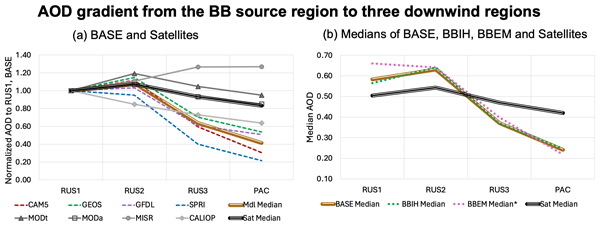
Xiaohua Pan, Mian Chin, Ralph A. Kahn, Hitoshi Matsui, Toshihiko Takemura, Meiyun Lin, Yuanyu Xie, Dongchul Kim, and Maria Val Martin
Atmos. Chem. Phys., 26, 171–196, https://doi.org/10.5194/acp-26-171-2026, https://doi.org/10.5194/acp-26-171-2026, 2026
Short summary
Short summary
Wildfire smoke can travel far from its source, affecting air quality far from the fire itself. This study looks at how two key factors – how much smoke is emitted & how high it rises – affect how smoke spreads. Using data from a major 2008 Siberian wildfire, four models were tested. Results show that models often inject smoke too low & remove it too quickly, missing high-altitude smoke seen by satellites. Better estimates of smoke height and removal are crucial to improve air quality forecasts.
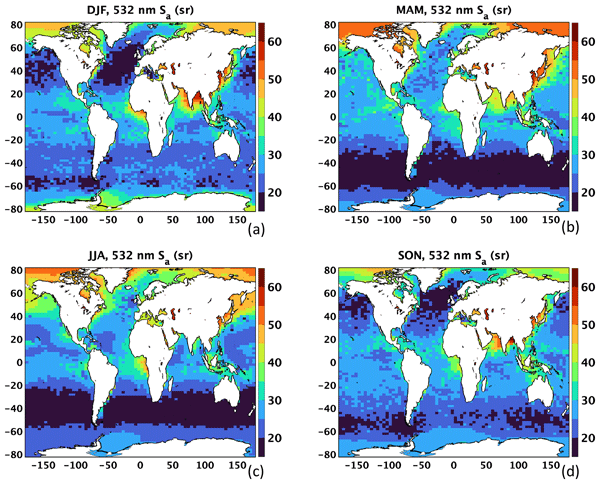
Travis D. Toth, Marian B. Clayton, Zhujun Li, David Painemal, Sharon D. Rodier, Jayanta Kar, Tyler J. Thorsen, Richard A. Ferrare, Mark A. Vaughan, Jason L. Tackett, Huisheng Bian, Mian Chin, Anne E. Garnier, Ellsworth J. Welton, Robert A. Ryan, Charles R. Trepte, and David M. Winker
Atmos. Meas. Tech., 18, 6765–6793, https://doi.org/10.5194/amt-18-6765-2025, https://doi.org/10.5194/amt-18-6765-2025, 2025
Short summary
Short summary
NASA's CALIPSO satellite mission observed aerosols (airborne particles) globally from 2006 to 2023. Its final data products update improves its aerosol optical parameters over oceans by adjusting for regional and seasonal differences in a new measurement-model synergistic approach. This results in a more realistic aerosol characterization, specifically near coastlines (where sea salt mixes with pollution), with potential impacts to future studies of science applications (e.g., climate effects).
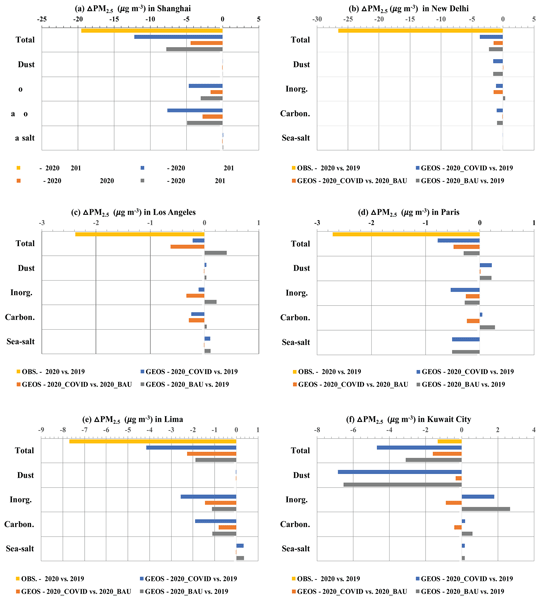
Claire M. Yu, Mian Chin, Qian Tan, Huisheng Bian, Peter R. Colarco, and Hongbin Yu
Atmos. Chem. Phys., 25, 14411–14434, https://doi.org/10.5194/acp-25-14411-2025, https://doi.org/10.5194/acp-25-14411-2025, 2025
Short summary
Short summary
The regional lockdowns, implemented over 2020–2022 to contain the rapid spread of the COVID-19 disease, inadvertently created a natural laboratory for investigating the effect of reducing anthropogenic emissions on urban air quality in unprecedentedly large temporal and spatial scales. In this study, we analyzed multi-year surface PM2.5 data in 21 cities around the globe, complemented by a set of global aerosol modeling experiments to assess the effect of the lockdown emission reductions on PM2.5.
Huisheng Bian, Sarah Strode, Mian Chin, Fan Li, Andrea Molad, Peter R. Colarco, and Hongbin Yu
EGUsphere, https://doi.org/10.5194/egusphere-2025-4501, https://doi.org/10.5194/egusphere-2025-4501, 2025
Preprint archived
Short summary
Short summary
We study the North Pacific westerly jet (NPWJ) using four reanalysis datasets and eight CMIP6 models. Our results show that between 1980 and 2019, the NPWJ core oscillates seasonally between north and south, weakening and shifting northward in summer and autumn. Single-forcing simulations further reveal aerosol forcing as the main driver. Incorporating interacting chemistry and time-varying ozone radiative forcing into Earth system models is crucial for simulating long-term atmospheric dynamics.
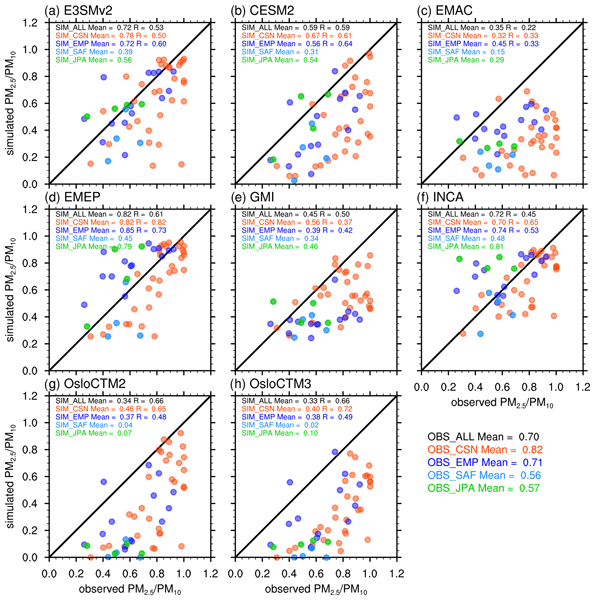
Mingxuan Wu, Hailong Wang, Zheng Lu, Xiaohong Liu, Huisheng Bian, David D. Cohen, Yan Feng, Mian Chin, Didier A. Hauglustaine, Vlassis A. Karydis, Marianne T. Lund, Gunnar Myhre, Andrea Pozzer, Michael Schulz, Ragnhild B. Skeie, Alexandra P. Tsimpidi, Svetlana G. Tsyro, and Shaocheng Xie
Atmos. Chem. Phys., 25, 10049–10074, https://doi.org/10.5194/acp-25-10049-2025, https://doi.org/10.5194/acp-25-10049-2025, 2025
Short summary
Short summary
A key challenge in simulating the life cycle of nitrate aerosol in global models is accurately representing the mass size distribution of nitrate aerosol, which lacks sufficient observational constraints. We found that most global models underestimate the mass fraction of fine-mode nitrate at the surface in all regions. Our study highlights the importance of gas–aerosol partitioning parameterization and the simulation of dust and sea salt in correctly simulating the mass size distribution of nitrate.
Mariya Petrenko, Ralph Kahn, Mian Chin, Susanne E. Bauer, Tommi Bergman, Huisheng Bian, Gabriele Curci, Ben Johnson, Johannes W. Kaiser, Zak Kipling, Harri Kokkola, Xiaohong Liu, Keren Mezuman, Tero Mielonen, Gunnar Myhre, Xiaohua Pan, Anna Protonotariou, Samuel Remy, Ragnhild Bieltvedt Skeie, Philip Stier, Toshihiko Takemura, Kostas Tsigaridis, Hailong Wang, Duncan Watson-Parris, and Kai Zhang
Atmos. Chem. Phys., 25, 1545–1567, https://doi.org/10.5194/acp-25-1545-2025, https://doi.org/10.5194/acp-25-1545-2025, 2025
Short summary
Short summary
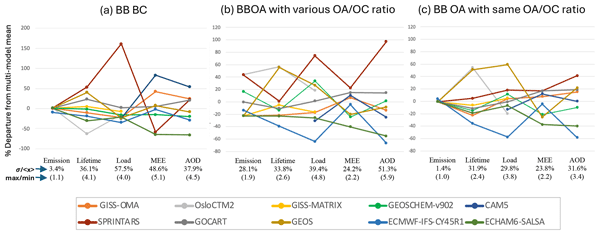
We compared smoke plume simulations from 11 global models to each other and to satellite smoke amount observations aimed at constraining smoke source strength. In regions where plumes are thick and background aerosol is low, models and satellites compare well. However, the input emission inventory tends to underestimate in many places, and particle property and loss rate assumptions vary enormously among models, causing uncertainties that require systematic in situ measurements to resolve.
Myungje Choi, Alexei Lyapustin, Gregory L. Schuster, Sujung Go, Yujie Wang, Sergey Korkin, Ralph Kahn, Jeffrey S. Reid, Edward J. Hyer, Thomas F. Eck, Mian Chin, David J. Diner, Olga Kalashnikova, Oleg Dubovik, Jhoon Kim, and Hans Moosmüller
Atmos. Chem. Phys., 24, 10543–10565, https://doi.org/10.5194/acp-24-10543-2024, https://doi.org/10.5194/acp-24-10543-2024, 2024
Short summary
Short summary
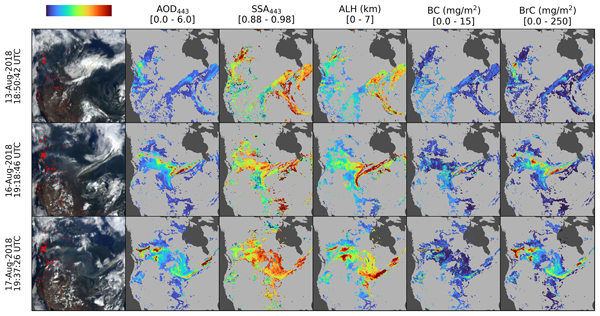
This paper introduces a retrieval algorithm to estimate two key absorbing components in smoke (black carbon and brown carbon) using DSCOVR EPIC measurements. Our analysis reveals distinct smoke properties, including spectral absorption, layer height, and black carbon and brown carbon, over North America and central Africa. The retrieved smoke properties offer valuable observational constraints for modeling radiative forcing and informing health-related studies.
Allison B. Collow, Peter R. Colarco, Arlindo M. da Silva, Virginie Buchard, Huisheng Bian, Mian Chin, Sampa Das, Ravi Govindaraju, Dongchul Kim, and Valentina Aquila
Geosci. Model Dev., 17, 1443–1468, https://doi.org/10.5194/gmd-17-1443-2024, https://doi.org/10.5194/gmd-17-1443-2024, 2024
Short summary
Short summary
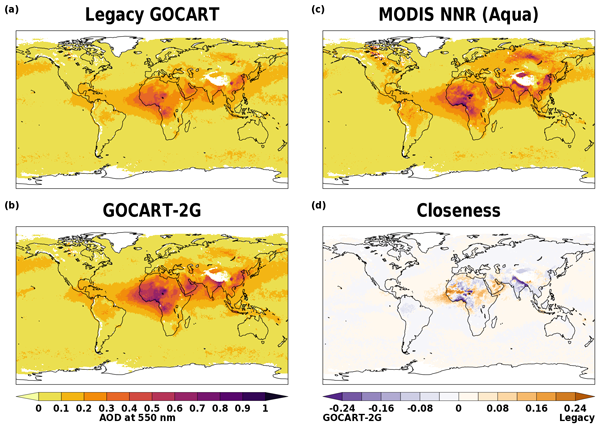
The GOCART aerosol module within the Goddard Earth Observing System recently underwent a major refactoring and update to the representation of physical processes. Code changes that were included in GOCART Second Generation (GOCART-2G) are documented, and we establish a benchmark simulation that is to be used for future development of the system. The 4-year benchmark simulation was evaluated using in situ and spaceborne measurements to develop a baseline and prioritize future development.
Huisheng Bian, Mian Chin, Peter R. Colarco, Eric C. Apel, Donald R. Blake, Karl Froyd, Rebecca S. Hornbrook, Jose Jimenez, Pedro Campuzano Jost, Michael Lawler, Mingxu Liu, Marianne Tronstad Lund, Hitoshi Matsui, Benjamin A. Nault, Joyce E. Penner, Andrew W. Rollins, Gregory Schill, Ragnhild B. Skeie, Hailong Wang, Lu Xu, Kai Zhang, and Jialei Zhu
Atmos. Chem. Phys., 24, 1717–1741, https://doi.org/10.5194/acp-24-1717-2024, https://doi.org/10.5194/acp-24-1717-2024, 2024
Short summary
Short summary
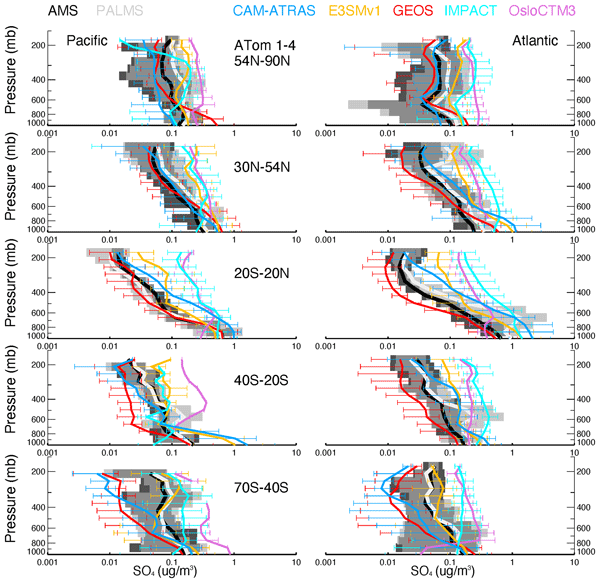
This work studies sulfur in the remote troposphere at global and seasonal scales using aircraft measurements and multi-model simulations. The goal is to understand the sulfur cycle over remote oceans, spread of model simulations, and observation–model discrepancies. Such an understanding and comparison with real observations are crucial to narrow down the uncertainties in model sulfur simulations and improve understanding of the sulfur cycle in atmospheric air quality, climate, and ecosystems.
Hamza Ahsan, Hailong Wang, Jingbo Wu, Mingxuan Wu, Steven J. Smith, Susanne Bauer, Harrison Suchyta, Dirk Olivié, Gunnar Myhre, Hitoshi Matsui, Huisheng Bian, Jean-François Lamarque, Ken Carslaw, Larry Horowitz, Leighton Regayre, Mian Chin, Michael Schulz, Ragnhild Bieltvedt Skeie, Toshihiko Takemura, and Vaishali Naik
Atmos. Chem. Phys., 23, 14779–14799, https://doi.org/10.5194/acp-23-14779-2023, https://doi.org/10.5194/acp-23-14779-2023, 2023
Short summary
Short summary
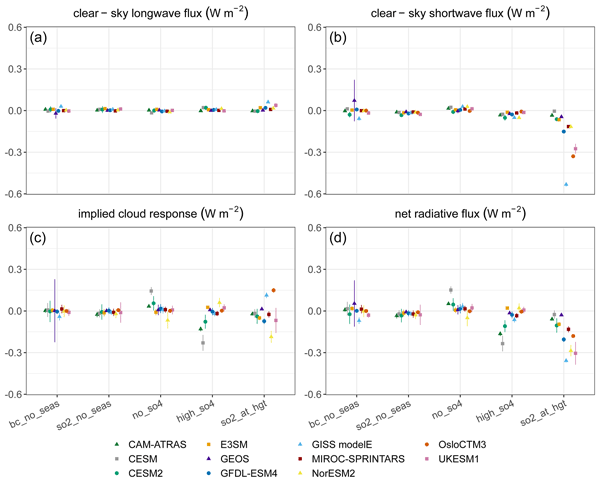
We examine the impact of the assumed effective height of SO2 injection, SO2 and BC emission seasonality, and the assumed fraction of SO2 emissions injected as SO4 on climate and chemistry model results. We find that the SO2 injection height has a large impact on surface SO2 concentrations and, in some models, radiative flux. These assumptions are a
hiddensource of inter-model variability and may be leading to bias in some climate model results.
Qirui Zhong, Nick Schutgens, Guido van der Werf, Twan van Noije, Kostas Tsigaridis, Susanne E. Bauer, Tero Mielonen, Alf Kirkevåg, Øyvind Seland, Harri Kokkola, Ramiro Checa-Garcia, David Neubauer, Zak Kipling, Hitoshi Matsui, Paul Ginoux, Toshihiko Takemura, Philippe Le Sager, Samuel Rémy, Huisheng Bian, Mian Chin, Kai Zhang, Jialei Zhu, Svetlana G. Tsyro, Gabriele Curci, Anna Protonotariou, Ben Johnson, Joyce E. Penner, Nicolas Bellouin, Ragnhild B. Skeie, and Gunnar Myhre
Atmos. Chem. Phys., 22, 11009–11032, https://doi.org/10.5194/acp-22-11009-2022, https://doi.org/10.5194/acp-22-11009-2022, 2022
Short summary
Short summary
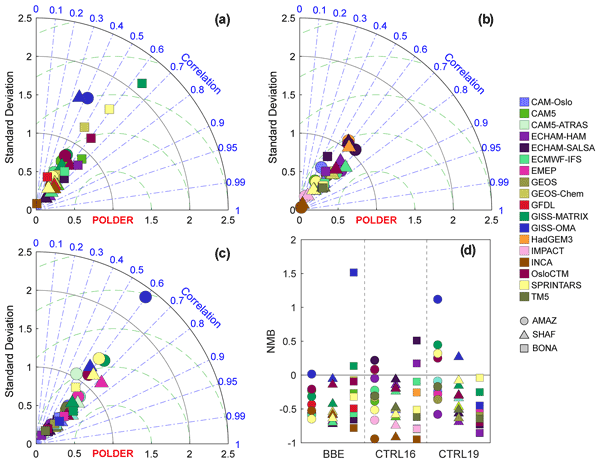
Aerosol optical depth (AOD) errors for biomass burning aerosol (BBA) are evaluated in 18 global models against satellite datasets. Notwithstanding biases in satellite products, they allow model evaluations. We observe large and diverse model biases due to errors in BBA. Further interpretations of AOD diversities suggest large biases exist in key processes for BBA which require better constraining. These results can contribute to further model improvement and development.
Sujung Go, Alexei Lyapustin, Gregory L. Schuster, Myungje Choi, Paul Ginoux, Mian Chin, Olga Kalashnikova, Oleg Dubovik, Jhoon Kim, Arlindo da Silva, Brent Holben, and Jeffrey S. Reid
Atmos. Chem. Phys., 22, 1395–1423, https://doi.org/10.5194/acp-22-1395-2022, https://doi.org/10.5194/acp-22-1395-2022, 2022
Short summary
Short summary
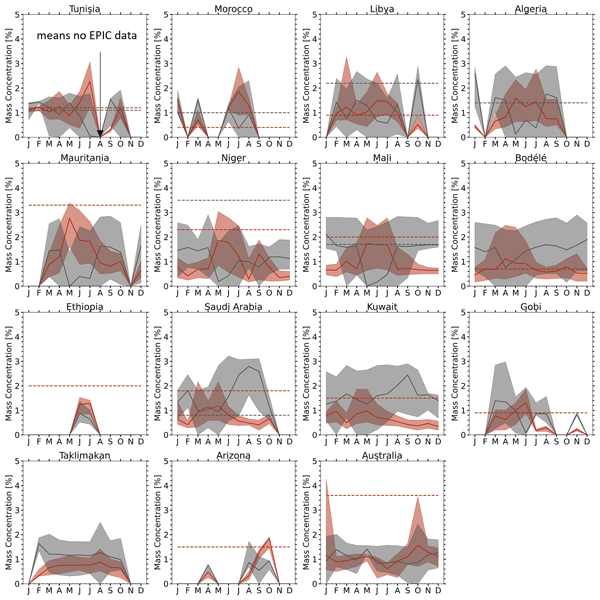
This paper presents a retrieval algorithm of iron-oxide species (hematite, goethite) content in the atmosphere from DSCOVR EPIC observations. Our results display variations within the published range of hematite and goethite over the main dust-source regions but show significant seasonal and spatial variability. This implies a single-viewing satellite instrument with UV–visible channels may provide essential information on shortwave dust direct radiative effects for climate modeling.
Maria Sand, Bjørn H. Samset, Gunnar Myhre, Jonas Gliß, Susanne E. Bauer, Huisheng Bian, Mian Chin, Ramiro Checa-Garcia, Paul Ginoux, Zak Kipling, Alf Kirkevåg, Harri Kokkola, Philippe Le Sager, Marianne T. Lund, Hitoshi Matsui, Twan van Noije, Dirk J. L. Olivié, Samuel Remy, Michael Schulz, Philip Stier, Camilla W. Stjern, Toshihiko Takemura, Kostas Tsigaridis, Svetlana G. Tsyro, and Duncan Watson-Parris
Atmos. Chem. Phys., 21, 15929–15947, https://doi.org/10.5194/acp-21-15929-2021, https://doi.org/10.5194/acp-21-15929-2021, 2021
Short summary
Short summary
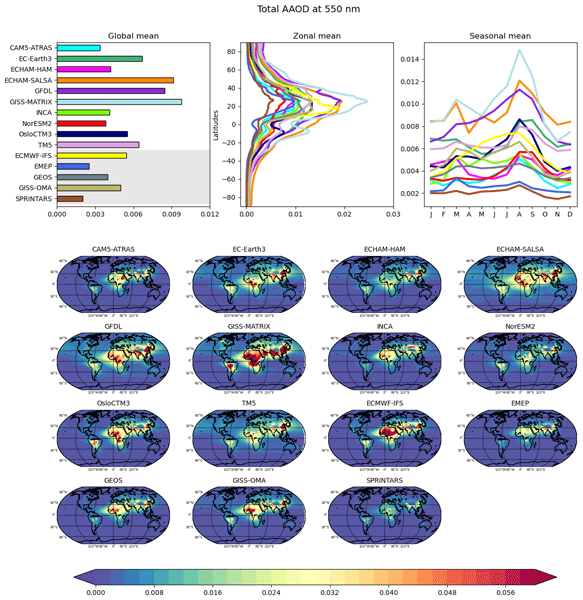
Absorption of shortwave radiation by aerosols can modify precipitation and clouds but is poorly constrained in models. A total of 15 different aerosol models from AeroCom phase III have reported total aerosol absorption, and for the first time, 11 of these models have reported in a consistent experiment the contributions to absorption from black carbon, dust, and organic aerosol. Here, we document the model diversity in aerosol absorption.
Dongchul Kim, Mian Chin, Hongbin Yu, Peter R. Colarco, Toshihiko Takemura, Paolo Tuccella, Paul Ginoux, Xiaohong Liu, Yang Shi, Hitoshi Matsui, Zhibo Zhang, Jianyu Zheng, Jasper F. Kok, Sophie Vandenbussche, Lieven Clarisse, Simon Whitburn, Virginie Capelle, Claudia Di Biagio, Paola Formenti, and Michael Schulz
EGUsphere, https://doi.org/10.5194/egusphere-2026-5264, https://doi.org/10.5194/egusphere-2026-5264, 2026
This preprint is open for discussion and under review for Atmospheric Chemistry and Physics (ACP).
Short summary
Short summary
The present AeroCom–AeroSat study addresses the gaps in the current state of DOD10 using satellite products, model simulations, an observation-constrained database. The analysis reveals substantial differences in DOD10 across satellite products and models, sometimes exceeding a factor of ten. Analysis with the laboratory measurements highlight the potential of combining shortwave and longwave remote sensing to advance dust compositions analysis through their distinct spectral sensitivities.
Sylvain Foisy, Susanne E. Bauer, Kostas Tsigaridis, Otto Hasekamp, and Guangliang Fu
EGUsphere, https://doi.org/10.5194/egusphere-2026-5135, https://doi.org/10.5194/egusphere-2026-5135, 2026
This preprint is open for discussion and under review for Atmospheric Chemistry and Physics (ACP).
Short summary
Short summary
Solid and liquid particles in the sky cool the planet, but we have had limited global measurements, so climate models are not well evaluated. We compare a satellite with novel capabilities launched in 2024 against a NASA model. They agree on the amount over land, but over the ocean the satellite reports eight times more desert dust than the model; we argue this is likely non-spherical sea salt. The model also holds four times more water on its particles, which we trace to how each infers water.
Sean M. Davis, William T. Ball, Yue Jia, Gabriel Chiodo, Justin A. Alsing, James Keeble, Hideharu Akiyoshi, Carlo Arosio, Ewa M. Bednarz, Andreas Chrysanthou, Melanie Coldewey-Egbers, Robert Damadeo, Sandip Dhomse, Mohamadou A. Diallo, Simone Dietmuller, Roland Eichinger, Stacey Frith, Birgit Hassler, Michaela I. Hegglin, Daan Hubert, Patrick Jöckel, Béatrice Josse, Natalya Kramarova, Diego Loyola, Eliane Maillard Barras, Marion Marchand, Olaf Morgenstern, David Plummer, Robert W. Portmann, Karen H. Rosenlof, Alexei Rozanov, Viktoria F. Sofieva, Johannes Staehelin, Timofei Sukhodolov, Kleareti Tourpali, Ronald J. Van der A, H. J. Ray Wang, Krzysztof Wargan, Shingo Watanabe, Mark Weber, Jeannette D. Wild, Yousuke Yamashita, and Jerry Ziemke
Atmos. Chem. Phys., 26, 13817–13843, https://doi.org/10.5194/acp-26-13817-2026, https://doi.org/10.5194/acp-26-13817-2026, 2026
Short summary
Short summary
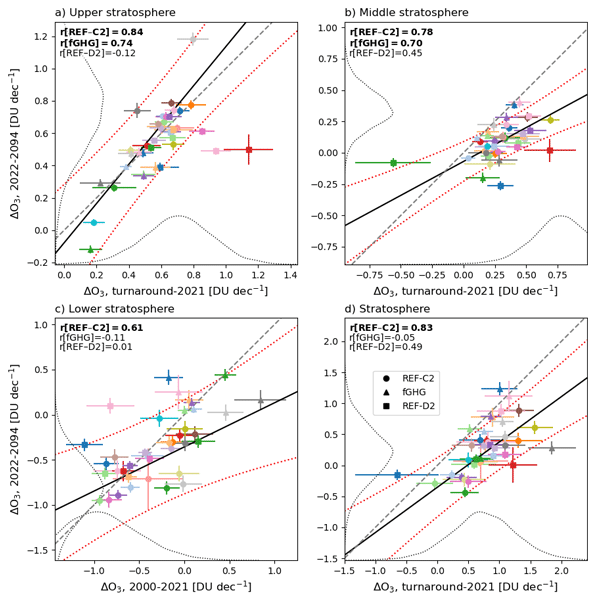
This study investigates tropical ozone changes in models and satellite observations to determine how well they agree and whether observations can constrain model projections. At some levels, satellite records disagree significantly on the magnitude of ozone changes. While early and late 21st century trends are correlated across models, suggesting a potential emergent constraint, the spread in observations means they are unable to provide guidance on the credibility of model projections.
Ninghui Li, Jonathon S. Wright, Philip Rupp, Alison Ming, Shenglong Zhang, and Jie Gao
Weather Clim. Dynam., 7, 1853–1874, https://doi.org/10.5194/wcd-7-1853-2026, https://doi.org/10.5194/wcd-7-1853-2026, 2026
Short summary
Short summary
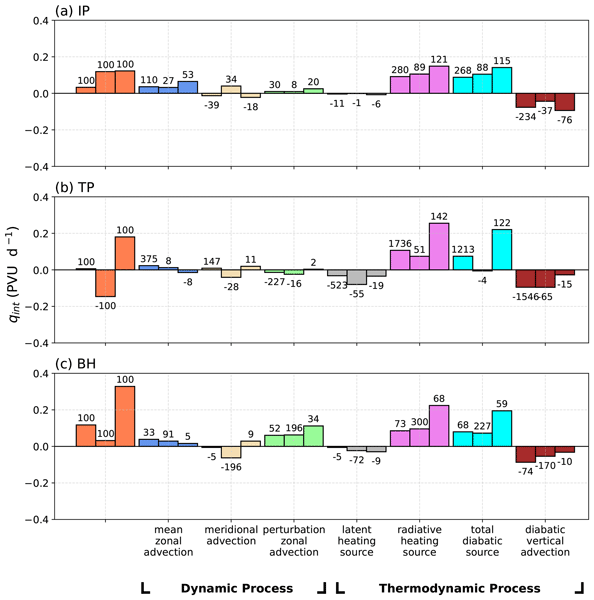
This study examines how the Asian Summer Monsoon Anticyclone changes during summer. It usually has three main centers over the Iranian Plateau, Tibetan Plateau, and western Pacific. Its movement is mainly controlled by winds, while atmospheric heating influences its strength and development.
Sampa Das, Peter R. Colarco, Parker Case, Stephen Steenrod, Luke D. Oman, and Ghassan Taha
EGUsphere, https://doi.org/10.5194/egusphere-2026-5642, https://doi.org/10.5194/egusphere-2026-5642, 2026
This preprint is open for discussion and under review for Atmospheric Chemistry and Physics (ACP).
Short summary
Short summary
After the huge 2019-20 Australian wildfires, climate models struggled to predict the smoke's impact. We found that smoke particles in the high atmosphere grow much larger than the models assumed. By updating our model with the correct particle size, we now accurately match satellite observations. This is also critical because particle size controls the surface area available for chemical reactions that can damage the ozone layer, providing a better foundation for future chemical studies.
Brian Auffarth, Mark Weber, Alexei Rozanov, Carlo Arosio, John P. Burrows, Melanie Coldewey-Egbers, Sean M. Davis, Doug Degenstein, Kimberlee Dubé, Stacey M. Frith, Lucien Froidevaux, Diego Loyola, Vitali E. Fioletov, Viktoria Sofieva, Ronald van der A, and Jeannette D. Wild
Atmos. Chem. Phys., 26, 13359–13386, https://doi.org/10.5194/acp-26-13359-2026, https://doi.org/10.5194/acp-26-13359-2026, 2026
Short summary
Short summary
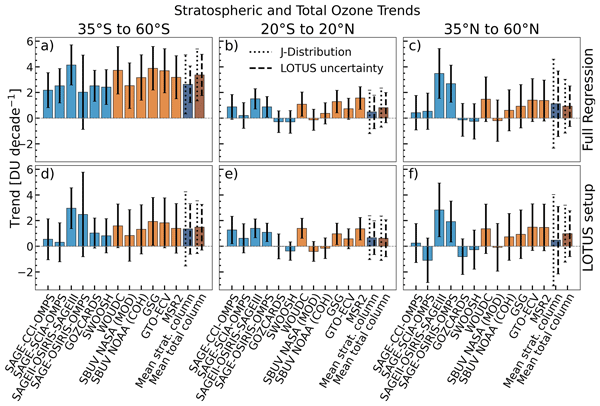
This study examines the trends of stratospheric and total ozone between 2000 and 2024, using long-term satellite datasets. Our results show positive trends in the upper stratosphere and a strong ozone recovery in the Southern Hemisphere, while changes in lower altitudes remain mostly small. The total and stratospheric trends show very similar results, indicating that tropospheric ozone contributes little to total column changes, while the stratospheric column is the dominant driver.
Linlu Mei, Vladimir Rozanov, Alexei Rozanov, and John P. Burrows
Geosci. Model Dev., 19, 8779–8800, https://doi.org/10.5194/gmd-19-8779-2026, https://doi.org/10.5194/gmd-19-8779-2026, 2026
Short summary
Short summary
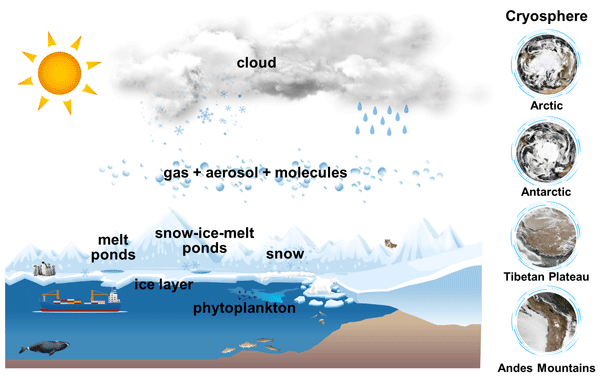
The cryosphere, including snow, ice, and melt ponds, strongly influences how sunlight is reflected and absorbed, affecting climate change. We developed a new version of radiative transfer model SCIATRAN, to better represent these complex surfaces and their interaction with the atmosphere. The model was validated using real measurements and showed good accuracy. These advances help scientists better understand climate processes in polar regions and improve satellite observations.
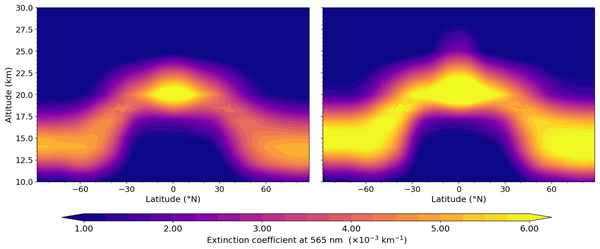
Anna Lange, John Andrew Dykema, Sandro Vattioni, Ulrike Niemeier, Alexei Rozanov, and Christian von Savigny
Atmos. Chem. Phys., 26, 13055–13067, https://doi.org/10.5194/acp-26-13055-2026, https://doi.org/10.5194/acp-26-13055-2026, 2026
Short summary
Short summary
This study addresses the question of whether it is possible to detect the continuous injection of 5 Tg yr-1 of alumina or calcite into the stratosphere using satellite solar occultation instruments. The research shows that it is possible to detect these injections of solid particles into the stratosphere and that they can also be distinguished from natural variability, considering the assumptions made.
Carlo Arosio, Alexei Rozanov, Vladimir Rozanov, Andrea Orfanoz-Cheuquelaf, John P. Burrows, Edward Malina, and Hartmut Boesch
EGUsphere, https://doi.org/10.5194/egusphere-2026-5113, https://doi.org/10.5194/egusphere-2026-5113, 2026
Short summary
Short summary
We present an improved method for retrieving ozone profiles from OMPS satellite limb observations. The aim is to mitigate an artifact related to the variation of surface reflectivity along the satellite line of sight. We prescribe surface reflectivity from VIIRS to mitigate the artifact, particularly in regions with sharp changes in reflectivity, such as coastlines and transitions between clouds and ocean. Updated stratospheric ozone profiles and tropospheric ozone column products are presented.
Erdenebayar Munkhtsetseg, Atsushi Shimizu, Atshushi Matsuki, Dashdondog Batdorj, Darkhijav Bayanjargal, and Hitoshi Matsui
EGUsphere, https://doi.org/10.5194/egusphere-2026-4685, https://doi.org/10.5194/egusphere-2026-4685, 2026
This preprint is open for discussion and under review for Atmospheric Chemistry and Physics (ACP).
Short summary
Short summary
Mineral dust from the Gobi Desert contributes substantially to the global aerosol burden. Using 13 years of PM observations, we found an emerging mixed dust-pollution regime within a Gobi town, where winter coal burning is associated with more fine particles the following spring. Fine particles travel further and interact differently with sunlight than coarse dust, suggesting that urbanisation within dust source regions may alter aerosol radiative effects beyond the local settlement.
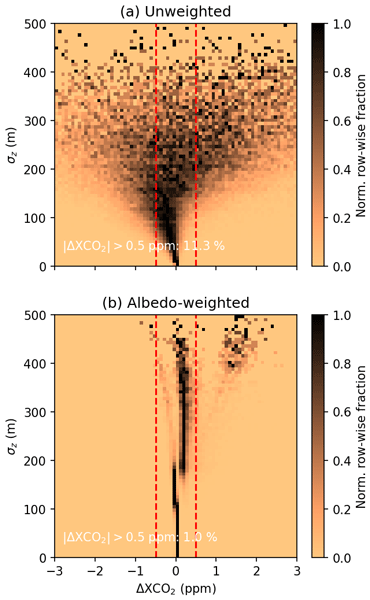
Michael Weimer, Maximilian Reuter, Michael Hilker, Stefan Noël, Michael Buchwitz, Yasjka Meijer, Rüdiger Lang, Julia Marshall, Heinrich Bovensmann, John P. Burrows, and Hartmut Bösch
Atmos. Meas. Tech., 19, 5425–5455, https://doi.org/10.5194/amt-19-5425-2026, https://doi.org/10.5194/amt-19-5425-2026, 2026
Short summary
Short summary
Greenhouse gas column measurements from space using reflected sunlight have to make assumptions about the Earth's surface elevation. Usually, it assumed that the elevation representing the satellite's spatial sample is the unweighted average of high-resolution surface elevation data. We find and show with many examples that the surface elevation should be weighted by the surface reflectance in the respective wavelength bands. This improves errors in the retrieval of trace gases.
Christian Fruck, Sebastian Wolff, Sven Krautwurst, Christoph Kiemle, Mathieu Quatrevalet, Martin Wirth, Jakob Borchardt, Oke Huhs, Konstantin Gerilowski, Michał Gałkowski, Christoph Gerbig, John P. Burrows, Heinrich Bovensmann, and Andreas Fix
EGUsphere, https://doi.org/10.5194/egusphere-2026-4578, https://doi.org/10.5194/egusphere-2026-4578, 2026
Short summary
Short summary
Waste sites near Madrid, Spain, release large amounts of methane, a powerful greenhouse gas. Using passive, active, and in situ instruments aboard the HALO aircraft, we measured methane concentrations near these sites. By combining these complementary measurements with an atmospheric transport simulation, we account for shifting winds that complicated earlier emission estimates, yielding a more accurate and robust method. We find a combined emission rate of 8.7 ± 1.5 t h-1.
Jianyu Zheng, Hongbin Yu, Chamara Rajapakse, Mian Chin, Michael Schulz, Yves Balkanski, Susanne E. Bauer, Huisheng Bian, Peter Colarco, Dongchul Kim, Ramiro Checa-Garcia, Yevgeny Derimian, Oleg Dubovik, Paul Ginoux, Zak Kipling, Jasper F. Kok, Harri Kokkola, Philippe Le Sager, Lei Li, Marianne Tronstad Lund, Gunnar Myhre, Hitoshi Matsui, Dirk J. L. Olivie, Samuel Remy, Oyvind Seland, Qianqian Song, Toshihiko Takemura, Qian Tan, Kostas Tsigaridis, Twan van Noije, David Winker, Bin Xie, Hua Zhang, Xindan Zhang, and Zhibo Zhang
EGUsphere, https://doi.org/10.5194/egusphere-2026-4322, https://doi.org/10.5194/egusphere-2026-4322, 2026
This preprint is open for discussion and under review for Atmospheric Chemistry and Physics (ACP).
Short summary
Short summary
Winds carry vast amounts of Saharan dust across the Atlantic Ocean, influencing climate, air quality, and ocean ecosystems. Within the Aerosol Comparisons between Observations and Models (AeroCom) project, we evaluated 17 numerical models against observations. Models deposit dust too quickly, so too little reaches the Caribbean. Better simulations require emitting larger particles, treating their non-spherical shapes, and capturing processes that keep dust aloft during transport.
Natalie Mahowald, Hannah Liddy, Jennifer Marlon, Kostas Tsigaridis, Gisela Winckler, Douglas Hamilton, Jasper Kok, Michael Sigl, Jordan Abell, Adwoa Aboagye-Okyere, Joe Adabouk Amooli, Samuel Albani, Susanne Bauer, Emilie Beaudon, Hunter Brown, Nathan Chellman, Nicolás Cosentino, Nathalie Goodkin, Christopher Guiterman, Stijn Hantson, Chengfei He, Aviva Intveld, Jed Kaplan, Jeremy Klavans, Fabrice Lambert, Haobo Liu, Marie-France Loutre, Joe McConnell, Zachary McGraw, Keren Mezuman, Ron Miller, Nicholas O’Mara, Maria Rosabelle Ong, Gavin Schmidt, Richard Vachula, Lily Wu, and Bingqing Zhang
EGUsphere, https://doi.org/10.5194/egusphere-2026-4532, https://doi.org/10.5194/egusphere-2026-4532, 2026
This preprint is open for discussion and under review for Atmospheric Chemistry and Physics (ACP).
Short summary
Short summary
Aerosols are poorly known in past climates, and yet it is very important to understand how aerosols are changing in different climates. In this paper we review available proxy data and modeling approaches to characterize aerosols in past climates. In addition, we propose future studies that can help improve our understanding.
Anna Lange, Ilaria Quaglia, Daniele Visioni, Alexei Rozanov, and Christian von Savigny
EGUsphere, https://doi.org/10.5194/egusphere-2026-3347, https://doi.org/10.5194/egusphere-2026-3347, 2026
This preprint is open for discussion and under review for Atmospheric Chemistry and Physics (ACP).
Short summary
Short summary
What happens to the colours of the sky when a volcano erupts during an ongoing stratospheric aerosol injection deployment? This study is the first to tackle this question, combining climate model simulations, radiative transfer calculations, and colour modelling. The results show several optical phenomena, including Bishop's Rings, unusual greenish twilight colours, and purple light.
Sandhya Singh, Ashish Soni, Shivdas Bankar, Ritesh Kumar, Rohit Srivastava, Sreerag Athirpankandi, Rajani Kanta Mishra, Jitender Singh, Gaddamidi Sreenivas, Amey Datye, Yogesh Tiwari, Suvarna Fadnavis, Thara Prabhakaran, and Anoop Sharad Mahajan
EGUsphere, https://doi.org/10.5194/egusphere-2026-3546, https://doi.org/10.5194/egusphere-2026-3546, 2026
Short summary
Short summary
The Southern Ocean helps regulate Earth’s climate, but cloud formation in this region is poorly understood due to limited measurements. We collected the first continuous Cloud Condensation Nuclei (CCN) observations from the tropics to coastal Antarctica in the Indian Sector of the Southern Ocean. We show that sea spray was not the main source; however, CCN increased when air passed over biologically productive waters, showing marine life strongly influences cloud-forming particles.
Kimberlee Dubé, William Randel, Adam Bourassa, Susann Tegtmeier, Xinyue Wang, Jun Zhang, Eilidh Hlady, Meghan Brehon, Sergey Khaykin, and Douglas Degenstein
EGUsphere, https://doi.org/10.5194/egusphere-2026-4022, https://doi.org/10.5194/egusphere-2026-4022, 2026
Short summary
Short summary
The Hunga volcanic eruption in January 2022 increased the total stratospheric water vapor (H2O) mass by 10 %. The study uses satellite observations and models to track the transport of the Hunga H2O. We find that there is substantially more H2O in the observations than the model during 2024 and 2025, suggesting that the modelled transport across the lower stratosphere is too fast. We also find evidence that some of the H2O that reaches the lower stratosphere is mixed back into the tropics.
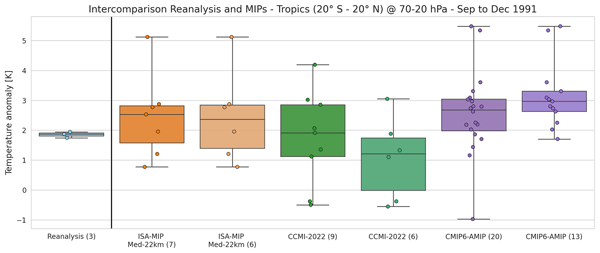
Katharina Perny, Timofei Sukhodolov, Ales Kuchar, Pavle Arsenovic, Bernadette Rosati, Christoph Brühl, Sandip S. Dhomse, Andrin Jörimann, Anton Laakso, Graham Mann, Ulrike Niemeier, Giovanni Pitari, Ilaria Quaglia, Takashi Sekiya, Kengo Sudo, Claudia Timmreck, Simone Tilmes, Daniele Visioni, and Harald E. Rieder
Atmos. Chem. Phys., 26, 10997–11025, https://doi.org/10.5194/acp-26-10997-2026, https://doi.org/10.5194/acp-26-10997-2026, 2026
Short summary
Short summary
Major volcanic eruptions, such as the one of Mt. Pinatubo in 1991, can inject large amounts of sulfur dioxide into the stratosphere. The resulting aerosol cloud affects stratospheric temperature and thereby middle atmospheric dynamics and chemistry. Here we investigate similarities and differences across an ensemble of climate models in reproducing the stratospheric temperature signal following the Mt. Pinatubo eruption.
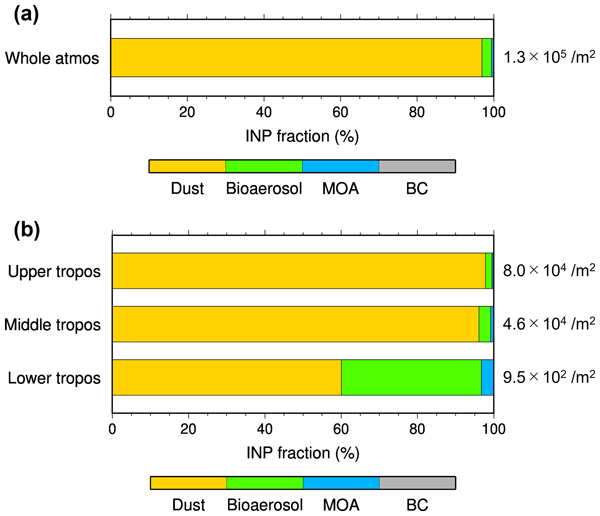
Kei Kawai, Zhaoyi Ren, and Hitoshi Matsui
Atmos. Chem. Phys., 26, 10893–10907, https://doi.org/10.5194/acp-26-10893-2026, https://doi.org/10.5194/acp-26-10893-2026, 2026
Short summary
Short summary
This study considers dust, bioaerosols, marine organic aerosol, and black carbon as ice nucleating particles in mixed-phase clouds in a global climate-aerosol model and evaluates the number concentrations, spatial distributions, and cloud radiative effects of ice nucleating particles from the multiple aerosol species. The results highlight the importance of including ice nucleating particles from multiple aerosol species in climate models for better understanding aerosol-cloud interactions.
Chaim I. Garfinkel, David Avisar, Wenjuan Huo, Ales Kuchar, Shoshiro Minobe, Scott Osprey, Katharina Perny, and Jonathon S. Wright
EGUsphere, https://doi.org/10.5194/egusphere-2026-3738, https://doi.org/10.5194/egusphere-2026-3738, 2026
Short summary
Short summary
Whether tropical volcanic eruptions lead to a circulation response in winter is still unclear. We re-evaluate this effect using large ensembles from eight separate models with only one time-varying external forcing: volcanic aerosols. We find that 75 % of models simulate the previously proposed effect, but that the signal requires at least 30 eruptions before it emerges robustly from the noise. Furthermore, we demonstrate that the El Niño signal differs from natural El Niño events.
Man Mei Chim, Dominik Stiller, Elisa Ziegler, Thomas J. Aubry, Lucas Boissel, Sébastien Guillet, Brennan Rodgers, Matthew Toohey, Christine Pohl, and Alexei Rozanov
EGUsphere, https://doi.org/10.5194/egusphere-2026-4193, https://doi.org/10.5194/egusphere-2026-4193, 2026
Short summary
Short summary
Stratospheric aerosols from explosive volcanic eruptions are a major climate forcer. We compare the stratospheric aerosol forcing for the next phase of coordinated climate model experiments (CMIP7) against complementary datasets, such as observations of lunar eclipses, stellar extinction, and from satellites. We highlight the potential value of combining observational constraints from complementary datasets with the extensive CMIP7 volcanic emission inventory to refine future forcing data.
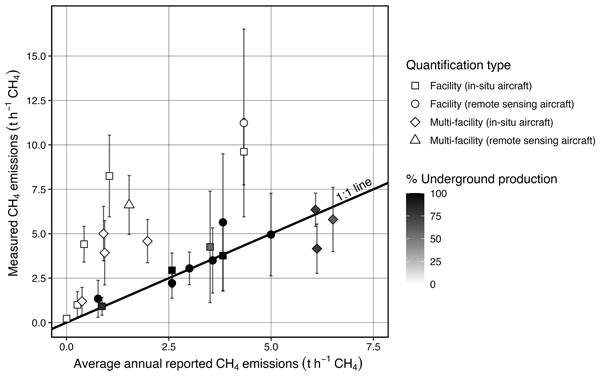
Stephen J. Harris, Sven Krautwurst, Jorg Hacker, Mark Lunt, Jakob Borchardt, Mei Bai, Hartmut Boesch, Tarra Brain, John Philip Burrows, Shakti Chakravarty, Robert A. Field, Rebecca E. Fisher, James L. France, Konstantin Gerilowski, Oke Huhs, Wolfgang Junkermann, Bryce F. J. Kelly, Martin Kumm, Mathias Lanoisellé, Wolfgang Lieff, Andrew McGrath, Adrian Murphy, Thomas Röckmann, Zoe Salmon, Josua Schindewolf, Jakob Thoböll, Carina van der Veen, and Heinrich Bovensmann
Atmos. Chem. Phys., 26, 10043–10069, https://doi.org/10.5194/acp-26-10043-2026, https://doi.org/10.5194/acp-26-10043-2026, 2026
Short summary
Short summary
The accuracy of methods used to estimate and report fugitive methane emissions from Australian coal mines remains unclear. This study compares airborne emission rate estimates with reported estimates from 17 coal mines in the Bowen Basin, a region accounting for 45 % of national coal production. Results show good agreement for underground coal mines, but poor agreement for surface coal mines, suggesting improvements to surface coal mine reporting methods is needed to improve inventory reporting.
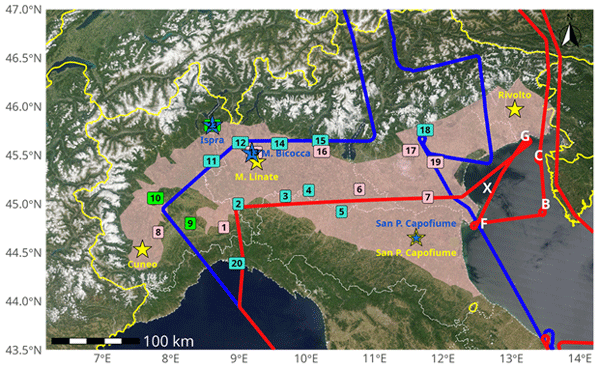
Costanza Civale, Maria Dolores Andrés Hernández, Jean-Philippe Putaud, Francesca Barnaba, Henri Diémoz, Johannes Schneider, Helmut Ziereis, Katharina Kaiser, Jörg Schmidt, Ovid Oktavian Krüger, Bruna Holanda, Robert Baumann, Benjamin Weyland, Eric Förster, Midhun George, Yangzhuoran Liu, Daniel Sauer, Jennifer Wolf, Annachiara Bellini, Birger Bohn, Klaus Pfeilsticker, and John Philip Burrows
Atmos. Chem. Phys., 26, 9827–9855, https://doi.org/10.5194/acp-26-9827-2026, https://doi.org/10.5194/acp-26-9827-2026, 2026
Short summary
Short summary
This study combines measurements of gases and particles at the ground and on-board an instrumented aircraft to investigate pollution transport over the Po Valley, a major atmospheric pollution hotspot in Europe. Overall, the extensive data set obtained at different altitudes provides insight into the mixing of pollution plumes and their export towards the Adriatic coast as well as with naturally occurring dust and its impact on air quality over the Po Plain.
Matthias Kohl, Christoph Brühl, Holger Tost, Christos Xenofontos, Theodoros Christoudias, Sergey Gromov, Oliver Appel, Stephan Borrmann, Adam Bourassa, Pedro Campunzano-Jost, Yafang Cheng, Oliver Eppers, Karl D. Froyd, Bruna A. Holanda, Jose L. Jimenez, Patrick Jöckel, Philipp Joppe, Katharina Kaiser, Joseph M. Katich, Klaus Klingmüller, Franziska Köllner, Agnieszka Kupc, Anna Martin, Christopher Pöhlker, Mira L. Pöhlker, Ulrich Pöschl, Landon Rieger, Samuel Ruhl, Gregory P. Schill, Johannes Schneider, Christiane Schulz, Joshua P. Schwarz, Alexandra P. Tsimpidi, Ryan Vella, Christina J. Williamson, Yifan Yang, Daniel Zawada, Jos Lelieveld, and Andrea Pozzer
EGUsphere, https://doi.org/10.5194/egusphere-2026-3649, https://doi.org/10.5194/egusphere-2026-3649, 2026
Short summary
Short summary
Aerosols are crucial for Earth's climate, yet their vertical distribution remains poorly understood. We present first consistent global simulations of aerosol distributions and composition from the Earth's surface to the stratosphere, validated by extensive observations. Key findings include a global minimum in aerosol mass in the free troposphere, a significant contribution of organic aerosol in the lower stratosphere, and limited transport of primary particles to the stratosphere.
Jiaxing Zhang, Suying Yang, Chunsong Lu, Yiran Peng, Guan Ming, and Jinbei Li
EGUsphere, https://doi.org/10.5194/egusphere-2026-3376, https://doi.org/10.5194/egusphere-2026-3376, 2026
Short summary
Short summary
Using aircraft measurements from three ocean field campaigns, we studied how low-level marine clouds change when the lower atmosphere becomes disconnected from the cloud layer above. This usually makes clouds thinner and less reflective. Dry air from above speeds cloud loss, while moist air helps clouds persist and form larger droplets. Depending on moisture and rainfall, clouds may dissipate, persist, or recover. These results improve understanding of how marine clouds affect climate.
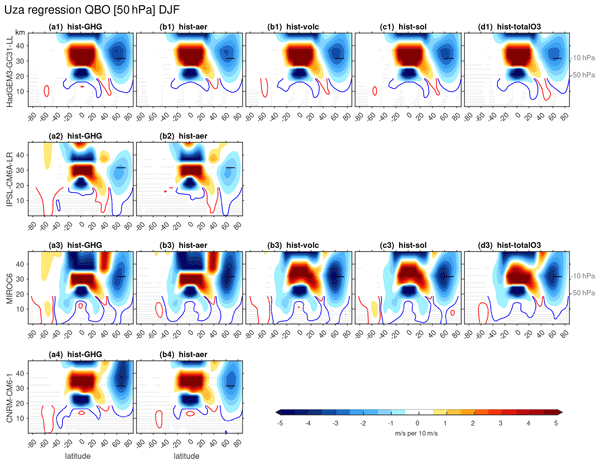
Chaim I. Garfinkel, David Avisar, Scott M. Osprey, Doug Smith, Jian Rao, and Jonathon S. Wright
Weather Clim. Dynam., 7, 1133–1152, https://doi.org/10.5194/wcd-7-1133-2026, https://doi.org/10.5194/wcd-7-1133-2026, 2026
Short summary
Short summary
The Quasi-biennial Oscillation (QBO) dominates variability in the tropical stratosphere, & it impacts surface climate in several parts of the world. However, climate models have been shown to systematically under-estimate the influence of the QBO. Here, we re-evaluate this finding using much larger ensemble sizes than have been previously available based on four separate models. We find that the models are comparatively more successful in capturing QBO influences than reported by previous work.
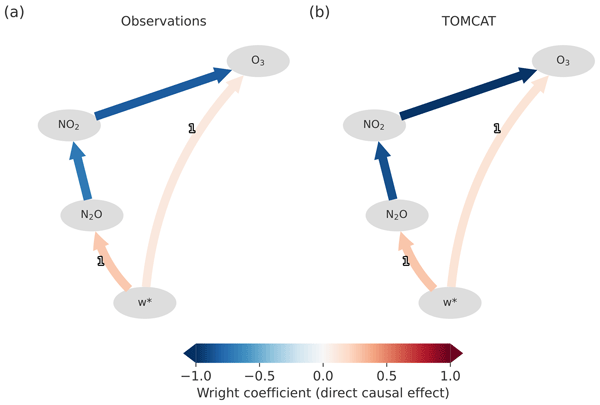
Evgenia Galytska, Birgit Hassler, Carlo Arosio, Martyn P. Chipperfield, Sandip S. Dhomse, Kimberlee Dubé, Wuhu Feng, Fernando Iglesias-Suarez, and Jakob Runge
Atmos. Chem. Phys., 26, 8185–8209, https://doi.org/10.5194/acp-26-8185-2026, https://doi.org/10.5194/acp-26-8185-2026, 2026
Short summary
Short summary
We explore how chemical and dynamical processes shape ozone in the tropical middle stratosphere using satellite data and a chemistry-transport model. We apply a framework to identify cause–effect relationships and estimate their strength. For 2004-2021 monthly data, we detect an indirect pathway controlling ozone variability, with effects increasing after two–three months. We further assess how different wind regimes influence this pathway.
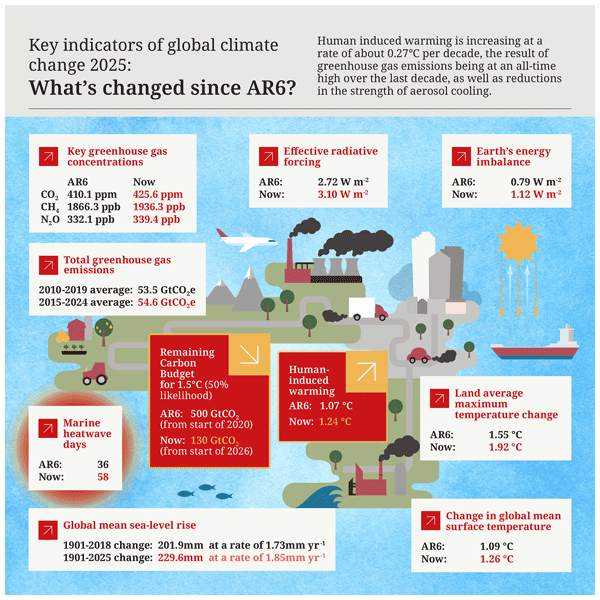
Piers M. Forster, Tristram Walsh, Chris Smith, William F. Lamb, Robin Lamboll, Christophe Cassou, Mathias Hauser, Zeke Hausfather, June-Yi Lee, Matthew D. Palmer, Karina von Schuckmann, Aimée B. A. Slangen, Sophie Szopa, Blair Trewin, Jeongeun Yun, Nathan P. Gillett, Stuart Jenkins, H. Damon Matthews, Krishnan Raghavan, Aurélien Ribes, Joeri Rogelj, Debbie Rosen, Xuebin Zhang, Myles Allen, Robbie M. Andrew, Chris Atkinson, Richard A. Betts, Antonio Bombelli, Samantha N. Burgess, Lijing Cheng, Helen E. Claxton, Pierre Friedlingstein, Thomas L. Frölicher, Catia M. Domingues, Thomas Gasser, Catherine H. Gregory, Rachel M. Hoesly, Daniel Huppmann, Masayoshi Ishii, Christopher Kadow, Alexia Karwat, John Kennedy, Rachel E. Killick, Mahesh V. M. Kovilakam, Paul B. Krummel, Xin Lan, Jean-François Lamarque, Aurélien Liné, Belén Martín-Míguez, Didier P. Monselesan, Colin Morice, Jens Mühle, Pino Mussak, Glen P. Peters, Anna Pirani, Julia Pongratz, Matthew Rigby, Robert Rohde, Abhishek Savita, Sonia I. Seneviratne, Steven J. Smith, Ghassan Taha, Caterina Tassone, Peter Thorne, Christopher Wells, Luke M. Western, Guido R. van der Werf, Susan E. Wijffels, Marco Zecchetto, Junting Zhong, Xiao-Ye Zhang, Valérie Masson-Delmotte, and Panmao Zhai
Earth Syst. Sci. Data, 18, 3889–3933, https://doi.org/10.5194/essd-18-3889-2026, https://doi.org/10.5194/essd-18-3889-2026, 2026
Short summary
Short summary
We give our annual update of key climate indicators. Our work quantifies the human contribution to global warming and the pace of climate change. This represents a large effort by the international community akin to an Intergovernmental Panel on Climate Change (IPCC) report.
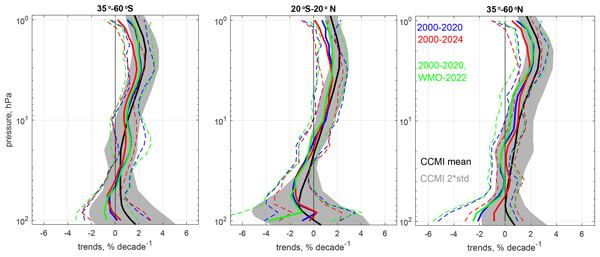
Viktoria F. Sofieva, Monika E. Szelag, Natalya A. Kramarova, Robert Damadeo, Wolfgang Steinbrecht, Irina Petropavlovskikh, Corinne Vigouroux, Eliane Maillard Barras, Daniel Zawada, Kleareti Tourpali, Stacey M. Frith, Jeannette D. Wild, Sean M. Davis, Carlo Arosio, Mark Weber, Alexei Rozanov, Brian Auffarth, Lucien Froidevaux, Ryan Fuller, Doug Degenstein, Kimberlee Dube, Peter Effertz, Thierry Leblanc, Gérard Ancellet, Sophie Godin-Beekmann, Glen McConville, Richard Querel, Dan Smale, Marie-Renee DeBacker, Emmanuel Mahieu, and Ralf Sussmann
Atmos. Chem. Phys., 26, 7387–7405, https://doi.org/10.5194/acp-26-7387-2026, https://doi.org/10.5194/acp-26-7387-2026, 2026
Short summary
Short summary
We present an updated evaluation of stratospheric ozone profile trends in the 60°S–60°N latitude range using long-term ground-based and satellite climate data records, as well as simulations by chemistry-climate models. Analyses confirm the statistically significant positive ozone trends in the upper stratosphere of ~1–3 % decade-1. The trends are close to zero in the middle stratosphere, and mostly negative in the lower stratosphere, but they are not statistically significant.
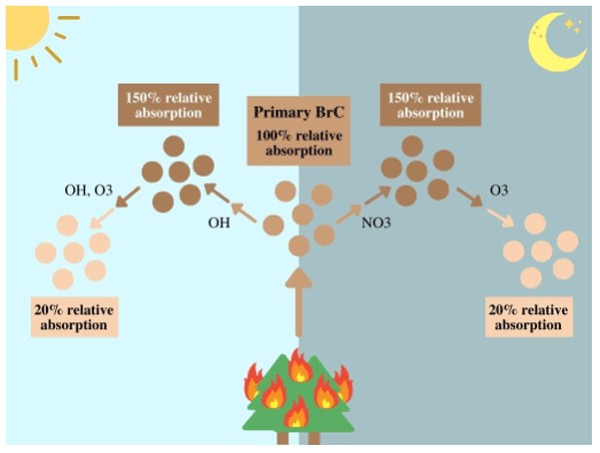
Maegan A. DeLessio, Kostas Tsigaridis, and Susanne E. Bauer
Atmos. Chem. Phys., 26, 7325–7359, https://doi.org/10.5194/acp-26-7325-2026, https://doi.org/10.5194/acp-26-7325-2026, 2026
Short summary
Short summary
This study utilizes flight campaign observations to evaluate the representation of brown carbon (BrC) aerosols in the Goddard Institute for Space Studies ModelE Earth system model. Measurements of BrC absorption and mass concentrations of related aerosols are compared to that of the model throughout the troposphere. By focusing on air masses influenced by biomass burning, this evaluation highlights important BrC and fire aerosol processes and identifies areas that require additional study.
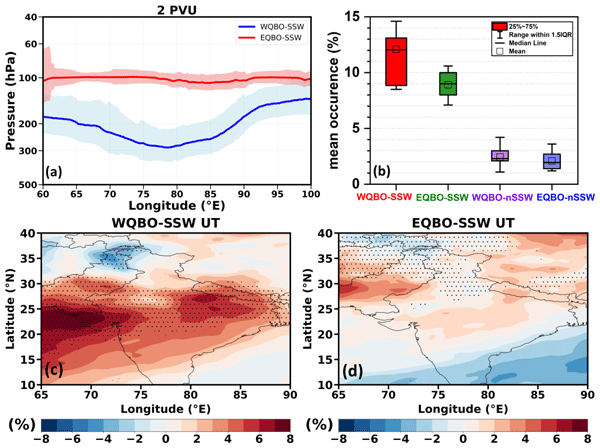
Shubhajyoti Roy, Satheesh P. R. Chandran, Suvarna Fadnavis, Vijay Sagar, Michaela I. Hegglin, Rolf Müller, and Prashant Chavan
Atmos. Chem. Phys., 26, 7047–7059, https://doi.org/10.5194/acp-26-7047-2026, https://doi.org/10.5194/acp-26-7047-2026, 2026
Short summary
Short summary
We show that stratospheric ozone intrusions associated with sudden stratospheric warming events occurring concurrent with the westerly phase of the Quasi-biennial oscillation enhance ozone in the upper troposphere and lower stratosphere over South Asia. The ozone enhancement increases ozone radiative forcing by 0.09±0.05 W m-2 over South Asia. This increase in ozone radiative forcing potentially exacerbates regional climate warming.
Bosi Sheng, Massimo A. Bollasina, Alexandre S. Gagnon, Laura J. Wilcox, Thomas P. S. Reynolds, Christopher T. S. Beckett, Haolin Wang, Qingxiang Li, Pierre Nabat, Robert J. Allen, Bjørn H. Samset, Joonas Merikanto, Geeta G. Persad, Toshihiko Takemura, Kostas Tsigaridis, Sharar Ahmadi, Maxwell T. Elling, Knut von Salzen, Daniel M. Westervelt, Naga Oshima, and Tsuyoshi Koshiro
EGUsphere, https://doi.org/10.5194/egusphere-2026-2198, https://doi.org/10.5194/egusphere-2026-2198, 2026
Short summary
Short summary
Observational records indicate that austral summer rainfall over southern Africa experienced substantial wetting during the late 20th century, followed by pronounced drying over the past two decades. We show that East Asian sulphate aerosol emissions played a key role in shaping these rainfall trends. These findings have important implications for reducing uncertainties in regional rainfall projections and for understanding their links to ecosystem changes.
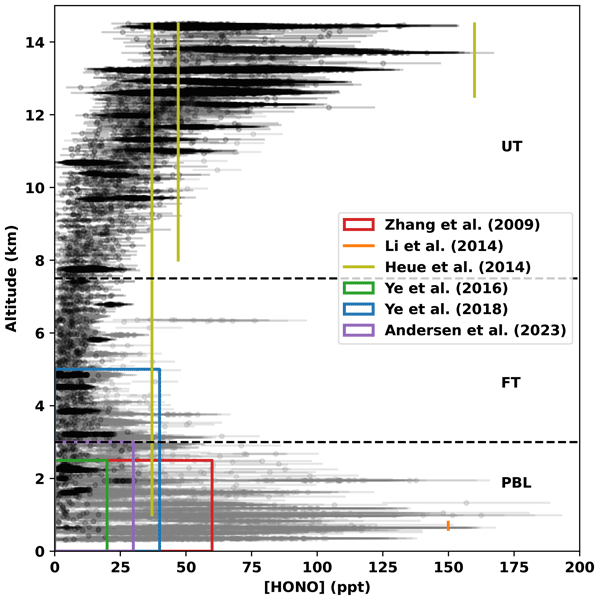
Benjamin Weyland, Simon Rosanka, Domenico Taraborrelli, Birger Bohn, Andreas Zahn, Florian Obersteiner, Eric Förster, Mariano Mertens, Patrick Jöckel, Helmut Ziereis, Katharina Kaiser, Horst Fischer, John N. Crowley, Nijing Wang, Achim Edtbauer, Jonathan Williams, Maria Dolores Andrés Hernández, John P. Burrows, Flora Kluge, Meike K. Rotermund, Andre Butz, and Klaus Pfeilsticker
Atmos. Chem. Phys., 26, 6825–6856, https://doi.org/10.5194/acp-26-6825-2026, https://doi.org/10.5194/acp-26-6825-2026, 2026
Short summary
Short summary
The destruction by sunlight of nitrous acid (HONO) produces the so-called detergent of the atmosphere. HONO has been measured in concentrations which exceed predictions based on known chemistry for decades. Several reactions have been proposed which may explain this excess HONO. This study reports on airborne measurements of HONO; the observations exceed predictions and form a C-shaped profile in the troposphere. Together with a host of other measurements, various reactions are investigated.
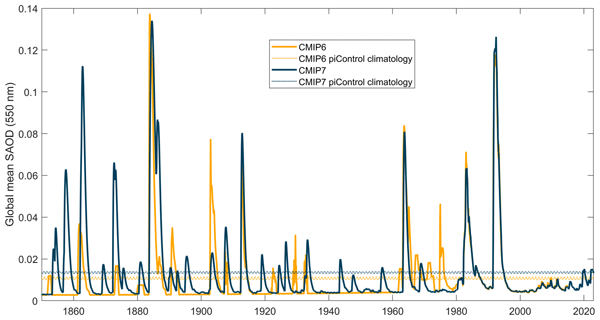
Thomas J. Aubry, Matthew Toohey, Sujan Khanal, Man Mei Chim, Magali Verkerk, Ben Johnson, Anja Schmidt, Mahesh Kovilakam, Michael Sigl, Zebedee Nicholls, Larry Thomason, Vaishali Naik, Landon Rieger, Dominik Stiller, Elisa Ziegler, Paul Durack, and Isabel H. Smith
Geosci. Model Dev., 19, 3725–3756, https://doi.org/10.5194/gmd-19-3725-2026, https://doi.org/10.5194/gmd-19-3725-2026, 2026
Short summary
Short summary
Climate forcings, such as solar radiation or anthropogenic greenhouse gases, are required to run global climate model simulations. Stratospheric aerosols, which mostly originate from large volcanic eruptions, are a key natural forcing. In this paper, we document the stratospheric aerosol forcing dataset that will feed the next generation (CMIP7) of climate models. Our dataset is very different from its predecessor (CMIP6), which might affect simulations of the 1850–2021 climate.
John Backman, Sho Ohata, Yutaka Kondo, Jonas Svensson, Eija Asmi, Hitoshi Matsui, and Tatsuhiro Mori
EGUsphere, https://doi.org/10.5194/egusphere-2026-2102, https://doi.org/10.5194/egusphere-2026-2102, 2026
Short summary
Short summary
The Arctic climate is affected detrimentally by black carbon (BC). Our unique long-term observational results imply that Arctic BC size distributions do not wary substantially in space nor time although the mass concentration of BC can vary by orders of magnitude. Our findings suggest that, when modeling the climate impacts of BC in the Arctic, it is realistic to consider a BC size distribution with low variability.
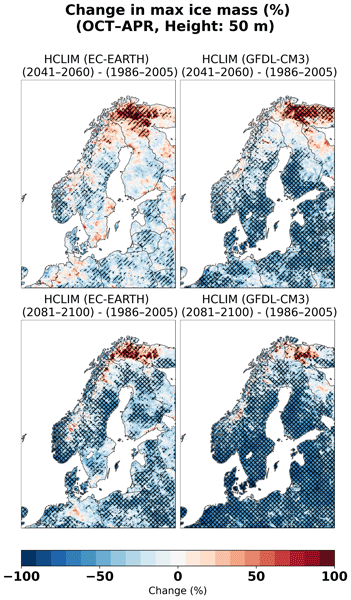
Oskari Rockas, Pia Isolähteenmäki, Marko Laine, Anders V. Lindfors, Karoliina Hämäläinen, and Anton Laakso
Nat. Hazards Earth Syst. Sci., 26, 1813–1834, https://doi.org/10.5194/nhess-26-1813-2026, https://doi.org/10.5194/nhess-26-1813-2026, 2026
Short summary
Short summary
When ice buildup occurs on an energy infrastructure such as a power transmission line or a wind turbine, this can cause disturbances in energy production and transmission efficiency. In our study, we assessed how atmospheric icing conditions will change in the future climate in northern Europe. Towards the end of the century, the climate projections suggest a mostly decreasing trend in ice accumulation. However, the northern parts of Fennoscandia can locally experience increasing amounts of ice.
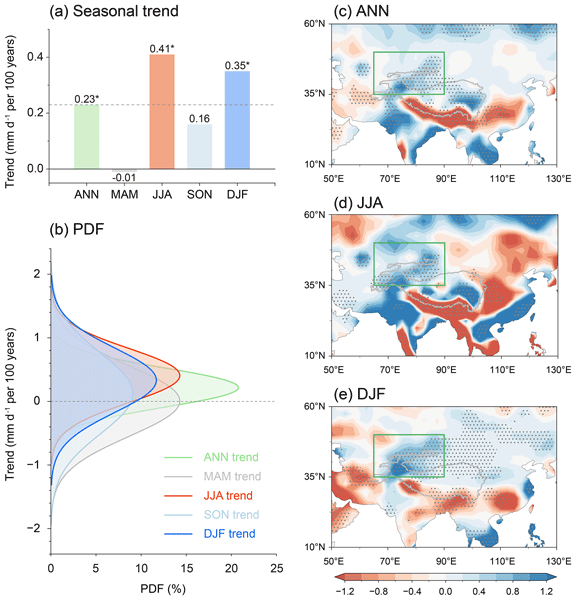
Jianing Guo, Xiaoning Xie, Gunnar Myhre, Drew Shindell, Alf Kirkevåg, Trond Iversen, Apostolos Voulgarakis, Toshihiko Takemura, Ke Shang, Xinzhou Li, Zhengguo Shi, Yangang Liu, Xiaodong Liu, and Hong Yan
Atmos. Chem. Phys., 26, 5169–5184, https://doi.org/10.5194/acp-26-5169-2026, https://doi.org/10.5194/acp-26-5169-2026, 2026
Short summary
Short summary
Central Asia has grown wetter in recent decades, but the drivers differ by season. We analyzed observations and climate model experiments to understand these changes and their future. Our analysis reveals that greenhouse gases from human activities drive winter wetting, whereas aerosol from Asia urbanization and industrialization enhances summer precipitation. As future reductions in air pollution, the region may experience drier summers and create new risks for regional water resources.
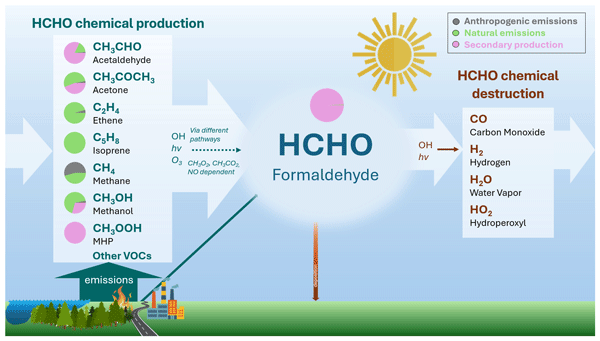
Gunnar Myhre, Øivind Hodnebrog, Srinath Krishnan, Maria Sand, Marit Sandstad, Ragnhild B. Skeie, Lieven Clarisse, Bruno Franco, Dylan B. Millet, Kelley C. Wells, Alexander Archibald, Hannah N. Bryant, Alex T. Chaudhri, David S. Stevenson, Didier Hauglustaine, Michael Prather, J. Christopher Kaiser, Dirk J. L. Olivie, Michael Schulz, Oliver Wild, Ye Wang, Thérèse Salameh, Jason E. Williams, Philippe Le Sager, Fabien Paulot, Kostas Tsigaridis, and Haley E. Plaas
Geosci. Model Dev., 19, 2577–2591, https://doi.org/10.5194/gmd-19-2577-2026, https://doi.org/10.5194/gmd-19-2577-2026, 2026
Short summary
Short summary
Volatile organic compounds (VOCs) affect air quality and climate, but their behavior in the atmosphere is still uncertain. We launched a global research effort to compare how different models represent these compounds and to improve their accuracy. By analyzing model results alongside observations and satellite data, we aim to better understand the atmospheric composition of these compounds.
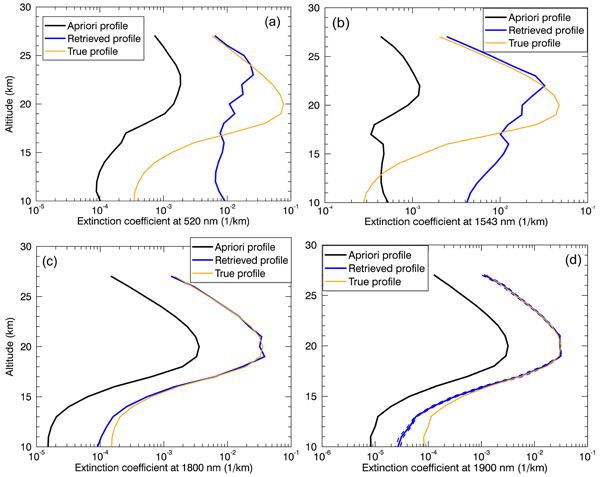
Anna Lange, Ulrike Niemeier, Alexei Rozanov, and Christian von Savigny
Atmos. Meas. Tech., 19, 1973–1989, https://doi.org/10.5194/amt-19-1973-2026, https://doi.org/10.5194/amt-19-1973-2026, 2026
Short summary
Short summary
We investigate which wavelengths, depending on the latitude, are required for aerosol measurements after continuous sulphur injections of 30 Tg S yr-1 into the stratosphere, here at 19 km, in order to obtain physically meaningful stratospheric aerosol extinction profile retrieval results from the perspective of a typical satellite instrument with the so-called solar occultation geometry. Consistent with expectations, a longer wavelength is required for the latitude range of and near the injection.
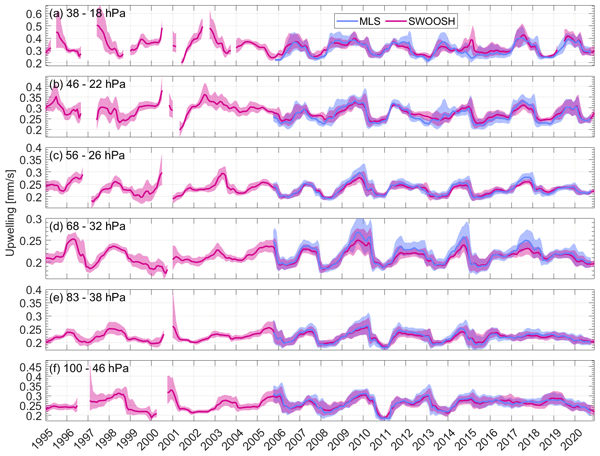
Meghan Brehon, Susann Tegtmeier, Adam Bourassa, Sean M. Davis, Udo Grabowski, Tobias Kerzenmacher, and Gabriele Stiller
Atmos. Chem. Phys., 26, 3743–3764, https://doi.org/10.5194/acp-26-3743-2026, https://doi.org/10.5194/acp-26-3743-2026, 2026
Short summary
Short summary
We used observations of water vapour to estimate vertical transport rates in the tropical stratosphere for 1995-2020 and analyze stratospheric variability. Our results find good agreement between our observation-based estimates and reanalysis upwelling and reveal that the variability is mainly driven by the Quasi-Biennial Oscillation (QBO) and El Niño Southern Oscillation (ENSO) with a clear signal in the upwelling time series coinciding with the recent QBO disruptions of 2015/16 and 2019/20.
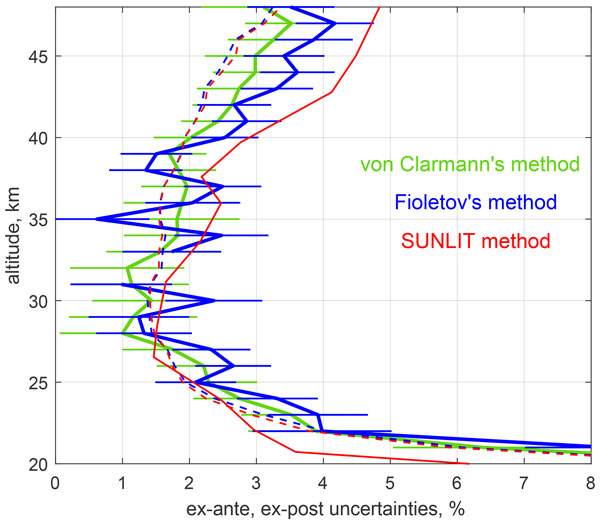
Viktoria F. Sofieva, Alexandra Laeng, Thomas von Clarmann, Gabriele Stiller, Michael Kiefer, Johanna Tamminen, Alexey Rozanov, Carlo Arosio, Nathaniel Livesey, Robert Damadeo, Patrick Sheese, Kaley A. Walker, Doug Degenstein, Daniel Zawada, Natalya A. Kramarova, and Arno Keppens
Atmos. Meas. Tech., 19, 1837–1852, https://doi.org/10.5194/amt-19-1837-2026, https://doi.org/10.5194/amt-19-1837-2026, 2026
Short summary
Short summary
For satellite measurements of atmospheric composition, the random uncertainty estimates provided by retrieval algorithms might be imperfect due to various approximations used in the retrievals or presence of unknown error sources. This paper presents an overview of the methods used for validation of random uncertainty estimates. All methods discussed in this study are categorized, and assumptions and limitations of each method are discussed.

Clair Duchamp, Bernard Legras, Aurélien Podglajen, Pasquale Sellitto, Adam E. Bourassa, Alexei Rozanov, Ghassan Taha, and Daniel J. Zawada
Atmos. Meas. Tech., 19, 1675–1696, https://doi.org/10.5194/amt-19-1675-2026, https://doi.org/10.5194/amt-19-1675-2026, 2026
Short summary
Short summary
We analyzed the stratospheric aerosol plume from the 2022 Hunga eruption using satellite lidar data. We implemented a method to retrieve some aerosol properties, as standard products failed in this case. We found very high optical depth values in the days following the eruption, which decreased rapidly but remained elevated for months. Our results are broadly validated, though some satellite products underestimate the values due, in part, to the unusual aerosol size distribution in the plume.
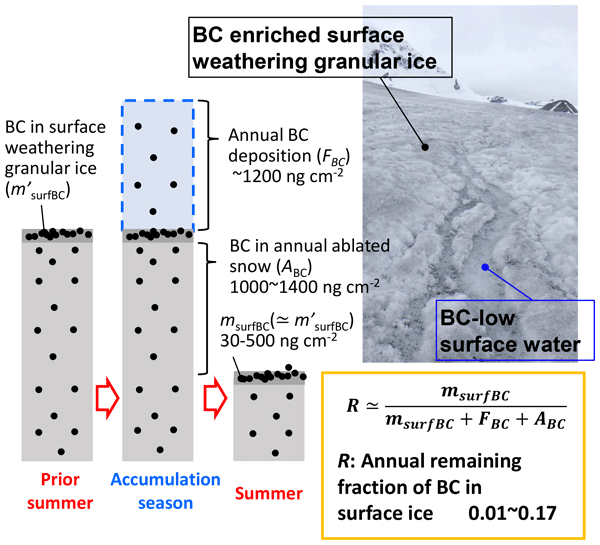
Sayako Ueda, Akiko Sakai, Sho Ohata, Purevdagva Khalzan, Sumito Matoba, Ken Kondo, and Hitoshi Matsui
Atmos. Chem. Phys., 26, 3167–3184, https://doi.org/10.5194/acp-26-3167-2026, https://doi.org/10.5194/acp-26-3167-2026, 2026
Short summary
Short summary
Light-absorbing particles on surface ice in ablation areas can accelerate glacier melting and shrinkage. Snow and ice were collected from the ablation area of Potanin Glacier, Mongolia. The black carbon (BC) mass concentration of surface granular ice was much larger than that of fresh snow and surface melted water, suggesting that BC is retained in the granular ice at melting. The granular ice retained BC particles best in the upstream ablation area, but the capacity decreased in the downstream ablation area.
Zhaoyi Ren, Kei Kawai, Mingxu Liu, and Hitoshi Matsui
EGUsphere, https://doi.org/10.5194/egusphere-2025-6214, https://doi.org/10.5194/egusphere-2025-6214, 2026
Short summary
Short summary
This study uses a global climate-aerosol model to examine how Arctic-sourced dust, marine organic aerosols, and bioaerosols affect spatial and seasonal variability in ice nucleating particles in the Arctic. We also assess how these aerosols and their influence on ice nucleation change with Arctic warming. The findings highlight the need to represent multiple aerosol types and their temperature-dependent behavior when simulating ice formation in Arctic low-level clouds and their climate impacts.
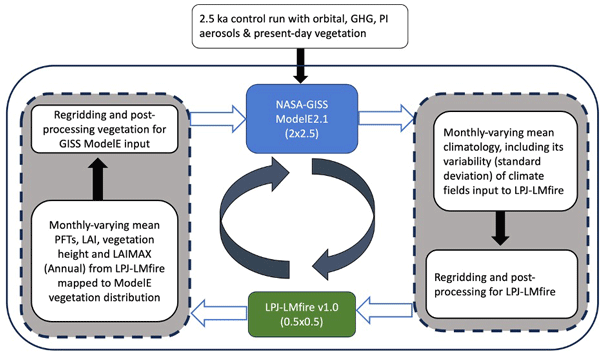
Ram Singh, Alexander Koch, Allegra N. LeGrande, Kostas Tsigaridis, Riovie D. Ramos, Francis Ludlow, Igor Aleinov, Reto Ruedy, and Jed O. Kaplan
Geosci. Model Dev., 19, 1405–1428, https://doi.org/10.5194/gmd-19-1405-2026, https://doi.org/10.5194/gmd-19-1405-2026, 2026
Short summary
Short summary
This study presents an experimental framework for asynchronous land-atmosphere coupling to include biogeophysical feedbacks using a dynamic vegetation model with an Earth system model that lacks a fully dynamic vegetation component. The framework is implemented for the 2.5 ka period and also illustrates the role of model performance metrics (bias, variability), while evaluating the simulated climate against the multi-proxy paleoclimate reconstructions.

Kimberlee Dubé, Adam Bourassa, Susann Tegtmeier, Daniel Zawada, and Douglas Degenstein
Atmos. Chem. Phys., 26, 2161–2173, https://doi.org/10.5194/acp-26-2161-2026, https://doi.org/10.5194/acp-26-2161-2026, 2026
Short summary
Short summary
The stratopause, the boundary between the stratosphere and the mesosphere, is projected to cool and move lower in response to anthropogenic greenhouse gas emissions. We use observations from two satellite instruments to assess the annual and inter-annual variability and to quantify trends in the stratopause temperature and height. We find that the stratopause cooled by ~0.5–1 K per decade and that the tropical stratopause moved lower by 300–475 m per decade during 2005–2021.
Christine Pohl, Ulrike Niemeier, Alexei Rozanov, Felix Wrana, and Christian von Savigny
EGUsphere, https://doi.org/10.5194/egusphere-2026-578, https://doi.org/10.5194/egusphere-2026-578, 2026
Short summary
Short summary
Satellite aerosol retrievals and models are crucial for studying volcanic impacts on the stratosphere but remain uncertain in perturbed situations due to assumed aerosol properties. SCIAMACHY retrievals are compared with ECHAM simulations following the Manam and Sarychev eruptions to evaluate both approaches. Agreement is found for Sarychev, while Manam shows differences. Comparisons with SAGE II support the SCIAMACHY retrievals. The importance of model setup details is highlighted.

Oke Huhs, Jakob Borchardt, Sven Krautwurst, Konstantin Gerilowski, Heinrich Bovensmann, Hartmut Bösch, and John Philip Burrows
Atmos. Meas. Tech., 19, 871–898, https://doi.org/10.5194/amt-19-871-2026, https://doi.org/10.5194/amt-19-871-2026, 2026
Short summary
Short summary
Stray light is an error source in all optical instruments. In passive remote sensing observations of greenhouse gases, it creates false patterns in gas concentration maps. In this work, the impact of stray light in the full processing chain from measured spectra, retrieved concentration maps, to emission rate estimates using measured and simulated data is analysed for MAMAP2D-Light. Additionally, a hardware improvement mitigates stray light for onward missions.
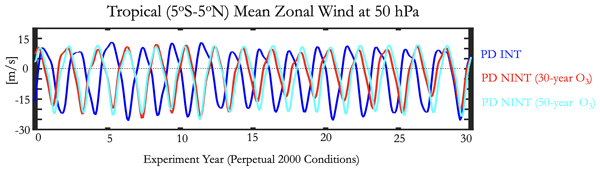
Clara Orbe, Alison Ming, Gabriel Chiodo, Michael Prather, Mohamadou Diallo, Qi Tang, Andreas Chrysanthou, Hiroaki Naoe, Xin Zhou, Irina Thaler, Dillon Elsbury, Ewa Bednarz, Jonathon S. Wright, Aaron Match, Shingo Watanabe, James Anstey, Tobias Kerzenmacher, Stefan Versick, Marion Marchand, Feng Li, and James Keeble
Geosci. Model Dev., 19, 773–794, https://doi.org/10.5194/gmd-19-773-2026, https://doi.org/10.5194/gmd-19-773-2026, 2026
Short summary
Short summary
The quasi-biennial oscillation (QBO) is the main source of wind fluctuations in the tropical stratosphere, which can couple to surface climate. However, models do a poor job of simulating the QBO in the lower stratosphere, for reasons that remain unclear. One possibility is that models do not completely represent how ozone influences the QBO-associated wind variations. Here we propose a multi-model framework for assessing how ozone influences the QBO in recent past and future climates.
William J. Collins, John S. Daniel, Martyn P. Chipperfield, Martin Cussac, Makoto Deushi, Gregory Faluvegi, Paul Griffiths, Øivind Hodnebrog, Larry W. Horowitz, James Keeble, Douglas Kinnison, Vaishali Naik, Fiona M. O'Connor, Drew Shindell, Simone Tilmes, Kostas Tsigaridis, Zihao Wang, and James Weber
EGUsphere, https://doi.org/10.5194/egusphere-2025-6033, https://doi.org/10.5194/egusphere-2025-6033, 2026
Short summary
Short summary
Ozone depleting substances (ODSs) are also greenhouse gases that cause global warming. However, their destruction of ozone contributes a global cooling. We have used results from climate models that include atmospheric chemistry and found that the cooling effect of the ozone depletion diagnosed in the models was larger than that calculated using a standard method. We find that some ODSs have a net cooling effect whereas for others the warming effect is significantly reduced.
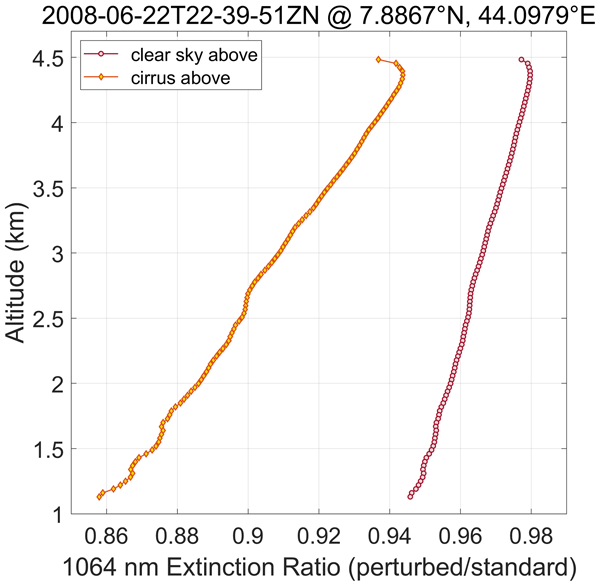
Jayanta Kar, Mark A. Vaughan, Robert P. Damadeo, Mahesh Kovilakam, Jason L. Tackett, and Charles R. Trepte
Atmos. Meas. Tech., 19, 277–292, https://doi.org/10.5194/amt-19-277-2026, https://doi.org/10.5194/amt-19-277-2026, 2026
Short summary
Short summary
This paper assesses biases in the 1064 nm calibration of the Cloud Aerosol Lidar with Orthogonal Polarization (CALIOP) due to signal attenuation differences at 1064 and 532 nm caused by stratospheric aerosols. Multi-channel measurements from the Stratospheric Aerosol and Gas Experiment suggest the bias ranges from 1 %–2 % for background conditions to over 5 % for high aerosol loads. Implications for CALIOP 1064 nm extinction retrievals and cascading errors in multi-layer scenes are discussed.
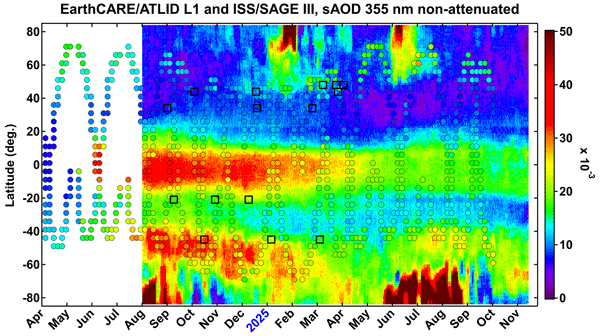
Sergey Khaykin, Michaël Sicard, Thierry Leblanc, Tetsu Sakai, Nickolay Balugin, Gwenaël Berthet, Stëphane Chevrier, Fernando Chouza, Artem Feofilov, Dominique Gantois, Sophie Godin-Beekmann, Arezki Haddouche, Yoshitaka Jin, Isamu Morino, Nicolas Kadygrov, Thomas Lecas, Ben Liley, Richard Querel, Ghasssan Taha, and Vladimir Yushkov
Atmos. Chem. Phys., 26, 607–622, https://doi.org/10.5194/acp-26-607-2026, https://doi.org/10.5194/acp-26-607-2026, 2026
Short summary
Short summary
In April 2024, the Ruang volcano in Indonesia sent large amounts of gas and particles high into the atmosphere, which then spread worldwide. Using the new European EarthCARE satellite and its advanced laser instrument ATLID (Atmospheric LIDar), together with ground and balloon observations, we tracked how these particles doubled levels in the tropics and spread into both hemispheres. The study shows ATLID’s power to reveal how eruptions can affect climate, clouds, and ozone for more than a year.
Xiaohua Pan, Mian Chin, Ralph A. Kahn, Hitoshi Matsui, Toshihiko Takemura, Meiyun Lin, Yuanyu Xie, Dongchul Kim, and Maria Val Martin
Atmos. Chem. Phys., 26, 171–196, https://doi.org/10.5194/acp-26-171-2026, https://doi.org/10.5194/acp-26-171-2026, 2026
Short summary
Short summary
Wildfire smoke can travel far from its source, affecting air quality far from the fire itself. This study looks at how two key factors – how much smoke is emitted & how high it rises – affect how smoke spreads. Using data from a major 2008 Siberian wildfire, four models were tested. Results show that models often inject smoke too low & remove it too quickly, missing high-altitude smoke seen by satellites. Better estimates of smoke height and removal are crucial to improve air quality forecasts.
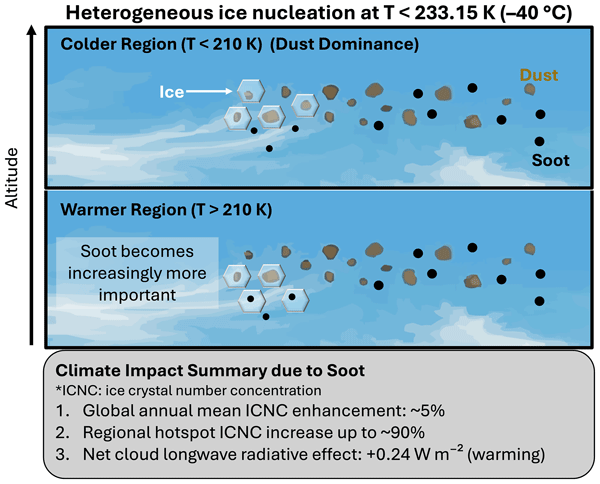
Xiaohan Li, Songmiao Fan, Huan Guo, and Paul Ginoux
Atmos. Chem. Phys., 26, 95–115, https://doi.org/10.5194/acp-26-95-2026, https://doi.org/10.5194/acp-26-95-2026, 2026
Short summary
Short summary
We used computer simulations to show that soot from wildfires and human activities has a bigger impact on high-altitude clouds than previously known. These particles create more ice crystals, which leads to a net warming effect on the climate in polar regions. Understanding this process is crucial for making accurate climate predictions as global wildfire activity increases.
Hazel Vernier, Demilson Quintao, Bruno Biazon, Eduardo Landulfo, Giovanni Souza, Amanda Santos, Fabio Lopes, Alex Mendes, José da Matta, Pinheiro Damaris, Benoit Grosslin, Maria Paulete, Maria de Fátima Andrade, Neeraj Rastogi, Akhil Raj, Hongyu Liu, Mahesh Kovilakam, Suvarna Fadnavis, Frank Wienhold, Mathieu Colombier, Chris Boone, Gwenael Berthet, Nicolas Dumelie, Lilian Joly, and Jean-Paul Vernier
EGUsphere, https://doi.org/10.5194/egusphere-2025-6226, https://doi.org/10.5194/egusphere-2025-6226, 2026
Preprint archived
Short summary
Short summary
This paper shows unique balloon measurements from Brazil within the Hunga volcanic plume eight months after the eruption. The chemical analysis of samples collected reveal new insights on volcanic aerosol composition and suggest the presence of marine aerosols.
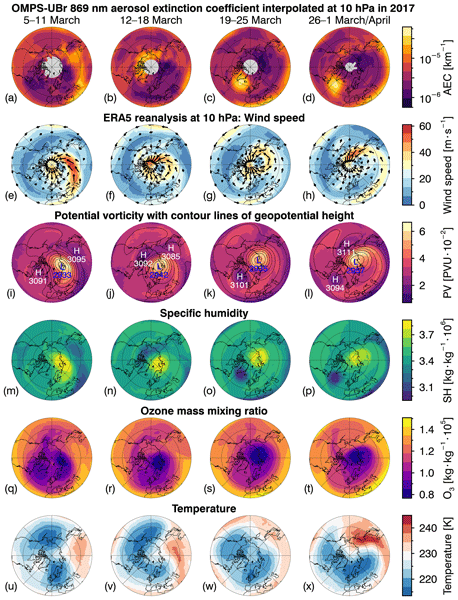
Christian Löns, Ronald Eixmann, Christine Pohl, Alexei Rozanov, and Christian von Savigny
Atmos. Chem. Phys., 25, 18209–18225, https://doi.org/10.5194/acp-25-18209-2025, https://doi.org/10.5194/acp-25-18209-2025, 2025
Short summary
Short summary
During the polar vortex season, so-called streamers can transport tropical air towards the pole in the middle stratosphere. This tropical air can get trapped in high-pressure areas at high latitudes after the polar vortex breaks down. In this study, remote sensing instruments are used to observe the course of such streamers by measuring the scattered solar radiation. Aerosols get transported to high latitudes at an altitude of about 25–35 km, increasing the aerosol mass there significantly.
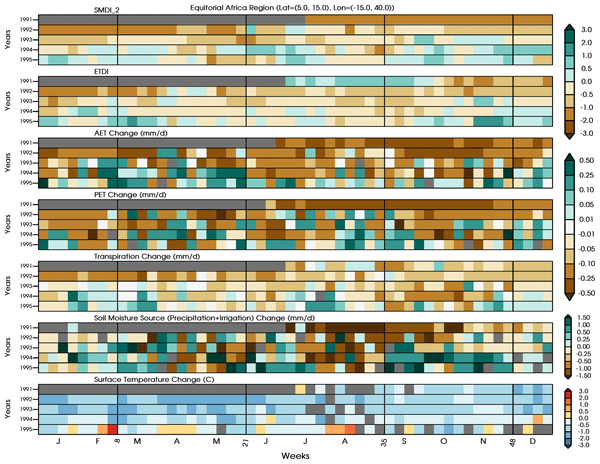
Ram Singh, Kostas Tsigaridis, Diana Bull, Laura P. Swiler, Benjamin M. Wagman, and Kate Marvel
Atmos. Chem. Phys., 25, 16511–16532, https://doi.org/10.5194/acp-25-16511-2025, https://doi.org/10.5194/acp-25-16511-2025, 2025
Short summary
Short summary
Analysis of post-eruption climate conditions using the impact metrics is crucial for understanding the hydroclimatic responses. We used NASA’s Earth system model to perform the experiments and utilized the moisture-based impact metrics and hydrological variables to investigate the effect of volcanically induced conditions that govern plant productivity. This study highlights Mt. Pinatubo's impact on the drivers of plant productivity and regional and seasonal dependence of these drivers.
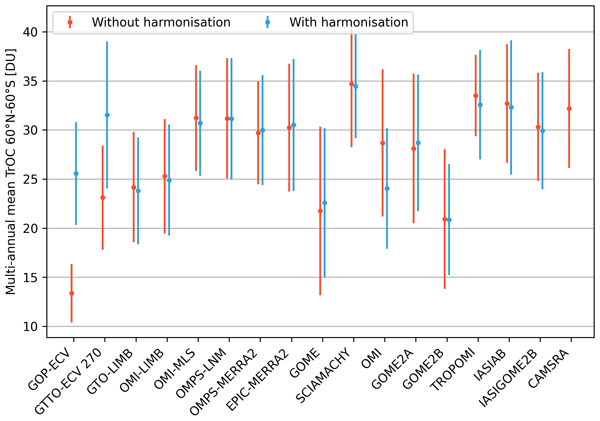
Arno Keppens, Daan Hubert, José Granville, Oindrila Nath, Jean-Christopher Lambert, Catherine Wespes, Pierre-François Coheur, Cathy Clerbaux, Anne Boynard, Richard Siddans, Barry Latter, Brian Kerridge, Serena Di Pede, Pepijn Veefkind, Juan Cuesta, Gaelle Dufour, Klaus-Peter Heue, Melanie Coldewey-Egbers, Diego Loyola, Andrea Orfanoz-Cheuquelaf, Swathi Maratt Satheesan, Kai-Uwe Eichmann, Alexei Rozanov, Viktoria F. Sofieva, Jerald R. Ziemke, Antje Inness, Roeland Van Malderen, and Lars Hoffmann
Atmos. Meas. Tech., 18, 6893–6916, https://doi.org/10.5194/amt-18-6893-2025, https://doi.org/10.5194/amt-18-6893-2025, 2025
Short summary
Short summary
The first Tropospheric Ozone Assessment Report (TOAR) encountered discrepancies between several satellite sensors’ estimates of the distribution and change of ozone in the free troposphere. Therefore, contributing to the second TOAR, we harmonise as much as possible the observational perspective of sixteen tropospheric ozone products from satellites. This only partially accounts for the observed discrepancies, with a reduction of 10–40 % of the inter-product dispersion upon harmonisation.
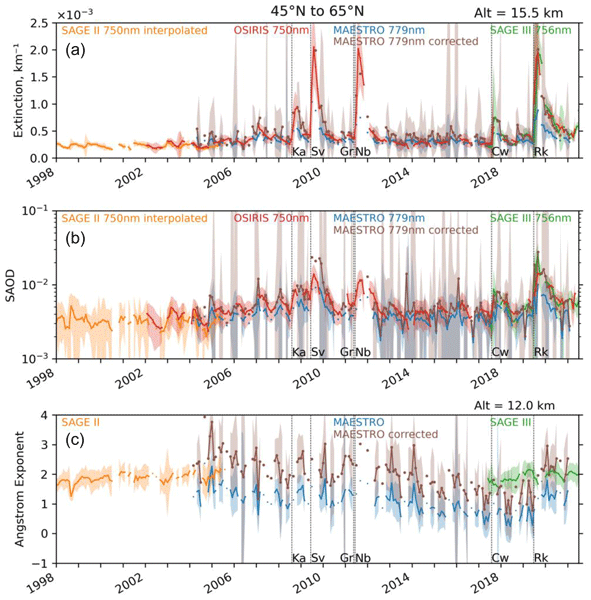
Sujan Khanal, Matthew Toohey, Adam Bourassa, C. Thomas McElroy, Christopher Sioris, and Kaley A. Walker
Atmos. Meas. Tech., 18, 6835–6852, https://doi.org/10.5194/amt-18-6835-2025, https://doi.org/10.5194/amt-18-6835-2025, 2025
Short summary
Short summary
Measurements of stratospheric aerosol from the Measurement of Aerosol Extinction in the Stratosphere and Troposphere Retrieved by Occultation (MAESTRO) instrument are compared to other measurements to assess their scientific value. We find that medians of MAESTRO measurements binned by month and latitude show reasonable correlation with other data sets, with notable increases after volcanic eruptions, and that biases in the data can be alleviated through a simple correction technique. Used with care, MAESTRO aerosol measurements provide information that can complement other data sets.
Travis D. Toth, Marian B. Clayton, Zhujun Li, David Painemal, Sharon D. Rodier, Jayanta Kar, Tyler J. Thorsen, Richard A. Ferrare, Mark A. Vaughan, Jason L. Tackett, Huisheng Bian, Mian Chin, Anne E. Garnier, Ellsworth J. Welton, Robert A. Ryan, Charles R. Trepte, and David M. Winker
Atmos. Meas. Tech., 18, 6765–6793, https://doi.org/10.5194/amt-18-6765-2025, https://doi.org/10.5194/amt-18-6765-2025, 2025
Short summary
Short summary
NASA's CALIPSO satellite mission observed aerosols (airborne particles) globally from 2006 to 2023. Its final data products update improves its aerosol optical parameters over oceans by adjusting for regional and seasonal differences in a new measurement-model synergistic approach. This results in a more realistic aerosol characterization, specifically near coastlines (where sea salt mixes with pollution), with potential impacts to future studies of science applications (e.g., climate effects).
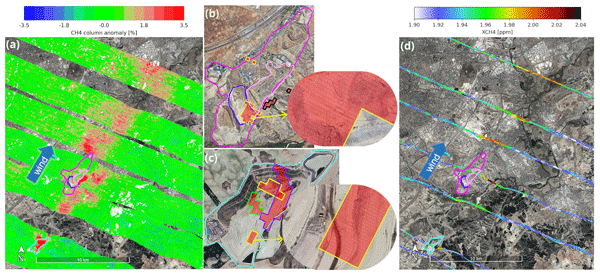
Sven Krautwurst, Christian Fruck, Sebastian Wolff, Jakob Borchardt, Oke Huhs, Konstantin Gerilowski, Michał Gałkowski, Christoph Kiemle, Mathieu Quatrevalet, Martin Wirth, Christian Mallaun, John P. Burrows, Christoph Gerbig, Andreas Fix, Hartmut Bösch, and Heinrich Bovensmann
Atmos. Chem. Phys., 25, 14669–14702, https://doi.org/10.5194/acp-25-14669-2025, https://doi.org/10.5194/acp-25-14669-2025, 2025
Short summary
Short summary
Anomalously high CH4 emissions from landfills in Madrid, Spain, have been observed by satellite measurements in recent years. Our investigations of these waste facilities, using passive and active airborne remote sensing measurements, confirm these high emission rates with values of up to 13 th−1 during the overflight and show excellent agreement between the two techniques. A large fraction of the emissions is attributed to active landfill sites.
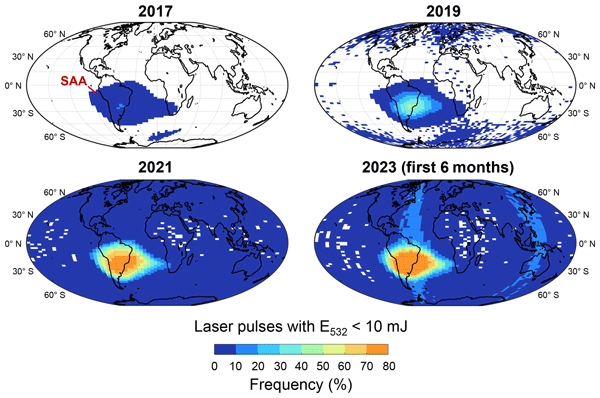
Jason L. Tackett, Robert A. Ryan, Anne E. Garnier, Jayanta Kar, Brian J. Getzewich, Xia Cai, Mark A. Vaughan, Charles R. Trepte, Ron Verhappen, David M. Winker, and Kam-Pui A. Lee
Atmos. Meas. Tech., 18, 6211–6231, https://doi.org/10.5194/amt-18-6211-2025, https://doi.org/10.5194/amt-18-6211-2025, 2025
Short summary
Short summary
The spaceborne atmospheric lidar CALIOP experienced an increasing number of intermittent low energy laser pulses in the final seven years of the 17-year long CALIPSO mission. Low energy pulses degraded the quality of retrievals in affected profiles. This paper describes low energy mitigation (LEM) algorithms that remove affected data and minimize data loss. LEM is demonstrated to correct calibration biases, reduce false feature detections, and restore the integrity of the CALIOP data record.
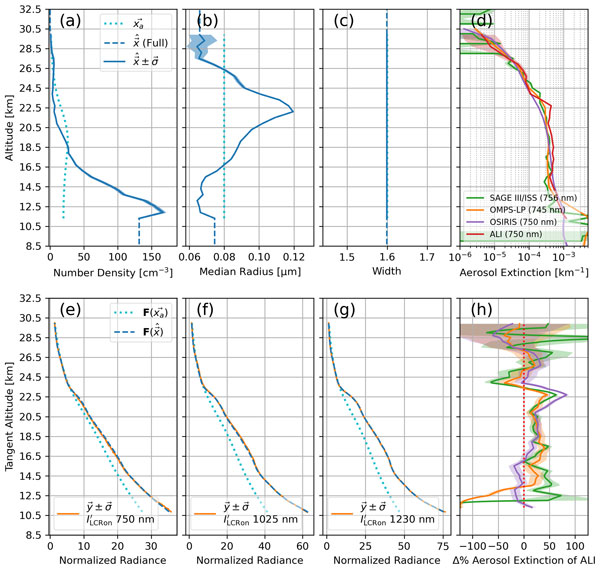
Daniel Letros, Liam Graham, Adam Bourassa, Doug Degenstein, Paul Loewen, Landon Rieger, and Nick Lloyd
Atmos. Meas. Tech., 18, 6185–6210, https://doi.org/10.5194/amt-18-6185-2025, https://doi.org/10.5194/amt-18-6185-2025, 2025
Short summary
Short summary
The Aerosol Limb Imager (ALI) is an optical instrument which measures stratospheric aerosols. These aerosols are of interest to atmospheric science as they have a significant impact on the Earth's climate. ALI has the ability to measure the polarization of atmospheric light over a wide spectral range, which is a novel ability for the measurement ALI uses. We demonstrate and discuss ALI capability and how the polarized information may improve aerosol information for this type of measurement.
Claire M. Yu, Mian Chin, Qian Tan, Huisheng Bian, Peter R. Colarco, and Hongbin Yu
Atmos. Chem. Phys., 25, 14411–14434, https://doi.org/10.5194/acp-25-14411-2025, https://doi.org/10.5194/acp-25-14411-2025, 2025
Short summary
Short summary
The regional lockdowns, implemented over 2020–2022 to contain the rapid spread of the COVID-19 disease, inadvertently created a natural laboratory for investigating the effect of reducing anthropogenic emissions on urban air quality in unprecedentedly large temporal and spatial scales. In this study, we analyzed multi-year surface PM2.5 data in 21 cities around the globe, complemented by a set of global aerosol modeling experiments to assess the effect of the lockdown emission reductions on PM2.5.
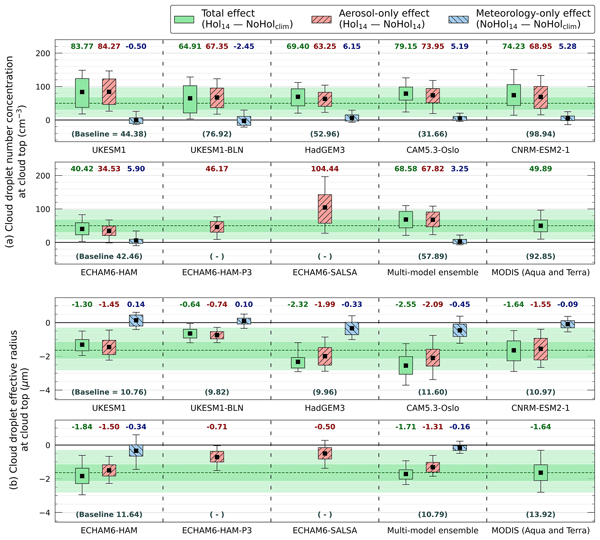
George Jordan, Florent Malavelle, Jim Haywood, Ying Chen, Ben Johnson, Daniel Partridge, Amy Peace, Eliza Duncan, Duncan Watson-Parris, David Neubauer, Anton Laakso, Martine Michou, and Pierre Nabat
Atmos. Chem. Phys., 25, 13393–13428, https://doi.org/10.5194/acp-25-13393-2025, https://doi.org/10.5194/acp-25-13393-2025, 2025
Short summary
Short summary
The 2014–15 Holuhraun eruption created a vast aerosol plume that acted as a natural experiment to assess how well climate models capture changes in cloud properties due to increased aerosol. We find that climate models represent the observed shift to smaller, more numerous cloud droplets well. However, climate models diverge in their aerosol-induced changes to large-scale cloud properties, particularly cloud liquid water content. Our study shows that Holuhraun had a cooling effect on the Earth.
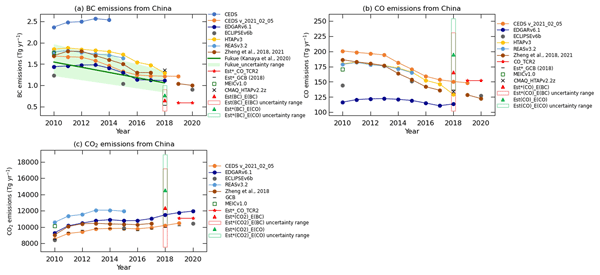
Phuc Thi Minh Ha, Yugo Kanaya, Kazuyo Yamaji, Syuichi Itahashi, Satoru Chatani, Takashi Sekiya, Maria Dolores Andrés Hernández, John Philip Burrows, Hans Schlager, Michael Lichtenstern, Mira Poehlker, and Bruna Holanda
Atmos. Chem. Phys., 25, 13429–13452, https://doi.org/10.5194/acp-25-13429-2025, https://doi.org/10.5194/acp-25-13429-2025, 2025
Short summary
Short summary
Black carbon and CO are important to climate change. EMeRGe airborne observation can identify the suitability of emission inventories used in the CMAQv5.0.2 model for Asian polluted regions. GFEDv4.1s is suitable for fire emissions. Anthropogenic BC and CO emissions from the Philippines (REASv2.1) are insufficient. The estimated Chinese emissions in 2018 are 0.65±0.25 TgBC, 166±65 TgCO, and 12.4±4.8 PgCO2, suggesting a reduction and increment for China's BC and CO emissions in the HTAPv2.2z inventory.
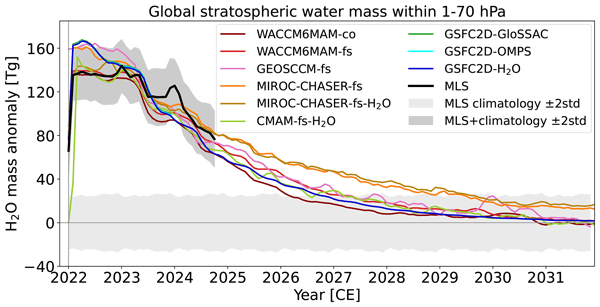
Zhihong Zhuo, Xinyue Wang, Yunqian Zhu, Wandi Yu, Ewa M. Bednarz, Eric Fleming, Peter R. Colarco, Shingo Watanabe, David Plummer, Georgiy Stenchikov, William Randel, Adam Bourassa, Valentina Aquila, Takashi Sekiya, Mark R. Schoeberl, Simone Tilmes, Jun Zhang, Paul J. Kushner, and Francesco S. R. Pausata
Atmos. Chem. Phys., 25, 13161–13176, https://doi.org/10.5194/acp-25-13161-2025, https://doi.org/10.5194/acp-25-13161-2025, 2025
Short summary
Short summary
The 2022 Hunga eruption caused unprecedented stratospheric water injection, triggering unique atmospheric impacts. This study combines observations and model simulations, projecting a stratospheric water vapor anomaly lasting 4–7 years, with significant temperature variations and ozone depletion in the upper atmosphere lasting 7–10 years. These findings offer critical insights into the role of stratospheric water vapor in shaping climate and atmospheric chemistry.
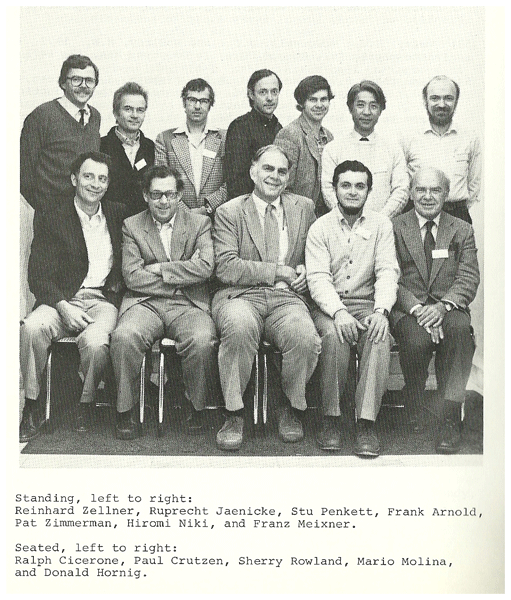
Rolf Müller, Lennart Bengtsson, John Birks, John Burrows, Ruprecht Jaenicke, and Richard S. Stolarski
Hist. Geo Space. Sci., 16, 31–40, https://doi.org/10.5194/hgss-16-31-2025, https://doi.org/10.5194/hgss-16-31-2025, 2025
Short summary
Short summary
This paper reports a few anecdotes from the life of Paul J. Crutzen that were contributed by friends and colleagues. Taken together, these anecdotes should shed some light on the person that Paul was, as this is perhaps sometimes obscured when focusing solely on his many scientific achievements.
Huisheng Bian, Sarah Strode, Mian Chin, Fan Li, Andrea Molad, Peter R. Colarco, and Hongbin Yu
EGUsphere, https://doi.org/10.5194/egusphere-2025-4501, https://doi.org/10.5194/egusphere-2025-4501, 2025
Preprint archived
Short summary
Short summary
We study the North Pacific westerly jet (NPWJ) using four reanalysis datasets and eight CMIP6 models. Our results show that between 1980 and 2019, the NPWJ core oscillates seasonally between north and south, weakening and shifting northward in summer and autumn. Single-forcing simulations further reveal aerosol forcing as the main driver. Incorporating interacting chemistry and time-varying ozone radiative forcing into Earth system models is crucial for simulating long-term atmospheric dynamics.
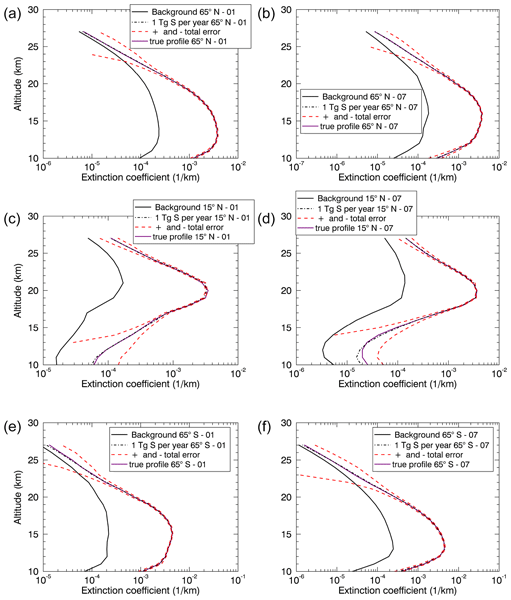
Anna Lange, Ulrike Niemeier, Alexei Rozanov, and Christian von Savigny
Atmos. Chem. Phys., 25, 11673–11688, https://doi.org/10.5194/acp-25-11673-2025, https://doi.org/10.5194/acp-25-11673-2025, 2025
Short summary
Short summary
Our paper investigates whether it is possible to observe continuous injections of 1 and 2 Tg S y-1 (sulfur per year) into the stratosphere with the currently active satellite occultation instruments. The calculations show that, considering the natural variability and the assumptions made here, the stratospheric aerosols formed from continuous emissions of 1 and 2 Tg S y-1 in the quasi-steady-state phase can be detected, which is not the case in the first month of the 2-year initial phase.
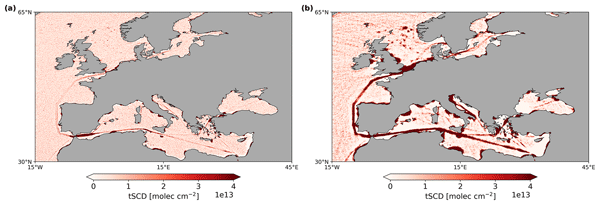
Miriam Latsch, Andreas Richter, John P. Burrows, and Hartmut Bösch
Atmos. Meas. Tech., 18, 4373–4395, https://doi.org/10.5194/amt-18-4373-2025, https://doi.org/10.5194/amt-18-4373-2025, 2025
Short summary
Short summary
This study presents our advanced methods to qualitatively detect ship-related nitrogen dioxide (NO2) signals in TROPOMI satellite data. By applying filtering techniques, we identify numerous global shipping routes, including previously undetected ones, as well as emissions from offshore platforms. Additionally, we compare the filtered satellite data with high-pass-filtered CAMS global model data to estimate the differences between observed and modeled NO2 emissions.
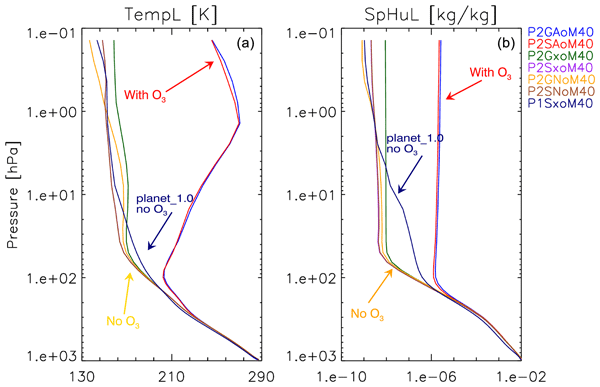
Kostas Tsigaridis, Andrew S. Ackerman, Igor Aleinov, Mark A. Chandler, Thomas L. Clune, Christopher M. Colose, Anthony D. Del Genio, Maxwell Kelley, Nancy Y. Kiang, Anthony Leboissetier, Jan P. Perlwitz, Reto A. Ruedy, Gary L. Russell, Linda E. Sohl, Michael J. Way, and Eric T. Wolf
Geosci. Model Dev., 18, 5825–5871, https://doi.org/10.5194/gmd-18-5825-2025, https://doi.org/10.5194/gmd-18-5825-2025, 2025
Short summary
Short summary
We present the second generation of ROCKE-3D (Resolving Orbital and Climate Keys of Earth and Extraterrestrial Environments with Dynamics), a generalized three-dimensional model for use in Solar System and exoplanetary simulations of rocky planet climates. We quantify how the different component choices affect model results and discuss strengths and limitations of using each component, together with how one can select which component to use. ROCKE-3D is publicly available, and tutorial sessions are available for the community, greatly facilitating its use by any interested group.
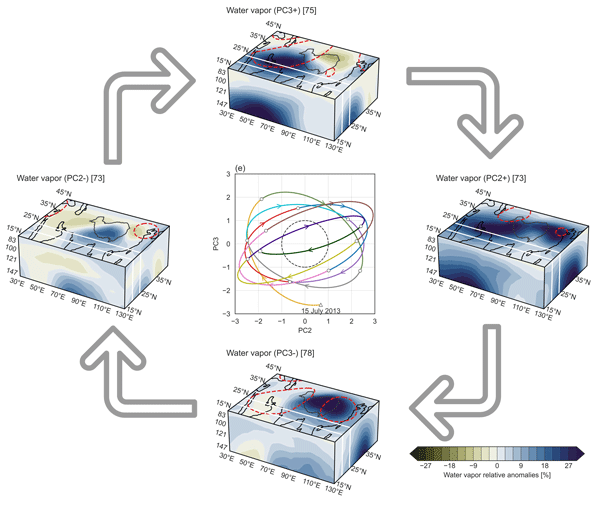
Shenglong Zhang, Jiao Chen, Jonathon S. Wright, Sean M. Davis, Jie Gao, Paul Konopka, Ninghui Li, Mengqian Lu, Susann Tegtmeier, Xiaolu Yan, Guang J. Zhang, and Nuanliang Zhu
Atmos. Chem. Phys., 25, 10109–10139, https://doi.org/10.5194/acp-25-10109-2025, https://doi.org/10.5194/acp-25-10109-2025, 2025
Short summary
Short summary
Swirling above summer storms, the Asian monsoon anticyclone functions as both gateway and gatekeeper to moisture entering the stratosphere. Although well monitored from space since 2005, many details of the anticyclone and the air that flows through it remain mysterious. Reanalyses, which combine model output and observations, may help to address how and why but only if they reliably capture the what and where of water vapor variations. Current reanalyses are beginning to meet these criteria.
Mingxuan Wu, Hailong Wang, Zheng Lu, Xiaohong Liu, Huisheng Bian, David D. Cohen, Yan Feng, Mian Chin, Didier A. Hauglustaine, Vlassis A. Karydis, Marianne T. Lund, Gunnar Myhre, Andrea Pozzer, Michael Schulz, Ragnhild B. Skeie, Alexandra P. Tsimpidi, Svetlana G. Tsyro, and Shaocheng Xie
Atmos. Chem. Phys., 25, 10049–10074, https://doi.org/10.5194/acp-25-10049-2025, https://doi.org/10.5194/acp-25-10049-2025, 2025
Short summary
Short summary
A key challenge in simulating the life cycle of nitrate aerosol in global models is accurately representing the mass size distribution of nitrate aerosol, which lacks sufficient observational constraints. We found that most global models underestimate the mass fraction of fine-mode nitrate at the surface in all regions. Our study highlights the importance of gas–aerosol partitioning parameterization and the simulation of dust and sea salt in correctly simulating the mass size distribution of nitrate.
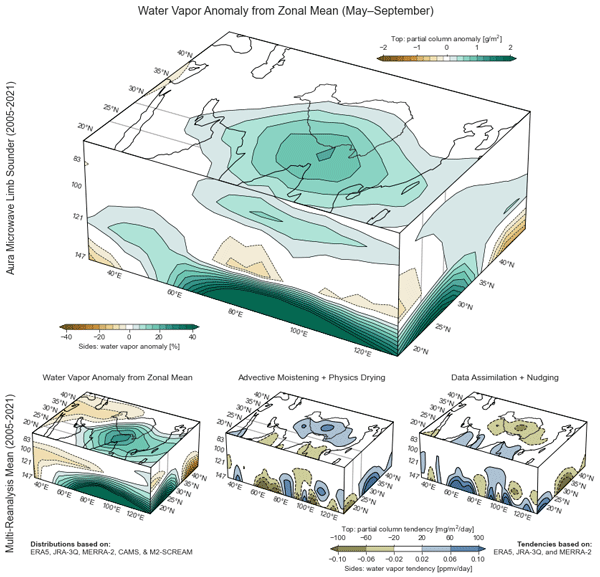
Jonathon S. Wright, Shenglong Zhang, Jiao Chen, Sean M. Davis, Paul Konopka, Mengqian Lu, Xiaolu Yan, and Guang J. Zhang
Atmos. Chem. Phys., 25, 9617–9643, https://doi.org/10.5194/acp-25-9617-2025, https://doi.org/10.5194/acp-25-9617-2025, 2025
Short summary
Short summary
Atmospheric reanalysis products reconstruct past states of the atmosphere. These products are often used to study winds and temperatures in the upper-level monsoon circulation, but their ability to reproduce composition fields like water vapor and ozone has been questionable at best. Here we report clear signs of improvement in both consistency across reanalyses and agreement with satellite observations, outline limitations, and suggest steps to further enhance the usefulness of these fields.
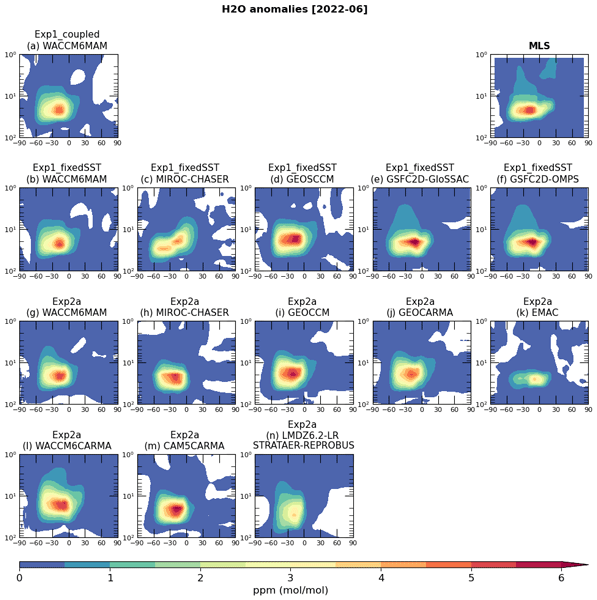
Yunqian Zhu, Hideharu Akiyoshi, Valentina Aquila, Elizabeth Asher, Ewa M. Bednarz, Slimane Bekki, Christoph Brühl, Amy H. Butler, Parker Case, Simon Chabrillat, Gabriel Chiodo, Margot Clyne, Peter R. Colarco, Sandip Dhomse, Lola Falletti, Eric Fleming, Ben Johnson, Andrin Jörimann, Mahesh Kovilakam, Gerbrand Koren, Ales Kuchar, Nicolas Lebas, Qing Liang, Cheng-Cheng Liu, Graham Mann, Michael Manyin, Marion Marchand, Olaf Morgenstern, Paul Newman, Luke D. Oman, Freja F. Østerstrøm, Yifeng Peng, David Plummer, Ilaria Quaglia, William Randel, Samuel Rémy, Takashi Sekiya, Stephen Steenrod, Timofei Sukhodolov, Simone Tilmes, Kostas Tsigaridis, Rei Ueyama, Daniele Visioni, Xinyue Wang, Shingo Watanabe, Yousuke Yamashita, Pengfei Yu, Wandi Yu, Jun Zhang, and Zhihong Zhuo
Geosci. Model Dev., 18, 5487–5512, https://doi.org/10.5194/gmd-18-5487-2025, https://doi.org/10.5194/gmd-18-5487-2025, 2025
Short summary
Short summary
To understand the climate impact of the 2022 Hunga volcanic eruption, we developed a climate model–observation comparison project. The paper describes the protocols and models that participate in the experiments. We designed several experiments to achieve our goals of this activity: (1) to evaluate the climate model performance and (2) to understand the Earth system responses to this eruption.
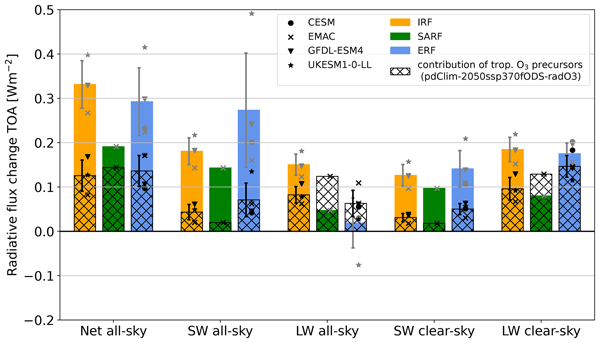
William J. Collins, Fiona M. O'Connor, Rachael E. Byrom, Øivind Hodnebrog, Patrick Jöckel, Mariano Mertens, Gunnar Myhre, Matthias Nützel, Dirk Olivié, Ragnhild Bieltvedt Skeie, Laura Stecher, Larry W. Horowitz, Vaishali Naik, Gregory Faluvegi, Ulas Im, Lee T. Murray, Drew Shindell, Kostas Tsigaridis, Nathan Luke Abraham, and James Keeble
Atmos. Chem. Phys., 25, 9031–9060, https://doi.org/10.5194/acp-25-9031-2025, https://doi.org/10.5194/acp-25-9031-2025, 2025
Short summary
Short summary
We used 7 climate models that include atmospheric chemistry and find that in a scenario with weak controls on air quality, the warming effects (over 2015 to 2050) of decreases in ozone-depleting substances and increases in air quality pollutants are approximately equal and would make ozone the second highest contributor to warming over this period. We find that for stratospheric ozone recovery, the standard measure of climate effects underestimates a more comprehensive measure.
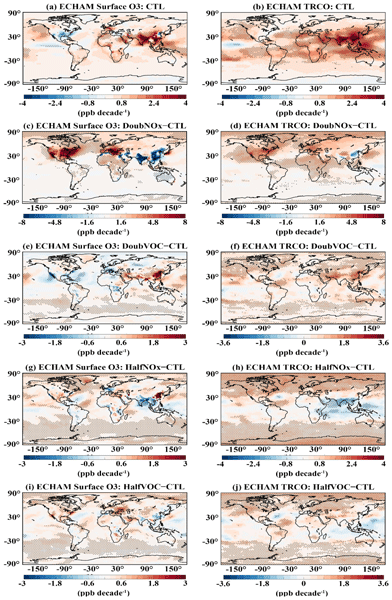
Suvarna Fadnavis, Yasin Elshorbany, Jerald Ziemke, Brice Barret, Alexandru Rap, P. R. Satheesh Chandran, Richard J. Pope, Vijay Sagar, Domenico Taraborrelli, Eric Le Flochmoen, Juan Cuesta, Catherine Wespes, Folkert Boersma, Isolde Glissenaar, Isabelle De Smedt, Michel Van Roozendael, Hervé Petetin, and Isidora Anglou
Atmos. Chem. Phys., 25, 8229–8254, https://doi.org/10.5194/acp-25-8229-2025, https://doi.org/10.5194/acp-25-8229-2025, 2025
Short summary
Short summary
Satellites and model simulations show enhancement in tropospheric ozone, which is highly impacted by human-produced nitrous oxides compared to volatile organic compounds. The increased amount of ozone enhances ozone radiative forcing. The ozone enhancement and associated radiative forcing are the highest over South and East Asia. The emissions of nitrous oxides show a higher influence on shifting ozone photochemical regimes than volatile organic compounds.
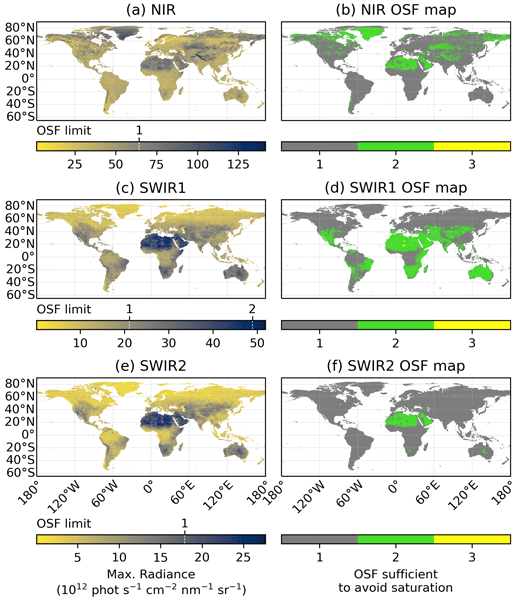
Michael Weimer, Michael Hilker, Stefan Noël, Max Reuter, Michael Buchwitz, Blanca Fuentes Andrade, Rüdiger Lang, Bernd Sierk, Yasjka Meijer, Heinrich Bovensmann, John P. Burrows, and Hartmut Bösch
Atmos. Meas. Tech., 18, 3321–3340, https://doi.org/10.5194/amt-18-3321-2025, https://doi.org/10.5194/amt-18-3321-2025, 2025
Short summary
Short summary
Optical detectors have a maximum signal (saturation). Exceedance means that the measurement has to be discarded. We investigate where saturation will occur for the future European satellite mission dedicated to CO2 monitoring (CO2M) and strategies to avoid saturation. Saturation impacts coverage and precision, both of which are important for estimation of local CO2 emissions. We find that taking two pictures per sampling should be sufficient to avoid saturation for CO2M, with some impact on CO2 precision.
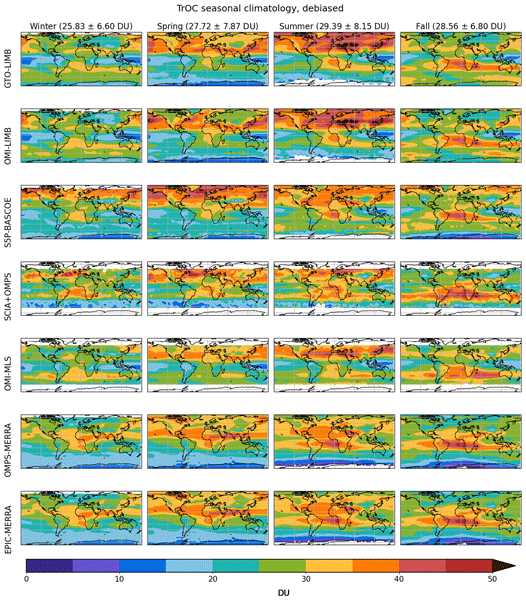
Carlo Arosio, Viktoria Sofieva, Andrea Orfanoz-Cheuquelaf, Alexei Rozanov, Klaus-Peter Heue, Diego Loyola, Edward Malina, Ryan M. Stauffer, David Tarasick, Roeland Van Malderen, Jerry R. Ziemke, and Mark Weber
Atmos. Meas. Tech., 18, 3247–3265, https://doi.org/10.5194/amt-18-3247-2025, https://doi.org/10.5194/amt-18-3247-2025, 2025
Short summary
Short summary
Tropospheric ozone affects air quality and climate, being a pollutant and a greenhouse gas. We analyze satellite data of tropospheric ozone columns obtained by combining two types of observations: one providing stratospheric and the other total ozone. We compare common climatological features and study the influence of the tropopause (troposphere to stratosphere boundary) on the results. We also examine trends over the last 20 years and compare satellite data with ozonesondes to identify drifts.
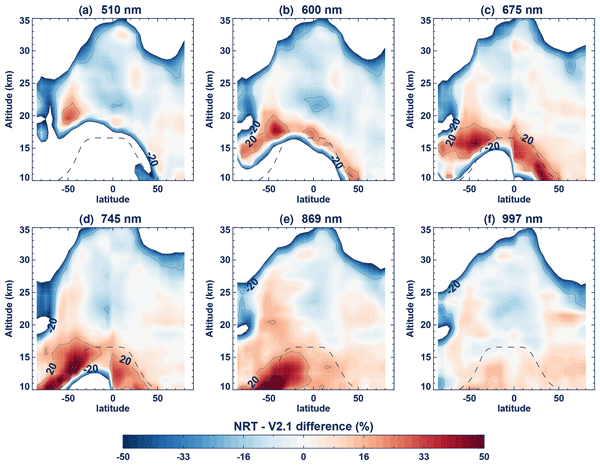
Michael D. Himes, Ghassan Taha, Daniel Kahn, Tong Zhu, and Natalya A. Kramarova
Atmos. Meas. Tech., 18, 2523–2536, https://doi.org/10.5194/amt-18-2523-2025, https://doi.org/10.5194/amt-18-2523-2025, 2025
Short summary
Short summary
The Ozone Mapping and Profiler Suite's Limb Profiler (OMPS LP) yields near-global coverage and information about how aerosols from volcanic eruptions and major wildfires is vertically distributed through the atmosphere. We developed a machine learning method to characterize aerosols using OMPS LP measurements about 60 times faster than the current approach.
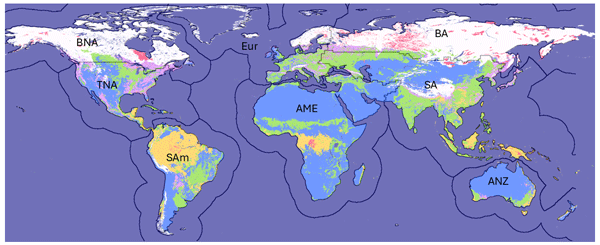
Cynthia H. Whaley, Tim Butler, Jose A. Adame, Rupal Ambulkar, Steve R. Arnold, Rebecca R. Buchholz, Benjamin Gaubert, Douglas S. Hamilton, Min Huang, Hayley Hung, Johannes W. Kaiser, Jacek W. Kaminski, Christoph Knote, Gerbrand Koren, Jean-Luc Kouassi, Meiyun Lin, Tianjia Liu, Jianmin Ma, Kasemsan Manomaiphiboon, Elisa Bergas Masso, Jessica L. McCarty, Mariano Mertens, Mark Parrington, Helene Peiro, Pallavi Saxena, Saurabh Sonwani, Vanisa Surapipith, Damaris Y. T. Tan, Wenfu Tang, Veerachai Tanpipat, Kostas Tsigaridis, Christine Wiedinmyer, Oliver Wild, Yuanyu Xie, and Paquita Zuidema
Geosci. Model Dev., 18, 3265–3309, https://doi.org/10.5194/gmd-18-3265-2025, https://doi.org/10.5194/gmd-18-3265-2025, 2025
Short summary
Short summary
The multi-model experiment design of the HTAP3 Fires project takes a multi-pollutant approach to improving our understanding of transboundary transport of wildland fire and agricultural burning emissions and their impacts. The experiments are designed with the goal of answering science policy questions related to fires. The options for the multi-model approach, including inputs, outputs, and model setup, are discussed, and the official recommendations for the project are presented.
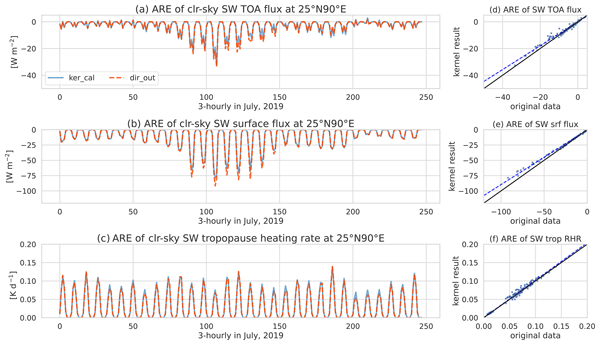
Jie Gao, Yi Huang, Jonathon S. Wright, Ke Li, Tao Geng, and Qiurun Yu
Geosci. Model Dev., 18, 2569–2586, https://doi.org/10.5194/gmd-18-2569-2025, https://doi.org/10.5194/gmd-18-2569-2025, 2025
Short summary
Short summary
The aerosol in the upper troposphere and stratosphere is highly variable, and its radiative effect is poorly understood. To estimate this effect, the radiative kernel is constructed and applied. The results show that the kernels can reproduce aerosol radiative effects and are expected to simulate stratospheric aerosol radiative effects. This approach reduces computational expense, is consistent with radiative model calculations, and can be applied to atmospheric models with speed requirements.
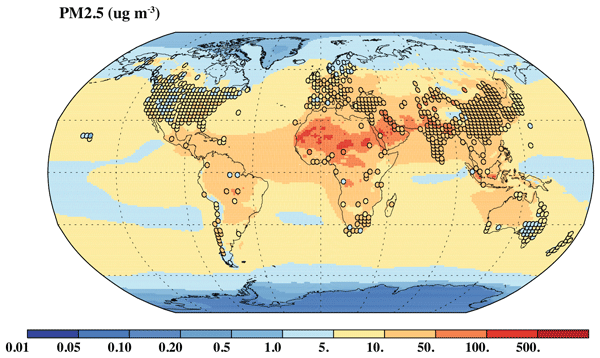
Natalie M. Mahowald, Longlei Li, Julius Vira, Marje Prank, Douglas S. Hamilton, Hitoshi Matsui, Ron L. Miller, P. Louis Lu, Ezgi Akyuz, Daphne Meidan, Peter Hess, Heikki Lihavainen, Christine Wiedinmyer, Jenny Hand, Maria Grazia Alaimo, Célia Alves, Andres Alastuey, Paulo Artaxo, Africa Barreto, Francisco Barraza, Silvia Becagli, Giulia Calzolai, Shankararaman Chellam, Ying Chen, Patrick Chuang, David D. Cohen, Cristina Colombi, Evangelia Diapouli, Gaetano Dongarra, Konstantinos Eleftheriadis, Johann Engelbrecht, Corinne Galy-Lacaux, Cassandra Gaston, Dario Gomez, Yenny González Ramos, Roy M. Harrison, Chris Heyes, Barak Herut, Philip Hopke, Christoph Hüglin, Maria Kanakidou, Zsofia Kertesz, Zbigniew Klimont, Katriina Kyllönen, Fabrice Lambert, Xiaohong Liu, Remi Losno, Franco Lucarelli, Willy Maenhaut, Beatrice Marticorena, Randall V. Martin, Nikolaos Mihalopoulos, Yasser Morera-Gómez, Adina Paytan, Joseph Prospero, Sergio Rodríguez, Patricia Smichowski, Daniela Varrica, Brenna Walsh, Crystal L. Weagle, and Xi Zhao
Atmos. Chem. Phys., 25, 4665–4702, https://doi.org/10.5194/acp-25-4665-2025, https://doi.org/10.5194/acp-25-4665-2025, 2025
Short summary
Short summary
Aerosol particles are an important part of the Earth system, but their concentrations are spatially and temporally heterogeneous, as well as being variable in size and composition. Here, we present a new compilation of PM2.5 and PM10 aerosol observations, focusing on the spatial variability across different observational stations, including composition, and demonstrate a method for comparing the data sets to model output.
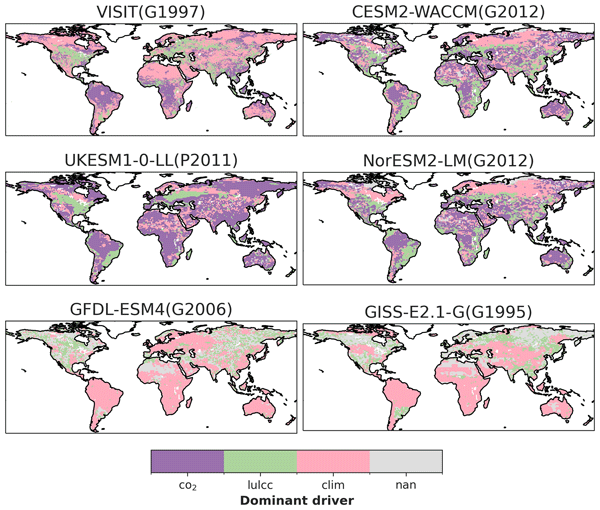
Ngoc Thi Nhu Do, Kengo Sudo, Akihiko Ito, Louisa K. Emmons, Vaishali Naik, Kostas Tsigaridis, Øyvind Seland, Gerd A. Folberth, and Douglas I. Kelley
Geosci. Model Dev., 18, 2079–2109, https://doi.org/10.5194/gmd-18-2079-2025, https://doi.org/10.5194/gmd-18-2079-2025, 2025
Short summary
Short summary
Understanding historical isoprene emission changes is important for predicting future climate, but trends and their controlling factors remain uncertain. This study shows that long-term isoprene trends vary among Earth system models mainly due to partially incorporating CO2 effects and land cover changes rather than to climate. Future models that refine these factors’ effects on isoprene emissions, along with long-term observations, are essential for better understanding plant–climate interactions.
Hazel Vernier, Demilson Quintão, Bruno Biazon, Eduardo Landulfo, Giovanni Souza, V. Amanda Santos, J. S. Fabio Lopes, C. P. Alex Mendes, A. S. José da Matta, K. Pinheiro Damaris, Benoit Grosslin, P. M. P. Maria Jorge, Maria de Fátima Andrade, Neeraj Rastogi, Akhil Raj, Hongyu Liu, Mahesh Kovilakam, Suvarna Fadnavis, Frank G. Wienhold, Mathieu Colombier, D. Chris Boone, Gwenael Berthet, Nicolas Dumelie, Lilian Joly, and Jean-Paul Vernier
EGUsphere, https://doi.org/10.5194/egusphere-2025-924, https://doi.org/10.5194/egusphere-2025-924, 2025
Preprint withdrawn
Short summary
Short summary
The eruption of Hunga Tonga-Hunga Ha'apai injected large amounts of water vapor and sea salt into the stratosphere, altering traditional views of volcanic aerosols. Using balloon-borne samplers, we collected aerosol samples and found high levels of sea salt and calcium, suggesting sulfate depletion due to gypsum formation. These findings highlight the need to consider sea salt in climate models to better predict volcanic impacts on the atmosphere and climate.
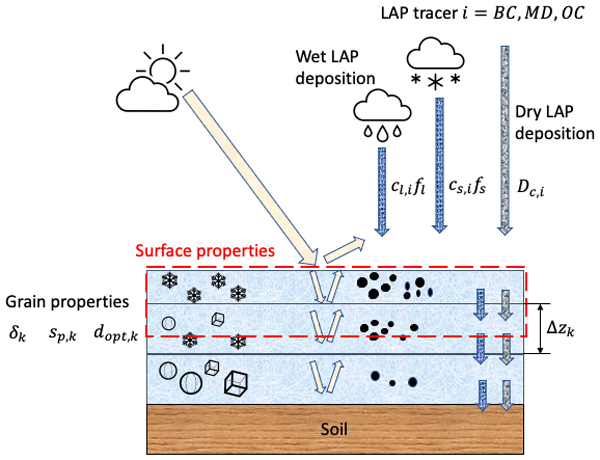
Enrico Zorzetto, Paul Ginoux, Sergey Malyshev, and Elena Shevliakova
The Cryosphere, 19, 1313–1334, https://doi.org/10.5194/tc-19-1313-2025, https://doi.org/10.5194/tc-19-1313-2025, 2025
Short summary
Short summary
Light-absorbing particle (LAP) deposition on snow leads to a darkening of the snow surface and can thus accelerate snow melt. Understanding the extent to which different types of LAPs contribute to snow melt is important to both predict changes in water availability and improve global climate model predictions. Here, we extend a recently developed snow model to account for the deposition of LAPs in the snowpack and evaluate the effect of snow darkening on accelerating snow melt.
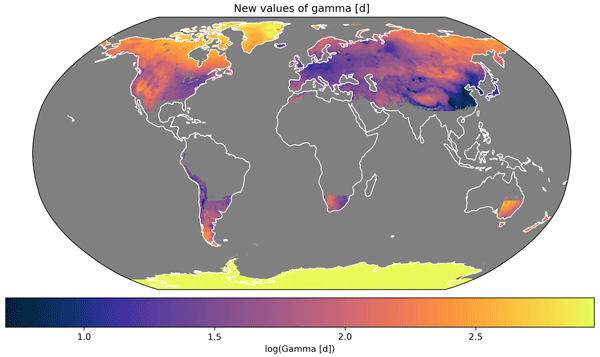
Manon Gaillard, Vincent Vionnet, Matthieu Lafaysse, Marie Dumont, and Paul Ginoux
The Cryosphere, 19, 769–792, https://doi.org/10.5194/tc-19-769-2025, https://doi.org/10.5194/tc-19-769-2025, 2025
Short summary
Short summary
This study presents an efficient method to improve large-scale snow albedo simulations by considering the spatial variability in light-absorbing particles (LAPs) like black carbon and dust. A global climatology of LAP deposition was created and used to optimize a parameter in the Crocus snow model. Testing at 10 global sites improved albedo predictions by 10 % on average and over 25 % in the Arctic. This method can enhance other snow models' predictions without complex simulations.
Prashant Chavan, Suvarna Fadnavis, Anton Laakso, Jean-Paul Vernier, Simone Tilmes, and Rolf Müller
EGUsphere, https://doi.org/10.5194/egusphere-2024-3825, https://doi.org/10.5194/egusphere-2024-3825, 2025
Preprint archived
Short summary
Short summary
Our simulations with volcanoes, when compared without volcanoes, show that volcanic aerosol precursors enter the tropical stratosphere, propagating upward and enhancing sulphate aerosol and heating. This stratospheric heating caused by the volcanoes reduces the amplitude of the QBO and disrupts its phases. Since QBO also modulates tropical convection and weather, we suggest including volcanic emissions and the QBO in the weather prediction model for a better forecast.
Mariya Petrenko, Ralph Kahn, Mian Chin, Susanne E. Bauer, Tommi Bergman, Huisheng Bian, Gabriele Curci, Ben Johnson, Johannes W. Kaiser, Zak Kipling, Harri Kokkola, Xiaohong Liu, Keren Mezuman, Tero Mielonen, Gunnar Myhre, Xiaohua Pan, Anna Protonotariou, Samuel Remy, Ragnhild Bieltvedt Skeie, Philip Stier, Toshihiko Takemura, Kostas Tsigaridis, Hailong Wang, Duncan Watson-Parris, and Kai Zhang
Atmos. Chem. Phys., 25, 1545–1567, https://doi.org/10.5194/acp-25-1545-2025, https://doi.org/10.5194/acp-25-1545-2025, 2025
Short summary
Short summary
We compared smoke plume simulations from 11 global models to each other and to satellite smoke amount observations aimed at constraining smoke source strength. In regions where plumes are thick and background aerosol is low, models and satellites compare well. However, the input emission inventory tends to underestimate in many places, and particle property and loss rate assumptions vary enormously among models, causing uncertainties that require systematic in situ measurements to resolve.
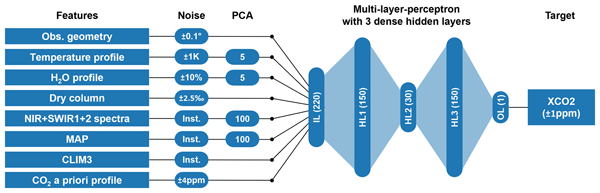
Maximilian Reuter, Michael Hilker, Stefan Noël, Antonio Di Noia, Michael Weimer, Oliver Schneising, Michael Buchwitz, Heinrich Bovensmann, John P. Burrows, Hartmut Bösch, and Ruediger Lang
Atmos. Meas. Tech., 18, 241–264, https://doi.org/10.5194/amt-18-241-2025, https://doi.org/10.5194/amt-18-241-2025, 2025
Short summary
Short summary
Carbon dioxide (CO2) and methane (CH4) are the main anthropogenic greenhouse gases. The European Copernicus CO2 monitoring satellite mission CO2M will provide measurements of their atmospheric concentrations, but the accuracy requirements are demanding and conventional retrieval methods computationally expensive. We present a new retrieval algorithm based on artificial neural networks that has the potential to meet the stringent requirements of the CO2M mission with minimal computational effort.
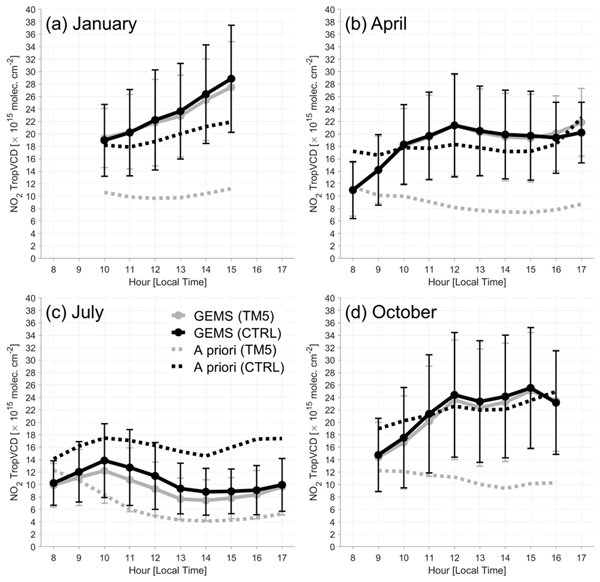
Seunghwan Seo, Si-Wan Kim, Kyoung-Min Kim, Andreas Richter, Kezia Lange, John P. Burrows, Junsung Park, Hyunkee Hong, Hanlim Lee, Ukkyo Jeong, Jung-Hun Woo, and Jhoon Kim
Atmos. Meas. Tech., 18, 115–128, https://doi.org/10.5194/amt-18-115-2025, https://doi.org/10.5194/amt-18-115-2025, 2025
Short summary
Short summary
Over the Seoul metropolitan area, tropospheric NO2 vertical column densities from the Geostationary Environment Monitoring Spectrometer show distinct seasonal features. Also, varying a priori data have substantial impacts on the observed NO2 columns. The a priori data from different chemical transport models resulted in differences of up to −18.3 %. Notably, diurnal patterns of observed NO2 columns are similar for all datasets, although their a priori data exhibit contrasting diurnal patterns.
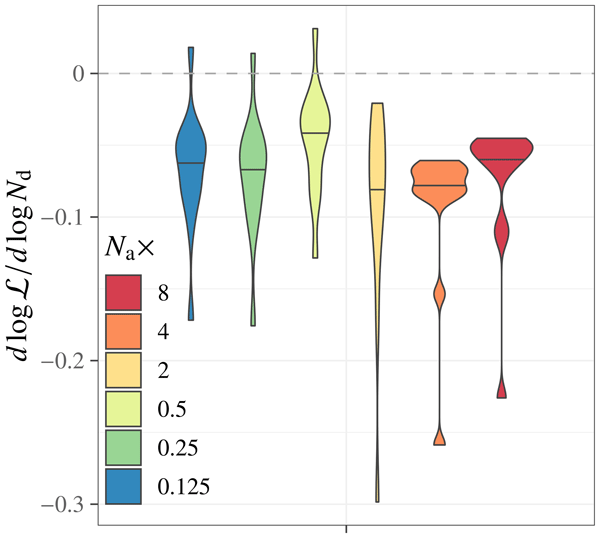
Johannes Mülmenstädt, Andrew S. Ackerman, Ann M. Fridlind, Meng Huang, Po-Lun Ma, Naser Mahfouz, Susanne E. Bauer, Susannah M. Burrows, Matthew W. Christensen, Sudhakar Dipu, Andrew Gettelman, L. Ruby Leung, Florian Tornow, Johannes Quaas, Adam C. Varble, Hailong Wang, Kai Zhang, and Youtong Zheng
Atmos. Chem. Phys., 24, 13633–13652, https://doi.org/10.5194/acp-24-13633-2024, https://doi.org/10.5194/acp-24-13633-2024, 2024
Short summary
Short summary
Stratocumulus clouds play a large role in Earth's climate by reflecting incoming solar energy back to space. Turbulence at stratocumulus cloud top mixes in dry, warm air, which can lead to cloud dissipation. This process is challenging for coarse-resolution global models to represent. We show that global models nevertheless agree well with our process understanding. Global models also think the process is less important for the climate than other lines of evidence have led us to conclude.
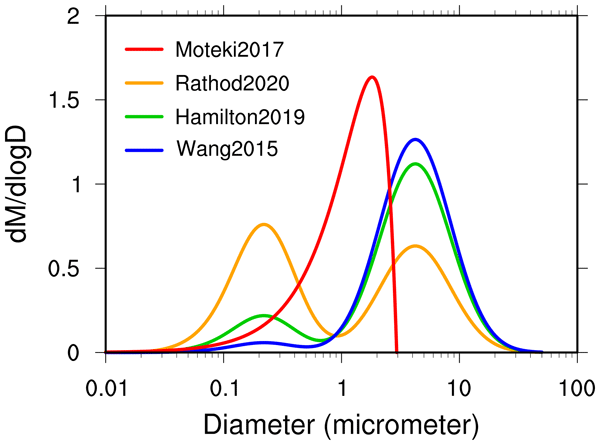
Mingxu Liu, Hitoshi Matsui, Douglas S. Hamilton, Sagar D. Rathod, Kara D. Lamb, and Natalie M. Mahowald
Atmos. Chem. Phys., 24, 13115–13127, https://doi.org/10.5194/acp-24-13115-2024, https://doi.org/10.5194/acp-24-13115-2024, 2024
Short summary
Short summary
Atmospheric aerosol deposition provides bioavailable iron to promote marine primary production, yet the estimates of its fluxes remain highly uncertain. This study, by performing global aerosol simulations, demonstrates that iron-containing particle size upon emission is a critical factor in regulating soluble iron input to open oceans. Further observational constraints on this are needed to reduce modeling uncertainties.
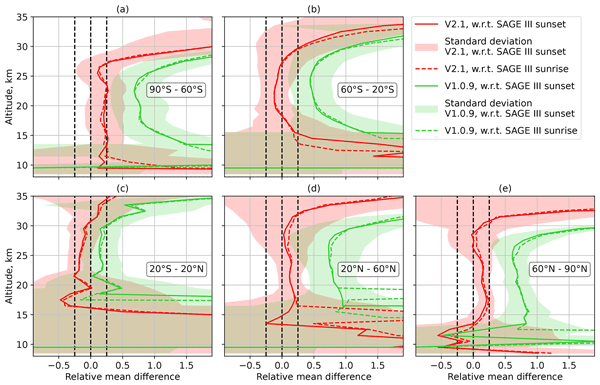
Alexei Rozanov, Christine Pohl, Carlo Arosio, Adam Bourassa, Klaus Bramstedt, Elizaveta Malinina, Landon Rieger, and John P. Burrows
Atmos. Meas. Tech., 17, 6677–6695, https://doi.org/10.5194/amt-17-6677-2024, https://doi.org/10.5194/amt-17-6677-2024, 2024
Short summary
Short summary
We developed a new algorithm to retrieve vertical distributions of aerosol extinction coefficients in the stratosphere. The algorithm is applied to measurements of scattered solar light from the spaceborne OMPS-LP (Ozone Mapper and Profiler Suite Limb Profiler) instrument. The retrieval results are compared to data from other spaceborne instruments and used to investigate the evolution of the aerosol plume following the eruption of the Hunga Tonga–Hunga Ha'apai volcano in January 2022.
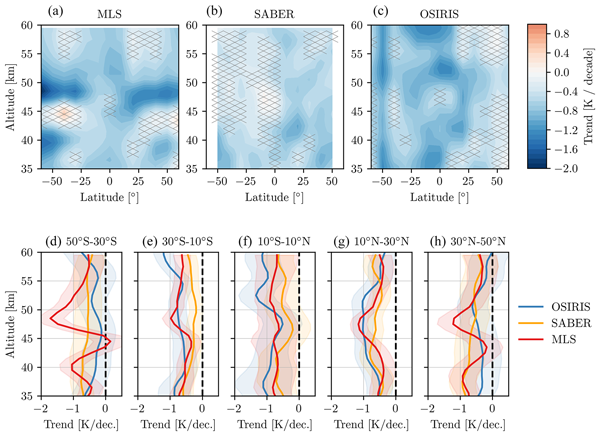
Kimberlee Dubé, Susann Tegtmeier, Adam Bourassa, Daniel Zawada, Douglas Degenstein, William Randel, Sean Davis, Michael Schwartz, Nathaniel Livesey, and Anne Smith
Atmos. Chem. Phys., 24, 12925–12941, https://doi.org/10.5194/acp-24-12925-2024, https://doi.org/10.5194/acp-24-12925-2024, 2024
Short summary
Short summary
Greenhouse gas emissions that warm the troposphere also result in stratospheric cooling. The cooling rate is difficult to quantify above 35 km due to a deficit of long-term observational data with high vertical resolution in this region. We use satellite observations from several instruments, including a new temperature product from OSIRIS, to show that the upper stratosphere, from 35–60 km, cooled by 0.5 to 1 K per decade over 2005–2021 and by 0.6 K per decade over 1979–2021.
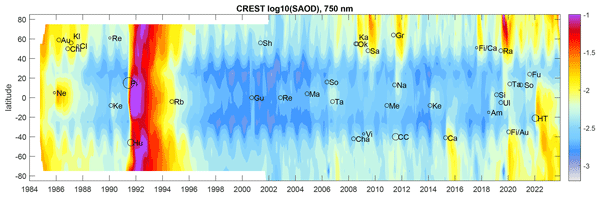
Viktoria F. Sofieva, Alexei Rozanov, Monika Szelag, John P. Burrows, Christian Retscher, Robert Damadeo, Doug Degenstein, Landon A. Rieger, and Adam Bourassa
Earth Syst. Sci. Data, 16, 5227–5241, https://doi.org/10.5194/essd-16-5227-2024, https://doi.org/10.5194/essd-16-5227-2024, 2024
Short summary
Short summary
Climate-related studies need information about the distribution of stratospheric aerosols, which influence the energy balance of the Earth’s atmosphere. In this work, we present a merged dataset of vertically resolved stratospheric aerosol extinction coefficients, which is derived from data of six limb and occultation satellite instruments. The created aerosol climate record covers the period from October 1984 to December 2023. It can be used in various climate-related studies.
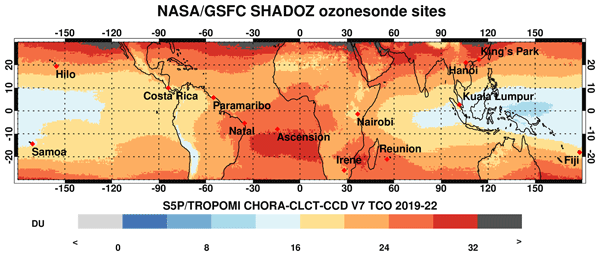
Swathi Maratt Satheesan, Kai-Uwe Eichmann, John P. Burrows, Mark Weber, Ryan Stauffer, Anne M. Thompson, and Debra Kollonige
Atmos. Meas. Tech., 17, 6459–6484, https://doi.org/10.5194/amt-17-6459-2024, https://doi.org/10.5194/amt-17-6459-2024, 2024
Short summary
Short summary
CHORA, an advanced cloud convective differential technique, enhances the accuracy of tropospheric-ozone retrievals. Unlike the traditional Pacific cloud reference sector scheme, CHORA introduces a local-cloud reference sector and an alternative approach (CLCT) for precision. Analysing monthly averaged TROPOMI data from 2018 to 2022 and validating with SHADOZ ozonesonde data, CLCT outperforms other methods and so is the preferred choice, especially in future geostationary satellite missions.
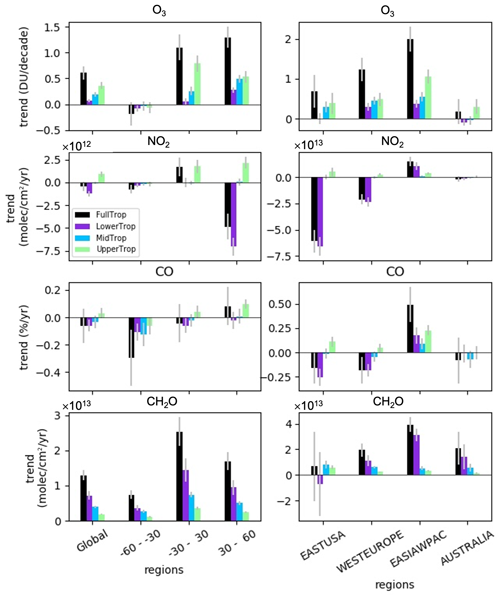
Yasin Elshorbany, Jerald R. Ziemke, Sarah Strode, Hervé Petetin, Kazuyuki Miyazaki, Isabelle De Smedt, Kenneth Pickering, Rodrigo J. Seguel, Helen Worden, Tamara Emmerichs, Domenico Taraborrelli, Maria Cazorla, Suvarna Fadnavis, Rebecca R. Buchholz, Benjamin Gaubert, Néstor Y. Rojas, Thiago Nogueira, Thérèse Salameh, and Min Huang
Atmos. Chem. Phys., 24, 12225–12257, https://doi.org/10.5194/acp-24-12225-2024, https://doi.org/10.5194/acp-24-12225-2024, 2024
Short summary
Short summary
We investigated tropospheric ozone spatial variability and trends from 2005 to 2019 and related those to ozone precursors on global and regional scales. We also investigate the spatiotemporal characteristics of the ozone formation regime in relation to ozone chemical sources and sinks. Our analysis is based on remote sensing products of the tropospheric column of ozone and its precursors, nitrogen dioxide, formaldehyde, and total column CO, as well as ozonesonde data and model simulations.
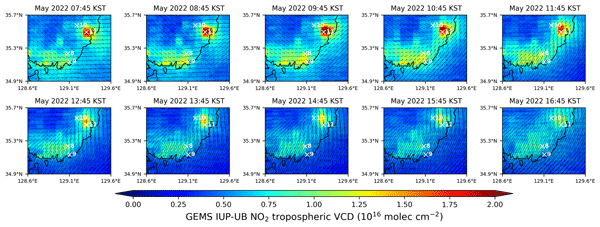
Kezia Lange, Andreas Richter, Tim Bösch, Bianca Zilker, Miriam Latsch, Lisa K. Behrens, Chisom M. Okafor, Hartmut Bösch, John P. Burrows, Alexis Merlaud, Gaia Pinardi, Caroline Fayt, Martina M. Friedrich, Ermioni Dimitropoulou, Michel Van Roozendael, Steffen Ziegler, Simona Ripperger-Lukosiunaite, Leon Kuhn, Bianca Lauster, Thomas Wagner, Hyunkee Hong, Donghee Kim, Lim-Seok Chang, Kangho Bae, Chang-Keun Song, Jong-Uk Park, and Hanlim Lee
Atmos. Meas. Tech., 17, 6315–6344, https://doi.org/10.5194/amt-17-6315-2024, https://doi.org/10.5194/amt-17-6315-2024, 2024
Short summary
Short summary
Instruments for air quality observations on geostationary satellites provide multiple observations per day and allow for the analysis of the diurnal variation of important air pollutants such as nitrogen dioxide (NO2) over large areas. The South Korean instrument GEMS, launched in February 2020, is the first instrument in geostationary orbit and covers a large part of Asia. Our investigations show the observed diurnal evolution of NO2 at different measurement sites.
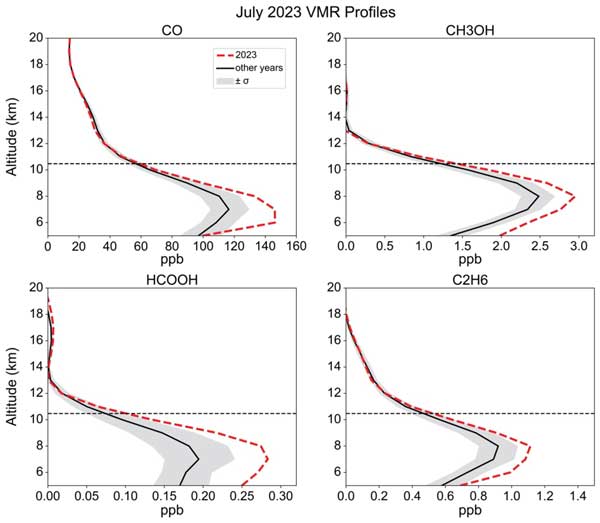
Selena Zhang, Susan Solomon, Chris D. Boone, and Ghassan Taha
Atmos. Chem. Phys., 24, 11727–11736, https://doi.org/10.5194/acp-24-11727-2024, https://doi.org/10.5194/acp-24-11727-2024, 2024
Short summary
Short summary
This paper investigates the vertical impacts of the anomalous 2023 Canadian wildfire season using multiple satellite instruments. Our results highlight that despite a record-breaking area burned, only a small amount of smoke managed to enter the stratosphere. This shows that the conditions for deep convection were rarely met in the 2023 wildfire season, suggesting that even a massive area burned is not necessarily an indicator of stratospheric perturbations.
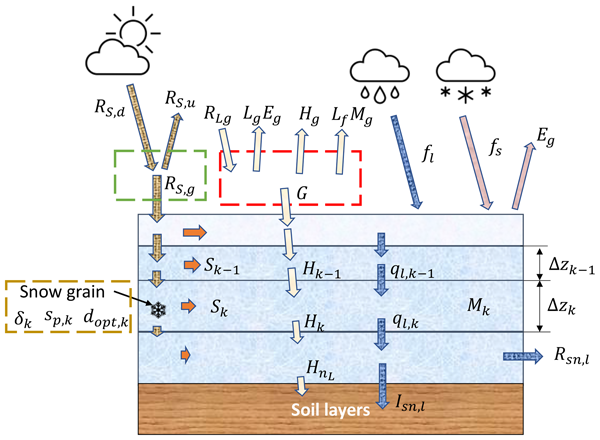
Enrico Zorzetto, Sergey Malyshev, Paul Ginoux, and Elena Shevliakova
Geosci. Model Dev., 17, 7219–7244, https://doi.org/10.5194/gmd-17-7219-2024, https://doi.org/10.5194/gmd-17-7219-2024, 2024
Short summary
Short summary
We describe a new snow scheme developed for use in global climate models, which simulates the interactions of snowpack with vegetation, atmosphere, and soil. We test the new snow model over a set of sites where in situ observations are available. We find that when compared to a simpler snow model, this model improves predictions of seasonal snow and of soil temperature under the snowpack, important variables for simulating both the hydrological cycle and the global climate system.
Myungje Choi, Alexei Lyapustin, Gregory L. Schuster, Sujung Go, Yujie Wang, Sergey Korkin, Ralph Kahn, Jeffrey S. Reid, Edward J. Hyer, Thomas F. Eck, Mian Chin, David J. Diner, Olga Kalashnikova, Oleg Dubovik, Jhoon Kim, and Hans Moosmüller
Atmos. Chem. Phys., 24, 10543–10565, https://doi.org/10.5194/acp-24-10543-2024, https://doi.org/10.5194/acp-24-10543-2024, 2024
Short summary
Short summary
This paper introduces a retrieval algorithm to estimate two key absorbing components in smoke (black carbon and brown carbon) using DSCOVR EPIC measurements. Our analysis reveals distinct smoke properties, including spectral absorption, layer height, and black carbon and brown carbon, over North America and central Africa. The retrieved smoke properties offer valuable observational constraints for modeling radiative forcing and informing health-related studies.
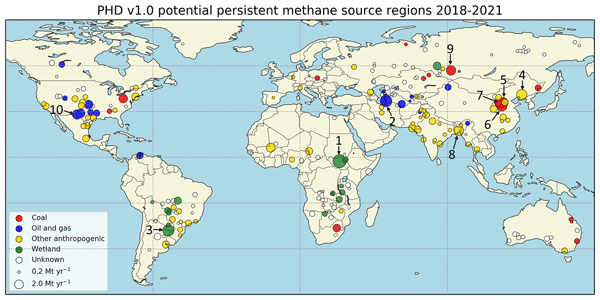
Steffen Vanselow, Oliver Schneising, Michael Buchwitz, Maximilian Reuter, Heinrich Bovensmann, Hartmut Boesch, and John P. Burrows
Atmos. Chem. Phys., 24, 10441–10473, https://doi.org/10.5194/acp-24-10441-2024, https://doi.org/10.5194/acp-24-10441-2024, 2024
Short summary
Short summary
We developed an algorithm to automatically detect persistent methane source regions, to quantify their emissions and to determine their source types, by analyzing TROPOMI data from 2018–2021. The over 200 globally detected natural and anthropogenic source regions include small-scale point sources such as individual coal mines and larger-scale source regions such as wetlands and large oil and gas fields.
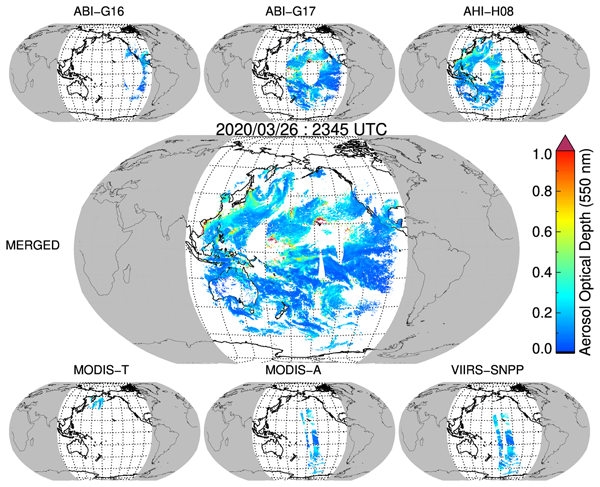
Pawan Gupta, Robert C. Levy, Shana Mattoo, Lorraine A. Remer, Zhaohui Zhang, Virginia Sawyer, Jennifer Wei, Sally Zhao, Min Oo, V. Praju Kiliyanpilakkil, and Xiaohua Pan
Atmos. Meas. Tech., 17, 5455–5476, https://doi.org/10.5194/amt-17-5455-2024, https://doi.org/10.5194/amt-17-5455-2024, 2024
Short summary
Short summary
In this study, for the first time, we combined aerosol data from six satellites using a unified algorithm. The global datasets are generated at a high spatial resolution of about 25 km with an interval of 30 min. The new datasets are compared against ground truth and verified. They will be useful for various applications such as air quality monitoring, climate research, pollution diurnal variability, long-range smoke and dust transport, and evaluation of regional and global models.
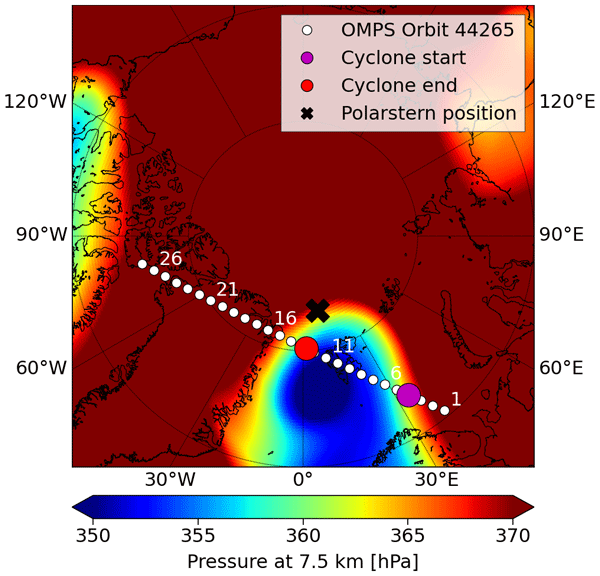
Falco Monsees, Alexei Rozanov, John P. Burrows, Mark Weber, Annette Rinke, Ralf Jaiser, and Peter von der Gathen
Atmos. Chem. Phys., 24, 9085–9099, https://doi.org/10.5194/acp-24-9085-2024, https://doi.org/10.5194/acp-24-9085-2024, 2024
Short summary
Short summary
Cyclones strongly influence weather predictability but still cannot be fully characterised in the Arctic because of the sparse coverage of meteorological measurements. A potential approach to compensate for this is the use of satellite measurements of ozone, because cyclones impact the tropopause and therefore also ozone. In this study we used this connection to investigate the correlation between ozone and the tropopause in the Arctic and to identify cyclones with satellite ozone observations.
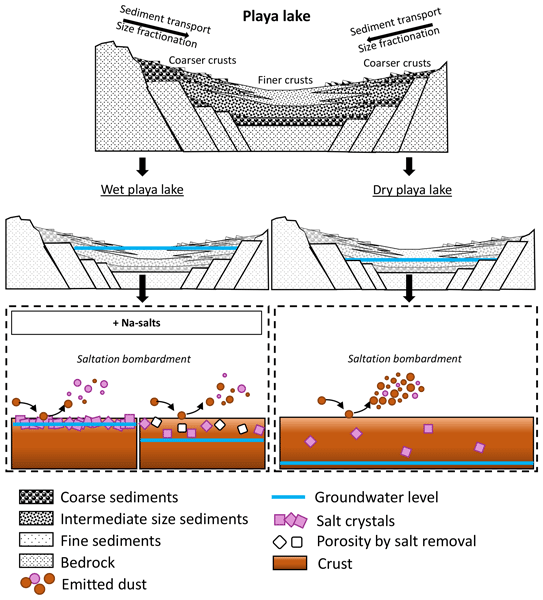
Adolfo González-Romero, Cristina González-Flórez, Agnesh Panta, Jesús Yus-Díez, Patricia Córdoba, Andres Alastuey, Natalia Moreno, Melani Hernández-Chiriboga, Konrad Kandler, Martina Klose, Roger N. Clark, Bethany L. Ehlmann, Rebecca N. Greenberger, Abigail M. Keebler, Phil Brodrick, Robert Green, Paul Ginoux, Xavier Querol, and Carlos Pérez García-Pando
Atmos. Chem. Phys., 24, 9155–9176, https://doi.org/10.5194/acp-24-9155-2024, https://doi.org/10.5194/acp-24-9155-2024, 2024
Short summary
Short summary
In this research, we studied the dust-emitting properties of crusts and aeolian ripples from the Mojave Desert. These properties are key to understanding the effect of dust upon climate. We found two different playa lakes according to the groundwater regime, which implies differences in crusts' cohesion state and mineralogy, which can affect the dust emission potential and properties. We also compare them with Moroccan Sahara crusts and Icelandic top sediments.
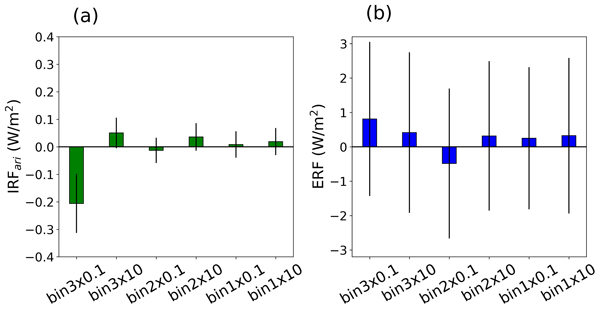
Muhammed Irfan, Thomas Kühn, Taina Yli-Juuti, Anton Laakso, Eemeli Holopainen, Douglas R. Worsnop, Annele Virtanen, and Harri Kokkola
Atmos. Chem. Phys., 24, 8489–8506, https://doi.org/10.5194/acp-24-8489-2024, https://doi.org/10.5194/acp-24-8489-2024, 2024
Short summary
Short summary
The study examines how the volatility of semi-volatile organic compounds affects secondary organic aerosol (SOA) formation and climate. Our simulations show that uncertainties in these volatilities influence aerosol mass and climate impacts. Accurate representation of these compounds in climate models is crucial for predicting global climate patterns.
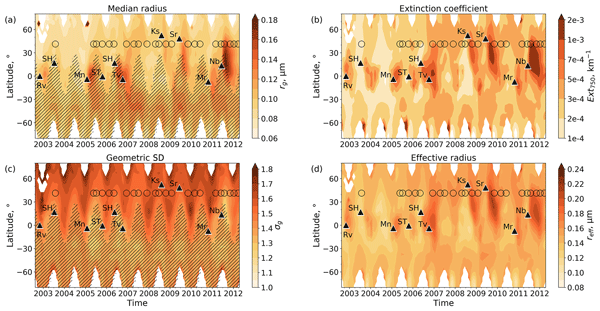
Christine Pohl, Felix Wrana, Alexei Rozanov, Terry Deshler, Elizaveta Malinina, Christian von Savigny, Landon A. Rieger, Adam E. Bourassa, and John P. Burrows
Atmos. Meas. Tech., 17, 4153–4181, https://doi.org/10.5194/amt-17-4153-2024, https://doi.org/10.5194/amt-17-4153-2024, 2024
Short summary
Short summary
Knowledge of stratospheric aerosol characteristics is important for understanding chemical and climate aerosol feedbacks. Two particle size distribution parameters, the aerosol extinction coefficient and the effective radius, are obtained from SCIAMACHY limb observations. The aerosol characteristics show good agreement with independent data sets from balloon-borne and satellite observations. This data set expands the limited knowledge of stratospheric aerosol characteristics.
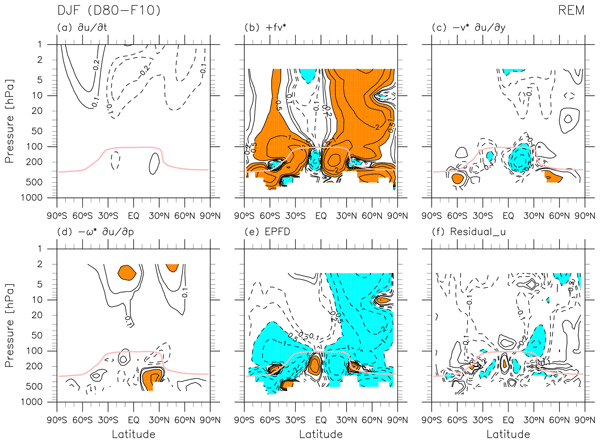
Masatomo Fujiwara, Patrick Martineau, Jonathon S. Wright, Marta Abalos, Petr Šácha, Yoshio Kawatani, Sean M. Davis, Thomas Birner, and Beatriz M. Monge-Sanz
Atmos. Chem. Phys., 24, 7873–7898, https://doi.org/10.5194/acp-24-7873-2024, https://doi.org/10.5194/acp-24-7873-2024, 2024
Short summary
Short summary
A climatology of the major variables and terms of the transformed Eulerian-mean (TEM) momentum and thermodynamic equations from four global atmospheric reanalyses is evaluated. The spread among reanalysis TEM momentum balance terms is around 10 % in Northern Hemisphere winter and up to 50 % in Southern Hemisphere winter. The largest uncertainties in the thermodynamic equation (about 50 %) are in the vertical advection, which does not show a structure consistent with the differences in heating.
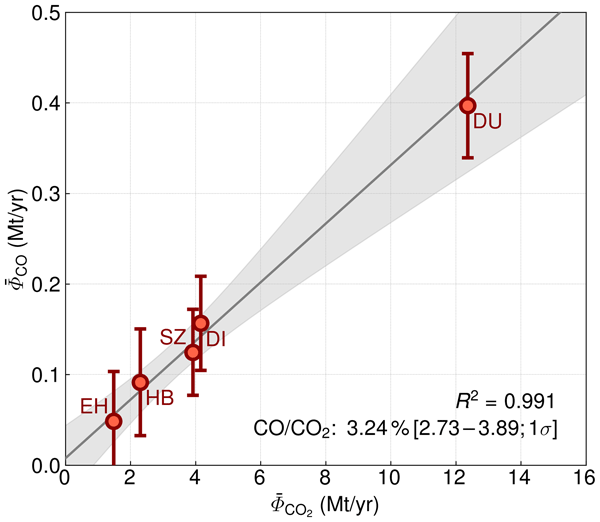
Oliver Schneising, Michael Buchwitz, Maximilian Reuter, Michael Weimer, Heinrich Bovensmann, John P. Burrows, and Hartmut Bösch
Atmos. Chem. Phys., 24, 7609–7621, https://doi.org/10.5194/acp-24-7609-2024, https://doi.org/10.5194/acp-24-7609-2024, 2024
Short summary
Short summary
Large quantities of CO and CO2 are emitted during conventional steel production. As satellite-based estimates of CO2 emissions at the facility level are challenging, co-emitted CO can indicate the carbon footprint of steel plants. We estimate CO emissions for German steelworks and use CO2 emissions from emissions trading data to derive a sector-specific CO/CO2 emission ratio for the steel industry; it is a prerequisite to use CO as a proxy for CO2 emissions from similar steel production sites.
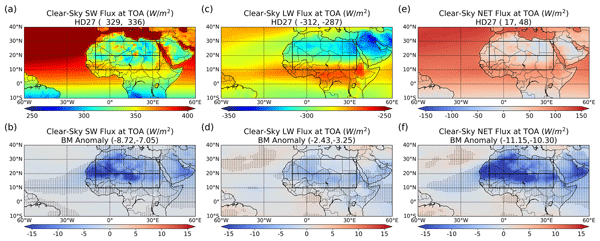
Qianqian Song, Paul Ginoux, María Gonçalves Ageitos, Ron L. Miller, Vincenzo Obiso, and Carlos Pérez García-Pando
Atmos. Chem. Phys., 24, 7421–7446, https://doi.org/10.5194/acp-24-7421-2024, https://doi.org/10.5194/acp-24-7421-2024, 2024
Short summary
Short summary
We implement and simulate the distribution of eight dust minerals in the GFDL AM4.0 model. We found that resolving the eight minerals reduces dust absorption compared to the homogeneous dust used in the standard GFDL AM4.0 model that assumes a globally uniform hematite content of 2.7 % by volume. Resolving dust mineralogy results in significant impacts on radiation, land surface temperature, surface winds, and precipitation over North Africa in summer.
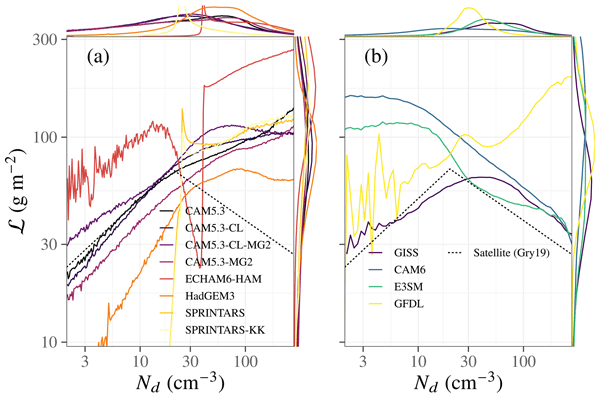
Johannes Mülmenstädt, Edward Gryspeerdt, Sudhakar Dipu, Johannes Quaas, Andrew S. Ackerman, Ann M. Fridlind, Florian Tornow, Susanne E. Bauer, Andrew Gettelman, Yi Ming, Youtong Zheng, Po-Lun Ma, Hailong Wang, Kai Zhang, Matthew W. Christensen, Adam C. Varble, L. Ruby Leung, Xiaohong Liu, David Neubauer, Daniel G. Partridge, Philip Stier, and Toshihiko Takemura
Atmos. Chem. Phys., 24, 7331–7345, https://doi.org/10.5194/acp-24-7331-2024, https://doi.org/10.5194/acp-24-7331-2024, 2024
Short summary
Short summary
Human activities release copious amounts of small particles called aerosols into the atmosphere. These particles change how much sunlight clouds reflect to space, an important human perturbation of the climate, whose magnitude is highly uncertain. We found that the latest climate models show a negative correlation but a positive causal relationship between aerosols and cloud water. This means we need to be very careful when we interpret observational studies that can only see correlation.
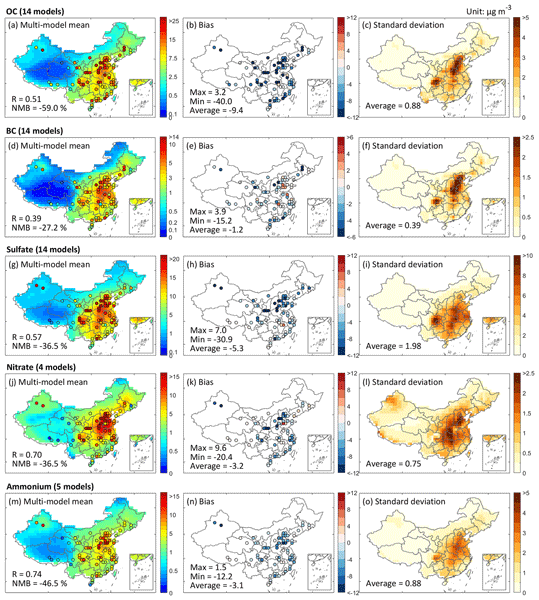
Fangxuan Ren, Jintai Lin, Chenghao Xu, Jamiu A. Adeniran, Jingxu Wang, Randall V. Martin, Aaron van Donkelaar, Melanie S. Hammer, Larry W. Horowitz, Steven T. Turnock, Naga Oshima, Jie Zhang, Susanne Bauer, Kostas Tsigaridis, Øyvind Seland, Pierre Nabat, David Neubauer, Gary Strand, Twan van Noije, Philippe Le Sager, and Toshihiko Takemura
Geosci. Model Dev., 17, 4821–4836, https://doi.org/10.5194/gmd-17-4821-2024, https://doi.org/10.5194/gmd-17-4821-2024, 2024
Short summary
Short summary
We evaluate the performance of 14 CMIP6 ESMs in simulating total PM2.5 and its 5 components over China during 2000–2014. PM2.5 and its components are underestimated in almost all models, except that black carbon (BC) and sulfate are overestimated in two models, respectively. The underestimation is the largest for organic carbon (OC) and the smallest for BC. Models reproduce the observed spatial pattern for OC, sulfate, nitrate and ammonium well, yet the agreement is poorer for BC.
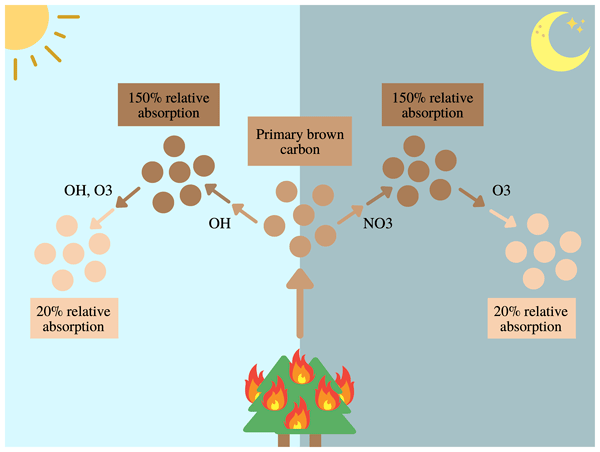
Maegan A. DeLessio, Kostas Tsigaridis, Susanne E. Bauer, Jacek Chowdhary, and Gregory L. Schuster
Atmos. Chem. Phys., 24, 6275–6304, https://doi.org/10.5194/acp-24-6275-2024, https://doi.org/10.5194/acp-24-6275-2024, 2024
Short summary
Short summary
This study presents the first explicit representation of brown carbon aerosols in the GISS ModelE Earth system model (ESM). Model sensitivity to a range of brown carbon parameters and model performance compared to AERONET and MODIS retrievals of total aerosol properties were assessed. A summary of best practices for incorporating brown carbon into ModelE is also included.
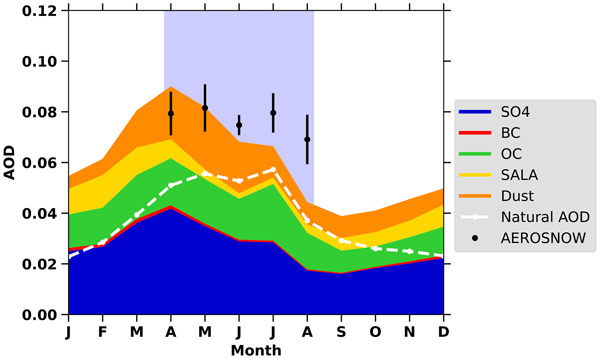
Basudev Swain, Marco Vountas, Aishwarya Singh, Nidhi L. Anchan, Adrien Deroubaix, Luca Lelli, Yanick Ziegler, Sachin S. Gunthe, Hartmut Bösch, and John P. Burrows
Atmos. Chem. Phys., 24, 5671–5693, https://doi.org/10.5194/acp-24-5671-2024, https://doi.org/10.5194/acp-24-5671-2024, 2024
Short summary
Short summary
Arctic amplification (AA) accelerates the warming of the central Arctic cryosphere and affects aerosol dynamics. Limited observations hinder a comprehensive analysis. This study uses AEROSNOW aerosol optical density (AOD) data and GEOS-Chem simulations to assess AOD variability. Discrepancies highlight the need for improved observational integration into models to refine our understanding of aerosol effects on cloud microphysics, ice nucleation, and radiative forcing under evolving AA.

Christina V. Brodowsky, Timofei Sukhodolov, Gabriel Chiodo, Valentina Aquila, Slimane Bekki, Sandip S. Dhomse, Michael Höpfner, Anton Laakso, Graham W. Mann, Ulrike Niemeier, Giovanni Pitari, Ilaria Quaglia, Eugene Rozanov, Anja Schmidt, Takashi Sekiya, Simone Tilmes, Claudia Timmreck, Sandro Vattioni, Daniele Visioni, Pengfei Yu, Yunqian Zhu, and Thomas Peter
Atmos. Chem. Phys., 24, 5513–5548, https://doi.org/10.5194/acp-24-5513-2024, https://doi.org/10.5194/acp-24-5513-2024, 2024
Short summary
Short summary
The aerosol layer is an essential part of the climate system. We characterize the sulfur budget in a volcanically quiescent (background) setting, with a special focus on the sulfate aerosol layer using, for the first time, a multi-model approach. The aim is to identify weak points in the representation of the atmospheric sulfur budget in an intercomparison of nine state-of-the-art coupled global circulation models.
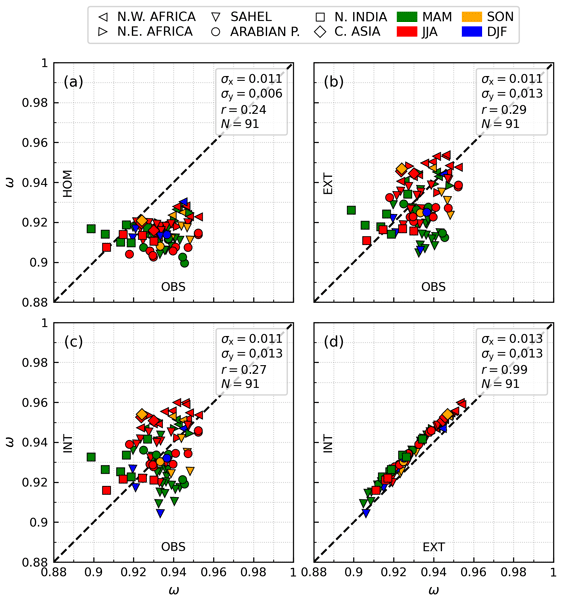
Vincenzo Obiso, María Gonçalves Ageitos, Carlos Pérez García-Pando, Jan P. Perlwitz, Gregory L. Schuster, Susanne E. Bauer, Claudia Di Biagio, Paola Formenti, Kostas Tsigaridis, and Ron L. Miller
Atmos. Chem. Phys., 24, 5337–5367, https://doi.org/10.5194/acp-24-5337-2024, https://doi.org/10.5194/acp-24-5337-2024, 2024
Short summary
Short summary
We calculate the dust direct radiative effect (DRE) in an Earth system model accounting for regionally varying soil mineralogy through a new observationally constrained method. Linking dust absorption at solar wavelengths to the varying amount of specific minerals (i.e., iron oxides) improves the modeled range of dust single scattering albedo compared to observations and increases the global cooling by dust. Our results may contribute to improved estimates of the dust DRE and its climate impact.
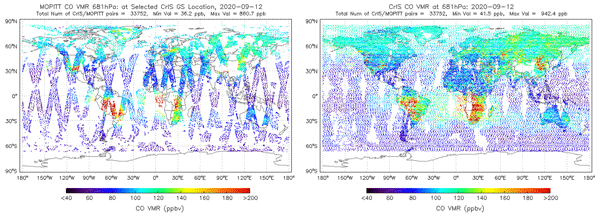
Ming Luo, Helen M. Worden, Robert D. Field, Kostas Tsigaridis, and Gregory S. Elsaesser
Atmos. Meas. Tech., 17, 2611–2624, https://doi.org/10.5194/amt-17-2611-2024, https://doi.org/10.5194/amt-17-2611-2024, 2024
Short summary
Short summary
The TROPESS CrIS single-pixel CO profile retrievals are compared to the MOPITT CO products in steps of adjusting them to the common a priori assumptions. The two data sets are found to agree within 5 %. We also demonstrated and analyzed the proper steps in evaluating GISS ModelE CO simulations using satellite CO retrieval products for the western US wildfire events in September 2020.
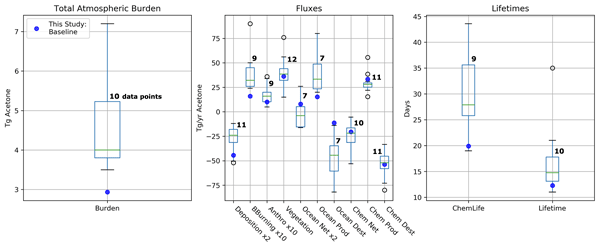
Alexandra Rivera, Kostas Tsigaridis, Gregory Faluvegi, and Drew Shindell
Geosci. Model Dev., 17, 3487–3505, https://doi.org/10.5194/gmd-17-3487-2024, https://doi.org/10.5194/gmd-17-3487-2024, 2024
Short summary
Short summary
This paper describes and evaluates an improvement to the representation of acetone in the GISS ModelE2.1 Earth system model. We simulate acetone's concentration and transport across the atmosphere as well as its dependence on chemistry, the ocean, and various global emissions. Comparisons of our model’s estimates to past modeling studies and field measurements have shown encouraging results. Ultimately, this paper contributes to a broader understanding of acetone's role in the atmosphere.

Matthew S. Johnson, Alexei Rozanov, Mark Weber, Nora Mettig, John Sullivan, Michael J. Newchurch, Shi Kuang, Thierry Leblanc, Fernando Chouza, Timothy A. Berkoff, Guillaume Gronoff, Kevin B. Strawbridge, Raul J. Alvarez, Andrew O. Langford, Christoph J. Senff, Guillaume Kirgis, Brandi McCarty, and Larry Twigg
Atmos. Meas. Tech., 17, 2559–2582, https://doi.org/10.5194/amt-17-2559-2024, https://doi.org/10.5194/amt-17-2559-2024, 2024
Short summary
Short summary
Monitoring tropospheric ozone (O3), a harmful pollutant negatively impacting human health, is primarily done using ground-based measurements and ozonesondes. However, these observation types lack the coverage to fully understand tropospheric O3. Satellites can retrieve tropospheric ozone with near-daily global coverage; however, they are known to have biases and errors. This study uses ground-based lidars to validate multiple satellites' ability to observe tropospheric O3.
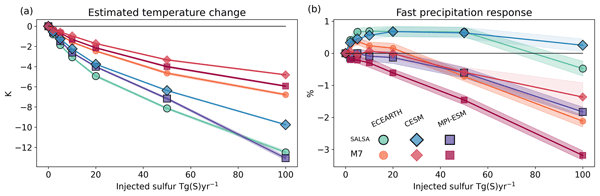
Anton Laakso, Daniele Visioni, Ulrike Niemeier, Simone Tilmes, and Harri Kokkola
Earth Syst. Dynam., 15, 405–427, https://doi.org/10.5194/esd-15-405-2024, https://doi.org/10.5194/esd-15-405-2024, 2024
Short summary
Short summary
This study is the second in a two-part series in which we explore the dependency of the impacts of stratospheric sulfur injections on both the model employed and the strategy of injection utilized. The study uncovers uncertainties associated with these techniques to cool climate, highlighting how the simulated climate impacts are dependent on both the selected model and the magnitude of the injections. We also show that estimating precipitation impacts of aerosol injection is a complex task.
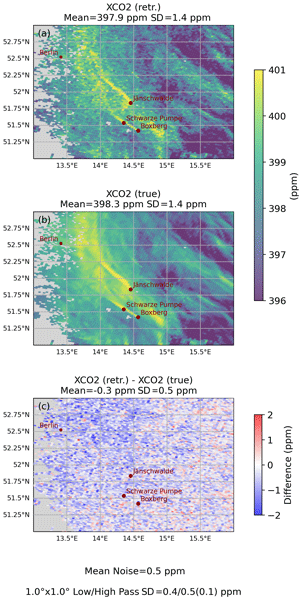
Stefan Noël, Michael Buchwitz, Michael Hilker, Maximilian Reuter, Michael Weimer, Heinrich Bovensmann, John P. Burrows, Hartmut Bösch, and Ruediger Lang
Atmos. Meas. Tech., 17, 2317–2334, https://doi.org/10.5194/amt-17-2317-2024, https://doi.org/10.5194/amt-17-2317-2024, 2024
Short summary
Short summary
FOCAL-CO2M is one of the three operational retrieval algorithms which will be used to derive XCO2 and XCH4 from measurements of the forthcoming European CO2M mission. We present results of applications of FOCAL-CO2M to simulated spectra, from which confidence is gained that the algorithm is able to fulfil the challenging requirements on systematic errors for the CO2M mission (spatio-temporal bias ≤ 0.5 ppm for XCO2 and ≤ 5 ppb for XCH4).
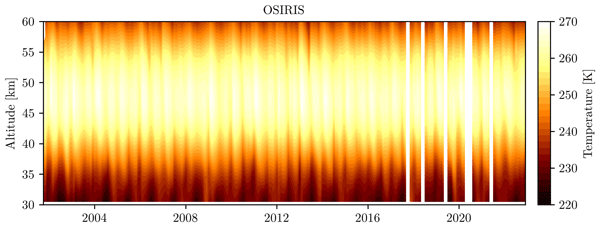
Daniel Zawada, Kimberlee Dubé, Taran Warnock, Adam Bourassa, Susann Tegtmeier, and Douglas Degenstein
Atmos. Meas. Tech., 17, 1995–2010, https://doi.org/10.5194/amt-17-1995-2024, https://doi.org/10.5194/amt-17-1995-2024, 2024
Short summary
Short summary
There remain large uncertainties in long-term changes of stratospheric–atmospheric temperatures. We have produced a time series of more than 20 years of satellite-based temperature measurements from the OSIRIS instrument in the upper–middle stratosphere. The dataset is publicly available and intended to be used for a better understanding of changes in stratospheric temperatures.
Zizhan Hu, Yiran Peng, Mengke Zhu, and Jonathon S. Wright
EGUsphere, https://doi.org/10.5194/egusphere-2024-828, https://doi.org/10.5194/egusphere-2024-828, 2024
Preprint archived
Short summary
Short summary
Clouds and precipitation are among the most difficult features of the climate system to simulate. Water isotopes provide valuable information about how clouds and precipitation develop and evolve, but most models that simulate water isotopes cannot resolve individual clouds. Here we introduce a new isotope-enabled model, iPyCLES, that simulates liquid and ice clouds on scales of 10 to 100 meters. This model can help to translate isotopic observations into constraints for larger-scale models.
Yi Wang, Mark Schoeberl, and Ghassan Taha
Atmos. Meas. Tech. Discuss., https://doi.org/10.5194/amt-2023-267, https://doi.org/10.5194/amt-2023-267, 2024
Revised manuscript not accepted
Short summary
Short summary
The OMPS-LP satellite instrument assesses aerosol scattering in the atmospheric limb. Using a dual-wavelength extinction coefficient algorithm, we extract stratospheric aerosol vertical profiles from OMPS-LP data. Our study addresses uncertainties and validates these profiles against in-situ balloon data and SAGE-III/ISS retrievals. Investigating the Raikoke and Hunga Tonga-Hunga Ha'apai eruptions, we analyze the evolution of aerosol size and concentration, confirming our method's reliability.
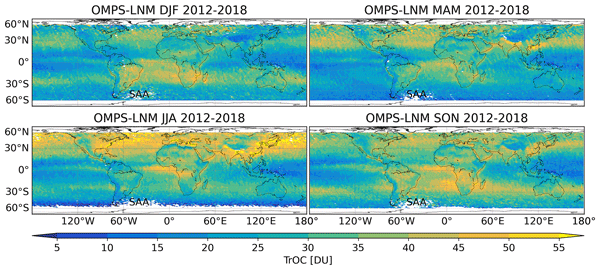
Andrea Orfanoz-Cheuquelaf, Carlo Arosio, Alexei Rozanov, Mark Weber, Annette Ladstätter-Weißenmayer, John P. Burrows, Anne M. Thompson, Ryan M. Stauffer, and Debra E. Kollonige
Atmos. Meas. Tech., 17, 1791–1809, https://doi.org/10.5194/amt-17-1791-2024, https://doi.org/10.5194/amt-17-1791-2024, 2024
Short summary
Short summary
Valuable information on the tropospheric ozone column (TrOC) can be obtained globally by combining space-borne limb and nadir measurements (limb–nadir matching, LNM). This study describes the retrieval of TrOC from the OMPS instrument (since 2012) using the LNM technique. The OMPS-LNM TrOC was compared with ozonesondes and other satellite measurements, showing a good agreement with a negative bias within 1 to 4 DU. This new dataset is suitable for pollution studies.
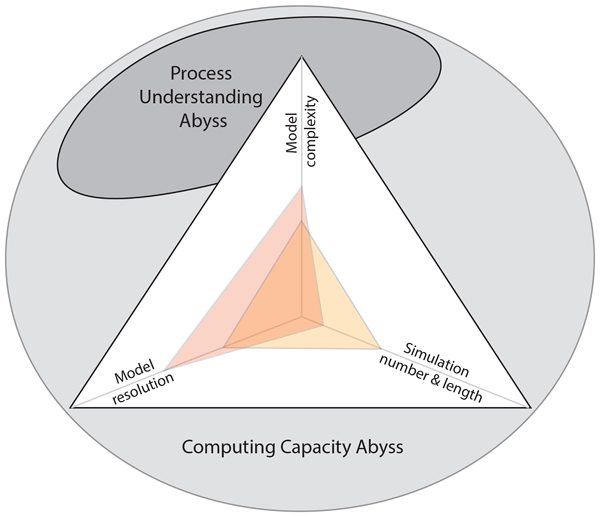
Stephanie Fiedler, Vaishali Naik, Fiona M. O'Connor, Christopher J. Smith, Paul Griffiths, Ryan J. Kramer, Toshihiko Takemura, Robert J. Allen, Ulas Im, Matthew Kasoar, Angshuman Modak, Steven Turnock, Apostolos Voulgarakis, Duncan Watson-Parris, Daniel M. Westervelt, Laura J. Wilcox, Alcide Zhao, William J. Collins, Michael Schulz, Gunnar Myhre, and Piers M. Forster
Geosci. Model Dev., 17, 2387–2417, https://doi.org/10.5194/gmd-17-2387-2024, https://doi.org/10.5194/gmd-17-2387-2024, 2024
Short summary
Short summary
Climate scientists want to better understand modern climate change. Thus, climate model experiments are performed and compared. The results of climate model experiments differ, as assessed in the latest Intergovernmental Panel on Climate Change (IPCC) assessment report. This article gives insights into the challenges and outlines opportunities for further improving the understanding of climate change. It is based on views of a group of experts in atmospheric composition–climate interactions.
Adrien Deroubaix, Marco Vountas, Benjamin Gaubert, Maria Dolores Andrés Hernández, Stephan Borrmann, Guy Brasseur, Bruna Holanda, Yugo Kanaya, Katharina Kaiser, Flora Kluge, Ovid Oktavian Krüger, Inga Labuhn, Michael Lichtenstern, Klaus Pfeilsticker, Mira Pöhlker, Hans Schlager, Johannes Schneider, Guillaume Siour, Basudev Swain, Paolo Tuccella, Kameswara S. Vinjamuri, Mihalis Vrekoussis, Benjamin Weyland, and John P. Burrows
EGUsphere, https://doi.org/10.5194/egusphere-2024-516, https://doi.org/10.5194/egusphere-2024-516, 2024
Preprint archived
Short summary
Short summary
This study assesses atmospheric composition using air quality models during aircraft campaigns in Europe and Asia, focusing on carbonaceous aerosols and trace gases. While carbon monoxide is well modeled, other pollutants have moderate to weak agreement with observations. Wind speed modeling is reliable for identifying pollution plumes, where models tend to overestimate concentrations. This highlights challenges in accurately modeling aerosol and trace gas composition, particularly in cities.
Adrien Deroubaix, Marco Vountas, Benjamin Gaubert, Maria Dolores Andrés Hernández, Stephan Borrmann, Guy Brasseur, Bruna Holanda, Yugo Kanaya, Katharina Kaiser, Flora Kluge, Ovid Oktavian Krüger, Inga Labuhn, Michael Lichtenstern, Klaus Pfeilsticker, Mira Pöhlker, Hans Schlager, Johannes Schneider, Guillaume Siour, Basudev Swain, Paolo Tuccella, Kameswara S. Vinjamuri, Mihalis Vrekoussis, Benjamin Weyland, and John P. Burrows
EGUsphere, https://doi.org/10.5194/egusphere-2024-521, https://doi.org/10.5194/egusphere-2024-521, 2024
Preprint archived
Short summary
Short summary
This study explores the proportional relationships between carbonaceous aerosols (black and organic carbon) and trace gases using airborne measurements from two campaigns in Europe and East Asia. Differences between regions were found, but air quality models struggled to reproduce them accurately. We show that these proportional relationships can help to constrain models and can be used to infer aerosol concentrations from satellite observations of trace gases, especially in urban areas.
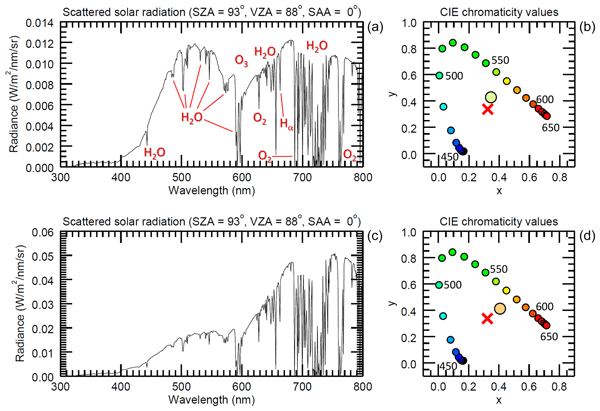
Christian von Savigny, Anna Lange, Christoph G. Hoffmann, and Alexei Rozanov
Atmos. Chem. Phys., 24, 2415–2422, https://doi.org/10.5194/acp-24-2415-2024, https://doi.org/10.5194/acp-24-2415-2024, 2024
Short summary
Short summary
It is well known that volcanic eruptions strongly affect the colours of the twilight sky. Typically, volcanic eruptions lead to enhanced reddish and violet twilight colours. In rare cases, however, volcanic eruptions can also lead to green sunsets. This study provides an explanation for the occurrence of these unusual green sunsets based on simulations with a radiative transfer model. Green volcanic sunsets require a sufficient stratospheric aerosol optical depth and specific aerosol sizes.
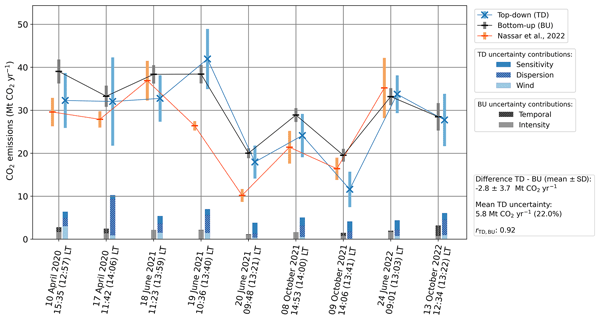
Blanca Fuentes Andrade, Michael Buchwitz, Maximilian Reuter, Heinrich Bovensmann, Andreas Richter, Hartmut Boesch, and John P. Burrows
Atmos. Meas. Tech., 17, 1145–1173, https://doi.org/10.5194/amt-17-1145-2024, https://doi.org/10.5194/amt-17-1145-2024, 2024
Short summary
Short summary
We developed a method to estimate CO2 emissions from localized sources, such as power plants, using satellite data and applied it to estimate CO2 emissions from the Bełchatów Power Station (Poland). As the detection of CO2 emission plumes from satellite data is difficult, we used observations of co-emitted NO2 to constrain the emission plume region. Our results agree with CO2 emission estimations based on the power-plant-generated power and emission factors.
Allison B. Collow, Peter R. Colarco, Arlindo M. da Silva, Virginie Buchard, Huisheng Bian, Mian Chin, Sampa Das, Ravi Govindaraju, Dongchul Kim, and Valentina Aquila
Geosci. Model Dev., 17, 1443–1468, https://doi.org/10.5194/gmd-17-1443-2024, https://doi.org/10.5194/gmd-17-1443-2024, 2024
Short summary
Short summary
The GOCART aerosol module within the Goddard Earth Observing System recently underwent a major refactoring and update to the representation of physical processes. Code changes that were included in GOCART Second Generation (GOCART-2G) are documented, and we establish a benchmark simulation that is to be used for future development of the system. The 4-year benchmark simulation was evaluated using in situ and spaceborne measurements to develop a baseline and prioritize future development.
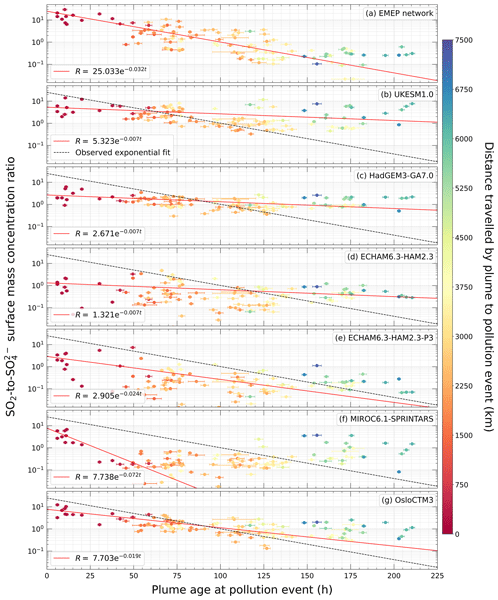
George Jordan, Florent Malavelle, Ying Chen, Amy Peace, Eliza Duncan, Daniel G. Partridge, Paul Kim, Duncan Watson-Parris, Toshihiko Takemura, David Neubauer, Gunnar Myhre, Ragnhild Skeie, Anton Laakso, and James Haywood
Atmos. Chem. Phys., 24, 1939–1960, https://doi.org/10.5194/acp-24-1939-2024, https://doi.org/10.5194/acp-24-1939-2024, 2024
Short summary
Short summary
The 2014–15 Holuhraun eruption caused a huge aerosol plume in an otherwise unpolluted region, providing a chance to study how aerosol alters cloud properties. This two-part study uses observations and models to quantify this relationship’s impact on the Earth’s energy budget. Part 1 suggests the models capture the observed spatial and chemical evolution of the plume, yet no model plume is exact. Understanding these differences is key for Part 2, where changes to cloud properties are explored.
Huisheng Bian, Mian Chin, Peter R. Colarco, Eric C. Apel, Donald R. Blake, Karl Froyd, Rebecca S. Hornbrook, Jose Jimenez, Pedro Campuzano Jost, Michael Lawler, Mingxu Liu, Marianne Tronstad Lund, Hitoshi Matsui, Benjamin A. Nault, Joyce E. Penner, Andrew W. Rollins, Gregory Schill, Ragnhild B. Skeie, Hailong Wang, Lu Xu, Kai Zhang, and Jialei Zhu
Atmos. Chem. Phys., 24, 1717–1741, https://doi.org/10.5194/acp-24-1717-2024, https://doi.org/10.5194/acp-24-1717-2024, 2024
Short summary
Short summary
This work studies sulfur in the remote troposphere at global and seasonal scales using aircraft measurements and multi-model simulations. The goal is to understand the sulfur cycle over remote oceans, spread of model simulations, and observation–model discrepancies. Such an understanding and comparison with real observations are crucial to narrow down the uncertainties in model sulfur simulations and improve understanding of the sulfur cycle in atmospheric air quality, climate, and ecosystems.
Natalie M. Mahowald, Longlei Li, Julius Vira, Marje Prank, Douglas S. Hamilton, Hitoshi Matsui, Ron L. Miller, Louis Lu, Ezgi Akyuz, Daphne Meidan, Peter Hess, Heikki Lihavainen, Christine Wiedinmyer, Jenny Hand, Maria Grazia Alaimo, Célia Alves, Andres Alastuey, Paulo Artaxo, Africa Barreto, Francisco Barraza, Silvia Becagli, Giulia Calzolai, Shankarararman Chellam, Ying Chen, Patrick Chuang, David D. Cohen, Cristina Colombi, Evangelia Diapouli, Gaetano Dongarra, Konstantinos Eleftheriadis, Corinne Galy-Lacaux, Cassandra Gaston, Dario Gomez, Yenny González Ramos, Hannele Hakola, Roy M. Harrison, Chris Heyes, Barak Herut, Philip Hopke, Christoph Hüglin, Maria Kanakidou, Zsofia Kertesz, Zbiginiw Klimont, Katriina Kyllönen, Fabrice Lambert, Xiaohong Liu, Remi Losno, Franco Lucarelli, Willy Maenhaut, Beatrice Marticorena, Randall V. Martin, Nikolaos Mihalopoulos, Yasser Morera-Gomez, Adina Paytan, Joseph Prospero, Sergio Rodríguez, Patricia Smichowski, Daniela Varrica, Brenna Walsh, Crystal Weagle, and Xi Zhao
Earth Syst. Sci. Data Discuss., https://doi.org/10.5194/essd-2024-1, https://doi.org/10.5194/essd-2024-1, 2024
Preprint withdrawn
Short summary
Short summary
Aerosol particles can interact with incoming solar radiation and outgoing long wave radiation, change cloud properties, affect photochemistry, impact surface air quality, and when deposited impact surface albedo of snow and ice, and modulate carbon dioxide uptake by the land and ocean. Here we present a new compilation of aerosol observations including composition, a methodology for comparing the datasets to model output, and show the implications of these results using one model.
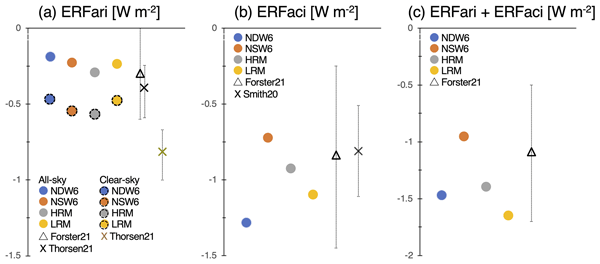
Daisuke Goto, Tatsuya Seiki, Kentaroh Suzuki, Hisashi Yashiro, and Toshihiko Takemura
Geosci. Model Dev., 17, 651–684, https://doi.org/10.5194/gmd-17-651-2024, https://doi.org/10.5194/gmd-17-651-2024, 2024
Short summary
Short summary
Global climate models with coarse grid sizes include uncertainties about the processes in aerosol–cloud–precipitation interactions. To reduce these uncertainties, here we performed numerical simulations using a new version of our global aerosol transport model with a finer grid size over a longer period than in our previous study. As a result, we found that the cloud microphysics module influences the aerosol distributions through both aerosol wet deposition and aerosol–cloud interactions.
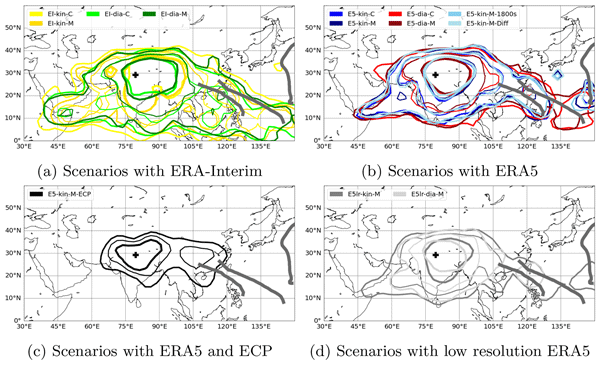
Jan Clemens, Bärbel Vogel, Lars Hoffmann, Sabine Griessbach, Nicole Thomas, Suvarna Fadnavis, Rolf Müller, Thomas Peter, and Felix Ploeger
Atmos. Chem. Phys., 24, 763–787, https://doi.org/10.5194/acp-24-763-2024, https://doi.org/10.5194/acp-24-763-2024, 2024
Short summary
Short summary
The source regions of the Asian tropopause aerosol layer (ATAL) are debated. We use balloon-borne measurements of the layer above Nainital (India) in August 2016 and atmospheric transport models to find ATAL source regions. Most air originated from the Tibetan plateau. However, the measured ATAL was stronger when more air originated from the Indo-Gangetic Plain and weaker when more air originated from the Pacific. Hence, the results indicate important anthropogenic contributions to the ATAL.
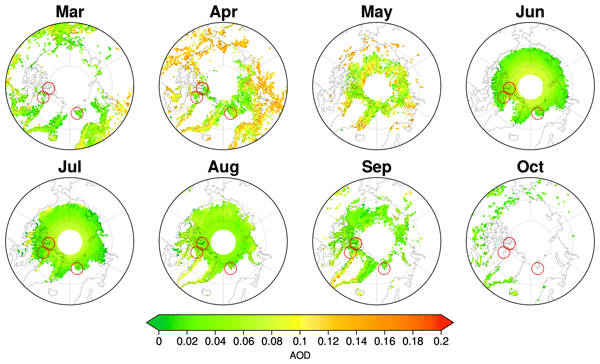
Basudev Swain, Marco Vountas, Adrien Deroubaix, Luca Lelli, Yanick Ziegler, Soheila Jafariserajehlou, Sachin S. Gunthe, Andreas Herber, Christoph Ritter, Hartmut Bösch, and John P. Burrows
Atmos. Meas. Tech., 17, 359–375, https://doi.org/10.5194/amt-17-359-2024, https://doi.org/10.5194/amt-17-359-2024, 2024
Short summary
Short summary
Aerosols are suspensions of particles dispersed in the air. In this study, we use a novel retrieval of satellite data to investigate an optical property of aerosols, the aerosol optical depth, in the high Arctic to assess their direct and indirect roles in climate change. This study demonstrates that the presented approach shows good quality and very promising potential.
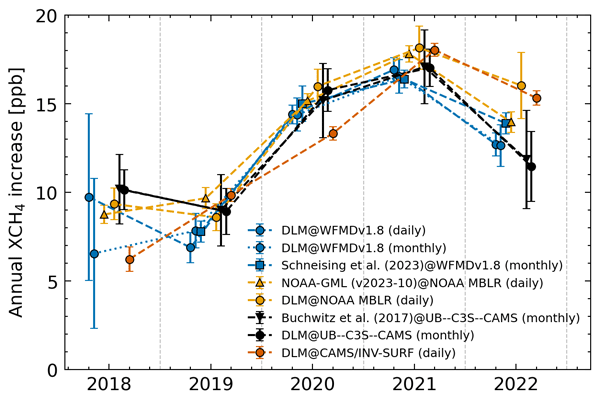
Jonas Hachmeister, Oliver Schneising, Michael Buchwitz, John P. Burrows, Justus Notholt, and Matthias Buschmann
Atmos. Chem. Phys., 24, 577–595, https://doi.org/10.5194/acp-24-577-2024, https://doi.org/10.5194/acp-24-577-2024, 2024
Short summary
Short summary
We quantified changes in atmospheric methane concentrations using satellite data and a dynamic linear model approach. We calculated global annual methane increases for the years 2019–2022, which are in good agreement with other sources. For zonal methane growth rates, we identified strong inter-hemispheric differences in 2019 and 2022. For 2022, we could attribute decreases in the global growth rate to the Northern Hemisphere, possibly related to a reduction in anthropogenic emissions.
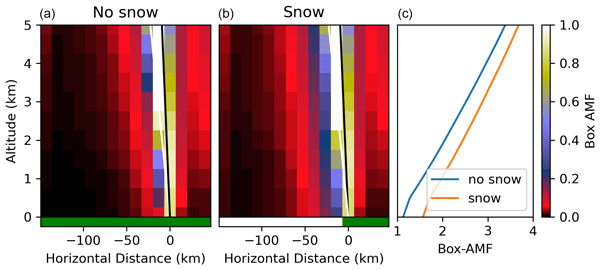
Lukas Fehr, Chris McLinden, Debora Griffin, Daniel Zawada, Doug Degenstein, and Adam Bourassa
Geosci. Model Dev., 16, 7491–7507, https://doi.org/10.5194/gmd-16-7491-2023, https://doi.org/10.5194/gmd-16-7491-2023, 2023
Short summary
Short summary
This work highlights upgrades to SASKTRAN, a model that simulates sunlight interacting with the atmosphere to help measure trace gases. The upgrades were verified by detailed comparisons between different numerical methods. A case study was performed using SASKTRAN’s multidimensional capabilities, which found that ignoring horizontal variation in the atmosphere (a common practice in the field) can introduce non-negligible errors where there is snow or high pollution.
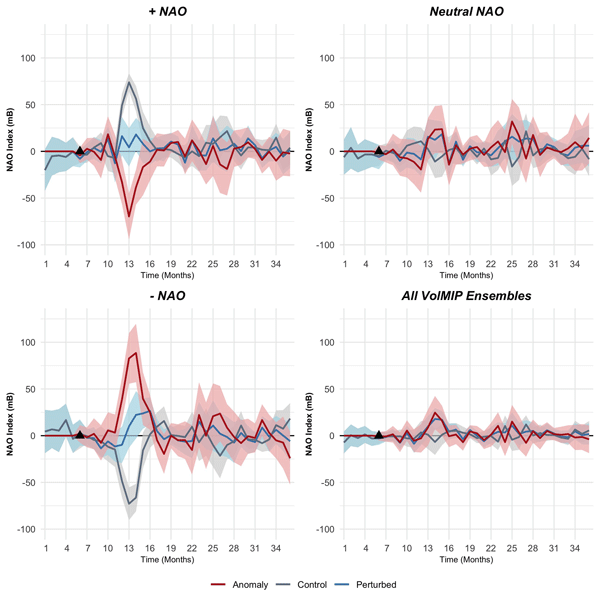
Helen Weierbach, Allegra N. LeGrande, and Kostas Tsigaridis
Atmos. Chem. Phys., 23, 15491–15505, https://doi.org/10.5194/acp-23-15491-2023, https://doi.org/10.5194/acp-23-15491-2023, 2023
Short summary
Short summary
Volcanic aerosols impact global and regional climate conditions but can vary depending on pre-existing initial climate conditions. We ran an ensemble of volcanic aerosol simulations under varying ENSO and NAO initial conditions to understand how initial climate states impact the modeled response to volcanic forcing. Overall we found that initial NAO conditions can impact the strength of the first winter post-eruptive response but are also affected by the choice of anomaly and sampling routine.
Hamza Ahsan, Hailong Wang, Jingbo Wu, Mingxuan Wu, Steven J. Smith, Susanne Bauer, Harrison Suchyta, Dirk Olivié, Gunnar Myhre, Hitoshi Matsui, Huisheng Bian, Jean-François Lamarque, Ken Carslaw, Larry Horowitz, Leighton Regayre, Mian Chin, Michael Schulz, Ragnhild Bieltvedt Skeie, Toshihiko Takemura, and Vaishali Naik
Atmos. Chem. Phys., 23, 14779–14799, https://doi.org/10.5194/acp-23-14779-2023, https://doi.org/10.5194/acp-23-14779-2023, 2023
Short summary
Short summary
We examine the impact of the assumed effective height of SO2 injection, SO2 and BC emission seasonality, and the assumed fraction of SO2 emissions injected as SO4 on climate and chemistry model results. We find that the SO2 injection height has a large impact on surface SO2 concentrations and, in some models, radiative flux. These assumptions are a
hiddensource of inter-model variability and may be leading to bias in some climate model results.
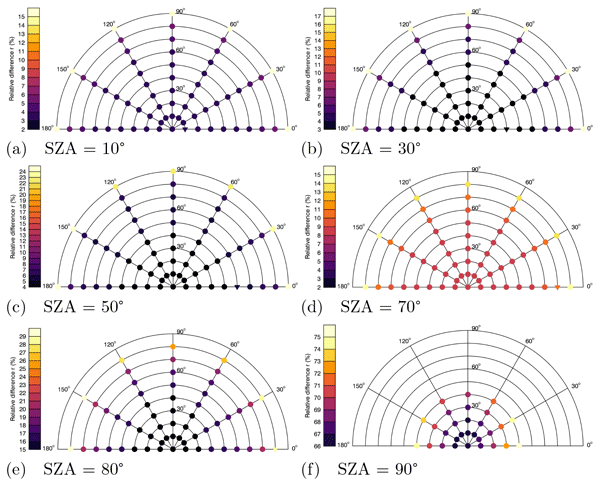
Anna Lange, Alexei Rozanov, and Christian von Savigny
Atmos. Chem. Phys., 23, 14829–14839, https://doi.org/10.5194/acp-23-14829-2023, https://doi.org/10.5194/acp-23-14829-2023, 2023
Short summary
Short summary
We were able to demonstrate quantitatively that the blue colour of the sky cannot be solely attributed to Rayleigh scattering. The influence of ozone on the blue colour of the sky is calculated for different viewing geometries, total ozone columns and an enhanced stratospheric aerosol scenario. Furthermore, the effects of polarisation, surface albedo and observer height are investigated.
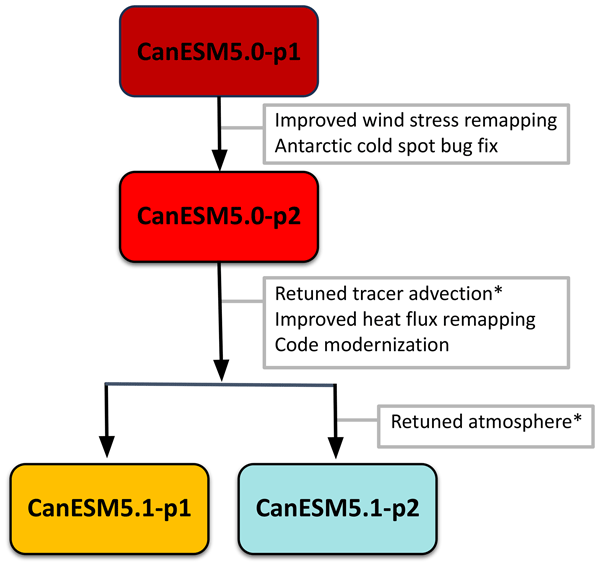
Michael Sigmond, James Anstey, Vivek Arora, Ruth Digby, Nathan Gillett, Viatcheslav Kharin, William Merryfield, Catherine Reader, John Scinocca, Neil Swart, John Virgin, Carsten Abraham, Jason Cole, Nicolas Lambert, Woo-Sung Lee, Yongxiao Liang, Elizaveta Malinina, Landon Rieger, Knut von Salzen, Christian Seiler, Clint Seinen, Andrew Shao, Reinel Sospedra-Alfonso, Libo Wang, and Duo Yang
Geosci. Model Dev., 16, 6553–6591, https://doi.org/10.5194/gmd-16-6553-2023, https://doi.org/10.5194/gmd-16-6553-2023, 2023
Short summary
Short summary
We present a new activity which aims to organize the analysis of biases in the Canadian Earth System model (CanESM) in a systematic manner. Results of this “Analysis for Development” (A4D) activity includes a new CanESM version, CanESM5.1, which features substantial improvements regarding the simulation of dust and stratospheric temperatures, a second CanESM5.1 variant with reduced climate sensitivity, and insights into potential avenues to reduce various other model biases.
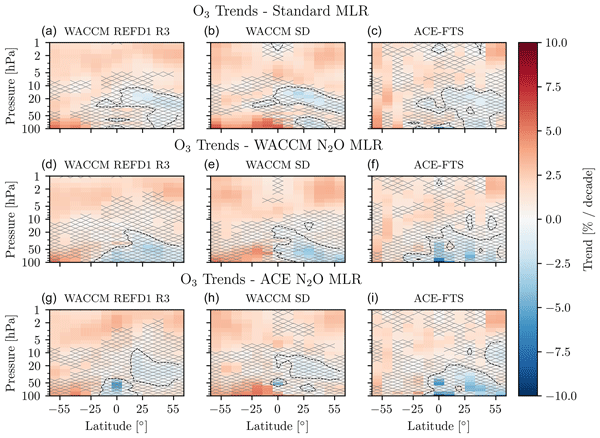
Kimberlee Dubé, Susann Tegtmeier, Adam Bourassa, Daniel Zawada, Douglas Degenstein, Patrick E. Sheese, Kaley A. Walker, and William Randel
Atmos. Chem. Phys., 23, 13283–13300, https://doi.org/10.5194/acp-23-13283-2023, https://doi.org/10.5194/acp-23-13283-2023, 2023
Short summary
Short summary
This paper presents a technique for understanding the causes of long-term changes in stratospheric composition. By using N2O as a proxy for stratospheric circulation in the model used to calculated trends, it is possible to separate the effects of dynamics and chemistry on observed trace gas trends. We find that observed HCl increases are due to changes in the stratospheric circulation, as are O3 decreases above 30 hPa in the Northern Hemisphere.
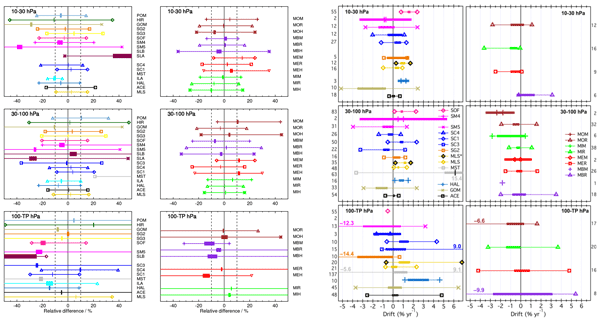
Michael Kiefer, Dale F. Hurst, Gabriele P. Stiller, Stefan Lossow, Holger Vömel, John Anderson, Faiza Azam, Jean-Loup Bertaux, Laurent Blanot, Klaus Bramstedt, John P. Burrows, Robert Damadeo, Bianca Maria Dinelli, Patrick Eriksson, Maya García-Comas, John C. Gille, Mark Hervig, Yasuko Kasai, Farahnaz Khosrawi, Donal Murtagh, Gerald E. Nedoluha, Stefan Noël, Piera Raspollini, William G. Read, Karen H. Rosenlof, Alexei Rozanov, Christopher E. Sioris, Takafumi Sugita, Thomas von Clarmann, Kaley A. Walker, and Katja Weigel
Atmos. Meas. Tech., 16, 4589–4642, https://doi.org/10.5194/amt-16-4589-2023, https://doi.org/10.5194/amt-16-4589-2023, 2023
Short summary
Short summary
We quantify biases and drifts (and their uncertainties) between the stratospheric water vapor measurement records of 15 satellite-based instruments (SATs, with 31 different retrievals) and balloon-borne frost point hygrometers (FPs) launched at 27 globally distributed stations. These comparisons of measurements during the period 2000–2016 are made using robust, consistent statistical methods. With some exceptions, the biases and drifts determined for most SAT–FP pairs are < 10 % and < 1 % yr−1.
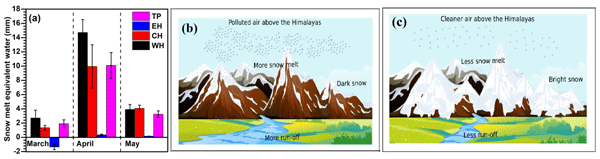
Suvarna Fadnavis, Bernd Heinold, T. P. Sabin, Anne Kubin, Katty Huang, Alexandru Rap, and Rolf Müller
Atmos. Chem. Phys., 23, 10439–10449, https://doi.org/10.5194/acp-23-10439-2023, https://doi.org/10.5194/acp-23-10439-2023, 2023
Short summary
Short summary
The influence of the COVID-19 lockdown on the Himalayas caused increases in snow cover and a decrease in runoff, ultimately leading to an enhanced snow water equivalent. Our findings highlight that, out of the two processes causing a retreat of Himalayan glaciers – (1) slow response to global climate change and (2) fast response to local air pollution – a policy action on the latter is more likely to be within the reach of possible policy action to help billions of people in southern Asia.
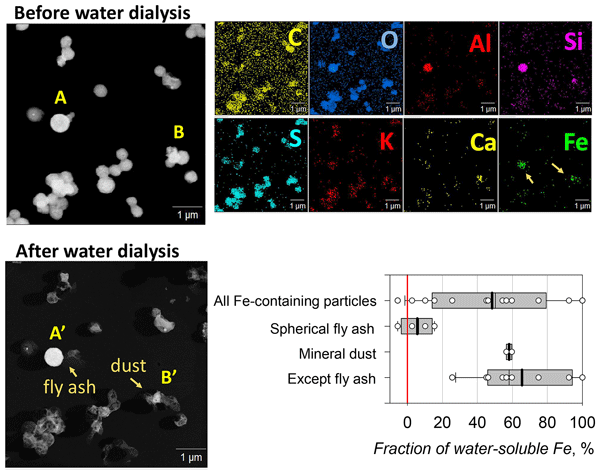
Sayako Ueda, Yoko Iwamoto, Fumikazu Taketani, Mingxu Liu, and Hitoshi Matsui
Atmos. Chem. Phys., 23, 10117–10135, https://doi.org/10.5194/acp-23-10117-2023, https://doi.org/10.5194/acp-23-10117-2023, 2023
Short summary
Short summary
We examine iron in atmospheric fine aerosol particles collected over the Indian Ocean during shipborne observations in November 2018. Transmission electron microscopy analysis with water dialysis shows that various types of iron (fly ash, iron oxide, and mineral dust) co-exist with ammonium sulfate and that their solubility differs depending on the iron type. Using PM2.5 bulk samples and global model simulations, we elucidate their origins, aging, and implications for present iron simulations.
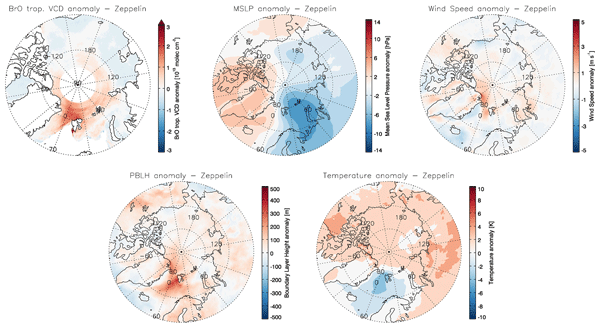
Bianca Zilker, Andreas Richter, Anne-Marlene Blechschmidt, Peter von der Gathen, Ilias Bougoudis, Sora Seo, Tim Bösch, and John Philip Burrows
Atmos. Chem. Phys., 23, 9787–9814, https://doi.org/10.5194/acp-23-9787-2023, https://doi.org/10.5194/acp-23-9787-2023, 2023
Short summary
Short summary
During Arctic spring, near-surface ozone is depleted by bromine released from salty sea ice and/or snow-covered areas under certain meteorological conditions. To study this ozone depletion and the prevailing meteorological conditions, two ozone data sets from Ny-Ålesund, Svalbard, have been evaluated. We found that during ozone depletion events lower pressure over the Barents Sea and higher pressure in the Icelandic Low area led to a transport of cold polar air from the north to Ny-Ålesund.
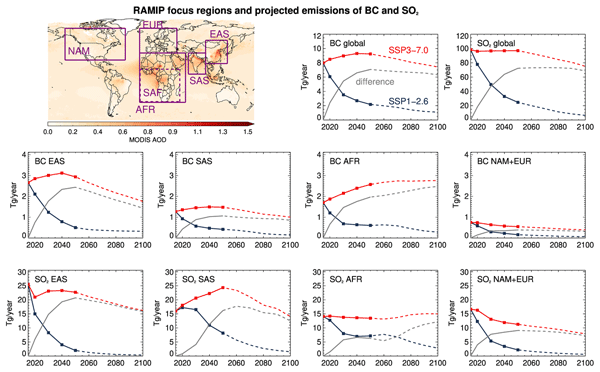
Laura J. Wilcox, Robert J. Allen, Bjørn H. Samset, Massimo A. Bollasina, Paul T. Griffiths, James Keeble, Marianne T. Lund, Risto Makkonen, Joonas Merikanto, Declan O'Donnell, David J. Paynter, Geeta G. Persad, Steven T. Rumbold, Toshihiko Takemura, Kostas Tsigaridis, Sabine Undorf, and Daniel M. Westervelt
Geosci. Model Dev., 16, 4451–4479, https://doi.org/10.5194/gmd-16-4451-2023, https://doi.org/10.5194/gmd-16-4451-2023, 2023
Short summary
Short summary
Changes in anthropogenic aerosol emissions have strongly contributed to global and regional climate change. However, the size of these regional impacts and the way they arise are still uncertain. With large changes in aerosol emissions a possibility over the next few decades, it is important to better quantify the potential role of aerosol in future regional climate change. The Regional Aerosol Model Intercomparison Project will deliver experiments designed to facilitate this.
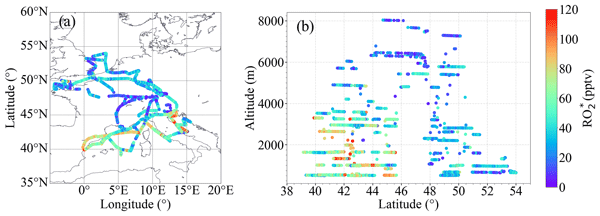
Midhun George, Maria Dolores Andrés Hernández, Vladyslav Nenakhov, Yangzhuoran Liu, John Philip Burrows, Birger Bohn, Eric Förster, Florian Obersteiner, Andreas Zahn, Theresa Harlaß, Helmut Ziereis, Hans Schlager, Benjamin Schreiner, Flora Kluge, Katja Bigge, and Klaus Pfeilsticker
Atmos. Chem. Phys., 23, 7799–7822, https://doi.org/10.5194/acp-23-7799-2023, https://doi.org/10.5194/acp-23-7799-2023, 2023
Short summary
Short summary
The applicability of photostationary steady-state (PSS) assumptions to estimate the amount of the sum of peroxy radicals (RO2*) during the EMeRGe airborne observations from the known radical chemistry and onboard measurements of RO2* precursors, photolysis frequencies, and other trace gases such as NOx and O3 was investigated. The comparison of the calculated RO2* with the actual measurements provides an insight into the main processes controlling their concentration in the air masses measured.
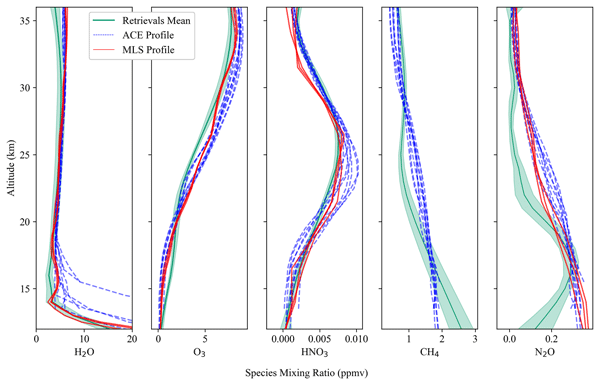
Ethan Runge, Jeff Langille, Daniel Zawada, Adam Bourassa, and Doug Degenstein
Atmos. Meas. Tech., 16, 3123–3139, https://doi.org/10.5194/amt-16-3123-2023, https://doi.org/10.5194/amt-16-3123-2023, 2023
Short summary
Short summary
The Limb Imaging Fourier Transform Spectrometer Experiment (LIFE) instrument takes vertical images of limb radiance across a wide mid-infrared spectral band from a stratospheric balloon. Measurements are used to infer vertical-trace-gas-profile retrievals of H2O, O3, HNO3, CH4, and N2O. Nearly time-/space-coincident observations from the Atmospheric Chemistry Experiment Fourier Transform Spectrometer (ACE-FTS) and Microwave Limb Sounder (MLS) instruments are compared to the LIFE results.
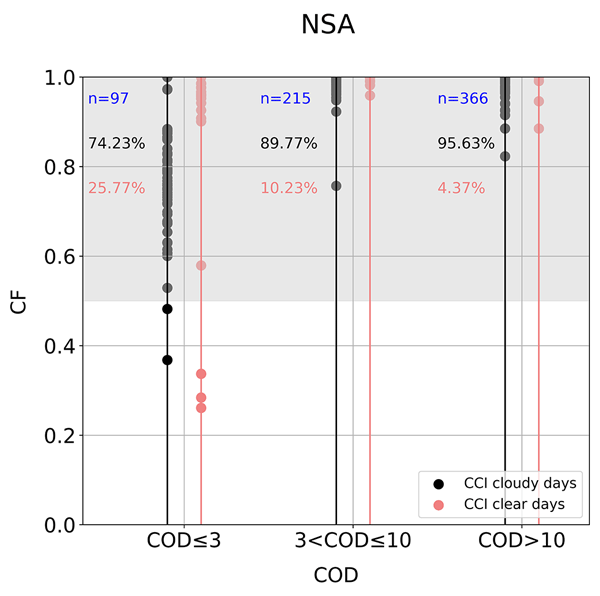
Kameswara S. Vinjamuri, Marco Vountas, Luca Lelli, Martin Stengel, Matthew D. Shupe, Kerstin Ebell, and John P. Burrows
Atmos. Meas. Tech., 16, 2903–2918, https://doi.org/10.5194/amt-16-2903-2023, https://doi.org/10.5194/amt-16-2903-2023, 2023
Short summary
Short summary
Clouds play an important role in Arctic amplification. Cloud data from ground-based sites are valuable but cannot represent the whole Arctic. Therefore the use of satellite products is a measure to cover the entire Arctic. However, the quality of such cloud measurements from space is not well known. The paper discusses the differences and commonalities between satellite and ground-based measurements. We conclude that the satellite dataset, with a few exceptions, can be used in the Arctic.
Basudev Swain, Marco Vountas, Adrien Deroubaix, Luca Lelli, Aishwarya Singh, Yanick Ziegler, Sachin S. Gunthe, and John P. Burrows
EGUsphere, https://doi.org/10.5194/egusphere-2023-730, https://doi.org/10.5194/egusphere-2023-730, 2023
Preprint archived
Short summary
Short summary
Aerosols are suspensions of particles distributed in the air. Depending on their chemical composition, they scatter and/or absorb sunlight and thus cool or warm the earth's atmosphere and its surface. They also provide as a surface in the atmosphere upon which ice or liquid clouds droplets nucleate and grow. In this study, we use satellite observations and model simulations to investigate the properties of aerosols with the goal of assessing their direct and indirect role in climate change.
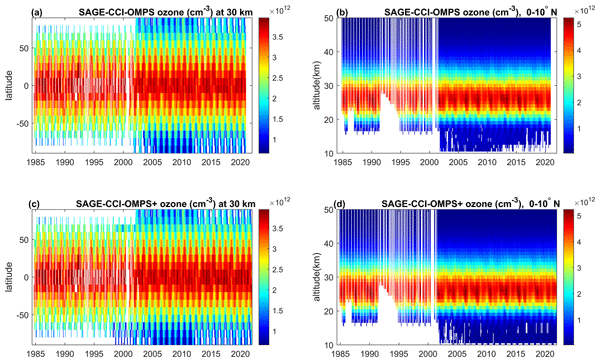
Viktoria F. Sofieva, Monika Szelag, Johanna Tamminen, Carlo Arosio, Alexei Rozanov, Mark Weber, Doug Degenstein, Adam Bourassa, Daniel Zawada, Michael Kiefer, Alexandra Laeng, Kaley A. Walker, Patrick Sheese, Daan Hubert, Michel van Roozendael, Christian Retscher, Robert Damadeo, and Jerry D. Lumpe
Atmos. Meas. Tech., 16, 1881–1899, https://doi.org/10.5194/amt-16-1881-2023, https://doi.org/10.5194/amt-16-1881-2023, 2023
Short summary
Short summary
The paper presents the updated SAGE-CCI-OMPS+ climate data record of monthly zonal mean ozone profiles. This dataset covers the stratosphere and combines measurements by nine limb and occultation satellite instruments (SAGE II, OSIRIS, MIPAS, SCIAMACHY, GOMOS, ACE-FTS, OMPS-LP, POAM III, and SAGE III/ISS). The update includes new versions of MIPAS, ACE-FTS, and OSIRIS datasets and introduces data from additional sensors (POAM III and SAGE III/ISS) and retrieval processors (OMPS-LP).
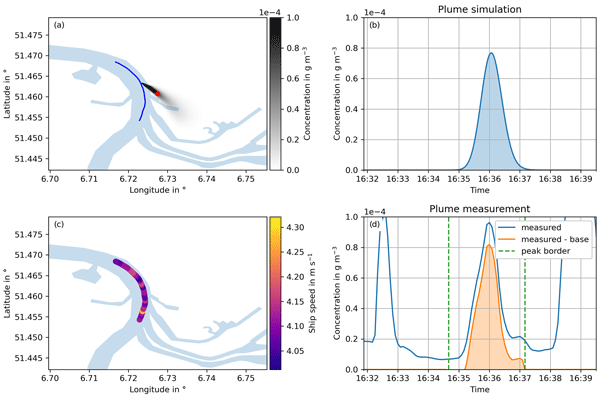
Kai Krause, Folkard Wittrock, Andreas Richter, Dieter Busch, Anton Bergen, John P. Burrows, Steffen Freitag, and Olesia Halbherr
Atmos. Meas. Tech., 16, 1767–1787, https://doi.org/10.5194/amt-16-1767-2023, https://doi.org/10.5194/amt-16-1767-2023, 2023
Short summary
Short summary
Inland shipping is an important source of nitrogen oxides (NOx). The amount of emitted NOx depends on the characteristics of the individual vessels and the traffic density. Ship emissions are often characterised by the amount of emitted NOx per unit of burnt fuel, and further knowledge about fuel consumption is needed to quantify the total emissions caused by ship traffic. In this study, a new approach to derive absolute emission rates (in g s−1) from onshore measurements is presented.
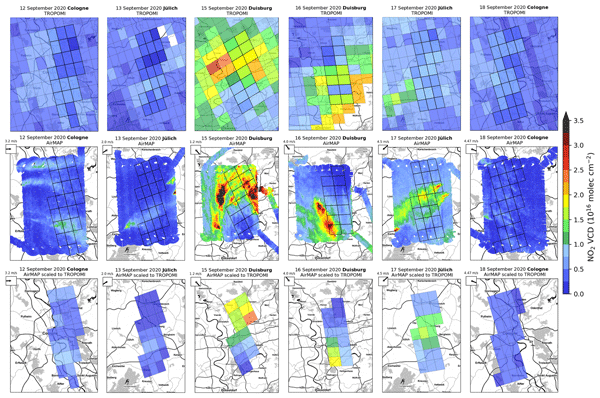
Kezia Lange, Andreas Richter, Anja Schönhardt, Andreas C. Meier, Tim Bösch, André Seyler, Kai Krause, Lisa K. Behrens, Folkard Wittrock, Alexis Merlaud, Frederik Tack, Caroline Fayt, Martina M. Friedrich, Ermioni Dimitropoulou, Michel Van Roozendael, Vinod Kumar, Sebastian Donner, Steffen Dörner, Bianca Lauster, Maria Razi, Christian Borger, Katharina Uhlmannsiek, Thomas Wagner, Thomas Ruhtz, Henk Eskes, Birger Bohn, Daniel Santana Diaz, Nader Abuhassan, Dirk Schüttemeyer, and John P. Burrows
Atmos. Meas. Tech., 16, 1357–1389, https://doi.org/10.5194/amt-16-1357-2023, https://doi.org/10.5194/amt-16-1357-2023, 2023
Short summary
Short summary
We present airborne imaging DOAS and ground-based stationary and car DOAS measurements conducted during the S5P-VAL-DE-Ruhr campaign in the Rhine-Ruhr region. The measurements are used to validate spaceborne NO2 data products from the Sentinel-5 Precursor TROPOspheric Monitoring Instrument (TROPOMI). Auxiliary data of the TROPOMI NO2 retrieval, such as spatially higher resolved a priori NO2 vertical profiles, surface reflectivity, and cloud treatment are investigated to evaluate their impact.
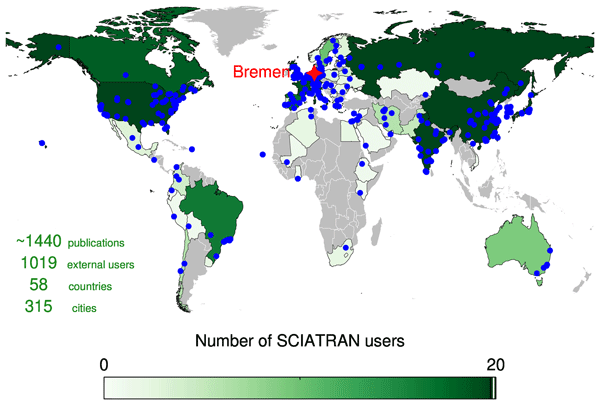
Linlu Mei, Vladimir Rozanov, Alexei Rozanov, and John P. Burrows
Geosci. Model Dev., 16, 1511–1536, https://doi.org/10.5194/gmd-16-1511-2023, https://doi.org/10.5194/gmd-16-1511-2023, 2023
Short summary
Short summary
This paper summarizes recent developments of aerosol, cloud and surface reflectance databases and models in the framework of the software package SCIATRAN. These updates and developments extend the capabilities of the radiative transfer modeling, especially by accounting for different kinds of vertical inhomogeneties. Vertically inhomogeneous clouds and different aerosol types can be easily accounted for within SCIATRAN (V4.6). The widely used surface models and databases are now available.
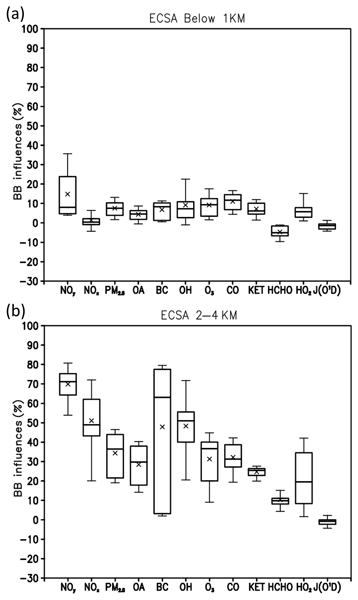
Chuan-Yao Lin, Wan-Chin Chen, Yi-Yun Chien, Charles C. K. Chou, Chian-Yi Liu, Helmut Ziereis, Hans Schlager, Eric Förster, Florian Obersteiner, Ovid O. Krüger, Bruna A. Holanda, Mira L. Pöhlker, Katharina Kaiser, Johannes Schneider, Birger Bohn, Klaus Pfeilsticker, Benjamin Weyland, Maria Dolores Andrés Hernández, and John P. Burrows
Atmos. Chem. Phys., 23, 2627–2647, https://doi.org/10.5194/acp-23-2627-2023, https://doi.org/10.5194/acp-23-2627-2023, 2023
Short summary
Short summary
During the EMeRGe campaign in Asia, atmospheric pollutants were measured on board the HALO aircraft. The WRF-Chem model was employed to evaluate the biomass burning (BB) plume transported from Indochina and its impact on the downstream areas. The combination of BB aerosol enhancement with cloud water resulted in a reduction in incoming shortwave radiation at the surface in southern China and the East China Sea, which potentially has significant regional climate implications.

Luca Lelli, Marco Vountas, Narges Khosravi, and John Philipp Burrows
Atmos. Chem. Phys., 23, 2579–2611, https://doi.org/10.5194/acp-23-2579-2023, https://doi.org/10.5194/acp-23-2579-2023, 2023
Short summary
Short summary
Arctic amplification describes the recent period in which temperatures have been rising twice as fast as or more than the global average and sea ice and the Greenland ice shelf are approaching a tipping point. Hence, the Arctic ability to reflect solar energy decreases and absorption by the surface increases. Using 2 decades of complementary satellite data, we discover that clouds unexpectedly increase the pan-Arctic reflectance by increasing their liquid water content, thus cooling the Arctic.
Yi Wang, Mark Schoeberl, Ghassan Taha, Daniel Zawada, and Adam Bourassa
Atmos. Meas. Tech. Discuss., https://doi.org/10.5194/amt-2023-36, https://doi.org/10.5194/amt-2023-36, 2023
Revised manuscript not accepted
Short summary
Short summary
The OMPS-LP satellite instrument measures aerosol scattering properties across the atmospheric limb. Adopting an algorithm that uses extinction at two wavelengths, we retrieve vertical profiles of particle size and concentration. We demonstrate that these profiles are consistent with in-situ balloon and SAGE-III/ISS satellite measurements. We also show how aerosol size and concentration evolve during Reikoke and Hunga Tonga-Hunga Ha'apai eruptions.
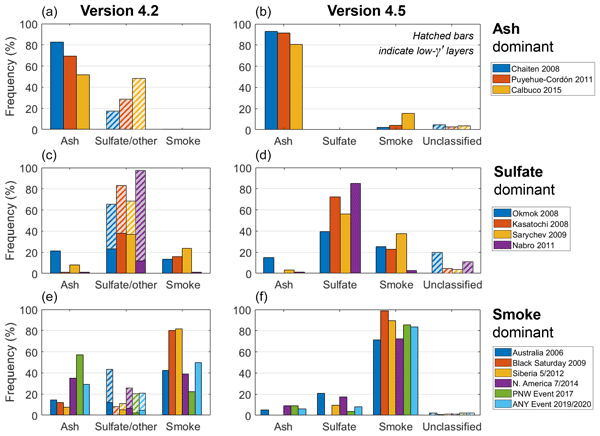
Jason L. Tackett, Jayanta Kar, Mark A. Vaughan, Brian J. Getzewich, Man-Hae Kim, Jean-Paul Vernier, Ali H. Omar, Brian E. Magill, Michael C. Pitts, and David M. Winker
Atmos. Meas. Tech., 16, 745–768, https://doi.org/10.5194/amt-16-745-2023, https://doi.org/10.5194/amt-16-745-2023, 2023
Short summary
Short summary
The accurate identification of aerosol types in the stratosphere is important to characterize their impacts on the Earth climate system. The space-borne lidar on board CALIPSO is well-posed to identify aerosols in the stratosphere from volcanic eruptions and major wildfire events. This paper describes improvements implemented in the version 4.5 CALIPSO data release to more accurately discriminate between volcanic ash, sulfate, and smoke within the stratosphere.
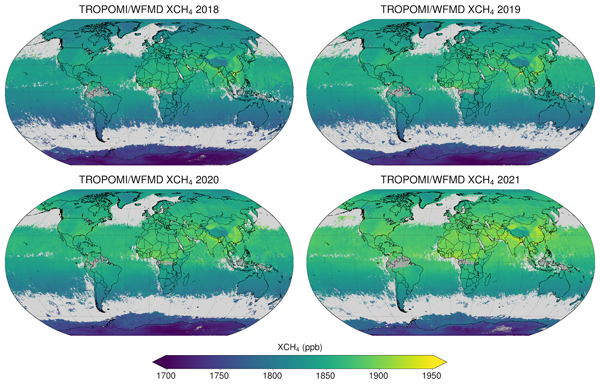
Oliver Schneising, Michael Buchwitz, Jonas Hachmeister, Steffen Vanselow, Maximilian Reuter, Matthias Buschmann, Heinrich Bovensmann, and John P. Burrows
Atmos. Meas. Tech., 16, 669–694, https://doi.org/10.5194/amt-16-669-2023, https://doi.org/10.5194/amt-16-669-2023, 2023
Short summary
Short summary
Methane and carbon monoxide are important constituents of the atmosphere in the context of climate change and air pollution. We present the latest advances in the TROPOMI/WFMD algorithm to simultaneously retrieve atmospheric methane and carbon monoxide abundances from space. The changes in the latest product version are described in detail, and the resulting improvements are demonstrated. An overview of the products is provided including a discussion of annual increases and validation results.

Ram Singh, Kostas Tsigaridis, Allegra N. LeGrande, Francis Ludlow, and Joseph G. Manning
Clim. Past, 19, 249–275, https://doi.org/10.5194/cp-19-249-2023, https://doi.org/10.5194/cp-19-249-2023, 2023
Short summary
Short summary
This work is a modeling effort to investigate the hydroclimatic impacts of a volcanic
quartetduring 168–158 BCE over the Nile River basin in the context of Ancient Egypt's Ptolemaic era (305–30 BCE). The model simulated a robust surface cooling (~ 1.0–1.5 °C), suppressing the African monsoon (deficit of > 1 mm d−1 over East Africa) and agriculturally vital Nile summer flooding. Our result supports the hypothesized relation between volcanic eruptions, hydroclimatic shocks, and societal impacts.
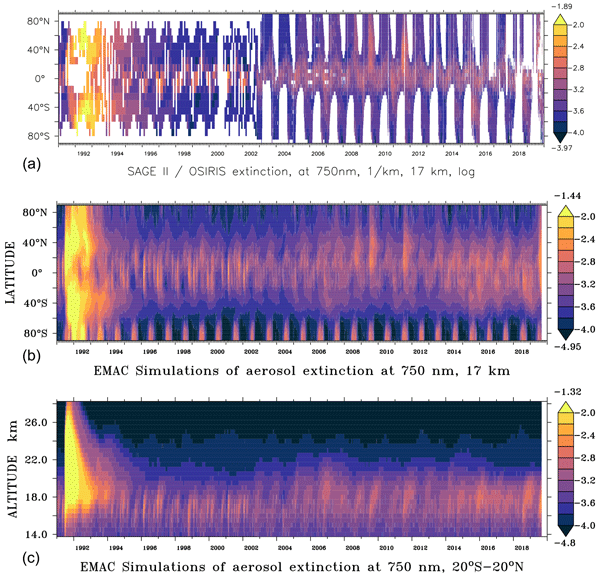
Jennifer Schallock, Christoph Brühl, Christine Bingen, Michael Höpfner, Landon Rieger, and Jos Lelieveld
Atmos. Chem. Phys., 23, 1169–1207, https://doi.org/10.5194/acp-23-1169-2023, https://doi.org/10.5194/acp-23-1169-2023, 2023
Short summary
Short summary
We characterized the influence of volcanic aerosols for the period 1990–2019 and established a volcanic SO2 emission inventory that includes more than 500 eruptions. From limb-based satellite observations of SO2 and extinction, we derive 3D plumes of SO2 perturbations and injected mass by a novel method. We calculate instantaneous radiative forcing with a comprehensive chemisty climate model. Our results show that smaller eruptions can also contribute to the stratospheric aerosol forcing.
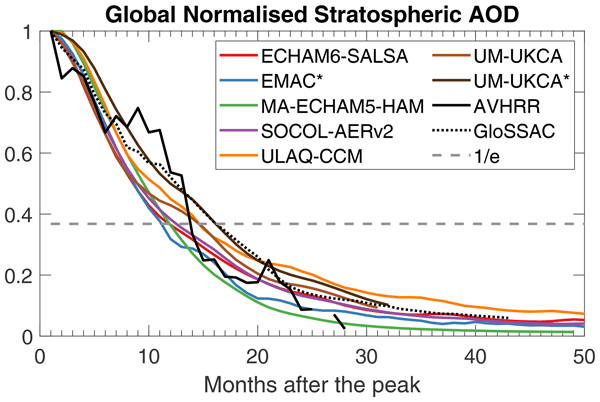
Ilaria Quaglia, Claudia Timmreck, Ulrike Niemeier, Daniele Visioni, Giovanni Pitari, Christina Brodowsky, Christoph Brühl, Sandip S. Dhomse, Henning Franke, Anton Laakso, Graham W. Mann, Eugene Rozanov, and Timofei Sukhodolov
Atmos. Chem. Phys., 23, 921–948, https://doi.org/10.5194/acp-23-921-2023, https://doi.org/10.5194/acp-23-921-2023, 2023
Short summary
Short summary
The last very large explosive volcanic eruption we have measurements for is the eruption of Mt. Pinatubo in 1991. It is therefore often used as a benchmark for climate models' ability to reproduce these kinds of events. Here, we compare available measurements with the results from multiple experiments conducted with climate models interactively simulating the aerosol cloud formation.
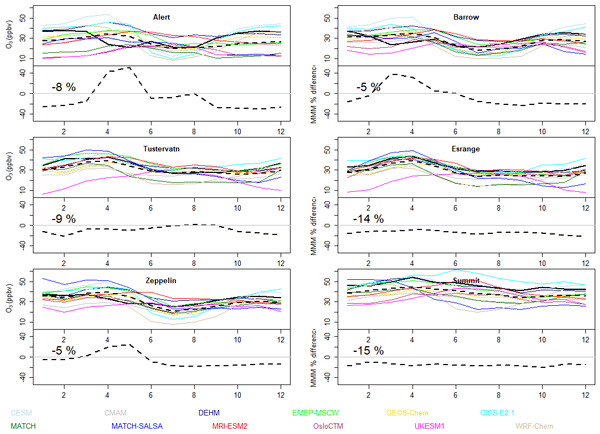
Cynthia H. Whaley, Kathy S. Law, Jens Liengaard Hjorth, Henrik Skov, Stephen R. Arnold, Joakim Langner, Jakob Boyd Pernov, Garance Bergeron, Ilann Bourgeois, Jesper H. Christensen, Rong-You Chien, Makoto Deushi, Xinyi Dong, Peter Effertz, Gregory Faluvegi, Mark Flanner, Joshua S. Fu, Michael Gauss, Greg Huey, Ulas Im, Rigel Kivi, Louis Marelle, Tatsuo Onishi, Naga Oshima, Irina Petropavlovskikh, Jeff Peischl, David A. Plummer, Luca Pozzoli, Jean-Christophe Raut, Tom Ryerson, Ragnhild Skeie, Sverre Solberg, Manu A. Thomas, Chelsea Thompson, Kostas Tsigaridis, Svetlana Tsyro, Steven T. Turnock, Knut von Salzen, and David W. Tarasick
Atmos. Chem. Phys., 23, 637–661, https://doi.org/10.5194/acp-23-637-2023, https://doi.org/10.5194/acp-23-637-2023, 2023
Short summary
Short summary
This study summarizes recent research on ozone in the Arctic, a sensitive and rapidly warming region. We find that the seasonal cycles of near-surface atmospheric ozone are variable depending on whether they are near the coast, inland, or at high altitude. Several global model simulations were evaluated, and we found that because models lack some of the ozone chemistry that is important for the coastal Arctic locations, they do not accurately simulate ozone there.
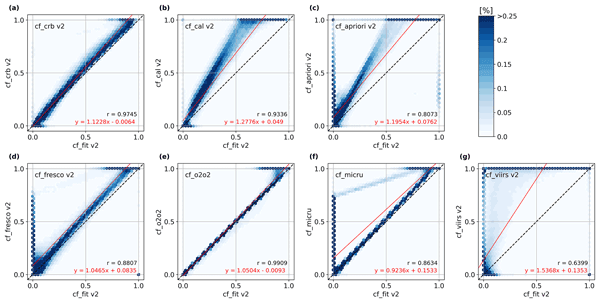
Miriam Latsch, Andreas Richter, Henk Eskes, Maarten Sneep, Ping Wang, Pepijn Veefkind, Ronny Lutz, Diego Loyola, Athina Argyrouli, Pieter Valks, Thomas Wagner, Holger Sihler, Michel van Roozendael, Nicolas Theys, Huan Yu, Richard Siddans, and John P. Burrows
Atmos. Meas. Tech., 15, 6257–6283, https://doi.org/10.5194/amt-15-6257-2022, https://doi.org/10.5194/amt-15-6257-2022, 2022
Short summary
Short summary
The article investigates different S5P TROPOMI cloud retrieval algorithms for tropospheric trace gas retrievals. The cloud products show differences primarily over snow and ice and for scenes under sun glint. Some issues regarding across-track dependence are found for the cloud fractions as well as for the cloud heights.
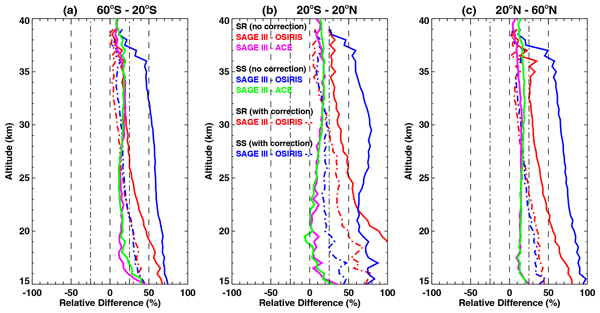
Sarah A. Strode, Ghassan Taha, Luke D. Oman, Robert Damadeo, David Flittner, Mark Schoeberl, Christopher E. Sioris, and Ryan Stauffer
Atmos. Meas. Tech., 15, 6145–6161, https://doi.org/10.5194/amt-15-6145-2022, https://doi.org/10.5194/amt-15-6145-2022, 2022
Short summary
Short summary
We use a global atmospheric chemistry model simulation to generate scaling factors that account for the daily cycle of NO2 and ozone. These factors facilitate comparisons between sunrise and sunset observations from SAGE III/ISS and observations from other instruments. We provide the scaling factors as monthly zonal means for different latitudes and altitudes. We find that applying these factors yields more consistent comparisons between observations from SAGE III/ISS and other instruments.
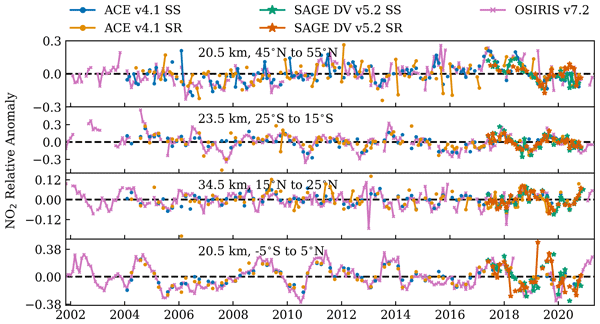
Kimberlee Dubé, Daniel Zawada, Adam Bourassa, Doug Degenstein, William Randel, David Flittner, Patrick Sheese, and Kaley Walker
Atmos. Meas. Tech., 15, 6163–6180, https://doi.org/10.5194/amt-15-6163-2022, https://doi.org/10.5194/amt-15-6163-2022, 2022
Short summary
Short summary
Satellite observations are important for monitoring changes in atmospheric composition. Here we describe an improved version of the NO2 retrieval for the Optical Spectrograph and InfraRed Imager System. The resulting NO2 profiles are compared to those from the Atmospheric Chemistry Experiment – Fourier Transform Spectrometer and the Stratospheric Aerosol and Gas Experiment III on the International Space Station. All datasets agree within 20 % throughout the stratosphere.
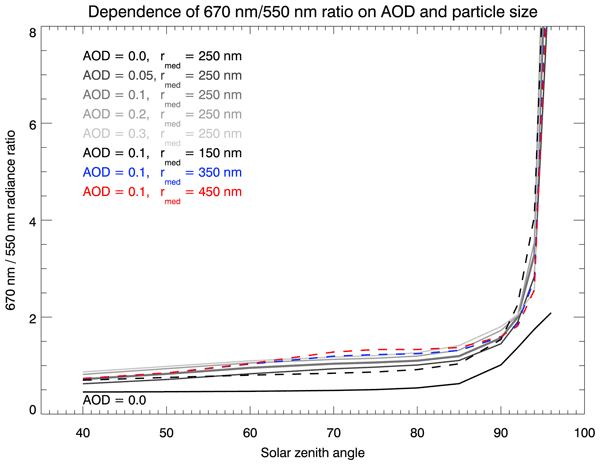
Christian von Savigny, Anna Lange, Anne Hemkendreis, Christoph G. Hoffmann, and Alexei Rozanov
Clim. Past, 18, 2345–2356, https://doi.org/10.5194/cp-18-2345-2022, https://doi.org/10.5194/cp-18-2345-2022, 2022
Short summary
Short summary
This study investigates the possibility of inferring information on aerosol optical depth from photographs of historic paintings. The idea – which has been applied in previous studies – is very interesting because it would provide an archive of the atmospheric aerosol loading covering many centuries. We show that twilight colours depend not only on the aerosol optical thickness, but also on several other parameters, making a quantitative estimate of aerosol optical depth very difficult.
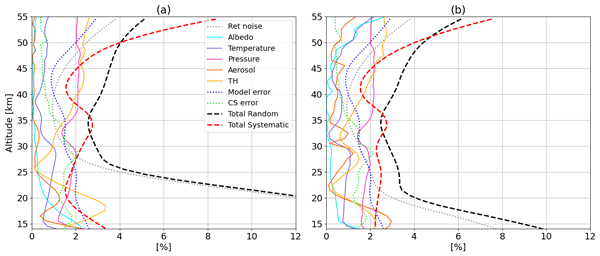
Carlo Arosio, Alexei Rozanov, Victor Gorshelev, Alexandra Laeng, and John P. Burrows
Atmos. Meas. Tech., 15, 5949–5967, https://doi.org/10.5194/amt-15-5949-2022, https://doi.org/10.5194/amt-15-5949-2022, 2022
Short summary
Short summary
This paper characterizes the uncertainties affecting the ozone profiles retrieved at the University of Bremen through OMPS limb satellite observations. An accurate knowledge of the uncertainties is relevant for the validation of the product and to correctly interpret the retrieval results. We investigate several sources of uncertainties, estimate a total random and systematic component, and verify the consistency of the combined OMPS-MLS total uncertainty.
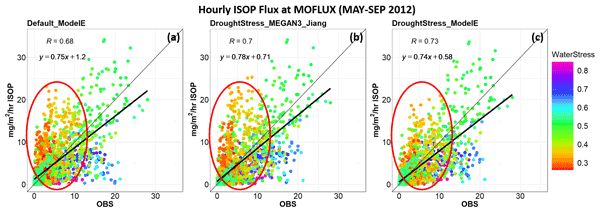
Elizabeth Klovenski, Yuxuan Wang, Susanne E. Bauer, Kostas Tsigaridis, Greg Faluvegi, Igor Aleinov, Nancy Y. Kiang, Alex Guenther, Xiaoyan Jiang, Wei Li, and Nan Lin
Atmos. Chem. Phys., 22, 13303–13323, https://doi.org/10.5194/acp-22-13303-2022, https://doi.org/10.5194/acp-22-13303-2022, 2022
Short summary
Short summary
Severe drought stresses vegetation and causes reduced emission of isoprene. We study the impact of including a new isoprene drought stress (yd) parameterization in NASA GISS ModelE called DroughtStress_ModelE, which is specifically tuned for ModelE. Inclusion of yd leads to better simulated isoprene emissions at the MOFLUX site during the severe drought of 2012, reduced overestimation of OMI satellite ΩHCHO (formaldehyde column), and improved simulated O3 (ozone) during drought.
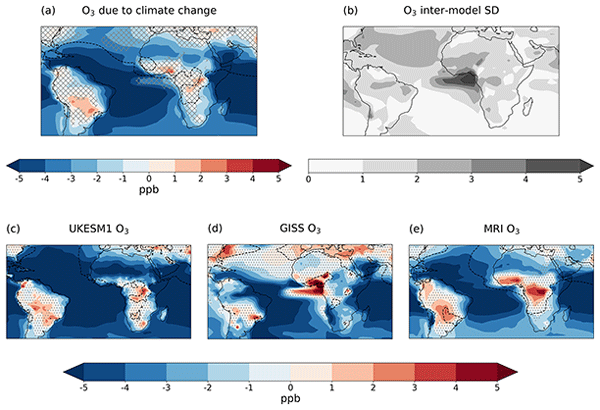
Flossie Brown, Gerd A. Folberth, Stephen Sitch, Susanne Bauer, Marijn Bauters, Pascal Boeckx, Alexander W. Cheesman, Makoto Deushi, Inês Dos Santos Vieira, Corinne Galy-Lacaux, James Haywood, James Keeble, Lina M. Mercado, Fiona M. O'Connor, Naga Oshima, Kostas Tsigaridis, and Hans Verbeeck
Atmos. Chem. Phys., 22, 12331–12352, https://doi.org/10.5194/acp-22-12331-2022, https://doi.org/10.5194/acp-22-12331-2022, 2022
Short summary
Short summary
Surface ozone can decrease plant productivity and impair human health. In this study, we evaluate the change in surface ozone due to climate change over South America and Africa using Earth system models. We find that if the climate were to change according to the worst-case scenario used here, models predict that forested areas in biomass burning locations and urban populations will be at increasing risk of ozone exposure, but other areas will experience a climate benefit.
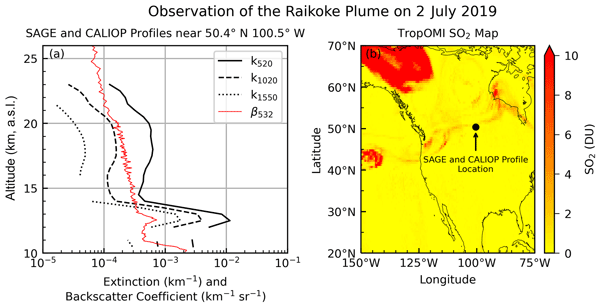
Travis N. Knepp, Larry Thomason, Mahesh Kovilakam, Jason Tackett, Jayanta Kar, Robert Damadeo, and David Flittner
Atmos. Meas. Tech., 15, 5235–5260, https://doi.org/10.5194/amt-15-5235-2022, https://doi.org/10.5194/amt-15-5235-2022, 2022
Short summary
Short summary
We used aerosol profiles from the SAGE III/ISS instrument to develop an aerosol classification method that was tested on four case-study events (two volcanic, two fire) and supported with CALIOP aerosol products. The method worked well in identifying smoke and volcanic aerosol in the stratosphere for these events. Raikoke is presented as a demonstration of the limitations of this method.
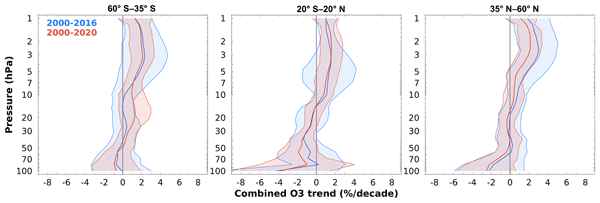
Sophie Godin-Beekmann, Niramson Azouz, Viktoria F. Sofieva, Daan Hubert, Irina Petropavlovskikh, Peter Effertz, Gérard Ancellet, Doug A. Degenstein, Daniel Zawada, Lucien Froidevaux, Stacey Frith, Jeannette Wild, Sean Davis, Wolfgang Steinbrecht, Thierry Leblanc, Richard Querel, Kleareti Tourpali, Robert Damadeo, Eliane Maillard Barras, René Stübi, Corinne Vigouroux, Carlo Arosio, Gerald Nedoluha, Ian Boyd, Roeland Van Malderen, Emmanuel Mahieu, Dan Smale, and Ralf Sussmann
Atmos. Chem. Phys., 22, 11657–11673, https://doi.org/10.5194/acp-22-11657-2022, https://doi.org/10.5194/acp-22-11657-2022, 2022
Short summary
Short summary
An updated evaluation up to 2020 of stratospheric ozone profile long-term trends at extrapolar latitudes based on satellite and ground-based records is presented. Ozone increase in the upper stratosphere is confirmed, with significant trends at most latitudes. In this altitude region, a very good agreement is found with trends derived from chemistry–climate model simulations. Observed and modelled trends diverge in the lower stratosphere, but the differences are non-significant.
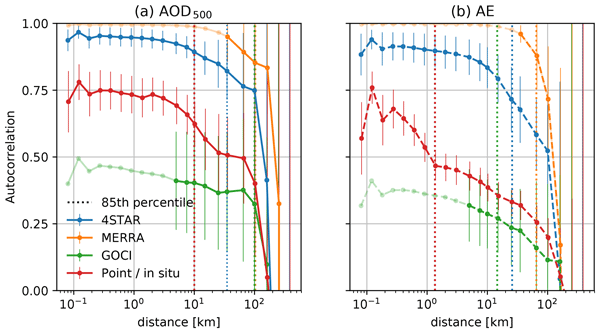
Samuel E. LeBlanc, Michal Segal-Rozenhaimer, Jens Redemann, Connor Flynn, Roy R. Johnson, Stephen E. Dunagan, Robert Dahlgren, Jhoon Kim, Myungje Choi, Arlindo da Silva, Patricia Castellanos, Qian Tan, Luke Ziemba, Kenneth Lee Thornhill, and Meloë Kacenelenbogen
Atmos. Chem. Phys., 22, 11275–11304, https://doi.org/10.5194/acp-22-11275-2022, https://doi.org/10.5194/acp-22-11275-2022, 2022
Short summary
Short summary
Airborne observations of atmospheric particles and pollution over Korea during a field campaign in May–June 2016 showed that the smallest atmospheric particles are present in the lowest 2 km of the atmosphere. The aerosol size is more spatially variable than optical thickness. We show this with remote sensing (4STAR), in situ (LARGE) observations, satellite measurements (GOCI), and modeled properties (MERRA-2), and it is contrary to the current understanding.
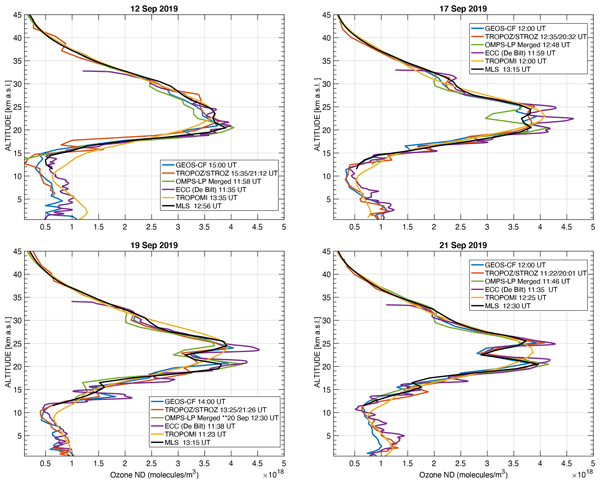
John T. Sullivan, Arnoud Apituley, Nora Mettig, Karin Kreher, K. Emma Knowland, Marc Allaart, Ankie Piters, Michel Van Roozendael, Pepijn Veefkind, Jerry R. Ziemke, Natalya Kramarova, Mark Weber, Alexei Rozanov, Laurence Twigg, Grant Sumnicht, and Thomas J. McGee
Atmos. Chem. Phys., 22, 11137–11153, https://doi.org/10.5194/acp-22-11137-2022, https://doi.org/10.5194/acp-22-11137-2022, 2022
Short summary
Short summary
A TROPOspheric Monitoring Instrument (TROPOMI) validation campaign (TROLIX-19) was held in the Netherlands in September 2019. The research presented here focuses on using ozone lidars from NASA’s Goddard Space Flight Center to better evaluate the characterization of ozone throughout TROLIX-19 as compared to balloon-borne, space-borne and ground-based passive measurements, as well as a global coupled chemistry meteorology model.
Qirui Zhong, Nick Schutgens, Guido van der Werf, Twan van Noije, Kostas Tsigaridis, Susanne E. Bauer, Tero Mielonen, Alf Kirkevåg, Øyvind Seland, Harri Kokkola, Ramiro Checa-Garcia, David Neubauer, Zak Kipling, Hitoshi Matsui, Paul Ginoux, Toshihiko Takemura, Philippe Le Sager, Samuel Rémy, Huisheng Bian, Mian Chin, Kai Zhang, Jialei Zhu, Svetlana G. Tsyro, Gabriele Curci, Anna Protonotariou, Ben Johnson, Joyce E. Penner, Nicolas Bellouin, Ragnhild B. Skeie, and Gunnar Myhre
Atmos. Chem. Phys., 22, 11009–11032, https://doi.org/10.5194/acp-22-11009-2022, https://doi.org/10.5194/acp-22-11009-2022, 2022
Short summary
Short summary
Aerosol optical depth (AOD) errors for biomass burning aerosol (BBA) are evaluated in 18 global models against satellite datasets. Notwithstanding biases in satellite products, they allow model evaluations. We observe large and diverse model biases due to errors in BBA. Further interpretations of AOD diversities suggest large biases exist in key processes for BBA which require better constraining. These results can contribute to further model improvement and development.
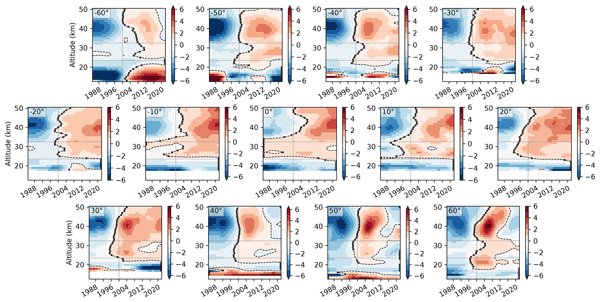
Kristof Bognar, Susann Tegtmeier, Adam Bourassa, Chris Roth, Taran Warnock, Daniel Zawada, and Doug Degenstein
Atmos. Chem. Phys., 22, 9553–9569, https://doi.org/10.5194/acp-22-9553-2022, https://doi.org/10.5194/acp-22-9553-2022, 2022
Short summary
Short summary
We quantify recent changes in stratospheric ozone (outside the polar regions) using a combination of three satellite datasets. We find that upper stratospheric ozone have increased significantly since 2000, although the recovery shows an unexpected pause in the Northern Hemisphere. Combined with the likely decrease in ozone in the lower stratosphere, this presents an interesting challenge for predicting the future of the ozone layer.
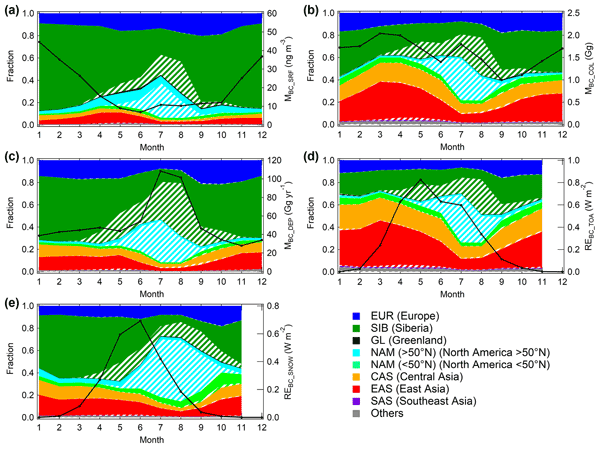
Hitoshi Matsui, Tatsuhiro Mori, Sho Ohata, Nobuhiro Moteki, Naga Oshima, Kumiko Goto-Azuma, Makoto Koike, and Yutaka Kondo
Atmos. Chem. Phys., 22, 8989–9009, https://doi.org/10.5194/acp-22-8989-2022, https://doi.org/10.5194/acp-22-8989-2022, 2022
Short summary
Short summary
Using a global aerosol model, we find that the source contributions to radiative effects of black carbon (BC) in the Arctic are quite different from those to mass concentrations and deposition flux of BC in the Arctic. This is because microphysical properties (e.g., mixing state), altitudes, and seasonal variations of BC in the atmosphere differ among emissions sources. These differences need to be considered for accurate simulations of Arctic BC and its source contributions and climate impacts.
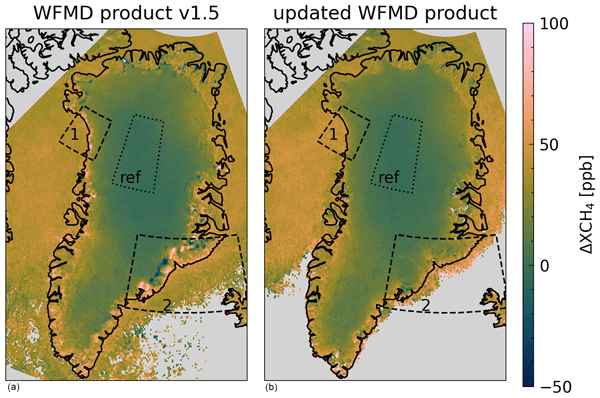
Jonas Hachmeister, Oliver Schneising, Michael Buchwitz, Alba Lorente, Tobias Borsdorff, John P. Burrows, Justus Notholt, and Matthias Buschmann
Atmos. Meas. Tech., 15, 4063–4074, https://doi.org/10.5194/amt-15-4063-2022, https://doi.org/10.5194/amt-15-4063-2022, 2022
Short summary
Short summary
Sentinel-5P trace gas retrievals rely on elevation data in their calculations. Outdated or inaccurate data can lead to significant errors in e.g. dry-air mole fractions of methane (XCH4). We show that the use of inadequate elevation data leads to strong XCH4 anomalies in Greenland. Similar problems can be expected for other regions with inaccurate elevation data. However, we expect these to be more localized. We show that updating elevation data used in the retrieval solves this issue.
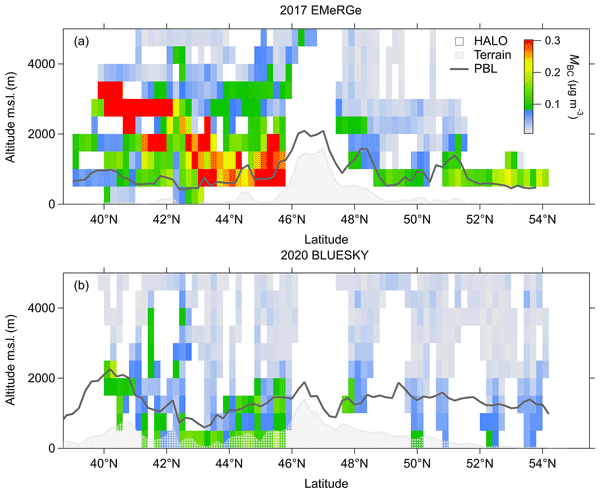
Ovid O. Krüger, Bruna A. Holanda, Sourangsu Chowdhury, Andrea Pozzer, David Walter, Christopher Pöhlker, Maria Dolores Andrés Hernández, John P. Burrows, Christiane Voigt, Jos Lelieveld, Johannes Quaas, Ulrich Pöschl, and Mira L. Pöhlker
Atmos. Chem. Phys., 22, 8683–8699, https://doi.org/10.5194/acp-22-8683-2022, https://doi.org/10.5194/acp-22-8683-2022, 2022
Short summary
Short summary
The abrupt reduction in human activities during the first COVID-19 lockdown created unprecedented atmospheric conditions. We took the opportunity to quantify changes in black carbon (BC) as a major anthropogenic air pollutant. Therefore, we measured BC on board a research aircraft over Europe during the lockdown and compared the results to measurements from 2017. With model simulations we account for different weather conditions and find a lockdown-related decrease in BC of 41 %.
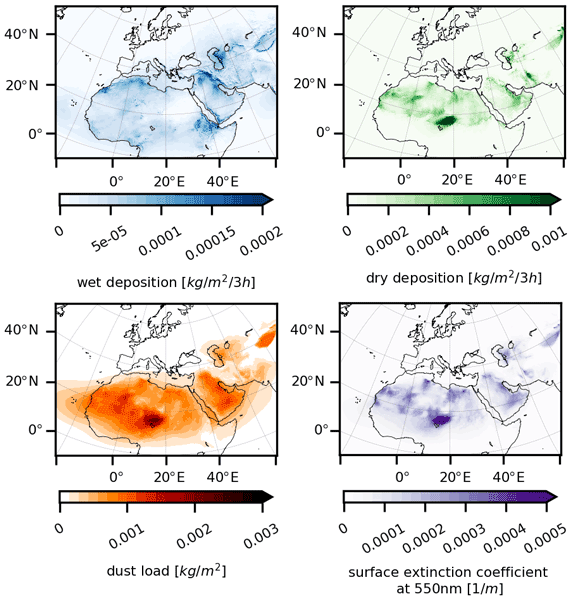
Enza Di Tomaso, Jerónimo Escribano, Sara Basart, Paul Ginoux, Francesca Macchia, Francesca Barnaba, Francesco Benincasa, Pierre-Antoine Bretonnière, Arnau Buñuel, Miguel Castrillo, Emilio Cuevas, Paola Formenti, María Gonçalves, Oriol Jorba, Martina Klose, Lucia Mona, Gilbert Montané Pinto, Michail Mytilinaios, Vincenzo Obiso, Miriam Olid, Nick Schutgens, Athanasios Votsis, Ernest Werner, and Carlos Pérez García-Pando
Earth Syst. Sci. Data, 14, 2785–2816, https://doi.org/10.5194/essd-14-2785-2022, https://doi.org/10.5194/essd-14-2785-2022, 2022
Short summary
Short summary
MONARCH reanalysis of desert dust aerosols extends the existing observation-based information for mineral dust monitoring by providing 3-hourly upper-air, surface and total column key geophysical variables of the dust cycle over Northern Africa, the Middle East and Europe, at a 0.1° horizontal resolution in a rotated grid, from 2007 to 2016. This work provides evidence of the high accuracy of this data set and its suitability for air quality and health and climate service applications.
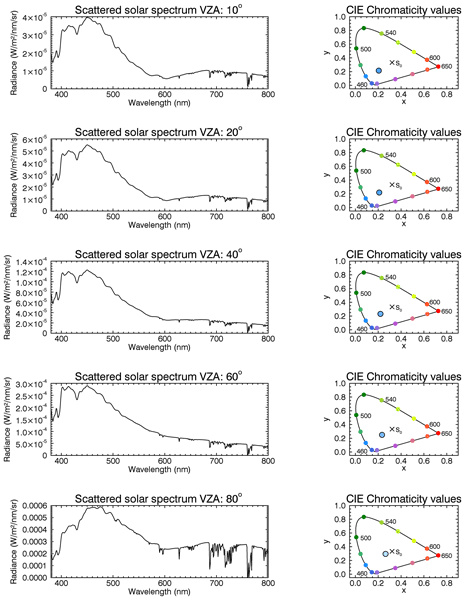
Anna Lange, Gerd Baumgarten, Alexei Rozanov, and Christian von Savigny
Ann. Geophys., 40, 407–419, https://doi.org/10.5194/angeo-40-407-2022, https://doi.org/10.5194/angeo-40-407-2022, 2022
Short summary
Short summary
We investigate the influence of different parameters on the colour of noctilucent clouds (highest clouds in the atmosphere), using radiative transfer calculations. We determined the effect of the particle size, optical depth, single scattering/multiple scattering and ozone. For sufficiently large optical depth and for specific viewing geometries, ozone plays only a minor role in the blueish colour of noctilucent clouds (new result).
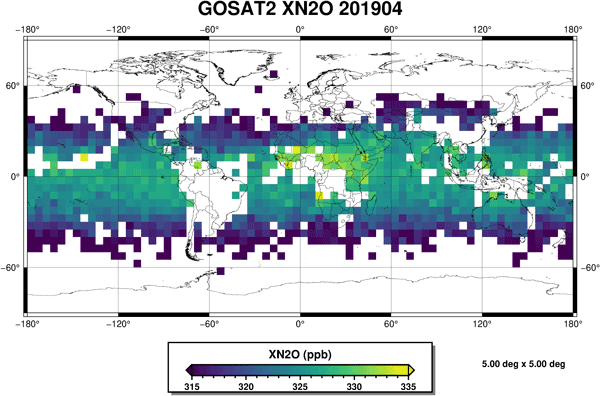
Stefan Noël, Maximilian Reuter, Michael Buchwitz, Jakob Borchardt, Michael Hilker, Oliver Schneising, Heinrich Bovensmann, John P. Burrows, Antonio Di Noia, Robert J. Parker, Hiroshi Suto, Yukio Yoshida, Matthias Buschmann, Nicholas M. Deutscher, Dietrich G. Feist, David W. T. Griffith, Frank Hase, Rigel Kivi, Cheng Liu, Isamu Morino, Justus Notholt, Young-Suk Oh, Hirofumi Ohyama, Christof Petri, David F. Pollard, Markus Rettinger, Coleen Roehl, Constantina Rousogenous, Mahesh Kumar Sha, Kei Shiomi, Kimberly Strong, Ralf Sussmann, Yao Té, Voltaire A. Velazco, Mihalis Vrekoussis, and Thorsten Warneke
Atmos. Meas. Tech., 15, 3401–3437, https://doi.org/10.5194/amt-15-3401-2022, https://doi.org/10.5194/amt-15-3401-2022, 2022
Short summary
Short summary
We present a new version (v3) of the GOSAT and GOSAT-2 FOCAL products.
In addition to an increased number of XCO2 data, v3 also includes products for XCH4 (full-physics and proxy), XH2O and the relative ratio of HDO to H2O (δD). For GOSAT-2, we also present first XCO and XN2O results. All FOCAL data products show reasonable spatial distribution and temporal variations and agree well with TCCON. Global XN2O maps show a gradient from the tropics to higher latitudes on the order of 15 ppb.
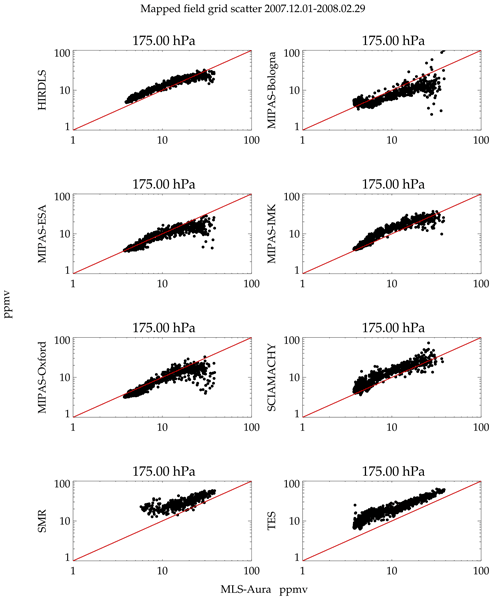
William G. Read, Gabriele Stiller, Stefan Lossow, Michael Kiefer, Farahnaz Khosrawi, Dale Hurst, Holger Vömel, Karen Rosenlof, Bianca M. Dinelli, Piera Raspollini, Gerald E. Nedoluha, John C. Gille, Yasuko Kasai, Patrick Eriksson, Christopher E. Sioris, Kaley A. Walker, Katja Weigel, John P. Burrows, and Alexei Rozanov
Atmos. Meas. Tech., 15, 3377–3400, https://doi.org/10.5194/amt-15-3377-2022, https://doi.org/10.5194/amt-15-3377-2022, 2022
Short summary
Short summary
This paper attempts to provide an assessment of the accuracy of 21 satellite-based instruments that remotely measure atmospheric humidity in the upper troposphere of the Earth's atmosphere. The instruments made their measurements from 1984 to the present time; however, most of these instruments began operations after 2000, and only a few are still operational. The objective of this study is to quantify the accuracy of each satellite humidity data set.
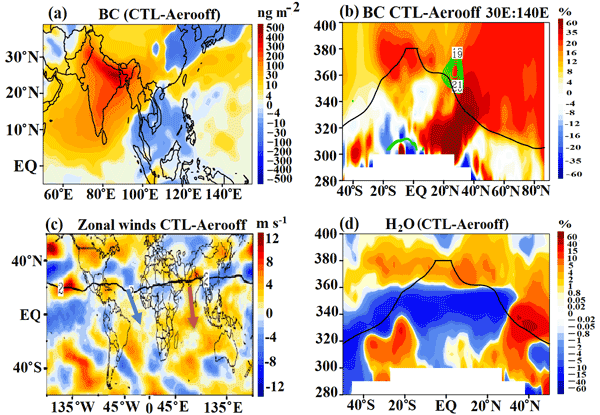
Suvarna Fadnavis, Prashant Chavan, Akash Joshi, Sunil M. Sonbawne, Asutosh Acharya, Panuganti C. S. Devara, Alexandru Rap, Felix Ploeger, and Rolf Müller
Atmos. Chem. Phys., 22, 7179–7191, https://doi.org/10.5194/acp-22-7179-2022, https://doi.org/10.5194/acp-22-7179-2022, 2022
Short summary
Short summary
We show that large amounts of anthropogenic aerosols are transported from South Asia to the northern Indian Ocean. These aerosols are then lifted into the UTLS by the ascending branch of the Hadley circulation. They are further transported to the Southern Hemisphere and downward via westerly ducts over the tropical Atlantic and Pacific. These aerosols increase tropospheric heating, resulting in an increase in water vapor, which is then transported to the UTLS.

Mark Weber, Carlo Arosio, Melanie Coldewey-Egbers, Vitali E. Fioletov, Stacey M. Frith, Jeannette D. Wild, Kleareti Tourpali, John P. Burrows, and Diego Loyola
Atmos. Chem. Phys., 22, 6843–6859, https://doi.org/10.5194/acp-22-6843-2022, https://doi.org/10.5194/acp-22-6843-2022, 2022
Short summary
Short summary
Long-term trends in column ozone have been determined from five merged total ozone datasets spanning the period 1978–2020. We show that ozone recovery due to the decline in stratospheric halogens after the 1990s (as regulated by the Montreal Protocol) is evident outside the tropical region and amounts to half a percent per decade. The ozone recovery in the Northern Hemisphere is however compensated for by the negative long-term trend contribution from atmospheric dynamics since the year 2000.

Nora Mettig, Mark Weber, Alexei Rozanov, John P. Burrows, Pepijn Veefkind, Anne M. Thompson, Ryan M. Stauffer, Thierry Leblanc, Gerard Ancellet, Michael J. Newchurch, Shi Kuang, Rigel Kivi, Matthew B. Tully, Roeland Van Malderen, Ankie Piters, Bogumil Kois, René Stübi, and Pavla Skrivankova
Atmos. Meas. Tech., 15, 2955–2978, https://doi.org/10.5194/amt-15-2955-2022, https://doi.org/10.5194/amt-15-2955-2022, 2022
Short summary
Short summary
Vertical ozone profiles from combined spectral measurements in the UV and IR spectral ranges were retrieved by using data from TROPOMI/S5P and CrIS/Suomi-NPP. The vertical resolution and accuracy of the ozone profiles are improved by combining both wavelength ranges compared to retrievals limited to UV or IR spectral data only. The advancement of our TOPAS algorithm for combined measurements is required because in the UV-only retrieval the vertical resolution in the troposphere is very limited.
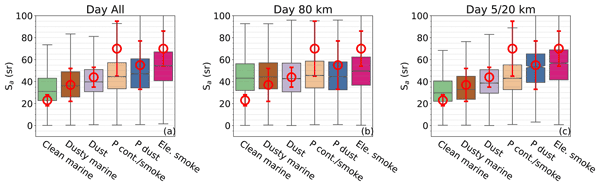
Zhujun Li, David Painemal, Gregory Schuster, Marian Clayton, Richard Ferrare, Mark Vaughan, Damien Josset, Jayanta Kar, and Charles Trepte
Atmos. Meas. Tech., 15, 2745–2766, https://doi.org/10.5194/amt-15-2745-2022, https://doi.org/10.5194/amt-15-2745-2022, 2022
Short summary
Short summary
For more than 15 years, CALIPSO has revolutionized our understanding of the role of aerosols in climate. Here we evaluate CALIPSO aerosol typing over the ocean using an independent CALIPSO–CloudSat product. The analysis suggests that CALIPSO correctly categorizes clean marine aerosol over the open ocean, elevated smoke over the SE Atlantic, and dust over the tropical Atlantic. Similarities between clean and dusty marine over the open ocean implies that algorithm modifications are warranted.
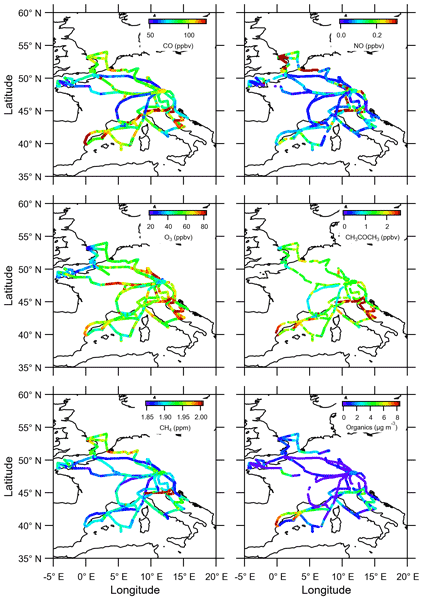
M. Dolores Andrés Hernández, Andreas Hilboll, Helmut Ziereis, Eric Förster, Ovid O. Krüger, Katharina Kaiser, Johannes Schneider, Francesca Barnaba, Mihalis Vrekoussis, Jörg Schmidt, Heidi Huntrieser, Anne-Marlene Blechschmidt, Midhun George, Vladyslav Nenakhov, Theresa Harlass, Bruna A. Holanda, Jennifer Wolf, Lisa Eirenschmalz, Marc Krebsbach, Mira L. Pöhlker, Anna B. Kalisz Hedegaard, Linlu Mei, Klaus Pfeilsticker, Yangzhuoran Liu, Ralf Koppmann, Hans Schlager, Birger Bohn, Ulrich Schumann, Andreas Richter, Benjamin Schreiner, Daniel Sauer, Robert Baumann, Mariano Mertens, Patrick Jöckel, Markus Kilian, Greta Stratmann, Christopher Pöhlker, Monica Campanelli, Marco Pandolfi, Michael Sicard, José L. Gómez-Amo, Manuel Pujadas, Katja Bigge, Flora Kluge, Anja Schwarz, Nikos Daskalakis, David Walter, Andreas Zahn, Ulrich Pöschl, Harald Bönisch, Stephan Borrmann, Ulrich Platt, and John P. Burrows
Atmos. Chem. Phys., 22, 5877–5924, https://doi.org/10.5194/acp-22-5877-2022, https://doi.org/10.5194/acp-22-5877-2022, 2022
Short summary
Short summary
EMeRGe provides a unique set of in situ and remote sensing airborne measurements of trace gases and aerosol particles along selected flight routes in the lower troposphere over Europe. The interpretation uses also complementary collocated ground-based and satellite measurements. The collected data help to improve the current understanding of the complex spatial distribution of trace gases and aerosol particles resulting from mixing, transport, and transformation of pollution plumes over Europe.
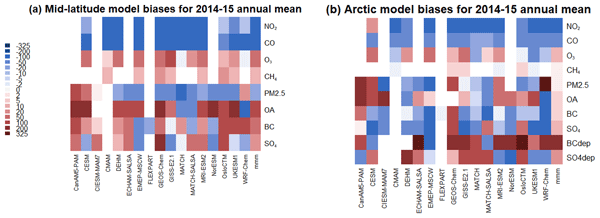
Cynthia H. Whaley, Rashed Mahmood, Knut von Salzen, Barbara Winter, Sabine Eckhardt, Stephen Arnold, Stephen Beagley, Silvia Becagli, Rong-You Chien, Jesper Christensen, Sujay Manish Damani, Xinyi Dong, Konstantinos Eleftheriadis, Nikolaos Evangeliou, Gregory Faluvegi, Mark Flanner, Joshua S. Fu, Michael Gauss, Fabio Giardi, Wanmin Gong, Jens Liengaard Hjorth, Lin Huang, Ulas Im, Yugo Kanaya, Srinath Krishnan, Zbigniew Klimont, Thomas Kühn, Joakim Langner, Kathy S. Law, Louis Marelle, Andreas Massling, Dirk Olivié, Tatsuo Onishi, Naga Oshima, Yiran Peng, David A. Plummer, Olga Popovicheva, Luca Pozzoli, Jean-Christophe Raut, Maria Sand, Laura N. Saunders, Julia Schmale, Sangeeta Sharma, Ragnhild Bieltvedt Skeie, Henrik Skov, Fumikazu Taketani, Manu A. Thomas, Rita Traversi, Kostas Tsigaridis, Svetlana Tsyro, Steven Turnock, Vito Vitale, Kaley A. Walker, Minqi Wang, Duncan Watson-Parris, and Tahya Weiss-Gibbons
Atmos. Chem. Phys., 22, 5775–5828, https://doi.org/10.5194/acp-22-5775-2022, https://doi.org/10.5194/acp-22-5775-2022, 2022
Short summary
Short summary
Air pollutants, like ozone and soot, play a role in both global warming and air quality. Atmospheric models are often used to provide information to policy makers about current and future conditions under different emissions scenarios. In order to have confidence in those simulations, in this study we compare simulated air pollution from 18 state-of-the-art atmospheric models to measured air pollution in order to assess how well the models perform.
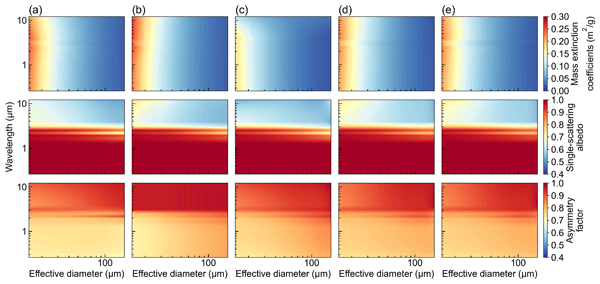
Ming Li, Husi Letu, Yiran Peng, Hiroshi Ishimoto, Yanluan Lin, Takashi Y. Nakajima, Anthony J. Baran, Zengyuan Guo, Yonghui Lei, and Jiancheng Shi
Atmos. Chem. Phys., 22, 4809–4825, https://doi.org/10.5194/acp-22-4809-2022, https://doi.org/10.5194/acp-22-4809-2022, 2022
Short summary
Short summary
To build on the previous investigations of the Voronoi model in the remote sensing retrievals of ice cloud products, this paper developed an ice cloud parameterization scheme based on the single-scattering properties of the Voronoi model and evaluate it through simulations with the Community Integrated Earth System Model (CIESM). Compared with four representative ice cloud schemes, results show that the Voronoi model has good capabilities of ice cloud modeling in the climate model.
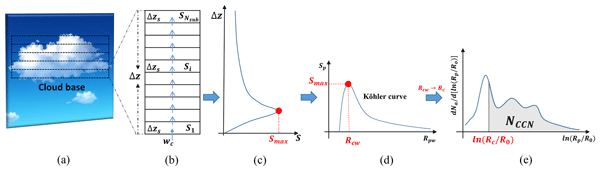
Hengqi Wang, Yiran Peng, Knut von Salzen, Yan Yang, Wei Zhou, and Delong Zhao
Geosci. Model Dev., 15, 2949–2971, https://doi.org/10.5194/gmd-15-2949-2022, https://doi.org/10.5194/gmd-15-2949-2022, 2022
Short summary
Short summary
The aerosol activation scheme is an important part of the general circulation model, but evaluations using observed data are mostly regional. This research introduced a numerically efficient aerosol activation scheme and evaluated it by using stratus and stratocumulus cloud data sampled during multiple aircraft campaigns in Canada, Chile, Brazil, and China. The decent performance indicates that the scheme is suitable for simulations of cloud droplet number concentrations over wide conditions.
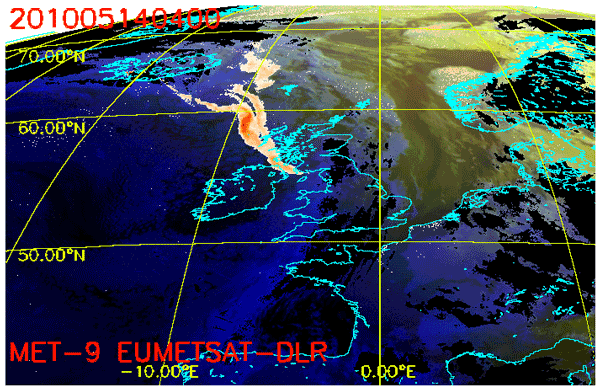
Luca Bugliaro, Dennis Piontek, Stephan Kox, Marius Schmidl, Bernhard Mayer, Richard Müller, Margarita Vázquez-Navarro, Daniel M. Peters, Roy G. Grainger, Josef Gasteiger, and Jayanta Kar
Nat. Hazards Earth Syst. Sci., 22, 1029–1054, https://doi.org/10.5194/nhess-22-1029-2022, https://doi.org/10.5194/nhess-22-1029-2022, 2022
Short summary
Short summary
The monitoring of ash dispersion in the atmosphere is an important task for satellite remote sensing since ash represents a threat to air traffic. We present an AI-based method that retrieves the spatial extension and properties of volcanic ash clouds with high temporal resolution during day and night by means of geostationary satellite measurements. This algorithm, trained on realistic observations simulated with a radiative transfer model, runs operationally at the German Weather Service.
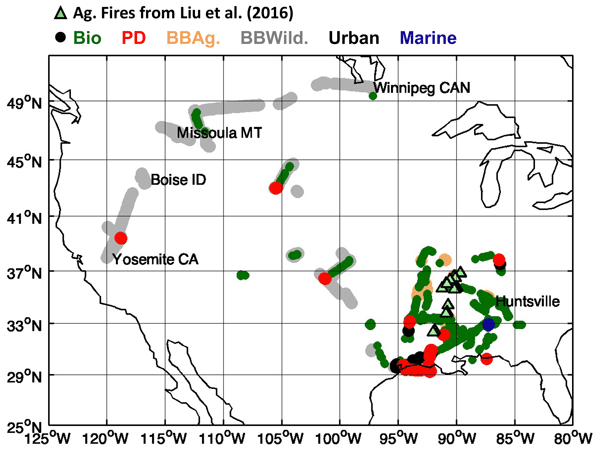
Meloë S. F. Kacenelenbogen, Qian Tan, Sharon P. Burton, Otto P. Hasekamp, Karl D. Froyd, Yohei Shinozuka, Andreas J. Beyersdorf, Luke Ziemba, Kenneth L. Thornhill, Jack E. Dibb, Taylor Shingler, Armin Sorooshian, Reed W. Espinosa, Vanderlei Martins, Jose L. Jimenez, Pedro Campuzano-Jost, Joshua P. Schwarz, Matthew S. Johnson, Jens Redemann, and Gregory L. Schuster
Atmos. Chem. Phys., 22, 3713–3742, https://doi.org/10.5194/acp-22-3713-2022, https://doi.org/10.5194/acp-22-3713-2022, 2022
Short summary
Short summary
The impact of aerosols on Earth's radiation budget and human health is important and strongly depends on their composition. One desire of our scientific community is to derive the composition of the aerosol from satellite sensors. However, satellites observe aerosol optical properties (and not aerosol composition) based on remote sensing instrumentation. This study assesses how much aerosol optical properties can tell us about aerosol composition.

Henry Bowman, Steven Turnock, Susanne E. Bauer, Kostas Tsigaridis, Makoto Deushi, Naga Oshima, Fiona M. O'Connor, Larry Horowitz, Tongwen Wu, Jie Zhang, Dagmar Kubistin, and David D. Parrish
Atmos. Chem. Phys., 22, 3507–3524, https://doi.org/10.5194/acp-22-3507-2022, https://doi.org/10.5194/acp-22-3507-2022, 2022
Short summary
Short summary
A full understanding of ozone in the troposphere requires investigation of its temporal variability over all timescales. Model simulations show that the northern midlatitude ozone seasonal cycle shifted with industrial development (1850–2014), with an increasing magnitude and a later summer peak. That shift reached a maximum in the mid-1980s, followed by a reversal toward the preindustrial cycle. The few available observations, beginning in the 1970s, are consistent with the model simulations.
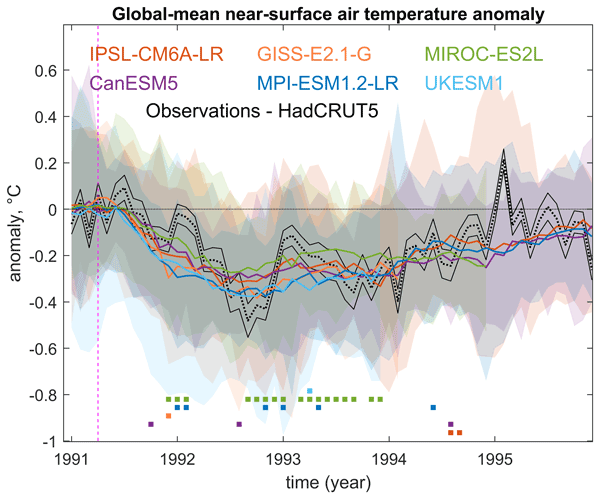
Davide Zanchettin, Claudia Timmreck, Myriam Khodri, Anja Schmidt, Matthew Toohey, Manabu Abe, Slimane Bekki, Jason Cole, Shih-Wei Fang, Wuhu Feng, Gabriele Hegerl, Ben Johnson, Nicolas Lebas, Allegra N. LeGrande, Graham W. Mann, Lauren Marshall, Landon Rieger, Alan Robock, Sara Rubinetti, Kostas Tsigaridis, and Helen Weierbach
Geosci. Model Dev., 15, 2265–2292, https://doi.org/10.5194/gmd-15-2265-2022, https://doi.org/10.5194/gmd-15-2265-2022, 2022
Short summary
Short summary
This paper provides metadata and first analyses of the volc-pinatubo-full experiment of CMIP6-VolMIP. Results from six Earth system models reveal significant differences in radiative flux anomalies that trace back to different implementations of volcanic forcing. Surface responses are in contrast overall consistent across models, reflecting the large spread due to internal variability. A second phase of VolMIP shall consider both aspects toward improved protocol for volc-pinatubo-full.
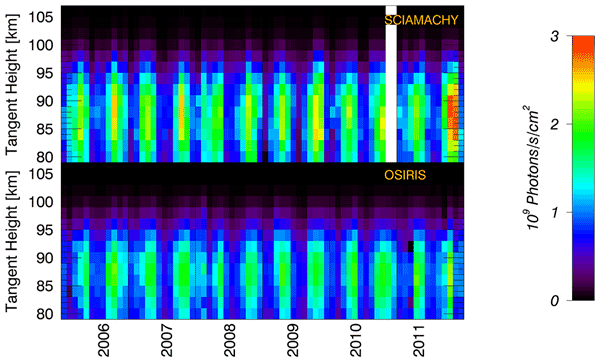
Julia Koch, Adam Bourassa, Nick Lloyd, Chris Roth, and Christian von Savigny
Atmos. Chem. Phys., 22, 3191–3202, https://doi.org/10.5194/acp-22-3191-2022, https://doi.org/10.5194/acp-22-3191-2022, 2022
Short summary
Short summary
The mesopause, the region of the earth's atmosphere between 85 and 100 km, is hard to access by direct measurements. Therefore we look for parameters that can be measured using satellite or ground-based measurements. In this study we researched sodium airglow, a phenomenon that occurs when sodium atoms are excited by chemical reactions. We compared satellite measurements of the airglow and resulting sodium concentration profiles to gain a better understanding of the sodium in that region.
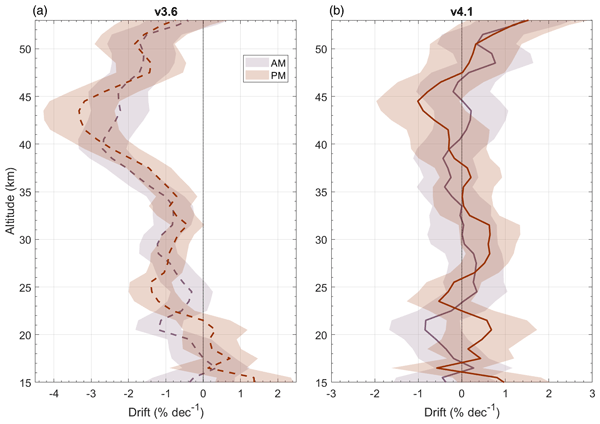
Patrick E. Sheese, Kaley A. Walker, Chris D. Boone, Adam E. Bourassa, Doug A. Degenstein, Lucien Froidevaux, C. Thomas McElroy, Donal Murtagh, James M. Russell III, and Jiansheng Zou
Atmos. Meas. Tech., 15, 1233–1249, https://doi.org/10.5194/amt-15-1233-2022, https://doi.org/10.5194/amt-15-1233-2022, 2022
Short summary
Short summary
This study analyzes the quality of two versions (v3.6 and v4.1) of ozone concentration measurements from the ACE-FTS (Atmospheric Chemistry Experiment Fourier Transform Spectrometer), by comparing with data from five satellite instruments between 2004 and 2020. It was found that although the v3.6 data exhibit a better agreement than v4.1 with respect to the other instruments, v4.1 exhibits much better stability over time than v3.6. The stability of v4.1 makes it suitable for ozone trend studies.

Kezia Lange, Andreas Richter, and John P. Burrows
Atmos. Chem. Phys., 22, 2745–2767, https://doi.org/10.5194/acp-22-2745-2022, https://doi.org/10.5194/acp-22-2745-2022, 2022
Short summary
Short summary
In this study, we investigated short time variability of NOx emissions and lifetimes on a global scale. We combined 2 years of satellite Sentinel-5P TROPOMI tropospheric NO2 column data with wind data. Fifty NOx sources distributed around the world are analyzed. The retrieved emissions show a clear seasonal dependence. NOx lifetime shows a latitudinal dependence but only a week seasonal dependence. NOx emissions show a clear weekly pattern which in contrast is not visible for NOx lifetimes.
Sujung Go, Alexei Lyapustin, Gregory L. Schuster, Myungje Choi, Paul Ginoux, Mian Chin, Olga Kalashnikova, Oleg Dubovik, Jhoon Kim, Arlindo da Silva, Brent Holben, and Jeffrey S. Reid
Atmos. Chem. Phys., 22, 1395–1423, https://doi.org/10.5194/acp-22-1395-2022, https://doi.org/10.5194/acp-22-1395-2022, 2022
Short summary
Short summary
This paper presents a retrieval algorithm of iron-oxide species (hematite, goethite) content in the atmosphere from DSCOVR EPIC observations. Our results display variations within the published range of hematite and goethite over the main dust-source regions but show significant seasonal and spatial variability. This implies a single-viewing satellite instrument with UV–visible channels may provide essential information on shortwave dust direct radiative effects for climate modeling.
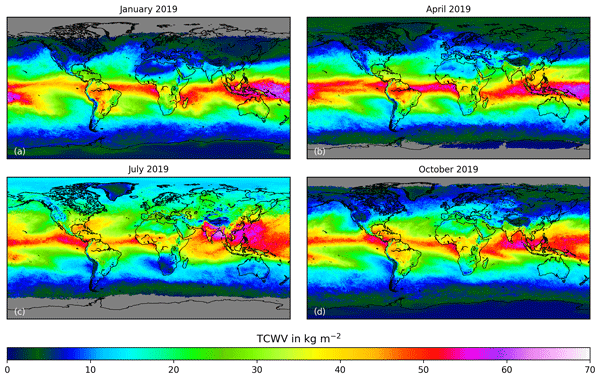
Tobias Küchler, Stefan Noël, Heinrich Bovensmann, John Philip Burrows, Thomas Wagner, Christian Borger, Tobias Borsdorff, and Andreas Schneider
Atmos. Meas. Tech., 15, 297–320, https://doi.org/10.5194/amt-15-297-2022, https://doi.org/10.5194/amt-15-297-2022, 2022
Short summary
Short summary
We applied the air-mass-corrected differential optical absorption spectroscopy (AMC-DOAS) method to derive total column water vapour (TCWV) from Sentinel-5P measurements and compared it to independent data sets. The correlation coefficients of typically more than 0.9 and the small deviations up to 2.5 kg m−2 reveal good agreement between our data product and other TCWV data sets. In particular for the different Sentinel-5P water vapour products, the deviations are around 1 kg m−2.

Anton Laakso, Ulrike Niemeier, Daniele Visioni, Simone Tilmes, and Harri Kokkola
Atmos. Chem. Phys., 22, 93–118, https://doi.org/10.5194/acp-22-93-2022, https://doi.org/10.5194/acp-22-93-2022, 2022
Short summary
Short summary
The use of different spatio-temporal sulfur injection strategies with different magnitudes to create an artificial reflective aerosol layer to cool the climate is studied using sectional and modal aerosol schemes in a climate model. There are significant differences in the results depending on the aerosol microphysical module used. Different spatio-temporal injection strategies have a significant impact on the magnitude and zonal distribution of radiative forcing and atmospheric dynamics.
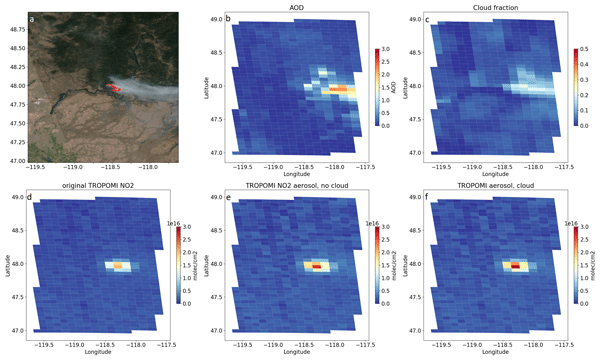
Debora Griffin, Chris A. McLinden, Enrico Dammers, Cristen Adams, Chelsea E. Stockwell, Carsten Warneke, Ilann Bourgeois, Jeff Peischl, Thomas B. Ryerson, Kyle J. Zarzana, Jake P. Rowe, Rainer Volkamer, Christoph Knote, Natalie Kille, Theodore K. Koenig, Christopher F. Lee, Drew Rollins, Pamela S. Rickly, Jack Chen, Lukas Fehr, Adam Bourassa, Doug Degenstein, Katherine Hayden, Cristian Mihele, Sumi N. Wren, John Liggio, Ayodeji Akingunola, and Paul Makar
Atmos. Meas. Tech., 14, 7929–7957, https://doi.org/10.5194/amt-14-7929-2021, https://doi.org/10.5194/amt-14-7929-2021, 2021
Short summary
Short summary
Satellite-derived NOx emissions from biomass burning are estimated with TROPOMI observations. Two common emission estimation methods are applied, and sensitivity tests with model output were performed to determine the accuracy of these methods. The effect of smoke aerosols on TROPOMI NO2 columns is estimated and compared to aircraft observations from four different aircraft campaigns measuring biomass burning plumes in 2018 and 2019 in North America.
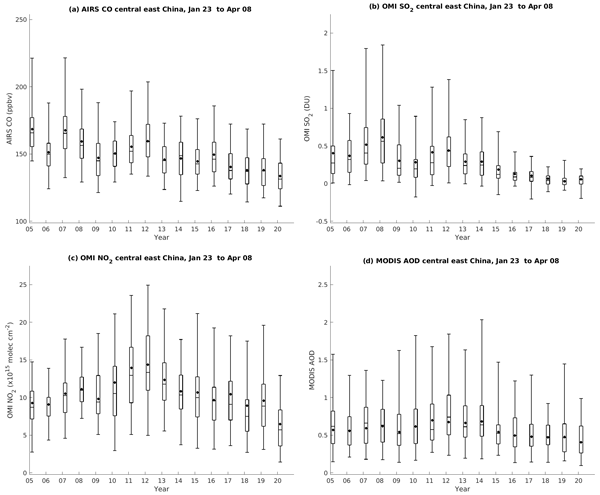
Robert D. Field, Jonathan E. Hickman, Igor V. Geogdzhayev, Kostas Tsigaridis, and Susanne E. Bauer
Atmos. Chem. Phys., 21, 18333–18350, https://doi.org/10.5194/acp-21-18333-2021, https://doi.org/10.5194/acp-21-18333-2021, 2021
Short summary
Short summary
In this study, we examined changes in atmospheric composition over China from satellite measurements during the COVID lockdowns of 2020. We found that interpreting changes in 2020 depended strongly on the background period and whether trends were accounted for. In most cases, pollution levels in 2020 were lower than during the previous few years when pollution levels appear to have stabilized.
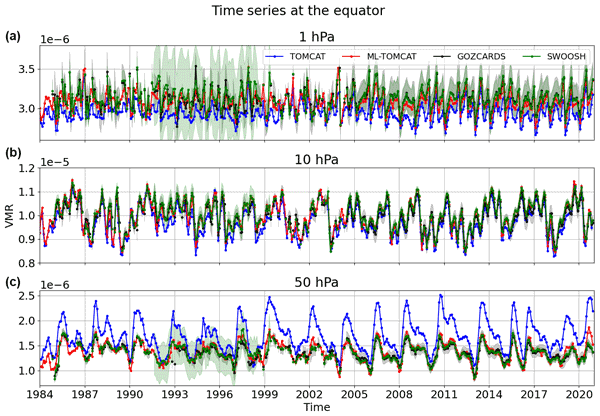
Sandip S. Dhomse, Carlo Arosio, Wuhu Feng, Alexei Rozanov, Mark Weber, and Martyn P. Chipperfield
Earth Syst. Sci. Data, 13, 5711–5729, https://doi.org/10.5194/essd-13-5711-2021, https://doi.org/10.5194/essd-13-5711-2021, 2021
Short summary
Short summary
High-quality long-term ozone profile data sets are key to estimating short- and long-term ozone variability. Almost all the satellite (and chemical model) data sets show some kind of bias with respect to each other. This is because of differences in measurement methodologies as well as simplified processes in the models. We use satellite data sets and chemical model output to generate 42 years of ozone profile data sets using a random-forest machine-learning algorithm that is named ML-TOMCAT.
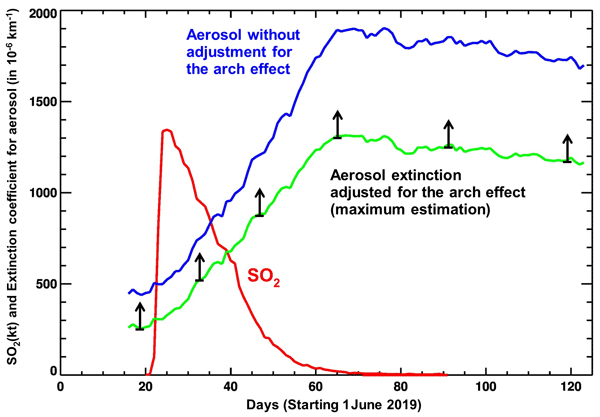
Nick Gorkavyi, Nickolay Krotkov, Can Li, Leslie Lait, Peter Colarco, Simon Carn, Matthew DeLand, Paul Newman, Mark Schoeberl, Ghassan Taha, Omar Torres, Alexander Vasilkov, and Joanna Joiner
Atmos. Meas. Tech., 14, 7545–7563, https://doi.org/10.5194/amt-14-7545-2021, https://doi.org/10.5194/amt-14-7545-2021, 2021
Short summary
Short summary
The 21 June 2019 eruption of the Raikoke volcano produced significant amounts of volcanic aerosols (sulfate and ash) and sulfur dioxide (SO2) gas that penetrated into the lower stratosphere. We showed that the amount of SO2 decreases with a characteristic period of 8–18 d and the peak of sulfate aerosol lags the initial peak of SO2 by 1.5 months. We also examined the dynamics of an unusual stratospheric coherent circular cloud of SO2 and aerosol observed from 18 July to 22 September 2019.
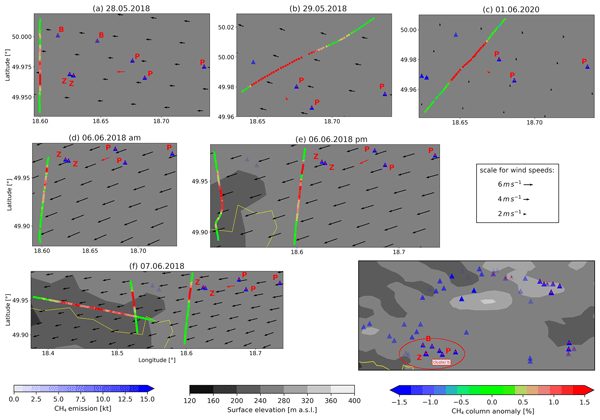
Sven Krautwurst, Konstantin Gerilowski, Jakob Borchardt, Norman Wildmann, Michał Gałkowski, Justyna Swolkień, Julia Marshall, Alina Fiehn, Anke Roiger, Thomas Ruhtz, Christoph Gerbig, Jaroslaw Necki, John P. Burrows, Andreas Fix, and Heinrich Bovensmann
Atmos. Chem. Phys., 21, 17345–17371, https://doi.org/10.5194/acp-21-17345-2021, https://doi.org/10.5194/acp-21-17345-2021, 2021
Short summary
Short summary
Quantification of anthropogenic CH4 emissions remains challenging, but it is essential for near-term climate mitigation strategies. We use airborne remote sensing observations to assess bottom-up estimates of coal mining emissions from one of Europe's largest CH4 emission hot spots located in Poland. The analysis reveals that emissions from small groups of shafts can be disentangled, but caution is advised when comparing observations to commonly reported annual emissions.
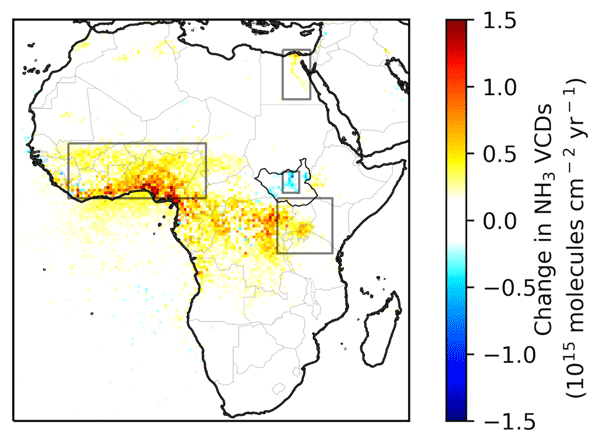
Jonathan E. Hickman, Niels Andela, Enrico Dammers, Lieven Clarisse, Pierre-François Coheur, Martin Van Damme, Courtney A. Di Vittorio, Money Ossohou, Corinne Galy-Lacaux, Kostas Tsigaridis, and Susanne E. Bauer
Atmos. Chem. Phys., 21, 16277–16291, https://doi.org/10.5194/acp-21-16277-2021, https://doi.org/10.5194/acp-21-16277-2021, 2021
Short summary
Short summary
Ammonia (NH3) gas emitted from soils and biomass burning contributes to particulate air pollution. We used satellite observations of the atmosphere over Africa to show that declines in NH3 concentrations over South Sudan's Sudd wetland in 2008–2017 are related to variation in wetland extent. We also find NH3 concentrations increased in West Africa as a result of biomass burning and increased in the Lake Victoria region, likely due to agricultural expansion and intensification.
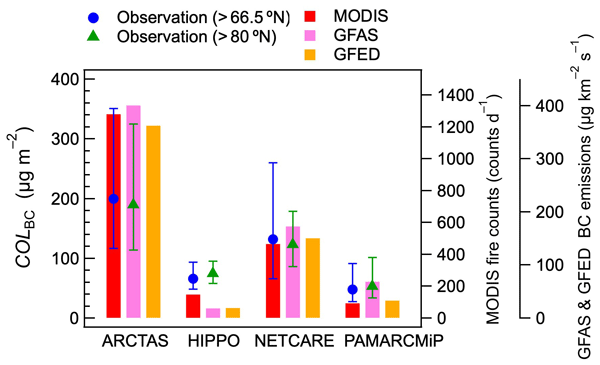
Sho Ohata, Makoto Koike, Atsushi Yoshida, Nobuhiro Moteki, Kouji Adachi, Naga Oshima, Hitoshi Matsui, Oliver Eppers, Heiko Bozem, Marco Zanatta, and Andreas B. Herber
Atmos. Chem. Phys., 21, 15861–15881, https://doi.org/10.5194/acp-21-15861-2021, https://doi.org/10.5194/acp-21-15861-2021, 2021
Short summary
Short summary
Vertical profiles of black carbon (BC) in the Arctic were measured during the PAMARCMiP aircraft-based experiment in spring 2018 and compared with those observed during previous aircraft campaigns in 2008, 2010, and 2015. Their differences were explained primarily by the year-to-year variation of biomass burning activities in northern midlatitudes over Eurasia. Our observations provide a bases to evaluate numerical model simulations that assess the BC radiative effects in the Arctic spring.
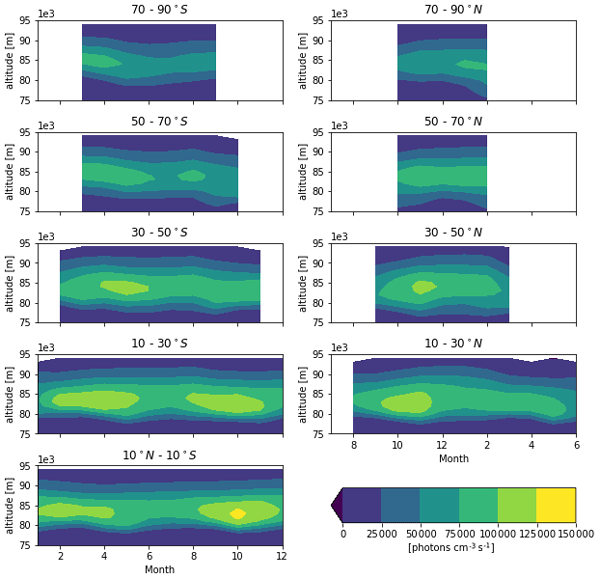
Anqi Li, Chris Z. Roth, Adam E. Bourassa, Douglas A. Degenstein, Kristell Pérot, Ole Martin Christensen, and Donal P. Murtagh
Earth Syst. Sci. Data, 13, 5115–5126, https://doi.org/10.5194/essd-13-5115-2021, https://doi.org/10.5194/essd-13-5115-2021, 2021
Short summary
Short summary
The nightglow emission originating from the vibrationally excited hydroxyl layer (about 85 km altitude) has been measured by the infrared imager (IRI) on the Odin satellite for more than 15 years. In this study, we document the retrieval steps, the resulting volume emission rates and the layer characteristics. Finally, we use the monthly zonal averages to demonstrate the fidelity of the data set. This unique, long-term data set will be valuable for studying various topics near the mesopause.
Maria Sand, Bjørn H. Samset, Gunnar Myhre, Jonas Gliß, Susanne E. Bauer, Huisheng Bian, Mian Chin, Ramiro Checa-Garcia, Paul Ginoux, Zak Kipling, Alf Kirkevåg, Harri Kokkola, Philippe Le Sager, Marianne T. Lund, Hitoshi Matsui, Twan van Noije, Dirk J. L. Olivié, Samuel Remy, Michael Schulz, Philip Stier, Camilla W. Stjern, Toshihiko Takemura, Kostas Tsigaridis, Svetlana G. Tsyro, and Duncan Watson-Parris
Atmos. Chem. Phys., 21, 15929–15947, https://doi.org/10.5194/acp-21-15929-2021, https://doi.org/10.5194/acp-21-15929-2021, 2021
Short summary
Short summary
Absorption of shortwave radiation by aerosols can modify precipitation and clouds but is poorly constrained in models. A total of 15 different aerosol models from AeroCom phase III have reported total aerosol absorption, and for the first time, 11 of these models have reported in a consistent experiment the contributions to absorption from black carbon, dust, and organic aerosol. Here, we document the model diversity in aerosol absorption.
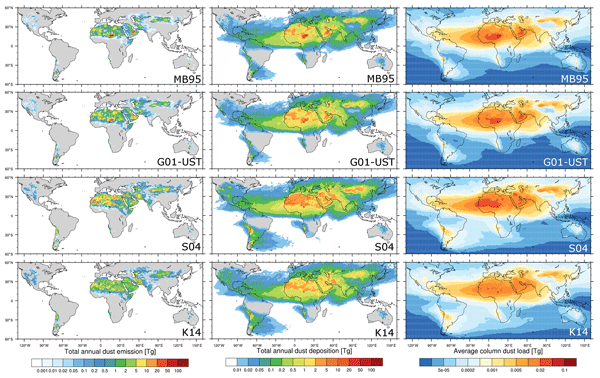
Martina Klose, Oriol Jorba, María Gonçalves Ageitos, Jeronimo Escribano, Matthew L. Dawson, Vincenzo Obiso, Enza Di Tomaso, Sara Basart, Gilbert Montané Pinto, Francesca Macchia, Paul Ginoux, Juan Guerschman, Catherine Prigent, Yue Huang, Jasper F. Kok, Ron L. Miller, and Carlos Pérez García-Pando
Geosci. Model Dev., 14, 6403–6444, https://doi.org/10.5194/gmd-14-6403-2021, https://doi.org/10.5194/gmd-14-6403-2021, 2021
Short summary
Short summary
Mineral soil dust is a major atmospheric airborne particle type. We present and evaluate MONARCH, a model used for regional and global dust-weather prediction. An important feature of the model is that it allows different approximations to represent dust, ranging from more simplified to more complex treatments. Using these different treatments, MONARCH can help us better understand impacts of dust in the Earth system, such as its interactions with radiation.
Yu-Wen Chen, Yi-Chun Chen, Charles C.-K. Chou, Hui-Ming Hung, Shih-Yu Chang, Lisa Eirenschmalz, Michael Lichtenstern, Helmut Ziereis, Hans Schlager, Greta Stratmann, Katharina Kaiser, Johannes Schneider, Stephan Borrmann, Florian Obersteiner, Eric Förster, Andreas Zahn, Wei-Nai Chen, Po-Hsiung Lin, Shuenn-Chin Chang, Maria Dolores Andrés Hernández, Pao-Kuan Wang, and John P. Burrows
Atmos. Chem. Phys. Discuss., https://doi.org/10.5194/acp-2021-788, https://doi.org/10.5194/acp-2021-788, 2021
Preprint withdrawn
Short summary
Short summary
By presenting an approach using EMeRGe-Asia airborne field measurements and surface observations, this study shows that the fraction of OH reactivity due to SO2-OH reaction has a significant correlation with the sulfate concentration. Approximately 30 % of sulfate is produced by SO2-OH reaction. Our results underline the importance of SO2-OH gas-phase oxidation in sulfate formation, and demonstrate that the method can be applied to other regions and under different meteorological conditions.
Cited articles
Appel, O., Köllner, F., Dragoneas, A., Hünig, A., Molleker, S., Schlager, H., Mahnke, C., Weigel, R., Port, M., Schulz, C., Drewnick, F., Vogel, B., Stroh, F., and Borrmann, S.: Chemical analysis of the Asian tropopause aerosol layer (ATAL) with emphasis on secondary aerosol particles using aircraft-based in situ aerosol mass spectrometry, Atmos. Chem. Phys., 22, 13607–13630, https://doi.org/10.5194/acp-22-13607-2022, 2022.
Balkanski, Y. J., Jacob, D., Gardner, G. M., Graustein, W. C., and Turekian, K. K.: Transport and residence times of tropospheric aerosols inferred from a global three-dimensional simulation of 210Pb, J. Geosphys. Res., 98, 20571–20586, https://doi.org/10.1029/93JD02456, 1993.
Bauer, S. E., Wright, D. L., Koch, D., Lewis, E. R., McGraw, R., Chang, L.-S., Schwartz, S. E., and Ruedy, R.: MATRIX (Multiconfiguration Aerosol TRacker of mIXing state): an aerosol microphysical module for global atmospheric models, Atmos. Chem. Phys., 8, 6003–6035, https://doi.org/10.5194/acp-8-6003-2008, 2008.
Bauer, S. E., Tsigaridis, K., Faluvegi, G., Nazarenko, L., Miller, R. L., Kelley, M., and Schmidt, G.: The turning point of the aerosol era, J. Adv. Model. Earth Sy., 14, e2022MS003070, https://doi.org/10.1029/2022MS003070, 2022.
Boucher, O., Randall, D., Artaxo, P., Bretherton, C., Feingold, G., Forster, P., Kerminen, V.-M., Kondo, Y., Liao, H., Lohmann, U., Rasch, P., (USA), Satheesh, S. K., Sherwood, S., Stevens, B., and Zhang, X.-Y.: Clouds and Aerosols, in: Climate Change 2013: The Physical Science Basis. Contribution of Working Group I to the Fifth Assessment Report of the Intergovernmental Panel on Climate Change, edited by: Stocker, T. F., Qin, D., Plattner, G.-K., Tignor, M., Allen, S. K., Boschung, J., Nauels, A., Xia, Y., Bex, V., and Midgley, P. M., Cambridge University Press, Cambridge, United Kingdom and New York, NY, USA, ISBN 978-1-107-66182-0, 2013.
Bourassa, A. E., Rieger, L. A., Lloyd, N. D., and Degenstein, D. A.: Odin-OSIRIS stratospheric aerosol data product and SAGE III intercomparison, Atmos. Chem. Phys., 12, 605–614, https://doi.org/10.5194/acp-12-605-2012, 2012.
Bovensmann, H., Burrows, J., Buchwitz, M., Frerick, J., Noël, S., Rozanov, V., Chance, K., and Goede, A.: SCIAMACHY: mission objectives and measurement modes, J. Atmos. Sci., 56, 127–150, https://doi.org/10.1175/1520-0469(1999)056<0127:SMOAMM>2.0.CO;2, 1999.
Brühl, C., Lelieveld, J., Crutzen, P. J., and Tost, H.: The role of carbonyl sulphide as a source of stratospheric sulphate aerosol and its impact on climate, Atmos. Chem. Phys., 12, 1239–1253, https://doi.org/10.5194/acp-12-1239-2012, 2012.
Brunner, L., Lorenz, R., Zumwald, M., and Knutti, R.: Quantifying uncertainty in European climate projections using combined performance-independence weighting, Environ. Res. Lett., 14, 124010, https://doi.org/10.1088/1748-9326/ab492f, 2019.
Burrows, J. P., Hölzle, E., Goede, A. P. H., Visser, H., and Fricke, W.: SCIAMACHY – Scanning Imaging Absorption Spectrometer for Atmospheric Chartography, Acta Astronaut., 35, 445–451, https://doi.org/10.1016/0094-5765(94)00278-T, 1995.
Carn, S.: Multi-Satellite Volcanic Sulfur Dioxide L4 Long-Term Global Database V4, Greenbelt, MD, USA, Goddard Earth Science Data and Information Services Center (GES DISC) [data set], https://doi.org/10.5067/MEASURES/SO2/DATA405, 2025.
Carn, S. A., Yang, K., Prata, A. J., and Krotkov, N. A.: Extending the long-term record of volcanic SO2 emissions with the Ozone Mapping and Profiler Suite nadir mapper, Geophys. Res. Lett., 42, 925–932, https://doi.org/10.1002/2014GL062437, 2015.
Carn, S. A., Fioletov, V. E., McLinden, C. A., Li, C., and Krotkov, N. A.: A decade of global volcanic SO2 emissions measured from space, Sci. Rep., https://doi,org/10.1038/srep44095, 2017.
Chin, M. and Davis, D. D.: A reanalysis of carbonyl sulfide as a source of stratospheric background sulfur aerosol, J. Geophys. Res., 100, 8993–9005, https://doi.org/10.1029/95JD00275, 1995.
Chin, M., Diehl, T., Dubovik, O., Eck, T. F., Holben, B. N., Sinyuk, A., and Streets, D. G.: Light absorption by pollution, dust, and biomass burning aerosols: a global model study and evaluation with AERONET measurements, Ann. Geophys., 27, 3439–3464, https://doi.org/10.5194/angeo-27-3439-2009, 2009.
Colarco, P., da Silva, A., Chin, M., and Diehl, T.: Online simulations of global aerosol distributions in the NASA GEOS-4 model and comparisons to satellite and ground-based aerosol optical depth, J. Geophys. Res.-Atmos., 115, D14207, https://doi.org/10.1029/2009JD012820, 2010.
Fadnavis, S., Kalita, G., Kumar, K. R., Gasparini, B., and Li, J.-L. F.: Potential impact of carbonaceous aerosol on the upper troposphere and lower stratosphere (UTLS) and precipitation during Asian summer monsoon in a global model simulation, Atmos. Chem. Phys., 17, 11637–11654, https://doi.org/10.5194/acp-17-11637-2017, 2017.
Fadnavis, S., Roy, C., Chattopadhyay, R., Sioris, C. E., Rap, A., Müller, R., Kumar, K. R., and Krishnan, R.: Transport of trace gases via eddy shedding from the Asian summer monsoon anticyclone and associated impacts on ozone heating rates, Atmos. Chem. Phys., 18, 11493–11506, https://doi.org/10.5194/acp-18-11493-2018, 2018.
Fadnavis, S., Müller, R., Kalita, G., Rowlinson, M., Rap, A., Li, J.-L. F., Gasparini, B., and Laakso, A.: The impact of recent changes in Asian anthropogenic emissions of SO2 on sulfate loading in the upper troposphere and lower stratosphere and the associated radiative changes, Atmos. Chem. Phys., 19, 9989–10008, https://doi.org/10.5194/acp-19-9989-2019, 2019.
Gao, J., Huang, Y., Peng, Y., and Wright, J. S.: Aerosol effects on clear-sky shortwave heating in the Asian monsoon tropopause layer, J. Geophys. Res.-Atmos., 128, e2022JD036956, https://doi.org/10.1029/2022JD036956, 2023.
Gettelman, A., Kinnison, D. E., Dunkerton, T. J., and Brasseur, G. P.: Impact of monsoon circulations on the upper troposphere and lower stratosphere, J. Geophys. Res., 109, D22101, https://https://doi.org/10.1029/2004JD004878, 2004.
Gurganus, C., Rollins, A., Waxman, E., Pan, L. L., Smith, W. P., Ueyama, R., Feng, W., Chipperfield, M. P., Atlas, E. L., Schwarz, J. P., DeLone, S., and Thornberry, S.: Highlighting the impact of anthropogenic OCS emissions on the stratospheric sulfur budget with in situ observations, J. Geophys. Res.-Atmos., 130, e2024JD042588, https://doi.org/10.1029/2024JD042588, 2025.
Hanumanthu, S., Vogel, B., Müller, R., Brunamonti, S., Fadnavis, S., Li, D., Ölsner, P., Naja, M., Singh, B. B., Kumar, K. R., Sonbawne, S., Jauhiainen, H., Vömel, H., Luo, B., Jorge, T., Wienhold, F. G., Dirkson, R., and Peter, T.: Strong day-to-day variability of the Asian Tropopause Aerosol Layer (ATAL) in August 2016 at the Himalayan foothills, Atmos. Chem. Phys., 20, 14273–14302, https://doi.org/10.5194/acp-20-14273-2020, 2020.
Hoesly, R. M., Smith, S. J., Feng, L., Klimont, Z., Janssens-Maenhout, G., Pitkanen, T., Seibert, J. J., Vu, L., Andres, R. J., Bolt, R. M., Bond, T. C., Dawidowski, L., Kholod, N., Kurokawa, J.-I., Li, M., Liu, L., Lu, Z., Moura, M. C. P., O'Rourke, P. R., and Zhang, Q.: Historical (1750–2014) anthropogenic emissions of reactive gases and aerosols from the Community Emissions Data System (CEDS), Geosci. Model Dev., 11, 369–408, https://doi.org/10.5194/gmd-11-369-2018, 2018.
Hoinka, K. P.: Statistics of the global tropopause pressure, Mon. Weather Rev., 126, 3303–3325, https://doi.org/10.1175/1520-0493(1998)126<3303:SOTGTP>2.0.CO;2, 1998.
Honomichl, S. B. and Pan, L. L.: Transport from the Asian summer monsoon anticyclone over the western Pacific, J. Geophys. Res.-Atmos., 125, e2019JD032094, https://doi.org/10.1029/2019JD032094, 2020.
Jiang, J. H., Livesey, N. J., Su, H., Neary, L., McConnell, J. C., and Richards, N. A. D.: Connecting surface emissions, convective uplifting, and long-range transport of carbon monoxide in the upper troposphere: New observations from the Aura Microwave Limb Sounder, Geophys. Res. Lett., 34, L18812, https://doi.org/10.1029/2007GL030638, 2007.
Kärcher, B.: Cirrus clouds and their response to anthropogenic activities, Curr. Clim. Change Rep., 3, 1–13, https://doi.org/10.1007/s40641-017-0060-3, 2017.
Kärcher, B. and Lohmann, U.: A parameterization of cirrus cloud formation: Homogeneous freezing of super cooled aerosols, J. Geophys. Res., 107, https://doi.10.1029.2001JD000470, 2002.
Kar, J., Bremer, H., Drummond, J. R., Rochon, Y. J., Jones, D. B. A., Nichitiu, F., Zou, J., Liu, J., Gille, J. C., Edwards, D. P., Deeter, M. N., Francis, G., Ziskin, D., and Warner, J.: Evidence of vertical transport of carbon monoxide from Measurements of Pollution in the Troposphere, Geophys. Res. Lett., 31, L23105, https://doi.org/10.1029/2004GL021128, 2004.
Kar, J., Lee, K.-P., Vaughan, M. A., Tackett, J. L., Trepte, C. R., Winker, D. M., Lucker, P. L., and Getzewich, B. J.: CALIPSO level 3 stratospheric aerosol profile product: version 1.00 algorithm description and initial assessment, Atmos. Meas. Tech., 12, 6173–6191, https://doi.org/10.5194/amt-12-6173-2019, 2019.
Kendall, M. G.: Rank Correlation Methods, 4th edn., Charles Griffin, London, ISBN 9780852641996, 1975.
Koch, D., Schmidt, G. A., and Field, C. V.: Sulfur, sea salt, and radionuclide aerosols in GISS ModelE, J. Geophys. Res.-Atmos., 111, D06206, https://doi.org/10.1029/2004JD005550, 2006.
Kremser, S., Thomason, L. W., von Hobe, M., Hermann, M., Deshler, T., Timmreck. C., Toohey, M., Stenke, A., Schwarz, J. P., Weigel, R., Fueglistaler, S., Prata, F. J., Vernier, J.-P., Schlager, H., Barnes, J. E., Antuña-Marrero, J.-C., Fairlie, D., Palm, M., Mahieu, E., Notholt, J., Rex, M., Bingen, C., Vanhellemont, F., Bourassa, A., Plane, J. M. C., Klocke, D., Carn, S. A., Clarisse, L., Trickl, T., Neely, R., James, A. E., Rieger, L., Wilson, J. C., and Meland, B.: Stratospheric aerosol – observations, processes, and impact on climate, Rev. Geophys., 54, 278–335, https://doi.org/10.1002/2015RG000511, 2016.
Langille, J., Rieger, L. A., Blanchard, Y., Blanchet, J.-P., Bourassa, A., Degenstein, D., Huang, Y., Strong, K., Walker, K., Zawada, D., Braun, S., Cole, J., Mariani, Z., Mclinden, C., Paquin-Ricard, D., Sioris, C., Qu, Z., Wolde, M., Wang, X., Al-Abadleh, A., Ariya, P., Beltrami, H., Chang, R., Fletcher, C. G., Goldblatt, C., Grenier, P., Gyakum, J., Kushner, P., Di Luca, A., MacDougall, A. H., O'Neill, N., Pausata, F. S. R., Sica, R., Tan, I., Thériault, J. M., Tegtmeier, S., Toohey, M., Ward, W., and Wiacek, A.: A high-latitude aerosols, water vapour and clouds mission: concept, scientific objectives and data products, B. Am. Meteorol. Soc., https://doi.org/10.1175/BAMS-D-23-0309.1, 2025.
Lau, W. K. M., Yuan, C., and Li, Z.: Origin, Maintenance and Variability of the Asian Tropopause Aerosol Layer (ATAL): The Roles of Monsoon Dynamics, Sci. Rep., 8, 3960, https://https://doi.org/10.1038/s41598-018-22267-z, 2018.
Legras, B. and Bucci, S.: Confinement of air in the Asian monsoon anticyclone and pathways of convective air to the stratosphere during the summer season, Atmos. Chem. Phys., 20, 11045–11064, https://doi.org/10.5194/acp-20-11045-2020, 2020.
Li, J. and Zeng, Q. C: A unified monsoon index, Geophys. Res. Lett., 29, 1274, https://doi.org/10.1029/2001GL013874, 2002.
Li, Q. B., Jiang, J. H., Wu, D. L., Read, W. G., Livesey, N. J., Waters, J. W., Zhang, Y., Wang, B., Filipiak, M. J., Davis, C. P., Turquety, S., Wu, S., Park, R. J., Yantosca, R. M., and Jacob, D. J.: Convective outflow of south Asian pollution: A global CTM simulation compared with EOS MLS observations, Geophys. Res. Lett., 32, L14826, https://doi.org/10.1029/2005GL022762, 2005.
Liang, Q., Newman, P. A., Fleming, E. L., Lait, L. R., Atlas, E., Pan, L., Kinnison, D., Western, L. M., Schauffler, S., Smith, K., Treadaway, V., Hendershot, R., Donnelly, S., Hendershot, R., Donnelly, S., and Lueb, R.: Asian summer monsoon anticyclone – the primary entryway for chlorinated very-short-lived substances to the stratosphere, Geophys. Res. Lett., 52, e2024GL110248, https://doi.org/10.1029/2024GL110248, 2025.
Lin, Y., Huang, X., Liang, Y., Qin, Y., Xu, S., Huang, W., Xu, F., Liu, L., Wang, Y., Peng, Y., Wang, L., Xue, W., Fu, H., Zhang, G. J., Wang, B., Li, R., Zhang, C., Lu, C., Chen, Y., Luo, Y., Bai, Y., Song, Z, Wang, M., Zhao, W., Zhang, F., Xu, J., Zhao, X., Lu, C., Chen, Y., Luo, Y., Hu, Y., Tang, Q., and Chen, D.: Community Integrated Earth System Model (CIESM): Description and Evaluation, J. Adv. Model. Earth Sy., 12, e2019MS002036, https://doi.org/10.1029/2019MS002036, 2020.
Liu, H., Jacob, D., Bey, I., and Yantosca, B. M.: Constraints from 210Pb and 7Be on wet deposition and transport in a global three-dimensional chemical tracer model driven by assimilated meteorological fields, J. Geophys. Res., 106, 12109–12128, https://doi.org/10.1029/2000JD900839, 2001.
Liu, X., Easter, R. C., Ghan, S. J., Zaveri, R., Rasch, P., Shi, X., Lamarque, J.-F., Gettelman, A., Morrison, H., Vitt, F., Conley, A., Park, S., Neale, R., Hannay, C., Ekman, A. M. L., Hess, P., Mahowald, N., Collins, W., Iacono, M. J., Bretherton, C. S., Flanner, M. G., and Mitchell, D.: Toward a minimal representation of aerosols in climate models: description and evaluation in the Community Atmosphere Model CAM5, Geosci. Model Dev., 5, 709–739, https://doi.org/10.5194/gmd-5-709-2012, 2012.
Ma, J., Brühl, C., He, Q., Steil, B., Karydis, V. A., Klingmüller, K., Tost, H., Chen, B., Jin, Y., Liu, N., Xu, X., Yan, P., Zhou, X., Abdelrahman, K., Pozzer, A., and Lelieveld, J.: Modeling the aerosol chemical composition of the tropopause over the Tibetan Plateau during the Asian summer monsoon , Atmos. Chem. Phys., 19, 11587–11612, https://doi.org/10.5194/acp-19-11587-2019, 2019.
Mahnke, C., Weigel, R., Cairo, F., Vernier, J.-P., Afchine, A., Krämer, M., Mitev, V., Matthey, R., Viciani, S., D'Amato, F., Ploeger, F., Deshler, T., and Borrmann, S.: The Asian tropopause aerosol layer within the 2017 monsoon anticyclone: microphysical properties derived from aircraft-borne in situ measurements, Atmos. Chem. Phys., 21, 15259–15282, https://doi.org/10.5194/acp-21-15259-2021, 2021.
Malinina, E., Rozanov, A., Vountas, M., and Burrows, J.: Stratospheric aerosol extinction coefficient, http://www.iup.uni-bremen.de/scia-arc/, last access: 31 May 2018.
Mann, H. B.: Non-parametric tests against trend, Econometrica, 13, 245–259, https://doi.org/10.2307/1907187, 1945.
Matsui, H.: Development of a global aerosol model using a two-dimensional sectional method: 1. Model design, J. Adv. Model. Earth Sy., 9, 1921–1947, https://doi.org/10.1002/2017MS000936, 2017.
Matsui, H. and Mahowald, N.: Development of a global aerosol model using a two-dimensional sectional method: 2. Evaluation and sensitivity simulations, J. Adv. Model. Earth Sy., 9, 1887–1920, https://doi.org/10.1002/2017MS000937, 2017.
Millán, L. F., Hoor, P., Hegglin, M. I., Manney, G. L., Boenisch, H., Jeffery, P., Kunkel, D., Petropavlovskikh, I., Ye, H., Leblanc, T., and Walker, K.: Exploring ozone variability in the upper troposphere and lower stratosphere using dynamical coordinates, Atmos. Chem. Phys., 24, 7927–7959, https://doi.org/10.5194/acp-24-7927-2024, 2024.
NASA Langley Atmospheric Science Data Center DAAC: CALIPSO Lidar Level 3 Stratospheric Aerosol Profiles Standard V1-00, NASA [data set], https://doi.org/10.5067/CALIOP/CALIPSO/LID_L3_STRATOS PHERIC_APRO-STANDARD-V1-00, 2026.
Noël, S., Bramstedt, K., Rozanov, A., Malinina, E., Bovensmann, H., and Burrows, J. P.: Stratospheric aerosol extinction profiles from SCIAMACHY solar occultation, Atmos. Meas. Tech., 13, 5643–5666, https://doi.org/10.5194/amt-13-5643-2020, 2020.
Orbe, C., Waugh, D. W., Wang, H., Kinnison, D. E., Lamarque, J.-F., and Times, S.: Tropospheric transport differences between models using the same large-scale meteorological fields, Geophys. Res. Lett., 44, 1068–1078, https://doi.org/10.1002/2016GL071339, 2017.
Pan, L. L., Honomichl, S. B., Kinnison, D. E., Abalos, M., Randel, W. J., Bergman, J. W., and Bian, J.: Transport of chemical tracers from the boundary layer to stratosphere associated with the dynamics of the Asian summer monsoon, J. Geophys. Res.-Atmos., 121, 14159–14174, https://doi.org/10.1002/2016JD025616, 2016.
Pan, L. L., Atlas, E. L., Newman, P. A., Thornberry, T., Jucks, K. W., Toon, O. B., Randel, W. J., Liang, Q., Kinnison, D. E., Ueyama, R., Bresch, J. F., Honomichl, S. B., Smith, W. P., Hornbrook, R. S., Ziemba, L., Fujiwara, M., Apel, E. C., Barucci, M., Bianchini, G., Brown, M., Bui, T. P., Campos, T., Chin, M., D'Amato, F., Dean-Day, J., Diskin, G., Franchin, A., Gurganus, C., Iraci, L. T., Kim, J., Koo, J.-H., Lait, L. R., Lesko, K., Podolske, J. R., Rollins, A., Sakai, T., Shiraishi, K., Treadaway, V., Viciani, S., and Waxman, E.: The Asian Summer Monsoon Chemical and Climate Impact Project (ACCLIP): An Overview, J. Geophys. Res.-Atmos., 130, e2025JD044417, https://doi.org/10.1029/2025JD044417, 2025.
Park, M., Randel, W. J., Gettelman, A., Massie, S. T., and Jiang, J. H.: Transport above the Asian summer monsoon anticyclone inferred from Aura Microwave Limb Sounder tracers, J. Geophys. Res., 112, D16309, https://doi.org/10.1029/2006jd008294, 2007.
Park, M., Randel, W. J., Emmons, L. K., and Livesey, N. J.: Transport pathways of carbon monoxide in the Asian summer monsoon diagnosed from Model of Ozone and Related Tracers (MOZART), J. Geophys. Res., 114, D08303, https://https://doi.org/10.1029/2008JD010621, 2009.
Pisoft, P., Sacha, P., Polvani, L. M., Añel, J. A., De La Torre, L., Eichinger, R., Foelsche, U., Huszar, P., Jacobi, C., Karlicky, J., Kushar, A., Miksovsky, J., Zak, M., and Rieder, H. E.: Stratospheric contraction caused by increasing greenhouse gases, Environ. Res. Lett., 16, 064038, https://doi.org/10.1088/1748-9326/abfe2b, 2021.
Ploeger, F., Konopka, P., Walker, K., and Riese, M.: Quantifying pollution transport from the Asian monsoon anticyclone into the lower stratosphere, Atmos. Chem. Phys., 17, 7055–7066, https://doi.org/10.5194/acp-17-7055-2017, 2017.
Popovic, J. M. and Plumb, R. A.: Eddy shedding from the upper-tropospheric Asian monsoon anticyclone, J. Atmos. Sci., 58, 93–104, https://doi.org/10.1175/1520-0469(2001)058<0093:ESFTUT>2.0.CO;2, 2001.
Randel, W. J. and Park, M.: Deep convective influence on the Asian summer monsoon anticyclone and associated tracer variability observed with Atmospheric Infrared Sounder (AIRS), J. Geosphys. Res.-Atmos., 111, D12314, https://https://doi.org/10.1029/2005JD006490, 2006.
Randel, W. J., Park, M., Emmons, L., Kinnison, D., Bernath, P., Walker, K. A., Boone, C., and Pumphrey, H.: Asian Monsoon Transport of Pollution to the Stratosphere, Science, 328, 611–613, https://doi.org/10.1126/science.1182274, 2010.
Randerson, J. T., van der Werf, G. R., Giglio, L., Collatz, G. J., and Kasibhatla, P. S.: Global Fire Emissions Database, Version 4.1 (GFEDv4), ORNL DAAC [data set], https://doi.org/10.3334/ORNLDAAC/1293, 2017.
Rieger, L. A., Bourassa, A. E., and Degenstein, D. A.: Merging the OSIRIS and SAGE II stratospheric aerosol records, J. Geophys. Res.-Atmos., 120, https://https://doi.org/10.1002/2015JD023133, 2015.
Rieger, L. A., Zawada, D. J., Bourassa, A. E., and Degenstein, D. A.: A multiwavelength retrieval approach for improved OSIRIS aerosol extinction retrievals, J. Geophys. Res.-Atmos., 124, 7286–7307, https://doi.org/10.1029/2018JD029897, 2019.
Santee, M. L., Manney, G. L., Livesey, N. J., Schwartz, M. J., Neu, J. L., and Read, W. G.: A comprehensive overview of the climatological composition of the Asian summer monsoon anticyclone based on 10 years of Aura Microwave Limb Sounder measurements, J. Geophys. Res.-Atmos., 122, 5491–5514, https://doi.org/10.1002/2016JD026408, 2017.
Schultz, M. G., Stadtler, S., Schröder, S., Taraborrelli, D., Franco, B., Krefting, J., Henrot, A., Ferrachat, S., Lohmann, U., Neubauer, D., Siegenthaler-Le Drian, C., Wahl, S., Kokkola, H., Kühn, T., Rast, S., Schmidt, H., Stier, P., Kinnison, D., Tyndall, G. S., Orlando, J. J., and Wespes, C.: The chemistry–climate model ECHAM6.3-HAM2.3-MOZ1.0, Geosci. Model Dev., 11, 1695–1723, https://doi.org/10.5194/gmd-11-1695-2018, 2018.
Shepherd, T. G.: Issues of stratosphere-troposphere coupling, J. Meteorol. Soc. Jpn., 80, 769–792, https://doi.org/10.2151/jmsj.80.769, 2002.
Solomon, S.: Stratospheric ozone depletion: A review of concepts and history, Rev. Geophys., 37, 275–316, https://doi.org/10.1029/1999RG900008, 1999.
Soulie, A., Granier, C., Darras, S., Zilbermann, N., Doumbia, T., Guevara, M., Jalkanen, J.-P., Keita, S., Liousse, C., Crippa, M., Guizzardi, D., Hoesly, R., and Smith, S. J.: Global anthropogenic emissions (CAMS-GLOB-ANT) for the Copernicus Atmosphere Monitoring Service simulations of air quality forecasts and reanalyses, Earth Syst. Sci. Data, 16, 2261–2279, https://doi.org/10.5194/essd-16-2261-2024, 2024.
Taha, G., Loughman, R., Zhu, T., Thomason, L., Kar, J., Rieger, L., and Bourassa, A.: OMPS LP Version 2.0 multi-wavelength aerosol extinction coefficient retrieval algorithm, Atmos. Meas. Tech., 14, 1015–1036, https://doi.org/10.5194/amt-14-1015-2021, 2021.
Takemura, T., Nozawa, T., Emori, S., Nakajima, T. Y., and Nakajima, T.: Simulation of climate response to aerosol direct and indirect effects with aerosol transport-radiation model, J. Geophys. Res.-Atmos., 110, D02202, https://doi.org/10.1029/2004JD005029, 2005.
Textor, C., Schulz, M., Guibert, S., Kinne, S., Balkanski, Y., Bauer, S., Berntsen, T., Berglen, T., Boucher, O., Chin, M., Dentener, F., Diehl, T., Easter, R., Feichter, H., Fillmore, D., Ghan, S., Ginoux, P., Gong, S., Grini, A., Hendricks, J., Horowitz, L., Huang, P., Isaksen, I., Iversen, I., Kloster, S., Koch, D., Kirkevåg, A., Kristjansson, J. E., Krol, M., Lauer, A., Lamarque, J. F., Liu, X., Montanaro, V., Myhre, G., Penner, J., Pitari, G., Reddy, S., Seland, Ø., Stier, P., Takemura, T., and Tie, X.: Analysis and quantification of the diversities of aerosol life cycles within AeroCom, Atmos. Chem. Phys., 6, 1777–1813, https://doi.org/10.5194/acp-6-1777-2006, 2006.
Thomas, H. E. and Watson, I. M.: Observations of volcanic emissions from space: current and future perspectives, Nat. Hazards, 54, 323–354, https://doi.org/10.1007/s11069-009-9471-3, 2010.
Tsigaridis, K., Koch, D., and Menon, S.: Uncertainties and importance of sea spray composition on aerosol direct and indirect effects, J. Geophys. Res.-Atmos., 118, 220–235, https://doi.org/10.1029/2012JD018165, 2013.
Ungermann, J., Ern, M., Kaufmann, M., Müller, R., Spang, R., Ploeger, F., Vogel, B., and Riese, M.: Observations of PAN and its confinement in the Asian summer monsoon anticyclone in high spatial resolution, Atmos. Chem. Phys., 16, 8389–8403, https://doi.org/10.5194/acp-16-8389-2016, 2016.
van der Werf, G. R., Randerson, J. T., Giglio, L., van Leeuwen, T. T., Chen, Y., Rogers, B. M., Mu, M., van Marle, M. J. E., Morton, D. C., Collatz, G. J., Yokelson, R. J., and Kasibhatla, P. S.: Global fire emissions estimates during 1997–2016, Earth Syst. Sci. Data, 9, 697–720, https://doi.org/10.5194/essd-9-697-2017, 2017.
van Marle, M. J. E., Kloster, S., Magi, B. I., Marlon, J. R., Daniau, A.-L., Field, R. D., Arneth, A., Forrest, M., Hantson, S., Kehrwald, N. M., Knorr, W., Lasslop, G., Li, F., Mangeon, S., Yue, C., Kaiser, J. W., and van der Werf, G. R.: Historic global biomass burning emissions for CMIP6 (BB4CMIP) based on merging satellite observations with proxies and fire models (1750–2015), Geosci. Model Dev., 10, 3329–3357, https://doi.org/10.5194/gmd-10-3329-2017, 2017.
Vernier, J.-P., Thomason, L. W., and Kar, J.: CALIPSO detection of an Asian tropopause aerosol layer, Geophys. Res. Lett., 38, L07804, https://doi.org/10.1029/2010GL046614, 2011.
Vernier, J.-P., Fairlie, T. D. Natarajan, M. Wienhold, F. G., Bian, J., Martinsson, B. G., Crumeyrolle, S., Thomason, L. W., and Bedka K. M.: Increase in upper tropospheric and lower stratospheric aerosol levels and its potential connection with Asian pollution, J. Geophys. Res.-Atmos., 120, 1608–1619, https://doi.org/10.1002/2014JD022372, 2015.
Vernier, J.-P., Fairlie, T. D., Deshler, T., Ratnam, M. V., Gadhavi, H., Kumar, B. S., Natarajan, M., Pandit, A. K., Raj, S. T. A., Kumar, H., Jayaraman, A., Singh, A. K., Rastogi, N., Sinha, R. P. R., Kumar, S., Tiwari, S., Wegner, T., Baker, N., Vignelles, D., Stenchikov, G., Shevchenko, I., Smith, J., Bedka, K., Kesarkar, A., Singh,V., Bhate, J., Ravikiran, V., Rao, M. D., Ravindrababu, S., Patel, A., Vernier, H., Wienhold, F. G., Liu, H., Knepp, T. N., Thomason, L., Crawford, J., Ziemba, L., Moore, J., Curmeyrolle, S., Williamson, M., Berthet, G., Jégou, F., and Renard, J.-B.: BATAL: The balloon measurement campaigns of the Asian tropopause aerosol layer, B. Am. Meteorol. Soc., 99, 955–973, https://doi.org/10.1175/bams-d-17-0014.1, 2018.
Vignati, E., Wilson, J., and Stier, P.: M7: An efficient size-resolved aerosol microphysics module for large-scale aerosol transport models, J. Geophys. Res.-Atmos., 109, D22202, https://doi.org/10.1029/2003JD004485, 2004.
Vogel, B., Günther, G., Müller, R., Grooß, J.-U., Hoor, P., Krämer, M., Müller, S., Zahn, A., and Riese, M.: Fast transport from Southeast Asia boundary layer sources to northern Europe: rapid uplift in typhoons and eastward eddy shedding of the Asian monsoon anticyclone, Atmos. Chem. Phys., 14, 12745–12762, https://doi.org/10.5194/acp-14-12745-2014, 2014.
Wang, X., Randel, W., Pan, L., Wu, Y., and Zhang, P.: Transient behavior of the Asian summer monsoon anticyclone associated with eastward eddy shedding, J. Geophys. Res.-Atmos., 127, e2021JD036090, https://doi.org/10.1029/2021JD036090, 2022.
World Meteorological Organization: Meteorology – A three-dimensional science: Second session of the Commission for Aerology, WMO Bulletin, vol. IV, 134–138, https://www.scribd.com/document/601621440/1957-WMO-bulletin-vi-4 (last access: 29 April 2026), 1957.
Wright, J. S., Zhang, S., Chen, J., Davis, S. M., Konopka, P., Lu, M., Yan, X., and Zhang, G. J.: Evaluating reanalysis representations of climatological trace gas distributions in the Asian monsoon tropopause layer, Atmos. Chem. Phys., 25, 9617–9643, https://doi.org/10.5194/acp-25-9617-2025, 2025.
Yan, X., Konopka, P., Ploeger, F., Podglajen, A., Wright, J. S., Müller, R., and Riese, M.: The efficiency of transport into the stratosphere via the Asian and North American summer monsoon circulations, Atmos. Chem. Phys., 19, 15629–15649, https://doi.org/10.5194/acp-19-15629-2019, 2019.
Yu, P., Rosenlof, K. H., Liu, S., Telg, H., Thornberry, T. D., Rollins, A. W., Portmann, R. W., Bai, Z., Ray, E. A., Duan, Y., Pan, L. L., Toon, O. B., Bian, J., and Gao, R.-S.: Efficient transport of tropospheric aerosol into the stratosphere via the Asian summer monsoon anticyclone, P. Natl. Acad. Sci. USA, 114, 6972–6977, https://doi.org/10.1073/pnas.1701170114, 2017.
Zhang, B., Liu, H., Crawford, J. H., Chen, G., Fairlie, T. D., Chambers, S., Kang, C.-H., Williams, A. G., Zhang, K., Considine, D. B., Sulprizio, M. P., and Yantosca, R. M.: Simulation of radon-222 with the GEOS-Chem global model: emissions, seasonality, and convective transport, Atmos. Chem. Phys., 21, 1861–1887, https://doi.org/10.5194/acp-21-1861-2021, 2021.
Zhang, K., Feichter, J., Kazil, J., Wan, H., Zhuo, W., Griffiths, A. D., Sartorius, H., Zahorowski, W., Ramonet, M., Schmidt, M., Yver, C., Neubert, R. E. M., and Brunke, E.-G.: Radon activity in the lower troposphere and its impact on ionization rate: a global estimate using different radon emissions, Atmos. Chem. Phys., 11, 7817–7838, https://doi.org/10.5194/acp-11-7817-2011, 2011.
Zhang, T., Hoell, A., Perlwitz, J., Eischeid, J., Murray, D., Hoerling, M., and Hamill, T.: Towards Probabilistic Multivariate ENSO Monitoring, Geophys. Res. Lett., 46, https://doi.org/10.1029/2019GL083946, 2019.
Zhao, M., Golaz, J.-C., Held, I. M., Guo, H., Balaji, V., Benson, R., Chen, J.-H., Chen, X., Donner, L. J., Dunne, J. P., Dunne, K., Durachta, J., Fan, S.-M., Freidenreich, S. M., Garner, S. T., Ginoux, P., Harris, L. M., Horowitz, L. W., Krasting, J. P., Langenhorst, A. R., Liang, Z., Lin, P., Lin, S.-J., Malyshev, S. L., Mason, E., Milly, P. C. D., Ming, Y., Naik, V., Paulot, F., Paynter, D., Phillipps, P., Radhakrishnan, A., Ramaswamy, V., Robinson, T., Schwarzkopf, D., Seman, C. J., Shevliakova, E., Shen, Z., Shin, H., Silvers, L. G., Wilson, J. R., Winton, M., Wittenberg, A. T., Wyman, B., and Xiang B.: The GFDL global atmosphere and land model AM4.0/LM4.0: 2. Model description, sensitivity studies, and tuning strategies, J. Adv. Model. Earth Sy., 10, 735–769, https://doi.org/10.1002/2017MS001209, 2018.
Short summary
Aerosols in the upper troposphere influence weather and climate. The Asian summer monsoon efficiently transports surface pollutants upward, shaping aerosol amounts and variability in the upper troposphere. Using multiple global models, this study finds a summertime increase in upper-tropospheric aerosols at 1.2 % per year from 2000 to 2018 over Asia, consistent with rising pollutant emissions in Asia, while year-to-year changes are mainly driven by climate variability affecting monsoon dynamics.
Aerosols in the upper troposphere influence weather and climate. The Asian summer monsoon...


Altmetrics
Final-revised paper
Preprint