
Articles | Volume 26, issue 1
https://doi.org/10.5194/acp-26-635-2026
© Author(s) 2026. This work is distributed under
the Creative Commons Attribution 4.0 License.
the Creative Commons Attribution 4.0 License.
https://doi.org/10.5194/acp-26-635-2026
© Author(s) 2026. This work is distributed under
the Creative Commons Attribution 4.0 License.
the Creative Commons Attribution 4.0 License.
Research article
| 
14 Jan 2026
Research article |
| 14 Jan 2026
| 14 Jan 2026
Deciphering isoprene variability across dozen of Chinese and overseas cities using deep transfer learning
Song Liu
College of carbon Neutrality Future Technology, Sichuan University, Chengdu 610065, China
Xiaopu Lyu
CORRESPONDING AUTHOR

Department of Geography, Hong Kong Baptist University, Hong Kong 000000, China
Fumo Yang
College of carbon Neutrality Future Technology, Sichuan University, Chengdu 610065, China
Zongbo Shi
School of Geography, Earth and Environmental Sciences, University of Birmingham, Birmingham B15 2TT, UK
Xin Huang
School of Atmospheric Sciences, Nanjing University, Nanjing 210023, China
Tengyu Liu
School of Atmospheric Sciences, Nanjing University, Nanjing 210023, China
Hongli Wang
State Environmental Protection Key Laboratory of Formation and Prevention of Urban Air Pollution Complex, Shanghai Academy of Environmental Sciences, Shanghai, 200233, China
Mei Li
College of Environment and Climate, Institute of Mass Spectrometry and Atmospheric Environment, Guangdong Provincial Engineering Research Center for on-line Source Apportionment System of Air Pollution, Jinan University, Guangzhou 510632, China
Jian Gao
Chinese Research Academy of Environmental Sciences, Beijing 100012, China
Nan Chen
Research Centre for Complex Air Pollution of Hubei Province, Wuhan 430078, China
Guoliang Shi
State Environmental Protection Key Laboratory of Urban Ambient Air Particulate Matter Pollution Prevention and Control, Tianjin Key Laboratory of Urban Transport Emission Research, College of Environmental Science and Engineering, Nankai University, Tianjin 300350, China
Institute of Tropical and Marine Meteorology, China Meteorological Administration, Guangzhou, China
Chenglei Pei
Guangzhou Sub-branch of Guangdong Ecological and Environmental Monitoring Center, Guangzhou 510006, China
Chengxu Tong
School of Geography, Earth and Environmental Sciences, University of Birmingham, Birmingham B15 2TT, UK
Xinyi Liu
College of carbon Neutrality Future Technology, Sichuan University, Chengdu 610065, China
College of carbon Neutrality Future Technology, Sichuan University, Chengdu 610065, China
Alex B. Guenther
Department of Earth System Science, University of California, Irvine, California, USA
College of carbon Neutrality Future Technology, Sichuan University, Chengdu 610065, China
Related authors
Nan Wang, Song Liu, Jiawei Xu, Yanyu Wang, Chun Li, Yuning Xie, Hua Lu, and Fumo Yang
Atmos. Chem. Phys., 25, 8859–8870, https://doi.org/10.5194/acp-25-8859-2025, https://doi.org/10.5194/acp-25-8859-2025, 2025
Short summary
Short summary
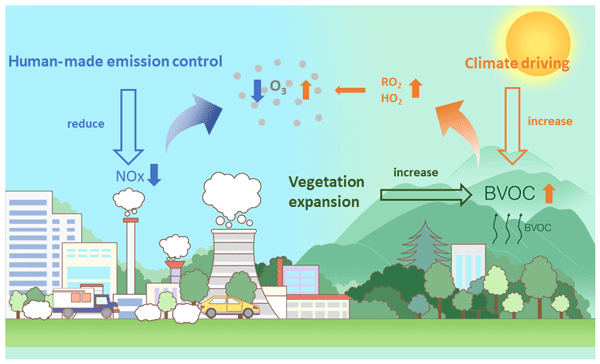
We found that climate warming and changes in vegetation have increased biogenic volatile organic compound emissions in the Pearl River Delta region. These increasing natural emissions, mainly due to climate warming, are weakening the benefits of reducing human-made emissions through control, leading to higher ozone levels. This work helps us understand how climate change influences air quality and provides important insights for improving pollution control strategies in the future.
Tan Mi, Xueting Pu, Xi Zheng, Guangcheng Nie, Xinyi Liu, Han Zhang, Michael L. Grieneisen, Yu Zhan, Maohua Wang, and Fumo Yang
Earth Syst. Sci. Data Discuss., https://doi.org/10.5194/essd-2026-554, https://doi.org/10.5194/essd-2026-554, 2026
Preprint under review for ESSD
Short summary
Short summary
We present a temporally continuous hourly CO2 dataset for global GAW stations from 2000 to 2024. Gaps in the original hourly observations can bias daily, monthly, and annual mean CO2 estimates and obscure diurnal variability and short-lived events. The dataset enables improved estimates of global mean surface CO2, regional short-term CO2 variability, and regional carbon-emission inversions.
Jinpeng Lu, Sijia Lou, Wuke Wang, Jiankai Zhang, Ke Ding, Xin Huang, Yiquan Jiang, Tengyu Liu, Yawen Liu, Qingyan Xie, Lian Xue, Zilin Wang, Chen Zhou, Anbao Zhu, and Aijun Ding
EGUsphere, https://doi.org/10.5194/egusphere-2026-5104, https://doi.org/10.5194/egusphere-2026-5104, 2026
This preprint is open for discussion and under review for Atmospheric Chemistry and Physics (ACP).
Short summary
Short summary
The 2022 Hunga Tonga eruption injected sulfur gases and massive water vapor into the stratosphere. With observations and simulations, we assessed effects on the tropical quasi-biennial oscillation (QBO). Pollutants lingered over a year; the water-rich eruption notably altered QBO winds. Cooling from excess vapor and particles, concentrated south of 15° N, reshaped upper circulation and drove downward wind anomalies modulating the QBO, with April–October 2022 cooling causing more wind shifts.
Lingfeng Li, Bo Qiu, Siwen Zhao, Xin Miao, Chaorong Chen, Jiuyi Chen, Yueyang Ni, Xin Huang, Haishan Chen, and Weidong Guo
Geosci. Model Dev., 19, 8447–8467, https://doi.org/10.5194/gmd-19-8447-2026, https://doi.org/10.5194/gmd-19-8447-2026, 2026
Short summary
Short summary
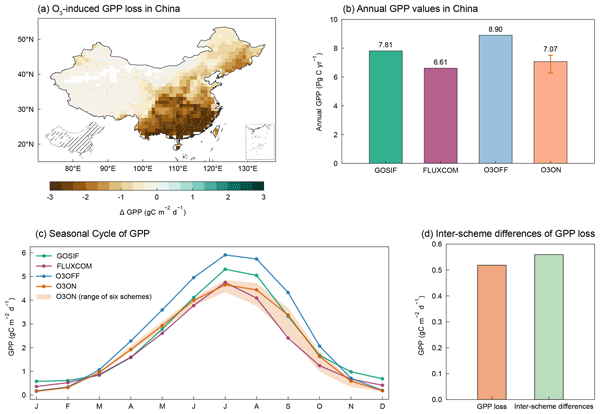
Ground-level ozone can reduce plant growth, but models represent this damage in different ways. We tested six approaches in the same vegetation model for China during the 2010s. They estimated that ozone reduced plant carbon uptake by 17 % to 27 %, averaging about 21 %. Approaches based on broader observations and leaf traits matched measurements more closely, while using leaf lifespan improved how the model represented the accumulation and decline of ozone damage.
Qiongqiong Wang, Zhongliang Huang, Zongjun Li, Shuihui Zhu, Liping Qiao, Min Zhou, Dandan Huang, Hongli Wang, Qingyan Fu, Kezheng Liao, and Jian Zhen Yu
EGUsphere, https://doi.org/10.5194/egusphere-2026-4766, https://doi.org/10.5194/egusphere-2026-4766, 2026
Short summary
Short summary
Brown carbon (BrC) is a poorly understood carbonaceous aerosol component that significantly affects climate and air quality. We examined the sources and secondary formation of BrC based on long-term field measurements of bihourly BrC and a suite of organic and elemental tracers in urban Shanghai. Seasonal contrast of source contributions and complexity of secondary formation and evolution was observed. This study offers a scientific basis for BrC mitigation and urban air quality improvement.
Jinwen Zhang, Yongjian Liang, Yufei Yang, Chenglei Pei, Hebiao Huang, Bo Huang, Xiufeng Lian, Yingyan Huang, Yuwen Peng, Chunlei Cheng, Cheng Wu, Zhen Zhou, and Mei Li
EGUsphere, https://doi.org/10.5194/egusphere-2026-3381, https://doi.org/10.5194/egusphere-2026-3381, 2026
Short summary
Short summary
Separating human-related carbon dioxide emissions from vegetation exchange in cities often requires costly measurements. We developed a more accessible approach by combining tower-based carbon dioxide flux observations, satellite vegetation data, and ecological models. We found that vegetation uptake partly masked human-related emissions during the day, and gridded inventories showed possible spatial mismatches. This approach can help cities better separate carbon dioxide sources and sinks.
Qihao Lin, Jiandong Wang, Chenxi Li, Dian Ding, Jiaping Wang, Wei Nie, Ximeng Qi, Yuliang Liu, Xuguang Chi, and Xin Huang
EGUsphere, https://doi.org/10.5194/egusphere-2026-3636, https://doi.org/10.5194/egusphere-2026-3636, 2026
Short summary
Short summary
We focused on nanoparticle growth because it affects climate and health. Current models often merge these particles with background aerosol populations, missing key details. We developed an improved model that explicitly tracks these particles from formation through subsequent growth. Our model matched observations better than standard approaches, captured early growth more realistically, and added minimal computational cost, making it promising for three-dimensional atmospheric simulations.
Wenfei Zhu, Qinghong Wang, Qingsong Wang, Jialin Shi, Yu Sun, Juntao Huo, Yi Sun, Jia Chen, Yue Zhao, Mei Li, Jun Chen, Shengrong Lou, and Hui Chen
EGUsphere, https://doi.org/10.5194/egusphere-2026-2447, https://doi.org/10.5194/egusphere-2026-2447, 2026
Short summary
Short summary
This study examines nitrate-containing particles during winter haze in eastern China. A framework combining single-particle mass spectrometry and statistical analysis was developed to better quantify nitrate sources. Results show that nitrate is mainly found in aged particles and strongly mixed with combustion and marine emissions. Pollution episodes are driven by stagnant conditions, high humidity, nighttime reactions, and regional transport.
Anbao Zhu, Xin Huang, Haiming Xu, Jiechun Deng, Lian Xue, Zilin Wang, Ke Ding, Tianshuai Li, and Aijun Ding
EGUsphere, https://doi.org/10.5194/egusphere-2026-3180, https://doi.org/10.5194/egusphere-2026-3180, 2026
Short summary
Short summary
Every spring, East Asian dust travels across the North Pacific. We investigated its effect on the North Pacific storm track using decades of data and a numerical model. We found that dust absorbs sunlight and warms the middle atmosphere, altering temperature patterns. This shifts the zone favorable for storm development poleward. These results highlight that natural dust meaningfully influences large-scale atmospheric circulation and should be considered in regional climate assessments.
Zeyu Yang, Fan Cheng, Jian Gao, Huan Liu, and Jing Wei
Atmos. Chem. Phys., 26, 7933–7947, https://doi.org/10.5194/acp-26-7933-2026, https://doi.org/10.5194/acp-26-7933-2026, 2026
Short summary
Short summary
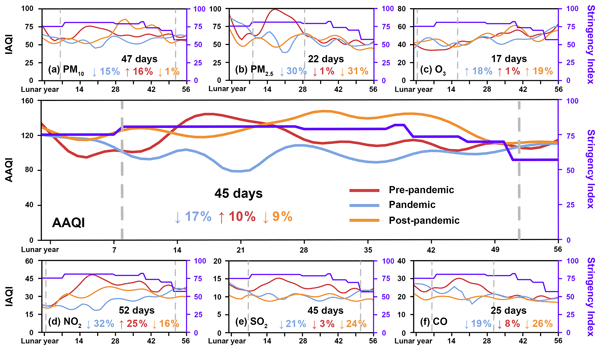
We developed a machine learning approach to map daily air pollution across China at high resolution, covering six major pollutants. Our results reveal how different pollutants respond differently to changes in human activity and emissions, uncovering the underlying chemical and atmospheric processes. This study provides detailed evidence of air pollution patterns and interactions, offering insights that can guide more effective strategies to protect air quality and public health.
Xiufeng Lian, Chenglei Pei, Wei Sun, Chen Lv, Kunlun Huang, Lei Lei, Bo Huang, Chunlei Cheng, Guohua Zhang, Xinhui Bi, Zhen Zhou, and Mei Li
EGUsphere, https://doi.org/10.5194/egusphere-2026-1853, https://doi.org/10.5194/egusphere-2026-1853, 2026
Short summary
Short summary
Fireworks release tiny particles that affect air quality. In Guangzhou, we tracked how barium particles from fireworks change in the air. Fireworks raised barium levels up to one thousand times above normal. These particles transformed through chemical reactions. Local policies cut pollution in restricted areas. Long-term health risks stay low, but short-term exposure can be much higher, which may concern children. Our findings help explain particle aging and guide air quality management.
Paul D. Hamer, Miha Markelj, Oscar Rojas-Munoz, Bertrand Bonan, Jean-Christophe Calvet, Virginie Marécal, Alex Guenther, Heidi Trimmel, Islen Vallejo, Sabine Eckhardt, Gabriela Sousa Santos, Katerina Sindelarova, David Simpson, Norbert Schmidbauer, Heidi Hellén, Pascal Rubli, Stefan Reimann, Anja Claude, Dagmar Kubistin, Julie Cozic, James Dernie, and Leonor Tarrasón
Earth Syst. Sci. Data, 18, 3635–3669, https://doi.org/10.5194/essd-18-3635-2026, https://doi.org/10.5194/essd-18-3635-2026, 2026
Short summary
Short summary
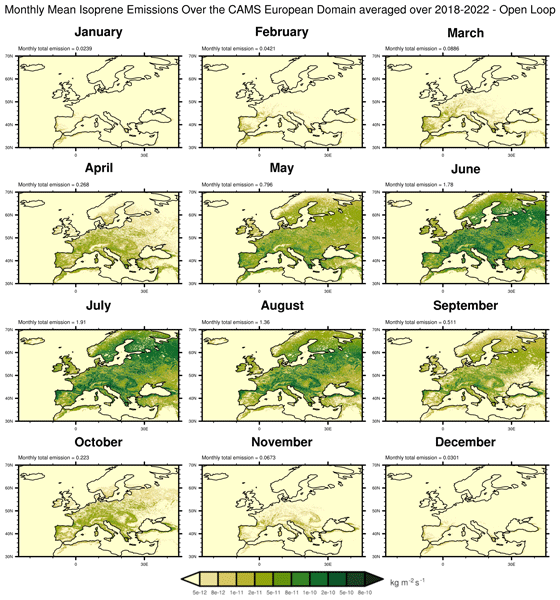
Plants release gases like isoprene that can form ozone and affect air quality. Using models and satellite data, we mapped the emissions of isoprene from plants across Europe and found that droughts can reduce leaf growth, leading to lower emissions. This shows that to understand and predict air quality, we must also understand how drought impacts vegetation. Our findings highlight the value of linking extreme weather, plant health, and pollution in models of the Earth system as a whole.
Yunsong Du, Fumo Yang, Sijia Lou, Baolei Lyu, Ran Huang, Guangming Shi, Yongtao Hu, Yan Jiang, and Nan Wang
Atmos. Chem. Phys., 26, 6223–6241, https://doi.org/10.5194/acp-26-6223-2026, https://doi.org/10.5194/acp-26-6223-2026, 2026
Short summary
Short summary
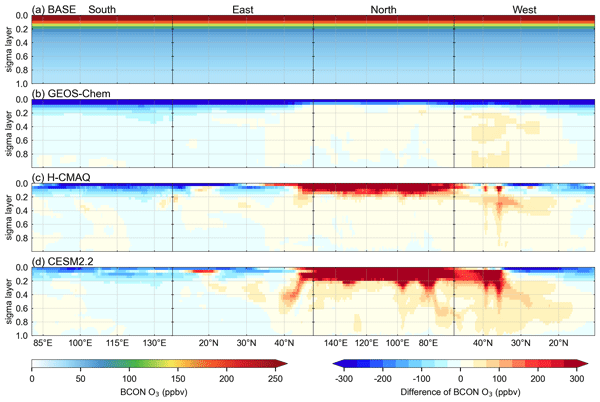
This study shows that using dynamically changing chemical boundary conditions is essential for accurately simulating summer ozone pollution in China. By integrating real-time global data, we improve model performance and reveal how large-scale weather patterns drive cross-border and stratospheric transport. These results support more reliable ozone forecasting and pollution mitigation.
Yuelin Liu, Yuanjun Gong, Nan Wang, Guangming Shi, Fumo Yang, Yuanhang Zhang, and Keding Lu
EGUsphere, https://doi.org/10.5194/egusphere-2026-1786, https://doi.org/10.5194/egusphere-2026-1786, 2026
Short summary
Short summary
Ozone pollution is difficult to predict because its formation depends on complex chemical reactions that vary under different pollution conditions. By comparing multiple modeling approaches during a pollution event in Chengdu, China, we examine how ozone formation and the underlying chemical processes, particularly radical-driven reactions, differ between low- and high-pollution environments.
Jean-François Müller, Trissevgeni Stavrakou, Bruno Franco, Lieven Clarisse, Crist Amelynck, Niels Schoon, Bert W. D. Verreyken, Beata Opacka, Corinne Vigouroux, Alex B. Guenther, Emmanuel Mahieu, Maria Makarova, and Kimberly Strong
Atmos. Chem. Phys., 26, 5375–5406, https://doi.org/10.5194/acp-26-5375-2026, https://doi.org/10.5194/acp-26-5375-2026, 2026
Short summary
Short summary
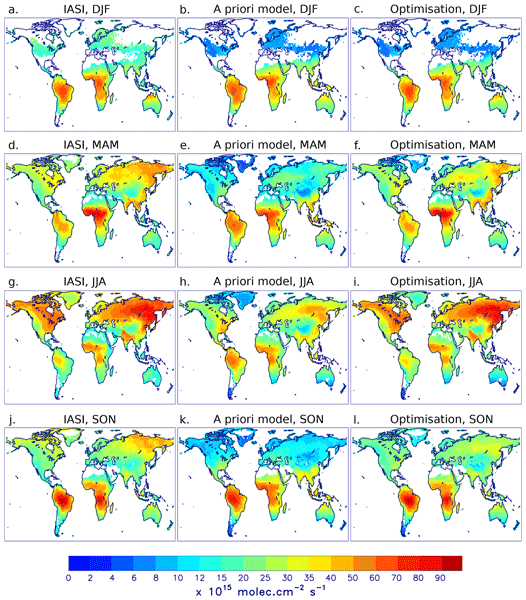
We use an atmospheric model and aircraft measurements to evaluate methanol measurements from satellite sensors. The spaceborne data are found to be too low over source regions. Next, we use the model and the bias-corrected satellite data to derive improved terrestrial emissions of methanol between 2008 and 2019, and we evaluate the results against aircraft and ground-based measurements. This work shows that biogenic emissions of methanol might be ~ 60 % larger than previously estimated.
Xun Li, Xuan Li, Rusha Yan, Yaqin Gao, Kangjia Gong, Hongli Wang, Momei Qin, Jianlin Hu, and Jingyi Li
Atmos. Chem. Phys., 26, 4901–4915, https://doi.org/10.5194/acp-26-4901-2026, https://doi.org/10.5194/acp-26-4901-2026, 2026
Short summary
Short summary
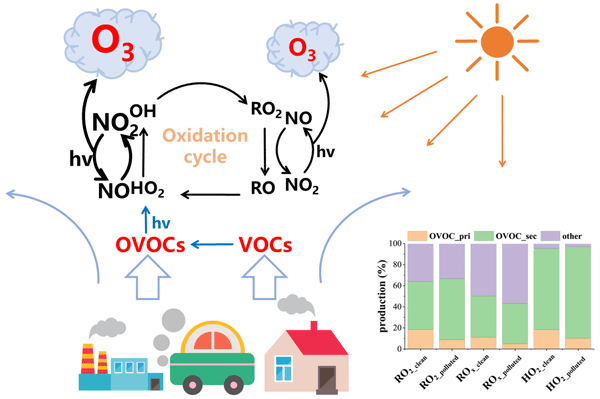
An updated emission inventory, incorporating source-specific OVOC (Oxygenated volatile organic compound) profiles derived from measurements and the literature, is applied in an air quality model to improve OVOC simulations in a heavily polluted region. A substantial fraction of key OVOCs originates from anthropogenic sources and enhances hydroperoxyl radical production, thereby contributing to ozone formation. The results highlight the importance of accurately representing OVOC emissions in models to support ozone control strategies.
Chao Peng, Yan Ding, Zhenliang Li, Tianyu Zhai, Xinping Yang, Mi Tian, Yang Chen, Xin Long, Haohui Tang, Guangming Shi, Liuyi Zhang, Kangyin Zhang, Fumo Yang, and Chongzhi Zhai
Atmos. Chem. Phys., 26, 4131–4152, https://doi.org/10.5194/acp-26-4131-2026, https://doi.org/10.5194/acp-26-4131-2026, 2026
Short summary
Short summary
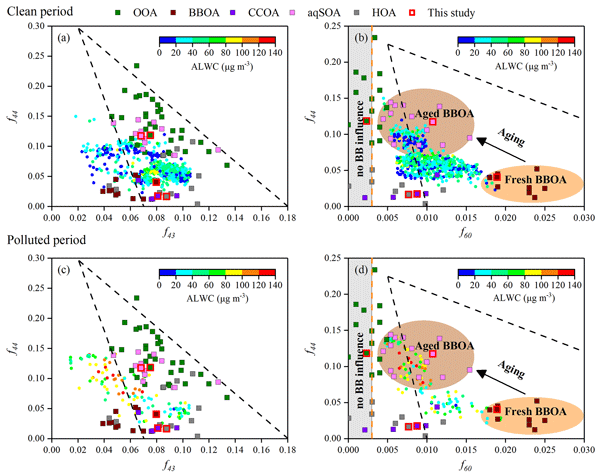
Organic aerosol is a dominant component of atmospheric aerosol worldwide, and it is recognized as a key factor affecting air quality and possibly climate. We revealed the aqueous secondary organic aerosol formation and brownness from aged biomass-burning emissions and highlighted the importance of aqueous-phase reactions on air quality and climate. The aqueous secondary organic aerosol from aged biomass-burning emissions should be taken into account in air quality and climate models.
Jinwen Zhang, Yongjian Liang, Chenglei Pei, Bo Huang, Yingyan Huang, Xiufeng Lian, Shaojie Song, Chunlei Cheng, Cheng Wu, Zhen Zhou, Junjie Li, and Mei Li
Atmos. Chem. Phys., 26, 3253–3276, https://doi.org/10.5194/acp-26-3253-2026, https://doi.org/10.5194/acp-26-3253-2026, 2026
Short summary
Short summary
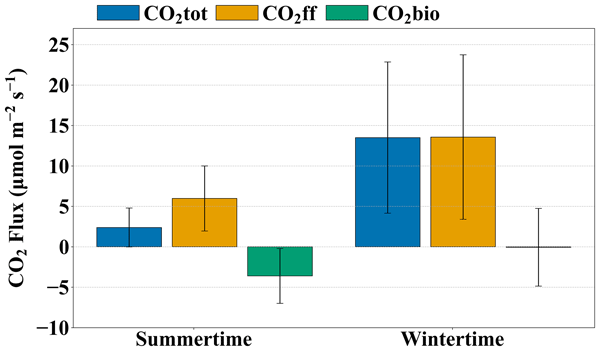
Inadequate characterization of carbon dioxide (CO2) dynamics limits the understanding of coastal megacity carbon cycles. Using an observation-driven framework integrating high-precision CO2/CO measurements, this study shows that the "coastal CO2 dome" can shift seasonally away from the urban core, reveals nonlinear sea–land breeze effects, quantifies urban vegetation's role in CO2 budgets, thereby providing new insights into coastal carbon monitoring and mitigation assessment.
Qiu Wang, Tengyu Liu, Weiqi Xu, Jinbo Wang, Dafeng Ge, Caijun Zhu, Chuanhua Ren, Jiaping Wang, Qiaozhi Zha, Ximeng Qi, Wei Nie, Xuguang Chi, Sijia Lou, Xin Huang, and Aijun Ding
Atmos. Chem. Phys., 26, 3185–3194, https://doi.org/10.5194/acp-26-3185-2026, https://doi.org/10.5194/acp-26-3185-2026, 2026
Short summary
Short summary
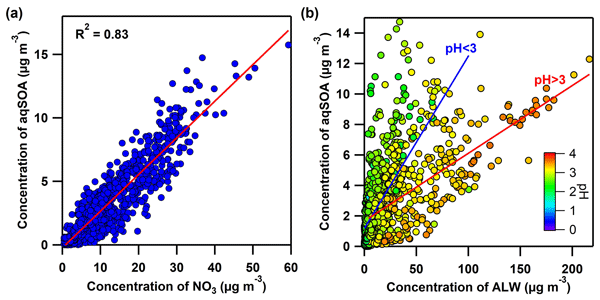
The sources and formation mechanisms of aqueous secondary organic aerosol (aqSOA) remain unclear. This study investigates the characteristics and processing of aqSOA in polluted suburban environments in Eastern China. The results highlight the critical roles of nitrate, aerosol liquid water, acidity, and photochemistry in aqSOA formation and contribute to an improved understanding of aqSOA formation in polluted environments.
Chunshui Lin, Ru-Jin Huang, Jing Duan, Jing Qu, Jiahua Liu, Yi Liu, Yan Luo, Wei Huang, Wei Xu, Yanan Zhan, Zhitao Liu, Sihan Liu, Qingshuang Zhang, Quan Liu, Zirui Liu, Shengrong Lou, Huinan Yang, Dan Dan Huang, Cheng Huang, and Hongli Wang
Atmos. Chem. Phys., 26, 2635–2647, https://doi.org/10.5194/acp-26-2635-2026, https://doi.org/10.5194/acp-26-2635-2026, 2026
Short summary
Short summary
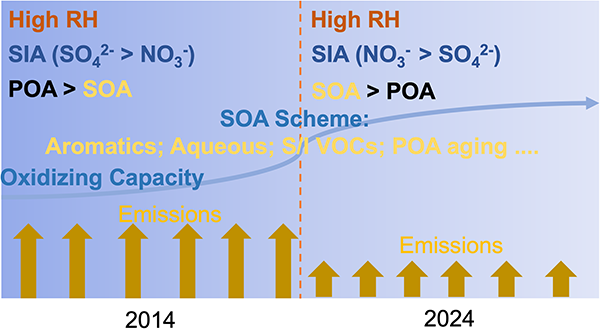
Since China's 2013 Clean Air Act cut PM2.5 by over half, winter haze in the North China Plain persists partly due to secondary organic aerosols now dominating primary organic aerosol, requiring urgent regional cooperation to address model-underestimated chemical transformations and cross-border pollution.
Guochen Wang, Xuedong Cui, Bingye Xu, Can Wu, Minkang Zhi, Keliang Li, Liang Xu, Qi Yuan, Yuntao Wang, Yele Sun, Zongbo Shi, Akinori Ito, Shixian Zhai, and Weijun Li
Atmos. Chem. Phys., 26, 1483–1496, https://doi.org/10.5194/acp-26-1483-2026, https://doi.org/10.5194/acp-26-1483-2026, 2026
Short summary
Short summary
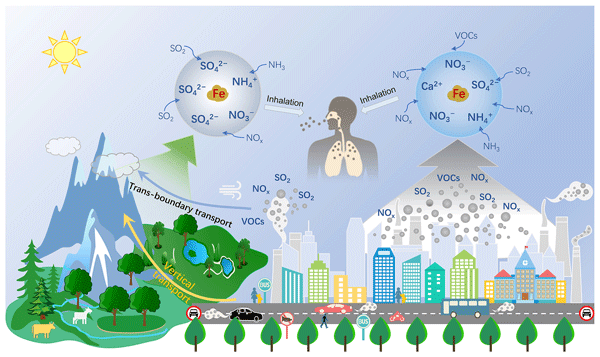
Iron acidification process is primarily driven by sulphuric acid in the upper mixing layer different from nitric acid at the ground-level. Enhanced atmospheric aging process contributes to high iron solubility in the upper mixing layer. Numerical models should consider vertical variations in iron dissolution to improve simulation accuracy.
Juncheng Qian, Thomas Wynn, Bowen Liu, Yuli Shan, Suzanne E. Bartington, Francis D. Pope, Yuqing Dai, and Zongbo Shi
Atmos. Meas. Tech., 19, 603–615, https://doi.org/10.5194/amt-19-603-2026, https://doi.org/10.5194/amt-19-603-2026, 2026
Short summary
Short summary
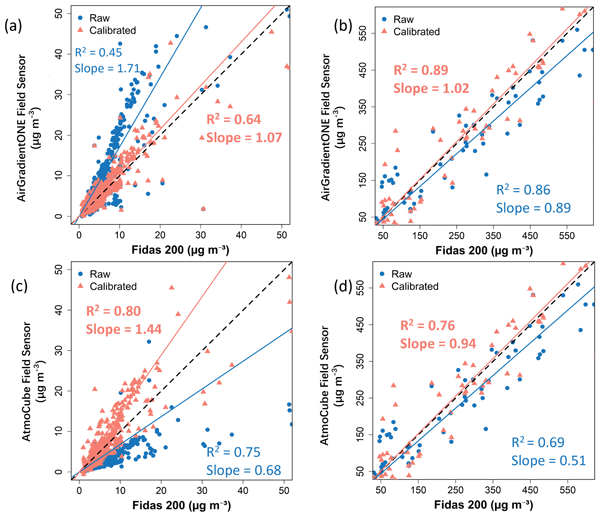
We developed a multi-stage AutoML (Automated Machine Learning) calibration framework to improve low-cost indoor PM2.5 sensor accuracy. Using chamber tests with varied emission sources, the method corrected drift, humidity effects, and non-linear responses, raising R2 above 0.9 and halving RMSE (Root Mean Square Error). The approach enables reliable, scalable indoor air quality monitoring for research and public health applications.
Claudia Di Biagio, Elisa Bru, Avila Orta, Servanne Chevaillier, Clarissa Baldo, Antonin Bergé, Mathieu Cazaunau, Sandra Lafon, Sophie Nowak, Edouard Pangui, Meinrat O. Andreae, Pavla Dagsson-Waldhauserova, Kebonyethata Dintwe, Konrad Kandler, James S. King, Amelie Chaput, Gregory S. Okin, Stuart Piketh, Thuraya Saeed, David Seibert, Zongbo Shi, Earle Williams, Pasquale Sellitto, and Paola Formenti
Atmos. Chem. Phys., 26, 1079–1091, https://doi.org/10.5194/acp-26-1079-2026, https://doi.org/10.5194/acp-26-1079-2026, 2026
Short summary
Short summary
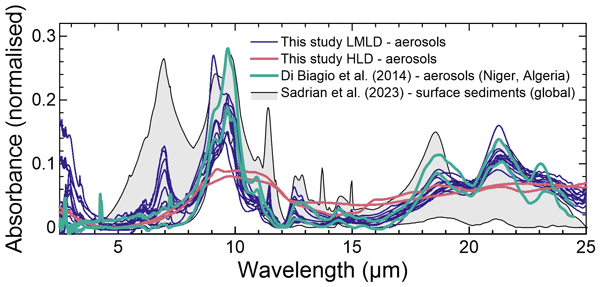
Spectroscopy measurements show that the absorbance of dust in the far-infrared up to 25 µm is comparable in intensity to that in the mid-infrared (3–15 µm) suggesting possible relevance for its direct radiative effect. Absorption signatures differ between Icelandic and low/mid-latitude dust due to differences in mineralogical composition. Spectral differences could be used to characterise the mineralogy and trace the origin of airborne dust based on infrared remote sensing observations.
Xi Chen, Xiaoyang Chen, Long Wang, Shucheng Chang, Minhui Li, Chong Shen, Chenghao Liao, Yongbo Zhang, Mei Li, and Xuemei Wang
Atmos. Chem. Phys., 26, 879–897, https://doi.org/10.5194/acp-26-879-2026, https://doi.org/10.5194/acp-26-879-2026, 2026
Short summary
Short summary
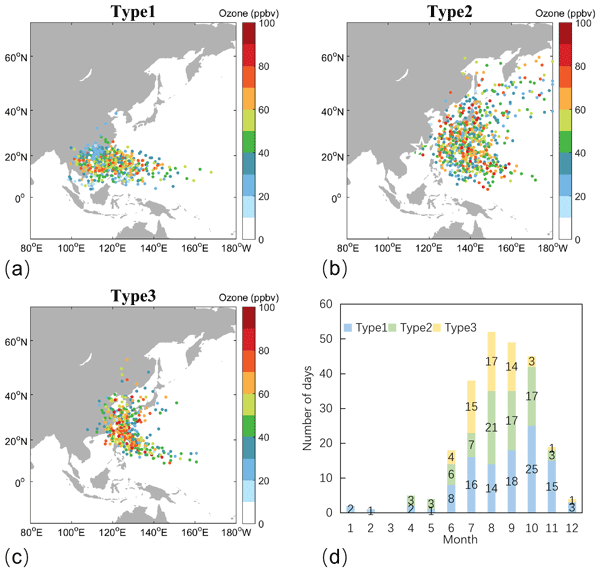
Typhoons moving north near China create ozone pollution in Guangdong by combining strong sunlight with stagnant air. These tyhoons also push ozone-rich air from high altitudes down to ground level. When multiple north-moving typhoons occur back-to-back, they cause widespread and long-lasting ozone pollution. Vertical air currents during these events can contribute up to 16 % of boundary layer ozone.
Haoran Zhang, Chengchun Shi, Chuanyou Ying, Shengheng Weng, Erling Ni, Lanbu Zhao, Peiheng Yang, Keqin Tang, Xueyu Zhou, Chuanhua Ren, Xuguang Chi, Derong Zhou, Mengmeng Li, Nan Li, Tengyu Liu, and Xin Huang
Atmos. Chem. Phys., 25, 16797–16816, https://doi.org/10.5194/acp-25-16797-2025, https://doi.org/10.5194/acp-25-16797-2025, 2025
Short summary
Short summary
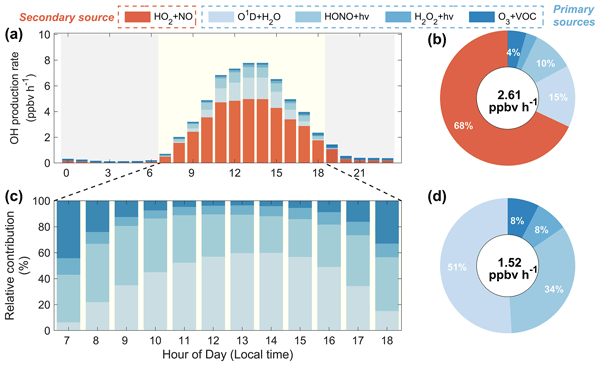
This study reports a unique diurnal pattern of nitrous acid (HONO), featuring higher concentrations around noon, based on one-month measurements in coastal Fujian, southeast China. Using an improved chemical transport model, we successfully reproduced the observed HONO levels and temporal variations. Further process analyses and sensitivity experiments quantified the formation mechanisms of HONO in coastal areas and shed light on its impact on the formation of OH radicals and ozone.
Zhuozhi Shu, Fumo Yang, Guangming Shi, Yuqing Zhang, Yongjie Huang, Xinning Yu, Baiwan Pan, and Tianliang Zhao
Atmos. Chem. Phys., 25, 15437–15451, https://doi.org/10.5194/acp-25-15437-2025, https://doi.org/10.5194/acp-25-15437-2025, 2025
Short summary
Short summary
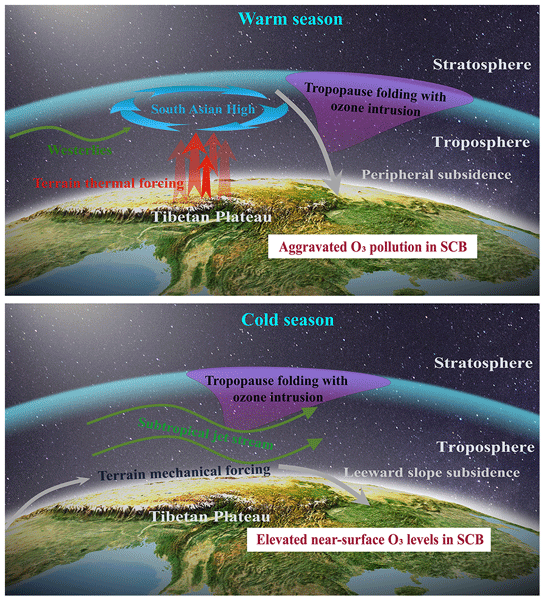
We targeted four stratospheric intrusion episodes to investigate the impacts of cross-layer transport of stratospheric O3 on the near-surface environmental atmosphere over Sichuan Basin and uncover multi-scale atmospheric circulation coupling mechanisms with the seasonally discrepant terrain effects of Tibetan Plateau. Results provided the critical insights into understanding of regional O3 pollution genesis with the exceptional natural sources contribution derived from the stratosphere.
Weichao Huang, Sihang Wang, Peng Cheng, Bingna Chen, Bin Yuan, Pengfei Yu, Haichao Wang, Nan Ma, Mei Li, and Keding Lu
Atmos. Chem. Phys., 25, 15403–15414, https://doi.org/10.5194/acp-25-15403-2025, https://doi.org/10.5194/acp-25-15403-2025, 2025
Short summary
Short summary
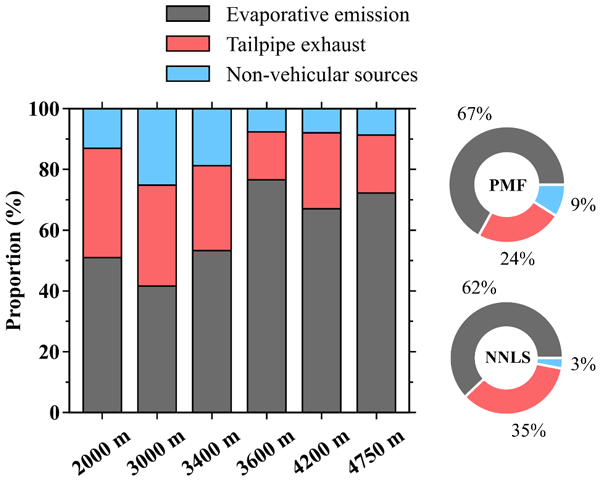
We studied vehicle emissions from ten 3000-meter tunnels on the Tibetan Plateau. Emissions of volatile organic compounds (VOCs) increase with elevation due to the evaporation of fuel oil from low pressure, unlike at lower elevations where tailpipe is predominant. This suggests that specific emission control measures are needed. This research aims to understand emissions at high altitudes and to guide cleaner transport.
Erin F. Katz, Caleb M. Arata, Eva Y. Pfannerstill, Robert J. Weber, Darian Ng, Michael J. Milazzo, Haley Byrne, Hui Wang, Alex B. Guenther, Camilo Rey-Sanchez, Joshua Apte, Dennis D. Baldocchi, and Allen H. Goldstein
Atmos. Chem. Phys., 25, 15281–15299, https://doi.org/10.5194/acp-25-15281-2025, https://doi.org/10.5194/acp-25-15281-2025, 2025
Short summary
Short summary
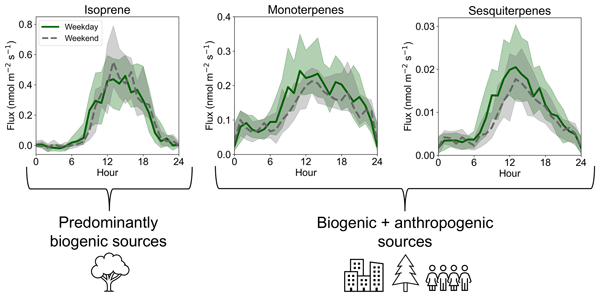
Terpenoids are organic gases that can originate from natural and human-caused sources, and their reactions in the atmosphere can cause air pollution. In this study, emissions of organic gases in an urban environment were measured. For some terpenoids, human-caused sources were responsible for about a quarter of the emissions, while others were predominantly from vegetation. This study contributes to a better understanding of urban emission sources and causes of air pollution.
Yuqing Dai, Bowen Liu, Chengxu Tong, David C. Carslaw, A. Robert MacKenzie, and Zongbo Shi
Atmos. Chem. Phys., 25, 13585–13596, https://doi.org/10.5194/acp-25-13585-2025, https://doi.org/10.5194/acp-25-13585-2025, 2025
Short summary
Short summary
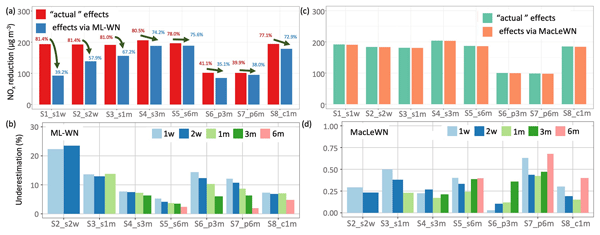
Air pollution causes millions of deaths annually, driving policies to improve air quality. However, assessing these policies is challenging because weather changes can hide their true impact. We created a logical evaluation framework and found that a widely applied machine learning approach that adjusts for weather effects could underestimate the effectiveness of short-term policies, like emergency traffic controls. We proposed a refined approach that could largely reduce such underestimation.
Ke Li, Rong Tan, Wenhao Qiao, Taegyung Lee, Yufen Wang, Danyuting Zhang, Minglong Tang, Wenqing Zhao, Yixuan Gu, Shaojia Fan, Jinqiang Zhang, Xiaopu Lyu, Likun Xue, Jianming Xu, Zhiqiang Ma, Mohd Talib Latif, Teerachai Amnuaylojaroen, Junsu Gil, Mee-Hye Lee, Juseon Bak, Joowan Kim, Hong Liao, Yugo Kanaya, Xiao Lu, Tatsuya Nagashima, and Ja-Ho Koo
Atmos. Chem. Phys., 25, 11575–11596, https://doi.org/10.5194/acp-25-11575-2025, https://doi.org/10.5194/acp-25-11575-2025, 2025
Short summary
Short summary
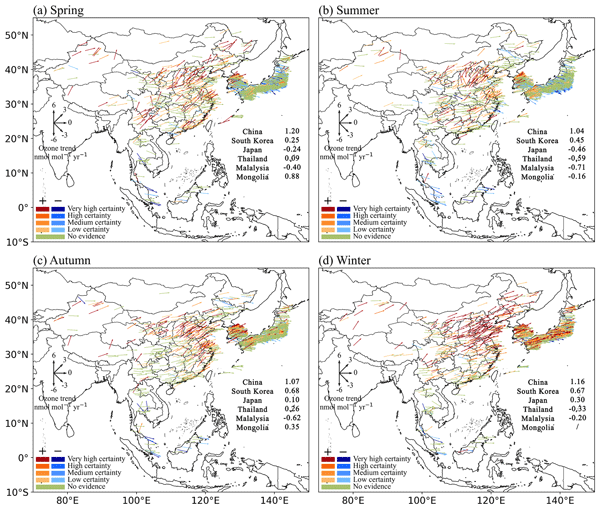
East Asia and Southeast Asia have been identified as a global hot spot, with the fastest ozone increase. This paper presents the most comprehensive observational review of ozone distributions and evolution over East Asia and Southeast Asia across different spatiotemporal scales in the past two decades, which will have important implications for assessing ozone impacts on public health and crop yields and for developing future ozone control strategies.
Junlin Shen, Ye Kuang, Li Liu, Fengling Yuan, Biao Luo, Hongqing Qiao, Miaomiao Zhai, Gang Zhao, Hanbing Xu, Fei Li, Yu Zou, Tao Deng, and Xuejiao Deng
Atmos. Chem. Phys., 25, 11233–11246, https://doi.org/10.5194/acp-25-11233-2025, https://doi.org/10.5194/acp-25-11233-2025, 2025
Short summary
Short summary
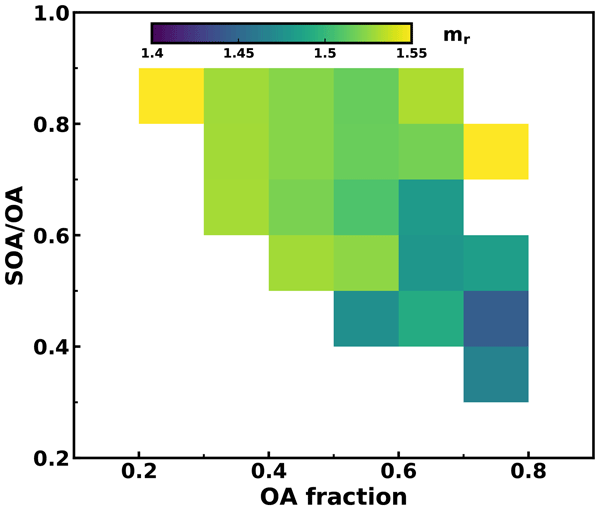
This study provides direct observational evidence that secondary organic aerosol formation enhances the aerosol scattering refractive index and has substantially higher real refractive indices than primary organic aerosols in humid southern China, challenging current model assumptions and offering recommended values that might improve the accuracy of aerosol radiative effect simulations.
Hua Lu, Min Xie, Nan Wang, Bojun Liu, Jinyue Jiang, Bingliang Zhuang, Ying Zhang, Meixuan Wu, Jianfeng Yang, Kunqin Lv, and Danyang Ma
Atmos. Chem. Phys., 25, 10141–10158, https://doi.org/10.5194/acp-25-10141-2025, https://doi.org/10.5194/acp-25-10141-2025, 2025
Short summary
Short summary
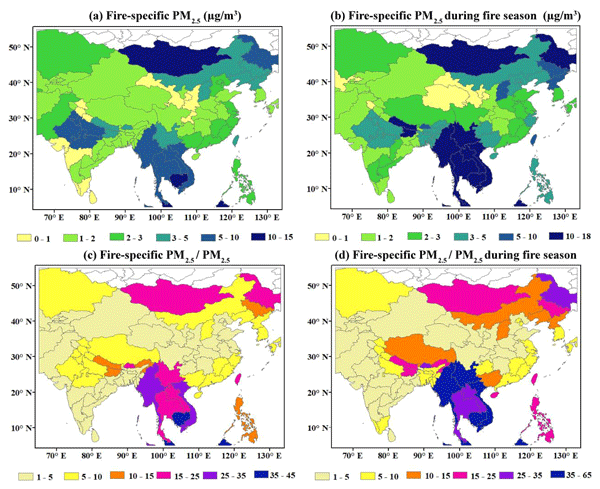
Fires are important sources of air pollution in many regions. This study isolates fire-specific PM2.5 from observations, showing its increasing proportion in recent years. Our findings indicate that fire-specific PM2.5 disproportionately affects impoverished populations in the Asia Pacific. Furthermore, we suggest that, under future climate change, fire-specific PM2.5 will likely continue rising. This highlights the need for interventions to reduce fire-related air pollution and its health impacts.
Tinghan Zhang, Ximeng Qi, Janne Lampilahti, Liangduo Chen, Xuguang Chi, Wei Nie, Xin Huang, Zehao Zou, Wei Du, Tom Kokkonen, Tuukka Petäjä, Katrianne Lehtipalo, Veli-Matti Kerminen, Aijun Ding, and Markku Kulmala
Atmos. Chem. Phys., 25, 10027–10048, https://doi.org/10.5194/acp-25-10027-2025, https://doi.org/10.5194/acp-25-10027-2025, 2025
Short summary
Short summary
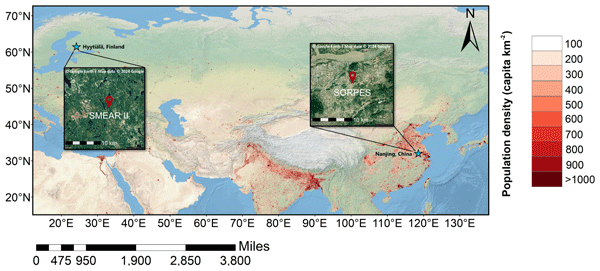
By comparing air ions at two flagship sites – a boreal forest site in Finland and a megacity site in eastern China – we characterized ion concentrations and their roles in new particle formation (NPF) across contrasting environments. The ion-induced fraction was much higher in the clean boreal forest. However, earlier activation of charged particles and high ion-induced fraction during quiet NPF in the megacity site imply a non-negligible role for ion-induced NPF in polluted urban areas.
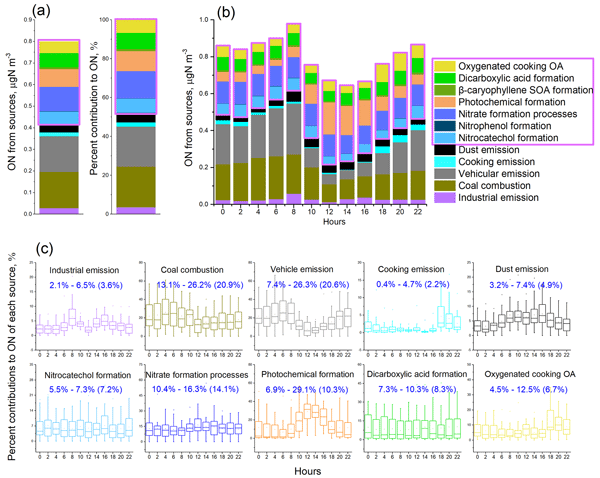
Xu Yu, Min Zhou, Shuhui Zhu, Liping Qiao, Jinjian Li, Yingge Ma, Zijing Zhang, Kezheng Liao, Hongli Wang, and Jian Zhen Yu
Atmos. Chem. Phys., 25, 9061–9074, https://doi.org/10.5194/acp-25-9061-2025, https://doi.org/10.5194/acp-25-9061-2025, 2025
Short summary
Short summary
Online measurements of bulk aerosol organic nitrogen (ON), in conjunction with a comprehensive array of source markers, have revealed five emission sources and five potentially significant formation processes of nitrogenous organic aerosols. This study provides a first quantitative source analysis of ON aerosol and valuable observational evidence of secondary ON aerosol formation through NH3 and NOx chemistries.
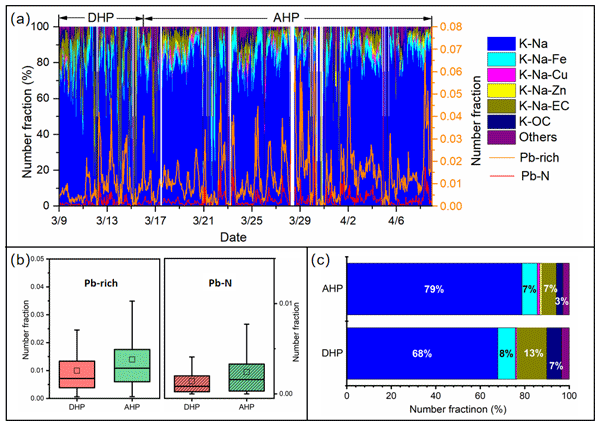
Xiufeng Lian, Yongjiang Xu, Fengxian Liu, Long Peng, Xiaodong Hu, Guigang Tang, Xu Dao, Hui Guo, Liwei Wang, Bo Huang, Chunlei Cheng, Lei Li, Guohua Zhang, Xinhui Bi, Xiaofei Wang, Zhen Zhou, and Mei Li
Atmos. Chem. Phys., 25, 8891–8905, https://doi.org/10.5194/acp-25-8891-2025, https://doi.org/10.5194/acp-25-8891-2025, 2025
Short summary
Short summary
In this study, we analyzed the mixing state and atmospheric chemical processes of Pb-rich single particles in Beijing. We focused on analyzing the differences in Pb-rich particles between the heating period and non-heating period, as well as the formation mechanism of lead nitrate after coal-to-gas conversion. Our results highlighted the improvement of Pb levels in the particulate as a result of coal-to-gas conversion.
Nan Wang, Song Liu, Jiawei Xu, Yanyu Wang, Chun Li, Yuning Xie, Hua Lu, and Fumo Yang
Atmos. Chem. Phys., 25, 8859–8870, https://doi.org/10.5194/acp-25-8859-2025, https://doi.org/10.5194/acp-25-8859-2025, 2025
Short summary
Short summary
We found that climate warming and changes in vegetation have increased biogenic volatile organic compound emissions in the Pearl River Delta region. These increasing natural emissions, mainly due to climate warming, are weakening the benefits of reducing human-made emissions through control, leading to higher ozone levels. This work helps us understand how climate change influences air quality and provides important insights for improving pollution control strategies in the future.
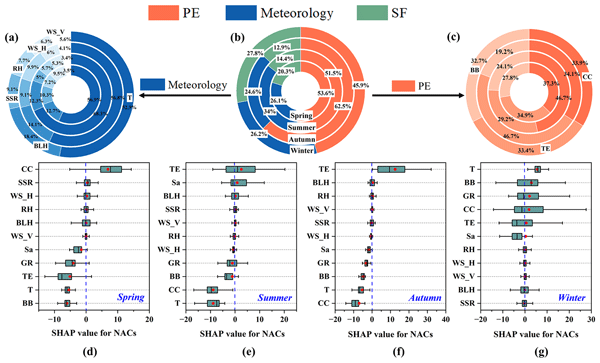
Min Li, Xinfeng Wang, Tianshuai Li, Yujia Wang, Yueru Jiang, Yujiao Zhu, Wei Nie, Rui Li, Jian Gao, Likun Xue, Qingzhu Zhang, and Wenxing Wang
Atmos. Chem. Phys., 25, 8407–8425, https://doi.org/10.5194/acp-25-8407-2025, https://doi.org/10.5194/acp-25-8407-2025, 2025
Short summary
Short summary
By integrating field measurements with an interpretable ensemble machine learning framework, we comprehensively identified key driving factors of nitro-aromatic compounds (NACs), demonstrated complex interrelationships, and quantified their contributions across different locations. This work provides a reliable modeling approach for recognizing causes of NAC pollution, enhances our understanding of variations of atmospheric NACs, and highlights the necessity of strengthening emission controls.
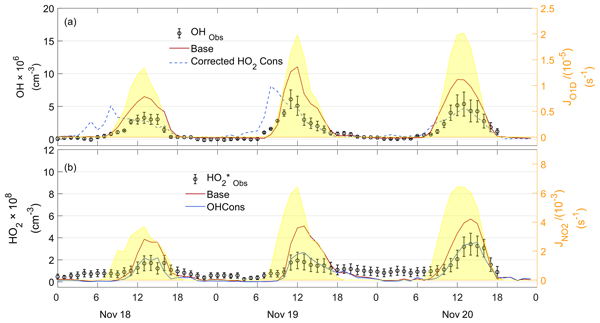
Zhouxing Zou, Tianshu Chen, Qianjie Chen, Weihang Sun, Shichun Han, Zhuoyue Ren, Xinyi Li, Wei Song, Aoqi Ge, Qi Wang, Xiao Tian, Chenglei Pei, Xinming Wang, Yanli Zhang, and Tao Wang
Atmos. Chem. Phys., 25, 8147–8161, https://doi.org/10.5194/acp-25-8147-2025, https://doi.org/10.5194/acp-25-8147-2025, 2025
Short summary
Short summary
We measured ambient OH and HO2* (HO2 and contribution from RO2, organic peroxyl radicals) concentrations at a subtropical rural site and compared our observations with model results. During warm periods, the model overestimated concentrations of OH and HO2, leading to overestimation of ozone and nitric acid production. Our findings highlight the need to better understand how OH and HO2 are formed and removed, which is important for accurate air quality and climate predictions.
Jishnu Pandamkulangara Kizhakkethil, Zongbo Shi, Anna Bogush, and Ivan Kourtchev
Atmos. Chem. Phys., 25, 5947–5958, https://doi.org/10.5194/acp-25-5947-2025, https://doi.org/10.5194/acp-25-5947-2025, 2025
Short summary
Short summary
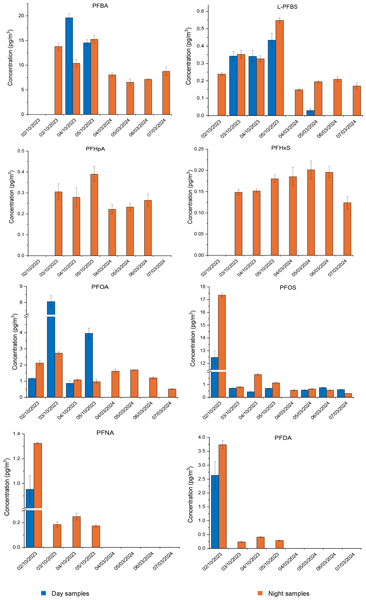
Pollution with per- and polyfluoroalkyl substances (PFAS) has received attention due to their environmental persistence and bioaccumulation, but their sources remain poorly understood. PM10 (particulate matter) collected above a scaled-down activated sludge tank treating domestic sewage in the UK was analysed for a range of short-, medium-, and long-chain PFAS. Eight PFAS were detected in the PM10. Our results suggest that wastewater treatment processes, i.e. activated sludge aeration, could aerosolise PFAS into airborne PM.
Qianying Liu, Dan Dan Huang, Andrew T. Lambe, Shengrong Lou, Lulu Zeng, Yuhang Wu, Congyan Huang, Shikang Tao, Xi Cheng, Qi Chen, Ka In Hoi, Hongli Wang, Kai Meng Mok, Cheng Huang, and Yong Jie Li
Atmos. Meas. Tech., 18, 2509–2521, https://doi.org/10.5194/amt-18-2509-2025, https://doi.org/10.5194/amt-18-2509-2025, 2025
Short summary
Short summary
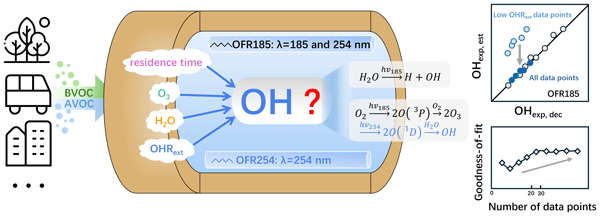
We evaluate the applicability of empirical equations to estimate OH exposure (OHexp) in an oxidative flow reactor (OFR). The fitting parameters obtained within a narrow range of conditions can generally be extended to estimate the OHexp for wide ranges of conditions in the OFR, except for external OH reactivity, which requires new fitting. At least 20–30 data points from SO2 or CO decay with varying conditions are required to fit a set of empirical parameters that can accurately estimate OHexp.
Beata Opacka, Trissevgeni Stavrakou, Jean-François Müller, Isabelle De Smedt, Jos van Geffen, Eloise A. Marais, Rebekah P. Horner, Dylan B. Millet, Kelly C. Wells, and Alex B. Guenther
Atmos. Chem. Phys., 25, 2863–2894, https://doi.org/10.5194/acp-25-2863-2025, https://doi.org/10.5194/acp-25-2863-2025, 2025
Short summary
Short summary
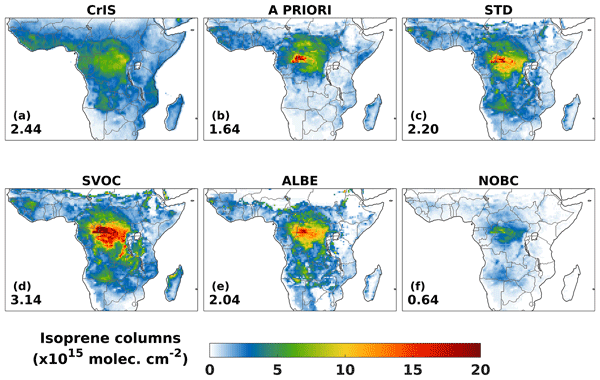
Vegetation releases biogenic volatile organic compounds, while soils and lightning contribute to the natural emissions of nitrogen oxides into the atmosphere. These gases interact in complex ways. Using satellite data and models, we developed a new method to simultaneously optimize these natural emissions over Africa in 2019. Our approach resulted in an increase in natural emissions, supported by independent data indicating that current estimates are underestimated.
Zeyuan Tian, Jiandong Wang, Jiaping Wang, Chao Liu, Jia Xing, Jinbo Wang, Zhouyang Zhang, Yuzhi Jin, Sunan Shen, Bin Wang, Wei Nie, Xin Huang, and Aijun Ding
Atmos. Meas. Tech., 18, 1149–1162, https://doi.org/10.5194/amt-18-1149-2025, https://doi.org/10.5194/amt-18-1149-2025, 2025
Short summary
Short summary
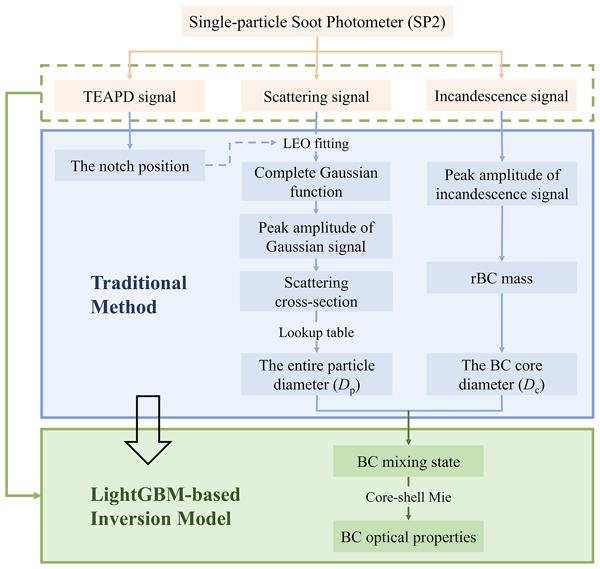
The radiative effect of black carbon (BC) is substantially modulated by its mixing state, which is challenging to derive physically with a single-particle soot photometer. This study establishes a machine-learning-based inversion model which can accurately and efficiently acquire the BC mixing state. Compared to the widely used leading-edge-only method, our model utilizes a broader scattering signal coverage to more accurately capture diverse particle characteristics.
Junling Li, Chaofan Lian, Mingyuan Liu, Hao Zhang, Yongxin Yan, Yufei Song, Chun Chen, Jiaqi Wang, Haijie Zhang, Yanqin Ren, Yucong Guo, Weigang Wang, Yisheng Xu, Hong Li, Jian Gao, and Maofa Ge
Atmos. Chem. Phys., 25, 2551–2568, https://doi.org/10.5194/acp-25-2551-2025, https://doi.org/10.5194/acp-25-2551-2025, 2025
Short summary
Short summary
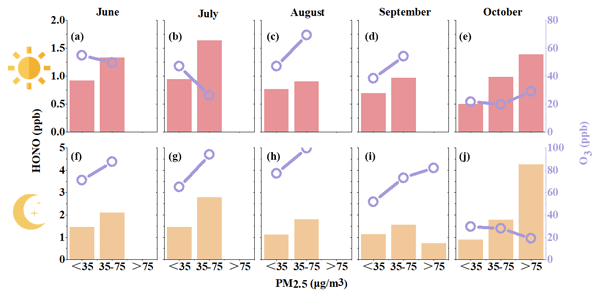
As a key source of hydroxyl (OH) radical, nitrous acid (HONO) has attracted much attention for its important role in the atmospheric oxidant capacity (AOC) increase. In this study, we made a comparison of the ambient levels, variation patterns, sources, and formation pathway in the warm season on the basis of continuous intensive observations at an urban site of Beijing. This work highlights the importance of HONO for the AOC in the warm season.
Xiao-Bing Li, Bin Yuan, Yibo Huangfu, Suxia Yang, Xin Song, Jipeng Qi, Xianjun He, Sihang Wang, Yubin Chen, Qing Yang, Yongxin Song, Yuwen Peng, Guiqian Tang, Jian Gao, Dasa Gu, and Min Shao
Atmos. Chem. Phys., 25, 2459–2472, https://doi.org/10.5194/acp-25-2459-2025, https://doi.org/10.5194/acp-25-2459-2025, 2025
Short summary
Short summary
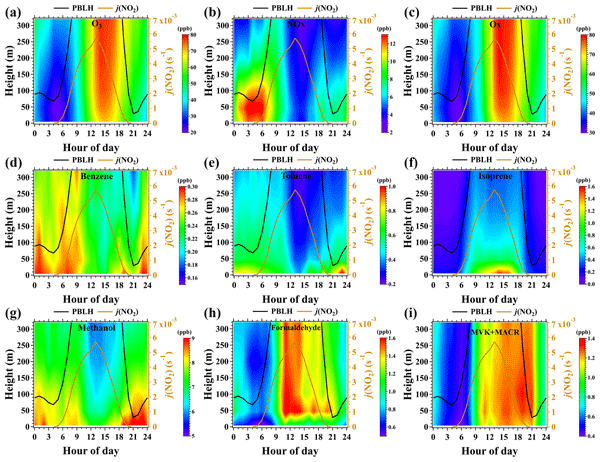
Online vertical gradient measurements of volatile organic compounds (VOCs), ozone, and NOx were conducted based on a 325 m tall tower in urban Beijing. Vertical changes in the concentrations, compositions, key drivers, and environmental impacts of VOCs were analyzed in this study. We find that VOC species display differentiated vertical variation patterns and distinct roles in contributing to photochemical ozone formation with increasing height in the urban planetary boundary layer.
Jiemeng Bao, Xin Zhang, Zhenhai Wu, Li Zhou, Jun Qian, Qinwen Tan, Fumo Yang, Junhui Chen, Yunfeng Li, Hefan Liu, Liqun Deng, and Hong Li
Atmos. Chem. Phys., 25, 1899–1916, https://doi.org/10.5194/acp-25-1899-2025, https://doi.org/10.5194/acp-25-1899-2025, 2025
Short summary
Short summary
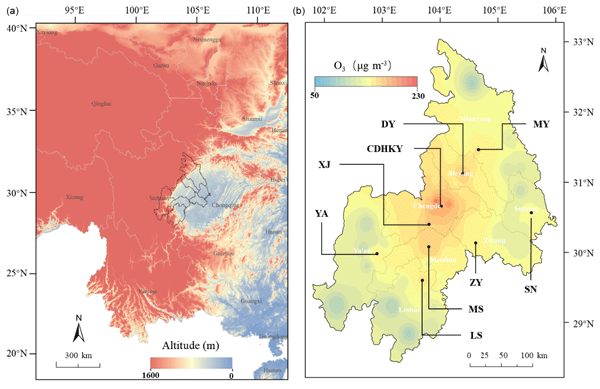
We studied carbonyl compounds' role in ozone pollution in the Chengdu Plain Urban Agglomeration, China. During heavy pollution in August 2019, we measured carbonyls at nine sites and analyzed their impact. Areas with higher carbonyl levels, like Chengdu, had worse ozone pollution. While their abundance matters, chemical reactions with other pollutants are the main drivers. Our findings show regional cooperation is vital to reducing ozone pollution effectively.
Min Huang, Gregory R. Carmichael, Kevin W. Bowman, Isabelle De Smedt, Andreas Colliander, Michael H. Cosh, Sujay V. Kumar, Alex B. Guenther, Scott J. Janz, Ryan M. Stauffer, Anne M. Thompson, Niko M. Fedkin, Robert J. Swap, John D. Bolten, and Alicia T. Joseph
Atmos. Chem. Phys., 25, 1449–1476, https://doi.org/10.5194/acp-25-1449-2025, https://doi.org/10.5194/acp-25-1449-2025, 2025
Short summary
Short summary
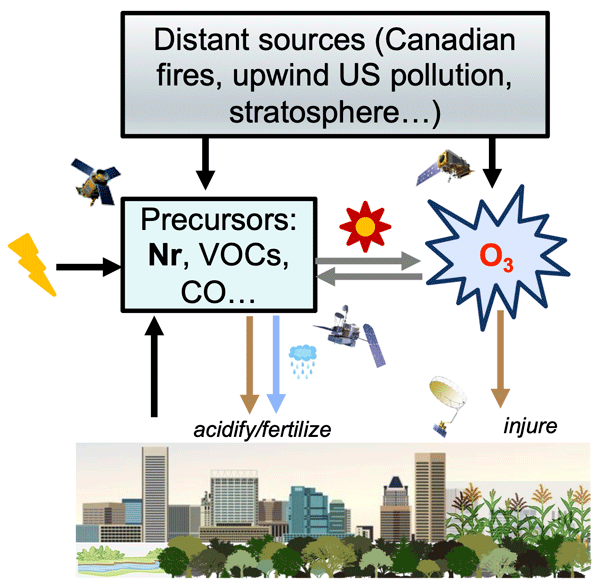
We use model simulations along with multiplatform, multidisciplinary observations and a range of analysis methods to estimate and understand the distributions, temporal changes, and impacts of reactive nitrogen and ozone over the most populous US region that has undergone significant environmental changes. Deposition, biogenic emissions, and extra-regional sources have been playing increasingly important roles in controlling pollutant budgets in this area as local anthropogenic emissions drop.
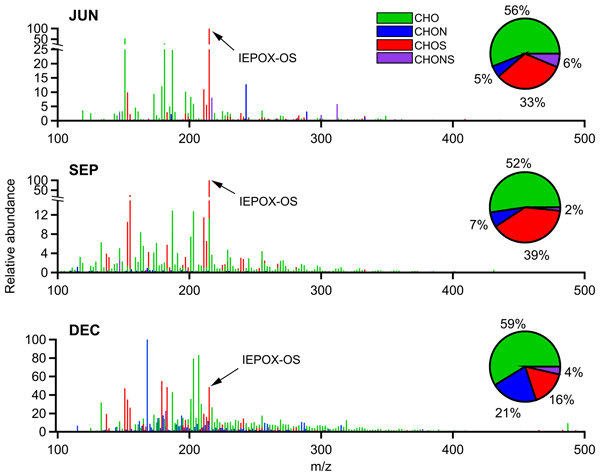
Adam E. Thomas, Hayley S. Glicker, Alex B. Guenther, Roger Seco, Oscar Vega Bustillos, Julio Tota, Rodrigo A. F. Souza, and James N. Smith
Atmos. Chem. Phys., 25, 959–977, https://doi.org/10.5194/acp-25-959-2025, https://doi.org/10.5194/acp-25-959-2025, 2025
Short summary
Short summary
We present measurements of the organic composition of ultrafine particles collected from the eastern Amazon, an understudied region that is subjected to increasing human influence. We find that while isoprene chemistry is likely significant for ultrafine-particle growth throughout the year, compounds related to other sources, such as biological-spore emissions and biomass burning, exhibit striking seasonal differences, implying extensive variation in regional ultrafine-particle sources.
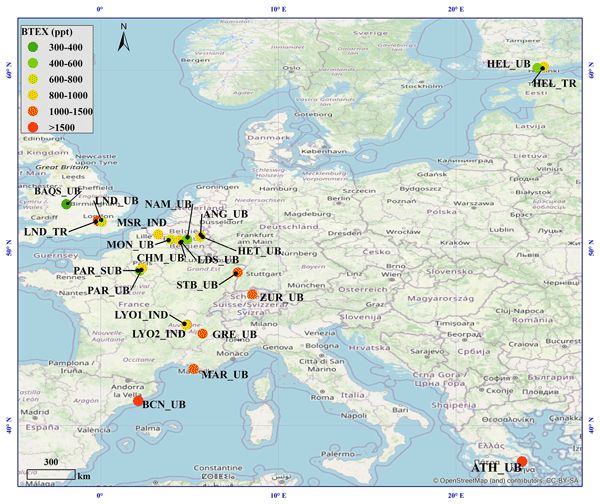
Xiansheng Liu, Xun Zhang, Marvin Dufresne, Tao Wang, Lijie Wu, Rosa Lara, Roger Seco, Marta Monge, Ana Maria Yáñez-Serrano, Marie Gohy, Paul Petit, Audrey Chevalier, Marie-Pierre Vagnot, Yann Fortier, Alexia Baudic, Véronique Ghersi, Grégory Gille, Ludovic Lanzi, Valérie Gros, Leïla Simon, Heidi Héllen, Stefan Reimann, Zoé Le Bras, Michelle Jessy Müller, David Beddows, Siqi Hou, Zongbo Shi, Roy M. Harrison, William Bloss, James Dernie, Stéphane Sauvage, Philip K. Hopke, Xiaoli Duan, Taicheng An, Alastair C. Lewis, James R. Hopkins, Eleni Liakakou, Nikolaos Mihalopoulos, Xiaohu Zhang, Andrés Alastuey, Xavier Querol, and Thérèse Salameh
Atmos. Chem. Phys., 25, 625–638, https://doi.org/10.5194/acp-25-625-2025, https://doi.org/10.5194/acp-25-625-2025, 2025
Short summary
Short summary
This study examines BTEX (benzene, toluene, ethylbenzene, xylenes) pollution in urban areas across seven European countries. Analyzing data from 22 monitoring sites, we found traffic and industrial activities significantly impact BTEX levels, with peaks during rush hours. The risk from BTEX exposure remains moderate, especially in high-traffic and industrial zones, highlighting the need for targeted air quality management to protect public health and improve urban air quality.
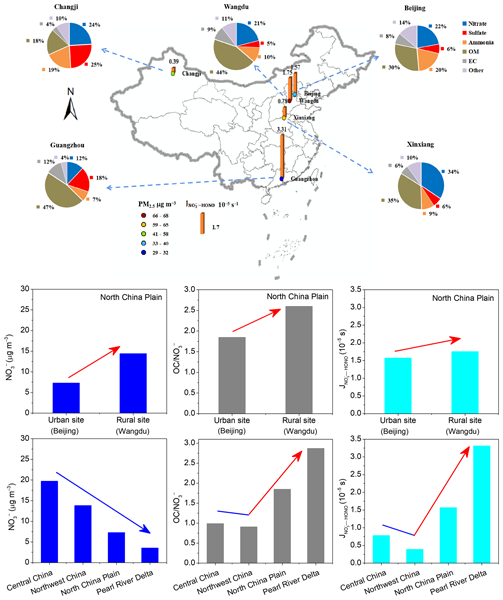
Bowen Li, Jian Gao, Chun Chen, Liang Wen, Yuechong Zhang, Junling Li, Yuzhe Zhang, Xiaohui Du, Kai Zhang, and Jiaqi Wang
Atmos. Chem. Phys., 24, 13183–13198, https://doi.org/10.5194/acp-24-13183-2024, https://doi.org/10.5194/acp-24-13183-2024, 2024
Short summary
Short summary
The photolysis rate constant of particulate nitrate for HONO production (JNO3−–HONO), derived from PM2.5 samples collected at five representative sites in China, exhibited a wide range of variation. A parameterization equation relating JNO3−–HONO to OC/NO3− has been established and can be used to estimate JNO3−–HONO in different environments. Our work provides an important reference for research in other regions of the world where aerosol samples have a high proportion of organic components.
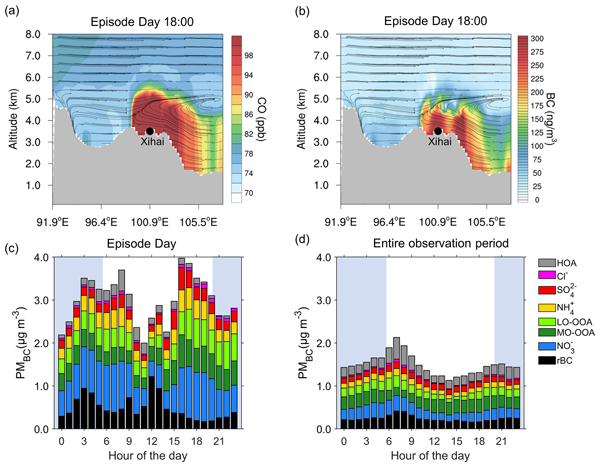
Jinbo Wang, Jiaping Wang, Yuxuan Zhang, Tengyu Liu, Xuguang Chi, Xin Huang, Dafeng Ge, Shiyi Lai, Caijun Zhu, Lei Wang, Qiaozhi Zha, Ximeng Qi, Wei Nie, Congbin Fu, and Aijun Ding
Atmos. Chem. Phys., 24, 11063–11080, https://doi.org/10.5194/acp-24-11063-2024, https://doi.org/10.5194/acp-24-11063-2024, 2024
Short summary
Short summary
In this study, we found large spatial discrepancies in the physical and chemical properties of black carbon over the Tibetan Plateau (TP). Elevated anthropogenic emissions from low-altitude regions can significantly change the mass concentration, mixing state and chemical composition of black-carbon-containing aerosol in the TP region, further altering its light absorption ability. Our study emphasizes the vulnerability of remote plateau regions to intense anthropogenic influences.
Alex Rowell, James Brean, David C. S. Beddows, Zongbo Shi, Avinash Kumar, Matti Rissanen, Miikka Dal Maso, Peter Mettke, Kay Weinhold, Maik Merkel, and Roy M. Harrison
Atmos. Chem. Phys., 24, 10349–10361, https://doi.org/10.5194/acp-24-10349-2024, https://doi.org/10.5194/acp-24-10349-2024, 2024
Short summary
Short summary
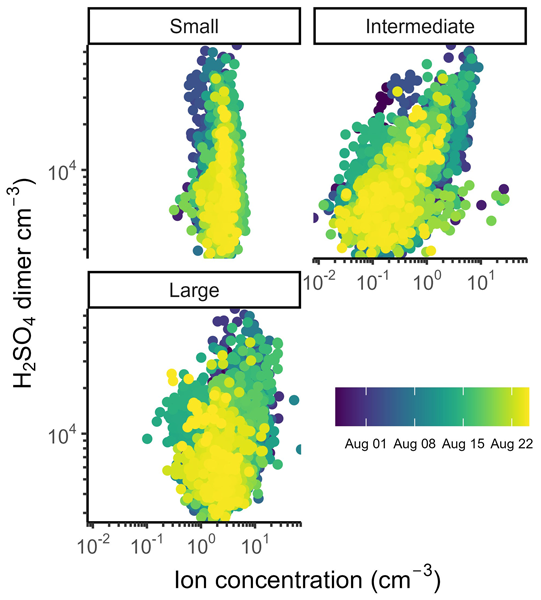
Ions enhance the formation and growth rates of new particles, affecting the Earth's radiation budget. Despite these effects, there is little published data exploring the sources of ions in the urban environment and their role in new particle formation (NPF). Here we show that natural ion sources dominate in urban environments, while traffic is a secondary source. Ions contribute up to 12.7 % of the formation rate of particles, indicating that they are important for forming urban PM.
Romanos Foskinis, Ghislain Motos, Maria I. Gini, Olga Zografou, Kunfeng Gao, Stergios Vratolis, Konstantinos Granakis, Ville Vakkari, Kalliopi Violaki, Andreas Aktypis, Christos Kaltsonoudis, Zongbo Shi, Mika Komppula, Spyros N. Pandis, Konstantinos Eleftheriadis, Alexandros Papayannis, and Athanasios Nenes
Atmos. Chem. Phys., 24, 9827–9842, https://doi.org/10.5194/acp-24-9827-2024, https://doi.org/10.5194/acp-24-9827-2024, 2024
Short summary
Short summary
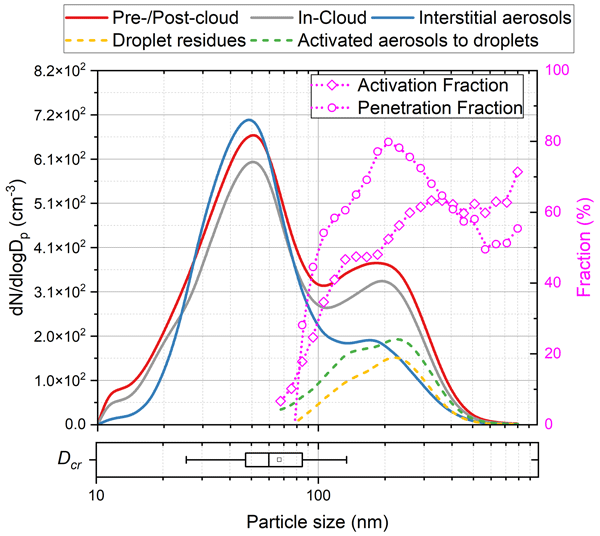
Analysis of modeling, in situ, and remote sensing measurements reveals the microphysical state of orographic clouds and their response to aerosol from the boundary layer and free troposphere. We show that cloud response to aerosol is robust, as predicted supersaturation and cloud droplet number levels agree with those determined from in-cloud measurements. The ability to determine if clouds are velocity- or aerosol-limited allows for novel model constraints and remote sensing products.
Alex Rowell, James Brean, David C. S. Beddows, Tuukka Petäjä, Máté Vörösmarty, Imre Salma, Jarkko V. Niemi, Hanna E. Manninen, Dominik van Pinxteren, Thomas Tuch, Kay Weinhold, Zongbo Shi, and Roy M. Harrison
Atmos. Chem. Phys., 24, 9515–9531, https://doi.org/10.5194/acp-24-9515-2024, https://doi.org/10.5194/acp-24-9515-2024, 2024
Short summary
Short summary
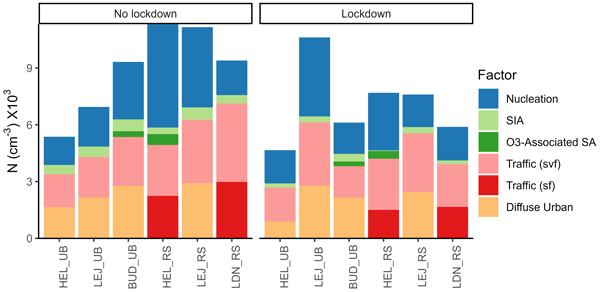
Different sources of airborne particles in the atmospheres of four European cities were distinguished by recognising their particle size distributions using a statistical procedure, positive matrix factorisation. The various sources responded differently to the changes in emissions associated with COVID-19 lockdowns, and the reasons are investigated. While traffic emissions generally decreased, particles formed from reactions of atmospheric gases decreased in some cities but increased in others.
Beth S. Nelson, Zhenze Liu, Freya A. Squires, Marvin Shaw, James R. Hopkins, Jacqueline F. Hamilton, Andrew R. Rickard, Alastair C. Lewis, Zongbo Shi, and James D. Lee
Atmos. Chem. Phys., 24, 9031–9044, https://doi.org/10.5194/acp-24-9031-2024, https://doi.org/10.5194/acp-24-9031-2024, 2024
Short summary
Short summary
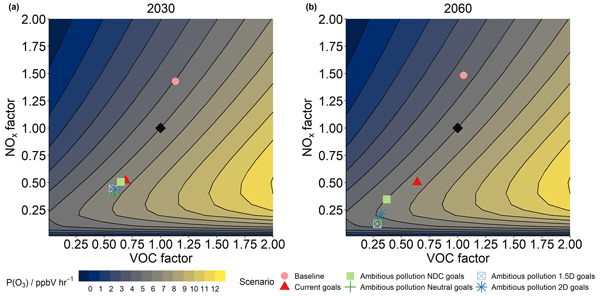
The impact of combined air quality and carbon neutrality policies on O3 formation in Beijing was investigated. Emissions inventory data were used to estimate future pollutant mixing ratios relative to ground-level observations. O3 production was found to be most sensitive to changes in alkenes, but large reductions in less reactive compounds led to larger reductions in future O3 production. This study highlights the importance of understanding the emissions of organic pollutants.
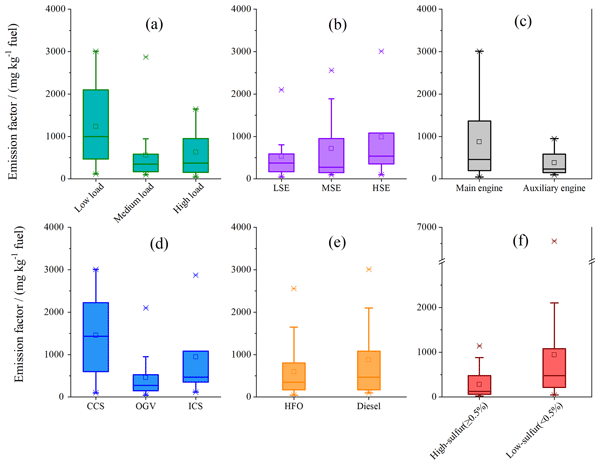
Fan Zhang, Binyu Xiao, Zeyu Liu, Yan Zhang, Chongguo Tian, Rui Li, Can Wu, Yali Lei, Si Zhang, Xinyi Wan, Yubao Chen, Yong Han, Min Cui, Cheng Huang, Hongli Wang, Yingjun Chen, and Gehui Wang
Atmos. Chem. Phys., 24, 8999–9017, https://doi.org/10.5194/acp-24-8999-2024, https://doi.org/10.5194/acp-24-8999-2024, 2024
Short summary
Short summary
Mandatory use of low-sulfur fuel due to global sulfur limit regulations means large uncertainties in volatile organic compound (VOC) emissions. On-board tests of VOCs from nine cargo ships in China were carried out. Results showed that switching from heavy-fuel oil to diesel increased emission factor VOCs by 48 % on average, enhancing O3 and the secondary organic aerosol formation potential. Thus, implementing a global ultra-low-sulfur oil policy needs to be optimized in the near future.
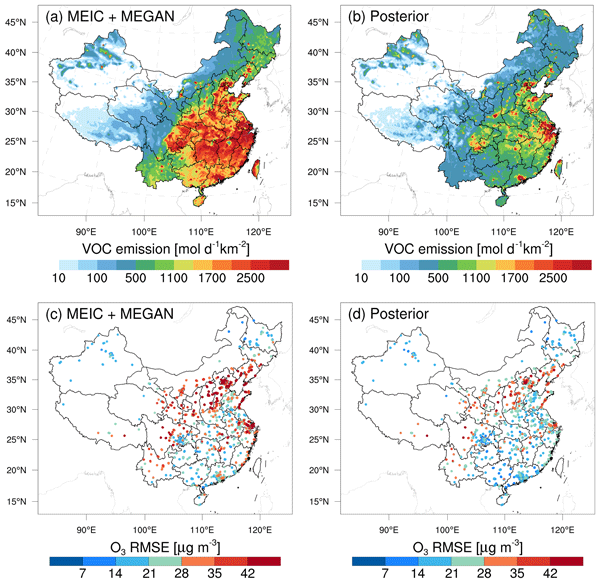
Shuzhuang Feng, Fei Jiang, Tianlu Qian, Nan Wang, Mengwei Jia, Songci Zheng, Jiansong Chen, Fang Ying, and Weimin Ju
Atmos. Chem. Phys., 24, 7481–7498, https://doi.org/10.5194/acp-24-7481-2024, https://doi.org/10.5194/acp-24-7481-2024, 2024
Short summary
Short summary
We developed a multi-air-pollutant inversion system to estimate non-methane volatile organic compound (NMVOC) emissions using TROPOMI formaldehyde retrievals. We found that the inversion significantly improved formaldehyde simulations and reduced NMVOC emission uncertainties. The optimized NMVOC emissions effectively corrected the overestimation of O3 levels, mainly by decreasing the rate of the RO2 + NO reaction and increasing the rate of the NO2 + OH reaction.
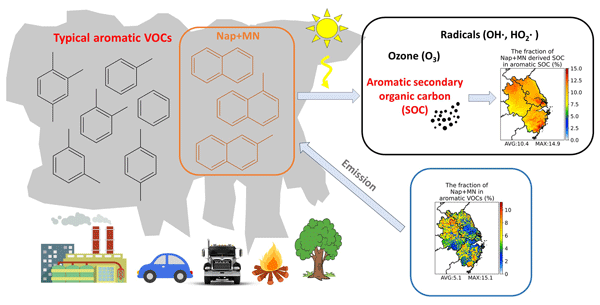
Fei Ye, Jingyi Li, Yaqin Gao, Hongli Wang, Jingyu An, Cheng Huang, Song Guo, Keding Lu, Kangjia Gong, Haowen Zhang, Momei Qin, and Jianlin Hu
Atmos. Chem. Phys., 24, 7467–7479, https://doi.org/10.5194/acp-24-7467-2024, https://doi.org/10.5194/acp-24-7467-2024, 2024
Short summary
Short summary
Naphthalene (Nap) and methylnaphthalene (MN) are key precursors of secondary organic aerosol (SOA), yet their sources and sinks are often inadequately represented in air quality models. In this study, we incorporated detailed emissions, gas-phase chemistry, and SOA parameterization of Nap and MN into CMAQ to address this issue. The findings revealed remarkably high SOA formation potentials for these compounds despite their low emissions in the Yangtze River Delta region during summer.
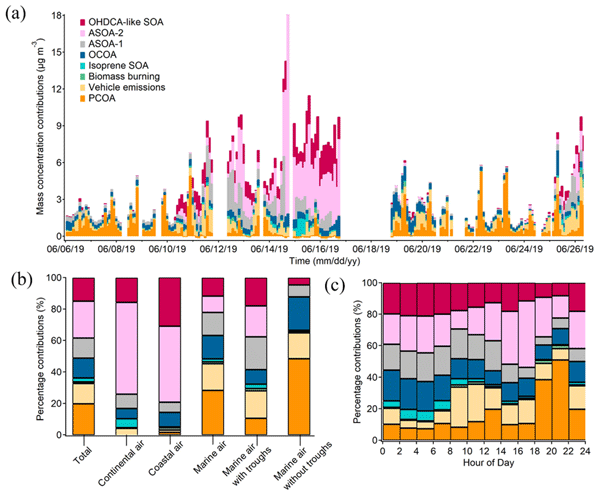
Hongyong Li, Xiaopu Lyu, Likun Xue, Yunxi Huo, Dawen Yao, Haoxian Lu, and Hai Guo
Atmos. Chem. Phys., 24, 7085–7100, https://doi.org/10.5194/acp-24-7085-2024, https://doi.org/10.5194/acp-24-7085-2024, 2024
Short summary
Short summary
Organic aerosol is ubiquitous in the atmosphere and largely explains the gap between current levels of fine particulate matter in many cities and the World Health Organization guideline values. This study highlights the dominant contributions of cooking emissions to organic aerosol when marine air prevailed in Hong Kong, which were occasionally overwhelmed by aromatics-derived secondary organic aerosol in continental ouflows.
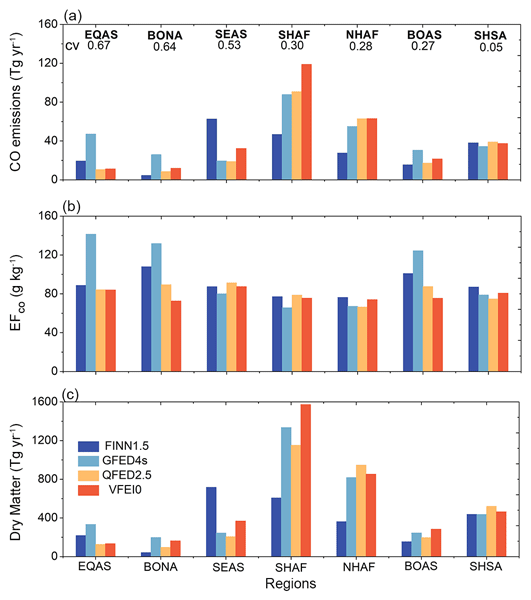
Wenxuan Hua, Sijia Lou, Xin Huang, Lian Xue, Ke Ding, Zilin Wang, and Aijun Ding
Atmos. Chem. Phys., 24, 6787–6807, https://doi.org/10.5194/acp-24-6787-2024, https://doi.org/10.5194/acp-24-6787-2024, 2024
Short summary
Short summary
In this study, we diagnose uncertainties in carbon monoxide and organic carbon emissions from four inventories for seven major wildfire-prone regions. Uncertainties in vegetation classification methods, fire detection products, and cloud obscuration effects lead to bias in these biomass burning (BB) emission inventories. By comparing simulations with measurements, we provide certain inventory recommendations. Our study has implications for reducing uncertainties in emissions in further studies.
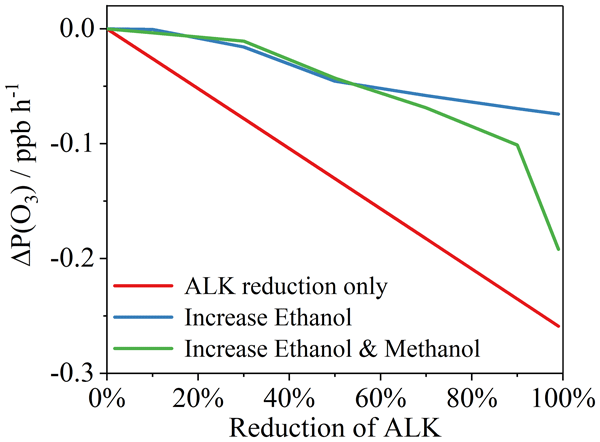
Jianghao Li, Alastair C. Lewis, Jim R. Hopkins, Stephen J. Andrews, Tim Murrells, Neil Passant, Ben Richmond, Siqi Hou, William J. Bloss, Roy M. Harrison, and Zongbo Shi
Atmos. Chem. Phys., 24, 6219–6231, https://doi.org/10.5194/acp-24-6219-2024, https://doi.org/10.5194/acp-24-6219-2024, 2024
Short summary
Short summary
A summertime ozone event at an urban site in Birmingham is sensitive to volatile organic compounds (VOCs) – particularly those of oxygenated VOCs. The roles of anthropogenic VOC sources in urban ozone chemistry are examined by integrating the 1990–2019 national atmospheric emission inventory into model scenarios. Road transport remains the most powerful means of further reducing ozone in this case study, but the benefits may be offset if solvent emissions of VOCs continue to increase.

Liangbin Wu, Cheng Wu, Tao Deng, Dui Wu, Mei Li, Yong Jie Li, and Zhen Zhou
Atmos. Meas. Tech., 17, 2917–2936, https://doi.org/10.5194/amt-17-2917-2024, https://doi.org/10.5194/amt-17-2917-2024, 2024
Short summary
Short summary
Field comparison of dual-spot (AE33) and single-spot (AE31) Aethalometers by full-year collocated measurements suggests that site-specific correction factors are needed to ensure the long-term data continuity for AE31-to-AE33 transition in black carbon monitoring networks; babs agrees well between AE33 and AE31, with slight variations by wavelength (slope: 0.87–1.04; R2: 0.95–0.97). A ~ 20 % difference in secondary brown carbon light absorption was found between AE33 and AE31.
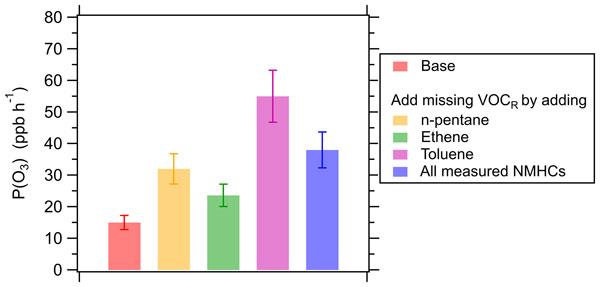
Wenjie Wang, Bin Yuan, Hang Su, Yafang Cheng, Jipeng Qi, Sihang Wang, Wei Song, Xinming Wang, Chaoyang Xue, Chaoqun Ma, Fengxia Bao, Hongli Wang, Shengrong Lou, and Min Shao
Atmos. Chem. Phys., 24, 4017–4027, https://doi.org/10.5194/acp-24-4017-2024, https://doi.org/10.5194/acp-24-4017-2024, 2024
Short summary
Short summary
This study investigates the important role of unmeasured volatile organic compounds (VOCs) in ozone formation. Based on results in a megacity of China, we show that unmeasured VOCs can contribute significantly to ozone fomation and also influence the determination of ozone control strategy. Our results show that these unmeasured VOCs are mainly from human sources.
Qian Li, Maor Gabay, Chen Dayan, Pawel Misztal, Alex Guenther, Erick Fredj, and Eran Tas
EGUsphere, https://doi.org/10.5194/egusphere-2024-717, https://doi.org/10.5194/egusphere-2024-717, 2024
Preprint archived
Short summary
Short summary
Biogenic volatile organic compounds (BVOCs) affect the climate and air quality, while their emission from terrestrial vegetation is affected by drought in a way that is not well characterized. Our study reveals that the instantaneous intraday changes in meteorological conditions serve as a better proxy for drought-related variations in BVOCs emission rate than the absolute values of the meteorological parameters, advancing our understanding of BVOCs emission effects under climate change.
Yang Liu, Raluca Ciuraru, Letizia Abis, Crist Amelynck, Pauline Buysse, Alex Guenther, Bernard Heinesch, Florence Lafouge, Florent Levavasseur, Benjamin Loubet, Auriane Voyard, and Raia-Silvia Massad
EGUsphere, https://doi.org/10.5194/egusphere-2024-530, https://doi.org/10.5194/egusphere-2024-530, 2024
Preprint archived
Short summary
Short summary
This paper reviews the emission and emission processes of biogenic volatile organic compounds (BVOCs) from various crops and soil under different management practices, highlighting challenges in modeling the emissions and proposing a conceptual model for estimation. The aim of this paper is to present agricultural BVOC data and related mechanistic processes to enhance model accuracy and reduce uncertainties in estimating BVOC emissions from agriculture.
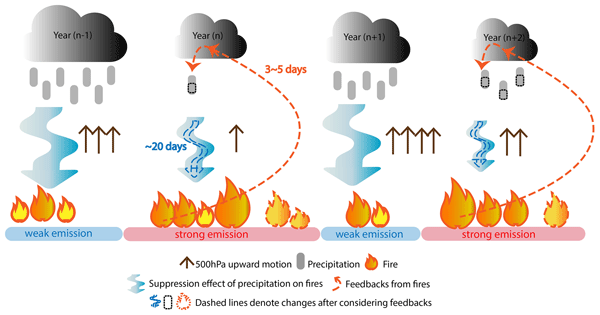
Yawen Liu, Yun Qian, Philip J. Rasch, Kai Zhang, Lai-yung Ruby Leung, Yuhang Wang, Minghuai Wang, Hailong Wang, Xin Huang, and Xiu-Qun Yang
Atmos. Chem. Phys., 24, 3115–3128, https://doi.org/10.5194/acp-24-3115-2024, https://doi.org/10.5194/acp-24-3115-2024, 2024
Short summary
Short summary
Fire management has long been a challenge. Here we report that spring-peak fire activity over southern Mexico and Central America (SMCA) has a distinct quasi-biennial signal by measuring multiple fire metrics. This signal is initially driven by quasi-biennial variability in precipitation and is further amplified by positive feedback of fire–precipitation interaction at short timescales. This work highlights the importance of fire–climate interactions in shaping fires on an interannual scale.
Nan Wang, Yunsong Du, Dongyang Chen, Haiyan Meng, Xi Chen, Li Zhou, Guangming Shi, Yu Zhan, Miao Feng, Wei Li, Mulan Chen, Zhenliang Li, and Fumo Yang
Atmos. Chem. Phys., 24, 3029–3042, https://doi.org/10.5194/acp-24-3029-2024, https://doi.org/10.5194/acp-24-3029-2024, 2024
Short summary
Short summary
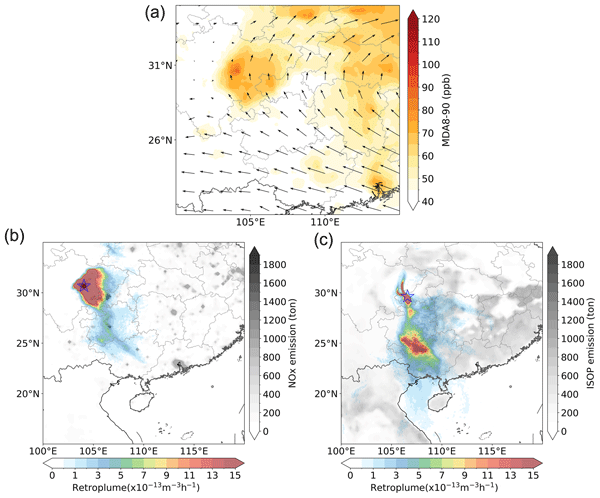
In the scorching August 2022 heatwave, China's Sichuan Basin saw a stark contrast in ozone (O3) levels between Chengdu and Chongqing. The regional disparities were studied considering meteorology, precursors, photochemistry, and transportation. The study highlighted the importance of tailored pollution control measures and underlined the necessity for region-specific strategies to combat O3 pollution on a regional scale.
Shiyi Lai, Ximeng Qi, Xin Huang, Sijia Lou, Xuguang Chi, Liangduo Chen, Chong Liu, Yuliang Liu, Chao Yan, Mengmeng Li, Tengyu Liu, Wei Nie, Veli-Matti Kerminen, Tuukka Petäjä, Markku Kulmala, and Aijun Ding
Atmos. Chem. Phys., 24, 2535–2553, https://doi.org/10.5194/acp-24-2535-2024, https://doi.org/10.5194/acp-24-2535-2024, 2024
Short summary
Short summary
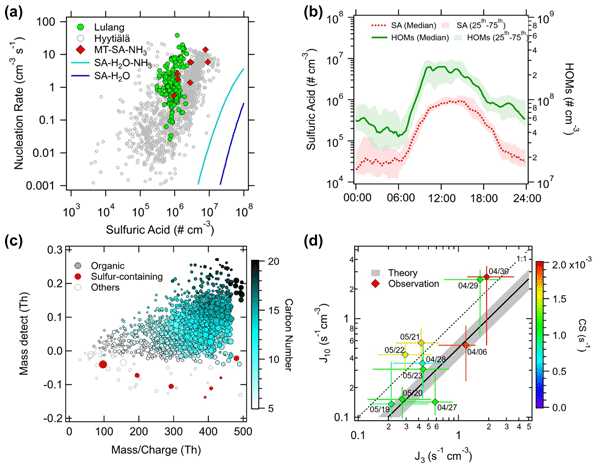
By combining in situ measurements and chemical transport modeling, this study investigates new particle formation (NPF) on the southeastern Tibetan Plateau. We found that the NPF was driven by the presence of biogenic gases and the transport of anthropogenic precursors. The NPF was vertically heterogeneous and shaped by the vertical mixing. This study highlights the importance of anthropogenic–biogenic interactions and meteorological dynamics in NPF in this climate-sensitive region.
Jean-François Müller, Trissevgeni Stavrakou, Glenn-Michael Oomen, Beata Opacka, Isabelle De Smedt, Alex Guenther, Corinne Vigouroux, Bavo Langerock, Carlos Augusto Bauer Aquino, Michel Grutter, James Hannigan, Frank Hase, Rigel Kivi, Erik Lutsch, Emmanuel Mahieu, Maria Makarova, Jean-Marc Metzger, Isamu Morino, Isao Murata, Tomoo Nagahama, Justus Notholt, Ivan Ortega, Mathias Palm, Amelie Röhling, Wolfgang Stremme, Kimberly Strong, Ralf Sussmann, Yao Té, and Alan Fried
Atmos. Chem. Phys., 24, 2207–2237, https://doi.org/10.5194/acp-24-2207-2024, https://doi.org/10.5194/acp-24-2207-2024, 2024
Short summary
Short summary
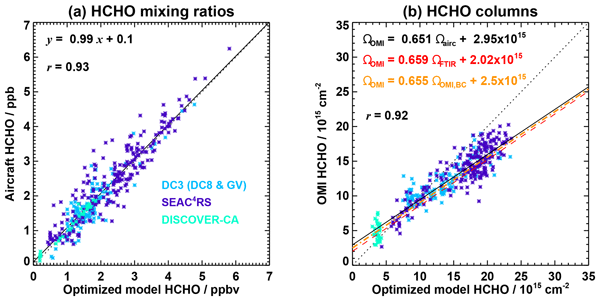
Formaldehyde observations from satellites can be used to constrain the emissions of volatile organic compounds, but those observations have biases. Using an atmospheric model, aircraft and ground-based remote sensing data, we quantify these biases, propose a correction to the data, and assess the consequence of this correction for the evaluation of emissions.
Chen He, Hanxiong Che, Zier Bao, Yiliang Liu, Qing Li, Miao Hu, Jiawei Zhou, Shumin Zhang, Xiaojiang Yao, Quan Shi, Chunmao Chen, Yan Han, Lingshuo Meng, Xin Long, Fumo Yang, and Yang Chen
Atmos. Chem. Phys., 24, 1627–1639, https://doi.org/10.5194/acp-24-1627-2024, https://doi.org/10.5194/acp-24-1627-2024, 2024
Short summary
Short summary
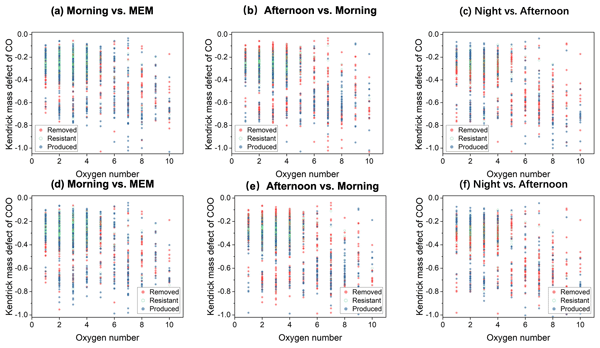
We examined the daily evolution of high molecular-weight organic compounds with a molecular weight of up to 1000 Da in order to comprehend their behaviors in the atmosphere under actual conditions. These compounds were proven to undergo multi-generation oxidation, carboxylation, and nitrification via both day- and nighttime chemistry.
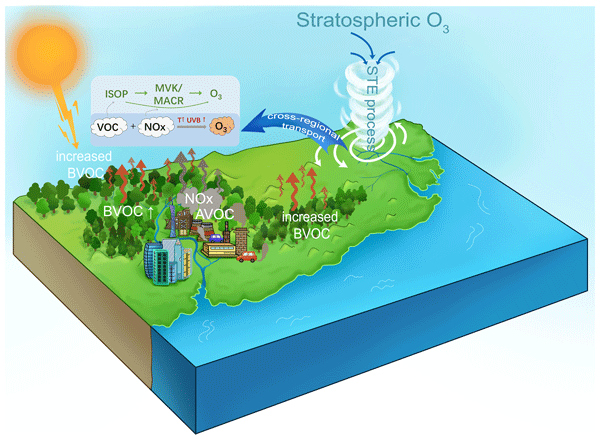
Nan Wang, Hongyue Wang, Xin Huang, Xi Chen, Yu Zou, Tao Deng, Tingyuan Li, Xiaopu Lyu, and Fumo Yang
Atmos. Chem. Phys., 24, 1559–1570, https://doi.org/10.5194/acp-24-1559-2024, https://doi.org/10.5194/acp-24-1559-2024, 2024
Short summary
Short summary
This study explores the influence of extreme-weather-induced natural processes on ozone pollution, which is often overlooked. By analyzing meteorological factors, natural emissions, chemistry pathways and atmospheric transport, we discovered that these natural processes could substantially exacerbate ozone pollution. The findings contribute to a deeper understanding of ozone pollution and offer valuable insights for controlling ozone pollution in the context of global warming.
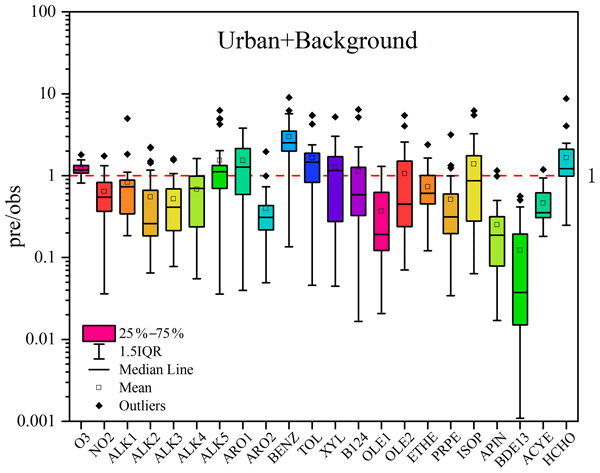
Yongliang She, Jingyi Li, Xiaopu Lyu, Hai Guo, Momei Qin, Xiaodong Xie, Kangjia Gong, Fei Ye, Jianjiong Mao, Lin Huang, and Jianlin Hu
Atmos. Chem. Phys., 24, 219–233, https://doi.org/10.5194/acp-24-219-2024, https://doi.org/10.5194/acp-24-219-2024, 2024
Short summary
Short summary
In this study, we use multi-site volatile organic compound (VOC) measurements to evaluate the CMAQ-model-predicted VOCs and assess the impacts of VOC bias on O3 simulation. Our results demonstrate that current modeling setups and emission inventories are likely to underpredict VOC concentrations, and this underprediction of VOCs contributes to lower O3 predictions in China.
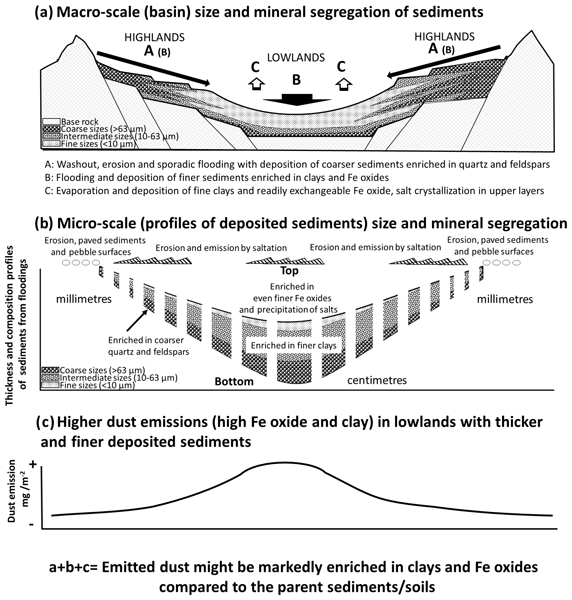
Adolfo González-Romero, Cristina González-Flórez, Agnesh Panta, Jesús Yus-Díez, Cristina Reche, Patricia Córdoba, Natalia Moreno, Andres Alastuey, Konrad Kandler, Martina Klose, Clarissa Baldo, Roger N. Clark, Zongbo Shi, Xavier Querol, and Carlos Pérez García-Pando
Atmos. Chem. Phys., 23, 15815–15834, https://doi.org/10.5194/acp-23-15815-2023, https://doi.org/10.5194/acp-23-15815-2023, 2023
Short summary
Short summary
The effect of dust emitted from desertic surfaces upon climate and ecosystems depends on size and mineralogy, but data from soil mineral atlases of desert soils are scarce. We performed particle-size distribution, mineralogy, and Fe speciation in southern Morocco. Results show coarser particles with high quartz proportion are near the elevated areas, while in depressed areas, sizes are finer, and proportions of clays and nano-Fe oxides are higher. This difference is important for dust modelling.
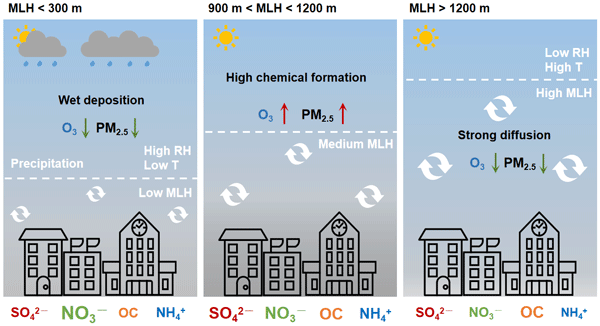
Jiaqi Wang, Jian Gao, Fei Che, Xin Yang, Yuanqin Yang, Lei Liu, Yan Xiang, and Haisheng Li
Atmos. Chem. Phys., 23, 14715–14733, https://doi.org/10.5194/acp-23-14715-2023, https://doi.org/10.5194/acp-23-14715-2023, 2023
Short summary
Short summary
Regional-scale observations of surface O3, PM2.5 and its major chemical species, mixing layer height (MLH), and other meteorological parameters were made in the North China Plain during summer. Unlike the cold season, synchronized increases in MDA8 O3 and PM2.5 under medium MLH conditions have been witnessed. The increasing trend of PM2.5 was associated with enhanced secondary chemical formation. The correlation between MLH and secondary air pollutants should be treated with care in hot seasons.
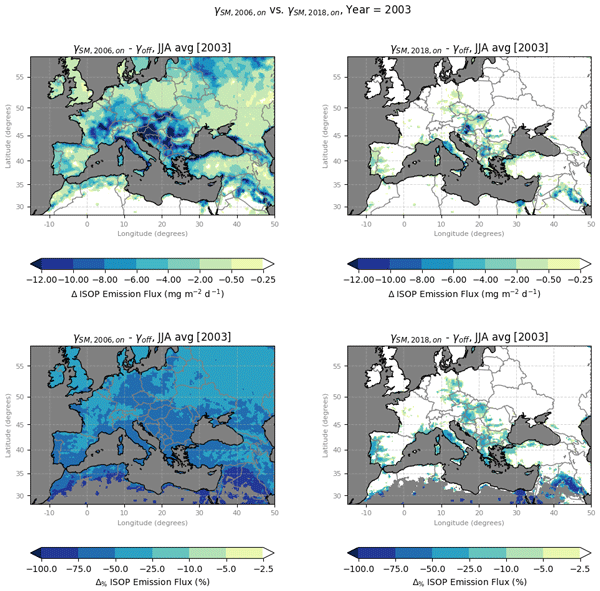
Susanna Strada, Andrea Pozzer, Graziano Giuliani, Erika Coppola, Fabien Solmon, Xiaoyan Jiang, Alex Guenther, Efstratios Bourtsoukidis, Dominique Serça, Jonathan Williams, and Filippo Giorgi
Atmos. Chem. Phys., 23, 13301–13327, https://doi.org/10.5194/acp-23-13301-2023, https://doi.org/10.5194/acp-23-13301-2023, 2023
Short summary
Short summary
Water deficit modifies emissions of isoprene, an aromatic compound released by plants that influences the production of an air pollutant such as ozone. Numerical modelling shows that, during the warmest and driest summers, isoprene decreases between −20 and −60 % over the Euro-Mediterranean region, while near-surface ozone only diminishes by a few percent. Decreases in isoprene emissions not only happen under dry conditions, but also could occur after prolonged or repeated water deficits.
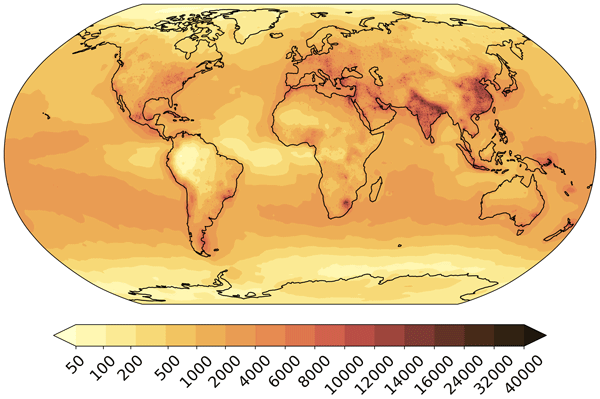
Matthias Kohl, Jos Lelieveld, Sourangsu Chowdhury, Sebastian Ehrhart, Disha Sharma, Yafang Cheng, Sachchida Nand Tripathi, Mathew Sebastian, Govindan Pandithurai, Hongli Wang, and Andrea Pozzer
Atmos. Chem. Phys., 23, 13191–13215, https://doi.org/10.5194/acp-23-13191-2023, https://doi.org/10.5194/acp-23-13191-2023, 2023
Short summary
Short summary
Knowledge on atmospheric ultrafine particles (UFPs) with a diameter smaller than 100 nm is crucial for public health and the hydrological cycle. We present a new global dataset of UFP concentrations at the Earth's surface derived with a comprehensive chemistry–climate model and evaluated with ground-based observations. The evaluation results are combined with high-resolution primary emissions to downscale UFP concentrations to an unprecedented horizontal resolution of 0.1° × 0.1°.
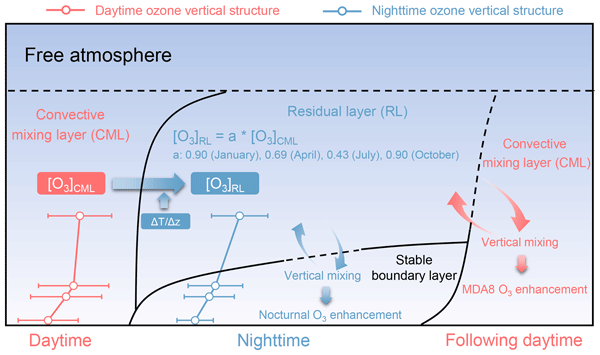
Guowen He, Cheng He, Haofan Wang, Xiao Lu, Chenglei Pei, Xiaonuan Qiu, Chenxi Liu, Yiming Wang, Nanxi Liu, Jinpu Zhang, Lei Lei, Yiming Liu, Haichao Wang, Tao Deng, Qi Fan, and Shaojia Fan
Atmos. Chem. Phys., 23, 13107–13124, https://doi.org/10.5194/acp-23-13107-2023, https://doi.org/10.5194/acp-23-13107-2023, 2023
Short summary
Short summary
We analyze nighttime ozone in the lower boundary layer (up to 500 m) from the 2017–2019 measurements at the Canton Tower and the WRF-CMAQ model. We identify a strong ability of the residual layer to store daytime ozone in the convective mixing layer, investigate the chemical and meteorological factors controlling nighttime ozone in the residual layer, and quantify the contribution of nighttime ozone in the residual layer to both the nighttime and the following day’s surface ozone air quality.
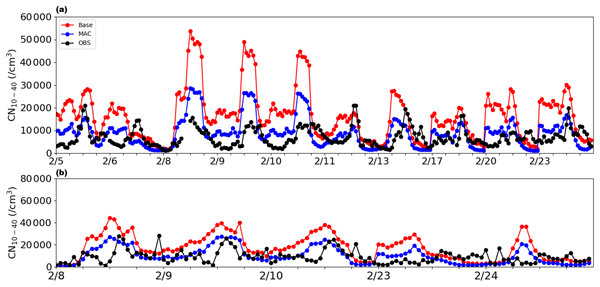
Chupeng Zhang, Shangfei Hai, Yang Gao, Yuhang Wang, Shaoqing Zhang, Lifang Sheng, Bin Zhao, Shuxiao Wang, Jingkun Jiang, Xin Huang, Xiaojing Shen, Junying Sun, Aura Lupascu, Manish Shrivastava, Jerome D. Fast, Wenxuan Cheng, Xiuwen Guo, Ming Chu, Nan Ma, Juan Hong, Qiaoqiao Wang, Xiaohong Yao, and Huiwang Gao
Atmos. Chem. Phys., 23, 10713–10730, https://doi.org/10.5194/acp-23-10713-2023, https://doi.org/10.5194/acp-23-10713-2023, 2023
Short summary
Short summary
New particle formation is an important source of atmospheric particles, exerting critical influences on global climate. Numerical models are vital tools to understanding atmospheric particle evolution, which, however, suffer from large biases in simulating particle numbers. Here we improve the model chemical processes governing particle sizes and compositions. The improved model reveals substantial contributions of newly formed particles to climate through effects on cloud condensation nuclei.
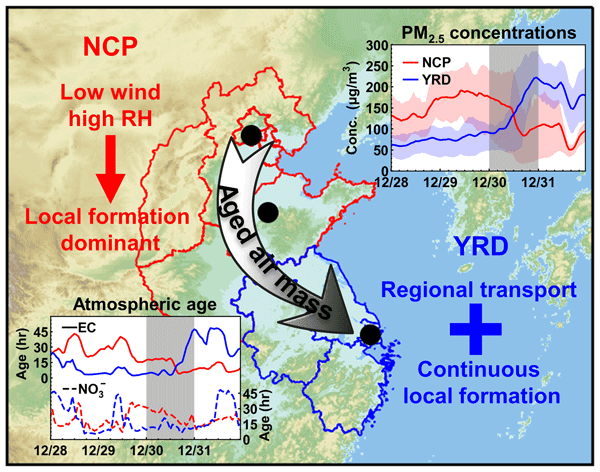
Xiaodong Xie, Jianlin Hu, Momei Qin, Song Guo, Min Hu, Dongsheng Ji, Hongli Wang, Shengrong Lou, Cheng Huang, Chong Liu, Hongliang Zhang, Qi Ying, Hong Liao, and Yuanhang Zhang
Atmos. Chem. Phys., 23, 10563–10578, https://doi.org/10.5194/acp-23-10563-2023, https://doi.org/10.5194/acp-23-10563-2023, 2023
Short summary
Short summary
The atmospheric age of particles reflects how long particles have been formed and suspended in the atmosphere, which is closely associated with the evolution processes of particles. An analysis of the atmospheric age of PM2.5 provides a unique perspective on the evolution processes of different PM2.5 components. The results also shed lights on how to design effective emission control actions under unfavorable meteorological conditions.
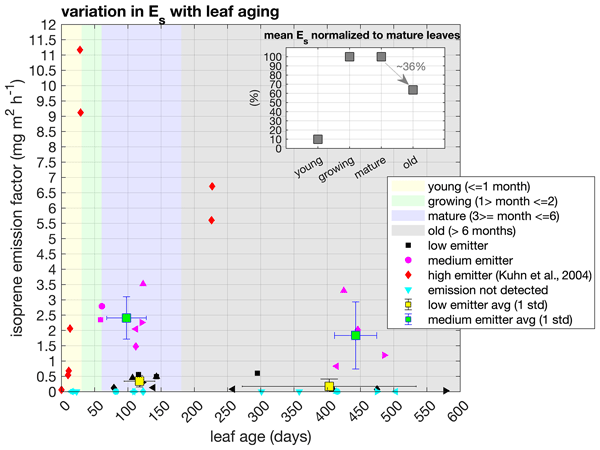
Eliane Gomes Alves, Raoni Aquino Santana, Cléo Quaresma Dias-Júnior, Santiago Botía, Tyeen Taylor, Ana Maria Yáñez-Serrano, Jürgen Kesselmeier, Efstratios Bourtsoukidis, Jonathan Williams, Pedro Ivo Lembo Silveira de Assis, Giordane Martins, Rodrigo de Souza, Sérgio Duvoisin Júnior, Alex Guenther, Dasa Gu, Anywhere Tsokankunku, Matthias Sörgel, Bruce Nelson, Davieliton Pinto, Shujiro Komiya, Diogo Martins Rosa, Bettina Weber, Cybelli Barbosa, Michelle Robin, Kenneth J. Feeley, Alvaro Duque, Viviana Londoño Lemos, Maria Paula Contreras, Alvaro Idarraga, Norberto López, Chad Husby, Brett Jestrow, and Iván Mauricio Cely Toro
Atmos. Chem. Phys., 23, 8149–8168, https://doi.org/10.5194/acp-23-8149-2023, https://doi.org/10.5194/acp-23-8149-2023, 2023
Short summary
Short summary
Isoprene is emitted mainly by plants and can influence atmospheric chemistry and air quality. But, there are uncertainties in model emission estimates and follow-up atmospheric processes. In our study, with long-term observational datasets of isoprene and biological and environmental factors from central Amazonia, we show that isoprene emission estimates could be improved when biological processes were mechanistically incorporated into the model.
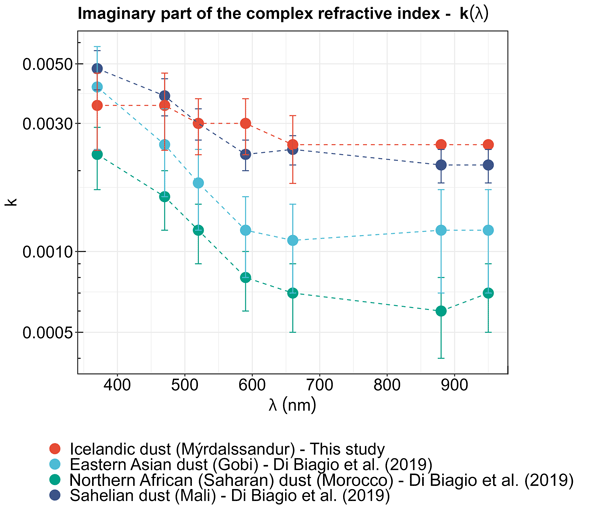
Clarissa Baldo, Paola Formenti, Claudia Di Biagio, Gongda Lu, Congbo Song, Mathieu Cazaunau, Edouard Pangui, Jean-Francois Doussin, Pavla Dagsson-Waldhauserova, Olafur Arnalds, David Beddows, A. Robert MacKenzie, and Zongbo Shi
Atmos. Chem. Phys., 23, 7975–8000, https://doi.org/10.5194/acp-23-7975-2023, https://doi.org/10.5194/acp-23-7975-2023, 2023
Short summary
Short summary
This paper presents new shortwave spectral complex refractive index and single scattering albedo data for Icelandic dust. Our results show that the imaginary part of the complex refractive index of Icelandic dust is at the upper end of the range of low-latitude dust. Furthermore, we observed that Icelandic dust is more absorbing towards the near-infrared, which we attribute to its high magnetite content. These findings are important for modeling dust aerosol radiative effects in the Arctic.
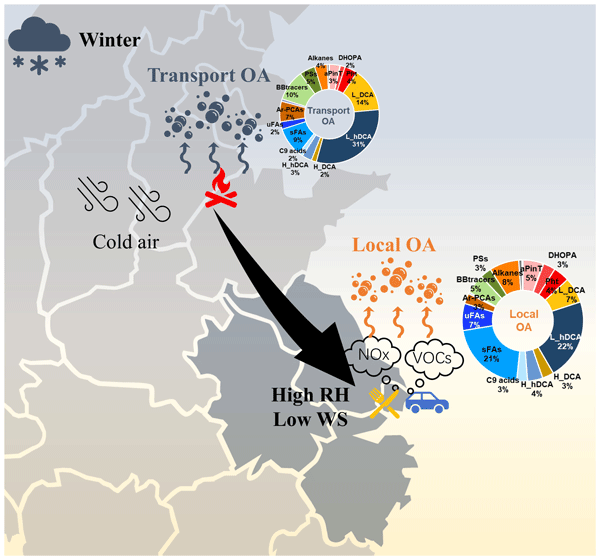
Shuhui Zhu, Min Zhou, Liping Qiao, Dan Dan Huang, Qiongqiong Wang, Shan Wang, Yaqin Gao, Shengao Jing, Qian Wang, Hongli Wang, Changhong Chen, Cheng Huang, and Jian Zhen Yu
Atmos. Chem. Phys., 23, 7551–7568, https://doi.org/10.5194/acp-23-7551-2023, https://doi.org/10.5194/acp-23-7551-2023, 2023
Short summary
Short summary
Organic aerosol (OA) is increasingly important in urban PM2.5 pollution as inorganic ions are becoming lower. We investigated the chemical characteristics of OA during nine episodes in Shanghai. The availability of bi-hourly measured molecular markers revealed that the control of local urban sources such as vehicular and cooking emissions lessened the severity of local episodes. Regional control of precursors and biomass burning would reduce PM2.5 episodes influenced by regional transport.
Guangdong Niu, Ximeng Qi, Liangduo Chen, Lian Xue, Shiyi Lai, Xin Huang, Jiaping Wang, Xuguang Chi, Wei Nie, Veli-Matti Kerminen, Tuukka Petäjä, Markku Kulmala, and Aijun Ding
Atmos. Chem. Phys., 23, 7521–7534, https://doi.org/10.5194/acp-23-7521-2023, https://doi.org/10.5194/acp-23-7521-2023, 2023
Short summary
Short summary
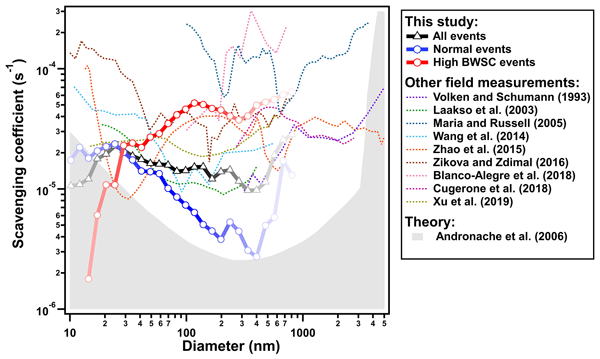
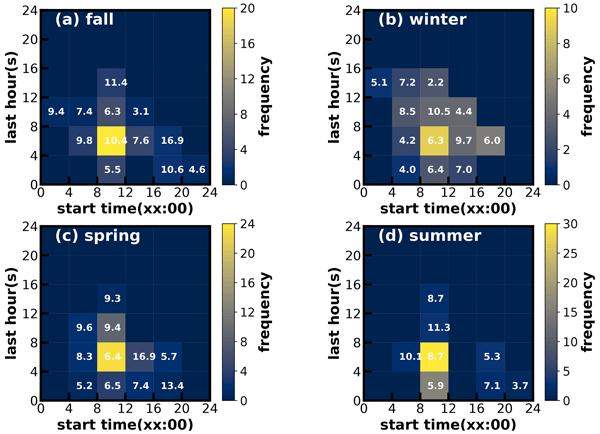
The reported below-cloud wet-scavenging coefficients (BWSCs) are much higher than theoretical data, but the reason remains unclear. Based on long-term observation, we find that air mass changing during rainfall events causes the overestimation of BWSCs. Thus, the discrepancy in BWSCs between observation and theory is not as large as currently believed. To obtain reasonable BWSCs and parameterizations from field observations, the effect of air mass changes needs to be considered.
Yaqin Gao, Hongli Wang, Lingling Yuan, Shengao Jing, Bin Yuan, Guofeng Shen, Liang Zhu, Abigail Koss, Yingjie Li, Qian Wang, Dan Dan Huang, Shuhui Zhu, Shikang Tao, Shengrong Lou, and Cheng Huang
Atmos. Chem. Phys., 23, 6633–6646, https://doi.org/10.5194/acp-23-6633-2023, https://doi.org/10.5194/acp-23-6633-2023, 2023
Short summary
Short summary
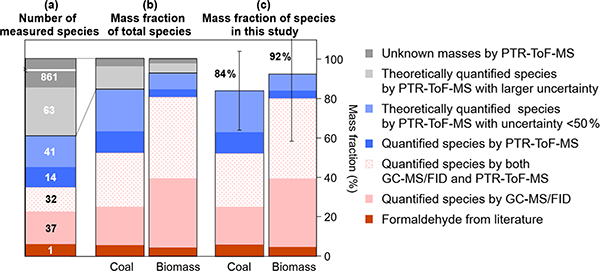
A near-complete speciation of reactive organic gases from residential combustion was developed to get more insights into their atmospheric effects. Oxygenated species, higher hydrocarbons and nitrogen-containing species played larger roles in these emissions compared with common hydrocarbons. Based on the near-complete speciation, these emissions were largely underestimated, leading to more underestimation of their hydroxyl radical reactivity and secondary organic aerosol formation potential.
Joanna E. Dyson, Lisa K. Whalley, Eloise J. Slater, Robert Woodward-Massey, Chunxiang Ye, James D. Lee, Freya Squires, James R. Hopkins, Rachel E. Dunmore, Marvin Shaw, Jacqueline F. Hamilton, Alastair C. Lewis, Stephen D. Worrall, Asan Bacak, Archit Mehra, Thomas J. Bannan, Hugh Coe, Carl J. Percival, Bin Ouyang, C. Nicholas Hewitt, Roderic L. Jones, Leigh R. Crilley, Louisa J. Kramer, W. Joe F. Acton, William J. Bloss, Supattarachai Saksakulkrai, Jingsha Xu, Zongbo Shi, Roy M. Harrison, Simone Kotthaus, Sue Grimmond, Yele Sun, Weiqi Xu, Siyao Yue, Lianfang Wei, Pingqing Fu, Xinming Wang, Stephen R. Arnold, and Dwayne E. Heard
Atmos. Chem. Phys., 23, 5679–5697, https://doi.org/10.5194/acp-23-5679-2023, https://doi.org/10.5194/acp-23-5679-2023, 2023
Short summary
Short summary
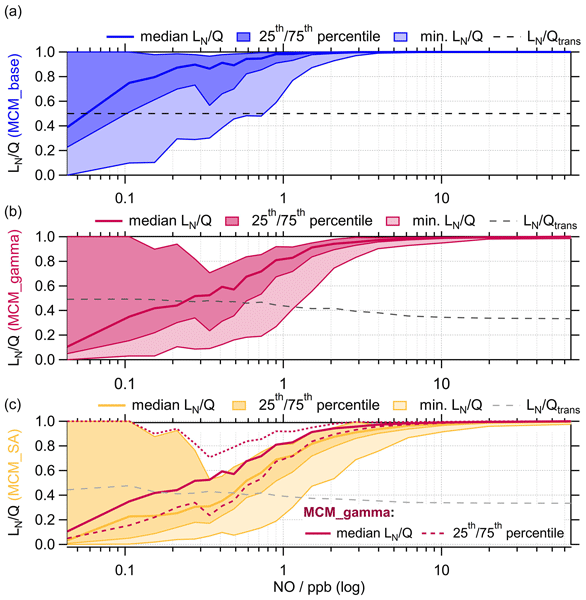
The hydroxyl (OH) and closely coupled hydroperoxyl (HO2) radicals are vital for their role in the removal of atmospheric pollutants. In less polluted regions, atmospheric models over-predict HO2 concentrations. In this modelling study, the impact of heterogeneous uptake of HO2 onto aerosol surfaces on radical concentrations and the ozone production regime in Beijing in the summertime is investigated, and the implications for emissions policies across China are considered.

Liyuan Zhou, Zhancong Liang, Brix Raphael Go, Rosemarie Ann Infante Cuevas, Rongzhi Tang, Mei Li, Chunlei Cheng, and Chak K. Chan
Atmos. Chem. Phys., 23, 5251–5261, https://doi.org/10.5194/acp-23-5251-2023, https://doi.org/10.5194/acp-23-5251-2023, 2023
Short summary
Short summary
This study reveals the sulfate formation in photosensitized particles from biomass burning under UV and SO2, of which the relative atmospheric importance in sulfate production was qualitatively compared to nitrate photolysis. On the basis of single-particle aerosol mass spectrometry measurements, the number percentage of sulfate-containing particles and relative peak area of sulfate in single-particle spectra exhibited a descending order of 3,4-dimethoxybenzaldehyde > vanillin > syringaldehyde.
Miaomiao Zhai, Ye Kuang, Li Liu, Yao He, Biao Luo, Wanyun Xu, Jiangchuan Tao, Yu Zou, Fei Li, Changqin Yin, Chunhui Li, Hanbing Xu, and Xuejiao Deng
Atmos. Chem. Phys., 23, 5119–5133, https://doi.org/10.5194/acp-23-5119-2023, https://doi.org/10.5194/acp-23-5119-2023, 2023
Short summary
Short summary
Using year-long aerosol mass spectrometer measurements, roles of secondary organic aerosols (SOA) during haze formations in an urban area of southern China were systematically analyzed. Almost all severe haze events were accompanied by continuous daytime and nighttime SOA formations, whereas coordinated gas-phase photochemistry and aqueous-phase reactions likely played significant roles in quick daytime SOA formations, and nitrate radicals played significant roles in nighttime SOA formations.
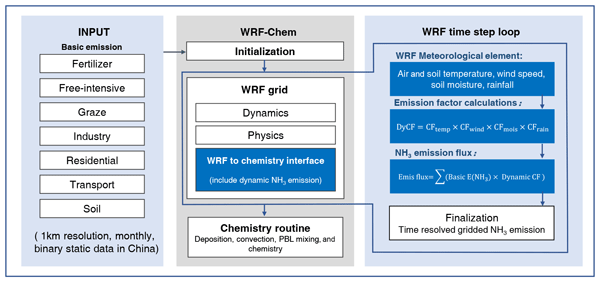
Chuanhua Ren, Xin Huang, Tengyu Liu, Yu Song, Zhang Wen, Xuejun Liu, Aijun Ding, and Tong Zhu
Geosci. Model Dev., 16, 1641–1659, https://doi.org/10.5194/gmd-16-1641-2023, https://doi.org/10.5194/gmd-16-1641-2023, 2023
Short summary
Short summary
Ammonia in the atmosphere has wide impacts on the ecological environment and air quality, and its emission from soil volatilization is highly sensitive to meteorology, making it challenging to be well captured in models. We developed a dynamic emission model capable of calculating ammonia emission interactively with meteorological and soil conditions. Such a coupling of soil emission with meteorology provides a better understanding of ammonia emission and its contribution to atmospheric aerosol.
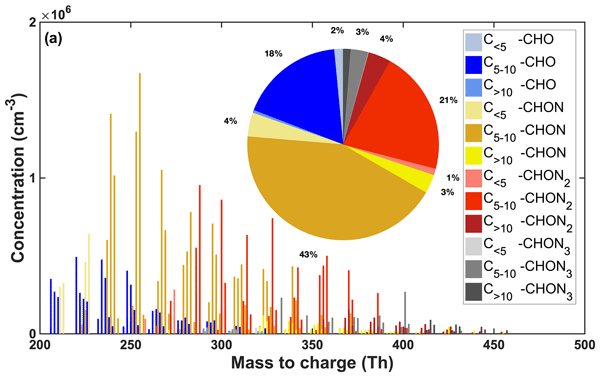
Yiqun Lu, Yingge Ma, Dan Dan Huang, Shengrong Lou, Sheng'ao Jing, Yaqin Gao, Hongli Wang, Yanjun Zhang, Hui Chen, Yunhua Chang, Naiqiang Yan, Jianmin Chen, Christian George, Matthieu Riva, and Cheng Huang
Atmos. Chem. Phys., 23, 3233–3245, https://doi.org/10.5194/acp-23-3233-2023, https://doi.org/10.5194/acp-23-3233-2023, 2023
Short summary
Short summary
N-containing oxygenated organic molecules have been identified as important precursors of aerosol particles. We used an ultra-high-resolution mass spectrometer coupled with an online sample inlet to accurately measure their molecular composition, concentration level and variation patterns. We show their formation process and influencing factors in a Chinese megacity involving various volatile organic compound precursors and atmospheric oxidants, and we highlight the influence of PM2.5 episodes.
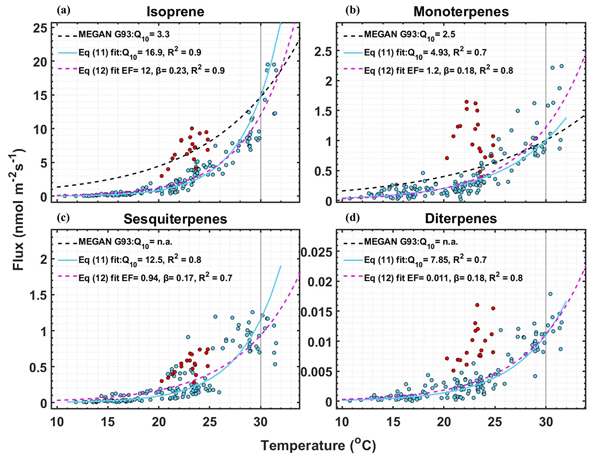
Lejish Vettikkat, Pasi Miettinen, Angela Buchholz, Pekka Rantala, Hao Yu, Simon Schallhart, Tuukka Petäjä, Roger Seco, Elisa Männistö, Markku Kulmala, Eeva-Stiina Tuittila, Alex B. Guenther, and Siegfried Schobesberger
Atmos. Chem. Phys., 23, 2683–2698, https://doi.org/10.5194/acp-23-2683-2023, https://doi.org/10.5194/acp-23-2683-2023, 2023
Short summary
Short summary
Wetlands cover a substantial fraction of the land mass in the northern latitudes, from northern Europe to Siberia and Canada. Yet, their isoprene and terpene emissions remain understudied. Here, we used a state-of-the-art measurement technique to quantify ecosystem-scale emissions from a boreal wetland during an unusually warm spring/summer. We found that the emissions from this wetland were (a) higher and (b) even more strongly dependent on temperature than commonly thought.
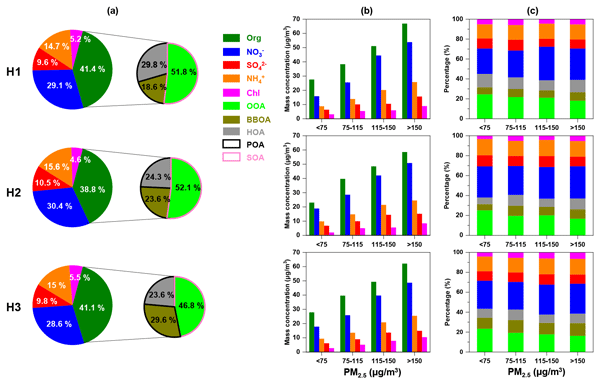
Zhier Bao, Xinyi Zhang, Qing Li, Jiawei Zhou, Guangming Shi, Li Zhou, Fumo Yang, Shaodong Xie, Dan Zhang, Chongzhi Zhai, Zhenliang Li, Chao Peng, and Yang Chen
Atmos. Chem. Phys., 23, 1147–1167, https://doi.org/10.5194/acp-23-1147-2023, https://doi.org/10.5194/acp-23-1147-2023, 2023
Short summary
Short summary
We characterised non-refractory fine particulate matter (PM2.5) during winter in the Sichuan Basin (SCB), Southwest China. The factors driving severe aerosol pollution were revealed, highlighting the importance of rapid nitrate formation and intensive biomass burning. Nitrate was primarily formed through gas-phase oxidation during daytime and aqueous-phase oxidation during nighttime. Controlling nitrate and biomass burning will benefit the mitigation of haze formation in the SCB.
Jingyu An, Cheng Huang, Dandan Huang, Momei Qin, Huan Liu, Rusha Yan, Liping Qiao, Min Zhou, Yingjie Li, Shuhui Zhu, Qian Wang, and Hongli Wang
Atmos. Chem. Phys., 23, 323–344, https://doi.org/10.5194/acp-23-323-2023, https://doi.org/10.5194/acp-23-323-2023, 2023
Short summary
Short summary
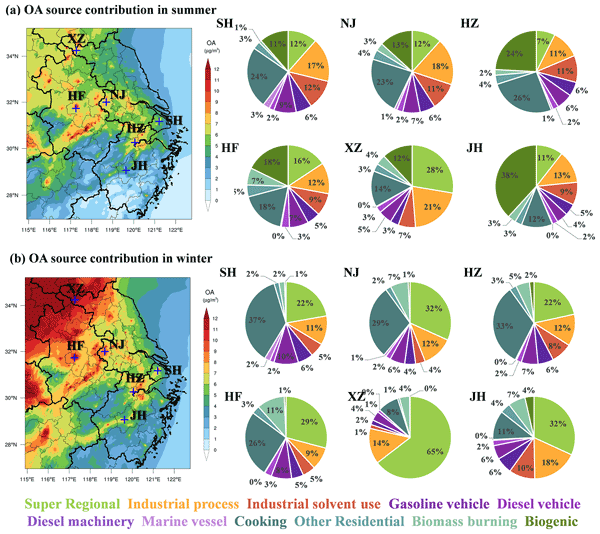
This paper aims to build up an approach to establish a high-resolution emission inventory of intermediate-volatility and semi-volatile organic compounds in city-scale and detailed source categories and incorporate it into the CMAQ model. We believe this approach can be widely applied to improve the simulation of secondary organic aerosol and its source contributions.
Yarong Peng, Hongli Wang, Yaqin Gao, Shengao Jing, Shuhui Zhu, Dandan Huang, Peizhi Hao, Shengrong Lou, Tiantao Cheng, Cheng Huang, and Xuan Zhang
Atmos. Meas. Tech., 16, 15–28, https://doi.org/10.5194/amt-16-15-2023, https://doi.org/10.5194/amt-16-15-2023, 2023
Short summary
Short summary
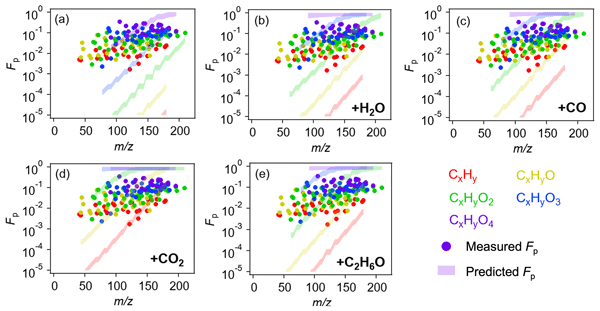
This work examined the phase partitioning behaviors of organic compounds at hourly resolution in ambient conditions with the use of the CHemical Analysis of aeRosols ONline (CHARON) inlet coupled to a proton-transfer-reaction time-of-flight mass spectrometer (PTR-ToF-MS). Properly accounting for the neutral losses of small moieties during the molecular feature extraction from PTR mass spectra could significantly reduce uncertainties associated with the gas–particle partitioning measurements.
Zhancong Liang, Liyuan Zhou, Xinyue Li, Rosemarie Ann Infante Cuevas, Rongzhi Tang, Mei Li, Chunlei Cheng, Yangxi Chu, and Chak Keung Chan
Atmos. Chem. Phys. Discuss., https://doi.org/10.5194/acp-2022-838, https://doi.org/10.5194/acp-2022-838, 2022
Preprint withdrawn
Short summary
Short summary
Incense burning is a common religious ritual, especially in Asian and African communities, with massive particles emitted. While previous research mainly focused on the chemical compositions and potential health impacts of fresh incense particles, our work reveals that nitrate, accompanied by SOA, can rapidly form in incense-burning particles upon photochemical oxidation in the atmosphere. This finding could deepen our understanding of air pollution caused by religious activities.
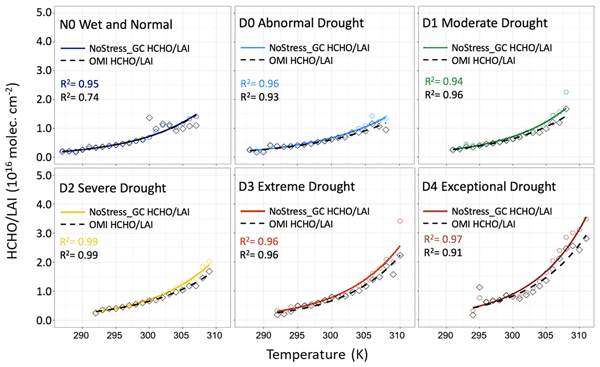
Yuxuan Wang, Nan Lin, Wei Li, Alex Guenther, Joey C. Y. Lam, Amos P. K. Tai, Mark J. Potosnak, and Roger Seco
Atmos. Chem. Phys., 22, 14189–14208, https://doi.org/10.5194/acp-22-14189-2022, https://doi.org/10.5194/acp-22-14189-2022, 2022
Short summary
Short summary
Drought can cause large changes in biogenic isoprene emissions. In situ field observations of isoprene emissions during droughts are confined by spatial coverage and, thus, provide limited constraints. We derived a drought stress factor based on satellite HCHO data for MEGAN2.1 in the GEOS-Chem model using water stress and temperature. This factor reduces the overestimation of isoprene emissions during severe droughts and improves the simulated O3 and organic aerosol responses to droughts.
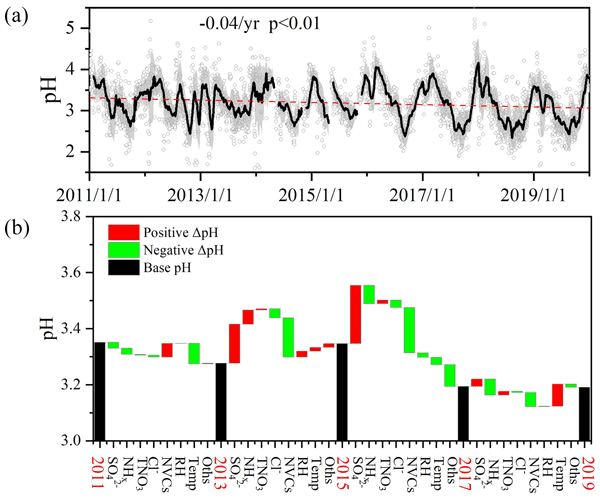
Min Zhou, Guangjie Zheng, Hongli Wang, Liping Qiao, Shuhui Zhu, DanDan Huang, Jingyu An, Shengrong Lou, Shikang Tao, Qian Wang, Rusha Yan, Yingge Ma, Changhong Chen, Yafang Cheng, Hang Su, and Cheng Huang
Atmos. Chem. Phys., 22, 13833–13844, https://doi.org/10.5194/acp-22-13833-2022, https://doi.org/10.5194/acp-22-13833-2022, 2022
Short summary
Short summary
The trend of aerosol pH and its drivers is crucial in understanding the multiphase formation pathways of aerosols. We reported the first trend analysis of aerosol pH from 2011 to 2019 in eastern China. Although significant variations of aerosol compositions were observed from 2011 to 2019, the aerosol pH estimated by model only slightly declined by 0.24. Our work shows that the opposite effects of SO42− and non-volatile cation changes play key roles in determining the moderate pH trend.
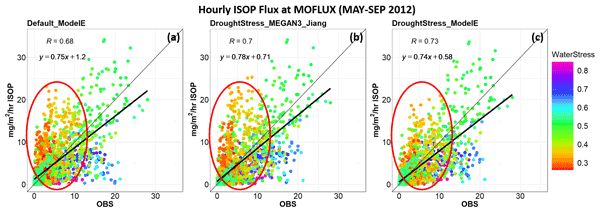
Elizabeth Klovenski, Yuxuan Wang, Susanne E. Bauer, Kostas Tsigaridis, Greg Faluvegi, Igor Aleinov, Nancy Y. Kiang, Alex Guenther, Xiaoyan Jiang, Wei Li, and Nan Lin
Atmos. Chem. Phys., 22, 13303–13323, https://doi.org/10.5194/acp-22-13303-2022, https://doi.org/10.5194/acp-22-13303-2022, 2022
Short summary
Short summary
Severe drought stresses vegetation and causes reduced emission of isoprene. We study the impact of including a new isoprene drought stress (yd) parameterization in NASA GISS ModelE called DroughtStress_ModelE, which is specifically tuned for ModelE. Inclusion of yd leads to better simulated isoprene emissions at the MOFLUX site during the severe drought of 2012, reduced overestimation of OMI satellite ΩHCHO (formaldehyde column), and improved simulated O3 (ozone) during drought.
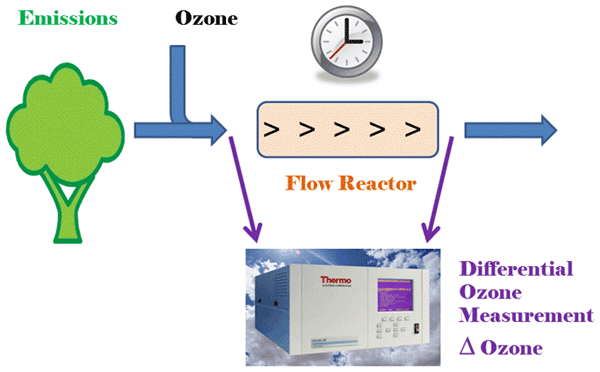
Detlev Helmig, Alex Guenther, Jacques Hueber, Ryan Daly, Wei Wang, Jeong-Hoo Park, Anssi Liikanen, and Arnaud P. Praplan
Atmos. Meas. Tech., 15, 5439–5454, https://doi.org/10.5194/amt-15-5439-2022, https://doi.org/10.5194/amt-15-5439-2022, 2022
Short summary
Short summary
This research demonstrates a new method for determination of the chemical reactivity of volatile organic compounds that are emitted from the leaves and needles of trees. These measurements allow elucidating if and how much of these emissions and their associated reactivity are captured and quantified by currently applicable chemical analysis methods.
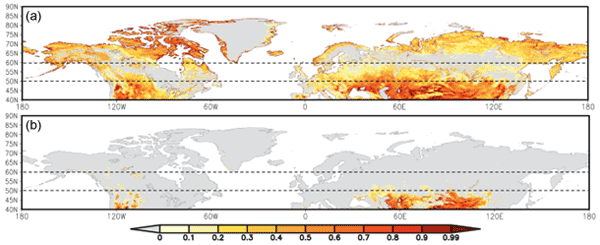
Outi Meinander, Pavla Dagsson-Waldhauserova, Pavel Amosov, Elena Aseyeva, Cliff Atkins, Alexander Baklanov, Clarissa Baldo, Sarah L. Barr, Barbara Barzycka, Liane G. Benning, Bojan Cvetkovic, Polina Enchilik, Denis Frolov, Santiago Gassó, Konrad Kandler, Nikolay Kasimov, Jan Kavan, James King, Tatyana Koroleva, Viktoria Krupskaya, Markku Kulmala, Monika Kusiak, Hanna K. Lappalainen, Michał Laska, Jerome Lasne, Marek Lewandowski, Bartłomiej Luks, James B. McQuaid, Beatrice Moroni, Benjamin Murray, Ottmar Möhler, Adam Nawrot, Slobodan Nickovic, Norman T. O’Neill, Goran Pejanovic, Olga Popovicheva, Keyvan Ranjbar, Manolis Romanias, Olga Samonova, Alberto Sanchez-Marroquin, Kerstin Schepanski, Ivan Semenkov, Anna Sharapova, Elena Shevnina, Zongbo Shi, Mikhail Sofiev, Frédéric Thevenet, Throstur Thorsteinsson, Mikhail Timofeev, Nsikanabasi Silas Umo, Andreas Uppstu, Darya Urupina, György Varga, Tomasz Werner, Olafur Arnalds, and Ana Vukovic Vimic
Atmos. Chem. Phys., 22, 11889–11930, https://doi.org/10.5194/acp-22-11889-2022, https://doi.org/10.5194/acp-22-11889-2022, 2022
Short summary
Short summary
High-latitude dust (HLD) is a short-lived climate forcer, air pollutant, and nutrient source. Our results suggest a northern HLD belt at 50–58° N in Eurasia and 50–55° N in Canada and at >60° N in Eurasia and >58° N in Canada. Our addition to the previously identified global dust belt (GDB) provides crucially needed information on the extent of active HLD sources with both direct and indirect impacts on climate and environment in remote regions, which are often poorly understood and predicted.
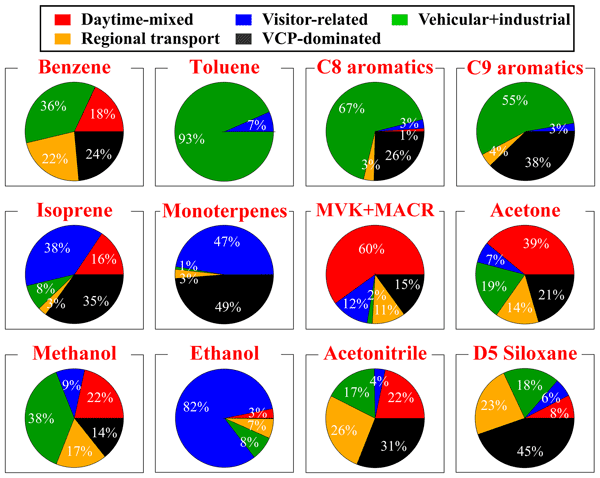
Xiao-Bing Li, Bin Yuan, Sihang Wang, Chunlin Wang, Jing Lan, Zhijie Liu, Yongxin Song, Xianjun He, Yibo Huangfu, Chenglei Pei, Peng Cheng, Suxia Yang, Jipeng Qi, Caihong Wu, Shan Huang, Yingchang You, Ming Chang, Huadan Zheng, Wenda Yang, Xuemei Wang, and Min Shao
Atmos. Chem. Phys., 22, 10567–10587, https://doi.org/10.5194/acp-22-10567-2022, https://doi.org/10.5194/acp-22-10567-2022, 2022
Short summary
Short summary
High-time-resolution measurements of volatile organic compounds (VOCs) were made using an online mass spectrometer at a 600 m tall tower in urban region. Compositions, temporal variations, and sources of VOCs were quantitatively investigated in this study. We find that VOC measurements in urban regions aloft could better characterize source characteristics of anthropogenic emissions. Our results could provide important implications in making future strategies for control of VOCs.
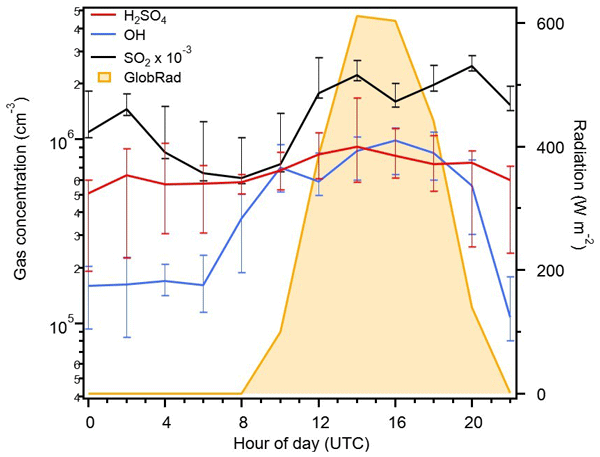
Deanna C. Myers, Saewung Kim, Steven Sjostedt, Alex B. Guenther, Roger Seco, Oscar Vega Bustillos, Julio Tota, Rodrigo A. F. Souza, and James N. Smith
Atmos. Chem. Phys., 22, 10061–10076, https://doi.org/10.5194/acp-22-10061-2022, https://doi.org/10.5194/acp-22-10061-2022, 2022
Short summary
Short summary
We present the first measurements of gas-phase sulfuric acid from the Amazon basin and evaluate the efficacy of existing sulfuric acid parameterizations in this understudied region. Sulfuric acid is produced during the daytime and nighttime, though current proxies underestimate nighttime production. These results illustrate the need for better parameterizations of sulfuric acid and its precursors that are informed by measurements across a broad range of locations.
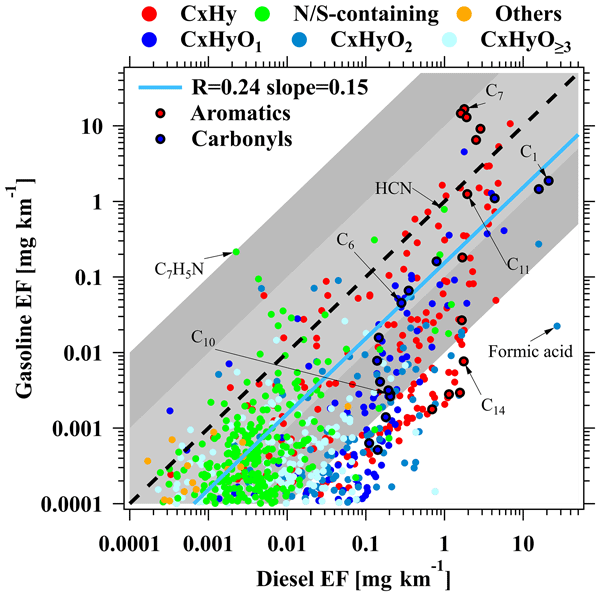
Sihang Wang, Bin Yuan, Caihong Wu, Chaomin Wang, Tiange Li, Xianjun He, Yibo Huangfu, Jipeng Qi, Xiao-Bing Li, Qing'e Sha, Manni Zhu, Shengrong Lou, Hongli Wang, Thomas Karl, Martin Graus, Zibing Yuan, and Min Shao
Atmos. Chem. Phys., 22, 9703–9720, https://doi.org/10.5194/acp-22-9703-2022, https://doi.org/10.5194/acp-22-9703-2022, 2022
Short summary
Short summary
Volatile organic compound (VOC) emissions from vehicles are measured using online mass spectrometers. Differences between gasoline and diesel vehicles are observed with higher emission factors of most oxygenated VOCs (OVOCs) and heavier aromatics from diesel vehicles. A higher aromatics / toluene ratio could provide good indicators to distinguish emissions from both vehicle types. We show that OVOCs account for significant contributions to VOC emissions from vehicles, especially diesel vehicles.
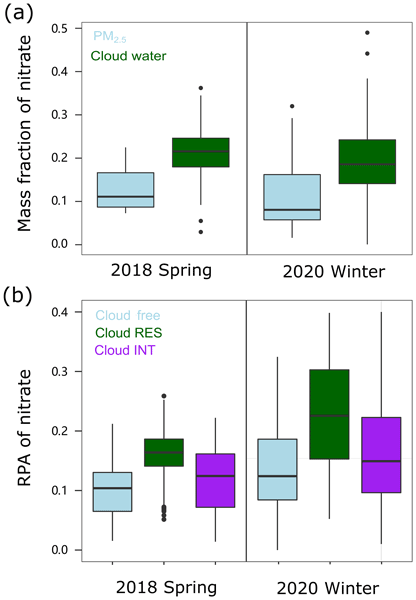
Guohua Zhang, Xiaodong Hu, Wei Sun, Yuxiang Yang, Ziyong Guo, Yuzhen Fu, Haichao Wang, Shengzhen Zhou, Lei Li, Mingjin Tang, Zongbo Shi, Duohong Chen, Xinhui Bi, and Xinming Wang
Atmos. Chem. Phys., 22, 9571–9582, https://doi.org/10.5194/acp-22-9571-2022, https://doi.org/10.5194/acp-22-9571-2022, 2022
Short summary
Short summary
We show a significant enhancement of nitrate mass fraction in cloud water and relative intensity of nitrate in the cloud residual particles and highlight that hydrolysis of N2O5 serves as the critical route for the in-cloud formation of nitrate, even during the daytime. Given that N2O5 hydrolysis acts as a major sink of NOx in the atmosphere, further model updates may improve our understanding about the processes contributing to nitrate production in cloud and the cycling of odd nitrogen.
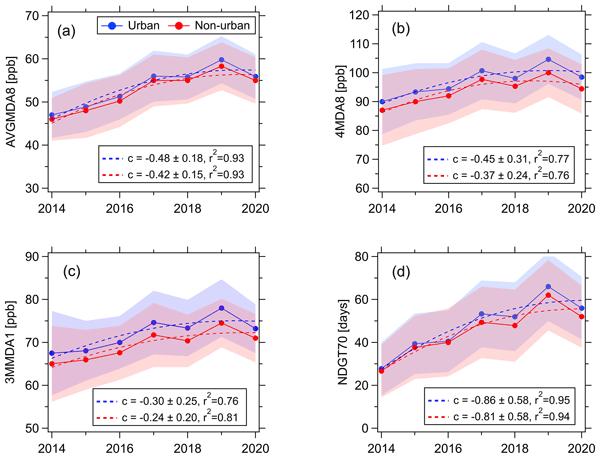
Wenjie Wang, David D. Parrish, Siwen Wang, Fengxia Bao, Ruijing Ni, Xin Li, Suding Yang, Hongli Wang, Yafang Cheng, and Hang Su
Atmos. Chem. Phys., 22, 8935–8949, https://doi.org/10.5194/acp-22-8935-2022, https://doi.org/10.5194/acp-22-8935-2022, 2022
Short summary
Short summary
Tropospheric ozone is an air pollutant that is detrimental to human health, vegetation and ecosystem productivity. A comprehensive characterisation of the spatial and temporal distribution of tropospheric ozone is critical to our understanding of these issues. Here we summarise this distribution over China from the available observational records to the extent possible. This study provides insights into efficient future ozone control strategies in China.
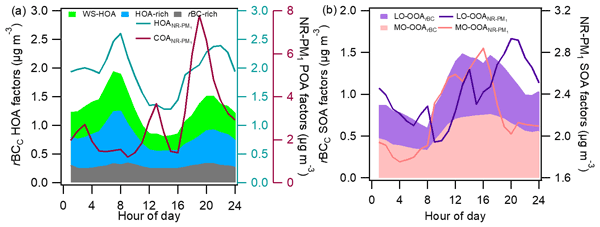
Shijie Cui, Dan Dan Huang, Yangzhou Wu, Junfeng Wang, Fuzhen Shen, Jiukun Xian, Yunjiang Zhang, Hongli Wang, Cheng Huang, Hong Liao, and Xinlei Ge
Atmos. Chem. Phys., 22, 8073–8096, https://doi.org/10.5194/acp-22-8073-2022, https://doi.org/10.5194/acp-22-8073-2022, 2022
Short summary
Short summary
Refractory black carbon (rBC) aerosols are important to air quality and climate change. rBC can mix with many other species, which can significantly change its properties and impacts. We used a specific set of techniques to exclusively characterize rBC-containing (rBCc) particles in Shanghai. We elucidated their composition, sources and size distributions and factors that affect their properties. Our findings are very valuable for advancing the understanding of BC and controlling BC pollution.
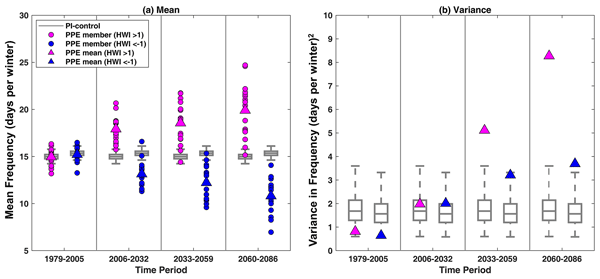
Shipra Jain, Ruth M. Doherty, David Sexton, Steven Turnock, Chaofan Li, Zixuan Jia, Zongbo Shi, and Lin Pei
Atmos. Chem. Phys., 22, 7443–7460, https://doi.org/10.5194/acp-22-7443-2022, https://doi.org/10.5194/acp-22-7443-2022, 2022
Short summary
Short summary
We provide a range of future projections of winter haze and clear conditions over the North China Plain (NCP) using multiple simulations from a climate model for the high-emission scenario (RCP8.5). The frequency of haze conducive weather is likely to increase whereas the frequency of clear weather is likely to decrease in future. The total number of hazy days for a given winter can be as much as ˜3.5 times higher than the number of clear days over the NCP.
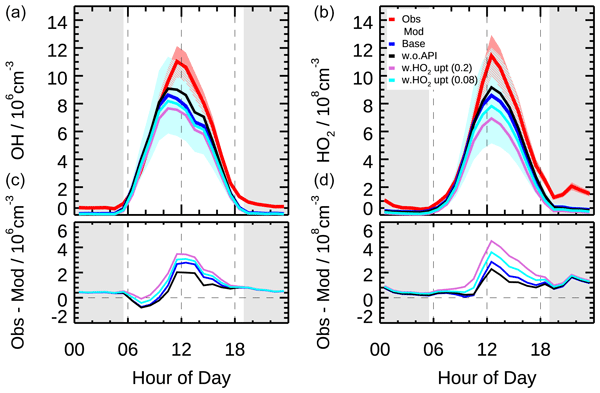
Xuefei Ma, Zhaofeng Tan, Keding Lu, Xinping Yang, Xiaorui Chen, Haichao Wang, Shiyi Chen, Xin Fang, Shule Li, Xin Li, Jingwei Liu, Ying Liu, Shengrong Lou, Wanyi Qiu, Hongli Wang, Limin Zeng, and Yuanhang Zhang
Atmos. Chem. Phys., 22, 7005–7028, https://doi.org/10.5194/acp-22-7005-2022, https://doi.org/10.5194/acp-22-7005-2022, 2022
Short summary
Short summary
This paper presents the first OH and HO2 radical observations made in the Yangtze River Delta in China, and strong oxidation capacity is discovered based on direct measurements. The impacts of new OH regeneration mechanisms, monoterpene oxidation, and HO2 uptake processes are examined and discussed. The sources and the factors to sustain such strong oxidation are the key to understanding the ozone pollution formed in this area.
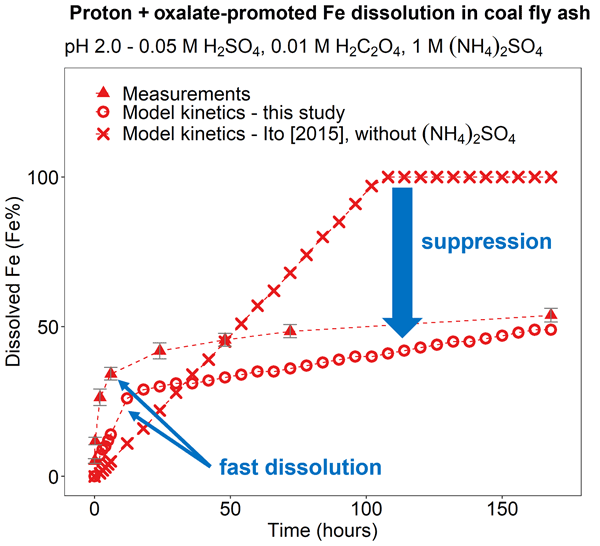
Clarissa Baldo, Akinori Ito, Michael D. Krom, Weijun Li, Tim Jones, Nick Drake, Konstantin Ignatyev, Nicholas Davidson, and Zongbo Shi
Atmos. Chem. Phys., 22, 6045–6066, https://doi.org/10.5194/acp-22-6045-2022, https://doi.org/10.5194/acp-22-6045-2022, 2022
Short summary
Short summary
High ionic strength relevant to the aerosol-water enhanced proton-promoted dissolution of iron in coal fly ash (up to 7 times) but suppressed oxalate-promoted dissolution at low pH (< 3). Fe in coal fly ash dissolved up to 7 times faster than in Saharan dust at low pH. A global model with the updated dissolution rates of iron in coal fly ash suggested a larger contribution of pyrogenic dissolved Fe over regions with a strong impact from fossil fuel combustions.
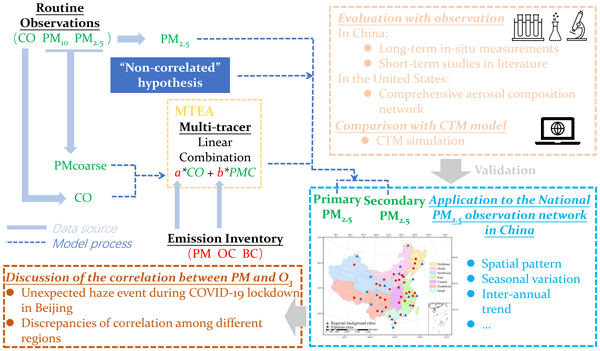
Haoran Zhang, Nan Li, Keqin Tang, Hong Liao, Chong Shi, Cheng Huang, Hongli Wang, Song Guo, Min Hu, Xinlei Ge, Mindong Chen, Zhenxin Liu, Huan Yu, and Jianlin Hu
Atmos. Chem. Phys., 22, 5495–5514, https://doi.org/10.5194/acp-22-5495-2022, https://doi.org/10.5194/acp-22-5495-2022, 2022
Short summary
Short summary
We developed a new algorithm with low economic/technique costs to identify primary and secondary components of PM2.5. Our model was shown to be reliable by comparison with different observation datasets. We systematically explored the patterns and changes in the secondary PM2.5 pollution in China at large spatial and time scales. We believe that this method is a promising tool for efficiently estimating primary and secondary PM2.5, and has huge potential for future PM mitigation.
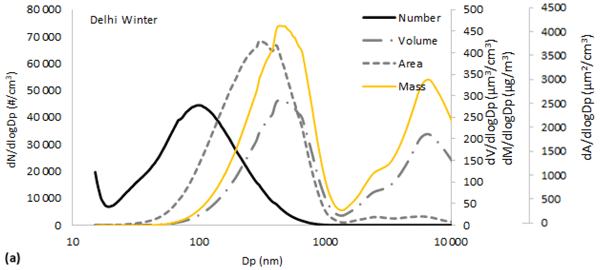
Ülkü Alver Şahin, Roy M. Harrison, Mohammed S. Alam, David C. S. Beddows, Dimitrios Bousiotis, Zongbo Shi, Leigh R. Crilley, William Bloss, James Brean, Isha Khanna, and Rulan Verma
Atmos. Chem. Phys., 22, 5415–5433, https://doi.org/10.5194/acp-22-5415-2022, https://doi.org/10.5194/acp-22-5415-2022, 2022
Short summary
Short summary
Wide-range particle size spectra have been measured in three seasons in Delhi and are interpreted in terms of sources and processes. Condensational growth is a major feature of the fine fraction, and a coarse fraction contributes substantially – but only in summer.
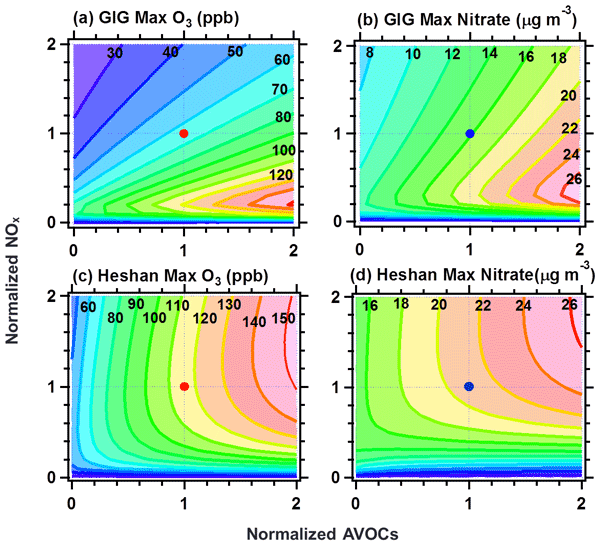
Suxia Yang, Bin Yuan, Yuwen Peng, Shan Huang, Wei Chen, Weiwei Hu, Chenglei Pei, Jun Zhou, David D. Parrish, Wenjie Wang, Xianjun He, Chunlei Cheng, Xiao-Bing Li, Xiaoyun Yang, Yu Song, Haichao Wang, Jipeng Qi, Baolin Wang, Chen Wang, Chaomin Wang, Zelong Wang, Tiange Li, E Zheng, Sihang Wang, Caihong Wu, Mingfu Cai, Chenshuo Ye, Wei Song, Peng Cheng, Duohong Chen, Xinming Wang, Zhanyi Zhang, Xuemei Wang, Junyu Zheng, and Min Shao
Atmos. Chem. Phys., 22, 4539–4556, https://doi.org/10.5194/acp-22-4539-2022, https://doi.org/10.5194/acp-22-4539-2022, 2022
Short summary
Short summary
We use a model constrained using observations to study the formation of nitrate aerosol in and downwind of a representative megacity. We found different contributions of various chemical reactions to ground-level nitrate concentrations between urban and suburban regions. We also show that controlling VOC emissions are effective for decreasing nitrate formation in both urban and regional environments, although VOCs are not direct precursors of nitrate aerosol.
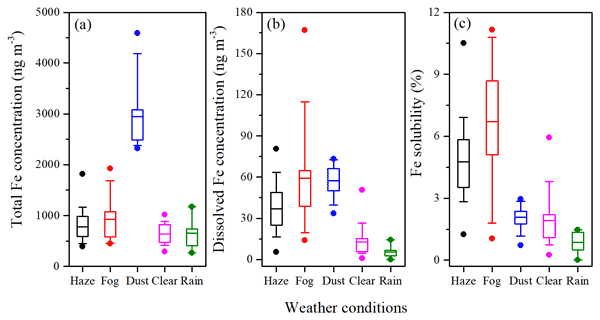
Yanhong Zhu, Weijun Li, Yue Wang, Jian Zhang, Lei Liu, Liang Xu, Jingsha Xu, Jinhui Shi, Longyi Shao, Pingqing Fu, Daizhou Zhang, and Zongbo Shi
Atmos. Chem. Phys., 22, 2191–2202, https://doi.org/10.5194/acp-22-2191-2022, https://doi.org/10.5194/acp-22-2191-2022, 2022
Short summary
Short summary
The solubilities of iron in fine particles in a megacity in Eastern China were studied under haze, fog, dust, clear, and rain weather conditions. For the first time, a receptor model was used to quantify the sources of dissolved and total iron aerosol. Microscopic analysis further confirmed the aging of iron aerosol during haze and fog conditions that facilitated dissolution of insoluble iron.
Yingze Tian, Xiaoning Wang, Peng Zhao, Zongbo Shi, and Roy M. Harrison
Atmos. Chem. Phys. Discuss., https://doi.org/10.5194/acp-2021-1007, https://doi.org/10.5194/acp-2021-1007, 2022
Revised manuscript not accepted
Short summary
Short summary
Chemical mass balance (CMB) is a widely used method to apportion the sources of PM2.5. We explore the sensitivity of CMB results to input data of organic markers only (OM-CMB) with a combination of organic and inorganic markers (IOM-CMB), as well as using different chemical profiles for sources. Our results indicate the superiority of combining inorganic and organic tracers and using locally-relevant source profiles in source apportionment of PM.
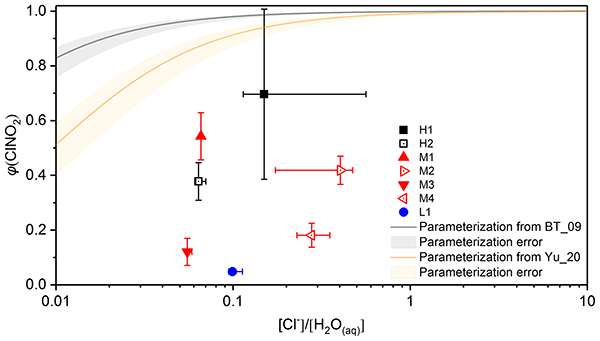
Haichao Wang, Chao Peng, Xuan Wang, Shengrong Lou, Keding Lu, Guicheng Gan, Xiaohong Jia, Xiaorui Chen, Jun Chen, Hongli Wang, Shaojia Fan, Xinming Wang, and Mingjin Tang
Atmos. Chem. Phys., 22, 1845–1859, https://doi.org/10.5194/acp-22-1845-2022, https://doi.org/10.5194/acp-22-1845-2022, 2022
Short summary
Short summary
Via combining laboratory and modeling work, we found that heterogeneous reaction of N2O5 with saline mineral dust aerosol could be an important source of tropospheric ClNO2 in inland regions.
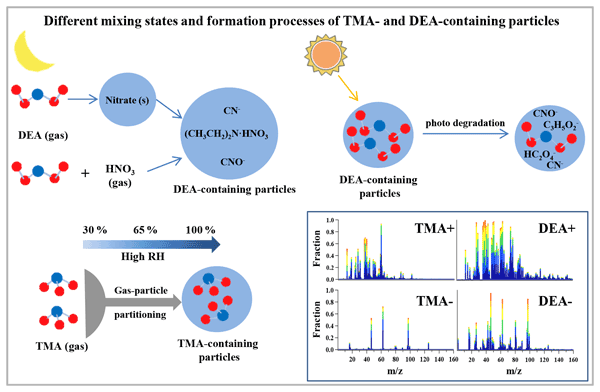
Qi En Zhong, Chunlei Cheng, Zaihua Wang, Lei Li, Mei Li, Dafeng Ge, Lei Wang, Yuanyuan Li, Wei Nie, Xuguang Chi, Aijun Ding, Suxia Yang, Duohong Chen, and Zhen Zhou
Atmos. Chem. Phys., 21, 17953–17967, https://doi.org/10.5194/acp-21-17953-2021, https://doi.org/10.5194/acp-21-17953-2021, 2021
Short summary
Short summary
Particulate amines play important roles in new particle formation, aerosol acidity, and hygroscopicity. Most of the field observations did not distinguish the different behavior of each type amine under the same ambient influencing factors. In this study, two amine-containing single particles exhibited different mixing states and disparate enrichment of secondary organics, which provide insight into the discriminated fates of organics during the formation and evolution processes.
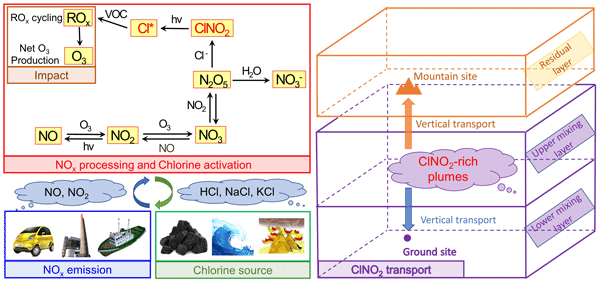
Men Xia, Xiang Peng, Weihao Wang, Chuan Yu, Zhe Wang, Yee Jun Tham, Jianmin Chen, Hui Chen, Yujing Mu, Chenglong Zhang, Pengfei Liu, Likun Xue, Xinfeng Wang, Jian Gao, Hong Li, and Tao Wang
Atmos. Chem. Phys., 21, 15985–16000, https://doi.org/10.5194/acp-21-15985-2021, https://doi.org/10.5194/acp-21-15985-2021, 2021
Short summary
Short summary
ClNO2 is an important precursor of chlorine radical that affects photochemistry. However, its production and impact are not well understood. Our study presents field observations of ClNO2 at three sites in northern China. These observations provide new insights into nighttime processes that produce ClNO2 and the significant impact of ClNO2 on secondary pollutions during daytime. The results improve the understanding of photochemical pollution in the lower part of the atmosphere.
Cited articles
Arneth, A., Schurgers, G., Lathiere, J., Duhl, T., Beerling, D. J., Hewitt, C. N., Martin, M., and Guenther, A.: Global terrestrial isoprene emission models: sensitivity to variability in climate and vegetation, Atmos. Chem. Phys., 11, 8037–8052, https://doi.org/10.5194/acp-11-8037-2011, 2011.
Borbon, A., Fontaine, H., Veillerot, M., Locoge, N., Galloo, J. C., and Guillermo, R.: An investigation into the traffic-related fraction of isoprene at an urban location, Atmos. Environ., 35, 3749–3760, https://doi.org/10.1016/S1352-2310(01)00170-4, 2001.
Cao, Y., Yue, X., Liao, H., Yang, Y., Zhu, J., Chen, L., Tian, C., Lei, Y., Zhou, H., and Ma, Y.: Ensemble projection of global isoprene emissions by the end of 21st century using CMIP6 models, Atmos. Environ., 267, 118766, https://doi.org/10.1016/j.atmosenv.2021.118766, 2021.
Feng, L. Y., Ma, D. Y., Xie, M., and Xi, M. Z.: Review on the Application of Remote Sensing Data and Machine Learning to the Estimation of Anthropogenic Heat Emissions, Remote Sens., 17, https://doi.org/10.3390/rs17020200, 2025.
Fu, D., Millet, D. B., Wells, K. C., Payne, V. H., Yu, S., Guenther, A., and Eldering, A.: Direct retrieval of isoprene from satellite-based infrared measurements, Nat. Commun., 10, 3811, https://doi.org/10.1038/s41467-019-11835-0, 2019.
Guenther, A., Zimmerman, P., and Wildermuth, M.: Natural volatile organic compound emission rate estimates for U.S. woodland landscapes, Atmos. Environ., 28, 1197–1210, https://doi.org/10.1016/1352-2310(94)90297-6, 1994.
Guenther, A., Karl, T., Harley, P., Wiedinmyer, C., Palmer, P. I., and Geron, C.: Estimates of global terrestrial isoprene emissions using MEGAN (Model of Emissions of Gases and Aerosols from Nature), Atmos. Chem. Phys., 6, 3181–3210, https://doi.org/10.5194/acp-6-3181-2006, 2006.
Guenther, A. B., Zimmerman, P. R., Harley, P. C., Monson, R. K., and Fall, R.: Isoprene and monoterpene emission rate variability: Model evaluations and sensitivity analyses, J. Geophys. Res.-Atmos., 98, 12609–12617, https://doi.org/10.1029/93JD00527, 1993.
Guenther, A. B., Jiang, X., Heald, C. L., Sakulyanontvittaya, T., Duhl, T., Emmons, L. K., and Wang, X.: The Model of Emissions of Gases and Aerosols from Nature version 2.1 (MEGAN2.1): an extended and updated framework for modeling biogenic emissions, Geosci. Model Dev., 5, 1471–1492, https://doi.org/10.5194/gmd-5-1471-2012, 2012.
Hersbach, H., Bell, B., Berrisford, P., Biavati, G., Horányi, A., Muñoz Sabater, J., Nicolas, J., Peubey, C., Radu, R., Rozum, I., and Schepers, D.: ERA5-Land hourly data from 1950 to present, European Centre for Medium-Range Weather Forecasts (ECMWF) [data set], https://doi.org/10.24381/cds.e2161bac, 2023.
Huang, G., Brook, R., Crippa, M., Janssens-Maenhout, G., Schieberle, C., Dore, C., Guizzardi, D., Muntean, M., Schaaf, E., and Friedrich, R.: Speciation of anthropogenic emissions of non-methane volatile organic compounds: a global gridded data set for 1970–2012, Atmos. Chem. Phys., 17, 7683–7701, https://doi.org/10.5194/acp-17-7683-2017, 2017.
Li, M., Huang, X., Yan, D., Lai, S., Zhang, Z., Zhu, L., Lu, Y., Jiang, X., Wang, N., Wang, T., Song, Y., and Ding, A.: Coping with the concurrent heatwaves and ozone extremes in China under a warming climate, Sci. Bull., https://doi.org/10.1016/j.scib.2024.05.034, 2024.
Lin, Y.-H., Zhang, H., Pye, H. O. T., Zhang, Z., Marth, W. J., Park, S., Arashiro, M., Cui, T., Budisulistiorini, S. H., Sexton, K. G., Vizuete, W., Xie, Y., Luecken, D. J., Piletic, I. R., Edney, E. O., Bartolotti, L. J., Gold, A., and Surratt, J. D.: Epoxide as a precursor to secondary organic aerosol formation from isoprene photooxidation in the presence of nitrogen oxides, Proc. Natl. Acad. Sci. U. S. A., 110, 6718–6723, https://doi.org/10.1073/pnas.1221150110, 2013.
Lou, S., Shrivastava, M., Ding, A., Easter, R. C., Fast, J. D., Rasch, P. J., Shen, H., Massey Simonich, S. L., Smith, S. J., Tao, S., and Zelenyuk, A.: Shift in Peaks of PAH-Associated Health Risks From East Asia to South Asia and Africa in the Future, Earth Future, 11, e2022EF003185, https://doi.org/10.1029/2022EF003185, 2023.
Lundberg, S. M., Erion, G., Chen, H., DeGrave, A., Prutkin, J. M., Nair, B., Katz, R., Himmelfarb, J., Bansal, N., and Lee, S.-I.: From local explanations to global understanding with explainable AI for trees, Nat. Mach. Intell., 2, 56–67, https://doi.org/10.1038/s42256-019-0138-9, 2020.
Lyu, X., Li, H., Lee, S.-C., Xiong, E., Guo, H., Wang, T., and de Gouw, J.: Significant Biogenic Source of Oxygenated Volatile Organic Compounds and the Impacts on Photochemistry at a Regional Background Site in South China, Environ. Sci. Technol., 58, 20081–20090, https://doi.org/10.1021/acs.est.4c05656, 2024.
Ma, M., Gao, Y., Wang, Y., Zhang, S., Leung, L. R., Liu, C., Wang, S., Zhao, B., Chang, X., Su, H., Zhang, T., Sheng, L., Yao, X., and Gao, H.: Substantial ozone enhancement over the North China Plain from increased biogenic emissions due to heat waves and land cover in summer 2017, Atmos. Chem. Phys., 19, 12195–12207, https://doi.org/10.5194/acp-19-12195-2019, 2019.
Ma, M., Gao, Y., Ding, A., Su, H., Liao, H., Wang, S., Wang, X., Zhao, B., Zhang, S., Fu, P., Guenther, A. B., Wang, M., Li, S., Chu, B., Yao, X., and Gao, H.: Development and Assessment of a High-Resolution Biogenic Emission Inventory from Urban Green Spaces in China, Environ. Sci. Technol., 56, 175–184, https://doi.org/10.1021/acs.est.1c06170, 2022.
Morichetti, M., Madronich, S., Passerini, G., Rizza, U., Mancinelli, E., Virgili, S., and Barth, M.: Comparison and evaluation of updates to WRF-Chem (v3.9) biogenic emissions using MEGAN, Geosci. Model Dev., 15, 6311–6339, https://doi.org/10.5194/gmd-15-6311-2022, 2022.
Paulot, F., Henze, D. K., and Wennberg, P. O.: Impact of the isoprene photochemical cascade on tropical ozone, Atmos. Chem. Phys., 12, 1307–1325, https://doi.org/10.5194/acp-12-1307-2012, 2012.
Peron, A., Graus, M., Striednig, M., Lamprecht, C., Wohlfahrt, G., and Karl, T.: Deciphering anthropogenic and biogenic contributions to selected non-methane volatile organic compound emissions in an urban area, Atmos. Chem. Phys., 24, 7063–7083, https://doi.org/10.5194/acp-24-7063-2024, 2024.
Pfannerstill, E. Y., Arata, C., Zhu, Q., Schulze, B. C., Ward, R., Woods, R., Harkins, C., Schwantes, R. H., Seinfeld, J. H., Bucholtz, A., Cohen, R. C., and Goldstein, A. H.: Temperature-dependent emissions dominate aerosol and ozone formation in Los Angeles, Science, 384, 1324–1329, https://doi.org/10.1126/science.adg8204, 2024.
Pinzon, J. E., Pak, E. W., Tucker, C. J., Bhatt, U. S., Frost, G. V., and Macander, M. J.: Global Vegetation Greenness (NDVI) from AVHRR GIMMS-3G+, 198-1-2022 (Version 1), ORNL Distributed Active Archive Center [data set], https://doi.org/10.3334/ORNLDAAC/2187, 2023.
Rogelj, J., Popp, A., Calvin, K. V., Luderer, G., Emmerling, J., Gernaat, D., Fujimori, S., Strefler, J., Hasegawa, T., Marangoni, G., Krey, V., Kriegler, E., Riahi, K., van Vuuren, D. P., Doelman, J., Drouet, L., Edmonds, J., Fricko, O., Harmsen, M., Havlík, P., Humpenöder, F., Stehfest, E., and Tavoni, M.: Scenarios towards limiting global mean temperature increase below 1.5 °C, Nat. Clim. Change, 8, 325–332, https://doi.org/10.1038/s41558-018-0091-3, 2018.
Sanderson, M. G., Jones, C. D., Collins, W. J., Johnson, C. E., and Derwent, R. G.: Effect of Climate Change on Isoprene Emissions and Surface Ozone Levels, Geophys. Res. Lett., 30, https://doi.org/10.1029/2003GL017642, 2003.
Seco, R., Holst, T., Davie-Martin, C. L., Simin, T., Guenther, A., Pirk, N., Rinne, J., and Rinnan, R.: Strong isoprene emission response to temperature in tundra vegetation, Proc. Natl. Acad. Sci. U. S. A., 119, e2118014119, https://doi.org/10.1073/pnas.2118014119, 2022.
Tripathi, N., Sahu, L. K., Wang, L., Vats, P., Soni, M., Kumar, P., Satish, R. V., Bhattu, D., Sahu, R., Patel, K., Rai, P., Kumar, V., Rastogi, N., Ojha, N., Tiwari, S., Ganguly, D., Slowik, J., Prévôt, A. S. H., and Tripathi, S. N.: Characteristics of VOC Composition at Urban and Suburban Sites of New Delhi, India in Winter, J. Geophys. Res.-Atmos., 127, e2021JD035342, https://doi.org/10.1029/2021JD035342, 2022.
von Schneidemesser, E., Monks, P. S., Gros, V., Gauduin, J., and Sanchez, O.: How important is biogenic isoprene in an urban environment? A study in London and Paris, Geophys. Res. Lett., 38, https://doi.org/10.1029/2011GL048647, 2011.
Wang, H., Nagalingam, S., Welch, A. M., Leong, C., Czimczik, C. I., and Guenther, A. B.: Heat waves may trigger unexpected surge in aerosol and ozone precursor emissions from sedges in urban landscapes, Proc. Natl. Acad. Sci. U. S. A., 121, e2412817121, https://doi.org/10.1073/pnas.2412817121, 2024a.
Wang, H., Welch, A. M., Nagalingam, S., Leong, C., Czimczik, C. I., Tang, J., Seco, R., Rinnan, R., Vettikkat, L., Schobesberger, S., Holst, T., Brijesh, S., Sheesley, R. J., Barsanti, K. C., and Guenther, A. B.: High temperature sensitivity of Arctic isoprene emissions explained by sedges, Nat. Commun., 15, 6144, https://doi.org/10.1038/s41467-024-49960-0, 2024b.
Wang, N., Wang, H., Huang, X., Chen, X., Zou, Y., Deng, T., Li, T., Lyu, X., and Yang, F.: Extreme weather exacerbates ozone pollution in the Pearl River Delta, China: role of natural processes, Atmos. Chem. Phys., 24, 1559–1570, https://doi.org/10.5194/acp-24-1559-2024, 2024c.
Xi, M., Luo, Y., Li, Y., Ma, D., Feng, L., Zhang, S., Chen, S., and Xie, M.: Comprehensive analysis of prevailing weather patterns and high-impact typhoon tracks to reveal where and how tropical cyclone affects regional ozone pollution in the Yangtze River Delta region, China, Atmos. Environ., 361, 121498, https://doi.org/10.1016/j.atmosenv.2025.121498, 2025a.
Xi, M., Xie, M., Gao, D., Ma, D., Luo, Y., Feng, L., Chen, S., and Zhang, S.: The impact of tropical cyclones on regional ozone pollution and its future trend in the Yangtze River Delta of China, Atmos. Chem. Phys., 25, 14573–14590, https://doi.org/10.5194/acp-25-14573-2025, 2025b.
Xu, L., Guo, H., Boyd, C. M., Klein, M., Bougiatioti, A., Cerully, K. M., Hite, J. R., Isaacman-VanWertz, G., Kreisberg, N. M., Knote, C., Olson, K., Koss, A., Goldstein, A. H., Hering, S. V., de Gouw, J., Baumann, K., Lee, S.-H., Nenes, A., Weber, R. J., and Ng, N. L.: Effects of anthropogenic emissions on aerosol formation from isoprene and monoterpenes in the southeastern United States, Proc. Natl. Acad. Sci., 112, 37–42, https://doi.org/10.1073/pnas.1417609112, 2015.
Xu, P., Li, G., Zheng, Y., Fung, J. C. H., Chen, A., Zeng, Z., Shen, H., Hu, M., Mao, J., Zheng, Y., Cui, X., Guo, Z., Chen, Y., Feng, L., He, S., Zhang, X., Lau, A. K. H., Tao, S., and Houlton, B. Z.: Fertilizer management for global ammonia emission reduction, Nature, 626, 792–798, https://doi.org/10.1038/s41586-024-07020-z, 2024.
Zhu, B., Ren, S., Weng, Q., and Si, F.: A physics-informed neural network that considers monotonic relationships for predicting NOx emissions from coal-fired boilers, Fuel, 364, 131026, https://doi.org/10.1016/j.fuel.2024.131026, 2024.
Short summary
We studied the invisible gas isoprene, which trees and vehicles release into the air and which can worsen urban smog. Using advanced computer learning trained on measurements from many cities, we uncovered how temperature, sunlight, and city greening shape isoprene levels. Comparing Hong Kong and London, we found climate warming boosts isoprene and future ozone pollution, but strong cuts in anthropogenic emission could limit this impact.
We studied the invisible gas isoprene, which trees and vehicles release into the air and which...


Altmetrics
Final-revised paper
Preprint