the Creative Commons Attribution 4.0 License.
the Creative Commons Attribution 4.0 License.
 | 16 Jun 2021
Towards understanding the characteristics of new particle formation in the Eastern Mediterranean
Michael Pikridas
Tuija Jokinen
Tiia Laurila
Lubna Dada
Spyros Bezantakos
Lauri Ahonen
Kimmo Neitola
Anne Maisser
Elie Bimenyimana
Aliki Christodoulou
Florin Unga
Chrysanthos Savvides
Katrianne Lehtipalo
Juha Kangasluoma
George Biskos
Tuukka Petäjä
Veli-Matti Kerminen
Jean Sciare
Markku Kulmala
Related authors
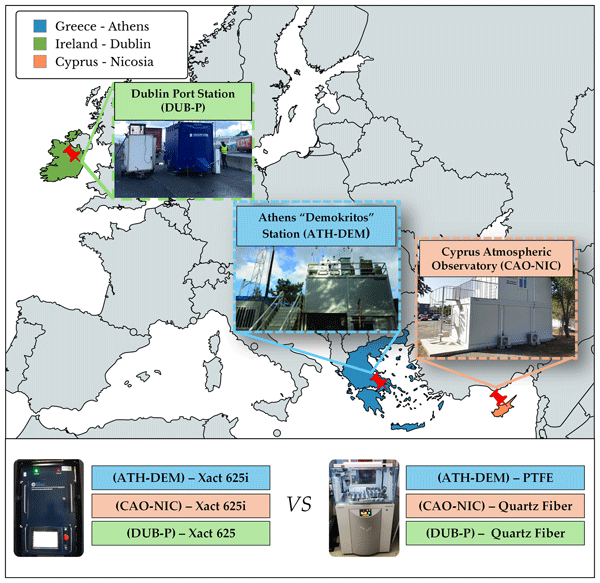
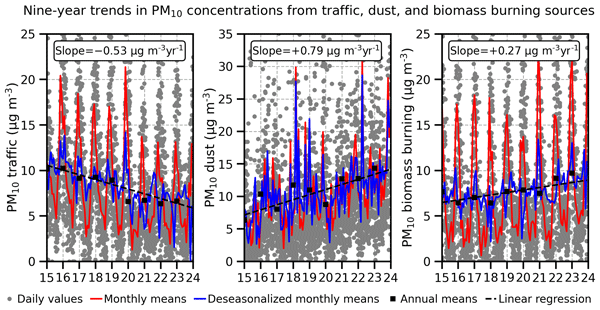
We compared near real-time and benchtop XRF spectrometers measuring trace elements in airborne particles across three European cities. Results show filter material dictates accuracy: Teflon yielded strong inter-instrument agreement, while quartz caused systematic attenuation errors for light elements. Because empirical corrections left residual biases, using optimal substrates—preferably Teflon—is essential for accurately tracking pollution sources.
We compared near real-time and benchtop XRF spectrometers measuring trace elements in airborne particles across three European cities. Results show filter material dictates accuracy: Teflon yielded strong inter-instrument agreement, while quartz caused systematic attenuation errors for light elements. Because empirical corrections left residual biases, using optimal substrates—preferably Teflon—is essential for accurately tracking pollution sources.
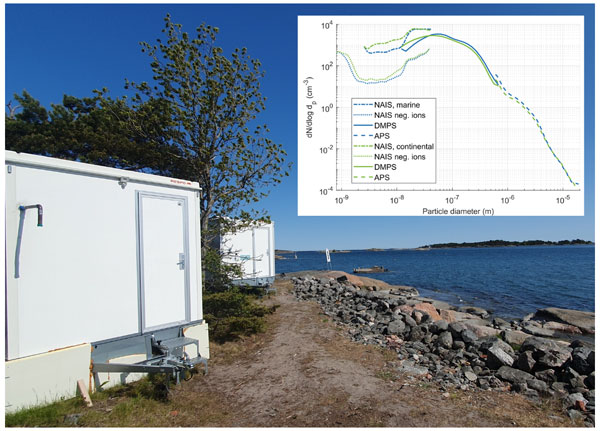

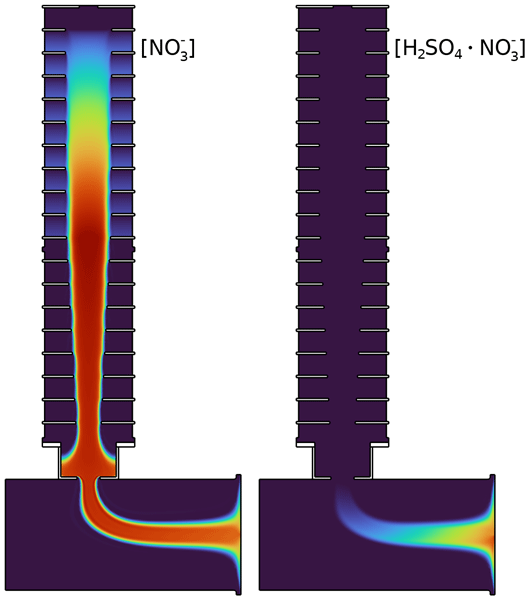
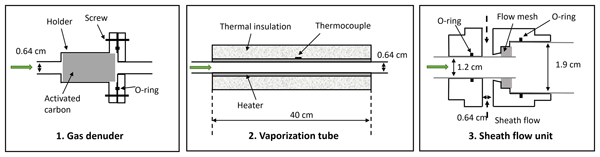
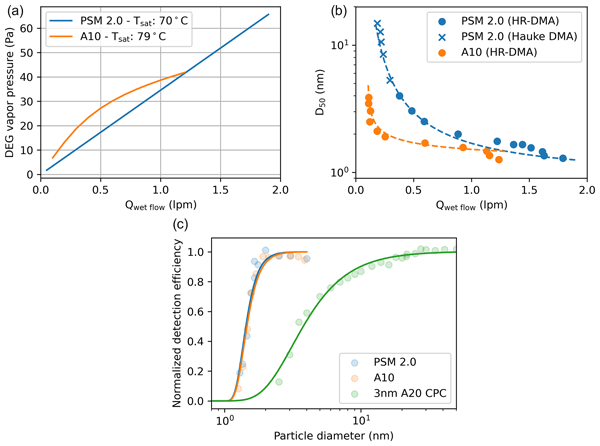
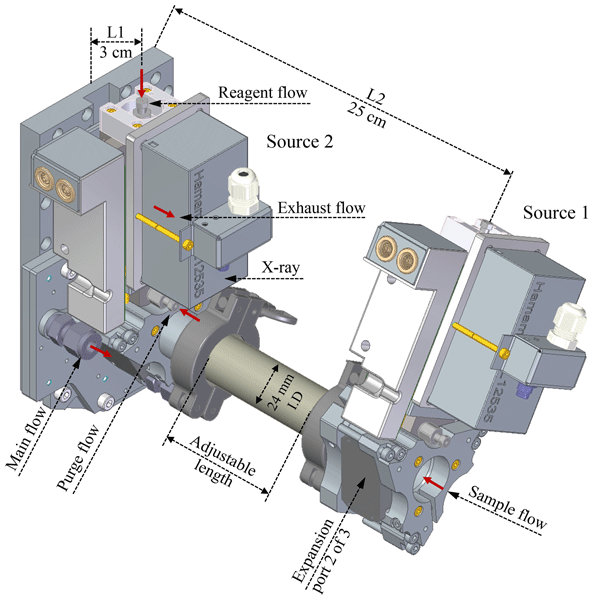
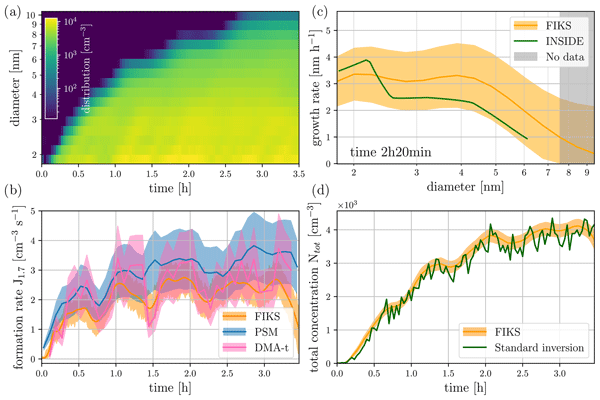
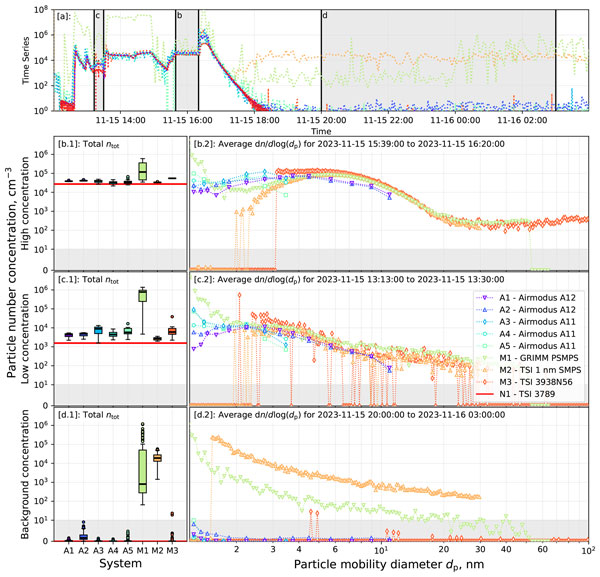
We present a novel version of an aerosol number size distribution instrument, showcasing its capability to measure particle number concentration and particle number size distribution between 1 and 12 nm. Our results show that the instrument agrees well with existing instrumentation and allows for both the accurate measurement of the smallest particles and overlap with more conventional aerosol number size distribution instruments.