
Articles | Volume 26, issue 8
https://doi.org/10.5194/acp-26-5313-2026
© Author(s) 2026. This work is distributed under
the Creative Commons Attribution 4.0 License.
the Creative Commons Attribution 4.0 License.
https://doi.org/10.5194/acp-26-5313-2026
© Author(s) 2026. This work is distributed under
the Creative Commons Attribution 4.0 License.
the Creative Commons Attribution 4.0 License.
Research article
| 
21 Apr 2026
Research article |
| 21 Apr 2026
| 21 Apr 2026
Impacts of summertime photochemical aging on the physicochemical properties of aerosols in a Paris suburban forest region

Université Paris Cité and Univ Paris Est Créteil, CNRS, LISA, 75013 Paris, France
Paola Formenti
Université Paris Cité and Univ Paris Est Créteil, CNRS, LISA, 75013 Paris, France
Joel F. de Brito
IMT Nord Europe, Institut Mines-Télécom, Université de Lille, Centre for Energy and Environment, 59000, Lille, France
Astrid Bauville
Univ Paris Est Créteil and Université Paris Cité, CNRS, LISA, 94010 Créteil, France
Antonin Bergé
Univ Paris Est Créteil and Université Paris Cité, CNRS, LISA, 94010 Créteil, France
Hichem Bouzidi
Université Paris Cité and Univ Paris Est Créteil, CNRS, LISA, 75013 Paris, France
Mathieu Cazaunau
Université Paris Cité and Univ Paris Est Créteil, CNRS, LISA, 75013 Paris, France
Manuela Cirtog
Univ Paris Est Créteil and Université Paris Cité, CNRS, LISA, 94010 Créteil, France
Claudia Di Biagio
Université Paris Cité and Univ Paris Est Créteil, CNRS, LISA, 75013 Paris, France
Ludovico Di Antonio
Univ Paris Est Créteil and Université Paris Cité, CNRS, LISA, 94010 Créteil, France
now at: Laboratoire, Atmosphères, Observations Spatiales (LATMOS)/IPSL, Sorbonne Université, UVSQ, CNRS, 75252 Paris, France
Cécile Gaimoz
Univ Paris Est Créteil and Université Paris Cité, CNRS, LISA, 94010 Créteil, France
Franck Maisonneuve
Univ Paris Est Créteil and Université Paris Cité, CNRS, LISA, 94010 Créteil, France
Pascal Zapf
Université Paris Cité and Univ Paris Est Créteil, CNRS, LISA, 75013 Paris, France
Tobias Seubert
Atmospheric Chemistry Department, Max-Planck-Institute for Chemistry, 55128 Mainz, Germany
Simone T. Andersen
Atmospheric Chemistry Department, Max-Planck-Institute for Chemistry, 55128 Mainz, Germany
Patrick Dewald
Atmospheric Chemistry Department, Max-Planck-Institute for Chemistry, 55128 Mainz, Germany
Gunther N. T. E. Türk
Atmospheric Chemistry Department, Max-Planck-Institute for Chemistry, 55128 Mainz, Germany
John N. Crowley
Atmospheric Chemistry Department, Max-Planck-Institute for Chemistry, 55128 Mainz, Germany
Alexandre Kukui
Laboratoire de Physique et Chimie de l'Environnement et de l'Espace (LPC2E), CNRS – Université Orléans – CNES, Orléans CEDEX 245071, France
Chaoyang Xue
Laboratoire de Physique et Chimie de l'Environnement et de l'Espace (LPC2E), CNRS – Université Orléans – CNES, Orléans CEDEX 245071, France
Multiphase Chemistry Department, Max-Planck-Institute for Chemistry, 55128 Mainz, Germany
Cyrielle Denjean
CNRM, Universite de Toulouse, Meteo-France, CNRS, Toulouse, France
Olivier Garrouste
CNRM, Universite de Toulouse, Meteo-France, CNRS, Toulouse, France
Jean-Claude Etienne
CNRM, Universite de Toulouse, Meteo-France, CNRS, Toulouse, France
Huihui Wu
Department of Earth and Environmental Sciences, University of Manchester, Manchester M13 9PL, United Kingdom
Univ Paris Est Créteil and Université Paris Cité, CNRS, LISA, 94010 Créteil, France
James D. Allan
Department of Earth and Environmental Sciences, University of Manchester, Manchester M13 9PL, United Kingdom
National Centre for Atmospheric Sciences, University of Manchester, Manchester M13 9PL, United Kingdom
Dantong Liu
Department of Atmospheric Sciences, School of Earth Sciences, Zhejiang University, Zhejiang 310027, China
Yangzhou Wu
Guangxi Key Laboratory of Theory and Technology for Environmental Pollution Control, Collaborative Innovation Center for Water Pollution Control and Water Safety in Karst Area, Guilin University of Technology, Guilin, China
Christopher Cantrell
Univ Paris Est Créteil and Université Paris Cité, CNRS, LISA, 94010 Créteil, France
Vincent Michoud
CORRESPONDING AUTHOR
Université Paris Cité and Univ Paris Est Créteil, CNRS, LISA, 75013 Paris, France
Related authors
Johannes Heuser, Claudia Di Biagio, Jérôme Yon, Mathieu Cazaunau, Antonin Bergé, Edouard Pangui, Marco Zanatta, Laura Renzi, Angela Marinoni, Chenjie Yu, Servanne Chevaillier, Daniel Ferry, Michel Maillé, Paola Formenti, Benedicte Picquet-Varrault, and Jean-François Doussin
Aerosol Research Discuss., https://doi.org/10.5194/ar-2026-31, https://doi.org/10.5194/ar-2026-31, 2026
Preprint under review for AR
Short summary
Short summary
We retrieve refractive indices of laboratory-generated soot from measured particle properties using Mie and RDG-FA optical calculations, and quantify uncertainties via Monte Carlo simulations. The inferred refractive indices strongly depend on the theory employed, highlighting the need for consistency between optical theory and refractive index. Mie retrievals are sensitive to coagulation and size growth, while RDG-FA retrievals depend strongly on the uncertainty of assumed particle morphology.
Alejandra Velazquez-Garcia, Chenjie Yu, Sarah Tinorua, Hichem Bouzidi, Eleonora Aruffo, Piero Di Carlo, Peter DeCarlo, Benjamin A. Nault, Thierry Bourrianne, Kevin Tu, Edouard Pangui, Diana L. Pereira, Mathieu Cazaunau, Ludovico Di Antonio, Guillaume Siour, Matthias Beekmann, Astrid Bauville, Christopher Cantrell, Paola Formenti, Vincent Michoud, and Cyrielle Denjean
EGUsphere, https://doi.org/10.5194/egusphere-2026-4423, https://doi.org/10.5194/egusphere-2026-4423, 2026
Short summary
Short summary
As city air pollution travels downwind, its climate impact evolves. Using a research aircraft, we tracked the Paris pollution plume and found that sunlight rapidly transforms urban emissions, forming secondary organic particles that absorb more sunlight within six hours. These findings show that urban pollution changes chemically during transport, providing key constraints to improve future climate models.
Chenjie Yu, Ludovico Di Antonio, Peter F. DeCarlo, Benjamin A. Nault, Alejandra Velazquez-Garcia, Eleonora Aruffo, Piero Di Carlo, Cyrielle Denjean, Sarah Tinorua, Thierry Bourrianne, Diana L. Pereira, Kevin Tu, Edouard Pangui, Mathieu Cazaunau, Astrid Bauville, Noël Grand, Antonin Bergé, Claudia Di Biagio, Aline Gratien, Matthias Beekmann, Guillaume Siour, Gilles Foret, Barbara D'Anna, Julien Kammer, Huihui Wu, Christopher Cantrell, Paola Formenti, and Vincent Michoud
EGUsphere, https://doi.org/10.5194/egusphere-2026-3147, https://doi.org/10.5194/egusphere-2026-3147, 2026
Short summary
Short summary
This study used coordinated airborne and ground-based measurements in Paris and its downwind regions to quantify the effects of 2–6 h of urban plume aging on aerosol properties. Aging enhanced secondary organic aerosol production and PM1 mass and shifted optical properties toward higher SSA, higher real and lower imaginary refractive indices, and stronger brown carbon absorption. These results highlight the need to account for aerosol aging in atmospheric models and remote-sensing retrievals.
Johannes Heuser, Claudia Di Biagio, Jérôme Yon, Mathieu Cazaunau, Antonin Bergé, Edouard Pangui, Marco Zanatta, Laura Renzi, Angela Marinoni, Chenjie Yu, Servanne Chevaillier, Daniel Ferry, Paolo Laj, Michel Maillé, Paola Formenti, Benedicte Picquet-Varrault, and Jean-Francois Doussin
EGUsphere, https://doi.org/10.5194/egusphere-2026-1867, https://doi.org/10.5194/egusphere-2026-1867, 2026
Short summary
Short summary
Large simulation chamber experiments were performed to investigate the impact of non-absorbing coating on the absorption of fractal BC-containing soot. Results show the strong and combined effect of morphological modifications and mixing state heterogeneity on BC absorption, both depending on the reaction dynamics of coating formation and ageing of the coated soot. The range of measured absorption cannot be captured by common model approximations, highlighting the need for new formalisms.
Laura Renzi, Claudia Di Biagio, Johannes Heuser, Marco Zanatta, Mathieu Cazaunau, Antonin Bergé, Edouard Pangui, Jérôme Yon, Tommaso Isolabella, Dario Massabò, Virginia Vernocchi, Martina Mazzini, Franziska Vogel, Chenjie Yu, Paola Formenti, Benedicte Picquet-Varrault, Jean-Francois Doussin, and Angela Marinoni
Atmos. Meas. Tech., 19, 1365–1383, https://doi.org/10.5194/amt-19-1365-2026, https://doi.org/10.5194/amt-19-1365-2026, 2026
Short summary
Short summary
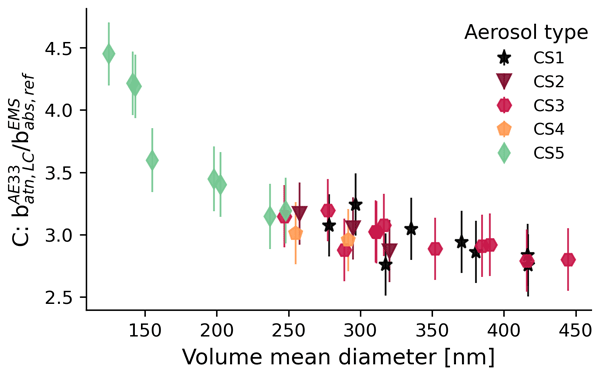
This study investigates how particle properties affect the accuracy of a common air pollution instrument, the dual-spot aethalometer. By combining lab experiments with real-world data from a mountain site in Italy, we found that the correction factor for this instrument varies mainly due to particle size and measurement conditions. Understanding these influences helps improve air quality monitoring, which is important for assessing pollution impacts on health and climate.
Huihui Wu, Fanny Peers, Jonathan W. Taylor, Chenjie Yu, Steven J. Abel, Paul A. Barrett, Jamie Trembath, Keith Bower, Jim M. Haywood, and Hugh Coe
Atmos. Chem. Phys., 25, 16589–16609, https://doi.org/10.5194/acp-25-16589-2025, https://doi.org/10.5194/acp-25-16589-2025, 2025
Short summary
Short summary
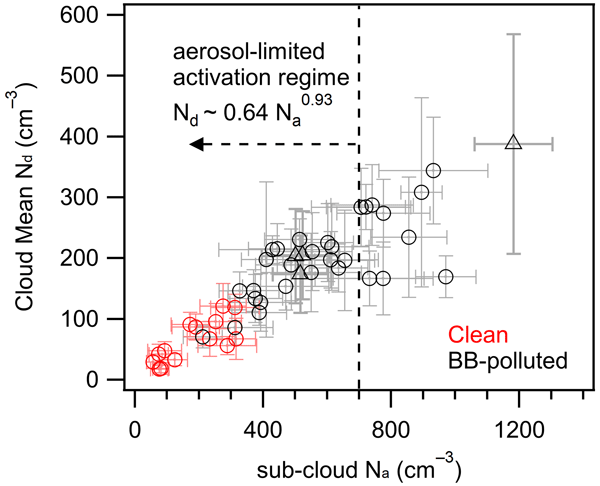
This study investigates the transport history of African Biomass-Burning aerosols (BBAs) over the Southeast Atlantic (SEA) and their impacts on cloud properties. Using in situ airborne measurements around Ascension Island, this work provides critical parameterizations of aerosol–cloud interactions to improve the assessment of radiative forcing in the SEA region. It also identifies key entrainment regions for understanding the vertical transport process of African BBAs.
Johannes Heuser, Claudia Di Biagio, Jérôme Yon, Mathieu Cazaunau, Antonin Bergé, Edouard Pangui, Marco Zanatta, Laura Renzi, Angela Marinoni, Satoshi Inomata, Chenjie Yu, Vera Bernardoni, Servanne Chevaillier, Daniel Ferry, Paolo Laj, Michel Maillé, Dario Massabò, Federico Mazzei, Gael Noyalet, Hiroshi Tanimoto, Brice Temime-Roussel, Roberta Vecchi, Virginia Vernocchi, Paola Formenti, Bénédicte Picquet-Varrault, and Jean-François Doussin
Atmos. Chem. Phys., 25, 6407–6428, https://doi.org/10.5194/acp-25-6407-2025, https://doi.org/10.5194/acp-25-6407-2025, 2025
Short summary
Short summary
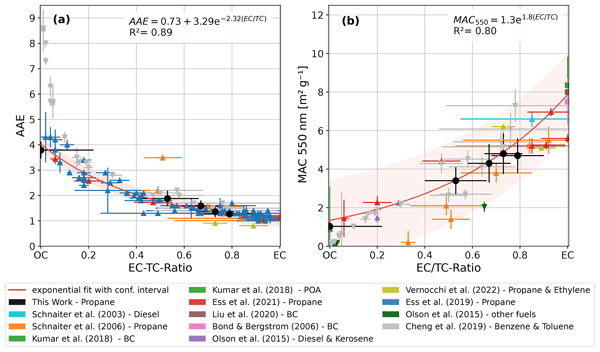
The spectral optical properties of combustion soot aerosols with varying black (BC) and brown carbon (BrC) content were studied in an atmospheric simulation chamber. Measurements of the mass spectral absorption cross section (MAC), supplemented by literature data, allowed us to establish a generalised exponential relationship between the spectral absorption and the elemental-to-total-carbon ratio (EC / TC) in soot. This relationship can provide a useful tool for modelling the properties of soot.
Ludovico Di Antonio, Matthias Beekmann, Guillaume Siour, Vincent Michoud, Christopher Cantrell, Astrid Bauville, Antonin Bergé, Mathieu Cazaunau, Servanne Chevaillier, Manuela Cirtog, Joel F. de Brito, Paola Formenti, Cecile Gaimoz, Olivier Garret, Aline Gratien, Valérie Gros, Martial Haeffelin, Lelia N. Hawkins, Simone Kotthaus, Gael Noyalet, Diana L. Pereira, Jean-Eudes Petit, Eva Drew Pronovost, Véronique Riffault, Chenjie Yu, Gilles Foret, Jean-François Doussin, and Claudia Di Biagio
Atmos. Chem. Phys., 25, 4803–4831, https://doi.org/10.5194/acp-25-4803-2025, https://doi.org/10.5194/acp-25-4803-2025, 2025
Short summary
Short summary
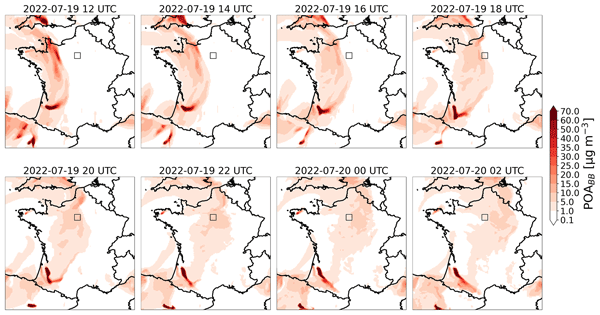
The summer of 2022 has been considered a proxy for future climate scenarios due to its hot and dry conditions. In this paper, we use the measurements from the Atmospheric Chemistry of the Suburban Forest (ACROSS) campaign, conducted in the Paris area in June–July 2022, along with observations from existing networks, to evaluate a 3D chemistry transport model (WRF–CHIMERE) simulation. Results are shown to be satisfactory, allowing us to explain the gas and aerosol variability at the campaign sites.
Chenjie Yu, Edouard Pangui, Kevin Tu, Mathieu Cazaunau, Maxime Feingesicht, Landsheere Xavier, Thierry Bourrianne, Vincent Michoud, Christopher Cantrell, Timothy B. Onasch, Andrew Freedman, and Paola Formenti
Atmos. Meas. Tech., 17, 3419–3437, https://doi.org/10.5194/amt-17-3419-2024, https://doi.org/10.5194/amt-17-3419-2024, 2024
Short summary
Short summary
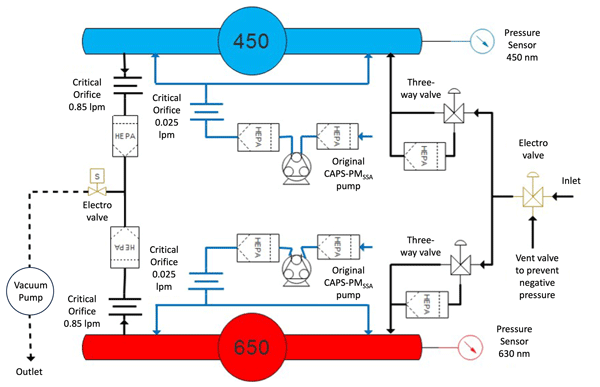
To meet the requirements for measuring aerosol optical properties on airborne platforms and conducting dual-wavelength measurements, we introduced A2S2, an airborne dual-wavelength cavity-attenuated phase-shift single monitor. This study reports the results in the laboratory and an aircraft campaign over Paris and its surrounding regions. The results demonstrate A2S2's reliability in measuring aerosol optical properties at both wavelengths and its suitability for future aircraft campaigns.
Ping Tian, Dantong Liu, Kang Hu, Yangzhou Wu, Mengyu Huang, Hui He, Jiujiang Sheng, Chenjie Yu, Dawei Hu, and Deping Ding
Atmos. Chem. Phys., 24, 5149–5164, https://doi.org/10.5194/acp-24-5149-2024, https://doi.org/10.5194/acp-24-5149-2024, 2024
Short summary
Short summary
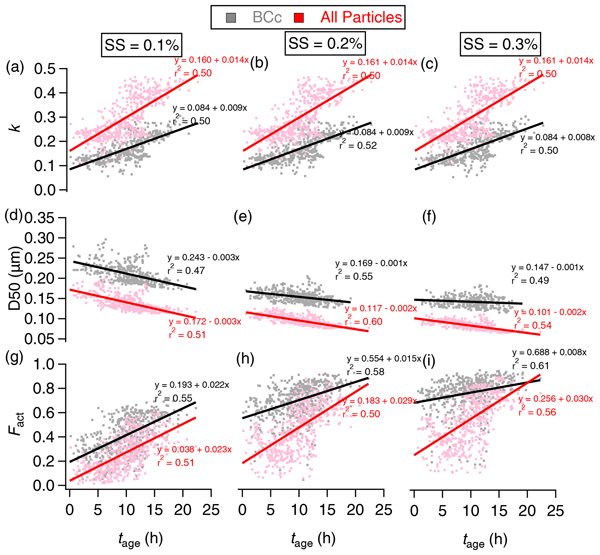
The results provide direct evidence of efficient droplet activation of black carbon (BC). The cloud condensation nuclei (CCN) activation fraction of BC was higher than for all particles, suggesting higher CCN activity of BC, even though its hygroscopicity is lower. Our research reveals that the evolution of BC's hygroscopicity and its CCN activation properties through atmospheric aging can be effectively characterized by the photochemical age.
Qian Li, Dantong Liu, Xiaotong Jiang, Ping Tian, Yangzhou Wu, Siyuan Li, Kang Hu, Quan Liu, Mengyu Huang, Ruijie Li, Kai Bi, Shaofei Kong, Deping Ding, and Chenjie Yu
Atmos. Chem. Phys., 23, 9439–9453, https://doi.org/10.5194/acp-23-9439-2023, https://doi.org/10.5194/acp-23-9439-2023, 2023
Short summary
Short summary
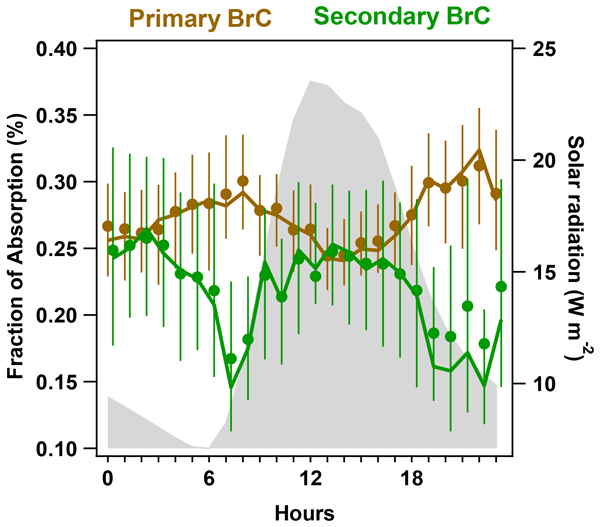
By attributing the shortwave absorption from black carbon, primary organic aerosol and secondary organic aerosol in a suburban environment, we firstly observed that the photochemically produced nitrogen-containing secondary organic aerosol may contribute to the enhancement of brown carbon absorption, partly compensating for some bleaching effect on the absorption of primary organic aerosol, hereby exerting radiative impacts.
Chenjie Yu, Dantong Liu, Kang Hu, Ping Tian, Yangzhou Wu, Delong Zhao, Huihui Wu, Dawei Hu, Wenbo Guo, Qiang Li, Mengyu Huang, Deping Ding, and James D. Allan
Atmos. Chem. Phys., 22, 4375–4391, https://doi.org/10.5194/acp-22-4375-2022, https://doi.org/10.5194/acp-22-4375-2022, 2022
Short summary
Short summary
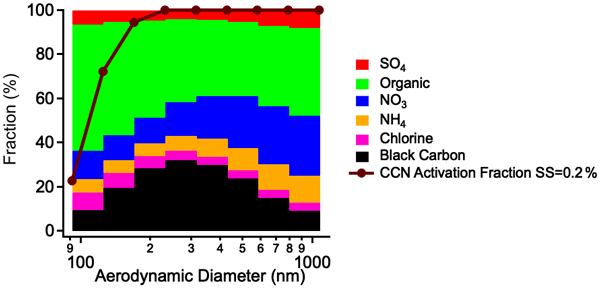
In this study, we applied a new technique to investigate the aerosol properties on both a mass and number basis and CCN abilities in Beijing suburban regions. The size-resolved aerosol chemical compositions and CCN activation measurement enable a detailed analysis of BC-containing particle hygroscopicity and its size-dependent contribution to the CCN activation. The results presented in this study will affect future models and human health studies.
Dawei Hu, M. Rami Alfarra, Kate Szpek, Justin M. Langridge, Michael I. Cotterell, Claire Belcher, Ian Rule, Zixia Liu, Chenjie Yu, Yunqi Shao, Aristeidis Voliotis, Mao Du, Brett Smith, Greg Smallwood, Prem Lobo, Dantong Liu, Jim M. Haywood, Hugh Coe, and James D. Allan
Atmos. Chem. Phys., 21, 16161–16182, https://doi.org/10.5194/acp-21-16161-2021, https://doi.org/10.5194/acp-21-16161-2021, 2021
Short summary
Short summary
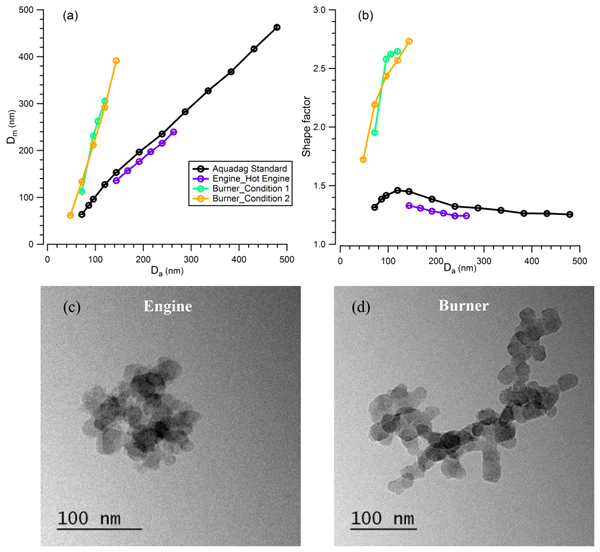
Here, we developed new techniques for investigating these properties in the laboratory and applied these to BC and BrC from different sources, including diesel exhaust, inverted propane flame and wood combustion. These have allowed us to quantify the changes in shape and chemical composition of different soots according to source and variables such as the moisture content of wood.
Dongchul Kim, Mian Chin, Hongbin Yu, Peter R. Colarco, Toshihiko Takemura, Paolo Tuccella, Paul Ginoux, Xiaohong Liu, Yang Shi, Hitoshi Matsui, Zhibo Zhang, Jianyu Zheng, Jasper F. Kok, Sophie Vandenbussche, Lieven Clarisse, Simon Whitburn, Virginie Capelle, Claudia Di Biagio, Paola Formenti, and Michael Schulz
EGUsphere, https://doi.org/10.5194/egusphere-2026-5264, https://doi.org/10.5194/egusphere-2026-5264, 2026
This preprint is open for discussion and under review for Atmospheric Chemistry and Physics (ACP).
Short summary
Short summary
The present AeroCom–AeroSat study addresses the gaps in the current state of DOD10 using satellite products, model simulations, an observation-constrained database. The analysis reveals substantial differences in DOD10 across satellite products and models, sometimes exceeding a factor of ten. Analysis with the laboratory measurements highlight the potential of combining shortwave and longwave remote sensing to advance dust compositions analysis through their distinct spectral sensitivities.
Shuo Ding, Dantong Liu, Jian Wu, Kang Hu, and Honghui Xu
EGUsphere, https://doi.org/10.5194/egusphere-2026-5302, https://doi.org/10.5194/egusphere-2026-5302, 2026
This preprint is open for discussion and under review for Atmospheric Chemistry and Physics (ACP).
Short summary
Short summary
Using year-long BC observations from a regional-background environment in eastern China, we show that apparent near-weekly BC variability reflects recurring synoptic accumulation and ventilation states rather than a fixed weekly emission cycle. The results link 3–10 day BC variability to transport-state persistence and highlight the importance of atmospheric dynamics in interpreting aerosol variability.
Elie Al Marj, Ambre Delater, Aline Gratien, Marie Line Torrijos, Juan Camilo Macias Rodriguez, Mathieu Cazaunau, Edouard Pangui, Antonin Bergé, Cécile Gaimoz, Thomas Bertin, Emmanuelle Mebold, Bénédicte Picquet-Varrault, Jean-François Doussin, Clément Buissot, Sophie Lanone, and Patrice Coll
Atmos. Chem. Phys., 26, 13645–13660, https://doi.org/10.5194/acp-26-13645-2026, https://doi.org/10.5194/acp-26-13645-2026, 2026
Short summary
Short summary
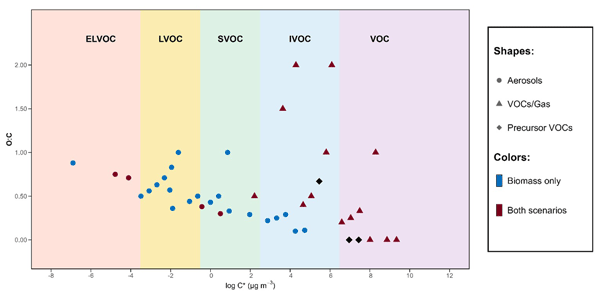
The "PolluRisk" platform simulated two urban scenarios: standard traffic and biomass burning. Using a smog chamber, the study showed that wood heating significantly modified aerosol chemistry, with organic fractions reaching 40 % of PM1 mass. Advanced mass spectrometry identified specific tracers of oxidation and combustion. These results provide a chemical framework for separate biological exposure experiments.
Jenine McCutcheon, James B. McQuaid, Helen Freeman, Jeffrey Paulo H. Perez, Jon Hawkings, Stefanie Lutz, Lou-Anne Chevrollier, Paola Formenti, Servanne Chevaillier, Martyn Tranter, and Liane G. Benning
EGUsphere, https://doi.org/10.5194/egusphere-2026-5031, https://doi.org/10.5194/egusphere-2026-5031, 2026
This preprint is open for discussion and under review for The Cryosphere (TC).
Short summary
Short summary
Soot can travel long distances and settle on snow and ice, where it absorbs light and promotes melting. We examined the size and shape of soot particles deposited on the Greenland Ice Sheet. By combining aerosol and geochemical methods, we show that the soot particles accumulate on the ice sheet surface, especially alongside dense glacier ice algal blooms. Soot accounts for ~15% of the combined darkening effect of algae and soot, highlighting the role of soot in ice albedo reduction and melting.
Johannes Heuser, Claudia Di Biagio, Jérôme Yon, Mathieu Cazaunau, Antonin Bergé, Edouard Pangui, Marco Zanatta, Laura Renzi, Angela Marinoni, Chenjie Yu, Servanne Chevaillier, Daniel Ferry, Michel Maillé, Paola Formenti, Benedicte Picquet-Varrault, and Jean-François Doussin
Aerosol Research Discuss., https://doi.org/10.5194/ar-2026-31, https://doi.org/10.5194/ar-2026-31, 2026
Preprint under review for AR
Short summary
Short summary
We retrieve refractive indices of laboratory-generated soot from measured particle properties using Mie and RDG-FA optical calculations, and quantify uncertainties via Monte Carlo simulations. The inferred refractive indices strongly depend on the theory employed, highlighting the need for consistency between optical theory and refractive index. Mie retrievals are sensitive to coagulation and size growth, while RDG-FA retrievals depend strongly on the uncertainty of assumed particle morphology.
Paola Formenti and Claudia Di Biagio
Aerosol Research, 4, 429–440, https://doi.org/10.5194/ar-4-429-2026, https://doi.org/10.5194/ar-4-429-2026, 2026
Short summary
Short summary
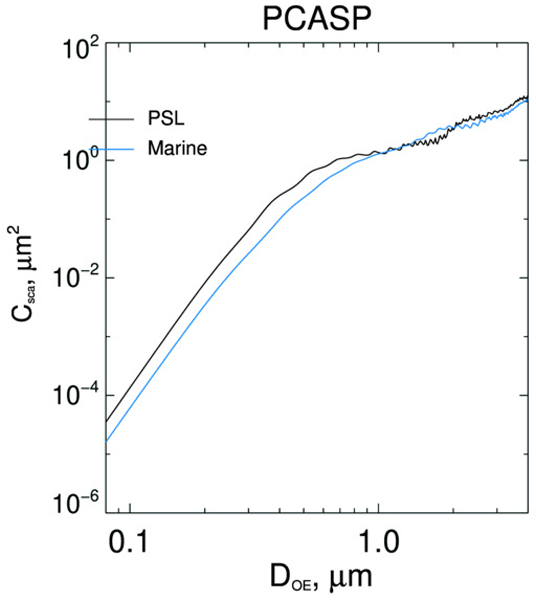
This study improves the accuracy of optical particle counters (OPCs), instruments used to measure airborne particles important for air quality and climate research. Because OPC measurements depend not only on particle size but also on composition and shape, results can be uncertain. The paper provides a standardized database of correction factors for five commercial OPCs, helping researchers produce more reliable and consistent aerosol measurements across a wide range of atmospheric conditions.
Sara Aisyah Syafira, Aristeidis Voliotis, Dawei Hu, Osayomwanbor Oghama, Huihui Wu, Yunqi Shao, Rhianna Evans, Jie Chen, Yu Wang, Peter Gallimore, James Allan, Hugh Coe, and Gordon McFiggans
EGUsphere, https://doi.org/10.5194/egusphere-2026-4932, https://doi.org/10.5194/egusphere-2026-4932, 2026
This preprint is open for discussion and under review for Atmospheric Measurement Techniques (AMT).
Short summary
Short summary
This current work describes a biomass burning (BB) aerosol facility at the University of Manchester that provides a repeatable, flexible system and platform for mechanistic and multiparameter investigation of fresh and aged BB aerosol. The characteristics, as well as those capabilities of the facility across fuel types and combustions were demonstrated here.
Patrick Dewald, Sergio Harb, Bénédicte Picquet-Varrault, Mathieu Cazaunau, Maxime Feingesicht, Lucas Beltran, Vincent Michoud, Xavier Landsheere, Edouard Pangui, Antonin Bergé, Christopher Cantrell, and Manuela Cirtog
EGUsphere, https://doi.org/10.5194/egusphere-2026-5307, https://doi.org/10.5194/egusphere-2026-5307, 2026
Short summary
Short summary
We built an instrument to measure reactive nitrogen compounds in the atmosphere with a focus on the detection of nitrate radicals. They are formed by pollutants such as ozone and nitrogen oxides and are an important nocturnal oxidant of trace gases, thereby indirectly impacting the interconversion of reactive nitrogen and air quality. The instrument’s characterization, performance assessment and the first field deployment are presented.
Hua Zhang, Shuxiao Wang, Xi Zhao, Zhijun Wu, Yan Yin, Siyu Chen, Dantong Liu, Jingchuan Chen, Hui Jiang, Jiewen Shen, Da Gao, Dejia Yin, Yicong He, Zeqi Li, Shengyue Li, Zhaoxin Dong, Manish Shrivastava, Jonathan H. Jiang, Muyan Peng, and Bin Zhao
Atmos. Chem. Phys., 26, 12329–12354, https://doi.org/10.5194/acp-26-12329-2026, https://doi.org/10.5194/acp-26-12329-2026, 2026
Short summary
Short summary
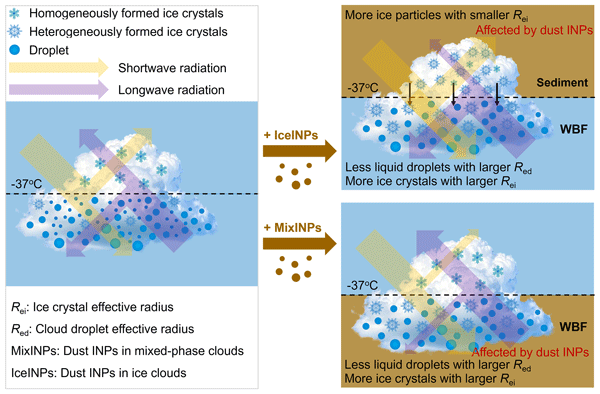
Mineral dust can initiate ice formation in clouds, affecting cloud properties and regional climate. Using an improved model, we examined their contrasting impacts in mixed-phase and ice clouds over East Asia. In mixed-phase clouds, dust promotes liquid-to-ice conversion and reduces cloud reflectivity, causing moderate warming, whereas in ice clouds, it greatly enhances ice formation and leads to stronger warming. This study advances understanding of aerosol–cloud–climate interactions.
Juliette Brochet, Hasna Chebaicheb, Olivier Favez, Laura Cadeo, Tanguy Amodeo, Yunjiang Zhang, Antonin Bergé, Philip Croteau, Vincent Crenn, Valérie Gros, and Jean-Eudes Petit
Earth Syst. Sci. Data Discuss., https://doi.org/10.5194/essd-2026-490, https://doi.org/10.5194/essd-2026-490, 2026
Preprint under review for ESSD
Short summary
Short summary
This work proposes a new methodology for robust, homogeneous processing of long-term datasets of aerosol mass spectrometer measurements to remedy the challenges posed by the emergence of juxtaposed data processing periods over the years. The results showed a global decrease in PM1 at a semi-urban site in the Paris region between 2011 and 2024, along with a decrease in the frequency of persistent pollution episodes. Finally, it highlights the need for Sulfate source apportionment analysis.
Yuyan Long, Delong Zhao, Yun Zhang, Dantong Liu, Jing Duan, and Mengyu Huang
EGUsphere, https://doi.org/10.5194/egusphere-2026-4431, https://doi.org/10.5194/egusphere-2026-4431, 2026
Short summary
Short summary
Convective clouds exhibited high ice concentrations over the Tibetan Plateau. We use aircraft data to study extra ice formation. Multiple natural processes generate extra ice across a wider range than traditional theories suggest. The presence of supercooled droplets is essential, but their size, rather than their number alone, determines whether multiplication begins. Temperature and the amounts of other cloud particles control ice enhancement intensity.
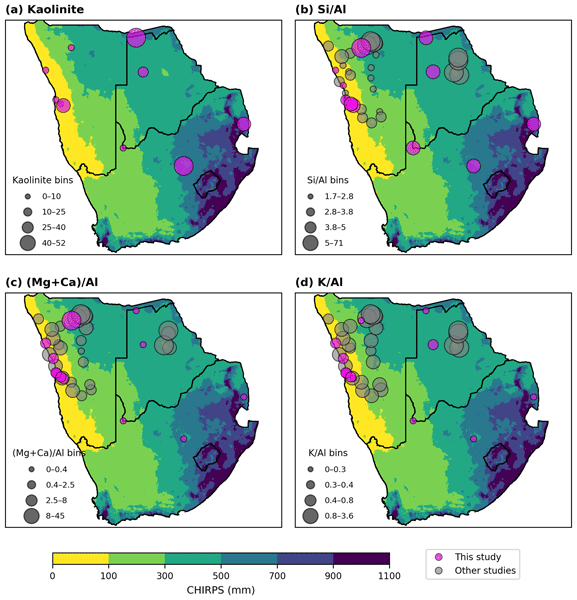
Clarissa Baldo, Servanne Chevaillier, Sophie Nowak, Gael Noyalet, Sandra Lafon, Claudia Di Biagio, Amelie Chaput, James King, Mathieu Cazaunau, Edouard Pangui, Jean-Francois Doussin, Remi Stanus, Nadine Mattielli, Heleen C. Vos, Gregory S. Okin, Brigitte Language, Tjaart Van Der Walt, Stuart Piketh, Karine Desboeufs, Akinori Ito, Silvia Becagli, Eugene Marais, Laurie Barrier, Stéphane Jacquemoud, and Paola Formenti
Atmos. Chem. Phys., 26, 10727–10749, https://doi.org/10.5194/acp-26-10727-2026, https://doi.org/10.5194/acp-26-10727-2026, 2026
Short summary
Short summary
Our results show that crustal element ratios and clay contents distinguish dust aerosols from arid western coastal areas and humid eastern inland regions in Southern Africa. This dust contains key micronutrients that can become bioaccessible during atmospheric transport to nearby and remote marine ecosystems. It is also enriched in carbonates and K-feldspar, serving as a source of cloud condensation and ice nuclei, with potential implications ranging from regional to sub-hemispheric scales.
Thomas Audoux, Ambre Delater, Manuella Ghanem, Jean-Baptiste Lily, Mathieu Cazaunau, Edouard Pangui, Benedicte Picquet-Varrault, Patrice Coll, Esperanza Perdrix, Laurent Alleman, and Davy Rousset
EGUsphere, https://doi.org/10.5194/egusphere-2026-4293, https://doi.org/10.5194/egusphere-2026-4293, 2026
This preprint is open for discussion and under review for Atmospheric Measurement Techniques (AMT).
Short summary
Short summary
Air pollution can affect human health, but not all particles are equally harmful. We developed a new instrument that measure the oxidative properties of the atmosphere continuously. Laboratory experiments showed that pollutants formed through sunlight-driven chemical reactions have a greater oxidative potential than particles containing higher levels of metals under night-time conditions. This will help us to better understand how rapid changes in air pollution may affect health.
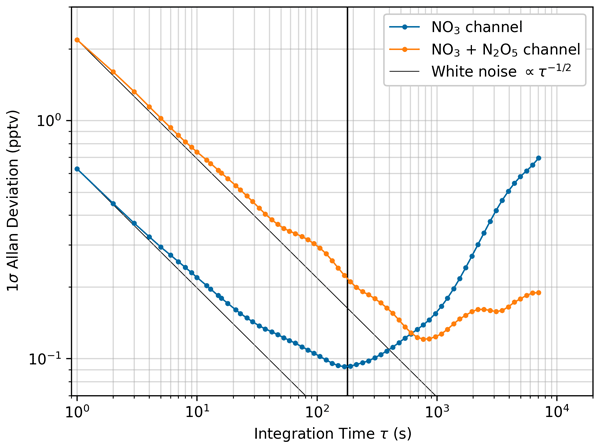
Gunther N. T. E. Türk, Simone T. Andersen, Patrick Dewald, Jan Schuladen, Jos Lelieveld, and John N. Crowley
Atmos. Meas. Tech., 19, 4815–4832, https://doi.org/10.5194/amt-19-4815-2026, https://doi.org/10.5194/amt-19-4815-2026, 2026
Short summary
Short summary
We built a small instrument to measure the air-borne molecules NO₃ and N₂O₅. These originate mostly from human-made nitrogen oxide emissions and are important for nighttime chemistry and air quality. Our instrument is lightweight and sensitive, detecting these molecules at levels below one part per trillion. Tests in the laboratory and during a field study show its ability to accurately measure these trace gases. Here, we present the design of the instrument and discuss its performance.
Alejandra Velazquez-Garcia, Chenjie Yu, Sarah Tinorua, Hichem Bouzidi, Eleonora Aruffo, Piero Di Carlo, Peter DeCarlo, Benjamin A. Nault, Thierry Bourrianne, Kevin Tu, Edouard Pangui, Diana L. Pereira, Mathieu Cazaunau, Ludovico Di Antonio, Guillaume Siour, Matthias Beekmann, Astrid Bauville, Christopher Cantrell, Paola Formenti, Vincent Michoud, and Cyrielle Denjean
EGUsphere, https://doi.org/10.5194/egusphere-2026-4423, https://doi.org/10.5194/egusphere-2026-4423, 2026
Short summary
Short summary
As city air pollution travels downwind, its climate impact evolves. Using a research aircraft, we tracked the Paris pollution plume and found that sunlight rapidly transforms urban emissions, forming secondary organic particles that absorb more sunlight within six hours. These findings show that urban pollution changes chemically during transport, providing key constraints to improve future climate models.
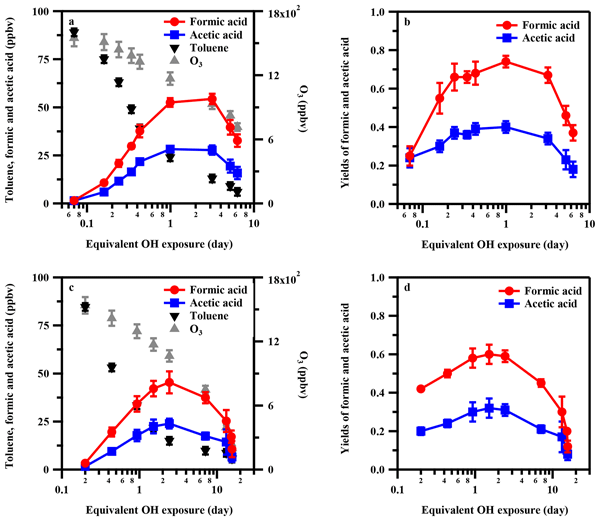
Hengqing Shen, Liubin Huang, Yue Zhao, Min Zhao, Yu Yang, Huan Li, Huihui Wu, and Zhongming Chen
Atmos. Chem. Phys., 26, 10029–10042, https://doi.org/10.5194/acp-26-10029-2026, https://doi.org/10.5194/acp-26-10029-2026, 2026
Short summary
Short summary
This study shows that the air pollutant toluene produces much more formic acid and acetic acid during atmospheric aging than previously thought. Laboratory experiments show these acids mainly form through multiple oxidation steps and are poorly represented in current models. This missing chemistry helps explain why models underestimate organic acids and highlights their role in air quality and climate.
Sara Aisyah Syafira, Dawei Hu, Aristeidis Voliotis, Huihui Wu, Osayomwanbor Ebenezer Oghama, Yunqi Shao, Sri Hapsari Budisulistiorini, Yu Wang, Michael Flynn, Peter James Gallimore, Hugh Coe, James Allan, and Gordon McFiggans
EGUsphere, https://doi.org/10.5194/egusphere-2026-2723, https://doi.org/10.5194/egusphere-2026-2723, 2026
Short summary
Short summary
The variability in hygroscopicity of biomass-burning aerosol particles, both fresh and aged, was measured using three methods across different fuel types and burn phases. Several inter-method discrepancy factors were tested. Substantial discrepancies remained after applying improvements that mitigated the tested factors: size-related factors and organic hygroscopicity assumption factor, highlighting the need for regime-aware κ parameterizations in atmospheric and climate models.
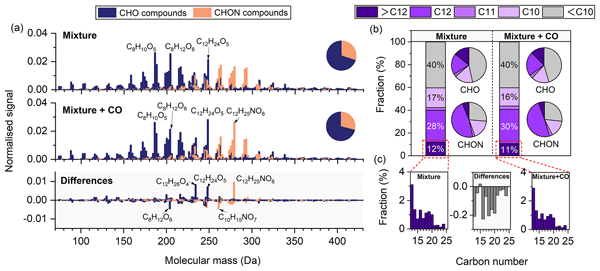
Guangzhao Xie, Aristeidis Voliotis, Thomas J. Bannan, Yunqi Shao, Huihui Wu, Dawei Hu, and Gordon McFiggans
Atmos. Chem. Phys., 26, 9679–9696, https://doi.org/10.5194/acp-26-9679-2026, https://doi.org/10.5194/acp-26-9679-2026, 2026
Short summary
Short summary
Achieving atmospheric relevance in chamber experiments is essential for improving our understanding of secondary organic aerosol (SOA) formation. We employed a photochemical system including mixtures of biogenic and anthropogenic precursors with inorganic trace gases. The results show that CO affected SOA particle mass yields and chemical composition differently in single- and mixed-precursor systems, highlighting the importance of accounting for atmospheric complexity in laboratory studies.
Zixuan Cheng, Doğuşhan Kılıç, Daniel Wilson, Amanda Lea-Langton, Michael Flynn, Leonard Kirago, Marvin Shaw, Andrew Rickard, Jim R. Hopkins, Daniel Bryant, Gordon McFiggans, Jacqueline F. Hamilton, Hugh Coe, and James Allan
Aerosol Research Discuss., https://doi.org/10.5194/ar-2026-24, https://doi.org/10.5194/ar-2026-24, 2026
Preprint under review for AR
Short summary
Short summary
Wood burning is seen as cleaner in modern stoves, but user behaviour can change this when burning dry wood. We burned dry ash wood in a UK modern stove with six common operations and measured the wood smoke. Reloading while hot, using too much or too little wood, or opening the stove door increased small particels and harmful smoke emissions. We found a burning stage that helps explain these emissions. Using big pieces of wood and following guidance can reduce pollution and health risks.
Chenjie Yu, Ludovico Di Antonio, Peter F. DeCarlo, Benjamin A. Nault, Alejandra Velazquez-Garcia, Eleonora Aruffo, Piero Di Carlo, Cyrielle Denjean, Sarah Tinorua, Thierry Bourrianne, Diana L. Pereira, Kevin Tu, Edouard Pangui, Mathieu Cazaunau, Astrid Bauville, Noël Grand, Antonin Bergé, Claudia Di Biagio, Aline Gratien, Matthias Beekmann, Guillaume Siour, Gilles Foret, Barbara D'Anna, Julien Kammer, Huihui Wu, Christopher Cantrell, Paola Formenti, and Vincent Michoud
EGUsphere, https://doi.org/10.5194/egusphere-2026-3147, https://doi.org/10.5194/egusphere-2026-3147, 2026
Short summary
Short summary
This study used coordinated airborne and ground-based measurements in Paris and its downwind regions to quantify the effects of 2–6 h of urban plume aging on aerosol properties. Aging enhanced secondary organic aerosol production and PM1 mass and shifted optical properties toward higher SSA, higher real and lower imaginary refractive indices, and stronger brown carbon absorption. These results highlight the need to account for aerosol aging in atmospheric models and remote-sensing retrievals.
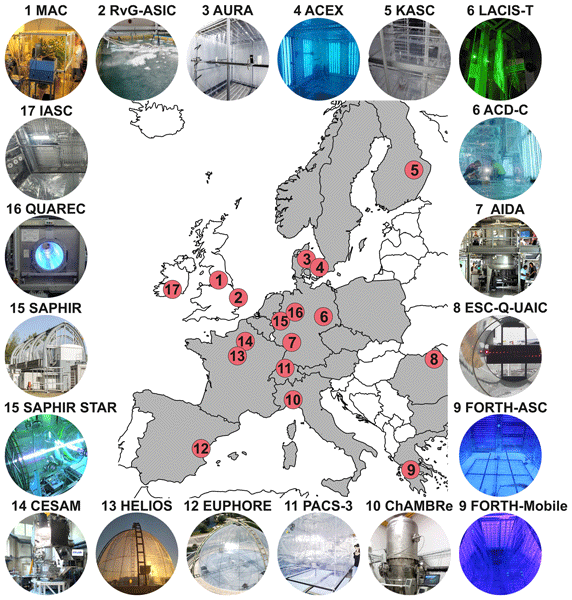
Hendrik Fuchs, Niklas Illmann, Amalia Muñoz, Mila Ródenas, Bénédicte Picquet-Varrault, M. Rami Alfarra, Cecilia Arsene, Iustinian G. Bejan, David M. Bell, Merete Bilde, Alexander Böhmländer, Mixtli Campos-Pineda, Mathieu Cazaunau, Patrice Coll, Véronique Daële, Claudia Di Biagio, Michael Flynn, Paola Formenti, Hartmut Herrmann, Kristina Höhler, Thorsten Hohaus, Matthew S. Johnson, Eija Juurola, Niku Kivekäs, Jan Kaiser, Christos Kaltsonoudis, Paolo Laj, Dario Massabò, Federico Mazzei, Gordon McFiggans, Max R. McGillen, Abdelwahid Mellouki, Peter Mettke, Ottmar Möhler, Falk Mothes, Dennis Niedermeier, Anna Novelli, Romeo I. Olariu, Spyros N. Pandis, Iulia Patroescu-Klotz, Rosa Maria Petracca Altieri, Paolo Prati, Claudiu Roman, Albert A. Ruth, Harald Saathoff, Silvio Schmalfuß, Frank Stratmann, Virginia Vernocchi, Aristeidis Voliotis, Jens Voigtländer, Annele Virtanen, Andreas Wahner, Robert Wagner, John Wenger, Sören Zorn, Peter Wiesen, and Jean-Francois Doussin
Atmos. Meas. Tech., 19, 4165–4199, https://doi.org/10.5194/amt-19-4165-2026, https://doi.org/10.5194/amt-19-4165-2026, 2026
Short summary
Short summary
Atmospheric simulation chambers enable experiments to be conducted under controlled conditions, improving our understanding of, and ability to predict, changes in the composition of the atmosphere. This is important for assessing air quality and its effects on human health, climate, the environment, and the economy. This paper describes the chambers of the European ACTRIS research infrastructure and discusses topics and directions that can be addressed in future chamber experiments.
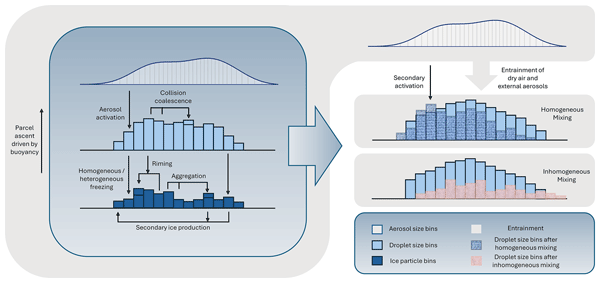
Bowen Z. Portman, Paul J. Connolly, Alan M. Blyth, Rachel L. James, and Huihui Wu
Atmos. Chem. Phys., 26, 8367–8385, https://doi.org/10.5194/acp-26-8367-2026, https://doi.org/10.5194/acp-26-8367-2026, 2026
Short summary
Short summary
Secondary ice production (SIP) is key to explaining the high ice particle concentrations observed in deep convective clouds. We investigate secondary ice production in summer convective clouds over New Mexico, and our results show that collisions between supercooled water droplets and more massive ice particles are the dominant SIP mechanism in these clouds. We also find that the entrainment of external aerosols leads to earlier ice enhancement under homogeneous mixing.
Guangzhao Xie, Aristeidis Voliotis, Thomas J. Bannan, Yunqi Shao, Huihui Wu, Dawei Hu, and Gordon McFiggans
EGUsphere, https://doi.org/10.5194/egusphere-2026-2826, https://doi.org/10.5194/egusphere-2026-2826, 2026
Short summary
Short summary
NOx plays a crucial role in secondary organic aerosol (SOA) formation. However, most studies have focused on its effects on individual SOA precursors. This study investigated the effects of NOx on SOA particle mass yields and chemical composition from a biogenic-anthropogenic mixture. The results reveal that the effects of NOx in the mixed-precursor systems cannot be interpreted as a simple combination of behaviours observed in individual precursor systems.
Yuting Liang, Shitong Zhao, Dantong Liu, Changhao Wu, Li Yi, and Xingcan Jia
EGUsphere, https://doi.org/10.5194/egusphere-2026-2617, https://doi.org/10.5194/egusphere-2026-2617, 2026
Short summary
Short summary
Low visibility from fog and pollution harms travel and health. We built a deep learning model combining satellite and weather data to map these events across eastern China, successfully separating clean fog from toxic, polluted fog. Cutting fine particulate matter by 20% shrinks polluted fog areas by 42%. However, this pollution must drop over 40% to effectively protect dense city populations. This explicitly guides future air quality and public health policies.
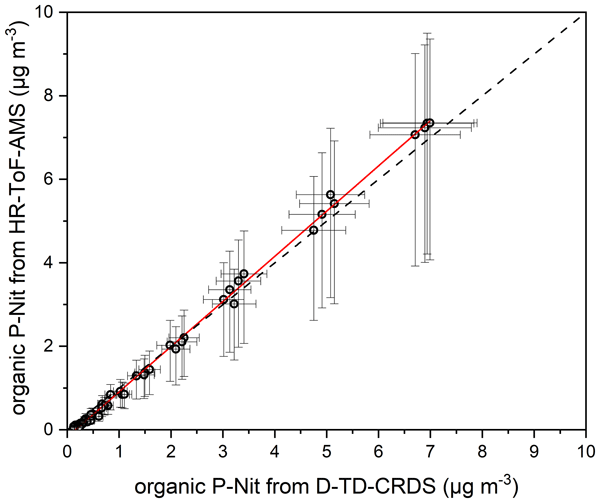
Patrick Dewald, Tobias Seubert, Laura Wüst, Jan Schuladen, Frank Drewnick, Friederike Fachinger, Thorsten Hoffmann, and John N. Crowley
Atmos. Meas. Tech., 19, 3445–3457, https://doi.org/10.5194/amt-19-3445-2026, https://doi.org/10.5194/amt-19-3445-2026, 2026
Short summary
Short summary
We have developed and tested an instrument that quantitatively detects particulate nitrate. Gas-phase reactive nitrogen species are denuded using an active-carbon surface and particle nitrate is converted to NO2, which is detected using cavity-ringdown-spectroscopy. Key to accurate measurement of particulate nitrate is drying of the sampled air. Excellent agreement with an aerosol-mass-spectrometer indicates that the instrument detects both organic and inorganic nitrate particle mass accurately.
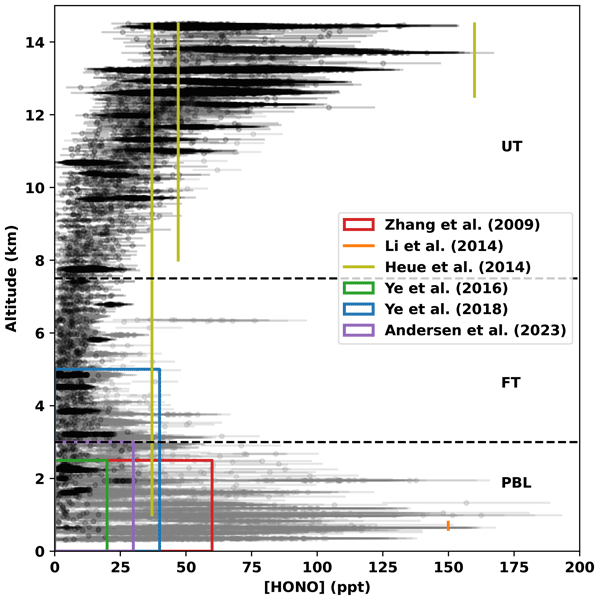
Benjamin Weyland, Simon Rosanka, Domenico Taraborrelli, Birger Bohn, Andreas Zahn, Florian Obersteiner, Eric Förster, Mariano Mertens, Patrick Jöckel, Helmut Ziereis, Katharina Kaiser, Horst Fischer, John N. Crowley, Nijing Wang, Achim Edtbauer, Jonathan Williams, Maria Dolores Andrés Hernández, John P. Burrows, Flora Kluge, Meike K. Rotermund, Andre Butz, and Klaus Pfeilsticker
Atmos. Chem. Phys., 26, 6825–6856, https://doi.org/10.5194/acp-26-6825-2026, https://doi.org/10.5194/acp-26-6825-2026, 2026
Short summary
Short summary
The destruction by sunlight of nitrous acid (HONO) produces the so-called detergent of the atmosphere. HONO has been measured in concentrations which exceed predictions based on known chemistry for decades. Several reactions have been proposed which may explain this excess HONO. This study reports on airborne measurements of HONO; the observations exceed predictions and form a C-shaped profile in the troposphere. Together with a host of other measurements, various reactions are investigated.
Timothy J. Wallington, Markus Ammann, John N. Crowley, Hartmut Herrmann, Michael E. Jenkin, V. Faye McNeill, Abdelwahid Mellouki, and Jürgen Troe
Atmos. Chem. Phys., 26, 6579–6592, https://doi.org/10.5194/acp-26-6579-2026, https://doi.org/10.5194/acp-26-6579-2026, 2026
Short summary
Short summary
Halogenated alkanes, alkenes, and oxygenated compounds play an important role in atmospheric chemistry. This article, the ninth in the series, presents kinetic and photochemical data sheets evaluated by the International Union of Pure and Applied Chemistry (IUPAC) Task Group on Atmospheric Chemical Kinetic Data Evaluation. It covers the gas-phase reactions (with HO radicals, NO3 radicals, and ozone) and photolysis of halogenated organic compounds. These data are important for atmospheric models.
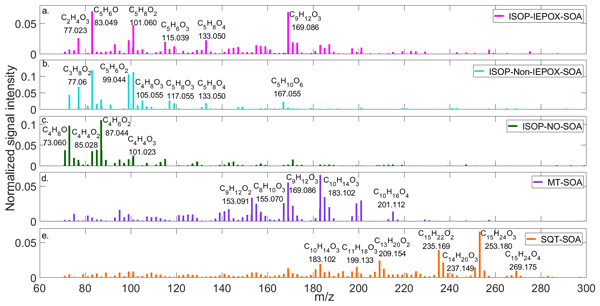
Carolina Ramírez-Romero, Olatunde Murana, Hichem Bouzidi, Marina Jamar, Sébastien Dusanter, Alexandre Tomas, Ahmad Lahib, Layal Fayad, Véronique Riffault, Christopher Pöhlker, Stéphane Sauvage, and Joel F. de Brito
Atmos. Meas. Tech., 19, 3049–3062, https://doi.org/10.5194/amt-19-3049-2026, https://doi.org/10.5194/amt-19-3049-2026, 2026
Short summary
Short summary
Understanding how volatile organic compounds from plants and soils contribute to aerosol particles is essential for predicting air quality and climate effects. This study used advanced mass spectrometry to analyze particles formed from these compounds under controlled conditions. By identifying distinct chemical fingerprints, we can trace particle sources and reactions more accurately, improving our understanding of particle formation processes in the atmosphere.
Jian Xu, Junteng Wu, Mayur Gajanan Sapkal, Jim Grisillon, Shravan Deshmukh, Brice Temime Roussel, Julien Kammer, Nicolas Brun, Fabien Robert-Peillard, Beiping Luo, Judith Kleinheins, Silvia Henning, Bénédicte Picquet-Varrault, Edouard Pangui, Mathieu Cazaunau, Zamin A. Kanji, Claudia Marcolli, and Anne Monod
Aerosol Research Discuss., https://doi.org/10.5194/ar-2026-14, https://doi.org/10.5194/ar-2026-14, 2026
Revised manuscript under review for AR
Short summary
Short summary
The study aimed to mimic the atmospheric behaviour of a semi-volatile organic compound in the presence of fine particles and at various relative humidities. The objective was to determine the influence of organic matter on humid particle growth. These results are essential for improving our understanding of cloud formation.
Paola Formenti, Danitza Klopper, Anais Feron, Mathieu Cazaunau, Servanne Chevaillier, Karine Desboeufs, Claudia Di Biagio, Clarissa Baldo, Cécile Gaimoz, Vincent Michoud, Cécile Mirande-Bret, Sylvain Triquet, François Hemeret, Richard Valorso, Stephen Broccardo, Andreas Namwoonde, Mattheus Hanghome, Chiara Giorio, and Stuart J. Piketh
Earth Syst. Sci. Data Discuss., https://doi.org/10.5194/essd-2026-95, https://doi.org/10.5194/essd-2026-95, 2026
Revised manuscript under review for ESSD
Short summary
Short summary
The southern African west coast is highly impacted by climate change and aerosols from natural and human sources, yet observations are scarce. We present measurements (2014–2019) from the Henties Bay Aerosol Observatory in Namibia, including aerosol properties, ozone and meteorology. This unique dataset will support process studies and improve regional climate modelling.
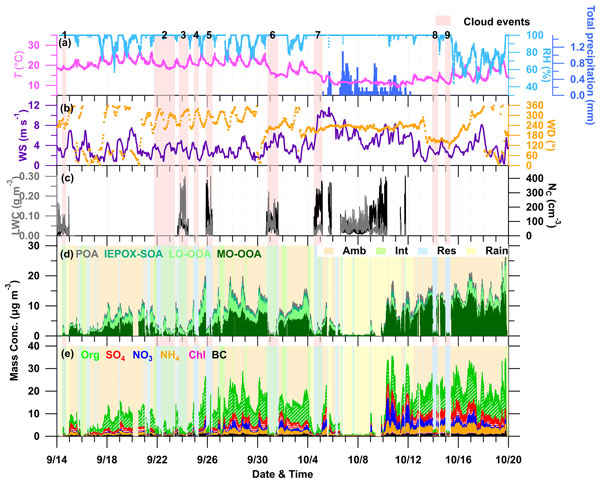
Yi Zhang, Weiqi Xu, Yan Li, Guohua Zhang, Dantong Liu, Ye Kuang, Yu Zhang, Wei Zhou, Xiaocong Peng, Bojiang Su, Weihong Huang, Zijun Zhang, Liu Yang, Yangzhou Wu, Siyuan Li, Shitong Zhao, Lanzhong Liu, Xiaole Pan, Zifa Wang, Xinhui Bi, Mikael Ehn, Douglas R. Worsnop, and Yele Sun
Atmos. Chem. Phys., 26, 5617–5634, https://doi.org/10.5194/acp-26-5617-2026, https://doi.org/10.5194/acp-26-5617-2026, 2026
Short summary
Short summary
This study explores how clouds influence the chemical composition of air particles through field research at a high-altitude station in southeastern China across different seasons. We found that different cloud types cause varying degrees of chemical changes in these particles. These findings enhance our understanding of the impact of clouds on air quality and contribute to improving climate models.
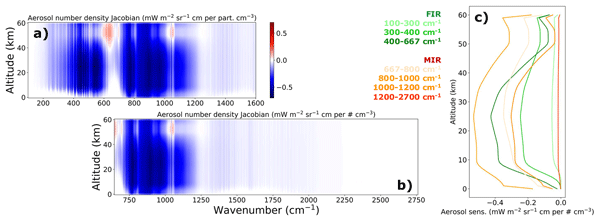
Pasquale Sellitto, Maxim Eremenko, Paola Formenti, Perla Alalam, Michael Höpfner, and Claudia Di Biagio
Atmos. Meas. Tech., 19, 2751–2762, https://doi.org/10.5194/amt-19-2751-2026, https://doi.org/10.5194/amt-19-2751-2026, 2026
Short summary
Short summary
The Far-infrared Outgoing Radiation Understanding and Monitoring (FORUM) mission will bring the first satellite instrument capable of observing the Earth's far infrared (FIR) spectra with a high spectral resolution. FORUM will crucially contribute to water vapour, clouds and surface observations. We found that FORUM will provide also a significant sensitivity to dust aerosol, especially in cases of large burdens of mid-to-long-range transported plumes of dust in the free and upper troposphere.
Johannes Heuser, Claudia Di Biagio, Jérôme Yon, Mathieu Cazaunau, Antonin Bergé, Edouard Pangui, Marco Zanatta, Laura Renzi, Angela Marinoni, Chenjie Yu, Servanne Chevaillier, Daniel Ferry, Paolo Laj, Michel Maillé, Paola Formenti, Benedicte Picquet-Varrault, and Jean-Francois Doussin
EGUsphere, https://doi.org/10.5194/egusphere-2026-1867, https://doi.org/10.5194/egusphere-2026-1867, 2026
Short summary
Short summary
Large simulation chamber experiments were performed to investigate the impact of non-absorbing coating on the absorption of fractal BC-containing soot. Results show the strong and combined effect of morphological modifications and mixing state heterogeneity on BC absorption, both depending on the reaction dynamics of coating formation and ageing of the coated soot. The range of measured absorption cannot be captured by common model approximations, highlighting the need for new formalisms.
Laura Renzi, Claudia Di Biagio, Johannes Heuser, Marco Zanatta, Mathieu Cazaunau, Antonin Bergé, Edouard Pangui, Jérôme Yon, Tommaso Isolabella, Dario Massabò, Virginia Vernocchi, Martina Mazzini, Franziska Vogel, Chenjie Yu, Paola Formenti, Benedicte Picquet-Varrault, Jean-Francois Doussin, and Angela Marinoni
Atmos. Meas. Tech., 19, 1365–1383, https://doi.org/10.5194/amt-19-1365-2026, https://doi.org/10.5194/amt-19-1365-2026, 2026
Short summary
Short summary
This study investigates how particle properties affect the accuracy of a common air pollution instrument, the dual-spot aethalometer. By combining lab experiments with real-world data from a mountain site in Italy, we found that the correction factor for this instrument varies mainly due to particle size and measurement conditions. Understanding these influences helps improve air quality monitoring, which is important for assessing pollution impacts on health and climate.
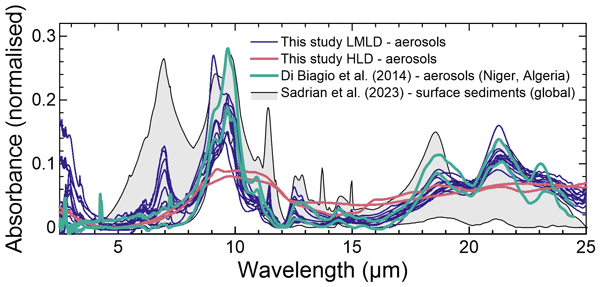
Claudia Di Biagio, Elisa Bru, Avila Orta, Servanne Chevaillier, Clarissa Baldo, Antonin Bergé, Mathieu Cazaunau, Sandra Lafon, Sophie Nowak, Edouard Pangui, Meinrat O. Andreae, Pavla Dagsson-Waldhauserova, Kebonyethata Dintwe, Konrad Kandler, James S. King, Amelie Chaput, Gregory S. Okin, Stuart Piketh, Thuraya Saeed, David Seibert, Zongbo Shi, Earle Williams, Pasquale Sellitto, and Paola Formenti
Atmos. Chem. Phys., 26, 1079–1091, https://doi.org/10.5194/acp-26-1079-2026, https://doi.org/10.5194/acp-26-1079-2026, 2026
Short summary
Short summary
Spectroscopy measurements show that the absorbance of dust in the far-infrared up to 25 µm is comparable in intensity to that in the mid-infrared (3–15 µm) suggesting possible relevance for its direct radiative effect. Absorption signatures differ between Icelandic and low/mid-latitude dust due to differences in mineralogical composition. Spectral differences could be used to characterise the mineralogy and trace the origin of airborne dust based on infrared remote sensing observations.
Sylvie Bénard, Bruno Piguet, William Maurel, Jean-Claude Étienne, Jacques Couzinier, Pascal Richard, Aurélie Riandet, and Arnaud Mequignon
EGUsphere, https://doi.org/10.5194/egusphere-2025-6022, https://doi.org/10.5194/egusphere-2025-6022, 2026
This preprint is open for discussion and under review for Geoscientific Instrumentation, Methods and Data Systems (GI).
Short summary
Short summary
The analysis and data-processing programs and applications for observational meteorology and environmental research that we have developed over the years now allow us to simplify and automate the analysis, processing and production of data for research. The latest developments account for the arrival of multidimensional variables from remote‑sensing instruments and include graphical interfaces to facilitate use of the tools.
Hasna Chebaicheb, Mélodie Chatain, Olivier Favez, Joel F. de Brito, Vincent Crenn, Tanguy Amodeo, Mohamed Gherras, Emmanuel Jantzem, Caroline Marchand, and Véronique Riffault
Atmos. Chem. Phys., 26, 155–169, https://doi.org/10.5194/acp-26-155-2026, https://doi.org/10.5194/acp-26-155-2026, 2026
Short summary
Short summary
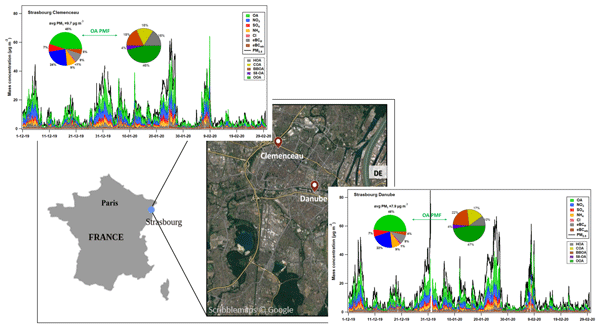
This study compares carbonaceous aerosols source apportionment at paired traffic and background locations in urban environment (Strasbourg, France). Positive matrix factorization was applied (individually and in a combined input dataset) to aerosol mass spectrometry measurements at both sites, providing notably insights into the challenges of attributing real sources to organic aerosol (OA) factors and the impact of instrumental result specificities leading to differences in OA mass spectra.
Diana L. Pereira, Aline Gratien, Chiara Giorio, Emmanuelle Mebold, Thomas Bertin, Cécile Gaimoz, Jean-François Doussin, and Paola Formenti
Atmos. Meas. Tech., 19, 1–19, https://doi.org/10.5194/amt-19-1-2026, https://doi.org/10.5194/amt-19-1-2026, 2026
Short summary
Short summary
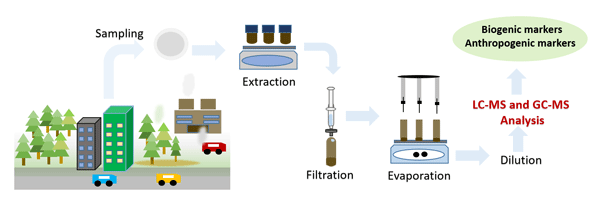
This study provides two methods for the quantification of molecular markers to improve the description of secondary organic aerosols using chromatographic techniques coupled with mass spectrometry. Compounds from various chemical functionalities (alcohols, acids, aldehydes), from biogenic and anthropogenic origin, were identified. Improved method performance was observed for nitro compounds, which have been associated with anthropogenic activities.
Huihui Wu, Nicholas Marsden, Paul Connolly, Michael Flynn, Paul I. Williams, Declan Finney, Kezhen Hu, Graeme J. Nott, Navaneeth M. Thamban, Keith Bower, Alan Blyth, Martin Gallagher, and Hugh Coe
Atmos. Chem. Phys., 25, 18409–18429, https://doi.org/10.5194/acp-25-18409-2025, https://doi.org/10.5194/acp-25-18409-2025, 2025
Short summary
Short summary
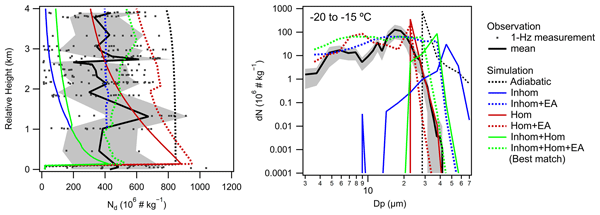
Airborne observations over the Magdalena Mountains in New Mexico underscore the combined influence of meteorological conditions and aerosol characteristics on the development of deep-convective clouds under different flow regimes. Model-observation comparisons emphasize the critical role of aerosol entrainment in reproducing the observed broad cloud droplet spectra. This study provides valuable constraints for improving parameterizations of aerosol-cloud interactions in deep convective systems.
Matthew J. Rowlinson, Lucy J. Carpenter, Mat J. Evans, James D. Lee, Simone T. Andersen, Tomas Sherwen, Anna B. Callaghan, Roberto Sommariva, William Bloss, Siqi Hou, Leigh R. Crilley, Klaus Pfeilsticker, Benjamin Weyland, Thomas B. Ryerson, Patrick R. Veres, Pedro Campuzano-Jost, Hongyu Guo, Benjamin A. Nault, Jose L. Jimenez, and Khanneh Wadinga Fomba
Atmos. Chem. Phys., 25, 16945–16968, https://doi.org/10.5194/acp-25-16945-2025, https://doi.org/10.5194/acp-25-16945-2025, 2025
Short summary
Short summary
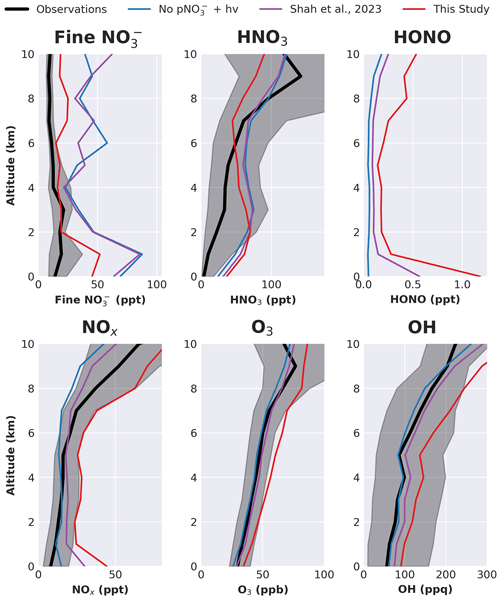
HONO is key to tropospheric chemistry. Observations show high HONO concentrations in remote air, possibly explained by nitrate aerosol photolysis. We use observations to parameterize nitrate photolysis, evaluating simulated HONO against observations from multiple sources. We show improved agreement with observed HONO, but overestimates in NOx and O3, beyond observational constraints. This implies uncertainties in the NOx budget and our understanding of atmospheric chemistry.
Huihui Wu, Fanny Peers, Jonathan W. Taylor, Chenjie Yu, Steven J. Abel, Paul A. Barrett, Jamie Trembath, Keith Bower, Jim M. Haywood, and Hugh Coe
Atmos. Chem. Phys., 25, 16589–16609, https://doi.org/10.5194/acp-25-16589-2025, https://doi.org/10.5194/acp-25-16589-2025, 2025
Short summary
Short summary
This study investigates the transport history of African Biomass-Burning aerosols (BBAs) over the Southeast Atlantic (SEA) and their impacts on cloud properties. Using in situ airborne measurements around Ascension Island, this work provides critical parameterizations of aerosol–cloud interactions to improve the assessment of radiative forcing in the SEA region. It also identifies key entrainment regions for understanding the vertical transport process of African BBAs.
Paola Formenti, Chiara Giorio, Karine Desboeufs, Alexander Zherebker, Marco Gaetani, Clarissa Baldo, Gautier Landrot, Simona Montebello, Servanne Chevaillier, Sylvain Triquet, Guillaume Siour, Claudia Di Biagio, Francesco Battaglia, Jean-François Doussin, Anais Feron, Andreas Namwoonde, and Stuart John Piketh
Atmos. Chem. Phys., 25, 16127–16145, https://doi.org/10.5194/acp-25-16127-2025, https://doi.org/10.5194/acp-25-16127-2025, 2025
Short summary
Short summary
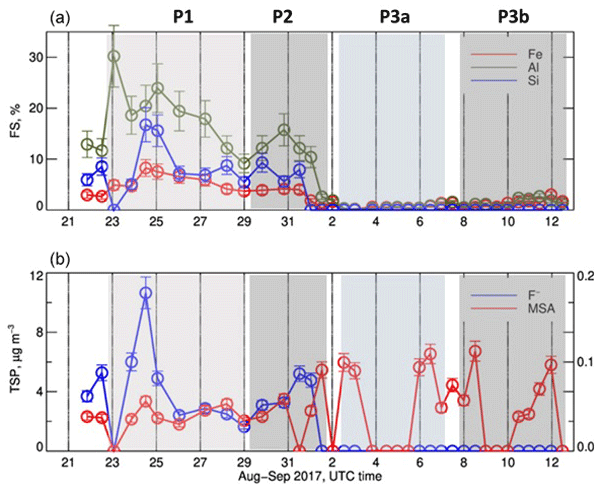
The elemental composition and solubility of several metals, including iron, at a coastal site in Namibia in August–September 2017, indicate that natural and anthropogenic dust had different solubility depending on mineralogy but mostly on the processing by fluoride ions from marine emissions, pointing to the complexity of atmospheric--oceanic interactions in this region of the world influenced by the Benguela current and significant aerosol load.
Chiara Giorio, Anne Monod, Valerio Di Marco, Pierre Herckes, Denise Napolitano, Amy Sullivan, Gautier Landrot, Daniel Warnes, Marika Nasti, Sara D'Aronco, Agathe Gérardin, Nicolas Brun, Karine Desboeufs, Sylvain Triquet, Servanne Chevaillier, Claudia Di Biagio, Francesco Battaglia, Frédéric Burnet, Stuart J. Piketh, Andreas Namwoonde, Jean-François Doussin, and Paola Formenti
Atmos. Chem. Phys., 25, 16107–16125, https://doi.org/10.5194/acp-25-16107-2025, https://doi.org/10.5194/acp-25-16107-2025, 2025
Short summary
Short summary
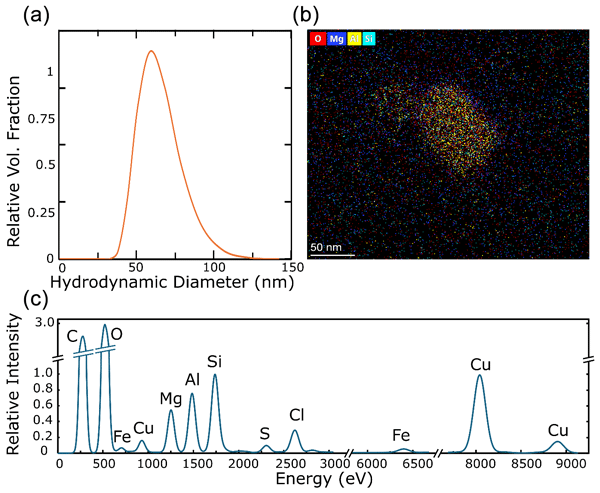
We present a comparison between concentrations of dissolved trace metals in pairs of total suspended particulate (TSP) and fog samples collected in Henties Bay, Namibia, during the AErosols, Radiation and CLOuds in southern Africa (AEROCLO-sA) field campaign. We found enhanced concentrations of dissolved metals in fog samples, which we attributed to metal–ligand complex formation in the early stages of particle activation into droplets that can then remain in a kinetically stable form in fog or lead to the formation of colloidal nanoparticles.
Francesco Battaglia, Paola Formenti, Chiara Giorio, Mathieu Cazaunau, Edouard Pangui, Antonin Bergé, Aline Gratien, Diana L. Pereira, Thomas Bertin, Joel F. de Brito, Manolis N. Romanias, Vincent Michoud, Clarissa Baldo, Servanne Chevaillier, Gael Noyalet, Philippe Decorse, Bénédicte Picquet-Varrault, and Jean-François Doussin
Atmos. Chem. Phys., 25, 12409–12431, https://doi.org/10.5194/acp-25-12409-2025, https://doi.org/10.5194/acp-25-12409-2025, 2025
Short summary
Short summary
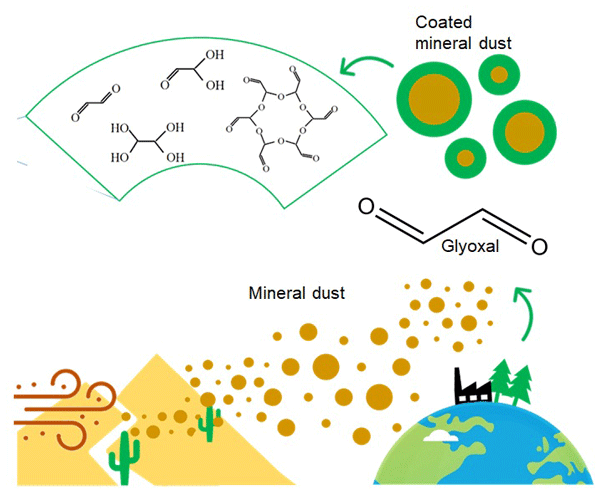
This paper presents an experimental investigation of the interactions between glyoxal, an important volatile organic compound, and mineral dust particles of size and composition typical of natural conditions. We show that their interactions modify, in a definitive way, the concentrations of the gas phase and the surface properties of the dust, which could have important implications for the atmospheric composition and the Earth's climate.
Sergio Harb, Manuela Cirtog, Stéphanie Alage, Christopher Cantrell, Mathieu Cazaunau, Vincent Michoud, Edouard Pangui, Antonin Bergé, Chiara Giorio, Francesco Battaglia, and Bénédicte Picquet-Varrault
Atmos. Chem. Phys., 25, 11003–11024, https://doi.org/10.5194/acp-25-11003-2025, https://doi.org/10.5194/acp-25-11003-2025, 2025
Short summary
Short summary
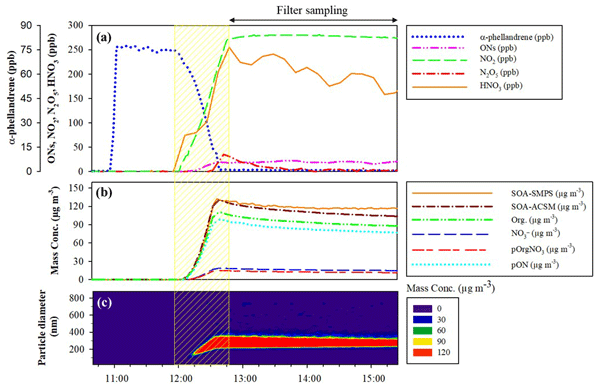
We investigated the reactions of α- and β-phellandrenes (from vegetation emissions) with NO3 radicals, a major nighttime oxidant from human activities. Using lab-based simulations, we examined these reactions and measured particle formation and by-products. Our findings reveal that α- and β-phellandrenes are efficient particle sources and enhance our understanding of biogenic–anthropogenic interactions and their contributions to atmospheric changes affecting climate and health.
Rafael Stern, Joel F. de Brito, Samara Carbone, Luciana Varanda Rizzo, Jonathan Daniel Muller, and Paulo Artaxo
Atmos. Chem. Phys., 25, 9451–9469, https://doi.org/10.5194/acp-25-9451-2025, https://doi.org/10.5194/acp-25-9451-2025, 2025
Short summary
Short summary
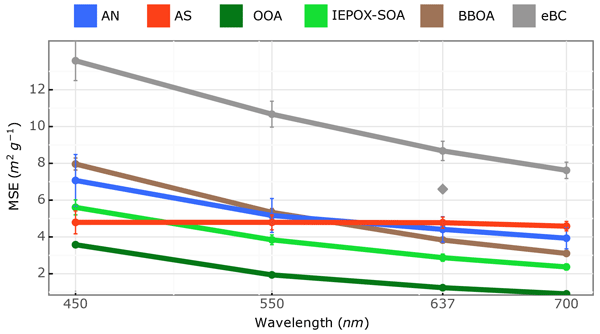
Our work reveals the impact of forest fires on climate. We found that fire-related particles not only absorb sunlight and warm the atmosphere, but also scatter light, which cools it. At our remote Amazonia site, most particles had different chemical makeups than direct fire emissions and were the main drivers of how much sunlight was blocked or redirected.
Mégane Ventura, Fabien Waquet, Isabelle Chiapello, Gérard Brogniez, Frédéric Parol, Frédérique Auriol, Rodrigue Loisil, Cyril Delegove, Luc Blarel, Oleg Dubovik, Marc Mallet, Cyrille Flamant, and Paola Formenti
Atmos. Meas. Tech., 18, 4005–4024, https://doi.org/10.5194/amt-18-4005-2025, https://doi.org/10.5194/amt-18-4005-2025, 2025
Short summary
Short summary
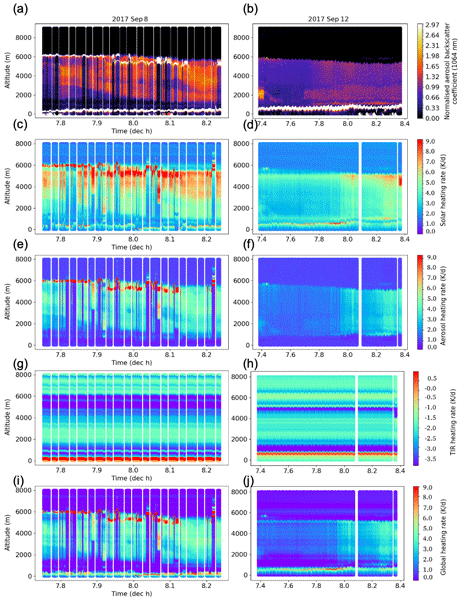
Biomass-burning aerosols (BBAs) from Central Africa are transported above stratocumulus clouds. The absorption of solar energy by aerosols induces warming, altering the cloud dynamics. We developed an approach that combines polarimeter and lidar to quantify this. This methodology is assessed during the AEROCLO-sA (AErosol RadiatiOn and CLOud in Southern Africa) campaign. To validate it, we used irradiance measurements acquired during aircraft spiral descents. A major perspective is the generalization of this method to the global level.
Abdulaziz T. Yakubu, Danitza Klopper, Henno Havenga, Roelof Burger, Paola Formenti, and Stuart J. Piketh
EGUsphere, https://doi.org/10.5194/egusphere-2025-1827, https://doi.org/10.5194/egusphere-2025-1827, 2025
Preprint archived
Short summary
Short summary
Low-level inversions experienced along the Namibia coast and adjacent ocean have implications for air pollutant dispersion and low clouds. These affect air quality, human health, radiative forcing and climate change. We used reanalysis and satellite datasets to understand inversion properties over the region. The result shows inversion prominence at night and in winter, seasonally influences pollutant trapping and initiates stratocumulus clouds formation, but is not liable for their extent.
Can Ye, Pengfei Liu, Chaoyang Xue, Chenglong Zhang, Zhuobiao Ma, Chengtang Liu, Junfeng Liu, Keding Lu, Yujing Mu, and Yuanhang Zhang
Atmos. Chem. Phys., 25, 6991–7005, https://doi.org/10.5194/acp-25-6991-2025, https://doi.org/10.5194/acp-25-6991-2025, 2025
Short summary
Short summary
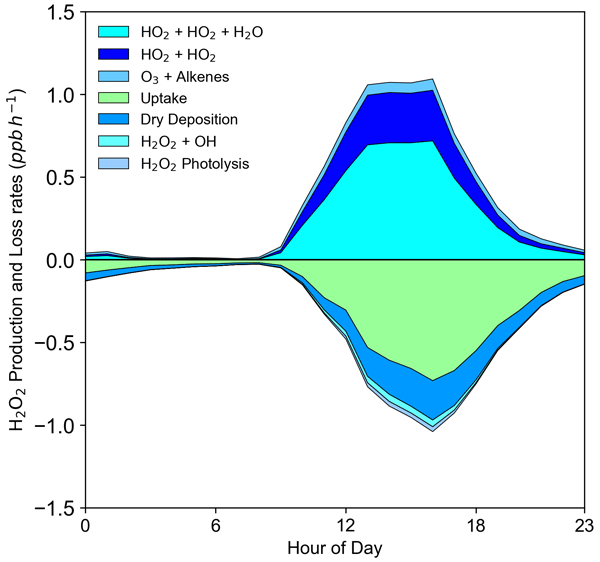
This study investigates H2O2 chemistry in rural North China. The observed H2O2 showed distinct diurnal variations influenced by photochemical reactions. A box model revealed that H2O2 is primarily produced by HO2 recombination and removed mainly via particle uptake. Reductions in NOx, PM2.5, and alkanes raised H2O2 levels, while cutting alkenes, aromatics, CO, and HONO lowered them. A dual strategy focusing on VOC and NOx control is essential to reduce both H2O2 and ozone pollution.
Johannes Heuser, Claudia Di Biagio, Jérôme Yon, Mathieu Cazaunau, Antonin Bergé, Edouard Pangui, Marco Zanatta, Laura Renzi, Angela Marinoni, Satoshi Inomata, Chenjie Yu, Vera Bernardoni, Servanne Chevaillier, Daniel Ferry, Paolo Laj, Michel Maillé, Dario Massabò, Federico Mazzei, Gael Noyalet, Hiroshi Tanimoto, Brice Temime-Roussel, Roberta Vecchi, Virginia Vernocchi, Paola Formenti, Bénédicte Picquet-Varrault, and Jean-François Doussin
Atmos. Chem. Phys., 25, 6407–6428, https://doi.org/10.5194/acp-25-6407-2025, https://doi.org/10.5194/acp-25-6407-2025, 2025
Short summary
Short summary
The spectral optical properties of combustion soot aerosols with varying black (BC) and brown carbon (BrC) content were studied in an atmospheric simulation chamber. Measurements of the mass spectral absorption cross section (MAC), supplemented by literature data, allowed us to establish a generalised exponential relationship between the spectral absorption and the elemental-to-total-carbon ratio (EC / TC) in soot. This relationship can provide a useful tool for modelling the properties of soot.
Kang Hu, Hong Liao, Dantong Liu, Jianbing Jin, Lei Chen, Siyuan Li, Yangzhou Wu, Changhao Wu, Shitong Zhao, Xiaotong Jiang, Ping Tian, Kai Bi, Ye Wang, and Delong Zhao
Geosci. Model Dev., 18, 3623–3634, https://doi.org/10.5194/gmd-18-3623-2025, https://doi.org/10.5194/gmd-18-3623-2025, 2025
Short summary
Short summary
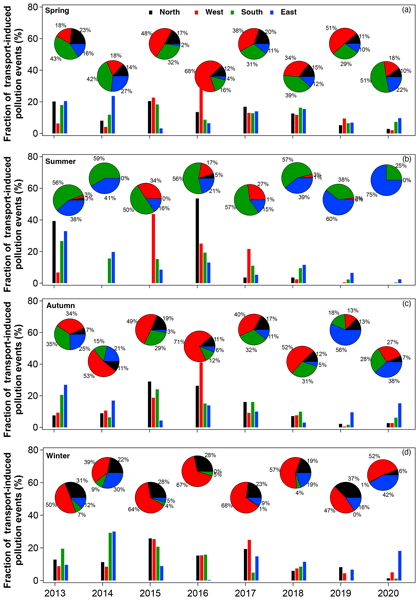
This study combines machine learning with concentration-weighted trajectory analysis to quantify regional transport PM2.5. From 2013–2020, local emissions dominated Beijing's pollution events. The Air Pollution Prevention and Control Action Plan reduced regional transport pollution, but the eastern region showed the smallest decrease. Beijing should prioritize local emission reduction while considering the east region's contributions in future strategies.
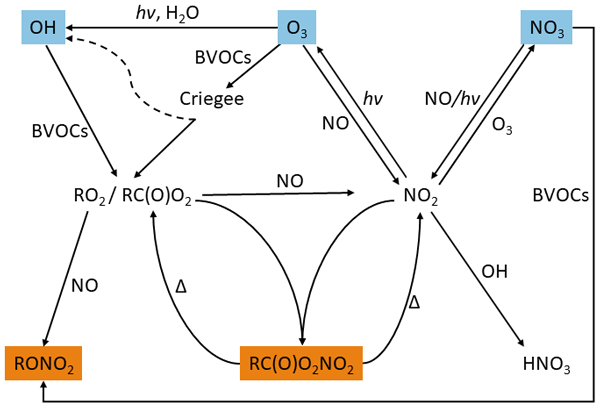
Simone T. Andersen, Rolf Sander, Patrick Dewald, Laura Wüst, Tobias Seubert, Gunther N. T. E. Türk, Jan Schuladen, Max R. McGillen, Chaoyang Xue, Abdelwahid Mellouki, Alexandre Kukui, Vincent Michoud, Manuela Cirtog, Mathieu Cazaunau, Astrid Bauville, Hichem Bouzidi, Paola Formenti, Cyrielle Denjean, Jean-Claude Etienne, Olivier Garrouste, Christopher Cantrell, Jos Lelieveld, and John N. Crowley
Atmos. Chem. Phys., 25, 5893–5909, https://doi.org/10.5194/acp-25-5893-2025, https://doi.org/10.5194/acp-25-5893-2025, 2025
Short summary
Short summary
Measurements and modelling of reactive nitrogen gases observed in a suburban temperate forest in Rambouillet, France, circa 50 km southwest of Paris in 2022 indicate that the biosphere rapidly scavenges organic nitrates of mixed biogenic and anthropogenic origin, resulting in short lifetimes for, for example, alkyl nitrates and peroxy nitrates.
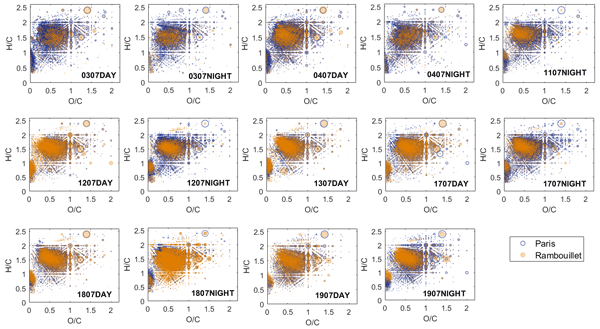
Diana L. Pereira, Chiara Giorio, Aline Gratien, Alexander Zherebker, Gael Noyalet, Servanne Chevaillier, Stéphanie Alage, Elie Almarj, Antonin Bergé, Thomas Bertin, Mathieu Cazaunau, Patrice Coll, Ludovico Di Antonio, Sergio Harb, Johannes Heuser, Cécile Gaimoz, Oscar Guillemant, Brigitte Language, Olivier Lauret, Camilo Macias, Franck Maisonneuve, Bénédicte Picquet-Varrault, Raquel Torres, Sylvain Triquet, Pascal Zapf, Lelia Hawkins, Drew Pronovost, Sydney Riley, Pierre-Marie Flaud, Emilie Perraudin, Pauline Pouyes, Eric Villenave, Alexandre Albinet, Olivier Favez, Robin Aujay-Plouzeau, Vincent Michoud, Christopher Cantrell, Manuela Cirtog, Claudia Di Biagio, Jean-François Doussin, and Paola Formenti
Atmos. Chem. Phys., 25, 4885–4905, https://doi.org/10.5194/acp-25-4885-2025, https://doi.org/10.5194/acp-25-4885-2025, 2025
Short summary
Short summary
In order to study aerosols in environments influenced by anthropogenic and biogenic emissions, we performed analyses of samples collected during the ACROSS (Atmospheric Chemistry Of the Suburban Forest) campaign in summer 2022 in the greater Paris area. After analysis of the chemical composition by means of total carbon determination and high-resolution mass spectrometry, this work highlights the influence of anthropogenic inputs on the chemical composition of both urban and forested areas.
Ludovico Di Antonio, Matthias Beekmann, Guillaume Siour, Vincent Michoud, Christopher Cantrell, Astrid Bauville, Antonin Bergé, Mathieu Cazaunau, Servanne Chevaillier, Manuela Cirtog, Joel F. de Brito, Paola Formenti, Cecile Gaimoz, Olivier Garret, Aline Gratien, Valérie Gros, Martial Haeffelin, Lelia N. Hawkins, Simone Kotthaus, Gael Noyalet, Diana L. Pereira, Jean-Eudes Petit, Eva Drew Pronovost, Véronique Riffault, Chenjie Yu, Gilles Foret, Jean-François Doussin, and Claudia Di Biagio
Atmos. Chem. Phys., 25, 4803–4831, https://doi.org/10.5194/acp-25-4803-2025, https://doi.org/10.5194/acp-25-4803-2025, 2025
Short summary
Short summary
The summer of 2022 has been considered a proxy for future climate scenarios due to its hot and dry conditions. In this paper, we use the measurements from the Atmospheric Chemistry of the Suburban Forest (ACROSS) campaign, conducted in the Paris area in June–July 2022, along with observations from existing networks, to evaluate a 3D chemistry transport model (WRF–CHIMERE) simulation. Results are shown to be satisfactory, allowing us to explain the gas and aerosol variability at the campaign sites.
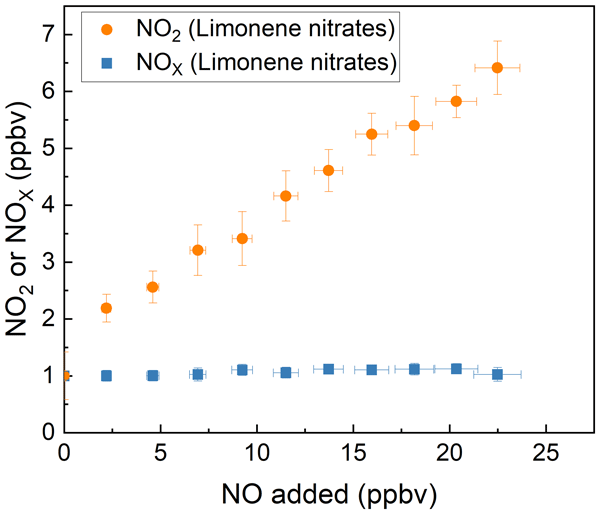
Laura Wüst, Patrick Dewald, Gunther N. T. E. Türk, Jos Lelieveld, and John N. Crowley
Atmos. Meas. Tech., 18, 1943–1959, https://doi.org/10.5194/amt-18-1943-2025, https://doi.org/10.5194/amt-18-1943-2025, 2025
Short summary
Short summary
Detection of NO2 via cavity ring-down spectroscopy (CRDS) after thermal dissociation (TD) of alkyl and peroxy nitrates can be used to detect total atmospheric organic nitrates originating from the interaction between biogenic emissions of volatile organic compounds and nitrogen oxides of anthropogenic origin. Here we present an improved TD-CRDS technique that avoids systematic bias resulting from secondary chemistry in the heated inlets and that can be deployed in regions with strong biogenic emissions.
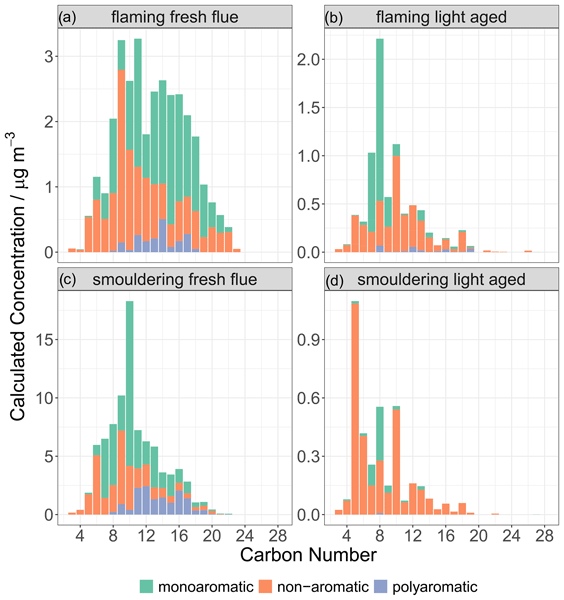
Rhianna L. Evans, Daniel J. Bryant, Aristeidis Voliotis, Dawei Hu, Huihui Wu, Sara Aisyah Syafira, Osayomwanbor E. Oghama, Gordon McFiggans, Jacqueline F. Hamilton, and Andrew R. Rickard
Atmos. Chem. Phys., 25, 4367–4389, https://doi.org/10.5194/acp-25-4367-2025, https://doi.org/10.5194/acp-25-4367-2025, 2025
Short summary
Short summary
The chemical composition of organic aerosol derived from wood-burning emissions under different burning conditions was characterised. Fresh emissions from flaming and smouldering were largely aromatic in nature, whereas upon aging the aromatic content decreased. This decrease was greater for smouldering due to the loss of toxic polyaromatic species, whereas under flaming conditions highly toxic polyaromatic species were produced. These differences present an important challenge for future policy.
Soo-Jin Park, Lya Lugon, Oscar Jacquot, Youngseob Kim, Alexia Baudic, Barbara D'Anna, Ludovico Di Antonio, Claudia Di Biagio, Fabrice Dugay, Olivier Favez, Véronique Ghersi, Aline Gratien, Julien Kammer, Jean-Eudes Petit, Olivier Sanchez, Myrto Valari, Jérémy Vigneron, and Karine Sartelet
Atmos. Chem. Phys., 25, 3363–3387, https://doi.org/10.5194/acp-25-3363-2025, https://doi.org/10.5194/acp-25-3363-2025, 2025
Short summary
Short summary
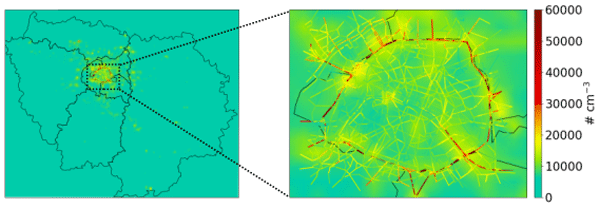
To accurately represent the population exposure to outdoor concentrations of pollutants of interest to health (NO2, PM2.5, black carbon, and ultrafine particles), multi-scale modelling down to the street scale is set up and evaluated using measurements from field campaigns. An exposure scaling factor is defined, allowing regional-scale simulations to be corrected to evaluate population exposure. Urban heterogeneities strongly influence NO2, black carbon, and ultrafine particles but less strongly PM2.5.
Ludovico Di Antonio, Claudia Di Biagio, Paola Formenti, Aline Gratien, Vincent Michoud, Christopher Cantrell, Astrid Bauville, Antonin Bergé, Mathieu Cazaunau, Servanne Chevaillier, Manuela Cirtog, Patrice Coll, Barbara D'Anna, Joel F. de Brito, David O. De Haan, Juliette R. Dignum, Shravan Deshmukh, Olivier Favez, Pierre-Marie Flaud, Cecile Gaimoz, Lelia N. Hawkins, Julien Kammer, Brigitte Language, Franck Maisonneuve, Griša Močnik, Emilie Perraudin, Jean-Eudes Petit, Prodip Acharja, Laurent Poulain, Pauline Pouyes, Eva Drew Pronovost, Véronique Riffault, Kanuri I. Roundtree, Marwa Shahin, Guillaume Siour, Eric Villenave, Pascal Zapf, Gilles Foret, Jean-François Doussin, and Matthias Beekmann
Atmos. Chem. Phys., 25, 3161–3189, https://doi.org/10.5194/acp-25-3161-2025, https://doi.org/10.5194/acp-25-3161-2025, 2025
Short summary
Short summary
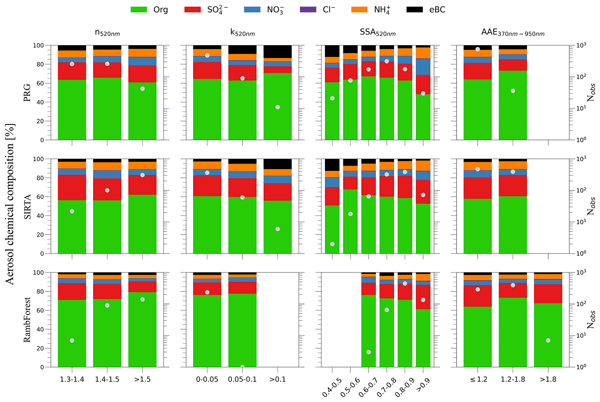
The spectral complex refractive index (CRI) and single scattering albedo were retrieved from submicron aerosol measurements at three sites within the greater Paris area during the ACROSS field campaign (June–July 2022). Measurements revealed urban emission impact on surrounding areas. CRI full period averages at 520 nm were 1.41 – 0.037i (urban), 1.52 – 0.038i (peri-urban), and 1.50 – 0.025i (rural). Organic aerosols dominated the aerosol mass and contributed up to 22 % of absorption at 370 nm.
Alex T. Archibald, Bablu Sinha, Maria R. Russo, Emily Matthews, Freya A. Squires, N. Luke Abraham, Stephane J.-B. Bauguitte, Thomas J. Bannan, Thomas G. Bell, David Berry, Lucy J. Carpenter, Hugh Coe, Andrew Coward, Peter Edwards, Daniel Feltham, Dwayne Heard, Jim Hopkins, James Keeble, Elizabeth C. Kent, Brian A. King, Isobel R. Lawrence, James Lee, Claire R. Macintosh, Alex Megann, Bengamin I. Moat, Katie Read, Chris Reed, Malcolm J. Roberts, Reinhard Schiemann, David Schroeder, Timothy J. Smyth, Loren Temple, Navaneeth Thamban, Lisa Whalley, Simon Williams, Huihui Wu, and Mingxi Yang
Earth Syst. Sci. Data, 17, 135–164, https://doi.org/10.5194/essd-17-135-2025, https://doi.org/10.5194/essd-17-135-2025, 2025
Short summary
Short summary
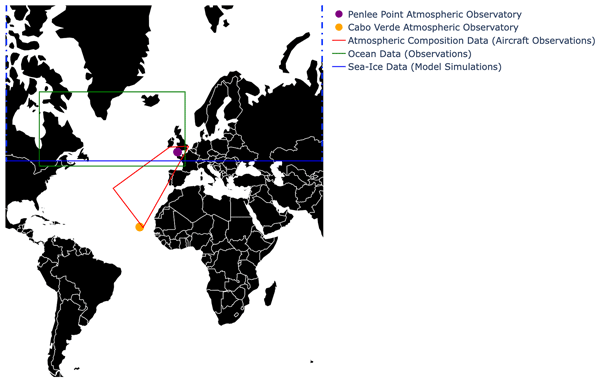
Here, we present an overview of the data generated as part of the North Atlantic Climate System Integrated Study (ACSIS) programme that are available through dedicated repositories at the Centre for Environmental Data Analysis (CEDA; www.ceda.ac.uk) and the British Oceanographic Data Centre (BODC; bodc.ac.uk). The datasets described here cover the North Atlantic Ocean, the atmosphere above (it including its composition), and Arctic sea ice.
Alexandre Mass, Hendrik Andersen, Jan Cermak, Paola Formenti, Eva Pauli, and Julian Quinting
Atmos. Chem. Phys., 25, 491–510, https://doi.org/10.5194/acp-25-491-2025, https://doi.org/10.5194/acp-25-491-2025, 2025
Short summary
Short summary
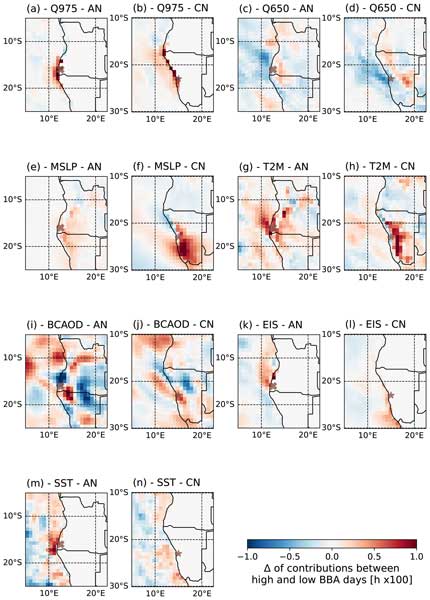
This study investigates the interaction between smoke aerosols and fog and low clouds (FLCs) in the Namib Desert between June and October. Here, a satellite-based dataset of FLCs, reanalysis data and machine learning are used to systematically analyze FLC persistence under different aerosol loadings. Aerosol plumes are shown to modify local thermodynamics, which increase FLC persistence. But fully disentangling aerosol effects from meteorological ones remains a challenge.
Lu Zhang, Michal Segal-Rozenhaimer, Haochi Che, Caroline Dang, Junying Sun, Ye Kuang, Paola Formenti, and Steven G. Howell
Atmos. Chem. Phys., 24, 13849–13864, https://doi.org/10.5194/acp-24-13849-2024, https://doi.org/10.5194/acp-24-13849-2024, 2024
Short summary
Short summary
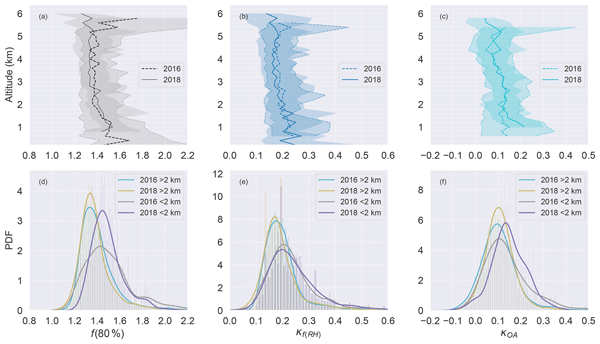
Using airborne measurements over the southeast Atlantic Ocean, we examined how much moisture aerosols take up during Africa’s biomass burning season. Our study revealed the important role of organic aerosols and introduced a predictive model for moisture uptake, accounting for organics, sulfate, and black carbon, summarizing results from various campaigns. These findings improve our understanding of aerosol–moisture interactions and their radiative effects in this climatically critical region.
Yuanmou Du, Dantong Liu, Delong Zhao, Mengyu Huang, Ping Tian, Dian Wen, Wei Xiao, Wei Zhou, Hui He, Baiwan Pan, Dongfei Zuo, Xiange Liu, Yingying Jing, Rong Zhang, Jiujiang Sheng, Fei Wang, Yu Huang, Yunbo Chen, and Deping Ding
Atmos. Chem. Phys., 24, 13429–13444, https://doi.org/10.5194/acp-24-13429-2024, https://doi.org/10.5194/acp-24-13429-2024, 2024
Short summary
Short summary
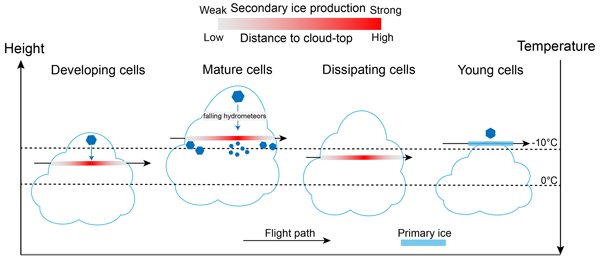
By conducting in situ measurements, we investigated ice production processes in stratiform clouds with embedded convection over the North China Plain. The results show that the ice number concentration is strongly related to the distance to the cloud top, and the level with a larger distance to the cloud top has more graupel falling from upper levels, which promotes collision and coalescence between graupel and droplets and enhances secondary ice production.
Hasna Chebaicheb, Joel F. de Brito, Tanguy Amodeo, Florian Couvidat, Jean-Eudes Petit, Emmanuel Tison, Gregory Abbou, Alexia Baudic, Mélodie Chatain, Benjamin Chazeau, Nicolas Marchand, Raphaële Falhun, Florie Francony, Cyril Ratier, Didier Grenier, Romain Vidaud, Shouwen Zhang, Gregory Gille, Laurent Meunier, Caroline Marchand, Véronique Riffault, and Olivier Favez
Earth Syst. Sci. Data, 16, 5089–5109, https://doi.org/10.5194/essd-16-5089-2024, https://doi.org/10.5194/essd-16-5089-2024, 2024
Short summary
Short summary
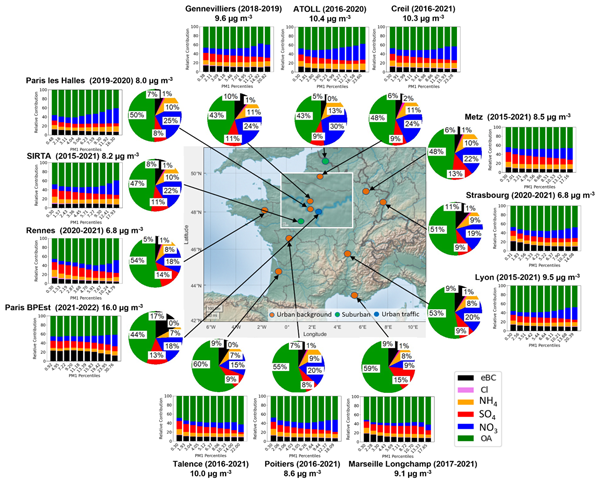
Long-term (2015–2021) quasi-continuous measurements have been obtained at 13 French urban sites using online mass spectrometry, to acquire the comprehensive chemical composition of submicron particulate matter. The results show their spatial and temporal differences and confirm the predominance of organics in France (40–60 %). These measurements can be used for many future studies, such as trend and epidemiological analyses, or comparisons with chemical transport models.
Paola Formenti and Claudia Di Biagio
Earth Syst. Sci. Data, 16, 4995–5007, https://doi.org/10.5194/essd-16-4995-2024, https://doi.org/10.5194/essd-16-4995-2024, 2024
Short summary
Short summary
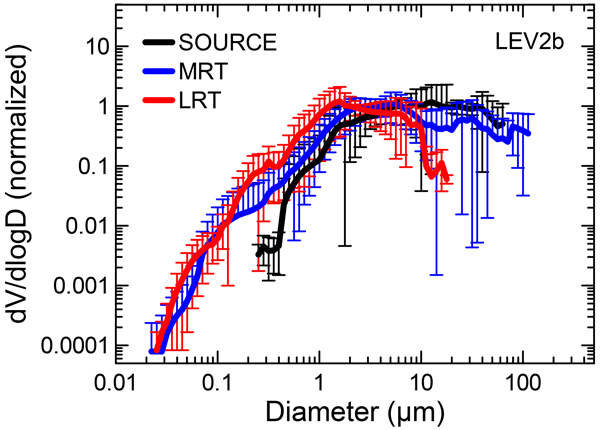
Particles from deserts and semi-vegetated areas (mineral dust) are important for Earth's climate and human health, notably depending on their size. In this paper we collect and make a synthesis of a body of these observations since 1972 in order to provide researchers modeling Earth's climate and developing satellite observations from space with a simple way of confronting their results and understanding their validity.
Simone T. Andersen, Max R. McGillen, Chaoyang Xue, Tobias Seubert, Patrick Dewald, Gunther N. T. E. Türk, Jan Schuladen, Cyrielle Denjean, Jean-Claude Etienne, Olivier Garrouste, Marina Jamar, Sergio Harb, Manuela Cirtog, Vincent Michoud, Mathieu Cazaunau, Antonin Bergé, Christopher Cantrell, Sebastien Dusanter, Bénédicte Picquet-Varrault, Alexandre Kukui, Abdelwahid Mellouki, Lucy J. Carpenter, Jos Lelieveld, and John N. Crowley
Atmos. Chem. Phys., 24, 11603–11618, https://doi.org/10.5194/acp-24-11603-2024, https://doi.org/10.5194/acp-24-11603-2024, 2024
Short summary
Short summary
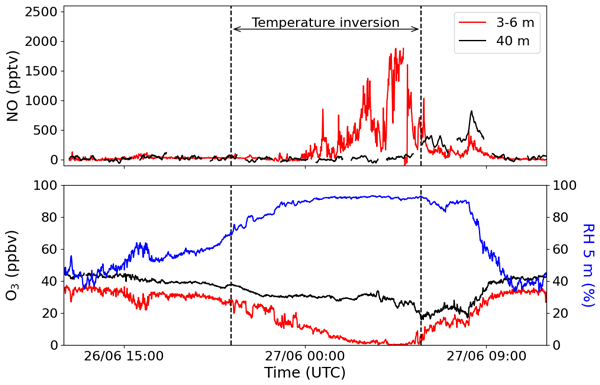
Using measurements of various trace gases in a suburban forest near Paris in the summer of 2022, we were able to gain insight into the sources and sinks of NOx (NO+NO2) with a special focus on their nighttime chemical and physical loss processes. NO was observed as a result of nighttime soil emissions when O3 levels were strongly depleted by deposition. NO oxidation products were not observed at night, indicating that soil and/or foliar surfaces are an efficient sink of reactive N.
Annalina Lombardi, Barbara Tomassetti, Valentina Colaiuda, Ludovico Di Antonio, Paolo Tuccella, Mario Montopoli, Giovanni Ravazzani, Frank Silvio Marzano, Raffaele Lidori, and Giulia Panegrossi
Hydrol. Earth Syst. Sci., 28, 3777–3797, https://doi.org/10.5194/hess-28-3777-2024, https://doi.org/10.5194/hess-28-3777-2024, 2024
Short summary
Short summary
The accurate estimation of precipitation and its spatial variability within a watershed is crucial for reliable discharge simulations. The study is the first detailed analysis of the potential usage of the cellular automata technique to merge different rainfall data inputs to hydrological models. This work shows an improvement in the performance of hydrological simulations when satellite and rain gauge data are merged.
Saleh Alzahrani, Doğuşhan Kılıç, Michael Flynn, Paul I. Williams, and James Allan
Atmos. Chem. Phys., 24, 9045–9058, https://doi.org/10.5194/acp-24-9045-2024, https://doi.org/10.5194/acp-24-9045-2024, 2024
Short summary
Short summary
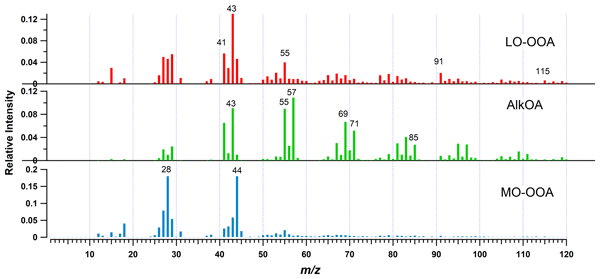
This paper investigates emissions from aviation activities at an international airport to evaluate their impact on local air quality. The study provides detailed insights into the chemical composition of aerosols and key pollutants in the airport environment. Source apportionment analysis using positive matrix factorisation (PMF) identified three significant sources: less oxidised oxygenated organic aerosol, alkane organic aerosol, and more oxidised oxygenated organic aerosol.
Patrick Dewald, Tobias Seubert, Simone T. Andersen, Gunther N. T. E. Türk, Jan Schuladen, Max R. McGillen, Cyrielle Denjean, Jean-Claude Etienne, Olivier Garrouste, Marina Jamar, Sergio Harb, Manuela Cirtog, Vincent Michoud, Mathieu Cazaunau, Antonin Bergé, Christopher Cantrell, Sebastien Dusanter, Bénédicte Picquet-Varrault, Alexandre Kukui, Chaoyang Xue, Abdelwahid Mellouki, Jos Lelieveld, and John N. Crowley
Atmos. Chem. Phys., 24, 8983–8997, https://doi.org/10.5194/acp-24-8983-2024, https://doi.org/10.5194/acp-24-8983-2024, 2024
Short summary
Short summary
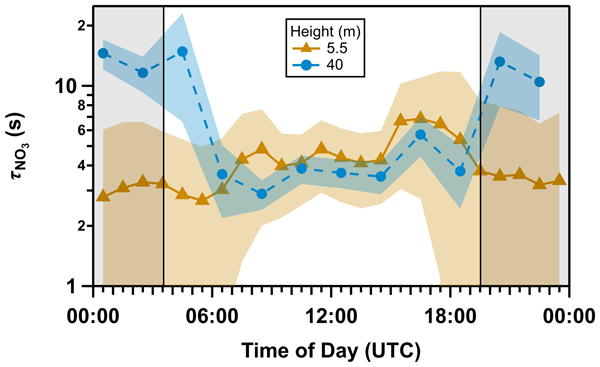
In the scope of a field campaign in a suburban forest near Paris in the summer of 2022, we measured the reactivity of the nitrate radical NO3 towards biogenic volatile organic compounds (BVOCs; e.g. monoterpenes) mainly below but also above the canopy. NO3 reactivity was the highest during nights with strong temperature inversions and decreased strongly with height. Reactions with BVOCs were the main removal process of NO3 throughout the diel cycle below the canopy.
Stéphanie Alage, Vincent Michoud, Sergio Harb, Bénédicte Picquet-Varrault, Manuela Cirtog, Avinash Kumar, Matti Rissanen, and Christopher Cantrell
Atmos. Meas. Tech., 17, 4709–4724, https://doi.org/10.5194/amt-17-4709-2024, https://doi.org/10.5194/amt-17-4709-2024, 2024
Short summary
Short summary
Calibration exercises are essential for determining the accuracy of instruments. We performed calibrations on a NO3¯ ToFCIMS instrument to determine its sensitivity and linearity for detecting various organic compounds. Our findings revealed significant variability, over several orders of magnitude, in the calibration factors obtained. The results suggest that relying on a single calibration factor from H2SO4 for the quantification of all compounds detected by this technique is not appropriate.
Sarah Tinorua, Cyrielle Denjean, Pierre Nabat, Véronique Pont, Mathilde Arnaud, Thierry Bourrianne, Maria Dias Alves, and Eric Gardrat
Atmos. Meas. Tech., 17, 3897–3915, https://doi.org/10.5194/amt-17-3897-2024, https://doi.org/10.5194/amt-17-3897-2024, 2024
Short summary
Short summary
The three most widely used techniques for measuring black carbon (BC) have been deployed continuously for 2 years at a French high-altitude research station. Despite a similar temporal variation in the BC load, we found significant biases by up to a factor of 8 between the three instruments. This study raises questions about the relevance of using these instruments for specific background sites, as well as the processing of their data, which can vary according to the atmospheric conditions.
Chenjie Yu, Edouard Pangui, Kevin Tu, Mathieu Cazaunau, Maxime Feingesicht, Landsheere Xavier, Thierry Bourrianne, Vincent Michoud, Christopher Cantrell, Timothy B. Onasch, Andrew Freedman, and Paola Formenti
Atmos. Meas. Tech., 17, 3419–3437, https://doi.org/10.5194/amt-17-3419-2024, https://doi.org/10.5194/amt-17-3419-2024, 2024
Short summary
Short summary
To meet the requirements for measuring aerosol optical properties on airborne platforms and conducting dual-wavelength measurements, we introduced A2S2, an airborne dual-wavelength cavity-attenuated phase-shift single monitor. This study reports the results in the laboratory and an aircraft campaign over Paris and its surrounding regions. The results demonstrate A2S2's reliability in measuring aerosol optical properties at both wavelengths and its suitability for future aircraft campaigns.
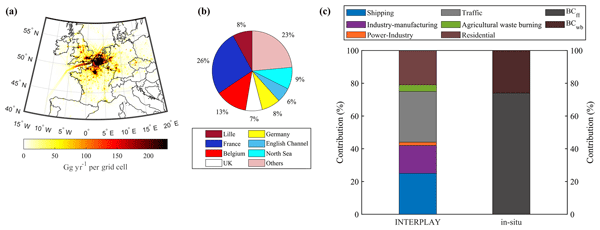
Alejandra Velazquez-Garcia, Joel F. de Brito, Suzanne Crumeyrolle, Isabelle Chiapello, and Véronique Riffault
Aerosol Research, 2, 107–122, https://doi.org/10.5194/ar-2-107-2024, https://doi.org/10.5194/ar-2-107-2024, 2024
Short summary
Short summary
Multi-annual in situ observations were combined with back trajectory and emissions inventories to study black and brown carbon (BC, BrC) sources in the north of France. Results show BC to be mainly originated from vehicular traffic (31 %), shipping (25 %), and residential heating (21 %). Also, a significant decrease of the BrC component from residential heating is observed after 24 h of atmospheric aging. These results should lead to better climate and air pollution mitigation strategies.
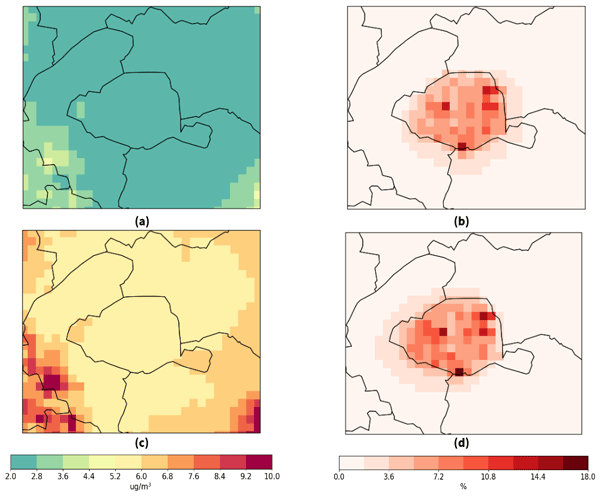
Alice Maison, Lya Lugon, Soo-Jin Park, Alexia Baudic, Christopher Cantrell, Florian Couvidat, Barbara D'Anna, Claudia Di Biagio, Aline Gratien, Valérie Gros, Carmen Kalalian, Julien Kammer, Vincent Michoud, Jean-Eudes Petit, Marwa Shahin, Leila Simon, Myrto Valari, Jérémy Vigneron, Andrée Tuzet, and Karine Sartelet
Atmos. Chem. Phys., 24, 6011–6046, https://doi.org/10.5194/acp-24-6011-2024, https://doi.org/10.5194/acp-24-6011-2024, 2024
Short summary
Short summary
This study presents the development of a bottom-up inventory of urban tree biogenic emissions. Emissions are computed for each tree based on their location and characteristics and are integrated in the regional air quality model WRF-CHIMERE. The impact of these biogenic emissions on air quality is quantified for June–July 2022. Over Paris city, urban trees increase the concentrations of particulate organic matter by 4.6 %, of PM2.5 by 0.6 %, and of ozone by 1.0 % on average over 2 months.
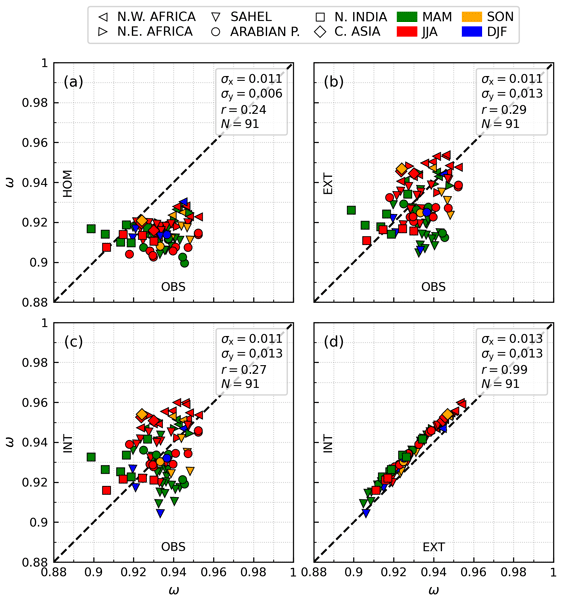
Vincenzo Obiso, María Gonçalves Ageitos, Carlos Pérez García-Pando, Jan P. Perlwitz, Gregory L. Schuster, Susanne E. Bauer, Claudia Di Biagio, Paola Formenti, Kostas Tsigaridis, and Ron L. Miller
Atmos. Chem. Phys., 24, 5337–5367, https://doi.org/10.5194/acp-24-5337-2024, https://doi.org/10.5194/acp-24-5337-2024, 2024
Short summary
Short summary
We calculate the dust direct radiative effect (DRE) in an Earth system model accounting for regionally varying soil mineralogy through a new observationally constrained method. Linking dust absorption at solar wavelengths to the varying amount of specific minerals (i.e., iron oxides) improves the modeled range of dust single scattering albedo compared to observations and increases the global cooling by dust. Our results may contribute to improved estimates of the dust DRE and its climate impact.
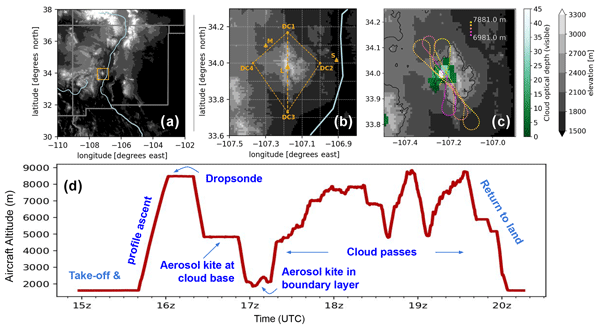
Declan L. Finney, Alan M. Blyth, Martin Gallagher, Huihui Wu, Graeme J. Nott, Michael I. Biggerstaff, Richard G. Sonnenfeld, Martin Daily, Dan Walker, David Dufton, Keith Bower, Steven Böing, Thomas Choularton, Jonathan Crosier, James Groves, Paul R. Field, Hugh Coe, Benjamin J. Murray, Gary Lloyd, Nicholas A. Marsden, Michael Flynn, Kezhen Hu, Navaneeth M. Thamban, Paul I. Williams, Paul J. Connolly, James B. McQuaid, Joseph Robinson, Zhiqiang Cui, Ralph R. Burton, Gordon Carrie, Robert Moore, Steven J. Abel, Dave Tiddeman, and Graydon Aulich
Earth Syst. Sci. Data, 16, 2141–2163, https://doi.org/10.5194/essd-16-2141-2024, https://doi.org/10.5194/essd-16-2141-2024, 2024
Short summary
Short summary
The DCMEX (Deep Convective Microphysics Experiment) project undertook an aircraft- and ground-based measurement campaign of New Mexico deep convective clouds during July–August 2022. The campaign coordinated a broad range of instrumentation measuring aerosol, cloud physics, radar signals, thermodynamics, dynamics, electric fields, and weather. The project's objectives included the utilisation of these data with satellite observations to study the anvil cloud radiative effect.
Ping Tian, Dantong Liu, Kang Hu, Yangzhou Wu, Mengyu Huang, Hui He, Jiujiang Sheng, Chenjie Yu, Dawei Hu, and Deping Ding
Atmos. Chem. Phys., 24, 5149–5164, https://doi.org/10.5194/acp-24-5149-2024, https://doi.org/10.5194/acp-24-5149-2024, 2024
Short summary
Short summary
The results provide direct evidence of efficient droplet activation of black carbon (BC). The cloud condensation nuclei (CCN) activation fraction of BC was higher than for all particles, suggesting higher CCN activity of BC, even though its hygroscopicity is lower. Our research reveals that the evolution of BC's hygroscopicity and its CCN activation properties through atmospheric aging can be effectively characterized by the photochemical age.
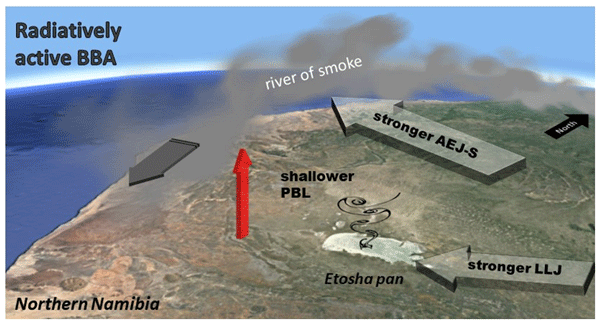
Cyrille Flamant, Jean-Pierre Chaboureau, Marco Gaetani, Kerstin Schepanski, and Paola Formenti
Atmos. Chem. Phys., 24, 4265–4288, https://doi.org/10.5194/acp-24-4265-2024, https://doi.org/10.5194/acp-24-4265-2024, 2024
Short summary
Short summary
In the austral dry season, the atmospheric composition over southern Africa is dominated by biomass burning aerosols and terrigenous aerosols (so-called mineral dust). This study suggests that the radiative effect of biomass burning aerosols needs to be taken into account to properly forecast dust emissions in Namibia.
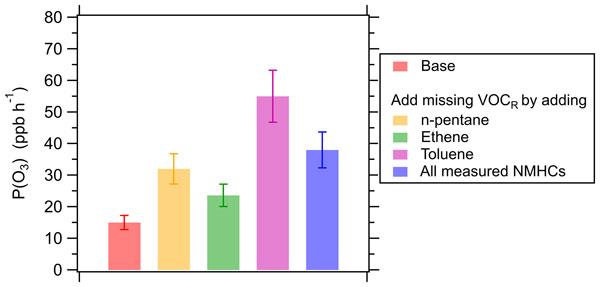
Wenjie Wang, Bin Yuan, Hang Su, Yafang Cheng, Jipeng Qi, Sihang Wang, Wei Song, Xinming Wang, Chaoyang Xue, Chaoqun Ma, Fengxia Bao, Hongli Wang, Shengrong Lou, and Min Shao
Atmos. Chem. Phys., 24, 4017–4027, https://doi.org/10.5194/acp-24-4017-2024, https://doi.org/10.5194/acp-24-4017-2024, 2024
Short summary
Short summary
This study investigates the important role of unmeasured volatile organic compounds (VOCs) in ozone formation. Based on results in a megacity of China, we show that unmeasured VOCs can contribute significantly to ozone fomation and also influence the determination of ozone control strategy. Our results show that these unmeasured VOCs are mainly from human sources.
Anil Kumar Mandariya, Junteng Wu, Anne Monod, Paola Formenti, Bénédicte Picquet-Varrault, Mathieu Cazaunau, Stephan Mertes, Laurent Poulain, Antonin Berge, Edouard Pangui, Andreas Tilgner, Thomas Schaefer, Liang Wen, Hartmut Herrmann, and Jean-François Doussin
Atmos. Meas. Tech. Discuss., https://doi.org/10.5194/amt-2023-206, https://doi.org/10.5194/amt-2023-206, 2024
Publication in AMT not foreseen
Short summary
Short summary
An optimized and controlled protocol for generating quasi-adiabatic expansion clouds under simulated dark and light conditions was presented. The irradiated clouds clearly showed a gradual activation of seed particles into droplets. In contrast, non-irradiated clouds faced a flash activation. This paper will lay the foundation for multiphase photochemical studies implying water-soluble volatile organic compounds and particulate matter formation during cloud formation-evaporation cycles.
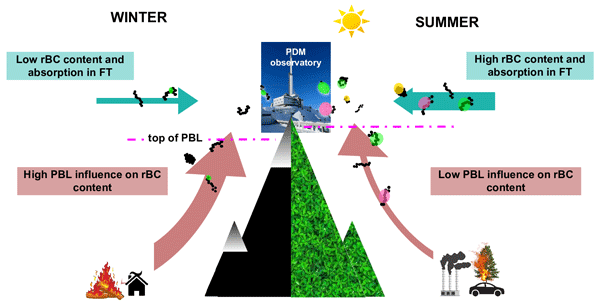
Sarah Tinorua, Cyrielle Denjean, Pierre Nabat, Thierry Bourrianne, Véronique Pont, François Gheusi, and Emmanuel Leclerc
Atmos. Chem. Phys., 24, 1801–1824, https://doi.org/10.5194/acp-24-1801-2024, https://doi.org/10.5194/acp-24-1801-2024, 2024
Short summary
Short summary
At a French high-altitude site, where many complex interactions between black carbon (BC), radiation, clouds and snow impact climate, 2 years of refractive BC (rBC) and aerosol optical and microphysical measurements have been made. We observed strong seasonal rBC properties variations, with an enhanced absorption in summer compared to winter. The combination of rBC emission sources, transport pathways, atmospheric dynamics and chemical processes explains the rBC light absorption seasonality.
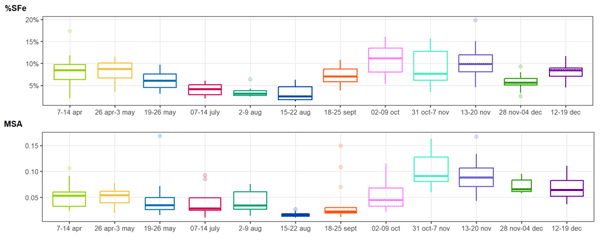
Karine Desboeufs, Paola Formenti, Raquel Torres-Sánchez, Kerstin Schepanski, Jean-Pierre Chaboureau, Hendrik Andersen, Jan Cermak, Stefanie Feuerstein, Benoit Laurent, Danitza Klopper, Andreas Namwoonde, Mathieu Cazaunau, Servanne Chevaillier, Anaïs Feron, Cécile Mirande-Bret, Sylvain Triquet, and Stuart J. Piketh
Atmos. Chem. Phys., 24, 1525–1541, https://doi.org/10.5194/acp-24-1525-2024, https://doi.org/10.5194/acp-24-1525-2024, 2024
Short summary
Short summary
This study investigates the fractional solubility of iron (Fe) in dust particles along the coast of Namibia, a critical region for the atmospheric Fe supply of the South Atlantic Ocean. Our results suggest a possible two-way interplay whereby marine biogenic emissions from the coastal marine ecosystems into the atmosphere would increase the solubility of Fe-bearing dust by photo-reduction processes. The subsequent deposition of soluble Fe could act to further enhance marine biogenic emissions.
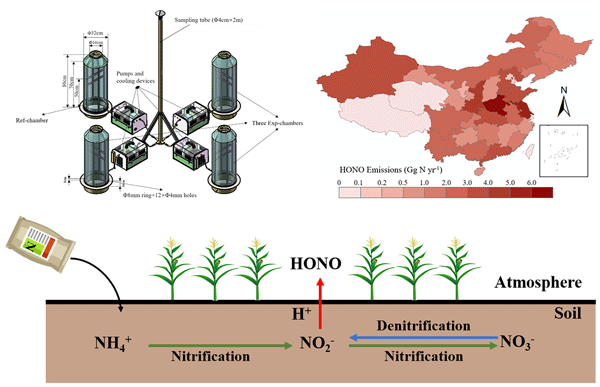
Yifei Song, Chaoyang Xue, Yuanyuan Zhang, Pengfei Liu, Fengxia Bao, Xuran Li, and Yujing Mu
Atmos. Chem. Phys., 23, 15733–15747, https://doi.org/10.5194/acp-23-15733-2023, https://doi.org/10.5194/acp-23-15733-2023, 2023
Short summary
Short summary
We present measurements of HONO flux and related parameters over an agricultural field during a whole growing season of summer maize. This dataset allows studies on the characteristics and influencing factors of soil HONO emissions, determination of HONO emission factors, estimation of total HONO emissions at a national scale, and the discussion on future environmental policies in terms of mitigating regional air pollution.
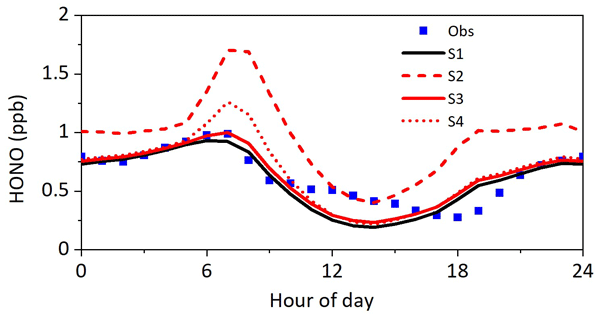
Can Ye, Keding Lu, Xuefei Ma, Wanyi Qiu, Shule Li, Xinping Yang, Chaoyang Xue, Tianyu Zhai, Yuhan Liu, Xuan Li, Yang Li, Haichao Wang, Zhaofeng Tan, Xiaorui Chen, Huabin Dong, Limin Zeng, Min Hu, and Yuanhang Zhang
Atmos. Chem. Phys., 23, 15455–15472, https://doi.org/10.5194/acp-23-15455-2023, https://doi.org/10.5194/acp-23-15455-2023, 2023
Short summary
Short summary
In this study, combining comprehensive field measurements and a box model, we found NO2 conversion on the ground surface was the most important source for HONO production among the proposed heterogeneous and gas-phase HONO sources. In addition, HONO was found to evidently enhance O3 production and aggravate O3 pollution in summer in China. Our study improved our understanding of the relative importance of different HONO sources and the crucial role of HONO in O3 formation in polluted areas.
Lu Zhang, Michal Segal-Rozenhaimer, Haochi Che, Caroline Dang, Junying Sun, Ye Kuang, and Paola Formenti
EGUsphere, https://doi.org/10.5194/egusphere-2023-2319, https://doi.org/10.5194/egusphere-2023-2319, 2023
Preprint archived
Short summary
Short summary
Our study examined the interaction between atmospheric particles and moisture over the south-eastern Atlantic Ocean during the biomass burning seasons in Africa. We found that organic components of these particles play a more important role in aerosol-moisture interactions than previously expected. This discovery is important as such interactions impact radiation and climate. Current climate models might need better representations of the moisture-absorbing properties of organic aerosols.
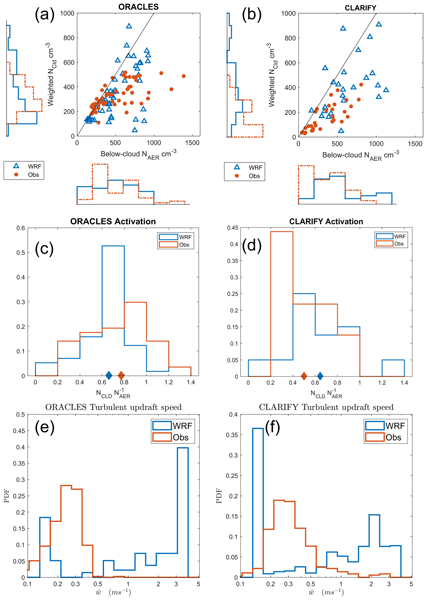
Calvin Howes, Pablo E. Saide, Hugh Coe, Amie Dobracki, Steffen Freitag, Jim M. Haywood, Steven G. Howell, Siddhant Gupta, Janek Uin, Mary Kacarab, Chongai Kuang, L. Ruby Leung, Athanasios Nenes, Greg M. McFarquhar, James Podolske, Jens Redemann, Arthur J. Sedlacek, Kenneth L. Thornhill, Jenny P. S. Wong, Robert Wood, Huihui Wu, Yang Zhang, Jianhao Zhang, and Paquita Zuidema
Atmos. Chem. Phys., 23, 13911–13940, https://doi.org/10.5194/acp-23-13911-2023, https://doi.org/10.5194/acp-23-13911-2023, 2023
Short summary
Short summary
To better understand smoke properties and its interactions with clouds, we compare the WRF-CAM5 model with observations from ORACLES, CLARIFY, and LASIC field campaigns in the southeastern Atlantic in August 2017. The model transports and mixes smoke well but does not fully capture some important processes. These include smoke chemical and physical aging over 4–12 days, smoke removal by rain, sulfate particle formation, aerosol activation into cloud droplets, and boundary layer turbulence.
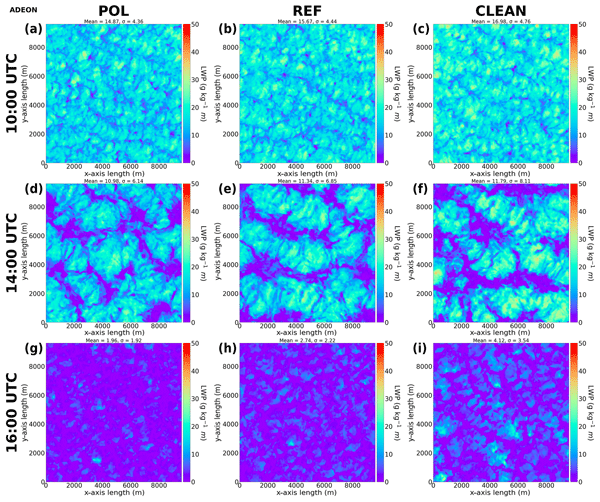
Lambert Delbeke, Chien Wang, Pierre Tulet, Cyrielle Denjean, Maurin Zouzoua, Nicolas Maury, and Adrien Deroubaix
Atmos. Chem. Phys., 23, 13329–13354, https://doi.org/10.5194/acp-23-13329-2023, https://doi.org/10.5194/acp-23-13329-2023, 2023
Short summary
Short summary
Low-level stratiform clouds (LLSCs) appear frequently over southern West Africa during the West African monsoon. Local and remote aerosol sources (biomass burning aerosols from central Africa) play a significant role in the LLSC life cycle. Based on measurements by the DACCIWA campaign, large-eddy simulation (LES) was conducted using different aerosol scenarios. The results show that both indirect and semi-direct effects can act individually or jointly to influence the life cycles of LLSCs.
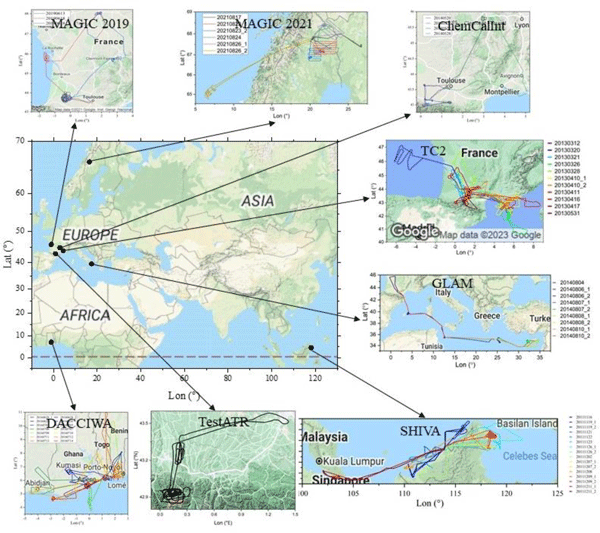
Chaoyang Xue, Gisèle Krysztofiak, Vanessa Brocchi, Stéphane Chevrier, Michel Chartier, Patrick Jacquet, Claude Robert, and Valéry Catoire
Earth Syst. Sci. Data, 15, 4553–4569, https://doi.org/10.5194/essd-15-4553-2023, https://doi.org/10.5194/essd-15-4553-2023, 2023
Short summary
Short summary
To understand tropospheric air pollution at regional and global scales, an infrared laser spectrometer called SPIRIT was used on aircraft to rapidly and accurately measure carbon monoxide (CO), an important indicator of air pollution, during the last decade. Measurements were taken for more than 200 flight hours over three continents. Levels of CO are mapped with 3D trajectories for each flight. Additionally, this can be used to validate model performance and satellite measurements.
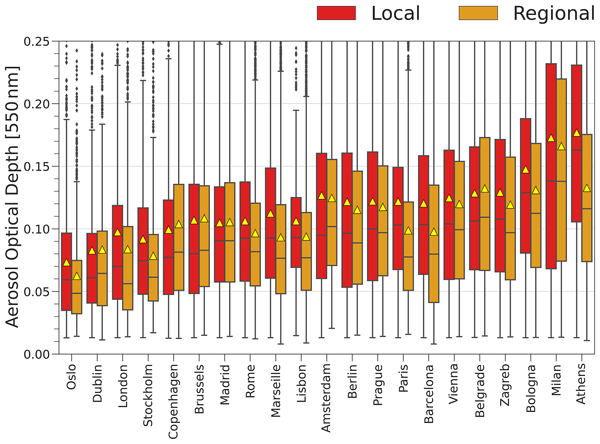
Ludovico Di Antonio, Claudia Di Biagio, Gilles Foret, Paola Formenti, Guillaume Siour, Jean-François Doussin, and Matthias Beekmann
Atmos. Chem. Phys., 23, 12455–12475, https://doi.org/10.5194/acp-23-12455-2023, https://doi.org/10.5194/acp-23-12455-2023, 2023
Short summary
Short summary
Long-term (2000–2021) 1 km resolution satellite data have been used to investigate the climatological aerosol optical depth (AOD) variability and trends at different scales in Europe. Average enhancements of the local-to-regional AOD ratio at 550 nm of 57 %, 55 %, 39 % and 32 % are found for large metropolitan areas such as Barcelona, Lisbon, Paris and Athens, respectively, suggesting a non-negligible enhancement of the aerosol burden through local emissions.
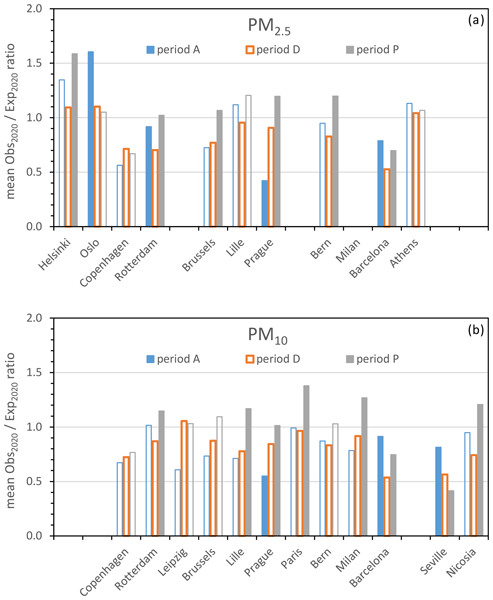
Jean-Philippe Putaud, Enrico Pisoni, Alexander Mangold, Christoph Hueglin, Jean Sciare, Michael Pikridas, Chrysanthos Savvides, Jakub Ondracek, Saliou Mbengue, Alfred Wiedensohler, Kay Weinhold, Maik Merkel, Laurent Poulain, Dominik van Pinxteren, Hartmut Herrmann, Andreas Massling, Claus Nordstroem, Andrés Alastuey, Cristina Reche, Noemí Pérez, Sonia Castillo, Mar Sorribas, Jose Antonio Adame, Tuukka Petaja, Katrianne Lehtipalo, Jarkko Niemi, Véronique Riffault, Joel F. de Brito, Augustin Colette, Olivier Favez, Jean-Eudes Petit, Valérie Gros, Maria I. Gini, Stergios Vratolis, Konstantinos Eleftheriadis, Evangelia Diapouli, Hugo Denier van der Gon, Karl Espen Yttri, and Wenche Aas
Atmos. Chem. Phys., 23, 10145–10161, https://doi.org/10.5194/acp-23-10145-2023, https://doi.org/10.5194/acp-23-10145-2023, 2023
Short summary
Short summary
Many European people are still exposed to levels of air pollution that can affect their health. COVID-19 lockdowns in 2020 were used to assess the impact of the reduction in human mobility on air pollution across Europe by comparing measurement data with values that would be expected if no lockdown had occurred. We show that lockdown measures did not lead to consistent decreases in the concentrations of fine particulate matter suspended in the air, and we investigate why.
Qian Li, Dantong Liu, Xiaotong Jiang, Ping Tian, Yangzhou Wu, Siyuan Li, Kang Hu, Quan Liu, Mengyu Huang, Ruijie Li, Kai Bi, Shaofei Kong, Deping Ding, and Chenjie Yu
Atmos. Chem. Phys., 23, 9439–9453, https://doi.org/10.5194/acp-23-9439-2023, https://doi.org/10.5194/acp-23-9439-2023, 2023
Short summary
Short summary
By attributing the shortwave absorption from black carbon, primary organic aerosol and secondary organic aerosol in a suburban environment, we firstly observed that the photochemically produced nitrogen-containing secondary organic aerosol may contribute to the enhancement of brown carbon absorption, partly compensating for some bleaching effect on the absorption of primary organic aerosol, hereby exerting radiative impacts.
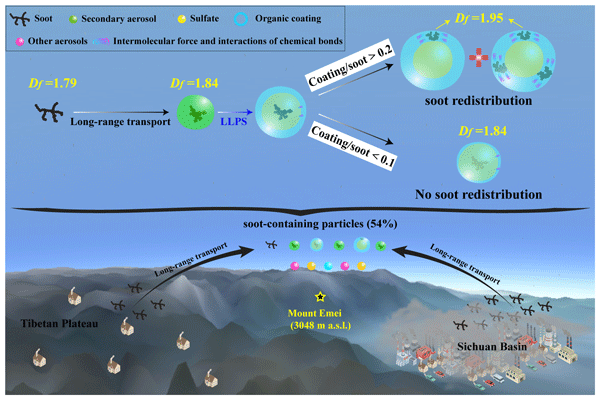
Qi Yuan, Yuanyuan Wang, Yixin Chen, Siyao Yue, Jian Zhang, Yinxiao Zhang, Liang Xu, Wei Hu, Dantong Liu, Pingqing Fu, Huiwang Gao, and Weijun Li
Atmos. Chem. Phys., 23, 9385–9399, https://doi.org/10.5194/acp-23-9385-2023, https://doi.org/10.5194/acp-23-9385-2023, 2023
Short summary
Short summary
This study for the first time found large amounts of liquid–liquid phase separation particles with soot redistributing in organic coatings instead of sulfate cores in the eastern Tibetan Plateau atmosphere. The particle size and the ratio of the organic matter coating thickness to soot size are two of the major possible factors that likely affect the soot redistribution process. The soot redistribution process promoted the morphological compaction of soot particles.
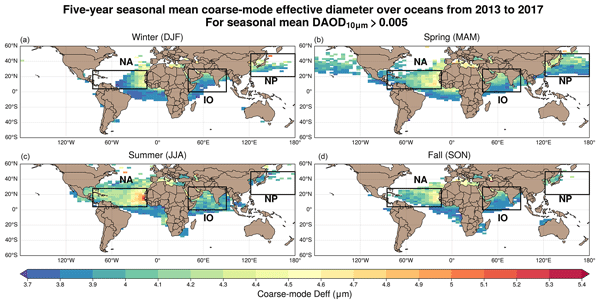
Jianyu Zheng, Zhibo Zhang, Hongbin Yu, Anne Garnier, Qianqian Song, Chenxi Wang, Claudia Di Biagio, Jasper F. Kok, Yevgeny Derimian, and Claire Ryder
Atmos. Chem. Phys., 23, 8271–8304, https://doi.org/10.5194/acp-23-8271-2023, https://doi.org/10.5194/acp-23-8271-2023, 2023
Short summary
Short summary
We developed a multi-year satellite-based retrieval of dust optical depth at 10 µm and the coarse-mode dust effective diameter over global oceans. It reveals climatological coarse-mode dust transport patterns and regional differences over the North Atlantic, the Indian Ocean and the North Pacific.
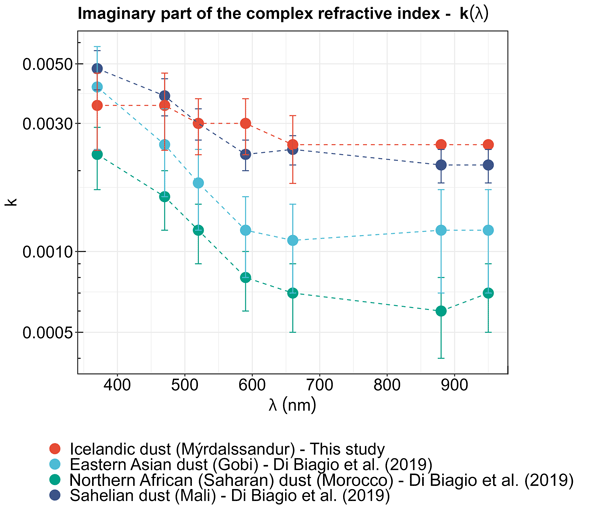
Clarissa Baldo, Paola Formenti, Claudia Di Biagio, Gongda Lu, Congbo Song, Mathieu Cazaunau, Edouard Pangui, Jean-Francois Doussin, Pavla Dagsson-Waldhauserova, Olafur Arnalds, David Beddows, A. Robert MacKenzie, and Zongbo Shi
Atmos. Chem. Phys., 23, 7975–8000, https://doi.org/10.5194/acp-23-7975-2023, https://doi.org/10.5194/acp-23-7975-2023, 2023
Short summary
Short summary
This paper presents new shortwave spectral complex refractive index and single scattering albedo data for Icelandic dust. Our results show that the imaginary part of the complex refractive index of Icelandic dust is at the upper end of the range of low-latitude dust. Furthermore, we observed that Icelandic dust is more absorbing towards the near-infrared, which we attribute to its high magnetite content. These findings are important for modeling dust aerosol radiative effects in the Arctic.
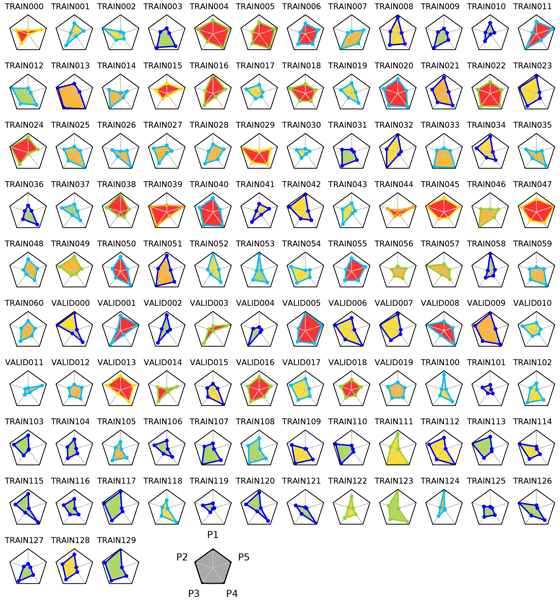
Ernesto Reyes-Villegas, Douglas Lowe, Jill S. Johnson, Kenneth S. Carslaw, Eoghan Darbyshire, Michael Flynn, James D. Allan, Hugh Coe, Ying Chen, Oliver Wild, Scott Archer-Nicholls, Alex Archibald, Siddhartha Singh, Manish Shrivastava, Rahul A. Zaveri, Vikas Singh, Gufran Beig, Ranjeet Sokhi, and Gordon McFiggans
Atmos. Chem. Phys., 23, 5763–5782, https://doi.org/10.5194/acp-23-5763-2023, https://doi.org/10.5194/acp-23-5763-2023, 2023
Short summary
Short summary
Organic aerosols (OAs), their sources and their processes remain poorly understood. The volatility basis set (VBS) approach, implemented in air quality models such as WRF-Chem, can be a useful tool to describe primary OA (POA) production and aging. However, the main disadvantage is its complexity. We used a Gaussian process simulator to reproduce model results and to estimate the sources of model uncertainty. We do this by comparing the outputs with OA observations made at Delhi, India, in 2018.
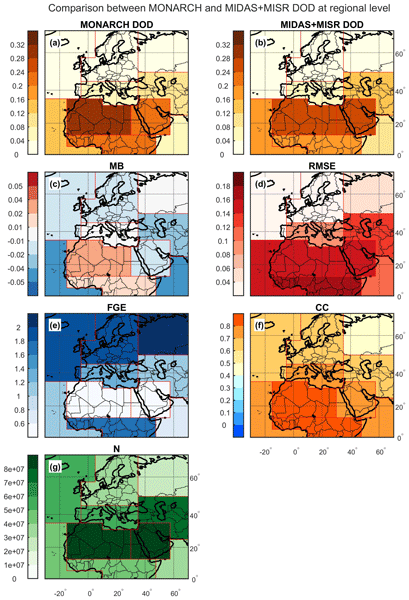
Michail Mytilinaios, Sara Basart, Sergio Ciamprone, Juan Cuesta, Claudio Dema, Enza Di Tomaso, Paola Formenti, Antonis Gkikas, Oriol Jorba, Ralph Kahn, Carlos Pérez García-Pando, Serena Trippetta, and Lucia Mona
Atmos. Chem. Phys., 23, 5487–5516, https://doi.org/10.5194/acp-23-5487-2023, https://doi.org/10.5194/acp-23-5487-2023, 2023
Short summary
Short summary
Multiscale Online Non-hydrostatic AtmospheRe CHemistry model (MONARCH) dust reanalysis provides a high-resolution 3D reconstruction of past dust conditions, allowing better quantification of climate and socioeconomic dust impacts. We assess the performance of the reanalysis needed to reproduce dust optical depth using dust-related products retrieved from satellite and ground-based observations and show that it reproduces the spatial distribution and seasonal variability of atmospheric dust well.

Arineh Cholakian, Matthias Beekmann, Guillaume Siour, Isabelle Coll, Manuela Cirtog, Elena Ormeño, Pierre-Marie Flaud, Emilie Perraudin, and Eric Villenave
Atmos. Chem. Phys., 23, 3679–3706, https://doi.org/10.5194/acp-23-3679-2023, https://doi.org/10.5194/acp-23-3679-2023, 2023
Short summary
Short summary
This article revolves around the simulation of biogenic secondary organic aerosols in the Landes forest (southwestern France). Several sensitivity cases involving biogenic emission factors, land cover data, anthropogenic emissions, and physical or meteorological parameters were performed and each compared to measurements both in the forest canopy and around the forest. The chemistry behind the formation of these aerosols and their production and transport in the forest canopy is discussed.
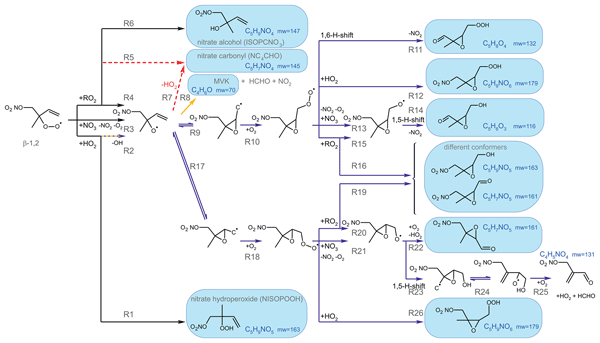
Philip T. M. Carlsson, Luc Vereecken, Anna Novelli, François Bernard, Steven S. Brown, Bellamy Brownwood, Changmin Cho, John N. Crowley, Patrick Dewald, Peter M. Edwards, Nils Friedrich, Juliane L. Fry, Mattias Hallquist, Luisa Hantschke, Thorsten Hohaus, Sungah Kang, Jonathan Liebmann, Alfred W. Mayhew, Thomas Mentel, David Reimer, Franz Rohrer, Justin Shenolikar, Ralf Tillmann, Epameinondas Tsiligiannis, Rongrong Wu, Andreas Wahner, Astrid Kiendler-Scharr, and Hendrik Fuchs
Atmos. Chem. Phys., 23, 3147–3180, https://doi.org/10.5194/acp-23-3147-2023, https://doi.org/10.5194/acp-23-3147-2023, 2023
Short summary
Short summary
The investigation of the night-time oxidation of the most abundant hydrocarbon, isoprene, in chamber experiments shows the importance of reaction pathways leading to epoxy products, which could enhance particle formation, that have so far not been accounted for. The chemical lifetime of organic nitrates from isoprene is long enough for the majority to be further oxidized the next day by daytime oxidants.
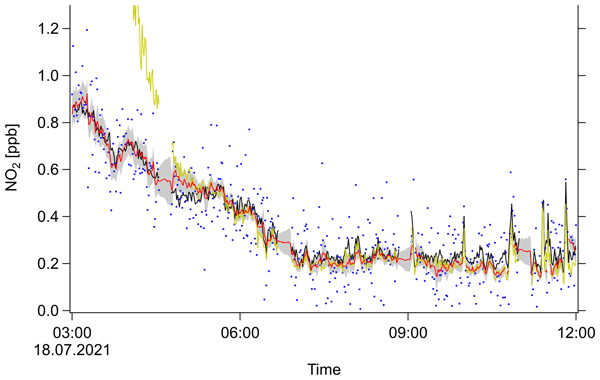
Lenard L. Röder, Patrick Dewald, Clara M. Nussbaumer, Jan Schuladen, John N. Crowley, Jos Lelieveld, and Horst Fischer
Atmos. Meas. Tech., 16, 1167–1178, https://doi.org/10.5194/amt-16-1167-2023, https://doi.org/10.5194/amt-16-1167-2023, 2023
Short summary
Short summary
Field experiments in atmospheric chemistry provide insights into chemical interactions of our atmosphere. However, high data coverage and accuracy are needed to enable further analysis. In this study, we explore a statistical method that combines knowledge about the chemical reactions with information from measurements to increase the quality of field experiment datasets. We test the algorithm for several applications and discuss limitations that depend on the specific variable and the dynamics.
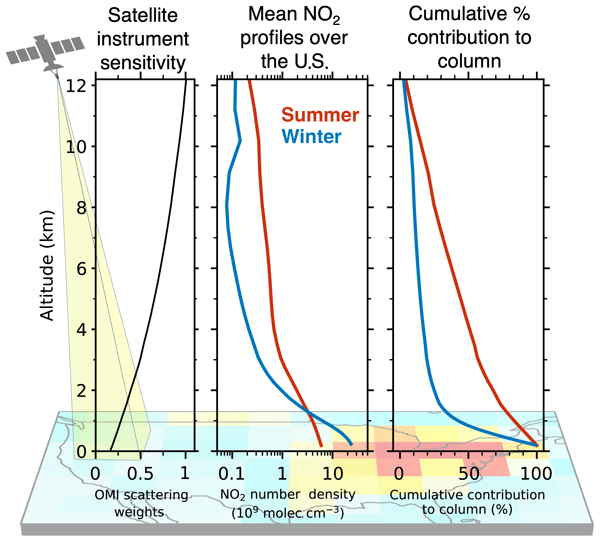
Viral Shah, Daniel J. Jacob, Ruijun Dang, Lok N. Lamsal, Sarah A. Strode, Stephen D. Steenrod, K. Folkert Boersma, Sebastian D. Eastham, Thibaud M. Fritz, Chelsea Thompson, Jeff Peischl, Ilann Bourgeois, Ilana B. Pollack, Benjamin A. Nault, Ronald C. Cohen, Pedro Campuzano-Jost, Jose L. Jimenez, Simone T. Andersen, Lucy J. Carpenter, Tomás Sherwen, and Mat J. Evans
Atmos. Chem. Phys., 23, 1227–1257, https://doi.org/10.5194/acp-23-1227-2023, https://doi.org/10.5194/acp-23-1227-2023, 2023
Short summary
Short summary
NOx in the free troposphere (above 2 km) affects global tropospheric chemistry and the retrieval and interpretation of satellite NO2 measurements. We evaluate free tropospheric NOx in global atmospheric chemistry models and find that recycling NOx from its reservoirs over the oceans is faster than that simulated in the models, resulting in increases in simulated tropospheric ozone and OH. Over the U.S., free tropospheric NO2 contributes the majority of the tropospheric NO2 column in summer.
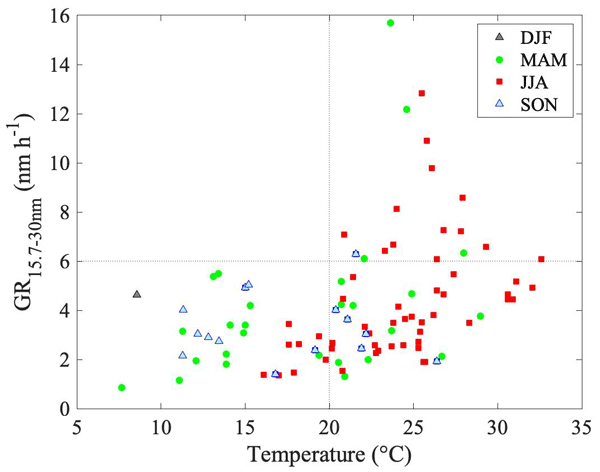
Suzanne Crumeyrolle, Jenni S. S. Kontkanen, Clémence Rose, Alejandra Velazquez Garcia, Eric Bourrianne, Maxime Catalfamo, Véronique Riffault, Emmanuel Tison, Joel Ferreira de Brito, Nicolas Visez, Nicolas Ferlay, Frédérique Auriol, and Isabelle Chiapello
Atmos. Chem. Phys., 23, 183–201, https://doi.org/10.5194/acp-23-183-2023, https://doi.org/10.5194/acp-23-183-2023, 2023
Short summary
Short summary
Ultrafine particles (UFPs) are particles with an aerodynamic diameter of 100 nm or less and negligible mass concentration but are the dominant contributor to the total particle number concentration. The present study aims to better understand the environmental factors favoring or inhibiting atmospheric new particle formation (NPF) over Lille, a large city in the north of France, and to analyze the impact of such an event on urban air quality using a long-term dataset (3 years).
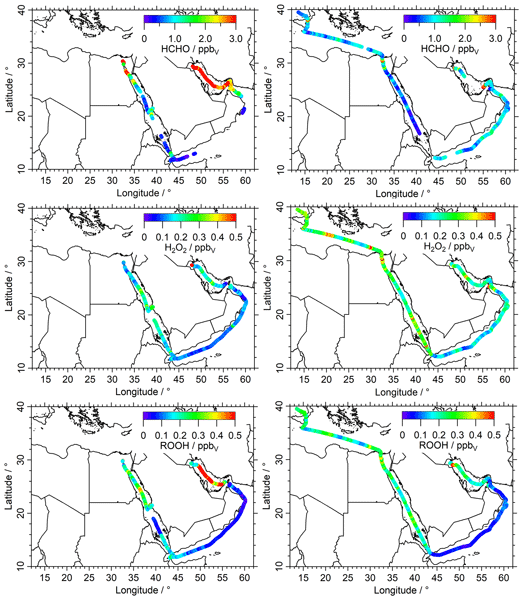
Dirk Dienhart, Bettina Brendel, John N. Crowley, Philipp G. Eger, Hartwig Harder, Monica Martinez, Andrea Pozzer, Roland Rohloff, Jan Schuladen, Sebastian Tauer, David Walter, Jos Lelieveld, and Horst Fischer
Atmos. Chem. Phys., 23, 119–142, https://doi.org/10.5194/acp-23-119-2023, https://doi.org/10.5194/acp-23-119-2023, 2023
Short summary
Short summary
Formaldehyde and hydroperoxide measurements were performed in the marine boundary layer around the Arabian Peninsula and highlight the Suez Canal and Arabian (Persian) Gulf as a hotspot of photochemical air pollution. A comparison with the EMAC model shows that the formaldehyde results match within a factor of 2, while hydrogen peroxide was overestimated by more than a factor of 5, which revealed enhanced HOx (OH+HO2) radicals in the simulation and an underestimation of dry deposition velocites.
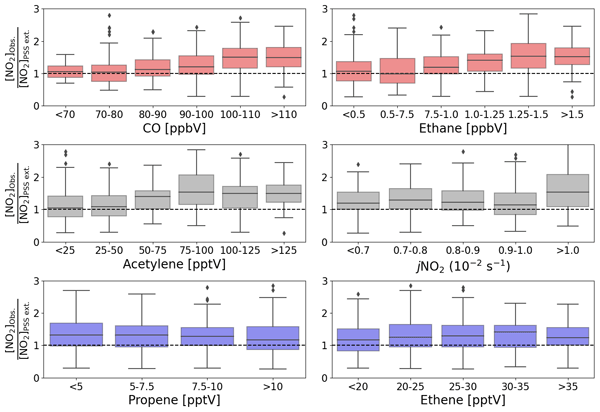
Simone T. Andersen, Beth S. Nelson, Katie A. Read, Shalini Punjabi, Luis Neves, Matthew J. Rowlinson, James Hopkins, Tomás Sherwen, Lisa K. Whalley, James D. Lee, and Lucy J. Carpenter
Atmos. Chem. Phys., 22, 15747–15765, https://doi.org/10.5194/acp-22-15747-2022, https://doi.org/10.5194/acp-22-15747-2022, 2022
Short summary
Short summary
The cycling of NO and NO2 is important to understand to be able to predict O3 concentrations in the atmosphere. We have used long-term measurements from the Cape Verde Atmospheric Observatory together with model outputs to investigate the cycling of nitrogen oxide (NO) and nitrogen dioxide (NO2) in very clean marine air. This study shows that we understand the processes occurring in very clean air, but with small amounts of pollution in the air, known chemistry cannot explain what is observed.
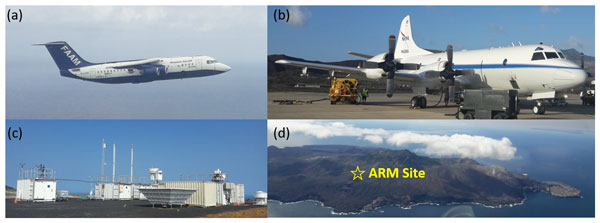
Paul A. Barrett, Steven J. Abel, Hugh Coe, Ian Crawford, Amie Dobracki, James Haywood, Steve Howell, Anthony Jones, Justin Langridge, Greg M. McFarquhar, Graeme J. Nott, Hannah Price, Jens Redemann, Yohei Shinozuka, Kate Szpek, Jonathan W. Taylor, Robert Wood, Huihui Wu, Paquita Zuidema, Stéphane Bauguitte, Ryan Bennett, Keith Bower, Hong Chen, Sabrina Cochrane, Michael Cotterell, Nicholas Davies, David Delene, Connor Flynn, Andrew Freedman, Steffen Freitag, Siddhant Gupta, David Noone, Timothy B. Onasch, James Podolske, Michael R. Poellot, Sebastian Schmidt, Stephen Springston, Arthur J. Sedlacek III, Jamie Trembath, Alan Vance, Maria A. Zawadowicz, and Jianhao Zhang
Atmos. Meas. Tech., 15, 6329–6371, https://doi.org/10.5194/amt-15-6329-2022, https://doi.org/10.5194/amt-15-6329-2022, 2022
Short summary
Short summary
To better understand weather and climate, it is vital to go into the field and collect observations. Often measurements take place in isolation, but here we compared data from two aircraft and one ground-based site. This was done in order to understand how well measurements made on one platform compared to those made on another. Whilst this is easy to do in a controlled laboratory setting, it is more challenging in the real world, and so these comparisons are as valuable as they are rare.
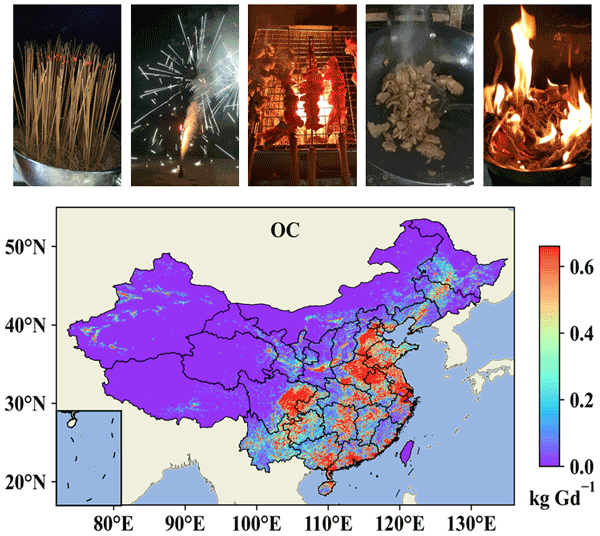
Yi Cheng, Shaofei Kong, Liquan Yao, Huang Zheng, Jian Wu, Qin Yan, Shurui Zheng, Yao Hu, Zhenzhen Niu, Yingying Yan, Zhenxing Shen, Guofeng Shen, Dantong Liu, Shuxiao Wang, and Shihua Qi
Earth Syst. Sci. Data, 14, 4757–4775, https://doi.org/10.5194/essd-14-4757-2022, https://doi.org/10.5194/essd-14-4757-2022, 2022
Short summary
Short summary
This work establishes the first emission inventory of carbonaceous aerosols from cooking, fireworks, sacrificial incense, joss paper burning, and barbecue, using multi-source datasets and tested emission factors. These emissions were concentrated in specific periods and areas. Positive and negative correlations between income and emissions were revealed in urban and rural regions. The dataset will be helpful for improving modeling studies and modifying corresponding emission control policies.
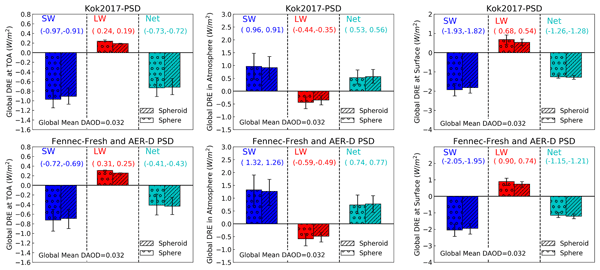
Qianqian Song, Zhibo Zhang, Hongbin Yu, Jasper F. Kok, Claudia Di Biagio, Samuel Albani, Jianyu Zheng, and Jiachen Ding
Atmos. Chem. Phys., 22, 13115–13135, https://doi.org/10.5194/acp-22-13115-2022, https://doi.org/10.5194/acp-22-13115-2022, 2022
Short summary
Short summary
This study developed a dataset that enables us to efficiently calculate dust direct radiative effect (DRE, i.e., cooling or warming our planet) for any given dust size distribution in addition to three sets of dust mineral components and two dust shapes. We demonstrate and validate the method of using this dataset to calculate dust DRE. Moreover, using this dataset we found that dust mineral composition is a more important factor in determining dust DRE than dust size and shape.
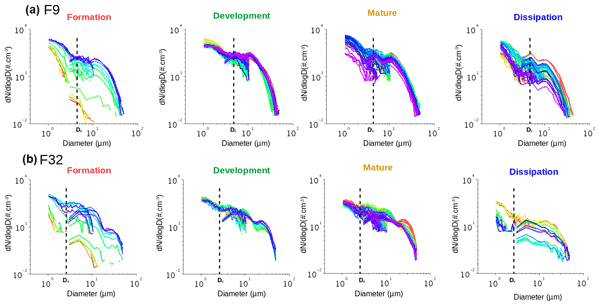
Marie Mazoyer, Frédéric Burnet, and Cyrielle Denjean
Atmos. Chem. Phys., 22, 11305–11321, https://doi.org/10.5194/acp-22-11305-2022, https://doi.org/10.5194/acp-22-11305-2022, 2022
Short summary
Short summary
The evolution of the droplet size distribution during the fog life cycle remains poorly understood and progress is required to reduce the uncertainty of fog forecasts. To gain insights into the physical processes driving the microphysics, intensive field campaigns were conducted during three winters at the SIRTA site in the south of Paris. This study analyzed the variations in fog microphysical properties and their potential interactions at the different evolutionary stages of the fog events.
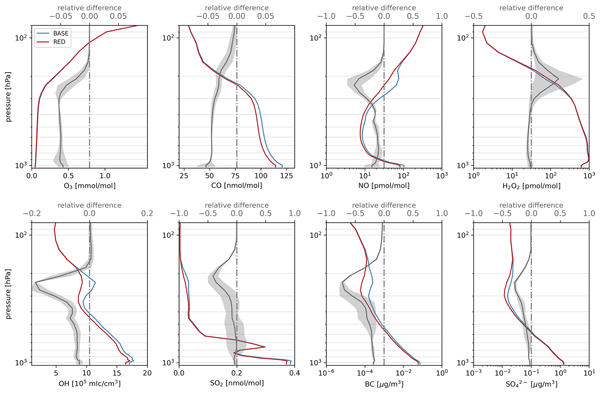
Simon F. Reifenberg, Anna Martin, Matthias Kohl, Sara Bacer, Zaneta Hamryszczak, Ivan Tadic, Lenard Röder, Daniel J. Crowley, Horst Fischer, Katharina Kaiser, Johannes Schneider, Raphael Dörich, John N. Crowley, Laura Tomsche, Andreas Marsing, Christiane Voigt, Andreas Zahn, Christopher Pöhlker, Bruna A. Holanda, Ovid Krüger, Ulrich Pöschl, Mira Pöhlker, Patrick Jöckel, Marcel Dorf, Ulrich Schumann, Jonathan Williams, Birger Bohn, Joachim Curtius, Hardwig Harder, Hans Schlager, Jos Lelieveld, and Andrea Pozzer
Atmos. Chem. Phys., 22, 10901–10917, https://doi.org/10.5194/acp-22-10901-2022, https://doi.org/10.5194/acp-22-10901-2022, 2022
Short summary
Short summary
In this work we use a combination of observational data from an aircraft campaign and model results to investigate the effect of the European lockdown due to COVID-19 in spring 2020. Using model results, we show that the largest relative changes to the atmospheric composition caused by the reduced emissions are located in the upper troposphere around aircraft cruise altitude, while the largest absolute changes are present at the surface.
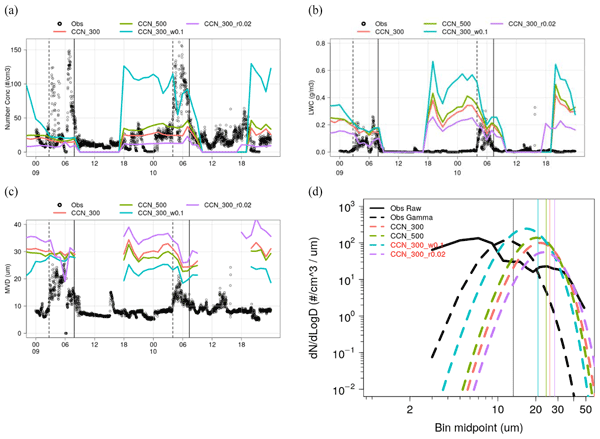
Michael John Weston, Stuart John Piketh, Frédéric Burnet, Stephen Broccardo, Cyrielle Denjean, Thierry Bourrianne, and Paola Formenti
Atmos. Chem. Phys., 22, 10221–10245, https://doi.org/10.5194/acp-22-10221-2022, https://doi.org/10.5194/acp-22-10221-2022, 2022
Short summary
Short summary
An aerosol-aware microphysics scheme is evaluated for fog cases in Namibia. AEROCLO-sA campaign observations are used to access and parameterise the model. The model cloud condensation nuclei activation is lower than the observations. The scheme is designed for clouds with updrafts, while fog typically forms in stable conditions. A pseudo updraft speed assigned to the lowest model levels helps achieve more realistic cloud droplet number concentration and size distribution in the model.
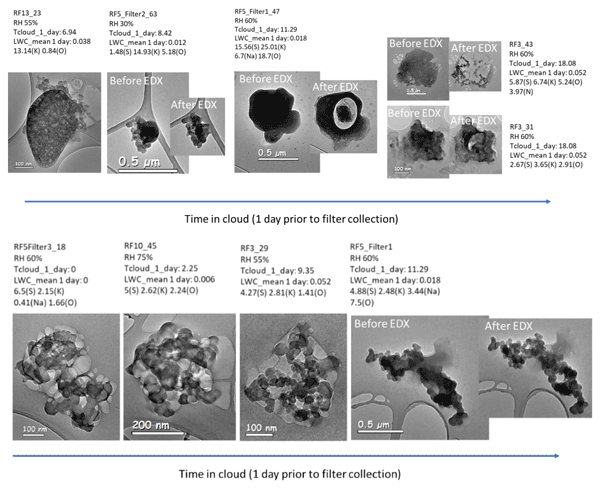
Caroline Dang, Michal Segal-Rozenhaimer, Haochi Che, Lu Zhang, Paola Formenti, Jonathan Taylor, Amie Dobracki, Sara Purdue, Pui-Shan Wong, Athanasios Nenes, Arthur Sedlacek III, Hugh Coe, Jens Redemann, Paquita Zuidema, Steven Howell, and James Haywood
Atmos. Chem. Phys., 22, 9389–9412, https://doi.org/10.5194/acp-22-9389-2022, https://doi.org/10.5194/acp-22-9389-2022, 2022
Short summary
Short summary
Transmission electron microscopy was used to analyze aged African smoke particles and how the smoke interacts with the marine atmosphere. We found that the volatility of organic aerosol increases with biomass burning plume age, that black carbon is often mixed with potassium salts and that the marine atmosphere can incorporate Na and Cl into smoke particles. Marine salts are more processed when mixed with smoke plumes, and there are interesting Cl-rich yet Na-absent marine particles.
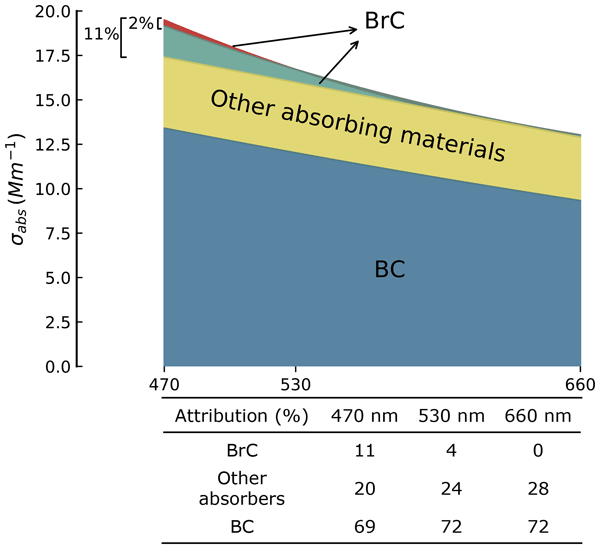
Lu Zhang, Michal Segal-Rozenhaimer, Haochi Che, Caroline Dang, Arthur J. Sedlacek III, Ernie R. Lewis, Amie Dobracki, Jenny P. S. Wong, Paola Formenti, Steven G. Howell, and Athanasios Nenes
Atmos. Chem. Phys., 22, 9199–9213, https://doi.org/10.5194/acp-22-9199-2022, https://doi.org/10.5194/acp-22-9199-2022, 2022
Short summary
Short summary
Widespread biomass burning (BB) events occur annually in Africa and contribute ~ 1 / 3 of global BB emissions, which contain a large family of light-absorbing organics, known as brown carbon (BrC), whose absorption of incident radiation is difficult to estimate, leading to large uncertainties in the global radiative forcing estimation. This study quantifies the BrC absorption of aged BB particles and highlights the potential presence of absorbing iron oxides in this climatically important region.
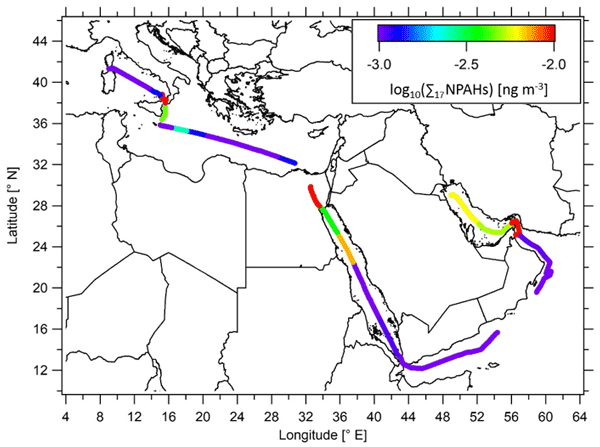
Marco Wietzoreck, Marios Kyprianou, Benjamin A. Musa Bandowe, Siddika Celik, John N. Crowley, Frank Drewnick, Philipp Eger, Nils Friedrich, Minas Iakovides, Petr Kukučka, Jan Kuta, Barbora Nežiková, Petra Pokorná, Petra Přibylová, Roman Prokeš, Roland Rohloff, Ivan Tadic, Sebastian Tauer, Jake Wilson, Hartwig Harder, Jos Lelieveld, Ulrich Pöschl, Euripides G. Stephanou, and Gerhard Lammel
Atmos. Chem. Phys., 22, 8739–8766, https://doi.org/10.5194/acp-22-8739-2022, https://doi.org/10.5194/acp-22-8739-2022, 2022
Short summary
Short summary
A unique dataset of concentrations and sources of polycyclic aromatic hydrocarbons (PAHs) and their alkylated, oxygenated and nitrated derivatives, in total 74 individual species, in the marine atmosphere is presented. Exposure to these substances poses a major health risk. We found very low concentrations over the Arabian Sea, while both local and long-range-transported pollution caused elevated levels over the Mediterranean Sea and the Arabian Gulf.
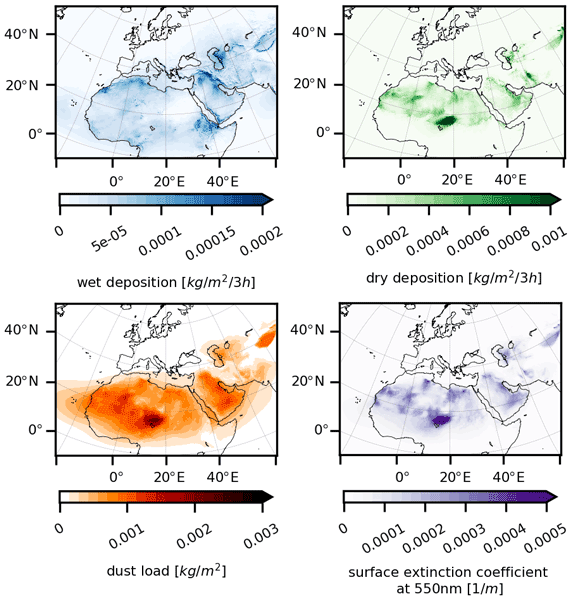
Enza Di Tomaso, Jerónimo Escribano, Sara Basart, Paul Ginoux, Francesca Macchia, Francesca Barnaba, Francesco Benincasa, Pierre-Antoine Bretonnière, Arnau Buñuel, Miguel Castrillo, Emilio Cuevas, Paola Formenti, María Gonçalves, Oriol Jorba, Martina Klose, Lucia Mona, Gilbert Montané Pinto, Michail Mytilinaios, Vincenzo Obiso, Miriam Olid, Nick Schutgens, Athanasios Votsis, Ernest Werner, and Carlos Pérez García-Pando
Earth Syst. Sci. Data, 14, 2785–2816, https://doi.org/10.5194/essd-14-2785-2022, https://doi.org/10.5194/essd-14-2785-2022, 2022
Short summary
Short summary
MONARCH reanalysis of desert dust aerosols extends the existing observation-based information for mineral dust monitoring by providing 3-hourly upper-air, surface and total column key geophysical variables of the dust cycle over Northern Africa, the Middle East and Europe, at a 0.1° horizontal resolution in a rotated grid, from 2007 to 2016. This work provides evidence of the high accuracy of this data set and its suitability for air quality and health and climate service applications.
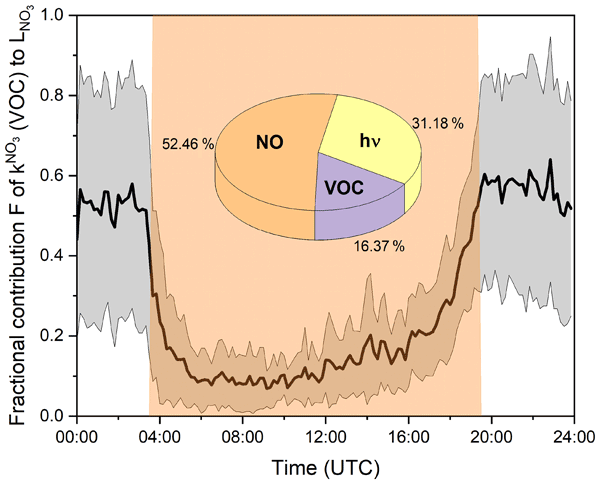
Patrick Dewald, Clara M. Nussbaumer, Jan Schuladen, Akima Ringsdorf, Achim Edtbauer, Horst Fischer, Jonathan Williams, Jos Lelieveld, and John N. Crowley
Atmos. Chem. Phys., 22, 7051–7069, https://doi.org/10.5194/acp-22-7051-2022, https://doi.org/10.5194/acp-22-7051-2022, 2022
Short summary
Short summary
We measured the gas-phase reactivity of the NO3 radical on the summit (825 m a.s.l.) of a semi-rural mountain in southwestern Germany in July 2021. The impact of VOC-induced NO3 losses (mostly monoterpenes) competing with a loss by reaction with NO and photolysis throughout the diel cycle was estimated. Besides chemistry, boundary layer dynamics and plant-physiological processes presumably have a great impact on our observations, which were compared to previous NO3 measurements at the same site.
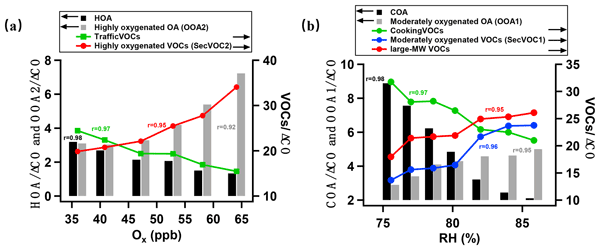
Siyuan Li, Dantong Liu, Shaofei Kong, Yangzhou Wu, Kang Hu, Huang Zheng, Yi Cheng, Shurui Zheng, Xiaotong Jiang, Shuo Ding, Dawei Hu, Quan Liu, Ping Tian, Delong Zhao, and Jiujiang Sheng
Atmos. Chem. Phys., 22, 6937–6951, https://doi.org/10.5194/acp-22-6937-2022, https://doi.org/10.5194/acp-22-6937-2022, 2022
Short summary
Short summary
The understanding of secondary organic aerosols is hindered by the aerosol–gas evolution by different oxidation mechanisms. By concurrently measuring detailed mass spectra of aerosol and gas phases in a megacity online, we identified the primary and secondary source sectors and investigated the transformation between gas and aerosol phases influenced by photooxidation and moisture. The results will help us to understand the respective evolution of major sources in a typical urban environment.
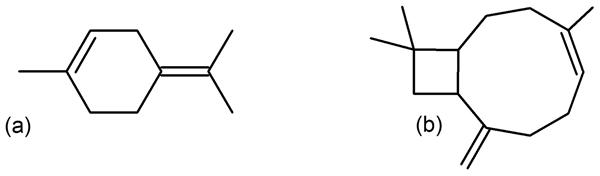
Axel Fouqueau, Manuela Cirtog, Mathieu Cazaunau, Edouard Pangui, Jean-François Doussin, and Bénédicte Picquet-Varrault
Atmos. Chem. Phys., 22, 6411–6434, https://doi.org/10.5194/acp-22-6411-2022, https://doi.org/10.5194/acp-22-6411-2022, 2022
Short summary
Short summary
Biogenic volatile organic compounds are intensely emitted by forests and crops and react with the nitrate radical during the nighttime to form functionalized products. The purpose of this study is to furnish kinetic and mechanistic data for terpinolene and β-caryophyllene, using simulation chamber experiments. Rate constants have been measured using both relative and absolute methods, and mechanistic studies have been conducted in order to identify and quantify the main reaction products.
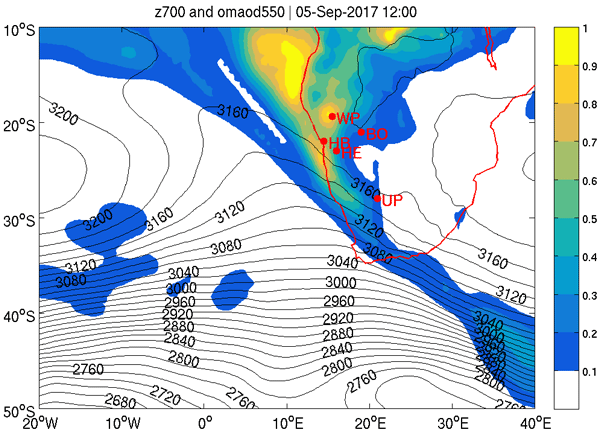
Cyrille Flamant, Marco Gaetani, Jean-Pierre Chaboureau, Patrick Chazette, Juan Cuesta, Stuart John Piketh, and Paola Formenti
Atmos. Chem. Phys., 22, 5701–5724, https://doi.org/10.5194/acp-22-5701-2022, https://doi.org/10.5194/acp-22-5701-2022, 2022
Short summary
Short summary
Rivers of smoke extend from tropical southern Africa towards the Indian Ocean during the winter fire season, controlled by the interaction of tropical easterly waves, and westerly waves at mid latitudes. During the AEROCLO-sA field campaign in 2017, a river of smoke was directly observed over Namibia. In this paper, the evolution and atmospheric drivers of the river of smoke are described, and the role of a mid-latitude cut-off low in lifting the smoke to the upper troposphere is highlighted.
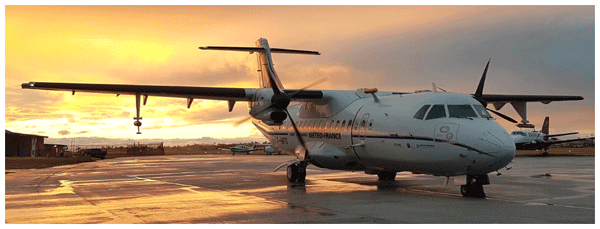
Sandrine Bony, Marie Lothon, Julien Delanoë, Pierre Coutris, Jean-Claude Etienne, Franziska Aemisegger, Anna Lea Albright, Thierry André, Hubert Bellec, Alexandre Baron, Jean-François Bourdinot, Pierre-Etienne Brilouet, Aurélien Bourdon, Jean-Christophe Canonici, Christophe Caudoux, Patrick Chazette, Michel Cluzeau, Céline Cornet, Jean-Philippe Desbios, Dominique Duchanoy, Cyrille Flamant, Benjamin Fildier, Christophe Gourbeyre, Laurent Guiraud, Tetyana Jiang, Claude Lainard, Christophe Le Gac, Christian Lendroit, Julien Lernould, Thierry Perrin, Frédéric Pouvesle, Pascal Richard, Nicolas Rochetin, Kevin Salaün, Alfons Schwarzenboeck, Guillaume Seurat, Bjorn Stevens, Julien Totems, Ludovic Touzé-Peiffer, Gilles Vergez, Jessica Vial, Leonie Villiger, and Raphaela Vogel
Earth Syst. Sci. Data, 14, 2021–2064, https://doi.org/10.5194/essd-14-2021-2022, https://doi.org/10.5194/essd-14-2021-2022, 2022
Short summary
Short summary
The French ATR42 research aircraft participated in the EUREC4A international field campaign that took place in 2020 over the tropical Atlantic, east of Barbados. We present the extensive instrumentation of the aircraft, the research flights and the different measurements. We show that the ATR measurements of humidity, wind, aerosols and cloudiness in the lower atmosphere are robust and consistent with each other. They will make it possible to advance understanding of cloud–climate interactions.

Wenyu Sun, Matias Berasategui, Andrea Pozzer, Jos Lelieveld, and John N. Crowley
Atmos. Chem. Phys., 22, 4969–4984, https://doi.org/10.5194/acp-22-4969-2022, https://doi.org/10.5194/acp-22-4969-2022, 2022
Short summary
Short summary
The reaction between OH and SO2 is a termolecular process that in the atmosphere results in the formation of H2SO4 and thus aerosols. We present the first temperature- and pressure-dependent measurements of the rate coefficients in N2. This is also the first study to examine the effects of water vapour on the kinetics of this reaction. Our results indicate the rate coefficient is larger than that recommended by evaluation panels, with deviations of up to 30 % in some parts of the atmosphere.
Chenjie Yu, Dantong Liu, Kang Hu, Ping Tian, Yangzhou Wu, Delong Zhao, Huihui Wu, Dawei Hu, Wenbo Guo, Qiang Li, Mengyu Huang, Deping Ding, and James D. Allan
Atmos. Chem. Phys., 22, 4375–4391, https://doi.org/10.5194/acp-22-4375-2022, https://doi.org/10.5194/acp-22-4375-2022, 2022
Short summary
Short summary
In this study, we applied a new technique to investigate the aerosol properties on both a mass and number basis and CCN abilities in Beijing suburban regions. The size-resolved aerosol chemical compositions and CCN activation measurement enable a detailed analysis of BC-containing particle hygroscopicity and its size-dependent contribution to the CCN activation. The results presented in this study will affect future models and human health studies.
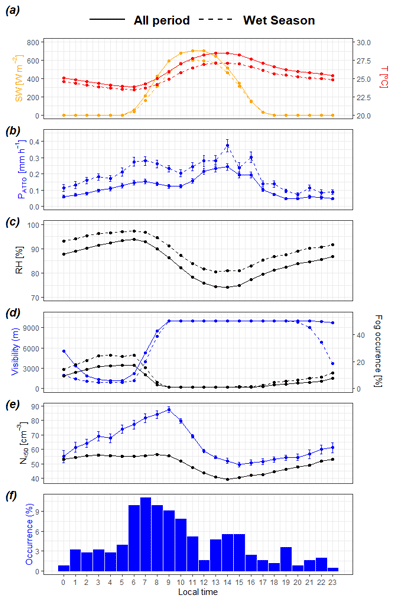
Marco A. Franco, Florian Ditas, Leslie A. Kremper, Luiz A. T. Machado, Meinrat O. Andreae, Alessandro Araújo, Henrique M. J. Barbosa, Joel F. de Brito, Samara Carbone, Bruna A. Holanda, Fernando G. Morais, Janaína P. Nascimento, Mira L. Pöhlker, Luciana V. Rizzo, Marta Sá, Jorge Saturno, David Walter, Stefan Wolff, Ulrich Pöschl, Paulo Artaxo, and Christopher Pöhlker
Atmos. Chem. Phys., 22, 3469–3492, https://doi.org/10.5194/acp-22-3469-2022, https://doi.org/10.5194/acp-22-3469-2022, 2022
Short summary
Short summary
In Central Amazonia, new particle formation in the planetary boundary layer is rare. Instead, there is the appearance of sub-50 nm aerosols with diameters larger than about 20 nm that eventually grow to cloud condensation nuclei size range. Here, 254 growth events were characterized which have higher predominance in the wet season. About 70 % of them showed direct relation to convective downdrafts, while 30 % occurred partly under clear-sky conditions, evidencing still unknown particle sources.
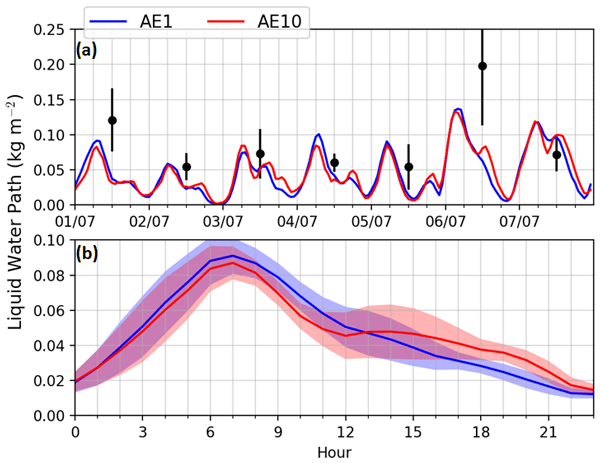
Adrien Deroubaix, Laurent Menut, Cyrille Flamant, Peter Knippertz, Andreas H. Fink, Anneke Batenburg, Joel Brito, Cyrielle Denjean, Cheikh Dione, Régis Dupuy, Valerian Hahn, Norbert Kalthoff, Fabienne Lohou, Alfons Schwarzenboeck, Guillaume Siour, Paolo Tuccella, and Christiane Voigt
Atmos. Chem. Phys., 22, 3251–3273, https://doi.org/10.5194/acp-22-3251-2022, https://doi.org/10.5194/acp-22-3251-2022, 2022
Short summary
Short summary
During the summer monsoon in West Africa, pollutants emitted in urbanized areas modify cloud cover and precipitation patterns. We analyze these patterns with the WRF-CHIMERE model, integrating the effects of aerosols on meteorology, based on the numerous observations provided by the Dynamics-Aerosol-Climate-Interactions campaign. This study adds evidence to recent findings that increased pollution levels in West Africa delay the breakup time of low-level clouds and reduce precipitation.
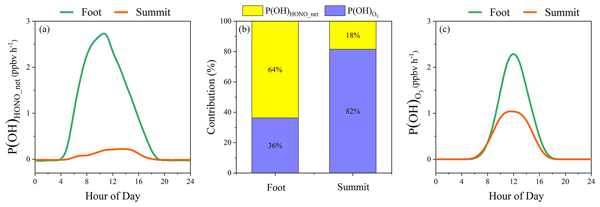
Chaoyang Xue, Can Ye, Jörg Kleffmann, Chenglong Zhang, Valéry Catoire, Fengxia Bao, Abdelwahid Mellouki, Likun Xue, Jianmin Chen, Keding Lu, Yong Zhao, Hengde Liu, Zhaoxin Guo, and Yujing Mu
Atmos. Chem. Phys., 22, 3149–3167, https://doi.org/10.5194/acp-22-3149-2022, https://doi.org/10.5194/acp-22-3149-2022, 2022
Short summary
Short summary
Summertime measurements of nitrous acid (HONO) and related parameters were conducted at the foot and the summit of Mt. Tai (1534 m above sea level). We proposed a rapid vertical air mass exchange between the foot and the summit level, which enhances the role of HONO in the oxidizing capacity of the upper boundary layer. Kinetics for aerosol-derived HONO sources were constrained. HONO formation from different paths was quantified and discussed.
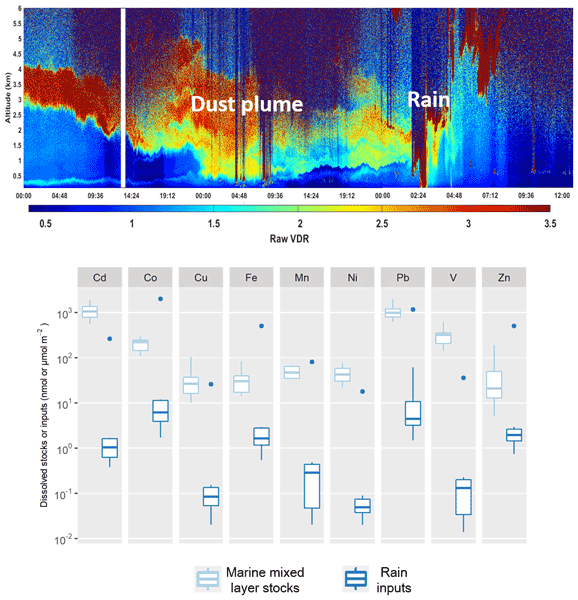
Karine Desboeufs, Franck Fu, Matthieu Bressac, Antonio Tovar-Sánchez, Sylvain Triquet, Jean-François Doussin, Chiara Giorio, Patrick Chazette, Julie Disnaquet, Anaïs Feron, Paola Formenti, Franck Maisonneuve, Araceli Rodríguez-Romero, Pascal Zapf, François Dulac, and Cécile Guieu
Atmos. Chem. Phys., 22, 2309–2332, https://doi.org/10.5194/acp-22-2309-2022, https://doi.org/10.5194/acp-22-2309-2022, 2022
Short summary
Short summary
This article reports the first concurrent sampling of wet deposition samples and surface seawater and was performed during the PEACETIME cruise in the remote Mediterranean (May–June 2017). Through the chemical composition of trace metals (TMs) in these samples, it emphasizes the decrease of atmospheric metal pollution in this area during the last few decades and the critical role of wet deposition as source of TMs for Mediterranean surface seawater, especially for intense dust deposition events.
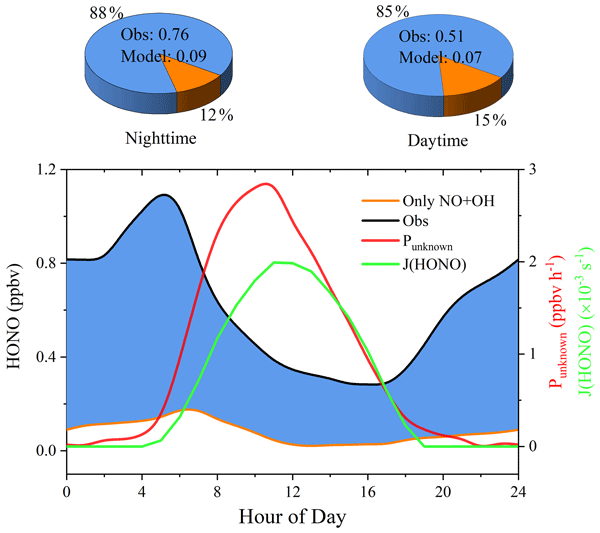
Chaoyang Xue, Can Ye, Jörg Kleffmann, Wenjin Zhang, Xiaowei He, Pengfei Liu, Chenglong Zhang, Xiaoxi Zhao, Chengtang Liu, Zhuobiao Ma, Junfeng Liu, Jinhe Wang, Keding Lu, Valéry Catoire, Abdelwahid Mellouki, and Yujing Mu
Atmos. Chem. Phys., 22, 1035–1057, https://doi.org/10.5194/acp-22-1035-2022, https://doi.org/10.5194/acp-22-1035-2022, 2022
Short summary
Short summary
Nitrous acid (HONO) and related parameters were measured at the foot and the summit of Mt. Tai in the summer of 2018. Based on measurements at the foot station, we utilized a box model to explore the roles of different sources in the HONO budget. We also studied radical chemistry in this high-ozone region.

Clara M. Nussbaumer, John N. Crowley, Jan Schuladen, Jonathan Williams, Sascha Hafermann, Andreas Reiffs, Raoul Axinte, Hartwig Harder, Cheryl Ernest, Anna Novelli, Katrin Sala, Monica Martinez, Chinmay Mallik, Laura Tomsche, Christian Plass-Dülmer, Birger Bohn, Jos Lelieveld, and Horst Fischer
Atmos. Chem. Phys., 21, 18413–18432, https://doi.org/10.5194/acp-21-18413-2021, https://doi.org/10.5194/acp-21-18413-2021, 2021
Short summary
Short summary
HCHO is an important atmospheric trace gas influencing the photochemical processes in the Earth’s atmosphere, including the budget of HOx and the abundance of tropospheric O3. This research presents the photochemical calculations of HCHO and O3 based on three field campaigns across Europe. We show that HCHO production via the oxidation of only four volatile organic compound precursors, i.e., CH4, CH3CHO, C5H8 and CH3OH, can balance the observed loss at all sites well.
Paola Formenti, Claudia Di Biagio, Yue Huang, Jasper Kok, Marc Daniel Mallet, Damien Boulanger, and Mathieu Cazaunau
Atmos. Meas. Tech. Discuss., https://doi.org/10.5194/amt-2021-403, https://doi.org/10.5194/amt-2021-403, 2021
Publication in AMT not foreseen
Short summary
Short summary
This paper provides with standardized correction factors for the measurements of the most common instruments used in the atmosphere to measure the concentration per size of aerosol particles. These correction factors are provided to users with supplementary information for their use.
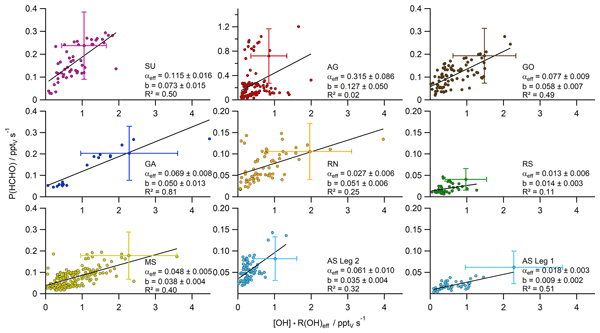
Dirk Dienhart, John N. Crowley, Efstratios Bourtsoukidis, Achim Edtbauer, Philipp G. Eger, Lisa Ernle, Hartwig Harder, Bettina Hottmann, Monica Martinez, Uwe Parchatka, Jean-Daniel Paris, Eva Y. Pfannerstill, Roland Rohloff, Jan Schuladen, Christof Stönner, Ivan Tadic, Sebastian Tauer, Nijing Wang, Jonathan Williams, Jos Lelieveld, and Horst Fischer
Atmos. Chem. Phys., 21, 17373–17388, https://doi.org/10.5194/acp-21-17373-2021, https://doi.org/10.5194/acp-21-17373-2021, 2021
Short summary
Short summary
We present the first ship-based in situ measurements of formaldehyde (HCHO), hydroxyl radicals (OH) and the OH reactivity around the Arabian Peninsula. Regression analysis of the HCHO production rate and the related OH chemistry revealed the regional HCHO yield αeff, which represents the different chemical regimes encountered. Highest values were found for the Arabian Gulf (also known as the Persian Gulf), which highlights this region as a hotspot of photochemical air pollution.
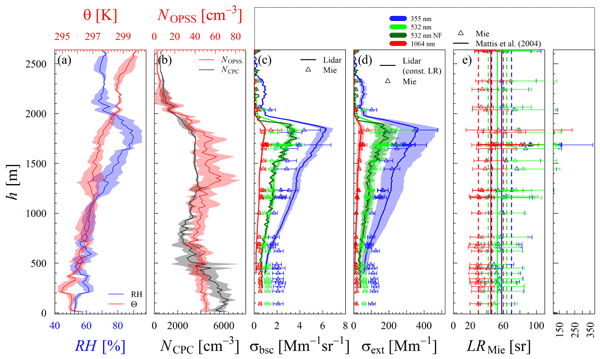
Sebastian Düsing, Albert Ansmann, Holger Baars, Joel C. Corbin, Cyrielle Denjean, Martin Gysel-Beer, Thomas Müller, Laurent Poulain, Holger Siebert, Gerald Spindler, Thomas Tuch, Birgit Wehner, and Alfred Wiedensohler
Atmos. Chem. Phys., 21, 16745–16773, https://doi.org/10.5194/acp-21-16745-2021, https://doi.org/10.5194/acp-21-16745-2021, 2021
Short summary
Short summary
The work deals with optical properties of aerosol particles in dried and atmospheric states. Based on two measurement campaigns in the rural background of central Europe, different measurement approaches were compared with each other, such as modeling based on Mie theory and direct in situ or remote sensing measurements. Among others, it was shown that the aerosol extinction-to-backscatter ratio is relative humidity dependent, and refinement with respect to the model input parameters is needed.

Marco Gaetani, Benjamin Pohl, Maria del Carmen Alvarez Castro, Cyrille Flamant, and Paola Formenti
Atmos. Chem. Phys., 21, 16575–16591, https://doi.org/10.5194/acp-21-16575-2021, https://doi.org/10.5194/acp-21-16575-2021, 2021
Short summary
Short summary
During the dry austral winter, biomass fires in tropical Africa emit large amounts of smoke in the atmosphere, with large impacts on climate and air quality. The study of the relationship between atmospheric circulation and smoke transport shows that midlatitude atmospheric disturbances may deflect the smoke from tropical Africa towards southern Africa. Understanding the distribution of the smoke in the region is crucial for climate modelling and air quality monitoring.
Lilian Loyer, Jean-Christophe Raut, Claudia Di Biagio, Julia Maillard, Vincent Mariage, and Jacques Pelon
Atmos. Meas. Tech. Discuss., https://doi.org/10.5194/amt-2021-326, https://doi.org/10.5194/amt-2021-326, 2021
Revised manuscript not accepted
Short summary
Short summary
The Arctic is facing drastic climate changes, and more observations are needed to better understand what is happening. Unfortunately observations are limited in the High Arctic. To obtain more observations, multiples buoys equipped with lidar, have been deployed in this region. This paper presents an approach to estimate the optical properties of clouds, and solar plus terrestrial energies from lidar measurements in the Arctic.
Dawei Hu, M. Rami Alfarra, Kate Szpek, Justin M. Langridge, Michael I. Cotterell, Claire Belcher, Ian Rule, Zixia Liu, Chenjie Yu, Yunqi Shao, Aristeidis Voliotis, Mao Du, Brett Smith, Greg Smallwood, Prem Lobo, Dantong Liu, Jim M. Haywood, Hugh Coe, and James D. Allan
Atmos. Chem. Phys., 21, 16161–16182, https://doi.org/10.5194/acp-21-16161-2021, https://doi.org/10.5194/acp-21-16161-2021, 2021
Short summary
Short summary
Here, we developed new techniques for investigating these properties in the laboratory and applied these to BC and BrC from different sources, including diesel exhaust, inverted propane flame and wood combustion. These have allowed us to quantify the changes in shape and chemical composition of different soots according to source and variables such as the moisture content of wood.
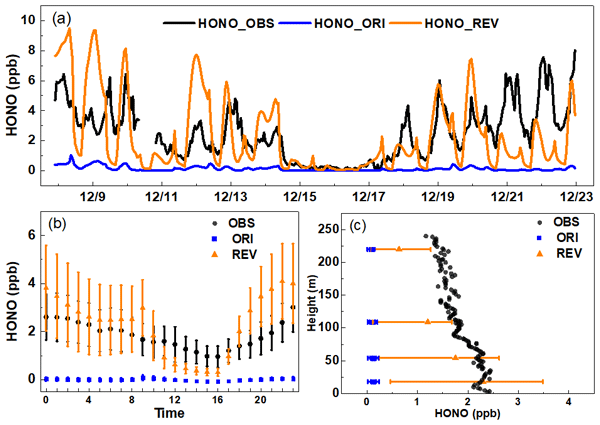
Shuping Zhang, Golam Sarwar, Jia Xing, Biwu Chu, Chaoyang Xue, Arunachalam Sarav, Dian Ding, Haotian Zheng, Yujing Mu, Fengkui Duan, Tao Ma, and Hong He
Atmos. Chem. Phys., 21, 15809–15826, https://doi.org/10.5194/acp-21-15809-2021, https://doi.org/10.5194/acp-21-15809-2021, 2021
Short summary
Short summary
Six heterogeneous HONO chemistry updates in CMAQ significantly improve HONO concentration. HONO production is primarily controlled by the heterogeneous reactions on ground and aerosol surfaces during haze. Additional HONO chemistry updates increase OH and production of secondary aerosols: sulfate, nitrate, and SOA.
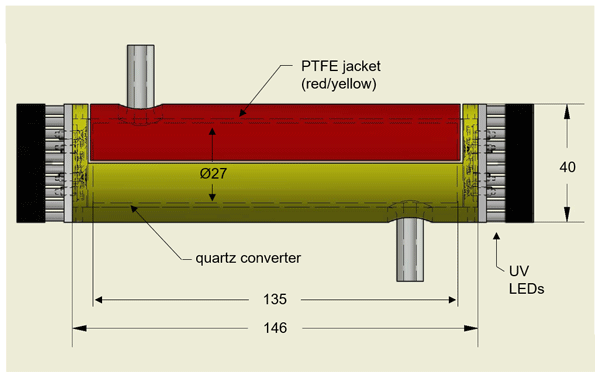
Clara M. Nussbaumer, Uwe Parchatka, Ivan Tadic, Birger Bohn, Daniel Marno, Monica Martinez, Roland Rohloff, Hartwig Harder, Flora Kluge, Klaus Pfeilsticker, Florian Obersteiner, Martin Zöger, Raphael Doerich, John N. Crowley, Jos Lelieveld, and Horst Fischer
Atmos. Meas. Tech., 14, 6759–6776, https://doi.org/10.5194/amt-14-6759-2021, https://doi.org/10.5194/amt-14-6759-2021, 2021
Short summary
Short summary
NO2 plays a central role in atmospheric photochemical processes and requires accurate measurements. This research presents NO2 data obtained via chemiluminescence using a photolytic converter from airborne studies around Cabo Verde and laboratory investigations. We show the limits and error-proneness of a conventional blue light converter in aircraft measurements affected by humidity and NO levels and suggest the use of an alternative quartz converter for more reliable results.
Cited articles
Allan, J. D., Williams, P. I., Morgan, W. T., Martin, C. L., Flynn, M. J., Lee, J., Nemitz, E., Phillips, G. J., Gallagher, M. W., and Coe, H.: Contributions from transport, solid fuel burning and cooking to primary organic aerosols in two UK cities, Atmos. Chem. Phys., 10, 647–668, https://doi.org/10.5194/acp-10-647-2010, 2010.
Ambrose, J. L., Haase, K., Russo, R. S., Zhou, Y., White, M. L., Frinak, E. K., Jordan, C., Mayne, H. R., Talbot, R., and Sive, B. C.: A comparison of GC-FID and PTR-MS toluene measurements in ambient air under conditions of enhanced monoterpene loading, Atmos. Meas. Tech., 3, 959–980, https://doi.org/10.5194/amt-3-959-2010, 2010.
Andersen, S. T., McGillen, M. R., Xue, C., Seubert, T., Dewald, P., Türk, G. N. T. E., Schuladen, J., Denjean, C., Etienne, J.-C., Garrouste, O., Jamar, M., Harb, S., Cirtog, M., Michoud, V., Cazaunau, M., Bergé, A., Cantrell, C., Dusanter, S., Picquet-Varrault, B., Kukui, A., Mellouki, A., Carpenter, L. J., Lelieveld, J., and Crowley, J. N.: Measurement report: Sources, sinks, and lifetime of NOx in a suburban temperate forest at night, Atmos. Chem. Phys., 24, 11603–11618, https://doi.org/10.5194/acp-24-11603-2024, 2024.
Beekmann, M., Prévôt, A. S. H., Drewnick, F., Sciare, J., Pandis, S. N., Denier van der Gon, H. A. C., Crippa, M., Freutel, F., Poulain, L., Ghersi, V., Rodriguez, E., Beirle, S., Zotter, P., von der Weiden-Reinmüller, S.-L., Bressi, M., Fountoukis, C., Petetin, H., Szidat, S., Schneider, J., Rosso, A., El Haddad, I., Megaritis, A., Zhang, Q. J., Michoud, V., Slowik, J. G., Moukhtar, S., Kolmonen, P., Stohl, A., Eckhardt, S., Borbon, A., Gros, V., Marchand, N., Jaffrezo, J. L., Schwarzenboeck, A., Colomb, A., Wiedensohler, A., Borrmann, S., Lawrence, M., Baklanov, A., and Baltensperger, U.: In situ, satellite measurement and model evidence on the dominant regional contribution to fine particulate matter levels in the Paris megacity, Atmos. Chem. Phys., 15, 9577–9591, https://doi.org/10.5194/acp-15-9577-2015, 2015.
Bond, T. C., Doherty, S. J., Fahey, D. W., Forster, P. M., Berntsen, T., DeAngelo, B. J., Flanner, M. G., Ghan, S., Kärcher, B., Koch, D., Kinne, S., Kondo, Y., Quinn, P. K., Sarofim, M. C., Schultz, M. G., Schulz, M., Venkataraman, C., Zhang, H., Zhang, S., Bellouin, N., Guttikunda, S. K., Hopke, P. K., Jacobson, M. Z., Kaiser, J. W., Klimont, Z., Lohmann, U., Schwarz, J. P., Shindell, D., Storelvmo, T., Warren, S. G., and Zender, C. S.: Bounding the role of black carbon in the climate system: A scientific assessment, J. Geophys. Res.-Atmos., 118, 5380–5552, https://doi.org/10.1002/jgrd.50171, 2013.
Bressi, M., Sciare, J., Ghersi, V., Bonnaire, N., Nicolas, J. B., Petit, J.-E., Moukhtar, S., Rosso, A., Mihalopoulos, N., and Féron, A.: A one-year comprehensive chemical characterisation of fine aerosol (PM2.5) at urban, suburban and rural background sites in the region of Paris (France), Atmos. Chem. Phys., 13, 7825–7844, https://doi.org/10.5194/acp-13-7825-2013, 2013.
Brito, J. and Riffault, V.: ACROSS_IMTNE_RambForest_AMS_BelowCanopy_L2, ACROSS – AERIS-SEDOO [data set], https://doi.org/10.25326/492, 2023.
Canagaratna, M. R., Jimenez, J. L., Kroll, J. H., Chen, Q., Kessler, S. H., Massoli, P., Hildebrandt Ruiz, L., Fortner, E., Williams, L. R., Wilson, K. R., Surratt, J. D., Donahue, N. M., Jayne, J. T., and Worsnop, D. R.: Elemental ratio measurements of organic compounds using aerosol mass spectrometry: characterization, improved calibration, and implications, Atmos. Chem. Phys., 15, 253–272, https://doi.org/10.5194/acp-15-253-2015, 2015.
Cantrell, C. and Michoud, V.: An Experiment to Study Atmospheric Oxidation Chemistry and Physics of Mixed Anthropogenic–Biogenic Air Masses in the Greater Paris Area, B. Am. Meteorol. Soc., 103, 599–603, https://doi.org/10.1175/BAMS-D-21-0115.1, 2022.
Cappa, C. D., Lim, C. Y., Hagan, D. H., Coggon, M., Koss, A., Sekimoto, K., de Gouw, J., Onasch, T. B., Warneke, C., and Kroll, J. H.: Biomass-burning-derived particles from a wide variety of fuels – Part 2: Effects of photochemical aging on particle optical and chemical properties, Atmos. Chem. Phys., 20, 8511–8532, https://doi.org/10.5194/acp-20-8511-2020, 2020.
Chen, G., Canonaco, F., Tobler, A., Aas, W., Alastuey, A., Allan, J., Atabakhsh, S., Aurela, M., Baltensperger, U., Bougiatioti, A., De Brito, J. F., Ceburnis, D., Chazeau, B., Chebaicheb, H., Daellenbach, K. R., Ehn, M., El Haddad, I., Eleftheriadis, K., Favez, O., Flentje, H., Font, A., Fossum, K., Freney, E., Gini, M., Green, D. C., Heikkinen, L., Herrmann, H., Kalogridis, A.-C., Keernik, H., Lhotka, R., Lin, C., Lunder, C., Maasikmets, M., Manousakas, M. I., Marchand, N., Marin, C., Marmureanu, L., Mihalopoulos, N., Močnik, G., Nęcki, J., O'Dowd, C., Ovadnevaite, J., Peter, T., Petit, J.-E., Pikridas, M., Matthew Platt, S., Pokorná, P., Poulain, L., Priestman, M., Riffault, V., Rinaldi, M., Różański, K., Schwarz, J., Sciare, J., Simon, L., Skiba, A., Slowik, J. G., Sosedova, Y., Stavroulas, I., Styszko, K., Teinemaa, E., Timonen, H., Tremper, A., Vasilescu, J., Via, M., Vodička, P., Wiedensohler, A., Zografou, O., Cruz Minguillón, M., and Prévôt, A. S. H.: European aerosol phenomenology – 8: Harmonised source apportionment of organic aerosol using 22 Year-long ACSM/AMS datasets, Environ. Int., 166, 107325, https://doi.org/10.1016/j.envint.2022.107325, 2022.
Chen, T., Liu, J., Ma, Q., Chu, B., Zhang, P., Ma, J., Liu, Y., Zhong, C., Liu, P., Wang, Y., Mu, Y., and He, H.: Measurement report: Effects of photochemical aging on the formation and evolution of summertime secondary aerosol in Beijing, Atmos. Chem. Phys., 21, 1341–1356, https://doi.org/10.5194/acp-21-1341-2021, 2021.
Crippa, M., El Haddad, I., Slowik, J. G., DeCarlo, P. F., Mohr, C., Heringa, M. F., Chirico, R., Marchand, N., Sciare, J., Baltensperger, U., and Prévôt, A. S. H.: Identification of marine and continental aerosol sources in Paris using high resolution aerosol mass spectrometry, J. Geophys. Res.-Atmos., 118, 1950–1963, https://doi.org/10.1002/jgrd.50151, 2013.
Crippa, M., Guizzardi, D., Pagani, F., Schiavina, M., Melchiorri, M., Pisoni, E., Graziosi, F., Muntean, M., Maes, J., Dijkstra, L., Van Damme, M., Clarisse, L., and Coheur, P.: Insights into the spatial distribution of global, national, and subnational greenhouse gas emissions in the Emissions Database for Global Atmospheric Research (EDGAR v8.0), Earth Syst. Sci. Data, 16, 2811–2830, https://doi.org/10.5194/essd-16-2811-2024, 2024.
Crowley, J.: ACROSS_MPIC_RambForest_NOx_1min_L2, ACROSS – AERIS-SEDOO [data set], https://doi.org/10.25326/687, 2024.
Day, D. A., Campuzano-Jost, P., Nault, B. A., Palm, B. B., Hu, W., Guo, H., Wooldridge, P. J., Cohen, R. C., Docherty, K. S., Huffman, J. A., de Sá, S. S., Martin, S. T., and Jimenez, J. L.: A systematic re-evaluation of methods for quantification of bulk particle-phase organic nitrates using real-time aerosol mass spectrometry, Atmos. Meas. Tech., 15, 459–483, https://doi.org/10.5194/amt-15-459-2022, 2022.
DeCarlo, P. F., Kimmel, J. R., Trimborn, A., Northway, M. J., Jayne, J. T., Aiken, A. C., Gonin, M., Fuhrer, K., Horvath, T., Docherty, K. S., Worsnop, D. R., and Jimenez, J. L.: Field-Deployable, High-Resolution, Time-of-Flight Aerosol Mass Spectrometer, Anal. Chem., 78, 8281–8289, https://doi.org/10.1021/ac061249n, 2006.
DeCarlo, P. F., Ulbrich, I. M., Crounse, J., de Foy, B., Dunlea, E. J., Aiken, A. C., Knapp, D., Weinheimer, A. J., Campos, T., Wennberg, P. O., and Jimenez, J. L.: Investigation of the sources and processing of organic aerosol over the Central Mexican Plateau from aircraft measurements during MILAGRO, Atmos. Chem. Phys., 10, 5257–5280, https://doi.org/10.5194/acp-10-5257-2010, 2010.
Denjean, C.: ACROSS_CNRM_RambForest_MTO-1MIN_L2, ACROSS – AERIS-SEDOO [data set], https://doi.org/10.25326/437, 2023.
Dewald, P., Seubert, T., Andersen, S. T., Türk, G. N. T. E., Schuladen, J., McGillen, M. R., Denjean, C., Etienne, J.-C., Garrouste, O., Jamar, M., Harb, S., Cirtog, M., Michoud, V., Cazaunau, M., Bergé, A., Cantrell, C., Dusanter, S., Picquet-Varrault, B., Kukui, A., Xue, C., Mellouki, A., Lelieveld, J., and Crowley, J. N.: NO3 reactivity during a summer period in a temperate forest below and above the canopy, Atmos. Chem. Phys., 24, 8983–8997, https://doi.org/10.5194/acp-24-8983-2024, 2024.
Di Antonio, L. and Di Biagio, C.: ACROSS_LISA_RambForest_AETH-Abs_PM1_1-Min_L2-station_processed, ACROSS – AERIS-SEDOO [data set], https://doi.org/10.25326/669, 2024.
Di Antonio, L., Beekmann, M., Siour, G., Michoud, V., Cantrell, C., Bauville, A., Bergé, A., Cazaunau, M., Chevaillier, S., Cirtog, M., de Brito, J. F., Formenti, P., Gaimoz, C., Garret, O., Gratien, A., Gros, V., Haeffelin, M., Hawkins, L. N., Kotthaus, S., Noyalet, G., Pereira, D. L., Petit, J.-E., Pronovost, E. D., Riffault, V., Yu, C., Foret, G., Doussin, J.-F., and Di Biagio, C.: Modelling of atmospheric variability in gas and aerosols during the ACROSS campaign 2022 of the greater Paris area: evaluation of the meteorology, dynamics and chemistry, Atmos. Chem. Phys., 25, 4803–4831, https://doi.org/10.5194/acp-25-4803-2025, 2025a.
Di Antonio, L., Di Biagio, C., Formenti, P., Gratien, A., Michoud, V., Cantrell, C., Bauville, A., Bergé, A., Cazaunau, M., Chevaillier, S., Cirtog, M., Coll, P., D'Anna, B., de Brito, J. F., De Haan, D. O., Dignum, J. R., Deshmukh, S., Favez, O., Flaud, P.-M., Gaimoz, C., Hawkins, L. N., Kammer, J., Language, B., Maisonneuve, F., Močnik, G., Perraudin, E., Petit, J.-E., Acharja, P., Poulain, L., Pouyes, P., Pronovost, E. D., Riffault, V., Roundtree, K. I., Shahin, M., Siour, G., Villenave, E., Zapf, P., Foret, G., Doussin, J.-F., and Beekmann, M.: Aerosol spectral optical properties in the Paris urban area and its peri-urban and forested surroundings during summer 2022 from ACROSS surface observations, Atmos. Chem. Phys., 25, 3161–3189, https://doi.org/10.5194/acp-25-3161-2025, 2025b.
Drinovec, L., Močnik, G., Zotter, P., Prévôt, A. S. H., Ruckstuhl, C., Coz, E., Rupakheti, M., Sciare, J., Müller, T., Wiedensohler, A., and Hansen, A. D. A.: The “dual-spot” Aethalometer: an improved measurement of aerosol black carbon with real-time loading compensation, Atmos. Meas. Tech., 8, 1965–1979, https://doi.org/10.5194/amt-8-1965-2015, 2015.
Drugé, T., Nabat, P., Mallet, M., Michou, M., Rémy, S., and Dubovik, O.: Modeling radiative and climatic effects of brown carbon aerosols with the ARPEGE-Climat global climate model, Atmos. Chem. Phys., 22, 12167–12205, https://doi.org/10.5194/acp-22-12167-2022, 2022.
Eisele, F. L. and Tanner, D. J.: Ion-assisted tropospheric OH measurements, J. Geophys. Res.-Atmos., 96, 9295–9308, https://doi.org/10.1029/91JD00198, 1991.
Ensberg, J. J., Hayes, P. L., Jimenez, J. L., Gilman, J. B., Kuster, W. C., de Gouw, J. A., Holloway, J. S., Gordon, T. D., Jathar, S., Robinson, A. L., and Seinfeld, J. H.: Emission factor ratios, SOA mass yields, and the impact of vehicular emissions on SOA formation, Atmos. Chem. Phys., 14, 2383–2397, https://doi.org/10.5194/acp-14-2383-2014, 2014.
Farmer, D. K., Cappa, C. D., and Kreidenweis, S. M.: Atmospheric Processes and Their Controlling Influence on Cloud Condensation Nuclei Activity, Chem. Rev., 115, 4199–4217, https://doi.org/10.1021/cr5006292, 2015.
Flores, J. M., Washenfelder, R. A., Adler, G., Lee, H. J., Segev, L., Laskin, J., Laskin, A., Nizkorodov, S. A., Brown, S. S., and Rudich, Y.: Complex refractive indices in the near-ultraviolet spectral region of biogenic secondary organic aerosol aged with ammonia, Phys. Chem. Chem. Phys., 16, 10629–10642, https://doi.org/10.1039/C4CP01009D, 2014.
Formenti, P., Giorio, C., Desboeufs, K., Zherebker, A., Gaetani, M., Baldo, C., Landrot, G., Montebello, S., Chevaillier, S., Triquet, S., Siour, G., Di Biagio, C., Battaglia, F., Doussin, J.-F., Feron, A., Namwoonde, A., and Piketh, S. J.: Elemental composition, iron mineralogy, and solubility of anthropogenic and natural mineral dust aerosols in Namibia: a case study analysis from the AEROCLO-sA campaign – Part 2, Atmos. Chem. Phys., 25, 16127–16145, https://doi.org/10.5194/acp-25-16127-2025, 2025.
Fossum, K. N., Lin, C., O'Sullivan, N., Lei, L., Hellebust, S., Ceburnis, D., Afzal, A., Tremper, A., Green, D., Jain, S., Byčenkienė, S., O'Dowd, C., Wenger, J., and Ovadnevaite, J.: Two distinct ship emission profiles for organic-sulfate source apportionment of PM in sulfur emission control areas, Atmos. Chem. Phys., 24, 10815–10831, https://doi.org/10.5194/acp-24-10815-2024, 2024.
Franklin, E. B., Rossell, R. K., Vermeuel, M. P., De Groodt, A., Richard, K., Yee, L. D., Marcantonio, J., Maddaleno, T., Osburn, C., O'Brien, R. E., Commane, R., Mak, J. E., Goldstein, A. H., Millet, D. B., and Farmer, D. K.: Emerging drivers of urban aerosol increase global change vulnerability in a US megacity, npj Clim. Atmos. Sci., 8, 333, https://doi.org/10.1038/s41612-025-01202-w, 2025.
Freney, E. J., Sellegri, K., Canonaco, F., Colomb, A., Borbon, A., Michoud, V., Doussin, J.-F., Crumeyrolle, S., Amarouche, N., Pichon, J.-M., Bourianne, T., Gomes, L., Prevot, A. S. H., Beekmann, M., and Schwarzenböeck, A.: Characterizing the impact of urban emissions on regional aerosol particles: airborne measurements during the MEGAPOLI experiment, Atmos. Chem. Phys., 14, 1397–1412, https://doi.org/10.5194/acp-14-1397-2014, 2014.
Friedrich, N., Tadic, I., Schuladen, J., Brooks, J., Darbyshire, E., Drewnick, F., Fischer, H., Lelieveld, J., and Crowley, J. N.: Measurement of NOx and NOy with a thermal dissociation cavity ring-down spectrometer (TD-CRDS): instrument characterisation and first deployment, Atmos. Meas. Tech., 13, 5739–5761, https://doi.org/10.5194/amt-13-5739-2020, 2020.
Gao, R. S., Schwarz, J. P., Kelly, K. K., Fahey, D. W., Watts, L. A., Thompson, T. L., Spackman, J. R., Slowik, J. G., Cross, E. S., Han, J. H., Davidovits, P., Onasch, T. B., and Worsnop, D. R.: A Novel Method for Estimating Light-Scattering Properties of Soot Aerosols Using a Modified Single-Particle Soot Photometer, Aerosol Sci.d Tech., 41, 125–135, https://doi.org/10.1080/02786820601118398, 2007.
Grange, S. K., Lee, J. D., Drysdale, W. S., Lewis, A. C., Hueglin, C., Emmenegger, L., and Carslaw, D. C.: COVID-19 lockdowns highlight a risk of increasing ozone pollution in European urban areas, Atmos. Chem. Phys., 21, 4169–4185, https://doi.org/10.5194/acp-21-4169-2021, 2021.
Guo, F., Bui, A. A. T., Schulze, B. C., Dai, Q., Yoon, S., Shrestha, S., Wallace, H. W., Sanchez, N. P., Alvarez, S., Erickson, M. H., Sheesley, R. J., Usenko, S., Flynn, J., and Griffin, R. J.: Airmass history, night-time particulate organonitrates, and meteorology impact urban SOA formation rate, Atmos. Environ., 322, 120362, https://doi.org/10.1016/j.atmosenv.2024.120362, 2024.
Hayes, P. L., Ortega, A. M., Cubison, M. J., Froyd, K. D., Zhao, Y., Cliff, S. S., Hu, W. W., Toohey, D. W., Flynn, J. H., Lefer, B. L., Grossberg, N., Alvarez, S., Rappenglück, B., Taylor, J. W., Allan, J. D., Holloway, J. S., Gilman, J. B., Kuster, W. C., de Gouw, J. A., Massoli, P., Zhang, X., Liu, J., Weber, R. J., Corrigan, A. L., Russell, L. M., Isaacman, G., Worton, D. R., Kreisberg, N. M., Goldstein, A. H., Thalman, R., Waxman, E. M., Volkamer, R., Lin, Y. H., Surratt, J. D., Kleindienst, T. E., Offenberg, J. H., Dusanter, S., Griffith, S., Stevens, P. S., Brioude, J., Angevine, W. M., and Jimenez, J. L.: Organic aerosol composition and sources in Pasadena, California, during the 2010 CalNex campaign, J. Geophys. Res.-Atmos., 118, 9233–9257, https://doi.org/10.1002/jgrd.50530, 2013.
Healy, R. M., Sciare, J., Poulain, L., Crippa, M., Wiedensohler, A., Prévôt, A. S. H., Baltensperger, U., Sarda-Estève, R., McGuire, M. L., Jeong, C.-H., McGillicuddy, E., O'Connor, I. P., Sodeau, J. R., Evans, G. J., and Wenger, J. C.: Quantitative determination of carbonaceous particle mixing state in Paris using single-particle mass spectrometer and aerosol mass spectrometer measurements, Atmos. Chem. Phys., 13, 9479–9496, https://doi.org/10.5194/acp-13-9479-2013, 2013.
Hu, W. W., Campuzano-Jost, P., Palm, B. B., Day, D. A., Ortega, A. M., Hayes, P. L., Krechmer, J. E., Chen, Q., Kuwata, M., Liu, Y. J., de Sá, S. S., McKinney, K., Martin, S. T., Hu, M., Budisulistiorini, S. H., Riva, M., Surratt, J. D., St. Clair, J. M., Isaacman-Van Wertz, G., Yee, L. D., Goldstein, A. H., Carbone, S., Brito, J., Artaxo, P., de Gouw, J. A., Koss, A., Wisthaler, A., Mikoviny, T., Karl, T., Kaser, L., Jud, W., Hansel, A., Docherty, K. S., Alexander, M. L., Robinson, N. H., Coe, H., Allan, J. D., Canagaratna, M. R., Paulot, F., and Jimenez, J. L.: Characterization of a real-time tracer for isoprene epoxydiols-derived secondary organic aerosol (IEPOX-SOA) from aerosol mass spectrometer measurements, Atmos. Chem. Phys., 15, 11807–11833, https://doi.org/10.5194/acp-15-11807-2015, 2015.
Inness, A., Ades, M., Agustí-Panareda, A., Barré, J., Benedictow, A., Blechschmidt, A.-M., Dominguez, J. J., Engelen, R., Eskes, H., Flemming, J., Huijnen, V., Jones, L., Kipling, Z., Massart, S., Parrington, M., Peuch, V.-H., Razinger, M., Remy, S., Schulz, M., and Suttie, M.: The CAMS reanalysis of atmospheric composition, Atmos. Chem. Phys., 19, 3515–3556, https://doi.org/10.5194/acp-19-3515-2019, 2019.
Irei, S., Takami, A., Sadanaga, Y., Miyoshi, T., Arakaki, T., Sato, K., Kaneyasu, N., Bandow, H., and Hatakeyama, S.: Transboundary secondary organic aerosol in western Japan: An observed limitation of the f44 oxidation indicator, Atmos. Environ., 120, 71–75, https://doi.org/10.1016/j.atmosenv.2015.08.070, 2015.
Jayne, J. T., Leard, D. C., Zhang, X., Davidovits, P., Smith, K. A., Kolb, C. E., and Worsnop, D. R.: Development of an Aerosol Mass Spectrometer for Size and Composition Analysis of Submicron Particles, Aerosol Sci. Tech., 33, 49–70, https://doi.org/10.1080/027868200410840, 2000.
Jeon, S., Walker, M. J., Sueper, D. T., Day, D. A., Handschy, A. V., Jimenez, J. L., and Williams, B. J.: A searchable database and mass spectral comparison tool for the Aerosol Mass Spectrometer (AMS) and the Aerosol Chemical Speciation Monitor (ACSM), Atmos. Meas. Tech., 16, 6075–6095, https://doi.org/10.5194/amt-16-6075-2023, 2023.
Jiang, X., Liu, D., Li, Q., Tian, P., Wu, Y., Li, S., Hu, K., Ding, S., Bi, K., Li, R., Huang, M., Ding, D., Chen, Q., Kong, S., Li, W., Pang, Y., and He, D.: Connecting the Light Absorption of Atmospheric Organic Aerosols with Oxidation State and Polarity, Environ. Sci. Technol., 56, 12873–12885, https://doi.org/10.1021/acs.est.2c02202, 2022.
Jones, A., Thomson, D., Hort, M., and Devenish, B.: The U.K. Met Office's Next-Generation Atmospheric Dispersion Model, NAME III, Air Pollution Modeling and Its Application XVII, Boston, MA, 580–589, https://doi.org/10.1007/978-0-387-68854-1, 2007.
Kleinman, L. I., Daum, P. H., Lee, Y. N., Nunnermacker, L. J., Springston, S. R., Weinstein-Lloyd, J., Hyde, P., Doskey, P., Rudolph, J., Fast, J., and Berkowitz, C.: Photochemical age determinations in the Phoenix metropolitan area, J. Geophys. Res.-Atmos., 108, https://doi.org/10.1029/2002JD002621, 2003.
Kleinman, L. I., Daum, P. H., Lee, Y.-N., Senum, G. I., Springston, S. R., Wang, J., Berkowitz, C., Hubbe, J., Zaveri, R. A., Brechtel, F. J., Jayne, J., Onasch, T. B., and Worsnop, D.: Aircraft observations of aerosol composition and ageing in New England and Mid-Atlantic States during the summer 2002 New England Air Quality Study field campaign, J. Geophys. Res.-Atmos., 112, https://doi.org/10.1029/2006JD007786, 2007.
Kroll, J. H. and Seinfeld, J. H.: Chemistry of secondary organic aerosol: Formation and evolution of low-volatility organics in the atmosphere, Atmos. Environ., 42, 3593–3624, https://doi.org/10.1016/j.atmosenv.2008.01.003, 2008.
Kukui, A.: ACROSS_LPC2E_Rambforest_OH_L2, ACROSS – AERIS-SEDOO [data set], https://doi.org/10.25326/510, 2023.
Kukui, A., Ancellet, G., and Le Bras, G.: Chemical ionisation mass spectrometer for measurements of OH and Peroxy radical concentrations in moderately polluted atmospheres, J. Atmos. Chem., 61, 133–154, https://doi.org/10.1007/s10874-009-9130-9, 2008.
Laskin, A., Laskin, J., and Nizkorodov, S. A.: Chemistry of Atmospheric Brown Carbon, Chem. Rev., 115, 4335–4382, https://doi.org/10.1021/cr5006167, 2015.
Li, Q., Liu, D., Jiang, X., Tian, P., Wu, Y., Li, S., Hu, K., Liu, Q., Huang, M., Li, R., Bi, K., Kong, S., Ding, D., and Yu, C.: Concurrent photochemical whitening and darkening of ambient brown carbon, Atmos. Chem. Phys., 23, 9439–9453, https://doi.org/10.5194/acp-23-9439-2023, 2023.
Lin, C., Ceburnis, D., Xu, W., Heffernan, E., Hellebust, S., Gallagher, J., Huang, R.-J., O'Dowd, C., and Ovadnevaite, J.: The impact of traffic on air quality in Ireland: insights from the simultaneous kerbside and suburban monitoring of submicron aerosols, Atmos. Chem. Phys., 20, 10513–10529, https://doi.org/10.5194/acp-20-10513-2020, 2020.
Liu, D., Whitehead, J., Alfarra, M. R., Reyes-Villegas, E., Spracklen, D. V., Reddington, C. L., Kong, S., Williams, P. I., Ting, Y.-C., Haslett, S., Taylor, J. W., Flynn, M. J., Morgan, W. T., McFiggans, G., Coe, H., and Allan, J. D.: Black-carbon absorption enhancement in the atmosphere determined by particle mixing state, Nat. Geosci., 10, 184–188, https://doi.org/10.1038/ngeo2901, 2017.
Liu, D., Li, S., Hu, D., Kong, S., Cheng, Y., Wu, Y., Ding, S., Hu, K., Zheng, S., Yan, Q., Zheng, H., Zhao, D., Tian, P., Ye, J., Huang, M., and Ding, D.: Evolution of Aerosol Optical Properties from Wood Smoke in Real Atmosphere Influenced by Burning Phase and Solar Radiation, Environ. Sci. Technol., 55, 5677–5688, https://doi.org/10.1021/acs.est.0c07569, 2021.
Lu, Z., Zhang, Q., and Streets, D. G.: Sulfur dioxide and primary carbonaceous aerosol emissions in China and India, 1996–2010, Atmos. Chem. Phys., 11, 9839–9864, https://doi.org/10.5194/acp-11-9839-2011, 2011.
Manisalidis, I., Stavropoulou, E., Stavropoulos, A., and Bezirtzoglou, E.: Environmental and Health Impacts of Air Pollution: A Review, Front. Public Health, 8, https://doi.org/10.3389/fpubh.2020.00014, 2020.
Mei, F., Hayes, P. L., Ortega, A., Taylor, J. W., Allan, J. D., Gilman, J., Kuster, W., de Gouw, J., Jimenez, J. L., and Wang, J.: Droplet activation properties of organic aerosols observed at an urban site during CalNex-LA, J. Geophys. Res.-Atmos., 118, 2903–2917, https://doi.org/10.1002/jgrd.50285, 2013.
Menut, L., Cholakian, A., Siour, G., Lapere, R., Pennel, R., Mailler, S., and Bessagnet, B.: Impact of Landes forest fires on air quality in France during the 2022 summer, Atmos. Chem. Phys., 23, 7281–7296, https://doi.org/10.5194/acp-23-7281-2023, 2023.
Michoud, V. and Bouzidi, H.: ACROSS_2022_RambForest_LISA_PTRMS_VOCs_Belowcanopy_10min_20220617 – 20220723, ACROSS – AERIS-SEDOO [data set], https://doi.org/10.25326/685, 2024.
Middlebrook, A. M., Bahreini, R., Jimenez, J. L., and Canagaratna, M. R.: Evaluation of Composition-Dependent Collection Efficiencies for the Aerodyne Aerosol Mass Spectrometer using Field Data, Aerosol Sci. Tech., 46, 258–271, https://doi.org/10.1080/02786826.2011.620041, 2012.
Misztal, P. K., Hewitt, C. N., Wildt, J., Blande, J. D., Eller, A. S. D., Fares, S., Gentner, D. R., Gilman, J. B., Graus, M., Greenberg, J., Guenther, A. B., Hansel, A., Harley, P., Huang, M., Jardine, K., Karl, T., Kaser, L., Keutsch, F. N., Kiendler-Scharr, A., Kleist, E., Lerner, B. M., Li, T., Mak, J., Nölscher, A. C., Schnitzhofer, R., Sinha, V., Thornton, B., Warneke, C., Wegener, F., Werner, C., Williams, J., Worton, D. R., Yassaa, N., and Goldstein, A. H.: Atmospheric benzenoid emissions from plants rival those from fossil fuels, Sci. Rep., 5, 12064, https://doi.org/10.1038/srep12064, 2015.
Mollner, A. K., Valluvadasan, S., Feng, L., Sprague, M. K., Okumura, M., Milligan, D. B., Bloss, W. J., Sander, S. P., Martien, P. T., Harley, R. A., McCoy, A. B., and Carter, W. P. L.: Rate of Gas Phase Association of Hydroxyl Radical and Nitrogen Dioxide, Science, 330, 646–649, https://doi.org/10.1126/science.1193030, 2010.
Nault, B. A., Campuzano-Jost, P., Day, D. A., Schroder, J. C., Anderson, B., Beyersdorf, A. J., Blake, D. R., Brune, W. H., Choi, Y., Corr, C. A., de Gouw, J. A., Dibb, J., DiGangi, J. P., Diskin, G. S., Fried, A., Huey, L. G., Kim, M. J., Knote, C. J., Lamb, K. D., Lee, T., Park, T., Pusede, S. E., Scheuer, E., Thornhill, K. L., Woo, J.-H., and Jimenez, J. L.: Secondary organic aerosol production from local emissions dominates the organic aerosol budget over Seoul, South Korea, during KORUS-AQ, Atmos. Chem. Phys., 18, 17769–17800, https://doi.org/10.5194/acp-18-17769-2018, 2018.
Ng, N. L., Herndon, S. C., Trimborn, A., Canagaratna, M. R., Croteau, P. L., Onasch, T. B., Sueper, D., Worsnop, D. R., Zhang, Q., Sun, Y. L., and Jayne, J. T.: An Aerosol Chemical Speciation Monitor (ACSM) for Routine Monitoring of the Composition and Mass Concentrations of Ambient Aerosol, Aerosol Sci. Tech., 45, 780–794, https://doi.org/10.1080/02786826.2011.560211, 2011.
Ng, N. L., Brown, S. S., Archibald, A. T., Atlas, E., Cohen, R. C., Crowley, J. N., Day, D. A., Donahue, N. M., Fry, J. L., Fuchs, H., Griffin, R. J., Guzman, M. I., Herrmann, H., Hodzic, A., Iinuma, Y., Jimenez, J. L., Kiendler-Scharr, A., Lee, B. H., Luecken, D. J., Mao, J., McLaren, R., Mutzel, A., Osthoff, H. D., Ouyang, B., Picquet-Varrault, B., Platt, U., Pye, H. O. T., Rudich, Y., Schwantes, R. H., Shiraiwa, M., Stutz, J., Thornton, J. A., Tilgner, A., Williams, B. J., and Zaveri, R. A.: Nitrate radicals and biogenic volatile organic compounds: oxidation, mechanisms, and organic aerosol, Atmos. Chem. Phys., 17, 2103–2162, https://doi.org/10.5194/acp-17-2103-2017, 2017.
Nguyen, T. B., Crounse, J. D., Teng, A. P., St. Clair, J. M., Paulot, F., Wolfe, G. M., and Wennberg, P. O.: Rapid deposition of oxidized biogenic compounds to a temperate forest, P. Natl. Acad. Sci. USA, 112, E392–E401, https://doi.org/10.1073/pnas.1418702112, 2015.
Papachristopoulou, K., Raptis, I.-P., Gkikas, A., Fountoulakis, I., Masoom, A., and Kazadzis, S.: Aerosol optical depth regime over megacities of the world, Atmos. Chem. Phys., 22, 15703–15727, https://doi.org/10.5194/acp-22-15703-2022, 2022.
Pereira, D. L., Giorio, C., Gratien, A., Zherebker, A., Noyalet, G., Chevaillier, S., Alage, S., Almarj, E., Bergé, A., Bertin, T., Cazaunau, M., Coll, P., Di Antonio, L., Harb, S., Heuser, J., Gaimoz, C., Guillemant, O., Language, B., Lauret, O., Macias, C., Maisonneuve, F., Picquet-Varrault, B., Torres, R., Triquet, S., Zapf, P., Hawkins, L., Pronovost, D., Riley, S., Flaud, P.-M., Perraudin, E., Pouyes, P., Villenave, E., Albinet, A., Favez, O., Aujay-Plouzeau, R., Michoud, V., Cantrell, C., Cirtog, M., Di Biagio, C., Doussin, J.-F., and Formenti, P.: Molecular characterization of organic aerosols in urban and forested areas of Paris using high-resolution mass spectrometry, Atmos. Chem. Phys., 25, 4885–4905, https://doi.org/10.5194/acp-25-4885-2025, 2025.
Petit, J.-E., Favez, O., Sciare, J., Crenn, V., Sarda-Estève, R., Bonnaire, N., Močnik, G., Dupont, J.-C., Haeffelin, M., and Leoz-Garziandia, E.: Two years of near real-time chemical composition of submicron aerosols in the region of Paris using an Aerosol Chemical Speciation Monitor (ACSM) and a multi-wavelength Aethalometer, Atmos. Chem. Phys., 15, 2985–3005, https://doi.org/10.5194/acp-15-2985-2015, 2015.
Petzold, A., Ogren, J. A., Fiebig, M., Laj, P., Li, S.-M., Baltensperger, U., Holzer-Popp, T., Kinne, S., Pappalardo, G., Sugimoto, N., Wehrli, C., Wiedensohler, A., and Zhang, X.-Y.: Recommendations for reporting “black carbon” measurements, Atmos. Chem. Phys., 13, 8365–8379, https://doi.org/10.5194/acp-13-8365-2013, 2013.
Ravishankara, A. R., Rudich, Y., and Wuebbles, D. J.: Physical Chemistry of Climate Metrics, Chem. Rev., 115, 3682–3703, https://doi.org/10.1021/acs.chemrev.5b00010, 2015.
Reyes-Villegas, E., Priestley, M., Ting, Y.-C., Haslett, S., Bannan, T., Le Breton, M., Williams, P. I., Bacak, A., Flynn, M. J., Coe, H., Percival, C., and Allan, J. D.: Simultaneous aerosol mass spectrometry and chemical ionisation mass spectrometry measurements during a biomass burning event in the UK: insights into nitrate chemistry, Atmos. Chem. Phys., 18, 4093–4111, https://doi.org/10.5194/acp-18-4093-2018, 2018.
Riva, M., Budisulistiorini, S. H., Chen, Y., Zhang, Z., D'Ambro, E. L., Zhang, X., Gold, A., Turpin, B. J., Thornton, J. A., Canagaratna, M. R., and Surratt, J. D.: Chemical Characterization of Secondary Organic Aerosol from Oxidation of Isoprene Hydroxyhydroperoxides, Environ. Sci. Technol., 50, 9889–9899, https://doi.org/10.1021/acs.est.6b02511, 2016.
Rogers, M. J., Joo, T., Hass-Mitchell, T., Canagaratna, M. R., Campuzano-Jost, P., Sueper, D., Tran, M. N., Machesky, J. E., Roscioli, J. R., Jimenez, J. L., Krechmer, J. E., Lambe, A. T., Nault, B. A., and Gentner, D. R.: Humid Summers Promote Urban Aqueous-Phase Production of Oxygenated Organic Aerosol in the Northeastern United States, Geophys. Res. Lett., 52, e2024GL112005, https://doi.org/10.1029/2024GL112005, 2025.
Romer, P. S., Duffey, K. C., Wooldridge, P. J., Allen, H. M., Ayres, B. R., Brown, S. S., Brune, W. H., Crounse, J. D., de Gouw, J., Draper, D. C., Feiner, P. A., Fry, J. L., Goldstein, A. H., Koss, A., Misztal, P. K., Nguyen, T. B., Olson, K., Teng, A. P., Wennberg, P. O., Wild, R. J., Zhang, L., and Cohen, R. C.: The lifetime of nitrogen oxides in an isoprene-dominated forest, Atmos. Chem. Phys., 16, 7623–7637, https://doi.org/10.5194/acp-16-7623-2016, 2016.
Schmale, J., Schneider, J., Nemitz, E., Tang, Y. S., Dragosits, U., Blackall, T. D., Trathan, P. N., Phillips, G. J., Sutton, M., and Braban, C. F.: Sub-Antarctic marine aerosol: dominant contributions from biogenic sources, Atmos. Chem. Phys., 13, 8669–8694, https://doi.org/10.5194/acp-13-8669-2013, 2013.
Seinfeld, J. H. and Pandis, S. N.: Atmospheric Chemistry and Physics: From Air Pollution to Climate Change, Wiley, ISBN 978-1-118-94740-1, 2016.
Stirnberg, R., Cermak, J., Kotthaus, S., Haeffelin, M., Andersen, H., Fuchs, J., Kim, M., Petit, J.-E., and Favez, O.: Meteorology-driven variability of air pollution (PM1) revealed with explainable machine learning, Atmos. Chem. Phys., 21, 3919–3948, https://doi.org/10.5194/acp-21-3919-2021, 2021.
Tani, A., Hayward, S., and Hewitt, C. N.: Measurement of monoterpenes and related compounds by proton transfer reaction-mass spectrometry (PTR-MS), Int. J. Mass Spectrom., 223–224, 561–578, https://doi.org/10.1016/S1387-3806(02)00880-1, 2003.
Ulbrich, I. M., Canagaratna, M. R., Zhang, Q., Worsnop, D. R., and Jimenez, J. L.: Interpretation of organic components from Positive Matrix Factorization of aerosol mass spectrometric data, Atmos. Chem. Phys., 9, 2891–2918, https://doi.org/10.5194/acp-9-2891-2009, 2009.
von der Weiden, S.-L., Drewnick, F., and Borrmann, S.: Particle Loss Calculator – a new software tool for the assessment of the performance of aerosol inlet systems, Atmos. Meas. Tech., 2, 479–494, https://doi.org/10.5194/amt-2-479-2009, 2009.
Wang, Y., Voliotis, A., Hu, D., Shao, Y., Du, M., Chen, Y., Kleinheins, J., Marcolli, C., Alfarra, M. R., and McFiggans, G.: On the evolution of sub- and super-saturated water uptake of secondary organic aerosol in chamber experiments from mixed precursors, Atmos. Chem. Phys., 22, 4149–4166, https://doi.org/10.5194/acp-22-4149-2022, 2022.
Washenfelder, R. A., Attwood, A. R., Brock, C. A., Guo, H., Xu, L., Weber, R. J., Ng, N. L., Allen, H. M., Ayres, B. R., Baumann, K., Cohen, R. C., Draper, D. C., Duffey, K. C., Edgerton, E., Fry, J. L., Hu, W. W., Jimenez, J. L., Palm, B. B., Romer, P., Stone, E. A., Wooldridge, P. J., and Brown, S. S.: Biomass burning dominates brown carbon absorption in the rural southeastern United States, Geophys. Res. Lett., 42, 653–664, https://doi.org/10.1002/2014GL062444, 2015.
White, M. L., Russo, R. S., Zhou, Y., Ambrose, J. L., Haase, K., Frinak, E. K., Varner, R. K., Wingenter, O. W., Mao, H., Talbot, R., and Sive, B. C.: Are biogenic emissions a significant source of summertime atmospheric toluene in the rural Northeastern United States?, Atmos. Chem. Phys., 9, 81–92, https://doi.org/10.5194/acp-9-81-2009, 2009.
Wu, Y., Liu, D., Tian, P., Sheng, J., Liu, Q., Li, R., Hu, K., Jiang, X., Li, S., Bi, K., Zhao, D., Huang, M., Ding, D., and Wang, J.: Tracing the Formation of Secondary Aerosols Influenced by Solar Radiation and Relative Humidity in Suburban Environment, J. Geophys. Res.-Atmos., 127, e2022JD036913, https://doi.org/10.1029/2022JD036913, 2022.
Wu, Y., Liu, Q., Liu, D., Tian, P., Xu, W., Wang, J., Hu, K., Li, S., Jiang, X., Wang, F., Huang, M., Ding, D., Yu, C., and Hu, D.: Enhanced formation of nitrogenous organic aerosols and brown carbon after aging in the planetary boundary layer, npj Clim. Atmos. Sci., 7, 179, https://doi.org/10.1038/s41612-024-00726-x, 2024.
Yang, J., Au, W. C., Law, H., Lam, C. H., and Nah, T.: Formation and evolution of brown carbon during aqueous-phase nitrate-mediated photooxidation of guaiacol and 5-nitroguaiacol, Atmos. Environ., 254, 118401, https://doi.org/10.1016/j.atmosenv.2021.118401, 2021.
Yu, C., Pasternak, D., Lee, J., Yang, M., Bell, T., Bower, K., Wu, H., Liu, D., Reed, C., Bauguitte, S., Cliff, S., Trembath, J., Coe, H., and Allan, J. D.: Characterizing the Particle Composition and Cloud Condensation Nuclei from Shipping Emission in Western Europe, Environ. Sci. Technol., 54, 15604–15612, https://doi.org/10.1021/acs.est.0c04039, 2020.
Yus-Díez, J., Bernardoni, V., Močnik, G., Alastuey, A., Ciniglia, D., Ivančič, M., Querol, X., Perez, N., Reche, C., Rigler, M., Vecchi, R., Valentini, S., and Pandolfi, M.: Determination of the multiple-scattering correction factor and its cross-sensitivity to scattering and wavelength dependence for different AE33 Aethalometer filter tapes: a multi-instrumental approach, Atmos. Meas. Tech., 14, 6335–6355, https://doi.org/10.5194/amt-14-6335-2021, 2021.
Zhang, L., Wilson, J. P., MacDonald, B., Zhang, W., and Yu, T.: The changing PM2.5 dynamics of global megacities based on long-term remotely sensed observations, Environ. Int., 142, 105862, https://doi.org/10.1016/j.envint.2020.105862, 2020.
Zhang, Q., Jimenez, J. L., Canagaratna, M. R., Ulbrich, I. M., Ng, N. L., Worsnop, D. R., and Sun, Y.: Understanding atmospheric organic aerosols via factor analysis of aerosol mass spectrometry: a review, Anal. Bioanal. Chem., 401, 3045–3067, https://doi.org/10.1007/s00216-011-5355-y, 2011.
Zhang, Y., Favez, O., Petit, J.-E., Canonaco, F., Truong, F., Bonnaire, N., Crenn, V., Amodeo, T., Prévôt, A. S. H., Sciare, J., Gros, V., and Albinet, A.: Six-year source apportionment of submicron organic aerosols from near-continuous highly time-resolved measurements at SIRTA (Paris area, France), Atmos. Chem. Phys., 19, 14755–14776, https://doi.org/10.5194/acp-19-14755-2019, 2019.
Zhao, R., Lee, A. K. Y., Huang, L., Li, X., Yang, F., and Abbatt, J. P. D.: Photochemical processing of aqueous atmospheric brown carbon, Atmos. Chem. Phys., 15, 6087–6100, https://doi.org/10.5194/acp-15-6087-2015, 2015.
Short summary
We presented a field measurement in a Paris suburban forest region to characterise the impacts of photochemical aging process on aerosol physical chemical properties. Photochemical production of organic aerosols increased forest fine particle mass and significantly enhanced absorption of short-wavelength sunlight. This study highlights the critical need to incorporate light absorbing carbonaceous particles formation mechanisms into models to accurately simulate their direct radiative impacts.
We presented a field measurement in a Paris suburban forest region to characterise the impacts...


Altmetrics
Final-revised paper
Preprint