
Articles | Volume 26, issue 18
https://doi.org/10.5194/acp-26-13267-2026
© Author(s) 2026. This work is distributed under
the Creative Commons Attribution 4.0 License.
the Creative Commons Attribution 4.0 License.
https://doi.org/10.5194/acp-26-13267-2026
© Author(s) 2026. This work is distributed under
the Creative Commons Attribution 4.0 License.
the Creative Commons Attribution 4.0 License.
Research article
| 
22 Sep 2026
Research article |
| 22 Sep 2026
| 22 Sep 2026
The Cold-Air Outbreaks in the Marine Boundary Layer Experiment model-observation intercomparison project (COMBLE-MIP) – Part 1: Model specification, observational constraints, and preliminary findings
Timothy W. Juliano
U.S. National Science Foundation (NSF) National Center for Atmospheric Research (NCAR), Boulder, CO, USA
Florian Tornow
CORRESPONDING AUTHOR

Columbia University, New York, NY, USA
National Aeronautics and Space Administration (NASA) Goddard Institute for Space Studies (GISS), New York, NY, USA
Ann M. Fridlind
National Aeronautics and Space Administration (NASA) Goddard Institute for Space Studies (GISS), New York, NY, USA
Andrew S. Ackerman
National Aeronautics and Space Administration (NASA) Goddard Institute for Space Studies (GISS), New York, NY, USA
Gregory S. Elsaesser
Columbia University, New York, NY, USA
National Aeronautics and Space Administration (NASA) Goddard Institute for Space Studies (GISS), New York, NY, USA
Bart Geerts
University of Wyoming, Laramie, WY, USA
Christian P. Lackner
University of Wyoming, Laramie, WY, USA
David Painemal
NASA Langley Research Center, Hampton, VA, USA
Israel Silber
Pacific Northwest National Laboratory (PNNL), Richland, WA, USA
Mikhail Ovchinnikov
Pacific Northwest National Laboratory (PNNL), Richland, WA, USA
Gunilla Svensson
Department of Meteorology and Bolin Centre for Climate Research, Stockholm University, Stockholm, Sweden
Michael Tjernström
Department of Meteorology and Bolin Centre for Climate Research, Stockholm University, Stockholm, Sweden
Pacific Northwest National Laboratory (PNNL), Richland, WA, USA
Alejandro Baró Pérez
Department of Meteorology and Bolin Centre for Climate Research, Stockholm University, Stockholm, Sweden
Chalmers Technical University, Gothenburg, Sweden
Peter Bogenschutz
Lawrence Livermore National Laboratory (LLNL), Livermore, CA, USA
Dmitry Chechin
Obukhov Institute of Atmospheric Physics (IAP), Russian Academy of Sciences (RAS), Moscow, Russia
Kamal Kant Chandrakar
U.S. National Science Foundation (NSF) National Center for Atmospheric Research (NCAR), Boulder, CO, USA
Jan Chylik
University of Cologne, Cologne, Germany
Andrey Debolskiy
Research Computing Center, Lomonosov Moscow State University, Moscow, Russia
Rostislav Fadeev
Institute of Numerical Mathematics (INM), RAS, and Hydrometcentre of Russia, Moscow, Russia
Anu Gupta
Graduate School of Information Science, University of Hyogo, Kobe, Japan
Luisa Ickes
Chalmers Technical University, Gothenburg, Sweden
Michail Karalis
Department of Meteorology and Bolin Centre for Climate Research, Stockholm University, Stockholm, Sweden
Martin Köhler
Deutscher Wetterdienst (DWD), Offenbach am Main, Germany
Branko Kosović
Ralph O’Connor Sustainable Energy Institute, Johns Hopkins University, Baltimore, Maryland
Peter Kuma
Goethe University, Frankfurt, Germany
Swedish Meteorological and Hydrological Institute (SMHI), Norrköping, Sweden and Bolin Centre for Climate Research, Stockholm University, Stockholm, Sweden
Weiwei Li
U.S. National Science Foundation (NSF) National Center for Atmospheric Research (NCAR), Boulder, CO, USA
Evgeny Mortikov
Research Computing Center, Lomonosov Moscow State University, Moscow, Russia
Hugh Morrison
U.S. National Science Foundation (NSF) National Center for Atmospheric Research (NCAR), Boulder, CO, USA
Roel A. J. Neggers
University of Cologne, Cologne, Germany
Anna Possner
Goethe University, Frankfurt, Germany
Tomi Raatikainen
Finnish Meteorological Institute, Helsinki, Finland
Lea Raillard
Laboratoire de Météorologie Dynamique-IPSL, Sorbonne Université/CNRS/Ecole Normale Supérieure-PSL Université/Ecole Polytechnique-Institut Polytechnique de Paris, Paris, France
now at: Environmental Remote Sensing Laboratory, École Polytechnique Fédérale de Lausanne, Lausanne, Switzerland
Sami Romakkaniemi
Finnish Meteorological Institute, Helsinki, Finland
Niklas Schnierstein
University of Cologne, Cologne, Germany
Shin-ichiro Shima
Graduate School of Information Science, University of Hyogo, Kobe, Japan
Nikita Silin
Research Computing Center, Lomonosov Moscow State University, Moscow, Russia
Mikhail Tolstykh
Institute of Numerical Mathematics (INM), RAS, and Hydrometcentre of Russia, Moscow, Russia
Étienne Vignon
Laboratoire de Météorologie Dynamique-IPSL, Sorbonne Université/CNRS/Ecole Normale Supérieure-PSL Université/Ecole Polytechnique-Institut Polytechnique de Paris, Paris, France
Lulin Xue
U.S. National Science Foundation (NSF) National Center for Atmospheric Research (NCAR), Boulder, CO, USA
Meng Zhang
Lawrence Livermore National Laboratory (LLNL), Livermore, CA, USA
Xue Zheng
Lawrence Livermore National Laboratory (LLNL), Livermore, CA, USA
Related authors
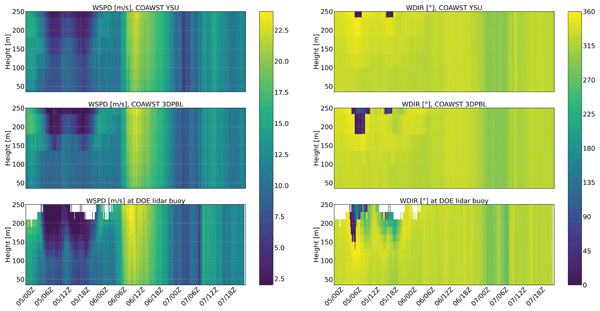
Eric A. Hendricks, Timothy W. Juliano, Branko Kosović, Sue Ellen Haupt, Brian J. Gaudet, and Geng Xia
Geosci. Model Dev., 19, 7369–7387, https://doi.org/10.5194/gmd-19-7369-2026, https://doi.org/10.5194/gmd-19-7369-2026, 2026
Short summary
Short summary
A three-dimensional planetary boundary layer (PBL) parameterization, suited for mesoscale model grid spacings of 100–1000 m with improved treatment of unresolved horizontal mixing, is added to a coupled atmosphere/wave modeling system and the first coupled simulations are executed using the parameterization. Simulations of a significant wind-wave event demonstrate that the new parameterization has similar behaviors as one-dimensional PBL parameterizations and compares well with observations.
Timothy W. Juliano, Florian Tornow, Ann M. Fridlind, Andrew S. Ackerman, Gregory S. Elsaesser, Bart Geerts, Christian P. Lackner, David Painemal, Israel Silber, Mikhail Ovchinnikov, Gunilla Svensson, Michael Tjernström, Peng Wu, Alejandro Baró Pérez, Peter Bogenschutz, Dmitry Chechin, Kamal Kant Chandrakar, Jan Chylik, Andrey Debolskiy, Rostislav Fadeev, Anu Gupta, Luisa Ickes, Michail Karalis, Martin Köhler, Branko Kosović, Peter Kuma, Weiwei Li, Evgeny Mortikov, Hugh Morrison, Roel A. J. Neggers, Anna Possner, Tomi Raatikainen, Sami Romakkaniemi, Niklas Schnierstein, Shin-ichiro Shima, Nikita Silin, Mikhail Tolstykh, Lulin Xue, Meng Zhang, and Xue Zheng
EGUsphere, https://doi.org/10.5194/egusphere-2025-6217, https://doi.org/10.5194/egusphere-2025-6217, 2026
Preprint archived
Short summary
Short summary
Models struggle to capture cloud and precipitation processes and their radiative effects in marine cold-air outbreaks. We use a quasi-Lagrangian framework to compare large-eddy simulation (LES) and single-column model (SCM) output with field and satellite observations. With fixed droplet and ice numbers, LES and SCM agree in liquid-only tests. In mixed-phase conditions, LES plausibly capture cloud thinning and breakup, while SCMs largely remain overcast and thereby miss cloud radiative effects.
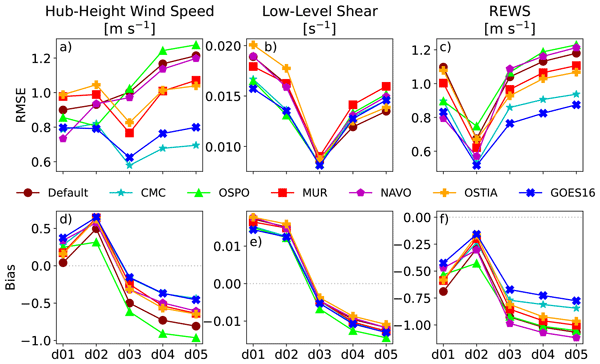
Patrick Hawbecker, William Lassman, Timothy W. Juliano, Branko Kosović, and Sue Ellen Haupt
Wind Energ. Sci., 11, 51–69, https://doi.org/10.5194/wes-11-51-2026, https://doi.org/10.5194/wes-11-51-2026, 2026
Short summary
Short summary
Offshore wind turbines can be directly impacted by the jet maximum winds of low-level jets, which makes them very important to the wind energy community. Here, we simulate an offshore low-level jet event using a weather model from low resolution to very high resolution. We run the simulations several times, varying the sea surface temperature to generate different realizations of the event and comparing against observations. We then ask and answer: "Is model performance consistent across scales?"
Lloyd Villanueva, Hans W. Chen, Gabriella Wallentin, and Luisa Ickes
EGUsphere, https://doi.org/10.5194/egusphere-2026-6039, https://doi.org/10.5194/egusphere-2026-6039, 2026
This preprint is open for discussion and under review for Atmospheric Chemistry and Physics (ACP).
Short summary
Short summary
In the Arctic winter, clouds act like a blanket that slows the loss of heat from the ground. Clouds often stack in layers, but the cause is not well known. Using weather balloon and radar data from Svalbard, we found that warm, moist air from the south brings stacked clouds twice as often as cold northern air. In cold air, stacked clouds keep the ground warmer than single clouds, but in warm air layering makes no clear difference. This could help climate models represent Arctic clouds better.
Lea Raillard, Audran Borella, Gwendal Rivière, Niels Dutrievoz, Meryl Wimmer, Ionela Musat, and Étienne Vignon
EGUsphere, https://doi.org/10.5194/egusphere-2026-5432, https://doi.org/10.5194/egusphere-2026-5432, 2026
This preprint is open for discussion and under review for Atmospheric Chemistry and Physics (ACP).
Short summary
Short summary
Climate models struggle to predict snowfall near the poles, which matters for tracking ice sheet changes. We built a new, efficient snowfall scheme for a global climate model and tested it using aircraft and ground radar data from Arctic Svalbard and Antarctica. The improved model better captures how snow forms and falls through clouds, bringing us closer to reliable predictions of polar snowfall, and showing where further refinements are needed.
Michael S. Diamond, Andrew S. Ackerman, Alejandro Baró Pérez, Ann M. Fridlind, Ehsan Erfani, Caspar Jungbacker, Hyunho Lee, David Painemal, Frida A.-M. Bender, Annica M. L. Ekman, Franziska Glassmeier, Graham Feingold, Fredrik Jansson, David A. Johnson, Matthias Schwarz, Robert Wood, Takanobu Yamaguchi, Jianhao Zhang, Xiaoli Zhou, and Paquita Zuidema
EGUsphere, https://doi.org/10.5194/egusphere-2026-5350, https://doi.org/10.5194/egusphere-2026-5350, 2026
This preprint is open for discussion and under review for Atmospheric Chemistry and Physics (ACP).
Short summary
Short summary
We compare how cloud resolving models represent an important cloud transition over the subtropical oceans. Clouds can either break up by deepening and drying out or by raining and forming an open cell pattern. Compared to observations, the clouds deepen a bit too much and get too polluted when smoke is present. In clean conditions, some models drizzle and break up into open cells while others barely rain; the model spread stems from different rain amounts for similar clouds.
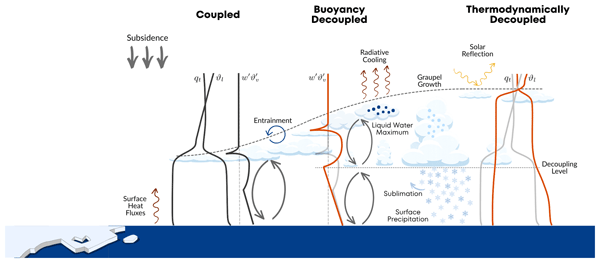
Fiona Paulus, Joshua J. Müller, Benjamin Kirbus, Harald Sodemann, Lars van Gelder, Andreas Walbröl, Manfred Wendisch, and Roel A. J. Neggers
Atmos. Chem. Phys., 26, 13983–14014, https://doi.org/10.5194/acp-26-13983-2026, https://doi.org/10.5194/acp-26-13983-2026, 2026
Short summary
Short summary
Cold Arctic air flowing from sea ice onto the warmer ocean waters rapidly warms, moistens, and forms clouds and precipitation. These events shape the Arctic climate but are difficult to observe and model. Particularly the role of large-scale sinking motion during these events is not fully understood. Using rare aircraft data and simulations to track an air mass for two days, we show that strong downward motion suppresses cloud growth, limits and delays precipitation, and reduces cloud lifetimes.
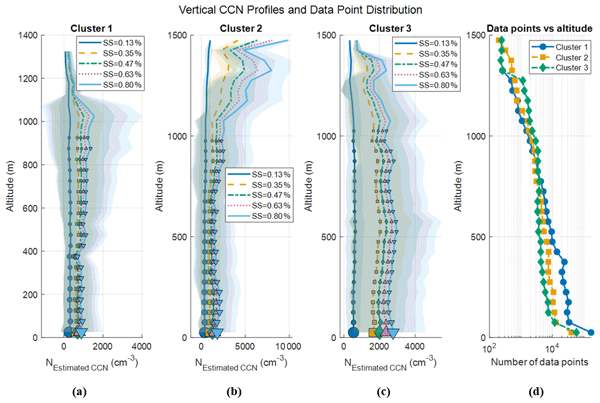
Fan Mei, Jian Wang, Israel Silber, Nurun Nahar Lata, Gregory W. Vandergrift, Jing Li, Bo Chen, Sarah D. Brooks, Michael P. Jensen, Min Deng, Damao Zhang, Darielle Dexheimer, Beat Schmid, Zezhen Cheng, and Swarup China
Atmos. Chem. Phys., 26, 13885–13908, https://doi.org/10.5194/acp-26-13885-2026, https://doi.org/10.5194/acp-26-13885-2026, 2026
Short summary
Short summary
Tethered balloon measurements from 149 flights during DOE ARM TRACER over Houston characterize vertical aerosol and CCN structure. Back-trajectory clustering identifies three air mass types – marine, mixed, and urban – with distinct profiles shaped by boundary-layer depth and coastal circulations. A case study shows mesoscale advection simultaneously transforms thermodynamic and aerosol conditions, underscoring the need to constrain meteorology before attributing cloud changes to aerosol forcing.
Pierre Grzegorczyk, Lea Raillard, Valentin Wiener, Étienne Vignon, Christophe Genthon, and Alexis Berne
EGUsphere, https://doi.org/10.5194/egusphere-2026-4473, https://doi.org/10.5194/egusphere-2026-4473, 2026
This preprint is open for discussion and under review for Geoscientific Model Development (GMD).
Short summary
Short summary
Evaluating cloud representation in Atmospheric General Circulation Models (AGCMs) is important for surface precipitation and the Earth radiative balance. The LORIS (LMDZ Offline Radar Instrument Simulator) is a new tool designed to evaluate clouds in LMDZ (the atmospheric component of the IPSL Coupled Model). LORIS offers flexible options for subgrid representation, scattering assumptions, and microphysics properties, enabling the evaluation and improvement of cloud and precipitation in LMDZ.
Kanika Taneja, Silvia M. Calderón, Harri Kokkola, Juha Tonttila, Sami Romakkaniemi, Seethala Chellappan, Antti Arola, Antti Lipponen, Taina Yli-Juuti, Snehitha M. Kommula, Tuukka Petäjä, Markku Kulmala, and Tero Mielonen
EGUsphere, https://doi.org/10.5194/egusphere-2026-4750, https://doi.org/10.5194/egusphere-2026-4750, 2026
This preprint is open for discussion and under review for Atmospheric Chemistry and Physics (ACP).
Short summary
Short summary
Vegetation can cool the climate by releasing gases that form aerosols, which scatter sunlight and brighten clouds. To quantify this feedback in Finland and the United States, we combine field measurements of aerosols and satellite observations of clouds. It is essential to select near-ideal clouds; otherwise, cloud-related cooling is underestimated. Cloud cooling matched aerosol cooling at the clean site in Finland and was nearly three times stronger at the rural site in the United States.
Lianet Hernández Pardo, Joachim Curtius, Patrick Jöckel, J. Moritz Menken, Christopher Pöhlker, Mira Pöhlker, and Anna Possner
Atmos. Chem. Phys., 26, 12275–12293, https://doi.org/10.5194/acp-26-12275-2026, https://doi.org/10.5194/acp-26-12275-2026, 2026
Short summary
Short summary
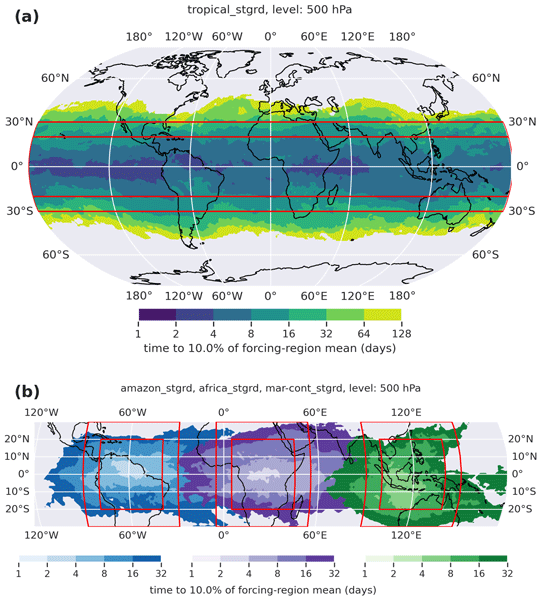
Many tiny particles are formed high in the tropical atmosphere, but their impact lower down is unclear. We studied how these particles move downward using long-term computer simulations. We found that particles can reach middle levels of the atmosphere within a week, carried by winds. These results help us understand how pollution and clouds might change as particles spread around the world.
Israel Silber, Donna M. Flynn, Jennifer M. Comstock, Erol L. Cromwell, and Brian D. Ermold
Atmos. Meas. Tech., 19, 5457–5474, https://doi.org/10.5194/amt-19-5457-2026, https://doi.org/10.5194/amt-19-5457-2026, 2026
Short summary
Short summary
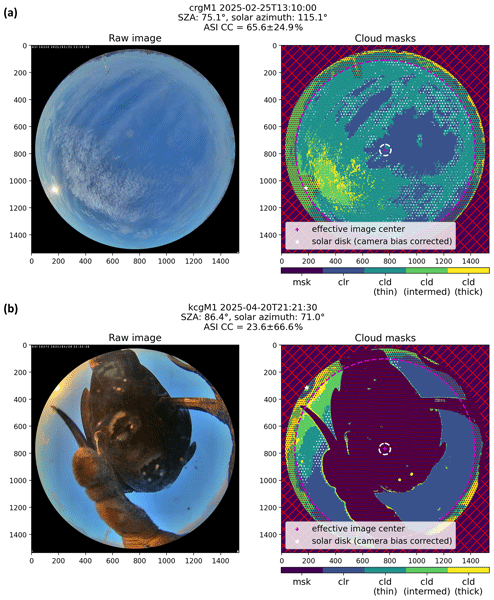
We describe ASISKYCOVER, a new machine learning algorithm for pixel segmentation of all-sky imager (ASI-16) data used by the Atmospheric Radiation Measurement (ARM) User Facility. ASISKYCOVER provides cloud cover and thickness estimates, detects artifacts, and reports uncertainties. Using one year of data from the ARM Southern Great Plains site and comparisons with other ARM datasets, we demonstrate its use and robustness, which will improve cloud cover analyses and data evaluation efforts.
McKenna Stanford, Alice Keinert, Ann Fridlind, Alexei Kiselev, Daniel Knopf, Andrew Ackerman, Thomas Leisner, and Paul Lawson
EGUsphere, https://doi.org/10.5194/egusphere-2026-4713, https://doi.org/10.5194/egusphere-2026-4713, 2026
Short summary
Short summary
Clouds containing a mixture of liquid and ice are poorly simulated because ice crystals multiply via poorly understood mechanisms. This study uses laboratory experiments to represent ice multiplication from freezing drops and evaluates that representation in high-resolution simulations against aircraft observations. Ice fragment production increases ice crystal numbers but is modulated by the evolution of raindrops prior to freezing, with direct implications for weather and climate models.
Eric A. Hendricks, Timothy W. Juliano, Branko Kosović, Sue Ellen Haupt, Brian J. Gaudet, and Geng Xia
Geosci. Model Dev., 19, 7369–7387, https://doi.org/10.5194/gmd-19-7369-2026, https://doi.org/10.5194/gmd-19-7369-2026, 2026
Short summary
Short summary
A three-dimensional planetary boundary layer (PBL) parameterization, suited for mesoscale model grid spacings of 100–1000 m with improved treatment of unresolved horizontal mixing, is added to a coupled atmosphere/wave modeling system and the first coupled simulations are executed using the parameterization. Simulations of a significant wind-wave event demonstrate that the new parameterization has similar behaviors as one-dimensional PBL parameterizations and compares well with observations.
Jingjing Tian, Gourihar Kulkarni, Jennifer M. Comstock, John E. Shilling, Damao Zhang, Peng Wu, and Fan Mei
Atmos. Meas. Tech., 19, 5051–5069, https://doi.org/10.5194/amt-19-5051-2026, https://doi.org/10.5194/amt-19-5051-2026, 2026
Short summary
Short summary
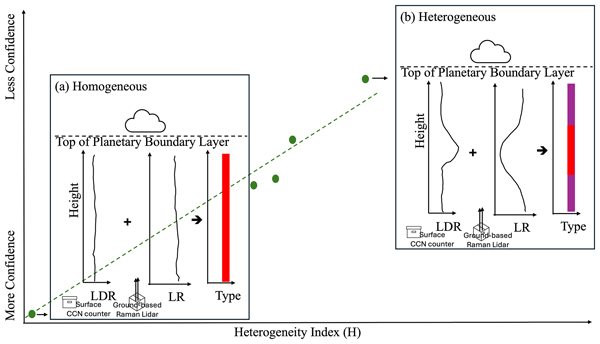
Cloud condensation nuclei are tiny particles that attract water vapor and help form clouds. A ground-based lidar method can estimate their number at different heights, but assumes the aerosol type does not change with height. Comparisons with aircraft data show good agreement of this method when aerosols are well mixed, but larger errors when stacked layers occur. We also developed an index to flag these complex conditions and indicate when this estimation method is more reliable.
Nicolas Chiabrando, Gwendal Rivière, Étienne Vignon, and Julien Delanoë
EGUsphere, https://doi.org/10.5194/egusphere-2026-3987, https://doi.org/10.5194/egusphere-2026-3987, 2026
Short summary
Short summary
Arctic cyclones are large-scale depressions evolving within the Arctic circle. We study a summertime Arctic cyclone that moved near Svalbard in 2022 and was well observed during the THINICE field campaign to understand what controls the intensity of a near-surface wind jet associated with the cyclone. We find that clouds and near-surface frictional effects globally strengthened the wind while the cyclone was growing, but became much less important after it evolved toward a cold-core structure.
Mélissa Cholette, Caroline Jouan, Hugh Morrison, Jason A. Milbrandt, Zhipeng Qu, Zane Dedekind, Alexei Korolev, and Zen Mariani
EGUsphere, https://doi.org/10.5194/egusphere-2026-4229, https://doi.org/10.5194/egusphere-2026-4229, 2026
Short summary
Short summary
This study implements prognostic aerosols in the P3 bulk microphysics scheme. Using aerosol awareness, the convection-permitting simulations of layered Arctic mixed-phase clouds are improved with more persistent supercooled liquid water and better agreement with EarthCARE and in situ observations. The new framework enhances the microphysics realism of aerosol–cloud interactions, which are critical for radiative balance and weather prediction in polar regions and elsewhere.
Pratapaditya Ghosh, Xue Zheng, Hassan Beydoun, Peter Bogenschutz, and Yunyan Zhang
EGUsphere, https://doi.org/10.5194/egusphere-2026-3700, https://doi.org/10.5194/egusphere-2026-3700, 2026
Short summary
Short summary
Marine low clouds play a crucial role in cooling Earth by reflecting sunlight, but storm-resolving models struggle to simulate them accurately. Using ship-based observations and machine learning, we identify which parameter combinations best reduce errors across different cloud types. We find that fixes effective for thick stratocumulus clouds do not work equally well for broken cumulus clouds, suggesting that improving these models requires different strategies for different cloud regimes.
Roman Pohorsky, Heather Guy, Ian Morley Brooks, Lea Haberstock, Nicolas Fauré, Paul Zieger, Julia Kojoj, Sonja Murto, Radiance Calmer, Benjamin Heutte, Michael Lonardi, Erik Schurch Thomson, Michael Tjernström, Jessie Creamean, Athanasios Nenes, and Julia Schmale
Atmos. Chem. Phys., 26, 10331–10353, https://doi.org/10.5194/acp-26-10331-2026, https://doi.org/10.5194/acp-26-10331-2026, 2026
Short summary
Short summary
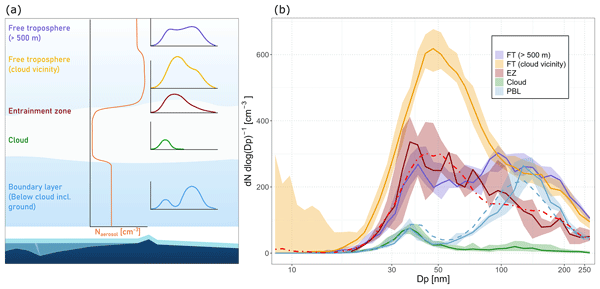
This study presents tethered-balloon observations above Arctic sea ice showing that enhanced aerosol concentrations above low-level clouds are commonly observed. A closure analysis demonstrates that entrainment of these aerosols is required to reproduce observed cloud droplet numbers. Simulations indicate that neglecting this source can bias longwave radiative forcing, highlighting the need for vertical aerosol observations and improved model representation of aerosol entrainment at cloud top.
Peter A. Bogenschutz, Yunyan Zhang, Hsi-Yen Ma, Cheng Tao, and Shaocheng Xie
EGUsphere, https://doi.org/10.5194/egusphere-2026-3667, https://doi.org/10.5194/egusphere-2026-3667, 2026
This preprint is open for discussion and under review for Geoscientific Model Development (GMD).
Short summary
Short summary
Weather and climate models are often tested using simplified simulations that prescribe exchanges between the land and atmosphere. We developed a method that allows these interactions to evolve naturally and evaluated it using observations from field sites in the United States and Brazil. We found that realistic land-atmosphere interactions are important for reproducing temperature and cloud biases, while many rainfall errors originate within the atmosphere model itself.
Sylwester Arabas, Agnieszka Żaba, Daria Klimaszewska, Emma C. Ware, Clare E. Singer, Manhal Alhilali, Jason Barr, Daniel G. Partridge, Shin-ichiro Shima, and Robert Wood
EGUsphere, https://doi.org/10.5194/egusphere-2026-3906, https://doi.org/10.5194/egusphere-2026-3906, 2026
This preprint is open for discussion and under review for Geoscientific Model Development (GMD).
Short summary
Short summary
The paper focuses on the use of Python and its package ecosystem for modeling the dynamics of atmospheric aerosol and cloud droplets. We highlight that concise code and high-level abstractions (incl. programmatic expression of physical units) can be used without performance tradeoffs. The paper features two cloud-microphysics classics: an adiabatic parcel model and a Monte-Carlo coagulation solver. The presented code constitutes a single Jupyter notebook that can be executed "in the cloud".
Moritz Schnelke, Maike Ahlgrimm, and Anna Possner
Atmos. Chem. Phys., 26, 9879–9905, https://doi.org/10.5194/acp-26-9879-2026, https://doi.org/10.5194/acp-26-9879-2026, 2026
Short summary
Short summary
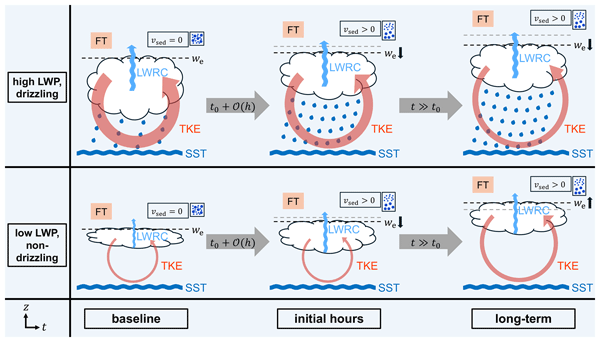
This study explores how the downward movement of cloud droplets due to gravity impacts the evolution of stratocumulus clouds over longer timescales. In contrast to previous conclusions, we find that the effect differs in the long-term depending on the amount of water in the cloud. In thick clouds, sedimentation reduces boundary layer growth as expected. In thin clouds, it can trigger a feedback chain that leads to more efficient growth, resulting in opposite outcomes for the two categories.
Hao Ding, Almuth Neuberger, Rahul Ranjan, Fredrik Mattsson, Liine Heikkinen, Karam Mansour, Stefano Decesari, Claudia Mohr, Alejandro Baró Pérez, Nazario Mastroianni, Paul Zieger, Ilona Riipinen, and Annica M. L. Ekman
Atmos. Chem. Phys., 26, 9721–9739, https://doi.org/10.5194/acp-26-9721-2026, https://doi.org/10.5194/acp-26-9721-2026, 2026
Short summary
Short summary
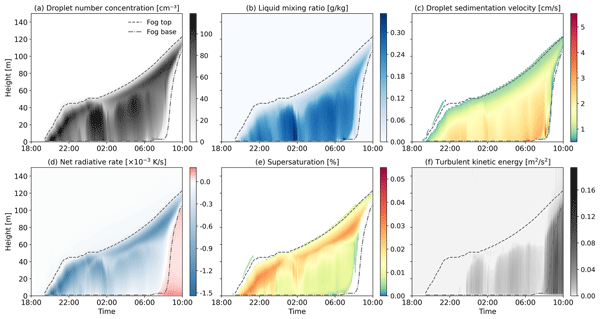
Fog poses numerous risks to society, yet it remains challenging to forecast. We use detailed numerical simulations based on fog observations in the Po Valley, Italy, to demonstrate that high concentrations of aerosol particles, as in polluted air, lead to an increase in droplet number, prolonged fog duration, and reduced visibility. The simulations also show the importance of accurately representing haze particles and the shape of the droplet size distribution for improved fog prediction.
Clara J. A. Bayley, Ann Kristin Naumann, Florian Poydenot, Raphaela Vogel, Bjorn Stevens, and Shin-Ichiro Shima
Geosci. Model Dev., 19, 6121–6142, https://doi.org/10.5194/gmd-19-6121-2026, https://doi.org/10.5194/gmd-19-6121-2026, 2026
Short summary
Short summary
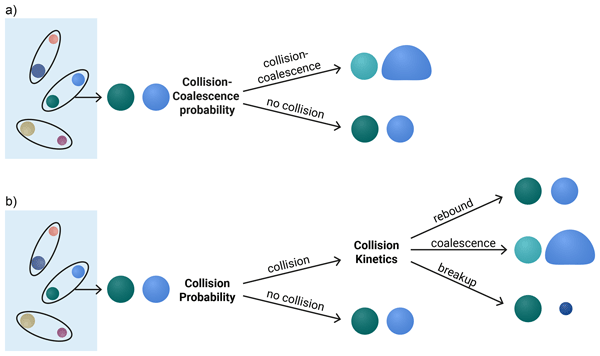
We are developing a model called CLEO, a type of “Superdroplet Model” (SDM) for cloud microphysics, to try to overcome some of the issues faced by climate models which are caused by errors in cloud modelling. Here we describe the equations for cloud microphysics CLEO uses and how we solve them, such as to see how water-droplets move around and grow/shrink in the atmosphere. We also provide some demonstrations of the microphysical processes we model to show that CLEO works as intended.
Azusa Takeishi, Yang Tian, Kamal Kant Chandrakar, Christina McCluskey, Aaron Funk, Courtney Schumacher, and Gregory Roberts
EGUsphere, https://doi.org/10.5194/egusphere-2026-3116, https://doi.org/10.5194/egusphere-2026-3116, 2026
Short summary
Short summary
Four distinct groups of aerosols were identified over the Houston area during the Tracking Aerosol Convection Interactions Experiment (TRACER) field campaign in 2022, based on the unsupervised clustering analysis on the continuous observation of winds and aerosols. The four types of aerosols present different number concentrations, size distributions, locations of origin, and diurnal cycles, and impact shallow cumulus clouds differently in high-resolution numerical simulations.
Sisi Chen, Lulin Xue, Michelle Harrold, Sarah Tessendorf, Jamie Wolff, Nick Dawson, and Darcy Jacobson
EGUsphere, https://doi.org/10.5194/egusphere-2026-3289, https://doi.org/10.5194/egusphere-2026-3289, 2026
Short summary
Short summary
Glaciogenic seeding is used in winter mountains to enhance snowpack and address water scarcity. Liquid propane seeding, a type of glaciogenic seeding, generates ice in relatively warm conditions where silver iodide is less effective, yet no models exist to simulate its impacts. We built a liquid propane seeding module in a weather model and tested it over idealized mountains. Simulations show snow enhancement is strongest where clouds are rich in supercooled liquid and rain formation is weak.
Ari Leskinen, Antonia Radlwimmer, Uula Isopahkala, Silvia Calderón, David Brus, Konstantinos Doulgeris, Ville Kaikkonen, Eero Molkoselkä, Dmitri Moiseev, Marie Lou Hirschy, Anssi Mäkynen, Sami Romakkaniemi, and Mika Komppula
EGUsphere, https://doi.org/10.5194/egusphere-2026-2088, https://doi.org/10.5194/egusphere-2026-2088, 2026
Short summary
Short summary
We present a lightweight holographic imaging instrument, designed for high-resolution in-cloud particle measurements at a rate of 10 holograms per second, which leads to sub-meter spatial resolution on-board UAV. The approach offers a cost-effective and versatile alternative, capable of accessing confined or remote areas, enabling improved validation of remote sensing products and numerical cloud models. We present the potential of such instrumentation for high-resolution cloud observations.
Aymeric Dziduch, Antoine Baudoux, Guillaume Mioche, Antoine Canzi, Benjamin Doiteau, Manuel Moser, Emma Järvinen, Étienne Vignon, Jean-Christophe Raut, Régis Dupuy, Christophe Gourbeyre, Jean-Luc Baray, Marie Monier, Frédéric Szczap, Guillaume Penide, Julien Delanoë, Odran Sourdeval, Alfons Schwarzenboeck, Stephan Mertes, Franz Martin Schnaiter, Christiane Voigt, Mario Mech, Susanne Crewell, Andreas Herber, Christof Lüpkes, André Ehrlich, Manfred Wendisch, and Olivier Jourdan
EGUsphere, https://doi.org/10.5194/egusphere-2026-3265, https://doi.org/10.5194/egusphere-2026-3265, 2026
This preprint is open for discussion and under review for Atmospheric Chemistry and Physics (ACP).
Short summary
Short summary
This study examines the microphysical properties and ice crystal habits of low-level Arctic mixed-phase clouds around Svalbard. Using airborne in situ observations from four campaigns, we show that cloud microphysical structure and ice crystal habits are influenced by weather conditions and surface type. These results provide quantitative observations to better understand low-level Arctic clouds, their ice formation processes, and their influence on the Arctic atmosphere and climate system.
Samuel Ephraim, Paquita Zuidema, Aaron Bansemer, Lintong Cai, Markus Petters, Elise Rosky, Jefferson R. Snider, Zhien Wang, Sarah Woods, Kevin Barry, Theresa Campos, Owen Cruikshank, Sabine Eckhardt, Nikolaos Evangeliou, Romanos Foskinis, Jeffrey R. French, Bart Geerts, Coltin Grasmick, Silvia Henning, Varun Kumar, Andreas Massling, Camille Mavis, Greg M. McFarquhar, Athanasios Nenes, Gunnar Noer, Ryan Patnaude, Russell Perkins, Lise Lotte Sorensen, Henrik Skov, Tyler Tatro, Florian Tornow, and Lu Zhang
EGUsphere, https://doi.org/10.5194/egusphere-2026-2940, https://doi.org/10.5194/egusphere-2026-2940, 2026
Short summary
Short summary
The processes that establish how mixed-phase closed-cell clouds transition to more open cellular structures are poorly known. First-of-its kind aircraft observations document such a transition in the presence of anomalously high aerosol concentrations over the Nordic Seas at cloud temperatures < -15 °C. The reduces the drop size, discouraging riming. Eventually, ice precipitation produces surface cold pools that drive the convective transition, despite strong counteracting surface fluxes.
Zhujun Li, David Painemal, Yan Feng, and Xiaojian Zheng
Atmos. Chem. Phys., 26, 7705–7720, https://doi.org/10.5194/acp-26-7705-2026, https://doi.org/10.5194/acp-26-7705-2026, 2026
Short summary
Short summary
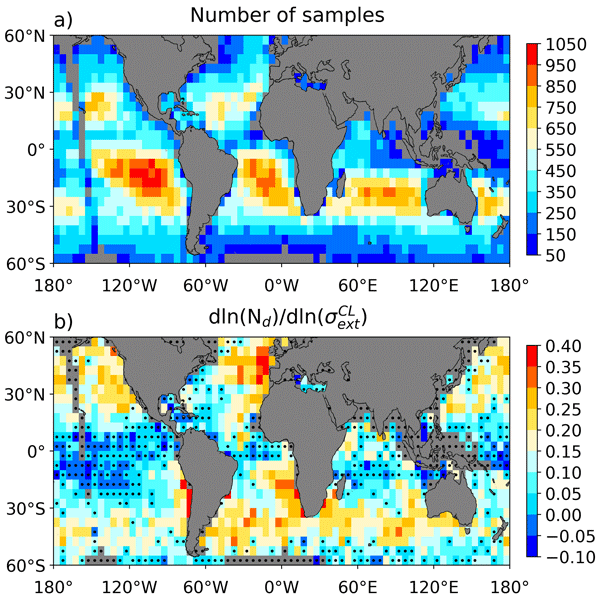
This study is the first global assessment of aerosol-cloud interactions (ACI) and cloud adjustments that relies on vertically resolved aerosol retrievals that are vertically matched with the location of the cloud layer. We computed ACI metrics and cloud adjustments over the global ocean by combining retrievals from active and passive satellite sensors and found high sensitivity of clouds to changes in their cloud droplet number concentration due to aerosols.
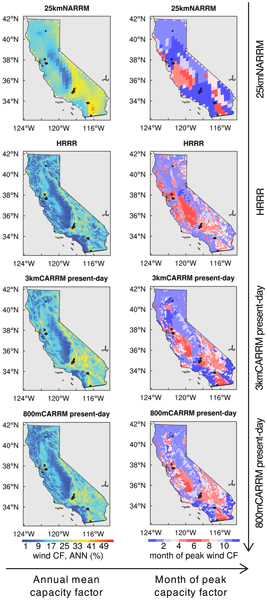
Jishi Zhang, Jean-Christophe Golaz, Matthew Vincent Signorotti, Hsiang-He Lee, Peter Bogenschutz, Minda Monteagudo, Paul Aaron Ullrich, Robert S. Arthur, Stephen Po-Chedley, Philip Cameron-Smith, and Jean-Paul Watson
Geosci. Model Dev., 19, 4513–4545, https://doi.org/10.5194/gmd-19-4513-2026, https://doi.org/10.5194/gmd-19-4513-2026, 2026
Short summary
Short summary
We ran a convection-permitting model with regional mesh refinement (3.25 km and 800 m) to simulate present-day wind and solar capacity factors over California, coupling it to an energy generation model. The high-resolution models captured realistic seasonal and diurnal cycles, with wind markedly better than a 25 km model and solar outperforming a 3 km operational forecast. We highlight the critical role of resolution, modeling assumptions, and data reliability in renewable energy assessment.
Hannah C. Frostenberg, Jessie M. Creamean, Erik S. Thomson, Heather Guy, Roman Pohorsky, Camille Mavis, Ian M. Brooks, Nicolas Fauré, Lea Haberstock, Julia Kojoj, Sonja Murto, Julia Schmale, Michael Tjernström, Paul Zieger, and Luisa Ickes
EGUsphere, https://doi.org/10.5194/egusphere-2026-2403, https://doi.org/10.5194/egusphere-2026-2403, 2026
Short summary
Short summary
Arctic low clouds containing both droplets and ice crystals strongly impact sea ice and therefore require accurate modeling. Using a high-resolution atmospheric model, we found that particle and ice concentrations, alongside ice crystal shape, strongly dictate the simulated cloud. Therefore, these specific properties should be prioritized during future Arctic observational campaigns. Furthermore, atmospheric models must be able to represent a variety of ice crystal shapes.
Kasper Juurikkala, Tomi Raatikainen, Martina Krämer, Christina J. Williamson, and Ari Laaksonen
EGUsphere, https://doi.org/10.5194/egusphere-2026-2427, https://doi.org/10.5194/egusphere-2026-2427, 2026
Short summary
Short summary
We use large-eddy simulations constrained by observations to study how mineral dust controls the evolution of cirrus clouds during dust outbreaks. Results show that sustained dusty cirrus forms only under strongly elevated dust concentrations, where ice forms mainly on dust particles. This identifies mineral dust as the key control on cirrus persistence and highlights the need to improve representation of dust-driven ice formation in weather and climate models.
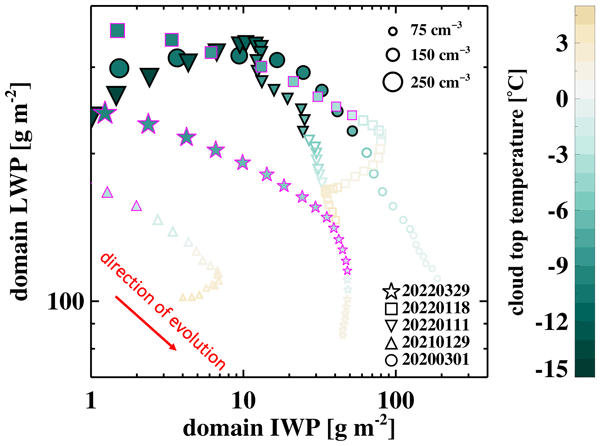
Jianhao Zhang, David Painemal, Tom Dror, Jung-Sub Lim, Armin Sorooshian, and Graham Feingold
Atmos. Chem. Phys., 26, 6015–6034, https://doi.org/10.5194/acp-26-6015-2026, https://doi.org/10.5194/acp-26-6015-2026, 2026
Short summary
Short summary
Clouds transitioning from overcast to broken fields play an important role in regulating the amount of sunlight reaching Earth’s surface. Using satellite imagery and a novel space-time exchange approach, we examine these transitions during marine cold-air outbreaks. Our analysis reveals characteristic signatures (or fingerprints) of liquid- and ice-phase processes, demonstrating how space-borne observations can provide new physical insight into cloud evolution.
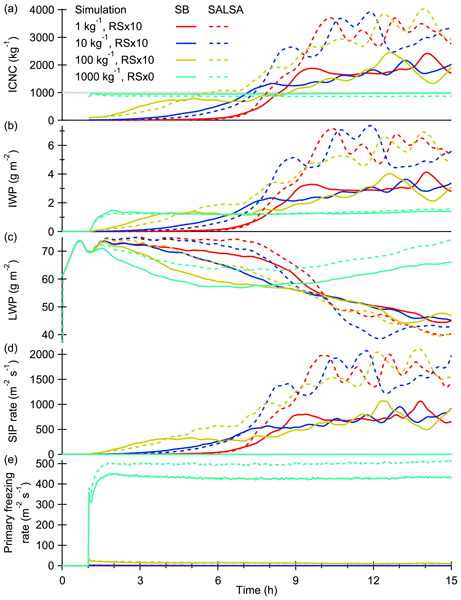
Tomi Raatikainen, Silvia Calderón, Emma Järvinen, Marje Prank, and Sami Romakkaniemi
Atmos. Chem. Phys., 26, 5019–5038, https://doi.org/10.5194/acp-26-5019-2026, https://doi.org/10.5194/acp-26-5019-2026, 2026
Short summary
Short summary
We used high-resolution simulations to examine if secondary ice production could explain the high ice particle concentrations observed during an airborne Arctic cloud study. For these clouds, the dominating secondary ice production process was rime splintering. It can produce high ice concentrations, but some model adjustments may be needed. Clouds in our simulations reached realistic steady states where rime splintering became a self-sustaining process.
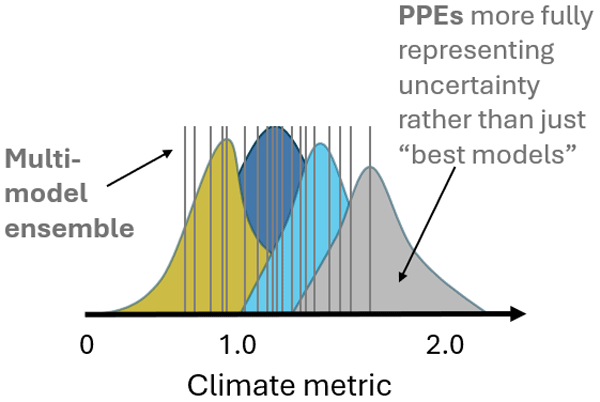
Ken S. Carslaw, Leighton A. Regayre, Ulrike Proske, Andrew Gettelman, David M. H. Sexton, Yun Qian, Lauren R. Marshall, Oliver Wild, Marcus van Lier-Walqui, Annika Oertel, Saloua Peatier, Ben Yang, Jill S. Johnson, Sihan Li, Daniel T. McCoy, Benjamin M. Sanderson, Christina J. Williamson, Gregory S. Elsaesser, Kuniko Yamazaki, and Ben B. B. Booth
Atmos. Chem. Phys., 26, 4651–4667, https://doi.org/10.5194/acp-26-4651-2026, https://doi.org/10.5194/acp-26-4651-2026, 2026
Short summary
Short summary
A major challenge in climate science is reducing projection uncertainty despite advances in models and observational constraints. Perturbed parameter ensembles (PPEs) offer a powerful tool to explore and reduce uncertainty by revealing model weaknesses and guiding development. PPEs are now widely applied across climate systems and scales. We argue they should be prioritized alongside complexity and resolution in model resource planning.
Seethala Chellappan, David Painemal, Mandana Thieman, Christian Pelayo, William L. Smith Jr., and Lynn M. Russell
EGUsphere, https://doi.org/10.5194/egusphere-2026-933, https://doi.org/10.5194/egusphere-2026-933, 2026
Short summary
Short summary
We analyzed observations from the ARM EPCAPE campaign at coastal California, and satellite cloud properties to understand how large-scale weather patterns influence marine low clouds and aerosols. Using ERA5 data and Self-Organizing Maps, we identified nine synoptic regimes linked to cloud cover, depth, and liquid water path. Satellite data show anticyclone position strongly affects cloud properties, while aerosol–cloud covariability depends on turbulence and supersaturation.
Gabriella Wallentin, Luisa Ickes, Peggy Achtert, Matthias Tesche, and Corinna Hoose
Atmos. Chem. Phys., 26, 3069–3089, https://doi.org/10.5194/acp-26-3069-2026, https://doi.org/10.5194/acp-26-3069-2026, 2026
Short summary
Short summary
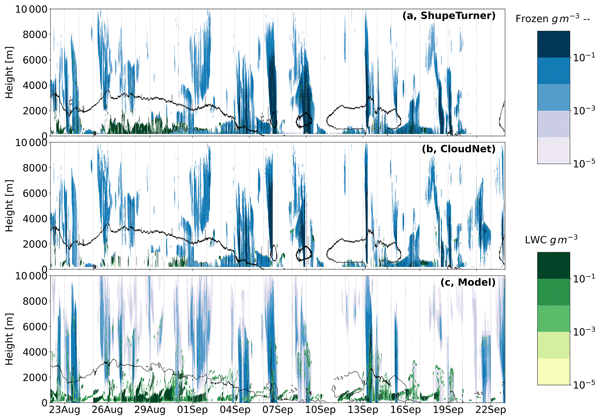
Multilayer clouds are cloud systems with two or more vertically stacked cloud layers. Using a weather prediction model, we simulate clouds in the Arctic during a month. The model is evaluated against observations collected during the ship campaign MOSAiC (Multidisciplinary Drifting Observatory for the Study of Arctic Climate). We find that multilayer clouds frequently occur in the region, in fact, they dominate the cloud occurrence. The study highlights the importance of representing these clouds in simulations over the Arctic.
Peggy Achtert, Torsten Seelig, Gabriella Wallentin, Luisa Ickes, Matthew D. Shupe, Corinna Hoose, and Matthias Tesche
Atmos. Chem. Phys., 26, 3049–3068, https://doi.org/10.5194/acp-26-3049-2026, https://doi.org/10.5194/acp-26-3049-2026, 2026
Short summary
Short summary
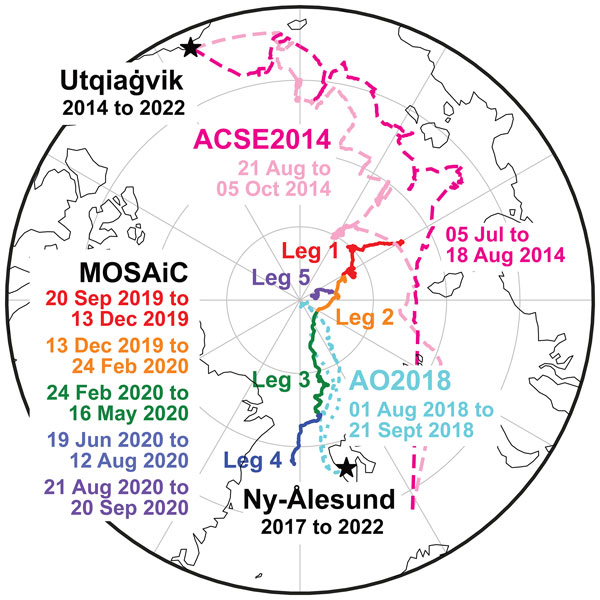
We quantify the occurrence of single- and multi-layer clouds in the Arctic based on combining soundings with cloud-radar observations. We also assess the rate of ice-crystal seeding in multi-layer cloud systems as this is an important initiator of glaciation in super-cooled liquid cloud layers. We find an abundance of multi-layer clouds in the Arctic with seeding in about half to two thirds of cases in which the gap between upper and lower layers ranges between 100 and 1000 m.
Yijia Sun, Ann M. Fridlind, Israel Silber, Nicole Riemer, and Daniel A. Knopf
Geosci. Model Dev., 19, 1581–1617, https://doi.org/10.5194/gmd-19-1581-2026, https://doi.org/10.5194/gmd-19-1581-2026, 2026
Short summary
Short summary
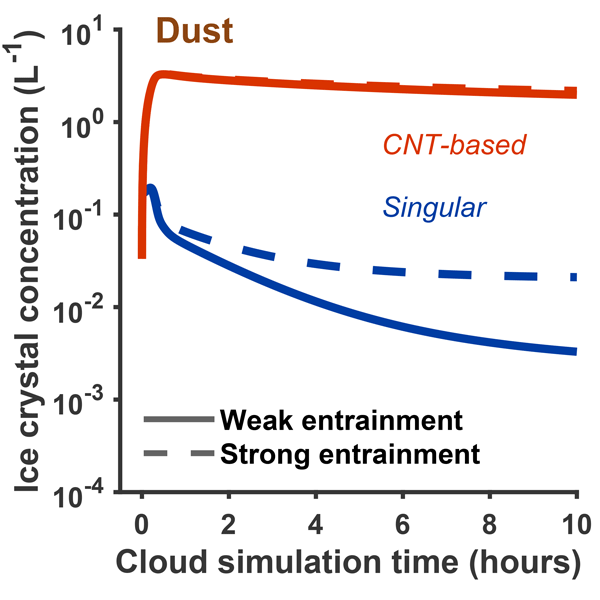
The role of Arctic clouds in the regional climate remains uncertain due to insufficient understanding of the amount of liquid droplets and ice crystals present in these clouds. An aerosol-cloud model is employed to examine the role of different aerosol types and freezing parameterizations on the number of ice crystals. The choice of freezing parameterization significantly changes the number of ice crystals impacting the interpretation of the evolution and warming effect of Arctic clouds.
Patrick Eriksson, Alejandro Baró Pérez, Nils Müller, Hanna Hallborn, Eleanor May, Manfred Brath, Stefan A. Buehler, and Luisa Ickes
Atmos. Chem. Phys., 26, 2741–2768, https://doi.org/10.5194/acp-26-2741-2026, https://doi.org/10.5194/acp-26-2741-2026, 2026
Short summary
Short summary
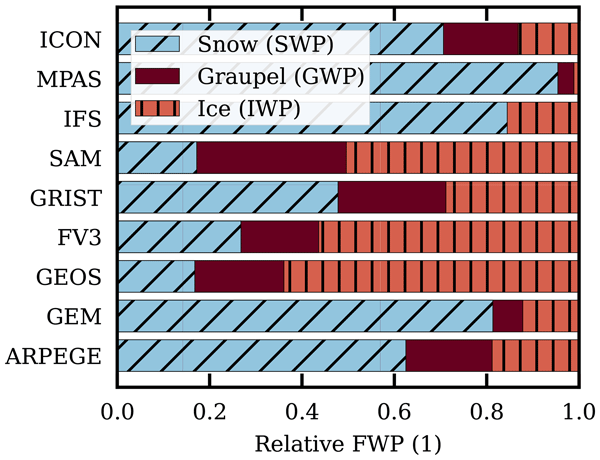
Our study shows that accurately representing atmospheric ice mass remains a major challenge. We compared climate models to satellite data, finding that conventional models consistently underestimate the amount of ice. While new, higher-resolution models perform better, both models and observations still have significant discrepancies. These shortcomings limit our confidence in cloud-related climate feedbacks, which are critical for our predictions of the future climate.

Branko Kosović, Sukanta Basu, Jacob Berg, Larry K. Berg, Sue E. Haupt, Xiaoli G. Larsén, Joachim Peinke, Richard J. A. M. Stevens, Paul Veers, and Simon Watson
Wind Energ. Sci., 11, 509–555, https://doi.org/10.5194/wes-11-509-2026, https://doi.org/10.5194/wes-11-509-2026, 2026
Short summary
Short summary
Most human activity happens in the layer of the atmosphere which extends a few hundred meters to a couple of kilometers above the surface of the Earth. The flow in this layer is turbulent. Turbulence impacts wind power production and turbine lifespan. Optimizing wind turbine performance requires understanding how turbulence affects both wind turbine efficiency and reliability. This paper points to gaps in our knowledge that need to be addressed to effectively utilize wind resources.
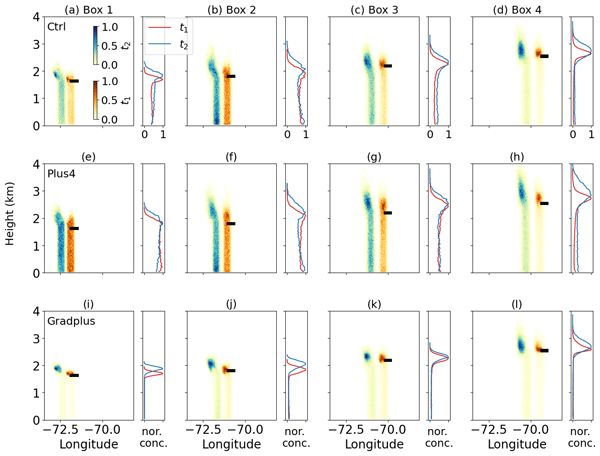
Jingyi Chen, Hailong Wang, Bo Zhang, Hongyu Liu, David Painemal, Armin Sorooshian, Sheng-Lun Tai, and Christiane Voigt
Atmos. Chem. Phys., 26, 2209–2224, https://doi.org/10.5194/acp-26-2209-2026, https://doi.org/10.5194/acp-26-2209-2026, 2026
Short summary
Short summary
NASA-validated modeling shows +4K SST (sea surface temperature) & +25 % gradients distinctly alter boundary layer dynamics, cloud physics in cold-air outbreaks. Warmer SST reduces cloud cover; increases size, elongation; hydrometeors shift to ice. Sharper Gradients boost liquid water (cold upwind); reduces ice; disrupts organization. Also, SST changes alter cloud-top properties via entrained airmass origin. Resolving ocean-atmosphere coupling in global models is essential for accurate cloud feedback projections.
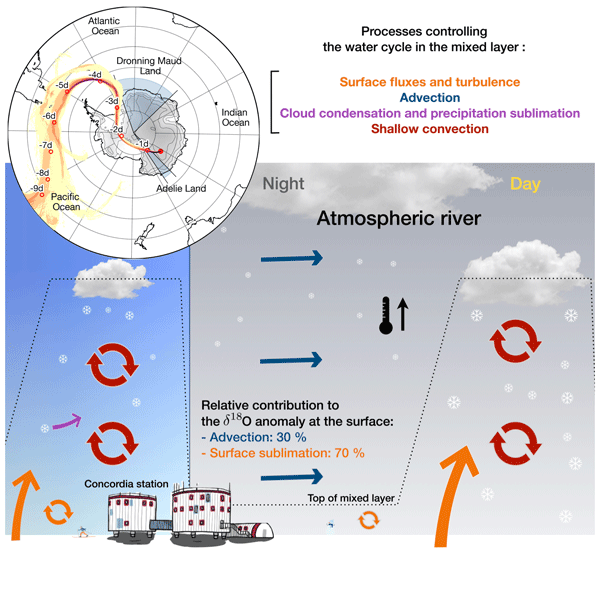
Niels Dutrievoz, Cécile Agosta, Cécile Davrinche, Amaëlle Landais, Sebastien Nguyen, Étienne Vignon, Inès Ollivier, Christophe Leroy-Dos Santos, Elise Fourré, Mathieu Casado, Jonathan Wille, Vincent Favier, Bénédicte Minster, and Frédéric Prié
The Cryosphere, 20, 1025–1046, https://doi.org/10.5194/tc-20-1025-2026, https://doi.org/10.5194/tc-20-1025-2026, 2026
Short summary
Short summary
In December 2018, an atmospheric river event from the Atlantic reached Dome C, East Antarctica, causing a +18 °C warming, tripled water vapour, and a strong isotopic anomaly in water vapour (+ 17 ‰ for δ18O) at the surface. During the peak of the event, we found 70 % of the water vapour came from local snow sublimation, and 30 % from the atmospheric river itself, highlighting both long-range moisture advection and interactions between the boundary layer and the snowpack.
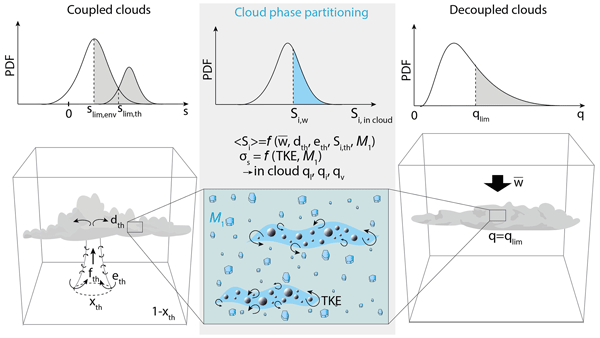
Étienne Vignon, Lea Raillard, Audran Borella, Gwendal Rivière, and Jean-Baptiste Madeleine
Atmos. Chem. Phys., 26, 1847–1865, https://doi.org/10.5194/acp-26-1847-2026, https://doi.org/10.5194/acp-26-1847-2026, 2026
Short summary
Short summary
Polar low-level clouds are most often of mixed-phase composition as they contain both liquid droplets and ice crystals. Such clouds are challenging to simulate in climate models, leading to uncertainties in the projection of polar climates. This study presents major advances in the representation of polar mixed-phase clouds in a climate model thanks to the adaptation of an original subgrid parameterization which considers interactions between turbulent eddies and clouds.
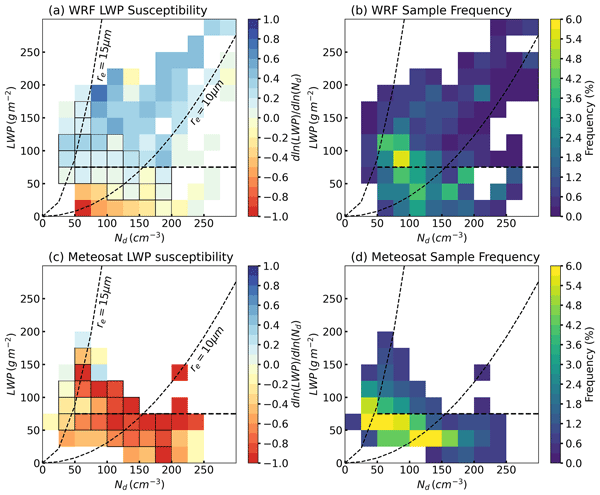
Shaoyue Qiu, Xue Zheng, Peng Wu, Hsiang-He Lee, and Xiaoli Zhou
Atmos. Chem. Phys., 26, 1769–1794, https://doi.org/10.5194/acp-26-1769-2026, https://doi.org/10.5194/acp-26-1769-2026, 2026
Short summary
Short summary
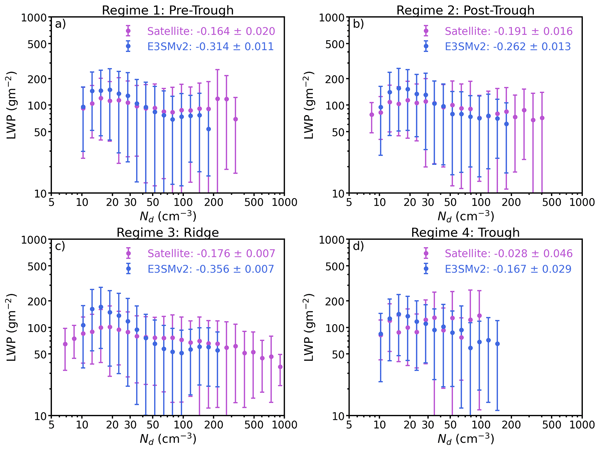
Model liquid water path (LWP) responses match satellite observations, showing decreased (increased) LWP for non-precipitating thin (precipitating) clouds, due to realistic simulations of non-precipitating and drizzling regimes. However, LWP increases for non-precipitating thick clouds, opposite to satellite-based decreases, due to excessive precipitation, moist bias in cloud-top humidity, and cloud droplet number–LWP relations from internal cloud processes, rather than aerosol-cloud interaction.
Xiaoxia Shang, Maria Filioglou, Julian Hofer, Moritz Haarig, Qiaoyun Hu, Philippe Goloub, Sami Romakkaniemi, and Mika Komppula
Atmos. Meas. Tech., 19, 679–697, https://doi.org/10.5194/amt-19-679-2026, https://doi.org/10.5194/amt-19-679-2026, 2026
Short summary
Short summary
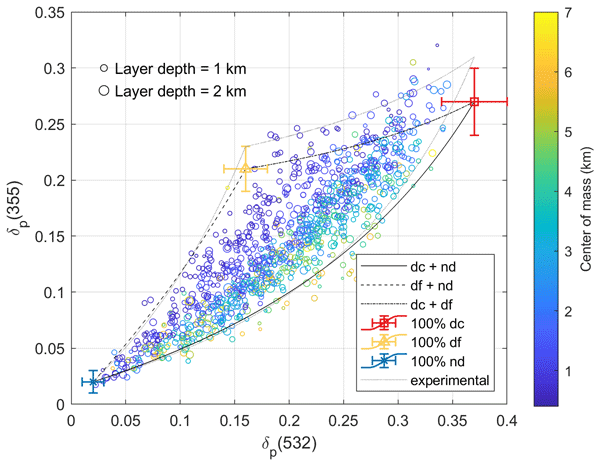
We developed a simple method to identify different types of airborne particles using laser-based measurements. It can distinguish coarse dust, fine dust, and non-dust aerosols. Tests with real data from regions affected by desert dust show the method works well. This helps improve understanding of how particles are distributed in the atmosphere, which is important for air quality and climate studies.
Yufei Chu, Guo Lin, Min Deng, Lulin Xue, Weiwei Li, Hyeyum Hailey Shin, Jun A. Zhang, Hanqing Guo, and Zhien Wang
Atmos. Chem. Phys., 26, 1415–1434, https://doi.org/10.5194/acp-26-1415-2026, https://doi.org/10.5194/acp-26-1415-2026, 2026
Short summary
Short summary
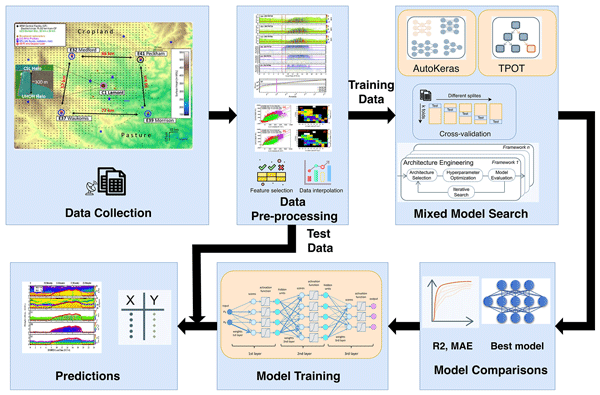
We developed a new machine learning approach to estimate the height of the mixing layer in the lower atmosphere, which is important for predicting weather and air quality. By using daily temperature and heat patterns, the model learns how the atmosphere changes throughout the day. It gives accurate results across different locations and seasons, helping improve future climate and weather forecasts through better understanding of surface–atmosphere interactions.
Jishi Zhang, Peter Bogenschutz, Mark Taylor, and Philip Cameron-Smith
Geosci. Model Dev., 19, 795–826, https://doi.org/10.5194/gmd-19-795-2026, https://doi.org/10.5194/gmd-19-795-2026, 2026
Short summary
Short summary
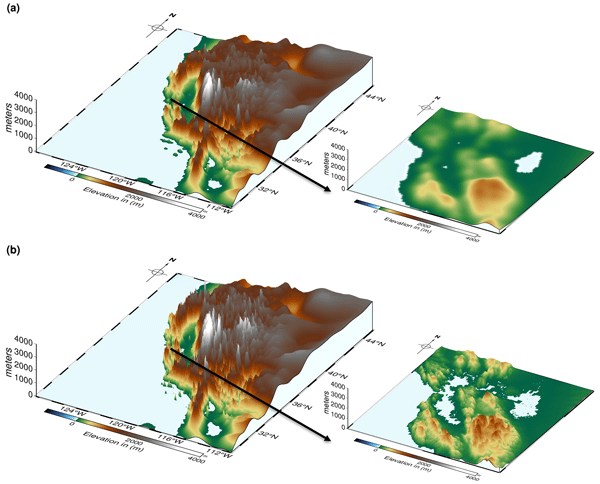
We pushed a global cloud-resolving model to a novel 100 m setup over the San Francisco Bay Area using a regionally refined mesh. The model captured fine-scale air motions over complex terrain and coastal regions at large-eddy scales with comprehensive global modeling configuration, enabled by scale-aware turbulence parameterization. Performance tests demonstrated that graphics processing unit (GPU) acceleration make such high-resolution simulations feasible within practical timeframes.
Israel Silber, Jennifer M. Comstock, Adam K. Theisen, Michael R. Kieburtz, Zeen Zhu, and Jenni Kyrouac
Atmos. Meas. Tech., 19, 485–506, https://doi.org/10.5194/amt-19-485-2026, https://doi.org/10.5194/amt-19-485-2026, 2026
Short summary
Short summary
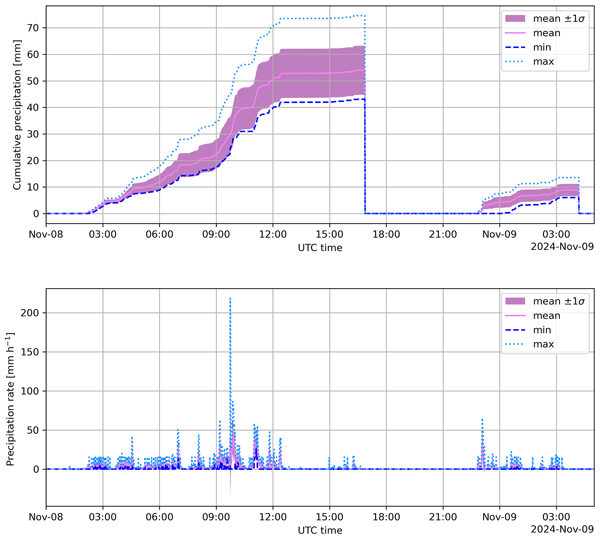
We present PrecipBE, a multi-instrument precipitation event best-estimate data product developed at the Atmospheric Radiation Measurement (ARM) User Facility, providing time series and tabular statistics of events, which could help advance model evaluation and cloud-process studies. We demonstrate PrecipBE's utilization with a brief 30-year trend analysis of ARM Southern Great Plains (SGP) site data, suggesting shorter, less intense events, but rising annual rainfall, driven by rare extremes.
Timothy W. Juliano, Florian Tornow, Ann M. Fridlind, Andrew S. Ackerman, Gregory S. Elsaesser, Bart Geerts, Christian P. Lackner, David Painemal, Israel Silber, Mikhail Ovchinnikov, Gunilla Svensson, Michael Tjernström, Peng Wu, Alejandro Baró Pérez, Peter Bogenschutz, Dmitry Chechin, Kamal Kant Chandrakar, Jan Chylik, Andrey Debolskiy, Rostislav Fadeev, Anu Gupta, Luisa Ickes, Michail Karalis, Martin Köhler, Branko Kosović, Peter Kuma, Weiwei Li, Evgeny Mortikov, Hugh Morrison, Roel A. J. Neggers, Anna Possner, Tomi Raatikainen, Sami Romakkaniemi, Niklas Schnierstein, Shin-ichiro Shima, Nikita Silin, Mikhail Tolstykh, Lulin Xue, Meng Zhang, and Xue Zheng
EGUsphere, https://doi.org/10.5194/egusphere-2025-6217, https://doi.org/10.5194/egusphere-2025-6217, 2026
Preprint archived
Short summary
Short summary
Models struggle to capture cloud and precipitation processes and their radiative effects in marine cold-air outbreaks. We use a quasi-Lagrangian framework to compare large-eddy simulation (LES) and single-column model (SCM) output with field and satellite observations. With fixed droplet and ice numbers, LES and SCM agree in liquid-only tests. In mixed-phase conditions, LES plausibly capture cloud thinning and breakup, while SCMs largely remain overcast and thereby miss cloud radiative effects.
Patrick Hawbecker, William Lassman, Timothy W. Juliano, Branko Kosović, and Sue Ellen Haupt
Wind Energ. Sci., 11, 51–69, https://doi.org/10.5194/wes-11-51-2026, https://doi.org/10.5194/wes-11-51-2026, 2026
Short summary
Short summary
Offshore wind turbines can be directly impacted by the jet maximum winds of low-level jets, which makes them very important to the wind energy community. Here, we simulate an offshore low-level jet event using a weather model from low resolution to very high resolution. We run the simulations several times, varying the sea surface temperature to generate different realizations of the event and comparing against observations. We then ask and answer: "Is model performance consistent across scales?"
Étienne Vignon, Nicolas Chiabrando, Cécile Agosta, Charles Amory, Valentin Wiener, Justine Charrel, Thomas Dubos, and Christophe Genthon
Geosci. Model Dev., 19, 239–259, https://doi.org/10.5194/gmd-19-239-2026, https://doi.org/10.5194/gmd-19-239-2026, 2026
Short summary
Short summary
The erosion of surface snow by the wind is an important process for the Antarctic surface mass balance. This study presents the first development of a parameterisation of blowing snow for a global climate model. Simulations avec evaluated using measurements in Antarctica. Results show an overall decrease of the snow accumulation in the escarpment region of the ice sheet due to snow erosion and an increase at the coast due to blowing snow deposition and increase in precipitation.
Chongzhi Yin, Shin-Ichiro Shima, and Chunsong Lu
EGUsphere, https://doi.org/10.5194/egusphere-2025-6221, https://doi.org/10.5194/egusphere-2025-6221, 2025
Short summary
Short summary
We developed a tracking tool for cloud simulations that works in two directions. It allows researchers to follow droplets forward to observe their future evolution or trace droplets backward to identify their origins. Crucially, the system records every coalescence event between droplets. This preserves the complete growth history of rain, serving as a diagnostic tool to help scientists verify the detailed physics within cloud models.
Wolfgang A. Müller, Stephan Lorenz, Trang V. Pham, Andrea Schneidereit, Renate Brokopf, Victor Brovkin, Nils Brüggemann, Fatemeh Chegini, Dietmar Dommenget, Kristina Fröhlich, Barbara Früh, Veronika Gayler, Helmuth Haak, Stefan Hagemann, Moritz Hanke, Tatiana Ilyina, Johann Jungclaus, Martin Köhler, Peter Korn, Luis Kornblueh, Clarissa A. Kroll, Julian Krüger, Karel Castro-Morales, Ulrike Niemeier, Holger Pohlmann, Iuliia Polkova, Roland Potthast, Thomas Riddick, Manuel Schlund, Tobias Stacke, Roland Wirth, Dakuan Yu, and Jochem Marotzke
Geosci. Model Dev., 18, 9385–9415, https://doi.org/10.5194/gmd-18-9385-2025, https://doi.org/10.5194/gmd-18-9385-2025, 2025
Short summary
Short summary
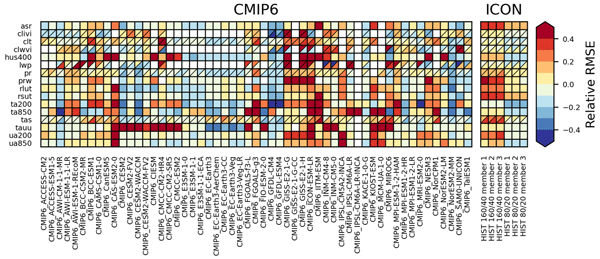
We provide a new Earth System model configuration framed into the ICON architecture, which provides the baseline for the next generation of climate predictions and projections (hereafter ICON XPP). Two resolutions of ICON XPP are presented that show high runtime performances making it suitable to run long integrations and large-ensemble experiments. ICON XPP similarly perform to CMIP6-class of climate models making it a good basis for climate forecasts and projections, and climate research.
Xiaojian Zheng, Yan Feng, David Painemal, Meng Zhang, Shaocheng Xie, Zhujun Li, Robert Jacob, and Bethany Lusch
Atmos. Chem. Phys., 25, 17473–17499, https://doi.org/10.5194/acp-25-17473-2025, https://doi.org/10.5194/acp-25-17473-2025, 2025
Short summary
Short summary
This study used satellite observations and climate model simulations to examine how aerosols affect marine clouds over the Eastern North Atlantic. Cloud responses to aerosols differed significantly across meteorological regimes. The model captured overall trends but exaggerated cloud responses, performing better for shallower than deeper clouds. The results highlight the need to untangle aerosol effects from meteorology and improve cloud process representation in climate models.
Valentin Wiener, Étienne Vignon, Thomas Caton Harrison, Christophe Genthon, Felipe Toledo, Guylaine Canut-Rocafort, Yann Meurdesoif, and Alexis Berne
Weather Clim. Dynam., 6, 1605–1627, https://doi.org/10.5194/wcd-6-1605-2025, https://doi.org/10.5194/wcd-6-1605-2025, 2025
Short summary
Short summary
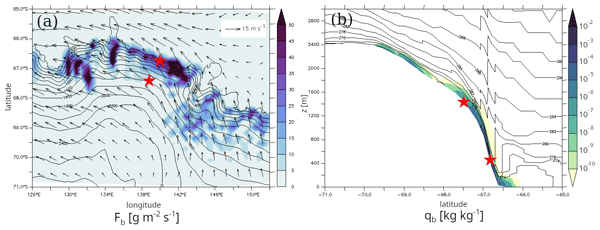
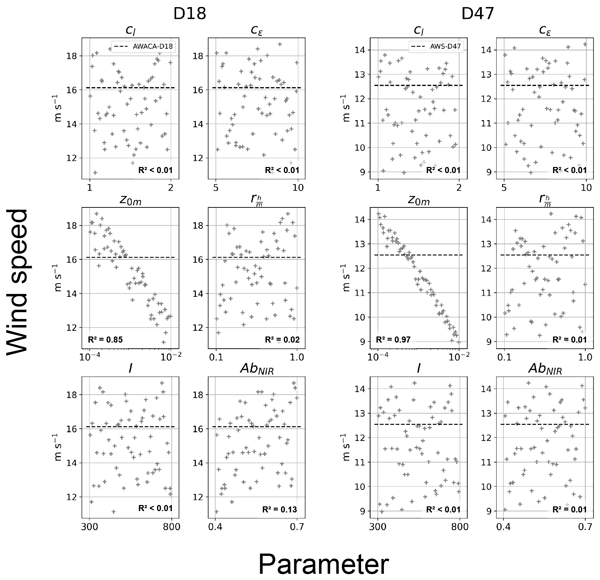
Katabatic winds are a key feature of the climate of Antarctica, but substantial biases remain in their representation in atmospheric models. This study investigates a katabatic wind event in an atmospheric circulation model using in-situ observations. The framework allows to disentangle which part of the bias is due to horizontal resolution, to parameter calibration and to structural deficiencies in the model. We underline in particular the need to refine the physics of the model snow cover.
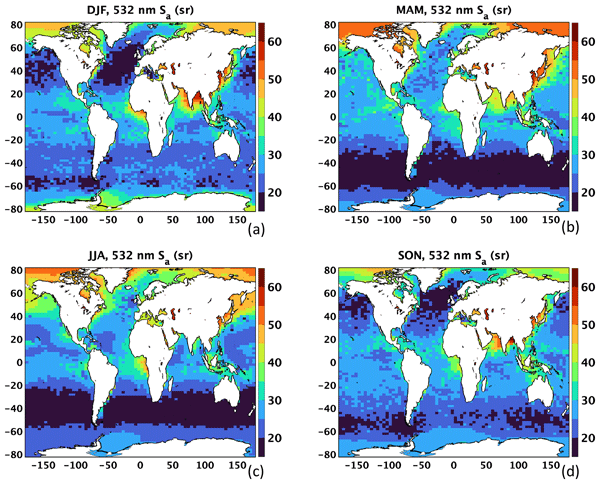
Travis D. Toth, Marian B. Clayton, Zhujun Li, David Painemal, Sharon D. Rodier, Jayanta Kar, Tyler J. Thorsen, Richard A. Ferrare, Mark A. Vaughan, Jason L. Tackett, Huisheng Bian, Mian Chin, Anne E. Garnier, Ellsworth J. Welton, Robert A. Ryan, Charles R. Trepte, and David M. Winker
Atmos. Meas. Tech., 18, 6765–6793, https://doi.org/10.5194/amt-18-6765-2025, https://doi.org/10.5194/amt-18-6765-2025, 2025
Short summary
Short summary
NASA's CALIPSO satellite mission observed aerosols (airborne particles) globally from 2006 to 2023. Its final data products update improves its aerosol optical parameters over oceans by adjusting for regional and seasonal differences in a new measurement-model synergistic approach. This results in a more realistic aerosol characterization, specifically near coastlines (where sea salt mixes with pollution), with potential impacts to future studies of science applications (e.g., climate effects).
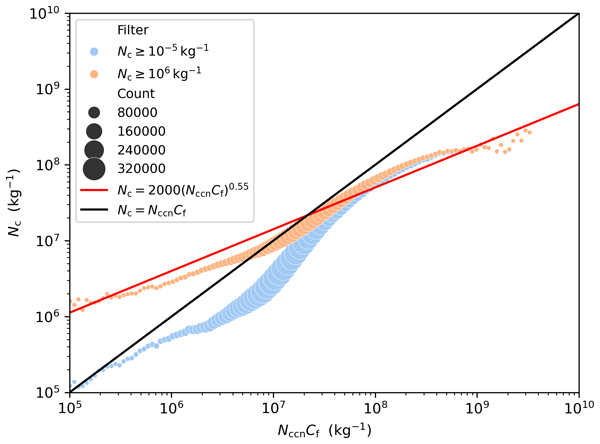
Naser Mahfouz, Hassan Beydoun, Johannes Mülmenstädt, Noel Keen, Adam C. Varble, Luca Bertagna, Peter Bogenschutz, Andrew Bradley, Matthew W. Christensen, T. Conrad Clevenger, Aaron Donahue, Jerome Fast, James Foucar, Jean-Christophe Golaz, Oksana Guba, Walter Hannah, Benjamin Hillman, Robert Jacob, Wuyin Lin, Po-Lun Ma, Yun Qian, Balwinder Singh, Christopher Terai, Hailong Wang, Mingxuan Wu, Kai Zhang, Andrew Gettelman, Mark Taylor, L. Ruby Leung, Peter Caldwell, and Susannah Burrows
Atmos. Chem. Phys., 25, 15105–15120, https://doi.org/10.5194/acp-25-15105-2025, https://doi.org/10.5194/acp-25-15105-2025, 2025
Short summary
Short summary
Our study assesses the aerosol effective radiative forcing in a global cloud-resolving atmosphere model at ultra-high resolution. We demonstrate that global aerosol forcing signal can be robustly reproduced across resolutions when aerosol activation processes are carefully parameterized. Further, we argue that simplified prescribed aerosol schemes will open the door for further process/mechanism studies under controlled conditions.
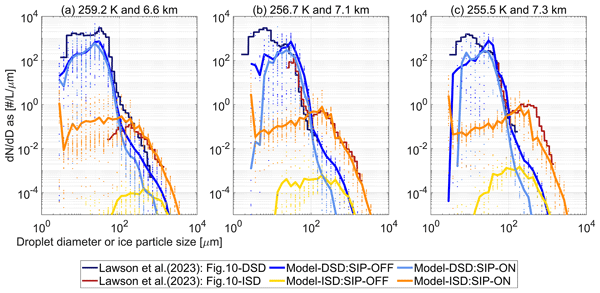
Silvia M. Calderón, Noora Hyttinen, Harri Kokkola, Tomi Raatikainen, R. Paul Lawson, and Sami Romakkaniemi
Atmos. Chem. Phys., 25, 14479–14500, https://doi.org/10.5194/acp-25-14479-2025, https://doi.org/10.5194/acp-25-14479-2025, 2025
Short summary
Short summary
Field campaigns suggest secondary ice production (SIP) from mm-sized supercooled droplets drives rapid glaciation and precipitation development in summer cumulus congestus clouds lacking ice-nucleating particles. Our large-eddy simulations with sectional aerosol–hydrometeor microphysics support this, reproducing observed size distributions and showing how SIP accelerates aggregation, enhancing surface precipitation.
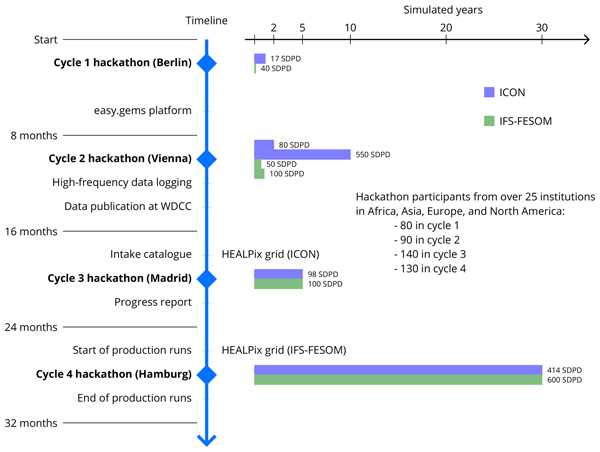
Hans Segura, Xabier Pedruzo-Bagazgoitia, Philipp Weiss, Sebastian K. Müller, Thomas Rackow, Junhong Lee, Edgar Dolores-Tesillos, Imme Benedict, Matthias Aengenheyster, Razvan Aguridan, Gabriele Arduini, Alexander J. Baker, Jiawei Bao, Swantje Bastin, Eulàlia Baulenas, Tobias Becker, Sebastian Beyer, Hendryk Bockelmann, Nils Brüggemann, Lukas Brunner, Suvarchal K. Cheedela, Sushant Das, Jasper Denissen, Ian Dragaud, Piotr Dziekan, Madeleine Ekblom, Jan Frederik Engels, Monika Esch, Richard Forbes, Claudia Frauen, Lilli Freischem, Diego García-Maroto, Philipp Geier, Paul Gierz, Álvaro González-Cervera, Katherine Grayson, Matthew Griffith, Oliver Gutjahr, Helmuth Haak, Ioan Hadade, Kerstin Haslehner, Shabeh ul Hasson, Jan Hegewald, Lukas Kluft, Aleksei Koldunov, Nikolay Koldunov, Tobias Kölling, Shunya Koseki, Sergey Kosukhin, Josh Kousal, Peter Kuma, Arjun U. Kumar, Rumeng Li, Nicolas Maury, Maximilian Meindl, Sebastian Milinski, Kristian Mogensen, Bimochan Niraula, Jakub Nowak, Divya Sri Praturi, Ulrike Proske, Dian Putrasahan, René Redler, David Santuy, Domokos Sármány, Reiner Schnur, Patrick Scholz, Dmitry Sidorenko, Dorian Spät, Birgit Sützl, Daisuke Takasuka, Adrian Tompkins, Alejandro Uribe, Mirco Valentini, Menno Veerman, Aiko Voigt, Sarah Warnau, Fabian Wachsmann, Marta Wacławczyk, Nils Wedi, Karl-Hermann Wieners, Jonathan Wille, Marius Winkler, Yuting Wu, Florian Ziemen, Janos Zimmermann, Frida A.-M. Bender, Dragana Bojovic, Sandrine Bony, Simona Bordoni, Patrice Brehmer, Marcus Dengler, Emanuel Dutra, Saliou Faye, Erich Fischer, Chiel van Heerwaarden, Cathy Hohenegger, Heikki Järvinen, Markus Jochum, Thomas Jung, Johann H. Jungclaus, Noel S. Keenlyside, Daniel Klocke, Heike Konow, Martina Klose, Szymon Malinowski, Olivia Martius, Thorsten Mauritsen, Juan Pedro Mellado, Theresa Mieslinger, Elsa Mohino, Hanna Pawłowska, Karsten Peters-von Gehlen, Abdoulaye Sarré, Pajam Sobhani, Philip Stier, Lauri Tuppi, Pier Luigi Vidale, Irina Sandu, and Bjorn Stevens
Geosci. Model Dev., 18, 7735–7761, https://doi.org/10.5194/gmd-18-7735-2025, https://doi.org/10.5194/gmd-18-7735-2025, 2025
Short summary
Short summary
The Next Generation of Earth Modeling Systems project (nextGEMS) developed two Earth system models that use horizontal grid spacing of 10 km and finer, giving more fidelity to the representation of local phenomena, globally. In its fourth cycle, nextGEMS simulated the Earth System climate over the 2020–2049 period under the SSP3-7.0 scenario. Here, we provide an overview of nextGEMS, insights into the model development, and the realism of multi-decadal, kilometer-scale simulations.
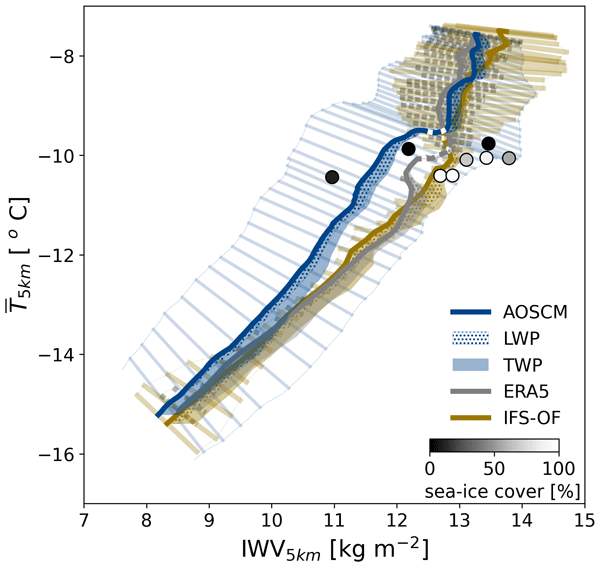
Michail Karalis, Gunilla Svensson, Manfred Wendisch, and Michael Tjernström
Atmos. Chem. Phys., 25, 13177–13198, https://doi.org/10.5194/acp-25-13177-2025, https://doi.org/10.5194/acp-25-13177-2025, 2025
Short summary
Short summary
During the spring warm-air intrusion captured by HALO-(𝒜𝒞)3, the air mass demonstrated a column-like structure. We built a Lagrangian modeling framework using a single-column model (AOSCM) to simulate the air mass transformation. Comparing to observations, reanalysis, and forecast data, we found that the Lagrangian AOSCM can successfully reproduce the main features of the transformation. The Lagrangian AOSCM can be used for future model development to improve Arctic weather and climate prediction.
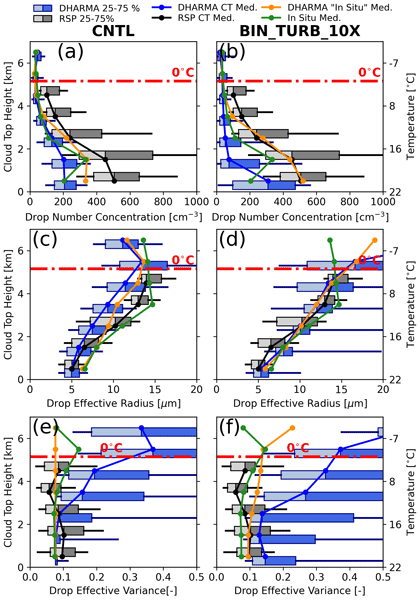
McKenna W. Stanford, Ann M. Fridlind, Andrew S. Ackerman, Bastiaan van Diedenhoven, Qian Xiao, Jian Wang, Toshihisa Matsui, Daniel Hernandez-Deckers, and Paul Lawson
Atmos. Chem. Phys., 25, 11199–11231, https://doi.org/10.5194/acp-25-11199-2025, https://doi.org/10.5194/acp-25-11199-2025, 2025
Short summary
Short summary
The evolution of cloud droplets, from the point they are activated by atmospheric aerosol to the formation of precipitation, is an important process relevant to understanding cloud–climate feedbacks. This study demonstrates a benchmark framework for using novel airborne measurements and retrievals to constrain high-resolution simulations of moderately deep cumulus clouds and pathways for scaling results to large-scale models and space-based observational platforms.
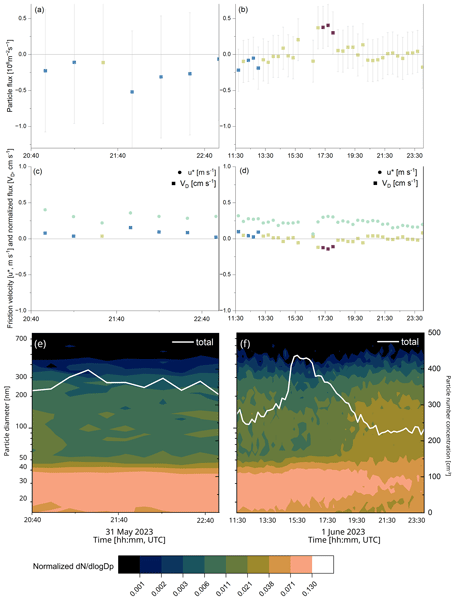
Theresa Mathes, Heather Guy, John Prytherch, Julia Kojoj, Ian Brooks, Sonja Murto, Paul Zieger, Birgit Wehner, Michael Tjernström, and Andreas Held
Atmos. Chem. Phys., 25, 8455–8474, https://doi.org/10.5194/acp-25-8455-2025, https://doi.org/10.5194/acp-25-8455-2025, 2025
Short summary
Short summary
The Arctic is warming faster than the global average and an investigation of aerosol–cloud–sea ice interactions is crucial for studying its climate system. During the ARTofMELT Expedition 2023, particle and sensible heat fluxes were measured over different surfaces. Wide lead surfaces acted as particle sources, with the strongest sensible heat fluxes, while closed ice surfaces acted as particle sinks. In this study, methods to measure these interactions are improved, enhancing our understanding of Arctic climate processes.
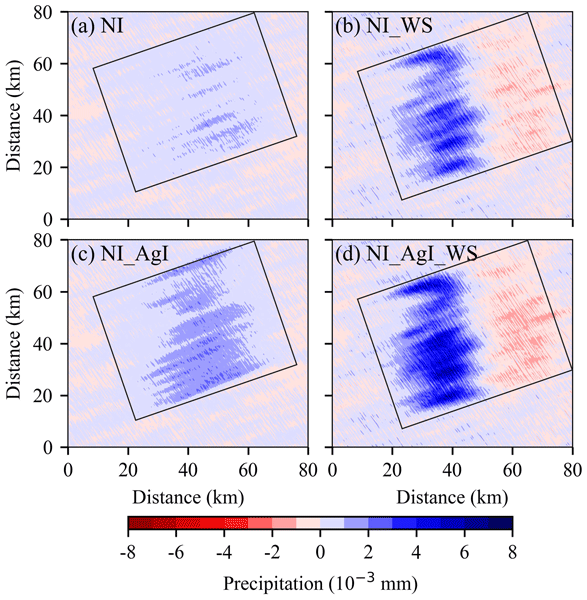
Meilian Chen, Xiaoqin Jing, Jiaojiao Li, Jing Yang, Xiaobo Dong, Bart Geerts, Yan Yin, Baojun Chen, Lulin Xue, Mengyu Huang, Ping Tian, and Shaofeng Hua
Atmos. Chem. Phys., 25, 7581–7596, https://doi.org/10.5194/acp-25-7581-2025, https://doi.org/10.5194/acp-25-7581-2025, 2025
Short summary
Short summary
Several recent studies have reported complete cloud glaciation induced by airborne-based glaciogenic cloud seeding over plains. Since turbulence is an important factor to maintain clouds in a mixed phase, it is hypothesized that turbulence may have an impact on the seeding effect. This hypothesis is evident in the present study, which shows that turbulence can accelerate the impact of airborne glaciogenic seeding of stratiform clouds.
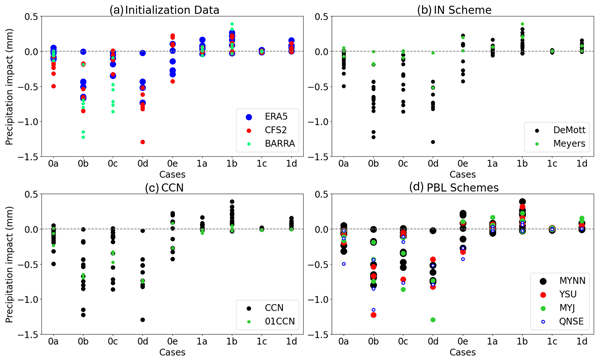
Sisi Chen, Lulin Xue, Sarah A. Tessendorf, Thomas Chubb, Andrew Peace, Suzanne Kenyon, Johanna Speirs, Jamie Wolff, and Bill Petzke
Atmos. Chem. Phys., 25, 6703–6724, https://doi.org/10.5194/acp-25-6703-2025, https://doi.org/10.5194/acp-25-6703-2025, 2025
Short summary
Short summary
This study aims to investigate how cloud seeding affects snowfall in Australia's Snowy Mountains. By running simulations with different setups, we found that seeding impact varies greatly with weather conditions. Seeding increased snow in stable weather but sometimes reduced it in stormy weather. This helps us to better understand when seeding works best to boost water supplies.
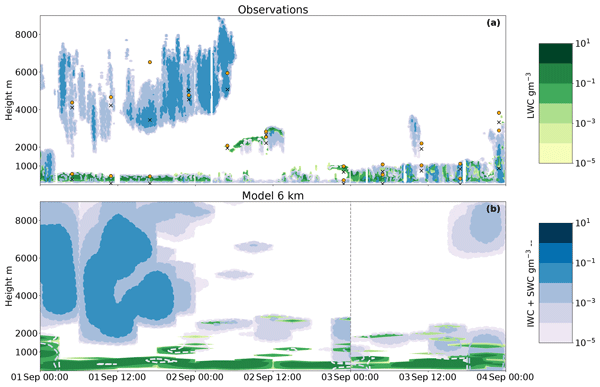
Gabriella Wallentin, Annika Oertel, Luisa Ickes, Peggy Achtert, Matthias Tesche, and Corinna Hoose
Atmos. Chem. Phys., 25, 6607–6631, https://doi.org/10.5194/acp-25-6607-2025, https://doi.org/10.5194/acp-25-6607-2025, 2025
Short summary
Short summary
Multilayer clouds are common in the Arctic but remain underrepresented. We use an atmospheric model to simulate multilayer cloud cases from the Arctic expedition MOSAiC 2019/2020. We find that it is complex to accurately model these cloud layers due to the lack of correct temperature profiles. The model also struggles to capture the observed cloud phase and the relative concentration of cloud droplets and cloud ice. We constrain our model to measured aerosols to mitigate this issue.
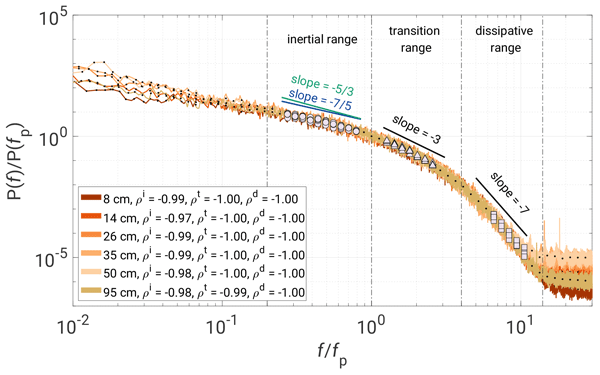
Robert Grosz, Kamal Kant Chandrakar, Raymond A. Shaw, Jesse C. Anderson, Will Cantrell, and Szymon P. Malinowski
Atmos. Meas. Tech., 18, 2619–2638, https://doi.org/10.5194/amt-18-2619-2025, https://doi.org/10.5194/amt-18-2619-2025, 2025
Short summary
Short summary
Our objective was to enhance understanding of thermally driven convection in terms of small-scale variations in the temperature scalar field. We conducted a small-scale study of the temperature field in the Π Chamber using three different temperature differences (10 K, 15 K, and 20 K). Measurements were carried out using a miniaturized UltraFast Thermometer operating at 2 kHz, allowing undisturbed vertical temperature profiling from 8 cm above the floor to 5 cm below the ceiling.
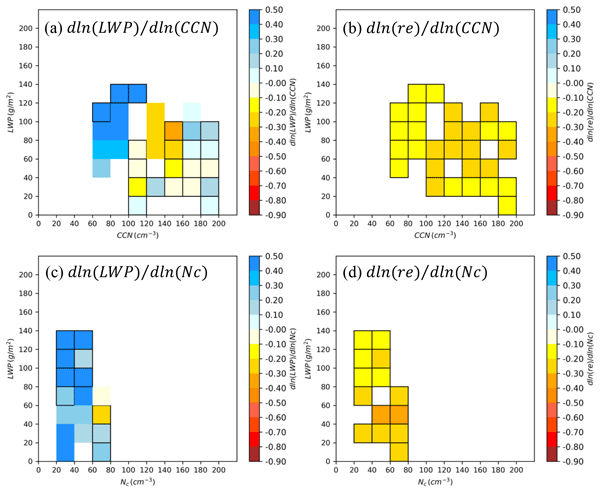
Hsiang-He Lee, Xue Zheng, Shaoyue Qiu, and Yuan Wang
Atmos. Chem. Phys., 25, 6069–6091, https://doi.org/10.5194/acp-25-6069-2025, https://doi.org/10.5194/acp-25-6069-2025, 2025
Short summary
Short summary
The study investigates how aerosol–cloud interactions affect warm boundary layer stratiform clouds over the eastern North Atlantic. High-resolution weather model simulations reveal that non-rain clouds at the edge of cloud systems are prone to evaporation, leading to an aerosol drying effect and a transition of aerosols back to the accumulation mode for future activation. The study shows that this dynamic behavior is often not adequately represented in most previous prescribed-aerosol simulations.
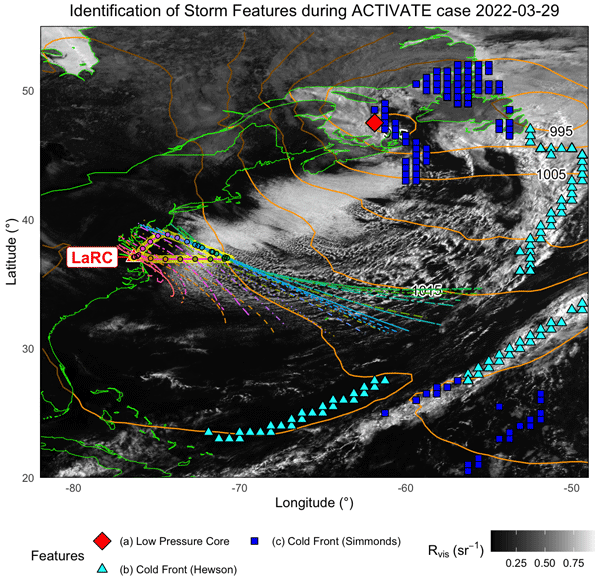
Florian Tornow, Ann Fridlind, George Tselioudis, Brian Cairns, Andrew Ackerman, Seethala Chellappan, David Painemal, Paquita Zuidema, Christiane Voigt, Simon Kirschler, and Armin Sorooshian
Atmos. Chem. Phys., 25, 5053–5074, https://doi.org/10.5194/acp-25-5053-2025, https://doi.org/10.5194/acp-25-5053-2025, 2025
Short summary
Short summary
The recent NASA campaign ACTIVATE (Aerosol Cloud meTeorology Interactions oVer the western ATlantic Experiment) performed 71 tandem flights in mid-latitude marine cold-air outbreaks off the US eastern seaboard. We provide meteorological and cloud transition stage context, allowing us to identify days that are most suitable for Lagrangian modeling and analysis. Surveyed cloud properties show signatures of cloud microphysical processes, such as cloud-top entrainment and secondary ice formation.
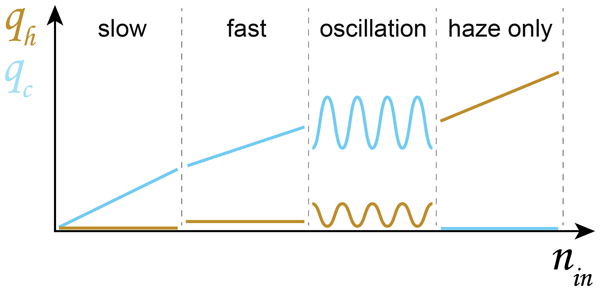
Fan Yang, Hamed Fahandezh Sadi, Raymond A. Shaw, Fabian Hoffmann, Pei Hou, Aaron Wang, and Mikhail Ovchinnikov
Atmos. Chem. Phys., 25, 3785–3806, https://doi.org/10.5194/acp-25-3785-2025, https://doi.org/10.5194/acp-25-3785-2025, 2025
Short summary
Short summary
Large-eddy simulations of a convection cloud chamber show two new microphysics regimes, cloud oscillation and cloud collapse, due to haze–cloud interactions. Our results suggest that haze particles and their interactions with cloud droplets should be considered especially in polluted conditions. To properly simulate haze–cloud interactions, we need to resolve droplet activation and deactivation processes, instead of using Twomey-type activation parameterization.
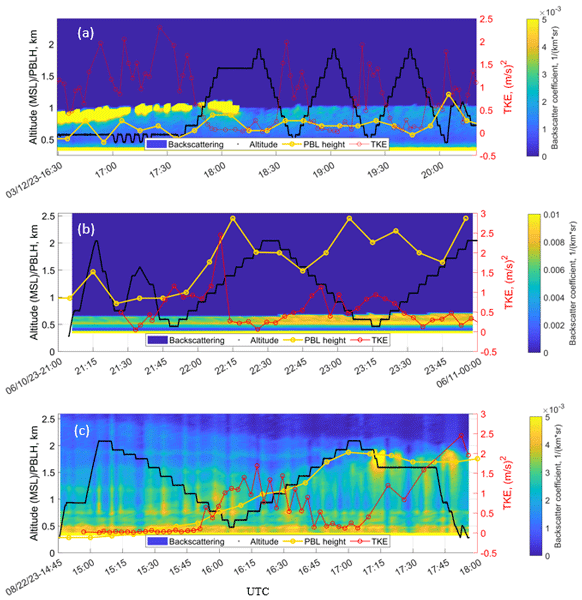
Fan Mei, Qi Zhang, Damao Zhang, Jerome D. Fast, Gourihar Kulkarni, Mikhail S. Pekour, Christopher R. Niedek, Susanne Glienke, Israel Silber, Beat Schmid, Jason M. Tomlinson, Hardeep S. Mehta, Xena Mansoura, Zezhen Cheng, Gregory W. Vandergrift, Nurun Nahar Lata, Swarup China, and Zihua Zhu
Atmos. Chem. Phys., 25, 3425–3444, https://doi.org/10.5194/acp-25-3425-2025, https://doi.org/10.5194/acp-25-3425-2025, 2025
Short summary
Short summary
This study highlights the unique capability of the ArcticShark, an uncrewed aerial system, in measuring vertically resolved atmospheric properties. Data from 32 research flights in 2023 reveal seasonal patterns and correlations with conventional measurements. The consistency and complementarity of in situ and remote sensing methods are highlighted. The study demonstrates the ArcticShark’s versatility in bridging data gaps and improving the understanding of vertical atmospheric structures.
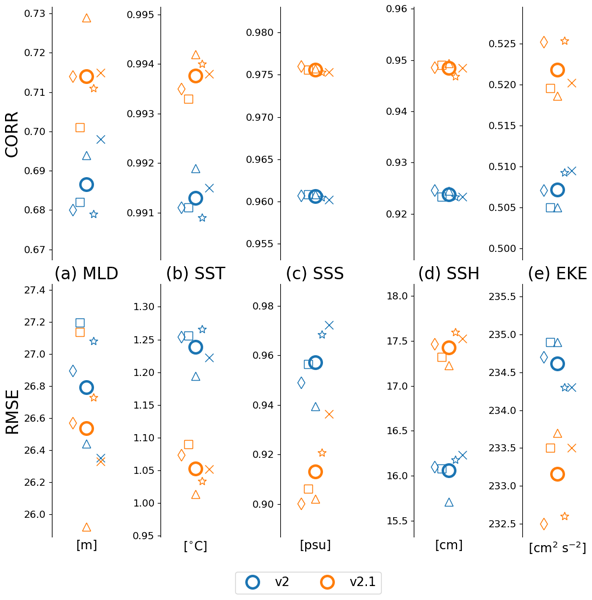
Katherine M. Smith, Alice M. Barthel, LeAnn M. Conlon, Luke P. Van Roekel, Anthony Bartoletti, Jean-Christophe Golaz, Chengzhu Zhang, Carolyn Branecky Begeman, James J. Benedict, Gautam Bisht, Yan Feng, Walter Hannah, Bryce E. Harrop, Nicole Jeffery, Wuyin Lin, Po-Lun Ma, Mathew E. Maltrud, Mark R. Petersen, Balwinder Singh, Qi Tang, Teklu Tesfa, Jonathan D. Wolfe, Shaocheng Xie, Xue Zheng, Karthik Balaguru, Oluwayemi Garuba, Peter Gleckler, Aixue Hu, Jiwoo Lee, Ben Moore-Maley, and Ana C. Ordoñez
Geosci. Model Dev., 18, 1613–1633, https://doi.org/10.5194/gmd-18-1613-2025, https://doi.org/10.5194/gmd-18-1613-2025, 2025
Short summary
Short summary
Version 2.1 of the U.S. Department of Energy's Energy Exascale Earth System Model (E3SM) adds the Fox-Kemper et al. (2011) mixed-layer eddy parameterization, which restratifies the ocean surface layer through an overturning streamfunction. Results include surface layer bias reduction in temperature, salinity, and sea ice extent in the North Atlantic; a small strengthening of the Atlantic meridional overturning circulation; and improvements to many atmospheric climatological variables.
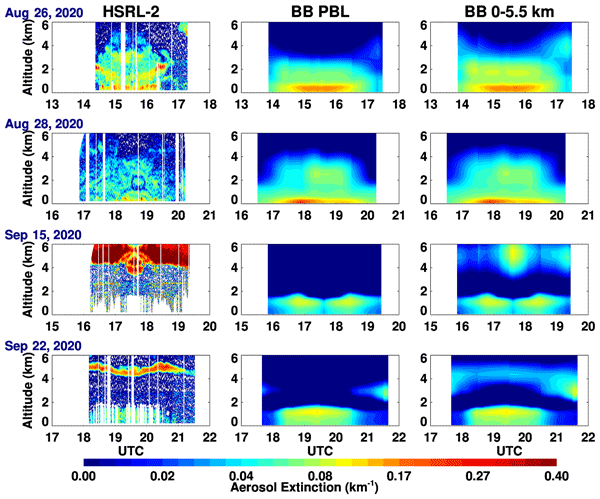
Hongyu Liu, Bo Zhang, Richard H. Moore, Luke D. Ziemba, Richard A. Ferrare, Hyundeok Choi, Armin Sorooshian, David Painemal, Hailong Wang, Michael A. Shook, Amy Jo Scarino, Johnathan W. Hair, Ewan C. Crosbie, Marta A. Fenn, Taylor J. Shingler, Chris A. Hostetler, Gao Chen, Mary M. Kleb, Gan Luo, Fangqun Yu, Mark A. Vaughan, Yongxiang Hu, Glenn S. Diskin, John B. Nowak, Joshua P. DiGangi, Yonghoon Choi, Christoph A. Keller, and Matthew S. Johnson
Atmos. Chem. Phys., 25, 2087–2121, https://doi.org/10.5194/acp-25-2087-2025, https://doi.org/10.5194/acp-25-2087-2025, 2025
Short summary
Short summary
We use the GEOS-Chem model to simulate aerosol distributions and properties over the western North Atlantic Ocean (WNAO) during the winter and summer deployments in 2020 of the NASA ACTIVATE mission. Model results are evaluated against aircraft, ground-based, and satellite observations. The improved understanding of life cycle, composition, transport pathways, and distribution of aerosols has important implications for characterizing aerosol–cloud–meteorology interactions over WNAO.
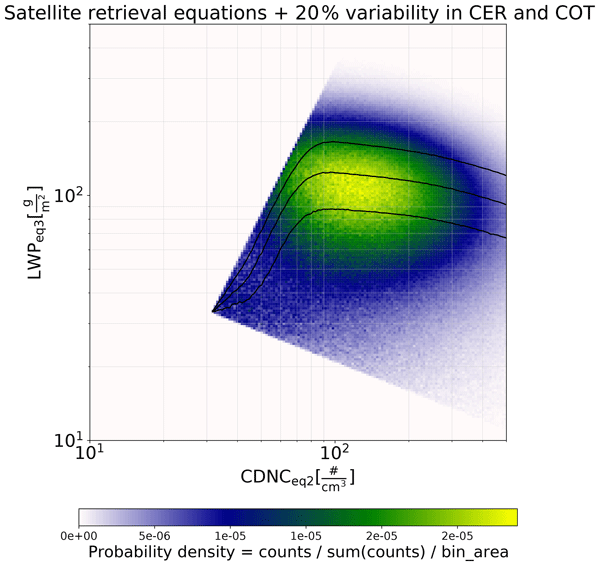
Harri Kokkola, Juha Tonttila, Silvia M. Calderón, Sami Romakkaniemi, Antti Lipponen, Aapo Peräkorpi, Tero Mielonen, Edward Gryspeerdt, Timo Henrik Virtanen, Pekka Kolmonen, and Antti Arola
Atmos. Chem. Phys., 25, 1533–1543, https://doi.org/10.5194/acp-25-1533-2025, https://doi.org/10.5194/acp-25-1533-2025, 2025
Short summary
Short summary
Understanding how atmospheric aerosols affect clouds is a scientific challenge. One question is how aerosols affects the amount of cloud water. We used a cloud-scale model to study these effects on marine clouds. The study showed that variations in cloud properties and instrument noise can cause bias in satellite-derived cloud water content. However, our results suggest that for similar weather conditions with well-defined aerosol concentrations, satellite data can reliably track these effects.
Israel Silber, Jennifer M. Comstock, Michael R. Kieburtz, and Lynn M. Russell
Earth Syst. Sci. Data, 17, 29–42, https://doi.org/10.5194/essd-17-29-2025, https://doi.org/10.5194/essd-17-29-2025, 2025
Short summary
Short summary
We present ARMTRAJ, a set of multipurpose trajectory datasets, which augments cloud, aerosol, and boundary layer studies utilizing the U.S. Department of Energy Atmospheric Radiation Measurement (ARM) user facility data. ARMTRAJ data include ensemble run statistics that enhance consistency and serve as uncertainty metrics for air mass coordinates and state variables. ARMTRAJ will soon become a near real-time product that will accompany past, ongoing, and future ARM deployments.
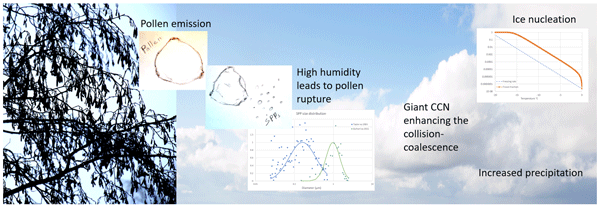
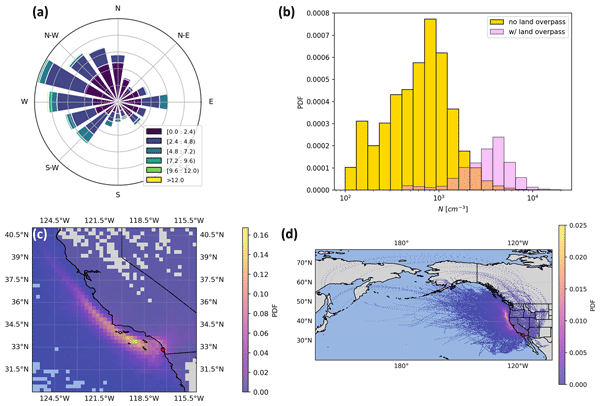
Marje Prank, Juha Tonttila, Xiaoxia Shang, Sami Romakkaniemi, and Tomi Raatikainen
Atmos. Chem. Phys., 25, 183–197, https://doi.org/10.5194/acp-25-183-2025, https://doi.org/10.5194/acp-25-183-2025, 2025
Short summary
Short summary
Large primary bioparticles such as pollen can be abundant in the atmosphere. In humid conditions pollen can rupture and release a large number of fine sub-pollen particles (SPPs). The paper investigates what kind of birch pollen concentrations are needed for the pollen and SPPs to start playing a noticeable role in cloud processes and alter precipitation formation. In the studied cases only the largest observed pollen concentrations were able to noticeably alter the precipitation formation.
Luís Filipe Escusa dos Santos, Hannah C. Frostenberg, Alejandro Baró Pérez, Annica M. L. Ekman, Luisa Ickes, and Erik S. Thomson
Atmos. Chem. Phys., 25, 119–142, https://doi.org/10.5194/acp-25-119-2025, https://doi.org/10.5194/acp-25-119-2025, 2025
Short summary
Short summary
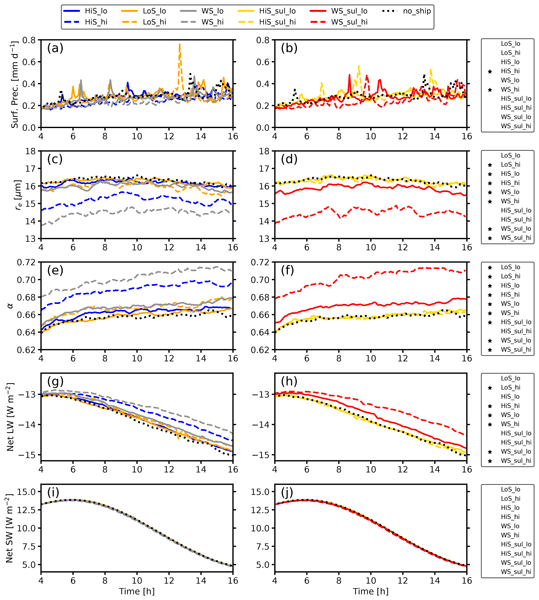
The Arctic is experiencing enhanced surface warming. The observed decline in Arctic sea-ice extent is projected to lead to an increase in Arctic shipping activity, which may lead to further climatic feedbacks. Using an atmospheric model and results from marine engine experiments that focused on fuel sulfur content reduction and exhaust wet scrubbing, we investigate how ship exhaust particles influence the properties of Arctic clouds. Implications for radiative surface processes are discussed.
Jing Yang, Jiaojiao Li, Meilian Chen, Xiaoqin Jing, Yan Yin, Bart Geerts, Zhien Wang, Yubao Liu, Baojun Chen, Shaofeng Hua, Hao Hu, Xiaobo Dong, Ping Tian, Qian Chen, and Yang Gao
Atmos. Chem. Phys., 24, 13833–13848, https://doi.org/10.5194/acp-24-13833-2024, https://doi.org/10.5194/acp-24-13833-2024, 2024
Short summary
Short summary
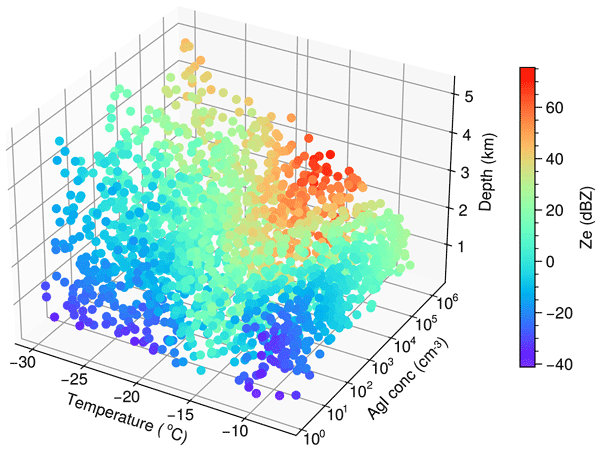
Detecting unambiguous signatures is vital for examining cloud-seeding impacts, but often, seeding signatures are immersed in natural variability. In this study, reflectivity changes induced by glaciogenic seeding using different AgI concentrations are investigated under various conditions, and a method is developed to estimate the AgI concentration needed to detect unambiguous seeding signatures. The results aid in operational seeding-based decision-making regarding the amount of AgI dispersed.
Florian Sauerland, Niels Souverijns, Anna Possner, Heike Wex, Preben Van Overmeiren, Alexander Mangold, Kwinten Van Weverberg, and Nicole van Lipzig
Atmos. Chem. Phys., 24, 13751–13768, https://doi.org/10.5194/acp-24-13751-2024, https://doi.org/10.5194/acp-24-13751-2024, 2024
Short summary
Short summary
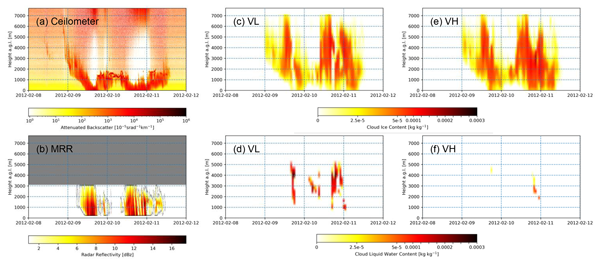
We use a regional climate model, COSMO-CLM², enhanced with a module resolving aerosol processes, to study Antarctic clouds. We prescribe different concentrations of ice-nucleating particles to our model to assess how these clouds respond to concentration changes, validating results with cloud and aerosol observations from the Princess Elisabeth Antarctica station. Our results show that aerosol–cloud interactions vary with temperature, providing valuable insights into Antarctic cloud dynamics.
Johannes Mülmenstädt, Andrew S. Ackerman, Ann M. Fridlind, Meng Huang, Po-Lun Ma, Naser Mahfouz, Susanne E. Bauer, Susannah M. Burrows, Matthew W. Christensen, Sudhakar Dipu, Andrew Gettelman, L. Ruby Leung, Florian Tornow, Johannes Quaas, Adam C. Varble, Hailong Wang, Kai Zhang, and Youtong Zheng
Atmos. Chem. Phys., 24, 13633–13652, https://doi.org/10.5194/acp-24-13633-2024, https://doi.org/10.5194/acp-24-13633-2024, 2024
Short summary
Short summary
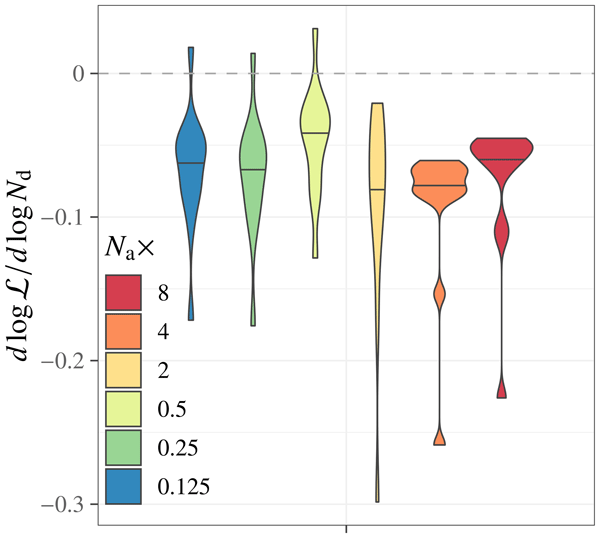
Stratocumulus clouds play a large role in Earth's climate by reflecting incoming solar energy back to space. Turbulence at stratocumulus cloud top mixes in dry, warm air, which can lead to cloud dissipation. This process is challenging for coarse-resolution global models to represent. We show that global models nevertheless agree well with our process understanding. Global models also think the process is less important for the climate than other lines of evidence have led us to conclude.
Trude Eidhammer, Andrew Gettelman, Katherine Thayer-Calder, Duncan Watson-Parris, Gregory Elsaesser, Hugh Morrison, Marcus van Lier-Walqui, Ci Song, and Daniel McCoy
Geosci. Model Dev., 17, 7835–7853, https://doi.org/10.5194/gmd-17-7835-2024, https://doi.org/10.5194/gmd-17-7835-2024, 2024
Short summary
Short summary
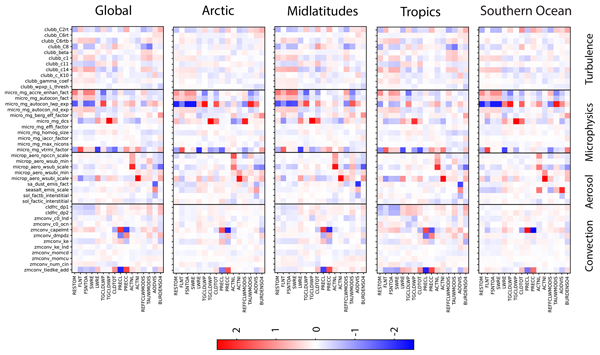
We describe a dataset where 45 parameters related to cloud processes in the Community Earth System Model version 2 (CESM2) Community Atmosphere Model version 6 (CAM6) are perturbed. Three sets of perturbed parameter ensembles (263 members) were created: current climate, preindustrial aerosol loading and future climate with sea surface temperature increased by 4 K.
Alexei Korolev, Zhipeng Qu, Jason Milbrandt, Ivan Heckman, Mélissa Cholette, Mengistu Wolde, Cuong Nguyen, Greg M. McFarquhar, Paul Lawson, and Ann M. Fridlind
Atmos. Chem. Phys., 24, 11849–11881, https://doi.org/10.5194/acp-24-11849-2024, https://doi.org/10.5194/acp-24-11849-2024, 2024
Short summary
Short summary
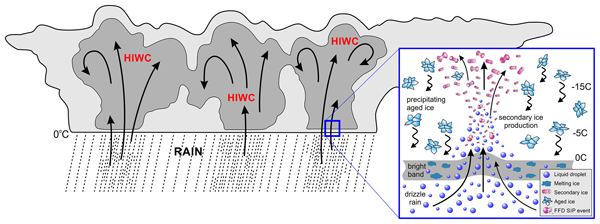
The phenomenon of high ice water content (HIWC) occurs in mesoscale convective systems (MCSs) when a large number of small ice particles with typical sizes of a few hundred micrometers is found at high altitudes. It was found that secondary ice production in the vicinity of the melting layer plays a key role in the formation and maintenance of HIWC. This study presents a conceptual model of the formation of HIWC in tropical MCSs based on in situ observations and numerical simulation.
Abigail S. Williams, Jeramy L. Dedrick, Lynn M. Russell, Florian Tornow, Israel Silber, Ann M. Fridlind, Benjamin Swanson, Paul J. DeMott, Paul Zieger, and Radovan Krejci
Atmos. Chem. Phys., 24, 11791–11805, https://doi.org/10.5194/acp-24-11791-2024, https://doi.org/10.5194/acp-24-11791-2024, 2024
Short summary
Short summary
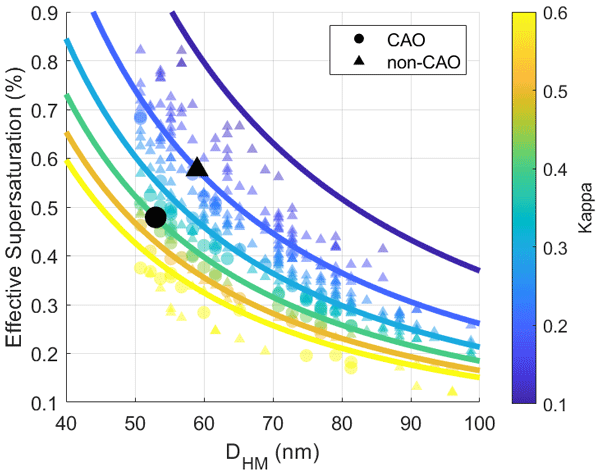
The measured aerosol size distribution modes reveal distinct properties characteristic of cold-air outbreaks in the Norwegian Arctic. We find higher sea spray number concentrations, smaller Hoppel minima, lower effective supersaturations, and accumulation-mode particle scavenging during cold-air outbreaks. These results advance our understanding of cold-air outbreak aerosol–cloud interactions in order to improve their accurate representation in models.
Johanna Tjernström, Michael Gallagher, Jareth Holt, Gunilla Svensson, Matthew D. Shupe, Jonathan J. Day, Lara Ferrighi, Siri Jodha Khalsa, Leslie M. Hartten, Ewan O'Connor, Zen Mariani, and Øystein Godøy
EGUsphere, https://doi.org/10.5194/egusphere-2024-2088, https://doi.org/10.5194/egusphere-2024-2088, 2024
Preprint archived
Short summary
Short summary
The value of numerical weather predictions can be enhanced in several ways, one is to improve the representations of small-scale processes in models. To understand what needs to be improved, the model results need to be evaluated. Following standardized principles, a file format has been defined to be as similar as possible for both observational and model data. Python packages and toolkits are presented as a community resource in the production of the files and evaluation analysis.
Toshi Matsui, Daniel Hernandez-Deckers, Scott E. Giangrande, Thiago S. Biscaro, Ann Fridlind, and Scott Braun
Atmos. Chem. Phys., 24, 10793–10814, https://doi.org/10.5194/acp-24-10793-2024, https://doi.org/10.5194/acp-24-10793-2024, 2024
Short summary
Short summary
Using computer simulations and real measurements, we discovered that storms over the Amazon were narrower but more intense during the dry periods, producing heavier rain and more ice particles in the clouds. Our research showed that cumulus bubbles played a key role in creating these intense storms. This study can improve the representation of the effect of continental and ocean environments on tropical regions' rainfall patterns in simulations.
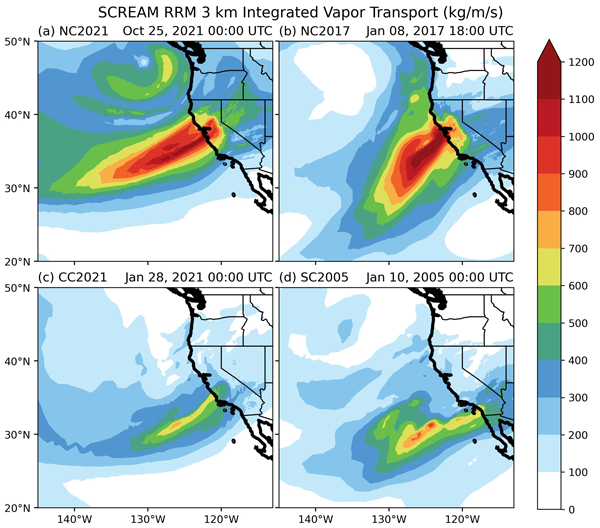
Peter A. Bogenschutz, Jishi Zhang, Qi Tang, and Philip Cameron-Smith
Geosci. Model Dev., 17, 7029–7050, https://doi.org/10.5194/gmd-17-7029-2024, https://doi.org/10.5194/gmd-17-7029-2024, 2024
Short summary
Short summary
Using high-resolution and state-of-the-art modeling techniques we simulate five atmospheric river events for California to test the capability to represent precipitation for these events. We find that our model is able to capture the distribution of precipitation very well but suffers from overestimating the precipitation amounts over high elevation. Increasing the resolution further has no impact on reducing this bias, while increasing the domain size does have modest impacts.
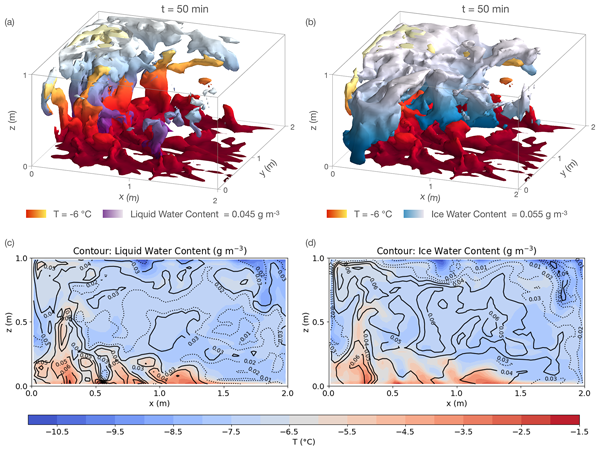
Aaron Wang, Steve Krueger, Sisi Chen, Mikhail Ovchinnikov, Will Cantrell, and Raymond A. Shaw
Atmos. Chem. Phys., 24, 10245–10260, https://doi.org/10.5194/acp-24-10245-2024, https://doi.org/10.5194/acp-24-10245-2024, 2024
Short summary
Short summary
We employ two methods to examine a laboratory experiment on clouds with both ice and liquid phases. The first assumes well-mixed properties; the second resolves the spatial distribution of turbulence and cloud particles. Results show that while the trends in mean properties generally align, when turbulence is resolved, liquid droplets are not fully depleted by ice due to incomplete mixing. This underscores the threshold of ice mass fraction in distinguishing mixed-phase clouds from ice clouds.
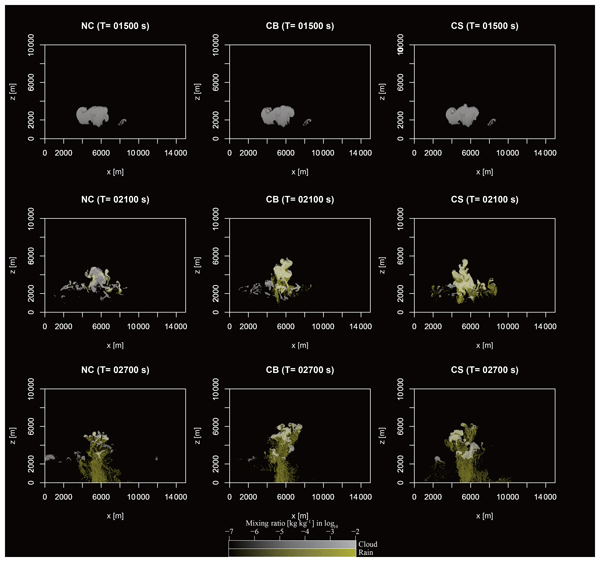
Ruyi Zhang, Limin Zhou, Shin-ichiro Shima, and Huawei Yang
Geosci. Model Dev., 17, 6761–6774, https://doi.org/10.5194/gmd-17-6761-2024, https://doi.org/10.5194/gmd-17-6761-2024, 2024
Short summary
Short summary
Solar activity weakly ionises Earth's atmosphere, charging cloud droplets. Electro-coalescence is when oppositely charged droplets stick together. We introduce an analytical expression of electro-coalescence probability and use it in a warm-cumulus-cloud simulation. Results show that charge cases increase rain and droplet size, with the new method outperforming older ones. The new method requires longer computation time, but its impact on rain justifies inclusion in meteorology models.
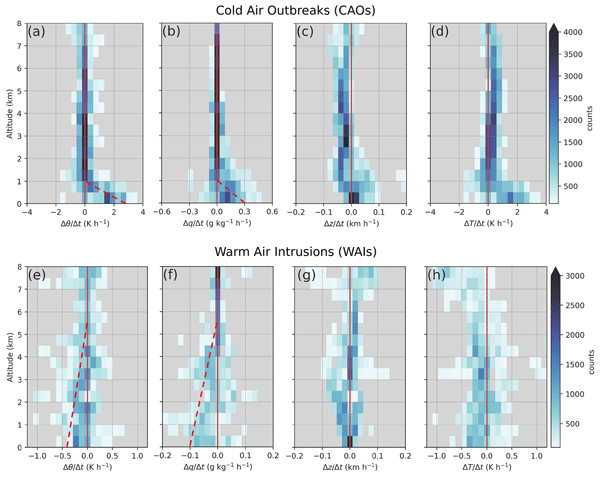
Manfred Wendisch, Susanne Crewell, André Ehrlich, Andreas Herber, Benjamin Kirbus, Christof Lüpkes, Mario Mech, Steven J. Abel, Elisa F. Akansu, Felix Ament, Clémantyne Aubry, Sebastian Becker, Stephan Borrmann, Heiko Bozem, Marlen Brückner, Hans-Christian Clemen, Sandro Dahlke, Georgios Dekoutsidis, Julien Delanoë, Elena De La Torre Castro, Henning Dorff, Regis Dupuy, Oliver Eppers, Florian Ewald, Geet George, Irina V. Gorodetskaya, Sarah Grawe, Silke Groß, Jörg Hartmann, Silvia Henning, Lutz Hirsch, Evelyn Jäkel, Philipp Joppe, Olivier Jourdan, Zsofia Jurányi, Michail Karalis, Mona Kellermann, Marcus Klingebiel, Michael Lonardi, Johannes Lucke, Anna E. Luebke, Maximilian Maahn, Nina Maherndl, Marion Maturilli, Bernhard Mayer, Johanna Mayer, Stephan Mertes, Janosch Michaelis, Michel Michalkov, Guillaume Mioche, Manuel Moser, Hanno Müller, Roel Neggers, Davide Ori, Daria Paul, Fiona M. Paulus, Christian Pilz, Felix Pithan, Mira Pöhlker, Veronika Pörtge, Maximilian Ringel, Nils Risse, Gregory C. Roberts, Sophie Rosenburg, Johannes Röttenbacher, Janna Rückert, Michael Schäfer, Jonas Schaefer, Vera Schemann, Imke Schirmacher, Jörg Schmidt, Sebastian Schmidt, Johannes Schneider, Sabrina Schnitt, Anja Schwarz, Holger Siebert, Harald Sodemann, Tim Sperzel, Gunnar Spreen, Bjorn Stevens, Frank Stratmann, Gunilla Svensson, Christian Tatzelt, Thomas Tuch, Timo Vihma, Christiane Voigt, Lea Volkmer, Andreas Walbröl, Anna Weber, Birgit Wehner, Bruno Wetzel, Martin Wirth, and Tobias Zinner
Atmos. Chem. Phys., 24, 8865–8892, https://doi.org/10.5194/acp-24-8865-2024, https://doi.org/10.5194/acp-24-8865-2024, 2024
Short summary
Short summary
The Arctic is warming faster than the rest of the globe. Warm-air intrusions (WAIs) into the Arctic may play an important role in explaining this phenomenon. Cold-air outbreaks (CAOs) out of the Arctic may link the Arctic climate changes to mid-latitude weather. In our article, we describe how to observe air mass transformations during CAOs and WAIs using three research aircraft instrumented with state-of-the-art remote-sensing and in situ measurement devices.
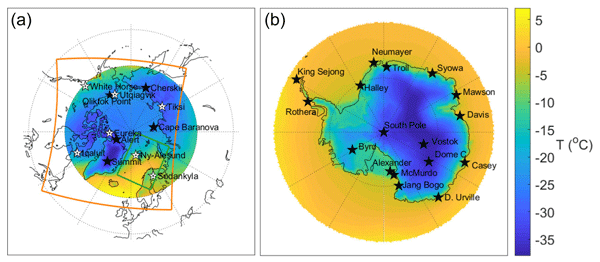
Jonathan J. Day, Gunilla Svensson, Barbara Casati, Taneil Uttal, Siri-Jodha Khalsa, Eric Bazile, Elena Akish, Niramson Azouz, Lara Ferrighi, Helmut Frank, Michael Gallagher, Øystein Godøy, Leslie M. Hartten, Laura X. Huang, Jareth Holt, Massimo Di Stefano, Irene Suomi, Zen Mariani, Sara Morris, Ewan O'Connor, Roberta Pirazzini, Teresa Remes, Rostislav Fadeev, Amy Solomon, Johanna Tjernström, and Mikhail Tolstykh
Geosci. Model Dev., 17, 5511–5543, https://doi.org/10.5194/gmd-17-5511-2024, https://doi.org/10.5194/gmd-17-5511-2024, 2024
Short summary
Short summary
The YOPP site Model Intercomparison Project (YOPPsiteMIP), which was designed to facilitate enhanced weather forecast evaluation in polar regions, is discussed here, focussing on describing the archive of forecast data and presenting a multi-model evaluation at Arctic supersites during February and March 2018. The study highlights an underestimation in boundary layer temperature variance that is common across models and a related inability to forecast cold extremes at several of the sites.
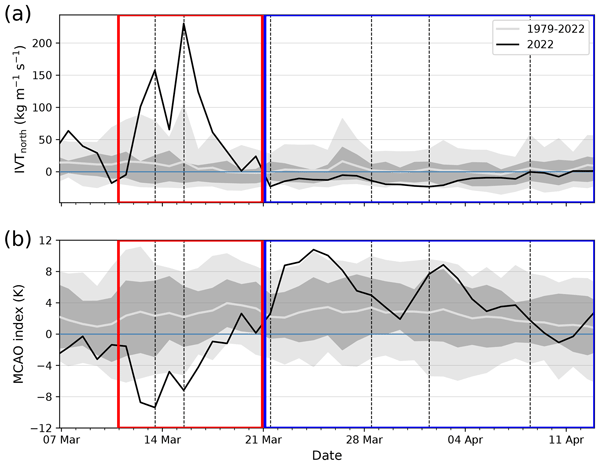
Andreas Walbröl, Janosch Michaelis, Sebastian Becker, Henning Dorff, Kerstin Ebell, Irina Gorodetskaya, Bernd Heinold, Benjamin Kirbus, Melanie Lauer, Nina Maherndl, Marion Maturilli, Johanna Mayer, Hanno Müller, Roel A. J. Neggers, Fiona M. Paulus, Johannes Röttenbacher, Janna E. Rückert, Imke Schirmacher, Nils Slättberg, André Ehrlich, Manfred Wendisch, and Susanne Crewell
Atmos. Chem. Phys., 24, 8007–8029, https://doi.org/10.5194/acp-24-8007-2024, https://doi.org/10.5194/acp-24-8007-2024, 2024
Short summary
Short summary
To support the interpretation of the data collected during the HALO-(AC)3 campaign, which took place in the North Atlantic sector of the Arctic from 7 March to 12 April 2022, we analyze how unusual the weather and sea ice conditions were with respect to the long-term climatology. From observations and ERA5 reanalysis, we found record-breaking warm air intrusions and a large variety of marine cold air outbreaks. Sea ice concentration was mostly within the climatological interquartile range.
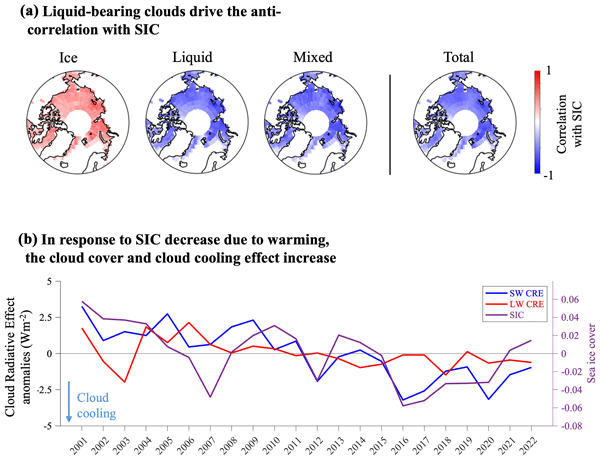
Grégory V. Cesana, Olivia Pierpaoli, Matteo Ottaviani, Linh Vu, Zhonghai Jin, and Israel Silber
Atmos. Chem. Phys., 24, 7899–7909, https://doi.org/10.5194/acp-24-7899-2024, https://doi.org/10.5194/acp-24-7899-2024, 2024
Short summary
Short summary
Better characterizing the relationship between sea ice and clouds is key to understanding Arctic climate because clouds and sea ice affect surface radiation and modulate Arctic surface warming. Our results indicate that Arctic liquid clouds robustly increase in response to sea ice decrease. This increase has a cooling effect on the surface because more solar radiation is reflected back to space, and it should contribute to dampening future Arctic surface warming.
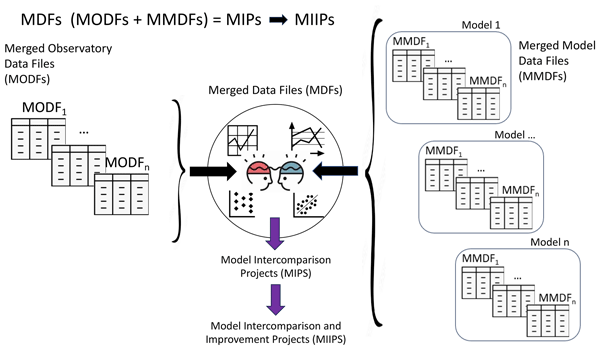
Taneil Uttal, Leslie M. Hartten, Siri Jodha Khalsa, Barbara Casati, Gunilla Svensson, Jonathan Day, Jareth Holt, Elena Akish, Sara Morris, Ewan O'Connor, Roberta Pirazzini, Laura X. Huang, Robert Crawford, Zen Mariani, Øystein Godøy, Johanna A. K. Tjernström, Giri Prakash, Nicki Hickmon, Marion Maturilli, and Christopher J. Cox
Geosci. Model Dev., 17, 5225–5247, https://doi.org/10.5194/gmd-17-5225-2024, https://doi.org/10.5194/gmd-17-5225-2024, 2024
Short summary
Short summary
A Merged Observatory Data File (MODF) format to systematically collate complex atmosphere, ocean, and terrestrial data sets collected by multiple instruments during field campaigns is presented. The MODF format is also designed to be applied to model output data, yielding format-matching Merged Model Data Files (MMDFs). MODFs plus MMDFs will augment and accelerate the synergistic use of model results with observational data to increase understanding and predictive skill.
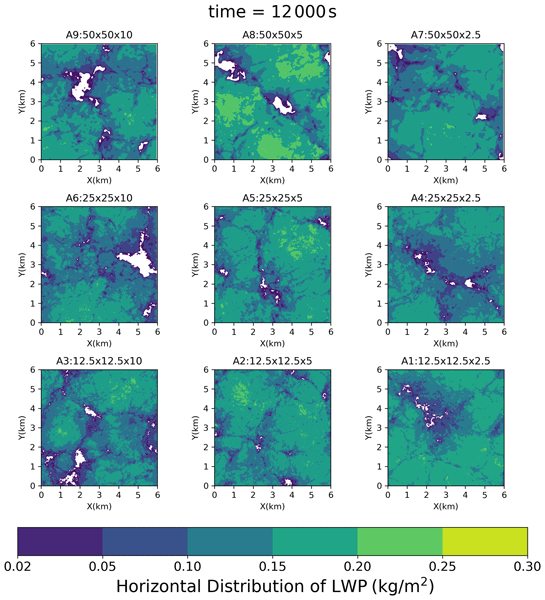
Chongzhi Yin, Shin-ichiro Shima, Lulin Xue, and Chunsong Lu
Geosci. Model Dev., 17, 5167–5189, https://doi.org/10.5194/gmd-17-5167-2024, https://doi.org/10.5194/gmd-17-5167-2024, 2024
Short summary
Short summary
We investigate numerical convergence properties of a particle-based numerical cloud microphysics model (SDM) and a double-moment bulk scheme for simulating a marine stratocumulus case, compare their results with model intercomparison project results, and present possible explanations for the different results of the SDM and the bulk scheme. Aerosol processes can be accurately simulated using SDM, and this may be an important factor affecting the behavior and morphology of marine stratocumulus.
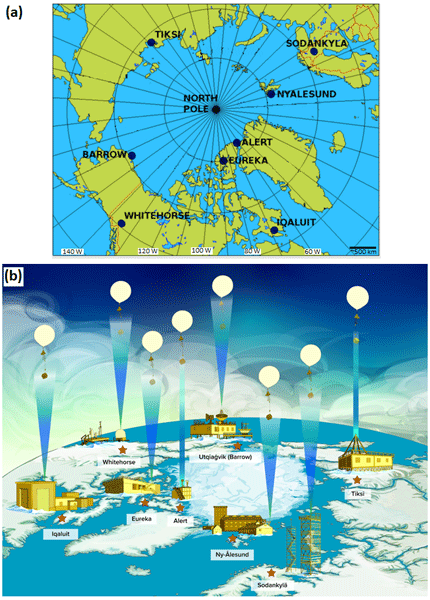
Zen Mariani, Sara M. Morris, Taneil Uttal, Elena Akish, Robert Crawford, Laura Huang, Jonathan Day, Johanna Tjernström, Øystein Godøy, Lara Ferrighi, Leslie M. Hartten, Jareth Holt, Christopher J. Cox, Ewan O'Connor, Roberta Pirazzini, Marion Maturilli, Giri Prakash, James Mather, Kimberly Strong, Pierre Fogal, Vasily Kustov, Gunilla Svensson, Michael Gallagher, and Brian Vasel
Earth Syst. Sci. Data, 16, 3083–3124, https://doi.org/10.5194/essd-16-3083-2024, https://doi.org/10.5194/essd-16-3083-2024, 2024
Short summary
Short summary
During the Year of Polar Prediction (YOPP), we increased measurements in the polar regions and have made dedicated efforts to centralize and standardize all of the different types of datasets that have been collected to facilitate user uptake and model–observation comparisons. This paper is an overview of those efforts and a description of the novel standardized Merged Observation Data Files (MODFs), including a description of the sites, data format, and instruments.
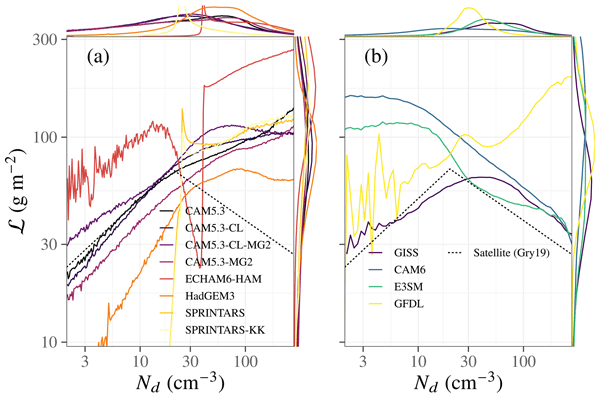
Johannes Mülmenstädt, Edward Gryspeerdt, Sudhakar Dipu, Johannes Quaas, Andrew S. Ackerman, Ann M. Fridlind, Florian Tornow, Susanne E. Bauer, Andrew Gettelman, Yi Ming, Youtong Zheng, Po-Lun Ma, Hailong Wang, Kai Zhang, Matthew W. Christensen, Adam C. Varble, L. Ruby Leung, Xiaohong Liu, David Neubauer, Daniel G. Partridge, Philip Stier, and Toshihiko Takemura
Atmos. Chem. Phys., 24, 7331–7345, https://doi.org/10.5194/acp-24-7331-2024, https://doi.org/10.5194/acp-24-7331-2024, 2024
Short summary
Short summary
Human activities release copious amounts of small particles called aerosols into the atmosphere. These particles change how much sunlight clouds reflect to space, an important human perturbation of the climate, whose magnitude is highly uncertain. We found that the latest climate models show a negative correlation but a positive causal relationship between aerosols and cloud water. This means we need to be very careful when we interpret observational studies that can only see correlation.
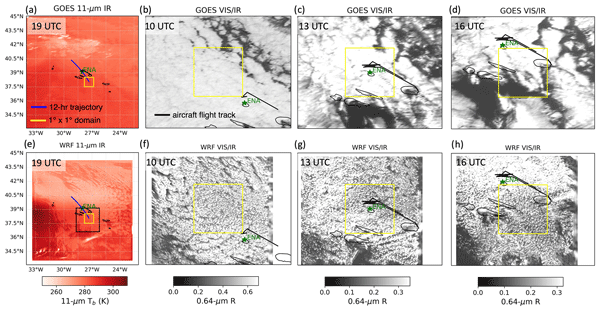
Matthew W. Christensen, Peng Wu, Adam C. Varble, Heng Xiao, and Jerome D. Fast
Atmos. Chem. Phys., 24, 6455–6476, https://doi.org/10.5194/acp-24-6455-2024, https://doi.org/10.5194/acp-24-6455-2024, 2024
Short summary
Short summary
Clouds are essential to keep Earth cooler by reflecting sunlight back to space. We show that an increase in aerosol concentration suppresses precipitation in clouds, causing them to accumulate water and expand in a polluted environment with stronger turbulence and radiative cooling. This process enhances their reflectance by 51 %. It is therefore prudent to account for cloud fraction changes in assessments of aerosol–cloud interactions to improve predictions of climate change.
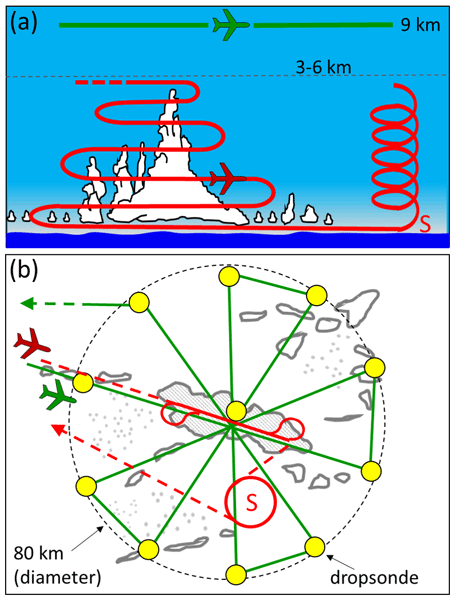
Ewan Crosbie, Luke D. Ziemba, Michael A. Shook, Taylor Shingler, Johnathan W. Hair, Armin Sorooshian, Richard A. Ferrare, Brian Cairns, Yonghoon Choi, Joshua DiGangi, Glenn S. Diskin, Chris Hostetler, Simon Kirschler, Richard H. Moore, David Painemal, Claire Robinson, Shane T. Seaman, K. Lee Thornhill, Christiane Voigt, and Edward Winstead
Atmos. Chem. Phys., 24, 6123–6152, https://doi.org/10.5194/acp-24-6123-2024, https://doi.org/10.5194/acp-24-6123-2024, 2024
Short summary
Short summary
Marine clouds are found to clump together in regions or lines, readily discernible from satellite images of the ocean. While clustering is also a feature of deep storm clouds, we focus on smaller cloud systems associated with fair weather and brief localized showers. Two aircraft sampled the region around these shallow systems: one incorporated measurements taken within, adjacent to, and below the clouds, while the other provided a survey from above using remote sensing techniques.
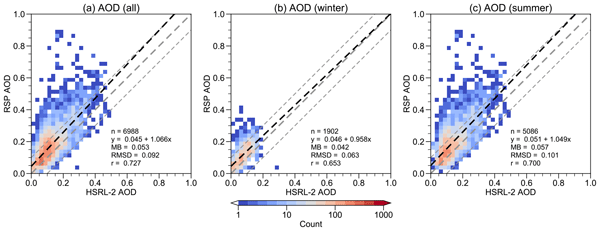
Leong Wai Siu, Joseph S. Schlosser, David Painemal, Brian Cairns, Marta A. Fenn, Richard A. Ferrare, Johnathan W. Hair, Chris A. Hostetler, Longlei Li, Mary M. Kleb, Amy Jo Scarino, Taylor J. Shingler, Armin Sorooshian, Snorre A. Stamnes, and Xubin Zeng
Atmos. Meas. Tech., 17, 2739–2759, https://doi.org/10.5194/amt-17-2739-2024, https://doi.org/10.5194/amt-17-2739-2024, 2024
Short summary
Short summary
An unprecedented 3-year aerosol dataset was collected from a recent NASA field campaign over the western North Atlantic Ocean, which offers a special opportunity to evaluate two state-of-the-art remote sensing instruments, one lidar and the other polarimeter, on the same aircraft. Special attention has been paid to validate aerosol optical depth data and their uncertainties when no reference dataset is available. Physical reasons for the disagreement between two instruments are discussed.
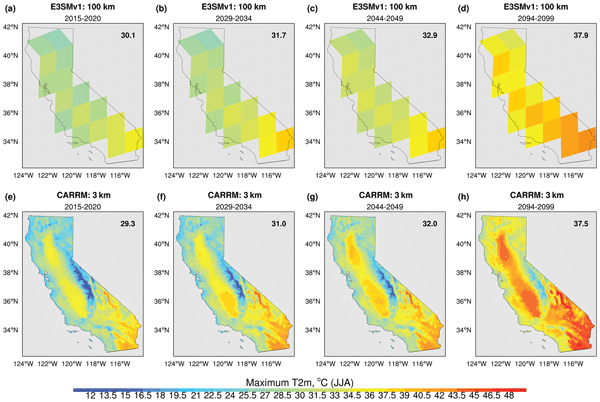
Jishi Zhang, Peter Bogenschutz, Qi Tang, Philip Cameron-smith, and Chengzhu Zhang
Geosci. Model Dev., 17, 3687–3731, https://doi.org/10.5194/gmd-17-3687-2024, https://doi.org/10.5194/gmd-17-3687-2024, 2024
Short summary
Short summary
We developed a regionally refined climate model that allows resolved convection and performed a 20-year projection to the end of the century. The model has a resolution of 3.25 km in California, which allows us to predict climate with unprecedented accuracy, and a resolution of 100 km for the rest of the globe to achieve efficient, self-consistent simulations. The model produces superior results in reproducing climate patterns over California that typical modern climate models cannot resolve.
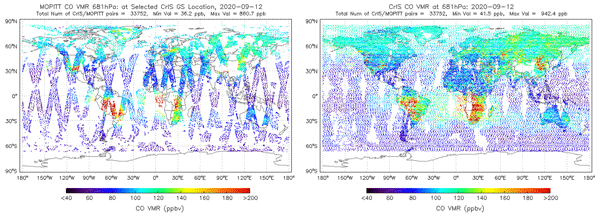
Ming Luo, Helen M. Worden, Robert D. Field, Kostas Tsigaridis, and Gregory S. Elsaesser
Atmos. Meas. Tech., 17, 2611–2624, https://doi.org/10.5194/amt-17-2611-2024, https://doi.org/10.5194/amt-17-2611-2024, 2024
Short summary
Short summary
The TROPESS CrIS single-pixel CO profile retrievals are compared to the MOPITT CO products in steps of adjusting them to the common a priori assumptions. The two data sets are found to agree within 5 %. We also demonstrated and analyzed the proper steps in evaluating GISS ModelE CO simulations using satellite CO retrieval products for the western US wildfire events in September 2020.
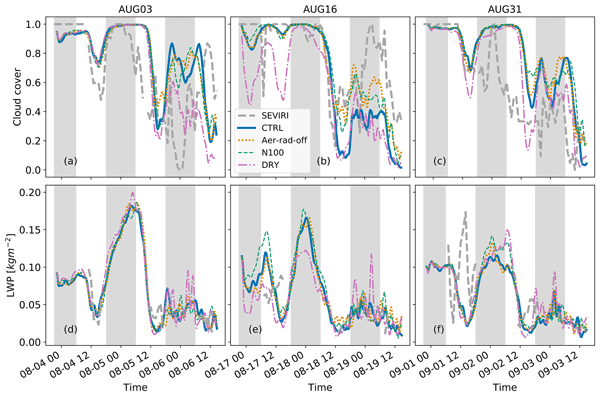
Alejandro Baró Pérez, Michael S. Diamond, Frida A.-M. Bender, Abhay Devasthale, Matthias Schwarz, Julien Savre, Juha Tonttila, Harri Kokkola, Hyunho Lee, David Painemal, and Annica M. L. Ekman
Atmos. Chem. Phys., 24, 4591–4610, https://doi.org/10.5194/acp-24-4591-2024, https://doi.org/10.5194/acp-24-4591-2024, 2024
Short summary
Short summary
We use a numerical model to study interactions between humid light-absorbing aerosol plumes, clouds, and radiation over the southeast Atlantic. We find that the warming produced by the aerosols reduces cloud cover, especially in highly polluted situations. Aerosol impacts on drizzle play a minor role. However, aerosol effects on cloud reflectivity and moisture-induced changes in cloud cover dominate the climatic response and lead to an overall cooling by the biomass burning plumes.
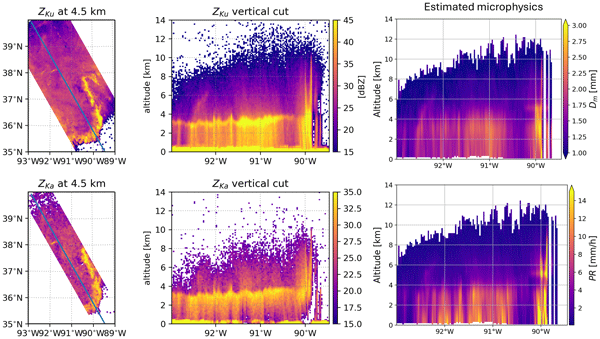
Kamil Mroz, Alessandro Battaglia, and Ann M. Fridlind
Atmos. Meas. Tech., 17, 1577–1597, https://doi.org/10.5194/amt-17-1577-2024, https://doi.org/10.5194/amt-17-1577-2024, 2024
Short summary
Short summary
In this study, we examine the extent to which radar measurements from space can inform us about the properties of clouds and precipitation. Surprisingly, our analysis showed that the amount of ice turning into rain was lower than expected in the current product. To improve on this, we came up with a new way to extract information about the size and concentration of particles from radar data. As long as we use this method in the right conditions, we can even estimate how dense the ice is.
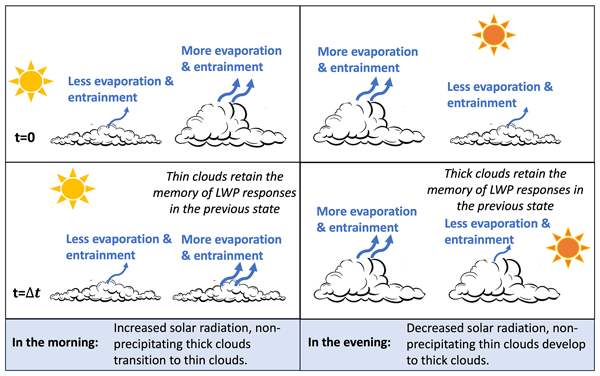
Shaoyue Qiu, Xue Zheng, David Painemal, Christopher R. Terai, and Xiaoli Zhou
Atmos. Chem. Phys., 24, 2913–2935, https://doi.org/10.5194/acp-24-2913-2024, https://doi.org/10.5194/acp-24-2913-2024, 2024
Short summary
Short summary
The aerosol indirect effect (AIE) depends on cloud states, which exhibit significant diurnal variations in the northeastern Atlantic. Yet the AIE diurnal cycle remains poorly understood. Using satellite retrievals, we find a pronounced “U-shaped” diurnal variation in the AIE, which is contributed to by the transition of cloud states combined with the lagged cloud responses. This suggests that polar-orbiting satellites with overpass times at noon underestimate daytime mean values of the AIE.
Yu Yao, Po-Lun Ma, Yi Qin, Matthew W. Christensen, Hui Wan, Kai Zhang, Balwinder Singh, Meng Huang, and Mikhail Ovchinnikov
EGUsphere, https://doi.org/10.5194/egusphere-2024-523, https://doi.org/10.5194/egusphere-2024-523, 2024
Preprint withdrawn
Short summary
Short summary
Giant aerosols have substantial effects on warm rain formation. However, it remains challenging to quantify the impact of giant particles at global scale. In this work, we applied earth system model to investigate its impacts by implementing new giant aerosol treatments to consider its physical process. We found this approach substantially affect liquid cloud and improved model's precipitation response to aerosols. Our findings demonstrate the significant impact of giant aerosols on climate.
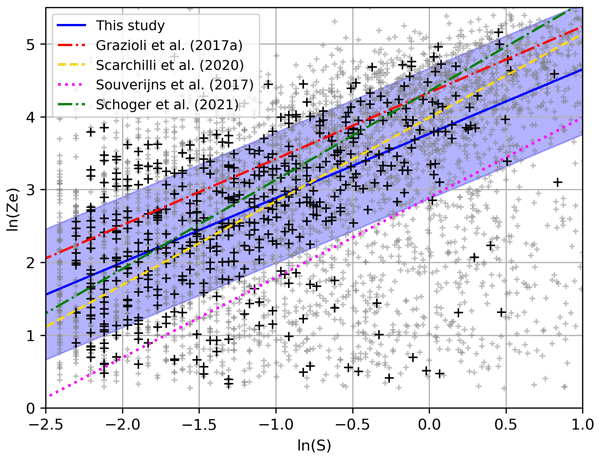
Valentin Wiener, Marie-Laure Roussel, Christophe Genthon, Étienne Vignon, Jacopo Grazioli, and Alexis Berne
Earth Syst. Sci. Data, 16, 821–836, https://doi.org/10.5194/essd-16-821-2024, https://doi.org/10.5194/essd-16-821-2024, 2024
Short summary
Short summary
This paper presents 7 years of data from a precipitation radar deployed at the Dumont d'Urville station in East Antarctica. The main characteristics of the dataset are outlined in a short statistical study. Interannual and seasonal variability are also investigated. Then, we extensively describe the processing method to retrieve snowfall profiles from the radar data. Lastly, a brief comparison is made with two climate models as an application example of the dataset.
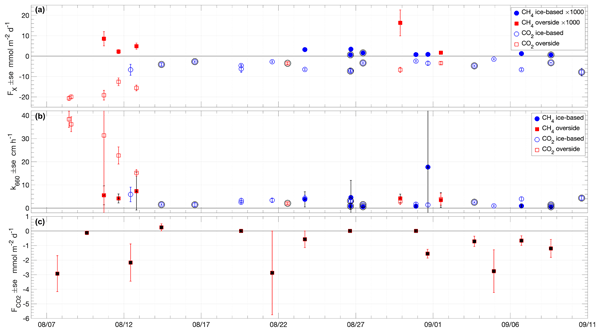
John Prytherch, Sonja Murto, Ian Brown, Adam Ulfsbo, Brett F. Thornton, Volker Brüchert, Michael Tjernström, Anna Lunde Hermansson, Amanda T. Nylund, and Lina A. Holthusen
Biogeosciences, 21, 671–688, https://doi.org/10.5194/bg-21-671-2024, https://doi.org/10.5194/bg-21-671-2024, 2024
Short summary
Short summary
We directly measured methane and carbon dioxide exchange between ocean or sea ice and the atmosphere during an icebreaker-based expedition to the central Arctic Ocean (CAO) in summer 2021. These measurements can help constrain climate models and carbon budgets. The methane measurements, the first such made in the CAO, are lower than previous estimates and imply that the CAO is an insignificant contributor to Arctic methane emission. Gas exchange rates are slower than previous estimates.
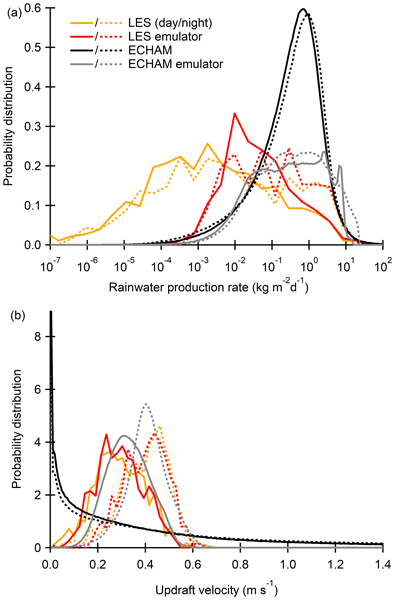
Kalle Nordling, Jukka-Pekka Keskinen, Sami Romakkaniemi, Harri Kokkola, Petri Räisänen, Antti Lipponen, Antti-Ilari Partanen, Jaakko Ahola, Juha Tonttila, Muzaffer Ege Alper, Hannele Korhonen, and Tomi Raatikainen
Atmos. Chem. Phys., 24, 869–890, https://doi.org/10.5194/acp-24-869-2024, https://doi.org/10.5194/acp-24-869-2024, 2024
Short summary
Short summary
Our results show that the global model is stable and it provides meaningful results. This way we can include a physics-based presentation of sub-grid physics (physics which happens on a 100 m scale) in the global model, whose resolution is on a 100 km scale.
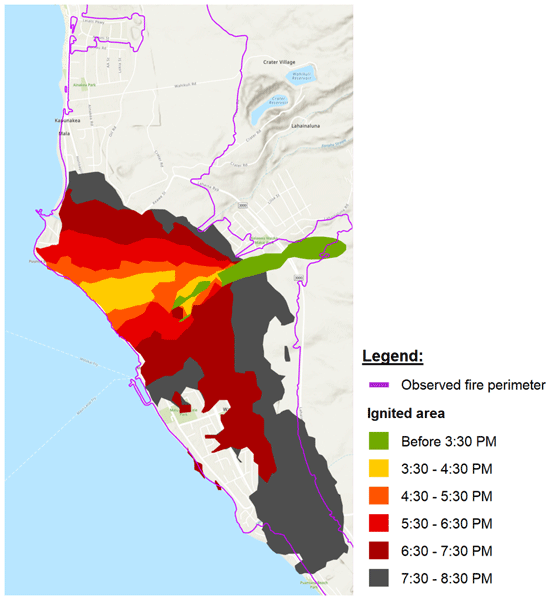
Timothy W. Juliano, Fernando Szasdi-Bardales, Neil P. Lareau, Kasra Shamsaei, Branko Kosović, Negar Elhami-Khorasani, Eric P. James, and Hamed Ebrahimian
Nat. Hazards Earth Syst. Sci., 24, 47–52, https://doi.org/10.5194/nhess-24-47-2024, https://doi.org/10.5194/nhess-24-47-2024, 2024
Short summary
Short summary
Following the destructive Lahaina Fire in Hawaii, our team has modeled the wind and fire spread processes to understand the drivers of this devastating event. The simulation results show that extreme winds with high variability, a fire ignition close to the community, and construction characteristics led to continued fire spread in multiple directions. Our results suggest that available modeling capabilities can provide vital information to guide decision-making during wildfire events.
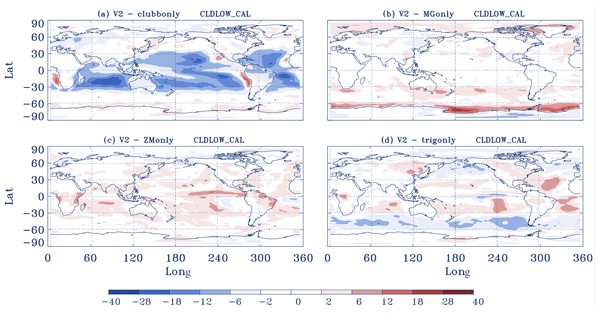
Yuying Zhang, Shaocheng Xie, Yi Qin, Wuyin Lin, Jean-Christophe Golaz, Xue Zheng, Po-Lun Ma, Yun Qian, Qi Tang, Christopher R. Terai, and Meng Zhang
Geosci. Model Dev., 17, 169–189, https://doi.org/10.5194/gmd-17-169-2024, https://doi.org/10.5194/gmd-17-169-2024, 2024
Short summary
Short summary
We performed systematic evaluation of clouds simulated in the Energy
Exascale Earth System Model (E3SMv2) to document model performance and understand what updates in E3SMv2 have caused changes in clouds from E3SMv1 to E3SMv2. We find that stratocumulus clouds along the subtropical west coast of continents are dramatically improved, primarily due to the retuning done in CLUBB. This study offers additional insights into clouds simulated in E3SMv2 and will benefit future E3SM developments.
Exascale Earth System Model (E3SMv2) to document model performance and understand what updates in E3SMv2 have caused changes in clouds from E3SMv1 to E3SMv2. We find that stratocumulus clouds along the subtropical west coast of continents are dramatically improved, primarily due to the retuning done in CLUBB. This study offers additional insights into clouds simulated in E3SMv2 and will benefit future E3SM developments.
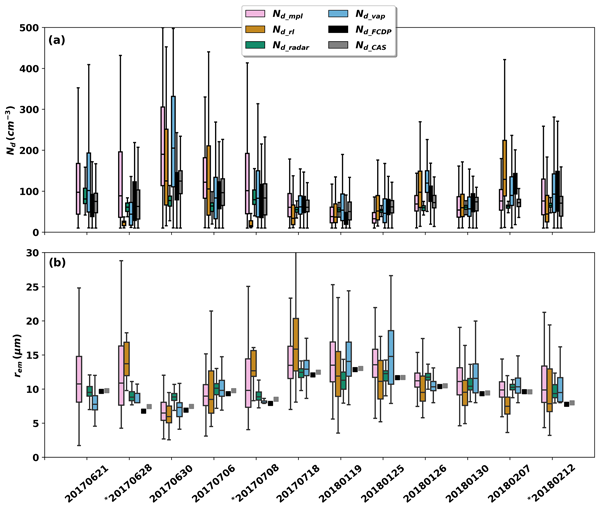
Damao Zhang, Andrew M. Vogelmann, Fan Yang, Edward Luke, Pavlos Kollias, Zhien Wang, Peng Wu, William I. Gustafson Jr., Fan Mei, Susanne Glienke, Jason Tomlinson, and Neel Desai
Atmos. Meas. Tech., 16, 5827–5846, https://doi.org/10.5194/amt-16-5827-2023, https://doi.org/10.5194/amt-16-5827-2023, 2023
Short summary
Short summary
Cloud droplet number concentration can be retrieved from remote sensing measurements. Aircraft measurements are used to validate four ground-based retrievals of cloud droplet number concentration. We demonstrate that retrieved cloud droplet number concentrations align well with aircraft measurements for overcast clouds, but they may substantially differ for broken clouds. The ensemble of various retrievals can help quantify retrieval uncertainties and identify reliable retrieval scenarios.
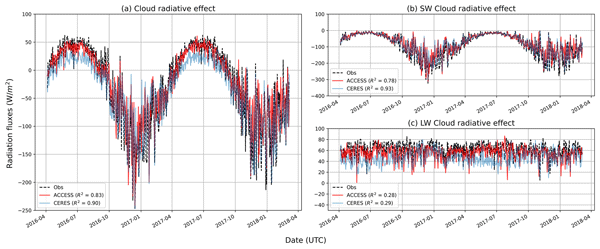
Zhangcheng Pei, Sonya L. Fiddes, W. John R. French, Simon P. Alexander, Marc D. Mallet, Peter Kuma, and Adrian McDonald
Atmos. Chem. Phys., 23, 14691–14714, https://doi.org/10.5194/acp-23-14691-2023, https://doi.org/10.5194/acp-23-14691-2023, 2023
Short summary
Short summary
In this paper, we use ground-based observations to evaluate a climate model and a satellite product in simulating surface radiation and investigate how radiation biases are influenced by cloud properties over the Southern Ocean. We find that significant radiation biases exist in both the model and satellite. The cloud fraction and cloud occurrence play an important role in affecting radiation biases. We suggest further development for the model and satellite using ground-based observations.
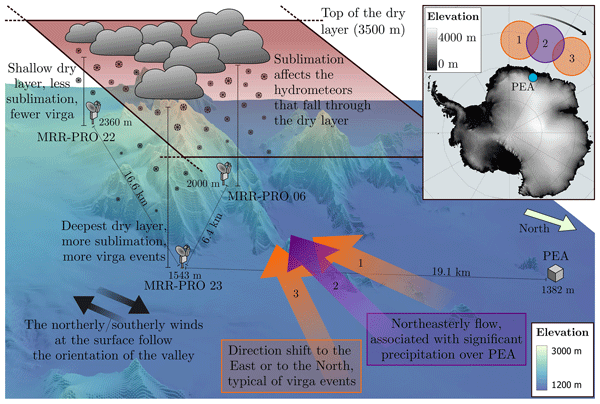
Alfonso Ferrone, Étienne Vignon, Andrea Zonato, and Alexis Berne
The Cryosphere, 17, 4937–4956, https://doi.org/10.5194/tc-17-4937-2023, https://doi.org/10.5194/tc-17-4937-2023, 2023
Short summary
Short summary
In austral summer 2019/2020, three K-band Doppler profilers were deployed across the Sør Rondane Mountains, south of the Belgian base Princess Elisabeth Antarctica. Their measurements, along with atmospheric simulations and reanalyses, have been used to study the spatial variability in precipitation over the region, as well as investigate the interaction between the complex terrain and the typical flow associated with precipitating systems.
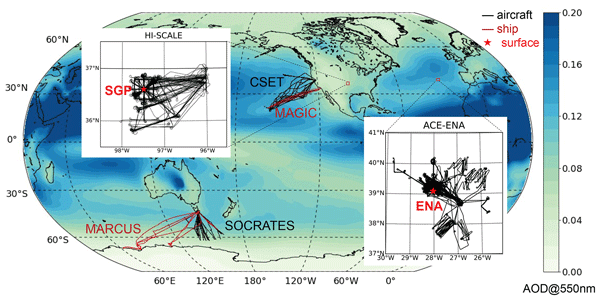
Shuaiqi Tang, Adam C. Varble, Jerome D. Fast, Kai Zhang, Peng Wu, Xiquan Dong, Fan Mei, Mikhail Pekour, Joseph C. Hardin, and Po-Lun Ma
Geosci. Model Dev., 16, 6355–6376, https://doi.org/10.5194/gmd-16-6355-2023, https://doi.org/10.5194/gmd-16-6355-2023, 2023
Short summary
Short summary
To assess the ability of Earth system model (ESM) predictions, we developed a tool called ESMAC Diags to understand how aerosols, clouds, and aerosol–cloud interactions are represented in ESMs. This paper describes its version 2 functionality. We compared the model predictions with measurements taken by planes, ships, satellites, and ground instruments over four regions across the world. Results show that this new tool can help identify model problems and guide future development of ESMs.
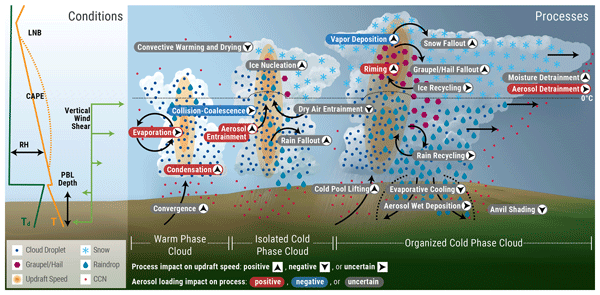
Adam C. Varble, Adele L. Igel, Hugh Morrison, Wojciech W. Grabowski, and Zachary J. Lebo
Atmos. Chem. Phys., 23, 13791–13808, https://doi.org/10.5194/acp-23-13791-2023, https://doi.org/10.5194/acp-23-13791-2023, 2023
Short summary
Short summary
As atmospheric particles called aerosols increase in number, the number of droplets in clouds tends to increase, which has been theorized to increase storm intensity. We critically evaluate the evidence for this theory, showing that flaws and limitations of previous studies coupled with unaddressed cloud process complexities draw it into question. We provide recommendations for future observations and modeling to overcome current uncertainties.
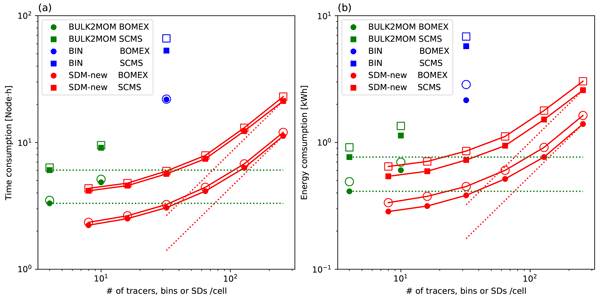
Toshiki Matsushima, Seiya Nishizawa, and Shin-ichiro Shima
Geosci. Model Dev., 16, 6211–6245, https://doi.org/10.5194/gmd-16-6211-2023, https://doi.org/10.5194/gmd-16-6211-2023, 2023
Short summary
Short summary
A particle-based cloud model was developed for meter- to submeter-scale resolution in cloud simulations. Our new cloud model's computational performance is superior to a bin method and comparable to a two-moment bulk method. A highlight of this study is the 2 m resolution shallow cloud simulations over an area covering ∼10 km2. This model allows for studying turbulence and cloud physics at spatial scales that overlap with those covered by direct numerical simulations and field studies.
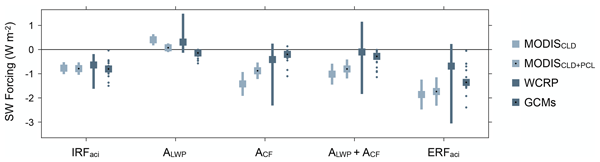
Casey J. Wall, Trude Storelvmo, and Anna Possner
Atmos. Chem. Phys., 23, 13125–13141, https://doi.org/10.5194/acp-23-13125-2023, https://doi.org/10.5194/acp-23-13125-2023, 2023
Short summary
Short summary
Interactions between aerosol pollution and liquid clouds are one of the largest sources of uncertainty in the effective radiative forcing of climate over the industrial era. We use global satellite observations to decompose the forcing into components from changes in cloud-droplet number concentration, cloud water content, and cloud amount. Our results reduce uncertainty in these forcing components and clarify their relative importance.
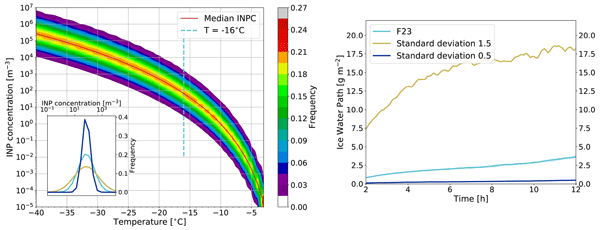
Hannah C. Frostenberg, André Welti, Mikael Luhr, Julien Savre, Erik S. Thomson, and Luisa Ickes
Atmos. Chem. Phys., 23, 10883–10900, https://doi.org/10.5194/acp-23-10883-2023, https://doi.org/10.5194/acp-23-10883-2023, 2023
Short summary
Short summary
Observations show that ice-nucleating particle concentrations (INPCs) have a large variety and follow lognormal distributions for a given temperature. We introduce a new immersion freezing parameterization that applies this lognormal behavior. INPCs are drawn randomly from a temperature-dependent lognormal distribution. We then show that the ice content of the modeled Arctic stratocumulus cloud is highly sensitive to the probability of drawing large INPCs.
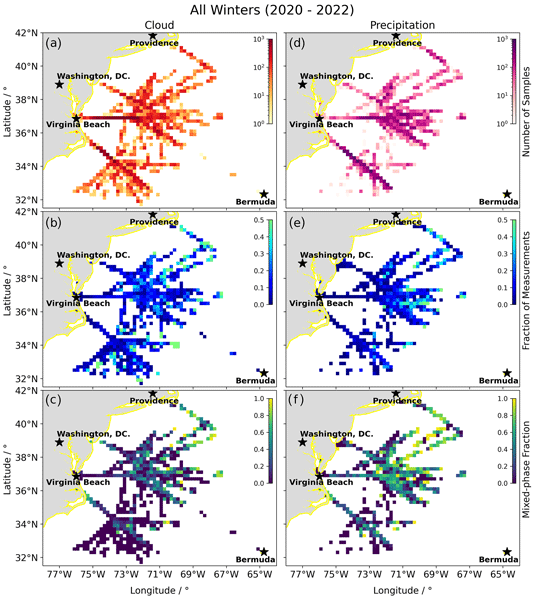
Simon Kirschler, Christiane Voigt, Bruce E. Anderson, Gao Chen, Ewan C. Crosbie, Richard A. Ferrare, Valerian Hahn, Johnathan W. Hair, Stefan Kaufmann, Richard H. Moore, David Painemal, Claire E. Robinson, Kevin J. Sanchez, Amy J. Scarino, Taylor J. Shingler, Michael A. Shook, Kenneth L. Thornhill, Edward L. Winstead, Luke D. Ziemba, and Armin Sorooshian
Atmos. Chem. Phys., 23, 10731–10750, https://doi.org/10.5194/acp-23-10731-2023, https://doi.org/10.5194/acp-23-10731-2023, 2023
Short summary
Short summary
In this study we present an overview of liquid and mixed-phase clouds and precipitation in the marine boundary layer over the western North Atlantic Ocean. We compare microphysical properties of pure liquid clouds to mixed-phase clouds and show that the initiation of the ice phase in mixed-phase clouds promotes precipitation. The observational data presented in this study are well suited for investigating the processes that give rise to liquid and mixed-phase clouds, ice, and precipitation.
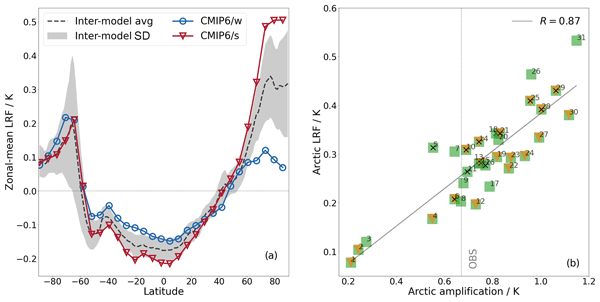
Olivia Linke, Johannes Quaas, Finja Baumer, Sebastian Becker, Jan Chylik, Sandro Dahlke, André Ehrlich, Dörthe Handorf, Christoph Jacobi, Heike Kalesse-Los, Luca Lelli, Sina Mehrdad, Roel A. J. Neggers, Johannes Riebold, Pablo Saavedra Garfias, Niklas Schnierstein, Matthew D. Shupe, Chris Smith, Gunnar Spreen, Baptiste Verneuil, Kameswara S. Vinjamuri, Marco Vountas, and Manfred Wendisch
Atmos. Chem. Phys., 23, 9963–9992, https://doi.org/10.5194/acp-23-9963-2023, https://doi.org/10.5194/acp-23-9963-2023, 2023
Short summary
Short summary
Lapse rate feedback (LRF) is a major driver of the Arctic amplification (AA) of climate change. It arises because the warming is stronger at the surface than aloft. Several processes can affect the LRF in the Arctic, such as the omnipresent temperature inversion. Here, we compare multimodel climate simulations to Arctic-based observations from a large research consortium to broaden our understanding of these processes, find synergy among them, and constrain the Arctic LRF and AA.
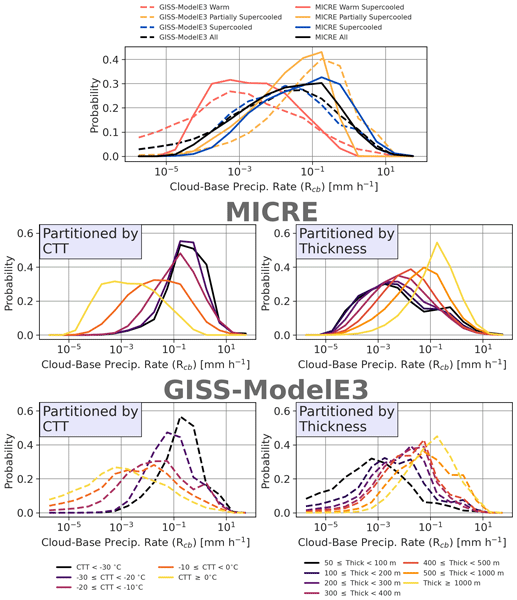
McKenna W. Stanford, Ann M. Fridlind, Israel Silber, Andrew S. Ackerman, Greg Cesana, Johannes Mülmenstädt, Alain Protat, Simon Alexander, and Adrian McDonald
Atmos. Chem. Phys., 23, 9037–9069, https://doi.org/10.5194/acp-23-9037-2023, https://doi.org/10.5194/acp-23-9037-2023, 2023
Short summary
Short summary
Clouds play an important role in the Earth’s climate system as they modulate the amount of radiation that either reaches the surface or is reflected back to space. This study demonstrates an approach to robustly evaluate surface-based observations against a large-scale model. We find that the large-scale model precipitates too infrequently relative to observations, contrary to literature documentation suggesting otherwise based on satellite measurements.
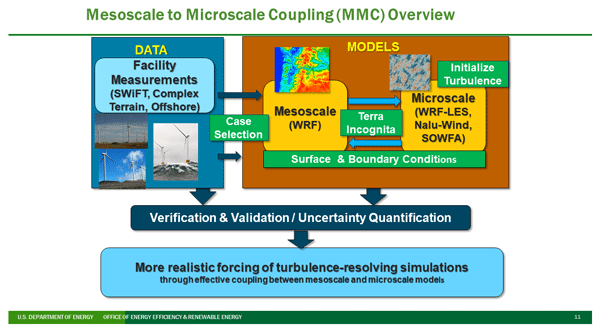
Sue Ellen Haupt, Branko Kosović, Larry K. Berg, Colleen M. Kaul, Matthew Churchfield, Jeffrey Mirocha, Dries Allaerts, Thomas Brummet, Shannon Davis, Amy DeCastro, Susan Dettling, Caroline Draxl, David John Gagne, Patrick Hawbecker, Pankaj Jha, Timothy Juliano, William Lassman, Eliot Quon, Raj K. Rai, Michael Robinson, William Shaw, and Regis Thedin
Wind Energ. Sci., 8, 1251–1275, https://doi.org/10.5194/wes-8-1251-2023, https://doi.org/10.5194/wes-8-1251-2023, 2023
Short summary
Short summary
The Mesoscale to Microscale Coupling team, part of the U.S. Department of Energy Atmosphere to Electrons (A2e) initiative, has studied various important challenges related to coupling mesoscale models to microscale models. Lessons learned and discerned best practices are described in the context of the cases studied for the purpose of enabling further deployment of wind energy. It also points to code, assessment tools, and data for testing the methods.
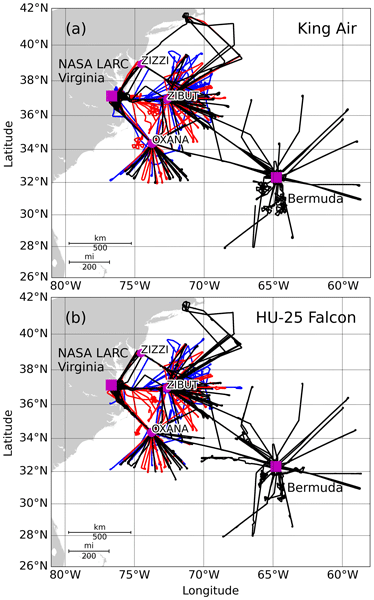
Armin Sorooshian, Mikhail D. Alexandrov, Adam D. Bell, Ryan Bennett, Grace Betito, Sharon P. Burton, Megan E. Buzanowicz, Brian Cairns, Eduard V. Chemyakin, Gao Chen, Yonghoon Choi, Brian L. Collister, Anthony L. Cook, Andrea F. Corral, Ewan C. Crosbie, Bastiaan van Diedenhoven, Joshua P. DiGangi, Glenn S. Diskin, Sanja Dmitrovic, Eva-Lou Edwards, Marta A. Fenn, Richard A. Ferrare, David van Gilst, Johnathan W. Hair, David B. Harper, Miguel Ricardo A. Hilario, Chris A. Hostetler, Nathan Jester, Michael Jones, Simon Kirschler, Mary M. Kleb, John M. Kusterer, Sean Leavor, Joseph W. Lee, Hongyu Liu, Kayla McCauley, Richard H. Moore, Joseph Nied, Anthony Notari, John B. Nowak, David Painemal, Kasey E. Phillips, Claire E. Robinson, Amy Jo Scarino, Joseph S. Schlosser, Shane T. Seaman, Chellappan Seethala, Taylor J. Shingler, Michael A. Shook, Kenneth A. Sinclair, William L. Smith Jr., Douglas A. Spangenberg, Snorre A. Stamnes, Kenneth L. Thornhill, Christiane Voigt, Holger Vömel, Andrzej P. Wasilewski, Hailong Wang, Edward L. Winstead, Kira Zeider, Xubin Zeng, Bo Zhang, Luke D. Ziemba, and Paquita Zuidema
Earth Syst. Sci. Data, 15, 3419–3472, https://doi.org/10.5194/essd-15-3419-2023, https://doi.org/10.5194/essd-15-3419-2023, 2023
Short summary
Short summary
The NASA Aerosol Cloud meTeorology Interactions oVer the western ATlantic Experiment (ACTIVATE) produced a unique dataset for research into aerosol–cloud–meteorology interactions. HU-25 Falcon and King Air aircraft conducted systematic and spatially coordinated flights over the northwest Atlantic Ocean. This paper describes the ACTIVATE flight strategy, instrument and complementary dataset products, data access and usage details, and data application notes.
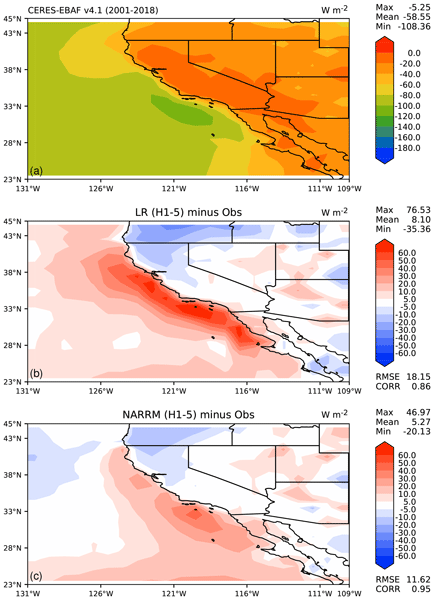
Qi Tang, Jean-Christophe Golaz, Luke P. Van Roekel, Mark A. Taylor, Wuyin Lin, Benjamin R. Hillman, Paul A. Ullrich, Andrew M. Bradley, Oksana Guba, Jonathan D. Wolfe, Tian Zhou, Kai Zhang, Xue Zheng, Yunyan Zhang, Meng Zhang, Mingxuan Wu, Hailong Wang, Cheng Tao, Balwinder Singh, Alan M. Rhoades, Yi Qin, Hong-Yi Li, Yan Feng, Yuying Zhang, Chengzhu Zhang, Charles S. Zender, Shaocheng Xie, Erika L. Roesler, Andrew F. Roberts, Azamat Mametjanov, Mathew E. Maltrud, Noel D. Keen, Robert L. Jacob, Christiane Jablonowski, Owen K. Hughes, Ryan M. Forsyth, Alan V. Di Vittorio, Peter M. Caldwell, Gautam Bisht, Renata B. McCoy, L. Ruby Leung, and David C. Bader
Geosci. Model Dev., 16, 3953–3995, https://doi.org/10.5194/gmd-16-3953-2023, https://doi.org/10.5194/gmd-16-3953-2023, 2023
Short summary
Short summary
High-resolution simulations are superior to low-resolution ones in capturing regional climate changes and climate extremes. However, uniformly reducing the grid size of a global Earth system model is too computationally expensive. We provide an overview of the fully coupled regionally refined model (RRM) of E3SMv2 and document a first-of-its-kind set of climate production simulations using RRM at an economic cost. The key to this success is our innovative hybrid time step method.
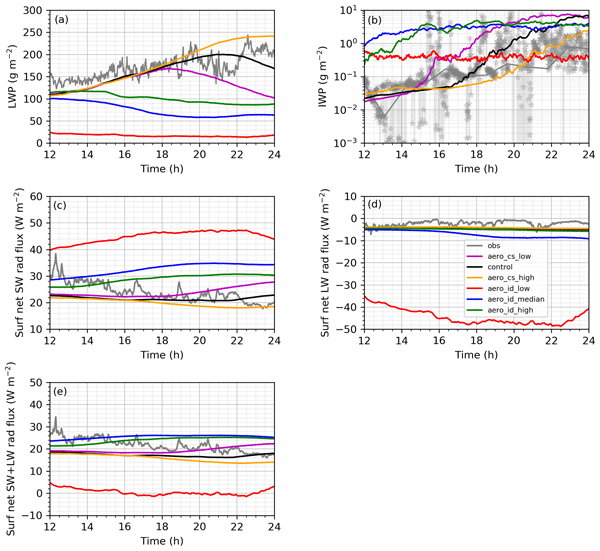
Ines Bulatovic, Julien Savre, Michael Tjernström, Caroline Leck, and Annica M. L. Ekman
Atmos. Chem. Phys., 23, 7033–7055, https://doi.org/10.5194/acp-23-7033-2023, https://doi.org/10.5194/acp-23-7033-2023, 2023
Short summary
Short summary
We use numerical modeling with detailed cloud microphysics to investigate a low-altitude cloud system consisting of two cloud layers – a type of cloud situation which was commonly observed during the summer of 2018 in the central Arctic (north of 80° N). The model generally reproduces the observed cloud layers and the thermodynamic structure of the lower atmosphere well. The cloud system is maintained unless there are low aerosol number concentrations or high large-scale wind speeds.
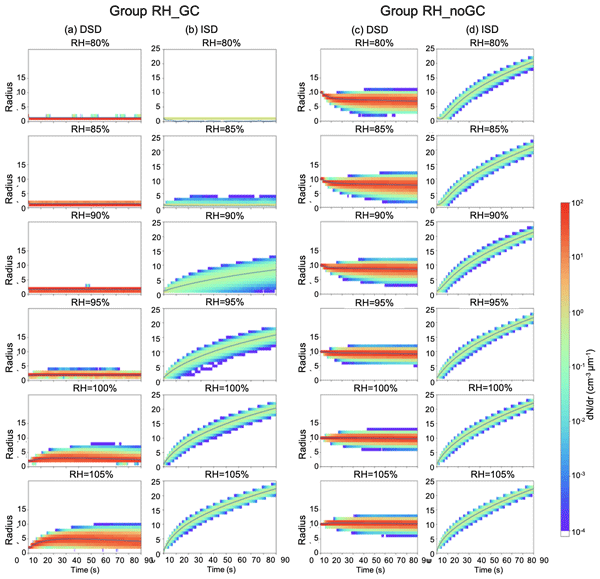
Sisi Chen, Lulin Xue, Sarah Tessendorf, Kyoko Ikeda, Courtney Weeks, Roy Rasmussen, Melvin Kunkel, Derek Blestrud, Shaun Parkinson, Melinda Meadows, and Nick Dawson
Atmos. Chem. Phys., 23, 5217–5231, https://doi.org/10.5194/acp-23-5217-2023, https://doi.org/10.5194/acp-23-5217-2023, 2023
Short summary
Short summary
The possible mechanism of effective ice growth in the cloud-top generating cells in winter orographic clouds is explored using a newly developed ultra-high-resolution cloud microphysics model. Simulations demonstrate that a high availability of moisture and liquid water is critical for producing large ice particles. Fluctuations in temperature and moisture down to millimeter scales due to cloud turbulence can substantially affect the growth history of the individual cloud particles.
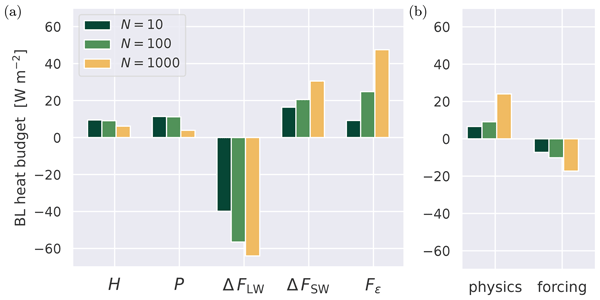
Jan Chylik, Dmitry Chechin, Regis Dupuy, Birte S. Kulla, Christof Lüpkes, Stephan Mertes, Mario Mech, and Roel A. J. Neggers
Atmos. Chem. Phys., 23, 4903–4929, https://doi.org/10.5194/acp-23-4903-2023, https://doi.org/10.5194/acp-23-4903-2023, 2023
Short summary
Short summary
Arctic low-level clouds play an important role in the ongoing warming of the Arctic. Unfortunately, these clouds are not properly represented in weather forecast and climate models. This study tries to cover this gap by focusing on clouds over open water during the spring, observed by research aircraft near Svalbard. The study combines the high-resolution model with sets of observational data. The results show the importance of processes that involve both ice and the liquid water in the clouds.
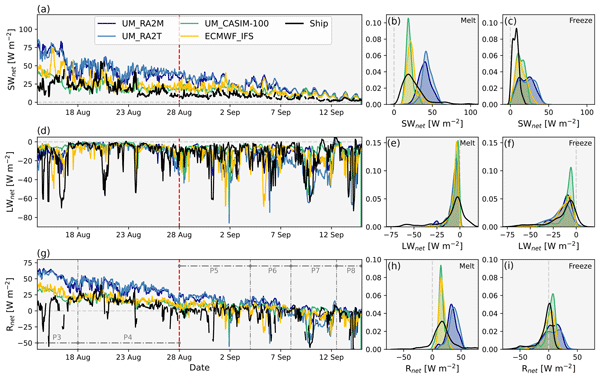
Gillian Young McCusker, Jutta Vüllers, Peggy Achtert, Paul Field, Jonathan J. Day, Richard Forbes, Ruth Price, Ewan O'Connor, Michael Tjernström, John Prytherch, Ryan Neely III, and Ian M. Brooks
Atmos. Chem. Phys., 23, 4819–4847, https://doi.org/10.5194/acp-23-4819-2023, https://doi.org/10.5194/acp-23-4819-2023, 2023
Short summary
Short summary
In this study, we show that recent versions of two atmospheric models – the Unified Model and Integrated Forecasting System – overestimate Arctic cloud fraction within the lower troposphere by comparison with recent remote-sensing measurements made during the Arctic Ocean 2018 expedition. The overabundance of cloud is interlinked with the modelled thermodynamic structure, with strong negative temperature biases coincident with these overestimated cloud layers.
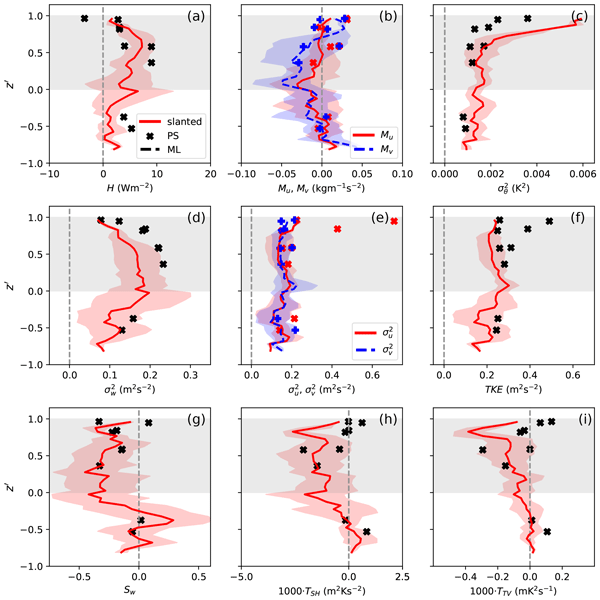
Dmitry G. Chechin, Christof Lüpkes, Jörg Hartmann, André Ehrlich, and Manfred Wendisch
Atmos. Chem. Phys., 23, 4685–4707, https://doi.org/10.5194/acp-23-4685-2023, https://doi.org/10.5194/acp-23-4685-2023, 2023
Short summary
Short summary
Clouds represent a very important component of the Arctic climate system, as they strongly reduce the amount of heat lost to space from the sea ice surface. Properties of clouds, as well as their persistence, strongly depend on the complex interaction of such small-scale properties as phase transitions, radiative transfer and turbulence. In this study we use airborne observations to learn more about the effect of clouds and radiative cooling on turbulence in comparison with other factors.
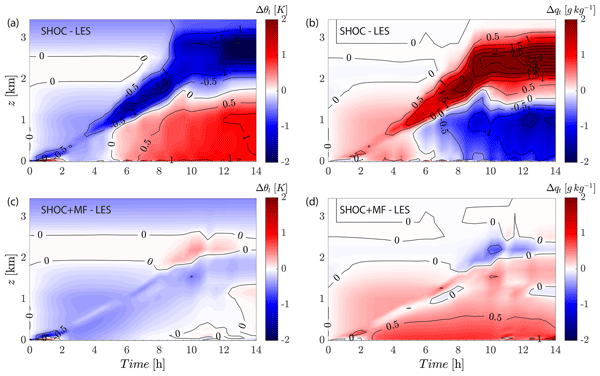
Maria J. Chinita, Mikael Witte, Marcin J. Kurowski, Joao Teixeira, Kay Suselj, Georgios Matheou, and Peter Bogenschutz
Geosci. Model Dev., 16, 1909–1924, https://doi.org/10.5194/gmd-16-1909-2023, https://doi.org/10.5194/gmd-16-1909-2023, 2023
Short summary
Short summary
Low clouds are one of the largest sources of uncertainty in climate prediction. In this paper, we introduce the first version of the unified turbulence and shallow convection parameterization named SHOC+MF developed to improve the representation of shallow cumulus clouds in the Simple Cloud-Resolving E3SM Atmosphere Model (SCREAM). Here, we also show promising preliminary results in a single-column model framework for two benchmark cases of shallow cumulus convection.
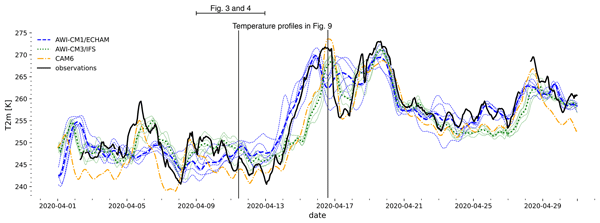
Felix Pithan, Marylou Athanase, Sandro Dahlke, Antonio Sánchez-Benítez, Matthew D. Shupe, Anne Sledd, Jan Streffing, Gunilla Svensson, and Thomas Jung
Geosci. Model Dev., 16, 1857–1873, https://doi.org/10.5194/gmd-16-1857-2023, https://doi.org/10.5194/gmd-16-1857-2023, 2023
Short summary
Short summary
Evaluating climate models usually requires long observational time series, but we present a method that also works for short field campaigns. We compare climate model output to observations from the MOSAiC expedition in the central Arctic Ocean. All models show how the arrival of a warm air mass warms the Arctic in April 2020, but two models do not show the response of snow temperature to the diurnal cycle. One model has too little liquid water and too much ice in clouds during cold days.
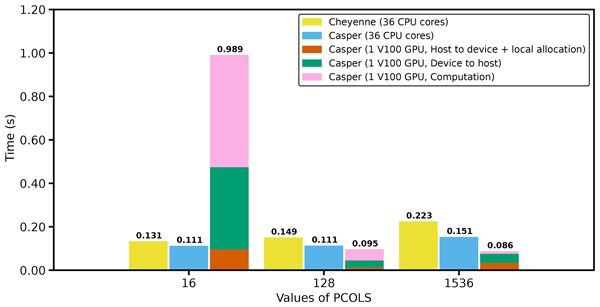
Andrew Gettelman, Hugh Morrison, Trude Eidhammer, Katherine Thayer-Calder, Jian Sun, Richard Forbes, Zachary McGraw, Jiang Zhu, Trude Storelvmo, and John Dennis
Geosci. Model Dev., 16, 1735–1754, https://doi.org/10.5194/gmd-16-1735-2023, https://doi.org/10.5194/gmd-16-1735-2023, 2023
Short summary
Short summary
Clouds are a critical part of weather and climate prediction. In this work, we document updates and corrections to the description of clouds used in several Earth system models. These updates include the ability to run the scheme on graphics processing units (GPUs), changes to the numerical description of precipitation, and a correction to the ice number. There are big improvements in the computational performance that can be achieved with GPU acceleration.

Matthew W. Christensen, Po-Lun Ma, Peng Wu, Adam C. Varble, Johannes Mülmenstädt, and Jerome D. Fast
Atmos. Chem. Phys., 23, 2789–2812, https://doi.org/10.5194/acp-23-2789-2023, https://doi.org/10.5194/acp-23-2789-2023, 2023
Short summary
Short summary
An increase in aerosol concentration (tiny airborne particles) is shown to suppress rainfall and increase the abundance of droplets in clouds passing over Graciosa Island in the Azores. Cloud drops remain affected by aerosol for several days across thousands of kilometers in satellite data. Simulations from an Earth system model show good agreement, but differences in the amount of cloud water and its extent remain despite modifications to model parameters that control the warm-rain process.
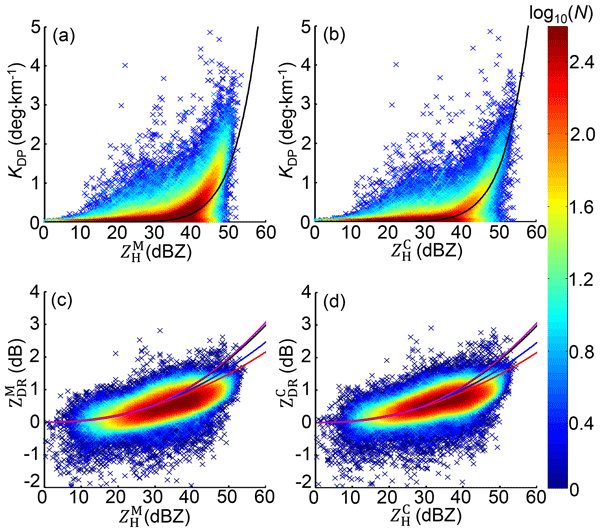
Yabin Gou, Haonan Chen, Hong Zhu, and Lulin Xue
Atmos. Chem. Phys., 23, 2439–2463, https://doi.org/10.5194/acp-23-2439-2023, https://doi.org/10.5194/acp-23-2439-2023, 2023
Short summary
Short summary
This article investigates the complex precipitation microphysics associated with super typhoon Lekima using a host of in situ and remote sensing observations, including rain gauge and disdrometer data, as well as polarimetric radar observations. The impacts of precipitation microphysics on multi-source data consistency and radar precipitation estimation are quantified. It is concluded that the dynamical precipitation microphysical processes must be considered in radar precipitation estimation.
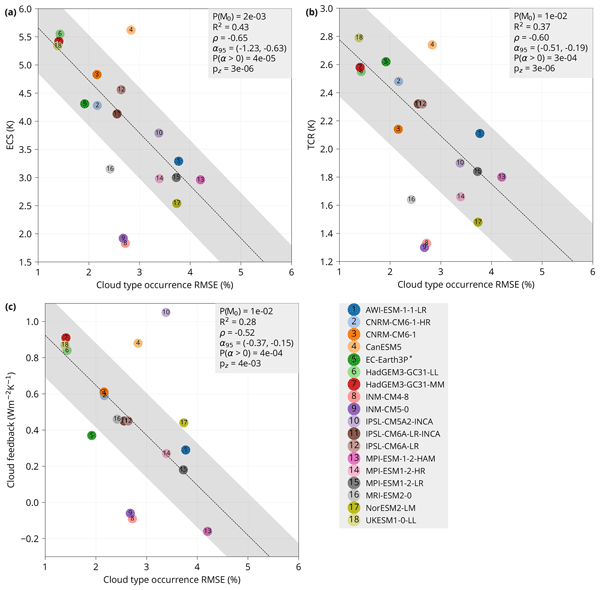
Peter Kuma, Frida A.-M. Bender, Alex Schuddeboom, Adrian J. McDonald, and Øyvind Seland
Atmos. Chem. Phys., 23, 523–549, https://doi.org/10.5194/acp-23-523-2023, https://doi.org/10.5194/acp-23-523-2023, 2023
Short summary
Short summary
We present a machine learning method for determining cloud types in climate model output and satellite observations based on ground observations of cloud genera. We analyse cloud type biases and changes with temperature in climate models and show that the bias is anticorrelated with climate sensitivity. Models simulating decreasing stratiform and increasing cumuliform clouds with increased CO2 concentration tend to have higher climate sensitivity than models simulating the opposite tendencies.
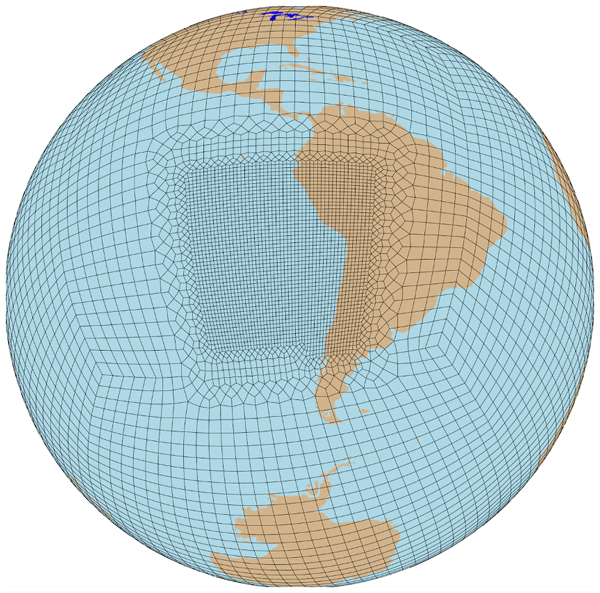
Peter A. Bogenschutz, Hsiang-He Lee, Qi Tang, and Takanobu Yamaguchi
Geosci. Model Dev., 16, 335–352, https://doi.org/10.5194/gmd-16-335-2023, https://doi.org/10.5194/gmd-16-335-2023, 2023
Short summary
Short summary
Models that are used to simulate and predict climate often have trouble representing specific cloud types, such as stratocumulus, that are particularly thin in the vertical direction. It has been found that increasing the model resolution can help improve this problem. In this paper, we develop a novel framework that increases the horizontal and vertical resolutions only for areas of the globe that contain stratocumulus, hence reducing the model runtime while providing better results.
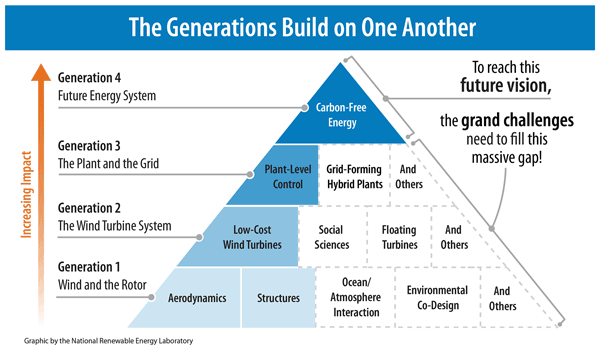
Paul Veers, Katherine Dykes, Sukanta Basu, Alessandro Bianchini, Andrew Clifton, Peter Green, Hannele Holttinen, Lena Kitzing, Branko Kosovic, Julie K. Lundquist, Johan Meyers, Mark O'Malley, William J. Shaw, and Bethany Straw
Wind Energ. Sci., 7, 2491–2496, https://doi.org/10.5194/wes-7-2491-2022, https://doi.org/10.5194/wes-7-2491-2022, 2022
Short summary
Short summary
Wind energy will play a central role in the transition of our energy system to a carbon-free future. However, many underlying scientific issues remain to be resolved before wind can be deployed in the locations and applications needed for such large-scale ambitions. The Grand Challenges are the gaps in the science left behind during the rapid growth of wind energy. This article explains the breadth of the unfinished business and introduces 10 articles that detail the research needs.
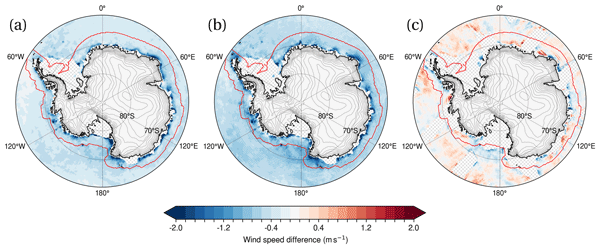
Thomas Caton Harrison, Stavroula Biri, Thomas J. Bracegirdle, John C. King, Elizabeth C. Kent, Étienne Vignon, and John Turner
Weather Clim. Dynam., 3, 1415–1437, https://doi.org/10.5194/wcd-3-1415-2022, https://doi.org/10.5194/wcd-3-1415-2022, 2022
Short summary
Short summary
Easterly winds encircle Antarctica, impacting sea ice and helping drive ocean currents which shield ice shelves from warmer waters. Reanalysis datasets give us our most complete picture of how these winds behave. In this paper we use satellite data, surface measurements and weather balloons to test how realistic recent reanalysis estimates are. The winds are generally accurate, especially in the most recent of the datasets, but important short-term variations are often misrepresented.

Étienne Vignon, Lea Raillard, Christophe Genthon, Massimo Del Guasta, Andrew J. Heymsfield, Jean-Baptiste Madeleine, and Alexis Berne
Atmos. Chem. Phys., 22, 12857–12872, https://doi.org/10.5194/acp-22-12857-2022, https://doi.org/10.5194/acp-22-12857-2022, 2022
Short summary
Short summary
The near-surface atmosphere over the Antarctic Plateau is cold and pristine and resembles to a certain extent the high troposphere where cirrus clouds form. In this study, we use innovative humidity measurements at Concordia Station to study the formation of ice fogs at temperatures <−40°C. We provide observational evidence that ice fogs can form through the homogeneous freezing of solution aerosols, a common nucleation pathway for cirrus clouds.
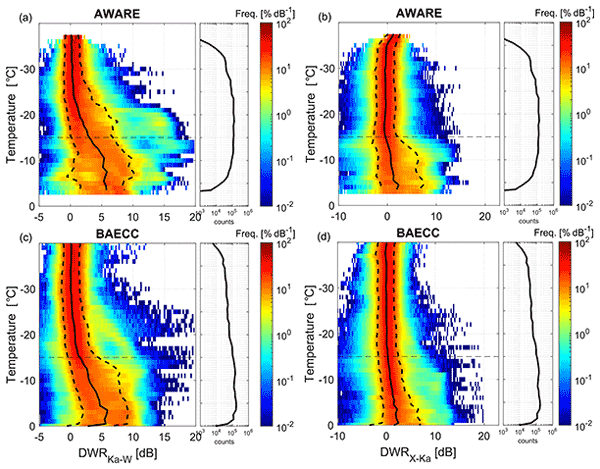
Frederic Tridon, Israel Silber, Alessandro Battaglia, Stefan Kneifel, Ann Fridlind, Petros Kalogeras, and Ranvir Dhillon
Atmos. Chem. Phys., 22, 12467–12491, https://doi.org/10.5194/acp-22-12467-2022, https://doi.org/10.5194/acp-22-12467-2022, 2022
Short summary
Short summary
The role of ice precipitation in the Earth water budget is not well known because ice particles are complex, and their formation involves intricate processes. Riming of ice crystals by supercooled water droplets is an efficient process, but little is known about its importance at high latitudes. In this work, by exploiting the deployment of an unprecedented number of remote sensing systems in Antarctica, we find that riming occurs at much lower temperatures compared with the mid-latitudes.
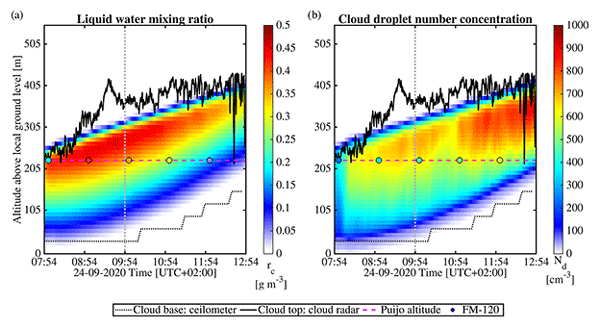
Silvia M. Calderón, Juha Tonttila, Angela Buchholz, Jorma Joutsensaari, Mika Komppula, Ari Leskinen, Liqing Hao, Dmitri Moisseev, Iida Pullinen, Petri Tiitta, Jian Xu, Annele Virtanen, Harri Kokkola, and Sami Romakkaniemi
Atmos. Chem. Phys., 22, 12417–12441, https://doi.org/10.5194/acp-22-12417-2022, https://doi.org/10.5194/acp-22-12417-2022, 2022
Short summary
Short summary
The spatial and temporal restrictions of observations and oversimplified aerosol representation in large eddy simulations (LES) limit our understanding of aerosol–stratocumulus interactions. In this closure study of in situ and remote sensing observations and outputs from UCLALES–SALSA, we have assessed the role of convective overturning and aerosol effects in two cloud events observed at the Puijo SMEAR IV station, Finland, a diurnal-high aerosol case and a nocturnal-low aerosol case.
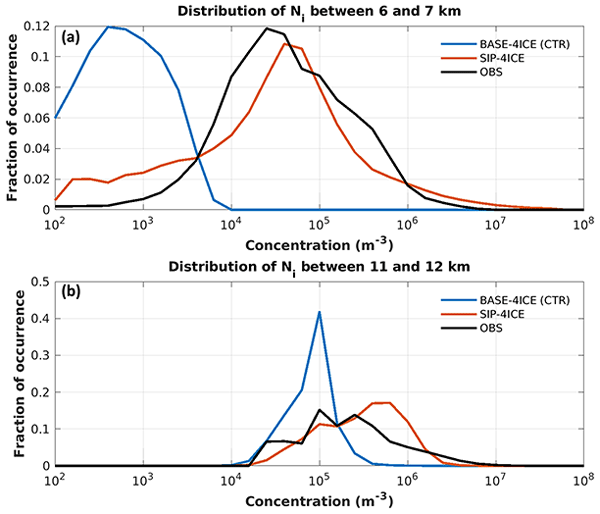
Zhipeng Qu, Alexei Korolev, Jason A. Milbrandt, Ivan Heckman, Yongjie Huang, Greg M. McFarquhar, Hugh Morrison, Mengistu Wolde, and Cuong Nguyen
Atmos. Chem. Phys., 22, 12287–12310, https://doi.org/10.5194/acp-22-12287-2022, https://doi.org/10.5194/acp-22-12287-2022, 2022
Short summary
Short summary
Secondary ice production (SIP) is an important physical phenomenon that results in an increase in the cloud ice particle concentration and can have a significant impact on the evolution of clouds. Here, idealized simulations of a tropical convective system were conducted. Agreement between the simulations and observations highlights the impacts of SIP on the maintenance of tropical convection in nature and the importance of including the modelling of SIP in numerical weather prediction models.
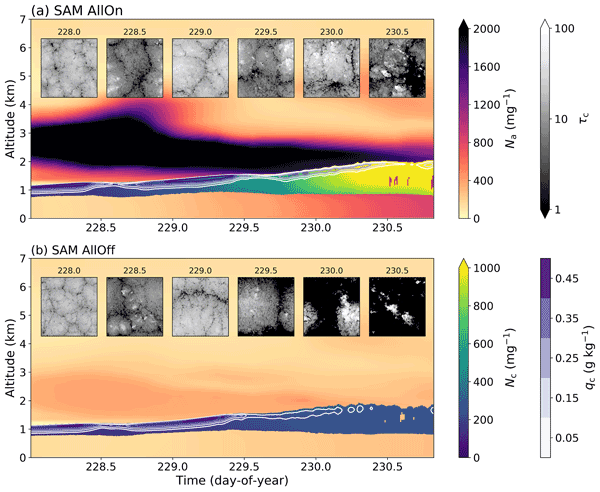
Michael S. Diamond, Pablo E. Saide, Paquita Zuidema, Andrew S. Ackerman, Sarah J. Doherty, Ann M. Fridlind, Hamish Gordon, Calvin Howes, Jan Kazil, Takanobu Yamaguchi, Jianhao Zhang, Graham Feingold, and Robert Wood
Atmos. Chem. Phys., 22, 12113–12151, https://doi.org/10.5194/acp-22-12113-2022, https://doi.org/10.5194/acp-22-12113-2022, 2022
Short summary
Short summary
Smoke from southern Africa blankets the southeast Atlantic from June-October, overlying a major transition region between overcast and scattered clouds. The smoke affects Earth's radiation budget by absorbing sunlight and changing cloud properties. We investigate these effects in regional climate and large eddy simulation models based on international field campaigns. We find that large-scale circulation changes more strongly affect cloud transitions than smoke microphysical effects in our case.
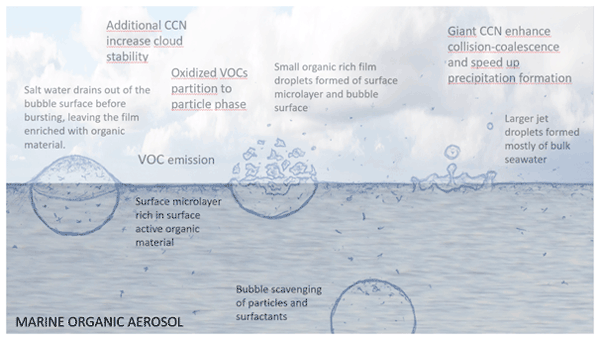
Marje Prank, Juha Tonttila, Jaakko Ahola, Harri Kokkola, Thomas Kühn, Sami Romakkaniemi, and Tomi Raatikainen
Atmos. Chem. Phys., 22, 10971–10992, https://doi.org/10.5194/acp-22-10971-2022, https://doi.org/10.5194/acp-22-10971-2022, 2022
Short summary
Short summary
Aerosols and clouds persist as the dominant sources of uncertainty in climate projections. In this modelling study, we investigate the role of marine aerosols in influencing the lifetime of low-level clouds. Our high resolution simulations show that sea spray can both extend and shorten the lifetime of the cloud layer depending on the model setup. The impact of the primary marine organics is relatively limited while secondary aerosol from monoterpenes can have larger impact.
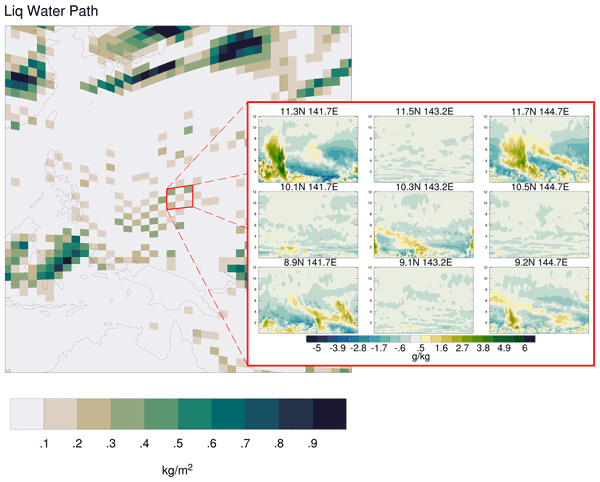
Walter Hannah, Kyle Pressel, Mikhail Ovchinnikov, and Gregory Elsaesser
Geosci. Model Dev., 15, 6243–6257, https://doi.org/10.5194/gmd-15-6243-2022, https://doi.org/10.5194/gmd-15-6243-2022, 2022
Short summary
Short summary
An unphysical checkerboard signal is identified in two configurations of the atmospheric component of E3SM. The signal is very persistent and visible after averaging years of data. The signal is very difficult to study because it is often mixed with realistic weather. A method is presented to detect checkerboard patterns and compare the model with satellite observations. The causes of the signal are identified, and a solution for one configuration is discussed.
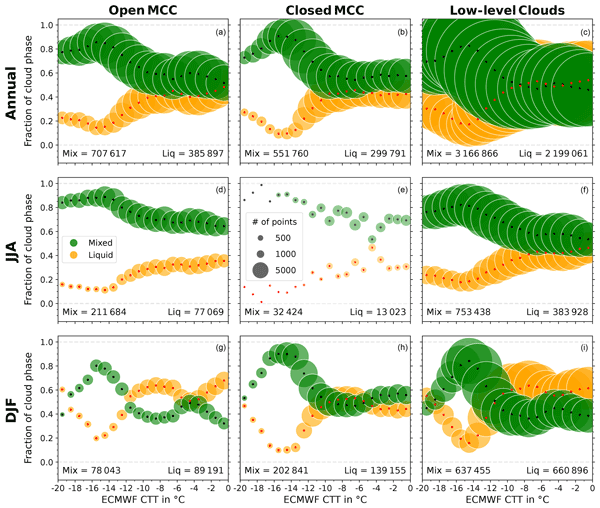
Jessica Danker, Odran Sourdeval, Isabel L. McCoy, Robert Wood, and Anna Possner
Atmos. Chem. Phys., 22, 10247–10265, https://doi.org/10.5194/acp-22-10247-2022, https://doi.org/10.5194/acp-22-10247-2022, 2022
Short summary
Short summary
Using spaceborne lidar-radar retrievals, we show that seasonal changes in cloud phase outweigh changes in cloud-phase statistics across cloud morphologies at given cloud-top temperatures. These results show that cloud morphology does not seem to pose a primary constraint on cloud-phase statistics in the Southern Ocean. Meanwhile, larger changes in in-cloud albedo across cloud morphologies are observed in supercooled liquid rather than mixed-phase stratocumuli.
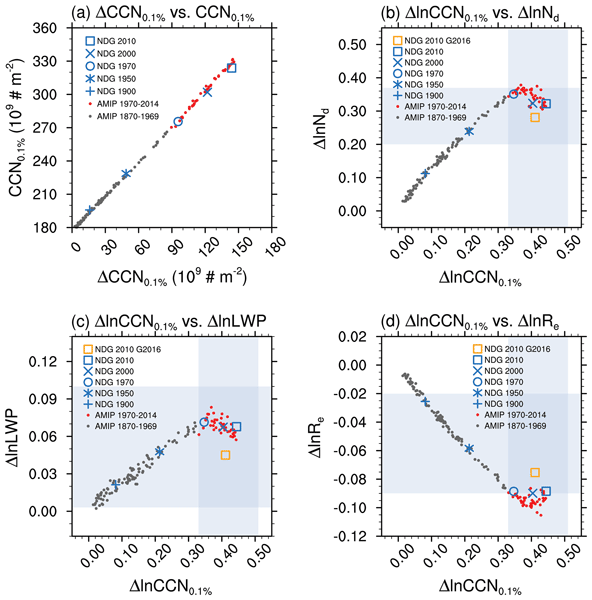
Kai Zhang, Wentao Zhang, Hui Wan, Philip J. Rasch, Steven J. Ghan, Richard C. Easter, Xiangjun Shi, Yong Wang, Hailong Wang, Po-Lun Ma, Shixuan Zhang, Jian Sun, Susannah M. Burrows, Manish Shrivastava, Balwinder Singh, Yun Qian, Xiaohong Liu, Jean-Christophe Golaz, Qi Tang, Xue Zheng, Shaocheng Xie, Wuyin Lin, Yan Feng, Minghuai Wang, Jin-Ho Yoon, and L. Ruby Leung
Atmos. Chem. Phys., 22, 9129–9160, https://doi.org/10.5194/acp-22-9129-2022, https://doi.org/10.5194/acp-22-9129-2022, 2022
Short summary
Short summary
Here we analyze the effective aerosol forcing simulated by E3SM version 1 using both century-long free-running and short nudged simulations. The aerosol forcing in E3SMv1 is relatively large compared to other models, mainly due to the large indirect aerosol effect. Aerosol-induced changes in liquid and ice cloud properties in E3SMv1 have a strong correlation. The aerosol forcing estimates in E3SMv1 are sensitive to the parameterization changes in both liquid and ice cloud processes.
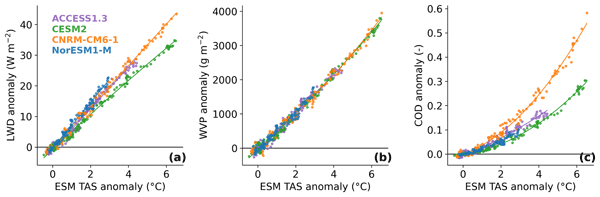
Christoph Kittel, Charles Amory, Stefan Hofer, Cécile Agosta, Nicolas C. Jourdain, Ella Gilbert, Louis Le Toumelin, Étienne Vignon, Hubert Gallée, and Xavier Fettweis
The Cryosphere, 16, 2655–2669, https://doi.org/10.5194/tc-16-2655-2022, https://doi.org/10.5194/tc-16-2655-2022, 2022
Short summary
Short summary
Model projections suggest large differences in future Antarctic surface melting even for similar greenhouse gas scenarios and warming rates. We show that clouds containing a larger amount of liquid water lead to stronger melt. As surface melt can trigger the collapse of the ice shelves (the safety band of the Antarctic Ice Sheet), clouds could be a major source of uncertainties in projections of sea level rise.
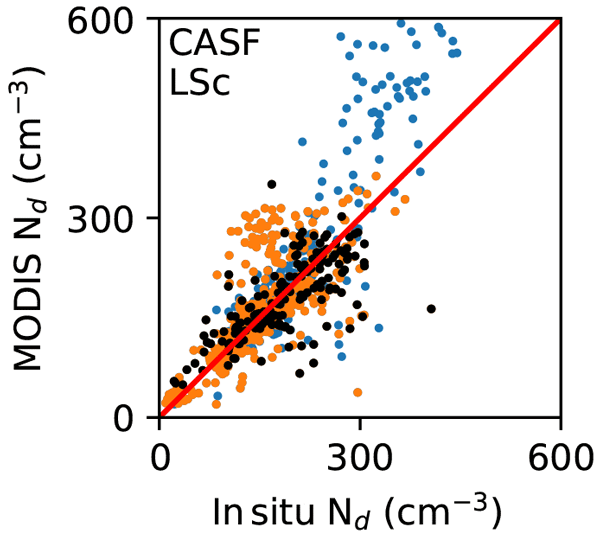
Edward Gryspeerdt, Daniel T. McCoy, Ewan Crosbie, Richard H. Moore, Graeme J. Nott, David Painemal, Jennifer Small-Griswold, Armin Sorooshian, and Luke Ziemba
Atmos. Meas. Tech., 15, 3875–3892, https://doi.org/10.5194/amt-15-3875-2022, https://doi.org/10.5194/amt-15-3875-2022, 2022
Short summary
Short summary
Droplet number concentration is a key property of clouds, influencing a variety of cloud processes. It is also used for estimating the cloud response to aerosols. The satellite retrieval depends on a number of assumptions – different sampling strategies are used to select cases where these assumptions are most likely to hold. Here we investigate the impact of these strategies on the agreement with in situ data, the droplet number climatology and estimates of the indirect radiative forcing.
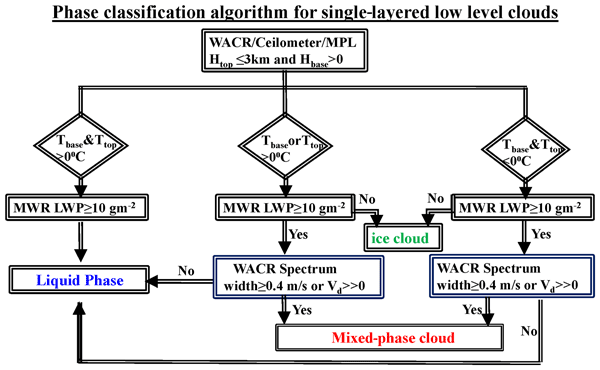
Baike Xi, Xiquan Dong, Xiaojian Zheng, and Peng Wu
Atmos. Meas. Tech., 15, 3761–3777, https://doi.org/10.5194/amt-15-3761-2022, https://doi.org/10.5194/amt-15-3761-2022, 2022
Short summary
Short summary
This study develops an innovative method to determine the cloud phases over the Southern Ocean (SO) using the combination of radar and lidar measurements during the ship-based field campaign of MARCUS. Results from our study show that the low-level, deep, and shallow cumuli are dominant, and the mixed-phase clouds occur more than single phases over the SO. The mixed-phase cloud properties are similar to liquid-phase (ice-phase) clouds in the midlatitudes (polar) region of the SO.

Cheng You, Michael Tjernström, and Abhay Devasthale
Atmos. Chem. Phys., 22, 8037–8057, https://doi.org/10.5194/acp-22-8037-2022, https://doi.org/10.5194/acp-22-8037-2022, 2022
Short summary
Short summary
In winter when solar radiation is absent in the Arctic, the poleward transport of heat and moisture into the high Arctic becomes the main contribution of Arctic warming. Over completely frozen ocean sectors, total surface energy budget is dominated by net long-wave heat, while over the Barents Sea, with an open ocean to the south, total net surface energy budget is dominated by the surface turbulent heat.

Adrien Guyot, Alain Protat, Simon P. Alexander, Andrew R. Klekociuk, Peter Kuma, and Adrian McDonald
Atmos. Meas. Tech., 15, 3663–3681, https://doi.org/10.5194/amt-15-3663-2022, https://doi.org/10.5194/amt-15-3663-2022, 2022
Short summary
Short summary
Ceilometers are instruments that are widely deployed as part of operational networks. They are usually not able to detect cloud phase. Here, we propose an evaluation of various methods to detect supercooled liquid water with ceilometer observations, using an extensive dataset from Davis, Antarctica. Our results highlight the possibility for ceilometers to detect supercooled liquid water in clouds.
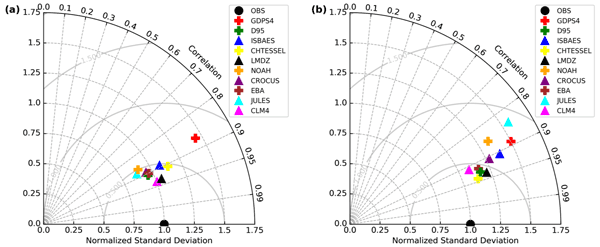
Patrick Le Moigne, Eric Bazile, Anning Cheng, Emanuel Dutra, John M. Edwards, William Maurel, Irina Sandu, Olivier Traullé, Etienne Vignon, Ayrton Zadra, and Weizhong Zheng
The Cryosphere, 16, 2183–2202, https://doi.org/10.5194/tc-16-2183-2022, https://doi.org/10.5194/tc-16-2183-2022, 2022
Short summary
Short summary
This paper describes an intercomparison of snow models, of varying complexity, used for numerical weather prediction or academic research. The results show that the simplest models are, under certain conditions, able to reproduce the surface temperature just as well as the most complex models. Moreover, the diversity of surface parameters of the models has a strong impact on the temporal variability of the components of the simulated surface energy balance.
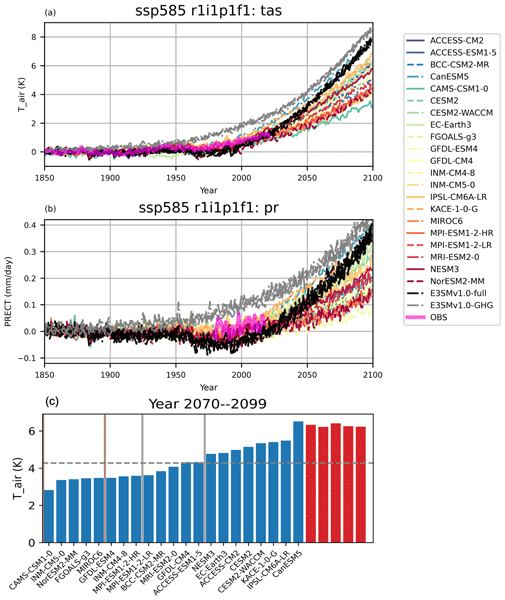
Xue Zheng, Qing Li, Tian Zhou, Qi Tang, Luke P. Van Roekel, Jean-Christophe Golaz, Hailong Wang, and Philip Cameron-Smith
Geosci. Model Dev., 15, 3941–3967, https://doi.org/10.5194/gmd-15-3941-2022, https://doi.org/10.5194/gmd-15-3941-2022, 2022
Short summary
Short summary
We document the model experiments for the future climate projection by E3SMv1.0. At the highest future emission scenario, E3SMv1.0 projects a strong surface warming with rapid changes in the atmosphere, ocean, sea ice, and land runoff. Specifically, we detect a significant polar amplification and accelerated warming linked to the unmasking of the aerosol effects. The impact of greenhouse gas forcing is examined in different climate components.
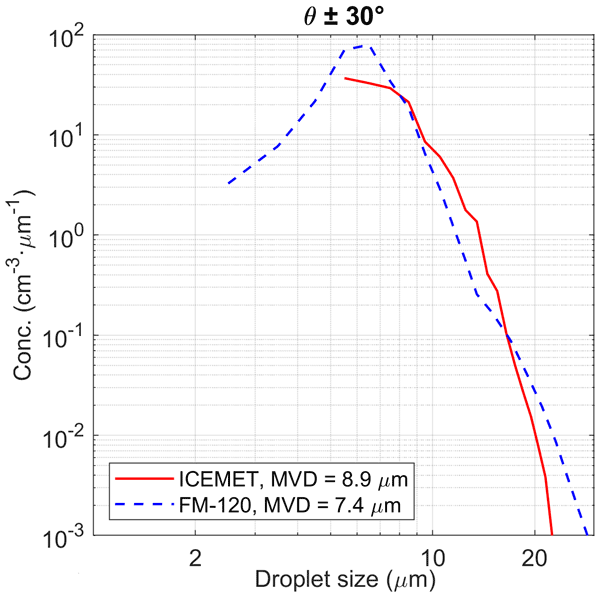
Petri Tiitta, Ari Leskinen, Ville A. Kaikkonen, Eero O. Molkoselkä, Anssi J. Mäkynen, Jorma Joutsensaari, Silvia Calderon, Sami Romakkaniemi, and Mika Komppula
Atmos. Meas. Tech., 15, 2993–3009, https://doi.org/10.5194/amt-15-2993-2022, https://doi.org/10.5194/amt-15-2993-2022, 2022
Short summary
Short summary
The novel holographic imaging instrument (ICEMET) was adapted to measure the microphysical properties of liquid clouds, and these values were compared with parallel measurements of a cloud droplet spectrometer (FM-120) and particle measurements using a twin-inlet system. When the intercomparison was carried out during isoaxial sampling, our results showed good agreement in terms of variability between the instruments. This agreement was confirmed using Mutual and Pearson correlation analyses.
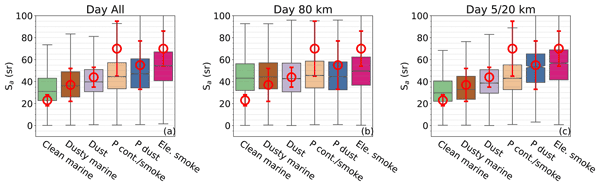
Zhujun Li, David Painemal, Gregory Schuster, Marian Clayton, Richard Ferrare, Mark Vaughan, Damien Josset, Jayanta Kar, and Charles Trepte
Atmos. Meas. Tech., 15, 2745–2766, https://doi.org/10.5194/amt-15-2745-2022, https://doi.org/10.5194/amt-15-2745-2022, 2022
Short summary
Short summary
For more than 15 years, CALIPSO has revolutionized our understanding of the role of aerosols in climate. Here we evaluate CALIPSO aerosol typing over the ocean using an independent CALIPSO–CloudSat product. The analysis suggests that CALIPSO correctly categorizes clean marine aerosol over the open ocean, elevated smoke over the SE Atlantic, and dust over the tropical Atlantic. Similarities between clean and dusty marine over the open ocean implies that algorithm modifications are warranted.
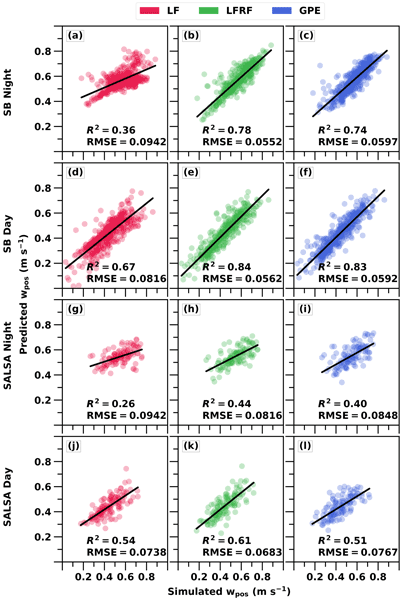
Jaakko Ahola, Tomi Raatikainen, Muzaffer Ege Alper, Jukka-Pekka Keskinen, Harri Kokkola, Antti Kukkurainen, Antti Lipponen, Jia Liu, Kalle Nordling, Antti-Ilari Partanen, Sami Romakkaniemi, Petri Räisänen, Juha Tonttila, and Hannele Korhonen
Atmos. Chem. Phys., 22, 4523–4537, https://doi.org/10.5194/acp-22-4523-2022, https://doi.org/10.5194/acp-22-4523-2022, 2022
Short summary
Short summary
Clouds are important for the climate, and cloud droplets have a significant role in cloud properties. Cloud droplets form when air rises and cools and water vapour condenses on small particles that can be natural or of anthropogenic origin. Currently, the updraft velocity, meaning how fast the air rises, is poorly represented in global climate models. In our study, we show three methods that will improve the depiction of updraft velocity and which properties are vital to updrafts.
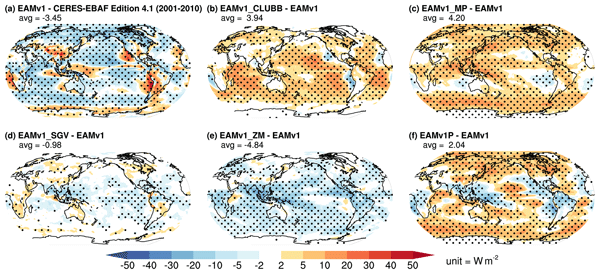
Po-Lun Ma, Bryce E. Harrop, Vincent E. Larson, Richard B. Neale, Andrew Gettelman, Hugh Morrison, Hailong Wang, Kai Zhang, Stephen A. Klein, Mark D. Zelinka, Yuying Zhang, Yun Qian, Jin-Ho Yoon, Christopher R. Jones, Meng Huang, Sheng-Lun Tai, Balwinder Singh, Peter A. Bogenschutz, Xue Zheng, Wuyin Lin, Johannes Quaas, Hélène Chepfer, Michael A. Brunke, Xubin Zeng, Johannes Mülmenstädt, Samson Hagos, Zhibo Zhang, Hua Song, Xiaohong Liu, Michael S. Pritchard, Hui Wan, Jingyu Wang, Qi Tang, Peter M. Caldwell, Jiwen Fan, Larry K. Berg, Jerome D. Fast, Mark A. Taylor, Jean-Christophe Golaz, Shaocheng Xie, Philip J. Rasch, and L. Ruby Leung
Geosci. Model Dev., 15, 2881–2916, https://doi.org/10.5194/gmd-15-2881-2022, https://doi.org/10.5194/gmd-15-2881-2022, 2022
Short summary
Short summary
An alternative set of parameters for E3SM Atmospheric Model version 1 has been developed based on a tuning strategy that focuses on clouds. When clouds in every regime are improved, other aspects of the model are also improved, even though they are not the direct targets for calibration. The recalibrated model shows a lower sensitivity to anthropogenic aerosols and surface warming, suggesting potential improvements to the simulated climate in the past and future.
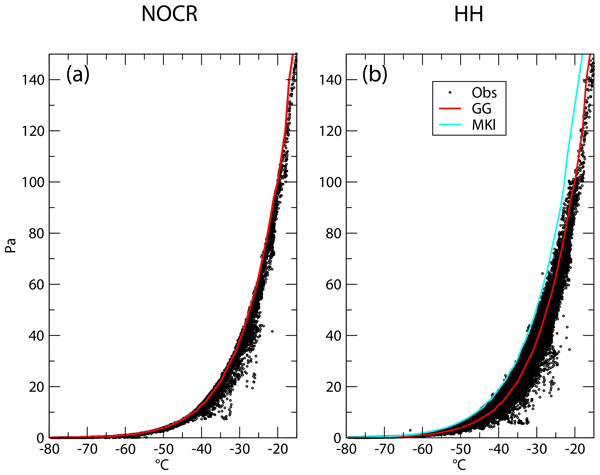
Christophe Genthon, Dana E. Veron, Etienne Vignon, Jean-Baptiste Madeleine, and Luc Piard
Earth Syst. Sci. Data, 14, 1571–1580, https://doi.org/10.5194/essd-14-1571-2022, https://doi.org/10.5194/essd-14-1571-2022, 2022
Short summary
Short summary
The surface atmosphere of the high Antarctic Plateau is very cold and clean. Such conditions favor water vapor supersaturation. A 3-year quasi-continuous series of atmospheric moisture in a ~40 m atmospheric layer at Dome C is reported that documents time variability, vertical profiles and occurrences of supersaturation. Supersaturation with respect to ice is frequently observed throughout the column, with relative humidities occasionally reaching values near liquid water saturation.
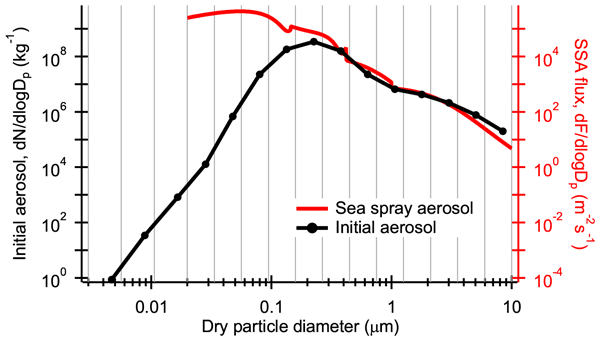
Tomi Raatikainen, Marje Prank, Jaakko Ahola, Harri Kokkola, Juha Tonttila, and Sami Romakkaniemi
Atmos. Chem. Phys., 22, 3763–3778, https://doi.org/10.5194/acp-22-3763-2022, https://doi.org/10.5194/acp-22-3763-2022, 2022
Short summary
Short summary
Mineral dust or similar ice-nucleating particles (INPs) are needed to initiate cloud droplet freezing at temperatures common in shallow clouds. In this work we examine how INPs that are released from the sea surface impact marine clouds. Our high-resolution simulations show that turbulent updraughts carry these particles effectively up to the clouds, where they initiate cloud droplet freezing. Sea surface INP emissions become more important with decreasing background dust INP concentrations.
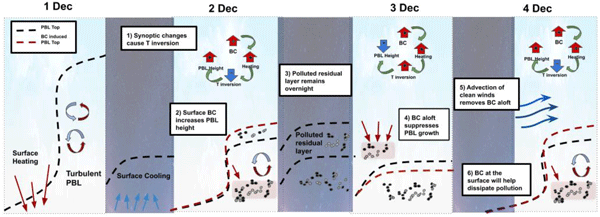
Jessica Slater, Hugh Coe, Gordon McFiggans, Juha Tonttila, and Sami Romakkaniemi
Atmos. Chem. Phys., 22, 2937–2953, https://doi.org/10.5194/acp-22-2937-2022, https://doi.org/10.5194/acp-22-2937-2022, 2022
Short summary
Short summary
This paper shows the specific impact of black carbon (BC) on the aerosol–planetary boundary layer (PBL) feedback and its influence on a Beijing haze episode. Overall, this paper shows that strong temperature inversions prevent BC heating within the PBL from significantly increasing PBL height, while BC above the PBL suppresses PBL development significantly through the day. From this we suggest a method by which both locally and regionally emitted BC may impact urban pollution episodes.
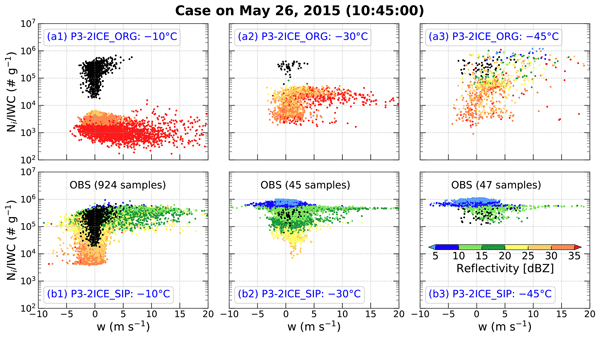
Yongjie Huang, Wei Wu, Greg M. McFarquhar, Ming Xue, Hugh Morrison, Jason Milbrandt, Alexei V. Korolev, Yachao Hu, Zhipeng Qu, Mengistu Wolde, Cuong Nguyen, Alfons Schwarzenboeck, and Ivan Heckman
Atmos. Chem. Phys., 22, 2365–2384, https://doi.org/10.5194/acp-22-2365-2022, https://doi.org/10.5194/acp-22-2365-2022, 2022
Short summary
Short summary
Numerous small ice crystals in tropical convective storms are difficult to detect and could be potentially hazardous for commercial aircraft. Previous numerical simulations failed to reproduce this phenomenon and hypothesized that key microphysical processes are still lacking in current models to realistically simulate the phenomenon. This study uses numerical experiments to confirm the dominant role of secondary ice production in the formation of these large numbers of small ice crystals.
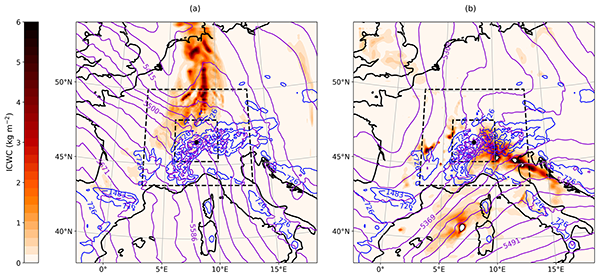
Paraskevi Georgakaki, Georgia Sotiropoulou, Étienne Vignon, Anne-Claire Billault-Roux, Alexis Berne, and Athanasios Nenes
Atmos. Chem. Phys., 22, 1965–1988, https://doi.org/10.5194/acp-22-1965-2022, https://doi.org/10.5194/acp-22-1965-2022, 2022
Short summary
Short summary
The modelling study focuses on the importance of ice multiplication processes in orographic mixed-phase clouds, which is one of the least understood cloud types in the climate system. We show that the consideration of ice seeding and secondary ice production through ice–ice collisional breakup is essential for correct predictions of precipitation in mountainous terrain, with important implications for radiation processes.

Israel Silber, Robert C. Jackson, Ann M. Fridlind, Andrew S. Ackerman, Scott Collis, Johannes Verlinde, and Jiachen Ding
Geosci. Model Dev., 15, 901–927, https://doi.org/10.5194/gmd-15-901-2022, https://doi.org/10.5194/gmd-15-901-2022, 2022
Short summary
Short summary
The Earth Model Column Collaboratory (EMC2) is an open-source ground-based (and air- or space-borne) lidar and radar simulator and subcolumn generator designed for large-scale models, in particular climate models, applicable also for high-resolution models. EMC2 emulates measurements while remaining faithful to large-scale models' physical assumptions implemented in their cloud or radiation schemes. We demonstrate the use of EMC2 to compare AWARE measurements with the NASA GISS ModelE3 and LES.
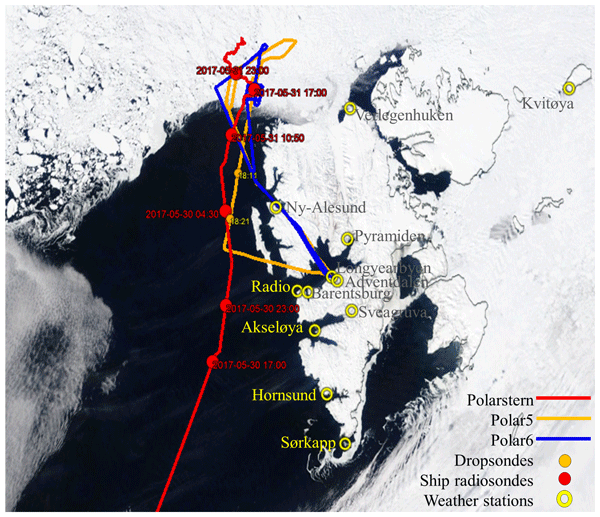
Anna A. Shestakova, Dmitry G. Chechin, Christof Lüpkes, Jörg Hartmann, and Marion Maturilli
Atmos. Chem. Phys., 22, 1529–1548, https://doi.org/10.5194/acp-22-1529-2022, https://doi.org/10.5194/acp-22-1529-2022, 2022
Short summary
Short summary
This article presents a comprehensive analysis of the easterly orographic wind episode which occurred over Svalbard on 30–31 May 2017. This wind caused a significant temperature rise on the lee side of the mountains and greatly intensified the snowmelt. This episode was investigated on the basis of measurements collected during the ACLOUD/PASCAL field campaigns with the help of numerical modeling.
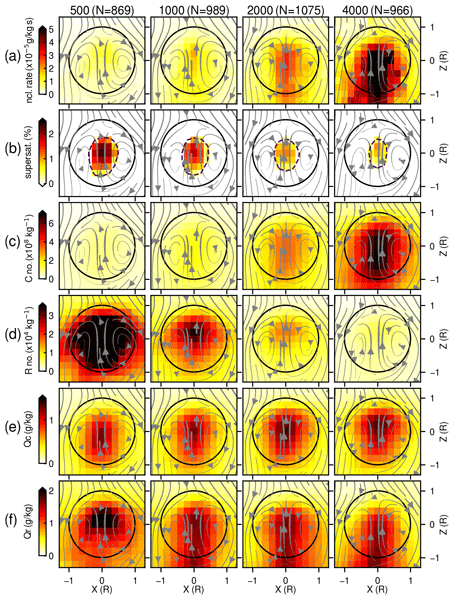
Daniel Hernandez-Deckers, Toshihisa Matsui, and Ann M. Fridlind
Atmos. Chem. Phys., 22, 711–724, https://doi.org/10.5194/acp-22-711-2022, https://doi.org/10.5194/acp-22-711-2022, 2022
Short summary
Short summary
We investigate how the concentration of aerosols (small particles that serve as seeds for cloud droplets) affect the dynamics of simulated clouds using two different frameworks, i.e., the traditional selection of cloudy rising grid points and tracking small-scale coherent rising features (cumulus thermals). By doing so, we find that these cumulus thermals reveal useful information about the coupling between internal cloud circulations and cloud droplet and raindrop formation.

Matthew W. Christensen, Andrew Gettelman, Jan Cermak, Guy Dagan, Michael Diamond, Alyson Douglas, Graham Feingold, Franziska Glassmeier, Tom Goren, Daniel P. Grosvenor, Edward Gryspeerdt, Ralph Kahn, Zhanqing Li, Po-Lun Ma, Florent Malavelle, Isabel L. McCoy, Daniel T. McCoy, Greg McFarquhar, Johannes Mülmenstädt, Sandip Pal, Anna Possner, Adam Povey, Johannes Quaas, Daniel Rosenfeld, Anja Schmidt, Roland Schrödner, Armin Sorooshian, Philip Stier, Velle Toll, Duncan Watson-Parris, Robert Wood, Mingxi Yang, and Tianle Yuan
Atmos. Chem. Phys., 22, 641–674, https://doi.org/10.5194/acp-22-641-2022, https://doi.org/10.5194/acp-22-641-2022, 2022
Short summary
Short summary
Trace gases and aerosols (tiny airborne particles) are released from a variety of point sources around the globe. Examples include volcanoes, industrial chimneys, forest fires, and ship stacks. These sources provide opportunistic experiments with which to quantify the role of aerosols in modifying cloud properties. We review the current state of understanding on the influence of aerosol on climate built from the wide range of natural and anthropogenic laboratories investigated in recent decades.
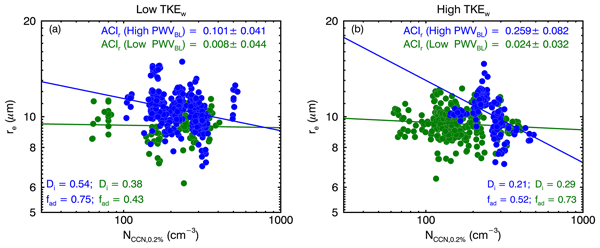
Xiaojian Zheng, Baike Xi, Xiquan Dong, Peng Wu, Timothy Logan, and Yuan Wang
Atmos. Chem. Phys., 22, 335–354, https://doi.org/10.5194/acp-22-335-2022, https://doi.org/10.5194/acp-22-335-2022, 2022
Short summary
Short summary
This study uses ground-based observations to investigate the physical processes in the aerosol–cloud interactions in non-precipitating marine boundary layer clouds, over the eastern North Atlantic Ocean. Results show that the cloud responses to the aerosols are diminished with limited water vapor supply, while they are enhanced with increasing water vapor availability. The clouds are found to be most sensitive to the aerosols under sufficient water vapor and strong boundary layer turbulence.
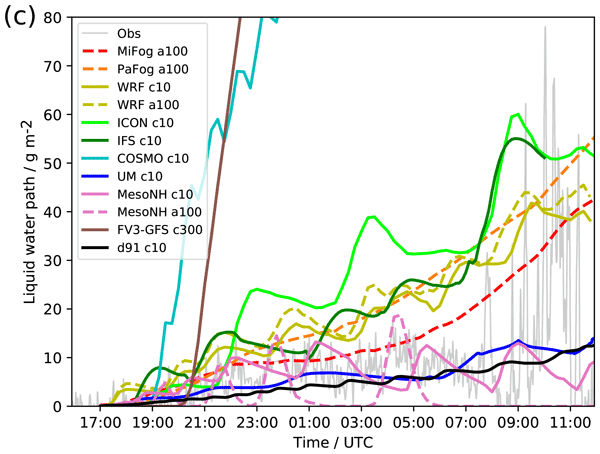
Ian Boutle, Wayne Angevine, Jian-Wen Bao, Thierry Bergot, Ritthik Bhattacharya, Andreas Bott, Leo Ducongé, Richard Forbes, Tobias Goecke, Evelyn Grell, Adrian Hill, Adele L. Igel, Innocent Kudzotsa, Christine Lac, Bjorn Maronga, Sami Romakkaniemi, Juerg Schmidli, Johannes Schwenkel, Gert-Jan Steeneveld, and Benoît Vié
Atmos. Chem. Phys., 22, 319–333, https://doi.org/10.5194/acp-22-319-2022, https://doi.org/10.5194/acp-22-319-2022, 2022
Short summary
Short summary
Fog forecasting is one of the biggest problems for numerical weather prediction. By comparing many models used for fog forecasting with others used for fog research, we hoped to help guide forecast improvements. We show some key processes that, if improved, will help improve fog forecasting, such as how water is deposited on the ground. We also showed that research models were not themselves a suitable baseline for comparison, and we discuss what future observations are required to improve them.
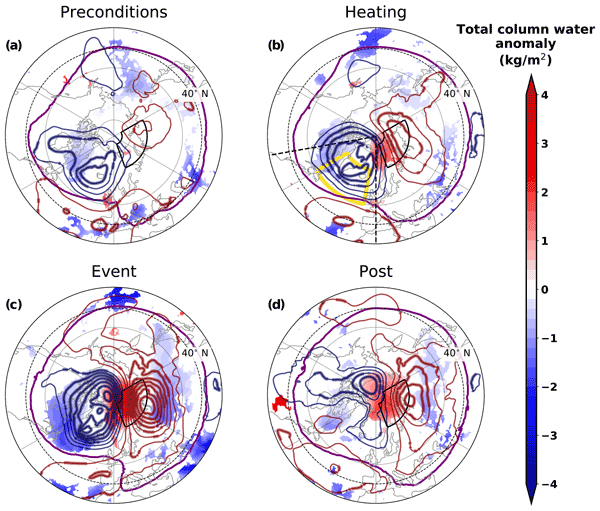
Sonja Murto, Rodrigo Caballero, Gunilla Svensson, and Lukas Papritz
Weather Clim. Dynam., 3, 21–44, https://doi.org/10.5194/wcd-3-21-2022, https://doi.org/10.5194/wcd-3-21-2022, 2022
Short summary
Short summary
This study uses reanalysis data to investigate the role of atmospheric blocking, prevailing high-pressure systems and mid-latitude cyclones in driving high-Arctic wintertime warm extreme events. These events are mainly preceded by Ural and Scandinavian blocks, which are shown to be significantly influenced and amplified by cyclones in the North Atlantic. It also highlights processes that need to be well captured in climate models for improving their representation of Arctic wintertime climate.
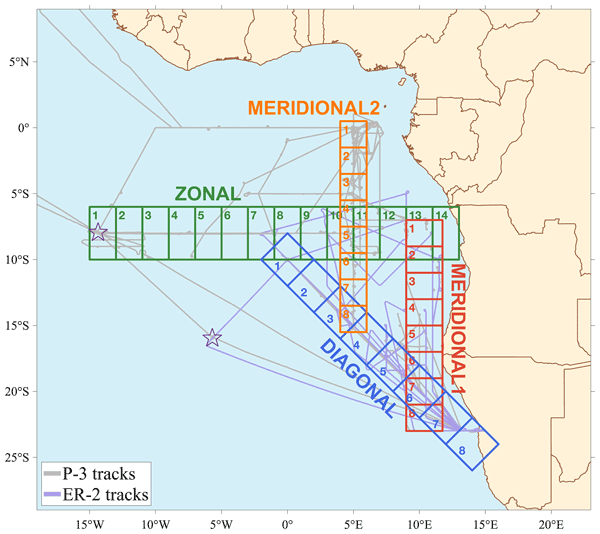
Sarah J. Doherty, Pablo E. Saide, Paquita Zuidema, Yohei Shinozuka, Gonzalo A. Ferrada, Hamish Gordon, Marc Mallet, Kerry Meyer, David Painemal, Steven G. Howell, Steffen Freitag, Amie Dobracki, James R. Podolske, Sharon P. Burton, Richard A. Ferrare, Calvin Howes, Pierre Nabat, Gregory R. Carmichael, Arlindo da Silva, Kristina Pistone, Ian Chang, Lan Gao, Robert Wood, and Jens Redemann
Atmos. Chem. Phys., 22, 1–46, https://doi.org/10.5194/acp-22-1-2022, https://doi.org/10.5194/acp-22-1-2022, 2022
Short summary
Short summary
Between July and October, biomass burning smoke is advected over the southeastern Atlantic Ocean, leading to climate forcing. Model calculations of forcing by this plume vary significantly in both magnitude and sign. This paper compares aerosol and cloud properties observed during three NASA ORACLES field campaigns to the same in four models. It quantifies modeled biases in properties key to aerosol direct radiative forcing and evaluates how these biases propagate to biases in forcing.

Tiina Nygård, Michael Tjernström, and Tuomas Naakka
Weather Clim. Dynam., 2, 1263–1282, https://doi.org/10.5194/wcd-2-1263-2021, https://doi.org/10.5194/wcd-2-1263-2021, 2021
Short summary
Short summary
Temperature and humidity profiles in the Arctic atmosphere in winter are affected by both the large-scale dynamics and the local processes, such as radiation, cloud formation and turbulence. The results show that the influence of different large-scale flows on temperature and humidity profiles must be viewed as a progressing set of processes. Within the Arctic, there are notable regional differences in how large-scale flows affect the temperature and specific humidity profiles.
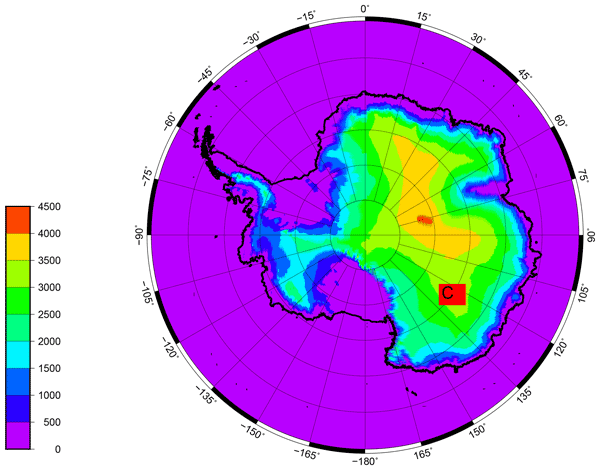
Christophe Genthon, Dana Veron, Etienne Vignon, Delphine Six, Jean-Louis Dufresne, Jean-Baptiste Madeleine, Emmanuelle Sultan, and François Forget
Earth Syst. Sci. Data, 13, 5731–5746, https://doi.org/10.5194/essd-13-5731-2021, https://doi.org/10.5194/essd-13-5731-2021, 2021
Short summary
Short summary
A 10-year dataset of observation in the atmospheric boundary layer at Dome C on the high Antarctic plateau is presented. This is obtained with sensors at six levels along a tower higher than 40 m. The temperature inversion can reach more than 25 °C along the tower in winter, while full mixing by convection can occur in summer. Different amplitudes of variability for wind and temperature at the different levels reflect different signatures of solar vs. synoptic forcing of the boundary layer.
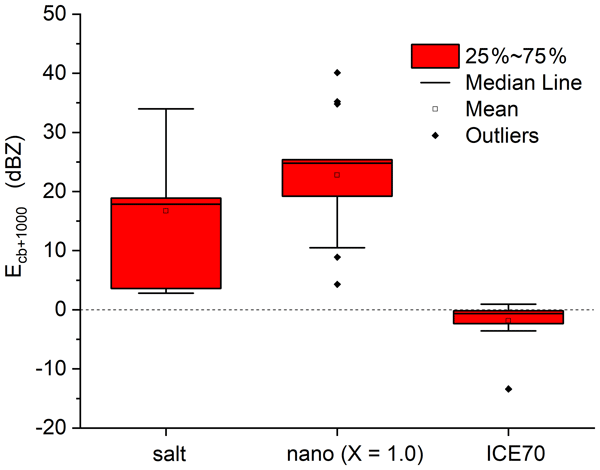
Istvan Geresdi, Lulin Xue, Sisi Chen, Youssef Wehbe, Roelof Bruintjes, Jared A. Lee, Roy M. Rasmussen, Wojciech W. Grabowski, Noemi Sarkadi, and Sarah A. Tessendorf
Atmos. Chem. Phys., 21, 16143–16159, https://doi.org/10.5194/acp-21-16143-2021, https://doi.org/10.5194/acp-21-16143-2021, 2021
Short summary
Short summary
By releasing soluble aerosols into the convective clouds, cloud seeding potentially enhances rainfall. The seeding impacts are hard to quantify with observations only. Numerical models that represent the detailed physics of aerosols, cloud and rain formation are used to investigate the seeding impacts on rain enhancement under different natural aerosol backgrounds and using different seeding materials. Our results indicate that seeding may enhance rainfall under certain conditions.
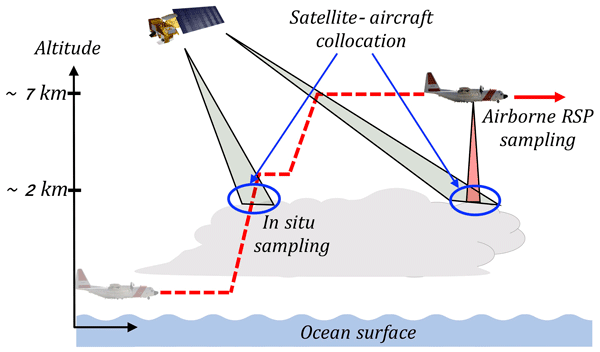
David Painemal, Douglas Spangenberg, William L. Smith Jr., Patrick Minnis, Brian Cairns, Richard H. Moore, Ewan Crosbie, Claire Robinson, Kenneth L. Thornhill, Edward L. Winstead, and Luke Ziemba
Atmos. Meas. Tech., 14, 6633–6646, https://doi.org/10.5194/amt-14-6633-2021, https://doi.org/10.5194/amt-14-6633-2021, 2021
Short summary
Short summary
Cloud properties derived from satellite sensors are critical for the global monitoring of climate. This study evaluates satellite-based cloud properties over the North Atlantic using airborne data collected during NAAMES. Satellite observations of droplet size and cloud optical depth tend to compare well with NAAMES data. The analysis indicates that the satellite pixel resolution and the specific viewing geometry need to be taken into account in research applications.
Cited articles
Ackerman, A., Fridlind, A., and Tornow, F.: DHARMA LES code and input files for COMBLE-MIP Part I, Zenodo [code], https://doi.org/10.5281/zenodo.21244123, 2026. a
Aemisegger, F. and Papritz, L.: A climatology of strong large-scale ocean evaporation events. Part I: Identification, global distribution, and associated climate conditions, J. Climate, 31, 7287–7312, https://doi.org/10.1175/JCLI-D-17-0591.1, 2018. a
Ahola, J., Korhonen, H., Tonttila, J., Romakkaniemi, S., Kokkola, H., and Raatikainen, T.: Modelling mixed-phase clouds with the large-eddy model UCLALES–SALSA, Atmos. Chem. Phys., 20, 11639–11654, https://doi.org/10.5194/acp-20-11639-2020, 2020. a
ARM: Atmospheric Radiation Measurement (ARM) User Facility data [data set], https://armgov.svcs.arm.gov/data/ (last access: 17 December 2025), 2024. a
Bernardet, L., Bengtsson, L., Reinecke, P. A., Yang, F., Zhang, M., Hall, K., Doyle, J., Martini, M., Firl, G., and Xue, L.: Common community physics package: fostering collaborative development in physical parameterizations and suites, B. Am. Meteorol. Soc., 105, E1490–E1505, https://doi.org/10.1175/BAMS-D-23-0227.1, 2024. a
Bryan, G. H. and Fritsch, J. M.: A benchmark simulation for moist nonhydrostatic numerical models, Mon. Weather Rev., 130, 2917–2928, https://doi.org/10.1175/1520-0493(2002)130<2917:ABSFMN>2.0.CO;2, 2002. a
Cesana, G., Del Genio, A. D., Ackerman, A. S., Kelley, M., Elsaesser, G., Fridlind, A. M., Cheng, Y., and Yao, M.-S.: Evaluating models' response of tropical low clouds to SST forcings using CALIPSO observations, Atmos. Chem. Phys., 19, 2813–2832, https://doi.org/10.5194/acp-19-2813-2019, 2019. a, b
Charnock, H.: Wind stress on a water surface, Q. J. Roy. Meteor. Soc., 81, 639–640, https://doi.org/10.1002/qj.49708135027, 1955. a
Chechin, D. G. and Lüpkes, C.: Boundary-layer development and low-level baroclinicity during high-latitude cold-air outbreaks: A simple model, Bound-Lay. Meteorol., 162, 91–116, https://doi.org/10.1007/s10546-016-0193-2, 2017. a
Chechin, D. G., Lüpkes, C., Repina, I. A., and Gryanik, V. M.: Idealized dry quasi 2-D mesoscale simulations of cold-air outbreaks over the marginal sea ice zone with fine and coarse resolution, J. Geophys. Res.-Atmos., 118, 8787–8813, https://doi.org/10.1002/jgrd.50679, 2013. a, b
Chen, X. and Xie, S.: ARM Best Estimate Data Products (ARMBEATM), 1 December 2019 to 31 May 2020, ARM Mobile Facility (ANX) [data set], Andenes, Norway; AMF1 (main site for COMBLE) (M1), https://doi.org/10.5439/1333748, 1993. a
Cheng, Y., Canuto, V., Howard, A., Ackerman, A., Kelley, M., Fridlind, A., Schmidt, G., Yao, M., Del Genio, A., and Elsaesser, G.: A second-order closure turbulence model: new heat flux equations and no critical Richardson number, J. Atmos. Sci., 77, 2743–2759, https://doi.org/10.1175/JAS-D-19-0240.1, 2020. a
Chylik, J.: Variability within cold air outbreaks and implications for parametrization, PhD thesis, University of East Anglia, https://ueaeprints.uea.ac.uk/id/eprint/67058 (last access: 9 April 2026), 2017. a
Chylik, J., Chechin, D., Dupuy, R., Kulla, B. S., Lüpkes, C., Mertes, S., Mech, M., and Neggers, R. A. J.: Aerosol impacts on the entrainment efficiency of Arctic mixed-phase convection in a simulated air mass over open water, Atmos. Chem. Phys., 23, 4903–4929, https://doi.org/10.5194/acp-23-4903-2023, 2023. a, b
CM1 Team: Cloud Model 1 [code], GitHub [code], https://github.com/NCAR/CM1 (last access: 16 December 2025), 2025. a
Computational and Information Systems Laboratory: Cheyenne: HPE/SGI ICE XA System (University Community Computing), National Center for Atmospheric Research, Boulder, CO, USA, https://www.cisl.ucar.edu/ncar-supercomputing-history/cheyenne (last access: 17 December 2025), https://doi.org/10.5065/D6RX99HX, 2025. a
de Roode, S., Frederikse, T., Siebesma, A. P., Ackerman, A. S., Chylik, J., Field, P. R., Fricke, J., Gryschka, M., Hill, A., Honnert, R., and Krueger, S. K.: Turbulent transport in the gray zone: A large eddy model intercomparison study of the CONSTRAIN cold air outbreak case, J. Adv. Model. Earth Sy., 11, 597–623, https://doi.org/10.1029/2018MS001443, 2019. a, b, c, d, e, f
de Roode, S. R., Duynkerke, P. G., and Jonker, H. J.: Large-eddy simulation: How large is large enough?, J. Atmos. Sci., 61, 403–421, https://doi.org/10.1175/1520-0469(2004)061<0403:LSHLIL>2.0.CO;2, 2004. a, b
Deardorff, J. W.: Stratocumulus-capped mixed layers derived from a three-dimensional model, Bound-Lay. Meteorol., 18, 495–527, https://doi.org/10.1007/BF00119502, 1980. a, b, c
Del Genio, A. D., Wu, J., Wolf, A. B., Chen, Y., Yao, M.-S., and Kim, D.: Constraints on cumulus parameterization from simulations of observed MJO events, J. Climate, 28, 6419–6442, https://doi.org/10.1175/JCLI-D-14-00832.1, 2015. a
Dipankar, A., Stevens, B., Heinze, R., Moseley, C., Zängl, G., Giorgetta, M., and Brdar, S.: Large eddy simulation using the general circulation model ICON, J. Adv. Model. Earth Sy., 7, 963–986, https://doi.org/10.1002/2015MS000431, 2015. a
Ďurán, I. B., Geleyn, J.-F., and Váňa, F.: A compact model for the stability dependency of TKE production–destruction–conversion terms valid for the whole range of Richardson numbers, J. Atmos. Sci., 71, 3004–3026, https://doi.org/10.1175/JAS-D-13-0203.1, 2014. a
Ďurán, I. B., Köhler, M., Eichhorn-Müller, A., Maurer, V., Schmidli, J., Schomburg, A., Klocke, D., Göcke, T., Schäfer, S., Schlemmer, L., and Dewani, N.: The ICON Single-Column Mode, Atmosphere, 12, https://doi.org/10.3390/atmos12070906, 2021. a
Edson, J. B., Jampana, V., Weller, R. A., Bigorre, S. P., Plueddemann, A. J., Fairall, C. W., Miller, S. D., Mahrt, L., Vickers, D., and Hersbach, H.: On the exchange of momentum over the open ocean, J. Phys. Oceanogr., 43, 1589–1610, https://doi.org/10.1175/JPO-D-12-0173.1, 2013. a
Egerer, U., Cassano, J. J., Shupe, M. D., de Boer, G., Lawrence, D., Doddi, A., Siebert, H., Jozef, G., Calmer, R., Hamilton, J., Pilz, C., and Lonardi, M.: Estimating turbulent energy flux vertical profiles from uncrewed aircraft system measurements: exemplary results for the MOSAiC campaign, Atmos. Meas. Tech., 16, 2297–2317, https://doi.org/10.5194/amt-16-2297-2023, 2023. a
Eirund, G. K., Possner, A., and Lohmann, U.: Response of Arctic mixed-phase clouds to aerosol perturbations under different surface forcings, Atmos. Chem. Phys., 19, 9847–9864, https://doi.org/10.5194/acp-19-9847-2019, 2019. a
Elsaesser, G. S., O’Dell, C. W., Lebsock, M. D., Bennartz, R., Greenwald, T. J., and Wentz, F. J.: The multisensor advanced climatology of liquid water path (MAC-LWP), J. Climate, 30, 10193–10210, https://doi.org/10.1175/JCLI-D-16-0902.1, 2017. a, b, c
Elsaesser, G. S., van Lier-Walqui, M., Yang, Q., Kelley, M., Ackerman, A. S., Fridlind, A. M., Cesana, G. V., Schmidt, G. A., Wu, J., Behrangi, A., Camargo, S. J., De, B., Inoue, K., Leitmann-Niimi, N. M., and Strong, J. D. O.: Using machine learning to generate a GISS ModelE calibrated physics ensemble (CPE), J. Adv. Model. Earth Sy., 17, e2024MS004713, https://doi.org/10.1029/2024MS004713, 2025. a
E3SM Project: Energy Exascale Earth System Model (E3SM) [code], https://doi.org/10.11578/E3SM/dc.20240301.3, 2024. a
Fairall, C. W., Bradley, E. F., Hare, J., Grachev, A. A., and Edson, J. B.: Bulk parameterization of air–sea fluxes: Updates and verification for the COARE algorithm, J. Climate, 16, 571–591, https://doi.org/10.1175/1520-0442(2003)016<0571:BPOASF>2.0.CO;2, 2003. a
Field, P. R., Broz̆ková, R., Chen, M., Dudhia, J., Lac, C., Hara, T., Honnert, R., Olson, J., Siebesma, P., de Roode, S., and Tomassini, L.: Exploring the convective grey zone with regional simulations of a cold air outbreak, Q. J. Roy. Meteor. Soc., 143, 2537–2555, https://doi.org/10.1002/qj.3105, 2017. a
Firl, G., Bernardet, L., Xue, L., Swales, D., Fowler, L., Peverly, C., Xue, M., and Yang, F.: Envisioning the future of community physics, B. Am. Meteorol. Soc., 105, E639–E644, https://doi.org/10.1175/BAMS-D-24-0001.1, 2024. a
Fletcher, J., Mason, S., and Jakob, C.: The climatology, meteorology, and boundary layer structure of marine cold air outbreaks in both hemispheres, J. Climate, 29, 1999–2014, https://doi.org/10.1175/JCLI-D-15-0268.1, 2016a. a
Fletcher, J. K., Mason, S., and Jakob, C.: A climatology of clouds in marine cold air outbreaks in both hemispheres, J. Climate, 29, 6677–6692, https://doi.org/10.1175/JCLI-D-15-0783.1, 2016b. a, b
Forbes, R. and Tompkins, A.: An improved representation of cloud and precipitation, ECMWF, https://doi.org/10.21957/NFGULZHE, 2011. a
Forbes, R., Tompkins, A., and Untch, A.: A new prognostic bulk microphysics scheme for the IFS, ECMWF, https://doi.org/10.21957/bf6vjvxk, 2011. a
Forbes, R. M. and Ahlgrimm, M.: On the representation of high-latitude boundary layer mixed-phase cloud in the ECMWF global model, Mon. Weather Rev., 142, 3425–3445, https://doi.org/10.1175/MWR-D-13-00325.1, 2014. a
Fu, Q.: An accurate parameterization of the solar radiative properties of cirrus clouds for climate models, J. Climate, 9, 2058–2082, https://doi.org/10.1175/1520-0442(1996)009<2058:AAPOTS>2.0.CO;2, 1996. a, b
Fu, Q. and Liou, K. N.: Parameterization of the Radiative Properties of Cirrus Clouds, J. Atmos. Sci., 50, 2008–2025, https://doi.org/10.1175/1520-0469(1993)050<2008:POTRPO>2.0.CO;2, 1993. a
Geerts, B., Giangrande, S. E., McFarquhar, G. M., Xue, L., Abel, S. J., Comstock, J. M., Crewell, S., DeMott, P. J., Ebell, K., Field, P., Hill, T. C., and Wu, P.: The COMBLE campaign: A study of marine boundary layer clouds in arctic cold-air outbreaks, B. Am. Meteorol. Soc., 103, E1371–E1389, https://doi.org/10.1175/BAMS-D-21-0044.1, 2022. a, b
Gettelman, A. and Morrison, H.: Advanced two-moment bulk microphysics for global models. Part I: Off-line tests and comparison with other schemes, J. Climate, 28, 1268–1287, https://doi.org/10.1175/JCLI-D-14-00102.1, 2015. a, b
Gleeson, E., Kurzeneva, E., De Rooy, W., Rontu, L., Martín Pérez, D., Clancy, C., Ivarsson, K.-I., Engdahl, B. J., Tijm, S., Nielsen, K. P., Shapkalijevski, M., Maalampi, P., Ukkonen, P., Batrak, Y., Kähnert, M., Kettler, T., van den Brekel, S. M. E., Adriaens, M. R., Theeuwes, N., Palmason, B., Rieutord, T., Fannon, J., Whelan, E., Viana, S., Homleid, M., Bessardson, G., Onvlee, J., Samuelsson, P., Santon-Munoz, D., Vignes, O. N., and Stappers, R.: The cycle 46 configuration of the harmonie-arome forecast model, Meteorology, 3, 354–390, https://doi.org/10.3390/meteorology3040018, 2024. a
Goecke, T. and Machulskaya, E.: Aviation Turbulence Forecasting at DWD with ICON: Methodology, Case Studies, and Verification, Mon. Weather Rev., 149, 2115–2130, https://doi.org/10.1175/MWR-D-19-0383.1, 2021. a
Golaz, J.-C., Larson, V. E., and Cotton, W. R.: A PDF-Based Model for Boundary Layer Clouds. Part I: Method and Model Description, J. Atmos. Sci., 59, 3540–3551, https://doi.org/10.1175/1520-0469(2002)059<3540:APBMFB>2.0.CO;2, 2002. a
Golaz, J.-C., Van Roekel, L. P., Zheng, X., Roberts, A. F., Wolfe, J. D., Lin, W., Bradley, A. M., Tang, Q., Maltrud, M. E., Forsyth, R. M., Zhang, C., Zhou, T., Zhang, K., Zender, C. S., Wu, M., Wang, H., Turner, A. K., Singh, B., Richter, J. H., Qin, Y., Petersen, M. R., Mametjanov, A., Ma, P.-L., Larson, V. E., Krishna, J., Keen, N. D., Jeffery, N., Hunke, E. C., Hannah, W. M., Guba, O., Griffin, B. M., Feng, Y., Engwirda, D., Di Vittorio, A. V., Dang, C., Conlon, L. M., Chen, C.-C.-J., Brunke, M. A., Bisht, G., Benedict, J. J., Asay-Davis, X. S., Zhang, Y., Zhang, M., Zeng, X., Xie, S., Wolfram, P. J., Vo, T., Veneziani, M., Tesfa, T. K., Sreepathi, S., Salinger, A. G., Reeves Eyre, J. E. J., Prather, M. J., Mahajan, S., Li, Q., Jones, P. W., Jacob, R. L., Huebler, G. W., Huang, X., Hillman, B. R., Harrop, B. E., Foucar, J. G., Fang, Y., Comeau, D. S., Caldwell, P. M., Bartoletti, T., Balaguru, K., Taylor, M. A., McCoy, R. B., Leung, L. R., and Bader, D. C.: The DOE E3SM Model Version 2: Overview of the Physical Model and Initial Model Evaluation, J. Adv. Model. Earth Sy., 14, e2022MS003156, https://doi.org/10.1029/2022MS003156, 2022. a
Grabowski, W. W. and Smolarkiewicz, P. K.: CRCP: A cloud resolving convection parameterization for modeling the tropical convecting atmosphere, Physica D, 133, 171–178, https://doi.org/10.1016/S0167-2789(99)00104-9, 1999. a
Greenwald, T. J., Bennartz, R., Lebsock, M., and Teixeira, J.: An uncertainty data set for passive microwave satellite observations of warm cloud liquid water path, J. Geophys. Res.-Atmos., 123, 3668–3687, https://doi.org/10.1002/2017JD027638, 2018. a
Gryschka, M., Drüe, C., Etling, D., and Raasch, S.: On the influence of sea-ice inhomogeneities onto roll convection in cold-air outbreaks, Geophys. Res. Lett., 35, https://doi.org/10.1029/2008GL035845, 2008. a, b
Gryschka, M., Fricke, J., and Raasch, S.: On the impact of forced roll convection on vertical turbulent transport in cold air outbreaks, J. Geophys. Res.-Atmos., 119, 12–513, https://doi.org/10.1002/2014JD022160, 2014. a, b, c
Han, J. and Bretherton, C. S.: TKE-Based Moist Eddy-Diffusivity Mass-Flux (EDMF) Parameterization for Vertical Turbulent Mixing, Weather Forecast., 34, 869–886, https://doi.org/10.1175/WAF-D-18-0146.1, 2019. a
Hartung, K., Svensson, G., Struthers, H., Deppenmeier, A.-L., and Hazeleger, W.: An EC-Earth coupled atmosphere–ocean single-column model (AOSCM.v1_EC-Earth3) for studying coupled marine and polar processes, Geosci. Model Dev., 11, 4117–4137, https://doi.org/10.5194/gmd-11-4117-2018, 2018. a
Heinzeller, D., Bernardet, L., Firl, G., Zhang, M., Sun, X., and Ek, M.: The Common Community Physics Package (CCPP) Framework v6, Geosci. Model Dev., 16, 2235–2259, https://doi.org/10.5194/gmd-16-2235-2023, 2023. a
Hersbach, H., Bell, B., Berrisford, P., Hirahara, S., Horányi, A., Muñoz-Sabater, J., Nicolas, J., Peubey, C., Radu, R., Schepers, D., Simmons, A., Soci, C., Abdalla, S., Abellan, X., Balsamo, G., Bechtold, P., Biavati, G., Bidlot, J., Bonavita, M., De Chiara, G., Dahlgren, P., Dee, D., Diamantakis, M., Dragani, R., Flemming, J., Forbes, R., Fuentes, M., Geer, A., Haimberger, L., Healy, S., Hogan, R. J., Hólm, E., Janisková, M., Keeley, S., Laloyaux, P., Lopez, P., Lupu, C., Radnoti, G., de Rosnay, P., Rozum, I., Vamborg, F., Villaume, S., and Thépaut, J.-N.: The ERA5 global reanalysis, Q. J. Roy. Meteor. Soc., 146, 1999–2049, https://doi.org/10.1002/qj.3803, 2020. a, b
Heus, T., van Heerwaarden, C. C., Jonker, H. J. J., Pier Siebesma, A., Axelsen, S., van den Dries, K., Geoffroy, O., Moene, A. F., Pino, D., de Roode, S. R., and Vilà-Guerau de Arellano, J.: Formulation of the Dutch Atmospheric Large-Eddy Simulation (DALES) and overview of its applications, Geosci. Model Dev., 3, 415–444, https://doi.org/10.5194/gmd-3-415-2010, 2010. a, b
Heymsfield, A., Winker, D., Avery, M., Vaughan, M., Diskin, G., Deng, M., Mitev, V., and Matthey, R.: Relationships between ice water content and volume extinction coefficient from in situ observations for temperatures from 0 ° to −86 °C: Implications for spaceborne lidar retrievals, J. Appl. Meteorol. Clim., 53, 479–505, https://doi.org/10.1175/JAMC-D-13-087.1, 2014. a
Hourdin, F., Jam, A., Rio, C., Couvreux, F., Sandu, I., Lefebvre, M.-P., Brient, F., and Idelkadi, A.: Unified Parameterization of Convective Boundary Layer Transport and Clouds With the Thermal Plume Model, J. Adv. Model. Earth Sy., 11, 2910–2933, https://doi.org/10.1029/2019MS001666, 2019. a
Hourdin, F., Rio, C., Grandpeix, J.-Y., Madeleine, J.-B., Cheruy, F., Rochetin, N., Jam, A., Musat, I., Idelkadi, A., Fairhead, L., Foujols, M.-A., Mellul, L., Traore, A.-K., Dufresne, J.-L., Boucher, O., Lefebvre, M.-P., Millour, E., Vignon, E., Jouhaud, J., Diallo, F. B., Lott, F., Gastineau, G., Caubel, A., Meurdesoif, Y., and Ghattas, J.: LMDZ6A: the atmospheric component of the IPSL climate model with improved and better tuned physics, J. Adv. Model. Earth Sy., https://doi.org/10.1029/2019MS001892, 2020. a
Iacono, M. J., Delamere, J. S., Mlawer, E. J., Shephard, M. W., Clough, S. A., and Collins, W. D.: Radiative forcing by long-lived greenhouse gases: Calculations with the AER radiative transfer models, J. Geophys. Res., 113, https://doi.org/10.1029/2008JD009944, 2008. a
ICON LES Team: ICON LES contribution to the COMBLE-MIP project, GitHub [code], https://github.com/peterkuma/comble-mip-icon-les (last accesse: 2 March 2026), 2026. a
ICON Team: ICON Model, GitHub [code], https://www.icon-model.org (last access: 16 December 2025), 2025. a
Johannessen, O. M., Kuzmina, S. I., Bobylev, L. P., and Miles, M. W.: Surface air temperature variability and trends in the Arctic: new amplification assessment and regionalisation, Tellus A, 68, 28234, https://doi.org/10.3402/tellusa.v68.28234, 2016. a
Johnson, K. and Jensen, M.: Active Remote Sensing of CLouds (ARSCL) Product Using Ka-Band ARM Zenith Radars (ARSCLKAZR1KOLLIAS), ARM [data set], https://doi.org/10.5439/1228768, 2019. a, b
Juliano, T., Fridlind, A., Tornow, F., Williams, A., Russell, L., Sun, Y., Knopf, D., Grover, M., Collis, S., Dumas, K., and Ihli, M.: COMBLE Model-Observation Intercomparison Project Cookbook, GitHub [data set], https://github.com/ARM-Development/comble-mip (last access: 16 December 2025), 2023. a
Juliano, T. W., Lackner, C. P., Geerts, B., Kosović, B., Xue, L., Wu, P., and Olson, J. B.: Simulating mixed-phase open cellular clouds observed during COMBLE: Evaluation of parameterized turbulence closure, J. Geophys. Res.-Atmos., 129, e2024JD040889, https://doi.org/10.1088/1748-9326/ac5143, 2024. a, b, c, d, e, f, g, h
Kadantsev, E., Mortikov, E., and Zilitinkevich, S.: The resistance law for stably stratified atmospheric planetary boundary layers, Q. J. Roy. Meteor. Soc., 147, 2233–2243, https://doi.org/10.1002/qj.4019, 2021. a
Kay, J. E., L’Ecuyer, T., Chepfer, H., Loeb, N., Morrison, A., and Cesana, G.: Recent advances in Arctic cloud and climate research, Curr. Clim. Change Rep., 2, 159–169 https://doi.org/10.1007/s40641-016-0051-9, 2016. a
Keeler, E., Burk, K., and Kyrouac, J.: Balloon-Borne Sounding System (SONDEWNPN), 2 December 2019 to 31 May 2020, ARM Mobile Facility (ANX), Andenes, Norway; AMF1 (main site for COMBLE) (M1), https://doi.org/10.5439/1595321, 2022. a
Khairoutdinov, M. and Kogan, Y.: A New Cloud Physics Parameterization in a Large-Eddy Simulation Model of Marine Stratocumulus, Mon. Weather Rev., 128, 229–243, https://doi.org/10.1175/1520-0493(2000)128<0229:ANCPPI>2.0.CO;2, 2000. a
Khairoutdinov, M. F. and Randall, D. A.: Cloud resolving modeling of the ARM summer 1997 IOP: Model formulation, results, uncertainties, and sensitivities, J. Atmos. Sci., 60, 607–625, https://doi.org/10.1175/1520-0469(2003)060<0607:CRMOTA>2.0.CO;2, 2003. a
Khanna, S. and Brasseur, J. G.: Three-dimensional buoyancy-and shear-induced local structure of the atmospheric boundary layer, J. Atmos. Sci., 55, 710–743, https://doi.org/10.1175/1520-0469(1998)055<0710:TDBASI>2.0.CO;2, 1998. a
Kirkpatrick, M., Ackerman, A., Stevens, D., and Mansour, N.: On the application of the dynamic Smagorinsky model to large-eddy simulations of the cloud-topped atmospheric boundary layer, J. Atmos. Sci., 63, 526–546, https://doi.org/10.1175/JAS3651.1, 2006. a
Klein, S. A., McCoy, R. B., Morrison, H., Ackerman, A. S., Avramov, A., Boer, G. d., Chen, M., Cole, J. N., Del Genio, A. D., Falk, M., Foster, M. J., Fridlind, A., Golaz, J.-C., Hashino, T., Harrington, J. Y., Hoose, C., Khairoutdinov, M. F., Larson, V. E., Liu, X., Luo, Y., McFarquhar, G. M., Menon, S., Neggers, R. A. J., Park, S., Poellot, M. R., Schmidt, J. M., Sednev, I., Shipway, B. J., Shupe, M. D., Spangenberg, D. A., Sud, Y. C., Turner, D. D., Veron, D. E., von Salzen, K., Walker, G. K., Wang, Z., Wolf, A. B., Xie, S., Xu, K.-M., Yang, F., and Zhang, G.: Intercomparison of model simulations of mixed-phase clouds observed during the ARM Mixed-Phase Arctic Cloud Experiment. I: Single-layer cloud, Q. J. Roy. Meteor. Soc., 135, 979–1002, https://doi.org/10.1002/qj.416, 2009. a, b, c, d
Köhler, M., Ahlgrimm, M., and Beljaars, A.: Unified treatment of dry convective and stratocumulus-topped boundary layers in the ECMWF model, Q. J. Roy. Meteor. Soc., 137, 43–57, https://doi.org/10.1002/qj.713, 2011. a
Korolev, A. and Milbrandt, J.: How are mixed-phase clouds mixed?, Geophys. Res. Lett., 49, e2022GL099578, https://doi.org/10.1029/2022GL099578, 2022. a
Kristovich, D. A., Laird, N. F., and Hjelmfelt, M. R.: Convective evolution across Lake Michigan during a widespread lake-effect snow event, Mon. Weather Rev., 131, 643–655, https://doi.org/10.1175/1520-0493(2003)131<0643:CEALMD>2.0.CO;2, 2003. a
Krueger, S. K., Morrison, H., and Fridlind, A. M.: Cloud-resolving modeling: ARM and the GCSS story, Meteor. Mon., 57, 25–1, https://doi.org/10.1175/AMSMONOGRAPHS-D-15-0047.1, 2016. a
Lackner, C. P., Geerts, B., Juliano, T. W., Xue, L., and Kosović, B.: Vertical Structure of Clouds and Precipitation During Arctic Cold‐Air Outbreaks and Warm-Air Intrusions: Observations From COMBLE, J. Geophys. Res.-Atmos., 128, https://doi.org/10.1029/2022JD038403, 2023a. a, b, c
Lackner, C. P., Geerts, B., Wang, Y., Juliano, T. W., Xue, L., Kosović, B., and Turner, D. D.: Insights into the relation between vertical cloud structure and dynamics of three polar lows: Observations from COMBLE, Q. J. Roy. Meteor. Soc., 149, 2992–3013, https://doi.org/10.1002/qj.4543, 2023b. a
Lackner, C. P., Geerts, B., Juliano, T. W., Kosovic, B., and Xue, L.: Characterizing mesoscale cellular convection in marine cold air outbreaks with a machine learning approach, J. Geophys. Res.-Atmos., 129, e2024JD041651, https://doi.org/10.1029/2024JD041651, 2024. a, b, c, d
Larson, V. E. and Golaz, J.-C.: Using Probability Density Functions to Derive Consistent Closure Relationships among Higher-Order Moments, Mon. Weather Rev., 133, 1023–1042, https://doi.org/10.1175/MWR2902.1, 2005. a
Li, W. and Xue, L.: CCPP SCM code, script, and data, Zenodo [code], https://doi.org/10.5281/zenodo.18673716, 2026. a
Li, X., Tan, Z., Zheng, Y., Bushuk, M., and Donner, L. J.: Open water in sea ice causes high bias in polar low-level clouds in GFDL CM4, Geophys. Res. Lett., 50, e2023GL106322, https://doi.org/10.1029/2023GL106322, 2023. a
Lilly, D. K.: A proposed modification of the Germano subgrid‐scale closure method, Phys. Fluids A-Fluid, 4, 633–635, https://doi.org/10.1063/1.858280, 1992. a
Lin, Y.-L., Farley, R. D., and Orville, H. D.: Bulk parameterization of the snow field in a cloud model, J. Appl. Meteor. Clim., 22, 1065–1092, https://doi.org/10.1175/1520-0450(1983)022<1065:BPOTSF>2.0.CO;2, 1983. a
Liu, A., Moore, G., Tsuboki, K., and Renfrew, I.: The effect of the sea-ice zone on the development of boundary-layer roll clouds during cold air outbreaks, Bound-Lay. Meteorol., 118, 557–581, https://doi.org/10.1007/s10546-005-6434-4, 2006. a
Madeleine, J.-B., Hourdin, F., Grandpeix, J.-Y., Rio, C., Dufresne, J.-L., Vignon, E., Boucher, O., Konsta, D., Cheruy, F., Musat, I., Idelkadi, A., Fairhead, L., Millour, E., Lefebvre, M.-P., Mellul, L., Rochetin, N., Lemonnier, F., Touzé-Peiffer, L., and Bonazzola, M.: Improved Representation of Clouds in the Atmospheric Component LMDZ6A of the IPSL-CM6A Earth System Model, J. Adv. Model. Earth Sy., 12, e2020MS002046, https://doi.org/10.1029/2020MS002046, 2020. a
Mages, Z., Kollias, P., Zhu, Z., and Luke, E. P.: Surface-based observations of cold-air outbreak clouds during the COMBLE field campaign, Atmos. Chem. Phys., 23, 3561–3574, https://doi.org/10.5194/acp-23-3561-2023, 2023. a, b
McCoy, D. T., Field, P., Bodas-Salcedo, A., Elsaesser, G. S., and Zelinka, M. D.: A regime-oriented approach to observationally constraining extratropical shortwave cloud feedbacks, J. Climate, 33, 9967–9983, https://doi.org/10.1175/JCLI-D-19-0987.1, 2020. a, b
Melsheimer, C. and Spreen, G.: AMSR2 ASI sea ice concentration data, Arctic, version 5.4 (NetCDF)(July 2012–December 2019), PANGAEA [data set], https://doi.org/10.1594/PANGAEA.898399, 2019. a
Middlemas, E. A., Kay, J., Medeiros, B., and Maroon, E.: Quantifying the influence of cloud radiative feedbacks on Arctic surface warming using cloud locking in an Earth system model, Geophys. Res. Lett., 47, e2020GL089207, https://doi.org/10.1029/2020GL089207, 2020. a
Mlawer, E. J., Taubman, S. J., Brown, P. D., Iacono, M. J., and Clough, S. A.: Radiative transfer for inhomogeneous atmospheres: RRTM, a validated correlated-k model for the longwave, J. Geophys. Res.-Atmos., 102, 16663–16682, https://doi.org/10.1029/97JD00237, 1997. a
MODIS Atmosphere Science Team: MODIS/Terra Clouds 5-Min L2 Swath 1 km and 5 km, NASA LANCE MODIS at the MODAPS [data set], https://doi.org/10.5067/MODIS/MOD06_L2.NRT.061, 2017a. a
MODIS Atmosphere Science Team: MODIS/Aqua Clouds 5-Min L2 Swath 1 km and 5 km, NASA LANCE MODIS at the MODAPS [data set], https://doi.org/10.5067/MODIS/MYD06_L2.NRT.061, 2017b. a
Monaldo, F., Jackson, C., Li, X., Pichel, W., and John Sapper, H.: NOAA high resolution sea surface winds data from Synthetic Aperture Radar (SAR) on the Sentinel-1 satellites [data set], NOAA National Centers for Environmental Information, Asheville, NC, https://doi.org/10.7289/v54q7s2n, 2016. a
Morcrette, J.-J., Barker, H. W., Cole, J. N. S., Iacono, M. J., and Pincus, R.: Impact of a New Radiation Package, McRad, in the ECMWF Integrated Forecasting System, Mon. Weather Rev., 136, 4773–4798, https://doi.org/10.1175/2008MWR2363.1, 2008. a
Morrison, H. and Grabowski, W. W.: A novel approach for representing ice microphysics in models: Description and tests using a kinematic framework, J. Atmos. Sci., 65, 1528–1548, https://doi.org/10.1175/2007JAS2491.1, 2008. a
Morrison, H. and Milbrandt, J. A.: Parameterization of cloud microphysics based on the prediction of bulk ice particle properties. Part I: Scheme description and idealized tests, J. Atmos. Sci., 72, 287–311, https://doi.org/10.1175/JAS-D-14-0065.1, 2015. a, b
Morrison, H., Curry, J. A., and Khvorostyanov, V. I.: A New Double-Moment Microphysics Parameterization for Application in Cloud and Climate Models. Part I: Description, J. Atmos. Sci., 62, 1665–1677, https://doi.org/10.1175/JAS3446.1, 2005. a, b
Morrison, H., McCoy, R. B., Klein, S. A., Xie, S., Luo, Y., Avramov, A., Chen, M., Cole, J. N., Falk, M., Foster, M. J., Del Genio, A. D., Harrington, J. Y., Hoose, C., Khairoutdinov, M. F., Larson, V. E., Liu, X., McFarquhar, G. M., Poellot, M. R., von Salzen, K., Shipway, B. J., Shupe, M. D., Sud, Y. C., Turner, D. D., Veron, D. E., Walker, G. K., Wang, Z., Wolf, A. B., Xu, K.-M., Yang, F., and Zhang, G.: Intercomparison of model simulations of mixed-phase clouds observed during the ARM Mixed-Phase Arctic Cloud Experiment. II: Multilayer cloud, Q. J. Roy. Meteor. Soc., 135, 1003–1019, https://doi.org/10.1002/qj.415, 2009a. a
Morrison, H., Thompson, G., and Tatarskii, V.: Impact of Cloud Microphysics on the Development of Trailing Stratiform Precipitation in a Simulated Squall Line: Comparison of One- and Two-Moment Schemes, Mon. Weather Rev., 137, 991–1007, https://doi.org/10.1175/2008MWR2556.1, 2009b. a, b
Morrison, H., Zuidema, P., Ackerman, A. S., Avramov, A., De Boer, G., Fan, J., Fridlind, A. M., Hashino, T., Harrington, J. Y., Luo, Y., Ovchinnikov, M., and Shipway, B.: Intercomparison of cloud model simulations of Arctic mixed-phase boundary layer clouds observed during SHEBA/FIRE-ACE, J. Adv. Model. Earth Sy., 3, https://doi.org/10.1029/2011MS000066, 2011. a
Morrison, H., van Lier-Walqui, M., Fridlind, A. M., Grabowski, W. W., Harrington, J. Y., Hoose, C., Korolev, A., Kumjian, M. R., Milbrandt, J. A., Pawlowska, H., Posselt, D. J., Prat, O. P., Reimel, K. J., Shima, S.-I., van Diedenhoven, B., and Xue, L.: Confronting the challenge of modeling cloud and precipitation microphysics, J. Adv. Model. Earth Sy., 12, e2019MS001689, https://doi.org/10.1029/2019MS001689, 2020. a
Mortikov, E. V., Glazunov, A. V., and Lykosov, V. N.: Numerical study of plane Couette flow: turbulence statistics and the structure of pressure-strain correlations, Russ. J. Numer. Anal. M., 34, 119–132, https://doi.org/10.1515/rnam-2019-0010, 2019. a
Mülmenstädt, J., Nam, C., Salzmann, M., Kretzschmar, J., L’Ecuyer, T. S., Lohmann, U., Ma, P.-L., Myhre, G., Neubauer, D., Stier, P., Suzuki, K., Wang, M., and Quaas, J.: Reducing the aerosol forcing uncertainty using observational constraints on warm rain processes, Sci. Adv., 6, eaaz6433, https://doi.org/10.1126/sciadv.aaz6433, 2020. a
NASA GISS: GISS Earth System Model: ModelE, NASA ModelE3 [code], https://www.giss.nasa.gov/tools/modelE/, last access: 16 December 2025. a
NASA/GSFC/ESPD: Earthdata Search, Greenbelt, MD: Earth Science Data and Information System (ESDIS) Project, Earth Science Projects Division (ESPD), Flight Projects Directorate, Goddard Space Flight Center (GSFC) National Aeronautics and Space Administration (NASA) [data set], https://www.earthdata.nasa.gov/ (last access: 16 December 2025), 2024. a
NASA/LARC/SD/ASDC: CALIPSO Lidar Level 2 5 km Cloud Layer, V4-20, NASA [data set], https://doi.org/10.5067/CALIOP/CALIPSO/LID_L2_05KMCLAY-STANDARD-V4-20, 2018. a
Neggers, R., Chylik, J., Egerer, U., Griesche, H., Schemann, V., Seifert, P., Siebert, H., and Macke, A.: Local and remote controls on arctic mixed-layer evolution, J. Adv. Model. Earth Sy., 11, 2214–2237, https://doi.org/10.1029/2019MS001671, 2019. a
Neggers, R. A.: Exploring bin-macrophysics models for moist convective transport and clouds, J. Adv. Model. Earth Sy., 7, 2079–2104, https://doi.org/10.1002/2015MS000502, 2015. a, b, c
Neggers, R. A. and Griewank, P. J.: A decentralized approach for modeling organized convection based on thermal populations on microgrids, J. Adv. Model. Earth Sy., 14, e2022MS003042, https://doi.org/10.1029/2022MS003042, 2022. a, b
Nemec, D., Brožková, R., and Van Ginderachter, M.: Developments of Single-Moment ALARO Microphysics Scheme with Three Prognostic Ice Categories, Tellus A, 76, https://doi.org/10.16993/tellusa.3464, 2024. a
O’Dell, C. W., Wentz, F. J., and Bennartz, R.: Cloud liquid water path from satellite-based passive microwave observations: A new climatology over the global oceans, J. Climate, 21, 1721–1739, https://doi.org/10.1175/2007JCLI1958.1, 2008. a
Ovchinnikov, M., Korolev, A., and Fan, J.: Effects of ice number concentration on dynamics of a shallow mixed-phase stratiform cloud, J. Geophys. Res.-Atmos., 116, D00T06, https://doi.org/10.1029/2011jd015888, 2011. a
Ovchinnikov, M., Ackerman, A. S., Avramov, A., Cheng, A., Fan, J., Fridlind, A. M., Ghan, S., Harrington, J., Hoose, C., Korolev, A., McFarquhar, G. M., Morrison, H., Paukert, M., Savre, J., Shipway, B. J., Shupe, M. D., Solomon, A., and Sulia, K.: Intercomparison of large-eddy simulations of Arctic mixed-phase clouds: Importance of ice size distribution assumptions, J. Adv. Model. Earth Sy., 6, 223–248, https://doi.org/10.1002/2013MS000282, 2014. a, b
Papritz, L., Pfahl, S., Sodemann, H., and Wernli, H.: A Climatology of Cold Air Outbreaks and Their Impact on Air-Sea Heat Fluxes in the High-Latitude South Pacific, J. Climate, 28, 342–364, https://doi.org/10.1175/JCLI-D-14-00482.1, 2015. a
Paulus, F. M., Karalis, M., George, G., Svensson, G., Wendisch, M., and Neggers, R. A. J.: Airborne Measurements of Mesoscale Divergence at High Latitudes during HALO–(AC)3, J. Atmos. Sci., 81, 2051–2067, https://doi.org/10.1175/JAS-D-24-0034.1, 2024. a
Pithan, F., Svensson, G., Caballero, R., Chechin, D., Cronin, T. W., Ekman, A. M. L., Neggers, R., Shupe, M. D., Tjernström, A. S. M., and Wendisch, M.: Role of air-mass transformations in exchange between the Arctic and mid-latitudes, Nat. Geosci., 11, 805–812, https://doi.org/10.1038/s41561-018-0234-1, 2018. a, b
Polkova, I., Afargan-Gerstman, H., Domeisen, D. I., King, M. P., Ruggieri, P., Athanasiadis, P., Dobrynin, M., Aarnes, Ø., Kretschmer, M., and Baehr, J.: Predictors and prediction skill for marine cold-air outbreaks over the Barents Sea, Q. J. Roy. Meteor. Soc., 147, 2638–2656, https://doi.org/10.1002/qj.4038, 2021. a
Possner, A., Pfannkuch, K., and Ramadoss, V.: Cloud-Resolving ICON Simulations of Secondary Ice Production in Arctic Mixed-Phase Stratocumuli Observed during M-PACE, J. Atmos. Sci., 81, 417–434, https://doi.org/10.1175/JAS-D-23-0069.1, 2024. a
Raillard, L., Vignon, E., Rivière, G., and Madeleine, J.-B.: A Turbulence-Informed Parameterization of Phase Partitioning in Stratiform Mixed-Phase Clouds for the LMDZ Model, J. Adv. Model. Earth Sy., 18, e2025MS005100, https://doi.org/10.1029/2025MS005100, 2026. a
Rantanen, M., Karpechko, A. Y., Lipponen, A., Nordling, K., Hyvärinen, O., Ruosteenoja, K., Vihma, T., and Laaksonen, A.: The Arctic has warmed nearly four times faster than the globe since 1979, Commun. Earth Environ., 3, 168, https://doi.org/10.1038/s43247-022-00498-3, 2022. a
Rémillard, J. and Tselioudis, G.: Cloud regime variability over the Azores and its application to climate model evaluation, J. Climate, 28, 9707–9720, https://doi.org/10.1175/JCLI-D-15-0066.1, 2015. a
Riihimaki, L., Zhang, D., and Gaustad, K.: Radiative Flux Analysis (RADFLUX1LONG), ARM [data set], https://doi.org/10.5439/1395157, 2019. a
Savre, J., Ekman, A. M. L., and Svensson, G.: Technical note: Introduction to MIMICA, a large-eddy simulation solver for cloudy planetary boundary layers, J. Adv. Model. Earth Sy., 6, 630–649, https://doi.org/10.1002/2013MS000292, 2014. a
Schnierstein, N., Chylik, J., Shupe, M. D., and Neggers, R. A. J.: Standardized Daily High-Resolution Large-Eddy Simulations of the Arctic Boundary Layer and Clouds During the Complete MOSAiC Drift, J. Adv. Model. Earth Sy., 16, https://doi.org/10.1029/2024MS004296, 2024. a
Schnierstein, N., Chylik, J., and Neggers, R.: COMBLE case in Dales4.3-sb3, Zenodo [code], https://doi.org/10.5281/zenodo.18774154, 2026. a
Schyberg, H., Yang, X., Koltzow, M., Amstrup, B., Bakketun, A., Bazile, E., Bojarova J., Box J. E., Dahlgren P., Hagelin S., Homleid M., Horányi A., Høyer J., Johansson Å., Killie M.A., Körnich H., Le Moigne P., Lindskog M., Manninen T., Nielsen Englyst P., Nielsen K.P., Olsson E., Palmason B., Peralta Aros C., Randriamampianina R., Samuelsson P., Stappers R., Støylen E., Thorsteinsson S., Valkonen T., and Wang Z. Q.: Arctic regional reanalysis on single levels from 1991 to present, ARM [data set], https://doi.org/10.5439/1483830, 2020. a
Seifert, A.: On the parameterization of evaporation of raindrops as simulated by a one-dimensional rainshaft model, J. Atmos. Sci., 65, 3608–3619, https://doi.org/10.1175/2008JAS2586.1, 2008. a, b
Seifert, A. and Beheng, K. D.: A double-moment parameterization for simulating autoconversion, accretion and selfcollection, Atmos. Res., 59, 265–281, https://doi.org/10.1016/S0169-8095(01)00126-0, 2001. a, b, c
Seifert, A., Köhler, C., and Beheng, K. D.: Aerosol-cloud-precipitation effects over Germany as simulated by a convective-scale numerical weather prediction model, Atmos. Chem. Phys., 12, 709–725, https://doi.org/10.5194/acp-12-709-2012, 2012. a
Seifert, A., Blahak, U., and Buhr, R.: On the analytic approximation of bulk collision rates of non-spherical hydrometeors, Geosci. Model Dev., 7, 463–478, https://doi.org/10.5194/gmd-7-463-2014, 2014. a
Seiki, T. and Nakajima, T.: Aerosol effects of the condensation process on a convective cloud simulation, J. Atmos. Sci., 71, 833–853, https://doi.org/10.1175/JAS-D-12-0195.1, 2014. a
Sengupta, M., Habte, A., Andreas, A., Reda, I., Jaker, S., Xie, Y., Yang, J., Gotseff, P., Kutchenreiter, M., and Shi, Y.: Sky Radiometers on Stand for Downwelling Radiation (SKYRAD60S), 1 December 2019 to 2 June 2020, ARM Mobile Facility (ANX), Andenes, Norway; AMF1 (main site for COMBLE) (M1), https://doi.org/10.5439/1377836, 2016. a
Serreze, M. C., Barrett, A. P., Stroeve, J. C., Kindig, D. N., and Holland, M. M.: The emergence of surface-based Arctic amplification, The Cryosphere, 3, 11–19, https://doi.org/10.5194/tc-3-11-2009, 2009. a
Shippert, T. and Zhang, D.: Thermodynamic Profile and Cloud Retrieval (AERIOE1TURN), ARM [data set], https://doi.org/10.5439/1483830, 2019. a
Silber, I., Jackson, R. C., Fridlind, A. M., Ackerman, A. S., Collis, S., Verlinde, J., and Ding, J.: The Earth Model Column Collaboratory (EMC2) v1.1: an open-source ground-based lidar and radar instrument simulator and subcolumn generator for large-scale models, Geosci. Model Dev., 15, 901–927, https://doi.org/10.5194/gmd-15-901-2022, 2022. a
Smagorinsky, J.: General circulation experiments with the primitive equations: I. The basic experiment, Mon. Weather Rev., 91, 99–164, https://doi.org/10.1175/1520-0493(1963)091<0099:GCEWTP>2.3.CO;2, 1963. a, b, c, d
Smith, S. D.: Coefficients for sea surface wind stress, heat flux, and wind profiles as a function of wind speed and temperature, J. Geophys. Res.-Oceans, 93, 15467–15472, https://doi.org/10.1029/JC093iC12p15467, 1988. a
Spensberger, C. and Spengler, T.: Sensitivity of air-sea heat exchange in cold-air outbreaks to model resolution and sea-ice distribution, J. Geophys. Res.-Atmos., 126, e2020JD033610, https://doi.org/10.1029/2020JD033610, 2021. a
Stein, A. F., Draxler, R. R., Rolph, G. D., Stunder, B. J., Cohen, M. D., and Ngan, F.: NOAA’s HYSPLIT atmospheric transport and dispersion modeling system, B. Am. Meteorol. Soc., 96, 2059–2077, https://doi.org/10.1175/BAMS-D-14-00110.1, 2015. a
Stevens, B.: Entrainment in stratocumulus-topped mixed layers, Q. J. Roy. Meteor. Soc., 128, 2663–2690, https://doi.org/10.1256/qj.01.202, 2002. a
Stevens, B. and Seifert, A.: Understanding macrophysical outcomes of microphysical choices in simulations of shallow cumulus convection, J. Meteorol. Soc. Jpn. Ser. II, 86A, 143–162, https://doi.org/10.2151/jmsj.86A.143, 2008. a
Stevens, B., Moeng, C.-H., and Sullivan, P. P.: Large-eddy simulations of radiatively driven convection: Sensitivities to the representation of small scales, J. Atmos. Sci., 56, 3963–3984, https://doi.org/10.1175/1520-0469(1999)056<3963:LESORD>2.0.CO;2, 1999. a
Stevens, B., Moeng, C.-H., Ackerman, A. S., Bretherton, C. S., Chlond, A., de Roode, S., Edwards, J., Golaz, J.-C., Jiang, H., Khairoutdinov, M., Kirkpatrick, M., Lewellen, D., Lock, A., Müller, F., Stevens, D., Whelan, E., and Zhu, P.: Evaluation of large-eddy simulations via observations of nocturnal marine stratocumulus, Mon. Weather Rev., 133, 1443–1462, https://doi.org/10.1175/MWR2930.1, 2005. a
Stevens, D. E., Ackerman, A. S., and Bretherton, C. S.: Effects of Domain Size and Numerical Resolution on the Simulation of Shallow Cumulus Convection, J. Atmos. Sci., 59, 3285–3301, https://doi.org/10.1175/1520-0469(2002)059<3285:EODSAN>2.0.CO;2, 2002. a
Stevens, R. G., Loewe, K., Dearden, C., Dimitrelos, A., Possner, A., Eirund, G. K., Raatikainen, T., Hill, A. A., Shipway, B. J., Wilkinson, J., Romakkaniemi, S., Tonttila, J., Laaksonen, A., Korhonen, H., Connolly, P., Lohmann, U., Hoose, C., Ekman, A. M. L., Carslaw, K. S., and Field, P. R.: A model intercomparison of CCN-limited tenuous clouds in the high Arctic, Atmos. Chem. Phys., 18, 11041–11071, https://doi.org/10.5194/acp-18-11041-2018, 2018. a
Stull, R. B.: An introduction to boundary layer meteorology (chapter 11), vol. 1, Springer Science & Business Media, ISBNs: 90-277-2768-6 (HB), 90-277-2969-4 (PB) 1988. a
Sullivan, R., Billesbach, D., Keeler, E., Ermold, B., and Pal, S.: Eddy Correlation Flux Measurement System (30ECOR), ARM [data set], https://doi.org/10.5439/1025039, 2019. a
Taylor, P. C., Boeke, R. C., Boisvert, L. N., Feldl, N., Henry, M., Huang, Y., Langen, P. L., Liu, W., Pithan, F., Sejas, S. A., and Tan, I.: Process drivers, inter-model spread, and the path forward: A review of amplified Arctic warming, Front. Earth Sci., 9, 758361, https://doi.org/10.3389/feart.2021.758361, 2022. a
Team-SCALE of RIKEN Center for Computational Sciences: Scalable Computing for Advanced Library and Environment, SCALE [code], https://scale.riken.jp/download/#source-code (last access: 16 December 2025), 2025. a
Tiedtke, M.: Representation of Clouds in Large-Scale Models, Mon. Weather Rev., 121, 3040–3061, https://doi.org/10.1175/1520-0493(1993)121<3040:ROCILS>2.0.CO;2, 1993. a
Tkachenko, E., Debolskiy, A., and Mortikov, E.: Intercomparison of subgrid scale models in large-eddy simulation of sunset atmospheric boundary layer turbulence: Computational aspects, Lobachevskii Journal of Mathematics, 42, 1580–1595, https://doi.org/10.1134/S1995080221070234, 2021. a
Tolstykh, M. A., Fadeev, R. Y., Shashkin, V. V., Zaripov, R. B., Travova, S., Goyman, G. S., Alipova, K. A., Mizyak, V. G., Tischenko, V. A., and Kruglova, E. N.: The SLAV072L96 Model for Long-range Meteorological Forecasts, Russ. Meteorol. Hydrol., 49, 576–586, https://doi.org/10.3103/S1068373924070021, 2024. a
Tolstykh, M. A., Fadeev, R. Y., Shashkin, V. V., Goyman, G. S., Zaripov, R. B., Mizyak, V. G., Rogutov, V. S., Alipova, K. A., and Biryucheva, E. O.: Global SLAV10 Model for Medium-range Weather Prediction, Russ. Meteorol. Hydrol., 50, 473–481, https://doi.org/10.3103/S1068373925060032, 2025. a
Tomassini, L., Field, P. R., Honnert, R., Malardel, S., McTaggart-Cowan, R., Saitou, K., Noda, A. T., and Seifert, A.: The “Grey Zone” cold air outbreak global model intercomparison: A cross evaluation using large-eddy simulations, J. Adv. Model. Earth Sy., 9, 39–64, https://doi.org/10.1002/2016MS000822, 2017. a
Tonttila, J., Maalick, Z., Raatikainen, T., Kokkola, H., Kühn, T., and Romakkaniemi, S.: UCLALES–SALSA v1.0: a large-eddy model with interactive sectional microphysics for aerosol, clouds and precipitation, Geosci. Model Dev., 10, 169–188, https://doi.org/10.5194/gmd-10-169-2017, 2017. a
Tornow, F., Ackerman, A. S., and Fridlind, A. M.: Preconditioning of overcast-to-broken cloud transitions by riming in marine cold air outbreaks, Atmos. Chem. Phys., 21, 12049–12067, https://doi.org/10.5194/acp-21-12049-2021, 2021. a, b, c
Tornow, F., Ackerman, A. S., Fridlind, A. M., Tselioudis, G., Cairns, B., Painemal, D., and Elsaesser, G.: On the impact of a dry intrusion driving cloud-regime transitions in a midlatitude cold-air outbreak, J. Atmos. Sci., 80, 2881–2896, https://doi.org/10.1175/JAS-D-23-0040.1, 2023. a, b
Tornow, F., Crosbie, E. C., Fridlind, A. M., Ackerman, A. S., Ziemba, L. D., Elsaesser, G., Cairns, B., Painemal, D., Chellappan, S., Zuidema, P., Voigt, C., Kirschler, S., and Sorooshian, A.: High Accumulation Mode Aerosol Concentration and Moderate Aerosol Hygroscopicity Limit Impacts of Recent Particle Formation on Northwest Atlantic Post-Frontal Clouds, Geophys. Res. Lett., 52, e2025GL116020, https://doi.org/10.1029/2025GL116020, 2025. a
Tornow, F., Juliano, T., Fridlind, A., Chandrakar, K. K., Gupta, A., Grover, M., Köhler, M., Sun, Y., Wu, P., Debolskiy, A., Vignon, E., Karalis, M., Baro-Perez, A., Williams, A., Raatikainen, T., Li, W., Neggers, R., Chechin, D., Kuma, P., Chylik, J., Schnierstein, J., and Zhang, M.: ARM-Development/comble-mip: Archived Version for COMBLE-MIP Part I paper, Zenodo [code], https://doi.org/10.5281/zenodo.21246964, 2026. a
Trenberth, K. E. and Caron, J. M.: Estimates of meridional atmosphere and ocean heat transports, J. Climate, 14, 3433–3443, https://doi.org/10.1175/1520-0442(2001)014<3433:EOMAAO>2.0.CO;2, 2001. a
Tselioudis, G., Rossow, W. B., Jakob, C., Remillard, J., Tropf, D., and Zhang, Y.: Evaluation of clouds, radiation, and precipitation in CMIP6 models using global weather states derived from ISCCP-H cloud property data, J. Climate, 34, 7311–7324, https://doi.org/10.1175/JCLI-D-21-0076.1, 2021. a
UCLALES-SALSA Team: UCLALES-SALSA, GitHub [code], https://github.com/UCLALES-SALSA/UCLALES-SALSA/tree/comble_dev (last accesse: 16 December 2025), 2025. a
Verlinde, J. and Cotton, W. R.: Fitting Microphysical Observations of Nonsteady Convective Clouds to a Numerical Model: An Application of the Adjoint Technique of Data Assimilation to a Kinematic Model, Mon. Weather Rev., 121, 2776–2793, https://doi.org/10.1175/1520-0493(1993)121<2776:FMOONC>2.0.CO;2, 1993. a
Vignon, É., Arjdal, K., Cheruy, F., Coulon-Decorzens, M., Dehondt, C., Dubos, T., Fromang, S., Hourdin, F., Lange, L., Raillard, L., Rivière, G., Roehrig, R., Sima, A., Spiga, A., and Tiengou, P.: Designing a Fully-Tunable and Versatile TKE-l Turbulence Parameterization for the Simulation of Stable Boundary Layers, J. Adv. Model. Earth Sy., 16, e2024MS004400, https://doi.org/10.1029/2024MS004400, 2024. a
Vignon, É., Raillard, L., Borella, A., Rivière, G., and Madeleine, J.-B.: Modeling the coupled and decoupled states of polar boundary-layer mixed-phase clouds, Atmos. Chem. Phys., 26, 1847–1865, https://doi.org/10.5194/acp-26-1847-2026, 2026. a
Viirs Atmosphere Science Team: VIIRS/NOAA20 Cloud Properties 6-Min L2 Swath 750 m, NASA Level 1 and Atmosphere Archive and Distribution System Distributed Active Archive Center (DAAC) [data set], https://doi.org/10.5067/VIIRS/CLDPROP_L2_VIIRS_NOAA20.011, 2021a. a
Viirs Atmosphere Science Team: VIIRS/SNPP Cloud Properties 6-Min L2 Swath 750 m, NASA Level 1 and Atmosphere Archive and Distribution System Distributed Active Archive Center (DAAC) [data set], https://doi.org/10.5067/VIIRS/CLDPROP_L2_VIIRS_SNPP.011, 2021b. a
VIIRS Calibration Support Team (VCST): VIIRS/JPSS1 Day/Night Band 6-Min L1B Swath 750 m NRT, NASA LANCE MODIS at the MODAPS [data set], https://doi.org/10.5067/VIIRS/VJ102DNB_NRT.021, 2025a. a
VIIRS Calibration Support Team (VCST): VIIRS/Suomi-NPP Day/Night Band 6-Min L1B Swath 750 m NRT, NASA [data set], https://doi.org/10.5067/VIIRS/VNP02DNB.002, 2025b. a
Voevodin, V. V., Debolskiy, A. V., and Mortikov, E. V.: Facilitating the Process of Performance Analysis of HPC Applications, Lobachevskii Journal of Mathematics, 44, 3177–3189, https://doi.org/10.1134/S1995080223080589, 2023. a
Wu, P.: Model and output for manuscript “Responses of boundary layer cloud structure and particle budget to aerosol sources during Arctic marine cold-air outbreaks”, Zenodo [code], https://doi.org/10.5281/zenodo.18331989, 2026. a
Wu, P. and Ovchinnikov, M.: Air mass back trajectories during cold-air outbreaks (CAOs) at Andenes and Bear Island, Norway, ARM [data set], https://doi.org/10.5439/1843763, 2019. a, b
Wu, P. and Ovchinnikov, M.: Cloud morphology evolution in Arctic cold-air outbreak: Two cases during COMBLE period, J. Geophys. Res.-Atmos., 127, https://doi.org/10.1029/2021JD035966, 2022. a, b, c, d
Wu, P., Ovchinnikov, M., Xiao, H., Lackner, C. P., Geerts, B., Tornow, F., and Elsaesser, G.: Effect of ice number concentration on the evolution of boundary layer clouds during Arctic marine cold-airoutbreaks, J. Geophys. Res.-Atmos., 130, e2024JD041282, https://doi.org/10.1029/2024JD041282, 2025. a, b, c, d
Wuebbles, D. J., Fahey, D. W., Hibbard, K. A., Arnold, J. R., DeAngelo, B., Doherty, S., Easterling, D. R., Edmonds, J., Edmonds, T., Hall, T., and Hayhoe, K.: Climate science special report: Fourth national climate assessment (NCA4), Volume I, U. S. Global Change Research Program, 2017. a
Wyngaard, J. C.: Toward Numerical Modeling in the “Terra Incognita”, J. Atmos. Sci., 61, 1816–1826, https://doi.org/10.1175/1520-0469(2004)061<1816:TNMITT>2.0.CO;2, 2004. a
Xia, Z. and McFarquhar, G. M.: Dependence of cloud macrophysical properties and phase distributions on environmental conditions over the North Atlantic and Southern Ocean: Results from COMBLE and MARCUS, J. Geophys. Res.-Atmos., 129, e2023JD039869, https://doi.org/10.1029/2023JD039869, 2024. a
Yamaguchi, T., Feingold, G., and Kazil, J.: Stratocumulus to cumulus transition by drizzle, J. Adv. Model. Earth Sy., 9, 2333–2349, https://doi.org/10.1002/2017MS001104, 2017. a
Young, G., Connolly, P. J., Dearden, C., and Choularton, T. W.: Relating large-scale subsidence to convection development in Arctic mixed-phase marine stratocumulus, Atmos. Chem. Phys., 18, 1475–1494, https://doi.org/10.5194/acp-18-1475-2018, 2018a. a
Young, G. S., Kristovich, D. A., Hjelmfelt, M. R., and Foster, R. C.: Rolls, streets, waves, and more: A review of quasi-two-dimensional structures in the atmospheric boundary layer, B. Am. Meteorol. Soc., 83, 997–1002, https://doi.org/10.1175/1520-0477(2002)083<0997:RSWAMA>2.3.CO;2, 2002. a, b, c, d, e
Young, S. A., Vaughan, M. A., Garnier, A., Tackett, J. L., Lambeth, J. D., and Powell, K. A.: Extinction and optical depth retrievals for CALIPSO's Version 4 data release, Atmos. Meas. Tech., 11, 5701–5727, https://doi.org/10.5194/amt-11-5701-2018, 2018b. a
Zelinka, M. D., Myers, T. A., McCoy, D. T., Po-Chedley, S., Caldwell, P. M., Ceppi, P., Klein, S. A., and Taylor, K. E.: Causes of higher climate sensitivity in CMIP6 models, Geophys. Res. Lett., 47, e2019GL085782, https://doi.org/10.1029/2019GL085782, 2020. a, b
Zhang, D.: MWR retrievals (MWRRET1LILJCLOU), ARM [data set], https://doi.org/10.5439/1027369, 2019. a
Zheng, Q. and Miller, M. A.: Summertime marine boundary layer cloud, thermodynamic, and drizzle morphology over the eastern North Atlantic: A four-year study, J. Climate, 35, 4805–4825, https://doi.org/10.1175/JCLI-D-21-0568.1, 2022. a
Zhou, L., Lin, S.-J., Chen, J.-H., Harris, L. M., Chen, X., and Rees, S. L.: Toward convective-scale prediction within the next generation global prediction system, B. Am. Meteorol. Soc., 100, 1225–1243, https://doi.org/10.1175/BAMS-D-17-0246.1, 2019. a
Short summary
Models struggle to capture cloud and precipitation processes and their radiative effects in marine cold-air outbreaks. We use a quasi-Lagrangian framework to compare large-eddy simulation (LES) and single-column model (SCM) output with field and satellite observations. With fixed droplet and ice numbers, LES and SCM agree in liquid-only tests. In mixed-phase conditions, LES plausibly capture cloud thinning and breakup, while SCMs largely remain overcast and thereby miss cloud radiative effects.
Models struggle to capture cloud and precipitation processes and their radiative effects in...


Altmetrics
Final-revised paper
Preprint