
Articles | Volume 26, issue 3
https://doi.org/10.5194/acp-26-2209-2026
© Author(s) 2026. This work is distributed under
the Creative Commons Attribution 4.0 License.
the Creative Commons Attribution 4.0 License.
https://doi.org/10.5194/acp-26-2209-2026
© Author(s) 2026. This work is distributed under
the Creative Commons Attribution 4.0 License.
the Creative Commons Attribution 4.0 License.
Research article
| 
12 Feb 2026
Research article |
| 12 Feb 2026
| 12 Feb 2026
Response of marine post-frontal clouds to Gulf Stream variability
Jingyi Chen
CORRESPONDING AUTHOR

State Key Laboratory of Climate System Prediction and Risk Management, Meteorological Administration Aerosol-Cloud and Precipitation Key Laboratory, School of Atmospheric Physics, Nanjing University of Information Science and Technology, Nanjing, Jiangsu, China
Atmospheric, Climate, and Earth Sciences Division, Pacific Northwest National Laboratory, Richland, Washington, USA
Atmospheric, Climate, and Earth Sciences Division, Pacific Northwest National Laboratory, Richland, Washington, USA
National Institute of Aerospace, Hampton, Virginia, USA
Science Directorate, NASA Langley Research Center, Hampton, Virginia, USA
Hongyu Liu
National Institute of Aerospace, Hampton, Virginia, USA
Science Directorate, NASA Langley Research Center, Hampton, Virginia, USA
David Painemal
Science Directorate, NASA Langley Research Center, Hampton, Virginia, USA
Armin Sorooshian
Department of Chemical and Environmental Engineering, The University of Arizona, Tucson, Arizona, USA
Department of Hydrology and Atmospheric Sciences, The University of Arizona, Tucson, Arizona, USA
Sheng-Lun Tai
Atmospheric, Climate, and Earth Sciences Division, Pacific Northwest National Laboratory, Richland, Washington, USA
Christiane Voigt
Institut für Physik der Atmosphäre, Deutsches Zentrum für Luft- und Raumfahrt (DLR), Oberpfaffenhofen, Germany
Institut für Physik der Atmosphäre, Johannes Gutenberg-Universität, Mainz, Germany
Related authors
Pan Zhao, Jingyi Chen, Yang Yang, Yue Jia, and Yang Yu
EGUsphere, https://doi.org/10.5194/egusphere-2026-3025, https://doi.org/10.5194/egusphere-2026-3025, 2026
Short summary
Short summary
Marine cloud brightening (MCB) aims to cool climate by spraying sea-salt aerosols to brighten marine clouds, but whether aerosols can reach clouds efficiently remains uncertain. Using large-eddy simulations with Lagrangian particle tracking, we show that turbulent transport strongly depends on cloud conditions and model resolution. High-liquid-water periods favor stronger transport, while higher-resolution simulations better capture turbulence and cloud droplet activation.
Deyu Liu, Yue Chen, Sihan Liu, Honglei Wang, Jingyi Chen, Yang Yang, Zihan Wang, Kun Cui, and Tianliang Zhao
Atmos. Chem. Phys., 26, 5781–5797, https://doi.org/10.5194/acp-26-5781-2026, https://doi.org/10.5194/acp-26-5781-2026, 2026
Short summary
Short summary
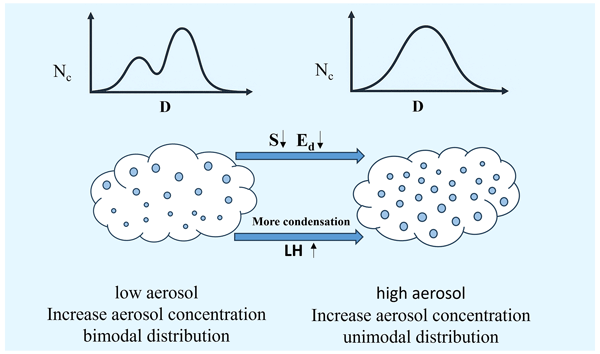
Cloud droplets are vital for rainfall and climate, and tiny airborne particles called aerosols can change their size and number. Using airplane observations over Hebei and simulations, we found that aerosols strongly affect droplet vertical distribution. Under high aerosols, lower droplets are larger and more numerous; under low aerosols, upper droplets are larger. These changes affect cloud development, precipitation, and atmospheric energy.
Shuaiqi Tang, Hailong Wang, Xiang-Yu Li, Jingyi Chen, Armin Sorooshian, Xubin Zeng, Ewan Crosbie, Kenneth L. Thornhill, Luke D. Ziemba, and Christiane Voigt
Atmos. Chem. Phys., 24, 10073–10092, https://doi.org/10.5194/acp-24-10073-2024, https://doi.org/10.5194/acp-24-10073-2024, 2024
Short summary
Short summary
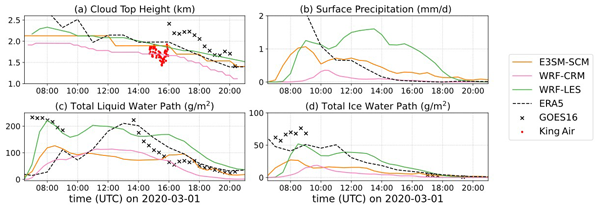
We examined marine boundary layer clouds and their interactions with aerosols in the E3SM single-column model (SCM) for a case study. The SCM shows good agreement when simulating the clouds with high-resolution models. It reproduces the relationship between cloud droplet and aerosol particle number concentrations as produced in global models. However, the relationship between cloud liquid water and droplet number concentration is different, warranting further investigation.
Ye Liu, Yun Qian, Larry K. Berg, Zhe Feng, Jianfeng Li, Jingyi Chen, and Zhao Yang
Atmos. Chem. Phys., 24, 8165–8181, https://doi.org/10.5194/acp-24-8165-2024, https://doi.org/10.5194/acp-24-8165-2024, 2024
Short summary
Short summary
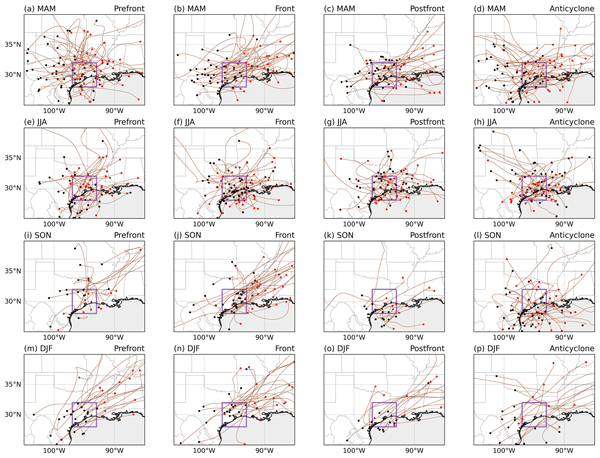
Deep convection under various large-scale meteorological patterns (LSMPs) shows distinct precipitation features. In southeastern Texas, mesoscale convective systems (MCSs) contribute significantly to precipitation year-round, while isolated deep convection (IDC) is prominent in summer and fall. Self-organizing maps (SOMs) reveal convection can occur without large-scale lifting or moisture convergence. MCSs and IDC events have distinct life cycles influenced by specific LSMPs.
Michael S. Diamond, Andrew S. Ackerman, Alejandro Baró Pérez, Ann M. Fridlind, Ehsan Erfani, Caspar Jungbacker, Hyunho Lee, David Painemal, Frida A.-M. Bender, Annica M. L. Ekman, Franziska Glassmeier, Graham Feingold, Fredrik Jansson, David A. Johnson, Matthias Schwarz, Robert Wood, Takanobu Yamaguchi, Jianhao Zhang, Xiaoli Zhou, and Paquita Zuidema
EGUsphere, https://doi.org/10.5194/egusphere-2026-5350, https://doi.org/10.5194/egusphere-2026-5350, 2026
This preprint is open for discussion and under review for Atmospheric Chemistry and Physics (ACP).
Short summary
Short summary
We compare how cloud resolving models represent an important cloud transition over the subtropical oceans. Clouds can either break up by deepening and drying out or by raining and forming an open cell pattern. Compared to observations, the clouds deepen a bit too much and get too polluted when smoke is present. In clean conditions, some models drizzle and break up into open cells while others barely rain; the model spread stems from different rain amounts for similar clouds.
Huimin Li, Yang Yang, and Hailong Wang
Atmos. Chem. Phys., 26, 13341–13357, https://doi.org/10.5194/acp-26-13341-2026, https://doi.org/10.5194/acp-26-13341-2026, 2026
Short summary
Short summary
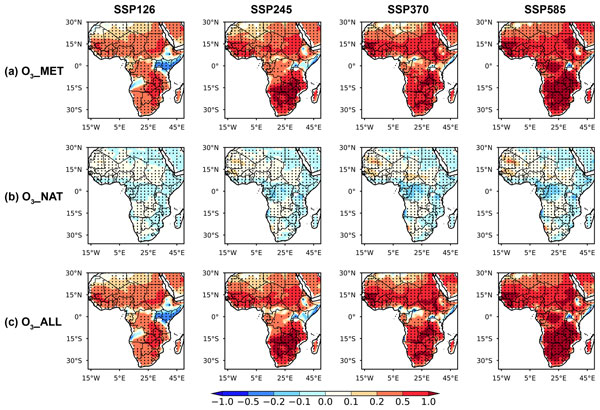
The O3 pollution across Africa has been exacerbating, which poses serious threats to public health. In this study, we predict future near-surface O3 concentrations with an integrated machine learning framework. This study reveals that global warming will exacerbate the health risk associated with O3 pollution. The elevated air temperatures act as primary driver of increased mortality ratios, while enhanced O3 concentrations are an additional stressor and adverse side effect of warming climate.
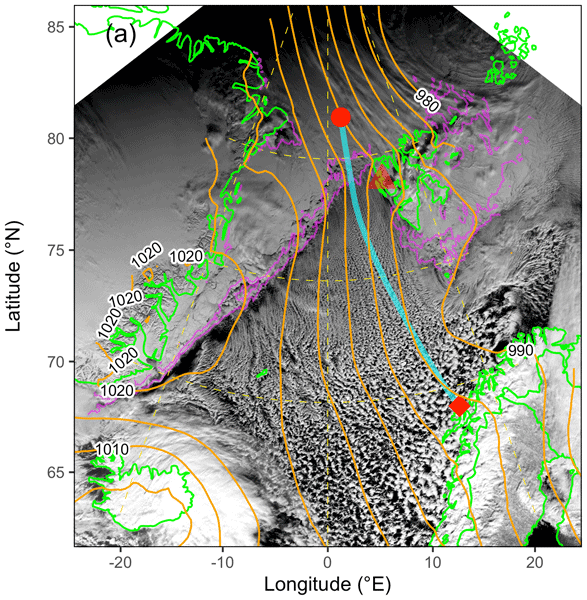
Timothy W. Juliano, Florian Tornow, Ann M. Fridlind, Andrew S. Ackerman, Gregory S. Elsaesser, Bart Geerts, Christian P. Lackner, David Painemal, Israel Silber, Mikhail Ovchinnikov, Gunilla Svensson, Michael Tjernström, Peng Wu, Alejandro Baró Pérez, Peter Bogenschutz, Dmitry Chechin, Kamal Kant Chandrakar, Jan Chylik, Andrey Debolskiy, Rostislav Fadeev, Anu Gupta, Luisa Ickes, Michail Karalis, Martin Köhler, Branko Kosović, Peter Kuma, Weiwei Li, Evgeny Mortikov, Hugh Morrison, Roel A. J. Neggers, Anna Possner, Tomi Raatikainen, Lea Raillard, Sami Romakkaniemi, Niklas Schnierstein, Shin-ichiro Shima, Nikita Silin, Mikhail Tolstykh, Étienne Vignon, Lulin Xue, Meng Zhang, and Xue Zheng
Atmos. Chem. Phys., 26, 13267–13302, https://doi.org/10.5194/acp-26-13267-2026, https://doi.org/10.5194/acp-26-13267-2026, 2026
Short summary
Short summary
Models struggle to capture cloud and precipitation processes and their radiative effects in marine cold-air outbreaks. We use a quasi-Lagrangian framework to compare large-eddy simulation (LES) and single-column model (SCM) output with field and satellite observations. With fixed droplet and ice numbers, LES and SCM agree in liquid-only tests. In mixed-phase conditions, LES plausibly capture cloud thinning and breakup, while SCMs largely remain overcast and thereby miss cloud radiative effects.
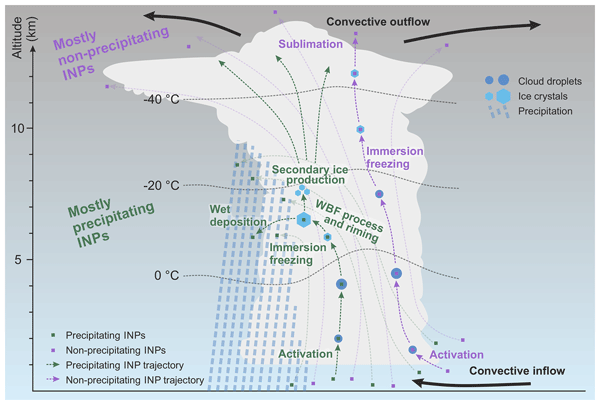
Jonas Schaefer, Sarah Grawe, Hans-Christian Clemen, Stephan Mertes, Johannes Schneider, Bruno Wetzel, Daniel Sauer, Jennifer Wolf, Laura Tomsche, Johanna Mayer, Roland Schrödner, Silvia Henning, Tina Jurkat-Witschas, Christiane Voigt, Helmut Ziereis, Theresa Harlaß, Mira Pöhlker, and Frank Stratmann
Atmos. Chem. Phys., 26, 12505–12520, https://doi.org/10.5194/acp-26-12505-2026, https://doi.org/10.5194/acp-26-12505-2026, 2026
Short summary
Short summary
Ice-nucleating particles (INP) are aerosol particles important for ice formation in clouds droplets and thereby influence climate. This study uses airborne measurements over Europe to show how INP are transported through thunderstorms. We show which particles are washed out and which are are transported into the higher troposphere, where they can again affect cloud ice formation. The findings improve understanding of atmospheric particle distribution and help refine climate models.
Dennis Piontek, Kai Widmaier, Simon Kirschler, Joël Clément, Jacques Edeline, Jakob Smretschnig, David Antonello, Tarmo Pihlak, Simone Dietmüller, Sigrun Matthes, Katrin Dahlmann, Feijia Yin, and Christiane Voigt
J. Env. Com. Air Transp. Sys. Discuss., https://doi.org/10.5194/jecats-2026-14, https://doi.org/10.5194/jecats-2026-14, 2026
Preprint under review for JECATS
Short summary
Short summary
Model simulations were used to study all air traffic over Northern Europe during 16 days in 2023, following the European Union's planned framework (using CoCiP and aCCFs) for monitoring aviation’s non-CO2 climate effects. Small changes in flight altitude reduced the climate impact of contrails by 48 % while increasing the fleet-wide fuel use by only 0.4 %. The changes had only limited effects on air traffic density and aircraft spacing, showing that climate-optimized flight planning is feasible.
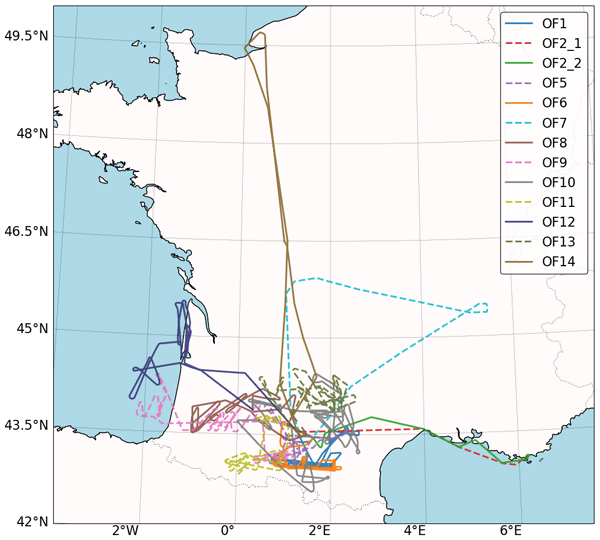
Deniz Menekay, Johannes Lucke, Tina Jurkat-Witschas, Christiane Voigt, Simon Kirschler, and Aurélien Bourdon
Earth Syst. Sci. Data, 18, 5837–5853, https://doi.org/10.5194/essd-18-5837-2026, https://doi.org/10.5194/essd-18-5837-2026, 2026
Short summary
Short summary
Clouds containing supercooled water droplets are important for improving weather prediction, climate models, and safe aviation operations because they can lead to aircraft icing. To better understand these clouds, research flights were conducted over Europe using instruments that measure cloud particles and their water content. This study presents the resulting dataset of cloud properties together with the methods used to process and evaluate the measurements collected during the flights.
Megan Robertson, Chayan Roychoudhury, Keming Pan, Mohammad Amin Mirrezaei, Armin Sorooshian, and Avelino Arellano
EGUsphere, https://doi.org/10.5194/egusphere-2026-3397, https://doi.org/10.5194/egusphere-2026-3397, 2026
Short summary
Short summary
Ground level ozone is a hazardous air pollutant, but its drivers can appear different depending on the measurement method. We investigated Tucson, Arizona by inter-comparing satellite and ground-based air quality tools and weather data. This multi-platform approach shows that ozone and its precursors vary by time of day, season, and measurement perspective. The results showcase how semi-arid urban atmospheres are influenced by sunlight, emissions, vegetation, and vertical mixing.
Sabrina Ries, Luca Bugliaro, Vanessa Santos Gabriel, Dennis Piontek, Matteo Aricò, and Christiane Voigt
EGUsphere, https://doi.org/10.5194/egusphere-2026-3046, https://doi.org/10.5194/egusphere-2026-3046, 2026
This preprint is open for discussion and under review for Atmospheric Measurement Techniques (AMT).
Short summary
Short summary
Persistent contrails from airplanes significantly contribute to climate warming. Modifying the flight route of aircraft to avoid contrail formation can help reducing this effect. We have developed an automated framework that derives contrail life cycles from satellite data and attributes them to a given flight. Each contrail is assigned a "matching score" that measures the plausibility of this classification. The method can be used to verify contrail avoidance flight trials.
Simon Braun, Magdalena Pühl, Andreas Marsing, Daniel Sauer, Gregor Neumann, Elena de la Torre Castro, Valerian Hahn, Michael Lichtenstern, Paul Stock, Christopher Heckl, Dennis Hillenbrand, Anke Roiger, Christiane Voigt, Simon Unterstraßer, Arne Vasenden, Roberta Vasenden, Jean Cammas, Florian Thorey, Catherine Mackay, Charles Renard, and Tina Jurkat-Witschas
EGUsphere, https://doi.org/10.5194/egusphere-2026-2887, https://doi.org/10.5194/egusphere-2026-2887, 2026
Short summary
Short summary
In this work, we share the results of first in-flight emission and contrail measurements behind a fuel cell exhaust emulator, with the goal of quantifying the contrail properties for this new aviation propulsion concept. An artificial dilution tracer system was used to assess plume dilution and derive emission indices. At ambient temperatures close to the homogeneous freezing threshold, a strong temperature-dependence of the number of contrail ice crystals, due to droplet freezing, was observed.
Patrick C. Taylor, Armin Sorooshian, Rei Ueyama, Sebastian Schmidt, Ihab Abboud, Quincy Allison, Kevin Barry, Sebastian Becker, Holly A. Bender, Joseph R. Bennett, James B. Blair, Niklas Bohn, Linette Boisvert, Matthew D. Brown, Roelof Bruintjes, Anthony Bucholtz, Megan Buzanowicz, Brian Cairns, Filippo Calì Quaglia, Eduard Chemyakin, Bo Chen, Gao Chen, Hong Chen, Yu-Wen Chen, Zezhen Cheng, Swarup China, Dan Chirica, Yonghoon Choi, Peter Colarco, Brian Collister, Ewan Crosbie, Maurice J. Cross, Janet Daniels, Paul DeMott, Joshua P. DiGangi, Alcide Giorgio di Sarra, Glenn S. Diskin, Erica K. Dolinar, Eva-Lou Edwards, Samuel Ephraim, Nikolaos Evangeliou, Romanos Foskinis, Francesca Gallo, Lan Gao, José Luis Gómez-Amo, Daisy Gonzalez, Christine Groot Zwaaftink, Pawan Gupta, Ivan Heckman, Michael Hendrickson, Miguel Ricardo A. Hilario, Ken Hirata, Michelle Hofton, Andrew L. Holen, Ulas Im, Alia L. Khan, Ralph Kahn, Alexei V. Korolev, Sonia Kreidenweis, Thomas Krumpen, Nathan Kurtz, Leslie Lait, Bradley Lamkin, Jack Landy, Nurun Nahar Lata, Paul Lawson, Samuel LeBlanc, Sean Leavor, Jing Li, Thorsten Markus, Hal Maring, Andreas H. Massling, Camille Mavis, Flynn McGinnity, Kerry Meyer, Gabriel Mojica, Richard H. Moore, Parker Morris, Giovanni Muscari, Vikas Nataraja, Amin R. Nehrir, Athanasios Nenes, Edward P. Nowottnick, Matteo Ottaviani, Chelsea Parker, Ryan Patnaude, Michael Perez, Russell J. Perkins, Colten Peterson, Alek Petty, Stevie Phothisane, Chris Polashenski, Kerri A. Pratt, Kayla M. Preisler, John Prytherch, David Rabine, Jens Redemann, Ju-Mee Ryoo, Joseph S. Schlosser, Vanessa Selimovic, Michael A. Shook, Morgan Silverman, Henrik Skov, Alexander Smirnov, Cassidy Soloff, Amy Solomon, Snorre Stamnes, Azusa Takeishi, David R. Thompson, K. Lee Thornhill, Rachel Tilling, Michael Tjernström, Monica Tosco, Pedro C. Valdelomar, David Van Gilst, Jian Wang, Zhien Wang, Andrzej Wasilewski, Manfred Wendisch, Brent Wilder, Edward L. Winstead, Albert Wu, Peng Xian, Lauren M. Zamora, Jiaoshi Zhang, Lei Zhang, Lu Zhang, Luke Ziemba, and Paquita Zuidema
Earth Syst. Sci. Data Discuss., https://doi.org/10.5194/essd-2026-241, https://doi.org/10.5194/essd-2026-241, 2026
Preprint under review for ESSD
Short summary
Short summary
This article summarizes the data sets collected during the Arctic Radiation Cloud aerosol Sea ice Interaction eXperiment (ARCSIX), NASA's most comprehensive Arctic field campaign to date. The overarching goal was to quantify the contributions of surface, clouds, aerosol particles, and precipitation to summer sea ice melt. This paper describes the ARCSIX implementation including the flight strategy, instruments, complementary data sets, access, and usage details.
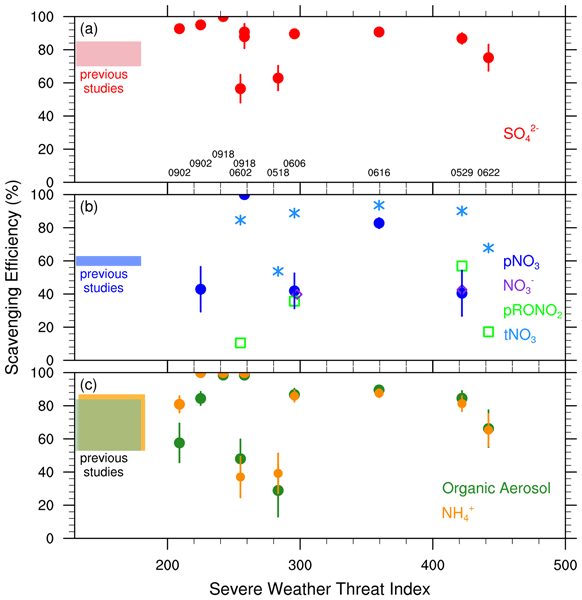
Mary C. Barth, Pedro Campuzano-Jost, Gustavo Cuchiara, Ajay Parottil, Jose L. Jimenez, Miguel Ricardo A. Hilario, Genevieve Rose Lorenzo, and Armin Sorooshian
Atmos. Chem. Phys., 26, 9907–9927, https://doi.org/10.5194/acp-26-9907-2026, https://doi.org/10.5194/acp-26-9907-2026, 2026
Short summary
Short summary
We analyze aircraft observations taken in the inflow and upper troposphere outflow regions of ten convective storms to determine aerosol mass scavenging efficiencies. More than 75 % of sulfate and ammonium in all storms and organic aerosols in severe storms are scavenged. Nitrate aerosols have more moderate scavenging efficiencies. Lightning-NOx production and aqueous-phase chemistry can affect outflow concentrations. These results are useful for evaluating chemical transport models.
Pan Zhao, Jingyi Chen, Yang Yang, Yue Jia, and Yang Yu
EGUsphere, https://doi.org/10.5194/egusphere-2026-3025, https://doi.org/10.5194/egusphere-2026-3025, 2026
Short summary
Short summary
Marine cloud brightening (MCB) aims to cool climate by spraying sea-salt aerosols to brighten marine clouds, but whether aerosols can reach clouds efficiently remains uncertain. Using large-eddy simulations with Lagrangian particle tracking, we show that turbulent transport strongly depends on cloud conditions and model resolution. High-liquid-water periods favor stronger transport, while higher-resolution simulations better capture turbulence and cloud droplet activation.
Aymeric Dziduch, Antoine Baudoux, Guillaume Mioche, Antoine Canzi, Benjamin Doiteau, Manuel Moser, Emma Järvinen, Étienne Vignon, Jean-Christophe Raut, Régis Dupuy, Christophe Gourbeyre, Jean-Luc Baray, Marie Monier, Frédéric Szczap, Guillaume Penide, Julien Delanoë, Odran Sourdeval, Alfons Schwarzenboeck, Stephan Mertes, Franz Martin Schnaiter, Christiane Voigt, Mario Mech, Susanne Crewell, Andreas Herber, Christof Lüpkes, André Ehrlich, Manfred Wendisch, and Olivier Jourdan
EGUsphere, https://doi.org/10.5194/egusphere-2026-3265, https://doi.org/10.5194/egusphere-2026-3265, 2026
This preprint is open for discussion and under review for Atmospheric Chemistry and Physics (ACP).
Short summary
Short summary
This study examines the microphysical properties and ice crystal habits of low-level Arctic mixed-phase clouds around Svalbard. Using airborne in situ observations from four campaigns, we show that cloud microphysical structure and ice crystal habits are influenced by weather conditions and surface type. These results provide quantitative observations to better understand low-level Arctic clouds, their ice formation processes, and their influence on the Arctic atmosphere and climate system.
Katherine Mifsud, Jason Barr, Robert Wood, Yonghoon Choi, Ewan Crosbie, Glenn S. Diskin, Joshua P. DiGangi, Richard H. Moore, Claire Robinson, Michael A. Shook, Armin Sorooshian, Christiane Voigt, and Luke Ziemba
EGUsphere, https://doi.org/10.5194/egusphere-2026-3027, https://doi.org/10.5194/egusphere-2026-3027, 2026
Short summary
Short summary
Salt particles from the ocean can help marine clouds precipitate more quickly, but their role is not fully understood. Using aircraft observations over the northwest Atlantic Ocean and computer simulations, we studied how these particles affect warm rain formation. We found that clouds containing more large sea salt particles, even at relatively low amounts, produce more rain. These results improve understanding of how sea salt aerosols influence clouds, rainfall, and climate.
Guangxin Ai, Shuaiqi Tang, Hailong Wang, Fan Mei, and Minghuai Wang
Atmos. Chem. Phys., 26, 7967–7984, https://doi.org/10.5194/acp-26-7967-2026, https://doi.org/10.5194/acp-26-7967-2026, 2026
Short summary
Short summary
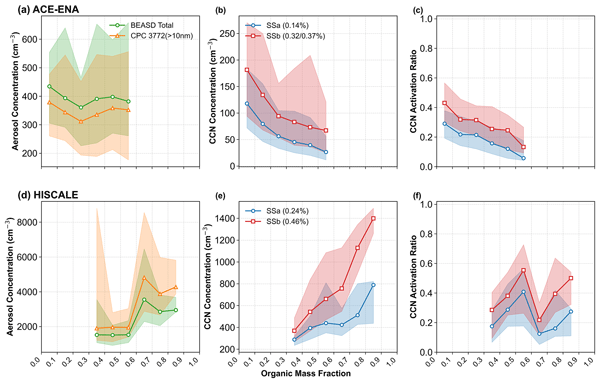
Tiny aerosol particles help form cloud droplets and can affect rainfall and climate, but their behavior is hard to predict. We used aircraft measurements over the ocean near the Azores and over the central United States to compare clean and polluted air. We found that particle size and chemical makeup together control how easily clouds form, and organic-rich particles often reduce droplet formation. These results can improve how weather and climate models represent clouds.
Zhujun Li, David Painemal, Yan Feng, and Xiaojian Zheng
Atmos. Chem. Phys., 26, 7705–7720, https://doi.org/10.5194/acp-26-7705-2026, https://doi.org/10.5194/acp-26-7705-2026, 2026
Short summary
Short summary
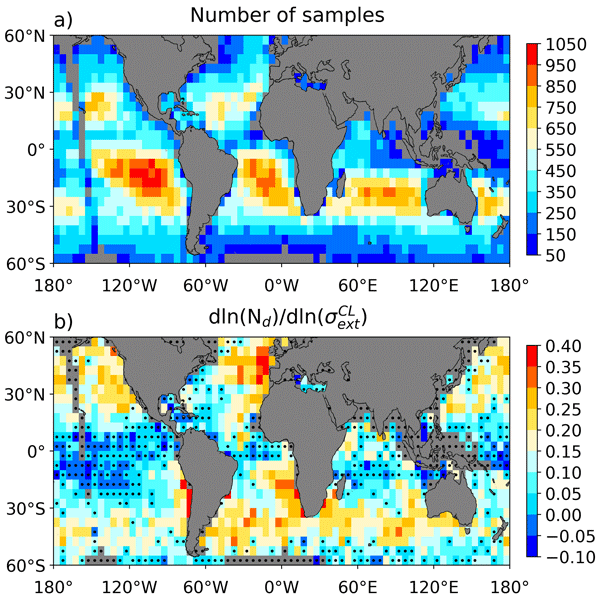
This study is the first global assessment of aerosol-cloud interactions (ACI) and cloud adjustments that relies on vertically resolved aerosol retrievals that are vertically matched with the location of the cloud layer. We computed ACI metrics and cloud adjustments over the global ocean by combining retrievals from active and passive satellite sensors and found high sensitivity of clouds to changes in their cloud droplet number concentration due to aerosols.
Vanessa Santos Gabriel, Luca Bugliaro, Dennis Piontek, Sabrina Ries, and Christiane Voigt
Atmos. Meas. Tech., 19, 3271–3289, https://doi.org/10.5194/amt-19-3271-2026, https://doi.org/10.5194/amt-19-3271-2026, 2026
Short summary
Short summary
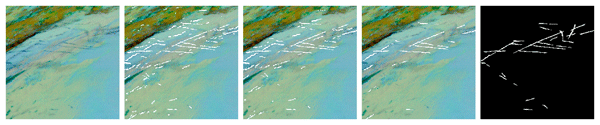
We present a new contrail detection algorithm for the geostationary Meteosat satellite, which outperforms other algorithms for this satellite. Contrails influence the climate but are hard to identify in geostationary satellite imagery with moderate spatial resolution. With this study, we enable the design and evaluation of contrail mitigation strategies, contributing to ongoing efforts in understanding, monitoring, and reducing the climate impact of aviation-induced cirrus.
Jianhao Zhang, David Painemal, Tom Dror, Jung-Sub Lim, Armin Sorooshian, and Graham Feingold
Atmos. Chem. Phys., 26, 6015–6034, https://doi.org/10.5194/acp-26-6015-2026, https://doi.org/10.5194/acp-26-6015-2026, 2026
Short summary
Short summary
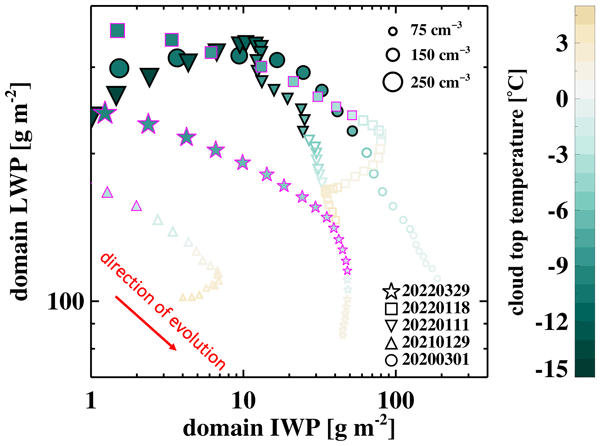
Clouds transitioning from overcast to broken fields play an important role in regulating the amount of sunlight reaching Earth’s surface. Using satellite imagery and a novel space-time exchange approach, we examine these transitions during marine cold-air outbreaks. Our analysis reveals characteristic signatures (or fingerprints) of liquid- and ice-phase processes, demonstrating how space-borne observations can provide new physical insight into cloud evolution.
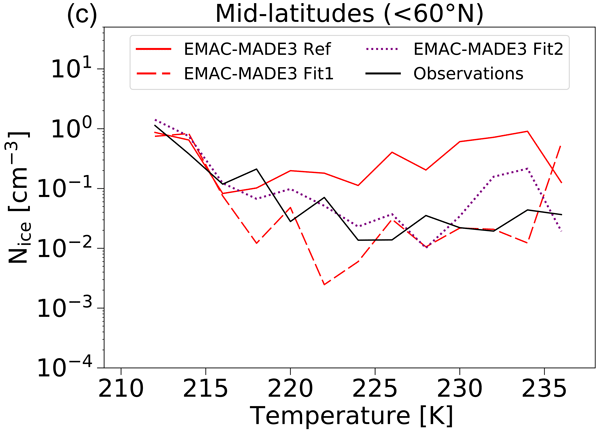
Elena De La Torre Castro, Christof G. Beer, Tina Jurkat-Witschas, Daniel Sauer, Mattia Righi, Johannes Hendricks, and Christiane Voigt
Atmos. Chem. Phys., 26, 5879–5899, https://doi.org/10.5194/acp-26-5879-2026, https://doi.org/10.5194/acp-26-5879-2026, 2026
Short summary
Short summary
Ice nucleating particles strongly influence cirrus cloud properties but remain difficult to measure at cirrus temperatures. By combining EMAC (ECHAM/MESSy Atmospheric Chemistry) model simulations with in situ observations from the CIRRUS-HL (Cirrus in High-Latitudes) campaign, we investigate aerosol-cirrus interactions across latitudes. While the model generally agrees with observations, it overestimates ice crystal number concentrations detrained from convection, which we correct applying a new radius-temperature parametrization from the observations.
Deyu Liu, Yue Chen, Sihan Liu, Honglei Wang, Jingyi Chen, Yang Yang, Zihan Wang, Kun Cui, and Tianliang Zhao
Atmos. Chem. Phys., 26, 5781–5797, https://doi.org/10.5194/acp-26-5781-2026, https://doi.org/10.5194/acp-26-5781-2026, 2026
Short summary
Short summary
Cloud droplets are vital for rainfall and climate, and tiny airborne particles called aerosols can change their size and number. Using airplane observations over Hebei and simulations, we found that aerosols strongly affect droplet vertical distribution. Under high aerosols, lower droplets are larger and more numerous; under low aerosols, upper droplets are larger. These changes affect cloud development, precipitation, and atmospheric energy.
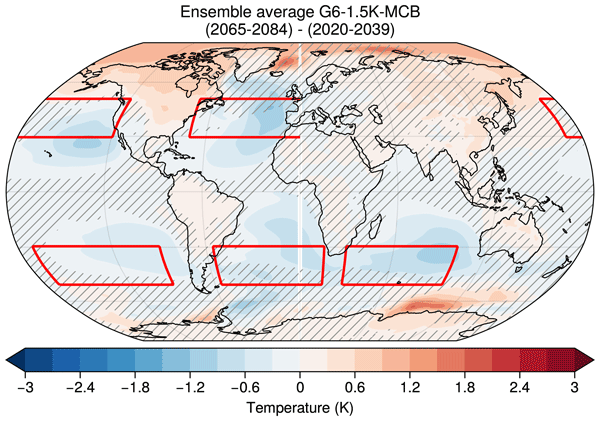
Haruki Hirasawa, Matthew Henry, Philip J. Rasch, Robert Wood, Sarah J. Doherty, James Haywood, Alex Wong, Jean-Francois Lamarque, Ezra Brody, and Hailong Wang
Geosci. Model Dev., 19, 3257–3283, https://doi.org/10.5194/gmd-19-3257-2026, https://doi.org/10.5194/gmd-19-3257-2026, 2026
Short summary
Short summary
Marine cloud brightening (MCB) is a proposal to emit sea salt aerosols to make clouds more reflective and cool the climate. Here, we use three climate models to study a hypothetical future where MCB is used to maintain temperatures near 2020–2039 conditions. The simulation results indicate that using MCB in midlatitude ocean regions can keep the climate close to present day conditions. This reduces many of the negative impacts shown in previous studies, informing future modeling efforts.
Philipp Brauner, Oliver Appel, Oliver Eppers, Franziska Köllner, Hans-Christian Clemen, Tiziana Bräuer, Hans-Christoph Lachnitt, Katharina Kaiser, Johannes Schneider, Antonis Dragoneas, Andreas Hünig, Sergej Molleker, Bruce E. Anderson, Yafang Cheng, Hans Schlager, Christiane Voigt, and Stephan Borrmann
EGUsphere, https://doi.org/10.5194/egusphere-2026-2161, https://doi.org/10.5194/egusphere-2026-2161, 2026
Preprint archived
Short summary
Short summary
Airborne measurements of the aerosol chemical composition were conducted in the 2018 wintertime tropopause region over Germany using a hybrid aerosol mass spectrometer, regarding the atmospheric background and aircraft exhaust plumes. Biomass burning aerosol of North American wildfires contributes to the aerosol population. Soot and engine oil were attributed to aircraft exhaust, and were detected in contrail residuals, implying their impact on chemical processes and properties of contrails.
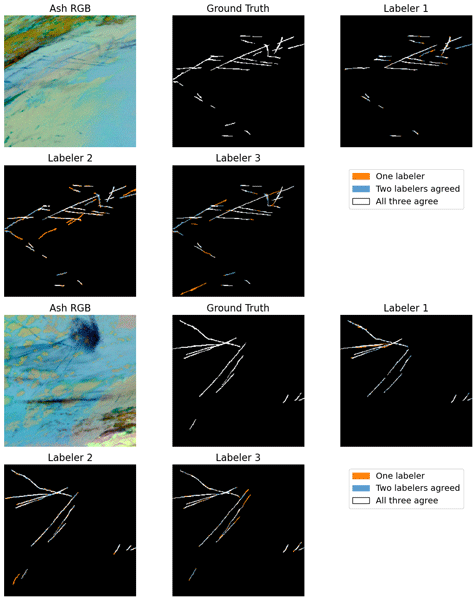
Vanessa Santos Gabriel, Luca Bugliaro, Mara Montag, Sabrina Ries, Ziming Wang, Kai Widmaier, Matteo Arico, Simon Unterstrasser, Johanna Mayer, Deniz Menekay, Andreas Marsing, Elena de la Torre Castro, Liam Megill, Monika Scheibe, and Christiane Voigt
Earth Syst. Sci. Data, 18, 2397–2412, https://doi.org/10.5194/essd-18-2397-2026, https://doi.org/10.5194/essd-18-2397-2026, 2026
Short summary
Short summary
We provide observations of the geostationary Meteosat satellite with contrails labeled by three people complemented with detailed cloud information. Contrails influence climate but are hard to identify in satellite imagery. With this study, we support contrail detection development and evaluation, stress the subjectivity of human labeling and reveal which meteorological conditions highlight or hide contrails. This dataset contributes to a better understanding of aviation’s climate impact.
Seethala Chellappan, David Painemal, Mandana Thieman, Christian Pelayo, William L. Smith Jr., and Lynn M. Russell
EGUsphere, https://doi.org/10.5194/egusphere-2026-933, https://doi.org/10.5194/egusphere-2026-933, 2026
Short summary
Short summary
We analyzed observations from the ARM EPCAPE campaign at coastal California, and satellite cloud properties to understand how large-scale weather patterns influence marine low clouds and aerosols. Using ERA5 data and Self-Organizing Maps, we identified nine synoptic regimes linked to cloud cover, depth, and liquid water path. Satellite data show anticyclone position strongly affects cloud properties, while aerosol–cloud covariability depends on turbulence and supersaturation.
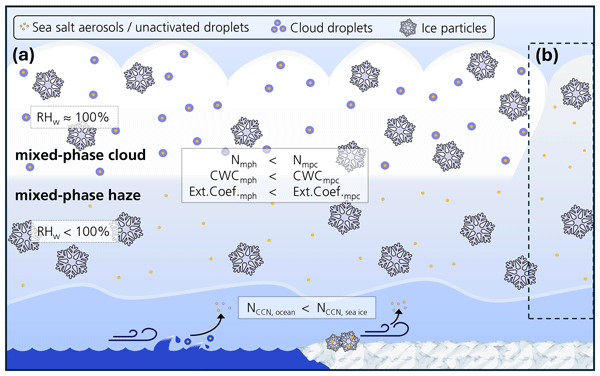
Manuel Moser, Christiane Voigt, Oliver Eppers, Johannes Lucke, Elena De La Torre Castro, Johanna Mayer, Regis Dupuy, Guillaume Mioche, Olivier Jourdan, Hans-Christian Clemen, Johannes Schneider, Philipp Joppe, Stephan Mertes, Bruno Wetzel, Stephan Borrmann, Marcus Klingebiel, Mario Mech, Christof Lüpkes, Susanne Crewell, André Ehrlich, Andreas Herber, and Manfred Wendisch
Atmos. Chem. Phys., 26, 1867–1887, https://doi.org/10.5194/acp-26-1867-2026, https://doi.org/10.5194/acp-26-1867-2026, 2026
Short summary
Short summary
In this study we analyzed Arctic mixed-phase clouds using airborne in-situ measurements in spring 2022. Based on microphysical properties, we show that within these clouds a distinction must be made between classic mixed-phase clouds and a mixed-phase haze regime. Instead of supercooled droplets, the haze regime contains large wet sea salt aerosols. These findings improve our understanding of Arctic low-level cloud processes.
Timothy W. Juliano, Florian Tornow, Ann M. Fridlind, Andrew S. Ackerman, Gregory S. Elsaesser, Bart Geerts, Christian P. Lackner, David Painemal, Israel Silber, Mikhail Ovchinnikov, Gunilla Svensson, Michael Tjernström, Peng Wu, Alejandro Baró Pérez, Peter Bogenschutz, Dmitry Chechin, Kamal Kant Chandrakar, Jan Chylik, Andrey Debolskiy, Rostislav Fadeev, Anu Gupta, Luisa Ickes, Michail Karalis, Martin Köhler, Branko Kosović, Peter Kuma, Weiwei Li, Evgeny Mortikov, Hugh Morrison, Roel A. J. Neggers, Anna Possner, Tomi Raatikainen, Sami Romakkaniemi, Niklas Schnierstein, Shin-ichiro Shima, Nikita Silin, Mikhail Tolstykh, Lulin Xue, Meng Zhang, and Xue Zheng
EGUsphere, https://doi.org/10.5194/egusphere-2025-6217, https://doi.org/10.5194/egusphere-2025-6217, 2026
Preprint archived
Short summary
Short summary
Models struggle to capture cloud and precipitation processes and their radiative effects in marine cold-air outbreaks. We use a quasi-Lagrangian framework to compare large-eddy simulation (LES) and single-column model (SCM) output with field and satellite observations. With fixed droplet and ice numbers, LES and SCM agree in liquid-only tests. In mixed-phase conditions, LES plausibly capture cloud thinning and breakup, while SCMs largely remain overcast and thereby miss cloud radiative effects.
Hazel Vernier, Demilson Quintao, Bruno Biazon, Eduardo Landulfo, Giovanni Souza, Amanda Santos, Fabio Lopes, Alex Mendes, José da Matta, Pinheiro Damaris, Benoit Grosslin, Maria Paulete, Maria de Fátima Andrade, Neeraj Rastogi, Akhil Raj, Hongyu Liu, Mahesh Kovilakam, Suvarna Fadnavis, Frank Wienhold, Mathieu Colombier, Chris Boone, Gwenael Berthet, Nicolas Dumelie, Lilian Joly, and Jean-Paul Vernier
EGUsphere, https://doi.org/10.5194/egusphere-2025-6226, https://doi.org/10.5194/egusphere-2025-6226, 2026
Preprint archived
Short summary
Short summary
This paper shows unique balloon measurements from Brazil within the Hunga volcanic plume eight months after the eruption. The chemical analysis of samples collected reveal new insights on volcanic aerosol composition and suggest the presence of marine aerosols.
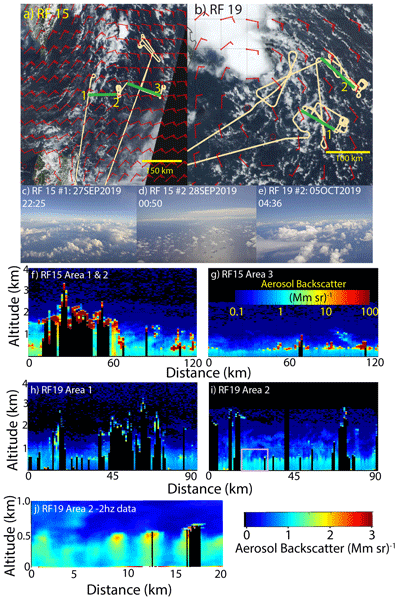
Jeffrey S. Reid, Robert E. Holz, Chris A. Hostetler, Richard A. Ferrare, Juli I. Rubin, Elizabeth J. Thompson, Susan C. van den Heever, Corey G. Amiot, Sharon P. Burton, Joshua P. DiGangi, Glenn S. Diskin, Joshua H. Cossuth, Daniel P. Eleuterio, Edwin W. Eloranta, Ralph Kuehn, Willem J. Marais, Hal B. Maring, Armin Sorooshian, Kenneth L. Thornhill, Charles R. Trepte, Jian Wang, Peng Xian, and Luke D. Ziemba
Atmos. Chem. Phys., 25, 18639–18673, https://doi.org/10.5194/acp-25-18639-2025, https://doi.org/10.5194/acp-25-18639-2025, 2025
Short summary
Short summary
We document air and ship born measurements of the vertical distribution of pollution and biomass burning aerosol particles transported within the Maritime Continent's monsoonal flows for 1000s of kilometers, and yet still exhibit intricate patterns around clouds near the ocean's surface. Findings demonstrate that, while aerosol transport occurs near the surface, there is heterogeneity in particle extinction that must be considered for both in situ observations and satellite retrievals.
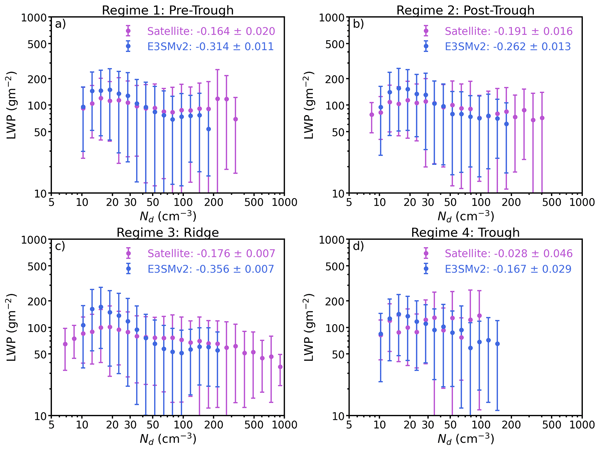
Xiaojian Zheng, Yan Feng, David Painemal, Meng Zhang, Shaocheng Xie, Zhujun Li, Robert Jacob, and Bethany Lusch
Atmos. Chem. Phys., 25, 17473–17499, https://doi.org/10.5194/acp-25-17473-2025, https://doi.org/10.5194/acp-25-17473-2025, 2025
Short summary
Short summary
This study used satellite observations and climate model simulations to examine how aerosols affect marine clouds over the Eastern North Atlantic. Cloud responses to aerosols differed significantly across meteorological regimes. The model captured overall trends but exaggerated cloud responses, performing better for shallower than deeper clouds. The results highlight the need to untangle aerosol effects from meteorology and improve cloud process representation in climate models.
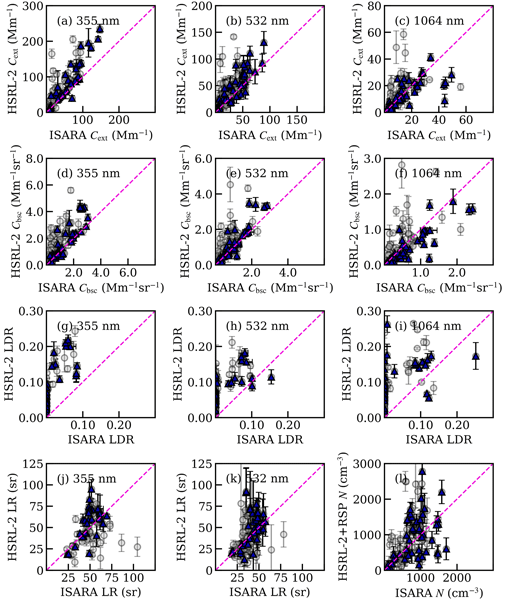
Joseph S. Schlosser, Sanja Dmitrovic, Ryan Bennett, Brian Cairns, Gao Chen, Glenn S. Diskin, Richard A. Ferrare, Johnathan W. Hair, Michael A. Jones, Jeffrey S. Reid, Taylor J. Shingler, Michael A. Shook, Armin Sorooshian, Kenneth L. Thornhill, Luke D. Ziemba, and Snorre Stamnes
Atmos. Meas. Tech., 18, 7187–7220, https://doi.org/10.5194/amt-18-7187-2025, https://doi.org/10.5194/amt-18-7187-2025, 2025
Short summary
Short summary
This study focuses on aerosol particles, which critically influence the atmosphere by scattering and absorbing light. To understand these interactions, airborne field campaigns deploy instruments that can measure these particles’ directly or indirectly via remote sensing. We introduce the In Situ Aerosol Retrieval Algorithm (ISARA) to ensure consistency between aerosol measurements and show that the two data sets generally align, with some deviation caused by the presence of larger particles.
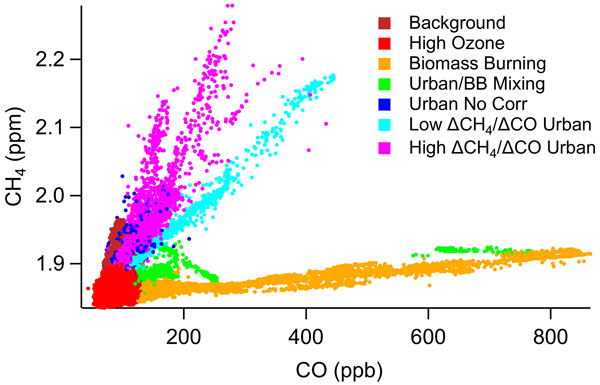
Joshua P. DiGangi, Glenn S. Diskin, Subin Yoon, Sergio L. Alvarez, James H. Flynn, Claire E. Robinson, Michael A. Shook, K. Lee Thornhill, Edward L. Winstead, Luke D. Ziemba, Maria Obiminda L. Cambaliza, James B. Simpas, Miguel Ricardo A. Hilario, and Armin Sorooshian
Atmos. Chem. Phys., 25, 17387–17397, https://doi.org/10.5194/acp-25-17387-2025, https://doi.org/10.5194/acp-25-17387-2025, 2025
Short summary
Short summary
Both fire and urban emissions are major contributors to air pollution in Southeast Asia. Relative increases in measurements of methane and carbon monoxide gases during an aircraft campaign near the Philippines in 2019 were used to isolate pollution emissions from fires vs. urban sources. Results were compared to atmospheric transport models to determine the sources' regional origins, and relationships between pollution indicators relevant to poor air quality were investigated for each source.
Shicheng Yan, Yang Yang, Lili Ren, Hailong Wang, Pinya Wang, Lei Chen, Jianbin Jin, and Hong Liao
Atmos. Chem. Phys., 25, 16877–16893, https://doi.org/10.5194/acp-25-16877-2025, https://doi.org/10.5194/acp-25-16877-2025, 2025
Short summary
Short summary
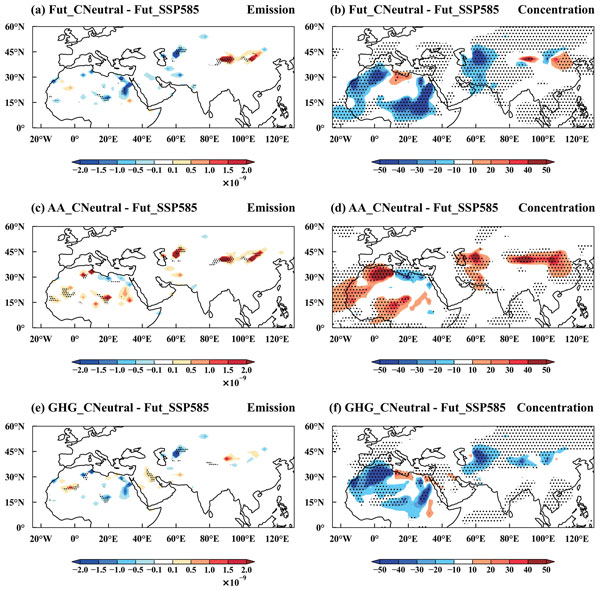
In this study, we assess the impact of carbon neutrality by 2060 on dust emissions in the Northern Hemisphere using the Community Earth System Model. Our findings show that reductions in greenhouse gases (GHGs) and aerosols lead to decreased dust loading compared to high fossil fuel scenarios. While aerosol reductions promote dust, GHGs decreases reduce wind speeds, suppressing dust emissions. These results suggest that carbon-neutral policies mitigate climate change and reduce dust pollution.
Travis D. Toth, Marian B. Clayton, Zhujun Li, David Painemal, Sharon D. Rodier, Jayanta Kar, Tyler J. Thorsen, Richard A. Ferrare, Mark A. Vaughan, Jason L. Tackett, Huisheng Bian, Mian Chin, Anne E. Garnier, Ellsworth J. Welton, Robert A. Ryan, Charles R. Trepte, and David M. Winker
Atmos. Meas. Tech., 18, 6765–6793, https://doi.org/10.5194/amt-18-6765-2025, https://doi.org/10.5194/amt-18-6765-2025, 2025
Short summary
Short summary
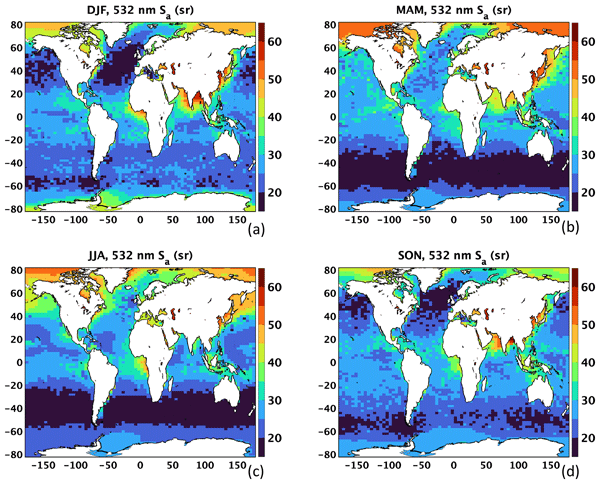
NASA's CALIPSO satellite mission observed aerosols (airborne particles) globally from 2006 to 2023. Its final data products update improves its aerosol optical parameters over oceans by adjusting for regional and seasonal differences in a new measurement-model synergistic approach. This results in a more realistic aerosol characterization, specifically near coastlines (where sea salt mixes with pollution), with potential impacts to future studies of science applications (e.g., climate effects).
Gregor Neumann, Andreas Marsing, Theresa Harlass, Daniel Sauer, Simon Braun, Magdalena Pühl, Christopher Heckl, Paul Stock, Elena De La Torre Castro, Valerian Hahn, Anke Roiger, Christiane Voigt, Simon Unterstraßer, Jean Cammas, Charles Renard, Roberta Vasenden, Arnold Vasenden, and Tina Jurkat-Witschas
Atmos. Meas. Tech., 18, 6795–6816, https://doi.org/10.5194/amt-18-6795-2025, https://doi.org/10.5194/amt-18-6795-2025, 2025
Short summary
Short summary
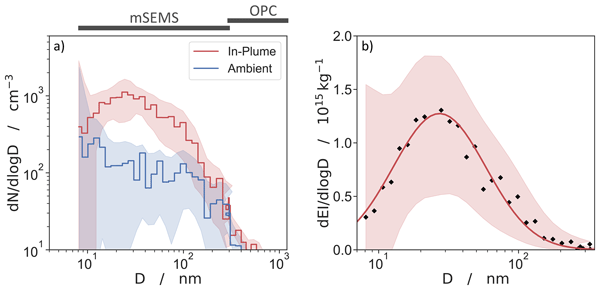
This study presents the first successful in-flight emission characterization of a turboprop engine using a fully autonomous airborne measurement platform, offering new insights into the atmospheric impacts of regional aviation. By equipping the high-altitude Grob G 520 Egrett with a suite of custom and modified commercial instruments, we demonstrate precise, high-resolution measurements of aerosol particles, trace gases, and contrail ice in the engine exhaust plume at cruise altitudes.
Naser Mahfouz, Hassan Beydoun, Johannes Mülmenstädt, Noel Keen, Adam C. Varble, Luca Bertagna, Peter Bogenschutz, Andrew Bradley, Matthew W. Christensen, T. Conrad Clevenger, Aaron Donahue, Jerome Fast, James Foucar, Jean-Christophe Golaz, Oksana Guba, Walter Hannah, Benjamin Hillman, Robert Jacob, Wuyin Lin, Po-Lun Ma, Yun Qian, Balwinder Singh, Christopher Terai, Hailong Wang, Mingxuan Wu, Kai Zhang, Andrew Gettelman, Mark Taylor, L. Ruby Leung, Peter Caldwell, and Susannah Burrows
Atmos. Chem. Phys., 25, 15105–15120, https://doi.org/10.5194/acp-25-15105-2025, https://doi.org/10.5194/acp-25-15105-2025, 2025
Short summary
Short summary
Our study assesses the aerosol effective radiative forcing in a global cloud-resolving atmosphere model at ultra-high resolution. We demonstrate that global aerosol forcing signal can be robustly reproduced across resolutions when aerosol activation processes are carefully parameterized. Further, we argue that simplified prescribed aerosol schemes will open the door for further process/mechanism studies under controlled conditions.
Emily Lenhardt, Lan Gao, Chris A. Hostetler, Richard A. Ferrare, Sharon P. Burton, Richard H. Moore, Luke D. Ziemba, Ewan Crosbie, Armin Sorooshian, Cassidy Soloff, and Jens Redemann
Atmos. Chem. Phys., 25, 13747–13768, https://doi.org/10.5194/acp-25-13747-2025, https://doi.org/10.5194/acp-25-13747-2025, 2025
Short summary
Short summary
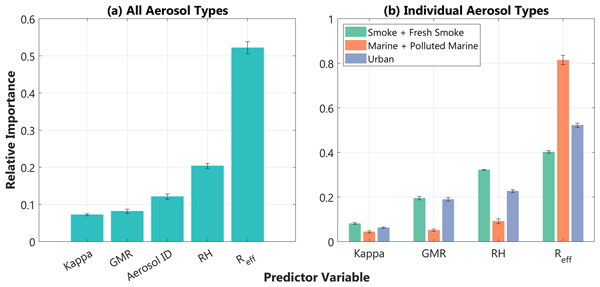
Small particles that form cloud droplets greatly impact Earth's climate but are very difficult to measure. If we can measure them using satellite-based instruments, we greatly increase the amount of available data on their concentrations. In this study, we find that including information about particle size is most important to measure them accurately from such satellite-based instruments. This can inform future studies on how to obtain more accurate information about small particles.
Denghui Ji, Christoph Ritter, Xiaoyu Sun, Manuel Moser, Christiane Voigt, Mathias Palm, and Justus Notholt
Atmos. Chem. Phys., 25, 13037–13052, https://doi.org/10.5194/acp-25-13037-2025, https://doi.org/10.5194/acp-25-13037-2025, 2025
Short summary
Short summary
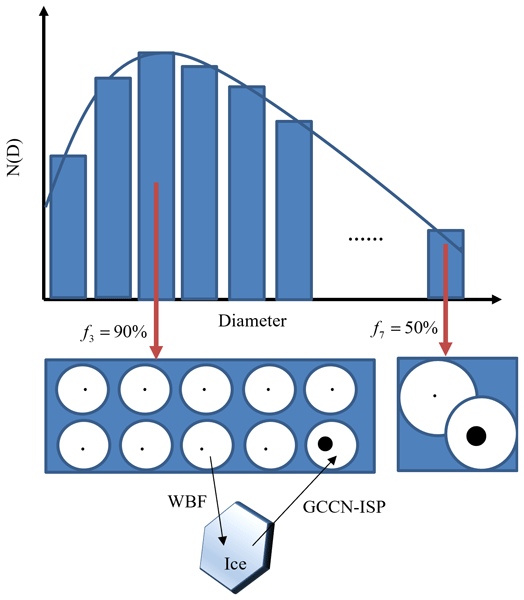
We discovered a process where large aerosols help small water droplets in Arctic clouds grow, even when conditions normally favor ice. Unlike the traditional view, this process may explain how liquid and ice can coexist in cold clouds. Based on theory and aircraft data, our findings provide new insight into the microphysics of mixed-phase clouds, which could improve understanding of how Arctic clouds affect climate.
Chen Zhang, John J. Cassano, Mark W. Seefeldt, Hailong Wang, Weiming Ma, and Wen-wen Tung
The Cryosphere, 19, 4671–4699, https://doi.org/10.5194/tc-19-4671-2025, https://doi.org/10.5194/tc-19-4671-2025, 2025
Short summary
Short summary
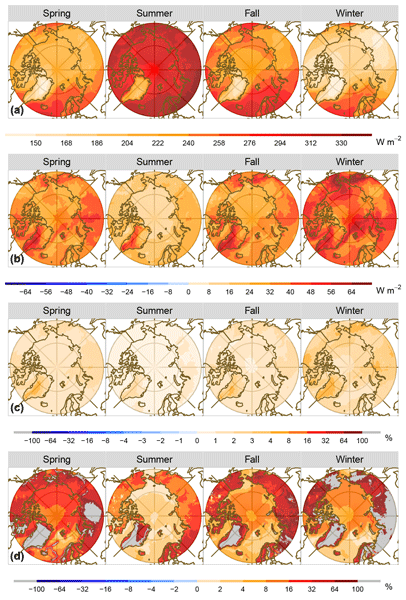
An atmospheric river (AR) is a long, narrow corridor of moisture transport in the atmosphere. ARs are crucial for moisture and heat transport into the polar regions. Our study examines the role of ARs in the surface energy budget (SEB) in the Arctic. The results reveal distinct seasonality and land–sea–sea ice contrasts due to the impacts of ARs on the SEB. The conclusions provide greater insights into the current and future role of ARs in the Arctic climate system.
Allen Hu, Ziming Ke, Xiaohong Liu, Benjamin Wagman, Hunter Brown, Zheng Lu, Mingxuan Wu, Hailong Wang, Qi Tang, Diana Bull, Kara Peterson, and Shaocheng Xie
Atmos. Chem. Phys., 25, 12137–12157, https://doi.org/10.5194/acp-25-12137-2025, https://doi.org/10.5194/acp-25-12137-2025, 2025
Short summary
Short summary
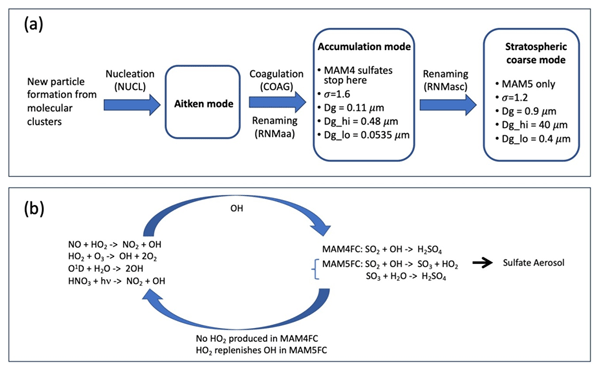
Volcanic eruptions have major effects on atmospheric temperature and can be studied as a proxy for geo-engineering. The original aerosol module in the Energy Exascale Earth System Model v2 (E3SMv2) has problems simulating volcanic aerosols. We alter the aerosol module to simulate the 1991 Pinatubo eruption and implement a more complex chemistry scheme, producing results that better agree with observations. Process analyses of the volcanic aerosols help explain how they grow in the stratosphere.
Jiyuan Gao, Yang Yang, Hailong Wang, Pinya Wang, and Hong Liao
Atmos. Chem. Phys., 25, 10949–10964, https://doi.org/10.5194/acp-25-10949-2025, https://doi.org/10.5194/acp-25-10949-2025, 2025
Short summary
Short summary
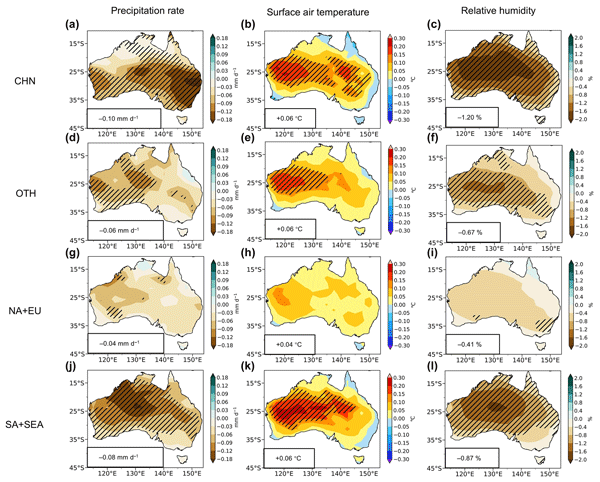
The decline in aerosols in China alters temperature and pressure gradients between the two hemispheres, which intensifies the Southern Trade Winds and causes a moisture divergence in Australia, resulting in less rainfall. Reduced surface moisture leads to more energy being converted into sensible heat instead of evaporating as latent heat, which raises near-surface temperatures in Australia. Our findings offer insights for managing drought and wildfire risks in Australia.
Sheng-Lun Tai, Zhao Yang, Brian Gaudet, Koichi Sakaguchi, Larry Berg, Colleen Kaul, Yun Qian, Ye Liu, and Jerome Fast
Earth Syst. Sci. Data, 17, 4587–4611, https://doi.org/10.5194/essd-17-4587-2025, https://doi.org/10.5194/essd-17-4587-2025, 2025
Short summary
Short summary
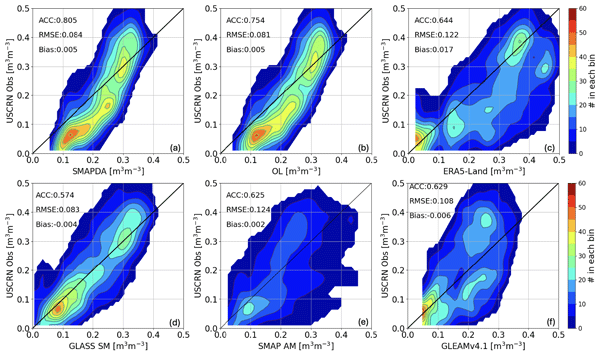
Our study created a high-resolution soil moisture dataset for the eastern US by integrating satellite data with a land surface model and advanced algorithms, achieving 1 km scale analyses. Validated against multiple in situ networks and analysis datasets, it demonstrated superior accuracy. This dataset is vital for understanding soil moisture dynamics, especially during droughts, and highlights the need to mitigate soil-type-dependent biases in the model.
Mingxuan Wu, Hailong Wang, Zheng Lu, Xiaohong Liu, Huisheng Bian, David D. Cohen, Yan Feng, Mian Chin, Didier A. Hauglustaine, Vlassis A. Karydis, Marianne T. Lund, Gunnar Myhre, Andrea Pozzer, Michael Schulz, Ragnhild B. Skeie, Alexandra P. Tsimpidi, Svetlana G. Tsyro, and Shaocheng Xie
Atmos. Chem. Phys., 25, 10049–10074, https://doi.org/10.5194/acp-25-10049-2025, https://doi.org/10.5194/acp-25-10049-2025, 2025
Short summary
Short summary
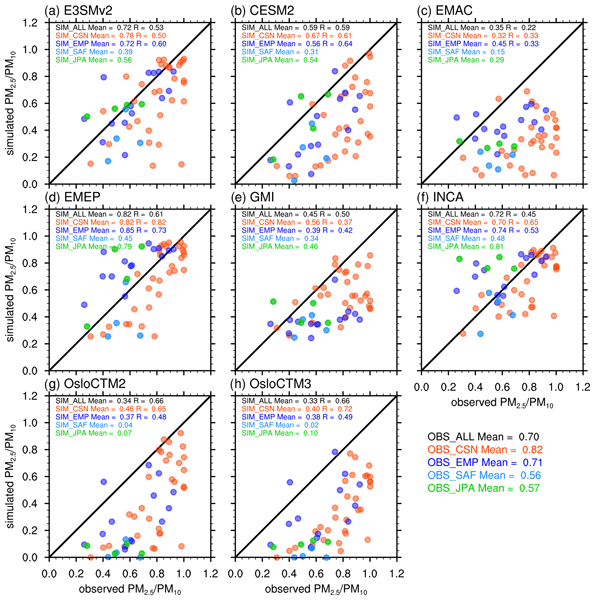
A key challenge in simulating the life cycle of nitrate aerosol in global models is accurately representing the mass size distribution of nitrate aerosol, which lacks sufficient observational constraints. We found that most global models underestimate the mass fraction of fine-mode nitrate at the surface in all regions. Our study highlights the importance of gas–aerosol partitioning parameterization and the simulation of dust and sea salt in correctly simulating the mass size distribution of nitrate.
Soodabeh Namdari, Sanja Dmitrovic, Gao Chen, Yonghoon Choi, Ewan Crosbie, Joshua P. DiGangi, Glenn S. Diskin, Richard A. Ferrare, Johnathan W. Hair, Simon Kirschler, John B. Nowak, Kenneth L. Thornhill, Christiane Voigt, Holger Vömel, Xubin Zeng, and Armin Sorooshian
Atmos. Meas. Tech., 18, 4325–4345, https://doi.org/10.5194/amt-18-4325-2025, https://doi.org/10.5194/amt-18-4325-2025, 2025
Short summary
Short summary
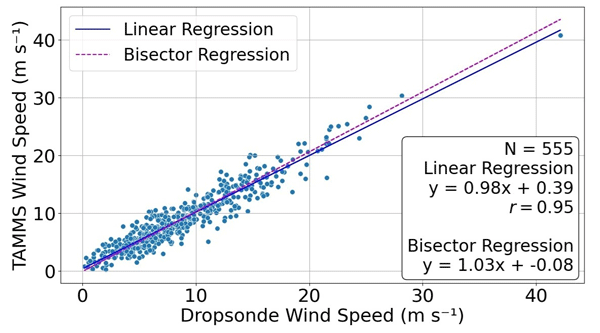
We conducted this study to assess the accuracy of airborne measurements of wind, temperature, and humidity, essential for understanding atmospheric processes. Using data from NASA's ACTIVATE campaign, we compared measurements from the Turbulent Air Motion Measurement System (TAMMS) and diode laser hygrometer (DLH) aboard a Falcon aircraft with dropsondes from a King Air, matching data points based on location and time using statistical methods. The study showed strong agreement, confirming the reliability of these methods for advancing climate models.
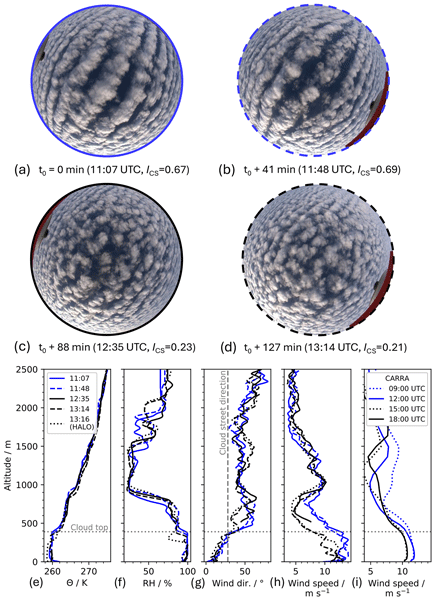
Marcus Klingebiel, André Ehrlich, Micha Gryschka, Nils Risse, Nina Maherndl, Imke Schirmacher, Sophie Rosenburg, Sabine Hörnig, Manuel Moser, Evelyn Jäkel, Michael Schäfer, Hartwig Deneke, Mario Mech, Christiane Voigt, and Manfred Wendisch
Atmos. Chem. Phys., 25, 9787–9801, https://doi.org/10.5194/acp-25-9787-2025, https://doi.org/10.5194/acp-25-9787-2025, 2025
Short summary
Short summary
Our study is using aircraft measurements from the HALO-(𝒜𝒞)³ campaign to investigate the transition from organized Arctic cloud street structures to more scattered clouds, which we call isotropic cloud patterns. We show that lower wind speeds cause this transition. In addition, we look at the changes in the cloud coverage, the height of the clouds, the cloud particles, and the radiative properties.
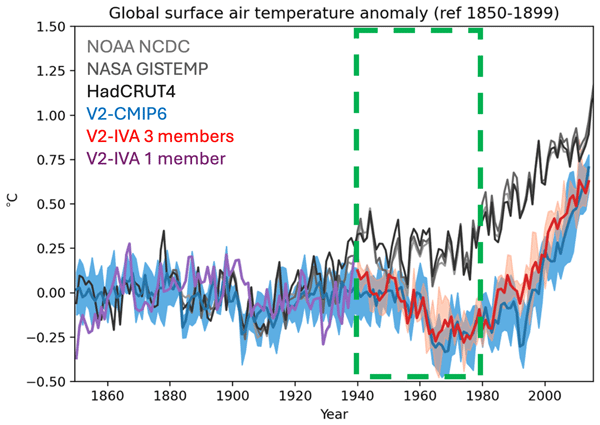
Ziming Ke, Qi Tang, Jean-Christophe Golaz, Xiaohong Liu, and Hailong Wang
Geosci. Model Dev., 18, 4137–4153, https://doi.org/10.5194/gmd-18-4137-2025, https://doi.org/10.5194/gmd-18-4137-2025, 2025
Short summary
Short summary
This study assesses volcanic aerosol representation in E3SM (Energy Exascale Earth System Model), showing that an emission-based approach moderately improves temperature variability and cloud responses compared to a prescribed forcing approach, yet significant bias persists.
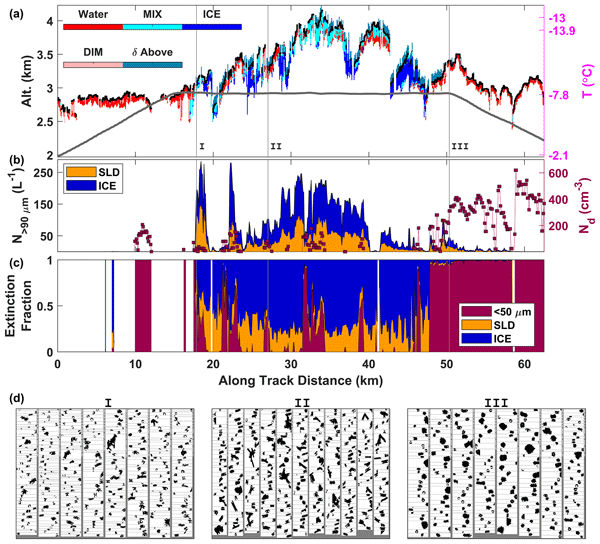
Ewan Crosbie, Johnathan W. Hair, Amin R. Nehrir, Richard A. Ferrare, Chris Hostetler, Taylor Shingler, David Harper, Marta Fenn, James Collins, Rory Barton-Grimley, Brian Collister, K. Lee Thornhill, Christiane Voigt, Simon Kirschler, and Armin Sorooshian
Atmos. Meas. Tech., 18, 2639–2658, https://doi.org/10.5194/amt-18-2639-2025, https://doi.org/10.5194/amt-18-2639-2025, 2025
Short summary
Short summary
A method was developed to extract information from airborne lidar observations about the distribution of ice and liquid water within clouds. The method specifically targets signatures of horizontal and vertical gradients in ice and water that appear in the polarization of the lidar signals. The method was tested against direct measurements of the cloud properties collected by a second aircraft.
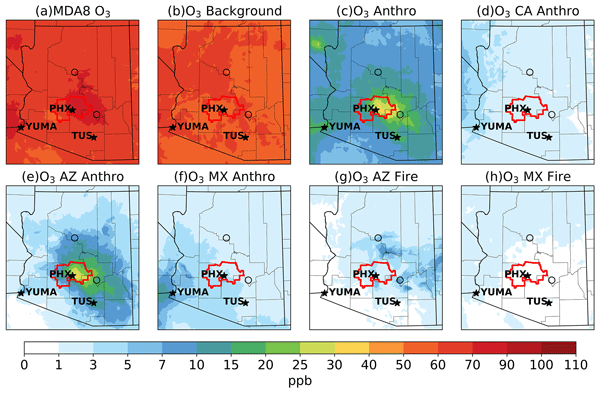
Yafang Guo, Mohammad Amin Mirrezaei, Armin Sorooshian, and Avelino F. Arellano
Atmos. Chem. Phys., 25, 5591–5616, https://doi.org/10.5194/acp-25-5591-2025, https://doi.org/10.5194/acp-25-5591-2025, 2025
Short summary
Short summary
We assess the contributions of fire and anthropogenic emissions to O3 levels in Phoenix, Arizona, during a period of intense heat and drought conditions. We find that fire exacerbates O3 pollution and that interactions between weather, climate, and air chemistry are important to consider. This has implications for activities related to formulating emission reduction strategies in areas that are currently understudied yet becoming relevant due to reports of increasing global aridity.
Genevieve Rose Lorenzo, Luke D. Ziemba, Avelino F. Arellano, Mary C. Barth, Ewan C. Crosbie, Joshua P. DiGangi, Glenn S. Diskin, Richard Ferrare, Miguel Ricardo A. Hilario, Michael A. Shook, Simone Tilmes, Jian Wang, Qian Xiao, Jun Zhang, and Armin Sorooshian
Atmos. Chem. Phys., 25, 5469–5495, https://doi.org/10.5194/acp-25-5469-2025, https://doi.org/10.5194/acp-25-5469-2025, 2025
Short summary
Short summary
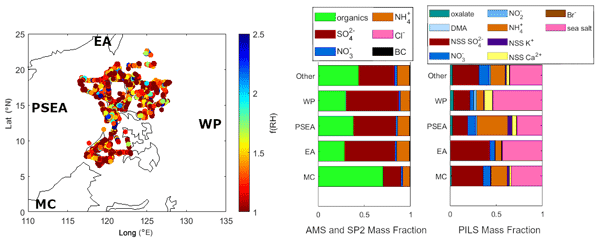
Novel aerosol hygroscopicity analyses of CAMP2Ex (Cloud, Aerosol, and Monsoon Processes Philippines Experiment) field campaign data show low aerosol hygroscopicity values in Southeast Asia. Organic carbon from smoke decreases hygroscopicity to levels more like those in continental than in polluted marine regions. Hygroscopicity changes at cloud level demonstrate how surface particles impact clouds in the region, affecting model representation of aerosol and cloud interactions in similar polluted marine regions with high organic carbon emissions.
Florian Tornow, Ann Fridlind, George Tselioudis, Brian Cairns, Andrew Ackerman, Seethala Chellappan, David Painemal, Paquita Zuidema, Christiane Voigt, Simon Kirschler, and Armin Sorooshian
Atmos. Chem. Phys., 25, 5053–5074, https://doi.org/10.5194/acp-25-5053-2025, https://doi.org/10.5194/acp-25-5053-2025, 2025
Short summary
Short summary
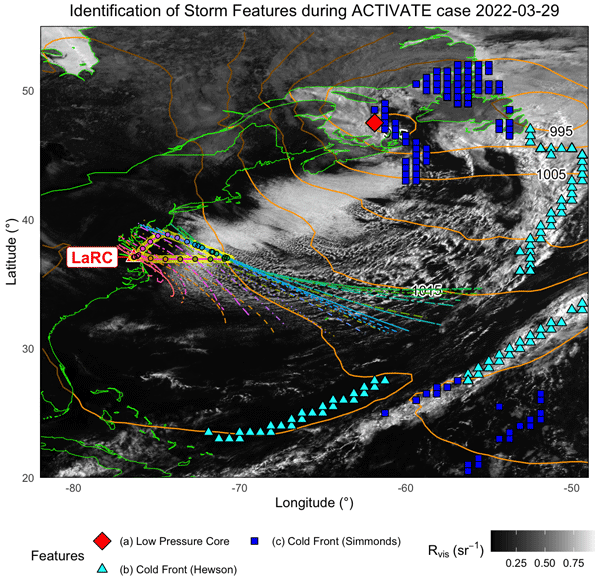
The recent NASA campaign ACTIVATE (Aerosol Cloud meTeorology Interactions oVer the western ATlantic Experiment) performed 71 tandem flights in mid-latitude marine cold-air outbreaks off the US eastern seaboard. We provide meteorological and cloud transition stage context, allowing us to identify days that are most suitable for Lagrangian modeling and analysis. Surveyed cloud properties show signatures of cloud microphysical processes, such as cloud-top entrainment and secondary ice formation.

André Ehrlich, Susanne Crewell, Andreas Herber, Marcus Klingebiel, Christof Lüpkes, Mario Mech, Sebastian Becker, Stephan Borrmann, Heiko Bozem, Matthias Buschmann, Hans-Christian Clemen, Elena De La Torre Castro, Henning Dorff, Regis Dupuy, Oliver Eppers, Florian Ewald, Geet George, Andreas Giez, Sarah Grawe, Christophe Gourbeyre, Jörg Hartmann, Evelyn Jäkel, Philipp Joppe, Olivier Jourdan, Zsófia Jurányi, Benjamin Kirbus, Johannes Lucke, Anna E. Luebke, Maximilian Maahn, Nina Maherndl, Christian Mallaun, Johanna Mayer, Stephan Mertes, Guillaume Mioche, Manuel Moser, Hanno Müller, Veronika Pörtge, Nils Risse, Greg Roberts, Sophie Rosenburg, Johannes Röttenbacher, Michael Schäfer, Jonas Schaefer, Andreas Schäfler, Imke Schirmacher, Johannes Schneider, Sabrina Schnitt, Frank Stratmann, Christian Tatzelt, Christiane Voigt, Andreas Walbröl, Anna Weber, Bruno Wetzel, Martin Wirth, and Manfred Wendisch
Earth Syst. Sci. Data, 17, 1295–1328, https://doi.org/10.5194/essd-17-1295-2025, https://doi.org/10.5194/essd-17-1295-2025, 2025
Short summary
Short summary
This paper provides an overview of the HALO–(AC)3 aircraft campaign data sets, the campaign-specific instrument operation, data processing, and data quality. The data set comprises in situ and remote sensing observations from three research aircraft: HALO, Polar 5, and Polar 6. All data are published in the PANGAEA database by instrument-separated data subsets. It is highlighted how the scientific analysis of the HALO–(AC)3 data benefits from the coordinated operation of three aircraft.
Hazel Vernier, Demilson Quintão, Bruno Biazon, Eduardo Landulfo, Giovanni Souza, V. Amanda Santos, J. S. Fabio Lopes, C. P. Alex Mendes, A. S. José da Matta, K. Pinheiro Damaris, Benoit Grosslin, P. M. P. Maria Jorge, Maria de Fátima Andrade, Neeraj Rastogi, Akhil Raj, Hongyu Liu, Mahesh Kovilakam, Suvarna Fadnavis, Frank G. Wienhold, Mathieu Colombier, D. Chris Boone, Gwenael Berthet, Nicolas Dumelie, Lilian Joly, and Jean-Paul Vernier
EGUsphere, https://doi.org/10.5194/egusphere-2025-924, https://doi.org/10.5194/egusphere-2025-924, 2025
Preprint withdrawn
Short summary
Short summary
The eruption of Hunga Tonga-Hunga Ha'apai injected large amounts of water vapor and sea salt into the stratosphere, altering traditional views of volcanic aerosols. Using balloon-borne samplers, we collected aerosol samples and found high levels of sea salt and calcium, suggesting sulfate depletion due to gypsum formation. These findings highlight the need to consider sea salt in climate models to better predict volcanic impacts on the atmosphere and climate.
Yang Yang, Li You, Hailong Wang, Huimin Li, Pinya Wang, and Hong Liao
EGUsphere, https://doi.org/10.5194/egusphere-2025-840, https://doi.org/10.5194/egusphere-2025-840, 2025
Preprint archived
Short summary
Short summary
This study used machine learning to predict global and regional temperature changes under carbon neutrality and high emissions from 2015 to 2100.The results show that while carbon neutrality slows long-term warming, it causes short-term warming due to the rapid decline in aerosols. In contrast, greenhouse gases dominate warming in the high-emission scenario. These findings emphasize the important role of aerosols in shaping near-term climate change under carbon-neutral pathways.
Ziming Wang, Luca Bugliaro, Klaus Gierens, Michaela I. Hegglin, Susanne Rohs, Andreas Petzold, Stefan Kaufmann, and Christiane Voigt
Atmos. Chem. Phys., 25, 2845–2861, https://doi.org/10.5194/acp-25-2845-2025, https://doi.org/10.5194/acp-25-2845-2025, 2025
Short summary
Short summary
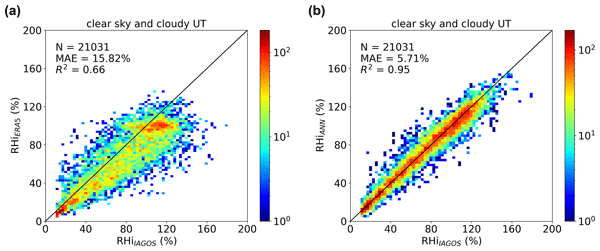
Upper-tropospheric relative humidity bias in the ERA5 weather model is corrected by 10 % by an artificial neural network using aircraft in-service humidity data and thermodynamic and dynamical variables. The improved skills of the weather model will advance cirrus research, weather forecasts, and measures for contrail reduction.
Kira Zeider, Kayla McCauley, Sanja Dmitrovic, Leong Wai Siu, Yonghoon Choi, Ewan C. Crosbie, Joshua P. DiGangi, Glenn S. Diskin, Simon Kirschler, John B. Nowak, Michael A. Shook, Kenneth L. Thornhill, Christiane Voigt, Edward L. Winstead, Luke D. Ziemba, Paquita Zuidema, and Armin Sorooshian
Atmos. Chem. Phys., 25, 2407–2422, https://doi.org/10.5194/acp-25-2407-2025, https://doi.org/10.5194/acp-25-2407-2025, 2025
Short summary
Short summary
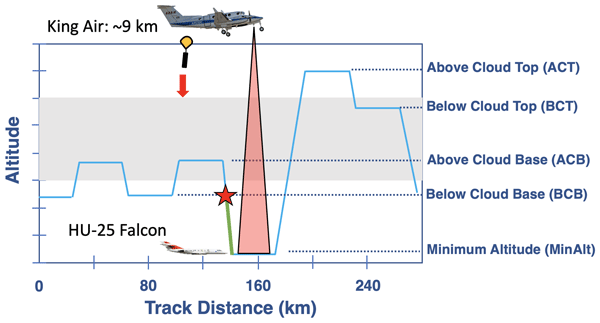
In situ aircraft data collected over the northwest Atlantic Ocean are utilized to compare aerosol conditions and turbulence between near-surface and below-cloud-base altitudes for different regimes of coupling strength between those two levels, along with how cloud microphysical properties vary across those regimes. Stronger coupling yields more homogenous aerosol structure vertically along with higher cloud drop concentrations and sea salt influence in clouds.
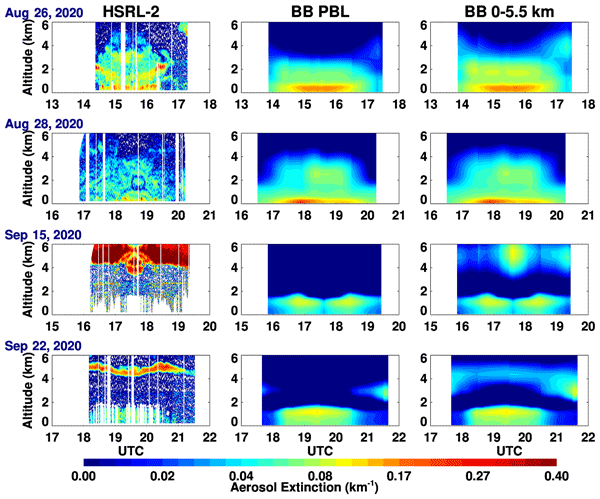
Hongyu Liu, Bo Zhang, Richard H. Moore, Luke D. Ziemba, Richard A. Ferrare, Hyundeok Choi, Armin Sorooshian, David Painemal, Hailong Wang, Michael A. Shook, Amy Jo Scarino, Johnathan W. Hair, Ewan C. Crosbie, Marta A. Fenn, Taylor J. Shingler, Chris A. Hostetler, Gao Chen, Mary M. Kleb, Gan Luo, Fangqun Yu, Mark A. Vaughan, Yongxiang Hu, Glenn S. Diskin, John B. Nowak, Joshua P. DiGangi, Yonghoon Choi, Christoph A. Keller, and Matthew S. Johnson
Atmos. Chem. Phys., 25, 2087–2121, https://doi.org/10.5194/acp-25-2087-2025, https://doi.org/10.5194/acp-25-2087-2025, 2025
Short summary
Short summary
We use the GEOS-Chem model to simulate aerosol distributions and properties over the western North Atlantic Ocean (WNAO) during the winter and summer deployments in 2020 of the NASA ACTIVATE mission. Model results are evaluated against aircraft, ground-based, and satellite observations. The improved understanding of life cycle, composition, transport pathways, and distribution of aerosols has important implications for characterizing aerosol–cloud–meteorology interactions over WNAO.
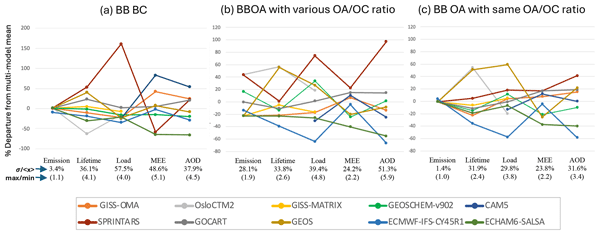
Mariya Petrenko, Ralph Kahn, Mian Chin, Susanne E. Bauer, Tommi Bergman, Huisheng Bian, Gabriele Curci, Ben Johnson, Johannes W. Kaiser, Zak Kipling, Harri Kokkola, Xiaohong Liu, Keren Mezuman, Tero Mielonen, Gunnar Myhre, Xiaohua Pan, Anna Protonotariou, Samuel Remy, Ragnhild Bieltvedt Skeie, Philip Stier, Toshihiko Takemura, Kostas Tsigaridis, Hailong Wang, Duncan Watson-Parris, and Kai Zhang
Atmos. Chem. Phys., 25, 1545–1567, https://doi.org/10.5194/acp-25-1545-2025, https://doi.org/10.5194/acp-25-1545-2025, 2025
Short summary
Short summary
We compared smoke plume simulations from 11 global models to each other and to satellite smoke amount observations aimed at constraining smoke source strength. In regions where plumes are thick and background aerosol is low, models and satellites compare well. However, the input emission inventory tends to underestimate in many places, and particle property and loss rate assumptions vary enormously among models, causing uncertainties that require systematic in situ measurements to resolve.
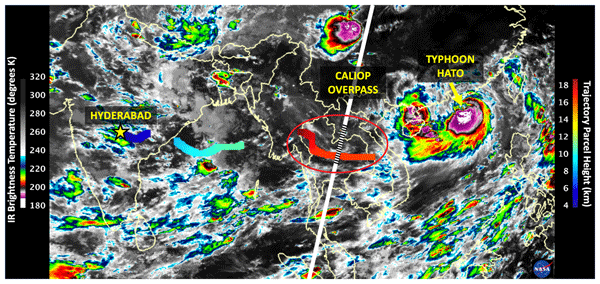
Amit Kumar Pandit, Jean-Paul Vernier, Thomas Duncan Fairlie, Kristopher M. Bedka, Melody A. Avery, Harish Gadhavi, Madineni Venkat Ratnam, Sanjeev Dwivedi, Kasimahanthi Amar Jyothi, Frank G. Wienhold, Holger Vömel, Hongyu Liu, Bo Zhang, Buduru Suneel Kumar, Tra Dinh, and Achuthan Jayaraman
Atmos. Chem. Phys., 24, 14209–14238, https://doi.org/10.5194/acp-24-14209-2024, https://doi.org/10.5194/acp-24-14209-2024, 2024
Short summary
Short summary
This study investigates the formation mechanism of a tropopause cirrus cloud layer observed at extremely cold temperatures over Hyderabad in India during the 2017 Asian summer monsoon using balloon-borne sensors. Ice crystals smaller than 50 µm were found in this optically thin cirrus cloud layer. Combined analysis of back trajectories, satellite, and model data revealed that the formation of this layer was influenced by waves and stratospheric hydration induced by typhoon Hato.
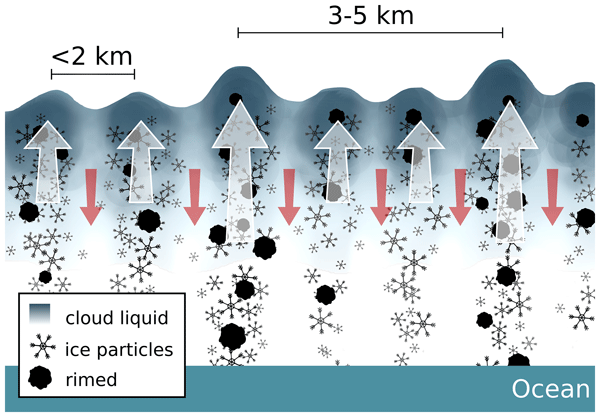
Nina Maherndl, Manuel Moser, Imke Schirmacher, Aaron Bansemer, Johannes Lucke, Christiane Voigt, and Maximilian Maahn
Atmos. Chem. Phys., 24, 13935–13960, https://doi.org/10.5194/acp-24-13935-2024, https://doi.org/10.5194/acp-24-13935-2024, 2024
Short summary
Short summary
It is not clear why ice crystals in clouds occur in clusters. Here, airborne measurements of clouds in mid-latitudes and high latitudes are used to study the spatial variability of ice. Further, we investigate the influence of riming, which occurs when liquid droplets freeze onto ice crystals. We find that riming enhances the occurrence of ice clusters. In the Arctic, riming leads to ice clustering at spatial scales of 3–5 km. This is due to updrafts and not higher amounts of liquid water.
Johannes Mülmenstädt, Andrew S. Ackerman, Ann M. Fridlind, Meng Huang, Po-Lun Ma, Naser Mahfouz, Susanne E. Bauer, Susannah M. Burrows, Matthew W. Christensen, Sudhakar Dipu, Andrew Gettelman, L. Ruby Leung, Florian Tornow, Johannes Quaas, Adam C. Varble, Hailong Wang, Kai Zhang, and Youtong Zheng
Atmos. Chem. Phys., 24, 13633–13652, https://doi.org/10.5194/acp-24-13633-2024, https://doi.org/10.5194/acp-24-13633-2024, 2024
Short summary
Short summary
Stratocumulus clouds play a large role in Earth's climate by reflecting incoming solar energy back to space. Turbulence at stratocumulus cloud top mixes in dry, warm air, which can lead to cloud dissipation. This process is challenging for coarse-resolution global models to represent. We show that global models nevertheless agree well with our process understanding. Global models also think the process is less important for the climate than other lines of evidence have led us to conclude.
Philip J. Rasch, Haruki Hirasawa, Mingxuan Wu, Sarah J. Doherty, Robert Wood, Hailong Wang, Andy Jones, James Haywood, and Hansi Singh
Geosci. Model Dev., 17, 7963–7994, https://doi.org/10.5194/gmd-17-7963-2024, https://doi.org/10.5194/gmd-17-7963-2024, 2024
Short summary
Short summary
We introduce a protocol to compare computer climate simulations to better understand a proposed strategy intended to counter warming and climate impacts from greenhouse gas increases. This slightly changes clouds in six ocean regions to reflect more sunlight and cool the Earth. Example changes in clouds and climate are shown for three climate models. Cloud changes differ between the models, but precipitation and surface temperature changes are similar when their cooling effects are made similar.
Theresa Harlass, Rebecca Dischl, Stefan Kaufmann, Raphael Märkl, Daniel Sauer, Monika Scheibe, Paul Stock, Tiziana Bräuer, Andreas Dörnbrack, Anke Roiger, Hans Schlager, Ulrich Schumann, Magdalena Pühl, Tobias Schripp, Tobias Grein, Linda Bondorf, Charles Renard, Maxime Gauthier, Mark Johnson, Darren Luff, Paul Madden, Peter Swann, Denise Ahrens, Reetu Sallinen, and Christiane Voigt
Atmos. Chem. Phys., 24, 11807–11822, https://doi.org/10.5194/acp-24-11807-2024, https://doi.org/10.5194/acp-24-11807-2024, 2024
Short summary
Short summary
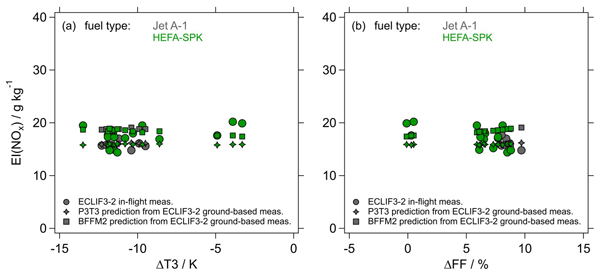
Emissions from aircraft have a direct impact on our climate. Here, we present airborne and ground-based measurement data of nitrogen oxides that were collected in the exhaust of an Airbus aircraft. We study the impact of burning fossil and sustainable aviation fuel on nitrogen oxide emissions at different engine settings related to combustor temperature, pressure and fuel flow. Further, we compare observations with engine emission models.
Rebecca Dischl, Daniel Sauer, Christiane Voigt, Theresa Harlaß, Felicitas Sakellariou, Raphael Märkl, Ulrich Schumann, Monika Scheibe, Stefan Kaufmann, Anke Roiger, Andreas Dörnbrack, Charles Renard, Maxime Gauthier, Peter Swann, Paul Madden, Darren Luff, Mark Johnson, Denise Ahrens, Reetu Sallinen, Tobias Schripp, Georg Eckel, Uwe Bauder, and Patrick Le Clercq
Atmos. Chem. Phys., 24, 11255–11273, https://doi.org/10.5194/acp-24-11255-2024, https://doi.org/10.5194/acp-24-11255-2024, 2024
Short summary
Short summary
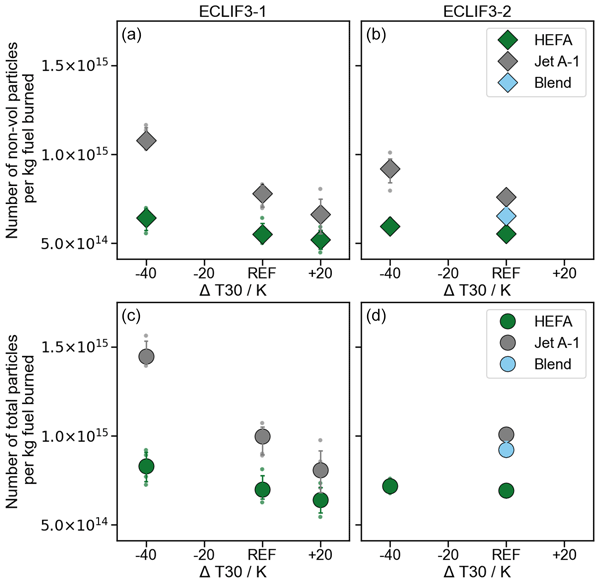
In-flight measurements of aircraft emissions burning 100 % sustainable aviation fuel (SAF) show reduced particle number concentrations up to 41 % compared to conventional jet fuel. Particle emissions are dependent on engine power setting, flight altitude, and fuel composition. Engine models show a good correlation with measurement results. Future increased prevalence of SAF can positively influence the climate impact of aviation.
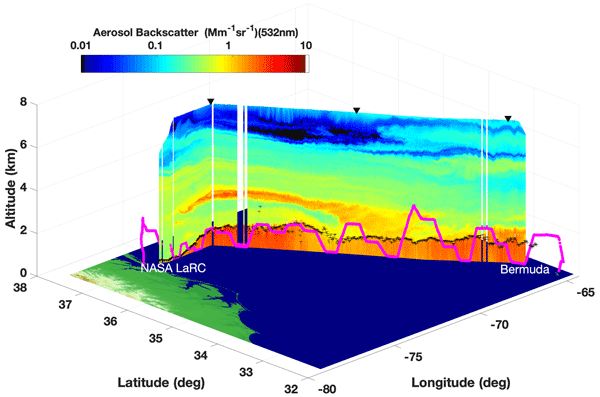
Cassidy Soloff, Taiwo Ajayi, Yonghoon Choi, Ewan C. Crosbie, Joshua P. DiGangi, Glenn S. Diskin, Marta A. Fenn, Richard A. Ferrare, Francesca Gallo, Johnathan W. Hair, Miguel Ricardo A. Hilario, Simon Kirschler, Richard H. Moore, Taylor J. Shingler, Michael A. Shook, Kenneth L. Thornhill, Christiane Voigt, Edward L. Winstead, Luke D. Ziemba, and Armin Sorooshian
Atmos. Chem. Phys., 24, 10385–10408, https://doi.org/10.5194/acp-24-10385-2024, https://doi.org/10.5194/acp-24-10385-2024, 2024
Short summary
Short summary
Using aircraft measurements over the northwestern Atlantic between the US East Coast and Bermuda and trajectory modeling of continental outflow, we identify trace gas and particle properties that exhibit gradients with offshore distance and quantify these changes with high-resolution measurements of concentrations and particle chemistry, size, and scattering properties. This work furthers our understanding of the complex interactions between continental and marine environments.
Shuaiqi Tang, Hailong Wang, Xiang-Yu Li, Jingyi Chen, Armin Sorooshian, Xubin Zeng, Ewan Crosbie, Kenneth L. Thornhill, Luke D. Ziemba, and Christiane Voigt
Atmos. Chem. Phys., 24, 10073–10092, https://doi.org/10.5194/acp-24-10073-2024, https://doi.org/10.5194/acp-24-10073-2024, 2024
Short summary
Short summary
We examined marine boundary layer clouds and their interactions with aerosols in the E3SM single-column model (SCM) for a case study. The SCM shows good agreement when simulating the clouds with high-resolution models. It reproduces the relationship between cloud droplet and aerosol particle number concentrations as produced in global models. However, the relationship between cloud liquid water and droplet number concentration is different, warranting further investigation.
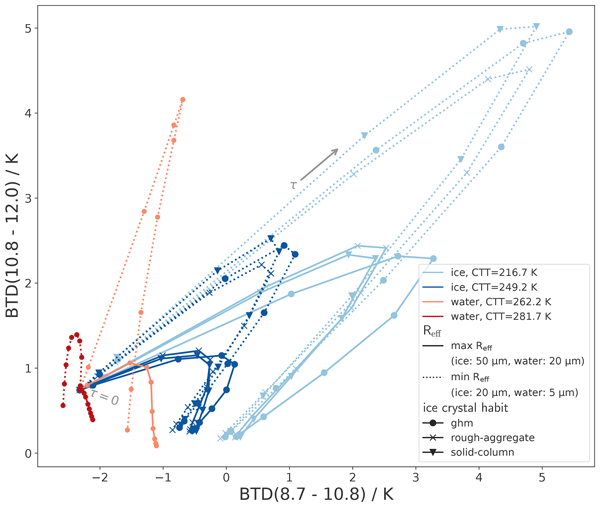
Johanna Mayer, Bernhard Mayer, Luca Bugliaro, Ralf Meerkötter, and Christiane Voigt
Atmos. Meas. Tech., 17, 5161–5185, https://doi.org/10.5194/amt-17-5161-2024, https://doi.org/10.5194/amt-17-5161-2024, 2024
Short summary
Short summary
This study uses radiative transfer calculations to characterize the relation of two satellite channel combinations (namely infrared window brightness temperature differences – BTDs – of SEVIRI) to the thermodynamic cloud phase. A sensitivity analysis reveals the complex interplay of cloud parameters and their contribution to the observed phase dependence of BTDs. This knowledge helps to design optimal cloud-phase retrievals and to understand their potential and limitations.
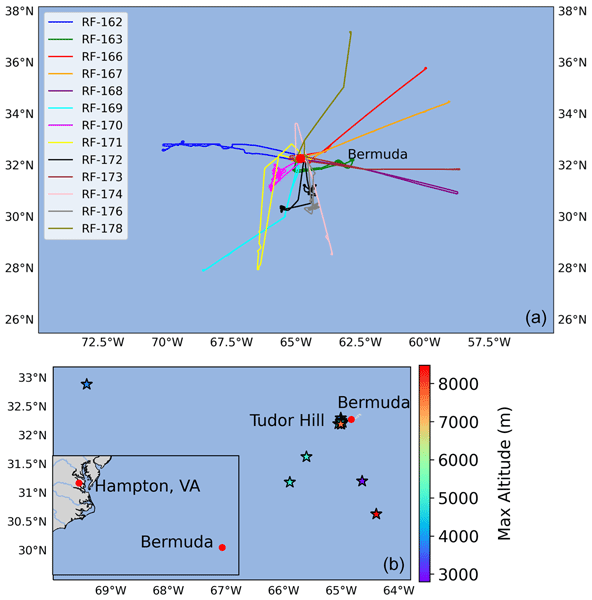
Taiwo Ajayi, Yonghoon Choi, Ewan C. Crosbie, Joshua P. DiGangi, Glenn S. Diskin, Marta A. Fenn, Richard A. Ferrare, Johnathan W. Hair, Miguel Ricardo A. Hilario, Chris A. Hostetler, Simon Kirschler, Richard H. Moore, Taylor J. Shingler, Michael A. Shook, Cassidy Soloff, Kenneth L. Thornhill, Christiane Voigt, Edward L. Winstead, Luke D. Ziemba, and Armin Sorooshian
Atmos. Chem. Phys., 24, 9197–9218, https://doi.org/10.5194/acp-24-9197-2024, https://doi.org/10.5194/acp-24-9197-2024, 2024
Short summary
Short summary
This study uses airborne data to examine vertical profiles of trace gases, aerosol particles, and meteorological variables over a remote marine area (Bermuda). Results show distinct differences based on both air mass source region (North America, Ocean, Caribbean/North Africa) and altitude for a given air mass type. This work highlights the sensitivity of remote marine areas to long-range transport and the importance of considering the vertical dependence of trace gas and aerosol properties.
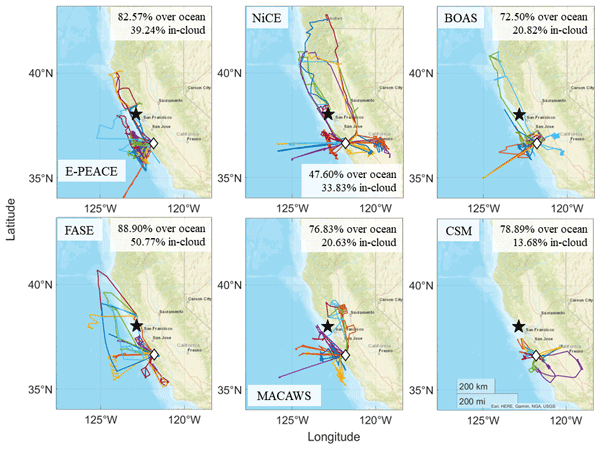
Kira Zeider, Grace Betito, Anthony Bucholtz, Peng Xian, Annette Walker, and Armin Sorooshian
Atmos. Chem. Phys., 24, 9059–9083, https://doi.org/10.5194/acp-24-9059-2024, https://doi.org/10.5194/acp-24-9059-2024, 2024
Short summary
Short summary
The predominant wind direction along the California coast (northerly) reverses several times during the summer (to southerly). The effects of these wind reversals on aerosol and cloud characteristics are not well understood. Using data from multiple datasets we found that southerly flow periods had enhanced signatures of anthropogenic emissions due to shipping and continental sources, and clouds had more but smaller droplets.
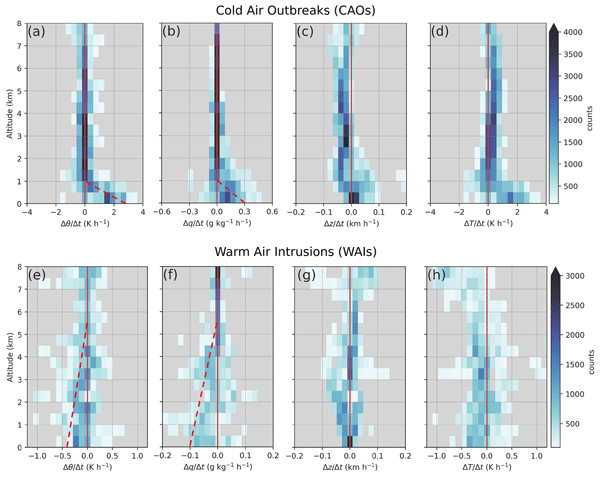
Manfred Wendisch, Susanne Crewell, André Ehrlich, Andreas Herber, Benjamin Kirbus, Christof Lüpkes, Mario Mech, Steven J. Abel, Elisa F. Akansu, Felix Ament, Clémantyne Aubry, Sebastian Becker, Stephan Borrmann, Heiko Bozem, Marlen Brückner, Hans-Christian Clemen, Sandro Dahlke, Georgios Dekoutsidis, Julien Delanoë, Elena De La Torre Castro, Henning Dorff, Regis Dupuy, Oliver Eppers, Florian Ewald, Geet George, Irina V. Gorodetskaya, Sarah Grawe, Silke Groß, Jörg Hartmann, Silvia Henning, Lutz Hirsch, Evelyn Jäkel, Philipp Joppe, Olivier Jourdan, Zsofia Jurányi, Michail Karalis, Mona Kellermann, Marcus Klingebiel, Michael Lonardi, Johannes Lucke, Anna E. Luebke, Maximilian Maahn, Nina Maherndl, Marion Maturilli, Bernhard Mayer, Johanna Mayer, Stephan Mertes, Janosch Michaelis, Michel Michalkov, Guillaume Mioche, Manuel Moser, Hanno Müller, Roel Neggers, Davide Ori, Daria Paul, Fiona M. Paulus, Christian Pilz, Felix Pithan, Mira Pöhlker, Veronika Pörtge, Maximilian Ringel, Nils Risse, Gregory C. Roberts, Sophie Rosenburg, Johannes Röttenbacher, Janna Rückert, Michael Schäfer, Jonas Schaefer, Vera Schemann, Imke Schirmacher, Jörg Schmidt, Sebastian Schmidt, Johannes Schneider, Sabrina Schnitt, Anja Schwarz, Holger Siebert, Harald Sodemann, Tim Sperzel, Gunnar Spreen, Bjorn Stevens, Frank Stratmann, Gunilla Svensson, Christian Tatzelt, Thomas Tuch, Timo Vihma, Christiane Voigt, Lea Volkmer, Andreas Walbröl, Anna Weber, Birgit Wehner, Bruno Wetzel, Martin Wirth, and Tobias Zinner
Atmos. Chem. Phys., 24, 8865–8892, https://doi.org/10.5194/acp-24-8865-2024, https://doi.org/10.5194/acp-24-8865-2024, 2024
Short summary
Short summary
The Arctic is warming faster than the rest of the globe. Warm-air intrusions (WAIs) into the Arctic may play an important role in explaining this phenomenon. Cold-air outbreaks (CAOs) out of the Arctic may link the Arctic climate changes to mid-latitude weather. In our article, we describe how to observe air mass transformations during CAOs and WAIs using three research aircraft instrumented with state-of-the-art remote-sensing and in situ measurement devices.
Ye Liu, Yun Qian, Larry K. Berg, Zhe Feng, Jianfeng Li, Jingyi Chen, and Zhao Yang
Atmos. Chem. Phys., 24, 8165–8181, https://doi.org/10.5194/acp-24-8165-2024, https://doi.org/10.5194/acp-24-8165-2024, 2024
Short summary
Short summary
Deep convection under various large-scale meteorological patterns (LSMPs) shows distinct precipitation features. In southeastern Texas, mesoscale convective systems (MCSs) contribute significantly to precipitation year-round, while isolated deep convection (IDC) is prominent in summer and fall. Self-organizing maps (SOMs) reveal convection can occur without large-scale lifting or moisture convergence. MCSs and IDC events have distinct life cycles influenced by specific LSMPs.
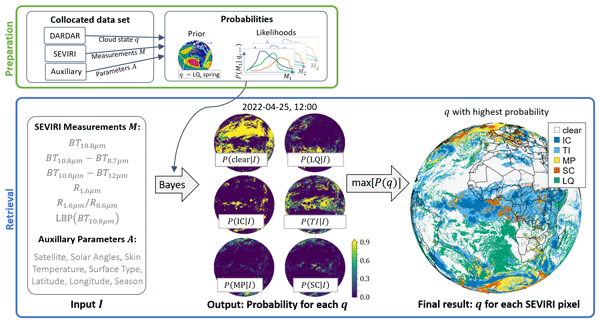
Johanna Mayer, Luca Bugliaro, Bernhard Mayer, Dennis Piontek, and Christiane Voigt
Atmos. Meas. Tech., 17, 4015–4039, https://doi.org/10.5194/amt-17-4015-2024, https://doi.org/10.5194/amt-17-4015-2024, 2024
Short summary
Short summary
ProPS (PRObabilistic cloud top Phase retrieval for SEVIRI) is a method to detect clouds and their thermodynamic phase with a geostationary satellite, distinguishing between clear sky and ice, mixed-phase, supercooled and warm liquid clouds. It uses a Bayesian approach based on the lidar–radar product DARDAR. The method allows studying cloud phases, especially mixed-phase and supercooled clouds, rarely observed from geostationary satellites. This can be used for comparison with climate models.
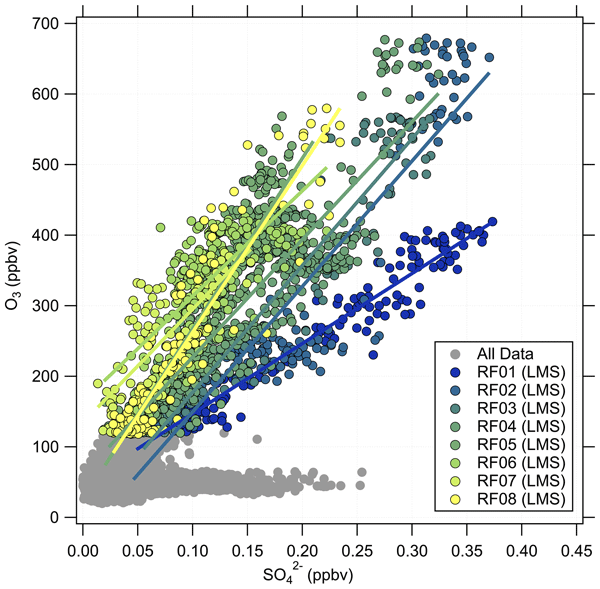
Philipp Joppe, Johannes Schneider, Katharina Kaiser, Horst Fischer, Peter Hoor, Daniel Kunkel, Hans-Christoph Lachnitt, Andreas Marsing, Lenard Röder, Hans Schlager, Laura Tomsche, Christiane Voigt, Andreas Zahn, and Stephan Borrmann
Atmos. Chem. Phys., 24, 7499–7522, https://doi.org/10.5194/acp-24-7499-2024, https://doi.org/10.5194/acp-24-7499-2024, 2024
Short summary
Short summary
From aircraft measurements in the upper troposphere/lower stratosphere, we find a correlation between the ozone and particulate sulfate in the lower stratosphere. The correlation exhibits some variability over the measurement period exceeding the background sulfate-to-ozone correlation. From our analysis, we conclude that gas-to-particle conversion of volcanic sulfur dioxide leads to observed enhanced sulfate aerosol mixing ratios.
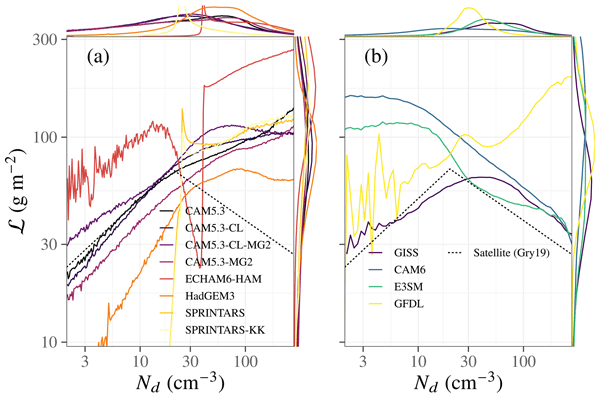
Johannes Mülmenstädt, Edward Gryspeerdt, Sudhakar Dipu, Johannes Quaas, Andrew S. Ackerman, Ann M. Fridlind, Florian Tornow, Susanne E. Bauer, Andrew Gettelman, Yi Ming, Youtong Zheng, Po-Lun Ma, Hailong Wang, Kai Zhang, Matthew W. Christensen, Adam C. Varble, L. Ruby Leung, Xiaohong Liu, David Neubauer, Daniel G. Partridge, Philip Stier, and Toshihiko Takemura
Atmos. Chem. Phys., 24, 7331–7345, https://doi.org/10.5194/acp-24-7331-2024, https://doi.org/10.5194/acp-24-7331-2024, 2024
Short summary
Short summary
Human activities release copious amounts of small particles called aerosols into the atmosphere. These particles change how much sunlight clouds reflect to space, an important human perturbation of the climate, whose magnitude is highly uncertain. We found that the latest climate models show a negative correlation but a positive causal relationship between aerosols and cloud water. This means we need to be very careful when we interpret observational studies that can only see correlation.
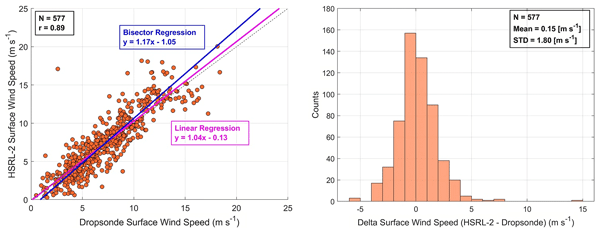
Sanja Dmitrovic, Johnathan W. Hair, Brian L. Collister, Ewan Crosbie, Marta A. Fenn, Richard A. Ferrare, David B. Harper, Chris A. Hostetler, Yongxiang Hu, John A. Reagan, Claire E. Robinson, Shane T. Seaman, Taylor J. Shingler, Kenneth L. Thornhill, Holger Vömel, Xubin Zeng, and Armin Sorooshian
Atmos. Meas. Tech., 17, 3515–3532, https://doi.org/10.5194/amt-17-3515-2024, https://doi.org/10.5194/amt-17-3515-2024, 2024
Short summary
Short summary
This study introduces and evaluates a new ocean surface wind speed product from the NASA Langley Research Center (LARC) airborne High-Spectral-Resolution Lidar – Generation 2 (HSRL-2) during the NASA ACTIVATE mission. We show that HSRL-2 surface wind speed data are accurate when compared to ground-truth dropsonde measurements. Therefore, the HSRL-2 instrument is able obtain accurate, high-resolution surface wind speed data in airborne field campaigns.
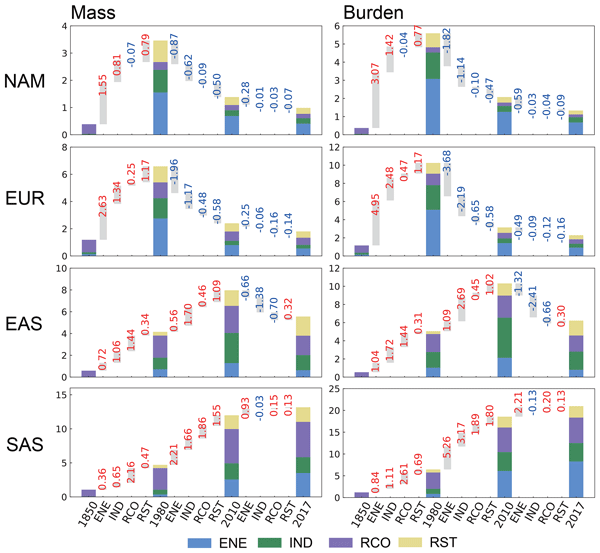
Yang Yang, Shaoxuan Mou, Hailong Wang, Pinya Wang, Baojie Li, and Hong Liao
Atmos. Chem. Phys., 24, 6509–6523, https://doi.org/10.5194/acp-24-6509-2024, https://doi.org/10.5194/acp-24-6509-2024, 2024
Short summary
Short summary
The variations in anthropogenic aerosol concentrations and source contributions and their subsequent radiative impact in major emission regions during historical periods are quantified based on an aerosol-tagging system in E3SMv1. Due to the industrial development and implementation of economic policies, sources of anthropogenic aerosols show different variations, which has important implications for pollution prevention and control measures and decision-making for global collaboration.
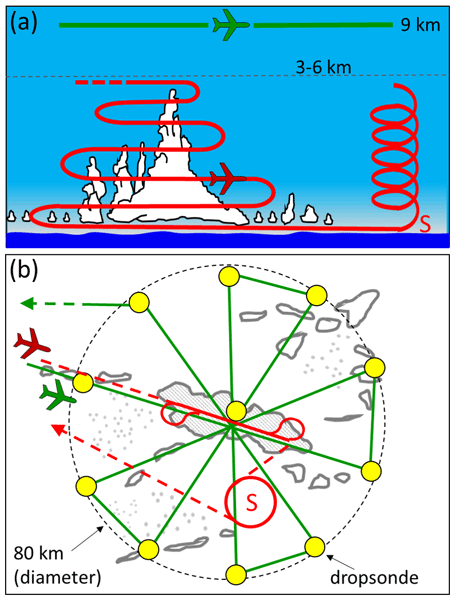
Ewan Crosbie, Luke D. Ziemba, Michael A. Shook, Taylor Shingler, Johnathan W. Hair, Armin Sorooshian, Richard A. Ferrare, Brian Cairns, Yonghoon Choi, Joshua DiGangi, Glenn S. Diskin, Chris Hostetler, Simon Kirschler, Richard H. Moore, David Painemal, Claire Robinson, Shane T. Seaman, K. Lee Thornhill, Christiane Voigt, and Edward Winstead
Atmos. Chem. Phys., 24, 6123–6152, https://doi.org/10.5194/acp-24-6123-2024, https://doi.org/10.5194/acp-24-6123-2024, 2024
Short summary
Short summary
Marine clouds are found to clump together in regions or lines, readily discernible from satellite images of the ocean. While clustering is also a feature of deep storm clouds, we focus on smaller cloud systems associated with fair weather and brief localized showers. Two aircraft sampled the region around these shallow systems: one incorporated measurements taken within, adjacent to, and below the clouds, while the other provided a survey from above using remote sensing techniques.
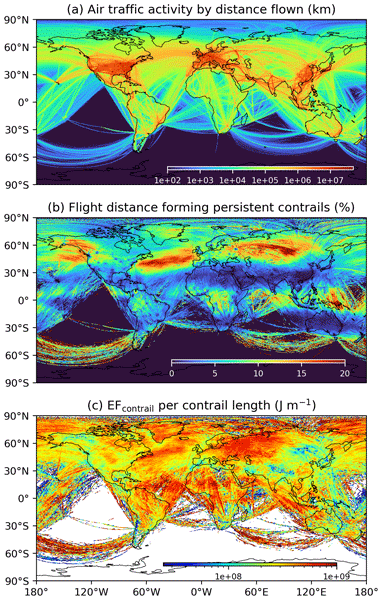
Roger Teoh, Zebediah Engberg, Ulrich Schumann, Christiane Voigt, Marc Shapiro, Susanne Rohs, and Marc E. J. Stettler
Atmos. Chem. Phys., 24, 6071–6093, https://doi.org/10.5194/acp-24-6071-2024, https://doi.org/10.5194/acp-24-6071-2024, 2024
Short summary
Short summary
The radiative forcing (RF) due to aviation contrails is comparable to that caused by CO2. We estimate that global contrail net RF in 2019 was 62.1 mW m−2. This is ~1/2 the previous best estimate for 2018. Contrail RF varies regionally due to differences in conditions required for persistent contrails. COVID-19 reduced contrail RF by 54% in 2020 relative to 2019. Globally, 2 % of all flights account for 80 % of the annual contrail energy forcing, suggesting a opportunity to mitigate contrail RF.
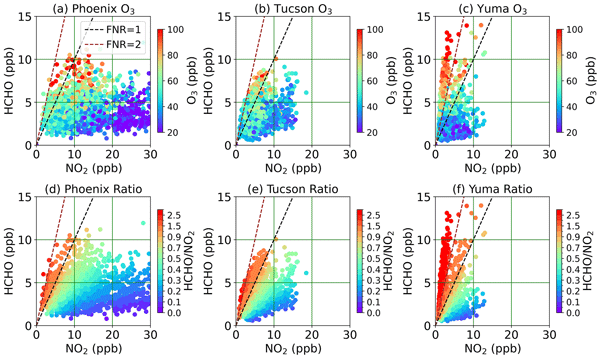
Yafang Guo, Chayan Roychoudhury, Mohammad Amin Mirrezaei, Rajesh Kumar, Armin Sorooshian, and Avelino F. Arellano
Geosci. Model Dev., 17, 4331–4353, https://doi.org/10.5194/gmd-17-4331-2024, https://doi.org/10.5194/gmd-17-4331-2024, 2024
Short summary
Short summary
This research focuses on surface ozone (O3) pollution in Arizona, a historically air-quality-challenged arid and semi-arid region in the US. The unique characteristics of this kind of region, e.g., intense heat, minimal moisture, and persistent desert shrubs, play a vital role in comprehending O3 exceedances. Using the WRF-Chem model, we analyzed O3 levels in the pre-monsoon month, revealing the model's skill in capturing diurnal and MDA8 O3 levels.
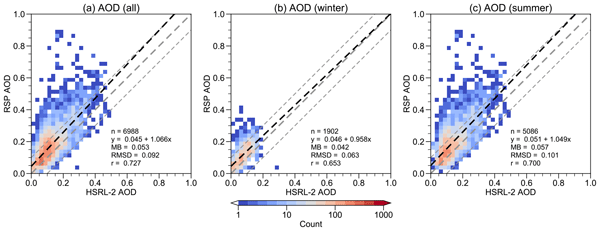
Leong Wai Siu, Joseph S. Schlosser, David Painemal, Brian Cairns, Marta A. Fenn, Richard A. Ferrare, Johnathan W. Hair, Chris A. Hostetler, Longlei Li, Mary M. Kleb, Amy Jo Scarino, Taylor J. Shingler, Armin Sorooshian, Snorre A. Stamnes, and Xubin Zeng
Atmos. Meas. Tech., 17, 2739–2759, https://doi.org/10.5194/amt-17-2739-2024, https://doi.org/10.5194/amt-17-2739-2024, 2024
Short summary
Short summary
An unprecedented 3-year aerosol dataset was collected from a recent NASA field campaign over the western North Atlantic Ocean, which offers a special opportunity to evaluate two state-of-the-art remote sensing instruments, one lidar and the other polarimeter, on the same aircraft. Special attention has been paid to validate aerosol optical depth data and their uncertainties when no reference dataset is available. Physical reasons for the disagreement between two instruments are discussed.
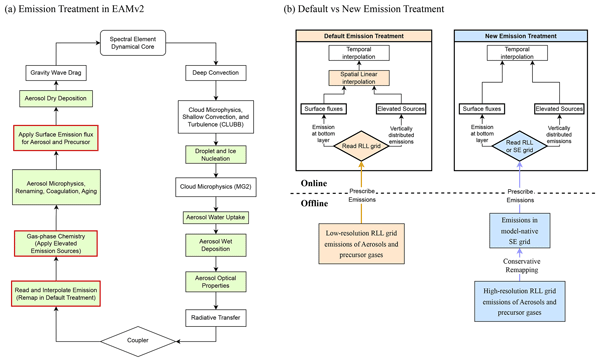
Taufiq Hassan, Kai Zhang, Jianfeng Li, Balwinder Singh, Shixuan Zhang, Hailong Wang, and Po-Lun Ma
Geosci. Model Dev., 17, 3507–3532, https://doi.org/10.5194/gmd-17-3507-2024, https://doi.org/10.5194/gmd-17-3507-2024, 2024
Short summary
Short summary
Anthropogenic aerosol emissions are an essential part of global aerosol models. Significant errors can exist from the loss of emission heterogeneity. We introduced an emission treatment that significantly improved aerosol emission heterogeneity in high-resolution model simulations, with improvements in simulated aerosol surface concentrations. The emission treatment will provide a more accurate representation of aerosol emissions and their effects on climate.
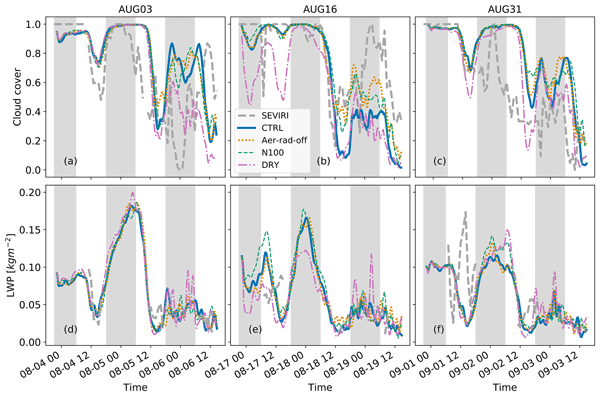
Alejandro Baró Pérez, Michael S. Diamond, Frida A.-M. Bender, Abhay Devasthale, Matthias Schwarz, Julien Savre, Juha Tonttila, Harri Kokkola, Hyunho Lee, David Painemal, and Annica M. L. Ekman
Atmos. Chem. Phys., 24, 4591–4610, https://doi.org/10.5194/acp-24-4591-2024, https://doi.org/10.5194/acp-24-4591-2024, 2024
Short summary
Short summary
We use a numerical model to study interactions between humid light-absorbing aerosol plumes, clouds, and radiation over the southeast Atlantic. We find that the warming produced by the aerosols reduces cloud cover, especially in highly polluted situations. Aerosol impacts on drizzle play a minor role. However, aerosol effects on cloud reflectivity and moisture-induced changes in cloud cover dominate the climatic response and lead to an overall cooling by the biomass burning plumes.
Weiming Ma, Hailong Wang, Gang Chen, Yun Qian, Ian Baxter, Yiling Huo, and Mark W. Seefeldt
Atmos. Chem. Phys., 24, 4451–4472, https://doi.org/10.5194/acp-24-4451-2024, https://doi.org/10.5194/acp-24-4451-2024, 2024
Short summary
Short summary
Extreme warming events with surface temperature going above 0°C can occur in the high-Arctic winter. Although reanalysis data show that these events were short-lived and occurred rarely during 1980–2021, they have become more frequent, stronger, and longer lasting latterly. A dipole pattern, comprising high- and low-pressure systems, is found to be the key in driving them. These findings have implications for the recent changes in sea ice, hydrological cycle, and ecosystem over the Arctic.
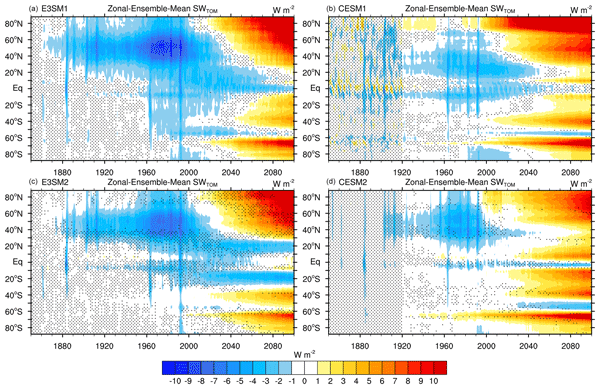
John T. Fasullo, Jean-Christophe Golaz, Julie M. Caron, Nan Rosenbloom, Gerald A. Meehl, Warren Strand, Sasha Glanville, Samantha Stevenson, Maria Molina, Christine A. Shields, Chengzhu Zhang, James Benedict, Hailong Wang, and Tony Bartoletti
Earth Syst. Dynam., 15, 367–386, https://doi.org/10.5194/esd-15-367-2024, https://doi.org/10.5194/esd-15-367-2024, 2024
Short summary
Short summary
Climate model large ensembles provide a unique and invaluable means for estimating the climate response to external forcing agents and quantify contrasts in model structure. Here, an overview of the Energy Exascale Earth System Model (E3SM) version 2 large ensemble is given along with comparisons to large ensembles from E3SM version 1 and versions 1 and 2 of the Community Earth System Model. The paper provides broad and important context for users of these ensembles.
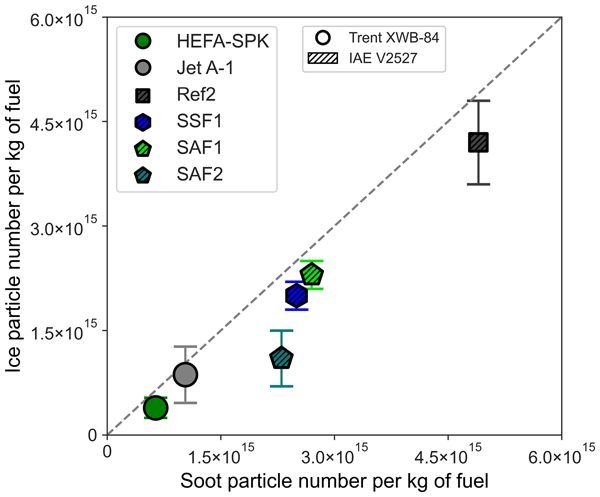
Raphael Satoru Märkl, Christiane Voigt, Daniel Sauer, Rebecca Katharina Dischl, Stefan Kaufmann, Theresa Harlaß, Valerian Hahn, Anke Roiger, Cornelius Weiß-Rehm, Ulrike Burkhardt, Ulrich Schumann, Andreas Marsing, Monika Scheibe, Andreas Dörnbrack, Charles Renard, Maxime Gauthier, Peter Swann, Paul Madden, Darren Luff, Reetu Sallinen, Tobias Schripp, and Patrick Le Clercq
Atmos. Chem. Phys., 24, 3813–3837, https://doi.org/10.5194/acp-24-3813-2024, https://doi.org/10.5194/acp-24-3813-2024, 2024
Short summary
Short summary
In situ measurements of contrails from a large passenger aircraft burning 100 % sustainable aviation fuel (SAF) show a 56 % reduction in contrail ice crystal numbers compared to conventional Jet A-1. Results from a climate model initialized with the observations suggest a significant decrease in radiative forcing from contrails. Our study confirms that future increased use of low aromatic SAF can reduce the climate impact from aviation.
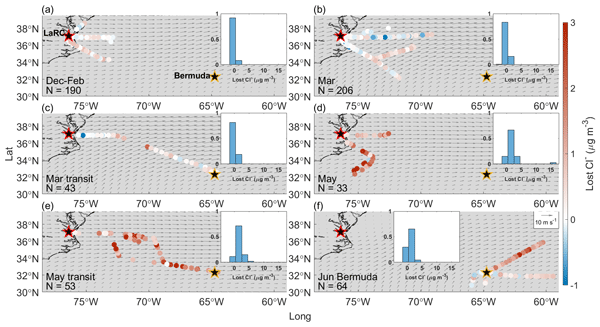
Eva-Lou Edwards, Yonghoon Choi, Ewan C. Crosbie, Joshua P. DiGangi, Glenn S. Diskin, Claire E. Robinson, Michael A. Shook, Edward L. Winstead, Luke D. Ziemba, and Armin Sorooshian
Atmos. Chem. Phys., 24, 3349–3378, https://doi.org/10.5194/acp-24-3349-2024, https://doi.org/10.5194/acp-24-3349-2024, 2024
Short summary
Short summary
We investigate Cl− depletion in sea salt particles over the northwest Atlantic from December 2021 to June 2022 using an airborne dataset. Losses of Cl− are greatest in May and least in December–February and March. Inorganic acidic species can account for all depletion observed for December–February, March, and June near Bermuda but none in May. Quantifying Cl− depletion as a percentage captures seasonal trends in depletion but fails to convey the effects it may have on atmospheric oxidation.
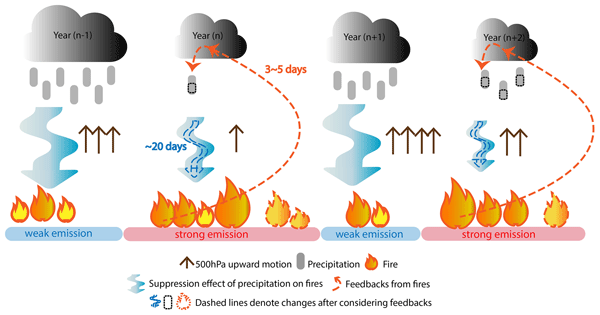
Yawen Liu, Yun Qian, Philip J. Rasch, Kai Zhang, Lai-yung Ruby Leung, Yuhang Wang, Minghuai Wang, Hailong Wang, Xin Huang, and Xiu-Qun Yang
Atmos. Chem. Phys., 24, 3115–3128, https://doi.org/10.5194/acp-24-3115-2024, https://doi.org/10.5194/acp-24-3115-2024, 2024
Short summary
Short summary
Fire management has long been a challenge. Here we report that spring-peak fire activity over southern Mexico and Central America (SMCA) has a distinct quasi-biennial signal by measuring multiple fire metrics. This signal is initially driven by quasi-biennial variability in precipitation and is further amplified by positive feedback of fire–precipitation interaction at short timescales. This work highlights the importance of fire–climate interactions in shaping fires on an interannual scale.
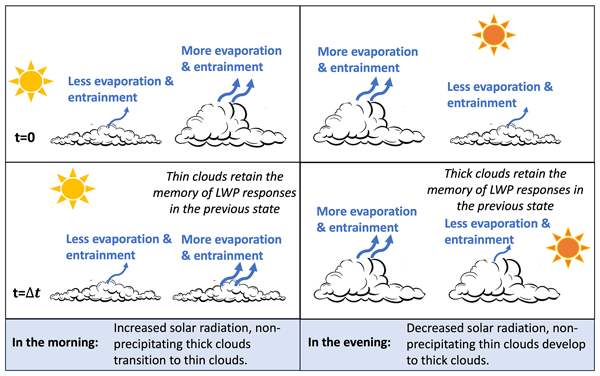
Shaoyue Qiu, Xue Zheng, David Painemal, Christopher R. Terai, and Xiaoli Zhou
Atmos. Chem. Phys., 24, 2913–2935, https://doi.org/10.5194/acp-24-2913-2024, https://doi.org/10.5194/acp-24-2913-2024, 2024
Short summary
Short summary
The aerosol indirect effect (AIE) depends on cloud states, which exhibit significant diurnal variations in the northeastern Atlantic. Yet the AIE diurnal cycle remains poorly understood. Using satellite retrievals, we find a pronounced “U-shaped” diurnal variation in the AIE, which is contributed to by the transition of cloud states combined with the lagged cloud responses. This suggests that polar-orbiting satellites with overpass times at noon underestimate daytime mean values of the AIE.
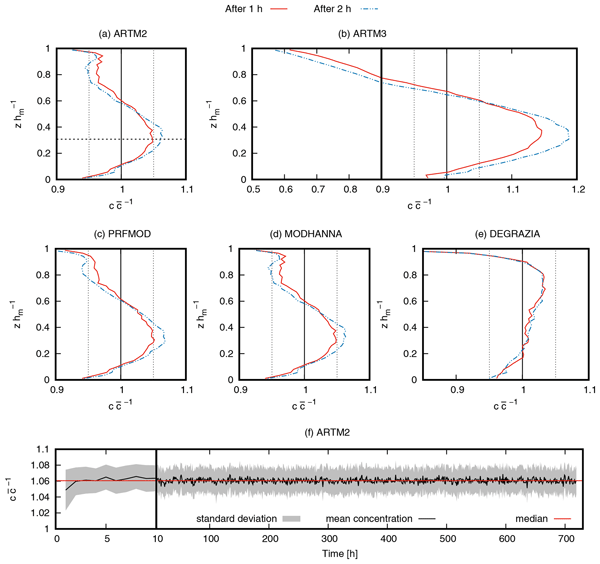
Robert Hanfland, Dominik Brunner, Christiane Voigt, Alina Fiehn, Anke Roiger, and Margit Pattantyús-Ábrahám
Atmos. Chem. Phys., 24, 2511–2534, https://doi.org/10.5194/acp-24-2511-2024, https://doi.org/10.5194/acp-24-2511-2024, 2024
Short summary
Short summary
To show that the three-dimensional dispersion of plumes simulated by the Atmospheric Radionuclide Transport Model within the planetary boundary layer agrees with real plumes, we identify the most important input parameters and analyse the turbulence properties of five different turbulence models in very unstable stratification conditions using their deviation from the well-mixed state. Simulations show that one model agrees slightly better in unstable stratification conditions.
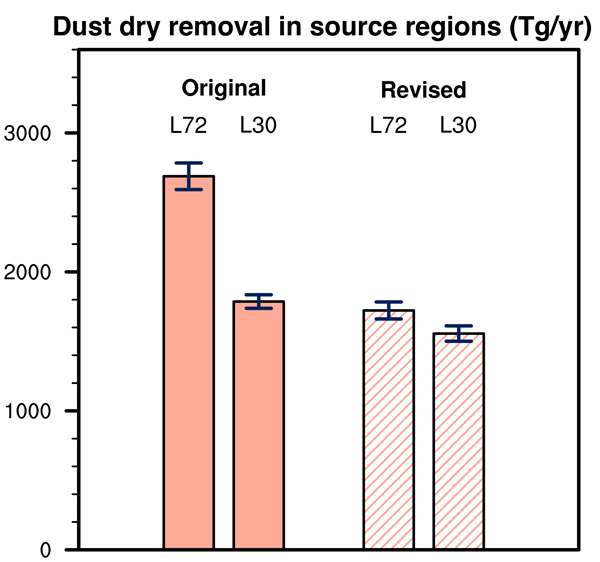
Hui Wan, Kai Zhang, Christopher J. Vogl, Carol S. Woodward, Richard C. Easter, Philip J. Rasch, Yan Feng, and Hailong Wang
Geosci. Model Dev., 17, 1387–1407, https://doi.org/10.5194/gmd-17-1387-2024, https://doi.org/10.5194/gmd-17-1387-2024, 2024
Short summary
Short summary
Sophisticated numerical models of the Earth's atmosphere include representations of many physical and chemical processes. In numerical simulations, these processes need to be calculated in a certain sequence. This study reveals the weaknesses of the sequence of calculations used for aerosol processes in a global atmosphere model. A revision of the sequence is proposed and its impacts on the simulated global aerosol climatology are evaluated.
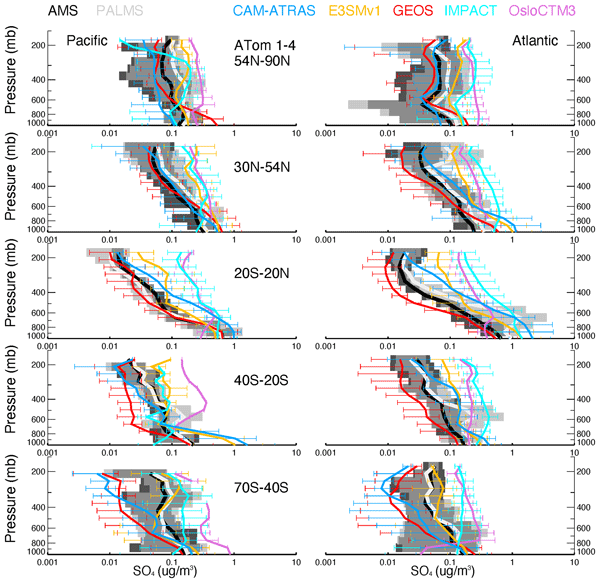
Huisheng Bian, Mian Chin, Peter R. Colarco, Eric C. Apel, Donald R. Blake, Karl Froyd, Rebecca S. Hornbrook, Jose Jimenez, Pedro Campuzano Jost, Michael Lawler, Mingxu Liu, Marianne Tronstad Lund, Hitoshi Matsui, Benjamin A. Nault, Joyce E. Penner, Andrew W. Rollins, Gregory Schill, Ragnhild B. Skeie, Hailong Wang, Lu Xu, Kai Zhang, and Jialei Zhu
Atmos. Chem. Phys., 24, 1717–1741, https://doi.org/10.5194/acp-24-1717-2024, https://doi.org/10.5194/acp-24-1717-2024, 2024
Short summary
Short summary
This work studies sulfur in the remote troposphere at global and seasonal scales using aircraft measurements and multi-model simulations. The goal is to understand the sulfur cycle over remote oceans, spread of model simulations, and observation–model discrepancies. Such an understanding and comparison with real observations are crucial to narrow down the uncertainties in model sulfur simulations and improve understanding of the sulfur cycle in atmospheric air quality, climate, and ecosystems.
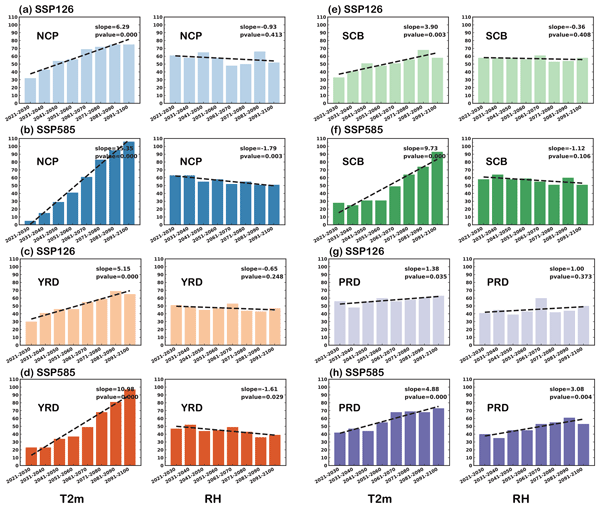
Yang Yang, Yang Zhou, Hailong Wang, Mengyun Li, Huimin Li, Pinya Wang, Xu Yue, Ke Li, Jia Zhu, and Hong Liao
Atmos. Chem. Phys., 24, 1177–1191, https://doi.org/10.5194/acp-24-1177-2024, https://doi.org/10.5194/acp-24-1177-2024, 2024
Short summary
Short summary
This study reveals that extreme ozone pollution over the North China Plain and Yangtze River Delta is due to the chemical production related to hot and dry conditions, and the regional transport explains the ozone pollution over the Sichuan Basin and Pearl River Delta. The frequency of meteorological conditions of the extreme ozone pollution increases from the past to the future. The sustainable scenario is the optimal path to retaining clean air in China in the future.
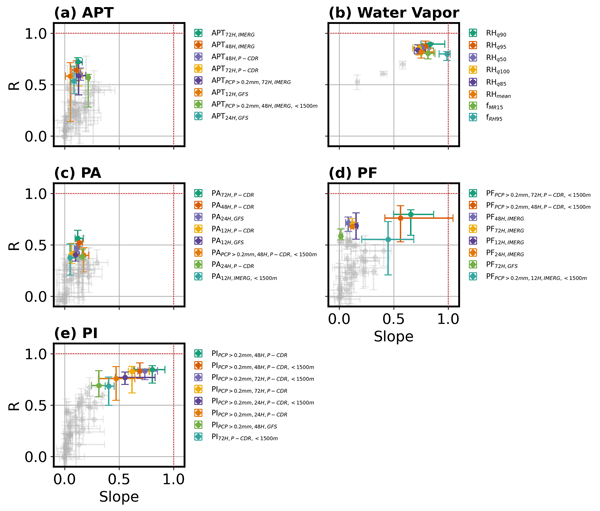
Miguel Ricardo A. Hilario, Avelino F. Arellano, Ali Behrangi, Ewan C. Crosbie, Joshua P. DiGangi, Glenn S. Diskin, Michael A. Shook, Luke D. Ziemba, and Armin Sorooshian
Atmos. Meas. Tech., 17, 37–55, https://doi.org/10.5194/amt-17-37-2024, https://doi.org/10.5194/amt-17-37-2024, 2024
Short summary
Short summary
Wet scavenging strongly influences aerosol lifetime and interactions but is a large uncertainty in global models. We present a method to identify meteorological variables relevant for estimating wet scavenging. During long-range transport over the tropical western Pacific, relative humidity and the frequency of humid conditions are better predictors of scavenging than precipitation. This method can be applied to other regions, and our findings can inform scavenging parameterizations in models.
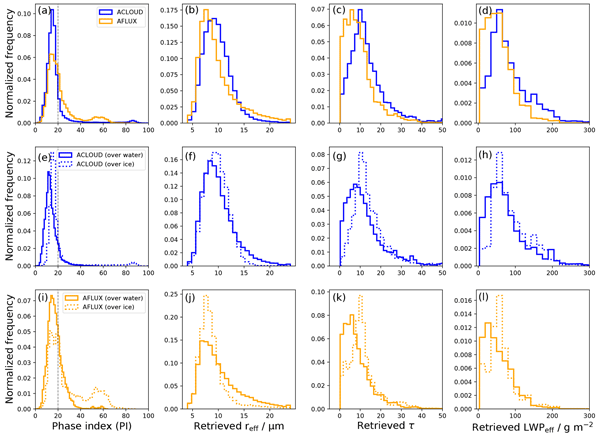
Marcus Klingebiel, André Ehrlich, Elena Ruiz-Donoso, Nils Risse, Imke Schirmacher, Evelyn Jäkel, Michael Schäfer, Kevin Wolf, Mario Mech, Manuel Moser, Christiane Voigt, and Manfred Wendisch
Atmos. Chem. Phys., 23, 15289–15304, https://doi.org/10.5194/acp-23-15289-2023, https://doi.org/10.5194/acp-23-15289-2023, 2023
Short summary
Short summary
In this study we explain how we use aircraft measurements from two Arctic research campaigns to identify cloud properties (like droplet size) over sea-ice and ice-free ocean. To make sure that our measurements make sense, we compare them with other observations. Our results show, e.g., larger cloud droplets in early summer than in spring. Moreover, the cloud droplets are also larger over ice-free ocean than compared to sea ice. In the future, our data can be used to improve climate models.
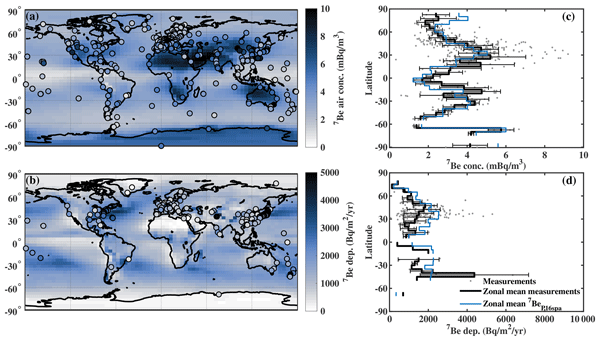
Minjie Zheng, Hongyu Liu, Florian Adolphi, Raimund Muscheler, Zhengyao Lu, Mousong Wu, and Nønne L. Prisle
Geosci. Model Dev., 16, 7037–7057, https://doi.org/10.5194/gmd-16-7037-2023, https://doi.org/10.5194/gmd-16-7037-2023, 2023
Short summary
Short summary
The radionuclides 7Be and 10Be are useful tracers for atmospheric transport studies. Here we use the GEOS-Chem to simulate 7Be and 10Be with different production rates: the default production rate in GEOS-Chem and two from the state-of-the-art beryllium production model. We demonstrate that reduced uncertainties in the production rates can enhance the utility of 7Be and 10Be as tracers for evaluating transport and scavenging processes in global models.
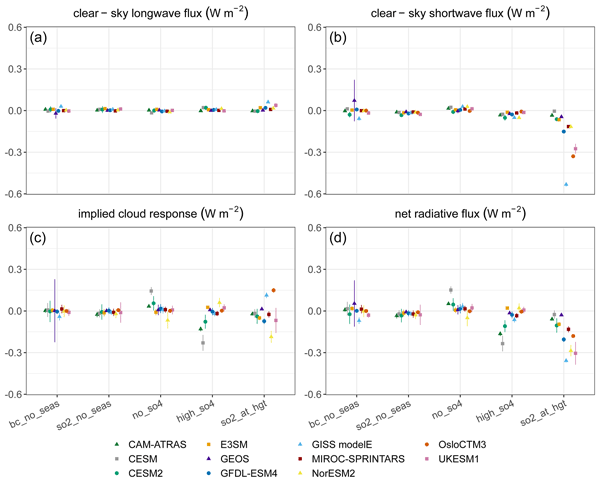
Hamza Ahsan, Hailong Wang, Jingbo Wu, Mingxuan Wu, Steven J. Smith, Susanne Bauer, Harrison Suchyta, Dirk Olivié, Gunnar Myhre, Hitoshi Matsui, Huisheng Bian, Jean-François Lamarque, Ken Carslaw, Larry Horowitz, Leighton Regayre, Mian Chin, Michael Schulz, Ragnhild Bieltvedt Skeie, Toshihiko Takemura, and Vaishali Naik
Atmos. Chem. Phys., 23, 14779–14799, https://doi.org/10.5194/acp-23-14779-2023, https://doi.org/10.5194/acp-23-14779-2023, 2023
Short summary
Short summary
We examine the impact of the assumed effective height of SO2 injection, SO2 and BC emission seasonality, and the assumed fraction of SO2 emissions injected as SO4 on climate and chemistry model results. We find that the SO2 injection height has a large impact on surface SO2 concentrations and, in some models, radiative flux. These assumptions are a
hiddensource of inter-model variability and may be leading to bias in some climate model results.
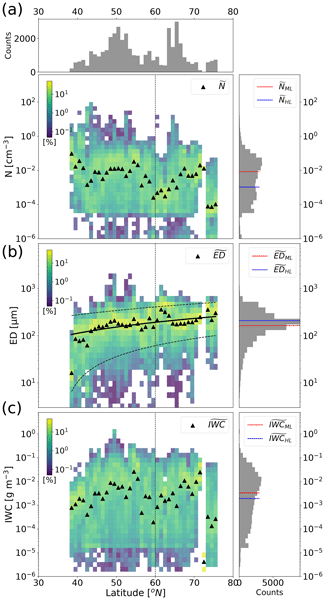
Elena De La Torre Castro, Tina Jurkat-Witschas, Armin Afchine, Volker Grewe, Valerian Hahn, Simon Kirschler, Martina Krämer, Johannes Lucke, Nicole Spelten, Heini Wernli, Martin Zöger, and Christiane Voigt
Atmos. Chem. Phys., 23, 13167–13189, https://doi.org/10.5194/acp-23-13167-2023, https://doi.org/10.5194/acp-23-13167-2023, 2023
Short summary
Short summary
In this study, we show the differences in the microphysical properties between high-latitude (HL) cirrus and mid-latitude (ML) cirrus over the Arctic, North Atlantic, and central Europe during summer. The in situ measurements are combined with backward trajectories to investigate the influence of the region on cloud formation. We show that HL cirrus are characterized by a lower concentration of larger ice crystals when compared to ML cirrus.
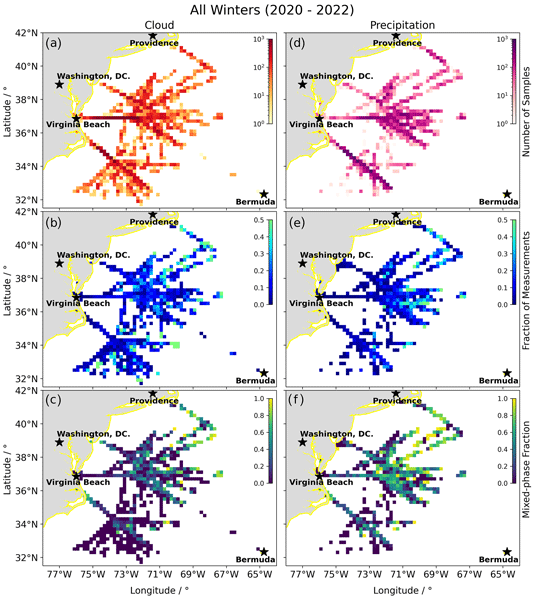
Simon Kirschler, Christiane Voigt, Bruce E. Anderson, Gao Chen, Ewan C. Crosbie, Richard A. Ferrare, Valerian Hahn, Johnathan W. Hair, Stefan Kaufmann, Richard H. Moore, David Painemal, Claire E. Robinson, Kevin J. Sanchez, Amy J. Scarino, Taylor J. Shingler, Michael A. Shook, Kenneth L. Thornhill, Edward L. Winstead, Luke D. Ziemba, and Armin Sorooshian
Atmos. Chem. Phys., 23, 10731–10750, https://doi.org/10.5194/acp-23-10731-2023, https://doi.org/10.5194/acp-23-10731-2023, 2023
Short summary
Short summary
In this study we present an overview of liquid and mixed-phase clouds and precipitation in the marine boundary layer over the western North Atlantic Ocean. We compare microphysical properties of pure liquid clouds to mixed-phase clouds and show that the initiation of the ice phase in mixed-phase clouds promotes precipitation. The observational data presented in this study are well suited for investigating the processes that give rise to liquid and mixed-phase clouds, ice, and precipitation.
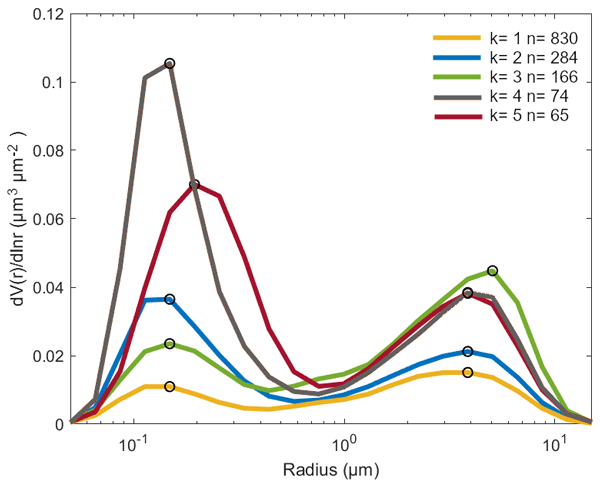
Genevieve Rose Lorenzo, Avelino F. Arellano, Maria Obiminda Cambaliza, Christopher Castro, Melliza Templonuevo Cruz, Larry Di Girolamo, Glenn Franco Gacal, Miguel Ricardo A. Hilario, Nofel Lagrosas, Hans Jarett Ong, James Bernard Simpas, Sherdon Niño Uy, and Armin Sorooshian
Atmos. Chem. Phys., 23, 10579–10608, https://doi.org/10.5194/acp-23-10579-2023, https://doi.org/10.5194/acp-23-10579-2023, 2023
Short summary
Short summary
Aerosol and weather interactions in Southeast Asia are complex and understudied. An emerging aerosol climatology was established in Metro Manila, the Philippines, from aerosol particle physicochemical properties and meteorology, revealing five sources. Even with local traffic, transported smoke from biomass burning, aged dust, and cloud processing, background marine particles dominate and correspond to lower aerosol optical depth in Metro Manila compared to other Southeast Asian megacities.
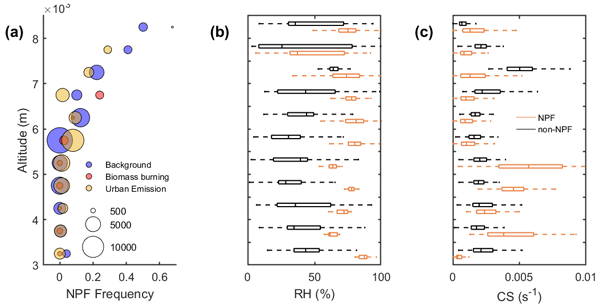
Qian Xiao, Jiaoshi Zhang, Yang Wang, Luke D. Ziemba, Ewan Crosbie, Edward L. Winstead, Claire E. Robinson, Joshua P. DiGangi, Glenn S. Diskin, Jeffrey S. Reid, K. Sebastian Schmidt, Armin Sorooshian, Miguel Ricardo A. Hilario, Sarah Woods, Paul Lawson, Snorre A. Stamnes, and Jian Wang
Atmos. Chem. Phys., 23, 9853–9871, https://doi.org/10.5194/acp-23-9853-2023, https://doi.org/10.5194/acp-23-9853-2023, 2023
Short summary
Short summary
Using recent airborne measurements, we show that the influences of anthropogenic emissions, transport, convective clouds, and meteorology lead to new particle formation (NPF) under a variety of conditions and at different altitudes in tropical marine environments. NPF is enhanced by fresh urban emissions in convective outflow but is suppressed in air masses influenced by aged urban emissions where reactive precursors are mostly consumed while particle surface area remains relatively high.
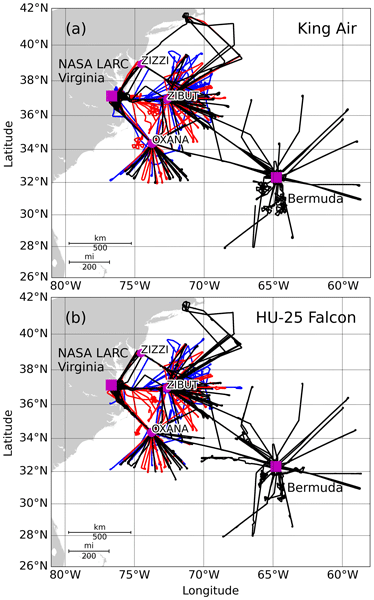
Armin Sorooshian, Mikhail D. Alexandrov, Adam D. Bell, Ryan Bennett, Grace Betito, Sharon P. Burton, Megan E. Buzanowicz, Brian Cairns, Eduard V. Chemyakin, Gao Chen, Yonghoon Choi, Brian L. Collister, Anthony L. Cook, Andrea F. Corral, Ewan C. Crosbie, Bastiaan van Diedenhoven, Joshua P. DiGangi, Glenn S. Diskin, Sanja Dmitrovic, Eva-Lou Edwards, Marta A. Fenn, Richard A. Ferrare, David van Gilst, Johnathan W. Hair, David B. Harper, Miguel Ricardo A. Hilario, Chris A. Hostetler, Nathan Jester, Michael Jones, Simon Kirschler, Mary M. Kleb, John M. Kusterer, Sean Leavor, Joseph W. Lee, Hongyu Liu, Kayla McCauley, Richard H. Moore, Joseph Nied, Anthony Notari, John B. Nowak, David Painemal, Kasey E. Phillips, Claire E. Robinson, Amy Jo Scarino, Joseph S. Schlosser, Shane T. Seaman, Chellappan Seethala, Taylor J. Shingler, Michael A. Shook, Kenneth A. Sinclair, William L. Smith Jr., Douglas A. Spangenberg, Snorre A. Stamnes, Kenneth L. Thornhill, Christiane Voigt, Holger Vömel, Andrzej P. Wasilewski, Hailong Wang, Edward L. Winstead, Kira Zeider, Xubin Zeng, Bo Zhang, Luke D. Ziemba, and Paquita Zuidema
Earth Syst. Sci. Data, 15, 3419–3472, https://doi.org/10.5194/essd-15-3419-2023, https://doi.org/10.5194/essd-15-3419-2023, 2023
Short summary
Short summary
The NASA Aerosol Cloud meTeorology Interactions oVer the western ATlantic Experiment (ACTIVATE) produced a unique dataset for research into aerosol–cloud–meteorology interactions. HU-25 Falcon and King Air aircraft conducted systematic and spatially coordinated flights over the northwest Atlantic Ocean. This paper describes the ACTIVATE flight strategy, instrument and complementary dataset products, data access and usage details, and data application notes.
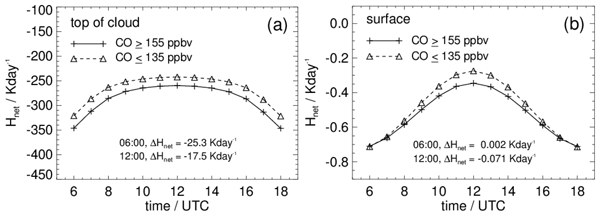
Valerian Hahn, Ralf Meerkötter, Christiane Voigt, Sonja Gisinger, Daniel Sauer, Valéry Catoire, Volker Dreiling, Hugh Coe, Cyrille Flamant, Stefan Kaufmann, Jonas Kleine, Peter Knippertz, Manuel Moser, Philip Rosenberg, Hans Schlager, Alfons Schwarzenboeck, and Jonathan Taylor
Atmos. Chem. Phys., 23, 8515–8530, https://doi.org/10.5194/acp-23-8515-2023, https://doi.org/10.5194/acp-23-8515-2023, 2023
Short summary
Short summary
During the DACCIWA campaign in West Africa, we found a 35 % increase in the cloud droplet concentration that formed in a polluted compared with a less polluted environment and a decrease of 17 % in effective droplet diameter. Radiative transfer simulations, based on the measured cloud properties, reveal that these low-level polluted clouds radiate only 2.6 % more energy back to space, compared with a less polluted cloud. The corresponding additional decrease in temperature is rather small.
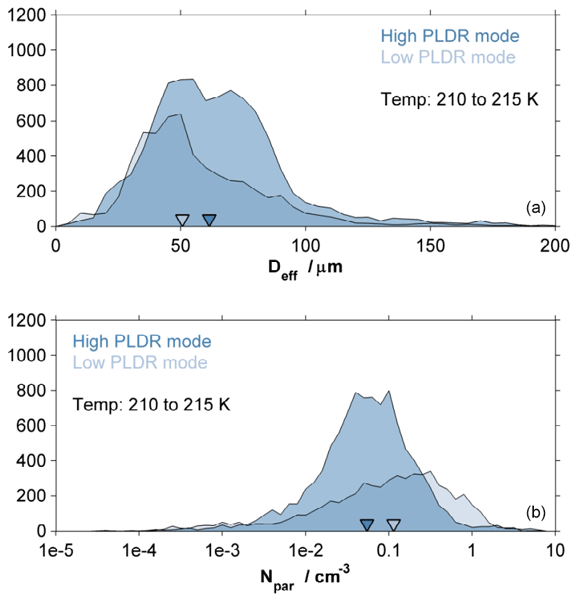
Silke Groß, Tina Jurkat-Witschas, Qiang Li, Martin Wirth, Benedikt Urbanek, Martina Krämer, Ralf Weigel, and Christiane Voigt
Atmos. Chem. Phys., 23, 8369–8381, https://doi.org/10.5194/acp-23-8369-2023, https://doi.org/10.5194/acp-23-8369-2023, 2023
Short summary
Short summary
Aviation-emitted aerosol can have an impact on cirrus clouds. We present optical and microphysical properties of mid-latitude cirrus clouds which were formed under the influence of aviation-emitted aerosol or which were formed under rather pristine conditions. We find that cirrus clouds affected by aviation-emitted aerosol show larger values of the particle linear depolarization ratio, larger mean effective ice particle diameters and decreased ice particle number concentrations.
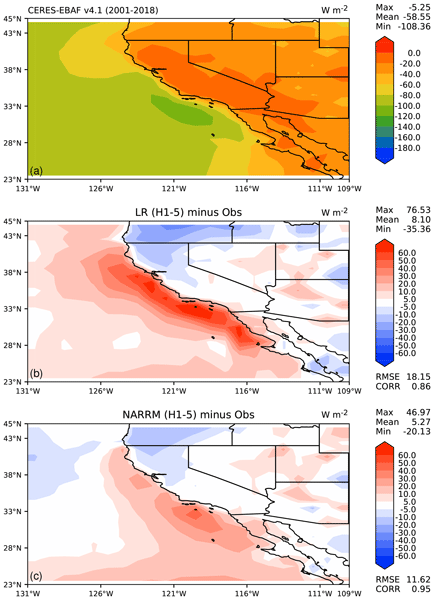
Qi Tang, Jean-Christophe Golaz, Luke P. Van Roekel, Mark A. Taylor, Wuyin Lin, Benjamin R. Hillman, Paul A. Ullrich, Andrew M. Bradley, Oksana Guba, Jonathan D. Wolfe, Tian Zhou, Kai Zhang, Xue Zheng, Yunyan Zhang, Meng Zhang, Mingxuan Wu, Hailong Wang, Cheng Tao, Balwinder Singh, Alan M. Rhoades, Yi Qin, Hong-Yi Li, Yan Feng, Yuying Zhang, Chengzhu Zhang, Charles S. Zender, Shaocheng Xie, Erika L. Roesler, Andrew F. Roberts, Azamat Mametjanov, Mathew E. Maltrud, Noel D. Keen, Robert L. Jacob, Christiane Jablonowski, Owen K. Hughes, Ryan M. Forsyth, Alan V. Di Vittorio, Peter M. Caldwell, Gautam Bisht, Renata B. McCoy, L. Ruby Leung, and David C. Bader
Geosci. Model Dev., 16, 3953–3995, https://doi.org/10.5194/gmd-16-3953-2023, https://doi.org/10.5194/gmd-16-3953-2023, 2023
Short summary
Short summary
High-resolution simulations are superior to low-resolution ones in capturing regional climate changes and climate extremes. However, uniformly reducing the grid size of a global Earth system model is too computationally expensive. We provide an overview of the fully coupled regionally refined model (RRM) of E3SMv2 and document a first-of-its-kind set of climate production simulations using RRM at an economic cost. The key to this success is our innovative hybrid time step method.
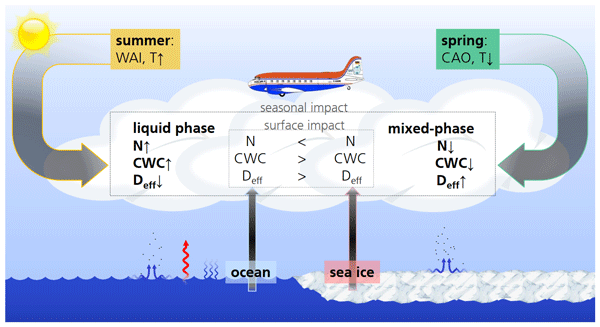
Manuel Moser, Christiane Voigt, Tina Jurkat-Witschas, Valerian Hahn, Guillaume Mioche, Olivier Jourdan, Régis Dupuy, Christophe Gourbeyre, Alfons Schwarzenboeck, Johannes Lucke, Yvonne Boose, Mario Mech, Stephan Borrmann, André Ehrlich, Andreas Herber, Christof Lüpkes, and Manfred Wendisch
Atmos. Chem. Phys., 23, 7257–7280, https://doi.org/10.5194/acp-23-7257-2023, https://doi.org/10.5194/acp-23-7257-2023, 2023
Short summary
Short summary
This study provides a comprehensive microphysical and thermodynamic phase analysis of low-level clouds in the northern Fram Strait, above the sea ice and the open ocean, during spring and summer. Using airborne in situ cloud data, we show that the properties of Arctic low-level clouds vary significantly with seasonal meteorological situations and surface conditions. The observations presented in this study can help one to assess the role of clouds in the Arctic climate system.
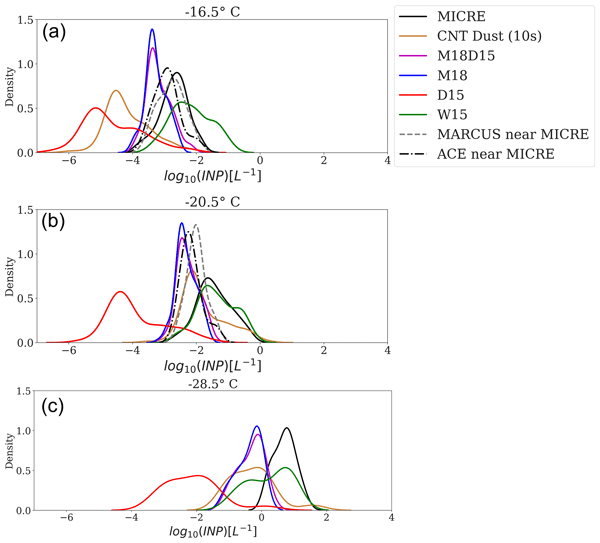
Aishwarya Raman, Thomas Hill, Paul J. DeMott, Balwinder Singh, Kai Zhang, Po-Lun Ma, Mingxuan Wu, Hailong Wang, Simon P. Alexander, and Susannah M. Burrows
Atmos. Chem. Phys., 23, 5735–5762, https://doi.org/10.5194/acp-23-5735-2023, https://doi.org/10.5194/acp-23-5735-2023, 2023
Short summary
Short summary
Ice-nucleating particles (INPs) play an important role in cloud processes and associated precipitation. Yet, INPs are not accurately represented in climate models. This study attempts to uncover these gaps by comparing model-simulated INP concentrations against field campaign measurements in the SO for an entire year, 2017–2018. Differences in INP concentrations and variability between the model and observations have major implications for modeling cloud properties in high latitudes.
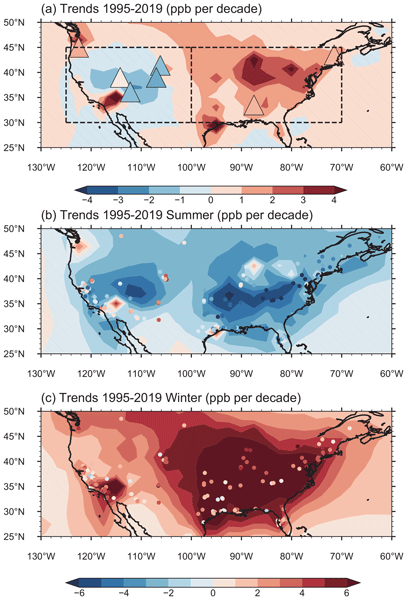
Pengwei Li, Yang Yang, Hailong Wang, Su Li, Ke Li, Pinya Wang, Baojie Li, and Hong Liao
Atmos. Chem. Phys., 23, 5403–5417, https://doi.org/10.5194/acp-23-5403-2023, https://doi.org/10.5194/acp-23-5403-2023, 2023
Short summary
Short summary
We use a novel technique that can attribute O3 to precursors to investigate O3 changes in the United States during 1995–2019. We found that the US domestic energy and surface transportation emission reductions are primarily responsible for the O3 decrease in summer. In winter, factors such as nitrogen oxide emission reduction in the context of its inhibition of ozone production, increased aviation and shipping activities, and large-scale circulation changes contribute to the O3 increases.
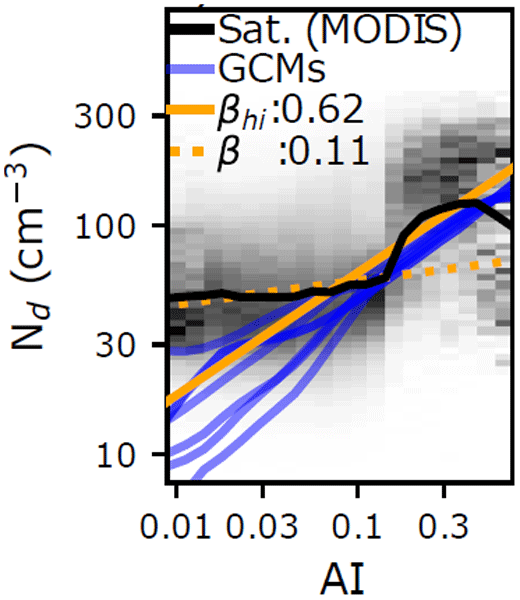
Edward Gryspeerdt, Adam C. Povey, Roy G. Grainger, Otto Hasekamp, N. Christina Hsu, Jane P. Mulcahy, Andrew M. Sayer, and Armin Sorooshian
Atmos. Chem. Phys., 23, 4115–4122, https://doi.org/10.5194/acp-23-4115-2023, https://doi.org/10.5194/acp-23-4115-2023, 2023
Short summary
Short summary
The impact of aerosols on clouds is one of the largest uncertainties in the human forcing of the climate. Aerosol can increase the concentrations of droplets in clouds, but observational and model studies produce widely varying estimates of this effect. We show that these estimates can be reconciled if only polluted clouds are studied, but this is insufficient to constrain the climate impact of aerosol. The uncertainty in aerosol impact on clouds is currently driven by cases with little aerosol.
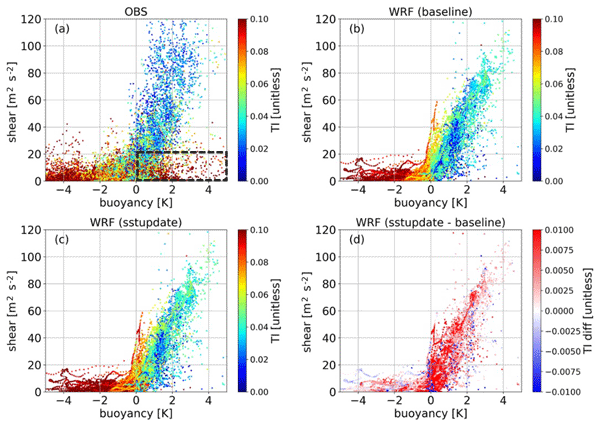
Sheng-Lun Tai, Larry K. Berg, Raghavendra Krishnamurthy, Rob Newsom, and Anthony Kirincich
Wind Energ. Sci., 8, 433–448, https://doi.org/10.5194/wes-8-433-2023, https://doi.org/10.5194/wes-8-433-2023, 2023
Short summary
Short summary
Turbulence intensity is critical for wind turbine design and operation as it affects wind power generation efficiency. Turbulence measurements in the marine environment are limited. We use a model to derive turbulence intensity and test how sea surface temperature data may impact the simulated turbulence intensity and atmospheric stability. The model slightly underestimates turbulence, and improved sea surface temperature data reduce the bias. Error with unrealistic mesoscale flow is identified.
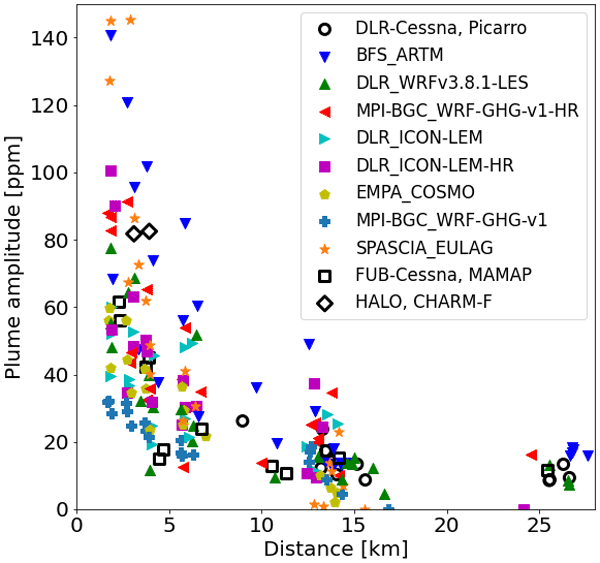
Dominik Brunner, Gerrit Kuhlmann, Stephan Henne, Erik Koene, Bastian Kern, Sebastian Wolff, Christiane Voigt, Patrick Jöckel, Christoph Kiemle, Anke Roiger, Alina Fiehn, Sven Krautwurst, Konstantin Gerilowski, Heinrich Bovensmann, Jakob Borchardt, Michal Galkowski, Christoph Gerbig, Julia Marshall, Andrzej Klonecki, Pascal Prunet, Robert Hanfland, Margit Pattantyús-Ábrahám, Andrzej Wyszogrodzki, and Andreas Fix
Atmos. Chem. Phys., 23, 2699–2728, https://doi.org/10.5194/acp-23-2699-2023, https://doi.org/10.5194/acp-23-2699-2023, 2023
Short summary
Short summary
We evaluated six atmospheric transport models for their capability to simulate the CO2 plumes from two of the largest power plants in Europe by comparing the models against aircraft observations collected during the CoMet (Carbon Dioxide and Methane Mission) campaign in 2018. The study analyzed how realistically such plumes can be simulated at different model resolutions and how well the planned European satellite mission CO2M will be able to quantify emissions from power plants.
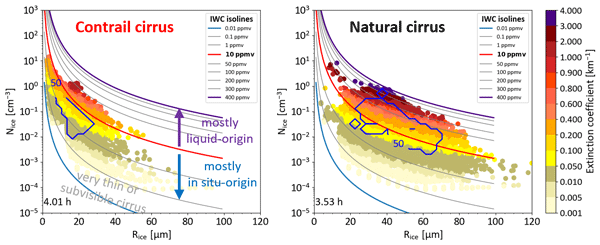
Yun Li, Christoph Mahnke, Susanne Rohs, Ulrich Bundke, Nicole Spelten, Georgios Dekoutsidis, Silke Groß, Christiane Voigt, Ulrich Schumann, Andreas Petzold, and Martina Krämer
Atmos. Chem. Phys., 23, 2251–2271, https://doi.org/10.5194/acp-23-2251-2023, https://doi.org/10.5194/acp-23-2251-2023, 2023
Short summary
Short summary
The radiative effect of aviation-induced cirrus is closely related to ambient conditions and its microphysical properties. Our study investigated the occurrence of contrail and natural cirrus measured above central Europe in spring 2014. It finds that contrail cirrus appears frequently in the pressure range 200 to 245 hPa and occurs more often in slightly ice-subsaturated environments than expected. Avoiding slightly ice-subsaturated regions by aviation might help mitigate contrail cirrus.
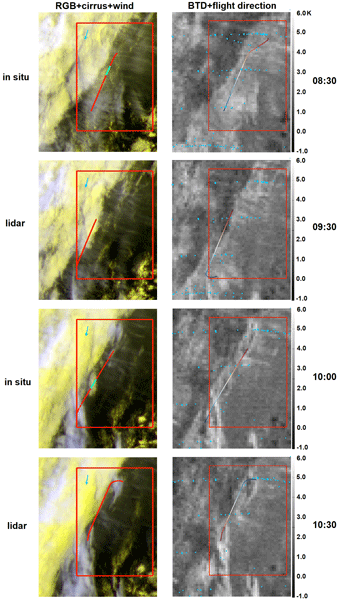
Ziming Wang, Luca Bugliaro, Tina Jurkat-Witschas, Romy Heller, Ulrike Burkhardt, Helmut Ziereis, Georgios Dekoutsidis, Martin Wirth, Silke Groß, Simon Kirschler, Stefan Kaufmann, and Christiane Voigt
Atmos. Chem. Phys., 23, 1941–1961, https://doi.org/10.5194/acp-23-1941-2023, https://doi.org/10.5194/acp-23-1941-2023, 2023
Short summary
Short summary
Differences in the microphysical properties of contrail cirrus and natural cirrus in a contrail outbreak situation during the ML-CIRRUS campaign over the North Atlantic flight corridor can be observed from in situ measurements. The cirrus radiative effect in the area of the outbreak, derived from satellite observation-based radiative transfer modeling, is warming in the early morning and cooling during the day.
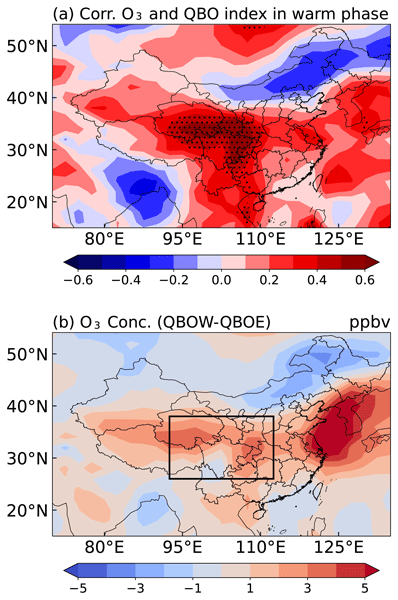
Mengyun Li, Yang Yang, Hailong Wang, Huimin Li, Pinya Wang, and Hong Liao
Atmos. Chem. Phys., 23, 1533–1544, https://doi.org/10.5194/acp-23-1533-2023, https://doi.org/10.5194/acp-23-1533-2023, 2023
Short summary
Short summary
Using the GEOS-Chem model, the impact of the quasi-biennial oscillation (QBO) on summertime tropospheric O3 in China is investigated. In the warm phases of sea surface temperature anomalies over the eastern tropical Pacific, the QBO has a significant positive correlation with near-surface O3 concentrations over central China. The QBO impacts on O3 pollution in China are mainly a result of changing vertical transport of O3.
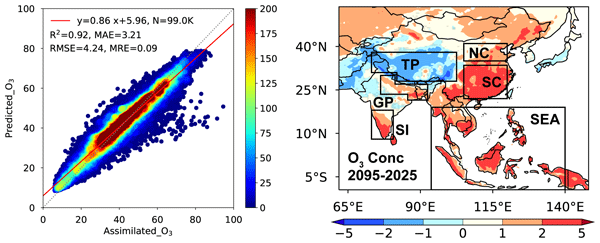
Huimin Li, Yang Yang, Jianbing Jin, Hailong Wang, Ke Li, Pinya Wang, and Hong Liao
Atmos. Chem. Phys., 23, 1131–1145, https://doi.org/10.5194/acp-23-1131-2023, https://doi.org/10.5194/acp-23-1131-2023, 2023
Short summary
Short summary
Future climate change will aggravate ozone pollution in Asia, especially in high-forcing scenarios. Ozone pollution in China will expand from North China to South China and extend into the cold season in a warmer future. The emphasis of this work is to quantify the impacts of future climate change on O3 pollution in Asia, which is of great significance for future O3 pollution mitigation strategies.
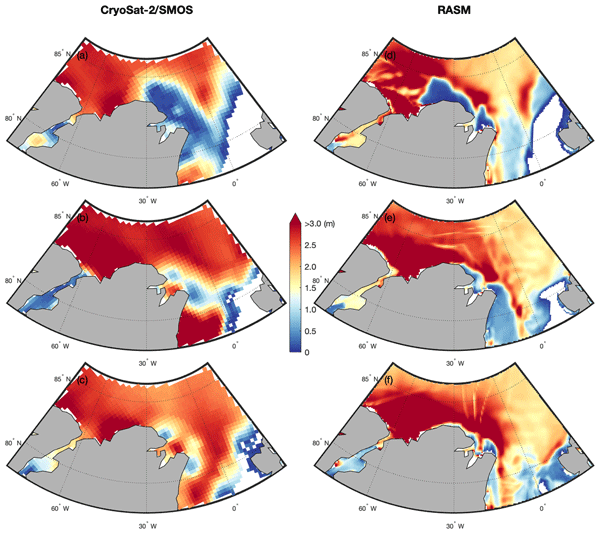
Younjoo J. Lee, Wieslaw Maslowski, John J. Cassano, Jaclyn Clement Kinney, Anthony P. Craig, Samy Kamal, Robert Osinski, Mark W. Seefeldt, Julienne Stroeve, and Hailong Wang
The Cryosphere, 17, 233–253, https://doi.org/10.5194/tc-17-233-2023, https://doi.org/10.5194/tc-17-233-2023, 2023
Short summary
Short summary
During 1979–2020, four winter polynyas occurred in December 1986 and February 2011, 2017, and 2018 north of Greenland. Instead of ice melting due to the anomalous warm air intrusion, the extreme wind forcing resulted in greater ice transport offshore. Based on the two ensemble runs, representing a 1980s thicker ice vs. a 2010s thinner ice, a dominant cause of these winter polynyas stems from internal variability of atmospheric forcing rather than from the forced response to a warming climate.
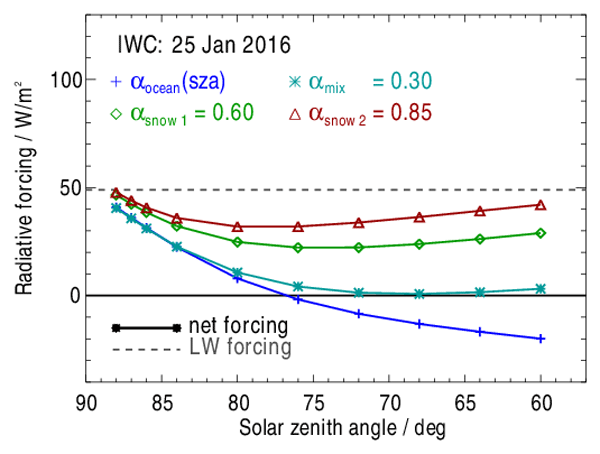
Andreas Marsing, Ralf Meerkötter, Romy Heller, Stefan Kaufmann, Tina Jurkat-Witschas, Martina Krämer, Christian Rolf, and Christiane Voigt
Atmos. Chem. Phys., 23, 587–609, https://doi.org/10.5194/acp-23-587-2023, https://doi.org/10.5194/acp-23-587-2023, 2023
Short summary
Short summary
We employ highly resolved aircraft measurements of profiles of the ice water content (IWC) in Arctic cirrus clouds in winter and spring, when solar irradiation is low. Using radiation transfer calculations, we assess the cloud radiative effect over different surfaces like snow or ocean. The variability in the IWC of the clouds affects their overall radiative effect and drives internal processes. This helps understand the role of cirrus in a rapidly changing Arctic environment.
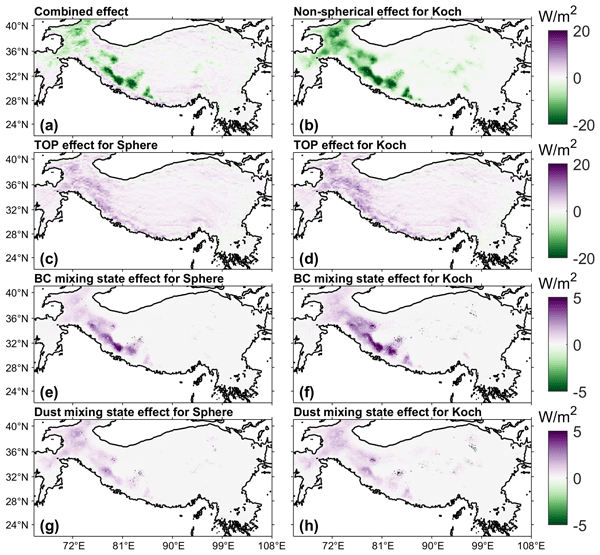
Dalei Hao, Gautam Bisht, Karl Rittger, Edward Bair, Cenlin He, Huilin Huang, Cheng Dang, Timbo Stillinger, Yu Gu, Hailong Wang, Yun Qian, and L. Ruby Leung
Geosci. Model Dev., 16, 75–94, https://doi.org/10.5194/gmd-16-75-2023, https://doi.org/10.5194/gmd-16-75-2023, 2023
Short summary
Short summary
Snow with the highest albedo of land surface plays a vital role in Earth’s surface energy budget and water cycle. This study accounts for the impacts of snow grain shape and mixing state of light-absorbing particles with snow on snow albedo in the E3SM land model. The findings advance our understanding of the role of snow grain shape and mixing state of LAP–snow in land surface processes and offer guidance for improving snow simulations and radiative forcing estimates in Earth system models.
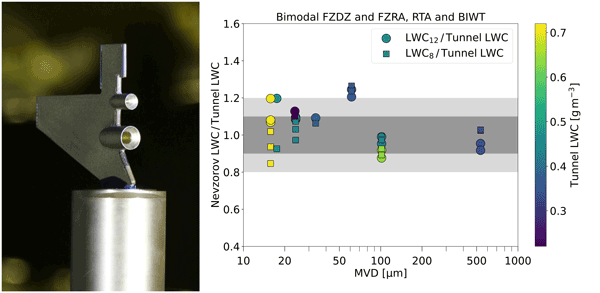
Johannes Lucke, Tina Jurkat-Witschas, Romy Heller, Valerian Hahn, Matthew Hamman, Wolfgang Breitfuss, Venkateshwar Reddy Bora, Manuel Moser, and Christiane Voigt
Atmos. Meas. Tech., 15, 7375–7394, https://doi.org/10.5194/amt-15-7375-2022, https://doi.org/10.5194/amt-15-7375-2022, 2022
Short summary
Short summary
Flight testing in icing conditions requires instruments that are able to accurately measure the liquid water content of supercooled large droplets (SLDs). This work finds that the 12 mm cone of the Nevzorov hot-wire probe has excellent collection properties for SLDs. We also derive a correction to compensate for the low collision efficiency of small droplets with the cone. The results provide a procedure to evaluate LWC measurements of the 12 mm cone during wind tunnel and airborne experiments.
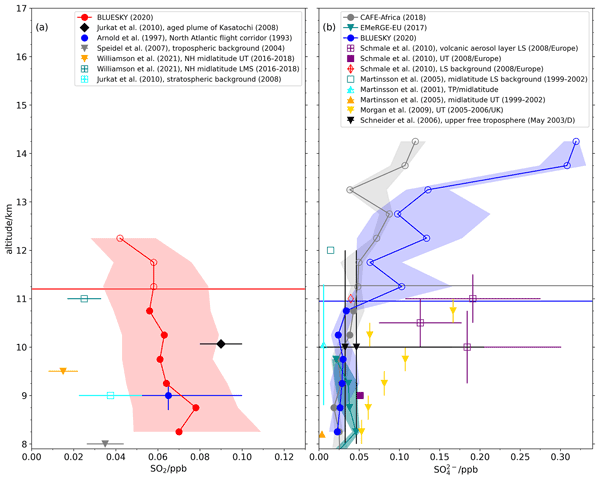
Laura Tomsche, Andreas Marsing, Tina Jurkat-Witschas, Johannes Lucke, Stefan Kaufmann, Katharina Kaiser, Johannes Schneider, Monika Scheibe, Hans Schlager, Lenard Röder, Horst Fischer, Florian Obersteiner, Andreas Zahn, Martin Zöger, Jos Lelieveld, and Christiane Voigt
Atmos. Chem. Phys., 22, 15135–15151, https://doi.org/10.5194/acp-22-15135-2022, https://doi.org/10.5194/acp-22-15135-2022, 2022
Short summary
Short summary
The detection of sulfur compounds in the upper troposphere (UT) and lower stratosphere (LS) is a challenge. In-flight measurements of SO2 and sulfate aerosol were performed during the BLUESKY mission in spring 2020 under exceptional atmospheric conditions. Reduced sinks in the dry UTLS and lower but still significant air traffic influenced the enhanced SO2 in the UT, and aged volcanic plumes enhanced the LS sulfate aerosol impacting the atmospheric radiation budget and global climate.
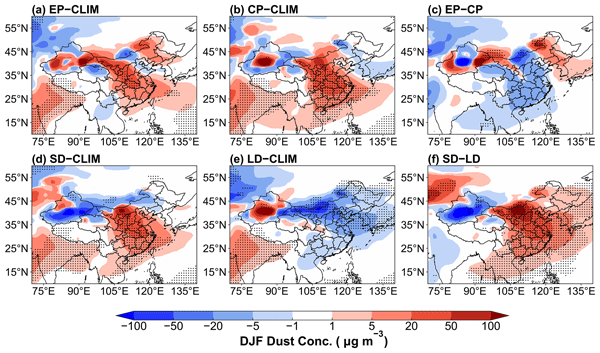
Yang Yang, Liangying Zeng, Hailong Wang, Pinya Wang, and Hong Liao
Atmos. Chem. Phys., 22, 14489–14502, https://doi.org/10.5194/acp-22-14489-2022, https://doi.org/10.5194/acp-22-14489-2022, 2022
Short summary
Short summary
Using an aerosol–climate model, dust pollution in China affected by different spatial and temporal types of El Niño are examined. Both eastern and central Pacific El Niño and short-duration El Niño increase winter dust concentrations over northern China, while long-duration El Niño decreases concentrations. Only long-duration El Niño events can significantly affect dust over China in the following spring. This study has profound implications for air pollution control and dust storm prediction.

Hossein Dadashazar, Andrea F. Corral, Ewan Crosbie, Sanja Dmitrovic, Simon Kirschler, Kayla McCauley, Richard Moore, Claire Robinson, Joseph S. Schlosser, Michael Shook, K. Lee Thornhill, Christiane Voigt, Edward Winstead, Luke Ziemba, and Armin Sorooshian
Atmos. Chem. Phys., 22, 13897–13913, https://doi.org/10.5194/acp-22-13897-2022, https://doi.org/10.5194/acp-22-13897-2022, 2022
Short summary
Short summary
Multi-season airborne data over the northwestern Atlantic show that organic mass fraction and the relative amount of oxygenated organics within that fraction are enhanced in droplet residual particles as compared to particles below and above cloud. In-cloud aqueous processing is shown to be a potential driver of this compositional shift in cloud. This implies that aerosol–cloud interactions in the region reduce aerosol hygroscopicity due to the jump in the organic : sulfate ratio in cloud.
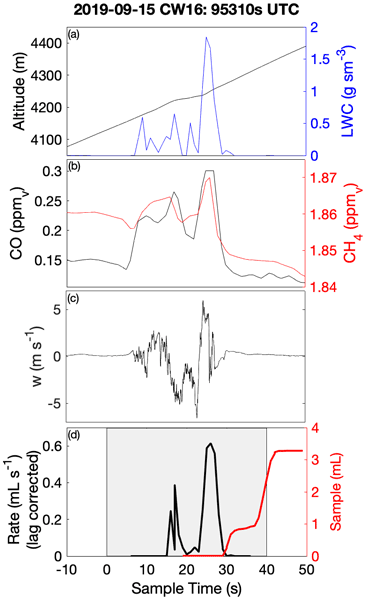
Ewan Crosbie, Luke D. Ziemba, Michael A. Shook, Claire E. Robinson, Edward L. Winstead, K. Lee Thornhill, Rachel A. Braun, Alexander B. MacDonald, Connor Stahl, Armin Sorooshian, Susan C. van den Heever, Joshua P. DiGangi, Glenn S. Diskin, Sarah Woods, Paola Bañaga, Matthew D. Brown, Francesca Gallo, Miguel Ricardo A. Hilario, Carolyn E. Jordan, Gabrielle R. Leung, Richard H. Moore, Kevin J. Sanchez, Taylor J. Shingler, and Elizabeth B. Wiggins
Atmos. Chem. Phys., 22, 13269–13302, https://doi.org/10.5194/acp-22-13269-2022, https://doi.org/10.5194/acp-22-13269-2022, 2022
Short summary
Short summary
The linkage between cloud droplet and aerosol particle chemical composition was analyzed using samples collected in a polluted tropical marine environment. Variations in the droplet composition were related to physical and dynamical processes in clouds to assess their relative significance across three cases that spanned a range of rainfall amounts. In spite of the pollution, sea salt still remained a major contributor to the droplet composition and was preferentially enhanced in rainwater.

Eva-Lou Edwards, Jeffrey S. Reid, Peng Xian, Sharon P. Burton, Anthony L. Cook, Ewan C. Crosbie, Marta A. Fenn, Richard A. Ferrare, Sean W. Freeman, John W. Hair, David B. Harper, Chris A. Hostetler, Claire E. Robinson, Amy Jo Scarino, Michael A. Shook, G. Alexander Sokolowsky, Susan C. van den Heever, Edward L. Winstead, Sarah Woods, Luke D. Ziemba, and Armin Sorooshian
Atmos. Chem. Phys., 22, 12961–12983, https://doi.org/10.5194/acp-22-12961-2022, https://doi.org/10.5194/acp-22-12961-2022, 2022
Short summary
Short summary
This study compares NAAPS-RA model simulations of aerosol optical thickness (AOT) and extinction to those retrieved with a high spectral resolution lidar near the Philippines. Agreement for AOT was good, and extinction agreement was strongest below 1500 m. Substituting dropsonde relative humidities into NAAPS-RA did not drastically improve agreement, and we discuss potential reasons why. Accurately modeling future conditions in this region is crucial due to its susceptibility to climate change.
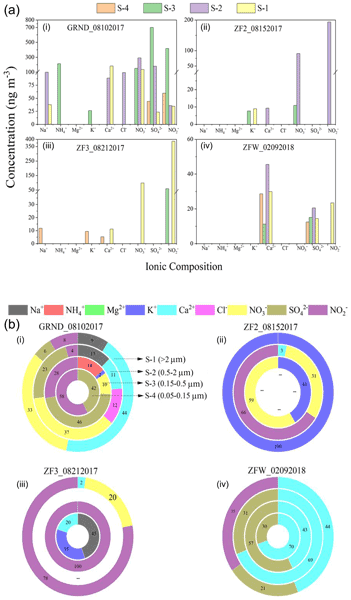
Hazel Vernier, Neeraj Rastogi, Hongyu Liu, Amit Kumar Pandit, Kris Bedka, Anil Patel, Madineni Venkat Ratnam, Buduru Suneel Kumar, Bo Zhang, Harish Gadhavi, Frank Wienhold, Gwenael Berthet, and Jean-Paul Vernier
Atmos. Chem. Phys., 22, 12675–12694, https://doi.org/10.5194/acp-22-12675-2022, https://doi.org/10.5194/acp-22-12675-2022, 2022
Short summary
Short summary
The chemical composition of the stratospheric aerosols collected aboard high-altitude balloons above the summer Asian monsoon reveals the presence of nitrate/nitrite. Using numerical simulations and satellite observations, we found that pollution as well as lightning could explain some of our observations.
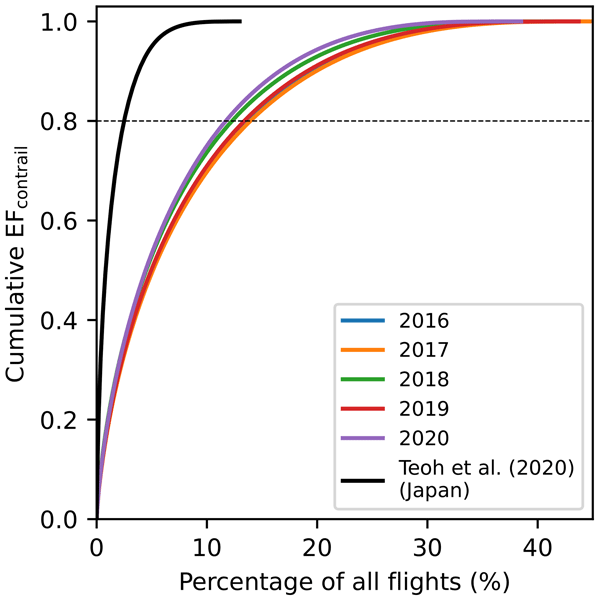
Roger Teoh, Ulrich Schumann, Edward Gryspeerdt, Marc Shapiro, Jarlath Molloy, George Koudis, Christiane Voigt, and Marc E. J. Stettler
Atmos. Chem. Phys., 22, 10919–10935, https://doi.org/10.5194/acp-22-10919-2022, https://doi.org/10.5194/acp-22-10919-2022, 2022
Short summary
Short summary
Aircraft condensation trails (contrails) contribute to over half of the climate forcing attributable to aviation. This study uses historical air traffic and weather data to simulate contrails in the North Atlantic over 5 years, from 2016 to 2021. We found large intra- and inter-year variability in contrail radiative forcing and observed a 66 % reduction due to COVID-19. Most warming contrails predominantly result from night-time flights in winter.
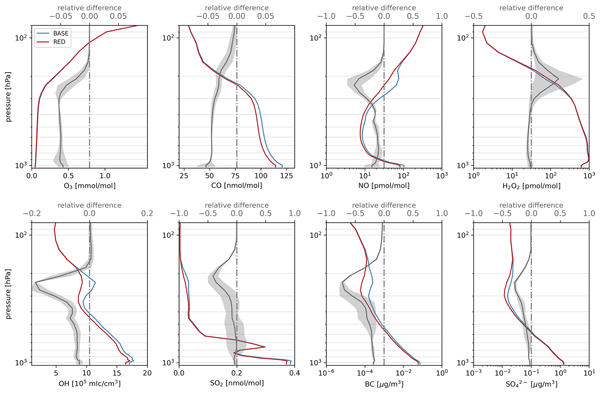
Simon F. Reifenberg, Anna Martin, Matthias Kohl, Sara Bacer, Zaneta Hamryszczak, Ivan Tadic, Lenard Röder, Daniel J. Crowley, Horst Fischer, Katharina Kaiser, Johannes Schneider, Raphael Dörich, John N. Crowley, Laura Tomsche, Andreas Marsing, Christiane Voigt, Andreas Zahn, Christopher Pöhlker, Bruna A. Holanda, Ovid Krüger, Ulrich Pöschl, Mira Pöhlker, Patrick Jöckel, Marcel Dorf, Ulrich Schumann, Jonathan Williams, Birger Bohn, Joachim Curtius, Hardwig Harder, Hans Schlager, Jos Lelieveld, and Andrea Pozzer
Atmos. Chem. Phys., 22, 10901–10917, https://doi.org/10.5194/acp-22-10901-2022, https://doi.org/10.5194/acp-22-10901-2022, 2022
Short summary
Short summary
In this work we use a combination of observational data from an aircraft campaign and model results to investigate the effect of the European lockdown due to COVID-19 in spring 2020. Using model results, we show that the largest relative changes to the atmospheric composition caused by the reduced emissions are located in the upper troposphere around aircraft cruise altitude, while the largest absolute changes are present at the surface.
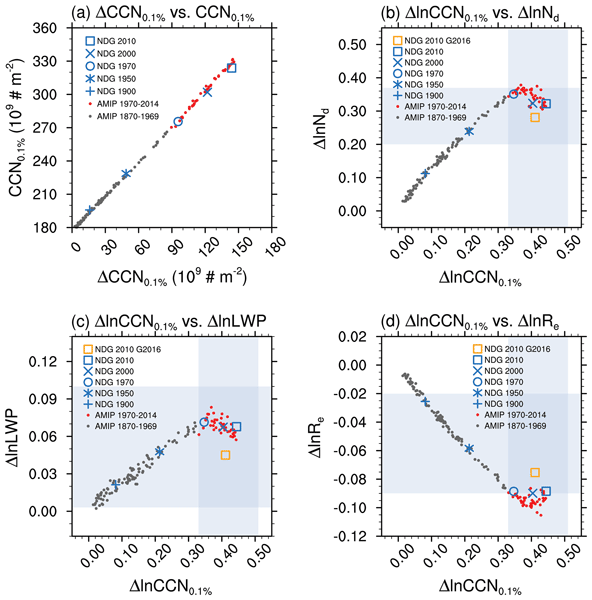
Kai Zhang, Wentao Zhang, Hui Wan, Philip J. Rasch, Steven J. Ghan, Richard C. Easter, Xiangjun Shi, Yong Wang, Hailong Wang, Po-Lun Ma, Shixuan Zhang, Jian Sun, Susannah M. Burrows, Manish Shrivastava, Balwinder Singh, Yun Qian, Xiaohong Liu, Jean-Christophe Golaz, Qi Tang, Xue Zheng, Shaocheng Xie, Wuyin Lin, Yan Feng, Minghuai Wang, Jin-Ho Yoon, and L. Ruby Leung
Atmos. Chem. Phys., 22, 9129–9160, https://doi.org/10.5194/acp-22-9129-2022, https://doi.org/10.5194/acp-22-9129-2022, 2022
Short summary
Short summary
Here we analyze the effective aerosol forcing simulated by E3SM version 1 using both century-long free-running and short nudged simulations. The aerosol forcing in E3SMv1 is relatively large compared to other models, mainly due to the large indirect aerosol effect. Aerosol-induced changes in liquid and ice cloud properties in E3SMv1 have a strong correlation. The aerosol forcing estimates in E3SMv1 are sensitive to the parameterization changes in both liquid and ice cloud processes.
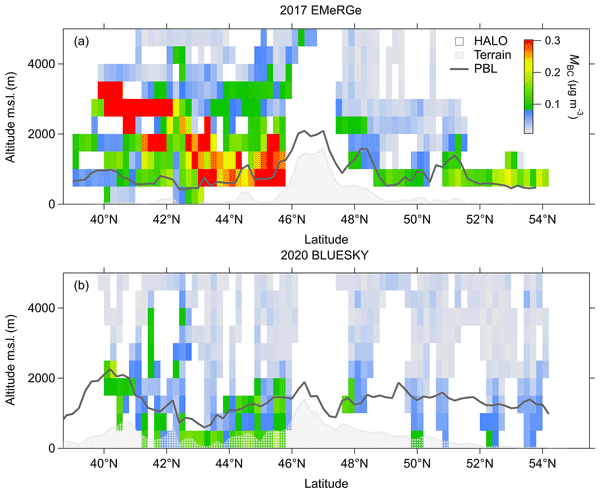
Ovid O. Krüger, Bruna A. Holanda, Sourangsu Chowdhury, Andrea Pozzer, David Walter, Christopher Pöhlker, Maria Dolores Andrés Hernández, John P. Burrows, Christiane Voigt, Jos Lelieveld, Johannes Quaas, Ulrich Pöschl, and Mira L. Pöhlker
Atmos. Chem. Phys., 22, 8683–8699, https://doi.org/10.5194/acp-22-8683-2022, https://doi.org/10.5194/acp-22-8683-2022, 2022
Short summary
Short summary
The abrupt reduction in human activities during the first COVID-19 lockdown created unprecedented atmospheric conditions. We took the opportunity to quantify changes in black carbon (BC) as a major anthropogenic air pollutant. Therefore, we measured BC on board a research aircraft over Europe during the lockdown and compared the results to measurements from 2017. With model simulations we account for different weather conditions and find a lockdown-related decrease in BC of 41 %.
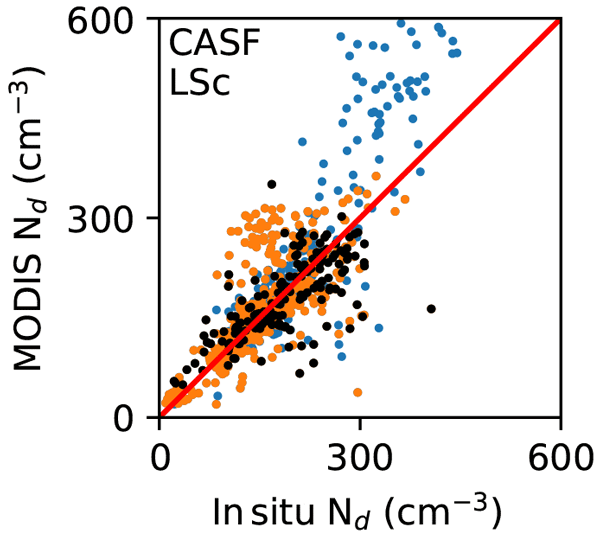
Edward Gryspeerdt, Daniel T. McCoy, Ewan Crosbie, Richard H. Moore, Graeme J. Nott, David Painemal, Jennifer Small-Griswold, Armin Sorooshian, and Luke Ziemba
Atmos. Meas. Tech., 15, 3875–3892, https://doi.org/10.5194/amt-15-3875-2022, https://doi.org/10.5194/amt-15-3875-2022, 2022
Short summary
Short summary
Droplet number concentration is a key property of clouds, influencing a variety of cloud processes. It is also used for estimating the cloud response to aerosols. The satellite retrieval depends on a number of assumptions – different sampling strategies are used to select cases where these assumptions are most likely to hold. Here we investigate the impact of these strategies on the agreement with in situ data, the droplet number climatology and estimates of the indirect radiative forcing.

Simon Kirschler, Christiane Voigt, Bruce Anderson, Ramon Campos Braga, Gao Chen, Andrea F. Corral, Ewan Crosbie, Hossein Dadashazar, Richard A. Ferrare, Valerian Hahn, Johannes Hendricks, Stefan Kaufmann, Richard Moore, Mira L. Pöhlker, Claire Robinson, Amy J. Scarino, Dominik Schollmayer, Michael A. Shook, K. Lee Thornhill, Edward Winstead, Luke D. Ziemba, and Armin Sorooshian
Atmos. Chem. Phys., 22, 8299–8319, https://doi.org/10.5194/acp-22-8299-2022, https://doi.org/10.5194/acp-22-8299-2022, 2022
Short summary
Short summary
In this study we show that the vertical velocity dominantly impacts the cloud droplet number concentration (NC) of low-level clouds over the western North Atlantic in the winter and summer season, while the cloud condensation nuclei concentration, aerosol size distribution and chemical composition impact NC within a season. The observational data presented in this study can evaluate and improve the representation of aerosol–cloud interactions for a wide range of conditions.
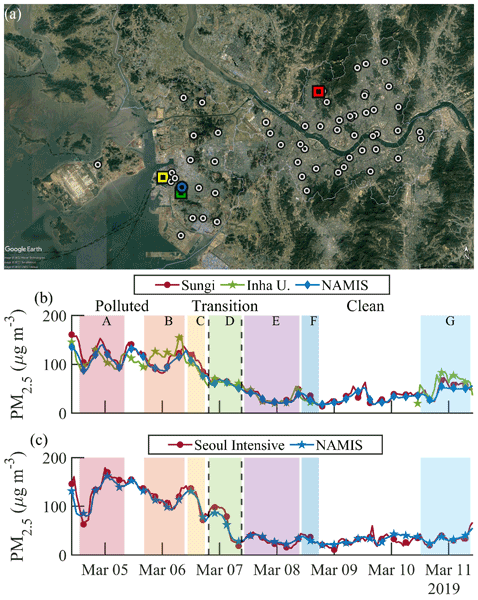
Joseph S. Schlosser, Connor Stahl, Armin Sorooshian, Yen Thi-Hoang Le, Ki-Joon Jeon, Peng Xian, Carolyn E. Jordan, Katherine R. Travis, James H. Crawford, Sung Yong Gong, Hye-Jung Shin, In-Ho Song, and Jong-sang Youn
Atmos. Chem. Phys., 22, 7505–7522, https://doi.org/10.5194/acp-22-7505-2022, https://doi.org/10.5194/acp-22-7505-2022, 2022
Short summary
Short summary
During a major haze pollution episode in March 2019, anthropogenic emissions were dominant in the boundary layer over Incheon and Seoul, South Korea. Using supermicrometer and submicrometer size- and chemistry-resolved aerosol particle measurements taken during this haze pollution period, this work shows that local emissions and a shallow boundary layer, enhanced humidity, and low temperature promoted local heterogeneous formation of secondary inorganic and organic aerosol species.
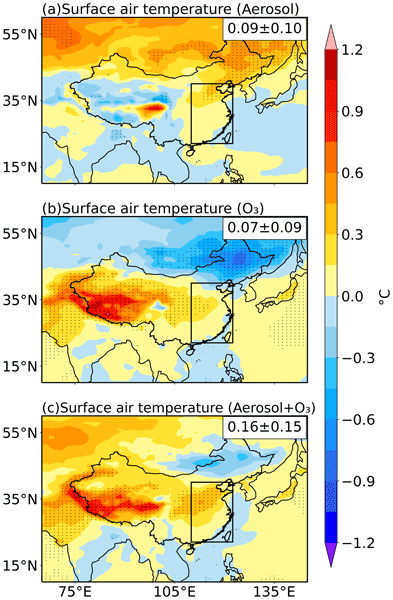
Jiyuan Gao, Yang Yang, Hailong Wang, Pinya Wang, Huimin Li, Mengyun Li, Lili Ren, Xu Yue, and Hong Liao
Atmos. Chem. Phys., 22, 7131–7142, https://doi.org/10.5194/acp-22-7131-2022, https://doi.org/10.5194/acp-22-7131-2022, 2022
Short summary
Short summary
China has been implementing a sequence of policies for clean air since the year 2013. The aerosol decline produced a 0.09 ± 0.10°C warming during 2013–2017 estimated in this study, and the increase in ozone in the lower troposphere during this time period accelerated the warming, leading to a total 0.16 ± 0.15°C temperature increase in eastern China. Residential emission reductions led to a cooling effect because of a substantial decrease in light-absorbing aerosols.
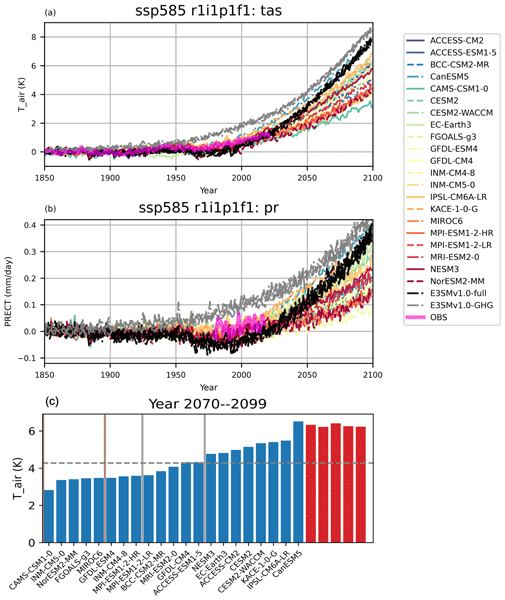
Xue Zheng, Qing Li, Tian Zhou, Qi Tang, Luke P. Van Roekel, Jean-Christophe Golaz, Hailong Wang, and Philip Cameron-Smith
Geosci. Model Dev., 15, 3941–3967, https://doi.org/10.5194/gmd-15-3941-2022, https://doi.org/10.5194/gmd-15-3941-2022, 2022
Short summary
Short summary
We document the model experiments for the future climate projection by E3SMv1.0. At the highest future emission scenario, E3SMv1.0 projects a strong surface warming with rapid changes in the atmosphere, ocean, sea ice, and land runoff. Specifically, we detect a significant polar amplification and accelerated warming linked to the unmasking of the aerosol effects. The impact of greenhouse gas forcing is examined in different climate components.
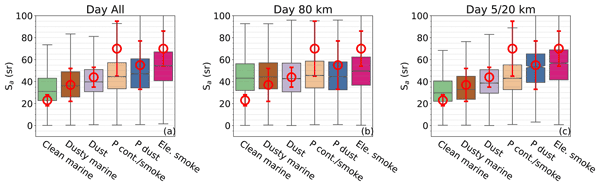
Zhujun Li, David Painemal, Gregory Schuster, Marian Clayton, Richard Ferrare, Mark Vaughan, Damien Josset, Jayanta Kar, and Charles Trepte
Atmos. Meas. Tech., 15, 2745–2766, https://doi.org/10.5194/amt-15-2745-2022, https://doi.org/10.5194/amt-15-2745-2022, 2022
Short summary
Short summary
For more than 15 years, CALIPSO has revolutionized our understanding of the role of aerosols in climate. Here we evaluate CALIPSO aerosol typing over the ocean using an independent CALIPSO–CloudSat product. The analysis suggests that CALIPSO correctly categorizes clean marine aerosol over the open ocean, elevated smoke over the SE Atlantic, and dust over the tropical Atlantic. Similarities between clean and dusty marine over the open ocean implies that algorithm modifications are warranted.
Mireia Papke Chica, Valerian Hahn, Tiziana Braeuer, Elena de la Torre Castro, Florian Ewald, Mathias Gergely, Simon Kirschler, Luca Bugliaro Goggia, Stefanie Knobloch, Martina Kraemer, Johannes Lucke, Johanna Mayer, Raphael Maerkl, Manuel Moser, Laura Tomsche, Tina Jurkat-Witschas, Martin Zoeger, Christian von Savigny, and Christiane Voigt
Atmos. Chem. Phys. Discuss., https://doi.org/10.5194/acp-2022-255, https://doi.org/10.5194/acp-2022-255, 2022
Preprint withdrawn
Short summary
Short summary
The mixed-phase temperature regime in convective clouds challenges our understanding of microphysical and radiative cloud properties. We provide a rare and unique dataset of aircraft in situ measurements in a strong mid-latitude convective system. We find that mechanisms initiating ice nucleation and growth strongly depend on temperature, relative humidity, and vertical velocity and variate within the measured system, resulting in altitude dependent changes of the cloud liquid and ice fraction.
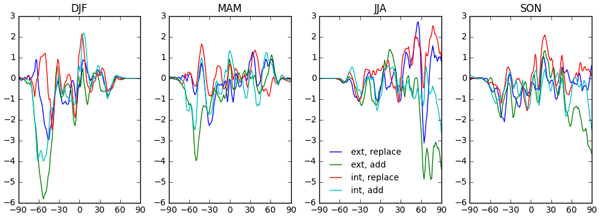
Susannah M. Burrows, Richard C. Easter, Xiaohong Liu, Po-Lun Ma, Hailong Wang, Scott M. Elliott, Balwinder Singh, Kai Zhang, and Philip J. Rasch
Atmos. Chem. Phys., 22, 5223–5251, https://doi.org/10.5194/acp-22-5223-2022, https://doi.org/10.5194/acp-22-5223-2022, 2022
Short summary
Short summary
Sea spray particles are composed of a mixture of salts and organic substances from oceanic microorganisms. In prior work, our team developed an approach connecting sea spray chemistry to ocean biology, called OCEANFILMS. Here we describe its implementation within an Earth system model, E3SM. We show that simulated sea spray chemistry is consistent with observed seasonal cycles and that sunlight reflected by simulated Southern Ocean clouds increases, consistent with analysis of satellite data.
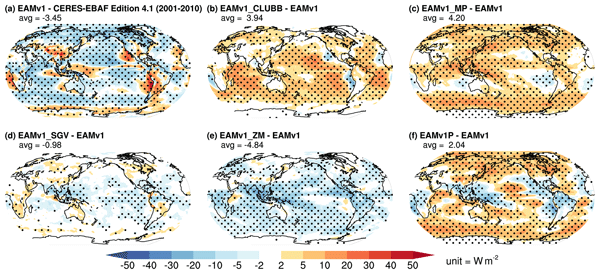
Po-Lun Ma, Bryce E. Harrop, Vincent E. Larson, Richard B. Neale, Andrew Gettelman, Hugh Morrison, Hailong Wang, Kai Zhang, Stephen A. Klein, Mark D. Zelinka, Yuying Zhang, Yun Qian, Jin-Ho Yoon, Christopher R. Jones, Meng Huang, Sheng-Lun Tai, Balwinder Singh, Peter A. Bogenschutz, Xue Zheng, Wuyin Lin, Johannes Quaas, Hélène Chepfer, Michael A. Brunke, Xubin Zeng, Johannes Mülmenstädt, Samson Hagos, Zhibo Zhang, Hua Song, Xiaohong Liu, Michael S. Pritchard, Hui Wan, Jingyu Wang, Qi Tang, Peter M. Caldwell, Jiwen Fan, Larry K. Berg, Jerome D. Fast, Mark A. Taylor, Jean-Christophe Golaz, Shaocheng Xie, Philip J. Rasch, and L. Ruby Leung
Geosci. Model Dev., 15, 2881–2916, https://doi.org/10.5194/gmd-15-2881-2022, https://doi.org/10.5194/gmd-15-2881-2022, 2022
Short summary
Short summary
An alternative set of parameters for E3SM Atmospheric Model version 1 has been developed based on a tuning strategy that focuses on clouds. When clouds in every regime are improved, other aspects of the model are also improved, even though they are not the direct targets for calibration. The recalibrated model shows a lower sensitivity to anthropogenic aerosols and surface warming, suggesting potential improvements to the simulated climate in the past and future.
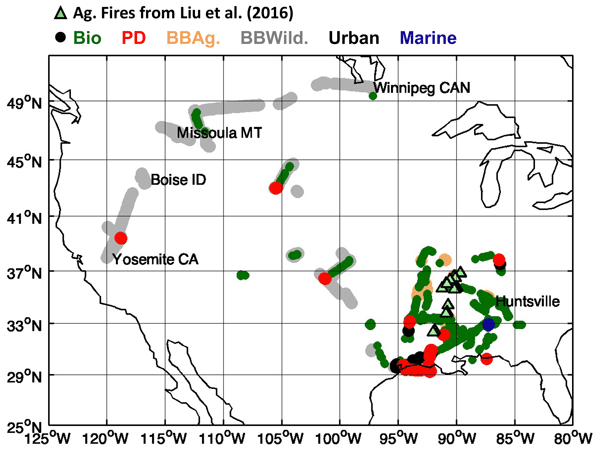
Meloë S. F. Kacenelenbogen, Qian Tan, Sharon P. Burton, Otto P. Hasekamp, Karl D. Froyd, Yohei Shinozuka, Andreas J. Beyersdorf, Luke Ziemba, Kenneth L. Thornhill, Jack E. Dibb, Taylor Shingler, Armin Sorooshian, Reed W. Espinosa, Vanderlei Martins, Jose L. Jimenez, Pedro Campuzano-Jost, Joshua P. Schwarz, Matthew S. Johnson, Jens Redemann, and Gregory L. Schuster
Atmos. Chem. Phys., 22, 3713–3742, https://doi.org/10.5194/acp-22-3713-2022, https://doi.org/10.5194/acp-22-3713-2022, 2022
Short summary
Short summary
The impact of aerosols on Earth's radiation budget and human health is important and strongly depends on their composition. One desire of our scientific community is to derive the composition of the aerosol from satellite sensors. However, satellites observe aerosol optical properties (and not aerosol composition) based on remote sensing instrumentation. This study assesses how much aerosol optical properties can tell us about aerosol composition.
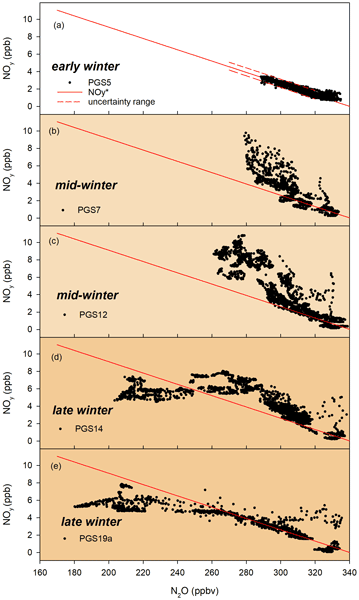
Helmut Ziereis, Peter Hoor, Jens-Uwe Grooß, Andreas Zahn, Greta Stratmann, Paul Stock, Michael Lichtenstern, Jens Krause, Vera Bense, Armin Afchine, Christian Rolf, Wolfgang Woiwode, Marleen Braun, Jörn Ungermann, Andreas Marsing, Christiane Voigt, Andreas Engel, Björn-Martin Sinnhuber, and Hermann Oelhaf
Atmos. Chem. Phys., 22, 3631–3654, https://doi.org/10.5194/acp-22-3631-2022, https://doi.org/10.5194/acp-22-3631-2022, 2022
Short summary
Short summary
Airborne observations were conducted in the lowermost Arctic stratosphere during the winter of 2015/2016. The observed distribution of reactive nitrogen shows clear indications of nitrification in mid-winter and denitrification in late winter. This was caused by the formation of polar stratospheric cloud particles, which were observed during several flights. The sedimentation and evaporation of these particles and the descent of air masses cause a redistribution of reactive nitrogen.
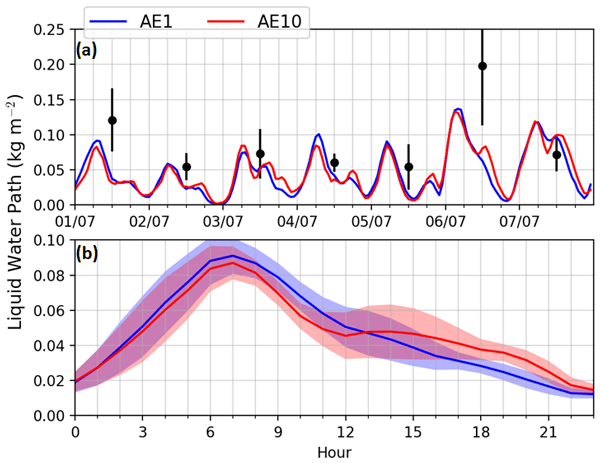
Adrien Deroubaix, Laurent Menut, Cyrille Flamant, Peter Knippertz, Andreas H. Fink, Anneke Batenburg, Joel Brito, Cyrielle Denjean, Cheikh Dione, Régis Dupuy, Valerian Hahn, Norbert Kalthoff, Fabienne Lohou, Alfons Schwarzenboeck, Guillaume Siour, Paolo Tuccella, and Christiane Voigt
Atmos. Chem. Phys., 22, 3251–3273, https://doi.org/10.5194/acp-22-3251-2022, https://doi.org/10.5194/acp-22-3251-2022, 2022
Short summary
Short summary
During the summer monsoon in West Africa, pollutants emitted in urbanized areas modify cloud cover and precipitation patterns. We analyze these patterns with the WRF-CHIMERE model, integrating the effects of aerosols on meteorology, based on the numerous observations provided by the Dynamics-Aerosol-Climate-Interactions campaign. This study adds evidence to recent findings that increased pollution levels in West Africa delay the breakup time of low-level clouds and reduce precipitation.
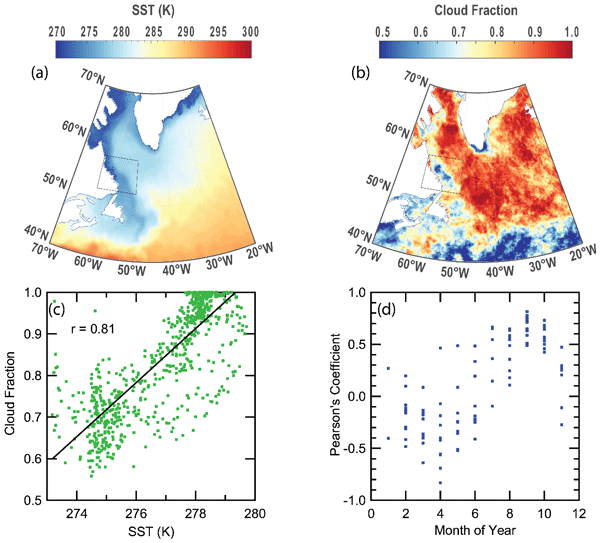
Kevin J. Sanchez, Bo Zhang, Hongyu Liu, Matthew D. Brown, Ewan C. Crosbie, Francesca Gallo, Johnathan W. Hair, Chris A. Hostetler, Carolyn E. Jordan, Claire E. Robinson, Amy Jo Scarino, Taylor J. Shingler, Michael A. Shook, Kenneth L. Thornhill, Elizabeth B. Wiggins, Edward L. Winstead, Luke D. Ziemba, Georges Saliba, Savannah L. Lewis, Lynn M. Russell, Patricia K. Quinn, Timothy S. Bates, Jack Porter, Thomas G. Bell, Peter Gaube, Eric S. Saltzman, Michael J. Behrenfeld, and Richard H. Moore
Atmos. Chem. Phys., 22, 2795–2815, https://doi.org/10.5194/acp-22-2795-2022, https://doi.org/10.5194/acp-22-2795-2022, 2022
Short summary
Short summary
Atmospheric particle concentrations impact clouds, which strongly impact the amount of sunlight reflected back into space and the overall climate. Measurements of particles over the ocean are rare and expensive to collect, so models are necessary to fill in the gaps by simulating both particle and clouds. However, some measurements are needed to test the accuracy of the models. Here, we measure changes in particles in different weather conditions, which are ideal for comparison with models.

Matthew W. Christensen, Andrew Gettelman, Jan Cermak, Guy Dagan, Michael Diamond, Alyson Douglas, Graham Feingold, Franziska Glassmeier, Tom Goren, Daniel P. Grosvenor, Edward Gryspeerdt, Ralph Kahn, Zhanqing Li, Po-Lun Ma, Florent Malavelle, Isabel L. McCoy, Daniel T. McCoy, Greg McFarquhar, Johannes Mülmenstädt, Sandip Pal, Anna Possner, Adam Povey, Johannes Quaas, Daniel Rosenfeld, Anja Schmidt, Roland Schrödner, Armin Sorooshian, Philip Stier, Velle Toll, Duncan Watson-Parris, Robert Wood, Mingxi Yang, and Tianle Yuan
Atmos. Chem. Phys., 22, 641–674, https://doi.org/10.5194/acp-22-641-2022, https://doi.org/10.5194/acp-22-641-2022, 2022
Short summary
Short summary
Trace gases and aerosols (tiny airborne particles) are released from a variety of point sources around the globe. Examples include volcanoes, industrial chimneys, forest fires, and ship stacks. These sources provide opportunistic experiments with which to quantify the role of aerosols in modifying cloud properties. We review the current state of understanding on the influence of aerosol on climate built from the wide range of natural and anthropogenic laboratories investigated in recent decades.
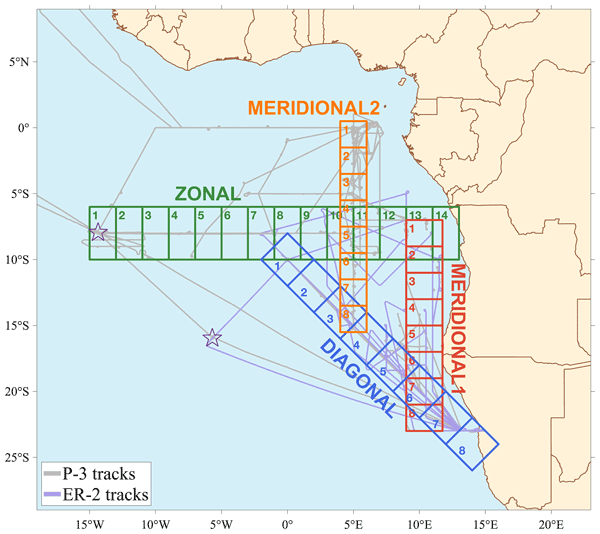
Sarah J. Doherty, Pablo E. Saide, Paquita Zuidema, Yohei Shinozuka, Gonzalo A. Ferrada, Hamish Gordon, Marc Mallet, Kerry Meyer, David Painemal, Steven G. Howell, Steffen Freitag, Amie Dobracki, James R. Podolske, Sharon P. Burton, Richard A. Ferrare, Calvin Howes, Pierre Nabat, Gregory R. Carmichael, Arlindo da Silva, Kristina Pistone, Ian Chang, Lan Gao, Robert Wood, and Jens Redemann
Atmos. Chem. Phys., 22, 1–46, https://doi.org/10.5194/acp-22-1-2022, https://doi.org/10.5194/acp-22-1-2022, 2022
Short summary
Short summary
Between July and October, biomass burning smoke is advected over the southeastern Atlantic Ocean, leading to climate forcing. Model calculations of forcing by this plume vary significantly in both magnitude and sign. This paper compares aerosol and cloud properties observed during three NASA ORACLES field campaigns to the same in four models. It quantifies modeled biases in properties key to aerosol direct radiative forcing and evaluates how these biases propagate to biases in forcing.
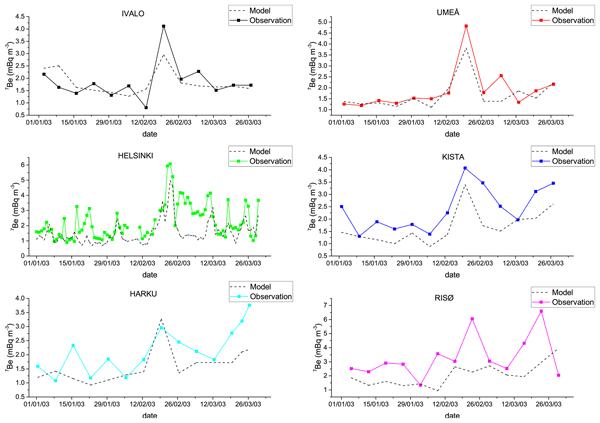
Erika Brattich, Hongyu Liu, Bo Zhang, Miguel Ángel Hernández-Ceballos, Jussi Paatero, Darko Sarvan, Vladimir Djurdjevic, Laura Tositti, and Jelena Ajtić
Atmos. Chem. Phys., 21, 17927–17951, https://doi.org/10.5194/acp-21-17927-2021, https://doi.org/10.5194/acp-21-17927-2021, 2021
Short summary
Short summary
In this study we analyse the output of a chemistry and transport model together with observations of different meteorological and compositional variables to demonstrate the link between sudden stratospheric warming and transport of stratospheric air to the surface in the subpolar regions of Europe during the cold season. Our findings have particular implications for atmospheric composition since climate projections indicate more frequent sudden stratospheric warming under a warmer climate.
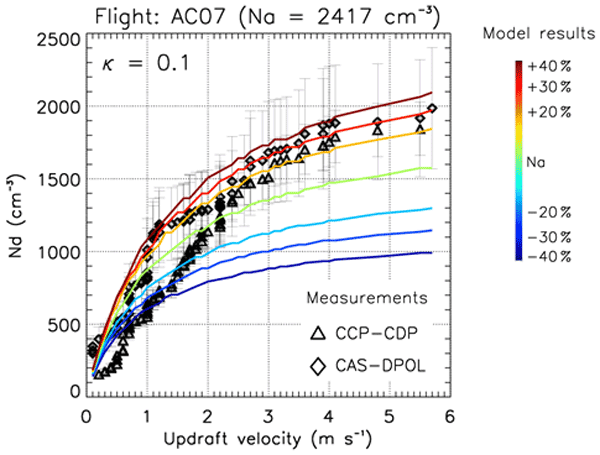
Ramon Campos Braga, Barbara Ervens, Daniel Rosenfeld, Meinrat O. Andreae, Jan-David Förster, Daniel Fütterer, Lianet Hernández Pardo, Bruna A. Holanda, Tina Jurkat-Witschas, Ovid O. Krüger, Oliver Lauer, Luiz A. T. Machado, Christopher Pöhlker, Daniel Sauer, Christiane Voigt, Adrian Walser, Manfred Wendisch, Ulrich Pöschl, and Mira L. Pöhlker
Atmos. Chem. Phys., 21, 17513–17528, https://doi.org/10.5194/acp-21-17513-2021, https://doi.org/10.5194/acp-21-17513-2021, 2021
Short summary
Short summary
Interactions of aerosol particles with clouds represent a large uncertainty in estimates of climate change. Properties of aerosol particles control their ability to act as cloud condensation nuclei. Using aerosol measurements in the Amazon, we performed model studies to compare predicted and measured cloud droplet number concentrations at cloud bases. Our results confirm previous estimates of particle hygroscopicity in this region.
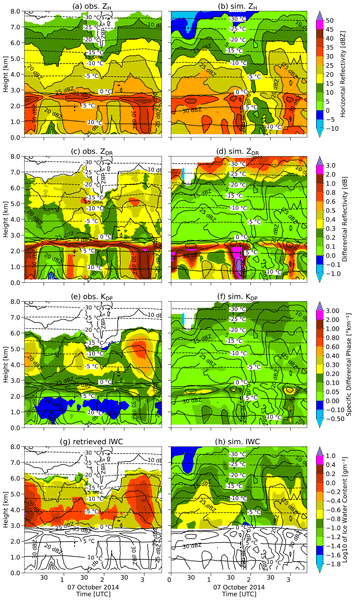
Silke Trömel, Clemens Simmer, Ulrich Blahak, Armin Blanke, Sabine Doktorowski, Florian Ewald, Michael Frech, Mathias Gergely, Martin Hagen, Tijana Janjic, Heike Kalesse-Los, Stefan Kneifel, Christoph Knote, Jana Mendrok, Manuel Moser, Gregor Köcher, Kai Mühlbauer, Alexander Myagkov, Velibor Pejcic, Patric Seifert, Prabhakar Shrestha, Audrey Teisseire, Leonie von Terzi, Eleni Tetoni, Teresa Vogl, Christiane Voigt, Yuefei Zeng, Tobias Zinner, and Johannes Quaas
Atmos. Chem. Phys., 21, 17291–17314, https://doi.org/10.5194/acp-21-17291-2021, https://doi.org/10.5194/acp-21-17291-2021, 2021
Short summary
Short summary
The article introduces the ACP readership to ongoing research in Germany on cloud- and precipitation-related process information inherent in polarimetric radar measurements, outlines pathways to inform atmospheric models with radar-based information, and points to remaining challenges towards an improved fusion of radar polarimetry and atmospheric modelling.

Tiziana Bräuer, Christiane Voigt, Daniel Sauer, Stefan Kaufmann, Valerian Hahn, Monika Scheibe, Hans Schlager, Felix Huber, Patrick Le Clercq, Richard H. Moore, and Bruce E. Anderson
Atmos. Chem. Phys., 21, 16817–16826, https://doi.org/10.5194/acp-21-16817-2021, https://doi.org/10.5194/acp-21-16817-2021, 2021
Short summary
Short summary
Over half of aviation climate impact is caused by contrails. Biofuels can reduce the ice crystal numbers in contrails and mitigate the climate impact. The experiment ECLIF II/NDMAX in 2018 assessed the effects of biofuels on contrails and aviation emissions. The NASA DC-8 aircraft performed measurements inside the contrail of the DLR A320. One reference fuel and two blends of the biofuel HEFA and kerosene are analysed. We find a max reduction of contrail ice numbers through biofuel use of 40 %.

Hossein Dadashazar, Majid Alipanah, Miguel Ricardo A. Hilario, Ewan Crosbie, Simon Kirschler, Hongyu Liu, Richard H. Moore, Andrew J. Peters, Amy Jo Scarino, Michael Shook, K. Lee Thornhill, Christiane Voigt, Hailong Wang, Edward Winstead, Bo Zhang, Luke Ziemba, and Armin Sorooshian
Atmos. Chem. Phys., 21, 16121–16141, https://doi.org/10.5194/acp-21-16121-2021, https://doi.org/10.5194/acp-21-16121-2021, 2021
Short summary
Short summary
This study investigates precipitation impacts on long-range transport of North American outflow over the western North Atlantic Ocean (WNAO). Results demonstrate that precipitation scavenging plays a significant role in modifying surface aerosol concentrations over the WNAO, especially in winter and spring due to large-scale scavenging processes. This study highlights how precipitation impacts surface aerosol properties with relevance for other marine regions vulnerable to continental outflow.
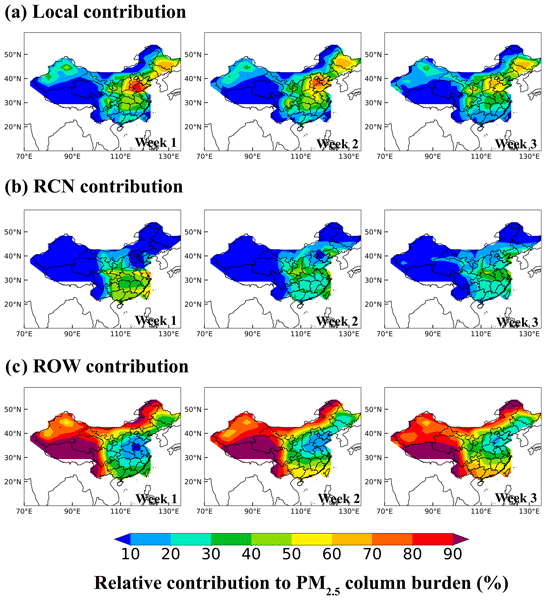
Lili Ren, Yang Yang, Hailong Wang, Pinya Wang, Lei Chen, Jia Zhu, and Hong Liao
Atmos. Chem. Phys., 21, 15431–15445, https://doi.org/10.5194/acp-21-15431-2021, https://doi.org/10.5194/acp-21-15431-2021, 2021
Short summary
Short summary
Due to the COVID-19 pandemic, human activities were strictly restricted in China. Even though anthropogenic aerosol emissions largely decreased, haze events still occurred. Our results shows that PM2.5 over the North China Plain is largely contributed by local sources. For other regions in China, PM2.5 is largely contributed from nonlocal sources. As emission reduction is a future goal, aerosol long-range transport and unfavorable meteorology are increasingly important to air quality.
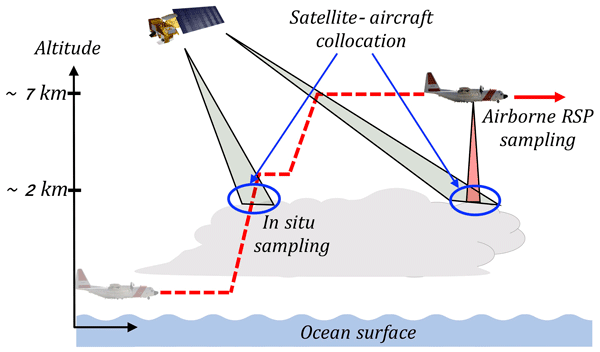
David Painemal, Douglas Spangenberg, William L. Smith Jr., Patrick Minnis, Brian Cairns, Richard H. Moore, Ewan Crosbie, Claire Robinson, Kenneth L. Thornhill, Edward L. Winstead, and Luke Ziemba
Atmos. Meas. Tech., 14, 6633–6646, https://doi.org/10.5194/amt-14-6633-2021, https://doi.org/10.5194/amt-14-6633-2021, 2021
Short summary
Short summary
Cloud properties derived from satellite sensors are critical for the global monitoring of climate. This study evaluates satellite-based cloud properties over the North Atlantic using airborne data collected during NAAMES. Satellite observations of droplet size and cloud optical depth tend to compare well with NAAMES data. The analysis indicates that the satellite pixel resolution and the specific viewing geometry need to be taken into account in research applications.
Cited articles
Ajayi, T., Choi, Y., Crosbie, E. C., DiGangi, J. P., Diskin, G. S., Fenn, M. A., Ferrare, R. A., Hair, J. W., Hilario, M. R. A., Hostetler, C. A., Kirschler, S., Moore, R. H., Shingler, T. J., Shook, M. A., Soloff, C., Thornhill, K. L., Voigt, C., Winstead, E. L., Ziemba, L. D., and Sorooshian, A.: Vertical variability of aerosol properties and trace gases over a remote marine region: a case study over Bermuda, Atmospheric Chemistry and Physics, 24, 9197–9218, https://doi.org/10.5194/acp-24-9197-2024, 2024.
Aldhaif, A. M., Lopez, D. H., Dadashazar, H., and Sorooshian: A. Sources, frequency, and chemical nature of dust events impacting the United States East Coast, Atmospheric Environment, 231, https://doi.org/10.1016/j.atmosenv.2020.117456, 2020.
Brioude, J., Arnold, D., Stohl, A., Cassiani, M., Morton, D., Seibert, P., Angevine, W., Evan, S., Dingwell, A., Fast, J. D., Easter, R. C., Pisso, I., Burkhart, J., and Wotawa, G.: The Lagrangian particle dispersion model FLEXPART-WRF version 3.1, Geoscientific Model Development, 6, 1889–1904, https://doi.org/10.5194/gmd-6-1889-2013, 2013.
Chellappan, S., Seethala, C.,Zuidema, P., Edson, J. B., Brunke, M. A., Chen, G., Li, X. Y., Painemal, D., Robinson, C. E., Shingler, T., Shook, M., Sorooshian A., Thornhill, L., Tornow, F., Wang, H., Zeng, X., and Ziemba, L. D.: On assessing ERA5 and MERRA2 representations of cold-air outbreaks across the Gulf Stream, Geophysical Research Letters, https://doi.org/10.1029/2021gl094364, 2021.
Chen, J., Wang, H., Li, X., Painemal, D., Sorooshian, A., Thornhill, K. L., Robinson, C., and Shingler, T.: Impact of Meteorological Factors on the Mesoscale Morphology of Cloud Streets during a Cold-Air Outbreak over the Western North Atlantic, Journal of the Atmospheric Sciences, 79, 2863–2879, https://doi.org/10.1175/JAS-D-22-0034.1, 2022.
Chen, J., Hagos, S., Xiao, H., Fast, J., and Feng, Z.: Multiscale Analysis of Surface Heterogeneity–Induced Convection on Isentropic Coordinates, Journal of the Atmospheric Sciences, 80, 983–1001, https://doi.org/10.1175/JAS-D-21-0198.1, 2023.
Chen, J.: Response of marine post-frontal clouds to Gulf Stream variability, Zenodo [data set and code], https://doi.org/10.5281/zenodo.15833225, 2025. Corral, A. F., Braun, R. A., Cairns, B., Gorooh, V. A., Liu, H., Ma, L., Mardi, A. H., Painemal, D., Stamnes, S., Diedenhoven, B. V., Wang, H., Yang, Y., Zhang, B., and Sorooshian, A.: An Overview of Atmospheric Features Over the Western North Atlantic Ocean and North American East Coast – Part 1: Analysis of Aerosols, Gases, and Wet Deposition Chemistry, Journal of Geophysical Research, https://doi.org/10.1029/2020jd032592, 2021.
Crosbie, E., Ziemba, L. D., Shook, M. A., Shingler, T., Hair, J. W., Sorooshian, A., Ferrare, R. A., Cairns, B., Choi, Y., DiGangi, J., Diskin, G. S., Hostetler, C., Kirschler, S., Moore, R. H., Painemal, D., Robinson, C., Seaman, S. T., Thornhill, K. L., Voigt, C., and Winstead, E.: Measurement report: Cloud and environmental properties associated with aggregated shallow marine cumulus and cumulus congestus, Atmospheric Chemistry and Physics, 24, 6123–6152, https://doi.org/10.5194/acp-24-6123-2024, 2024.
Dadashazar, H., Painemal, D., Alipanah, M., Brunke, M., Chellappan, S., Corral, A. F., Crosbie, E., Kirschler, S., Liu, H., Moore, R. H., Robinson, C., Scarino, A. J., Shook, M., Sinclair, K., Thornhill, K. L., Voigt, C., Wang, H., Winstead, E., Zeng, X., Ziemba, L., Zuidema, P., and Sorooshian, A.: Cloud drop number concentrations over the western North Atlantic Ocean: seasonal cycle, aerosol interrelationships, and other influential factors, Atmospheric Chemistry and Physics, 21, 10499–10526, https://doi.org/10.5194/acp-21-10499-2021, 2021.
Dadashazar, H., Corral, A. F., Crosbie, E., Dmitrovic, S., Kirschler, S., McCauley, K., Moore, R., Robinson, C., Schlosser, J. S., Shook, M., Thornhill, K. L., Voigt, C., Winstead, E., Ziemba, L., and Sorooshian, A.: Organic enrichment in droplet residual particles relative to out of cloud over the northwestern Atlantic: analysis of airborne ACTIVATE data, Atmospheric Chemistry and Physics, 22, 13897–13913, https://doi.org/10.5194/acp-22-13897-2022, 2022.
Dmitrovic, S., Hair, J. W., Collister, B. L., Crosbie, E., Fenn, M. A., Ferrare, R. A., Harper, D. B., Hostetler, C. A., Hu, Y., Reagan, J. A., Robinson, C. E., Seaman, S. T., Shingler, T. J., Thornhill, K. L., Vömel, H., Zeng, X., and Sorooshian, A.: High Spectral Resolution Lidar – generation 2 (HSRL-2) retrievals of ocean surface wind speed: methodology and evaluation, Atmospheric Measurement Techniques, 17, 3515–3532, https://doi.org/10.5194/amt-17-3515-2024, 2024.
Edwards, E. L., Corral, A. F., Dadashazar, H., Barkley, A. E., Gaston, C. J., Zuidema, P., and Sorooshian, A.: Impact of various air mass types on cloud condensation nuclei concentrations along coastal southeast Florida. Atmospheric Environment, 254, https://doi.org/10.1016/j.atmosenv.2021.118371, 2021.
Hanna, S. R.: Applications in Air Pollution Modeling, in: Atmospheric Turbulence and Air Pollution Modelling, edited by: Nieuwstadt, F. T. M. and van Dop, H., D. Reidel Publishing Company, 275–310, https://doi.org/10.1007/978-94-010-9112-1_7, 1984.
Hong, S.-Y. and Lim, J.-O. J.: The WRF Single-Moment 6-Class Microphysics Scheme (WSM6), Journal of the Korean Meteorological Society, 42, 129–151, 2006.
Iacono, M. J., Delamere, J. S., Mlawer, E. J., Shephard, M. W., Clough, S. A., and Collins, W. D.: Radiative forcing by long-lived greenhouse gases: Calculations with the AER radiative transfer models, Journal of Geophysical Research: Atmospheres, 113, https://doi.org/10.1029/2008JD009944, 2008.
Joyce, T. M., Kwon, Y.-O., and Yu, L.: On the Relationship between Synoptic Wintertime Atmospheric Variability and Path Shifts in the Gulf Stream and the Kuroshio Extension, Journal of Climate, 22, 3177–3192, https://doi.org/10.1175/2008JCLI2690.1, 2009.
Kelly, K. A., Small, R. J., Samelson, R. M., Qiu, B., Joyce, T. M., Kwon, Y.-O., and Cronin, M. F.: Western Boundary Currents and Frontal Air–Sea Interaction: Gulf Stream and Kuroshio Extension, Journal of Climate, https://doi.org/10.1175/2010jcli3346.1, 2010.
Lamraoui, F., Booth, J. F., Naud, C. M., Jensen, M. P., and Johnson, K. L.: The Interaction Between Boundary Layer and Convection Schemes in a WRF Simulation of Post Cold Frontal Clouds Over the ARM East North Atlantic Site, Journal of Geophysical Research: Atmospheres, 124, 4699–4721, https://doi.org/10.1029/2018JD029370, 2019.
Lee, R. W., Woollings, T. J., Hoskins, B. J., Williams, K. D., O'Reilly, C. H., and Masato, G.: Impact of Gulf Stream SST biases on the global atmospheric circulation, Climate Dynamics, 51, 3369–3387, https://doi.org/10.1007/s00382-018-4083-9, 2018.
Li, X., Zheng, W., Pichel, W. G., Zou, C. Z., Clemente-Colón, P., and Friedman, K. S.: A cloud line over the Gulf Stream, Geophysical Research Letters, 31, https://doi.org/10.1029/2004GL019892, 2004.
Li, X.-Y., Wang, H., Chen, J., Endo, S., George, G., Cairns, B., Chellappan, S., Zeng, X., Kirschler, S., Voigt, C., Sorooshian, A., Crosbie, E., Chen, G., Ferrare, R. A., Gustafson, W. I., Hair, J. W., Kleb, M. M., Liu, H., Moore, R., Shingler, T. J., Thornhill, K. L., Tornow, F., Xiao, H., and Zuidema, P.: Large-Eddy Simulations of Marine Boundary Layer Clouds Associated with Cold-Air Outbreaks during the ACTIVATE Campaign. Part I: Case Setup and Sensitivities to Large-Scale Forcings, Journal of the Atmospheric Sciences, 79, 73–100, https://doi.org/10.1175/JAS-D-21-0123.1, 2022.
Liu, A. Q., Moore, G. W. K., Tsuboki, K., and Renfrew, I. A.: A high-resolution simulation of convective roll clouds during a cold-air outbreak, Geophysical Research Letters, 31, https://doi.org/10.1029/2003GL018530, 2004.
Liu, H., Zhang, B., Moore, R. H., Ziemba, L. D., Ferrare, R. A., Choi, H., Sorooshian, A., Painemal, D., Wang, H., Shook, M. A., Scarino, A. J., Hair, J. W., Crosbie, E. C., Fenn, M. A., Shingler, T. J., Hostetler, C. A., Chen, G., Kleb, M. M., Luo, G., Yu, F., Vaughan, M. A., Hu, Y., Diskin, G. S., Nowak, J. B., DiGangi, J. P., Choi, Y., Keller, C. A., and Johnson, M. S.: Tropospheric aerosols over the western North Atlantic Ocean during the winter and summer deployments of ACTIVATE 2020: life cycle, transport, and distribution, Atmospheric Chemistry and Physics, 25, 2087–2121, https://doi.org/10.5194/acp-25-2087-2025, 2025.
Liu, J. W., Xie, S. P., Norris, J. R., and Zhang, S. P.: Low-level cloud response to the gulf stream front in winter using CALIPSO, Journal of Climate, 27, 4421–4432, https://doi.org/10.1175/JCLI-D-13-00469.1, 2014.
Mardi, A. H., Dadashazar, H., Painemal, D., Shingler, T., Seaman, S. T., Fenn, M. A., Hostetler, C. A., and Sorooshian, A.: Biomass Burning Over the United States East Coast and Western North Atlantic Ocean: Implications for Clouds and Air Quality, Journal of Geophysical Research: Atmospheres, 126, e2021JD034916, https://doi.org/10.1029/2021JD034916, 2021.
Marshall, J., Ferrari, R., Forget, G., Maze, G., Andersson, A., Bates, N., Dewar, W., Doney, S., Fratantoni, D., Joyce, T., Straneo, F., Toole, J., Weller, R., Edson, J., Gregg, M., Kelly, K., Lozier, S., Palter, J., Lumpkin, R., Samelson, R., Skyllingstad, E., Silverthorne, K., Talley, L., and Thomas, L.: The Climode Field Campaign: Observing the Cycle of Convection and Restratification over the Gulf Stream, Bulletin of the American Meteorological Society, 90, 1337–1350, https://doi.org/10.1175/2009BAMS2706.1, 2009.
Minobe, S., Kuwano-Yoshida, A., Komori, N., Xie, S.-P., and Small, R. J.: Influence of the Gulf Stream on the troposphere, Nature, 452, 206–209, https://doi.org/10.1038/nature06690, 2008.
Morrison, H., Curry, J. A., and Khvorostyanov, V. I.: A New Double-Moment Microphysics Parameterization for Application in Cloud and Climate Models. Part I: Description, Journal of the Atmospheric Sciences, 62, 1665–1677, https://doi.org/10.1175/jas3446.1, 2005.
NASA Atmospheric Science Data Center: Aerosol Cloud meTeorology Interactions oVer the western ATlantic Experiment (ACTIVATE), Atmospheric Science Data Center (ASDC), NASA Langley Research Center [data set], https://doi.org/10.5067/SUBORBITAL/ACTIVATE/DATA001, 2026.
Naud, C. M., Booth, J. F., and Lamraoui, F.: Post Cold Frontal Clouds at the ARM Eastern North Atlantic Site: An Examination of the Relationship Between Large©\Scale Environment and Low-Level Cloud Properties. Journal of Geophysical Research: Atmospheres, 123, https://doi.org/10.1029/2018JD029015, 2018.
O'Neill, L. W., Haack, T., Chelton, D. B., and Skyllingstad, E.: The gulf stream convergence zone in the time-mean winds, Journal of the Atmospheric Sciences, 74, 2383–2412, https://doi.org/10.1175/JAS-D-16-0213.1, 2017.
Painemal, D., Corral, A. F., Sorooshian, A., Brunke, M. A., Chellappan, S., Afzali Go rooh, V., Ham, S.-H., O'Neill, L., Smith Jr., W. L., Tselioudis, G., Wang, H., Zeng, X., and Zuidema, P.: An Overview of Atmospheric Features Over the Western North Atlantic Ocean and North American East Coast – Part 2: Circulation, Boundary Layer, and Clouds, Journal of Geophysical Research: Atmospheres, https://doi.org/10.1029/2020JD033423, 2021.
Painemal, D., Chellappan, S., Smith, W. L., Spangenberg, D., Park, J. M., Ackerman, A., Chen, J., Crosbie, E., Ferrare, R., Hair, J., Kirschler, S., Li, X., McComiskey, A., Moore, R. H., Sanchez, K., Sorooshian, A., Tornow, F., Voigt, C., Wang, H., Winstead, E., Zeng, X., Ziemba, L., and Zuidema, P.: Wintertime Synoptic Patterns of Midlatitude Boundary Layer Clouds Over the Western North Atlantic: Climatology and Insights From In Situ ACTIVATE Observations, Journal of Geophysical Research: Atmospheres, 128, e2022JD037725, https://doi.org/10.1029/2022JD037725, 2023.
Papritz, L., Pfahl, S., Sodemann, H., and Wernli, H.: A Climatology of Cold Air Outbreaks and Their Impact on Air–Sea Heat Fluxes in the High-Latitude South Pacific, Journal of Climate, https://doi.org/10.1175/jcli-d-14-00482.1, 2015.
Pastor, F.: Sea Surface Temperature: From Observation to Applications, Journal of Marine Science and Engineering, 9, 1284, https://doi.org/10.3390/jmse9111284, 2021.
Pauluis, O. M. and Mrowiec, A. A.: Isentropic analysis of convective motions, Journal of the Atmospheric Sciences, 70, 3673–3688, https://doi.org/10.1175/JAS-D-12-0205.1, 2013.
Petters, M. D. and Kreidenweis, S. M.: A single parameter representation of hygroscopic growth and cloud condensation nucleus activity, Atmospheric Chemistry and Physics, 7, 1961–1971, https://doi.org/10.5194/acp-7-1961-2007, 2007.
Seckar-Martinez, A., Betito, G., Parakkat, L., and Sorooshian, A.: Aerosol and precipitation composition at a coastal New England site (Acadia National Park): Implications for air quality and aerosol composition during cold air outbreaks, Environmental Science: Atmospheres, 5, 110–128, https://doi.org/10.1039/D4EA00119B, 2025.
Smeed, D. A., Josey, S. A., Beaulieu, C., Johns, W. E., Moat, B. I., Frajka-Williams, E., Rayner, D., Meinen, C. S., Baringer, M. O., Bryden, H. L., and McCarthy, G. D.: The North Atlantic Ocean Is in a State of Reduced Overturning, Geophysical Research Letters, 45, 1527–1533, https://doi.org/10.1002/2017GL076350, 2018.
Sorooshian, A., Anderson, B., Bauer, S. E., Braun, R. A., Cairns, B., Crosbie, E., Dadashazar, H., Diskin, G., Ferrare, R., Flagan, R. C., Hair, J., Hostetler, C., Jonsson, H. H., Kleb, M. M., Liu, H., Macdonald, A. B., McComiskey, A., Moore, R., Painemal, D., Russell, L., M., Seinfeld, J. H., Shook, M., Smith Jr, W. L., Thornhill, K., Tselioudis, G., Wang, H., Zeng, X., Zhang, B., Ziemba, L., and Zuidema, P.: Aerosol–cloud–meteorology interaction airborne field investigations: Using lessons learned from the U.S. West coast in the design of activate off the U.S. East Coast, Bulletin of the American Meteorological Society, 100, 1511–1528, https://doi.org/10.1175/BAMS-D-18-0100.1, 2019.
Sorooshian, A., Corral, A. F., Braun, R. A., Cairns, B., Crosbie, E., Ferrare, R., Hair, J., Kleb, M. M., Hossein Mardi, A., Maring, H., McComiskey, A., Moore, R., Painemal, D., Scarino, A. J., Schlosser, J., Shingler, T., Shook, M., Wang, H., Zeng, X., Painemal, D., Russell, L. M., Seinfeld, J. H., Shook, M., Smith Jr., W. L., Thornhill, K., Tselioudis, G., Wang, H., Zeng, X., Zhang, B., and Zuidema, P.: Atmospheric Research Over the Western North Atlantic Ocean Region and North American East Coast: A Review of Past Work and Challenges Ahead, Journal of Geophysical Research: Atmospheres, 125, e2019JD031626, https://doi.org/10.1029/2019JD031626, 2020.
Sullivan, P. P., McWilliams, J. C., Weil, J. C., Patton, E. G., and Fernando, H. J. S.: Marine boundary layers above heterogeneous SST: Along-front winds, Journal of the Atmospheric Sciences, https://doi.org/10.1175/JAS-D-21-0072.1, 2021.
Sweet, W., Fett, R., Kerling, J., and Violette, P. L.: Air-Sea Interaction Effects in the Lower Troposphere Across the North Wall of the Gulf Stream, Monthly Weather Review, 19, 1042–1052, https://doi.org/10.1175/1520-0493(1981)109<1042:ASIEIT>2.0.CO;2, 1981.
Tornow, F., Ackerman, A. S., and Fridlind, A. M.: Preconditioning of overcast-to-broken cloud transitions by riming in marine cold air outbreaks, Atmospheric Chemistry and Physics, 21, 12049–12067, https://doi.org/10.5194/acp-21-12049-2021, 2021.
Short summary
NASA-validated modeling shows +4K SST (sea surface temperature) & +25 % gradients distinctly alter boundary layer dynamics, cloud physics in cold-air outbreaks. Warmer SST reduces cloud cover; increases size, elongation; hydrometeors shift to ice. Sharper Gradients boost liquid water (cold upwind); reduces ice; disrupts organization. Also, SST changes alter cloud-top properties via entrained airmass origin. Resolving ocean-atmosphere coupling in global models is essential for accurate cloud feedback projections.
NASA-validated modeling shows +4K SST (sea surface temperature) & +25 % gradients distinctly...


Altmetrics
Final-revised paper
Preprint