
Articles | Volume 26, issue 3
https://doi.org/10.5194/acp-26-1809-2026
© Author(s) 2026. This work is distributed under
the Creative Commons Attribution 4.0 License.
the Creative Commons Attribution 4.0 License.
https://doi.org/10.5194/acp-26-1809-2026
© Author(s) 2026. This work is distributed under
the Creative Commons Attribution 4.0 License.
the Creative Commons Attribution 4.0 License.
Research article
| 
05 Feb 2026
Research article |
| 05 Feb 2026
| 05 Feb 2026
Recent advances in aerosol optical depth measurements in polar regions: insights from the Polar-AOD Program

Ca' Foscari University of Venice, Department of Environmental Sciences, Informatics and Statistics, 30123 Venice, Italy
National Research Council, Institute of Polar Sciences, 40129 Bologna, Italy
Angelo Lupi
National Research Council, Institute of Polar Sciences, 40129 Bologna, Italy
Vito Vitale
National Research Council, Institute of Polar Sciences, 40129 Bologna, Italy
Claudia Frangipani
National Research Council, Institute of Polar Sciences, 40129 Bologna, Italy
Carlos Toledano
University of Valladolid, 47002 Valladolid, Spain
Stelios Kazadzis
Physikalisch-Meteorologisches Observatorium Davos, 7260 Davos, Switzerland
Natalia Kouremeti
Physikalisch-Meteorologisches Observatorium Davos, 7260 Davos, Switzerland
Christoph Ritter
Alfred Wegener Institute for Polar and Marine Research, 14473 Potsdam, Germany
Sandra Graßl
Alfred Wegener Institute for Polar and Marine Research, 14473 Potsdam, Germany
Kerstin Stebel
NILU, 2007 Kjeller, Norway
Vitali Fioletov
Environment and Climate Change Canada, M3H 5T4 Ontario, Canada
Ihab Abboud
Environment and Climate Change Canada, M3H 5T4 Ontario, Canada
Sandra Blindheim
Andøya Rocket Range, 8480 Andenes, Norway
Lynn Ma
Environmental Science and Technologies, Brookhaven National Laboratory, 11973 New York, USA
Norm O'Neill
Sherbrooke University, QC J1N 3C6 Quebec, Canada
Piotr Sobolewski
Polish Academy of Sciences, Institute of Geophysics, 01-452 Warsaw, Poland
Pawan Gupta
NASA Goddard Space Flight Center, 20771 Greenbelt, USA
Elena Lind
NASA Goddard Space Flight Center, 20771 Greenbelt, USA
Thomas F. Eck
NASA Goddard Space Flight Center, 20771 Greenbelt, USA
Antti Hyvärinen
Finnish Meteorological Institute, 00101 Helsinki, Finland
Veijo Aaltonen
Finnish Meteorological Institute, 00101 Helsinki, Finland
Rigel Kivi
Finnish Meteorological Institute, 99600 Sodankylä, Finland
Janae Csavina
National Ecological Observatory Network, 80301 Boulder, USA
Dmitry Kabanov
Zuev Institute of Atmospheric Optics, Russian Academy of Science, 634055 Tomsk, Russia
Sergey M. Sakerin
Zuev Institute of Atmospheric Optics, Russian Academy of Science, 634055 Tomsk, Russia
Olga R. Sidorova
Arctic and Antarctic Research Institute, 199397 St Petersburg, Russia
Robert S. Stone
National Oceanic and Atmospheric Administration, 20230 Washington, USA
retired
Hagen Telg
National Oceanic and Atmospheric Administration, 20230 Washington, USA
Laura Riihimaki
National Oceanic and Atmospheric Administration, 20230 Washington, USA
Raul R. Cordero
University of Groningen, 8911 CE Leeuwarden, the Netherlands
Santiago de Chile University, 9170022 Santiago, Chile
Martin Radenz
Leibniz Institute for Tropospheric Research, 04318 Leipzig, Germany
Ronny Engelmann
Leibniz Institute for Tropospheric Research, 04318 Leipzig, Germany
Michel Van Roozendal
Belgian Institute for Space Aeronomy, 1180 Brussels, Belgium
Anatoli Chaikovsky
Institute of Physics, National Academy of Sciences of Belarus, 220072 Minsk, Belarus
Philippe Goloub
University of Lille, Atmospheric Optics Laboratory, 59655 Villenueve d'Ascq Cedex, France
Junji Hisamitsu
Japan Meteorological Agency, 105-8431 Tokyo, Japan
Mauro Mazzola
National Research Council, Institute of Polar Sciences, 40129 Bologna, Italy
Related authors
No articles found.
Theano Drosoglou, Athanasios Natsis, Dimitris Dimitriadis, Kyriakoula Papachristopoulou, Stelios Kazadzis, Angelos Georgakis, Kevin Kilchhofer, Grigorios Tsoumakas, and Vassilis Amiridis
EGUsphere, https://doi.org/10.5194/egusphere-2026-5862, https://doi.org/10.5194/egusphere-2026-5862, 2026
This preprint is open for discussion and under review for Atmospheric Measurement Techniques (AMT).
Short summary
Short summary
Better short-term forecasts of clouds can help improve solar energy planning, as clouds can change sunlight rapidly. We developed a deep learning model that learns how cloud patterns evolve from satellite images and compared it with established forecasting methods. The model produced more accurate forecasts, especially for changing cloud conditions, and remained useful for longer forecast periods. The results show its potential for improving short-term cloud and solar radiation forecasting.
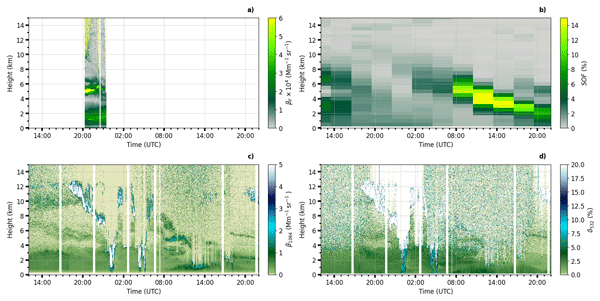
Johanna Roschke, Benedikt Gast, Martin Radenz, Albert Ansmann, Patric Seifert, George McCosh, and Heike Kalesse-Los
Geosci. Model Dev., 19, 9905–9934, https://doi.org/10.5194/gmd-19-9905-2026, https://doi.org/10.5194/gmd-19-9905-2026, 2026
Short summary
Short summary
This research introduces a new method that combines model simulations with satellite observations to attribute the influence of wildfire smoke on an airmass. By dynamically determining the height of smoke plumes, we overcome a key limitation of earlier fixed reception-height approaches. This advancement is crucial for improving our understanding of how wildfire emissions influence cloud formation and the broader Earth's climate system.
Joel Schafer, Thomas F. Eck, Ilya Slutsker, Pawan Gupta, Mikhail Sorokin, Alexander Sinyuk, and Alexander Smirnov
Atmos. Meas. Tech., 19, 6487–6502, https://doi.org/10.5194/amt-19-6487-2026, https://doi.org/10.5194/amt-19-6487-2026, 2026
Short summary
Short summary
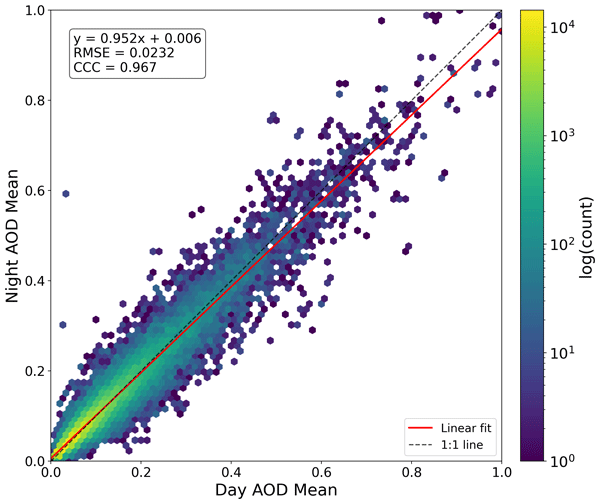
A global network of ground-based instruments has been using moonlight to measure atmospheric aerosols at night, producing the world's largest such dataset. Employing an empirical correction method that accounts for the Moon's complex and variable brightness results in nighttime measurements that agree closely with daytime measurements during day/night transition intervals under stable aerosol conditions.
Georgia Charalampous, Konstantinos Fragkos, Ilias Fountoulakis, Kyriakoula Papachristopoulou, Anna Moustaka, Argyro Nisantzi, Diofantos Hadjimitsis, and Stelios Kazadzis
EGUsphere, https://doi.org/10.5194/egusphere-2026-6018, https://doi.org/10.5194/egusphere-2026-6018, 2026
This preprint is open for discussion and under review for Atmospheric Measurement Techniques (AMT).
Short summary
Short summary
Cyprus has very high levels of ultraviolet radiation from the Sun, so reliable daily forecasts help people protect their health. We compared two forecasting systems with measurements from five stations across the island. Both worked well on clear days but were less accurate when clouds were present. During a wildfire in July 2025, smoke cut the measured ultraviolet levels by about 40 percent, which the forecasts missed. Better cloud and smoke information is needed to improve forecasts.
Lorenzo Fabris, Nicolas Theys, Lieven Clarisse, Bruno Franco, Mike Burton, Benjamin Esse, Jonas Vlietinck, Huan Yu, Hugues Brenot, Thomas Danckaert, and Michel Van Roozendael
EGUsphere, https://doi.org/10.5194/egusphere-2026-5282, https://doi.org/10.5194/egusphere-2026-5282, 2026
This preprint is open for discussion and under review for Atmospheric Chemistry and Physics (ACP).
Short summary
Short summary
In this study, we present the first global SO2 plume-height dataset from the TROPOspheric Monitoring Instrument (TROPOMI), covering 2018–2025. We evaluate the product against independent observations from the Infrared Atmospheric Sounding Interferometer (IASI) and SO2 height estimates from the PlumeTraj toolkit. Overall, the results show good agreement and highlight the complementarity of these approaches for monitoring SO2 emissions and their atmospheric and climatic impacts.
Dominic Heslin-Rees, Peter Tunved, Diego Aliaga, Janne Lampilahti, Ilona Riipinen, Annica M. L. Ekman, Ki-Tae Park, Martina Mazzini, Stefania Gilardoni, Roseline Thakur, Kihong Park, Young Jun Yoon, Kitack Lee, Mikko Sipilä, Mauro Mazzola, and Radovan Krejci
Aerosol Research, 4, 457–483, https://doi.org/10.5194/ar-4-457-2026, https://doi.org/10.5194/ar-4-457-2026, 2026
Short summary
Short summary
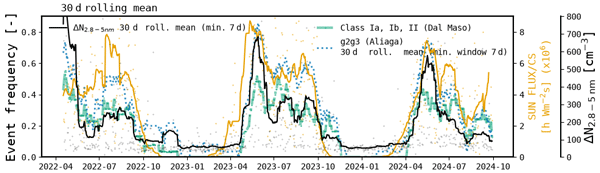
New particles form in the atmosphere and can influence the climate. We studied Arctic new particle formation (NPF) from 2022 to 2024 at the Zeppelin Observatory, on Svalbard. NPF occurs from April to November, peaking in late spring as sunlight increases. Some particles measured on-site grow large enough to seed clouds. Sunlight and existing aerosol particles strongly impact the likelihood of NPF, which mainly originates from marine regions, particularly the Greenland Sea.
Alessandro Zanchetta, Steven van Heuven, Rigel Kivi, Michel Ramonet, Andreas Engel, Maarten Krol, and Huilin Chen
Atmos. Chem. Phys., 26, 13909–13927, https://doi.org/10.5194/acp-26-13909-2026, https://doi.org/10.5194/acp-26-13909-2026, 2026
Short summary
Short summary
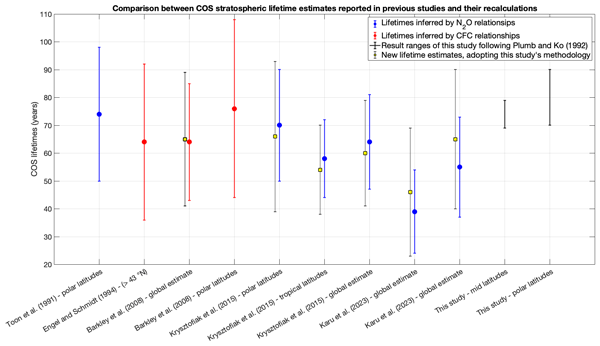
In this study, we calculate the mean lifetime of carbonyl sulfide (COS) and methane (CH4) in the stratosphere from continuous vertical profiles sampled with balloon-borne instruments. We used two methods based on the stratospheric relationship of these gas species with N2O. The estimated stratospheric lifetime range is 69–90 years for COS and 146–172 years for CH4. These results are consistent with other studies and suggest no long-term trends in the stratospheric lifetime of these gas species.
Cristofer Jimenez, Albert Ansmann, Friederike Lipken, Julian Hofer, Alexandra Chudnovsky, Holger Baars, Volker Freudenthaler, Ronny Engelmann, Dietrich Althausen, Sabur Abdullozoda, Shohina Kh. Khalifaeva, Patric Seifert, and Ulla Wandinger
EGUsphere, https://doi.org/10.5194/egusphere-2026-5108, https://doi.org/10.5194/egusphere-2026-5108, 2026
This preprint is open for discussion and under review for Atmospheric Chemistry and Physics (ACP).
Short summary
Short summary
For the first time, a multiyear observational data set on the impact of fresh and aged (contaminated, hygroscopic) dust particles on cloud droplet formation processes is presented. The observations were performed at Dushanbe, Tajikistan, in the heart of the well known dust belt. A clear impact of hygroscopic dust particles on droplet formation during the dust season (April to October) was found, in agreement with respective global modeling results.
Xiaoyi Zhao, Vitali Fioletov, Irina Petropavlovskikh, Voltaire Velazco, Alberto Redondas, Anna Solomatnikova, Corinne Vigouroux, Kimberly Strong, Michel Van Roozendael, Andrea Pazmino, Thomas F. Hanisco, Alexander Cede, Martin Tiefengraber, Gordon Labow, Masatomo Fujiwara, Ronald van der A, Debora Griffin, Chris McLinden, Tom Kralidis, Wolfgang Steinbrecht, and Sum Chi Lee
Atmos. Chem. Phys., 26, 13693–13720, https://doi.org/10.5194/acp-26-13693-2026, https://doi.org/10.5194/acp-26-13693-2026, 2026
Short summary
Short summary
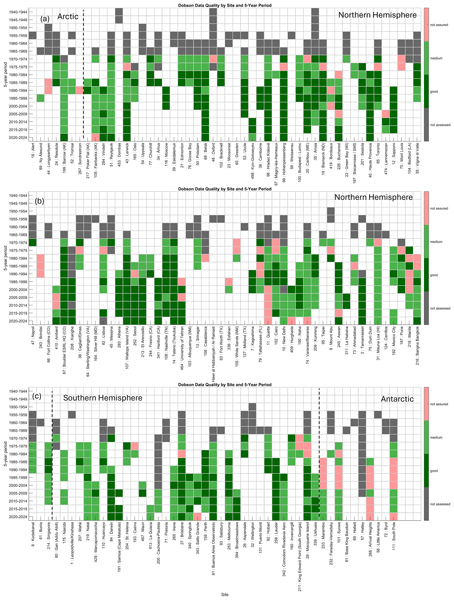
Total column ozone (TCO) records from six ground-based networks are compiled and evaluated using multiple satellites and reanalysis data. Station performance (1940–2024) is assessed using harmonized metrics. Ground-based annual means agree within ±2 %, while pre-satellite reanalyses show larger biases (up to −5 %). The resulting quality-assessed dataset supports trend analysis and satellite validation.
Virginie Buchard, Patricia Castellanos, Arlindo M. da Silva, Ravi Govindaraju, Matthew A. Thompson, Rob Levy, Jaehwa Lee, Vincent Kim, and Pawan Gupta
EGUsphere, https://doi.org/10.5194/egusphere-2026-5508, https://doi.org/10.5194/egusphere-2026-5508, 2026
This preprint is open for discussion and under review for Atmospheric Chemistry and Physics (ACP).
Short summary
Short summary
The Goddard Earth Observing System (GEOS) uses a neural network retrieval methodology to homogenize satellite aerosol observations before data assimilation. As the Moderate Resolution Imaging Spectroradiometer (MODIS) ages, this study evaluates transitioning to Visible Infrared Imaging Radiometer Suite (VIIRS) data. Results show that a single VIIRS sensor performs competitively with the older dual-satellite system, ensuring a seamless transition for uninterrupted, high-quality aerosol forecasts.

Alexander Sinyuk, Thomas F. Eck, Ilya Slutsker, Jasper Lewis, Petar Grigorov, Alexander Smirnov, Joel S. Schafer, Mikhail Sorokin, Elena Lind, and Pawan Gupta
Atmos. Meas. Tech., 19, 6125–6144, https://doi.org/10.5194/amt-19-6125-2026, https://doi.org/10.5194/amt-19-6125-2026, 2026
Short summary
Short summary
The new technique for the clouds screening of aerosol optical depth is presented. It employs measurements of the sky radiances at smallest scattering angle to detect cirrus clouds which otherwise are difficult to detect by other methods. The method employs the smoothness of the time series of measurements throughout a day as a criterion for cloud-free conditions. Sharp spikes in the time series are detected and associated with clouds.
Brian Auffarth, Mark Weber, Alexei Rozanov, Carlo Arosio, John P. Burrows, Melanie Coldewey-Egbers, Sean M. Davis, Doug Degenstein, Kimberlee Dubé, Stacey M. Frith, Lucien Froidevaux, Diego Loyola, Vitali E. Fioletov, Viktoria Sofieva, Ronald van der A, and Jeannette D. Wild
Atmos. Chem. Phys., 26, 13359–13386, https://doi.org/10.5194/acp-26-13359-2026, https://doi.org/10.5194/acp-26-13359-2026, 2026
Short summary
Short summary
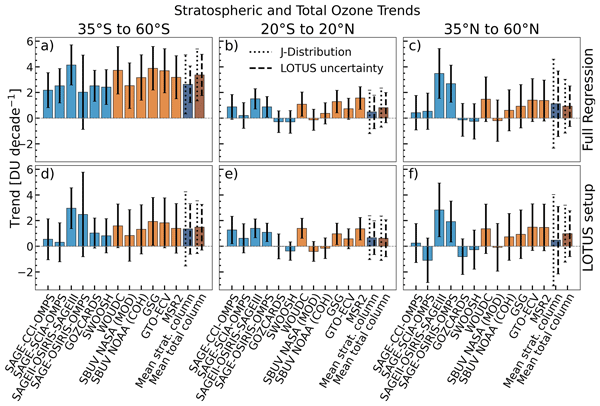
This study examines the trends of stratospheric and total ozone between 2000 and 2024, using long-term satellite datasets. Our results show positive trends in the upper stratosphere and a strong ozone recovery in the Southern Hemisphere, while changes in lower altitudes remain mostly small. The total and stratospheric trends show very similar results, indicating that tropospheric ozone contributes little to total column changes, while the stratospheric column is the dominant driver.
Thomas F. Eck, Jeffrey S. Reid, Alexander Sinyuk, Pawan Gupta, Antti Arola, Ilya Slutsker, Brent N. Holben, Philippe Goloub, Oleg Dubovik, Joel S. Schafer, Mikhail G. Sorokin, Alexander Smirnov, Hongbin Yu, Dongchul Kim, Elena Lind, Jason Kraft, Elizabeth A. Reid, Aboubacry Diallo, Thierno Ndiaye, Africa Barreto, Sidi Baika, Lahouari Zeudmi-Sahraoui, Francisco Evora, Gael Dubois, Luc Blarel, Rachel T. Pinker, Isaac Abiodun Adimula, Jean Louis Rajot, Aliko Maman, Muguette Allegre, Cassandra Gaston, Peter Sealy, Edmund Blades, Rebecca Chewitt-Lucas, Ian Lau, David Barker, Adel Saad Alshihiween, Abdulrahman Alsaferan, Odbayar Mishigdorj, and Chogsom Jargalsaixan
EGUsphere, https://doi.org/10.5194/egusphere-2026-5531, https://doi.org/10.5194/egusphere-2026-5531, 2026
This preprint is open for discussion and under review for Atmospheric Chemistry and Physics (ACP).
Short summary
Short summary
The optical properties of airborne soil particles from major desert regions measured by ground based remote sensing retrievals are presented. The relative spectral absorption of these particles from the remote sensing data agree very well with absorption of soil dust samples measured in a laboratory. A large fraction of the optical effects were attributed to relatively small submicron sized dust particles which would also be more easily inhalable and therefore may impact human health.
Qiaoyun Hu, Philippe Goloub, Igor Veselovskii, Thierry Podvin, Gaël Dubois, Sergey Khaykin, William Boissière, Fabrice Ducos, and Mikhail Korenskiy
Atmos. Chem. Phys., 26, 13027–13053, https://doi.org/10.5194/acp-26-13027-2026, https://doi.org/10.5194/acp-26-13027-2026, 2026
Short summary
Short summary
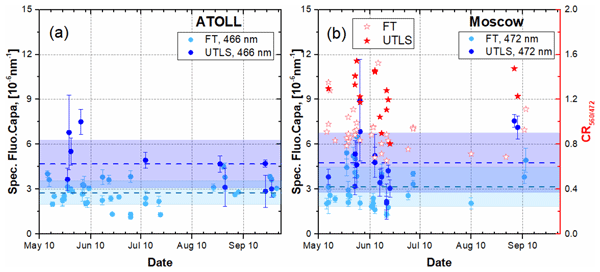
This study reports dual-site fluorescence lidar observations of long-range transported Canadian wildfire biomass burning aerosols (BBAs) from May to September 2023. Upper troposphere–lower stratosphere (UTLS) layers showed higher depolarization, lower Ångström exponents, and fluorescence redshift compared to tropospheric layers. Moderate correlations are found between layer altitude and BBA properties. Notably, limited hygroscopicity was found in more than 100 identified BBA layers. Cross-site comparison shows consistent fluorescence signatures.
Celia Herrero del Barrio, Roberto Román, Sara Herrero-Anta, Daniel González-Fernández, Rogelio Carracedo, Ramiro González, Javier Gatón, Bruno Longarela, Juan Carlos Antuña-Sánchez, David Mateos, Carlos Toledano, Abel Calle, Victoria Cachorro, and Ángel de Frutos
Atmos. Meas. Tech., 19, 5785–5814, https://doi.org/10.5194/amt-19-5785-2026, https://doi.org/10.5194/amt-19-5785-2026, 2026
Short summary
Short summary
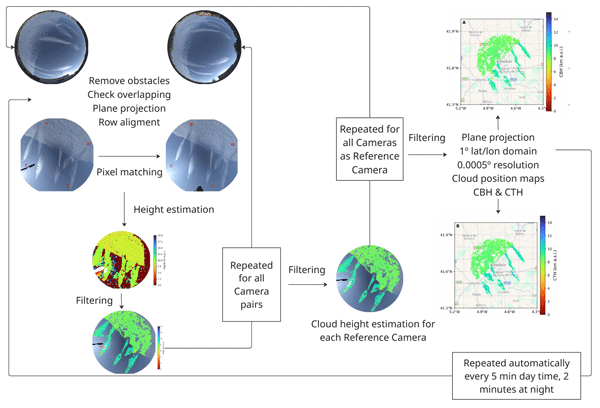
This work presents an automated method to create cloud height maps in near real time using a network of 20 ground-based sky cameras in Valladolid, Spain. By comparing simultaneous images from different locations, the system estimates cloud base and top heights every few minutes over a large area with 50 m resolution. The results agree well with satellite and ceilometer measurements, showing that low-cost camera networks can improve continuous cloud monitoring for weather and climate studies.
Charlotte G. Stapleton, Mikko Sipilä, Arundathi Chandrasekharan, Joonas Merikanto, Kimmo Neitola, Tuomo Nieminen, Risto Makkonen, Jorma Joutsensaari, Aki Virkkula, and Antti-Pekka Hyvärinen
EGUsphere, https://doi.org/10.5194/egusphere-2026-5001, https://doi.org/10.5194/egusphere-2026-5001, 2026
This preprint is open for discussion and under review for Atmospheric Chemistry and Physics (ACP).
Short summary
Short summary
Article presents observations of cloud condensation nuclei (CCN) in the Finnish sub-Arctic. At Pallastunturi, aerosol-cloud interactions have been measured since 2005. Based on these measurements, a simple model was developed to predict the CCN at Värriö for 1998–2021. The CCN concentrations have decreased about 50 % during the measurement period, especially during early spring, when polluted air from the south reaches the Arctic. A global climate model reproduced the observed long-term trend.
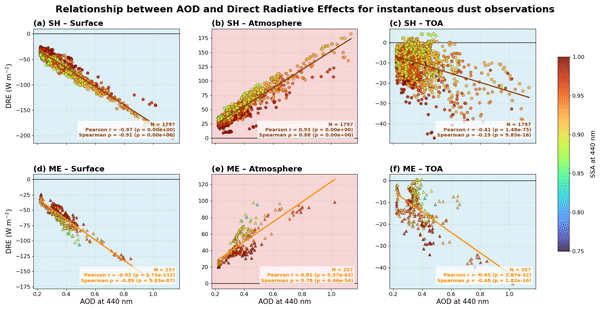
Georgia Charalampous, Konstantinos Fragkos, Ilias Fountoulakis, Kyriakoula Papachristopoulou, Anna Moustaka, Franco Marenco, Yevgeny Derimian, Argyro Nisantzi, Rodanthi-Elisavet Mamouri, Diofantos Hadjimitsis, and Stelios Kazadzis
Atmos. Meas. Tech., 19, 5753–5783, https://doi.org/10.5194/amt-19-5753-2026, https://doi.org/10.5194/amt-19-5753-2026, 2026
Short summary
Short summary
This study analyses seven years of dust events over Cyprus to identify their origin and quantify their impact on surface solar radiation. Most events originated from the Sahara. Dust reduces surface solar radiation, leading to surface cooling, while also causing atmospheric heating and cooling at the top of the atmosphere. Surface reductions in solar radiation reach about 5 %–15 % on average, with effects mainly controlled by dust amount.
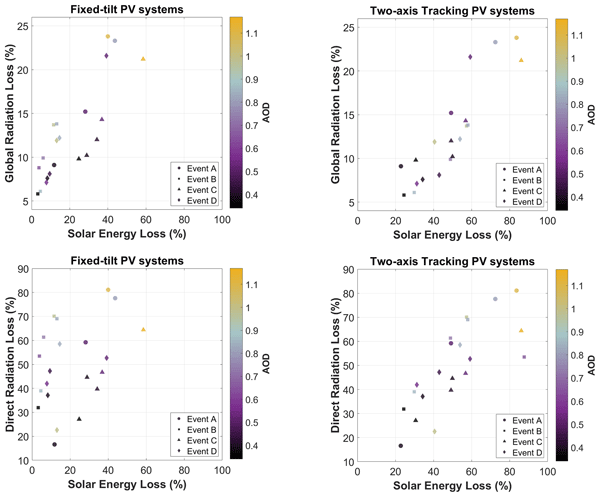
Dimitra Kouklaki, Georgia Charalampous, Anna Moustaka, Alkistis Papetta, Celia Herrero del Barrio, Rizos-Theodoros Chadoulis, S. Yeşer Aslanoğlu, Sara Herrero-Anta, Michail Mytilinaios, Nikolaos Papadimitriou, Katerina Anyfanti, Christos Spyrou, Daniela Meloni, Konstantinos Fragkos, Yevgeny Derimian, Tatiana Di Iorio, Rodanthi-Elisavet Mamouri, Vassilis Amiridis, Stavros Solomos, Stelios Kazadzis, and Ilias Fountoulakis
Atmos. Meas. Tech., 19, 5633–5657, https://doi.org/10.5194/amt-19-5633-2026, https://doi.org/10.5194/amt-19-5633-2026, 2026
Short summary
Short summary
In the present study we investigated how aerosols, and specifically dust, affect solar radiation and energy production by investigating several dust events across multiple sites in the Mediterranean Basin between 2021 and 2022 through ground-based observations and model simulations. The results revealed that dust can significantly attenuate solar radiation and, therefore, lead to considerable losses in solar power generation, specifically in the case of solar tracking systems.
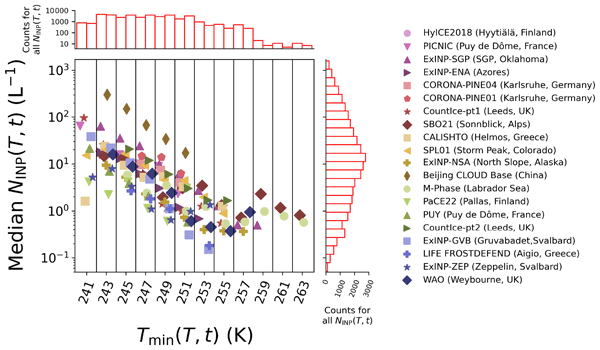
Ross J. Herbert, Larissa Lacher, Alexander Böhmländer, Mark D. Tarn, Antoine Canzi, Aidan Pantoya, Evelyn Freney, Kristina Höhler, Pia Bogert, Céline Planche, Ping Tian, Michael Adams, Sarah Barr, David Brus, Nicole Büttner, Martin Daily, Konstantinos Doulgeris, Konstantinos Eleftheriadis, Grant Forster, Romy Fösig, Dimitrios G. Georgakopoulos, Maria I. Gini, A. Gannet Hallar, Radovan Krejci, Elke Ludewig, Mauro Mazzola, Ian B. McCubbin, Athanasios Nenes, Tuukka Petäjä, Joseph Robinson, Franziska Vogel, Paul Zieger, Stephen Arnold, Kenneth S. Carslaw, Naruki Hiranuma, Ottmar Möhler, and Benjamin J. Murray
Earth Syst. Sci. Data, 18, 6465–6483, https://doi.org/10.5194/essd-18-6465-2026, https://doi.org/10.5194/essd-18-6465-2026, 2026
Short summary
Short summary
Ice formation in sub-zero clouds is influenced by airborne particles called ice-nucleating particles (INPs), whose concentrations vary substantially over short time and spatial scales. To assess the role of INPs in our climate, a comprehensive and consistent global dataset is essential. Our GloPINE model-ready dataset is a major step in this direction, comprising 36,000 measurements made using a single instrument design (PINE) over 70,000 hours of operation at 20 Northern Hemisphere sites.
Anna Moustaka, Kyriakoula Papachristopoulou, Georgia Charalampous, and Stelios Kazadzis
EGUsphere, https://doi.org/10.5194/egusphere-2026-4413, https://doi.org/10.5194/egusphere-2026-4413, 2026
Short summary
Short summary
Atmospheric particles affect how much sunlight reaches the Earth's surface, but their uncertainty is rarely considered in solar energy studies. We estimated this uncertainty from a global atmospheric dataset and examined its effect on sunlight reaching the ground between 2003 and 2024. The results improve confidence in solar energy assessments, particularly in dusty and polluted regions.
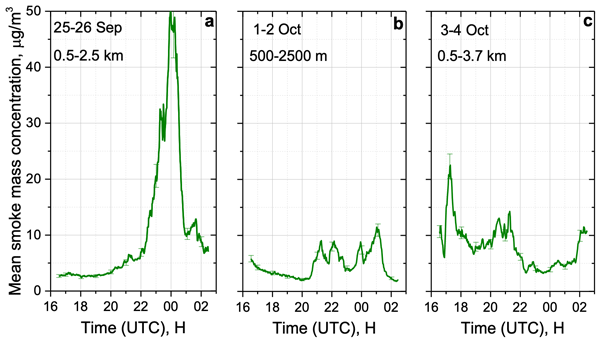
Igor Veselovskii, Mikhail Korenskiy, Boris Barchunov, Nikita Kasianik, Qiaoyun Hu, Philippe Goloub, and Thierry Podvin
Atmos. Meas. Tech., 19, 5587–5602, https://doi.org/10.5194/amt-19-5587-2026, https://doi.org/10.5194/amt-19-5587-2026, 2026
Short summary
Short summary
A multi-channel fluorescence lidar can effectively analyze smoke–urban aerosol mixtures and retrieve smoke mass concentration in the planetary boundary layer (PBL), with a detection threshold of order 0.1 µg · m⁻³. Measurements over Moscow (2023–2024) detected smoke in 59 of 67 sessions. Long-range transported smoke contributed ∼1 µg · m⁻³ to the PBL, while regional fires from southern Russia caused concentrations up to 50 µg · m⁻³.
Alkistis Papetta, Celia Herrero del Barrio, S. Yeşer Aslanoğlu, Rizos-Theodoros Chadoulis, Georgia Charalampous, Sara Herrero-Anta, Dimitra Kouklaki, Michail Mytilinaios, Anna Moustaka, Emmanouil Proestakis, Vassilis Amiridis, Christos Spyrou, Antonis Gkikas, Michael Pikridas, Maria Kezoudi, Franco Marenco, Jean Sciare, Sophie Vandenbussche, Stavros Solomos, Stelios Kazadzis, and Ilias Fountoulakis
Atmos. Chem. Phys., 26, 12395–12434, https://doi.org/10.5194/acp-26-12395-2026, https://doi.org/10.5194/acp-26-12395-2026, 2026
Short summary
Short summary
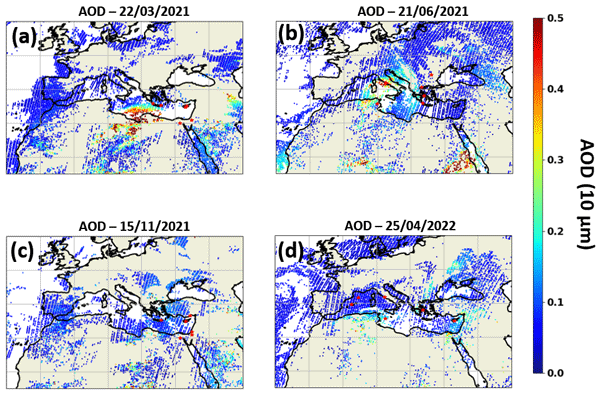
We studied four major dust events from the Sahara and the Middle East over the Mediterranean. Saharan dust events exhibited coarser and more scattering particles, while Middle Eastern dust was finer and mixed with pollution. Differences in absorption could not be explained by mineralogy and are attributed to mixing.
Robert J. Parker, Michael P. Cartwright, Dan Orr, Lakshmi N. Bharathan, Neil Humpage, Alex J. Webb, Peter Somkuti, Hartmut Boesch, Antonio Di Noia, Hiroshi Suto, Matthias Buschmann, Nicholas M. Deutscher, David W. T. Griffith, Frank Hase, Rigel Kivi, Erin McGee, Isamu Morino, Hirofumi Ohyama, Christof Petri, John Robinson, Coleen M. Roehl, Mahesh Kumar Sha, Kei Shiomi, Kimberly Strong, Ralf Sussmann, Yao Té, Voltaire A. Velazco, Mihalis Vrekoussis, Wei Wang, Thorsten Warneke, Damien Weidmann, Debra Wunch, and Minqiang Zhou
Earth Syst. Sci. Data Discuss., https://doi.org/10.5194/essd-2026-625, https://doi.org/10.5194/essd-2026-625, 2026
Preprint under review for ESSD
Short summary
Short summary
Methane is a powerful greenhouse gas and its concentration in the atmosphere is rising rapidly. We present a new record of atmospheric methane measured from space by the Japanese GOSAT-2 satellite, covering 2019 to 2025. The measurements are processed identically to those from its predecessor GOSAT and checked against ground-based instruments around the world. Together the two satellites provide a continuous 17-year record that helps track where methane comes from and how quickly it is changing.
Maciej Karasewicz, Lucja Janicka, Ronny Engelmann, Livio Belegante, and Iwona S. Stachlewska
EGUsphere, https://doi.org/10.5194/egusphere-2026-5029, https://doi.org/10.5194/egusphere-2026-5029, 2026
This preprint is open for discussion and under review for Atmospheric Measurement Techniques (AMT).
Short summary
Short summary
This study analyzes vertical aerosol fluxes in the urban atmospheric boundary layer (ABL) using a synergetic method combining remote-sensing and in-situ data (Doppler lidar, microwave radiometer and disdrometer) from 2022–2024 in Warsaw. The work contributes to multi-seasonal aerosol flux intensity characterization, enhances atmospheric aerosol optical property assessments and introduces a new, actionable data curation and classification methodology compatible with Cloudnet-ACTRIS databases.
Kate Smith, Alexandre Baron, Joshua Schwarz, Elizabeth Asher, Emrys Hall, Patrick Cullis, Alex Fritz, Hagen Telg, Ross Burgener, Bryan Thomas, Matthew Martinsen, David Nardini, Darryl Kuniyuki, Penny Smale, Ben Liley, Richard Querel, Krystian Kopka, Ian Crocker, Skyler Jordan, Michael Doneghey, Luke Longren, Stephanie Evan, Jerome Brioude, Jean-Marc Metzger, David Combemale, Cor Becker, Dwight Samuel, Cheryll Tjon A Ten, Mohammed Amierali, Christopher Wongsowidjojo, Dennis Rodrigues, George Paiman, Ankie Piters, Katrin Müller, and Troy Thornberry
Earth Syst. Sci. Data Discuss., https://doi.org/10.5194/essd-2026-644, https://doi.org/10.5194/essd-2026-644, 2026
Preprint under review for ESSD
Short summary
Short summary
Direct measurements of stratospheric aerosol are sparse, yet it plays an important role in Earth’s climate by scattering incoming solar radiation. The B2SAP network addresses this gap by regularly launching balloons carrying Portable Optical Particle Spectrometers (POPS) from 8 latitudinally diverse sites. The dataset provides vertical profiles of aerosol abundance and size distributions from the ground to 28 km, helping characterize global stratospheric aerosol abundance and variability.
Jackson Hian-Wui Chang, Ahmad Fairudz bin Jamaluddin, Sharifah Faridah binti Syed Mahbar, Yong Jie Wong, Maggie Chel-Gee Ooi, Juneng Liew, Fuei Pien Chee, Jedol Dayou, Justin Sentian, Raul R. Cordero, and Neng-Huei Lin
EGUsphere, https://doi.org/10.5194/egusphere-2026-4717, https://doi.org/10.5194/egusphere-2026-4717, 2026
Short summary
Short summary
Climate change is expected to alter how air moves through the upper atmosphere, affecting the distribution of ozone, water vapour, and other important gases. We combined climate model simulations with satellite observations to better understand these changes. Our results show that climate warming mainly speeds up transport in the lower part of the upper atmosphere, providing new evidence that can improve future climate predictions and assessments.
Gytha Mettepenningen, Caroline Fayt, Cato Van Doorne, Aurélien Aubry, Sophie Berkenbosch, Martine De Mazière, Filip Desmet, Lars Jacobs, Eddy Neefs, Frederik Tack, Timo Van Laar, Clemens Mensink, and Michel Van Roozendael
EGUsphere, https://doi.org/10.5194/egusphere-2026-3783, https://doi.org/10.5194/egusphere-2026-3783, 2026
This preprint is open for discussion and under review for Atmospheric Measurement Techniques (AMT).
Short summary
Short summary
Pollution from ships impacts air quality in dense coastal regions of the North Sea. SEMPAS (Ship Emission Monitoring with Passive Absorption Spectroscopy) remotely monitors the emissions of ships passing by. Without ships nearby, SEMPAS is used for atmospheric research in a marine environment. This study presents the instrument’s development. Tests in the Belgian port of Zeebrugge show strong variations in ship emissions, while atmospheric measurements agree well with satellite observations.
Alejandro Agesta, Erna Frins, Norman T. O'Neill, and Brent Holben
EGUsphere, https://doi.org/10.5194/egusphere-2026-4619, https://doi.org/10.5194/egusphere-2026-4619, 2026
Short summary
Short summary
We analyzed four years (2020–2023) of AERONET observations from Montevideo_FING to characterize the optical properties of aerosols and propose a new version of a multimodal model to characterize particle volume size distributions (PVSDs). The method captures the complexity of aerosols in Montevideo, where we found overlapping marine and urban influences.
Esha Semwal, Dietrich Althausen, Ronny Engelmann, Markus Hartmann, Heike Wex, Thomas Oppermann, and Moritz Haarig
EGUsphere, https://doi.org/10.5194/egusphere-2026-4446, https://doi.org/10.5194/egusphere-2026-4446, 2026
Short summary
Short summary
This study presents a new laboratory setup to measure the depolarization ratio of size-resolved aerosol particles in the exact backscattering direction. Measurements with different aerosol types showed that the system can distinguish spherical and non-spherical particles and captures the size dependence of the depolarization ratio. The developed setup is therefore well suited to provide reliable experimental data for improving light-scattering models and the interpretation of lidar observations.
Julian Hofer, Holger Baars, Zhenping Yin, Andi Klamt, Martin Radenz, Leonard König, Athena A. Floutsi, Cristofer Jimenez, Moritz Haarig, Dietrich Althausen, Benedikt Gast, Håvard S. Buholdt, Nathan Skupin, Jonas Neumann, Sabur F. Abdullozoda, Abduvosit N. Makhmudov, Johannes Bühl, Ronny Engelmann, Ulla Wandinger, and Albert Ansmann
EGUsphere, https://doi.org/10.5194/egusphere-2026-3928, https://doi.org/10.5194/egusphere-2026-3928, 2026
This preprint is open for discussion and under review for Atmospheric Measurement Techniques (AMT).
Short summary
Short summary
A comparison of manually and automatically analyzed lidar profiles of aerosol optical properties is presented. The manual analysis was performed using a custom software in multiple analyses steps based on visual inspection of the lidar signals. The automatic analysis was performed using an automatic processing chain. The comparison shows good agreement and demonstrates the suitability of the automatic retrievals for various applications of aerosol optical property profiles.
Apoorva Pandey, Bryan K. Place, Thomas F. Hanisco, Jong-Uk Park, Elena S. Lind, Jason M. St. Clair, Erin R. Delaria, Glenn M. Wolfe, Ronaldo Lopez, Paul V. Zimba, and K. Lee Thornhill
EGUsphere, https://doi.org/10.5194/egusphere-2026-3479, https://doi.org/10.5194/egusphere-2026-3479, 2026
Short summary
Short summary
The burden and vertical distribution of formaldehyde affects air quality and health. Pandora ground instruments observe formaldehyde in the lower atmosphere using scattered sunlight. The quality of these continuous daytime measurements needs evaluation. We compared these measurements with aircraft observations at four U.S. East Coast sites and found strong agreement at all comparison sites. We also improved the Pandora algorithm to better capture the vertical distribution of formaldehyde.
Yannis Gschwind, Kyriaki Papachristopoulou, Jason N. S. Cole, Alkiviadis F. Bais, and Stelios Kazadzis
EGUsphere, https://doi.org/10.5194/egusphere-2026-4519, https://doi.org/10.5194/egusphere-2026-4519, 2026
Short summary
Short summary
The EarthCARE satellite, launched in 2024, measures aerosol, cloud, and precipitation properties, serving as input for radiative transfer models. Given its recent launch, validation is crucial. In this analysis, we validate the resulting surface irradiance against ground-based measurements and compare with estimates from geostationary satellites. Our study indicates that EarthCARE slightly underestimates surface irradiance. These early tests provide essential context for EarthCARE data users.
Gladiola Malollari, Albert Ansmann, Julian Hofer, Kevin Ohneiser, Ronny Engelmann, Fatbardh Sallaku, and Seit Shallari
EGUsphere, https://doi.org/DOI:10.20944/preprints202507.1175.v2, https://doi.org/DOI:10.20944/preprints202507.1175.v2, 2026
Short summary
Short summary
For the first time, the seasonal aerosol vertical distribution of Albania is characterized using 15-year CALIPSO observations and one-year ground-based Raman lidar measurements. Seasonal air mass clusters are derived from a 10-year HYSPLIT backtrajectory analysis. Extinction coefficient, aerosol optical depth, and mass concentration profiles are shown for the total, dust, and nondust contributions. Both datasets reveal consistent vertical aerosol distributions.
Akriti Masoom, Stelios Kazadzis, Robin Lewis Modini, Martin Gysel-Beer, Julian Gröbner, Martine Collaud Coen, Francisco Navas-Guzman, Natalia Kouremeti, Benjamin Tobias Brem, Nora Kristina Nowak, Giovanni Martucci, and Maxime Hervo
Atmos. Chem. Phys., 26, 10801–10834, https://doi.org/10.5194/acp-26-10801-2026, https://doi.org/10.5194/acp-26-10801-2026, 2026
Short summary
Short summary
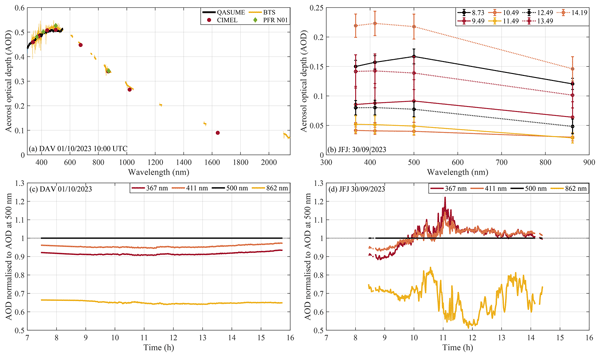
This article aims at providing details on the spectral aerosol properties observed during 2023 Canadian wildfire plume transport and exploring the synergism between remote sensing and in situ measurements for investigating the cause of the occurrence of the observations of spectral aerosol properties.
William Wandji Nyamsi, Ville Leinonen, Antti Lipponen, Else van den Besselaar, Santtu Mikkonen, Arturo Sanchez-Lorenzo, Martin Wild, Doris Folini, Tero Mielonen, Harri Kokkola, Antti Kukkurainen, Neus Sabater, Rei Kudo, Ben Liley, Raghav Srinivasan, Bruce W. Forgan, Alexandru Dumitrescu, Grzegorz Urban, Michał K. Kowalewski, Márcia Akemi Yamasoe, Nilton Évora do Rosário, Dimitra Founda, Stelios Kazadzis, Veronica Manara, Derbetini A. Vondou, Christian Gueymard, Anders V. Lindfors, Atsumu Ohmura, and Antti Arola
Atmos. Chem. Phys., 26, 10767–10788, https://doi.org/10.5194/acp-26-10767-2026, https://doi.org/10.5194/acp-26-10767-2026, 2026
Short summary
Short summary
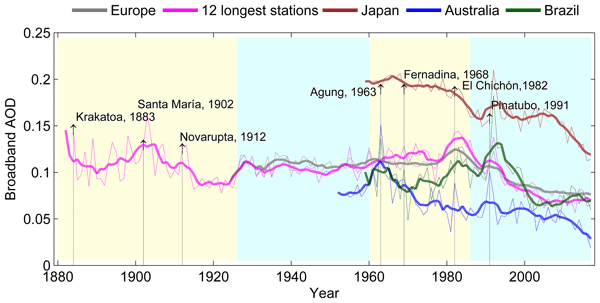
Worldwide reconstructed historical aerosol load reveals that during the period of:
- 1900–1959: the atmosphere became cleaner in most European cities;
- 1960–1985: anthropogenic aerosols were responsible for the dimming phenomenon in Europe. AOD increased over Southeast Brazil and decreased noticeably over Japan while a small negative trend was found over Oceania;
- 1986–2015: generally, the atmosphere has become much cleaner everywhere after the reversal trend around 1980s mainly observed in Europe.
Georg Holger Müller, Athena Augusta Floutsi, Julian Hofer, Ronny Engelmann, Dietrich Althausen, Ulla Wandinger, Martin Radenz, Moritz Haarig, Sabur Fuzailovich Abdullaev, Shohina Kh. Khalifaeva, Albert Ansmann, and Holger Baars
EGUsphere, https://doi.org/10.5194/egusphere-2026-3390, https://doi.org/10.5194/egusphere-2026-3390, 2026
Short summary
Short summary
A five-year dataset of lidar measurements from Dushanbe, Tajikistan, was analyzed to investigate the annual dust cycle and intraanual variability in the region. The dataset consists of automatically processed data, including the separation of the dust and non-dust particle backscatter coefficient and enabling the calculation of monthly and seasonal dust mass concentration within the atmosphere. The study highlights the importance of continuous lidar measurements in the Central Asian region.
Jonas Svensson, Ramazon Rakhmonov, Kamoliddin Nazirzoda, Abdusamad Hojiev, Tamlikho Jurabekov, Amirsho Hiyoev, Davlatjon Rahimzoda, Hizbullo Kholzoda, Muzaffar Shodmonov, David Brus, Viet Le, Krista Luoma, Adriano Lemos, Germán Perez Fogwill, Meri M. Ruppel, Outi Meinander, Johan Ström, Eija Asmi, and Antti Hyvärinen
Earth Syst. Sci. Data, 18, 5697–5712, https://doi.org/10.5194/essd-18-5697-2026, https://doi.org/10.5194/essd-18-5697-2026, 2026
Short summary
Short summary
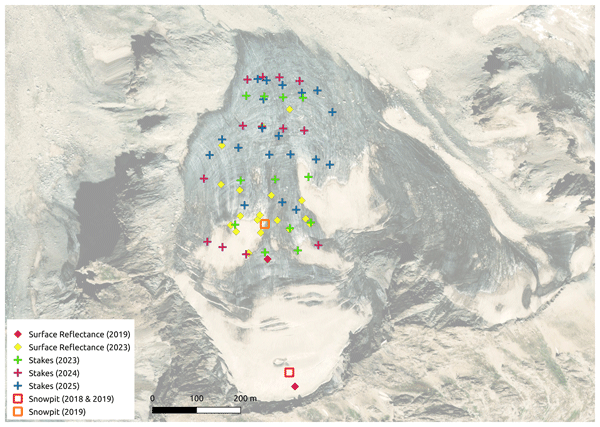
This paper presents data collected at the Zarafshon River Basin and the Hydrographic Party Glacier (GGP), Tajikistan. In annual field expeditions from 2018–2025, data has been collected on the glacier, as well as including meteorological measurements and aerosols. Presented results highlight the environmental conditions that are driving environmental change in Central Asia.

Sophie Vandenbussche, Christodoulos Biskas, Maria-Elissavet Koukouli, Stelios Kazadzis, and Martine De Mazière
Atmos. Meas. Tech., 19, 4889–4922, https://doi.org/10.5194/amt-19-4889-2026, https://doi.org/10.5194/amt-19-4889-2026, 2026
Short summary
Short summary
Mineral dust aerosols are tiny particles uplifted by winds from deserts, which may be transported for long distances. They are climate forcers and affect human health and socio-economic sectors, making near-real-time and long-term monitoring essential. Here, we use satellite observations to retrieve global 3D distributions of dust aerosols. We present an updated and improved algorithm and its long-term consistent data since late 2007, with high potential for climate analyses and alert systems.
Patrick C. Taylor, Armin Sorooshian, Rei Ueyama, Sebastian Schmidt, Ihab Abboud, Quincy Allison, Kevin Barry, Sebastian Becker, Holly A. Bender, Joseph R. Bennett, James B. Blair, Niklas Bohn, Linette Boisvert, Matthew D. Brown, Roelof Bruintjes, Anthony Bucholtz, Megan Buzanowicz, Brian Cairns, Filippo Calì Quaglia, Eduard Chemyakin, Bo Chen, Gao Chen, Hong Chen, Yu-Wen Chen, Zezhen Cheng, Swarup China, Dan Chirica, Yonghoon Choi, Peter Colarco, Brian Collister, Ewan Crosbie, Maurice J. Cross, Janet Daniels, Paul DeMott, Joshua P. DiGangi, Alcide Giorgio di Sarra, Glenn S. Diskin, Erica K. Dolinar, Eva-Lou Edwards, Samuel Ephraim, Nikolaos Evangeliou, Romanos Foskinis, Francesca Gallo, Lan Gao, José Luis Gómez-Amo, Daisy Gonzalez, Christine Groot Zwaaftink, Pawan Gupta, Ivan Heckman, Michael Hendrickson, Miguel Ricardo A. Hilario, Ken Hirata, Michelle Hofton, Andrew L. Holen, Ulas Im, Alia L. Khan, Ralph Kahn, Alexei V. Korolev, Sonia Kreidenweis, Thomas Krumpen, Nathan Kurtz, Leslie Lait, Bradley Lamkin, Jack Landy, Nurun Nahar Lata, Paul Lawson, Samuel LeBlanc, Sean Leavor, Jing Li, Thorsten Markus, Hal Maring, Andreas H. Massling, Camille Mavis, Flynn McGinnity, Kerry Meyer, Gabriel Mojica, Richard H. Moore, Parker Morris, Giovanni Muscari, Vikas Nataraja, Amin R. Nehrir, Athanasios Nenes, Edward P. Nowottnick, Matteo Ottaviani, Chelsea Parker, Ryan Patnaude, Michael Perez, Russell J. Perkins, Colten Peterson, Alek Petty, Stevie Phothisane, Chris Polashenski, Kerri A. Pratt, Kayla M. Preisler, John Prytherch, David Rabine, Jens Redemann, Ju-Mee Ryoo, Joseph S. Schlosser, Vanessa Selimovic, Michael A. Shook, Morgan Silverman, Henrik Skov, Alexander Smirnov, Cassidy Soloff, Amy Solomon, Snorre Stamnes, Azusa Takeishi, David R. Thompson, K. Lee Thornhill, Rachel Tilling, Michael Tjernström, Monica Tosco, Pedro C. Valdelomar, David Van Gilst, Jian Wang, Zhien Wang, Andrzej Wasilewski, Manfred Wendisch, Brent Wilder, Edward L. Winstead, Albert Wu, Peng Xian, Lauren M. Zamora, Jiaoshi Zhang, Lei Zhang, Lu Zhang, Luke Ziemba, and Paquita Zuidema
Earth Syst. Sci. Data Discuss., https://doi.org/10.5194/essd-2026-241, https://doi.org/10.5194/essd-2026-241, 2026
Preprint under review for ESSD
Short summary
Short summary
This article summarizes the data sets collected during the Arctic Radiation Cloud aerosol Sea ice Interaction eXperiment (ARCSIX), NASA's most comprehensive Arctic field campaign to date. The overarching goal was to quantify the contributions of surface, clouds, aerosol particles, and precipitation to summer sea ice melt. This paper describes the ARCSIX implementation including the flight strategy, instruments, complementary data sets, access, and usage details.
Gaurav Kumar, Masahiro Momoi, Monica Campanelli, Meritxell Garcia-Suñer, Natalia Kouremeti, Rei Kudo, Roberto Pedrós, and Víctor Estellés
EGUsphere, https://doi.org/10.5194/egusphere-2026-4267, https://doi.org/10.5194/egusphere-2026-4267, 2026
Short summary
Short summary
Aerosols are tiny particles suspended in the atmosphere, affecting the air quality and climate. Accurate aerosol measurements are thus important for understanding their effects. Sky radiometers are widely used instruments for the aerosol measurements. We developed a method to improve the calibration coefficients of sky radiometers, using the latest data-processing algorithm and an iterative procedure. The proposed method produced more accurate results, improving long-term aerosol monitoring.
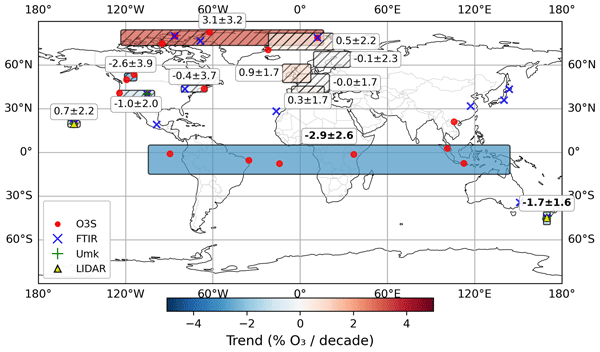
Louis Mirallie, Eliane Maillard Barras, Caroline Jonas, Corinne Vigouroux, Roeland Van Malderen, Irina Petropavlovskikh, Sophie Godin-Beekmann, Thierry Leblanc, Wolfgang Steinbrecht, Antoine Vadès, Rolf Ruefenacht, Alexander Haefele, Gunter Stober, Peter Effertz, Julian Gröbner, Gerard Ancellet, María Cazorla, Petra Duff, Matthias M. Frey, Michael Gill, James W. Hannigan, Nicholas Jones, Rigel Kivi, Raphael Köhler, Bogumil Kois, Debra E. Kollonige, Emmanuel Mahieu, Glen McConville, Johan Mellqvist, Gary Morris, Isao Murata, Tomoo Nagahama, Gerald E. Nedoluha, Shin-Ya Ogino, Richard Querel, Ryan M. Stauffer, Wolfgang Stremme, Kimberly Strong, Ralf Sussmann, Anne M. Thompson, and Yana Virolainen
Atmos. Chem. Phys., 26, 10303–10330, https://doi.org/10.5194/acp-26-10303-2026, https://doi.org/10.5194/acp-26-10303-2026, 2026
Short summary
Short summary
We present regional Bayesian composites of ground-based ozone partial column records. Defining coherent regions using a CAMS (Copernicus Atmosphere Monitoring Service) representativeness study, we merge five instrument types using the BASIC (Ball et al., 2017) algorithm, reducing trend uncertainties by 9.4 % compared to a weighted mean. Results confirm upper stratospheric recovery, predominantly negative middle stratospheric trends, while lower stratospheric trends remain mostly non-significant.
Francesco Paladini de Mendoza, Leonardo Langone, Alice Cavaliere, Gianmarco Ingrosso, Lorenzo Pasculli, Chiara Ripa, Mauro Mazzola, Manuel Bensi, Federico Giglio, Stefano Miserocchi, Tommaso Tesi, and Patrizia Giordano
Earth Syst. Sci. Data Discuss., https://doi.org/10.5194/essd-2026-501, https://doi.org/10.5194/essd-2026-501, 2026
Preprint under review for ESSD
Short summary
Short summary
This paper presents 5-years of continuous ocean observations from Arctic fjords and nearby deep waters around Svalbard. The dataset reveals strong seasonal changes, recurring inflows of warm Atlantic waters, and differences between glacier-influenced coastal areas and offshore environments. By providing openly accessible, high-quality measurements, the study supports research on climate change, ocean dynamics, glacier–ocean interactions, in a rapidly changing Arctic.
Aino Ovaska, Daniel Holmberg, Elio Rauth, Mansour Alghamdi, Paulo Artaxo, Eija Asmi, John Backman, Benjamin Bergmans, Matthew Boyer, Liezl Bredenkamp, Maurizio Busetto, Delano Campos De Oliveira, Juan Andrés Casquero-Vera, Darius Ceburnis, Tak Chan, Tommy Chan, Sebastien Conil, Daniele Contini, Suzanne Crumeyrolle, Valentin Duflot, Kostas Eleftheriadis, Johan Esveld, Ekaterina Ezhova, Markus Fiebig, Shahzad Gani, Olga Garmash, Francisco Gómez-Moreno, Roy M. Harrison, Andras Hoffer, Rakesh Hooda, Antti Hyvärinen, Tareq Hussein, Jorma Joutsensaari, Nikos Kalivitis, Heinz Kaminski, Jutta Kesti, Radovan Krejci, Adam Kristensson, Chongai Kuang, Markku Kulmala, Lauri Laakso, Ari Leskinen, Heikki Lihavainen, Andreas Massling, Maik Merkel, Steffen Noe, Jakub Ondracek, Noemí Perez, Jean-Eudes Petit, Tuukka Petäjä, Michael Pikridas, Christopher Pöhlker, Mira Pöhlker, Jean-Philippe Putaud, Ximeng Qi, Cristina Reche, Sergio Rodríguez, Petr Roztocil, Jean Sciare, Karine Sellegri, Dongjie Shang, Ashish Singh, Mikko Sipilä, Henrik Skov, Mar Sorribas, Tamanna Subba, Junying Sun, Peter Tunved, Ville Vakkari, Pieter G. Van Zyl, Aki Virkkula, Jens Voigtländer, Kay Weinhold, Alfred Wiedensohler, Hee-Jung Yoo, Putian Zhou, Kai Puolamäki, Tuomo Nieminen, Veli-Matti Kerminen, Victoria A. Sinclair, and Pauli Paasonen
Earth Syst. Sci. Data Discuss., https://doi.org/10.5194/essd-2026-415, https://doi.org/10.5194/essd-2026-415, 2026
Preprint under review for ESSD
Short summary
Short summary
All clouds form around aerosol particles, and their abundance influences cloud properties. In turn, clouds affect climate by changing how energy moves through the atmosphere, making them important for climate change. To better understand these interactions, we need accurate information on how many aerosol particles are in the atmosphere. Therefore, we have developed a new 21-year global dataset of particle concentrations relevant for cloud formation.
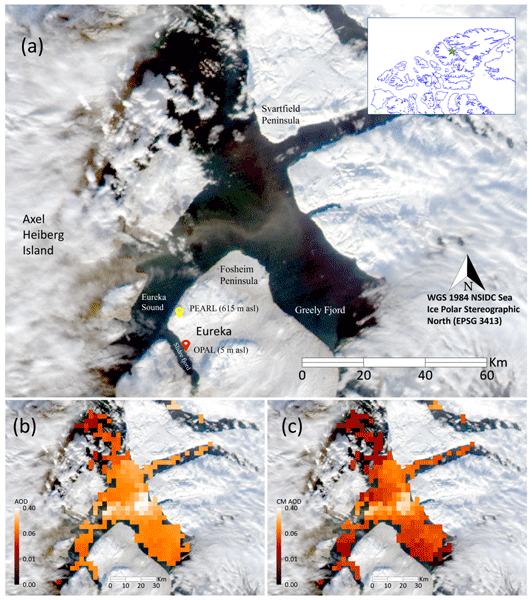
Seyed Ali Sayedain, Norman T. O'Neill, Keyvan Ranjbar, Phillipe Gauvin-Bourdon, Rachel Chang, Patrick L. Hayes, and James King
Atmos. Meas. Tech., 19, 4553–4581, https://doi.org/10.5194/amt-19-4553-2026, https://doi.org/10.5194/amt-19-4553-2026, 2026
Short summary
Short summary
Dust plumes in the Canadian Arctic have important climatic change (CC) impacts on (i) snow and ice (darkening and thus premature melting) and (ii) as nuclei for cloud formation (cloud reflectivity is a poorly characterized but key CC parameter). Ground measurements of dust in that region are rare. We characterized plumes close to their drainage basin sources using ground- and satellite-based remote sensing (RS) estimates of such key parameters as plume height, speed, and opacity (concentration).
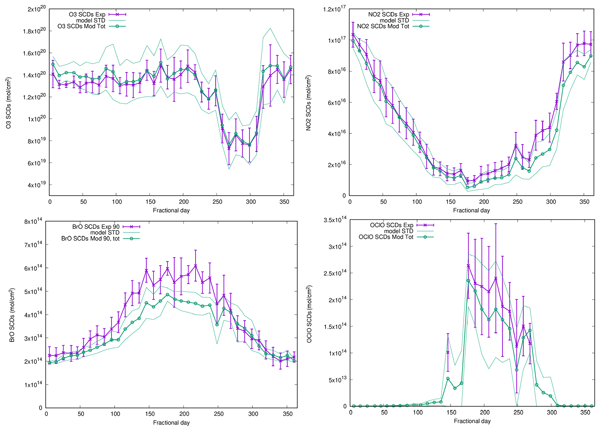
Laura Gómez-Martín, Cristina Prados-Roman, Martyn P. Chipperfield, Michel Van Roozendael, Olga Puentedura, Monica Navarro-Comas, Hector Ochoa, and Margarita Yela
Atmos. Meas. Tech., 19, 4393–4413, https://doi.org/10.5194/amt-19-4393-2026, https://doi.org/10.5194/amt-19-4393-2026, 2026
Short summary
Short summary
The Antarctic ozone hole remains a critical global challenge. Accurately measuring the gases that cause it during twilights is difficult due to rapid chemical changes. We used advanced computer simulations to reproduce observations at 2 Antarctic stations to account for these fluctuations and the Earth's curvature. Our results improve the accuracy of atmospheric monitoring, helping scientists better track the recovery of the ozone layer and understand the complex chemistry driving its depletion.
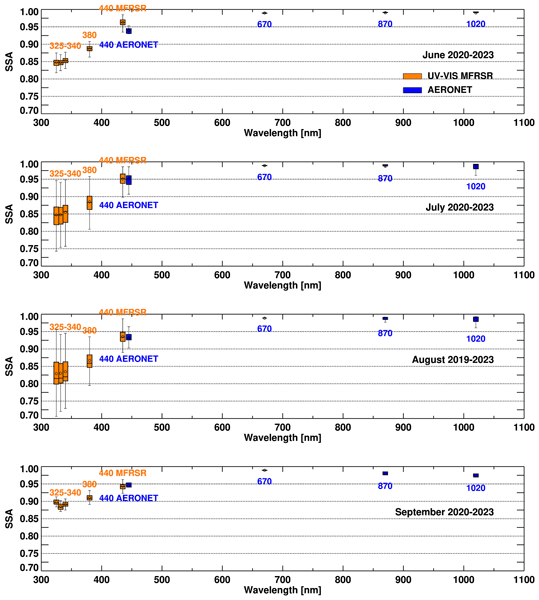
Hiren Jethva, Nickolay Krotkov, Omar Torres, Jungbin Mok, Gordon Labow, Elena Lind, Tom Eck, Wei Gao, George Janson, Scott Simpson, Darrin Sharp, Kathy Lantz, Charles Wilson, Africa Barreto, Rosa García, Sergey Korkin, and David Flittner
Atmos. Meas. Tech., 19, 4335–4365, https://doi.org/10.5194/amt-19-4335-2026, https://doi.org/10.5194/amt-19-4335-2026, 2026
Short summary
Short summary
A synergistic ground-based remote sensing algorithm applied to Aerosol Robotic Network and Multifilter Rotating Shadowband Radiometer allowed retrievals of UV (ultraviolet)-Vis (visible) spectral aerosol absorption of Saharan dust at the Izaña Atmospheric Observatory. The retrieved dataset provides a valuable reference for evaluating satellite ultraviolet dust absorption inversions and further helps infer dust mineralogy to improve dust representation in Earth System Models.
Irina Petropavlovskikh, Martine De Mazière, Anne M. Thompson, Jeannette D. Wild, James W. Hannigan, Henry B. Selkirk, Reem A. Hannun, Wolfgang Steinbrecht, Jean-Christopher Lambert, Roeland Van Malderen, Elizabeth Asher, Raul R. Cordero, Sophie Godin-Beekmann, Daan Hubert, Sergey Khaykin, Karin Kreher, Thierry Leblanc, Emmanuel Mahieu, Eliane Maillard Barras, Glen McConville, Gerald Nedoluha, Ivan Ortega, Alberto Redondas Marrero, Gunther Seckmeyer, Ryan M. Stauffer, Sarah A. Strode, Kim Strong, Takafumi Sugita, Michel Van Roozendael, Voltaire Velazco, Corinne Vigouroux, and Bärbel Vogel
Atmos. Chem. Phys., 26, 8637–8675, https://doi.org/10.5194/acp-26-8637-2026, https://doi.org/10.5194/acp-26-8637-2026, 2026
Short summary
Short summary
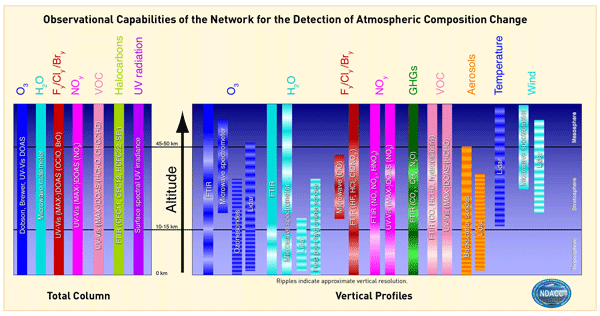
This introduction to the special issue "Achievements and perspectives of the Network for the Detection of Atmospheric Composition Change after 35 years of operation” provides an overview of important research findings achieved under the NDACC objectives. The future of NDACC is discussed in the light of the evolution of the scientific questions, evolving collaborations with partners and Cooperating Networks, and the current landscape of gaps in satellite and ground-based observations.
Holger Baars, Moritz Haarig, Leonard König, Athena A. Floutsi, Elizaveta Basharova, Julian Hofer, Henriette Gebauer, Ronny Engelmann, Dietrich Althausen, Annett Skupin, Benedikt Gast, Felix Fritzsch, Kevin Ohneiser, Cristofer Jimenez, Tom Gaudek, Martin Radenz, Håvard Buholdt, Birgit Heese, Andi Klamt, Patric Seifert, David P. Donovan, Gerd-Jan van Zadelhoff, Sabur F. Abdullaev, Shohina K. Khalifaeva, Dilovar F. Nozirov, and Ulla Wandinger
Atmos. Meas. Tech., 19, 3831–3864, https://doi.org/10.5194/amt-19-3831-2026, https://doi.org/10.5194/amt-19-3831-2026, 2026
Short summary
Short summary
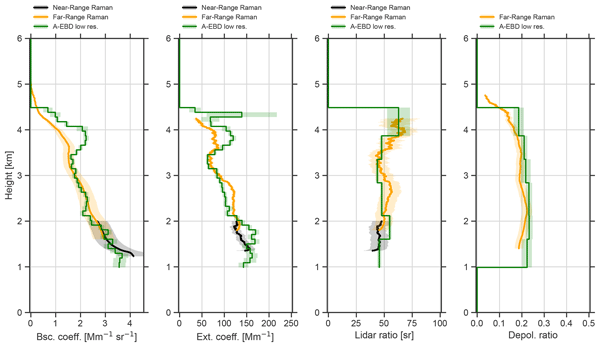
The satellite mission EarthCARE (Earth Cloud, Aerosol, and Radiation Explorer) was launched in May 2024 and has 4 unique instruments on board. We used ground-based PollyNET/ACTRIS (Aerosol, Clouds and Trace gases Research Infrastructure) profiling data to discuss the quality of EarthCARE’s lidar products based on case studies from different geographic locations. Our investigations revealed that the space-borne lidar instrument has remarkable profiling capabilities but currently also still some limitations, however, not preventing first scientific studies when quality checking the data intensively.
Caroline Jonas, Corinne Vigouroux, Bavo Langerock, Robin Björklund, Anne Boynard, Thomas Carlund, Martine De Mazière, Peter Effertz, Quentin Errera, Matthias M. Frey, José Granville, James W. Hannigan, Arno Keppens, Nis Jepsen, Rigel Kivi, Norrie Lyall, Mathias Palm, Maxime Prignon, Viktoria F. Sofieva, Kimberly Strong, Tove Svendby, David Tarasick, Laura Thölix, Roeland Van Malderen, Yana Virolainen, Sibylle von Löwis, and Xiaoyi Zhao
Atmos. Chem. Phys., 26, 8089–8124, https://doi.org/10.5194/acp-26-8089-2026, https://doi.org/10.5194/acp-26-8089-2026, 2026
Short summary
Short summary
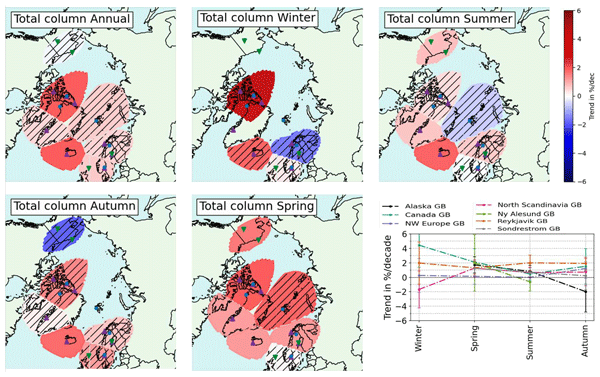
We study the evolution of ozone in the Arctic over the 2000–2024 period in the stratosphere (about 10 to 50 km) to assess the expected recovery of the ozone layer following the diminution of ozone-depleting substances. We merge ground-based data sets within spatially coherent regions to reduce uncertainties and we obtain positive trends for the total column everywhere in the Arctic and for the middle and upper stratosphere over Canada, but no significant trends in the lower stratosphere.
Wenfu Sun, Frederik Tack, Lieven Clarisse, and Michel Van Roozendael
Atmos. Chem. Phys., 26, 7741–7764, https://doi.org/10.5194/acp-26-7741-2026, https://doi.org/10.5194/acp-26-7741-2026, 2026
Short summary
Short summary
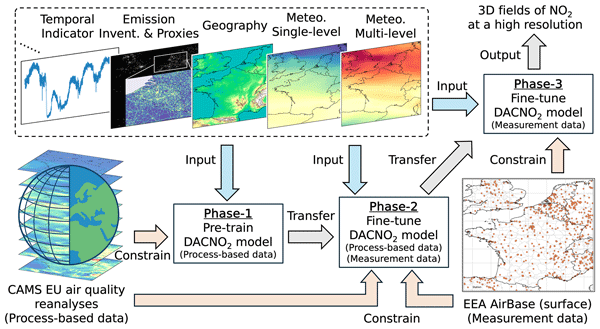
Accurate maps of nitrogen dioxide pollution at fine scales are essential for assessing air quality and protecting public health. We developed a machine learning model that produces daily high-resolution 3D nitrogen dioxide fields across Western Europe by combining large-scale atmospheric simulations with ground-based measurements. This approach outperforms traditional methods, especially over cities and complex terrain, and can enhance satellite-based air quality monitoring.
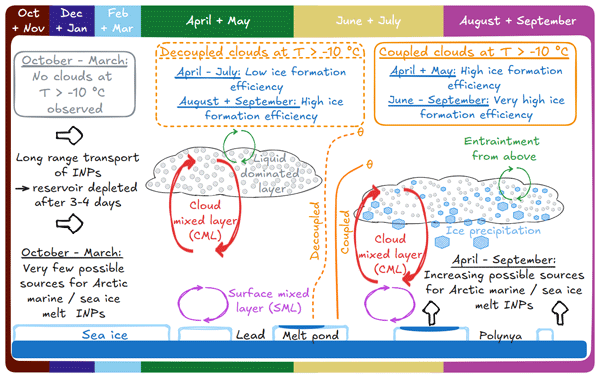
Hannes J. Griesche, Ronny Engelmann, Martin Radenz, Julian Hofer, Dietrich Althausen, Albert Ansmann, Kevin Barry, Jessie Creamean, Cristofer Jimenez, and Patric Seifert
Atmos. Chem. Phys., 26, 7141–7163, https://doi.org/10.5194/acp-26-7141-2026, https://doi.org/10.5194/acp-26-7141-2026, 2026
Short summary
Short summary
An annual cycle of mixed-phase ice-formation temperatures in the high Arctic is presented. Ship-based remote sensing with lidar and cloud radar from the MOSAiC (Multidisciplinary drifting Observatory for the Study of Arctic Climate) expedition was used to investigate the impact of surface processes on mixed-phase cloud properties. Surface mixed-layer cloud coupling was derived from radiosonde profiles. Combined with ice nucleating particle filter samples, sea ice concentration, and trajectory analysis an influence of surface processes on cloud properties was found.
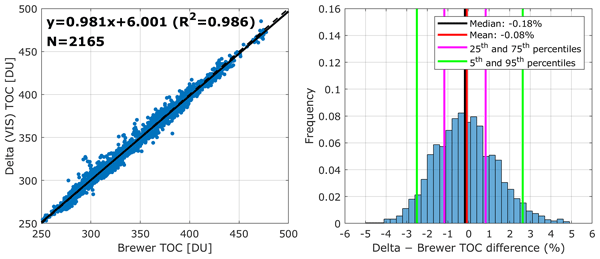
Dimitris Karagkiozidis, Alkiviadis Bais, Katerina Garane, Michel Van Roozendael, Dimitris Nikolis, Manuel Roca, and Dimitris Balis
Atmos. Meas. Tech., 19, 3309–3332, https://doi.org/10.5194/amt-19-3309-2026, https://doi.org/10.5194/amt-19-3309-2026, 2026
Short summary
Short summary
This study presents total ozone column (TOC) measurements over Thessaloniki, Greece, using a ground-based Ultraviolet-Visible (UV-VIS) instrument, by applying the direct sun Differential Optical Absorption Spectroscopy (DOAS) technique. The retrievals in both the UV (Huggins) and VIS (Chappuis) bands show very good agreement with collocated Brewer and Pandora observations. The results highlight the successful exploitation of the Chappuis bands for reliable ozone monitoring, providing a complementary approach to traditional UV-based TOC retrievals.
Victoria E. Cachorro, Juan Carlos Antuña-Marrero, Abel Calle, Roberto Román, David Mateos, Carlos Toledano, Juan Carlos Antuña-Sánchez, Ramiro González, Manuel Antón, Javier Vaquero-Martínez, Angel M. de Frutos Baraja, and Javier Pacheco
EGUsphere, https://doi.org/10.5194/egusphere-2026-2374, https://doi.org/10.5194/egusphere-2026-2374, 2026
Short summary
Short summary
Observations of the Arctic integrated water vapor (IWV) from sun photometers (SP) are in general dryer than the ones from GNSS. High correlations between IWV from SP and IWV from GNSS at all sites, show the good agreement between both techniques. Moist bias of hourly IWV magnitudes from ERA5 and MERRA-2 reanalyses respect to GNSS, radiosonde, SP, show that current and future state-of-the-art reanalyses require improvements to match the range of variability of these IWV observation techniques.
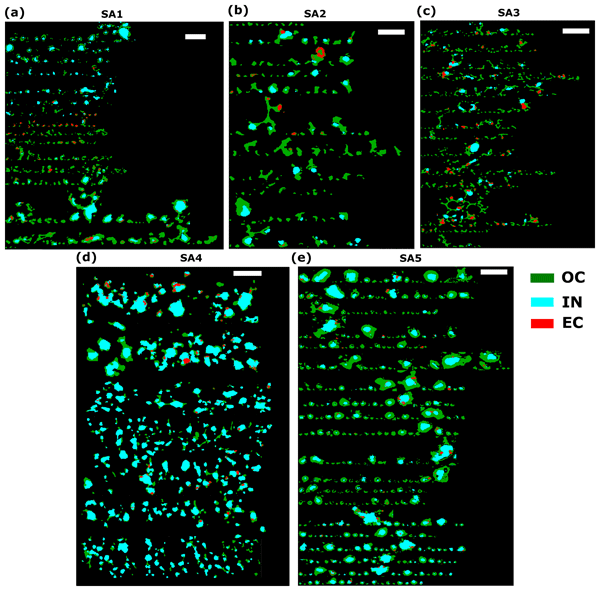
Nurun Nahar Lata, Trung Diep, Stefania Gilardoni, Mauro Mazzola, Zezhen Cheng, Ashfiqur Rahman, Mickey M. Rogers, Matthew Fraund, Matthew A. Marcus, Naruki Hiranuma, and Swarup China
Atmos. Chem. Phys., 26, 6611–6628, https://doi.org/10.5194/acp-26-6611-2026, https://doi.org/10.5194/acp-26-6611-2026, 2026
Short summary
Short summary
Ice in the Arctic clouds is initiated by rare particles, and their properties are not well understood due to atmospheric processing. By combining microscopy with freezing experiments, we found that both chemical composition and the thickness and morphological configuration of organic coatings influence ice formation. This finding highlights the importance of particle surface chemistry in cloud formation and offers new insights into how Arctic aerosols influence cloud formation.
Herizo Narivelo, Bastien Sauvage, Klaas Folkert Boersma, Isabelle De Smedt, Isidora Anglou, Michel Van Roozendael, Eric Le Flochmoën, and Brice Barret
EGUsphere, https://doi.org/10.5194/egusphere-2026-1652, https://doi.org/10.5194/egusphere-2026-1652, 2026
Short summary
Short summary
Tropospheric ozone is a key component of air pollution; it is produced by the photochemical oxidation of volatile organic compounds in the presence of nitrogen oxides. Using satellite observations, we determine the best combination of emission inventories for biomass-burning and anthropogenic sources, we analyse the impact of the evolution of two surface emissions in tropics on tropospheric ozone and its chemical regime, using numerical simulations over the last few decades.
Friederike Jakob, Martin Radenz, Holger Baars, Patric Seifert, and Ronny Engelmann
EGUsphere, https://doi.org/10.5194/egusphere-2026-2445, https://doi.org/10.5194/egusphere-2026-2445, 2026
Short summary
Short summary
Continuous water vapor mixing ratio profiles at Neumayer Station III, Antarctica during winter 2023 are presented. The observations reveal synoptic patterns governing moisture transport towards the Antarctic coast. Comparison with ER5 reanalysis data shows generally good agreement, but a dry bias of 10% in the lower troposphere. The bias depends on assimilation cycle, surface representation in ERA5, and synoptic conditions, suggesting uncertainties in boundary layer processes as a key causes.
Bavo Langerock, Minqiang Zhou, Martine De Mazière, Mahesh Kumar Sha, Filip Desmet, Bart Dils, Corinne Vigouroux, Rigel Kivi, Isamu Morino, Mathias Palm, Gopala Krishna Darbha, Soumik Banerjee, Sujata Ray, and Mohmmed Talib
EGUsphere, https://doi.org/10.5194/egusphere-2026-1890, https://doi.org/10.5194/egusphere-2026-1890, 2026
This preprint is open for discussion and under review for Atmospheric Measurement Techniques (AMT).
Short summary
Short summary
This work describes an algorithm to correct measurements obtained from Fourier-Transform Infrared spectrometers (FTIR) for nonlinear detector response. The method is demonstrated for remote sensing observational networks for atmospheric gas products (NDACC, TCCON and COCCON). Diagnostic metrics are introduced and have the potential to characterize the cause of the underlying nonlinearity (saturation or optical misalignment). The algorithm is made available in python.
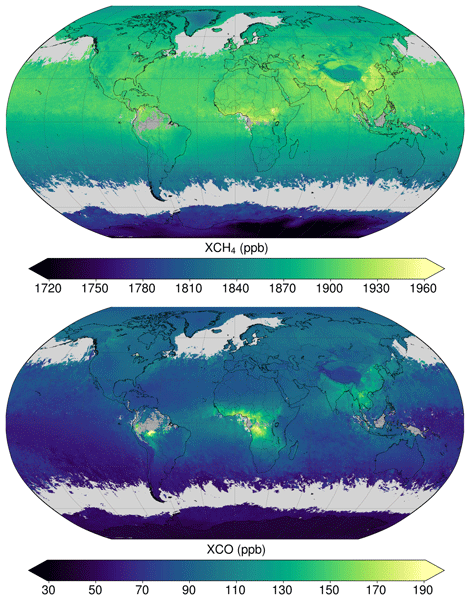
Oliver Schneising, Heinrich Bovensmann, Michael Buchwitz, Matthias Buschmann, Nicholas M. Deutscher, David W. T. Griffith, Jonas Hachmeister, Frank Hase, Laura T. Iraci, Rigel Kivi, Isamu Morino, Hirofumi Ohyama, Christof Petri, Maximilian Reuter, John Robinson, Coleen Roehl, Mahesh Kumar Sha, Kei Shiomi, Kimberly Strong, Ralf Sussmann, Yao Té, Voltaire A. Velazco, Mihalis Vrekoussis, Wei Wang, Thorsten Warneke, Damien Weidmann, Debra Wunch, Minqiang Zhou, and Hartmut Bösch
Atmos. Meas. Tech., 19, 2407–2435, https://doi.org/10.5194/amt-19-2407-2026, https://doi.org/10.5194/amt-19-2407-2026, 2026
Short summary
Short summary
We present an improved version of the TROPOMI/WFMD (TROPOspheric Monitoring Instrument/Weighting Function Modified Differential) algorithm for the simultaneous retrieval of atmospheric methane and carbon monoxide from satellite observations. The updated data product combines higher data yield with better precision and accuracy, expanding its suitability for a wider range of scientific applications. These substantial advances are mainly due to refined quality filtering, enabling more reliable identification of cloudy scenes and mitigating specific aerosol-related issues.
Elena Barbaro, Francisco Ardini, Silvia Becagli, Stefano Bertinetti, Federica Bruschi, Giulia Calzolai, Alice Cavaliere, David Cappelletti, Stefano Crocchianti, Matteo Feltracco, Andrea Gambaro, Fabio Giardi, Stefania Gilardoni, Marco Grotti, Dominic Heslin-Rees, Radovan Krejci, Mery Malandrino, Matilde Mataloni, Simonetta Montaguti, Silvia Nava, Marco Paglione, Matteo Rinaldi, Chiara Ripa, Mirko Severi, Andrea Spolaor, Rita Traversi, Hilde Uggerud, Giulio Verazzo, Tessa Viglezio, Karl Espen Yttri, Wenche Aas, and Mauro Mazzola
EGUsphere, https://doi.org/10.5194/egusphere-2026-1467, https://doi.org/10.5194/egusphere-2026-1467, 2026
Short summary
Short summary
This study analyzes how Arctic atmospheric layering affects aerosol distribution by comparing data from the Gruvebadet (61 m) and Zeppelin (472 m) observatories in Svalbard. Results show consistent levels of human-made pollutants like sulfate at both heights, confirming long-range transport from Eurasia. Conversely, natural biogenic tracers were more concentrated at lower altitudes. By integrating chemical and meteorological data, the research highlights the need for multi-level monitoring.
Tom Gaudek, Cristofer Jimenez, Kevin Ohneiser, Christopher Fuchs, Jan Henneberger, Johannes Bühl, Andi Klamt, Albert Ansmann, Ronny Engelmann, and Patric Seifert
Atmos. Meas. Tech., 19, 2245–2263, https://doi.org/10.5194/amt-19-2245-2026, https://doi.org/10.5194/amt-19-2245-2026, 2026
Short summary
Short summary
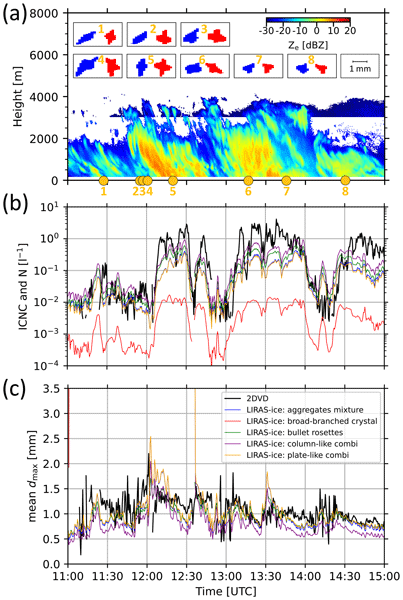
This study introduces the maximum diameter (Dmax) of precipitation particles measured by a two-dimensional video disdrometer (2DVD) as a novel parameter. Dmax is applied in a cloud seeding study during the Cloudlab campaign and, for the first time, in a MOSAiC (Multidisciplinary drifting Observatory for the Study of Arctic Climate) case to evaluate the LIRAS (LIdar RAdar Synergy )-ice remote-sensing retrieval of in-cloud ice crystal size and number. Both quantities agreed well with the 2DVD measurements under ideal conditions, highlighting the potential of Dmax for precipitation studies.
Athena Augusta Floutsi, Konstantinos Rizos, Dimitri Trapon, Ronny Engelmann, Dietrich Althausen, Eleni Marinou, Peristera Paschou, Julian Hofer, Emmanouil Proestakis, Henriette Gebauer, Annett Skupin, Albert Ansmann, Thorsten Fehr, Timon Hummel, Rob Koopman, Vassilis Amiridis, Ulla Wandinger, and Holger Baars
Atmos. Meas. Tech., 19, 1901–1925, https://doi.org/10.5194/amt-19-1901-2026, https://doi.org/10.5194/amt-19-1901-2026, 2026
Short summary
Short summary
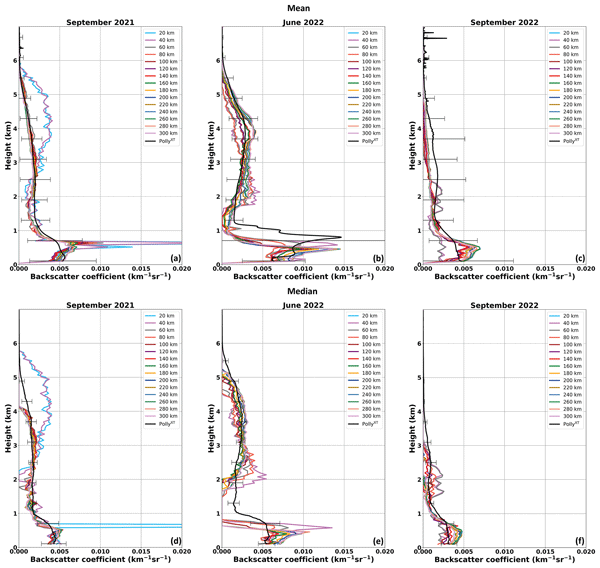
We assess the representativeness of a remote ground-based station in Mindelo, Cabo Verde by utilizing continuous observations of a ground-based multiwavelength polarization Raman lidar and the LIdar climatology of Vertical Aerosol Structure (LIVAS) products. Based on a statistical analysis of the optical properties at different radii around Mindelo and case studies, we conclude that overall, the ground-based station in Mindelo can be considered conditionally representative.
Lorenzo Fabris, Nicolas Theys, Lieven Clarisse, Bruno Franco, Jonas Vlietinck, Huan Yu, Hugues Brenot, Thomas Danckaert, Pascal Hedelt, and Michel Van Roozendael
Atmos. Meas. Tech., 19, 1801–1824, https://doi.org/10.5194/amt-19-1801-2026, https://doi.org/10.5194/amt-19-1801-2026, 2026
Short summary
Short summary
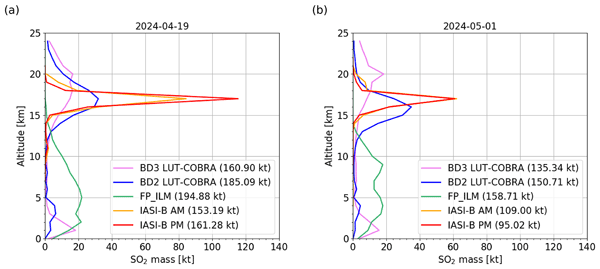
In this study, we developed an improved algorithm to retrieve the sulfur dioxide plume height and column density from the spectral band 2 of the TROPOspheric Monitoring Instrument onboard the Sentinel-5 Precursor satellite. We tested its sensitivity to various conditions and applied it to real volcanic eruptions. Overall, our approach shows high precision, accuracy, and sensitivity, and the results are consistent with other satellite measurements.
Henriette Gebauer, Athena Augusta Floutsi, Julian Hofer, Moritz Haarig, Annett Skupin, Ronny Engelmann, Cristofer Jimenez, Robert Wagner, and Holger Baars
Atmos. Chem. Phys., 26, 3439–3465, https://doi.org/10.5194/acp-26-3439-2026, https://doi.org/10.5194/acp-26-3439-2026, 2026
Short summary
Short summary
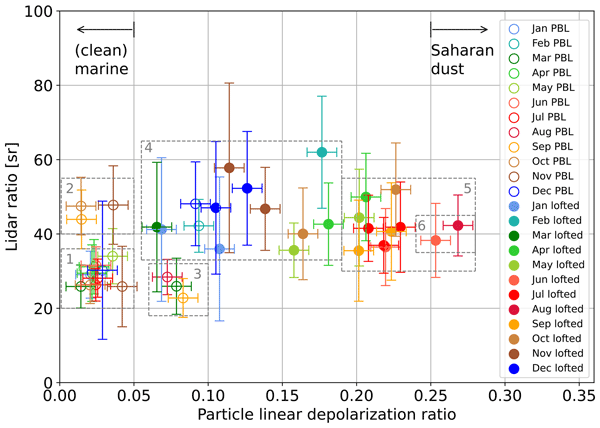
The annual aerosol cycle over Mindelo, Cabo Verde, was characterized using lidar and sun photometer measurements between July 2021 and August 2023. The observations were used to define and characterize the aerosol-related seasons at this location. These are the dust season (June–September), when thick layers of Saharan dust are transported over Mindelo, and the mixing season (November–March), when this dust is mixed with smoke from the African continent. April, May, and October were defined as transition months.
Anna Moustaka, Antonis Gkikas, Stavros-Andreas Logothetis, Johannes Flemming, Samuel Rémy, Melanie Ades, Angela Benedetti, Kleareti Tourpali, Vassilis Amiridis, and Stelios Kazadzis
EGUsphere, https://doi.org/10.5194/egusphere-2026-1107, https://doi.org/10.5194/egusphere-2026-1107, 2026
This preprint is open for discussion and under review for Atmospheric Chemistry and Physics (ACP).
Short summary
Short summary
We examined how atmospheric aerosols have changed worldwide over the past two decades using a global atmospheric reanalysis together with ground-based observations. We found strong regional differences, with clear declines in some industrialized areas and increases in parts of South Asia and the Middle East. These long-term records help improve understanding of changes in climate and air quality.
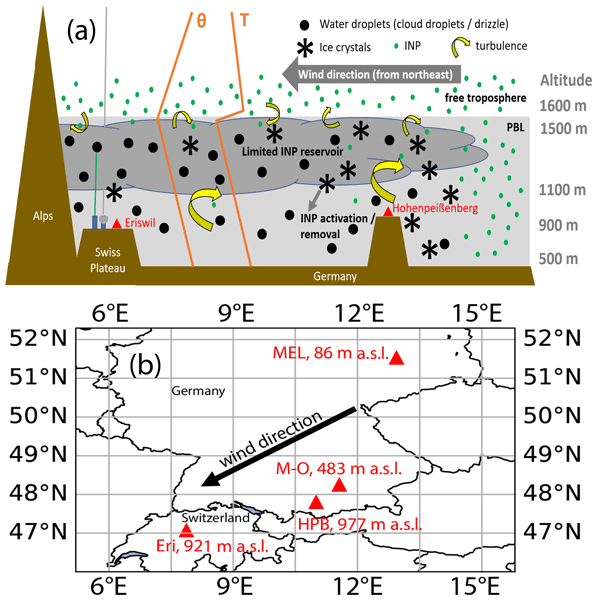
Kevin Ohneiser, Markus Hartmann, Heike Wex, Patric Seifert, Anja Hardt, Anna Miller, Katharina Baudrexl, Werner Thomas, Veronika Ettrichrätz, Maximilian Maahn, Tom Gaudek, Willi Schimmel, Fabian Senf, Hannes Griesche, Martin Radenz, and Jan Henneberger
Atmos. Chem. Phys., 26, 3223–3236, https://doi.org/10.5194/acp-26-3223-2026, https://doi.org/10.5194/acp-26-3223-2026, 2026
Short summary
Short summary
This study highlights the efficiency of supercooled liquid-dominated stratus clouds to remove ice-nucleating particles (INPs). When within the planetary boundary layer (PBL), lower concentrations of INPs were measured under supercooled stratus conditions, compared to when the stratus cloud layers occurred at temperatures above freezing. Under supercooling conditions, the free-troposphere above the supercooled stratus covered PBL was found to be an additional potential source of INP.
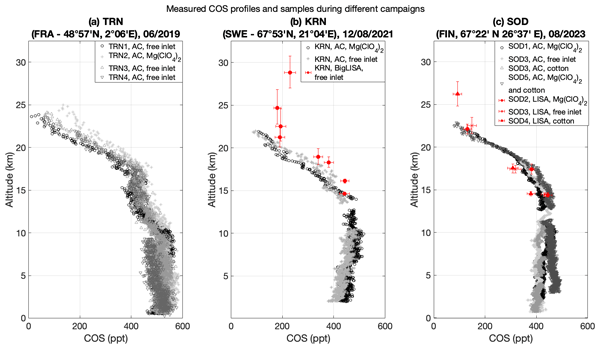
Alessandro Zanchetta, Steven van Heuven, Joram Hooghiem, Rigel Kivi, Thomas Laemmel, Michel Ramonet, Markus Leuenberger, Peter Nyfeler, Sophie L. Baartman, Maarten Krol, and Huilin Chen
Atmos. Meas. Tech., 19, 1465–1486, https://doi.org/10.5194/amt-19-1465-2026, https://doi.org/10.5194/amt-19-1465-2026, 2026
Short summary
Short summary
Continuous vertical profiles and discrete stratospheric samples of carbonyl sulfide (COS) were collected deploying the balloon-borne AirCore, LIghtweight Stratospheric Air (LISA) and BigLISA samplers and measured on a Quantum Cascade Laser Spectrometer (QCLS). Our measurements show good accordance with previous COS observations. Moreover, laboratory tests of ozone (O3) scrubbers proved squalene to remove O3 very efficiently without biasing the measurements of other trace gases.
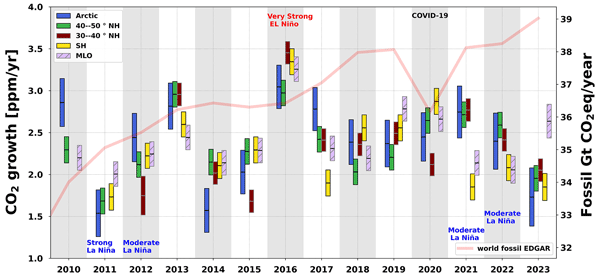
Nasrin Mostafavi Pak, Jonas Hachmeister, Markus Rettinger, Matthias Buschmann, Nicholas M. Deutscher, David W. T. Griffith, Laura T. Iraci, Xin Lan, Erin McGee, Isamu Morino, Dave Pollard, Coleen M. Roehl, Kimberly Strong, Rigel Kivi, and Paul Wennberg
Biogeosciences, 23, 1477–1495, https://doi.org/10.5194/bg-23-1477-2026, https://doi.org/10.5194/bg-23-1477-2026, 2026
Short summary
Short summary
We studied how carbon dioxide (CO2) levels change each year using long-term measurements from twelve sites worldwide. Average growth rates from 2010 to 2024 were about 2.4 ppm/year, with notable year-to-year and regional differences. Natural climate patterns influenced these changes, while temporary shifts in human emissions, such as during COVID‑19, had modest local effects. Monitoring CO2 growth across regions helps track emissions and assess mitigation efforts.
Amit Singh Chandel, Chandan Sarangi, Nurun Nahar, Saqib Ahmad Zargar, Poul Cherian, Xena Mansoura, Vijay P. Kanawade, Bhishma Tyagi, Antti-Pekka Hyvärinen, Aki Virkkula, Harendra S. Negi, Swarup China, and Rakesh K. Hooda
EGUsphere, https://doi.org/10.5194/egusphere-2026-424, https://doi.org/10.5194/egusphere-2026-424, 2026
Short summary
Short summary
Dust storms reaching the western Himalayas often mix with pollution during transport. Using high-altitude measurements from May 2023, we show that this polluted dust has altered intrinsic optical properties, scattering and absorbing more sunlight than clean dust, with important implications for atmospheric heating and regional climate.
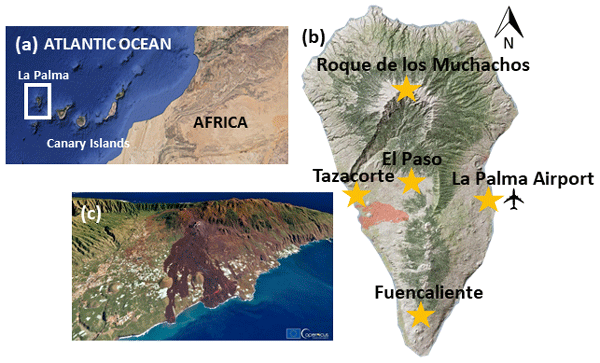
África Barreto, Francisco Quirós, Omaira E. García, Jorge Pereda-de-Pablo, Daniel González-Fernández, Andrés Bedoya-Velásquez, Michael Sicard, Carmen Córdoba-Jabonero, Marco Iarlori, Vincenzo Rizi, Nickolay Krotkov, Simon Carn, Reijo Roininen, Antonio J. Molina-Arias, A. Fernando Almansa, Óscar Álvarez-Losada, Carla Aramo, Juan José Bustos, Romain Ceolato, Adolfo Comerón, Alicia Felpeto, Rosa D. García, Pablo González-Sicilia, Yenny González, Pascal Hedelt, Miguel Hernández, María-Ángeles López-Cayuela, Diego Loyola, Stavros Meletlidis, Constantino Muñoz-Porcar, Ermanno Pietropaolo, Ramón Ramos, Alejandro Rodríguez-Gómez, Roberto Román, Pedro M. Romero-Campos, Martin Stuefer, Carlos Toledano, and Ellsworth J. Welton
Atmos. Meas. Tech., 19, 1385–1406, https://doi.org/10.5194/amt-19-1385-2026, https://doi.org/10.5194/amt-19-1385-2026, 2026
Short summary
Short summary
This manuscript describes the instrumental coverage deployed during the Tajogaite eruption (19 September–25 December 2021) by the Instituto Geográfico Nacional (IGN), the Spanish State Meteorological Agency (AEMET), and other Spanish members of ACTRIS (Aerosol, Clouds and Trace Gases Research Infrastructure) to monitor its atmospheric impact. Two complementary methods provide consistent plume height data for future operational surveillance.
Nikolaos Papadimitriou, Ilias Fountoulakis, Antonis Gkikas, Kyriakoula Papachristopoulou, Andreas Kazantzidis, Stelios Kazadzis, Stefan Pfenninger, John Kapsomenakis, Kostas Eleftheratos, Athanassios A. Argiriou, Lionel Doppler, and Christos S. Zerefos
Atmos. Meas. Tech., 19, 1227–1244, https://doi.org/10.5194/amt-19-1227-2026, https://doi.org/10.5194/amt-19-1227-2026, 2026
Short summary
Short summary
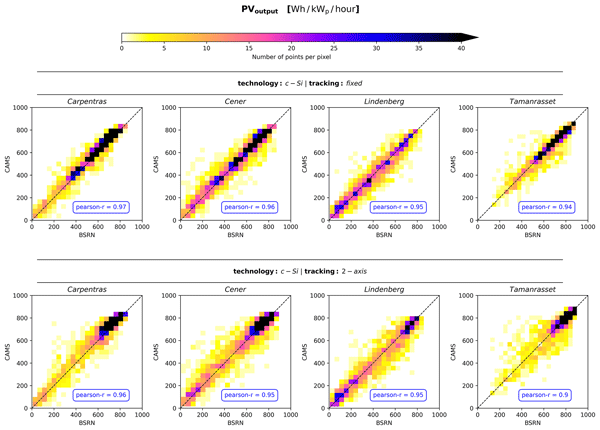
We perform Photovoltaic (PV) power simulations with the Global Solar Energy Estimator and assess the uncertainty linked to the use of a diffuse fraction model. Validation is conducted under diverse atmospheric conditions, including cloudiness and aerosols, using input data from ground-based measurements and the Copernicus Atmosphere Monitoring Service (CAMS). Results indicate that simulations are reliable under most conditions, with overestimations occurring during intense dust events.
Gaia Pinardi, Martina M. Friedrich, Corinne Vigouroux, Bavo Langerock, Isabelle De Smedt, Caroline Fayt, Christian Hermans, Steffen Beirle, Thomas Wagner, Minqiang Zhou, Ting Wang, Pucai Wang, Martine De Mazière, and Michel Van Roozendael
Atmos. Meas. Tech., 19, 1259–1291, https://doi.org/10.5194/amt-19-1259-2026, https://doi.org/10.5194/amt-19-1259-2026, 2026
Short summary
Short summary
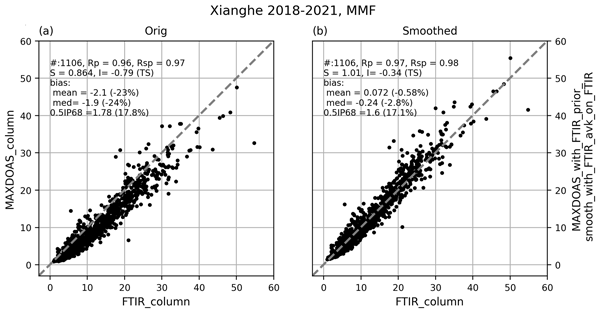
We evaluate ground-based remote-sensing measurements of formaldehyde from three techniques at a suburban site in China. A systematic −20 % bias in Multi-AXis Differential Optical Absorption Spectroscopy compared to direct-sun ultraviolet and infrared data is linked to limited sensitivity above a few kilometers and simplified vertical profiles assumptions. Using model-based priors and accounting for vertical sensitivity removes these differences, improving consistency for satellite validation.
Davis Earley, Elena Lind, James Flynn, Subin Yoon, Sergio Alvarez, and Travis Griggs
EGUsphere, https://doi.org/10.5194/egusphere-2025-5179, https://doi.org/10.5194/egusphere-2025-5179, 2026
Short summary
Short summary
This paper focuses on the relationship between concentrations of trace gases measured at the surface and path averaged concentrations, known as vertical column densities, to produce a column to surface ratio, which is an estimation of the effective height of each trace gas’s vertical profile. In addition, sensitivity studies are performed to analyze the effect of uncertain aerosol information on the estimation of air mass factors through radiative transfer simulations.
Anna Moustaka, Nikolaos Siomos, Stelios Kazadzis, Emmanouil Proestakis, Kalliopi Artemis Voudouri, Anton Lopatin, Oleg Dubovik, Kleareti Tourpali, Christos Zerefos, Vassilis Amiridis, and Antonis Gkikas
Atmos. Meas. Tech., 19, 1201–1225, https://doi.org/10.5194/amt-19-1201-2026, https://doi.org/10.5194/amt-19-1201-2026, 2026
Short summary
Short summary
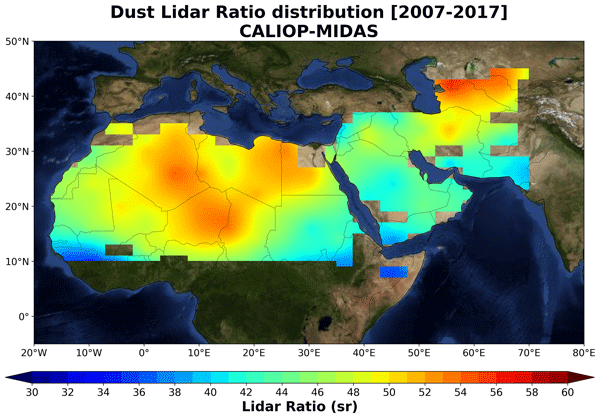
North Africa and the Middle East are home to the world’s most active dust sources, but accurately monitoring airborne dust remains challenging. We combine active and passive satellite aerosol products to dynamically estimate dust lidar ratios over a 12-year period. The results reveal pronounced and physically meaningful regional variability, improving aerosol characterization and supporting climate and air-quality applications.
David Mateos, Carlos Toledano, Abel Calle, Roberto Román, Marcos Herreras-Giralda, Ramiro González, Sara Herrero-Anta, Daniel González-Fernández, Celia Herrero-del Barrio, Argyro Nisantzi, Rodanthi E. Mamouri, Silke Groß, Victoria E. Cachorro, Ángel M. de Frutos, and Bernadett Weinzierl
Atmos. Chem. Phys., 26, 1993–2005, https://doi.org/10.5194/acp-26-1993-2026, https://doi.org/10.5194/acp-26-1993-2026, 2026
Short summary
Short summary
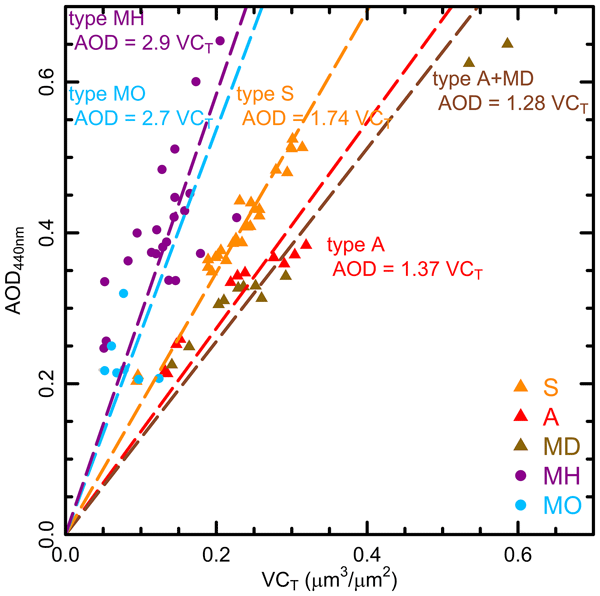
A field experiment deployed in Cyprus included two sun photometers of Aerosol Robotic Network in two different sites. Mineral dust was predominant during the experiment, with Saharan and Arabian dust showing distinct optical properties, in particular, the Angstrom Exponent in the near-infrarred range and Volume Efficiency factor. Both magnitudes can served as a reliable proxy for mineral dust typing. No significant black carbon presence was detected.
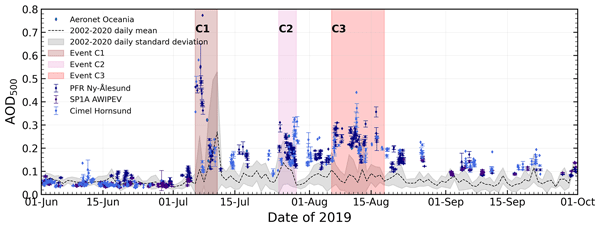
Sara Herrero-Anta, Sabine Eckhardt, Nikolaos Evangeliou, Stefania Gilardoni, Sandra Graßl, Dominic Heslin-Rees, Stelios Kazadzis, Natalia Kouremeti, Radovan Krejci, David Mateos, Mauro Mazzola, Christoph Ritter, Roberto Román, Kerstin Stebel, and Tymon Zielinski
Atmos. Chem. Phys., 26, 1435–1457, https://doi.org/10.5194/acp-26-1435-2026, https://doi.org/10.5194/acp-26-1435-2026, 2026
Short summary
Short summary
In summer 2019, unusually high aerosol concentrations were measured in the Arctic, extending through the troposphere and stratosphere up to 16 km. Using multiple instruments and models, aerosol particles were linked to wildfires, volcanic eruptions, and anthropogenic pollution. The aerosol consisted of spherical, fine-mode, weakly absorbing particles, which significantly reduced direct solar radiation. This combined approach improves understanding of Arctic aerosol events and climate processes.
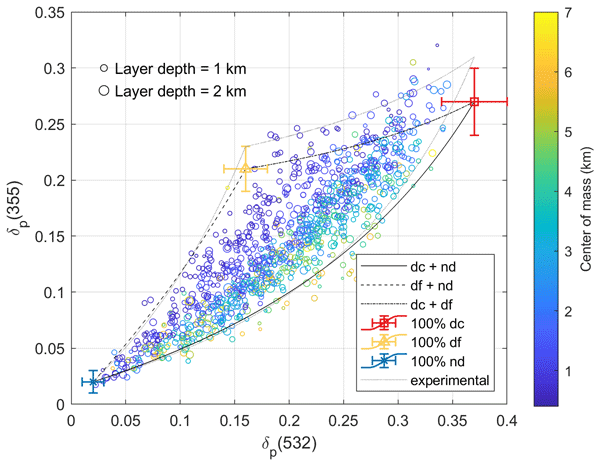
Xiaoxia Shang, Maria Filioglou, Julian Hofer, Moritz Haarig, Qiaoyun Hu, Philippe Goloub, Sami Romakkaniemi, and Mika Komppula
Atmos. Meas. Tech., 19, 679–697, https://doi.org/10.5194/amt-19-679-2026, https://doi.org/10.5194/amt-19-679-2026, 2026
Short summary
Short summary
We developed a simple method to identify different types of airborne particles using laser-based measurements. It can distinguish coarse dust, fine dust, and non-dust aerosols. Tests with real data from regions affected by desert dust show the method works well. This helps improve understanding of how particles are distributed in the atmosphere, which is important for air quality and climate studies.

Maria Fernanda Sanchez-Barrero, Philippe Goloub, Luc Blarel, Ioana Elisabeta Popovici, Benjamin Torres, Gaël Dubois, Thierry Podvin, Fabrice Ducos, Romain de Filippi, Michaël Sicard, Viviane Bout Roumazeilles, and Charlotte Skonieczny
Atmos. Meas. Tech., 19, 507–528, https://doi.org/10.5194/amt-19-507-2026, https://doi.org/10.5194/amt-19-507-2026, 2026
Short summary
Short summary
The TRANSAMA ship-based campaign (April–May 2023) aboard Marion Dufresne investigated aerosols from La Réunion to Barbados using photometer and lidar. Observations revealed clean conditions over the South Atlantic, with thin transported aerosol plumes from Southern Africa. Clouds were detected in 53 % of lidar profiles with higher occurrence in the first 2 km. The results show how combined lidar and photometer measurements can improve our understanding of aerosols in marine environment.
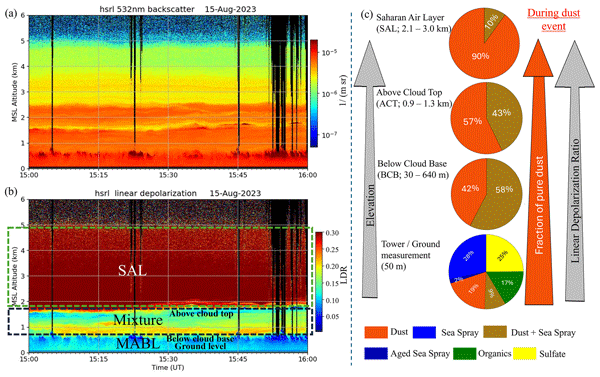
Sujan Shrestha, Robert E. Holz, Willem J. Marais, Zachary Buckholtz, Ilya Razenkov, Edwin Eloranta, Jeffrey S. Reid, Hope E. Elliott, Nurun Nahar Lata, Zezhen Cheng, Swarup China, Edmund Blades, Albert D. Ortiz, Rebecca Chewitt-Lucas, Alyson Allen, Devon Blades, Ria Agrawal, Elizabeth A. Reid, Jesus Ruiz-Plancarte, Anthony Bucholtz, Ryan Yamaguchi, Qing Wang, Thomas Eck, Elena Lind, Mira L. Pöhlker, Andrew P. Ault, and Cassandra J. Gaston
Atmos. Chem. Phys., 26, 983–999, https://doi.org/10.5194/acp-26-983-2026, https://doi.org/10.5194/acp-26-983-2026, 2026
Short summary
Short summary
Coordinated observations from MAGPIE 2023 show that Saharan dust in the marine atmospheric boundary layer becomes internally mixed with sea spray. This mixing increases particle sphericity and hygroscopicity, likely leading to suppressed lidar linear depolarization ratios despite high dust concentrations. The findings have key implications for interpreting lidar-derived dust retrievals, estimating surface dust from satellite products, and improving dust representation in models.
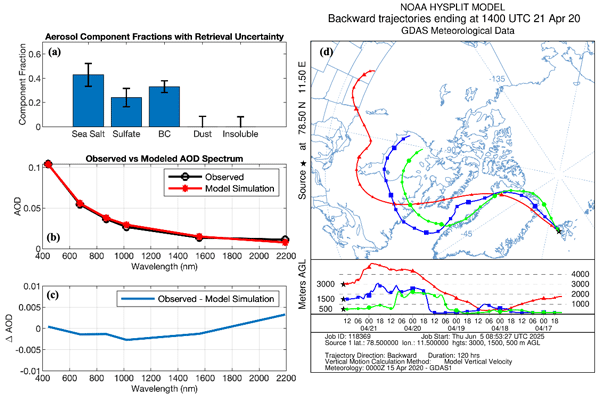
Denghui Ji, Xiaoyu Sun, Christoph Ritter, and Justus Notholt
Atmos. Meas. Tech., 19, 421–436, https://doi.org/10.5194/amt-19-421-2026, https://doi.org/10.5194/amt-19-421-2026, 2026
Short summary
Short summary
We have developed a new method that uses machine learning to analyse aerosols by combining different instruments measuring at different wavelengths. This method can identify the composition of these aerosols faster and more accurately. We tested it using ground-based data. Our results show that this method can help monitor air quality and better understand the impact of aerosols on the climate.

Angelos Karanikolas, Benjamin Torres, Masahiro Momoi, Marcos Herreras Giralda, Natalia Kouremeti, Julian Gröbner, Lionel Doppler, and Stelios Kazadzis
Atmos. Meas. Tech., 18, 7651–7677, https://doi.org/10.5194/amt-18-7651-2025, https://doi.org/10.5194/amt-18-7651-2025, 2025
Short summary
Short summary
Several techniques retrieve of the aerosol size distribution. The Generalized Retrieval of Atmosphere and Surface Properties algorithm can retrieve aerosol size distribution parameters using only aerosol optical depth (AOD) as input that is continuously observed by sun photometers worldwide. In this study, we apply the algorithm to AOD measured by sun photometers and spectroradiometers to assess the performance and limitations of such retrievals and investigate the effect of the spectral range.
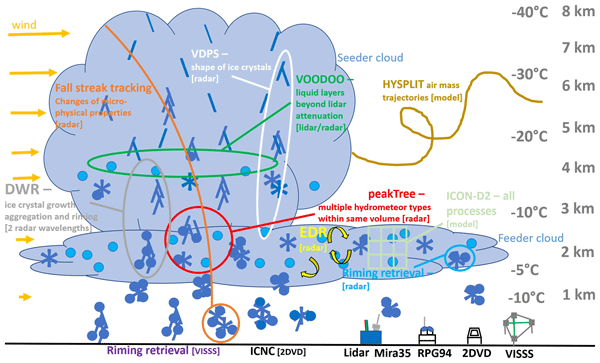
Kevin Ohneiser, Patric Seifert, Willi Schimmel, Fabian Senf, Tom Gaudek, Martin Radenz, Audrey Teisseire, Veronika Ettrichrätz, Teresa Vogl, Nina Maherndl, Nils Pfeifer, Jan Henneberger, Anna J. Miller, Nadja Omanovic, Christopher Fuchs, Huiying Zhang, Fabiola Ramelli, Robert Spirig, Anton Kötsche, Heike Kalesse-Los, Maximilian Maahn, Heather Corden, Alexis Berne, Majid Hajipour, Hannes Griesche, Julian Hofer, Ronny Engelmann, Annett Skupin, Albert Ansmann, and Holger Baars
Atmos. Chem. Phys., 25, 17363–17386, https://doi.org/10.5194/acp-25-17363-2025, https://doi.org/10.5194/acp-25-17363-2025, 2025
Short summary
Short summary
This study focuses on a seeder-feeder cloud system on 8 Jan 2024 in Eriswil, Switzerland. It is shown how the interaction of these cloud systems changes the cloud microphysical properties and the precipitation patterns. A big set of advanced remote-sensing techniques and retrieval algorithms are applied, so that a detailed view on the seeder-feeder cloud system is available. The gained knowledge can be used to improve weather models and weather forecasts.
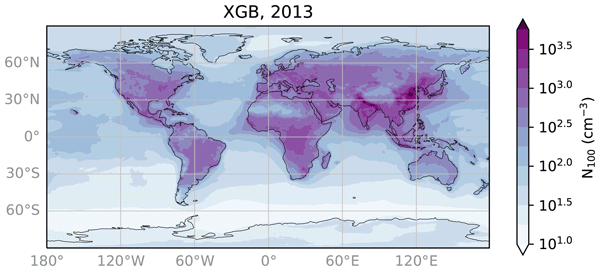
Aino Ovaska, Elio Rauth, Daniel Holmberg, Paulo Artaxo, John Backman, Benjamin Bergmans, Don Collins, Marco Aurélio Franco, Shahzad Gani, Roy M. Harrison, Rakesh K. Hooda, Tareq Hussein, Antti-Pekka Hyvärinen, Kerneels Jaars, Adam Kristensson, Markku Kulmala, Lauri Laakso, Ari Laaksonen, Nikolaos Mihalopoulos, Colin O'Dowd, Jakub Ondracek, Tuukka Petäjä, Kristina Plauškaitė, Mira Pöhlker, Ximeng Qi, Peter Tunved, Ville Vakkari, Alfred Wiedensohler, Kai Puolamäki, Tuomo Nieminen, Veli-Matti Kerminen, Victoria A. Sinclair, and Pauli Paasonen
Aerosol Research, 3, 589–618, https://doi.org/10.5194/ar-3-589-2025, https://doi.org/10.5194/ar-3-589-2025, 2025
Short summary
Short summary
We trained machine learning models to estimate the number of aerosol particles large enough to form clouds and generated daily estimates for the entire globe. The models performed well in many continental regions but struggled in remote and marine areas. Still, this approach offers a way to quantify these particles in areas that lack direct measurements, helping us understand their influence on clouds and climate on a global scale.
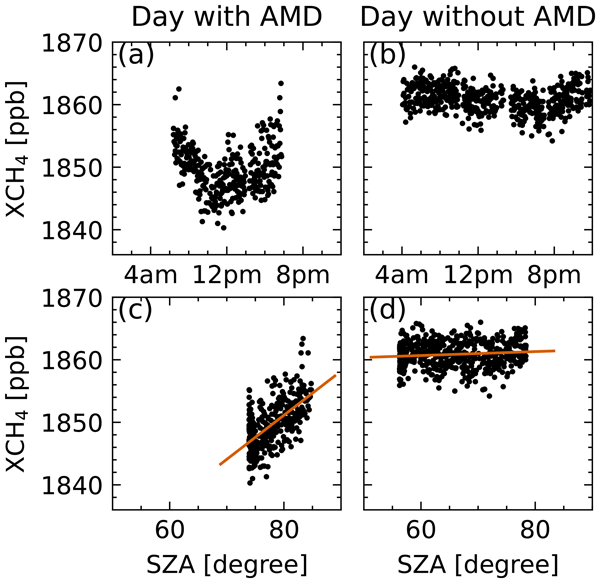
Jonas Hachmeister, Debra Wunch, Erin McGee, Kimberly Strong, Rigel Kivi, Justus Notholt, Thorsten Warneke, and Matthias Buschmann
Atmos. Meas. Tech., 18, 7105–7128, https://doi.org/10.5194/amt-18-7105-2025, https://doi.org/10.5194/amt-18-7105-2025, 2025
Short summary
Short summary
Methane measurements from the Total Carbon Column Observing Network (TCCON) are important for climate research, especially in the Arctic, where few measurements are available. We show that during early spring systematic errors are present in these data that are correlated to the presence of the polar vortex. These errors occur due to the usage of wrong methane prior shapes in the retrieval and can be alleviated by modifying the prior shape accordingly.
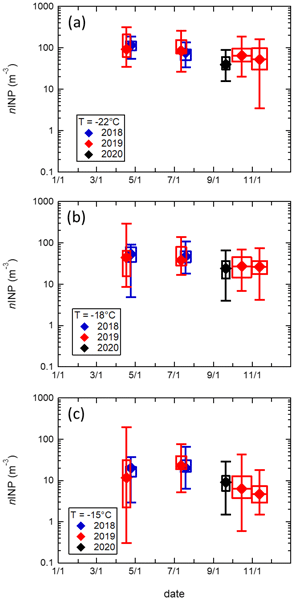
Matteo Rinaldi, Alessia Nicosia, Marco Paglione, Karam Mansour, Stefano Decesari, Mauro Mazzola, Gianni Santachiara, and Franco Belosi
Aerosol Research, 3, 535–556, https://doi.org/10.5194/ar-3-535-2025, https://doi.org/10.5194/ar-3-535-2025, 2025
Short summary
Short summary
This study presents atmospheric ice-nucleating particle (INP) data from the Gruvebadet observatory in Ny-Ålesund. A moderate summertime increase in INP levels is observed at -15 °C but not at other temperatures (-18 and -22 °C). Conversely, a marked seasonal evolution was observed for the contribution of super-micrometer INPs, which is at its maximum throughout summer up to early autumn. We show that marine biogenic INPs may be relevant in the Arctic during seasons of reduced sea ice coverage.
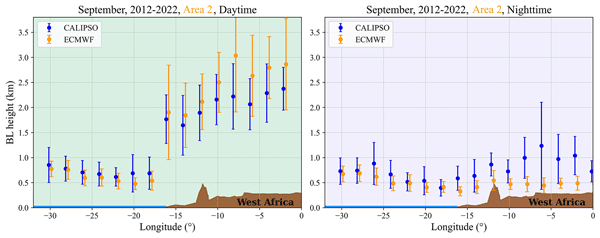
Ioanna Tsikoudi, Eleni Marinou, Maria Tombrou, Eleni Giannakaki, Emmanouil Proestakis, Konstantinos Rizos, Ville Vakkari, Holger Baars, Annett Skupin, Ronny Engelmann, Zhenping Yin, and Vassilis Amiridis
Atmos. Chem. Phys., 25, 16491–16510, https://doi.org/10.5194/acp-25-16491-2025, https://doi.org/10.5194/acp-25-16491-2025, 2025
Short summary
Short summary
We study the characteristics of the boundary layer over three areas: the tropical Atlantic, the tropical West African continent, and near Cabo Verde using PollyXT and CALIPSO (Cloud-Aerosol Lidar and Infrared Pathfinder Satellite Observations) lidar measurements, as well as ECMWF (European Centre for Medium-Range Weather Forecasts) data. The findings underline the strengths and limitations of different observational and modeling approaches, and emphasizes on the importance of considering aerosol conditions and local meteorology when interpreting boundary layer dynamics.
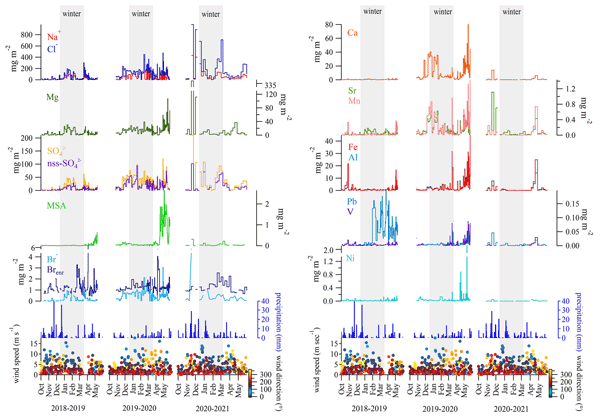
Azzurra Spagnesi, Elena Barbaro, Matteo Feltracco, Federico Scoto, Marco Vecchiato, Massimiliano Vardè, Mauro Mazzola, François Burgay, Federica Bruschi, Clara Jule Marie Hoppe, Allison Bailey, Andrea Gambaro, Carlo Barbante, and Andrea Spolaor
Atmos. Chem. Phys., 25, 16215–16232, https://doi.org/10.5194/acp-25-16215-2025, https://doi.org/10.5194/acp-25-16215-2025, 2025
Short summary
Short summary
Svalbard is ideal for studying how warming affects snow’s seasonal chemistry. By comparing the snow chemical composition of the 2019–2020 season with 2018–2019 and 2020–2021, we provide an overview of the seasonal and interannual variability of several chemical species on the Svalbard snowpack, furnishing insights into the interplay between short-term meteorological variability and the long-term climatic impacts of climate changes.
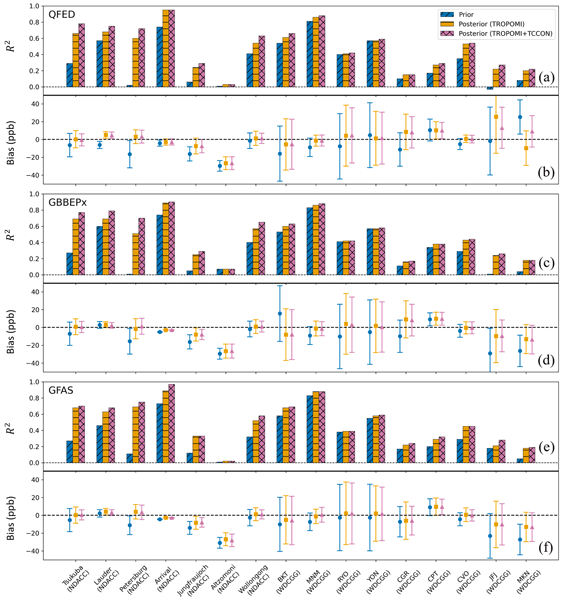
Sina Voshtani, Dylan B. A. Jones, Debra Wunch, Drew C. Pendergrass, Paul O. Wennberg, David F. Pollard, Isamu Morino, Hirofumi Ohyama, Nicholas M. Deutscher, Frank Hase, Ralf Sussmann, Damien Weidmann, Rigel Kivi, Omaira García, Yao Té, Jack Chen, Kerry Anderson, Robin Stevens, Shobha Kondragunta, Aihua Zhu, Douglas Worthy, Senen Racki, Kathryn McKain, Maria V. Makarova, Nicholas Jones, Emmanuel Mahieu, Andrea Cadena-Caicedo, Paolo Cristofanelli, Casper Labuschagne, Elena Kozlova, Thomas Seitz, Martin Steinbacher, Reza Mahdi, and Isao Murata
Atmos. Chem. Phys., 25, 15527–15565, https://doi.org/10.5194/acp-25-15527-2025, https://doi.org/10.5194/acp-25-15527-2025, 2025
Short summary
Short summary
We assess the complementarity of the greater temporal coverage provided by ground-based remote sensing data with the spatial coverage of satellite observations when these data are used together to quantify CO emissions from extreme wildfires in 2023. Our results reveal that the commonly used biomass burning emission inventories significantly underestimate the fire emissions and emphasize the importance of the ground-based remote sensing data in reducing uncertainties in the estimated emissions.
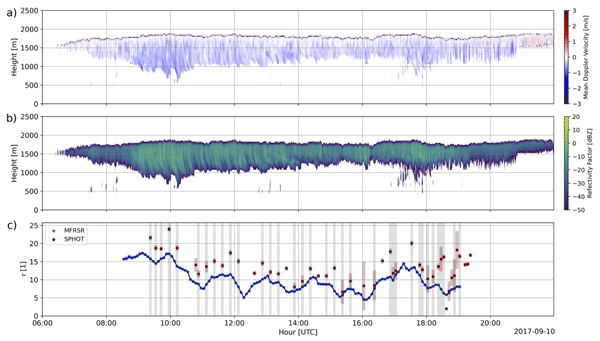
Kaiden Sookdar, Scott E. Giangrande, John Rausch, Lihong Ma, Meng Wang, Dié Wang, Michael P. Jensen, Ching-Shu Hung, and J. Christine Chiu
Atmos. Meas. Tech., 18, 6271–6289, https://doi.org/10.5194/amt-18-6271-2025, https://doi.org/10.5194/amt-18-6271-2025, 2025
Short summary
Short summary
Photometer observations of stratocumulus cloud properties are evaluated for a multiyear archive. Retrievals for cloud optical depth, cloud droplet effective radius, and liquid water path show solid agreement with collocated references. Continental stratocumulus clouds sorted by cloud thickness indicate double the cloud optical depth and liquid water path of their marine counterparts, while exhibiting similar bulk cloud droplet effective radius.
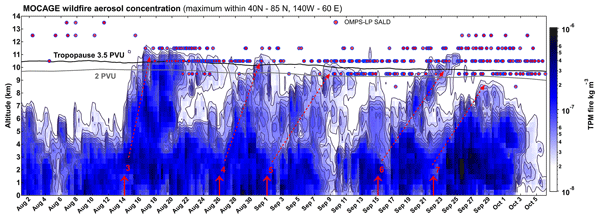
Sergey Khaykin, Slimane Bekki, Sophie Godin-Beekmann, Michael D. Fromm, Philippe Goloub, Qiaoyun Hu, Béatrice Josse, Alexandra Laeng, Mehdi Meziane, David A. Peterson, Sophie Pelletier, and Valérie Thouret
Atmos. Chem. Phys., 25, 14551–14571, https://doi.org/10.5194/acp-25-14551-2025, https://doi.org/10.5194/acp-25-14551-2025, 2025
Short summary
Short summary
In 2023, massive wildfires in Canada injected huge amounts of smoke into the atmosphere. Surprisingly, despite their intensity, the smoke did not rise very high but lingered at flight cruising altitudes, causing widespread pollution. This study shows how two different pathways lifted smoke into the lower stratosphere and reveals new insights into how wildfires affect air quality and climate, challenging what we thought we knew about fire and atmospheric impacts.
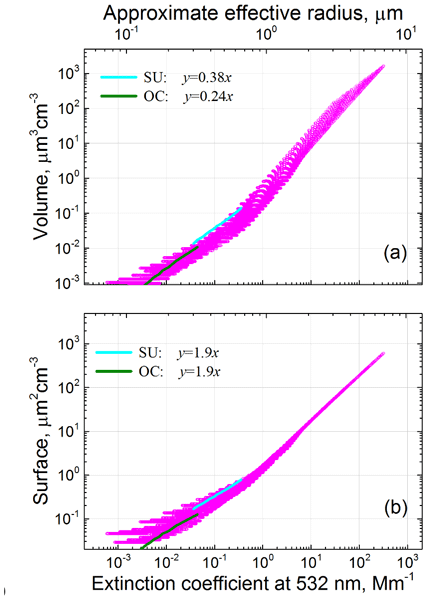
Igor Veselovskii, Qiaoyun Hu, Philippe Goloub, Thierry Podvin, Gaël Dubois, Alexey Kolgotin, and Mikhail Korenskii
Atmos. Meas. Tech., 18, 6039–6051, https://doi.org/10.5194/amt-18-6039-2025, https://doi.org/10.5194/amt-18-6039-2025, 2025
Short summary
Short summary
A Mie–Raman–fluorescence lidar is used to analyze possible quenching of aerosol fluorescence during hygroscopic growth. The well-mixed planetary boundary layer serves as a convenient environment for such studies, since the fluorescence backscattering coefficient should remain constant in the absence of water uptake effects. However, during some episodes, we observed a systematic decrease in fluorescence backscattering, which likely indicates fluorescence quenching.
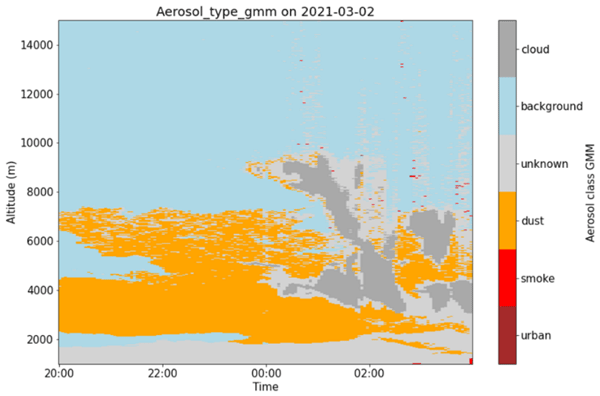
Robin Miri, Olivier Pujol, Qiaoyun Hu, Philippe Goloub, Igor Veselovskii, Thierry Podvin, and Fabrice Ducos
Atmos. Meas. Tech., 18, 5729–5747, https://doi.org/10.5194/amt-18-5729-2025, https://doi.org/10.5194/amt-18-5729-2025, 2025
Short summary
Short summary
We developed a new method to automatically identify types of particles in the air, such as smoke, dust, or pollution, using a specialized laser system. This helps monitor air quality more efficiently and in greater detail. Our method uses real data collected over 3 years in northern France and can detect changes caused by weather conditions. It offers a faster and more accurate way to understand what is in the air we breathe.
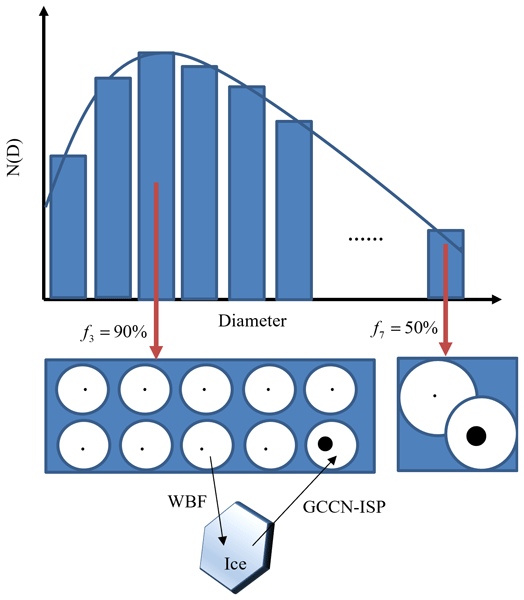
Denghui Ji, Christoph Ritter, Xiaoyu Sun, Manuel Moser, Christiane Voigt, Mathias Palm, and Justus Notholt
Atmos. Chem. Phys., 25, 13037–13052, https://doi.org/10.5194/acp-25-13037-2025, https://doi.org/10.5194/acp-25-13037-2025, 2025
Short summary
Short summary
We discovered a process where large aerosols help small water droplets in Arctic clouds grow, even when conditions normally favor ice. Unlike the traditional view, this process may explain how liquid and ice can coexist in cold clouds. Based on theory and aircraft data, our findings provide new insight into the microphysics of mixed-phase clouds, which could improve understanding of how Arctic clouds affect climate.

Ilias Fountoulakis, Kyriaki Papachristopoulou, Stelios Kazadzis, Gregor Hülsen, Julian Gröbner, Ioannis-Panagiotis Raptis, Dimitra Kouklaki, Akriti Masoom, Natalia Kouremeti, Charalampos Kontoes, and Christos S. Zerefos
Geosci. Model Dev., 18, 7451–7473, https://doi.org/10.5194/gmd-18-7451-2025, https://doi.org/10.5194/gmd-18-7451-2025, 2025
Short summary
Short summary
The UVIOS2 model has been evaluated at Davos, Switzerland during the UVCIII campaign. The accuracy in the modelled UV indices has been assessed for different combinations of model inputs. A good overall agreement between UVIOS2 and the world reference spectroradiometer QASUME was found (average ratio of ~ 1 between the modelled and measured UV index), although the variability in the ratio can be large under cloudy conditions.
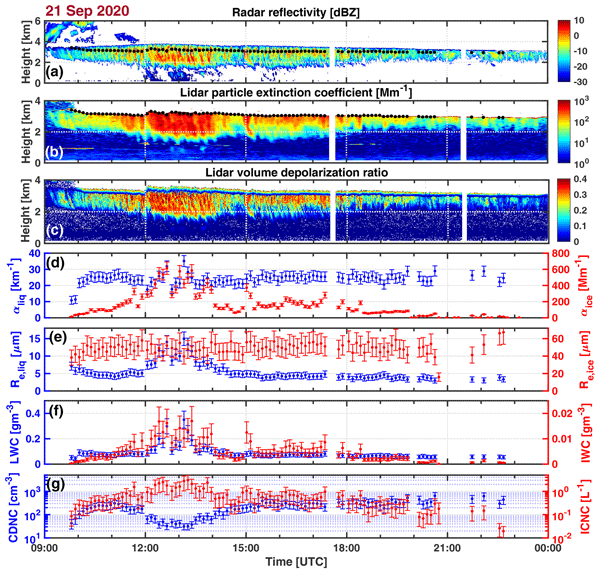
Cristofer Jimenez, Albert Ansmann, Kevin Ohneiser, Hannes Griesche, Ronny Engelmann, Martin Radenz, Julian Hofer, Dietrich Althausen, Daniel A. Knopf, Sandro Dahlke, Johannes Bühl, Holger Baars, Patric Seifert, and Ulla Wandinger
Atmos. Chem. Phys., 25, 12955–12981, https://doi.org/10.5194/acp-25-12955-2025, https://doi.org/10.5194/acp-25-12955-2025, 2025
Short summary
Short summary
We studied the water and ice phases of Arctic mixed-phase clouds (MPCs) using dual FOV polarization lidar and Doppler radar on board Polarstern during the MOSAiC expedition. Two long-lasting Arctic MPCs and year-round statistics show persistent droplet activation and dominant immersion freezing, indicating well-filled cloud condensation nuclei and ice-nucleating particle reservoirs. These findings help explain MPC longevity and may improve cloud life cycle representation in weather and climate models.
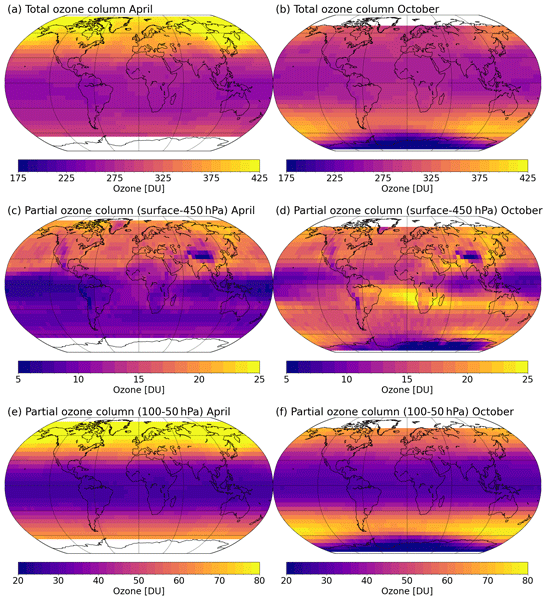
Melanie Coldewey-Egbers, Diego G. Loyola R., Barry Latter, Richard Siddans, Brian Kerridge, Daan Hubert, Michel van Roozendael, and Michael Eisinger
Atmos. Meas. Tech., 18, 5485–5505, https://doi.org/10.5194/amt-18-5485-2025, https://doi.org/10.5194/amt-18-5485-2025, 2025
Short summary
Short summary
The Global Ozone Monitoring Experiment (GOME)-type Ozone Profile Essential Climate Variable (GOP-ECV) data record provides monthly mean ozone profiles with global coverage from 1995 to 2021 at a spatial resolution of 5° × 5°. Measurements from five nadir-viewing satellite sensors are first harmonized and then merged into a coherent record. The long-term stability of the data record is further improved through scaling the profiles using the GOME-type Total Ozone Essential Climate Variable (GTO-ECV) data record as a reference.
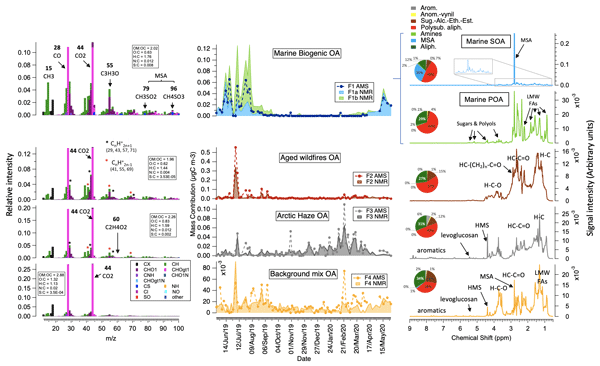
Marco Paglione, Yufang Hao, Stefano Decesari, Mara Russo, Karam Mansour, Mauro Mazzola, Diego Fellin, Andrea Mazzanti, Emilio Tagliavini, Manousos Ioannis Manousakas, Evangelia Diapouli, Elena Barbaro, Matteo Feltracco, Kaspar R. Daellenbach, and Matteo Rinaldi
Atmos. Chem. Phys., 25, 12853–12874, https://doi.org/10.5194/acp-25-12853-2025, https://doi.org/10.5194/acp-25-12853-2025, 2025
Short summary
Short summary
A year-long set of submicron aerosol samples (PM1) from Ny-Ålesund, Svalbard, was analyzed by proton nuclear magnetic resonance spectroscopy (H-NMR) and high-resolution time-of-flight aerosol mass spectrometry (HR-TOF-AMS) to characterize the organic fraction. Positive matrix factorization identified five organic aerosol sources. Winter–spring was dominated by Eurasian pollution and summer by marine biogenic aerosols, with occasional wildfire events.
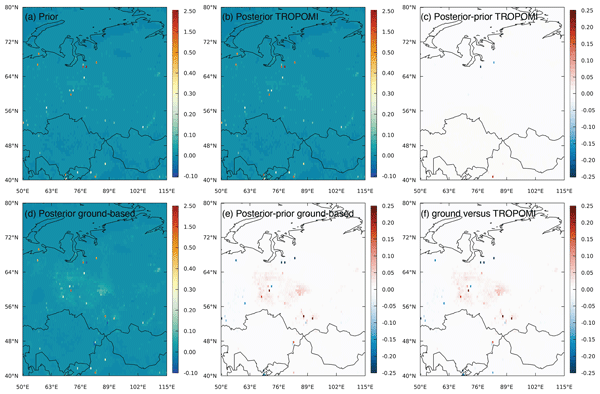
Rona L. Thompson, Nalini Krishnankutty, Ignacio Pisso, Philipp Schneider, Kerstin Stebel, Motoki Sasakawa, Andreas Stohl, and Stephen M. Platt
Atmos. Chem. Phys., 25, 12737–12751, https://doi.org/10.5194/acp-25-12737-2025, https://doi.org/10.5194/acp-25-12737-2025, 2025
Short summary
Short summary
Satellite remote sensing of atmospheric mixing ratios of greenhouse gases (GHGs) can provide information on their emissions. This study presents a novel method to use atmospheric mixing ratios observed by satellites with a Lagrangian model of atmospheric transport to estimate GHG emissions. This method can reduce model errors resulting from how an observation is represented by an atmospheric model, thereby helping to reduce the errors in the GHG emissions derived.
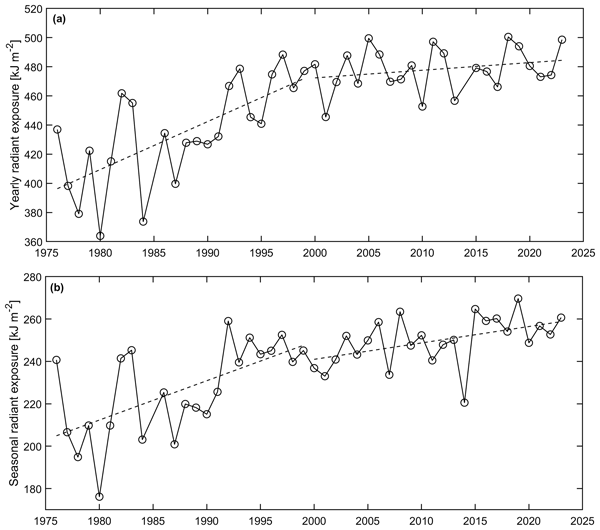
Agnieszka Czerwińska, Janusz Krzyścin, Janusz Jarosławski, Piotr S. Sobolewski, and Aleksander Pietruczuk
Atmos. Chem. Phys., 25, 12497–12512, https://doi.org/10.5194/acp-25-12497-2025, https://doi.org/10.5194/acp-25-12497-2025, 2025
Short summary
Short summary
Excessive levels of ultraviolet solar radiation at the Earth's surface have been linked to several types of skin cancer. The world's longest record of solar radiation intensities causing harmful skin redness comes from observations at Belsk, Poland, between 1976 and 2023. In this century, the intensity of such radiation is stable but 15 % higher than in the 1970s. This trend is due to the combined effects of a decrease in stratospheric ozone and an increase in cloud transparency before 2000.
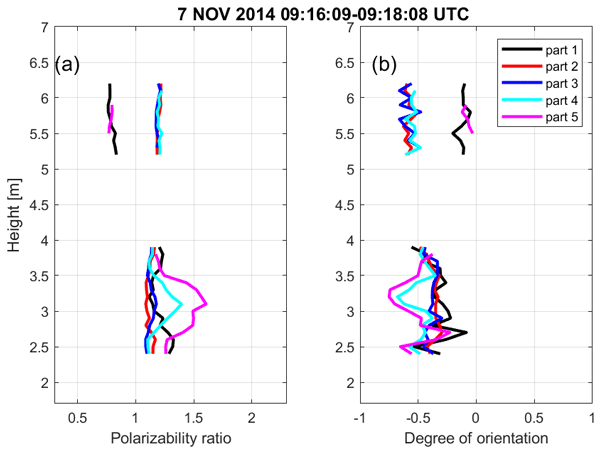
Majid Hajipour, Patric Seifert, Hannes Griesche, Kevin Ohneiser, and Martin Radenz
Atmos. Meas. Tech., 18, 5199–5222, https://doi.org/10.5194/amt-18-5199-2025, https://doi.org/10.5194/amt-18-5199-2025, 2025
Short summary
Short summary
This study presents an approach that enables the detection of the shape and orientation of multiple types of co-located hydrometeors in mixed-phase cloud systems. This information is key for improving the understanding of these clouds, as they do contain ice and liquid water simultaneously, making them relevant for the precipitation budget and radiative balance of the Earth's atmosphere. The retrieval is based on elevation scans of polarimetric cloud radars and can therefore be flexibly applied.
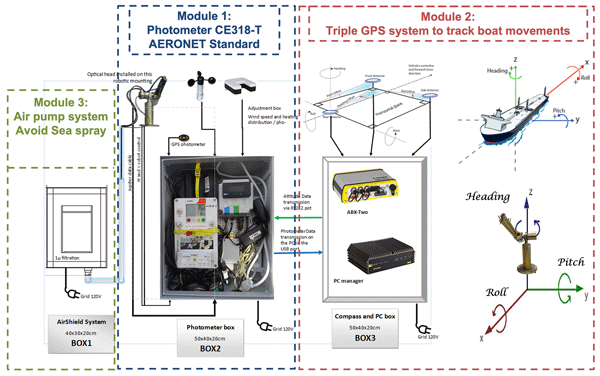
Benjamin Torres, Luc Blarel, Philippe Goloub, Gaël Dubois, Maria Fernanda Sanchez-Barrero, Ioana Elisabeta Popovici, Fabrice Maupin, Elena Lind, Alexander Smirnov, Ilya Slutsker, Julien Chimot, Ramiro González, Michaël Sicard, Jean Marc Metzger, and Pierre Tulet
Atmos. Meas. Tech., 18, 4809–4838, https://doi.org/10.5194/amt-18-4809-2025, https://doi.org/10.5194/amt-18-4809-2025, 2025
Short summary
Short summary
This study shows that it is possible to automatically monitor atmospheric aerosols from research vessels using automated instruments, following the same standards as AERONET (AErosol RObotic NETwork) land-based stations. By collecting 3 years of data in the Indian Ocean, we demonstrate that high-quality measurements can be made, even on a moving platform. These results open new possibilities for observing aerosols over the ocean and improving satellite data and climate studies.
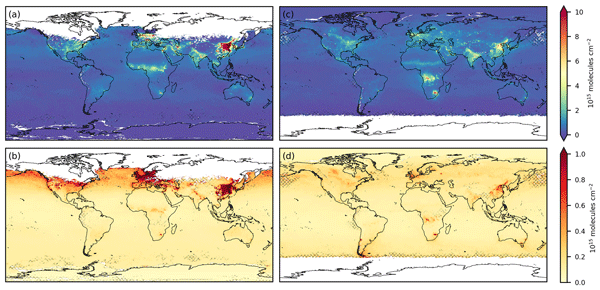
Isolde Glissenaar, Klaas Folkert Boersma, Isidora Anglou, Pieter Rijsdijk, Tijl Verhoelst, Steven Compernolle, Gaia Pinardi, Jean-Christopher Lambert, Michel Van Roozendael, and Henk Eskes
Earth Syst. Sci. Data, 17, 4627–4650, https://doi.org/10.5194/essd-17-4627-2025, https://doi.org/10.5194/essd-17-4627-2025, 2025
Short summary
Short summary
We developed a new global dataset of nitrogen dioxide (NO2) levels in the lower atmosphere, using data from TROPOMI for 2018–2021. This dataset offers improved accuracy and detail compared to earlier versions, meeting high international standards for climate data. By refining how measurement errors are calculated and reduced over time and space, we provide clearer insights into pollution patterns. This work supports better air quality monitoring and informs actions to address pollution globally.
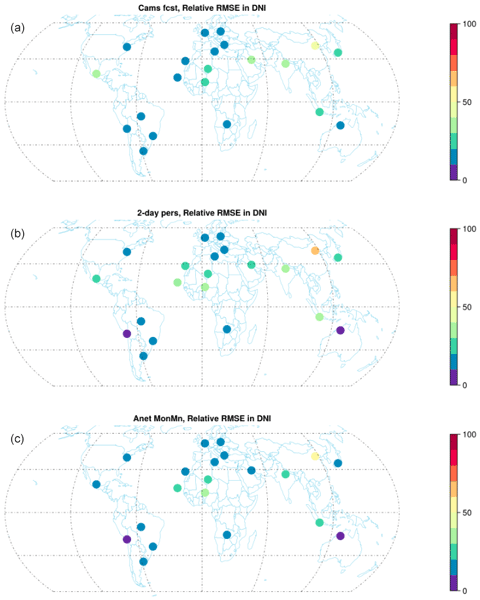
Xinyuan Hou, Kyriakoula Papachristopoulou, and Stelios Kazadzis
Atmos. Meas. Tech., 18, 4543–4557, https://doi.org/10.5194/amt-18-4543-2025, https://doi.org/10.5194/amt-18-4543-2025, 2025
Short summary
Short summary
We analyzed aerosol ground measurements and model based aerosol optical depth (AOD) forecasts to study variations in AOD at different global sites. We compared day-ahead AOD forecast methods and assessed their impact on forecasting clear-sky direct normal irradiance (DNI). While none of the methods accurately forecast DNI within 5 %, most sites showed a DNI deviation within 20 %, especially at sites with urban-industrial aerosols.
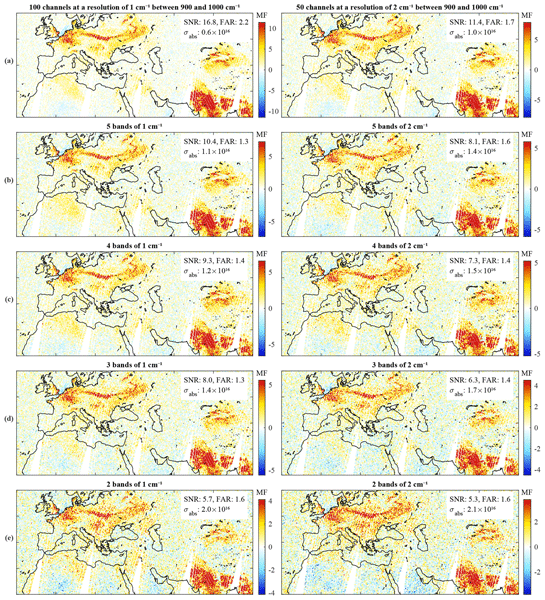
Lara Noppen, Lieven Clarisse, Frederik Tack, Thomas Ruhtz, Martin Van Damme, Michel Van Roozendael, Dirk Schuettemeyer, and Pierre Coheur
Atmos. Meas. Tech., 18, 4183–4205, https://doi.org/10.5194/amt-18-4183-2025, https://doi.org/10.5194/amt-18-4183-2025, 2025
Short summary
Short summary
Current infrared satellite sounders offer high spectral but low spatial resolution, limiting their ability to quantify atmospheric ammonia (NH3) at small scales. Through simulations and analysis of real data, we show that NH3 can be measured effectively from spectra with reduced resolution, either in a contiguous spectral range or in select well-chosen bands. This approach opens possibilities for the development of smaller dedicated instruments for observing NH3 at high spatial resolution.
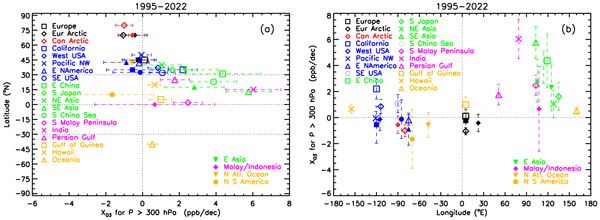
Roeland Van Malderen, Zhou Zang, Kai-Lan Chang, Robin Björklund, Owen R. Cooper, Jane Liu, Eliane Maillard Barras, Corinne Vigouroux, Irina Petropavlovskikh, Thierry Leblanc, Valérie Thouret, Pawel Wolff, Peter Effertz, Audrey Gaudel, David W. Tarasick, Herman G. J. Smit, Anne M. Thompson, Ryan M. Stauffer, Debra E. Kollonige, Deniz Poyraz, Gérard Ancellet, Marie-Renée De Backer, Matthias M. Frey, James W. Hannigan, José L. Hernandez, Bryan J. Johnson, Nicholas Jones, Rigel Kivi, Emmanuel Mahieu, Isamu Morino, Glen McConville, Katrin Müller, Isao Murata, Justus Notholt, Ankie Piters, Maxime Prignon, Richard Querel, Vincenzo Rizi, Dan Smale, Wolfgang Steinbrecht, Kimberly Strong, and Ralf Sussmann
Atmos. Chem. Phys., 25, 9905–9935, https://doi.org/10.5194/acp-25-9905-2025, https://doi.org/10.5194/acp-25-9905-2025, 2025
Short summary
Short summary
Tropospheric ozone is an important greenhouse gas and an air pollutant whose distribution and time variability are mainly governed by anthropogenic emissions and dynamics. In this paper, we assess regional trends of tropospheric ozone column amounts, based on two different approaches of merging or synthesizing ground-based observations and their trends within specific regions. Our findings clearly demonstrate regional trend differences but also consistently higher pre-COVID than post-COVID trends.
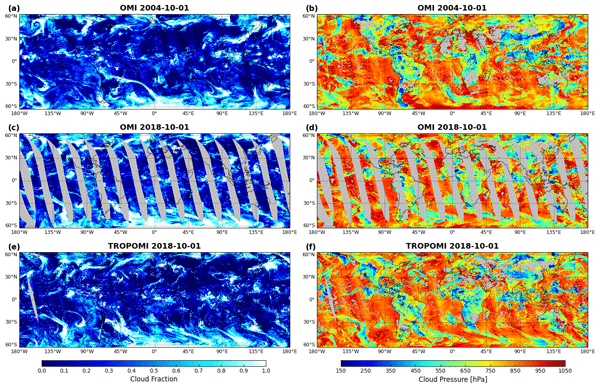
Huan Yu, Isabelle De Smedt, Nicolas Theys, Maarten Sneep, Pepijn Veefkind, and Michel Van Roozendael
Atmos. Meas. Tech., 18, 4131–4163, https://doi.org/10.5194/amt-18-4131-2025, https://doi.org/10.5194/amt-18-4131-2025, 2025
Short summary
Short summary
We introduce a new cloud retrieval algorithm using the O2–O2 absorption band at 477 nm to generate harmonized cloud datasets from OMI and TROPOMI. The algorithm improves upon the OMI O2–O2 operational cloud algorithm in several aspects. The new approach improves consistency in cloud parameters and NO2 retrievals between two sensors.
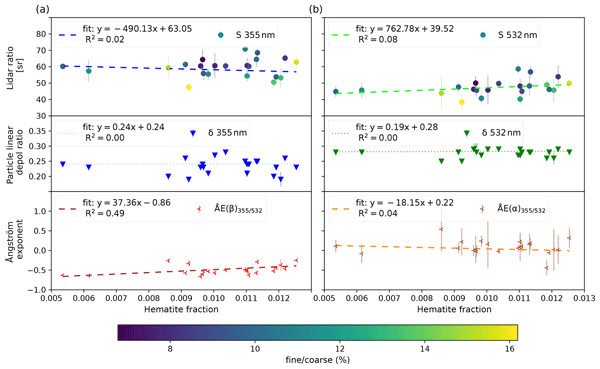
Sofía Gómez Maqueo Anaya, Dietrich Althausen, Julian Hofer, Moritz Haarig, Ulla Wandinger, Bernd Heinold, Ina Tegen, Matthias Faust, Holger Baars, Albert Ansmann, Ronny Engelmann, Annett Skupin, Birgit Heese, and Kerstin Schepanski
Atmos. Chem. Phys., 25, 9737–9764, https://doi.org/10.5194/acp-25-9737-2025, https://doi.org/10.5194/acp-25-9737-2025, 2025
Short summary
Short summary
This study investigates how hematite in Sahara dust affects how dust particles interact with radiation. Using lidar data from Cabo Verde (2021–2022) and hematite content from atmospheric model simulations, the results show that a higher hematite fraction leads to a decrease in the particle backscattering coefficients in a spectrally different way. These findings can improve the representation of mineral dust in climate models, particularly regarding their radiative effect.
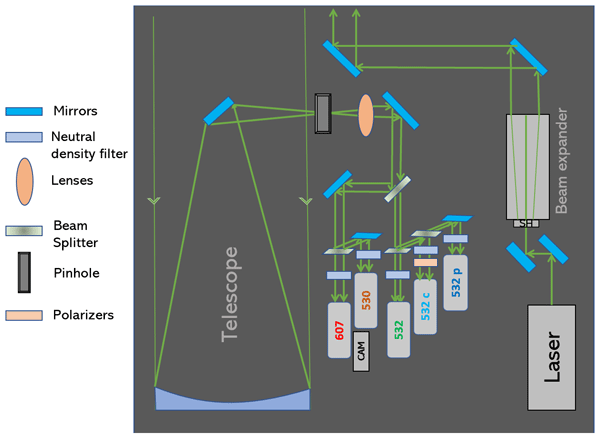
Gladiola Malollari, Albert Ansmann, Holger Baars, Cristofer Jimenez, Julian Hofer, Ronny Engelmann, Nathan Skupin, and Seit Shallari
Atmos. Meas. Tech., 18, 3937–3944, https://doi.org/10.5194/amt-18-3937-2025, https://doi.org/10.5194/amt-18-3937-2025, 2025
Short summary
Short summary
This study presents, for the first time, the uncertainty analysis of the Ångström exponent assumption on the full set of retrievable optical properties obtained with Raman lidar. A quantitative comparison between the pure rotational and vibrational–rotational Raman lidar approaches is presented. A minor impact of a wrong Ångström exponent on the determined aerosol optical properties is found.
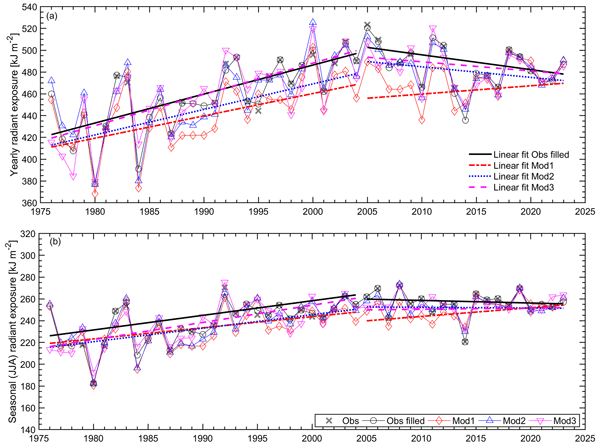
Janusz W. Krzyścin, Agnieszka Czerwińska, Bonawentura Rajewska-Więch, Janusz Jarosławski, Piotr S. Sobolewski, and Izabela Pawlak
Earth Syst. Sci. Data, 17, 3757–3775, https://doi.org/10.5194/essd-17-3757-2025, https://doi.org/10.5194/essd-17-3757-2025, 2025
Short summary
Short summary
Time series (1976−2023) of biologically effective (for skin redness, vitamin D3 production, and psoriasis healing) daily radiant exposure (RE) at Belsk from standard erythemal biometers are examined. Comparisons of the measured data for cloudless days with values from a radiation transfer model provide a basis for data homogenisation. Averaged results from different versions of the recalculated data give the 1976−2004 trend of about 6 % per 10 years in annual RE for all biological effects.
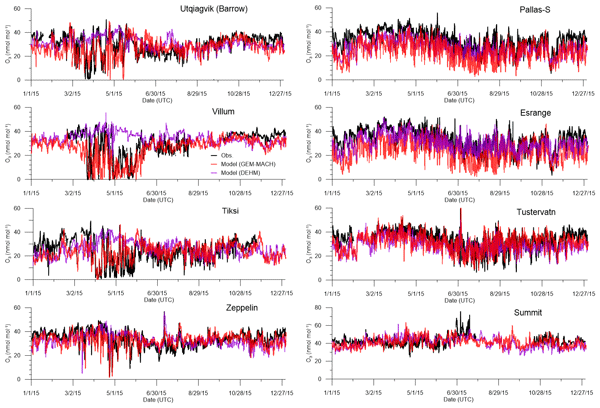
Wanmin Gong, Stephen R. Beagley, Kenjiro Toyota, Henrik Skov, Jesper Heile Christensen, Alex Lupu, Diane Pendlebury, Junhua Zhang, Ulas Im, Yugo Kanaya, Alfonso Saiz-Lopez, Roberto Sommariva, Peter Effertz, John W. Halfacre, Nis Jepsen, Rigel Kivi, Theodore K. Koenig, Katrin Müller, Claus Nordstrøm, Irina Petropavlovskikh, Paul B. Shepson, William R. Simpson, Sverre Solberg, Ralf M. Staebler, David W. Tarasick, Roeland Van Malderen, and Mika Vestenius
Atmos. Chem. Phys., 25, 8355–8405, https://doi.org/10.5194/acp-25-8355-2025, https://doi.org/10.5194/acp-25-8355-2025, 2025
Short summary
Short summary
This study showed that the springtime O3 depletion plays a critical role in driving the surface O3 seasonal cycle in the central Arctic. The O3 depletion events, while occurring most notably within the lowest few hundred metres above the Arctic Ocean, can induce a 5–7 % loss in the pan-Arctic tropospheric O3 burden during springtime. The study also found enhancements in O3 and NOy (mostly peroxyacetyl nitrate) concentrations in the Arctic due to northern boreal wildfires, particularly at higher altitudes.
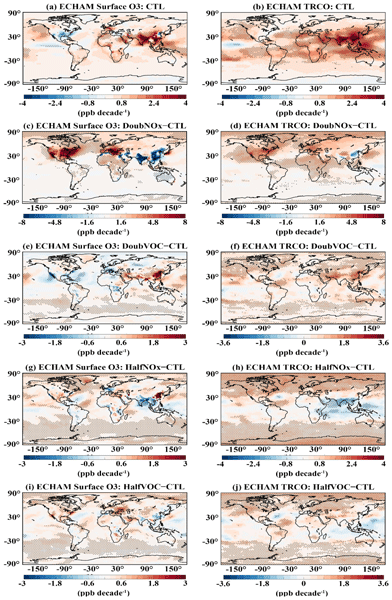
Suvarna Fadnavis, Yasin Elshorbany, Jerald Ziemke, Brice Barret, Alexandru Rap, P. R. Satheesh Chandran, Richard J. Pope, Vijay Sagar, Domenico Taraborrelli, Eric Le Flochmoen, Juan Cuesta, Catherine Wespes, Folkert Boersma, Isolde Glissenaar, Isabelle De Smedt, Michel Van Roozendael, Hervé Petetin, and Isidora Anglou
Atmos. Chem. Phys., 25, 8229–8254, https://doi.org/10.5194/acp-25-8229-2025, https://doi.org/10.5194/acp-25-8229-2025, 2025
Short summary
Short summary
Satellites and model simulations show enhancement in tropospheric ozone, which is highly impacted by human-produced nitrous oxides compared to volatile organic compounds. The increased amount of ozone enhances ozone radiative forcing. The ozone enhancement and associated radiative forcing are the highest over South and East Asia. The emissions of nitrous oxides show a higher influence on shifting ozone photochemical regimes than volatile organic compounds.
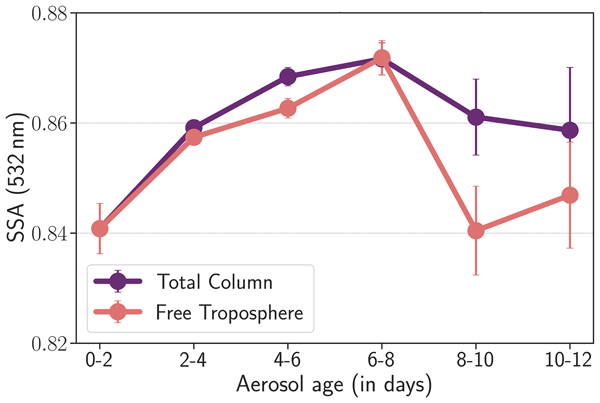
Abdulamid A. Fakoya, Jens Redemann, Pablo E. Saide, Lan Gao, Logan T. Mitchell, Calvin Howes, Amie Dobracki, Ian Chang, Gonzalo A. Ferrada, Kristina Pistone, Samuel E. Leblanc, Michal Segal-Rozenhaimer, Arthur J. Sedlacek III, Thomas Eck, Brent Holben, Pawan Gupta, Elena Lind, Paquita Zuidema, Gregory Carmichael, and Connor J. Flynn
Atmos. Chem. Phys., 25, 7879–7902, https://doi.org/10.5194/acp-25-7879-2025, https://doi.org/10.5194/acp-25-7879-2025, 2025
Short summary
Short summary
Tiny atmospheric particles from wildfire smoke impact the climate by interacting with sunlight and clouds, the extent of which is uncertain due to gaps in understanding how smoke changes over time. We developed a new method using remote sensing instruments to track how these particles evolve during atmospheric transport. Our results show that the ability of these particles to absorb sunlight increases as they travel. This discovery could help improve predictions of future climate scenarios.
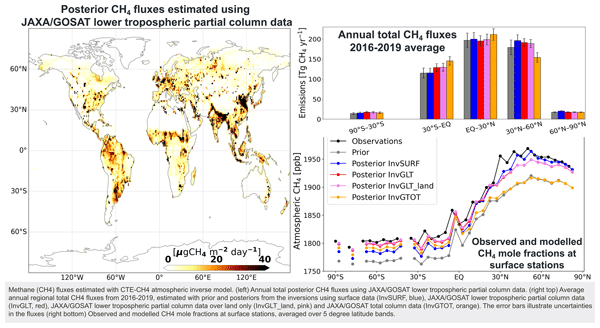
Aki Tsuruta, Akihiko Kuze, Kei Shiomi, Fumie Kataoka, Nobuhiro Kikuchi, Tuula Aalto, Leif Backman, Ella Kivimäki, Maria K. Tenkanen, Kathryn McKain, Omaira E. García, Frank Hase, Rigel Kivi, Isamu Morino, Hirofumi Ohyama, David F. Pollard, Mahesh K. Sha, Kimberly Strong, Ralf Sussmann, Yao Te, Voltaire A. Velazco, Mihalis Vrekoussis, Thorsten Warneke, Minqiang Zhou, and Hiroshi Suto
Atmos. Chem. Phys., 25, 7829–7862, https://doi.org/10.5194/acp-25-7829-2025, https://doi.org/10.5194/acp-25-7829-2025, 2025
Short summary
Short summary
Satellite data bring invaluable information about greenhouse gas emissions globally. We found that a new type of data from the Greenhouse Gas Observing Satellite (GOSAT), which contains information about methane in the lowest layer of Earth's atmosphere, could provide reliable estimates of recent methane emissions when combined with atmospheric modelling. Therefore, the use of such data is encouraged to improve emission quantification methods and advance our understanding of methane cycles.
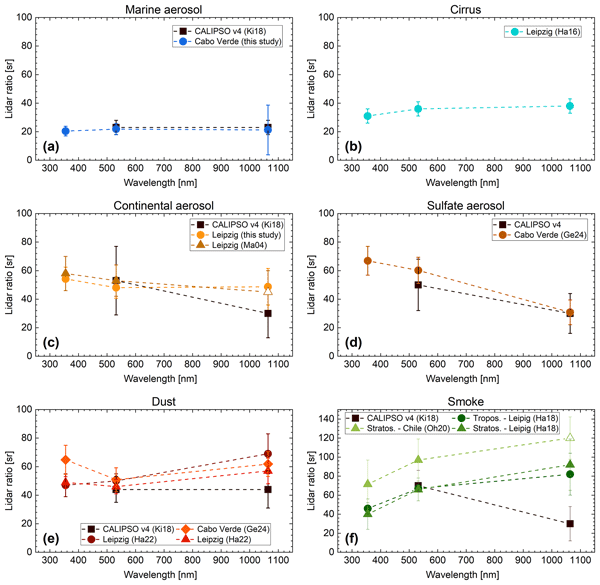
Moritz Haarig, Ronny Engelmann, Holger Baars, Benedikt Gast, Dietrich Althausen, and Albert Ansmann
Atmos. Chem. Phys., 25, 7741–7763, https://doi.org/10.5194/acp-25-7741-2025, https://doi.org/10.5194/acp-25-7741-2025, 2025
Short summary
Short summary
The lidar ratio is an important quantity in aerosol typing. Its spectral slope contains information about the source region or transport paths of the observed aerosol. The extension to 1064 nm is a recent development led by our institute. We gathered previous observations and added new ones to provide the spectral slope for the most important aerosol types such as marine and continental aerosol, dust, smoke, and sulfate. We compared it to assumptions used for spaceborne backscatter lidars.
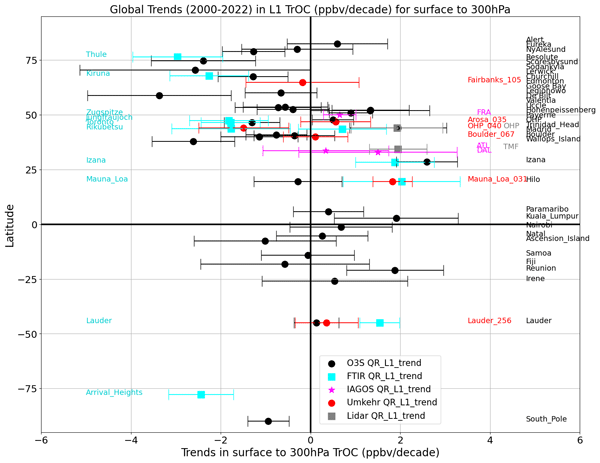
Roeland Van Malderen, Anne M. Thompson, Debra E. Kollonige, Ryan M. Stauffer, Herman G. J. Smit, Eliane Maillard Barras, Corinne Vigouroux, Irina Petropavlovskikh, Thierry Leblanc, Valérie Thouret, Pawel Wolff, Peter Effertz, David W. Tarasick, Deniz Poyraz, Gérard Ancellet, Marie-Renée De Backer, Stéphanie Evan, Victoria Flood, Matthias M. Frey, James W. Hannigan, José L. Hernandez, Marco Iarlori, Bryan J. Johnson, Nicholas Jones, Rigel Kivi, Emmanuel Mahieu, Glen McConville, Katrin Müller, Tomoo Nagahama, Justus Notholt, Ankie Piters, Natalia Prats, Richard Querel, Dan Smale, Wolfgang Steinbrecht, Kimberly Strong, and Ralf Sussmann
Atmos. Chem. Phys., 25, 7187–7225, https://doi.org/10.5194/acp-25-7187-2025, https://doi.org/10.5194/acp-25-7187-2025, 2025
Short summary
Short summary
Tropospheric ozone is an important greenhouse gas and is an air pollutant. The time variability of tropospheric ozone is mainly driven by anthropogenic emissions. In this paper, we study the distribution and time variability of ozone from harmonized ground-based observations from five different measurement techniques. Our findings provide clear standard references for atmospheric models and evolving tropospheric ozone satellite data for the 2000–2022 period.
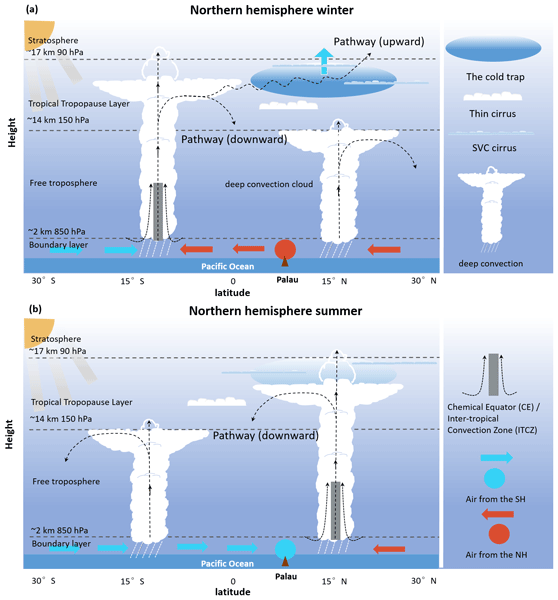
Xiaoyu Sun, Katrin Müller, Mathias Palm, Christoph Ritter, Denghui Ji, Tim Balthasar Röpke, and Justus Notholt
Atmos. Chem. Phys., 25, 6881–6902, https://doi.org/10.5194/acp-25-6881-2025, https://doi.org/10.5194/acp-25-6881-2025, 2025
Short summary
Short summary
We studied how air moves from the lower atmosphere to the stratosphere over the tropical western Pacific. Using observations and air tracking, we found that, in winter, air ascends and cold temperatures freeze water out, drying it before it enters the stratosphere. In summer, air tends to sink after cloud formation. This process affects water vapor amounts in the stratosphere, influencing the greenhouse effect and climate.
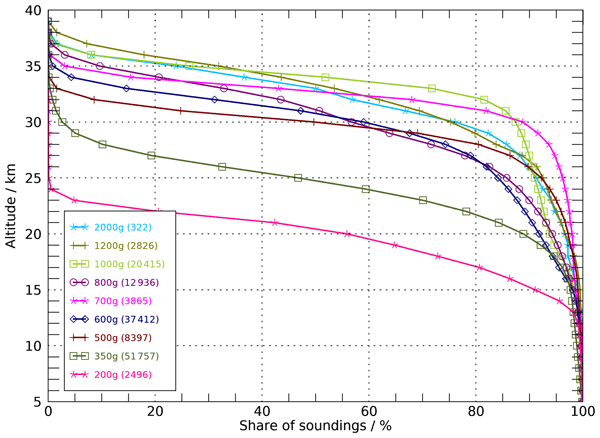
Masatomo Fujiwara, Bomin Sun, Anthony Reale, Domenico Cimini, Salvatore Larosa, Lori Borg, Christoph von Rohden, Michael Sommer, Ruud Dirksen, Marion Maturilli, Holger Vömel, Rigel Kivi, Bruce Ingleby, Ryan J. Kramer, Belay Demoz, Fabio Madonna, Fabien Carminati, Owen Lewis, Brett Candy, Christopher Thomas, David Edwards, Noersomadi, Kensaku Shimizu, and Peter Thorne
Atmos. Meas. Tech., 18, 2919–2955, https://doi.org/10.5194/amt-18-2919-2025, https://doi.org/10.5194/amt-18-2919-2025, 2025
Short summary
Short summary
We assess and illustrate the benefits of high-altitude attainment of balloon-borne radiosonde soundings up to and beyond 10 hPa level from various aspects. We show that the extra costs and technical challenges involved in consistent attainment of high ascents are more than outweighed by the benefits for a broad variety of real-time and delayed-mode applications. Consistent attainment of high ascents should therefore be pursued across the balloon observational network.
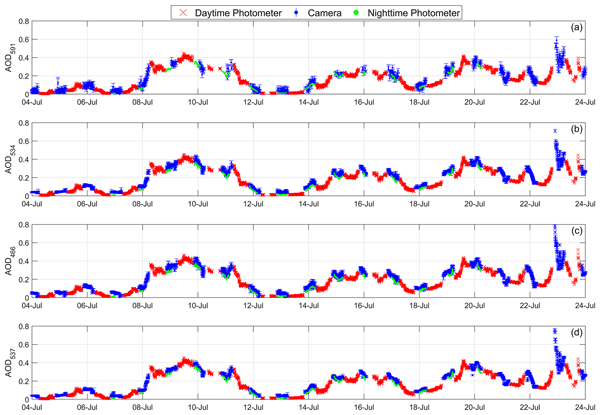
Roberto Román, Daniel González-Fernández, Juan Carlos Antuña-Sánchez, Celia Herrero del Barrio, Sara Herrero-Anta, África Barreto, Victoria E. Cachorro, Lionel Doppler, Ramiro González, Christoph Ritter, David Mateos, Natalia Kouremeti, Gustavo Copes, Abel Calle, María José Granados-Muñoz, Carlos Toledano, and Ángel M. de Frutos
Atmos. Meas. Tech., 18, 2847–2875, https://doi.org/10.5194/amt-18-2847-2025, https://doi.org/10.5194/amt-18-2847-2025, 2025
Short summary
Short summary
This paper presents a novel technique to extract starlight signals from all-sky images and retrieve aerosol optical depth (AOD). It is validated against lunar photometry, showing a strong correlation between data series. This innovative approach will expand nocturnal AOD measurements to more locations, as all-sky cameras are a simpler and more cost-effective alternative to stellar and lunar photometers.
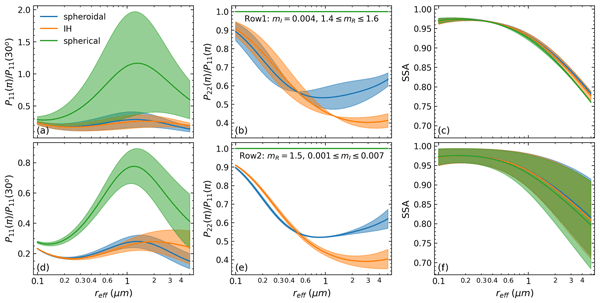
Yuyang Chang, Qiaoyun Hu, Philippe Goloub, Thierry Podvin, Igor Veselovskii, Fabrice Ducos, Gaël Dubois, Masanori Saito, Anton Lopatin, Oleg Dubovik, and Cheng Chen
Atmos. Chem. Phys., 25, 6787–6821, https://doi.org/10.5194/acp-25-6787-2025, https://doi.org/10.5194/acp-25-6787-2025, 2025
Short summary
Short summary
Our study retrieved dust aerosol microphysical properties from lidar measurements using different scattering models. Numeric simulations and real data applications revealed the importance of considering depolarization measurements and the superiority of the irregular–hexahedral model in the retrieval of dust aerosols from lidar measurements.
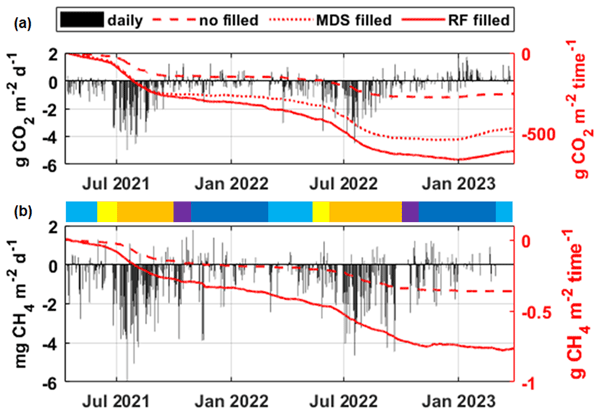
Antonio Donateo, Daniela Famulari, Donato Giovannelli, Arturo Mariani, Mauro Mazzola, Stefano Decesari, and Gianluca Pappaccogli
Biogeosciences, 22, 2889–2908, https://doi.org/10.5194/bg-22-2889-2025, https://doi.org/10.5194/bg-22-2889-2025, 2025
Short summary
Short summary
This study focuses on measurements of CO2 and CH4 turbulent fluxes in tundra ecosystems in the Svalbard islands over a 2-year period. Our results reveal dynamic interactions between climatic conditions and ecosystem activities such as photosynthesis and microbial activity. In summer, photosynthesis and microbial activity increase, leading to net carbon uptake and methane consumption. Wind influences soil drying and CH4 emissions. Thermal anomalies can reduce annual carbon uptake.
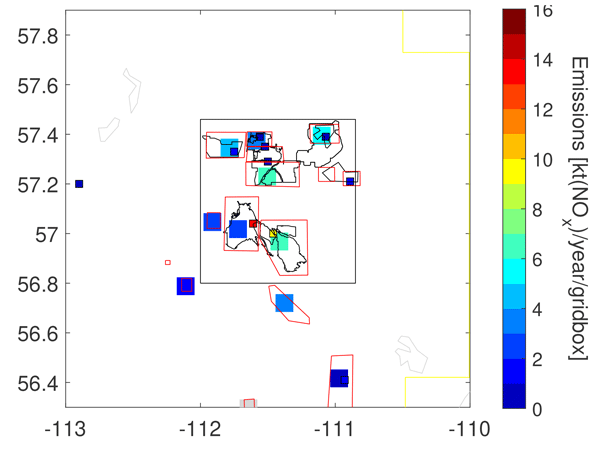
Chris A. McLinden, Debora Griffin, Vitali Fioletov, Junhua Zhang, Enrico Dammers, Cristen Adams, Mallory Loria, Nickolay Krotkov, and Lok N. Lamsal
Atmos. Chem. Phys., 25, 6093–6120, https://doi.org/10.5194/acp-25-6093-2025, https://doi.org/10.5194/acp-25-6093-2025, 2025
Short summary
Short summary
The Ozone Monitoring Instrument (OMI) was used to understand the evolution of NOx emissions from the Canadian oil sands. OMI NO2 combined with winds and reported stack emissions found emissions from the heavy-hauler mine fleet have remained flat since 2005, whereas the total oil sands mined have more than doubled. This difference is a result of emissions standards that limit NOx emissions becoming more stringent over this period, confirming the efficacy of the policy enacting these standards.
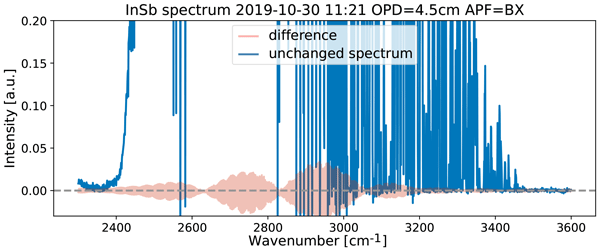
Bavo Langerock, Martine De Mazière, Filip Desmet, Pauli Heikkinen, Rigel Kivi, Mahesh Kumar Sha, Corinne Vigouroux, Minqiang Zhou, Gopala Krishna Darbha, and Mohmmed Talib
Atmos. Meas. Tech., 18, 2439–2446, https://doi.org/10.5194/amt-18-2439-2025, https://doi.org/10.5194/amt-18-2439-2025, 2025
Short summary
Short summary
Ground-based Fourier transform interferometer instruments have been used for many decades to measure direct solar light in the infrared to obtain high-resolution spectra from which atmospheric gas profile concentrations can be derived. It is shown that the typical processing chain used to derive atmospheric gas columns can be sensitive to relatively small shortenings of the recorded interferograms. Low-resolution recordings, used in more recent years, are more sensitive to such adaptations.
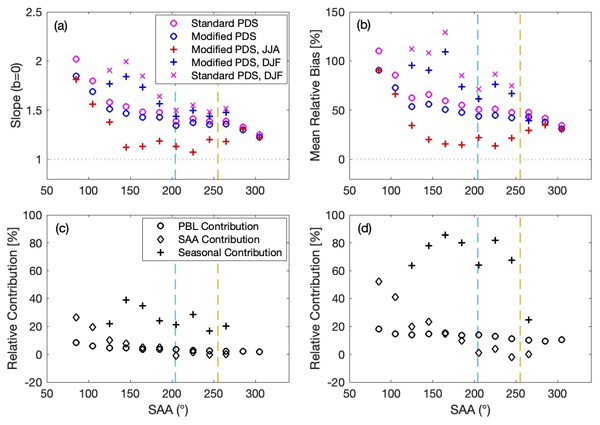
Ramina Alwarda, Kristof Bognar, Xiaoyi Zhao, Vitali Fioletov, Jonathan Davies, Sum Chi Lee, Debora Griffin, Alexandru Lupu, Udo Frieß, Alexander Cede, Yushan Su, and Kimberly Strong
Atmos. Meas. Tech., 18, 2397–2423, https://doi.org/10.5194/amt-18-2397-2025, https://doi.org/10.5194/amt-18-2397-2025, 2025
Short summary
Short summary
Nitrogen dioxide (NO2) is a pollutant with a short lifetime and large variability, but there are limited measurements of its distribution in the lower atmosphere. We present a new 3-year dataset of NO2 vertical profiles in Toronto, Canada, and evaluate it using NO2 from satellite and surface monitoring networks and simulations by an air quality forecast model. We quantify and explain the differences among the datasets to provide information that can be used to understand NO2 variability.
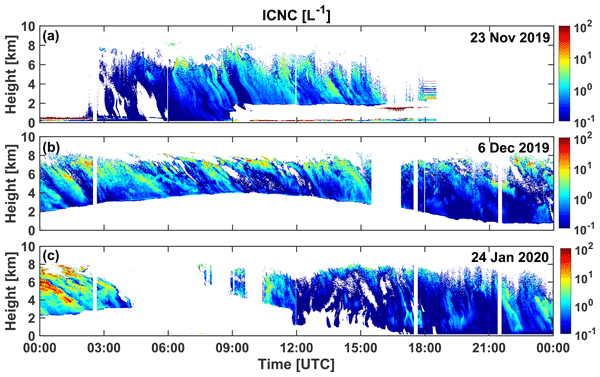
Albert Ansmann, Cristofer Jimenez, Johanna Roschke, Johannes Bühl, Kevin Ohneiser, Ronny Engelmann, Martin Radenz, Hannes Griesche, Julian Hofer, Dietrich Althausen, Daniel A. Knopf, Sandro Dahlke, Tom Gaudek, Patric Seifert, and Ulla Wandinger
Atmos. Chem. Phys., 25, 4847–4866, https://doi.org/10.5194/acp-25-4847-2025, https://doi.org/10.5194/acp-25-4847-2025, 2025
Short summary
Short summary
In this study, we focus on the potential impact of wildfire smoke on cirrus formation. For the first time, state-of-the-art aerosol and cirrus observations with lidar and radar, presented in this paper (Part 1 of a series of two articles), are closely linked to the comprehensive modeling of gravity-wave-induced ice nucleation in cirrus evolution processes, presented in a companion paper (Part 2). We found a clear impact of wildfire smoke on cirrus evolution.
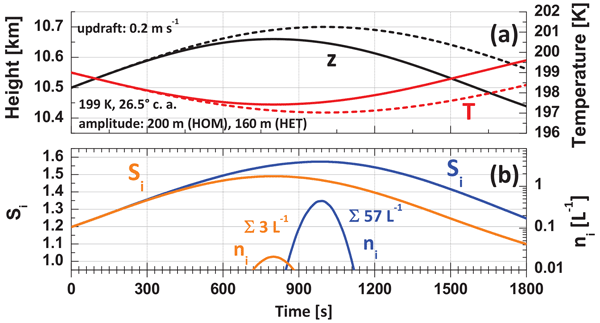
Albert Ansmann, Cristofer Jimenez, Daniel A. Knopf, Johanna Roschke, Johannes Bühl, Kevin Ohneiser, and Ronny Engelmann
Atmos. Chem. Phys., 25, 4867–4884, https://doi.org/10.5194/acp-25-4867-2025, https://doi.org/10.5194/acp-25-4867-2025, 2025
Short summary
Short summary
In this study, we focus on the potential impact of wildfire smoke on cirrus formation. Aerosol and cirrus observations with lidar and radar during the MOSAiC (Multidisciplinary drifting Observatory for the Study of Arctic Climate) expedition, presented in the companion paper (Ansmann et al., 2025), are closely linked to comprehensive modeling of ice nucleation in cirrus evolution processes, presented in this article. A clear impact of wildfire smoke on cirrus formation was found.
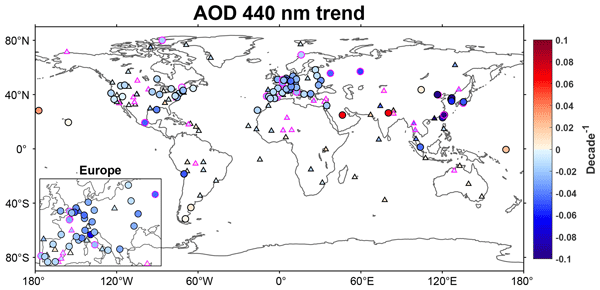
Zhenyu Zhang, Jing Li, Huizheng Che, Yueming Dong, Oleg Dubovik, Thomas Eck, Pawan Gupta, Brent Holben, Jhoon Kim, Elena Lind, Trailokya Saud, Sachchida Nand Tripathi, and Tong Ying
Atmos. Chem. Phys., 25, 4617–4637, https://doi.org/10.5194/acp-25-4617-2025, https://doi.org/10.5194/acp-25-4617-2025, 2025
Short summary
Short summary
We used ground-based remote sensing data from the Aerosol Robotic Network to examine long-term trends in aerosol characteristics. We found aerosol loadings generally decreased globally, and aerosols became more scattering. These changes are closely related to variations in aerosol compositions, such as decreased anthropogenic emissions over East Asia, Europe, and North America; increased anthropogenic sources over northern India; and increased dust activity over the Arabian Peninsula.
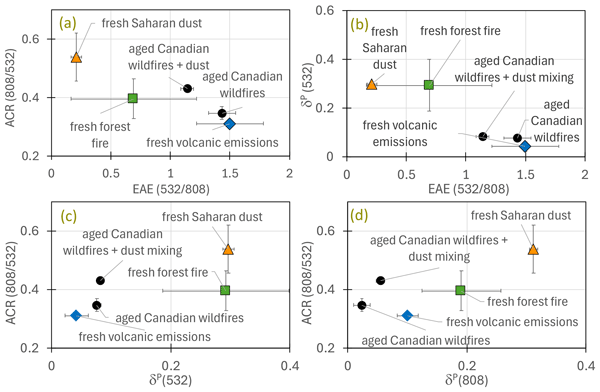
Yenny González, María F. Sánchez-Barrero, Ioana Popovici, África Barreto, Stephane Victori, Ellsworth J. Welton, Rosa D. García, Pablo G. Sicilia, Fernando A. Almansa, Carlos Torres, and Philippe Goloub
Atmos. Meas. Tech., 18, 1885–1908, https://doi.org/10.5194/amt-18-1885-2025, https://doi.org/10.5194/amt-18-1885-2025, 2025
Short summary
Short summary
We characterize the optical properties of various aerosols using a compact dual-wavelength depolarization lidar (CIMEL CE376) at 532 and 808 nm. Through a modified two-wavelength Klett inversion method, we assess the vertical distribution and temporal evolution of Saharan dust, volcanic aerosols and wildfire smoke in the subtropical North Atlantic from August 2021 to August 2023. The study confirms the CE376 lidar's effectiveness in monitoring and characterizing atmospheric aerosols over time.
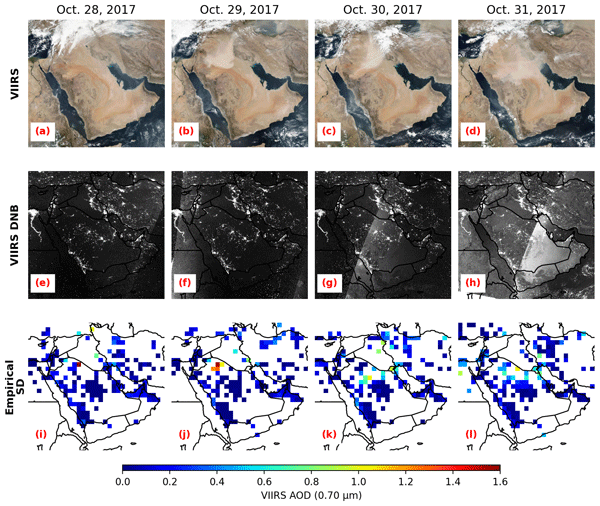
Jianglong Zhang, Jeffrey S. Reid, Blake T. Sorenson, Steven D. Miller, Miguel O. Román, Zhuosen Wang, Robert J. D. Spurr, Shawn Jaker, Thomas F. Eck, and Juli I. Rubin
Atmos. Meas. Tech., 18, 1787–1810, https://doi.org/10.5194/amt-18-1787-2025, https://doi.org/10.5194/amt-18-1787-2025, 2025
Short summary
Short summary
Using observations from the Visible Infrared Imaging Radiometer Suite day–night band, we developed a method for constructing gridded nighttime aerosol optical thickness (AOT) data based on the spatial derivative of measured top-of-atmosphere attenuated upwelling artificial lights at night. The gridded nighttime AOT retrievals, compared against Aerosol Robotic Network data, show reasonable skill levels for potential data assimilation, air quality, and climate studies of significant events.
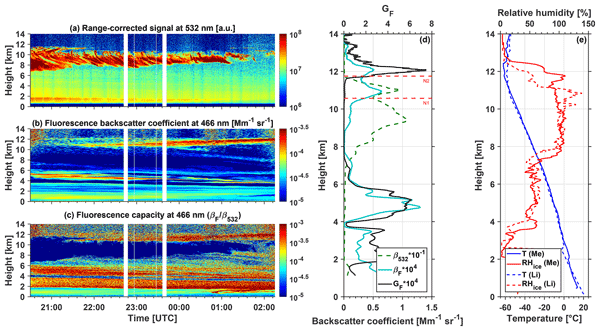
Benedikt Gast, Cristofer Jimenez, Albert Ansmann, Moritz Haarig, Ronny Engelmann, Felix Fritzsch, Athena A. Floutsi, Hannes Griesche, Kevin Ohneiser, Julian Hofer, Martin Radenz, Holger Baars, Patric Seifert, and Ulla Wandinger
Atmos. Chem. Phys., 25, 3995–4011, https://doi.org/10.5194/acp-25-3995-2025, https://doi.org/10.5194/acp-25-3995-2025, 2025
Short summary
Short summary
In this study, we discuss the enhanced detection capabilities of a fluorescence lidar in the case of optically thin aerosol layers in the upper troposphere and lower stratosphere (UTLS) region. Our results suggest that such thin aerosol layers are not so rare in the UTLS and can potentially trigger and impact cirrus cloud formation through heterogeneous ice nucleation. By altering the microphysical cloud properties, this could affect clouds' evolution and lifetime and thus their climate effect.
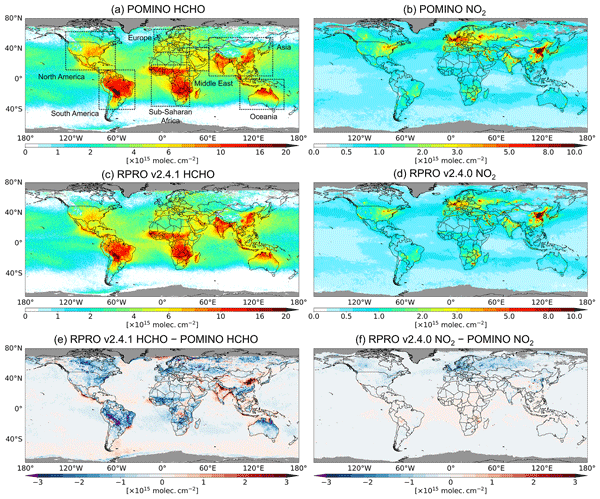
Yuhang Zhang, Huan Yu, Isabelle De Smedt, Jintai Lin, Nicolas Theys, Michel Van Roozendael, Gaia Pinardi, Steven Compernolle, Ruijing Ni, Fangxuan Ren, Sijie Wang, Lulu Chen, Jos Van Geffen, Mengyao Liu, Alexander M. Cede, Martin Tiefengraber, Alexis Merlaud, Martina M. Friedrich, Andreas Richter, Ankie Piters, Vinod Kumar, Vinayak Sinha, Thomas Wagner, Yongjoo Choi, Hisahiro Takashima, Yugo Kanaya, Hitoshi Irie, Robert Spurr, Wenfu Sun, and Lorenzo Fabris
Atmos. Meas. Tech., 18, 1561–1589, https://doi.org/10.5194/amt-18-1561-2025, https://doi.org/10.5194/amt-18-1561-2025, 2025
Short summary
Short summary
We developed an advanced algorithm for global retrieval of TROPOspheric Monitoring Instrument (TROPOMI) HCHO and NO2 vertical column densities with much improved consistency. Sensitivity tests demonstrate the complexity and nonlinear interactions of auxiliary parameters in the air mass factor calculation. An improved agreement is found with measurements from a global ground-based instrument network. The scientific retrieval provides a useful source of information for studies combining HCHO and NO2.
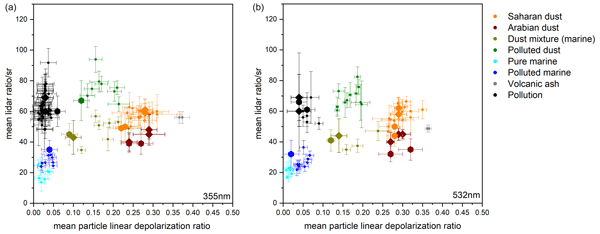
Silke Groß, Volker Freudenthaler, Moritz Haarig, Albert Ansmann, Carlos Toledano, David Mateos, Petra Seibert, Rodanthi-Elisavet Mamouri, Argyro Nisantzi, Josef Gasteiger, Maximilian Dollner, Anne Tipka, Manuel Schöberl, Marilena Teri, and Bernadett Weinzierl
Atmos. Chem. Phys., 25, 3191–3211, https://doi.org/10.5194/acp-25-3191-2025, https://doi.org/10.5194/acp-25-3191-2025, 2025
Short summary
Short summary
Aerosols contribute to the largest uncertainties in climate change predictions. The eastern Mediterranean is a hotspot for aerosols with natural and anthropogenic contributions. We present lidar measurements performed during A-LIFE (Absorbing aerosol layers in a changing climate: aging, lifetime and dynamics) to characterize aerosols and aerosol mixtures. We extend current lidar classification and separation schemes and compare them to classification schemes using different methods.

Frank Hase, Paolo Castracane, Angelika Dehn, Omaira Elena García, David W. T. Griffith, Lukas Heizmann, Nicholas B. Jones, Tomi Karppinen, Rigel Kivi, Martine de Mazière, Justus Notholt, and Mahesh Kumar Sha
Atmos. Meas. Tech., 18, 1257–1267, https://doi.org/10.5194/amt-18-1257-2025, https://doi.org/10.5194/amt-18-1257-2025, 2025
Short summary
Short summary
The primary measurement result delivered by a Fourier transform spectrometer is an interferogram, and the spectrum required for further analysis needs to be calculated from the interferogram by Fourier analysis. The paper deals with technical aspects of this process and shows how the reconstruction of the spectrum can be optimized.
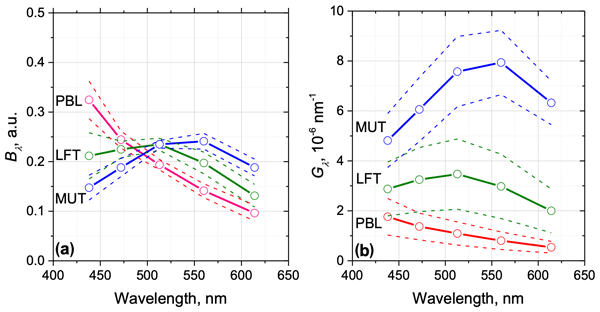
Igor Veselovskii, Mikhail Korenskiy, Nikita Kasianik, Boris Barchunov, Qiaoyun Hu, Philippe Goloub, and Thierry Podvin
Atmos. Chem. Phys., 25, 1603–1615, https://doi.org/10.5194/acp-25-1603-2025, https://doi.org/10.5194/acp-25-1603-2025, 2025
Short summary
Short summary
A fluorescence lidar was used to study transported Canadian smoke in May–September 2023. The fluorescence measurements were taken at five wavelengths. The results revealed that fluorescence capacity increases with altitude, suggesting a higher concentration of organic compounds in the upper troposphere and lower stratosphere than in the lower troposphere. The fluorescence spectra peaked in the 513 and 560 nm channels in smoke layers but decreased with wavelength in urban aerosols.
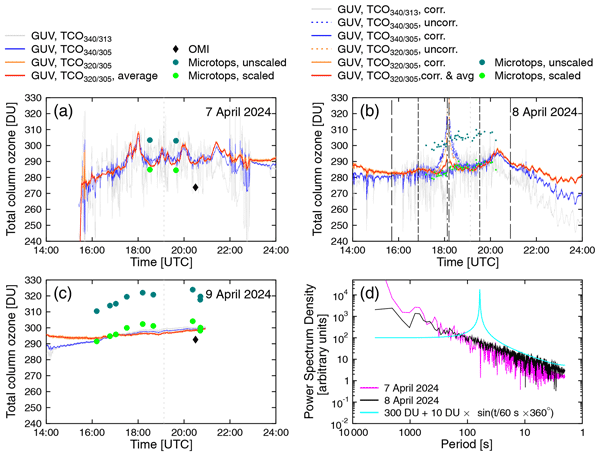
Germar H. Bernhard, George T. Janson, Scott Simpson, Raúl R. Cordero, Edgardo I. Sepúlveda Araya, Jose Jorquera, Juan A. Rayas, and Randall N. Lind
Atmos. Chem. Phys., 25, 819–841, https://doi.org/10.5194/acp-25-819-2025, https://doi.org/10.5194/acp-25-819-2025, 2025
Short summary
Short summary
Several publications have reported that total column ozone (TCO) may oscillate during solar eclipses, whereas other researchers have not seen evidence of such fluctuations. Here, we try to resolve these contradictions by measuring variations in TCO during three solar eclipses. In all instances, the variability in TCO was within natural variability. We conclude that solar eclipses do not lead to measurable variations in TCO, drawing into question reports of much larger changes found in the past.
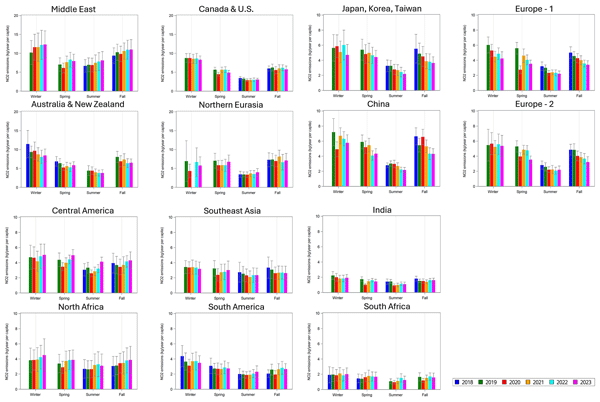
Vitali Fioletov, Chris A. McLinden, Debora Griffin, Xiaoyi Zhao, and Henk Eskes
Atmos. Chem. Phys., 25, 575–596, https://doi.org/10.5194/acp-25-575-2025, https://doi.org/10.5194/acp-25-575-2025, 2025
Short summary
Short summary
Satellite data were used to estimate urban per capita emissions for 261 major cities worldwide. Three components in tropospheric NO2 data (background NO2, NO2 from urban sources, and NO2 from industrial point sources) were isolated, and then each of these components was analyzed separately. The largest per capita emissions were found in the Middle East and the smallest in India and southern Africa. Urban weekend emissions are 20 %–50 % less than workday emissions for all regions except China.
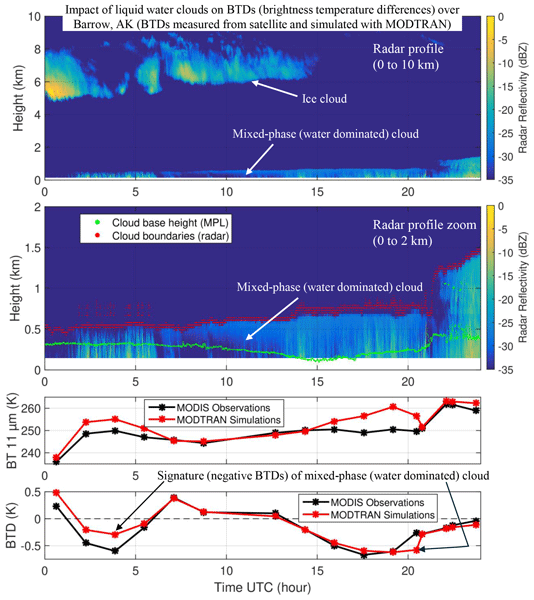
Norman T. O'Neill, Keyvan Ranjbar, Liviu Ivănescu, Yann Blanchard, Seyed Ali Sayedain, and Yasmin AboEl-Fetouh
Atmos. Chem. Phys., 25, 27–44, https://doi.org/10.5194/acp-25-27-2025, https://doi.org/10.5194/acp-25-27-2025, 2025
Short summary
Short summary
Dust from mid-latitude deserts or from local drainage basins is a weak component of atmospheric aerosols in the Arctic. Satellite-based dust estimates are often overestimated because dust and cloud measurements can be confused. Illustrations are given with an emphasis on the flawed claim that a classic indicator of dust (negative brightness temperature differences) is proof of the presence of airborne Arctic dust. Low-altitude warm-water plumes are the likely source of such negative values.
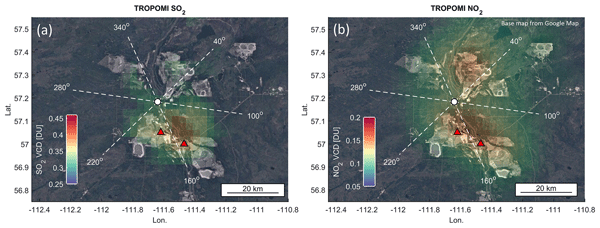
Xiaoyi Zhao, Vitali Fioletov, Debora Griffin, Chris McLinden, Ralf Staebler, Cristian Mihele, Kevin Strawbridge, Jonathan Davies, Ihab Abboud, Sum Chi Lee, Alexander Cede, Martin Tiefengraber, and Robert Swap
Atmos. Meas. Tech., 17, 6889–6912, https://doi.org/10.5194/amt-17-6889-2024, https://doi.org/10.5194/amt-17-6889-2024, 2024
Short summary
Short summary
This study explores differences between remote sensing and in situ instruments in terms of their vertical, horizontal, and temporal sampling differences. Understanding and resolving these differences are critical for future analyses linking satellite, ground-based remote sensing, and in situ observations in air quality monitoring. It shows that the meteorological conditions (wind directions, speed, and boundary layer conditions) will strongly affect the agreement between the two measurements.
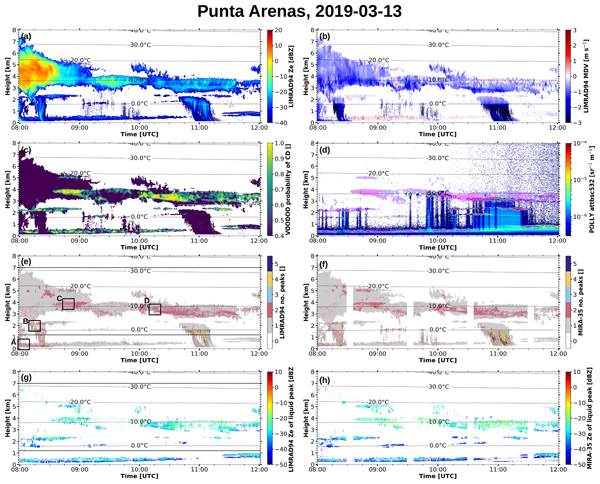
Teresa Vogl, Martin Radenz, Fabiola Ramelli, Rosa Gierens, and Heike Kalesse-Los
Atmos. Meas. Tech., 17, 6547–6568, https://doi.org/10.5194/amt-17-6547-2024, https://doi.org/10.5194/amt-17-6547-2024, 2024
Short summary
Short summary
In this study, we present a toolkit of two Python algorithms to extract information from Doppler spectra measured by ground-based cloud radars. In these Doppler spectra, several peaks can be formed due to populations of droplets/ice particles with different fall velocities coexisting in the same measurement time and height. The two algorithms can detect peaks and assign them to certain particle types, such as small cloud droplets or fast-falling ice particles like graupel.
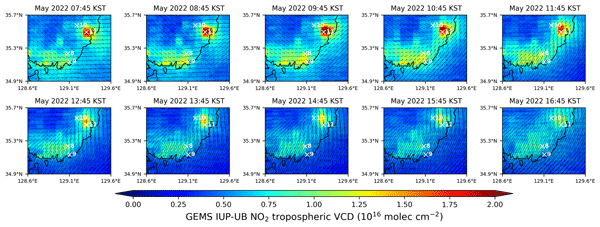
Kezia Lange, Andreas Richter, Tim Bösch, Bianca Zilker, Miriam Latsch, Lisa K. Behrens, Chisom M. Okafor, Hartmut Bösch, John P. Burrows, Alexis Merlaud, Gaia Pinardi, Caroline Fayt, Martina M. Friedrich, Ermioni Dimitropoulou, Michel Van Roozendael, Steffen Ziegler, Simona Ripperger-Lukosiunaite, Leon Kuhn, Bianca Lauster, Thomas Wagner, Hyunkee Hong, Donghee Kim, Lim-Seok Chang, Kangho Bae, Chang-Keun Song, Jong-Uk Park, and Hanlim Lee
Atmos. Meas. Tech., 17, 6315–6344, https://doi.org/10.5194/amt-17-6315-2024, https://doi.org/10.5194/amt-17-6315-2024, 2024
Short summary
Short summary
Instruments for air quality observations on geostationary satellites provide multiple observations per day and allow for the analysis of the diurnal variation of important air pollutants such as nitrogen dioxide (NO2) over large areas. The South Korean instrument GEMS, launched in February 2020, is the first instrument in geostationary orbit and covers a large part of Asia. Our investigations show the observed diurnal evolution of NO2 at different measurement sites.

Angelos Karanikolas, Natalia Kouremeti, Monica Campanelli, Victor Estellés, Masahiro Momoi, Gaurav Kumar, Stephan Nyeki, and Stelios Kazadzis
Atmos. Meas. Tech., 17, 6085–6105, https://doi.org/10.5194/amt-17-6085-2024, https://doi.org/10.5194/amt-17-6085-2024, 2024
Short summary
Short summary
Different sun photometer networks use different instruments, post-processing algorithms and calibration protocols for aerosol optical depth (AOD) retrieval. Such differences can affect the homogeneity and comparability of their measurements. In this study, we assess the homogeneity between the sun photometer networks GAW-PFR and SKYNET, analysing common measurements during three campaigns between 2017–2021, and investigate the main cause of the differences.
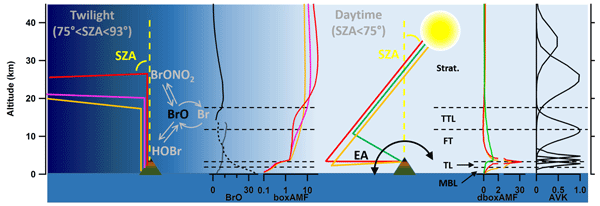
Theodore K. Koenig, François Hendrick, Douglas Kinnison, Christopher F. Lee, Michel Van Roozendael, and Rainer Volkamer
Atmos. Meas. Tech., 17, 5911–5934, https://doi.org/10.5194/amt-17-5911-2024, https://doi.org/10.5194/amt-17-5911-2024, 2024
Short summary
Short summary
Atmospheric bromine destroys ozone, impacts oxidation capacity, and oxidizes mercury into its toxic form. We constrain bromine by remote sensing of BrO from a mountaintop. Previous measurements retrieved two to three pieces of information vertically; we apply new methods to get five and a half vertically and two more in time. We compare with aircraft measurements to validate the methods and look at variations in BrO over the Pacific.
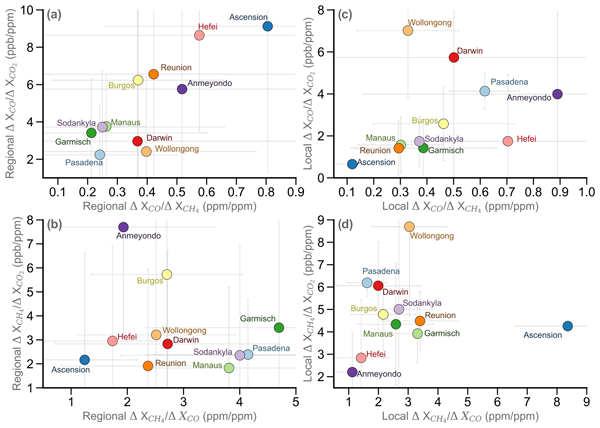
Kavitha Mottungan, Chayan Roychoudhury, Vanessa Brocchi, Benjamin Gaubert, Wenfu Tang, Mohammad Amin Mirrezaei, John McKinnon, Yafang Guo, David W. T. Griffith, Dietrich G. Feist, Isamu Morino, Mahesh K. Sha, Manvendra K. Dubey, Martine De Mazière, Nicholas M. Deutscher, Paul O. Wennberg, Ralf Sussmann, Rigel Kivi, Tae-Young Goo, Voltaire A. Velazco, Wei Wang, and Avelino F. Arellano Jr.
Atmos. Meas. Tech., 17, 5861–5885, https://doi.org/10.5194/amt-17-5861-2024, https://doi.org/10.5194/amt-17-5861-2024, 2024
Short summary
Short summary
A combination of data analysis techniques is introduced to separate local and regional influences on observed levels of carbon dioxide, carbon monoxide, and methane from an established ground-based remote sensing network. We take advantage of the covariations in these trace gases to identify the dominant type of sources driving these levels. Applying these methods in conjunction with existing approaches to other datasets can better address uncertainties in identifying sources and sinks.
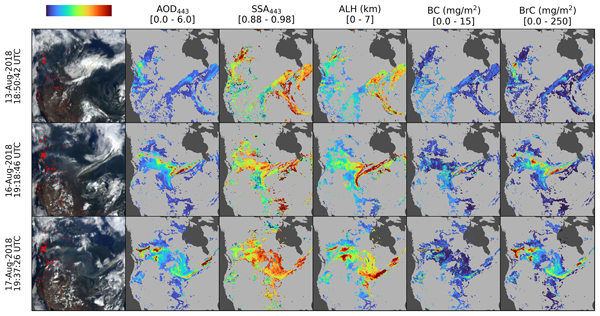
Myungje Choi, Alexei Lyapustin, Gregory L. Schuster, Sujung Go, Yujie Wang, Sergey Korkin, Ralph Kahn, Jeffrey S. Reid, Edward J. Hyer, Thomas F. Eck, Mian Chin, David J. Diner, Olga Kalashnikova, Oleg Dubovik, Jhoon Kim, and Hans Moosmüller
Atmos. Chem. Phys., 24, 10543–10565, https://doi.org/10.5194/acp-24-10543-2024, https://doi.org/10.5194/acp-24-10543-2024, 2024
Short summary
Short summary
This paper introduces a retrieval algorithm to estimate two key absorbing components in smoke (black carbon and brown carbon) using DSCOVR EPIC measurements. Our analysis reveals distinct smoke properties, including spectral absorption, layer height, and black carbon and brown carbon, over North America and central Africa. The retrieved smoke properties offer valuable observational constraints for modeling radiative forcing and informing health-related studies.
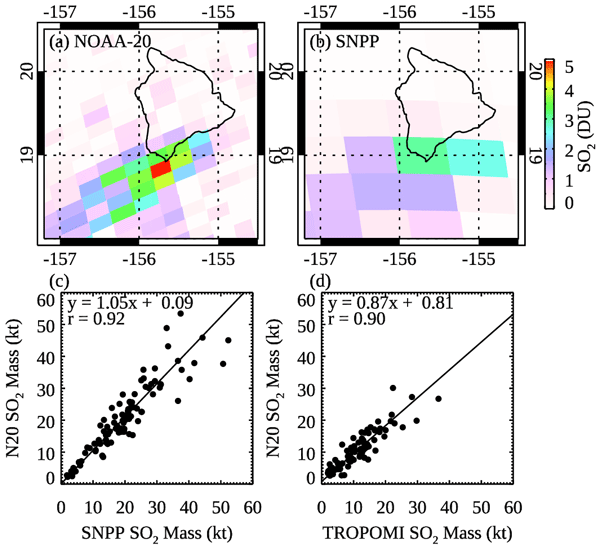
Can Li, Nickolay A. Krotkov, Joanna Joiner, Vitali Fioletov, Chris McLinden, Debora Griffin, Peter J. T. Leonard, Simon Carn, Colin Seftor, and Alexander Vasilkov
Earth Syst. Sci. Data, 16, 4291–4309, https://doi.org/10.5194/essd-16-4291-2024, https://doi.org/10.5194/essd-16-4291-2024, 2024
Short summary
Short summary
Sulfur dioxide (SO2), a poisonous gas from human activities and volcanoes, causes air pollution, acid rain, and changes to climate and the ozone layer. Satellites have been used to monitor SO2 globally, including remote areas. Here we describe a new satellite SO2 dataset from the OMPS instrument that flies on the N20 satellite. Results show that the new dataset agrees well with the existing ones from other satellites and can help to continue the global monitoring of SO2 from space.
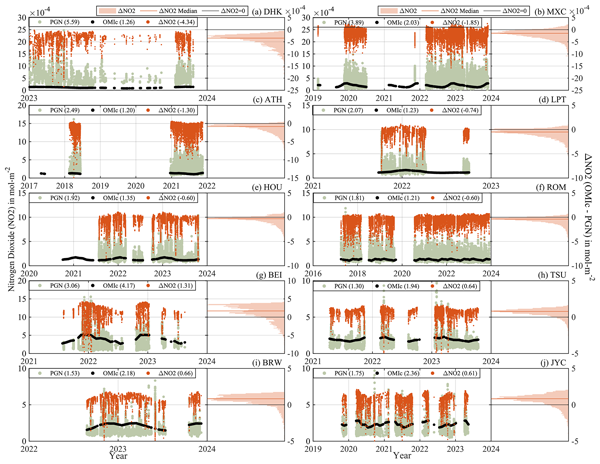
Akriti Masoom, Stelios Kazadzis, Masimo Valeri, Ioannis-Panagiotis Raptis, Gabrielle Brizzi, Kyriakoula Papachristopoulou, Francesca Barnaba, Stefano Casadio, Axel Kreuter, and Fabrizio Niro
Atmos. Meas. Tech., 17, 5525–5549, https://doi.org/10.5194/amt-17-5525-2024, https://doi.org/10.5194/amt-17-5525-2024, 2024
Short summary
Short summary
Aerosols, which have a wide impact on climate, radiative forcing, and human health, are widely represented by aerosol optical depth (AOD). AOD retrievals require Rayleigh scattering and atmospheric absorption (ozone, NO2, etc.) corrections. We analysed the NO2 (which has a high spatiotemporal variation) uncertainty impact on AOD retrievals using the synergy of co-located ground-based instruments with a long-term dataset at worldwide sites and found significant AOD over- or underestimations.
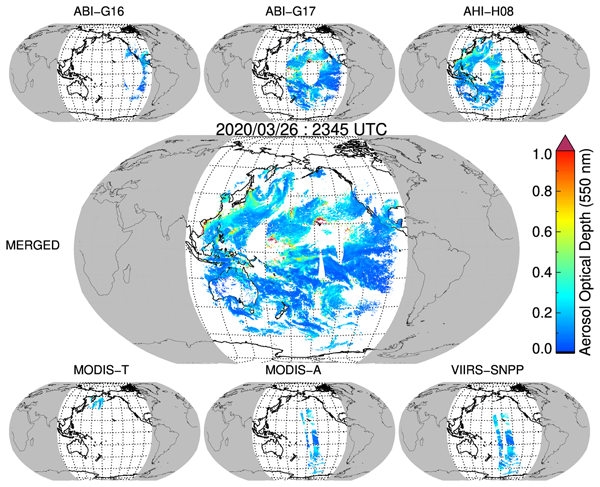
Pawan Gupta, Robert C. Levy, Shana Mattoo, Lorraine A. Remer, Zhaohui Zhang, Virginia Sawyer, Jennifer Wei, Sally Zhao, Min Oo, V. Praju Kiliyanpilakkil, and Xiaohua Pan
Atmos. Meas. Tech., 17, 5455–5476, https://doi.org/10.5194/amt-17-5455-2024, https://doi.org/10.5194/amt-17-5455-2024, 2024
Short summary
Short summary
In this study, for the first time, we combined aerosol data from six satellites using a unified algorithm. The global datasets are generated at a high spatial resolution of about 25 km with an interval of 30 min. The new datasets are compared against ground truth and verified. They will be useful for various applications such as air quality monitoring, climate research, pollution diurnal variability, long-range smoke and dust transport, and evaluation of regional and global models.
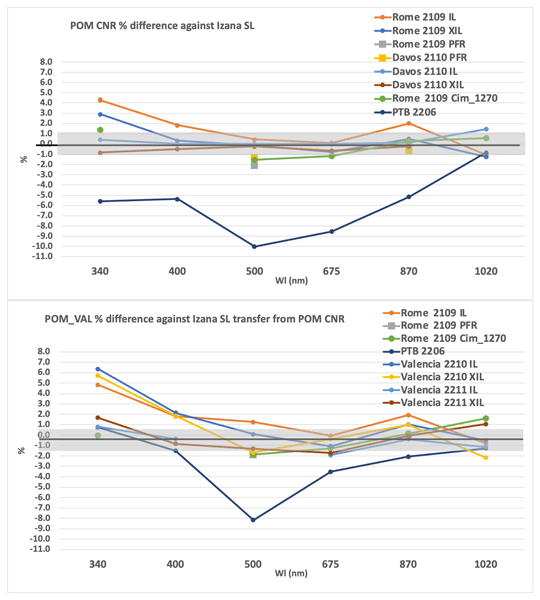
Monica Campanelli, Victor Estellés, Gaurav Kumar, Teruyuki Nakajima, Masahiro Momoi, Julian Gröbner, Stelios Kazadzis, Natalia Kouremeti, Angelos Karanikolas, Africa Barreto, Saulius Nevas, Kerstin Schwind, Philipp Schneider, Iiro Harju, Petri Kärhä, Henri Diémoz, Rei Kudo, Akihiro Uchiyama, Akihiro Yamazaki, Anna Maria Iannarelli, Gabriele Mevi, Annalisa Di Bernardino, and Stefano Casadio
Atmos. Meas. Tech., 17, 5029–5050, https://doi.org/10.5194/amt-17-5029-2024, https://doi.org/10.5194/amt-17-5029-2024, 2024
Short summary
Short summary
To retrieve columnar aerosol properties from sun photometers, some calibration factors are needed. The on-site calibrations, performed as frequently as possible to monitor changes in the machine conditions, allow operators to track and evaluate the calibration status on a continuous basis, reducing the data gaps incurred by the periodic shipments for performing centralized calibrations. The performance of the on-site calibration procedures was evaluated, providing very good results.
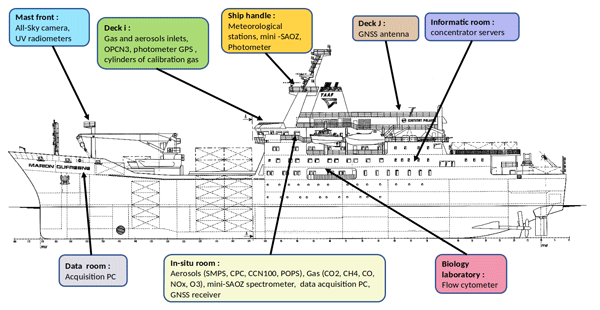
Pierre Tulet, Joel Van Baelen, Pierre Bosser, Jérome Brioude, Aurélie Colomb, Philippe Goloub, Andrea Pazmino, Thierry Portafaix, Michel Ramonet, Karine Sellegri, Melilotus Thyssen, Léa Gest, Nicolas Marquestaut, Dominique Mékiès, Jean-Marc Metzger, Gilles Athier, Luc Blarel, Marc Delmotte, Guillaume Desprairies, Mérédith Dournaux, Gaël Dubois, Valentin Duflot, Kevin Lamy, Lionel Gardes, Jean-François Guillemot, Valérie Gros, Joanna Kolasinski, Morgan Lopez, Olivier Magand, Erwan Noury, Manuel Nunes-Pinharanda, Guillaume Payen, Joris Pianezze, David Picard, Olivier Picard, Sandrine Prunier, François Rigaud-Louise, Michael Sicard, and Benjamin Torres
Earth Syst. Sci. Data, 16, 3821–3849, https://doi.org/10.5194/essd-16-3821-2024, https://doi.org/10.5194/essd-16-3821-2024, 2024
Short summary
Short summary
The MAP-IO program aims to compensate for the lack of atmospheric and oceanographic observations in the Southern Ocean by equipping the ship Marion Dufresne with a set of 17 scientific instruments. This program collected 700 d of measurements under different latitudes, seasons, sea states, and weather conditions. These new data will support the calibration and validation of numerical models and the understanding of the atmospheric composition of this region of Earth.
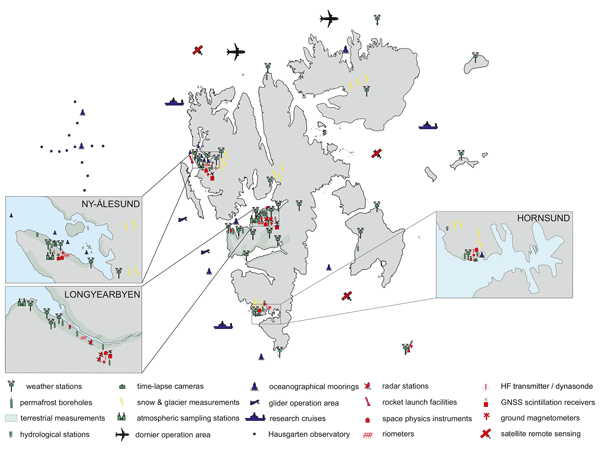
Hanne H. Christiansen, Ilkka S. O. Matero, Lisa Baddeley, Kim Holmén, Clara J. M. Hoppe, Maarten J. J. E. Loonen, Rune Storvold, Vito Vitale, Agata Zaborska, and Heikki Lihavainen
Earth Syst. Dynam., 15, 933–946, https://doi.org/10.5194/esd-15-933-2024, https://doi.org/10.5194/esd-15-933-2024, 2024
Short summary
Short summary
We provide an overview of the state and future of Earth system science in Svalbard as a synthesis of the recommendations made by the scientific community active in the archipelago. This work helped identify foci for developments of the observing system and a path forward to reach the full interdisciplinarity needed to operate at Earth system science scale. Better understanding of the processes in Svalbard will benefit both process-level understanding and Earth system models.
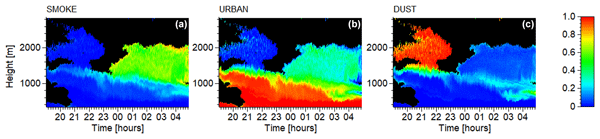
Igor Veselovskii, Boris Barchunov, Qiaoyun Hu, Philippe Goloub, Thierry Podvin, Mikhail Korenskii, Gaël Dubois, William Boissiere, and Nikita Kasianik
Atmos. Meas. Tech., 17, 4137–4152, https://doi.org/10.5194/amt-17-4137-2024, https://doi.org/10.5194/amt-17-4137-2024, 2024
Short summary
Short summary
The paper presents a new method that categorizes atmospheric aerosols by analyzing their optical properties with a Mie–Raman–fluorescence lidar. The research specifically looks into understanding the presence of smoke, urban, and dust aerosols in the mixtures identified by this lidar. The reliability of the results is evaluated using the Monte Carlo technique. The effectiveness of this approach is successfully demonstrated through testing in ATOLL, an observatory influenced by diverse aerosols.
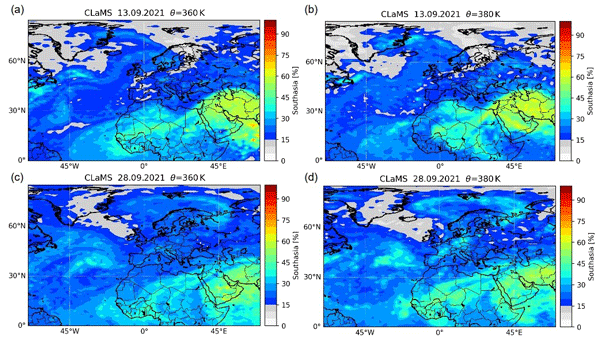
Sandra Graßl, Christoph Ritter, Ines Tritscher, and Bärbel Vogel
Atmos. Chem. Phys., 24, 7535–7557, https://doi.org/10.5194/acp-24-7535-2024, https://doi.org/10.5194/acp-24-7535-2024, 2024
Short summary
Short summary
Arctic lidar data for 1 year are compared with global modeling of aerosol tracers in the stratosphere. A trend in the aerosol backscatter can be found. These observations are further compared with a model study to investigate the aerosol origin of the observed arctic aerosol. We found a correlation with increased backscatter signal during summer and early autumn and pathways from the Southeast Asian monsoon region and remains of the Asian tropopause aerosol layer in the Arctic.
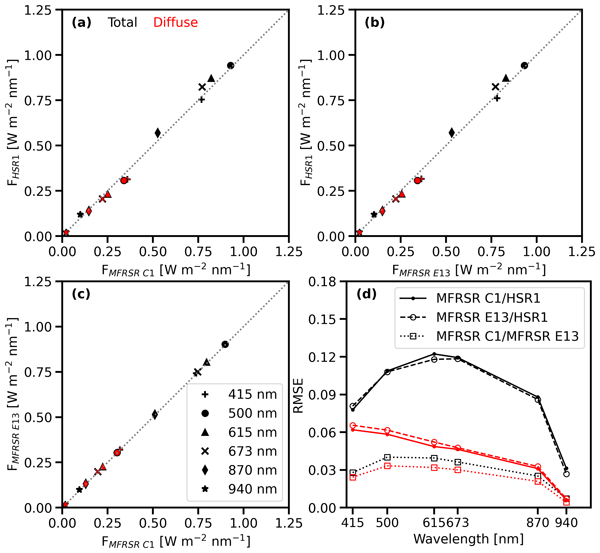
Kelly A. Balmes, Laura D. Riihimaki, John Wood, Connor Flynn, Adam Theisen, Michael Ritsche, Lynn Ma, Gary B. Hodges, and Christian Herrera
Atmos. Meas. Tech., 17, 3783–3807, https://doi.org/10.5194/amt-17-3783-2024, https://doi.org/10.5194/amt-17-3783-2024, 2024
Short summary
Short summary
A new hyperspectral radiometer (HSR1) was deployed and evaluated in the central United States (northern Oklahoma). The HSR1 total spectral irradiance agreed well with nearby existing instruments, but the diffuse spectral irradiance was slightly smaller. The HSR1-retrieved aerosol optical depth (AOD) also agreed well with other retrieved AODs. The HSR1 performance is encouraging: new hyperspectral knowledge is possible that could inform atmospheric process understanding and weather forecasting.
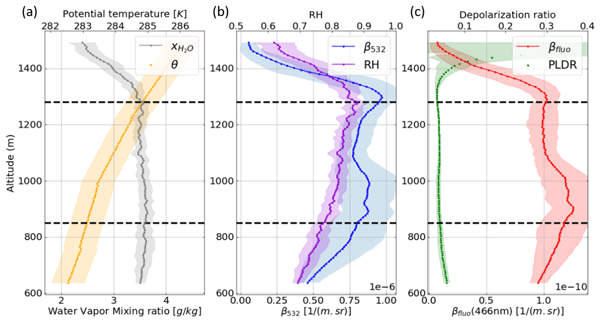
Robin Miri, Olivier Pujol, Qiaoyun Hu, Philippe Goloub, Igor Veselovskii, Thierry Podvin, and Fabrice Ducos
Atmos. Meas. Tech., 17, 3367–3375, https://doi.org/10.5194/amt-17-3367-2024, https://doi.org/10.5194/amt-17-3367-2024, 2024
Short summary
Short summary
This paper focuses on the use of fluorescence to study aerosols with lidar. An innovative method for aerosol hygroscopic growth study using fluorescence is presented. The paper presents case studies to showcase the effectiveness and potential of the proposed approach. These advancements will contribute to better understanding the interactions between aerosols and water vapor, with future work expected to be dedicated to aerosol–cloud interaction.
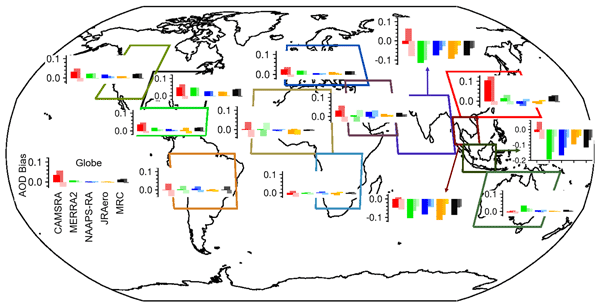
Peng Xian, Jeffrey S. Reid, Melanie Ades, Angela Benedetti, Peter R. Colarco, Arlindo da Silva, Tom F. Eck, Johannes Flemming, Edward J. Hyer, Zak Kipling, Samuel Rémy, Tsuyoshi Thomas Sekiyama, Taichu Tanaka, Keiya Yumimoto, and Jianglong Zhang
Atmos. Chem. Phys., 24, 6385–6411, https://doi.org/10.5194/acp-24-6385-2024, https://doi.org/10.5194/acp-24-6385-2024, 2024
Short summary
Short summary
The study compares and evaluates monthly AOD of four reanalyses (RA) and their consensus (i.e., ensemble mean). The basic verification characteristics of these RA versus both AERONET and MODIS retrievals are presented. The study discusses the strength of each RA and identifies regions where divergence and challenges are prominent. The RA consensus usually performs very well on a global scale in terms of how well it matches the observational data, making it a good choice for various applications.
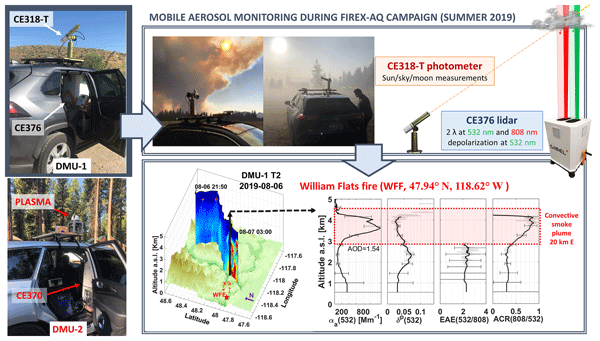
Maria Fernanda Sanchez Barrero, Ioana Elisabeta Popovici, Philippe Goloub, Stephane Victori, Qiaoyun Hu, Benjamin Torres, Thierry Podvin, Luc Blarel, Gaël Dubois, Fabrice Ducos, Eric Bourrianne, Aliaksandr Lapionak, Lelia Proniewski, Brent Holben, David Matthew Giles, and Anthony LaRosa
Atmos. Meas. Tech., 17, 3121–3146, https://doi.org/10.5194/amt-17-3121-2024, https://doi.org/10.5194/amt-17-3121-2024, 2024
Short summary
Short summary
This study showcases the use of a compact elastic lidar to monitor aerosols aboard moving platforms. By coupling dual-wavelength and depolarization measurements with photometer data, we studied aerosols during events of Saharan dust and smoke transport. Our research, conducted in various scenarios, not only validated our methods but also offered insights into the atmospheric dynamics near active fires. This study aids future research to fill observational gaps in aerosol monitoring.
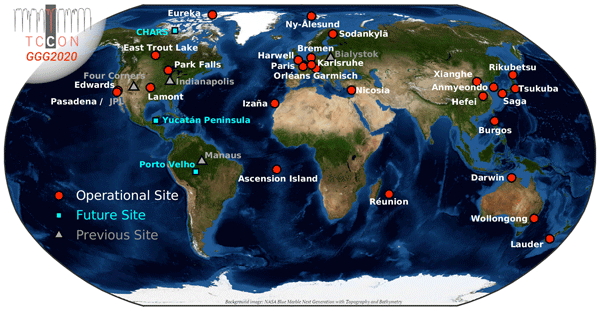
Joshua L. Laughner, Geoffrey C. Toon, Joseph Mendonca, Christof Petri, Sébastien Roche, Debra Wunch, Jean-Francois Blavier, David W. T. Griffith, Pauli Heikkinen, Ralph F. Keeling, Matthäus Kiel, Rigel Kivi, Coleen M. Roehl, Britton B. Stephens, Bianca C. Baier, Huilin Chen, Yonghoon Choi, Nicholas M. Deutscher, Joshua P. DiGangi, Jochen Gross, Benedikt Herkommer, Pascal Jeseck, Thomas Laemmel, Xin Lan, Erin McGee, Kathryn McKain, John Miller, Isamu Morino, Justus Notholt, Hirofumi Ohyama, David F. Pollard, Markus Rettinger, Haris Riris, Constantina Rousogenous, Mahesh Kumar Sha, Kei Shiomi, Kimberly Strong, Ralf Sussmann, Yao Té, Voltaire A. Velazco, Steven C. Wofsy, Minqiang Zhou, and Paul O. Wennberg
Earth Syst. Sci. Data, 16, 2197–2260, https://doi.org/10.5194/essd-16-2197-2024, https://doi.org/10.5194/essd-16-2197-2024, 2024
Short summary
Short summary
This paper describes a new version, called GGG2020, of a data set containing column-integrated observations of greenhouse and related gases (including CO2, CH4, CO, and N2O) made by ground stations located around the world. Compared to the previous version (GGG2014), improvements have been made toward site-to-site consistency. This data set plays a key role in validating space-based greenhouse gas observations and in understanding the carbon cycle.
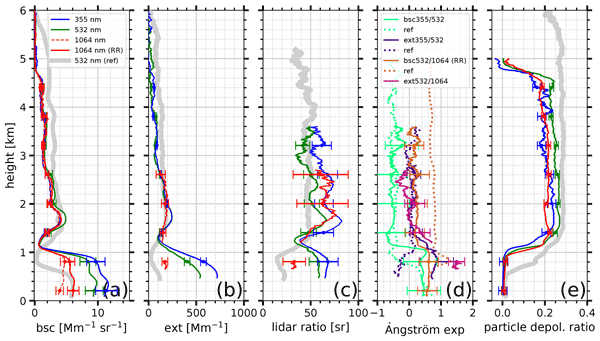
Henriette Gebauer, Athena Augusta Floutsi, Moritz Haarig, Martin Radenz, Ronny Engelmann, Dietrich Althausen, Annett Skupin, Albert Ansmann, Cordula Zenk, and Holger Baars
Atmos. Chem. Phys., 24, 5047–5067, https://doi.org/10.5194/acp-24-5047-2024, https://doi.org/10.5194/acp-24-5047-2024, 2024
Short summary
Short summary
Sulfate aerosol from the volcanic eruption at La Palma in 2021 was observed over Cabo Verde. We characterized the aerosol burden based on a case study of lidar and sun photometer observations. We compared the volcanic case to the typical background conditions (reference case) to quantify the volcanic pollution. We show the first ever measurements of the extinction coefficient, lidar ratio and depolarization ratio at 1064 nm for volcanic sulfate.
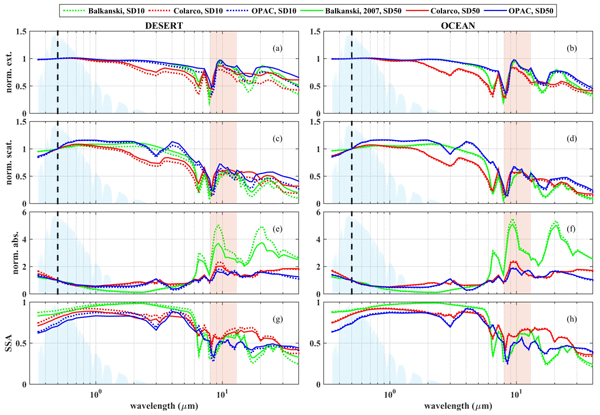
Ilias Fountoulakis, Alexandra Tsekeri, Stelios Kazadzis, Vassilis Amiridis, Angelos Nersesian, Maria Tsichla, Emmanouil Proestakis, Antonis Gkikas, Kyriakoula Papachristopoulou, Vasileios Barlakas, Claudia Emde, and Bernhard Mayer
Atmos. Chem. Phys., 24, 4915–4948, https://doi.org/10.5194/acp-24-4915-2024, https://doi.org/10.5194/acp-24-4915-2024, 2024
Short summary
Short summary
In our study we provide an assessment, through a sensitivity study, of the limitations of models to calculate the dust direct radiative effect (DRE) due to the underrepresentation of its size, refractive index (RI), and shape. Our results indicate the necessity of including more realistic sizes and RIs for dust particles in dust models, in order to derive better estimations of the dust direct radiative effects.
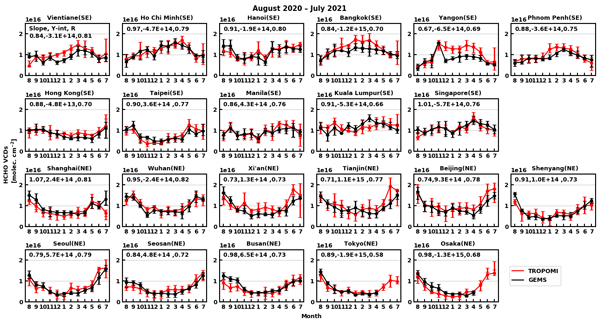
Gitaek T. Lee, Rokjin J. Park, Hyeong-Ahn Kwon, Eunjo S. Ha, Sieun D. Lee, Seunga Shin, Myoung-Hwan Ahn, Mina Kang, Yong-Sang Choi, Gyuyeon Kim, Dong-Won Lee, Deok-Rae Kim, Hyunkee Hong, Bavo Langerock, Corinne Vigouroux, Christophe Lerot, Francois Hendrick, Gaia Pinardi, Isabelle De Smedt, Michel Van Roozendael, Pucai Wang, Heesung Chong, Yeseul Cho, and Jhoon Kim
Atmos. Chem. Phys., 24, 4733–4749, https://doi.org/10.5194/acp-24-4733-2024, https://doi.org/10.5194/acp-24-4733-2024, 2024
Short summary
Short summary
This study evaluates the Geostationary Environment Monitoring Spectrometer (GEMS) HCHO product by comparing its vertical column densities (VCDs) with those of TROPOMI and ground-based observations. Based on some sensitivity tests, obtaining radiance references under clear-sky conditions significantly improves HCHO retrieval quality. GEMS HCHO VCDs captured seasonal and diurnal variations well during the first year of observation, showing consistency with TROPOMI and ground-based observations.
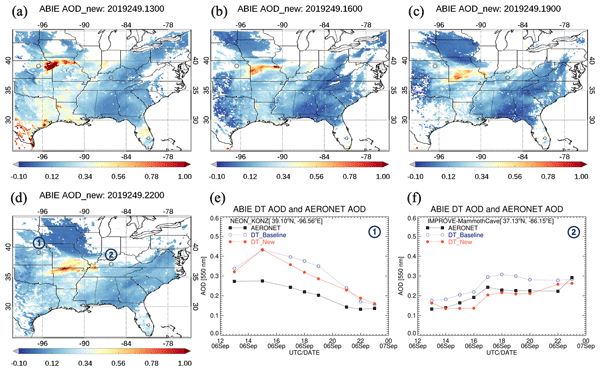
Mijin Kim, Robert C. Levy, Lorraine A. Remer, Shana Mattoo, and Pawan Gupta
Atmos. Meas. Tech., 17, 1913–1939, https://doi.org/10.5194/amt-17-1913-2024, https://doi.org/10.5194/amt-17-1913-2024, 2024
Short summary
Short summary
The study focused on evaluating and modifying the surface reflectance parameterization (SRP) of the Dark Target (DT) algorithm for geostationary observation. When using the DT SRP with the ABIs sensor on GOES-R, artificial diurnal signatures were present in AOD retrieval. To overcome this issue, a new SRP was developed, incorporating solar zenith angle and land cover type. The revised SRP resulted in improved AOD retrieval, demonstrating reduced bias around local noon.
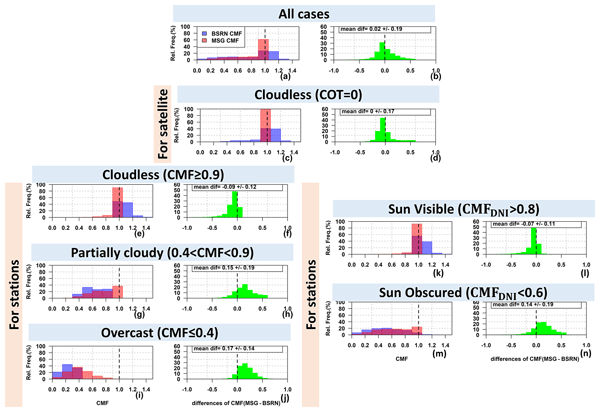
Kyriakoula Papachristopoulou, Ilias Fountoulakis, Alkiviadis F. Bais, Basil E. Psiloglou, Nikolaos Papadimitriou, Ioannis-Panagiotis Raptis, Andreas Kazantzidis, Charalampos Kontoes, Maria Hatzaki, and Stelios Kazadzis
Atmos. Meas. Tech., 17, 1851–1877, https://doi.org/10.5194/amt-17-1851-2024, https://doi.org/10.5194/amt-17-1851-2024, 2024
Short summary
Short summary
The upgraded systems SENSE2 and NextSENSE2 focus on improving the quality of solar nowcasting and forecasting. SENSE2 provides real-time estimates of solar irradiance across a wide region every 15 min. NextSENSE2 offers short-term forecasts of irradiance up to 3 h ahead. Evaluation with actual data showed that the instantaneous comparison yields the most discrepancies due to the uncertainties of cloud-related information and satellite versus ground-based spatial representativeness limitations.
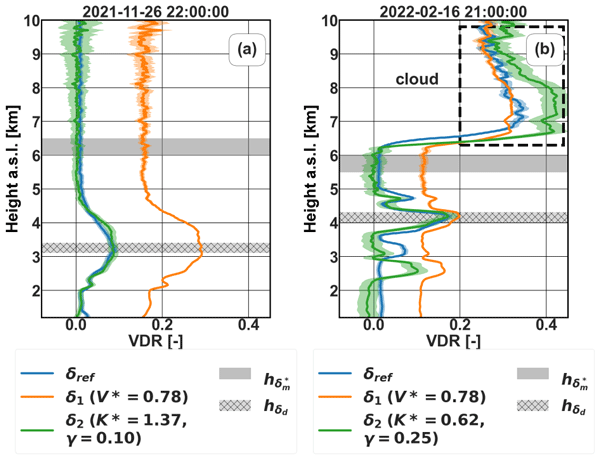
Alkistis Papetta, Franco Marenco, Maria Kezoudi, Rodanthi-Elisavet Mamouri, Argyro Nisantzi, Holger Baars, Ioana Elisabeta Popovici, Philippe Goloub, Stéphane Victori, and Jean Sciare
Atmos. Meas. Tech., 17, 1721–1738, https://doi.org/10.5194/amt-17-1721-2024, https://doi.org/10.5194/amt-17-1721-2024, 2024
Short summary
Short summary
We propose a method to determine depolarization parameters using observations from a reference instrument at a nearby location, needed for systems where a priori knowledge of cross-talk parameters is not available. It uses three-parameter equations to compare VDR between two co-located lidars at dust and molecular layers. It can be applied retrospectively to existing data acquired during campaigns. Its application to Cimel CE376 corrected VDR bias at high- and low-depolarizing layers.
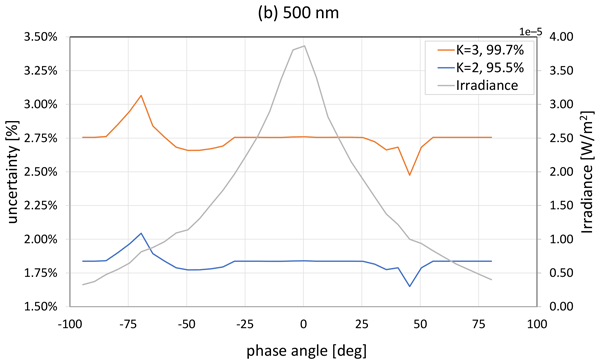
Carlos Toledano, Sarah Taylor, África Barreto, Stefan Adriaensen, Alberto Berjón, Agnieszka Bialek, Ramiro González, Emma Woolliams, and Marc Bouvet
Atmos. Chem. Phys., 24, 3649–3671, https://doi.org/10.5194/acp-24-3649-2024, https://doi.org/10.5194/acp-24-3649-2024, 2024
Short summary
Short summary
The calibration of Earth observation sensors is key to ensuring the continuity of long-term and global climate records. Satellite sensors, calibrated prior to launch, are susceptible to degradation in space. The Moon provides a stable calibration reference; however, its illumination depends on the Sun–Earth–Moon geometry and must be modelled. A new lunar irradiance model is presented, built upon observations over 5 years at a high-altitude observatory and a rigorous calibration and validation.
Celia Herrero del Barrio, Roberto Román, Ramiro González, Alberto Cazorla, Marcos Herreras-Giralda, Juan Carlos Antuña-Sánchez, Francisco Molero, Francisco Navas-Guzmán, Antonio Serrano, María Ángeles Obregón, Yolanda Sola, Marco Pandolfi, Sara Herrero-Anta, Daniel González-Fernández, Jorge Muñiz-Rosado, David Mateos, Abel Calle, Carlos Toledano, Victoria Eugenia Cachorro, and Ángel Máximo de Frutos
EGUsphere, https://doi.org/10.5194/egusphere-2024-581, https://doi.org/10.5194/egusphere-2024-581, 2024
Preprint withdrawn
Short summary
Short summary
Introducing CAECENET, a novel system that combines sun-sky photometer and ceilometer data, enabling the continuous monitoring and automatic retrieval of both vertical and columnar aerosol properties in near real-time. A case study on a Saharan dust outbreak illustrates it's efficacy in tracking aerosol events. Additionally, the analysis of Canadian wildfires' long-range transport is presented, showing it's utility in monitoring event propagation, aerosol concentration, and optical properties.
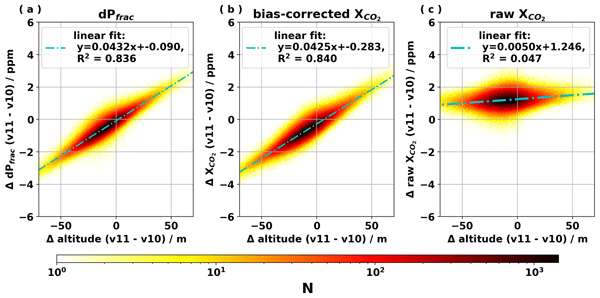
Nicole Jacobs, Christopher W. O'Dell, Thomas E. Taylor, Thomas L. Logan, Brendan Byrne, Matthäus Kiel, Rigel Kivi, Pauli Heikkinen, Aronne Merrelli, Vivienne H. Payne, and Abhishek Chatterjee
Atmos. Meas. Tech., 17, 1375–1401, https://doi.org/10.5194/amt-17-1375-2024, https://doi.org/10.5194/amt-17-1375-2024, 2024
Short summary
Short summary
The accuracy of trace gas retrievals from spaceborne observations, like those from the Orbiting Carbon Observatory 2 (OCO-2), are sensitive to the referenced digital elevation model (DEM). Therefore, we evaluate several global DEMs, used in versions 10 and 11 of the OCO-2 retrieval along with the Copernicus DEM. We explore the impacts of changing the DEM on biases in OCO-2-retrieved XCO2 and inferred CO2 fluxes. Our findings led to an update to OCO-2 v11.1 using the Copernicus DEM globally.
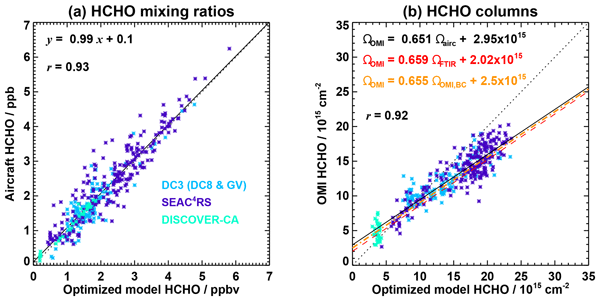
Jean-François Müller, Trissevgeni Stavrakou, Glenn-Michael Oomen, Beata Opacka, Isabelle De Smedt, Alex Guenther, Corinne Vigouroux, Bavo Langerock, Carlos Augusto Bauer Aquino, Michel Grutter, James Hannigan, Frank Hase, Rigel Kivi, Erik Lutsch, Emmanuel Mahieu, Maria Makarova, Jean-Marc Metzger, Isamu Morino, Isao Murata, Tomoo Nagahama, Justus Notholt, Ivan Ortega, Mathias Palm, Amelie Röhling, Wolfgang Stremme, Kimberly Strong, Ralf Sussmann, Yao Té, and Alan Fried
Atmos. Chem. Phys., 24, 2207–2237, https://doi.org/10.5194/acp-24-2207-2024, https://doi.org/10.5194/acp-24-2207-2024, 2024
Short summary
Short summary
Formaldehyde observations from satellites can be used to constrain the emissions of volatile organic compounds, but those observations have biases. Using an atmospheric model, aircraft and ground-based remote sensing data, we quantify these biases, propose a correction to the data, and assess the consequence of this correction for the evaluation of emissions.
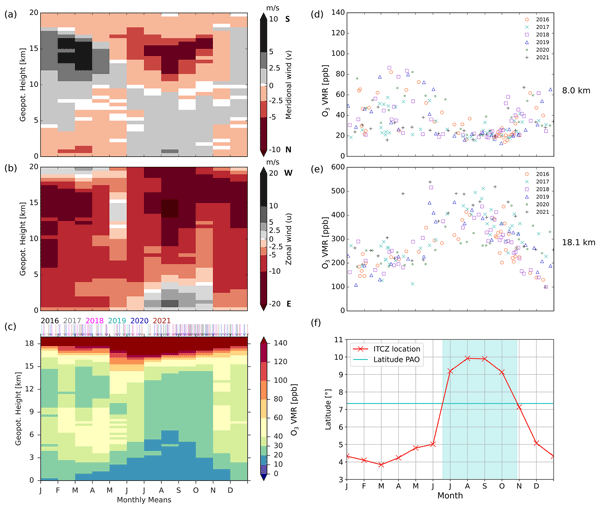
Katrin Müller, Jordis S. Tradowsky, Peter von der Gathen, Christoph Ritter, Sharon Patris, Justus Notholt, and Markus Rex
Atmos. Chem. Phys., 24, 2169–2193, https://doi.org/10.5194/acp-24-2169-2024, https://doi.org/10.5194/acp-24-2169-2024, 2024
Short summary
Short summary
The Palau Atmospheric Observatory is introduced as an ideal site to detect changes in atmospheric composition and dynamics above the remote tropical western Pacific. We focus on the ozone sounding program from 2016–2021, including El Niño 2016. The year-round high convective activity is reflected in dominant low tropospheric ozone and high relative humidity. Their seasonal distributions are unique compared to other tropical sites and are modulated by the Intertropical Convergence Zone.
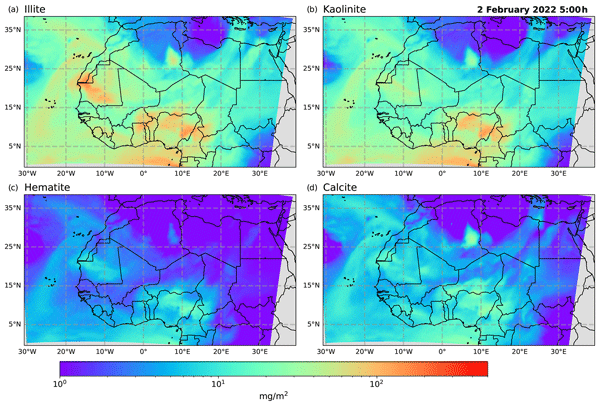
Sofía Gómez Maqueo Anaya, Dietrich Althausen, Matthias Faust, Holger Baars, Bernd Heinold, Julian Hofer, Ina Tegen, Albert Ansmann, Ronny Engelmann, Annett Skupin, Birgit Heese, and Kerstin Schepanski
Geosci. Model Dev., 17, 1271–1295, https://doi.org/10.5194/gmd-17-1271-2024, https://doi.org/10.5194/gmd-17-1271-2024, 2024
Short summary
Short summary
Mineral dust aerosol particles vary greatly in their composition depending on source region, which leads to different physicochemical properties. Most atmosphere–aerosol models consider mineral dust aerosols to be compositionally homogeneous, which ultimately increases model uncertainty. Here, we present an approach to explicitly consider the heterogeneity of the mineralogical composition for simulations of the Saharan atmospheric dust cycle with regard to dust transport towards the Atlantic.
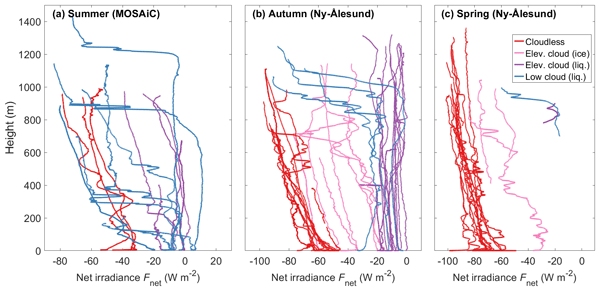
Michael Lonardi, Elisa F. Akansu, André Ehrlich, Mauro Mazzola, Christian Pilz, Matthew D. Shupe, Holger Siebert, and Manfred Wendisch
Atmos. Chem. Phys., 24, 1961–1978, https://doi.org/10.5194/acp-24-1961-2024, https://doi.org/10.5194/acp-24-1961-2024, 2024
Short summary
Short summary
Profiles of thermal-infrared irradiance were measured at two Arctic sites. The presence or lack of clouds influences the vertical structure of these observations. In particular, the cloud top region is a source of radiative energy that can promote cooling and mixing in the cloud layer. Simulations are used to further characterize how the amount of water in the cloud modifies this forcing. A case study additionally showcases the evolution of the radiation profiles in a dynamic atmosphere.
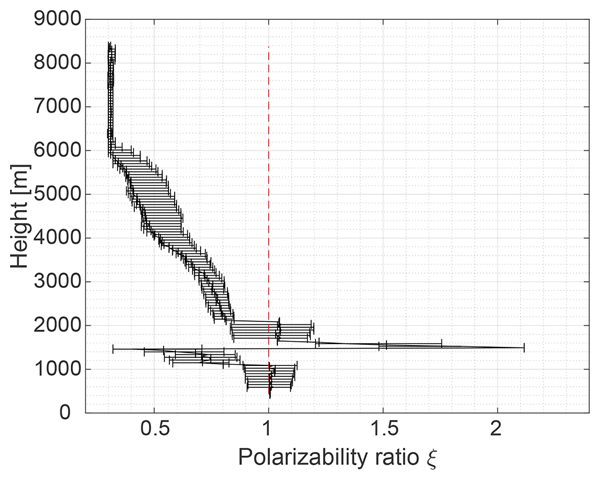
Audrey Teisseire, Patric Seifert, Alexander Myagkov, Johannes Bühl, and Martin Radenz
Atmos. Meas. Tech., 17, 999–1016, https://doi.org/10.5194/amt-17-999-2024, https://doi.org/10.5194/amt-17-999-2024, 2024
Short summary
Short summary
The vertical distribution of particle shape (VDPS) method, introduced in this study, aids in characterizing the density-weighted shape of cloud particles from scanning slanted linear depolarization ratio (SLDR)-mode cloud radar observations. The VDPS approach represents a new, versatile way to study microphysical processes by combining a spheroidal scattering model with real measurements of SLDR.
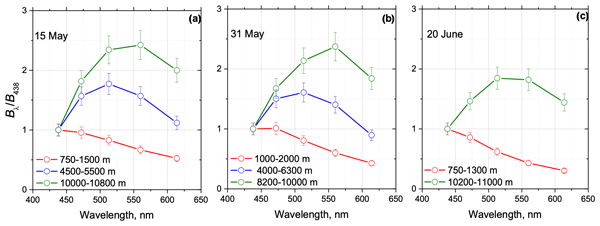
Igor Veselovskii, Qiaoyun Hu, Philippe Goloub, Thierry Podvin, William Boissiere, Mikhail Korenskiy, Nikita Kasianik, Sergey Khaykyn, and Robin Miri
Atmos. Meas. Tech., 17, 1023–1036, https://doi.org/10.5194/amt-17-1023-2024, https://doi.org/10.5194/amt-17-1023-2024, 2024
Short summary
Short summary
Measurements of transported smoke layers were performed with a lidar in Lille and a five-channel fluorescence lidar in Moscow. Results show the peak of fluorescence in the boundary layer is at 438 nm, while in the smoke layer it shifts to longer wavelengths. The fluorescence depolarization is 45 % to 55 %. The depolarization ratio of the water vapor channel is low (2 ± 0.5 %) in the absence of fluorescence and can be used to evaluate the contribution of fluorescence to water vapor signal.
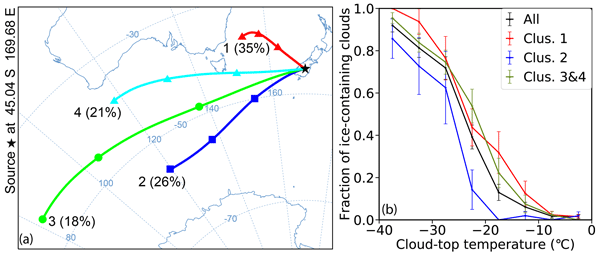
Julian Hofer, Patric Seifert, J. Ben Liley, Martin Radenz, Osamu Uchino, Isamu Morino, Tetsu Sakai, Tomohiro Nagai, and Albert Ansmann
Atmos. Chem. Phys., 24, 1265–1280, https://doi.org/10.5194/acp-24-1265-2024, https://doi.org/10.5194/acp-24-1265-2024, 2024
Short summary
Short summary
An 11-year dataset of polarization lidar observations from Lauder, New Zealand / Aotearoa, was used to distinguish the thermodynamic phase of natural clouds. The cloud dataset was separated to assess the impact of air mass origin on the frequency of heterogeneous ice formation. Ice formation efficiency in clouds above Lauder was found to be lower than in the polluted Northern Hemisphere midlatitudes but higher than in very clean and pristine environments, such as Punta Arenas in southern Chile.
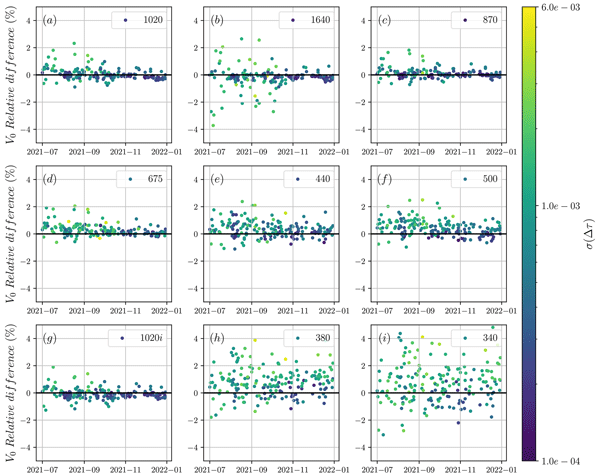
Antonio Fernando Almansa, África Barreto, Natalia Kouremeti, Ramiro González, Akriti Masoom, Carlos Toledano, Julian Gröbner, Rosa Delia García, Yenny González, Stelios Kazadzis, Stéphane Victori, Óscar Álvarez, Fabrice Maupin, Virgilio Carreño, Victoria Eugenia Cachorro, and Emilio Cuevas
Atmos. Meas. Tech., 17, 659–675, https://doi.org/10.5194/amt-17-659-2024, https://doi.org/10.5194/amt-17-659-2024, 2024
Short summary
Short summary
This paper applies sun photometer synergies to improve calibration transference between different sun photometers and also enhance their quality assurance and quality control. We have validated this technique using different instrumentation, the WMO-GAW and NASA-AERONET references, under different aerosol regimes using the standard Langley calibration method as a reference.
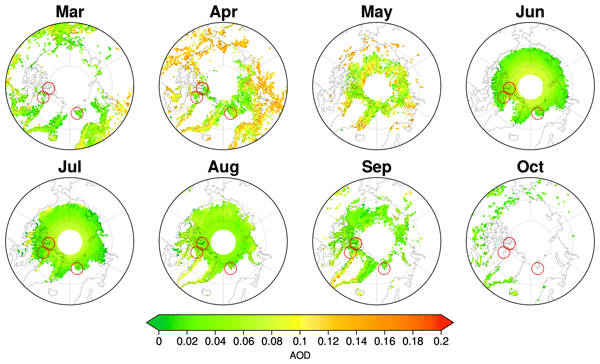
Basudev Swain, Marco Vountas, Adrien Deroubaix, Luca Lelli, Yanick Ziegler, Soheila Jafariserajehlou, Sachin S. Gunthe, Andreas Herber, Christoph Ritter, Hartmut Bösch, and John P. Burrows
Atmos. Meas. Tech., 17, 359–375, https://doi.org/10.5194/amt-17-359-2024, https://doi.org/10.5194/amt-17-359-2024, 2024
Short summary
Short summary
Aerosols are suspensions of particles dispersed in the air. In this study, we use a novel retrieval of satellite data to investigate an optical property of aerosols, the aerosol optical depth, in the high Arctic to assess their direct and indirect roles in climate change. This study demonstrates that the presented approach shows good quality and very promising potential.
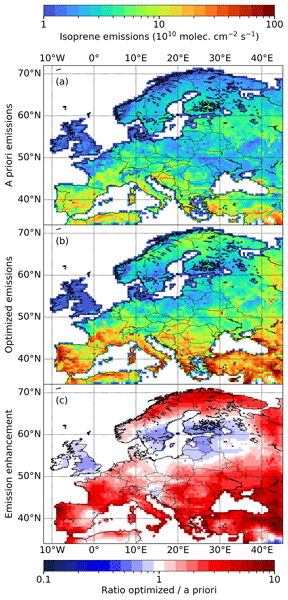
Glenn-Michael Oomen, Jean-François Müller, Trissevgeni Stavrakou, Isabelle De Smedt, Thomas Blumenstock, Rigel Kivi, Maria Makarova, Mathias Palm, Amelie Röhling, Yao Té, Corinne Vigouroux, Martina M. Friedrich, Udo Frieß, François Hendrick, Alexis Merlaud, Ankie Piters, Andreas Richter, Michel Van Roozendael, and Thomas Wagner
Atmos. Chem. Phys., 24, 449–474, https://doi.org/10.5194/acp-24-449-2024, https://doi.org/10.5194/acp-24-449-2024, 2024
Short summary
Short summary
Natural emissions from vegetation have a profound impact on air quality for their role in the formation of harmful tropospheric ozone and organic aerosols, yet these emissions are highly uncertain. In this study, we quantify emissions of organic gases over Europe using high-quality satellite measurements of formaldehyde. These satellite observations suggest that emissions from vegetation are much higher than predicted by models, especially in southern Europe.
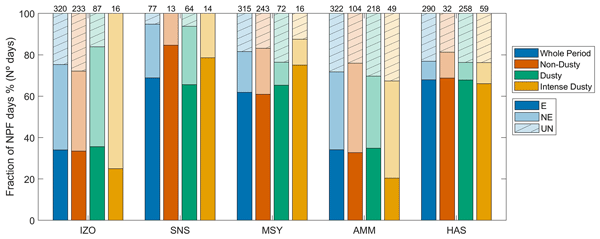
Juan Andrés Casquero-Vera, Daniel Pérez-Ramírez, Hassan Lyamani, Fernando Rejano, Andrea Casans, Gloria Titos, Francisco José Olmo, Lubna Dada, Simo Hakala, Tareq Hussein, Katrianne Lehtipalo, Pauli Paasonen, Antti Hyvärinen, Noemí Pérez, Xavier Querol, Sergio Rodríguez, Nikos Kalivitis, Yenny González, Mansour A. Alghamdi, Veli-Matti Kerminen, Andrés Alastuey, Tuukka Petäjä, and Lucas Alados-Arboledas
Atmos. Chem. Phys., 23, 15795–15814, https://doi.org/10.5194/acp-23-15795-2023, https://doi.org/10.5194/acp-23-15795-2023, 2023
Short summary
Short summary
Here we present the first study of the effect of mineral dust on the inhibition/promotion of new particle formation (NPF) events in different dust-influenced areas. Unexpectedly, we show that the occurrence of NPF events is highly frequent during mineral dust outbreaks, occurring even during extreme dust outbreaks. We also show that the occurrence of NPF events during mineral dust outbreaks significantly affects the potential cloud condensation nuclei budget.
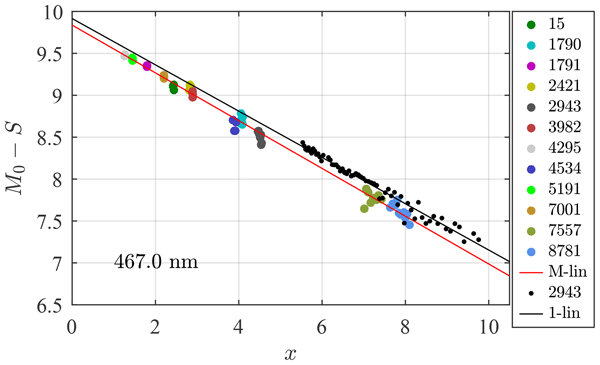
Liviu Ivănescu and Norman T. O'Neill
Atmos. Meas. Tech., 16, 6111–6121, https://doi.org/10.5194/amt-16-6111-2023, https://doi.org/10.5194/amt-16-6111-2023, 2023
Short summary
Short summary
The starphotometers' complex infrastructure prohibits calibration campaigns. On-site calibration procedures appear as the only practical solution. A multi-star approach overcomes site-specific sky transparency stability problems. Star selection strategies were proposed for mitigating some sources of errors. Data processing strategies and instrument design improvements appear necessary.
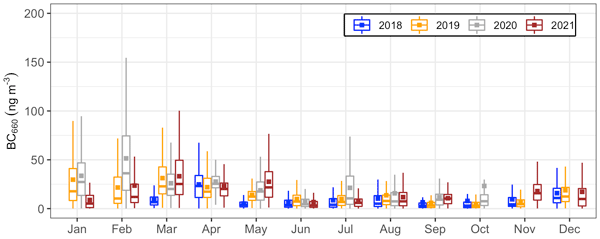
Stefania Gilardoni, Dominic Heslin-Rees, Mauro Mazzola, Vito Vitale, Michael Sprenger, and Radovan Krejci
Atmos. Chem. Phys., 23, 15589–15607, https://doi.org/10.5194/acp-23-15589-2023, https://doi.org/10.5194/acp-23-15589-2023, 2023
Short summary
Short summary
Models still fail in reproducing black carbon (BC) temporal variability in the Arctic. Analysis of equivalent BC concentrations in the European Arctic shows that BC seasonal variability is modulated by the efficiency of removal by precipitation during transport towards high latitudes. Short-term variability is controlled by synoptic-scale circulation patterns. The advection of warm air from lower latitudes is an effective pollution transport pathway during summer.
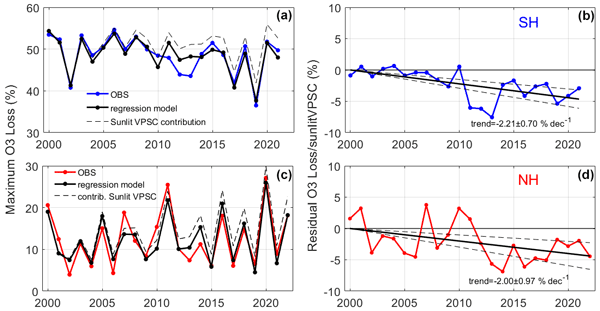
Andrea Pazmiño, Florence Goutail, Sophie Godin-Beekmann, Alain Hauchecorne, Jean-Pierre Pommereau, Martyn P. Chipperfield, Wuhu Feng, Franck Lefèvre, Audrey Lecouffe, Michel Van Roozendael, Nis Jepsen, Georg Hansen, Rigel Kivi, Kimberly Strong, and Kaley A. Walker
Atmos. Chem. Phys., 23, 15655–15670, https://doi.org/10.5194/acp-23-15655-2023, https://doi.org/10.5194/acp-23-15655-2023, 2023
Short summary
Short summary
The vortex-averaged ozone loss over the last 3 decades is evaluated for both polar regions using the passive ozone tracer of the chemical transport model TOMCAT/SLIMCAT and total ozone observations from the SAOZ network and MSR2 reanalysis. Three metrics were developed to compute ozone trends since 2000. The study confirms the ozone recovery in the Antarctic and shows a potential sign of quantitative detection of ozone recovery in the Arctic that needs to be robustly confirmed in the future.
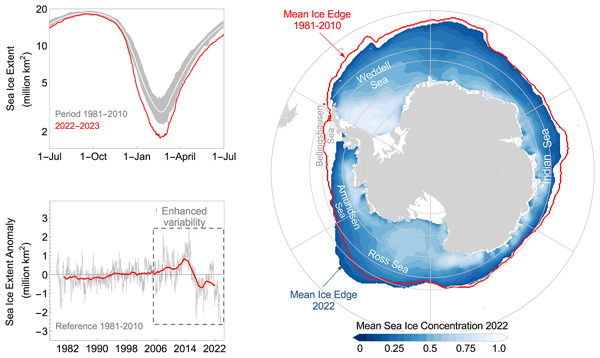
Raúl R. Cordero, Sarah Feron, Alessandro Damiani, Pedro J. Llanillo, Jorge Carrasco, Alia L. Khan, Richard Bintanja, Zutao Ouyang, and Gino Casassa
The Cryosphere, 17, 4995–5006, https://doi.org/10.5194/tc-17-4995-2023, https://doi.org/10.5194/tc-17-4995-2023, 2023
Short summary
Short summary
We investigate the response of Antarctic sea ice to year-to-year changes in the tropospheric–stratospheric dynamics. Our findings suggest that, by affecting the tropospheric westerlies, the strength of the stratospheric polar vortex has played a major role in recent record-breaking anomalies in Antarctic sea ice.
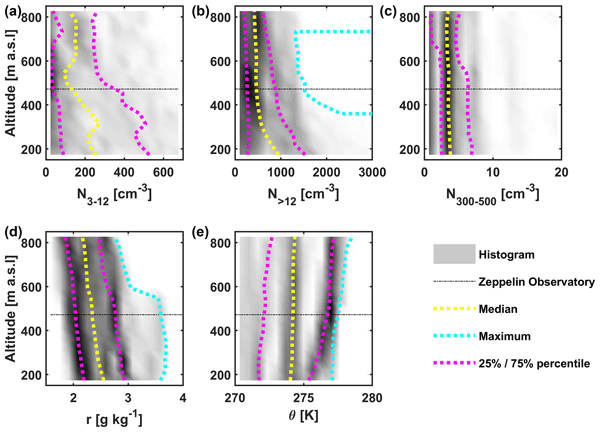
Barbara Harm-Altstädter, Konrad Bärfuss, Lutz Bretschneider, Martin Schön, Jens Bange, Ralf Käthner, Radovan Krejci, Mauro Mazzola, Kihong Park, Falk Pätzold, Alexander Peuker, Rita Traversi, Birgit Wehner, and Astrid Lampert
Aerosol Research, 1, 39–64, https://doi.org/10.5194/ar-1-39-2023, https://doi.org/10.5194/ar-1-39-2023, 2023
Short summary
Short summary
We present observations of aerosol particles and meteorological parameters in the horizontal and vertical distribution measured with uncrewed aerial systems in the Arctic. The field campaign was carried out during the snow melting season, when ultrafine aerosol particles (UFPs) with a size between 3 and 12 nm occurred frequently. A high variability of the measured UFPs was identified in the spatial scale, which was strongly associated with different atmospheric boundary layer properties.
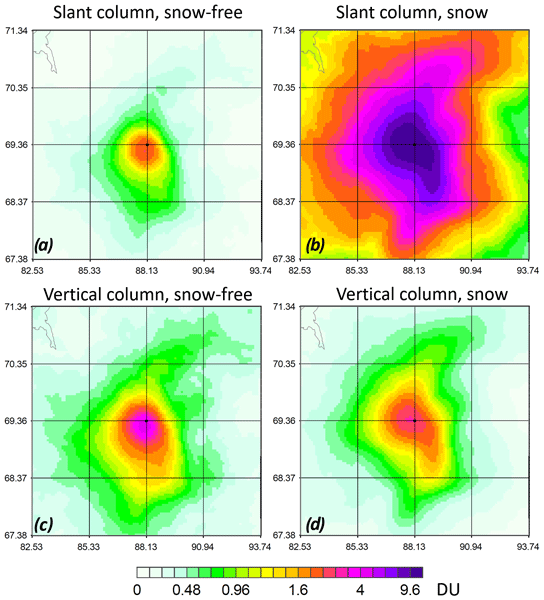
Vitali E. Fioletov, Chris A. McLinden, Debora Griffin, Nickolay A. Krotkov, Can Li, Joanna Joiner, Nicolas Theys, and Simon Carn
Atmos. Meas. Tech., 16, 5575–5592, https://doi.org/10.5194/amt-16-5575-2023, https://doi.org/10.5194/amt-16-5575-2023, 2023
Short summary
Short summary
Snow-covered terrain, with its high reflectance in the UV, typically enhances satellite sensitivity to boundary layer pollution. However, a significant fraction of high-quality cloud-free measurements over snow is currently excluded from analyses. In this study, we investigated how satellite SO2 measurements over snow-covered surfaces can be used to improve estimations of annual SO2 emissions.
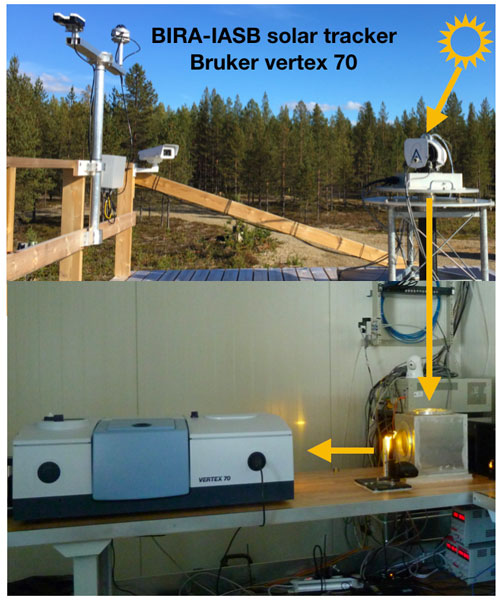
Minqiang Zhou, Bavo Langerock, Mahesh Kumar Sha, Christian Hermans, Nicolas Kumps, Rigel Kivi, Pauli Heikkinen, Christof Petri, Justus Notholt, Huilin Chen, and Martine De Mazière
Atmos. Meas. Tech., 16, 5593–5608, https://doi.org/10.5194/amt-16-5593-2023, https://doi.org/10.5194/amt-16-5593-2023, 2023
Short summary
Short summary
Atmospheric N2O and CH4 columns are successfully retrieved from low-resolution FTIR spectra recorded by a Bruker VERTEX 70. The 1-year measurements at Sodankylä show that the N2O total columns retrieved from 125HR and VERTEX 70 spectra are −0.3 ± 0.7 % with an R value of 0.93. The relative differences between the CH4 total columns retrieved from the 125HR and VERTEX spectra are 0.0 ± 0.8 % with an R value of 0.87. Such a technique can help to fill the gap in NDACC N2O and CH4 measurements.
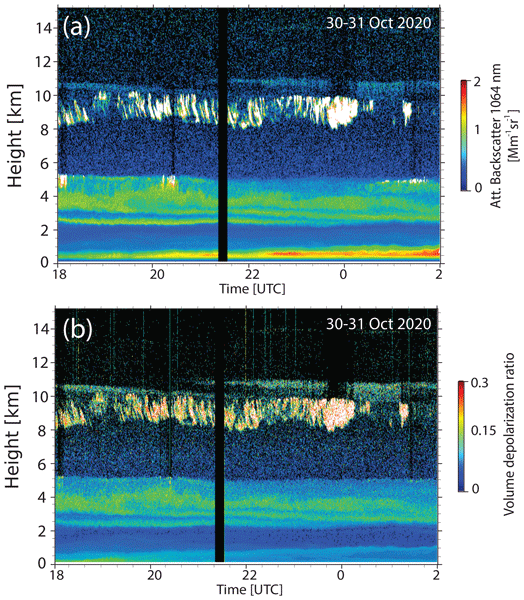
Rodanthi-Elisavet Mamouri, Albert Ansmann, Kevin Ohneiser, Daniel A. Knopf, Argyro Nisantzi, Johannes Bühl, Ronny Engelmann, Annett Skupin, Patric Seifert, Holger Baars, Dragos Ene, Ulla Wandinger, and Diofantos Hadjimitsis
Atmos. Chem. Phys., 23, 14097–14114, https://doi.org/10.5194/acp-23-14097-2023, https://doi.org/10.5194/acp-23-14097-2023, 2023
Short summary
Short summary
For the first time, rather clear evidence is found that wildfire smoke particles can trigger strong cirrus formation. This finding is of importance because intensive and large wildfires may occur increasingly often in the future as climate change proceeds. Based on lidar observations in Cyprus in autumn 2020, we provide detailed insight into the cirrus formation at the tropopause in the presence of aged wildfire smoke (here, 8–9 day old Californian wildfire smoke).
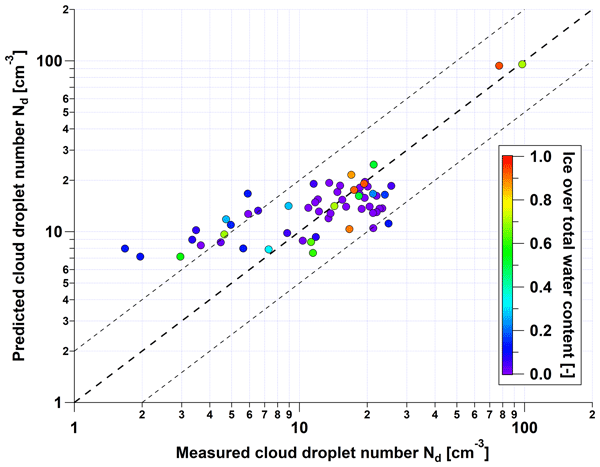
Ghislain Motos, Gabriel Freitas, Paraskevi Georgakaki, Jörg Wieder, Guangyu Li, Wenche Aas, Chris Lunder, Radovan Krejci, Julie Thérèse Pasquier, Jan Henneberger, Robert Oscar David, Christoph Ritter, Claudia Mohr, Paul Zieger, and Athanasios Nenes
Atmos. Chem. Phys., 23, 13941–13956, https://doi.org/10.5194/acp-23-13941-2023, https://doi.org/10.5194/acp-23-13941-2023, 2023
Short summary
Short summary
Low-altitude clouds play a key role in regulating the climate of the Arctic, a region that suffers from climate change more than any other on the planet. We gathered meteorological and aerosol physical and chemical data over a year and utilized them for a parameterization that help us unravel the factors driving and limiting the efficiency of cloud droplet formation. We then linked this information to the sources of aerosol found during each season and to processes of cloud glaciation.
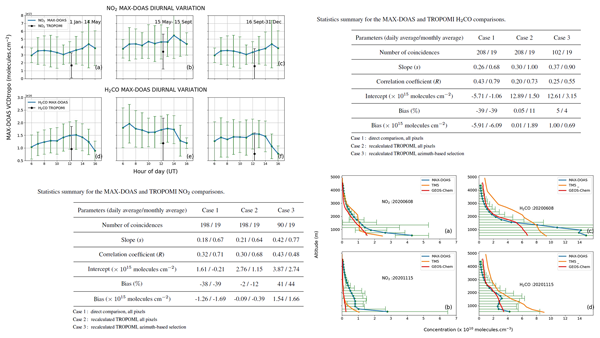
Rodriguez Yombo Phaka, Alexis Merlaud, Gaia Pinardi, Martina M. Friedrich, Michel Van Roozendael, Jean-François Müller, Trissevgeni Stavrakou, Isabelle De Smedt, François Hendrick, Ermioni Dimitropoulou, Richard Bopili Mbotia Lepiba, Edmond Phuku Phuati, Buenimio Lomami Djibi, Lars Jacobs, Caroline Fayt, Jean-Pierre Mbungu Tsumbu, and Emmanuel Mahieu
Atmos. Meas. Tech., 16, 5029–5050, https://doi.org/10.5194/amt-16-5029-2023, https://doi.org/10.5194/amt-16-5029-2023, 2023
Short summary
Short summary
We present air quality measurements in Kinshasa, Democratic Republic of the Congo, performed with a newly developed instrument which was installed on a roof of the University of Kinshasa in November 2019. The instrument records spectra of the scattered sunlight, from which we derive the abundances of nitrogen dioxide and formaldehyde, two important pollutants. We compare our ground-based measurements with those of the TROPOspheric Monitoring Instrument (TROPOMI).
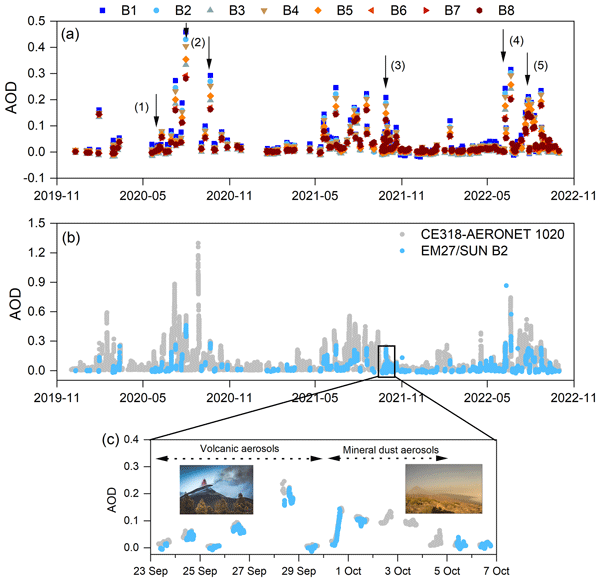
Óscar Alvárez, África Barreto, Omaira E. García, Frank Hase, Rosa D. García, Julian Gröbner, Sergio F. León-Luis, Eliezer Sepúlveda, Virgilio Carreño, Antonio Alcántara, Ramón Ramos, A. Fernando Almansa, Stelios Kazadzis, Noémie Taquet, Carlos Toledano, and Emilio Cuevas
Atmos. Meas. Tech., 16, 4861–4884, https://doi.org/10.5194/amt-16-4861-2023, https://doi.org/10.5194/amt-16-4861-2023, 2023
Short summary
Short summary
In this work, we have extended the capabilities of a portable Fourier transform infrared (FTIR) instrument, which was originally designed to provide high-quality greenhouse gas monitoring within COCCON (COllaborative Carbon Column Observing Network). The extension allows the spectrometer to now also provide coincidentally column-integrated aerosol information. This addition of a reference instrument to a global network will be utilised to enhance our understanding of atmospheric chemistry.
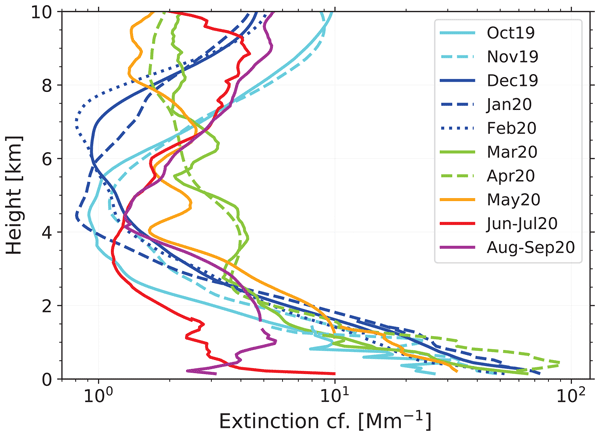
Albert Ansmann, Kevin Ohneiser, Ronny Engelmann, Martin Radenz, Hannes Griesche, Julian Hofer, Dietrich Althausen, Jessie M. Creamean, Matthew C. Boyer, Daniel A. Knopf, Sandro Dahlke, Marion Maturilli, Henriette Gebauer, Johannes Bühl, Cristofer Jimenez, Patric Seifert, and Ulla Wandinger
Atmos. Chem. Phys., 23, 12821–12849, https://doi.org/10.5194/acp-23-12821-2023, https://doi.org/10.5194/acp-23-12821-2023, 2023
Short summary
Short summary
The 1-year MOSAiC (2019–2020) expedition with the German ice breaker Polarstern was the largest polar field campaign ever conducted. The Polarstern, with our lidar aboard, drifted with the pack ice north of 85° N for more than 7 months (October 2019 to mid-May 2020). We measured the full annual cycle of aerosol conditions in terms of aerosol optical and cloud-process-relevant properties. We observed a strong contrast between polluted winter and clean summer aerosol conditions.
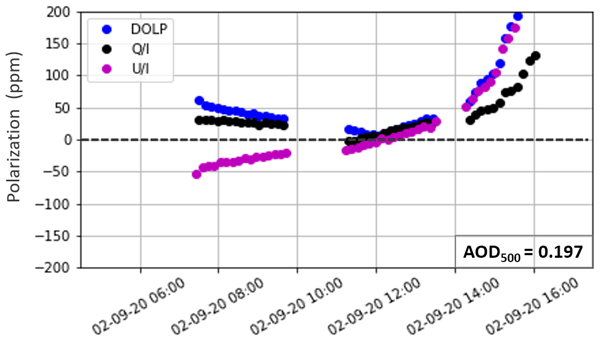
Vasiliki Daskalopoulou, Panagiotis I. Raptis, Alexandra Tsekeri, Vassilis Amiridis, Stelios Kazadzis, Zbigniew Ulanowski, Vassilis Charmandaris, Konstantinos Tassis, and William Martin
Atmos. Meas. Tech., 16, 4529–4550, https://doi.org/10.5194/amt-16-4529-2023, https://doi.org/10.5194/amt-16-4529-2023, 2023
Short summary
Short summary
Atmospheric dust particles may present a preferential alignment due to their shape on long range transport. Since dust is abundant and plays a key role to global climate, the elusive observation of orientation will be a game changer to existing measurement techniques and the representation of particles in climate models. We utilize a specifically designed instrument, SolPol, and target the Sun from the ground for large polarization values under dusty conditions, a clear sign of orientation.
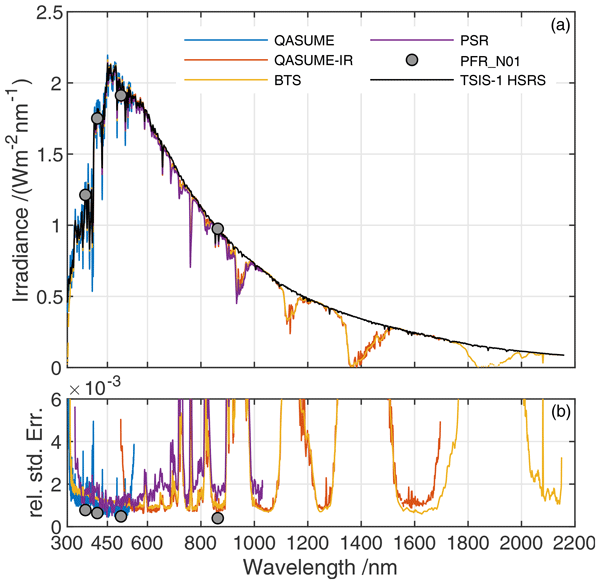
Julian Gröbner, Natalia Kouremeti, Gregor Hülsen, Ralf Zuber, Mario Ribnitzky, Saulius Nevas, Peter Sperfeld, Kerstin Schwind, Philipp Schneider, Stelios Kazadzis, África Barreto, Tom Gardiner, Kavitha Mottungan, David Medland, and Marc Coleman
Atmos. Meas. Tech., 16, 4667–4680, https://doi.org/10.5194/amt-16-4667-2023, https://doi.org/10.5194/amt-16-4667-2023, 2023
Short summary
Short summary
Spectral solar irradiance measurements traceable to the International System of Units (SI) allow for intercomparability between instruments and for their validation according to metrological standards. Here we also validate and reduce the uncertainties of the top-of-atmosphere TSIS-1 Hybrid Solar Reference Spectrum (HSRS). The management of large networks, e.g. AERONET or GAW-PFR, will benefit from reducing logistical overhead, improving their resilience and achieving metrological traceability.
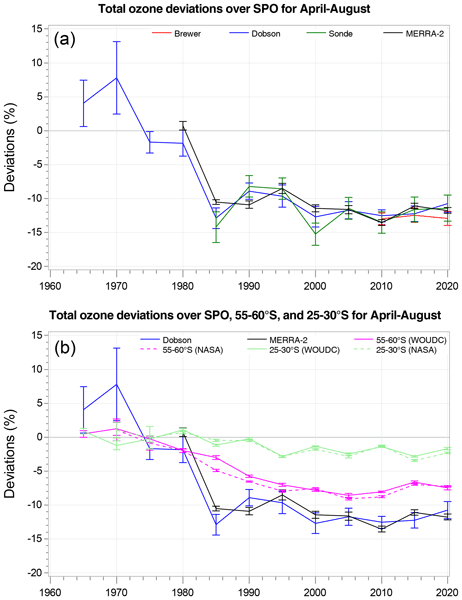
Vitali Fioletov, Xiaoyi Zhao, Ihab Abboud, Michael Brohart, Akira Ogyu, Reno Sit, Sum Chi Lee, Irina Petropavlovskikh, Koji Miyagawa, Bryan J. Johnson, Patrick Cullis, John Booth, Glen McConville, and C. Thomas McElroy
Atmos. Chem. Phys., 23, 12731–12751, https://doi.org/10.5194/acp-23-12731-2023, https://doi.org/10.5194/acp-23-12731-2023, 2023
Short summary
Short summary
Stratospheric ozone within the Southern Hemisphere springtime polar vortex has been a subject of intense research since the discovery of the Antarctic ozone hole. The wintertime ozone in the vortex is less studied. We show that the recent wintertime ozone values over the South Pole were about 12 % below the pre-1980s level; i.e., the decline there was nearly twice as large as that over southern midlatitudes. Thus, wintertime ozone there can be used as an indicator of the ozone layer state.
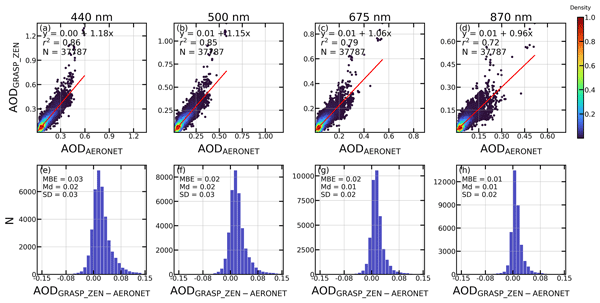
Sara Herrero-Anta, Roberto Román, David Mateos, Ramiro González, Juan Carlos Antuña-Sánchez, Marcos Herreras-Giralda, Antonio Fernando Almansa, Daniel González-Fernández, Celia Herrero del Barrio, Carlos Toledano, Victoria E. Cachorro, and Ángel M. de Frutos
Atmos. Meas. Tech., 16, 4423–4443, https://doi.org/10.5194/amt-16-4423-2023, https://doi.org/10.5194/amt-16-4423-2023, 2023
Short summary
Short summary
This paper shows the potential of a simple radiometer like the ZEN-R52 as a possible alternative for aerosol property retrieval in remote areas. A calibration method based on radiative transfer simulations together with an inversion methodology using the GRASP code is proposed here. The results demonstrate that this methodology is useful for the retrieval of aerosol extensive properties like aerosol optical depth (AOD) and aerosol volume concentration for total, fine and coarse modes.
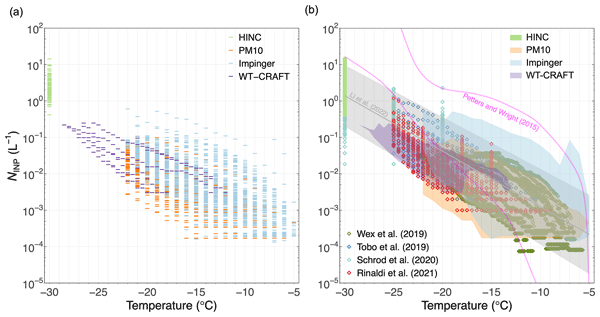
Guangyu Li, Elise K. Wilbourn, Zezhen Cheng, Jörg Wieder, Allison Fagerson, Jan Henneberger, Ghislain Motos, Rita Traversi, Sarah D. Brooks, Mauro Mazzola, Swarup China, Athanasios Nenes, Ulrike Lohmann, Naruki Hiranuma, and Zamin A. Kanji
Atmos. Chem. Phys., 23, 10489–10516, https://doi.org/10.5194/acp-23-10489-2023, https://doi.org/10.5194/acp-23-10489-2023, 2023
Short summary
Short summary
In this work, we present results from an Arctic field campaign (NASCENT) in Ny-Ålesund, Svalbard, on the abundance, variability, physicochemical properties, and potential sources of ice-nucleating particles (INPs) relevant for mixed-phase cloud formation. This work improves the data coverage of Arctic INPs and aerosol properties, allowing for the validation of models predicting cloud microphysical and radiative properties of mixed-phase clouds in the rapidly warming Arctic.
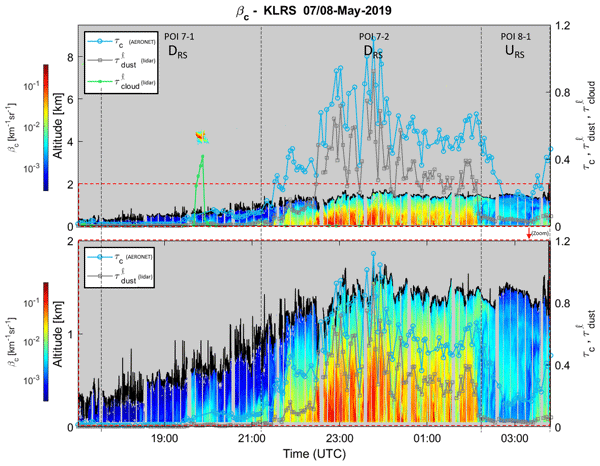
Seyed Ali Sayedain, Norman T. O'Neill, James King, Patrick L. Hayes, Daniel Bellamy, Richard Washington, Sebastian Engelstaedter, Andy Vicente-Luis, Jill Bachelder, and Malo Bernhard
Atmos. Meas. Tech., 16, 4115–4135, https://doi.org/10.5194/amt-16-4115-2023, https://doi.org/10.5194/amt-16-4115-2023, 2023
Short summary
Short summary
We used (columnar) ground-based remote sensing (RS) tools and surface measurements to characterize local (drainage-basin) dust plumes at a site in the Yukon. Plume height, particle size, and column-to-surface ratios enabled insights into how satellite RS could be used to analyze Arctic-wide dust transport. This helps modelers refine dust impacts in their climate change simulations. It is an important step since local dust is a key source of dust deposition on snow in the sensitive Arctic region.
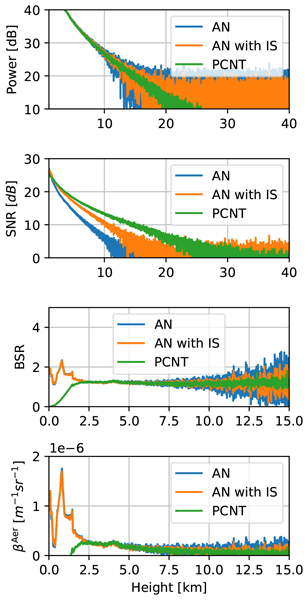
Tim Poguntke and Christoph Ritter
Atmos. Meas. Tech., 16, 4009–4014, https://doi.org/10.5194/amt-16-4009-2023, https://doi.org/10.5194/amt-16-4009-2023, 2023
Short summary
Short summary
In this work we analyze the impact of electromagnetic interference on an aerosol lidar. We found that aging transient recorders may produce a noise with fixed frequency that can be removed a posteriori.
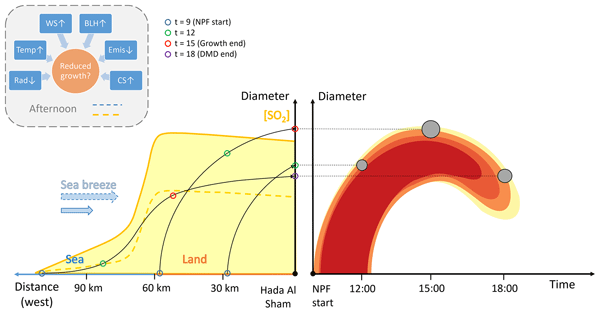
Simo Hakala, Ville Vakkari, Heikki Lihavainen, Antti-Pekka Hyvärinen, Kimmo Neitola, Jenni Kontkanen, Veli-Matti Kerminen, Markku Kulmala, Tuukka Petäjä, Tareq Hussein, Mamdouh I. Khoder, Mansour A. Alghamdi, and Pauli Paasonen
Atmos. Chem. Phys., 23, 9287–9321, https://doi.org/10.5194/acp-23-9287-2023, https://doi.org/10.5194/acp-23-9287-2023, 2023
Short summary
Short summary
Things are not always as they first seem in ambient aerosol measurements. Observations of decreasing particle sizes are often interpreted as resulting from particle evaporation. We show that such observations can counterintuitively be explained by particles that are constantly growing in size. This requires one to account for the previous movements of the observed air. Our explanation implies a larger number of larger particles, meaning more significant effects of aerosols on climate and health.
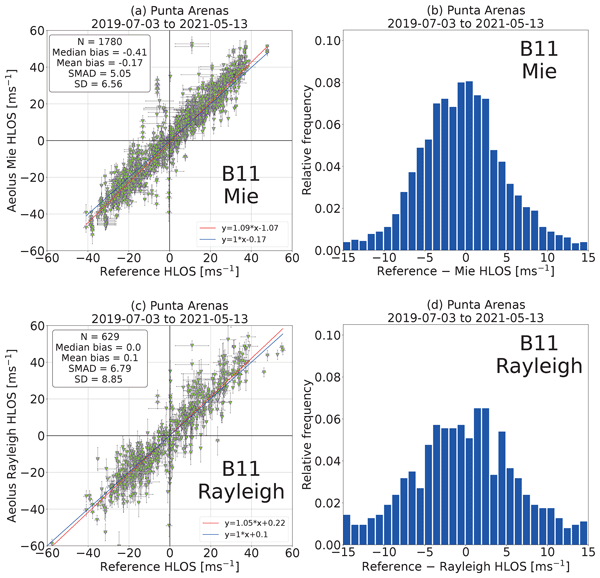
Holger Baars, Joshua Walchester, Elizaveta Basharova, Henriette Gebauer, Martin Radenz, Johannes Bühl, Boris Barja, Ulla Wandinger, and Patric Seifert
Atmos. Meas. Tech., 16, 3809–3834, https://doi.org/10.5194/amt-16-3809-2023, https://doi.org/10.5194/amt-16-3809-2023, 2023
Short summary
Short summary
In 2018, the Aeolus satellite of the European Space Agency (ESA) was launched to improve weather forecasts through global measurements of wind profiles. Given the novel lidar technique onboard, extensive validation efforts have been needed to verify the observations. For this reason, we performed long-term validation measurements in Germany and Chile. We found significant improvement in the data products due to a new algorithm version and can confirm the general validity of Aeolus observations.
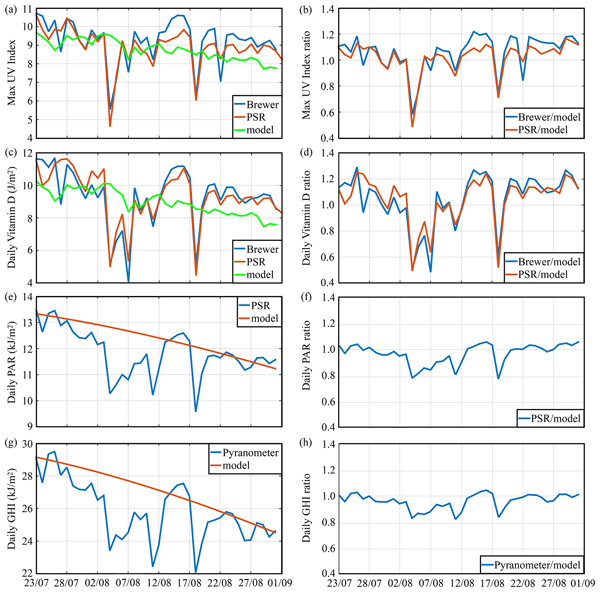
Akriti Masoom, Ilias Fountoulakis, Stelios Kazadzis, Ioannis-Panagiotis Raptis, Anna Kampouri, Basil E. Psiloglou, Dimitra Kouklaki, Kyriakoula Papachristopoulou, Eleni Marinou, Stavros Solomos, Anna Gialitaki, Dimitra Founda, Vasileios Salamalikis, Dimitris Kaskaoutis, Natalia Kouremeti, Nikolaos Mihalopoulos, Vassilis Amiridis, Andreas Kazantzidis, Alexandros Papayannis, Christos S. Zerefos, and Kostas Eleftheratos
Atmos. Chem. Phys., 23, 8487–8514, https://doi.org/10.5194/acp-23-8487-2023, https://doi.org/10.5194/acp-23-8487-2023, 2023
Short summary
Short summary
We analyse the spatial and temporal aerosol spectral optical properties during the extreme wildfires of August 2021 in Greece and assess their effects on air quality and solar radiation quantities related to health, agriculture, and energy. Different aerosol conditions are identified (pure smoke, pure dust, dust–smoke together); the largest impact on solar radiation quantities is found for cases with mixed dust–smoke aerosols. Such situations are expected to occur more frequently in the future.
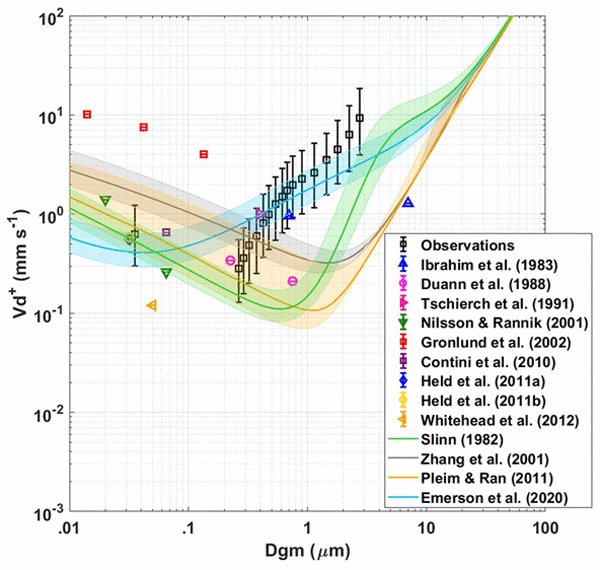
Antonio Donateo, Gianluca Pappaccogli, Daniela Famulari, Mauro Mazzola, Federico Scoto, and Stefano Decesari
Atmos. Chem. Phys., 23, 7425–7445, https://doi.org/10.5194/acp-23-7425-2023, https://doi.org/10.5194/acp-23-7425-2023, 2023
Short summary
Short summary
This work aims to measure the turbulent fluxes and the dry deposition velocity for size-segregated particles (from ultrafine to quasi-coarse range) at an Arctic site (Svalbard). Aiming to characterize the effect of surface properties on dry deposition, continuous observations were performed from the coldest months (on snow surface) to the snow melting period and throughout the summer (snow-free surface). A data fit of the deposition velocity as a function of particle diameters will be provided.
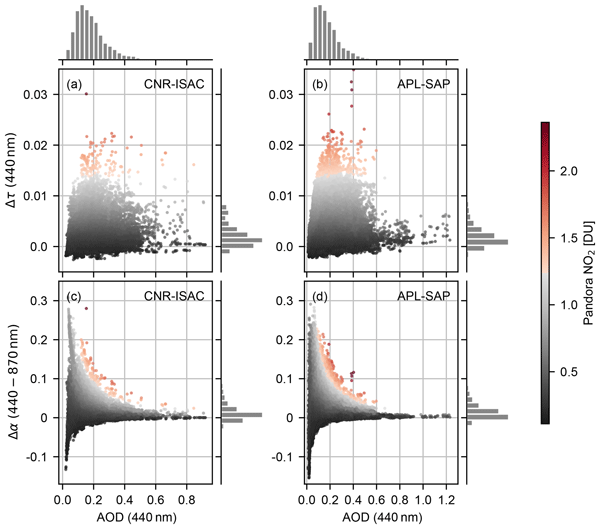
Theano Drosoglou, Ioannis-Panagiotis Raptis, Massimo Valeri, Stefano Casadio, Francesca Barnaba, Marcos Herreras-Giralda, Anton Lopatin, Oleg Dubovik, Gabriele Brizzi, Fabrizio Niro, Monica Campanelli, and Stelios Kazadzis
Atmos. Meas. Tech., 16, 2989–3014, https://doi.org/10.5194/amt-16-2989-2023, https://doi.org/10.5194/amt-16-2989-2023, 2023
Short summary
Short summary
Aerosol optical properties derived from sun photometers depend on the optical depth of trace gases absorbing solar radiation at specific spectral ranges. Various networks use satellite-based climatologies to account for this or neglect their effect. In this work, we evaluate the effect of NO2 absorption in aerosol retrievals from AERONET and SKYNET over two stations in Rome, Italy, with relatively high NO2 spatiotemporal variations, using NO2 data from the Pandora network and the TROPOMI sensor.
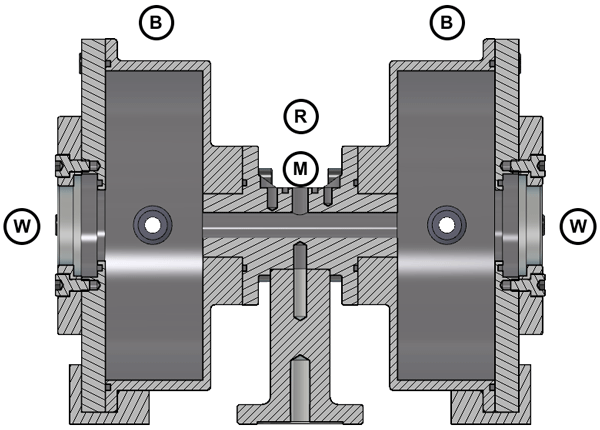
Franz Martin Schnaiter, Claudia Linke, Eija Asmi, Henri Servomaa, Antti-Pekka Hyvärinen, Sho Ohata, Yutaka Kondo, and Emma Järvinen
Atmos. Meas. Tech., 16, 2753–2769, https://doi.org/10.5194/amt-16-2753-2023, https://doi.org/10.5194/amt-16-2753-2023, 2023
Short summary
Short summary
Light-absorbing particles from combustion processes are important contributors to climate warming. Their highly variable spectral light absorption properties need to be monitored in the field. Commonly used methods show measurement artefacts that are difficult to correct. We introduce a new instrument that is based on the photoacoustic effect. Long-term operation in the Finnish Arctic demonstrates the applicability of the new instrument for unattended light absorption monitoring.
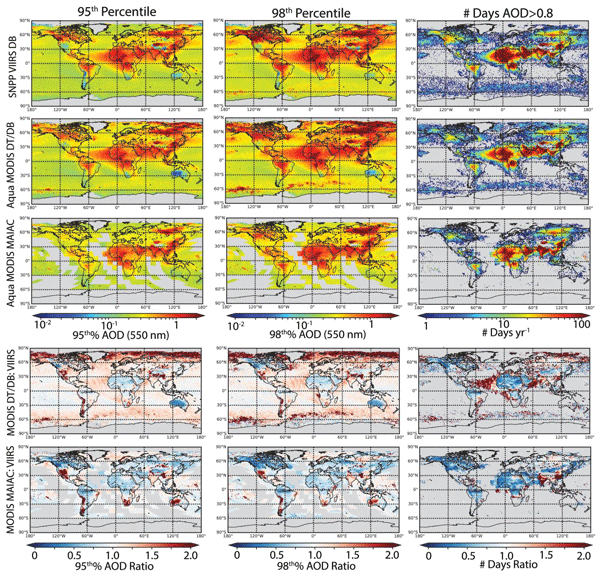
Amanda Gumber, Jeffrey S. Reid, Robert E. Holz, Thomas F. Eck, N. Christina Hsu, Robert C. Levy, Jianglong Zhang, and Paolo Veglio
Atmos. Meas. Tech., 16, 2547–2573, https://doi.org/10.5194/amt-16-2547-2023, https://doi.org/10.5194/amt-16-2547-2023, 2023
Short summary
Short summary
The purpose of this study is to create and evaluate a gridded dataset composed of multiple satellite instruments and algorithms to be used for data assimilation. An important part of aerosol data assimilation is having consistent measurements, especially for severe aerosol events. This study evaluates 4 years of data from MODIS, VIIRS, and AERONET with a focus on aerosol severe event detection from a regional and global perspective.
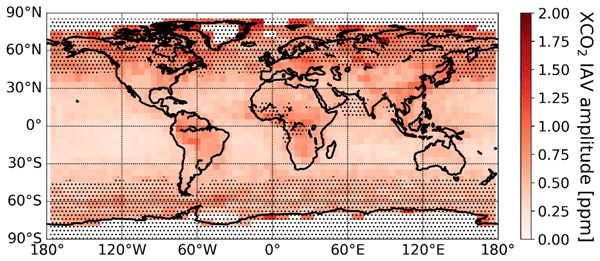
Yifan Guan, Gretchen Keppel-Aleks, Scott C. Doney, Christof Petri, Dave Pollard, Debra Wunch, Frank Hase, Hirofumi Ohyama, Isamu Morino, Justus Notholt, Kei Shiomi, Kim Strong, Rigel Kivi, Matthias Buschmann, Nicholas Deutscher, Paul Wennberg, Ralf Sussmann, Voltaire A. Velazco, and Yao Té
Atmos. Chem. Phys., 23, 5355–5372, https://doi.org/10.5194/acp-23-5355-2023, https://doi.org/10.5194/acp-23-5355-2023, 2023
Short summary
Short summary
We characterize spatial–temporal patterns of interannual variability (IAV) in atmospheric CO2 based on NASA’s Orbiting Carbon Observatory-2 (OCO-2). CO2 variation is strongly impacted by climate events, with higher anomalies during El Nino years. We show high correlation in IAV between space-based and ground-based CO2 from long-term sites. Because OCO-2 has near-global coverage, our paper provides a roadmap to study IAV where in situ observation is sparse, such as open oceans and remote lands.
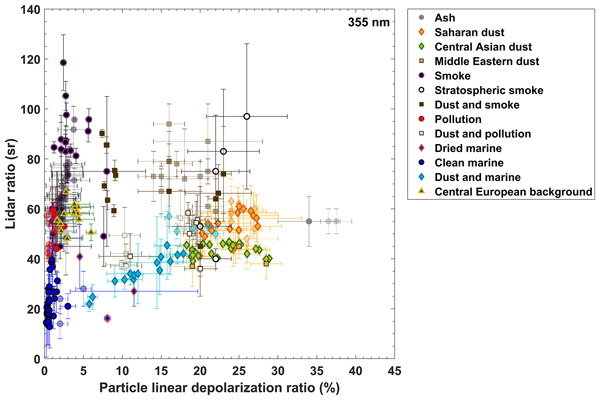
Athena Augusta Floutsi, Holger Baars, Ronny Engelmann, Dietrich Althausen, Albert Ansmann, Stephanie Bohlmann, Birgit Heese, Julian Hofer, Thomas Kanitz, Moritz Haarig, Kevin Ohneiser, Martin Radenz, Patric Seifert, Annett Skupin, Zhenping Yin, Sabur F. Abdullaev, Mika Komppula, Maria Filioglou, Elina Giannakaki, Iwona S. Stachlewska, Lucja Janicka, Daniele Bortoli, Eleni Marinou, Vassilis Amiridis, Anna Gialitaki, Rodanthi-Elisavet Mamouri, Boris Barja, and Ulla Wandinger
Atmos. Meas. Tech., 16, 2353–2379, https://doi.org/10.5194/amt-16-2353-2023, https://doi.org/10.5194/amt-16-2353-2023, 2023
Short summary
Short summary
DeLiAn is a collection of lidar-derived aerosol intensive optical properties for several aerosol types, namely the particle linear depolarization ratio, the extinction-to-backscatter ratio (lidar ratio) and the Ångström exponent. The data collection is based on globally distributed, long-term, ground-based, multiwavelength, Raman and polarization lidar measurements and currently covers two wavelengths, 355 and 532 nm, for 13 aerosol categories ranging from basic aerosol types to mixtures.
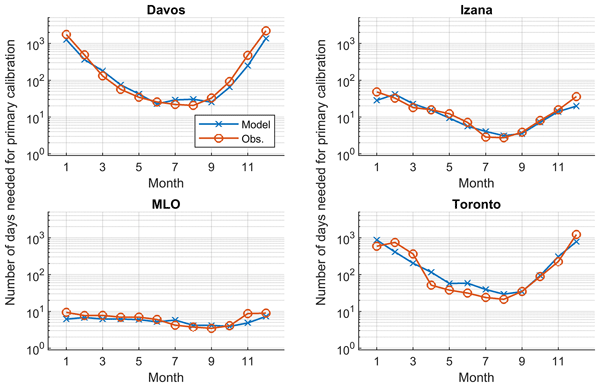
Xiaoyi Zhao, Vitali Fioletov, Alberto Redondas, Julian Gröbner, Luca Egli, Franz Zeilinger, Javier López-Solano, Alberto Berjón Arroyo, James Kerr, Eliane Maillard Barras, Herman Smit, Michael Brohart, Reno Sit, Akira Ogyu, Ihab Abboud, and Sum Chi Lee
Atmos. Meas. Tech., 16, 2273–2295, https://doi.org/10.5194/amt-16-2273-2023, https://doi.org/10.5194/amt-16-2273-2023, 2023
Short summary
Short summary
The Brewer ozone spectrophotometer is one of the World Meteorological Organization (WMO) Global Atmosphere Watch (GAW)'s standard ozone monitoring instruments since the 1980s. This work is aimed at obtaining answers to (1) why Brewer primary calibration work can only be performed at certain sites (e.g., Izaña and MLO) and (2) what is needed to assure the equivalence of calibration quality from different sites.
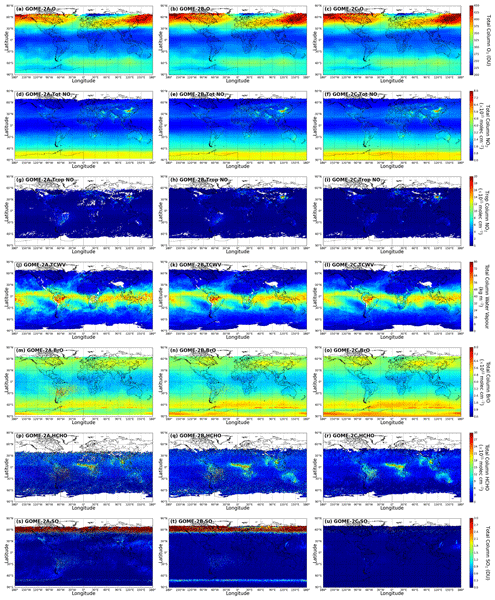
Ka Lok Chan, Pieter Valks, Klaus-Peter Heue, Ronny Lutz, Pascal Hedelt, Diego Loyola, Gaia Pinardi, Michel Van Roozendael, François Hendrick, Thomas Wagner, Vinod Kumar, Alkis Bais, Ankie Piters, Hitoshi Irie, Hisahiro Takashima, Yugo Kanaya, Yongjoo Choi, Kihong Park, Jihyo Chong, Alexander Cede, Udo Frieß, Andreas Richter, Jianzhong Ma, Nuria Benavent, Robert Holla, Oleg Postylyakov, Claudia Rivera Cárdenas, and Mark Wenig
Earth Syst. Sci. Data, 15, 1831–1870, https://doi.org/10.5194/essd-15-1831-2023, https://doi.org/10.5194/essd-15-1831-2023, 2023
Short summary
Short summary
This paper presents the theoretical basis as well as verification and validation of the Global Ozone Monitoring Experiment-2 (GOME-2) daily and monthly level-3 products.

Igor Veselovskii, Nikita Kasianik, Mikhail Korenskii, Qiaoyun Hu, Philippe Goloub, Thierry Podvin, and Dong Liu
Atmos. Meas. Tech., 16, 2055–2065, https://doi.org/10.5194/amt-16-2055-2023, https://doi.org/10.5194/amt-16-2055-2023, 2023
Short summary
Short summary
A five-channel fluorescence lidar was developed for the study of atmospheric aerosol. The fluorescence spectrum induced by 355 nm laser emission is analyzed in five spectral intervals, namely 438 and 29, 472 and 32, 513 and 29, 560 and 40, and 614 and 54 nm. This lidar system was operated during strong forest fires. Our results demonstrate that, for urban aerosol, the maximal fluorescence backscattering is observed at 472 nm, while for smoke, the spectrum is shifted toward longer wavelengths.
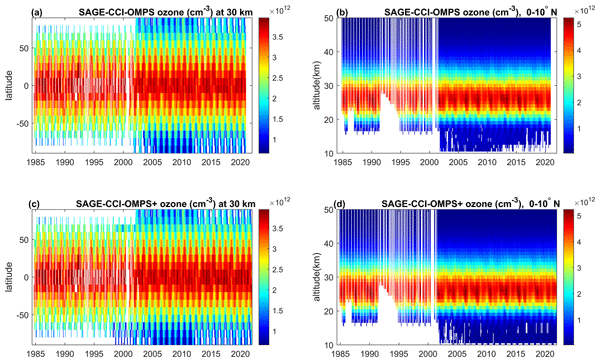
Viktoria F. Sofieva, Monika Szelag, Johanna Tamminen, Carlo Arosio, Alexei Rozanov, Mark Weber, Doug Degenstein, Adam Bourassa, Daniel Zawada, Michael Kiefer, Alexandra Laeng, Kaley A. Walker, Patrick Sheese, Daan Hubert, Michel van Roozendael, Christian Retscher, Robert Damadeo, and Jerry D. Lumpe
Atmos. Meas. Tech., 16, 1881–1899, https://doi.org/10.5194/amt-16-1881-2023, https://doi.org/10.5194/amt-16-1881-2023, 2023
Short summary
Short summary
The paper presents the updated SAGE-CCI-OMPS+ climate data record of monthly zonal mean ozone profiles. This dataset covers the stratosphere and combines measurements by nine limb and occultation satellite instruments (SAGE II, OSIRIS, MIPAS, SCIAMACHY, GOMOS, ACE-FTS, OMPS-LP, POAM III, and SAGE III/ISS). The update includes new versions of MIPAS, ACE-FTS, and OSIRIS datasets and introduces data from additional sensors (POAM III and SAGE III/ISS) and retrieval processors (OMPS-LP).
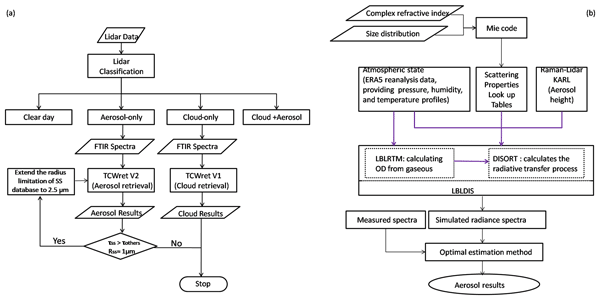
Denghui Ji, Mathias Palm, Christoph Ritter, Philipp Richter, Xiaoyu Sun, Matthias Buschmann, and Justus Notholt
Atmos. Meas. Tech., 16, 1865–1879, https://doi.org/10.5194/amt-16-1865-2023, https://doi.org/10.5194/amt-16-1865-2023, 2023
Short summary
Short summary
To measuring aerosol components, a Fourier transform infrared spectrometer (FTIS) and a lidar are operated in Ny-Ålesund, Spitsbergen (78° N, 11° E). Using the FTIS, a retrieval algorithm is developed for dust, sea salt, black carbon, and sulfate. The distribution of aerosols or clouds is provided by lidar and used as an indicator for aerosol or cloud retrieval with the FTS. Thus, a two-instrument joint-observation scheme is designed and is used on the data measured from 2019 to the present.
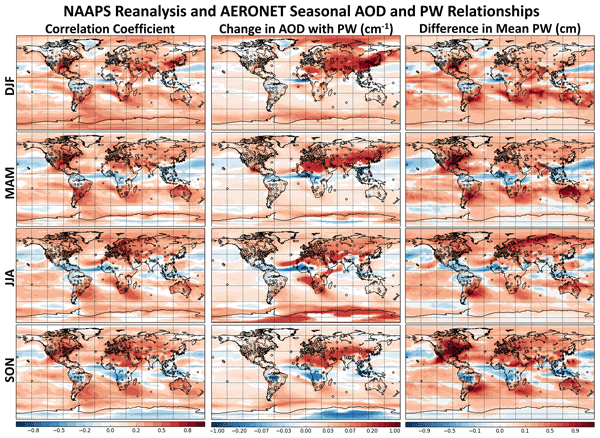
Juli I. Rubin, Jeffrey S. Reid, Peng Xian, Christopher M. Selman, and Thomas F. Eck
Atmos. Chem. Phys., 23, 4059–4090, https://doi.org/10.5194/acp-23-4059-2023, https://doi.org/10.5194/acp-23-4059-2023, 2023
Short summary
Short summary
This work aims to quantify the covariability between aerosol optical depth/extinction with water vapor (PW) globally, using NASA AERONET observations and NAAPS model data. Findings are important for data assimilation and radiative transfer. The study shows statistically significant and positive AOD–PW relationships are found across the globe, varying in strength with location and season and tied to large-scale aerosol events. Hygroscopic growth was also found to be an important factor.
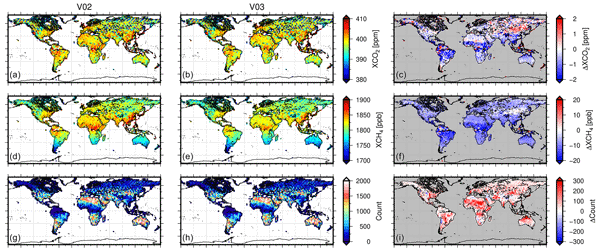
Yu Someya, Yukio Yoshida, Hirofumi Ohyama, Shohei Nomura, Akihide Kamei, Isamu Morino, Hitoshi Mukai, Tsuneo Matsunaga, Joshua L. Laughner, Voltaire A. Velazco, Benedikt Herkommer, Yao Té, Mahesh Kumar Sha, Rigel Kivi, Minqiang Zhou, Young Suk Oh, Nicholas M. Deutscher, and David W. T. Griffith
Atmos. Meas. Tech., 16, 1477–1501, https://doi.org/10.5194/amt-16-1477-2023, https://doi.org/10.5194/amt-16-1477-2023, 2023
Short summary
Short summary
The updated retrieval algorithm for the Greenhouse gases Observing SATellite level 2 product is presented. The main changes in the algorithm from the previous one are the treatment of cirrus clouds, the degradation model of the sensor, solar irradiance, and gas absorption coefficient tables. The retrieval results showed improvements in fitting accuracy and an increase in the data amount over land. On the other hand, there are still large biases of XCO2 which should be corrected over the ocean.
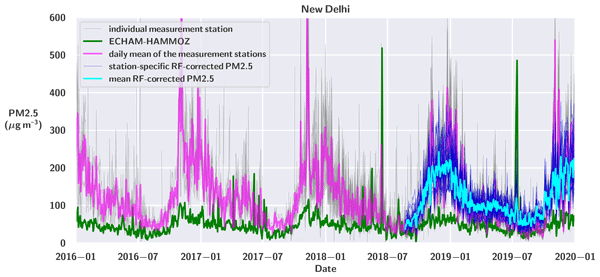
Tuuli Miinalainen, Harri Kokkola, Antti Lipponen, Antti-Pekka Hyvärinen, Vijay Kumar Soni, Kari E. J. Lehtinen, and Thomas Kühn
Atmos. Chem. Phys., 23, 3471–3491, https://doi.org/10.5194/acp-23-3471-2023, https://doi.org/10.5194/acp-23-3471-2023, 2023
Short summary
Short summary
We simulated the effects of aerosol emission mitigation on both global and regional radiative forcing and city-level air quality with a global-scale climate model. We used a machine learning downscaling approach to bias-correct the PM2.5 values obtained from the global model for the Indian megacity New Delhi. Our results indicate that aerosol mitigation could result in both improved air quality and less radiative heating for India.
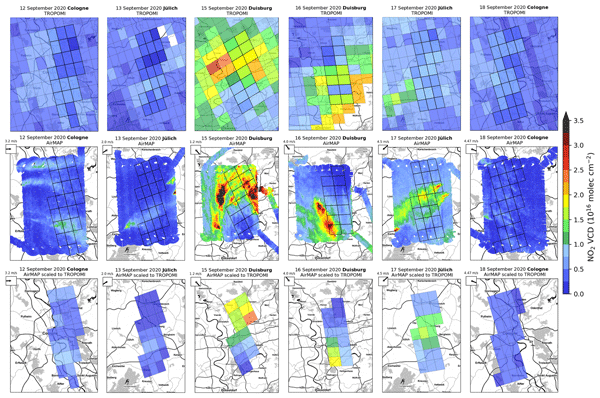
Kezia Lange, Andreas Richter, Anja Schönhardt, Andreas C. Meier, Tim Bösch, André Seyler, Kai Krause, Lisa K. Behrens, Folkard Wittrock, Alexis Merlaud, Frederik Tack, Caroline Fayt, Martina M. Friedrich, Ermioni Dimitropoulou, Michel Van Roozendael, Vinod Kumar, Sebastian Donner, Steffen Dörner, Bianca Lauster, Maria Razi, Christian Borger, Katharina Uhlmannsiek, Thomas Wagner, Thomas Ruhtz, Henk Eskes, Birger Bohn, Daniel Santana Diaz, Nader Abuhassan, Dirk Schüttemeyer, and John P. Burrows
Atmos. Meas. Tech., 16, 1357–1389, https://doi.org/10.5194/amt-16-1357-2023, https://doi.org/10.5194/amt-16-1357-2023, 2023
Short summary
Short summary
We present airborne imaging DOAS and ground-based stationary and car DOAS measurements conducted during the S5P-VAL-DE-Ruhr campaign in the Rhine-Ruhr region. The measurements are used to validate spaceborne NO2 data products from the Sentinel-5 Precursor TROPOspheric Monitoring Instrument (TROPOMI). Auxiliary data of the TROPOMI NO2 retrieval, such as spatially higher resolved a priori NO2 vertical profiles, surface reflectivity, and cloud treatment are investigated to evaluate their impact.
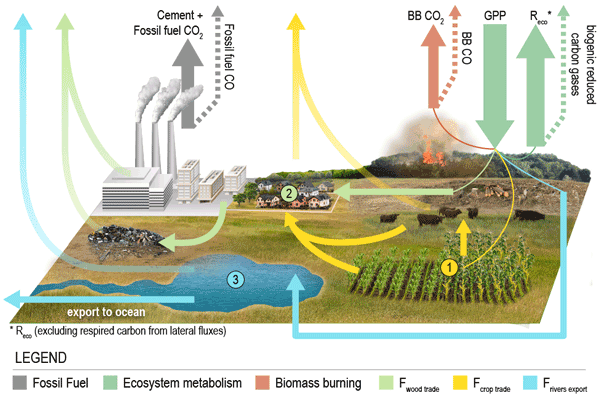
Brendan Byrne, David F. Baker, Sourish Basu, Michael Bertolacci, Kevin W. Bowman, Dustin Carroll, Abhishek Chatterjee, Frédéric Chevallier, Philippe Ciais, Noel Cressie, David Crisp, Sean Crowell, Feng Deng, Zhu Deng, Nicholas M. Deutscher, Manvendra K. Dubey, Sha Feng, Omaira E. García, David W. T. Griffith, Benedikt Herkommer, Lei Hu, Andrew R. Jacobson, Rajesh Janardanan, Sujong Jeong, Matthew S. Johnson, Dylan B. A. Jones, Rigel Kivi, Junjie Liu, Zhiqiang Liu, Shamil Maksyutov, John B. Miller, Scot M. Miller, Isamu Morino, Justus Notholt, Tomohiro Oda, Christopher W. O'Dell, Young-Suk Oh, Hirofumi Ohyama, Prabir K. Patra, Hélène Peiro, Christof Petri, Sajeev Philip, David F. Pollard, Benjamin Poulter, Marine Remaud, Andrew Schuh, Mahesh K. Sha, Kei Shiomi, Kimberly Strong, Colm Sweeney, Yao Té, Hanqin Tian, Voltaire A. Velazco, Mihalis Vrekoussis, Thorsten Warneke, John R. Worden, Debra Wunch, Yuanzhi Yao, Jeongmin Yun, Andrew Zammit-Mangion, and Ning Zeng
Earth Syst. Sci. Data, 15, 963–1004, https://doi.org/10.5194/essd-15-963-2023, https://doi.org/10.5194/essd-15-963-2023, 2023
Short summary
Short summary
Changes in the carbon stocks of terrestrial ecosystems result in emissions and removals of CO2. These can be driven by anthropogenic activities (e.g., deforestation), natural processes (e.g., fires) or in response to rising CO2 (e.g., CO2 fertilization). This paper describes a dataset of CO2 emissions and removals derived from atmospheric CO2 observations. This pilot dataset informs current capabilities and future developments towards top-down monitoring and verification systems.
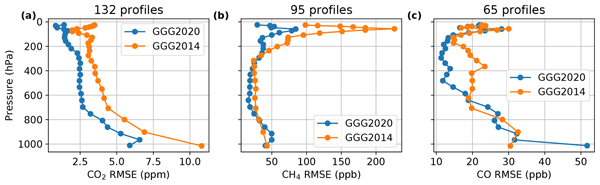
Joshua L. Laughner, Sébastien Roche, Matthäus Kiel, Geoffrey C. Toon, Debra Wunch, Bianca C. Baier, Sébastien Biraud, Huilin Chen, Rigel Kivi, Thomas Laemmel, Kathryn McKain, Pierre-Yves Quéhé, Constantina Rousogenous, Britton B. Stephens, Kaley Walker, and Paul O. Wennberg
Atmos. Meas. Tech., 16, 1121–1146, https://doi.org/10.5194/amt-16-1121-2023, https://doi.org/10.5194/amt-16-1121-2023, 2023
Short summary
Short summary
Observations using sunlight to measure surface-to-space total column of greenhouse gases in the atmosphere need an initial guess of the vertical distribution of those gases to start from. We have developed an approach to provide those initial guess profiles that uses readily available meteorological data as input. This lets us make these guesses without simulating them with a global model. The profiles generated this way match independent observations well.
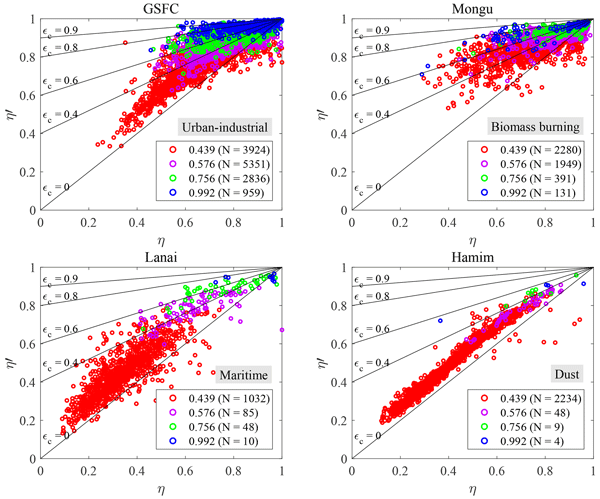
Norman T. O'Neill, Keyvan Ranjbar, Liviu Ivănescu, Thomas F. Eck, Jeffrey S. Reid, David M. Giles, Daniel Pérez-Ramírez, and Jai Prakash Chaubey
Atmos. Meas. Tech., 16, 1103–1120, https://doi.org/10.5194/amt-16-1103-2023, https://doi.org/10.5194/amt-16-1103-2023, 2023
Short summary
Short summary
Aerosols are atmospheric particles that vary in size (radius) from a fraction of a micrometer (µm) to around 20 µm. They tend to be either smaller than 1 µm (like smoke or pollution) or larger than 1 µm (like dust or sea salt). Their optical effect (scattering and absorbing sunlight) can be divided into FM (fine-mode) and CM (coarse-mode) parts using a cutoff radius around 1 µm or a spectral (color) technique. We present and validate a theoretical link between the types of FM and CM divisions.

Jing Wei, Zhanqing Li, Jun Wang, Can Li, Pawan Gupta, and Maureen Cribb
Atmos. Chem. Phys., 23, 1511–1532, https://doi.org/10.5194/acp-23-1511-2023, https://doi.org/10.5194/acp-23-1511-2023, 2023
Short summary
Short summary
This study estimated the daily seamless 10 km ambient gaseous pollutants (NO2, SO2, and CO) across China using machine learning with extensive input variables measured on monitors, satellites, and models. Our dataset yields a high data quality via cross-validation at varying spatiotemporal scales and outperforms most previous related studies, making it most helpful to future (especially short-term) air pollution and environmental health-related studies.
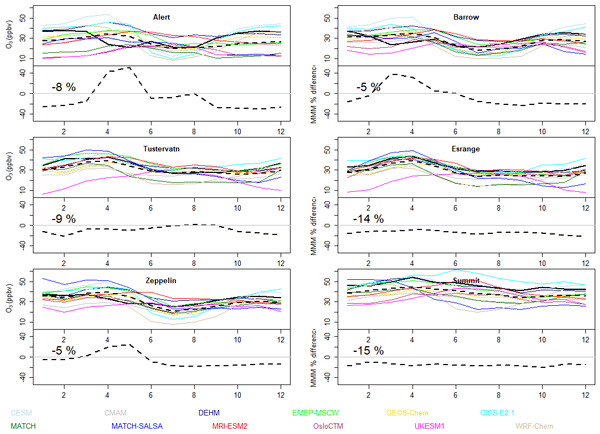
Cynthia H. Whaley, Kathy S. Law, Jens Liengaard Hjorth, Henrik Skov, Stephen R. Arnold, Joakim Langner, Jakob Boyd Pernov, Garance Bergeron, Ilann Bourgeois, Jesper H. Christensen, Rong-You Chien, Makoto Deushi, Xinyi Dong, Peter Effertz, Gregory Faluvegi, Mark Flanner, Joshua S. Fu, Michael Gauss, Greg Huey, Ulas Im, Rigel Kivi, Louis Marelle, Tatsuo Onishi, Naga Oshima, Irina Petropavlovskikh, Jeff Peischl, David A. Plummer, Luca Pozzoli, Jean-Christophe Raut, Tom Ryerson, Ragnhild Skeie, Sverre Solberg, Manu A. Thomas, Chelsea Thompson, Kostas Tsigaridis, Svetlana Tsyro, Steven T. Turnock, Knut von Salzen, and David W. Tarasick
Atmos. Chem. Phys., 23, 637–661, https://doi.org/10.5194/acp-23-637-2023, https://doi.org/10.5194/acp-23-637-2023, 2023
Short summary
Short summary
This study summarizes recent research on ozone in the Arctic, a sensitive and rapidly warming region. We find that the seasonal cycles of near-surface atmospheric ozone are variable depending on whether they are near the coast, inland, or at high altitude. Several global model simulations were evaluated, and we found that because models lack some of the ozone chemistry that is important for the coastal Arctic locations, they do not accurately simulate ozone there.
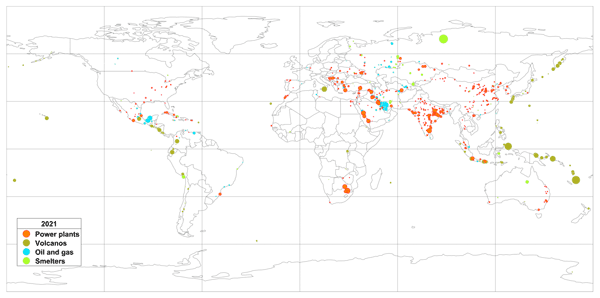
Vitali E. Fioletov, Chris A. McLinden, Debora Griffin, Ihab Abboud, Nickolay Krotkov, Peter J. T. Leonard, Can Li, Joanna Joiner, Nicolas Theys, and Simon Carn
Earth Syst. Sci. Data, 15, 75–93, https://doi.org/10.5194/essd-15-75-2023, https://doi.org/10.5194/essd-15-75-2023, 2023
Short summary
Short summary
Sulfur dioxide (SO2) measurements from three satellite instruments were used to update and extend the previously developed global catalogue of large SO2 emission sources. This version 2 of the global catalogue covers the period of 2005–2021 and includes a total of 759 continuously emitting point sources. The catalogue data show an approximate 50 % decline in global SO2 emissions between 2005 and 2021, although emissions were relatively stable during the last 3 years.

Kyriakoula Papachristopoulou, Ioannis-Panagiotis Raptis, Antonis Gkikas, Ilias Fountoulakis, Akriti Masoom, and Stelios Kazadzis
Atmos. Chem. Phys., 22, 15703–15727, https://doi.org/10.5194/acp-22-15703-2022, https://doi.org/10.5194/acp-22-15703-2022, 2022
Short summary
Short summary
Megacities' air quality is determined by atmospheric aerosols. We focus on changes over the last two decades in the 81 largest cities, using satellite data. European and American cities have lower aerosol compared to African and Asian cities. For European, North American and East Asian cities, aerosols are decreasing over time, especially in China and the US. In the remaining cities, aerosol loads are increasing, particularly in India.
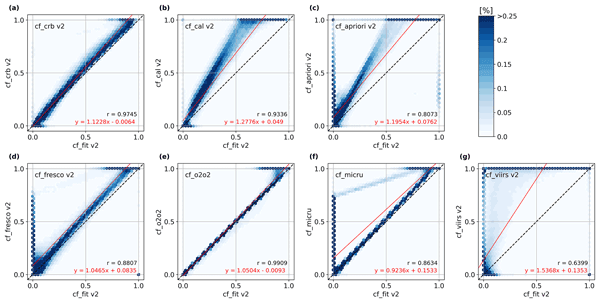
Miriam Latsch, Andreas Richter, Henk Eskes, Maarten Sneep, Ping Wang, Pepijn Veefkind, Ronny Lutz, Diego Loyola, Athina Argyrouli, Pieter Valks, Thomas Wagner, Holger Sihler, Michel van Roozendael, Nicolas Theys, Huan Yu, Richard Siddans, and John P. Burrows
Atmos. Meas. Tech., 15, 6257–6283, https://doi.org/10.5194/amt-15-6257-2022, https://doi.org/10.5194/amt-15-6257-2022, 2022
Short summary
Short summary
The article investigates different S5P TROPOMI cloud retrieval algorithms for tropospheric trace gas retrievals. The cloud products show differences primarily over snow and ice and for scenes under sun glint. Some issues regarding across-track dependence are found for the cloud fractions as well as for the cloud heights.
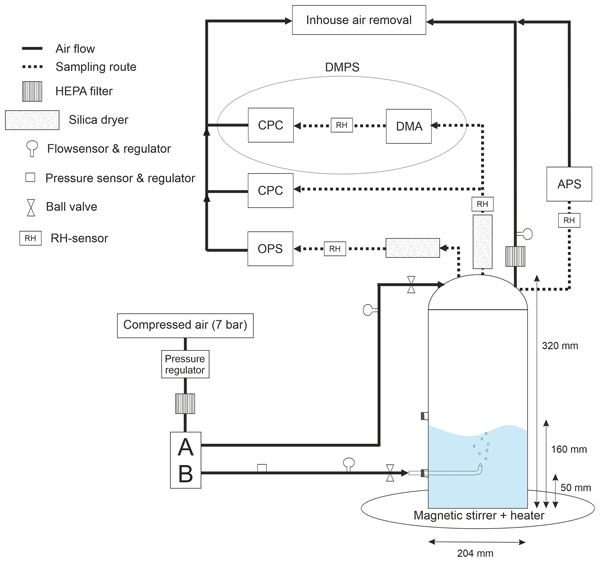
Svetlana Sofieva, Eija Asmi, Nina S. Atanasova, Aino E. Heikkinen, Emeline Vidal, Jonathan Duplissy, Martin Romantschuk, Rostislav Kouznetsov, Jaakko Kukkonen, Dennis H. Bamford, Antti-Pekka Hyvärinen, and Mikhail Sofiev
Atmos. Meas. Tech., 15, 6201–6219, https://doi.org/10.5194/amt-15-6201-2022, https://doi.org/10.5194/amt-15-6201-2022, 2022
Short summary
Short summary
A new bubble-generating glass chamber design with an extensive set of aerosol production experiments is presented to re-evaluate bubble-bursting-mediated aerosol production as a function of water parameters: bubbling air flow, water salinity, and temperature. Our main findings suggest modest dependence of aerosol production on the water salinity and a strong dependence on temperature below ~ 10 °C.
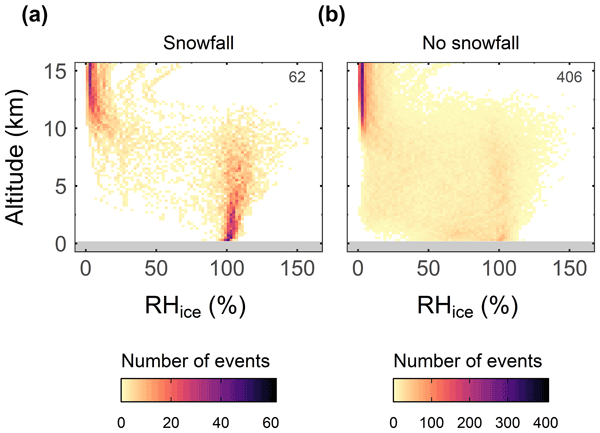
Claudia Mignani, Lukas Zimmermann, Rigel Kivi, Alexis Berne, and Franz Conen
Atmos. Chem. Phys., 22, 13551–13568, https://doi.org/10.5194/acp-22-13551-2022, https://doi.org/10.5194/acp-22-13551-2022, 2022
Short summary
Short summary
We determined over the course of 8 winter months the phase of clouds associated with snowfall in Northern Finland using radiosondes and observations of ice particle habits at ground level. We found that precipitating clouds were extending from near ground to at least 2.7 km altitude and approximately three-quarters of them were likely glaciated. Possible moisture sources and ice formation processes are discussed.
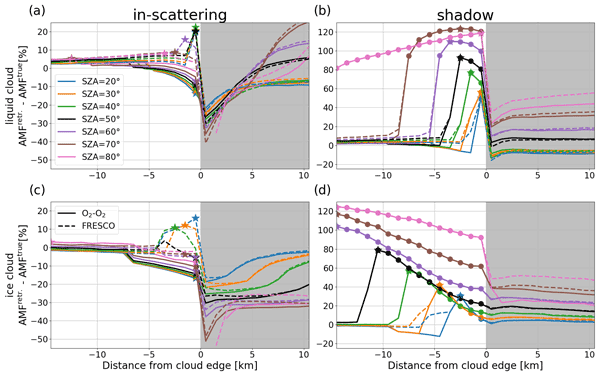
Huan Yu, Claudia Emde, Arve Kylling, Ben Veihelmann, Bernhard Mayer, Kerstin Stebel, and Michel Van Roozendael
Atmos. Meas. Tech., 15, 5743–5768, https://doi.org/10.5194/amt-15-5743-2022, https://doi.org/10.5194/amt-15-5743-2022, 2022
Short summary
Short summary
In this study, we have investigated the impact of 3D clouds on the tropospheric NO2 retrieval from UV–visible sensors. We applied standard NO2 retrieval methods including cloud corrections to synthetic data generated by the 3D radiative transfer model. A sensitivity study was done for synthetic data, and dependencies on various parameters were investigated. Possible mitigation strategies were investigated and compared based on 3D simulations and observed data.
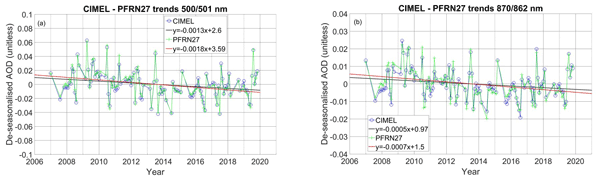
Angelos Karanikolas, Natalia Kouremeti, Julian Gröbner, Luca Egli, and Stelios Kazadzis
Atmos. Meas. Tech., 15, 5667–5680, https://doi.org/10.5194/amt-15-5667-2022, https://doi.org/10.5194/amt-15-5667-2022, 2022
Short summary
Short summary
The aim of this work is to investigate the limitations of calculating long-term trends of a parameter that quantifies the overall effect of atmospheric aerosols on the solar radiation. A main finding is that even instruments with good agreement between their observations can show significantly different linear trends. By calculating time-varying trends, the trend agreement is shown to improve. We also show that different methods of trend estimation can result in significant trend differences.
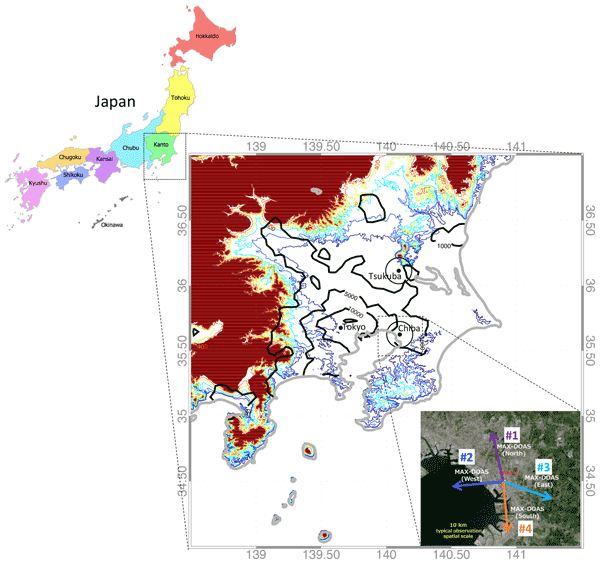
Alessandro Damiani, Hitoshi Irie, Dmitry A. Belikov, Shuei Kaizuka, Hossain Mohammed Syedul Hoque, and Raul R. Cordero
Atmos. Chem. Phys., 22, 12705–12726, https://doi.org/10.5194/acp-22-12705-2022, https://doi.org/10.5194/acp-22-12705-2022, 2022
Short summary
Short summary
We analyzed the variabilities in tropospheric gases and aerosols within the Greater Tokyo Area, Japan. Beyond highlighting air quality changes caused by the pandemic during the lockdown, we found that the degree of weekly cycling of most gases and aerosols was enhanced during the whole of 2020. The changes were unprecedented in recent years and potentially related to coincident reduced mobility in Japan, which, in contrast to other countries, was anomalously low on weekends in 2020.
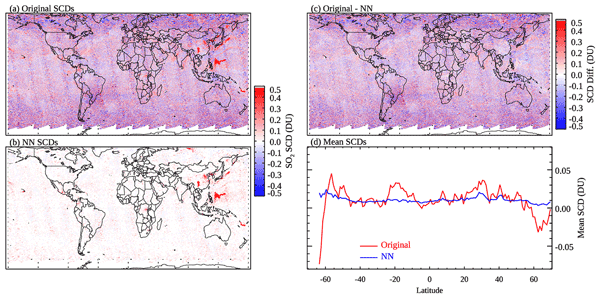
Can Li, Joanna Joiner, Fei Liu, Nickolay A. Krotkov, Vitali Fioletov, and Chris McLinden
Atmos. Meas. Tech., 15, 5497–5514, https://doi.org/10.5194/amt-15-5497-2022, https://doi.org/10.5194/amt-15-5497-2022, 2022
Short summary
Short summary
Satellite observations provide information on the sources of SO2, an important pollutant that affects both air quality and climate. However, these observations suffer from relatively poor data quality due to weak signals of SO2. Here, we use a machine learning technique to analyze satellite SO2 observations in order to reduce the noise and artifacts over relatively clean areas while keeping the signals near pollution sources. This leads to significant improvement in satellite SO2 data.
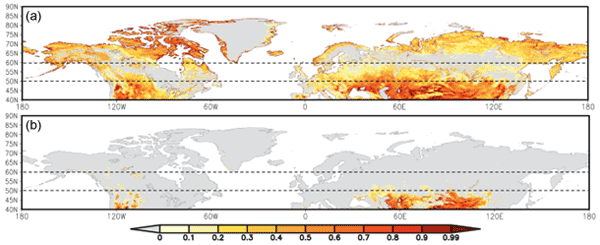
Outi Meinander, Pavla Dagsson-Waldhauserova, Pavel Amosov, Elena Aseyeva, Cliff Atkins, Alexander Baklanov, Clarissa Baldo, Sarah L. Barr, Barbara Barzycka, Liane G. Benning, Bojan Cvetkovic, Polina Enchilik, Denis Frolov, Santiago Gassó, Konrad Kandler, Nikolay Kasimov, Jan Kavan, James King, Tatyana Koroleva, Viktoria Krupskaya, Markku Kulmala, Monika Kusiak, Hanna K. Lappalainen, Michał Laska, Jerome Lasne, Marek Lewandowski, Bartłomiej Luks, James B. McQuaid, Beatrice Moroni, Benjamin Murray, Ottmar Möhler, Adam Nawrot, Slobodan Nickovic, Norman T. O’Neill, Goran Pejanovic, Olga Popovicheva, Keyvan Ranjbar, Manolis Romanias, Olga Samonova, Alberto Sanchez-Marroquin, Kerstin Schepanski, Ivan Semenkov, Anna Sharapova, Elena Shevnina, Zongbo Shi, Mikhail Sofiev, Frédéric Thevenet, Throstur Thorsteinsson, Mikhail Timofeev, Nsikanabasi Silas Umo, Andreas Uppstu, Darya Urupina, György Varga, Tomasz Werner, Olafur Arnalds, and Ana Vukovic Vimic
Atmos. Chem. Phys., 22, 11889–11930, https://doi.org/10.5194/acp-22-11889-2022, https://doi.org/10.5194/acp-22-11889-2022, 2022
Short summary
Short summary
High-latitude dust (HLD) is a short-lived climate forcer, air pollutant, and nutrient source. Our results suggest a northern HLD belt at 50–58° N in Eurasia and 50–55° N in Canada and at >60° N in Eurasia and >58° N in Canada. Our addition to the previously identified global dust belt (GDB) provides crucially needed information on the extent of active HLD sources with both direct and indirect impacts on climate and environment in remote regions, which are often poorly understood and predicted.

Albert Ansmann, Kevin Ohneiser, Alexandra Chudnovsky, Daniel A. Knopf, Edwin W. Eloranta, Diego Villanueva, Patric Seifert, Martin Radenz, Boris Barja, Félix Zamorano, Cristofer Jimenez, Ronny Engelmann, Holger Baars, Hannes Griesche, Julian Hofer, Dietrich Althausen, and Ulla Wandinger
Atmos. Chem. Phys., 22, 11701–11726, https://doi.org/10.5194/acp-22-11701-2022, https://doi.org/10.5194/acp-22-11701-2022, 2022
Short summary
Short summary
For the first time we present a systematic study on the impact of wildfire smoke on ozone depletion in the Arctic (2020) and Antarctic stratosphere (2020, 2021). Two major fire events in Siberia and Australia were responsible for the observed record-breaking stratospheric smoke pollution. Our analyses were based on lidar observations of smoke parameters (Polarstern, Punta Arenas) and NDACC Arctic and Antarctic ozone profiles as well as on Antarctic OMI satellite observations of column ozone.
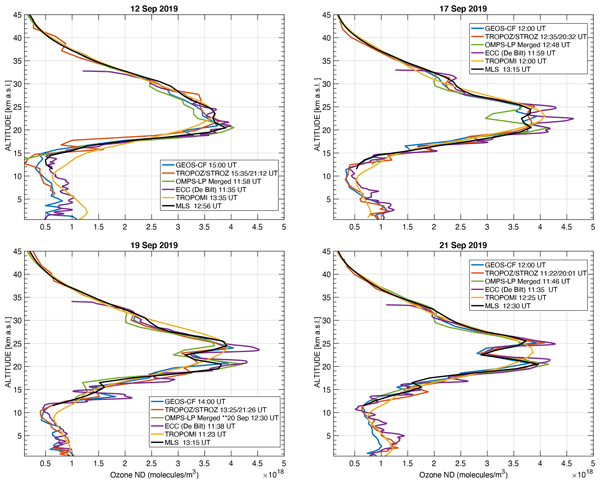
John T. Sullivan, Arnoud Apituley, Nora Mettig, Karin Kreher, K. Emma Knowland, Marc Allaart, Ankie Piters, Michel Van Roozendael, Pepijn Veefkind, Jerry R. Ziemke, Natalya Kramarova, Mark Weber, Alexei Rozanov, Laurence Twigg, Grant Sumnicht, and Thomas J. McGee
Atmos. Chem. Phys., 22, 11137–11153, https://doi.org/10.5194/acp-22-11137-2022, https://doi.org/10.5194/acp-22-11137-2022, 2022
Short summary
Short summary
A TROPOspheric Monitoring Instrument (TROPOMI) validation campaign (TROLIX-19) was held in the Netherlands in September 2019. The research presented here focuses on using ozone lidars from NASA’s Goddard Space Flight Center to better evaluate the characterization of ozone throughout TROLIX-19 as compared to balloon-borne, space-borne and ground-based passive measurements, as well as a global coupled chemistry meteorology model.
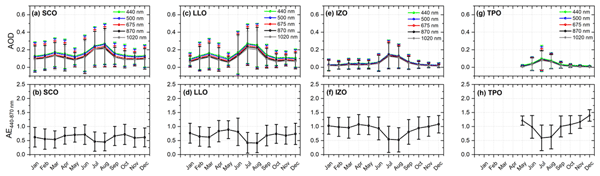
África Barreto, Rosa D. García, Carmen Guirado-Fuentes, Emilio Cuevas, A. Fernando Almansa, Celia Milford, Carlos Toledano, Francisco J. Expósito, Juan P. Díaz, and Sergio F. León-Luis
Atmos. Chem. Phys., 22, 11105–11124, https://doi.org/10.5194/acp-22-11105-2022, https://doi.org/10.5194/acp-22-11105-2022, 2022
Short summary
Short summary
A comprehensive characterization of atmospheric aerosols in the subtropical eastern North Atlantic has been carried out in this paper using long-term ground AERONET photometric observations over the period 2005–2020 from a unique network made up of four stations strategically located from sea level to 3555 m height on the island of Tenerife. This is a region that can be considered a key location to study the seasonal dependence of dust transport from the Sahel-Sahara.

Igor Veselovskii, Qiaoyun Hu, Philippe Goloub, Thierry Podvin, Boris Barchunov, and Mikhail Korenskii
Atmos. Meas. Tech., 15, 4881–4900, https://doi.org/10.5194/amt-15-4881-2022, https://doi.org/10.5194/amt-15-4881-2022, 2022
Short summary
Short summary
An approach to reveal variability in aerosol type at a high spatiotemporal resolution, by combining fluorescence and Mie–Raman lidar data, is presented. We applied this new classification scheme to lidar data obtained by LOA, University of Lille, in 2020–2021. It is demonstrated that the separation of the main particle types, such as smoke, dust, pollen, and urban, can be performed with a height resolution of 60 m and temporal resolution better than 10 min for the current lidar configuration.

Nicolas Theys, Christophe Lerot, Hugues Brenot, Jeroen van Gent, Isabelle De Smedt, Lieven Clarisse, Mike Burton, Matthew Varnam, Catherine Hayer, Benjamin Esse, and Michel Van Roozendael
Atmos. Meas. Tech., 15, 4801–4817, https://doi.org/10.5194/amt-15-4801-2022, https://doi.org/10.5194/amt-15-4801-2022, 2022
Short summary
Short summary
Sulfur dioxide plume height after a volcanic eruption is an important piece of information for many different scientific studies and applications. Satellite UV retrievals are useful in this respect, but available algorithms have shown so far limited sensitivity to SO2 height. Here we present a new technique to improve the retrieval of SO2 plume height for SO2 columns as low as 5 DU. We demonstrate the algorithm using TROPOMI measurements and compare with other height estimates.
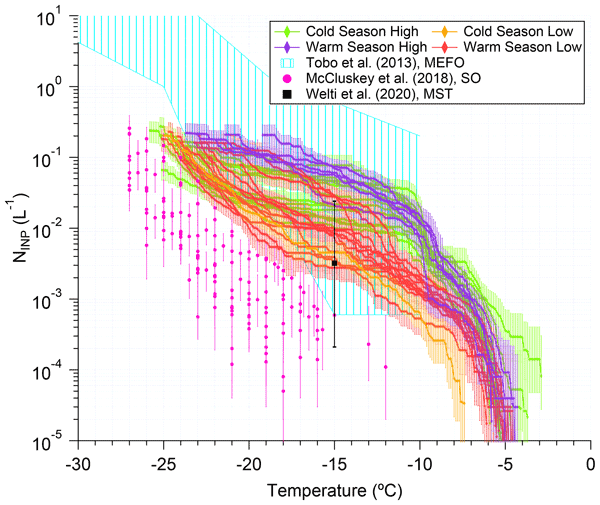
Xianda Gong, Martin Radenz, Heike Wex, Patric Seifert, Farnoush Ataei, Silvia Henning, Holger Baars, Boris Barja, Albert Ansmann, and Frank Stratmann
Atmos. Chem. Phys., 22, 10505–10525, https://doi.org/10.5194/acp-22-10505-2022, https://doi.org/10.5194/acp-22-10505-2022, 2022
Short summary
Short summary
The sources of ice-nucleating particles (INPs) are poorly understood in the Southern Hemisphere (SH). We studied INPs in the boundary layer in the southern Patagonia region. No seasonal cycle of INP concentrations was observed. The majority of INPs are biogenic particles, likely from local continental sources. The INP concentrations are higher when strong precipitation occurs. While previous studies focused on marine INP sources in SH, we point out the importance of continental sources of INPs.
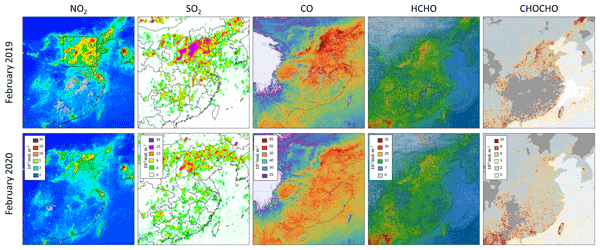
Pieternel F. Levelt, Deborah C. Stein Zweers, Ilse Aben, Maite Bauwens, Tobias Borsdorff, Isabelle De Smedt, Henk J. Eskes, Christophe Lerot, Diego G. Loyola, Fabian Romahn, Trissevgeni Stavrakou, Nicolas Theys, Michel Van Roozendael, J. Pepijn Veefkind, and Tijl Verhoelst
Atmos. Chem. Phys., 22, 10319–10351, https://doi.org/10.5194/acp-22-10319-2022, https://doi.org/10.5194/acp-22-10319-2022, 2022
Short summary
Short summary
Using the COVID-19 lockdown periods as an example, we show how Sentinel-5P/TROPOMI trace gas data (NO2, SO2, CO, HCHO and CHOCHO) can be used to understand impacts on air quality for regions and cities around the globe. We also provide information for both experienced and inexperienced users about how we created the data using state-of-the-art algorithms, where to get the data, methods taking meteorological and seasonal variability into consideration, and insights for future studies.
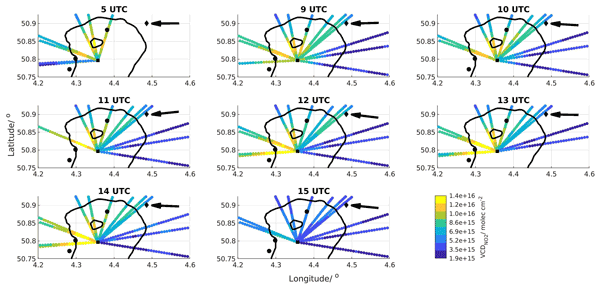
Ermioni Dimitropoulou, François Hendrick, Martina Michaela Friedrich, Frederik Tack, Gaia Pinardi, Alexis Merlaud, Caroline Fayt, Christian Hermans, Frans Fierens, and Michel Van Roozendael
Atmos. Meas. Tech., 15, 4503–4529, https://doi.org/10.5194/amt-15-4503-2022, https://doi.org/10.5194/amt-15-4503-2022, 2022
Short summary
Short summary
A total of 2 years of dual-scan ground-based MAX-DOAS measurements of tropospheric NO2 and aerosols in Uccle (Belgium) have been used to develop a new optimal-estimation-based inversion approach to retrieve horizontal profiles of surface NO2 concentration and aerosol extinction profiles. We show that the combination of an appropriate sampling of TROPOMI pixels by ground-based measurements and an adequate a priori NO2 profile shape in TROPOMI retrievals improves the agreement between datasets.
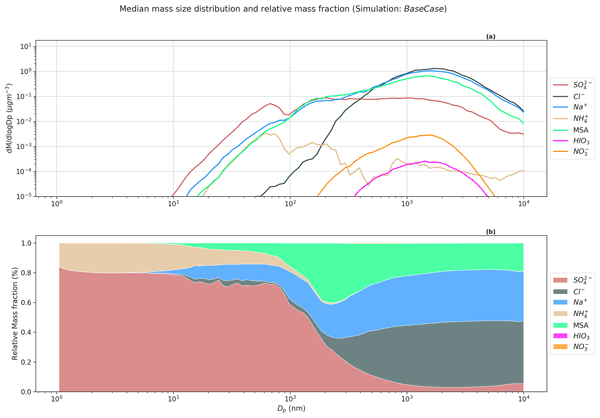
Carlton Xavier, Metin Baykara, Robin Wollesen de Jonge, Barbara Altstädter, Petri Clusius, Ville Vakkari, Roseline Thakur, Lisa Beck, Silvia Becagli, Mirko Severi, Rita Traversi, Radovan Krejci, Peter Tunved, Mauro Mazzola, Birgit Wehner, Mikko Sipilä, Markku Kulmala, Michael Boy, and Pontus Roldin
Atmos. Chem. Phys., 22, 10023–10043, https://doi.org/10.5194/acp-22-10023-2022, https://doi.org/10.5194/acp-22-10023-2022, 2022
Short summary
Short summary
The focus of this work is to study and improve our understanding of processes involved in the formation and growth of new particles in a remote Arctic marine environment. We run the 1D model ADCHEM along air mass trajectories arriving at Ny-Ålesund in May 2018. The model finds that ion-mediated H2SO4–NH3 nucleation can explain the observed new particle formation at Ny-Ålesund. The growth of particles is driven via H2SO4 condensation and formation of methane sulfonic acid in the aqueous phase.
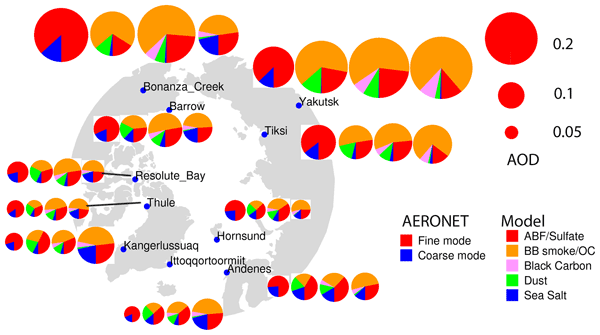
Peng Xian, Jianglong Zhang, Norm T. O'Neill, Travis D. Toth, Blake Sorenson, Peter R. Colarco, Zak Kipling, Edward J. Hyer, James R. Campbell, Jeffrey S. Reid, and Keyvan Ranjbar
Atmos. Chem. Phys., 22, 9915–9947, https://doi.org/10.5194/acp-22-9915-2022, https://doi.org/10.5194/acp-22-9915-2022, 2022
Short summary
Short summary
The study provides baseline Arctic spring and summertime aerosol optical depth climatology, trend, and extreme event statistics from 2003 to 2019 using a combination of aerosol reanalyses, remote sensing, and ground observations. Biomass burning smoke has an overwhelming contribution to black carbon (an efficient climate forcer) compared to anthropogenic sources. Burning's large interannual variability and increasing summer trend have important implications for the Arctic climate.

Peng Xian, Jianglong Zhang, Norm T. O'Neill, Jeffrey S. Reid, Travis D. Toth, Blake Sorenson, Edward J. Hyer, James R. Campbell, and Keyvan Ranjbar
Atmos. Chem. Phys., 22, 9949–9967, https://doi.org/10.5194/acp-22-9949-2022, https://doi.org/10.5194/acp-22-9949-2022, 2022
Short summary
Short summary
The study provides a baseline Arctic spring and summertime aerosol optical depth climatology, trend, and extreme event statistics from 2003 to 2019 using a combination of aerosol reanalyses, remote sensing, and ground observations. Biomass burning smoke has an overwhelming contribution to black carbon (an efficient climate forcer) compared to anthropogenic sources. Burning's large interannual variability and increasing summer trend have important implications for the Arctic climate.

Jörg Wieder, Nikola Ihn, Claudia Mignani, Moritz Haarig, Johannes Bühl, Patric Seifert, Ronny Engelmann, Fabiola Ramelli, Zamin A. Kanji, Ulrike Lohmann, and Jan Henneberger
Atmos. Chem. Phys., 22, 9767–9797, https://doi.org/10.5194/acp-22-9767-2022, https://doi.org/10.5194/acp-22-9767-2022, 2022
Short summary
Short summary
Ice formation and its evolution in mixed-phase clouds are still uncertain. We evaluate the lidar retrieval of ice-nucleating particle concentration in dust-dominated and continental air masses over the Swiss Alps with in situ observations. A calibration factor to improve the retrieval from continental air masses is proposed. Ice multiplication factors are obtained with a new method utilizing remote sensing. Our results indicate that secondary ice production occurs at temperatures down to −30 °C.
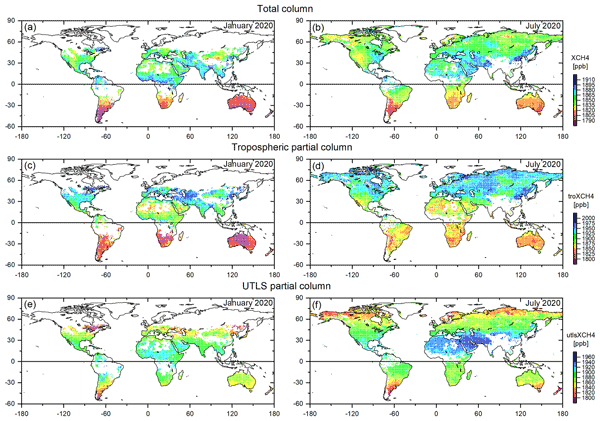
Matthias Schneider, Benjamin Ertl, Qiansi Tu, Christopher J. Diekmann, Farahnaz Khosrawi, Amelie N. Röhling, Frank Hase, Darko Dubravica, Omaira E. García, Eliezer Sepúlveda, Tobias Borsdorff, Jochen Landgraf, Alba Lorente, André Butz, Huilin Chen, Rigel Kivi, Thomas Laemmel, Michel Ramonet, Cyril Crevoisier, Jérome Pernin, Martin Steinbacher, Frank Meinhardt, Kimberly Strong, Debra Wunch, Thorsten Warneke, Coleen Roehl, Paul O. Wennberg, Isamu Morino, Laura T. Iraci, Kei Shiomi, Nicholas M. Deutscher, David W. T. Griffith, Voltaire A. Velazco, and David F. Pollard
Atmos. Meas. Tech., 15, 4339–4371, https://doi.org/10.5194/amt-15-4339-2022, https://doi.org/10.5194/amt-15-4339-2022, 2022
Short summary
Short summary
We present a computationally very efficient method for the synergetic use of level 2 remote-sensing data products. We apply the method to IASI vertical profile and TROPOMI total column space-borne methane observations and thus gain sensitivity for the tropospheric methane partial columns, which is not achievable by the individual use of TROPOMI and IASI. These synergetic effects are evaluated theoretically and empirically by inter-comparisons to independent references of TCCON, AirCore, and GAW.

Alexander Sinyuk, Brent N. Holben, Thomas F. Eck, David M. Giles, Ilya Slutsker, Oleg Dubovik, Joel S. Schafer, Alexander Smirnov, and Mikhail Sorokin
Atmos. Meas. Tech., 15, 4135–4151, https://doi.org/10.5194/amt-15-4135-2022, https://doi.org/10.5194/amt-15-4135-2022, 2022
Short summary
Short summary
This paper describes modification of smoothness constraints on the imaginary part of the refractive index employed in the AERONET aerosol retrieval algorithm. This modification is termed relaxed due to the weaker strength of this new smoothness constraint. Applying the modified version of the smoothness constraint results in a significant reduction of retrieved light absorption by brown-carbon-containing aerosols.

Arve Kylling, Claudia Emde, Huan Yu, Michel van Roozendael, Kerstin Stebel, Ben Veihelmann, and Bernhard Mayer
Atmos. Meas. Tech., 15, 3481–3495, https://doi.org/10.5194/amt-15-3481-2022, https://doi.org/10.5194/amt-15-3481-2022, 2022
Short summary
Short summary
Atmospheric trace gases such as nitrogen dioxide (NO2) may be measured by satellite instruments sensitive to solar ultraviolet–visible radiation reflected from Earth and its atmosphere. For a single pixel, clouds in neighbouring pixels may affect the radiation and hence the retrieved trace gas amount. We found that for a solar zenith angle less than about 40° this cloud-related NO2 bias is typically below 10 %, while for larger solar zenith angles the NO2 bias is on the order of tens of percent.
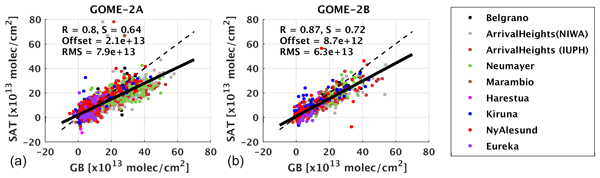
Gaia Pinardi, Michel Van Roozendael, François Hendrick, Andreas Richter, Pieter Valks, Ramina Alwarda, Kristof Bognar, Udo Frieß, José Granville, Myojeong Gu, Paul Johnston, Cristina Prados-Roman, Richard Querel, Kimberly Strong, Thomas Wagner, Folkard Wittrock, and Margarita Yela Gonzalez
Atmos. Meas. Tech., 15, 3439–3463, https://doi.org/10.5194/amt-15-3439-2022, https://doi.org/10.5194/amt-15-3439-2022, 2022
Short summary
Short summary
We report on the GOME-2A and GOME-2B OClO dataset (2007 to 2016, from the EUMETSAT's AC SAF) validation using data from nine NDACC zenith-scattered-light DOAS (ZSL-DOAS) instruments distributed in both the Arctic and Antarctic. Specific sensitivity tests are performed on the ground-based data to estimate the impact of the different OClO DOAS analysis settings and their typical errors. Good agreement is found for both the inter-annual variability and the overall OClO seasonal behavior.
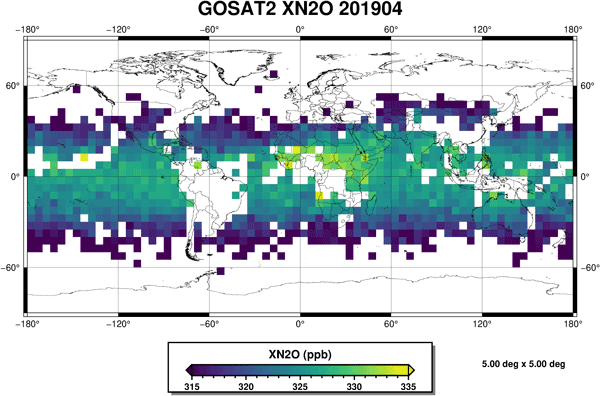
Stefan Noël, Maximilian Reuter, Michael Buchwitz, Jakob Borchardt, Michael Hilker, Oliver Schneising, Heinrich Bovensmann, John P. Burrows, Antonio Di Noia, Robert J. Parker, Hiroshi Suto, Yukio Yoshida, Matthias Buschmann, Nicholas M. Deutscher, Dietrich G. Feist, David W. T. Griffith, Frank Hase, Rigel Kivi, Cheng Liu, Isamu Morino, Justus Notholt, Young-Suk Oh, Hirofumi Ohyama, Christof Petri, David F. Pollard, Markus Rettinger, Coleen Roehl, Constantina Rousogenous, Mahesh Kumar Sha, Kei Shiomi, Kimberly Strong, Ralf Sussmann, Yao Té, Voltaire A. Velazco, Mihalis Vrekoussis, and Thorsten Warneke
Atmos. Meas. Tech., 15, 3401–3437, https://doi.org/10.5194/amt-15-3401-2022, https://doi.org/10.5194/amt-15-3401-2022, 2022
Short summary
Short summary
We present a new version (v3) of the GOSAT and GOSAT-2 FOCAL products.
In addition to an increased number of XCO2 data, v3 also includes products for XCH4 (full-physics and proxy), XH2O and the relative ratio of HDO to H2O (δD). For GOSAT-2, we also present first XCO and XN2O results. All FOCAL data products show reasonable spatial distribution and temporal variations and agree well with TCCON. Global XN2O maps show a gradient from the tropics to higher latitudes on the order of 15 ppb.
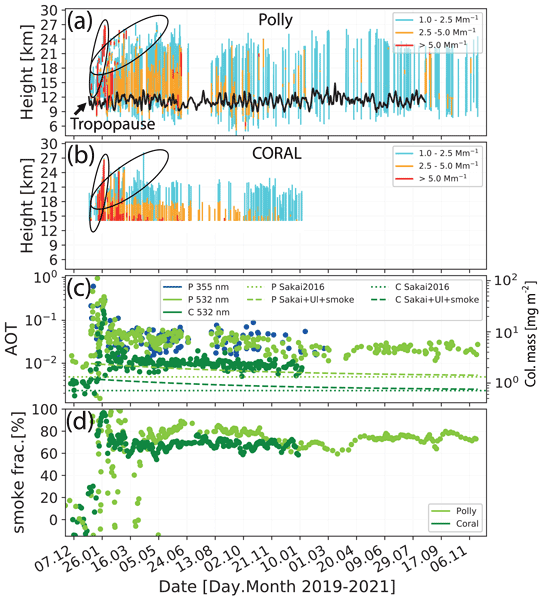
Kevin Ohneiser, Albert Ansmann, Bernd Kaifler, Alexandra Chudnovsky, Boris Barja, Daniel A. Knopf, Natalie Kaifler, Holger Baars, Patric Seifert, Diego Villanueva, Cristofer Jimenez, Martin Radenz, Ronny Engelmann, Igor Veselovskii, and Félix Zamorano
Atmos. Chem. Phys., 22, 7417–7442, https://doi.org/10.5194/acp-22-7417-2022, https://doi.org/10.5194/acp-22-7417-2022, 2022
Short summary
Short summary
We present and discuss 2 years of long-term lidar observations of the largest stratospheric perturbation by wildfire smoke ever observed. The smoke originated from the record-breaking Australian fires in 2019–2020 and affects climate conditions and even the ozone layer in the Southern Hemisphere. The obvious link between dense smoke occurrence in the stratosphere and strong ozone depletion found in the Arctic and in the Antarctic in 2020 can be regarded as a new aspect of climate change.
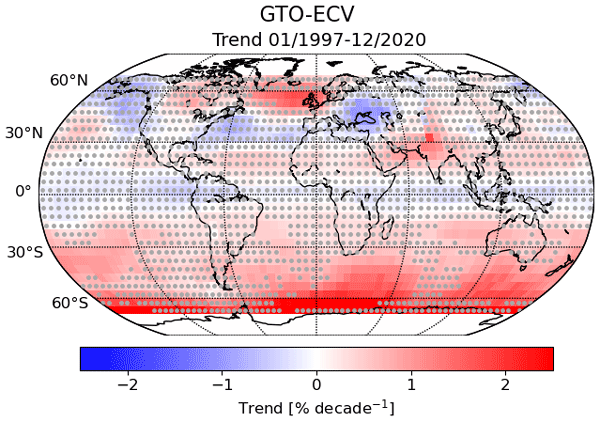
Melanie Coldewey-Egbers, Diego G. Loyola, Christophe Lerot, and Michel Van Roozendael
Atmos. Chem. Phys., 22, 6861–6878, https://doi.org/10.5194/acp-22-6861-2022, https://doi.org/10.5194/acp-22-6861-2022, 2022
Short summary
Short summary
Monitoring the long-term evolution of ozone and the evaluation of trends is essential to assess the efficacy of the Montreal Protocol and its amendments. The first signs of recovery as a consequence of decreasing amounts of ozone-depleting substances have been reported, but the impact needs to be investigated in more detail. In the Southern Hemisphere significant positive trends were found, but in the Northern Hemisphere the expected increase is still not yet visible.

Mark Weber, Carlo Arosio, Melanie Coldewey-Egbers, Vitali E. Fioletov, Stacey M. Frith, Jeannette D. Wild, Kleareti Tourpali, John P. Burrows, and Diego Loyola
Atmos. Chem. Phys., 22, 6843–6859, https://doi.org/10.5194/acp-22-6843-2022, https://doi.org/10.5194/acp-22-6843-2022, 2022
Short summary
Short summary
Long-term trends in column ozone have been determined from five merged total ozone datasets spanning the period 1978–2020. We show that ozone recovery due to the decline in stratospheric halogens after the 1990s (as regulated by the Montreal Protocol) is evident outside the tropical region and amounts to half a percent per decade. The ozone recovery in the Northern Hemisphere is however compensated for by the negative long-term trend contribution from atmospheric dynamics since the year 2000.
Pawan Gupta, Prakash Doraiswamy, Jashwanth Reddy, Palak Balyan, Sagnik Dey, Ryan Chartier, Adeel Khan, Karmann Riter, Brandon Feenstra, Robert C. Levy, Nhu Nguyen Minh Tran, Olga Pikelnaya, Kurinji Selvaraj, Tanushree Ganguly, and Karthik Ganesan
Atmos. Meas. Tech. Discuss., https://doi.org/10.5194/amt-2022-140, https://doi.org/10.5194/amt-2022-140, 2022
Revised manuscript not accepted
Short summary
Short summary
The use of low-cost sensors in air quality monitoring has been gaining interest across all walks of society. We present the results of evaluations of the PurpleAir against regulatory-grade PM2.5. The results indicate that with proper calibration, we can achieve bias-corrected PM2.5 data using PA sensors. Our study also suggests that pre-deployment calibrations developed at local or regional scales are required for the PA sensors to correct data from the field for scientific data analysis.

Nora Mettig, Mark Weber, Alexei Rozanov, John P. Burrows, Pepijn Veefkind, Anne M. Thompson, Ryan M. Stauffer, Thierry Leblanc, Gerard Ancellet, Michael J. Newchurch, Shi Kuang, Rigel Kivi, Matthew B. Tully, Roeland Van Malderen, Ankie Piters, Bogumil Kois, René Stübi, and Pavla Skrivankova
Atmos. Meas. Tech., 15, 2955–2978, https://doi.org/10.5194/amt-15-2955-2022, https://doi.org/10.5194/amt-15-2955-2022, 2022
Short summary
Short summary
Vertical ozone profiles from combined spectral measurements in the UV and IR spectral ranges were retrieved by using data from TROPOMI/S5P and CrIS/Suomi-NPP. The vertical resolution and accuracy of the ozone profiles are improved by combining both wavelength ranges compared to retrievals limited to UV or IR spectral data only. The advancement of our TOPAS algorithm for combined measurements is required because in the UV-only retrieval the vertical resolution in the troposphere is very limited.
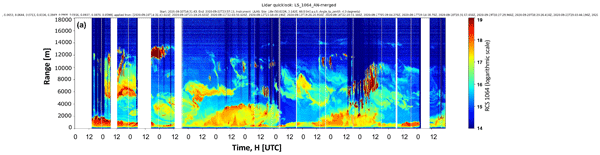
Qiaoyun Hu, Philippe Goloub, Igor Veselovskii, and Thierry Podvin
Atmos. Chem. Phys., 22, 5399–5414, https://doi.org/10.5194/acp-22-5399-2022, https://doi.org/10.5194/acp-22-5399-2022, 2022
Short summary
Short summary
Our lidar observations show that the optical properties of wildfire smoke particles are highly varied after long-range transport. The variabilities are probably relevant to vegetation type, combustion condition and the aging process, which alter the smoke particle properties, as well as their impact on cloud processes and properties. The lidar fluorescence channel provides a good opportunity for smoke characterization and heterogenous ice crystal formation.
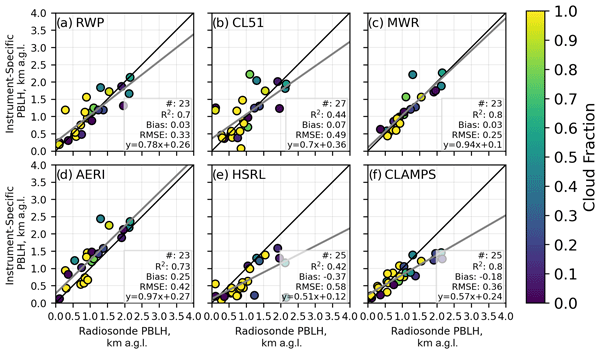
James B. Duncan Jr., Laura Bianco, Bianca Adler, Tyler Bell, Irina V. Djalalova, Laura Riihimaki, Joseph Sedlar, Elizabeth N. Smith, David D. Turner, Timothy J. Wagner, and James M. Wilczak
Atmos. Meas. Tech., 15, 2479–2502, https://doi.org/10.5194/amt-15-2479-2022, https://doi.org/10.5194/amt-15-2479-2022, 2022
Short summary
Short summary
In this study, several ground-based remote sensing instruments are used to estimate the height of the convective planetary boundary layer, and their performance is compared against independent boundary layer depth estimates obtained from radiosondes launched as part of the CHEESEHEAD19 field campaign. The impact of clouds (particularly boundary layer clouds) on the estimation of the boundary layer depth is also investigated.
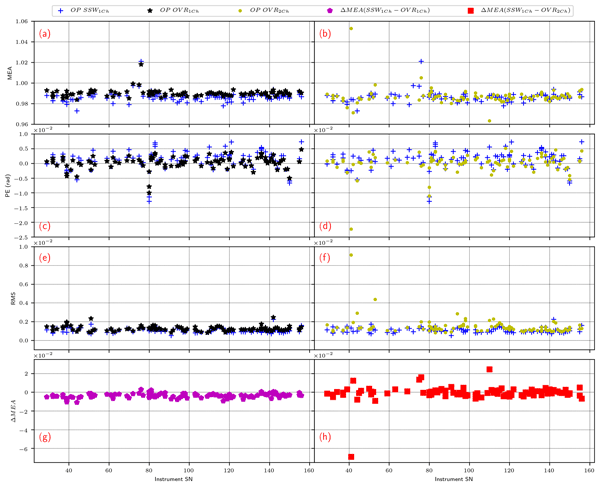
Carlos Alberti, Frank Hase, Matthias Frey, Darko Dubravica, Thomas Blumenstock, Angelika Dehn, Paolo Castracane, Gregor Surawicz, Roland Harig, Bianca C. Baier, Caroline Bès, Jianrong Bi, Hartmut Boesch, André Butz, Zhaonan Cai, Jia Chen, Sean M. Crowell, Nicholas M. Deutscher, Dragos Ene, Jonathan E. Franklin, Omaira García, David Griffith, Bruno Grouiez, Michel Grutter, Abdelhamid Hamdouni, Sander Houweling, Neil Humpage, Nicole Jacobs, Sujong Jeong, Lilian Joly, Nicholas B. Jones, Denis Jouglet, Rigel Kivi, Ralph Kleinschek, Morgan Lopez, Diogo J. Medeiros, Isamu Morino, Nasrin Mostafavipak, Astrid Müller, Hirofumi Ohyama, Paul I. Palmer, Mahesh Pathakoti, David F. Pollard, Uwe Raffalski, Michel Ramonet, Robbie Ramsay, Mahesh Kumar Sha, Kei Shiomi, William Simpson, Wolfgang Stremme, Youwen Sun, Hiroshi Tanimoto, Yao Té, Gizaw Mengistu Tsidu, Voltaire A. Velazco, Felix Vogel, Masataka Watanabe, Chong Wei, Debra Wunch, Marcia Yamasoe, Lu Zhang, and Johannes Orphal
Atmos. Meas. Tech., 15, 2433–2463, https://doi.org/10.5194/amt-15-2433-2022, https://doi.org/10.5194/amt-15-2433-2022, 2022
Short summary
Short summary
Space-borne greenhouse gas missions require ground-based validation networks capable of providing fiducial reference measurements. Here, considerable refinements of the calibration procedures for the COllaborative Carbon Column Observing Network (COCCON) are presented. Laboratory and solar side-by-side procedures for the characterization of the spectrometers have been refined and extended. Revised calibration factors for XCO2, XCO and XCH4 are provided, incorporating 47 new spectrometers.
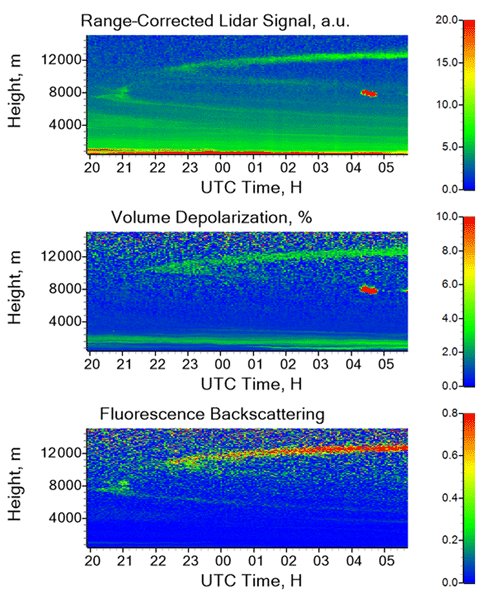
Igor Veselovskii, Qiaoyun Hu, Albert Ansmann, Philippe Goloub, Thierry Podvin, and Mikhail Korenskiy
Atmos. Chem. Phys., 22, 5209–5221, https://doi.org/10.5194/acp-22-5209-2022, https://doi.org/10.5194/acp-22-5209-2022, 2022
Short summary
Short summary
A remote sensing method based on fluorescence lidar measurements can detect and quantify the smoke content in the upper troposphere and inside cirrus clouds. Based on two case studies, we demonstrate that the fluorescence lidar technique provides the possibility to estimate the smoke surface area concentration within freshly formed cirrus layers. This value was used in a smoke ice nucleating particle parameterization scheme to predict ice crystal number concentrations in cirrus generation cells.
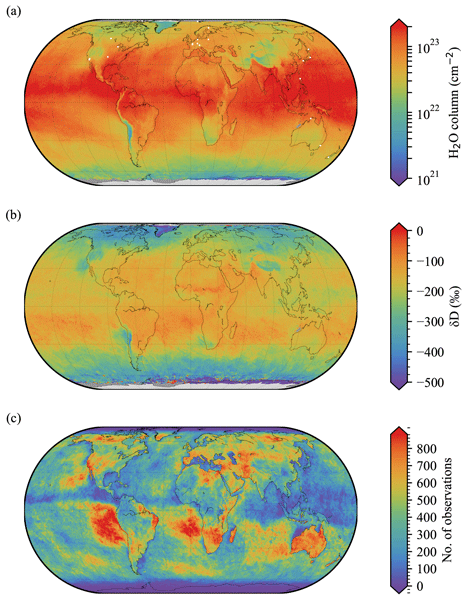
Andreas Schneider, Tobias Borsdorff, Joost aan de Brugh, Alba Lorente, Franziska Aemisegger, David Noone, Dean Henze, Rigel Kivi, and Jochen Landgraf
Atmos. Meas. Tech., 15, 2251–2275, https://doi.org/10.5194/amt-15-2251-2022, https://doi.org/10.5194/amt-15-2251-2022, 2022
Short summary
Short summary
This paper presents an extended H₂O/HDO total column dataset from short-wave infrared measurements by TROPOMI including cloudy and clear-sky scenes. Coverage is tremendously increased compared to previous TROPOMI HDO datasets. The new dataset is validated against recent ground-based FTIR measurements from TCCON and against aircraft measurements over the ocean. The use of the new dataset is demonstrated with a case study of a cold air outbreak in January 2020.
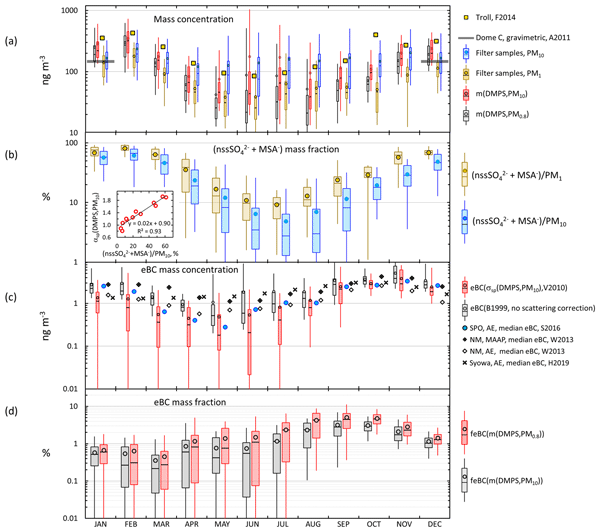
Aki Virkkula, Henrik Grythe, John Backman, Tuukka Petäjä, Maurizio Busetto, Christian Lanconelli, Angelo Lupi, Silvia Becagli, Rita Traversi, Mirko Severi, Vito Vitale, Patrick Sheridan, and Elisabeth Andrews
Atmos. Chem. Phys., 22, 5033–5069, https://doi.org/10.5194/acp-22-5033-2022, https://doi.org/10.5194/acp-22-5033-2022, 2022
Short summary
Short summary
Optical properties of surface aerosols at Dome C, Antarctica, in 2007–2013 and their potential source areas are presented. The equivalent black carbon (eBC) mass concentrations were compared with eBC measured at three other Antarctic sites: the South Pole (SPO) and two coastal sites, Neumayer and Syowa. Transport analysis suggests that South American BC emissions are the largest contributor to eBC at Dome C.

Mathew Sebastian, Sobhan Kumar Kompalli, Vasudevan Anil Kumar, Sandhya Jose, S. Suresh Babu, Govindan Pandithurai, Sachchidanand Singh, Rakesh K. Hooda, Vijay K. Soni, Jeffrey R. Pierce, Ville Vakkari, Eija Asmi, Daniel M. Westervelt, Antti-Pekka Hyvärinen, and Vijay P. Kanawade
Atmos. Chem. Phys., 22, 4491–4508, https://doi.org/10.5194/acp-22-4491-2022, https://doi.org/10.5194/acp-22-4491-2022, 2022
Short summary
Short summary
Characteristics of particle number size distributions and new particle formation in six locations in India were analyzed. New particle formation occurred frequently during the pre-monsoon (spring) season and it significantly modulates the shape of the particle number size distributions. The contribution of newly formed particles to cloud condensation nuclei concentrations was ~3 times higher in urban locations than in mountain background locations.

Hisahiro Takashima, Yugo Kanaya, Saki Kato, Martina M. Friedrich, Michel Van Roozendael, Fumikazu Taketani, Takuma Miyakawa, Yuichi Komazaki, Carlos A. Cuevas, Alfonso Saiz-Lopez, and Takashi Sekiya
Atmos. Chem. Phys., 22, 4005–4018, https://doi.org/10.5194/acp-22-4005-2022, https://doi.org/10.5194/acp-22-4005-2022, 2022
Short summary
Short summary
We have undertaken atmospheric iodine monoxide (IO) observations in the global marine boundary layer with a wide latitudinal coverage and sea surface temperature (SST) range. We conclude that atmospheric iodine is abundant over the Western Pacific warm pool, appearing as an iodine fountain, where ozone (O3) minima occur. Our study also found negative correlations between IO and O3 concentrations over IO maxima, which requires reconsideration of the initiation process of halogen activation.
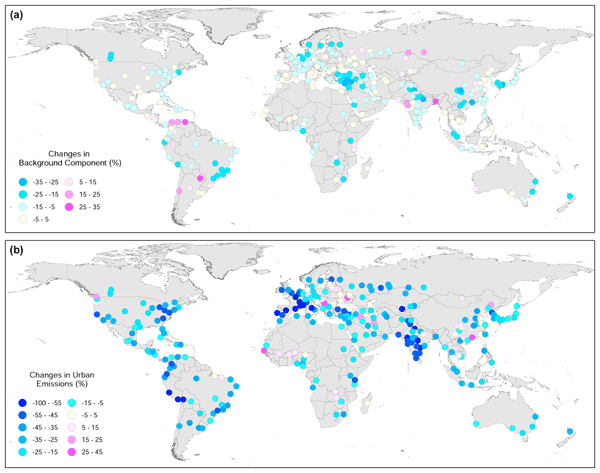
Vitali Fioletov, Chris A. McLinden, Debora Griffin, Nickolay Krotkov, Fei Liu, and Henk Eskes
Atmos. Chem. Phys., 22, 4201–4236, https://doi.org/10.5194/acp-22-4201-2022, https://doi.org/10.5194/acp-22-4201-2022, 2022
Short summary
Short summary
The COVID-19 lockdown had a large impact on anthropogenic emissions and particularly on nitrogen dioxide (NO2). A new method of isolation of background, urban, and industrial components in NO2 is applied to estimate the lockdown impact on each of them. From 16 March to 15 June 2020, urban NO2 declined by −18 % to −28 % in most regions of the world, while background NO2 typically declined by less than −10 %.

Christine D. Groot Zwaaftink, Wenche Aas, Sabine Eckhardt, Nikolaos Evangeliou, Paul Hamer, Mona Johnsrud, Arve Kylling, Stephen M. Platt, Kerstin Stebel, Hilde Uggerud, and Karl Espen Yttri
Atmos. Chem. Phys., 22, 3789–3810, https://doi.org/10.5194/acp-22-3789-2022, https://doi.org/10.5194/acp-22-3789-2022, 2022
Short summary
Short summary
We investigate causes of a poor-air-quality episode in northern Europe in October 2020 during which EU health limits for air quality were vastly exceeded. Such episodes may trigger measures to improve air quality. Analysis based on satellite observations, transport simulations, and surface observations revealed two sources of pollution. Emissions of mineral dust in Central Asia and biomass burning in Ukraine arrived almost simultaneously in Norway, and transport continued into the Arctic.
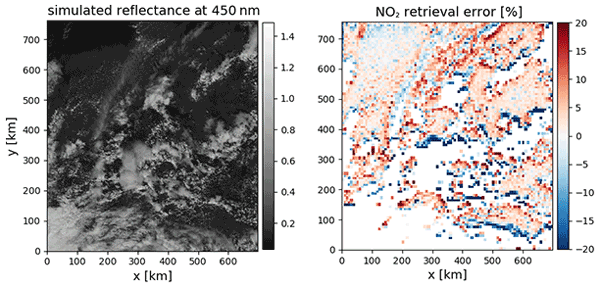
Claudia Emde, Huan Yu, Arve Kylling, Michel van Roozendael, Kerstin Stebel, Ben Veihelmann, and Bernhard Mayer
Atmos. Meas. Tech., 15, 1587–1608, https://doi.org/10.5194/amt-15-1587-2022, https://doi.org/10.5194/amt-15-1587-2022, 2022
Short summary
Short summary
Retrievals of trace gas concentrations from satellite observations can be affected by clouds in the vicinity, either by shadowing or by scattering of radiation from clouds in the clear region. We used a Monte Carlo radiative transfer model to generate synthetic satellite observations, which we used to test retrieval algorithms and to quantify the error of retrieved NO2 vertical column density due to cloud scattering.
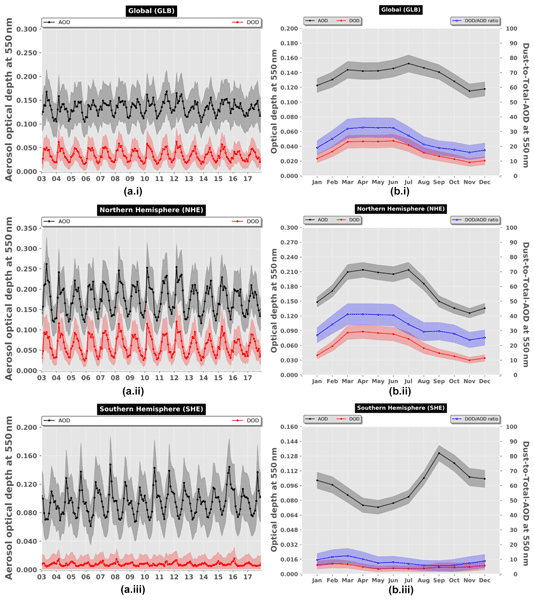
Antonis Gkikas, Emmanouil Proestakis, Vassilis Amiridis, Stelios Kazadzis, Enza Di Tomaso, Eleni Marinou, Nikos Hatzianastassiou, Jasper F. Kok, and Carlos Pérez García-Pando
Atmos. Chem. Phys., 22, 3553–3578, https://doi.org/10.5194/acp-22-3553-2022, https://doi.org/10.5194/acp-22-3553-2022, 2022
Short summary
Short summary
We present a comprehensive climatological analysis of dust optical depth (DOD) relying on the MIDAS dataset. MIDAS provides columnar mid-visible (550 nm) DOD at fine spatial resolution (0.1° × 0.1°) over a 15-year period (2003–2017). In the current study, the analysis is performed at various spatial (from regional to global) and temporal (from months to years) scales. More specifically, focus is given to specific regions hosting the major dust sources as well as downwind areas of the planet.
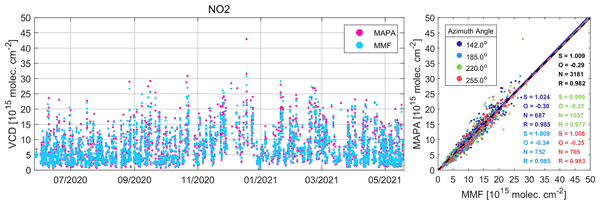
Dimitris Karagkiozidis, Martina Michaela Friedrich, Steffen Beirle, Alkiviadis Bais, François Hendrick, Kalliopi Artemis Voudouri, Ilias Fountoulakis, Angelos Karanikolas, Paraskevi Tzoumaka, Michel Van Roozendael, Dimitris Balis, and Thomas Wagner
Atmos. Meas. Tech., 15, 1269–1301, https://doi.org/10.5194/amt-15-1269-2022, https://doi.org/10.5194/amt-15-1269-2022, 2022
Short summary
Short summary
In this study we focus on the retrieval of aerosol, NO2, and HCHO vertical profiles from multi-axis differential optical absorption spectroscopy (MAX-DOAS) observations for the first time over Thessaloniki, Greece. We use two independent inversion algorithms for the profile retrievals. We evaluate their performance, we intercompare their results, and we validate their products with ancillary data, measured by other co-located reference instruments.
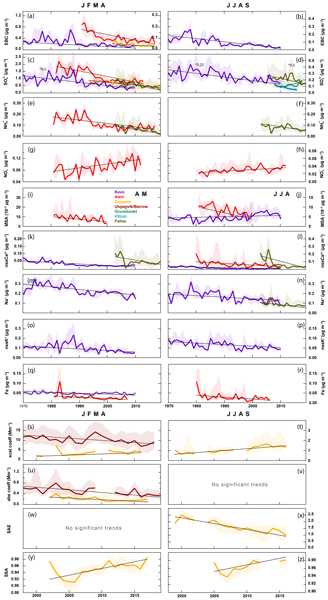
Julia Schmale, Sangeeta Sharma, Stefano Decesari, Jakob Pernov, Andreas Massling, Hans-Christen Hansson, Knut von Salzen, Henrik Skov, Elisabeth Andrews, Patricia K. Quinn, Lucia M. Upchurch, Konstantinos Eleftheriadis, Rita Traversi, Stefania Gilardoni, Mauro Mazzola, James Laing, and Philip Hopke
Atmos. Chem. Phys., 22, 3067–3096, https://doi.org/10.5194/acp-22-3067-2022, https://doi.org/10.5194/acp-22-3067-2022, 2022
Short summary
Short summary
Long-term data sets of Arctic aerosol properties from 10 stations across the Arctic provide evidence that anthropogenic influence on the Arctic atmospheric chemical composition has declined in winter, a season which is typically dominated by mid-latitude emissions. The number of significant trends in summer is smaller than in winter, and overall the pattern is ambiguous with some significant positive and negative trends. This reflects the mixed influence of natural and anthropogenic emissions.
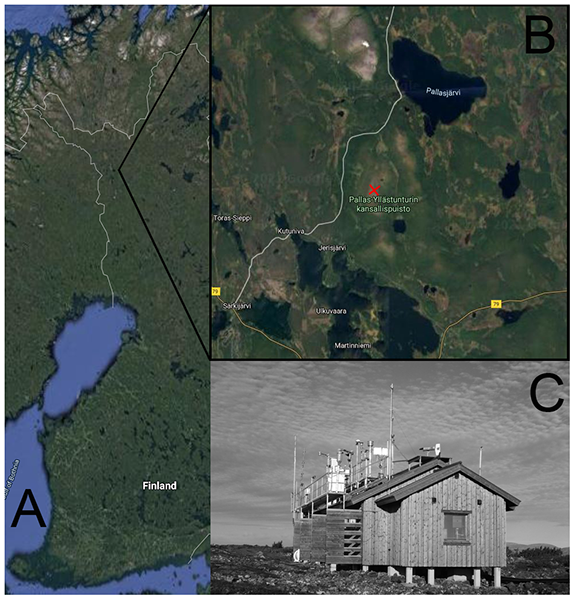
Konstantinos Matthaios Doulgeris, Heikki Lihavainen, Anti-Pekka Hyvärinen, Veli-Matti Kerminen, and David Brus
Earth Syst. Sci. Data, 14, 637–649, https://doi.org/10.5194/essd-14-637-2022, https://doi.org/10.5194/essd-14-637-2022, 2022
Short summary
Short summary
We produced and summarized data sets obtained from two cloud ground-based spectrometers (CAPS and FSSP-100 ground setups) during 8 years of Pallas Cloud Experiment campaigns conducted in autumn from 2004 until 2019 along with several meteorological variables. The campaigns took place in the Finnish sub-Arctic region in a clear environment in temperatures that were usually below zero. This data set provides a helpful contribution to cloud microphysics processes.

Keyvan Ranjbar, Norm T. O'Neill, and Yasmin Aboel-Fetouh
Atmos. Chem. Phys., 22, 1757–1760, https://doi.org/10.5194/acp-22-1757-2022, https://doi.org/10.5194/acp-22-1757-2022, 2022
Short summary
Short summary
We argue that the illustration employed by Huang et al. (2015) to demonstrate the transport of Asian dust to the high Arctic was, in fact, largely a cloud event and that the actual impact of Asian dust was measurable but much weaker than what they proposed and had occurred a day earlier (in agreement with the transport model they had employed to predict the transport path to the high Arctic).
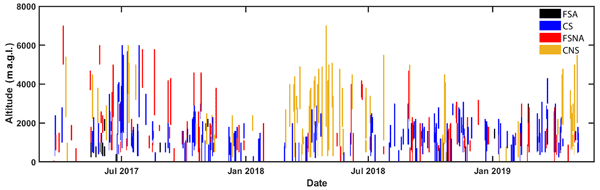
Birgit Heese, Athena Augusta Floutsi, Holger Baars, Dietrich Althausen, Julian Hofer, Alina Herzog, Silke Mewes, Martin Radenz, and Yoav Y. Schechner
Atmos. Chem. Phys., 22, 1633–1648, https://doi.org/10.5194/acp-22-1633-2022, https://doi.org/10.5194/acp-22-1633-2022, 2022
Short summary
Short summary
The aerosol distribution over Haifa, Israel, was measured for 2 years by a laser-based vertically resolved measurement technique called lidar. From these data, the aerosol types and their percentages of the observed aerosol mixtures were identified in terms of their size and shape. We found mostly desert dust from the surrounding deserts and sea salt from the close-by Mediterranean Sea. But aerosols from anthropogenic and industrial pollution from local and far away sources were also detected.
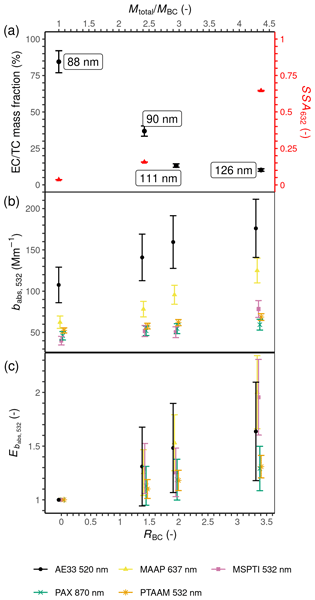
Daniel M. Kalbermatter, Griša Močnik, Luka Drinovec, Bradley Visser, Jannis Röhrbein, Matthias Oscity, Ernest Weingartner, Antti-Pekka Hyvärinen, and Konstantina Vasilatou
Atmos. Meas. Tech., 15, 561–572, https://doi.org/10.5194/amt-15-561-2022, https://doi.org/10.5194/amt-15-561-2022, 2022
Short summary
Short summary
Soot particles with varying amounts of secondary organic matter coating were generated and used to compare a series of aerosol-absorption-measuring instruments: filter-based and photoacoustic instruments as well as photo-thermal interferometers. Significant deviations in the response of the instruments were observed depending on the amount of secondary organic coating. The system can be used for the inter-comparison and characterisation of instruments.
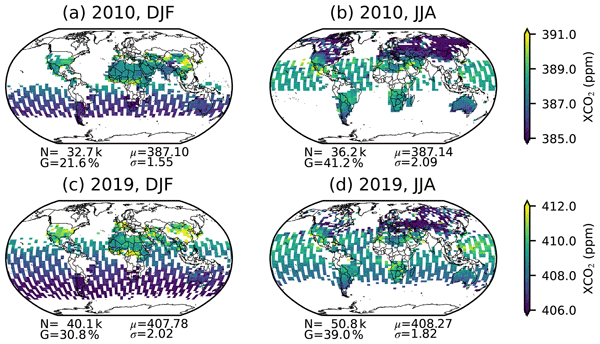
Thomas E. Taylor, Christopher W. O'Dell, David Crisp, Akhiko Kuze, Hannakaisa Lindqvist, Paul O. Wennberg, Abhishek Chatterjee, Michael Gunson, Annmarie Eldering, Brendan Fisher, Matthäus Kiel, Robert R. Nelson, Aronne Merrelli, Greg Osterman, Frédéric Chevallier, Paul I. Palmer, Liang Feng, Nicholas M. Deutscher, Manvendra K. Dubey, Dietrich G. Feist, Omaira E. García, David W. T. Griffith, Frank Hase, Laura T. Iraci, Rigel Kivi, Cheng Liu, Martine De Mazière, Isamu Morino, Justus Notholt, Young-Suk Oh, Hirofumi Ohyama, David F. Pollard, Markus Rettinger, Matthias Schneider, Coleen M. Roehl, Mahesh Kumar Sha, Kei Shiomi, Kimberly Strong, Ralf Sussmann, Yao Té, Voltaire A. Velazco, Mihalis Vrekoussis, Thorsten Warneke, and Debra Wunch
Earth Syst. Sci. Data, 14, 325–360, https://doi.org/10.5194/essd-14-325-2022, https://doi.org/10.5194/essd-14-325-2022, 2022
Short summary
Short summary
We provide an analysis of an 11-year record of atmospheric carbon dioxide (CO2) concentrations derived using an optimal estimation retrieval algorithm on measurements made by the GOSAT satellite. The new product (version 9) shows improvement over the previous version (v7.3) as evaluated against independent estimates of CO2 from ground-based sensors and atmospheric inversion systems. We also compare the new GOSAT CO2 values to collocated estimates from NASA's Orbiting Carbon Observatory-2.
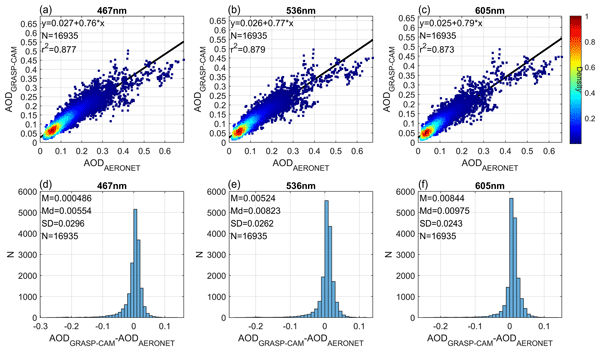
Roberto Román, Juan C. Antuña-Sánchez, Victoria E. Cachorro, Carlos Toledano, Benjamín Torres, David Mateos, David Fuertes, César López, Ramiro González, Tatyana Lapionok, Marcos Herreras-Giralda, Oleg Dubovik, and Ángel M. de Frutos
Atmos. Meas. Tech., 15, 407–433, https://doi.org/10.5194/amt-15-407-2022, https://doi.org/10.5194/amt-15-407-2022, 2022
Short summary
Short summary
An all-sky camera is used to obtain the relative sky radiance, and this radiance is used as input in an inversion code to obtain aerosol properties. This paper is really interesting because it pushes forward the use and capability of sky cameras for more advanced science purposes. Enhanced aerosol properties can be retrieved with accuracy using only an all-sky camera, but synergy with other instruments providing aerosol optical depth could even increase the power of these low-cost instruments.
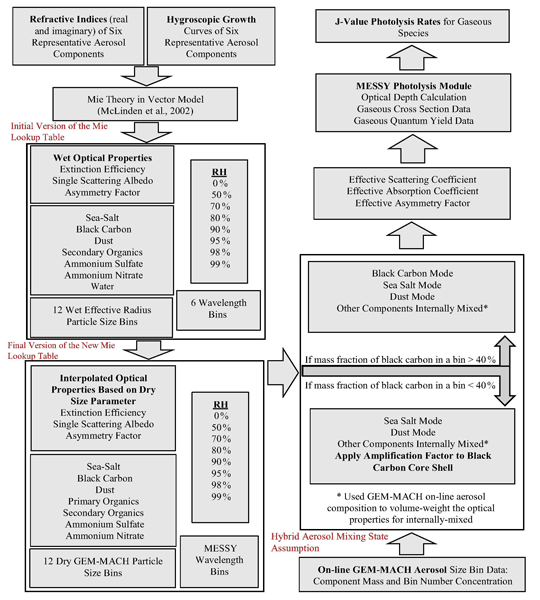
Mahtab Majdzadeh, Craig A. Stroud, Christopher Sioris, Paul A. Makar, Ayodeji Akingunola, Chris McLinden, Xiaoyi Zhao, Michael D. Moran, Ihab Abboud, and Jack Chen
Geosci. Model Dev., 15, 219–249, https://doi.org/10.5194/gmd-15-219-2022, https://doi.org/10.5194/gmd-15-219-2022, 2022
Short summary
Short summary
A new lookup table for aerosol optical properties based on a Mie scattering code was calculated and adopted within an improved version of the photolysis module in the GEM-MACH in-line chemical transport model. The modified version of the photolysis module makes use of online interactive aerosol feedback and applies core-shell parameterizations to the black carbon absorption efficiency based on Bond et al. (2006) to the size bins with black carbon mass fraction of less than 40 %.
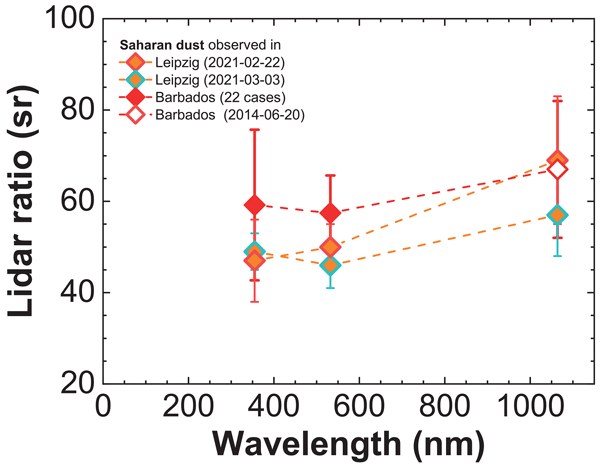
Moritz Haarig, Albert Ansmann, Ronny Engelmann, Holger Baars, Carlos Toledano, Benjamin Torres, Dietrich Althausen, Martin Radenz, and Ulla Wandinger
Atmos. Chem. Phys., 22, 355–369, https://doi.org/10.5194/acp-22-355-2022, https://doi.org/10.5194/acp-22-355-2022, 2022
Short summary
Short summary
The irregular shape of dust particles makes it difficult to treat them correctly in optical models. Atmospheric measurements of dust optical properties are therefore of great importance. The present study increases the space of observed parameters from 355 and 532 nm towards 1064 nm, which is of special importance for large dust particles. The lidar ratio influenced by mineralogy and the depolarization ratio influenced by shape are measured for the first time at all three wavelengths.
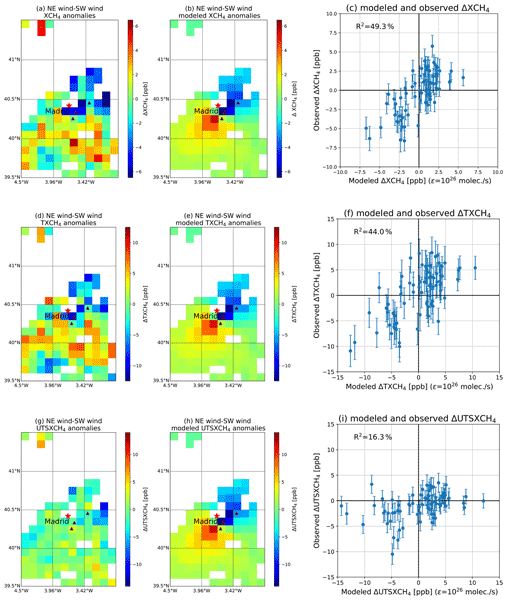
Qiansi Tu, Frank Hase, Matthias Schneider, Omaira García, Thomas Blumenstock, Tobias Borsdorff, Matthias Frey, Farahnaz Khosrawi, Alba Lorente, Carlos Alberti, Juan J. Bustos, André Butz, Virgilio Carreño, Emilio Cuevas, Roger Curcoll, Christopher J. Diekmann, Darko Dubravica, Benjamin Ertl, Carme Estruch, Sergio Fabián León-Luis, Carlos Marrero, Josep-Anton Morgui, Ramón Ramos, Christian Scharun, Carsten Schneider, Eliezer Sepúlveda, Carlos Toledano, and Carlos Torres
Atmos. Chem. Phys., 22, 295–317, https://doi.org/10.5194/acp-22-295-2022, https://doi.org/10.5194/acp-22-295-2022, 2022
Short summary
Short summary
We use different methane ground- and space-based remote sensing data sets for investigating the emission strength of three waste disposal sites close to Madrid. We present a method that uses wind-assigned anomalies for deriving emission strengths from satellite data and estimate their uncertainty to 9–14 %. The emission strengths estimated from the remote sensing data sets are significantly larger than the values published in the official register.
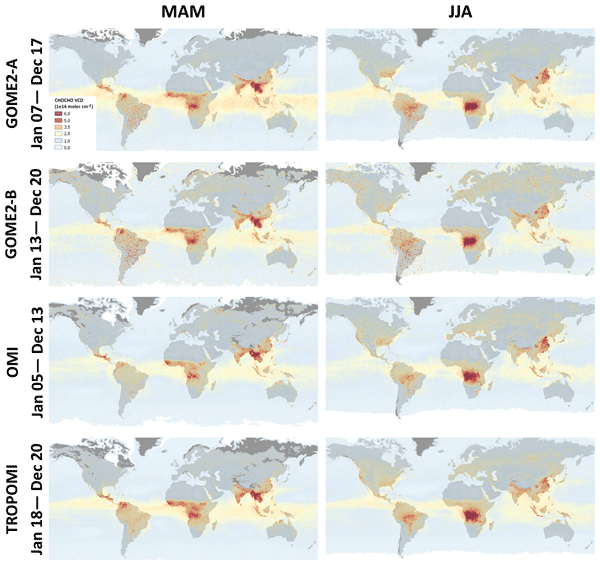
Christophe Lerot, François Hendrick, Michel Van Roozendael, Leonardo M. A. Alvarado, Andreas Richter, Isabelle De Smedt, Nicolas Theys, Jonas Vlietinck, Huan Yu, Jeroen Van Gent, Trissevgeni Stavrakou, Jean-François Müller, Pieter Valks, Diego Loyola, Hitoshi Irie, Vinod Kumar, Thomas Wagner, Stefan F. Schreier, Vinayak Sinha, Ting Wang, Pucai Wang, and Christian Retscher
Atmos. Meas. Tech., 14, 7775–7807, https://doi.org/10.5194/amt-14-7775-2021, https://doi.org/10.5194/amt-14-7775-2021, 2021
Short summary
Short summary
Global measurements of glyoxal tropospheric columns from the satellite instrument TROPOMI are presented. Such measurements can contribute to the estimation of atmospheric emissions of volatile organic compounds. This new glyoxal product has been fully characterized with a comprehensive error budget, with comparison with other satellite data sets as well as with validation based on independent ground-based remote sensing glyoxal observations.
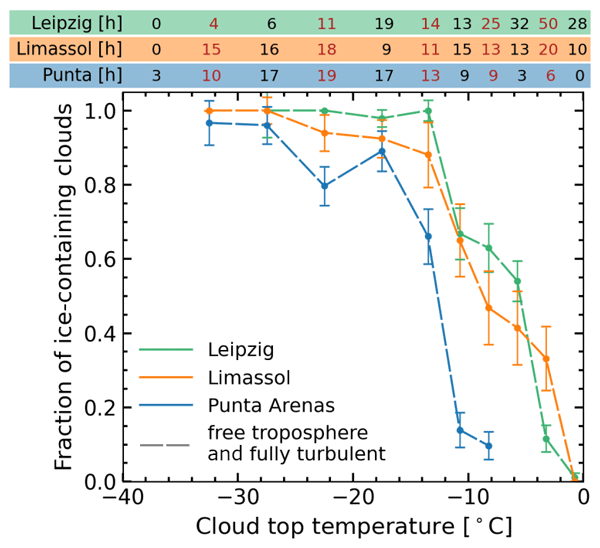
Martin Radenz, Johannes Bühl, Patric Seifert, Holger Baars, Ronny Engelmann, Boris Barja González, Rodanthi-Elisabeth Mamouri, Félix Zamorano, and Albert Ansmann
Atmos. Chem. Phys., 21, 17969–17994, https://doi.org/10.5194/acp-21-17969-2021, https://doi.org/10.5194/acp-21-17969-2021, 2021
Short summary
Short summary
This study brings together long-term ground-based remote-sensing observations of mixed-phase clouds at three key locations of aerosol–cloud interactions in the Northern and Southern Hemisphere midlatitudes. The findings contribute several new aspects on the nature of the excess of supercooled liquid clouds in the Southern Hemisphere, such as a long-term lidar-based estimate of ice-nucleating particle profiles as well as the effects of boundary layer coupling and gravity waves on ice formation.
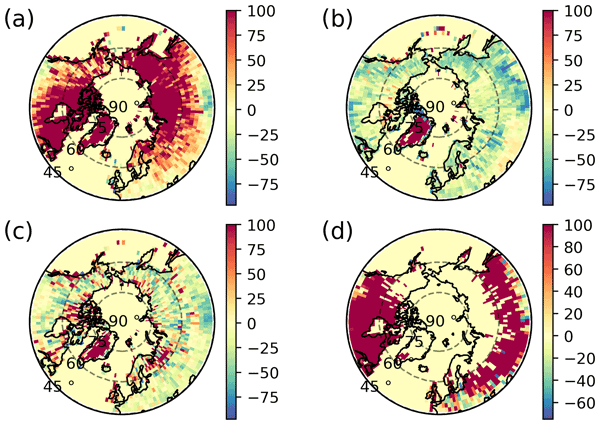
Joseph Mendonca, Ray Nassar, Christopher W. O'Dell, Rigel Kivi, Isamu Morino, Justus Notholt, Christof Petri, Kimberly Strong, and Debra Wunch
Atmos. Meas. Tech., 14, 7511–7524, https://doi.org/10.5194/amt-14-7511-2021, https://doi.org/10.5194/amt-14-7511-2021, 2021
Short summary
Short summary
Machine learning has become an important tool for pattern recognition in many applications. In this study, we used a neural network to improve the data quality of OCO-2 measurements made at northern high latitudes. The neural network was trained and used as a binary classifier to filter out bad OCO-2 measurements in order to increase the accuracy and precision of OCO-2 XCO2 measurements in the Boreal and Arctic regions.
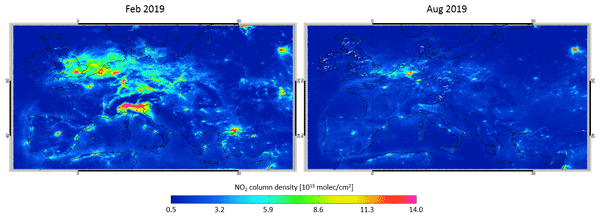
Song Liu, Pieter Valks, Gaia Pinardi, Jian Xu, Ka Lok Chan, Athina Argyrouli, Ronny Lutz, Steffen Beirle, Ehsan Khorsandi, Frank Baier, Vincent Huijnen, Alkiviadis Bais, Sebastian Donner, Steffen Dörner, Myrto Gratsea, François Hendrick, Dimitris Karagkiozidis, Kezia Lange, Ankie J. M. Piters, Julia Remmers, Andreas Richter, Michel Van Roozendael, Thomas Wagner, Mark Wenig, and Diego G. Loyola
Atmos. Meas. Tech., 14, 7297–7327, https://doi.org/10.5194/amt-14-7297-2021, https://doi.org/10.5194/amt-14-7297-2021, 2021
Short summary
Short summary
In this work, an improved tropospheric NO2 retrieval algorithm from TROPOMI measurements over Europe is presented. The stratospheric estimation is implemented with correction for the dependency of the stratospheric NO2 on the viewing geometry. The AMF calculation is implemented using improved surface albedo, a priori NO2 profiles, and cloud correction. The improved tropospheric NO2 data show good correlations with ground-based MAX-DOAS measurements.
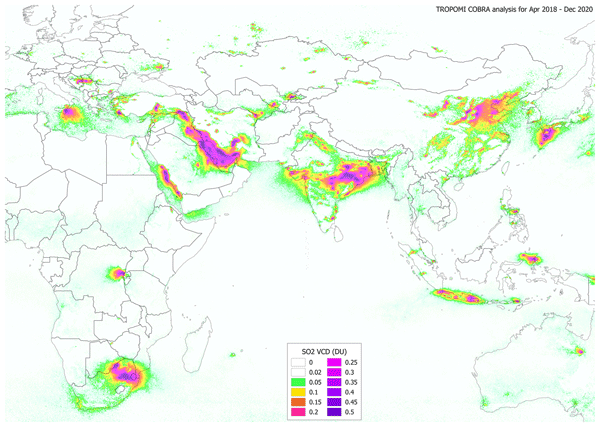
Nicolas Theys, Vitali Fioletov, Can Li, Isabelle De Smedt, Christophe Lerot, Chris McLinden, Nickolay Krotkov, Debora Griffin, Lieven Clarisse, Pascal Hedelt, Diego Loyola, Thomas Wagner, Vinod Kumar, Antje Innes, Roberto Ribas, François Hendrick, Jonas Vlietinck, Hugues Brenot, and Michel Van Roozendael
Atmos. Chem. Phys., 21, 16727–16744, https://doi.org/10.5194/acp-21-16727-2021, https://doi.org/10.5194/acp-21-16727-2021, 2021
Short summary
Short summary
We present a new algorithm to retrieve sulfur dioxide from space UV measurements. We apply the technique to high-resolution TROPOMI measurements and demonstrate the high sensitivity of the approach to weak SO2 emissions worldwide with an unprecedented limit of detection of 8 kt yr−1. This result has broad implications for atmospheric science studies dealing with improving emission inventories and identifying and quantifying missing sources, in the context of air quality and climate.
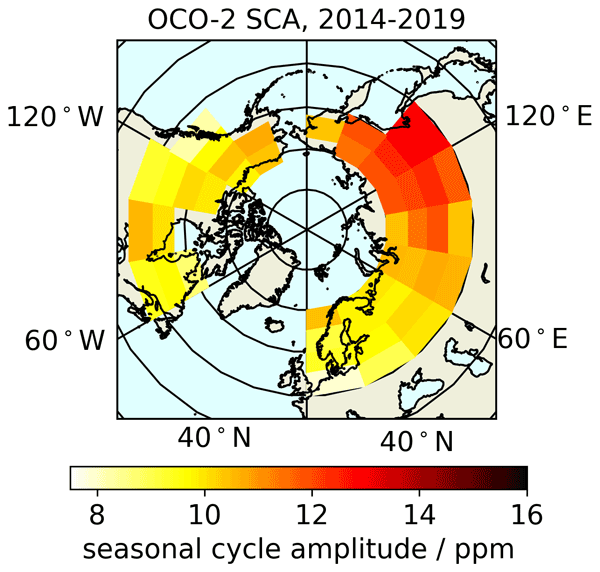
Nicole Jacobs, William R. Simpson, Kelly A. Graham, Christopher Holmes, Frank Hase, Thomas Blumenstock, Qiansi Tu, Matthias Frey, Manvendra K. Dubey, Harrison A. Parker, Debra Wunch, Rigel Kivi, Pauli Heikkinen, Justus Notholt, Christof Petri, and Thorsten Warneke
Atmos. Chem. Phys., 21, 16661–16687, https://doi.org/10.5194/acp-21-16661-2021, https://doi.org/10.5194/acp-21-16661-2021, 2021
Short summary
Short summary
Spatial patterns of carbon dioxide seasonal cycle amplitude and summer drawdown timing derived from the OCO-2 satellite over northern high latitudes agree well with corresponding estimates from two models. The Asian boreal forest is anomalous with the largest amplitude and earliest seasonal drawdown. Modeled land contact tracers suggest that accumulated CO2 exchanges during atmospheric transport play a major role in shaping carbon dioxide seasonality in northern high-latitude regions.

Stavros-Andreas Logothetis, Vasileios Salamalikis, Antonis Gkikas, Stelios Kazadzis, Vassilis Amiridis, and Andreas Kazantzidis
Atmos. Chem. Phys., 21, 16499–16529, https://doi.org/10.5194/acp-21-16499-2021, https://doi.org/10.5194/acp-21-16499-2021, 2021
Short summary
Short summary
This study investigates the temporal trends of dust optical depth (DOD; 550 nm) on global, regional and seasonal scales over a 15-year period (2003–2017) using the MIDAS (ModIs Dust AeroSol) dataset. The findings of this study revealed that the DOD was increased across the central Sahara and the Arabian Peninsula, with opposite trends over the eastern and western Sahara, the Thar and Gobi deserts, in the Bodélé Depression, and in the southern Mediterranean.
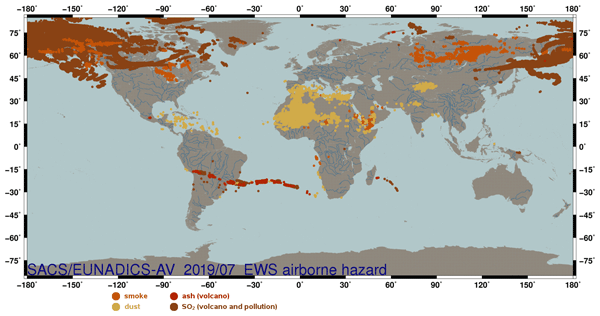
Hugues Brenot, Nicolas Theys, Lieven Clarisse, Jeroen van Gent, Daniel R. Hurtmans, Sophie Vandenbussche, Nikolaos Papagiannopoulos, Lucia Mona, Timo Virtanen, Andreas Uppstu, Mikhail Sofiev, Luca Bugliaro, Margarita Vázquez-Navarro, Pascal Hedelt, Michelle Maree Parks, Sara Barsotti, Mauro Coltelli, William Moreland, Simona Scollo, Giuseppe Salerno, Delia Arnold-Arias, Marcus Hirtl, Tuomas Peltonen, Juhani Lahtinen, Klaus Sievers, Florian Lipok, Rolf Rüfenacht, Alexander Haefele, Maxime Hervo, Saskia Wagenaar, Wim Som de Cerff, Jos de Laat, Arnoud Apituley, Piet Stammes, Quentin Laffineur, Andy Delcloo, Robertson Lennart, Carl-Herbert Rokitansky, Arturo Vargas, Markus Kerschbaum, Christian Resch, Raimund Zopp, Matthieu Plu, Vincent-Henri Peuch, Michel Van Roozendael, and Gerhard Wotawa
Nat. Hazards Earth Syst. Sci., 21, 3367–3405, https://doi.org/10.5194/nhess-21-3367-2021, https://doi.org/10.5194/nhess-21-3367-2021, 2021
Short summary
Short summary
The purpose of the EUNADICS-AV (European Natural Airborne Disaster Information and Coordination System for Aviation) prototype early warning system (EWS) is to develop the combined use of harmonised data products from satellite, ground-based and in situ instruments to produce alerts of airborne hazards (volcanic, dust, smoke and radionuclide clouds), satisfying the requirement of aviation air traffic management (ATM) stakeholders (https://cordis.europa.eu/project/id/723986).
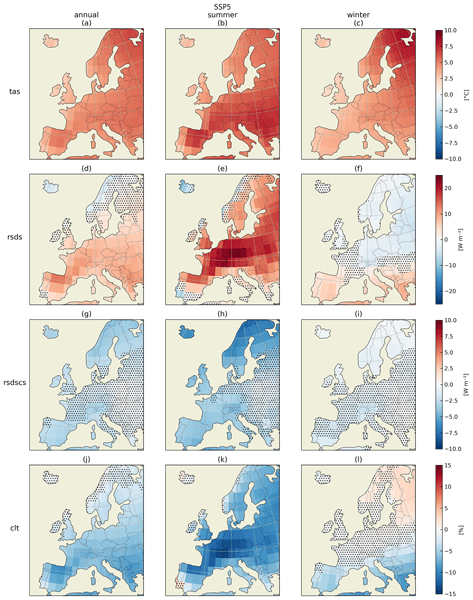
Xinyuan Hou, Martin Wild, Doris Folini, Stelios Kazadzis, and Jan Wohland
Earth Syst. Dynam., 12, 1099–1113, https://doi.org/10.5194/esd-12-1099-2021, https://doi.org/10.5194/esd-12-1099-2021, 2021
Short summary
Short summary
Solar photovoltaics (PV) matters for the carbon neutrality goal. We use climate scenarios to quantify climate risk for PV in Europe and find higher PV potential. The seasonal cycle of PV generation changes in most places. We find an increase in the spatial correlations of daily PV production, implying that PV power balancing through redistribution will be more difficult in the future. Thus, changes in the spatiotemporal structure of PV generation should be included in power system design.
Cited articles
AboEl-Fetouh, Y., O'Neill, N. T., Ranjbar, K., Hesaraki, S., Abboud, I., and Sobolewski, P. S.: Climatological-Scale Analysis of Intensive and Semi-intensive Aerosol Parameters Derived From AERONET Retrievals Over the Arctic, J. Geophys. Res.-Atmos., 125, e2019JD031569, https://doi.org/10.1029/2019JD031569, 2020. a
Alexandrov, M. D., Marshak, A., Cairns, B., Lacis, A. A., and Carlson, B. E.: Automated cloud screening algorithm for MFRSR data, Geophys. Res. Lett., 31, https://doi.org/10.1029/2003GL019105, 2004. a
Asmi, E., Kimmo, N., Kimmo, T., Edith, R., Aki, V., John, B., Matthew, B., Jesse, J., Heikki, L., Gerrit, D. L., Jussi, P., Veijo, A., Miguel, M., Gonzalo, G., Gustavo, C., Marco, A., Germán Pérez, F., Jonathan, F., María Elena, B., and Sánchez, R.: Primary sources control the variability of aerosol optical properties in the Antarctic Peninsula, Tellus B, 70, 1–16, https://doi.org/10.1080/16000889.2017.1414571, 2018. a
Barreto, A., Cuevas, E., Damiri, B., Guirado, C., Berkoff, T., Berjón, A. J., Hernández, Y., Almansa, F., and Gil, M.: A new method for nocturnal aerosol measurements with a lunar photometer prototype, Atmos. Meas. Tech., 6, 585–598, https://doi.org/10.5194/amt-6-585-2013, 2013. a
Copernicus: 2023: A year of intense global wildfire activity, https://atmosphere.copernicus.eu/2023-year-intense-global-wildfire-activity (last access: 5 January 2026), 2023. a
Cordero, R. R., Sepúlveda, E., Feron, S., Damiani, A., Fernandoy, F., Neshyba, S., Rowe, P. M., Asencio, V., Carrasco, J., Alfonso, J. A., Llanillo, P., Wachter, P., Seckmeyer, G., Stepanova, M., Carrera, J. M., Jorquera, J., Wang, C., Malhotra, A., Dana, J., Khan, A. L., and Casassa, G.: Black carbon footprint of human presence in Antarctica, Nat. Commun., 13, 984, https://doi.org/10.1038/s41467-022-28560-w, 2022. a
Dall'Osto, M., Beddows, D. C. S., Tunved, P., Harrison, R. M., Lupi, A., Vitale, V., Becagli, S., Traversi, R., Park, K.-T., Yoon, Y. J., Massling, A., Skov, H., Lange, R., Strom, J., and Krejci, R.: Simultaneous measurements of aerosol size distributions at three sites in the European high Arctic, Atmos. Chem. Phys., 19, 7377–7395, https://doi.org/10.5194/acp-19-7377-2019, 2019. a
Eck, T. F., Holben, B. N., Reid, J. S., Dubovik, O., Smirnov, A., O'Neill, N. T., Slutsker, I., and Kinne, S.: Wavelength dependence of the optical depth of biomass burning, urban, and desert dust aerosols, J. Geophys. Res., 104, 31333–31349, https://doi.org/10.1029/1999JD900923, 1999. a
Eck, T. F., Holben, B. N., Sinyuk, A., Pinker, R. T., Goloub, P., Chen, H., Chatenet, B., Li, Z., Singh, R. P., Tripathi, S. N., Reid, J. S., Giles, D. M., Dubovik, O., O'Neill, N. T., Smirnov, A., Wang, P., and Xia, X.: Climatological aspects of the optical properties of fine/coarse mode aerosol mixtures, J. Geophys. Res.-Atmos., 115, https://doi.org/10.1029/2010JD014002, 2010. a
Engelmann, R., Ansmann, A., Ohneiser, K., Griesche, H., Radenz, M., Hofer, J., Althausen, D., Dahlke, S., Maturilli, M., Veselovskii, I., Jimenez, C., Wiesen, R., Baars, H., Bühl, J., Gebauer, H., Haarig, M., Seifert, P., Wandinger, U., and Macke, A.: Wildfire smoke, Arctic haze, and aerosol effects on mixed-phase and cirrus clouds over the North Pole region during MOSAiC: an introduction, Atmos. Chem. Phys., 21, 13397–13423, https://doi.org/10.5194/acp-21-13397-2021, 2021. a, b
Fiebig, M., Lunder, C. R., and Stohl, A.: Tracing biomass burning aerosol from South America to Troll Research Station, Antarctica, Geophys. Res. Lett., 36, L14815, https://doi.org/10.1029/2009GL038531, 2009. a
Fiebig, M., Hirdman, D., Lunder, C. R., Ogren, J. A., Solberg, S., Stohl, A., and Thompson, R. L.: Annual cycle of Antarctic baseline aerosol: controlled by photooxidation-limited aerosol formation, Atmos. Chem. Phys., 14, 3083–3093, https://doi.org/10.5194/acp-14-3083-2014, 2014. a
Giles, D. M., Sinyuk, A., Sorokin, M. G., Schafer, J. S., Smirnov, A., Slutsker, I., Eck, T. F., Holben, B. N., Lewis, J. R., Campbell, J. R., Welton, E. J., Korkin, S. V., and Lyapustin, A. I.: Advancements in the Aerosol Robotic Network (AERONET) Version 3 database – automated near-real-time quality control algorithm with improved cloud screening for Sun photometer aerosol optical depth (AOD) measurements, Atmos. Meas. Tech., 12, 169–209, https://doi.org/10.5194/amt-12-169-2019, 2019. a, b, c
González, R., Toledano, C., Román, R., Fuertes, D., Berjón, A., Mateos, D., Guirado-Fuentes, C., Velasco-Merino, C., Antuña-Sánchez, J. C., Calle, A., Cachorro, V. E., and de Frutos, Á. M.: Daytime and nighttime aerosol optical depth implementation in CÆLIS, Geosci. Instrum. Method. Data Syst., 9, 417–433, https://doi.org/10.5194/gi-9-417-2020, 2020. a
Herrero-Anta, S., Eckhardt, S., Evangeliou, N., Gilardoni, S., Graßl, S., Heslin-Rees, D., Kazadzis, S., Kouremeti, N., Krejci, R., Mateos, D., Mazzola, M., Ritter, C., Román, R., Stebel, K., and Zielinski, T.: Exceptional high AOD over Svalbard in Summer 2019: A multi-instrumental approach, EGUsphere [preprint], https://doi.org/10.5194/egusphere-2025-3423, 2025. a
Hirdman, D., Sodemann, H., Eckhardt, S., Burkhart, J. F., Jefferson, A., Mefford, T., Quinn, P. K., Sharma, S., Ström, J., and Stohl, A.: Source identification of short-lived air pollutants in the Arctic using statistical analysis of measurement data and particle dispersion model output, Atmos. Chem. Phys., 10, 669–693, https://doi.org/10.5194/acp-10-669-2010, 2010. a
Holben, B. N., Eck, T. F., Slutsker, I., Tanré, D., Buis, J. P., Setzer, A., Vermote, E., Reagan, J. A., Kaufman, Y. J., Nakajima, T., Lavenu, F., Jankowiak, I., and Smirnov, A.: AERONET – A Federated Instrument Network and Data Archive for Aerosol Characterization, Remote Sens. Environ., 66, 1–16, https://doi.org/10.1016/S0034-4257(98)00031-5, 1998. a
Intergovernmental Panel on Climate Change (IPCC): Climate Change 2021 – The Physical Science Basis: Working Group I Contribution to the Sixth Assessment Report of the Intergovernmental Panel on Climate Change, Cambridge University Press, Cambridge, https://doi.org/10.1017/9781009157896, 2023. a
Iqbal, M.: An introduction to solar radiation, Academic Press, ISBN 978-0-12-373750-2, 1983. a
Jain, P., Barber, Q. E., Taylor, S. W., Whitman, E., Castellanos Acuna, D., Boulanger, Y., Chavardès, R. D., Chen, J., Englefield, P., Flannigan, M., Girardin, M. P., Hanes, C. C., Little, J., Morrison, K., Skakun, R. S., Thompson, D. K., Wang, X., and Parisien, M.-A.: Drivers and Impacts of the Record-Breaking 2023 Wildfire Season in Canada, Nat. Commun., 15, 6764, https://doi.org/10.1038/s41467-024-51154-7, 2024. a
Kabanov, D. M., Maslovsky, A. S., Radionov, V. F., Sakerin, S. M., Sidorova, O. R., and Chernov, D. G.: Seasonal and Interannual Variability of Aerosol Characteristics According to the Data of Long-Term (2011–2021) Measurements at the Russian Scientific Center on the Spitzbergen Archipelago, Atmospheric and Oceanic Optics, 36, 645–654, https://doi.org/10.1134/S1024856023060106, 2023. a
Kannemadugu, H. B. S., Sudhakaran Syamala, P., Taori, A., Bothale, R. V., and Chauhan, P.: Atmospheric aerosol optical properties and trends over Antarctica using in-situ measurements and MERRA-2 aerosol products, Polar Sci., 38, 101011, https://doi.org/10.1016/j.polar.2023.101011, 2023. a
Kaskaoutis, D. G., Kambezidis, H. D., Hatzianastassiou, N., Kosmopoulos, P. G., and Badarinath, K. V. S.: Aerosol climatology: dependence of the Angstrom exponent on wavelength over four AERONET sites, Atmos. Chem. Phys. Discuss., 7, 7347–7397, https://doi.org/10.5194/acpd-7-7347-2007, 2007. a
Kazadzis, S., Kouremeti, N., Nyeki, S., Gröbner, J., and Wehrli, C.: The World Optical Depth Research and Calibration Center (WORCC) quality assurance and quality control of GAW-PFR AOD measurements, Geosci. Instrum. Method. Data Syst., 7, 39–53, https://doi.org/10.5194/gi-7-39-2018, 2018. a
Kendall, M. G.: Rank Correlation Methods, Oxford University Press, 4, 1955. a
Kieffer, H. H. and Stone, T. C.: The Spectral Irradiance of the Moon, The Astronomical Journal, 129, 2887, https://doi.org/10.1086/430185, 2005. a, b
Kim, S.-W., Jefferson, A., Yoon, S.-C., Dutton, E. G., Ogren, J. A., Valero, F. P. J., Kim, J., and Holben, B. N.: Comparisons of aerosol optical depth and surface shortwave irradiance and their effect on the aerosol surface radiative forcing estimation, J. Geophys. Res.-Atmos., 110, https://doi.org/10.1029/2004JD004989, 2005. a, b
Klonecki, A., Hess, P., Emmons, L., Smith, L., Orlando, J., and Blake, D.: Seasonal changes in the transport of pollutants into the Arctic troposphere-model study, J. Geophys. Res.-Atmos., 108, https://doi.org/10.1029/2002JD002199, 2003. a
Mann, H. B.: Nonparametric Tests Against Trend, Econometrica, 13, 245–259, https://doi.org/10.2307/1907187, 1945. a
Markowicz, K., Pakszys, P., Ritter, C., Zielinski, T., Udisti, R., Cappelletti, D., Mazzola, M., Shiobara, M., Xian, P., Zawadzka, O., Lisok, J., Petelski, T., Makuch, P., and Karasiński, G.: Impact of North American intense fires on aerosol optical properties measured over the European Arctic in July 2015, J. Geophys. Res.-Atmos, 121, 14487–14512, https://doi.org/10.1002/2016JD025310, 2016. a
Mazzola, M., Lanconelli, C., Lupi, A., Busetto, M., Vitale, V., and Tomasi, C.: Columnar aerosol optical properties in the Po Valley, Italy, from MFRSR data, J. Geophys. Res.-Atmos., 115, https://doi.org/10.1029/2009JD013310, 2010. a
Mazzola, M., Stone, R. S., Herber, A., Tomasi, C., Lupi, A., Vitale, V., Lanconelli, C., Toledano, C., Cachorro, V. E., O’Neill, N. T., Shiobara, M., Aaltonen, V., Stebel, K., Zielinski, T., Petelski, T., Ortiz de Galisteo, J. P., Torres, B., Berjon, A., Goloub, P., Li, Z., Blarel, L., Abboud, I., Cuevas, E., Stock, M., Schulz, K. H., and Virkkula, A.: Evaluation of sun photometer capabilities for retrievals of aerosol optical depth at high latitudes: The POLAR-AOD intercomparison campaigns, Atmos. Environ., 52, 4–17, https://doi.org/10.1016/j.atmosenv.2011.07.042, 2012. a
Mazzola, M., Stone, R. S., Kouremeti, N., Vitale, V., Gröbner, J., Stebel, K., Hansen, G. H., Stone, T. C., Ritter, C., and Pulimeno, S.: Monitoring aerosol optical depth during the Arctic night: Instrument development and first results, Atmos. Res., 311, 107667, https://doi.org/10.1016/j.atmosres.2024.107667, 2024. a, b
McArthur, L. J. B.: World Climate Research Programme – Baseline Surface Radiation Network (BSRN) – Operations Manual Version 2.1, Downsview, Ontario, Experimental Studies Division, Atmospheric Environment Service, https://epic.awi.de/id/eprint/30644/ (last access: 1 February 2026), 2005. a
Nakajima, T., Campanelli, M., Che, H., Estellés, V., Irie, H., Kim, S.-W., Kim, J., Liu, D., Nishizawa, T., Pandithurai, G., Soni, V. K., Thana, B., Tugjsurn, N.-U., Aoki, K., Go, S., Hashimoto, M., Higurashi, A., Kazadzis, S., Khatri, P., Kouremeti, N., Kudo, R., Marenco, F., Momoi, M., Ningombam, S. S., Ryder, C. L., Uchiyama, A., and Yamazaki, A.: An overview of and issues with sky radiometer technology and SKYNET, Atmos. Meas. Tech., 13, 4195–4218, https://doi.org/10.5194/amt-13-4195-2020, 2020. a
Ohneiser, K., Ansmann, A., Chudnovsky, A., Engelmann, R., Ritter, C., Veselovskii, I., Baars, H., Gebauer, H., Griesche, H., Radenz, M., Hofer, J., Althausen, D., Dahlke, S., and Maturilli, M.: The unexpected smoke layer in the High Arctic winter stratosphere during MOSAiC 2019–2020 , Atmos. Chem. Phys., 21, 15783–15808, https://doi.org/10.5194/acp-21-15783-2021, 2021. a
O'Neill, N. T., Baibakov, K., Hesaraki, S., Ivanescu, L., Martin, R. V., Perro, C., Chaubey, J. P., Herber, A., and Duck, T. J.: Temporal and spectral cloud screening of polar winter aerosol optical depth (AOD): impact of homogeneous and inhomogeneous clouds and crystal layers on climatological-scale AODs, Atmos. Chem. Phys., 16, 12753–12765, https://doi.org/10.5194/acp-16-12753-2016, 2016. a, b
Posyniak, M. and Markowicz, K.: Measurement of aerosol optical thickness over the Atlantic Ocean and in West Antarctica, 2006–2007, Acta Geophysica, 57, 494–508, https://doi.org/10.2478/s11600-009-0002-0, 2009. a
Pulimeno, S., Bruschi, F., Feltracco, M., Mazzola, M., Gilardoni, S., Crocchianti, S., Cappelletti, D., Gambaro, A., and Barbaro, E.: Investigating the Presence of Biomass Burning Events at Ny-Ålesund: Optical and Chemical Insights from Summer-Fall 2019, Atmos. Environ., 320, 120336, https://doi.org/10.1016/j.atmosenv.2024.120336, 2024. a, b
Quinn, P. K., Shaw, G., Andrews, E., Dutton, E. G., Ruoho-Airola, T., and Gong, S. L.: Arctic haze: current trends and knowledge gaps, Tellus B, 59, 99–114, https://doi.org/10.1111/j.1600-0889.2006.00236.x, 2007. a
Raatz, W. E., Schnell, R. C., Bodhaine, B. A., and Oltmans, S. J.: Observations of Arctic haze during polar flights from Alaska to Norway, Atmos. Environ. (1967), 19, 2143–2151, https://doi.org/10.1016/0004-6981(85)90122-2, 1985. a
Rodríguez, E., Toledano, C., Cachorro, V., De Leeuw, G., De Frutos, A., Gausa, M., and Holben, B.: Comparison of aerosol optical properties at the sub-arctic stations ALOMAR-Andenes, Abisko and Sodankylä in late spring and summer 2007, Atmos. Res., 107, 20–30, https://doi.org/10.1016/j.atmosres.2011.12.003, 2012. a
Román, R., González, R., Toledano, C., Barreto, Á., Pérez-Ramírez, D., Benavent-Oltra, J. A., Olmo, F. J., Cachorro, V. E., Alados-Arboledas, L., and de Frutos, Á. M.: Correction of a lunar-irradiance model for aerosol optical depth retrieval and comparison with a star photometer, Atmos. Meas. Tech., 13, 6293–6310, https://doi.org/10.5194/amt-13-6293-2020, 2020. a
Sakerin, S., Kabanov, D., Rostov, A., Turchinovich, S., and Knyazev, V.: Sun photometers for measuring spectral air transparency in stationary and mobile conditions, Atmospheric and Oceanic Optics, 26, 352–356, https://doi.org/10.1134/S102485601304012X, 2013. a
Sen, P. K.: Estimates of the Regression Coefficient Based on Kendall's Tau, J. Am. Stat. A., 63, 1379–1389, https://doi.org/10.1080/01621459.1968.10480934, 1968. a
Sharma, S., Andrews, E., Barrie, L. A., Ogren, J. A., and Lavoué, D.: Variations and sources of the equivalent black carbon in the high Arctic revealed by long-term observations at Alert and Barrow: 1989–2003, J. Geophys. Res.-Atmos., 111, https://doi.org/10.1029/2005JD006581, 2006. a
Shaw, G. E.: Error analysis of multi-wavelength sun photometry, Pure Applied Geophys., 114, 1–14, https://doi.org/10.1007/BF00875487, 1976. a
Shaw, G. E.: Sun Photometry, B. Am. Meteorol. Soc., 64, 4–10, https://doi.org/10.1175/1520-0477(1983)064<0004:SP>2.0.CO;2, 1983. a
Shaw, G. E.: The Arctic Haze Phenomenon, B. Am. Meteorol. Soc., 76, 2403–2414, https://doi.org/10.1175/1520-0477(1995)076<2403:TAHP>2.0.CO;2, 1995. a
Sheridan, P.: Aerosol Measurements at South Pole: Climatology and Impact of Local Contamination, Aerosol and Air Quality Research, 16, https://doi.org/10.4209/aaqr.2015.05.0358, 2015. a
Smirnov, A., Holben, B. N., Slutsker, I., Giles, D. M., McClain, C. R., Eck, T. F., Sakerin, S. M., Macke, A., Croot, P., Zibordi, G., Quinn, P. K., Sciare, J., Kinne, S., Harvey, M., Smyth, T. J., Piketh, S., Zielinski, T., Proshutinsky, A., Goes, J. I., Nelson, N. B., Larouche, P., Radionov, V. F., Goloub, P., Krishna Moorthy, K., Matarrese, R., Robertson, E. J., and Jourdin, F.: Maritime Aerosol Network as a component of Aerosol Robotic Network, J. Geophys. Res.-Atmos., 114, https://doi.org/10.1029/2008JD011257, 2009. a
Smirnov, A., Holben, B. N., Giles, D. M., Slutsker, I., O'Neill, N. T., Eck, T. F., Macke, A., Croot, P., Courcoux, Y., Sakerin, S. M., Smyth, T. J., Zielinski, T., Zibordi, G., Goes, J. I., Harvey, M. J., Quinn, P. K., Nelson, N. B., Radionov, V. F., Duarte, C. M., Losno, R., Sciare, J., Voss, K. J., Kinne, S., Nalli, N. R., Joseph, E., Krishna Moorthy, K., Covert, D. S., Gulev, S. K., Milinevsky, G., Larouche, P., Belanger, S., Horne, E., Chin, M., Remer, L. A., Kahn, R. A., Reid, J. S., Schulz, M., Heald, C. L., Zhang, J., Lapina, K., Kleidman, R. G., Griesfeller, J., Gaitley, B. J., Tan, Q., and Diehl, T. L.: Maritime aerosol network as a component of AERONET – first results and comparison with global aerosol models and satellite retrievals, Atmos. Meas. Tech., 4, 583–597, https://doi.org/10.5194/amt-4-583-2011, 2011. a
Sofieva, V. F., Rozanov, A., Szelag, M., Burrows, J. P., Retscher, C., Damadeo, R., Degenstein, D., Rieger, L. A., and Bourassa, A.: CREST: a Climate Data Record of Stratospheric Aerosols, Earth Syst. Sci. Data, 16, 5227–5241, https://doi.org/10.5194/essd-16-5227-2024, 2024. a
Stock, M., Christoph, R., Veijo, A., Wenche, A., Handorff, D., Andreas, H., Renate, T., and Dethloff, K.: Where does the optically detectable aerosol in the European Arctic come from?, Tellus B, 66, 21450, https://doi.org/10.3402/tellusb.v66.21450, 2014. a, b
Stohl, A.: Characteristics of atmospheric transport into the Arctic troposphere, J. Geophys. Res.-Atmos., 111, https://doi.org/10.1029/2005JD006888, 2006. a
Theil, H.: A Rank-Invariant Method of Linear and Polynomial Regression Analysis, in: Henri Theil's Contributions to Economics and Econometrics: Econometric Theory and Methodology, edited by: Raj, B. and Koerts, J., 345–381, Springer Netherlands, Dordrecht, ISBN 978-94-011-2546-8, https://doi.org/10.1007/978-94-011-2546-8_20, 1992. a
Toledano, C., Cachorro, V., Gausa, M., Stebel, K., Aaltonen, V., Berjón, A., Ortiz De Galisteo, J., De Frutos, A., Bennouna, Y., Blindheim, S., Myhre, C., Zibordi, G., Wehrli, C., Kratzer, S., Hakansson, B., Carlund, T., De Leeuw, G., Herber, A., and Torres, B.: Overview of sun photometer measurements of aerosol properties in Scandinavia and Svalbard, Atmos. Environ., 52, 18–28, https://doi.org/10.1016/j.atmosenv.2011.10.022, 2012. a
Tomasi, C., Vitale, V., Lupi, A., Di Carmine, C., Campanelli, M., Herber, A., Treffeisen, R., Stone, R. S., Andrews, E., Sharma, S., Radionov, V., von Hoyningen-Huene, W., Stebel, K., Hansen, G. H., Myhre, C. L., Wehrli, C., Aaltonen, V., Lihavainen, H., Virkkula, A., Hillamo, R., Ström, J., Toledano, C., Cachorro, V. E., Ortiz, P., de Frutos, A. M., Blindheim, S., Frioud, M., Gausa, M., Zielinski, T., Petelski, T., and Yamanouchi, T.: Aerosols in polar regions: A historical overview based on optical depth and in situ observations, J. Geophys. Res.-Atmos., 112, https://doi.org/10.1029/2007JD008432, 2007. a
Tomasi, C., Lupi, A., Mazzola, M., Stone, R. S., Dutton, E. G., Herber, A., Radionov, V. F., Holben, B. N., Sorokin, M. G., Sakerin, S. M., Terpugova, S. A., Sobolewski, P. S., Lanconelli, C., Petkov, B. H., Busetto, M., and Vitale, V.: An update on polar aerosol optical properties using POLAR-AOD and other measurements performed during the International Polar Year, Atmos. Environ., 52, 29–47, https://doi.org/10.1016/j.atmosenv.2012.02.055, 2012. a
Tomasi, C., Kokhanovsky, A. A., Lupi, A., Ritter, C., Smirnov, A., O'Neill, N. T., Stone, R. S., Holben, B. N., Nyeki, S., Wehrli, C., Stohl, A., Mazzola, M., Lanconelli, C., Vitale, V., Stebel, K., Aaltonen, V., de Leeuw, G., Rodriguez, E., Herber, A. B., Radionov, V. F., Zielinski, T., Petelski, T., Sakerin, S. M., Kabanov, D. M., Xue, Y., Mei, L., Istomina, L., Wagener, R., McArthur, B., Sobolewski, P. S., Kivi, R., Courcoux, Y., Larouche, P., Broccardo, S., and Piketh, S. J.: Aerosol remote sensing in polar regions, Earth-Sci. Rev., 140, 108–157, https://doi.org/10.1016/j.earscirev.2014.11.001, 2015. a, b, c, d, e, f, g, h, i, j, k, l, m, n, o, p, q, r
Vernier, J.-P., Thomason, L. W., Pommereau, J.-P., Bourassa, A., Pelon, J., Garnier, A., Hauchecorne, A., Blanot, L., Trepte, C., Degenstein, D., and Vargas, F.: Major influence of tropical volcanic eruptions on the stratospheric aerosol layer during the last decade, Geophys. Res. Lett., 38, https://doi.org/10.1029/2011GL047563, 2011. a
Vernier, J.-P., Aubry, T. J., Timmreck, C., Schmidt, A., Clarisse, L., Prata, F., Theys, N., Prata, A. T., Mann, G., Choi, H., Carn, S., Rigby, R., Loughlin, S. C., and Stevenson, J. A.: The 2019 Raikoke eruption as a testbed used by the Volcano Response group for rapid assessment of volcanic atmospheric impacts, Atmos. Chem. Phys., 24, 5765–5782, https://doi.org/10.5194/acp-24-5765-2024, 2024. a
Warneke, C., Bahreini, R., Brioude, J., Brock, C. A., de Gouw, J. A., Fahey, D. W., Froyd, K. D., Holloway, J. S., Middlebrook, A., Miller, L., Montzka, S., Murphy, D. M., Peischl, J., Ryerson, T. B., Schwarz, J. P., Spackman, J. R., and Veres, P.: Biomass burning in Siberia and Kazakhstan as an important source for haze over the Alaskan Arctic in April 2008, Geophys. Res. Lett., 36, https://doi.org/10.1029/2008GL036194, 2009. a
Wehrli, C.: Calibrations of filter radiometers for determination of atmospheric optical depth, Metrologia, 37, 419, https://doi.org/10.1088/0026-1394/37/5/16, 2000. a
Welch, A. M., Matthews, T., Sheesley, R. J., Wang, H., Barsanti, K. C., Nielsen, N., Xu, X., Niu, L., Guenther, A. B., and Czimczik, C. I.: Summertime Carbonaceous Aerosol in Interior Versus Coastal Northern Alaska, J. Geophys. Res.-Atmos., 130, e2024JD042080, https://doi.org/10.1029/2024JD042080, 2025. a
Xian, P., Zhang, J., O'Neill, N. T., Toth, T. D., Sorenson, B., Colarco, P. R., Kipling, Z., Hyer, E. J., Campbell, J. R., Reid, J. S., and Ranjbar, K.: Arctic spring and summertime aerosol optical depth baseline from long-term observations and model reanalyses – Part 1: Climatology and trend, Atmos. Chem. Phys., 22, 9915–9947, https://doi.org/10.5194/acp-22-9915-2022, 2022. a
Zielinski, T., Bolzacchini, E., Cataldi, M., Ferrero, L., Graßl, S., Hansen, G., Mateos, D., Mazzola, M., Neuber, R., Pakszys, P., Posyniak, M., Ritter, C., Severi, M., Sobolewski, P., Traversi, R., and Velasco-Merino, C.: Study of Chemical and Optical Properties of Biomass Burning Aerosols during Long-Range Transport Events toward the Arctic in Summer 2017, Atmosphere, 11, 84, https://doi.org/10.3390/atmos11010084, 2020. a
Short summary
This study analyzed aerosols optical properties over the Arctic and Antarctic to measure them even during long periods of darkness. It found that pollution in the Arctic is decreasing, likely due to European emission regulations, while wildfires are becoming a more important source of particles. In Antarctica, particle levels are higher near the coast than inland, and vary by season. These results help us better understand how air pollution and climate are changing at the Earth’s poles.
This study analyzed aerosols optical properties over the Arctic and Antarctic to measure them...


Altmetrics
Final-revised paper
Preprint