
Articles | Volume 26, issue 2
https://doi.org/10.5194/acp-26-851-2026
© Author(s) 2026. This work is distributed under
the Creative Commons Attribution 4.0 License.
the Creative Commons Attribution 4.0 License.
https://doi.org/10.5194/acp-26-851-2026
© Author(s) 2026. This work is distributed under
the Creative Commons Attribution 4.0 License.
the Creative Commons Attribution 4.0 License.
Research article
| 
19 Jan 2026
Research article |
| 19 Jan 2026
| 19 Jan 2026
Tracking surface ozone responses to clean air actions under a warming climate in China using machine learning
Jie Fang
Jiangsu Key Laboratory of Atmospheric Environment Monitoring and Pollution Control, School of Environmental Science and Engineering, Nanjing University of Information Science and Technology, Nanjing 210044, China

Jiangsu Key Laboratory of Atmospheric Environment Monitoring and Pollution Control, School of Environmental Science and Engineering, Nanjing University of Information Science and Technology, Nanjing 210044, China
Didier Hauglustaine
Laboratoire des Sciences du Climat et de l'Environnement, CNRS-CEA-UVSQ, Université Paris-Saclay, Gif-sur-Yvette, France
Institute of Environment and Ecology, Tsinghua Shenzhen International Graduate School, Tsinghua University, Shenzhen 518055, China
Ming Wang
Jiangsu Key Laboratory of Atmospheric Environment Monitoring and Pollution Control, School of Environmental Science and Engineering, Nanjing University of Information Science and Technology, Nanjing 210044, China
Jingyi Li
Jiangsu Key Laboratory of Atmospheric Environment Monitoring and Pollution Control, School of Environmental Science and Engineering, Nanjing University of Information Science and Technology, Nanjing 210044, China
State Key Laboratory of Tibetan Plateau Earth System, Environment and Resources, Institute of Tibetan Plateau Research, Chinese Academy of Sciences, Beijing 100101, China
Haiwei Li
Jiangsu Key Laboratory of Atmospheric Environment Monitoring and Pollution Control, School of Environmental Science and Engineering, Nanjing University of Information Science and Technology, Nanjing 210044, China
Junfeng Wang
Jiangsu Key Laboratory of Atmospheric Environment Monitoring and Pollution Control, School of Environmental Science and Engineering, Nanjing University of Information Science and Technology, Nanjing 210044, China
Yun Wu
Jiangsu Key Laboratory of Atmospheric Environment Monitoring and Pollution Control, School of Environmental Science and Engineering, Nanjing University of Information Science and Technology, Nanjing 210044, China
College of Environment and Climate, Institute for Environmental and Climate Research, Guangdong-Hongkong-Macau Joint Laboratory of Collaborative Innovation for Environmental Quality, Jinan University, Guangzhou 511443, China
Mindong Chen
Jiangsu Key Laboratory of Atmospheric Environment Monitoring and Pollution Control, School of Environmental Science and Engineering, Nanjing University of Information Science and Technology, Nanjing 210044, China
Xinlei Ge
School of Energy and Environment, Southeast University, Nanjing 210096, China
Related authors
Qingxiao Meng, Yunjiang Zhang, Sheng Zhong, Jie Fang, Lili Tang, Yongcai Rao, Minfeng Zhou, Jian Qiu, Xiaofeng Xu, Jean-Eudes Petit, Olivier Favez, and Xinlei Ge
Atmos. Chem. Phys., 25, 7485–7498, https://doi.org/10.5194/acp-25-7485-2025, https://doi.org/10.5194/acp-25-7485-2025, 2025
Short summary
Short summary
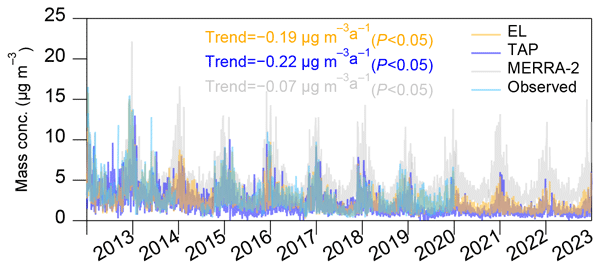
We developed a machine-learning-based method to reconstruct missing elemental carbon (EC) data in four Chinese cities from 2013 to 2023. Using machine learning, we filled data gaps and introduced a new approach to analyze EC trends. Our findings reveal a significant decline in EC due to stricter pollution controls, though this slowed after 2020. This study provides a versatile framework for addressing data gaps and supports strategies to reduce urban air pollution and its climate impacts.
Danni Zhang, Bo Zheng, Biqing Zhu, Yidi Xu, Xinrui Liu, Naixian Wang, Longyi Zhang, Jiarui Liang, Guido R. van der Werf, Philippe Ciais, and Thomas Gasser
EGUsphere, https://doi.org/10.5194/egusphere-2026-5536, https://doi.org/10.5194/egusphere-2026-5536, 2026
This preprint is open for discussion and under review for Geoscientific Model Development (GMD).
Short summary
Short summary
Here we present OSCAR-fire v1.0, a wildfire carbon dynamics module developed within the OSCAR compact Earth system model. The module extends OSCAR's land carbon bookkeeping framework and describes how a fire event induces instantaneous combustion carbon emissions, legacy dead carbon release, and gradual post-fire ecosystem recovery. This is a process-based and computationally efficient module that can be used for quantifying wildfire contributions to the land carbon budget.
Yuan Dai, Junfeng Wang, Mindong Chen, Su Zhang, Haiwei Li, Yunjiang Zhang, Yun Wu, Ming Wang, and Xinlei Ge
Atmos. Chem. Phys., 26, 14015–14029, https://doi.org/10.5194/acp-26-14015-2026, https://doi.org/10.5194/acp-26-14015-2026, 2026
Short summary
Short summary
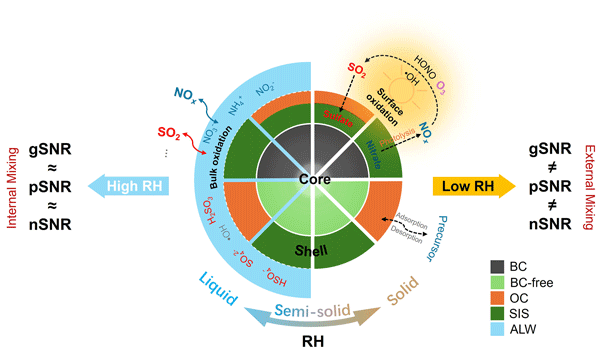
Air pollution involves complex interactions between airborne particles and gases, but these links are not fully understood. We analyzed individual particles and gases across different emission levels. We found that relative sulfur and nitrogen levels influence how gases interact with particles and alter their properties. These processes vary by particle type and humidity, helping explain how pollution forms and evolves. Our findings provide new evidence for particle-gas interactions.
Shan Huang, Lina Wu, Yi Kuang, Yuan Liu, Weiwei Hu, Ye Kuang, Wei Li, Qicong Song, Yuwen Peng, Suxia Yang, Mingfu Cai, Duohong Chen, Dingli Yue, Wei Song, Bin Yuan, Xinming Wang, and Min Shao
EGUsphere, https://doi.org/10.5194/egusphere-2026-4552, https://doi.org/10.5194/egusphere-2026-4552, 2026
Short summary
Short summary
This study reports field measurements of particulate organonitrates in a mixed anthropogenic-biogenic subtropical atmosphere, revealing contrasting formation regimes between urban and rural sites. Daytime photochemistry and regional transport dominated urban organonitrates, while nighttime formation from anthropogenic precursors and refractory organic nitrate from biomass burning both contributed to rural organonitrates. Our findings improve understanding of organonitrate formation.
Hui Li, Philippe Ciais, Frédéric Chevallier, Bo Zheng, Paul I. Palmer, Frank Hase, Morgan Lopez, Elsa M. Ordway, Shushi Peng, Danielle Monteverde, Michel Ramonet, Jason M. St. Clair, Le Bienfaiteur Sagang, and Benjamin Poulter
Atmos. Chem. Phys., 26, 11893–11908, https://doi.org/10.5194/acp-26-11893-2026, https://doi.org/10.5194/acp-26-11893-2026, 2026
Short summary
Short summary
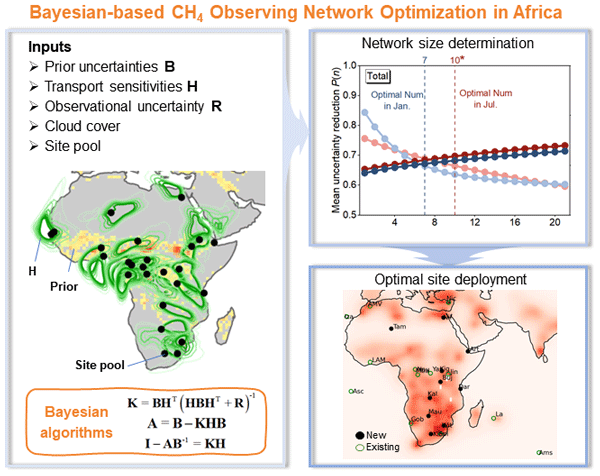
We studied how to best place methane monitoring instruments across Africa to better understand where emissions come from. Because observations can overlap in what they detect, adding more sites does not always improve results equally. Using a statistical approach, we identified both the ideal number and locations of sites (ten new sites can reduce emission uncertainty by over 65 % for total African CH4). Our results help guide cost-effective monitoring strategies in regions with limited data.
Juliette Brochet, Hasna Chebaicheb, Olivier Favez, Laura Cadeo, Tanguy Amodeo, Yunjiang Zhang, Antonin Bergé, Philip Croteau, Vincent Crenn, Valérie Gros, and Jean-Eudes Petit
Earth Syst. Sci. Data Discuss., https://doi.org/10.5194/essd-2026-490, https://doi.org/10.5194/essd-2026-490, 2026
Preprint under review for ESSD
Short summary
Short summary
This work proposes a new methodology for robust, homogeneous processing of long-term datasets of aerosol mass spectrometer measurements to remedy the challenges posed by the emergence of juxtaposed data processing periods over the years. The results showed a global decrease in PM1 at a semi-urban site in the Paris region between 2011 and 2024, along with a decrease in the frequency of persistent pollution episodes. Finally, it highlights the need for Sulfate source apportionment analysis.
Chantelle Burton, Francesca Di Giuseppe, Matthew W. Jones, Douglas I. Kelley, Maria L. F. Barbosa, Joe McNorton, Robert Potts, Carlota Segura-Garcia, John T. Abatzoglou, Iulian Alin Rosu, Niels Andela, Liana O. Anderson, Sally Archibald, Esther Brambleby, Emilio Chuvieco, Andy Ciavarella, Hamish Clarke, Francisco de la Barrera, Carlos M. Di Bella, Enza Di Tomaso, Kebonye Dintwe, Tim S. Doherty, Victoria M. Donovan, Jonathan M. Eden, Paulo M. Fernandes, Lukas Fiedler, Louis Giglio, Olivia Haas, Douglas Hamilton, Stijn Hantson, Sarah Harris, Andrew J. Hartley, Theodore R. Keeping, Crystal A. Kolden, Jean-Luc Kouassi, Elena Kukavskaya, Seppe Lampe, Zhongwei Liu, Guilherme Mataveli, Sarah Meier, Duarte Oom, Mark Parrington, Yuquan Qu, Victor Resco de Dios, Julien Ruffault, Mojtaba Sadegh, Cristina Santín, Fernando Sedano, Jacquelyn K. Shuman, Patrícia S. Silva, Fiona R. Spuler, Carmen B. Steinmann, Veerachai Tanpipat, Miguel Ángel Torres-Vazquez, Marco Turco, Guido R. van der Werf, Dave van Wees, Sander Veraverbeke, Jakob B. Wessel, and Bo Zheng
Earth Syst. Sci. Data Discuss., https://doi.org/10.5194/essd-2026-587, https://doi.org/10.5194/essd-2026-587, 2026
Preprint under review for ESSD
Short summary
Short summary
The third State of Wildfires report examines extreme wildfire events from 2025 to early 2026. It analyses key regional events in Midwestern Canadian Shield Forests, Northwest Iberia, and Chilean Temperate Forests and Matorral, assessing their impacts, drivers, and attributing them to climate change. Climate change greatly increased the likelihood of these fires, and without strong mitigation, such events will become more frequent.
Natalie J. Burls, Nicky M. Wright, R. Paul Acosta, Catherine D. Bradshaw, Edward Gasson, Lennert B. Stap, Gilles Ramstein, Anna Ruth W. Halberstadt, Agatha M. De Boer, Funda Akgün, David J. Cantrill, Manuel Casas-Gallego, Nela Doláková, Boglarka Erdei, Alex Farnsworth, Sarah Feakins, Ran Feng, Tamara Fletcher, Frédéric Fluteau, J. A. Mattias Green, Anna S. von der Heydt, Matthew Huber, David K. Hutchinson, Dimiter Ivanov, Mine Sezgül Kayseri-Özer, Gregor Knorr, Marianna Kováčová, Caroline H. Lear, Allegra N. LeGrande, Shufeng Li, Xiaoqing Liu, Daniel J. Lunt, Katrin Meissner, Yunfa Miao, Trusha J. Naik, Javier B. Navarro, Joseph B. Novak, Diana Ochoa, Guy J.G. Paxman, Matthew J. Pound, James W. B. Rae, Tammo Reichgelt, Martin Renoult, Francesca Sangiorgi, Anta-Clarisse Sarr, Diane Segalla, Pierre Sepulchre, Amelia Shevenell, Sebastian Steinig, Eivind Straume, Caroline A. E. Strömberg, Clay Tabor, Torsten Utescher, Julia E. Weiffenbach, Elżbieta Worobiec, Yurui Zhang, Feng Zhu, Jiang Zhu, Alexandra Auderset, Florence Colleoni, Aisling Dolan, Rachel Havranek, Ann Holbourn, Nicholas Herold, Daeun Lee, James W. Marschalek, Bryce Mitsunaga, Sevi Modestou, Lina Perez-Angel, Mae Saslaw, Sinda Sosdian, Elena Stiles, Yong Sun, Ning Tan, Zhongshi Zhang, and Yan Zhao
EGUsphere, https://doi.org/10.5194/egusphere-2026-3595, https://doi.org/10.5194/egusphere-2026-3595, 2026
This preprint is open for discussion and under review for Geoscientific Model Development (GMD).
Short summary
Short summary
Simulating warm paleoclimates increases our understanding of the mechanisms that drive climatic change and tipping points. The Miocene Epoch, specifically the Miocene Climatic Optimum, has been identified as a particularly valuable past warm climate to simulate, meriting the design of a coordinated Miocene Model Intercomparison Project. Here we synthesize the latest available literature and present the experimental design for coordinated Miocene simulations and sensitivity studies.
Yi Zhang, Wei Zhou, Weiqi Xu, Yan Li, Yu Zhang, Zijun Zhang, Bojiang Su, Ning Zhang, Eleonora Aruffo, Junfeng Wang, Piero Di Carlo, Lanzhong Liu, Xiaole Pan, Zifa Wang, Douglas Worsnop, and Yele Sun
EGUsphere, https://doi.org/10.5194/egusphere-2026-3643, https://doi.org/10.5194/egusphere-2026-3643, 2026
Short summary
Short summary
We tracked OOMs that form haze and clouds at a forested mountain in southeastern China. Warm weather boosted natural emissions from plants, making them the primary source of these compounds. Conversely, cooler weather amplified the impact of pollution blowing in from other regions. Clouds also played a major role by washing away certain chemicals while transforming others. These interactions between weather, nature, and pollution offer crucial insights for improving climate models.
Ning Zhang, Jialiang Feng, Simon Patrick O'Meara, Ziyi Liu, Yingge Ma, Xinlei Ge, Wenjing Li, Piero Chiacchiaretta, Piero Di Carlo, Junfeng Wang, and Eleonora Aruffo
Atmos. Chem. Phys., 26, 9793–9807, https://doi.org/10.5194/acp-26-9793-2026, https://doi.org/10.5194/acp-26-9793-2026, 2026
Short summary
Short summary
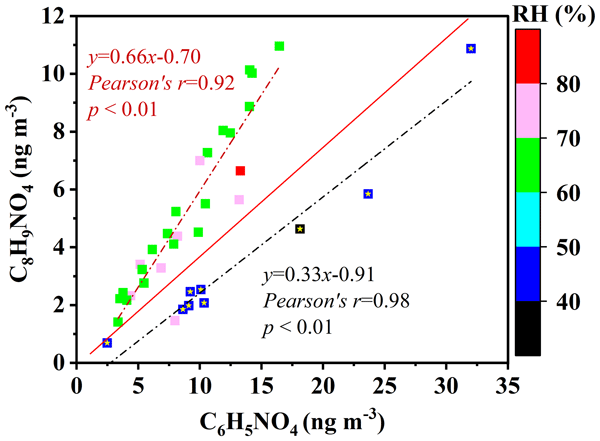
We investigated how nitrogen-containing organic compounds form and evolve in fine particles using field measurements in Myanmar and box-model simulations. We show that relative humidity, photochemistry, and precursor availability jointly control the formation and gas–particle partitioning of light-absorbing nitrophenolic compounds. These findings improve understanding of their impacts on air quality and climate.
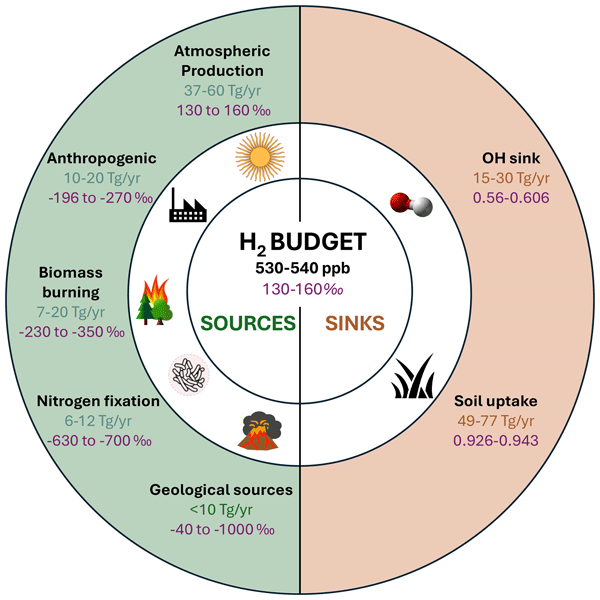
Srinath Krishnan, Ragnhild Bieltvedt Skeie, Øivind Hodnebrog, Gunnar Myhre, Maria Sand, Marit Sandstad, Hannah Bryant, Didier A. Hauglustaine, Fabien Paulot, Michael Prather, and David Stevenson
Atmos. Chem. Phys., 26, 9509–9539, https://doi.org/10.5194/acp-26-9509-2026, https://doi.org/10.5194/acp-26-9509-2026, 2026
Short summary
Short summary
Hydrogen (H2) is an indirect greenhouse gas that can affect climate through chemical reactions in the atmosphere. To better understand this impact, it is important to constrain the sources and sinks of hydrogen. Using a suite of three-dimensional and one-dimensional models, we find that atmospheric production of hydrogen is 37–60 Tg/yr and that the geological source of H2 is much smaller than suggested. More field and isotopic measurements are needed to improve these estimates.
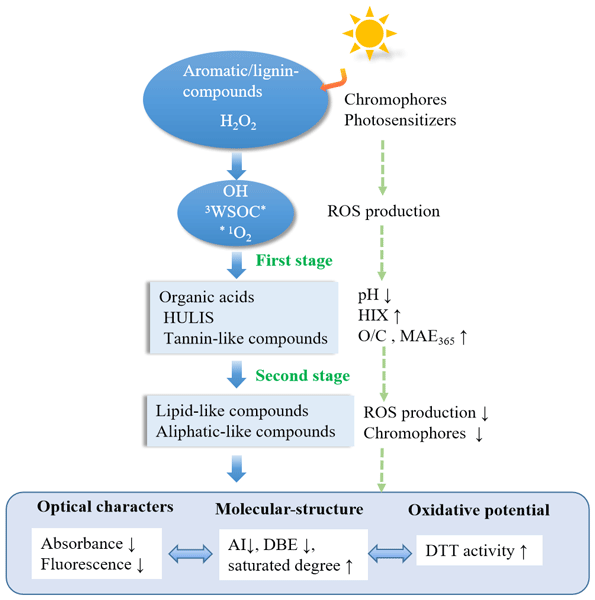
Zhaolian Ye, Dandan Hu, Qiuyan Chen, Xiangpeng Huang, and Xinlei Ge
Atmos. Chem. Phys., 26, 8255–8274, https://doi.org/10.5194/acp-26-8255-2026, https://doi.org/10.5194/acp-26-8255-2026, 2026
Short summary
Short summary
Few studies have compared the molecular and optical evolution of smoke extracts during aqueous photooxidation. Here, OH-initiated aqueous photodegradation of two smoke extracts was investigated. Optical and molecular changes were characterized using a combination of analytical techniques. Reactive oxygen species contributions and potential reaction mechanisms were also examined. These results improve understanding of aqueous photochemistry and support more accurate representation in atmospheric models.
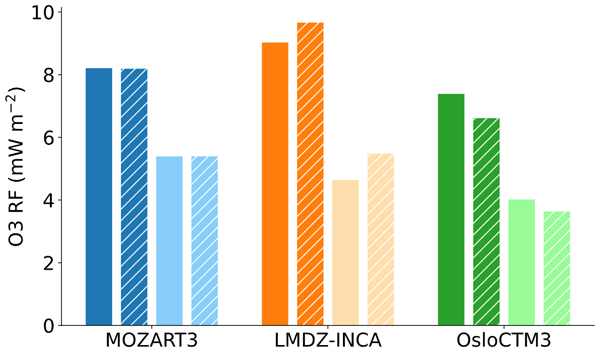
Zosia Staniaszek, Didier A. Hauglustaine, Yann Cohen, Agnieszka Skowron, Sigrun Matthes, Robin Thor, and Marianne T. Lund
Atmos. Chem. Phys., 26, 7985–7999, https://doi.org/10.5194/acp-26-7985-2026, https://doi.org/10.5194/acp-26-7985-2026, 2026
Short summary
Short summary
NOx emissions from aircraft affect the climate indirectly, by changing greenhouse gas concentrations. We explore whether the NOx emissions from aviation would have a different effect in different potential future climate states, i.e. a high pollution and low pollution case. The three models we use show varied responses for how this background state alters the climate effects of the NOx emissions. This shows the continuing need to improve our understanding of non-CO2 aviation impacts.
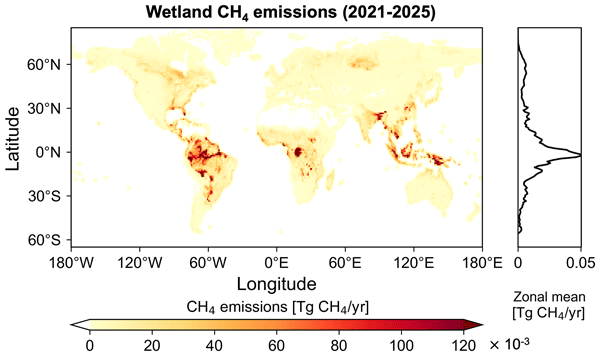
Mengze Li, Robert B. Jackson, Marielle Saunois, Philippe Ciais, Ben Poulter, Josep G. Canadell, Prabir K. Patra, Hanqin Tian, Zhen Zhang, Etienne Fluet-Chouinard, Zutao Ouyang, Ting Zhang, David J. Beerling, Dmitry A. Belikov, Philippe Bousquet, Danilo Custodio, Naveen Chandra, Xinyu Dou, Nicola Gedney, Peter O. Hopcroft, Alison M. Hoyt, Kazuhito Ichii, Akihito Ito, Atul K. Jain, Katherine Jensen, Fortunat Joos, Thomas Kleinen, Masayuki Kondo, Fa Li, Tingting Li, Xiangyu Liu, Shamil Maksyutov, Avni Malhotra, Adrien Martinez, Kyle McDonald, Joe R. Melton, Jurek Müller, Yosuke Niwa, Shufen Pan, Shushi Peng, Changhui Peng, Zhangcai Qin, Peter Raymond, William Riley, Arjo Segers, Rona L. Thompson, Aki Tsuruta, Yi Xi, Kunxiaojia Yuan, Wenxin Zhang, Bo Zheng, Qing Zhu, Qiuan Zhu, and Qianlai Zhuang
Earth Syst. Sci. Data, 18, 3507–3524, https://doi.org/10.5194/essd-18-3507-2026, https://doi.org/10.5194/essd-18-3507-2026, 2026
Short summary
Short summary
We proposed a framework that combines machine-learning and climate data to predict global natural vegetated wetland methane emissions for 2000–2025. We found that although total global emissions remained stable in the post-2020s, Northern Hemisphere emissions surged whilst tropical emissions fell. This approach allows us to rapidly monitor emissions and provides early warnings for climate impacts.
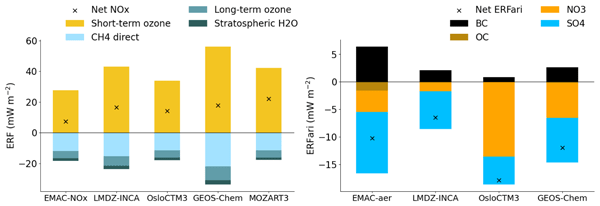
Yann Cohen, Didier Hauglustaine, Zosia Staniaszek, Marianne Tronstad Lund, Irene Dedoussi, Sigrun Matthes, Flávio Quadros, Mattia Righi, Agnieszka Skowron, and Robin Thor
Atmos. Chem. Phys., 26, 5983–6013, https://doi.org/10.5194/acp-26-5983-2026, https://doi.org/10.5194/acp-26-5983-2026, 2026
Short summary
Short summary
Non-CO2 effects from aviation on climate show large uncertainties. Among them, this study investigates the present-day impact of nitrogen oxides (through ozone and methane) and aerosols produced by aviation on atmospheric composition and therefore on climate, using a global-model intercomparison. Our results show a good consistency between the models for gaseous chemistry, but they also highlight the need for more accurate comparisons and further model development for aerosol parameterization.
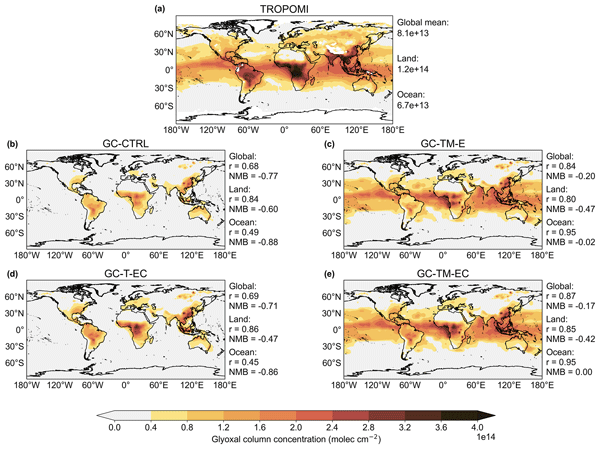
Aoxing Zhang, Tzung-May Fu, Yuhang Wang, Enyu Xiong, Wenlu Wu, Yumin Li, Lei Zhu, Wei Tao, Kelley C. Wells, Dylan B. Millet, Zhe Wang, Bin Yuan, Min Shao, Christophe Lerot, Thomas Danckaert, Ruixiong Zhang, and Kelvin H. Bates
Atmos. Chem. Phys., 26, 5123–5150, https://doi.org/10.5194/acp-26-5123-2026, https://doi.org/10.5194/acp-26-5123-2026, 2026
Short summary
Short summary
Glyoxal, a product of volatile organic compound oxidation, influences atmospheric oxidation and aerosol formation but is underestimated in models. By improving emissions, chemistry, and marine sources in GEOS-Chem, we better reproduce observed glyoxal over land and ocean, which strengthens global oxidation capacity and aerosol formation. The results highlight glyoxal's role as a proxy of atmospheric oxidation, and emphasize the needs of accurately representing glyoxal chemistry.
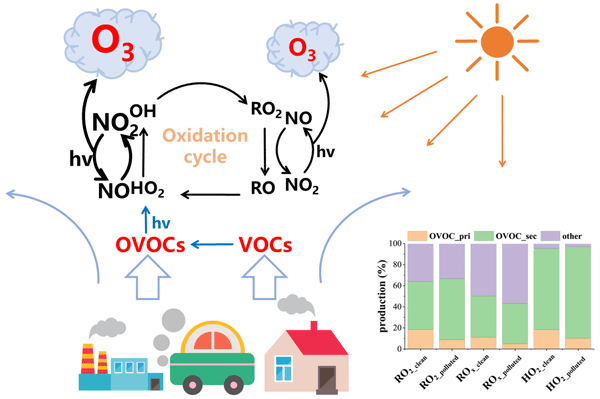
Xun Li, Xuan Li, Rusha Yan, Yaqin Gao, Kangjia Gong, Hongli Wang, Momei Qin, Jianlin Hu, and Jingyi Li
Atmos. Chem. Phys., 26, 4901–4915, https://doi.org/10.5194/acp-26-4901-2026, https://doi.org/10.5194/acp-26-4901-2026, 2026
Short summary
Short summary
An updated emission inventory, incorporating source-specific OVOC (Oxygenated volatile organic compound) profiles derived from measurements and the literature, is applied in an air quality model to improve OVOC simulations in a heavily polluted region. A substantial fraction of key OVOCs originates from anthropogenic sources and enhances hydroperoxyl radical production, thereby contributing to ozone formation. The results highlight the importance of accurately representing OVOC emissions in models to support ozone control strategies.
Yifan Li, Drew Pendergrass, Daniel Jacob, Yunxiao Tang, Jiaxin Qiu, and Bo Zheng
EGUsphere, https://doi.org/10.5194/egusphere-2025-6284, https://doi.org/10.5194/egusphere-2025-6284, 2026
Short summary
Short summary
We tracked China’s weekly methane emissions from 2019 to 2024 by constructing a satellite-based regional atmospheric inversion framework. Over the period, annual methane emissions in China rose from 61.1 to 66.8 million tonnes, with nearly half of the growth driven by livestock, alongside additional contributions from waste and oil and gas. Emissions growth shifted toward previously low-emitting northwest and northeast China, revealing new priorities for targeted methane mitigation.
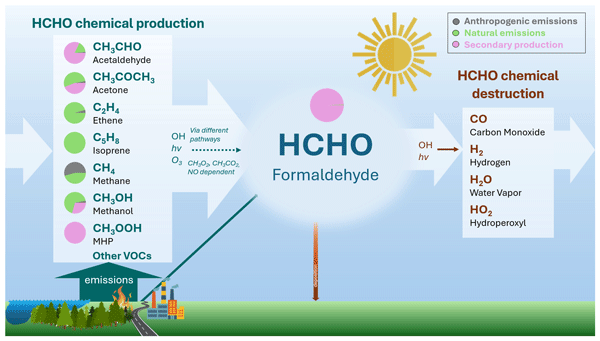
Gunnar Myhre, Øivind Hodnebrog, Srinath Krishnan, Maria Sand, Marit Sandstad, Ragnhild B. Skeie, Lieven Clarisse, Bruno Franco, Dylan B. Millet, Kelley C. Wells, Alexander Archibald, Hannah N. Bryant, Alex T. Chaudhri, David S. Stevenson, Didier Hauglustaine, Michael Prather, J. Christopher Kaiser, Dirk J. L. Olivie, Michael Schulz, Oliver Wild, Ye Wang, Thérèse Salameh, Jason E. Williams, Philippe Le Sager, Fabien Paulot, Kostas Tsigaridis, and Haley E. Plaas
Geosci. Model Dev., 19, 2577–2591, https://doi.org/10.5194/gmd-19-2577-2026, https://doi.org/10.5194/gmd-19-2577-2026, 2026
Short summary
Short summary
Volatile organic compounds (VOCs) affect air quality and climate, but their behavior in the atmosphere is still uncertain. We launched a global research effort to compare how different models represent these compounds and to improve their accuracy. By analyzing model results alongside observations and satellite data, we aim to better understand the atmospheric composition of these compounds.
Yu Li, Momei Qin, Weiwei Hu, Bin Zhao, Ying Li, Havala O. T. Pye, Jingyi Li, Linghan Zeng, Song Guo, Min Hu, and Jianlin Hu
Atmos. Chem. Phys., 26, 1001–1020, https://doi.org/10.5194/acp-26-1001-2026, https://doi.org/10.5194/acp-26-1001-2026, 2026
Short summary
Short summary
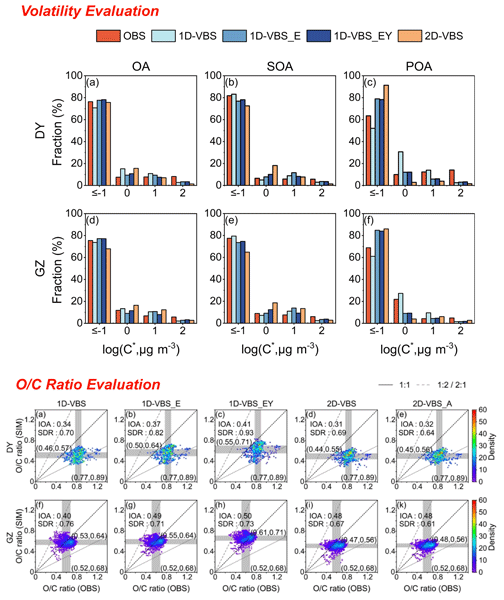
We evaluated how well a widely used air quality model simulates key properties of organic particles in the atmosphere, such as volatility and oxygen content, which influence how particles age, spread, and affect both air quality and climate. Using observations in eastern China, we found the model underestimated particle mass and misrepresented their properties. Our results highlight the need for improved emissions and chemical treatments to better predict air quality and climate impacts.
Mingfu Cai, Bin Yuan, Weiwei Hu, Ye Chenshuo, Shan Huang, Suxia Yang, Wei Chen, Yuwen Peng, Zhaoxiong Deng, Jun Zhao, Duohong Chen, Jiaren Sun, and Min Shao
Atmos. Chem. Phys., 26, 769–788, https://doi.org/10.5194/acp-26-769-2026, https://doi.org/10.5194/acp-26-769-2026, 2026
Short summary
Short summary
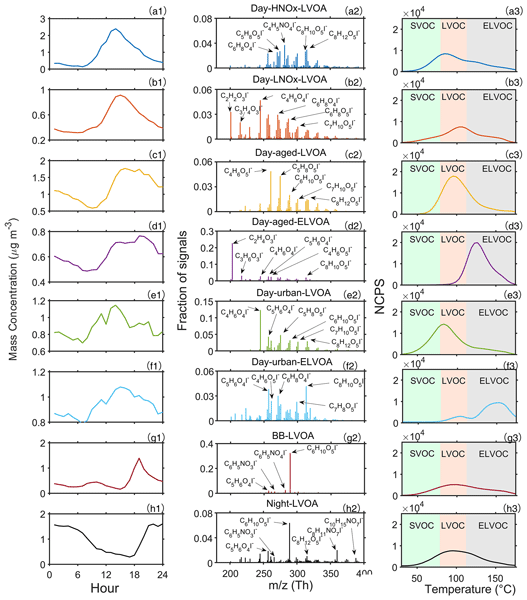
This study investigates how the formation and aging processes of secondary organic aerosol (SOA) influence the evolution of SOA volatility in downwind regions. Our results reveal that elevated NOₓ levels enhanced the daytime SOA volatility by modifying gas-particle partitioning, particularly through suppressing the production of low-volatility organic vapors. In contrast, photochemical aging was associated with reduced SOA volatility.
Wenhui Zhao, Weiwei Hu, Zhaoce Liu, Tianle Pan, Tingting Feng, Jun Wang, Yiyu Cai, Lin Liang, Shan Huang, Bin Yuan, Nan Ma, Min Shao, Guohua Zhang, Xinhui Bi, Xinming Wang, and Pengfei Yu
Atmos. Chem. Phys., 26, 135–154, https://doi.org/10.5194/acp-26-135-2026, https://doi.org/10.5194/acp-26-135-2026, 2026
Short summary
Short summary
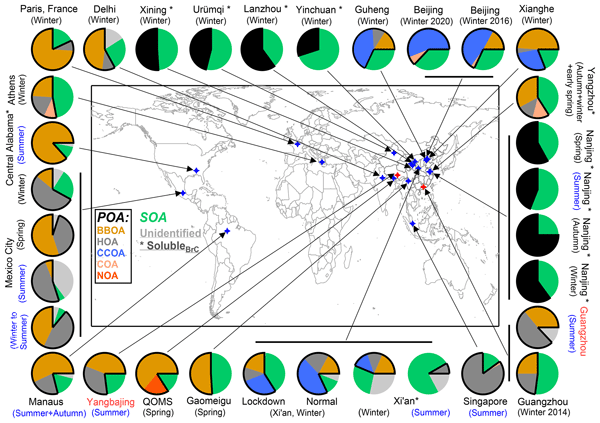
Our study examined brown carbon – organic aerosols that absorb light – at the remote Tibet and urban Guangzhou. Field data showed Tibet’s brown carbon absorbs about 10 times less than Guangzhou’s, due to cleaner air. Yet, over 75 % of its light absorption still comes from primary emission, which causes over 98 % of its climate-warming effect in both places. This study advances understanding of brown carbon dynamics and its sources in diverse environments for global climate effects.
Hui Li, Philippe Ciais, Pramod Kumar, Didier A. Hauglustaine, Frédéric Chevallier, Grégoire Broquet, Dylan B. Millet, Kelley C. Wells, Jinghui Lian, and Bo Zheng
Earth Syst. Sci. Data, 17, 7035–7054, https://doi.org/10.5194/essd-17-7035-2025, https://doi.org/10.5194/essd-17-7035-2025, 2025
Short summary
Short summary
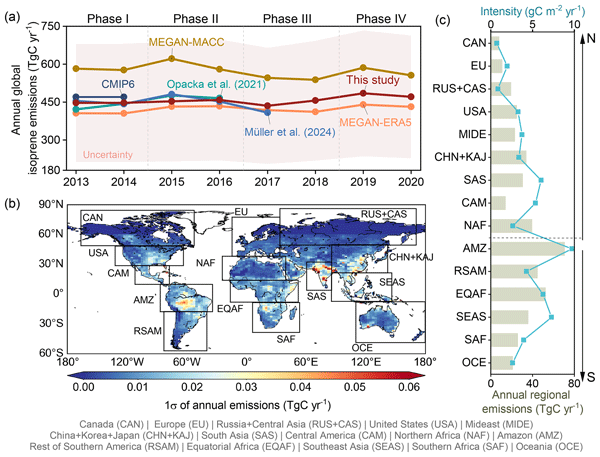
We present the first global, multi-year maps of monthly isoprene emissions (2013–2020) derived from satellite isoprene observations, averaging 456 TgC yr-1. The dataset reveals two emission peaks linked to 2015–2016 El Niño and 2019–2020 extreme heat events, driven mainly by tropical regions such as the Amazon. It highlights the region-specific sensitivity of biogenic isoprene emissions to temperature anomalies, providing new insights into their roles in air quality and climate feedbacks.
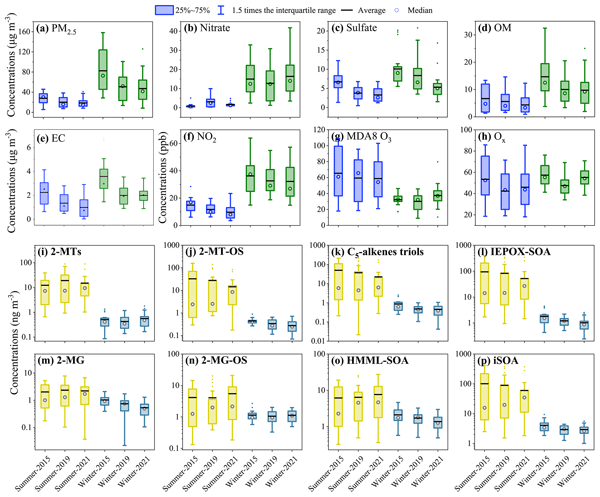
Huilin Hu, Yunyi Liang, Ting Li, Yongliang She, Yao Wang, Ting Yang, Min Zhou, Ziyue Li, Chenxi Li, Huayun Xiao, Jianlin Hu, Jingyi Li, and Yue Zhao
Atmos. Chem. Phys., 25, 17889–17906, https://doi.org/10.5194/acp-25-17889-2025, https://doi.org/10.5194/acp-25-17889-2025, 2025
Short summary
Short summary
Isoprene-derived secondary organic aerosol (iSOA) is a major type of biogenic SOA in the atmosphere, yet its response to long-term anthropogenic emission reductions remains poorly understood. Here, combing field observations and model simulations, we characterized the abundance, trend, and underlying drivers of iSOA in Shanghai, China during 2015–2021, which will advance our understandings of the formation and impacts of biogenic SOA under rapidly evolving emission scenarios in urban regions.
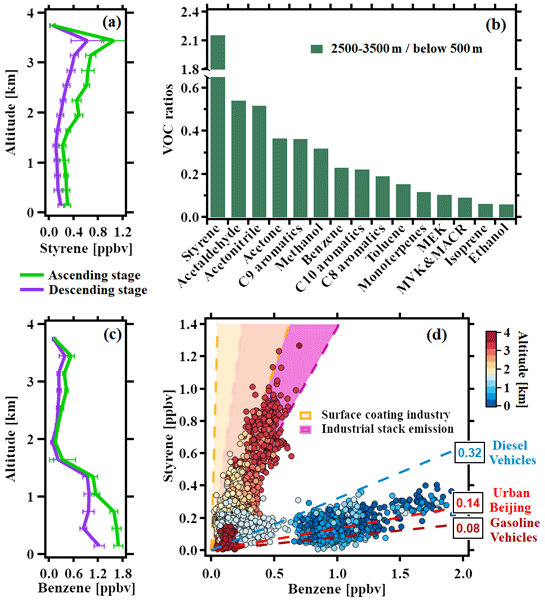
Yibo Huangfu, Ziyang Liu, Bin Yuan, Sihang Wang, Xianjun He, Wei Zhou, Fei Wang, Ping Tian, Wei Xiao, Yuanmou Du, Jiujiang Sheng, and Min Shao
Atmos. Chem. Phys., 25, 17613–17628, https://doi.org/10.5194/acp-25-17613-2025, https://doi.org/10.5194/acp-25-17613-2025, 2025
Short summary
Short summary
Severe air pollution over the North China Plain has posed significant threats to human health. Emerging evidence highlights the vital role of vertical pollutant transport in influencing surface air quality. In this study, we summarized the vertical profiles of key pollutants based on aircraft surveys up to 4000 m. The influence of regional transport on the vertical distribution patterns was analyzed, offering essential data for evaluating the impact of aloft pollutants on surface air quality.
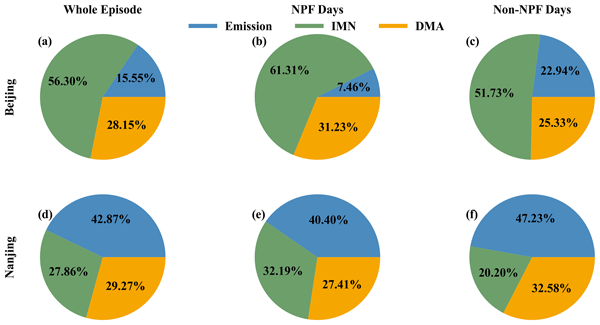
Jianjiong Mao, Lei Jiang, Zhicheng Feng, Jingyi Li, Yanhong Zhu, Momei Qin, Song Guo, Min Hu, and Jianlin Hu
Geosci. Model Dev., 18, 8423–8438, https://doi.org/10.5194/gmd-18-8423-2025, https://doi.org/10.5194/gmd-18-8423-2025, 2025
Short summary
Short summary
Tiny air particles impact air quality and climate change. Our study improved their prediction in eastern cities by modeling two key formation processes: ions + sulfuric acid + ammonia (daytime) and sulfuric acid + dimethylamine (morning/evening). This improved model increases predictions by 36–84 % in Beijing and Nanjing. These advancements enable better demonstrate how these chemical processes significantly influence China eastern cities' particulate pollution.
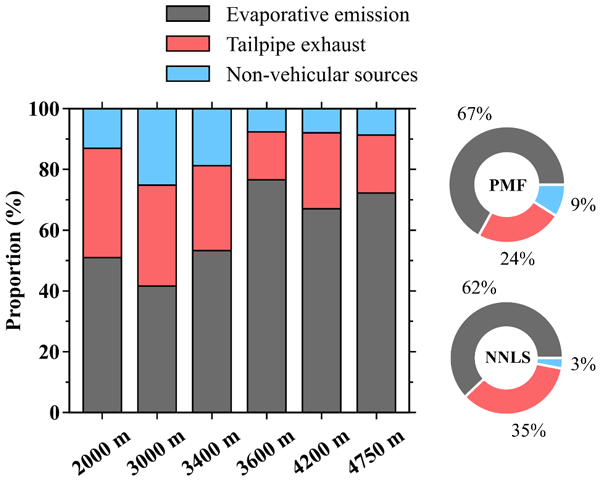
Weichao Huang, Sihang Wang, Peng Cheng, Bingna Chen, Bin Yuan, Pengfei Yu, Haichao Wang, Nan Ma, Mei Li, and Keding Lu
Atmos. Chem. Phys., 25, 15403–15414, https://doi.org/10.5194/acp-25-15403-2025, https://doi.org/10.5194/acp-25-15403-2025, 2025
Short summary
Short summary
We studied vehicle emissions from ten 3000-meter tunnels on the Tibetan Plateau. Emissions of volatile organic compounds (VOCs) increase with elevation due to the evaporation of fuel oil from low pressure, unlike at lower elevations where tailpipe is predominant. This suggests that specific emission control measures are needed. This research aims to understand emissions at high altitudes and to guide cleaner transport.
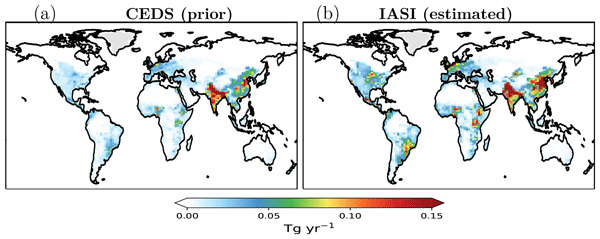
Pramod Kumar, Grégoire Broquet, Didier Hauglustaine, Maureen Beaudor, Lieven Clarisse, Martin Van Damme, Pierre Coheur, Anne Cozic, Bo Zheng, Beatriz Revilla Romero, Antony Delavois, and Philippe Ciais
Atmos. Chem. Phys., 25, 12379–12407, https://doi.org/10.5194/acp-25-12379-2025, https://doi.org/10.5194/acp-25-12379-2025, 2025
Short summary
Short summary
Global maps of the NH3 emissions over 2019–2022 are derived using IASI NH3 spaceborne observations, the LMDZ-INCA chemistry transport model at 1.27°×2.5° resolution, and the mass-balance approach. The average global NH3 emissions over the period are ~97 Tg NH3 yr-1, which is significantly higher than three reference inventories. The analysis provides confidence in the seasonal variability and regional budgets and provides new insights into NH3 emissions at global and regional scales.
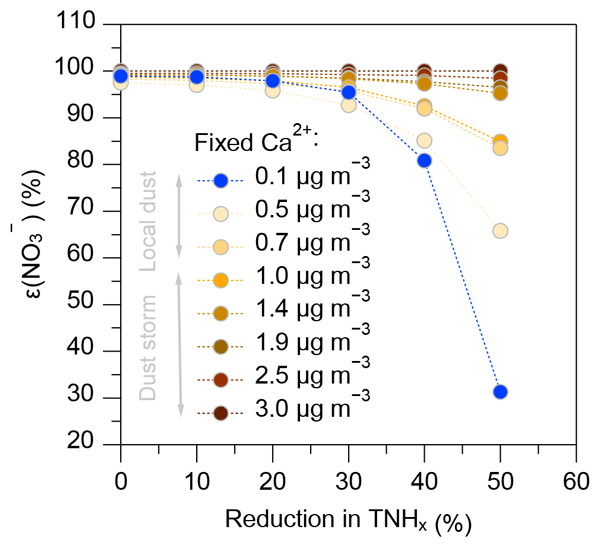
Hanrui Lang, Yunjiang Zhang, Sheng Zhong, Yongcai Rao, Minfeng Zhou, Jian Qiu, Jingyi Li, Diwen Liu, Florian Couvidat, Olivier Favez, Didier Hauglustaine, and Xinlei Ge
Atmos. Chem. Phys., 25, 10587–10601, https://doi.org/10.5194/acp-25-10587-2025, https://doi.org/10.5194/acp-25-10587-2025, 2025
Short summary
Short summary
This study investigates how dust pollution influences particulate nitrate formation. We found that dust pollution could reduce the effectiveness of ammonia emission controls by altering aerosol chemistry. Using field observations and modeling, we showed that dust particles affect nitrate distribution between gas and particle phases. Our findings highlight the need for pollution control strategies that consider both human emissions and dust sources for better urban air quality management.
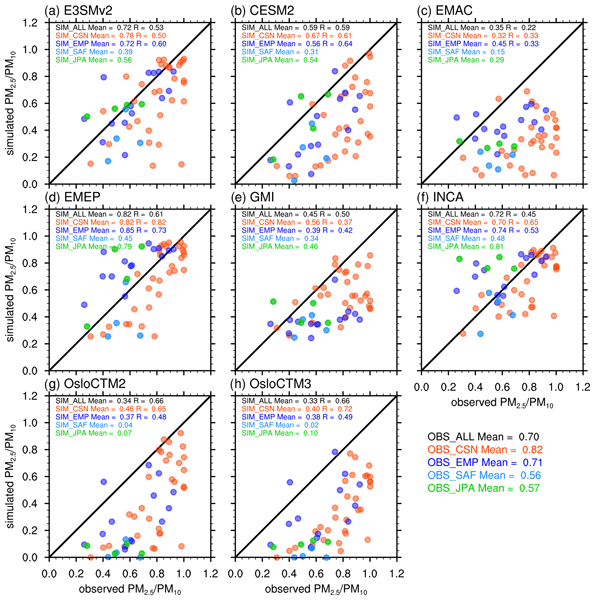
Mingxuan Wu, Hailong Wang, Zheng Lu, Xiaohong Liu, Huisheng Bian, David D. Cohen, Yan Feng, Mian Chin, Didier A. Hauglustaine, Vlassis A. Karydis, Marianne T. Lund, Gunnar Myhre, Andrea Pozzer, Michael Schulz, Ragnhild B. Skeie, Alexandra P. Tsimpidi, Svetlana G. Tsyro, and Shaocheng Xie
Atmos. Chem. Phys., 25, 10049–10074, https://doi.org/10.5194/acp-25-10049-2025, https://doi.org/10.5194/acp-25-10049-2025, 2025
Short summary
Short summary
A key challenge in simulating the life cycle of nitrate aerosol in global models is accurately representing the mass size distribution of nitrate aerosol, which lacks sufficient observational constraints. We found that most global models underestimate the mass fraction of fine-mode nitrate at the surface in all regions. Our study highlights the importance of gas–aerosol partitioning parameterization and the simulation of dust and sea salt in correctly simulating the mass size distribution of nitrate.
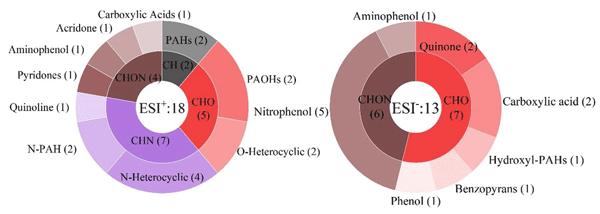
Yu Huang, Xingru Li, Dan Dan Huang, Ruoyuan Lei, Binhuang Zhou, Yunjiang Zhang, and Xinlei Ge
Atmos. Chem. Phys., 25, 7619–7645, https://doi.org/10.5194/acp-25-7619-2025, https://doi.org/10.5194/acp-25-7619-2025, 2025
Short summary
Short summary
This work comprises a comprehensive investigation into the chemical and optical properties of brown carbon (BrC) in PM2.5 samples collected in Nanjing, China. In particular, we used a machine learning approach to identify a list of key BrC species, which can be a good reference for future studies. Our findings extend understanding of BrC properties and are valuable to the assessment of BrC's impact on air quality and radiative forcing.
Rimal Abeed, Audrey Fortems-Cheiney, Grégoire Broquet, Robin Plauchu, Isabelle Pison, Antoine Berchet, Elise Potier, Bo Zheng, Gaëlle Dufour, Adriana Coman, Dilek Savas, Guillaume Siour, Henk Eskes, Beatriz Revilla-Romero, Antony Delavois, and Philippe Ciais
EGUsphere, https://doi.org/10.5194/egusphere-2025-3329, https://doi.org/10.5194/egusphere-2025-3329, 2025
Preprint archived
Short summary
Short summary
We investigate changes in air pollution from nitrogen oxides NOx (=NO+NO2) across Eastern China from 2019 to 2021, using a satellite-based modelling approach. Our results show a drop in pollution in 2020 in most provinces, and along the China-Mongolia-Russia Economic Corridor. The analysis also captures emission variations during the Lunar New Year. By estimating emissions at the provincial level, the study provides insights into how major events and policy measures influence local air quality.
Qingxiao Meng, Yunjiang Zhang, Sheng Zhong, Jie Fang, Lili Tang, Yongcai Rao, Minfeng Zhou, Jian Qiu, Xiaofeng Xu, Jean-Eudes Petit, Olivier Favez, and Xinlei Ge
Atmos. Chem. Phys., 25, 7485–7498, https://doi.org/10.5194/acp-25-7485-2025, https://doi.org/10.5194/acp-25-7485-2025, 2025
Short summary
Short summary
We developed a machine-learning-based method to reconstruct missing elemental carbon (EC) data in four Chinese cities from 2013 to 2023. Using machine learning, we filled data gaps and introduced a new approach to analyze EC trends. Our findings reveal a significant decline in EC due to stricter pollution controls, though this slowed after 2020. This study provides a versatile framework for addressing data gaps and supports strategies to reduce urban air pollution and its climate impacts.
Yuwen Peng, Bin Yuan, Sihang Wang, Xin Song, Zhe Peng, Wenjie Wang, Suxia Yang, Jipeng Qi, Xianjun He, Yibo Huangfu, Xiao-Bing Li, and Min Shao
Atmos. Chem. Phys., 25, 7037–7052, https://doi.org/10.5194/acp-25-7037-2025, https://doi.org/10.5194/acp-25-7037-2025, 2025
Short summary
Short summary
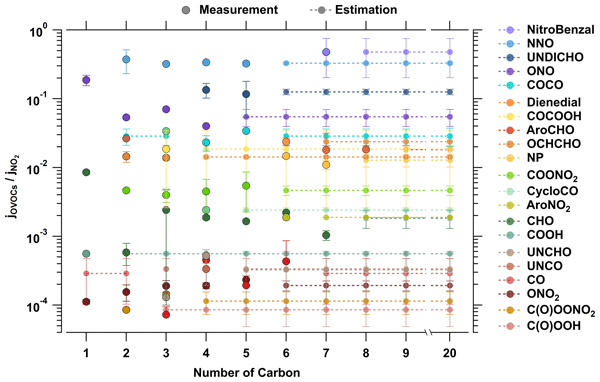
A structural-based parameterization for the photolysis rates of oxygenated volatile organic compounds (OVOCs) was integrated into an updated chemical mechanism. This method links photolysis rates to species' structure, bypassing limitations of insufficient quantum yield data. Box model results show that non-HCHO OVOCs, particularly multifunctional carbonyl compounds, significantly contribute to radical production, with alkene and aromatic oxidation products playing key roles.
Yawen Kong, Bo Zheng, and Yuxi Liu
Atmos. Chem. Phys., 25, 5959–5976, https://doi.org/10.5194/acp-25-5959-2025, https://doi.org/10.5194/acp-25-5959-2025, 2025
Short summary
Short summary
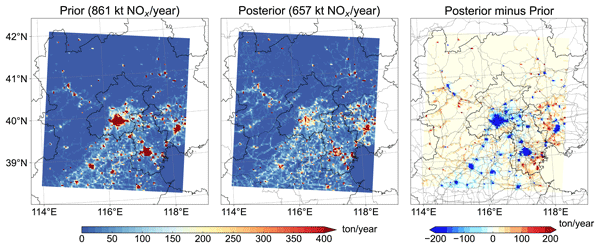
Current high-resolution satellite remote sensing technologies provide a unique opportunity to derive timely high-resolution emission data. We developed an emission inversion system to assimilate satellite NO2 data to obtain daily kilometer-scale NOx emission inventories. Our results enhance inventory accuracy, allowing us to capture the effects of pollution control policies on daily emissions (e.g., during COVID-19 lockdowns) and improve fine-scale air quality modeling.
Yann Cohen, Didier Hauglustaine, Nicolas Bellouin, Marianne Tronstad Lund, Sigrun Matthes, Agnieszka Skowron, Robin Thor, Ulrich Bundke, Andreas Petzold, Susanne Rohs, Valérie Thouret, Andreas Zahn, and Helmut Ziereis
Atmos. Chem. Phys., 25, 5793–5836, https://doi.org/10.5194/acp-25-5793-2025, https://doi.org/10.5194/acp-25-5793-2025, 2025
Short summary
Short summary
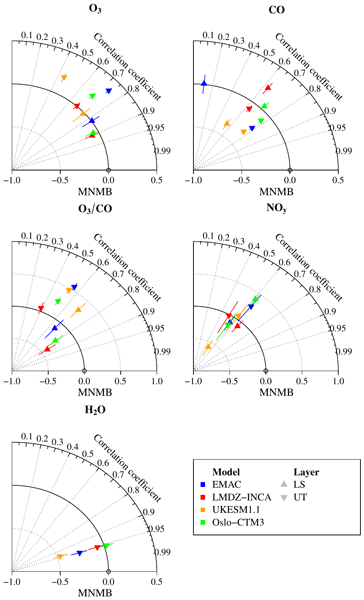
The chemical composition of the atmosphere near the tropopause is a key parameter for evaluating the climate impact of subsonic aviation pollutants. This study uses in situ data collected aboard passenger aircraft to assess the ability of four chemistry–climate models to reproduce (bi-)decadal climatologies of ozone, carbon monoxide, water vapour, and reactive nitrogen in this region. The models reproduce the very distinct ozone seasonality in the upper troposphere and in the lower stratosphere well.
Marielle Saunois, Adrien Martinez, Benjamin Poulter, Zhen Zhang, Peter A. Raymond, Pierre Regnier, Josep G. Canadell, Robert B. Jackson, Prabir K. Patra, Philippe Bousquet, Philippe Ciais, Edward J. Dlugokencky, Xin Lan, George H. Allen, David Bastviken, David J. Beerling, Dmitry A. Belikov, Donald R. Blake, Simona Castaldi, Monica Crippa, Bridget R. Deemer, Fraser Dennison, Giuseppe Etiope, Nicola Gedney, Lena Höglund-Isaksson, Meredith A. Holgerson, Peter O. Hopcroft, Gustaf Hugelius, Akihiko Ito, Atul K. Jain, Rajesh Janardanan, Matthew S. Johnson, Thomas Kleinen, Paul B. Krummel, Ronny Lauerwald, Tingting Li, Xiangyu Liu, Kyle C. McDonald, Joe R. Melton, Jens Mühle, Jurek Müller, Fabiola Murguia-Flores, Yosuke Niwa, Sergio Noce, Shufen Pan, Robert J. Parker, Changhui Peng, Michel Ramonet, William J. Riley, Gerard Rocher-Ros, Judith A. Rosentreter, Motoki Sasakawa, Arjo Segers, Steven J. Smith, Emily H. Stanley, Joël Thanwerdas, Hanqin Tian, Aki Tsuruta, Francesco N. Tubiello, Thomas S. Weber, Guido R. van der Werf, Douglas E. J. Worthy, Yi Xi, Yukio Yoshida, Wenxin Zhang, Bo Zheng, Qing Zhu, Qiuan Zhu, and Qianlai Zhuang
Earth Syst. Sci. Data, 17, 1873–1958, https://doi.org/10.5194/essd-17-1873-2025, https://doi.org/10.5194/essd-17-1873-2025, 2025
Short summary
Short summary
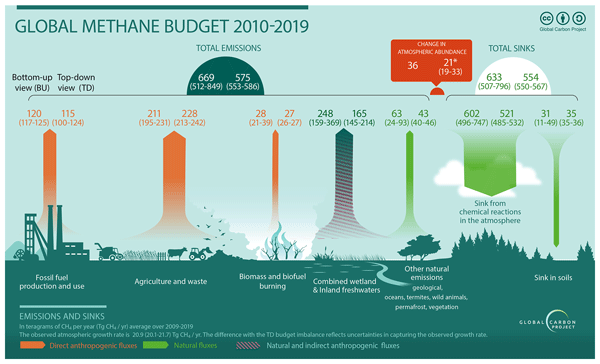
Methane (CH4) is the second most important human-influenced greenhouse gas in terms of climate forcing after carbon dioxide (CO2). A consortium of multi-disciplinary scientists synthesise and update the budget of the sources and sinks of CH4. This edition benefits from important progress in estimating emissions from lakes and ponds, reservoirs, and streams and rivers. For the 2010s decade, global CH4 emissions are estimated at 575 Tg CH4 yr-1, including ~65 % from anthropogenic sources.
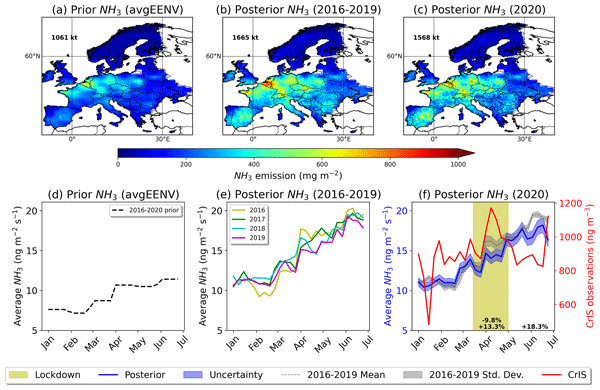
Nikolaos Evangeliou, Ondřej Tichý, Marit Svendby Otervik, Sabine Eckhardt, Yves Balkanski, and Didier A. Hauglustaine
Aerosol Research, 3, 155–174, https://doi.org/10.5194/ar-3-155-2025, https://doi.org/10.5194/ar-3-155-2025, 2025
Short summary
Short summary
The COVID-19 lockdown measures in 2020 reduced emissions of various substances, improving air quality. However, PM2.5 stayed unchanged due to NH3 and related chemical transformations. Higher humidity favoured more SO42- production, as did the accumulated NH3. Excess NH3 reacted with HNO3 to make NO3-. In high-NH3 conditions such as those in 2020, a small reduction in NOx levels drove faster oxidation of NO3- and slower deposition of total inorganic NO3-, causing high secondary PM2.5.
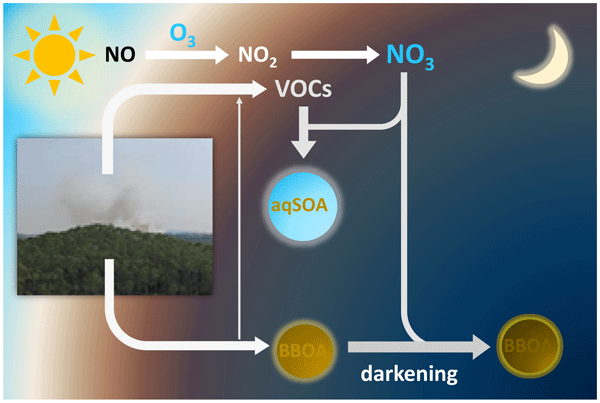
Ye Kuang, Biao Luo, Shan Huang, Junwen Liu, Weiwei Hu, Yuwen Peng, Duohong Chen, Dingli Yue, Wanyun Xu, Bin Yuan, and Min Shao
Atmos. Chem. Phys., 25, 3737–3752, https://doi.org/10.5194/acp-25-3737-2025, https://doi.org/10.5194/acp-25-3737-2025, 2025
Short summary
Short summary
This research reveals the potential importance of nighttime NO3 radical chemistry and aerosol water in the rapid formation of secondary brown carbon from diluted biomass burning emissions. The findings enhance our understanding of nighttime biomass burning evolution and its implications for climate and regional air quality, especially regarding interactions with background aerosol water and water-rich fogs and clouds.
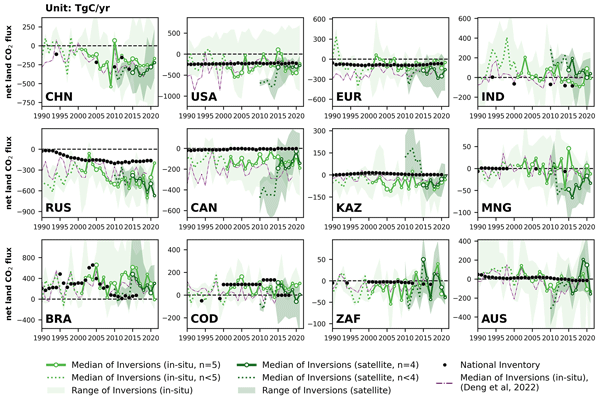
Zhu Deng, Philippe Ciais, Liting Hu, Adrien Martinez, Marielle Saunois, Rona L. Thompson, Kushal Tibrewal, Wouter Peters, Brendan Byrne, Giacomo Grassi, Paul I. Palmer, Ingrid T. Luijkx, Zhu Liu, Junjie Liu, Xuekun Fang, Tengjiao Wang, Hanqin Tian, Katsumasa Tanaka, Ana Bastos, Stephen Sitch, Benjamin Poulter, Clément Albergel, Aki Tsuruta, Shamil Maksyutov, Rajesh Janardanan, Yosuke Niwa, Bo Zheng, Joël Thanwerdas, Dmitry Belikov, Arjo Segers, and Frédéric Chevallier
Earth Syst. Sci. Data, 17, 1121–1152, https://doi.org/10.5194/essd-17-1121-2025, https://doi.org/10.5194/essd-17-1121-2025, 2025
Short summary
Short summary
This study reconciles national greenhouse gas (GHG) inventories with updated atmospheric inversion results to evaluate discrepancies for three principal GHG fluxes at the national level. Compared to our previous study, new satellite-based CO2 inversions were included and an updated mask of managed lands was used, improving agreement for Brazil and Canada. The proposed methodology can be regularly applied as a check to assess the gap between top-down inversions and bottom-up inventories.
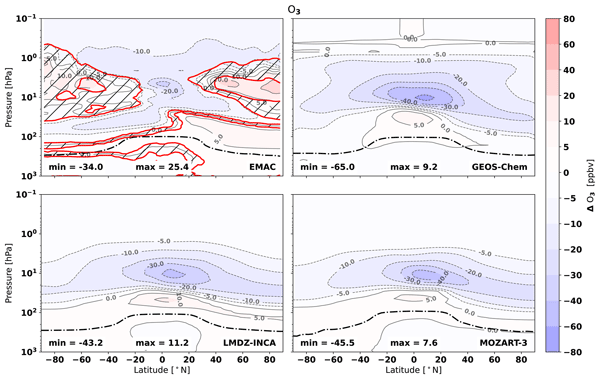
Jurriaan A. van 't Hoff, Didier Hauglustaine, Johannes Pletzer, Agnieszka Skowron, Volker Grewe, Sigrun Matthes, Maximilian M. Meuser, Robin N. Thor, and Irene C. Dedoussi
Atmos. Chem. Phys., 25, 2515–2550, https://doi.org/10.5194/acp-25-2515-2025, https://doi.org/10.5194/acp-25-2515-2025, 2025
Short summary
Short summary
Civil supersonic aircraft may return in the near future, and their emissions could lead to atmospheric changes which are detrimental to public health and the climate. We use four atmospheric chemistry models and show that emissions from a future supersonic aircraft fleet increase stratospheric nitrogen and water vapor levels, while depleting the global ozone column and leading to increases in radiative forcing. Their impacts can be reduced by reducing NOx emissions or the cruise altitude.
Xiao-Bing Li, Bin Yuan, Yibo Huangfu, Suxia Yang, Xin Song, Jipeng Qi, Xianjun He, Sihang Wang, Yubin Chen, Qing Yang, Yongxin Song, Yuwen Peng, Guiqian Tang, Jian Gao, Dasa Gu, and Min Shao
Atmos. Chem. Phys., 25, 2459–2472, https://doi.org/10.5194/acp-25-2459-2025, https://doi.org/10.5194/acp-25-2459-2025, 2025
Short summary
Short summary
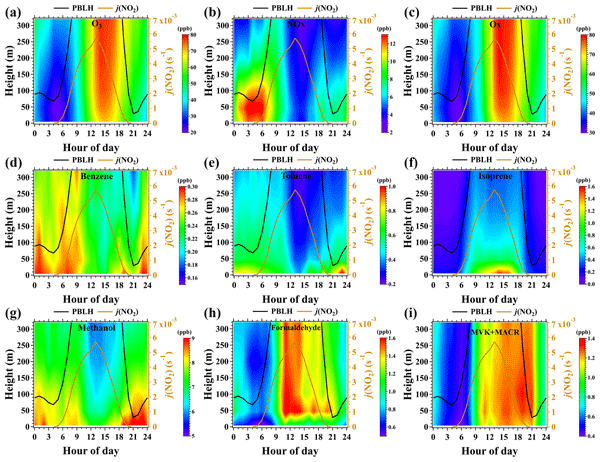
Online vertical gradient measurements of volatile organic compounds (VOCs), ozone, and NOx were conducted based on a 325 m tall tower in urban Beijing. Vertical changes in the concentrations, compositions, key drivers, and environmental impacts of VOCs were analyzed in this study. We find that VOC species display differentiated vertical variation patterns and distinct roles in contributing to photochemical ozone formation with increasing height in the urban planetary boundary layer.
Mingrui Ma, Jiachen Cao, Dan Tong, Bo Zheng, and Yu Zhao
Atmos. Chem. Phys., 25, 2147–2166, https://doi.org/10.5194/acp-25-2147-2025, https://doi.org/10.5194/acp-25-2147-2025, 2025
Short summary
Short summary
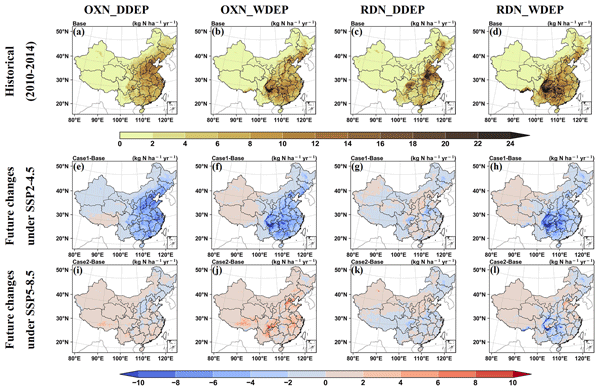
We combined two global climate change pathways and three national emission control scenarios to analyze the future evolution of reactive nitrogen (Nr) deposition till the 2060s in China with air quality modeling. We show China’s clean air and carbon neutrality policies would overcome the adverse effects of climate change and efficiently reduce Nr deposition. The outflow of Nr fluxes from mainland China to the west Pacific would also be clearly reduced from continuous stringent emission controls.
Maureen Beaudor, Didier Hauglustaine, Juliette Lathière, Martin Van Damme, Lieven Clarisse, and Nicolas Vuichard
Atmos. Chem. Phys., 25, 2017–2046, https://doi.org/10.5194/acp-25-2017-2025, https://doi.org/10.5194/acp-25-2017-2025, 2025
Short summary
Short summary
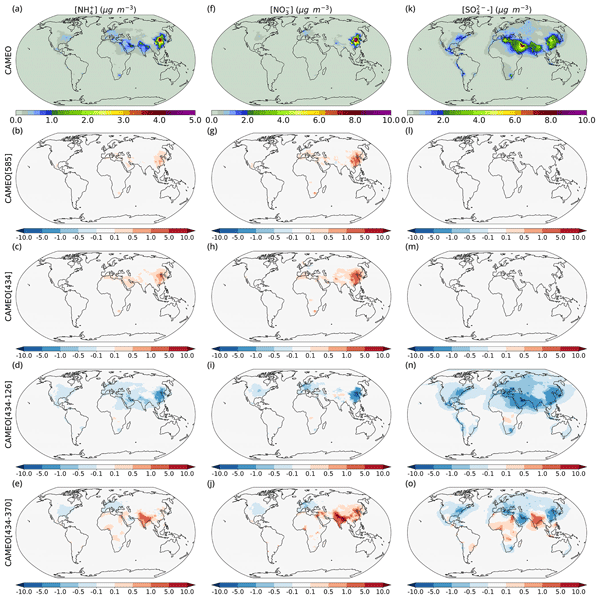
Agriculture is the biggest ammonia (NH3) source, impacting air quality, climate, and ecosystems. Because of food demand, NH3 emissions are projected to rise by 2100. Using a global model, we analyzed the impact of present and future NH3 emissions generated from a land model. Our results show improved ammonia patterns compared to a reference inventory. Future scenarios predict up to 70 % increase in global NH3 burden, with significant changes in radiative forcing that can greatly elevate N2O.
Hui Li, Jiaxin Qiu, and Bo Zheng
Atmos. Chem. Phys., 25, 1949–1963, https://doi.org/10.5194/acp-25-1949-2025, https://doi.org/10.5194/acp-25-1949-2025, 2025
Short summary
Short summary
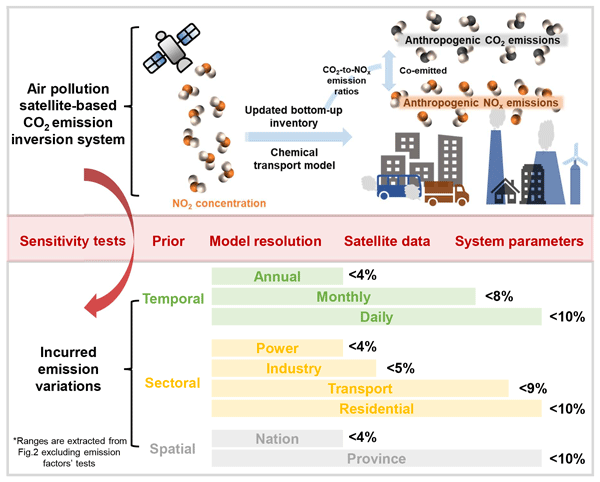
We conduct a sensitivity analysis with 31 tests on various factors including prior emissions, model resolution, satellite constraint, and other system configurations to assess the vulnerability of emission estimates across temporal, sectoral, and regional dimensions. This reveals the robustness of emissions estimated by this air-pollution-satellite-based CO2 emission inversion system, with relative change between tests and base inversion below 4.0 % for national annual NOx and CO2 emissions.
Mingfu Cai, Chenshuo Ye, Bin Yuan, Shan Huang, E Zheng, Suxia Yang, Zelong Wang, Yi Lin, Tiange Li, Weiwei Hu, Wei Chen, Qicong Song, Wei Li, Yuwen Peng, Baoling Liang, Qibin Sun, Jun Zhao, Duohong Chen, Jiaren Sun, Zhiyong Yang, and Min Shao
Atmos. Chem. Phys., 24, 13065–13079, https://doi.org/10.5194/acp-24-13065-2024, https://doi.org/10.5194/acp-24-13065-2024, 2024
Short summary
Short summary
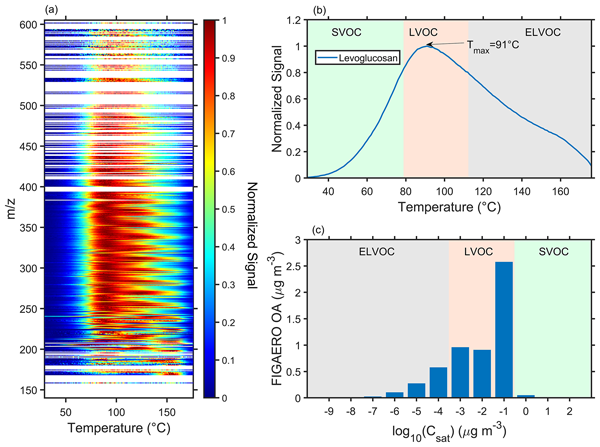
This study investigated the daytime secondary organic aerosol (SOA) formation in urban plumes. We observed a significant daytime SOA formation through gas–particle partitioning when the site was affected by urban plumes. A box model simulation indicated that urban pollutants (nitrogen oxide and volatile organic compounds) could enhance the oxidizing capacity, while the elevated volatile organic compounds were mainly responsible for promoting daytime SOA formation.
Liu Yan, Qiang Zhang, Bo Zheng, and Kebin He
Earth Syst. Sci. Data, 16, 4497–4509, https://doi.org/10.5194/essd-16-4497-2024, https://doi.org/10.5194/essd-16-4497-2024, 2024
Short summary
Short summary
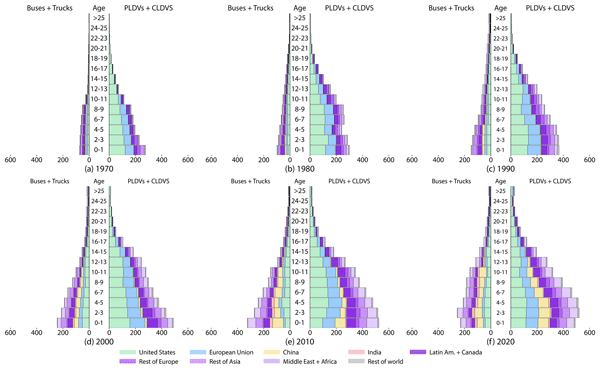
A new database of fuel-, vehicle-type-, and age-specific CO2 emissions from global on-road vehicles from 1970 to 2020 is developed with the fleet turnover model built in this study. Based on this database, the evolution of the global vehicle stock over 50 years is analyzed, the dominant emission contributors by vehicle and fuel type are identified, and the age distribution of on-road CO2 emissions is characterized further.
Jun Zhou, Chunsheng Zhang, Aiming Liu, Bin Yuan, Yan Wang, Wenjie Wang, Jie-Ping Zhou, Yixin Hao, Xiao-Bing Li, Xianjun He, Xin Song, Yubin Chen, Suxia Yang, Shuchun Yang, Yanfeng Wu, Bin Jiang, Shan Huang, Junwen Liu, Yuwen Peng, Jipeng Qi, Minhui Deng, Bowen Zhong, Yibo Huangfu, and Min Shao
Atmos. Chem. Phys., 24, 9805–9826, https://doi.org/10.5194/acp-24-9805-2024, https://doi.org/10.5194/acp-24-9805-2024, 2024
Short summary
Short summary
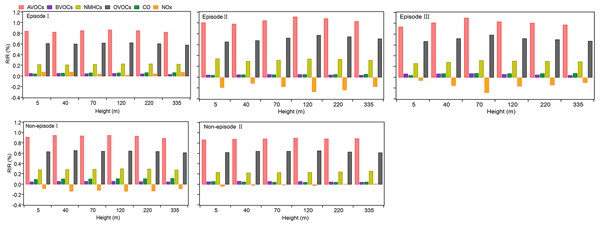
In-depth understanding of the near-ground vertical variability in photochemical ozone (O3) formation is crucial for mitigating O3 pollution. Utilizing a self-built vertical observation system, a direct net photochemical O3 production rate detection system, and an observation-based model, we diagnosed the vertical distributions and formation mechanism of net photochemical O3 production rates and sensitivity in the Pearl River Delta region, one of the most O3-polluted areas in China.
Yuan Dai, Junfeng Wang, Houjun Wang, Shijie Cui, Yunjiang Zhang, Haiwei Li, Yun Wu, Ming Wang, Eleonora Aruffo, and Xinlei Ge
Atmos. Chem. Phys., 24, 9733–9748, https://doi.org/10.5194/acp-24-9733-2024, https://doi.org/10.5194/acp-24-9733-2024, 2024
Short summary
Short summary
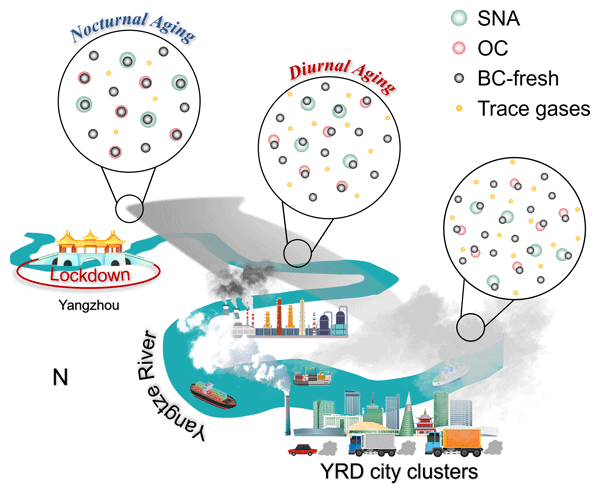
Short-term strict emission control can improve air quality, but its effectiveness needs assessment. During the 2021 summer COVID-19 lockdown in Yangzhou, we found that PM2.5 levels did not decrease despite reduced primary emissions. Aged black-carbon particles increased substantially due to higher O3 levels and transported pollutants. High humidity and low wind also played key roles. The results highlight the importance of a regionally balanced control strategy for future air quality management.
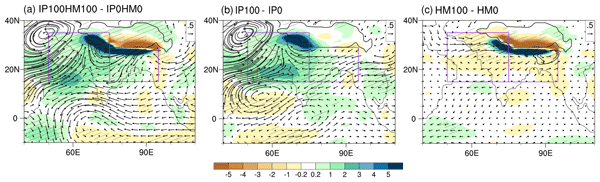
Meng Zuo, Yong Sun, Yan Zhao, Gilles Ramstein, Lin Ding, and Tianjun Zhou
Clim. Past, 20, 1817–1836, https://doi.org/10.5194/cp-20-1817-2024, https://doi.org/10.5194/cp-20-1817-2024, 2024
Short summary
Short summary
Our research explores the intensification of the South Asian summer monsoon (SASM) during the Middle Miocene (17–12 Ma). Using an advanced model, we reveal that the uplift of the Iranian Plateau significantly influenced the SASM, especially in northwestern India. This finding surpasses the impact of factors like Himalayan uplift and global CO2 changes. We shed light on the complex dynamics shaping ancient monsoons, providing valuable insights into Earth's climatic history.
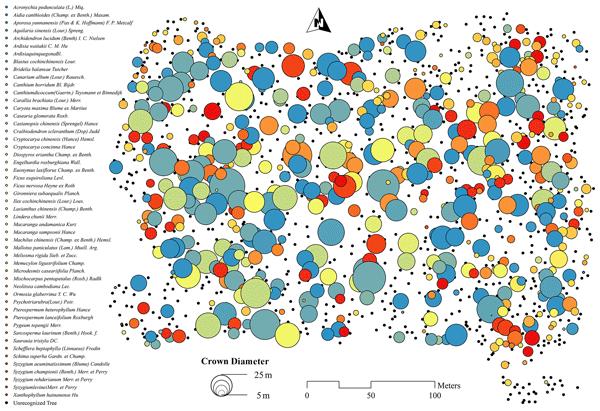
Xianzhong Duan, Ming Chang, Guotong Wu, Suping Situ, Shengjie Zhu, Qi Zhang, Yibo Huangfu, Weiwen Wang, Weihua Chen, Bin Yuan, and Xuemei Wang
Atmos. Meas. Tech., 17, 4065–4079, https://doi.org/10.5194/amt-17-4065-2024, https://doi.org/10.5194/amt-17-4065-2024, 2024
Short summary
Short summary
Accurately estimating biogenic volatile organic compound (BVOC) emissions in forest ecosystems has been challenging. This research presents a framework that utilizes drone-based lidar, photogrammetry, and image recognition technologies to identify plant species and estimate BVOC emissions. The largest cumulative isoprene emissions were found in the Myrtaceae family, while those of monoterpenes were from the Rubiaceae family.
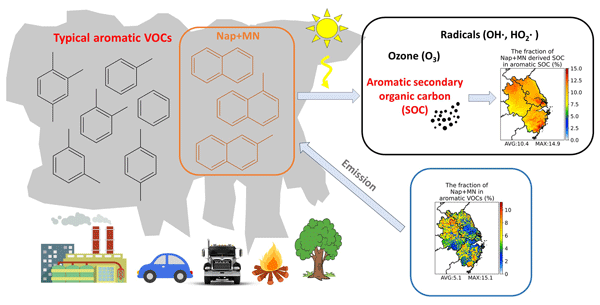
Fei Ye, Jingyi Li, Yaqin Gao, Hongli Wang, Jingyu An, Cheng Huang, Song Guo, Keding Lu, Kangjia Gong, Haowen Zhang, Momei Qin, and Jianlin Hu
Atmos. Chem. Phys., 24, 7467–7479, https://doi.org/10.5194/acp-24-7467-2024, https://doi.org/10.5194/acp-24-7467-2024, 2024
Short summary
Short summary
Naphthalene (Nap) and methylnaphthalene (MN) are key precursors of secondary organic aerosol (SOA), yet their sources and sinks are often inadequately represented in air quality models. In this study, we incorporated detailed emissions, gas-phase chemistry, and SOA parameterization of Nap and MN into CMAQ to address this issue. The findings revealed remarkably high SOA formation potentials for these compounds despite their low emissions in the Yangtze River Delta region during summer.
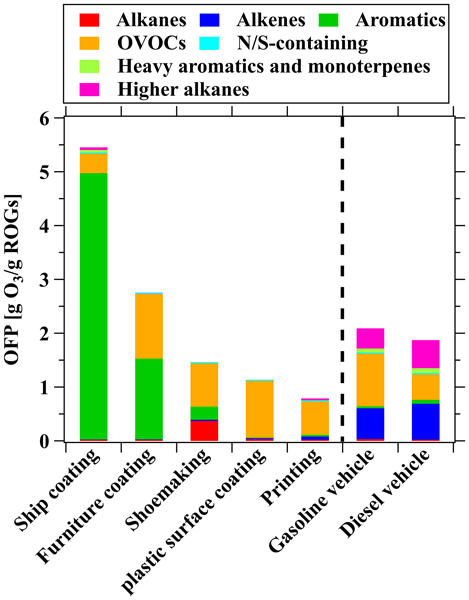
Sihang Wang, Bin Yuan, Xianjun He, Ru Cui, Xin Song, Yubin Chen, Caihong Wu, Chaomin Wang, Yibo Huangfu, Xiao-Bing Li, Boguang Wang, and Min Shao
Atmos. Chem. Phys., 24, 7101–7121, https://doi.org/10.5194/acp-24-7101-2024, https://doi.org/10.5194/acp-24-7101-2024, 2024
Short summary
Short summary
Emissions of reactive organic gases from industrial volatile chemical product sources are measured. There are large differences among these industrial sources. We show that oxygenated species account for significant contributions to reactive organic gas emissions, especially for industrial sources utilizing water-borne chemicals.
Qing Yang, Xiao-Bing Li, Bin Yuan, Xiaoxiao Zhang, Yibo Huangfu, Lei Yang, Xianjun He, Jipeng Qi, and Min Shao
Atmos. Chem. Phys., 24, 6865–6882, https://doi.org/10.5194/acp-24-6865-2024, https://doi.org/10.5194/acp-24-6865-2024, 2024
Short summary
Short summary
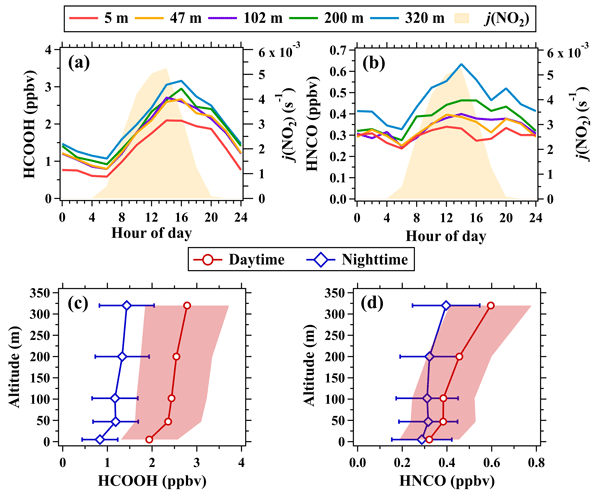
Online vertical gradient measurements of formic and isocyanic acids were made based on a 320 m tower in a megacity. Vertical variations and sources of the two acids were analyzed in this study. We find that formic and isocyanic acids exhibited positive vertical gradients and were mainly contributed by photochemical formations. The formation of formic and isocyanic acids was also significantly enhanced in urban regions aloft.
Fangbing Li, Dan Dan Huang, Linhui Tian, Bin Yuan, Wen Tan, Liang Zhu, Penglin Ye, Douglas Worsnop, Ka In Hoi, Kai Meng Mok, and Yong Jie Li
Atmos. Meas. Tech., 17, 2415–2427, https://doi.org/10.5194/amt-17-2415-2024, https://doi.org/10.5194/amt-17-2415-2024, 2024
Short summary
Short summary
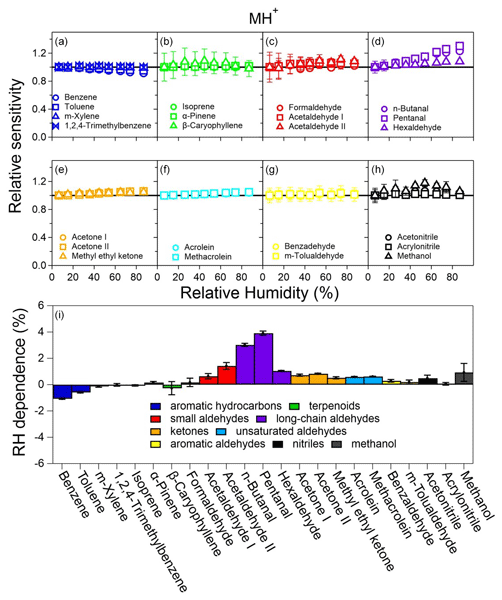
The responses of protonated, adduct, and fragmented ions of 21 volatile organic compounds (VOCs) were investigated with varying instrument settings and relative humidity (RH) in a Vocus proton-transfer-reaction mass spectrometer (PTR-MS). The protonated ions of most VOCs studied show < 15 % variation in sensitivity, except for some long-chain aldehydes. The relationship between sensitivity and PTR rate constant is complicated by the influences from ion transmission and protonated ion fraction.
Wenjie Wang, Bin Yuan, Hang Su, Yafang Cheng, Jipeng Qi, Sihang Wang, Wei Song, Xinming Wang, Chaoyang Xue, Chaoqun Ma, Fengxia Bao, Hongli Wang, Shengrong Lou, and Min Shao
Atmos. Chem. Phys., 24, 4017–4027, https://doi.org/10.5194/acp-24-4017-2024, https://doi.org/10.5194/acp-24-4017-2024, 2024
Short summary
Short summary
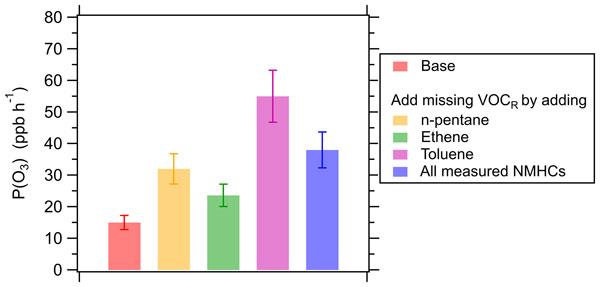
This study investigates the important role of unmeasured volatile organic compounds (VOCs) in ozone formation. Based on results in a megacity of China, we show that unmeasured VOCs can contribute significantly to ozone fomation and also influence the determination of ozone control strategy. Our results show that these unmeasured VOCs are mainly from human sources.
Xinlei Ge, Yele Sun, Justin Trousdell, Mindong Chen, and Qi Zhang
Atmos. Meas. Tech., 17, 423–439, https://doi.org/10.5194/amt-17-423-2024, https://doi.org/10.5194/amt-17-423-2024, 2024
Short summary
Short summary
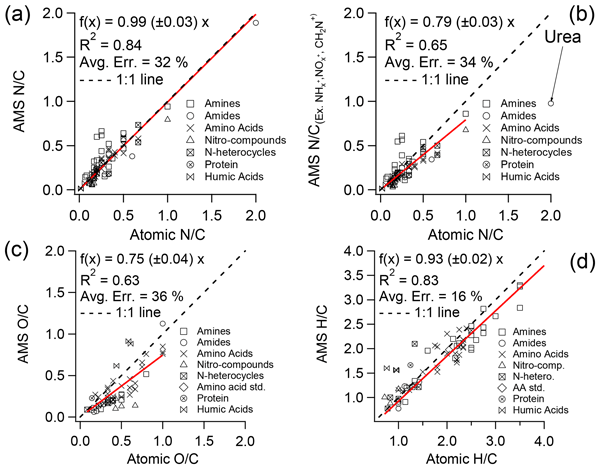
This study aims to enhance the application of the Aerodyne high-resolution aerosol mass spectrometer (HR-AMS) in characterizing organic nitrogen (ON) species within aerosol particles and droplets. A thorough analysis was conducted on 75 ON standards that represent a diverse spectrum of ambient ON types. The results underscore the capacity of the HR-AMS in examining the concentration and chemistry of atmospheric ON compounds, thereby offering insights into their sources and environmental impacts.
Yongliang She, Jingyi Li, Xiaopu Lyu, Hai Guo, Momei Qin, Xiaodong Xie, Kangjia Gong, Fei Ye, Jianjiong Mao, Lin Huang, and Jianlin Hu
Atmos. Chem. Phys., 24, 219–233, https://doi.org/10.5194/acp-24-219-2024, https://doi.org/10.5194/acp-24-219-2024, 2024
Short summary
Short summary
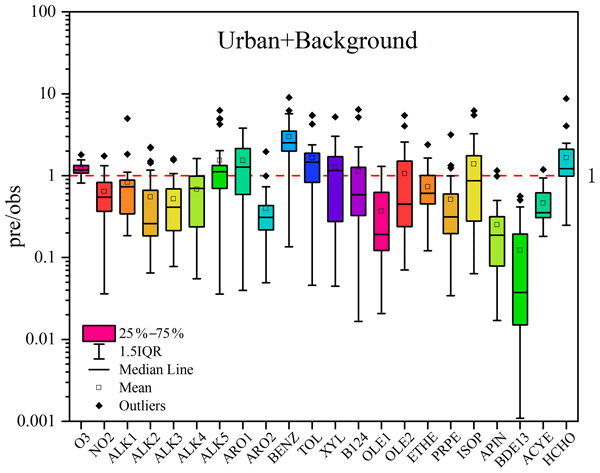
In this study, we use multi-site volatile organic compound (VOC) measurements to evaluate the CMAQ-model-predicted VOCs and assess the impacts of VOC bias on O3 simulation. Our results demonstrate that current modeling setups and emission inventories are likely to underpredict VOC concentrations, and this underprediction of VOCs contributes to lower O3 predictions in China.
Ondřej Tichý, Sabine Eckhardt, Yves Balkanski, Didier Hauglustaine, and Nikolaos Evangeliou
Atmos. Chem. Phys., 23, 15235–15252, https://doi.org/10.5194/acp-23-15235-2023, https://doi.org/10.5194/acp-23-15235-2023, 2023
Short summary
Short summary
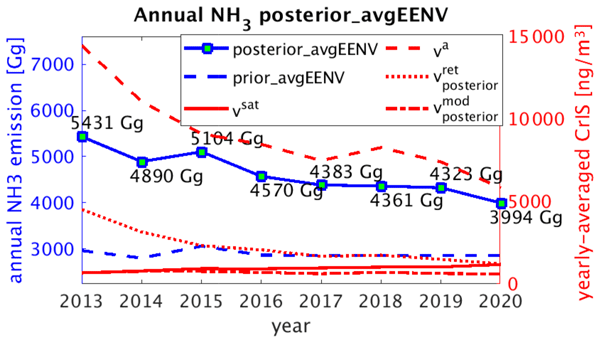
We show declining trends in NH3 emissions over Europe for 2013–2020 using advanced dispersion and inverse modelling and satellite measurements from CrIS. Emissions decreased by −26% since 2013, showing that the abatement strategies adopted by the European Union have been very efficient. Ammonia emissions are low in winter and peak in summer due to temperature-dependent soil volatilization. The largest decreases were observed in central and western Europe in countries with high emissions.
Yann Cohen, Didier Hauglustaine, Bastien Sauvage, Susanne Rohs, Patrick Konjari, Ulrich Bundke, Andreas Petzold, Valérie Thouret, Andreas Zahn, and Helmut Ziereis
Atmos. Chem. Phys., 23, 14973–15009, https://doi.org/10.5194/acp-23-14973-2023, https://doi.org/10.5194/acp-23-14973-2023, 2023
Short summary
Short summary
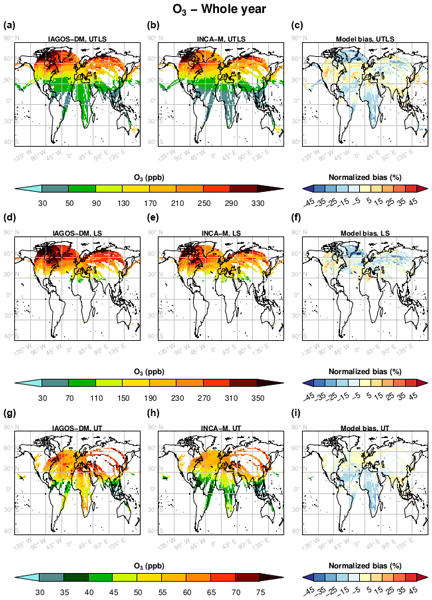
The upper troposphere–lower stratosphere (UTLS) is a key region regarding the lower atmospheric composition. This study consists of a comprehensive evaluation of an up-to-date chemistry–climate model in this layer, using regular in situ measurements based on passenger aircraft. For this purpose, a specific software (Interpol-IAGOS) has been updated and made publicly available. The model reproduces the carbon monoxide peaks due to biomass burning over the continental tropics particularly well.
Pierre Friedlingstein, Michael O'Sullivan, Matthew W. Jones, Robbie M. Andrew, Dorothee C. E. Bakker, Judith Hauck, Peter Landschützer, Corinne Le Quéré, Ingrid T. Luijkx, Glen P. Peters, Wouter Peters, Julia Pongratz, Clemens Schwingshackl, Stephen Sitch, Josep G. Canadell, Philippe Ciais, Robert B. Jackson, Simone R. Alin, Peter Anthoni, Leticia Barbero, Nicholas R. Bates, Meike Becker, Nicolas Bellouin, Bertrand Decharme, Laurent Bopp, Ida Bagus Mandhara Brasika, Patricia Cadule, Matthew A. Chamberlain, Naveen Chandra, Thi-Tuyet-Trang Chau, Frédéric Chevallier, Louise P. Chini, Margot Cronin, Xinyu Dou, Kazutaka Enyo, Wiley Evans, Stefanie Falk, Richard A. Feely, Liang Feng, Daniel J. Ford, Thomas Gasser, Josefine Ghattas, Thanos Gkritzalis, Giacomo Grassi, Luke Gregor, Nicolas Gruber, Özgür Gürses, Ian Harris, Matthew Hefner, Jens Heinke, Richard A. Houghton, George C. Hurtt, Yosuke Iida, Tatiana Ilyina, Andrew R. Jacobson, Atul Jain, Tereza Jarníková, Annika Jersild, Fei Jiang, Zhe Jin, Fortunat Joos, Etsushi Kato, Ralph F. Keeling, Daniel Kennedy, Kees Klein Goldewijk, Jürgen Knauer, Jan Ivar Korsbakken, Arne Körtzinger, Xin Lan, Nathalie Lefèvre, Hongmei Li, Junjie Liu, Zhiqiang Liu, Lei Ma, Greg Marland, Nicolas Mayot, Patrick C. McGuire, Galen A. McKinley, Gesa Meyer, Eric J. Morgan, David R. Munro, Shin-Ichiro Nakaoka, Yosuke Niwa, Kevin M. O'Brien, Are Olsen, Abdirahman M. Omar, Tsuneo Ono, Melf Paulsen, Denis Pierrot, Katie Pocock, Benjamin Poulter, Carter M. Powis, Gregor Rehder, Laure Resplandy, Eddy Robertson, Christian Rödenbeck, Thais M. Rosan, Jörg Schwinger, Roland Séférian, T. Luke Smallman, Stephen M. Smith, Reinel Sospedra-Alfonso, Qing Sun, Adrienne J. Sutton, Colm Sweeney, Shintaro Takao, Pieter P. Tans, Hanqin Tian, Bronte Tilbrook, Hiroyuki Tsujino, Francesco Tubiello, Guido R. van der Werf, Erik van Ooijen, Rik Wanninkhof, Michio Watanabe, Cathy Wimart-Rousseau, Dongxu Yang, Xiaojuan Yang, Wenping Yuan, Xu Yue, Sönke Zaehle, Jiye Zeng, and Bo Zheng
Earth Syst. Sci. Data, 15, 5301–5369, https://doi.org/10.5194/essd-15-5301-2023, https://doi.org/10.5194/essd-15-5301-2023, 2023
Short summary
Short summary
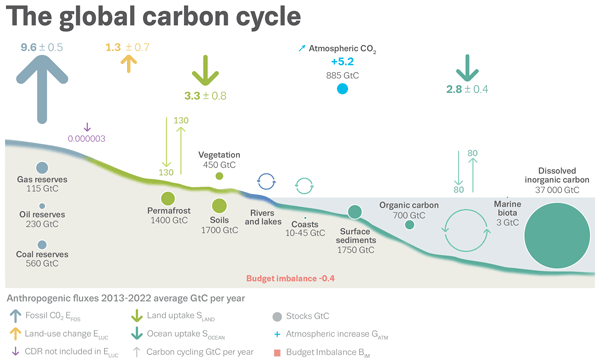
The Global Carbon Budget 2023 describes the methodology, main results, and data sets used to quantify the anthropogenic emissions of carbon dioxide (CO2) and their partitioning among the atmosphere, land ecosystems, and the ocean over the historical period (1750–2023). These living datasets are updated every year to provide the highest transparency and traceability in the reporting of CO2, the key driver of climate change.
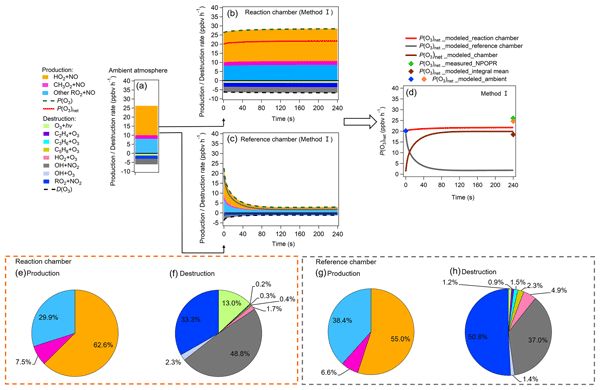
Yixin Hao, Jun Zhou, Jie-Ping Zhou, Yan Wang, Suxia Yang, Yibo Huangfu, Xiao-Bing Li, Chunsheng Zhang, Aiming Liu, Yanfeng Wu, Yaqing Zhou, Shuchun Yang, Yuwen Peng, Jipeng Qi, Xianjun He, Xin Song, Yubin Chen, Bin Yuan, and Min Shao
Atmos. Chem. Phys., 23, 9891–9910, https://doi.org/10.5194/acp-23-9891-2023, https://doi.org/10.5194/acp-23-9891-2023, 2023
Short summary
Short summary
By employing an improved net photochemical ozone production rate (NPOPR) detection system based on the dual-channel reaction chamber technique, we measured the net photochemical ozone production rate in the Pearl River Delta in China. The photochemical ozone formation mechanisms in the reaction and reference chambers were investigated using the observation-data-constrained box model, which helped us to validate the NPOPR detection system and understand photochemical ozone formation mechanism.
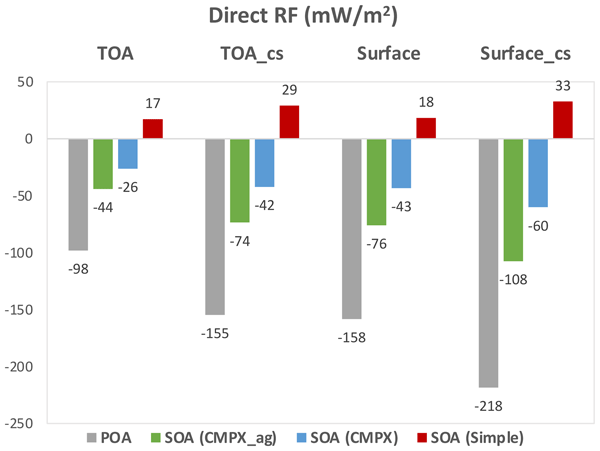
Yiqi Zheng, Larry W. Horowitz, Raymond Menzel, David J. Paynter, Vaishali Naik, Jingyi Li, and Jingqiu Mao
Atmos. Chem. Phys., 23, 8993–9007, https://doi.org/10.5194/acp-23-8993-2023, https://doi.org/10.5194/acp-23-8993-2023, 2023
Short summary
Short summary
Biogenic secondary organic aerosols (SOAs) account for a large fraction of fine aerosol at the global scale. Using long-term measurements and a climate model, we investigate anthropogenic impacts on biogenic SOA at both decadal and centennial timescales. Results show that despite reductions in biogenic precursor emissions, SOA has been strongly amplified by anthropogenic emissions since the preindustrial era and exerts a cooling radiative forcing.
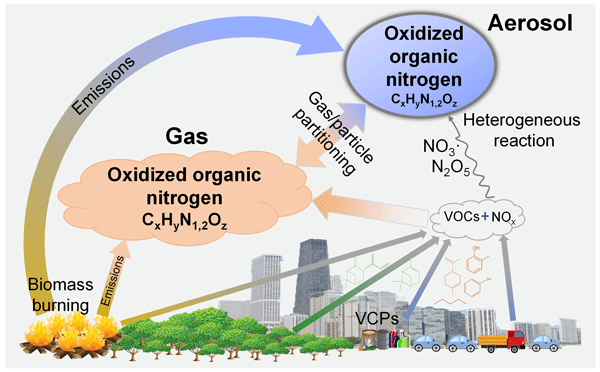
Yiyu Cai, Chenshuo Ye, Wei Chen, Weiwei Hu, Wei Song, Yuwen Peng, Shan Huang, Jipeng Qi, Sihang Wang, Chaomin Wang, Caihong Wu, Zelong Wang, Baolin Wang, Xiaofeng Huang, Lingyan He, Sasho Gligorovski, Bin Yuan, Min Shao, and Xinming Wang
Atmos. Chem. Phys., 23, 8855–8877, https://doi.org/10.5194/acp-23-8855-2023, https://doi.org/10.5194/acp-23-8855-2023, 2023
Short summary
Short summary
We studied the variability and molecular composition of ambient oxidized organic nitrogen (OON) in both gas and particle phases using a state-of-the-art online mass spectrometer in urban air. Biomass burning and secondary formation were found to be the two major sources of OON. Daytime nitrate radical chemistry for OON formation was more important than previously thought. Our results improved the understanding of the sources and molecular composition of OON in the polluted urban atmosphere.
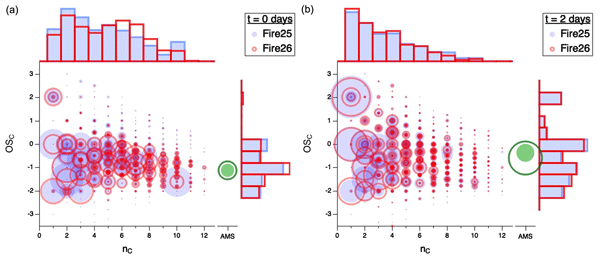
Kevin J. Nihill, Matthew M. Coggon, Christopher Y. Lim, Abigail R. Koss, Bin Yuan, Jordan E. Krechmer, Kanako Sekimoto, Jose L. Jimenez, Joost de Gouw, Christopher D. Cappa, Colette L. Heald, Carsten Warneke, and Jesse H. Kroll
Atmos. Chem. Phys., 23, 7887–7899, https://doi.org/10.5194/acp-23-7887-2023, https://doi.org/10.5194/acp-23-7887-2023, 2023
Short summary
Short summary
In this work, we collect emissions from controlled burns of biomass fuels that can be found in the western United States into an environmental chamber in order to simulate their oxidation as they pass through the atmosphere. These findings provide a detailed characterization of the composition of the atmosphere downwind of wildfires. In turn, this will help to explore the effects of these changing emissions on downwind populations and will also directly inform atmospheric and climate models.
Yaqin Gao, Hongli Wang, Lingling Yuan, Shengao Jing, Bin Yuan, Guofeng Shen, Liang Zhu, Abigail Koss, Yingjie Li, Qian Wang, Dan Dan Huang, Shuhui Zhu, Shikang Tao, Shengrong Lou, and Cheng Huang
Atmos. Chem. Phys., 23, 6633–6646, https://doi.org/10.5194/acp-23-6633-2023, https://doi.org/10.5194/acp-23-6633-2023, 2023
Short summary
Short summary
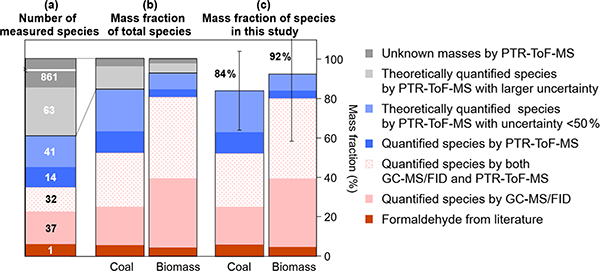
A near-complete speciation of reactive organic gases from residential combustion was developed to get more insights into their atmospheric effects. Oxygenated species, higher hydrocarbons and nitrogen-containing species played larger roles in these emissions compared with common hydrocarbons. Based on the near-complete speciation, these emissions were largely underestimated, leading to more underestimation of their hydroxyl radical reactivity and secondary organic aerosol formation potential.
Juan Hong, Min Tang, Qiaoqiao Wang, Nan Ma, Shaowen Zhu, Shaobin Zhang, Xihao Pan, Linhong Xie, Guo Li, Uwe Kuhn, Chao Yan, Jiangchuan Tao, Ye Kuang, Yao He, Wanyun Xu, Runlong Cai, Yaqing Zhou, Zhibin Wang, Guangsheng Zhou, Bin Yuan, Yafang Cheng, and Hang Su
Atmos. Chem. Phys., 23, 5699–5713, https://doi.org/10.5194/acp-23-5699-2023, https://doi.org/10.5194/acp-23-5699-2023, 2023
Short summary
Short summary
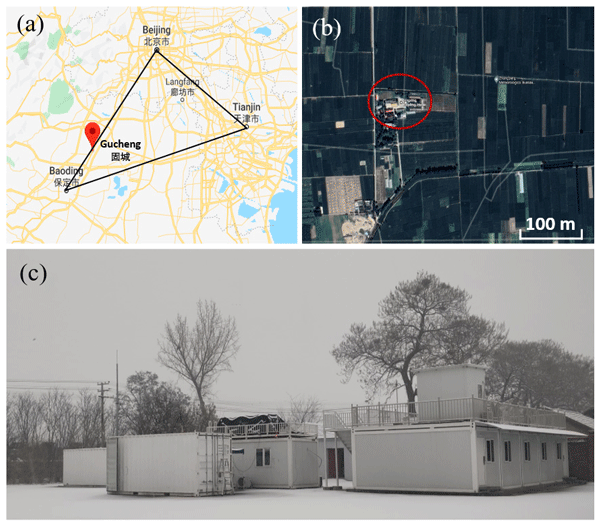
A comprehensive investigation of the characteristics of new particle formation (NPF) events was conducted at a rural site on the North China Plain (NCP), China, during the wintertime of 2018 by covering the particle number size distribution down to sub–3 nm. Potential mechanisms for NPF under the current environment were explored, followed by a further discussion on the factors governing the occurrence of NPF at this rural site compared with other regions (e.g., urban areas) in the NCP region.
Peng Wang, Ruhan Zhang, Shida Sun, Meng Gao, Bo Zheng, Dan Zhang, Yanli Zhang, Gregory R. Carmichael, and Hongliang Zhang
Atmos. Chem. Phys., 23, 2983–2996, https://doi.org/10.5194/acp-23-2983-2023, https://doi.org/10.5194/acp-23-2983-2023, 2023
Short summary
Short summary
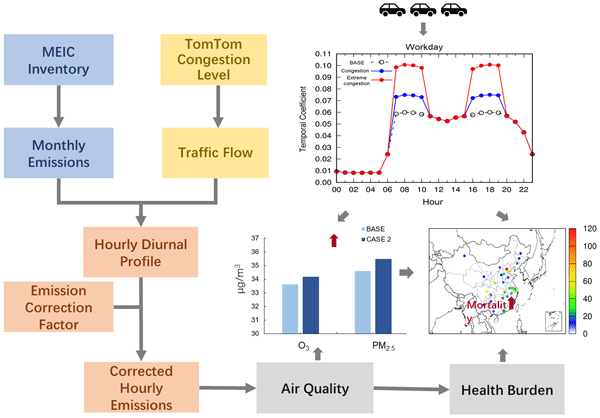
In China, the number of vehicles has jumped significantly in the last decade. This caused severe traffic congestion and aggravated air pollution. In this study, we developed a new temporal allocation approach to quantify the impacts of traffic congestion. We found that traffic congestion worsens air quality and the health burden across China, especially in the urban clusters. More effective and comprehensive vehicle emission control policies should be implemented to improve air quality in China.
Maureen Beaudor, Nicolas Vuichard, Juliette Lathière, Nikolaos Evangeliou, Martin Van Damme, Lieven Clarisse, and Didier Hauglustaine
Geosci. Model Dev., 16, 1053–1081, https://doi.org/10.5194/gmd-16-1053-2023, https://doi.org/10.5194/gmd-16-1053-2023, 2023
Short summary
Short summary
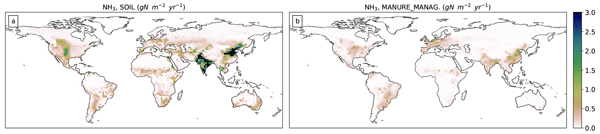
Ammonia mainly comes from the agricultural sector, and its volatilization relies on environmental variables. Our approach aims at benefiting from an Earth system model framework to estimate it. By doing so, we represent a consistent spatial distribution of the emissions' response to environmental changes.
We greatly improved the seasonal cycle of emissions compared with previous work. In addition, our model includes natural soil emissions (that are rarely represented in modeling approaches).

Yuanhong Zhao, Marielle Saunois, Philippe Bousquet, Xin Lin, Michaela I. Hegglin, Josep G. Canadell, Robert B. Jackson, and Bo Zheng
Atmos. Chem. Phys., 23, 789–807, https://doi.org/10.5194/acp-23-789-2023, https://doi.org/10.5194/acp-23-789-2023, 2023
Short summary
Short summary
The large uncertainties in OH simulated by atmospheric chemistry models hinder accurate estimates of CH4 chemical loss through the bottom-up method. This study presents a new approach based on OH precursor observations and a chemical box model to improve the tropospheric OH distributions simulated by atmospheric chemistry models. Through this approach, both the global OH burden and the corresponding methane chemical loss reach consistency with the top-down method based on MCF inversions.
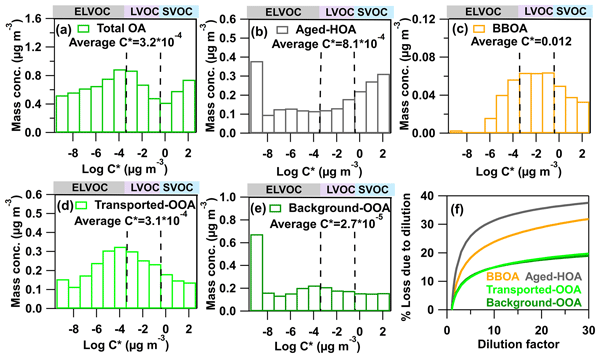
Tingting Feng, Yingkun Wang, Weiwei Hu, Ming Zhu, Wei Song, Wei Chen, Yanyan Sang, Zheng Fang, Wei Deng, Hua Fang, Xu Yu, Cheng Wu, Bin Yuan, Shan Huang, Min Shao, Xiaofeng Huang, Lingyan He, Young Ro Lee, Lewis Gregory Huey, Francesco Canonaco, Andre S. H. Prevot, and Xinming Wang
Atmos. Chem. Phys., 23, 611–636, https://doi.org/10.5194/acp-23-611-2023, https://doi.org/10.5194/acp-23-611-2023, 2023
Short summary
Short summary
To investigate the impact of aging processes on organic aerosols (OA), we conducted a comprehensive field study at a continental remote site using an on-line mass spectrometer. The results show that OA in the Chinese outflows were strongly influenced by upwind anthropogenic emissions. The aging processes can significantly decrease the OA volatility and result in a varied viscosity of OA under different circumstances, signifying the complex physiochemical properties of OA in aged plumes.
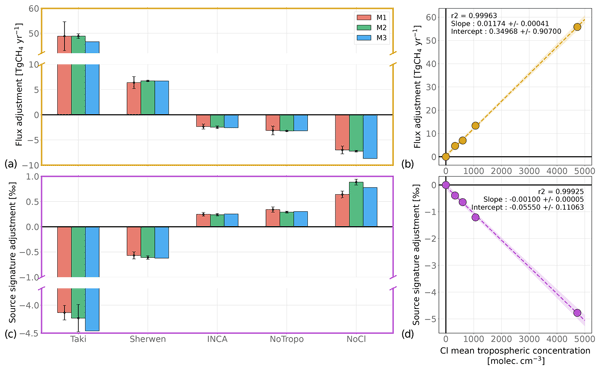
Joël Thanwerdas, Marielle Saunois, Isabelle Pison, Didier Hauglustaine, Antoine Berchet, Bianca Baier, Colm Sweeney, and Philippe Bousquet
Atmos. Chem. Phys., 22, 15489–15508, https://doi.org/10.5194/acp-22-15489-2022, https://doi.org/10.5194/acp-22-15489-2022, 2022
Short summary
Short summary
Atmospheric methane (CH4) concentrations have been rising since 2007, resulting from an imbalance between CH4 sources and sinks. The CH4 budget is generally estimated through top-down approaches using CH4 and δ13C(CH4) observations as constraints. The oxidation by chlorine (Cl) contributes little to the total oxidation of CH4 but strongly influences δ13C(CH4). Here, we compare multiple recent Cl fields and quantify the influence of Cl concentrations on CH4, δ13C(CH4), and CH4 budget estimates.
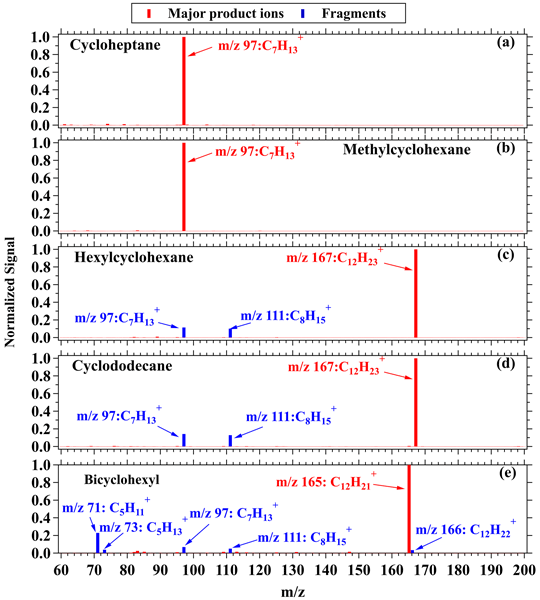
Yubin Chen, Bin Yuan, Chaomin Wang, Sihang Wang, Xianjun He, Caihong Wu, Xin Song, Yibo Huangfu, Xiao-Bing Li, Yijia Liao, and Min Shao
Atmos. Meas. Tech., 15, 6935–6947, https://doi.org/10.5194/amt-15-6935-2022, https://doi.org/10.5194/amt-15-6935-2022, 2022
Short summary
Short summary
In this study, we demonstrate that selective online measurements of cycloalkanes can be achieved using proton transfer reaction time-of-flight mass spectrometry with NO+ chemical ionization (NO+ PTR-ToF-MS), with fast response and low detection limits. Applications of this method in both urban air and emission sources will be shown.
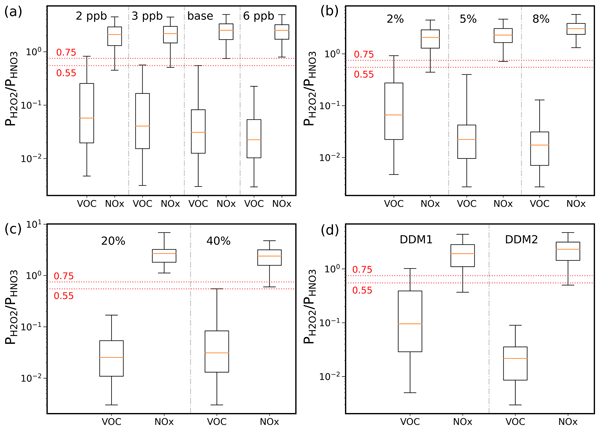
Xun Li, Momei Qin, Lin Li, Kangjia Gong, Huizhong Shen, Jingyi Li, and Jianlin Hu
Atmos. Chem. Phys., 22, 14799–14811, https://doi.org/10.5194/acp-22-14799-2022, https://doi.org/10.5194/acp-22-14799-2022, 2022
Short summary
Short summary
Photochemical indicators have been widely used to predict O3–NOx–VOC sensitivity with given thresholds. Here we assessed the effectiveness of four indicators with a case study in the Yangtze River Delta, China. The overall performance was good, while some indicators showed inconsistencies with the O3 isopleths. The methodology used to determine the thresholds may produce uncertainties. These results would improve our understanding of the use of photochemical indicators in policy implications.
Haichao Wang, Bin Yuan, E Zheng, Xiaoxiao Zhang, Jie Wang, Keding Lu, Chenshuo Ye, Lei Yang, Shan Huang, Weiwei Hu, Suxia Yang, Yuwen Peng, Jipeng Qi, Sihang Wang, Xianjun He, Yubin Chen, Tiange Li, Wenjie Wang, Yibo Huangfu, Xiaobing Li, Mingfu Cai, Xuemei Wang, and Min Shao
Atmos. Chem. Phys., 22, 14837–14858, https://doi.org/10.5194/acp-22-14837-2022, https://doi.org/10.5194/acp-22-14837-2022, 2022
Short summary
Short summary
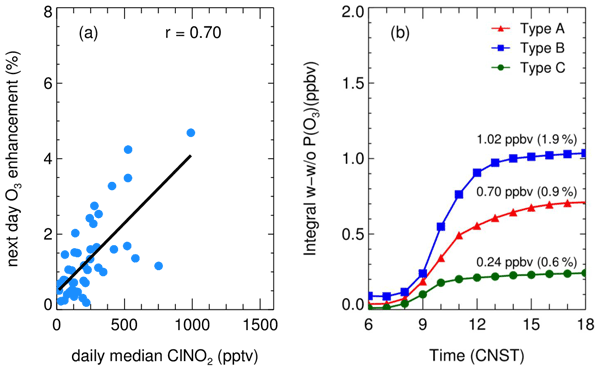
We present intensive field measurement of ClNO2 in the Pearl River Delta in 2019. Large variation in the level, formation, and atmospheric impacts of ClNO2 was found in different air masses. ClNO2 formation was limited by the particulate chloride (Cl−) and aerosol surface area. Our results reveal that Cl− originated from various anthropogenic emissions rather than sea sources and show minor contribution to the O3 pollution and photochemistry.
Meng Zuo, Yong Sun, Yan Zhao, Gilles Ramstein, Lin Ding, and Tianjun Zhou
Clim. Past Discuss., https://doi.org/10.5194/cp-2022-76, https://doi.org/10.5194/cp-2022-76, 2022
Manuscript not accepted for further review
Short summary
Short summary
Based on the coupled model simulations with realistic early to middle Miocene paleogeography, we reveal that the enhanced South Asian summer monsoon in Middle Miocene is mainly caused by the uplift of Iranian Plateau (IP), rather than the Himalayas. The elevated IP insulates the warm and moist airs in the south of the IP and produces a low-level cyclonic circulation, which leads to the convergence of the warm and moist air in the northwestern India and enhancing the monsoonal precipitation.
Pierre Friedlingstein, Michael O'Sullivan, Matthew W. Jones, Robbie M. Andrew, Luke Gregor, Judith Hauck, Corinne Le Quéré, Ingrid T. Luijkx, Are Olsen, Glen P. Peters, Wouter Peters, Julia Pongratz, Clemens Schwingshackl, Stephen Sitch, Josep G. Canadell, Philippe Ciais, Robert B. Jackson, Simone R. Alin, Ramdane Alkama, Almut Arneth, Vivek K. Arora, Nicholas R. Bates, Meike Becker, Nicolas Bellouin, Henry C. Bittig, Laurent Bopp, Frédéric Chevallier, Louise P. Chini, Margot Cronin, Wiley Evans, Stefanie Falk, Richard A. Feely, Thomas Gasser, Marion Gehlen, Thanos Gkritzalis, Lucas Gloege, Giacomo Grassi, Nicolas Gruber, Özgür Gürses, Ian Harris, Matthew Hefner, Richard A. Houghton, George C. Hurtt, Yosuke Iida, Tatiana Ilyina, Atul K. Jain, Annika Jersild, Koji Kadono, Etsushi Kato, Daniel Kennedy, Kees Klein Goldewijk, Jürgen Knauer, Jan Ivar Korsbakken, Peter Landschützer, Nathalie Lefèvre, Keith Lindsay, Junjie Liu, Zhu Liu, Gregg Marland, Nicolas Mayot, Matthew J. McGrath, Nicolas Metzl, Natalie M. Monacci, David R. Munro, Shin-Ichiro Nakaoka, Yosuke Niwa, Kevin O'Brien, Tsuneo Ono, Paul I. Palmer, Naiqing Pan, Denis Pierrot, Katie Pocock, Benjamin Poulter, Laure Resplandy, Eddy Robertson, Christian Rödenbeck, Carmen Rodriguez, Thais M. Rosan, Jörg Schwinger, Roland Séférian, Jamie D. Shutler, Ingunn Skjelvan, Tobias Steinhoff, Qing Sun, Adrienne J. Sutton, Colm Sweeney, Shintaro Takao, Toste Tanhua, Pieter P. Tans, Xiangjun Tian, Hanqin Tian, Bronte Tilbrook, Hiroyuki Tsujino, Francesco Tubiello, Guido R. van der Werf, Anthony P. Walker, Rik Wanninkhof, Chris Whitehead, Anna Willstrand Wranne, Rebecca Wright, Wenping Yuan, Chao Yue, Xu Yue, Sönke Zaehle, Jiye Zeng, and Bo Zheng
Earth Syst. Sci. Data, 14, 4811–4900, https://doi.org/10.5194/essd-14-4811-2022, https://doi.org/10.5194/essd-14-4811-2022, 2022
Short summary
Short summary
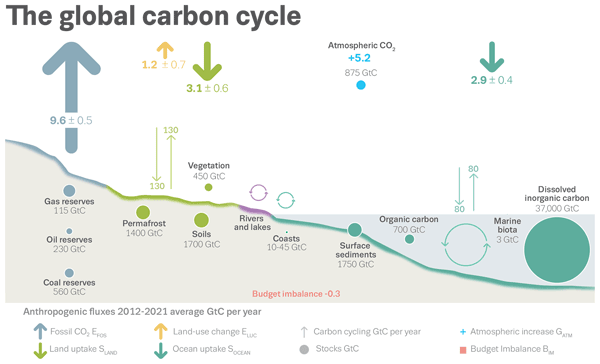
The Global Carbon Budget 2022 describes the datasets and methodology used to quantify the anthropogenic emissions of carbon dioxide (CO2) and their partitioning among the atmosphere, the land ecosystems, and the ocean. These living datasets are updated every year to provide the highest transparency and traceability in the reporting of CO2, the key driver of climate change.

Johannes Pletzer, Didier Hauglustaine, Yann Cohen, Patrick Jöckel, and Volker Grewe
Atmos. Chem. Phys., 22, 14323–14354, https://doi.org/10.5194/acp-22-14323-2022, https://doi.org/10.5194/acp-22-14323-2022, 2022
Short summary
Short summary
Very fast aircraft can travel long distances in extremely short times and can fly at high altitudes (15 to 35 km). These aircraft emit water vapour, nitrogen oxides, and hydrogen. Water vapour emissions remain for months to several years at these altitudes and have an important impact on temperature. We investigate two aircraft fleets flying at 26 and 35 km. Ozone is depleted more, and the water vapour perturbation and temperature change are larger for the aircraft flying at 35 km.
Jinjin Sun, Momei Qin, Xiaodong Xie, Wenxing Fu, Yang Qin, Li Sheng, Lin Li, Jingyi Li, Ishaq Dimeji Sulaymon, Lei Jiang, Lin Huang, Xingna Yu, and Jianlin Hu
Atmos. Chem. Phys., 22, 12629–12646, https://doi.org/10.5194/acp-22-12629-2022, https://doi.org/10.5194/acp-22-12629-2022, 2022
Short summary
Short summary
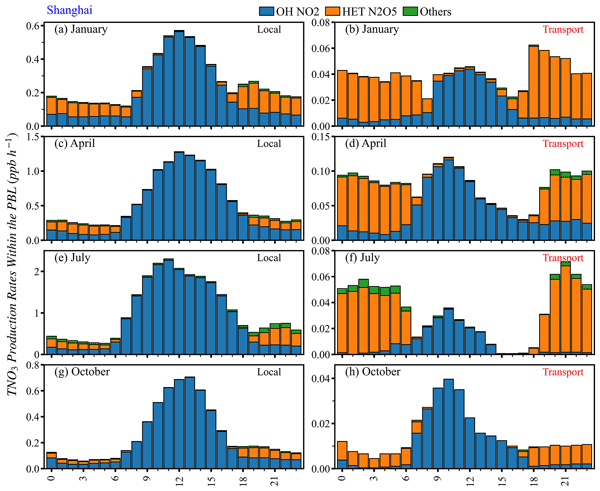
NO3- has become the dominant and the least reduced chemical component of fine particulate matter in China. NO3- formation is mostly in the NH3-rich regime in the Yangtze River Delta (YRD). OH + NO2 contributes 60 %–83 % of the TNO3 production rates, and the N2O5 heterogeneous pathway contributes 10 %–36 %. The N2O5 heterogeneous pathway becomes more important in cold seasons. Local emissions and regional transportation contribute 50 %–62 % and 38 %–50 % to YRD NO3- concentrations, respectively.
Marta Via, Gang Chen, Francesco Canonaco, Kaspar R. Daellenbach, Benjamin Chazeau, Hasna Chebaicheb, Jianhui Jiang, Hannes Keernik, Chunshui Lin, Nicolas Marchand, Cristina Marin, Colin O'Dowd, Jurgita Ovadnevaite, Jean-Eudes Petit, Michael Pikridas, Véronique Riffault, Jean Sciare, Jay G. Slowik, Leïla Simon, Jeni Vasilescu, Yunjiang Zhang, Olivier Favez, André S. H. Prévôt, Andrés Alastuey, and María Cruz Minguillón
Atmos. Meas. Tech., 15, 5479–5495, https://doi.org/10.5194/amt-15-5479-2022, https://doi.org/10.5194/amt-15-5479-2022, 2022
Short summary
Short summary
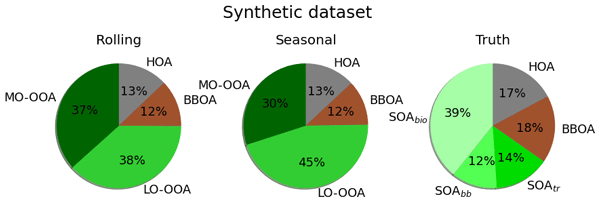
This work presents the differences resulting from two techniques (rolling and seasonal) of the positive matrix factorisation model that can be run for organic aerosol source apportionment. The current state of the art suggests that the rolling technique is more accurate, but no proof of its effectiveness has been provided yet. This paper tackles this issue in the context of a synthetic dataset and a multi-site real-world comparison.

Biao Luo, Ye Kuang, Shan Huang, Qicong Song, Weiwei Hu, Wei Li, Yuwen Peng, Duohong Chen, Dingli Yue, Bin Yuan, and Min Shao
Atmos. Chem. Phys., 22, 12401–12415, https://doi.org/10.5194/acp-22-12401-2022, https://doi.org/10.5194/acp-22-12401-2022, 2022
Short summary
Short summary
We performed comprehensive analysis on biomass burning organic aerosol (BBOA) size distributions, as well as mass scattering and absorption efficiencies, with an improved method of on-line quantification of brown carbon absorptions. Both BBOA volume size distribution and retrieved refractive index depend highly on combustion conditions represented by the black carbon content, which has significant implications for BBOA climate effect simulations.
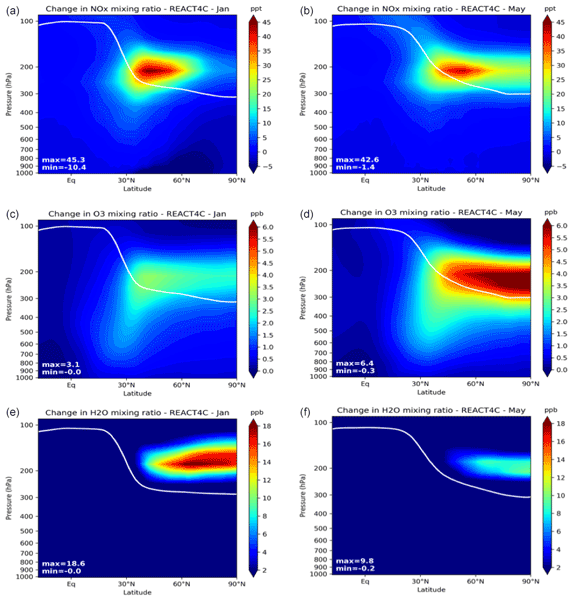
Etienne Terrenoire, Didier A. Hauglustaine, Yann Cohen, Anne Cozic, Richard Valorso, Franck Lefèvre, and Sigrun Matthes
Atmos. Chem. Phys., 22, 11987–12023, https://doi.org/10.5194/acp-22-11987-2022, https://doi.org/10.5194/acp-22-11987-2022, 2022
Short summary
Short summary
Aviation NOx emissions not only have an impact on global climate by changing ozone and methane levels in the atmosphere, but also contribute to the deterioration of local air quality. The LMDZ-INCA global model is applied to re-evaluate the impact of aircraft NOx and aerosol emissions on climate. We investigate the impact of present-day and future (2050) aircraft emissions on atmospheric composition and the associated radiative forcings of climate for ozone, methane and aerosol direct forcings.
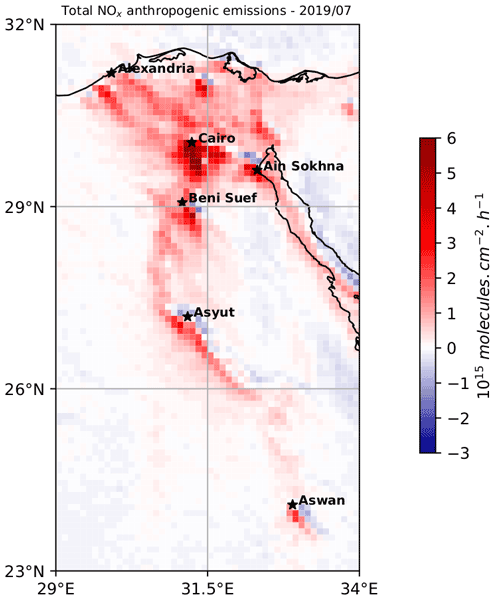
Anthony Rey-Pommier, Frédéric Chevallier, Philippe Ciais, Grégoire Broquet, Theodoros Christoudias, Jonilda Kushta, Didier Hauglustaine, and Jean Sciare
Atmos. Chem. Phys., 22, 11505–11527, https://doi.org/10.5194/acp-22-11505-2022, https://doi.org/10.5194/acp-22-11505-2022, 2022
Short summary
Short summary
Emission inventories for air pollutants can be uncertain in developing countries. In order to overcome these uncertainties, we model nitrogen oxide emissions in Egypt using satellite retrievals. We detect a weekly cycle reflecting Egyptian social norms, an annual cycle consistent with electricity consumption and an activity drop due to the COVID-19 pandemic. However, discrepancies with inventories remain high, illustrating the needs for additional data to improve the potential of our method.
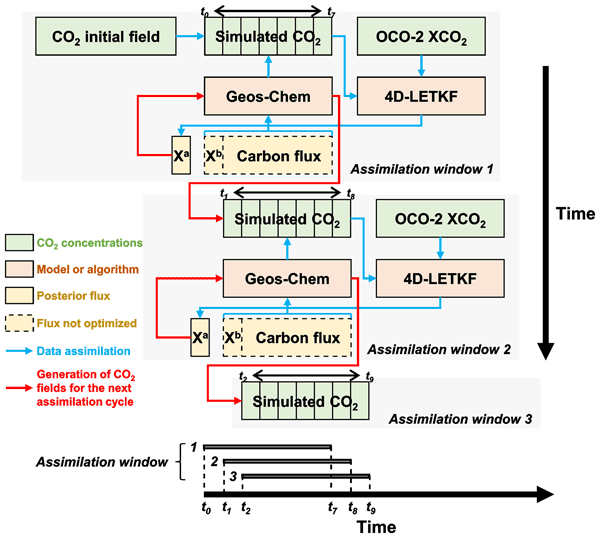
Yawen Kong, Bo Zheng, Qiang Zhang, and Kebin He
Atmos. Chem. Phys., 22, 10769–10788, https://doi.org/10.5194/acp-22-10769-2022, https://doi.org/10.5194/acp-22-10769-2022, 2022
Short summary
Short summary
We developed a Bayesian atmospheric inversion system based on the 4D local ensemble transform Kalman filter (4D-LETKF) algorithm coupled with GEOS-Chem from the latest Orbiting Carbon Observatory-2 (OCO-2) V10r XCO2 retrievals. This is the first adaptation of 4D-LETKF to an OCO-2-based global carbon inversion system. We inferred global gridded carbon fluxes and investigated their magnitudes, variations, and partitioning schemes to understand the global and regional carbon budgets for 2015–2020.
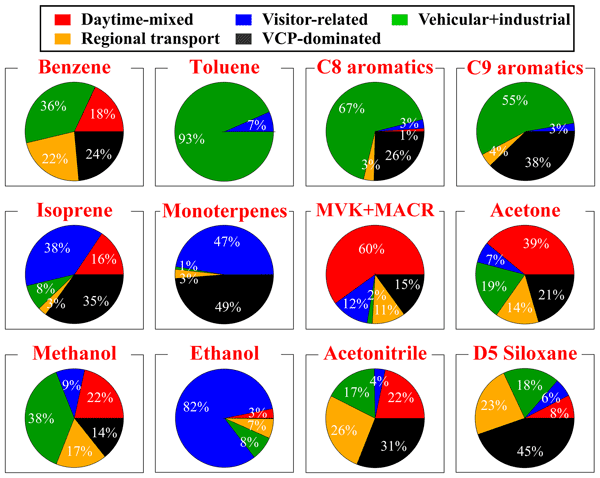
Xiao-Bing Li, Bin Yuan, Sihang Wang, Chunlin Wang, Jing Lan, Zhijie Liu, Yongxin Song, Xianjun He, Yibo Huangfu, Chenglei Pei, Peng Cheng, Suxia Yang, Jipeng Qi, Caihong Wu, Shan Huang, Yingchang You, Ming Chang, Huadan Zheng, Wenda Yang, Xuemei Wang, and Min Shao
Atmos. Chem. Phys., 22, 10567–10587, https://doi.org/10.5194/acp-22-10567-2022, https://doi.org/10.5194/acp-22-10567-2022, 2022
Short summary
Short summary
High-time-resolution measurements of volatile organic compounds (VOCs) were made using an online mass spectrometer at a 600 m tall tower in urban region. Compositions, temporal variations, and sources of VOCs were quantitatively investigated in this study. We find that VOC measurements in urban regions aloft could better characterize source characteristics of anthropogenic emissions. Our results could provide important implications in making future strategies for control of VOCs.
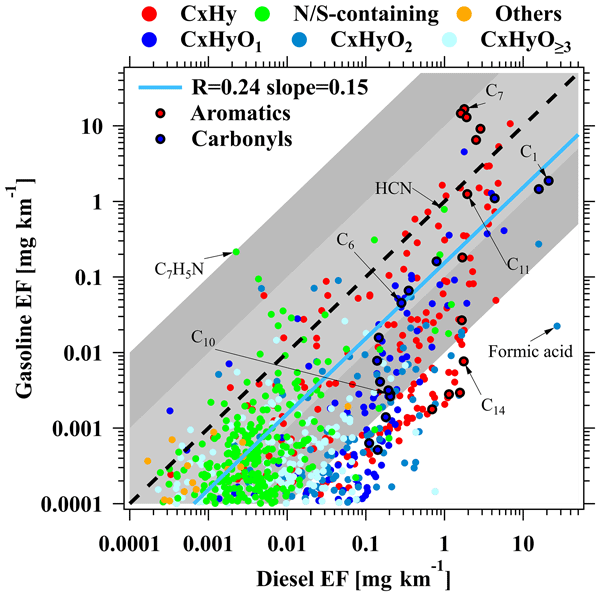
Sihang Wang, Bin Yuan, Caihong Wu, Chaomin Wang, Tiange Li, Xianjun He, Yibo Huangfu, Jipeng Qi, Xiao-Bing Li, Qing'e Sha, Manni Zhu, Shengrong Lou, Hongli Wang, Thomas Karl, Martin Graus, Zibing Yuan, and Min Shao
Atmos. Chem. Phys., 22, 9703–9720, https://doi.org/10.5194/acp-22-9703-2022, https://doi.org/10.5194/acp-22-9703-2022, 2022
Short summary
Short summary
Volatile organic compound (VOC) emissions from vehicles are measured using online mass spectrometers. Differences between gasoline and diesel vehicles are observed with higher emission factors of most oxygenated VOCs (OVOCs) and heavier aromatics from diesel vehicles. A higher aromatics / toluene ratio could provide good indicators to distinguish emissions from both vehicle types. We show that OVOCs account for significant contributions to VOC emissions from vehicles, especially diesel vehicles.
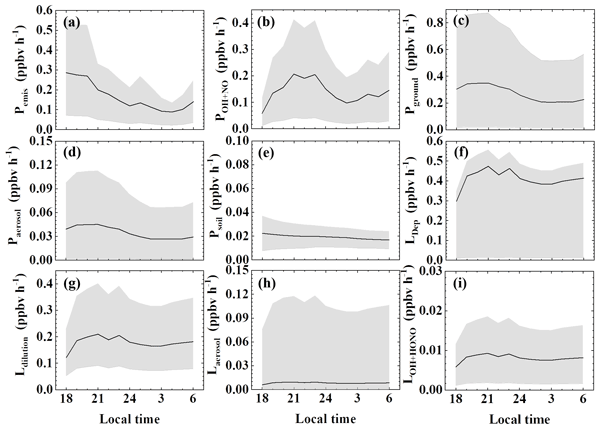
Yihang Yu, Peng Cheng, Huirong Li, Wenda Yang, Baobin Han, Wei Song, Weiwei Hu, Xinming Wang, Bin Yuan, Min Shao, Zhijiong Huang, Zhen Li, Junyu Zheng, Haichao Wang, and Xiaofang Yu
Atmos. Chem. Phys., 22, 8951–8971, https://doi.org/10.5194/acp-22-8951-2022, https://doi.org/10.5194/acp-22-8951-2022, 2022
Short summary
Short summary
We have investigated the budget of HONO at an urban site in Guangzhou. Budget and comprehensive uncertainty analysis suggest that at such locations as ours, HONO direct emissions and NO + OH can become comparable or even surpass other HONO sources that typically receive greater attention and interest, such as the NO2 heterogeneous source and the unknown daytime photolytic source. Our findings emphasize the need to reduce the uncertainties of both conventional and novel HONO sources and sinks.
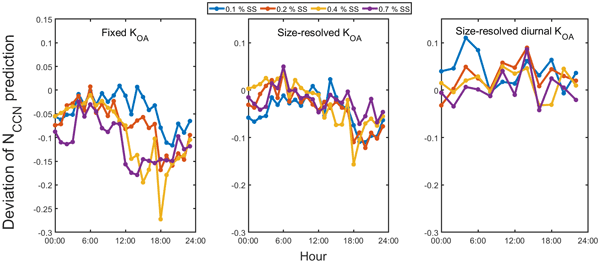
Mingfu Cai, Shan Huang, Baoling Liang, Qibin Sun, Li Liu, Bin Yuan, Min Shao, Weiwei Hu, Wei Chen, Qicong Song, Wei Li, Yuwen Peng, Zelong Wang, Duohong Chen, Haobo Tan, Hanbin Xu, Fei Li, Xuejiao Deng, Tao Deng, Jiaren Sun, and Jun Zhao
Atmos. Chem. Phys., 22, 8117–8136, https://doi.org/10.5194/acp-22-8117-2022, https://doi.org/10.5194/acp-22-8117-2022, 2022
Short summary
Short summary
This study investigated the size dependence and diurnal variation in organic aerosol hygroscopicity, volatility, and cloud condensation nuclei (CCN) activity. We found that the physical properties of OA could vary in a large range at different particle sizes and affected the number concentration of CCN (NCCN) at all supersaturations. Our results highlight the importance of evaluating the atmospheric evolution processes of OA at different size ranges and their impact on climate effects.
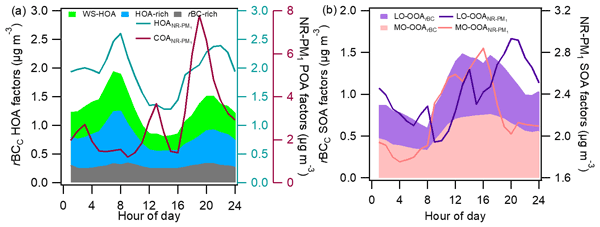
Shijie Cui, Dan Dan Huang, Yangzhou Wu, Junfeng Wang, Fuzhen Shen, Jiukun Xian, Yunjiang Zhang, Hongli Wang, Cheng Huang, Hong Liao, and Xinlei Ge
Atmos. Chem. Phys., 22, 8073–8096, https://doi.org/10.5194/acp-22-8073-2022, https://doi.org/10.5194/acp-22-8073-2022, 2022
Short summary
Short summary
Refractory black carbon (rBC) aerosols are important to air quality and climate change. rBC can mix with many other species, which can significantly change its properties and impacts. We used a specific set of techniques to exclusively characterize rBC-containing (rBCc) particles in Shanghai. We elucidated their composition, sources and size distributions and factors that affect their properties. Our findings are very valuable for advancing the understanding of BC and controlling BC pollution.
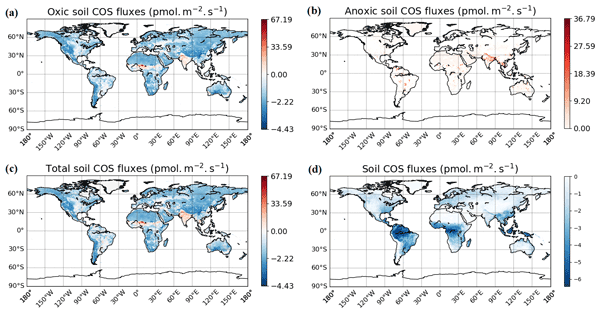
Camille Abadie, Fabienne Maignan, Marine Remaud, Jérôme Ogée, J. Elliott Campbell, Mary E. Whelan, Florian Kitz, Felix M. Spielmann, Georg Wohlfahrt, Richard Wehr, Wu Sun, Nina Raoult, Ulli Seibt, Didier Hauglustaine, Sinikka T. Lennartz, Sauveur Belviso, David Montagne, and Philippe Peylin
Biogeosciences, 19, 2427–2463, https://doi.org/10.5194/bg-19-2427-2022, https://doi.org/10.5194/bg-19-2427-2022, 2022
Short summary
Short summary
A better constraint of the components of the carbonyl sulfide (COS) global budget is needed to exploit its potential as a proxy of gross primary productivity. In this study, we compare two representations of oxic soil COS fluxes, and we develop an approach to represent anoxic soil COS fluxes in a land surface model. We show the importance of atmospheric COS concentration variations on oxic soil COS fluxes and provide new estimates for oxic and anoxic soil contributions to the COS global budget.
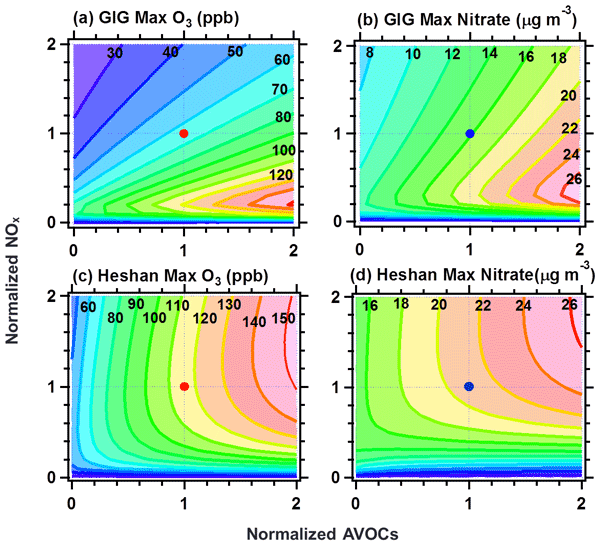
Suxia Yang, Bin Yuan, Yuwen Peng, Shan Huang, Wei Chen, Weiwei Hu, Chenglei Pei, Jun Zhou, David D. Parrish, Wenjie Wang, Xianjun He, Chunlei Cheng, Xiao-Bing Li, Xiaoyun Yang, Yu Song, Haichao Wang, Jipeng Qi, Baolin Wang, Chen Wang, Chaomin Wang, Zelong Wang, Tiange Li, E Zheng, Sihang Wang, Caihong Wu, Mingfu Cai, Chenshuo Ye, Wei Song, Peng Cheng, Duohong Chen, Xinming Wang, Zhanyi Zhang, Xuemei Wang, Junyu Zheng, and Min Shao
Atmos. Chem. Phys., 22, 4539–4556, https://doi.org/10.5194/acp-22-4539-2022, https://doi.org/10.5194/acp-22-4539-2022, 2022
Short summary
Short summary
We use a model constrained using observations to study the formation of nitrate aerosol in and downwind of a representative megacity. We found different contributions of various chemical reactions to ground-level nitrate concentrations between urban and suburban regions. We also show that controlling VOC emissions are effective for decreasing nitrate formation in both urban and regional environments, although VOCs are not direct precursors of nitrate aerosol.
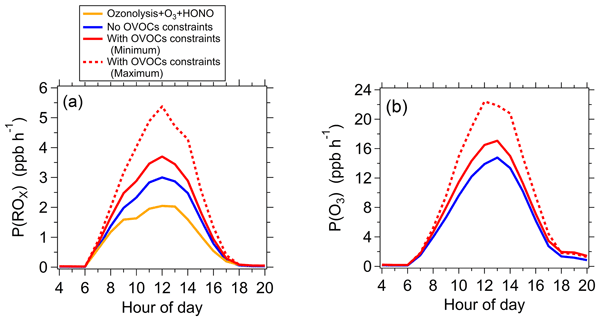
Wenjie Wang, Bin Yuan, Yuwen Peng, Hang Su, Yafang Cheng, Suxia Yang, Caihong Wu, Jipeng Qi, Fengxia Bao, Yibo Huangfu, Chaomin Wang, Chenshuo Ye, Zelong Wang, Baolin Wang, Xinming Wang, Wei Song, Weiwei Hu, Peng Cheng, Manni Zhu, Junyu Zheng, and Min Shao
Atmos. Chem. Phys., 22, 4117–4128, https://doi.org/10.5194/acp-22-4117-2022, https://doi.org/10.5194/acp-22-4117-2022, 2022
Short summary
Short summary
From thorough measurements of numerous oxygenated volatile organic compounds, we show that their photodissociation can be important for radical production and ozone formation in the atmosphere. This effect was underestimated in previous studies, as measurements of them were lacking.
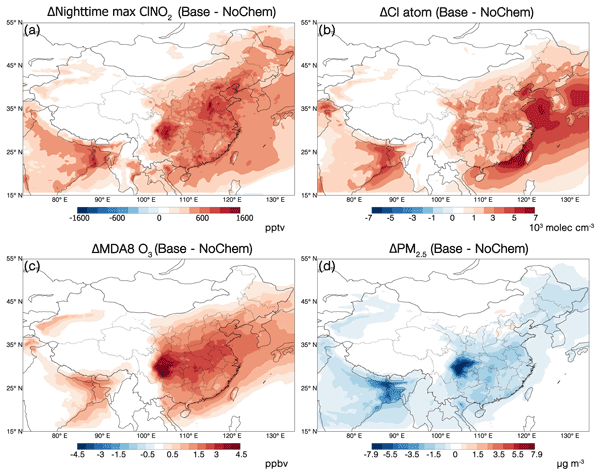
Xiajie Yang, Qiaoqiao Wang, Nan Ma, Weiwei Hu, Yang Gao, Zhijiong Huang, Junyu Zheng, Bin Yuan, Ning Yang, Jiangchuan Tao, Juan Hong, Yafang Cheng, and Hang Su
Atmos. Chem. Phys., 22, 3743–3762, https://doi.org/10.5194/acp-22-3743-2022, https://doi.org/10.5194/acp-22-3743-2022, 2022
Short summary
Short summary
We use the GEOS-Chem model with additional anthropogenic and biomass burning chlorine emissions combined with updated parameterizations for N2O5 + Cl chemistry to investigate the impacts of chlorine chemistry on air quality in China. Our study not only significantly improves the model's performance but also demonstrates the importance of non-sea-salt chlorine sources as well as an appropriate parameterization for N2O5 + Cl chemistry to the impact of chlorine chemistry in China.
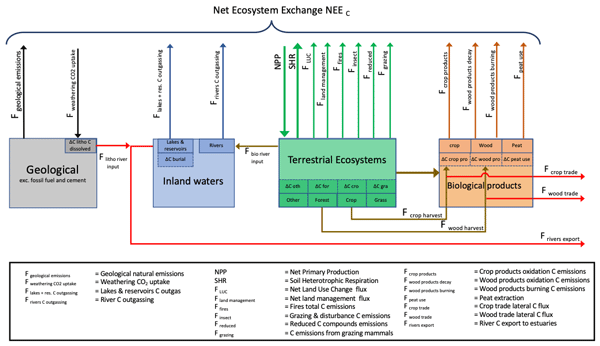
Philippe Ciais, Ana Bastos, Frédéric Chevallier, Ronny Lauerwald, Ben Poulter, Josep G. Canadell, Gustaf Hugelius, Robert B. Jackson, Atul Jain, Matthew Jones, Masayuki Kondo, Ingrid T. Luijkx, Prabir K. Patra, Wouter Peters, Julia Pongratz, Ana Maria Roxana Petrescu, Shilong Piao, Chunjing Qiu, Celso Von Randow, Pierre Regnier, Marielle Saunois, Robert Scholes, Anatoly Shvidenko, Hanqin Tian, Hui Yang, Xuhui Wang, and Bo Zheng
Geosci. Model Dev., 15, 1289–1316, https://doi.org/10.5194/gmd-15-1289-2022, https://doi.org/10.5194/gmd-15-1289-2022, 2022
Short summary
Short summary
The second phase of the Regional Carbon Cycle Assessment and Processes (RECCAP) will provide updated quantification and process understanding of CO2, CH4, and N2O emissions and sinks for ten regions of the globe. In this paper, we give definitions, review different methods, and make recommendations for estimating different components of the total land–atmosphere carbon exchange for each region in a consistent and complete approach.
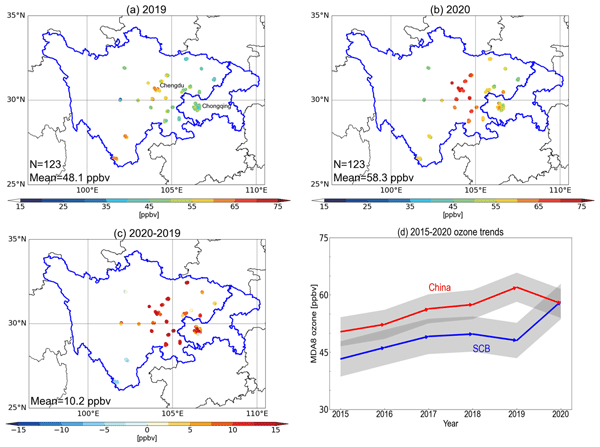
Youwen Sun, Hao Yin, Xiao Lu, Justus Notholt, Mathias Palm, Cheng Liu, Yuan Tian, and Bo Zheng
Atmos. Chem. Phys., 21, 18589–18608, https://doi.org/10.5194/acp-21-18589-2021, https://doi.org/10.5194/acp-21-18589-2021, 2021
Short summary
Short summary
This study uses high-resolution nested-grid GEOS-Chem simulation, the eXtreme Gradient Boosting (XGBoost) machine learning method, and the exposure–response relationship to determine the drivers and evaluate the health risks of the unexpected surface O3 enhancements over the Sichuan Basin in 2020. These unexpected O3 enhancements were induced by meteorological anomalies and caused dramatically high health risks.
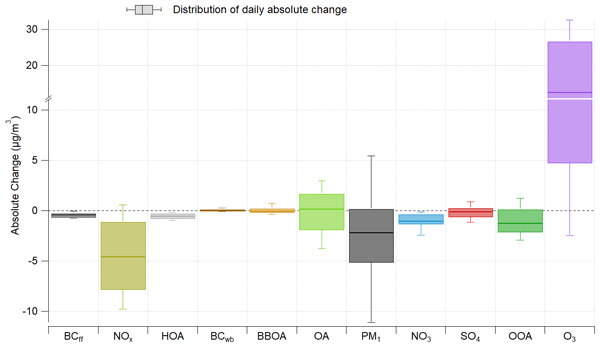
Jean-Eudes Petit, Jean-Charles Dupont, Olivier Favez, Valérie Gros, Yunjiang Zhang, Jean Sciare, Leila Simon, François Truong, Nicolas Bonnaire, Tanguy Amodeo, Robert Vautard, and Martial Haeffelin
Atmos. Chem. Phys., 21, 17167–17183, https://doi.org/10.5194/acp-21-17167-2021, https://doi.org/10.5194/acp-21-17167-2021, 2021
Short summary
Short summary
The COVID-19 outbreak led to lockdowns at national scales in spring 2020. Large cuts in emissions occurred, but the quantitative assessment of their role from observations is hindered by weather and interannual variability. That is why we developed an innovative methodology in order to best characterize the impact of lockdown on atmospheric chemistry. We find that a local decrease in traffic-related pollutants triggered a decrease of secondary aerosols and an increase in ozone.
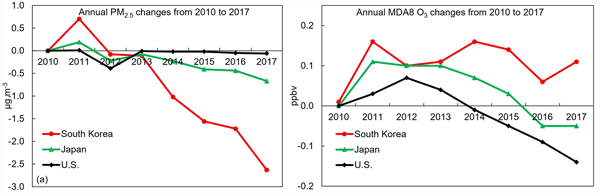
Yuqiang Zhang, Drew Shindell, Karl Seltzer, Lu Shen, Jean-Francois Lamarque, Qiang Zhang, Bo Zheng, Jia Xing, Zhe Jiang, and Lei Zhang
Atmos. Chem. Phys., 21, 16051–16065, https://doi.org/10.5194/acp-21-16051-2021, https://doi.org/10.5194/acp-21-16051-2021, 2021
Short summary
Short summary
In this study, we use a global chemical transport model to simulate the effects on global air quality and human health due to emission changes in China from 2010 to 2017. By performing sensitivity analysis, we found that the air pollution control policies not only decrease the air pollutant concentration but also bring significant co-benefits in air quality to downwind regions. The benefits for the improved air pollution are dominated by PM2.5.

Gaëlle Dufour, Didier Hauglustaine, Yunjiang Zhang, Maxim Eremenko, Yann Cohen, Audrey Gaudel, Guillaume Siour, Mathieu Lachatre, Axel Bense, Bertrand Bessagnet, Juan Cuesta, Jerry Ziemke, Valérie Thouret, and Bo Zheng
Atmos. Chem. Phys., 21, 16001–16025, https://doi.org/10.5194/acp-21-16001-2021, https://doi.org/10.5194/acp-21-16001-2021, 2021
Short summary
Short summary
The IASI observations and the LMDZ-OR-INCA model simulations show negative ozone trends in the Central East China region in the lower free (3–6 km column) and the upper free (6–9 km column) troposphere. Sensitivity studies from the model show that the Chinese anthropogenic emissions contribute to more than 50 % in the trend. The reduction in NOx emissions that has occurred since 2013 in China seems to lead to a decrease in ozone in the free troposphere, contrary to the increase at the surface.
Cited articles
Agathokleous, E., Feng, Z., Oksanen, E., Sicard, P., Wang, Q., Saitanis, C. J., Araminiene, V., Blande, J. D., Hayes, F., Calatayud, V., Domingos, M., Veresoglou, S. D., Peñuelas, J., Wardle, D. A., De Marco, A., Li, Z., Harmens, H., Yuan, X., Vitale, M., and Paoletti, E.: Ozone affects plant, insect, and soil microbial communities: A threat to terrestrial ecosystems and biodiversity, Sci. Adv., 6, eabc1176, https://doi.org/10.1126/sciadv.abc1176, 2020.
Bao, J., Li, X., Kong, L., Li, J., Chen, Q., and Zhang, Y.: Comparative analysis of the impact of rising temperatures on ozone levels in China and the United States, npj Clean Air, 1, 23, https://doi.org/10.1038/s44407-025-00023-8, 2025.
Chen, S., Wang, H., Lu, K., Zeng, L., Hu, M., and Zhang, Y.: The trend of surface ozone in Beijing from 2013 to 2019: Indications of the persisting strong atmospheric oxidation capacity, Atmos. Environ., 242, 117801, https://doi.org/10.1016/j.atmosenv.2020.117801, 2020.
Chen, Y., Lu, X., and Fung, J. C. H.: Spatiotemporal source apportionment of ozone pollution over the Greater Bay Area, Atmos. Chem. Phys., 24, 8847–8864, https://doi.org/10.5194/acp-24-8847-2024, 2024.
Dai, Q., Dai, T., Hou, L., Li, L., Bi, X., Zhang, Y., and Feng, Y.: Quantifying the impacts of emissions and meteorology on the interannual variations of air pollutants in major Chinese cities from 2015 to 2021, Sci. China Earth Sci., 66, 1725–1737, https://doi.org/10.1007/s11430-022-1128-1, 2023.
Dang, R. and Liao, H.: Severe winter haze days in the Beijing–Tianjin–Hebei region from 1985 to 2017 and the roles of anthropogenic emissions and meteorology, Atmos. Chem. Phys., 19, 10801–10816, https://doi.org/10.5194/acp-19-10801-2019, 2019.
Fishman, J., Ramanathan, V., Crutzen, P. J., and Liu, S. C.: Tropospheric ozone and climate, Nature, 282, 818–820, https://doi.org/10.1038/282818a0, 1979.
Gao, M., Wang, F., Ding, Y., Wu, Z., Xu, Y., Lu, X., Wang, Z., Carmichael, G. R., and McElroy, M. B.: Large-scale climate patterns offer preseasonal hints on the co-occurrence of heat wave and O3 pollution in China, Proc. Natl. Acad. Sci. USA, 120, e2218274120, https://doi.org/10.1073/pnas.2218274120, 2023.
Geng, G., Xiao, Q., Liu, S., Liu, X., Cheng, J., Zheng, Y., Xue, T., Tong, D., Zheng, B., Peng, Y., Huang, X., He, K., and Zhang, Q.: Tracking air pollution in China: Near real-time PM2.5 retrievals from multisource data fusion, Environ. Sci. Technol., 55, 12106–12115, https://doi.org/10.1021/acs.est.1c01863, 2021.
Geng, G., Liu, Y., Liu, Y., Liu, S., Cheng, J., Yan, L., Wu, N., Hu, H., Tong, D., Zheng, B., Yin, Z., He, K., and Zhang, Q.: Efficacy of China's clean air actions to tackle PM2.5 pollution between 2013 and 2020, Nat. Geosci., 17, 987–994, https://doi.org/10.1038/s41561-024-01540-z, 2024.
Gong, C. and Liao, H.: A typical weather pattern for ozone pollution events in North China, Atmos. Chem. Phys., 19, 13725–13740, https://doi.org/10.5194/acp-19-13725-2019, 2019.
Gong, C., Yue, X., Liao, H., and Ma, Y. M.: A humidity-based exposure index representing ozone damage effects on vegetation, Environ. Res. Lett., 16, https://doi.org/10.1088/1748-9326/abecbb, 2021.
Grange, S. K., Carslaw, D. C., Lewis, A. C., Boleti, E., and Hueglin, C.: Random forest meteorological normalisation models for Swiss PM10 trend analysis, Atmos. Chem. Phys., 18, 6223–6239, https://doi.org/10.5194/acp-18-6223-2018, 2018.
Guo, J., Zhang, X., Gao, Y., Wang, Z., Zhang, M., Xue, W., Herrmann, H., Brasseur, G. P., Wang, T., and Wang, Z.: Evolution of ozone pollution in China: what track will it follow?, Environ. Sci. Technol., 57, 109–117, https://doi.org/10.1021/acs.est.2c08205, 2023.
Hallquist, M., Munthe, J., Hu, M., Wang, T., Chan, C. K., Gao, J., Boman, J., Guo, S., Hallquist, Å. M., Mellqvist, J., Moldanova, J., Pathak, R. K., Pettersson, J. B. C., Pleijel, H., Simpson, D., and Thynell, M.: Photochemical smog in China: scientific challenges and implications for air-quality policies, Natl. Sci. Rev., 3, 401–403, https://doi.org/10.1093/nsr/nww080, 2016.
Hauglustaine, D. A., Granier, C., Brasseur, G. P., and Mégie, G.: The importance of atmospheric chemistry in the calculation of radiative forcing on the climate system, J. Geophys. Res., 99, 1173–1186, https://doi.org/10.1029/93JD02987, 1994.
He, S. and Carmichael, G. R.: Sensitivity of photolysis rates and ozone production in the troposphere to aerosol properties, J. Geophys. Res. Atmos., 104, 26307–26324, https://doi.org/10.1029/1999JD900789, 1999.
IPCC: Annex I: Observational Products, in: Climate Change 2021: The Physical Science Basis. Contribution of Working Group I to the Sixth Assessment Report of the Intergovernmental Panel on Climate Change, edited by: Masson-Delmotte, V., Zhai, P., Pirani, A., Connors, S. L., Péan, C., Berger, S., Caud, N., Chen, Y., Goldfarb, L., Gomis, M. I., Huang, M., Leitzell, K., Lonnoy, E., Matthews, J. B. R., Maycock, T. K., Waterfield, T., Yelekçi, O., Yu, R., and Zhou, B., Cambridge University Press, Cambridge, United Kingdom and New York, NY, USA, 2061–2086, https://doi.org/10.1017/9781009157896.015, 2021.
Ivatt, P. D., Evans, M. J., and Lewis, A. C.: Suppression of surface ozone by an aerosol-inhibited photochemical ozone regime, Nat. Geosci., 15, 536–540, https://doi.org/10.1038/s41561-022-00972-9, 2022.
Jacob, D. J.: Heterogeneous chemistry and tropospheric ozone, Atmos. Environ., 34, 2131–2159, https://doi.org/10.1016/S1352-2310(99)00462-8, 2000.
Knowlton, K., Rosenthal, J. E., Hogrefe, C., Lynn, B., Gaffin, S., Goldberg, R., Rosenzweig, C., Civerolo, K., Ku, J.-Y., and Kinney, P. L.: Assessing ozone-related health impacts under a changing climate, Environ. Health Perspect., 112, 1557–1563, https://doi.org/10.1289/ehp.7163, 2004.
Lamsal, L. N., Krotkov, N. A., Celarier, E. A., Swartz, W. H., Pickering, K. E., Bucsela, E. J., Gleason, J. F., Martin, R. V., Philip, S., Irie, H., Cede, A., Herman, J., Weinheimer, A., Szykman, J. J., and Knepp, T. N.: Evaluation of OMI operational standard NO2 column retrievals using in situ and surface-based NO2 observations, Atmos. Chem. Phys., 14, 11587–11609, https://doi.org/10.5194/acp-14-11587-2014, 2014.
Lecœur, È., Seigneur, C., Pagé, C., and Terray, L.: A statistical method to estimate PM2.5 concentrations from meteorology and its application to the effect of climate change, J. Geophys. Res. Atmos., 119, 3537–3585, https://doi.org/10.1002/2013JD021172, 2014.
Leung, D. M., Tai, A. P. K., Mickley, L. J., Moch, J. M., van Donkelaar, A., Shen, L., and Martin, R. V.: Synoptic meteorological modes of variability for fine particulate matter (PM2.5) air quality in major metropolitan regions of China, Atmos. Chem. Phys., 18, 6733–6748, https://doi.org/10.5194/acp-18-6733-2018, 2018.
Li, H., Yang, Y., Jin, J., Wang, H., Li, K., Wang, P., and Liao, H.: Climate-driven deterioration of future ozone pollution in Asia predicted by machine learning with multi-source data, Atmos. Chem. Phys., 23, 1131–1145, https://doi.org/10.5194/acp-23-1131-2023, 2023.
Li, J., Wang, S., Zhu, J., Wang, D., and Zhao, T.: Accelerated shifts from heatwaves to heavy rainfall in a changing climate, npj Clim. Atmos. Sci. 8, 214, https://doi.org/10.1038/s41612-025-01113-w, 2025a.
Li, K., Jacob, D.J., Liao, H., Shen, L., Zhang, Q., and Bates, K. H.: Anthropogenic drivers of 2013–2017 trends in summer surface ozone in China, Proc. Natl. Acad. Sci. USA, 116, 422–427, https://doi.org/10.1073/pnas.1812168116, 2019a.
Li, K., Jacob, D. J., Liao, H., Zhu, J., Shah, V., Shen, L., Bates, K. H., Zhang, Q., and Zhai, S.: A two-pollutant strategy for improving ozone and particulate air quality in China, Nat. Geosci., 12, 906–910, https://doi.org/10.1038/s41561-019-0464-x, 2019b.
Li, K., Jacob, D. J., Shen, L., Lu, X., De Smedt, I., and Liao, H.: Increases in surface ozone pollution in China from 2013 to 2019: anthropogenic and meteorological influences, Atmos. Chem. Phys., 20, 11423–11433, https://doi.org/10.5194/acp-20-11423-2020, 2020.
Li, M., Wang, T., Shu, L., Qu, Y., Xie, M., Liu, J., Wu, H., and Kalsoom, U.: Rising surface ozone in China from 2013 to 2017: A response to the recent atmospheric warming or pollutant controls?, Atmos. Environ., 246, 118130, https://doi.org/10.1016/j.atmosenv.2020.118130, 2021.
Li, S., Wu, L., Wang, Y., Geng, T., Cai, W., Gan, B., Jing, Z., and Yang, Y.: Intensified Atlantic multidecadal variability in a warming climate, Nat. Clim. Change, 15, 293–300, https://doi.org/10.1038/s41558-025-02252-x, 2025b.
Liu, C. and Shi, K.: A review on methodology in O3-NOx-VOC sensitivity study, Environ. Pollut., 291, 118249, https://doi.org/10.1016/j.envpol.2021.118249, 2021.
Liu, Y. and Wang, T.: Worsening urban ozone pollution in China from 2013 to 2017 – Part 1: The complex and varying roles of meteorology, Atmos. Chem. Phys., 20, 6305–6321, https://doi.org/10.5194/acp-20-6305-2020, 2020a.
Liu, Y. and Wang, T.: Worsening urban ozone pollution in China from 2013 to 2017 – Part 2: The effects of emission changes and implications for multi-pollutant control, Atmos. Chem. Phys., 20, 6323–6337, https://doi.org/10.5194/acp-20-6323-2020, 2020b.
Liu, Y., Geng, G., Cheng, J., Liu, Y., Xiao, Q., Liu, L., Shi, Q., Tong, D., He, K., and Zhang, Q.: Drivers of increasing ozone during the two phases of clean air actions in China 2013–2020, Environ. Sci. Technol., 57, 8954–8964, https://doi.org/10.1021/acs.est.3c00054, 2023.
Lu, X., Zhang, L., and Shen, L.: Meteorology and climate influences on tropospheric ozone: a review of natural sources, chemistry, and transport patterns, Curr. Pollution Rep. 5, 238–260, https://doi.org/10.1007/s40726-019-00118-3, 2019.
Lundberg, S. M., Erion, G., Chen, H., DeGrave, A., Prutkin, J. M., Nair, B., Katz, R., Himmelfarb, J., Bansal, N., and Lee, S. I.: From local explanations to global understanding with explainable AI for trees. Nat. Mach. Intell., 2, 56–67, https://doi.org/10.1038/s42256-019-0138-9, 2020.
Ma, X. and Yin, Z.: Dipole pattern of summer ozone pollution in the east of China and its connection with climate variability, Atmos. Chem. Phys., 21, 16349–16361, https://doi.org/10.5194/acp-21-16349-2021, 2021.
Mallapaty, S.: China's extreme weather challenges scientists trying to study it, Nature, 609, 888–888, https://doi.org/10.1038/d41586-022-02954-8, 2022.
Meng, Q., Zhang, Y., Zhong, S., Fang, J., Tang, L., Rao, Y., Zhou, M., Qiu, J., Xu, X., Petit, J.-E., Favez, O., and Ge, X.: Technical note: Reconstructing missing surface aerosol elemental carbon data in long-term series with ensemble learning, Atmos. Chem. Phys., 25, 7485–7498, https://doi.org/10.5194/acp-25-7485-2025, 2025.
Pu, X., Wang, T. J., Huang, X., Melas, D., Zanis, P., Papanastasiou, D. K., and Poupkou, A.: Enhanced surface ozone during the heat wave of 2013 in Yangtze River Delta region, China, Sci. Total Environ., 603–604, 807–816, https://doi.org/10.1016/j.scitotenv.2017.03.056, 2017.
Qin, M., She, Y., Wang, M., Wang, H., Chang, Y., Tan, Z., An, J., Huang, J., Yuan, Z., Lu, J., Wang, Q., Liu, C., Liu, Z., Xie, X., Li, J., Liao, H., Pye, H. O. T., Huang, C., Guo, S., Hu, M., Zhang, Y., Jacob, D. J., and Hu, J.: Increased urban ozone in heatwaves due to temperature-induced emissions of anthropogenic volatile organic compounds, Nat. Geosci., 18, 50–56, https://doi.org/10.1038/s41561-024-01608-w, 2025.
Ren, J., Guo, F., and Xie, S.: Diagnosing ozone–NOx–VOC sensitivity and revealing causes of ozone increases in China based on 2013–2021 satellite retrievals, Atmos. Chem. Phys., 22, 15035–15047, https://doi.org/10.5194/acp-22-15035-2022, 2022.
Shen, L., Mickley, L. J., and Murray, L. T.: Influence of 2000–2050 climate change on particulate matter in the United States: results from a new statistical model, Atmos. Chem. Phys., 17, 4355–4367, https://doi.org/10.5194/acp-17-4355-2017, 2017.
Shen, L., Jacob, D. J., Zhu, L., Zhang, Q., Zheng, B., Sulprizio, M. P., Li, K., De Smedt, I., González Abad, G., Cao, H., Fu, T.-M., and Liao, H.: The 2005–2016 trends of formaldehyde columns over China observed by satellites: increasing anthropogenic emissions of volatile organic compounds and decreasing agricultural fire emissions, Geophys. Res. Lett., 46, 4468–4475, https://doi.org/10.1029/2019GL082172, 2019.
Shi, X. and Brasseur, G. P.: The response in air quality to the reduction of Chinese economic activities during the COVID-19 outbreak, Geophys. Res. Lett., 47, e2020GL088070, https://doi.org/10.1029/2020GL088070, 2020.
Shi, Z., Song, C., Liu, B., Lu, G., Xu, J., Van Vu, T., Elliott, R. J. R., Li, W., Bloss, W. J., and Harrison, R. M.: Abrupt but smaller than expected changes in surface air quality attributable to COVID-19 lockdowns, Sci. Adv., 7, eabd6696, https://doi.org/10.1126/sciadv.abd6696, 2021.
Sillman, S.: The use of NOy, H2O2, and HNO3 as indicators for ozone-NOx-hydrocarbon sensitivity in urban locations, J. Geophys. Res., 100, 14175–14188, https://doi.org/10.1029/94JD02953, 1995.
Tao, C., Zhang, Y., Zhang, X., Guan, X., Peng, Y., Wang, G., Zhang, Q., Ren, Y., Zhao, X., Zhao, R., Wang, Q., and Wang, W.: Discrepant global surface ozone responses to emission- and heatwave-induced regime shifts, Environ. Sci. Technol., 58, 22288–22297, https://doi.org/10.1021/acs.est.4c08422, 2024.
Vu, T. V., Shi, Z., Cheng, J., Zhang, Q., He, K., Wang, S., and Harrison, R. M.: Assessing the impact of clean air action on air quality trends in Beijing using a machine learning technique, Atmos. Chem. Phys., 19, 11303–11314, https://doi.org/10.5194/acp-19-11303-2019, 2019.
Wang, J., Wang, P., Tian, C., Gao, M., Cheng, T., and Mei, W.: Consecutive Northward super typhoons induced extreme ozone pollution events in Eastern China, npj Clim. Atmos., Sci., 7, 244, https://doi.org/10.1038/s41612-024-00786-z, 2024a.
Wang, L., Chen, B., Ouyang, J., Mu, Y., Zhen, L., Yang, L., Xu, W., and Tang, L.: Causal-inference machine learning reveals the drivers of China's 2022 ozone rebound, Environ. Sci. Ecotech., 24, 100524, https://doi.org/10.1016/j.ese.2025.100524, 2025.
Wang, M., Chen, X., Jiang, Z., He, T.-L., Jones, D., Liu, J., and Shen, Y.: Meteorological and anthropogenic drivers of surface ozone change in the North China Plain in 2015–2021, Sci. Total Environ., 906, 167763, https://doi.org/10.1016/j.scitotenv.2023.167763, 2024b.
Wang, N., Huang, X., Xu, J., Wang, T., Tan, Z.-M., and Ding, A.: Typhoon-boosted biogenic emission aggravates cross-regional ozone pollution in China, Sci. Adv., 8, eabl6166, https://doi.org/10.1126/sciadv.abl6166, 2022a.
Wang, R., Yang, Y., Xing, X., Wang, L., Chen, J., Tang, X., Cao, J., Morawska, L., Balkanski, Y., Hauglustaine,D., Ciais, P., and Ma, J.: Stringent emission controls are needed to reach clean air targets for cities in China under a warming climate, Environ. Sci. Technol., 56, 11199–11211, https://doi.org/10.1021/acs.est.1c08403, 2022b.
Wang, T., Xue, L., Brimblecombe, P., Lam, Y. F., Li, L., and Zhang, L.: Ozone pollution in China: A review of concentrations, meteorological influences, chemical precursors, and effects, Sci. Total Environ., 575, 1582–1596, https://doi.org/10.1016/j.scitotenv.2016.10.081, 2017.
Wang, Y., Zhao, Y., Liu, Y., Jiang, Y., Zheng, B., Xing, J., Liu, Y., Wang, S., and Nielsen, C. P.: Sustained emission reductions have restrained the ozone pollution over China, Nat. Geosci., 16, 967–974, https://doi.org/10.1038/s41561-023-01284-2, 2023a.
Wang, Z. Q., Luo, H. L., and Yang, S.: Different mechanisms for the extremely hot central-eastern China in July–August 2022 from a Eurasian large-scale circulation perspective, Environ. Res. Lett., 18, https://doi.org/10.1088/1748-9326/acb3e5, 2023b.
Weng, X., Forster, G. L., and Nowack, P.: A machine learning approach to quantify meteorological drivers of ozone pollution in China from 2015 to 2019, Atmos. Chem. Phys., 22, 8385–8402, https://doi.org/10.5194/acp-22-8385-2022, 2022.
World Health Organization (WHO): WHO global air quality guidelines. Particulate matter (PM2.5 and PM10), ozone, nitrogen dioxide, sulfur dioxide and carbon monoxide, World Health Organization (WHO), ISBN 978-92-4-003422-8, 2021.
Xue, L., Ding, A., Cooper, O., Huang, X., Wang, W., Zhou, D., Wu, Z., McClure-Begley, A., Petropavlovskikh, I., Andreae, M. O., and Fu, C.: ENSO and Southeast Asian biomass burning modulate subtropical trans-Pacific ozone transport, Natl. Sci. Rev., 8, https://doi.org/10.1093/nsr/nwaa132, 2020.
Yang, L., Luo, H., Yuan, Z., Zheng, J., Huang, Z., Li, C., Lin, X., Louie, P. K. K., Chen, D., and Bian, Y.: Quantitative impacts of meteorology and precursor emission changes on the long-term trend of ambient ozone over the Pearl River Delta, China, and implications for ozone control strategy, Atmos. Chem. Phys., 19, 12901–12916, https://doi.org/10.5194/acp-19-12901-2019, 2019.
Yang, Y., Zhou, Y., Wang, H., Li, M., Li, H., Wang, P., Yue, X., Li, K., Zhu, J., and Liao, H.: Meteorological characteristics of extreme ozone pollution events in China and their future predictions, Atmos. Chem. Phys., 24, 1177–1191, https://doi.org/10.5194/acp-24-1177-2024, 2024.
Yao, T., Lu, S., Wang, Y., Li, X., Ye, H., Duan, Y., Fu, Q., and Li, J.: Revealing the drivers of surface ozone pollution by explainable machine learning and satellite observations in Hangzhou Bay, China, J. Clean. Prod., 440, 140938, https://doi.org/10.1016/j.jclepro.2024.140938, 2024.
Ye, X., Zhang, L., Wang, X., Lu, X., Jiang, Z., Lu, N., Li, D., and Xu, J.: Spatial and temporal variations of surface background ozone in China analyzed with the grid-stretching capability of GEOS-Chem High Performance, Sci. Total Environ., 914, 169909, https://doi.org/10.1016/j.scitotenv.2024.169909, 2024.
Yin, Y., Han, C., Yang, G., Huang, Y., Liu, M., and Wang, X.: Changes in the summer extreme precipitation in the Jianghuai plum rain area and their relationship with the intensity anomalies of the south Asian high, Atmos. Res., 236, 104793, https://doi.org/10.1016/j.atmosres.2019.104793, 2020.
Zhai, S., Jacob, D. J., Wang, X., Shen, L., Li, K., Zhang, Y., Gui, K., Zhao, T., and Liao, H.: Fine particulate matter (PM2.5) trends in China, 2013–2018: separating contributions from anthropogenic emissions and meteorology, Atmos. Chem. Phys., 19, 11031–11041, https://doi.org/10.5194/acp-19-11031-2019, 2019.
Zhang, D. Q., Chen, L. J., Yuan, Y., Zuo, J. Q., and Ke, Z. J.: Why was the heat wave in the Yangtze River valley abnormally intensified in late summer 2022?, Environ. Res. Lett., 18, https://doi.org/10.1088/1748-9326/acba30, 2023.
Zhang, Q., Zheng, Y., Tong, D., Shao, M., Wang, S., Zhang, Y., Xu, X., Wang, J., He, H., Liu, W., Ding, Y., Lei, Y., Li, J., Wang, Z., Zhang, X., Wang, Y., Cheng, J., Liu, Y., Shi, Q., Yan, L., Geng, G., Hong, C., Li, M., Liu, F., Zheng, B., Cao, J., Ding, A., Gao, J., Fu, Q., Huo, J., Liu, B., Liu, Z., Yang, F., He, K., and Hao, J.: Drivers of improved PM2.5 air quality in China from 2013 to 2017, Proc. Natl. Acad. Sci. USA, 116, 24463–24469, https://doi.org/10.1073/pnas.1907956116, 2019.
Zhang, Y., Li, N., Tang, K., Wang, M., Li, H., Li, K., Zheng, B., Zhang, Q., Gao, M., and Fang, J. J. S. A.: Widespread surface ozone reduction triggered by dust storm disturbance on ozone production and destruction chemistry, Sci. Adv., 11, eadr4297, https://doi.org/10.1126/sciadv.adr4297, 2025.
Zheng, B., Tong, D., Li, M., Liu, F., Hong, C., Geng, G., Li, H., Li, X., Peng, L., Qi, J., Yan, L., Zhang, Y., Zhao, H., Zheng, Y., He, K., and Zhang, Q.: Trends in China's anthropogenic emissions since 2010 as the consequence of clean air actions, Atmos. Chem. Phys., 18, 14095–14111, https://doi.org/10.5194/acp-18-14095-2018, 2018.
Zheng, B., Zhang, Q., Geng, G., Chen, C., Shi, Q., Cui, M., Lei, Y., and He, K.: Changes in China's anthropogenic emissions and air quality during the COVID-19 pandemic in 2020, Earth Syst. Sci. Data, 13, 2895–2907, https://doi.org/10.5194/essd-13-2895-2021, 2021.
Zheng, H., Kong, S., Zhai, S., Sun, X., Cheng, Y., Yao, L., Song, C., Zheng, Z., Shi, Z., and Harrison, R. M.: An intercomparison of weather normalization of PM2.5 concentration using traditional statistical methods, machine learning, and chemistry transport models, npj Clim. Atmos. Sci., 6, 214, https://doi.org/10.1038/s41612-023-00536-7, 2023.
Short summary
Surface ozone pollution is a pressing global challenge driven by human activities and a warming climate. Using nationwide observations (2013–2023) across China together with satellite data, we developed a new machine learning approach to decouple the impacts of emission controls and weather changes. Our results show that while emission reductions improved ozone in some regions, climate change is increasingly offsetting these gains, underscoring the need for joint air quality and climate actions.
Surface ozone pollution is a pressing global challenge driven by human activities and a warming...


Altmetrics
Final-revised paper
Preprint