
Articles | Volume 26, issue 2
https://doi.org/10.5194/acp-26-1435-2026
© Author(s) 2026. This work is distributed under
the Creative Commons Attribution 4.0 License.
the Creative Commons Attribution 4.0 License.
https://doi.org/10.5194/acp-26-1435-2026
© Author(s) 2026. This work is distributed under
the Creative Commons Attribution 4.0 License.
the Creative Commons Attribution 4.0 License.
Research article
| 
28 Jan 2026
Research article |
| 28 Jan 2026
| 28 Jan 2026
Exceptional high AOD over Svalbard in summer 2019: a multi-instrumental approach

Group of Atmospheric Optics, Universidad de Valladolid, Valladolid, 47011, Spain
Laboratory of Disruptive Interdisciplinary Science (LaDIS), Universidad de Valladolid, Valladolid, 47011, Spain
Sabine Eckhardt
NILU, Kjeller, 2007, Norway
Nikolaos Evangeliou
NILU, Kjeller, 2007, Norway
Stefania Gilardoni
National Research Council, Institute of Polar Science (CNR-ISP), Bologna, 40129, Italy
Sandra Graßl
Institute of Physics and Astronomy, University of Potsdam, Potsdam, 14476, Germany
Alfred-Wegener-Institute Helmholtz Centre for Polar and Marine Research, Potsdam, 14473, Germany
Dominic Heslin-Rees
Department of Environmental Science, Stockholm University, Stockholm, S10691, Sweden
Stelios Kazadzis
Physikalisch-Meteorologisches Observatorium Davos/World Radiation Centre (PMOD/WRC), Davos, 7260, Switzerland
Natalia Kouremeti
Physikalisch-Meteorologisches Observatorium Davos/World Radiation Centre (PMOD/WRC), Davos, 7260, Switzerland
Radovan Krejci
Department of Environmental Science, Stockholm University, Stockholm, S10691, Sweden
David Mateos
Group of Atmospheric Optics, Universidad de Valladolid, Valladolid, 47011, Spain
Laboratory of Disruptive Interdisciplinary Science (LaDIS), Universidad de Valladolid, Valladolid, 47011, Spain
Mauro Mazzola
National Research Council, Institute of Polar Science (CNR-ISP), Bologna, 40129, Italy
Christoph Ritter
Alfred-Wegener-Institute Helmholtz Centre for Polar and Marine Research, Potsdam, 14473, Germany
Roberto Román
Group of Atmospheric Optics, Universidad de Valladolid, Valladolid, 47011, Spain
Laboratory of Disruptive Interdisciplinary Science (LaDIS), Universidad de Valladolid, Valladolid, 47011, Spain
Kerstin Stebel
NILU, Kjeller, 2007, Norway
Tymon Zielinski
Polish Academy of Sciences, Institute of Oceanology, Sopot, 81-712, Poland
Related authors
Celia Herrero del Barrio, Roberto Román, Sara Herrero-Anta, Daniel González-Fernández, Rogelio Carracedo, Ramiro González, Javier Gatón, Bruno Longarela, Juan Carlos Antuña-Sánchez, David Mateos, Carlos Toledano, Abel Calle, Victoria Cachorro, and Ángel de Frutos
Atmos. Meas. Tech., 19, 5785–5814, https://doi.org/10.5194/amt-19-5785-2026, https://doi.org/10.5194/amt-19-5785-2026, 2026
Short summary
Short summary
This work presents an automated method to create cloud height maps in near real time using a network of 20 ground-based sky cameras in Valladolid, Spain. By comparing simultaneous images from different locations, the system estimates cloud base and top heights every few minutes over a large area with 50 m resolution. The results agree well with satellite and ceilometer measurements, showing that low-cost camera networks can improve continuous cloud monitoring for weather and climate studies.
Dimitra Kouklaki, Georgia Charalampous, Anna Moustaka, Alkistis Papetta, Celia Herrero del Barrio, Rizos-Theodoros Chadoulis, S. Yeşer Aslanoğlu, Sara Herrero-Anta, Michail Mytilinaios, Nikolaos Papadimitriou, Katerina Anyfanti, Christos Spyrou, Daniela Meloni, Konstantinos Fragkos, Yevgeny Derimian, Tatiana Di Iorio, Rodanthi-Elisavet Mamouri, Vassilis Amiridis, Stavros Solomos, Stelios Kazadzis, and Ilias Fountoulakis
Atmos. Meas. Tech., 19, 5633–5657, https://doi.org/10.5194/amt-19-5633-2026, https://doi.org/10.5194/amt-19-5633-2026, 2026
Short summary
Short summary
In the present study we investigated how aerosols, and specifically dust, affect solar radiation and energy production by investigating several dust events across multiple sites in the Mediterranean Basin between 2021 and 2022 through ground-based observations and model simulations. The results revealed that dust can significantly attenuate solar radiation and, therefore, lead to considerable losses in solar power generation, specifically in the case of solar tracking systems.
Alkistis Papetta, Celia Herrero del Barrio, S. Yeşer Aslanoğlu, Rizos-Theodoros Chadoulis, Georgia Charalampous, Sara Herrero-Anta, Dimitra Kouklaki, Michail Mytilinaios, Anna Moustaka, Emmanouil Proestakis, Vassilis Amiridis, Christos Spyrou, Antonis Gkikas, Michael Pikridas, Maria Kezoudi, Franco Marenco, Jean Sciare, Sophie Vandenbussche, Stavros Solomos, Stelios Kazadzis, and Ilias Fountoulakis
Atmos. Chem. Phys., 26, 12395–12434, https://doi.org/10.5194/acp-26-12395-2026, https://doi.org/10.5194/acp-26-12395-2026, 2026
Short summary
Short summary
We studied four major dust events from the Sahara and the Middle East over the Mediterranean. Saharan dust events exhibited coarser and more scattering particles, while Middle Eastern dust was finer and mixed with pollution. Differences in absorption could not be explained by mineralogy and are attributed to mixing.
David Mateos, Carlos Toledano, Abel Calle, Roberto Román, Marcos Herreras-Giralda, Ramiro González, Sara Herrero-Anta, Daniel González-Fernández, Celia Herrero-del Barrio, Argyro Nisantzi, Rodanthi E. Mamouri, Silke Groß, Victoria E. Cachorro, Ángel M. de Frutos, and Bernadett Weinzierl
Atmos. Chem. Phys., 26, 1993–2005, https://doi.org/10.5194/acp-26-1993-2026, https://doi.org/10.5194/acp-26-1993-2026, 2026
Short summary
Short summary
A field experiment deployed in Cyprus included two sun photometers of Aerosol Robotic Network in two different sites. Mineral dust was predominant during the experiment, with Saharan and Arabian dust showing distinct optical properties, in particular, the Angstrom Exponent in the near-infrarred range and Volume Efficiency factor. Both magnitudes can served as a reliable proxy for mineral dust typing. No significant black carbon presence was detected.
Roberto Román, Daniel González-Fernández, Juan Carlos Antuña-Sánchez, Celia Herrero del Barrio, Sara Herrero-Anta, África Barreto, Victoria E. Cachorro, Lionel Doppler, Ramiro González, Christoph Ritter, David Mateos, Natalia Kouremeti, Gustavo Copes, Abel Calle, María José Granados-Muñoz, Carlos Toledano, and Ángel M. de Frutos
Atmos. Meas. Tech., 18, 2847–2875, https://doi.org/10.5194/amt-18-2847-2025, https://doi.org/10.5194/amt-18-2847-2025, 2025
Short summary
Short summary
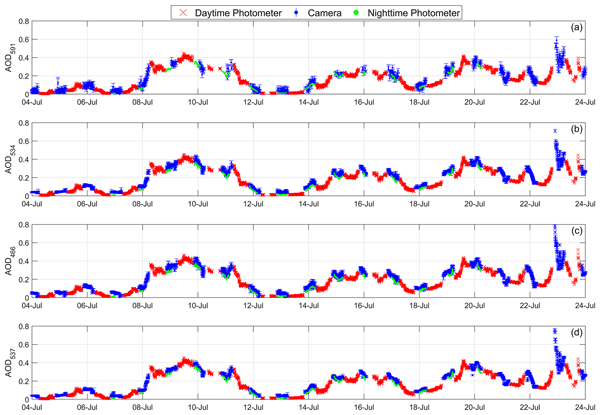
This paper presents a novel technique to extract starlight signals from all-sky images and retrieve aerosol optical depth (AOD). It is validated against lunar photometry, showing a strong correlation between data series. This innovative approach will expand nocturnal AOD measurements to more locations, as all-sky cameras are a simpler and more cost-effective alternative to stellar and lunar photometers.
Celia Herrero del Barrio, Roberto Román, Ramiro González, Alberto Cazorla, Marcos Herreras-Giralda, Juan Carlos Antuña-Sánchez, Francisco Molero, Francisco Navas-Guzmán, Antonio Serrano, María Ángeles Obregón, Yolanda Sola, Marco Pandolfi, Sara Herrero-Anta, Daniel González-Fernández, Jorge Muñiz-Rosado, David Mateos, Abel Calle, Carlos Toledano, Victoria Eugenia Cachorro, and Ángel Máximo de Frutos
EGUsphere, https://doi.org/10.5194/egusphere-2024-581, https://doi.org/10.5194/egusphere-2024-581, 2024
Preprint withdrawn
Short summary
Short summary
Introducing CAECENET, a novel system that combines sun-sky photometer and ceilometer data, enabling the continuous monitoring and automatic retrieval of both vertical and columnar aerosol properties in near real-time. A case study on a Saharan dust outbreak illustrates it's efficacy in tracking aerosol events. Additionally, the analysis of Canadian wildfires' long-range transport is presented, showing it's utility in monitoring event propagation, aerosol concentration, and optical properties.
Sara Herrero-Anta, Roberto Román, David Mateos, Ramiro González, Juan Carlos Antuña-Sánchez, Marcos Herreras-Giralda, Antonio Fernando Almansa, Daniel González-Fernández, Celia Herrero del Barrio, Carlos Toledano, Victoria E. Cachorro, and Ángel M. de Frutos
Atmos. Meas. Tech., 16, 4423–4443, https://doi.org/10.5194/amt-16-4423-2023, https://doi.org/10.5194/amt-16-4423-2023, 2023
Short summary
Short summary
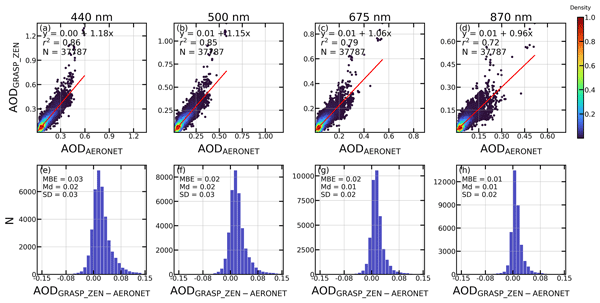
This paper shows the potential of a simple radiometer like the ZEN-R52 as a possible alternative for aerosol property retrieval in remote areas. A calibration method based on radiative transfer simulations together with an inversion methodology using the GRASP code is proposed here. The results demonstrate that this methodology is useful for the retrieval of aerosol extensive properties like aerosol optical depth (AOD) and aerosol volume concentration for total, fine and coarse modes.
Georgia Charalampous, Konstantinos Fragkos, Ilias Fountoulakis, Kyriakoula Papachristopoulou, Anna Moustaka, Argyro Nisantzi, Diofantos Hadjimitsis, and Stelios Kazadzis
EGUsphere, https://doi.org/10.5194/egusphere-2026-6018, https://doi.org/10.5194/egusphere-2026-6018, 2026
This preprint is open for discussion and under review for Atmospheric Measurement Techniques (AMT).
Short summary
Short summary
Cyprus has very high levels of ultraviolet radiation from the Sun, so reliable daily forecasts help people protect their health. We compared two forecasting systems with measurements from five stations across the island. Both worked well on clear days but were less accurate when clouds were present. During a wildfire in July 2025, smoke cut the measured ultraviolet levels by about 40 percent, which the forecasts missed. Better cloud and smoke information is needed to improve forecasts.
Dominic Heslin-Rees, Peter Tunved, Diego Aliaga, Janne Lampilahti, Ilona Riipinen, Annica M. L. Ekman, Ki-Tae Park, Martina Mazzini, Stefania Gilardoni, Roseline Thakur, Kihong Park, Young Jun Yoon, Kitack Lee, Mikko Sipilä, Mauro Mazzola, and Radovan Krejci
Aerosol Research, 4, 457–483, https://doi.org/10.5194/ar-4-457-2026, https://doi.org/10.5194/ar-4-457-2026, 2026
Short summary
Short summary
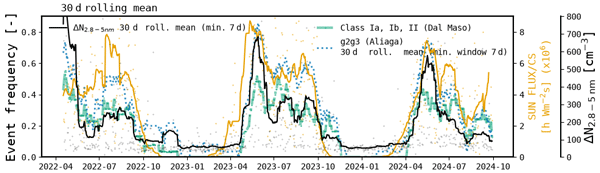
New particles form in the atmosphere and can influence the climate. We studied Arctic new particle formation (NPF) from 2022 to 2024 at the Zeppelin Observatory, on Svalbard. NPF occurs from April to November, peaking in late spring as sunlight increases. Some particles measured on-site grow large enough to seed clouds. Sunlight and existing aerosol particles strongly impact the likelihood of NPF, which mainly originates from marine regions, particularly the Greenland Sea.
Aiden Jönsson, Jinglan Fu, Gabriel Pereira Freitas, Ian Crawford, Pavla Dagsson-Waldhauserová, Radovan Krejci, Yutaka Tobo, Karl Espen Yttri, and Paul Zieger
Atmos. Chem. Phys., 26, 13617–13643, https://doi.org/10.5194/acp-26-13617-2026, https://doi.org/10.5194/acp-26-13617-2026, 2026
Short summary
Short summary
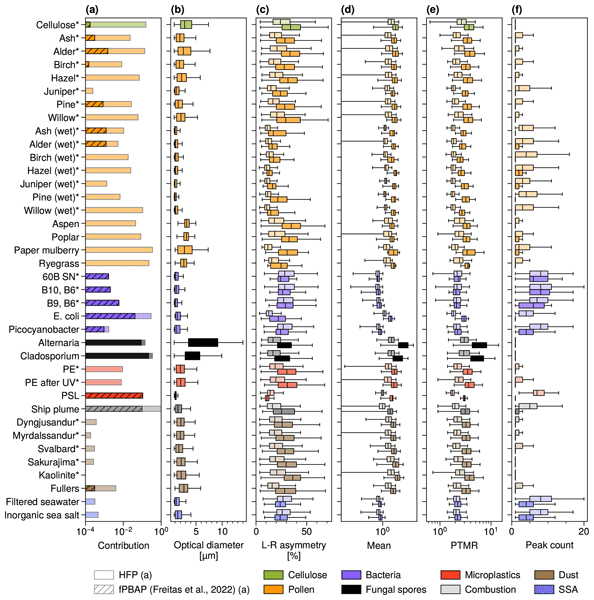
Coarse-mode aerosols, like dust and bioaerosols, play important roles in environmental and climate processes. We measured fluorescence and morphological properties of key coarse-mode particle types, compared them with previous characterizations, and trained machine learning models with these data to classify unknown particles. This algorithm improves bioaerosol identification and successfully reproduces the annual bioaerosol cycle previously identified in a year of observations from Svalbard.
Ondřej Tichý, Václav Košík, Sabine Eckhardt, Nikolaos Evangeliou, and Václav Šmídl
EGUsphere, https://doi.org/10.5194/egusphere-2026-5158, https://doi.org/10.5194/egusphere-2026-5158, 2026
This preprint is open for discussion and under review for Atmospheric Chemistry and Physics (ACP).
Short summary
Short summary
Atmospheric microplastic (MP) emissions were constrained using deposition measurements, FLEXPARTv11 modelling, and Bayesian inversion. We estimate global emissions of 1001 ± 781 Gg yr-1, dominated by oceanic sources (763 ± 611 Gg yr⁻¹), with substantial terrestrial contributions. Independent validation supports the MP emissions and indicate non-negligible ocean contribution. Particle size and shape strongly influence estimated mass emissions.
Liine Heikkinen, Rahul Ranjan, Sini Talvinen, Niels Behr, Sara M. Blichner, Maura Dewey, Lauri R. Ahonen, Mikael Ehn, Annica M. L. Ekman, Radovan Krejci, Tuukka Petäjä, Peter Tunved, and Ilona Riipinen
EGUsphere, https://doi.org/10.5194/egusphere-2026-5082, https://doi.org/10.5194/egusphere-2026-5082, 2026
This preprint is open for discussion and under review for Atmospheric Chemistry and Physics (ACP).
Short summary
Short summary
The impacts of clouds on atmospheric particulate matter (PM) composition are not well understood. Here, we use a new method to infer these interactions as particle number size distributions with bimodal shapes serve as markers of chemical cloud processing. Using concurrent PM composition data from a boreal forest in Finland, we find cloud chemistry to enrich PM in sulfate, but no enhanced formation of organics was observed, despite the abundance of precursors emitted by the forest.
Celia Herrero del Barrio, Roberto Román, Sara Herrero-Anta, Daniel González-Fernández, Rogelio Carracedo, Ramiro González, Javier Gatón, Bruno Longarela, Juan Carlos Antuña-Sánchez, David Mateos, Carlos Toledano, Abel Calle, Victoria Cachorro, and Ángel de Frutos
Atmos. Meas. Tech., 19, 5785–5814, https://doi.org/10.5194/amt-19-5785-2026, https://doi.org/10.5194/amt-19-5785-2026, 2026
Short summary
Short summary
This work presents an automated method to create cloud height maps in near real time using a network of 20 ground-based sky cameras in Valladolid, Spain. By comparing simultaneous images from different locations, the system estimates cloud base and top heights every few minutes over a large area with 50 m resolution. The results agree well with satellite and ceilometer measurements, showing that low-cost camera networks can improve continuous cloud monitoring for weather and climate studies.
Georgia Charalampous, Konstantinos Fragkos, Ilias Fountoulakis, Kyriakoula Papachristopoulou, Anna Moustaka, Franco Marenco, Yevgeny Derimian, Argyro Nisantzi, Rodanthi-Elisavet Mamouri, Diofantos Hadjimitsis, and Stelios Kazadzis
Atmos. Meas. Tech., 19, 5753–5783, https://doi.org/10.5194/amt-19-5753-2026, https://doi.org/10.5194/amt-19-5753-2026, 2026
Short summary
Short summary
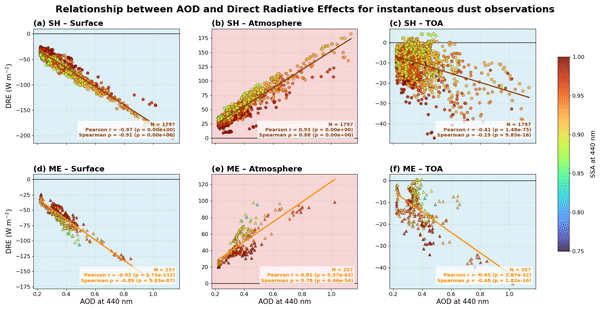
This study analyses seven years of dust events over Cyprus to identify their origin and quantify their impact on surface solar radiation. Most events originated from the Sahara. Dust reduces surface solar radiation, leading to surface cooling, while also causing atmospheric heating and cooling at the top of the atmosphere. Surface reductions in solar radiation reach about 5 %–15 % on average, with effects mainly controlled by dust amount.
Dimitra Kouklaki, Georgia Charalampous, Anna Moustaka, Alkistis Papetta, Celia Herrero del Barrio, Rizos-Theodoros Chadoulis, S. Yeşer Aslanoğlu, Sara Herrero-Anta, Michail Mytilinaios, Nikolaos Papadimitriou, Katerina Anyfanti, Christos Spyrou, Daniela Meloni, Konstantinos Fragkos, Yevgeny Derimian, Tatiana Di Iorio, Rodanthi-Elisavet Mamouri, Vassilis Amiridis, Stavros Solomos, Stelios Kazadzis, and Ilias Fountoulakis
Atmos. Meas. Tech., 19, 5633–5657, https://doi.org/10.5194/amt-19-5633-2026, https://doi.org/10.5194/amt-19-5633-2026, 2026
Short summary
Short summary
In the present study we investigated how aerosols, and specifically dust, affect solar radiation and energy production by investigating several dust events across multiple sites in the Mediterranean Basin between 2021 and 2022 through ground-based observations and model simulations. The results revealed that dust can significantly attenuate solar radiation and, therefore, lead to considerable losses in solar power generation, specifically in the case of solar tracking systems.
Ross J. Herbert, Larissa Lacher, Alexander Böhmländer, Mark D. Tarn, Antoine Canzi, Aidan Pantoya, Evelyn Freney, Kristina Höhler, Pia Bogert, Céline Planche, Ping Tian, Michael Adams, Sarah Barr, David Brus, Nicole Büttner, Martin Daily, Konstantinos Doulgeris, Konstantinos Eleftheriadis, Grant Forster, Romy Fösig, Dimitrios G. Georgakopoulos, Maria I. Gini, A. Gannet Hallar, Radovan Krejci, Elke Ludewig, Mauro Mazzola, Ian B. McCubbin, Athanasios Nenes, Tuukka Petäjä, Joseph Robinson, Franziska Vogel, Paul Zieger, Stephen Arnold, Kenneth S. Carslaw, Naruki Hiranuma, Ottmar Möhler, and Benjamin J. Murray
Earth Syst. Sci. Data, 18, 6465–6483, https://doi.org/10.5194/essd-18-6465-2026, https://doi.org/10.5194/essd-18-6465-2026, 2026
Short summary
Short summary
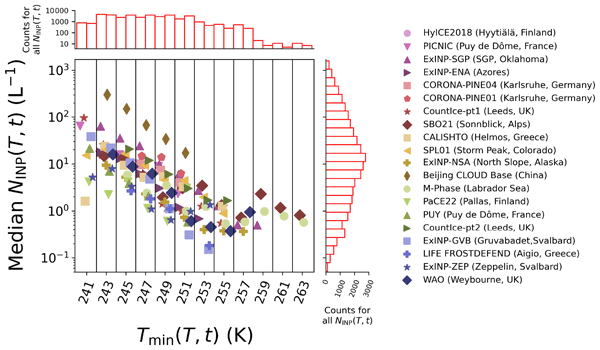
Ice formation in sub-zero clouds is influenced by airborne particles called ice-nucleating particles (INPs), whose concentrations vary substantially over short time and spatial scales. To assess the role of INPs in our climate, a comprehensive and consistent global dataset is essential. Our GloPINE model-ready dataset is a major step in this direction, comprising 36,000 measurements made using a single instrument design (PINE) over 70,000 hours of operation at 20 Northern Hemisphere sites.
Anna Moustaka, Kyriakoula Papachristopoulou, Georgia Charalampous, and Stelios Kazadzis
EGUsphere, https://doi.org/10.5194/egusphere-2026-4413, https://doi.org/10.5194/egusphere-2026-4413, 2026
This preprint is open for discussion and under review for Atmospheric Measurement Techniques (AMT).
Short summary
Short summary
Atmospheric particles affect how much sunlight reaches the Earth's surface, but their uncertainty is rarely considered in solar energy studies. We estimated this uncertainty from a global atmospheric dataset and examined its effect on sunlight reaching the ground between 2003 and 2024. The results improve confidence in solar energy assessments, particularly in dusty and polluted regions.
Alkistis Papetta, Celia Herrero del Barrio, S. Yeşer Aslanoğlu, Rizos-Theodoros Chadoulis, Georgia Charalampous, Sara Herrero-Anta, Dimitra Kouklaki, Michail Mytilinaios, Anna Moustaka, Emmanouil Proestakis, Vassilis Amiridis, Christos Spyrou, Antonis Gkikas, Michael Pikridas, Maria Kezoudi, Franco Marenco, Jean Sciare, Sophie Vandenbussche, Stavros Solomos, Stelios Kazadzis, and Ilias Fountoulakis
Atmos. Chem. Phys., 26, 12395–12434, https://doi.org/10.5194/acp-26-12395-2026, https://doi.org/10.5194/acp-26-12395-2026, 2026
Short summary
Short summary
We studied four major dust events from the Sahara and the Middle East over the Mediterranean. Saharan dust events exhibited coarser and more scattering particles, while Middle Eastern dust was finer and mixed with pollution. Differences in absorption could not be explained by mineralogy and are attributed to mixing.
Sara M. Blichner, Theodore Khadir, Sini Talvinen, Paulo Artaxo, Liine Heikkinen, Harri Kokkola, Radovan Krejci, Muhammed Irfan, Twan van Noije, Tuukka Petäjä, Christopher Pöhlker, Øyvind Seland, Carl Svenhag, Antti Vartiainen, and Ilona Riipinen
Atmos. Chem. Phys., 26, 11281–11307, https://doi.org/10.5194/acp-26-11281-2026, https://doi.org/10.5194/acp-26-11281-2026, 2026
Short summary
Short summary
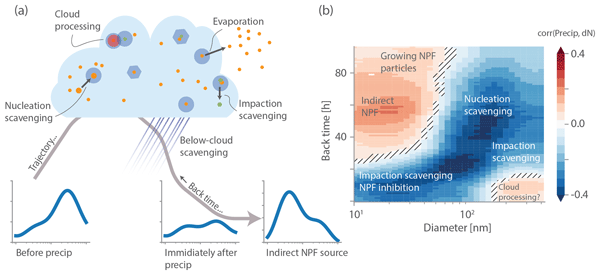
This study looks at how well climate models capture the impact of rain on particles that help form cloud droplets. Using data from three measurement stations and applying both a correlation analysis and a machine learning approach, we found that models often miss how new particles form after rain and struggle in cold environments. This matters because these particles influence cloud formation and climate.
Stefania Gilardoni, Annachiara Bellini, Paolo Bonasoni, Henri Diémoz, Christian Gencarelli, Angela Marinoni, Eros Mariani, Luigi Mazari Villanova, Bruno Neininger, Mattia Perilli, Michael Sprenger, and Francesco Petracchini
Atmos. Chem. Phys., 26, 11135–11152, https://doi.org/10.5194/acp-26-11135-2026, https://doi.org/10.5194/acp-26-11135-2026, 2026
Short summary
Short summary
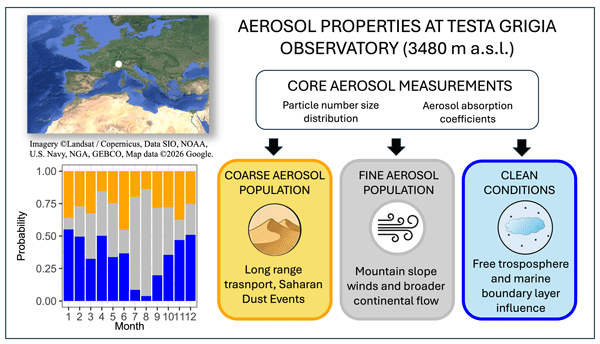
This study presents the first high-time-resolution aerosol data collected from the Testa Grigia Observatory (3,480 m) in the Italian Alps, from 2021 to 2023. We identified three transport pathways: Saharan Dust Events (SDE), which occurred with a frequency of 6 %, regional and long-range transported pollution (28 %), and clean air from the free troposphere. The timing of SDE, observed mainly in spring, and the mixing of dust particles with black carbon, enhance SDE impact on snow melting.
Stephen M. Platt, Milos Davidović, Alena Bartonova, Željko Ćirović, Sabine Eckhardt, Nikolaos Evangeliou, Hans Gundersen, Maja Jovanović, Milena Jovašević-Stojanović, Griša Močnik, Bojana Petrović, Philipp Schneider, and Karl Espen Yttri
EGUsphere, https://doi.org/10.5194/egusphere-2026-1708, https://doi.org/10.5194/egusphere-2026-1708, 2026
This preprint is open for discussion and under review for Atmospheric Chemistry and Physics (ACP).
Short summary
Short summary
We present year-round (2023 to 2025) carbonaceous aerosol measurements from Ada Marina, Belgrade, combining tracers, the aethalometer model, a new NNMF application, and FLEXPART. All methods show residential wood combustion is important, driving winter increases in eBC and OC, enhanced secondary OC, and brown carbon absorption. FLEXPART highlights regional transport within Serbia and the Pannonian Basin, with good model–observation agreement, underscoring the need to reduce RWC emissions.
Lea Haberstock, Darrel Baumgardner, Dagen D. Hughes, Julie Legrand, Almuth Neuberger, Cuiqi Zhang, Zamin A. Kanji, Christian Maier, Ilona Riipinen, Radovan Krejci, and Paul Zieger
EGUsphere, https://doi.org/10.5194/egusphere-2026-3790, https://doi.org/10.5194/egusphere-2026-3790, 2026
This preprint is open for discussion and under review for Atmospheric Measurement Techniques (AMT).
Short summary
Short summary
Here, we present the characterization and first application of a new cloud spectrometer, the Ground-based Fog and Aerosol Spectrometer (GFAS). Besides particle number concentration and size, the GFAS also provides an indicator of particle morphology and composition. We present a new calibration routine and first laboratory and field measurements. Using the GFAS, we can show that cloud droplets are optically different compared to pure water droplets.
Yannis Gschwind, Kyriaki Papachristopoulou, Jason N. S. Cole, Alkiviadis F. Bais, and Stelios Kazadzis
EGUsphere, https://doi.org/10.5194/egusphere-2026-4519, https://doi.org/10.5194/egusphere-2026-4519, 2026
Short summary
Short summary
The EarthCARE satellite, launched in 2024, measures aerosol, cloud, and precipitation properties, serving as input for radiative transfer models. Given its recent launch, validation is crucial. In this analysis, we validate the resulting surface irradiance against ground-based measurements and compare with estimates from geostationary satellites. Our study indicates that EarthCARE slightly underestimates surface irradiance. These early tests provide essential context for EarthCARE data users.
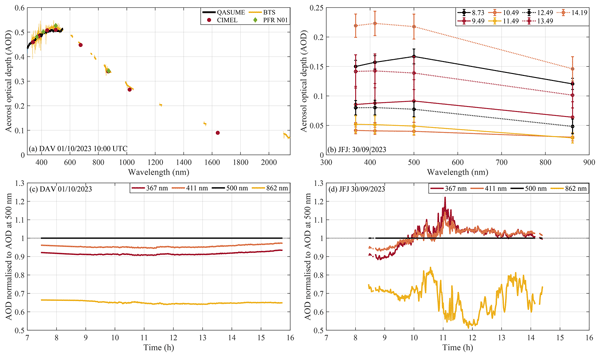
Akriti Masoom, Stelios Kazadzis, Robin Lewis Modini, Martin Gysel-Beer, Julian Gröbner, Martine Collaud Coen, Francisco Navas-Guzman, Natalia Kouremeti, Benjamin Tobias Brem, Nora Kristina Nowak, Giovanni Martucci, and Maxime Hervo
Atmos. Chem. Phys., 26, 10801–10834, https://doi.org/10.5194/acp-26-10801-2026, https://doi.org/10.5194/acp-26-10801-2026, 2026
Short summary
Short summary
This article aims at providing details on the spectral aerosol properties observed during 2023 Canadian wildfire plume transport and exploring the synergism between remote sensing and in situ measurements for investigating the cause of the occurrence of the observations of spectral aerosol properties.
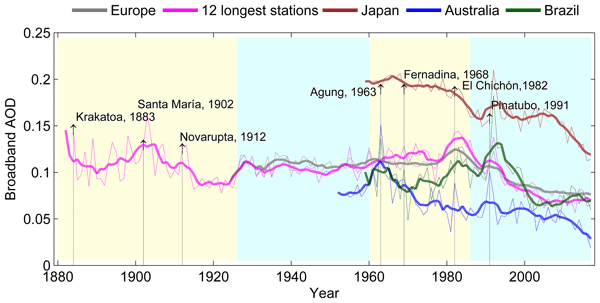
William Wandji Nyamsi, Ville Leinonen, Antti Lipponen, Else van den Besselaar, Santtu Mikkonen, Arturo Sanchez-Lorenzo, Martin Wild, Doris Folini, Tero Mielonen, Harri Kokkola, Antti Kukkurainen, Neus Sabater, Rei Kudo, Ben Liley, Raghav Srinivasan, Bruce W. Forgan, Alexandru Dumitrescu, Grzegorz Urban, Michał K. Kowalewski, Márcia Akemi Yamasoe, Nilton Évora do Rosário, Dimitra Founda, Stelios Kazadzis, Veronica Manara, Derbetini A. Vondou, Christian Gueymard, Anders V. Lindfors, Atsumu Ohmura, and Antti Arola
Atmos. Chem. Phys., 26, 10767–10788, https://doi.org/10.5194/acp-26-10767-2026, https://doi.org/10.5194/acp-26-10767-2026, 2026
Short summary
Short summary
Worldwide reconstructed historical aerosol load reveals that during the period of:
- 1900–1959: the atmosphere became cleaner in most European cities;
- 1960–1985: anthropogenic aerosols were responsible for the dimming phenomenon in Europe. AOD increased over Southeast Brazil and decreased noticeably over Japan while a small negative trend was found over Oceania;
- 1986–2015: generally, the atmosphere has become much cleaner everywhere after the reversal trend around 1980s mainly observed in Europe.

Sophie Vandenbussche, Christodoulos Biskas, Maria-Elissavet Koukouli, Stelios Kazadzis, and Martine De Mazière
Atmos. Meas. Tech., 19, 4889–4922, https://doi.org/10.5194/amt-19-4889-2026, https://doi.org/10.5194/amt-19-4889-2026, 2026
Short summary
Short summary
Mineral dust aerosols are tiny particles uplifted by winds from deserts, which may be transported for long distances. They are climate forcers and affect human health and socio-economic sectors, making near-real-time and long-term monitoring essential. Here, we use satellite observations to retrieve global 3D distributions of dust aerosols. We present an updated and improved algorithm and its long-term consistent data since late 2007, with high potential for climate analyses and alert systems.
Patrick C. Taylor, Armin Sorooshian, Rei Ueyama, Sebastian Schmidt, Ihab Abboud, Quincy Allison, Kevin Barry, Sebastian Becker, Holly A. Bender, Joseph R. Bennett, James B. Blair, Niklas Bohn, Linette Boisvert, Matthew D. Brown, Roelof Bruintjes, Anthony Bucholtz, Megan Buzanowicz, Brian Cairns, Filippo Calì Quaglia, Eduard Chemyakin, Bo Chen, Gao Chen, Hong Chen, Yu-Wen Chen, Zezhen Cheng, Swarup China, Dan Chirica, Yonghoon Choi, Peter Colarco, Brian Collister, Ewan Crosbie, Maurice J. Cross, Janet Daniels, Paul DeMott, Joshua P. DiGangi, Alcide Giorgio di Sarra, Glenn S. Diskin, Erica K. Dolinar, Eva-Lou Edwards, Samuel Ephraim, Nikolaos Evangeliou, Romanos Foskinis, Francesca Gallo, Lan Gao, José Luis Gómez-Amo, Daisy Gonzalez, Christine Groot Zwaaftink, Pawan Gupta, Ivan Heckman, Michael Hendrickson, Miguel Ricardo A. Hilario, Ken Hirata, Michelle Hofton, Andrew L. Holen, Ulas Im, Alia L. Khan, Ralph Kahn, Alexei V. Korolev, Sonia Kreidenweis, Thomas Krumpen, Nathan Kurtz, Leslie Lait, Bradley Lamkin, Jack Landy, Nurun Nahar Lata, Paul Lawson, Samuel LeBlanc, Sean Leavor, Jing Li, Thorsten Markus, Hal Maring, Andreas H. Massling, Camille Mavis, Flynn McGinnity, Kerry Meyer, Gabriel Mojica, Richard H. Moore, Parker Morris, Giovanni Muscari, Vikas Nataraja, Amin R. Nehrir, Athanasios Nenes, Edward P. Nowottnick, Matteo Ottaviani, Chelsea Parker, Ryan Patnaude, Michael Perez, Russell J. Perkins, Colten Peterson, Alek Petty, Stevie Phothisane, Chris Polashenski, Kerri A. Pratt, Kayla M. Preisler, John Prytherch, David Rabine, Jens Redemann, Ju-Mee Ryoo, Joseph S. Schlosser, Vanessa Selimovic, Michael A. Shook, Morgan Silverman, Henrik Skov, Alexander Smirnov, Cassidy Soloff, Amy Solomon, Snorre Stamnes, Azusa Takeishi, David R. Thompson, K. Lee Thornhill, Rachel Tilling, Michael Tjernström, Monica Tosco, Pedro C. Valdelomar, David Van Gilst, Jian Wang, Zhien Wang, Andrzej Wasilewski, Manfred Wendisch, Brent Wilder, Edward L. Winstead, Albert Wu, Peng Xian, Lauren M. Zamora, Jiaoshi Zhang, Lei Zhang, Lu Zhang, Luke Ziemba, and Paquita Zuidema
Earth Syst. Sci. Data Discuss., https://doi.org/10.5194/essd-2026-241, https://doi.org/10.5194/essd-2026-241, 2026
Preprint under review for ESSD
Short summary
Short summary
This article summarizes the data sets collected during the Arctic Radiation Cloud aerosol Sea ice Interaction eXperiment (ARCSIX), NASA's most comprehensive Arctic field campaign to date. The overarching goal was to quantify the contributions of surface, clouds, aerosol particles, and precipitation to summer sea ice melt. This paper describes the ARCSIX implementation including the flight strategy, instruments, complementary data sets, access, and usage details.
Gaurav Kumar, Masahiro Momoi, Monica Campanelli, Meritxell Garcia-Suñer, Natalia Kouremeti, Rei Kudo, Roberto Pedrós, and Víctor Estellés
EGUsphere, https://doi.org/10.5194/egusphere-2026-4267, https://doi.org/10.5194/egusphere-2026-4267, 2026
Short summary
Short summary
Aerosols are tiny particles suspended in the atmosphere, affecting the air quality and climate. Accurate aerosol measurements are thus important for understanding their effects. Sky radiometers are widely used instruments for the aerosol measurements. We developed a method to improve the calibration coefficients of sky radiometers, using the latest data-processing algorithm and an iterative procedure. The proposed method produced more accurate results, improving long-term aerosol monitoring.
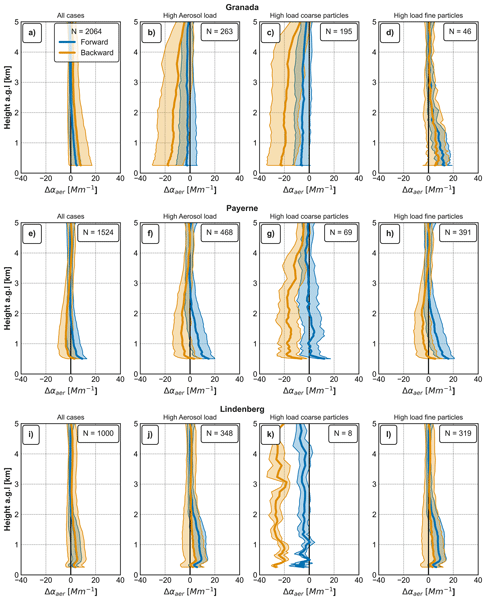
Jorge Muñiz-Rosado, Alberto Cazorla, Eric Sauvageat, Alexander Haefele, Celia Herrero del Barrio, Ramiro González, Roberto Román, Pedro Luis Molina-Molero, Arlett Díaz-Zurita, Víctor Manuel Naval-Hernández, Onel Rodríguez-Navarro, María José Granados-Muñoz, Juan Antonio Bravo-Aranda, Milagros Herrera, Daniel Pérez-Ramírez, Lionel Doppler, Lucas Alados-Arboledas, and Francisco Navas-Guzmán
Atmos. Chem. Phys., 26, 10255–10285, https://doi.org/10.5194/acp-26-10255-2026, https://doi.org/10.5194/acp-26-10255-2026, 2026
Short summary
Short summary
Ceilometers can track dust and pollution particles in the atmosphere, but their measurements need validation. This study statistically compared two processing methods against thousands of measurements from sun-tracking instruments and balloon soundings at three European sites over two years. One method, using an independent calibration procedure, proved more accurate across all conditions, cutting uncertainties by around half. This supports its wider use for air quality monitoring.
Francesco Paladini de Mendoza, Leonardo Langone, Alice Cavaliere, Gianmarco Ingrosso, Lorenzo Pasculli, Chiara Ripa, Mauro Mazzola, Manuel Bensi, Federico Giglio, Stefano Miserocchi, Tommaso Tesi, and Patrizia Giordano
Earth Syst. Sci. Data Discuss., https://doi.org/10.5194/essd-2026-501, https://doi.org/10.5194/essd-2026-501, 2026
Preprint under review for ESSD
Short summary
Short summary
This paper presents 5-years of continuous ocean observations from Arctic fjords and nearby deep waters around Svalbard. The dataset reveals strong seasonal changes, recurring inflows of warm Atlantic waters, and differences between glacier-influenced coastal areas and offshore environments. By providing openly accessible, high-quality measurements, the study supports research on climate change, ocean dynamics, glacier–ocean interactions, in a rapidly changing Arctic.
Aino Ovaska, Daniel Holmberg, Elio Rauth, Mansour Alghamdi, Paulo Artaxo, Eija Asmi, John Backman, Benjamin Bergmans, Matthew Boyer, Liezl Bredenkamp, Maurizio Busetto, Delano Campos De Oliveira, Juan Andrés Casquero-Vera, Darius Ceburnis, Tak Chan, Tommy Chan, Sebastien Conil, Daniele Contini, Suzanne Crumeyrolle, Valentin Duflot, Kostas Eleftheriadis, Johan Esveld, Ekaterina Ezhova, Markus Fiebig, Shahzad Gani, Olga Garmash, Francisco Gómez-Moreno, Roy M. Harrison, Andras Hoffer, Rakesh Hooda, Antti Hyvärinen, Tareq Hussein, Jorma Joutsensaari, Nikos Kalivitis, Heinz Kaminski, Jutta Kesti, Radovan Krejci, Adam Kristensson, Chongai Kuang, Markku Kulmala, Lauri Laakso, Ari Leskinen, Heikki Lihavainen, Andreas Massling, Maik Merkel, Steffen Noe, Jakub Ondracek, Noemí Perez, Jean-Eudes Petit, Tuukka Petäjä, Michael Pikridas, Christopher Pöhlker, Mira Pöhlker, Jean-Philippe Putaud, Ximeng Qi, Cristina Reche, Sergio Rodríguez, Petr Roztocil, Jean Sciare, Karine Sellegri, Dongjie Shang, Ashish Singh, Mikko Sipilä, Henrik Skov, Mar Sorribas, Tamanna Subba, Junying Sun, Peter Tunved, Ville Vakkari, Pieter G. Van Zyl, Aki Virkkula, Jens Voigtländer, Kay Weinhold, Alfred Wiedensohler, Hee-Jung Yoo, Putian Zhou, Kai Puolamäki, Tuomo Nieminen, Veli-Matti Kerminen, Victoria A. Sinclair, and Pauli Paasonen
Earth Syst. Sci. Data Discuss., https://doi.org/10.5194/essd-2026-415, https://doi.org/10.5194/essd-2026-415, 2026
Preprint under review for ESSD
Short summary
Short summary
All clouds form around aerosol particles, and their abundance influences cloud properties. In turn, clouds affect climate by changing how energy moves through the atmosphere, making them important for climate change. To better understand these interactions, we need accurate information on how many aerosol particles are in the atmosphere. Therefore, we have developed a new 21-year global dataset of particle concentrations relevant for cloud formation.
Dominique Gantois, Alexandre Baron, Michaël Sicard, Valentin Duflot, Niels Groenen, Nelson Bègue, Sabine Eckhardt, Nikolaos Evangeliou, Martine De Mazière, Corinne Vigouroux, Guillaume Payen, Nicolas Marquestaut, Jean-Marc Metzger, Patrick Chazette, and Cyrille Flamant
EGUsphere, https://doi.org/10.5194/egusphere-2026-3070, https://doi.org/10.5194/egusphere-2026-3070, 2026
Short summary
Short summary
Smoke from Southern African and South American wildfires can travel for thousands of kilometers before reaching the Indian Ocean and Reunion Island. In this study, we use instruments measuring from the ground, from satellites, as well as atmospheric models, to track these smoke plumes and identify their origins and properties. Our findings should help future research focusing on the impact of these plumes on the atmospheric temperature.
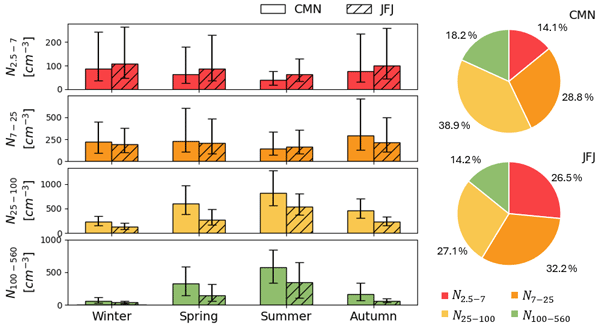
Martina Mazzini, Diego Aliaga, Janne Lamphilati, Martin Gysel-Beer, Benjamin Tobias Brem, Robin Lewis Modini, Dominic Heslin-Rees, Tareq Hussein, Marco Zanatta, Paolo Cristofanelli, Federico Bianchi, Markku Kulmala, and Angela Marinoni
Atmos. Chem. Phys., 26, 8893–8912, https://doi.org/10.5194/acp-26-8893-2026, https://doi.org/10.5194/acp-26-8893-2026, 2026
Short summary
Short summary
This study investigates particle number size distribution at two high-altitude European stations to better understand the mechanisms driving new particle formation (NPF) in the free troposphere. Interestingly, despite a consistently higher background of freshly nucleated particles at Jungfraujoch, NPF events were more frequent and intense at Monte Cimone, which also shows higher formation and growth rates, likely due to the proximity of the polluted planetary boundary layer from the Po Valley.
Samuel Ephraim, Paquita Zuidema, Aaron Bansemer, Lintong Cai, Markus Petters, Elise Rosky, Jefferson R. Snider, Zhien Wang, Sarah Woods, Kevin Barry, Theresa Campos, Owen Cruikshank, Sabine Eckhardt, Nikolaos Evangeliou, Romanos Foskinis, Jeffrey R. French, Bart Geerts, Coltin Grasmick, Silvia Henning, Varun Kumar, Andreas Massling, Camille Mavis, Greg M. McFarquhar, Athanasios Nenes, Gunnar Noer, Ryan Patnaude, Russell Perkins, Lise Lotte Sorensen, Henrik Skov, Tyler Tatro, Florian Tornow, and Lu Zhang
EGUsphere, https://doi.org/10.5194/egusphere-2026-2940, https://doi.org/10.5194/egusphere-2026-2940, 2026
Short summary
Short summary
The processes that establish how mixed-phase closed-cell clouds transition to more open cellular structures are poorly known. First-of-its kind aircraft observations document such a transition in the presence of anomalously high aerosol concentrations over the Nordic Seas at cloud temperatures < -15 °C. The reduces the drop size, discouraging riming. Eventually, ice precipitation produces surface cold pools that drive the convective transition, despite strong counteracting surface fluxes.
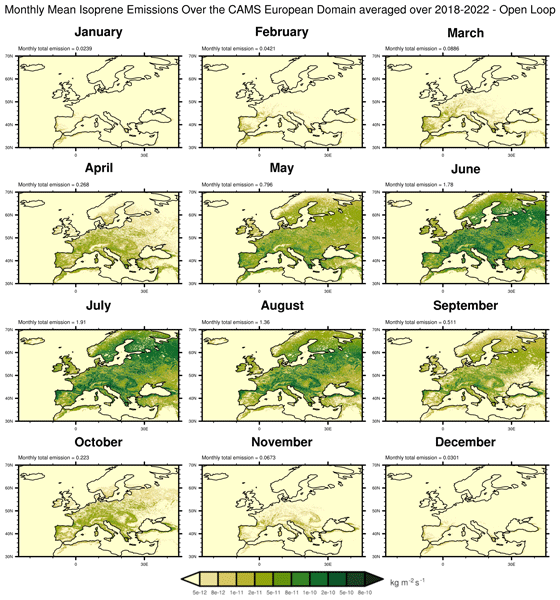
Paul D. Hamer, Miha Markelj, Oscar Rojas-Munoz, Bertrand Bonan, Jean-Christophe Calvet, Virginie Marécal, Alex Guenther, Heidi Trimmel, Islen Vallejo, Sabine Eckhardt, Gabriela Sousa Santos, Katerina Sindelarova, David Simpson, Norbert Schmidbauer, Heidi Hellén, Pascal Rubli, Stefan Reimann, Anja Claude, Dagmar Kubistin, Julie Cozic, James Dernie, and Leonor Tarrasón
Earth Syst. Sci. Data, 18, 3635–3669, https://doi.org/10.5194/essd-18-3635-2026, https://doi.org/10.5194/essd-18-3635-2026, 2026
Short summary
Short summary
Plants release gases like isoprene that can form ozone and affect air quality. Using models and satellite data, we mapped the emissions of isoprene from plants across Europe and found that droughts can reduce leaf growth, leading to lower emissions. This shows that to understand and predict air quality, we must also understand how drought impacts vegetation. Our findings highlight the value of linking extreme weather, plant health, and pollution in models of the Earth system as a whole.
Victoria E. Cachorro, Juan Carlos Antuña-Marrero, Abel Calle, Roberto Román, David Mateos, Carlos Toledano, Juan Carlos Antuña-Sánchez, Ramiro González, Manuel Antón, Javier Vaquero-Martínez, Angel M. de Frutos Baraja, and Javier Pacheco
EGUsphere, https://doi.org/10.5194/egusphere-2026-2374, https://doi.org/10.5194/egusphere-2026-2374, 2026
Short summary
Short summary
Observations of the Arctic integrated water vapor (IWV) from sun photometers (SP) are in general dryer than the ones from GNSS. High correlations between IWV from SP and IWV from GNSS at all sites, show the good agreement between both techniques. Moist bias of hourly IWV magnitudes from ERA5 and MERRA-2 reanalyses respect to GNSS, radiosonde, SP, show that current and future state-of-the-art reanalyses require improvements to match the range of variability of these IWV observation techniques.
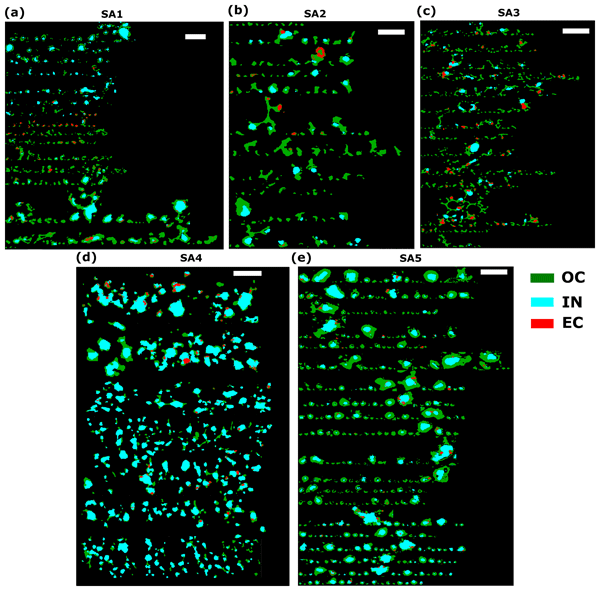
Nurun Nahar Lata, Trung Diep, Stefania Gilardoni, Mauro Mazzola, Zezhen Cheng, Ashfiqur Rahman, Mickey M. Rogers, Matthew Fraund, Matthew A. Marcus, Naruki Hiranuma, and Swarup China
Atmos. Chem. Phys., 26, 6611–6628, https://doi.org/10.5194/acp-26-6611-2026, https://doi.org/10.5194/acp-26-6611-2026, 2026
Short summary
Short summary
Ice in the Arctic clouds is initiated by rare particles, and their properties are not well understood due to atmospheric processing. By combining microscopy with freezing experiments, we found that both chemical composition and the thickness and morphological configuration of organic coatings influence ice formation. This finding highlights the importance of particle surface chemistry in cloud formation and offers new insights into how Arctic aerosols influence cloud formation.
Marco Zanatta, Paolo Bonasoni, Francescopiero Calzolari, Paolo Cristofanelli, Sabine Eckhardt, Nikolaos Evangeliou, Cecilia Magnani, Camilla Perfetti, Davide Putero, Laura Renzi, Franziska Vogel, and Angela Marinoni
Earth Syst. Sci. Data Discuss., https://doi.org/10.5194/essd-2026-211, https://doi.org/10.5194/essd-2026-211, 2026
Revised manuscript under review for ESSD
Short summary
Short summary
This work presents 18 years of high-quality observations of equivalent black carbon concentration measured at the Monte Cimone mountain site in Italy. We provide a detailed description of the measurement setup, data processing, and associated uncertainties to ensure consistency over time. The openly available dataset offers information for long-term studies, including the integration of renaltysis data parameters and comparison with atmospheric models.
Elena Barbaro, Francisco Ardini, Silvia Becagli, Stefano Bertinetti, Federica Bruschi, Giulia Calzolai, Alice Cavaliere, David Cappelletti, Stefano Crocchianti, Matteo Feltracco, Andrea Gambaro, Fabio Giardi, Stefania Gilardoni, Marco Grotti, Dominic Heslin-Rees, Radovan Krejci, Mery Malandrino, Matilde Mataloni, Simonetta Montaguti, Silvia Nava, Marco Paglione, Matteo Rinaldi, Chiara Ripa, Mirko Severi, Andrea Spolaor, Rita Traversi, Hilde Uggerud, Giulio Verazzo, Tessa Viglezio, Karl Espen Yttri, Wenche Aas, and Mauro Mazzola
EGUsphere, https://doi.org/10.5194/egusphere-2026-1467, https://doi.org/10.5194/egusphere-2026-1467, 2026
Short summary
Short summary
This study analyzes how Arctic atmospheric layering affects aerosol distribution by comparing data from the Gruvebadet (61 m) and Zeppelin (472 m) observatories in Svalbard. Results show consistent levels of human-made pollutants like sulfate at both heights, confirming long-range transport from Eurasia. Conversely, natural biogenic tracers were more concentrated at lower altitudes. By integrating chemical and meteorological data, the research highlights the need for multi-level monitoring.
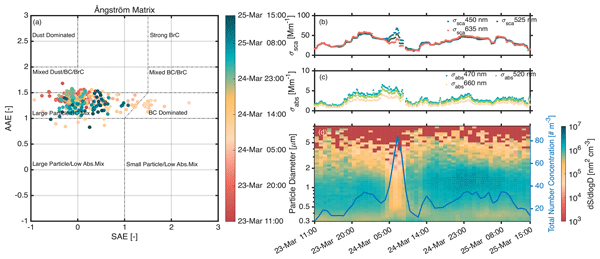
Zihui Teng, Jane Tygesen Skønager, Andreas Massling, Henrik Skov, Nikolaos Evangeliou, Sabine Eckhardt, Merete Bilde, and Bernadette Rosati
Aerosol Research, 4, 169–187, https://doi.org/10.5194/ar-4-169-2026, https://doi.org/10.5194/ar-4-169-2026, 2026
Short summary
Short summary
Coastal aerosols in Scandinavian urban areas remain understudied. We examined aerosol optical properties and size distributions along Denmark's coastline. Combining in situ data with dispersion modelling, we identified two main aerosol types: carbonaceous aerosols from fossil fuel and biomass burning and large, highly scattering aerosols (potentially sea salt). Black carbon from in situ data and dispersion modelling correlated well, while FLEXPART underestimated the concentration.
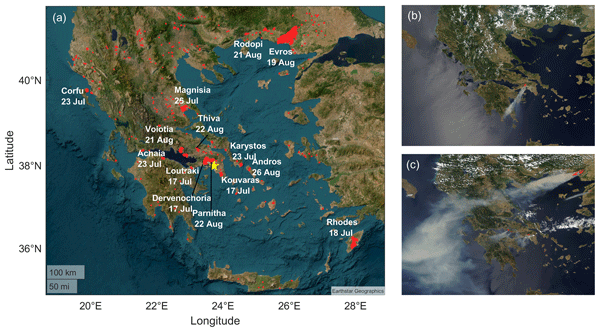
Marilena Gidarakou, Alexandros Papayannis, Maria Mylonaki, Eleni Kralli, Kostas Eleftheratos, Ilias Fountoulakis, Olga Zografou, Evangelia Diapouli, Maria I. Gini, Stergios Vratolis, Konstantinos Granakis, Konstantinos Eleftheriadis, Nikolaos Evangeliou, Christine Groot Zwaaftink, Eugenia Giagka, Marios-Andreas Zagklis, and Igor Veselovskii
Atmos. Chem. Phys., 26, 4313–4339, https://doi.org/10.5194/acp-26-4313-2026, https://doi.org/10.5194/acp-26-4313-2026, 2026
Short summary
Short summary
In summer 2023, Greece experienced one of its most intense wildfire seasons, with major fires across several regions. This study examines how smoke from two major fire events affected air quality and ultraviolet radiation in Athens using satellite images, modelling, and ground-based measurements to understand the optical and microphysical behavior of airborne particles.
Anna Moustaka, Antonis Gkikas, Stavros-Andreas Logothetis, Johannes Flemming, Samuel Rémy, Melanie Ades, Angela Benedetti, Kleareti Tourpali, Vassilis Amiridis, and Stelios Kazadzis
EGUsphere, https://doi.org/10.5194/egusphere-2026-1107, https://doi.org/10.5194/egusphere-2026-1107, 2026
This preprint is open for discussion and under review for Atmospheric Chemistry and Physics (ACP).
Short summary
Short summary
We examined how atmospheric aerosols have changed worldwide over the past two decades using a global atmospheric reanalysis together with ground-based observations. We found strong regional differences, with clear declines in some industrialized areas and increases in parts of South Asia and the Middle East. These long-term records help improve understanding of changes in climate and air quality.
África Barreto, Francisco Quirós, Omaira E. García, Jorge Pereda-de-Pablo, Daniel González-Fernández, Andrés Bedoya-Velásquez, Michael Sicard, Carmen Córdoba-Jabonero, Marco Iarlori, Vincenzo Rizi, Nickolay Krotkov, Simon Carn, Reijo Roininen, Antonio J. Molina-Arias, A. Fernando Almansa, Óscar Álvarez-Losada, Carla Aramo, Juan José Bustos, Romain Ceolato, Adolfo Comerón, Alicia Felpeto, Rosa D. García, Pablo González-Sicilia, Yenny González, Pascal Hedelt, Miguel Hernández, María-Ángeles López-Cayuela, Diego Loyola, Stavros Meletlidis, Constantino Muñoz-Porcar, Ermanno Pietropaolo, Ramón Ramos, Alejandro Rodríguez-Gómez, Roberto Román, Pedro M. Romero-Campos, Martin Stuefer, Carlos Toledano, and Ellsworth J. Welton
Atmos. Meas. Tech., 19, 1385–1406, https://doi.org/10.5194/amt-19-1385-2026, https://doi.org/10.5194/amt-19-1385-2026, 2026
Short summary
Short summary
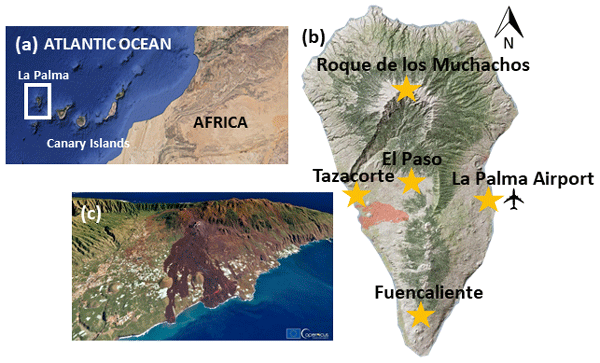
This manuscript describes the instrumental coverage deployed during the Tajogaite eruption (19 September–25 December 2021) by the Instituto Geográfico Nacional (IGN), the Spanish State Meteorological Agency (AEMET), and other Spanish members of ACTRIS (Aerosol, Clouds and Trace Gases Research Infrastructure) to monitor its atmospheric impact. Two complementary methods provide consistent plume height data for future operational surveillance.
Nikolaos Papadimitriou, Ilias Fountoulakis, Antonis Gkikas, Kyriakoula Papachristopoulou, Andreas Kazantzidis, Stelios Kazadzis, Stefan Pfenninger, John Kapsomenakis, Kostas Eleftheratos, Athanassios A. Argiriou, Lionel Doppler, and Christos S. Zerefos
Atmos. Meas. Tech., 19, 1227–1244, https://doi.org/10.5194/amt-19-1227-2026, https://doi.org/10.5194/amt-19-1227-2026, 2026
Short summary
Short summary
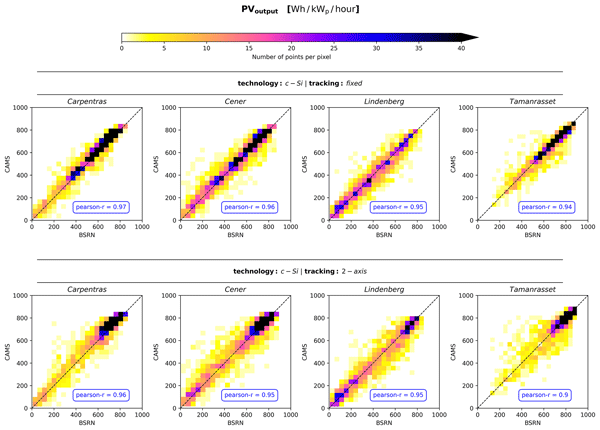
We perform Photovoltaic (PV) power simulations with the Global Solar Energy Estimator and assess the uncertainty linked to the use of a diffuse fraction model. Validation is conducted under diverse atmospheric conditions, including cloudiness and aerosols, using input data from ground-based measurements and the Copernicus Atmosphere Monitoring Service (CAMS). Results indicate that simulations are reliable under most conditions, with overestimations occurring during intense dust events.
Anna Moustaka, Nikolaos Siomos, Stelios Kazadzis, Emmanouil Proestakis, Kalliopi Artemis Voudouri, Anton Lopatin, Oleg Dubovik, Kleareti Tourpali, Christos Zerefos, Vassilis Amiridis, and Antonis Gkikas
Atmos. Meas. Tech., 19, 1201–1225, https://doi.org/10.5194/amt-19-1201-2026, https://doi.org/10.5194/amt-19-1201-2026, 2026
Short summary
Short summary
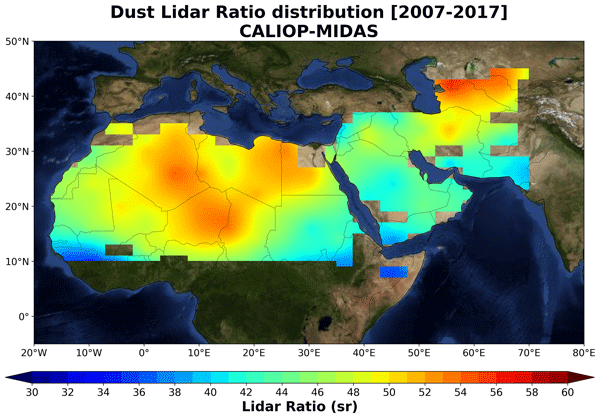
North Africa and the Middle East are home to the world’s most active dust sources, but accurately monitoring airborne dust remains challenging. We combine active and passive satellite aerosol products to dynamically estimate dust lidar ratios over a 12-year period. The results reveal pronounced and physically meaningful regional variability, improving aerosol characterization and supporting climate and air-quality applications.
David Mateos, Carlos Toledano, Abel Calle, Roberto Román, Marcos Herreras-Giralda, Ramiro González, Sara Herrero-Anta, Daniel González-Fernández, Celia Herrero-del Barrio, Argyro Nisantzi, Rodanthi E. Mamouri, Silke Groß, Victoria E. Cachorro, Ángel M. de Frutos, and Bernadett Weinzierl
Atmos. Chem. Phys., 26, 1993–2005, https://doi.org/10.5194/acp-26-1993-2026, https://doi.org/10.5194/acp-26-1993-2026, 2026
Short summary
Short summary
A field experiment deployed in Cyprus included two sun photometers of Aerosol Robotic Network in two different sites. Mineral dust was predominant during the experiment, with Saharan and Arabian dust showing distinct optical properties, in particular, the Angstrom Exponent in the near-infrarred range and Volume Efficiency factor. Both magnitudes can served as a reliable proxy for mineral dust typing. No significant black carbon presence was detected.
Simone Pulimeno, Angelo Lupi, Vito Vitale, Claudia Frangipani, Carlos Toledano, Stelios Kazadzis, Natalia Kouremeti, Christoph Ritter, Sandra Graßl, Kerstin Stebel, Vitali Fioletov, Ihab Abboud, Sandra Blindheim, Lynn Ma, Norm O'Neill, Piotr Sobolewski, Pawan Gupta, Elena Lind, Thomas F. Eck, Antti Hyvärinen, Veijo Aaltonen, Rigel Kivi, Janae Csavina, Dmitry Kabanov, Sergey M. Sakerin, Olga R. Sidorova, Robert S. Stone, Hagen Telg, Laura Riihimaki, Raul R. Cordero, Martin Radenz, Ronny Engelmann, Michel Van Roozendal, Anatoli Chaikovsky, Philippe Goloub, Junji Hisamitsu, and Mauro Mazzola
Atmos. Chem. Phys., 26, 1809–1846, https://doi.org/10.5194/acp-26-1809-2026, https://doi.org/10.5194/acp-26-1809-2026, 2026
Short summary
Short summary
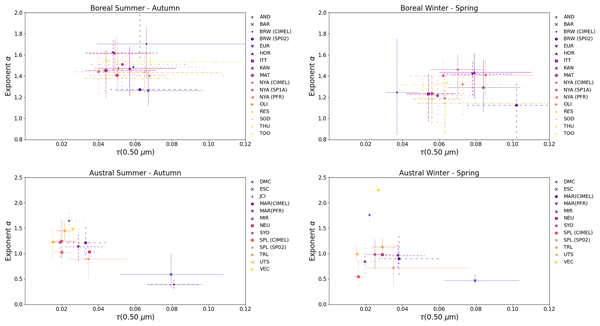
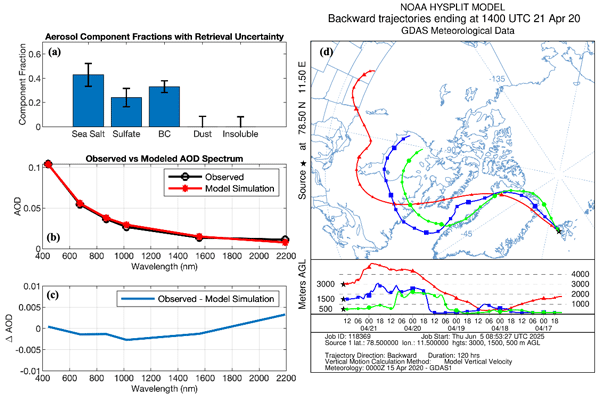
This study analyzed aerosols optical properties over the Arctic and Antarctic to measure them even during long periods of darkness. It found that pollution in the Arctic is decreasing, likely due to European emission regulations, while wildfires are becoming a more important source of particles. In Antarctica, particle levels are higher near the coast than inland, and vary by season. These results help us better understand how air pollution and climate are changing at the Earth’s poles.
Denghui Ji, Xiaoyu Sun, Christoph Ritter, and Justus Notholt
Atmos. Meas. Tech., 19, 421–436, https://doi.org/10.5194/amt-19-421-2026, https://doi.org/10.5194/amt-19-421-2026, 2026
Short summary
Short summary
We have developed a new method that uses machine learning to analyse aerosols by combining different instruments measuring at different wavelengths. This method can identify the composition of these aerosols faster and more accurately. We tested it using ground-based data. Our results show that this method can help monitor air quality and better understand the impact of aerosols on the climate.

Angelos Karanikolas, Benjamin Torres, Masahiro Momoi, Marcos Herreras Giralda, Natalia Kouremeti, Julian Gröbner, Lionel Doppler, and Stelios Kazadzis
Atmos. Meas. Tech., 18, 7651–7677, https://doi.org/10.5194/amt-18-7651-2025, https://doi.org/10.5194/amt-18-7651-2025, 2025
Short summary
Short summary
Several techniques retrieve of the aerosol size distribution. The Generalized Retrieval of Atmosphere and Surface Properties algorithm can retrieve aerosol size distribution parameters using only aerosol optical depth (AOD) as input that is continuously observed by sun photometers worldwide. In this study, we apply the algorithm to AOD measured by sun photometers and spectroradiometers to assess the performance and limitations of such retrievals and investigate the effect of the spectral range.
Ross C. Petersen, Thomas Holst, Cheng Wu, Radovan Krejci, Jeremy K. Chan, Claudia Mohr, and Janne Rinne
Atmos. Chem. Phys., 25, 17205–17236, https://doi.org/10.5194/acp-25-17205-2025, https://doi.org/10.5194/acp-25-17205-2025, 2025
Short summary
Short summary
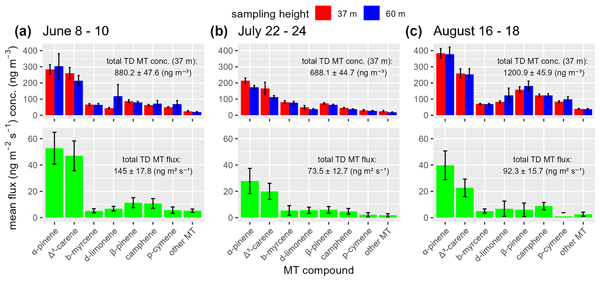
Ecosystem-scale emissions of biogenic volatile organic compounds (BVOCs) are important for atmospheric chemistry. Here we investigate boreal BVOC fluxes from a forest in central Sweden. BVOC fluxes were measured above-canopy using proton-transfer-reaction mass spectrometry, while compound-specific monoterpene (MT) fluxes were assessed using a concentration gradient method. We also evaluate the impact of chemical degradation on observed sesquiterpene (SQT) and nighttime MT fluxes.
Matteo Rinaldi, Alessia Nicosia, Marco Paglione, Karam Mansour, Stefano Decesari, Mauro Mazzola, Gianni Santachiara, and Franco Belosi
Aerosol Research, 3, 535–556, https://doi.org/10.5194/ar-3-535-2025, https://doi.org/10.5194/ar-3-535-2025, 2025
Short summary
Short summary
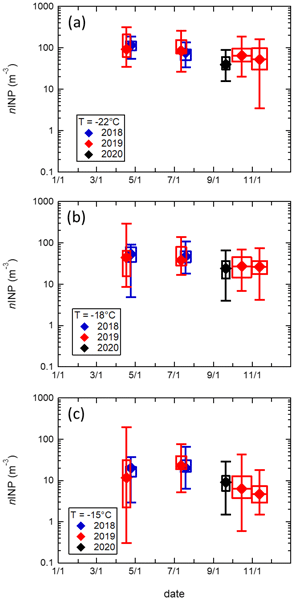
This study presents atmospheric ice-nucleating particle (INP) data from the Gruvebadet observatory in Ny-Ålesund. A moderate summertime increase in INP levels is observed at -15 °C but not at other temperatures (-18 and -22 °C). Conversely, a marked seasonal evolution was observed for the contribution of super-micrometer INPs, which is at its maximum throughout summer up to early autumn. We show that marine biogenic INPs may be relevant in the Arctic during seasons of reduced sea ice coverage.
Cameron McErlich, Felix Goddard, Alex Aves, Catherine Hardacre, Nikolaos Evangeliou, Alan J. Hewitt, and Laura E. Revell
Geosci. Model Dev., 18, 8827–8854, https://doi.org/10.5194/gmd-18-8827-2025, https://doi.org/10.5194/gmd-18-8827-2025, 2025
Short summary
Short summary
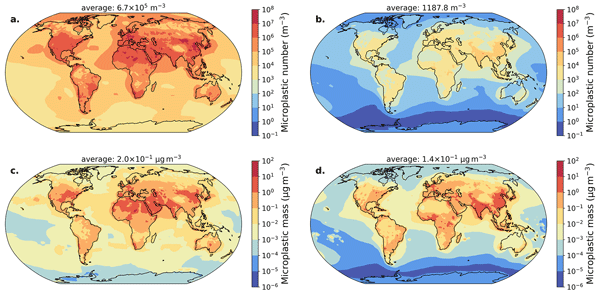
Airborne microplastics are a new air pollutant but are not yet included in most global models. We add them to the UK Earth System Model to show how they move, change, and are removed from air. Smaller microplastics persist for longer and can travel further, even to Antarctica. While their current role in air pollution is small, their presence is expected to grow in future. This work offers a framework to assess future impacts of microplastics on air quality and climate.
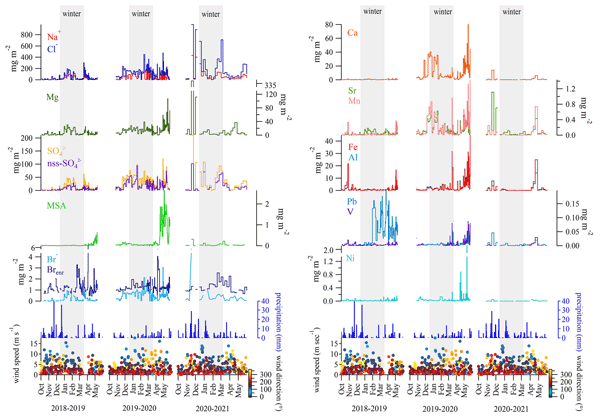
Azzurra Spagnesi, Elena Barbaro, Matteo Feltracco, Federico Scoto, Marco Vecchiato, Massimiliano Vardè, Mauro Mazzola, François Burgay, Federica Bruschi, Clara Jule Marie Hoppe, Allison Bailey, Andrea Gambaro, Carlo Barbante, and Andrea Spolaor
Atmos. Chem. Phys., 25, 16215–16232, https://doi.org/10.5194/acp-25-16215-2025, https://doi.org/10.5194/acp-25-16215-2025, 2025
Short summary
Short summary
Svalbard is ideal for studying how warming affects snow’s seasonal chemistry. By comparing the snow chemical composition of the 2019–2020 season with 2018–2019 and 2020–2021, we provide an overview of the seasonal and interannual variability of several chemical species on the Svalbard snowpack, furnishing insights into the interplay between short-term meteorological variability and the long-term climatic impacts of climate changes.
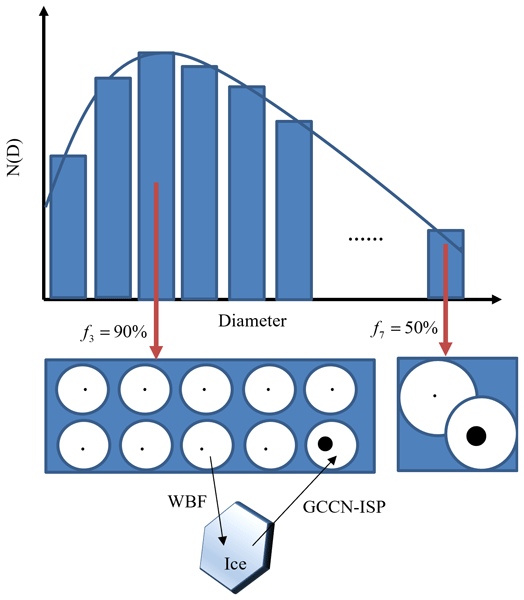
Denghui Ji, Christoph Ritter, Xiaoyu Sun, Manuel Moser, Christiane Voigt, Mathias Palm, and Justus Notholt
Atmos. Chem. Phys., 25, 13037–13052, https://doi.org/10.5194/acp-25-13037-2025, https://doi.org/10.5194/acp-25-13037-2025, 2025
Short summary
Short summary
We discovered a process where large aerosols help small water droplets in Arctic clouds grow, even when conditions normally favor ice. Unlike the traditional view, this process may explain how liquid and ice can coexist in cold clouds. Based on theory and aircraft data, our findings provide new insight into the microphysics of mixed-phase clouds, which could improve understanding of how Arctic clouds affect climate.

Ilias Fountoulakis, Kyriaki Papachristopoulou, Stelios Kazadzis, Gregor Hülsen, Julian Gröbner, Ioannis-Panagiotis Raptis, Dimitra Kouklaki, Akriti Masoom, Natalia Kouremeti, Charalampos Kontoes, and Christos S. Zerefos
Geosci. Model Dev., 18, 7451–7473, https://doi.org/10.5194/gmd-18-7451-2025, https://doi.org/10.5194/gmd-18-7451-2025, 2025
Short summary
Short summary
The UVIOS2 model has been evaluated at Davos, Switzerland during the UVCIII campaign. The accuracy in the modelled UV indices has been assessed for different combinations of model inputs. A good overall agreement between UVIOS2 and the world reference spectroradiometer QASUME was found (average ratio of ~ 1 between the modelled and measured UV index), although the variability in the ratio can be large under cloudy conditions.
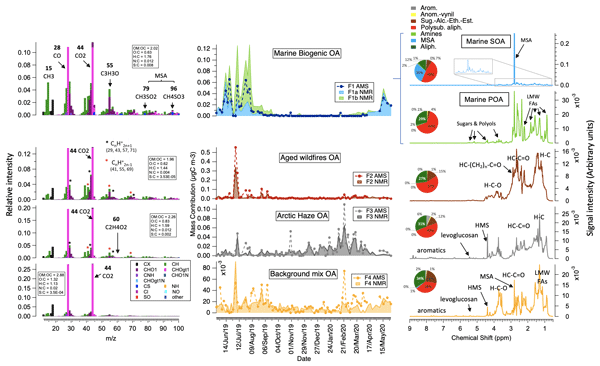
Marco Paglione, Yufang Hao, Stefano Decesari, Mara Russo, Karam Mansour, Mauro Mazzola, Diego Fellin, Andrea Mazzanti, Emilio Tagliavini, Manousos Ioannis Manousakas, Evangelia Diapouli, Elena Barbaro, Matteo Feltracco, Kaspar R. Daellenbach, and Matteo Rinaldi
Atmos. Chem. Phys., 25, 12853–12874, https://doi.org/10.5194/acp-25-12853-2025, https://doi.org/10.5194/acp-25-12853-2025, 2025
Short summary
Short summary
A year-long set of submicron aerosol samples (PM1) from Ny-Ålesund, Svalbard, was analyzed by proton nuclear magnetic resonance spectroscopy (H-NMR) and high-resolution time-of-flight aerosol mass spectrometry (HR-TOF-AMS) to characterize the organic fraction. Positive matrix factorization identified five organic aerosol sources. Winter–spring was dominated by Eurasian pollution and summer by marine biogenic aerosols, with occasional wildfire events.
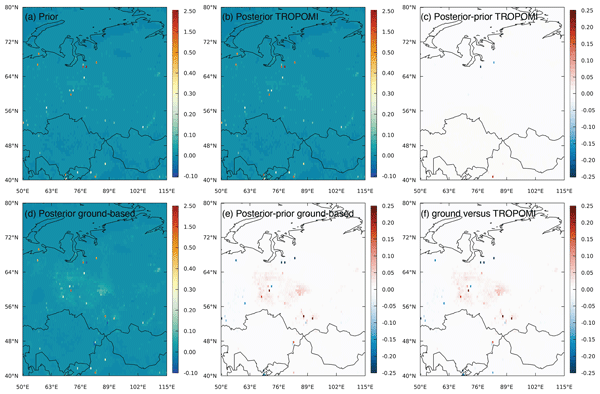
Rona L. Thompson, Nalini Krishnankutty, Ignacio Pisso, Philipp Schneider, Kerstin Stebel, Motoki Sasakawa, Andreas Stohl, and Stephen M. Platt
Atmos. Chem. Phys., 25, 12737–12751, https://doi.org/10.5194/acp-25-12737-2025, https://doi.org/10.5194/acp-25-12737-2025, 2025
Short summary
Short summary
Satellite remote sensing of atmospheric mixing ratios of greenhouse gases (GHGs) can provide information on their emissions. This study presents a novel method to use atmospheric mixing ratios observed by satellites with a Lagrangian model of atmospheric transport to estimate GHG emissions. This method can reduce model errors resulting from how an observation is represented by an atmospheric model, thereby helping to reduce the errors in the GHG emissions derived.
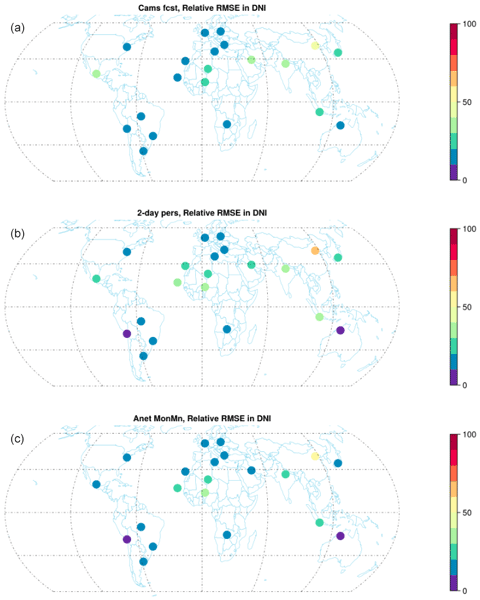
Xinyuan Hou, Kyriakoula Papachristopoulou, and Stelios Kazadzis
Atmos. Meas. Tech., 18, 4543–4557, https://doi.org/10.5194/amt-18-4543-2025, https://doi.org/10.5194/amt-18-4543-2025, 2025
Short summary
Short summary
We analyzed aerosol ground measurements and model based aerosol optical depth (AOD) forecasts to study variations in AOD at different global sites. We compared day-ahead AOD forecast methods and assessed their impact on forecasting clear-sky direct normal irradiance (DNI). While none of the methods accurately forecast DNI within 5 %, most sites showed a DNI deviation within 20 %, especially at sites with urban-industrial aerosols.
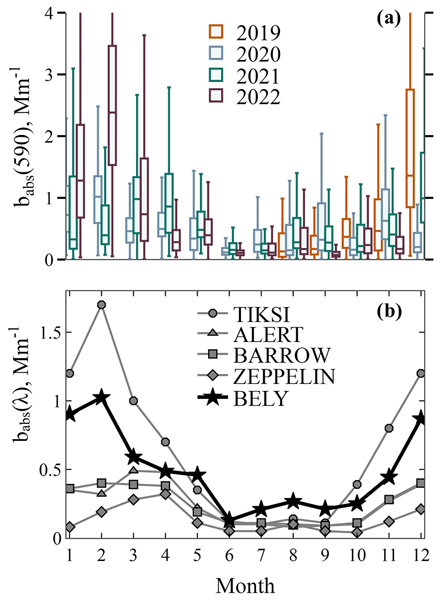
Olga B. Popovicheva, Marina A. Chichaeva, Nikolaos Evangeliou, Sabine Eckhardt, Evangelia Diapouli, and Nikolay S. Kasimov
Atmos. Chem. Phys., 25, 7719–7739, https://doi.org/10.5194/acp-25-7719-2025, https://doi.org/10.5194/acp-25-7719-2025, 2025
Short summary
Short summary
High-quality measurements of light-absorbing carbon were performed at the polar aerosol station "Island Bely” (Western Siberian Arctic) from 2019 to 2022. The maximum light absorption coefficients were seen in summer due to gas flaring, which is the most significant source in the region. However, the increasing Siberian wildfires had a special share in carbon contribution at this high Arctic station, with a persistent smoke layer extending over the whole troposphere in summer.
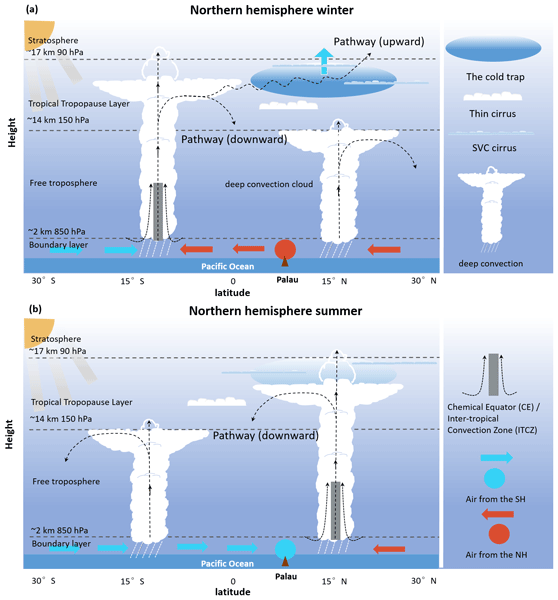
Xiaoyu Sun, Katrin Müller, Mathias Palm, Christoph Ritter, Denghui Ji, Tim Balthasar Röpke, and Justus Notholt
Atmos. Chem. Phys., 25, 6881–6902, https://doi.org/10.5194/acp-25-6881-2025, https://doi.org/10.5194/acp-25-6881-2025, 2025
Short summary
Short summary
We studied how air moves from the lower atmosphere to the stratosphere over the tropical western Pacific. Using observations and air tracking, we found that, in winter, air ascends and cold temperatures freeze water out, drying it before it enters the stratosphere. In summer, air tends to sink after cloud formation. This process affects water vapor amounts in the stratosphere, influencing the greenhouse effect and climate.
Roberto Román, Daniel González-Fernández, Juan Carlos Antuña-Sánchez, Celia Herrero del Barrio, Sara Herrero-Anta, África Barreto, Victoria E. Cachorro, Lionel Doppler, Ramiro González, Christoph Ritter, David Mateos, Natalia Kouremeti, Gustavo Copes, Abel Calle, María José Granados-Muñoz, Carlos Toledano, and Ángel M. de Frutos
Atmos. Meas. Tech., 18, 2847–2875, https://doi.org/10.5194/amt-18-2847-2025, https://doi.org/10.5194/amt-18-2847-2025, 2025
Short summary
Short summary
This paper presents a novel technique to extract starlight signals from all-sky images and retrieve aerosol optical depth (AOD). It is validated against lunar photometry, showing a strong correlation between data series. This innovative approach will expand nocturnal AOD measurements to more locations, as all-sky cameras are a simpler and more cost-effective alternative to stellar and lunar photometers.
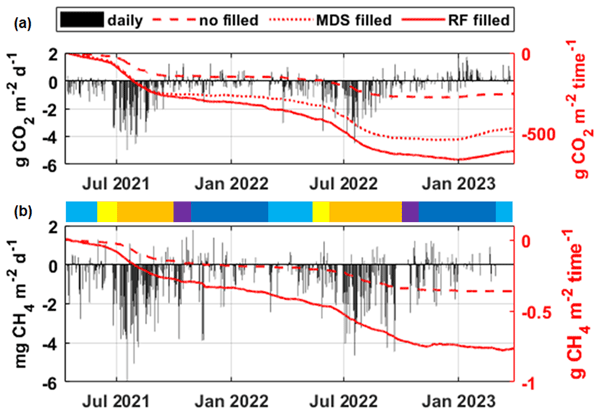
Antonio Donateo, Daniela Famulari, Donato Giovannelli, Arturo Mariani, Mauro Mazzola, Stefano Decesari, and Gianluca Pappaccogli
Biogeosciences, 22, 2889–2908, https://doi.org/10.5194/bg-22-2889-2025, https://doi.org/10.5194/bg-22-2889-2025, 2025
Short summary
Short summary
This study focuses on measurements of CO2 and CH4 turbulent fluxes in tundra ecosystems in the Svalbard islands over a 2-year period. Our results reveal dynamic interactions between climatic conditions and ecosystem activities such as photosynthesis and microbial activity. In summer, photosynthesis and microbial activity increase, leading to net carbon uptake and methane consumption. Wind influences soil drying and CH4 emissions. Thermal anomalies can reduce annual carbon uptake.
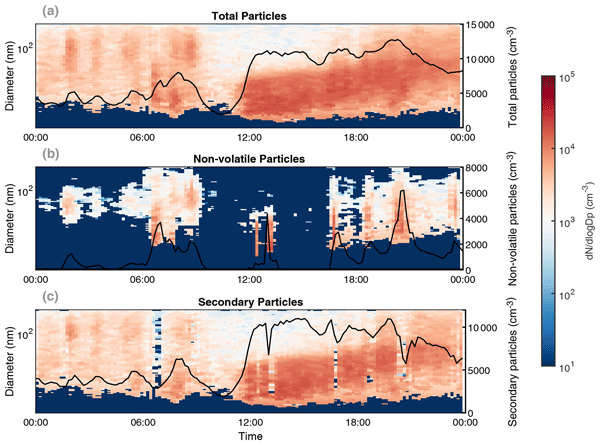
Lubna Dada, Benjamin T. Brem, Lidia-Marta Amarandi-Netedu, Martine Collaud Coen, Nikolaos Evangeliou, Christoph Hueglin, Nora Nowak, Robin Modini, Martin Steinbacher, and Martin Gysel-Beer
Aerosol Research, 3, 315–336, https://doi.org/10.5194/ar-3-315-2025, https://doi.org/10.5194/ar-3-315-2025, 2025
Short summary
Short summary
We investigated the sources of ultrafine particles (UFPs) in Payerne, Switzerland, highlighting the significant role of secondary processes in elevating UFP concentrations to levels comparable to urban areas. As the first study in rural midland Switzerland to analyze new particle formation events and secondary contributions, it offers key insights for air quality regulation and the role of agriculture in Switzerland and central Europe.
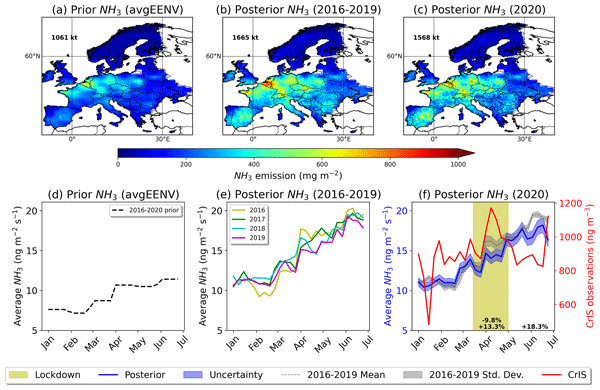
Nikolaos Evangeliou, Ondřej Tichý, Marit Svendby Otervik, Sabine Eckhardt, Yves Balkanski, and Didier A. Hauglustaine
Aerosol Research, 3, 155–174, https://doi.org/10.5194/ar-3-155-2025, https://doi.org/10.5194/ar-3-155-2025, 2025
Short summary
Short summary
The COVID-19 lockdown measures in 2020 reduced emissions of various substances, improving air quality. However, PM2.5 stayed unchanged due to NH3 and related chemical transformations. Higher humidity favoured more SO42- production, as did the accumulated NH3. Excess NH3 reacted with HNO3 to make NO3-. In high-NH3 conditions such as those in 2020, a small reduction in NOx levels drove faster oxidation of NO3- and slower deposition of total inorganic NO3-, causing high secondary PM2.5.
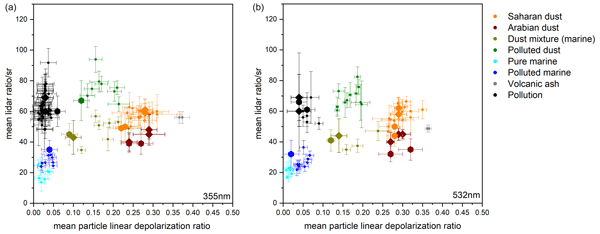
Silke Groß, Volker Freudenthaler, Moritz Haarig, Albert Ansmann, Carlos Toledano, David Mateos, Petra Seibert, Rodanthi-Elisavet Mamouri, Argyro Nisantzi, Josef Gasteiger, Maximilian Dollner, Anne Tipka, Manuel Schöberl, Marilena Teri, and Bernadett Weinzierl
Atmos. Chem. Phys., 25, 3191–3211, https://doi.org/10.5194/acp-25-3191-2025, https://doi.org/10.5194/acp-25-3191-2025, 2025
Short summary
Short summary
Aerosols contribute to the largest uncertainties in climate change predictions. The eastern Mediterranean is a hotspot for aerosols with natural and anthropogenic contributions. We present lidar measurements performed during A-LIFE (Absorbing aerosol layers in a changing climate: aging, lifetime and dynamics) to characterize aerosols and aerosol mixtures. We extend current lidar classification and separation schemes and compare them to classification schemes using different methods.
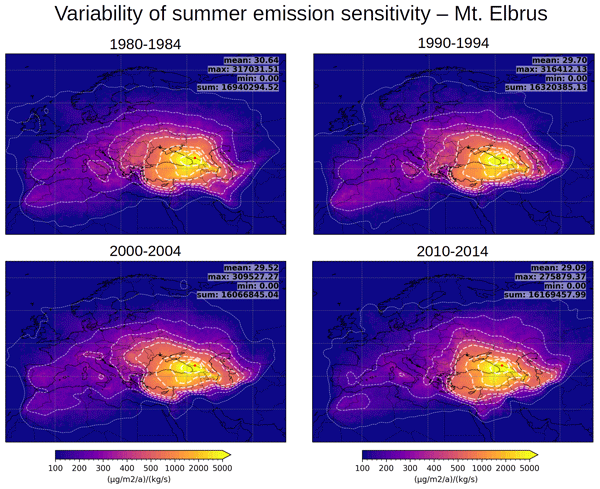
Michel Legrand, Mstislav Vorobyev, Daria Bokuchava, Stanislav Kutuzov, Andreas Plach, Andreas Stohl, Alexandra Khairedinova, Vladimir Mikhalenko, Maria Vinogradova, Sabine Eckhardt, and Susanne Preunkert
Atmos. Chem. Phys., 25, 1385–1399, https://doi.org/10.5194/acp-25-1385-2025, https://doi.org/10.5194/acp-25-1385-2025, 2025
Short summary
Short summary
Past atmospheric NH3 pollution in south-eastern Europe was reconstructed by analysing ammonium in an ice core drilled at the Mount Elbrus (Caucasus, Russia). The observed 3.5-fold increase in ice concentrations between 1750 and 1990 CE is in good agreement with estimated past dominant ammonia emissions from agriculture, mainly from south European Russia and Türkiye. In contrast to present-day conditions, the ammonium level observed in 1750 CE indicates significant natural emissions at that time.
Diego Aliaga, Victoria A. Sinclair, Radovan Krejci, Marcos Andrade, Paulo Artaxo, Luis Blacutt, Runlong Cai, Samara Carbone, Yvette Gramlich, Liine Heikkinen, Dominic Heslin-Rees, Wei Huang, Veli-Matti Kerminen, Alkuin Maximilian Koenig, Markku Kulmala, Paolo Laj, Valeria Mardoñez-Balderrama, Claudia Mohr, Isabel Moreno, Pauli Paasonen, Wiebke Scholz, Karine Sellegri, Laura Ticona, Gaëlle Uzu, Fernando Velarde, Alfred Wiedensohler, Doug Worsnop, Cheng Wu, Chen Xuemeng, Qiaozhi Zha, and Federico Bianchi
Aerosol Research, 3, 15–44, https://doi.org/10.5194/ar-3-15-2025, https://doi.org/10.5194/ar-3-15-2025, 2025
Short summary
Short summary
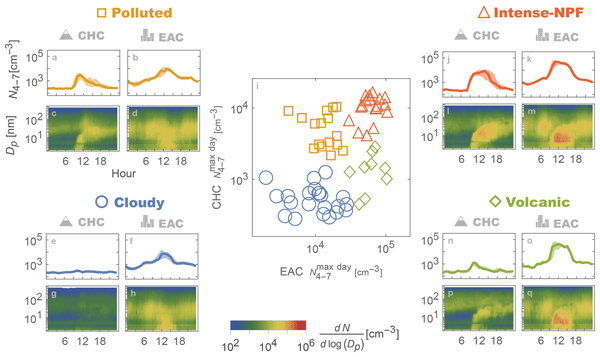
This study examines new particle formation (NPF) in the Bolivian Andes at Chacaltaya mountain (CHC) and the urban El Alto–La Paz area (EAC). Days are clustered into four categories based on NPF intensity. Differences in particle size, precursor gases, and pollution levels are found. High NPF intensities increased Aitken mode particle concentrations at both sites, while volcanic influence selectively diminished NPF intensity at CHC but not EAC. This study highlights NPF dynamics in the Andes.
Lucie Bakels, Daria Tatsii, Anne Tipka, Rona Thompson, Marina Dütsch, Michael Blaschek, Petra Seibert, Katharina Baier, Silvia Bucci, Massimo Cassiani, Sabine Eckhardt, Christine Groot Zwaaftink, Stephan Henne, Pirmin Kaufmann, Vincent Lechner, Christian Maurer, Marie D. Mulder, Ignacio Pisso, Andreas Plach, Rakesh Subramanian, Martin Vojta, and Andreas Stohl
Geosci. Model Dev., 17, 7595–7627, https://doi.org/10.5194/gmd-17-7595-2024, https://doi.org/10.5194/gmd-17-7595-2024, 2024
Short summary
Short summary
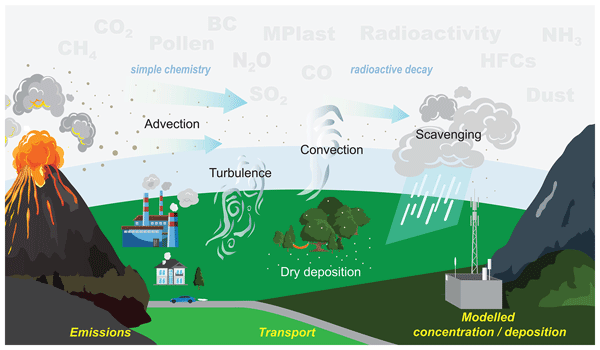
Computer models are essential for improving our understanding of how gases and particles move in the atmosphere. We present an update of the atmospheric transport model FLEXPART. FLEXPART 11 is more accurate due to a reduced number of interpolations and a new scheme for wet deposition. It can simulate non-spherical aerosols and includes linear chemical reactions. It is parallelised using OpenMP and includes new user options. A new user manual details how to use FLEXPART 11.
Valeria Mardoñez-Balderrama, Griša Močnik, Marco Pandolfi, Robin L. Modini, Fernando Velarde, Laura Renzi, Angela Marinoni, Jean-Luc Jaffrezo, Isabel Moreno R., Diego Aliaga, Federico Bianchi, Claudia Mohr, Martin Gysel-Beer, Patrick Ginot, Radovan Krejci, Alfred Wiedensohler, Gaëlle Uzu, Marcos Andrade, and Paolo Laj
Atmos. Chem. Phys., 24, 12055–12077, https://doi.org/10.5194/acp-24-12055-2024, https://doi.org/10.5194/acp-24-12055-2024, 2024
Short summary
Short summary
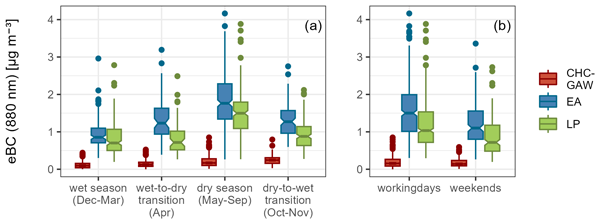
Levels of black carbon (BC) are scarcely reported in the Southern Hemisphere, especially in high-altitude conditions. This study provides insight into the concentration level, variability, and optical properties of BC in La Paz and El Alto and at the Chacaltaya Global Atmosphere Watch Station. Two methods of source apportionment of absorption were tested and compared showing traffic as the main contributor to absorption in the urban area, in addition to biomass and open waste burning.
Abigail S. Williams, Jeramy L. Dedrick, Lynn M. Russell, Florian Tornow, Israel Silber, Ann M. Fridlind, Benjamin Swanson, Paul J. DeMott, Paul Zieger, and Radovan Krejci
Atmos. Chem. Phys., 24, 11791–11805, https://doi.org/10.5194/acp-24-11791-2024, https://doi.org/10.5194/acp-24-11791-2024, 2024
Short summary
Short summary
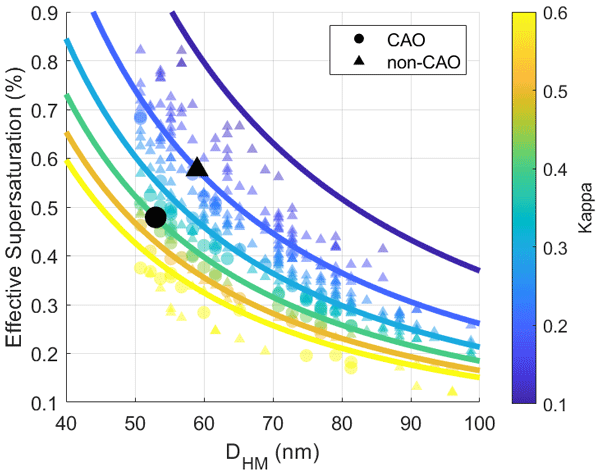
The measured aerosol size distribution modes reveal distinct properties characteristic of cold-air outbreaks in the Norwegian Arctic. We find higher sea spray number concentrations, smaller Hoppel minima, lower effective supersaturations, and accumulation-mode particle scavenging during cold-air outbreaks. These results advance our understanding of cold-air outbreak aerosol–cloud interactions in order to improve their accurate representation in models.

Angelos Karanikolas, Natalia Kouremeti, Monica Campanelli, Victor Estellés, Masahiro Momoi, Gaurav Kumar, Stephan Nyeki, and Stelios Kazadzis
Atmos. Meas. Tech., 17, 6085–6105, https://doi.org/10.5194/amt-17-6085-2024, https://doi.org/10.5194/amt-17-6085-2024, 2024
Short summary
Short summary
Different sun photometer networks use different instruments, post-processing algorithms and calibration protocols for aerosol optical depth (AOD) retrieval. Such differences can affect the homogeneity and comparability of their measurements. In this study, we assess the homogeneity between the sun photometer networks GAW-PFR and SKYNET, analysing common measurements during three campaigns between 2017–2021, and investigate the main cause of the differences.
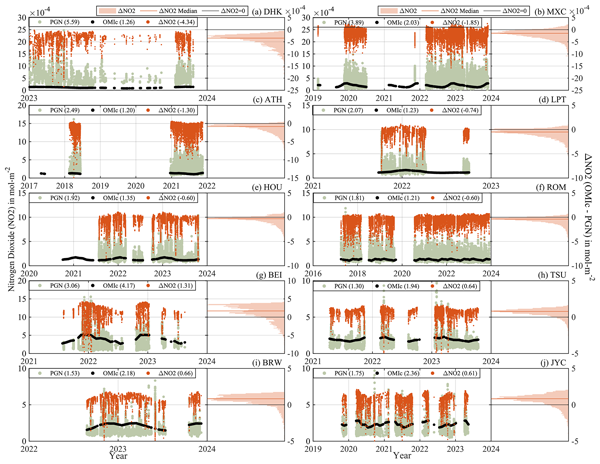
Akriti Masoom, Stelios Kazadzis, Masimo Valeri, Ioannis-Panagiotis Raptis, Gabrielle Brizzi, Kyriakoula Papachristopoulou, Francesca Barnaba, Stefano Casadio, Axel Kreuter, and Fabrizio Niro
Atmos. Meas. Tech., 17, 5525–5549, https://doi.org/10.5194/amt-17-5525-2024, https://doi.org/10.5194/amt-17-5525-2024, 2024
Short summary
Short summary
Aerosols, which have a wide impact on climate, radiative forcing, and human health, are widely represented by aerosol optical depth (AOD). AOD retrievals require Rayleigh scattering and atmospheric absorption (ozone, NO2, etc.) corrections. We analysed the NO2 (which has a high spatiotemporal variation) uncertainty impact on AOD retrievals using the synergy of co-located ground-based instruments with a long-term dataset at worldwide sites and found significant AOD over- or underestimations.
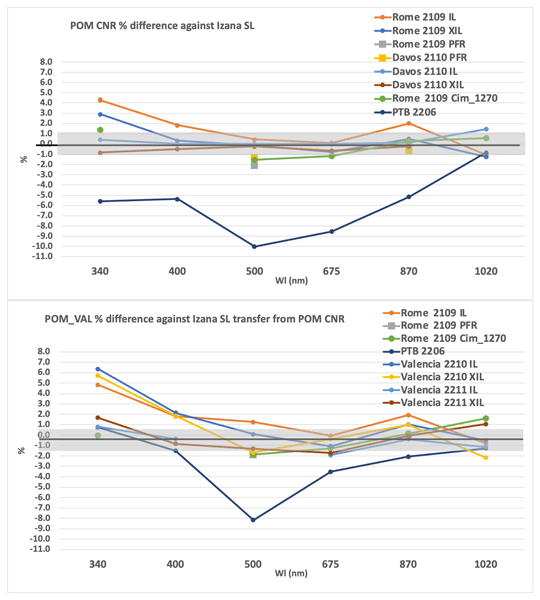
Monica Campanelli, Victor Estellés, Gaurav Kumar, Teruyuki Nakajima, Masahiro Momoi, Julian Gröbner, Stelios Kazadzis, Natalia Kouremeti, Angelos Karanikolas, Africa Barreto, Saulius Nevas, Kerstin Schwind, Philipp Schneider, Iiro Harju, Petri Kärhä, Henri Diémoz, Rei Kudo, Akihiro Uchiyama, Akihiro Yamazaki, Anna Maria Iannarelli, Gabriele Mevi, Annalisa Di Bernardino, and Stefano Casadio
Atmos. Meas. Tech., 17, 5029–5050, https://doi.org/10.5194/amt-17-5029-2024, https://doi.org/10.5194/amt-17-5029-2024, 2024
Short summary
Short summary
To retrieve columnar aerosol properties from sun photometers, some calibration factors are needed. The on-site calibrations, performed as frequently as possible to monitor changes in the machine conditions, allow operators to track and evaluate the calibration status on a continuous basis, reducing the data gaps incurred by the periodic shipments for performing centralized calibrations. The performance of the on-site calibration procedures was evaluated, providing very good results.
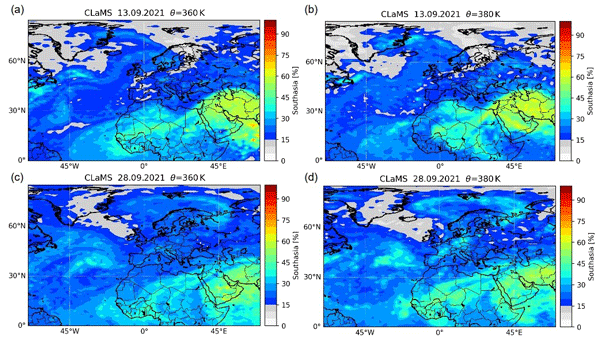
Sandra Graßl, Christoph Ritter, Ines Tritscher, and Bärbel Vogel
Atmos. Chem. Phys., 24, 7535–7557, https://doi.org/10.5194/acp-24-7535-2024, https://doi.org/10.5194/acp-24-7535-2024, 2024
Short summary
Short summary
Arctic lidar data for 1 year are compared with global modeling of aerosol tracers in the stratosphere. A trend in the aerosol backscatter can be found. These observations are further compared with a model study to investigate the aerosol origin of the observed arctic aerosol. We found a correlation with increased backscatter signal during summer and early autumn and pathways from the Southeast Asian monsoon region and remains of the Asian tropopause aerosol layer in the Arctic.

Gabriel Pereira Freitas, Ben Kopec, Kouji Adachi, Radovan Krejci, Dominic Heslin-Rees, Karl Espen Yttri, Alun Hubbard, Jeffrey M. Welker, and Paul Zieger
Atmos. Chem. Phys., 24, 5479–5494, https://doi.org/10.5194/acp-24-5479-2024, https://doi.org/10.5194/acp-24-5479-2024, 2024
Short summary
Short summary
Bioaerosols can participate in ice formation within clouds. In the Arctic, where global warming manifests most, they may become more important as their sources prevail for longer periods of the year. We have directly measured bioaerosols within clouds for a full year at an Arctic mountain site using a novel combination of cloud particle sampling and single-particle techniques. We show that bioaerosols act as cloud seeds and may influence the presence of ice within clouds.
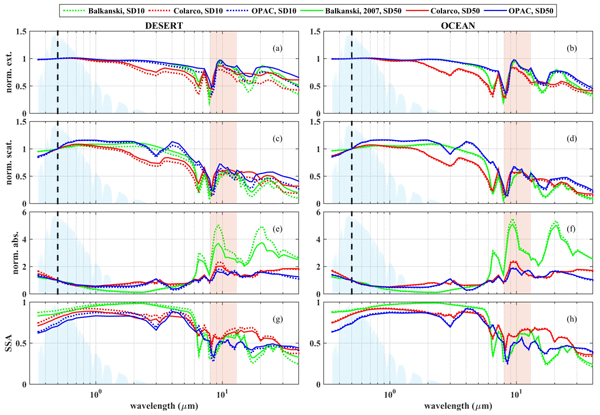
Ilias Fountoulakis, Alexandra Tsekeri, Stelios Kazadzis, Vassilis Amiridis, Angelos Nersesian, Maria Tsichla, Emmanouil Proestakis, Antonis Gkikas, Kyriakoula Papachristopoulou, Vasileios Barlakas, Claudia Emde, and Bernhard Mayer
Atmos. Chem. Phys., 24, 4915–4948, https://doi.org/10.5194/acp-24-4915-2024, https://doi.org/10.5194/acp-24-4915-2024, 2024
Short summary
Short summary
In our study we provide an assessment, through a sensitivity study, of the limitations of models to calculate the dust direct radiative effect (DRE) due to the underrepresentation of its size, refractive index (RI), and shape. Our results indicate the necessity of including more realistic sizes and RIs for dust particles in dust models, in order to derive better estimations of the dust direct radiative effects.
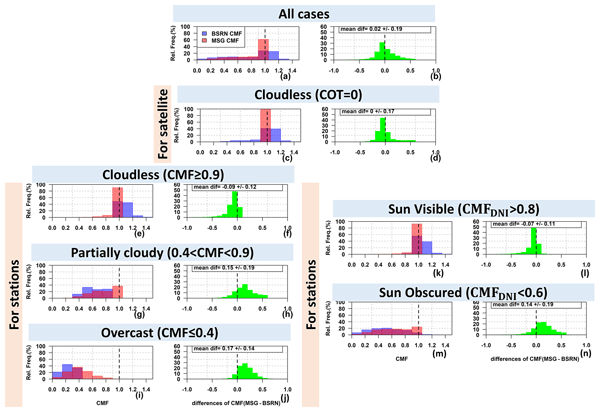
Kyriakoula Papachristopoulou, Ilias Fountoulakis, Alkiviadis F. Bais, Basil E. Psiloglou, Nikolaos Papadimitriou, Ioannis-Panagiotis Raptis, Andreas Kazantzidis, Charalampos Kontoes, Maria Hatzaki, and Stelios Kazadzis
Atmos. Meas. Tech., 17, 1851–1877, https://doi.org/10.5194/amt-17-1851-2024, https://doi.org/10.5194/amt-17-1851-2024, 2024
Short summary
Short summary
The upgraded systems SENSE2 and NextSENSE2 focus on improving the quality of solar nowcasting and forecasting. SENSE2 provides real-time estimates of solar irradiance across a wide region every 15 min. NextSENSE2 offers short-term forecasts of irradiance up to 3 h ahead. Evaluation with actual data showed that the instantaneous comparison yields the most discrepancies due to the uncertainties of cloud-related information and satellite versus ground-based spatial representativeness limitations.
Celia Herrero del Barrio, Roberto Román, Ramiro González, Alberto Cazorla, Marcos Herreras-Giralda, Juan Carlos Antuña-Sánchez, Francisco Molero, Francisco Navas-Guzmán, Antonio Serrano, María Ángeles Obregón, Yolanda Sola, Marco Pandolfi, Sara Herrero-Anta, Daniel González-Fernández, Jorge Muñiz-Rosado, David Mateos, Abel Calle, Carlos Toledano, Victoria Eugenia Cachorro, and Ángel Máximo de Frutos
EGUsphere, https://doi.org/10.5194/egusphere-2024-581, https://doi.org/10.5194/egusphere-2024-581, 2024
Preprint withdrawn
Short summary
Short summary
Introducing CAECENET, a novel system that combines sun-sky photometer and ceilometer data, enabling the continuous monitoring and automatic retrieval of both vertical and columnar aerosol properties in near real-time. A case study on a Saharan dust outbreak illustrates it's efficacy in tracking aerosol events. Additionally, the analysis of Canadian wildfires' long-range transport is presented, showing it's utility in monitoring event propagation, aerosol concentration, and optical properties.
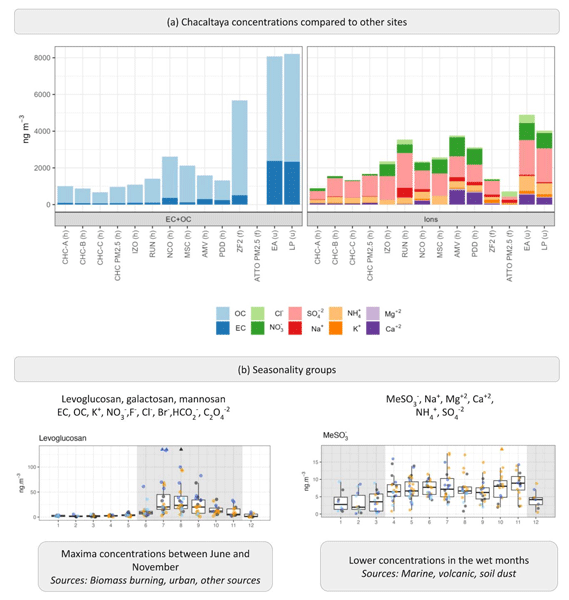
C. Isabel Moreno, Radovan Krejci, Jean-Luc Jaffrezo, Gaëlle Uzu, Andrés Alastuey, Marcos F. Andrade, Valeria Mardóñez, Alkuin Maximilian Koenig, Diego Aliaga, Claudia Mohr, Laura Ticona, Fernando Velarde, Luis Blacutt, Ricardo Forno, David N. Whiteman, Alfred Wiedensohler, Patrick Ginot, and Paolo Laj
Atmos. Chem. Phys., 24, 2837–2860, https://doi.org/10.5194/acp-24-2837-2024, https://doi.org/10.5194/acp-24-2837-2024, 2024
Short summary
Short summary
Aerosol chemical composition (ions, sugars, carbonaceous matter) from 2011 to 2020 was studied at Mt. Chacaltaya (5380 m a.s.l., Bolivian Andes). Minimum concentrations occur in the rainy season with maxima in the dry and transition seasons. The origins of the aerosol are located in a radius of hundreds of kilometers: nearby urban and rural areas, natural biogenic emissions, vegetation burning from Amazonia and Chaco, Pacific Ocean emissions, soil dust, and Peruvian volcanism.
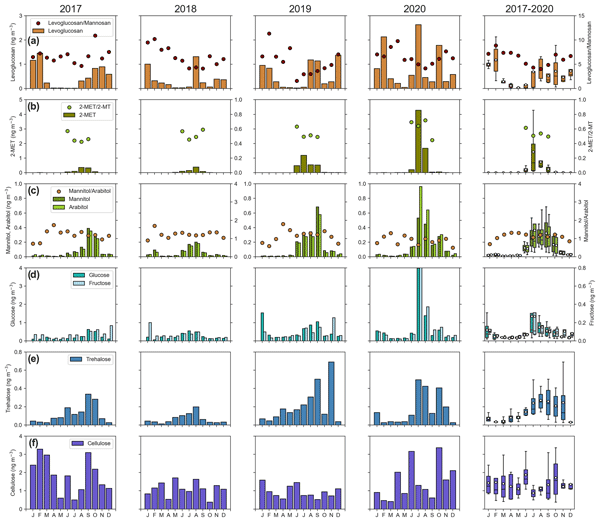
Karl Espen Yttri, Are Bäcklund, Franz Conen, Sabine Eckhardt, Nikolaos Evangeliou, Markus Fiebig, Anne Kasper-Giebl, Avram Gold, Hans Gundersen, Cathrine Lund Myhre, Stephen Matthew Platt, David Simpson, Jason D. Surratt, Sönke Szidat, Martin Rauber, Kjetil Tørseth, Martin Album Ytre-Eide, Zhenfa Zhang, and Wenche Aas
Atmos. Chem. Phys., 24, 2731–2758, https://doi.org/10.5194/acp-24-2731-2024, https://doi.org/10.5194/acp-24-2731-2024, 2024
Short summary
Short summary
We discuss carbonaceous aerosol (CA) observed at the high Arctic Zeppelin Observatory (2017 to 2020). We find that organic aerosol is a significant fraction of the Arctic aerosol, though less than sea salt aerosol and mineral dust, as well as non-sea-salt sulfate, originating mainly from anthropogenic sources in winter and from natural sources in summer, emphasizing the importance of wildfires for biogenic secondary organic aerosol and primary biological aerosol particles observed in the Arctic.
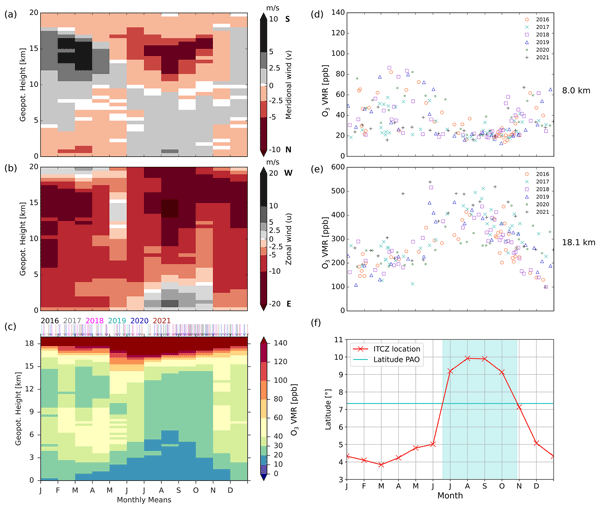
Katrin Müller, Jordis S. Tradowsky, Peter von der Gathen, Christoph Ritter, Sharon Patris, Justus Notholt, and Markus Rex
Atmos. Chem. Phys., 24, 2169–2193, https://doi.org/10.5194/acp-24-2169-2024, https://doi.org/10.5194/acp-24-2169-2024, 2024
Short summary
Short summary
The Palau Atmospheric Observatory is introduced as an ideal site to detect changes in atmospheric composition and dynamics above the remote tropical western Pacific. We focus on the ozone sounding program from 2016–2021, including El Niño 2016. The year-round high convective activity is reflected in dominant low tropospheric ozone and high relative humidity. Their seasonal distributions are unique compared to other tropical sites and are modulated by the Intertropical Convergence Zone.
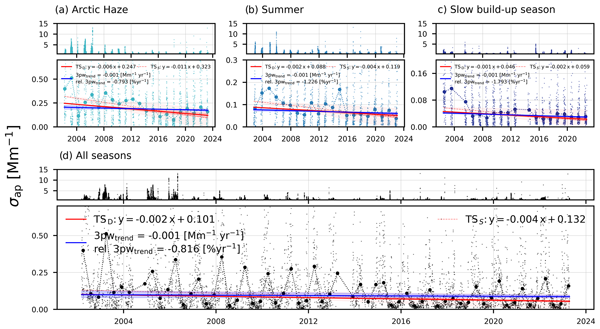
Dominic Heslin-Rees, Peter Tunved, Johan Ström, Roxana Cremer, Paul Zieger, Ilona Riipinen, Annica M. L. Ekman, Konstantinos Eleftheriadis, and Radovan Krejci
Atmos. Chem. Phys., 24, 2059–2075, https://doi.org/10.5194/acp-24-2059-2024, https://doi.org/10.5194/acp-24-2059-2024, 2024
Short summary
Short summary
Light-absorbing atmospheric particles (e.g. black carbon – BC) exert a warming effect on the Arctic climate. We show that the amount of particle light absorption decreased from 2002 to 2023. We conclude that in addition to reductions in emissions of BC, wet removal plays a role in the long-term reduction of BC in the Arctic, given the increase in surface precipitation experienced by air masses arriving at the site. The potential impact of biomass burning events is shown to have increased.
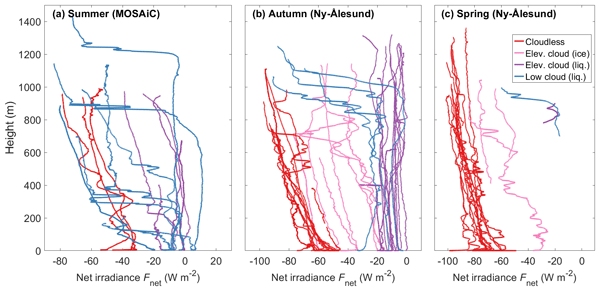
Michael Lonardi, Elisa F. Akansu, André Ehrlich, Mauro Mazzola, Christian Pilz, Matthew D. Shupe, Holger Siebert, and Manfred Wendisch
Atmos. Chem. Phys., 24, 1961–1978, https://doi.org/10.5194/acp-24-1961-2024, https://doi.org/10.5194/acp-24-1961-2024, 2024
Short summary
Short summary
Profiles of thermal-infrared irradiance were measured at two Arctic sites. The presence or lack of clouds influences the vertical structure of these observations. In particular, the cloud top region is a source of radiative energy that can promote cooling and mixing in the cloud layer. Simulations are used to further characterize how the amount of water in the cloud modifies this forcing. A case study additionally showcases the evolution of the radiation profiles in a dynamic atmosphere.
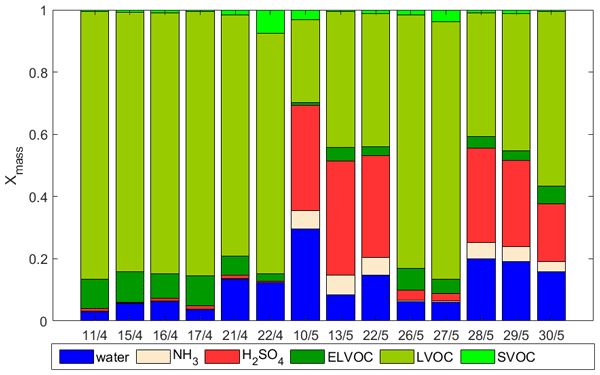
Arto Heitto, Cheng Wu, Diego Aliaga, Luis Blacutt, Xuemeng Chen, Yvette Gramlich, Liine Heikkinen, Wei Huang, Radovan Krejci, Paolo Laj, Isabel Moreno, Karine Sellegri, Fernando Velarde, Kay Weinhold, Alfred Wiedensohler, Qiaozhi Zha, Federico Bianchi, Marcos Andrade, Kari E. J. Lehtinen, Claudia Mohr, and Taina Yli-Juuti
Atmos. Chem. Phys., 24, 1315–1328, https://doi.org/10.5194/acp-24-1315-2024, https://doi.org/10.5194/acp-24-1315-2024, 2024
Short summary
Short summary
Particle growth at the Chacaltaya station in Bolivia was simulated based on measured vapor concentrations and ambient conditions. Major contributors to the simulated growth were low-volatility organic compounds (LVOCs). Also, sulfuric acid had major role when volcanic activity was occurring in the area. This study provides insight on nanoparticle growth at this high-altitude Southern Hemispheric site and hence contributes to building knowledge of early growth of atmospheric particles.
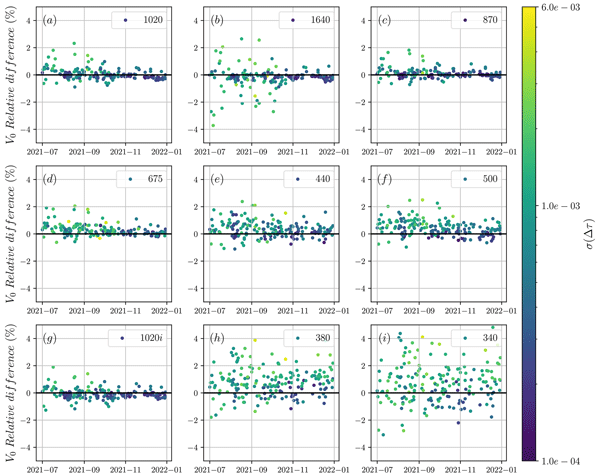
Antonio Fernando Almansa, África Barreto, Natalia Kouremeti, Ramiro González, Akriti Masoom, Carlos Toledano, Julian Gröbner, Rosa Delia García, Yenny González, Stelios Kazadzis, Stéphane Victori, Óscar Álvarez, Fabrice Maupin, Virgilio Carreño, Victoria Eugenia Cachorro, and Emilio Cuevas
Atmos. Meas. Tech., 17, 659–675, https://doi.org/10.5194/amt-17-659-2024, https://doi.org/10.5194/amt-17-659-2024, 2024
Short summary
Short summary
This paper applies sun photometer synergies to improve calibration transference between different sun photometers and also enhance their quality assurance and quality control. We have validated this technique using different instrumentation, the WMO-GAW and NASA-AERONET references, under different aerosol regimes using the standard Langley calibration method as a reference.
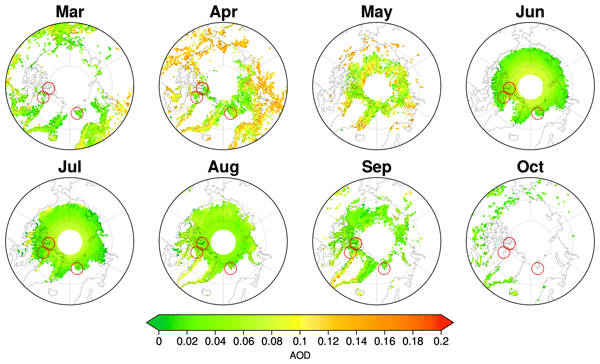
Basudev Swain, Marco Vountas, Adrien Deroubaix, Luca Lelli, Yanick Ziegler, Soheila Jafariserajehlou, Sachin S. Gunthe, Andreas Herber, Christoph Ritter, Hartmut Bösch, and John P. Burrows
Atmos. Meas. Tech., 17, 359–375, https://doi.org/10.5194/amt-17-359-2024, https://doi.org/10.5194/amt-17-359-2024, 2024
Short summary
Short summary
Aerosols are suspensions of particles dispersed in the air. In this study, we use a novel retrieval of satellite data to investigate an optical property of aerosols, the aerosol optical depth, in the high Arctic to assess their direct and indirect roles in climate change. This study demonstrates that the presented approach shows good quality and very promising potential.
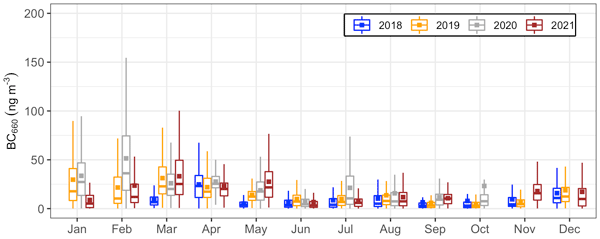
Stefania Gilardoni, Dominic Heslin-Rees, Mauro Mazzola, Vito Vitale, Michael Sprenger, and Radovan Krejci
Atmos. Chem. Phys., 23, 15589–15607, https://doi.org/10.5194/acp-23-15589-2023, https://doi.org/10.5194/acp-23-15589-2023, 2023
Short summary
Short summary
Models still fail in reproducing black carbon (BC) temporal variability in the Arctic. Analysis of equivalent BC concentrations in the European Arctic shows that BC seasonal variability is modulated by the efficiency of removal by precipitation during transport towards high latitudes. Short-term variability is controlled by synoptic-scale circulation patterns. The advection of warm air from lower latitudes is an effective pollution transport pathway during summer.
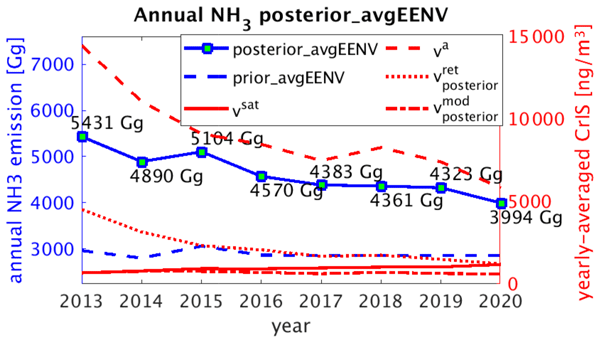
Ondřej Tichý, Sabine Eckhardt, Yves Balkanski, Didier Hauglustaine, and Nikolaos Evangeliou
Atmos. Chem. Phys., 23, 15235–15252, https://doi.org/10.5194/acp-23-15235-2023, https://doi.org/10.5194/acp-23-15235-2023, 2023
Short summary
Short summary
We show declining trends in NH3 emissions over Europe for 2013–2020 using advanced dispersion and inverse modelling and satellite measurements from CrIS. Emissions decreased by −26% since 2013, showing that the abatement strategies adopted by the European Union have been very efficient. Ammonia emissions are low in winter and peak in summer due to temperature-dependent soil volatilization. The largest decreases were observed in central and western Europe in countries with high emissions.
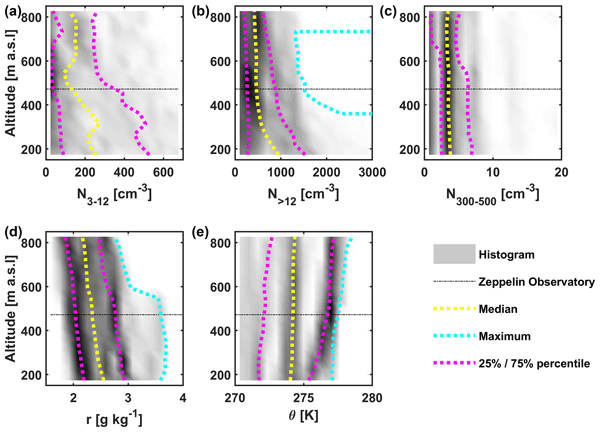
Barbara Harm-Altstädter, Konrad Bärfuss, Lutz Bretschneider, Martin Schön, Jens Bange, Ralf Käthner, Radovan Krejci, Mauro Mazzola, Kihong Park, Falk Pätzold, Alexander Peuker, Rita Traversi, Birgit Wehner, and Astrid Lampert
Aerosol Research, 1, 39–64, https://doi.org/10.5194/ar-1-39-2023, https://doi.org/10.5194/ar-1-39-2023, 2023
Short summary
Short summary
We present observations of aerosol particles and meteorological parameters in the horizontal and vertical distribution measured with uncrewed aerial systems in the Arctic. The field campaign was carried out during the snow melting season, when ultrafine aerosol particles (UFPs) with a size between 3 and 12 nm occurred frequently. A high variability of the measured UFPs was identified in the spatial scale, which was strongly associated with different atmospheric boundary layer properties.
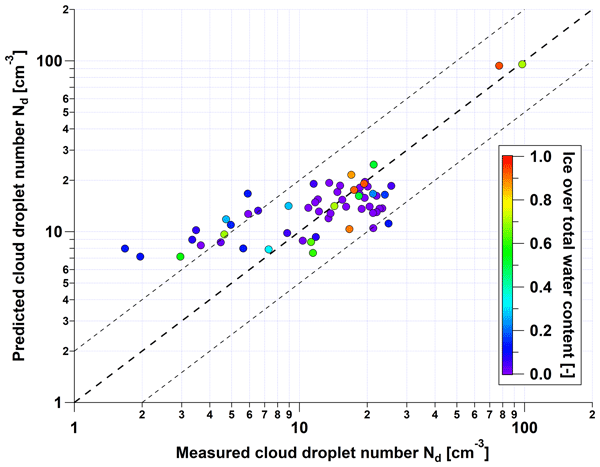
Ghislain Motos, Gabriel Freitas, Paraskevi Georgakaki, Jörg Wieder, Guangyu Li, Wenche Aas, Chris Lunder, Radovan Krejci, Julie Thérèse Pasquier, Jan Henneberger, Robert Oscar David, Christoph Ritter, Claudia Mohr, Paul Zieger, and Athanasios Nenes
Atmos. Chem. Phys., 23, 13941–13956, https://doi.org/10.5194/acp-23-13941-2023, https://doi.org/10.5194/acp-23-13941-2023, 2023
Short summary
Short summary
Low-altitude clouds play a key role in regulating the climate of the Arctic, a region that suffers from climate change more than any other on the planet. We gathered meteorological and aerosol physical and chemical data over a year and utilized them for a parameterization that help us unravel the factors driving and limiting the efficiency of cloud droplet formation. We then linked this information to the sources of aerosol found during each season and to processes of cloud glaciation.
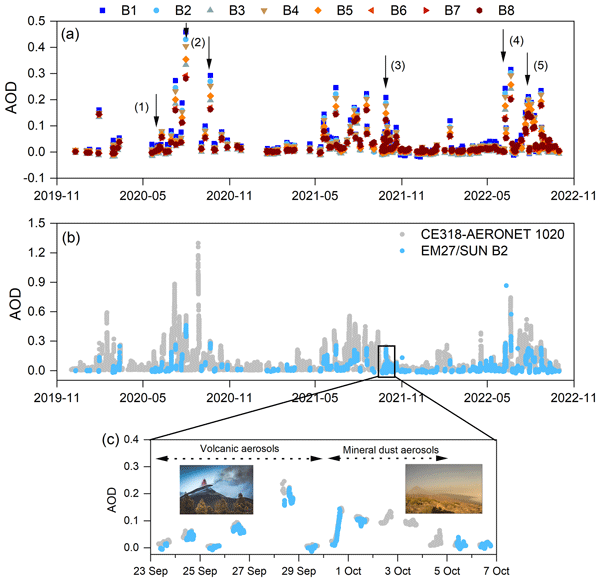
Óscar Alvárez, África Barreto, Omaira E. García, Frank Hase, Rosa D. García, Julian Gröbner, Sergio F. León-Luis, Eliezer Sepúlveda, Virgilio Carreño, Antonio Alcántara, Ramón Ramos, A. Fernando Almansa, Stelios Kazadzis, Noémie Taquet, Carlos Toledano, and Emilio Cuevas
Atmos. Meas. Tech., 16, 4861–4884, https://doi.org/10.5194/amt-16-4861-2023, https://doi.org/10.5194/amt-16-4861-2023, 2023
Short summary
Short summary
In this work, we have extended the capabilities of a portable Fourier transform infrared (FTIR) instrument, which was originally designed to provide high-quality greenhouse gas monitoring within COCCON (COllaborative Carbon Column Observing Network). The extension allows the spectrometer to now also provide coincidentally column-integrated aerosol information. This addition of a reference instrument to a global network will be utilised to enhance our understanding of atmospheric chemistry.
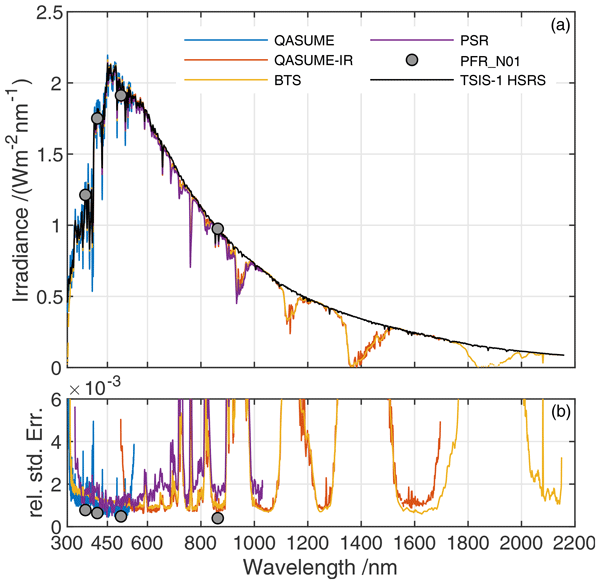
Julian Gröbner, Natalia Kouremeti, Gregor Hülsen, Ralf Zuber, Mario Ribnitzky, Saulius Nevas, Peter Sperfeld, Kerstin Schwind, Philipp Schneider, Stelios Kazadzis, África Barreto, Tom Gardiner, Kavitha Mottungan, David Medland, and Marc Coleman
Atmos. Meas. Tech., 16, 4667–4680, https://doi.org/10.5194/amt-16-4667-2023, https://doi.org/10.5194/amt-16-4667-2023, 2023
Short summary
Short summary
Spectral solar irradiance measurements traceable to the International System of Units (SI) allow for intercomparability between instruments and for their validation according to metrological standards. Here we also validate and reduce the uncertainties of the top-of-atmosphere TSIS-1 Hybrid Solar Reference Spectrum (HSRS). The management of large networks, e.g. AERONET or GAW-PFR, will benefit from reducing logistical overhead, improving their resilience and achieving metrological traceability.
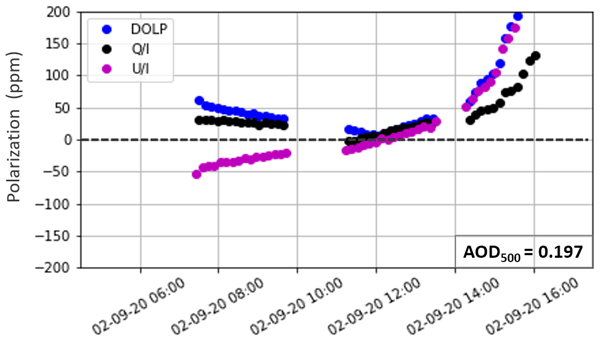
Vasiliki Daskalopoulou, Panagiotis I. Raptis, Alexandra Tsekeri, Vassilis Amiridis, Stelios Kazadzis, Zbigniew Ulanowski, Vassilis Charmandaris, Konstantinos Tassis, and William Martin
Atmos. Meas. Tech., 16, 4529–4550, https://doi.org/10.5194/amt-16-4529-2023, https://doi.org/10.5194/amt-16-4529-2023, 2023
Short summary
Short summary
Atmospheric dust particles may present a preferential alignment due to their shape on long range transport. Since dust is abundant and plays a key role to global climate, the elusive observation of orientation will be a game changer to existing measurement techniques and the representation of particles in climate models. We utilize a specifically designed instrument, SolPol, and target the Sun from the ground for large polarization values under dusty conditions, a clear sign of orientation.
Sara Herrero-Anta, Roberto Román, David Mateos, Ramiro González, Juan Carlos Antuña-Sánchez, Marcos Herreras-Giralda, Antonio Fernando Almansa, Daniel González-Fernández, Celia Herrero del Barrio, Carlos Toledano, Victoria E. Cachorro, and Ángel M. de Frutos
Atmos. Meas. Tech., 16, 4423–4443, https://doi.org/10.5194/amt-16-4423-2023, https://doi.org/10.5194/amt-16-4423-2023, 2023
Short summary
Short summary
This paper shows the potential of a simple radiometer like the ZEN-R52 as a possible alternative for aerosol property retrieval in remote areas. A calibration method based on radiative transfer simulations together with an inversion methodology using the GRASP code is proposed here. The results demonstrate that this methodology is useful for the retrieval of aerosol extensive properties like aerosol optical depth (AOD) and aerosol volume concentration for total, fine and coarse modes.
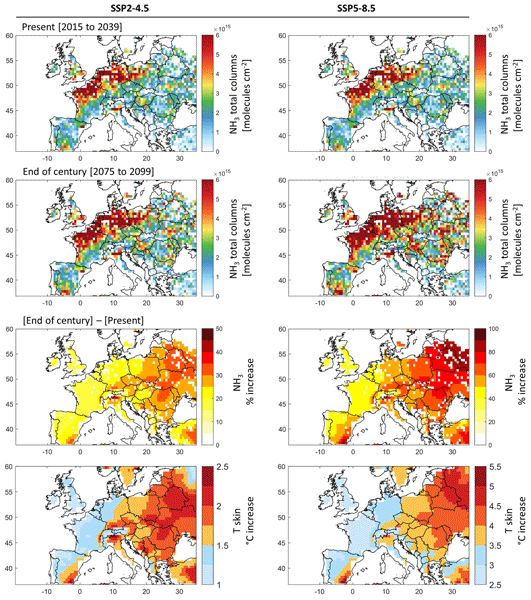
Rimal Abeed, Camille Viatte, William C. Porter, Nikolaos Evangeliou, Cathy Clerbaux, Lieven Clarisse, Martin Van Damme, Pierre-François Coheur, and Sarah Safieddine
Atmos. Chem. Phys., 23, 12505–12523, https://doi.org/10.5194/acp-23-12505-2023, https://doi.org/10.5194/acp-23-12505-2023, 2023
Short summary
Short summary
Ammonia emissions from agricultural activities will inevitably increase with the rise in population. We use a variety of datasets (satellite, reanalysis, and model simulation) to calculate the first regional map of ammonia emission potential during the start of the growing season in Europe. We then apply our developed method using a climate model to show the effect of the temperature increase on future ammonia columns under two possible climate scenarios.
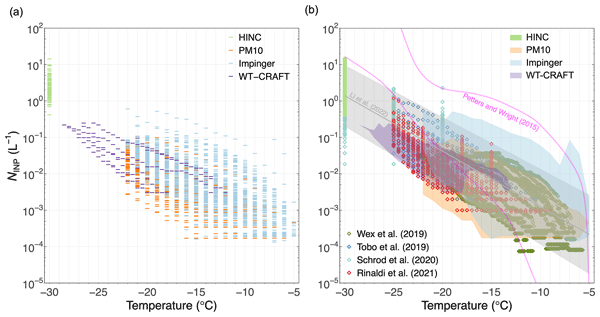
Guangyu Li, Elise K. Wilbourn, Zezhen Cheng, Jörg Wieder, Allison Fagerson, Jan Henneberger, Ghislain Motos, Rita Traversi, Sarah D. Brooks, Mauro Mazzola, Swarup China, Athanasios Nenes, Ulrike Lohmann, Naruki Hiranuma, and Zamin A. Kanji
Atmos. Chem. Phys., 23, 10489–10516, https://doi.org/10.5194/acp-23-10489-2023, https://doi.org/10.5194/acp-23-10489-2023, 2023
Short summary
Short summary
In this work, we present results from an Arctic field campaign (NASCENT) in Ny-Ålesund, Svalbard, on the abundance, variability, physicochemical properties, and potential sources of ice-nucleating particles (INPs) relevant for mixed-phase cloud formation. This work improves the data coverage of Arctic INPs and aerosol properties, allowing for the validation of models predicting cloud microphysical and radiative properties of mixed-phase clouds in the rapidly warming Arctic.
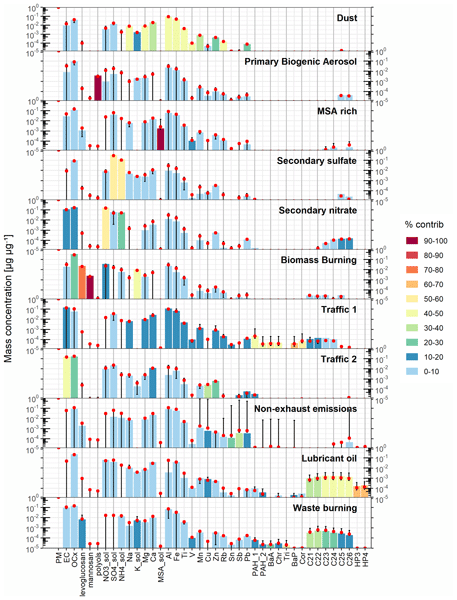
Valeria Mardoñez, Marco Pandolfi, Lucille Joanna S. Borlaza, Jean-Luc Jaffrezo, Andrés Alastuey, Jean-Luc Besombes, Isabel Moreno R., Noemi Perez, Griša Močnik, Patrick Ginot, Radovan Krejci, Vladislav Chrastny, Alfred Wiedensohler, Paolo Laj, Marcos Andrade, and Gaëlle Uzu
Atmos. Chem. Phys., 23, 10325–10347, https://doi.org/10.5194/acp-23-10325-2023, https://doi.org/10.5194/acp-23-10325-2023, 2023
Short summary
Short summary
La Paz and El Alto are two fast-growing, high-altitude Bolivian cities forming the second-largest metropolitan area in the country. The sources of particulate matter (PM) in this conurbation were not previously investigated. This study identified 11 main sources of PM, of which dust and vehicular emissions stand out as the main ones. The influence of regional biomass combustion and local waste combustion was also observed, with the latter being a major source of hazardous compounds.
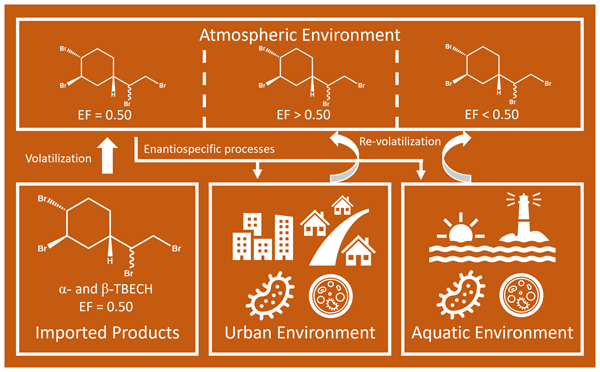
Jenny Oh, Chubashini Shunthirasingham, Ying Duan Lei, Faqiang Zhan, Yuening Li, Abigaëlle Dalpé Castilloux, Amina Ben Chaaben, Zhe Lu, Kelsey Lee, Frank A. P. C. Gobas, Sabine Eckhardt, Nick Alexandrou, Hayley Hung, and Frank Wania
Atmos. Chem. Phys., 23, 10191–10205, https://doi.org/10.5194/acp-23-10191-2023, https://doi.org/10.5194/acp-23-10191-2023, 2023
Short summary
Short summary
An emerging brominated flame retardant (BFR) called TBECH (1,2-dibromo-4-(1,2-dibromoethyl)cyclohexane) has never been produced or imported for use in Canada yet is found to be one of the most abundant gaseous BFRs in the Canadian atmosphere. The recorded spatial and temporal variability of TBECH suggest that the release from imported consumer products containing TBECH is the most likely explanation for its environmental occurrence in Canada.
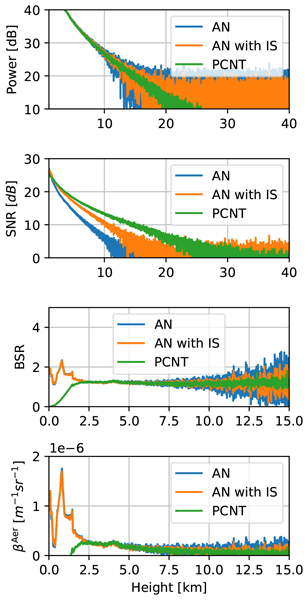
Tim Poguntke and Christoph Ritter
Atmos. Meas. Tech., 16, 4009–4014, https://doi.org/10.5194/amt-16-4009-2023, https://doi.org/10.5194/amt-16-4009-2023, 2023
Short summary
Short summary
In this work we analyze the impact of electromagnetic interference on an aerosol lidar. We found that aging transient recorders may produce a noise with fixed frequency that can be removed a posteriori.
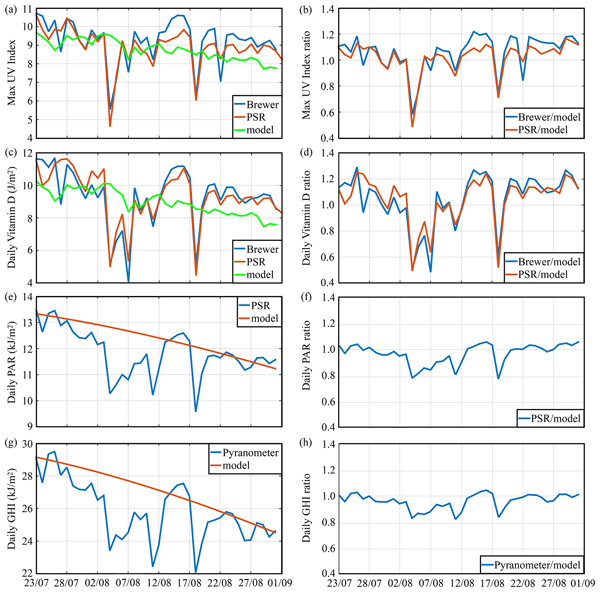
Akriti Masoom, Ilias Fountoulakis, Stelios Kazadzis, Ioannis-Panagiotis Raptis, Anna Kampouri, Basil E. Psiloglou, Dimitra Kouklaki, Kyriakoula Papachristopoulou, Eleni Marinou, Stavros Solomos, Anna Gialitaki, Dimitra Founda, Vasileios Salamalikis, Dimitris Kaskaoutis, Natalia Kouremeti, Nikolaos Mihalopoulos, Vassilis Amiridis, Andreas Kazantzidis, Alexandros Papayannis, Christos S. Zerefos, and Kostas Eleftheratos
Atmos. Chem. Phys., 23, 8487–8514, https://doi.org/10.5194/acp-23-8487-2023, https://doi.org/10.5194/acp-23-8487-2023, 2023
Short summary
Short summary
We analyse the spatial and temporal aerosol spectral optical properties during the extreme wildfires of August 2021 in Greece and assess their effects on air quality and solar radiation quantities related to health, agriculture, and energy. Different aerosol conditions are identified (pure smoke, pure dust, dust–smoke together); the largest impact on solar radiation quantities is found for cases with mixed dust–smoke aerosols. Such situations are expected to occur more frequently in the future.
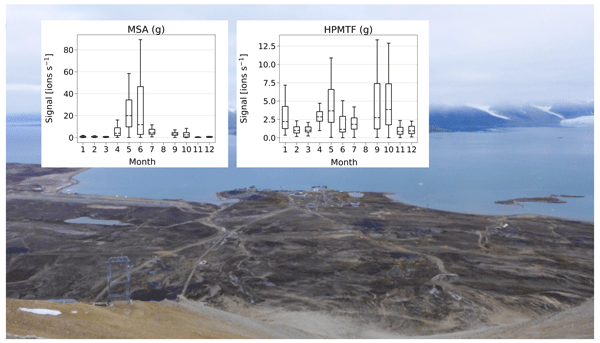
Karolina Siegel, Yvette Gramlich, Sophie L. Haslett, Gabriel Freitas, Radovan Krejci, Paul Zieger, and Claudia Mohr
Atmos. Chem. Phys., 23, 7569–7587, https://doi.org/10.5194/acp-23-7569-2023, https://doi.org/10.5194/acp-23-7569-2023, 2023
Short summary
Short summary
Hydroperoxymethyl thioformate (HPMTF) is a recently discovered oxidation product of dimethyl sulfide (DMS). We present a full year of concurrent gas- and particle-phase observations of HPMTF and other DMS oxidation products from the Arctic. We did not observe significant amounts of HPMTF in the particle phase but a good agreement between gas-phase HMPTF and methanesulfonic acid in the summer. Our study provides information about the relationship between HPMTF and other DMS oxidation products.
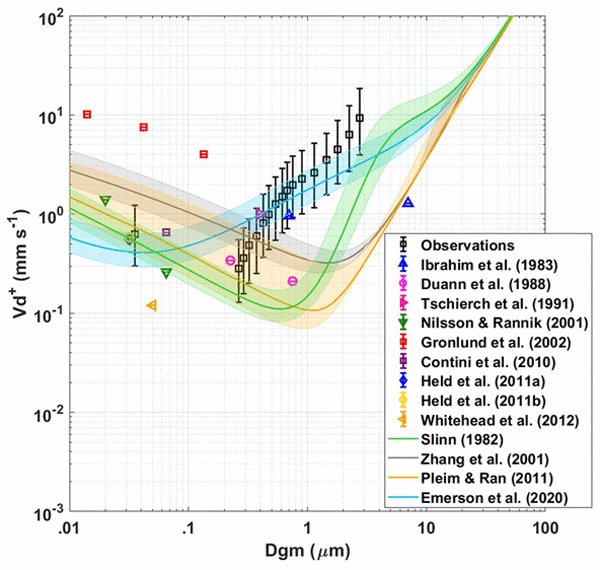
Antonio Donateo, Gianluca Pappaccogli, Daniela Famulari, Mauro Mazzola, Federico Scoto, and Stefano Decesari
Atmos. Chem. Phys., 23, 7425–7445, https://doi.org/10.5194/acp-23-7425-2023, https://doi.org/10.5194/acp-23-7425-2023, 2023
Short summary
Short summary
This work aims to measure the turbulent fluxes and the dry deposition velocity for size-segregated particles (from ultrafine to quasi-coarse range) at an Arctic site (Svalbard). Aiming to characterize the effect of surface properties on dry deposition, continuous observations were performed from the coldest months (on snow surface) to the snow melting period and throughout the summer (snow-free surface). A data fit of the deposition velocity as a function of particle diameters will be provided.
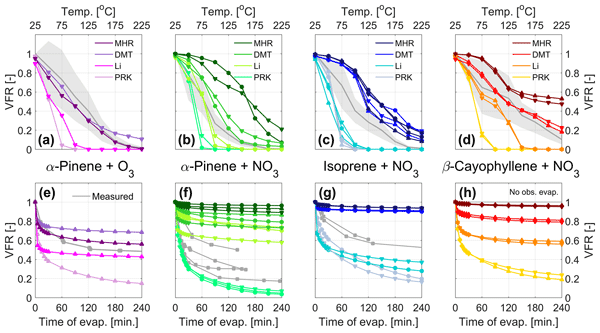
Emelie L. Graham, Cheng Wu, David M. Bell, Amelie Bertrand, Sophie L. Haslett, Urs Baltensperger, Imad El Haddad, Radovan Krejci, Ilona Riipinen, and Claudia Mohr
Atmos. Chem. Phys., 23, 7347–7362, https://doi.org/10.5194/acp-23-7347-2023, https://doi.org/10.5194/acp-23-7347-2023, 2023
Short summary
Short summary
The volatility of an aerosol particle is an important parameter for describing its atmospheric lifetime. We studied the volatility of secondary organic aerosols from nitrate-initiated oxidation of three biogenic precursors with experimental methods and model simulations. We saw higher volatility than for the corresponding ozone system, and our simulations produced variable results with different parameterizations which warrant a re-evaluation of the treatment of the nitrate functional group.
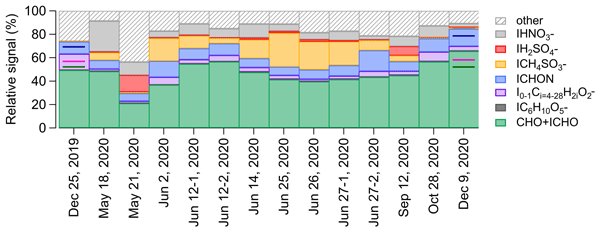
Yvette Gramlich, Karolina Siegel, Sophie L. Haslett, Gabriel Freitas, Radovan Krejci, Paul Zieger, and Claudia Mohr
Atmos. Chem. Phys., 23, 6813–6834, https://doi.org/10.5194/acp-23-6813-2023, https://doi.org/10.5194/acp-23-6813-2023, 2023
Short summary
Short summary
In this study, we investigate the chemical composition of aerosol particles forming clouds in the Arctic. During year-long observations at a mountain site on Svalbard, we find a large contribution of naturally derived aerosol particles in the fraction forming clouds in the summer. Our observations indicate that most aerosol particles can serve as cloud seeds in this remote environment.
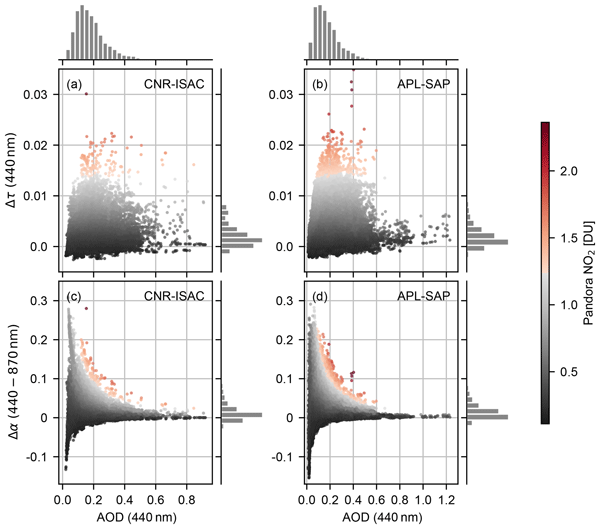
Theano Drosoglou, Ioannis-Panagiotis Raptis, Massimo Valeri, Stefano Casadio, Francesca Barnaba, Marcos Herreras-Giralda, Anton Lopatin, Oleg Dubovik, Gabriele Brizzi, Fabrizio Niro, Monica Campanelli, and Stelios Kazadzis
Atmos. Meas. Tech., 16, 2989–3014, https://doi.org/10.5194/amt-16-2989-2023, https://doi.org/10.5194/amt-16-2989-2023, 2023
Short summary
Short summary
Aerosol optical properties derived from sun photometers depend on the optical depth of trace gases absorbing solar radiation at specific spectral ranges. Various networks use satellite-based climatologies to account for this or neglect their effect. In this work, we evaluate the effect of NO2 absorption in aerosol retrievals from AERONET and SKYNET over two stations in Rome, Italy, with relatively high NO2 spatiotemporal variations, using NO2 data from the Pandora network and the TROPOMI sensor.
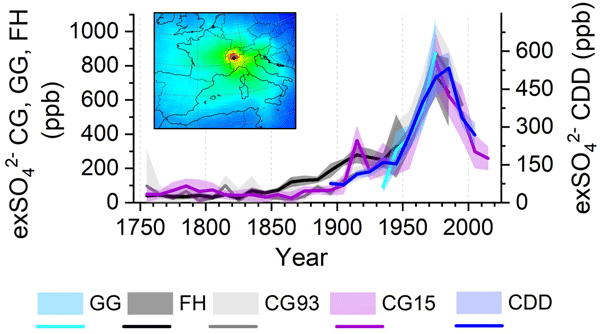
Anja Eichler, Michel Legrand, Theo M. Jenk, Susanne Preunkert, Camilla Andersson, Sabine Eckhardt, Magnuz Engardt, Andreas Plach, and Margit Schwikowski
The Cryosphere, 17, 2119–2137, https://doi.org/10.5194/tc-17-2119-2023, https://doi.org/10.5194/tc-17-2119-2023, 2023
Short summary
Short summary
We investigate how a 250-year history of the emission of air pollutants (major inorganic aerosol constituents, black carbon, and trace species) is preserved in ice cores from four sites in the European Alps. The observed uniform timing in species-dependent longer-term concentration changes reveals that the different ice-core records provide a consistent, spatially representative signal of the pollution history from western European countries.

Qiaozhi Zha, Wei Huang, Diego Aliaga, Otso Peräkylä, Liine Heikkinen, Alkuin Maximilian Koenig, Cheng Wu, Joonas Enroth, Yvette Gramlich, Jing Cai, Samara Carbone, Armin Hansel, Tuukka Petäjä, Markku Kulmala, Douglas Worsnop, Victoria Sinclair, Radovan Krejci, Marcos Andrade, Claudia Mohr, and Federico Bianchi
Atmos. Chem. Phys., 23, 4559–4576, https://doi.org/10.5194/acp-23-4559-2023, https://doi.org/10.5194/acp-23-4559-2023, 2023
Short summary
Short summary
We investigate the chemical composition of atmospheric cluster ions from January to May 2018 at the high-altitude research station Chacaltaya (5240 m a.s.l.) in the Bolivian Andes. With state-of-the-art mass spectrometers and air mass history analysis, the measured cluster ions exhibited distinct diurnal and seasonal patterns, some of which contributed to new particle formation. Our study will improve the understanding of atmospheric ions and their role in high-altitude new particle formation.
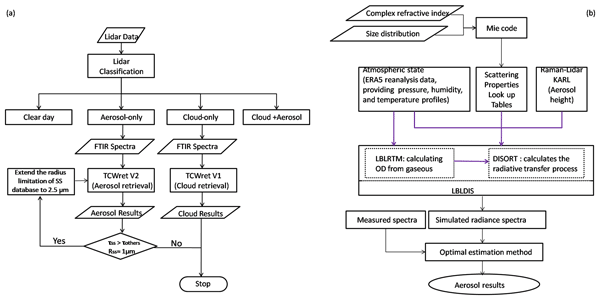
Denghui Ji, Mathias Palm, Christoph Ritter, Philipp Richter, Xiaoyu Sun, Matthias Buschmann, and Justus Notholt
Atmos. Meas. Tech., 16, 1865–1879, https://doi.org/10.5194/amt-16-1865-2023, https://doi.org/10.5194/amt-16-1865-2023, 2023
Short summary
Short summary
To measuring aerosol components, a Fourier transform infrared spectrometer (FTIS) and a lidar are operated in Ny-Ålesund, Spitsbergen (78° N, 11° E). Using the FTIS, a retrieval algorithm is developed for dust, sea salt, black carbon, and sulfate. The distribution of aerosols or clouds is provided by lidar and used as an indicator for aerosol or cloud retrieval with the FTS. Thus, a two-instrument joint-observation scheme is designed and is used on the data measured from 2019 to the present.
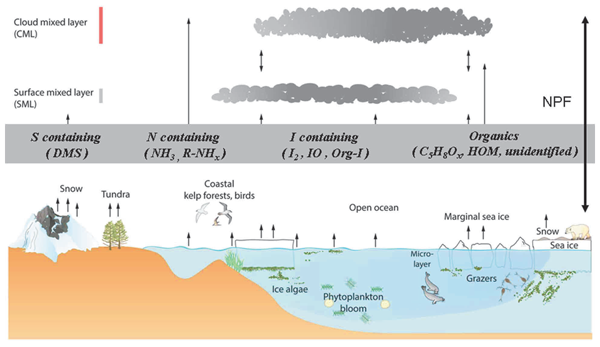
James Brean, David C. S. Beddows, Roy M. Harrison, Congbo Song, Peter Tunved, Johan Ström, Radovan Krejci, Eyal Freud, Andreas Massling, Henrik Skov, Eija Asmi, Angelo Lupi, and Manuel Dall'Osto
Atmos. Chem. Phys., 23, 2183–2198, https://doi.org/10.5194/acp-23-2183-2023, https://doi.org/10.5194/acp-23-2183-2023, 2023
Short summary
Short summary
Our results emphasize how understanding the geographical variation in surface types across the Arctic is key to understanding secondary aerosol sources. We provide a harmonised analysis of new particle formation across the Arctic.
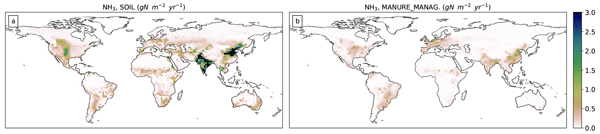
Maureen Beaudor, Nicolas Vuichard, Juliette Lathière, Nikolaos Evangeliou, Martin Van Damme, Lieven Clarisse, and Didier Hauglustaine
Geosci. Model Dev., 16, 1053–1081, https://doi.org/10.5194/gmd-16-1053-2023, https://doi.org/10.5194/gmd-16-1053-2023, 2023
Short summary
Short summary
Ammonia mainly comes from the agricultural sector, and its volatilization relies on environmental variables. Our approach aims at benefiting from an Earth system model framework to estimate it. By doing so, we represent a consistent spatial distribution of the emissions' response to environmental changes.
We greatly improved the seasonal cycle of emissions compared with previous work. In addition, our model includes natural soil emissions (that are rarely represented in modeling approaches).
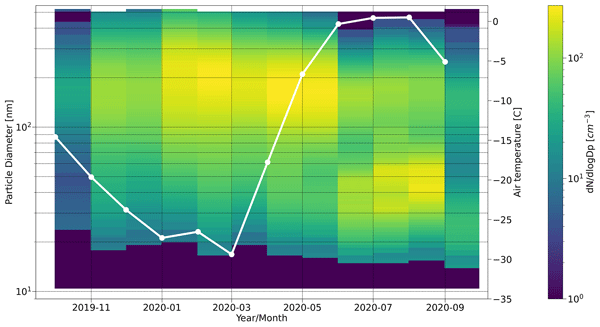
Matthew Boyer, Diego Aliaga, Jakob Boyd Pernov, Hélène Angot, Lauriane L. J. Quéléver, Lubna Dada, Benjamin Heutte, Manuel Dall'Osto, David C. S. Beddows, Zoé Brasseur, Ivo Beck, Silvia Bucci, Marina Duetsch, Andreas Stohl, Tiia Laurila, Eija Asmi, Andreas Massling, Daniel Charles Thomas, Jakob Klenø Nøjgaard, Tak Chan, Sangeeta Sharma, Peter Tunved, Radovan Krejci, Hans Christen Hansson, Federico Bianchi, Katrianne Lehtipalo, Alfred Wiedensohler, Kay Weinhold, Markku Kulmala, Tuukka Petäjä, Mikko Sipilä, Julia Schmale, and Tuija Jokinen
Atmos. Chem. Phys., 23, 389–415, https://doi.org/10.5194/acp-23-389-2023, https://doi.org/10.5194/acp-23-389-2023, 2023
Short summary
Short summary
The Arctic is a unique environment that is warming faster than other locations on Earth. We evaluate measurements of aerosol particles, which can influence climate, over the central Arctic Ocean for a full year and compare the data to land-based measurement stations across the Arctic. Our measurements show that the central Arctic has similarities to but also distinct differences from the stations further south. We note that this may change as the Arctic warms and sea ice continues to decline.

Kyriakoula Papachristopoulou, Ioannis-Panagiotis Raptis, Antonis Gkikas, Ilias Fountoulakis, Akriti Masoom, and Stelios Kazadzis
Atmos. Chem. Phys., 22, 15703–15727, https://doi.org/10.5194/acp-22-15703-2022, https://doi.org/10.5194/acp-22-15703-2022, 2022
Short summary
Short summary
Megacities' air quality is determined by atmospheric aerosols. We focus on changes over the last two decades in the 81 largest cities, using satellite data. European and American cities have lower aerosol compared to African and Asian cities. For European, North American and East Asian cities, aerosols are decreasing over time, especially in China and the US. In the remaining cities, aerosol loads are increasing, particularly in India.
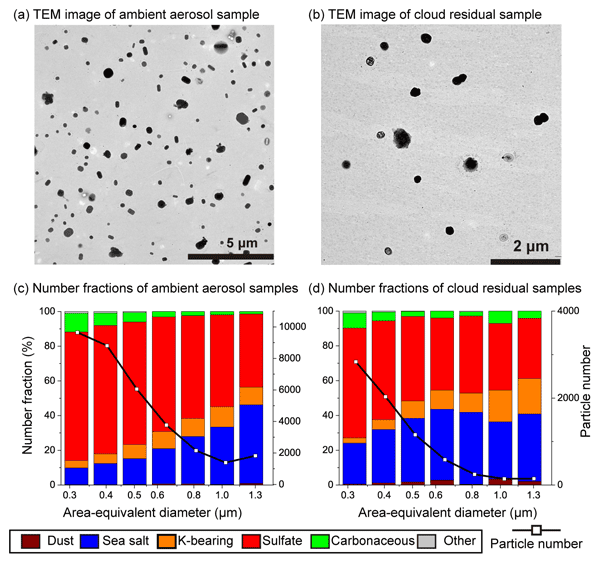
Kouji Adachi, Yutaka Tobo, Makoto Koike, Gabriel Freitas, Paul Zieger, and Radovan Krejci
Atmos. Chem. Phys., 22, 14421–14439, https://doi.org/10.5194/acp-22-14421-2022, https://doi.org/10.5194/acp-22-14421-2022, 2022
Short summary
Short summary
Ambient aerosol and cloud residual particles in the fine mode were collected at Zeppelin Observatory in Svalbard and were analyzed using transmission electron microscopy. Fractions of mineral dust and sea salt particles increased in cloud residual samples collected at ambient temperatures below 0 °C. This study highlights the variety of aerosol and cloud residual particle compositions and mixing states that influence or are influenced by aerosol–cloud interactions in Arctic low-level clouds.
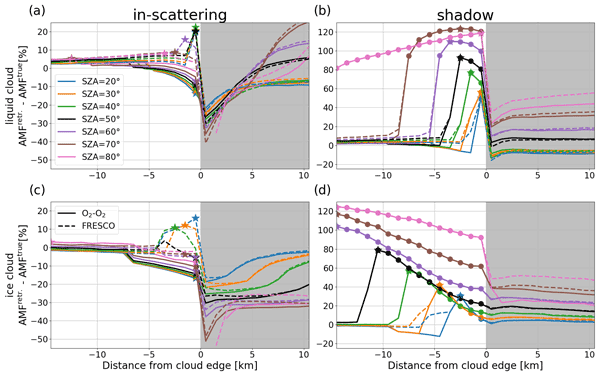
Huan Yu, Claudia Emde, Arve Kylling, Ben Veihelmann, Bernhard Mayer, Kerstin Stebel, and Michel Van Roozendael
Atmos. Meas. Tech., 15, 5743–5768, https://doi.org/10.5194/amt-15-5743-2022, https://doi.org/10.5194/amt-15-5743-2022, 2022
Short summary
Short summary
In this study, we have investigated the impact of 3D clouds on the tropospheric NO2 retrieval from UV–visible sensors. We applied standard NO2 retrieval methods including cloud corrections to synthetic data generated by the 3D radiative transfer model. A sensitivity study was done for synthetic data, and dependencies on various parameters were investigated. Possible mitigation strategies were investigated and compared based on 3D simulations and observed data.
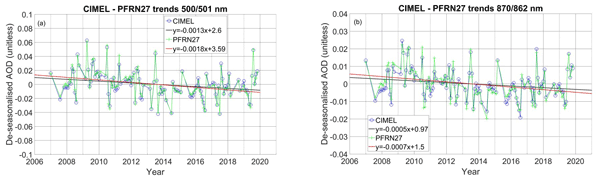
Angelos Karanikolas, Natalia Kouremeti, Julian Gröbner, Luca Egli, and Stelios Kazadzis
Atmos. Meas. Tech., 15, 5667–5680, https://doi.org/10.5194/amt-15-5667-2022, https://doi.org/10.5194/amt-15-5667-2022, 2022
Short summary
Short summary
The aim of this work is to investigate the limitations of calculating long-term trends of a parameter that quantifies the overall effect of atmospheric aerosols on the solar radiation. A main finding is that even instruments with good agreement between their observations can show significantly different linear trends. By calculating time-varying trends, the trend agreement is shown to improve. We also show that different methods of trend estimation can result in significant trend differences.
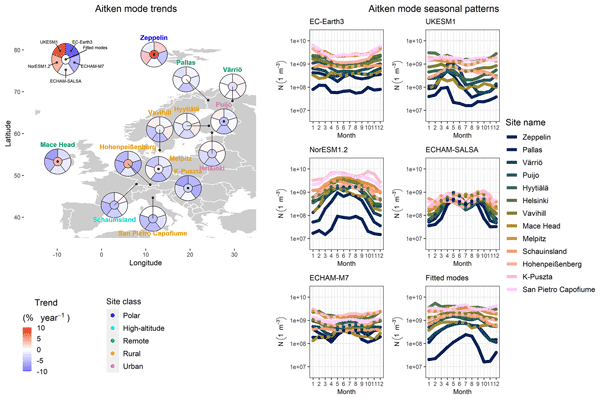
Ville Leinonen, Harri Kokkola, Taina Yli-Juuti, Tero Mielonen, Thomas Kühn, Tuomo Nieminen, Simo Heikkinen, Tuuli Miinalainen, Tommi Bergman, Ken Carslaw, Stefano Decesari, Markus Fiebig, Tareq Hussein, Niku Kivekäs, Radovan Krejci, Markku Kulmala, Ari Leskinen, Andreas Massling, Nikos Mihalopoulos, Jane P. Mulcahy, Steffen M. Noe, Twan van Noije, Fiona M. O'Connor, Colin O'Dowd, Dirk Olivie, Jakob B. Pernov, Tuukka Petäjä, Øyvind Seland, Michael Schulz, Catherine E. Scott, Henrik Skov, Erik Swietlicki, Thomas Tuch, Alfred Wiedensohler, Annele Virtanen, and Santtu Mikkonen
Atmos. Chem. Phys., 22, 12873–12905, https://doi.org/10.5194/acp-22-12873-2022, https://doi.org/10.5194/acp-22-12873-2022, 2022
Short summary
Short summary
We provide the first extensive comparison of detailed aerosol size distribution trends between in situ observations from Europe and five different earth system models. We investigated aerosol modes (nucleation, Aitken, and accumulation) separately and were able to show the differences between measured and modeled trends and especially their seasonal patterns. The differences in model results are likely due to complex effects of several processes instead of certain specific model features.

Lauren M. Zamora, Ralph A. Kahn, Nikolaos Evangeliou, Christine D. Groot Zwaaftink, and Klaus B. Huebert
Atmos. Chem. Phys., 22, 12269–12285, https://doi.org/10.5194/acp-22-12269-2022, https://doi.org/10.5194/acp-22-12269-2022, 2022
Short summary
Short summary
Arctic dust, smoke, and pollution particles can affect clouds and Arctic warming. The distributions of these particles were estimated in three different satellite, reanalysis, and model products. These products showed good agreement overall but indicate that it is important to include local dust in models. We hypothesize that mineral dust effects on ice processes in the Arctic atmosphere might be highest over Siberia, where it is cold, moist, and subject to relatively high dust levels.
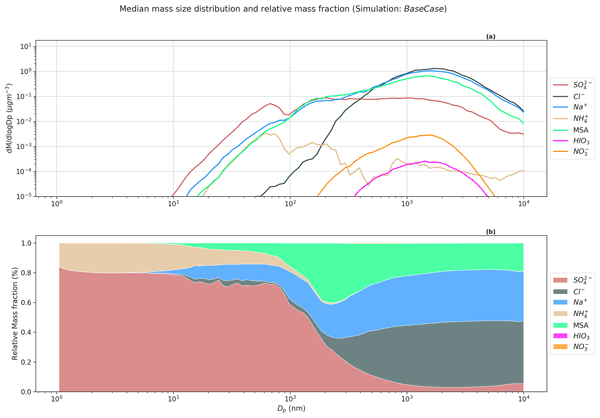
Carlton Xavier, Metin Baykara, Robin Wollesen de Jonge, Barbara Altstädter, Petri Clusius, Ville Vakkari, Roseline Thakur, Lisa Beck, Silvia Becagli, Mirko Severi, Rita Traversi, Radovan Krejci, Peter Tunved, Mauro Mazzola, Birgit Wehner, Mikko Sipilä, Markku Kulmala, Michael Boy, and Pontus Roldin
Atmos. Chem. Phys., 22, 10023–10043, https://doi.org/10.5194/acp-22-10023-2022, https://doi.org/10.5194/acp-22-10023-2022, 2022
Short summary
Short summary
The focus of this work is to study and improve our understanding of processes involved in the formation and growth of new particles in a remote Arctic marine environment. We run the 1D model ADCHEM along air mass trajectories arriving at Ny-Ålesund in May 2018. The model finds that ion-mediated H2SO4–NH3 nucleation can explain the observed new particle formation at Ny-Ålesund. The growth of particles is driven via H2SO4 condensation and formation of methane sulfonic acid in the aqueous phase.

Arve Kylling, Claudia Emde, Huan Yu, Michel van Roozendael, Kerstin Stebel, Ben Veihelmann, and Bernhard Mayer
Atmos. Meas. Tech., 15, 3481–3495, https://doi.org/10.5194/amt-15-3481-2022, https://doi.org/10.5194/amt-15-3481-2022, 2022
Short summary
Short summary
Atmospheric trace gases such as nitrogen dioxide (NO2) may be measured by satellite instruments sensitive to solar ultraviolet–visible radiation reflected from Earth and its atmosphere. For a single pixel, clouds in neighbouring pixels may affect the radiation and hence the retrieved trace gas amount. We found that for a solar zenith angle less than about 40° this cloud-related NO2 bias is typically below 10 %, while for larger solar zenith angles the NO2 bias is on the order of tens of percent.

Olga B. Popovicheva, Nikolaos Evangeliou, Vasilii O. Kobelev, Marina A. Chichaeva, Konstantinos Eleftheriadis, Asta Gregorič, and Nikolay S. Kasimov
Atmos. Chem. Phys., 22, 5983–6000, https://doi.org/10.5194/acp-22-5983-2022, https://doi.org/10.5194/acp-22-5983-2022, 2022
Short summary
Short summary
Measurements of black carbon (BC) combined with atmospheric transport modeling reveal that gas flaring from oil and gas extraction in Kazakhstan, Volga-Ural, Komi, Nenets and western Siberia contributes the largest share of surface BC in the Russian Arctic dominating over domestic, industrial and traffic sectors. Pollution episodes show an increasing trend in concentration levels and frequency as the station is in the Siberian gateway of the highest anthropogenic pollution to the Russian Arctic.
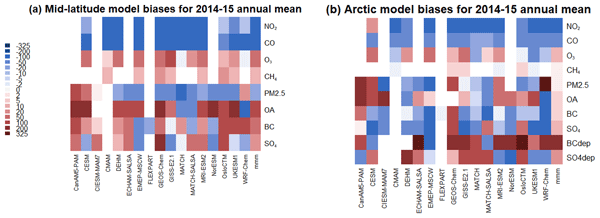
Cynthia H. Whaley, Rashed Mahmood, Knut von Salzen, Barbara Winter, Sabine Eckhardt, Stephen Arnold, Stephen Beagley, Silvia Becagli, Rong-You Chien, Jesper Christensen, Sujay Manish Damani, Xinyi Dong, Konstantinos Eleftheriadis, Nikolaos Evangeliou, Gregory Faluvegi, Mark Flanner, Joshua S. Fu, Michael Gauss, Fabio Giardi, Wanmin Gong, Jens Liengaard Hjorth, Lin Huang, Ulas Im, Yugo Kanaya, Srinath Krishnan, Zbigniew Klimont, Thomas Kühn, Joakim Langner, Kathy S. Law, Louis Marelle, Andreas Massling, Dirk Olivié, Tatsuo Onishi, Naga Oshima, Yiran Peng, David A. Plummer, Olga Popovicheva, Luca Pozzoli, Jean-Christophe Raut, Maria Sand, Laura N. Saunders, Julia Schmale, Sangeeta Sharma, Ragnhild Bieltvedt Skeie, Henrik Skov, Fumikazu Taketani, Manu A. Thomas, Rita Traversi, Kostas Tsigaridis, Svetlana Tsyro, Steven Turnock, Vito Vitale, Kaley A. Walker, Minqi Wang, Duncan Watson-Parris, and Tahya Weiss-Gibbons
Atmos. Chem. Phys., 22, 5775–5828, https://doi.org/10.5194/acp-22-5775-2022, https://doi.org/10.5194/acp-22-5775-2022, 2022
Short summary
Short summary
Air pollutants, like ozone and soot, play a role in both global warming and air quality. Atmospheric models are often used to provide information to policy makers about current and future conditions under different emissions scenarios. In order to have confidence in those simulations, in this study we compare simulated air pollution from 18 state-of-the-art atmospheric models to measured air pollution in order to assess how well the models perform.

Christine D. Groot Zwaaftink, Wenche Aas, Sabine Eckhardt, Nikolaos Evangeliou, Paul Hamer, Mona Johnsrud, Arve Kylling, Stephen M. Platt, Kerstin Stebel, Hilde Uggerud, and Karl Espen Yttri
Atmos. Chem. Phys., 22, 3789–3810, https://doi.org/10.5194/acp-22-3789-2022, https://doi.org/10.5194/acp-22-3789-2022, 2022
Short summary
Short summary
We investigate causes of a poor-air-quality episode in northern Europe in October 2020 during which EU health limits for air quality were vastly exceeded. Such episodes may trigger measures to improve air quality. Analysis based on satellite observations, transport simulations, and surface observations revealed two sources of pollution. Emissions of mineral dust in Central Asia and biomass burning in Ukraine arrived almost simultaneously in Norway, and transport continued into the Arctic.
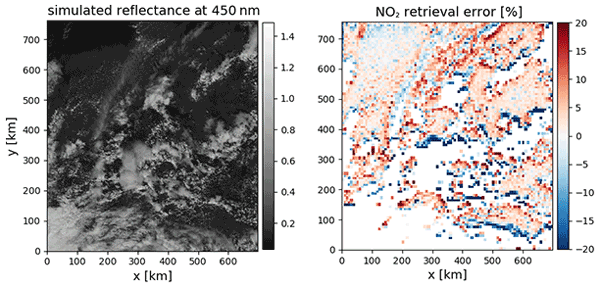
Claudia Emde, Huan Yu, Arve Kylling, Michel van Roozendael, Kerstin Stebel, Ben Veihelmann, and Bernhard Mayer
Atmos. Meas. Tech., 15, 1587–1608, https://doi.org/10.5194/amt-15-1587-2022, https://doi.org/10.5194/amt-15-1587-2022, 2022
Short summary
Short summary
Retrievals of trace gas concentrations from satellite observations can be affected by clouds in the vicinity, either by shadowing or by scattering of radiation from clouds in the clear region. We used a Monte Carlo radiative transfer model to generate synthetic satellite observations, which we used to test retrieval algorithms and to quantify the error of retrieved NO2 vertical column density due to cloud scattering.
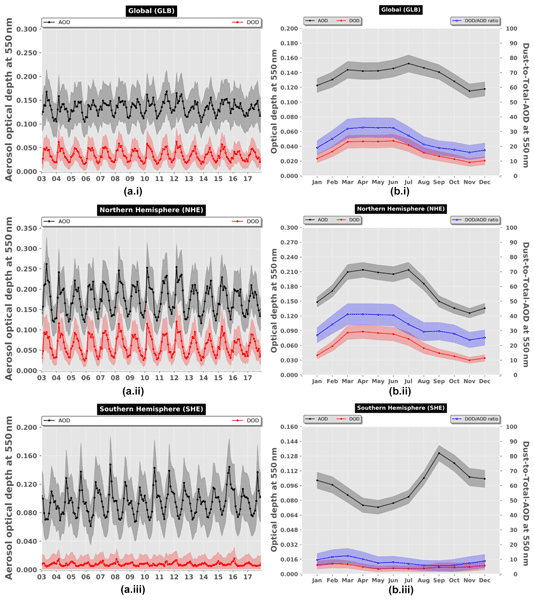
Antonis Gkikas, Emmanouil Proestakis, Vassilis Amiridis, Stelios Kazadzis, Enza Di Tomaso, Eleni Marinou, Nikos Hatzianastassiou, Jasper F. Kok, and Carlos Pérez García-Pando
Atmos. Chem. Phys., 22, 3553–3578, https://doi.org/10.5194/acp-22-3553-2022, https://doi.org/10.5194/acp-22-3553-2022, 2022
Short summary
Short summary
We present a comprehensive climatological analysis of dust optical depth (DOD) relying on the MIDAS dataset. MIDAS provides columnar mid-visible (550 nm) DOD at fine spatial resolution (0.1° × 0.1°) over a 15-year period (2003–2017). In the current study, the analysis is performed at various spatial (from regional to global) and temporal (from months to years) scales. More specifically, focus is given to specific regions hosting the major dust sources as well as downwind areas of the planet.
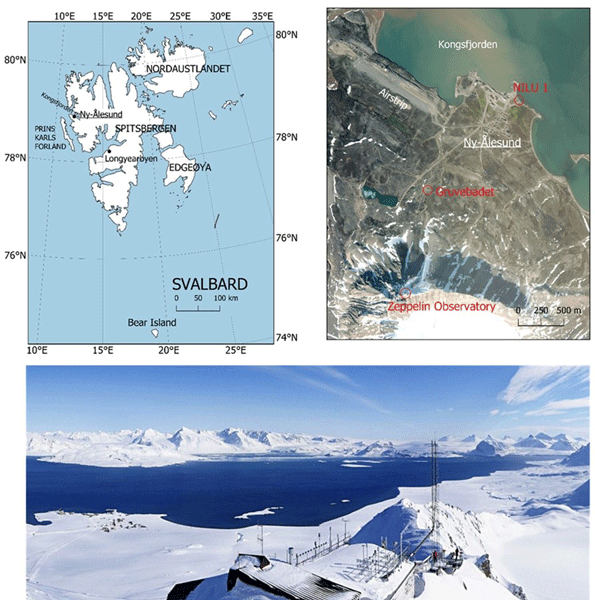
Stephen M. Platt, Øystein Hov, Torunn Berg, Knut Breivik, Sabine Eckhardt, Konstantinos Eleftheriadis, Nikolaos Evangeliou, Markus Fiebig, Rebecca Fisher, Georg Hansen, Hans-Christen Hansson, Jost Heintzenberg, Ove Hermansen, Dominic Heslin-Rees, Kim Holmén, Stephen Hudson, Roland Kallenborn, Radovan Krejci, Terje Krognes, Steinar Larssen, David Lowry, Cathrine Lund Myhre, Chris Lunder, Euan Nisbet, Pernilla B. Nizzetto, Ki-Tae Park, Christina A. Pedersen, Katrine Aspmo Pfaffhuber, Thomas Röckmann, Norbert Schmidbauer, Sverre Solberg, Andreas Stohl, Johan Ström, Tove Svendby, Peter Tunved, Kjersti Tørnkvist, Carina van der Veen, Stergios Vratolis, Young Jun Yoon, Karl Espen Yttri, Paul Zieger, Wenche Aas, and Kjetil Tørseth
Atmos. Chem. Phys., 22, 3321–3369, https://doi.org/10.5194/acp-22-3321-2022, https://doi.org/10.5194/acp-22-3321-2022, 2022
Short summary
Short summary
Here we detail the history of the Zeppelin Observatory, a unique global background site and one of only a few in the high Arctic. We present long-term time series of up to 30 years of atmospheric components and atmospheric transport phenomena. Many of these time series are important to our understanding of Arctic and global atmospheric composition change. Finally, we discuss the future of the Zeppelin Observatory and emerging areas of future research on the Arctic atmosphere.
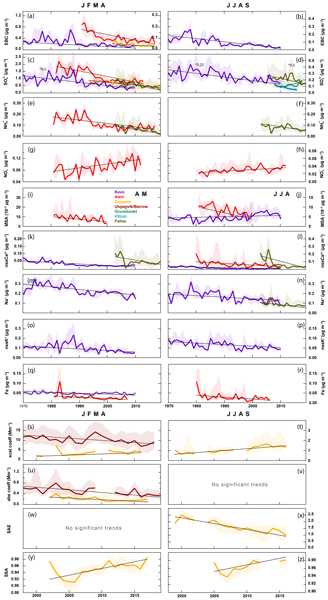
Julia Schmale, Sangeeta Sharma, Stefano Decesari, Jakob Pernov, Andreas Massling, Hans-Christen Hansson, Knut von Salzen, Henrik Skov, Elisabeth Andrews, Patricia K. Quinn, Lucia M. Upchurch, Konstantinos Eleftheriadis, Rita Traversi, Stefania Gilardoni, Mauro Mazzola, James Laing, and Philip Hopke
Atmos. Chem. Phys., 22, 3067–3096, https://doi.org/10.5194/acp-22-3067-2022, https://doi.org/10.5194/acp-22-3067-2022, 2022
Short summary
Short summary
Long-term data sets of Arctic aerosol properties from 10 stations across the Arctic provide evidence that anthropogenic influence on the Arctic atmospheric chemical composition has declined in winter, a season which is typically dominated by mid-latitude emissions. The number of significant trends in summer is smaller than in winter, and overall the pattern is ambiguous with some significant positive and negative trends. This reflects the mixed influence of natural and anthropogenic emissions.
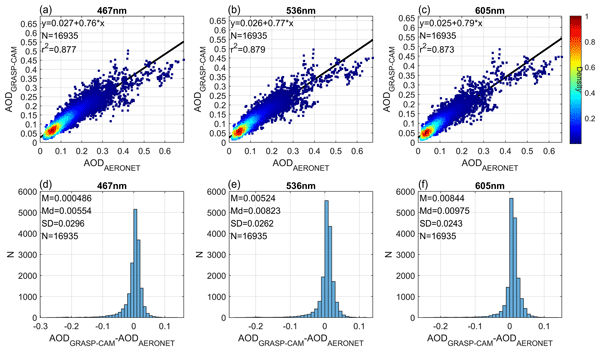
Roberto Román, Juan C. Antuña-Sánchez, Victoria E. Cachorro, Carlos Toledano, Benjamín Torres, David Mateos, David Fuertes, César López, Ramiro González, Tatyana Lapionok, Marcos Herreras-Giralda, Oleg Dubovik, and Ángel M. de Frutos
Atmos. Meas. Tech., 15, 407–433, https://doi.org/10.5194/amt-15-407-2022, https://doi.org/10.5194/amt-15-407-2022, 2022
Short summary
Short summary
An all-sky camera is used to obtain the relative sky radiance, and this radiance is used as input in an inversion code to obtain aerosol properties. This paper is really interesting because it pushes forward the use and capability of sky cameras for more advanced science purposes. Enhanced aerosol properties can be retrieved with accuracy using only an all-sky camera, but synergy with other instruments providing aerosol optical depth could even increase the power of these low-cost instruments.

Stavros-Andreas Logothetis, Vasileios Salamalikis, Antonis Gkikas, Stelios Kazadzis, Vassilis Amiridis, and Andreas Kazantzidis
Atmos. Chem. Phys., 21, 16499–16529, https://doi.org/10.5194/acp-21-16499-2021, https://doi.org/10.5194/acp-21-16499-2021, 2021
Short summary
Short summary
This study investigates the temporal trends of dust optical depth (DOD; 550 nm) on global, regional and seasonal scales over a 15-year period (2003–2017) using the MIDAS (ModIs Dust AeroSol) dataset. The findings of this study revealed that the DOD was increased across the central Sahara and the Arabian Peninsula, with opposite trends over the eastern and western Sahara, the Thar and Gobi deserts, in the Bodélé Depression, and in the southern Mediterranean.
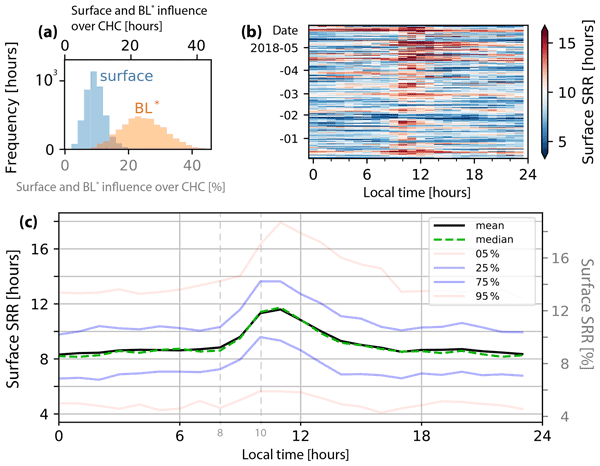
Diego Aliaga, Victoria A. Sinclair, Marcos Andrade, Paulo Artaxo, Samara Carbone, Evgeny Kadantsev, Paolo Laj, Alfred Wiedensohler, Radovan Krejci, and Federico Bianchi
Atmos. Chem. Phys., 21, 16453–16477, https://doi.org/10.5194/acp-21-16453-2021, https://doi.org/10.5194/acp-21-16453-2021, 2021
Short summary
Short summary
We investigate the origin of air masses sampled at Mount Chacaltaya, Bolivia. Three-quarters of the measured air has not been influenced by the surface in the previous 4 d. However, it is rare that, at any given time, the sampled air has not been influenced at all by the surface, and often the sampled air has multiple origins. The influence of the surface is more prevalent during day than night. Furthermore, during the 6-month study, one-third of the air masses originated from Amazonia.
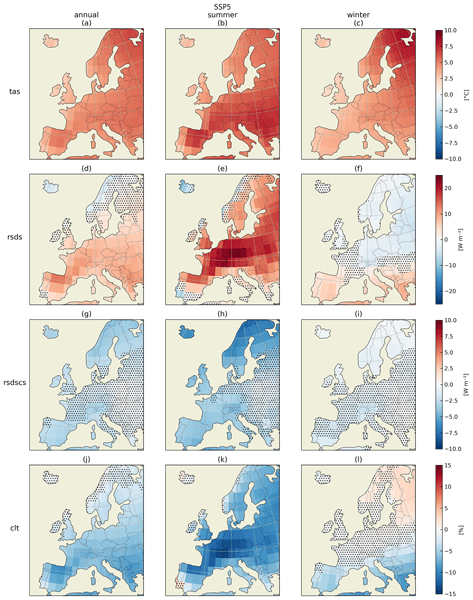
Xinyuan Hou, Martin Wild, Doris Folini, Stelios Kazadzis, and Jan Wohland
Earth Syst. Dynam., 12, 1099–1113, https://doi.org/10.5194/esd-12-1099-2021, https://doi.org/10.5194/esd-12-1099-2021, 2021
Short summary
Short summary
Solar photovoltaics (PV) matters for the carbon neutrality goal. We use climate scenarios to quantify climate risk for PV in Europe and find higher PV potential. The seasonal cycle of PV generation changes in most places. We find an increase in the spatial correlations of daily PV production, implying that PV power balancing through redistribution will be more difficult in the future. Thus, changes in the spatiotemporal structure of PV generation should be included in power system design.
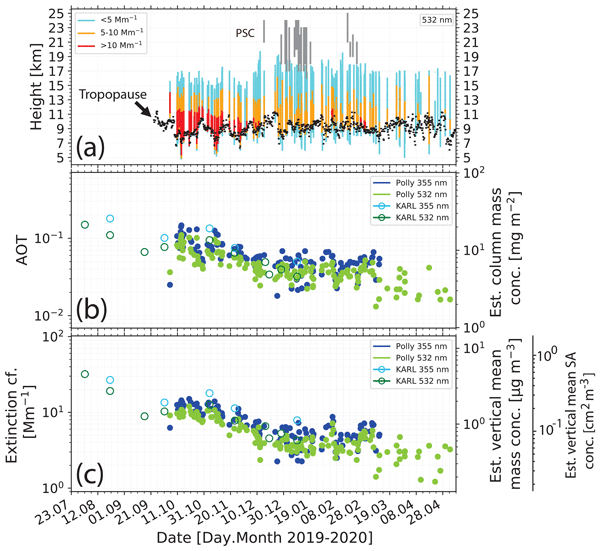
Kevin Ohneiser, Albert Ansmann, Alexandra Chudnovsky, Ronny Engelmann, Christoph Ritter, Igor Veselovskii, Holger Baars, Henriette Gebauer, Hannes Griesche, Martin Radenz, Julian Hofer, Dietrich Althausen, Sandro Dahlke, and Marion Maturilli
Atmos. Chem. Phys., 21, 15783–15808, https://doi.org/10.5194/acp-21-15783-2021, https://doi.org/10.5194/acp-21-15783-2021, 2021
Short summary
Short summary
The highlight of the lidar measurements during the 1-year MOSAiC (Multidisciplinary drifting Observatory for the Study of Arctic Climate) expedition of the German icebreaker Polarstern (October 2019–October 2020) was the detection of a persistent, 10 km deep Siberian wildfire smoke layer in the upper troposphere and lower stratosphere (UTLS) from about 7–8 km to 17–18 km height that could potentially have impacted the record-breaking ozone depletion over the Arctic in the spring of 2020.
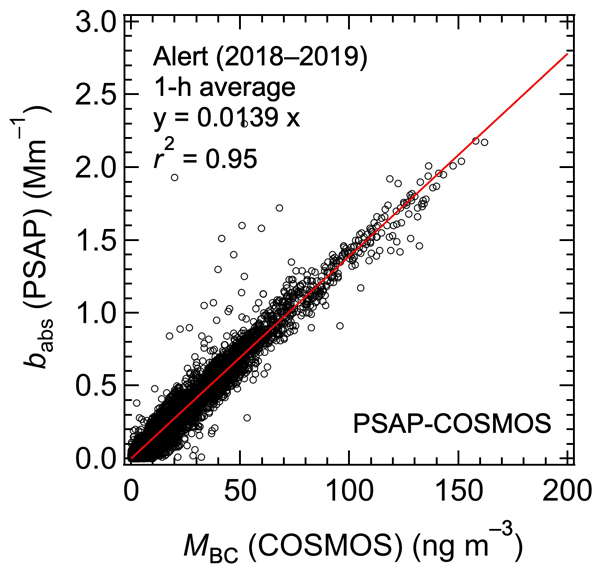
Sho Ohata, Tatsuhiro Mori, Yutaka Kondo, Sangeeta Sharma, Antti Hyvärinen, Elisabeth Andrews, Peter Tunved, Eija Asmi, John Backman, Henri Servomaa, Daniel Veber, Konstantinos Eleftheriadis, Stergios Vratolis, Radovan Krejci, Paul Zieger, Makoto Koike, Yugo Kanaya, Atsushi Yoshida, Nobuhiro Moteki, Yongjing Zhao, Yutaka Tobo, Junji Matsushita, and Naga Oshima
Atmos. Meas. Tech., 14, 6723–6748, https://doi.org/10.5194/amt-14-6723-2021, https://doi.org/10.5194/amt-14-6723-2021, 2021
Short summary
Short summary
Reliable values of mass absorption cross sections (MACs) of black carbon (BC) are required to determine mass concentrations of BC at Arctic sites using different types of filter-based absorption photometers. We successfully estimated MAC values for these instruments through comparison with independent measurements of BC by a continuous soot monitoring system called COSMOS. These MAC values are consistent with each other and applicable to study spatial and temporal variation in BC in the Arctic.
Cited articles
Althausen, D., Zielinski, T., Pakszys, P., Kouremeti, N., Kazadzis, S., Hansen, G. H., Ritter, C., Mateos, D., and Sobolewski, P.: Aggregated high resolution aerosol optical depth from stations and ships in the Svalbard area in the context of the REHEARSOL project, Norwegian Meteorological Institute [data set], https://doi.org/10.21343/1GAJ-4645, 2022. a
Ångström, A.: On the atmospheric transmission of sun radiation and on dust in the air, Geografiska Annaler, 11, 156–166, 1929. a
Ansmann, A., Ohneiser, K., Chudnovsky, A., Baars, H., and Engelmann, R.: CALIPSO aerosol-typing scheme misclassified stratospheric fire smoke: Case study from the 2019 Siberian wildfire season, Front. Environ. Sci., 9, 769852, https://doi.org/10.3389/fenvs.2021.769852, 2021. a
Ansmann, A., Ohneiser, K., Engelmann, R., Radenz, M., Griesche, H., Hofer, J., Althausen, D., Creamean, J. M., Boyer, M. C., Knopf, D. A., Dahlke, S., Maturilli, M., Gebauer, H., Bühl, J., Jimenez, C., Seifert, P., and Wandinger, U.: Annual cycle of aerosol properties over the central Arctic during MOSAiC 2019–2020 – light-extinction, CCN, and INP levels from the boundary layer to the tropopause, Atmos. Chem. Phys., 23, 12821–12849, https://doi.org/10.5194/acp-23-12821-2023, 2023. a
Ansmann, A., Veselovskii, I., Ohneiser, K., and Chudnovsky, A.: Comment on “Stratospheric Aerosol Composition Observed by the Atmospheric Chemistry Experiment Following the 2019 Raikoke Eruption” by Boone et al., J. Geophys. Res.-Atmos., 129, e2022JD038080, https://doi.org/10.1029/2022JD038080, 2024. a
Antokhina, O. Y., Antokhin, P. N., Belan, B. D., Gochakov, A. V., Martynova, Y. V., Pustovalov, K. N., Tarabukina, L. D., and Devyatova, E. V.: Effects of Rossby Waves Breaking and Atmospheric Blocking Formation on the Extreme Forest Fire and Floods in Eastern Siberia 2019, Fire, 6, https://doi.org/10.3390/fire6030122, 2023. a, b
Böckmann, C., Ritter, C., and Graßl, S.: Improvement of Aerosol Coarse-Mode Detection through Additional Use of Infrared Wavelengths in the Inversion of Arctic Lidar Data, Remote Sens., 16, 1576–1576, https://doi.org/10.3390/rs16091576, 2024. a, b
Bond, T. C., Doherty, S. J., Fahey, D. W., Forster, P. M., Berntsen, T., DeAngelo, B. J., Flanner, M. G., Ghan, S., Kärcher, B., Koch, D., Kinne, S., Kondo, Y., Quinn, P. K., Sarofim, M. C., Schultz, M. G., Schulz, M., Venkataraman, C., Zhang, H., Zhang, S., Bellouin, N., Guttikunda, S. K., Hopke, P. K., Jacobson, M. Z., Kaiser, J. W., Klimont, Z., Lohmann, U., Schwarz, J. P., Shindell, D., Storelvmo, T., Warren, S. G., and Zender, C. S.: Bounding the role of black carbon in the climate system: A scientific assessment, J. Geophys. Res.-Atmos., 118, 5380–5552, https://doi.org/10.1002/jgrd.50171, 2013. a
Boone, C. D., Bernath, P. F., Labelle, K., and Crouse, J.: Stratospheric Aerosol Composition Observed by the Atmospheric Chemistry Experiment Following the 2019 Raikoke Eruption, J. Geophys. Res.-Atmos., 127, e2022JD036600, https://doi.org/10.1029/2022JD036600, 2022. a
Calì Quaglia, F., Meloni, D., Muscari, G., Di Iorio, T., Ciardini, V., Pace, G., Becagli, S., Di Bernardino, A., Cacciani, M., Hannigan, J. W., Ortega, I and di Sarra, A. G.: On the Radiative Impact of Biomass-Burning Aerosols in the Arctic: The August 2017 Case Study, Remote Sens., 14, 313, https://doi.org/10.3390/rs14020313, 2022. a
Cameron, W., Bernath, P., and Boone, C.: Sulfur dioxide from the atmospheric chemistry experiment (ACE) satellite, J. Quant. Spectrosc. Ra., 258, 107341, https://doi.org/10.1016/j.jqsrt.2020.107341, 2021. a
CAMS: Another active year for Arctic wildfires, https://atmosphere.copernicus.eu/another-active-year-arctic-wildfires (last access: 28 November 2024), 2020. a
Cassiani, M., Stohl, A., and Brioude, J.: Lagrangian stochastic modelling of dispersion in the convective boundary layer with skewed turbulence conditions and a vertical density gradient: Formulation and implementation in the FLEXPART model, Bound.-Lay. Meteorol., 154, 367–390, 2015. a
Cheremisin, A., Marichev, V., Novikov, P., Pavlov, A., Shmirko, K., and Bochkovskii, D.: Assessing the transport of volcanic aerosol in the stratosphere over Tomsk and Vladivostok from lidar data, Russian Meteorology and Hydrology, 44, 345–354, 2019. a
Dall'Osto, M., Beddows, D. C. S., Tunved, P., Harrison, R. M., Lupi, A., Vitale, V., Becagli, S., Traversi, R., Park, K.-T., Yoon, Y. J., Massling, A., Skov, H., Lange, R., Strom, J., and Krejci, R.: Simultaneous measurements of aerosol size distributions at three sites in the European high Arctic, Atmos. Chem. Phys., 19, 7377–7395, https://doi.org/10.5194/acp-19-7377-2019, 2019. a, b, c
Emde, C., Buras-Schnell, R., Kylling, A., Mayer, B., Gasteiger, J., Hamann, U., Kylling, J., Richter, B., Pause, C., Dowling, T., and Bugliaro, L.: The libRadtran software package for radiative transfer calculations (version 2.0.1), Geosci. Model Dev., 9, 1647–1672, https://doi.org/10.5194/gmd-9-1647-2016, 2016. a
Fazel-Rastgar, F. and Sivakumar, V.: Weather pattern associated with climate change during Canadian Arctic wildfires: A case study in July 2019, Remote Sensing Applications: Society and Environment, 25, 100698, https://doi.org/10.1016/j.rsase.2022.100698, 2022. a
Forster, C., Stohl, A., and Seibert, P.: Parameterization of Convective Transport in a Lagrangian Particle Dispersion Model and Its Evaluation, J. Appl. Meteorol. Climatol., 46, 403–422, https://doi.org/10.1175/JAM2470.1, 2007. a
Garrett, T. J., Brattström, S., Sharma, S., Worthy, D. E. J., and Novelli, P.: The role of scavenging in the seasonal transport of black carbon and sulfate to the Arctic, Geophys. Res. Lett., 38, https://doi.org/10.1029/2011GL048221, 2011. a
Gilardoni, S., Lupi, A., Mazzola, M., Cappelletti, D. M., Moroni, B., Ferrero, L., Markuszewski, P., Rozwadowska, A., Krejci, R., Zieger, P., Peter, T., Linn, K., Stergios, V., Konstantinos, E., and Angelo, V.: Atmospheric black carbon in Svalbard (ABC Svalbard), SESS report, 200–201, 2019. a
Gilardoni, S., Heslin-Rees, D., Mazzola, M., Vitale, V., Sprenger, M., and Krejci, R.: Drivers controlling black carbon temporal variability in the lower troposphere of the European Arctic, Atmos. Chem. Phys., 23, 15589–15607, https://doi.org/10.5194/acp-23-15589-2023, 2023. a, b
González, R., Toledano, C., Román, R., Mateos, D., Asmi, E., Rodríguez, E., Lau, I. C., Ferrara, J., D'Elia, R., Antuña-Sánchez, J. C., Cachorro, V. E., Calle, A., and de Frutos, A. M.: Characterization of stratospheric smoke particles over the Antarctica by remote sensing instruments, Remote Sens., 12, 3769, https://doi.org/10.3390/rs12223769, 2020. a, b
Gorkavyi, N., Krotkov, N., Li, C., Lait, L., Colarco, P., Carn, S., DeLand, M., Newman, P., Schoeberl, M., Taha, G., Torres, O., Vasilkov, A., and Joiner, J.: Tracking aerosols and SO2 clouds from the Raikoke eruption: 3D view from satellite observations, Atmos. Meas. Tech., 14, 7545–7563, https://doi.org/10.5194/amt-14-7545-2021, 2021. a, b, c, d
Graßl, S. and Ritter, C.: Properties of Arctic Aerosol Based on Sun Photometer Long-Term Measurements in Ny-Ålesund, Svalbard, Remote Sens., 11, https://doi.org/10.3390/rs11111362, 2019. a
Graßl, S., Ritter, C., Wilsch, J., Herrmann, R., Doppler, L., and Román, R.: From Polar Day to Polar Night: A Comprehensive Sun and Star Photometer Study of Trends in Arctic Aerosol Properties in Ny-Ålesund, Svalbard, Remote Sens., 16, 3725, https://doi.org/10.3390/rs16193725, 2024. a
Grythe, H., Kristiansen, N. I., Groot Zwaaftink, C. D., Eckhardt, S., Ström, J., Tunved, P., Krejci, R., and Stohl, A.: A new aerosol wet removal scheme for the Lagrangian particle model FLEXPART v10, Geosci. Model Dev., 10, 1447–1466, https://doi.org/10.5194/gmd-10-1447-2017, 2017. a
Hansen, G., Kouremeti, N., Gilardoni, S., Stebel, K., Evangeliou, N., Ritter, C., Zielinski, T., Herrero, S., Kazadzis, S., Mateos, D., Mazzola, M., Pakszys, P., and Eleftheriadis, K.: Long-term observations of aerosol optical depth and their relation to in-situ aerosol properties in the Svalbard region (LOAD-RIS), Zenodo [data set], https://doi.org/10.5281/zenodo.7376140, 2023. a
Hansen, G. H., Zielinski, T., Pakszys, P., Ritter, C., Gilardoni, S., Eleftheriadis, K., Kouremeti, N., Mateos, D., Herrero, S., Kazadzis, S., Mazzola, M., and Stebel, K.: Re-evaluation and Homogenization of Aerosol Optical Depth Observations in Svalbard (ReHearsol), RCN Project No: 311250/E40 – ReHearsol Final Report (NILU report 03/2022), NILU, Kjeller, 2022. a, b, c, d
Herber, A., Thomason, L. W., Gernandt, H., Leiterer, U., Nagel, D., Schulz, K.-H., Kaptur, J., Albrecht, T., and Notholt, J.: Continuous day and night aerosol optical depth observations in the Arctic between 1991 and 1999, J. Geophys. Res.-Atmos., 107, AAC 6-1–AAC 6-13, https://doi.org/10.1029/2001JD000536, 2002. a
Hersbach, H., Bell, B., Berrisford, P., Hirahara, S., Horányi, A., Muñoz-Sabater, J., Nicolas, J., Peubey, C., Radu, R., Schepers, D., Simmons, A., Soci, C., Abdalla, S., Abellan, X., Balsamo, G., Bechtold, P., Biavati, G., Bidlot, J., Bonavita, M., De Chiara, G., Dahlgren, P., Dee, D., Diamantakis, M., Dragani, R., Flemming, J., Forbes, R., Fuentes, M., Geer, A., Haimberger, L., Healy, S., Hogan, R. J., Hólm, E., Janisková, M., Keeley, S., Laloyaux, P., Lopez, P., Lupu, C., Radnoti, G., de Rosnay, P., Rozum, I., Vamborg, F., Villaume, S., and Thépaut, J.-N.: The ERA5 global reanalysis, Q. J. Roy. Meteor. Soc., 146, 1999–2049, https://doi.org/10.1002/qj.3803, 2020. a
Hoffmann, A.: Comparative aerosol studies based on multi-wavelength Raman LIDAR at Ny-Ålesund, Spitsbergen, Ph.D. thesis, Universität Potsdam, 2011. a
Holben, B. N., Eck, T. F., Slutsker, I., Tanré, D., Buis, J. P., Setzer, A., Vermote, E., Reagan, J. A., Kaufman, Y. J., Nakajima, T., Lavenu, F., Jankowiak, I., and Smirnov, A.: AERONET – a federated instrument network and data archive for aerosol characterization, Remote Sens. Environ., 66, 1–16, 1998. a
Johnson, B. T. and Haywood, J. M.: Assessing the Impact of Self-Lofting on Increasing the Altitude of Black Carbon in a Global Climate Model, J. Geophys. Res.-Atmos., 128, e2022JD038039, https://doi.org/10.1029/2022JD038039, 2023. a
Johnson, M. S., Strawbridge, K., Knowland, K. E., Keller, C., and Travis, M.: Long-range transport of Siberian biomass burning emissions to North America during FIREX-AQ, Atmos. Environ., 252, 118241, https://doi.org/10.1016/j.atmosenv.2021.118241, 2021. a
Kaiser, J. W., Heil, A., Andreae, M. O., Benedetti, A., Chubarova, N., Jones, L., Morcrette, J.-J., Razinger, M., Schultz, M. G., Suttie, M., and van der Werf, G. R.: Biomass burning emissions estimated with a global fire assimilation system based on observed fire radiative power, Biogeosciences, 9, 527–554, https://doi.org/10.5194/bg-9-527-2012, 2012. a
Kazadzis, S., Kouremeti, N., Nyeki, S., Gröbner, J., and Wehrli, C.: The World Optical Depth Research and Calibration Center (WORCC) quality assurance and quality control of GAW-PFR AOD measurements, Geosci. Instrum. Method. Data Syst., 7, 39–53, https://doi.org/10.5194/gi-7-39-2018, 2018. a
Ke, Z., Tang, Q., Zhang, J., Chen, Y., Randerson, J., Li, J., and Zhang, Y.: Simulating Pyrocumulonimbus Clouds Using a Multiscale Wildfire Simulation Framework, Geophys. Res. Lett., 52, e2024GL114025, https://doi.org/10.1029/2024GL114025, 2025. a
Kharuk, V. I., Dvinskaya, M. L., Im, S. T., Golyukov, A. S., and Smith, K. T.: Wildfires in the Siberian Arctic, Fire, 5, https://doi.org/10.3390/fire5040106, 2022. a
Klimont, Z., Kupiainen, K., Heyes, C., Purohit, P., Cofala, J., Rafaj, P., Borken-Kleefeld, J., and Schöpp, W.: Global anthropogenic emissions of particulate matter including black carbon, Atmos. Chem. Phys., 17, 8681–8723, https://doi.org/10.5194/acp-17-8681-2017, 2017. a
Kloss, C., Berthet, G., Sellitto, P., Ploeger, F., Taha, G., Tidiga, M., Eremenko, M., Bossolasco, A., Jégou, F., Renard, J.-B., and Legras, B.: Stratospheric aerosol layer perturbation caused by the 2019 Raikoke and Ulawun eruptions and their radiative forcing, Atmos. Chem. Phys., 21, 535–560, https://doi.org/10.5194/acp-21-535-2021, 2021. a, b, c, d, e
Kokhanovsky, A. A.: Aerosol optics: light absorption and scattering by particles in the atmosphere, Springer, ISBN-10 3642062687, 2008. a
König-Langlo, G., Sieger, R., Schmithüsen, H., Bücker, A., Richter, F., and Dutton, E.: The baseline surface radiation network and its World radiation monitoring centre at the Alfred Wegener Institute, WCRP Report, WCRP-2, World Meteorological Organization, https://epic.awi.de/id/eprint/34323/1/gcos-174.pdf (last access: 1 January 2025), 2013. a
Kouremeti, N., Kazadzis, S., Wehrli, C., Nyeki, S., Hansen, G. H., and Stebel, K.: WORCC-PMOD/WRC quality assured aerosol optical depth and Ångström exponent for Ny-Ålesund GAW station (2002–present), Zenodo [data set], https://doi.org/10.5281/zenodo.7191072, 2022. a
Law, K. S. and Stohl, A.: Arctic air pollution: Origins and impacts, Science, 315, 1537–1540, 2007. a
Lisok, J., Rozwadowska, A., Pedersen, J. G., Markowicz, K. M., Ritter, C., Kaminski, J. W., Struzewska, J., Mazzola, M., Udisti, R., Becagli, S., and Gorecka, I.: Radiative impact of an extreme Arctic biomass-burning event, Atmos. Chem. Phys., 18, 8829–8848, https://doi.org/10.5194/acp-18-8829-2018, 2018. a
Liu, S., Aiken, A. C., Arata, C., Dubey, M. K., Stockwell, C. E., Yokelson, R. J., Stone, E. A., Jayarathne, T., Robinson, A. L., De Mott, P. J., and Kreidenweis, S. M.: Aerosol single scattering albedo dependence on biomass combustion efficiency: Laboratory and field studies, Geophys. Res. Lett., 41, 742–748, https://doi.org/10.1002/2013GL058392, 2014. a
Lohmann, U. and Feichter, J.: Global indirect aerosol effects: a review, Atmos. Chem. Phys., 5, 715–737, https://doi.org/10.5194/acp-5-715-2005, 2005. a
Long, C., George, A., Mace, G., and Ackerman, T.: A simple formula for determining Globally Clear Skies, in: Proceedings of the Fifth Atmospheric Radiation Measurement (ARM) Science Team Meeting, 19–23 March 1995, San Diego, California, p. 173, The Department, 1995. a
Long, C. M., Nascarella, M. A., and Valberg, P. A.: Carbon black vs. black carbon and other airborne materials containing elemental carbon: Physical and chemical distinctions, Environ. Pollut., 181, 271–286, https://doi.org/10.1016/j.envpol.2013.06.009, 2013. a
Ma, C., Ni, R., Su, H., and Cheng, Y.: Enhancing Global Simulation of Smoke Injection Height for Intense Pyro-Convection Through Coupling an Improved One-Dimensional Plume Rise Model in CAM-chem, J. Adv. Model. Earth Sy., 16, e2023MS004127, https://doi.org/10.1029/2023MS004127, 2024. a
Markowicz, K. M., Zieli´nski, T., Blindheim, S., Gausa, M., Jagodnicka, A. K., Kardas, A. E., Kumala, W., Malinowski, S. P., Petelski, T., Posyniak, M., and Stacewicz, T.: Study of vertical structure of aerosol optical properties with sun photometers and ceilometer during the MACRON campaign in 2007, Acta Geophysica, 60, 1308–1337, https://doi.org/10.2478/s11600-011-0056-7, 2012. a
Maturilli, M.: Basic and other measurements of radiation at station Ny-Ålesund (2006-05 et seq), PANGAEA [data set], https://doi.org/10.1594/PANGAEA.914927, 2020. a, b
Maturilli, M., Herber, A., and König-Langlo, G.: Surface radiation climatology for Ny-Ålesund, Svalbard (78.9 N), basic observations for trend detection, Theor. Appl. Climatol., 120, 331–339, 2015. a
Mayer, B. and Kylling, A.: Technical note: The libRadtran software package for radiative transfer calculations - description and examples of use, Atmos. Chem. Phys., 5, 1855–1877, https://doi.org/10.5194/acp-5-1855-2005, 2005. a
Mazzola, M., Stone, R., Herber, A., Tomasi, C., Lupi, A., Vitale, V., Lanconelli, C., Toledano, C., Cachorro, V., O’Neill, N., Shiobara, M., Aaltonen, V., Stebel, K., Zielinski, T., Petelski, T., Ortiz de Galisteo, J., Torres, B., Berjon, A., Goloub, P., Li, Z., Blarel, L., Abboud, I., Cuevas, E., Stock, M., Schulz, K.-H., and Virkkula, A.: Evaluation of sun photometer capabilities for retrievals of aerosol optical depth at high latitudes: The POLAR-AOD intercomparison campaigns, Atmos. Environ., 52, 4–17, https://doi.org/10.1016/j.atmosenv.2011.07.042, 2012. a
McKee, K., Smith, C. M., Reath, K., Snee, E., Maher, S., Matoza, R. S., Carn, S., Mastin, L., Anderson, K., Damby, D., Roman, D. C., Degterev, A., Rybin, A., Chibisova, M., Assink, J. D., de Negri Leiva, R., and Perttu, A.: Evaluating the state-of-the-art in remote volcanic eruption characterization Part I: Raikoke volcano, Kuril Islands, J. Volcanol. Geoth. Res., 419, 107354, https://doi.org/10.1016/j.jvolgeores.2021.107354, 2021. a
Moholdt, G., Wesselink, D., and Aas, H. F.: Merged Svalbard digital terrain model, Norwegian Polar Institute [data set], https://doi.org/10.21334/NPOLAR.2019.675565F7, 2019. a
Morys, M., Mims III, F. M., Hagerup, S., Anderson, S. E., Baker, A., Kia, J., and Walkup, T.: Design, calibration, and performance of MICROTOPS II handheld ozone monitor and Sun photometer, J. Geophys. Res.-Atmos., 106, 14573–14582, 2001. a
Ohneiser, K., Ansmann, A., Chudnovsky, A., Engelmann, R., Ritter, C., Veselovskii, I., Baars, H., Gebauer, H., Griesche, H., Radenz, M., Hofer, J., Althausen, D., Dahlke, S., and Maturilli, M.: The unexpected smoke layer in the High Arctic winter stratosphere during MOSAiC 2019–2020 , Atmos. Chem. Phys., 21, 15783–15808, https://doi.org/10.5194/acp-21-15783-2021, 2021. a, b, c, d
Ohneiser, K., Ansmann, A., Witthuhn, J., Deneke, H., Chudnovsky, A., Walter, G., and Senf, F.: Self-lofting of wildfire smoke in the troposphere and stratosphere: simulations and space lidar observations, Atmos. Chem. Phys., 23, 2901–2925, https://doi.org/10.5194/acp-23-2901-2023, 2023. a, b, c, d
Osborne, M. J., de Leeuw, J., Witham, C., Schmidt, A., Beckett, F., Kristiansen, N., Buxmann, J., Saint, C., Welton, E. J., Fochesatto, J., Gomes, A. R., Bundke, U., Petzold, A., Marenco, F., and Haywood, J.: The 2019 Raikoke volcanic eruption – Part 2: Particle-phase dispersion and concurrent wildfire smoke emissions, Atmos. Chem. Phys., 22, 2975–2997, https://doi.org/10.5194/acp-22-2975-2022, 2022. a
Pisso, I., Sollum, E., Grythe, H., Kristiansen, N. I., Cassiani, M., Eckhardt, S., Arnold, D., Morton, D., Thompson, R. L., Groot Zwaaftink, C. D., Evangeliou, N., Sodemann, H., Haimberger, L., Henne, S., Brunner, D., Burkhart, J. F., Fouilloux, A., Brioude, J., Philipp, A., Seibert, P., and Stohl, A.: The Lagrangian particle dispersion model FLEXPART version 10.4, Geosci. Model Dev., 12, 4955–4997, https://doi.org/10.5194/gmd-12-4955-2019, 2019. a
Pulimeno, S., Bruschi, F., Feltracco, M., Mazzola, M., Gilardoni, S., Crocchianti, S., Cappelletti, D., Gambaro, A., and Barbaro, E.: Investigating the Presence of Biomass Burning Events at Ny-Ålesund: Optical and Chemical Insights from Summer-Fall 2019, Atmos. Environ., 320, 120336, https://doi.org/10.1016/j.atmosenv.2024.120336, 2024. a, b
Rantanen, M., Karpechko, A. Y., Lipponen, A., Nordling, K., Hyvärinen, O., Ruosteenoja, K., Vihma, T., and Laaksonen, A.: The Arctic has warmed nearly four times faster than the globe since 1979, Commun. Earth Environ., 3, 168, https://doi.org/10.1038/s43247-022-00498-3, 2022. a
Rémy, S., Veira, A., Paugam, R., Sofiev, M., Kaiser, J. W., Marenco, F., Burton, S. P., Benedetti, A., Engelen, R. J., Ferrare, R., and Hair, J. W.: Two global data sets of daily fire emission injection heights since 2003, Atmos. Chem. Phys., 17, 2921–2942, https://doi.org/10.5194/acp-17-2921-2017, 2017. a
Rinaldi, M., Hiranuma, N., Santachiara, G., Mazzola, M., Mansour, K., Paglione, M., Rodriguez, C. A., Traversi, R., Becagli, S., Cappelletti, D., and Belosi, F.: Ice-nucleating particle concentration measurements from Ny-Ålesund during the Arctic spring–summer in 2018, Atmos. Chem. Phys., 21, 14725–14748, https://doi.org/10.5194/acp-21-14725-2021, 2021. a
Ritter, C. and Münkel, C.: Backscatter Lidar for Aerosol and Cloud Profiling, Springer International Publishing, Cham, 683–717, ISBN 978-3-030-52171-4, https://doi.org/10.1007/978-3-030-52171-4_24, 2021. a
Schmale, J., Zieger, P., and Ekman, A. M.: Aerosols in current and future Arctic climate, Nat. Clim. Change, 11, 95–105, 2021. a
Schmale, J., Sharma, S., Decesari, S., Pernov, J., Massling, A., Hansson, H.-C., von Salzen, K., Skov, H., Andrews, E., Quinn, P. K., Upchurch, L. M., Eleftheriadis, K., Traversi, R., Gilardoni, S., Mazzola, M., Laing, J., and Hopke, P.: Pan-Arctic seasonal cycles and long-term trends of aerosol properties from 10 observatories, Atmos. Chem. Phys., 22, 3067–3096, https://doi.org/10.5194/acp-22-3067-2022, 2022. a
Serreze, M. C. and Barry, R. G.: Processes and impacts of Arctic amplification: A research synthesis, Global Planet. Change, 77, 85–96, 2011. a
Shupe, M. D., Rex, M., Blomquist, B., Persson, G. P. O., Schmale, J., Uttal, T., Althausen, D., Angot, H., Archer, S., Bariteau, L., Beck, I., Bilberry, J., Bucci, S., Buck, C., Boyer, M., Brasseur, Z., Brooks, I. M., Calmer, R., Cassano, J., Castro, V., Chu, D., Costa, D., Cox, C. J., Creamean, J., Crewell, S., Dahlke, S., Damm, E., de Boer, G., Deckelmann, H., Dethloff, K., Dütsch, M., Ebell, K., Ehrlich, A., Ellis, J., Engelmann, R., Fong, A. A., Frey, M. M., Gallagher, M. R., Ganzeveld, L., Gradinger, R., Graeser, J., Greenamyer, V., Griesche, H., Griffiths, S., Hamilton, J., Heinemann, G., Helmig, D., Herber, A., Heuzé, C., Hofer, J., Houchens, T., Howard, D., Inoue, J., Jacobi, H. W., Jaiser, R., Jokinen, T., Jourdan, O., Jozef, G., King, W., Kirchgaessner, A., Klingebiel, M., Krassovski, M., Krumpen, T., Lampert, A., Landing, W., Laurila, T., Lawrence, D., Lonardi, M., Loose, B., Lüpkes, C., Maahn, M., Macke, A., Maslowski, W., Marsay, C., Maturilli, M., Mech, M., Morris, S., Moser, M., Nicolaus, M., Ortega, P., Osborn, J., Pätzold, F., Perovich, D. K., Petäjä, T., Pilz, C., Pirazzini, R., Posman, K., Powers, H., Pratt, K. A., Preußer, A., Quéléver, L., Radenz, M., Rabe, B., Rinke, A., Sachs, T., Schulz, A., Siebert, H., Silva, T., Solomon, A., Sommerfeld, A., Spreen, G., Stephens, M., Stohl, A., Svensson, G., Uin, J., Viegas, J., Voigt, C., von der Gathen, P., Wehner, B., Welker, J. M., Wendisch, M., Werner, M., Xie, Z. Q., and Yue, F.: Overview of the MOSAiC expedition: Atmosphere, Elem. Sci. Anth., 10, 00060, https://doi.org/10.1525/elementa.2021.00060, 2022. a
Sinyuk, A., Holben, B. N., Eck, T. F., Giles, D. M., Slutsker, I., Korkin, S., Schafer, J. S., Smirnov, A., Sorokin, M., and Lyapustin, A.: The AERONET Version 3 aerosol retrieval algorithm, associated uncertainties and comparisons to Version 2, Atmos. Meas. Tech., 13, 3375–3411, https://doi.org/10.5194/amt-13-3375-2020, 2020. a
Smirnov, A., Holben, B., Slutsker, I., Giles, D., McClain, C., Eck, T., Sakerin, S., Macke, A., Croot, P., Zibordi, G, Quinn, P. K., Sciare, J., Kinne, S., Harvey, M., Smyth, T. J., Piketh, S., Zielinski, T., Proshutinsky, A., Goes, J. I., Nelson, N. B., Larouche, P., Radionov, V. F., Goloub, P., Krishna Moorthy, K., Matarrese, R., Robertson, E. J., and Jourdin, F.: Maritime aerosol network as a component of aerosol robotic network, J. Geophys. Res.-Atmos., 114, https://doi.org/10.1029/2008JD011257, 2009. a
Speidel, J. and Vogelmann, H.: Correct (ed) Klett–Fernald algorithm for elastic aerosol backscatter retrievals: a sensitivity analysis, Appl. Optics, 62, 861–868, 2023. a
Stohl, A., Forster, C., Frank, A., Seibert, P., and Wotawa, G.: Technical note: The Lagrangian particle dispersion model FLEXPART version 6.2, Atmos. Chem. Phys., 5, 2461–2474, https://doi.org/10.5194/acp-5-2461-2005, 2005. a
Tarshish, N. and Romps, D. M.: Latent Heating Is Required for Firestorm Plumes to Reach the Stratosphere, J. Geophys. Res.-Atmos., 127, e2022JD036667, https://doi.org/10.1029/2022JD036667, 2022. a, b
Tunved, P., Ström, J., and Krejci, R.: Arctic aerosol life cycle: linking aerosol size distributions observed between 2000 and 2010 with air mass transport and precipitation at Zeppelin station, Ny-Ålesund, Svalbard, Atmos. Chem. Phys., 13, 3643–3660, https://doi.org/10.5194/acp-13-3643-2013, 2013. a, b
Vaughan, G., Wareing, D., and Ricketts, H.: Measurement Report: Lidar measurements of stratospheric aerosol following the 2019 Raikoke and Ulawun volcanic eruptions, Atmos. Chem. Phys., 21, 5597–5604, https://doi.org/10.5194/acp-21-5597-2021, 2021. a, b
Voronova, O., Zima, A., Kladov, V., and Cherepanova, E.: Anomalous wildfires in Siberia in summer 2019, Izvestiya, Atmos. Ocean. Phys., 56, 1042–1052, 2020. a
Warneke, C., Froyd, K., Brioude, J., Bahreini, R., Brock, C., Cozic, J., De Gouw, J., Fahey, D., Ferrare, R., Holloway, J., Middlebrook, A. M., Miller, L., Montzka, S., Schwarz, J. P., Sodemann, H., Spackman, J. R., and Stohl, A.: An important contribution to springtime Arctic aerosol from biomass burning in Russia, Geophys. Res. Lett., 37, https://doi.org/10.1029/2009GL041816, 2010. a
Willis, M. D., Leaitch, W. R., and Abbatt, J. P.: Processes Controlling the Composition and Abundance of Arctic Aerosol, Rev. Geophys., 56, 621–671, https://doi.org/10.1029/2018RG000602, 2018. a, b
Winker, D. M., Vaughan, M. A., Omar, A., Hu, Y., Powell, K. A., Liu, Z., Hunt, W. H., and Young, S. A.: Overview of the CALIPSO Mission and CALIOP Data Processing Algorithms, J. Atmos. Ocean. Tech., 26, 2310–2323, https://doi.org/10.1175/2009JTECHA1281.1, 2009. a
Wittmann, M., Groot Zwaaftink, C. D., Steffensen Schmidt, L., Guðmundsson, S., Pálsson, F., Arnalds, O., Björnsson, H., Thorsteinsson, T., and Stohl, A.: Impact of dust deposition on the albedo of Vatnajökull ice cap, Iceland, The Cryosphere, 11, 741–754, https://doi.org/10.5194/tc-11-741-2017, 2017. a
Xian, P., Zhang, J., O'Neill, N. T., Reid, J. S., Toth, T. D., Sorenson, B., Hyer, E. J., Campbell, J. R., and Ranjbar, K.: Arctic spring and summertime aerosol optical depth baseline from long-term observations and model reanalyses – Part 2: Statistics of extreme AOD events, and implications for the impact of regional biomass burning processes, Atmos. Chem. Phys., 22, 9949–9967, https://doi.org/10.5194/acp-22-9949-2022, 2022. a. a
Xian, P., Zhang, J., O'Neill, N. T., Toth, T. D., Sorenson, B., Colarco, P. R., Kipling, Z., Hyer, E. J., Campbell, J. R., Reid, J. S., and Ranjbar, K.: Arctic spring and summertime aerosol optical depth baseline from long-term observations and model reanalyses – Part 1: Climatology and trend, Atmos. Chem. Phys., 22, 9915–9947, https://doi.org/10.5194/acp-22-9915-2022, 2022b. a
Yao, W., Gui, K., Zheng, Y., Li, L., Wang, Y., Che, H., and Zhang, X.: Seasonal cycles and long-term trends of arctic tropospheric aerosols based on CALIPSO lidar observations, Environ. Res., 216, 114613, https://doi.org/10.1016/j.envres.2022.114613, 2023. a
Zielinski, T., Bolzacchini, E., Cataldi, M., Ferrero, L., Graßl, S., Hansen, G., Mateos, D., Mazzola, M., Neuber, R., Pakszys, P., Posyniak, M., Ritter, C., Severi, M., Sobolewski, P., Traversi, R., and Velasco-Merino, C.: Study of chemical and optical properties of biomass burning aerosols during long-range transport events toward the arctic in summer 2017, Atmosphere, 11, 84, https://doi.org/10.3390/atmos11010084, 2020. a, b
Short summary
In summer 2019, unusually high aerosol concentrations were measured in the Arctic, extending through the troposphere and stratosphere up to 16 km. Using multiple instruments and models, aerosol particles were linked to wildfires, volcanic eruptions, and anthropogenic pollution. The aerosol consisted of spherical, fine-mode, weakly absorbing particles, which significantly reduced direct solar radiation. This combined approach improves understanding of Arctic aerosol events and climate processes.
In summer 2019, unusually high aerosol concentrations were measured in the Arctic, extending...


Altmetrics
Final-revised paper
Preprint