
Articles | Volume 26, issue 2
https://doi.org/10.5194/acp-26-1001-2026
© Author(s) 2026. This work is distributed under
the Creative Commons Attribution 4.0 License.
the Creative Commons Attribution 4.0 License.
https://doi.org/10.5194/acp-26-1001-2026
© Author(s) 2026. This work is distributed under
the Creative Commons Attribution 4.0 License.
the Creative Commons Attribution 4.0 License.
Research article
| 
21 Jan 2026
Research article |
| 21 Jan 2026
| 21 Jan 2026
Evaluating simulations of organic aerosol volatility and degree of oxygenation in eastern China
Yu Li
Jiangsu Key Laboratory of Atmospheric Environment Monitoring and Pollution Control, Collaborative Innovation Center of Atmospheric Environment and Equipment Technology, School of Environmental Science and Engineering, Nanjing University of Information Science and Technology, Nanjing 210044, China

Jiangsu Key Laboratory of Atmospheric Environment Monitoring and Pollution Control, Collaborative Innovation Center of Atmospheric Environment and Equipment Technology, School of Environmental Science and Engineering, Nanjing University of Information Science and Technology, Nanjing 210044, China
Weiwei Hu
State Key Laboratory of Organic Geochemistry, Guangzhou Institute of Geochemistry, Chinese Academy of Sciences, Guangzhou 510640, China
State Key Laboratory of Regional Environment and Sustainability, School of Environment, Tsinghua University, Beijing 100084 China
School of Environmental Science and Technology, Dalian University of Technology, Dalian 116024, China
Havala O. T. Pye
Gillings School of Global Public Health, University of North Carolina at Chapel Hill, Chapel Hill, North Carolina 27599, United States
Jingyi Li
Jiangsu Key Laboratory of Atmospheric Environment Monitoring and Pollution Control, Collaborative Innovation Center of Atmospheric Environment and Equipment Technology, School of Environmental Science and Engineering, Nanjing University of Information Science and Technology, Nanjing 210044, China
Linghan Zeng
State Key Laboratory of Atmospheric Environment and Extreme Meteorology, Institute of Atmospheric Physics, Chinese Academy of Sciences, Beijing 100029, China
State Key Laboratory of Regional Environment and Sustainability, International Joint Laboratory for Regional Pollution Control, Ministry of Education (IJRC), College of Environmental Sciences and Engineering, Peking University, Beijing 100871, China
State Key Laboratory of Regional Environment and Sustainability, International Joint Laboratory for Regional Pollution Control, Ministry of Education (IJRC), College of Environmental Sciences and Engineering, Peking University, Beijing 100871, China
Jianlin Hu
Jiangsu Key Laboratory of Atmospheric Environment Monitoring and Pollution Control, Collaborative Innovation Center of Atmospheric Environment and Equipment Technology, School of Environmental Science and Engineering, Nanjing University of Information Science and Technology, Nanjing 210044, China
Related authors
No articles found.
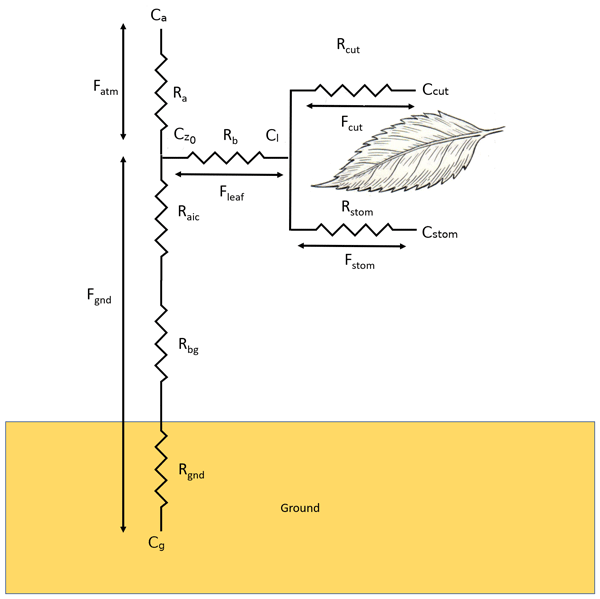
Jesse O. Bash, John T. Walker, Zhiyong Wu, Ian C. Rumsey, Ben Murphy, Christian Hogrefe, Kathleen M. Fahey, Havala O. T. Pye, Matthew R. Jones, K. Wyat Appel, Mark W. Shephard, Najwa I. Alnsour, and Karen E. Cady-Periera
Geosci. Model Dev., 19, 9377–9393, https://doi.org/10.5194/gmd-19-9377-2026, https://doi.org/10.5194/gmd-19-9377-2026, 2026
Short summary
Short summary
We applied a consistent modeling approach for both field and regional scales of multi-pollutants to evaluate the air-surface exchange processes contributing to regional air quality modeling biases when evaluated against observed network and satellite ammonia concentrations. This multi-resolution approach will serve the modeling and measurement community in their future development and generalization of air-surface exchange models utilizing flux, routine network and satellite observations.
Sara L. Farrell, Quazi Z. Rasool, Havala O. T. Pye, Yue Zhang, Ying Li, Yuzhi Chen, Chi-Tsan Wang, Haofei Zhang, Ryan Schmedding, Manabu Shiraiwa, Jaime Green, Sri H. Budisulistiorini, Jose L. Jimenez, Weiwei Hu, Jason D. Surratt, and William Vizuete
Atmos. Chem. Phys., 26, 13557–13579, https://doi.org/10.5194/acp-26-13557-2026, https://doi.org/10.5194/acp-26-13557-2026, 2026
Short summary
Short summary
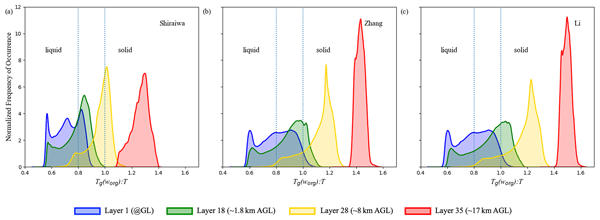
Fine particulate matter (PM2.5) has become increasingly important to regulate and model. In this study, we parameterize non-ideal aerosol mixing and phase state into the Community Multiscale Air Quality (CMAQ) model and analyze its impact on the formation of a globally important source of PM2.5, isoprene epoxydiol (IEPOX)-derived PM2.5. Incorporating these features furthers model bias in IEPOX-derived PM2.5, however, this work provides potential phase state bounds for future PM2.5 modeling work.
Xinlei Lv, Jie Sun, Bishuo He, Fengjun Shen, Gang Zhao, Tong Liu, Qiqi Mo, Linghan Zeng, Ziye Zhang, Yunxiao Li, Batu Alaxi, Weili Lin, and Chunsheng Zhao
EGUsphere, https://doi.org/10.5194/egusphere-2026-4877, https://doi.org/10.5194/egusphere-2026-4877, 2026
This preprint is open for discussion and under review for Atmospheric Chemistry and Physics (ACP).
Short summary
Short summary
We studied how tiny airborne particles change sunlight and, in turn, the breakdown of nitrogen dioxide, an important step in ozone formation. Using optical calculations, a radiation model, and a new sensitivity method, we found that light scattering and absorption, surface reflection, particle coatings, soot absorption, humidity, and particle height all matter. Better measurements of these factors could improve air-quality predictions.

Ruizhe Shen, Song Guo, Hui Wang, Ying Yu, Zichao Wan, Rui Tan, Wenfei Zhu, Zheng Chen, Shiyi Chen, Zhijun Wu, Shuangde Li, Yunfa Chen, and Min Hu
Atmos. Chem. Phys., 26, 12793–12811, https://doi.org/10.5194/acp-26-12793-2026, https://doi.org/10.5194/acp-26-12793-2026, 2026
Short summary
Short summary
Cooking fumes change in the air. Fresh emissions rapidly form tiny particles; within half a day, reactions create medium-sized secondary particles that linger and can be inhaled. The study maps gas-particle partitioning, showing most secondary products reach equilibrium quickly, while some early and large molecules are limited by surface processes. These insights help improve air quality models and strategies to reduce exposure risks from cooking emissions in cities and indoors.
Hua Zhang, Shuxiao Wang, Xi Zhao, Zhijun Wu, Yan Yin, Siyu Chen, Dantong Liu, Jingchuan Chen, Hui Jiang, Jiewen Shen, Da Gao, Dejia Yin, Yicong He, Zeqi Li, Shengyue Li, Zhaoxin Dong, Manish Shrivastava, Jonathan H. Jiang, Muyan Peng, and Bin Zhao
Atmos. Chem. Phys., 26, 12329–12354, https://doi.org/10.5194/acp-26-12329-2026, https://doi.org/10.5194/acp-26-12329-2026, 2026
Short summary
Short summary
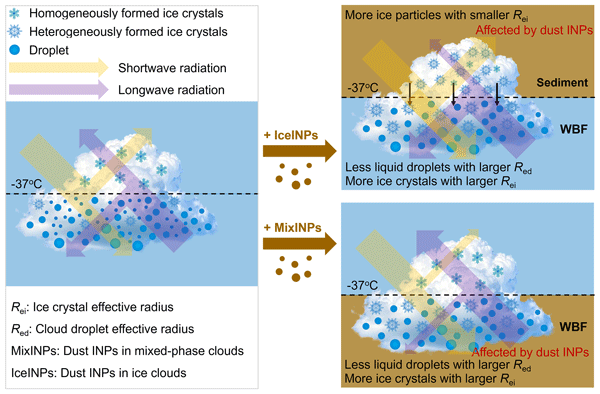
Mineral dust can initiate ice formation in clouds, affecting cloud properties and regional climate. Using an improved model, we examined their contrasting impacts in mixed-phase and ice clouds over East Asia. In mixed-phase clouds, dust promotes liquid-to-ice conversion and reduces cloud reflectivity, causing moderate warming, whereas in ice clouds, it greatly enhances ice formation and leads to stronger warming. This study advances understanding of aerosol–cloud–climate interactions.
Shan Huang, Lina Wu, Yi Kuang, Yuan Liu, Weiwei Hu, Ye Kuang, Wei Li, Qicong Song, Yuwen Peng, Suxia Yang, Mingfu Cai, Duohong Chen, Dingli Yue, Wei Song, Bin Yuan, Xinming Wang, and Min Shao
EGUsphere, https://doi.org/10.5194/egusphere-2026-4552, https://doi.org/10.5194/egusphere-2026-4552, 2026
Short summary
Short summary
This study reports field measurements of particulate organonitrates in a mixed anthropogenic-biogenic subtropical atmosphere, revealing contrasting formation regimes between urban and rural sites. Daytime photochemistry and regional transport dominated urban organonitrates, while nighttime formation from anthropogenic precursors and refractory organic nitrate from biomass burning both contributed to rural organonitrates. Our findings improve understanding of organonitrate formation.
Jiawei Yang, Jingchuan Chen, Jie Chen, Zeyu Feng, Wenxu Fang, Yanting Qiu, Junrui Wang, Ruiqi Man, Taomou Zong, Yuechen Liu, Zhijun Wu, Ning Tang, and Min Hu
Atmos. Chem. Phys., 26, 11771–11784, https://doi.org/10.5194/acp-26-11771-2026, https://doi.org/10.5194/acp-26-11771-2026, 2026
Short summary
Short summary
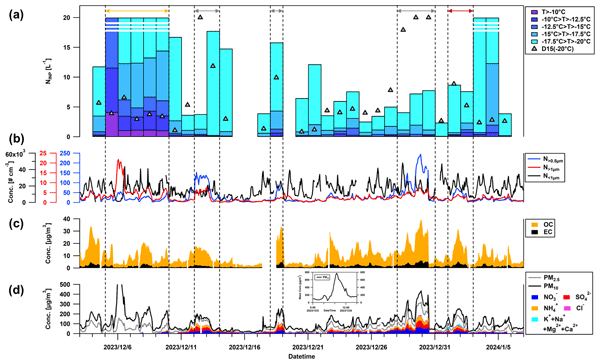
In clouds containing liquid water and ice (about 0 to −38 °C), ice-nucleating particles act as tiny “seeds” that help supercooled water freeze. We studied these particles in winter air in Taiyuan, an industrial city in northern China. The strongest increases occurred during a desert dust intrusion, while haze and pollution showed weak links to fine-particle pollution sources. This suggests urban freezing particles can be strongly affected by transported dust, not pollution intensity alone.
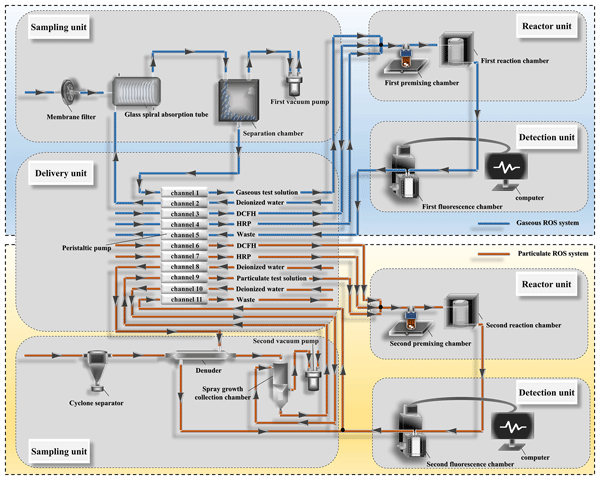
Yihui Wang, Huan Song, Huabin Dong, Shiyi Chen, Linghan Zeng, and Keding Lu
Atmos. Meas. Tech., 19, 4721–4742, https://doi.org/10.5194/amt-19-4721-2026, https://doi.org/10.5194/amt-19-4721-2026, 2026
Short summary
Short summary
We developed an online instrument to measure reactive oxygen species in air and particles at the same time, because these oxidants drive air pollution and can harm health. Tested in Beijing across four seasons, it showed stable performance. Levels were highest in spring and lowest in autumn. Humid autumn haze increased particle mass but not these oxidants, while strong sunlight in spring and summer increased them in both air and particles, showing how pollution type shapes atmospheric oxidation.
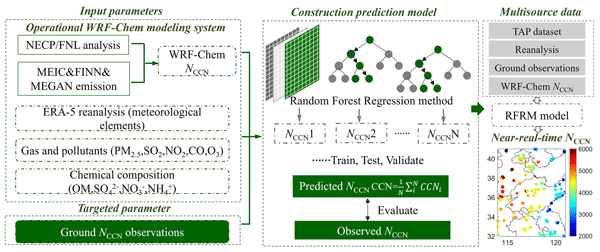
Jingye Ren, Songjian Zou, Honghao Xu, Guiquan Liu, Zhe Wang, Anran Zhang, Chuanfeng Zhao, Min Hu, Dongjie Shang, Lizi Tang, Ru-Jin Huang, Yele Sun, and Fang Zhang
Geosci. Model Dev., 19, 6403–6416, https://doi.org/10.5194/gmd-19-6403-2026, https://doi.org/10.5194/gmd-19-6403-2026, 2026
Short summary
Short summary
In this study, a new framework of cloud condensation nuclei (CCN) prediction in polluted region has been developed and it achieves well prediction of hourly-to-yearly scale across North China Plain. The study reveals the machine learning model can largely reduce the uncertainty in simulating cloud radiative forcing, illustrating the high sensitivity of climate forcing to changes in CCN. This improvement of our new model would be helpful to aerosols climate effect assessment in models.
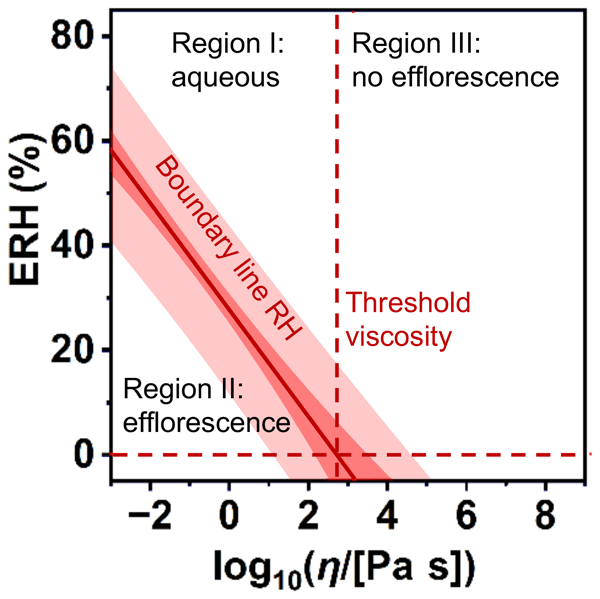
Shanshan Chen, Qishen Huang, Ying Li, Shu-Feng Pang, Pai Liu, and Yun-Hong Zhang
Atmos. Chem. Phys., 26, 9967–9980, https://doi.org/10.5194/acp-26-9967-2026, https://doi.org/10.5194/acp-26-9967-2026, 2026
Short summary
Short summary
Atmospheric aerosol efflorescence strongly influences their growth, optical properties, and chemical reactivity. By combining thermodynamic viscosity modeling with literature-reported laboratory data, we develop a viscosity–humidity framework that defines empirical boundaries separating aqueous, efflorescence, and non-efflorescence regions. This framework provides quantitative constraints on aerosol phase-transition behavior across diverse organic–inorganic aerosol systems.
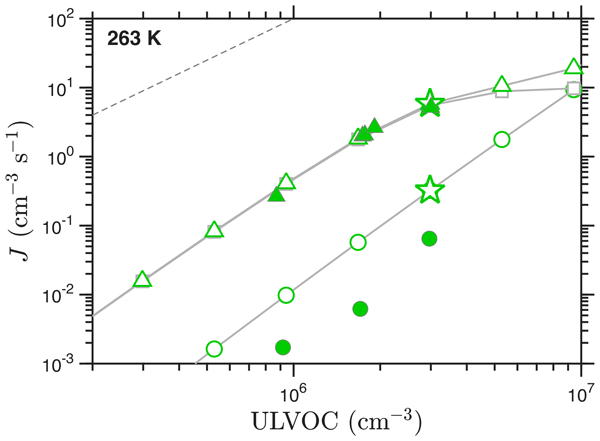
Neil M. Donahue, Lubna Dada, Dominik Stolzenburg, Eva Sommer, Mario Simon, Meredith Schervish, Jenna DeVivo, Alexandra Stinchfield, Natalie Burton, Nirvan Bhattacharyya, Brandon Lopez, Mingyi Wang, Wiebke Scholz, João Almeida, Bin Zhao, Martin Heinritzi, Hamish Gordon, Armin Hansel, Joachim Curtius, Katrianne Lehtipalo, Imad El Haddad, Jasper Kirkby, Richard Flagan, Markku Kulmala, and Douglas Worsnop
Atmos. Chem. Phys., 26, 8311–8339, https://doi.org/10.5194/acp-26-8311-2026, https://doi.org/10.5194/acp-26-8311-2026, 2026
Short summary
Short summary
A new theory has the potential to accurately describe changes to atmospheric particle formation from the pre-industrial to the present and onwards along socioeconomic pathways addressing air pollution and climate. The model places organic nucleation in the context of the Volatility Basis Set and reveals a competition between chemistry, which accelerates as temperature rises, and vapor pressure, which drops as temperature decreases. The model reproduces observations from the CERN (European Organization for Nuclear Research) CLOUD (Cosmics Leaving Outdoor Droplets) chamber.
Yutong Tian, Ting Yang, Zifa Wang, Linghan Zeng, Yining Tan, Weichun Liang, Qingqing Xia, Tong Wang, and Shitian Kou
EGUsphere, https://doi.org/10.5194/egusphere-2026-2017, https://doi.org/10.5194/egusphere-2026-2017, 2026
Preprint archived
Short summary
Short summary
This study introduces a novel algorithm using multiwavelength lidar to classify and quantify tropospheric aerosols at a mountain observatory. Using seven optical parameters, it separates smoke, pollution, pollen, and dust in complex mixtures. Validated across multiple platforms, the method decouples meteorologically driven optical enhancement from actual mass fluctuations, enabling high-precision aerosol typing and mass retrieval in high-altitude environments.
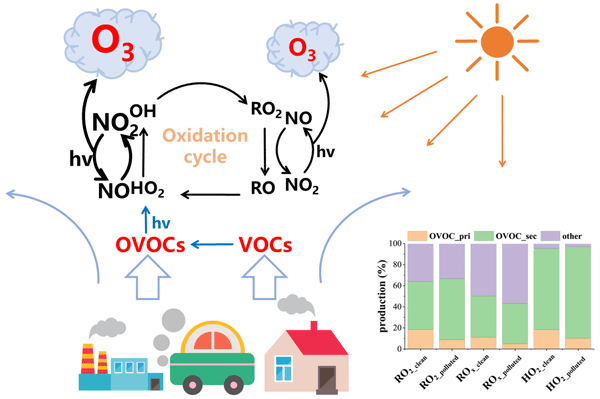
Xun Li, Xuan Li, Rusha Yan, Yaqin Gao, Kangjia Gong, Hongli Wang, Momei Qin, Jianlin Hu, and Jingyi Li
Atmos. Chem. Phys., 26, 4901–4915, https://doi.org/10.5194/acp-26-4901-2026, https://doi.org/10.5194/acp-26-4901-2026, 2026
Short summary
Short summary
An updated emission inventory, incorporating source-specific OVOC (Oxygenated volatile organic compound) profiles derived from measurements and the literature, is applied in an air quality model to improve OVOC simulations in a heavily polluted region. A substantial fraction of key OVOCs originates from anthropogenic sources and enhances hydroperoxyl radical production, thereby contributing to ozone formation. The results highlight the importance of accurately representing OVOC emissions in models to support ozone control strategies.
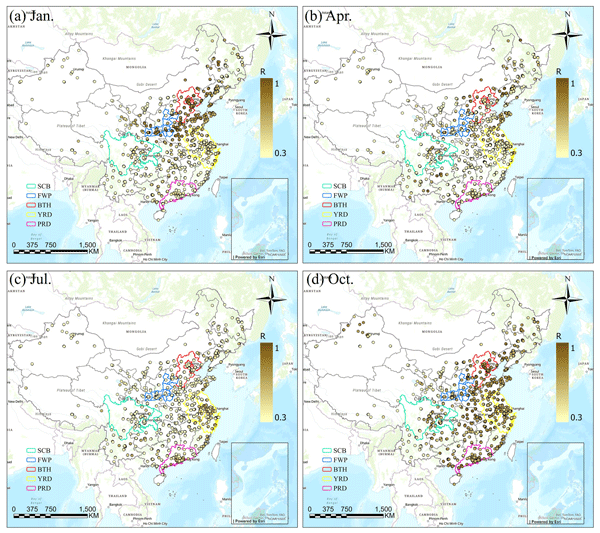
Qingfang Su, Yifei Chen, Yangjun Wang, David C. Wong, Havala O. T. Pye, Ling Huang, Golam Sarwar, Benjamin Murphy, Bryan Place, and Li Li
Geosci. Model Dev., 19, 2531–2550, https://doi.org/10.5194/gmd-19-2531-2026, https://doi.org/10.5194/gmd-19-2531-2026, 2026
Short summary
Short summary
This study evaluated the PM2.5 simulation by the latest Community Regional Atmospheric Chemistry Multiphase Mechanism (CRACMM) mechanism coupled with the Community Multiscale Air Quality (CMAQ) model, covering different seasons and specific regions over China. Modelling results derived by CRACMM are compared with two well-established chemical mechanisms. The research findings provide a solid foundation for the further application of CRACMM in understanding and regulating air pollution globally.
Melissa A. Ehrenfels, Benjamin C. Schulze, Andrew R. Jensen, Afsara Tasnia, Douglas A. Day, Pedro Campuzano-Jost, Anne V. Handschy, Melinda K. Schueneman, Seonsik Yun, Dongwook Kim, Donna Sueper, Havala O. T. Pye, Benjamin N. Murphy, T. Nash Skipper, Kelley C. Barsanti, Joost A. de Gouw, and Jose L. Jimenez
Aerosol Research Discuss., https://doi.org/10.5194/ar-2026-12, https://doi.org/10.5194/ar-2026-12, 2026
Revised manuscript accepted for AR
Short summary
Short summary
Los Angeles, CA suffers from poor air quality, partially due to secondary aerosol formation. The identity and sources of the most important gas phase precursors is a complex and unresolved issue. For the first time, we separated ambient gas-phase species by volatility, then measured their potential to form aerosols. We found that higher-volatility emissions are responsible for 2/3 of the aerosol formation, and lower volatility ones for 1/3. We evaluate two box models against our measurements.
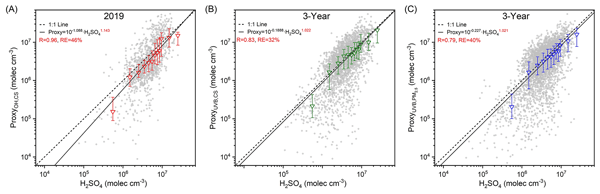
Yishuo Guo, Chao Yan, Chang Li, Chenjuan Deng, Ying Zhang, Ying Zhou, Haotian Zheng, Yueqi Jiang, Xin Chen, Wei Ma, Nina Sarnela, Zhuohui Lin, Chenjie Hua, Xiaolong Fan, Feixue Zheng, Zemin Feng, Zongcheng Wang, Yusheng Zhang, Jingkun Jiang, Bin Zhao, Markku Kulmala, and Yongchun Liu
Atmos. Chem. Phys., 26, 3467–3487, https://doi.org/10.5194/acp-26-3467-2026, https://doi.org/10.5194/acp-26-3467-2026, 2026
Short summary
Short summary
Gaseous sulfuric acid (H2SO4) is a key precursor in atmospheric cluster formation. Measurement challenges hinder its widespread observation. We conducted a three-year continuous measurement of H2SO4 in urban Beijing during 2019–2021, characterize its interannual, seasonal, and diurnal variations, and derives proxies to estimate its concentration. These proxies and parameters therein could be applicable at diverse sites and thus provide H2SO4 concentration covering many regions worldwide.
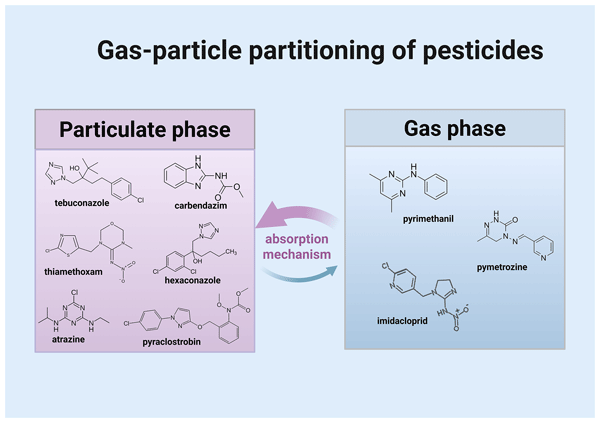
Liping Guo, Shuping Shi, Ying Li, Martin Brüggemann, Mingyu Zhao, Hongyu Mu, Daniel M. Figueiredo, Junxue Wu, and Kai Wang
Atmos. Chem. Phys., 26, 2797–2811, https://doi.org/10.5194/acp-26-2797-2026, https://doi.org/10.5194/acp-26-2797-2026, 2026
Short summary
Short summary
Gas-particle partitioning is critical to govern the environmental fate of atmospheric pesticides, yet it remains poorly studied. Our work investigated atmospheric pesticides in gas and particulate phases in the North China Plain and their gas-particle partitioning mechanism. Results revealed pesticides in particulate phase were dominant. Absorption is the main mechanism of gas-particle partitioning, indicating atmospheric pesticides were absorbed into the interior organic film of particles.
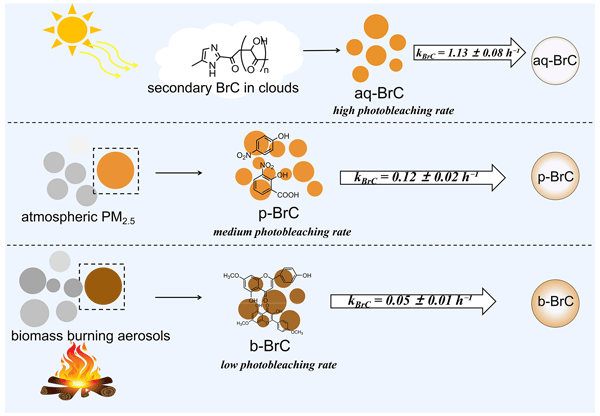
Yanting Qiu, Tao Qiu, Yuechen Liu, Yu Gu, Ruiqi Man, Dapeng Liang, Taomou Zong, Zhijun Wu, and Min Hu
Atmos. Chem. Phys., 26, 2785–2796, https://doi.org/10.5194/acp-26-2785-2026, https://doi.org/10.5194/acp-26-2785-2026, 2026
Short summary
Short summary
Brown Carbon (BrC) is considered as one of the least understood atmospheric warming agents. BrC’s photobleaching has been determined as a key reason to the uncertainty in its global radiative effect, which has been poorly constrained. This study revelas the source-dependent BrC photobleaching rates, and explained this difference from molecular perspective. Consequently, the OH oxidation reactivity of molecular composition of different types of BrC determines their distinct photobleaching rates.
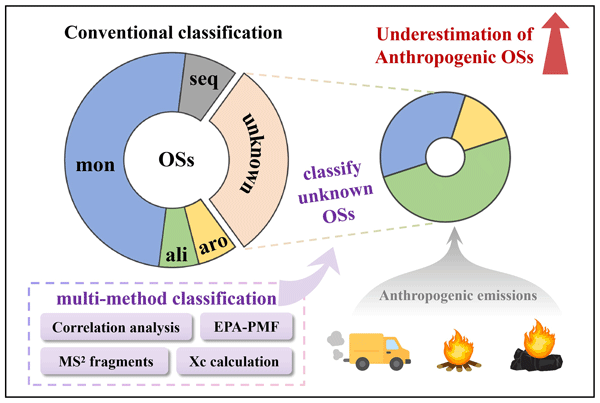
Yanting Qiu, Junrui Wang, Tao Qiu, Jiajie Li, Yanxin Bai, Teng Liu, Ruiqi Man, Taomou Zong, Wenxu Fang, Jiawei Yang, Yu Xie, Zeyu Feng, Chenhui Li, Ying Wei, Kai Bi, Dapeng Liang, Ziqi Gao, Zhijun Wu, Yuchen Wang, and Min Hu
Atmos. Chem. Phys., 26, 2411–2423, https://doi.org/10.5194/acp-26-2411-2026, https://doi.org/10.5194/acp-26-2411-2026, 2026
Short summary
Short summary
This study reveals that anthropogenic organosulfates (OSs), especially Aliphatic OSs in urban areas have been significantly underestimated. We also discovered that humidity, acidity, inorganic sulfate and Ox mass concentrations play key roles in the formation of Aliphatic OSs. These findings improve our understanding of how air pollution forms in urban environments and are crucial for developing effective environmental policies.
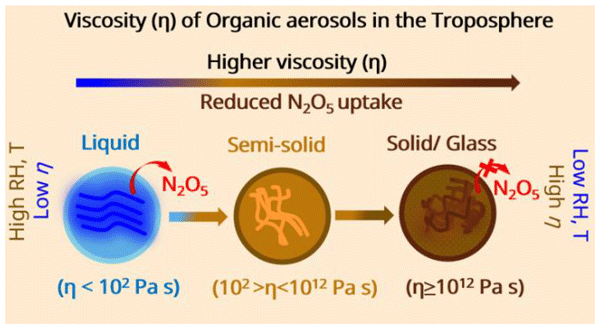
Atta Ullah, Ying Li, and Mijung Song
Atmos. Chem. Phys., 26, 2319–2329, https://doi.org/10.5194/acp-26-2319-2026, https://doi.org/10.5194/acp-26-2319-2026, 2026
Short summary
Short summary
We investigated the temperature- and relative-humidity-dependent viscosity of organic aerosols using sucrose-water droplets as a model. The results show that particles remain liquid near the Earth’s surface but become semi-solid or glassy at higher altitudes. These viscosity changes influence chemical reactions such as nitrogen oxide uptake, improving understanding of air quality and climate processes.

Jie Hu, Jianlong Li, Narcisse Tsona Tchinda, Christian George, Feng Xu, Min Hu, and Lin Du
Atmos. Chem. Phys., 26, 2191–2208, https://doi.org/10.5194/acp-26-2191-2026, https://doi.org/10.5194/acp-26-2191-2026, 2026
Short summary
Short summary
Phytoplankton blooms dynamically enrich dissolved organic carbon (DOC) in sea spray aerosol by 10–30 times, with proteins and saccharides transferring at different bloom stages. The sea-to-air transfer of DOC is driven by the synergy of biological and the interaction between DOC and bubble rupture. This synergistically-driven DOC flux affects aerosol properties and climate, highlighting the ocean–atmosphere link in organic carbon cycling.
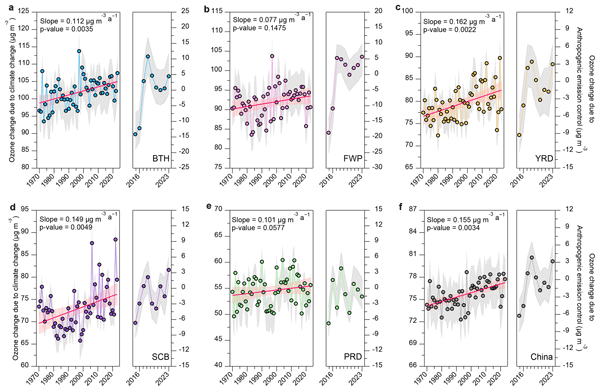
Jie Fang, Yunjiang Zhang, Didier Hauglustaine, Bo Zheng, Ming Wang, Jingyi Li, Yong Sun, Haiwei Li, Junfeng Wang, Yun Wu, Bin Yuan, Mindong Chen, and Xinlei Ge
Atmos. Chem. Phys., 26, 851–867, https://doi.org/10.5194/acp-26-851-2026, https://doi.org/10.5194/acp-26-851-2026, 2026
Short summary
Short summary
Surface ozone pollution is a pressing global challenge driven by human activities and a warming climate. Using nationwide observations (2013–2023) across China together with satellite data, we developed a new machine learning approach to decouple the impacts of emission controls and weather changes. Our results show that while emission reductions improved ozone in some regions, climate change is increasingly offsetting these gains, underscoring the need for joint air quality and climate actions.
Mingfu Cai, Bin Yuan, Weiwei Hu, Ye Chenshuo, Shan Huang, Suxia Yang, Wei Chen, Yuwen Peng, Zhaoxiong Deng, Jun Zhao, Duohong Chen, Jiaren Sun, and Min Shao
Atmos. Chem. Phys., 26, 769–788, https://doi.org/10.5194/acp-26-769-2026, https://doi.org/10.5194/acp-26-769-2026, 2026
Short summary
Short summary
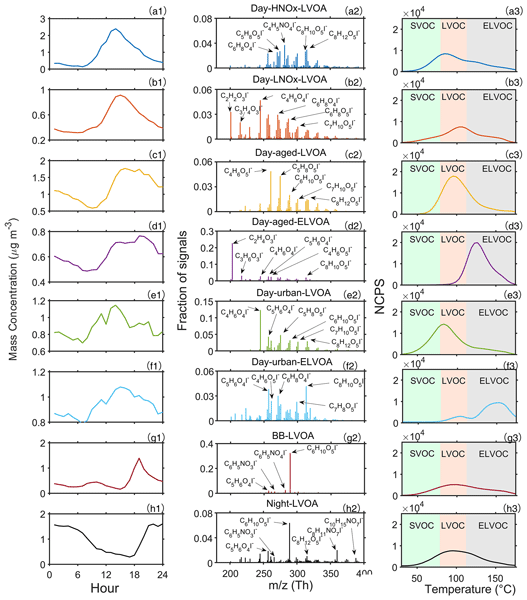
This study investigates how the formation and aging processes of secondary organic aerosol (SOA) influence the evolution of SOA volatility in downwind regions. Our results reveal that elevated NOₓ levels enhanced the daytime SOA volatility by modifying gas-particle partitioning, particularly through suppressing the production of low-volatility organic vapors. In contrast, photochemical aging was associated with reduced SOA volatility.
Ruiqi Man, Yishu Zhu, Zhijun Wu, Peter Aaron Alpert, Bingbing Wang, Jing Dou, Jie Chen, Yan Zheng, Yanli Ge, Qi Chen, Shiyi Chen, Xiangrui Kong, Markus Ammann, and Min Hu
Atmos. Chem. Phys., 26, 349–363, https://doi.org/10.5194/acp-26-349-2026, https://doi.org/10.5194/acp-26-349-2026, 2026
Short summary
Short summary
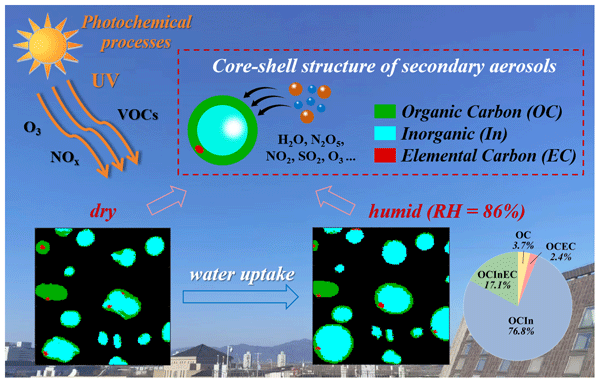
The particle chemical morphology is important to atmospheric multiphase and heterogeneous chemistry. This work directly observed the core-shell structure and water uptake behavior of individual submicron aerosol particles at an urban site and elucidated the potential impact on particle reactive uptake and heterogeneous reactions.
Wenhui Zhao, Weiwei Hu, Zhaoce Liu, Tianle Pan, Tingting Feng, Jun Wang, Yiyu Cai, Lin Liang, Shan Huang, Bin Yuan, Nan Ma, Min Shao, Guohua Zhang, Xinhui Bi, Xinming Wang, and Pengfei Yu
Atmos. Chem. Phys., 26, 135–154, https://doi.org/10.5194/acp-26-135-2026, https://doi.org/10.5194/acp-26-135-2026, 2026
Short summary
Short summary
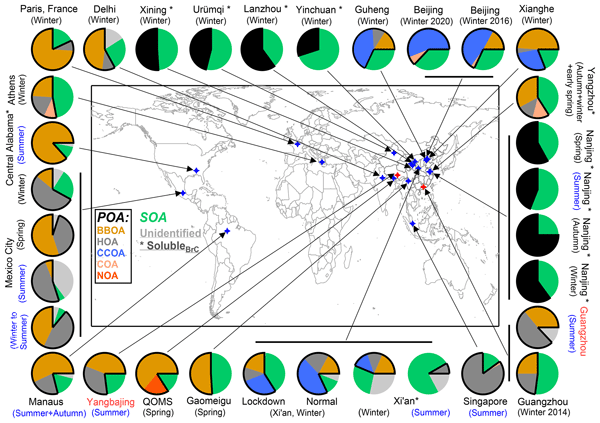
Our study examined brown carbon – organic aerosols that absorb light – at the remote Tibet and urban Guangzhou. Field data showed Tibet’s brown carbon absorbs about 10 times less than Guangzhou’s, due to cleaner air. Yet, over 75 % of its light absorption still comes from primary emission, which causes over 98 % of its climate-warming effect in both places. This study advances understanding of brown carbon dynamics and its sources in diverse environments for global climate effects.
Huilin Hu, Yunyi Liang, Ting Li, Yongliang She, Yao Wang, Ting Yang, Min Zhou, Ziyue Li, Chenxi Li, Huayun Xiao, Jianlin Hu, Jingyi Li, and Yue Zhao
Atmos. Chem. Phys., 25, 17889–17906, https://doi.org/10.5194/acp-25-17889-2025, https://doi.org/10.5194/acp-25-17889-2025, 2025
Short summary
Short summary
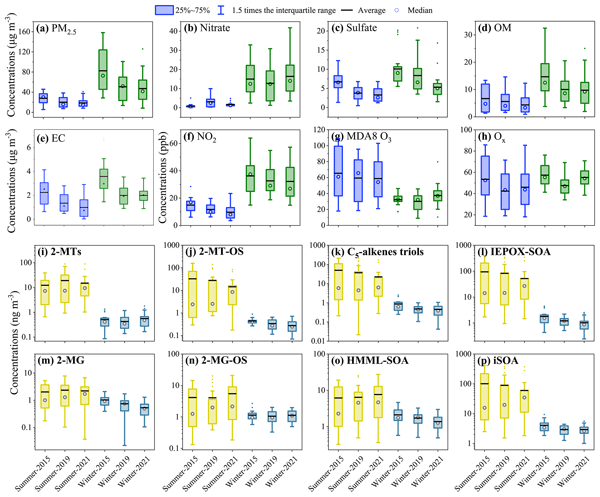
Isoprene-derived secondary organic aerosol (iSOA) is a major type of biogenic SOA in the atmosphere, yet its response to long-term anthropogenic emission reductions remains poorly understood. Here, combing field observations and model simulations, we characterized the abundance, trend, and underlying drivers of iSOA in Shanghai, China during 2015–2021, which will advance our understandings of the formation and impacts of biogenic SOA under rapidly evolving emission scenarios in urban regions.
Tiantian Zhang, Peng Zuo, Yi Chen, Tong Liu, Linghan Zeng, Weili Lin, and Chunxiang Ye
Atmos. Chem. Phys., 25, 16331–16346, https://doi.org/10.5194/acp-25-16331-2025, https://doi.org/10.5194/acp-25-16331-2025, 2025
Short summary
Short summary
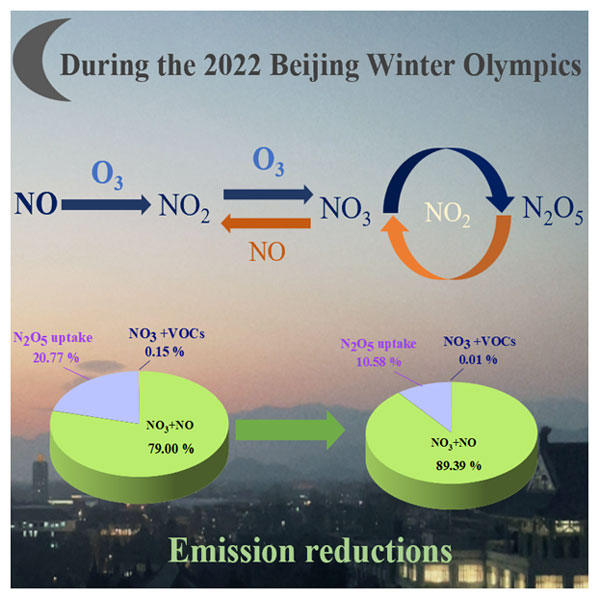
During the 2022 Beijing Winter Olympics, we conducted field observations of N2O5. By comparing pre- and post-Olympic pollutant levels, we evaluated the impact of emission reductions on nocturnal chemistry. The results showed that the reactivity of nitric oxide (NO) and volatile organic compounds (VOCs) with NO3 decreased, and that the heterogeneous uptake of N2O5 played a critical role in nocturnal nitrate formation.
Jianjiong Mao, Lei Jiang, Zhicheng Feng, Jingyi Li, Yanhong Zhu, Momei Qin, Song Guo, Min Hu, and Jianlin Hu
Geosci. Model Dev., 18, 8423–8438, https://doi.org/10.5194/gmd-18-8423-2025, https://doi.org/10.5194/gmd-18-8423-2025, 2025
Short summary
Short summary
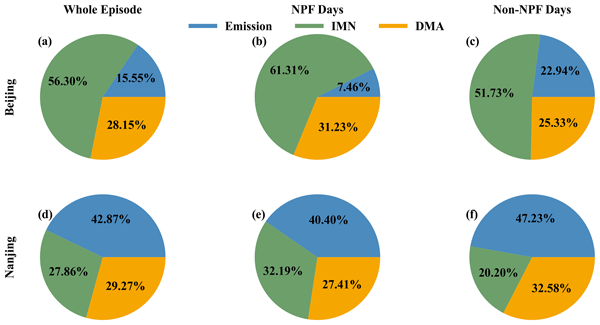
Tiny air particles impact air quality and climate change. Our study improved their prediction in eastern cities by modeling two key formation processes: ions + sulfuric acid + ammonia (daytime) and sulfuric acid + dimethylamine (morning/evening). This improved model increases predictions by 36–84 % in Beijing and Nanjing. These advancements enable better demonstrate how these chemical processes significantly influence China eastern cities' particulate pollution.
Shubin Li, Yujue Wang, Yiwen Zhang, Yizhe Yi, Yuchen Wang, Yuqi Guo, Chao Yu, Yue Jiang, Jinhui Shi, Chao Zhang, Jialei Zhu, Wei Hu, Jianzhen Yu, Xiaohong Yao, Huiwang Gao, and Min Hu
Atmos. Chem. Phys., 25, 12585–12598, https://doi.org/10.5194/acp-25-12585-2025, https://doi.org/10.5194/acp-25-12585-2025, 2025
Short summary
Short summary
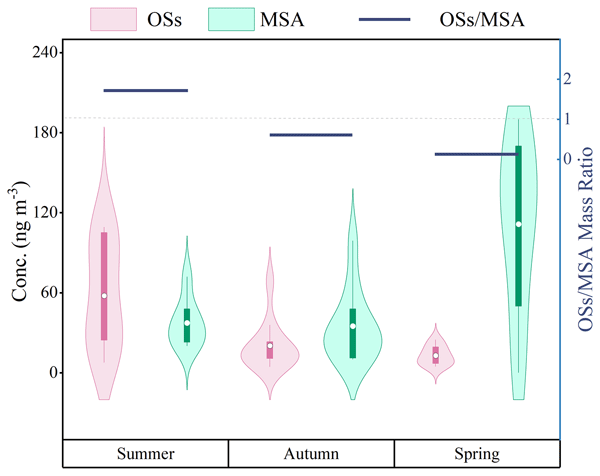
Organosulfates (OSs) are an unrecognized and potentially important component in marine organic aerosols. In this study, we quantified and characterized the OSs over East Asian marginal seas. The chemical nature and spatiotemporal distribution of OSs were modified by the joint influence of marine emissions and transported terrestrial pollutants. The results highlight the vital roles of OSs in shaping organic aerosol formation and sulfur cycle during summer in the marine boundary layer.
Zeqi Li, Bin Zhao, Shengyue Li, Zhezhe Shi, Dejia Yin, Qingru Wu, Fenfen Zhang, Xiao Yun, Guanghan Huang, Yun Zhu, and Shuxiao Wang
Earth Syst. Sci. Data, 17, 5113–5135, https://doi.org/10.5194/essd-17-5113-2025, https://doi.org/10.5194/essd-17-5113-2025, 2025
Short summary
Short summary
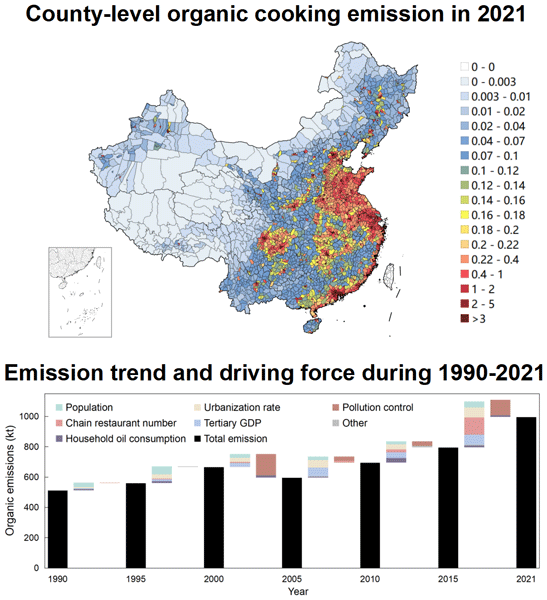
This study uses an ensemble machine learning model to predict long-term, high-resolution cooking activity data, establishing China’s first county-level cooking emission inventory spanning 1990–2021. It covers key pollutants such as polycyclic aromatic hydrocarbons. It reveals emissions’ long-term spatiotemporal trends and driving factors, such as population migration and economic growth, offering efficient control strategies. This dataset is crucial for air pollution and health impact studies.
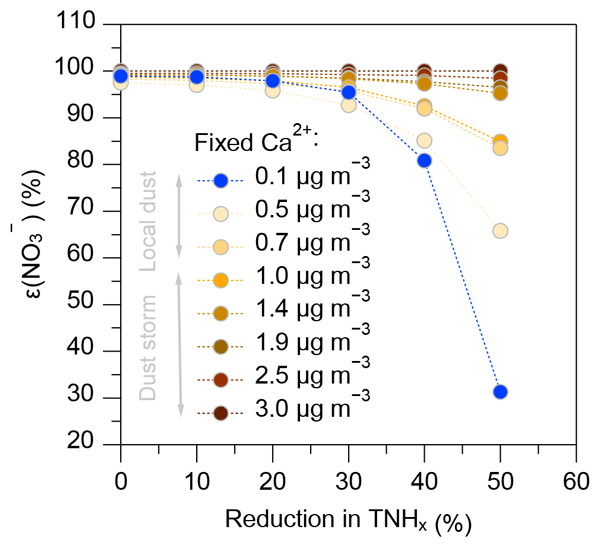
Hanrui Lang, Yunjiang Zhang, Sheng Zhong, Yongcai Rao, Minfeng Zhou, Jian Qiu, Jingyi Li, Diwen Liu, Florian Couvidat, Olivier Favez, Didier Hauglustaine, and Xinlei Ge
Atmos. Chem. Phys., 25, 10587–10601, https://doi.org/10.5194/acp-25-10587-2025, https://doi.org/10.5194/acp-25-10587-2025, 2025
Short summary
Short summary
This study investigates how dust pollution influences particulate nitrate formation. We found that dust pollution could reduce the effectiveness of ammonia emission controls by altering aerosol chemistry. Using field observations and modeling, we showed that dust particles affect nitrate distribution between gas and particle phases. Our findings highlight the need for pollution control strategies that consider both human emissions and dust sources for better urban air quality management.
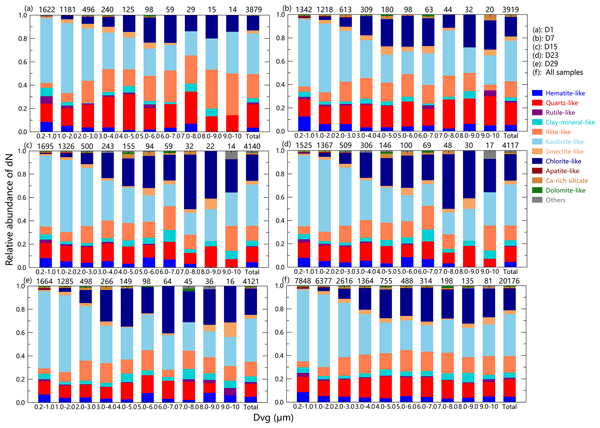
Tenglong Shi, Jiayao Wang, Daizhou Zhang, Jiecan Cui, Zihang Wang, Yue Zhou, Wei Pu, Yang Bai, Zhigang Han, Meng Liu, Yanbiao Liu, Hongbin Xie, Minghui Yang, Ying Li, Meng Gao, and Xin Wang
The Cryosphere, 19, 2821–2835, https://doi.org/10.5194/tc-19-2821-2025, https://doi.org/10.5194/tc-19-2821-2025, 2025
Short summary
Short summary
This study examines the properties of dust in snow in Changchun, China, using advanced technology to analyze its size, shape, and light absorption. We found that dust composition affects how much heat is absorbed by snow, with certain minerals, such as hematite, making snowmelt faster. Our research highlights the importance of creating clear standards for classifying dust, which could improve climate models and field observations. This work helps better understand dust's role in climate change.
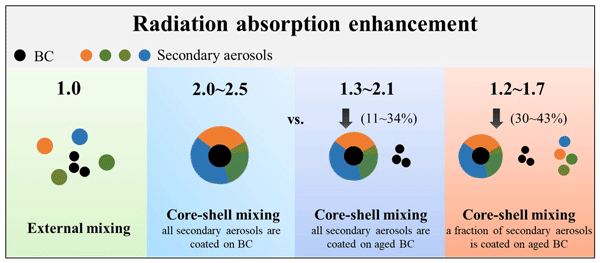
Huiyun Du, Jie Li, Xueshun Chen, Gabriele Curci, Fangqun Yu, Yele Sun, Xu Dao, Song Guo, Zhe Wang, Wenyi Yang, Lianfang Wei, and Zifa Wang
Atmos. Chem. Phys., 25, 5665–5681, https://doi.org/10.5194/acp-25-5665-2025, https://doi.org/10.5194/acp-25-5665-2025, 2025
Short summary
Short summary
Inadequate consideration of mixing states and coatings on black carbon (BC) hinders aerosol radiation forcing quantification. Core–shell mixing aligns well with observations, but partial internal mixing is a more realistic representation. We used a microphysics module to determine the fraction of embedded BC and coating aerosols, constraining the mixing state. This reduced absorption enhancement by 30 %–43 % in northern China, offering insights into BC's radiative effects.
Jingye Ren, Songjian Zou, Honghao Xu, Guiquan Liu, Zhe Wang, Anran Zhang, Chuanfeng Zhao, Min Hu, Dongjie Shang, Lizi Tang, Ru-Jin Huang, Yele Sun, and Fang Zhang
EGUsphere, https://doi.org/10.5194/egusphere-2025-1483, https://doi.org/10.5194/egusphere-2025-1483, 2025
Preprint archived
Short summary
Short summary
In this study, a new framework of cloud condensation nuclei (CCN) prediction in polluted region has been developed and it achieves well prediction of hourly-to-yearly scale across North China Plain. The study reveals a significant long-term decreasing trend of CCN concentration at typical supersaturations due to a rapid reduction in aerosol concentrations from 2014 to 2018. This improvement of our new model would be helpful to aerosols climate effect assessment in models.
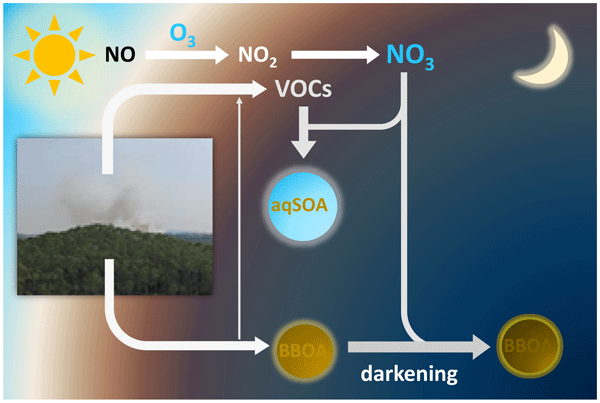
Ye Kuang, Biao Luo, Shan Huang, Junwen Liu, Weiwei Hu, Yuwen Peng, Duohong Chen, Dingli Yue, Wanyun Xu, Bin Yuan, and Min Shao
Atmos. Chem. Phys., 25, 3737–3752, https://doi.org/10.5194/acp-25-3737-2025, https://doi.org/10.5194/acp-25-3737-2025, 2025
Short summary
Short summary
This research reveals the potential importance of nighttime NO3 radical chemistry and aerosol water in the rapid formation of secondary brown carbon from diluted biomass burning emissions. The findings enhance our understanding of nighttime biomass burning evolution and its implications for climate and regional air quality, especially regarding interactions with background aerosol water and water-rich fogs and clouds.
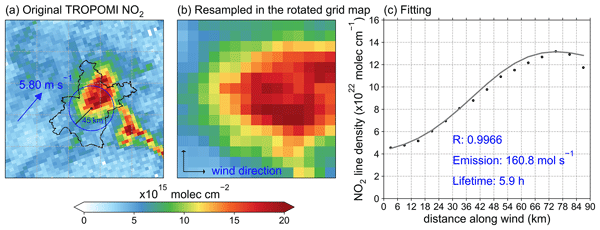
Qianqian Zhang, K. Folkert Boersma, Chiel van der Laan, Alba Mols, Bin Zhao, Shengyue Li, and Yuepeng Pan
Atmos. Chem. Phys., 25, 3313–3326, https://doi.org/10.5194/acp-25-3313-2025, https://doi.org/10.5194/acp-25-3313-2025, 2025
Short summary
Short summary
Accurate NOx emission estimates are required to better understand air pollution. This study investigates and demonstrates the ability of the superposition column model in combination with TROPOMI tropospheric NO2 column data to estimate city-scale NOx emissions and lifetimes and their variabilities. The results of this work nevertheless confirm the strength of the superposition column model in estimating urban NOx emissions with reasonable accuracy.
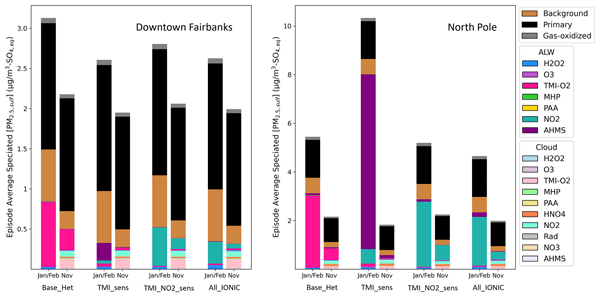
Sara L. Farrell, Havala O. T. Pye, Robert Gilliam, George Pouliot, Deanna Huff, Golam Sarwar, William Vizuete, Nicole Briggs, Fengkui Duan, Tao Ma, Shuping Zhang, and Kathleen Fahey
Atmos. Chem. Phys., 25, 3287–3312, https://doi.org/10.5194/acp-25-3287-2025, https://doi.org/10.5194/acp-25-3287-2025, 2025
Short summary
Short summary
In this work we implement heterogeneous sulfur chemistry into the Community Multiscale Air Quality (CMAQ) model. This new chemistry accounts for the formation of sulfate via aqueous oxidation of SO2 in aerosol liquid water and the formation of hydroxymethanesulfonate (HMS) – often confused by measurement techniques as sulfate. Model performance in predicting sulfur PM2.5 in Fairbanks, Alaska, and other places that experience dark and cold winters is improved.
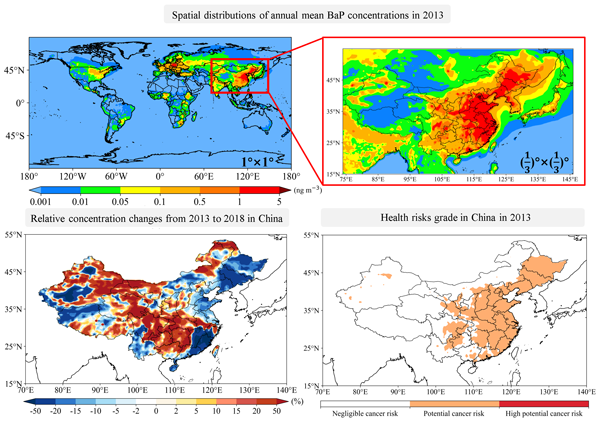
Zichen Wu, Xueshun Chen, Zifa Wang, Huansheng Chen, Zhe Wang, Qing Mu, Lin Wu, Wending Wang, Xiao Tang, Jie Li, Ying Li, Qizhong Wu, Yang Wang, Zhiyin Zou, and Zijian Jiang
Geosci. Model Dev., 17, 8885–8907, https://doi.org/10.5194/gmd-17-8885-2024, https://doi.org/10.5194/gmd-17-8885-2024, 2024
Short summary
Short summary
We developed a model to simulate polycyclic aromatic hydrocarbons (PAHs) from global to regional scales. The model can reproduce PAH distribution well. The concentration of BaP (indicator species for PAHs) could exceed the target values of 1 ng m-3 over some areas (e.g., in central Europe, India, and eastern China). The change in BaP is lower than that in PM2.5 from 2013 to 2018. China still faces significant potential health risks posed by BaP although the Action Plan has been implemented.
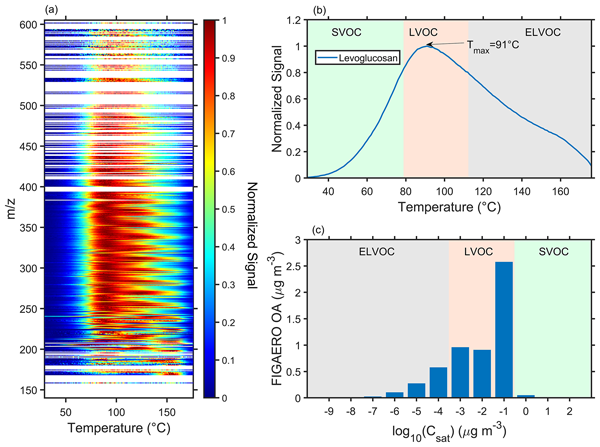
Mingfu Cai, Chenshuo Ye, Bin Yuan, Shan Huang, E Zheng, Suxia Yang, Zelong Wang, Yi Lin, Tiange Li, Weiwei Hu, Wei Chen, Qicong Song, Wei Li, Yuwen Peng, Baoling Liang, Qibin Sun, Jun Zhao, Duohong Chen, Jiaren Sun, Zhiyong Yang, and Min Shao
Atmos. Chem. Phys., 24, 13065–13079, https://doi.org/10.5194/acp-24-13065-2024, https://doi.org/10.5194/acp-24-13065-2024, 2024
Short summary
Short summary
This study investigated the daytime secondary organic aerosol (SOA) formation in urban plumes. We observed a significant daytime SOA formation through gas–particle partitioning when the site was affected by urban plumes. A box model simulation indicated that urban pollutants (nitrogen oxide and volatile organic compounds) could enhance the oxidizing capacity, while the elevated volatile organic compounds were mainly responsible for promoting daytime SOA formation.
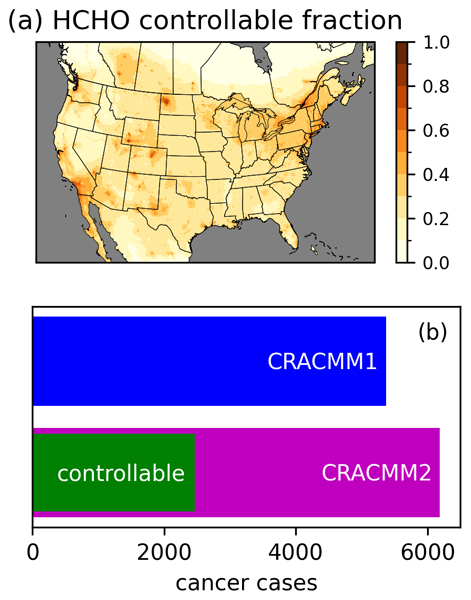
T. Nash Skipper, Emma L. D'Ambro, Forwood C. Wiser, V. Faye McNeill, Rebecca H. Schwantes, Barron H. Henderson, Ivan R. Piletic, Colleen B. Baublitz, Jesse O. Bash, Andrew R. Whitehill, Lukas C. Valin, Asher P. Mouat, Jennifer Kaiser, Glenn M. Wolfe, Jason M. St. Clair, Thomas F. Hanisco, Alan Fried, Bryan K. Place, and Havala O.T. Pye
Atmos. Chem. Phys., 24, 12903–12924, https://doi.org/10.5194/acp-24-12903-2024, https://doi.org/10.5194/acp-24-12903-2024, 2024
Short summary
Short summary
We develop the Community Regional Atmospheric Chemistry Multiphase Mechanism (CRACMM) version 2 to improve predictions of formaldehyde in ambient air compared to satellite-, aircraft-, and ground-based observations. With the updated chemistry, we estimate the cancer risk from inhalation exposure to ambient formaldehyde across the contiguous USA and predict that 40 % of this risk is controllable through reductions in anthropogenic emissions of nitrogen oxides and reactive organic carbon.
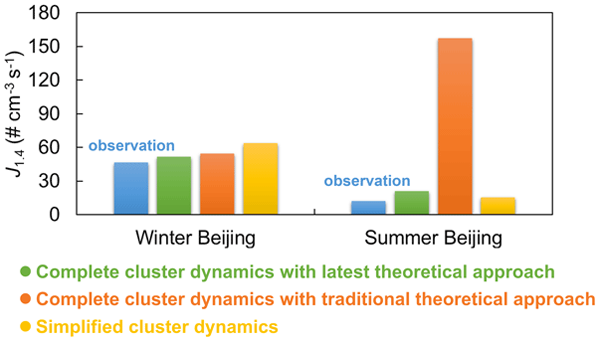
Jiewen Shen, Bin Zhao, Shuxiao Wang, An Ning, Yuyang Li, Runlong Cai, Da Gao, Biwu Chu, Yang Gao, Manish Shrivastava, Jingkun Jiang, Xiuhui Zhang, and Hong He
Atmos. Chem. Phys., 24, 10261–10278, https://doi.org/10.5194/acp-24-10261-2024, https://doi.org/10.5194/acp-24-10261-2024, 2024
Short summary
Short summary
We extensively compare various cluster-dynamics-based parameterizations for sulfuric acid–dimethylamine nucleation and identify a newly developed parameterization derived from Atmospheric Cluster Dynamic Code (ACDC) simulations as being the most reliable one. This study offers a valuable reference for developing parameterizations of other nucleation systems and is meaningful for the accurate quantification of the environmental and climate impacts of new particle formation.
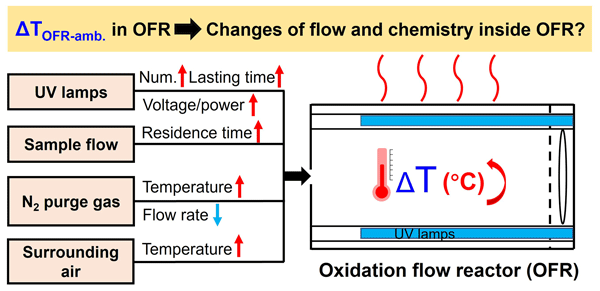
Tianle Pan, Andrew T. Lambe, Weiwei Hu, Yicong He, Minghao Hu, Huaishan Zhou, Xinming Wang, Qingqing Hu, Hui Chen, Yue Zhao, Yuanlong Huang, Doug R. Worsnop, Zhe Peng, Melissa A. Morris, Douglas A. Day, Pedro Campuzano-Jost, Jose-Luis Jimenez, and Shantanu H. Jathar
Atmos. Meas. Tech., 17, 4915–4939, https://doi.org/10.5194/amt-17-4915-2024, https://doi.org/10.5194/amt-17-4915-2024, 2024
Short summary
Short summary
This study systematically characterizes the temperature enhancement in the lamp-enclosed oxidation flow reactor (OFR). The enhancement varied multiple dimensional factors, emphasizing the complexity of temperature inside of OFR. The effects of temperature on the flow field and gas- or particle-phase reaction inside OFR were also evaluated with experiments and model simulations. Finally, multiple mitigation strategies were demonstrated to minimize this temperature increase.
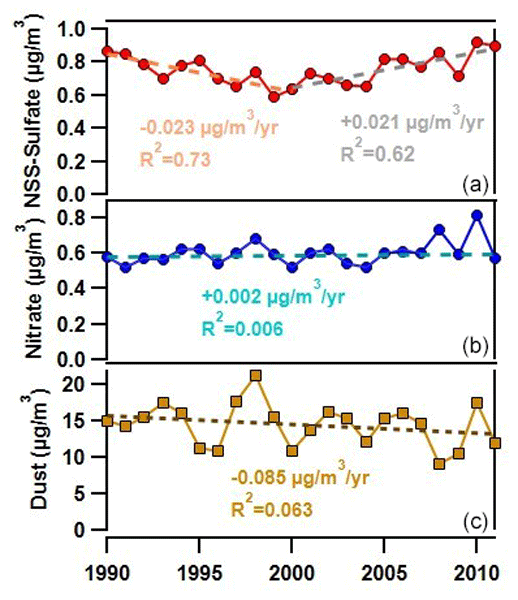
Cassandra J. Gaston, Joseph M. Prospero, Kristen Foley, Havala O. T. Pye, Lillian Custals, Edmund Blades, Peter Sealy, and James A. Christie
Atmos. Chem. Phys., 24, 8049–8066, https://doi.org/10.5194/acp-24-8049-2024, https://doi.org/10.5194/acp-24-8049-2024, 2024
Short summary
Short summary
To understand how changing emissions have impacted aerosols in remote regions, we measured nitrate and sulfate in Barbados and compared them to model predictions from EPA’s Air QUAlity TimE Series (EQUATES). Nitrate was stable, except for spikes in 2008 and 2010 due to transported smoke. Sulfate decreased in the 1990s due to reductions in sulfur dioxide (SO2) in the US and Europe; then it increased in the 2000s, likely due to anthropogenic emissions from Africa.
Fei Ye, Jingyi Li, Yaqin Gao, Hongli Wang, Jingyu An, Cheng Huang, Song Guo, Keding Lu, Kangjia Gong, Haowen Zhang, Momei Qin, and Jianlin Hu
Atmos. Chem. Phys., 24, 7467–7479, https://doi.org/10.5194/acp-24-7467-2024, https://doi.org/10.5194/acp-24-7467-2024, 2024
Short summary
Short summary
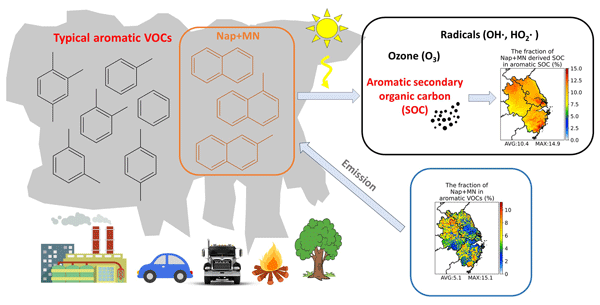
Naphthalene (Nap) and methylnaphthalene (MN) are key precursors of secondary organic aerosol (SOA), yet their sources and sinks are often inadequately represented in air quality models. In this study, we incorporated detailed emissions, gas-phase chemistry, and SOA parameterization of Nap and MN into CMAQ to address this issue. The findings revealed remarkably high SOA formation potentials for these compounds despite their low emissions in the Yangtze River Delta region during summer.
Qindan Zhu, Rebecca H. Schwantes, Matthew Coggon, Colin Harkins, Jordan Schnell, Jian He, Havala O. T. Pye, Meng Li, Barry Baker, Zachary Moon, Ravan Ahmadov, Eva Y. Pfannerstill, Bryan Place, Paul Wooldridge, Benjamin C. Schulze, Caleb Arata, Anthony Bucholtz, John H. Seinfeld, Carsten Warneke, Chelsea E. Stockwell, Lu Xu, Kristen Zuraski, Michael A. Robinson, J. Andrew Neuman, Patrick R. Veres, Jeff Peischl, Steven S. Brown, Allen H. Goldstein, Ronald C. Cohen, and Brian C. McDonald
Atmos. Chem. Phys., 24, 5265–5286, https://doi.org/10.5194/acp-24-5265-2024, https://doi.org/10.5194/acp-24-5265-2024, 2024
Short summary
Short summary
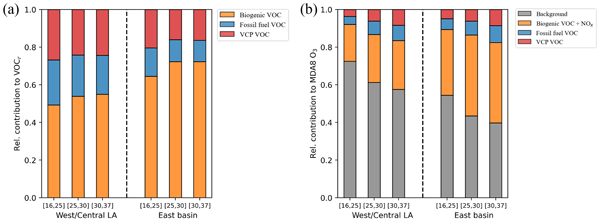
Volatile organic compounds (VOCs) fuel the production of air pollutants like ozone and particulate matter. The representation of VOC chemistry remains challenging due to its complexity in speciation and reactions. Here, we develop a chemical mechanism, RACM2B-VCP, that better represents VOC chemistry in urban areas such as Los Angeles. We also discuss the contribution of VOCs emitted from volatile chemical products and other anthropogenic sources to total VOC reactivity and O3.
Zhiqiang Zhang, Ying Li, Haiyan Ran, Junling An, Yu Qu, Wei Zhou, Weiqi Xu, Weiwei Hu, Hongbin Xie, Zifa Wang, Yele Sun, and Manabu Shiraiwa
Atmos. Chem. Phys., 24, 4809–4826, https://doi.org/10.5194/acp-24-4809-2024, https://doi.org/10.5194/acp-24-4809-2024, 2024
Short summary
Short summary
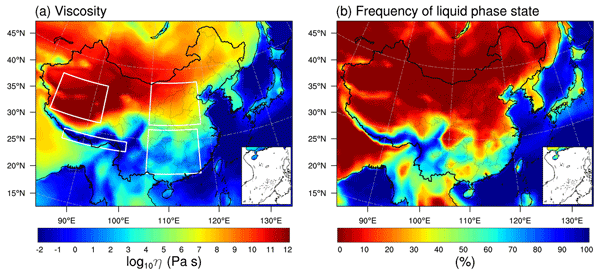
Secondary organic aerosols (SOAs) can exist in liquid, semi-solid, or amorphous solid states, which are rarely accounted for in current chemical transport models. We predict the phase state of SOA particles over China and find that in northwestern China SOA particles are mostly highly viscous or glassy solid. Our results indicate that the particle phase state should be considered in SOA formation in chemical transport models for more accurate prediction of SOA mass concentrations.
Yu-Kai Tong, Zhijun Wu, Min Hu, and Anpei Ye
Atmos. Chem. Phys., 24, 2937–2950, https://doi.org/10.5194/acp-24-2937-2024, https://doi.org/10.5194/acp-24-2937-2024, 2024
Short summary
Short summary
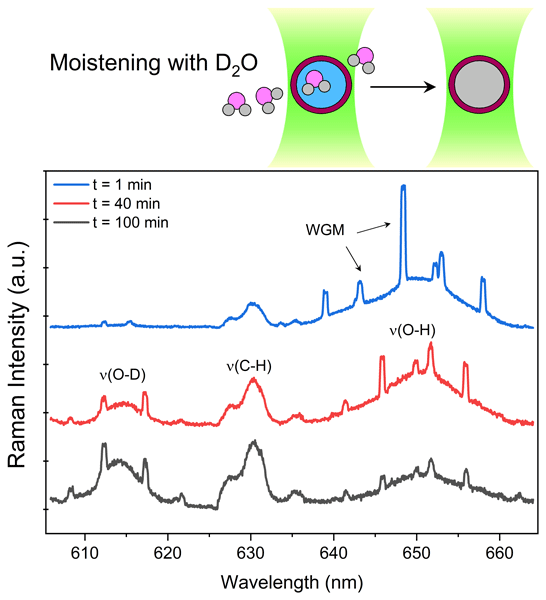
The interplay between aerosols and moisture is one of the most crucial atmospheric processes. However, to date, literature results on the influence of phase separation on water diffusion in aerosols are divergent. This work directly unveiled the water diffusion process in single suspended phase-separated microdroplets and quantitatively analyzed the diffusion rate and extent. The results show that diffusion limitations and certain molecule clusters existed in the phase-separated aerosols.
Xiangxinyue Meng, Zhijun Wu, Jingchuan Chen, Yanting Qiu, Taomou Zong, Mijung Song, Jiyi Lee, and Min Hu
Atmos. Chem. Phys., 24, 2399–2414, https://doi.org/10.5194/acp-24-2399-2024, https://doi.org/10.5194/acp-24-2399-2024, 2024
Short summary
Short summary
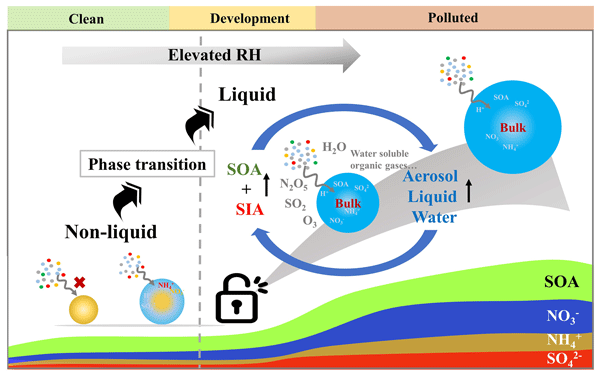
Our study revealed that particles predominantly exist in a semi-solid or solid state during clean winter days with RH below 30 %. However, a non-liquid to a liquid phase transition occurred when the aerosol liquid water (ALW) mass fraction surpassed 15 % (dry mass) at transition RH thresholds ranging from 40 % to 60 %. We also provide insights into the increasingly important roles of particle phase state variation and ALW in secondary particulate growth during haze formation in Beijing, China.
Elyse A. Pennington, Yuan Wang, Benjamin C. Schulze, Karl M. Seltzer, Jiani Yang, Bin Zhao, Zhe Jiang, Hongru Shi, Melissa Venecek, Daniel Chau, Benjamin N. Murphy, Christopher M. Kenseth, Ryan X. Ward, Havala O. T. Pye, and John H. Seinfeld
Atmos. Chem. Phys., 24, 2345–2363, https://doi.org/10.5194/acp-24-2345-2024, https://doi.org/10.5194/acp-24-2345-2024, 2024
Short summary
Short summary
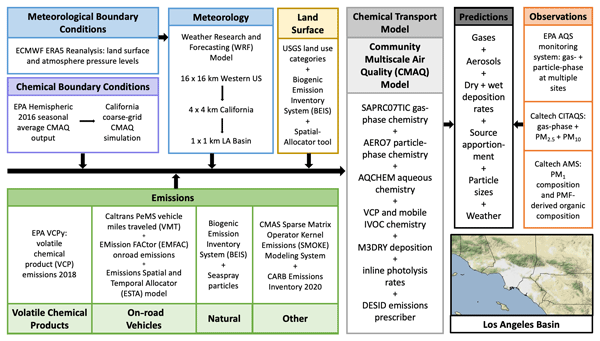
To assess the air quality in Los Angeles (LA), we improved the CMAQ model by using dynamic traffic emissions and new secondary organic aerosol schemes to represent volatile chemical products. Source apportionment demonstrates that the urban areas of the LA Basin and vicinity are NOx-saturated, with the largest sensitivity of O3 to changes in volatile organic compounds in the urban core. The improvement and remaining issues shed light on the future direction of the model development.
Yongliang She, Jingyi Li, Xiaopu Lyu, Hai Guo, Momei Qin, Xiaodong Xie, Kangjia Gong, Fei Ye, Jianjiong Mao, Lin Huang, and Jianlin Hu
Atmos. Chem. Phys., 24, 219–233, https://doi.org/10.5194/acp-24-219-2024, https://doi.org/10.5194/acp-24-219-2024, 2024
Short summary
Short summary
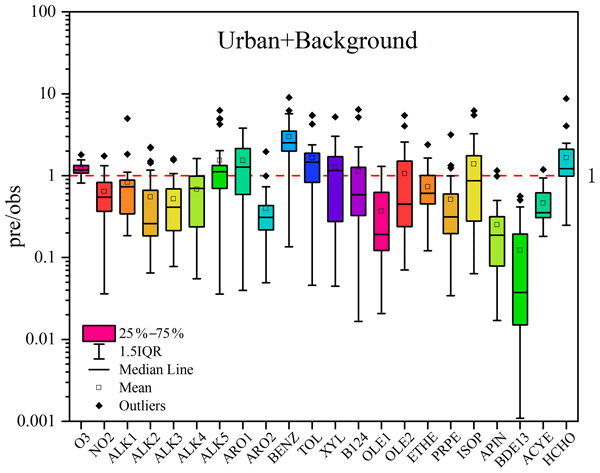
In this study, we use multi-site volatile organic compound (VOC) measurements to evaluate the CMAQ-model-predicted VOCs and assess the impacts of VOC bias on O3 simulation. Our results demonstrate that current modeling setups and emission inventories are likely to underpredict VOC concentrations, and this underprediction of VOCs contributes to lower O3 predictions in China.
Can Ye, Keding Lu, Xuefei Ma, Wanyi Qiu, Shule Li, Xinping Yang, Chaoyang Xue, Tianyu Zhai, Yuhan Liu, Xuan Li, Yang Li, Haichao Wang, Zhaofeng Tan, Xiaorui Chen, Huabin Dong, Limin Zeng, Min Hu, and Yuanhang Zhang
Atmos. Chem. Phys., 23, 15455–15472, https://doi.org/10.5194/acp-23-15455-2023, https://doi.org/10.5194/acp-23-15455-2023, 2023
Short summary
Short summary
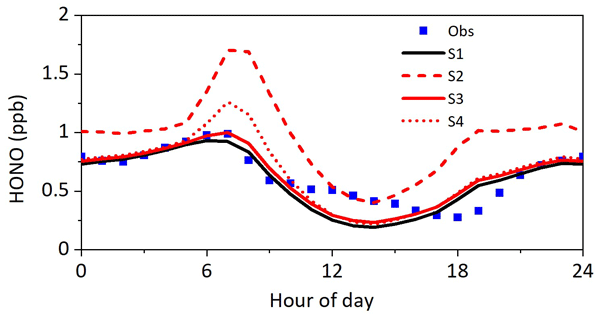
In this study, combining comprehensive field measurements and a box model, we found NO2 conversion on the ground surface was the most important source for HONO production among the proposed heterogeneous and gas-phase HONO sources. In addition, HONO was found to evidently enhance O3 production and aggravate O3 pollution in summer in China. Our study improved our understanding of the relative importance of different HONO sources and the crucial role of HONO in O3 formation in polluted areas.
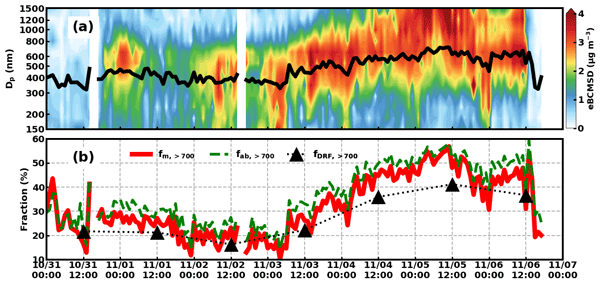
Weilun Zhao, Ying Li, Gang Zhao, Song Guo, Nan Ma, Shuya Hu, and Chunsheng Zhao
Atmos. Chem. Phys., 23, 14889–14902, https://doi.org/10.5194/acp-23-14889-2023, https://doi.org/10.5194/acp-23-14889-2023, 2023
Short summary
Short summary
Studies have concentrated on particles containing black carbon (BC) smaller than 700 nm because of technical limitations. In this study, BC-containing particles larger than 700 nm (BC>700) were measured, highlighting their importance to total BC mass and absorption. The contribution of BC>700 to the BC direct radiative effect was estimated, highlighting the necessity to consider the whole size range of BC-containing particles in the model estimation of BC radiative effects.
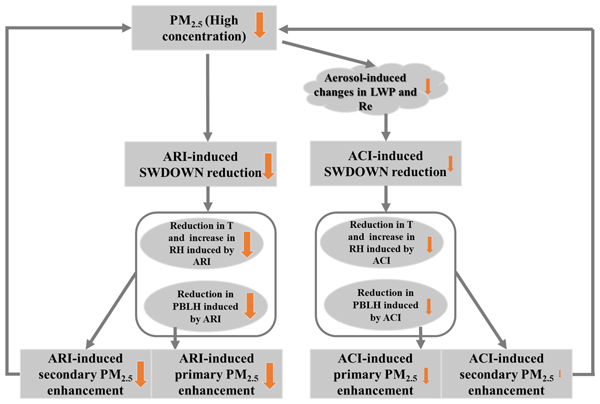
Da Gao, Bin Zhao, Shuxiao Wang, Yuan Wang, Brian Gaudet, Yun Zhu, Xiaochun Wang, Jiewen Shen, Shengyue Li, Yicong He, Dejia Yin, and Zhaoxin Dong
Atmos. Chem. Phys., 23, 14359–14373, https://doi.org/10.5194/acp-23-14359-2023, https://doi.org/10.5194/acp-23-14359-2023, 2023
Short summary
Short summary
Surface PM2.5 concentrations can be enhanced by aerosol–radiation interactions (ARIs) and aerosol–cloud interactions (ACIs). In this study, we found PM2.5 enhancement induced by ACIs shows a significantly smaller decrease ratio than that induced by ARIs in China with anthropogenic emission reduction from 2013 to 2021, making ACIs more important for enhancing PM2.5 concentrations. ACI-induced PM2.5 enhancement needs to be emphatically considered to meet the national PM2.5 air quality standard.
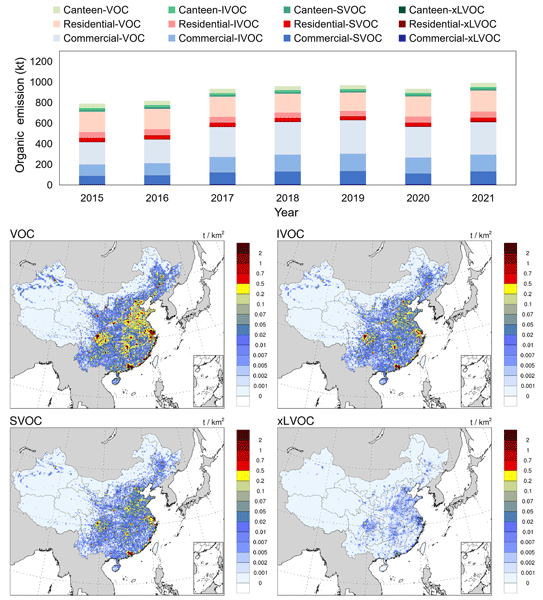
Zeqi Li, Shuxiao Wang, Shengyue Li, Xiaochun Wang, Guanghan Huang, Xing Chang, Lyuyin Huang, Chengrui Liang, Yun Zhu, Haotian Zheng, Qian Song, Qingru Wu, Fenfen Zhang, and Bin Zhao
Earth Syst. Sci. Data, 15, 5017–5037, https://doi.org/10.5194/essd-15-5017-2023, https://doi.org/10.5194/essd-15-5017-2023, 2023
Short summary
Short summary
This study developed the first full-volatility organic emission inventory for cooking sources in China, presenting high-resolution cooking emissions during 2015–2021. It identified the key subsectors and hotspots of cooking emissions, analyzed emission trends and drivers, and proposed future control strategies. The dataset is valuable for accurately simulating organic aerosol formation and evolution and for understanding the impact of organic emissions on air pollution and climate change.
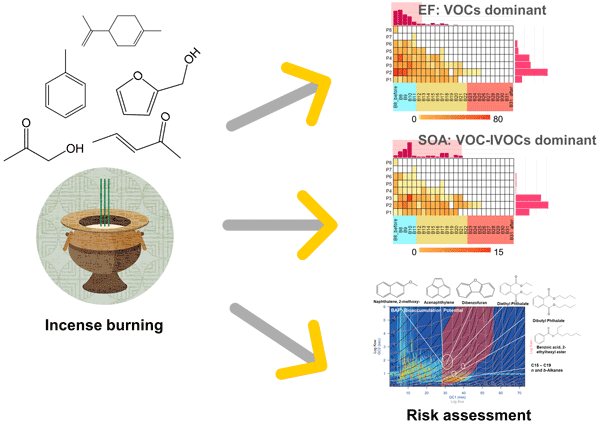
Kai Song, Rongzhi Tang, Jingshun Zhang, Zichao Wan, Yuan Zhang, Kun Hu, Yuanzheng Gong, Daqi Lv, Sihua Lu, Yu Tan, Ruifeng Zhang, Ang Li, Shuyuan Yan, Shichao Yan, Baoming Fan, Wenfei Zhu, Chak K. Chan, Maosheng Yao, and Song Guo
Atmos. Chem. Phys., 23, 13585–13595, https://doi.org/10.5194/acp-23-13585-2023, https://doi.org/10.5194/acp-23-13585-2023, 2023
Short summary
Short summary
Incense burning is common in Asia, posing threats to human health and air quality. However, less is known about its emissions and health risks. Full-volatility organic species from incense-burning smoke are detected and quantified. Intermediate-volatility volatile organic compounds (IVOCs) are crucial organics accounting for 19.2 % of the total emission factors (EFs) and 40.0 % of the secondary organic aerosol (SOA) estimation, highlighting the importance of incorporating IVOCs into SOA models.
Benjamin N. Murphy, Darrell Sonntag, Karl M. Seltzer, Havala O. T. Pye, Christine Allen, Evan Murray, Claudia Toro, Drew R. Gentner, Cheng Huang, Shantanu Jathar, Li Li, Andrew A. May, and Allen L. Robinson
Atmos. Chem. Phys., 23, 13469–13483, https://doi.org/10.5194/acp-23-13469-2023, https://doi.org/10.5194/acp-23-13469-2023, 2023
Short summary
Short summary
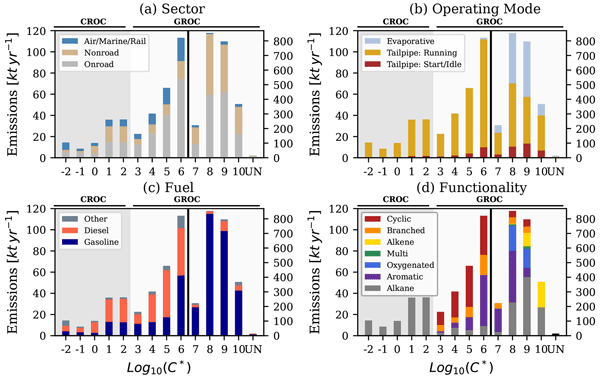
We update methods for calculating organic particle and vapor emissions from mobile sources in the USA. Conventionally, particulate matter (PM) and volatile organic carbon (VOC) are speciated without consideration of primary semivolatile emissions. Our methods integrate state-of-the-science speciation profiles and correct for common artifacts when sampling emissions in a laboratory. We quantify impacts of the emission updates on ambient pollution with the Community Multiscale Air Quality model.
Chupeng Zhang, Shangfei Hai, Yang Gao, Yuhang Wang, Shaoqing Zhang, Lifang Sheng, Bin Zhao, Shuxiao Wang, Jingkun Jiang, Xin Huang, Xiaojing Shen, Junying Sun, Aura Lupascu, Manish Shrivastava, Jerome D. Fast, Wenxuan Cheng, Xiuwen Guo, Ming Chu, Nan Ma, Juan Hong, Qiaoqiao Wang, Xiaohong Yao, and Huiwang Gao
Atmos. Chem. Phys., 23, 10713–10730, https://doi.org/10.5194/acp-23-10713-2023, https://doi.org/10.5194/acp-23-10713-2023, 2023
Short summary
Short summary
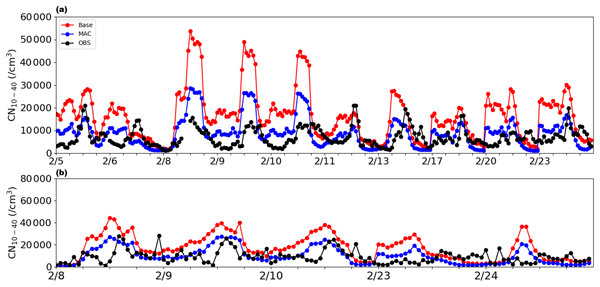
New particle formation is an important source of atmospheric particles, exerting critical influences on global climate. Numerical models are vital tools to understanding atmospheric particle evolution, which, however, suffer from large biases in simulating particle numbers. Here we improve the model chemical processes governing particle sizes and compositions. The improved model reveals substantial contributions of newly formed particles to climate through effects on cloud condensation nuclei.
Xiaodong Xie, Jianlin Hu, Momei Qin, Song Guo, Min Hu, Dongsheng Ji, Hongli Wang, Shengrong Lou, Cheng Huang, Chong Liu, Hongliang Zhang, Qi Ying, Hong Liao, and Yuanhang Zhang
Atmos. Chem. Phys., 23, 10563–10578, https://doi.org/10.5194/acp-23-10563-2023, https://doi.org/10.5194/acp-23-10563-2023, 2023
Short summary
Short summary
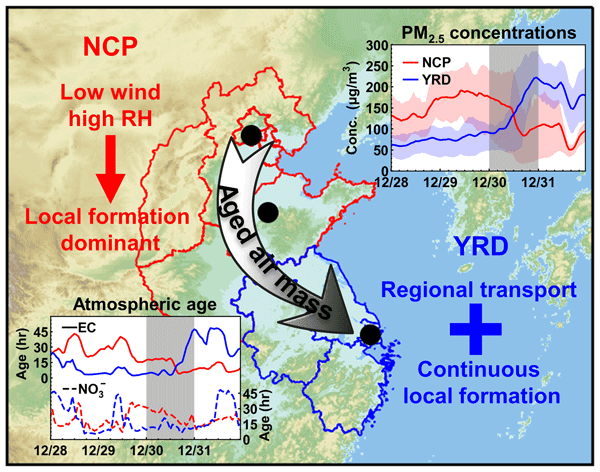
The atmospheric age of particles reflects how long particles have been formed and suspended in the atmosphere, which is closely associated with the evolution processes of particles. An analysis of the atmospheric age of PM2.5 provides a unique perspective on the evolution processes of different PM2.5 components. The results also shed lights on how to design effective emission control actions under unfavorable meteorological conditions.
Bryan K. Place, William T. Hutzell, K. Wyat Appel, Sara Farrell, Lukas Valin, Benjamin N. Murphy, Karl M. Seltzer, Golam Sarwar, Christine Allen, Ivan R. Piletic, Emma L. D'Ambro, Emily Saunders, Heather Simon, Ana Torres-Vasquez, Jonathan Pleim, Rebecca H. Schwantes, Matthew M. Coggon, Lu Xu, William R. Stockwell, and Havala O. T. Pye
Atmos. Chem. Phys., 23, 9173–9190, https://doi.org/10.5194/acp-23-9173-2023, https://doi.org/10.5194/acp-23-9173-2023, 2023
Short summary
Short summary
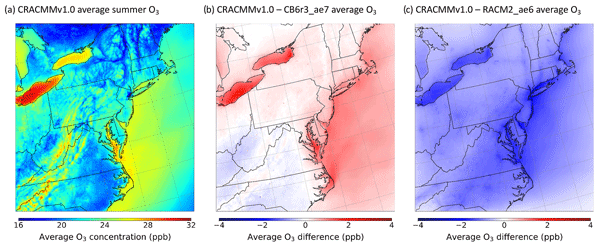
Ground-level ozone is a pollutant with adverse human health and ecosystem effects. Air quality models allow scientists to understand the chemical production of ozone and demonstrate impacts of air quality management plans. In this work, the role of multiple systems in ozone production was investigated for the northeastern US in summer. Model updates to chemical reaction rates and monoterpene chemistry were most influential in decreasing predicted ozone and improving agreement with observations.
Yiqi Zheng, Larry W. Horowitz, Raymond Menzel, David J. Paynter, Vaishali Naik, Jingyi Li, and Jingqiu Mao
Atmos. Chem. Phys., 23, 8993–9007, https://doi.org/10.5194/acp-23-8993-2023, https://doi.org/10.5194/acp-23-8993-2023, 2023
Short summary
Short summary
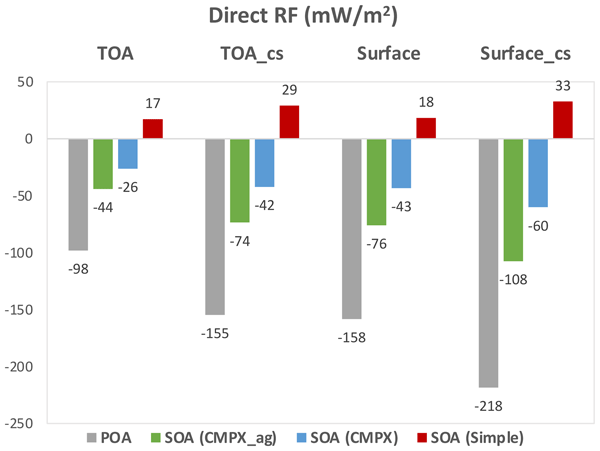
Biogenic secondary organic aerosols (SOAs) account for a large fraction of fine aerosol at the global scale. Using long-term measurements and a climate model, we investigate anthropogenic impacts on biogenic SOA at both decadal and centennial timescales. Results show that despite reductions in biogenic precursor emissions, SOA has been strongly amplified by anthropogenic emissions since the preindustrial era and exerts a cooling radiative forcing.
Yuyang Li, Jiewen Shen, Bin Zhao, Runlong Cai, Shuxiao Wang, Yang Gao, Manish Shrivastava, Da Gao, Jun Zheng, Markku Kulmala, and Jingkun Jiang
Atmos. Chem. Phys., 23, 8789–8804, https://doi.org/10.5194/acp-23-8789-2023, https://doi.org/10.5194/acp-23-8789-2023, 2023
Short summary
Short summary
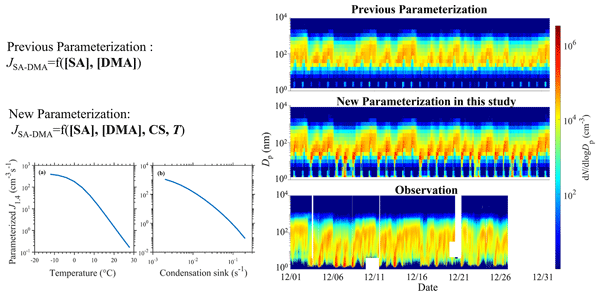
We set up a new parameterization for 1.4 nm particle formation rates from sulfuric acid–dimethylamine (SA–DMA) nucleation, fully including the effects of coagulation scavenging and cluster stability. Incorporating the new parameterization into 3-D chemical transport models, we achieved better consistencies between simulation results and observation data. This new parameterization provides new insights into atmospheric nucleation simulations and its effects on atmospheric pollution or health.
Yiyu Cai, Chenshuo Ye, Wei Chen, Weiwei Hu, Wei Song, Yuwen Peng, Shan Huang, Jipeng Qi, Sihang Wang, Chaomin Wang, Caihong Wu, Zelong Wang, Baolin Wang, Xiaofeng Huang, Lingyan He, Sasho Gligorovski, Bin Yuan, Min Shao, and Xinming Wang
Atmos. Chem. Phys., 23, 8855–8877, https://doi.org/10.5194/acp-23-8855-2023, https://doi.org/10.5194/acp-23-8855-2023, 2023
Short summary
Short summary
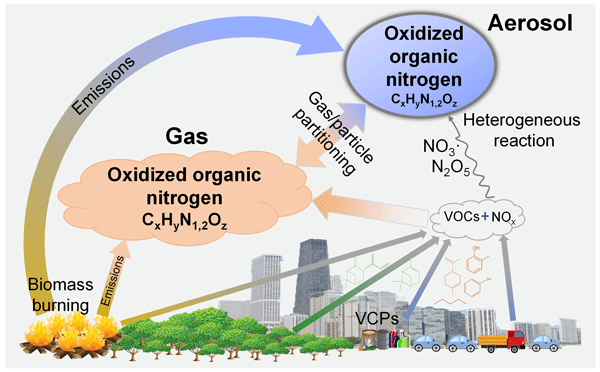
We studied the variability and molecular composition of ambient oxidized organic nitrogen (OON) in both gas and particle phases using a state-of-the-art online mass spectrometer in urban air. Biomass burning and secondary formation were found to be the two major sources of OON. Daytime nitrate radical chemistry for OON formation was more important than previously thought. Our results improved the understanding of the sources and molecular composition of OON in the polluted urban atmosphere.
Taomou Zong, Zhijun Wu, Junrui Wang, Kai Bi, Wenxu Fang, Yanrong Yang, Xuena Yu, Zhier Bao, Xiangxinyue Meng, Yuheng Zhang, Song Guo, Yang Chen, Chunshan Liu, Yue Zhang, Shao-Meng Li, and Min Hu
Atmos. Meas. Tech., 16, 3679–3692, https://doi.org/10.5194/amt-16-3679-2023, https://doi.org/10.5194/amt-16-3679-2023, 2023
Short summary
Short summary
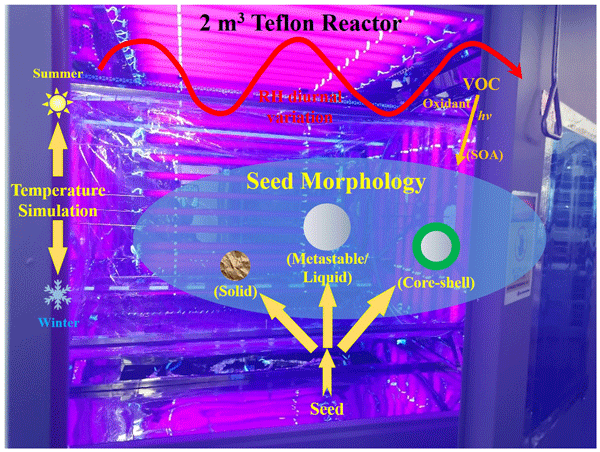
This study developed and characterized an indoor chamber system (AIR) to simulate atmospheric multiphase chemistry processes. The AIR chamber can accurately control temperature and relative humidity (RH) over a broad range and simulate diurnal variation of ambient atmospheric RH. The aerosol generation unit can generate organic-coating seed particles with different phase states. The AIR chamber demonstrates high-quality performance in simulating secondary aerosol formation.
Hejun Hu, Haichao Wang, Keding Lu, Jie Wang, Zelong Zheng, Xuezhen Xu, Tianyu Zhai, Xiaorui Chen, Xiao Lu, Wenxing Fu, Xin Li, Limin Zeng, Min Hu, Yuanhang Zhang, and Shaojia Fan
Atmos. Chem. Phys., 23, 8211–8223, https://doi.org/10.5194/acp-23-8211-2023, https://doi.org/10.5194/acp-23-8211-2023, 2023
Short summary
Short summary
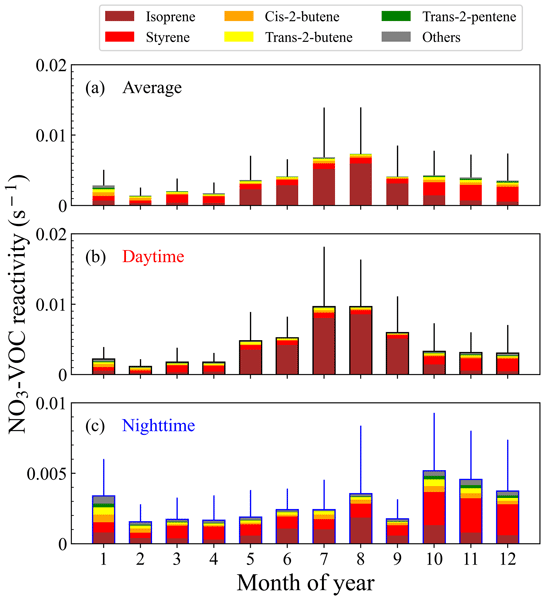
Nitrate radical chemistry is critical to the degradation of volatile organic compounds (VOCs) and secondary organic aerosol formation. This work investigated the level, seasonal variation, and trend of nitrate radical reactivity towards volatile organic compounds (kNO3) in Beijing. We show the key role of isoprene and styrene in regulating seasonal variation in kNO3 and rebuild a long-term record of kNO3 based on the reported VOC measurements.
Shengyue Li, Shuxiao Wang, Qingru Wu, Yanning Zhang, Daiwei Ouyang, Haotian Zheng, Licong Han, Xionghui Qiu, Yifan Wen, Min Liu, Yueqi Jiang, Dejia Yin, Kaiyun Liu, Bin Zhao, Shaojun Zhang, Ye Wu, and Jiming Hao
Earth Syst. Sci. Data, 15, 2279–2294, https://doi.org/10.5194/essd-15-2279-2023, https://doi.org/10.5194/essd-15-2279-2023, 2023
Short summary
Short summary
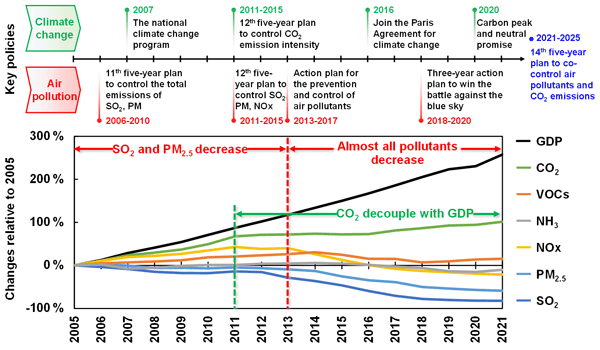
This study compiled China's emission inventory of air pollutants and CO2 during 2005–2021 (ABaCAS-EI v2.0) based on unified emission-source framework. The emission trends and its drivers are analyzed. Key sectors and regions with higher synergistic reduction potential of air pollutants and CO2 are identified. Future control measures are suggested. The dataset and analyses provide insights into the synergistic reduction of air pollutants and CO2 emissions for China and other developing countries.

Havala O. T. Pye, Bryan K. Place, Benjamin N. Murphy, Karl M. Seltzer, Emma L. D'Ambro, Christine Allen, Ivan R. Piletic, Sara Farrell, Rebecca H. Schwantes, Matthew M. Coggon, Emily Saunders, Lu Xu, Golam Sarwar, William T. Hutzell, Kristen M. Foley, George Pouliot, Jesse Bash, and William R. Stockwell
Atmos. Chem. Phys., 23, 5043–5099, https://doi.org/10.5194/acp-23-5043-2023, https://doi.org/10.5194/acp-23-5043-2023, 2023
Short summary
Short summary
Chemical mechanisms describe how emissions from vehicles, vegetation, and other sources are chemically transformed in the atmosphere to secondary products including criteria and hazardous air pollutants. The Community Regional Atmospheric Chemistry Multiphase Mechanism integrates gas-phase radical chemistry with pathways to fine-particle mass. New species were implemented, resulting in a bottom-up representation of organic aerosol, which is required for accurate source attribution of pollutants.
Lizi Tang, Min Hu, Dongjie Shang, Xin Fang, Jianjiong Mao, Wanyun Xu, Jiacheng Zhou, Weixiong Zhao, Yaru Wang, Chong Zhang, Yingjie Zhang, Jianlin Hu, Limin Zeng, Chunxiang Ye, Song Guo, and Zhijun Wu
Atmos. Chem. Phys., 23, 4343–4359, https://doi.org/10.5194/acp-23-4343-2023, https://doi.org/10.5194/acp-23-4343-2023, 2023
Short summary
Short summary
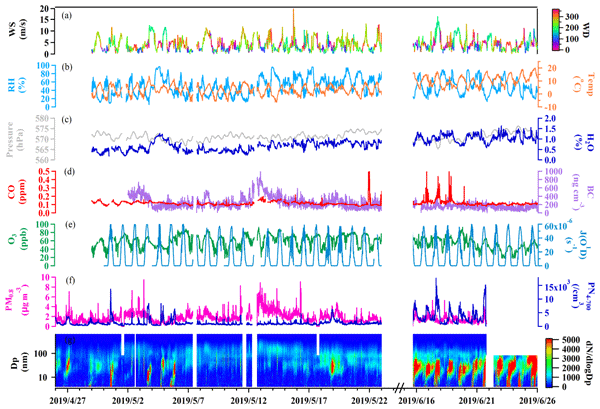
There was an evident distinction in the frequency of new particle formation (NPF) events at Nam Co station on the Tibetan Plateau: 15 % in pre-monsoon season and 80 % in monsoon season. The frequent NPF events in monsoon season resulted from the higher frequency of southerly air masses, which brought the organic precursors to participate in the NPF process. It increased the amount of aerosol and CCN compared with those in pre-monsoon season, which may markedly affect earth's radiation balance.
Forwood Wiser, Bryan K. Place, Siddhartha Sen, Havala O. T. Pye, Benjamin Yang, Daniel M. Westervelt, Daven K. Henze, Arlene M. Fiore, and V. Faye McNeill
Geosci. Model Dev., 16, 1801–1821, https://doi.org/10.5194/gmd-16-1801-2023, https://doi.org/10.5194/gmd-16-1801-2023, 2023
Short summary
Short summary
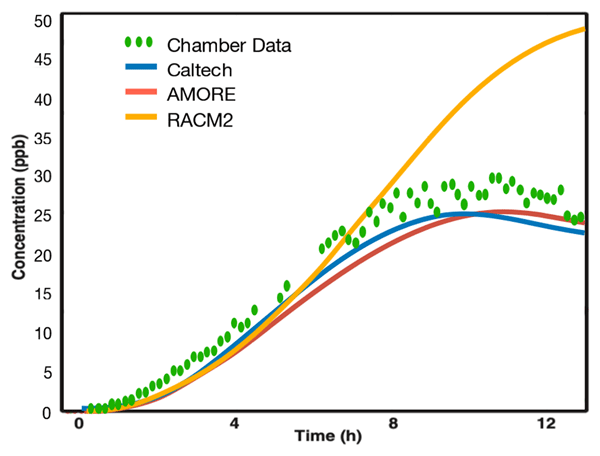
We developed a reduced model of atmospheric isoprene oxidation, AMORE-Isoprene 1.0. It was created using a new Automated Model Reduction (AMORE) method designed to simplify complex chemical mechanisms with minimal manual adjustments to the output. AMORE-Isoprene 1.0 has improved accuracy and similar size to other reduced isoprene mechanisms. When included in the CRACMM mechanism, it improved the accuracy of EPA’s CMAQ model predictions for the northeastern USA compared to observations.
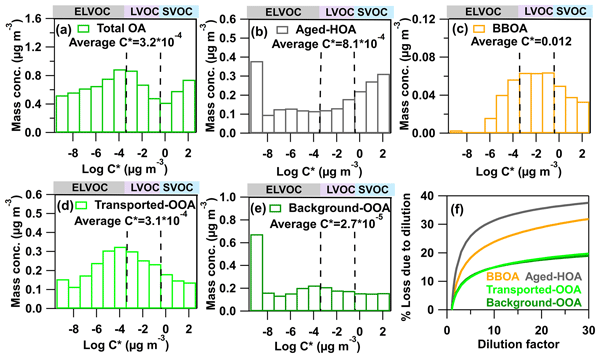
Tingting Feng, Yingkun Wang, Weiwei Hu, Ming Zhu, Wei Song, Wei Chen, Yanyan Sang, Zheng Fang, Wei Deng, Hua Fang, Xu Yu, Cheng Wu, Bin Yuan, Shan Huang, Min Shao, Xiaofeng Huang, Lingyan He, Young Ro Lee, Lewis Gregory Huey, Francesco Canonaco, Andre S. H. Prevot, and Xinming Wang
Atmos. Chem. Phys., 23, 611–636, https://doi.org/10.5194/acp-23-611-2023, https://doi.org/10.5194/acp-23-611-2023, 2023
Short summary
Short summary
To investigate the impact of aging processes on organic aerosols (OA), we conducted a comprehensive field study at a continental remote site using an on-line mass spectrometer. The results show that OA in the Chinese outflows were strongly influenced by upwind anthropogenic emissions. The aging processes can significantly decrease the OA volatility and result in a varied viscosity of OA under different circumstances, signifying the complex physiochemical properties of OA in aged plumes.

Qianqian Zhang, K. Folkert Boersma, Bin Zhao, Henk Eskes, Cuihong Chen, Haotian Zheng, and Xingying Zhang
Atmos. Chem. Phys., 23, 551–563, https://doi.org/10.5194/acp-23-551-2023, https://doi.org/10.5194/acp-23-551-2023, 2023
Short summary
Short summary
We developed an improved superposition column model and used the latest released (v2.3.1) TROPOMI satellite NO2 observations to estimate daily city-scale NOx and CO2 emissions. The results are verified against bottom-up emissions and OCO-2 XCO2 observations. We obtained the day-to-day variation of city NOx and CO2 emissions, allowing policymakers to gain real-time information on spatial–temporal emission patterns and the effectiveness of carbon and nitrogen regulation in urban environments.
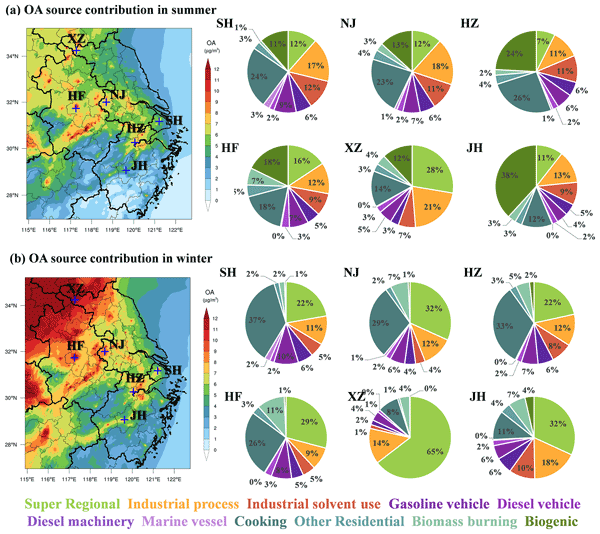
Jingyu An, Cheng Huang, Dandan Huang, Momei Qin, Huan Liu, Rusha Yan, Liping Qiao, Min Zhou, Yingjie Li, Shuhui Zhu, Qian Wang, and Hongli Wang
Atmos. Chem. Phys., 23, 323–344, https://doi.org/10.5194/acp-23-323-2023, https://doi.org/10.5194/acp-23-323-2023, 2023
Short summary
Short summary
This paper aims to build up an approach to establish a high-resolution emission inventory of intermediate-volatility and semi-volatile organic compounds in city-scale and detailed source categories and incorporate it into the CMAQ model. We believe this approach can be widely applied to improve the simulation of secondary organic aerosol and its source contributions.

Weilun Zhao, Gang Zhao, Ying Li, Song Guo, Nan Ma, Lizi Tang, Zirui Zhang, and Chunsheng Zhao
Atmos. Meas. Tech., 15, 6807–6817, https://doi.org/10.5194/amt-15-6807-2022, https://doi.org/10.5194/amt-15-6807-2022, 2022
Short summary
Short summary
A new method to determine black carbon mass size distribution (BCMSD) was proposed using the size-resolved absorption coefficient measured by an aerodynamic aerosol classifier in tandem with an aethalometer. This new method fills the gap in the high-time-resolution measurement of BCMSD ranging from upper submicron particle sizes to larger than 1 µm. This method can be applied to field measurement of BCMSD extensively for better understanding BC aging and better estimating the BC climate effect.
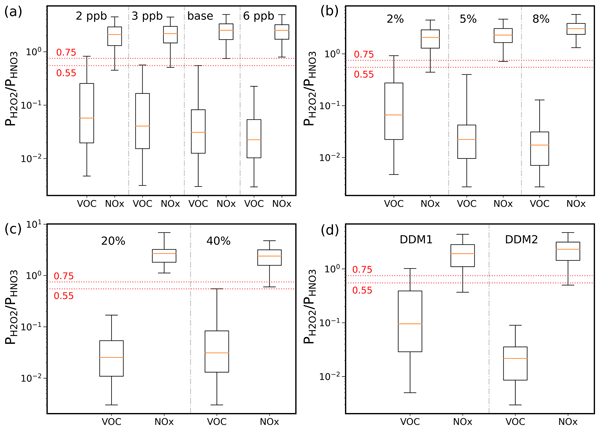
Xun Li, Momei Qin, Lin Li, Kangjia Gong, Huizhong Shen, Jingyi Li, and Jianlin Hu
Atmos. Chem. Phys., 22, 14799–14811, https://doi.org/10.5194/acp-22-14799-2022, https://doi.org/10.5194/acp-22-14799-2022, 2022
Short summary
Short summary
Photochemical indicators have been widely used to predict O3–NOx–VOC sensitivity with given thresholds. Here we assessed the effectiveness of four indicators with a case study in the Yangtze River Delta, China. The overall performance was good, while some indicators showed inconsistencies with the O3 isopleths. The methodology used to determine the thresholds may produce uncertainties. These results would improve our understanding of the use of photochemical indicators in policy implications.
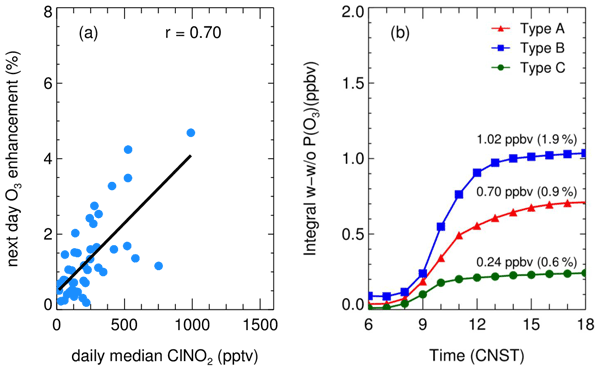
Haichao Wang, Bin Yuan, E Zheng, Xiaoxiao Zhang, Jie Wang, Keding Lu, Chenshuo Ye, Lei Yang, Shan Huang, Weiwei Hu, Suxia Yang, Yuwen Peng, Jipeng Qi, Sihang Wang, Xianjun He, Yubin Chen, Tiange Li, Wenjie Wang, Yibo Huangfu, Xiaobing Li, Mingfu Cai, Xuemei Wang, and Min Shao
Atmos. Chem. Phys., 22, 14837–14858, https://doi.org/10.5194/acp-22-14837-2022, https://doi.org/10.5194/acp-22-14837-2022, 2022
Short summary
Short summary
We present intensive field measurement of ClNO2 in the Pearl River Delta in 2019. Large variation in the level, formation, and atmospheric impacts of ClNO2 was found in different air masses. ClNO2 formation was limited by the particulate chloride (Cl−) and aerosol surface area. Our results reveal that Cl− originated from various anthropogenic emissions rather than sea sources and show minor contribution to the O3 pollution and photochemistry.
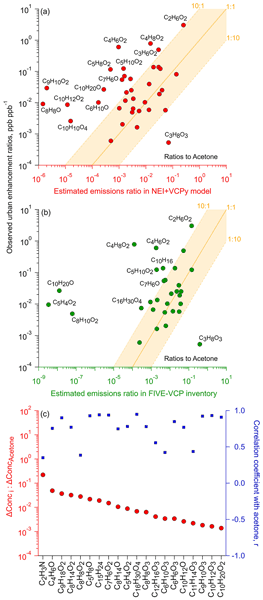
Peeyush Khare, Jordan E. Krechmer, Jo E. Machesky, Tori Hass-Mitchell, Cong Cao, Junqi Wang, Francesca Majluf, Felipe Lopez-Hilfiker, Sonja Malek, Will Wang, Karl Seltzer, Havala O. T. Pye, Roisin Commane, Brian C. McDonald, Ricardo Toledo-Crow, John E. Mak, and Drew R. Gentner
Atmos. Chem. Phys., 22, 14377–14399, https://doi.org/10.5194/acp-22-14377-2022, https://doi.org/10.5194/acp-22-14377-2022, 2022
Short summary
Short summary
Ammonium adduct chemical ionization is used to examine the atmospheric abundances of oxygenated volatile organic compounds associated with emissions from volatile chemical products, which are now key contributors of reactive precursors to ozone and secondary organic aerosols in urban areas. The application of this valuable measurement approach in densely populated New York City enables the evaluation of emissions inventories and thus the role these oxygenated compounds play in urban air quality.
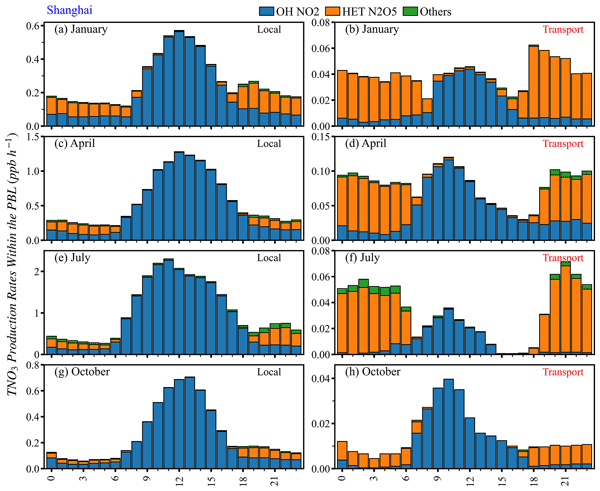
Jinjin Sun, Momei Qin, Xiaodong Xie, Wenxing Fu, Yang Qin, Li Sheng, Lin Li, Jingyi Li, Ishaq Dimeji Sulaymon, Lei Jiang, Lin Huang, Xingna Yu, and Jianlin Hu
Atmos. Chem. Phys., 22, 12629–12646, https://doi.org/10.5194/acp-22-12629-2022, https://doi.org/10.5194/acp-22-12629-2022, 2022
Short summary
Short summary
NO3- has become the dominant and the least reduced chemical component of fine particulate matter in China. NO3- formation is mostly in the NH3-rich regime in the Yangtze River Delta (YRD). OH + NO2 contributes 60 %–83 % of the TNO3 production rates, and the N2O5 heterogeneous pathway contributes 10 %–36 %. The N2O5 heterogeneous pathway becomes more important in cold seasons. Local emissions and regional transportation contribute 50 %–62 % and 38 %–50 % to YRD NO3- concentrations, respectively.

Biao Luo, Ye Kuang, Shan Huang, Qicong Song, Weiwei Hu, Wei Li, Yuwen Peng, Duohong Chen, Dingli Yue, Bin Yuan, and Min Shao
Atmos. Chem. Phys., 22, 12401–12415, https://doi.org/10.5194/acp-22-12401-2022, https://doi.org/10.5194/acp-22-12401-2022, 2022
Short summary
Short summary
We performed comprehensive analysis on biomass burning organic aerosol (BBOA) size distributions, as well as mass scattering and absorption efficiencies, with an improved method of on-line quantification of brown carbon absorptions. Both BBOA volume size distribution and retrieved refractive index depend highly on combustion conditions represented by the black carbon content, which has significant implications for BBOA climate effect simulations.
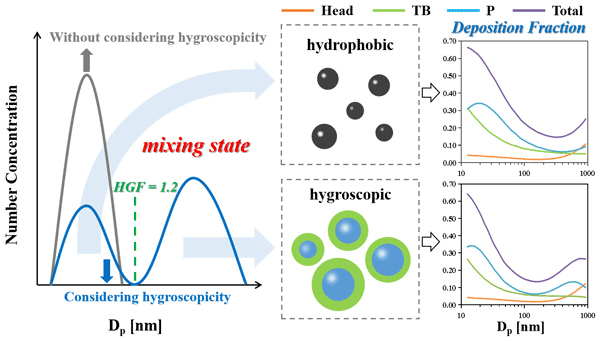
Ruiqi Man, Zhijun Wu, Taomou Zong, Aristeidis Voliotis, Yanting Qiu, Johannes Größ, Dominik van Pinxteren, Limin Zeng, Hartmut Herrmann, Alfred Wiedensohler, and Min Hu
Atmos. Chem. Phys., 22, 12387–12399, https://doi.org/10.5194/acp-22-12387-2022, https://doi.org/10.5194/acp-22-12387-2022, 2022
Short summary
Short summary
Regional and total deposition doses for different age groups were quantified based on explicit hygroscopicity measurements. We found that particle hygroscopic growth led to a reduction (~24 %) in the total dose. The deposition rate of hygroscopic particles was higher in the daytime, while hydrophobic particles exhibited a higher rate at night and during rush hours. The results will deepen the understanding of the impact of hygroscopicity and the mixing state on deposition patterns in the lungs.
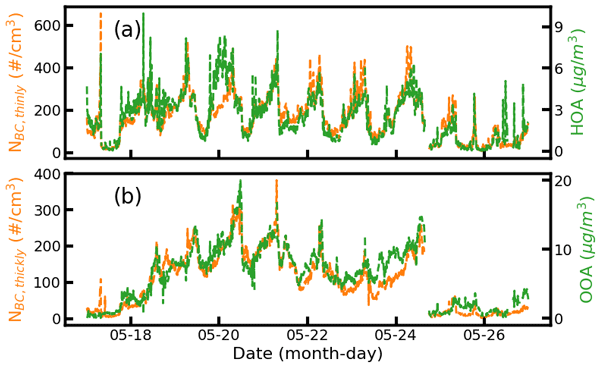
Gang Zhao, Tianyi Tan, Shuya Hu, Zhuofei Du, Dongjie Shang, Zhijun Wu, Song Guo, Jing Zheng, Wenfei Zhu, Mengren Li, Limin Zeng, and Min Hu
Atmos. Chem. Phys., 22, 10861–10873, https://doi.org/10.5194/acp-22-10861-2022, https://doi.org/10.5194/acp-22-10861-2022, 2022
Short summary
Short summary
Black carbon is the second strongest absorbing component in the atmosphere that exerts warming effects on climate. One critical challenge in quantifying the ambient black carbon's radiative effects is addressing the BC microphysical properties. In this study, the microphysical properties of the aged and fresh BC particles are synthetically analyzed under different atmospheres. The measurement results can be further used in models to help constrain the uncertainties of the BC radiative effects.
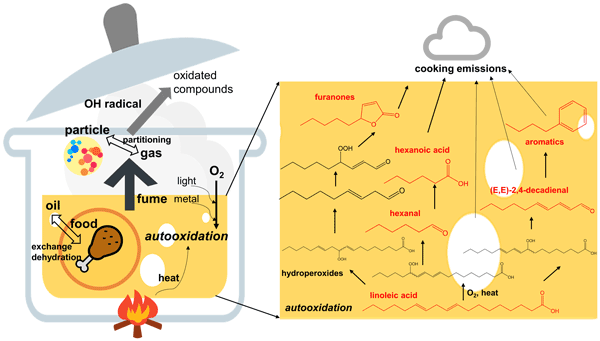
Kai Song, Song Guo, Yuanzheng Gong, Daqi Lv, Yuan Zhang, Zichao Wan, Tianyu Li, Wenfei Zhu, Hui Wang, Ying Yu, Rui Tan, Ruizhe Shen, Sihua Lu, Shuangde Li, Yunfa Chen, and Min Hu
Atmos. Chem. Phys., 22, 9827–9841, https://doi.org/10.5194/acp-22-9827-2022, https://doi.org/10.5194/acp-22-9827-2022, 2022
Short summary
Short summary
Emissions from four typical Chinese domestic cooking and fried chicken using four kinds of oils were investigated to illustrate the impact of cooking style and oil. Of the estimated SOA, 10.2 %–32.0 % could be explained by S/IVOC oxidation. Multiway principal component analysis (MPCA) emphasizes the importance of the unsaturated fatty acid-alkadienal volatile product mechanism (oil autoxidation) accelerated by the cooking and heating procedure.
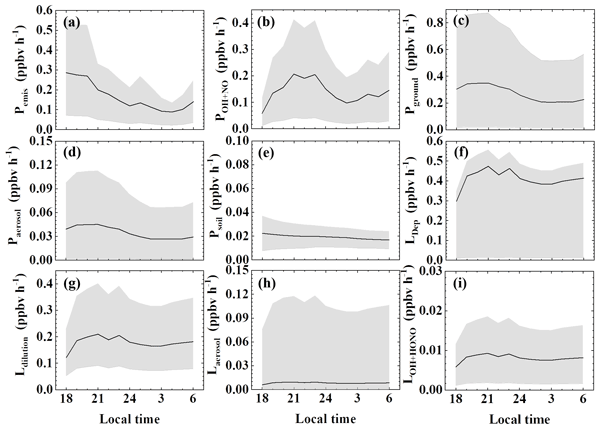
Yihang Yu, Peng Cheng, Huirong Li, Wenda Yang, Baobin Han, Wei Song, Weiwei Hu, Xinming Wang, Bin Yuan, Min Shao, Zhijiong Huang, Zhen Li, Junyu Zheng, Haichao Wang, and Xiaofang Yu
Atmos. Chem. Phys., 22, 8951–8971, https://doi.org/10.5194/acp-22-8951-2022, https://doi.org/10.5194/acp-22-8951-2022, 2022
Short summary
Short summary
We have investigated the budget of HONO at an urban site in Guangzhou. Budget and comprehensive uncertainty analysis suggest that at such locations as ours, HONO direct emissions and NO + OH can become comparable or even surpass other HONO sources that typically receive greater attention and interest, such as the NO2 heterogeneous source and the unknown daytime photolytic source. Our findings emphasize the need to reduce the uncertainties of both conventional and novel HONO sources and sinks.
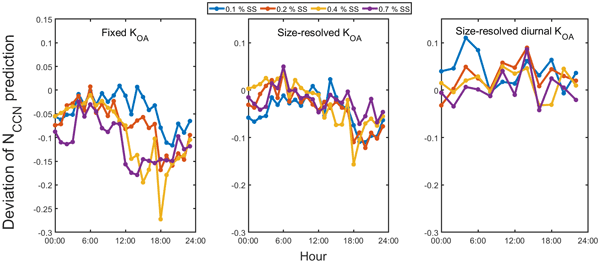
Mingfu Cai, Shan Huang, Baoling Liang, Qibin Sun, Li Liu, Bin Yuan, Min Shao, Weiwei Hu, Wei Chen, Qicong Song, Wei Li, Yuwen Peng, Zelong Wang, Duohong Chen, Haobo Tan, Hanbin Xu, Fei Li, Xuejiao Deng, Tao Deng, Jiaren Sun, and Jun Zhao
Atmos. Chem. Phys., 22, 8117–8136, https://doi.org/10.5194/acp-22-8117-2022, https://doi.org/10.5194/acp-22-8117-2022, 2022
Short summary
Short summary
This study investigated the size dependence and diurnal variation in organic aerosol hygroscopicity, volatility, and cloud condensation nuclei (CCN) activity. We found that the physical properties of OA could vary in a large range at different particle sizes and affected the number concentration of CCN (NCCN) at all supersaturations. Our results highlight the importance of evaluating the atmospheric evolution processes of OA at different size ranges and their impact on climate effects.
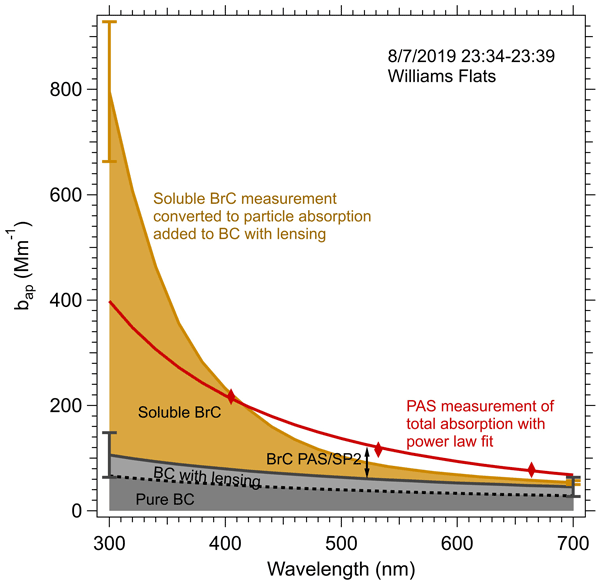
Linghan Zeng, Jack Dibb, Eric Scheuer, Joseph M. Katich, Joshua P. Schwarz, Ilann Bourgeois, Jeff Peischl, Tom Ryerson, Carsten Warneke, Anne E. Perring, Glenn S. Diskin, Joshua P. DiGangi, John B. Nowak, Richard H. Moore, Elizabeth B. Wiggins, Demetrios Pagonis, Hongyu Guo, Pedro Campuzano-Jost, Jose L. Jimenez, Lu Xu, and Rodney J. Weber
Atmos. Chem. Phys., 22, 8009–8036, https://doi.org/10.5194/acp-22-8009-2022, https://doi.org/10.5194/acp-22-8009-2022, 2022
Short summary
Short summary
Wildfires emit aerosol particles containing brown carbon material that affects visibility and global climate and is toxic. Brown carbon is poorly characterized due to measurement limitations, and its evolution in the atmosphere is not well known. We report on aircraft measurements of brown carbon from large wildfires in the western United States. We compare two methods for measuring brown carbon and study the evolution of brown carbon in the smoke as it moved away from the burning regions.
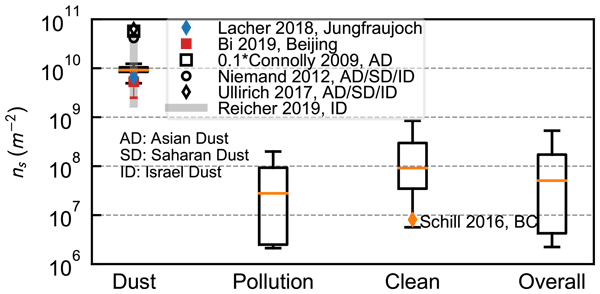
Cuiqi Zhang, Zhijun Wu, Jingchuan Chen, Jie Chen, Lizi Tang, Wenfei Zhu, Xiangyu Pei, Shiyi Chen, Ping Tian, Song Guo, Limin Zeng, Min Hu, and Zamin A. Kanji
Atmos. Chem. Phys., 22, 7539–7556, https://doi.org/10.5194/acp-22-7539-2022, https://doi.org/10.5194/acp-22-7539-2022, 2022
Short summary
Short summary
The immersion ice nucleation effectiveness of aerosols from multiple sources in the urban environment remains elusive. In this study, we demonstrate that the immersion ice-nucleating particle (INP) concentration increased dramatically during a dust event in an urban atmosphere. Pollutant aerosols, including inorganic salts formed through secondary transformation (SIA) and black carbon (BC), might not act as effective INPs under mixed-phase cloud conditions.
Yuanzheng Gong, Kai Song, Song Guo, Daqi Lv, Yuan Zhang, Zichao Wan, Wenfei Zhu, Hui Wang, Ying Yu, Rui Tan, Ruizhe Shen, Sihua Lu, Shuangde Li, and Yunfa Chen
Atmos. Chem. Phys. Discuss., https://doi.org/10.5194/acp-2022-326, https://doi.org/10.5194/acp-2022-326, 2022
Preprint withdrawn
Short summary
Short summary
Herein we applied thermal desorption comprehensive two-dimensional gas chromatography-mass spectrometer (TD-GCxGC-MS) for synchronous analysis of gaseous and particulate organics emitted from cooking fumes. With a systematic 4-step qualitative procedure and precise quantitative and semi-quantitative method, 170 and 352 compounds from C2 (acetic acids) – C30 (squalene) occupying 95 % and 90 % of the total ion current for gaseous and particulate samples were identified and quantified.
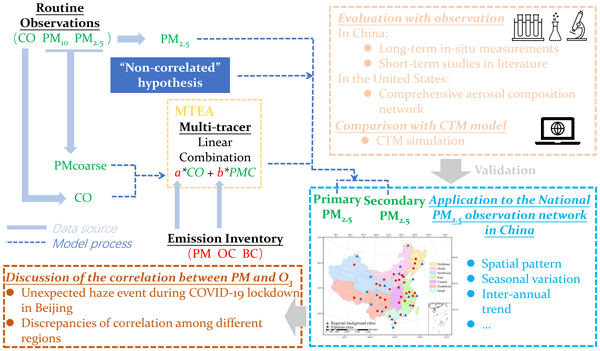
Haoran Zhang, Nan Li, Keqin Tang, Hong Liao, Chong Shi, Cheng Huang, Hongli Wang, Song Guo, Min Hu, Xinlei Ge, Mindong Chen, Zhenxin Liu, Huan Yu, and Jianlin Hu
Atmos. Chem. Phys., 22, 5495–5514, https://doi.org/10.5194/acp-22-5495-2022, https://doi.org/10.5194/acp-22-5495-2022, 2022
Short summary
Short summary
We developed a new algorithm with low economic/technique costs to identify primary and secondary components of PM2.5. Our model was shown to be reliable by comparison with different observation datasets. We systematically explored the patterns and changes in the secondary PM2.5 pollution in China at large spatial and time scales. We believe that this method is a promising tool for efficiently estimating primary and secondary PM2.5, and has huge potential for future PM mitigation.
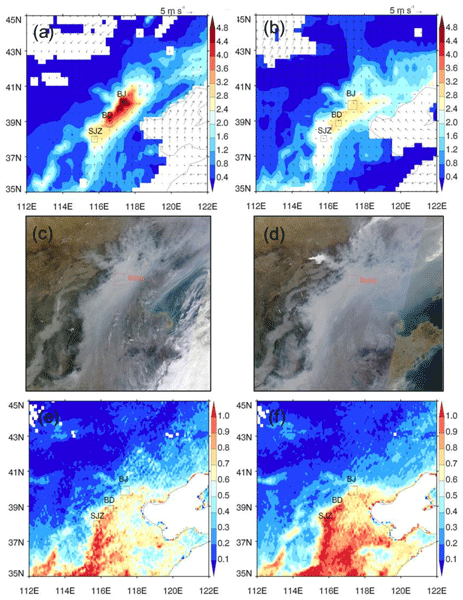
Yun Lin, Yuan Wang, Bowen Pan, Jiaxi Hu, Song Guo, Misti Levy Zamora, Pengfei Tian, Qiong Su, Yuemeng Ji, Jiayun Zhao, Mario Gomez-Hernandez, Min Hu, and Renyi Zhang
Atmos. Chem. Phys., 22, 4951–4967, https://doi.org/10.5194/acp-22-4951-2022, https://doi.org/10.5194/acp-22-4951-2022, 2022
Short summary
Short summary
Severe regional haze events, which are characterized by exceedingly high levels of fine particulate matter (PM), occur frequently in many developing countries (such as China and India), with profound implications for human health, weather, and climate. Our work establishes a synthetic view for the dominant regional features during severe haze events, unraveling rapid in situ PM production and inefficient transport, both of which are amplified by atmospheric stagnation.
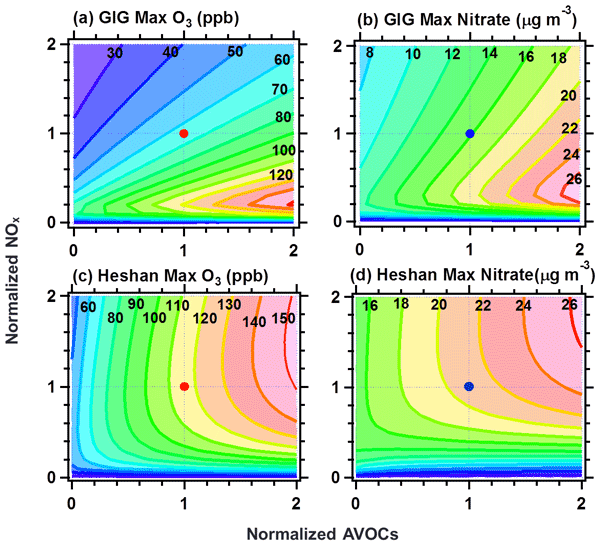
Suxia Yang, Bin Yuan, Yuwen Peng, Shan Huang, Wei Chen, Weiwei Hu, Chenglei Pei, Jun Zhou, David D. Parrish, Wenjie Wang, Xianjun He, Chunlei Cheng, Xiao-Bing Li, Xiaoyun Yang, Yu Song, Haichao Wang, Jipeng Qi, Baolin Wang, Chen Wang, Chaomin Wang, Zelong Wang, Tiange Li, E Zheng, Sihang Wang, Caihong Wu, Mingfu Cai, Chenshuo Ye, Wei Song, Peng Cheng, Duohong Chen, Xinming Wang, Zhanyi Zhang, Xuemei Wang, Junyu Zheng, and Min Shao
Atmos. Chem. Phys., 22, 4539–4556, https://doi.org/10.5194/acp-22-4539-2022, https://doi.org/10.5194/acp-22-4539-2022, 2022
Short summary
Short summary
We use a model constrained using observations to study the formation of nitrate aerosol in and downwind of a representative megacity. We found different contributions of various chemical reactions to ground-level nitrate concentrations between urban and suburban regions. We also show that controlling VOC emissions are effective for decreasing nitrate formation in both urban and regional environments, although VOCs are not direct precursors of nitrate aerosol.
Wenjie Wang, Bin Yuan, Yuwen Peng, Hang Su, Yafang Cheng, Suxia Yang, Caihong Wu, Jipeng Qi, Fengxia Bao, Yibo Huangfu, Chaomin Wang, Chenshuo Ye, Zelong Wang, Baolin Wang, Xinming Wang, Wei Song, Weiwei Hu, Peng Cheng, Manni Zhu, Junyu Zheng, and Min Shao
Atmos. Chem. Phys., 22, 4117–4128, https://doi.org/10.5194/acp-22-4117-2022, https://doi.org/10.5194/acp-22-4117-2022, 2022
Short summary
Short summary
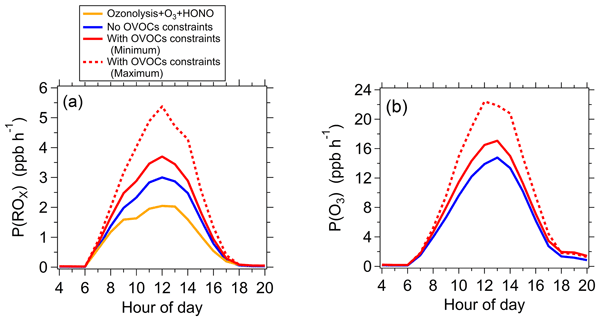
From thorough measurements of numerous oxygenated volatile organic compounds, we show that their photodissociation can be important for radical production and ozone formation in the atmosphere. This effect was underestimated in previous studies, as measurements of them were lacking.
Xiajie Yang, Qiaoqiao Wang, Nan Ma, Weiwei Hu, Yang Gao, Zhijiong Huang, Junyu Zheng, Bin Yuan, Ning Yang, Jiangchuan Tao, Juan Hong, Yafang Cheng, and Hang Su
Atmos. Chem. Phys., 22, 3743–3762, https://doi.org/10.5194/acp-22-3743-2022, https://doi.org/10.5194/acp-22-3743-2022, 2022
Short summary
Short summary
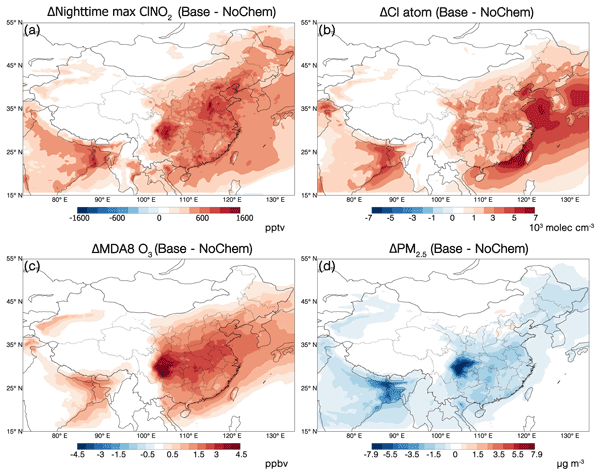
We use the GEOS-Chem model with additional anthropogenic and biomass burning chlorine emissions combined with updated parameterizations for N2O5 + Cl chemistry to investigate the impacts of chlorine chemistry on air quality in China. Our study not only significantly improves the model's performance but also demonstrates the importance of non-sea-salt chlorine sources as well as an appropriate parameterization for N2O5 + Cl chemistry to the impact of chlorine chemistry in China.
Douglas A. Day, Pedro Campuzano-Jost, Benjamin A. Nault, Brett B. Palm, Weiwei Hu, Hongyu Guo, Paul J. Wooldridge, Ronald C. Cohen, Kenneth S. Docherty, J. Alex Huffman, Suzane S. de Sá, Scot T. Martin, and Jose L. Jimenez
Atmos. Meas. Tech., 15, 459–483, https://doi.org/10.5194/amt-15-459-2022, https://doi.org/10.5194/amt-15-459-2022, 2022
Short summary
Short summary
Particle-phase nitrates are an important component of atmospheric aerosols and chemistry. In this paper, we systematically explore the application of aerosol mass spectrometry (AMS) to quantify the organic and inorganic nitrate fractions of aerosols in the atmosphere. While AMS has been used for a decade to quantify nitrates, methods are not standardized. We make recommendations for a more universal approach based on this analysis of a large range of field and laboratory observations.
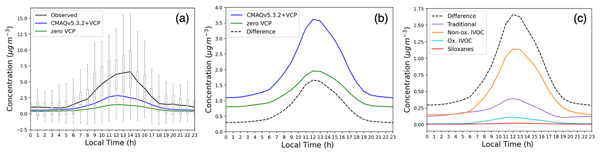
Elyse A. Pennington, Karl M. Seltzer, Benjamin N. Murphy, Momei Qin, John H. Seinfeld, and Havala O. T. Pye
Atmos. Chem. Phys., 21, 18247–18261, https://doi.org/10.5194/acp-21-18247-2021, https://doi.org/10.5194/acp-21-18247-2021, 2021
Short summary
Short summary
Volatile chemical products (VCPs) are commonly used consumer and industrial items that contribute to the formation of atmospheric aerosol. We implemented the emissions and chemistry of VCPs in a regional-scale model and compared predictions with measurements made in Los Angeles. Our results reduced model bias and suggest that VCPs may contribute up to half of anthropogenic secondary organic aerosol in Los Angeles and are an important source of human-influenced particular matter in urban areas.
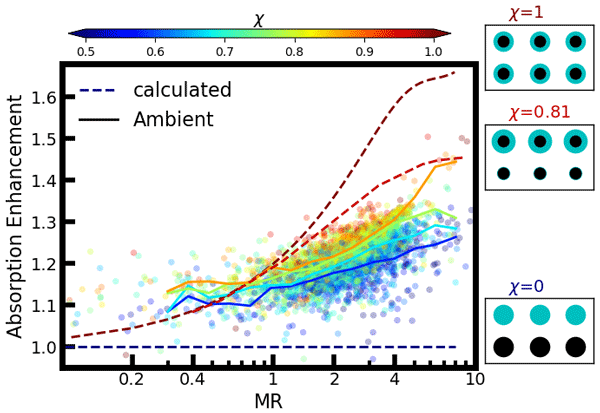
Gang Zhao, Tianyi Tan, Yishu Zhu, Min Hu, and Chunsheng Zhao
Atmos. Chem. Phys., 21, 18055–18063, https://doi.org/10.5194/acp-21-18055-2021, https://doi.org/10.5194/acp-21-18055-2021, 2021
Short summary
Short summary
In this study, the black carbon (BC) mixing state index (χ) is developed to quantify the dispersion of ambient black carbon aerosol mixing states based on binary systems of BC and other non-black carbon components. We demonstrate that the BC light absorption enhancement increases with χ for the same MR, which indicates that χ can be employed as a factor to constrain the light absorption enhancement of ambient BC.
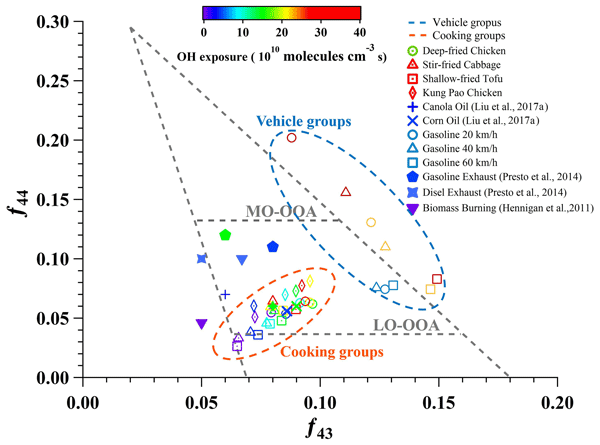
Zirui Zhang, Wenfei Zhu, Min Hu, Kefan Liu, Hui Wang, Rongzhi Tang, Ruizhe Shen, Ying Yu, Rui Tan, Kai Song, Yuanju Li, Wenbin Zhang, Zhou Zhang, Hongming Xu, Shijin Shuai, Shuangde Li, Yunfa Chen, Jiayun Li, Yuesi Wang, and Song Guo
Atmos. Chem. Phys., 21, 15221–15237, https://doi.org/10.5194/acp-21-15221-2021, https://doi.org/10.5194/acp-21-15221-2021, 2021
Short summary
Short summary
We comprehensively investigated the mass growth potential, oxidation degree, formation pathway, and mass spectra features of typical urban-lifestyle secondary organic aerosols (SOAs) including vehicle SOAs and cooking SOAs. The mass spectra we acquired could provide necessary references to estimate the mass fractions of vehicle and cooking SOAs in the atmosphere, which would greatly decrease the uncertainty in air quality evaluation and health risk assessment in urban areas.
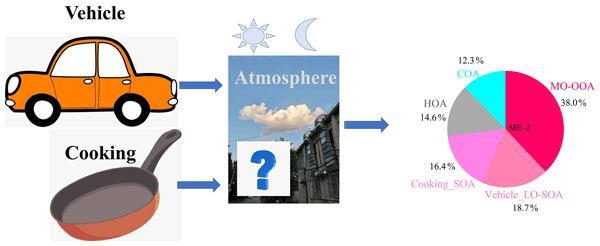
Wenfei Zhu, Song Guo, Zirui Zhang, Hui Wang, Ying Yu, Zheng Chen, Ruizhe Shen, Rui Tan, Kai Song, Kefan Liu, Rongzhi Tang, Yi Liu, Shengrong Lou, Yuanju Li, Wenbin Zhang, Zhou Zhang, Shijin Shuai, Hongming Xu, Shuangde Li, Yunfa Chen, Min Hu, Francesco Canonaco, and Andre S. H. Prévôt
Atmos. Chem. Phys., 21, 15065–15079, https://doi.org/10.5194/acp-21-15065-2021, https://doi.org/10.5194/acp-21-15065-2021, 2021
Short summary
Short summary
The experiments of primary emissions and secondary organic aerosol (SOA) formation from urban lifestyle sources (cooking and vehicles) were conducted. The mass spectral features of primary organic aerosol (POA) and SOA were characterized by using a high-resolution time-of-flight aerosol mass spectrometer. This work, for the first time, establishes the vehicle and cooking SOA source profiles and can be further used as source constraints in the OA source apportionment in the ambient atmosphere.
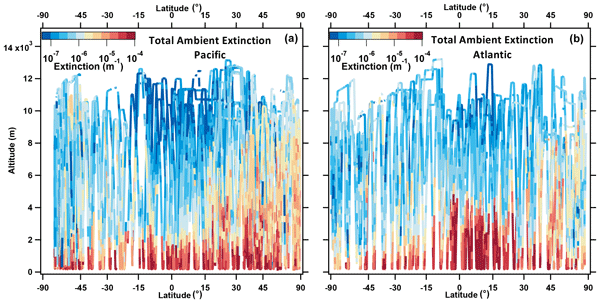
Charles A. Brock, Karl D. Froyd, Maximilian Dollner, Christina J. Williamson, Gregory Schill, Daniel M. Murphy, Nicholas J. Wagner, Agnieszka Kupc, Jose L. Jimenez, Pedro Campuzano-Jost, Benjamin A. Nault, Jason C. Schroder, Douglas A. Day, Derek J. Price, Bernadett Weinzierl, Joshua P. Schwarz, Joseph M. Katich, Siyuan Wang, Linghan Zeng, Rodney Weber, Jack Dibb, Eric Scheuer, Glenn S. Diskin, Joshua P. DiGangi, ThaoPaul Bui, Jonathan M. Dean-Day, Chelsea R. Thompson, Jeff Peischl, Thomas B. Ryerson, Ilann Bourgeois, Bruce C. Daube, Róisín Commane, and Steven C. Wofsy
Atmos. Chem. Phys., 21, 15023–15063, https://doi.org/10.5194/acp-21-15023-2021, https://doi.org/10.5194/acp-21-15023-2021, 2021
Short summary
Short summary
The Atmospheric Tomography Mission was an airborne study that mapped the chemical composition of the remote atmosphere. From this, we developed a comprehensive description of aerosol properties that provides a unique, global-scale dataset against which models can be compared. The data show the polluted nature of the remote atmosphere in the Northern Hemisphere and quantify the contributions of sea salt, dust, soot, biomass burning particles, and pollution particles to the haziness of the sky.
Cited articles
Angell, C. A.: Relaxation in liquids, polymers and plastic crystals – strong/fragile patterns and problems, J. Non-Cryst. Solids., 131–133, 13-31, https://doi.org/10.1016/0022-3093(91)90266-9, 1991.
Appel, K. W., Bash, J. O., Fahey, K. M., Foley, K. M., Gilliam, R. C., Hogrefe, C., Hutzell, W. T., Kang, D., Mathur, R., Murphy, B. N., Napelenok, S. L., Nolte, C. G., Pleim, J. E., Pouliot, G. A., Pye, H. O. T., Ran, L., Roselle, S. J., Sarwar, G., Schwede, D. B., Sidi, F. I., Spero, T. L., and Wong, D. C.: The Community Multiscale Air Quality (CMAQ) model versions 5.3 and 5.3.1: system updates and evaluation, Geosci. Model Dev., 14, 2867–2897, https://doi.org/10.5194/gmd-14-2867-2021, 2021.
Bilsback, K. R., He, Y., Cappa, C. D., Chang, R. Y.-W., Croft, B., Martin, R. V., Ng, N. L., Seinfeld, J. H., Pierce, J. R., and Jathar, S. H.: Vapors Are Lost to Walls, Not to Particles on the Wall: Artifact-Corrected Parameters from Chamber Experiments and Implications for Global Secondary Organic Aerosol, Environ. Sci. Technol., 57, 53–63, https://doi.org/10.1021/acs.est.2c03967, 2023.
Budisulistiorini, S. H., Nenes, A., Carlton, A. G., Surratt, J. D., McNeill, V. F., and Pye, H. O. T.: Simulating Aqueous-Phase Isoprene-Epoxydiol (IEPOX) Secondary Organic Aerosol Production During the 2013 Southern Oxidant and Aerosol Study (SOAS), Environ. Sci. Technol., 51, 5026–5034, https://doi.org/10.1021/acs.est.6b05750, 2017.
Carlton, A. G., Turpin, B. J., Altieri, K. E., Seitzinger, S. P., Mathur, R., Roselle, S. J., and Weber, R. J.: CMAQ Model Performance Enhanced When In-Cloud Secondary Organic Aerosol is Included: Comparisons of Organic Carbon Predictions with Measurements, Environ. Sci. Technol., 42, 8798–8802, https://doi.org/10.1021/es801192n, 2008.
Carlton, A. G., Bhave, P. V., Napelenok, S. L., Edney, E. O., Sarwar, G., Pinder, R. W., Pouliot, G. A., and Houyoux, M.: Model representation of secondary organic aerosol in CMAQv4.7, Environ. Sci. Technol., 44, 8553–8560, https://doi.org/10.1021/es100636q, 2010.
Chacon-Madrid, H. J. and Donahue, N. M.: Fragmentation vs. functionalization: chemical aging and organic aerosol formation, Atmos. Chem. Phys., 11, 10553–10563, https://doi.org/10.5194/acp-11-10553-2011, 2011.
Champion, W. M., Rothfuss, N. E., Petters, M. D., and Grieshop, A. P.: Volatility and Viscosity Are Correlated in Terpene Secondary Organic Aerosol Formed in a Flow Reactor, Environ. Sci. Technol. Lett., 6, 513–519, https://doi.org/10.1021/acs.estlett.9b00412, 2019.
Chang, X., Zhao, B., Zheng, H., Wang, S., Cai, S., Guo, F., Gui, P., Huang, G., Wu, D., Han, L., Xing, J., Man, H., Hu, R., Liang, C., Xu, Q., Qiu, X., Ding, D., Liu, K., Han, R., Robinson, A. L., and Donahue, N. M.: Full-volatility emission framework corrects missing and underestimated secondary organic aerosol sources, One Earth, 5, 403–412, https://doi.org/10.1016/j.oneear.2022.03.015, 2022.
Chen, Q., Miao, R., Geng, G., Shrivastava, M., Dao, X., Xu, B., Sun, J., Zhang, X., Liu, M., Tang, G., Tang, Q., Hu, H., Huang, R.-J., Wang, H., Zheng, Y., Qin, Y., Guo, S., Hu, M., and Zhu, T.: Widespread 2013-2020 decreases and reduction challenges of organic aerosol in China, Nat. Commun., 15, 4465, https://doi.org/10.1038/s41467-024-48902-0, 2024.
Chen, W., Ye, Y., Hu, W., Zhou, H., Pan, T., Wang, Y., Song, W., Song, Q., Ye, C., Wang, C., Wang, B., Huang, S., Yuan, B., Zhu, M., Lian, X., Zhang, G., Bi, X., Jiang, F., Liu, J., Canonaco, F., Prevot, A. S. H., Shao, M., and Wang, X.: Real-Time Characterization of Aerosol Compositions, Sources, and Aging Processes in Guangzhou During PRIDE-GBA 2018 Campaign, J. Geophys. Res., 126, e2021JD035114, https://doi.org/10.1029/2021JD035114, 2021.
Chrit, M., Sartelet, K., Sciare, J., Majdi, M., Nicolas, J., Petit, J.-E., and Dulac, F.: Modeling organic aerosol concentrations and properties during winter 2014 in the northwestern Mediterranean region, Atmos. Chem. Phys., 18, 18079–18100, https://doi.org/10.5194/acp-18-18079-2018, 2018.
Coggon, M. M., Gkatzelis, G. I., McDonald, B. C., Gilman, J. B., Schwantes, R. H., Abuhassan, N., Aikin, K. C., Arend, M. F., Berkoff, T. A., Brown, S. S., Campos, T. L., Dickerson, R. R., Gronoff, G., Hurley, J. F., Isaacman-VanWertz, G., Koss, A. R., Li, M., McKeen, S. A., Moshary, F., Peischl, J., Pospisilova, V., Ren, X., Wilson, A., Wu, Y., Trainer, M., and Warneke, C.: Volatile chemical product emissions enhance ozone and modulate urban chemistry, Proceedings of the National Academy of Sciences, 118, e2026653118, https://doi.org/10.1073/pnas.2026653118, 2021.
DeRieux, W.-S. W., Li, Y., Lin, P., Laskin, J., Laskin, A., Bertram, A. K., Nizkorodov, S. A., and Shiraiwa, M.: Predicting the glass transition temperature and viscosity of secondary organic material using molecular composition, Atmos. Chem. Phys., 18, 6331–6351, https://doi.org/10.5194/acp-18-6331-2018, 2018.
Dette, H. P., Qi, M., Schröder, D. C., Godt, A., and Koop, T.: Glass-Forming Properties of 3-Methylbutane-1,2,3-tricarboxylic Acid and Its Mixtures with Water and Pinonic Acid, J. Phys. Chem. A, 118, 7024–7033, https://doi.org/10.1021/jp505910w, 2014.
Donahue, N. M., Epstein, S. A., Pandis, S. N., and Robinson, A. L.: A two-dimensional volatility basis set: 1. organic-aerosol mixing thermodynamics, Atmos. Chem. Phys., 11, 3303–3318, https://doi.org/10.5194/acp-11-3303-2011, 2011.
Donahue, N. M., Kroll, J. H., Pandis, S. N., and Robinson, A. L.: A two-dimensional volatility basis set – Part 2: Diagnostics of organic-aerosol evolution, Atmos. Chem. Phys., 12, 615–634, https://doi.org/10.5194/acp-12-615-2012, 2012.
Donahue, N. M., Chuang, W., Epstein, S. A., Kroll, J. H., Worsnop, D. R., Robinson, A. L., Adams, P. J., and Pandis, S. N.: Why do organic aerosols exist? Understanding aerosol lifetimes using the two-dimensional volatility basis set, Environ. Chem., 10, 151–157, https://doi.org/10.1071/EN13022, 2013.
Donahue, N. M., Robinson, A. L., Trump, E. R., Riipinen, I., and Kroll, J. H.: Volatility and aging of atmospheric organic aerosol, Topics in current chemistry, 339, 97-143, https://doi.org/10.1007/128_2012_355, 2014.
Duan, J., Huang, R.-J., Lin, C., Shen, J., Yang, L., Yuan, W., Wang, Y., Liu, Y., and Xu, W.: Aromatic Nitration Enhances Absorption of Biomass Burning Brown Carbon in an Oxidizing Urban Environment, Environ. Sci. Technol., 58, 17344–17354, https://doi.org/10.1021/acs.est.4c05558, 2024.
Feng, T., Wang, Y., Hu, W., Zhu, M., Song, W., Chen, W., Sang, Y., Fang, Z., Deng, W., Fang, H., Yu, X., Wu, C., Yuan, B., Huang, S., Shao, M., Huang, X., He, L., Lee, Y. R., Huey, L. G., Canonaco, F., Prevot, A. S. H., and Wang, X.: Impact of aging on the sources, volatility, and viscosity of organic aerosols in Chinese outflows, Atmos. Chem. Phys., 23, 611–636, https://doi.org/10.5194/acp-23-611-2023, 2023.
Gu, Y., Huang, R.-J., Duan, J., Xu, W., Lin, C., Zhong, H., Wang, Y., Ni, H., Liu, Q., Xu, R., Wang, L., and Li, Y. J.: Multiple pathways for the formation of secondary organic aerosol in the North China Plain in summer, Atmos. Chem. Phys., 23, 5419–5433, https://doi.org/10.5194/acp-23-5419-2023, 2023.
Guenther, A. B., Jiang, X., Heald, C. L., Sakulyanontvittaya, T., Duhl, T., Emmons, L. K., and Wang, X.: The Model of Emissions of Gases and Aerosols from Nature version 2.1 (MEGAN2.1): an extended and updated framework for modeling biogenic emissions, Geosci. Model Dev., 5, 1471–1492, https://doi.org/10.5194/gmd-5-1471-2012, 2012.
Hallquist, M., Wenger, J. C., Baltensperger, U., Rudich, Y., Simpson, D., Claeys, M., Dommen, J., Donahue, N. M., George, C., Goldstein, A. H., Hamilton, J. F., Herrmann, H., Hoffmann, T., Iinuma, Y., Jang, M., Jenkin, M. E., Jimenez, J. L., Kiendler-Scharr, A., Maenhaut, W., McFiggans, G., Mentel, Th. F., Monod, A., Prévôt, A. S. H., Seinfeld, J. H., Surratt, J. D., Szmigielski, R., and Wildt, J.: The formation, properties and impact of secondary organic aerosol: current and emerging issues, Atmos. Chem. Phys., 9, 5155–5236, https://doi.org/10.5194/acp-9-5155-2009, 2009.
Heald, C. L. and Kroll, J. H.: The fuel of atmospheric chemistry: Toward a complete description of reactive organic carbon, Science Advances, 6, eaay8967, https://doi.org/10.1126/sciadv.aay8967, 2020.
Hems, R. F., Schnitzler, E. G., Liu-Kang, C., Cappa, C. D., and Abbatt, J. P. D.: Aging of Atmospheric Brown Carbon Aerosol, ACS Earth Space Chem., 5, 722–748, https://doi.org/10.1021/acsearthspacechem.0c00346, 2021.
Hu, W., Zhou, H., Chen, W., Ye, Y., Pan, T., Wang, Y., Song, W., Zhang, H., Deng, W., Zhu, M., Wang, C., Wu, C., Ye, C., Wang, Z., Yuan, B., Huang, S., Shao, M., Peng, Z., Day, D. A., Campuzano-Jost, P., Lambe, A. T., Worsnop, D. R., Jimenez, J. L., and Wang, X.: Oxidation Flow Reactor Results in a Chinese Megacity Emphasize the Important Contribution of S/IVOCs to Ambient SOA Formation, Environmental Science & Technology, 56, 6880–6893, https://doi.org/10.1021/acs.est.1c03155, 2022.
Huang, W., Wu, C., Gao, L., Gramlich, Y., Haslett, S. L., Thornton, J., Lopez-Hilfiker, F. D., Lee, B. H., Song, J., Saathoff, H., Shen, X., Ramisetty, R., Tripathi, S. N., Ganguly, D., Jiang, F., Vallon, M., Schobesberger, S., Yli-Juuti, T., and Mohr, C.: Variation in chemical composition and volatility of oxygenated organic aerosol in different rural, urban, and mountain environments, Atmos. Chem. Phys., 24, 2607–2624, https://doi.org/10.5194/acp-24-2607-2024, 2024.
Jiang, X. T., Liu, D. T., Li, Q., Tian, P., Wu, Y. Z., Li, S. Y., Hu, K., Ding, S., Bi, K., Li, R. J., Huang, M. Y., Ding, D. P., Chen, Q. C., Kong, S. F., Li, W. J., Pang, Y., and He, D.: Connecting the Light Absorption of Atmospheric Organic Aerosols with Oxidation State and Polarity, Environ. Sci. Technol., https://doi.org/10.1021/acs.est.2c02202, 2022.
Jimenez, J. L., Canagaratna, M. R., Donahue, N. M., Prevot, A. S. H., Zhang, Q., Kroll, J. H., DeCarlo, P. F., Allan, J. D., Coe, H., Ng, N. L., Aiken, A. C., Docherty, K. S., Ulbrich, I. M., Grieshop, A. P., Robinson, A. L., Duplissy, J., Smith, J. D., Wilson, K. R., Lanz, V. A., Hueglin, C., Sun, Y. L., Tian, J., Laaksonen, A., Raatikainen, T., Rautiainen, J., Vaattovaara, P., Ehn, M., Kulmala, M., Tomlinson, J. M., Collins, D. R., Cubison, M. J., E, Dunlea, J., Huffman, J. A., Onasch, T. B., Alfarra, M. R., Williams, P. I., Bower, K., Kondo, Y., Schneider, J., Drewnick, F., Borrmann, S., Weimer, S., Demerjian, K., Salcedo, D., Cottrell, L., Griffin, R., Takami, A., Miyoshi, T., Hatakeyama, S., Shimono, A., Sun, J. Y., Zhang, Y. M., Dzepina, K., Kimmel, J. R., Sueper, D., Jayne, J. T., Herndon, S. C., Trimborn, A. M., Williams, L. R., Wood, E. C., Middlebrook, A. M., Kolb, C. E., Baltensperger, U., and Worsnop, D. R.: Evolution of Organic Aerosols in the Atmosphere, Science, 326, 1525–1529, https://doi.org/10.1126/science.1180353, 2009.
Koop, T., Bookhold, J., Shiraiwa, M., and Pöschl, U.: Glass transition and phase state of organic compounds: Dependency on molecular properties and implications for secondary organic aerosols in the atmosphere, Phys. Chem. Chem. Phys., 13, 19238–19255, https://doi.org/10.1039/C1CP22617G, 2011.
Li, J., Han, Z., Sun, Y., Li, J., and Liang, L.: Chemical formation pathways of secondary organic aerosols in the Beijing-Tianjin-Hebei region in wintertime, Atmos. Environ., 244, 117996, https://doi.org/10.1016/j.atmosenv.2020.117996, 2021a.
Li, Y. and Shiraiwa, M.: Timescales of secondary organic aerosols to reach equilibrium at various temperatures and relative humidities, Atmos. Chem. Phys., 19, 5959–5971, https://doi.org/10.5194/acp-19-5959-2019, 2019.
Li, Y., Day, D. A., Stark, H., Jimenez, J. L., and Shiraiwa, M.: Predictions of the glass transition temperature and viscosity of organic aerosols from volatility distributions, Atmos. Chem. Phys., 20, 8103–8122, https://doi.org/10.5194/acp-20-8103-2020, 2020.
Li, Y., Carlton, A. G., and Shiraiwa, M.: Diurnal and Seasonal Variations in the Phase State of Secondary Organic Aerosol Material over the Contiguous US Simulated in CMAQ, ACS Earth and Space Chemistry, 5, 1971–1982, https://doi.org/10.1021/acsearthspacechem.1c00094, 2021b.
Li, Z., Wang, S., Li, S., Wang, X., Huang, G., Chang, X., Huang, L., Liang, C., Zhu, Y., Zheng, H., Song, Q., Wu, Q., Zhang, F., and Zhao, B.: High-resolution emission inventory of full-volatility organic compounds from cooking in China during 2015–2021, Earth Syst. Sci. Data, 15, 5017–5037, https://doi.org/10.5194/essd-15-5017-2023, 2023.
Liu, L., Hohaus, T., Franke, P., Lange, A. C., Tillmann, R., Fuchs, H., Tan, Z., Rohrer, F., Karydis, V., He, Q., Vardhan, V., Andres, S., Bohn, B., Holland, F., Winter, B., Wedel, S., Novelli, A., Hofzumahaus, A., Wahner, A., and Kiendler-Scharr, A.: Observational evidence reveals the significance of nocturnal chemistry in seasonal secondary organic aerosol formation, npj Climate and Atmospheric Science, 7, 207, https://doi.org/10.1038/s41612-024-00747-6, 2024.
Liu, M. and Matsui, H.: Secondary Organic Aerosol Formation Regulates Cloud Condensation Nuclei in the Global Remote Troposphere, Geophys. Res. Lett., 49, e2022GL100543, https://doi.org/10.1029/2022GL100543, 2022.
Lu, Q., Murphy, B. N., Qin, M., Adams, P. J., Zhao, Y., Pye, H. O. T., Efstathiou, C., Allen, C., and Robinson, A. L.: Simulation of organic aerosol formation during the CalNex study: updated mobile emissions and secondary organic aerosol parameterization for intermediate-volatility organic compounds, Atmos. Chem. Phys., 20, 4313–4332, https://doi.org/10.5194/acp-20-4313-2020, 2020.
Luu, R., Schervish, M., June, N. A., O'Donnell, S. E., Jathar, S. H., Pierce, J. R., and Shiraiwa, M.: Global Simulations of Phase State and Equilibration Time Scales of Secondary Organic Aerosols with GEOS-Chem, ACS Earth and Space Chemistry, 9, 288-302, https://doi.org/10.1021/acsearthspacechem.4c00281, 2025.
Maclean, A. M., Li, Y., Crescenzo, G. V., Smith, N. R., Karydis, V. A., Tsimpidi, A. P., Butenhoff, C. L., Faiola, C. L., Lelieveld, J., Nizkorodov, S. A., Shiraiwa, M., and Bertram, A. K.: Global Distribution of the Phase State and Mixing Times within Secondary Organic Aerosol Particles in the Troposphere Based on Room-Temperature Viscosity Measurements, ACS Earth Space Chem., 5, 3458-3473, https://doi.org/10.1021/acsearthspacechem.1c00296., 2021.
Mahrt, F., Huang, Y. Z., Zaks, J., Devi, A., Peng, L., Ohno, P. E., Qin, Y. M., Martin, S. T., Ammann, M., and Bertram, A. K.: Phase Behavior of Internal Mixtures of Hydrocarbon-like Primary Organic Aerosol and Secondary Aerosol Based on Their Differences in Oxygen-to-Carbon Ratios, Environ. Sci. Technol., 56, 3960–3973, https://doi.org/10.1021/acs.est.1c07691, 2022.
Malek, K., Gohil, K., Olonimoyo, E. A., Ferdousi-Rokib, N., Huang, Q., Pitta, K. R., Nandy, L., Voss, K. A., Raymond, T. M., Dutcher, D. D., Freedman, M. A., and Asa-Awuku, A.: Liquid–Liquid Phase Separation Can Drive Aerosol Droplet Growth in Supersaturated Regimes, ACS Environ. Au., 3, 348–360, https://doi.org/10.1021/acsenvironau.3c00015, 2023.
Marshall, F. H., Berkemeier, T., Shiraiwa, M., Nandy, L., Ohm, P. B., Dutcher, C. S., and Reid, J. P.: Influence of particle viscosity on mass transfer and heterogeneous ozonolysis kinetics in aqueous–sucrose–maleic acid aerosol, Phys. Chem. Chem. Phys., 20, 15560–15573, https://doi.org/10.1039/C8CP01666F, 2018.
Massoli, P., Lambe, A. T., Ahern, A. T., Williams, L. R., Ehn, M., Mikkilä, J., Canagaratna, M. R., Brune, W. H., Onasch, T. B., Jayne, J. T., Petäjä, T., Kulmala, M., Laaksonen, A., Kolb, C. E., Davidovits, P., and Worsnop, D. R.: Relationship between aerosol oxidation level and hygroscopic properties of laboratory generated secondary organic aerosol (SOA) particles, Geophys. Res. Lett., 37, https://doi.org/10.1029/2010GL045258, 2010.
Miao, R., Chen, Q., Shrivastava, M., Chen, Y., Zhang, L., Hu, J., Zheng, Y., and Liao, K.: Process-based and observation-constrained SOA simulations in China: the role of semivolatile and intermediate-volatility organic compounds and OH levels, Atmos. Chem. Phys., 21, 16183–16201, https://doi.org/10.5194/acp-21-16183-2021, 2021.
Murphy, B. N., Woody, M. C., Jimenez, J. L., Carlton, A. M. G., Hayes, P. L., Liu, S., Ng, N. L., Russell, L. M., Setyan, A., Xu, L., Young, J., Zaveri, R. A., Zhang, Q., and Pye, H. O. T.: Semivolatile POA and parameterized total combustion SOA in CMAQv5.2: impacts on source strength and partitioning, Atmos. Chem. Phys., 17, 11107–11133, https://doi.org/10.5194/acp-17-11107-2017, 2017.
Nault, B. A., Jo, D. S., McDonald, B. C., Campuzano-Jost, P., Day, D. A., Hu, W., Schroder, J. C., Allan, J., Blake, D. R., Canagaratna, M. R., Coe, H., Coggon, M. M., DeCarlo, P. F., Diskin, G. S., Dunmore, R., Flocke, F., Fried, A., Gilman, J. B., Gkatzelis, G., Hamilton, J. F., Hanisco, T. F., Hayes, P. L., Henze, D. K., Hodzic, A., Hopkins, J., Hu, M., Huey, L. G., Jobson, B. T., Kuster, W. C., Lewis, A., Li, M., Liao, J., Nawaz, M. O., Pollack, I. B., Peischl, J., Rappenglück, B., Reeves, C. E., Richter, D., Roberts, J. M., Ryerson, T. B., Shao, M., Sommers, J. M., Walega, J., Warneke, C., Weibring, P., Wolfe, G. M., Young, D. E., Yuan, B., Zhang, Q., de Gouw, J. A., and Jimenez, J. L.: Secondary organic aerosols from anthropogenic volatile organic compounds contribute substantially to air pollution mortality, Atmos. Chem. Phys., 21, 11201–11224, https://doi.org/10.5194/acp-21-11201-2021, 2021.
O'Brien, R. E., Li, Y., Kiland, K. J., Katz, E. F., Or, V. W., Legaard, E., Walhout, E. Q., Thrasher, C., Grassian, V. H., and DeCarlo, P. F.: Emerging investigator series: chemical and physical properties of organic mixtures on indoor surfaces during HOMEChem, Environmental Science: Processes & Impacts, 23, 559–568, 2021.
Pankow, J. F.: An absorption model of gas/particle partitioning of organic compounds in the atmosphere, Atmos. Environ., 28, 185–188, https://doi.org/10.1016/1352-2310(94)90093-0, 1994.
Pankow, J. F., Marks, M. C., Barsanti, K. C., Mahmud, A., Asher, W. E., Li, J., Ying, Q., Jathar, S. H., and Kleeman, M. J.: Molecular view modeling of atmospheric organic particulate matter: Incorporating molecular structure and co-condensation of water, Atmos. Environ., 122, 400–408, https://doi.org/10.1016/j.atmosenv.2015.10.001, 2015.
Pye, H. O. T., Pinder, R. W., Piletic, I. R., Xie, Y., Capps, S. L., Lin, Y.-H., Surratt, J. D., Zhang, Z., Gold, A., Luecken, D. J., Hutzell, W. T., Jaoui, M., Offenberg, J. H., Kleindienst, T. E., Lewandowski, M., and Edney, E. O.: Epoxide Pathways Improve Model Predictions of Isoprene Markers and Reveal Key Role of Acidity in Aerosol Formation, Environ. Sci. Technol., 47, 11056–11064, https://doi.org/10.1021/es402106h, 2013.
Pye, H. O. T., Luecken, D. J., Xu, L., Boyd, C. M., Ng, N. L., Baker, K. R., Ayres, B. R., Bash, J. O., Baumann, K., Carter, W. P. L., Edgerton, E., Fry, J. L., Hutzell, W. T., Schwede, D. B., and Shepson, P. B.: Modeling the Current and Future Roles of Particulate Organic Nitrates in the Southeastern United States, Environ. Sci. Technol., 49, 14195–14203, https://doi.org/10.1021/acs.est.5b03738, 2015.
Pye, H. O. T., Murphy, B. N., Xu, L., Ng, N. L., Carlton, A. G., Guo, H., Weber, R., Vasilakos, P., Appel, K. W., Budisulistiorini, S. H., Surratt, J. D., Nenes, A., Hu, W., Jimenez, J. L., Isaacman-VanWertz, G., Misztal, P. K., and Goldstein, A. H.: On the implications of aerosol liquid water and phase separation for organic aerosol mass, Atmos. Chem. Phys., 17, 343–369, https://doi.org/10.5194/acp-17-343-2017, 2017.
Pye, H. O. T., Place, B. K., Murphy, B. N., Seltzer, K. M., D'Ambro, E. L., Allen, C., Piletic, I. R., Farrell, S., Schwantes, R. H., Coggon, M. M., Saunders, E., Xu, L., Sarwar, G., Hutzell, W. T., Foley, K. M., Pouliot, G., Bash, J., and Stockwell, W. R.: Linking gas, particulate, and toxic endpoints to air emissions in the Community Regional Atmospheric Chemistry Multiphase Mechanism (CRACMM), Atmos. Chem. Phys., 23, 5043–5099, https://doi.org/10.5194/acp-23-5043-2023, 2023.
Qin, M., Murphy, B. N., Isaacs, K. K., McDonald, B. C., Lu, Q., McKeen, S. A., Koval, L., Robinson, A. L., Efstathiou, C., Allen, C., and Pye, H. O. T.: Criteria pollutant impacts of volatile chemical products informed by near-field modelling, Nature Sustainability, 4, 129–137, 2021.
Rao, G. and Vejerano, E. P.: Partitioning of volatile organic compounds to aerosols: A review, Chemosphere, 212, 282–296, https://doi.org/10.1016/j.chemosphere.2018.08.073, 2018.
Rasool, Q. Z., Shrivastava, M., Octaviani, M., Zhao, B., Gaudet, B., and Liu, Y.: Modeling Volatility-Based Aerosol Phase State Predictions in the Amazon Rainforest, ACS Earth Space Chem., 5, 2910–2924, https://pubs.acs.org/doi/10.1021/acsearthspacechem.1c00255., 2021.
Reid, J. P., Bertram, A. K., Topping, D. O., Laskin, A., Martin, S. T., Petters, M. D., Pope, F. D., and Rovelli, G.: The viscosity of atmospherically relevant organic particles, Nat. Commun., 9, 956, https://doi.org/10.1038/s41467-018-03027-z, 2018.
Rothfuss, N. E. and Petters, M. D.: Influence of Functional Groups on the Viscosity of Organic Aerosol, Environ. Sci. Technol., 51, 271–279, https://doi.org/10.1021/acs.est.6b04478, 2017.
Saha, P. K. and Grieshop, A. P.: Exploring Divergent Volatility Properties from Yield and Thermodenuder Measurements of Secondary Organic Aerosol from α-Pinene Ozonolysis, Environ Sci Technol, 50, 5740–5749, https://doi.org/10.1021/acs.est.6b00303, 2016.
Saha, P. K., Khlystov, A., Yahya, K., Zhang, Y., Xu, L., Ng, N. L., and Grieshop, A. P.: Quantifying the volatility of organic aerosol in the southeastern US, Atmos. Chem. Phys., 17, 501–520, https://doi.org/10.5194/acp-17-501-2017, 2017.
Saukko, E., Lambe, A. T., Massoli, P., Koop, T., Wright, J. P., Croasdale, D. R., Pedernera, D. A., Onasch, T. B., Laaksonen, A., Davidovits, P., Worsnop, D. R., and Virtanen, A.: Humidity-dependent phase state of SOA particles from biogenic and anthropogenic precursors, Atmos. Chem. Phys., 12, 7517–7529, https://doi.org/10.5194/acp-12-7517-2012, 2012.
Shiraiwa, M. and Seinfeld, J. H.: Equilibration timescale of atmospheric secondary organic aerosol partitioning, Geophys. Res. Lett., 39, https://doi.org/10.1029/2012GL054008, 2012.
Shiraiwa, M., Li, Y., Tsimpidi, A. P., Karydis, V. A., Berkemeier, T., Pandis, S. N., Lelieveld, J., Koop, T., and Pöschl, U.: Global distribution of particle phase state in atmospheric secondary organic aerosols, Nature communications, 8, 15002, https://doi.org/10.1038/ncomms15002, 2017.
Shrivastava, M., Cappa, C. D., Fan, J. W., Goldstein, A. H., Guenther, A. B., Jimenez, J. L., Kuang, C., Laskin, A., Martin, S. T., Ng, N. L., Petaja, T., Pierce, J. R., Rasch, P. J., Roldin, P., Seinfeld, J. H., Shilling, J., Smith, J. N., Thornton, J. A., Volkamer, R., Wang, J., Worsnop, D. R., Zaveri, R. A., Zelenyuk, A., and Zhang, Q.: Recent advances in understanding secondary organic aerosol: Implications for global climate forcing, Rev. Geophys., 55, 509-559, https://doi.org/10.1002/2016RG000540, 2017.
Shrivastava, M., Zhang, J., Zaveri, R. A., Zhao, B., Pierce, J. R., O'Donnell, S. E., Fast, J. D., Gaudet, B., Shilling, J. E., Zelenyuk, A., Murphy, B. N., Pye, H. O. T., Zhang, Q., Trousdell, J., and Chen, Q.: Anthropogenic Extremely Low Volatility Organics (ELVOCs) Govern the Growth of Molecular Clusters Over the Southern Great Plains During the Springtime, Journal of Geophysical Research: Atmospheres, 129, e2024JD041212, https://doi.org/10.1029/2024JD041212, 2024.
Simon, H. and Bhave, P. V.: Simulating the Degree of Oxidation in Atmospheric Organic Particles, Environmental Science & Technology, 46, 331–339, https://doi.org/10.1021/es202361w, 2012.
Song, M., Marcolli, C., Krieger, U. K., Zuend, A., and Peter, T.: Liquid-liquid phase separation in aerosol particles: Dependence on O:C, organic functionalities, and compositional complexity, Geophys. Res. Lett., 39, https://doi.org/10.1029/2012GL052807, 2012.
Tian, P., Liu, D. T., Bi, K., Huang, M. Y., Wu, Y. Z., Hu, K., Li, R. J., He, H., Ding, D. P., Hu, Y. Q., Liu, Q., Zhao, D. L., Qiu, Y., Kong, S. F., and Xue, H. W.: Evidence for Anthropogenic Organic Aerosols Contributing to Ice Nucleation, Geophys. Res. Lett., 49, https://doi.org/10.1029/2022gl099990, 2022.
Tritscher, T., Dommen, J., DeCarlo, P. F., Gysel, M., Barmet, P. B., Praplan, A. P., Weingartner, E., Prévôt, A. S. H., Riipinen, I., Donahue, N. M., and Baltensperger, U.: Volatility and hygroscopicity of aging secondary organic aerosol in a smog chamber, Atmos. Chem. Phys., 11, 11477–11496, https://doi.org/10.5194/acp-11-11477-2011, 2011.
Tsigaridis, K. and Kanakidou, M.: The Present and Future of Secondary Organic Aerosol Direct Forcing on Climate, Curr. Clim. Change Rep., 4, 84–98, https://doi.org/10.1007/s40641-018-0092-3, 2018.
Tsimpidi, A. P., Karydis, V. A., Pozzer, A., Pandis, S. N., and Lelieveld, J.: ORACLE 2-D (v2.0): an efficient module to compute the volatility and oxygen content of organic aerosol with a global chemistry–climate model, Geosci. Model Dev., 11, 3369–3389, https://doi.org/10.5194/gmd-11-3369-2018, 2018.
Turpin, B. J. and Lim, H.-J.: Species Contributions to PM2.5 Mass Concentrations: Revisiting Common Assumptions for Estimating Organic Mass, Aerosol Science and Technology, 35, 602–610, https://doi.org/10.1080/02786820119445, 2001.
US EPA Office of Research and Development: CMAQ (5.3.2), Zenodo [code], https://doi.org/10.5281/zenodo.4081737, 2020.
US EPA Office of Research and Development: CMAQ (5.4), Zenodo [code], https://doi.org/10.5281/zenodo.7218076, 2022.
Wang, H., Ma, X., Tan, Z., Wang, H., Chen, X., Chen, S., Gao, Y., Liu, Y., Liu, Y., Yang, X., Yuan, B., Zeng, L., Huang, C., Lu, K., and Zhang, Y.: Anthropogenic monoterpenes aggravating ozone pollution, Nat. Sci. Rev., 9, nwac103, https://doi.org/10.1093/nsr/nwac103, 2022.
Wang, J., Liu, D., Ge, X., Wu, Y., Shen, F., Chen, M., Zhao, J., Xie, C., Wang, Q., Xu, W., Zhang, J., Hu, J., Allan, J., Joshi, R., Fu, P., Coe, H., and Sun, Y.: Characterization of black carbon-containing fine particles in Beijing during wintertime, Atmos. Chem. Phys., 19, 447–458, https://doi.org/10.5194/acp-19-447-2019, 2019.
Wu, X., Vu, T. V., Shi, Z. B., Harrison, R. M., Liu, D., and Cen, K.: Characterization and source apportionment of carbonaceous PM2.5 particles in China – A review, Atmos. Environ., 189, 187–212, https://doi.org/10.1016/j.atmosenv.2018.06.025, 2018.
Xie, Q., Chen, W., Yuan, B., Huangfu, Y., He, X., Wu, L., Liu, M., You, Y., Shao, M., and Wang, X.: Significant but Overlooked: The Role of Anthropogenic Monoterpenes in Ozone Formation in a Chinese Megacity, Environmental Science & Technology, 59, 8085–8098, https://doi.org/10.1021/acs.est.5c00001, 2025.
Xie, Y., Paulot, F., Carter, W. P. L., Nolte, C. G., Luecken, D. J., Hutzell, W. T., Wennberg, P. O., Cohen, R. C., and Pinder, R. W.: Understanding the impact of recent advances in isoprene photooxidation on simulations of regional air quality, Atmos. Chem. Phys., 13, 8439–8455, https://doi.org/10.5194/acp-13-8439-2013, 2013.
Xu, L., Pye, H. O. T., He, J., Chen, Y., Murphy, B. N., and Ng, N. L.: Experimental and model estimates of the contributions from biogenic monoterpenes and sesquiterpenes to secondary organic aerosol in the southeastern United States, Atmos. Chem. Phys., 18, 12613–12637, https://doi.org/10.5194/acp-18-12613-2018, 2018.
Xu, N., Hu, M., Li, X., Zeng, L., Wang, Y., Qiu, Y., Song, K., Li, S., Shuai, S., Chen, Y., Hu, J., and Guo, S.: Unraveling the Light-Absorbing Properties of Brown Carbon at a Molecular Level, Geophys. Res. Lett., 51, e2024GL108834, https://doi.org/10.1029/2024GL108834, 2024.
Xu, W., Xie, C., Karnezi, E., Zhang, Q., Wang, J., Pandis, S. N., Ge, X., Zhang, J., An, J., Wang, Q., Zhao, J., Du, W., Qiu, Y., Zhou, W., He, Y., Li, Y., Li, J., Fu, P., Wang, Z., Worsnop, D. R., and Sun, Y.: Summertime aerosol volatility measurements in Beijing, China, Atmos. Chem. Phys., 19, 10205–10216, https://doi.org/10.5194/acp-19-10205-2019, 2019.
Yin, D., Zhao, B., Wang, S., Donahue, N. M., Feng, B., Chang, X., Chen, Q., Cheng, X., Liu, T., Chan, C. K., Schervish, M., Li, Z., He, Y., and Hao, J.: Fostering a Holistic Understanding of the Full Volatility Spectrum of Organic Compounds from Benzene Series Precursors through Mechanistic Modeling, Environ. Sci. Technol., 58, 8380–8392, https://doi.org/10.1021/acs.est.3c07128, 2024.
Zaveri, R. A., Easter, R. C., Shilling, J. E., and Seinfeld, J. H.: Modeling kinetic partitioning of secondary organic aerosol and size distribution dynamics: representing effects of volatility, phase state, and particle-phase reaction, Atmos. Chem. Phys., 14, 5153–5181, https://doi.org/10.5194/acp-14-5153-2014, 2014.
Zhang, C., Hai, S., Gao, Y., Wang, Y., Zhang, S., Sheng, L., Zhao, B., Wang, S., Jiang, J., Huang, X., Shen, X., Sun, J., Lupascu, A., Shrivastava, M., Fast, J. D., Cheng, W., Guo, X., Chu, M., Ma, N., Hong, J., Wang, Q., Yao, X., and Gao, H.: Substantially positive contributions of new particle formation to cloud condensation nuclei under low supersaturation in China based on numerical model improvements, Atmos. Chem. Phys., 23, 10713–10730, https://doi.org/10.5194/acp-23-10713-2023, 2023.
Zhang, Q., Jimenez, J. L., Canagaratna, M. R., Allan, J. D., Coe, H., Ulbrich, I., Alfarra, M. R., Takami, A., Middlebrook, A. M., Sun, Y. L., Dzepina, K., Dunlea, E., Docherty, K., DeCarlo, P. F., Salcedo, D., Onasch, T., Jayne, J. T., Miyoshi, T., Shimono, A., Hatakeyama, S., Takegawa, N., Kondo, Y., Schneider, J., Drewnick, F., Borrmann, S., Weimer, S., Demerjian, K., Williams, P., Bower, K., Bahreini, R., Cottrell, L., Griffin, R. J., Rautiainen, J., Sun, J. Y., Zhang, Y. M., and Worsnop, D. R.: Ubiquity and dominance of oxygenated species in organic aerosols in anthropogenically-influenced Northern Hemisphere midlatitudes, Geophysical Research Letters, 34, https://doi.org/10.1029/2007gl029979, 2007.
Zhang, Y., Nichman, L., Spencer, P., Jung, J. I., Lee, A., Heffernan, B. K., Gold, A., Zhang, Z., Chen, Y., Canagaratna, M. R., Jayne, J. T., Worsnop, D. R., Onasch, T. B., Surratt, J. D., Chandler, D., Davidovits, P., and Kolb, C. E.: The Cooling Rate- and Volatility-Dependent Glass-Forming Properties of Organic Aerosols Measured by Broadband Dielectric Spectroscopy, Environ. Sci. Technol., 53, 12366-12378, https://doi.org/10.1021/acs.est.9b03317, 2019.
Zhang, Z., Li, Y., Ran, H., An, J., Qu, Y., Zhou, W., Xu, W., Hu, W., Xie, H., Wang, Z., Sun, Y., and Shiraiwa, M.: Simulated phase state and viscosity of secondary organic aerosols over China, Atmos. Chem. Phys., 24, 4809–4826, https://doi.org/10.5194/acp-24-4809-2024, 2024.
Zhao, B., Wang, S. X., Donahue, N. M., Chuang, W. N., Hildebrandt Ruiz, L., Ng, N. L., Wang, Y. J., and Hao, J. M.: Evaluation of One-Dimensional and Two-Dimensional Volatility Basis Sets in Simulating the Aging of Secondary Organic Aerosol with Smog-Chamber Experiments, Environ. Sci. Technol., 49, 2245-2254, https://doi.org/10.1021/es5048914, 2015.
Zhao, B., Wang, S. X., Donahue, N. M., Jathar, S. H., Huang, X. F., Wu, W. J., Hao, J. M., and Robinson, A. L.: Quantifying the effect of organic aerosol aging and intermediate-volatility emissions on regional-scale aerosol pollution in China, Scientific Reports, 6, https://doi.org/10.1038/srep28815, 2016.
Zheng, H., Chang, X., Wang, S., Li, S., Yin, D., Zhao, B., Huang, G., Huang, L., Jiang, Y., Dong, Z., He, Y., Huang, C., and Xing, J.: Trends of Full-Volatility Organic Emissions in China from 2005 to 2019 and Their Organic Aerosol Formation Potentials, Environ. Sci. Technol. Lett., 10, 137–144, https://doi.org/10.1021/acs.estlett.2c00944, 2023.
Zhou, Y., Xing, X., Lang, J., Chen, D., Cheng, S., Wei, L., Wei, X., and Liu, C.: A comprehensive biomass burning emission inventory with high spatial and temporal resolution in China, Atmos. Chem. Phys., 17, 2839–2864, https://doi.org/10.5194/acp-17-2839-2017, 2017.
Short summary
We evaluated how well a widely used air quality model simulates key properties of organic particles in the atmosphere, such as volatility and oxygen content, which influence how particles age, spread, and affect both air quality and climate. Using observations in eastern China, we found the model underestimated particle mass and misrepresented their properties. Our results highlight the need for improved emissions and chemical treatments to better predict air quality and climate impacts.
We evaluated how well a widely used air quality model simulates key properties of organic...


Altmetrics
Final-revised paper
Preprint