the Creative Commons Attribution 4.0 License.
the Creative Commons Attribution 4.0 License.
 | 21 Aug 2026
Strategic design of methane observation networks to improve emission estimates: A case study in Africa
Hui Li

Philippe Ciais
Frédéric Chevallier
Paul I. Palmer
Frank Hase
Morgan Lopez
Elsa M. Ordway
Shushi Peng
Danielle Monteverde
Michel Ramonet
Jason M. St. Clair
Le Bienfaiteur Sagang
Benjamin Poulter
Related authors

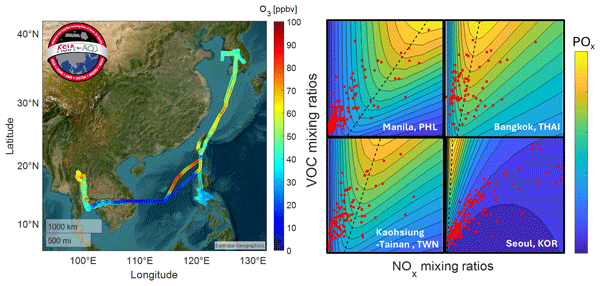

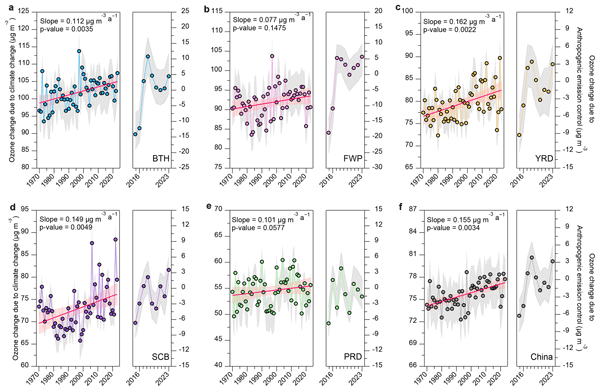
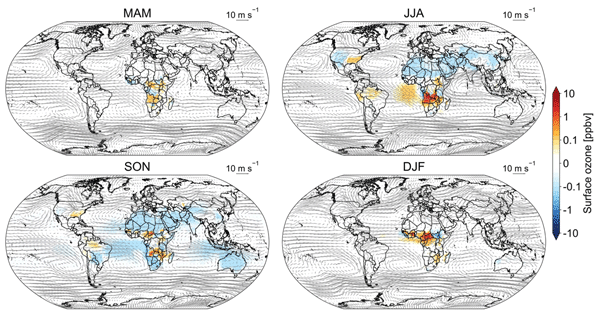
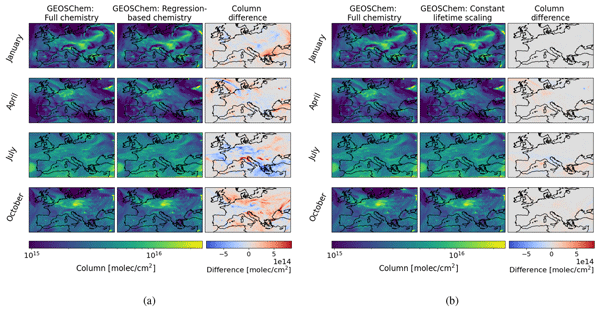
We examine the impact of diurnally varying African biomass burning (BB) emissions on tropospheric ozone using GEOS-Chem simulations with a high-resolution satellite-derived emission inventory. Compared to coarser temporal resolutions, incorporating diurnal variations leads to significant changes in surface ozone and atmospheric oxidation capacity. Our findings highlight the importance of accurately representing BB emission timing in chemical transport models to improve ozone predictions.
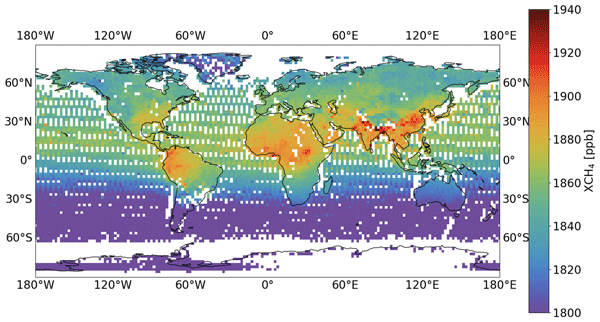
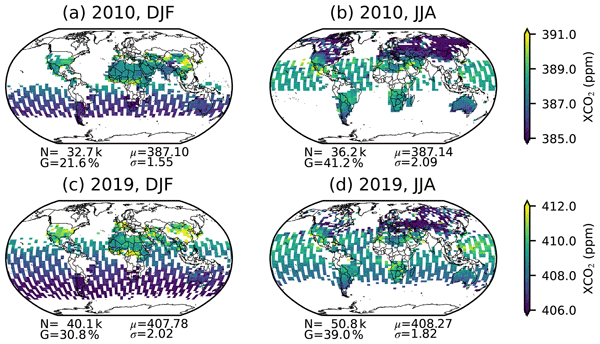
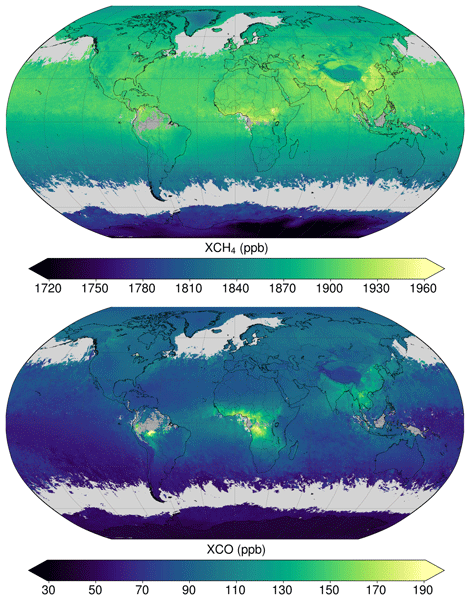
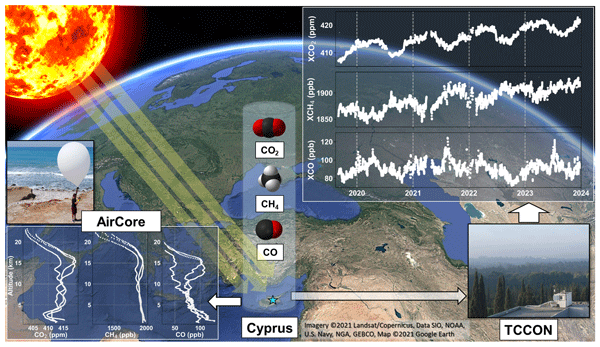
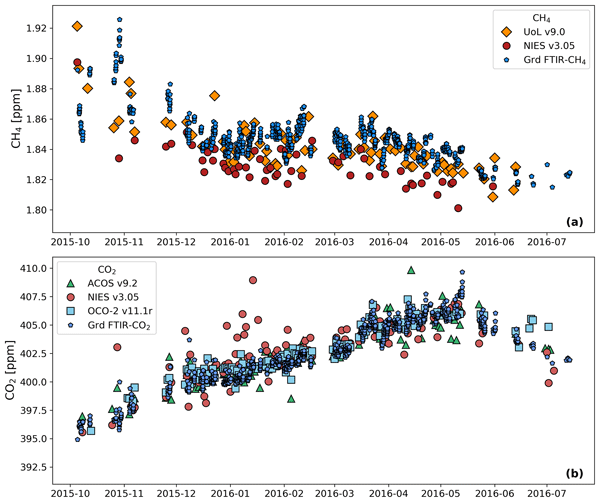
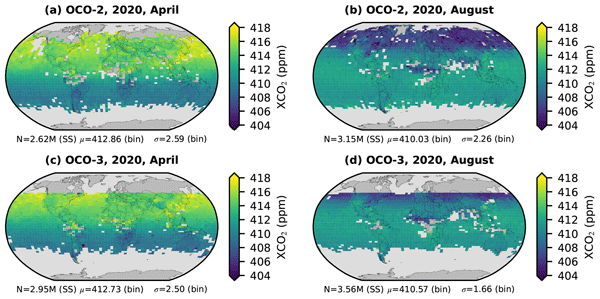
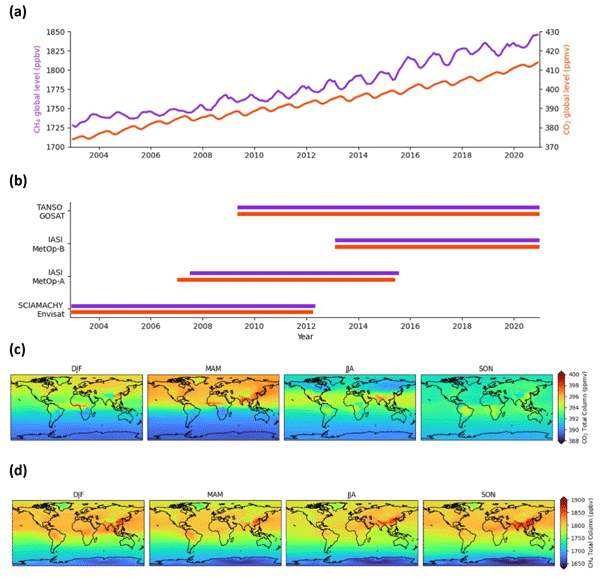
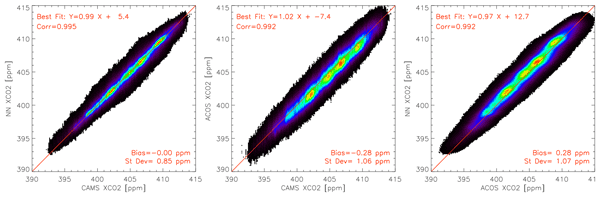
The Greenhouse Gases Observing Satellite-2 (GOSAT-2) is a satellite dedicated to measuring concentrations of greenhouse gases from space. Since its launch, the increase of CH4 and CO2 concentrations in the atmosphere is clear. The datasets obtained from GOSAT-2 are used in the Copernicus atmospheric services to monitor the climate, in light of the Paris Agreement. Here we present robust datasets of these gases from GOSAT-2, including a novel machine learning approach to data quality filtering.









Evaluation of measurement data – Guide to the expression of uncertainty in measurementissued by the JCGM, the error concept and the uncertainty concept are the same. Arguments in favor of the contrary were found not to be compelling. Neither was any evidence presented that
errorsand
uncertaintiesdefine a different relation between the measured and true values, nor is a Bayesian concept beyond the mere subjective probability referred to.