
Articles | Volume 26, issue 2
https://doi.org/10.5194/acp-26-983-2026
© Author(s) 2026. This work is distributed under
the Creative Commons Attribution 4.0 License.
the Creative Commons Attribution 4.0 License.
https://doi.org/10.5194/acp-26-983-2026
© Author(s) 2026. This work is distributed under
the Creative Commons Attribution 4.0 License.
the Creative Commons Attribution 4.0 License.
Research article
| 
21 Jan 2026
Research article |
| 21 Jan 2026
| 21 Jan 2026
Transported African Dust in the Lower Marine Atmospheric Boundary Layer is Internally Mixed with Sea Salt Contributing to Increased Hygroscopicity and a Lower Lidar Depolarization Ratio
Sujan Shrestha
Department of Atmospheric Sciences, Rosenstiel School of Marine, Atmospheric, and Earth Science, University of Miami, Miami, FL, USA
Robert E. Holz
CORRESPONDING AUTHOR

Space Science and Engineering Center (SSEC), University of Wisconsin-Madison, Madison, WI, USA
Willem J. Marais
Space Science and Engineering Center (SSEC), University of Wisconsin-Madison, Madison, WI, USA
Zachary Buckholtz
Space Science and Engineering Center (SSEC), University of Wisconsin-Madison, Madison, WI, USA
Ilya Razenkov
Space Science and Engineering Center (SSEC), University of Wisconsin-Madison, Madison, WI, USA
Edwin Eloranta
Space Science and Engineering Center (SSEC), University of Wisconsin-Madison, Madison, WI, USA
Jeffrey S. Reid
U.S. Naval Research Laboratory, Monterey, CA, USA
Hope E. Elliott
Department of Atmospheric Sciences, Rosenstiel School of Marine, Atmospheric, and Earth Science, University of Miami, Miami, FL, USA
now at: Department of Biological & Environmental Sciences, Wittenberg University, Springfield, OH, USA
Nurun Nahar Lata
Environmental Molecular Sciences Laboratory, Pacific Northwest National Laboratory, Richland, WA, USA
Zezhen Cheng
Environmental Molecular Sciences Laboratory, Pacific Northwest National Laboratory, Richland, WA, USA
Swarup China
Environmental Molecular Sciences Laboratory, Pacific Northwest National Laboratory, Richland, WA, USA
Edmund Blades
Department of Atmospheric Sciences, Rosenstiel School of Marine, Atmospheric, and Earth Science, University of Miami, Miami, FL, USA
Albert D. Ortiz
Department of Atmospheric Sciences, Rosenstiel School of Marine, Atmospheric, and Earth Science, University of Miami, Miami, FL, USA
Rebecca Chewitt-Lucas
Caribbean Institute for Meteorology and Hydrology, St. James, Barbados
Alyson Allen
Department of Atmospheric Sciences, Rosenstiel School of Marine, Atmospheric, and Earth Science, University of Miami, Miami, FL, USA
Devon Blades
Department of Atmospheric Sciences, Rosenstiel School of Marine, Atmospheric, and Earth Science, University of Miami, Miami, FL, USA
Ria Agrawal
Department of Atmospheric Sciences, Rosenstiel School of Marine, Atmospheric, and Earth Science, University of Miami, Miami, FL, USA
Elizabeth A. Reid
U.S. Naval Research Laboratory, Monterey, CA, USA
Jesus Ruiz-Plancarte
Department of Meteorology, Naval Postgraduate School, Monterey, CA, USA
Anthony Bucholtz
Department of Meteorology, Naval Postgraduate School, Monterey, CA, USA
Ryan Yamaguchi
Department of Meteorology, Naval Postgraduate School, Monterey, CA, USA
Qing Wang
Department of Meteorology, Naval Postgraduate School, Monterey, CA, USA
Thomas Eck
NASA Goddard Space Flight Center, Greenbelt, MD, USA
Elena Lind
NASA Goddard Space Flight Center, Greenbelt, MD, USA
Mira L. Pöhlker
Atmospheric Microphysics Department, Leibniz Institute for Tropospheric Research, Leipzig, Germany
Andrew P. Ault
Department of Chemistry, University of Michigan, Ann Arbor, MI, USA
Department of Atmospheric Sciences, Rosenstiel School of Marine, Atmospheric, and Earth Science, University of Miami, Miami, FL, USA
Related authors
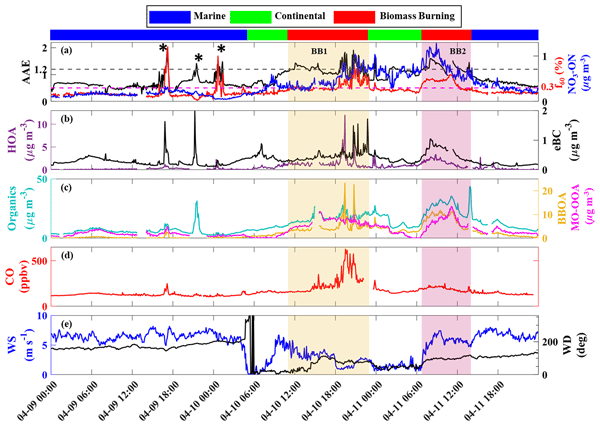
Sujan Shrestha, Shan Zhou, Manisha Mehra, Meghan Guagenti, Subin Yoon, Sergio L. Alvarez, Fangzhou Guo, Chun-Ying Chao, James H. Flynn III, Yuxuan Wang, Robert J. Griffin, Sascha Usenko, and Rebecca J. Sheesley
Atmos. Chem. Phys., 23, 10845–10867, https://doi.org/10.5194/acp-23-10845-2023, https://doi.org/10.5194/acp-23-10845-2023, 2023
Short summary
Short summary
We evaluated different methods for assessing the influence of long-range transport of biomass burning (BB) plumes at a coastal site in Texas, USA. We show that the aerosol composition and optical properties exhibited good agreement, while CO and acetonitrile trends were less specific for assessing BB source influence. Our results demonstrate that the network of aerosol optical measurements can be useful for identifying the influence of aged BB plumes in anthropogenically influenced areas.
Alexandra E. Ng, Manish Shrivastava, Brian Gaudet, Cenlin He, Zezhen Cheng, and William Vizuete
EGUsphere, https://doi.org/10.5194/egusphere-2026-5534, https://doi.org/10.5194/egusphere-2026-5534, 2026
This preprint is open for discussion and under review for Atmospheric Chemistry and Physics (ACP).
Short summary
Short summary
Wildfire smoke contains dark particles called tar balls that absorb sunlight and warm the air, but air quality and climate models usually leave them out. We added tar balls to a model of the southeastern United States and compared it with aircraft and ground measurements. Including them, and accounting for the coatings that form around them, raised the sunlight absorbed by smoke by up to 6 %. Models that omit tar balls may therefore underestimate warming from wildfires.
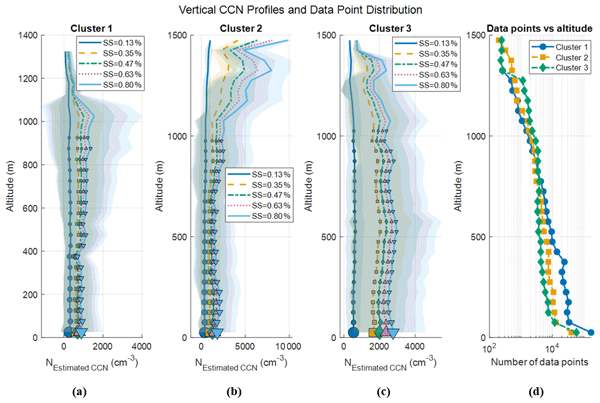
Fan Mei, Jian Wang, Israel Silber, Nurun Nahar Lata, Gregory W. Vandergrift, Jing Li, Bo Chen, Sarah D. Brooks, Michael P. Jensen, Min Deng, Damao Zhang, Darielle Dexheimer, Beat Schmid, Zezhen Cheng, and Swarup China
Atmos. Chem. Phys., 26, 13885–13908, https://doi.org/10.5194/acp-26-13885-2026, https://doi.org/10.5194/acp-26-13885-2026, 2026
Short summary
Short summary
Tethered balloon measurements from 149 flights during DOE ARM TRACER over Houston characterize vertical aerosol and CCN structure. Back-trajectory clustering identifies three air mass types – marine, mixed, and urban – with distinct profiles shaped by boundary-layer depth and coastal circulations. A case study shows mesoscale advection simultaneously transforms thermodynamic and aerosol conditions, underscoring the need to constrain meteorology before attributing cloud changes to aerosol forcing.

Alexander Sinyuk, Thomas F. Eck, Ilya Slutsker, Jasper Lewis, Petar Grigorov, Alexander Smirnov, Joel S. Schafer, Mikhail Sorokin, Elena Lind, and Pawan Gupta
Atmos. Meas. Tech., 19, 6125–6144, https://doi.org/10.5194/amt-19-6125-2026, https://doi.org/10.5194/amt-19-6125-2026, 2026
Short summary
Short summary
The new technique for the clouds screening of aerosol optical depth is presented. It employs measurements of the sky radiances at smallest scattering angle to detect cirrus clouds which otherwise are difficult to detect by other methods. The method employs the smoothness of the time series of measurements throughout a day as a criterion for cloud-free conditions. Sharp spikes in the time series are detected and associated with clouds.
Thomas F. Eck, Jeffrey S. Reid, Alexander Sinyuk, Pawan Gupta, Antti Arola, Ilya Slutsker, Brent N. Holben, Philippe Goloub, Oleg Dubovik, Joel S. Schafer, Mikhail G. Sorokin, Alexander Smirnov, Hongbin Yu, Dongchul Kim, Elena Lind, Jason Kraft, Elizabeth A. Reid, Aboubacry Diallo, Thierno Ndiaye, Africa Barreto, Sidi Baika, Lahouari Zeudmi-Sahraoui, Francisco Evora, Gael Dubois, Luc Blarel, Rachel T. Pinker, Isaac Abiodun Adimula, Jean Louis Rajot, Aliko Maman, Muguette Allegre, Cassandra Gaston, Peter Sealy, Edmund Blades, Rebecca Chewitt-Lucas, Ian Lau, David Barker, Adel Saad Alshihiween, Abdulrahman Alsaferan, Odbayar Mishigdorj, and Chogsom Jargalsaixan
EGUsphere, https://doi.org/10.5194/egusphere-2026-5531, https://doi.org/10.5194/egusphere-2026-5531, 2026
This preprint is open for discussion and under review for Atmospheric Chemistry and Physics (ACP).
Short summary
Short summary
The optical properties of airborne soil particles from major desert regions measured by ground based remote sensing retrievals are presented. The relative spectral absorption of these particles from the remote sensing data agree very well with absorption of soil dust samples measured in a laboratory. A large fraction of the optical effects were attributed to relatively small submicron sized dust particles which would also be more easily inhalable and therefore may impact human health.
Yuezhi Li, Ganesh S. Chelluboyina, Taveen S. Kapoor, Joseph V. Puthussery, Joshin Kumar, Guodong Ren, Jordan A. Hachtel, Zezhen Cheng, Nurun Nahar Lata, Gregory W. Vandergrift, Bejamin J. Sumlin, Chenchong Zhang, Dishit P. Ghumra, Swarup China, Rohan Mishra, and Rajan K. Chakrabarty
EGUsphere, https://doi.org/10.5194/egusphere-2026-4745, https://doi.org/10.5194/egusphere-2026-4745, 2026
This preprint is open for discussion and under review for Atmospheric Chemistry and Physics (ACP).
Short summary
Short summary
We investigated the airborne light-absorbing particles in a coastal urban environment. By combining field measurements with laboratory analyses and computer simulations, we found that a previously overlooked type of strongly light-absorbing organic particle potentially contributes to urban atmospheric warming and surface dimming. These particles, likely produced by combustion sources, affect climate not only in wildfire smoke but also in cities and therefore should be included in climate models.
James A. Christie, Theo Severud, Logan Forshee, Vanessa Selimovic, Siyuan Wang, Shatabdi Roy, Holly P. Lawson, Maria A. Garcia, A. Gannet Hallar, Haley Humble, John C. Lin, Paquita Zuidema, Kerri A. Pratt, and Cassandra J. Gaston
EGUsphere, https://doi.org/10.5194/egusphere-2026-5384, https://doi.org/10.5194/egusphere-2026-5384, 2026
This preprint is open for discussion and under review for Atmospheric Chemistry and Physics (ACP).
Short summary
Short summary
To understand winter particulate pollution in Salt Lake City (SLC), we directly measured N2O5 reactive uptake and aerosol composition. We find reactions are efficient under clean conditions, but suppressed during polluted periods by particulate nitrate. A 1D model demonstrates that this suppressed uptake limits further particulate accumulation during persistent pollution episodes. These direct measurements and modeling results show the importance of N2O5 reactions in pollutant production in SLC.
Mikael Witte, Roya Bahreini, Sierra Bollinger, Anthony Bucholtz, Patrick Chuang, Don Collins, Minghao Han, Mason Leandro, Alexander MacDonald, Andrew Metcalf, Bradley Ries, Nimya Sunil, Dongli Wang, and Lisa Welp
Earth Syst. Sci. Data Discuss., https://doi.org/10.5194/essd-2026-593, https://doi.org/10.5194/essd-2026-593, 2026
Preprint under review for ESSD
Short summary
Short summary
The Southern California Investigation of Low cloud and Land Aerosol (SCILLA) was an airborne experiment in June 2023. The goal was to understand how wind patterns and islands in the Southern California Bight affect airborne particulate matter and cloud drops. We flew a total of 20 flights. The aircraft had instruments to sample clouds, particulate matter, meteorology, and atmospheric gases. The paper describes how we flew, lists the instruments flown, and gives a summary of each flight.
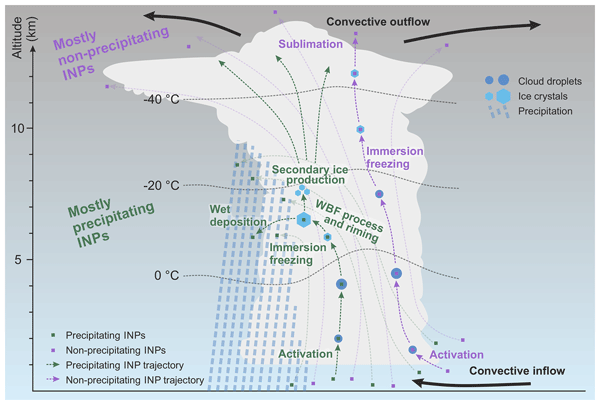
Jonas Schaefer, Sarah Grawe, Hans-Christian Clemen, Stephan Mertes, Johannes Schneider, Bruno Wetzel, Daniel Sauer, Jennifer Wolf, Laura Tomsche, Johanna Mayer, Roland Schrödner, Silvia Henning, Tina Jurkat-Witschas, Christiane Voigt, Helmut Ziereis, Theresa Harlaß, Mira Pöhlker, and Frank Stratmann
Atmos. Chem. Phys., 26, 12505–12520, https://doi.org/10.5194/acp-26-12505-2026, https://doi.org/10.5194/acp-26-12505-2026, 2026
Short summary
Short summary
Ice-nucleating particles (INP) are aerosol particles important for ice formation in clouds droplets and thereby influence climate. This study uses airborne measurements over Europe to show how INP are transported through thunderstorms. We show which particles are washed out and which are are transported into the higher troposphere, where they can again affect cloud ice formation. The findings improve understanding of atmospheric particle distribution and help refine climate models.
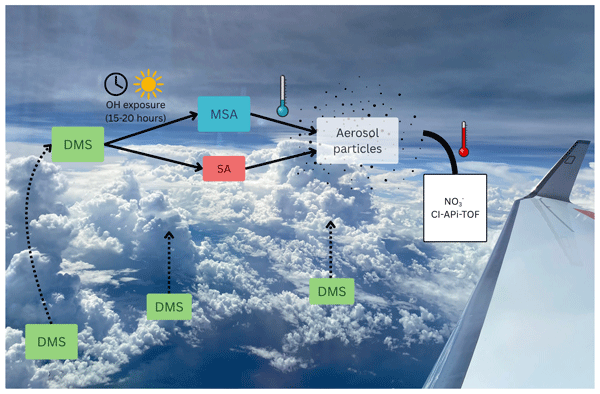
Hannah Klebach, Martin Heinritzi, Katharina Kaiser, Lisa Beck, Samuel Ruhl, Samira Atabakhsh, Nirvan Bhattacharyya, Lucía Caudillo-Plath, Philipp Joppe, Thomas Klimach, Peter Lloyd, Mira Pöhlker, Ulrich Pöschl, Sarah Richter, Douglas M. Russell, Johannes Schneider, Marcel Zauner-Wieczorek, and Joachim Curtius
Atmos. Chem. Phys., 26, 12355–12393, https://doi.org/10.5194/acp-26-12355-2026, https://doi.org/10.5194/acp-26-12355-2026, 2026
Short summary
Short summary
Marine atmospheric aerosols remain a major uncertainty in climate models. We report gas and particle phase measurements of two important aerosol forming vapours, sulfuric acid and methanesulfonic acid in the Indo-Pacific. We find that the latter typically dominates over sulfuric acid and contributes significantly to free tropospheric aerosol. Deep convection transports the precursor of both acids to the upper troposphere, providing a key aerosol source in the pristine remote Pacific Ocean.
Lianet Hernández Pardo, Joachim Curtius, Patrick Jöckel, J. Moritz Menken, Christopher Pöhlker, Mira Pöhlker, and Anna Possner
Atmos. Chem. Phys., 26, 12275–12293, https://doi.org/10.5194/acp-26-12275-2026, https://doi.org/10.5194/acp-26-12275-2026, 2026
Short summary
Short summary
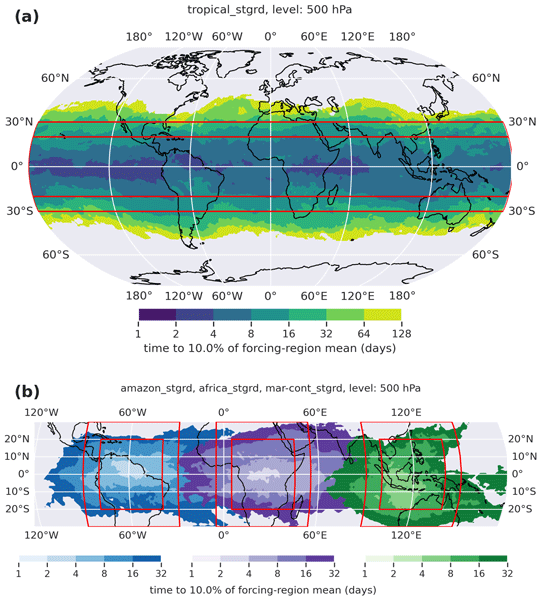
Many tiny particles are formed high in the tropical atmosphere, but their impact lower down is unclear. We studied how these particles move downward using long-term computer simulations. We found that particles can reach middle levels of the atmosphere within a week, carried by winds. These results help us understand how pollution and clouds might change as particles spread around the world.
Yifan Yang, Thomas Müller, Baseerat Romshoo, Jens Voigtländer, and Mira L. Pöhlker
EGUsphere, https://doi.org/10.5194/egusphere-2026-5074, https://doi.org/10.5194/egusphere-2026-5074, 2026
This preprint is open for discussion and under review for Atmospheric Chemistry and Physics (ACP).
Short summary
Short summary
Black carbon particles absorb sunlight and warm the atmosphere. After emission, they become coated by other airborne material, but this coating is not evenly distributed among particles. We found that differences in coating amount and particle size can strongly change the overall light absorption of black carbon. Accounting for this particle-to-particle variability can improve estimates of black carbon’s climate effects.
Rucha P. Wani, Devan L. Roper, Ria Agrawal, Esther J. Lim, Nick E. Rollins, and William M. Berelson
Biogeosciences, 23, 5625–5651, https://doi.org/10.5194/bg-23-5625-2026, https://doi.org/10.5194/bg-23-5625-2026, 2026
Short summary
Short summary
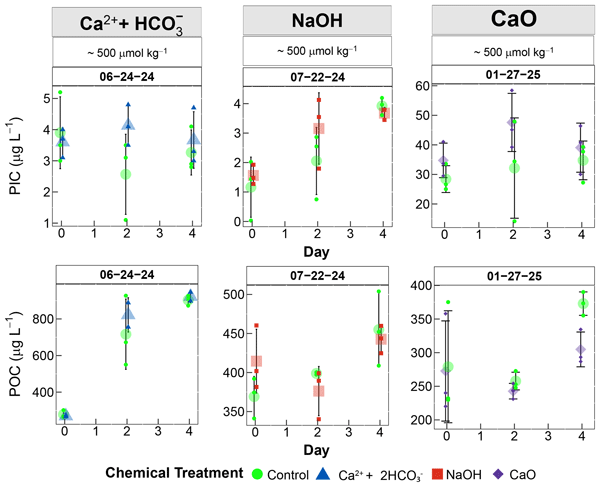
Ocean Alkalinity Enhancement is a climate change mitigation strategy that can reduce the amount of CO2 in our atmosphere. In this study we add three different sources of alkalinity to natural seawater to assess how these chemicals might change carbon partitioning within seawater. The alkalinity we added had little impact on the marine carbon system except that a 4-day exposure to ~1000 µmol kg–1 alkalinity from calcium oxide addition can negatively impact the production of organic matter.
Apoorva Pandey, Bryan K. Place, Thomas F. Hanisco, Jong-Uk Park, Elena S. Lind, Jason M. St. Clair, Erin R. Delaria, Glenn M. Wolfe, Ronaldo Lopez, Paul V. Zimba, and K. Lee Thornhill
EGUsphere, https://doi.org/10.5194/egusphere-2026-3479, https://doi.org/10.5194/egusphere-2026-3479, 2026
Short summary
Short summary
The burden and vertical distribution of formaldehyde affects air quality and health. Pandora ground instruments observe formaldehyde in the lower atmosphere using scattered sunlight. The quality of these continuous daytime measurements needs evaluation. We compared these measurements with aircraft observations at four U.S. East Coast sites and found strong agreement at all comparison sites. We also improved the Pandora algorithm to better capture the vertical distribution of formaldehyde.
Gavin Cornwell, Alla Zelenyuk-Imre, Gourihar Kulkarni, Nurun Nahar Lata, Kaizad Patel, Jennifer Yao, Zihua Zhu, Laura Fierce, Payton Beeler, Swarup China, Isabelle Steinke, and Susannah Burrows
EGUsphere, https://doi.org/10.5194/egusphere-2026-3882, https://doi.org/10.5194/egusphere-2026-3882, 2026
This preprint is open for discussion and under review for Atmospheric Chemistry and Physics (ACP).
Short summary
Short summary
Ice in clouds strongly affects rainfall and how much sunlight clouds reflect. We studied which airborne particles can trigger ice formation. We created soil-like mixtures and examined individual particles to see whether biological material and mineral dust were truly combined or stayed separate, and how this affected their ice formation. We found that the total amount of biological material was more important than how the particles were mixed.
Patrick C. Taylor, Armin Sorooshian, Rei Ueyama, Sebastian Schmidt, Ihab Abboud, Quincy Allison, Kevin Barry, Sebastian Becker, Holly A. Bender, Joseph R. Bennett, James B. Blair, Niklas Bohn, Linette Boisvert, Matthew D. Brown, Roelof Bruintjes, Anthony Bucholtz, Megan Buzanowicz, Brian Cairns, Filippo Calì Quaglia, Eduard Chemyakin, Bo Chen, Gao Chen, Hong Chen, Yu-Wen Chen, Zezhen Cheng, Swarup China, Dan Chirica, Yonghoon Choi, Peter Colarco, Brian Collister, Ewan Crosbie, Maurice J. Cross, Janet Daniels, Paul DeMott, Joshua P. DiGangi, Alcide Giorgio di Sarra, Glenn S. Diskin, Erica K. Dolinar, Eva-Lou Edwards, Samuel Ephraim, Nikolaos Evangeliou, Romanos Foskinis, Francesca Gallo, Lan Gao, José Luis Gómez-Amo, Daisy Gonzalez, Christine Groot Zwaaftink, Pawan Gupta, Ivan Heckman, Michael Hendrickson, Miguel Ricardo A. Hilario, Ken Hirata, Michelle Hofton, Andrew L. Holen, Ulas Im, Alia L. Khan, Ralph Kahn, Alexei V. Korolev, Sonia Kreidenweis, Thomas Krumpen, Nathan Kurtz, Leslie Lait, Bradley Lamkin, Jack Landy, Nurun Nahar Lata, Paul Lawson, Samuel LeBlanc, Sean Leavor, Jing Li, Thorsten Markus, Hal Maring, Andreas H. Massling, Camille Mavis, Flynn McGinnity, Kerry Meyer, Gabriel Mojica, Richard H. Moore, Parker Morris, Giovanni Muscari, Vikas Nataraja, Amin R. Nehrir, Athanasios Nenes, Edward P. Nowottnick, Matteo Ottaviani, Chelsea Parker, Ryan Patnaude, Michael Perez, Russell J. Perkins, Colten Peterson, Alek Petty, Stevie Phothisane, Chris Polashenski, Kerri A. Pratt, Kayla M. Preisler, John Prytherch, David Rabine, Jens Redemann, Ju-Mee Ryoo, Joseph S. Schlosser, Vanessa Selimovic, Michael A. Shook, Morgan Silverman, Henrik Skov, Alexander Smirnov, Cassidy Soloff, Amy Solomon, Snorre Stamnes, Azusa Takeishi, David R. Thompson, K. Lee Thornhill, Rachel Tilling, Michael Tjernström, Monica Tosco, Pedro C. Valdelomar, David Van Gilst, Jian Wang, Zhien Wang, Andrzej Wasilewski, Manfred Wendisch, Brent Wilder, Edward L. Winstead, Albert Wu, Peng Xian, Lauren M. Zamora, Jiaoshi Zhang, Lei Zhang, Lu Zhang, Luke Ziemba, and Paquita Zuidema
Earth Syst. Sci. Data Discuss., https://doi.org/10.5194/essd-2026-241, https://doi.org/10.5194/essd-2026-241, 2026
Preprint under review for ESSD
Short summary
Short summary
This article summarizes the data sets collected during the Arctic Radiation Cloud aerosol Sea ice Interaction eXperiment (ARCSIX), NASA's most comprehensive Arctic field campaign to date. The overarching goal was to quantify the contributions of surface, clouds, aerosol particles, and precipitation to summer sea ice melt. This paper describes the ARCSIX implementation including the flight strategy, instruments, complementary data sets, access, and usage details.
Aino Ovaska, Daniel Holmberg, Elio Rauth, Mansour Alghamdi, Paulo Artaxo, Eija Asmi, John Backman, Benjamin Bergmans, Matthew Boyer, Liezl Bredenkamp, Maurizio Busetto, Delano Campos De Oliveira, Juan Andrés Casquero-Vera, Darius Ceburnis, Tak Chan, Tommy Chan, Sebastien Conil, Daniele Contini, Suzanne Crumeyrolle, Valentin Duflot, Kostas Eleftheriadis, Johan Esveld, Ekaterina Ezhova, Markus Fiebig, Shahzad Gani, Olga Garmash, Francisco Gómez-Moreno, Roy M. Harrison, Andras Hoffer, Rakesh Hooda, Antti Hyvärinen, Tareq Hussein, Jorma Joutsensaari, Nikos Kalivitis, Heinz Kaminski, Jutta Kesti, Radovan Krejci, Adam Kristensson, Chongai Kuang, Markku Kulmala, Lauri Laakso, Ari Leskinen, Heikki Lihavainen, Andreas Massling, Maik Merkel, Steffen Noe, Jakub Ondracek, Noemí Perez, Jean-Eudes Petit, Tuukka Petäjä, Michael Pikridas, Christopher Pöhlker, Mira Pöhlker, Jean-Philippe Putaud, Ximeng Qi, Cristina Reche, Sergio Rodríguez, Petr Roztocil, Jean Sciare, Karine Sellegri, Dongjie Shang, Ashish Singh, Mikko Sipilä, Henrik Skov, Mar Sorribas, Tamanna Subba, Junying Sun, Peter Tunved, Ville Vakkari, Pieter G. Van Zyl, Aki Virkkula, Jens Voigtländer, Kay Weinhold, Alfred Wiedensohler, Hee-Jung Yoo, Putian Zhou, Kai Puolamäki, Tuomo Nieminen, Veli-Matti Kerminen, Victoria A. Sinclair, and Pauli Paasonen
Earth Syst. Sci. Data Discuss., https://doi.org/10.5194/essd-2026-415, https://doi.org/10.5194/essd-2026-415, 2026
Preprint under review for ESSD
Short summary
Short summary
All clouds form around aerosol particles, and their abundance influences cloud properties. In turn, clouds affect climate by changing how energy moves through the atmosphere, making them important for climate change. To better understand these interactions, we need accurate information on how many aerosol particles are in the atmosphere. Therefore, we have developed a new 21-year global dataset of particle concentrations relevant for cloud formation.
Matthias Kohl, Christoph Brühl, Holger Tost, Christos Xenofontos, Theodoros Christoudias, Sergey Gromov, Oliver Appel, Stephan Borrmann, Adam Bourassa, Pedro Campunzano-Jost, Yafang Cheng, Oliver Eppers, Karl D. Froyd, Bruna A. Holanda, Jose L. Jimenez, Patrick Jöckel, Philipp Joppe, Katharina Kaiser, Joseph M. Katich, Klaus Klingmüller, Franziska Köllner, Agnieszka Kupc, Anna Martin, Christopher Pöhlker, Mira L. Pöhlker, Ulrich Pöschl, Landon Rieger, Samuel Ruhl, Gregory P. Schill, Johannes Schneider, Christiane Schulz, Joshua P. Schwarz, Alexandra P. Tsimpidi, Ryan Vella, Christina J. Williamson, Yifan Yang, Daniel Zawada, Jos Lelieveld, and Andrea Pozzer
EGUsphere, https://doi.org/10.5194/egusphere-2026-3649, https://doi.org/10.5194/egusphere-2026-3649, 2026
Short summary
Short summary
Aerosols are crucial for Earth's climate, yet their vertical distribution remains poorly understood. We present first consistent global simulations of aerosol distributions and composition from the Earth's surface to the stratosphere, validated by extensive observations. Key findings include a global minimum in aerosol mass in the free troposphere, a significant contribution of organic aerosol in the lower stratosphere, and limited transport of primary particles to the stratosphere.
Hiren Jethva, Nickolay Krotkov, Omar Torres, Jungbin Mok, Gordon Labow, Elena Lind, Tom Eck, Wei Gao, George Janson, Scott Simpson, Darrin Sharp, Kathy Lantz, Charles Wilson, Africa Barreto, Rosa García, Sergey Korkin, and David Flittner
Atmos. Meas. Tech., 19, 4335–4365, https://doi.org/10.5194/amt-19-4335-2026, https://doi.org/10.5194/amt-19-4335-2026, 2026
Short summary
Short summary
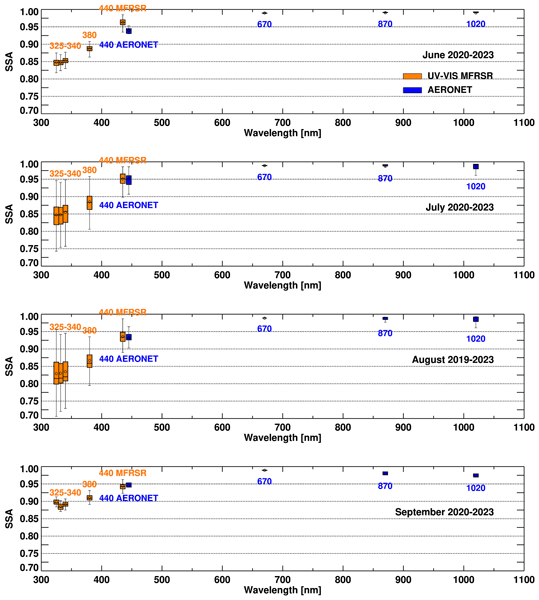
A synergistic ground-based remote sensing algorithm applied to Aerosol Robotic Network and Multifilter Rotating Shadowband Radiometer allowed retrievals of UV (ultraviolet)-Vis (visible) spectral aerosol absorption of Saharan dust at the Izaña Atmospheric Observatory. The retrieved dataset provides a valuable reference for evaluating satellite ultraviolet dust absorption inversions and further helps infer dust mineralogy to improve dust representation in Earth System Models.
Babu Suja Arun, Thomas Müller, Mira L. Pöhlker, Andreas Held, Christopher Pöhlker, Manuela van Pinxteren, Yifan Yang, Sabine Lüchtrath, Andreas Walbröl, Janna E. Rückert, Philipp Oehlke, Maik Merkel, and Birgit Wehner
Atmos. Chem. Phys., 26, 7287–7310, https://doi.org/10.5194/acp-26-7287-2026, https://doi.org/10.5194/acp-26-7287-2026, 2026
Short summary
Short summary
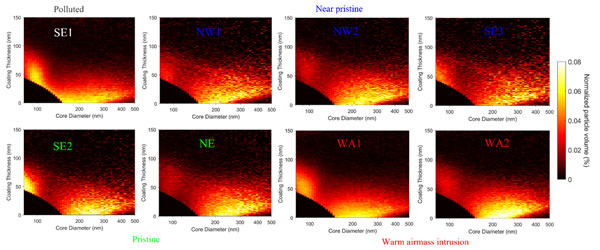
Black carbon (BC) aerosols absorb solar radiation and perturb the Arctic energy budget, yet in-situ studies of their microphysical properties and mixing state in the Arctic remain scarce. Based on observations from a shipborne expedition in the Arctic Ocean, we found substantial BC concentrations and showed that warm airmass intrusions enhanced BC levels. Aged BC exhibited enhanced light absorption. These findings will help improve the representation of BC in climate models.
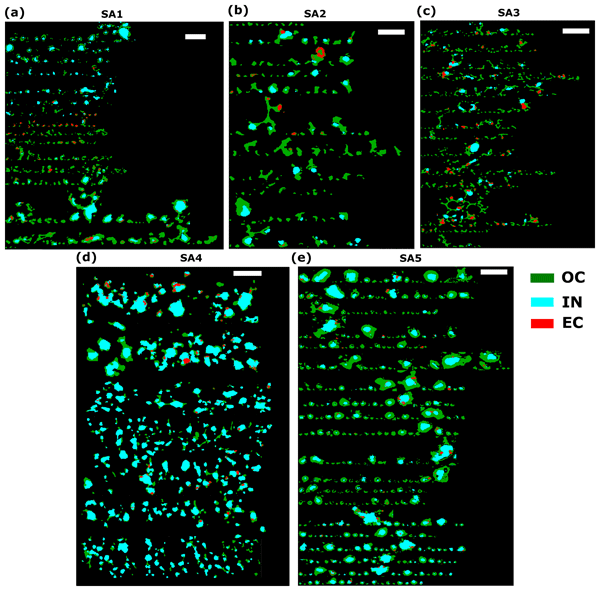
Nurun Nahar Lata, Trung Diep, Stefania Gilardoni, Mauro Mazzola, Zezhen Cheng, Ashfiqur Rahman, Mickey M. Rogers, Matthew Fraund, Matthew A. Marcus, Naruki Hiranuma, and Swarup China
Atmos. Chem. Phys., 26, 6611–6628, https://doi.org/10.5194/acp-26-6611-2026, https://doi.org/10.5194/acp-26-6611-2026, 2026
Short summary
Short summary
Ice in the Arctic clouds is initiated by rare particles, and their properties are not well understood due to atmospheric processing. By combining microscopy with freezing experiments, we found that both chemical composition and the thickness and morphological configuration of organic coatings influence ice formation. This finding highlights the importance of particle surface chemistry in cloud formation and offers new insights into how Arctic aerosols influence cloud formation.
David J. Simon, Jonas Schaefer, Jörg Hartmann, Benjamin Kirbus, Joshua Müller, Markus Hartmann, Bruno Wetzel, Laura Köhler, Anna-Marie Jörss, Kay Weinhold, Andreas Herber, Zsófia Jurányi, Silvia Henning, Gregory C. Roberts, Manfred Wendisch, Mira L. Pöhlker, and Frank Stratmann
EGUsphere, https://doi.org/10.5194/egusphere-2026-2215, https://doi.org/10.5194/egusphere-2026-2215, 2026
Short summary
Short summary
We investigate the occurrence of newly formed aerosol particles in the Arctic atmosphere by analyzing aerosol particle measurements conducted aboard a research aircraft in April 2024. We frequently detected newly formed particles at altitudes of up to 4 km, while many previous studies had predominantly found such particles close to the surface. Newly formed particles were associated with air mass transport from lower latitudes, the occurrence of clouds, as well as the presence of sea ice.
Aanan H. Schlief, Jared W. Marquis, Jianglong Zhang, Jeffrey S. Reid, and Steve Miller
EGUsphere, https://doi.org/10.5194/egusphere-2026-2225, https://doi.org/10.5194/egusphere-2026-2225, 2026
Short summary
Short summary
Two methods for retrieving nighttime aerosol optical depth, with the first method using reflected moonlight and the second method using emissions from artificial lights were intercompared using the Visible Infrared Imaging Radiometer Suite (VIIRS) Day-Night-Band data. This study indicates that both methods have skills in retrieving nighttime aerosol optical depth, and the combined use of both methods can improve data sampling rates.
Shravan Deshmukh, Laurent Poulain, Birgit Wehner, Silvia Henning, Hartmut Herrmann, and Mira Pöhlker
EGUsphere, https://doi.org/10.5194/egusphere-2026-1992, https://doi.org/10.5194/egusphere-2026-1992, 2026
Short summary
Short summary
Improved representation of aerosol hygroscopicity is critical for understanding how atmospheric particles influence cloud formation, climate, air quality, and human health. This work advances understanding of aerosol hygroscopicity by connecting laboratory measurements of organic aerosol properties with ambient observations through an explainable machine learning framework.
Yannick Emanuel Anders, Karoline Block, Mira Pöhlker, and Johannes Quaas
EGUsphere, https://doi.org/10.5194/egusphere-2026-1404, https://doi.org/10.5194/egusphere-2026-1404, 2026
Short summary
Short summary
Particles in the atmosphere can trigger the formation of cloud droplets, affecting cloud properties and climate. This study evaluates a new global dataset of these particles with measurements from 25 sites around the world. The variability in time and space and their conditional formation behaviour is analysed. The authors identify systematic biases and introduce a simple correction based on observations that greatly improves the dataset’s accuracy.
Joel Schafer, Thomas F. Eck, Ilya Slutsker, Pawan Gupta, Mikhail Sorokin, Alexander Sinyuk, and Alexander Smirnov
EGUsphere, https://doi.org/10.5194/egusphere-2026-1506, https://doi.org/10.5194/egusphere-2026-1506, 2026
Short summary
Short summary
A global network of ground-based instruments has been using moonlight to measure atmospheric aerosols at night, producing the world's largest such dataset. By developing a correction method that accounts for the Moon's complex and variable brightness, nighttime measurements now agree with daytime measurements to a high accuracy. This capability is critical because nighttime pollution can differ meaningfully from daytime levels.
Amit Singh Chandel, Chandan Sarangi, Nurun Nahar, Saqib Ahmad Zargar, Poul Cherian, Xena Mansoura, Vijay P. Kanawade, Bhishma Tyagi, Antti-Pekka Hyvärinen, Aki Virkkula, Harendra S. Negi, Swarup China, and Rakesh K. Hooda
EGUsphere, https://doi.org/10.5194/egusphere-2026-424, https://doi.org/10.5194/egusphere-2026-424, 2026
Short summary
Short summary
Dust storms reaching the western Himalayas often mix with pollution during transport. Using high-altitude measurements from May 2023, we show that this polluted dust has altered intrinsic optical properties, scattering and absorbing more sunlight than clean dust, with important implications for atmospheric heating and regional climate.
Davis Earley, Elena Lind, James Flynn, Subin Yoon, Sergio Alvarez, and Travis Griggs
EGUsphere, https://doi.org/10.5194/egusphere-2025-5179, https://doi.org/10.5194/egusphere-2025-5179, 2026
Short summary
Short summary
This paper focuses on the relationship between concentrations of trace gases measured at the surface and path averaged concentrations, known as vertical column densities, to produce a column to surface ratio, which is an estimation of the effective height of each trace gas’s vertical profile. In addition, sensitivity studies are performed to analyze the effect of uncertain aerosol information on the estimation of air mass factors through radiative transfer simulations.
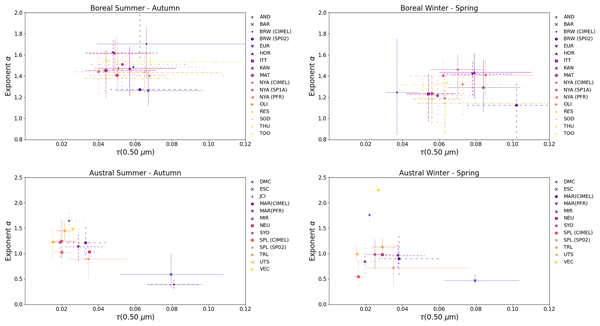
Simone Pulimeno, Angelo Lupi, Vito Vitale, Claudia Frangipani, Carlos Toledano, Stelios Kazadzis, Natalia Kouremeti, Christoph Ritter, Sandra Graßl, Kerstin Stebel, Vitali Fioletov, Ihab Abboud, Sandra Blindheim, Lynn Ma, Norm O'Neill, Piotr Sobolewski, Pawan Gupta, Elena Lind, Thomas F. Eck, Antti Hyvärinen, Veijo Aaltonen, Rigel Kivi, Janae Csavina, Dmitry Kabanov, Sergey M. Sakerin, Olga R. Sidorova, Robert S. Stone, Hagen Telg, Laura Riihimaki, Raul R. Cordero, Martin Radenz, Ronny Engelmann, Michel Van Roozendal, Anatoli Chaikovsky, Philippe Goloub, Junji Hisamitsu, and Mauro Mazzola
Atmos. Chem. Phys., 26, 1809–1846, https://doi.org/10.5194/acp-26-1809-2026, https://doi.org/10.5194/acp-26-1809-2026, 2026
Short summary
Short summary
This study analyzed aerosols optical properties over the Arctic and Antarctic to measure them even during long periods of darkness. It found that pollution in the Arctic is decreasing, likely due to European emission regulations, while wildfires are becoming a more important source of particles. In Antarctica, particle levels are higher near the coast than inland, and vary by season. These results help us better understand how air pollution and climate are changing at the Earth’s poles.
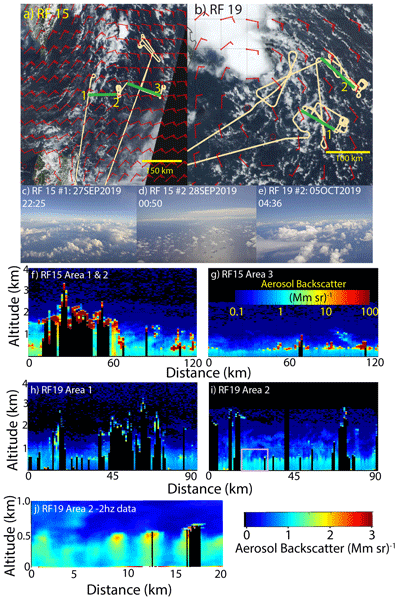
Jeffrey S. Reid, Robert E. Holz, Chris A. Hostetler, Richard A. Ferrare, Juli I. Rubin, Elizabeth J. Thompson, Susan C. van den Heever, Corey G. Amiot, Sharon P. Burton, Joshua P. DiGangi, Glenn S. Diskin, Joshua H. Cossuth, Daniel P. Eleuterio, Edwin W. Eloranta, Ralph Kuehn, Willem J. Marais, Hal B. Maring, Armin Sorooshian, Kenneth L. Thornhill, Charles R. Trepte, Jian Wang, Peng Xian, and Luke D. Ziemba
Atmos. Chem. Phys., 25, 18639–18673, https://doi.org/10.5194/acp-25-18639-2025, https://doi.org/10.5194/acp-25-18639-2025, 2025
Short summary
Short summary
We document air and ship born measurements of the vertical distribution of pollution and biomass burning aerosol particles transported within the Maritime Continent's monsoonal flows for 1000s of kilometers, and yet still exhibit intricate patterns around clouds near the ocean's surface. Findings demonstrate that, while aerosol transport occurs near the surface, there is heterogeneity in particle extinction that must be considered for both in situ observations and satellite retrievals.
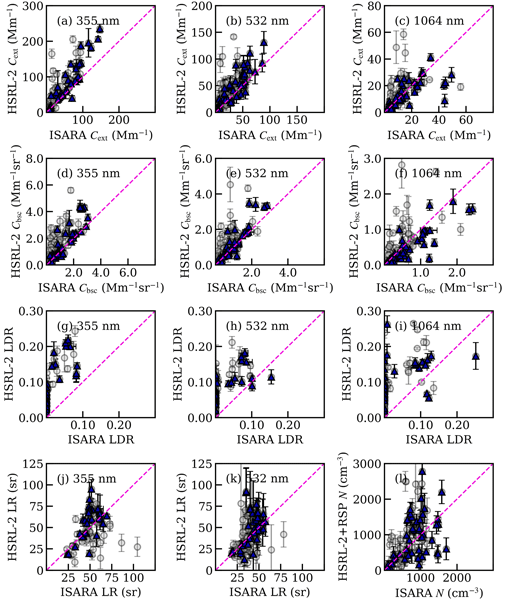
Joseph S. Schlosser, Sanja Dmitrovic, Ryan Bennett, Brian Cairns, Gao Chen, Glenn S. Diskin, Richard A. Ferrare, Johnathan W. Hair, Michael A. Jones, Jeffrey S. Reid, Taylor J. Shingler, Michael A. Shook, Armin Sorooshian, Kenneth L. Thornhill, Luke D. Ziemba, and Snorre Stamnes
Atmos. Meas. Tech., 18, 7187–7220, https://doi.org/10.5194/amt-18-7187-2025, https://doi.org/10.5194/amt-18-7187-2025, 2025
Short summary
Short summary
This study focuses on aerosol particles, which critically influence the atmosphere by scattering and absorbing light. To understand these interactions, airborne field campaigns deploy instruments that can measure these particles’ directly or indirectly via remote sensing. We introduce the In Situ Aerosol Retrieval Algorithm (ISARA) to ensure consistency between aerosol measurements and show that the two data sets generally align, with some deviation caused by the presence of larger particles.
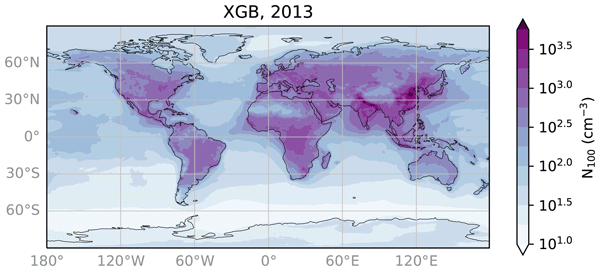
Aino Ovaska, Elio Rauth, Daniel Holmberg, Paulo Artaxo, John Backman, Benjamin Bergmans, Don Collins, Marco Aurélio Franco, Shahzad Gani, Roy M. Harrison, Rakesh K. Hooda, Tareq Hussein, Antti-Pekka Hyvärinen, Kerneels Jaars, Adam Kristensson, Markku Kulmala, Lauri Laakso, Ari Laaksonen, Nikolaos Mihalopoulos, Colin O'Dowd, Jakub Ondracek, Tuukka Petäjä, Kristina Plauškaitė, Mira Pöhlker, Ximeng Qi, Peter Tunved, Ville Vakkari, Alfred Wiedensohler, Kai Puolamäki, Tuomo Nieminen, Veli-Matti Kerminen, Victoria A. Sinclair, and Pauli Paasonen
Aerosol Research, 3, 589–618, https://doi.org/10.5194/ar-3-589-2025, https://doi.org/10.5194/ar-3-589-2025, 2025
Short summary
Short summary
We trained machine learning models to estimate the number of aerosol particles large enough to form clouds and generated daily estimates for the entire globe. The models performed well in many continental regions but struggled in remote and marine areas. Still, this approach offers a way to quantify these particles in areas that lack direct measurements, helping us understand their influence on clouds and climate on a global scale.
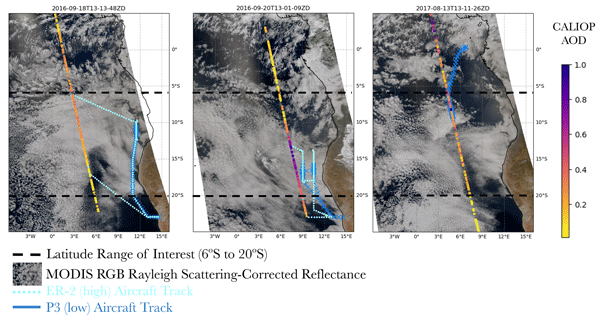
Meloë S. F. Kacenelenbogen, Ralph Kuehn, Nandana D. Amarasinghe, Kerry G. Meyer, Edward P. Nowottnick, Mark A. Vaughan, Hong Chen, Sebastian Schmidt, Richard A. Ferrare, Johnathan W. Hair, Robert C. Levy, Hongbin Yu, Paquita Zuidema, Robert Holz, and Willem Marais
Atmos. Chem. Phys., 25, 15875–15911, https://doi.org/10.5194/acp-25-15875-2025, https://doi.org/10.5194/acp-25-15875-2025, 2025
Short summary
Short summary
Aerosols perturb the radiation balance of the Earth–atmosphere system. To reduce the uncertainty in quantifying present-day climate change, we combine two satellite sensors and a model to assess the aerosol effects on radiation in all-sky conditions. Satellite-based and coincident aircraft measurements of aerosol radiative effects agree well over the southeast Atlantic. This constitutes a crucial first evaluation before we apply our method to more years and more regions of the world.
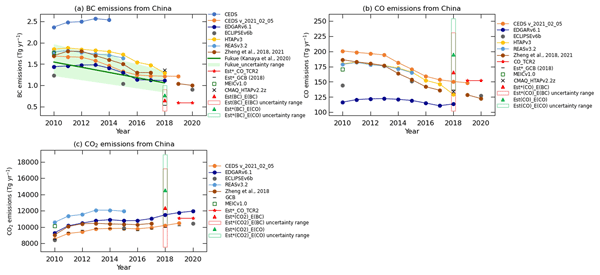
Phuc Thi Minh Ha, Yugo Kanaya, Kazuyo Yamaji, Syuichi Itahashi, Satoru Chatani, Takashi Sekiya, Maria Dolores Andrés Hernández, John Philip Burrows, Hans Schlager, Michael Lichtenstern, Mira Poehlker, and Bruna Holanda
Atmos. Chem. Phys., 25, 13429–13452, https://doi.org/10.5194/acp-25-13429-2025, https://doi.org/10.5194/acp-25-13429-2025, 2025
Short summary
Short summary
Black carbon and CO are important to climate change. EMeRGe airborne observation can identify the suitability of emission inventories used in the CMAQv5.0.2 model for Asian polluted regions. GFEDv4.1s is suitable for fire emissions. Anthropogenic BC and CO emissions from the Philippines (REASv2.1) are insufficient. The estimated Chinese emissions in 2018 are 0.65±0.25 TgBC, 166±65 TgCO, and 12.4±4.8 PgCO2, suggesting a reduction and increment for China's BC and CO emissions in the HTAPv2.2z inventory.
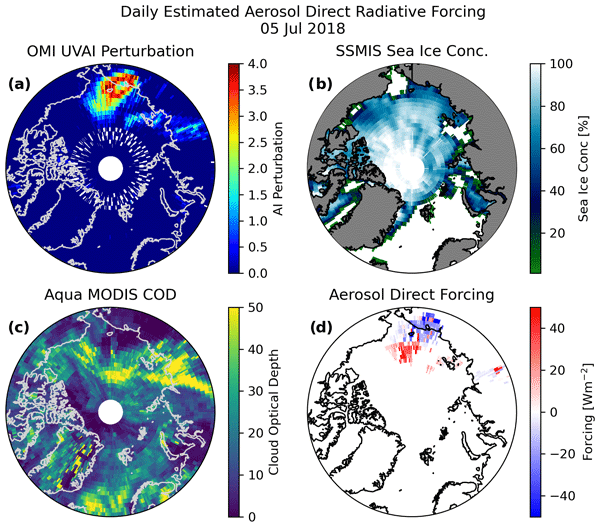
Blake T. Sorenson, Jianglong Zhang, Jeffrey S. Reid, and Peng Xian
Atmos. Chem. Phys., 25, 11867–11894, https://doi.org/10.5194/acp-25-11867-2025, https://doi.org/10.5194/acp-25-11867-2025, 2025
Short summary
Short summary
Plumes of wildfire smoke in the Arctic affect the Arctic radiative budget. Using a neural network and observations from satellite-based sensors, we analyzed the direct radiative forcing of smoke particles on the Arctic climate and estimated long-term forcing trends. Strong negative trends in aerosol direct radiative forcing were found in northern Russia and Canada, with positive trends found over parts of the Arctic Ocean. Overall, smoke plumes may act to counter future Arctic warming.
Hyungwon John Park, Jeffrey S. Reid, Peter F. Caffrey, Maria J. Chinita, and David H. Richter
Atmos. Meas. Tech., 18, 5017–5035, https://doi.org/10.5194/amt-18-5017-2025, https://doi.org/10.5194/amt-18-5017-2025, 2025
Short summary
Short summary
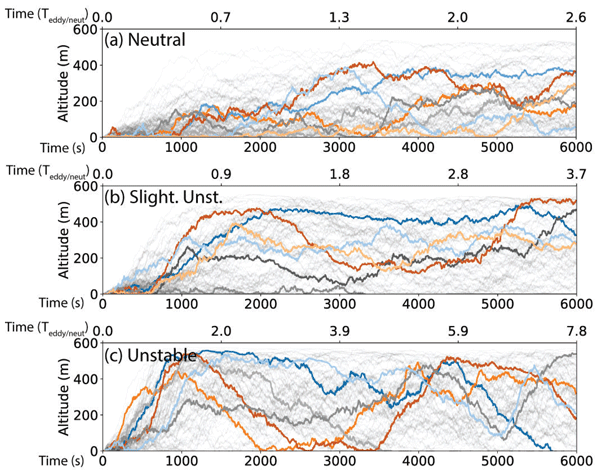
Sea spray affects air–sea interaction, cloud microphysics, and the radiative budget. However, meteorological processes at the wind-gust level complicate the physical interpretation of measured aerosol particle properties. We used meter-scale models to track the life history of thousands of particles under different conditions to show that investigators must account for key factors to link observations at aircraft level to sea-spray emissions at the ocean's surface.
Benjamin Torres, Luc Blarel, Philippe Goloub, Gaël Dubois, Maria Fernanda Sanchez-Barrero, Ioana Elisabeta Popovici, Fabrice Maupin, Elena Lind, Alexander Smirnov, Ilya Slutsker, Julien Chimot, Ramiro González, Michaël Sicard, Jean Marc Metzger, and Pierre Tulet
Atmos. Meas. Tech., 18, 4809–4838, https://doi.org/10.5194/amt-18-4809-2025, https://doi.org/10.5194/amt-18-4809-2025, 2025
Short summary
Short summary
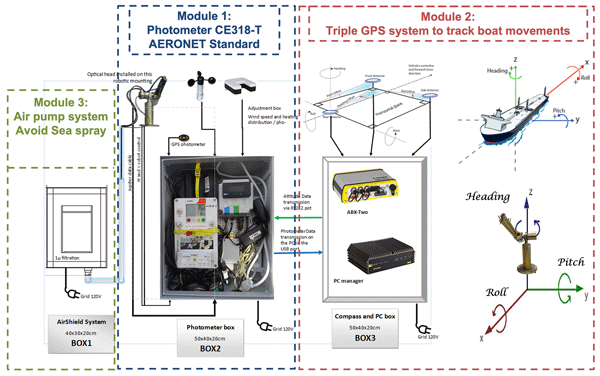
This study shows that it is possible to automatically monitor atmospheric aerosols from research vessels using automated instruments, following the same standards as AERONET (AErosol RObotic NETwork) land-based stations. By collecting 3 years of data in the Indian Ocean, we demonstrate that high-quality measurements can be made, even on a moving platform. These results open new possibilities for observing aerosols over the ocean and improving satellite data and climate studies.
Yifan Yang, Thomas Müller, Laurent Poulain, Samira Atabakhsh, Bruna A. Holanda, Jens Voigtländer, Shubhi Arora, and Mira L. Pöhlker
Atmos. Chem. Phys., 25, 8637–8655, https://doi.org/10.5194/acp-25-8637-2025, https://doi.org/10.5194/acp-25-8637-2025, 2025
Short summary
Short summary
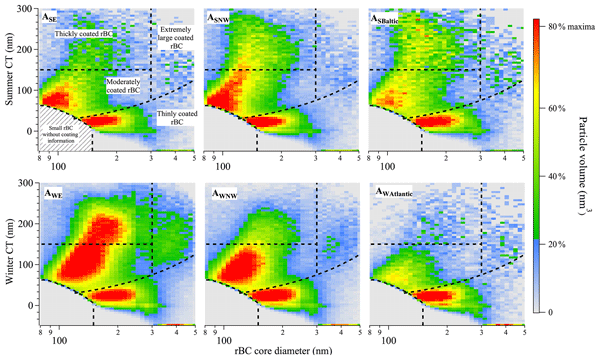
Black carbon (BC) is the major atmospheric aerosol that can absorb light and influence climate. We measured the physical properties of BC at a background site in Germany. In summer, BC particles were smaller and the mixture with other atmospheric components occurred during the daytime. In winter, emissions from residential heating significantly influenced BC's properties. Understanding these characteristics of BC can help to improve the accuracy of aerosol optic simulation.
Abdulamid A. Fakoya, Jens Redemann, Pablo E. Saide, Lan Gao, Logan T. Mitchell, Calvin Howes, Amie Dobracki, Ian Chang, Gonzalo A. Ferrada, Kristina Pistone, Samuel E. Leblanc, Michal Segal-Rozenhaimer, Arthur J. Sedlacek III, Thomas Eck, Brent Holben, Pawan Gupta, Elena Lind, Paquita Zuidema, Gregory Carmichael, and Connor J. Flynn
Atmos. Chem. Phys., 25, 7879–7902, https://doi.org/10.5194/acp-25-7879-2025, https://doi.org/10.5194/acp-25-7879-2025, 2025
Short summary
Short summary
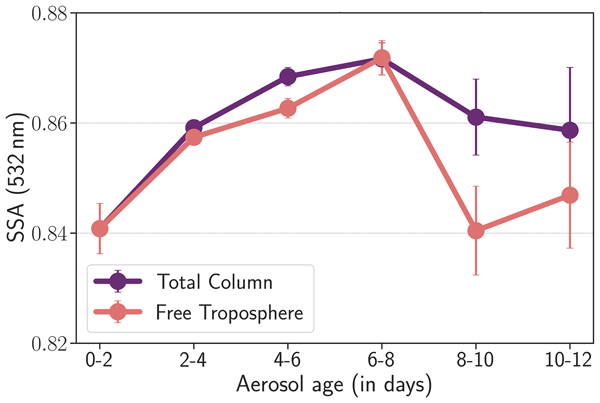
Tiny atmospheric particles from wildfire smoke impact the climate by interacting with sunlight and clouds, the extent of which is uncertain due to gaps in understanding how smoke changes over time. We developed a new method using remote sensing instruments to track how these particles evolve during atmospheric transport. Our results show that the ability of these particles to absorb sunlight increases as they travel. This discovery could help improve predictions of future climate scenarios.
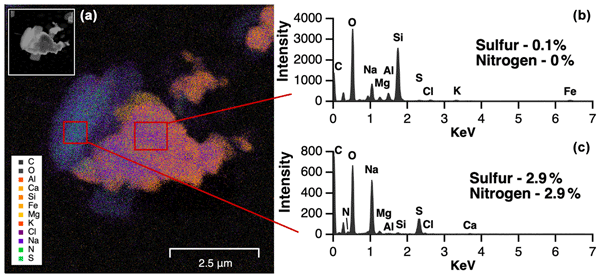
Haley M. Royer, Michael T. Sheridan, Hope E. Elliott, Edmund Blades, Nurun Nahar Lata, Zezhen Cheng, Swarup China, Zihua Zhu, Andrew P. Ault, and Cassandra J. Gaston
Atmos. Chem. Phys., 25, 5743–5759, https://doi.org/10.5194/acp-25-5743-2025, https://doi.org/10.5194/acp-25-5743-2025, 2025
Short summary
Short summary
Saharan dust transported across the Atlantic to the Caribbean, South America, and North America is hypothesized to undergo chemical processing by acids that enhances cloud droplet formation and nutrient availability. In this study, chemical analysis performed on African dust deposited over Barbados shows that acid tracers are found mostly on sea salt and smoke particles, rather than dust, indicating that dust particles undergo minimal chemical processing.
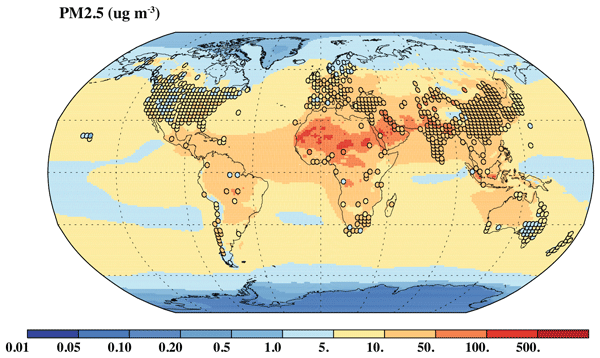
Natalie M. Mahowald, Longlei Li, Julius Vira, Marje Prank, Douglas S. Hamilton, Hitoshi Matsui, Ron L. Miller, P. Louis Lu, Ezgi Akyuz, Daphne Meidan, Peter Hess, Heikki Lihavainen, Christine Wiedinmyer, Jenny Hand, Maria Grazia Alaimo, Célia Alves, Andres Alastuey, Paulo Artaxo, Africa Barreto, Francisco Barraza, Silvia Becagli, Giulia Calzolai, Shankararaman Chellam, Ying Chen, Patrick Chuang, David D. Cohen, Cristina Colombi, Evangelia Diapouli, Gaetano Dongarra, Konstantinos Eleftheriadis, Johann Engelbrecht, Corinne Galy-Lacaux, Cassandra Gaston, Dario Gomez, Yenny González Ramos, Roy M. Harrison, Chris Heyes, Barak Herut, Philip Hopke, Christoph Hüglin, Maria Kanakidou, Zsofia Kertesz, Zbigniew Klimont, Katriina Kyllönen, Fabrice Lambert, Xiaohong Liu, Remi Losno, Franco Lucarelli, Willy Maenhaut, Beatrice Marticorena, Randall V. Martin, Nikolaos Mihalopoulos, Yasser Morera-Gómez, Adina Paytan, Joseph Prospero, Sergio Rodríguez, Patricia Smichowski, Daniela Varrica, Brenna Walsh, Crystal L. Weagle, and Xi Zhao
Atmos. Chem. Phys., 25, 4665–4702, https://doi.org/10.5194/acp-25-4665-2025, https://doi.org/10.5194/acp-25-4665-2025, 2025
Short summary
Short summary
Aerosol particles are an important part of the Earth system, but their concentrations are spatially and temporally heterogeneous, as well as being variable in size and composition. Here, we present a new compilation of PM2.5 and PM10 aerosol observations, focusing on the spatial variability across different observational stations, including composition, and demonstrate a method for comparing the data sets to model output.
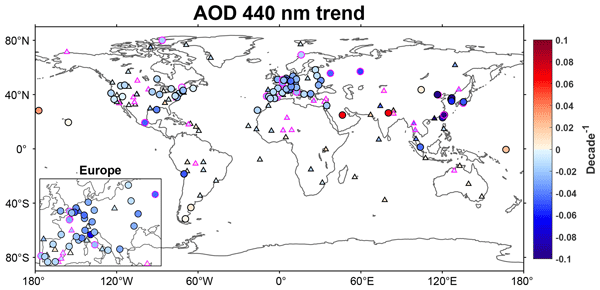
Zhenyu Zhang, Jing Li, Huizheng Che, Yueming Dong, Oleg Dubovik, Thomas Eck, Pawan Gupta, Brent Holben, Jhoon Kim, Elena Lind, Trailokya Saud, Sachchida Nand Tripathi, and Tong Ying
Atmos. Chem. Phys., 25, 4617–4637, https://doi.org/10.5194/acp-25-4617-2025, https://doi.org/10.5194/acp-25-4617-2025, 2025
Short summary
Short summary
We used ground-based remote sensing data from the Aerosol Robotic Network to examine long-term trends in aerosol characteristics. We found aerosol loadings generally decreased globally, and aerosols became more scattering. These changes are closely related to variations in aerosol compositions, such as decreased anthropogenic emissions over East Asia, Europe, and North America; increased anthropogenic sources over northern India; and increased dust activity over the Arabian Peninsula.
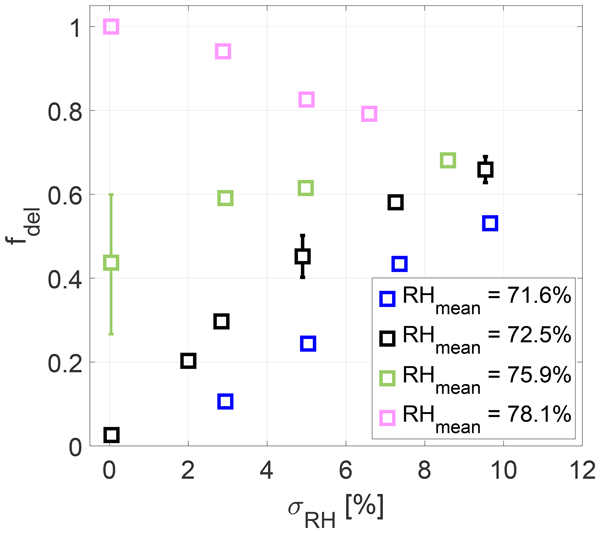
Dennis Niedermeier, Rasmus Hoffmann, Silvio Schmalfuss, Wiebke Frey, Fabian Senf, Olaf Hellmuth, Mira Pöhlker, and Frank Stratmann
Aerosol Research, 3, 219–230, https://doi.org/10.5194/ar-3-219-2025, https://doi.org/10.5194/ar-3-219-2025, 2025
Short summary
Short summary
This study examines the deliquescence behavior of NaCl particles in a turbulent humidity field using the wind tunnel LACIS-T (Turbulent Leipzig Aerosol Cloud Interaction Simulator). The results show that turbulent relative humidity (RH) fluctuations affect the number of deliquesced particles, depending on the mean RH, strength of humidity fluctuations, and particle residence time. It turns out that, in addition to the mean RH, it is essential to consider humidity fluctuations and particle history when determining the phase state of the deliquescent particles.
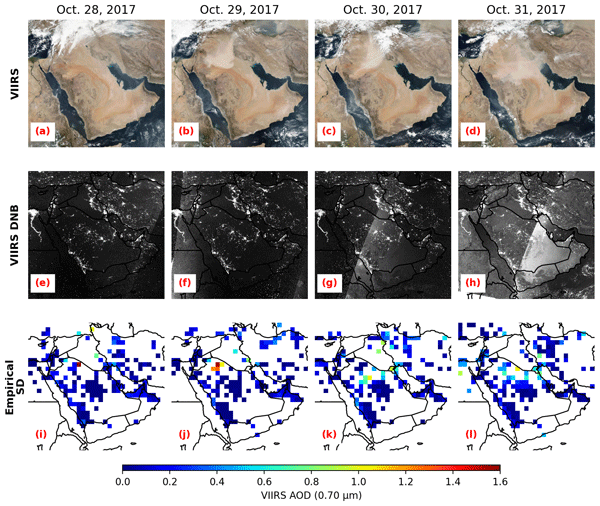
Jianglong Zhang, Jeffrey S. Reid, Blake T. Sorenson, Steven D. Miller, Miguel O. Román, Zhuosen Wang, Robert J. D. Spurr, Shawn Jaker, Thomas F. Eck, and Juli I. Rubin
Atmos. Meas. Tech., 18, 1787–1810, https://doi.org/10.5194/amt-18-1787-2025, https://doi.org/10.5194/amt-18-1787-2025, 2025
Short summary
Short summary
Using observations from the Visible Infrared Imaging Radiometer Suite day–night band, we developed a method for constructing gridded nighttime aerosol optical thickness (AOT) data based on the spatial derivative of measured top-of-atmosphere attenuated upwelling artificial lights at night. The gridded nighttime AOT retrievals, compared against Aerosol Robotic Network data, show reasonable skill levels for potential data assimilation, air quality, and climate studies of significant events.
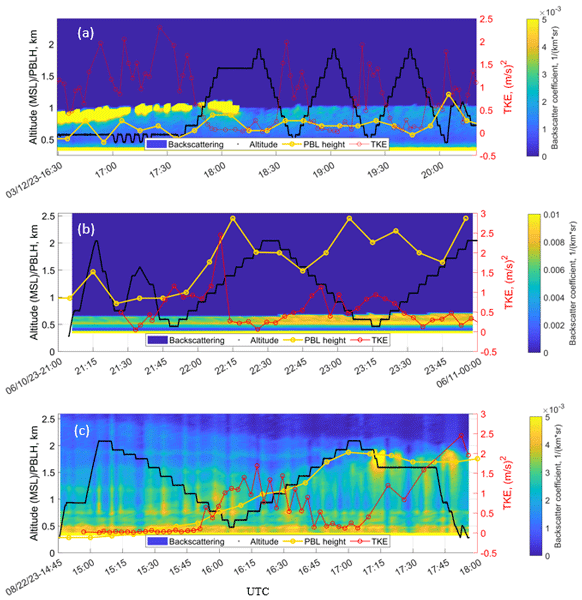
Fan Mei, Qi Zhang, Damao Zhang, Jerome D. Fast, Gourihar Kulkarni, Mikhail S. Pekour, Christopher R. Niedek, Susanne Glienke, Israel Silber, Beat Schmid, Jason M. Tomlinson, Hardeep S. Mehta, Xena Mansoura, Zezhen Cheng, Gregory W. Vandergrift, Nurun Nahar Lata, Swarup China, and Zihua Zhu
Atmos. Chem. Phys., 25, 3425–3444, https://doi.org/10.5194/acp-25-3425-2025, https://doi.org/10.5194/acp-25-3425-2025, 2025
Short summary
Short summary
This study highlights the unique capability of the ArcticShark, an uncrewed aerial system, in measuring vertically resolved atmospheric properties. Data from 32 research flights in 2023 reveal seasonal patterns and correlations with conventional measurements. The consistency and complementarity of in situ and remote sensing methods are highlighted. The study demonstrates the ArcticShark’s versatility in bridging data gaps and improving the understanding of vertical atmospheric structures.
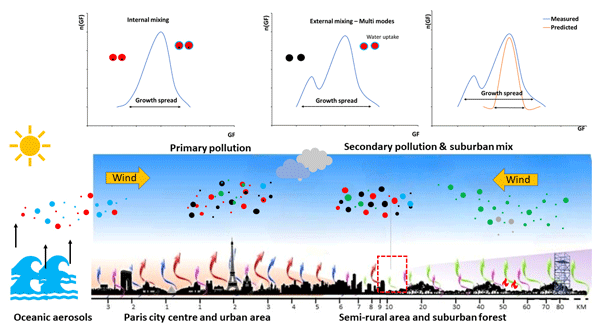
Shravan Deshmukh, Laurent Poulain, Birgit Wehner, Silvia Henning, Jean-Eudes Petit, Pauline Fombelle, Olivier Favez, Hartmut Herrmann, and Mira Pöhlker
Atmos. Chem. Phys., 25, 741–758, https://doi.org/10.5194/acp-25-741-2025, https://doi.org/10.5194/acp-25-741-2025, 2025
Short summary
Short summary
Aerosol hygroscopicity has been investigated at a sub-urban site in Paris; analysis shows the sub-saturated regime's measured hygroscopicity and the chemically derived hygroscopic growth, shedding light on the large effect of external particle mixing and its influence on predicting hygroscopicity.
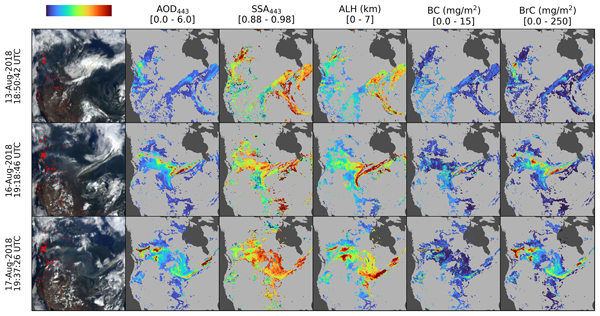
Myungje Choi, Alexei Lyapustin, Gregory L. Schuster, Sujung Go, Yujie Wang, Sergey Korkin, Ralph Kahn, Jeffrey S. Reid, Edward J. Hyer, Thomas F. Eck, Mian Chin, David J. Diner, Olga Kalashnikova, Oleg Dubovik, Jhoon Kim, and Hans Moosmüller
Atmos. Chem. Phys., 24, 10543–10565, https://doi.org/10.5194/acp-24-10543-2024, https://doi.org/10.5194/acp-24-10543-2024, 2024
Short summary
Short summary
This paper introduces a retrieval algorithm to estimate two key absorbing components in smoke (black carbon and brown carbon) using DSCOVR EPIC measurements. Our analysis reveals distinct smoke properties, including spectral absorption, layer height, and black carbon and brown carbon, over North America and central Africa. The retrieved smoke properties offer valuable observational constraints for modeling radiative forcing and informing health-related studies.
Kira Zeider, Grace Betito, Anthony Bucholtz, Peng Xian, Annette Walker, and Armin Sorooshian
Atmos. Chem. Phys., 24, 9059–9083, https://doi.org/10.5194/acp-24-9059-2024, https://doi.org/10.5194/acp-24-9059-2024, 2024
Short summary
Short summary
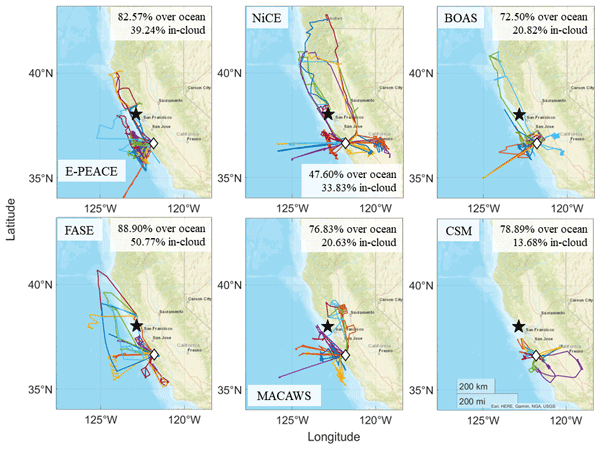
The predominant wind direction along the California coast (northerly) reverses several times during the summer (to southerly). The effects of these wind reversals on aerosol and cloud characteristics are not well understood. Using data from multiple datasets we found that southerly flow periods had enhanced signatures of anthropogenic emissions due to shipping and continental sources, and clouds had more but smaller droplets.
Manfred Wendisch, Susanne Crewell, André Ehrlich, Andreas Herber, Benjamin Kirbus, Christof Lüpkes, Mario Mech, Steven J. Abel, Elisa F. Akansu, Felix Ament, Clémantyne Aubry, Sebastian Becker, Stephan Borrmann, Heiko Bozem, Marlen Brückner, Hans-Christian Clemen, Sandro Dahlke, Georgios Dekoutsidis, Julien Delanoë, Elena De La Torre Castro, Henning Dorff, Regis Dupuy, Oliver Eppers, Florian Ewald, Geet George, Irina V. Gorodetskaya, Sarah Grawe, Silke Groß, Jörg Hartmann, Silvia Henning, Lutz Hirsch, Evelyn Jäkel, Philipp Joppe, Olivier Jourdan, Zsofia Jurányi, Michail Karalis, Mona Kellermann, Marcus Klingebiel, Michael Lonardi, Johannes Lucke, Anna E. Luebke, Maximilian Maahn, Nina Maherndl, Marion Maturilli, Bernhard Mayer, Johanna Mayer, Stephan Mertes, Janosch Michaelis, Michel Michalkov, Guillaume Mioche, Manuel Moser, Hanno Müller, Roel Neggers, Davide Ori, Daria Paul, Fiona M. Paulus, Christian Pilz, Felix Pithan, Mira Pöhlker, Veronika Pörtge, Maximilian Ringel, Nils Risse, Gregory C. Roberts, Sophie Rosenburg, Johannes Röttenbacher, Janna Rückert, Michael Schäfer, Jonas Schaefer, Vera Schemann, Imke Schirmacher, Jörg Schmidt, Sebastian Schmidt, Johannes Schneider, Sabrina Schnitt, Anja Schwarz, Holger Siebert, Harald Sodemann, Tim Sperzel, Gunnar Spreen, Bjorn Stevens, Frank Stratmann, Gunilla Svensson, Christian Tatzelt, Thomas Tuch, Timo Vihma, Christiane Voigt, Lea Volkmer, Andreas Walbröl, Anna Weber, Birgit Wehner, Bruno Wetzel, Martin Wirth, and Tobias Zinner
Atmos. Chem. Phys., 24, 8865–8892, https://doi.org/10.5194/acp-24-8865-2024, https://doi.org/10.5194/acp-24-8865-2024, 2024
Short summary
Short summary
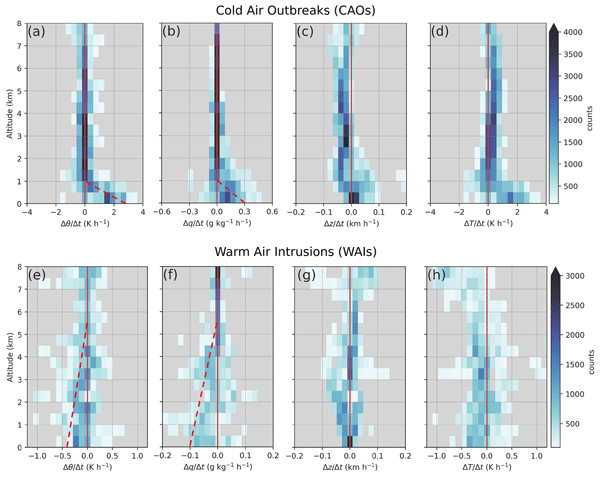
The Arctic is warming faster than the rest of the globe. Warm-air intrusions (WAIs) into the Arctic may play an important role in explaining this phenomenon. Cold-air outbreaks (CAOs) out of the Arctic may link the Arctic climate changes to mid-latitude weather. In our article, we describe how to observe air mass transformations during CAOs and WAIs using three research aircraft instrumented with state-of-the-art remote-sensing and in situ measurement devices.
Luiz A. T. Machado, Jürgen Kesselmeier, Santiago Botía, Hella van Asperen, Meinrat O. Andreae, Alessandro C. de Araújo, Paulo Artaxo, Achim Edtbauer, Rosaria R. Ferreira, Marco A. Franco, Hartwig Harder, Sam P. Jones, Cléo Q. Dias-Júnior, Guido G. Haytzmann, Carlos A. Quesada, Shujiro Komiya, Jost Lavric, Jos Lelieveld, Ingeborg Levin, Anke Nölscher, Eva Pfannerstill, Mira L. Pöhlker, Ulrich Pöschl, Akima Ringsdorf, Luciana Rizzo, Ana M. Yáñez-Serrano, Susan Trumbore, Wanda I. D. Valenti, Jordi Vila-Guerau de Arellano, David Walter, Jonathan Williams, Stefan Wolff, and Christopher Pöhlker
Atmos. Chem. Phys., 24, 8893–8910, https://doi.org/10.5194/acp-24-8893-2024, https://doi.org/10.5194/acp-24-8893-2024, 2024
Short summary
Short summary
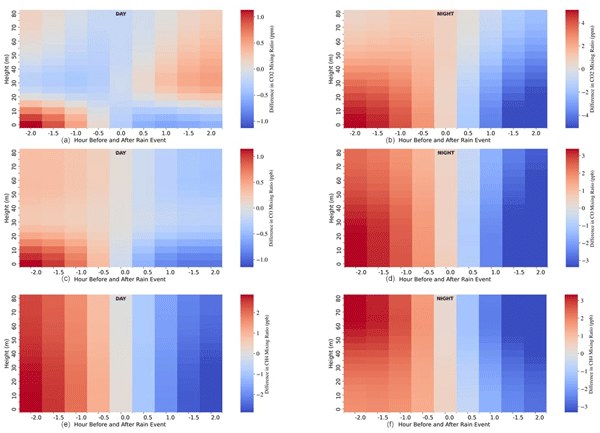
Composite analysis of gas concentration before and after rainfall, during the day and night, gives insight into the complex relationship between trace gas variability and precipitation. The analysis helps us to understand the sources and sinks of trace gases within a forest ecosystem. It elucidates processes that are not discernible under undisturbed conditions and contributes to a deeper understanding of the trace gas life cycle and its intricate interactions with cloud dynamics in the Amazon.
Baseerat Romshoo, Jaikrishna Patil, Tobias Michels, Thomas Müller, Marius Kloft, and Mira Pöhlker
Atmos. Chem. Phys., 24, 8821–8846, https://doi.org/10.5194/acp-24-8821-2024, https://doi.org/10.5194/acp-24-8821-2024, 2024
Short summary
Short summary
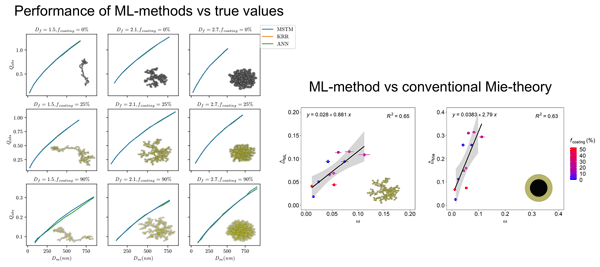
Through the use of our machine-learning-based optical model, realistic BC morphologies can be incorporated into atmospheric science applications that require highly accurate results with minimal computational resources. The results of the study demonstrate that the predictions of single-scattering albedo (ω) and mass absorption cross-section (MAC) were improved over the conventional Mie-based predictions when using the machine learning method.
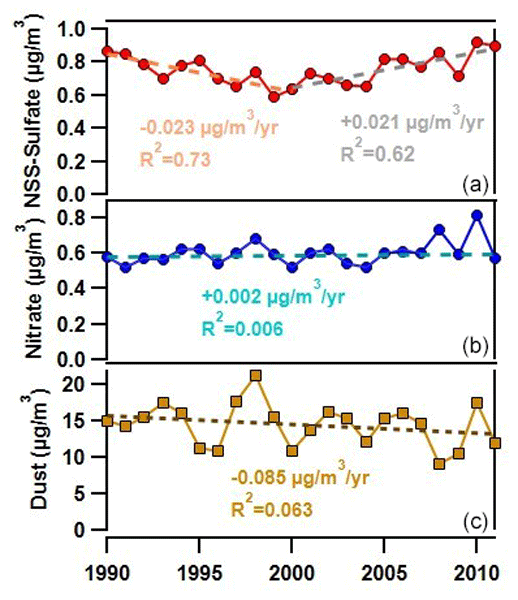
Cassandra J. Gaston, Joseph M. Prospero, Kristen Foley, Havala O. T. Pye, Lillian Custals, Edmund Blades, Peter Sealy, and James A. Christie
Atmos. Chem. Phys., 24, 8049–8066, https://doi.org/10.5194/acp-24-8049-2024, https://doi.org/10.5194/acp-24-8049-2024, 2024
Short summary
Short summary
To understand how changing emissions have impacted aerosols in remote regions, we measured nitrate and sulfate in Barbados and compared them to model predictions from EPA’s Air QUAlity TimE Series (EQUATES). Nitrate was stable, except for spikes in 2008 and 2010 due to transported smoke. Sulfate decreased in the 1990s due to reductions in sulfur dioxide (SO2) in the US and Europe; then it increased in the 2000s, likely due to anthropogenic emissions from Africa.
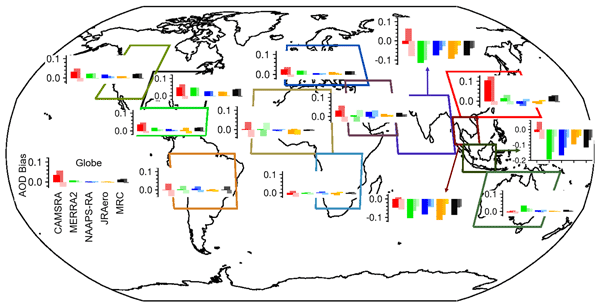
Peng Xian, Jeffrey S. Reid, Melanie Ades, Angela Benedetti, Peter R. Colarco, Arlindo da Silva, Tom F. Eck, Johannes Flemming, Edward J. Hyer, Zak Kipling, Samuel Rémy, Tsuyoshi Thomas Sekiyama, Taichu Tanaka, Keiya Yumimoto, and Jianglong Zhang
Atmos. Chem. Phys., 24, 6385–6411, https://doi.org/10.5194/acp-24-6385-2024, https://doi.org/10.5194/acp-24-6385-2024, 2024
Short summary
Short summary
The study compares and evaluates monthly AOD of four reanalyses (RA) and their consensus (i.e., ensemble mean). The basic verification characteristics of these RA versus both AERONET and MODIS retrievals are presented. The study discusses the strength of each RA and identifies regions where divergence and challenges are prominent. The RA consensus usually performs very well on a global scale in terms of how well it matches the observational data, making it a good choice for various applications.
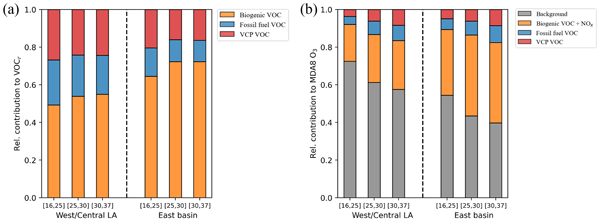
Qindan Zhu, Rebecca H. Schwantes, Matthew Coggon, Colin Harkins, Jordan Schnell, Jian He, Havala O. T. Pye, Meng Li, Barry Baker, Zachary Moon, Ravan Ahmadov, Eva Y. Pfannerstill, Bryan Place, Paul Wooldridge, Benjamin C. Schulze, Caleb Arata, Anthony Bucholtz, John H. Seinfeld, Carsten Warneke, Chelsea E. Stockwell, Lu Xu, Kristen Zuraski, Michael A. Robinson, J. Andrew Neuman, Patrick R. Veres, Jeff Peischl, Steven S. Brown, Allen H. Goldstein, Ronald C. Cohen, and Brian C. McDonald
Atmos. Chem. Phys., 24, 5265–5286, https://doi.org/10.5194/acp-24-5265-2024, https://doi.org/10.5194/acp-24-5265-2024, 2024
Short summary
Short summary
Volatile organic compounds (VOCs) fuel the production of air pollutants like ozone and particulate matter. The representation of VOC chemistry remains challenging due to its complexity in speciation and reactions. Here, we develop a chemical mechanism, RACM2B-VCP, that better represents VOC chemistry in urban areas such as Los Angeles. We also discuss the contribution of VOCs emitted from volatile chemical products and other anthropogenic sources to total VOC reactivity and O3.
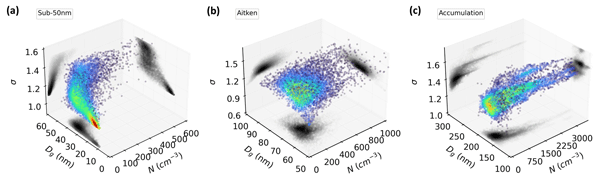
Gabriela R. Unfer, Luiz A. T. Machado, Paulo Artaxo, Marco A. Franco, Leslie A. Kremper, Mira L. Pöhlker, Ulrich Pöschl, and Christopher Pöhlker
Atmos. Chem. Phys., 24, 3869–3882, https://doi.org/10.5194/acp-24-3869-2024, https://doi.org/10.5194/acp-24-3869-2024, 2024
Short summary
Short summary
Amazonian aerosols and their interactions with precipitation were studied by understanding them in a 3D space based on three parameters that characterize the concentration and size distribution of aerosols. The results showed characteristic arrangements regarding seasonal and diurnal cycles, as well as when interacting with precipitation. The use of this 3D space appears to be a promising tool for aerosol population analysis and for model validation and parameterization.
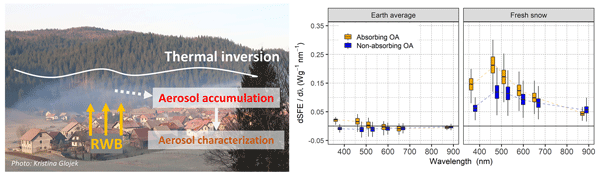
Andrea Cuesta-Mosquera, Kristina Glojek, Griša Močnik, Luka Drinovec, Asta Gregorič, Martin Rigler, Matej Ogrin, Baseerat Romshoo, Kay Weinhold, Maik Merkel, Dominik van Pinxteren, Hartmut Herrmann, Alfred Wiedensohler, Mira Pöhlker, and Thomas Müller
Atmos. Chem. Phys., 24, 2583–2605, https://doi.org/10.5194/acp-24-2583-2024, https://doi.org/10.5194/acp-24-2583-2024, 2024
Short summary
Short summary
This study evaluated the air pollution and climate impacts of residential-wood-burning particle emissions from a rural European site. The authors investigate the optical and physical properties that connect the aerosol emissions with climate by evaluating atmospheric radiative impacts via simple-forcing calculations. The study contributes to reducing the lack of information on the understanding of the optical properties of air pollution from anthropogenic sources.
Natalie M. Mahowald, Longlei Li, Julius Vira, Marje Prank, Douglas S. Hamilton, Hitoshi Matsui, Ron L. Miller, Louis Lu, Ezgi Akyuz, Daphne Meidan, Peter Hess, Heikki Lihavainen, Christine Wiedinmyer, Jenny Hand, Maria Grazia Alaimo, Célia Alves, Andres Alastuey, Paulo Artaxo, Africa Barreto, Francisco Barraza, Silvia Becagli, Giulia Calzolai, Shankarararman Chellam, Ying Chen, Patrick Chuang, David D. Cohen, Cristina Colombi, Evangelia Diapouli, Gaetano Dongarra, Konstantinos Eleftheriadis, Corinne Galy-Lacaux, Cassandra Gaston, Dario Gomez, Yenny González Ramos, Hannele Hakola, Roy M. Harrison, Chris Heyes, Barak Herut, Philip Hopke, Christoph Hüglin, Maria Kanakidou, Zsofia Kertesz, Zbiginiw Klimont, Katriina Kyllönen, Fabrice Lambert, Xiaohong Liu, Remi Losno, Franco Lucarelli, Willy Maenhaut, Beatrice Marticorena, Randall V. Martin, Nikolaos Mihalopoulos, Yasser Morera-Gomez, Adina Paytan, Joseph Prospero, Sergio Rodríguez, Patricia Smichowski, Daniela Varrica, Brenna Walsh, Crystal Weagle, and Xi Zhao
Earth Syst. Sci. Data Discuss., https://doi.org/10.5194/essd-2024-1, https://doi.org/10.5194/essd-2024-1, 2024
Preprint withdrawn
Short summary
Short summary
Aerosol particles can interact with incoming solar radiation and outgoing long wave radiation, change cloud properties, affect photochemistry, impact surface air quality, and when deposited impact surface albedo of snow and ice, and modulate carbon dioxide uptake by the land and ocean. Here we present a new compilation of aerosol observations including composition, a methodology for comparing the datasets to model output, and show the implications of these results using one model.
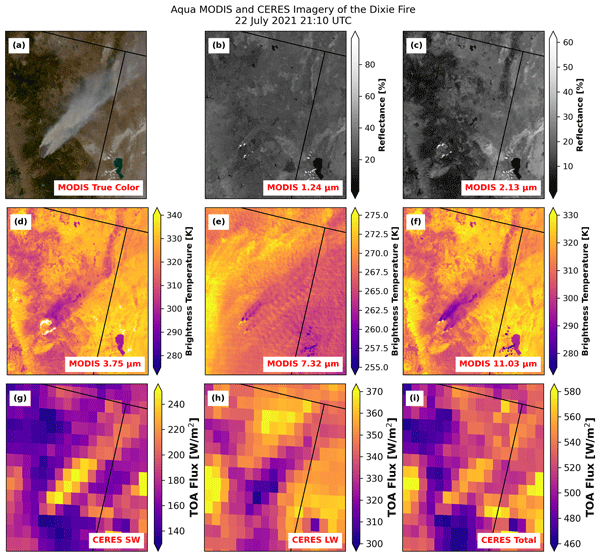
Blake T. Sorenson, Jeffrey S. Reid, Jianglong Zhang, Robert E. Holz, William L. Smith Sr., and Amanda Gumber
Atmos. Chem. Phys., 24, 1231–1248, https://doi.org/10.5194/acp-24-1231-2024, https://doi.org/10.5194/acp-24-1231-2024, 2024
Short summary
Short summary
Smoke particles are typically submicron in size and assumed to have negligible impacts at the thermal infrared spectrum. However, we show that infrared signatures can be observed over dense smoke plumes from satellites. We found that giant particles are unlikely to be the dominant cause. Rather, co-transported water vapor injected to the middle to upper troposphere and surface cooling beneath the plume due to shadowing are significant, with the surface cooling effect being the most dominant.
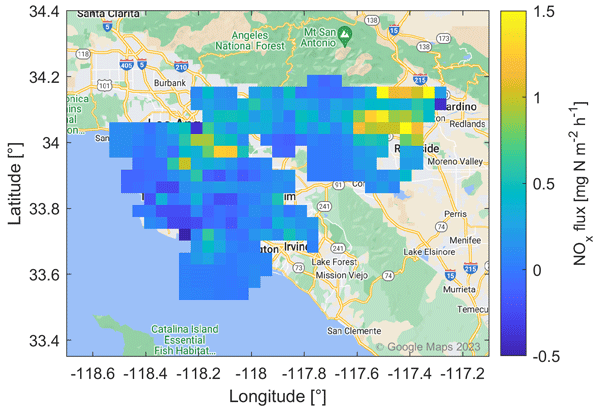
Clara M. Nussbaumer, Bryan K. Place, Qindan Zhu, Eva Y. Pfannerstill, Paul Wooldridge, Benjamin C. Schulze, Caleb Arata, Ryan Ward, Anthony Bucholtz, John H. Seinfeld, Allen H. Goldstein, and Ronald C. Cohen
Atmos. Chem. Phys., 23, 13015–13028, https://doi.org/10.5194/acp-23-13015-2023, https://doi.org/10.5194/acp-23-13015-2023, 2023
Short summary
Short summary
NOx is a precursor to hazardous tropospheric ozone and can be emitted from various anthropogenic sources. It is important to quantify NOx emissions in urban environments to improve the local air quality, which still remains a challenge, as sources are heterogeneous in space and time. In this study, we calculate NOx emissions over Los Angeles, based on aircraft measurements in June 2021, and compare them to a local emission inventory, which we find mostly overpredicts the measured values.
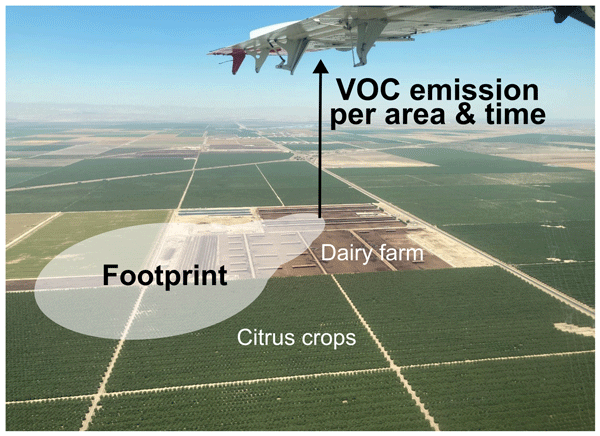
Eva Y. Pfannerstill, Caleb Arata, Qindan Zhu, Benjamin C. Schulze, Roy Woods, John H. Seinfeld, Anthony Bucholtz, Ronald C. Cohen, and Allen H. Goldstein
Atmos. Chem. Phys., 23, 12753–12780, https://doi.org/10.5194/acp-23-12753-2023, https://doi.org/10.5194/acp-23-12753-2023, 2023
Short summary
Short summary
The San Joaquin Valley is an agricultural area with poor air quality. Organic gases drive the formation of hazardous air pollutants. Agricultural emissions of these gases are not well understood and have rarely been quantified at landscape scale. By combining aircraft-based emission measurements with land cover information, we found mis- or unrepresented emission sources. Our results help in understanding of pollution sources and in improving predictions of air quality in agricultural regions.
Sujan Shrestha, Shan Zhou, Manisha Mehra, Meghan Guagenti, Subin Yoon, Sergio L. Alvarez, Fangzhou Guo, Chun-Ying Chao, James H. Flynn III, Yuxuan Wang, Robert J. Griffin, Sascha Usenko, and Rebecca J. Sheesley
Atmos. Chem. Phys., 23, 10845–10867, https://doi.org/10.5194/acp-23-10845-2023, https://doi.org/10.5194/acp-23-10845-2023, 2023
Short summary
Short summary
We evaluated different methods for assessing the influence of long-range transport of biomass burning (BB) plumes at a coastal site in Texas, USA. We show that the aerosol composition and optical properties exhibited good agreement, while CO and acetonitrile trends were less specific for assessing BB source influence. Our results demonstrate that the network of aerosol optical measurements can be useful for identifying the influence of aged BB plumes in anthropogenically influenced areas.
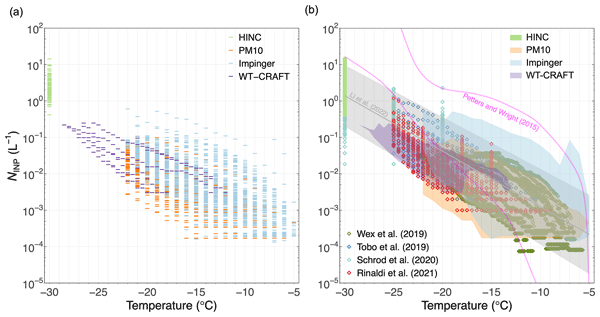
Guangyu Li, Elise K. Wilbourn, Zezhen Cheng, Jörg Wieder, Allison Fagerson, Jan Henneberger, Ghislain Motos, Rita Traversi, Sarah D. Brooks, Mauro Mazzola, Swarup China, Athanasios Nenes, Ulrike Lohmann, Naruki Hiranuma, and Zamin A. Kanji
Atmos. Chem. Phys., 23, 10489–10516, https://doi.org/10.5194/acp-23-10489-2023, https://doi.org/10.5194/acp-23-10489-2023, 2023
Short summary
Short summary
In this work, we present results from an Arctic field campaign (NASCENT) in Ny-Ålesund, Svalbard, on the abundance, variability, physicochemical properties, and potential sources of ice-nucleating particles (INPs) relevant for mixed-phase cloud formation. This work improves the data coverage of Arctic INPs and aerosol properties, allowing for the validation of models predicting cloud microphysical and radiative properties of mixed-phase clouds in the rapidly warming Arctic.
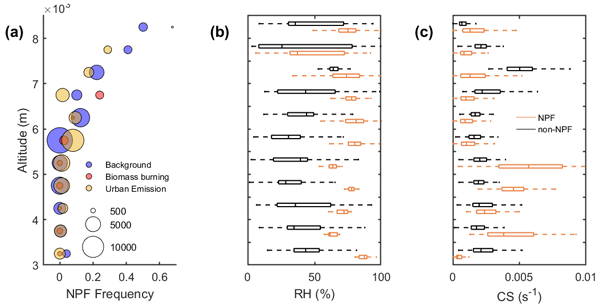
Qian Xiao, Jiaoshi Zhang, Yang Wang, Luke D. Ziemba, Ewan Crosbie, Edward L. Winstead, Claire E. Robinson, Joshua P. DiGangi, Glenn S. Diskin, Jeffrey S. Reid, K. Sebastian Schmidt, Armin Sorooshian, Miguel Ricardo A. Hilario, Sarah Woods, Paul Lawson, Snorre A. Stamnes, and Jian Wang
Atmos. Chem. Phys., 23, 9853–9871, https://doi.org/10.5194/acp-23-9853-2023, https://doi.org/10.5194/acp-23-9853-2023, 2023
Short summary
Short summary
Using recent airborne measurements, we show that the influences of anthropogenic emissions, transport, convective clouds, and meteorology lead to new particle formation (NPF) under a variety of conditions and at different altitudes in tropical marine environments. NPF is enhanced by fresh urban emissions in convective outflow but is suppressed in air masses influenced by aged urban emissions where reactive precursors are mostly consumed while particle surface area remains relatively high.
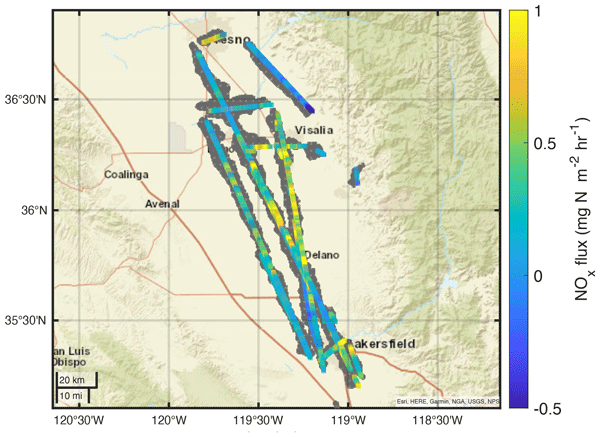
Qindan Zhu, Bryan Place, Eva Y. Pfannerstill, Sha Tong, Huanxin Zhang, Jun Wang, Clara M. Nussbaumer, Paul Wooldridge, Benjamin C. Schulze, Caleb Arata, Anthony Bucholtz, John H. Seinfeld, Allen H. Goldstein, and Ronald C. Cohen
Atmos. Chem. Phys., 23, 9669–9683, https://doi.org/10.5194/acp-23-9669-2023, https://doi.org/10.5194/acp-23-9669-2023, 2023
Short summary
Short summary
Nitrogen oxide (NOx) is a hazardous air pollutant, and it is the precursor of short-lived climate forcers like tropospheric ozone and aerosol particles. While NOx emissions from transportation has been strictly regulated, soil NOx emissions are overlooked. We use the airborne flux measurements to observe NOx emissions from highways and urban and cultivated soil land cover types. We show non-negligible soil NOx emissions, which are significantly underestimated in current model simulations.
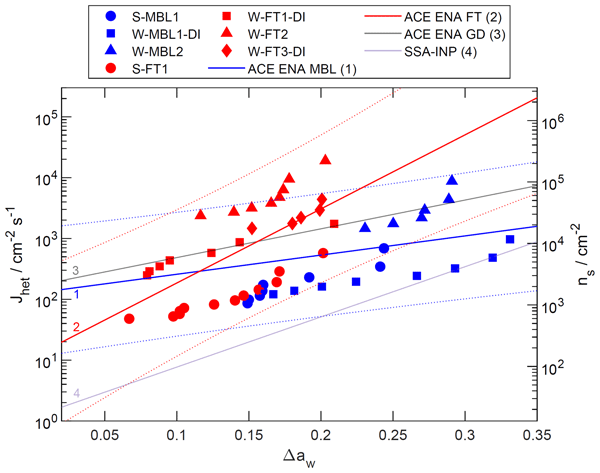
Daniel A. Knopf, Peiwen Wang, Benny Wong, Jay M. Tomlin, Daniel P. Veghte, Nurun N. Lata, Swarup China, Alexander Laskin, Ryan C. Moffet, Josephine Y. Aller, Matthew A. Marcus, and Jian Wang
Atmos. Chem. Phys., 23, 8659–8681, https://doi.org/10.5194/acp-23-8659-2023, https://doi.org/10.5194/acp-23-8659-2023, 2023
Short summary
Short summary
Ambient particle populations and associated ice-nucleating particles (INPs)
were examined from particle samples collected on board aircraft in the marine
boundary layer and free troposphere in the eastern North Atlantic during
summer and winter. Chemical imaging shows distinct differences in the
particle populations seasonally and with sampling altitudes, which are
reflected in the INP types. Freezing parameterizations are derived for
implementation in cloud-resolving and climate models.
Blake T. Sorenson, Jianglong Zhang, Jeffrey S. Reid, Peng Xian, and Shawn L. Jaker
Atmos. Chem. Phys., 23, 7161–7175, https://doi.org/10.5194/acp-23-7161-2023, https://doi.org/10.5194/acp-23-7161-2023, 2023
Short summary
Short summary
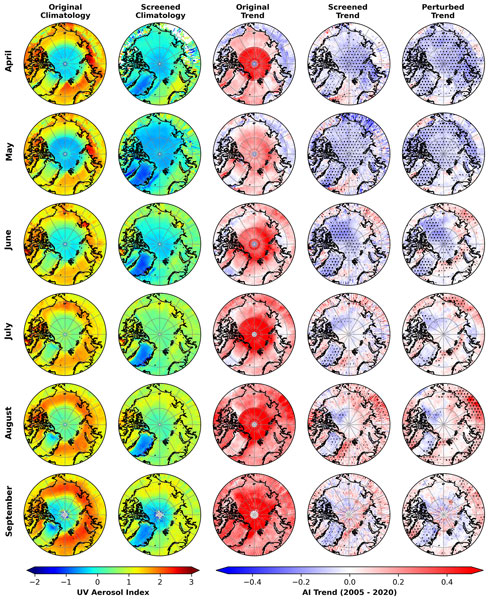
We quality-control Ozone Monitoring Instrument (OMI) aerosol index data by identifying row anomalies and removing systematic biases, using the data to quantify trends in UV-absorbing aerosols over the Arctic region. We found decreasing trends in UV-absorbing aerosols in spring months and increasing trends in summer months. For the first time, observational evidence of increasing trends in UV-absorbing aerosols over the North Pole is found using the OMI data, especially over the last half decade.
Samira Atabakhsh, Laurent Poulain, Gang Chen, Francesco Canonaco, André S. H. Prévôt, Mira Pöhlker, Alfred Wiedensohler, and Hartmut Herrmann
Atmos. Chem. Phys., 23, 6963–6988, https://doi.org/10.5194/acp-23-6963-2023, https://doi.org/10.5194/acp-23-6963-2023, 2023
Short summary
Short summary
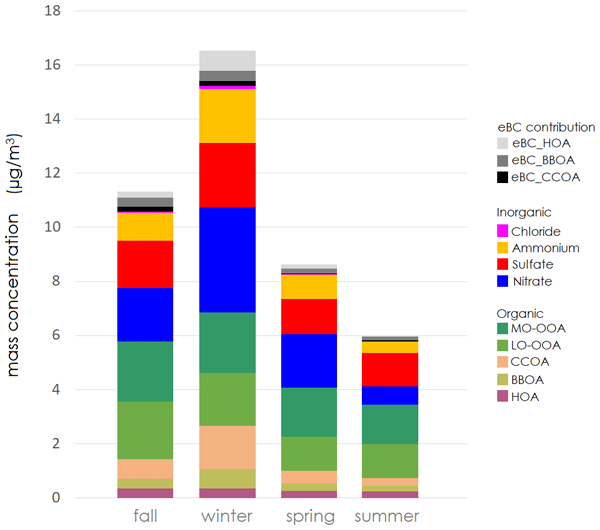
The study focuses on the aerosol chemical variations found in the rural-background station of Melpitz based on ACSM and MAAP measurements. Source apportionment on both organic aerosol (OA) and black carbon (eBC) was performed, and source seasonality was also linked to air mass trajectories. Overall, three anthropogenic sources were identified in OA and eBC plus two additional aged OA. Our results demonstrate the influence of transported coal-combustion-related OA even during summer time.
Robert Pincus, Paul A. Hubanks, Steven Platnick, Kerry Meyer, Robert E. Holz, Denis Botambekov, and Casey J. Wall
Earth Syst. Sci. Data, 15, 2483–2497, https://doi.org/10.5194/essd-15-2483-2023, https://doi.org/10.5194/essd-15-2483-2023, 2023
Short summary
Short summary
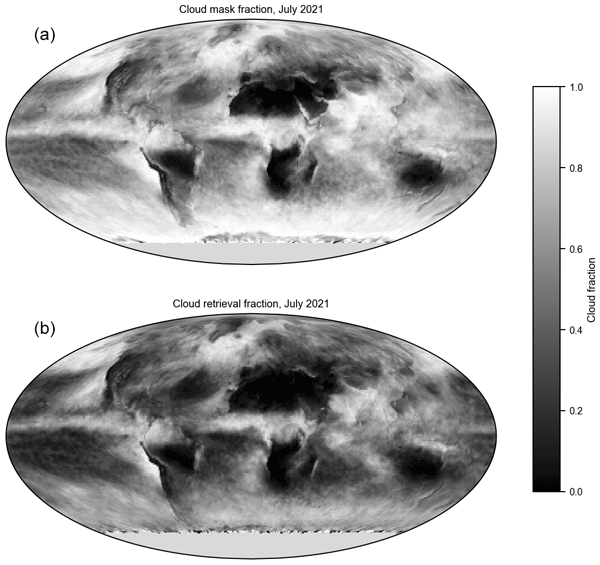
This paper describes a new global dataset of cloud properties observed by a specific satellite program created to facilitate comparison with a matching observational proxy used in climate models. Statistics are accumulated over daily and monthly timescales on an equal-angle grid. Statistics include cloud detection, cloud-top pressure, and cloud optical properties. Joint histograms of several variable pairs are also available.
Amanda Gumber, Jeffrey S. Reid, Robert E. Holz, Thomas F. Eck, N. Christina Hsu, Robert C. Levy, Jianglong Zhang, and Paolo Veglio
Atmos. Meas. Tech., 16, 2547–2573, https://doi.org/10.5194/amt-16-2547-2023, https://doi.org/10.5194/amt-16-2547-2023, 2023
Short summary
Short summary
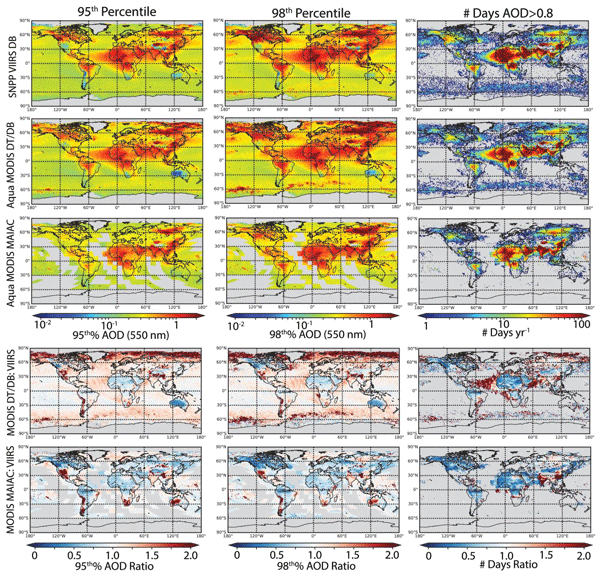
The purpose of this study is to create and evaluate a gridded dataset composed of multiple satellite instruments and algorithms to be used for data assimilation. An important part of aerosol data assimilation is having consistent measurements, especially for severe aerosol events. This study evaluates 4 years of data from MODIS, VIIRS, and AERONET with a focus on aerosol severe event detection from a regional and global perspective.
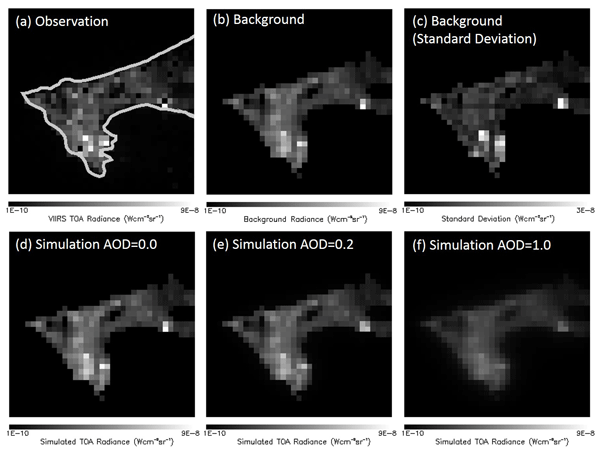
Jianglong Zhang, Jeffrey S. Reid, Steven D. Miller, Miguel Román, Zhuosen Wang, Robert J. D. Spurr, and Shawn Jaker
Atmos. Meas. Tech., 16, 2531–2546, https://doi.org/10.5194/amt-16-2531-2023, https://doi.org/10.5194/amt-16-2531-2023, 2023
Short summary
Short summary
We adapted the spherical harmonics discrete ordinate method 3-dimentional radiative transfer model (3-D RTM) and developed a nighttime 3-D RTM capability for simulating top-of-atmosphere radiances from artificial light sources for aerosol retrievals. Our study suggests that both aerosol optical depth and aerosol plume height can be effectively retrieved using nighttime observations over artificial light sources, through the newly developed radiative transfer modeling capability.

Hong Chen, K. Sebastian Schmidt, Steven T. Massie, Vikas Nataraja, Matthew S. Norgren, Jake J. Gristey, Graham Feingold, Robert E. Holz, and Hironobu Iwabuchi
Atmos. Meas. Tech., 16, 1971–2000, https://doi.org/10.5194/amt-16-1971-2023, https://doi.org/10.5194/amt-16-1971-2023, 2023
Short summary
Short summary
We introduce the Education and Research 3D Radiative Transfer Toolbox (EaR3T) and propose a radiance self-consistency approach for quantifying and mitigating 3D bias in legacy airborne and spaceborne imagery retrievals due to spatially inhomogeneous clouds and surfaces.
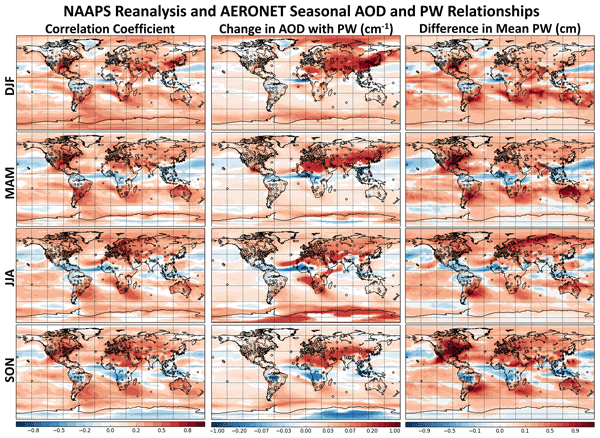
Juli I. Rubin, Jeffrey S. Reid, Peng Xian, Christopher M. Selman, and Thomas F. Eck
Atmos. Chem. Phys., 23, 4059–4090, https://doi.org/10.5194/acp-23-4059-2023, https://doi.org/10.5194/acp-23-4059-2023, 2023
Short summary
Short summary
This work aims to quantify the covariability between aerosol optical depth/extinction with water vapor (PW) globally, using NASA AERONET observations and NAAPS model data. Findings are important for data assimilation and radiative transfer. The study shows statistically significant and positive AOD–PW relationships are found across the globe, varying in strength with location and season and tied to large-scale aerosol events. Hygroscopic growth was also found to be an important factor.
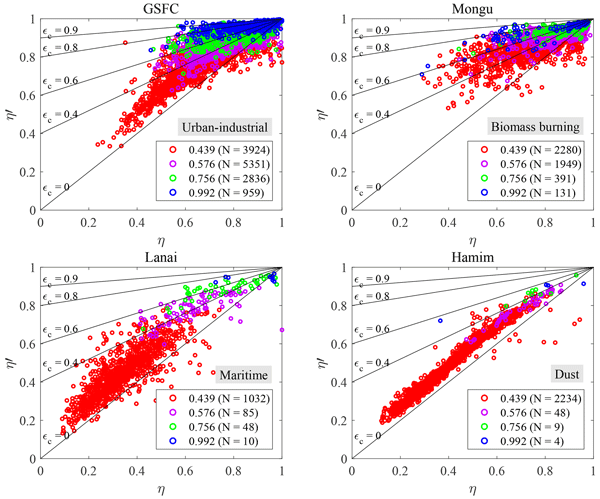
Norman T. O'Neill, Keyvan Ranjbar, Liviu Ivănescu, Thomas F. Eck, Jeffrey S. Reid, David M. Giles, Daniel Pérez-Ramírez, and Jai Prakash Chaubey
Atmos. Meas. Tech., 16, 1103–1120, https://doi.org/10.5194/amt-16-1103-2023, https://doi.org/10.5194/amt-16-1103-2023, 2023
Short summary
Short summary
Aerosols are atmospheric particles that vary in size (radius) from a fraction of a micrometer (µm) to around 20 µm. They tend to be either smaller than 1 µm (like smoke or pollution) or larger than 1 µm (like dust or sea salt). Their optical effect (scattering and absorbing sunlight) can be divided into FM (fine-mode) and CM (coarse-mode) parts using a cutoff radius around 1 µm or a spectral (color) technique. We present and validate a theoretical link between the types of FM and CM divisions.
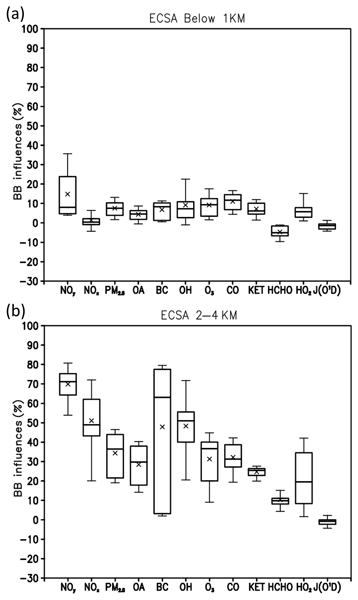
Chuan-Yao Lin, Wan-Chin Chen, Yi-Yun Chien, Charles C. K. Chou, Chian-Yi Liu, Helmut Ziereis, Hans Schlager, Eric Förster, Florian Obersteiner, Ovid O. Krüger, Bruna A. Holanda, Mira L. Pöhlker, Katharina Kaiser, Johannes Schneider, Birger Bohn, Klaus Pfeilsticker, Benjamin Weyland, Maria Dolores Andrés Hernández, and John P. Burrows
Atmos. Chem. Phys., 23, 2627–2647, https://doi.org/10.5194/acp-23-2627-2023, https://doi.org/10.5194/acp-23-2627-2023, 2023
Short summary
Short summary
During the EMeRGe campaign in Asia, atmospheric pollutants were measured on board the HALO aircraft. The WRF-Chem model was employed to evaluate the biomass burning (BB) plume transported from Indochina and its impact on the downstream areas. The combination of BB aerosol enhancement with cloud water resulted in a reduction in incoming shortwave radiation at the surface in southern China and the East China Sea, which potentially has significant regional climate implications.
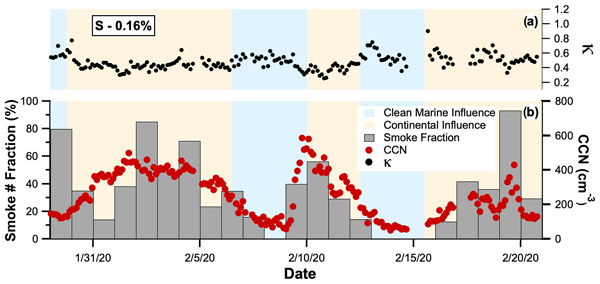
Haley M. Royer, Mira L. Pöhlker, Ovid Krüger, Edmund Blades, Peter Sealy, Nurun Nahar Lata, Zezhen Cheng, Swarup China, Andrew P. Ault, Patricia K. Quinn, Paquita Zuidema, Christopher Pöhlker, Ulrich Pöschl, Meinrat Andreae, and Cassandra J. Gaston
Atmos. Chem. Phys., 23, 981–998, https://doi.org/10.5194/acp-23-981-2023, https://doi.org/10.5194/acp-23-981-2023, 2023
Short summary
Short summary
This paper presents atmospheric particle chemical composition and measurements of aerosol water uptake properties collected at Ragged Point, Barbados, during the winter of 2020. The result of this study indicates the importance of small African smoke particles for cloud droplet formation in the tropical North Atlantic and highlights the large spatial and temporal pervasiveness of smoke over the Atlantic Ocean.
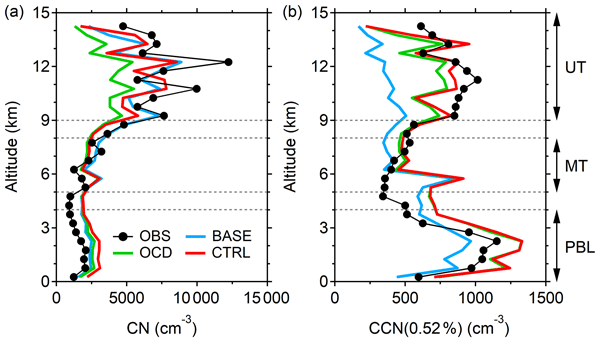
Yunfan Liu, Hang Su, Siwen Wang, Chao Wei, Wei Tao, Mira L. Pöhlker, Christopher Pöhlker, Bruna A. Holanda, Ovid O. Krüger, Thorsten Hoffmann, Manfred Wendisch, Paulo Artaxo, Ulrich Pöschl, Meinrat O. Andreae, and Yafang Cheng
Atmos. Chem. Phys., 23, 251–272, https://doi.org/10.5194/acp-23-251-2023, https://doi.org/10.5194/acp-23-251-2023, 2023
Short summary
Short summary
The origins of the abundant cloud condensation nuclei (CCN) in the upper troposphere (UT) of the Amazon remain unclear. With model developments of new secondary organic aerosol schemes and constrained by observation, we show that strong aerosol nucleation and condensation in the UT is triggered by biogenic organics, and organic condensation is key for UT CCN production. This UT CCN-producing mechanism may prevail over broader vegetation canopies and deserves emphasis in aerosol–climate feedback.
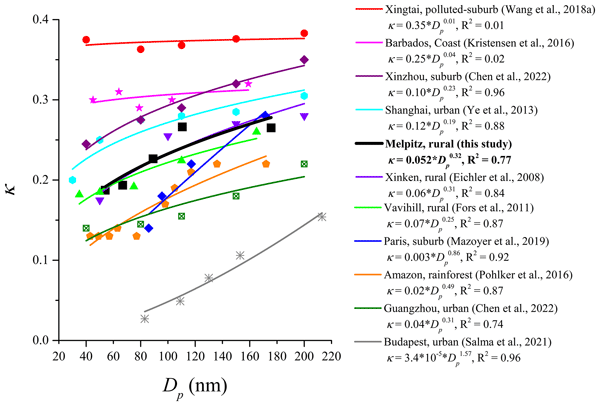
Yuan Wang, Silvia Henning, Laurent Poulain, Chunsong Lu, Frank Stratmann, Yuying Wang, Shengjie Niu, Mira L. Pöhlker, Hartmut Herrmann, and Alfred Wiedensohler
Atmos. Chem. Phys., 22, 15943–15962, https://doi.org/10.5194/acp-22-15943-2022, https://doi.org/10.5194/acp-22-15943-2022, 2022
Short summary
Short summary
Aerosol particle activation affects cloud, precipitation, radiation, and thus the global climate. Its long-term measurements are important but still scarce. In this study, more than 4 years of measurements at a central European station were analyzed. The overall characteristics and seasonal changes of aerosol particle activation are summarized. The power-law fit between particle hygroscopicity factor and diameter was recommended for predicting cloud
condensation nuclei number concentration.
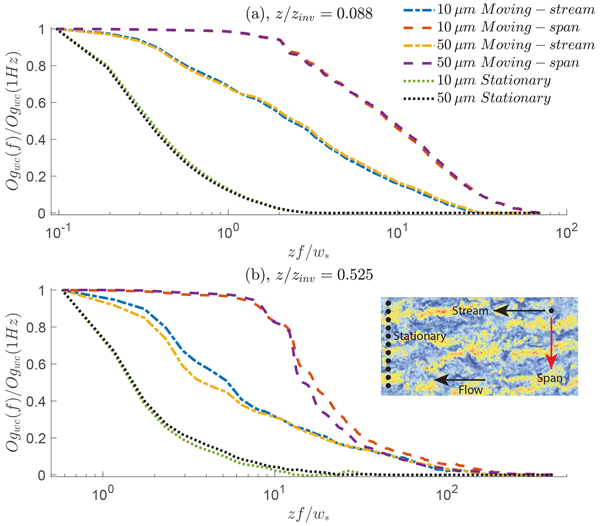
Hyungwon John Park, Jeffrey S. Reid, Livia S. Freire, Christopher Jackson, and David H. Richter
Atmos. Meas. Tech., 15, 7171–7194, https://doi.org/10.5194/amt-15-7171-2022, https://doi.org/10.5194/amt-15-7171-2022, 2022
Short summary
Short summary
We use numerical models to study field measurements of sea spray aerosol particles and conclude that both the atmospheric state and the methods of instrument sampling are causes for the variation in the production rate of aerosol particles: a critical metric to learn the aerosol's effect on processes like cloud physics and radiation. This work helps field observers improve their experimental design and interpretation of measurements because of turbulence in the atmosphere.
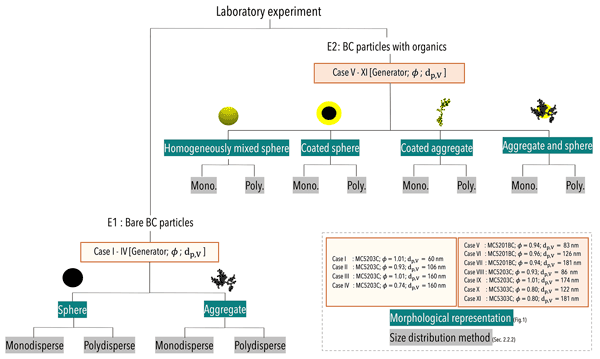
Baseerat Romshoo, Mira Pöhlker, Alfred Wiedensohler, Sascha Pfeifer, Jorge Saturno, Andreas Nowak, Krzysztof Ciupek, Paul Quincey, Konstantina Vasilatou, Michaela N. Ess, Maria Gini, Konstantinos Eleftheriadis, Chris Robins, François Gaie-Levrel, and Thomas Müller
Atmos. Meas. Tech., 15, 6965–6989, https://doi.org/10.5194/amt-15-6965-2022, https://doi.org/10.5194/amt-15-6965-2022, 2022
Short summary
Short summary
Black carbon (BC) is often assumed to be spherically shaped, causing uncertainties in its optical properties when modelled. This study investigates different modelling techniques for the optical properties of BC by comparing them to laboratory measurements. We provide experimental support for emphasizing the use of appropriate size representation (polydisperse size method) and morphological representation (aggregate morphology) for optical modelling and parameterization scheme development of BC.

Qianjie Chen, Jessica A. Mirrielees, Sham Thanekar, Nicole A. Loeb, Rachel M. Kirpes, Lucia M. Upchurch, Anna J. Barget, Nurun Nahar Lata, Angela R. W. Raso, Stephen M. McNamara, Swarup China, Patricia K. Quinn, Andrew P. Ault, Aaron Kennedy, Paul B. Shepson, Jose D. Fuentes, and Kerri A. Pratt
Atmos. Chem. Phys., 22, 15263–15285, https://doi.org/10.5194/acp-22-15263-2022, https://doi.org/10.5194/acp-22-15263-2022, 2022
Short summary
Short summary
During a spring field campaign in the coastal Arctic, ultrafine particles were enhanced during high wind speeds, and coarse-mode particles were reduced during blowing snow. Calculated periods blowing snow were overpredicted compared to observations. Sea spray aerosols produced by sea ice leads affected the composition of aerosols and snowpack. An improved understanding of aerosol emissions from leads and blowing snow is critical for predicting the future climate of the rapidly warming Arctic.

Eva-Lou Edwards, Jeffrey S. Reid, Peng Xian, Sharon P. Burton, Anthony L. Cook, Ewan C. Crosbie, Marta A. Fenn, Richard A. Ferrare, Sean W. Freeman, John W. Hair, David B. Harper, Chris A. Hostetler, Claire E. Robinson, Amy Jo Scarino, Michael A. Shook, G. Alexander Sokolowsky, Susan C. van den Heever, Edward L. Winstead, Sarah Woods, Luke D. Ziemba, and Armin Sorooshian
Atmos. Chem. Phys., 22, 12961–12983, https://doi.org/10.5194/acp-22-12961-2022, https://doi.org/10.5194/acp-22-12961-2022, 2022
Short summary
Short summary
This study compares NAAPS-RA model simulations of aerosol optical thickness (AOT) and extinction to those retrieved with a high spectral resolution lidar near the Philippines. Agreement for AOT was good, and extinction agreement was strongest below 1500 m. Substituting dropsonde relative humidities into NAAPS-RA did not drastically improve agreement, and we discuss potential reasons why. Accurately modeling future conditions in this region is crucial due to its susceptibility to climate change.
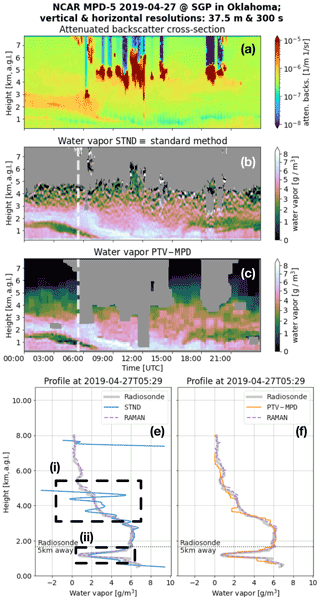
Willem J. Marais and Matthew Hayman
Atmos. Meas. Tech., 15, 5159–5180, https://doi.org/10.5194/amt-15-5159-2022, https://doi.org/10.5194/amt-15-5159-2022, 2022
Short summary
Short summary
For atmospheric science and weather prediction, it is important to make water vapor measurements in real time. A low-cost lidar instrument has been developed by Montana State University and the National Center for Atmospheric Research. We developed an advanced signal-processing method to extend the scientific capability of the lidar instrument. With the new method we show that the maximum altitude at which the MPD can make water vapor measurements can be extended up to 8 km.

Albert Ansmann, Kevin Ohneiser, Alexandra Chudnovsky, Daniel A. Knopf, Edwin W. Eloranta, Diego Villanueva, Patric Seifert, Martin Radenz, Boris Barja, Félix Zamorano, Cristofer Jimenez, Ronny Engelmann, Holger Baars, Hannes Griesche, Julian Hofer, Dietrich Althausen, and Ulla Wandinger
Atmos. Chem. Phys., 22, 11701–11726, https://doi.org/10.5194/acp-22-11701-2022, https://doi.org/10.5194/acp-22-11701-2022, 2022
Short summary
Short summary
For the first time we present a systematic study on the impact of wildfire smoke on ozone depletion in the Arctic (2020) and Antarctic stratosphere (2020, 2021). Two major fire events in Siberia and Australia were responsible for the observed record-breaking stratospheric smoke pollution. Our analyses were based on lidar observations of smoke parameters (Polarstern, Punta Arenas) and NDACC Arctic and Antarctic ozone profiles as well as on Antarctic OMI satellite observations of column ozone.
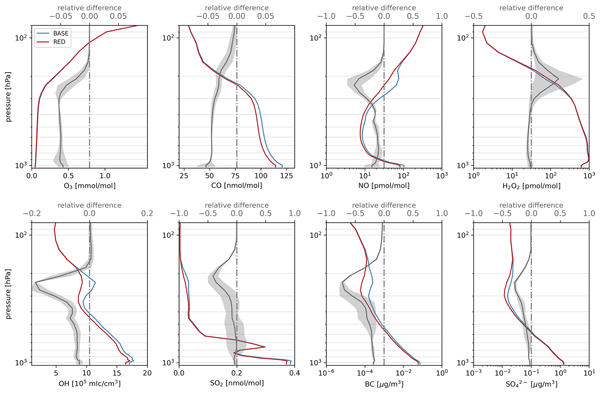
Simon F. Reifenberg, Anna Martin, Matthias Kohl, Sara Bacer, Zaneta Hamryszczak, Ivan Tadic, Lenard Röder, Daniel J. Crowley, Horst Fischer, Katharina Kaiser, Johannes Schneider, Raphael Dörich, John N. Crowley, Laura Tomsche, Andreas Marsing, Christiane Voigt, Andreas Zahn, Christopher Pöhlker, Bruna A. Holanda, Ovid Krüger, Ulrich Pöschl, Mira Pöhlker, Patrick Jöckel, Marcel Dorf, Ulrich Schumann, Jonathan Williams, Birger Bohn, Joachim Curtius, Hardwig Harder, Hans Schlager, Jos Lelieveld, and Andrea Pozzer
Atmos. Chem. Phys., 22, 10901–10917, https://doi.org/10.5194/acp-22-10901-2022, https://doi.org/10.5194/acp-22-10901-2022, 2022
Short summary
Short summary
In this work we use a combination of observational data from an aircraft campaign and model results to investigate the effect of the European lockdown due to COVID-19 in spring 2020. Using model results, we show that the largest relative changes to the atmospheric composition caused by the reduced emissions are located in the upper troposphere around aircraft cruise altitude, while the largest absolute changes are present at the surface.

Peng Xian, Jianglong Zhang, Norm T. O'Neill, Jeffrey S. Reid, Travis D. Toth, Blake Sorenson, Edward J. Hyer, James R. Campbell, and Keyvan Ranjbar
Atmos. Chem. Phys., 22, 9949–9967, https://doi.org/10.5194/acp-22-9949-2022, https://doi.org/10.5194/acp-22-9949-2022, 2022
Short summary
Short summary
The study provides a baseline Arctic spring and summertime aerosol optical depth climatology, trend, and extreme event statistics from 2003 to 2019 using a combination of aerosol reanalyses, remote sensing, and ground observations. Biomass burning smoke has an overwhelming contribution to black carbon (an efficient climate forcer) compared to anthropogenic sources. Burning's large interannual variability and increasing summer trend have important implications for the Arctic climate.
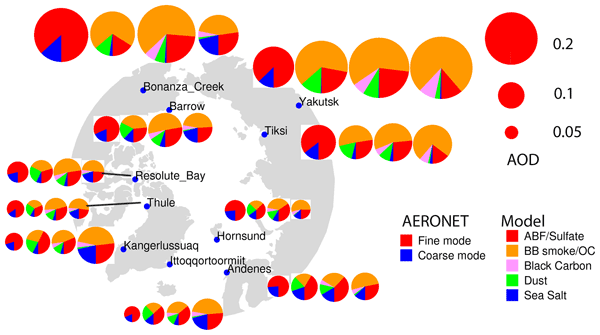
Peng Xian, Jianglong Zhang, Norm T. O'Neill, Travis D. Toth, Blake Sorenson, Peter R. Colarco, Zak Kipling, Edward J. Hyer, James R. Campbell, Jeffrey S. Reid, and Keyvan Ranjbar
Atmos. Chem. Phys., 22, 9915–9947, https://doi.org/10.5194/acp-22-9915-2022, https://doi.org/10.5194/acp-22-9915-2022, 2022
Short summary
Short summary
The study provides baseline Arctic spring and summertime aerosol optical depth climatology, trend, and extreme event statistics from 2003 to 2019 using a combination of aerosol reanalyses, remote sensing, and ground observations. Biomass burning smoke has an overwhelming contribution to black carbon (an efficient climate forcer) compared to anthropogenic sources. Burning's large interannual variability and increasing summer trend have important implications for the Arctic climate.
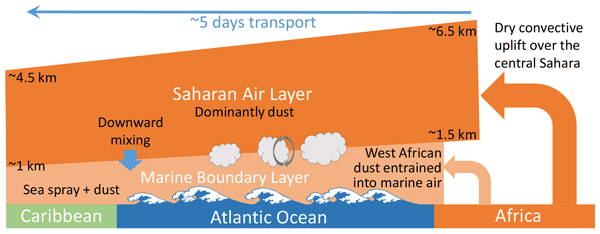
Alexander D. Harrison, Daniel O'Sullivan, Michael P. Adams, Grace C. E. Porter, Edmund Blades, Cherise Brathwaite, Rebecca Chewitt-Lucas, Cassandra Gaston, Rachel Hawker, Ovid O. Krüger, Leslie Neve, Mira L. Pöhlker, Christopher Pöhlker, Ulrich Pöschl, Alberto Sanchez-Marroquin, Andrea Sealy, Peter Sealy, Mark D. Tarn, Shanice Whitehall, James B. McQuaid, Kenneth S. Carslaw, Joseph M. Prospero, and Benjamin J. Murray
Atmos. Chem. Phys., 22, 9663–9680, https://doi.org/10.5194/acp-22-9663-2022, https://doi.org/10.5194/acp-22-9663-2022, 2022
Short summary
Short summary
The formation of ice in clouds fundamentally alters cloud properties; hence it is important we understand the special aerosol particles that can nucleate ice when immersed in supercooled cloud droplets. In this paper we show that African desert dust that has travelled across the Atlantic to the Caribbean nucleates ice much less well than we might have expected.

Alexander Sinyuk, Brent N. Holben, Thomas F. Eck, David M. Giles, Ilya Slutsker, Oleg Dubovik, Joel S. Schafer, Alexander Smirnov, and Mikhail Sorokin
Atmos. Meas. Tech., 15, 4135–4151, https://doi.org/10.5194/amt-15-4135-2022, https://doi.org/10.5194/amt-15-4135-2022, 2022
Short summary
Short summary
This paper describes modification of smoothness constraints on the imaginary part of the refractive index employed in the AERONET aerosol retrieval algorithm. This modification is termed relaxed due to the weaker strength of this new smoothness constraint. Applying the modified version of the smoothness constraint results in a significant reduction of retrieved light absorption by brown-carbon-containing aerosols.
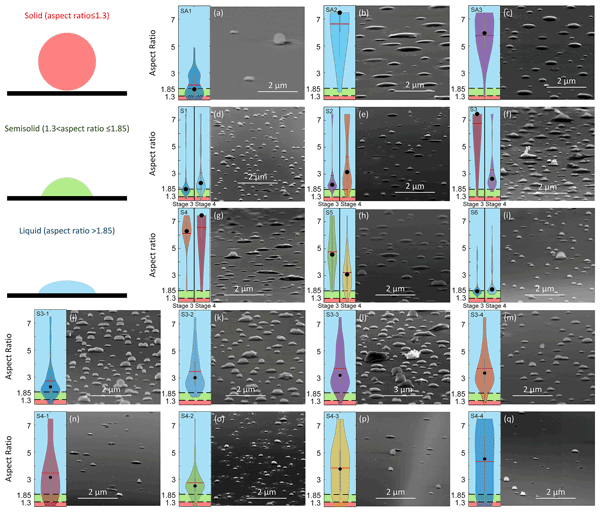
Zezhen Cheng, Megan Morgenstern, Bo Zhang, Matthew Fraund, Nurun Nahar Lata, Rhenton Brimberry, Matthew A. Marcus, Lynn Mazzoleni, Paulo Fialho, Silvia Henning, Birgit Wehner, Claudio Mazzoleni, and Swarup China
Atmos. Chem. Phys., 22, 9033–9057, https://doi.org/10.5194/acp-22-9033-2022, https://doi.org/10.5194/acp-22-9033-2022, 2022
Short summary
Short summary
We observed a high abundance of liquid and internally mixed particles in samples collected in the North Atlantic free troposphere during summer. We also found several solid and semisolid particles for different emission sources and transport patterns. Our results suggest that considering the mixing state, emission source, and transport patterns of particles is necessary to estimate their phase state in the free troposphere, which is critical for predicting their effects on climate.
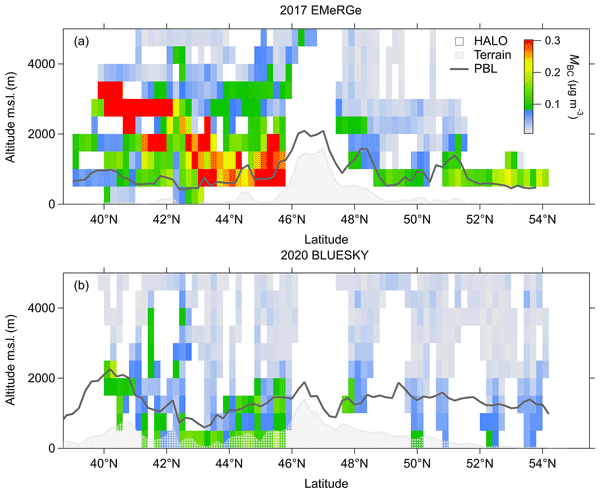
Ovid O. Krüger, Bruna A. Holanda, Sourangsu Chowdhury, Andrea Pozzer, David Walter, Christopher Pöhlker, Maria Dolores Andrés Hernández, John P. Burrows, Christiane Voigt, Jos Lelieveld, Johannes Quaas, Ulrich Pöschl, and Mira L. Pöhlker
Atmos. Chem. Phys., 22, 8683–8699, https://doi.org/10.5194/acp-22-8683-2022, https://doi.org/10.5194/acp-22-8683-2022, 2022
Short summary
Short summary
The abrupt reduction in human activities during the first COVID-19 lockdown created unprecedented atmospheric conditions. We took the opportunity to quantify changes in black carbon (BC) as a major anthropogenic air pollutant. Therefore, we measured BC on board a research aircraft over Europe during the lockdown and compared the results to measurements from 2017. With model simulations we account for different weather conditions and find a lockdown-related decrease in BC of 41 %.

Simon Kirschler, Christiane Voigt, Bruce Anderson, Ramon Campos Braga, Gao Chen, Andrea F. Corral, Ewan Crosbie, Hossein Dadashazar, Richard A. Ferrare, Valerian Hahn, Johannes Hendricks, Stefan Kaufmann, Richard Moore, Mira L. Pöhlker, Claire Robinson, Amy J. Scarino, Dominik Schollmayer, Michael A. Shook, K. Lee Thornhill, Edward Winstead, Luke D. Ziemba, and Armin Sorooshian
Atmos. Chem. Phys., 22, 8299–8319, https://doi.org/10.5194/acp-22-8299-2022, https://doi.org/10.5194/acp-22-8299-2022, 2022
Short summary
Short summary
In this study we show that the vertical velocity dominantly impacts the cloud droplet number concentration (NC) of low-level clouds over the western North Atlantic in the winter and summer season, while the cloud condensation nuclei concentration, aerosol size distribution and chemical composition impact NC within a season. The observational data presented in this study can evaluate and improve the representation of aerosol–cloud interactions for a wide range of conditions.
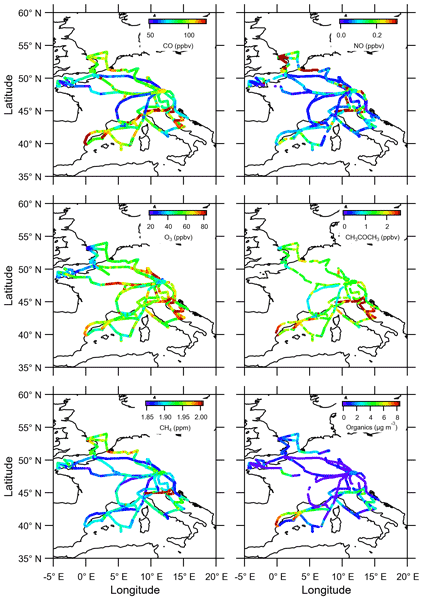
M. Dolores Andrés Hernández, Andreas Hilboll, Helmut Ziereis, Eric Förster, Ovid O. Krüger, Katharina Kaiser, Johannes Schneider, Francesca Barnaba, Mihalis Vrekoussis, Jörg Schmidt, Heidi Huntrieser, Anne-Marlene Blechschmidt, Midhun George, Vladyslav Nenakhov, Theresa Harlass, Bruna A. Holanda, Jennifer Wolf, Lisa Eirenschmalz, Marc Krebsbach, Mira L. Pöhlker, Anna B. Kalisz Hedegaard, Linlu Mei, Klaus Pfeilsticker, Yangzhuoran Liu, Ralf Koppmann, Hans Schlager, Birger Bohn, Ulrich Schumann, Andreas Richter, Benjamin Schreiner, Daniel Sauer, Robert Baumann, Mariano Mertens, Patrick Jöckel, Markus Kilian, Greta Stratmann, Christopher Pöhlker, Monica Campanelli, Marco Pandolfi, Michael Sicard, José L. Gómez-Amo, Manuel Pujadas, Katja Bigge, Flora Kluge, Anja Schwarz, Nikos Daskalakis, David Walter, Andreas Zahn, Ulrich Pöschl, Harald Bönisch, Stephan Borrmann, Ulrich Platt, and John P. Burrows
Atmos. Chem. Phys., 22, 5877–5924, https://doi.org/10.5194/acp-22-5877-2022, https://doi.org/10.5194/acp-22-5877-2022, 2022
Short summary
Short summary
EMeRGe provides a unique set of in situ and remote sensing airborne measurements of trace gases and aerosol particles along selected flight routes in the lower troposphere over Europe. The interpretation uses also complementary collocated ground-based and satellite measurements. The collected data help to improve the current understanding of the complex spatial distribution of trace gases and aerosol particles resulting from mixing, transport, and transformation of pollution plumes over Europe.
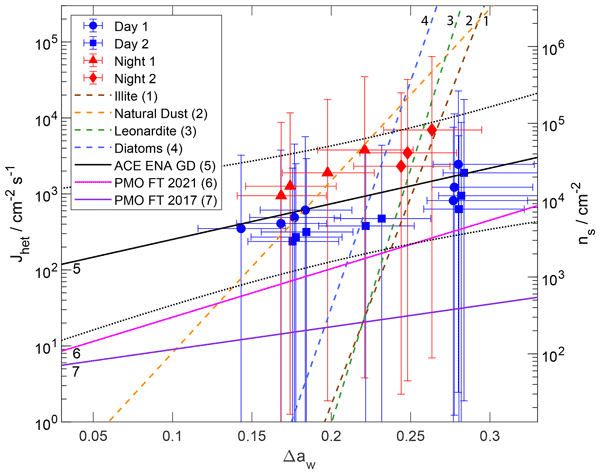
Daniel A. Knopf, Joseph C. Charnawskas, Peiwen Wang, Benny Wong, Jay M. Tomlin, Kevin A. Jankowski, Matthew Fraund, Daniel P. Veghte, Swarup China, Alexander Laskin, Ryan C. Moffet, Mary K. Gilles, Josephine Y. Aller, Matthew A. Marcus, Shira Raveh-Rubin, and Jian Wang
Atmos. Chem. Phys., 22, 5377–5398, https://doi.org/10.5194/acp-22-5377-2022, https://doi.org/10.5194/acp-22-5377-2022, 2022
Short summary
Short summary
Marine boundary layer aerosols collected in the remote region of the eastern North Atlantic induce immersion freezing and deposition ice nucleation under typical mixed-phase and cirrus cloud conditions. Corresponding ice nucleation parameterizations for model applications have been derived. Chemical imaging of ambient aerosol and ice-nucleating particles demonstrates that the latter is dominated by sea salt and organics while also representing a major particle type in the particle population.
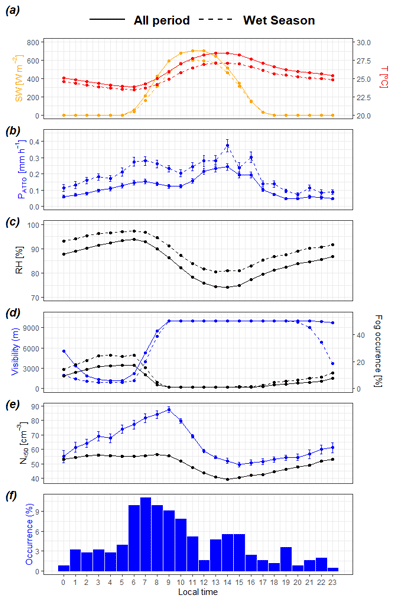
Marco A. Franco, Florian Ditas, Leslie A. Kremper, Luiz A. T. Machado, Meinrat O. Andreae, Alessandro Araújo, Henrique M. J. Barbosa, Joel F. de Brito, Samara Carbone, Bruna A. Holanda, Fernando G. Morais, Janaína P. Nascimento, Mira L. Pöhlker, Luciana V. Rizzo, Marta Sá, Jorge Saturno, David Walter, Stefan Wolff, Ulrich Pöschl, Paulo Artaxo, and Christopher Pöhlker
Atmos. Chem. Phys., 22, 3469–3492, https://doi.org/10.5194/acp-22-3469-2022, https://doi.org/10.5194/acp-22-3469-2022, 2022
Short summary
Short summary
In Central Amazonia, new particle formation in the planetary boundary layer is rare. Instead, there is the appearance of sub-50 nm aerosols with diameters larger than about 20 nm that eventually grow to cloud condensation nuclei size range. Here, 254 growth events were characterized which have higher predominance in the wet season. About 70 % of them showed direct relation to convective downdrafts, while 30 % occurred partly under clear-sky conditions, evidencing still unknown particle sources.
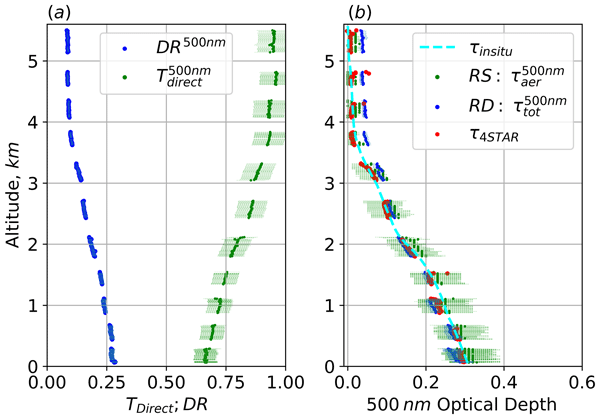
Matthew S. Norgren, John Wood, K. Sebastian Schmidt, Bastiaan van Diedenhoven, Snorre A. Stamnes, Luke D. Ziemba, Ewan C. Crosbie, Michael A. Shook, A. Scott Kittelman, Samuel E. LeBlanc, Stephen Broccardo, Steffen Freitag, and Jeffrey S. Reid
Atmos. Meas. Tech., 15, 1373–1394, https://doi.org/10.5194/amt-15-1373-2022, https://doi.org/10.5194/amt-15-1373-2022, 2022
Short summary
Short summary
A new spectral instrument (SPN-S), with the ability to partition solar radiation into direct and diffuse components, is used in airborne settings to study the optical properties of aerosols and cirrus. It is a low-cost and mechanically simple system but has higher measurement uncertainty than existing standards. This challenge is overcome by utilizing the unique measurement capabilities to develop new retrieval techniques. Validation is done with data from two NASA airborne research campaigns.
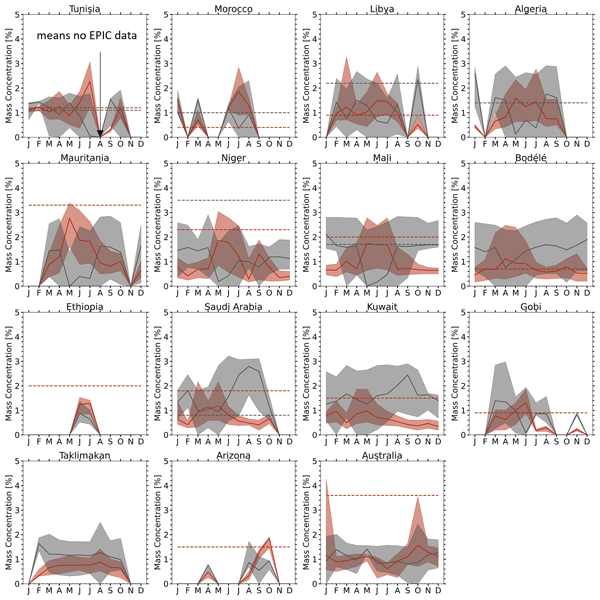
Sujung Go, Alexei Lyapustin, Gregory L. Schuster, Myungje Choi, Paul Ginoux, Mian Chin, Olga Kalashnikova, Oleg Dubovik, Jhoon Kim, Arlindo da Silva, Brent Holben, and Jeffrey S. Reid
Atmos. Chem. Phys., 22, 1395–1423, https://doi.org/10.5194/acp-22-1395-2022, https://doi.org/10.5194/acp-22-1395-2022, 2022
Short summary
Short summary
This paper presents a retrieval algorithm of iron-oxide species (hematite, goethite) content in the atmosphere from DSCOVR EPIC observations. Our results display variations within the published range of hematite and goethite over the main dust-source regions but show significant seasonal and spatial variability. This implies a single-viewing satellite instrument with UV–visible channels may provide essential information on shortwave dust direct radiative effects for climate modeling.
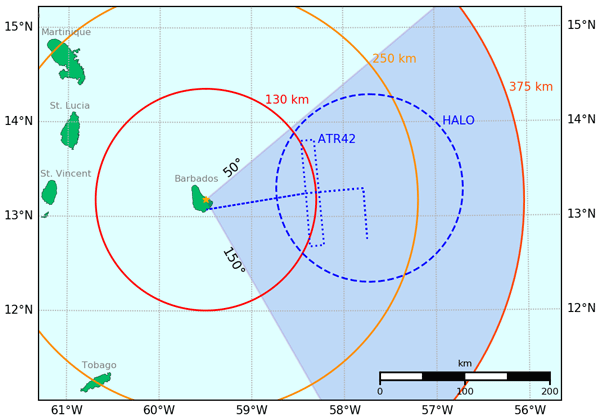
Martin Hagen, Florian Ewald, Silke Groß, Lothar Oswald, David A. Farrell, Marvin Forde, Manuel Gutleben, Johann Heumos, Jens Reimann, Eleni Tetoni, Gregor Köcher, Eleni Marinou, Christoph Kiemle, Qiang Li, Rebecca Chewitt-Lucas, Alton Daley, Delando Grant, and Kashawn Hall
Earth Syst. Sci. Data, 13, 5899–5914, https://doi.org/10.5194/essd-13-5899-2021, https://doi.org/10.5194/essd-13-5899-2021, 2021
Short summary
Short summary
The German polarimetric weather radar Poldirad was deployed for the international campaign EUREC4A on Barbados. The focus was monitoring clouds and precipitation in the trade wind region east of Barbados. Observations were with a temporal sequence of 5 min and a maximum range of 375 km. Examples of mesoscale precipitation patterns, rain rate accumulation, diurnal cycle, and vertical distribution show the potential for further studies on the life cycle of precipitating shallow cumulus clouds.
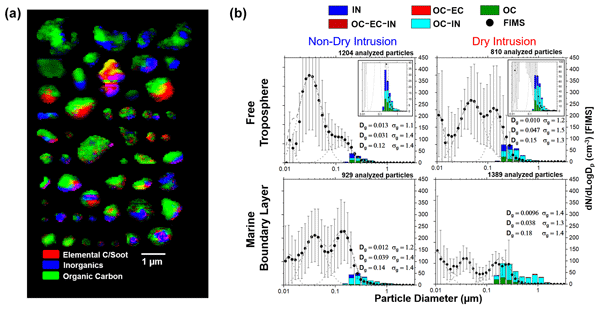
Jay M. Tomlin, Kevin A. Jankowski, Daniel P. Veghte, Swarup China, Peiwen Wang, Matthew Fraund, Johannes Weis, Guangjie Zheng, Yang Wang, Felipe Rivera-Adorno, Shira Raveh-Rubin, Daniel A. Knopf, Jian Wang, Mary K. Gilles, Ryan C. Moffet, and Alexander Laskin
Atmos. Chem. Phys., 21, 18123–18146, https://doi.org/10.5194/acp-21-18123-2021, https://doi.org/10.5194/acp-21-18123-2021, 2021
Short summary
Short summary
Analysis of individual atmospheric particles shows that aerosol transported from North America during meteorological dry intrusion episodes may have a substantial impact on the mixing state and particle-type population over the mid-Atlantic, as organic contribution and particle-type diversity are significantly enhanced during these periods. These observations need to be considered in current atmospheric models.
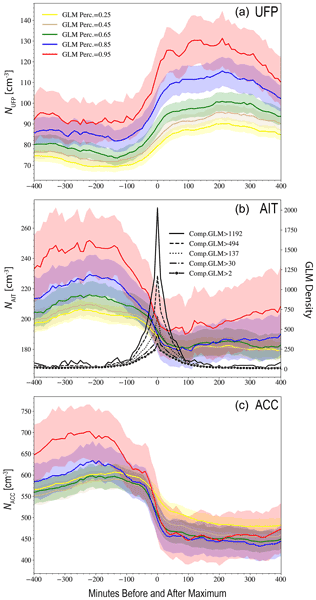
Luiz A. T. Machado, Marco A. Franco, Leslie A. Kremper, Florian Ditas, Meinrat O. Andreae, Paulo Artaxo, Micael A. Cecchini, Bruna A. Holanda, Mira L. Pöhlker, Ivan Saraiva, Stefan Wolff, Ulrich Pöschl, and Christopher Pöhlker
Atmos. Chem. Phys., 21, 18065–18086, https://doi.org/10.5194/acp-21-18065-2021, https://doi.org/10.5194/acp-21-18065-2021, 2021
Short summary
Short summary
Several studies evaluate aerosol–cloud interactions, but only a few attempted to describe how clouds modify aerosol properties. This study evaluates the effect of weather events on the particle size distribution at the ATTO, combining remote sensing and in situ data. Ultrafine, Aitken and accumulation particles modes have different behaviors for the diurnal cycle and for rainfall events. This study opens up new scientific questions that need to be pursued in detail in new field campaigns.
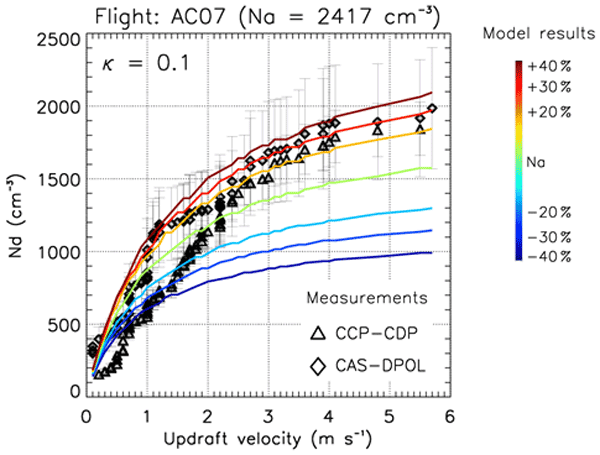
Ramon Campos Braga, Barbara Ervens, Daniel Rosenfeld, Meinrat O. Andreae, Jan-David Förster, Daniel Fütterer, Lianet Hernández Pardo, Bruna A. Holanda, Tina Jurkat-Witschas, Ovid O. Krüger, Oliver Lauer, Luiz A. T. Machado, Christopher Pöhlker, Daniel Sauer, Christiane Voigt, Adrian Walser, Manfred Wendisch, Ulrich Pöschl, and Mira L. Pöhlker
Atmos. Chem. Phys., 21, 17513–17528, https://doi.org/10.5194/acp-21-17513-2021, https://doi.org/10.5194/acp-21-17513-2021, 2021
Short summary
Short summary
Interactions of aerosol particles with clouds represent a large uncertainty in estimates of climate change. Properties of aerosol particles control their ability to act as cloud condensation nuclei. Using aerosol measurements in the Amazon, we performed model studies to compare predicted and measured cloud droplet number concentrations at cloud bases. Our results confirm previous estimates of particle hygroscopicity in this region.

Najin Kim, Yafang Cheng, Nan Ma, Mira L. Pöhlker, Thomas Klimach, Thomas F. Mentel, Ovid O. Krüger, Ulrich Pöschl, and Hang Su
Atmos. Meas. Tech., 14, 6991–7005, https://doi.org/10.5194/amt-14-6991-2021, https://doi.org/10.5194/amt-14-6991-2021, 2021
Short summary
Short summary
A broad supersaturation scanning CCN (BS2-CCN) system, in which particles are exposed to a range of supersaturation simultaneously, can measure a broad range of CCN activity distribution with a high time resolution. We describe how the BS2-CCN system can be effectively calibrated and which factors can affect the calibration curve. Intercomparison experiments between typical DMA-CCN and BS2-CCN measurements to evaluate the BS2-CCN system showed high correlation and good agreement.
Cited articles
Adams, A. M., Prospero, J. M., and Zhang, C.: CALIPSO-Derived Three-Dimensional Structure of Aerosol over the Atlantic Basin and Adjacent Continents, J. Clim., 25, 6862–6879, https://doi.org/10.1175/JCLI-D-11-00672.1, 2012.
Adebiyi, A., Kok, J. F., Murray, B. J., Ryder, C. L., Stuut, J.-B. W., Kahn, R. A., Knippertz, P., Formenti, P., Mahowald, N. M., Pérez García-Pando, C., Klose, M., Ansmann, A., Samset, B. H., Ito, A., Balkanski, Y., Di Biagio, C., Romanias, M. N., Huang, Y., and Meng, J.: A review of coarse mineral dust in the Earth system, Aeolian Res., 60, 100849, https://doi.org/10.1016/j.aeolia.2022.100849, 2023.
Andreae, M. O., Charlson, R. J., Bruynseels, F., Storms, H., Van Grieken, R., and Maenhaut, W.: Internal Mixture of Sea Salt, Silicates, and Excess Sulfate in Marine Aerosols, Science, 232, 1620–1623, https://doi.org/10.1126/science.232.4758.1620, 1986.
Ansmann, A., Seifert, P., Tesche, M., and Wandinger, U.: Profiling of fine and coarse particle mass: case studies of Saharan dust and Eyjafjallajökull/Grimsvötn volcanic plumes, Atmos. Chem. Phys., 12, 9399–9415, https://doi.org/10.5194/acp-12-9399-2012, 2012.
Aryasree, S., Kandler, K., Benker, N., Walser, A., Tipka, A., Dollner, M., Seibert, P., and Weinzierl, B.: Vertical Variability in morphology, chemistry and optical properties of the transported Saharan air layer measured from Cape Verde and the Caribbean, R. Soc. Open Sci., 11, https://doi.org/10.1098/rsos.231433, 2024.
Ault, A. P., Peters, T. M., Sawvel, E. J., Casuccio, G. S., Willis, R. D., Norris, G. A., and Grassian, V. H.: Single-Particle SEM-EDX Analysis of Iron-Containing Coarse Particulate Matter in an Urban Environment: Sources and Distribution of Iron within Cleveland, Ohio, Environ. Sci. Technol., 46, 4331–4339, https://doi.org/10.1021/es204006k, 2012.
Ault, A. P., Guasco, T. L., Ryder, O. S., Baltrusaitis, J., Cuadra-Rodriguez, L. A., Collins, D. B., Ruppel, M. J., Bertram, T. H., Prather, K. A., and Grassian, V. H.: Inside versus Outside: Ion Redistribution in Nitric Acid Reacted Sea Spray Aerosol Particles as Determined by Single Particle Analysis, J. Am. Chem. Soc., 135, 14528–14531, https://doi.org/10.1021/ja407117x, 2013.
Ault, A. P., Guasco, T. L., Baltrusaitis, J., Ryder, O. S., Trueblood, J. V., Collins, D. B., Ruppel, M. J., Cuadra-Rodriguez, L. A., Prather, K. A., and Grassian, V. H.: Heterogeneous Reactivity of Nitric Acid with Nascent Sea Spray Aerosol: Large Differences Observed between and within Individual Particles, J. Phys. Chem. Lett., 5, 2493–2500, https://doi.org/10.1021/jz5008802, 2014.
Barkley, A. E., Olson, N. E., Prospero, J. M., Gatineau, A., Panechou, K., Maynard, N. G., Blackwelder, P., China, S., Ault, A. P., and Gaston, C. J.: Atmospheric Transport of North African Dust-Bearing Supermicron Freshwater Diatoms to South America: Implications for Iron Transport to the Equatorial North Atlantic Ocean, Geophys. Res. Lett., 48, https://doi.org/10.1029/2020GL090476, 2021.
Betzer, P. R., Carder, K. L., Duce, R. A., Merrill, J. T., Tindale, N. W., Uematsu, M., Costello, D. K., Young, R. W., Feely, R. A., Breland, J. A., Bernstein, R. E., and Greco, A. M.: Long–range transport of giant mineral aerosol particles, Nature, 336, 568–571, https://doi.org/10.1038/336568a0, 1988.
Bi, L., Wang, Z., Han, W., Li, W., and Zhang, X.: Computation of Optical Properties of Core-Shell Super-Spheroids Using a GPU Implementation of the Invariant Imbedding T-Matrix Method, Front. Remote Sens., 3, https://doi.org/10.3389/frsen.2022.903312, 2022.
Bondy, A. L., Bonanno, D., Moffet, R. C., Wang, B., Laskin, A., and Ault, A. P.: The diverse chemical mixing state of aerosol particles in the southeastern United States, Atmos. Chem. Phys., 18, 12595–12612, https://doi.org/10.5194/acp-18-12595-2018, 2018.
Burton, S. P., Ferrare, R. A., Hostetler, C. A., Hair, J. W., Rogers, R. R., Obland, M. D., Butler, C. F., Cook, A. L., Harper, D. B., and Froyd, K. D.: Aerosol classification using airborne High Spectral Resolution Lidar measurements – methodology and examples, Atmos. Meas. Tech., 5, 73–98, https://doi.org/10.5194/amt-5-73-2012, 2012.
Burton, S. P., Hair, J. W., Kahnert, M., Ferrare, R. A., Hostetler, C. A., Cook, A. L., Harper, D. B., Berkoff, T. A., Seaman, S. T., Collins, J. E., Fenn, M. A., and Rogers, R. R.: Observations of the spectral dependence of linear particle depolarization ratio of aerosols using NASA Langley airborne High Spectral Resolution Lidar, Atmos. Chem. Phys., 15, 13453–13473, https://doi.org/10.5194/acp-15-13453-2015, 2015.
Carlson, T. N. and Prospero, J. M.: The Large-Scale Movement of Saharan Air Outbreaks over the Northern Equatorial Atlantic, J. Appl. Meteorol. Clim., 11, 283–297, https://doi.org/10.1175/1520-0450(1972)011<0283:TLSMOS>2.0.CO;2, 1972.
Casuccio, G. S., Janocko, P. B., Lee, R. J., Kelly, J. F., Dattner, S. L., and Mgebroff, J. S.: The Use of Computer Controlled Scanning Electron Microscopy in Environmental Studies, J. Air Pollut. Control Assoc., 33, 937–943, https://doi.org/10.1080/00022470.1983.10465674, 1983.
Chin, W.-C., Orellana, M. V., and Verdugo, P.: Spontaneous assembly of marine dissolved organic matter into polymer gels, Nature, 391, 568–572, https://doi.org/10.1038/35345, 1998.
Crosbie, E., Ziemba, L. D., Shook, M. A., Robinson, C. E., Winstead, E. L., Thornhill, K. L., Braun, R. A., MacDonald, A. B., Stahl, C., Sorooshian, A., van den Heever, S. C., DiGangi, J. P., Diskin, G. S., Woods, S., Bañaga, P., Brown, M. D., Gallo, F., Hilario, M. R. A., Jordan, C. E., Leung, G. R., Moore, R. H., Sanchez, K. J., Shingler, T. J., and Wiggins, E. B.: Measurement report: Closure analysis of aerosol–cloud composition in tropical maritime warm convection, Atmos. Chem. Phys., 22, 13269–13302, https://doi.org/10.5194/acp-22-13269-2022, 2022.
Denjean, C., Caquineau, S., Desboeufs, K., Laurent, B., Maille, M., Quiñones Rosado, M., Vallejo, P., Mayol-Bracero, O. L., and Formenti, P.: Long-range transport across the Atlantic in summertime does not enhance the hygroscopicity of African mineral dust, Geophys. Res. Lett., 42, 7835–7843, https://doi.org/10.1002/2015GL065693, 2015.
Elliott, H. E., Popendorf, K. J., Blades, E., Royer, H. M., Pollier, C. G. L., Oehlert, A. M., Kukkadapu, R., Ault, A., and Gaston, C. J.: Godzilla mineral dust and La Soufrière volcanic ash fallout immediately stimulate marine microbial phosphate uptake, Front. Mar. Sci., 10, https://doi.org/10.3389/fmars.2023.1308689, 2024.
Eloranta, E. W., Razenkov, I. A., Hedrick, J., and Garcia, J. P.: The design and construction of an airborne high spectral resolution lidar, in: IEEE Aerospace Conference Proceedings, https://doi.org/10.1109/AERO.2008.4526390, 2008.
Freudenthaler, V., Esselborn, M., Wiegner, M., Heese, B., Tesche, M., Ansmann, A., Müller, D., Althausen, D., Wirth, M., Fix, A., Ehret, G., Knippertz, P., Toledano, C., Gasteiger, J., Garhammer, M., and Seefeldner, M.: Depolarization ratio profiling at several wavelengths in pure Saharan dust during SAMUM 2006, Tellus B Chem. Phys. Meteorol., 61, 165, https://doi.org/10.1111/j.1600-0889.2008.00396.x, 2009.
Fu, D., Marais, W. J., Razenkov, I., Buckholtz, Z., Gaston, C. J., Eloranta, E. W., Reid, J. S., and Holz, R. E.: Retrieving Multi-Year Dust and Marine Boundary Layer Vertically Resolved Lidar Ratio and Extinction Measurements over Barbados Using Scanning High Spectral Resolution Lidar, in preparation, 2026.
Gasteiger, J., Groß, S., Sauer, D., Haarig, M., Ansmann, A., and Weinzierl, B.: Particle settling and vertical mixing in the Saharan Air Layer as seen from an integrated model, lidar, and in situ perspective, Atmos. Chem. Phys., 17, 297–311, https://doi.org/10.5194/acp-17-297-2017, 2017.
Gaston, C. J., Furutani, H., Guazzotti, S. A., Coffee, K. R., Bates, T. S., Quinn, P. K., Aluwihare, L. I., Mitchell, B. G., and Prather, K. A.: Unique ocean-derived particles serve as a proxy for changes in ocean chemistry, J. Geophys. Res., 116, D18310, https://doi.org/10.1029/2010JD015289, 2011.
Gaston, C. J., Prospero, J. M., Foley, K., Pye, H. O. T., Custals, L., Blades, E., Sealy, P., and Christie, J. A.: Diverging trends in aerosol sulfate and nitrate measured in the remote North Atlantic in Barbados are attributed to clean air policies, African smoke, and anthropogenic emissions, Atmos. Chem. Phys., 24, 8049–8066, https://doi.org/10.5194/acp-24-8049-2024, 2024.
Giles, D. M., Sinyuk, A., Sorokin, M. G., Schafer, J. S., Smirnov, A., Slutsker, I., Eck, T. F., Holben, B. N., Lewis, J. R., Campbell, J. R., Welton, E. J., Korkin, S. V., and Lyapustin, A. I.: Advancements in the Aerosol Robotic Network (AERONET) Version 3 database – automated near-real-time quality control algorithm with improved cloud screening for Sun photometer aerosol optical depth (AOD) measurements, Atmos. Meas. Tech., 12, 169–209, https://doi.org/10.5194/amt-12-169-2019, 2019.
Groß, S., Freudenthaler, V., Schepanski, K., Toledano, C., Schäfler, A., Ansmann, A., and Weinzierl, B.: Optical properties of long-range transported Saharan dust over Barbados as measured by dual-wavelength depolarization Raman lidar measurements, Atmos. Chem. Phys., 15, 11067–11080, https://doi.org/10.5194/acp-15-11067-2015, 2015.
Groß, S., Gasteiger, J., Freudenthaler, V., Müller, T., Sauer, D., Toledano, C., and Ansmann, A.: Saharan dust contribution to the Caribbean summertime boundary layer – a lidar study during SALTRACE, Atmos. Chem. Phys., 16, 11535–11546, https://doi.org/10.5194/acp-16-11535-2016, 2016.
Haarig, M., Ansmann, A., Althausen, D., Klepel, A., Groß, S., Freudenthaler, V., Toledano, C., Mamouri, R.-E., Farrell, D. A., Prescod, D. A., Marinou, E., Burton, S. P., Gasteiger, J., Engelmann, R., and Baars, H.: Triple-wavelength depolarization-ratio profiling of Saharan dust over Barbados during SALTRACE in 2013 and 2014, Atmos. Chem. Phys., 17, 10767–10794, https://doi.org/10.5194/acp-17-10767-2017, 2017.
Hand, V. L., Capes, G., Vaughan, D. J., Formenti, P., Haywood, J. M., and Coe, H.: Evidence of internal mixing of African dust and biomass burning particles by individual particle analysis using electron beam techniques, J. Geophys. Res. Atmos., 115, https://doi.org/10.1029/2009JD012938, 2010.
Hänel, G.: Computation of the extinction of visible radiation by atmospheric aerosol particles as a function of the relative humidity, based upon measured properties, J. Aerosol Sci., 3, 377–386, https://doi.org/10.1016/0021-8502(72)90092-4, 1972.
Hänel, G.: The Single-Scattering Albedo of Atmospheric Aerosol Particles as a Function of Relative Humidity, J. Atmos. Sci., 33, 1120–1124, https://doi.org/10.1175/1520-0469(1976)033<1120:TSSAOA>2.0.CO;2, 1976.
Harrison, A. D., O'Sullivan, D., Adams, M. P., Porter, G. C. E., Blades, E., Brathwaite, C., Chewitt-Lucas, R., Gaston, C., Hawker, R., Krüger, O. O., Neve, L., Pöhlker, M. L., Pöhlker, C., Pöschl, U., Sanchez-Marroquin, A., Sealy, A., Sealy, P., Tarn, M. D., Whitehall, S., McQuaid, J. B., Carslaw, K. S., Prospero, J. M., and Murray, B. J.: The ice-nucleating activity of African mineral dust in the Caribbean boundary layer, Atmos. Chem. Phys., 22, 9663–9680, https://doi.org/10.5194/acp-22-9663-2022, 2022.
Hayman, M. and Spuler, S.: Demonstration of a diode-laser-based high spectral resolution lidar (HSRL) for quantitative profiling of clouds and aerosols, Opt. Express, 25, A1096, https://doi.org/10.1364/OE.25.0A1096, 2017.
Holben, B. N., Eck, T. F., Slutsker, I., Tanré, D., Buis, J. P., Setzer, A., Vermote, E., Reagan, J. A., Kaufman, Y. J., Nakajima, T., Lavenu, F., Jankowiak, I., and Smirnov, A.: AERONET – A Federated Instrument Network and Data Archive for Aerosol Characterization, Remote Sens. Environ., 66, 1–16, https://doi.org/10.1016/S0034-4257(98)00031-5, 1998.
Huang, X., Yang, P., Kattawar, G., and Liou, K.-N.: Effect of mineral dust aerosol aspect ratio on polarized reflectance, J. Quant. Spectrosc. Radiat. Transf., 151, 97–109, https://doi.org/10.1016/j.jqsrt.2014.09.014, 2015.
Kalashnikova, O. V., Garay, M. J., Martonchik, J. V., and Diner, D. J.: MISR Dark Water aerosol retrievals: operational algorithm sensitivity to particle non-sphericity, Atmos. Meas. Tech., 6, 2131–2154, https://doi.org/10.5194/amt-6-2131-2013, 2013.
Kandler, K., Schneiders, K., Ebert, M., Hartmann, M., Weinbruch, S., Prass, M., and Pöhlker, C.: Composition and mixing state of atmospheric aerosols determined by electron microscopy: method development and application to aged Saharan dust deposition in the Caribbean boundary layer, Atmos. Chem. Phys., 18, 13429–13455, https://doi.org/10.5194/acp-18-13429-2018, 2018.
Karyampudi, V. M. and Carlson, T. N.: Analysis and Numerical Simulations of the Saharan Air Layer and Its Effect on Easterly Wave Disturbances, J. Atmos. Sci., 45, 3102–3136, https://doi.org/10.1175/1520-0469(1988)045<3102:AANSOT>2.0.CO;2, 1988.
Karyampudi, V. M., Palm, S. P., Reagen, J. A., Fang, H., Grant, W. B., Hoff, R. M., Moulin, C., Pierce, H. F., Torres, O., Browell, E. V., and Melfi, S. H.: Validation of the Saharan Dust Plume Conceptual Model Using Lidar, Meteosat, and ECMWF Data, Bull. Am. Meteorol. Soc., 80, 1045–1075, https://doi.org/10.1175/1520-0477(1999)080<1045:VOTSDP>2.0.CO;2, 1999.
Kim, D. S., Hopke, P. K., Massart, D. L., Kaufman, L., and Casuccio, G. S.: Multivariate analysis of CCSEM auto emission data, Sci. Total Environ., 59, 141–155, https://doi.org/10.1016/0048-9697(87)90438-4, 1987.
Kim, M.-H., Omar, A. H., Tackett, J. L., Vaughan, M. A., Winker, D. M., Trepte, C. R., Hu, Y., Liu, Z., Poole, L. R., Pitts, M. C., Kar, J., and Magill, B. E.: The CALIPSO version 4 automated aerosol classification and lidar ratio selection algorithm, Atmos. Meas. Tech., 11, 6107–6135, https://doi.org/10.5194/amt-11-6107-2018, 2018.
Koehler, K. A., Kreidenweis, S. M., DeMott, P. J., Prenni, A. J., and Petters, M. D.: Potential impact of Owens (dry) Lake dust on warm and cold cloud formation, J. Geophys. Res. Atmos., 112, https://doi.org/10.1029/2007JD008413, 2007.
Kong, S., Sato, K., and Bi, L.: Lidar Ratio–Depolarization Ratio Relations of Atmospheric Dust Aerosols: The Super-Spheroid Model and High Spectral Resolution Lidar Observations, J. Geophys. Res. Atmos., 127, https://doi.org/10.1029/2021JD035629, 2022.
Krejci, R., Ström, J., de Reus, M., and Sahle, W.: Single particle analysis of the accumulation mode aerosol over the northeast Amazonian tropical rain forest, Surinam, South America, Atmos. Chem. Phys., 5, 3331–3344, https://doi.org/10.5194/acp-5-3331-2005, 2005.
Krueger, B. J., Grassian, V. H., Cowin, J. P., and Laskin, A.: Heterogeneous chemistry of individual mineral dust particles from different dust source regions: the importance of particle mineralogy, Atmos. Environ., 38, 6253–6261, https://doi.org/10.1016/j.atmosenv.2004.07.010, 2004.
Kunkel, K. E., Eloranta, E. W., and Shipley, S. T.: Lidar Observations of the Convective Boundary Layer, J. Appl. Meteorol., 16, 1306–1311, https://doi.org/10.1175/1520-0450(1977)016<1306:LOOTCB>2.0.CO;2, 1977.
Levin, Z., Teller, A., Ganor, E., and Yin, Y.: On the interactions of mineral dust, sea-salt particles, and clouds: A measurement and modeling study from the Mediterranean Israeli Dust Experiment campaign, J. Geophys. Res. Atmos., 110, https://doi.org/10.1029/2005JD005810, 2005.
Li, C., Li, J., Dubovik, O., Zeng, Z.-C., and Yung, Y. L.: Impact of Aerosol Vertical Distribution on Aerosol Optical Depth Retrieval from Passive Satellite Sensors, Remote Sens., 12, 1524, https://doi.org/10.3390/rs12091524, 2020.
Li-Jones, X., Maring, H. B., and Prospero, J. M.: Effect of relative humidity on light scattering by mineral dust aerosol as measured in the marine boundary layer over the tropical Atlantic Ocean, J. Geophys. Res. Atmos., 103, 31113–31121, https://doi.org/10.1029/98JD01800, 1998.
Mahowald, N. M., Baker, A. R., Bergametti, G., Brooks, N., Duce, R. A., Jickells, T. D., Kubilay, N., Prospero, J. M., and Tegen, I.: Atmospheric global dust cycle and iron inputs to the ocean, Global Biogeochem. Cycles, 19, https://doi.org/10.1029/2004GB002402, 2005.
Marinou, E., Amiridis, V., Binietoglou, I., Tsikerdekis, A., Solomos, S., Proestakis, E., Konsta, D., Papagiannopoulos, N., Tsekeri, A., Vlastou, G., Zanis, P., Balis, D., Wandinger, U., and Ansmann, A.: Three-dimensional evolution of Saharan dust transport towards Europe based on a 9-year EARLINET-optimized CALIPSO dataset, Atmos. Chem. Phys., 17, 5893–5919, https://doi.org/10.5194/acp-17-5893-2017, 2017.
Matsuki, A., Schwarzenboeck, A., Venzac, H., Laj, P., Crumeyrolle, S., and Gomes, L.: Cloud processing of mineral dust: direct comparison of cloud residual and clear sky particles during AMMA aircraft campaign in summer 2006, Atmos. Chem. Phys., 10, 1057–1069, https://doi.org/10.5194/acp-10-1057-2010, 2010.
Mayol-Bracero, O. L., Prospero, J. M., Sarangi, B., Andrews, E., Colarco, P. R., Cuevas, E., Di Girolamo, L., Garcia, R. D., Gaston, C., Holben, B., Ladino, L. A., León, P., Losno, R., Martínez, O., Martínez-Huertas, B. L., Méndez-Lázaro, P., Molinie, J., Muller-Karger, F., Otis, D., Raga, G., Reyes, A., Rosas Nava, J., Rosas, D., Sealy, A., Serikov, I., Tong, D., Torres-Delgado, E., Yu, H., and Zuidema, P.: “Godzilla,” the Extreme African Dust Event of June 2020: Origins, Transport, and Impact on Air Quality in the Greater Caribbean Basin, Bull. Am. Meteorol. Soc., 106, E1620–E1648, https://doi.org/10.1175/BAMS-D-24-0045.1, 2025.
Mehra, M., Shrestha, S., AP, K., Guagenti, M., Moffett, C. E., VerPloeg, S. G., Coogan, M. A., Rai, M., Kumar, R., Andrews, E., Sherman, J. P., Flynn III, J. H., Usenko, S., and Sheesley, R. J.: Atmospheric heating in the US from saharan dust: Tracking the June 2020 event with surface and satellite observations, Atmos. Environ., 310, 119988, https://doi.org/10.1016/j.atmosenv.2023.119988, 2023.
Meloni, D., di Sarra, A., Brogniez, G., Denjean, C., De Silvestri, L., Di Iorio, T., Formenti, P., Gómez-Amo, J. L., Gröbner, J., Kouremeti, N., Liuzzi, G., Mallet, M., Pace, G., and Sferlazzo, D. M.: Determining the infrared radiative effects of Saharan dust: a radiative transfer modelling study based on vertically resolved measurements at Lampedusa, Atmos. Chem. Phys., 18, 4377–4401, https://doi.org/10.5194/acp-18-4377-2018, 2018.
Moustaka, A., Kazadzis, S., Proestakis, E., Lopatin, A., Dubovik, O., Tourpali, K., Zerefos, C., Amiridis, V., and Gkikas, A.: Enhancing dust aerosols monitoring capabilities across North Africa and the Middle East using the A-Train satellite constellation, EGUsphere [preprint], https://doi.org/10.5194/egusphere-2025-888, 2025.
Müller, D., Weinzierl, B., Petzold, A., Kandler, K., Ansmann, A., Müller, T., Tesche, M., Freudenthaler, V., Esselborn, M., Heese, B., Althausen, D., Schladitz, A., Otto, S., and Knippertz, P.: Mineral dust observed with AERONET Sun photometer, Raman lidar, and in situ instruments during SAMUM 2006: Shape-independent particle properties, J. Geophys. Res. Atmos., 115, https://doi.org/10.1029/2009JD012520, 2010.
Müller, D., Lee, K. -H., Gasteiger, J., Tesche, M., Weinzierl, B., Kandler, K., Müller, T., Toledano, C., Otto, S., Althausen, D., and Ansmann, A.: Comparison of optical and microphysical properties of pure Saharan mineral dust observed with AERONET Sun photometer, Raman lidar, and in situ instruments during SAMUM 2006, J. Geophys. Res. Atmos., 117, https://doi.org/10.1029/2011JD016825, 2012.
Murayama, T., Okamoto, H., Kaneyasu, N., Kamataki, H., and Miura, K.: Application of Lidar Depolarization Measurement in the Atmospheric Boundary Layer: Effects of Dust and Sea‐salt Particles, J. Geophys. Res. Atmos., 104, 31781–31792, https://doi.org/10.1029/1999JD900503, 1999.
O'Dowd, C. D. and de Leeuw, G.: Marine aerosol production: a review of the current knowledge, Philos. Trans. R. Soc. A Math. Phys. Eng. Sci., 365, 1753–1774, https://doi.org/10.1098/rsta.2007.2043, 2007.
O'Neill, N. T., Eck, T. F., Smirnov, A., Holben, B. N., and Thulasiraman, S.: Spectral discrimination of coarse and fine mode optical depth, J. Geophys. Res. Atmos., 108, https://doi.org/10.1029/2002JD002975, 2003.
Orozco, D., Beyersdorf, A. J., Ziemba, L. D., Berkoff, T., Zhang, Q., Delgado, R., Hennigan, C. J., Thornhill, K. L., Young, D. E., Parworth, C., Kim, H., and Hoff, R. M.: Hygrosopicity measurements of aerosol particles in the San Joaquin Valley, CA, Baltimore, MD, and Golden, CO, J. Geophys. Res. Atmos., 121, 7344–7359, https://doi.org/10.1002/2015JD023971, 2016.
Proestakis, E., Amiridis, V., Marinou, E., Georgoulias, A. K., Solomos, S., Kazadzis, S., Chimot, J., Che, H., Alexandri, G., Binietoglou, I., Daskalopoulou, V., Kourtidis, K. A., de Leeuw, G., and van der A, R. J.: Nine-year spatial and temporal evolution of desert dust aerosols over South and East Asia as revealed by CALIOP, Atmos. Chem. Phys., 18, 1337–1362, https://doi.org/10.5194/acp-18-1337-2018, 2018.
Prospero, J. M.: Mineral and sea salt aerosol concentrations in various ocean regions, J. Geophys. Res. Ocean., 84, 725–731, https://doi.org/10.1029/JC084iC02p00725, 1979.
Prospero, J. M.: Long-term measurements of the transport of African mineral dust to the southeastern United States: Implications for regional air quality, J. Geophys. Res. Atmos., 104, 15917–15927, https://doi.org/10.1029/1999JD900072, 1999.
Prospero, J. M., Delany, A. C., Delany, A. C., and Carlson, T. N.: The Discovery of African Dust Transport to the Western Hemisphere and the Saharan Air Layer: A History, Bull. Am. Meteorol. Soc., 102, E1239–E1260, https://doi.org/10.1175/BAMS-D-19-0309.1, 2021.
Razenkov, I.: Characterization of a Geiger-Mode Avalanche Photodiode Detector for High Special Resolution Lidar, University of Wisconsin – Madison, https://radiance.ssec.wisc.edu/papers/ilya_thes/Ilya_Razenkov_Master_thesis_231209.pdf (last access: 8 January 2026), 2010.
Reid, E. A., Reid, J. S., Meier, M. M., Dunlap, M. R., Cliff, S. S., Broumas, A., Perry, K., and Maring, H.: Characterization of African dust transported to Puerto Rico by individual particle and size segregated bulk analysis, J. Geophys. Res. Atmos., 108, https://doi.org/10.1029/2002JD002935, 2003a.
Reid, J. S., Jonsson, H. H., Maring, H. B., Smirnov, A., Savoie, D. L., Cliff, S. S., Reid, E. A., Livingston, J. M., Meier, M. M., Dubovik, O., and Tsay, S.: Comparison of size and morphological measurements of coarse mode dust particles from Africa, J. Geophys. Res. Atmos., 108, https://doi.org/10.1029/2002JD002485, 2003b.
Reid, J. S., Holz, R. E., Hostetler, C. A., Ferrare, R. A., Rubin, J. I., Thompson, E. J., van den Heever, S. C., Amiot, C. G., Burton, S. P., DiGangi, J. P., Diskin, G. S., Cossuth, J. H., Eleuterio, D. P., Eloranta, E. W., Kuehn, R., Marais, W. J., Maring, H. B., Sorooshian, A., Thornhill, K. L., Trepte, C. R., Wang, J., Xian, P., and Ziemba, L. D.: PISTON and CAMP2Ex observations of the fundamental modes of aerosol vertical variability in the Northwest Tropical Pacific and Maritime Continent's Monsoon, Atmos. Chem. Phys., 25, 18639–18673, https://doi.org/10.5194/acp-25-18639-2025, 2025.
Riemer, N., Ault, A. P., West, M., Craig, R. L., and Curtis, J. H.: Aerosol Mixing State: Measurements, Modeling, and Impacts, Rev. Geophys., 57, 187–249, https://doi.org/10.1029/2018RG000615, 2019.
Royer, H. M., Pöhlker, M. L., Krüger, O., Blades, E., Sealy, P., Lata, N. N., Cheng, Z., China, S., Ault, A. P., Quinn, P. K., Zuidema, P., Pöhlker, C., Pöschl, U., Andreae, M., and Gaston, C. J.: African smoke particles act as cloud condensation nuclei in the wintertime tropical North Atlantic boundary layer over Barbados, Atmos. Chem. Phys., 23, 981–998, https://doi.org/10.5194/acp-23-981-2023, 2023.
Royer, H. M., Sheridan, M. T., Elliott, H. E., Blades, E., Lata, N. N., Cheng, Z., China, S., Zhu, Z., Ault, A. P., and Gaston, C. J.: African dust transported to Barbados in the wintertime lacks indicators of chemical aging, Atmos. Chem. Phys., 25, 5743–5759, https://doi.org/10.5194/acp-25-5743-2025, 2025.
Sakai, T., Nagai, T., Zaizen, Y., and Mano, Y.: Backscattering Linear Depolarization Ratio Measurements of Mineral, Sea-Salt, and Ammonium Sulfate Particles Simulated in a Laboratory Chamber, Appl. Opt., 49, 4441, https://doi.org/10.1364/AO.49.004441, 2010.
Scheuvens, D., Schütz, L., Kandler, K., Ebert, M., and Weinbruch, S.: Bulk composition of northern African dust and its source sediments – A compilation, Earth-Science Rev., 116, 170–194, https://doi.org/10.1016/j.earscirev.2012.08.005, 2013.
Shen, H., Peters, T. M., Casuccio, G. S., Lersch, T. L., West, R. R., Kumar, A., Kumar, N., and Ault, A. P.: Elevated Concentrations of Lead in Particulate Matter on the Neighborhood-Scale in Delhi, India As Determined by Single Particle Analysis, Environ. Sci. Technol., 50, 4961–4970, https://doi.org/10.1021/acs.est.5b06202, 2016.
Shrestha, S., Holz, R. E., Marais, W. J., Buckholtz, Z., Razenkov, I., Eloranta, E., Reid, J. S., Elliott, H. E., Lata, N. N., Cheng, Z., China, S., Blades, E., Ortiz, A., Chewitt-Lucas, R., Allen, A., Blades, D., Agrawal, R., Reid, E. A., Ruiz-Plancarte, J., Bucholtz, A., Yamaguchi, R., Wang, Q., Eck, T., Lind, E., Pöhlker, M. L., Ault, A., and Gaston, C. J.: Bulk Dust and Sea Salt mass concentration, and CCSEM/EDX Particle Types Data from Barbados during MAGPIE 2023, University of Miami Libraries [data set], https://doi.org/10.17604/1427-0558, 2025.
Stevens, B., Farrell, D., Hirsch, L., Jansen, F., Nuijens, L., Serikov, I., Brügmann, B., Forde, M., Linne, H., Lonitz, K., and Prospero, J. M.: The Barbados Cloud Observatory: Anchoring Investigations of Clouds and Circulation on the Edge of the ITCZ, Bull. Am. Meteorol. Soc., 97, 787–801, https://doi.org/10.1175/BAMS-D-14-00247.1, 2016.
Tesche, M., Müller, D., Gross, S., Ansmann, A., Althausen, D., Freudenthaler, V., Weinzierl, B., Veira, A., and Petzold, A.: Optical and microphysical properties of smoke over Cape Verde inferred from multiwavelength lidar measurements, Tellus B Chem. Phys. Meteorol., 63, 677, https://doi.org/10.1111/j.1600-0889.2011.00549.x, 2011.
Titos, G., Cazorla, A., Zieger, P., Andrews, E., Lyamani, H., Granados-Muñoz, M. J., Olmo, F. J., and Alados-Arboledas, L.: Effect of hygroscopic growth on the aerosol light-scattering coefficient: A review of measurements, techniques and error sources, Atmos. Environ., 141, 494–507, https://doi.org/10.1016/j.atmosenv.2016.07.021, 2016.
Tsamalis, C., Chédin, A., Pelon, J., and Capelle, V.: The seasonal vertical distribution of the Saharan Air Layer and its modulation by the wind, Atmos. Chem. Phys., 13, 11235–11257, https://doi.org/10.5194/acp-13-11235-2013, 2013.
Weinzierl, B., Ansmann, A., Prospero, J. M., Althausen, D., Benker, N., Chouza, F., Dollner, M., Farrell, D., Fomba, W. K., Freudenthaler, V., Gasteiger, J., Groß, S., Haarig, M., Heinold, B., Kandler, K., Kristensen, T. B., Mayol-Bracero, O. L., Müller, T., Reitebuch, O., Sauer, D., Schäfler, A., Schepanski, K., Spanu, A., Tegen, I., Toledano, C., and Walser, A.: The Saharan Aerosol Long-Range Transport and Aerosol–Cloud-Interaction Experiment: Overview and Selected Highlights, Bull. Am. Meteorol. Soc., 98, 1427–1451, https://doi.org/10.1175/BAMS-D-15-00142.1, 2017.
Winkler, P.: The growth of atmospheric aerosol particles as a function of the relative humidity – II. An improved concept of mixed nuclei, J. Aerosol Sci., 4, 373–387, https://doi.org/10.1016/0021-8502(73)90027-X, 1973.
World Health Organization: WHO global air quality guidlines. Particulate matter (PM2.5 and PM10), ozone, nitrogen dioxide, sulfur dioxide and carbon monoxide, Geneva, 290 pp., https://www.who.int/publications/i/item/9789240034228 (last access: 8 January 2026), 2021.
Xian, P., Reid, J. S., Hyer, E. J., Sampson, C. R., Rubin, J. I., Ades, M., Asencio, N., Basart, S., Benedetti, A., Bhattacharjee, P. S., Brooks, M. E., Colarco, P. R., da Silva, A. M., Eck, T. F., Guth, J., Jorba, O., Kouznetsov, R., Kipling, Z., Sofiev, M., Perez Garcia-Pando, C., Pradhan, Y., Tanaka, T., Wang, J., Westphal, D. L., Yumimoto, K., and Zhang, J.: Current state of the global operational aerosol multi-model ensemble: An update from the International Cooperative for Aerosol Prediction (ICAP), Q. J. R. Meteorol. Soc., 145, 176–209, https://doi.org/10.1002/qj.3497, 2019.
Yang, L., Zhang, S., Tao, H., Yang, Y., Wang, L., Cui, Y., Xu, Y., and Li, X.: Comprehensive Analysis of a Dust Storm by a Lidar Network Combined With Multiple Data, Front. Environ. Sci., 10, https://doi.org/10.3389/fenvs.2022.832710, 2022.
Yang, W., Marshak, A., Várnai, T., Kalashnikova, O. V., and Kostinski, A. B.: CALIPSO observations of transatlantic dust: vertical stratification and effect of clouds, Atmos. Chem. Phys., 12, 11339–11354, https://doi.org/10.5194/acp-12-11339-2012, 2012.
Zhang, D. and Iwasaka, Y.: Chlorine deposition on dust particles in marine atmosphere, Geophys. Res. Lett., 28, 3613–3616, https://doi.org/10.1029/2001GL013333, 2001.
Zhang, D. and Iwasaka, Y.: Size change of Asian dust particles caused by sea salt interaction: Measurements in southwestern Japan, Geophys. Res. Lett., 31, https://doi.org/10.1029/2004GL020087, 2004.
Zhang, D., Zang, J., Shi, G., Iwasaka, Y., Matsuki, A., and Trochkine, D.: Mixture state of individual Asian dust particles at a coastal site of Qingdao, China, Atmos. Environ., 37, 3895–3901, https://doi.org/10.1016/S1352-2310(03)00506-5, 2003.
Zhang, D., Iwasaka, Y., Matsuki, A., Ueno, K., and Matsuzaki, T.: Coarse and accumulation mode particles associated with Asian dust in southwestern Japan, Atmos. Environ., 40, 1205–1215, https://doi.org/10.1016/j.atmosenv.2005.10.037, 2006.
Zhang, X., Massoli, P., Quinn, P. K., Bates, T. S., and Cappa, C. D.: Hygroscopic growth of submicron and supermicron aerosols in the marine boundary layer, J. Geophys. Res. Atmos., 119, 8384–8399, https://doi.org/10.1002/2013JD021213, 2014.
Zieger, P., Väisänen, O., Corbin, J. C., Partridge, D. G., Bastelberger, S., Mousavi-Fard, M., Rosati, B., Gysel, M., Krieger, U. K., Leck, C., Nenes, A., Riipinen, I., Virtanen, A., and Salter, M. E.: Revising the hygroscopicity of inorganic sea salt particles, Nat. Commun., 8, https://doi.org/10.1038/ncomms15883, 2017.
Zuidema, P., Alvarez, C., Kramer, S. J., Custals, L., Izaguirre, M., Sealy, P., Prospero, J. M., and Blades, E.: Is Summer African Dust Arriving Earlier to Barbados? The Updated Long-Term In Situ Dust Mass Concentration Time Series from Ragged Point, Barbados, and Miami, Florida, Bull. Am. Meteorol. Soc., 100, 1981–1986, https://doi.org/10.1175/BAMS-D-18-0083.1, 2019.
Short summary
Coordinated observations from MAGPIE 2023 show that Saharan dust in the marine atmospheric boundary layer becomes internally mixed with sea spray. This mixing increases particle sphericity and hygroscopicity, likely leading to suppressed lidar linear depolarization ratios despite high dust concentrations. The findings have key implications for interpreting lidar-derived dust retrievals, estimating surface dust from satellite products, and improving dust representation in models.
Coordinated observations from MAGPIE 2023 show that Saharan dust in the marine atmospheric...


Altmetrics
Final-revised paper
Preprint