the Creative Commons Attribution 4.0 License.
the Creative Commons Attribution 4.0 License.
 | 12 Nov 2026
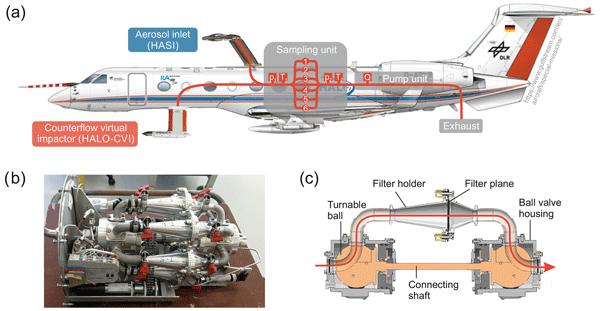
Frequent occurrence of newly formed aerosol particles over wide geographical areas in the Arctic free troposphere and atmospheric boundary layer

Jonas Schaefer
Jörg Hartmann
Benjamin Kirbus
Joshua Müller
Markus Hartmann
Bruno Wetzel
Laura Köhler
Anna-Marie Jörss
Kay Weinhold
Andreas Herber
Zsófia Jurányi
Silvia Henning
Gregory C. Roberts
Manfred Wendisch
Mira L. Pöhlker
Frank Stratmann
Related authors
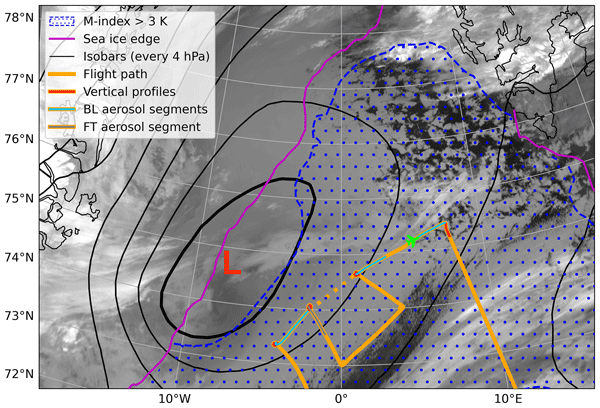
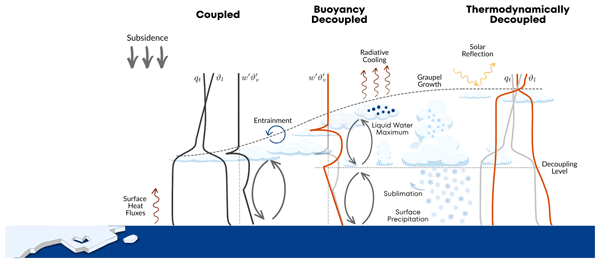
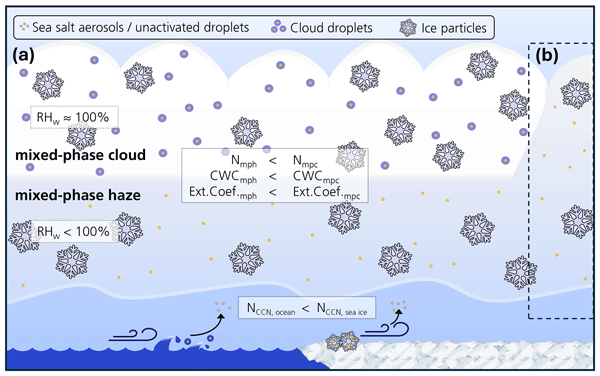
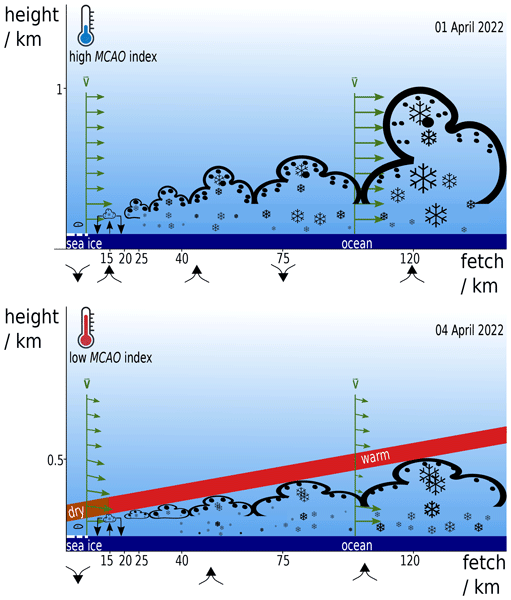
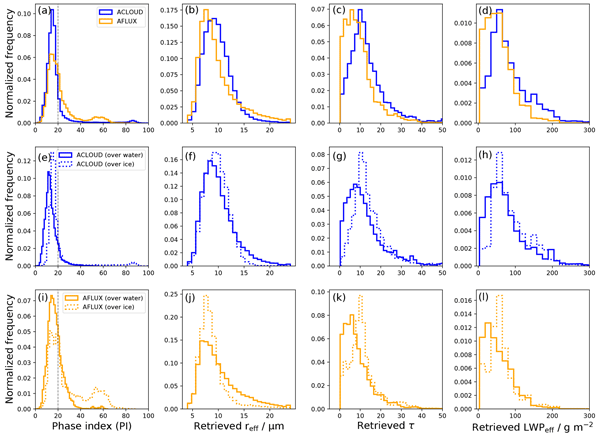
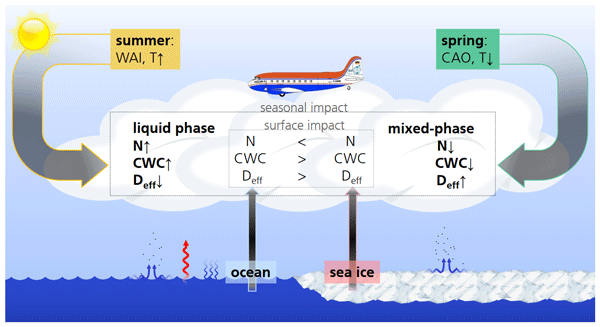
The processes that establish how mixed-phase closed-cell clouds transition to open-cells are poorly known. First-of-its kind aircraft observations document such a transition in the presence of anomalously high aerosol concentrations, reducing the drop size thereby discouraging riming, over the Nordic Seas at cloud temperatures < −15 °C. Eventually, ice precipitation produces surface cold pools that appear to drive the convective transition, despite strong counteracting surface fluxes.



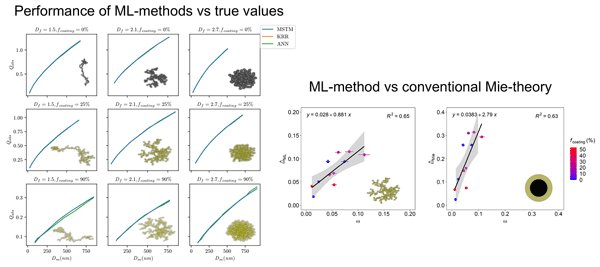
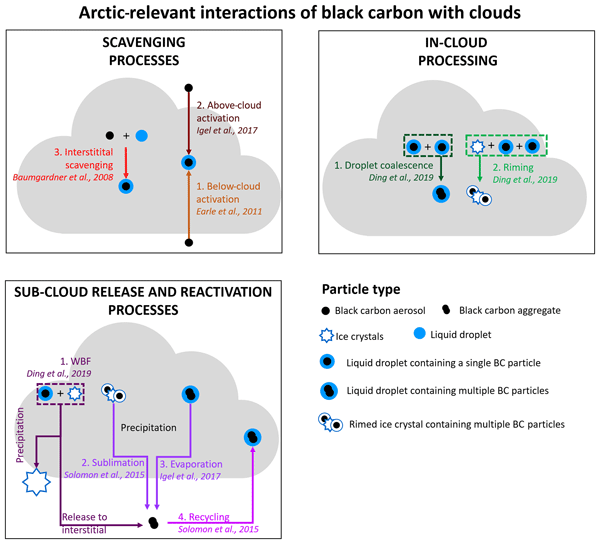
Through the use of our machine-learning-based optical model, realistic BC morphologies can be incorporated into atmospheric science applications that require highly accurate results with minimal computational resources. The results of the study demonstrate that the predictions of single-scattering albedo (ω) and mass absorption cross-section (MAC) were improved over the conventional Mie-based predictions when using the machine learning method.
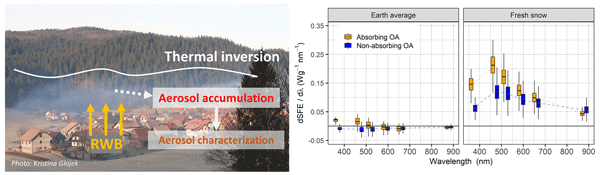
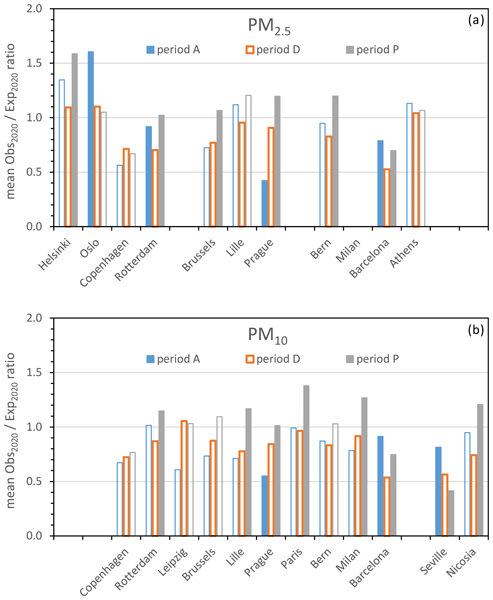
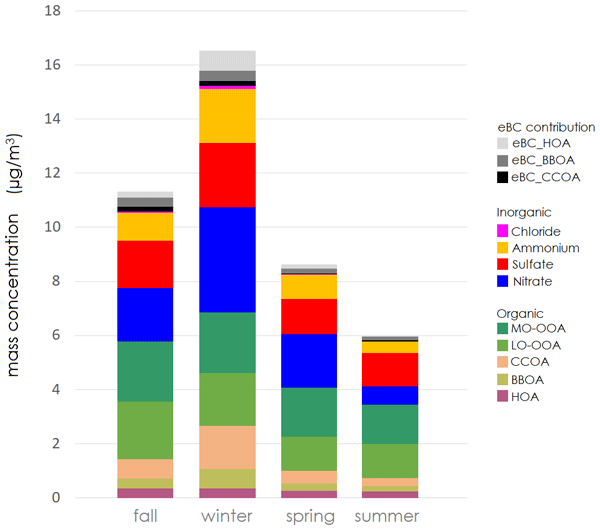





real-world laboratoryconditions was conducted. We found that measured black carbon (eBC) and particulate matter (PM) in rural shallow terrain depressions with residential wood burning could be much greater than predicted by models. The exceeding levels are a cause for concern since similar conditions can be expected in numerous hilly and mountainous regions across Europe, where approximately 20 % of the total population lives.

hotspotsof interaction. Code and data are open access.