Articles | Volume 25, issue 23
https://doi.org/10.5194/acp-25-17973-2025
© Author(s) 2025. This work is distributed under
the Creative Commons Attribution 4.0 License.

Special issue:
https://doi.org/10.5194/acp-25-17973-2025
© Author(s) 2025. This work is distributed under
the Creative Commons Attribution 4.0 License.
Isentropic mixing vs. convection in CLaMS-3.0/MESSy: evaluation using satellite climatologies and in situ carbon monoxide observations

Institute of Climate and Energy Systems, Stratosphere (ICE-4), Forschungszentrum Jülich, Germany
Felix Ploeger
Institute of Climate and Energy Systems, Stratosphere (ICE-4), Forschungszentrum Jülich, Germany
Institute for Atmospheric and Environmental Research, University of Wuppertal, Wuppertal, Germany
Francesco D'Amato
National Institute of Optics, CNR-INO, Via Madonna del Piano 10, Sesto Fiorentino, Florence, Italy
Teresa Campos
National Center for Atmospheric Research, Boulder, Colorado, USA
Marc von Hobe
Institute of Climate and Energy Systems, Stratosphere (ICE-4), Forschungszentrum Jülich, Germany
Shawn B. Honomichl
National Center for Atmospheric Research, Boulder, Colorado, USA
Peter Hoor
Institute for Atmospheric Physics, Johannes Gutenberg University, Mainz, Germany
Laura L. Pan
National Center for Atmospheric Research, Boulder, Colorado, USA
Michelle L. Santee
Jet Propulsion Laboratory, California Institute of Technology, Pasadena, California, USA
Silvia Viciani
National Institute of Optics, CNR-INO, Via Madonna del Piano 10, Sesto Fiorentino, Florence, Italy
Kaley A. Walker
Department of Physics, University of Toronto, Toronto, Canada
Michaela I. Hegglin
Institute of Climate and Energy Systems, Stratosphere (ICE-4), Forschungszentrum Jülich, Germany
Institute for Atmospheric and Environmental Research, University of Wuppertal, Wuppertal, Germany
Department of Meteorology, University of Reading, Reading, UK
Related authors
Hongyue Wang, Mijeong Park, Mengchu Tao, Cristina Peña-Ortiz, Nuria P. Plaza-Martin, Felix Ploeger, and Paul Konopka
Atmos. Chem. Phys., 25, 14703–14718, https://doi.org/10.5194/acp-25-14703-2025, https://doi.org/10.5194/acp-25-14703-2025, 2025
Short summary
Short summary
We investigate how water vapor in the upper atmosphere gains moisture during the Asian and North American monsoons using a simplified modeling approach. Our results show that the Asian monsoon is mainly controlled by large-scale temperature, whereas the North American monsoon may be more influenced by convective moistening. These differences point to distinct mechanisms shaping moisture transport in the two monsoon systems.
Shenglong Zhang, Jiao Chen, Jonathon S. Wright, Sean M. Davis, Jie Gao, Paul Konopka, Ninghui Li, Mengqian Lu, Susann Tegtmeier, Xiaolu Yan, Guang J. Zhang, and Nuanliang Zhu
Atmos. Chem. Phys., 25, 10109–10139, https://doi.org/10.5194/acp-25-10109-2025, https://doi.org/10.5194/acp-25-10109-2025, 2025
Short summary
Short summary
Swirling above summer storms, the Asian monsoon anticyclone functions as both gateway and gatekeeper to moisture entering the stratosphere. Although well monitored from space since 2005, many details of the anticyclone and the air that flows through it remain mysterious. Reanalyses, which combine model output and observations, may help to address how and why but only if they reliably capture the what and where of water vapor variations. Current reanalyses are beginning to meet these criteria.
Jonathon S. Wright, Shenglong Zhang, Jiao Chen, Sean M. Davis, Paul Konopka, Mengqian Lu, Xiaolu Yan, and Guang J. Zhang
Atmos. Chem. Phys., 25, 9617–9643, https://doi.org/10.5194/acp-25-9617-2025, https://doi.org/10.5194/acp-25-9617-2025, 2025
Short summary
Short summary
Atmospheric reanalysis products reconstruct past states of the atmosphere. These products are often used to study winds and temperatures in the upper-level monsoon circulation, but their ability to reproduce composition fields like water vapor and ozone has been questionable at best. Here we report clear signs of improvement in both consistency across reanalyses and agreement with satellite observations, outline limitations, and suggest steps to further enhance the usefulness of these fields.
Florian Voet, Felix Ploeger, Johannes Laube, Peter Preusse, Paul Konopka, Jens-Uwe Grooß, Jörn Ungermann, Björn-Martin Sinnhuber, Michael Höpfner, Bernd Funke, Gerald Wetzel, Sören Johansson, Gabriele Stiller, Eric Ray, and Michaela I. Hegglin
Atmos. Chem. Phys., 25, 3541–3565, https://doi.org/10.5194/acp-25-3541-2025, https://doi.org/10.5194/acp-25-3541-2025, 2025
Short summary
Short summary
This study refines estimates of the stratospheric “age of air”, a measure of how long air circulates in the stratosphere. By analyzing correlations between trace gases measurable by satellites, the research introduces a method that reduces uncertainties and detects small-scale atmospheric features. This improved understanding of stratospheric circulation is crucial for better climate models and predictions, enhancing our ability to assess the impacts of climate change on the atmosphere.
Xiaolu Yan, Paul Konopka, Felix Ploeger, and Aurélien Podglajen
Atmos. Chem. Phys., 25, 1289–1305, https://doi.org/10.5194/acp-25-1289-2025, https://doi.org/10.5194/acp-25-1289-2025, 2025
Short summary
Short summary
Our study finds that the air mass fractions (AMFs) from the Asian boundary layer (ABL) to the polar regions are about 1.5 times larger than those from the same latitude band in the Southern Hemisphere. The transport of AMFs from the ABL to the polar vortex primarily occurs above 20 km and over timescales exceeding 2 years. Our analysis reveals a strong correlation between the polar pollutants and the AMFs from the ABL. About 20 % of SF6 in the polar stratosphere originates from the ABL.
Katharina Turhal, Felix Plöger, Jan Clemens, Thomas Birner, Franziska Weyland, Paul Konopka, and Peter Hoor
Atmos. Chem. Phys., 24, 13653–13679, https://doi.org/10.5194/acp-24-13653-2024, https://doi.org/10.5194/acp-24-13653-2024, 2024
Short summary
Short summary
The tropopause separates the troposphere, where many greenhouse gases originate, from the stratosphere. This study examines a tropopause defined by potential vorticity – an analogue for angular momentum that changes sharply in the subtropics, creating a transport barrier. Between 1980 and 2017, this tropopause shifted poleward at lower altitudes and equatorward above, suggesting height-dependent changes in atmospheric circulation that may affect greenhouse gas distribution and global warming.
Felix Ploeger, Thomas Birner, Edward Charlesworth, Paul Konopka, and Rolf Müller
Atmos. Chem. Phys., 24, 2033–2043, https://doi.org/10.5194/acp-24-2033-2024, https://doi.org/10.5194/acp-24-2033-2024, 2024
Short summary
Short summary
We present a novel mechanism of how regional anomalies in water vapour concentrations in the upper troposphere and lower stratosphere impact regional atmospheric circulation systems. These impacts include a displaced upper-level Asian monsoon circulation and strengthened prevailing westerlies in the Pacific region. Current climate models have biases in simulating these regional water vapour anomalies and circulation impacts, but the biases can be avoided by improving the model transport.
Paul Konopka, Christian Rolf, Marc von Hobe, Sergey M. Khaykin, Benjamin Clouser, Elisabeth Moyer, Fabrizio Ravegnani, Francesco D'Amato, Silvia Viciani, Nicole Spelten, Armin Afchine, Martina Krämer, Fred Stroh, and Felix Ploeger
Atmos. Chem. Phys., 23, 12935–12947, https://doi.org/10.5194/acp-23-12935-2023, https://doi.org/10.5194/acp-23-12935-2023, 2023
Short summary
Short summary
We studied water vapor in a critical region of the atmosphere, the Asian summer monsoon anticyclone, using rare in situ observations. Our study shows that extremely high water vapor values observed in the stratosphere within the Asian monsoon anticyclone still undergo significant freeze-drying and that water vapor concentrations set by the Lagrangian dry point are a better proxy for the stratospheric water vapor budget than rare observations of enhanced water mixing ratios.
Lars Hoffmann, Paul Konopka, Jan Clemens, and Bärbel Vogel
Atmos. Chem. Phys., 23, 7589–7609, https://doi.org/10.5194/acp-23-7589-2023, https://doi.org/10.5194/acp-23-7589-2023, 2023
Short summary
Short summary
Atmospheric convection plays a key role in tracer transport in the troposphere. Global meteorological forecasts and reanalyses typically have a coarse spatiotemporal resolution that does not adequately resolve the dynamics, transport, and mixing of air associated with storm systems or deep convection. We discuss the application of the extreme convection parameterization in a Lagrangian transport model to improve simulations of tracer transport from the boundary layer into the free troposphere.
Paul Konopka, Mengchu Tao, Marc von Hobe, Lars Hoffmann, Corinna Kloss, Fabrizio Ravegnani, C. Michael Volk, Valentin Lauther, Andreas Zahn, Peter Hoor, and Felix Ploeger
Geosci. Model Dev., 15, 7471–7487, https://doi.org/10.5194/gmd-15-7471-2022, https://doi.org/10.5194/gmd-15-7471-2022, 2022
Short summary
Short summary
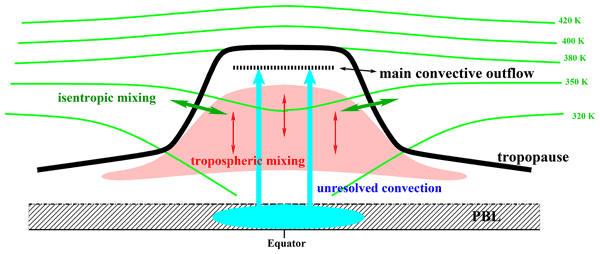
Pure trajectory-based transport models driven by meteorology derived from reanalysis products (ERA5) take into account only the resolved, advective part of transport. That means neither mixing processes nor unresolved subgrid-scale advective processes like convection are included. The Chemical Lagrangian Model of the Stratosphere (CLaMS) includes these processes. We show that isentropic mixing dominates unresolved transport. The second most important transport process is unresolved convection.
Jan Clemens, Felix Ploeger, Paul Konopka, Raphael Portmann, Michael Sprenger, and Heini Wernli
Atmos. Chem. Phys., 22, 3841–3860, https://doi.org/10.5194/acp-22-3841-2022, https://doi.org/10.5194/acp-22-3841-2022, 2022
Short summary
Short summary
Highly polluted air flows from the surface to higher levels of the atmosphere during the Asian summer monsoon. At high levels, the air is trapped within eddies. Here, we study how air masses can leave the eddy within its cutoff, how they distribute, and how their chemical composition changes. We found evidence for transport from the eddy to higher latitudes over the North Pacific and even Alaska. During transport, trace gas concentrations within cutoffs changed gradually, showing steady mixing.
Dina Khordakova, Christian Rolf, Jens-Uwe Grooß, Rolf Müller, Paul Konopka, Andreas Wieser, Martina Krämer, and Martin Riese
Atmos. Chem. Phys., 22, 1059–1079, https://doi.org/10.5194/acp-22-1059-2022, https://doi.org/10.5194/acp-22-1059-2022, 2022
Short summary
Short summary
Extreme storms transport humidity from the troposphere to the stratosphere. Here it has a strong impact on the climate. With ongoing global warming, we expect more storms and, hence, an enhancement of this effect. A case study was performed in order to measure the impact of the direct injection of water vapor into the lower stratosphere. The measurements displayed a significant transport of water vapor into the lower stratosphere, and this was supported by satellite and reanalysis data.
Lukas Krasauskas, Jörn Ungermann, Peter Preusse, Felix Friedl-Vallon, Andreas Zahn, Helmut Ziereis, Christian Rolf, Felix Plöger, Paul Konopka, Bärbel Vogel, and Martin Riese
Atmos. Chem. Phys., 21, 10249–10272, https://doi.org/10.5194/acp-21-10249-2021, https://doi.org/10.5194/acp-21-10249-2021, 2021
Short summary
Short summary
A Rossby wave (RW) breaking event was observed over the North Atlantic during the WISE measurement campaign in October 2017. Infrared limb sounding measurements of trace gases in the lower stratosphere, including high-resolution 3-D tomographic reconstruction, revealed complex spatial structures in stratospheric tracers near the polar jet related to previous RW breaking events. Backward-trajectory analysis and tracer correlations were used to study mixing and stratosphere–troposphere exchange.
Felix Ploeger, Mohamadou Diallo, Edward Charlesworth, Paul Konopka, Bernard Legras, Johannes C. Laube, Jens-Uwe Grooß, Gebhard Günther, Andreas Engel, and Martin Riese
Atmos. Chem. Phys., 21, 8393–8412, https://doi.org/10.5194/acp-21-8393-2021, https://doi.org/10.5194/acp-21-8393-2021, 2021
Short summary
Short summary
We investigate the global stratospheric circulation (Brewer–Dobson circulation) in the new ECMWF ERA5 reanalysis based on age of air simulations, and we compare it to results from the preceding ERA-Interim reanalysis. Our results show a slower stratospheric circulation and higher age for ERA5. The age of air trend in ERA5 over the 1989–2018 period is negative throughout the stratosphere, related to multi-annual variability and a potential contribution from changes in the reanalysis system.
Xiaolu Yan, Paul Konopka, Marius Hauck, Aurélien Podglajen, and Felix Ploeger
Atmos. Chem. Phys., 21, 6627–6645, https://doi.org/10.5194/acp-21-6627-2021, https://doi.org/10.5194/acp-21-6627-2021, 2021
Short summary
Short summary
Inter-hemispheric transport is important for understanding atmospheric tracers because of the asymmetry in emissions between the Southern Hemisphere (SH) and Northern Hemisphere (NH). This study finds that the air masses from the NH extratropics to the atmosphere are about 5 times larger than those from the SH extratropics. The interplay between the Asian summer monsoon and westerly ducts triggers the cross-Equator transport from the NH to the SH in boreal summer and fall.
Marc von Hobe, Felix Ploeger, Paul Konopka, Corinna Kloss, Alexey Ulanowski, Vladimir Yushkov, Fabrizio Ravegnani, C. Michael Volk, Laura L. Pan, Shawn B. Honomichl, Simone Tilmes, Douglas E. Kinnison, Rolando R. Garcia, and Jonathon S. Wright
Atmos. Chem. Phys., 21, 1267–1285, https://doi.org/10.5194/acp-21-1267-2021, https://doi.org/10.5194/acp-21-1267-2021, 2021
Short summary
Short summary
The Asian summer monsoon (ASM) is known to foster transport of polluted tropospheric air into the stratosphere. To test and amend our picture of ASM vertical transport, we analyse distributions of airborne trace gas observations up to 20 km altitude near the main ASM vertical conduit south of the Himalayas. We also show that a new high-resolution version of the global chemistry climate model WACCM is able to reproduce the observations well.
Linda Smoydzin, Vera Bense, Heiko Bozem, Philipp Joppe, Daniel Kunkel, Hans-Christoph Lachnitt, Holger Tost, Andreas Zahn, Helmut Ziereis, Martin Riese, and Peter Hoor
EGUsphere, https://doi.org/10.5194/egusphere-2025-5372, https://doi.org/10.5194/egusphere-2025-5372, 2025
This preprint is open for discussion and under review for Atmospheric Chemistry and Physics (ACP).
Short summary
Short summary
During a research flight in early October elevated upper tropospheric mixing ratios of CO, NO, NOy and O3 were observed over a distance of more than 1000 km east of the Brasilian coast. Ozone mixing ratios are 20–40 ppbv higher than during a flight in early September. By combining aircraft observations with model simulations we find that ozone production from biomass burning over Amazonia caused predominantly the ozone enhancements which have a local effect on the radiative forcing of 50 mWm−2.
Patrick Konjari, Christian Rolf, Martina Krämer, Armin Afchine, Nicole Spelten, Irene Bartolome Garcia, Annette Miltenberger, Nicolas Emig, Philipp Joppe, Johannes Schneider, Yun Li, Andreas Petzold, Heiko Bozem, and Peter Hoor
Atmos. Chem. Phys., 25, 18031–18050, https://doi.org/10.5194/acp-25-18031-2025, https://doi.org/10.5194/acp-25-18031-2025, 2025
Short summary
Short summary
We investigated how a powerful storm over southern Sweden in June 2024 transported ice particles and moist air into the normally dry stratosphere. We observed unusually high water vapor and ice levels up to 1.5 kilometers above the tropopause. Although the extra water vapor lasted only a few days to weeks, it shows how such storms can temporarily alter the upper atmosphere’s composition.
Bärbel Vogel, Valentin Lauther, Franziska Köllner, Fatih Ekinci, Christian Rolf, Johannes Strobel, Ronja van Luijt, Michael C. Volk, Stephan Borrmann, Antonis Dragoneas, Oliver Eppers, Sergej Molleker, Peter Hoor, Linda Ort, Franziska Weyland, Andreas Zahn, Jan Clemens, Gebhard Günther, Oleh Kachula, Rolf Müller, Felix Ploeger, and Martin Riese
EGUsphere, https://doi.org/10.5194/egusphere-2025-5609, https://doi.org/10.5194/egusphere-2025-5609, 2025
This preprint is open for discussion and under review for Atmospheric Chemistry and Physics (ACP).
Short summary
Short summary
This work highlights the impact of the Asian summer monsoon on the chemical composition of the upper troposphere and lower stratosphere. Measurements of trace gases and aerosol particles uplifted by the Asian summer monsoon to higher altitudes are sparse. Here, we had the opportunity to use a whole suite of different measured trace gases and the chemical composition of aerosols, in combination with simulations, to better understand the complex transport and mixing processes in this region.
Anna Breuninger, Philipp Joppe, Jonas Wilsch, Cornelis Schwenk, Heiko Bozem, Nicolas Emig, Laurin Merkel, Rainer Rossberg, Timo Keber, Arthur Kutschka, Philipp Waleska, Stefan Hofmann, Sarah Richter, Florian Ungeheuer, Konstantin Dörholt, Thorsten Hoffmann, Annette Miltenberger, Johannes Schneider, Peter Hoor, and Alexander L. Vogel
Atmos. Chem. Phys., 25, 16533–16551, https://doi.org/10.5194/acp-25-16533-2025, https://doi.org/10.5194/acp-25-16533-2025, 2025
Short summary
Short summary
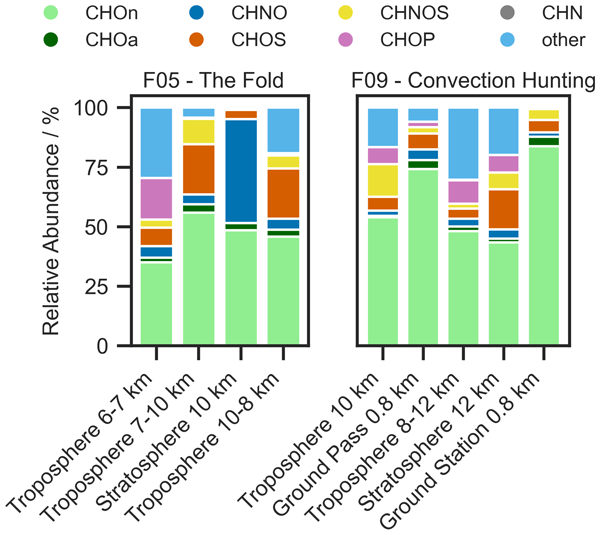
This study investigates molecular organic aerosol composition in the upper troposphere and lower stratosphere from an airborne campaign over Central Europe in summer 2024. Via ultra-high-performance liquid chromatography and high-resolution mass spectrometry of tropospheric and stratospheric filter samples, we identified various organic compounds. Our findings underscore the significant cross-tropopause transport of biogenic secondary organic aerosol and anthropogenic pollutants.
Sujan Khanal, Matthew Toohey, Adam Bourassa, C. Thomas McElroy, Christopher Sioris, and Kaley A. Walker
Atmos. Meas. Tech., 18, 6835–6852, https://doi.org/10.5194/amt-18-6835-2025, https://doi.org/10.5194/amt-18-6835-2025, 2025
Short summary
Short summary
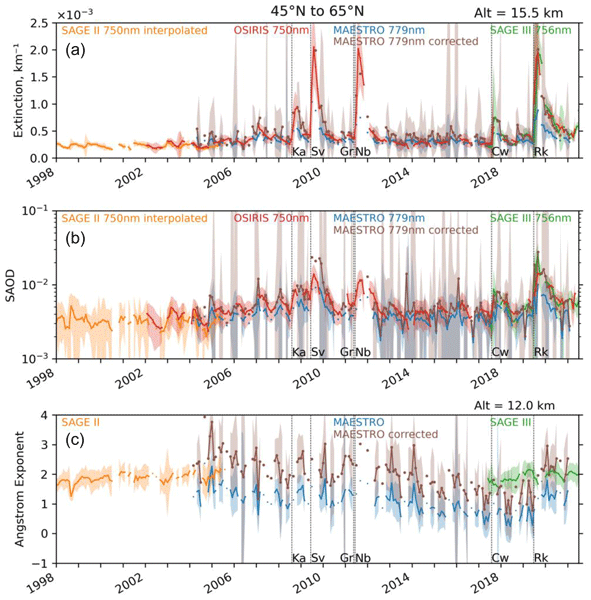
Measurements of stratospheric aerosol from the Measurement of Aerosol Extinction in the Stratosphere and Troposphere Retrieved by Occultation (MAESTRO) instrument are compared to other measurements to assess their scientific value. We find that medians of MAESTRO measurements binned by month and latitude show reasonable correlation with other data sets, with notable increases after volcanic eruptions, and that biases in the data can be alleviated through a simple correction technique. Used with care, MAESTRO aerosol measurements provide information that can complement other data sets.
Heiko Bozem, Philipp Joppe, Yun Li, Nicolas Emig, Armin Afchine, Anna Breuninger, Joachim Curtius, Stefan Hofmann, Sadath Ismayil, Konrad Kandler, Daniel Kunkel, Arthur Kutschka, Hans-Christoph Lachnitt, Andreas Petzold, Sarah Richter, Timo Röschenthaler, Christian Rolf, Lisa Schneider, Johannes Schneider, Alexander Vogel, and Peter Hoor
Atmos. Meas. Tech., 18, 6545–6568, https://doi.org/10.5194/amt-18-6545-2025, https://doi.org/10.5194/amt-18-6545-2025, 2025
Short summary
Short summary
Deployed on a Learjet as a tandem measurement platform during the TPEx I (TropoPause composition gradients and mixing Experiment) campaign in June 2024, the new TPC-TOSS (TropoPause Composition Towed Sensor Shuttle) system delivers high-resolution in situ data on ozone, aerosol, and key meteorological parameters. Laboratory and in-flight tests confirmed its precision and stability. Observed gradients near the tropopause reveal active mixing and transport processes in the tropopause region.
Chun Hang Chau, Peter Hoor, Katharina Kaiser, and Holger Tost
EGUsphere, https://doi.org/10.5194/egusphere-2025-5382, https://doi.org/10.5194/egusphere-2025-5382, 2025
This preprint is open for discussion and under review for Atmospheric Chemistry and Physics (ACP).
Short summary
Short summary
This study examines the sensitivity of different greenhouse gases to vertical mixing by clear air turbulence in the upper troposphere and lower stratosphere. We found that ozone is most sensitive to vertical mixing and could lead to cooling at the top of the atmosphere by -0.2 W/m2. We also found that the vertical mixing by clear air turbulence could lead to changes in methane lifetime and the ozone chemistry.
Philipp Joppe, Johannes Schneider, Jonas Wilsch, Heiko Bozem, Anna Breuninger, Joachim Curtius, Martin Ebert, Nicolas Emig, Peter Hoor, Sadath Ismayil, Konrad Kandler, Daniel Kunkel, Isabel Kurth, Hans-Christoph Lachnitt, Yun Li, Annette Miltenberger, Sarah Richter, Christian Rolf, Lisa Schneider, Cornelis Schwenk, Nicole Spelten, Alexander L. Vogel, Yafang Cheng, and Stephan Borrmann
Atmos. Chem. Phys., 25, 15077–15103, https://doi.org/10.5194/acp-25-15077-2025, https://doi.org/10.5194/acp-25-15077-2025, 2025
Short summary
Short summary
We show measurements of a filament with biomass burning influence transported by a warm conveyor belt (WCB) into the tropopause region over Europe. The pollution originates from Canadian forest fires and is transported in the lower troposphere towards Europe. The WCB transport is followed by mixing with air masses of stratospheric chemical signatures. We hypothesize that this mixing leads to a change in the vertical gradient of the potential temperature.
Ewa M. Bednarz, Valentina Aquila, Amy H. Butler, Peter Colarco, Eric Fleming, Freja F. Østerstrøm, David Plummer, Ilaria Quaglia, William Randel, Michelle L. Santee, Takashi Sekiya, Simone Tilmes, Xinyue Wang, Shingo Watanabe, Wandi Yu, Jun Zhang, Yunqian Zhu, and Zhihong Zhuo
EGUsphere, https://doi.org/10.5194/egusphere-2025-4609, https://doi.org/10.5194/egusphere-2025-4609, 2025
This preprint is open for discussion and under review for Atmospheric Chemistry and Physics (ACP).
Short summary
Short summary
The 2022 Hunga eruption injected unprecedented quantities of water vapor into the stratosphere, alongside modest amounts of aerosol precursors. We assess its impacts on stratospheric ozone layer using a multi-model ensemble of chemistry-climate simulations. The results confirm the eruption's role in modulating SH mid and high latitudes ozone abundances in the short term, and discuss the different chemical and dynamical processes driving those changes as well as the role of natural variability.
Linda Ort, Andrea Pozzer, Peter Hoor, Florian Obersteiner, Andreas Zahn, Thomas B. Ryerson, Chelsea R. Thompson, Jeff Peischl, Róisín Commane, Bruce Daube, Ilann Bourgeois, Jos Lelieveld, and Horst Fischer
Atmos. Chem. Phys., 25, 14987–15007, https://doi.org/10.5194/acp-25-14987-2025, https://doi.org/10.5194/acp-25-14987-2025, 2025
Short summary
Short summary
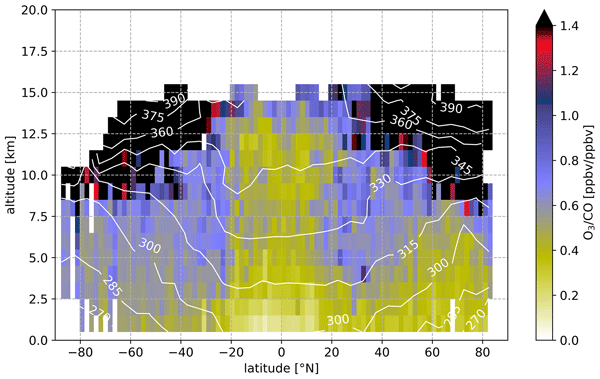
This study investigates the role of lightning emissions on the O3–CO ratio in the northern subtropics. We used in situ observations and a global circulation model to show an effect of up to 40 % onto the subtropical O3–CO ratio by tropical air masses transported via the Hadley cell. This influence of lightning emissions and its photochemistry has a global effect on trace and greenhouse gases and needs to be considered for global chemical distributions.
Hongyue Wang, Mijeong Park, Mengchu Tao, Cristina Peña-Ortiz, Nuria P. Plaza-Martin, Felix Ploeger, and Paul Konopka
Atmos. Chem. Phys., 25, 14703–14718, https://doi.org/10.5194/acp-25-14703-2025, https://doi.org/10.5194/acp-25-14703-2025, 2025
Short summary
Short summary
We investigate how water vapor in the upper atmosphere gains moisture during the Asian and North American monsoons using a simplified modeling approach. Our results show that the Asian monsoon is mainly controlled by large-scale temperature, whereas the North American monsoon may be more influenced by convective moistening. These differences point to distinct mechanisms shaping moisture transport in the two monsoon systems.
Frederik Harzer, Hella Garny, Felix Ploeger, J. Moritz Menken, and Thomas Birner
Atmos. Chem. Phys., 25, 14909–14921, https://doi.org/10.5194/acp-25-14909-2025, https://doi.org/10.5194/acp-25-14909-2025, 2025
Short summary
Short summary
We study ozone transport in the extratropical lowermost stratosphere using potential temperature as vertical coordinate, thereby distinguishing adiabatic and diabatic processes. We find that on top of known dominant transport processes (quasi-horizontal mixing, slow diabatic descent) vertical mixing plays an important role near the tropopause. Our findings are relevant for understanding ozone's role in climate including its imprint on tropospheric ozone via stratosphere-troposphere air exchange.
Sophie Bauchinger, Andreas Engel, Markus Jesswein, Timo Keber, Harald Bönisch, Florian Obersteiner, Andreas Zahn, Nicolas Emig, Peter Hoor, Hans-Christoph Lachnitt, Franziska Weyland, Linda Ort, and Tanja J. Schuck
Atmos. Chem. Phys., 25, 14167–14186, https://doi.org/10.5194/acp-25-14167-2025, https://doi.org/10.5194/acp-25-14167-2025, 2025
Short summary
Short summary
We compared different ways to define the upper barrier of the troposphere in the extra-tropics, the “tropopause”. By analysing ozone distributions sorted by different definitions, we found that the traditional temperature-based tropopause works less well than dynamic or tracer-based definitions. We saw a sharper transition of ozone across the tropopause using a higher value of potential vorticity than often used and recommend this value for future studies of exchange processes in this region.
Chun Hang Chau, Peter Hoor, and Holger Tost
Atmos. Chem. Phys., 25, 13123–13140, https://doi.org/10.5194/acp-25-13123-2025, https://doi.org/10.5194/acp-25-13123-2025, 2025
Short summary
Short summary
This study examines how the turbulence in the upper troposphere/lower stratosphere (UTLS) could modify the tracer distribution under different situations. Using a multi-scale chemistry model with a novel diagnostic, we found that both the pre-existing tracer gradient and the dynamical and thermodynamical forcing play a role in modifying the tracer distribution. These results allow further research on the UTLS turbulent mixing and its implications for the climate system.
Nicolas Emig, Annette K. Miltenberger, Peter M. Hoor, and Andreas Petzold
Atmos. Chem. Phys., 25, 13077–13101, https://doi.org/10.5194/acp-25-13077-2025, https://doi.org/10.5194/acp-25-13077-2025, 2025
Short summary
Short summary
This study presents in situ observations of cirrus occurrence from aircraft measurements in the extratropical transition layer (ExTL) using simultaneous measurements from two platforms. Lagrangian diagnostics based on high-resolution ICON simulations show long residence times of the cirrus in stratospheric air, allowing us to separate different diabatic processes during transit. The findings suggest that radiative diabatic cloud processes significantly impact the tropopause thermodynamic structure.
Zhen Yang, Bärbel Vogel, Felix Plöger, Zhixuan Bai, Dan Li, Sabine Griessbach, Lars Hoffmann, Frank G. Wienhold, Elizabeth Asher, Alexandre A. Baron, Katie R. Smith, Troy Thornberry, Jianchun Bian, and Michaela I. Hegglin
EGUsphere, https://doi.org/10.5194/egusphere-2025-4842, https://doi.org/10.5194/egusphere-2025-4842, 2025
This preprint is open for discussion and under review for Atmospheric Chemistry and Physics (ACP).
Short summary
Short summary
Night-time balloon profiles over Lhasa, combined with satellite-constrained modeling, tracked the 2019 Raikoke volcano’s aerosol plumes through the Asian summer monsoon. We find two altitude-separated routes into the anticyclone. The monsoon partly blocks transport but permits entrainment and internal mixing, explaining gradual dilution. Matching the observations required stronger subgrid mixing, and the plume likely rose ~4–5 km from radiative heating.
Jiansheng Zou, C. Thomas McElroy, James R. Drummond, Kaley A. Walker, and Paul S. Jeffery
EGUsphere, https://doi.org/10.5194/egusphere-2025-4636, https://doi.org/10.5194/egusphere-2025-4636, 2025
This preprint is open for discussion and under review for Atmospheric Measurement Techniques (AMT).
Short summary
Short summary
Two decades of operations and performance for the MAESTRO instrument are reviewed. Topics addressed include: a) occultation measurement schemes, b) MAESTRO’s field of view (FOV) on the Sun, c) FOV changes on the solar disk during occultations and their impact on calculated transmittances, d) the relation between the MAESTRO and ACE-FTS FOVs, e) verification of wavelength assignment, and how it has been affected by thermal environment changes, and f) the determination of MAESTRO tangent heights.
Rasul Baikhadzhaev, Felix Ploeger, Peter Preusse, Manfred Ern, and Thomas Birner
Atmos. Chem. Phys., 25, 12753–12777, https://doi.org/10.5194/acp-25-12753-2025, https://doi.org/10.5194/acp-25-12753-2025, 2025
Short summary
Short summary
Across four reanalyses, the shallow branch of the stratospheric overturning circulation was found to be driven by planetary waves 1 to 3, and the deep branch of the circulation was found to be driven by smaller-scale waves (wave 4 and higher). However, the height of the level separating the branches is dependent on the reanalysis considered. Thus, using the appropriate separation levels in model inter-comparisons could reduce the spread between models regarding climatology and trends in the circulation.
Johannes Schneider, Christiane Schulz, Florian Rubach, Anna Ludwig, Jonas Wilsch, Philipp Joppe, Christian Gurk, Sergej Molleker, Laurent Poulain, Florian Obersteiner, Torsten Gehrlein, Harald Bönisch, Andreas Zahn, Peter Hoor, Nicolas Emig, Heiko Bozem, Stephan Borrmann, and Markus Hermann
Atmos. Meas. Tech., 18, 5103–5128, https://doi.org/10.5194/amt-18-5103-2025, https://doi.org/10.5194/amt-18-5103-2025, 2025
Short summary
Short summary
An instrumented container laboratory is operated on regular commercial passenger flights to obtain a long-term representative dataset on the composition of the upper troposphere and lower stratosphere. Here we report on the development of a fully automated aerosol mass spectrometer for this project. We present technical specifications, necessary modifications for the automation, instrument calibration and comparisons, detection limits, and the first in-flight data.
Yugo Kanaya, Roberto Sommariva, Alfonso Saiz-Lopez, Andrea Mazzeo, Theodore K. Koenig, Kaori Kawana, James E. Johnson, Aurélie Colomb, Pierre Tulet, Suzie Molloy, Ian E. Galbally, Rainer Volkamer, Anoop Mahajan, John W. Halfacre, Paul B. Shepson, Julia Schmale, Hélène Angot, Byron Blomquist, Matthew D. Shupe, Detlev Helmig, Junsu Gil, Meehye Lee, Sean C. Coburn, Ivan Ortega, Gao Chen, James Lee, Kenneth C. Aikin, David D. Parrish, John S. Holloway, Thomas B. Ryerson, Ilana B. Pollack, Eric J. Williams, Brian M. Lerner, Andrew J. Weinheimer, Teresa Campos, Frank M. Flocke, J. Ryan Spackman, Ilann Bourgeois, Jeff Peischl, Chelsea R. Thompson, Ralf M. Staebler, Amir A. Aliabadi, Wanmin Gong, Roeland Van Malderen, Anne M. Thompson, Ryan M. Stauffer, Debra E. Kollonige, Juan Carlos Gómez Martin, Masatomo Fujiwara, Katie Read, Matthew Rowlinson, Keiichi Sato, Junichi Kurokawa, Yoko Iwamoto, Fumikazu Taketani, Hisahiro Takashima, Mónica Navarro-Comas, Marios Panagi, and Martin G. Schultz
Earth Syst. Sci. Data, 17, 4901–4932, https://doi.org/10.5194/essd-17-4901-2025, https://doi.org/10.5194/essd-17-4901-2025, 2025
Short summary
Short summary
The first comprehensive dataset of tropospheric ozone over oceans/polar regions is presented, including 77 ship/buoy and 48 aircraft campaign observations (1977–2022, 0–5000 m altitude), supplemented by ozonesonde and surface data. Air masses isolated from land for 72+ hours are systematically selected as essentially oceanic. Among the 11 global regions, they show daytime decreases of 11–16 % in the tropics, while near-zero depletions are rare, unlike in the Arctic, implying different mechanisms.
Viktoria F. Sofieva, Alexandra Laeng, Thomas von Clarmann, Gabriele Stiller, Michael Kiefer, Johanna Tamminen, Alexey Rozanov, Carlo Arosio, Nathaniel Livesey, Robert Damadeo, Patrick Sheese, Kaley A. Walker, Doug Degenstein, Daniel Zawada, Natalya A. Kramarova, and Arno Keppens
EGUsphere, https://doi.org/10.5194/egusphere-2025-2830, https://doi.org/10.5194/egusphere-2025-2830, 2025
Short summary
Short summary
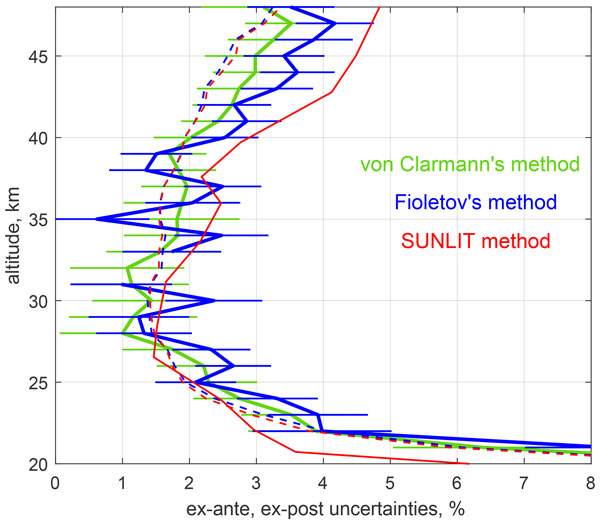
For satellite measurements of atmospheric composition, the random uncertainty estimates provided by retrieval algorithms might be imperfect due to various approximations used in the retrievals or presence of unknown error sources. This paper presents an overview of the methods used for validation of random uncertainty estimates. All methods discussed in this study are categorized, and assumptions and limitations of each method are discussed.
Shenglong Zhang, Jiao Chen, Jonathon S. Wright, Sean M. Davis, Jie Gao, Paul Konopka, Ninghui Li, Mengqian Lu, Susann Tegtmeier, Xiaolu Yan, Guang J. Zhang, and Nuanliang Zhu
Atmos. Chem. Phys., 25, 10109–10139, https://doi.org/10.5194/acp-25-10109-2025, https://doi.org/10.5194/acp-25-10109-2025, 2025
Short summary
Short summary
Swirling above summer storms, the Asian monsoon anticyclone functions as both gateway and gatekeeper to moisture entering the stratosphere. Although well monitored from space since 2005, many details of the anticyclone and the air that flows through it remain mysterious. Reanalyses, which combine model output and observations, may help to address how and why but only if they reliably capture the what and where of water vapor variations. Current reanalyses are beginning to meet these criteria.
Liliana Guidetti, Erika Brattich, Simone Ceccherini, Michaela Imelda Hegglin, Piera Raspollini, Cecilia Tirelli, Nicola Zoppetti, and Ugo Cortesi
EGUsphere, https://doi.org/10.5194/egusphere-2025-3231, https://doi.org/10.5194/egusphere-2025-3231, 2025
Short summary
Short summary
A new ozone dataset generated using the Complete Data Fusion algorithm applied to MIPAS and IASI observation is presented, and validated against ozonesondes from WOUDC stations across multiple latitude bands. The fusion propagates limb information from the stratosphere to the troposphere, across nadir observations. The resulting dataset has enhanced numbers of degrees of freedom and reduced total errors, providing improved capability for investigating ozone stratospheric intrusion events.
Jonathon S. Wright, Shenglong Zhang, Jiao Chen, Sean M. Davis, Paul Konopka, Mengqian Lu, Xiaolu Yan, and Guang J. Zhang
Atmos. Chem. Phys., 25, 9617–9643, https://doi.org/10.5194/acp-25-9617-2025, https://doi.org/10.5194/acp-25-9617-2025, 2025
Short summary
Short summary
Atmospheric reanalysis products reconstruct past states of the atmosphere. These products are often used to study winds and temperatures in the upper-level monsoon circulation, but their ability to reproduce composition fields like water vapor and ozone has been questionable at best. Here we report clear signs of improvement in both consistency across reanalyses and agreement with satellite observations, outline limitations, and suggest steps to further enhance the usefulness of these fields.
Rodrigo J. Seguel, Charlie Opazo, Yann Cohen, Owen R. Cooper, Laura Gallardo, Björn-Martin Sinnhuber, Florian Obersteiner, Andreas Zahn, Peter Hoor, Susanne Rohs, and Andreas Marsing
Atmos. Chem. Phys., 25, 8553–8573, https://doi.org/10.5194/acp-25-8553-2025, https://doi.org/10.5194/acp-25-8553-2025, 2025
Short summary
Short summary
We explored ozone differences between the Northern Hemisphere and Southern Hemispheres in the upper troposphere–lower stratosphere. We found lower ozone (with stratospheric origin) in the Southern Hemisphere, especially during years of severe ozone depletion. Sudden stratospheric warming events increased the ozone in each hemisphere, highlighting the relationship between stratospheric processes and ozone in the upper troposphere, where ozone is an important greenhouse gas.
Markus Jesswein, Valentin Lauther, Nicolas Emig, Peter Hoor, Timo Keber, Hans-Christoph Lachnitt, Linda Ort, Tanja Schuck, Johannes Strobel, Ronja Van Luijt, C. Michael Volk, Franziska Weyland, and Andreas Engel
Atmos. Chem. Phys., 25, 8107–8126, https://doi.org/10.5194/acp-25-8107-2025, https://doi.org/10.5194/acp-25-8107-2025, 2025
Short summary
Short summary
The study investigates transport within the Asian Summer Monsoon, focusing on how CH2Cl2 reaches the subarctic tropopause region. Using data from the PHILEAS campaign in 2023, events with increased mixing ratios were detected. Their origin, the transport paths to the tropopause region, and the potential entry into the stratosphere were analyzed. The East Asian Summer Monsoon was identified as the main transport pathway, with only a small contribution to the stratosphere in the following days.
Norbert Glatthor, Thomas von Clarmann, Udo Grabowski, Sylvia Kellmann, Michael Kiefer, Alexandra Laeng, Andrea Linden, Gabriele P. Stiller, Bernd Funke, Maya Garcia-Comas, Manuel Lopez-Puertas, Oliver Kirner, and Michelle L. Santee
EGUsphere, https://doi.org/10.5194/egusphere-2025-3352, https://doi.org/10.5194/egusphere-2025-3352, 2025
Short summary
Short summary
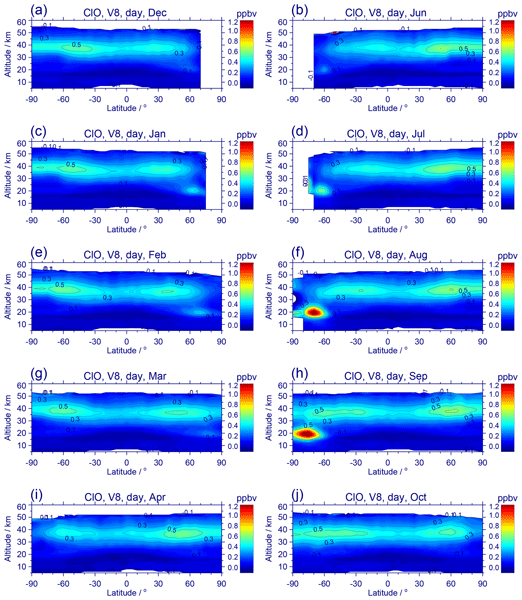
We present a global climatology of MIPAS version 8 chlorine monoxide (ClO), retrieved from spaceborne observations between 2002 and 2012. Due to an improved retrieval setup, the high bias and poor vertical resolution of upper stratospheric ClO, which had affected the previous V5 data set, has been removed. Comparisons with ClO observations of the Microwave Limb Sounder generally show good agreement. Differences can be explained by simulations with an atmospheric chemistry model.
Corinna Kloss, Gwenaël Berthet, Pasquale Sellitto, Irene Bartolome Garcia, Emmanuel Briaud, Rubel Chandra Das, Stéphane Chevrier, Nicolas Dumelié, Lilian Joly, Thomas Lecas, Pauline Marbach, Felix Ploeger, Jean-Baptiste Renard, Jean-Paul Vernier, Frank G. Wienhold, and Michaela I. Hegglin
EGUsphere, https://doi.org/10.5194/egusphere-2025-2091, https://doi.org/10.5194/egusphere-2025-2091, 2025
Short summary
Short summary
In October 2022, we detected volcanic particles in the stratosphere over France, linked to the January 2022 Hunga eruption in the South Pacific. Found between 17 and 23 km altitude, they were traced back to the tropics using trajectory simulations and satellite data. Their optical properties matched those in the Southern Hemisphere. The particles spread across the Northern Hemisphere, reflecting sunlight and slightly cooling the surface—a small but non-negligible effect.
Patrick E. Sheese, Kaley A. Walker, Chris D. Boone, and David A. Plummer
Atmos. Chem. Phys., 25, 5199–5213, https://doi.org/10.5194/acp-25-5199-2025, https://doi.org/10.5194/acp-25-5199-2025, 2025
Short summary
Short summary
Observations from Atmospheric Chemistry Experiment–Fourier Transform Spectrometer (ACE-FTS) are used to examine global stratospheric water vapour trends for 2004–2021. The satellite measurements are used to quantify trend contributions arising from changes in tropical tropopause temperatures, general circulation patterns, and methane concentrations. While most of the observed trends can be explained by these changes, there remains an unaccounted-for and increasing source of water vapour in the lower mid-stratosphere at mid-latitudes, which is discussed.
Nadia Smith, Michelle L. Santee, and Christopher D. Barnet
EGUsphere, https://doi.org/10.5194/egusphere-2025-1569, https://doi.org/10.5194/egusphere-2025-1569, 2025
Short summary
Short summary
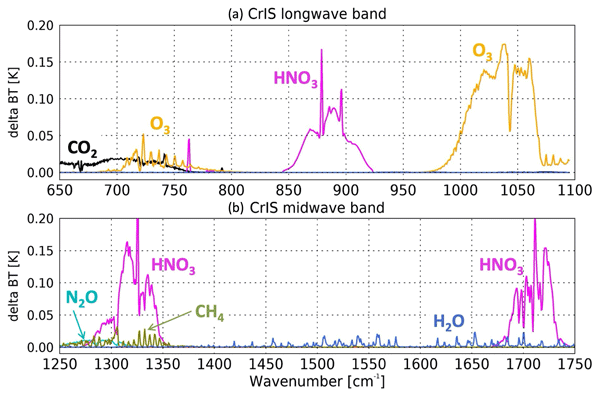
Once Aura is decommissioned, the multi-decadal MLS record of stratospheric HNO3 will end. This paper presents the retrieval of HNO3 from nadir IR sounders, AIRS and CrIS. We show how the CLIMCAPS approach allows HNO3 to be reported as a partial stratospheric column that is largely independent of tropospheric noise and reflects the variation captured by MLS. This novel retrieval approach improves upon the status quo and lays the foundation for validation studies and product roll-out in future.
Patrick Konjari, Christian Rolf, Michaela I. Hegglin, Susanne Rohs, Yun Li, Andreas Zahn, Harald Bönisch, Philippe Nedelec, Martina Krämer, and Andreas Petzold
Atmos. Chem. Phys., 25, 4269–4289, https://doi.org/10.5194/acp-25-4269-2025, https://doi.org/10.5194/acp-25-4269-2025, 2025
Short summary
Short summary
This study introduces a new method to derive adjusted water vapor (H2O) climatologies for the upper tropopshere and lower statosphere (UT/LS) using data from 60 000 flights under the IAGOS program. Biases in the IAGOS water vapour dataset are adjusted, based on the more accurate IAGOS-CARIBIC data. The resulting highly resolved H2O climatologies will contribute to a better understanding of the H2O variability in the UT/LS and its connection to various transport and mixing processes.
Laura N. Saunders, Kaley A. Walker, Gabriele P. Stiller, Thomas von Clarmann, Florian Haenel, Hella Garny, Harald Bönisch, Chris D. Boone, Ariana E. Castillo, Andreas Engel, Johannes C. Laube, Marianna Linz, Felix Ploeger, David A. Plummer, Eric A. Ray, and Patrick E. Sheese
Atmos. Chem. Phys., 25, 4185–4209, https://doi.org/10.5194/acp-25-4185-2025, https://doi.org/10.5194/acp-25-4185-2025, 2025
Short summary
Short summary
We present a 17-year stratospheric age-of-air dataset derived from ACE-FTS satellite measurements of sulfur hexafluoride. This is the longest continuous, global, and vertically resolved age of air time series available to date. In this paper, we show that this dataset agrees well with age-of-air datasets based on measurements from other instruments. We also present trends in the midlatitude lower stratosphere that indicate changes in the global circulation that are predicted by climate models.
Shubhajyoti Roy, Satheesh P. R. Chandran, Suvarna Fadnavis, Vijay Sagar, Michaela I. Hegglin, and Rolf Müller
EGUsphere, https://doi.org/10.5194/egusphere-2025-1098, https://doi.org/10.5194/egusphere-2025-1098, 2025
Short summary
Short summary
We show stratospheric ozone intrusions associated with sudden stratospheric warming events enhance ozone in the lower troposphere over the South Asia. The ozone enhancement increases ozone radiative forcing by 0.04±0.03 W.m-2 over South Asia. This increase in ozone radiative forcing potentially exacerbates regional climate warming.
Florian Voet, Felix Ploeger, Johannes Laube, Peter Preusse, Paul Konopka, Jens-Uwe Grooß, Jörn Ungermann, Björn-Martin Sinnhuber, Michael Höpfner, Bernd Funke, Gerald Wetzel, Sören Johansson, Gabriele Stiller, Eric Ray, and Michaela I. Hegglin
Atmos. Chem. Phys., 25, 3541–3565, https://doi.org/10.5194/acp-25-3541-2025, https://doi.org/10.5194/acp-25-3541-2025, 2025
Short summary
Short summary
This study refines estimates of the stratospheric “age of air”, a measure of how long air circulates in the stratosphere. By analyzing correlations between trace gases measurable by satellites, the research introduces a method that reduces uncertainties and detects small-scale atmospheric features. This improved understanding of stratospheric circulation is crucial for better climate models and predictions, enhancing our ability to assess the impacts of climate change on the atmosphere.
Ziming Wang, Luca Bugliaro, Klaus Gierens, Michaela I. Hegglin, Susanne Rohs, Andreas Petzold, Stefan Kaufmann, and Christiane Voigt
Atmos. Chem. Phys., 25, 2845–2861, https://doi.org/10.5194/acp-25-2845-2025, https://doi.org/10.5194/acp-25-2845-2025, 2025
Short summary
Short summary
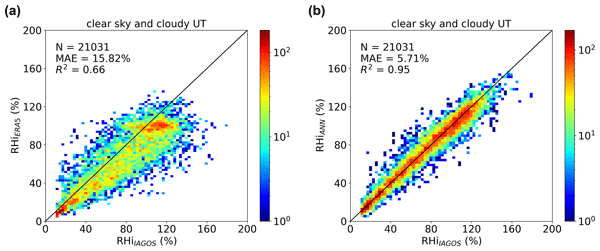
Upper-tropospheric relative humidity bias in the ERA5 weather model is corrected by 10 % by an artificial neural network using aircraft in-service humidity data and thermodynamic and dynamical variables. The improved skills of the weather model will advance cirrus research, weather forecasts, and measures for contrail reduction.
Dioumacor Faye, Felipe M. de Andrade, Roberto Suárez-Moreno, Dahirou Wane, Michaela I. Hegglin, Abdou L. Dieng, François Kaly, Redouane Lguensat, and Amadou T. Gaye
EGUsphere, https://doi.org/10.5194/egusphere-2024-4040, https://doi.org/10.5194/egusphere-2024-4040, 2025
Preprint archived
Short summary
Short summary
This study evaluates machine learning (ML) methods to improve subseasonal-to-seasonal (S2S) rainfall forecasts in Senegal during the West African monsoon. Using high-resolution precipitation data and atmospheric-oceanic reanalysis, we show that ML models like ridge regression outperform traditional climate models. These methods enhance prediction accuracy and efficiency, offering valuable tools for climate risk management and water resource planning.
Louis Rivoire, Marianna Linz, Jessica L. Neu, Pu Lin, and Michelle L. Santee
Atmos. Chem. Phys., 25, 2269–2289, https://doi.org/10.5194/acp-25-2269-2025, https://doi.org/10.5194/acp-25-2269-2025, 2025
Short summary
Short summary
The recovery of the ozone hole since the 1987 Montreal Protocol has been observed in some regions but has yet to be seen globally. We ask how long it will take to witness a global recovery. Using a technique akin to flying a virtual satellite in a climate model, we find that the degree of confidence we place in the answer to this question is dramatically affected by errors in satellite observations.
Paul S. Jeffery, James R. Drummond, C. Thomas McElroy, Kaley A. Walker, and Jiansheng Zou
Atmos. Meas. Tech., 18, 569–602, https://doi.org/10.5194/amt-18-569-2025, https://doi.org/10.5194/amt-18-569-2025, 2025
Short summary
Short summary
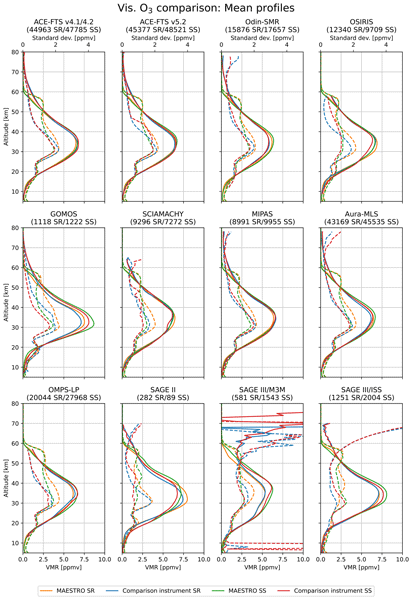
The MAESTRO instrument has been monitoring ozone and NO2 since February 2004. A new version of these data products has recently been released; however, these new products must be validated against other datasets to ensure their validity. This study presents such an assessment, using measurements from 11 satellite instruments to characterize the new MAESTRO products. In the stratosphere, good agreement is found for ozone and acceptable agreement is found for NO2 with these other datasets.
Kimberlee Dubé, Susann Tegtmeier, Felix Ploeger, and Kaley A. Walker
Atmos. Chem. Phys., 25, 1433–1447, https://doi.org/10.5194/acp-25-1433-2025, https://doi.org/10.5194/acp-25-1433-2025, 2025
Short summary
Short summary
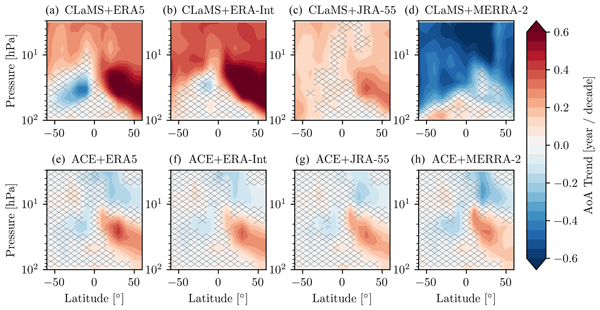
The transport rate of air in the stratosphere has changed in response to human emissions of greenhouse gases and ozone-depleting substances. This transport rate can be approximated using measurements of long-lived trace gases. We use observations and model results to derive anomalies and trends in the mean rate of stratospheric air transport. We find that air in the Northern Hemisphere aged by up to 0.3 years per decade relative to air in the Southern Hemisphere over 2004–2017.
Xiaolu Yan, Paul Konopka, Felix Ploeger, and Aurélien Podglajen
Atmos. Chem. Phys., 25, 1289–1305, https://doi.org/10.5194/acp-25-1289-2025, https://doi.org/10.5194/acp-25-1289-2025, 2025
Short summary
Short summary
Our study finds that the air mass fractions (AMFs) from the Asian boundary layer (ABL) to the polar regions are about 1.5 times larger than those from the same latitude band in the Southern Hemisphere. The transport of AMFs from the ABL to the polar vortex primarily occurs above 20 km and over timescales exceeding 2 years. Our analysis reveals a strong correlation between the polar pollutants and the AMFs from the ABL. About 20 % of SF6 in the polar stratosphere originates from the ABL.
Franziska Weyland, Peter Hoor, Daniel Kunkel, Thomas Birner, Felix Plöger, and Katharina Turhal
Atmos. Chem. Phys., 25, 1227–1252, https://doi.org/10.5194/acp-25-1227-2025, https://doi.org/10.5194/acp-25-1227-2025, 2025
Short summary
Short summary
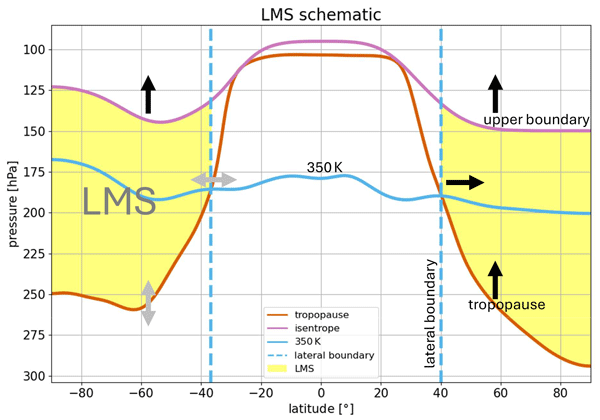
The lowermost stratosphere (LMS) plays an important role in the Earth's climate, containing strong gradients of ozone and water vapor. Our results indicate that the thermodynamic structure of the LMS was changing between 1979–2019 in response to anthropogenic climate change and the recovery of stratospheric ozone, also indicating large-scale circulation changes. We find that both the upper and the lower LMS boundaries show an (upward) trend, which has implications for the LMS mass.
Xiaodan Ma, Jianping Huang, Michaela I. Hegglin, Patrick Jöckel, and Tianliang Zhao
Atmos. Chem. Phys., 25, 943–958, https://doi.org/10.5194/acp-25-943-2025, https://doi.org/10.5194/acp-25-943-2025, 2025
Short summary
Short summary
Our research explored changes in ozone levels in the northwest Pacific region over 30 years, revealing a significant increase in the middle-to-upper troposphere, especially during spring and summer. This rise is influenced by both stratospheric and tropospheric sources, which affect climate and air quality in East Asia. This work underscores the need for continued study to understand underlying mechanisms.
Jiansheng Zou, Kaley A. Walker, Patrick E. Sheese, Chris D. Boone, Ryan M. Stauffer, Anne M. Thompson, and David W. Tarasick
Atmos. Meas. Tech., 17, 6983–7005, https://doi.org/10.5194/amt-17-6983-2024, https://doi.org/10.5194/amt-17-6983-2024, 2024
Short summary
Short summary
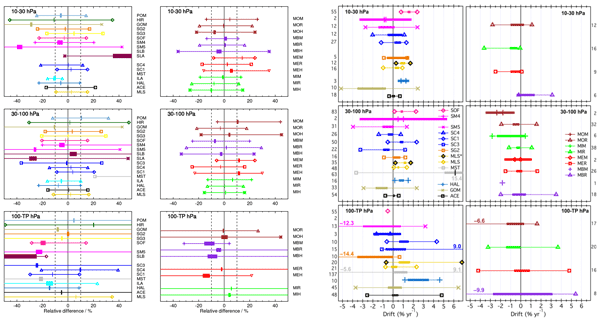
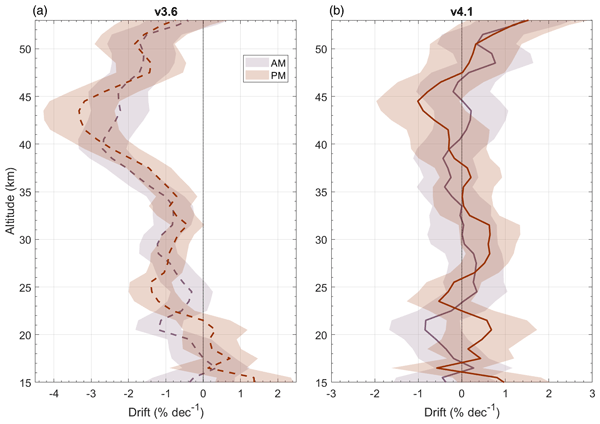
Ozone measurements from the ACE-FTS satellite instrument have been compared to worldwide balloon-borne ozonesonde profiles using pairs of closely spaced profiles and monthly averaged profiles. ACE-FTS typically measures more ozone in the stratosphere by up to 10 %. The long-term stability of the ACE-FTS ozone data is good, exhibiting small (but non-significant) drifts of less than 3 % per decade in the stratosphere. Lower in the profiles, the calculated drifts are larger (up to 10 % per decade).
Katharina Turhal, Felix Plöger, Jan Clemens, Thomas Birner, Franziska Weyland, Paul Konopka, and Peter Hoor
Atmos. Chem. Phys., 24, 13653–13679, https://doi.org/10.5194/acp-24-13653-2024, https://doi.org/10.5194/acp-24-13653-2024, 2024
Short summary
Short summary
The tropopause separates the troposphere, where many greenhouse gases originate, from the stratosphere. This study examines a tropopause defined by potential vorticity – an analogue for angular momentum that changes sharply in the subtropics, creating a transport barrier. Between 1980 and 2017, this tropopause shifted poleward at lower altitudes and equatorward above, suggesting height-dependent changes in atmospheric circulation that may affect greenhouse gas distribution and global warming.
Yingjie Shen, Rudra P. Pokhrel, Amy P. Sullivan, Ezra J. T. Levin, Lauren A. Garofalo, Delphine K. Farmer, Wade Permar, Lu Hu, Darin W. Toohey, Teresa Campos, Emily V. Fischer, and Shane M. Murphy
Atmos. Chem. Phys., 24, 12881–12901, https://doi.org/10.5194/acp-24-12881-2024, https://doi.org/10.5194/acp-24-12881-2024, 2024
Short summary
Short summary
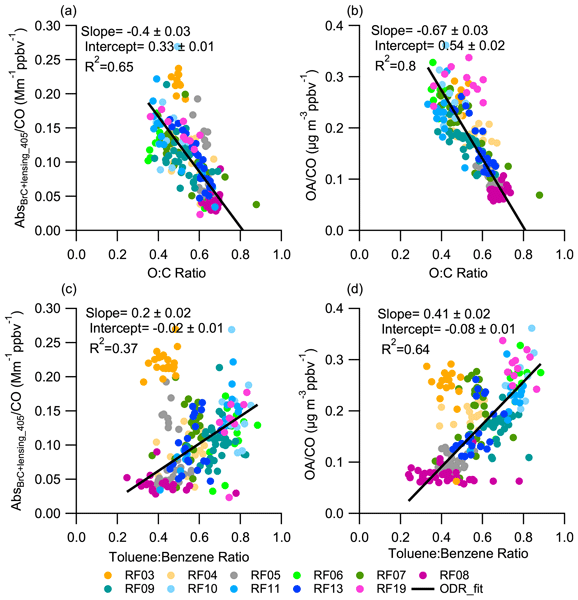
The magnitude and evolution of brown carbon (BrC) absorption remain unclear, with uncertainty in climate models. Data from the WE-CAN airborne experiment show that model parameterizations overestimate the mass absorption cross section (MAC) of BrC. Observed decreases in BrC absorption with chemical markers are due to decreasing organic aerosol (OA) mass rather than a decreasing BrC MAC, which is currently implemented in models. Water-soluble BrC contributes 23 % of total absorption at 660 nm.
Randall Chiu, Florian Obersteiner, Alessandro Franchin, Teresa Campos, Adriana Bailey, Christopher Webster, Andreas Zahn, and Rainer Volkamer
Atmos. Meas. Tech., 17, 5731–5746, https://doi.org/10.5194/amt-17-5731-2024, https://doi.org/10.5194/amt-17-5731-2024, 2024
Short summary
Short summary
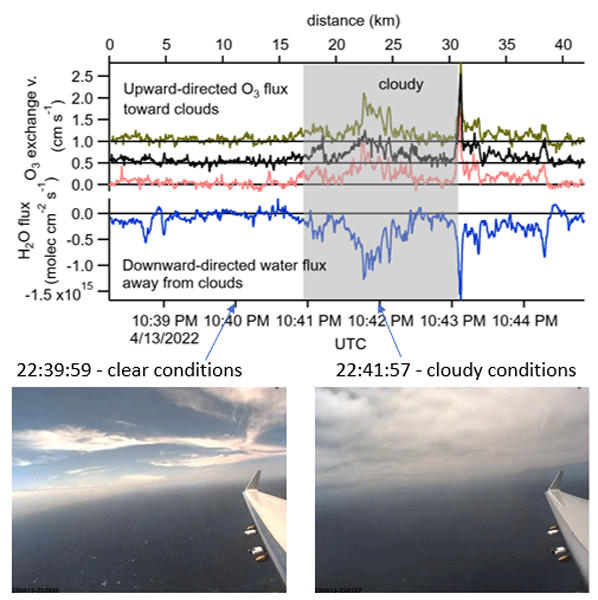
The ozone sink into oceans and marine clouds is seldom studied and highly uncertain. Calculations suggest O3 destruction at aqueous surfaces (ocean, droplets) may be strongly accelerated, but field evidence is missing. Here we compare three fast airborne O3 instruments to measure eddy covariance fluxes of O3 over the remote ocean, in clear and cloudy air. We find O3 fluxes below clouds are consistently directed into clouds, while O3 fluxes into oceans are much smaller and spatially variable.
Luis F. Millán, Peter Hoor, Michaela I. Hegglin, Gloria L. Manney, Harald Boenisch, Paul Jeffery, Daniel Kunkel, Irina Petropavlovskikh, Hao Ye, Thierry Leblanc, and Kaley Walker
Atmos. Chem. Phys., 24, 7927–7959, https://doi.org/10.5194/acp-24-7927-2024, https://doi.org/10.5194/acp-24-7927-2024, 2024
Short summary
Short summary
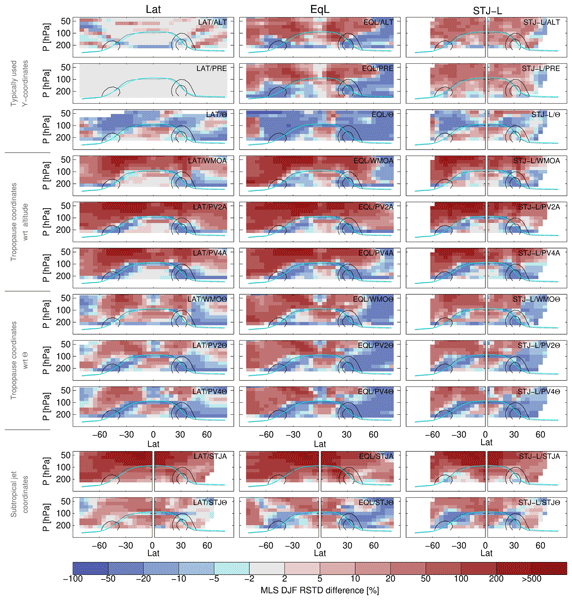
In the Observed Composition Trends And Variability in the UTLS (OCTAV-UTLS) Stratosphere-troposphere Processes And their Role in Climate (SPARC) activity, we have mapped multiplatform ozone datasets into coordinate systems to systematically evaluate the influence of these coordinates on binned climatological variability. This effort unifies the work of studies that focused on individual coordinate system variability. Our goal was to create the most comprehensive assessment of this topic.
Niklas Karbach, Lisa Höhler, Peter Hoor, Heiko Bozem, Nicole Bobrowski, and Thorsten Hoffmann
Atmos. Meas. Tech., 17, 4081–4086, https://doi.org/10.5194/amt-17-4081-2024, https://doi.org/10.5194/amt-17-4081-2024, 2024
Short summary
Short summary
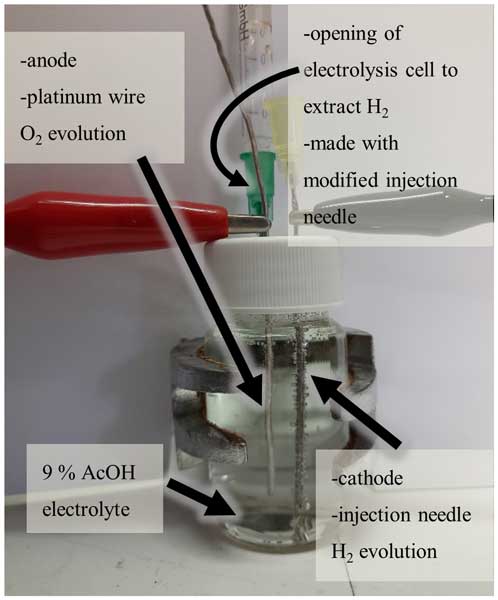
The system presented here can accurately generate and reproduce a stable flow of gas mixtures of known concentrations over several days using ambient air as a dilution medium. In combination with the small size and low weight of the system, this enables the calibration of hydrogen sensors in the field, reducing the influence of matrix effects on the accuracy of the sensor. The system is inexpensive to assemble and easy to maintain, which is the key to reliable measurement results.
Philipp Joppe, Johannes Schneider, Katharina Kaiser, Horst Fischer, Peter Hoor, Daniel Kunkel, Hans-Christoph Lachnitt, Andreas Marsing, Lenard Röder, Hans Schlager, Laura Tomsche, Christiane Voigt, Andreas Zahn, and Stephan Borrmann
Atmos. Chem. Phys., 24, 7499–7522, https://doi.org/10.5194/acp-24-7499-2024, https://doi.org/10.5194/acp-24-7499-2024, 2024
Short summary
Short summary
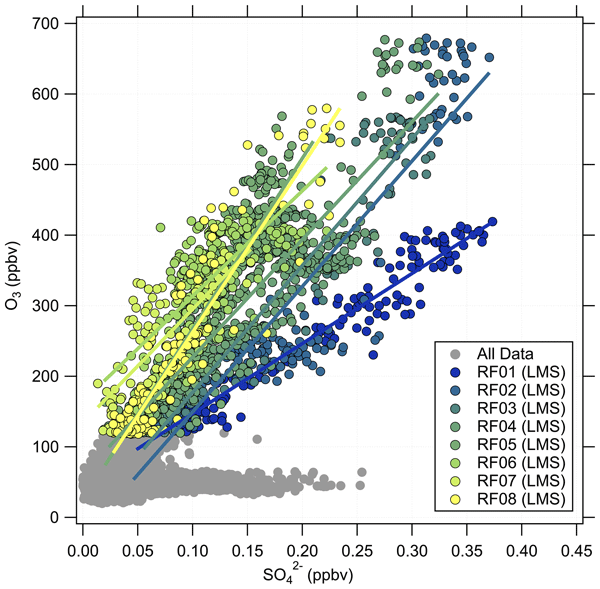
From aircraft measurements in the upper troposphere/lower stratosphere, we find a correlation between the ozone and particulate sulfate in the lower stratosphere. The correlation exhibits some variability over the measurement period exceeding the background sulfate-to-ozone correlation. From our analysis, we conclude that gas-to-particle conversion of volcanic sulfur dioxide leads to observed enhanced sulfate aerosol mixing ratios.
Karen De Los Ríos, Paulina Ordoñez, Gabriele P. Stiller, Piera Raspollini, Marco Gai, Kaley A. Walker, Cristina Peña-Ortiz, and Luis Acosta
Atmos. Meas. Tech., 17, 3401–3418, https://doi.org/10.5194/amt-17-3401-2024, https://doi.org/10.5194/amt-17-3401-2024, 2024
Short summary
Short summary
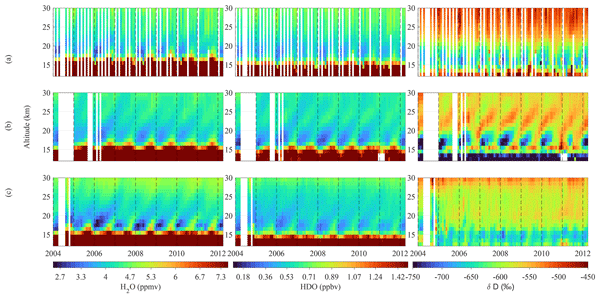
This study examines newer versions of H2O and HDO retrievals from Envisat/MIPAS and SCISAT/ACE-FTS. Results reveal a better agreement in stratospheric H2O profiles than in HDO profiles. The H2O tape recorder signal is consistent across databases, but δD tape recorder composites show differences that impact the interpretation of water vapour transport. These findings enhance the need for intercomparisons to refine our insights.
Fuzhen Shen, Michaela I. Hegglin, and Yue Yuan
Atmos. Chem. Phys., 24, 6539–6553, https://doi.org/10.5194/acp-24-6539-2024, https://doi.org/10.5194/acp-24-6539-2024, 2024
Short summary
Short summary
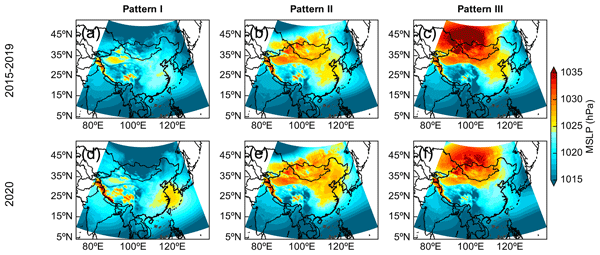
We attempt to use a novel structural self-organising map and machine learning models to identify a weather system and quantify the importance of each meteorological factor in driving the unexpected PM2.5 and O3 changes under the specific weather system during the COVID-19 lockdown in China. The result highlights that temperature under the double-centre high-pressure system plays the most crucial role in abnormal events.
Jin Ma, Linda M. J. Kooijmans, Norbert Glatthor, Stephen A. Montzka, Marc von Hobe, Thomas Röckmann, and Maarten C. Krol
Atmos. Chem. Phys., 24, 6047–6070, https://doi.org/10.5194/acp-24-6047-2024, https://doi.org/10.5194/acp-24-6047-2024, 2024
Short summary
Short summary
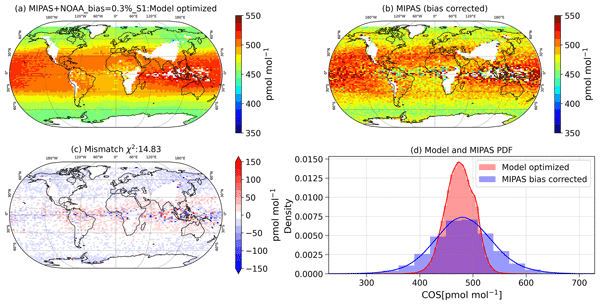
The global budget of atmospheric COS can be optimised by inverse modelling using TM5-4DVAR, with the co-constraints of NOAA surface observations and MIPAS satellite data. We found reduced COS biosphere uptake from inversions and improved land and ocean separation using MIPAS satellite data assimilation. Further improvements are expected from better quantification of COS ocean and biosphere fluxes.
Xin Yang, Kimberly Strong, Alison S. Criscitiello, Marta Santos-Garcia, Kristof Bognar, Xiaoyi Zhao, Pierre Fogal, Kaley A. Walker, Sara M. Morris, and Peter Effertz
Atmos. Chem. Phys., 24, 5863–5886, https://doi.org/10.5194/acp-24-5863-2024, https://doi.org/10.5194/acp-24-5863-2024, 2024
Short summary
Short summary
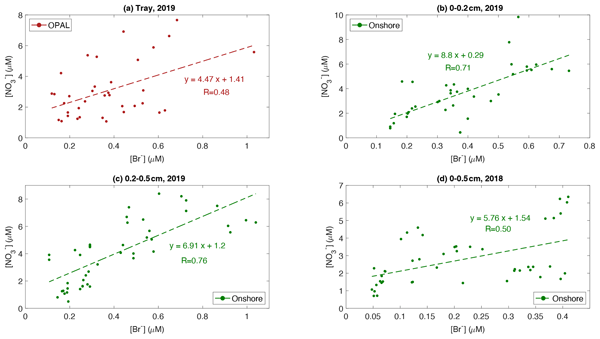
This study uses snow samples collected from a Canadian high Arctic site, Eureka, to demonstrate that surface snow in early spring is a net sink of atmospheric bromine and nitrogen. Surface snow bromide and nitrate are significantly correlated, indicating the oxidation of reactive nitrogen is accelerated by reactive bromine. In addition, we show evidence that snow photochemical release of reactive bromine is very weak, and its emission flux is much smaller than the deposition flux of bromide.
Cristina Peña-Ortiz, Nuria Pilar Plaza, David Gallego, and Felix Ploeger
Atmos. Chem. Phys., 24, 5457–5478, https://doi.org/10.5194/acp-24-5457-2024, https://doi.org/10.5194/acp-24-5457-2024, 2024
Short summary
Short summary
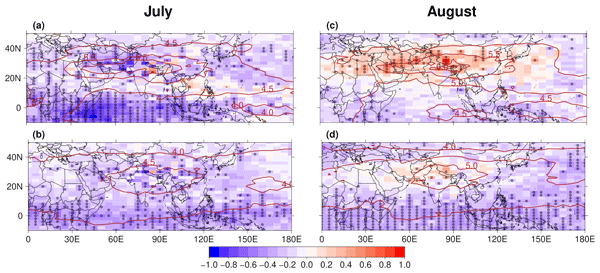
Although water vapour (H2O) in the lower stratosphere is only a few molecules among 1 million air molecules, atmospheric radiative forcing and surface temperature are sensitive to changes in its concentration. Monsoon regions play a key role in H2O transport and its concentration in the lower stratosphere. We show how the quasi-biennial oscillation (QBO) has a major impact on H2O over the Asian monsoon during August through changes in temperature caused by QBO modulation of tropical clouds.
Felicia Kolonjari, Patrick E. Sheese, Kaley A. Walker, Chris D. Boone, David A. Plummer, Andreas Engel, Stephen A. Montzka, David E. Oram, Tanja Schuck, Gabriele P. Stiller, and Geoffrey C. Toon
Atmos. Meas. Tech., 17, 2429–2449, https://doi.org/10.5194/amt-17-2429-2024, https://doi.org/10.5194/amt-17-2429-2024, 2024
Short summary
Short summary
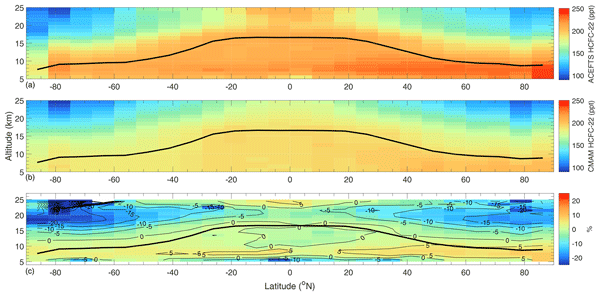
The Canadian Atmospheric Chemistry Experiment Fourier transform spectrometer (ACE-FTS) satellite instrument is currently providing the only vertically resolved chlorodifluoromethane (HCFC-22) measurements from space. This study assesses the most current ACE-FTS HCFC-22 data product in the upper troposphere and lower stratosphere, as well as modelled HCFC-22 from a 39-year run of the Canadian Middle Atmosphere Model (CMAM39) in the same region.
Martin Ebert, Ralf Weigel, Stephan Weinbruch, Lisa Schneider, Konrad Kandler, Stefan Lauterbach, Franziska Köllner, Felix Plöger, Gebhard Günther, Bärbel Vogel, and Stephan Borrmann
Atmos. Chem. Phys., 24, 4771–4788, https://doi.org/10.5194/acp-24-4771-2024, https://doi.org/10.5194/acp-24-4771-2024, 2024
Short summary
Short summary
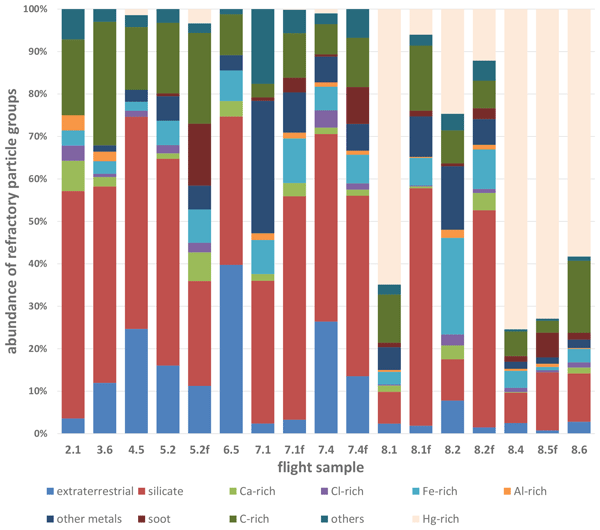
Particles were collected during the flight campaign StratoClim 2017 within the Asian tropopause aerosol layer (ATAL). Refractory particles from seven different flights were characterized by scanning and transmission electron microscopy (SEM, TEM). The most abundant refractory particles are silicates and non-volatile organics. The most important sources are combustion processes at the ground and the agitation of soil material. During one flight, small cinnabar particles (HgS) were also detected.
Paul S. Jeffery, James R. Drummond, Jiansheng Zou, and Kaley A. Walker
Atmos. Chem. Phys., 24, 4253–4263, https://doi.org/10.5194/acp-24-4253-2024, https://doi.org/10.5194/acp-24-4253-2024, 2024
Short summary
Short summary
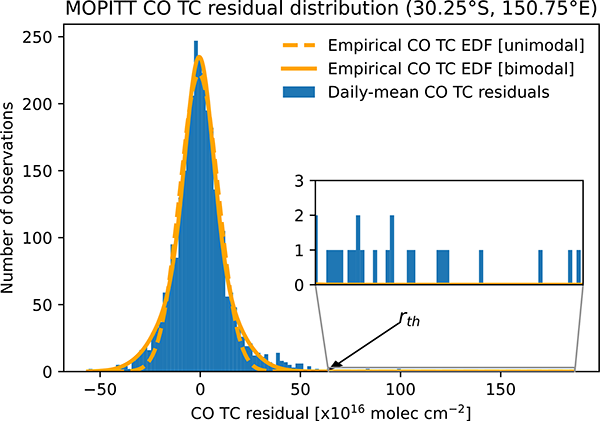
The MOPITT instrument has been monitoring carbon monoxide (CO) since March 2000. This dataset has been used for many applications; however, episodic emission events, which release large amounts of CO into the atmosphere, are a major source of uncertainty. This study presents a method for identifying these events by determining measurements that are unlikely to have typically arisen. The distribution and frequency of these flagged measurements in the MOPITT dataset are presented and discussed.
Felix Ploeger, Thomas Birner, Edward Charlesworth, Paul Konopka, and Rolf Müller
Atmos. Chem. Phys., 24, 2033–2043, https://doi.org/10.5194/acp-24-2033-2024, https://doi.org/10.5194/acp-24-2033-2024, 2024
Short summary
Short summary
We present a novel mechanism of how regional anomalies in water vapour concentrations in the upper troposphere and lower stratosphere impact regional atmospheric circulation systems. These impacts include a displaced upper-level Asian monsoon circulation and strengthened prevailing westerlies in the Pacific region. Current climate models have biases in simulating these regional water vapour anomalies and circulation impacts, but the biases can be avoided by improving the model transport.
Victoria A. Flood, Kimberly Strong, Cynthia H. Whaley, Kaley A. Walker, Thomas Blumenstock, James W. Hannigan, Johan Mellqvist, Justus Notholt, Mathias Palm, Amelie N. Röhling, Stephen Arnold, Stephen Beagley, Rong-You Chien, Jesper Christensen, Makoto Deushi, Srdjan Dobricic, Xinyi Dong, Joshua S. Fu, Michael Gauss, Wanmin Gong, Joakim Langner, Kathy S. Law, Louis Marelle, Tatsuo Onishi, Naga Oshima, David A. Plummer, Luca Pozzoli, Jean-Christophe Raut, Manu A. Thomas, Svetlana Tsyro, and Steven Turnock
Atmos. Chem. Phys., 24, 1079–1118, https://doi.org/10.5194/acp-24-1079-2024, https://doi.org/10.5194/acp-24-1079-2024, 2024
Short summary
Short summary
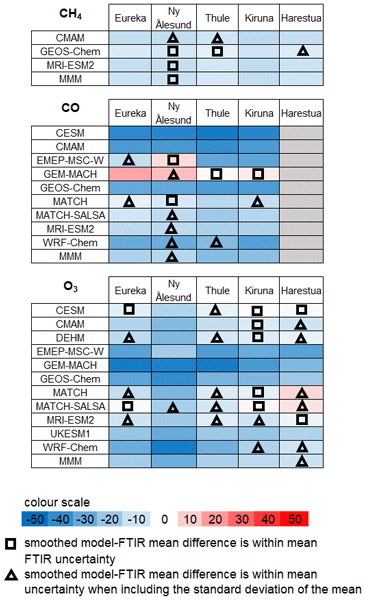
It is important to understand the composition of the Arctic atmosphere and how it is changing. Atmospheric models provide simulations that can inform policy. This study examines simulations of CH4, CO, and O3 by 11 models. Model performance is assessed by comparing results matched in space and time to measurements from five high-latitude ground-based infrared spectrometers. This work finds that models generally underpredict the concentrations of these gases in the Arctic troposphere.
Jan Clemens, Bärbel Vogel, Lars Hoffmann, Sabine Griessbach, Nicole Thomas, Suvarna Fadnavis, Rolf Müller, Thomas Peter, and Felix Ploeger
Atmos. Chem. Phys., 24, 763–787, https://doi.org/10.5194/acp-24-763-2024, https://doi.org/10.5194/acp-24-763-2024, 2024
Short summary
Short summary
The source regions of the Asian tropopause aerosol layer (ATAL) are debated. We use balloon-borne measurements of the layer above Nainital (India) in August 2016 and atmospheric transport models to find ATAL source regions. Most air originated from the Tibetan plateau. However, the measured ATAL was stronger when more air originated from the Indo-Gangetic Plain and weaker when more air originated from the Pacific. Hence, the results indicate important anthropogenic contributions to the ATAL.
Tanja J. Schuck, Johannes Degen, Eric Hintsa, Peter Hoor, Markus Jesswein, Timo Keber, Daniel Kunkel, Fred Moore, Florian Obersteiner, Matt Rigby, Thomas Wagenhäuser, Luke M. Western, Andreas Zahn, and Andreas Engel
Atmos. Chem. Phys., 24, 689–705, https://doi.org/10.5194/acp-24-689-2024, https://doi.org/10.5194/acp-24-689-2024, 2024
Short summary
Short summary
We study the interhemispheric gradient of sulfur hexafluoride (SF6), a strong long-lived greenhouse gas. Its emissions are stronger in the Northern Hemisphere; therefore, mixing ratios in the Southern Hemisphere lag behind. Comparing the observations to a box model, the model predicts air in the Southern Hemisphere to be older. For a better agreement, the emissions used as model input need to be increased (and their spatial pattern changed), and we need to modify north–south transport.
Bärbel Vogel, C. Michael Volk, Johannes Wintel, Valentin Lauther, Jan Clemens, Jens-Uwe Grooß, Gebhard Günther, Lars Hoffmann, Johannes C. Laube, Rolf Müller, Felix Ploeger, and Fred Stroh
Atmos. Chem. Phys., 24, 317–343, https://doi.org/10.5194/acp-24-317-2024, https://doi.org/10.5194/acp-24-317-2024, 2024
Short summary
Short summary
Over the Indian subcontinent, polluted air is rapidly uplifted to higher altitudes during the Asian monsoon season. We present an assessment of vertical transport in this region using different wind data provided by the European Centre for Medium-Range Weather Forecasts (ECMWF), as well as high-resolution aircraft measurements. In general, our findings confirm that the newest ECMWF reanalysis product, ERA5, yields a better representation of transport compared to the predecessor, ERA-Interim.
Andrea Pazmiño, Florence Goutail, Sophie Godin-Beekmann, Alain Hauchecorne, Jean-Pierre Pommereau, Martyn P. Chipperfield, Wuhu Feng, Franck Lefèvre, Audrey Lecouffe, Michel Van Roozendael, Nis Jepsen, Georg Hansen, Rigel Kivi, Kimberly Strong, and Kaley A. Walker
Atmos. Chem. Phys., 23, 15655–15670, https://doi.org/10.5194/acp-23-15655-2023, https://doi.org/10.5194/acp-23-15655-2023, 2023
Short summary
Short summary
The vortex-averaged ozone loss over the last 3 decades is evaluated for both polar regions using the passive ozone tracer of the chemical transport model TOMCAT/SLIMCAT and total ozone observations from the SAOZ network and MSR2 reanalysis. Three metrics were developed to compute ozone trends since 2000. The study confirms the ozone recovery in the Antarctic and shows a potential sign of quantitative detection of ozone recovery in the Arctic that needs to be robustly confirmed in the future.
Kimberlee Dubé, Susann Tegtmeier, Adam Bourassa, Daniel Zawada, Douglas Degenstein, Patrick E. Sheese, Kaley A. Walker, and William Randel
Atmos. Chem. Phys., 23, 13283–13300, https://doi.org/10.5194/acp-23-13283-2023, https://doi.org/10.5194/acp-23-13283-2023, 2023
Short summary
Short summary
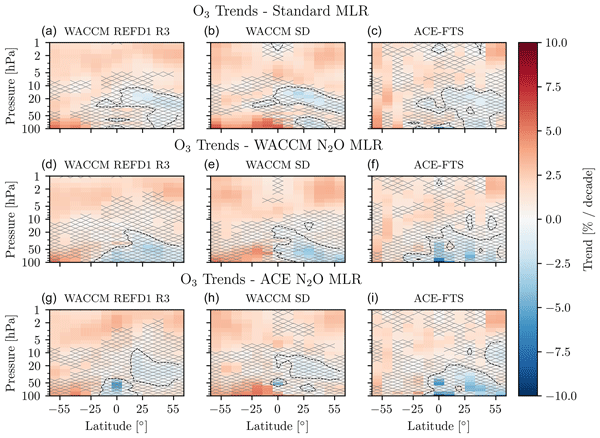
This paper presents a technique for understanding the causes of long-term changes in stratospheric composition. By using N2O as a proxy for stratospheric circulation in the model used to calculated trends, it is possible to separate the effects of dynamics and chemistry on observed trace gas trends. We find that observed HCl increases are due to changes in the stratospheric circulation, as are O3 decreases above 30 hPa in the Northern Hemisphere.
Paul Konopka, Christian Rolf, Marc von Hobe, Sergey M. Khaykin, Benjamin Clouser, Elisabeth Moyer, Fabrizio Ravegnani, Francesco D'Amato, Silvia Viciani, Nicole Spelten, Armin Afchine, Martina Krämer, Fred Stroh, and Felix Ploeger
Atmos. Chem. Phys., 23, 12935–12947, https://doi.org/10.5194/acp-23-12935-2023, https://doi.org/10.5194/acp-23-12935-2023, 2023
Short summary
Short summary
We studied water vapor in a critical region of the atmosphere, the Asian summer monsoon anticyclone, using rare in situ observations. Our study shows that extremely high water vapor values observed in the stratosphere within the Asian monsoon anticyclone still undergo significant freeze-drying and that water vapor concentrations set by the Lagrangian dry point are a better proxy for the stratospheric water vapor budget than rare observations of enhanced water mixing ratios.
Michael Kiefer, Dale F. Hurst, Gabriele P. Stiller, Stefan Lossow, Holger Vömel, John Anderson, Faiza Azam, Jean-Loup Bertaux, Laurent Blanot, Klaus Bramstedt, John P. Burrows, Robert Damadeo, Bianca Maria Dinelli, Patrick Eriksson, Maya García-Comas, John C. Gille, Mark Hervig, Yasuko Kasai, Farahnaz Khosrawi, Donal Murtagh, Gerald E. Nedoluha, Stefan Noël, Piera Raspollini, William G. Read, Karen H. Rosenlof, Alexei Rozanov, Christopher E. Sioris, Takafumi Sugita, Thomas von Clarmann, Kaley A. Walker, and Katja Weigel
Atmos. Meas. Tech., 16, 4589–4642, https://doi.org/10.5194/amt-16-4589-2023, https://doi.org/10.5194/amt-16-4589-2023, 2023
Short summary
Short summary
We quantify biases and drifts (and their uncertainties) between the stratospheric water vapor measurement records of 15 satellite-based instruments (SATs, with 31 different retrievals) and balloon-borne frost point hygrometers (FPs) launched at 27 globally distributed stations. These comparisons of measurements during the period 2000–2016 are made using robust, consistent statistical methods. With some exceptions, the biases and drifts determined for most SAT–FP pairs are < 10 % and < 1 % yr−1.
Frederik Harzer, Hella Garny, Felix Ploeger, Harald Bönisch, Peter Hoor, and Thomas Birner
Atmos. Chem. Phys., 23, 10661–10675, https://doi.org/10.5194/acp-23-10661-2023, https://doi.org/10.5194/acp-23-10661-2023, 2023
Short summary
Short summary
We study the statistical relation between year-by-year fluctuations in winter-mean ozone and the strength of the stratospheric polar vortex. In the latitude–pressure plane, regression analysis shows that anomalously weak polar vortex years are associated with three pronounced local ozone maxima over the polar cap relative to the winter climatology. These response maxima primarily reflect the non-trivial combination of different ozone transport processes with varying relative contributions.
Marc von Hobe, Domenico Taraborrelli, Sascha Alber, Birger Bohn, Hans-Peter Dorn, Hendrik Fuchs, Yun Li, Chenxi Qiu, Franz Rohrer, Roberto Sommariva, Fred Stroh, Zhaofeng Tan, Sergej Wedel, and Anna Novelli
Atmos. Chem. Phys., 23, 10609–10623, https://doi.org/10.5194/acp-23-10609-2023, https://doi.org/10.5194/acp-23-10609-2023, 2023
Short summary
Short summary
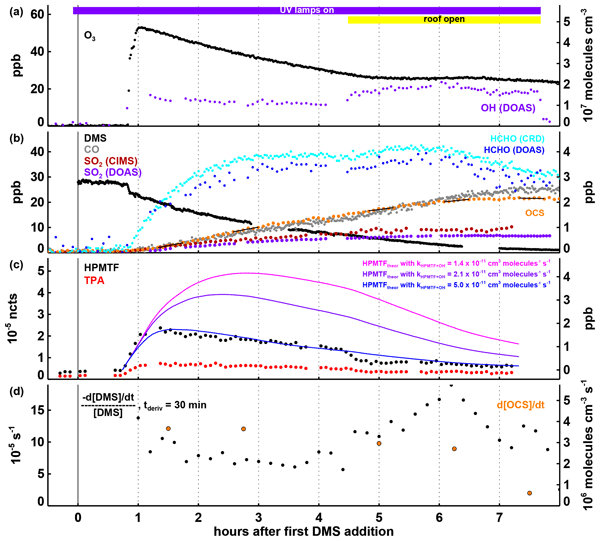
The trace gas carbonyl sulfide (OCS) transports sulfur from the troposphere to the stratosphere, where sulfate aerosols are formed that influence climate and stratospheric chemistry. An uncertain OCS source in the troposphere is chemical production form dimethyl sulfide (DMS), a gas released in large quantities from the oceans. We carried out experiments in a large atmospheric simulation chamber to further elucidate the chemical mechanism of OCS production from DMS.
Lars Hoffmann, Paul Konopka, Jan Clemens, and Bärbel Vogel
Atmos. Chem. Phys., 23, 7589–7609, https://doi.org/10.5194/acp-23-7589-2023, https://doi.org/10.5194/acp-23-7589-2023, 2023
Short summary
Short summary
Atmospheric convection plays a key role in tracer transport in the troposphere. Global meteorological forecasts and reanalyses typically have a coarse spatiotemporal resolution that does not adequately resolve the dynamics, transport, and mixing of air associated with storm systems or deep convection. We discuss the application of the extreme convection parameterization in a Lagrangian transport model to improve simulations of tracer transport from the boundary layer into the free troposphere.
Tobias Borsdorff, Teresa Campos, Natalie Kille, Kyle J. Zarzana, Rainer Volkamer, and Jochen Landgraf
Atmos. Meas. Tech., 16, 3027–3038, https://doi.org/10.5194/amt-16-3027-2023, https://doi.org/10.5194/amt-16-3027-2023, 2023
Short summary
Short summary
ECMWF plans to assimilate TROPOMI CO with their CAMS-IFS model. This will constrain the total column and the vertical CO distribution of the model. To show this, we combine individual TROPOMI CO column retrievals with different vertical sensitivities and obtain a vertical CO concentration profile. We test the approach on three CO pollution events in comparison with CAMS-IFS simulations that do not assimilate TROPOMI CO data and in situ airborne measurements of the BB-FLUX campaign.
Luis F. Millán, Gloria L. Manney, Harald Boenisch, Michaela I. Hegglin, Peter Hoor, Daniel Kunkel, Thierry Leblanc, Irina Petropavlovskikh, Kaley Walker, Krzysztof Wargan, and Andreas Zahn
Atmos. Meas. Tech., 16, 2957–2988, https://doi.org/10.5194/amt-16-2957-2023, https://doi.org/10.5194/amt-16-2957-2023, 2023
Short summary
Short summary
The determination of atmospheric composition trends in the upper troposphere and lower stratosphere (UTLS) is still highly uncertain. We present the creation of dynamical diagnostics to map several ozone datasets (ozonesondes, lidars, aircraft, and satellite measurements) in geophysically based coordinate systems. The diagnostics can also be used to analyze other greenhouse gases relevant to surface climate and UTLS chemistry.
Marc von Hobe, Christoph Brühl, Sinikka T. Lennartz, Mary E. Whelan, and Aleya Kaushik
Atmos. Chem. Phys., 23, 6591–6598, https://doi.org/10.5194/acp-23-6591-2023, https://doi.org/10.5194/acp-23-6591-2023, 2023
Short summary
Short summary
Carbonyl sulfide plays a role in the climate system as a greenhouse gas and as the major non-volcanic precursor of particles reflecting sunlight. Here, we comment on a proposal to increase the number of particles by emitting extra carbonyl sulfide at the surface. We show that the balance between aerosol cooling and greenhouse gas warming may not be as favorable as suggested and also that much of the carbonyl sulfide emissions will actually be taken up by the biosphere and the oceans.
Frank Werner, Nathaniel J. Livesey, Luis F. Millán, William G. Read, Michael J. Schwartz, Paul A. Wagner, William H. Daffer, Alyn Lambert, Sasha N. Tolstoff, and Michelle L. Santee
Atmos. Meas. Tech., 16, 2733–2751, https://doi.org/10.5194/amt-16-2733-2023, https://doi.org/10.5194/amt-16-2733-2023, 2023
Short summary
Short summary
The algorithm that produces the near-real-time data products of the Aura Microwave Limb Sounder has been updated. The new algorithm is based on machine learning techniques and yields data products with much improved accuracy. It is shown that the new algorithm outperforms the previous versions, even when it is trained on only a few years of satellite observations. This confirms the potential of applying machine learning to the near-real-time efforts of other current and future mission concepts.
Claudio Belotti, Flavio Barbara, Marco Barucci, Giovanni Bianchini, Francesco D'Amato, Samuele Del Bianco, Gianluca Di Natale, Marco Gai, Alessio Montori, Filippo Pratesi, Markus Rettinger, Christian Rolf, Ralf Sussmann, Thomas Trickl, Silvia Viciani, Hannes Vogelmann, and Luca Palchetti
Atmos. Meas. Tech., 16, 2511–2529, https://doi.org/10.5194/amt-16-2511-2023, https://doi.org/10.5194/amt-16-2511-2023, 2023
Short summary
Short summary
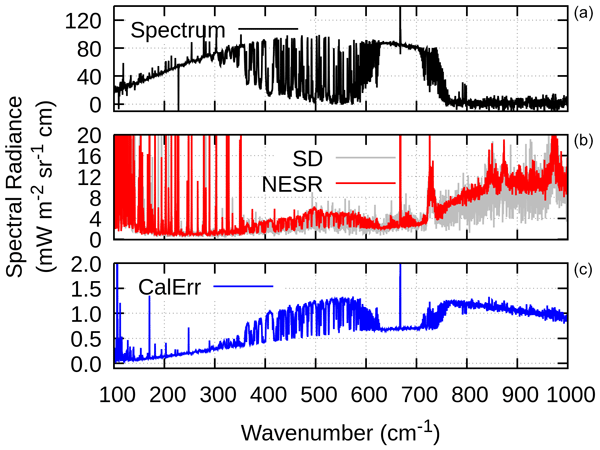
FIRMOS (Far-Infrared Radiation Mobile Observation System) is a spectroradiometer measuring in the far-infrared, developed to support the preparation of the FORUM (Far-infrared Outgoing Radiation Understanding and Monitoring) satellite mission. In this paper, we describe the instrument, its data products, and the results of the comparison with a suite of observations made from a high-altitude site during a field campaign, in winter 2018–2019.
Viktoria F. Sofieva, Monika Szelag, Johanna Tamminen, Carlo Arosio, Alexei Rozanov, Mark Weber, Doug Degenstein, Adam Bourassa, Daniel Zawada, Michael Kiefer, Alexandra Laeng, Kaley A. Walker, Patrick Sheese, Daan Hubert, Michel van Roozendael, Christian Retscher, Robert Damadeo, and Jerry D. Lumpe
Atmos. Meas. Tech., 16, 1881–1899, https://doi.org/10.5194/amt-16-1881-2023, https://doi.org/10.5194/amt-16-1881-2023, 2023
Short summary
Short summary
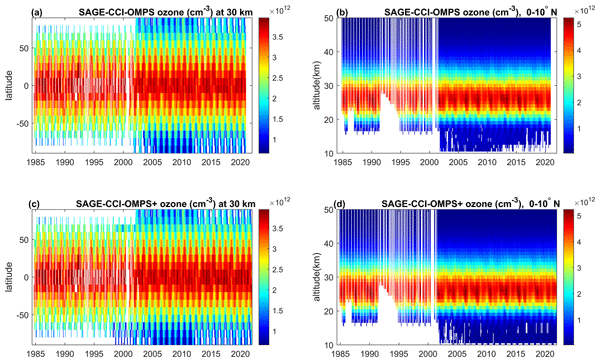
The paper presents the updated SAGE-CCI-OMPS+ climate data record of monthly zonal mean ozone profiles. This dataset covers the stratosphere and combines measurements by nine limb and occultation satellite instruments (SAGE II, OSIRIS, MIPAS, SCIAMACHY, GOMOS, ACE-FTS, OMPS-LP, POAM III, and SAGE III/ISS). The update includes new versions of MIPAS, ACE-FTS, and OSIRIS datasets and introduces data from additional sensors (POAM III and SAGE III/ISS) and retrieval processors (OMPS-LP).
Nasrin Mostafavi Pak, Jacob K. Hedelius, Sébastien Roche, Liz Cunningham, Bianca Baier, Colm Sweeney, Coleen Roehl, Joshua Laughner, Geoffrey Toon, Paul Wennberg, Harrison Parker, Colin Arrowsmith, Joseph Mendonca, Pierre Fogal, Tyler Wizenberg, Beatriz Herrera, Kimberly Strong, Kaley A. Walker, Felix Vogel, and Debra Wunch
Atmos. Meas. Tech., 16, 1239–1261, https://doi.org/10.5194/amt-16-1239-2023, https://doi.org/10.5194/amt-16-1239-2023, 2023
Short summary
Short summary
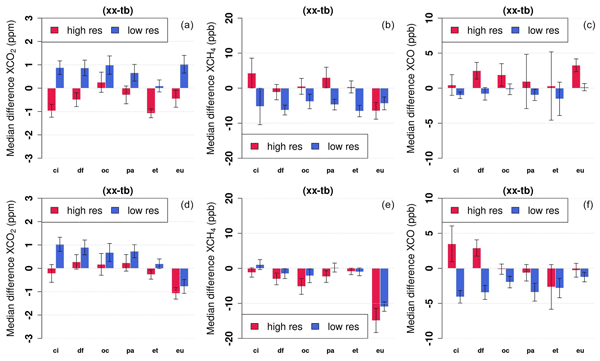
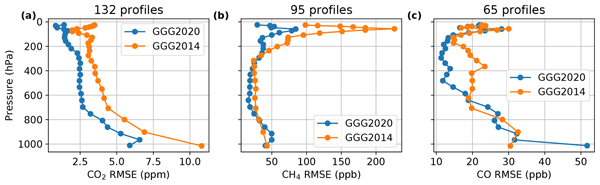
Ground-based remote sensing instruments in the Total Carbon Column Observing Network (TCCON) measure greenhouse gases in the atmosphere. Consistency between TCCON measurements is crucial to accurately infer changes in atmospheric composition. We use portable remote sensing instruments (EM27/SUN) to evaluate biases between TCCON stations in North America. We also improve the retrievals of EM27/SUN instruments and evaluate the previous (GGG2014) and newest (GGG2020) retrieval algorithms.
Joshua L. Laughner, Sébastien Roche, Matthäus Kiel, Geoffrey C. Toon, Debra Wunch, Bianca C. Baier, Sébastien Biraud, Huilin Chen, Rigel Kivi, Thomas Laemmel, Kathryn McKain, Pierre-Yves Quéhé, Constantina Rousogenous, Britton B. Stephens, Kaley Walker, and Paul O. Wennberg
Atmos. Meas. Tech., 16, 1121–1146, https://doi.org/10.5194/amt-16-1121-2023, https://doi.org/10.5194/amt-16-1121-2023, 2023
Short summary
Short summary
Observations using sunlight to measure surface-to-space total column of greenhouse gases in the atmosphere need an initial guess of the vertical distribution of those gases to start from. We have developed an approach to provide those initial guess profiles that uses readily available meteorological data as input. This lets us make these guesses without simulating them with a global model. The profiles generated this way match independent observations well.
Hans-Christoph Lachnitt, Peter Hoor, Daniel Kunkel, Martina Bramberger, Andreas Dörnbrack, Stefan Müller, Philipp Reutter, Andreas Giez, Thorsten Kaluza, and Markus Rapp
Atmos. Chem. Phys., 23, 355–373, https://doi.org/10.5194/acp-23-355-2023, https://doi.org/10.5194/acp-23-355-2023, 2023
Short summary
Short summary
We present an analysis of high-resolution airborne measurements during a flight of the DEEPWAVE 2014 campaign in New Zealand. The focus of this flight was to study the effects of enhanced mountain wave activity over the Southern Alps. We discuss changes in the upstream and downstream distributions of N2O and CO and show that these changes are related to turbulence-induced trace gas fluxes which have persistent effects on the trace gas composition in the lower stratosphere.
Matthias Nützel, Sabine Brinkop, Martin Dameris, Hella Garny, Patrick Jöckel, Laura L. Pan, and Mijeong Park
Atmos. Chem. Phys., 22, 15659–15683, https://doi.org/10.5194/acp-22-15659-2022, https://doi.org/10.5194/acp-22-15659-2022, 2022
Short summary
Short summary
During the Asian summer monsoon season, a large high-pressure system is present at levels close to the tropopause above Asia. We analyse how air masses are transported from surface levels to this high-pressure system, which shows distinct features from the surrounding air masses. To this end, we employ multiannual data from two complementary models that allow us to analyse the climatology as well as the interannual and intraseasonal variability of these transport pathways.
Ali Jalali, Kaley A. Walker, Kimberly Strong, Rebecca R. Buchholz, Merritt N. Deeter, Debra Wunch, Sébastien Roche, Tyler Wizenberg, Erik Lutsch, Erin McGee, Helen M. Worden, Pierre Fogal, and James R. Drummond
Atmos. Meas. Tech., 15, 6837–6863, https://doi.org/10.5194/amt-15-6837-2022, https://doi.org/10.5194/amt-15-6837-2022, 2022
Short summary
Short summary
This study validates MOPITT version 8 carbon monoxide measurements over the Canadian high Arctic for the period 2006 to 2019. The MOPITT products from different detector pixels and channels are compared with ground-based measurements from the Polar Environment Atmospheric Research Laboratory (PEARL) in Eureka, Nunavut, Canada. These results show good consistency between the satellite and ground-based measurements and provide guidance on the usage of these MOPITT data at high latitudes.
Bernard Legras, Clair Duchamp, Pasquale Sellitto, Aurélien Podglajen, Elisa Carboni, Richard Siddans, Jens-Uwe Grooß, Sergey Khaykin, and Felix Ploeger
Atmos. Chem. Phys., 22, 14957–14970, https://doi.org/10.5194/acp-22-14957-2022, https://doi.org/10.5194/acp-22-14957-2022, 2022
Short summary
Short summary
The long-duration atmospheric impact of the Tonga eruption in January 2022 is a plume of water and sulfate aerosols in the stratosphere that persisted for more than 6 months. We study this evolution using several satellite instruments and analyse the unusual behaviour of this plume as sulfates and water first moved down rapidly and then separated into two layers. We also report the self-organization in compact and long-lived patches.
Paul S. Jeffery, Kaley A. Walker, Chris E. Sioris, Chris D. Boone, Doug Degenstein, Gloria L. Manney, C. Thomas McElroy, Luis Millán, David A. Plummer, Niall J. Ryan, Patrick E. Sheese, and Jiansheng Zou
Atmos. Chem. Phys., 22, 14709–14734, https://doi.org/10.5194/acp-22-14709-2022, https://doi.org/10.5194/acp-22-14709-2022, 2022
Short summary
Short summary
The upper troposphere–lower stratosphere is one of the most variable regions in the atmosphere. To improve our understanding of water vapour and ozone concentrations in this region, climatologies have been developed from 14 years of measurements from three Canadian satellite instruments. Horizontal and vertical coordinates have been chosen to minimize the effects of variability. To aid in analysis, model simulations have been used to characterize differences between instrument climatologies.
Mohamadou A. Diallo, Felix Ploeger, Michaela I. Hegglin, Manfred Ern, Jens-Uwe Grooß, Sergey Khaykin, and Martin Riese
Atmos. Chem. Phys., 22, 14303–14321, https://doi.org/10.5194/acp-22-14303-2022, https://doi.org/10.5194/acp-22-14303-2022, 2022
Short summary
Short summary
The quasi-biennial oacillation disruption events in both 2016 and 2020 decreased lower-stratospheric water vapour and ozone. Differences in the strength and depth of the anomalous lower-stratospheric circulation and ozone are due to differences in tropical upwelling and cold-point temperature induced by lower-stratospheric planetary and gravity wave breaking. The differences in water vapour are due to higher cold-point temperature in 2020 induced by Australian wildfire.
Kimberlee Dubé, Daniel Zawada, Adam Bourassa, Doug Degenstein, William Randel, David Flittner, Patrick Sheese, and Kaley Walker
Atmos. Meas. Tech., 15, 6163–6180, https://doi.org/10.5194/amt-15-6163-2022, https://doi.org/10.5194/amt-15-6163-2022, 2022
Short summary
Short summary
Satellite observations are important for monitoring changes in atmospheric composition. Here we describe an improved version of the NO2 retrieval for the Optical Spectrograph and InfraRed Imager System. The resulting NO2 profiles are compared to those from the Atmospheric Chemistry Experiment – Fourier Transform Spectrometer and the Stratospheric Aerosol and Gas Experiment III on the International Space Station. All datasets agree within 20 % throughout the stratosphere.
Amy P. Sullivan, Rudra P. Pokhrel, Yingjie Shen, Shane M. Murphy, Darin W. Toohey, Teresa Campos, Jakob Lindaas, Emily V. Fischer, and Jeffrey L. Collett Jr.
Atmos. Chem. Phys., 22, 13389–13406, https://doi.org/10.5194/acp-22-13389-2022, https://doi.org/10.5194/acp-22-13389-2022, 2022
Short summary
Short summary
During the WE-CAN (Western Wildfire Experiment for Cloud Chemistry, Aerosol Absorption and Nitrogen) study, brown carbon (BrC) absorption was measured on the NSF/NCAR C-130 aircraft using a particle-into-liquid sampler and photoacoustic aerosol absorption spectrometer. Approximately 45 % of the BrC absorption in wildfires was observed to be due to water-soluble species. The ratio of BrC absorption to WSOC or ΔCO showed no clear dependence on fire dynamics or the time since emission over 9 h.
Xin Yang, Kimberly Strong, Alison S. Criscitiello, Marta Santos-Garcia, Kristof Bognar, Xiaoyi Zhao, Pierre Fogal, Kaley A. Walker, Sara M. Morris, and Peter Effertz
EGUsphere, https://doi.org/10.5194/egusphere-2022-696, https://doi.org/10.5194/egusphere-2022-696, 2022
Preprint archived
Short summary
Short summary
Snow pack in high Arctic plays a key role in polar atmospheric chemistry, especially in spring when photochemistry becomes active. By sampling surface snow from a Canadian high Arctic location at Eureka, Nunavut (80° N, 86° W), we demonstrate that surface snow is a net sink rather than a source of atmospheric reactive bromine and nitrate. This finding is new and opposite to previous conclusions that snowpack is a large and direct source of reactive bromine in polar spring.
Paul Konopka, Mengchu Tao, Marc von Hobe, Lars Hoffmann, Corinna Kloss, Fabrizio Ravegnani, C. Michael Volk, Valentin Lauther, Andreas Zahn, Peter Hoor, and Felix Ploeger
Geosci. Model Dev., 15, 7471–7487, https://doi.org/10.5194/gmd-15-7471-2022, https://doi.org/10.5194/gmd-15-7471-2022, 2022
Short summary
Short summary
Pure trajectory-based transport models driven by meteorology derived from reanalysis products (ERA5) take into account only the resolved, advective part of transport. That means neither mixing processes nor unresolved subgrid-scale advective processes like convection are included. The Chemical Lagrangian Model of the Stratosphere (CLaMS) includes these processes. We show that isentropic mixing dominates unresolved transport. The second most important transport process is unresolved convection.
Liubov Poshyvailo-Strube, Rolf Müller, Stephan Fueglistaler, Michaela I. Hegglin, Johannes C. Laube, C. Michael Volk, and Felix Ploeger
Atmos. Chem. Phys., 22, 9895–9914, https://doi.org/10.5194/acp-22-9895-2022, https://doi.org/10.5194/acp-22-9895-2022, 2022
Short summary
Short summary
Brewer–Dobson circulation (BDC) controls the composition of the stratosphere, which in turn affects radiation and climate. As the BDC cannot be measured directly, it is necessary to infer its strength and trends indirectly. In this study, we test in the
model worlddifferent methods for estimating the mean age of air trends based on a combination of stratospheric water vapour and methane data. We also provide simple practical advice of a more reliable estimation of the mean age of air trends.
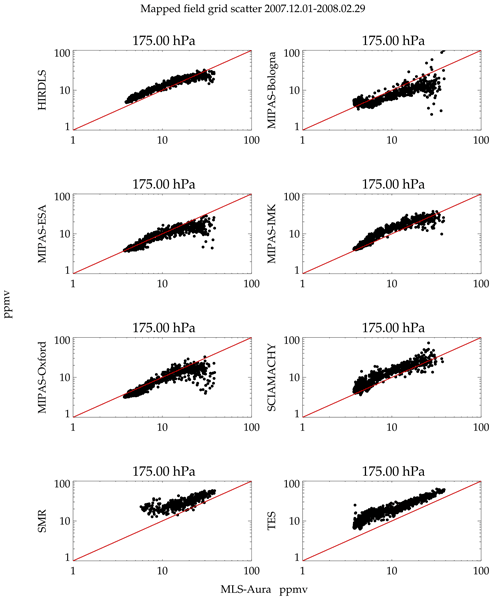
William G. Read, Gabriele Stiller, Stefan Lossow, Michael Kiefer, Farahnaz Khosrawi, Dale Hurst, Holger Vömel, Karen Rosenlof, Bianca M. Dinelli, Piera Raspollini, Gerald E. Nedoluha, John C. Gille, Yasuko Kasai, Patrick Eriksson, Christopher E. Sioris, Kaley A. Walker, Katja Weigel, John P. Burrows, and Alexei Rozanov
Atmos. Meas. Tech., 15, 3377–3400, https://doi.org/10.5194/amt-15-3377-2022, https://doi.org/10.5194/amt-15-3377-2022, 2022
Short summary
Short summary
This paper attempts to provide an assessment of the accuracy of 21 satellite-based instruments that remotely measure atmospheric humidity in the upper troposphere of the Earth's atmosphere. The instruments made their measurements from 1984 to the present time; however, most of these instruments began operations after 2000, and only a few are still operational. The objective of this study is to quantify the accuracy of each satellite humidity data set.
Linda Smoydzin and Peter Hoor
Atmos. Chem. Phys., 22, 7193–7206, https://doi.org/10.5194/acp-22-7193-2022, https://doi.org/10.5194/acp-22-7193-2022, 2022
Short summary
Short summary
Our study presents a detailed analysis of the spatial and temporal distribution of elevated CO level in the upper troposphere over the Pacific using 20 years of MOPITT data. We create a climatology of severe pollution episodes and use trajectory calculations to link each particular pollution event detected in MOPITT satellite data with a distinct source region. Additionally, we analyse uplift mechanisms such as WCB-related upward transport.
Suvarna Fadnavis, Prashant Chavan, Akash Joshi, Sunil M. Sonbawne, Asutosh Acharya, Panuganti C. S. Devara, Alexandru Rap, Felix Ploeger, and Rolf Müller
Atmos. Chem. Phys., 22, 7179–7191, https://doi.org/10.5194/acp-22-7179-2022, https://doi.org/10.5194/acp-22-7179-2022, 2022
Short summary
Short summary
We show that large amounts of anthropogenic aerosols are transported from South Asia to the northern Indian Ocean. These aerosols are then lifted into the UTLS by the ascending branch of the Hadley circulation. They are further transported to the Southern Hemisphere and downward via westerly ducts over the tropical Atlantic and Pacific. These aerosols increase tropospheric heating, resulting in an increase in water vapor, which is then transported to the UTLS.
Irina Mironova, Miriam Sinnhuber, Galina Bazilevskaya, Mark Clilverd, Bernd Funke, Vladimir Makhmutov, Eugene Rozanov, Michelle L. Santee, Timofei Sukhodolov, and Thomas Ulich
Atmos. Chem. Phys., 22, 6703–6716, https://doi.org/10.5194/acp-22-6703-2022, https://doi.org/10.5194/acp-22-6703-2022, 2022
Short summary
Short summary
From balloon measurements, we detected unprecedented, extremely powerful, electron precipitation over the middle latitudes. The robustness of this event is confirmed by satellite observations of electron fluxes and chemical composition, as well as by ground-based observations of the radio signal propagation. The applied chemistry–climate model shows the almost complete destruction of ozone in the mesosphere over the region where high-energy electrons were observed.
Eric A. Ray, Elliot L. Atlas, Sue Schauffler, Sofia Chelpon, Laura Pan, Harald Bönisch, and Karen H. Rosenlof
Atmos. Chem. Phys., 22, 6539–6558, https://doi.org/10.5194/acp-22-6539-2022, https://doi.org/10.5194/acp-22-6539-2022, 2022
Short summary
Short summary
The movement of air masses and the trace gases they contain from the Earth’s surface into the upper troposphere and lower stratosphere (UTLS) can have important implications for the radiative and chemical balance of the atmosphere. In this study we build on recent techniques and use new ones to estimate a range of transport diagnostics based on simultaneously measured trace gases in the UTLS during the monsoon season in North America.
Cynthia H. Whaley, Rashed Mahmood, Knut von Salzen, Barbara Winter, Sabine Eckhardt, Stephen Arnold, Stephen Beagley, Silvia Becagli, Rong-You Chien, Jesper Christensen, Sujay Manish Damani, Xinyi Dong, Konstantinos Eleftheriadis, Nikolaos Evangeliou, Gregory Faluvegi, Mark Flanner, Joshua S. Fu, Michael Gauss, Fabio Giardi, Wanmin Gong, Jens Liengaard Hjorth, Lin Huang, Ulas Im, Yugo Kanaya, Srinath Krishnan, Zbigniew Klimont, Thomas Kühn, Joakim Langner, Kathy S. Law, Louis Marelle, Andreas Massling, Dirk Olivié, Tatsuo Onishi, Naga Oshima, Yiran Peng, David A. Plummer, Olga Popovicheva, Luca Pozzoli, Jean-Christophe Raut, Maria Sand, Laura N. Saunders, Julia Schmale, Sangeeta Sharma, Ragnhild Bieltvedt Skeie, Henrik Skov, Fumikazu Taketani, Manu A. Thomas, Rita Traversi, Kostas Tsigaridis, Svetlana Tsyro, Steven Turnock, Vito Vitale, Kaley A. Walker, Minqi Wang, Duncan Watson-Parris, and Tahya Weiss-Gibbons
Atmos. Chem. Phys., 22, 5775–5828, https://doi.org/10.5194/acp-22-5775-2022, https://doi.org/10.5194/acp-22-5775-2022, 2022
Short summary
Short summary
Air pollutants, like ozone and soot, play a role in both global warming and air quality. Atmospheric models are often used to provide information to policy makers about current and future conditions under different emissions scenarios. In order to have confidence in those simulations, in this study we compare simulated air pollution from 18 state-of-the-art atmospheric models to measured air pollution in order to assess how well the models perform.
Felix Ploeger and Hella Garny
Atmos. Chem. Phys., 22, 5559–5576, https://doi.org/10.5194/acp-22-5559-2022, https://doi.org/10.5194/acp-22-5559-2022, 2022
Short summary
Short summary
We investigate hemispheric asymmetries in stratospheric circulation changes in the last 2 decades in model simulations and atmospheric observations. We find that observed trace gas changes can be explained by a structural circulation change related to a deepening circulation in the Northern Hemisphere relative to the Southern Hemisphere. As this asymmetric signal is small compared to internal variability observed circulation trends over the recent past are not in contradiction to climate models.
Alexandra Laeng, Thomas von Clarmann, Quentin Errera, Udo Grabowski, and Shawn Honomichl
Atmos. Meas. Tech., 15, 2407–2416, https://doi.org/10.5194/amt-15-2407-2022, https://doi.org/10.5194/amt-15-2407-2022, 2022
Short summary
Short summary
In validation exercises, a universal excuse used to explain the residual discrepancy between the data is the natural atmospheric variability due to imperfect co-locations. This work is the first attempt to quantify this atmospheric variability for a large sample of atmospheric constituents and to provide the user with a tool to substract the natural atmospheric variability portion from the residual variability.
Lucien Froidevaux, Douglas E. Kinnison, Michelle L. Santee, Luis F. Millán, Nathaniel J. Livesey, William G. Read, Charles G. Bardeen, John J. Orlando, and Ryan A. Fuller
Atmos. Chem. Phys., 22, 4779–4799, https://doi.org/10.5194/acp-22-4779-2022, https://doi.org/10.5194/acp-22-4779-2022, 2022
Short summary
Short summary
We analyze satellite-derived distributions of chlorine monoxide (ClO) and hypochlorous acid (HOCl) in the upper atmosphere. For 2005–2020, from 50°S to 50°N and over ~30 to 45 km, ClO and HOCl decreased by −0.7 % and −0.4 % per year, respectively. A detailed model of chemistry and dynamics agrees with the results. These decreases confirm the effectiveness of the 1987 Montreal Protocol, which limited emissions of chlorine- and bromine-containing source gases, in order to protect the ozone layer.
Jan Clemens, Felix Ploeger, Paul Konopka, Raphael Portmann, Michael Sprenger, and Heini Wernli
Atmos. Chem. Phys., 22, 3841–3860, https://doi.org/10.5194/acp-22-3841-2022, https://doi.org/10.5194/acp-22-3841-2022, 2022
Short summary
Short summary
Highly polluted air flows from the surface to higher levels of the atmosphere during the Asian summer monsoon. At high levels, the air is trapped within eddies. Here, we study how air masses can leave the eddy within its cutoff, how they distribute, and how their chemical composition changes. We found evidence for transport from the eddy to higher latitudes over the North Pacific and even Alaska. During transport, trace gas concentrations within cutoffs changed gradually, showing steady mixing.
Helmut Ziereis, Peter Hoor, Jens-Uwe Grooß, Andreas Zahn, Greta Stratmann, Paul Stock, Michael Lichtenstern, Jens Krause, Vera Bense, Armin Afchine, Christian Rolf, Wolfgang Woiwode, Marleen Braun, Jörn Ungermann, Andreas Marsing, Christiane Voigt, Andreas Engel, Björn-Martin Sinnhuber, and Hermann Oelhaf
Atmos. Chem. Phys., 22, 3631–3654, https://doi.org/10.5194/acp-22-3631-2022, https://doi.org/10.5194/acp-22-3631-2022, 2022
Short summary
Short summary
Airborne observations were conducted in the lowermost Arctic stratosphere during the winter of 2015/2016. The observed distribution of reactive nitrogen shows clear indications of nitrification in mid-winter and denitrification in late winter. This was caused by the formation of polar stratospheric cloud particles, which were observed during several flights. The sedimentation and evaporation of these particles and the descent of air masses cause a redistribution of reactive nitrogen.
Patrick E. Sheese, Kaley A. Walker, Chris D. Boone, Adam E. Bourassa, Doug A. Degenstein, Lucien Froidevaux, C. Thomas McElroy, Donal Murtagh, James M. Russell III, and Jiansheng Zou
Atmos. Meas. Tech., 15, 1233–1249, https://doi.org/10.5194/amt-15-1233-2022, https://doi.org/10.5194/amt-15-1233-2022, 2022
Short summary
Short summary
This study analyzes the quality of two versions (v3.6 and v4.1) of ozone concentration measurements from the ACE-FTS (Atmospheric Chemistry Experiment Fourier Transform Spectrometer), by comparing with data from five satellite instruments between 2004 and 2020. It was found that although the v3.6 data exhibit a better agreement than v4.1 with respect to the other instruments, v4.1 exhibits much better stability over time than v3.6. The stability of v4.1 makes it suitable for ozone trend studies.
Valentin Lauther, Bärbel Vogel, Johannes Wintel, Andrea Rau, Peter Hoor, Vera Bense, Rolf Müller, and C. Michael Volk
Atmos. Chem. Phys., 22, 2049–2077, https://doi.org/10.5194/acp-22-2049-2022, https://doi.org/10.5194/acp-22-2049-2022, 2022
Short summary
Short summary
We show airborne in situ measurements of the very short-lived ozone-depleting substances CH2Cl2 and CHCl3, revealing particularly high concentrations of both species in the lower stratosphere. Back-trajectory calculations and 3D model simulations show that the air masses with high concentrations originated in the Asian boundary layer and were transported via the Asian summer monsoon. We also identify a fast transport pathway into the stratosphere via the North American monsoon and by hurricanes.
Dina Khordakova, Christian Rolf, Jens-Uwe Grooß, Rolf Müller, Paul Konopka, Andreas Wieser, Martina Krämer, and Martin Riese
Atmos. Chem. Phys., 22, 1059–1079, https://doi.org/10.5194/acp-22-1059-2022, https://doi.org/10.5194/acp-22-1059-2022, 2022
Short summary
Short summary
Extreme storms transport humidity from the troposphere to the stratosphere. Here it has a strong impact on the climate. With ongoing global warming, we expect more storms and, hence, an enhancement of this effect. A case study was performed in order to measure the impact of the direct injection of water vapor into the lower stratosphere. The measurements displayed a significant transport of water vapor into the lower stratosphere, and this was supported by satellite and reanalysis data.
Sandip S. Dhomse, Martyn P. Chipperfield, Wuhu Feng, Ryan Hossaini, Graham W. Mann, Michelle L. Santee, and Mark Weber
Atmos. Chem. Phys., 22, 903–916, https://doi.org/10.5194/acp-22-903-2022, https://doi.org/10.5194/acp-22-903-2022, 2022
Short summary
Short summary
Solar flux variations associated with 11-year sunspot cycle is believed to exert important external climate forcing. As largest variations occur at shorter wavelengths such as ultra-violet part of the solar spectrum, associated changes in stratospheric ozone are thought to provide direct evidence for solar climate interaction. Until now, most of the studies reported double-peak structured solar cycle signal (SCS), but relatively new satellite data suggest only single-peak-structured SCS.
Frank Werner, Nathaniel J. Livesey, Michael J. Schwartz, William G. Read, Michelle L. Santee, and Galina Wind
Atmos. Meas. Tech., 14, 7749–7773, https://doi.org/10.5194/amt-14-7749-2021, https://doi.org/10.5194/amt-14-7749-2021, 2021
Short summary
Short summary
In this study we present an improved cloud detection scheme for the Microwave Limb Sounder, which is based on a feedforward artificial neural network. This new algorithm is shown not only to reliably detect high and mid-level convection containing even small amounts of cloud water but also to distinguish between high-reaching and mid-level to low convection.
Tyler Wizenberg, Kimberly Strong, Kaley Walker, Erik Lutsch, Tobias Borsdorff, and Jochen Landgraf
Atmos. Meas. Tech., 14, 7707–7728, https://doi.org/10.5194/amt-14-7707-2021, https://doi.org/10.5194/amt-14-7707-2021, 2021
Short summary
Short summary
CO is an important atmospheric gas that influences both air quality and the climate. Here, we compare CO measurements from TROPOMI with those from ACE-FTS and an Arctic ground-based FTS at Eureka, Nunavut, to further characterize the accuracy of TROPOMI measurements. CO columns from the instruments agree well but show larger differences at high latitudes. Despite this, the results fall within the TROPOMI accuracy target, indicating good data quality at high latitudes.
Markus Jesswein, Heiko Bozem, Hans-Christoph Lachnitt, Peter Hoor, Thomas Wagenhäuser, Timo Keber, Tanja Schuck, and Andreas Engel
Atmos. Chem. Phys., 21, 17225–17241, https://doi.org/10.5194/acp-21-17225-2021, https://doi.org/10.5194/acp-21-17225-2021, 2021
Short summary
Short summary
This study presents and compares inorganic chlorine (Cly) derived from observations with the HALO research aircraft in the Antarctic late winter–early fall 2019 and the Arctic winter 2015–2016. Trend-corrected correlations from the Northern Hemisphere show excellent agreement with those from the Southern Hemisphere. After observation allocation inside and outside the vortex based on N2O measurements, results of the two campaigns reveal substantial differences in Cly within the respective vortex.
Hugh C. Pumphrey, Michael J. Schwartz, Michelle L. Santee, George P. Kablick III, Michael D. Fromm, and Nathaniel J. Livesey
Atmos. Chem. Phys., 21, 16645–16659, https://doi.org/10.5194/acp-21-16645-2021, https://doi.org/10.5194/acp-21-16645-2021, 2021
Short summary
Short summary
Forest fires in British Columbia in August 2017 caused an unusual phenomonon: smoke and gases from the fires rose quickly to a height of 10 km. From there, the pollution continued to rise more slowly for many weeks, travelling around the world as it did so. In this paper, we describe how we used data from a satellite instrument to observe this polluted volume of air. The satellite has now been working for 16 years but has observed only three events of this type.
Gianluca Di Natale, Marco Barucci, Claudio Belotti, Giovanni Bianchini, Francesco D'Amato, Samuele Del Bianco, Marco Gai, Alessio Montori, Ralf Sussmann, Silvia Viciani, Hannes Vogelmann, and Luca Palchetti
Atmos. Meas. Tech., 14, 6749–6758, https://doi.org/10.5194/amt-14-6749-2021, https://doi.org/10.5194/amt-14-6749-2021, 2021
Short summary
Short summary
The importance of cirrus and mixed-phase clouds in the Earth radiation budget has been proven by many studies. In this paper the properties that characterize these clouds are retrieved from lidar and far-infrared spectral measurements performed in winter 2018/19 on the Zugspitze (Germany). The synergy of lidar and spectrometer measurements allowed us to assess the exponent k of the power-law relationship between the backscattering and the extinction coefficients.
Meike K. Rotermund, Vera Bense, Martyn P. Chipperfield, Andreas Engel, Jens-Uwe Grooß, Peter Hoor, Tilman Hüneke, Timo Keber, Flora Kluge, Benjamin Schreiner, Tanja Schuck, Bärbel Vogel, Andreas Zahn, and Klaus Pfeilsticker
Atmos. Chem. Phys., 21, 15375–15407, https://doi.org/10.5194/acp-21-15375-2021, https://doi.org/10.5194/acp-21-15375-2021, 2021
Short summary
Short summary
Airborne total bromine (Brtot) and tracer measurements suggest Brtot-rich air masses persistently protruded into the lower stratosphere (LS), creating a high Brtot region over the North Atlantic in fall 2017. The main source is via isentropic transport by the Asian monsoon and to a lesser extent transport across the extratropical tropopause as quantified by a Lagrange model. The transport of Brtot via Central American hurricanes is also observed. Lastly, the impact of Brtot on LS O3 is assessed.
Nathaniel J. Livesey, William G. Read, Lucien Froidevaux, Alyn Lambert, Michelle L. Santee, Michael J. Schwartz, Luis F. Millán, Robert F. Jarnot, Paul A. Wagner, Dale F. Hurst, Kaley A. Walker, Patrick E. Sheese, and Gerald E. Nedoluha
Atmos. Chem. Phys., 21, 15409–15430, https://doi.org/10.5194/acp-21-15409-2021, https://doi.org/10.5194/acp-21-15409-2021, 2021
Short summary
Short summary
The Microwave Limb Sounder (MLS), an instrument on NASA's Aura mission launched in 2004, measures vertical profiles of the temperature and composition of Earth's "middle atmosphere" (the region from ~12 to ~100 km altitude). We describe how, among the 16 trace gases measured by MLS, the measurements of water vapor (H2O) and nitrous oxide (N2O) have started to drift since ~2010. The paper also discusses the origins of this drift and work to ameliorate it in a new version of the MLS dataset.
Christoph Mahnke, Ralf Weigel, Francesco Cairo, Jean-Paul Vernier, Armin Afchine, Martina Krämer, Valentin Mitev, Renaud Matthey, Silvia Viciani, Francesco D'Amato, Felix Ploeger, Terry Deshler, and Stephan Borrmann
Atmos. Chem. Phys., 21, 15259–15282, https://doi.org/10.5194/acp-21-15259-2021, https://doi.org/10.5194/acp-21-15259-2021, 2021
Short summary
Short summary
In 2017, in situ aerosol measurements were conducted aboard the M55 Geophysica in the Asian monsoon region. The vertical particle mixing ratio profiles show a distinct layer (15–18.5 km), the Asian tropopause aerosol layer (ATAL). The backscatter ratio (BR) was calculated based on the aerosol size distributions and compared with the BRs detected by a backscatter probe and a lidar aboard M55, and by the CALIOP lidar. All four methods show enhanced BRs in the ATAL altitude range (max. at 17.5 km).
Linghan Zeng, Amy P. Sullivan, Rebecca A. Washenfelder, Jack Dibb, Eric Scheuer, Teresa L. Campos, Joseph M. Katich, Ezra Levin, Michael A. Robinson, and Rodney J. Weber
Atmos. Meas. Tech., 14, 6357–6378, https://doi.org/10.5194/amt-14-6357-2021, https://doi.org/10.5194/amt-14-6357-2021, 2021
Short summary
Short summary
Three online systems for measuring water-soluble brown carbon are compared. A mist chamber and two different particle-into-liquid samplers were deployed on separate research aircraft targeting wildfires and followed a similar detection method using a long-path liquid waveguide with a spectrometer to measure the light absorption from 300 to 700 nm. Detection limits, signal hysteresis and other sampling issues are compared, and further improvements of these liquid-based systems are provided.
Ralf Weigel, Christoph Mahnke, Manuel Baumgartner, Martina Krämer, Peter Spichtinger, Nicole Spelten, Armin Afchine, Christian Rolf, Silvia Viciani, Francesco D'Amato, Holger Tost, and Stephan Borrmann
Atmos. Chem. Phys., 21, 13455–13481, https://doi.org/10.5194/acp-21-13455-2021, https://doi.org/10.5194/acp-21-13455-2021, 2021
Short summary
Short summary
In July and August 2017, the StratoClim mission took place in Nepal with eight flights of the M-55 Geophysica at up to 20 km in the Asian monsoon anticyclone. New particle formation (NPF) next to cloud ice was detected in situ by abundant nucleation-mode aerosols (> 6 nm) along with ice particles (> 3 µm). NPF was observed mainly below the tropopause, down to 15 % being non-volatile residues. Observed intra-cloud NPF indicates its importance for the composition in the tropical tropopause layer.
Luca Palchetti, Marco Barucci, Claudio Belotti, Giovanni Bianchini, Bertrand Cluzet, Francesco D'Amato, Samuele Del Bianco, Gianluca Di Natale, Marco Gai, Dina Khordakova, Alessio Montori, Hilke Oetjen, Markus Rettinger, Christian Rolf, Dirk Schuettemeyer, Ralf Sussmann, Silvia Viciani, Hannes Vogelmann, and Frank Gunther Wienhold
Earth Syst. Sci. Data, 13, 4303–4312, https://doi.org/10.5194/essd-13-4303-2021, https://doi.org/10.5194/essd-13-4303-2021, 2021
Short summary
Short summary
The FIRMOS far-infrared (IR) prototype, developed for the preparation of the ESA FORUM mission, was deployed for the first time at Mt. Zugspitze at 3000 m altitude to measure the far-IR spectrum of atmospheric emissions. The measurements, including co-located radiometers, lidars, radio soundings, weather, and surface properties, provide a unique dataset to study radiative properties of water vapour, cirrus clouds, and snow emissivity over the IR emissions, including the under-explored far-IR.
Francesco Grieco, Kristell Pérot, Donal Murtagh, Patrick Eriksson, Bengt Rydberg, Michael Kiefer, Maya Garcia-Comas, Alyn Lambert, and Kaley A. Walker
Atmos. Meas. Tech., 14, 5823–5857, https://doi.org/10.5194/amt-14-5823-2021, https://doi.org/10.5194/amt-14-5823-2021, 2021
Short summary
Short summary
We present improved Odin/SMR mesospheric H2O concentration and temperature data sets, reprocessed assuming a bigger sideband leakage of the instrument. The validation study shows how the improved SMR data sets agree better with other instruments' observations than the old SMR version did. Given their unique time extension and geographical coverage, and H2O being a good tracer of mesospheric circulation, the new data sets are valuable for the study of dynamical processes and multi-year trends.
Ralf Weigel, Christoph Mahnke, Manuel Baumgartner, Antonis Dragoneas, Bärbel Vogel, Felix Ploeger, Silvia Viciani, Francesco D'Amato, Silvia Bucci, Bernard Legras, Beiping Luo, and Stephan Borrmann
Atmos. Chem. Phys., 21, 11689–11722, https://doi.org/10.5194/acp-21-11689-2021, https://doi.org/10.5194/acp-21-11689-2021, 2021
Short summary
Short summary
In July and August 2017, eight StratoClim mission flights of the Geophysica reached up to 20 km in the Asian monsoon anticyclone. New particle formation (NPF) was identified in situ by abundant nucleation-mode aerosols (6–15 nm in diameter) with mixing ratios of up to 50 000 mg−1. NPF occurred most frequently at 12–16 km with fractions of non-volatile residues of down to 15 %. Abundance and productivity of observed NPF indicate its ability to promote the Asian tropopause aerosol layer.
Corinna Kloss, Vicheith Tan, J. Brian Leen, Garrett L. Madsen, Aaron Gardner, Xu Du, Thomas Kulessa, Johannes Schillings, Herbert Schneider, Stefanie Schrade, Chenxi Qiu, and Marc von Hobe
Atmos. Meas. Tech., 14, 5271–5297, https://doi.org/10.5194/amt-14-5271-2021, https://doi.org/10.5194/amt-14-5271-2021, 2021
Short summary
Short summary
We describe the innovative analyzer
AMICAfor airborne trace gas measurements by infrared spectroscopy. Its design makes it robust and allows for sensitive measurements. AMICA has been used on two different aircraft for measuring gases including carbonyl sulfide, carbon monoxide and ozone. With fairly simple adaptions, AMICA can measure many stable trace gases that absorb light in the infrared.
Thorsten Kaluza, Daniel Kunkel, and Peter Hoor
Weather Clim. Dynam., 2, 631–651, https://doi.org/10.5194/wcd-2-631-2021, https://doi.org/10.5194/wcd-2-631-2021, 2021
Short summary
Short summary
We present a 10-year analysis on the occurrence of strong wind shear in the Northern Hemisphere, focusing on the region around the transport barrier that separates the first two layers of the atmosphere. The major result of our analysis is that strong wind shear above a certain threshold occurs frequently and nearly exclusively in this region, which, as an indicator for turbulent mixing, might have major implications concerning the separation efficiency of the transport barrier.
Lukas Krasauskas, Jörn Ungermann, Peter Preusse, Felix Friedl-Vallon, Andreas Zahn, Helmut Ziereis, Christian Rolf, Felix Plöger, Paul Konopka, Bärbel Vogel, and Martin Riese
Atmos. Chem. Phys., 21, 10249–10272, https://doi.org/10.5194/acp-21-10249-2021, https://doi.org/10.5194/acp-21-10249-2021, 2021
Short summary
Short summary
A Rossby wave (RW) breaking event was observed over the North Atlantic during the WISE measurement campaign in October 2017. Infrared limb sounding measurements of trace gases in the lower stratosphere, including high-resolution 3-D tomographic reconstruction, revealed complex spatial structures in stratospheric tracers near the polar jet related to previous RW breaking events. Backward-trajectory analysis and tracer correlations were used to study mixing and stratosphere–troposphere exchange.
Stefanie Kremser, Mike Harvey, Peter Kuma, Sean Hartery, Alexia Saint-Macary, John McGregor, Alex Schuddeboom, Marc von Hobe, Sinikka T. Lennartz, Alex Geddes, Richard Querel, Adrian McDonald, Maija Peltola, Karine Sellegri, Israel Silber, Cliff S. Law, Connor J. Flynn, Andrew Marriner, Thomas C. J. Hill, Paul J. DeMott, Carson C. Hume, Graeme Plank, Geoffrey Graham, and Simon Parsons
Earth Syst. Sci. Data, 13, 3115–3153, https://doi.org/10.5194/essd-13-3115-2021, https://doi.org/10.5194/essd-13-3115-2021, 2021
Short summary
Short summary
Aerosol–cloud interactions over the Southern Ocean are poorly understood and remain a major source of uncertainty in climate models. This study presents ship-borne measurements, collected during a 6-week voyage into the Southern Ocean in 2018, that are an important supplement to satellite-based measurements. For example, these measurements include data on low-level clouds and aerosol composition in the marine boundary layer, which can be used in climate model evaluation efforts.
Nuria Pilar Plaza, Aurélien Podglajen, Cristina Peña-Ortiz, and Felix Ploeger
Atmos. Chem. Phys., 21, 9585–9607, https://doi.org/10.5194/acp-21-9585-2021, https://doi.org/10.5194/acp-21-9585-2021, 2021
Short summary
Short summary
We study the role of different processes in setting the lower stratospheric water vapour. We find that mechanisms involving ice microphysics and small-scale mixing produce the strongest increase in water vapour, in particular over the Asian Monsoon. Small-scale mixing has a special relevance as it improves the agreement with observations at seasonal and intra-seasonal timescales, contrary to the North American Monsoon case, in which large-scale temperatures still dominate its variability.
Ilya Stanevich, Dylan B. A. Jones, Kimberly Strong, Martin Keller, Daven K. Henze, Robert J. Parker, Hartmut Boesch, Debra Wunch, Justus Notholt, Christof Petri, Thorsten Warneke, Ralf Sussmann, Matthias Schneider, Frank Hase, Rigel Kivi, Nicholas M. Deutscher, Voltaire A. Velazco, Kaley A. Walker, and Feng Deng
Atmos. Chem. Phys., 21, 9545–9572, https://doi.org/10.5194/acp-21-9545-2021, https://doi.org/10.5194/acp-21-9545-2021, 2021
Short summary
Short summary
We explore the utility of a weak-constraint (WC) four-dimensional variational (4D-Var) data assimilation scheme for mitigating systematic errors in methane simulation in the GEOS-Chem model. We use data from the Greenhouse Gases Observing Satellite (GOSAT) and show that, compared to the traditional 4D-Var approach, the WC scheme improves the agreement between the model and independent observations. We find that the WC corrections to the model provide insight into the source of the errors.
Felix Ploeger, Mohamadou Diallo, Edward Charlesworth, Paul Konopka, Bernard Legras, Johannes C. Laube, Jens-Uwe Grooß, Gebhard Günther, Andreas Engel, and Martin Riese
Atmos. Chem. Phys., 21, 8393–8412, https://doi.org/10.5194/acp-21-8393-2021, https://doi.org/10.5194/acp-21-8393-2021, 2021
Short summary
Short summary
We investigate the global stratospheric circulation (Brewer–Dobson circulation) in the new ECMWF ERA5 reanalysis based on age of air simulations, and we compare it to results from the preceding ERA-Interim reanalysis. Our results show a slower stratospheric circulation and higher age for ERA5. The age of air trend in ERA5 over the 1989–2018 period is negative throughout the stratosphere, related to multi-annual variability and a potential contribution from changes in the reanalysis system.
Mohamadou Diallo, Manfred Ern, and Felix Ploeger
Atmos. Chem. Phys., 21, 7515–7544, https://doi.org/10.5194/acp-21-7515-2021, https://doi.org/10.5194/acp-21-7515-2021, 2021
Short summary
Short summary
Despite good agreement in the spatial structure, there are substantial differences in the strength of the Brewer–Dobson circulation (BDC) and its modulations in the UTLS and upper stratosphere. The tropical upwelling is generally weaker in ERA5 than in ERAI due to weaker planetary and gravity wave breaking in the UTLS. Analysis of the BDC trend shows an acceleration of the BDC of about 1.5 % decade-1 due to the long-term intensification in wave breaking, consistent with climate predictions.
Sinikka T. Lennartz, Michael Gauss, Marc von Hobe, and Christa A. Marandino
Earth Syst. Sci. Data, 13, 2095–2110, https://doi.org/10.5194/essd-13-2095-2021, https://doi.org/10.5194/essd-13-2095-2021, 2021
Short summary
Short summary
This study provides a marine emission inventory for the sulphur gases carbonyl sulphide (OCS) and carbon disulphide (CS2), derived from a numerical model of the surface ocean at monthly resolution for the period 2000–2019. Comparison with a database of seaborne observations reveals very good agreement for OCS. Interannual variability in both gases seems to be mainly driven by the amount of chromophoric dissolved organic matter present in surface water.
Michaela I. Hegglin, Susann Tegtmeier, John Anderson, Adam E. Bourassa, Samuel Brohede, Doug Degenstein, Lucien Froidevaux, Bernd Funke, John Gille, Yasuko Kasai, Erkki T. Kyrölä, Jerry Lumpe, Donal Murtagh, Jessica L. Neu, Kristell Pérot, Ellis E. Remsberg, Alexei Rozanov, Matthew Toohey, Joachim Urban, Thomas von Clarmann, Kaley A. Walker, Hsiang-Jui Wang, Carlo Arosio, Robert Damadeo, Ryan A. Fuller, Gretchen Lingenfelser, Christopher McLinden, Diane Pendlebury, Chris Roth, Niall J. Ryan, Christopher Sioris, Lesley Smith, and Katja Weigel
Earth Syst. Sci. Data, 13, 1855–1903, https://doi.org/10.5194/essd-13-1855-2021, https://doi.org/10.5194/essd-13-1855-2021, 2021
Short summary
Short summary
An overview of the SPARC Data Initiative is presented, to date the most comprehensive assessment of stratospheric composition measurements spanning 1979–2018. Measurements of 26 chemical constituents obtained from an international suite of space-based limb sounders were compiled into vertically resolved, zonal monthly mean time series. The quality and consistency of these gridded datasets are then evaluated using a climatological validation approach and a range of diagnostics.
Xiaolu Yan, Paul Konopka, Marius Hauck, Aurélien Podglajen, and Felix Ploeger
Atmos. Chem. Phys., 21, 6627–6645, https://doi.org/10.5194/acp-21-6627-2021, https://doi.org/10.5194/acp-21-6627-2021, 2021
Short summary
Short summary
Inter-hemispheric transport is important for understanding atmospheric tracers because of the asymmetry in emissions between the Southern Hemisphere (SH) and Northern Hemisphere (NH). This study finds that the air masses from the NH extratropics to the atmosphere are about 5 times larger than those from the SH extratropics. The interplay between the Asian summer monsoon and westerly ducts triggers the cross-Equator transport from the NH to the SH in boreal summer and fall.
Franziska Köllner, Johannes Schneider, Megan D. Willis, Hannes Schulz, Daniel Kunkel, Heiko Bozem, Peter Hoor, Thomas Klimach, Frank Helleis, Julia Burkart, W. Richard Leaitch, Amir A. Aliabadi, Jonathan P. D. Abbatt, Andreas B. Herber, and Stephan Borrmann
Atmos. Chem. Phys., 21, 6509–6539, https://doi.org/10.5194/acp-21-6509-2021, https://doi.org/10.5194/acp-21-6509-2021, 2021
Short summary
Short summary
We present in situ observations of vertically resolved particle chemical composition in the summertime Arctic lower troposphere. Our analysis demonstrates the strong vertical contrast between particle properties within the boundary layer and aloft. Emissions from vegetation fires and anthropogenic sources in northern Canada, Europe, and East Asia influenced particle composition in the free troposphere. Organics detected in Arctic aerosol particles can partly be identified as dicarboxylic acids.
Keun-Ok Lee, Brice Barret, Eric L. Flochmoën, Pierre Tulet, Silvia Bucci, Marc von Hobe, Corinna Kloss, Bernard Legras, Maud Leriche, Bastien Sauvage, Fabrizio Ravegnani, and Alexey Ulanovsky
Atmos. Chem. Phys., 21, 3255–3274, https://doi.org/10.5194/acp-21-3255-2021, https://doi.org/10.5194/acp-21-3255-2021, 2021
Short summary
Short summary
This paper focuses on the emission sources and pathways of pollution from the boundary layer to the Asian monsoon anticyclone (AMA) during the StratoClim aircraft campaign period. Simulations with the Meso-NH cloud-chemistry model at a horizontal resolution of 15 km are performed over the Asian region to characterize the impact of monsoon deep convection on the composition of AMA and on the formation of the Asian tropopause aerosol layer during the StratoClim campaign.
Masatomo Fujiwara, Tetsu Sakai, Tomohiro Nagai, Koichi Shiraishi, Yoichi Inai, Sergey Khaykin, Haosen Xi, Takashi Shibata, Masato Shiotani, and Laura L. Pan
Atmos. Chem. Phys., 21, 3073–3090, https://doi.org/10.5194/acp-21-3073-2021, https://doi.org/10.5194/acp-21-3073-2021, 2021
Short summary
Short summary
Lidar aerosol particle measurements in Japan during the summer of 2018 were found to detect the eastward extension of the Asian tropopause aerosol layer from the Asian summer monsoon anticyclone in the lower stratosphere. Analysis of various other data indicates that the observed enhanced particle levels are due to eastward-shedding vortices from the anticyclone, originating from pollutants emitted in Asian countries and transported vertically by convection in the Asian summer monsoon region.
Patrick E. Sheese, Kaley A. Walker, Chris D. Boone, Doug A. Degenstein, Felicia Kolonjari, David Plummer, Douglas E. Kinnison, Patrick Jöckel, and Thomas von Clarmann
Atmos. Meas. Tech., 14, 1425–1438, https://doi.org/10.5194/amt-14-1425-2021, https://doi.org/10.5194/amt-14-1425-2021, 2021
Short summary
Short summary
Output from climate chemistry models (CMAM, EMAC, and WACCM) is used to estimate the expected geophysical variability of ozone concentrations between coincident satellite instrument measurement times and geolocations. We use the Canadian ACE-FTS and OSIRIS instruments as a case study. Ensemble mean estimates are used to optimize coincidence criteria between the two instruments, allowing for the use of more coincident profiles while providing an estimate of the geophysical variation.
Emily M. Gordon, Annika Seppälä, Bernd Funke, Johanna Tamminen, and Kaley A. Walker
Atmos. Chem. Phys., 21, 2819–2836, https://doi.org/10.5194/acp-21-2819-2021, https://doi.org/10.5194/acp-21-2819-2021, 2021
Short summary
Short summary
Energetic particle precipitation (EPP) is the rain of solar energetic particles into the Earth's atmosphere. EPP is known to deplete O3 in the polar mesosphere–upper stratosphere via the formation of NOx. NOx also causes chlorine deactivation in the lower stratosphere and has, thus, been proposed to potentially result in reduced ozone depletion in the spring. We provide the first evidence to show that NOx formed by EPP is able to remove active chlorine, resulting in enhanced total ozone column.
Marc von Hobe, Felix Ploeger, Paul Konopka, Corinna Kloss, Alexey Ulanowski, Vladimir Yushkov, Fabrizio Ravegnani, C. Michael Volk, Laura L. Pan, Shawn B. Honomichl, Simone Tilmes, Douglas E. Kinnison, Rolando R. Garcia, and Jonathon S. Wright
Atmos. Chem. Phys., 21, 1267–1285, https://doi.org/10.5194/acp-21-1267-2021, https://doi.org/10.5194/acp-21-1267-2021, 2021
Short summary
Short summary
The Asian summer monsoon (ASM) is known to foster transport of polluted tropospheric air into the stratosphere. To test and amend our picture of ASM vertical transport, we analyse distributions of airborne trace gas observations up to 20 km altitude near the main ASM vertical conduit south of the Himalayas. We also show that a new high-resolution version of the global chemistry climate model WACCM is able to reproduce the observations well.
Johannes Schneider, Ralf Weigel, Thomas Klimach, Antonis Dragoneas, Oliver Appel, Andreas Hünig, Sergej Molleker, Franziska Köllner, Hans-Christian Clemen, Oliver Eppers, Peter Hoppe, Peter Hoor, Christoph Mahnke, Martina Krämer, Christian Rolf, Jens-Uwe Grooß, Andreas Zahn, Florian Obersteiner, Fabrizio Ravegnani, Alexey Ulanovsky, Hans Schlager, Monika Scheibe, Glenn S. Diskin, Joshua P. DiGangi, John B. Nowak, Martin Zöger, and Stephan Borrmann
Atmos. Chem. Phys., 21, 989–1013, https://doi.org/10.5194/acp-21-989-2021, https://doi.org/10.5194/acp-21-989-2021, 2021
Short summary
Short summary
During five aircraft missions, we detected aerosol particles containing meteoric material in the lower stratosphere. The stratospheric measurements span a latitude range from 15 to 68° N, and we find that at potential temperature levels of more than 40 K above the tropopause; particles containing meteoric material occur at similar abundance fractions across latitudes and seasons. We conclude that meteoric material is efficiently distributed between high and low latitudes by isentropic mixing.
Corinna Kloss, Gwenaël Berthet, Pasquale Sellitto, Felix Ploeger, Ghassan Taha, Mariam Tidiga, Maxim Eremenko, Adriana Bossolasco, Fabrice Jégou, Jean-Baptiste Renard, and Bernard Legras
Atmos. Chem. Phys., 21, 535–560, https://doi.org/10.5194/acp-21-535-2021, https://doi.org/10.5194/acp-21-535-2021, 2021
Short summary
Short summary
The year 2019 was particularly rich for the stratospheric aerosol layer due to two volcanic eruptions (at Raikoke and Ulawun) and wildfire events. With satellite observations and models, we describe the exceptionally complex situation following the Raikoke eruption. The respective plume overwhelmed the Northern Hemisphere stratosphere in terms of aerosol load and resulted in the highest climate impact throughout the past decade.
Seidai Nara, Tomohiro O. Sato, Takayoshi Yamada, Tamaki Fujinawa, Kota Kuribayashi, Takeshi Manabe, Lucien Froidevaux, Nathaniel J. Livesey, Kaley A. Walker, Jian Xu, Franz Schreier, Yvan J. Orsolini, Varavut Limpasuvan, Nario Kuno, and Yasuko Kasai
Atmos. Meas. Tech., 13, 6837–6852, https://doi.org/10.5194/amt-13-6837-2020, https://doi.org/10.5194/amt-13-6837-2020, 2020
Short summary
Short summary
In the atmosphere, more than 80 % of chlorine compounds are anthropogenic. Hydrogen chloride (HCl), the main stratospheric chlorine reservoir, is useful to estimate the total budget of the atmospheric chlorine compounds. We report, for the first time, the HCl vertical distribution from the middle troposphere to the lower thermosphere using a high-sensitivity SMILES measurement; the data quality is quantified by comparisons with other measurements and via theoretical error analysis.
Manuel Baumgartner, Ralf Weigel, Allan H. Harvey, Felix Plöger, Ulrich Achatz, and Peter Spichtinger
Atmos. Chem. Phys., 20, 15585–15616, https://doi.org/10.5194/acp-20-15585-2020, https://doi.org/10.5194/acp-20-15585-2020, 2020
Short summary
Short summary
The potential temperature is routinely used in atmospheric science. We review its derivation and suggest a new potential temperature, based on a temperature-dependent parameterization of the dry air's specific heat capacity. Moreover, we compare the new potential temperature to the common one and discuss the differences which become more important at higher altitudes. Finally, we indicate some consequences of using the new potential temperature in typical applications.
Cited articles
ACCLIP Science Team: ACCLIP Data Reference [data set], NCAR/EOL Data Repository, [data set], https://doi.org/10.26023/2F7P-XVDS-S60Y, 2023. a
Abalos, M., Randel, W. J., Kinnison, D., and Garcia, R.: Using the artificial tracer e90 to examine present and future UTLS tracer transport in WACCM, J. Geophys. Res., 74, 3383–3403, https://doi.org/10.1029/2002JD002634, 2017. a
Barber, C. B., David, P. D., and Huhdanpaa, H.: The quickhull algorithm for convex hulls, ACM T. Math. Software, 22, 469–483, 1996. a
Boone, C. D., Bernath, P. F., and Lecours, M.: Version 5 retrievals for ACE-FTS and ACE-imagers, J. Quant. Spectrosc. Ra., 310, 108749, https://doi.org/10.1016/j.jqsrt.2023.108749, 2023. a, b
Charlesworth, E., Ploeger, F., Birner, T., Baikhadzhaev, R., Abalos, M., Abraham, N. L., Akiyoshi, H., Bekki, S., Dennison, F., Jöckel, P., Keeble, J., Kinnison, D., Morgenstern, O., Plummer, D., Rozanov, E., Strode, S., Zeng, G., Egorova, T., and Riese, M.: Stratospheric water vapor affecting atmospheric circulation, Nat. Commun., 14, 3925, https://doi.org/10.1038/s41467-023-39559-2, 2023. a
Courant, R., Friedrichs, K., and Lewy, H.: Über die partiellen Differenzengleichungen der mathematischen Physik, Mathematische Annalen, 100, 32–74, 1928. a
de Berg, M., Cheong, O., van Kreveld, M., and Overmars, M.: Computational Geometry: Algorithms and Applications, Springer-Verlag, ISBN 978-3-540-77973-5, 3rd edn., 2008. a
Grise, K. M., Thompson, D. W. J., and Birner, T.: A global survey of static stability in the stratosphere and upper troposphere, J. Climate, 23, 2275–2292, https://doi.org/10.1175/2009JCLI3369.1, 2010. a
Haynes, P. and Anglade, J.: The vertical scale cascade in atmospheric tracers due to large-scale differential advection, J. Atmos. Sci., 54, 1121–1136, 1997. a
Hegglin, M. I., Boone, C. D., Manney, G. L., and Walker, K. A.: A global view of the extratropical tropopause transition layer from Atmospheric Chemistry Experiment Fourier Transform Spectrometer O3, H2O, and CO, J. Geophys. Res.-Atmos., 114, https://doi.org/10.1029/2008JD009984, 2009. a
Hegglin, M. I., Tegtmeier, S., Anderson, J., Bourassa, A. E., Brohede, S., Degenstein, D., Froidevaux, L., Funke, B., Gille, J., Kasai, Y., Kyrölä, E. T., Lumpe, J., Murtagh, D., Neu, J. L., Pérot, K., Remsberg, E. E., Rozanov, A., Toohey, M., Urban, J., von Clarmann, T., Walker, K. A., Wang, H.-J., Arosio, C., Damadeo, R., Fuller, R. A., Lingenfelser, G., McLinden, C., Pendlebury, D., Roth, C., Ryan, N. J., Sioris, C., Smith, L., and Weigel, K.: Overview and update of the SPARC Data Initiative: comparison of stratospheric composition measurements from satellite limb sounders, Earth Syst. Sci. Data, 13, 1855–1903, https://doi.org/10.5194/essd-13-1855-2021, 2021. a
Hersbach, H., Bell, B., Berrisford, P., Hirahara, S., Horányi, A., Muñoz-Sabater, J., Nicolas, J., Peubey, C., Radu, R., Schepers, D., Simmons, A., Soci, C., Abdalla, S., Abellan, X., Balsamo, G., Bechtold, P., Biavati, G., Bidlot, J., Bonavita, M., De Chiara, G., Dahlgren, P., Dee, D., Diamantakis, M., Dragani, R., Flemming, J., Forbes, R., Fuentes, M., Geer, A., Haimberger, L., Healy, S., Hogan, R. J., Hólm, E., Janisková, M., Keeley, S., Laloyaux, P., Lopez, P., Lupu, C., Radnoti, G., de Rosnay, P., Rozum, I., Vamborg, F., Villaume, S., and Thépaut, J.-N.: The ERA5 global reanalysis, Q. J. R. Meteorol. Soc., 146, 1999–2049, https://doi.org/10.1002/qj.3803, 2020. a, b
Jöckel, P., Kerkweg, A., Pozzer, A., Sander, R., Tost, H., Riede, H., Baumgaertner, A., Gromov, S., and Kern, B.: Development cycle 2 of the Modular Earth Submodel System (MESSy2), Geosci. Model Dev., 3, 717–752, https://doi.org/10.5194/gmd-3-717-2010, 2010. a
Jülich Supercomputing Centre: JUWELS: Modular Tier-0/1 Supercomputer at the Jülich Supercomputing Centre, Journal of Large-Scale Research Facilities, 5, A135, https://doi.org/10.17815/jlsrf-5-171, 2019. a
Kloss, C., von Hobe, M., Höpfner, M., Walker, K. A., Riese, M., Ungermann, J., Hassler, B., Kremser, S., and Bodeker, G. E.: Sampling bias adjustment for sparsely sampled satellite measurements applied to ACE-FTS carbonyl sulfide observations, Atmos. Meas. Tech., 12, 2129–2138, https://doi.org/10.5194/amt-12-2129-2019, 2019. a
Konopka, P., Steinhorst, H.-M., Grooß, J.-U., Günther, G., Müller, R., Elkins, J. W., Jost, H.-J., Richard, E., Schmidt, U., Toon, G., and McKenna, D. S.: Mixing and ozone loss in the 1999–2000 Arctic vortex: simulations with the 3-dimensional Chemical Lagrangian Model of the Stratosphere (CLaMS), J. Geophys. Res., 109, D02315, https://doi.org/10.1029/2003JD003792, 2004. a, b, c
Konopka, P., Grooß, J.-U., Günther, G., Ploeger, F., Pommrich, R., Müller, R., and Livesey, N.: Annual cycle of ozone at and above the tropical tropopause: observations versus simulations with the Chemical Lagrangian Model of the Stratosphere (CLaMS), Atmos. Chem. Phys., 10, 121–132, https://doi.org/10.5194/acp-10-121-2010, 2010. a, b
Konopka, P., Ploeger, F., and Müller, R.: Entropy- and static stability-based Lagrangian model grids, in: Geophysical Monograph Series: Lagrangian Modeling of the Atmosphere, edited by: Lin, J., Vol. 200, American Geophysical Union, https://doi.org/10.1029/2012GM001253, 99–109, 2012. a, b, c, d, e, f, g, h, i
Konopka, P., Tao, M., Ploeger, F., Diallo, M., and Riese, M.: Tropospheric mixing and parametrization of unresolved convective updrafts as implemented in the Chemical Lagrangian Model of the Stratosphere (CLaMS v2.0), Geosci. Model Dev., 12, 2441–2462, https://doi.org/10.5194/gmd-12-2441-2019, 2019. a, b
Konopka, P., Tao, M., von Hobe, M., Hoffmann, L., Kloss, C., Ravegnani, F., Volk, C. M., Lauther, V., Zahn, A., Hoor, P., and Ploeger, F.: Tropospheric transport and unresolved convection: numerical experiments with CLaMS 2.0/MESSy, Geosci. Model Dev., 15, 7471–7487, https://doi.org/10.5194/gmd-15-7471-2022, 2022. a, b, c, d
Krasauskas, L., Ungermann, J., Preusse, P., Friedl-Vallon, F., Zahn, A., Ziereis, H., Rolf, C., Plöger, F., Konopka, P., Vogel, B., and Riese, M.: 3-D tomographic observations of Rossby wave breaking over the North Atlantic during the WISE aircraft campaign in 2017, Atmos. Chem. Phys., 21, 10249–10272, https://doi.org/10.5194/acp-21-10249-2021, 2021. a
Krüger, K., Tegtmeier, S., and Rex, M.: Long-term climatology of air mass transport through the Tropical Tropopause Layer (TTL) during NH winter, Atmos. Chem. Phys., 8, 813–823, https://doi.org/10.5194/acp-8-813-2008, 2008. a
Lauther, V., Vogel, B., Wintel, J., Rau, A., Hoor, P., Bense, V., Müller, R., and Volk, C. M.: In situ observations of CH2Cl2 and CHCl3 show efficient transport pathways for very short-lived species into the lower stratosphere via the Asian and the North American summer monsoon, Atmos. Chem. Phys., 22, 2049–2077, https://doi.org/10.5194/acp-22-2049-2022, 2022. a
Legras, B. and Bucci, S.: Confinement of air in the Asian monsoon anticyclone and pathways of convective air to the stratosphere during the summer season, Atmos. Chem. Phys., 20, 11045–11064, https://doi.org/10.5194/acp-20-11045-2020, 2020. a
Livesey, N. J., Read, W. G., Wagner, P. A., Froidevaux, L., Santee, M. L., Schwartz, M. J., Lambert, A., Millan Valle, L. F., Pumphrey, H. C., Manney, G. L., Fuller, R. A., Jarnot, R. F., Knosp, B. W., and Lay, R. R.: Version 5.0x Level 2 and 3 data quality and description document, Tech. Rep. JPL D-105336 Rev. A, Jet Propulsion Laboratory, California Institute of Technology Pasadena, California, 91109-8099, https://mls.jpl.nasa.gov/data/v5-0.php (last access: 1 December 2025), 2020. a, b, c
Mahowald, N. M., Plumb, R. A., Rasch, P. J., del Corral, J., and Sassi, F.: Stratospheric transport in a three-dimensional isentropic coordinate model, J. Geophys. Res., 107, 4254, https://doi.org/10.1029/2001JD001313, 2002. a, b
McKenna, D. S., Konopka, P., Grooß, J.-U., Günther, G., Müller, R., Spang, R., Offermann, D., and Orsolini, Y.: A new Chemical Lagrangian Model of the Stratosphere (CLaMS): 1. Formulation of advection and mixing, J. Geophys. Res., 107, 4309, https://doi.org/10.1029/2000JD000114, 2002a. a, b
McKenna, D. S., Grooß, J.-U., Günther, G., Konopka, P., Müller, R., Carver, G., and Sasano, Y.: A new Chemical Lagrangian Model of the Stratosphere (CLaMS): 2. Formulation of chemistry scheme and initialization, J. Geophys. Res., 107, 4256, https://doi.org/10.1029/2000JD000113, 2002b. a
McManus, J. B., Zahniser, M. S., Nelson, J. D. D., Shorter, J. H., Herndon, S., Wood, E., and Wehr, R.: Application of quantum cascade lasers to high-precision atmospheric trace gas measurements, Optical Engineering, 49, 111124–1–111124–11, 2010. a
Pan, L. L., Konopka, P., and Browell, E. V.: Observations and model simulations of mixing near the extratropical tropopause, J. Geophys. Res., 111, D05106, https://doi.org/10.1029/2005JD006480, 2006. a
Pan, L. L., Atlas, E. L., Honomichl, S. B., Smith, W. P., Kinnison, D. E., Solomon, S., Santee, M. L., Saiz-Lopez, A., Laube, J. C., Wang, B., Ueyama, R., Bresch, J. F., Hornbrook, R. S., Apel, E. C., Hills, A. J., Treadaway, V., Smith, K., Schauffler, S., Donnelly, S., Hendershot, R., Lueb, R., Campos, T., Viciani, S., D'Amato, F., Bianchini, G., Barucci, M., Podolske, J. R., Iraci, L. T., Gurganus, C., Bui, P., Dean-Day, J. M., Millán, L., Ryoo, J.-M., Barletta, B., Koo, J.-H., Kim, J., Liang, Q., Randel, W. J., Thornberry, T., and Newman, P. A.: East Asian summer monsoon delivers large abundances of very short-lived organic chlorine substances to the lower stratosphere, P. Natl. Acad. Sci. USA, 121, e2318716121, https://doi.org/10.1073/pnas.2318716121, 2024. a, b, c
Park, M., Randel, W. J., Gettelman, A., Massie, S. T., and Jiang, J. H.: Transport pathways of carbon monoxide in the Asian summer monsoon diagnosed from Model of Ozone and Related Tracers (MOZART), J. Geophys. Res.-Atmos., 114, D08303, https://doi.org/10.1029/2008JD010621, 2009. a
Ploeger, F., Konopka, P., Günther, G., Grooß, J.-U., and Müller, R.: Impact of the vertical velocity scheme on modeling transport across the tropical tropopause layer, J. Geophys. Res., 115, D03301, https://doi.org/10.1029/2009JD012023, 2010. a
Ploeger, F., Birner, T., Charlesworth, E., Konopka, P., and Müller, R.: Moist bias in the Pacific upper troposphere and lower stratosphere (UTLS) in climate models affects regional circulation patterns, Atmos. Chem. Phys., 24, 2033–2043, https://doi.org/10.5194/acp-24-2033-2024, 2024. a
Pommrich, R., Müller, R., Grooß, J.-U., Konopka, P., Ploeger, F., Vogel, B., Tao, M., Hoppe, C. M., Günther, G., Spelten, N., Hoffmann, L., Pumphrey, H.-C., Viciani, S., D'Amato, F., Volk, C. M., Hoor, P., Schlager, H., and Riese, M.: Tropical troposphere to stratosphere transport of carbon monoxide and long-lived trace species in the Chemical Lagrangian Model of the Stratosphere (CLaMS), Geosci. Model Dev., 7, 2895–2916, https://doi.org/10.5194/gmd-7-2895-2014, 2014. a, b, c, d, e, f
Poujol, B. and Bony, S.: Measuring clear-air vertical motions from space, AGU Advances, 5, e2024AV001267, https://doi.org/10.1029/2024AV001267, 2024. a
Prather, M., Zhu, X., Tang, Q., Hsu, J., and Neu, J.: An atmospheric chemist in search of the tropopause, J. Geophys. Res., 116, D04306, https://doi.org/10.1029/2010JD014939, 2011. a
Preparata, F. P. and Shamos, M.: Computational Geometry. An Introduction, Springer-Verlag, ISBN 978-0-387-96131-6, 1985. a
Press, W. H., Teukolsky, S. A., Vetterling, W. T., and Flannery, B. P.: Numerical Recipes: The Art of Scientific Computing, Cambridge University Press, Cambridge, UK, ISBN 978-0-521-88068-8, 3rd edn., 2007. a
Pugh, T. A. M., Cain, M., Methven, J., Wild, O., Arnold, S. R., Real, E., Law, K. S., Emmerson, K. M., Owen, S. M., Pyle, J. A., Hewitt, C. N., and MacKenzie, A. R.: A Lagrangian model of air-mass photochemistry and mixing using a trajectory ensemble: the Cambridge Tropospheric Trajectory model of Chemistry And Transport (CiTTyCAT) version 4.2, Geosci. Model Dev., 5, 193–221, https://doi.org/10.5194/gmd-5-193-2012, 2012. a
Reithmeier, C. and Sausen, R.: ATTILA – Atmospheric Tracer Transport in a Lagrangian Model, Tech. rep., Institut für Physik der Atmosphäre, DLR-Oberpfaffenhofen, 82234 Wessling, Germany, 2000. a
Santee, M. L., Manney, G. L., Livesey, N. J., Schwartz, M. J., Neu, J. L., and Read, W. G.: A comprehensive overview of the climatological composition of the Asian summer monsoon anticyclone based on 10 years of Aura Microwave Limb Sounder measurements, J. Geophys. Res.-Atmos., 122, 5491–5514, https://doi.org/10.1002/2016JD026408, 2017. a, b
Schoeberl, M. R. and Dessler, A. E.: Dehydration of the stratosphere, Atmos. Chem. Phys., 11, 8433–8446, https://doi.org/10.5194/acp-11-8433-2011, 2011. a
Shannon, C. E.: A mathematical theory of communication, The Bell System Technical Journal, 27, 379–423, 623–656, https://doi.org/10.1002/j.1538-7305.1948.tb01338.x, 1948. a
Sheese, P. and Walker, K.: Data Quality Flags for ACE-FTS Level 2 Version 5.2 Data Set, Borealis [data set], https://doi.org/10.5683/SP3/NAYNFE, 2023. a, b
Sheese, P. E., Boone, C. D., and Walker, K. A.: Detecting physically unrealistic outliers in ACE-FTS atmospheric measurements, Atmos. Meas. Tech., 8, 741–750, https://doi.org/10.5194/amt-8-741-2015, 2015. a
Stenke, A., Grewe, V., and Ponater, M.: Lagrangian transport of water vapor and cloud water in the ECHAM4 GCM and its impact on the cold bias, Clim. Dynam., 31, 491–506, https://doi.org/10.1007/s00382-007-0347-5, 2008. a, b
Stenke, A., Dameris, M., Grewe, V., and Garny, H.: Implications of Lagrangian transport for simulations with a coupled chemistry-climate model, Atmos. Chem. Phys., 9, 5489–5504, https://doi.org/10.5194/acp-9-5489-2009, 2009. a
Tao, M., Pan, L. L., Konopka, P., Honomichl, S. B., Kinnison, D. E., and Apel, E. C.: A Lagrangian model diagnosis of stratospheric contributions to tropical midtropospheric air, J. Geophys. Res.-Atmos., 123, 9764–9785, https://doi.org/10.1029/2018JD028696, 2018. a
Viciani, S., D'Amato, F., Mazzinghi, P., Castagnoli, F., Toci, G., and Werle, P.: A cryogenically operated laser diode spectrometer for airborne measurement of stratospheric trace gases, Applied Physics B, 90, 581–592, https://doi.org/10.1007/s00340-007-2885-2, 2008. a
Viciani, S., Montori, A., Chiarugi, A., and D'Amato, F.: A portable quantum cascade laser spectrometer for atmospheric measurements of carbon monoxide, Sensors, 18, 2380, https://doi.org/10.3390/s18072380, 2018. a
Vogel, B., Günther, G., Müller, R., Grooß, J.-U., Afchine, A., Bozem, H., Hoor, P., Krämer, M., Müller, S., Riese, M., Rolf, C., Spelten, N., Stiller, G. P., Ungermann, J., and Zahn, A.: Long-range transport pathways of tropospheric source gases originating in Asia into the northern lower stratosphere during the Asian monsoon season 2012, Atmos. Chem. Phys., 16, 15301–15325, https://doi.org/10.5194/acp-16-15301-2016, 2016. a
von Hobe, M., Bekki, S., Borrmann, S., Cairo, F., D'Amato, F., Di Donfrancesco, G., Dörnbrack, A., Ebersoldt, A., Ebert, M., Emde, C., Engel, I., Ern, M., Frey, W., Genco, S., Griessbach, S., Grooß, J.-U., Gulde, T., Günther, G., Hösen, E., Hoffmann, L., Homonnai, V., Hoyle, C. R., Isaksen, I. S. A., Jackson, D. R., Jánosi, I. M., Jones, R. L., Kandler, K., Kalicinsky, C., Keil, A., Khaykin, S. M., Khosrawi, F., Kivi, R., Kuttippurath, J., Laube, J. C., Lefèvre, F., Lehmann, R., Ludmann, S., Luo, B. P., Marchand, M., Meyer, J., Mitev, V., Molleker, S., Müller, R., Oelhaf, H., Olschewski, F., Orsolini, Y., Peter, T., Pfeilsticker, K., Piesch, C., Pitts, M. C., Poole, L. R., Pope, F. D., Ravegnani, F., Rex, M., Riese, M., Röckmann, T., Rognerud, B., Roiger, A., Rolf, C., Santee, M. L., Scheibe, M., Schiller, C., Schlager, H., Siciliani de Cumis, M., Sitnikov, N., Søvde, O. A., Spang, R., Spelten, N., Stordal, F., Sumińska-Ebersoldt, O., Ulanovski, A., Ungermann, J., Viciani, S., Volk, C. M., vom Scheidt, M., von der Gathen, P., Walker, K., Wegner, T., Weigel, R., Weinbruch, S., Wetzel, G., Wienhold, F. G., Wohltmann, I., Woiwode, W., Young, I. A. K., Yushkov, V., Zobrist, B., and Stroh, F.: Reconciliation of essential process parameters for an enhanced predictability of Arctic stratospheric ozone loss and its climate interactions (RECONCILE): activities and results, Atmos. Chem. Phys., 13, 9233–9268, https://doi.org/10.5194/acp-13-9233-2013, 2013. a
von Hobe, M., Ploeger, F., Konopka, P., Kloss, C., Ulanowski, A., Yushkov, V., Ravegnani, F., Volk, C. M., Pan, L. L., Honomichl, S. B., Tilmes, S., Kinnison, D. E., Garcia, R. R., and Wright, J. S.: Upward transport into and within the Asian monsoon anticyclone as inferred from StratoClim trace gas observations, Atmos. Chem. Phys., 21, 1267–1285, https://doi.org/10.5194/acp-21-1267-2021, 2021. a, b
Wohltmann, I. and Rex, M.: The Lagrangian chemistry and transport model ATLAS: validation of advective transport and mixing, Geosci. Model Dev., 2, 153–173, https://doi.org/10.5194/gmd-2-153-2009, 2009. a
Wright, J. S., Zhang, S., Chen, J., Wright, J. S., Zhang, S., Chen, J., Davis, S. M., Konopka, P., Lu, M., Yan, X., and Zhang, G. J.: Evaluating reanalysis representations of climatological trace gas distributions in the Asian monsoon tropopause layer, Atmos. Chem. Phys., 25, 9617–9643, https://doi.org/10.5194/acp-25-9617-2025, 2025. a, b
Yan, X., Konopka, P., Ploeger, F., Tao, M., Müller, R., Santee, M. L., Bian, J., and Riese, M.: El Niño Southern Oscillation influence on the Asian summer monsoon anticyclone, Atmos. Chem. Phys., 18, 8079–8096, https://doi.org/10.5194/acp-18-8079-2018, 2018. a, b
Short summary
We present an improved version of the Chemical Lagrangian Model of the Stratosphere (CLaMS-3.0), which better represents transport from the lower atmosphere to the upper troposphere and lower stratosphere. By refining grid resolution and improving convection representation, the model more accurately simulates carbon monoxide transport. Comparisons with satellite and in situ observations highlight its ability to capture seasonal variations and improve our understanding of atmospheric transport.
We present an improved version of the Chemical Lagrangian Model of the Stratosphere (CLaMS-3.0),...
Altmetrics
Final-revised paper
Preprint