Articles | Volume 24, issue 1
https://doi.org/10.5194/acp-24-275-2024
© Author(s) 2024. This work is distributed under
the Creative Commons Attribution 4.0 License.
https://doi.org/10.5194/acp-24-275-2024
© Author(s) 2024. This work is distributed under
the Creative Commons Attribution 4.0 License.
Large-eddy-model closure and simulation of turbulent flux patterns over oasis surface
Bangjun Cao
School of Atmospheric Sciences, Chengdu University of Information Technology, Chengdu, 610225, China
Institute for Geophysics and Meteorology, University of Cologne, 50923 Cologne, Germany
Yaping Shao
Institute for Geophysics and Meteorology, University of Cologne, 50923 Cologne, Germany
Xianyu Yang
CORRESPONDING AUTHOR
School of Atmospheric Sciences, Chengdu University of Information Technology, Chengdu, 610225, China
Institute for Geophysics and Meteorology, University of Cologne, 50923 Cologne, Germany
Shaofeng Liu
School of Atmospheric Sciences, Sun Yat-sen University, Zhuhai, 519082, China
Related authors
No articles found.
Zezhen Wu, Zhongwang Wei, Xingjie Lu, Nan Wei, Lu Li, Shupeng Zhang, Hua Yuan, Shaofeng Liu, and Yongjiu Dai
EGUsphere, https://doi.org/10.5194/egusphere-2025-6212, https://doi.org/10.5194/egusphere-2025-6212, 2025
This preprint is open for discussion and under review for Hydrology and Earth System Sciences (HESS).
Short summary
Short summary
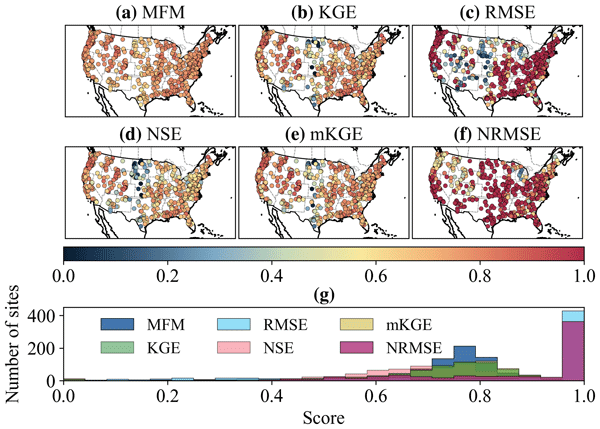
Accurately evaluating land surface models is crucial for reliable climate forecast and water resource management. We proposed a new evaluation metric that avoids some traditional metrics' flaws by focusing on accuracy, variability, and pattern similarity. This work offers a more reliable alternative to evaluate land surface models, supporting better decisions in land surface model development.
Jiahao Shi, Hua Yuan, Wanyi Lin, Wenzong Dong, Hongbin Liang, Zhuo Liu, Jianxin Zeng, Haolin Zhang, Nan Wei, Zhongwang Wei, Shupeng Zhang, Shaofeng Liu, Xingjie Lu, and Yongjiu Dai
Earth Syst. Sci. Data, 17, 117–134, https://doi.org/10.5194/essd-17-117-2025, https://doi.org/10.5194/essd-17-117-2025, 2025
Short summary
Short summary
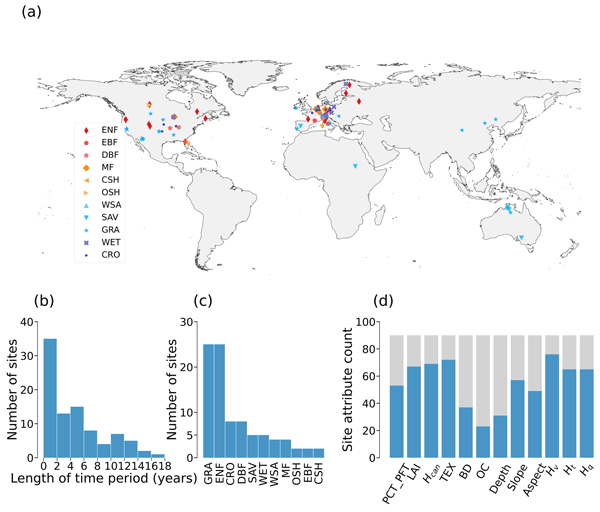
Flux tower data are widely recognized as benchmarking data for land surface models, but insufficient emphasis on and deficiency in site attribute data limits their true value. We collect site-observed vegetation, soil, and topography data from various sources. The final dataset encompasses 90 sites globally, with relatively complete site attribute data and high-quality flux validation data. This work has provided more reliable site attribute data, benefiting land surface model development.
Mark Reyers, Stephanie Fiedler, Patrick Ludwig, Christoph Böhm, Volker Wennrich, and Yaping Shao
Clim. Past, 19, 517–532, https://doi.org/10.5194/cp-19-517-2023, https://doi.org/10.5194/cp-19-517-2023, 2023
Short summary
Short summary
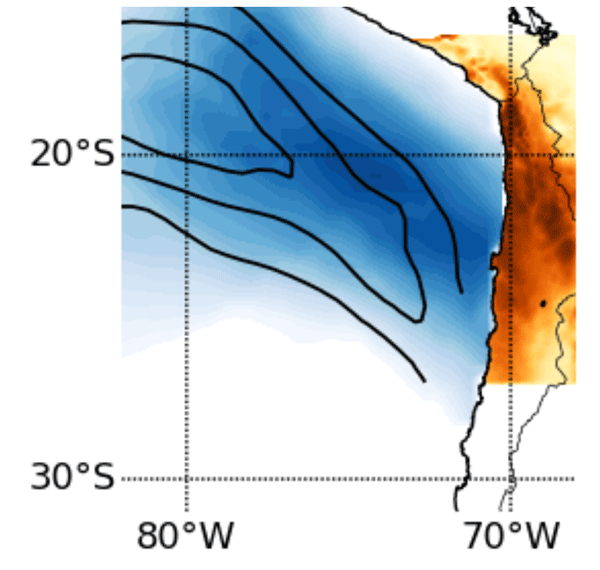
In this study we performed high-resolution climate model simulations for the hyper-arid Atacama Desert for the mid-Pliocene (3.2 Ma). The aim is to uncover the atmospheric processes that are involved in the enhancement of strong rainfall events during this period. We find that strong upper-level moisture fluxes (so-called moisture conveyor belts) originating in the tropical eastern Pacific are the main driver for increased rainfall in the mid-Pliocene.
Jie Zhang, Guang Li, Li Shi, Ning Huang, and Yaping Shao
Atmos. Chem. Phys., 22, 9525–9535, https://doi.org/10.5194/acp-22-9525-2022, https://doi.org/10.5194/acp-22-9525-2022, 2022
Short summary
Short summary
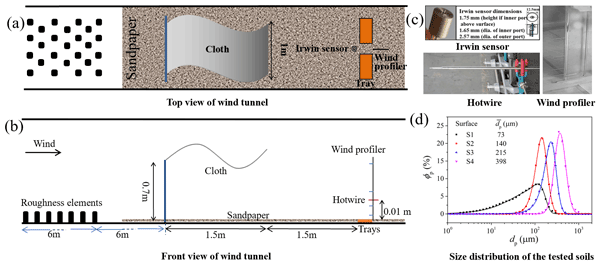
Sand and dust emission are usually investigated by wind-tunnel experiments. However, wind-tunnel flows are usually neutrally stratified without large eddies, which typically develop in the convective atmospheric boundary layer. Here we proposed a novel technique by deploying a piece of randomly fluttering cloth in a wind tunnel to generate the large eddies and found them to enhance the entrainment of sand and dust particles, which explains why large eddies are important to aeolian entrainment.
Xin Yin, Cong Jiang, Yaping Shao, Ning Huang, and Jie Zhang
Atmos. Chem. Phys., 22, 4509–4522, https://doi.org/10.5194/acp-22-4509-2022, https://doi.org/10.5194/acp-22-4509-2022, 2022
Short summary
Short summary
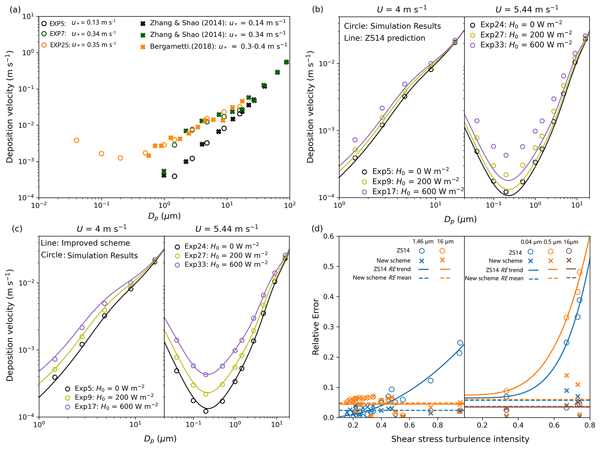
Through a series of numerical experiments using the large-eddy-simulation model, we have developed an improved particle deposition scheme that takes into account transient wind shear fluctuations. Statistical analysis of the simulation results shows that the shear stress can be well approximated by a Weibull distribution and that the new scheme provides more accurate predictions than the conventional scheme, particularly under weak wind conditions and strong convective atmospheric conditions.
Yaqiong Lu and Xianyu Yang
Geosci. Model Dev., 14, 1253–1265, https://doi.org/10.5194/gmd-14-1253-2021, https://doi.org/10.5194/gmd-14-1253-2021, 2021
Short summary
Short summary
Crop growth in land surface models normally requires high-temporal-resolution climate data, but such high-temporal-resolution climate data are not provided by many climate model simulations due to expensive storage, which limits modeling choices if there is an interest in a particular climate simulation that only saved monthly outputs. Our work provides an alternative way to use the monthly climate for crop yield projections. Such an approach could be easily adopted by other crop models.
Cited articles
Blanken, P., Black, T., Neumann, H., Hartog, C., Yang, P., Nesic, Z., Staebler, R., Chen, W., and Novak, M.: Turbulence flux measurements above and below the overstory of a boreal aspen forest, Bound.-Lay. Meteorol., 89, 109–140, https://doi.org/10.1023/A:1001557022310, 1998.
Deardorff, J.: Efficient prediction of ground surface temperature and moisture with inclusion of a layer of vegetation, J. Geophys. Res., 83, 1889–1903, https://doi.org/10.1029/JC083iC04p01889, 1978.
Deardorff, J.: Stratocumulus-capped mixed layers derived from a three-dimensional model, Bound.-Lay. Meteorol., 18, 495–527, https://doi.org/10.1007/BF00119502, 1980.
Foken, T. and Wichura, B.: Tools for quality assessment of surface based flux measurements, Agr. Forest Meteorol., 78, 83–105, https://doi.org/10.1016/0168-1923(95)02248-1, 1996.
Holt, T. and Raman, S.: A review and comparative evaluation of multilevel boundary layer parameterizations for first-order and turbulent kinetic energy closure schemes, Rev. Geophys., 26, 761–780, https://doi.org/10.1029/RG026i004p00761,1988.
Huang, H. and Margulis, S.: Evaluation of a fully coupled large-eddy simulation–land surface model and its diagnosis of land-atmosphere feedbacks, Water Resour. Res., 46, W06512, https://doi.org/10.1029/2009WR008232, 2010.
Irannejad, P. and Shao, Y.: Description and validation of the atmosphere–land-surface interaction scheme (ALSIS) with HAPEX and Cabauw data, Global Planet. Change, 19, 87–114, https://doi.org/10.1016/S0921-8181(98)00043-5, 1998.
Jimenez, P. and Dudhia, J.: Improving the representation of resolved and unresolved topographic effects on surface wind in the WRF model, J. Appl. Meteorol. Clim., 51, 300–316, https://doi.org/10.1175/JAMC-D-11-084.1, 2012.
Li, X., Cheng, G., Liu, S., Xiao, Q., Ma, M., Jin, R., Che, T., Liu, Q., Wang, W., Qi, Yuan., Wen, J., Li, H., Zhu, G., Guo, J., Ran, Y., Wang, S., Zhu, Z., Zhou, J., Hu, X., and Xu, Z.: Heihe watershed allied telemetry experimental research (HiWATER): scientific objectives and experimental design, B. Am. Meteorol. Soc., 94, 1145–1160, https://doi.org/10.1175/BAMS-D-12-00154.1, 2013.
Liu, S. M., Xu, Z. W., Wang, W. Z., Jia, Z. Z., Zhu, M. J., Bai, J., and Wang, J. M.: A comparison of eddy-covariance and large aperture scintillometer measurements with respect to the energy balance closure problem, Hydrol. Earth Syst. Sci., 15, 1291–1306, https://doi.org/10.5194/hess-15-1291-2011, 2011.
Maronga, B. and Raasch, S.: Large-eddy simulations of surface heterogeneity effects on the convective boundary layer during the LITFASS-2003 experiment, Bound.-Lay. Meteorol., 146, 17–44, https://doi.org/10.1007/s10546-012-9748-z, 2013.
Moeng, C.: A large-eddy simulation model for the study of planetary boundary-layer turbulence, J. Atmos. Sci., 41, 2052–2062, https://doi.org/10.1175/1520-0469(1984)041<2052:ALESMF>2.0.CO;2, 1984.
Monin, A. and Obukhov, A.: Basic laws of turbulent mixing in the ground layer of the atmosphere, Tr. Geofiz. Inst. Akad. Nauk. SSSR, 151, 163–187, 1954 (in Russian).
Niu, G., Yang, Z., Mitchell, K., Chen, F., Ek, M., Barlarge, M., Kumar, A., Manning, K., Niyogi, D., Rosero., E., Tewari, M., and Xia, Y.: The community Noah land surface model with multiparameterization options (Noah-MP): Model description and evaluation with local-scale measurements, J. Geophys. Res., 116, D12109, https://doi.org/10.1029/2010JD015139, 2011.
Oleson, K., Niu, G., Yang, Z., Lawrence, D., Thornton, P., Lawrence, P., Stockli, R., Dickinson, R., Bonan, G., and Levis, S.: CLM3.5 Documentation, UCAR, https://www2.cgd.ucar.edu/tss/clm/distribution/clm3.5/CLM3_5_documentation.pdf (last access: 1 April 2007), 2007.
Patton, E. G., Sullivan, P. P., and Moeng, C.-H.: The influence of idealized heterogeneity on wet and dry planetary boundary layers coupled to the land surface, J. Atmos. Sci., 62, 2078–2097, https://doi.org/10.1175/JAS3465.1, 2005.
Redelsperger, J. L., Mahé, F., and Carlotti, P.: A Simple and General Subgrid Model Suitable Both for Surface Layer and Free-Stream Turbulence, Bound.-Lay. Meteorol., 101, 375–408, https://doi.org/10.1023/A:1019206001292, 2001.
Shao, Y., Liu, S., Schween, J., Schween, J., and Crewell, S.: Large-eddy atmosphere-land-surface modeling over heterogeneity surfaces: model development and comparison with measurements, Bound.-Lay. Meteorol., 148, 333–356, https://doi.org/10.1007/s10546-013-9823-0, 2013.
Shin, H. H. and Hong, S.: Analysis of resolved and parameterized vertical transports in convective boundary layers at gray-zone resolutions, J. Atmos. Sci., 70, 3248–3261, https://doi.org/10.1175/JAS-D-12-0290.1, 2013.
Skamarock, W. C., Klemp, J. B., Dudhia, J., Gill, D. O., Liu, Z., Berner, J., Wang, W., Powers, J. G., Duda, M. G., Barker, D. M., and Huang, X. Y.: A Description of the Advanced Research WRF Version 4, NCAR Technical Notes, NCAR/TN-556+STR, 145 pp., https://doi.org/10.5065/1dfh-6p97, 2019.
Smagorinsky, J.: General circulation experiments with the primitive equations, Part I: the basic experiment, Mon. Weather Rev., 91, 99–164, https://doi.org/10.1175/1520-0493(1963)091<0099:GCEWTP>2.3.CO;2, 1963.
Sullivan, P. P., Mcwilliams, J. C., and Moeng, C.-H.: A subgrid-scale model for large-eddy simulation of planetary boundary-layer flows, Bound.-Lay. Meteorol., 71, 247–76, https://doi.org/10.1007/BF00713741, 1994.
Zhang, X., Bao, J., Chen, B., and Grell, E.: A three-dimensional scale-adaptive turbulent kinetic energy scheme in the WRF-ARW model, Mon. Weather Rev., 146, 2023–2045, https://doi.org/10.1175/MWR-D-17-0356.1, 2018.
Short summary
Our novel scheme enhances large-eddy simulations (LESs) for atmosphere–land interactions. It couples LES subgrid closure with Monin–Obukhov similarity theory (MOST), overcoming MOST's limitations. Validated over diverse land surfaces, our approach outperforms existing methods, aligning well with field measurements. Robustness is demonstrated across varying model resolutions. MOST's influence strengthens with decreasing grid spacing, particularly for sensible heat flux.
Our novel scheme enhances large-eddy simulations (LESs) for atmosphere–land interactions. It...
Altmetrics
Final-revised paper
Preprint