Articles | Volume 25, issue 23
https://doi.org/10.5194/acp-25-17953-2025
© Author(s) 2025. This work is distributed under
the Creative Commons Attribution 4.0 License.

https://doi.org/10.5194/acp-25-17953-2025
© Author(s) 2025. This work is distributed under
the Creative Commons Attribution 4.0 License.
Spatial and temporal distribution of fine aerosol acidity in the Eastern Mediterranean
Anna Maria Neroladaki
Environmental Chemical Processes Laboratory (ECPL), Department of Chemistry, University of Crete, 70013 Heraklion, Greece
Center for Studies of Air Quality and Climate Change, Institute for Chemical Engineering Sciences, Foundation for Research and Technology Hellas, 26504 Patras, Greece
Maria Tsagkaraki
Environmental Chemical Processes Laboratory (ECPL), Department of Chemistry, University of Crete, 70013 Heraklion, Greece
Kyriaki Papoutsidaki
Environmental Chemical Processes Laboratory (ECPL), Department of Chemistry, University of Crete, 70013 Heraklion, Greece
Kalliopi Tavernaraki
Environmental Chemical Processes Laboratory (ECPL), Department of Chemistry, University of Crete, 70013 Heraklion, Greece
Filothei Boufidou
Institute of Environmental Physics, University of Bremen, 28359 Bremen, Germany
Pavlos Zarmpas
Environmental Chemical Processes Laboratory (ECPL), Department of Chemistry, University of Crete, 70013 Heraklion, Greece
Irini Tsiodra
Institute for Environmental Research and Sustainable Development, National Observatory of Athens, 15236 Palea Penteli, Greece
Eleni Liakakou
Institute for Environmental Research and Sustainable Development, National Observatory of Athens, 15236 Palea Penteli, Greece
Aikaterini Bougiatioti
Institute for Environmental Research and Sustainable Development, National Observatory of Athens, 15236 Palea Penteli, Greece
Giorgos Kouvarakis
Environmental Chemical Processes Laboratory (ECPL), Department of Chemistry, University of Crete, 70013 Heraklion, Greece
Nikos Kalivitis
Environmental Chemical Processes Laboratory (ECPL), Department of Chemistry, University of Crete, 70013 Heraklion, Greece
Christos Kaltsonoudis
Center for Studies of Air Quality and Climate Change, Institute for Chemical Engineering Sciences, Foundation for Research and Technology Hellas, 26504 Patras, Greece
Athanasios Karagioras
Department of Environmental Engineering, Democritus University of Thrace, 67100 Xanthi, Greece
Dimitrios Balis
Laboratory of Atmospheric Physics, Aristotle University of Thessaloniki, 54634 Thessaloniki, Greece
Konstantinos Michailidis
Laboratory of Atmospheric Physics, Aristotle University of Thessaloniki, 54634 Thessaloniki, Greece
Konstantinos Kourtidis
Department of Environmental Engineering, Democritus University of Thrace, 67100 Xanthi, Greece
Stelios Myriokefalitakis
Institute for Environmental Research and Sustainable Development, National Observatory of Athens, 15236 Palea Penteli, Greece
Nikos Hatzianastassiou
Laboratory of Meteorology, Department of Physics, University of Ioannina, 45110 Ioannina, Greece
Spyros N. Pandis
Center for Studies of Air Quality and Climate Change, Institute for Chemical Engineering Sciences, Foundation for Research and Technology Hellas, 26504 Patras, Greece
Athanasios Nenes
Center for Studies of Air Quality and Climate Change, Institute for Chemical Engineering Sciences, Foundation for Research and Technology Hellas, 26504 Patras, Greece
Laboratory of Atmospheric Processes and their Impacts, School of Architecture, Civil and Environmental Engineering, Ecole Polytechnique Fédérale de Lausanne, 1015 Lausanne, Switzerland
Nikolaos Mihalopoulos
Environmental Chemical Processes Laboratory (ECPL), Department of Chemistry, University of Crete, 70013 Heraklion, Greece
Institute for Environmental Research and Sustainable Development, National Observatory of Athens, 15236 Palea Penteli, Greece
Environmental Chemical Processes Laboratory (ECPL), Department of Chemistry, University of Crete, 70013 Heraklion, Greece
Center for Studies of Air Quality and Climate Change, Institute for Chemical Engineering Sciences, Foundation for Research and Technology Hellas, 26504 Patras, Greece
Institute of Environmental Physics, University of Bremen, 28359 Bremen, Germany
Related authors
No articles found.
Laura Gallardo, Charlie Opazo, Camilo Menares, Kevin Basoa, Nikos Daskalakis, Maria Kanakidou, Carmen Vega, Nicolás Huneeus, Roberto Rondanelli, and Rodrigo Seguel
EGUsphere, https://doi.org/10.5194/egusphere-2025-5643, https://doi.org/10.5194/egusphere-2025-5643, 2025
This preprint is open for discussion and under review for Atmospheric Chemistry and Physics (ACP).
Short summary
Short summary
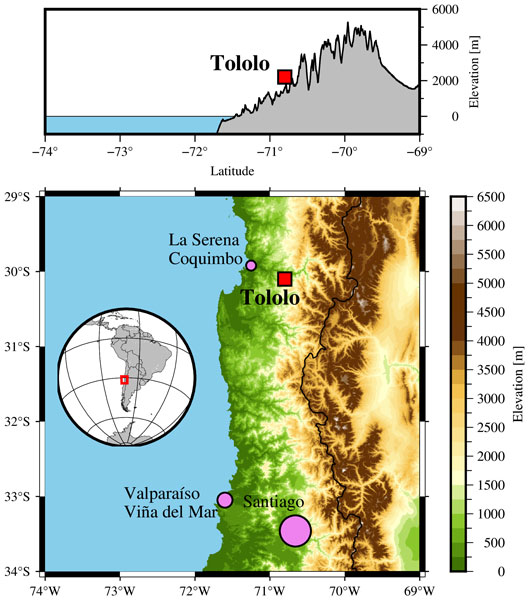
We assert the role of methane and other drivers of change in explaining the growing tropospheric ozone (O3) trend at Tololo (30.17° S, 70.80° W, 2154 m a.s.l.), and we quantify the contributions of biomass burning and stratosphere-to-troposphere transport on O3, particularly during the late winter and spring. These findings enhance understanding of O3 variability in the Southern Hemisphere free troposphere and underscore the importance of sustained observations at Tololo amid climate change.
Aino Ovaska, Elio Rauth, Daniel Holmberg, Paulo Artaxo, John Backman, Benjamin Bergmans, Don Collins, Marco Aurélio Franco, Shahzad Gani, Roy M. Harrison, Rakesh K. Hooda, Tareq Hussein, Antti-Pekka Hyvärinen, Kerneels Jaars, Adam Kristensson, Markku Kulmala, Lauri Laakso, Ari Laaksonen, Nikolaos Mihalopoulos, Colin O'Dowd, Jakub Ondracek, Tuukka Petäjä, Kristina Plauškaitė, Mira Pöhlker, Ximeng Qi, Peter Tunved, Ville Vakkari, Alfred Wiedensohler, Kai Puolamäki, Tuomo Nieminen, Veli-Matti Kerminen, Victoria A. Sinclair, and Pauli Paasonen
Aerosol Research, 3, 589–618, https://doi.org/10.5194/ar-3-589-2025, https://doi.org/10.5194/ar-3-589-2025, 2025
Short summary
Short summary
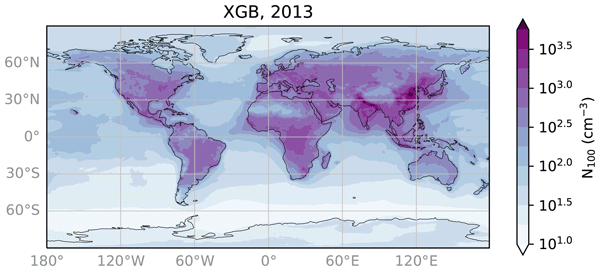
We trained machine learning models to estimate the number of aerosol particles large enough to form clouds and generated daily estimates for the entire globe. The models performed well in many continental regions but struggled in remote and marine areas. Still, this approach offers a way to quantify these particles in areas that lack direct measurements, helping us understand their influence on clouds and climate on a global scale.
Kun Qu, Xuesong Wang, Yu Yan, Xipeng Jin, Ling-Yan He, Xiao-Feng Huang, Xuhui Cai, Jin Shen, Zimu Peng, Teng Xiao, Mihalis Vrekoussis, Maria Kanakidou, Guy P. Brasseur, Nikos Daskalakis, Limin Zeng, and Yuanhang Zhang
Atmos. Chem. Phys., 25, 16983–17007, https://doi.org/10.5194/acp-25-16983-2025, https://doi.org/10.5194/acp-25-16983-2025, 2025
Short summary
Short summary
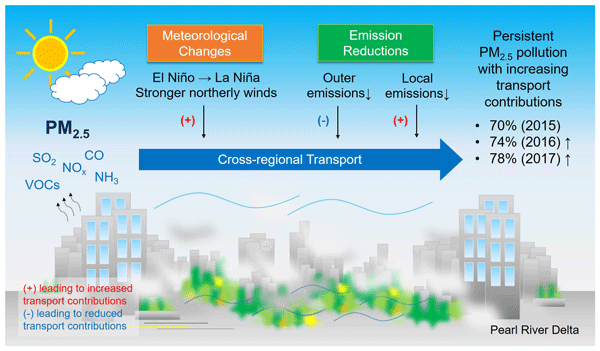
Persistent cold-season PM2.5 pollution in a South China region during 2015–2017 was studied to assess the roles of drastic meteorological and emission changes. We found that meteorological variations, induced by a transition from El Niño to La Niña, were the main cause of persistent pollution, as stronger northerly winds enhanced pollutant transport into the region. In contrast, the effect of rapid emission reductions was limited. Recommendations for air quality improvement were also proposed.
Joanna Alden, Nora Bergner, Benjamin Heutte, Lionel Favre, Mihnea Surdu, Julian Weng, Marta Augugliaro, Patrik Winiger, Berkay Dönmez, Roman Pohorsky, Radiance Calmer, Carmelle Chatterjee, Kalliopi Violaki, Athanasios Nenes, Luke Gregor, Silvia Henning, and Julia Schmale
EGUsphere, https://doi.org/10.5194/egusphere-2025-5710, https://doi.org/10.5194/egusphere-2025-5710, 2025
This preprint is open for discussion and under review for Atmospheric Chemistry and Physics (ACP).
Short summary
Short summary
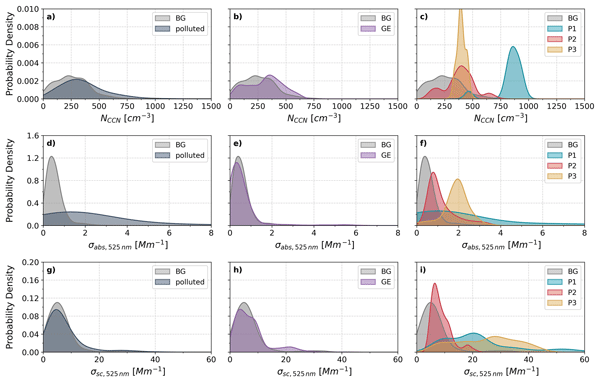
We investigated the sources, vertical dispersion and properties of aerosols in a Greenlandic fjord system. Four main types were identified: marine background, local anthropogenic, growth events, biomass burning (BB). Anthropogenic emissions increased absorption coefficients, BB significantly increased the CCN number concentrations, growth events were very similar to background with regards to scattering coefficients. Aerosol properties and origins were distinct throughout the boundary layer.
Konstantinos Mataras, Evangelia Siouti, David Patoulias, and Spyros N. Pandis
Atmos. Chem. Phys., 25, 15785–15799, https://doi.org/10.5194/acp-25-15785-2025, https://doi.org/10.5194/acp-25-15785-2025, 2025
Short summary
Short summary
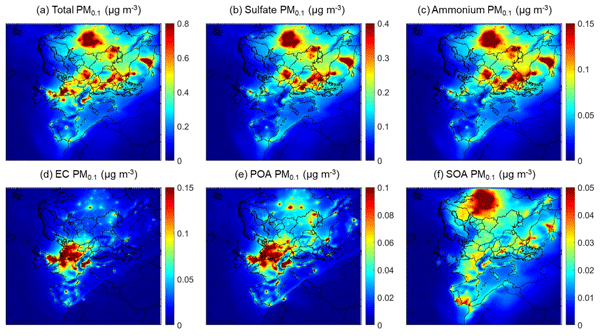
Predicted levels of ultrafine particle mass (PM0.1) vary substantially over Europe with higher values in the summer than in the winter. In summer, PM0.1 was mostly comprised of sulfate (38 %) and secondary organics (32 %). During winter the sulfate fraction increased to 47 % and primary organics contributed 23 %. Correlations between PM0.1 and the regulated PM2.5 were low. This suggests that there are significant differences between the dominant sources and processes of PM0.1 and PM2.5.
Maria P. Georgopoulou, Kalliopi Florou, Angeliki Matrali, Georgia Starida, Christos Kaltsonoudis, Athanasios Nenes, and Spyros N. Pandis
Atmos. Chem. Phys., 25, 15835–15855, https://doi.org/10.5194/acp-25-15835-2025, https://doi.org/10.5194/acp-25-15835-2025, 2025
Short summary
Short summary
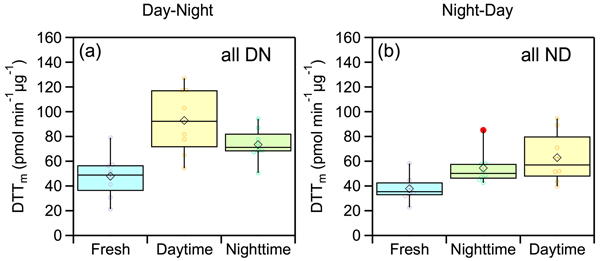
Residential biomass burning is an important wintertime source of aerosols. This study examined the complex diurnal aging cycles on biomass burning aerosol composition and oxidative potential, a key toxicity metric. Additional organic aerosol (OA) mass was produced after the two (day/night and night/day) cycles, varying from 35 to 90 % of the initial OA. The aging of the emissions led to a final oxidative potential increase of 60 % for both cycles.
Anchal Garg, Maximilien Desservettaz, Aliki Christodoulou, Theodoros Christoudias, Vijay Punjaji Kanawade, Chrysanthos Savvides, Mihalis Vrekoussis, Shahid Naqui, Tuija Jokinen, Joseph Byron, Jonathan Williams, Nikos Mihalopoulos, Eleni Liakakou, Jean Sciare, and Efstratios Bourtsoukidis
EGUsphere, https://doi.org/10.5194/egusphere-2025-5124, https://doi.org/10.5194/egusphere-2025-5124, 2025
This preprint is open for discussion and under review for Atmospheric Chemistry and Physics (ACP).
Short summary
Short summary
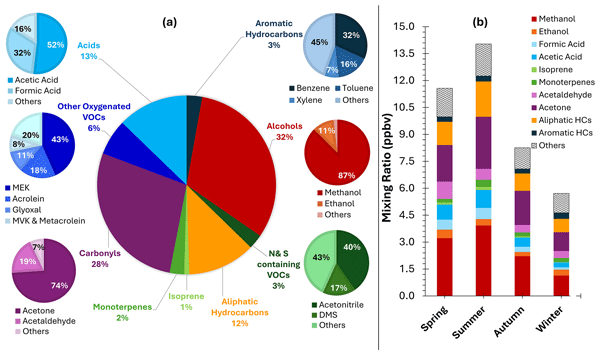
We measured organic gases in Cyprus for over two years to understand how heat, sunlight, wind, and other parameters affect air quality. Natural emissions peaked in summer. Computer models missed some sources, showing gaps in current knowledge. Our results reveal how temperature and regional pollution together shape air chemistry and help predict ozone and aerosol formation in the Eastern Mediterranean.
Montserrat Costa-Surós, María Gonçalves Ageitos, Marios Chatziparaschos, Paraskevi Georgakaki, Manu Anna Thomas, Gilbert Montané Pinto, Stelios Myriokefalitakis, Twan van Noije, Philippe Le Sager, Maria Kanakidou, Athanasios Nenes, and Carlos Pérez García-Pando
EGUsphere, https://doi.org/10.5194/egusphere-2025-4659, https://doi.org/10.5194/egusphere-2025-4659, 2025
Short summary
Short summary
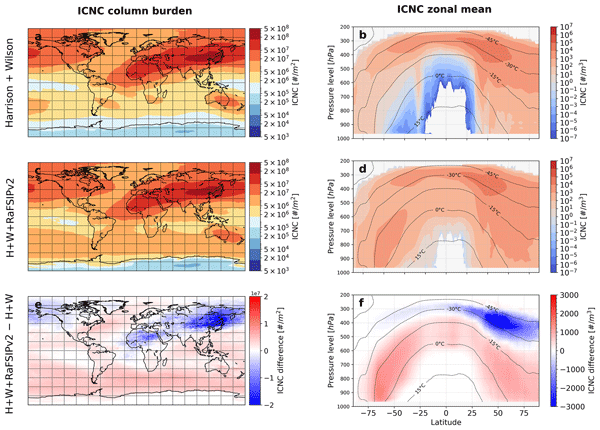
Mixed-phase clouds play a key role in Earth’s climate but remain poorly represented in climate models. We improved their representation in the EC-Earth model by introducing an aerosol-sensitive scheme for ice formation and a machine-learning approach for secondary ice production. These advances produce more realistic cloud properties and radiative effects, highlighting that both processes are essential for reliable climate projections.
Georgia A. Argyropoulou, Kalliopi Florou, and Spyros N. Pandis
Atmos. Meas. Tech., 18, 4969–4983, https://doi.org/10.5194/amt-18-4969-2025, https://doi.org/10.5194/amt-18-4969-2025, 2025
Short summary
Short summary
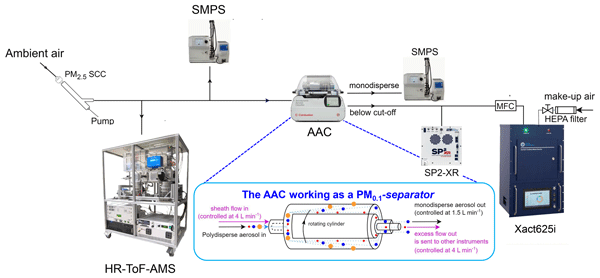
Ultrafine particles (diameter of less than 100 nm) are suspected to cause significant health effects. Accurately measuring their chemical composition and physical properties in real time is challenging due to their low mass and interference from larger particles. This study proposes a method for the continuous, automated measurement of their composition, tested in a pilot field study to explore their chemical characteristics, physical properties, and sources.
Alexandra P. Tsimpidi, Susanne M. C. Scholz, Alexandros Milousis, Nikolaos Mihalopoulos, and Vlassis A. Karydis
Atmos. Chem. Phys., 25, 10183–10213, https://doi.org/10.5194/acp-25-10183-2025, https://doi.org/10.5194/acp-25-10183-2025, 2025
Short summary
Short summary
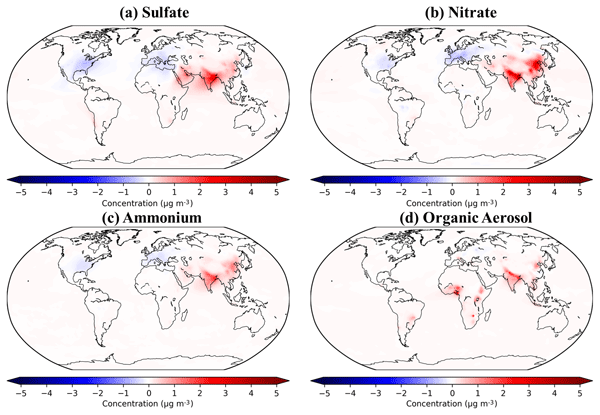
This study examines global changes in air pollution from 2000 to 2020, focusing on fine aerosols that impact climate and health. Using models and global data, it finds that organic aerosols dominate in many regions, especially with wildfires or natural emissions. Pollution from sulfate and nitrate has decreased in Europe and North America due to regulations, while trends in Asia are more complex. The findings improve understanding and support policies for cleaner air and healthier environments.
Emmanouil Proestakis, Vassilis Amiridis, Carlos Pérez García-Pando, Svetlana Tsyro, Jan Griesfeller, Antonis Gkikas, Thanasis Georgiou, María Gonçalves Ageitos, Jeronimo Escribano, Stelios Myriokefalitakis, Elisa Bergas Masso, Enza Di Tomaso, Sara Basart, Jan-Berend W. Stuut, and Angela Benedetti
Earth Syst. Sci. Data, 17, 4351–4395, https://doi.org/10.5194/essd-17-4351-2025, https://doi.org/10.5194/essd-17-4351-2025, 2025
Short summary
Short summary
Quantification of dust deposition into the broader Atlantic Ocean is provided, with the estimates established based on Earth observations. The dataset is considered unique with respect to a range of applications, including compensating for spatiotemporal gaps of sediment-trap measurements, assessments of model simulations, shedding light on physical processes related to the dust cycle, and improving the understanding of dust biogeochemical impacts on oceanic ecosystems, weather, and climate.
Marios Chatziparaschos, Stelios Myriokefalitakis, Nikos Kalivitis, Nikos Daskalakis, Athanasios Nenes, María Gonçalves Ageitos, Montserrat Costa-Surós, Carlos Pérez García-Pando, Mihalis Vrekoussis, and Maria Kanakidou
Atmos. Chem. Phys., 25, 9085–9111, https://doi.org/10.5194/acp-25-9085-2025, https://doi.org/10.5194/acp-25-9085-2025, 2025
Short summary
Short summary
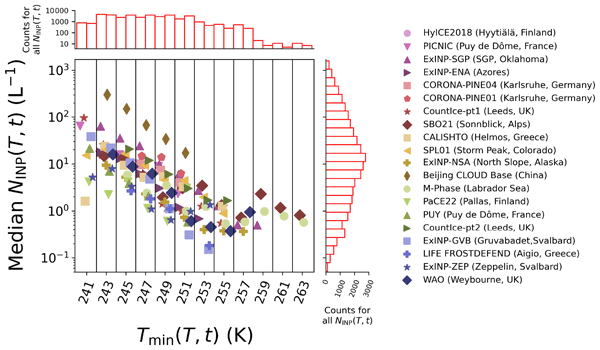
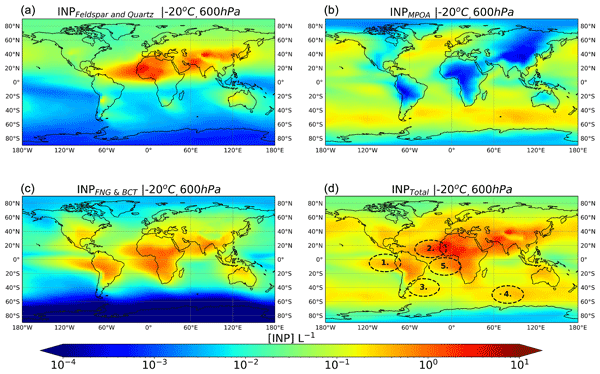
We show distinct seasonal and geographical patterns in the contributions of mineral dust, marine aerosol, and terrestrial biological particles to ice-nucleating particle (INP) concentrations that lead to atmospheric ice formation, a major source of uncertainty in climate projections. Bioaerosols are the major source of INPs at high temperatures, while mineral dust influences the global INP population at lower temperatures. These particles can satisfactorily reproduce INPs in a climate model.
Elie Bimenyimana, Jean Sciare, Michael Pikridas, Konstantina Oikonomou, Minas Iakovides, Emily Vasiliadou, Chrysanthos Savvides, and Nikos Mihalopoulos
EGUsphere, https://doi.org/10.5194/egusphere-2025-3234, https://doi.org/10.5194/egusphere-2025-3234, 2025
Short summary
Short summary
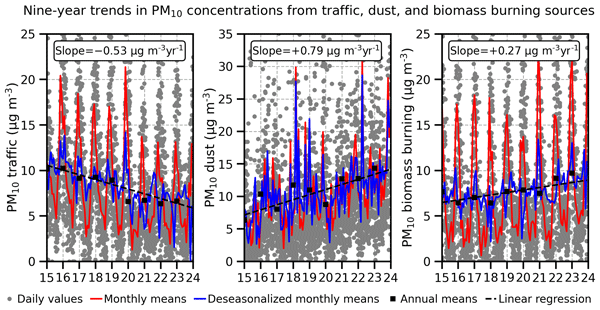
Long-term (2015–2023) source apportionment analysis reveals that reduction in PM10 concentration levels from traffic in Cypriot cities is completely offset by the concomitant increase of uncontrolled PM from local sources (road dust resuspension, and domestic wood burning), along with rising Middle East PM from fossil fuel emissions. This poses a major challenge for Cyprus to comply with the stricter PM10 limits set by the new EU air quality directive.
Marilena Gidarakou, Alexandros Papayannis, Kunfeng Gao, Panagiotis Gidarakos, Benoit Crouzy, Romanos Foskinis, Sophie Erb, Cuiqi Zhang, Gian Lieberherr, Martine Collaud Coen, Branko Sikoparija, Zamin A. Kanji, Bernard Clot, Bertrand Calpini, Eugenia Giagka, and Athanasios Nenes
EGUsphere, https://doi.org/10.5194/egusphere-2025-2978, https://doi.org/10.5194/egusphere-2025-2978, 2025
Short summary
Short summary
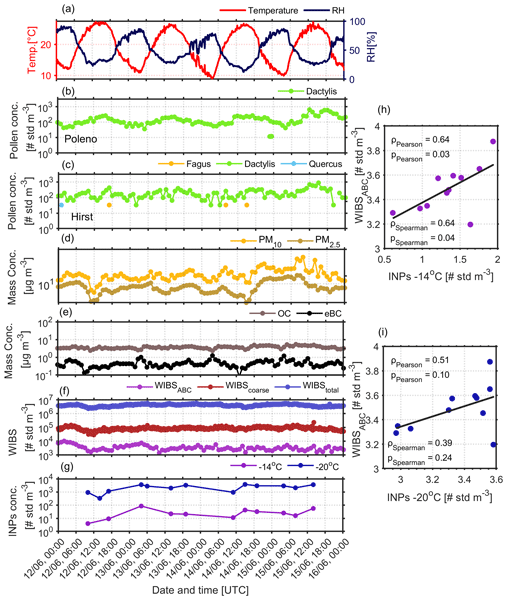
Vertical profiles of pollen and biomass burning particles were obtained at a semi-rural site at the MeteoSwiss station near Payerne (Switzerland) using a novel multi-channel elastic-fluorescence lidar system combined with in situ measurements during the spring 2023 wildfires and pollination season during the PERICLES (PayernE lidaR and Insitu detection of fluorescent bioaerosol and dust partiCLES and their cloud impacts) campaign.
Susanne M. C. Scholz, Vlassis A. Karydis, Georgios I. Gkatzelis, Hendrik Fuchs, Spyros N. Pandis, and Alexandra P. Tsimpidi
EGUsphere, https://doi.org/10.5194/egusphere-2025-2510, https://doi.org/10.5194/egusphere-2025-2510, 2025
Short summary
Short summary
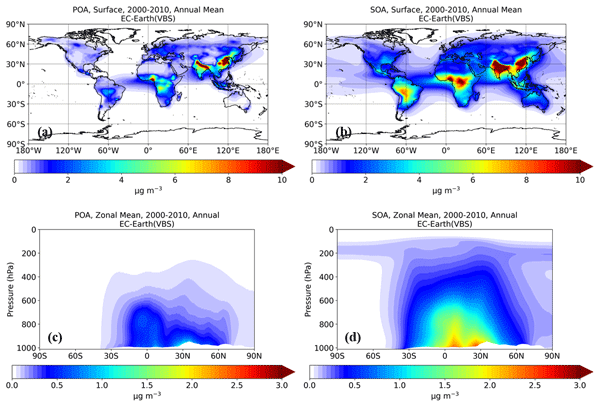
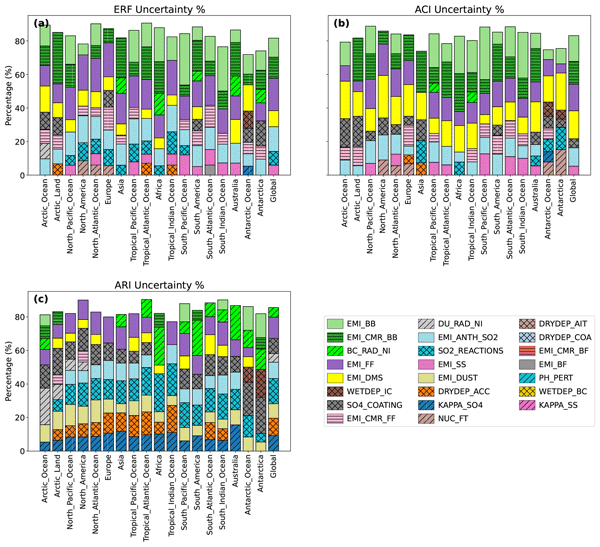
We studied how pollution from cars and trucks contributes to tiny airborne particles that affect air quality and climate. These particles, called secondary organic aerosols, were often underestimated in global models. By improving how certain overlooked emissions from fuel use are represented in our model, we found that their impact is much larger than previously thought. Our results suggest that road traffic plays a far greater role in global air pollution than earlier estimates showed.
Andreas Eleftheriou, Petros Mouzourides, Panayiotis Kouis, Nikos Kalivitis, Itzhak Katra, Emily Vasiliadou, Chrysanthos Savvides, Panayiotis Yiallouros, and Marina K.-A. Neophytou
EGUsphere, https://doi.org/10.5194/egusphere-2025-2739, https://doi.org/10.5194/egusphere-2025-2739, 2025
Short summary
Short summary
Desert dust storms are a significant environmental concern in the Eastern Mediterranean. This study compared eleven forecasting models to see how well they predict dust levels in the atmosphere. By checking their results against in-situ and satellite measurements, we found that some models work better than others, but none are perfect. These findings can help improve forecasting systems, making them more reliable and useful for protecting public health and preparing for extreme dust events.
Yusuf Bhatti, Duncan Watson-Parris, Leighton Regayre, Hailing Jia, David Neubauer, Ulas Im, Carl Svenhag, Nick Schutgens, Athanasios Tsikerdekis, Athanasios Nenes, Irfan Muhammed, Bastiaan van Diedenhoven, Ardit Arifi, Guangliang Fu, and Otto Hasekamp
EGUsphere, https://doi.org/10.5194/egusphere-2025-2848, https://doi.org/10.5194/egusphere-2025-2848, 2025
Short summary
Short summary
Aerosols (small airborne particles) impact Earth's climate, but their extent is unknown. By running climate model simulations and emulating millions of additional variants with different settings, we found that natural emissions like sea spray and sulfur are key sources of uncertainty in climate predictions. Our work shows that understanding these natural processes better can help improve climate models and make future climate projections more accurate.
Konstantinos Kourtidis, Stavros Stathopoulos, and Vassilis Amiridis
Atmos. Chem. Phys., 25, 5935–5946, https://doi.org/10.5194/acp-25-5935-2025, https://doi.org/10.5194/acp-25-5935-2025, 2025
Short summary
Short summary
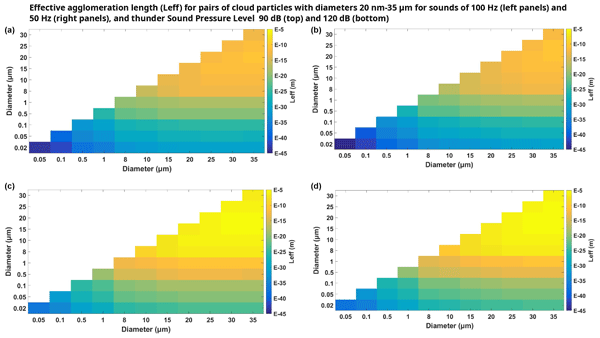
The sound of thunder induces mechanical effects on cloud droplets and ice particles, causing changes in their size distribution. A shock wave near the lightning channel causes extensive shattering of cloud particles. At a distance, the audio wave will cause agglomeration of particles. So, thunder may influence the rain generation process and the radiative properties of clouds. As global warming may influence the occurrence rate of lightning, a climate feedback may be induced by these mechanisms.
Johann Rasmus Nüß, Nikos Daskalakis, Fabian Günther Piwowarczyk, Angelos Gkouvousis, Oliver Schneising, Michael Buchwitz, Maria Kanakidou, Maarten C. Krol, and Mihalis Vrekoussis
Geosci. Model Dev., 18, 2861–2890, https://doi.org/10.5194/gmd-18-2861-2025, https://doi.org/10.5194/gmd-18-2861-2025, 2025
Short summary
Short summary
We estimate carbon monoxide emissions through inverse modeling, an approach where measurements of tracers in the atmosphere are fed to a model to calculate backwards in time (inverse) where the tracers came from. We introduce measurements from a new satellite instrument and show that, in most places globally, these on their own sufficiently constrain the emissions. This alleviates the need for additional datasets, which could shorten the delay for future carbon monoxide source estimates.
Natalie M. Mahowald, Longlei Li, Julius Vira, Marje Prank, Douglas S. Hamilton, Hitoshi Matsui, Ron L. Miller, P. Louis Lu, Ezgi Akyuz, Daphne Meidan, Peter Hess, Heikki Lihavainen, Christine Wiedinmyer, Jenny Hand, Maria Grazia Alaimo, Célia Alves, Andres Alastuey, Paulo Artaxo, Africa Barreto, Francisco Barraza, Silvia Becagli, Giulia Calzolai, Shankararaman Chellam, Ying Chen, Patrick Chuang, David D. Cohen, Cristina Colombi, Evangelia Diapouli, Gaetano Dongarra, Konstantinos Eleftheriadis, Johann Engelbrecht, Corinne Galy-Lacaux, Cassandra Gaston, Dario Gomez, Yenny González Ramos, Roy M. Harrison, Chris Heyes, Barak Herut, Philip Hopke, Christoph Hüglin, Maria Kanakidou, Zsofia Kertesz, Zbigniew Klimont, Katriina Kyllönen, Fabrice Lambert, Xiaohong Liu, Remi Losno, Franco Lucarelli, Willy Maenhaut, Beatrice Marticorena, Randall V. Martin, Nikolaos Mihalopoulos, Yasser Morera-Gómez, Adina Paytan, Joseph Prospero, Sergio Rodríguez, Patricia Smichowski, Daniela Varrica, Brenna Walsh, Crystal L. Weagle, and Xi Zhao
Atmos. Chem. Phys., 25, 4665–4702, https://doi.org/10.5194/acp-25-4665-2025, https://doi.org/10.5194/acp-25-4665-2025, 2025
Short summary
Short summary
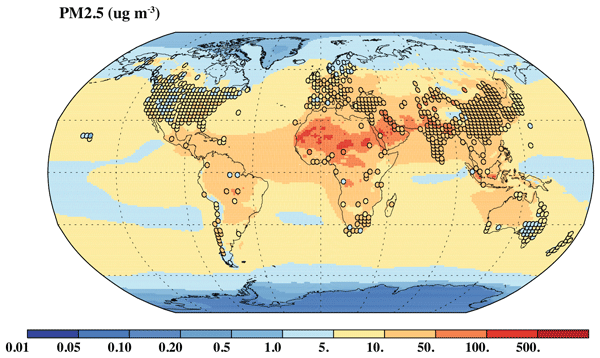
Aerosol particles are an important part of the Earth system, but their concentrations are spatially and temporally heterogeneous, as well as being variable in size and composition. Here, we present a new compilation of PM2.5 and PM10 aerosol observations, focusing on the spatial variability across different observational stations, including composition, and demonstrate a method for comparing the data sets to model output.
Yijuan Zhang, Guy Brasseur, Maria Kanakidou, Claire Granier, Nikos Daskalakis, Alexandros Panagiotis Poulidis, Kun Qu, and Mihalis Vrekoussis
EGUsphere, https://doi.org/10.5194/egusphere-2025-268, https://doi.org/10.5194/egusphere-2025-268, 2025
Short summary
Short summary
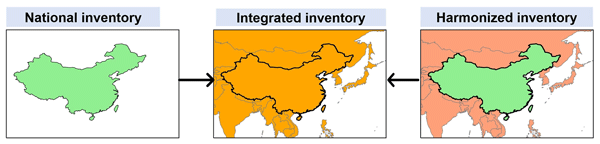
A new inventory of anthropogenic emissions, the China INtegrated Emission Inventory (CINEI), was developed in this study to better represent emission sectors, chemical speciation and spatiotemporal variations in China. Compared to simulations driven by global inventories, CINEI demonstrated better numerical modeling performance in ozone and its precursors (nitrogen dioxide and carbon monoxide). This study provides valuable insights for designing ozone mitigation strategies.
Lena Feld, Pablo Schmid, Marios Mermigkas, Dimitrios Balis, Jochen Gross, Darko Dubravica, Carlos Alberti, Benedikt Herkommer, Stefan Versick, Roland Ruhnke, Frank Hase, and Peter Braesicke
EGUsphere, https://doi.org/10.5194/egusphere-2025-639, https://doi.org/10.5194/egusphere-2025-639, 2025
Short summary
Short summary
Our goal is to measure CO2 emissions from cities, to verify and improve our knowledge of reported anthropogenic emissions. We use atmospheric measurements and simulations of CO2 transport to find an independent estimate. This study investigates the CO2 emissions of the city of Thessaloniki, where the reported emissions differ. The data we collected indicates that the emissions are larger than stated by the ODIAC inventory, which we used for our simulations.
David Patoulias, Kalliopi Florou, and Spyros N. Pandis
Geosci. Model Dev., 18, 1103–1118, https://doi.org/10.5194/gmd-18-1103-2025, https://doi.org/10.5194/gmd-18-1103-2025, 2025
Short summary
Short summary
The effect of the assumed atmospheric nucleation mechanism on particle number concentrations and size distribution was investigated. Two quite different mechanisms involving sulfuric acid and ammonia or a biogenic organic vapor gave quite similar results which were consistent with measurements at 26 measurement stations across Europe. The number of larger particles that serve as cloud condensation nuclei showed little sensitivity to the assumed nucleation mechanism.
Alexandros Milousis, Klaus Klingmüller, Alexandra P. Tsimpidi, Jasper F. Kok, Maria Kanakidou, Athanasios Nenes, and Vlassis A. Karydis
Atmos. Chem. Phys., 25, 1333–1351, https://doi.org/10.5194/acp-25-1333-2025, https://doi.org/10.5194/acp-25-1333-2025, 2025
Short summary
Short summary
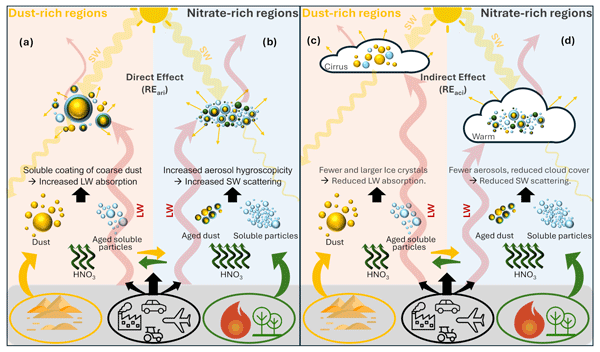
This study investigates the impact of dust on the global radiative effect of nitrate aerosols. The results indicate both positive and negative regional shortwave and longwave radiative effects due to aerosol–radiation interactions and cloud adjustments. The global average net REari and REaci of nitrate aerosols are −0.11 and +0.17 W m−2, respectively, mainly affecting the shortwave spectrum. Sensitivity simulations evaluated the influence of mineral dust composition and emissions on the results.
Xiansheng Liu, Xun Zhang, Marvin Dufresne, Tao Wang, Lijie Wu, Rosa Lara, Roger Seco, Marta Monge, Ana Maria Yáñez-Serrano, Marie Gohy, Paul Petit, Audrey Chevalier, Marie-Pierre Vagnot, Yann Fortier, Alexia Baudic, Véronique Ghersi, Grégory Gille, Ludovic Lanzi, Valérie Gros, Leïla Simon, Heidi Héllen, Stefan Reimann, Zoé Le Bras, Michelle Jessy Müller, David Beddows, Siqi Hou, Zongbo Shi, Roy M. Harrison, William Bloss, James Dernie, Stéphane Sauvage, Philip K. Hopke, Xiaoli Duan, Taicheng An, Alastair C. Lewis, James R. Hopkins, Eleni Liakakou, Nikolaos Mihalopoulos, Xiaohu Zhang, Andrés Alastuey, Xavier Querol, and Thérèse Salameh
Atmos. Chem. Phys., 25, 625–638, https://doi.org/10.5194/acp-25-625-2025, https://doi.org/10.5194/acp-25-625-2025, 2025
Short summary
Short summary
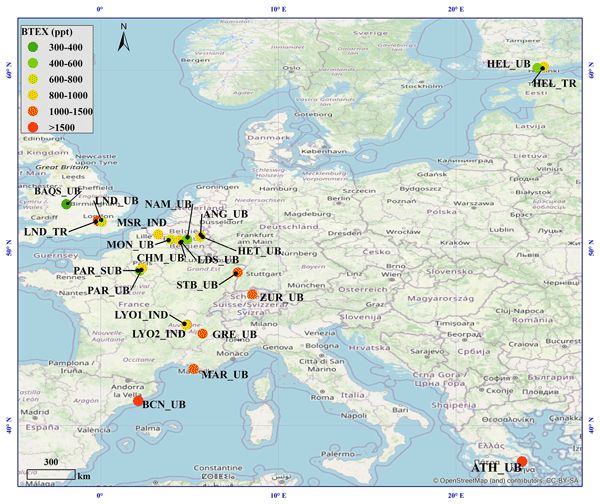
This study examines BTEX (benzene, toluene, ethylbenzene, xylenes) pollution in urban areas across seven European countries. Analyzing data from 22 monitoring sites, we found traffic and industrial activities significantly impact BTEX levels, with peaks during rush hours. The risk from BTEX exposure remains moderate, especially in high-traffic and industrial zones, highlighting the need for targeted air quality management to protect public health and improve urban air quality.
Pamela A. Dominutti, Jean-Luc Jaffrezo, Anouk Marsal, Takoua Mhadhbi, Rhabira Elazzouzi, Camille Rak, Fabrizia Cavalli, Jean-Philippe Putaud, Aikaterini Bougiatioti, Nikolaos Mihalopoulos, Despina Paraskevopoulou, Ian Mudway, Athanasios Nenes, Kaspar R. Daellenbach, Catherine Banach, Steven J. Campbell, Hana Cigánková, Daniele Contini, Greg Evans, Maria Georgopoulou, Manuella Ghanem, Drew A. Glencross, Maria Rachele Guascito, Hartmut Herrmann, Saima Iram, Maja Jovanović, Milena Jovašević-Stojanović, Markus Kalberer, Ingeborg M. Kooter, Suzanne E. Paulson, Anil Patel, Esperanza Perdrix, Maria Chiara Pietrogrande, Pavel Mikuška, Jean-Jacques Sauvain, Katerina Seitanidi, Pourya Shahpoury, Eduardo J. d. S. Souza, Sarah Steimer, Svetlana Stevanovic, Guillaume Suarez, P. S. Ganesh Subramanian, Battist Utinger, Marloes F. van Os, Vishal Verma, Xing Wang, Rodney J. Weber, Yuhan Yang, Xavier Querol, Gerard Hoek, Roy M. Harrison, and Gaëlle Uzu
Atmos. Meas. Tech., 18, 177–195, https://doi.org/10.5194/amt-18-177-2025, https://doi.org/10.5194/amt-18-177-2025, 2025
Short summary
Short summary
In this work, 20 labs worldwide collaborated to evaluate the measurement of air pollution's oxidative potential (OP), a key indicator of its harmful effects. The study aimed to identify disparities in the widely used OP dithiothreitol assay and assess the consistency of OP among labs using the same protocol. The results showed that half of the labs achieved acceptable results. However, variability was also found, highlighting the need for standardisation in OP procedures.
Andreas Aktypis, Dontavious J. Sippial, Christina N. Vasilakopoulou, Angeliki Matrali, Christos Kaltsonoudis, Andrea Simonati, Marco Paglione, Matteo Rinaldi, Stefano Decesari, and Spyros N. Pandis
Atmos. Chem. Phys., 24, 13769–13791, https://doi.org/10.5194/acp-24-13769-2024, https://doi.org/10.5194/acp-24-13769-2024, 2024
Short summary
Short summary
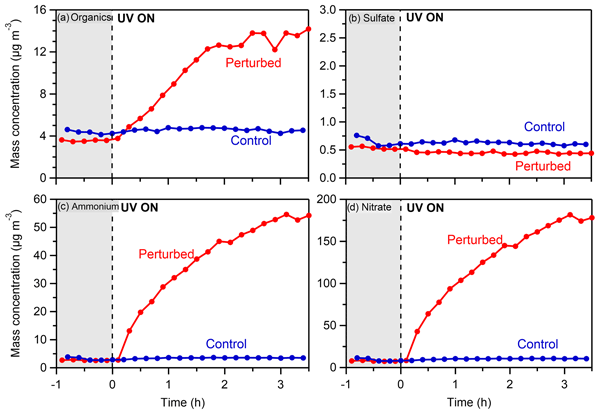
A dual-chamber system was deployed in two different environments (Po Valley, Italy, and Pertouli forest, Greece) to study the potential of ambient air directly injected into the chambers, to form secondary organic aerosol (SOA). In the Po Valley, the system reacts rapidly, forming large amounts of SOA, while in Pertouli the SOA formation chemistry appears to have been practically terminated before the beginning of most experiments, so there is little additional SOA formation potential left.
Jianing Dai, Guy P. Brasseur, Mihalis Vrekoussis, Maria Kanakidou, Kun Qu, Yijuan Zhang, Hongliang Zhang, and Tao Wang
Atmos. Chem. Phys., 24, 12943–12962, https://doi.org/10.5194/acp-24-12943-2024, https://doi.org/10.5194/acp-24-12943-2024, 2024
Short summary
Short summary
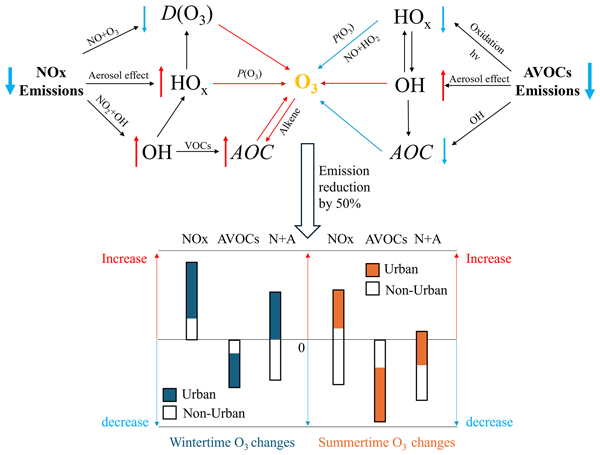
This paper employs a regional chemical transport model to quantify the sensitivity of air pollutants and photochemical parameters to specified emission reductions in China for representative winter and summer conditions. The study provides insights into further air quality control in China with reduced primary emissions.
Jiemei Liu, Jesper H. Christensen, Zhuyun Ye, Shikui Dong, Camilla Geels, Jørgen Brandt, Athanasios Nenes, Yuan Yuan, and Ulas Im
Atmos. Chem. Phys., 24, 10849–10867, https://doi.org/10.5194/acp-24-10849-2024, https://doi.org/10.5194/acp-24-10849-2024, 2024
Short summary
Short summary
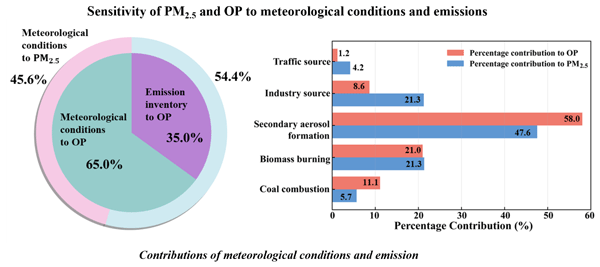
China was chosen as an example to conduct a quantitative analysis using the Danish Eulerian Hemispheric Model (DEHM) system with meteorological input from the Weather Research and Forecasting (WRF) model. Meteorological conditions and emission inventories contributed 46 % (65 %) and 54 % (35 %) to the variations in PM2.5 concentrations (oxidative potential – OP), respectively, highlighting secondary aerosol formation and biomass burning as the primary contributors to PM2.5 and OP levels.
Manu Anna Thomas, Klaus Wyser, Shiyu Wang, Marios Chatziparaschos, Paraskevi Georgakaki, Montserrat Costa-Surós, Maria Gonçalves Ageitos, Maria Kanakidou, Carlos Pérez García-Pando, Athanasios Nenes, Twan van Noije, Philippe Le Sager, and Abhay Devasthale
Geosci. Model Dev., 17, 6903–6927, https://doi.org/10.5194/gmd-17-6903-2024, https://doi.org/10.5194/gmd-17-6903-2024, 2024
Short summary
Short summary
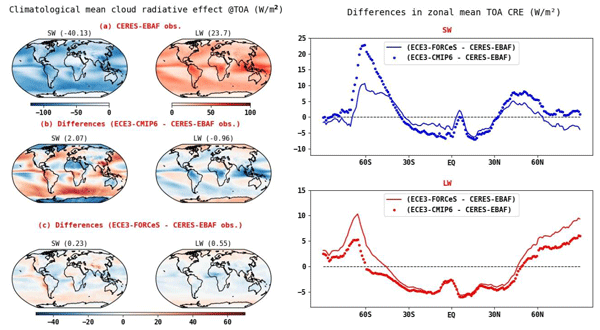
Aerosol–cloud interactions occur at a range of spatio-temporal scales. While evaluating recent developments in EC-Earth3-AerChem, this study aims to understand the extent to which the Twomey effect manifests itself at larger scales. We find a reduction in the warm bias over the Southern Ocean due to model improvements. While we see footprints of the Twomey effect at larger scales, the negative relationship between cloud droplet number and liquid water drives the shortwave radiative effect.
Kunfeng Gao, Franziska Vogel, Romanos Foskinis, Stergios Vratolis, Maria I. Gini, Konstantinos Granakis, Anne-Claire Billault-Roux, Paraskevi Georgakaki, Olga Zografou, Prodromos Fetfatzis, Alexis Berne, Alexandros Papayannis, Konstantinos Eleftheridadis, Ottmar Möhler, and Athanasios Nenes
Atmos. Chem. Phys., 24, 9939–9974, https://doi.org/10.5194/acp-24-9939-2024, https://doi.org/10.5194/acp-24-9939-2024, 2024
Short summary
Short summary
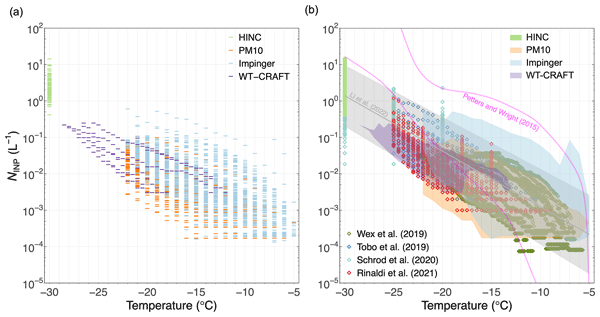
Ice nucleating particle (INP) concentrations are required for correct predictions of clouds and precipitation in a changing climate, but they are poorly constrained in climate models. We unravel source contributions to INPs in the eastern Mediterranean and find that biological particles are important, regardless of their origin. The parameterizations developed exhibit superior performance and enable models to consider biological-particle effects on INPs.
Romanos Foskinis, Ghislain Motos, Maria I. Gini, Olga Zografou, Kunfeng Gao, Stergios Vratolis, Konstantinos Granakis, Ville Vakkari, Kalliopi Violaki, Andreas Aktypis, Christos Kaltsonoudis, Zongbo Shi, Mika Komppula, Spyros N. Pandis, Konstantinos Eleftheriadis, Alexandros Papayannis, and Athanasios Nenes
Atmos. Chem. Phys., 24, 9827–9842, https://doi.org/10.5194/acp-24-9827-2024, https://doi.org/10.5194/acp-24-9827-2024, 2024
Short summary
Short summary
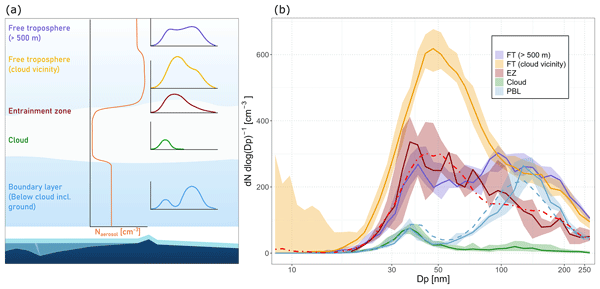
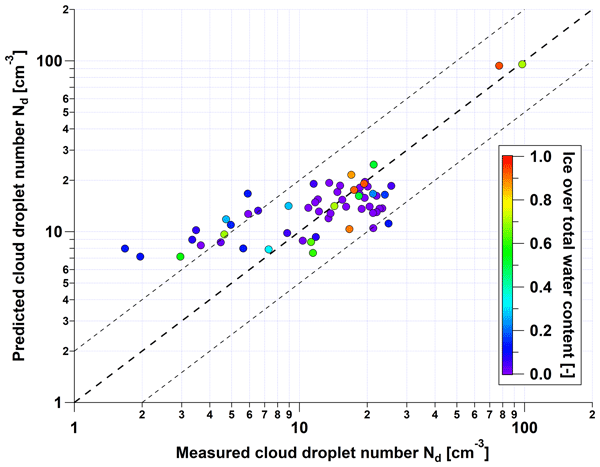
Analysis of modeling, in situ, and remote sensing measurements reveals the microphysical state of orographic clouds and their response to aerosol from the boundary layer and free troposphere. We show that cloud response to aerosol is robust, as predicted supersaturation and cloud droplet number levels agree with those determined from in-cloud measurements. The ability to determine if clouds are velocity- or aerosol-limited allows for novel model constraints and remote sensing products.
Olga Zografou, Maria Gini, Prodromos Fetfatzis, Konstantinos Granakis, Romanos Foskinis, Manousos Ioannis Manousakas, Fotios Tsopelas, Evangelia Diapouli, Eleni Dovrou, Christina N. Vasilakopoulou, Alexandros Papayannis, Spyros N. Pandis, Athanasios Nenes, and Konstantinos Eleftheriadis
Atmos. Chem. Phys., 24, 8911–8926, https://doi.org/10.5194/acp-24-8911-2024, https://doi.org/10.5194/acp-24-8911-2024, 2024
Short summary
Short summary
Characterization of PM1 and positive matrix factorization (PMF) source apportionment of organic and inorganic fractions were conducted at the high-altitude station (HAC)2. Cloud presence reduced PM1, affecting sulfate more than organics. Free-troposphere (FT) conditions showed more black carbon (eBC) than planetary boundary layer (PBL) conditions.
Olga Zografou, Christos Kaltsonoudis, Maria Gini, Angeliki Matrali, Elias Panagiotopoulos, Alexandros Lekkas, Dimitris Papanastasiou, Spyros N. Pandis, and Konstantinos Eleftheriadis
EGUsphere, https://doi.org/10.5194/egusphere-2024-2126, https://doi.org/10.5194/egusphere-2024-2126, 2024
Preprint archived
Short summary
Short summary
A novel charge transfer ionization orthogonal Time-of-Flight Mass Spectrometer (oToF-MS) was field evaluated for the first time during a field campaign at the suburban DEM station in Athens, Greece from May to August 2023 focusing on key ambient Volatile Organic Compounds (VOCs). The results demonstrate the strengths of the new instrument in performing online, real time measurements of ambient VOCs.
Stelios Myriokefalitakis, Matthias Karl, Kim A. Weiss, Dimitris Karagiannis, Eleni Athanasopoulou, Anastasia Kakouri, Aikaterini Bougiatioti, Eleni Liakakou, Iasonas Stavroulas, Georgios Papangelis, Georgios Grivas, Despina Paraskevopoulou, Orestis Speyer, Nikolaos Mihalopoulos, and Evangelos Gerasopoulos
Atmos. Chem. Phys., 24, 7815–7835, https://doi.org/10.5194/acp-24-7815-2024, https://doi.org/10.5194/acp-24-7815-2024, 2024
Short summary
Short summary
A state-of-the-art thermodynamic model has been coupled with the city-scale chemistry transport model EPISODE–CityChem to investigate the equilibrium between the inorganic gas and aerosol phases over the greater Athens area, Greece. The simulations indicate that the formation of nitrates in an urban environment is significantly affected by local nitrogen oxide emissions, as well as ambient temperature, relative humidity, photochemical activity, and the presence of non-volatile cations.
Alexandros Milousis, Alexandra P. Tsimpidi, Holger Tost, Spyros N. Pandis, Athanasios Nenes, Astrid Kiendler-Scharr, and Vlassis A. Karydis
Geosci. Model Dev., 17, 1111–1131, https://doi.org/10.5194/gmd-17-1111-2024, https://doi.org/10.5194/gmd-17-1111-2024, 2024
Short summary
Short summary
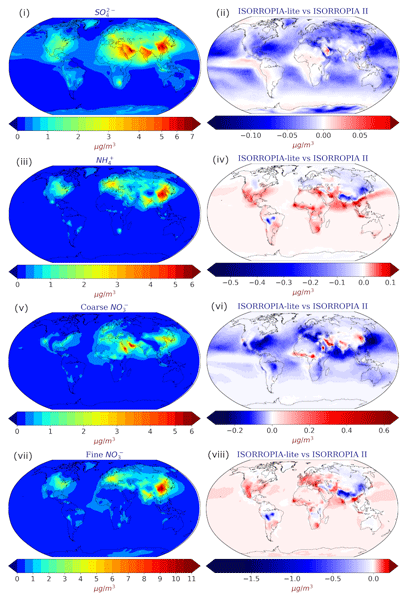
This study aims to evaluate the newly developed ISORROPIA-lite aerosol thermodynamic module within the EMAC model and explore discrepancies in global atmospheric simulations of aerosol composition and acidity by utilizing different aerosol phase states. Even though local differences were found in regions where the RH ranged from 20 % to 60 %, on a global scale the results are similar. Therefore, ISORROPIA-lite can be a reliable and computationally effective alternative to ISORROPIA II in EMAC.
Natalie M. Mahowald, Longlei Li, Julius Vira, Marje Prank, Douglas S. Hamilton, Hitoshi Matsui, Ron L. Miller, Louis Lu, Ezgi Akyuz, Daphne Meidan, Peter Hess, Heikki Lihavainen, Christine Wiedinmyer, Jenny Hand, Maria Grazia Alaimo, Célia Alves, Andres Alastuey, Paulo Artaxo, Africa Barreto, Francisco Barraza, Silvia Becagli, Giulia Calzolai, Shankarararman Chellam, Ying Chen, Patrick Chuang, David D. Cohen, Cristina Colombi, Evangelia Diapouli, Gaetano Dongarra, Konstantinos Eleftheriadis, Corinne Galy-Lacaux, Cassandra Gaston, Dario Gomez, Yenny González Ramos, Hannele Hakola, Roy M. Harrison, Chris Heyes, Barak Herut, Philip Hopke, Christoph Hüglin, Maria Kanakidou, Zsofia Kertesz, Zbiginiw Klimont, Katriina Kyllönen, Fabrice Lambert, Xiaohong Liu, Remi Losno, Franco Lucarelli, Willy Maenhaut, Beatrice Marticorena, Randall V. Martin, Nikolaos Mihalopoulos, Yasser Morera-Gomez, Adina Paytan, Joseph Prospero, Sergio Rodríguez, Patricia Smichowski, Daniela Varrica, Brenna Walsh, Crystal Weagle, and Xi Zhao
Earth Syst. Sci. Data Discuss., https://doi.org/10.5194/essd-2024-1, https://doi.org/10.5194/essd-2024-1, 2024
Preprint withdrawn
Short summary
Short summary
Aerosol particles can interact with incoming solar radiation and outgoing long wave radiation, change cloud properties, affect photochemistry, impact surface air quality, and when deposited impact surface albedo of snow and ice, and modulate carbon dioxide uptake by the land and ocean. Here we present a new compilation of aerosol observations including composition, a methodology for comparing the datasets to model output, and show the implications of these results using one model.
Stella E. I. Manavi and Spyros N. Pandis
Atmos. Chem. Phys., 24, 891–909, https://doi.org/10.5194/acp-24-891-2024, https://doi.org/10.5194/acp-24-891-2024, 2024
Short summary
Short summary
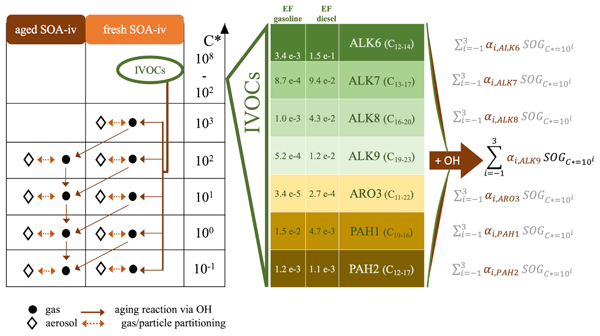
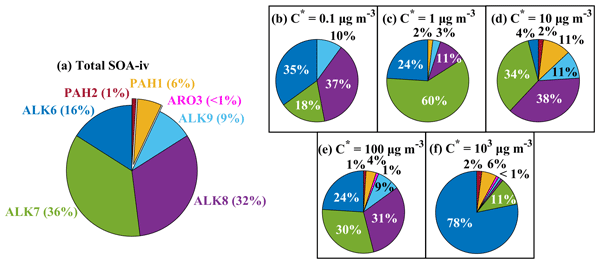
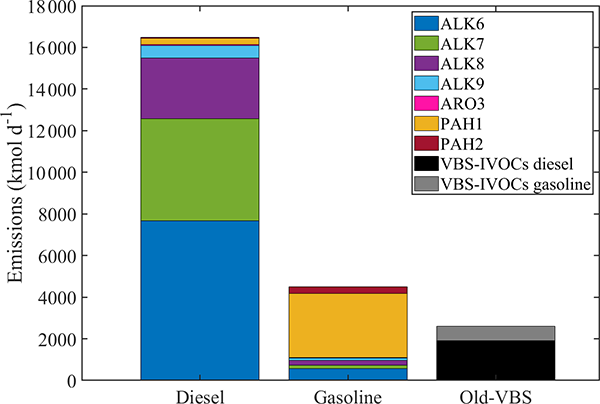
Organic vapors of intermediate volatility have often been neglected as sources of atmospheric organic aerosol. In this work we use a new approach for their simulation and quantify the contribution of these compounds emitted by transportation sources (gasoline and diesel vehicles) to particulate matter over Europe. The estimated secondary organic aerosol levels are on average 60 % higher than predicted by previous approaches. However, these estimates are probably lower limits.
Andreas Aktypis, Christos Kaltsonoudis, David Patoulias, Panayiotis Kalkavouras, Angeliki Matrali, Christina N. Vasilakopoulou, Evangelia Kostenidou, Kalliopi Florou, Nikos Kalivitis, Aikaterini Bougiatioti, Konstantinos Eleftheriadis, Stergios Vratolis, Maria I. Gini, Athanasios Kouras, Constantini Samara, Mihalis Lazaridis, Sofia-Eirini Chatoutsidou, Nikolaos Mihalopoulos, and Spyros N. Pandis
Atmos. Chem. Phys., 24, 65–84, https://doi.org/10.5194/acp-24-65-2024, https://doi.org/10.5194/acp-24-65-2024, 2024
Short summary
Short summary
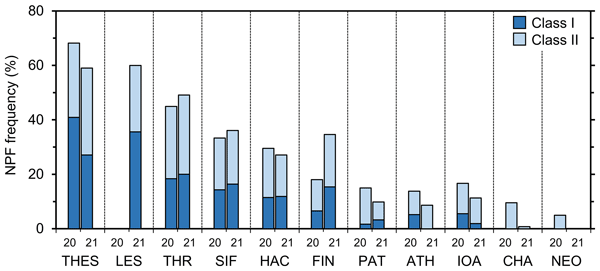
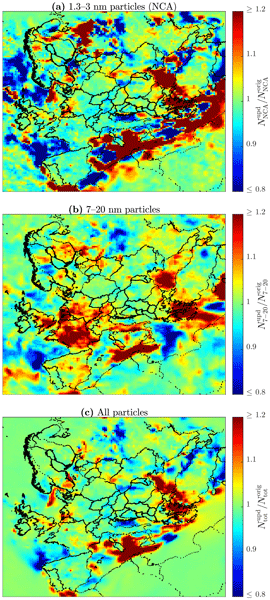
Extensive continuous particle number size distribution measurements took place during two summers (2020 and 2021) at 11 sites in Greece for the investigation of the frequency and the spatial extent of new particle formation. The frequency during summer varied from close to zero in southwestern Greece to more than 60 % in the northern, central, and eastern regions. The spatial variability can be explained by the proximity of the sites to coal-fired power plants and agricultural areas.
Alexandra Tsekeri, Anna Gialitaki, Marco Di Paolantonio, Davide Dionisi, Gian Luigi Liberti, Alnilam Fernandes, Artur Szkop, Aleksander Pietruczuk, Daniel Pérez-Ramírez, Maria J. Granados Muñoz, Juan Luis Guerrero-Rascado, Lucas Alados-Arboledas, Diego Bermejo Pantaleón, Juan Antonio Bravo-Aranda, Anna Kampouri, Eleni Marinou, Vassilis Amiridis, Michael Sicard, Adolfo Comerón, Constantino Muñoz-Porcar, Alejandro Rodríguez-Gómez, Salvatore Romano, Maria Rita Perrone, Xiaoxia Shang, Mika Komppula, Rodanthi-Elisavet Mamouri, Argyro Nisantzi, Diofantos Hadjimitsis, Francisco Navas-Guzmán, Alexander Haefele, Dominika Szczepanik, Artur Tomczak, Iwona S. Stachlewska, Livio Belegante, Doina Nicolae, Kalliopi Artemis Voudouri, Dimitris Balis, Athena A. Floutsi, Holger Baars, Linda Miladi, Nicolas Pascal, Oleg Dubovik, and Anton Lopatin
Atmos. Meas. Tech., 16, 6025–6050, https://doi.org/10.5194/amt-16-6025-2023, https://doi.org/10.5194/amt-16-6025-2023, 2023
Short summary
Short summary
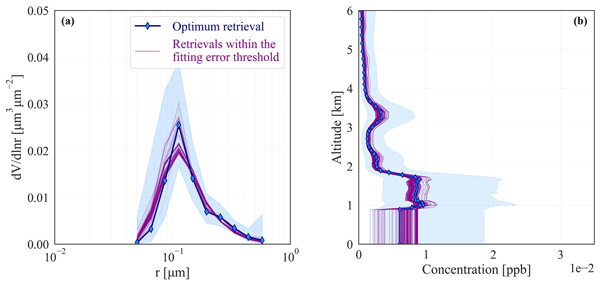
EARLINET/ACTRIS organized an intensive observational campaign in May 2020, with the objective of monitoring the atmospheric state over Europe during the COVID-19 lockdown and relaxation period. The work presented herein focuses on deriving a common methodology for applying a synergistic retrieval that utilizes the network's ground-based passive and active remote sensing measurements and deriving the aerosols from anthropogenic activities over Europe.
Jianing Dai, Guy P. Brasseur, Mihalis Vrekoussis, Maria Kanakidou, Kun Qu, Yijuan Zhang, Hongliang Zhang, and Tao Wang
Atmos. Chem. Phys., 23, 14127–14158, https://doi.org/10.5194/acp-23-14127-2023, https://doi.org/10.5194/acp-23-14127-2023, 2023
Short summary
Short summary
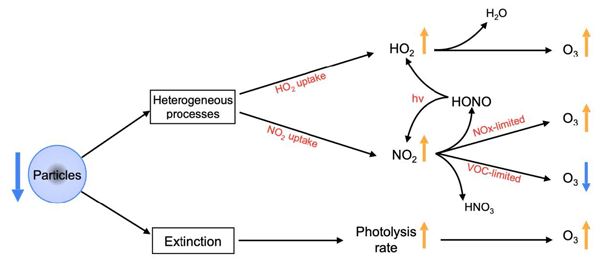
In this study, we used a regional chemical transport model to characterize the different parameters of atmospheric oxidative capacity in recent chemical environments in China. These parameters include the production and destruction rates of ozone and other oxidants, the ozone production efficiency, the OH reactivity, and the length of the reaction chain responsible for the formation of ozone and ROx. They are also affected by the aerosol burden in the atmosphere.
Ghislain Motos, Gabriel Freitas, Paraskevi Georgakaki, Jörg Wieder, Guangyu Li, Wenche Aas, Chris Lunder, Radovan Krejci, Julie Thérèse Pasquier, Jan Henneberger, Robert Oscar David, Christoph Ritter, Claudia Mohr, Paul Zieger, and Athanasios Nenes
Atmos. Chem. Phys., 23, 13941–13956, https://doi.org/10.5194/acp-23-13941-2023, https://doi.org/10.5194/acp-23-13941-2023, 2023
Short summary
Short summary
Low-altitude clouds play a key role in regulating the climate of the Arctic, a region that suffers from climate change more than any other on the planet. We gathered meteorological and aerosol physical and chemical data over a year and utilized them for a parameterization that help us unravel the factors driving and limiting the efficiency of cloud droplet formation. We then linked this information to the sources of aerosol found during each season and to processes of cloud glaciation.
Calvin Howes, Pablo E. Saide, Hugh Coe, Amie Dobracki, Steffen Freitag, Jim M. Haywood, Steven G. Howell, Siddhant Gupta, Janek Uin, Mary Kacarab, Chongai Kuang, L. Ruby Leung, Athanasios Nenes, Greg M. McFarquhar, James Podolske, Jens Redemann, Arthur J. Sedlacek, Kenneth L. Thornhill, Jenny P. S. Wong, Robert Wood, Huihui Wu, Yang Zhang, Jianhao Zhang, and Paquita Zuidema
Atmos. Chem. Phys., 23, 13911–13940, https://doi.org/10.5194/acp-23-13911-2023, https://doi.org/10.5194/acp-23-13911-2023, 2023
Short summary
Short summary
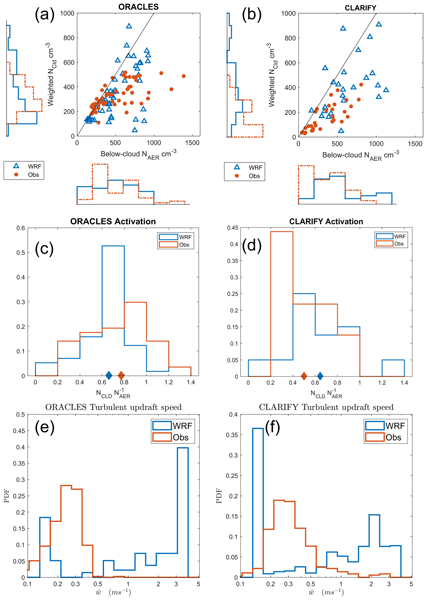
To better understand smoke properties and its interactions with clouds, we compare the WRF-CAM5 model with observations from ORACLES, CLARIFY, and LASIC field campaigns in the southeastern Atlantic in August 2017. The model transports and mixes smoke well but does not fully capture some important processes. These include smoke chemical and physical aging over 4–12 days, smoke removal by rain, sulfate particle formation, aerosol activation into cloud droplets, and boundary layer turbulence.
Stylianos Kakavas, Spyros N. Pandis, and Athanasios Nenes
Atmos. Chem. Phys., 23, 13555–13564, https://doi.org/10.5194/acp-23-13555-2023, https://doi.org/10.5194/acp-23-13555-2023, 2023
Short summary
Short summary
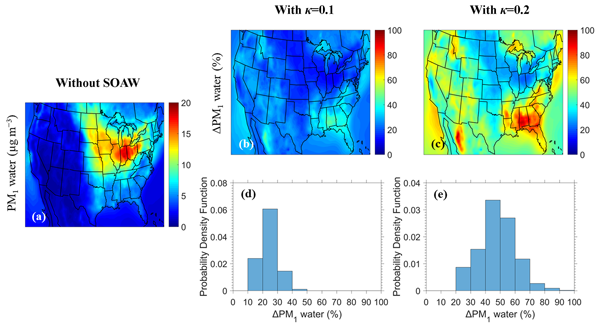
Water uptake from organic species in aerosol can affect the partitioning of semi-volatile inorganic compounds but are not considered in global and chemical transport models. We address this with a version of the PM-CAMx model that considers such organic water effects and use it to carry out 1-year aerosol simulations over the continental US. We show that such organic water impacts can increase dry PM1 levels by up to 2 μg m-3 when RH levels and PM1 concentrations are high.
Guangyu Li, Elise K. Wilbourn, Zezhen Cheng, Jörg Wieder, Allison Fagerson, Jan Henneberger, Ghislain Motos, Rita Traversi, Sarah D. Brooks, Mauro Mazzola, Swarup China, Athanasios Nenes, Ulrike Lohmann, Naruki Hiranuma, and Zamin A. Kanji
Atmos. Chem. Phys., 23, 10489–10516, https://doi.org/10.5194/acp-23-10489-2023, https://doi.org/10.5194/acp-23-10489-2023, 2023
Short summary
Short summary
In this work, we present results from an Arctic field campaign (NASCENT) in Ny-Ålesund, Svalbard, on the abundance, variability, physicochemical properties, and potential sources of ice-nucleating particles (INPs) relevant for mixed-phase cloud formation. This work improves the data coverage of Arctic INPs and aerosol properties, allowing for the validation of models predicting cloud microphysical and radiative properties of mixed-phase clouds in the rapidly warming Arctic.
Anne-Claire Billault-Roux, Paraskevi Georgakaki, Josué Gehring, Louis Jaffeux, Alfons Schwarzenboeck, Pierre Coutris, Athanasios Nenes, and Alexis Berne
Atmos. Chem. Phys., 23, 10207–10234, https://doi.org/10.5194/acp-23-10207-2023, https://doi.org/10.5194/acp-23-10207-2023, 2023
Short summary
Short summary
Secondary ice production plays a key role in clouds and precipitation. In this study, we analyze radar measurements from a snowfall event in the Jura Mountains. Complex signatures are observed, which reveal that ice crystals were formed through various processes. An analysis of multi-sensor data suggests that distinct ice multiplication processes were taking place. Both the methods used and the insights gained through this case study contribute to a better understanding of snowfall microphysics.
Mária Lbadaoui-Darvas, Ari Laaksonen, and Athanasios Nenes
Atmos. Chem. Phys., 23, 10057–10074, https://doi.org/10.5194/acp-23-10057-2023, https://doi.org/10.5194/acp-23-10057-2023, 2023
Short summary
Short summary
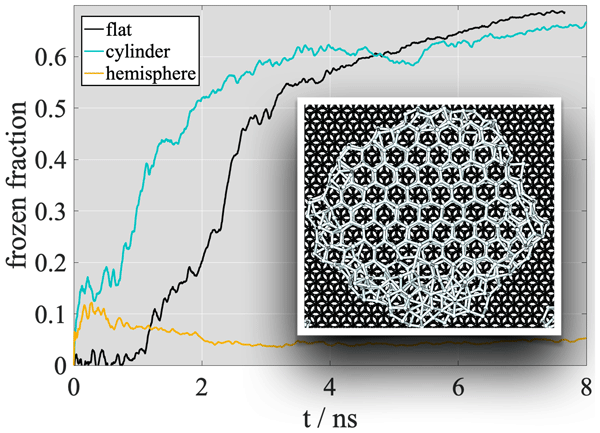
Heterogeneous ice nucleation is the main ice formation mechanism in clouds. The mechanism of different freezing modes is to date unknown, which results in large model biases. Experiments do not allow for direct observation of ice nucleation at its native resolution. This work uses first principles molecular simulations to determine the mechanism of the least-understood ice nucleation mode and link it to adsorption through a novel modeling framework that unites ice and droplet formation.
Akriti Masoom, Ilias Fountoulakis, Stelios Kazadzis, Ioannis-Panagiotis Raptis, Anna Kampouri, Basil E. Psiloglou, Dimitra Kouklaki, Kyriakoula Papachristopoulou, Eleni Marinou, Stavros Solomos, Anna Gialitaki, Dimitra Founda, Vasileios Salamalikis, Dimitris Kaskaoutis, Natalia Kouremeti, Nikolaos Mihalopoulos, Vassilis Amiridis, Andreas Kazantzidis, Alexandros Papayannis, Christos S. Zerefos, and Kostas Eleftheratos
Atmos. Chem. Phys., 23, 8487–8514, https://doi.org/10.5194/acp-23-8487-2023, https://doi.org/10.5194/acp-23-8487-2023, 2023
Short summary
Short summary
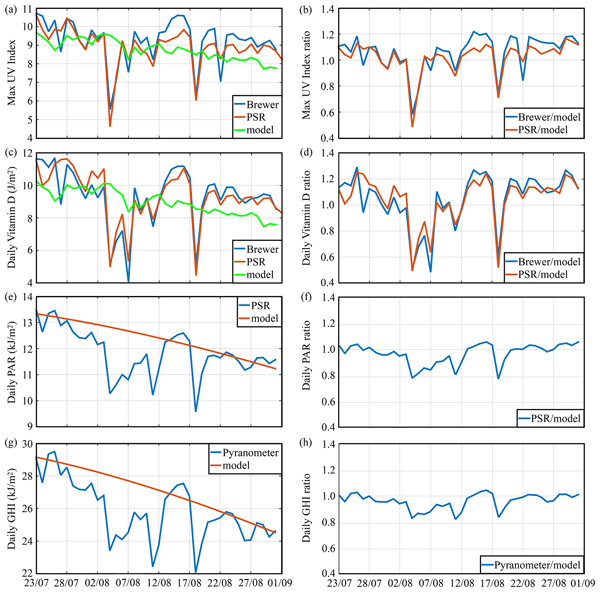
We analyse the spatial and temporal aerosol spectral optical properties during the extreme wildfires of August 2021 in Greece and assess their effects on air quality and solar radiation quantities related to health, agriculture, and energy. Different aerosol conditions are identified (pure smoke, pure dust, dust–smoke together); the largest impact on solar radiation quantities is found for cases with mixed dust–smoke aerosols. Such situations are expected to occur more frequently in the future.
Kun Qu, Xuesong Wang, Xuhui Cai, Yu Yan, Xipeng Jin, Mihalis Vrekoussis, Maria Kanakidou, Guy P. Brasseur, Jin Shen, Teng Xiao, Limin Zeng, and Yuanhang Zhang
Atmos. Chem. Phys., 23, 7653–7671, https://doi.org/10.5194/acp-23-7653-2023, https://doi.org/10.5194/acp-23-7653-2023, 2023
Short summary
Short summary
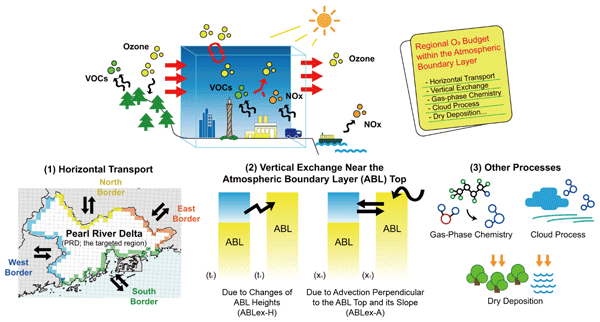
Basic understandings of ozone processes, especially transport and chemistry, are essential to support ozone pollution control, but studies often have different views on their relative importance. We developed a method to quantify their contributions in the ozone mass and concentration budgets based on the WRF-CMAQ model. Results in a polluted region highlight the differences between two budgets. For future studies, two budgets are both needed to fully understand the effects of ozone processes.
Amir Yazdani, Satoshi Takahama, John K. Kodros, Marco Paglione, Mauro Masiol, Stefania Squizzato, Kalliopi Florou, Christos Kaltsonoudis, Spiro D. Jorga, Spyros N. Pandis, and Athanasios Nenes
Atmos. Chem. Phys., 23, 7461–7477, https://doi.org/10.5194/acp-23-7461-2023, https://doi.org/10.5194/acp-23-7461-2023, 2023
Short summary
Short summary
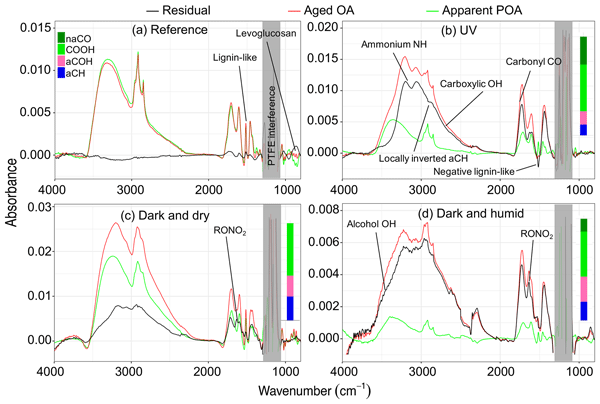
Organic aerosols directly emitted from wood and pellet stove combustion are found to chemically transform (approximately 15 %–35 % by mass) under daytime aging conditions simulated in an environmental chamber. A new marker for lignin-like compounds is found to degrade at a different rate than previously identified biomass burning markers and can potentially provide indication of aging time in ambient samples.
Petro Uruci, Dontavious Sippial, Anthoula Drosatou, and Spyros N. Pandis
Atmos. Meas. Tech., 16, 3155–3172, https://doi.org/10.5194/amt-16-3155-2023, https://doi.org/10.5194/amt-16-3155-2023, 2023
Short summary
Short summary
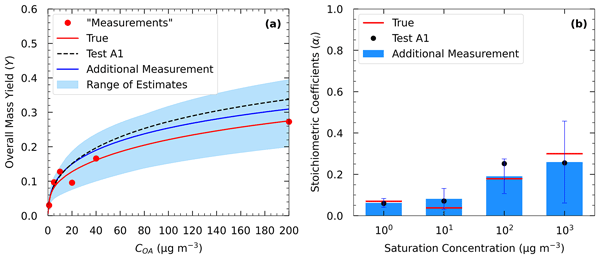
In this work we develop an algorithm for the synthesis of the measurements performed in atmospheric simulation chambers regarding the formation of secondary organic aerosol (SOA). Novel features of the algorithm are its ability to use measurements of SOA yields, thermodenuders, and isothermal dilution; its estimation of parameters that can be used directly in atmospheric chemical transport models; and finally its estimates of the uncertainty in SOA formation yields.
Aliki Christodoulou, Iasonas Stavroulas, Mihalis Vrekoussis, Maximillien Desservettaz, Michael Pikridas, Elie Bimenyimana, Jonilda Kushta, Matic Ivančič, Martin Rigler, Philippe Goloub, Konstantina Oikonomou, Roland Sarda-Estève, Chrysanthos Savvides, Charbel Afif, Nikos Mihalopoulos, Stéphane Sauvage, and Jean Sciare
Atmos. Chem. Phys., 23, 6431–6456, https://doi.org/10.5194/acp-23-6431-2023, https://doi.org/10.5194/acp-23-6431-2023, 2023
Short summary
Short summary
Our study presents, for the first time, a detailed source identification of aerosols at an urban background site in Cyprus (eastern Mediterranean), a region strongly impacted by climate change and air pollution. Here, we identify an unexpected high contribution of long-range transported pollution from fossil fuel sources in the Middle East, highlighting an urgent need to further characterize these fast-growing emissions and their impacts on regional atmospheric composition, climate, and health.
Christina N. Vasilakopoulou, Kalliopi Florou, Christos Kaltsonoudis, Iasonas Stavroulas, Nikolaos Mihalopoulos, and Spyros N. Pandis
Atmos. Meas. Tech., 16, 2837–2850, https://doi.org/10.5194/amt-16-2837-2023, https://doi.org/10.5194/amt-16-2837-2023, 2023
Short summary
Short summary
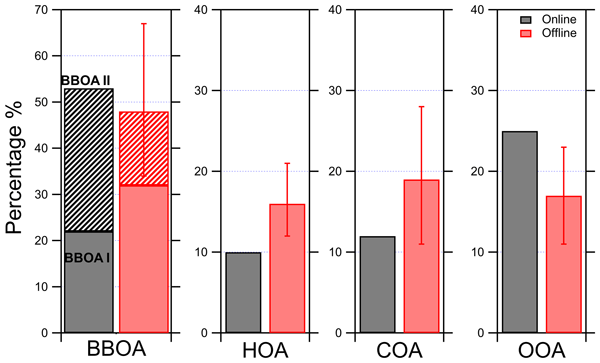
The offline aerosol mass spectrometry technique is a useful tool for the source apportionment of organic aerosol in areas and periods during which an aerosol mass spectrometer is not available. In this work, an improved offline technique was developed and evaluated in an effort to capture most of the partially soluble and insoluble organic aerosol material, reducing the uncertainty of the corresponding source apportionment significantly.
Emily D. Lenhardt, Lan Gao, Jens Redemann, Feng Xu, Sharon P. Burton, Brian Cairns, Ian Chang, Richard A. Ferrare, Chris A. Hostetler, Pablo E. Saide, Calvin Howes, Yohei Shinozuka, Snorre Stamnes, Mary Kacarab, Amie Dobracki, Jenny Wong, Steffen Freitag, and Athanasios Nenes
Atmos. Meas. Tech., 16, 2037–2054, https://doi.org/10.5194/amt-16-2037-2023, https://doi.org/10.5194/amt-16-2037-2023, 2023
Short summary
Short summary
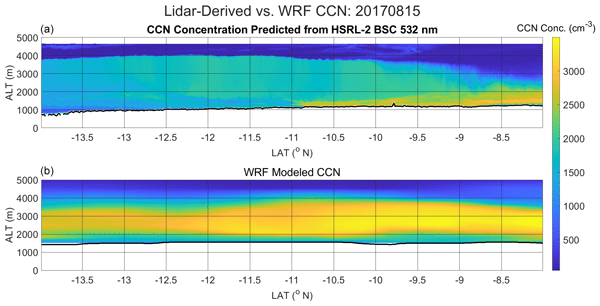
Small atmospheric particles, such as smoke from wildfires or pollutants from human activities, impact cloud properties, and clouds have a strong influence on climate. To better understand the distributions of these particles, we develop relationships to derive their concentrations from remote sensing measurements from an instrument called a lidar. Our method is reliable for smoke particles, and similar steps can be taken to develop relationships for other particle types.
Antonis Gkikas, Anna Gialitaki, Ioannis Binietoglou, Eleni Marinou, Maria Tsichla, Nikolaos Siomos, Peristera Paschou, Anna Kampouri, Kalliopi Artemis Voudouri, Emmanouil Proestakis, Maria Mylonaki, Christina-Anna Papanikolaou, Konstantinos Michailidis, Holger Baars, Anne Grete Straume, Dimitris Balis, Alexandros Papayannis, Tomasso Parrinello, and Vassilis Amiridis
Atmos. Meas. Tech., 16, 1017–1042, https://doi.org/10.5194/amt-16-1017-2023, https://doi.org/10.5194/amt-16-1017-2023, 2023
Short summary
Short summary
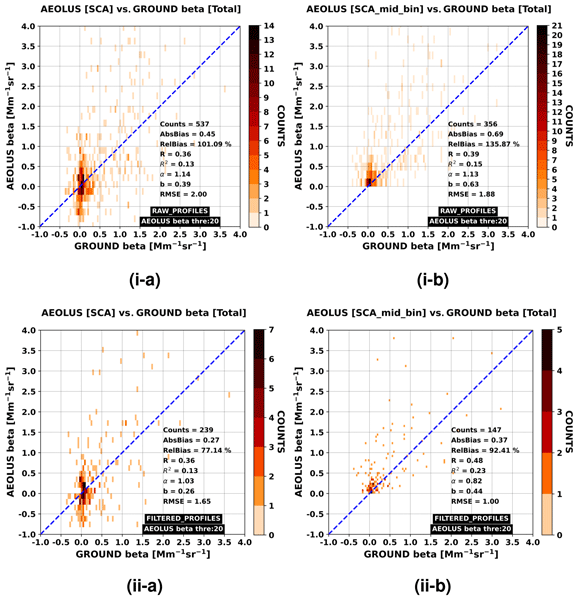
We perform an assessment analysis of the Aeolus Standard Correct Algorithm (SCA) backscatter coefficient retrievals against reference observations acquired at three Greek lidar stations (Athens, Thessaloniki and Antikythera) of the PANACEA network. Overall, 43 cases are analysed, whereas specific aerosol scenarios in the vicinity of Antikythera island (SW Greece) are emphasised. All key Cal/Val aspects and recommendations, and the ongoing related activities, are thoroughly discussed.
Konstantinos Michailidis, Maria-Elissavet Koukouli, Dimitris Balis, J. Pepijn Veefkind, Martin de Graaf, Lucia Mona, Nikolaos Papagianopoulos, Gesolmina Pappalardo, Ioanna Tsikoudi, Vassilis Amiridis, Eleni Marinou, Anna Gialitaki, Rodanthi-Elisavet Mamouri, Argyro Nisantzi, Daniele Bortoli, Maria João Costa, Vanda Salgueiro, Alexandros Papayannis, Maria Mylonaki, Lucas Alados-Arboledas, Salvatore Romano, Maria Rita Perrone, and Holger Baars
Atmos. Chem. Phys., 23, 1919–1940, https://doi.org/10.5194/acp-23-1919-2023, https://doi.org/10.5194/acp-23-1919-2023, 2023
Short summary
Short summary
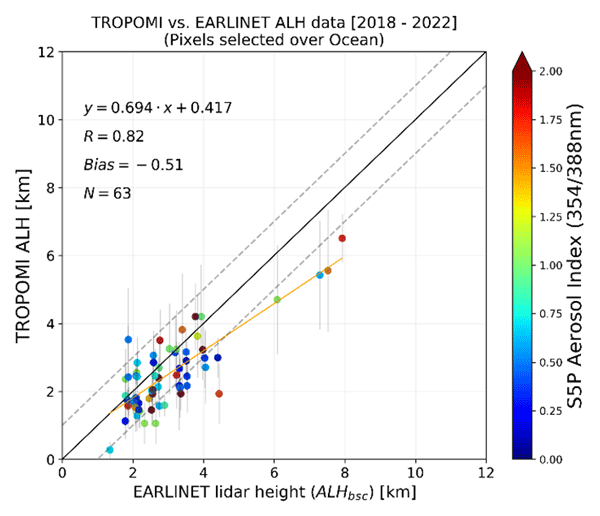
Comparisons with ground-based correlative lidar measurements constitute a key component in the validation of satellite aerosol products. This paper presents the validation of the TROPOMI aerosol layer height (ALH) product, using archived quality assured ground-based data from lidar stations that belong to the EARLINET network. Comparisons between the TROPOMI ALH and co-located EARLINET measurements show good agreement over the ocean.
Marios Chatziparaschos, Nikos Daskalakis, Stelios Myriokefalitakis, Nikos Kalivitis, Athanasios Nenes, María Gonçalves Ageitos, Montserrat Costa-Surós, Carlos Pérez García-Pando, Medea Zanoli, Mihalis Vrekoussis, and Maria Kanakidou
Atmos. Chem. Phys., 23, 1785–1801, https://doi.org/10.5194/acp-23-1785-2023, https://doi.org/10.5194/acp-23-1785-2023, 2023
Short summary
Short summary
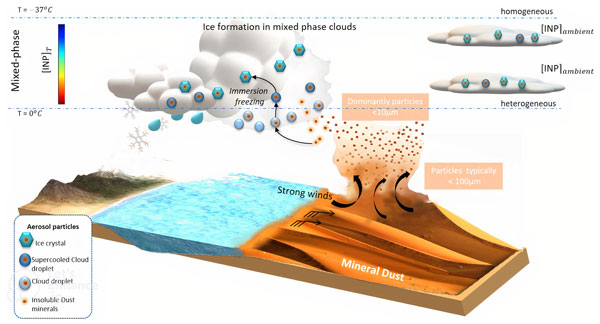
Ice formation is enabled by ice-nucleating particles (INP) at higher temperatures than homogeneous formation and can profoundly affect the properties of clouds. Our global model results show that K-feldspar is the most important contributor to INP concentrations globally, affecting mid-level mixed-phase clouds. However, quartz can significantly contribute and dominates the lowest and the highest altitudes of dust-derived INP, affecting mainly low-level and high-level mixed-phase clouds.
Katerina Garane, Ka Lok Chan, Maria-Elissavet Koukouli, Diego Loyola, and Dimitris Balis
Atmos. Meas. Tech., 16, 57–74, https://doi.org/10.5194/amt-16-57-2023, https://doi.org/10.5194/amt-16-57-2023, 2023
Short summary
Short summary
In this work, 2.5 years of TROPOMI/S5P Total Column Water Vapor (TCWV) observations retrieved from the blue wavelength band are validated against co-located precipitable water measurements from NASA AERONET, which uses Cimel Sun photometers globally. Overall, the TCWV product agrees well on a global scale with the ground-based dataset (Pearson correl. coefficient 0.909) and has a mean relative bias of −2.7 ± 4.9 % with respect to the AERONET observations for moderate albedo and cloudiness.
Spiro D. Jorga, Kalliopi Florou, David Patoulias, and Spyros N. Pandis
Atmos. Chem. Phys., 23, 85–97, https://doi.org/10.5194/acp-23-85-2023, https://doi.org/10.5194/acp-23-85-2023, 2023
Short summary
Short summary
We take advantage of this unexpected low, new particle formation frequency in Greece and use a dual atmospheric simulation chamber system with starting point ambient air in an effort to gain insight about the chemical species that is limiting nucleation in this area. A potential nucleation precursor, ammonia, was added in one of the chambers while the other one was used as a reference. The addition of ammonia assisted new particle formation in almost 50 % of the experiments conducted.
Brian T. Dinkelacker, Pablo Garcia Rivera, Ioannis Kioutsioukis, Peter J. Adams, and Spyros N. Pandis
Geosci. Model Dev., 15, 8899–8912, https://doi.org/10.5194/gmd-15-8899-2022, https://doi.org/10.5194/gmd-15-8899-2022, 2022
Short summary
Short summary
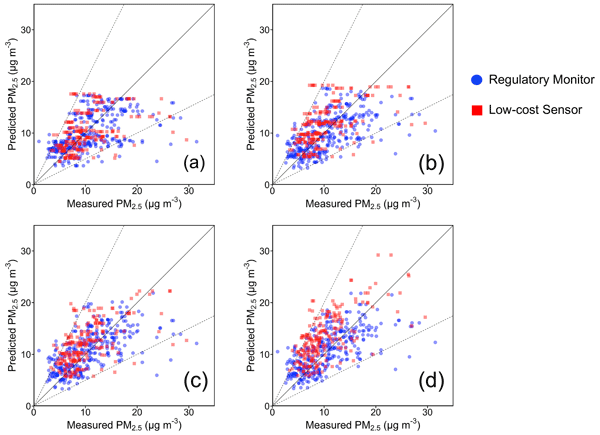
The performance of a chemical transport model in reproducing PM2.5 concentrations and composition was evaluated at the finest scale using measurements from regulatory sites as well as a network of low-cost monitors. Total PM2.5 mass is reproduced well by the model during the winter when compared to regulatory measurements, but in the summer PM2.5 is underpredicted, mainly due to difficulties in reproducing regional secondary organic aerosol levels.
Christina Vasilakopoulou, Iasonas Stavroulas, Nikolaos Mihalopoulos, and Spyros N. Pandis
Atmos. Meas. Tech., 15, 6419–6431, https://doi.org/10.5194/amt-15-6419-2022, https://doi.org/10.5194/amt-15-6419-2022, 2022
Short summary
Short summary
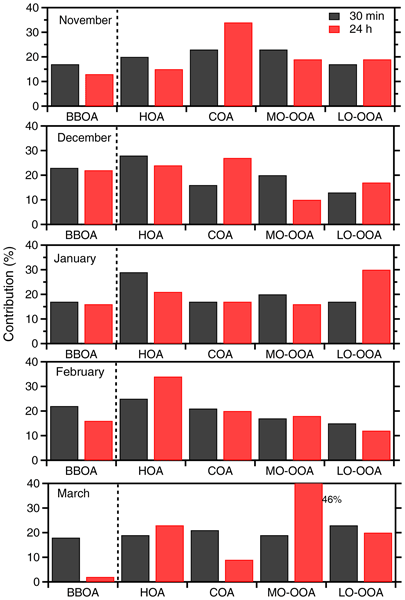
Offline aerosol mass spectrometer (AMS) measurements can provide valuable information about ambient organic aerosols when online AMS measurements are not available. In this study, we examine whether and how the low time resolution (usually 24 h) of the offline technique affects source apportionment results. We concluded that use of the daily averages resulted in estimated average contributions that were within 8 % of the total OA compared with the high-resolution analysis.
Stella E. I. Manavi and Spyros N. Pandis
Geosci. Model Dev., 15, 7731–7749, https://doi.org/10.5194/gmd-15-7731-2022, https://doi.org/10.5194/gmd-15-7731-2022, 2022
Short summary
Short summary
The paper describes the first step towards the development of a simulation framework for the chemistry and secondary organic aerosol production of intermediate-volatility organic compounds (IVOCs). These compounds can be a significant source of organic particulate matter. Our approach treats IVOCs as lumped compounds that retain their chemical characteristics. Estimated IVOC emissions from road transport were a factor of 8 higher than emissions used in previous applications.
Aristeidis Voliotis, Mao Du, Yu Wang, Yunqi Shao, Thomas J. Bannan, Michael Flynn, Spyros N. Pandis, Carl J. Percival, M. Rami Alfarra, and Gordon McFiggans
Atmos. Chem. Phys., 22, 13677–13693, https://doi.org/10.5194/acp-22-13677-2022, https://doi.org/10.5194/acp-22-13677-2022, 2022
Short summary
Short summary
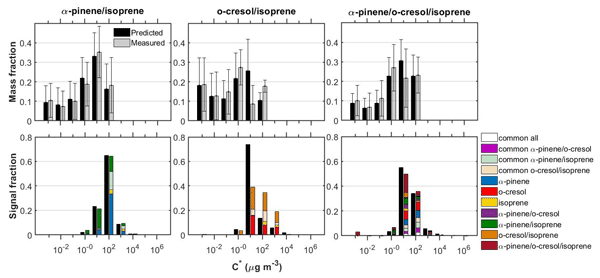
The addition of a low-yield precursor to the reactive mixture of aVOC and bVOC can increase or decrease the SOA volatility that is system-dependent. Therefore, the SOA volatility of the mixtures cannot always be predicted based on the additivity. In complex mixtures the formation of lower-volatility products likely outweighs the formation of products with higher volatility. The unique products of each mixture contribute significantly to the signal, suggesting interactions can be important.
Ville Leinonen, Harri Kokkola, Taina Yli-Juuti, Tero Mielonen, Thomas Kühn, Tuomo Nieminen, Simo Heikkinen, Tuuli Miinalainen, Tommi Bergman, Ken Carslaw, Stefano Decesari, Markus Fiebig, Tareq Hussein, Niku Kivekäs, Radovan Krejci, Markku Kulmala, Ari Leskinen, Andreas Massling, Nikos Mihalopoulos, Jane P. Mulcahy, Steffen M. Noe, Twan van Noije, Fiona M. O'Connor, Colin O'Dowd, Dirk Olivie, Jakob B. Pernov, Tuukka Petäjä, Øyvind Seland, Michael Schulz, Catherine E. Scott, Henrik Skov, Erik Swietlicki, Thomas Tuch, Alfred Wiedensohler, Annele Virtanen, and Santtu Mikkonen
Atmos. Chem. Phys., 22, 12873–12905, https://doi.org/10.5194/acp-22-12873-2022, https://doi.org/10.5194/acp-22-12873-2022, 2022
Short summary
Short summary
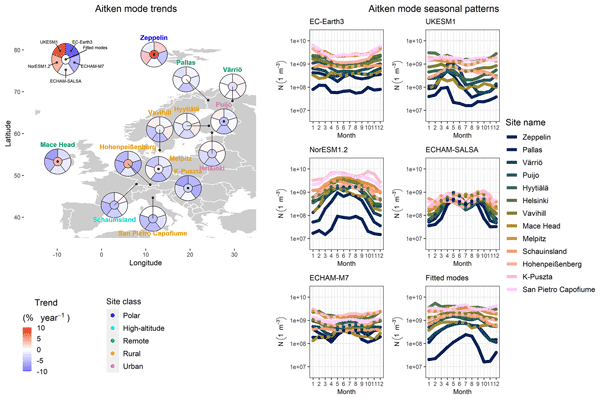
We provide the first extensive comparison of detailed aerosol size distribution trends between in situ observations from Europe and five different earth system models. We investigated aerosol modes (nucleation, Aitken, and accumulation) separately and were able to show the differences between measured and modeled trends and especially their seasonal patterns. The differences in model results are likely due to complex effects of several processes instead of certain specific model features.
Brian T. Dinkelacker, Pablo Garcia Rivera, Ksakousti Skyllakou, Peter J. Adams, and Spyros N. Pandis
Atmos. Chem. Phys. Discuss., https://doi.org/10.5194/acp-2022-648, https://doi.org/10.5194/acp-2022-648, 2022
Revised manuscript not accepted
Short summary
Short summary
A number of factors have influenced the biogenic secondary organic aerosol (SOA) levels in the southeastern US from 2001 to 2010. The increases in temperature have led to an increase of the emissions of biogenic volatile organic compounds by trees and a corresponding increase of the SOA. However, this increase has been balanced by the reductions in the anthropogenic emissions of organic gases and particulate matter as well as of the oxides of nitrogen keeping the biogenic SOA roughly constant.
Caroline Dang, Michal Segal-Rozenhaimer, Haochi Che, Lu Zhang, Paola Formenti, Jonathan Taylor, Amie Dobracki, Sara Purdue, Pui-Shan Wong, Athanasios Nenes, Arthur Sedlacek III, Hugh Coe, Jens Redemann, Paquita Zuidema, Steven Howell, and James Haywood
Atmos. Chem. Phys., 22, 9389–9412, https://doi.org/10.5194/acp-22-9389-2022, https://doi.org/10.5194/acp-22-9389-2022, 2022
Short summary
Short summary
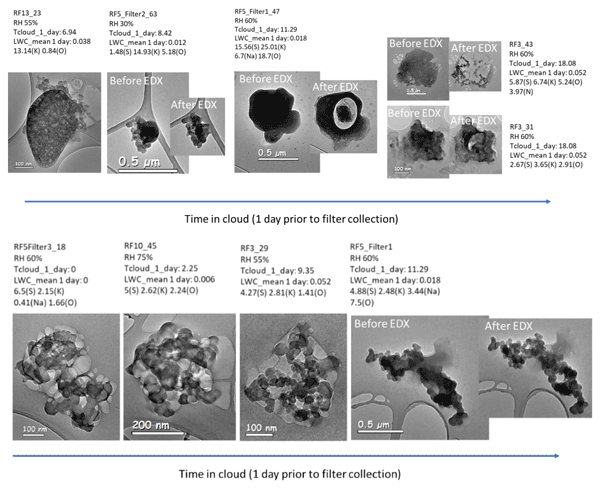
Transmission electron microscopy was used to analyze aged African smoke particles and how the smoke interacts with the marine atmosphere. We found that the volatility of organic aerosol increases with biomass burning plume age, that black carbon is often mixed with potassium salts and that the marine atmosphere can incorporate Na and Cl into smoke particles. Marine salts are more processed when mixed with smoke plumes, and there are interesting Cl-rich yet Na-absent marine particles.
Lu Zhang, Michal Segal-Rozenhaimer, Haochi Che, Caroline Dang, Arthur J. Sedlacek III, Ernie R. Lewis, Amie Dobracki, Jenny P. S. Wong, Paola Formenti, Steven G. Howell, and Athanasios Nenes
Atmos. Chem. Phys., 22, 9199–9213, https://doi.org/10.5194/acp-22-9199-2022, https://doi.org/10.5194/acp-22-9199-2022, 2022
Short summary
Short summary
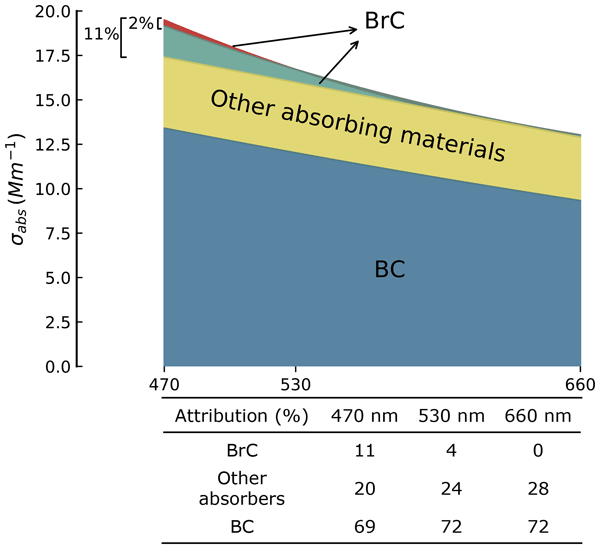
Widespread biomass burning (BB) events occur annually in Africa and contribute ~ 1 / 3 of global BB emissions, which contain a large family of light-absorbing organics, known as brown carbon (BrC), whose absorption of incident radiation is difficult to estimate, leading to large uncertainties in the global radiative forcing estimation. This study quantifies the BrC absorption of aged BB particles and highlights the potential presence of absorbing iron oxides in this climatically important region.
Maria-Elissavet Koukouli, Konstantinos Michailidis, Pascal Hedelt, Isabelle A. Taylor, Antje Inness, Lieven Clarisse, Dimitris Balis, Dmitry Efremenko, Diego Loyola, Roy G. Grainger, and Christian Retscher
Atmos. Chem. Phys., 22, 5665–5683, https://doi.org/10.5194/acp-22-5665-2022, https://doi.org/10.5194/acp-22-5665-2022, 2022
Short summary
Short summary
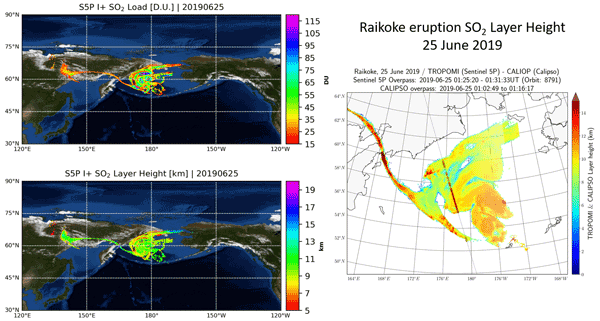
Volcanic eruptions eject large amounts of ash and trace gases into the atmosphere. The use of space-borne instruments enables the global monitoring of volcanic SO2 emissions in an economical and risk-free manner. The main aim of this paper is to present its extensive verification, accomplished within the ESA S5P+I: SO2LH project, over major recent volcanic eruptions, against collocated space-borne measurements, as well as assess its impact on the forecasts provided by CAMS.
Stelios Myriokefalitakis, Elisa Bergas-Massó, María Gonçalves-Ageitos, Carlos Pérez García-Pando, Twan van Noije, Philippe Le Sager, Akinori Ito, Eleni Athanasopoulou, Athanasios Nenes, Maria Kanakidou, Maarten C. Krol, and Evangelos Gerasopoulos
Geosci. Model Dev., 15, 3079–3120, https://doi.org/10.5194/gmd-15-3079-2022, https://doi.org/10.5194/gmd-15-3079-2022, 2022
Short summary
Short summary
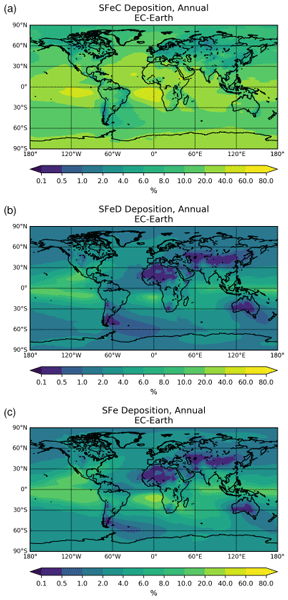
We here describe the implementation of atmospheric multiphase processes in the EC-Earth Earth system model. We provide global budgets of oxalate, sulfate, and iron-containing aerosols, along with an analysis of the links among atmospheric composition, aqueous-phase processes, and aerosol dissolution, supported by comparison to observations. This work is a first step towards an interactive calculation of the deposition of bioavailable atmospheric iron coupled to the model’s ocean component.
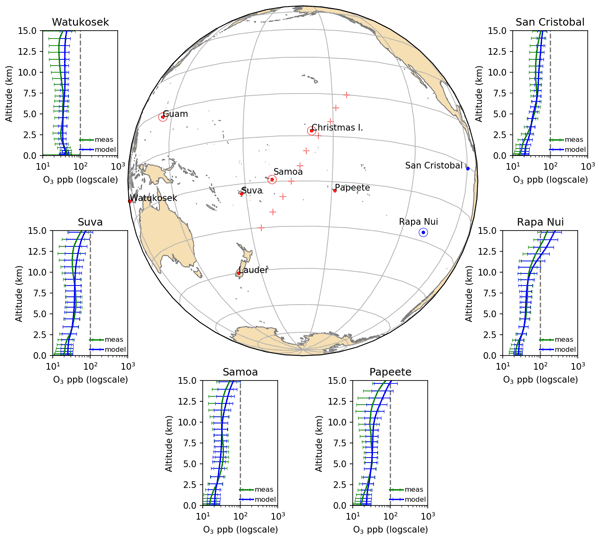
Nikos Daskalakis, Laura Gallardo, Maria Kanakidou, Johann Rasmus Nüß, Camilo Menares, Roberto Rondanelli, Anne M. Thompson, and Mihalis Vrekoussis
Atmos. Chem. Phys., 22, 4075–4099, https://doi.org/10.5194/acp-22-4075-2022, https://doi.org/10.5194/acp-22-4075-2022, 2022
Short summary
Short summary
Forest fires emit carbon monoxide (CO) that can be transported into the atmosphere far from the sources and reacts to produce ozone (O3) that affects climate, ecosystems and health. O3 is also produced in the stratosphere and can be transported downwards. Using a global numerical model, we found that forest fires can affect CO and O3 even in the South Pacific, the most pristine region of the global ocean, but transport from the stratosphere is a more important O3 source than fires in the region.
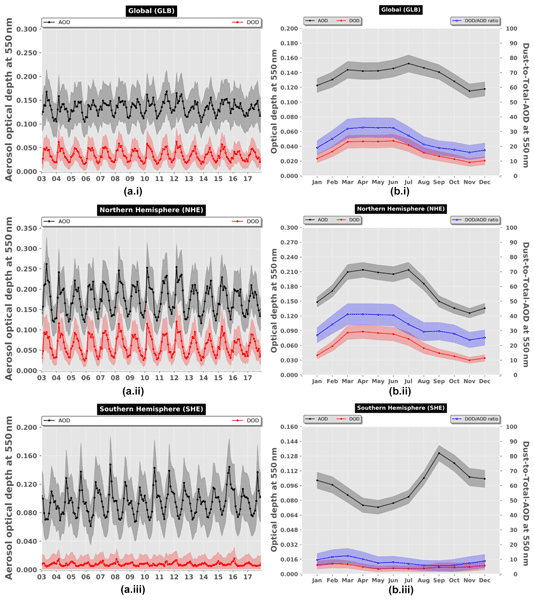
Antonis Gkikas, Emmanouil Proestakis, Vassilis Amiridis, Stelios Kazadzis, Enza Di Tomaso, Eleni Marinou, Nikos Hatzianastassiou, Jasper F. Kok, and Carlos Pérez García-Pando
Atmos. Chem. Phys., 22, 3553–3578, https://doi.org/10.5194/acp-22-3553-2022, https://doi.org/10.5194/acp-22-3553-2022, 2022
Short summary
Short summary
We present a comprehensive climatological analysis of dust optical depth (DOD) relying on the MIDAS dataset. MIDAS provides columnar mid-visible (550 nm) DOD at fine spatial resolution (0.1° × 0.1°) over a 15-year period (2003–2017). In the current study, the analysis is performed at various spatial (from regional to global) and temporal (from months to years) scales. More specifically, focus is given to specific regions hosting the major dust sources as well as downwind areas of the planet.
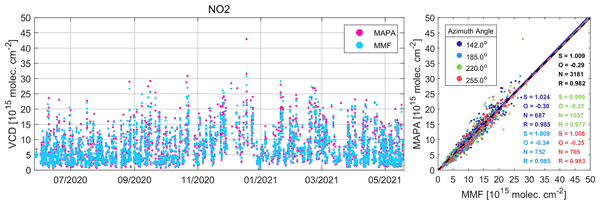
Dimitris Karagkiozidis, Martina Michaela Friedrich, Steffen Beirle, Alkiviadis Bais, François Hendrick, Kalliopi Artemis Voudouri, Ilias Fountoulakis, Angelos Karanikolas, Paraskevi Tzoumaka, Michel Van Roozendael, Dimitris Balis, and Thomas Wagner
Atmos. Meas. Tech., 15, 1269–1301, https://doi.org/10.5194/amt-15-1269-2022, https://doi.org/10.5194/amt-15-1269-2022, 2022
Short summary
Short summary
In this study we focus on the retrieval of aerosol, NO2, and HCHO vertical profiles from multi-axis differential optical absorption spectroscopy (MAX-DOAS) observations for the first time over Thessaloniki, Greece. We use two independent inversion algorithms for the profile retrievals. We evaluate their performance, we intercompare their results, and we validate their products with ancillary data, measured by other co-located reference instruments.
Pablo Garcia Rivera, Brian T. Dinkelacker, Ioannis Kioutsioukis, Peter J. Adams, and Spyros N. Pandis
Atmos. Chem. Phys., 22, 2011–2027, https://doi.org/10.5194/acp-22-2011-2022, https://doi.org/10.5194/acp-22-2011-2022, 2022
Short summary
Short summary
The contribution of various pollution sources to the variability of fine PM in an urban area was examined using as an example the city of Pittsburgh. Biomass burning aerosol shows the largest variability during the winter with local maxima within the city and in the suburbs. During both periods the largest contributing source to the average PM2.5 is particles from outside the modeling domain. The average population-weighted PM2.5 concentration does not change significantly with resolution.
Paraskevi Georgakaki, Georgia Sotiropoulou, Étienne Vignon, Anne-Claire Billault-Roux, Alexis Berne, and Athanasios Nenes
Atmos. Chem. Phys., 22, 1965–1988, https://doi.org/10.5194/acp-22-1965-2022, https://doi.org/10.5194/acp-22-1965-2022, 2022
Short summary
Short summary
The modelling study focuses on the importance of ice multiplication processes in orographic mixed-phase clouds, which is one of the least understood cloud types in the climate system. We show that the consideration of ice seeding and secondary ice production through ice–ice collisional breakup is essential for correct predictions of precipitation in mountainous terrain, with important implications for radiation processes.
David Patoulias and Spyros N. Pandis
Atmos. Chem. Phys., 22, 1689–1706, https://doi.org/10.5194/acp-22-1689-2022, https://doi.org/10.5194/acp-22-1689-2022, 2022
Short summary
Short summary
Our simulations indicate that the recently identified production and subsequent condensation effect of extremely low-volatility organic compounds have a smaller-than-expected effect on the total concentration of atmospheric particles. On the other hand, the oxidation of intermediate-volatility organic compounds leads to decreases in the ultrafine-particle concentrations. These results improve our understanding of the links between secondary organic aerosol formation and ultrafine particles.
Antje Inness, Melanie Ades, Dimitris Balis, Dmitry Efremenko, Johannes Flemming, Pascal Hedelt, Maria-Elissavet Koukouli, Diego Loyola, and Roberto Ribas
Geosci. Model Dev., 15, 971–994, https://doi.org/10.5194/gmd-15-971-2022, https://doi.org/10.5194/gmd-15-971-2022, 2022
Short summary
Short summary
This paper describes the way that the Copernicus Atmosphere Monitoring Service (CAMS) produces forecasts of volcanic SO2. These forecasts are provided routinely every day. They are created by blending SO2 data from satellite instruments (TROPOMI and GOME-2) with the CAMS model. We show that the quality of the CAMS SO2 forecasts can be improved if additional information about the height of volcanic plumes is provided in the satellite data.
Miska Olin, David Patoulias, Heino Kuuluvainen, Jarkko V. Niemi, Topi Rönkkö, Spyros N. Pandis, Ilona Riipinen, and Miikka Dal Maso
Atmos. Chem. Phys., 22, 1131–1148, https://doi.org/10.5194/acp-22-1131-2022, https://doi.org/10.5194/acp-22-1131-2022, 2022
Short summary
Short summary
An emission factor particle size distribution was determined from the measurements at an urban traffic site. It was used in updating a pre-existing emission inventory, and regional modeling was performed after the update. Emission inventories typically underestimate nanoparticle emissions due to challenges in determining them with high certainty. This update reveals that the simulated aerosol levels have previously been underestimated especially for urban areas and for sub-50 nm particles.
Irini Tsiodra, Georgios Grivas, Kalliopi Tavernaraki, Aikaterini Bougiatioti, Maria Apostolaki, Despina Paraskevopoulou, Alexandra Gogou, Constantine Parinos, Konstantina Oikonomou, Maria Tsagkaraki, Pavlos Zarmpas, Athanasios Nenes, and Nikolaos Mihalopoulos
Atmos. Chem. Phys., 21, 17865–17883, https://doi.org/10.5194/acp-21-17865-2021, https://doi.org/10.5194/acp-21-17865-2021, 2021
Short summary
Short summary
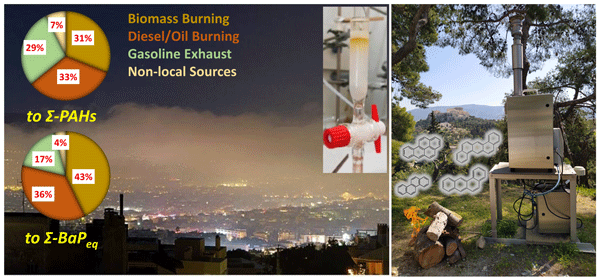
We analyze observations from year-long measurements at Athens, Greece. Nighttime wintertime PAH levels are 4 times higher than daytime, and wintertime values are 15 times higher than summertime. Biomass burning aerosol during wintertime pollution events is responsible for these significant wintertime enhancements and accounts for 43 % of the population exposure to PAH carcinogenic risk. Biomass burning poses additional health risks beyond those associated with the high PM levels that develop.
Mária Lbadaoui-Darvas, Satoshi Takahama, and Athanasios Nenes
Atmos. Chem. Phys., 21, 17687–17714, https://doi.org/10.5194/acp-21-17687-2021, https://doi.org/10.5194/acp-21-17687-2021, 2021
Short summary
Short summary
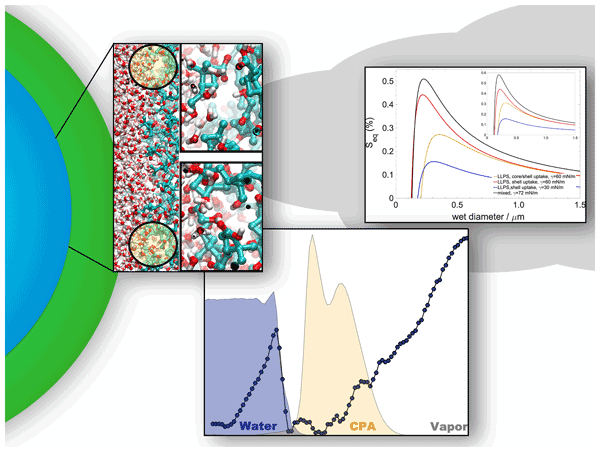
Aerosol–cloud interactions constitute the most uncertain contribution to climate change. The uptake kinetics of water by aerosol is a central process of cloud droplet formation, yet its molecular-scale mechanism is unknown. We use molecular simulations to study this process for phase-separated organic particles. Our results explain the increased cloud condensation activity of such particles and can be generalized over various compositions, thus possibly serving as a basis for future models.
Clémence Rose, Martine Collaud Coen, Elisabeth Andrews, Yong Lin, Isaline Bossert, Cathrine Lund Myhre, Thomas Tuch, Alfred Wiedensohler, Markus Fiebig, Pasi Aalto, Andrés Alastuey, Elisabeth Alonso-Blanco, Marcos Andrade, Begoña Artíñano, Todor Arsov, Urs Baltensperger, Susanne Bastian, Olaf Bath, Johan Paul Beukes, Benjamin T. Brem, Nicolas Bukowiecki, Juan Andrés Casquero-Vera, Sébastien Conil, Konstantinos Eleftheriadis, Olivier Favez, Harald Flentje, Maria I. Gini, Francisco Javier Gómez-Moreno, Martin Gysel-Beer, Anna Gannet Hallar, Ivo Kalapov, Nikos Kalivitis, Anne Kasper-Giebl, Melita Keywood, Jeong Eun Kim, Sang-Woo Kim, Adam Kristensson, Markku Kulmala, Heikki Lihavainen, Neng-Huei Lin, Hassan Lyamani, Angela Marinoni, Sebastiao Martins Dos Santos, Olga L. Mayol-Bracero, Frank Meinhardt, Maik Merkel, Jean-Marc Metzger, Nikolaos Mihalopoulos, Jakub Ondracek, Marco Pandolfi, Noemi Pérez, Tuukka Petäjä, Jean-Eudes Petit, David Picard, Jean-Marc Pichon, Veronique Pont, Jean-Philippe Putaud, Fabienne Reisen, Karine Sellegri, Sangeeta Sharma, Gerhard Schauer, Patrick Sheridan, James Patrick Sherman, Andreas Schwerin, Ralf Sohmer, Mar Sorribas, Junying Sun, Pierre Tulet, Ville Vakkari, Pieter Gideon van Zyl, Fernando Velarde, Paolo Villani, Stergios Vratolis, Zdenek Wagner, Sheng-Hsiang Wang, Kay Weinhold, Rolf Weller, Margarita Yela, Vladimir Zdimal, and Paolo Laj
Atmos. Chem. Phys., 21, 17185–17223, https://doi.org/10.5194/acp-21-17185-2021, https://doi.org/10.5194/acp-21-17185-2021, 2021
Short summary
Short summary
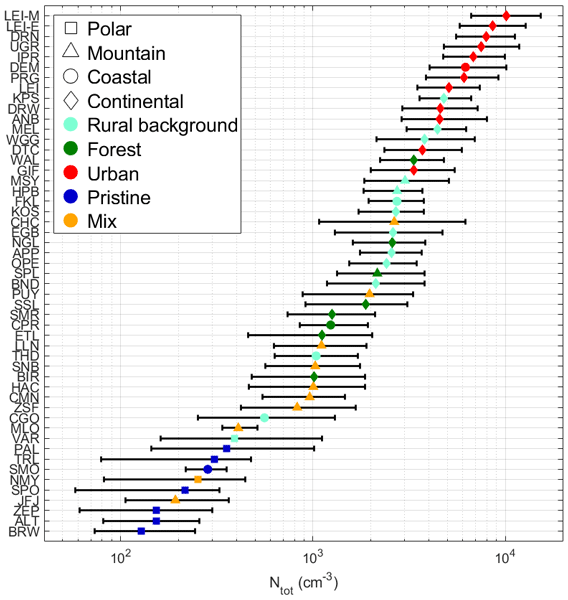
Aerosol particles are a complex component of the atmospheric system the effects of which are among the most uncertain in climate change projections. Using data collected at 62 stations, this study provides the most up-to-date picture of the spatial distribution of particle number concentration and size distribution worldwide, with the aim of contributing to better representation of aerosols and their interactions with clouds in models and, therefore, better evaluation of their impact on climate.
Ksakousti Skyllakou, Pablo Garcia Rivera, Brian Dinkelacker, Eleni Karnezi, Ioannis Kioutsioukis, Carlos Hernandez, Peter J. Adams, and Spyros N. Pandis
Atmos. Chem. Phys., 21, 17115–17132, https://doi.org/10.5194/acp-21-17115-2021, https://doi.org/10.5194/acp-21-17115-2021, 2021
Short summary
Short summary
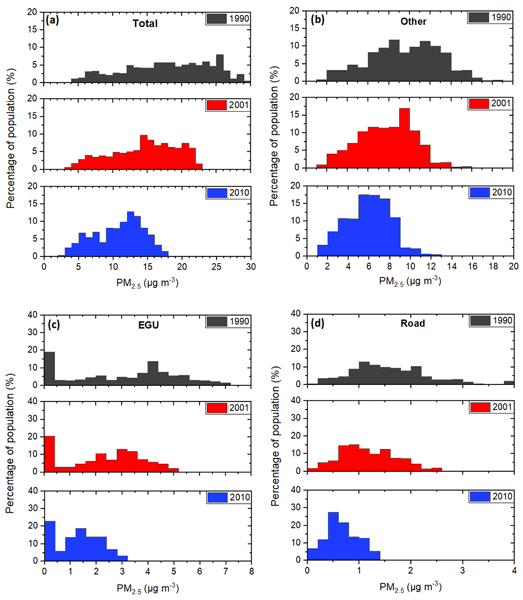
Significant reductions in pollutant emissions took place in the US from 1990 to 2010. The reductions in sulfur dioxide emissions from electric-generating units have dominated the reductions in fine particle mass. The reductions in transportation emissions have led to a 30 % reduction of elemental concentrations and of organic particulate matter by a factor of 3. On the other hand, changes in biomass burning and biogenic secondary organic aerosol have been modest.
Spiro D. Jorga, Kalliopi Florou, Christos Kaltsonoudis, John K. Kodros, Christina Vasilakopoulou, Manuela Cirtog, Axel Fouqueau, Bénédicte Picquet-Varrault, Athanasios Nenes, and Spyros N. Pandis
Atmos. Chem. Phys., 21, 15337–15349, https://doi.org/10.5194/acp-21-15337-2021, https://doi.org/10.5194/acp-21-15337-2021, 2021
Short summary
Short summary
We test the hypothesis that significant secondary organic aerosol production can take place even during winter nights through the oxidation of the emitted organic vapors by the nitrate radicals produced during the reaction of ozone and nitrogen oxides. Our experiments, using as a starting point the ambient air of an urban area with high biomass burning activity, demonstrate that, even with sunlight, there is 20 %–70 % additional organic aerosol formed in a few hours.
Aristeidis Voliotis, Yu Wang, Yunqi Shao, Mao Du, Thomas J. Bannan, Carl J. Percival, Spyros N. Pandis, M. Rami Alfarra, and Gordon McFiggans
Atmos. Chem. Phys., 21, 14251–14273, https://doi.org/10.5194/acp-21-14251-2021, https://doi.org/10.5194/acp-21-14251-2021, 2021
Short summary
Short summary
Secondary organic aerosol (SOA) formation from mixtures of volatile precursors can be affected by the molecular interactions of the products. Composition and volatility measurements of SOA formed from mixtures of anthropogenic and biogenic precursors reveal processes that can increase or decrease the SOA volatility. The unique products of the mixture were more oxygenated and less volatile than those from either precursor. Analytical context is provided to explore the SOA volatility in mixtures.
Twan van Noije, Tommi Bergman, Philippe Le Sager, Declan O'Donnell, Risto Makkonen, María Gonçalves-Ageitos, Ralf Döscher, Uwe Fladrich, Jost von Hardenberg, Jukka-Pekka Keskinen, Hannele Korhonen, Anton Laakso, Stelios Myriokefalitakis, Pirkka Ollinaho, Carlos Pérez García-Pando, Thomas Reerink, Roland Schrödner, Klaus Wyser, and Shuting Yang
Geosci. Model Dev., 14, 5637–5668, https://doi.org/10.5194/gmd-14-5637-2021, https://doi.org/10.5194/gmd-14-5637-2021, 2021
Short summary
Short summary
This paper documents the global climate model EC-Earth3-AerChem, one of the members of the EC-Earth3 family of models participating in CMIP6. We give an overview of the model and describe in detail how it differs from its predecessor and the other EC-Earth3 configurations. The model's performance is characterized using coupled simulations conducted for CMIP6. The model has an effective equilibrium climate sensitivity of 3.9 °C and a transient climate response of 2.1 °C.
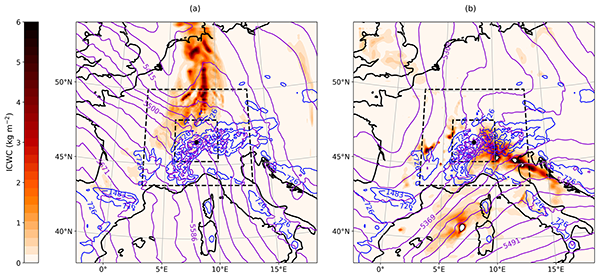
Andreas Tilgner, Thomas Schaefer, Becky Alexander, Mary Barth, Jeffrey L. Collett Jr., Kathleen M. Fahey, Athanasios Nenes, Havala O. T. Pye, Hartmut Herrmann, and V. Faye McNeill
Atmos. Chem. Phys., 21, 13483–13536, https://doi.org/10.5194/acp-21-13483-2021, https://doi.org/10.5194/acp-21-13483-2021, 2021
Short summary
Short summary
Feedbacks of acidity and atmospheric multiphase chemistry in deliquesced particles and clouds are crucial for the tropospheric composition, depositions, climate, and human health. This review synthesizes the current scientific knowledge on these feedbacks using both inorganic and organic aqueous-phase chemistry. Finally, this review outlines atmospheric implications and highlights the need for future investigations with respect to reducing emissions of key acid precursors in a changing world.
Dimitrios Bousiotis, Francis D. Pope, David C. S. Beddows, Manuel Dall'Osto, Andreas Massling, Jakob Klenø Nøjgaard, Claus Nordstrøm, Jarkko V. Niemi, Harri Portin, Tuukka Petäjä, Noemi Perez, Andrés Alastuey, Xavier Querol, Giorgos Kouvarakis, Nikos Mihalopoulos, Stergios Vratolis, Konstantinos Eleftheriadis, Alfred Wiedensohler, Kay Weinhold, Maik Merkel, Thomas Tuch, and Roy M. Harrison
Atmos. Chem. Phys., 21, 11905–11925, https://doi.org/10.5194/acp-21-11905-2021, https://doi.org/10.5194/acp-21-11905-2021, 2021
Short summary
Short summary
Formation of new particles is a key process in the atmosphere. New particle formation events arising from nucleation of gaseous precursors have been analysed in extensive datasets from 13 sites in five European countries in terms of frequency, nucleation rate, and particle growth rate, with several common features and many differences identified. Although nucleation frequencies are lower at roadside sites, nucleation rates and particle growth rates are typically higher.
Paraskevi Georgakaki, Aikaterini Bougiatioti, Jörg Wieder, Claudia Mignani, Fabiola Ramelli, Zamin A. Kanji, Jan Henneberger, Maxime Hervo, Alexis Berne, Ulrike Lohmann, and Athanasios Nenes
Atmos. Chem. Phys., 21, 10993–11012, https://doi.org/10.5194/acp-21-10993-2021, https://doi.org/10.5194/acp-21-10993-2021, 2021
Short summary
Short summary
Aerosol and cloud observations coupled with a droplet activation parameterization was used to investigate the aerosol–cloud droplet link in alpine mixed-phase clouds. Predicted droplet number, Nd, agrees with observations and never exceeds a characteristic “limiting droplet number”, Ndlim, which depends solely on σw. Nd becomes velocity limited when it is within 50 % of Ndlim. Identifying when dynamical changes control Nd variability is central for understanding aerosol–cloud interactions.
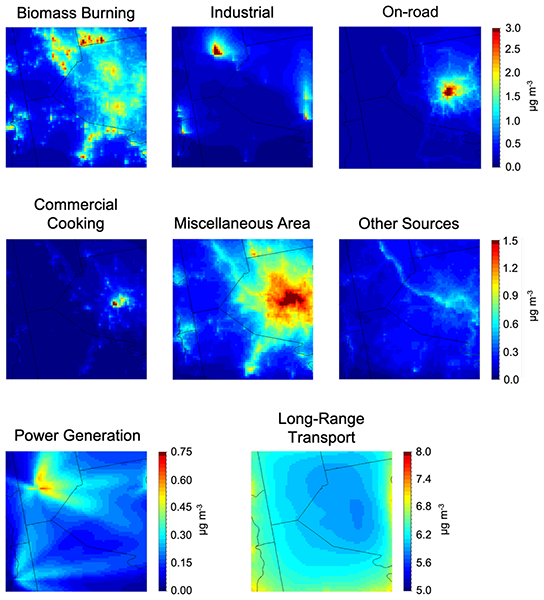
Georgia Sotiropoulou, Luisa Ickes, Athanasios Nenes, and Annica M. L. Ekman
Atmos. Chem. Phys., 21, 9741–9760, https://doi.org/10.5194/acp-21-9741-2021, https://doi.org/10.5194/acp-21-9741-2021, 2021
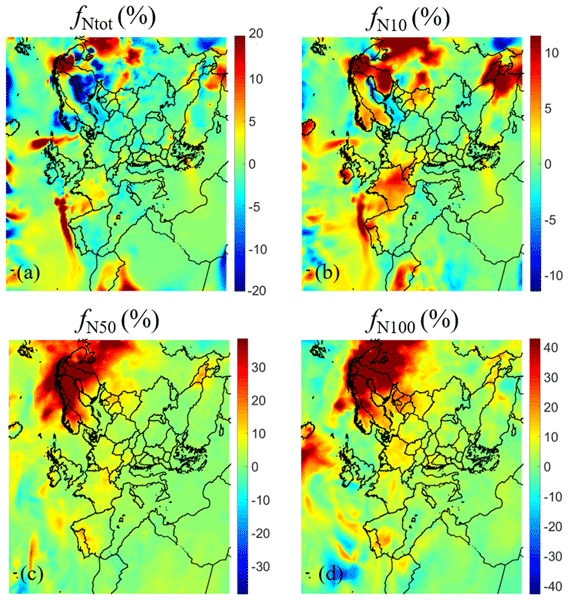
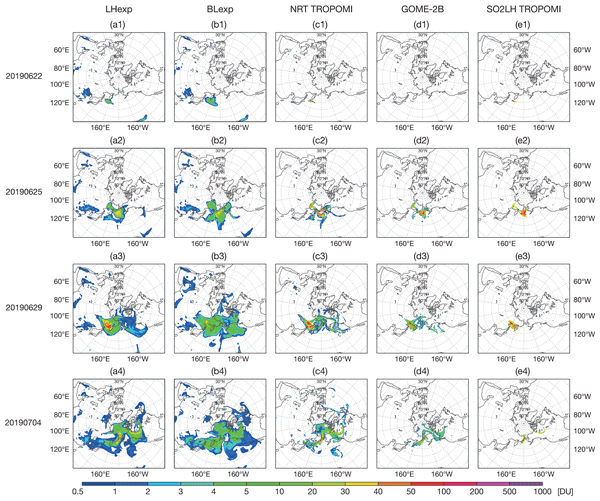
Short summary
Short summary
Mixed-phase clouds are a large source of uncertainty in projections of the Arctic climate. This is partly due to the poor representation of the cloud ice formation processes. Implementing a parameterization for ice multiplication due to mechanical breakup upon collision of two ice particles in a high-resolution model improves cloud ice phase representation; however, cloud liquid remains overestimated.
Andrea Cuesta-Mosquera, Griša Močnik, Luka Drinovec, Thomas Müller, Sascha Pfeifer, María Cruz Minguillón, Björn Briel, Paul Buckley, Vadimas Dudoitis, Javier Fernández-García, María Fernández-Amado, Joel Ferreira De Brito, Veronique Riffault, Harald Flentje, Eimear Heffernan, Nikolaos Kalivitis, Athina-Cerise Kalogridis, Hannes Keernik, Luminita Marmureanu, Krista Luoma, Angela Marinoni, Michael Pikridas, Gerhard Schauer, Norbert Serfozo, Henri Servomaa, Gloria Titos, Jesús Yus-Díez, Natalia Zioła, and Alfred Wiedensohler
Atmos. Meas. Tech., 14, 3195–3216, https://doi.org/10.5194/amt-14-3195-2021, https://doi.org/10.5194/amt-14-3195-2021, 2021
Short summary
Short summary
Measurements of black carbon must be conducted with instruments operating in quality-checked and assured conditions to generate reliable and comparable data. Here, 23 Aethalometers monitoring black carbon mass concentrations in European networks were characterized and intercompared. The influence of different aerosol sources, maintenance activities, and the filter material on the instrumental variabilities were investigated. Good agreement and in general low deviations were seen.
Athanasios Nenes, Spyros N. Pandis, Maria Kanakidou, Armistead G. Russell, Shaojie Song, Petros Vasilakos, and Rodney J. Weber
Atmos. Chem. Phys., 21, 6023–6033, https://doi.org/10.5194/acp-21-6023-2021, https://doi.org/10.5194/acp-21-6023-2021, 2021
Short summary
Short summary
Ecosystems and air quality are affected by the dry deposition of inorganic reactive nitrogen (Nr, the sum of ammonium and nitrate). Its large variability is driven by the large difference in deposition velocity of N when in the gas or particle phase. Here we show that aerosol liquid water and acidity, by affecting gas–particle partitioning, modulate the dry deposition velocity of NH3, HNO3, and Nr worldwide. These effects explain the rapid accumulation of nitrate aerosol during haze events.
Georgia N. Theodoritsi, Giancarlo Ciarelli, and Spyros N. Pandis
Geosci. Model Dev., 14, 2041–2055, https://doi.org/10.5194/gmd-14-2041-2021, https://doi.org/10.5194/gmd-14-2041-2021, 2021
Short summary
Short summary
Two schemes based on the volatility basis set were used for the simulation of biomass burning organic aerosol (bbOA) in the continental US. The first is the default scheme of the PMCAMx-SR model, and the second is a recently developed scheme based on laboratory experiments. The alternative bbOA scheme predicts much higher concentrations. The default scheme performed better during summer and fall, while the alternative scheme was a little better during spring.
Weiqi Xu, Chun Chen, Yanmei Qiu, Ying Li, Zhiqiang Zhang, Eleni Karnezi, Spyros N. Pandis, Conghui Xie, Zhijie Li, Jiaxing Sun, Nan Ma, Wanyun Xu, Pingqing Fu, Zifa Wang, Jiang Zhu, Douglas R. Worsnop, Nga Lee Ng, and Yele Sun
Atmos. Chem. Phys., 21, 5463–5476, https://doi.org/10.5194/acp-21-5463-2021, https://doi.org/10.5194/acp-21-5463-2021, 2021
Short summary
Short summary
Here aerosol volatility and viscosity at a rural site (Gucheng) and an urban site (Beijing) in the North China Plain (NCP) were investigated in summer and winter. Our results showed that organic aerosol (OA) in winter in the NCP is more volatile than that in summer due to enhanced primary emissions from coal combustion and biomass burning. We also found that OA existed mainly as a solid in winter in Beijing but as semisolids in Beijing in summer and Gucheng in winter.
Ioanna Skoulidou, Maria-Elissavet Koukouli, Astrid Manders, Arjo Segers, Dimitris Karagkiozidis, Myrto Gratsea, Dimitris Balis, Alkiviadis Bais, Evangelos Gerasopoulos, Trisevgeni Stavrakou, Jos van Geffen, Henk Eskes, and Andreas Richter
Atmos. Chem. Phys., 21, 5269–5288, https://doi.org/10.5194/acp-21-5269-2021, https://doi.org/10.5194/acp-21-5269-2021, 2021
Short summary
Short summary
The performance of LOTOS-EUROS v2.2.001 regional chemical transport model NO2 simulations is investigated over Greece from June to December 2018. Comparison with in situ NO2 measurements shows a spatial correlation coefficient of 0.86, while the model underestimates the concentrations mostly during daytime (12 to 15:00 local time). Further, the simulated tropospheric NO2 columns are evaluated against ground-based MAX-DOAS NO2 measurements and S5P/TROPOMI observations for July and December 2018.
Dimitrios Bousiotis, James Brean, Francis D. Pope, Manuel Dall'Osto, Xavier Querol, Andrés Alastuey, Noemi Perez, Tuukka Petäjä, Andreas Massling, Jacob Klenø Nøjgaard, Claus Nordstrøm, Giorgos Kouvarakis, Stergios Vratolis, Konstantinos Eleftheriadis, Jarkko V. Niemi, Harri Portin, Alfred Wiedensohler, Kay Weinhold, Maik Merkel, Thomas Tuch, and Roy M. Harrison
Atmos. Chem. Phys., 21, 3345–3370, https://doi.org/10.5194/acp-21-3345-2021, https://doi.org/10.5194/acp-21-3345-2021, 2021
Short summary
Short summary
New particle formation events from 16 sites over Europe have been studied, and the influence of meteorological and atmospheric composition variables has been investigated. Some variables, like solar radiation intensity and temperature, have a positive effect on the occurrence of these events, while others have a negative effect, affecting different aspects such as the rate at which particles are formed or grow. This effect varies depending on the site type and magnitude of these variables.
Konstantinos Michailidis, Maria-Elissavet Koukouli, Nikolaos Siomos, Dimitris Balis, Olaf Tuinder, L. Gijsbert Tilstra, Lucia Mona, Gelsomina Pappalardo, and Daniele Bortoli
Atmos. Chem. Phys., 21, 3193–3213, https://doi.org/10.5194/acp-21-3193-2021, https://doi.org/10.5194/acp-21-3193-2021, 2021
Short summary
Short summary
The aim of this study is to investigate the potential of the GOME-2 instrument aboard the MetOp-A, MetOp-B and MetOp-C platforms to deliver accurate geometrical features of lofted aerosol layers. For this purpose, we use archived ground-based data from lidar stations available from the EARLINET database. We show that for this well-developed and spatially well-spread aerosol layer, most GOME-2 retrievals fall within 1 km of the exact temporally collocated lidar observation.
Yilin Chen, Huizhong Shen, Jennifer Kaiser, Yongtao Hu, Shannon L. Capps, Shunliu Zhao, Amir Hakami, Jhih-Shyang Shih, Gertrude K. Pavur, Matthew D. Turner, Daven K. Henze, Jaroslav Resler, Athanasios Nenes, Sergey L. Napelenok, Jesse O. Bash, Kathleen M. Fahey, Gregory R. Carmichael, Tianfeng Chai, Lieven Clarisse, Pierre-François Coheur, Martin Van Damme, and Armistead G. Russell
Atmos. Chem. Phys., 21, 2067–2082, https://doi.org/10.5194/acp-21-2067-2021, https://doi.org/10.5194/acp-21-2067-2021, 2021
Short summary
Short summary
Ammonia (NH3) emissions can exert adverse impacts on air quality and ecosystem well-being. NH3 emission inventories are viewed as highly uncertain. Here we optimize the NH3 emission estimates in the US using an air quality model and NH3 measurements from the IASI satellite instruments. The optimized NH3 emissions are much higher than the National Emissions Inventory estimates in April. The optimized NH3 emissions improved model performance when evaluated against independent observation.
Maria-Elissavet Koukouli, Ioanna Skoulidou, Andreas Karavias, Isaak Parcharidis, Dimitris Balis, Astrid Manders, Arjo Segers, Henk Eskes, and Jos van Geffen
Atmos. Chem. Phys., 21, 1759–1774, https://doi.org/10.5194/acp-21-1759-2021, https://doi.org/10.5194/acp-21-1759-2021, 2021
Short summary
Short summary
In recent years, satellite observations have contributed to monitoring air quality. During the first COVID-19 lockdown, lower levels of nitrogen dioxide were observed over Greece by S5P/TROPOMI for March and April 2020 (than the preceding year) due to decreased transport emissions. Taking meteorology into account, using LOTOS-EUROS CTM simulations, the resulting decline due to the lockdown was estimated to range between 0 % and −37 % for the five largest Greek cities, with an average of ~ −10 %.
Jens Redemann, Robert Wood, Paquita Zuidema, Sarah J. Doherty, Bernadette Luna, Samuel E. LeBlanc, Michael S. Diamond, Yohei Shinozuka, Ian Y. Chang, Rei Ueyama, Leonhard Pfister, Ju-Mee Ryoo, Amie N. Dobracki, Arlindo M. da Silva, Karla M. Longo, Meloë S. Kacenelenbogen, Connor J. Flynn, Kristina Pistone, Nichola M. Knox, Stuart J. Piketh, James M. Haywood, Paola Formenti, Marc Mallet, Philip Stier, Andrew S. Ackerman, Susanne E. Bauer, Ann M. Fridlind, Gregory R. Carmichael, Pablo E. Saide, Gonzalo A. Ferrada, Steven G. Howell, Steffen Freitag, Brian Cairns, Brent N. Holben, Kirk D. Knobelspiesse, Simone Tanelli, Tristan S. L'Ecuyer, Andrew M. Dzambo, Ousmane O. Sy, Greg M. McFarquhar, Michael R. Poellot, Siddhant Gupta, Joseph R. O'Brien, Athanasios Nenes, Mary Kacarab, Jenny P. S. Wong, Jennifer D. Small-Griswold, Kenneth L. Thornhill, David Noone, James R. Podolske, K. Sebastian Schmidt, Peter Pilewskie, Hong Chen, Sabrina P. Cochrane, Arthur J. Sedlacek, Timothy J. Lang, Eric Stith, Michal Segal-Rozenhaimer, Richard A. Ferrare, Sharon P. Burton, Chris A. Hostetler, David J. Diner, Felix C. Seidel, Steven E. Platnick, Jeffrey S. Myers, Kerry G. Meyer, Douglas A. Spangenberg, Hal Maring, and Lan Gao
Atmos. Chem. Phys., 21, 1507–1563, https://doi.org/10.5194/acp-21-1507-2021, https://doi.org/10.5194/acp-21-1507-2021, 2021
Short summary
Short summary
Southern Africa produces significant biomass burning emissions whose impacts on regional and global climate are poorly understood. ORACLES (ObseRvations of Aerosols above CLouds and their intEractionS) is a 5-year NASA investigation designed to study the key processes that determine these climate impacts. The main purpose of this paper is to familiarize the broader scientific community with the ORACLES project, the dataset it produced, and the most important initial findings.
Myrto Gratsea, Tim Bösch, Panagiotis Kokkalis, Andreas Richter, Mihalis Vrekoussis, Stelios Kazadzis, Alexandra Tsekeri, Alexandros Papayannis, Maria Mylonaki, Vassilis Amiridis, Nikos Mihalopoulos, and Evangelos Gerasopoulos
Atmos. Meas. Tech., 14, 749–767, https://doi.org/10.5194/amt-14-749-2021, https://doi.org/10.5194/amt-14-749-2021, 2021
Stylianos Kakavas, David Patoulias, Maria Zakoura, Athanasios Nenes, and Spyros N. Pandis
Atmos. Chem. Phys., 21, 799–811, https://doi.org/10.5194/acp-21-799-2021, https://doi.org/10.5194/acp-21-799-2021, 2021
Short summary
Short summary
The dependence of aerosol acidity on particle size, location, and altitude over Europe during a summertime period is investigated. Differences of up to 1–4 pH units are predicted between sub- and supermicron particles in northern and southern Europe. Particles of all sizes become increasingly acidic with altitude (0.5–2.5 pH units decrease over 2.5 km). The size-dependent pH differences carry important implications for pH-sensitive processes in the aerosol.
Georgia Sotiropoulou, Étienne Vignon, Gillian Young, Hugh Morrison, Sebastian J. O'Shea, Thomas Lachlan-Cope, Alexis Berne, and Athanasios Nenes
Atmos. Chem. Phys., 21, 755–771, https://doi.org/10.5194/acp-21-755-2021, https://doi.org/10.5194/acp-21-755-2021, 2021
Short summary
Short summary
Summer clouds have a significant impact on the radiation budget of the Antarctic surface and thus on ice-shelf melting. However, these are poorly represented in climate models due to errors in their microphysical structure, including the number of ice crystals that they contain. We show that breakup from ice particle collisions can substantially magnify the ice crystal number concentration with significant implications for surface radiation. This process is currently missing in climate models.
Antonis Gkikas, Emmanouil Proestakis, Vassilis Amiridis, Stelios Kazadzis, Enza Di Tomaso, Alexandra Tsekeri, Eleni Marinou, Nikos Hatzianastassiou, and Carlos Pérez García-Pando
Atmos. Meas. Tech., 14, 309–334, https://doi.org/10.5194/amt-14-309-2021, https://doi.org/10.5194/amt-14-309-2021, 2021
Short summary
Short summary
We present the development of the MIDAS (ModIs Dust AeroSol) data set, providing daily dust optical depth (DOD; 550 nm) at a global scale and fine spatial resolution (0.1° x 0.1°) over a 15-year period (2003–2017). It has been developed via the synergy of MODIS-Aqua and MERRA-2 data, while CALIOP and AERONET retrievals are used for its assessment. MIDAS upgrades existing dust observational capabilities, and it is suitable for dust climatological studies, model evaluation, and data assimilation.
Cited articles
Baker, A. R., Kanakidou, M., Nenes, A., Myriokefalitakis, S., Croot, P. L., Duce, R. A., Gao, Y., Guieu, C., Ito, A., Jickells, T. D., Mahowald, N. M., Middag, R., Perron, M. M. G., Sarin, M. M., Shelley, R., and Turner, D. R.: Changing atmospheric acidity as a modulator of nutrient deposition and ocean biogeochemistry, Sci. Adv., 7, eabd8800, https://doi.org/10.1126/sciadv.abd8800, 2021.
Bougiatioti, A., Fountoukis, C., Kalivitis, N., Pandis, S. N., Nenes, A., and Mihalopoulos, N.: Cloud condensation nuclei measurements in the marine boundary layer of the Eastern Mediterranean: CCN closure and droplet growth kinetics, Atmos. Chem. Phys., 9, 7053–7066, https://doi.org/10.5194/acp-9-7053-2009, 2009.
Bougiatioti, A., Nikolaou, P., Stavroulas, I., Kouvarakis, G., Weber, R., Nenes, A., Kanakidou, M., and Mihalopoulos, N.: Particle water and pH in the eastern Mediterranean: source variability and implications for nutrient availability, Atmos. Chem. Phys., 16, 4579–4591, https://doi.org/10.5194/acp-16-4579-2016, 2016.
Clegg, S. L., Seinfeld, J. H., and Brimblecombe, P.: Thermodynamic modelling of aqueous aerosols containing electrolytes and dissolved organic compounds, J. Aerosol Sci., 32, 713–738, https://doi.org/10.1016/S0021-8502(00)00105-1, 2001.
Crameri, F.: Geodynamic diagnostics, scientific visualisation and StagLab 3.0, Geosci. Model Dev., 11, 2541–2562, https://doi.org/10.5194/gmd-11-2541-2018, 2018.
Crameri, F., Shephard, G. E., and Heron, P. J.: The misuse of colour in science communication, Nat. Commun., 11, https://doi.org/10.1038/s41467-020-19160-7, 2020.
Ding, J., Zhao, P., Su, J., Dong, Q., Du, X., and Zhang, Y.: Aerosol pH and its driving factors in Beijing, Atmos. Chem. Phys., 19, 7939–7954, https://doi.org/10.5194/acp-19-7939-2019, 2019.
Fang, T., Guo, H., Zeng, L., Verma, V., Nenes, A., and Weber, R. J.: Highly Acidic Ambient Particles, Soluble Metals, and Oxidative Potential: A Link between Sulfate and Aerosol Toxicity, Environ. Sci. Technol., 51, 2611–2620, https://doi.org/10.1021/acs.est.6b06151, 2017.
Flocas, H., Kelessis, A., Helmis, C., Petrakakis, M., Zoumakis, M., and Pappas, K.: Synoptic and local scale atmospheric circulation associated with air pollution episodes in an urban Mediterranean area, Theor. Appl. Climatol., 95, 265–277, https://doi.org/10.1007/s00704-008-0005-9, 2009.
Florou, K., Papanastasiou, D. K., Pikridas, M., Kaltsonoudis, C., Louvaris, E., Gkatzelis, G. I., Patoulias, D., Mihalopoulos, N., and Pandis, S. N.: The contribution of wood burning and other pollution sources to wintertime organic aerosol levels in two Greek cities, Atmos. Chem. Phys., 17, 3145–3163, https://doi.org/10.5194/acp-17-3145-2017, 2017.
Fountoukis, C. and Nenes, A.: ISORROPIA II: a computationally efficient thermodynamic equilibrium model for K+–Ca2+–Mg2+–NH –Na+–SO –NO –Cl−–H2O aerosols, Atmos. Chem. Phys., 7, 4639–4659, https://doi.org/10.5194/acp-7-4639-2007, 2007.
Guo, H., Xu, L., Bougiatioti, A., Cerully, K. M., Capps, S. L., Hite, J. R., Carlton, A. G., Lee, S.-H., Bergin, M. H., Ng, N. L., Nenes, A., and Weber, R. J.: Fine-particle water and pH in the southeastern United States, Atmos. Chem. Phys., 15, 5211–5228, https://doi.org/10.5194/acp-15-5211-2015, 2015.
Guo, H., Sullivan, A. P., Campuzano-Jost, P., Schroder, J. C., Lopez-Hilfiker, F. D., Dibb, J. E., Jimenez, J. L., Thornton, J. A., Brown, S. S., Nenes, A., and Weber, R. J.: Fine particle pH and the partitioning of nitric acid during winter in the northeastern United States, J. Geophys. Res.-Atmos., 121, https://doi.org/10.1002/2016JD025311, 2016.
Guo, H., Liu, J., Froyd, K. D., Roberts, J. M., Veres, P. R., Hayes, P. L., Jimenez, J. L., Nenes, A., and Weber, R. J.: Fine particle pH and gas–particle phase partitioning of inorganic species in Pasadena, California, during the 2010 CalNex campaign, Atmos. Chem. Phys., 17, 5703–5719, https://doi.org/10.5194/acp-17-5703-2017, 2017a.
Guo, H., Weber, R. J., and Nenes, A.: High levels of ammonia do not raise fine particle pH sufficiently to yield nitrogen oxide-dominated sulfate production, Sci. Rep., 7, 12109, https://doi.org/10.1038/s41598-017-11704-0, 2017b.
Guo, H., Otjes, R., Schlag, P., Kiendler-Scharr, A., Nenes, A., and Weber, R. J.: Effectiveness of ammonia reduction on control of fine particle nitrate, Atmos. Chem. Phys., 18, 12241–12256, https://doi.org/10.5194/acp-18-12241-2018, 2018.
Hildebrandt, L., Kostenidou, E., Lanz, V. A., Prevot, A. S. H., Baltensperger, U., Mihalopoulos, N., Laaksonen, A., Donahue, N. M., and Pandis, S. N.: Sources and atmospheric processing of organic aerosol in the Mediterranean: insights from aerosol mass spectrometer factor analysis, Atmos. Chem. Phys., 11, 12499–12515, https://doi.org/10.5194/acp-11-12499-2011, 2011.
Kakavas, S., Patoulias, D., Zakoura, M., Nenes, A., and Pandis, S. N.: Size-resolved aerosol pH over Europe during summer, Atmos. Chem. Phys., 21, 799–811, https://doi.org/10.5194/acp-21-799-2021, 2021.
Kakavas, S., Pandis, S. N., and Nenes, A.: ISORROPIA-Lite: A Comprehensive Atmospheric Aerosol Thermodynamics Module for Earth System Models, Tellus B, 74, 1–23, https://doi.org/10.16993/tellusb.33, 2022.
Kalkavouras, P., Bougiatioti, A., Kalivitis, N., Stavroulas, I., Tombrou, M., Nenes, A., and Mihalopoulos, N.: Regional new particle formation as modulators of cloud condensation nuclei and cloud droplet number in the eastern Mediterranean, Atmos. Chem. Phys., 19, 6185–6203, https://doi.org/10.5194/acp-19-6185-2019, 2019.
Kanakidou, M., Myriokefalitakis, S., and Tsigaridis, K.: Aerosols in atmospheric chemistry and biogeochemical cycles of nutrients, Environ. Res. Lett., 13, 063004, https://doi.org/10.1088/1748-9326/aabcdb, 2018.
Kaskaoutis, D. G., Grivas, G., Theodosi, C., Tsagkaraki, M., Paraskevopoulou, D., Stavroulas, I., Liakakou, E., Gkikas, A., Hatzianastassiou, N., Wu, C., Gerasopoulos, E., and Mihalopoulos, N.: Carbonaceous Aerosols in Contrasting Atmospheric Environments in Greek Cities: Evaluation of the EC-tracer Methods for Secondary Organic Carbon Estimation, Atmosphere, 11, 161, https://doi.org/10.3390/atmos11020161, 2020.
Kaskaoutis, D. G., Grivas, G., Oikonomou, K., Tavernaraki, P., Papoutsidaki, K., Tsagkaraki, M., Stavroulas, I., Zarmpas, P., Paraskevopoulou, D., Bougiatioti, A., Liakakou, E., Gavrouzou, M., Dumka, U. C., Hatzianastassiou, N., Sciare, J., Gerasopoulos, E., and Mihalopoulos, N.: Impacts of severe residential wood burning on atmospheric processing, water-soluble organic aerosol and light absorption, in an inland city of Southeastern Europe, Atmos. Environ., 280, 119139, https://doi.org/10.1016/j.atmosenv.2022.119139, 2022.
Kastelis, N. and Kourtidis, K.: Characteristics of the atmospheric electric field and correlation with CO2 at a rural site in southern Balkans, Earth Planet Space, 68, 3, https://doi.org/10.1186/s40623-016-0379-3, 2016.
Kostenidou, E., Florou, K., Kaltsonoudis, C., Tsiflikiotou, M., Vratolis, S., Eleftheriadis, K., and Pandis, S. N.: Sources and chemical characterization of organic aerosol during the summer in the eastern Mediterranean, Atmos. Chem. Phys., 15, 11355–11371, https://doi.org/10.5194/acp-15-11355-2015, 2015.
Lemou, A., Rabhi, L., Merabet, H., Ladji, R., Nicolas, J. B., Bonnaire, N., Mustapha, M. A., Dilmi, R., Sciare, J., Mihalopoulos, N., and Yassaa, N.: Chemical characterization of fine particles (PM2.5) at a coastal site in the South Western Mediterranean during the ChArMex experiment, Environ. Sci. Pollut. Res., 27, 20427–20445, https://doi.org/10.1007/s11356-020-08168-7, 2020.
Liakakou, E., Fourtziou, L., Paraskevopoulou, D., Speyer, O., Lianou, M., Grivas, G., Myriokefalitakis, S., and Mihalopoulos, N.: High-Resolution Measurements of SO2, HNO3 and HCl at the Urban Environment of Athens, Greece: Levels, Variability and Gas to Particle Partitioning, Atmosphere, 13, 218, https://doi.org/10.3390/atmos13020218, 2022.
Liu, M., Song, Y., Zhou, T., Xu, Z., Yan, C., Zheng, M., Wu, Z., Hu, M., Wu, Y., and Zhu, T.: Fine particle pH during severe haze episodes in northern China: Fine Particle pH During Haze Episodes, Geophys. Res. Lett., 44, 5213–5221, https://doi.org/10.1002/2017GL073210, 2017.
Masiol, M., Squizzato, S., Formenton, G., Khan, M. B., Hopke, P. K., Nenes, A., Pandis, S. N., Tositti, L., Benetello, F., Visin, F., and Pavoni, B.: Hybrid multiple-site mass closure and source apportionment of PM2.5 and aerosol acidity at major cities in the Po Valley, Sci. Total Environ., 704, 135287, https://doi.org/10.1016/j.scitotenv.2019.135287, 2020.
Mihalopoulos, N., Stephanou, E., Kanakidou, M., Pilitsidis, S., and Bousquet, P.: Tropospheric aerosol ionic composition in the Eastern Mediterranean region, Tellus B, 49, 314–326, https://doi.org/10.1034/j.1600-0889.49.issue3.7.x, 1997.
Nenes, A., Krom, M. D., Mihalopoulos, N., Van Cappellen, P., Shi, Z., Bougiatioti, A., Zarmpas, P. and Herut, B.: Atmospheric acidification of mineral aerosols: a source of bioavailable phosphorus for the oceans, Atmos. Chem. Phys., 11, 6265–6272, https://doi.org/10.5194/acp-11-6265-2011, 2011.
Nenes, A., Pandis, S. N., Weber, R. J., and Russell, A.: Aerosol pH and liquid water content determine when particulate matter is sensitive to ammonia and nitrate availability, Atmos. Chem. Phys., 20, 3249–3258, https://doi.org/10.5194/acp-20-3249-2020, 2020.
Nenes, A., Pandis, S. N., Kanakidou, M., Russell, A. G., Song, S., Vasilakos, P., and Weber, R. J.: Aerosol acidity and liquid water content regulate the dry deposition of inorganic reactive nitrogen, Atmos. Chem. Phys., 21, 6023–6033, https://doi.org/10.5194/acp-21-6023-2021, 2021.
Paglione, M., Decesari, S., Rinaldi, M., Tarozzi, L., Manarini, F., Gilardoni, S., Facchini, M. C., Fuzzi, S., Bacco, D., Trentini, A., Pandis, S. N., and Nenes, A.: Historical Changes in Seasonal Aerosol Acidity in the Po Valley (Italy) as Inferred from Fog Water and Aerosol Measurements, Environ. Sci. Technol., 55, 7307–7315, https://doi.org/10.1021/acs.est.1c00651, 2021.
Pikridas, M., Bougiatioti, A., Hildebrandt, L., Engelhart, G. J., Kostenidou, E., Mohr, C., Prévôt, A. S. H., Kouvarakis, G., Zarmpas, P., Burkhart, J. F., Lee, B.-H., Psichoudaki, M., Mihalopoulos, N., Pilinis, C., Stohl, A., Baltensperger, U., Kulmala, M., and Pandis, S. N.: The Finokalia Aerosol Measurement Experiment – 2008 (FAME-08): an overview, Atmos. Chem. Phys., 10, 6793–6806, https://doi.org/10.5194/acp-10-6793-2010, 2010.
Pikridas, M., Tasoglou, A., Florou, K., and Pandis, S. N.: Characterization of the origin of fine particulate matter in a medium size urban area in the Mediterranean, Atmos. Environ., 80, 264–274, https://doi.org/10.1016/j.atmosenv.2013.07.070, 2013.
Powley, H. R., Cappellen, P. V., and Krom, M. D.: Nutrient Cycling in the Mediterranean Sea: The Key to Understanding How the Unique Marine Ecosystem Functions and Responds to Anthropogenic Pressures, in: Mediterranean Identities – Environment, Society, Culture, edited by: Fuerst-Bjelis, B., InTech, https://doi.org/10.5772/intechopen.70878, 2017.
Psichoudaki, M., Nenes, A., Florou, K., Kaltsonoudis, C., and Pandis, S. N.: Hygroscopic properties of atmospheric particles emitted during wintertime biomass burning episodes in Athens, Atmos. Environ., 178, 66–72, https://doi.org/10.1016/j.atmosenv.2018.01.004, 2018.
Putaud, J.-P., Raes, F., Van Dingenen, R., Brüggemann, E., Facchini, M.-C., Decesari, S., Fuzzi, S., Gehrig, R., Hüglin, C., Laj, P., Lorbeer, G., Maenhaut, W., Mihalopoulos, N., Müller, K., Querol, X., Rodriguez, S., Schneider, J., Spindler, G., Brink, H. T., Tørseth, K., and Wiedensohler, A.: A European aerosol phenomenology – 2: chemical characteristics of particulate matter at kerbside, urban, rural and background sites in Europe, Atmos. Environ., 38, 2579–2595, https://doi.org/10.1016/j.atmosenv.2004.01.041, 2004.
Pye, H. O. T., Nenes, A., Alexander, B., Ault, A. P., Barth, M. C., Clegg, S. L., Collett, J. L., Fahey, K. M., Hennigan, C. J., Herrmann, H., Kanakidou, M., Kelly, J. T., Ku, I. T., Faye McNeill, V., Riemer, N., Schaefer, T., Shi, G., Tilgner, A., Walker, J. T., Wang, T., Weber, R., Xing, J., Zaveri, R. A., and Zuend, A.: The acidity of atmospheric particles and clouds, Atmos. Chem. Phys., 20, 4809–4888, https://doi.org/10.5194/acp-20-4809-2020, 2020.
Sciare, J., Oikonomou, K., Favez, O., Liakakou, E., Markaki, Z., Cachier, H., and Mihalopoulos, N.: Long-term measurements of carbonaceous aerosols in the Eastern Mediterranean: evidence of long-range transport of biomass burning, Atmos. Chem. Phys., 8, 5551–5563, https://doi.org/10.5194/acp-8-5551-2008, 2008.
Seinfeld, J. H. and Pandis, S. N.: Atmospheric chemistry and physics: from air pollution to climate change, in: 2nd Edn., J. Wiley, Hoboken, NJ, 1203 pp., ISBN 978-0-471-72018-8, 2006.
Shephard, M. W. and Cady-Pereira, K. E.: Cross-track Infrared Sounder (CrIS) satellite observations of tropospheric ammonia, Atmos. Meas. Tech., 8, 1323–1336, https://doi.org/10.5194/amt-8-1323-2015, 2015.
Shephard, M. W., Dammers, E., Cady-Pereira, K. E., Kharol, S. K., Thompson, J., Gainariu-Matz, Y., Zhang, J., McLinden, C. A., Kovachik, A., Moran, M., Bittman, S., Sioris, C. E., Griffin, D., Alvarado, M. J., Lonsdale, C., Savic-Jovcic, V., and Zheng, Q.: Ammonia measurements from space with the Cross-track Infrared Sounder: characteristics and applications, Atmos. Chem. Phys., 20, 2277–2302, https://doi.org/10.5194/acp-20-2277-2020, 2020.
Shi, G., Xu, J., Peng, X., Xiao, Z., Chen, K., Tian, Y., Guan, X., Feng, Y., Yu, H., Nenes, A., and Russell, A. G.: pH of Aerosols in a Polluted Atmosphere: Source Contributions to Highly Acidic Aerosol, Environ. Sci. Technol., 51, 4289–4296, https://doi.org/10.1021/acs.est.6b05736, 2017.
Squizzato, S., Masiol, M., Brunelli, A., Pistollato, S., Tarabotti, E., Rampazzo, G., and Pavoni, B.: Factors determining the formation of secondary inorganic aerosol: a case study in the Po Valley (Italy), Atmos. Chem. Phys., 13, 1927–1939, https://doi.org/10.5194/acp-13-1927-2013, 2013.
Stavroulas, I., Bougiatioti, A., Grivas, G., Paraskevopoulou, D., Tsagkaraki, M., Zarmpas, P., Liakakou, E., Gerasopoulos, E., and Mihalopoulos, N.: Sources and processes that control the submicron organic aerosol composition in an urban Mediterranean environment (Athens): a high temporal-resolution chemical composition measurement study, Atmos. Chem. Phys., 19, 901–919, https://doi.org/10.5194/acp-19-901-2019, 2019.
Tao, Y. and Murphy, J. G.: The sensitivity of PM2.5 acidity to meteorological parameters and chemical composition changes: 10-year records from six Canadian monitoring sites, Atmos. Chem. Phys., 19, 9309–9320, https://doi.org/10.5194/acp-19-9309-2019, 2019.
Theodosi, C., Markaki, Z., and Mihalopoulos, N.: Iron speciation, solubility and temporal variability in wet and dry deposition in the Eastern Mediterranean, Mar. Chem., 120, 100–107, https://doi.org/10.1016/j.marchem.2008.05.004, 2008.
Tsiflikiotou, M. A., Kostenidou, E., Papanastasiou, D. K., Patoulias, D., Zarmpas, P., Paraskevopoulou, D., Diapouli, E., Kaltsonoudis, C., Florou, K., Bougiatioti, A., Stavroulas, I., Theodosi, C., Kouvarakis, G., Vasilatou, V., Siakavaras, D., Biskos, G., Pilinis, C., Eleftheriadis, K., Gerasopoulos, E., Mihalopoulos, N., and Pandis, S. N.: Summertime particulate matter and its composition in Greece, Atmos. Environ., 213, 597–607, https://doi.org/10.1016/j.atmosenv.2019.06.013, 2019.
Vierke, L., Ahrens, L., Shoeib, M., Palm, W.-U., Webster, E. M., Ellis, D. A., Ebinghaus, R., and Harner, T.: In situ air–water and particle–water partitioning of perfluorocarboxylic acids, perfluorosulfonic acids and perfluorooctyl sulfonamide at a wastewater treatment plant, Chemosphere, 92, 941–948, https://doi.org/10.1016/j.chemosphere.2013.02.067, 2013.
Warner, J. X., Wei, Z., Strow, L. L., Dickerson, R. R., and Nowak, J. B.: The global tropospheric ammonia distribution as seen in the 13-year AIRS measurement record, Atmos. Chem. Phys., 16, 5467–5479, https://doi.org/10.5194/acp-16-5467-2016, 2016.
Weber, R. J., Guo, H., Russell, A. G., and Nenes, A.: High aerosol acidity despite declining atmospheric sulfate concentrations over the past 15 years, Nat. Geosci., 9, 282–285, https://doi.org/10.1038/ngeo2665, 2016.
Wexler, A. S. and Clegg, S. L.: Atmospheric aerosol models for systems including the ions H+, NH , Na+, SO , NO , Cl−, Br−, and H2O, J. Geophys. Res., 107, 4207, https://doi.org/10.1029/2001JD000451, 2002.
Zaveri, R. A., Easter, R. C., Fast, J. D., and Peters, L. K.: Model for Simulating Aerosol Interactions and Chemistry (MOSAIC), J. Geophys. Res., 113, D13204, https://doi.org/10.1029/2007JD008782, 2008.
Zhang, A., Wang, Y., Zhang, Y., Weber, R. J., Song, Y., Ke, Z., and Zou, Y.: Modeling the global radiative effect of brown carbon: a potentially larger heating source in the tropical free troposphere than black carbon, Atmos. Chem. Phys., 20, 1901–1920, https://doi.org/10.5194/acp-20-1901-2020, 2020.
Short summary
Aerosol acidity affects aerosol composition and properties, and therefore climate, human health and ecosystems. We use summer and winter fine aerosol observations at 6 sites across Greece, and a thermodynamic model to calculate the spatial and seasonal variability of aerosol acidity. Aerosols were acidic to moderately acidic and more acidic during summer than winter. The importance of organics for aerosol acidity was small. Depending on location different factors controlled aerosol acidity.
Aerosol acidity affects aerosol composition and properties, and therefore climate, human health...
Altmetrics
Final-revised paper
Preprint