Articles | Volume 14, issue 23
https://doi.org/10.5194/acp-14-13295-2014
© Author(s) 2014. This work is distributed under
the Creative Commons Attribution 3.0 License.
https://doi.org/10.5194/acp-14-13295-2014
© Author(s) 2014. This work is distributed under
the Creative Commons Attribution 3.0 License.
Meteorological factors controlling low-level continental pollutant outflow across a coast
D. L. Peake
Department of Meteorology, University of Reading, Earley Gate, Reading, Berkshire, RG6 6BB, UK
H. F. Dacre
CORRESPONDING AUTHOR
Department of Meteorology, University of Reading, Earley Gate, Reading, Berkshire, RG6 6BB, UK
J. Methven
Department of Meteorology, University of Reading, Earley Gate, Reading, Berkshire, RG6 6BB, UK
O. Coceal
National Centre for Atmospheric Science (NCAS), Department of Meteorology, University of Reading, Earley Gate, Reading, Berkshire, RG6 6BB, UK
Related authors
No articles found.
Stella Bourdin, Kevin Hodges, Yushan Han, Leo Saffin, Alexander Baker, John Methven, and Pier Luigi Vidale
Earth Syst. Sci. Data Discuss., https://doi.org/10.5194/essd-2026-403, https://doi.org/10.5194/essd-2026-403, 2026
Preprint under review for ESSD
Short summary
Short summary
This paper describes a new dataset for the study of historical tropical cyclones. RABTracks is a global dataset that combines official tropical cyclone records with multiple weather reanalyses and tracking methods from 1940 to today. It extends cyclone tracks before formation and after dissipation, adding information on intensity, size, structure, and transition to extratropical storms. The dataset is designed to support improved cyclone risk analysis.
Claire L. Ryder, Clément Bézier, Helen F. Dacre, Rory Clarkson, Vassilis Amiridis, Eleni Marinou, Emmanouil Proestakis, Zak Kipling, Angela Benedetti, Mark Parrington, Samuel Rémy, and Mark Vaughan
Nat. Hazards Earth Syst. Sci., 24, 2263–2284, https://doi.org/10.5194/nhess-24-2263-2024, https://doi.org/10.5194/nhess-24-2263-2024, 2024
Short summary
Short summary
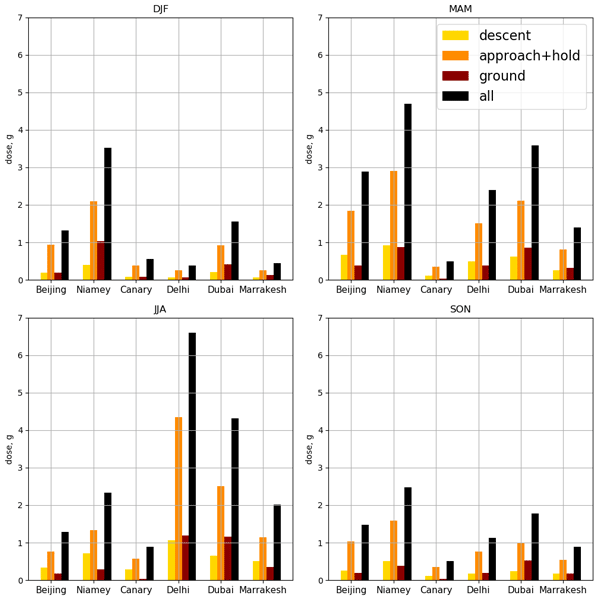
Desert dust poses a hazard to aircraft via degradation of engine components. This has financial implications for the aviation industry and results in increased fuel burn with climate impacts. Here we quantify dust ingestion by aircraft engines at airports worldwide. We find Dubai and Delhi in summer are among the dustiest airports, where substantial engine degradation would occur after 1000 flights. Dust ingestion can be reduced by changing take-off times and the altitude of holding patterns.
Sam Hardy, John Methven, Juliane Schwendike, Ben Harvey, and Mike Cullen
Weather Clim. Dynam., 4, 1019–1043, https://doi.org/10.5194/wcd-4-1019-2023, https://doi.org/10.5194/wcd-4-1019-2023, 2023
Short summary
Short summary
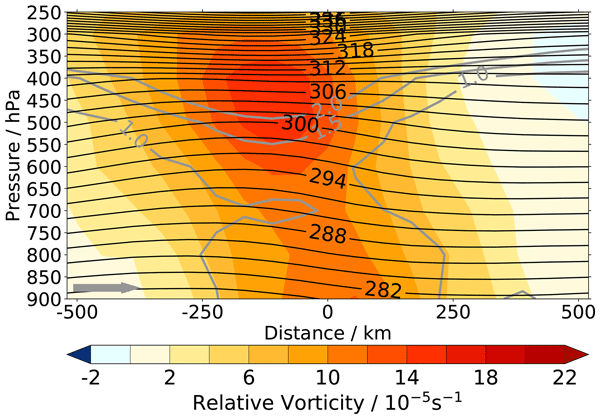
We examine a Borneo vortex case using computer simulations and satellite observations. The vortex is identified with high humidity through the atmosphere and has heaviest rainfall on its northern flank. Simulations represent circulation and rainfall accumulation well. The low-level Borneo vortex is coupled with a higher-level wave, which moves westwards along a layer with a sharp vertical gradient in moisture. Vortex growth occurs through mechanisms usually considered outside the tropics.
Hannah L. Croad, John Methven, Ben Harvey, Sarah P. E. Keeley, and Ambrogio Volonté
Weather Clim. Dynam., 4, 617–638, https://doi.org/10.5194/wcd-4-617-2023, https://doi.org/10.5194/wcd-4-617-2023, 2023
Short summary
Short summary
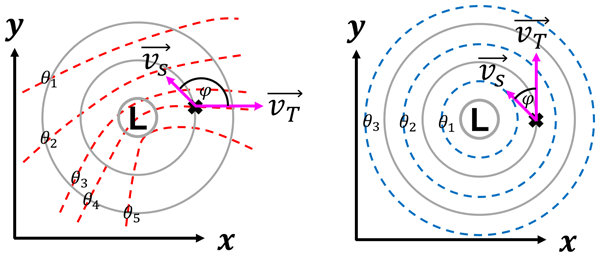
The interaction between Arctic cyclones and the sea ice surface in summer is investigated by analysing the friction and sensible heat flux processes acting in two cyclones with contrasting evolution. The major finding is that the effects of friction on cyclone strength are dependent on a particular feature of cyclone structure: whether they have a warm or cold core during growth. Friction leads to cooling within both cyclone types in the lower atmosphere, which may contribute to their longevity.
Natalie J. Harvey, Helen F. Dacre, Cameron Saint, Andrew T. Prata, Helen N. Webster, and Roy G. Grainger
Atmos. Chem. Phys., 22, 8529–8545, https://doi.org/10.5194/acp-22-8529-2022, https://doi.org/10.5194/acp-22-8529-2022, 2022
Short summary
Short summary
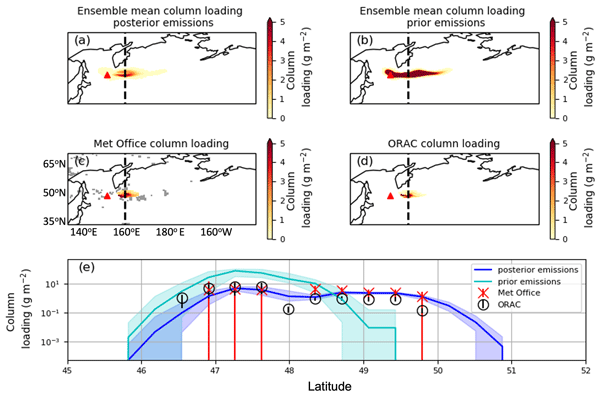
In the event of a volcanic eruption, airlines need to make decisions about which routes are safe to operate and ensure that airborne aircraft land safely. The aim of this paper is to demonstrate the application of a statistical technique that best combines ash information from satellites and a suite of computer forecasts of ash concentration to provide a range of plausible estimates of how much volcanic ash emitted from a volcano is available to undergo long-range transport.
Antonio Capponi, Natalie J. Harvey, Helen F. Dacre, Keith Beven, Cameron Saint, Cathie Wells, and Mike R. James
Atmos. Chem. Phys., 22, 6115–6134, https://doi.org/10.5194/acp-22-6115-2022, https://doi.org/10.5194/acp-22-6115-2022, 2022
Short summary
Short summary
Forecasts of the dispersal of volcanic ash in the atmosphere are hampered by uncertainties in parameters describing the characteristics of volcanic plumes. Uncertainty quantification is vital for making robust flight-planning decisions. We present a method using satellite data to refine a series of volcanic ash dispersion forecasts and quantify these uncertainties. We show how we can improve forecast accuracy and potentially reduce the regions of high risk of volcanic ash relevant to aviation.
Suzanne L. Gray, Kevin I. Hodges, Jonathan L. Vautrey, and John Methven
Weather Clim. Dynam., 2, 1303–1324, https://doi.org/10.5194/wcd-2-1303-2021, https://doi.org/10.5194/wcd-2-1303-2021, 2021
Short summary
Short summary
This research demonstrates, using feature identification and tracking, that anticlockwise rotating vortices at about 7 km altitude called tropopause polar vortices frequently interact with storms developing in the Arctic region, affecting their structure and where they occur. This interaction has implications for the predictability of Arctic weather, given the long lifetime but a relatively small spatial scale of these vortices compared with the density of the polar observation network.
Cited articles
Angevine, W. M., Hare, J. E., Fairall, C. W., Wolfe, D. E., Hill, R. J., Brewer, W. A., and White, A. B.: Structure and formation of the highly stable marine boundary layer over the Gulf of Maine, J. Geophys. Res., 111, https://doi.org/10.1029/2006JD007465, 2006.
Cain, M., Methven, J., and Highwood, E. J.: Quantification of chemical and physical processes influencing ozone during long-range transport using a trajectory ensemble, Atmos. Chem. Phys., 12, 7015–7039, https://doi.org/10.5194/acp-12-7015-2012, 2012.
Carter, D. A., Gage, K. S., Ecklund, W. L., Angevine, W. M., Johnston, P. E., Riddle, A. C., Wilson, J., and Williams, C. R.: Developments in UHF lower tropospheric wind profiling technology at NOAA's Aeronomy Laboratory, Radio Sci., 30, 997–1001, 1995.
Dacre, H. F., Gray, S. L., and Belcher, S. E.: A case study of boundary layer ventilation by convection and coastal processes, J. Geophys. Res., 112, https://doi.org/10.1029/2006JD007984, 2007.
Davis, S. R., Talbot, R., and Mao, H.: Transport and outflow to the N}orth Atlantic in the lower marine troposphere during {ICARTT 2004, Atmos. Chem. Phys. Discuss., 12, 2395–2434, https://doi.org/10.5194/acpd-12-2395-2012, 2012.
Dickerson, R. R., Rhoads, K. P., Carsey, T. P., Oltmans, S. J., Burrows, J. P., and Crutzen, P. J.: Ozone in the remote marine boundary layer: A possible role for halogens, J. Geophys. Res., 104, 21385–21395, 1999.
Donnell, E. A., Fish, D. J., Dicks, E. M., and Thorpe, A. J.: Mechanisms for pollutant transport between the boundary layer and free troposphere, J. Geophys. Res., 106, https://doi.org/10.1029/2000JD900730, 2001.
Fairall, C. W., Bariteau, L., Grachev, A. A., Hill, R. J., Wolfe, D. E., Brewer, W. A., Tucker, S. C., Hare, J. E., and Angevine, W. M.: Turbulent bulk transfer coefficients and ozone depletion velocity in the International Consortium for Atmospheric Research into Transport and Transformation, J. Geophys. Res., 111, https://doi.org/10.1029/2006JD007597, 2006.
Fang, Y., Fiore, A. M., Horowitz, L. W., Gnanadesikan, A., II, H. L., Hu, Y., and Russell, A. G.: Estimating the contribution of strong daily export events to total pollutant export from the United States in summer, J. Geophys. Res., 114, https://doi.org/10.1029/2008JD010946., 2009.
Fehsenfeld, F. C., Ancellet, G., Bates, T. S., Goldstein, A. H., Hardesty, R. M., Honrath, R., Law, K. S., Lewis, A. C., Leaitch, R., McKeen, S., Meagher, J., Parrish, D. D., Pszenny, A. A. P., Russel, P. B., Schlager, H., Seinfeld, J., Talbot, R., and Zbinden, R.: International Consortium for Atmospheric Research on Transport and Transformation (ICARTT): North America to Europe - Overview of the 2004 summer field study, J. Geophys. Res., 111, https://doi.org/10.1029/2006JD007829, 2006.
Holzer, M. and Hall, T. M.: Low-level trans-Pacific transport, J. Geophys. Res., 112, https://doi.org/10.1029/2006JD007828, 2007.
Lee, S. H., Kim, S.-W., Trainer, M., Frost, G. J., McKeen, S. A., Cooper, O. R., Flocke, F., Holloway, J. S., Neuman, J. A., Ryerson, T., Senff, C. J., Swanson, A. L., and Thomson, A. M.: Modeling ozone plumes observed downwind of N}ew York City over the North Atlantic Ocean during the {ICARTT field campaign, Atmos. Chem. Phys., 11, 7375–7397, https://doi.org/10.5194/acp-11-7375-2011, 2011.
Lock, A. P., Brown, A. R., Bush, M. R., Martin, G. M., and Smith, R. N. B.: A New Boundary Layer Mixing Scheme. Part I: Scheme Description and Single-Column Model Tests, Mon. Wea. Rev., 128, 3187–3199, 2000.
Methven, J., Arnold, S. R., Stohl, A., Evans, M. J., Avery, M., Law, K., Lewis, A. C., Monks, P. S., Parrish, D. D., Reeves, C. E., Schlager, H., Atlas, E., Blake, D. R., Coe, H., Crosier, J., Flocke, F. M., Holloway, J. S., Hopkins, J. R., McQuaid, J., Purvis, R., Rappenglück, B., Singh, H. B., Watson, N. M., Whalley, L. K., and Williams, P. I.: Establishing Lagrangian connections between observations within air masses crossing the Atlantic during the International Consortium for Atmospheric Research on Transport and Transformation, J. Geophys. Res., 111, https://doi.org/10.1029/2006JD007540, 2006.
Müller, D., Franke, K., Wagner, F., Althausen, D., Ansmann, A., Heintzenberg, J., and Verver, G.: Vertical profiling of optical and physical particle properties over the tropical Indian Ocean with six-wavelength lidar 2. Case studies, J. Geophys. Res., 106, 28577–28595, 2001.
Owen, R. C., Cooper, O. R., Stohl, A., and Honrath, R. E.: An analysis of the mechanisms of North American pollutant transport to the central North Atlantic lower free troposphere, J. Geophys. Res., 111, https://doi.org/10.1029/2006JD007062, 2006.
Paluch, I. R., Lenschow, D. H., Hudson, J. G., and Peasron Jr., R.: Transport and Mixing Processes in the Lower Troposphere over the Ocean, J. Geophys. Res., 97, 7527–7541, 1992.
Real, E., Law, K. S., Schlager, H., Roiger, A., Huntrieser, H., Methven, J., Cain, M., Holloway, J., Neuman, J. A., Ryerson, T., Flocke, F., de Gouw, J., Atlas, E., Donnelly, S., and Parrish, D.: Lagrangian analysis of low altitude anthropogenic plume processing across the North Atlantic, Atmos. Chem. Phys., 8, 7737–7754, https://doi.org/10.5194/acp-8-7737-2008, 2008.
Skyllingstad, E. D., Samelson, R. M., Mahrt, L., and Barbour, P.: A Numerical Modeling Study of Warm Offshore Flow over Cool Water, Mon. Wea. Rev., 133, 3–361, 2005.
Sze, N. N.: Anthropogenic CO emissions: I}mplications for the atmospheric CO-OH-CH4 cycle, Science, 195, 673–675, 1977.
VanCuren, R. A., Cliff, S. S., Perry, K. D., and Jimenez-Cruz, M.: Asian continental aerosol persistence above the marine boundary layer over the eastern N}orth Pacific: Continuous aerosol measurements from Intercontinental Transport and Chemical Transformation 2002 (ITCT 2{K2), J. Geophys. Res., 110, https://doi.org/10.1029/2004JD004973, 2005.
Verma, S., Boucher, O., Venkataraman, C., Reddy, M. S., Müller, D., Chazette, P., and Crouzille, B.: Aerosol lofting from sea breeze during the Indian Ocean Experiment, J. Geophys. Res., 111, https://doi.org/10.1029/2005JD005953, 2006.
Vickers, D., Mahrt, L., Sun, J., and Crawford, T.: Structure of Offshore Flow, Mon. Wea. Rev., 129, 1251–1258, 2001.
Wolfe, D. E., Brewer, W. A., Tucker, S. C., White, A. B., White, D. E., Welsh, D. C., Ruffieux, D., Fairall, C. W., Ratterree, M., Intrieri, J. M., McCarty, B. J., and Law, D. C.: Shipboard multisensor merged wind profiles from the New England Air Quality Study 2004, J. Geophys. Res., 112, https://doi.org/10.1029/2006JD007344, 2007.
Altmetrics
Final-revised paper
Preprint