
Articles | Volume 26, issue 11
https://doi.org/10.5194/acp-26-8089-2026
© Author(s) 2026. This work is distributed under
the Creative Commons Attribution 4.0 License.
the Creative Commons Attribution 4.0 License.
https://doi.org/10.5194/acp-26-8089-2026
© Author(s) 2026. This work is distributed under
the Creative Commons Attribution 4.0 License.
the Creative Commons Attribution 4.0 License.
Research article
| 
11 Jun 2026
Research article |
| 11 Jun 2026
| 11 Jun 2026
Detection of ozone recovery in the Arctic from ground-based measurements
Caroline Jonas
CORRESPONDING AUTHOR

Royal Belgian Institute for Space Aeronomy, Uccle, Belgium
Corinne Vigouroux
Royal Belgian Institute for Space Aeronomy, Uccle, Belgium
Bavo Langerock
Royal Belgian Institute for Space Aeronomy, Uccle, Belgium
Robin Björklund
Royal Belgian Institute for Space Aeronomy, Uccle, Belgium
now at: Department of Research, Innovation & Valorisation Antwerp (RIVA), University of Antwerp, Antwerp, Belgium
Anne Boynard
LATMOS/IPSL, Sorbonne Université, UVSQ, CNRS, Paris, France
SPASCIA, Ramonville-Saint-Agne, France
Thomas Carlund
Swedish Meteorological and Hydrological Institute, Norrköping, Sweden
Martine De Mazière
Royal Belgian Institute for Space Aeronomy, Uccle, Belgium
Peter Effertz
Cooperative Institute for Research in Environmental Sciences, University of Colorado, Boulder Colorado, USA
Quentin Errera
Royal Belgian Institute for Space Aeronomy, Uccle, Belgium
Matthias M. Frey
Institute for Meteorology and Climate Research Atmospheric Trace Gases and Remote Sensing (IMKASF), Karlsruhe Institute of Technology (KIT), Karlsruhe, Germany
José Granville
Royal Belgian Institute for Space Aeronomy, Uccle, Belgium
James W. Hannigan
Atmospheric Chemistry Observations & Modeling, National Center for Atmospheric Research, Boulder, Colorado, USA
Arno Keppens
Royal Belgian Institute for Space Aeronomy, Uccle, Belgium
Nis Jepsen
Danish Meteorological Institute, København Ø, Denmark
Rigel Kivi
Space and Earth Observation Centre, Finnish Meteorological Institute, Sodankylä, Finland
Norrie Lyall
Meteorological Office, Lerwick, Shetland, United Kingdom
Mathias Palm
Institute of Environmental Physics, University of Bremen, Bremen, Germany
Maxime Prignon
Chalmers University of Technology, Gothenburg, Sweden
Viktoria F. Sofieva
Finnish Meteorological Institute, Helsinki, Finland
Kimberly Strong
Department of Physics, University of Toronto, Toronto, Canada
Tove Svendby
NILU – Norwegian Institute for Air Research, Dept. Atmospheric and Climate research, Kjeller, Norway
David Tarasick
Environment and Climate Change Canada, Ontario, Canada
Laura Thölix
Finnish Meteorological Institute, Helsinki, Finland
Roeland Van Malderen
Royal Meteorological Institute of Belgium and Solar-Terrestrial Centre of Excellence, Uccle, Belgium
Yana Virolainen
Saint Petersburg State University, St. Petersburg, Russia
Sibylle von Löwis
Icelandic Met Office, Reykjavík, Iceland
Xiaoyi Zhao
Air Quality Research Division, Environment and Climate Change Canada, Toronto, Ontario, Canada
Related authors
Louis Mirallie, Eliane Maillard Barras, Caroline Jonas, Corinne Vigouroux, Roeland Van Malderen, Irina Petropavlovskikh, Sophie Godin-Beekmann, Thierry Leblanc, Wolfgang Steinbrecht, Antoine Vadès, Rolf Ruefenacht, Alexander Haefele, Gunter Stober, Peter Effertz, Julian Gröbner, Gerard Ancellet, María Cazorla, Petra Duff, Matthias M. Frey, Michael Gill, James W. Hannigan, Nicholas Jones, Rigel Kivi, Raphael Köhler, Bogumil Kois, Debra E. Kollonige, Emmanuel Mahieu, Glen McConville, Johan Mellqvist, Gary Morris, Isao Murata, Tomoo Nagahama, Gerald E. Nedoluha, Shin-Ya Ogino, Richard Querel, Ryan M. Stauffer, Wolfgang Stremme, Kimberly Strong, Ralf Sussmann, Anne M. Thompson, and Yana Virolainen
Atmos. Chem. Phys., 26, 10303–10330, https://doi.org/10.5194/acp-26-10303-2026, https://doi.org/10.5194/acp-26-10303-2026, 2026
Short summary
Short summary
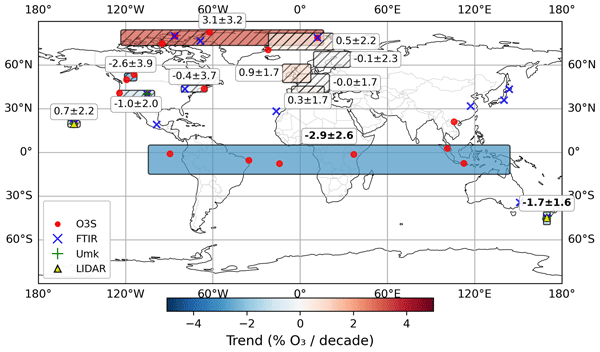
We present regional Bayesian composites of ground-based ozone partial column records. Defining coherent regions using a CAMS (Copernicus Atmosphere Monitoring Service) representativeness study, we merge five instrument types using the BASIC (Ball et al., 2017) algorithm, reducing trend uncertainties by 9.4 % compared to a weighted mean. Results confirm upper stratospheric recovery, predominantly negative middle stratospheric trends, while lower stratospheric trends remain mostly non-significant.
Pasquale Sellitto, Mona Kosary, Michael Höpfner, Bernd Funke, Alex Hoffmann, Jörn Ungermann, Quentin Errera, Simone Tilmes, and Björn-Martin Sinnhuber
Atmos. Meas. Tech., 19, 6379–6393, https://doi.org/10.5194/amt-19-6379-2026, https://doi.org/10.5194/amt-19-6379-2026, 2026
Short summary
Short summary
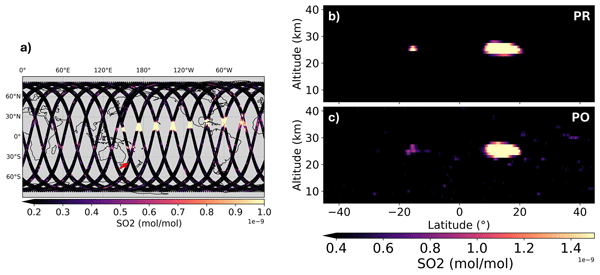
To counterbalance human-caused global warming, highly controversial geoengineering techniques, based on stratospheric aerosol injection (SAI), have been proposed as a complement to climate change mitigation. Possible unilateral SAI deployments or tests are a risk. We show that existing satellite instruments do not have the capability to detect unilateral SAI experiments and we propose a future satellite technique, infrared limb emission sounding, that can provide this missing capability.
Alessandro Zanchetta, Steven van Heuven, Rigel Kivi, Michel Ramonet, Andreas Engel, Maarten Krol, and Huilin Chen
Atmos. Chem. Phys., 26, 13909–13927, https://doi.org/10.5194/acp-26-13909-2026, https://doi.org/10.5194/acp-26-13909-2026, 2026
Short summary
Short summary
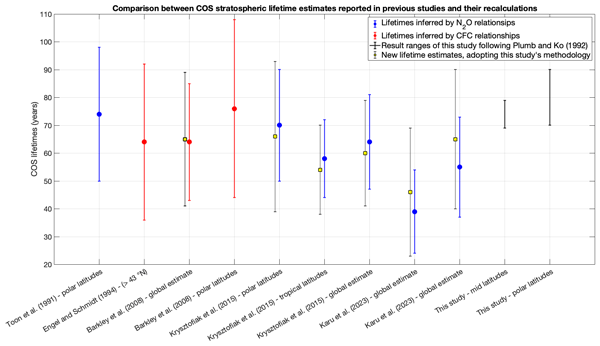
In this study, we calculate the mean lifetime of carbonyl sulfide (COS) and methane (CH4) in the stratosphere from continuous vertical profiles sampled with balloon-borne instruments. We used two methods based on the stratospheric relationship of these gas species with N2O. The estimated stratospheric lifetime range is 69–90 years for COS and 146–172 years for CH4. These results are consistent with other studies and suggest no long-term trends in the stratospheric lifetime of these gas species.
Sean M. Davis, William T. Ball, Yue Jia, Gabriel Chiodo, Justin A. Alsing, James Keeble, Hideharu Akiyoshi, Carlo Arosio, Ewa M. Bednarz, Andreas Chrysanthou, Melanie Coldewey-Egbers, Robert Damadeo, Sandip Dhomse, Mohamadou A. Diallo, Simone Dietmuller, Roland Eichinger, Stacey Frith, Birgit Hassler, Michaela I. Hegglin, Daan Hubert, Patrick Jöckel, Béatrice Josse, Natalya Kramarova, Diego Loyola, Eliane Maillard Barras, Marion Marchand, Olaf Morgenstern, David Plummer, Robert W. Portmann, Karen H. Rosenlof, Alexei Rozanov, Viktoria F. Sofieva, Johannes Staehelin, Timofei Sukhodolov, Kleareti Tourpali, Ronald J. Van der A, H. J. Ray Wang, Krzysztof Wargan, Shingo Watanabe, Mark Weber, Jeannette D. Wild, Yousuke Yamashita, and Jerry Ziemke
Atmos. Chem. Phys., 26, 13817–13843, https://doi.org/10.5194/acp-26-13817-2026, https://doi.org/10.5194/acp-26-13817-2026, 2026
Short summary
Short summary
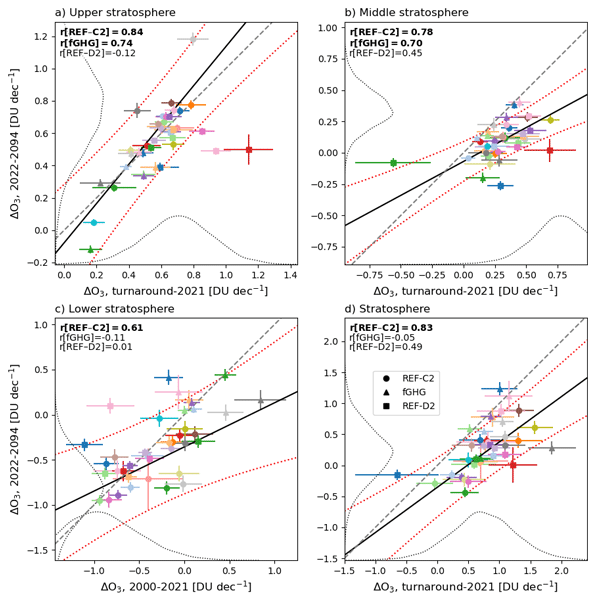
This study investigates tropical ozone changes in models and satellite observations to determine how well they agree and whether observations can constrain model projections. At some levels, satellite records disagree significantly on the magnitude of ozone changes. While early and late 21st century trends are correlated across models, suggesting a potential emergent constraint, the spread in observations means they are unable to provide guidance on the credibility of model projections.
Xiaoyi Zhao, Vitali Fioletov, Irina Petropavlovskikh, Voltaire Velazco, Alberto Redondas, Anna Solomatnikova, Corinne Vigouroux, Kimberly Strong, Michel Van Roozendael, Andrea Pazmino, Thomas F. Hanisco, Alexander Cede, Martin Tiefengraber, Gordon Labow, Masatomo Fujiwara, Ronald van der A, Debora Griffin, Chris McLinden, Tom Kralidis, Wolfgang Steinbrecht, and Sum Chi Lee
Atmos. Chem. Phys., 26, 13693–13720, https://doi.org/10.5194/acp-26-13693-2026, https://doi.org/10.5194/acp-26-13693-2026, 2026
Short summary
Short summary
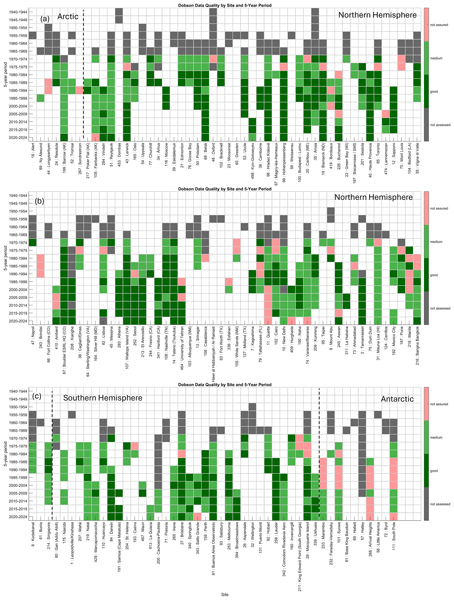
Total column ozone (TCO) records from six ground-based networks are compiled and evaluated using multiple satellites and reanalysis data. Station performance (1940–2024) is assessed using harmonized metrics. Ground-based annual means agree within ±2 %, while pre-satellite reanalyses show larger biases (up to −5 %). The resulting quality-assessed dataset supports trend analysis and satellite validation.
Shrutika Wagh, Luana S. Basso, Ayan F. Fleischmann, João Henrique Fernandes Amaral, John Melack, Jost Larvic, David Walter, Stijn Hantson, Julia Marshall, Chris Wilson, Youmi Oh, Lori Bruhwiler, John B. Miller, Corinne Vigouroux, Christian Rödenbeck, and Santiago Botía
EGUsphere, https://doi.org/10.5194/egusphere-2026-5245, https://doi.org/10.5194/egusphere-2026-5245, 2026
This preprint is open for discussion and under review for Atmospheric Chemistry and Physics (ACP).
Short summary
Short summary
We estimated methane emissions from the Amazon, Orinoco, and Paraná river basins using the Jena CarboScope global inversion system. We included Amazon measurements to evaluate their effect on the results. Adding them led to a large adjustment in estimated wetland emissions and strongly influenced the Amazon estimate. Without these measurements, the Amazon estimate increased by about 75 %. Our findings highlight the need to maintain and expand measurements across tropical South America.
Bernd Funke, Michael Höpfner, Stefan Bender, Quentin Errera, Udo Grabowski, Alex Hoffmann, Han-Li Liu, Nick M. Pedatella, Piera Raspollini, Jörn Ungermann, and Björn-Martin Sinnhuber
EGUsphere, https://doi.org/10.5194/egusphere-2026-3881, https://doi.org/10.5194/egusphere-2026-3881, 2026
This preprint is open for discussion and under review for Atmospheric Measurement Techniques (AMT).
Short summary
Short summary
We introduce two performance modeling tools, the Linear Performance Estimator (LPE) and the Fast L2 Simulator (FL2S), developed for CAIRT, a proposed ESA Earth Explorer mission. CAIRT aims to observe the middle atmosphere using an Imaging Fourier Transform Spectrometer. LPE quantifies spatial resolution and tomographic retrieval uncertainties, while FL2S generates synthetic data products that mimic the retrieval chain. Together, they demonstrate CAIRT's ability to meet scientific requirements.
Brian Auffarth, Mark Weber, Alexei Rozanov, Carlo Arosio, John P. Burrows, Melanie Coldewey-Egbers, Sean M. Davis, Doug Degenstein, Kimberlee Dubé, Stacey M. Frith, Lucien Froidevaux, Diego Loyola, Vitali E. Fioletov, Viktoria Sofieva, Ronald van der A, and Jeannette D. Wild
Atmos. Chem. Phys., 26, 13359–13386, https://doi.org/10.5194/acp-26-13359-2026, https://doi.org/10.5194/acp-26-13359-2026, 2026
Short summary
Short summary
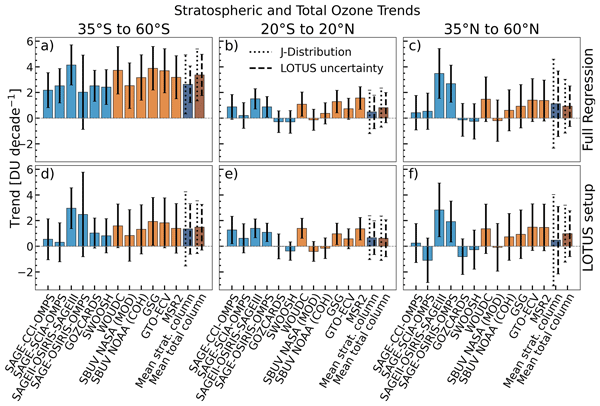
This study examines the trends of stratospheric and total ozone between 2000 and 2024, using long-term satellite datasets. Our results show positive trends in the upper stratosphere and a strong ozone recovery in the Southern Hemisphere, while changes in lower altitudes remain mostly small. The total and stratospheric trends show very similar results, indicating that tropospheric ozone contributes little to total column changes, while the stratospheric column is the dominant driver.
Shangyi Liu, Cathy Clerbaux, Anne Boynard, Mingjian Gu, Chengli Qi, Bruno Franco, Lieven Clarisse, Shan Han, Mengya Sheng, Nicolas Theys, and Zhao-Cheng Zeng
EGUsphere, https://doi.org/10.5194/egusphere-2026-5017, https://doi.org/10.5194/egusphere-2026-5017, 2026
This preprint is open for discussion and under review for Atmospheric Chemistry and Physics (ACP).
Short summary
Short summary
The March 2026 Tehran refinery explosions released massive amounts of toxic sulfur dioxide gas. We used multiple satellites to track this plume, discovering that intense fires pushed the pollution high into the atmosphere, causing it to travel across continents for days. Current air quality forecast models completely missed this major event. This highlights the urgent need to use advanced satellites to monitor pollution from armed conflicts to assess global climate risks.
Antonio G. Bruno, David P. Moore, Jeremy J. Harrison, Ailish Graham, Martyn P. Chipperfield, and Corinne Vigouroux
Atmos. Chem. Phys., 26, 12925–12952, https://doi.org/10.5194/acp-26-12925-2026, https://doi.org/10.5194/acp-26-12925-2026, 2026
Short summary
Short summary
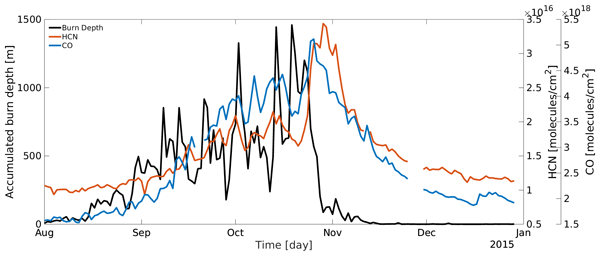
Indonesian peatlands store vast carbon reserves, but can release large quantities of greenhouse gases and other species with significant environmental impacts, including hydrogen cyanide (HCN), when fires occur. Analyzing three major El Niño years with satellites and models, we found that emissions depend on local hydrological conditions, not just El Niño strength. Including soil moisture and burn depth can improve emission estimates and climate strategies.
Hayoung Park, Sujong Jeong, Jaewon Joo, Dong Yeong Chang, Yu-Ri Lee, Hyuckjae Lee, Jueun Kim, Jaewon Shin, Jonghyuk Lee, Jaemin Hong, Jae Hyun Lim, Donghee Kim, Isamu Morino, Matthias M. Frey, Gwangju Moon, Hyojin Eom, Sumin Kim, Sunran Lee, Jungho Yu, and Kyucheol Shin
EGUsphere, https://doi.org/10.5194/egusphere-2026-3755, https://doi.org/10.5194/egusphere-2026-3755, 2026
This preprint is open for discussion and under review for Atmospheric Chemistry and Physics (ACP).
Short summary
Short summary
This study analyzed greenhouse gas emissions from one of South Korea’s largest petrochemical complexes using ground, mobile, aircraft, and satellite measurements. The results revealed higher emissions, including methane leaks, than what was reported in existing inventory estimates. By integrating different types of observations, this study shows a more accurate way to measure industrial emissions and provides information that can support better emissions reporting and climate action.
Robert J. Parker, Michael P. Cartwright, Dan Orr, Lakshmi N. Bharathan, Neil Humpage, Alex J. Webb, Peter Somkuti, Hartmut Boesch, Antonio Di Noia, Hiroshi Suto, Matthias Buschmann, Nicholas M. Deutscher, David W. T. Griffith, Frank Hase, Rigel Kivi, Erin McGee, Isamu Morino, Hirofumi Ohyama, Christof Petri, John Robinson, Coleen M. Roehl, Mahesh Kumar Sha, Kei Shiomi, Kimberly Strong, Ralf Sussmann, Yao Té, Voltaire A. Velazco, Mihalis Vrekoussis, Wei Wang, Thorsten Warneke, Damien Weidmann, Debra Wunch, and Minqiang Zhou
Earth Syst. Sci. Data Discuss., https://doi.org/10.5194/essd-2026-625, https://doi.org/10.5194/essd-2026-625, 2026
Preprint under review for ESSD
Short summary
Short summary
Methane is a powerful greenhouse gas and its concentration in the atmosphere is rising rapidly. We present a new record of atmospheric methane measured from space by the Japanese GOSAT-2 satellite, covering 2019 to 2025. The measurements are processed identically to those from its predecessor GOSAT and checked against ground-based instruments around the world. Together the two satellites provide a continuous 17-year record that helps track where methane comes from and how quickly it is changing.
Gytha Mettepenningen, Caroline Fayt, Cato Van Doorne, Aurélien Aubry, Sophie Berkenbosch, Martine De Mazière, Filip Desmet, Lars Jacobs, Eddy Neefs, Frederik Tack, Timo Van Laar, Clemens Mensink, and Michel Van Roozendael
EGUsphere, https://doi.org/10.5194/egusphere-2026-3783, https://doi.org/10.5194/egusphere-2026-3783, 2026
This preprint is open for discussion and under review for Atmospheric Measurement Techniques (AMT).
Short summary
Short summary
Pollution from ships impacts air quality in dense coastal regions of the North Sea. SEMPAS (Ship Emission Monitoring with Passive Absorption Spectroscopy) remotely monitors the emissions of ships passing by. Without ships nearby, SEMPAS is used for atmospheric research in a marine environment. This study presents the instrument’s development. Tests in the Belgian port of Zeebrugge show strong variations in ship emissions, while atmospheric measurements agree well with satellite observations.
Mona Kosary, Pasquale Sellitto, Michael Höpfner, Bernd Funke, Alex Hoffmann, Jörn Ungermann, Quentin Errera, Simone Tilmes, and Björn-Martin Sinnhuber
EGUsphere, https://doi.org/10.5194/egusphere-2026-4654, https://doi.org/10.5194/egusphere-2026-4654, 2026
Short summary
Short summary
We investigated whether future satellites could track changes in the ozone layer if reflective particles were deliberately added high in the atmosphere to cool the planet. Using climate model simulations, we created virtual satellite measurements and compared them with the original data. The method captured the key changes, especially stronger ozone loss and delayed recovery over Antarctica, while showing low artificial distortion. This suggests such satellites could provide important oversight.
Selviga Sinnathamby, Sarah Safieddine, Anne Boynard, Juliette Hadji-Lazaro, Solène Turquety, Simon Whitburn, Lieven Clarisse, Marie Doutriaux-Boucher, Pierre Coheur, and Cathy Clerbaux
EGUsphere, https://doi.org/10.5194/egusphere-2026-4393, https://doi.org/10.5194/egusphere-2026-4393, 2026
This preprint is open for discussion and under review for Atmospheric Chemistry and Physics (ACP).
Short summary
Short summary
South and East Asia have experienced contrasting air pollution changes over recent decades, with implications for regional surface temperature. Using satellite observations and CMIP6 simulations, we assess how pollutant trends relate to temperature changes and whether models reproduce these contrasts. While CMIP6 models capture some air pollution changes under certain scenarios, they fail to reproduce the regional temperature contrast, highlighting the need for extended historical simulations.

Sophie Vandenbussche, Christodoulos Biskas, Maria-Elissavet Koukouli, Stelios Kazadzis, and Martine De Mazière
Atmos. Meas. Tech., 19, 4889–4922, https://doi.org/10.5194/amt-19-4889-2026, https://doi.org/10.5194/amt-19-4889-2026, 2026
Short summary
Short summary
Mineral dust aerosols are tiny particles uplifted by winds from deserts, which may be transported for long distances. They are climate forcers and affect human health and socio-economic sectors, making near-real-time and long-term monitoring essential. Here, we use satellite observations to retrieve global 3D distributions of dust aerosols. We present an updated and improved algorithm and its long-term consistent data since late 2007, with high potential for climate analyses and alert systems.
Louis Mirallie, Eliane Maillard Barras, Caroline Jonas, Corinne Vigouroux, Roeland Van Malderen, Irina Petropavlovskikh, Sophie Godin-Beekmann, Thierry Leblanc, Wolfgang Steinbrecht, Antoine Vadès, Rolf Ruefenacht, Alexander Haefele, Gunter Stober, Peter Effertz, Julian Gröbner, Gerard Ancellet, María Cazorla, Petra Duff, Matthias M. Frey, Michael Gill, James W. Hannigan, Nicholas Jones, Rigel Kivi, Raphael Köhler, Bogumil Kois, Debra E. Kollonige, Emmanuel Mahieu, Glen McConville, Johan Mellqvist, Gary Morris, Isao Murata, Tomoo Nagahama, Gerald E. Nedoluha, Shin-Ya Ogino, Richard Querel, Ryan M. Stauffer, Wolfgang Stremme, Kimberly Strong, Ralf Sussmann, Anne M. Thompson, and Yana Virolainen
Atmos. Chem. Phys., 26, 10303–10330, https://doi.org/10.5194/acp-26-10303-2026, https://doi.org/10.5194/acp-26-10303-2026, 2026
Short summary
Short summary
We present regional Bayesian composites of ground-based ozone partial column records. Defining coherent regions using a CAMS (Copernicus Atmosphere Monitoring Service) representativeness study, we merge five instrument types using the BASIC (Ball et al., 2017) algorithm, reducing trend uncertainties by 9.4 % compared to a weighted mean. Results confirm upper stratospheric recovery, predominantly negative middle stratospheric trends, while lower stratospheric trends remain mostly non-significant.
Dominique Gantois, Alexandre Baron, Michaël Sicard, Valentin Duflot, Niels Groenen, Nelson Bègue, Sabine Eckhardt, Nikolaos Evangeliou, Martine De Mazière, Corinne Vigouroux, Guillaume Payen, Nicolas Marquestaut, Jean-Marc Metzger, Patrick Chazette, and Cyrille Flamant
EGUsphere, https://doi.org/10.5194/egusphere-2026-3070, https://doi.org/10.5194/egusphere-2026-3070, 2026
Short summary
Short summary
Smoke from Southern African and South American wildfires can travel for thousands of kilometers before reaching the Indian Ocean and Reunion Island. In this study, we use instruments measuring from the ground, from satellites, as well as atmospheric models, to track these smoke plumes and identify their origins and properties. Our findings should help future research focusing on the impact of these plumes on the atmospheric temperature.
Daniele Minganti, Simon Chabrillat, Sean Davis, Quentin Errera, Marc Op de beeck, Eric Ray, Sarah Vervalcke, Krzysztof Wargan, and Catherine Wespes
EGUsphere, https://doi.org/10.5194/egusphere-2026-3449, https://doi.org/10.5194/egusphere-2026-3449, 2026
Short summary
Short summary
In early 2019, an unusual increase of nitrous oxide concentrations occurred in the northern lower stratosphere (around 20 km). We show that unprecedented circulation pattern rapidly moved nitrous oxide from the tropical region to the northern mid-latitudes. This work reveals how stratospheric mid-latitudes can respond to special wind conditions in the Tropics and subtropics. Such extreme event helps improving our understanding of future changes of stratospheric transport in a warming climate.
Irina Petropavlovskikh, Martine De Mazière, Anne M. Thompson, Jeannette D. Wild, James W. Hannigan, Henry B. Selkirk, Reem A. Hannun, Wolfgang Steinbrecht, Jean-Christopher Lambert, Roeland Van Malderen, Elizabeth Asher, Raul R. Cordero, Sophie Godin-Beekmann, Daan Hubert, Sergey Khaykin, Karin Kreher, Thierry Leblanc, Emmanuel Mahieu, Eliane Maillard Barras, Glen McConville, Gerald Nedoluha, Ivan Ortega, Alberto Redondas Marrero, Gunther Seckmeyer, Ryan M. Stauffer, Sarah A. Strode, Kim Strong, Takafumi Sugita, Michel Van Roozendael, Voltaire Velazco, Corinne Vigouroux, and Bärbel Vogel
Atmos. Chem. Phys., 26, 8637–8675, https://doi.org/10.5194/acp-26-8637-2026, https://doi.org/10.5194/acp-26-8637-2026, 2026
Short summary
Short summary
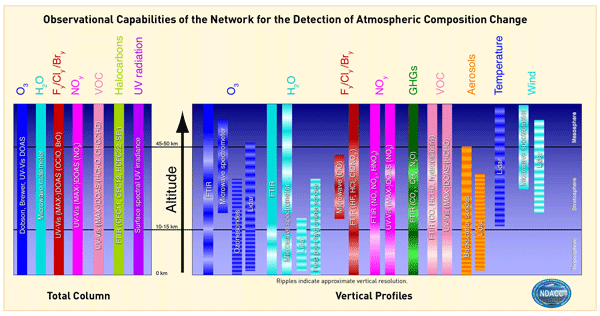
This introduction to the special issue "Achievements and perspectives of the Network for the Detection of Atmospheric Composition Change after 35 years of operation” provides an overview of important research findings achieved under the NDACC objectives. The future of NDACC is discussed in the light of the evolution of the scientific questions, evolving collaborations with partners and Cooperating Networks, and the current landscape of gaps in satellite and ground-based observations.
Beatriz Herrera, Enrico Dammers, Martine De Maziere, Omaira Garcia, Michel Grutter, James W. Hannigan, Dylan B. A. Jones, Nicholas Jones, Emmanuel Mahieu, Maria Makarova, Kazuyuki Miyazaki, Isamu Morino, Isao Murata, Ivan Ortega, Mathias Palm, Anatoly Poverovskii, Takashi Sekiya, Dan Smale, Hannah Sill, Wolfgang Stremme, Ralf Sussmann, Geoffrey Toon, Corinne Vigouroux, Wei Wang, Tyler Wizenberg, and Kimberly Strong
EGUsphere, https://doi.org/10.5194/egusphere-2026-3138, https://doi.org/10.5194/egusphere-2026-3138, 2026
Short summary
Short summary
This work investigates how atmospheric ammonia changes over time using long-term observations and simulations at locations around the world. While its main sources are related to agriculture, wildfires, vehicles, and volcanoes also contribute. The results show that ammonia levels vary strongly during the day and across seasons, and are rising at most locations. These findings improve our understanding of air pollution and its impacts.
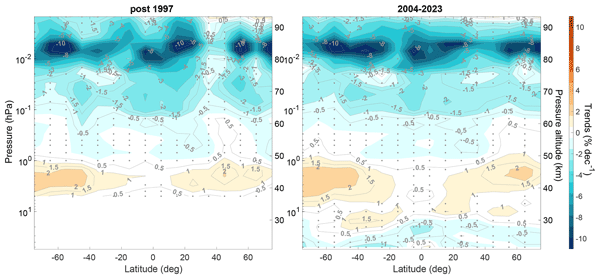
Monika E. Szelag, Viktoria F. Sofieva, Edward Malina, Pekka T. Verronen, Michelle L. Santee, Manuel López-Puertas, Bernd Funke, Gabriele Stiller, Alexandra Laeng, Kaley A. Walker, Patrick E. Sheese, Mark E. Hervig, and Benjamin T. Marshall
Atmos. Chem. Phys., 26, 7503–7522, https://doi.org/10.5194/acp-26-7503-2026, https://doi.org/10.5194/acp-26-7503-2026, 2026
Short summary
Short summary
We present a new global dataset of ozone profiles in the mesosphere and lower thermosphere, created by combining several satellite measurements covering more than three decades. Our results show that ozone is recovering in the stratosphere but decreasing in the mesosphere, with the strongest declines near the mesopause. This dataset provides a valuable resource for investigating long-term changes, improving model performance, and addressing an observational gap in the upper atmosphere.
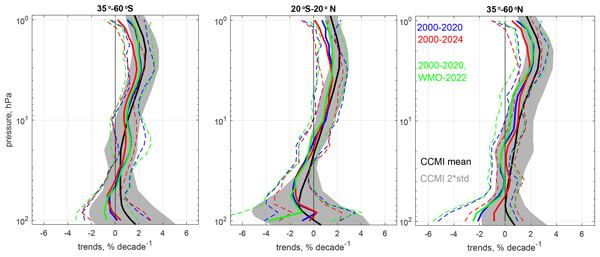
Viktoria F. Sofieva, Monika E. Szelag, Natalya A. Kramarova, Robert Damadeo, Wolfgang Steinbrecht, Irina Petropavlovskikh, Corinne Vigouroux, Eliane Maillard Barras, Daniel Zawada, Kleareti Tourpali, Stacey M. Frith, Jeannette D. Wild, Sean M. Davis, Carlo Arosio, Mark Weber, Alexei Rozanov, Brian Auffarth, Lucien Froidevaux, Ryan Fuller, Doug Degenstein, Kimberlee Dube, Peter Effertz, Thierry Leblanc, Gérard Ancellet, Sophie Godin-Beekmann, Glen McConville, Richard Querel, Dan Smale, Marie-Renee DeBacker, Emmanuel Mahieu, and Ralf Sussmann
Atmos. Chem. Phys., 26, 7387–7405, https://doi.org/10.5194/acp-26-7387-2026, https://doi.org/10.5194/acp-26-7387-2026, 2026
Short summary
Short summary
We present an updated evaluation of stratospheric ozone profile trends in the 60°S–60°N latitude range using long-term ground-based and satellite climate data records, as well as simulations by chemistry-climate models. Analyses confirm the statistically significant positive ozone trends in the upper stratosphere of ~1–3 % decade-1. The trends are close to zero in the middle stratosphere, and mostly negative in the lower stratosphere, but they are not statistically significant.
Joseph Hung, Penny M. Rowe, Christopher J. Cox, Emily M. McCullough, Liam Kroll, Raia Ottenheimer, Matthew D. Shupe, Von P. Walden, and Kimberly Strong
EGUsphere, https://doi.org/10.5194/egusphere-2026-1906, https://doi.org/10.5194/egusphere-2026-1906, 2026
Short summary
Short summary
Climate models struggle to accurately represent polar regions largely due to challenges in modelling clouds. In this article, we sampled clouds at Arctic and Antarctic field sites, and found that Antarctic clouds generally featured lower temperatures, smaller liquid droplets, and are thinner because they have a higher proportion of ice than Arctic clouds. This knowledge improves our ability to monitor remote regions, and serves to improve our understanding of cloud processes.
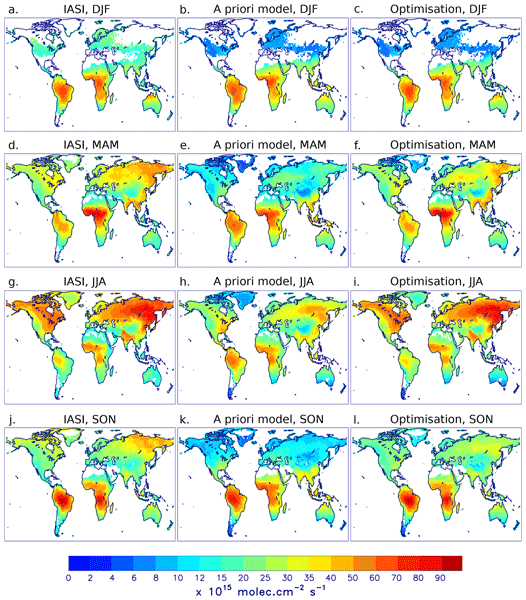
Jean-François Müller, Trissevgeni Stavrakou, Bruno Franco, Lieven Clarisse, Crist Amelynck, Niels Schoon, Bert W. D. Verreyken, Beata Opacka, Corinne Vigouroux, Alex B. Guenther, Emmanuel Mahieu, Maria Makarova, and Kimberly Strong
Atmos. Chem. Phys., 26, 5375–5406, https://doi.org/10.5194/acp-26-5375-2026, https://doi.org/10.5194/acp-26-5375-2026, 2026
Short summary
Short summary
We use an atmospheric model and aircraft measurements to evaluate methanol measurements from satellite sensors. The spaceborne data are found to be too low over source regions. Next, we use the model and the bias-corrected satellite data to derive improved terrestrial emissions of methanol between 2008 and 2019, and we evaluate the results against aircraft and ground-based measurements. This work shows that biogenic emissions of methanol might be ~ 60 % larger than previously estimated.
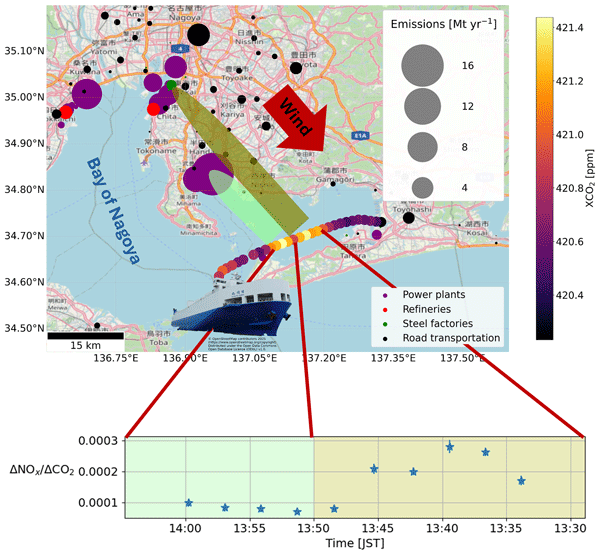
Vincent Enders, Astrid Müller, Matthias Max Frey, Frank Hase, Ralph Kleinschek, Marvin Knapp, Benedikt Löw, Isamu Morino, Shin-Ichiro Nakaoka, Hideki Nara, Hiroshi Tanimoto, Sanam N. Vardag, Karolin Voss, and André Butz
Atmos. Meas. Tech., 19, 2633–2655, https://doi.org/10.5194/amt-19-2633-2026, https://doi.org/10.5194/amt-19-2633-2026, 2026
Short summary
Short summary
We have deployed two spectrometers on a ship traveling along the coast of Japan. By that, we were able to repeatedly measure the greenhouse gas and air pollutant emissions of power plants, large industrial facilities, and cities. Using the ratios between the different gases, we are able to identify sources based on their unique signature. In addition, we are able to show that spectrometers can be operated on a ship, while still fulfilling the high standards of land-based observation networks.
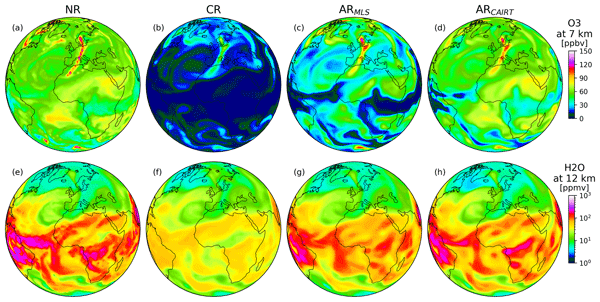
Quentin Errera, Marc Op de beeck, Stefan Bender, Johannes Flemming, Bernd Funke, Alex Hoffmann, Michael Höpfner, Nathaniel Livesey, Gabriele Poli, Didier Pieroux, Piera Raspollini, and Björn-Martin Sinnhuber
Atmos. Meas. Tech., 19, 2601–2620, https://doi.org/10.5194/amt-19-2601-2026, https://doi.org/10.5194/amt-19-2601-2026, 2026
Short summary
Short summary
The Changing Atmosphere Infra-Red Tomography Explorer (CAIRT) is a satellite mission concept developed to observe, among other, the gradient of ozone and water vapour in the upper troposphere and lower stratosphere where these species have their largest radiative impact. By simulating CAIRT observations and measuring their constrain on an atmospheric model using data assimilation, this study shows that CAIRT specifications are adequate to fulfil this objective.
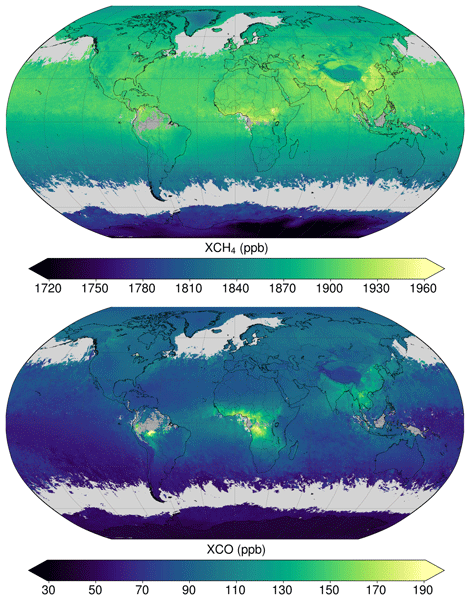
Oliver Schneising, Heinrich Bovensmann, Michael Buchwitz, Matthias Buschmann, Nicholas M. Deutscher, David W. T. Griffith, Jonas Hachmeister, Frank Hase, Laura T. Iraci, Rigel Kivi, Isamu Morino, Hirofumi Ohyama, Christof Petri, Maximilian Reuter, John Robinson, Coleen Roehl, Mahesh Kumar Sha, Kei Shiomi, Kimberly Strong, Ralf Sussmann, Yao Té, Voltaire A. Velazco, Mihalis Vrekoussis, Wei Wang, Thorsten Warneke, Damien Weidmann, Debra Wunch, Minqiang Zhou, and Hartmut Bösch
Atmos. Meas. Tech., 19, 2407–2435, https://doi.org/10.5194/amt-19-2407-2026, https://doi.org/10.5194/amt-19-2407-2026, 2026
Short summary
Short summary
We present an improved version of the TROPOMI/WFMD (TROPOspheric Monitoring Instrument/Weighting Function Modified Differential) algorithm for the simultaneous retrieval of atmospheric methane and carbon monoxide from satellite observations. The updated data product combines higher data yield with better precision and accuracy, expanding its suitability for a wider range of scientific applications. These substantial advances are mainly due to refined quality filtering, enabling more reliable identification of cloudy scenes and mitigating specific aerosol-related issues.
Bavo Langerock, Minqiang Zhou, Martine De Mazière, Mahesh Kumar Sha, Filip Desmet, Bart Dils, Corinne Vigouroux, Rigel Kivi, Isamu Morino, Mathias Palm, Gopala Krishna Darbha, Soumik Banerjee, Sujata Ray, and Mohmmed Talib
EGUsphere, https://doi.org/10.5194/egusphere-2026-1890, https://doi.org/10.5194/egusphere-2026-1890, 2026
This preprint is open for discussion and under review for Atmospheric Measurement Techniques (AMT).
Short summary
Short summary
This work describes an algorithm to correct measurements obtained from Fourier-Transform Infrared spectrometers (FTIR) for nonlinear detector response. The method is demonstrated for remote sensing observational networks for atmospheric gas products (NDACC, TCCON and COCCON). Diagnostic metrics are introduced and have the potential to characterize the cause of the underlying nonlinearity (saturation or optical misalignment). The algorithm is made available in python.
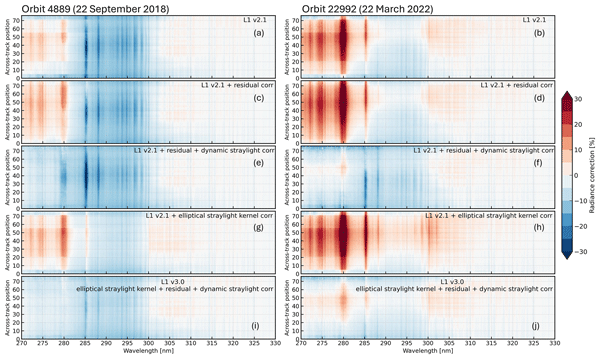
Serena Di Pede, Erwin Loots, Antje Ludewig, Emiel van der Plas, Edward van Amelrooy, Mirna van Hoek, Maarten Sneep, Mark ter Linden, Arno Keppens, and J. Pepijn Veefkind
Atmos. Meas. Tech., 19, 1875–1899, https://doi.org/10.5194/amt-19-1875-2026, https://doi.org/10.5194/amt-19-1875-2026, 2026
Short summary
Short summary
TROPOMI (TROPOspheric Monitoring Instrument) provides daily ozone profile data from ultraviolet bands 1–2. Accurate radiometric calibration is critical below 300 nm where signals are low. A Level-2 soft calibration complements L1 calibration and reveals spectral, temporal, and across-track biases. Re-analysis of calibration data enabled improved L1 corrections to address remaining straylight and residual signal effects, reducing soft calibration magnitude by ~15–20 % and associated biases in L1b v3.0 and ozone processor v2.9.0.
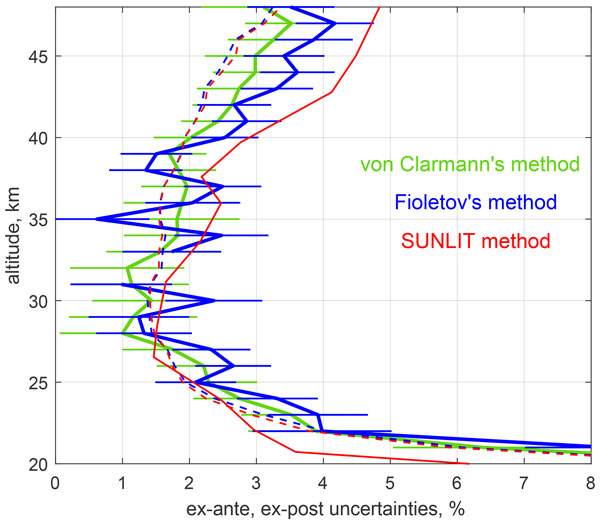
Viktoria F. Sofieva, Alexandra Laeng, Thomas von Clarmann, Gabriele Stiller, Michael Kiefer, Johanna Tamminen, Alexey Rozanov, Carlo Arosio, Nathaniel Livesey, Robert Damadeo, Patrick Sheese, Kaley A. Walker, Doug Degenstein, Daniel Zawada, Natalya A. Kramarova, and Arno Keppens
Atmos. Meas. Tech., 19, 1837–1852, https://doi.org/10.5194/amt-19-1837-2026, https://doi.org/10.5194/amt-19-1837-2026, 2026
Short summary
Short summary
For satellite measurements of atmospheric composition, the random uncertainty estimates provided by retrieval algorithms might be imperfect due to various approximations used in the retrievals or presence of unknown error sources. This paper presents an overview of the methods used for validation of random uncertainty estimates. All methods discussed in this study are categorized, and assumptions and limitations of each method are discussed.
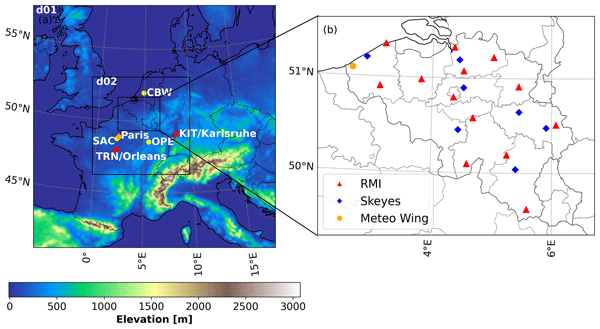
Jiaxin Wang, Sieglinde Callewaert, Minqiang Zhou, Filip Desmet, Sébastien Conil, Michel Ramonet, Pucai Wang, and Martine De Mazière
Atmos. Chem. Phys., 26, 3541–3565, https://doi.org/10.5194/acp-26-3541-2026, https://doi.org/10.5194/acp-26-3541-2026, 2026
Short summary
Short summary
We used a regional atmospheric transport model to simulate carbon dioxide mole fractions over Western Europe. The results show the importance of anthropogenic emission configurations, particularly near large emission sources, as well as the necessity of improving biogenic flux simulations. These findings contribute to enhancing the accuracy of carbon dioxide modeling and carbon budget inversions.
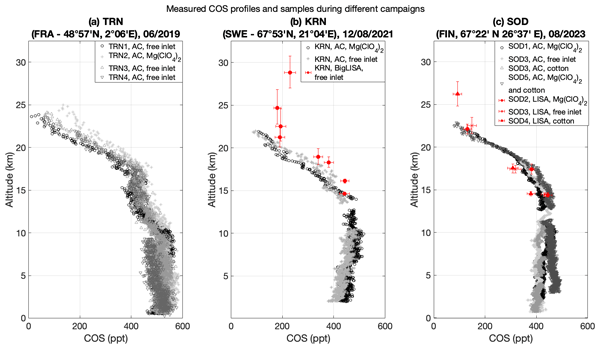
Alessandro Zanchetta, Steven van Heuven, Joram Hooghiem, Rigel Kivi, Thomas Laemmel, Michel Ramonet, Markus Leuenberger, Peter Nyfeler, Sophie L. Baartman, Maarten Krol, and Huilin Chen
Atmos. Meas. Tech., 19, 1465–1486, https://doi.org/10.5194/amt-19-1465-2026, https://doi.org/10.5194/amt-19-1465-2026, 2026
Short summary
Short summary
Continuous vertical profiles and discrete stratospheric samples of carbonyl sulfide (COS) were collected deploying the balloon-borne AirCore, LIghtweight Stratospheric Air (LISA) and BigLISA samplers and measured on a Quantum Cascade Laser Spectrometer (QCLS). Our measurements show good accordance with previous COS observations. Moreover, laboratory tests of ozone (O3) scrubbers proved squalene to remove O3 very efficiently without biasing the measurements of other trace gases.
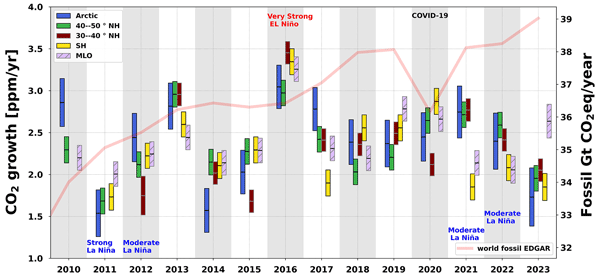
Nasrin Mostafavi Pak, Jonas Hachmeister, Markus Rettinger, Matthias Buschmann, Nicholas M. Deutscher, David W. T. Griffith, Laura T. Iraci, Xin Lan, Erin McGee, Isamu Morino, Dave Pollard, Coleen M. Roehl, Kimberly Strong, Rigel Kivi, and Paul Wennberg
Biogeosciences, 23, 1477–1495, https://doi.org/10.5194/bg-23-1477-2026, https://doi.org/10.5194/bg-23-1477-2026, 2026
Short summary
Short summary
We studied how carbon dioxide (CO2) levels change each year using long-term measurements from twelve sites worldwide. Average growth rates from 2010 to 2024 were about 2.4 ppm/year, with notable year-to-year and regional differences. Natural climate patterns influenced these changes, while temporary shifts in human emissions, such as during COVID‑19, had modest local effects. Monitoring CO2 growth across regions helps track emissions and assess mitigation efforts.
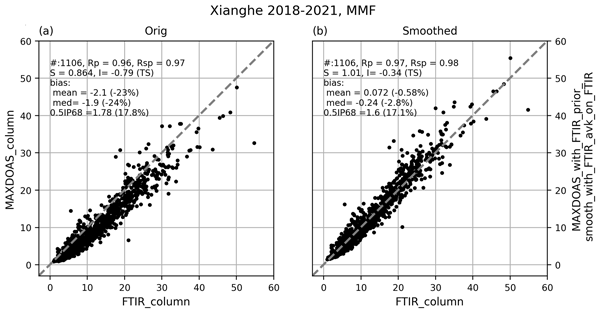
Gaia Pinardi, Martina M. Friedrich, Corinne Vigouroux, Bavo Langerock, Isabelle De Smedt, Caroline Fayt, Christian Hermans, Steffen Beirle, Thomas Wagner, Minqiang Zhou, Ting Wang, Pucai Wang, Martine De Mazière, and Michel Van Roozendael
Atmos. Meas. Tech., 19, 1259–1291, https://doi.org/10.5194/amt-19-1259-2026, https://doi.org/10.5194/amt-19-1259-2026, 2026
Short summary
Short summary
We evaluate ground-based remote-sensing measurements of formaldehyde from three techniques at a suburban site in China. A systematic −20 % bias in Multi-AXis Differential Optical Absorption Spectroscopy compared to direct-sun ultraviolet and infrared data is linked to limited sensitivity above a few kilometers and simplified vertical profiles assumptions. Using model-based priors and accounting for vertical sensitivity removes these differences, improving consistency for satellite validation.
Simone Pulimeno, Angelo Lupi, Vito Vitale, Claudia Frangipani, Carlos Toledano, Stelios Kazadzis, Natalia Kouremeti, Christoph Ritter, Sandra Graßl, Kerstin Stebel, Vitali Fioletov, Ihab Abboud, Sandra Blindheim, Lynn Ma, Norm O'Neill, Piotr Sobolewski, Pawan Gupta, Elena Lind, Thomas F. Eck, Antti Hyvärinen, Veijo Aaltonen, Rigel Kivi, Janae Csavina, Dmitry Kabanov, Sergey M. Sakerin, Olga R. Sidorova, Robert S. Stone, Hagen Telg, Laura Riihimaki, Raul R. Cordero, Martin Radenz, Ronny Engelmann, Michel Van Roozendal, Anatoli Chaikovsky, Philippe Goloub, Junji Hisamitsu, and Mauro Mazzola
Atmos. Chem. Phys., 26, 1809–1846, https://doi.org/10.5194/acp-26-1809-2026, https://doi.org/10.5194/acp-26-1809-2026, 2026
Short summary
Short summary
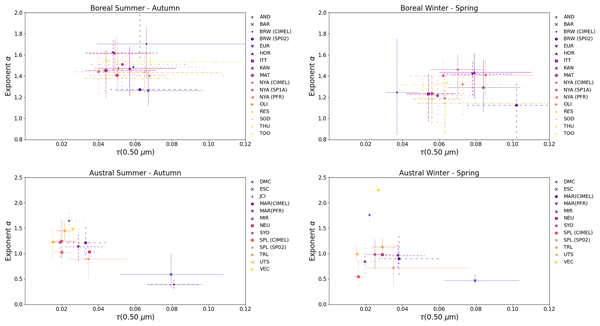
This study analyzed aerosols optical properties over the Arctic and Antarctic to measure them even during long periods of darkness. It found that pollution in the Arctic is decreasing, likely due to European emission regulations, while wildfires are becoming a more important source of particles. In Antarctica, particle levels are higher near the coast than inland, and vary by season. These results help us better understand how air pollution and climate are changing at the Earth’s poles.
David Tichopád, Kamil Láska, Tove Svendby, Klára Čížková, Andrea Pazmiño, Boyan Petkov, and Ladislav Metelka
Atmos. Chem. Phys., 26, 1751–1768, https://doi.org/10.5194/acp-26-1751-2026, https://doi.org/10.5194/acp-26-1751-2026, 2026
Short summary
Short summary
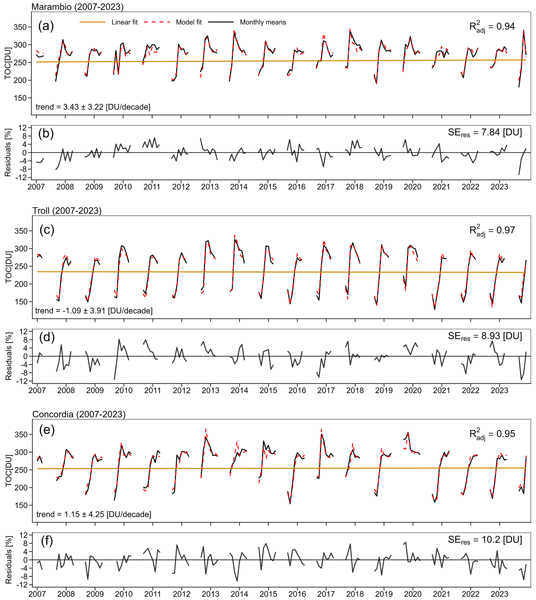
This study examined changes in the total ozone column above three Antarctic stations in 2007–2023 using ground and satellite observations. Ozone changes were mainly influenced by stratospheric temperature and atmospheric circulation. A significant increase occurred at Marambio, and unusually warm conditions in September 2019 caused ozone to rise strongly over East Antarctica, improving understanding of how the ozone layer responds to environmental changes.
Sieglinde Callewaert, Minqiang Zhou, Bavo Langerock, Pucai Wang, Ting Wang, Emmanuel Mahieu, and Martine De Mazière
Atmos. Chem. Phys., 26, 899–921, https://doi.org/10.5194/acp-26-899-2026, https://doi.org/10.5194/acp-26-899-2026, 2026
Short summary
Short summary
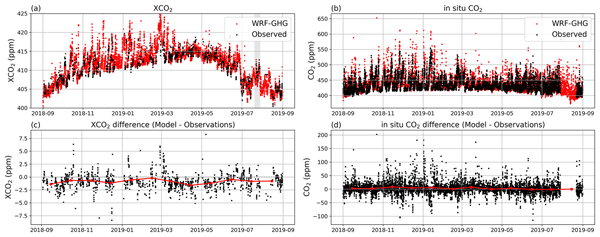
We investigated changes in carbon dioxide levels at a suburban site in China using ground-based measurements, remote sensing, and an atmospheric model. The model matched many observed patterns but showed nighttime and background errors. We identified the main human and natural sources and sinks, offering insights to improve future greenhouse gas monitoring and climate modelling.
Sarah Vervalcke, Quentin Errera, Roland Eichinger, Thomas Reddmann, Simon Chabrillat, Marc Op de beeck, Gabriele Stiller, and Emmanuel Mahieu
Atmos. Chem. Phys., 26, 391–409, https://doi.org/10.5194/acp-26-391-2026, https://doi.org/10.5194/acp-26-391-2026, 2026
Short summary
Short summary
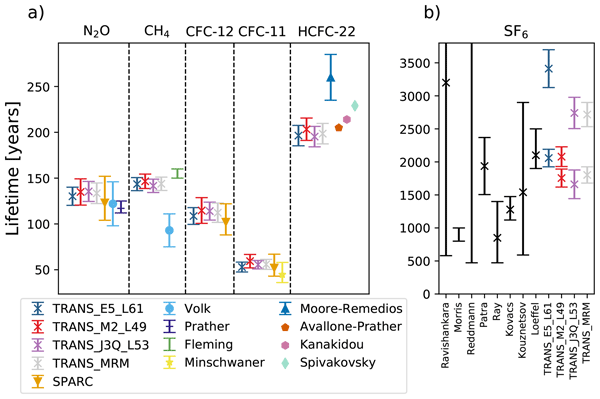
This study presents three simulations of atmospheric chemistry with the Belgian Assimilation System for Chemical Observations chemistry transport model, driven by different meteorological data sets. Newly implemented SF6 chemistry enables stratospheric transport studies. Results agree with satellite observations. The derived lifetimes of six trace gases agree with the literature, but SF6 shows larger sensitivity to the choice of meteorology. The lifetime of SF6 ranges from 1900 to 2600 years.
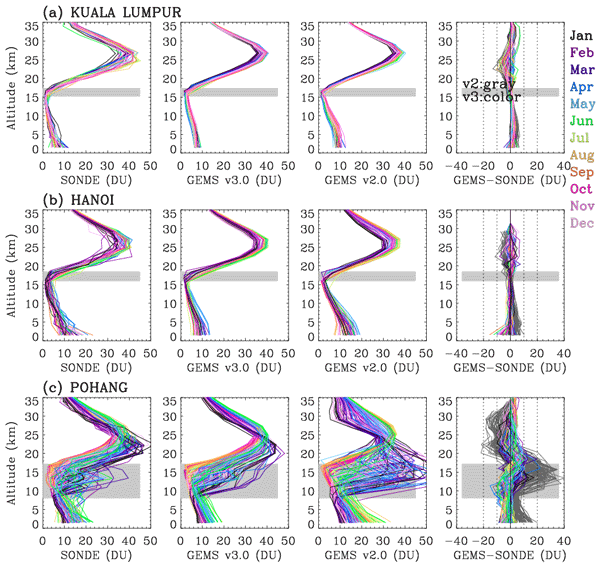
Juseon Bak, Arno Keppens, Daesung Choi, Sungjae Hong, Jae-Hwan Kim, Cheol-Hee Kim, Hyo-Jung Lee, Wonbae Jeon, Jhoon Kim, Ja-Ho Koo, Joowan Kim, Kanghyun Baek, Kai Yang, Xiong Liu, Gonzalo González Abad, Klaus-Peter Heue, Jean-Christopher Lambert, Yeonjin Jung, Hyunkee Hong, and Won-Jin Lee
Atmos. Meas. Tech., 19, 119–134, https://doi.org/10.5194/amt-19-119-2026, https://doi.org/10.5194/amt-19-119-2026, 2026
Short summary
Short summary
This study presents the first complete description of the operational version 3 ozone profile retrieval algorithm for the Geostationary Environment Monitoring Spectrometer (GEMS) and its performance characteristics. Improvements in radiometric and wavelength calibration reduce spectral fitting uncertainties and enhance agreement with ozonesonde profiles and Pandora total ozone measurements.
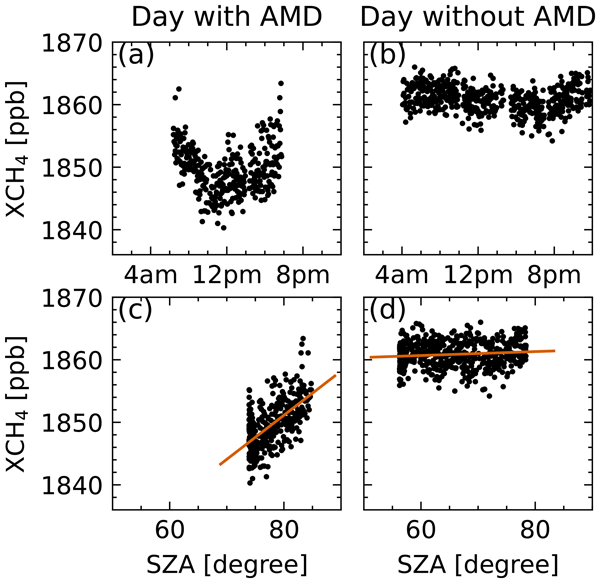
Jonas Hachmeister, Debra Wunch, Erin McGee, Kimberly Strong, Rigel Kivi, Justus Notholt, Thorsten Warneke, and Matthias Buschmann
Atmos. Meas. Tech., 18, 7105–7128, https://doi.org/10.5194/amt-18-7105-2025, https://doi.org/10.5194/amt-18-7105-2025, 2025
Short summary
Short summary
Methane measurements from the Total Carbon Column Observing Network (TCCON) are important for climate research, especially in the Arctic, where few measurements are available. We show that during early spring systematic errors are present in these data that are correlated to the presence of the polar vortex. These errors occur due to the usage of wrong methane prior shapes in the retrieval and can be alleviated by modifying the prior shape accordingly.
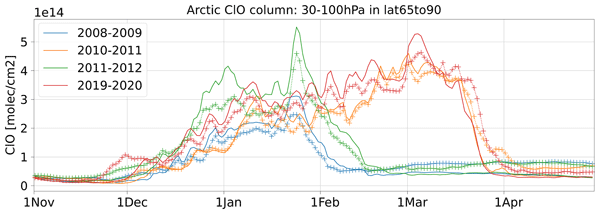
Simon Chabrillat, Samuel Rémy, Quentin Errera, Vincent Huijnen, Christine Bingen, Jonas Debosscher, François Hendrick, Swen Metzger, Adrien Mora, Daniele Minganti, Marc Op de beek, Léa Reisenfeld, Jason E. Williams, Henk Eskes, and Johannes Flemming
Geosci. Model Dev., 18, 8973–9014, https://doi.org/10.5194/gmd-18-8973-2025, https://doi.org/10.5194/gmd-18-8973-2025, 2025
Short summary
Short summary
We document the forecasts of the composition of the stratosphere by the Copernicus Atmosphere Monitoring Service. The model's predictions are compared with satellite measurements over a recent period, during polar ozone depletion events, and after the Mount Pinatubo volcanic eruption. The system performs well for sulfate aerosols, ozone and several other key gases but not as well for several nitrogen-containing gases. Chemical processes in aerosols and polar clouds should be improved.
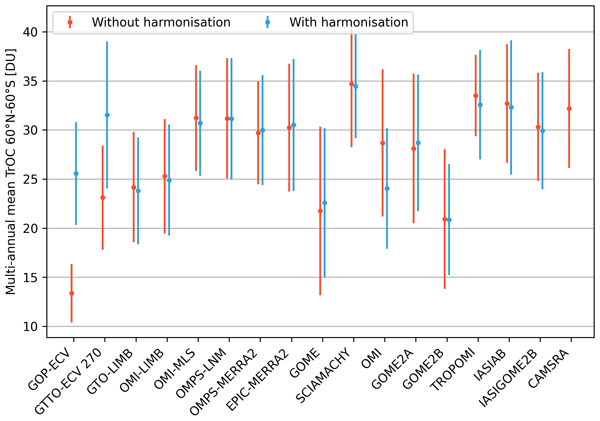
Arno Keppens, Daan Hubert, José Granville, Oindrila Nath, Jean-Christopher Lambert, Catherine Wespes, Pierre-François Coheur, Cathy Clerbaux, Anne Boynard, Richard Siddans, Barry Latter, Brian Kerridge, Serena Di Pede, Pepijn Veefkind, Juan Cuesta, Gaelle Dufour, Klaus-Peter Heue, Melanie Coldewey-Egbers, Diego Loyola, Andrea Orfanoz-Cheuquelaf, Swathi Maratt Satheesan, Kai-Uwe Eichmann, Alexei Rozanov, Viktoria F. Sofieva, Jerald R. Ziemke, Antje Inness, Roeland Van Malderen, and Lars Hoffmann
Atmos. Meas. Tech., 18, 6893–6916, https://doi.org/10.5194/amt-18-6893-2025, https://doi.org/10.5194/amt-18-6893-2025, 2025
Short summary
Short summary
The first Tropospheric Ozone Assessment Report (TOAR) encountered discrepancies between several satellite sensors’ estimates of the distribution and change of ozone in the free troposphere. Therefore, contributing to the second TOAR, we harmonise as much as possible the observational perspective of sixteen tropospheric ozone products from satellites. This only partially accounts for the observed discrepancies, with a reduction of 10–40 % of the inter-product dispersion upon harmonisation.
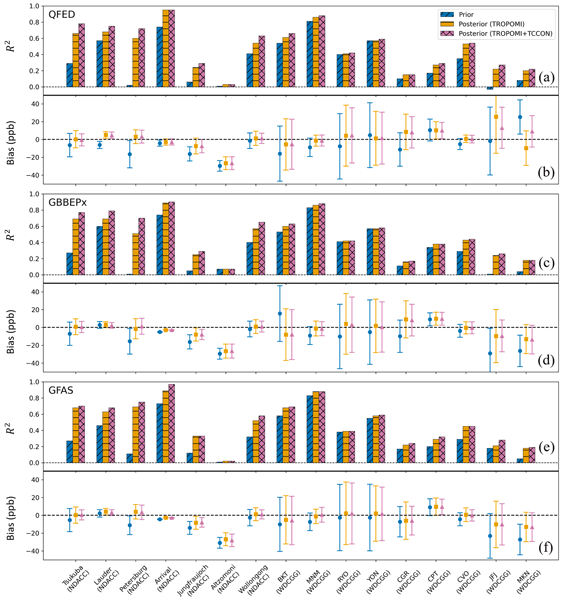
Sina Voshtani, Dylan B. A. Jones, Debra Wunch, Drew C. Pendergrass, Paul O. Wennberg, David F. Pollard, Isamu Morino, Hirofumi Ohyama, Nicholas M. Deutscher, Frank Hase, Ralf Sussmann, Damien Weidmann, Rigel Kivi, Omaira García, Yao Té, Jack Chen, Kerry Anderson, Robin Stevens, Shobha Kondragunta, Aihua Zhu, Douglas Worthy, Senen Racki, Kathryn McKain, Maria V. Makarova, Nicholas Jones, Emmanuel Mahieu, Andrea Cadena-Caicedo, Paolo Cristofanelli, Casper Labuschagne, Elena Kozlova, Thomas Seitz, Martin Steinbacher, Reza Mahdi, and Isao Murata
Atmos. Chem. Phys., 25, 15527–15565, https://doi.org/10.5194/acp-25-15527-2025, https://doi.org/10.5194/acp-25-15527-2025, 2025
Short summary
Short summary
We assess the complementarity of the greater temporal coverage provided by ground-based remote sensing data with the spatial coverage of satellite observations when these data are used together to quantify CO emissions from extreme wildfires in 2023. Our results reveal that the commonly used biomass burning emission inventories significantly underestimate the fire emissions and emphasize the importance of the ground-based remote sensing data in reducing uncertainties in the estimated emissions.
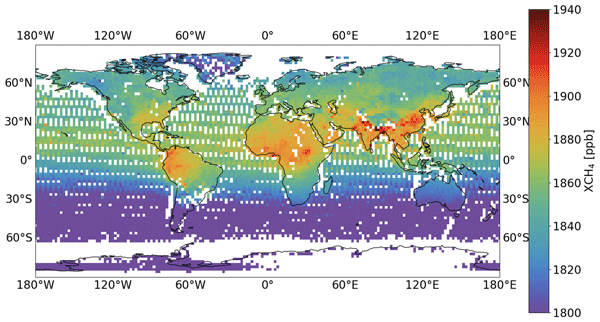
Andrew Gerald Barr, Jochen Landgraf, Mari Martinez-Velarte, Mihalis Vrekoussis, Ralf Sussmann, Isamu Morino, Kimberly Strong, Minqiang Zhou, Voltaire A. Velazco, Hirofumi Ohyama, Thorsten Warneke, Frank Hase, and Tobias Borsdorff
Atmos. Meas. Tech., 18, 6093–6123, https://doi.org/10.5194/amt-18-6093-2025, https://doi.org/10.5194/amt-18-6093-2025, 2025
Short summary
Short summary
The Greenhouse Gases Observing Satellite-2 (GOSAT-2) is a satellite dedicated to measuring concentrations of greenhouse gases from space. Since its launch, the increase of CH4 and CO2 concentrations in the atmosphere is clear. The datasets obtained from GOSAT-2 are used in the Copernicus atmospheric services to monitor the climate, in light of the Paris Agreement. Here we present robust datasets of these gases from GOSAT-2, including a novel machine learning approach to data quality filtering.
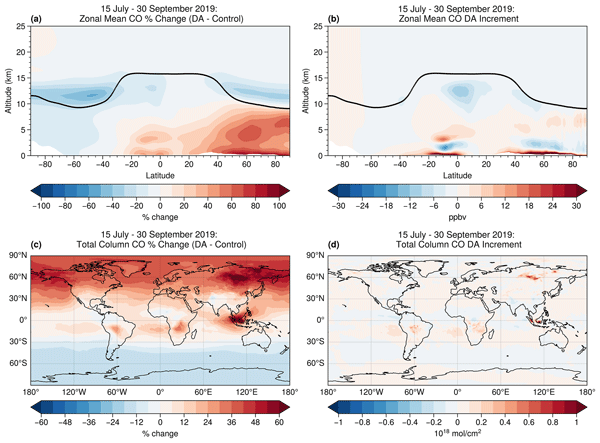
Maggie Bruckner, R. Bradley Pierce, Allen Lenzen, Glenn Diskin, Joshua P. DiGangi, Martine De Maziere, Nicholas Jones, and Maria Makarova
Geosci. Model Dev., 18, 8109–8127, https://doi.org/10.5194/gmd-18-8109-2025, https://doi.org/10.5194/gmd-18-8109-2025, 2025
Short summary
Short summary
UFS-RAQMS incorporates the Real-time Air Quality Modeling System (RAQMS) stratosphere/troposphere chemistry into the existing NOAA Global Ensemble Forecast System (GEFS-Aerosols) version of NOAA's Unified Forecast System (UFS). Chemical data assimilation using TROPOMI CO column observations is conducted during the July–August–September 2019 period. Comparison of the CO column with independent measurements shows a systematic low bias in biomass burning CO emissions without assimilation.
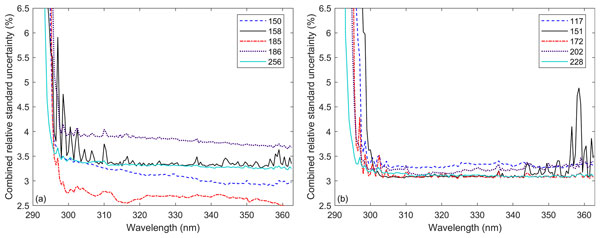
Carmen González, José M. Vilaplana, Alberto Redondas, Javier López-Solano, José M. San Atanasio, Richard Kift, Andrew R. D. Smedley, Pavel Babal, Ana Díaz, Nis Jepsen, Guisella Gacitúa, and Antonio Serrano
Atmos. Chem. Phys., 25, 14131–14152, https://doi.org/10.5194/acp-25-14131-2025, https://doi.org/10.5194/acp-25-14131-2025, 2025
Short summary
Short summary
Brewer spectroradiometers are widely used instruments that have been monitoring global solar ultraviolet (UV) irradiance since the 1990s, playing a key role in solar UV research. The uncertainties of these measurements are rarely evaluated even though they are essential to determine the quality of these measurements. In this work, the uncertainty of 10 Brewers is estimated using the Monte Carlo method, showing that Brewers’ relative uncertainty is less than 5 % for wavelengths above 310 nm.
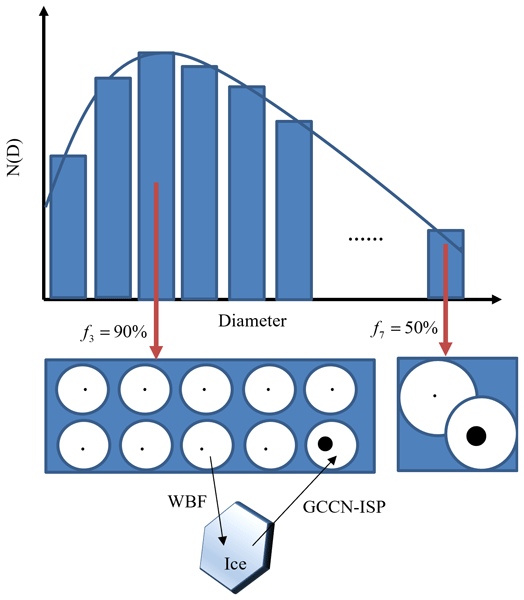
Denghui Ji, Christoph Ritter, Xiaoyu Sun, Manuel Moser, Christiane Voigt, Mathias Palm, and Justus Notholt
Atmos. Chem. Phys., 25, 13037–13052, https://doi.org/10.5194/acp-25-13037-2025, https://doi.org/10.5194/acp-25-13037-2025, 2025
Short summary
Short summary
We discovered a process where large aerosols help small water droplets in Arctic clouds grow, even when conditions normally favor ice. Unlike the traditional view, this process may explain how liquid and ice can coexist in cold clouds. Based on theory and aircraft data, our findings provide new insight into the microphysics of mixed-phase clouds, which could improve understanding of how Arctic clouds affect climate.
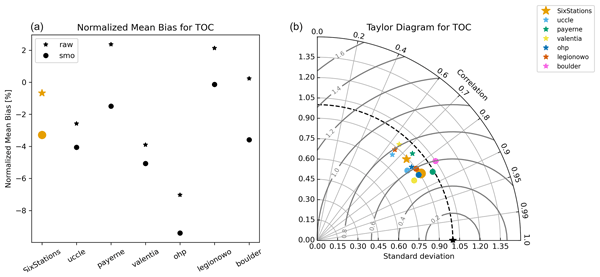
Gaëlle Dufour, Maxim Eremenko, Juan Cuesta, Gérard Ancellet, Michael Gill, Eliane Maillard Barras, and Roeland Van Malderen
Atmos. Meas. Tech., 18, 5049–5070, https://doi.org/10.5194/amt-18-5049-2025, https://doi.org/10.5194/amt-18-5049-2025, 2025
Short summary
Short summary
Tropospheric ozone from the three Infrared Atmospheric Sounding Interferometer (IASI) instruments is very consistent (<1 %). The validation against homogenized ozone sondes reveals an overall good agreement with slight biases (3 %–6 %) in tropospheric ozone and a possible temporal drift, but this is difficult to assess due to the limited number of sites. No specific trends are estimated for the tropospheric ozone column for the period 2008–2022, but persistent negative trends are observed in the lower troposphere.
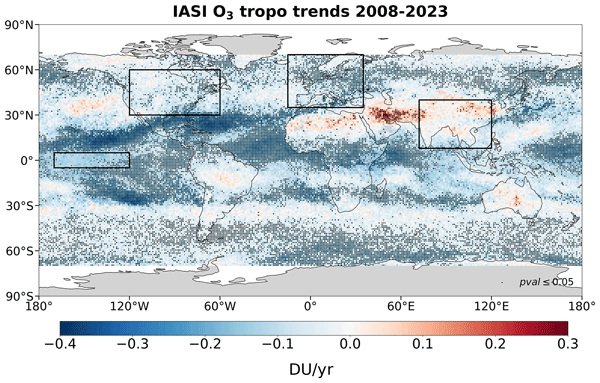
Anne Boynard, Catherine Wespes, Juliette Hadji-Lazaro, Selviga Sinnathamby, Daniel Hurtmans, Pierre-François Coheur, Marie Doutriaux-Boucher, Jacobus Onderwaater, Wolfgang Steinbrecht, Elyse A. Pennington, Kevin Bowman, and Cathy Clerbaux
Atmos. Chem. Phys., 25, 11719–11755, https://doi.org/10.5194/acp-25-11719-2025, https://doi.org/10.5194/acp-25-11719-2025, 2025
Short summary
Short summary
This study analyzes 16 years of global ozone data to assess its impact on air quality and climate. Using satellite measurements, we observed a global decrease in tropospheric ozone, particularly in tropical and European regions. The drop became more noticeable around 2020, partly due to reduced emissions during the pandemic. The study highlights the need for better data processing and integration to more accurately monitor ozone changes over time.
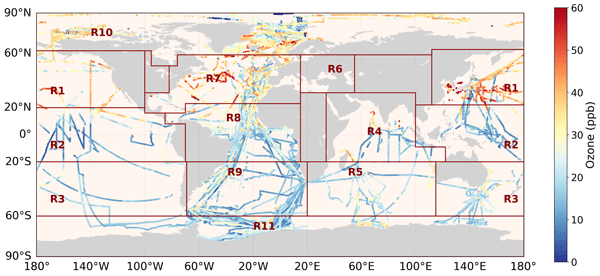
Yugo Kanaya, Roberto Sommariva, Alfonso Saiz-Lopez, Andrea Mazzeo, Theodore K. Koenig, Kaori Kawana, James E. Johnson, Aurélie Colomb, Pierre Tulet, Suzie Molloy, Ian E. Galbally, Rainer Volkamer, Anoop Mahajan, John W. Halfacre, Paul B. Shepson, Julia Schmale, Hélène Angot, Byron Blomquist, Matthew D. Shupe, Detlev Helmig, Junsu Gil, Meehye Lee, Sean C. Coburn, Ivan Ortega, Gao Chen, James Lee, Kenneth C. Aikin, David D. Parrish, John S. Holloway, Thomas B. Ryerson, Ilana B. Pollack, Eric J. Williams, Brian M. Lerner, Andrew J. Weinheimer, Teresa Campos, Frank M. Flocke, J. Ryan Spackman, Ilann Bourgeois, Jeff Peischl, Chelsea R. Thompson, Ralf M. Staebler, Amir A. Aliabadi, Wanmin Gong, Roeland Van Malderen, Anne M. Thompson, Ryan M. Stauffer, Debra E. Kollonige, Juan Carlos Gómez Martin, Masatomo Fujiwara, Katie Read, Matthew Rowlinson, Keiichi Sato, Junichi Kurokawa, Yoko Iwamoto, Fumikazu Taketani, Hisahiro Takashima, Mónica Navarro-Comas, Marios Panagi, and Martin G. Schultz
Earth Syst. Sci. Data, 17, 4901–4932, https://doi.org/10.5194/essd-17-4901-2025, https://doi.org/10.5194/essd-17-4901-2025, 2025
Short summary
Short summary
The first comprehensive dataset of tropospheric ozone over oceans/polar regions is presented, including 77 ship/buoy and 48 aircraft campaign observations (1977–2022, 0–5000 m altitude), supplemented by ozonesonde and surface data. Air masses isolated from land for 72+ hours are systematically selected as essentially oceanic. Among the 11 global regions, they show daytime decreases of 11–16 % in the tropics, while near-zero depletions are rare, unlike in the Arctic, implying different mechanisms.
Tristan Millet, Hassan Bencherif, Thierry Portafaix, Nelson Bègue, Alexandre Baron, Valentin Duflot, Cathy Clerbaux, Pierre-François Coheur, Andrea Pazmiño, Michaël Sicard, Anne Boynard, Jean-Marc Metzger, Guillaume Payen, Nicolas Marquestaut, and Sophie Godin-Beekmann
Atmos. Chem. Phys., 25, 10887–10905, https://doi.org/10.5194/acp-25-10887-2025, https://doi.org/10.5194/acp-25-10887-2025, 2025
Short summary
Short summary
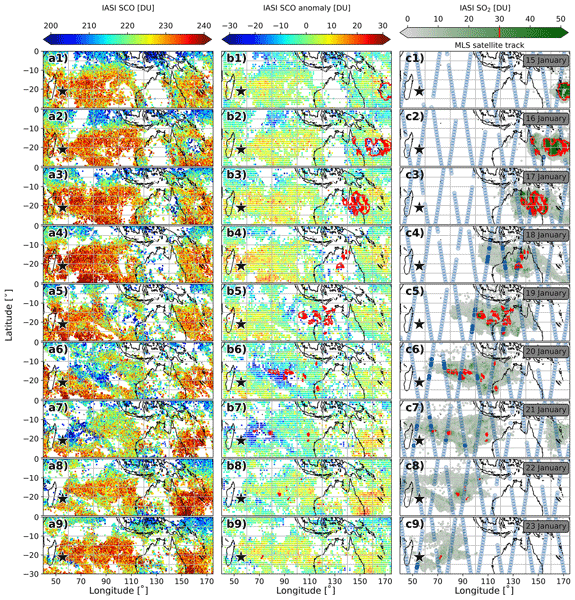
On 15 January 2022, the Hunga volcano erupted, releasing sulfur dioxide and water vapor into the stratosphere, impacting ozone levels over the Indian Ocean. Satellite data show the presence of a transient ozone depletion event related to the water vapor anomalies and sulfate aerosol clouds. Ozone reduction was confined to two distinct layers. On 21 January, the fifth percentile of total and stratospheric column ozone anomalies reached −18.6 and −14.5 DU, respectively.
Roeland Van Malderen, Zhou Zang, Kai-Lan Chang, Robin Björklund, Owen R. Cooper, Jane Liu, Eliane Maillard Barras, Corinne Vigouroux, Irina Petropavlovskikh, Thierry Leblanc, Valérie Thouret, Pawel Wolff, Peter Effertz, Audrey Gaudel, David W. Tarasick, Herman G. J. Smit, Anne M. Thompson, Ryan M. Stauffer, Debra E. Kollonige, Deniz Poyraz, Gérard Ancellet, Marie-Renée De Backer, Matthias M. Frey, James W. Hannigan, José L. Hernandez, Bryan J. Johnson, Nicholas Jones, Rigel Kivi, Emmanuel Mahieu, Isamu Morino, Glen McConville, Katrin Müller, Isao Murata, Justus Notholt, Ankie Piters, Maxime Prignon, Richard Querel, Vincenzo Rizi, Dan Smale, Wolfgang Steinbrecht, Kimberly Strong, and Ralf Sussmann
Atmos. Chem. Phys., 25, 9905–9935, https://doi.org/10.5194/acp-25-9905-2025, https://doi.org/10.5194/acp-25-9905-2025, 2025
Short summary
Short summary
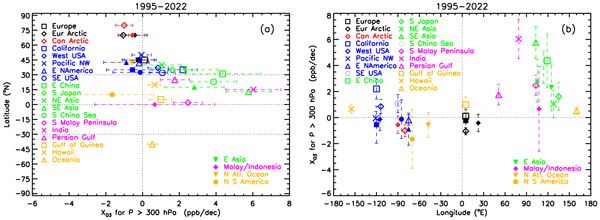
Tropospheric ozone is an important greenhouse gas and an air pollutant whose distribution and time variability are mainly governed by anthropogenic emissions and dynamics. In this paper, we assess regional trends of tropospheric ozone column amounts, based on two different approaches of merging or synthesizing ground-based observations and their trends within specific regions. Our findings clearly demonstrate regional trend differences but also consistently higher pre-COVID than post-COVID trends.
Sieglinde Callewaert, Minqiang Zhou, Bavo Langerock, Pucai Wang, Ting Wang, Emmanuel Mahieu, and Martine De Mazière
Atmos. Chem. Phys., 25, 9519–9544, https://doi.org/10.5194/acp-25-9519-2025, https://doi.org/10.5194/acp-25-9519-2025, 2025
Short summary
Short summary
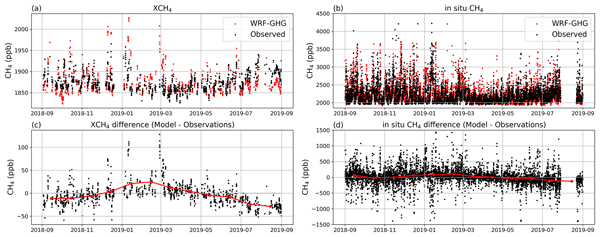
We used an atmospheric transport model and satellite data to study CH4 observations in Xianghe, China. Our study shows the key source sectors that influence the concentrations and their respective importance. Furthermore, meteorological factors such as wind direction are discussed. This research highlights the challenges in accurately simulating these kinds of measurements and helps us to better understand CH4 variability in the region.
Lukas Heizmann, Mathias Palm, Justus Notholt, and Matthias Buschmann
EGUsphere, https://doi.org/10.5194/egusphere-2025-3691, https://doi.org/10.5194/egusphere-2025-3691, 2025
Short summary
Short summary
Fourier transform infrared emission spectroscopy measures the infrared radiation originating from the thermal emission of the atmosphere. The measured interferograms are transformed into spectra via Fourier transformation. The established method for calibration is strictly speaking only valid for infinitely long interferograms. We quantify the errors caused by this idealization in a case study and find that they are generally below 0.05 % in spectral regions that are of interest for retrievals.
Wanmin Gong, Stephen R. Beagley, Kenjiro Toyota, Henrik Skov, Jesper Heile Christensen, Alex Lupu, Diane Pendlebury, Junhua Zhang, Ulas Im, Yugo Kanaya, Alfonso Saiz-Lopez, Roberto Sommariva, Peter Effertz, John W. Halfacre, Nis Jepsen, Rigel Kivi, Theodore K. Koenig, Katrin Müller, Claus Nordstrøm, Irina Petropavlovskikh, Paul B. Shepson, William R. Simpson, Sverre Solberg, Ralf M. Staebler, David W. Tarasick, Roeland Van Malderen, and Mika Vestenius
Atmos. Chem. Phys., 25, 8355–8405, https://doi.org/10.5194/acp-25-8355-2025, https://doi.org/10.5194/acp-25-8355-2025, 2025
Short summary
Short summary
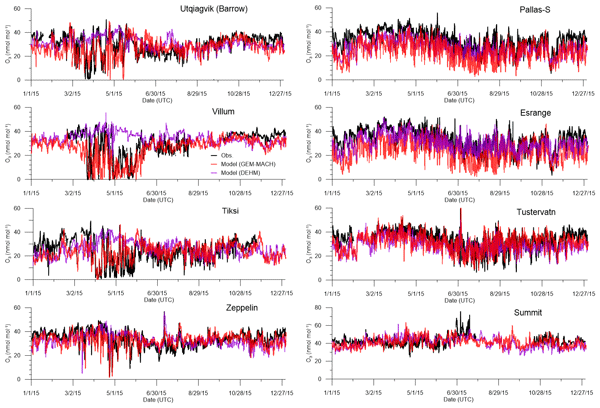
This study showed that the springtime O3 depletion plays a critical role in driving the surface O3 seasonal cycle in the central Arctic. The O3 depletion events, while occurring most notably within the lowest few hundred metres above the Arctic Ocean, can induce a 5–7 % loss in the pan-Arctic tropospheric O3 burden during springtime. The study also found enhancements in O3 and NOy (mostly peroxyacetyl nitrate) concentrations in the Arctic due to northern boreal wildfires, particularly at higher altitudes.
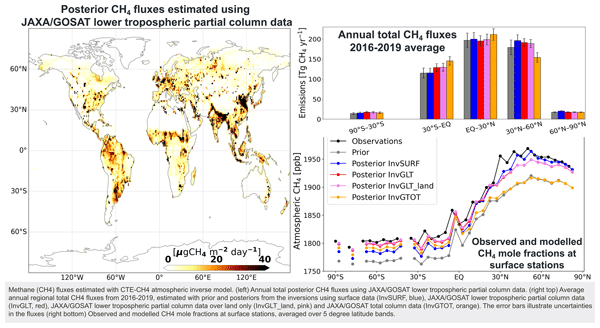
Aki Tsuruta, Akihiko Kuze, Kei Shiomi, Fumie Kataoka, Nobuhiro Kikuchi, Tuula Aalto, Leif Backman, Ella Kivimäki, Maria K. Tenkanen, Kathryn McKain, Omaira E. García, Frank Hase, Rigel Kivi, Isamu Morino, Hirofumi Ohyama, David F. Pollard, Mahesh K. Sha, Kimberly Strong, Ralf Sussmann, Yao Te, Voltaire A. Velazco, Mihalis Vrekoussis, Thorsten Warneke, Minqiang Zhou, and Hiroshi Suto
Atmos. Chem. Phys., 25, 7829–7862, https://doi.org/10.5194/acp-25-7829-2025, https://doi.org/10.5194/acp-25-7829-2025, 2025
Short summary
Short summary
Satellite data bring invaluable information about greenhouse gas emissions globally. We found that a new type of data from the Greenhouse Gas Observing Satellite (GOSAT), which contains information about methane in the lowest layer of Earth's atmosphere, could provide reliable estimates of recent methane emissions when combined with atmospheric modelling. Therefore, the use of such data is encouraged to improve emission quantification methods and advance our understanding of methane cycles.
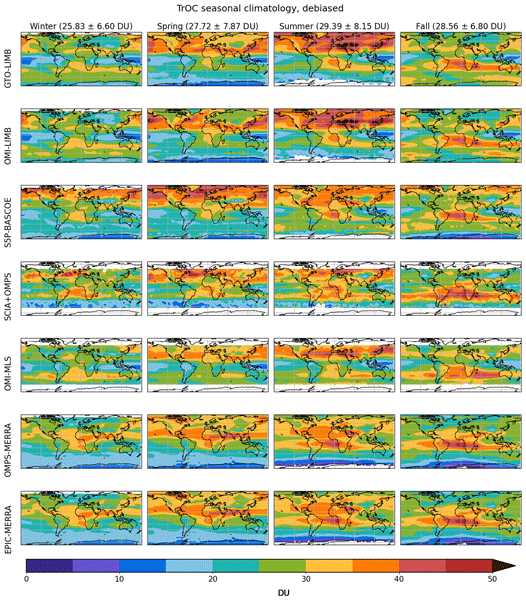
Carlo Arosio, Viktoria Sofieva, Andrea Orfanoz-Cheuquelaf, Alexei Rozanov, Klaus-Peter Heue, Diego Loyola, Edward Malina, Ryan M. Stauffer, David Tarasick, Roeland Van Malderen, Jerry R. Ziemke, and Mark Weber
Atmos. Meas. Tech., 18, 3247–3265, https://doi.org/10.5194/amt-18-3247-2025, https://doi.org/10.5194/amt-18-3247-2025, 2025
Short summary
Short summary
Tropospheric ozone affects air quality and climate, being a pollutant and a greenhouse gas. We analyze satellite data of tropospheric ozone columns obtained by combining two types of observations: one providing stratospheric and the other total ozone. We compare common climatological features and study the influence of the tropopause (troposphere to stratosphere boundary) on the results. We also examine trends over the last 20 years and compare satellite data with ozonesondes to identify drifts.
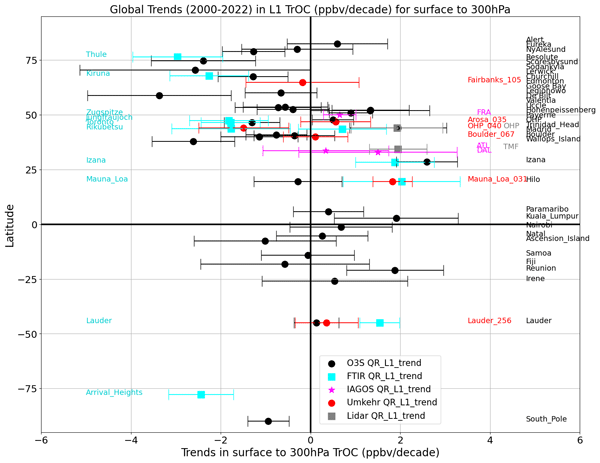
Roeland Van Malderen, Anne M. Thompson, Debra E. Kollonige, Ryan M. Stauffer, Herman G. J. Smit, Eliane Maillard Barras, Corinne Vigouroux, Irina Petropavlovskikh, Thierry Leblanc, Valérie Thouret, Pawel Wolff, Peter Effertz, David W. Tarasick, Deniz Poyraz, Gérard Ancellet, Marie-Renée De Backer, Stéphanie Evan, Victoria Flood, Matthias M. Frey, James W. Hannigan, José L. Hernandez, Marco Iarlori, Bryan J. Johnson, Nicholas Jones, Rigel Kivi, Emmanuel Mahieu, Glen McConville, Katrin Müller, Tomoo Nagahama, Justus Notholt, Ankie Piters, Natalia Prats, Richard Querel, Dan Smale, Wolfgang Steinbrecht, Kimberly Strong, and Ralf Sussmann
Atmos. Chem. Phys., 25, 7187–7225, https://doi.org/10.5194/acp-25-7187-2025, https://doi.org/10.5194/acp-25-7187-2025, 2025
Short summary
Short summary
Tropospheric ozone is an important greenhouse gas and is an air pollutant. The time variability of tropospheric ozone is mainly driven by anthropogenic emissions. In this paper, we study the distribution and time variability of ozone from harmonized ground-based observations from five different measurement techniques. Our findings provide clear standard references for atmospheric models and evolving tropospheric ozone satellite data for the 2000–2022 period.
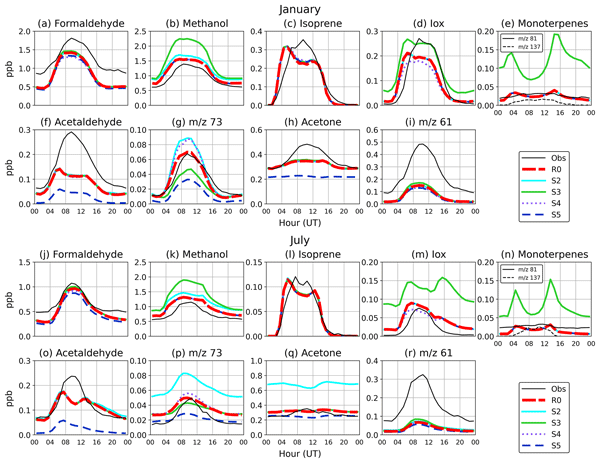
Catalina Poraicu, Jean-François Müller, Trissevgeni Stavrakou, Crist Amelynck, Bert W. D. Verreyken, Niels Schoon, Corinne Vigouroux, Nicolas Kumps, Jérôme Brioude, Pierre Tulet, and Camille Mouchel-Vallon
Atmos. Chem. Phys., 25, 6903–6941, https://doi.org/10.5194/acp-25-6903-2025, https://doi.org/10.5194/acp-25-6903-2025, 2025
Short summary
Short summary
We investigated the sources and impacts of nitrogen oxides and organic compounds over a remote tropical island. Simulations of the high-resolution Weather Research and Forecasting model coupled with chemistry (WRF-Chem) were evaluated using in situ Fourier transform infrared spectroscopy (FTIR) and satellite measurements. This work highlights gaps in current models, like missing sources of key organic compounds and inaccuracies in emission inventories, emphasizing the importance of improving chemical and dynamical processes in atmospheric modelling for budget estimates in tropical regions.
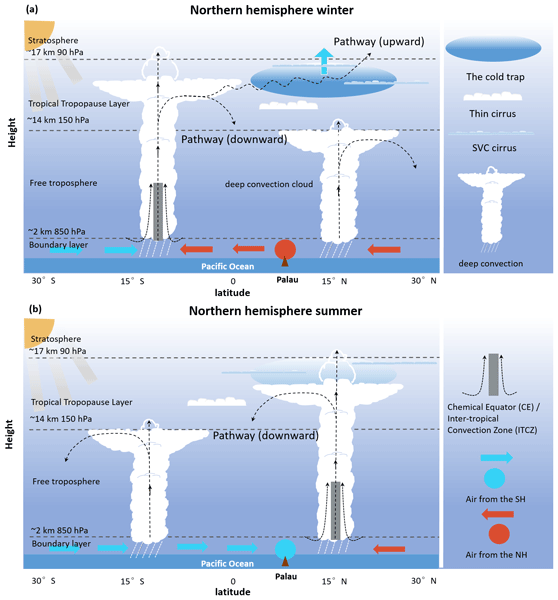
Xiaoyu Sun, Katrin Müller, Mathias Palm, Christoph Ritter, Denghui Ji, Tim Balthasar Röpke, and Justus Notholt
Atmos. Chem. Phys., 25, 6881–6902, https://doi.org/10.5194/acp-25-6881-2025, https://doi.org/10.5194/acp-25-6881-2025, 2025
Short summary
Short summary
We studied how air moves from the lower atmosphere to the stratosphere over the tropical western Pacific. Using observations and air tracking, we found that, in winter, air ascends and cold temperatures freeze water out, drying it before it enters the stratosphere. In summer, air tends to sink after cloud formation. This process affects water vapor amounts in the stratosphere, influencing the greenhouse effect and climate.
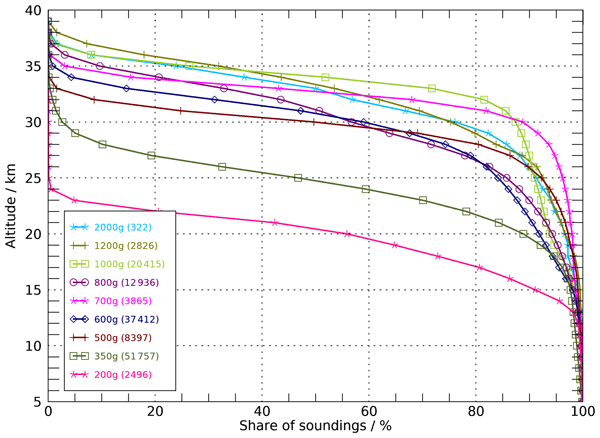
Masatomo Fujiwara, Bomin Sun, Anthony Reale, Domenico Cimini, Salvatore Larosa, Lori Borg, Christoph von Rohden, Michael Sommer, Ruud Dirksen, Marion Maturilli, Holger Vömel, Rigel Kivi, Bruce Ingleby, Ryan J. Kramer, Belay Demoz, Fabio Madonna, Fabien Carminati, Owen Lewis, Brett Candy, Christopher Thomas, David Edwards, Noersomadi, Kensaku Shimizu, and Peter Thorne
Atmos. Meas. Tech., 18, 2919–2955, https://doi.org/10.5194/amt-18-2919-2025, https://doi.org/10.5194/amt-18-2919-2025, 2025
Short summary
Short summary
We assess and illustrate the benefits of high-altitude attainment of balloon-borne radiosonde soundings up to and beyond 10 hPa level from various aspects. We show that the extra costs and technical challenges involved in consistent attainment of high ascents are more than outweighed by the benefits for a broad variety of real-time and delayed-mode applications. Consistent attainment of high ascents should therefore be pursued across the balloon observational network.
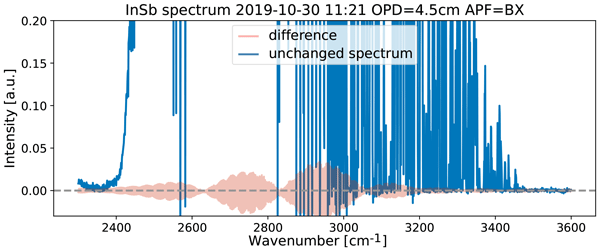
Bavo Langerock, Martine De Mazière, Filip Desmet, Pauli Heikkinen, Rigel Kivi, Mahesh Kumar Sha, Corinne Vigouroux, Minqiang Zhou, Gopala Krishna Darbha, and Mohmmed Talib
Atmos. Meas. Tech., 18, 2439–2446, https://doi.org/10.5194/amt-18-2439-2025, https://doi.org/10.5194/amt-18-2439-2025, 2025
Short summary
Short summary
Ground-based Fourier transform interferometer instruments have been used for many decades to measure direct solar light in the infrared to obtain high-resolution spectra from which atmospheric gas profile concentrations can be derived. It is shown that the typical processing chain used to derive atmospheric gas columns can be sensitive to relatively small shortenings of the recorded interferograms. Low-resolution recordings, used in more recent years, are more sensitive to such adaptations.
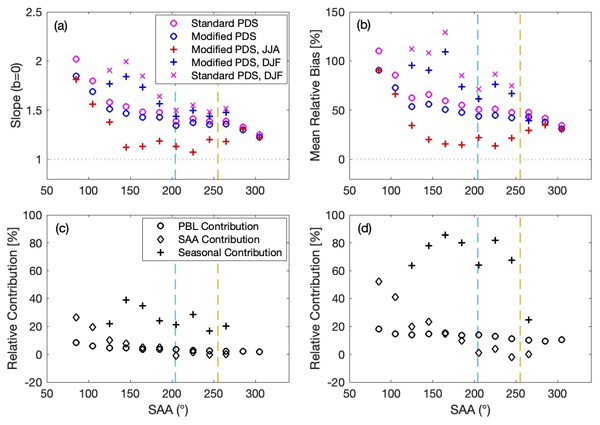
Ramina Alwarda, Kristof Bognar, Xiaoyi Zhao, Vitali Fioletov, Jonathan Davies, Sum Chi Lee, Debora Griffin, Alexandru Lupu, Udo Frieß, Alexander Cede, Yushan Su, and Kimberly Strong
Atmos. Meas. Tech., 18, 2397–2423, https://doi.org/10.5194/amt-18-2397-2025, https://doi.org/10.5194/amt-18-2397-2025, 2025
Short summary
Short summary
Nitrogen dioxide (NO2) is a pollutant with a short lifetime and large variability, but there are limited measurements of its distribution in the lower atmosphere. We present a new 3-year dataset of NO2 vertical profiles in Toronto, Canada, and evaluate it using NO2 from satellite and surface monitoring networks and simulations by an air quality forecast model. We quantify and explain the differences among the datasets to provide information that can be used to understand NO2 variability.
Ivan Ortega, James W. Hannigan, Bianca C. Baier, Kathryn McKain, and Dan Smale
Atmos. Meas. Tech., 18, 2353–2371, https://doi.org/10.5194/amt-18-2353-2025, https://doi.org/10.5194/amt-18-2353-2025, 2025
Short summary
Short summary
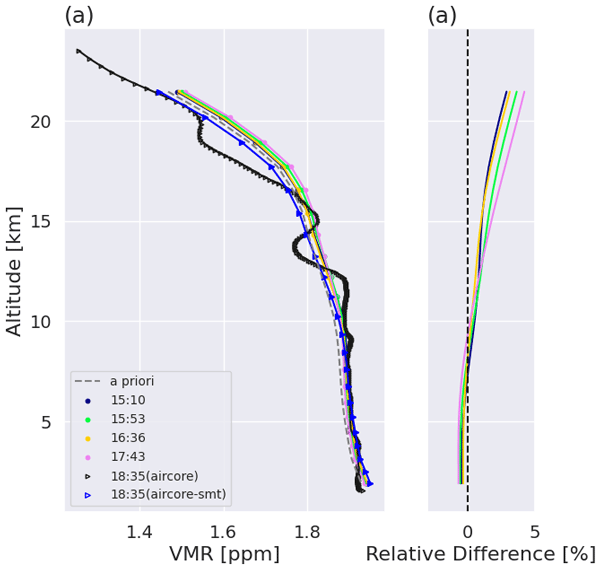
This study evaluates retrieval strategies for CH4 and N2O using high-resolution FTIR observations from Boulder, Colorado. By comparing results with independent AirCore and aircraft in situ measurements, the analysis validates retrieval accuracy and quantifies uncertainties. The findings highlight the benefits of updated spectroscopy and improved a priori profiles and highlight consistent agreement with in situ data.
Denghui Ji, Mathias Palm, Matthias Buschmann, Kerstin Ebell, Marion Maturilli, Xiaoyu Sun, and Justus Notholt
Atmos. Chem. Phys., 25, 3889–3904, https://doi.org/10.5194/acp-25-3889-2025, https://doi.org/10.5194/acp-25-3889-2025, 2025
Short summary
Short summary
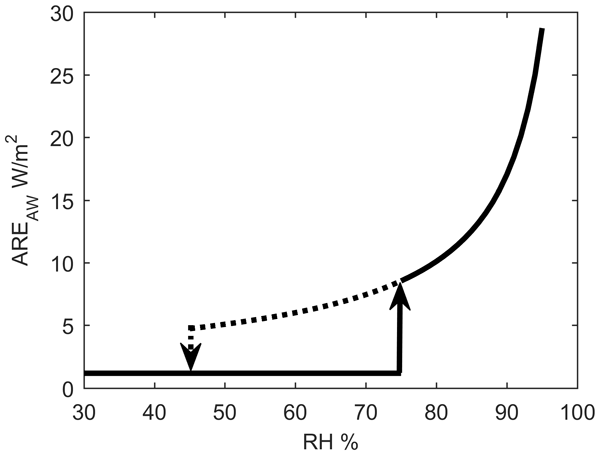
Our study explores how certain aerosols, like sea salt, affect infrared heat radiation in the Arctic, potentially speeding up warming. We used advanced technology to measure aerosol composition and found that these particles grow with humidity, significantly increasing their heat-trapping effect in the infrared region, especially in winter. Our findings suggest these aerosols could be a key factor in Arctic warming, emphasizing the importance of understanding aerosols for climate prediction.

Frank Hase, Paolo Castracane, Angelika Dehn, Omaira Elena García, David W. T. Griffith, Lukas Heizmann, Nicholas B. Jones, Tomi Karppinen, Rigel Kivi, Martine de Mazière, Justus Notholt, and Mahesh Kumar Sha
Atmos. Meas. Tech., 18, 1257–1267, https://doi.org/10.5194/amt-18-1257-2025, https://doi.org/10.5194/amt-18-1257-2025, 2025
Short summary
Short summary
The primary measurement result delivered by a Fourier transform spectrometer is an interferogram, and the spectrum required for further analysis needs to be calculated from the interferogram by Fourier analysis. The paper deals with technical aspects of this process and shows how the reconstruction of the spectrum can be optimized.
Irina Petropavlovskikh, Jeannette D. Wild, Kari Abromitis, Peter Effertz, Koji Miyagawa, Lawrence E. Flynn, Eliane Maillard Barras, Robert Damadeo, Glen McConville, Bryan Johnson, Patrick Cullis, Sophie Godin-Beekmann, Gerard Ancellet, Richard Querel, Roeland Van Malderen, and Daniel Zawada
Atmos. Chem. Phys., 25, 2895–2936, https://doi.org/10.5194/acp-25-2895-2025, https://doi.org/10.5194/acp-25-2895-2025, 2025
Short summary
Short summary
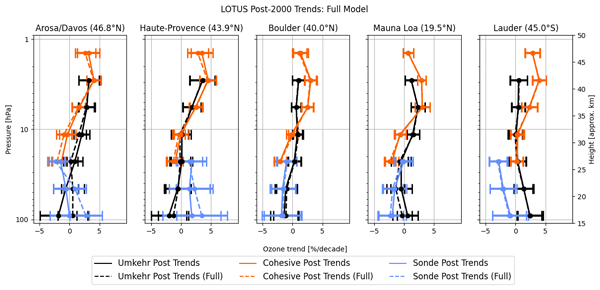
Observational records show that stratospheric ozone is recovering in accordance with the implementation of the Montreal Protocol and its amendments. Natural ozone variability complicates the detection of small trends. This study optimizes a statistical model fit in ground-station-based observational records by adding parameters that interpret seasonal and long-term changes in atmospheric circulation and airmass mixing, which reduces uncertainties in detecting the stratospheric ozone recovery.
Jamal Makkor, Mathias Palm, Matthias Buschmann, Emmanuel Mahieu, Martyn P. Chipperfield, and Justus Notholt
Atmos. Meas. Tech., 18, 1105–1114, https://doi.org/10.5194/amt-18-1105-2025, https://doi.org/10.5194/amt-18-1105-2025, 2025
Short summary
Short summary
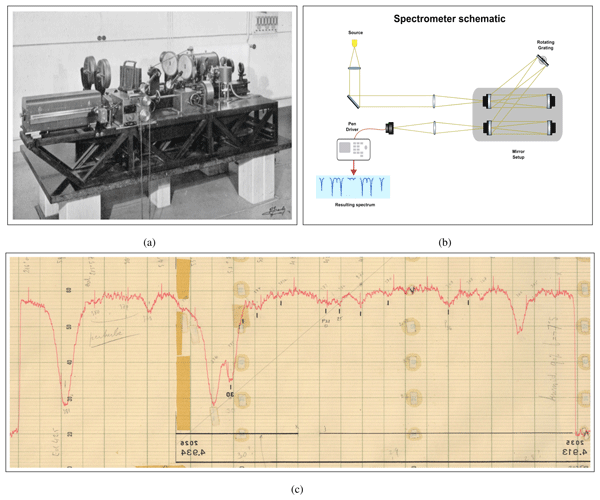
During the years 1950 and 1951, Marcel Migeotte took regular solar measurements in the form of paper rolls at the Jungfraujoch site. These historical spectra proved to be valuable for atmospheric research and needed to be saved for posterity. Therefore, a digitization method which used image-processing techniques was developed to extract them from the historical paper rolls. This allowed them to be saved in a machine-readable format that is easily accessible to the scientific community.
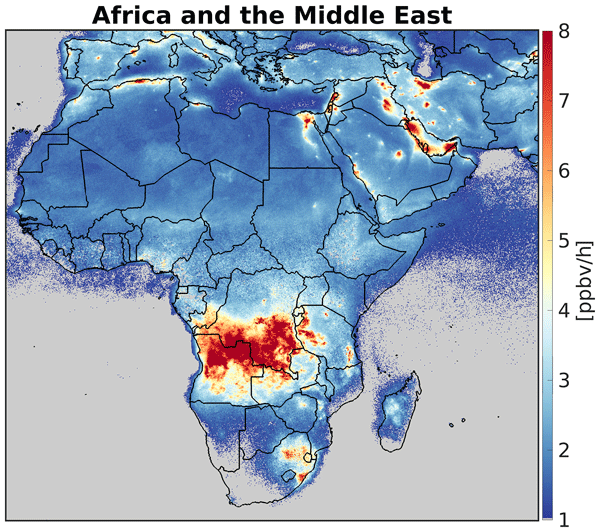
Amir H. Souri, Gonzalo González Abad, Glenn M. Wolfe, Tijl Verhoelst, Corinne Vigouroux, Gaia Pinardi, Steven Compernolle, Bavo Langerock, Bryan N. Duncan, and Matthew S. Johnson
Atmos. Chem. Phys., 25, 2061–2086, https://doi.org/10.5194/acp-25-2061-2025, https://doi.org/10.5194/acp-25-2061-2025, 2025
Short summary
Short summary
We establish a simple yet robust relationship between ozone production rates and geophysical parameters obtained from several intensive atmospheric composition campaigns. We show that satellite remote sensing data can effectively constrain these parameters, enabling us to produce the first global maps of ozone production rates with unprecedented resolution.
Swathi Maratt Satheesan, Kai-Uwe Eichmann, Mark Weber, Roeland Van Malderen, Ryan Stauffer, and David Tarasick
EGUsphere, https://doi.org/10.5194/egusphere-2025-306, https://doi.org/10.5194/egusphere-2025-306, 2025
Short summary
Short summary
This study presents the CLCD (CHORA Local Cloud Decision) algorithm for retrieving near-global tropospheric ozone using TROPOMI data. The approach refines the Convective Cloud Differential method by using a local cloud reference sector to minimize errors from stratospheric ozone variability, particularly in mid-latitudes. Validation against ground-based data shows good accuracy, highlighting its potential for improving air quality monitoring and supporting current and future satellite missions.
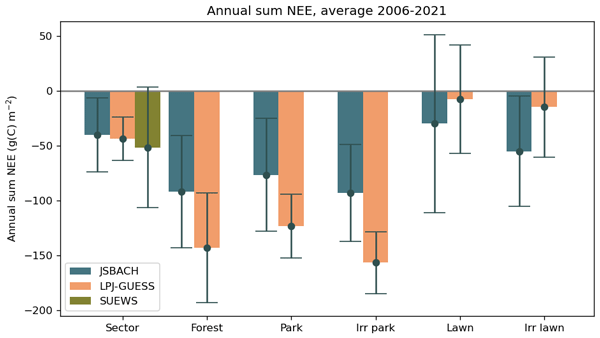
Laura Thölix, Leif Backman, Minttu Havu, Esko Karvinen, Jesse Soininen, Justine Trémeau, Olli Nevalainen, Joyson Ahongshangbam, Leena Järvi, and Liisa Kulmala
Biogeosciences, 22, 725–749, https://doi.org/10.5194/bg-22-725-2025, https://doi.org/10.5194/bg-22-725-2025, 2025
Short summary
Short summary
Cities aim for carbon neutrality and seek to understand urban vegetation's role as a carbon sink. Direct measurements are challenging, so models are used to estimate the urban carbon cycle. We evaluated model performance at estimating carbon sequestration in lawns, park trees, and urban forests in Helsinki, Finland. Models captured seasonal and annual variations well. Trees had higher sequestration rates than lawns, and irrigation often enhanced carbon sinks.
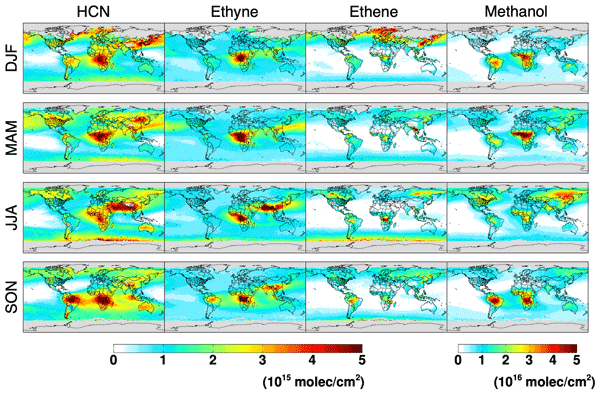
Kelley C. Wells, Dylan B. Millet, Jared F. Brewer, Vivienne H. Payne, Karen E. Cady-Pereira, Rick Pernak, Susan Kulawik, Corinne Vigouroux, Nicholas Jones, Emmanuel Mahieu, Maria Makarova, Tomoo Nagahama, Ivan Ortega, Mathias Palm, Kimberly Strong, Matthias Schneider, Dan Smale, Ralf Sussmann, and Minqiang Zhou
Atmos. Meas. Tech., 18, 695–716, https://doi.org/10.5194/amt-18-695-2025, https://doi.org/10.5194/amt-18-695-2025, 2025
Short summary
Short summary
Atmospheric volatile organic compounds (VOCs) affect both air quality and climate. Satellite measurements can help us to assess and predict their global impacts. We present new decadal (2012–2023) measurements of four key VOCs – methanol, ethene, ethyne, and hydrogen cyanide (HCN) – from the Cross-track Infrared Sounder. The measurements reflect emissions from major forests, wildfires, and industry and provide new information to advance understanding of these sources and their changes over time.
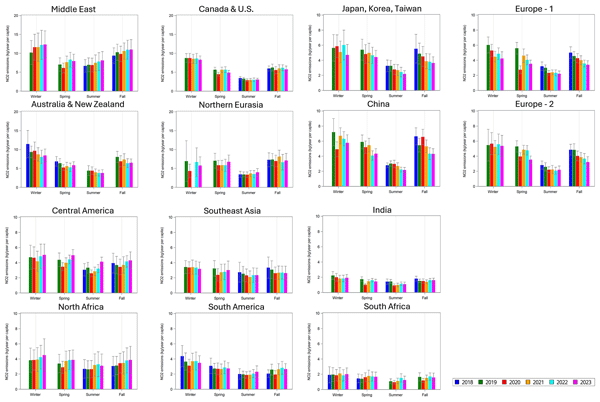
Vitali Fioletov, Chris A. McLinden, Debora Griffin, Xiaoyi Zhao, and Henk Eskes
Atmos. Chem. Phys., 25, 575–596, https://doi.org/10.5194/acp-25-575-2025, https://doi.org/10.5194/acp-25-575-2025, 2025
Short summary
Short summary
Satellite data were used to estimate urban per capita emissions for 261 major cities worldwide. Three components in tropospheric NO2 data (background NO2, NO2 from urban sources, and NO2 from industrial point sources) were isolated, and then each of these components was analyzed separately. The largest per capita emissions were found in the Middle East and the smallest in India and southern Africa. Urban weekend emissions are 20 %–50 % less than workday emissions for all regions except China.
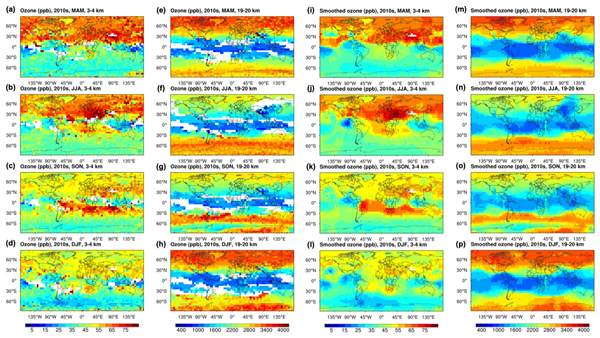
Zhou Zang, Jane Liu, David Tarasick, Omid Moeini, Jianchun Bian, Jinqiang Zhang, Anne M. Thompson, Roeland Van Malderen, Herman G. J. Smit, Ryan M. Stauffer, Bryan J. Johnson, and Debra E. Kollonige
Atmos. Chem. Phys., 24, 13889–13912, https://doi.org/10.5194/acp-24-13889-2024, https://doi.org/10.5194/acp-24-13889-2024, 2024
Short summary
Short summary
The Trajectory-mapped Ozonesonde dataset for the Stratosphere and Troposphere (TOST) provides a global-scale, long-term ozone climatology that is horizontally and vertically resolved. In this study, we improved, updated and validated TOST from 1970 to 2021. Based on this TOST dataset, we characterized global ozone variations spatially in both the troposphere and stratosphere and temporally by season and decade. We also showed a stagnant lower stratospheric ozone variation since the late 1990s.
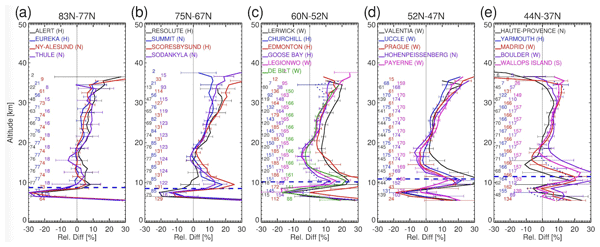
Jiansheng Zou, Kaley A. Walker, Patrick E. Sheese, Chris D. Boone, Ryan M. Stauffer, Anne M. Thompson, and David W. Tarasick
Atmos. Meas. Tech., 17, 6983–7005, https://doi.org/10.5194/amt-17-6983-2024, https://doi.org/10.5194/amt-17-6983-2024, 2024
Short summary
Short summary
Ozone measurements from the ACE-FTS satellite instrument have been compared to worldwide balloon-borne ozonesonde profiles using pairs of closely spaced profiles and monthly averaged profiles. ACE-FTS typically measures more ozone in the stratosphere by up to 10 %. The long-term stability of the ACE-FTS ozone data is good, exhibiting small (but non-significant) drifts of less than 3 % per decade in the stratosphere. Lower in the profiles, the calculated drifts are larger (up to 10 % per decade).
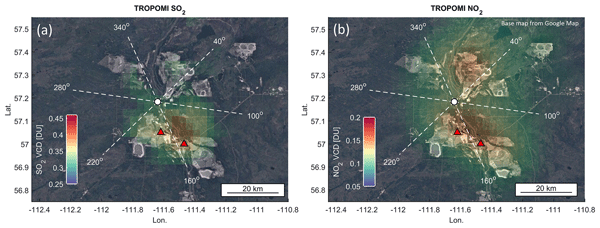
Xiaoyi Zhao, Vitali Fioletov, Debora Griffin, Chris McLinden, Ralf Staebler, Cristian Mihele, Kevin Strawbridge, Jonathan Davies, Ihab Abboud, Sum Chi Lee, Alexander Cede, Martin Tiefengraber, and Robert Swap
Atmos. Meas. Tech., 17, 6889–6912, https://doi.org/10.5194/amt-17-6889-2024, https://doi.org/10.5194/amt-17-6889-2024, 2024
Short summary
Short summary
This study explores differences between remote sensing and in situ instruments in terms of their vertical, horizontal, and temporal sampling differences. Understanding and resolving these differences are critical for future analyses linking satellite, ground-based remote sensing, and in situ observations in air quality monitoring. It shows that the meteorological conditions (wind directions, speed, and boundary layer conditions) will strongly affect the agreement between the two measurements.
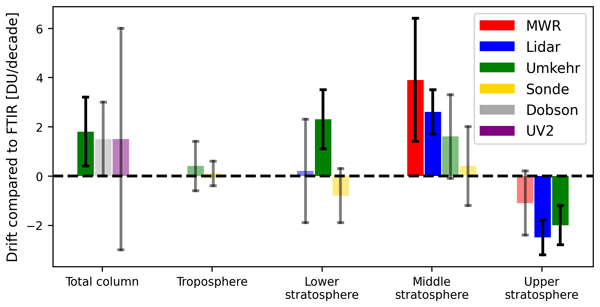
Robin Björklund, Corinne Vigouroux, Peter Effertz, Omaira E. García, Alex Geddes, James Hannigan, Koji Miyagawa, Michael Kotkamp, Bavo Langerock, Gerald Nedoluha, Ivan Ortega, Irina Petropavlovskikh, Deniz Poyraz, Richard Querel, John Robinson, Hisako Shiona, Dan Smale, Penny Smale, Roeland Van Malderen, and Martine De Mazière
Atmos. Meas. Tech., 17, 6819–6849, https://doi.org/10.5194/amt-17-6819-2024, https://doi.org/10.5194/amt-17-6819-2024, 2024
Short summary
Short summary
Different ground-based ozone measurements from the last 2 decades at Lauder are compared to each other. We want to know why different trends have been observed in the stratosphere. Also, the quality and relevance of tropospheric datasets need to be evaluated. While remaining drifts are still present, our study explains roughly half of the differences in observed trends in previous studies and shows the necessity for continuous review and improvement of the measurements.
Gérard Ancellet, Camille Viatte, Anne Boynard, François Ravetta, Jacques Pelon, Cristelle Cailteau-Fischbach, Pascal Genau, Julie Capo, Axel Roy, and Philippe Nédélec
Atmos. Chem. Phys., 24, 12963–12983, https://doi.org/10.5194/acp-24-12963-2024, https://doi.org/10.5194/acp-24-12963-2024, 2024
Short summary
Short summary
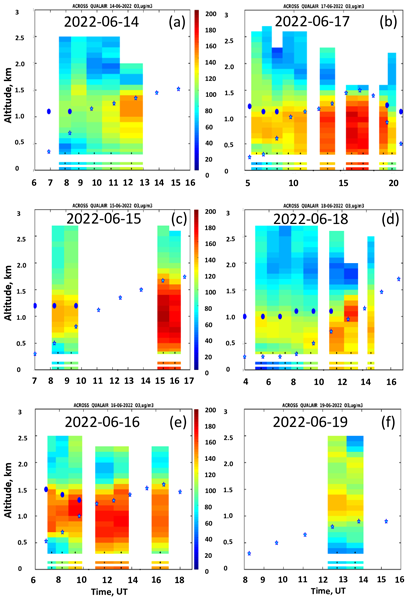
Characterization of ozone pollution in urban areas benefited from a measurement campaign in summer 2022 in the Paris region. The analysis is based on 21 d of lidar and aircraft observations. The main objective is an analysis of the sensitivity of ozone pollution to the micrometeorological processes in the urban atmospheric boundary layer and the transport of regional pollution. The paper also discusses to what extent satellite observations can track observed ozone plumes.
Viktoria F. Sofieva, Alexei Rozanov, Monika Szelag, John P. Burrows, Christian Retscher, Robert Damadeo, Doug Degenstein, Landon A. Rieger, and Adam Bourassa
Earth Syst. Sci. Data, 16, 5227–5241, https://doi.org/10.5194/essd-16-5227-2024, https://doi.org/10.5194/essd-16-5227-2024, 2024
Short summary
Short summary
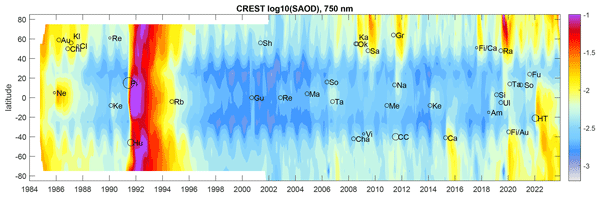
Climate-related studies need information about the distribution of stratospheric aerosols, which influence the energy balance of the Earth’s atmosphere. In this work, we present a merged dataset of vertically resolved stratospheric aerosol extinction coefficients, which is derived from data of six limb and occultation satellite instruments. The created aerosol climate record covers the period from October 1984 to December 2023. It can be used in various climate-related studies.
Minqiang Zhou, Pucai Wang, Bart Dils, Bavo Langerock, Geoff Toon, Christian Hermans, Weidong Nan, Qun Cheng, and Martine De Mazière
Atmos. Meas. Tech., 17, 6385–6396, https://doi.org/10.5194/amt-17-6385-2024, https://doi.org/10.5194/amt-17-6385-2024, 2024
Short summary
Short summary
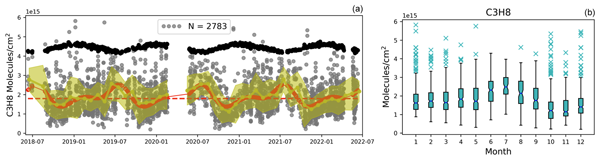
Solar absorption spectra near 2967 cm−1 recorded by a ground-based FTIR with a high spectral resolution of 0.0035 cm-1 are applied to retrieve C3H8 columns for the first time in Xianghe, China, within the NDACC-IRWG. The mean and standard deviation of the C3H8 columns are 1.80 ± 0.81 (1σ) × 1015 molec. cm-2. Good correlations are found between C3H8 and other non-methane hydrocarbons, such as C2H6 (R = 0.84) and C2H2 (R = 0.79), as well as between C3H8 and CO (R = 0.72).
Honglei Wang, David W. Tarasick, Jane Liu, Herman G. J. Smit, Roeland Van Malderen, Lijuan Shen, Romain Blot, and Tianliang Zhao
Atmos. Chem. Phys., 24, 11927–11942, https://doi.org/10.5194/acp-24-11927-2024, https://doi.org/10.5194/acp-24-11927-2024, 2024
Short summary
Short summary
In this study, we identify 23 suitable pairs of sites from World Ozone and Ultraviolet Radiation Data Centre (WOUDC) and In-service Aircraft for a Global Observing System (IAGOS) datasets (1995 to 2021), compare the average vertical distributions of tropospheric O3 from ozonesonde and aircraft measurements, and analyze the differences based on ozonesonde type and station–airport distance.
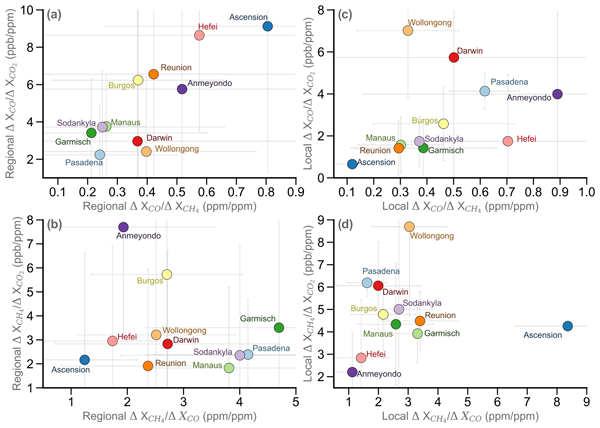
Kavitha Mottungan, Chayan Roychoudhury, Vanessa Brocchi, Benjamin Gaubert, Wenfu Tang, Mohammad Amin Mirrezaei, John McKinnon, Yafang Guo, David W. T. Griffith, Dietrich G. Feist, Isamu Morino, Mahesh K. Sha, Manvendra K. Dubey, Martine De Mazière, Nicholas M. Deutscher, Paul O. Wennberg, Ralf Sussmann, Rigel Kivi, Tae-Young Goo, Voltaire A. Velazco, Wei Wang, and Avelino F. Arellano Jr.
Atmos. Meas. Tech., 17, 5861–5885, https://doi.org/10.5194/amt-17-5861-2024, https://doi.org/10.5194/amt-17-5861-2024, 2024
Short summary
Short summary
A combination of data analysis techniques is introduced to separate local and regional influences on observed levels of carbon dioxide, carbon monoxide, and methane from an established ground-based remote sensing network. We take advantage of the covariations in these trace gases to identify the dominant type of sources driving these levels. Applying these methods in conjunction with existing approaches to other datasets can better address uncertainties in identifying sources and sinks.
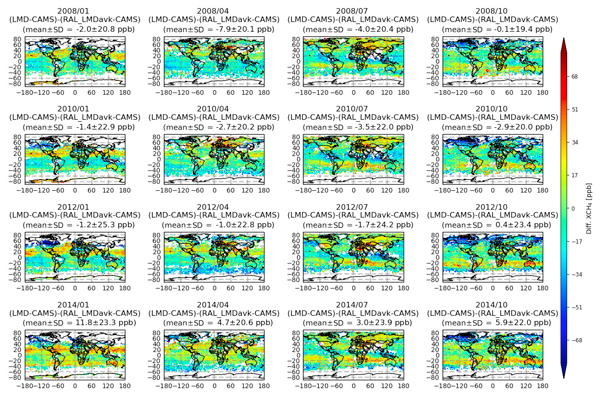
Bart Dils, Minqiang Zhou, Claude Camy-Peyret, Martine De Mazière, Yannick Kangah, Bavo Langerock, Pascal Prunet, Carmine Serio, Richard Siddans, and Brian Kerridge
Atmos. Meas. Tech., 17, 5491–5524, https://doi.org/10.5194/amt-17-5491-2024, https://doi.org/10.5194/amt-17-5491-2024, 2024
Short summary
Short summary
The paper discusses two very distinct methane products from the IASI instrument aboard the MetOp-A satellite. One (referred to as LMD NLISv8.3) uses a machine-learning approach, while the other (RALv2.0) uses a more conventional optimal estimation approach. We used a variety of model and independent reference measurement data to assess both products' overall quality, their differences, and specific aspects of each product that would benefit from further analysis by the product development teams.
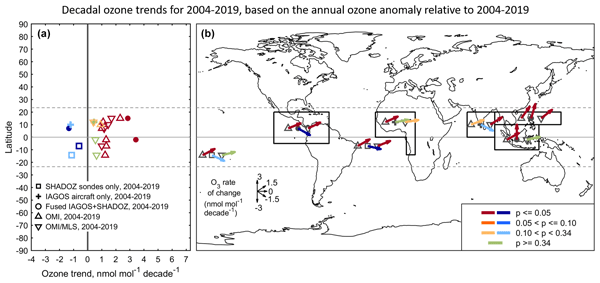
Audrey Gaudel, Ilann Bourgeois, Meng Li, Kai-Lan Chang, Jerald Ziemke, Bastien Sauvage, Ryan M. Stauffer, Anne M. Thompson, Debra E. Kollonige, Nadia Smith, Daan Hubert, Arno Keppens, Juan Cuesta, Klaus-Peter Heue, Pepijn Veefkind, Kenneth Aikin, Jeff Peischl, Chelsea R. Thompson, Thomas B. Ryerson, Gregory J. Frost, Brian C. McDonald, and Owen R. Cooper
Atmos. Chem. Phys., 24, 9975–10000, https://doi.org/10.5194/acp-24-9975-2024, https://doi.org/10.5194/acp-24-9975-2024, 2024
Short summary
Short summary
The study examines tropical tropospheric ozone changes. In situ data from 1994–2019 display increased ozone, notably over India, Southeast Asia, and Malaysia and Indonesia. Sparse in situ data limit trend detection for the 15-year period. In situ and satellite data, with limited sampling, struggle to consistently detect trends. Continuous observations are vital over the tropical Pacific Ocean, Indian Ocean, western Africa, and South Asia for accurate ozone trend estimation in these regions.
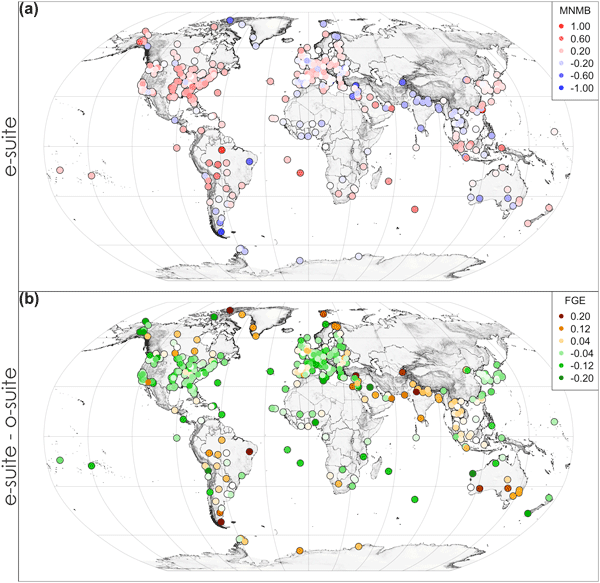
Henk Eskes, Athanasios Tsikerdekis, Melanie Ades, Mihai Alexe, Anna Carlin Benedictow, Yasmine Bennouna, Lewis Blake, Idir Bouarar, Simon Chabrillat, Richard Engelen, Quentin Errera, Johannes Flemming, Sebastien Garrigues, Jan Griesfeller, Vincent Huijnen, Luka Ilić, Antje Inness, John Kapsomenakis, Zak Kipling, Bavo Langerock, Augustin Mortier, Mark Parrington, Isabelle Pison, Mikko Pitkänen, Samuel Remy, Andreas Richter, Anja Schoenhardt, Michael Schulz, Valerie Thouret, Thorsten Warneke, Christos Zerefos, and Vincent-Henri Peuch
Atmos. Chem. Phys., 24, 9475–9514, https://doi.org/10.5194/acp-24-9475-2024, https://doi.org/10.5194/acp-24-9475-2024, 2024
Short summary
Short summary
The Copernicus Atmosphere Monitoring Service (CAMS) provides global analyses and forecasts of aerosols and trace gases in the atmosphere. On 27 June 2023 a major upgrade, Cy48R1, became operational. Comparisons with in situ, surface remote sensing, aircraft, and balloon and satellite observations show that the new CAMS system is a significant improvement. The results quantify the skill of CAMS to forecast impactful events, such as wildfires, dust storms and air pollution peaks.
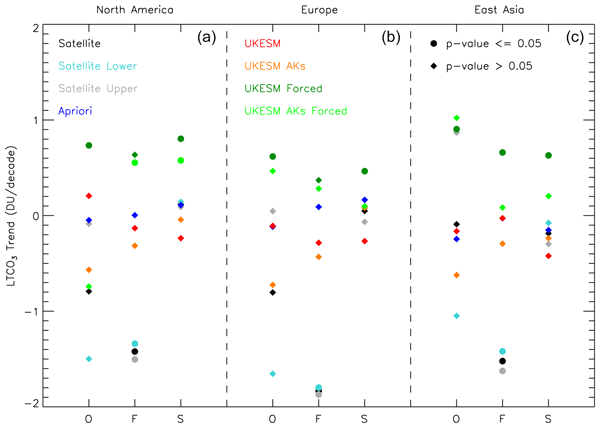
Richard J. Pope, Fiona M. O'Connor, Mohit Dalvi, Brian J. Kerridge, Richard Siddans, Barry G. Latter, Brice Barret, Eric Le Flochmoen, Anne Boynard, Martyn P. Chipperfield, Wuhu Feng, Matilda A. Pimlott, Sandip S. Dhomse, Christian Retscher, Catherine Wespes, and Richard Rigby
Atmos. Chem. Phys., 24, 9177–9195, https://doi.org/10.5194/acp-24-9177-2024, https://doi.org/10.5194/acp-24-9177-2024, 2024
Short summary
Short summary
Ozone is a potent air pollutant in the lower troposphere, with adverse impacts on human health. Satellite records of tropospheric ozone currently show large-scale inconsistencies in long-term trends. Our detailed study of the potential factors (e.g. satellite errors, where the satellite can observe ozone) potentially driving these inconsistencies found that, in North America, Europe, and East Asia, the underlying trends are typically small with large uncertainties.
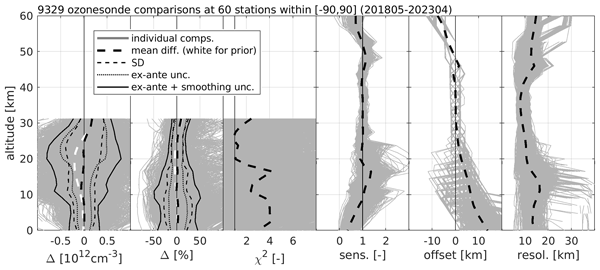
Arno Keppens, Serena Di Pede, Daan Hubert, Jean-Christopher Lambert, Pepijn Veefkind, Maarten Sneep, Johan De Haan, Mark ter Linden, Thierry Leblanc, Steven Compernolle, Tijl Verhoelst, José Granville, Oindrila Nath, Ann Mari Fjæraa, Ian Boyd, Sander Niemeijer, Roeland Van Malderen, Herman G. J. Smit, Valentin Duflot, Sophie Godin-Beekmann, Bryan J. Johnson, Wolfgang Steinbrecht, David W. Tarasick, Debra E. Kollonige, Ryan M. Stauffer, Anne M. Thompson, Angelika Dehn, and Claus Zehner
Atmos. Meas. Tech., 17, 3969–3993, https://doi.org/10.5194/amt-17-3969-2024, https://doi.org/10.5194/amt-17-3969-2024, 2024
Short summary
Short summary
The Sentinel-5P satellite operated by the European Space Agency has carried the TROPOspheric Monitoring Instrument (TROPOMI) around the Earth since October 2017. This mission also produces atmospheric ozone profile data which are described in detail for May 2018 to April 2023. Independent validation using ground-based reference measurements demonstrates that the operational ozone profile product mostly fully and at least partially complies with all mission requirements.
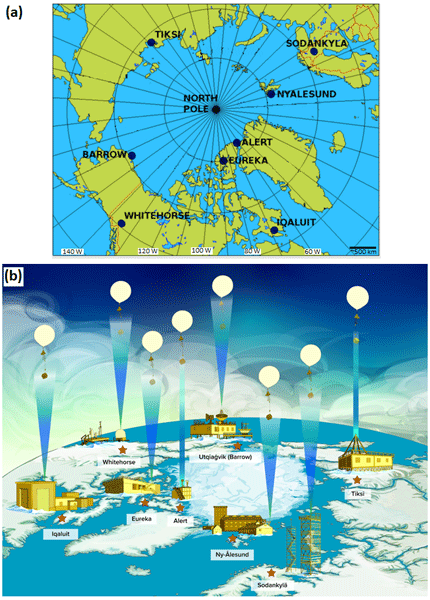
Zen Mariani, Sara M. Morris, Taneil Uttal, Elena Akish, Robert Crawford, Laura Huang, Jonathan Day, Johanna Tjernström, Øystein Godøy, Lara Ferrighi, Leslie M. Hartten, Jareth Holt, Christopher J. Cox, Ewan O'Connor, Roberta Pirazzini, Marion Maturilli, Giri Prakash, James Mather, Kimberly Strong, Pierre Fogal, Vasily Kustov, Gunilla Svensson, Michael Gallagher, and Brian Vasel
Earth Syst. Sci. Data, 16, 3083–3124, https://doi.org/10.5194/essd-16-3083-2024, https://doi.org/10.5194/essd-16-3083-2024, 2024
Short summary
Short summary
During the Year of Polar Prediction (YOPP), we increased measurements in the polar regions and have made dedicated efforts to centralize and standardize all of the different types of datasets that have been collected to facilitate user uptake and model–observation comparisons. This paper is an overview of those efforts and a description of the novel standardized Merged Observation Data Files (MODFs), including a description of the sites, data format, and instruments.
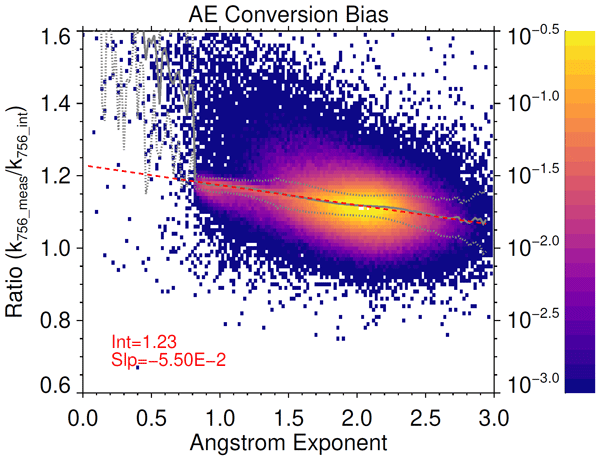
Robert P. Damadeo, Viktoria F. Sofieva, Alexei Rozanov, and Larry W. Thomason
Atmos. Meas. Tech., 17, 3669–3678, https://doi.org/10.5194/amt-17-3669-2024, https://doi.org/10.5194/amt-17-3669-2024, 2024
Short summary
Short summary
Comparing different aerosol data sets for scientific studies often requires converting aerosol extinction data between different wavelengths. A common approximation for the spectral behavior of aerosol is the Ångström formula; however, this introduces biases. Using measurements across many different wavelengths from a single instrument, we derive an empirical relationship to both characterize this bias and offer a correction for other studies that may employ this analysis approach.
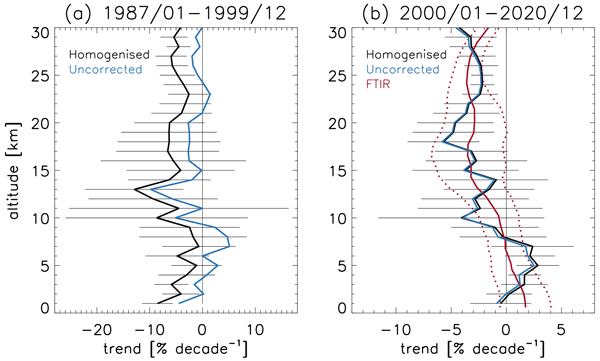
Guang Zeng, Richard Querel, Hisako Shiona, Deniz Poyraz, Roeland Van Malderen, Alex Geddes, Penny Smale, Dan Smale, John Robinson, and Olaf Morgenstern
Atmos. Chem. Phys., 24, 6413–6432, https://doi.org/10.5194/acp-24-6413-2024, https://doi.org/10.5194/acp-24-6413-2024, 2024
Short summary
Short summary
We present a homogenised ozonesonde record (1987–2020) for Lauder, a Southern Hemisphere mid-latitude site; identify factors driving ozone trends; and attribute them to anthropogenic forcings using statistical analysis and model simulations. We find that significant negative lower-stratospheric ozone trends identified at Lauder are associated with an increase in tropopause height and that CO2-driven dynamical changes have played an increasingly important role in driving ozone trends.
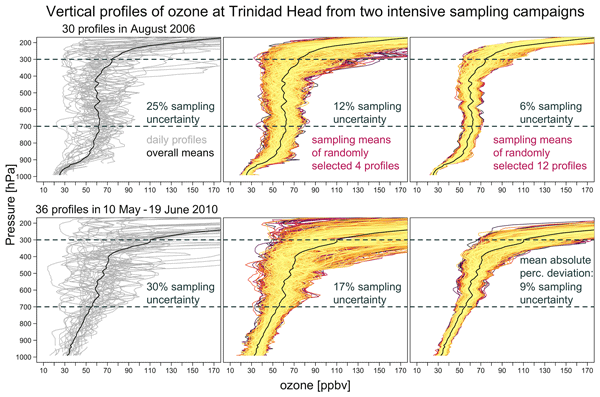
Kai-Lan Chang, Owen R. Cooper, Audrey Gaudel, Irina Petropavlovskikh, Peter Effertz, Gary Morris, and Brian C. McDonald
Atmos. Chem. Phys., 24, 6197–6218, https://doi.org/10.5194/acp-24-6197-2024, https://doi.org/10.5194/acp-24-6197-2024, 2024
Short summary
Short summary
A great majority of observational trend studies of free tropospheric ozone use sparsely sampled ozonesonde and aircraft measurements as reference data sets. A ubiquitous assumption is that trends are accurate and reliable so long as long-term records are available. We show that sampling bias due to sparse samples can persistently reduce the trend accuracy, and we highlight the importance of maintaining adequate frequency and continuity of observations.
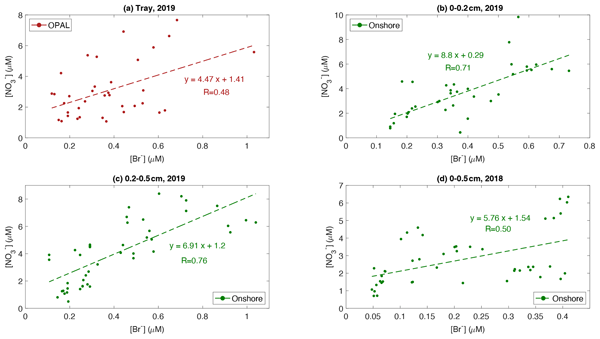
Xin Yang, Kimberly Strong, Alison S. Criscitiello, Marta Santos-Garcia, Kristof Bognar, Xiaoyi Zhao, Pierre Fogal, Kaley A. Walker, Sara M. Morris, and Peter Effertz
Atmos. Chem. Phys., 24, 5863–5886, https://doi.org/10.5194/acp-24-5863-2024, https://doi.org/10.5194/acp-24-5863-2024, 2024
Short summary
Short summary
This study uses snow samples collected from a Canadian high Arctic site, Eureka, to demonstrate that surface snow in early spring is a net sink of atmospheric bromine and nitrogen. Surface snow bromide and nitrate are significantly correlated, indicating the oxidation of reactive nitrogen is accelerated by reactive bromine. In addition, we show evidence that snow photochemical release of reactive bromine is very weak, and its emission flux is much smaller than the deposition flux of bromide.
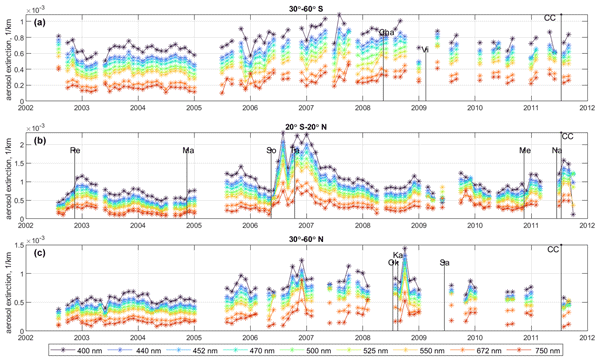
Viktoria F. Sofieva, Monika Szelag, Johanna Tamminen, Didier Fussen, Christine Bingen, Filip Vanhellemont, Nina Mateshvili, Alexei Rozanov, and Christine Pohl
Atmos. Meas. Tech., 17, 3085–3101, https://doi.org/10.5194/amt-17-3085-2024, https://doi.org/10.5194/amt-17-3085-2024, 2024
Short summary
Short summary
We have developed the new multi-wavelength dataset of aerosol extinction profiles, which are retrieved from the averaged transmittance spectra by the Global Ozone Monitoring by Occultation of Stars instrument aboard Envisat. The retrieved aerosol extinction profiles are provided in the altitude range 10–40 km at 400, 440, 452, 470, 500, 525, 550, 672 and 750 nm for the period 2002–2012. FMI-GOMOSaero aerosol profiles have improved quality; they are in good agreement with other datasets.
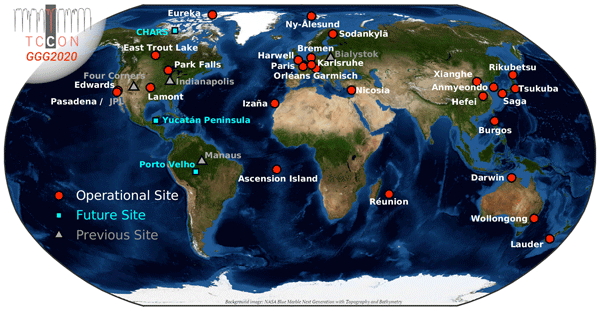
Joshua L. Laughner, Geoffrey C. Toon, Joseph Mendonca, Christof Petri, Sébastien Roche, Debra Wunch, Jean-Francois Blavier, David W. T. Griffith, Pauli Heikkinen, Ralph F. Keeling, Matthäus Kiel, Rigel Kivi, Coleen M. Roehl, Britton B. Stephens, Bianca C. Baier, Huilin Chen, Yonghoon Choi, Nicholas M. Deutscher, Joshua P. DiGangi, Jochen Gross, Benedikt Herkommer, Pascal Jeseck, Thomas Laemmel, Xin Lan, Erin McGee, Kathryn McKain, John Miller, Isamu Morino, Justus Notholt, Hirofumi Ohyama, David F. Pollard, Markus Rettinger, Haris Riris, Constantina Rousogenous, Mahesh Kumar Sha, Kei Shiomi, Kimberly Strong, Ralf Sussmann, Yao Té, Voltaire A. Velazco, Steven C. Wofsy, Minqiang Zhou, and Paul O. Wennberg
Earth Syst. Sci. Data, 16, 2197–2260, https://doi.org/10.5194/essd-16-2197-2024, https://doi.org/10.5194/essd-16-2197-2024, 2024
Short summary
Short summary
This paper describes a new version, called GGG2020, of a data set containing column-integrated observations of greenhouse and related gases (including CO2, CH4, CO, and N2O) made by ground stations located around the world. Compared to the previous version (GGG2014), improvements have been made toward site-to-site consistency. This data set plays a key role in validating space-based greenhouse gas observations and in understanding the carbon cycle.
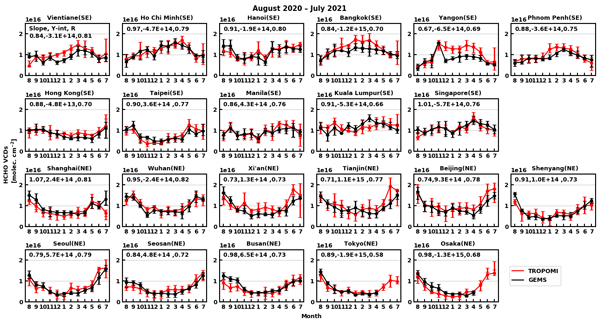
Gitaek T. Lee, Rokjin J. Park, Hyeong-Ahn Kwon, Eunjo S. Ha, Sieun D. Lee, Seunga Shin, Myoung-Hwan Ahn, Mina Kang, Yong-Sang Choi, Gyuyeon Kim, Dong-Won Lee, Deok-Rae Kim, Hyunkee Hong, Bavo Langerock, Corinne Vigouroux, Christophe Lerot, Francois Hendrick, Gaia Pinardi, Isabelle De Smedt, Michel Van Roozendael, Pucai Wang, Heesung Chong, Yeseul Cho, and Jhoon Kim
Atmos. Chem. Phys., 24, 4733–4749, https://doi.org/10.5194/acp-24-4733-2024, https://doi.org/10.5194/acp-24-4733-2024, 2024
Short summary
Short summary
This study evaluates the Geostationary Environment Monitoring Spectrometer (GEMS) HCHO product by comparing its vertical column densities (VCDs) with those of TROPOMI and ground-based observations. Based on some sensitivity tests, obtaining radiance references under clear-sky conditions significantly improves HCHO retrieval quality. GEMS HCHO VCDs captured seasonal and diurnal variations well during the first year of observation, showing consistency with TROPOMI and ground-based observations.
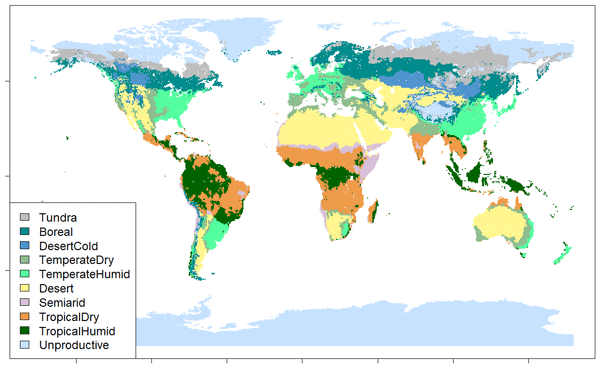
Tommi Ekholm, Nadine-Cyra Freistetter, Aapo Rautiainen, and Laura Thölix
Geosci. Model Dev., 17, 3041–3062, https://doi.org/10.5194/gmd-17-3041-2024, https://doi.org/10.5194/gmd-17-3041-2024, 2024
Short summary
Short summary
CLASH is a numerical model that portrays land allocation between different uses, land carbon stocks, and agricultural and forestry production globally. CLASH can help in examining the role of land use in mitigating climate change, providing food and biogenic raw materials for the economy, and conserving primary ecosystems. Our demonstration with CLASH confirms that reduction of animal-based food, shifting croplands and storing carbon in forests are effective ways to mitigate climate change.
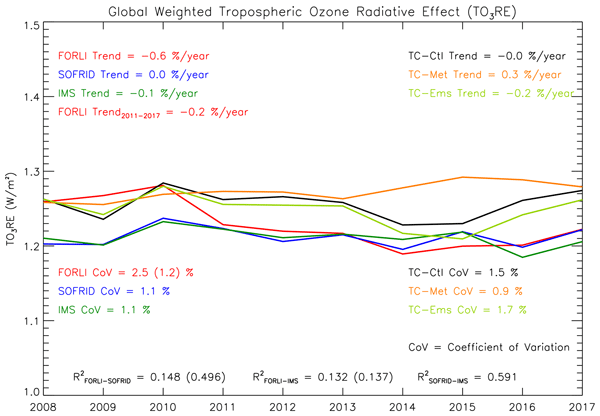
Richard J. Pope, Alexandru Rap, Matilda A. Pimlott, Brice Barret, Eric Le Flochmoen, Brian J. Kerridge, Richard Siddans, Barry G. Latter, Lucy J. Ventress, Anne Boynard, Christian Retscher, Wuhu Feng, Richard Rigby, Sandip S. Dhomse, Catherine Wespes, and Martyn P. Chipperfield
Atmos. Chem. Phys., 24, 3613–3626, https://doi.org/10.5194/acp-24-3613-2024, https://doi.org/10.5194/acp-24-3613-2024, 2024
Short summary
Short summary
Tropospheric ozone is an important short-lived climate forcer which influences the incoming solar short-wave radiation and the outgoing long-wave radiation in the atmosphere (8–15 km) where the balance between the two yields a net positive (i.e. warming) effect at the surface. Overall, we find that the tropospheric ozone radiative effect ranges between 1.21 and 1.26 W m−2 with a negligible trend (2008–2017), suggesting that tropospheric ozone influences on climate have remained stable with time.
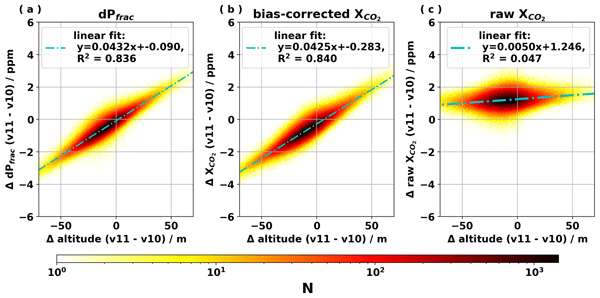
Nicole Jacobs, Christopher W. O'Dell, Thomas E. Taylor, Thomas L. Logan, Brendan Byrne, Matthäus Kiel, Rigel Kivi, Pauli Heikkinen, Aronne Merrelli, Vivienne H. Payne, and Abhishek Chatterjee
Atmos. Meas. Tech., 17, 1375–1401, https://doi.org/10.5194/amt-17-1375-2024, https://doi.org/10.5194/amt-17-1375-2024, 2024
Short summary
Short summary
The accuracy of trace gas retrievals from spaceborne observations, like those from the Orbiting Carbon Observatory 2 (OCO-2), are sensitive to the referenced digital elevation model (DEM). Therefore, we evaluate several global DEMs, used in versions 10 and 11 of the OCO-2 retrieval along with the Copernicus DEM. We explore the impacts of changing the DEM on biases in OCO-2-retrieved XCO2 and inferred CO2 fluxes. Our findings led to an update to OCO-2 v11.1 using the Copernicus DEM globally.
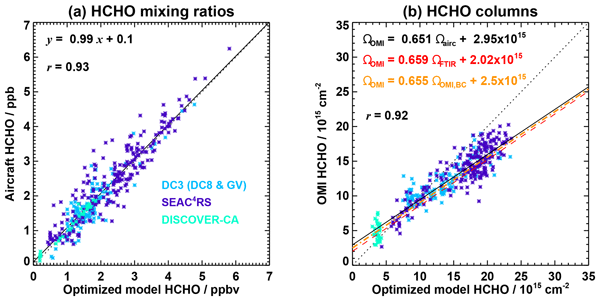
Jean-François Müller, Trissevgeni Stavrakou, Glenn-Michael Oomen, Beata Opacka, Isabelle De Smedt, Alex Guenther, Corinne Vigouroux, Bavo Langerock, Carlos Augusto Bauer Aquino, Michel Grutter, James Hannigan, Frank Hase, Rigel Kivi, Erik Lutsch, Emmanuel Mahieu, Maria Makarova, Jean-Marc Metzger, Isamu Morino, Isao Murata, Tomoo Nagahama, Justus Notholt, Ivan Ortega, Mathias Palm, Amelie Röhling, Wolfgang Stremme, Kimberly Strong, Ralf Sussmann, Yao Té, and Alan Fried
Atmos. Chem. Phys., 24, 2207–2237, https://doi.org/10.5194/acp-24-2207-2024, https://doi.org/10.5194/acp-24-2207-2024, 2024
Short summary
Short summary
Formaldehyde observations from satellites can be used to constrain the emissions of volatile organic compounds, but those observations have biases. Using an atmospheric model, aircraft and ground-based remote sensing data, we quantify these biases, propose a correction to the data, and assess the consequence of this correction for the evaluation of emissions.
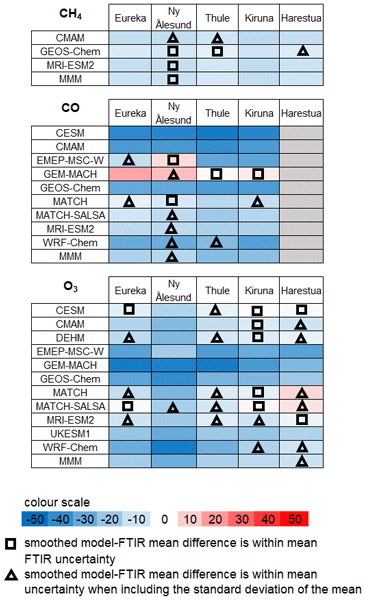
Victoria A. Flood, Kimberly Strong, Cynthia H. Whaley, Kaley A. Walker, Thomas Blumenstock, James W. Hannigan, Johan Mellqvist, Justus Notholt, Mathias Palm, Amelie N. Röhling, Stephen Arnold, Stephen Beagley, Rong-You Chien, Jesper Christensen, Makoto Deushi, Srdjan Dobricic, Xinyi Dong, Joshua S. Fu, Michael Gauss, Wanmin Gong, Joakim Langner, Kathy S. Law, Louis Marelle, Tatsuo Onishi, Naga Oshima, David A. Plummer, Luca Pozzoli, Jean-Christophe Raut, Manu A. Thomas, Svetlana Tsyro, and Steven Turnock
Atmos. Chem. Phys., 24, 1079–1118, https://doi.org/10.5194/acp-24-1079-2024, https://doi.org/10.5194/acp-24-1079-2024, 2024
Short summary
Short summary
It is important to understand the composition of the Arctic atmosphere and how it is changing. Atmospheric models provide simulations that can inform policy. This study examines simulations of CH4, CO, and O3 by 11 models. Model performance is assessed by comparing results matched in space and time to measurements from five high-latitude ground-based infrared spectrometers. This work finds that models generally underpredict the concentrations of these gases in the Arctic troposphere.
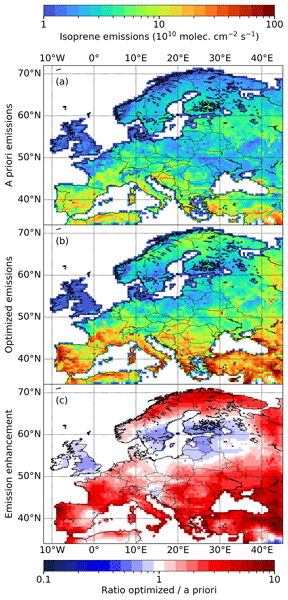
Glenn-Michael Oomen, Jean-François Müller, Trissevgeni Stavrakou, Isabelle De Smedt, Thomas Blumenstock, Rigel Kivi, Maria Makarova, Mathias Palm, Amelie Röhling, Yao Té, Corinne Vigouroux, Martina M. Friedrich, Udo Frieß, François Hendrick, Alexis Merlaud, Ankie Piters, Andreas Richter, Michel Van Roozendael, and Thomas Wagner
Atmos. Chem. Phys., 24, 449–474, https://doi.org/10.5194/acp-24-449-2024, https://doi.org/10.5194/acp-24-449-2024, 2024
Short summary
Short summary
Natural emissions from vegetation have a profound impact on air quality for their role in the formation of harmful tropospheric ozone and organic aerosols, yet these emissions are highly uncertain. In this study, we quantify emissions of organic gases over Europe using high-quality satellite measurements of formaldehyde. These satellite observations suggest that emissions from vegetation are much higher than predicted by models, especially in southern Europe.
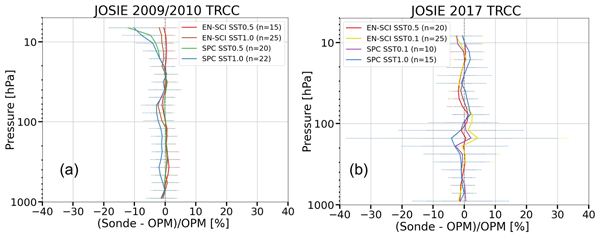
Herman G. J. Smit, Deniz Poyraz, Roeland Van Malderen, Anne M. Thompson, David W. Tarasick, Ryan M. Stauffer, Bryan J. Johnson, and Debra E. Kollonige
Atmos. Meas. Tech., 17, 73–112, https://doi.org/10.5194/amt-17-73-2024, https://doi.org/10.5194/amt-17-73-2024, 2024
Short summary
Short summary
This paper revisits fundamentals of ECC ozonesonde measurements to develop and characterize a methodology to correct for the fast and slow time responses using the JOSIE (Jülich Ozone Sonde Intercomparison Experiment) simulation chamber data. Comparing the new corrected ozonesonde profiles to an accurate ozone UV photometer (OPM) as reference allows us to evaluate the time response correction (TRC) method and to determine calibration functions traceable to one reference with 5 % uncertainty.
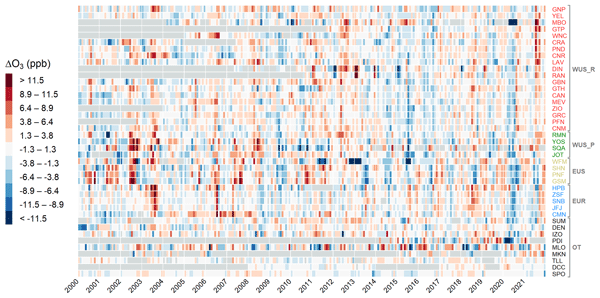
Davide Putero, Paolo Cristofanelli, Kai-Lan Chang, Gaëlle Dufour, Gregory Beachley, Cédric Couret, Peter Effertz, Daniel A. Jaffe, Dagmar Kubistin, Jason Lynch, Irina Petropavlovskikh, Melissa Puchalski, Timothy Sharac, Barkley C. Sive, Martin Steinbacher, Carlos Torres, and Owen R. Cooper
Atmos. Chem. Phys., 23, 15693–15709, https://doi.org/10.5194/acp-23-15693-2023, https://doi.org/10.5194/acp-23-15693-2023, 2023
Short summary
Short summary
We investigated the impact of societal restriction measures during the COVID-19 pandemic on surface ozone at 41 high-elevation sites worldwide. Negative ozone anomalies were observed for spring and summer 2020 for all of the regions considered. In 2021, negative anomalies continued for Europe and partially for the eastern US, while western US sites showed positive anomalies due to wildfires. IASI satellite data and the Carbon Monitor supported emission reductions as a cause of the anomalies.
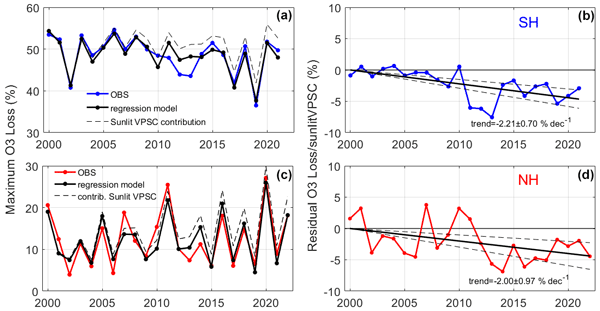
Andrea Pazmiño, Florence Goutail, Sophie Godin-Beekmann, Alain Hauchecorne, Jean-Pierre Pommereau, Martyn P. Chipperfield, Wuhu Feng, Franck Lefèvre, Audrey Lecouffe, Michel Van Roozendael, Nis Jepsen, Georg Hansen, Rigel Kivi, Kimberly Strong, and Kaley A. Walker
Atmos. Chem. Phys., 23, 15655–15670, https://doi.org/10.5194/acp-23-15655-2023, https://doi.org/10.5194/acp-23-15655-2023, 2023
Short summary
Short summary
The vortex-averaged ozone loss over the last 3 decades is evaluated for both polar regions using the passive ozone tracer of the chemical transport model TOMCAT/SLIMCAT and total ozone observations from the SAOZ network and MSR2 reanalysis. Three metrics were developed to compute ozone trends since 2000. The study confirms the ozone recovery in the Antarctic and shows a potential sign of quantitative detection of ozone recovery in the Arctic that needs to be robustly confirmed in the future.
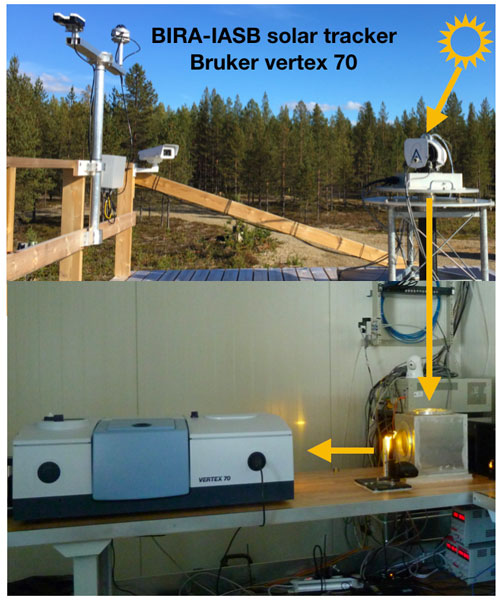
Minqiang Zhou, Bavo Langerock, Mahesh Kumar Sha, Christian Hermans, Nicolas Kumps, Rigel Kivi, Pauli Heikkinen, Christof Petri, Justus Notholt, Huilin Chen, and Martine De Mazière
Atmos. Meas. Tech., 16, 5593–5608, https://doi.org/10.5194/amt-16-5593-2023, https://doi.org/10.5194/amt-16-5593-2023, 2023
Short summary
Short summary
Atmospheric N2O and CH4 columns are successfully retrieved from low-resolution FTIR spectra recorded by a Bruker VERTEX 70. The 1-year measurements at Sodankylä show that the N2O total columns retrieved from 125HR and VERTEX 70 spectra are −0.3 ± 0.7 % with an R value of 0.93. The relative differences between the CH4 total columns retrieved from the 125HR and VERTEX spectra are 0.0 ± 0.8 % with an R value of 0.87. Such a technique can help to fill the gap in NDACC N2O and CH4 measurements.
Sieglinde Callewaert, Minqiang Zhou, Bavo Langerock, Pucai Wang, Ting Wang, Emmanuel Mahieu, and Martine De Mazière
EGUsphere, https://doi.org/10.5194/egusphere-2023-2103, https://doi.org/10.5194/egusphere-2023-2103, 2023
Preprint archived
Short summary
Short summary
We used an atmospheric transport model and satellite data to study greenhouse gas observations at Xianghe, China. Our study shows the key source sectors that influence the concentrations and their respective importance. Furthermore, meteorological factors such as wind direction are discussed. This research highlights the challenges in accurately simulating these kind of measurements and helps us to better understand greenhouse gas variability in the region.
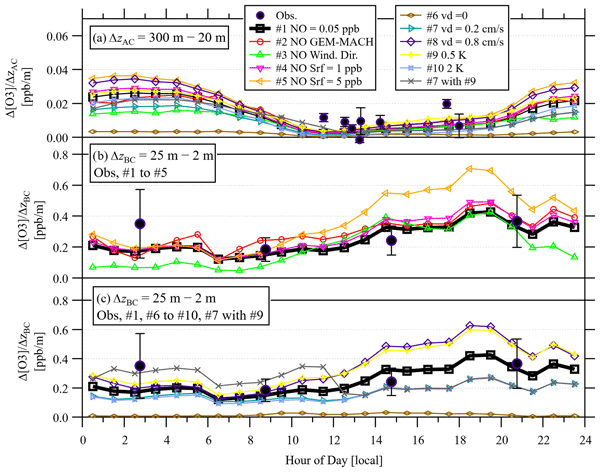
Xuanyi Zhang, Mark Gordon, Paul A. Makar, Timothy Jiang, Jonathan Davies, and David Tarasick
Atmos. Chem. Phys., 23, 13647–13664, https://doi.org/10.5194/acp-23-13647-2023, https://doi.org/10.5194/acp-23-13647-2023, 2023
Short summary
Short summary
Measurements of ozone in the atmosphere were made in a forest downwind of oil sands mining and production facilities in northern Alberta. These measurements show that the emissions of other pollutants from oil sands production and processing reduce the amount of ozone in the forest. By using an atmospheric model combined with measurements, we find that the rate at which ozone is absorbed by the forest is lower than typical rates from similar measurements in other forests.
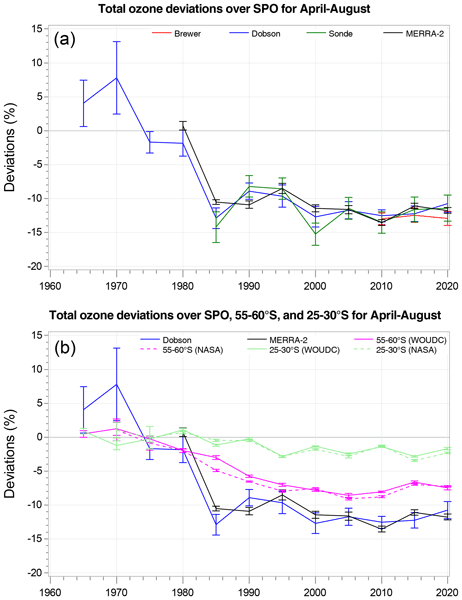
Vitali Fioletov, Xiaoyi Zhao, Ihab Abboud, Michael Brohart, Akira Ogyu, Reno Sit, Sum Chi Lee, Irina Petropavlovskikh, Koji Miyagawa, Bryan J. Johnson, Patrick Cullis, John Booth, Glen McConville, and C. Thomas McElroy
Atmos. Chem. Phys., 23, 12731–12751, https://doi.org/10.5194/acp-23-12731-2023, https://doi.org/10.5194/acp-23-12731-2023, 2023
Short summary
Short summary
Stratospheric ozone within the Southern Hemisphere springtime polar vortex has been a subject of intense research since the discovery of the Antarctic ozone hole. The wintertime ozone in the vortex is less studied. We show that the recent wintertime ozone values over the South Pole were about 12 % below the pre-1980s level; i.e., the decline there was nearly twice as large as that over southern midlatitudes. Thus, wintertime ozone there can be used as an indicator of the ozone layer state.
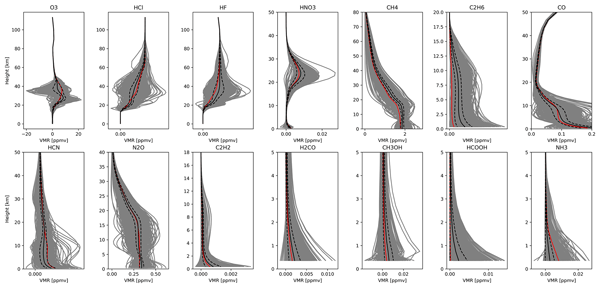
Shoma Yamanouchi, Stephanie Conway, Kimberly Strong, Orfeo Colebatch, Erik Lutsch, Sébastien Roche, Jeffrey Taylor, Cynthia H. Whaley, and Aldona Wiacek
Earth Syst. Sci. Data, 15, 3387–3418, https://doi.org/10.5194/essd-15-3387-2023, https://doi.org/10.5194/essd-15-3387-2023, 2023
Short summary
Short summary
Nineteen years of atmospheric composition measurements made at the University of Toronto Atmospheric Observatory (TAO; 43.66° N, 79.40° W; 174 m.a.s.l.) are presented. These are retrieved from Fourier transform infrared (FTIR) solar absorption spectra recorded with a spectrometer from May 2002 to December 2020. The retrievals have been optimized for fourteen species: O3, HCl, HF, HNO3, CH4, C2H6, CO, HCN, N2O, C2H2, H2CO, CH3OH, HCOOH, and NH3.
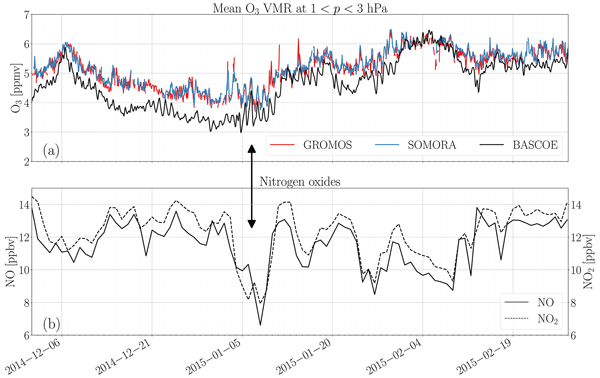
Eric Sauvageat, Klemens Hocke, Eliane Maillard Barras, Shengyi Hou, Quentin Errera, Alexander Haefele, and Axel Murk
Atmos. Chem. Phys., 23, 7321–7345, https://doi.org/10.5194/acp-23-7321-2023, https://doi.org/10.5194/acp-23-7321-2023, 2023
Short summary
Short summary
In Switzerland, two microwave radiometers can measure continuous ozone profiles in the middle atmosphere. From these instruments, we can study the diurnal variation of ozone, which is difficult to observe otherwise. It is valuable to validate the model simulations of diurnal variations in this region. We present results obtained during the last decade and compare them against various models. For the first time, we also show that the winter diurnal variations have some short-term fluctuations.
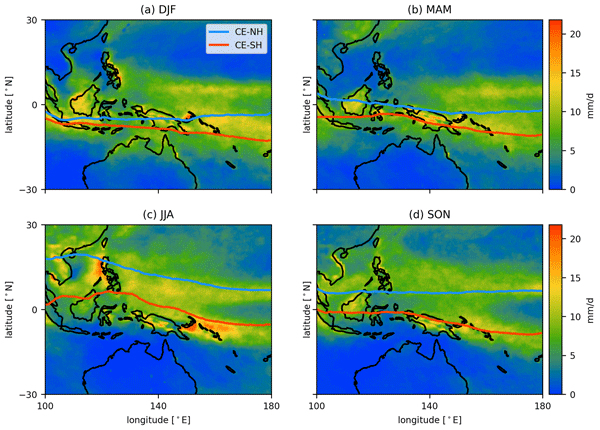
Xiaoyu Sun, Mathias Palm, Katrin Müller, Jonas Hachmeister, and Justus Notholt
Atmos. Chem. Phys., 23, 7075–7090, https://doi.org/10.5194/acp-23-7075-2023, https://doi.org/10.5194/acp-23-7075-2023, 2023
Short summary
Short summary
The tropical western Pacific (TWP) is an active interhemispheric transport region contributing significantly to the global climate. A method to determine the chemical equator was developed by model simulations of a virtual passive tracer to analyze transport in the tropics, with a focus on the TWP region. We compare the chemical equator with tropical rain belts and wind fields and obtain a vertical pattern of interhemispheric transport processes which shows tilt structure in certain seasons.
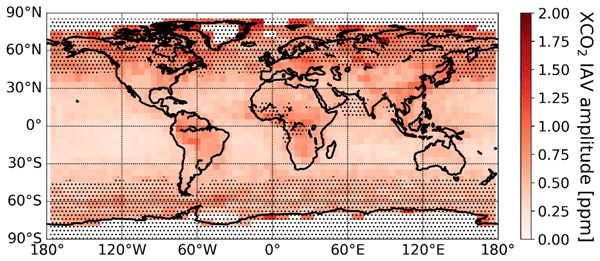
Yifan Guan, Gretchen Keppel-Aleks, Scott C. Doney, Christof Petri, Dave Pollard, Debra Wunch, Frank Hase, Hirofumi Ohyama, Isamu Morino, Justus Notholt, Kei Shiomi, Kim Strong, Rigel Kivi, Matthias Buschmann, Nicholas Deutscher, Paul Wennberg, Ralf Sussmann, Voltaire A. Velazco, and Yao Té
Atmos. Chem. Phys., 23, 5355–5372, https://doi.org/10.5194/acp-23-5355-2023, https://doi.org/10.5194/acp-23-5355-2023, 2023
Short summary
Short summary
We characterize spatial–temporal patterns of interannual variability (IAV) in atmospheric CO2 based on NASA’s Orbiting Carbon Observatory-2 (OCO-2). CO2 variation is strongly impacted by climate events, with higher anomalies during El Nino years. We show high correlation in IAV between space-based and ground-based CO2 from long-term sites. Because OCO-2 has near-global coverage, our paper provides a roadmap to study IAV where in situ observation is sparse, such as open oceans and remote lands.
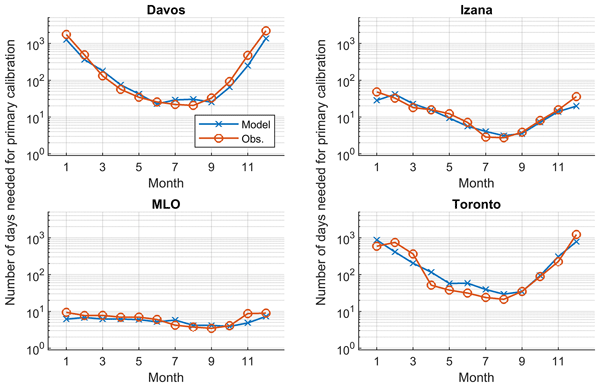
Xiaoyi Zhao, Vitali Fioletov, Alberto Redondas, Julian Gröbner, Luca Egli, Franz Zeilinger, Javier López-Solano, Alberto Berjón Arroyo, James Kerr, Eliane Maillard Barras, Herman Smit, Michael Brohart, Reno Sit, Akira Ogyu, Ihab Abboud, and Sum Chi Lee
Atmos. Meas. Tech., 16, 2273–2295, https://doi.org/10.5194/amt-16-2273-2023, https://doi.org/10.5194/amt-16-2273-2023, 2023
Short summary
Short summary
The Brewer ozone spectrophotometer is one of the World Meteorological Organization (WMO) Global Atmosphere Watch (GAW)'s standard ozone monitoring instruments since the 1980s. This work is aimed at obtaining answers to (1) why Brewer primary calibration work can only be performed at certain sites (e.g., Izaña and MLO) and (2) what is needed to assure the equivalence of calibration quality from different sites.

Adrien Vu Van, Anne Boynard, Pascal Prunet, Dominique Jolivet, Olivier Lezeaux, Patrice Henry, Claude Camy-Peyret, Lieven Clarisse, Bruno Franco, Pierre-François Coheur, and Cathy Clerbaux
Atmos. Meas. Tech., 16, 2107–2127, https://doi.org/10.5194/amt-16-2107-2023, https://doi.org/10.5194/amt-16-2107-2023, 2023
Short summary
Short summary
With its near-real-time observations and good horizontal coverage, the Infrared Atmospheric Sounding Interferometer (IASI) instrument can contribute to the monitoring systems for a systematic and continuous detection of exceptional atmospheric events such as fires, anthropogenic pollution episodes, volcanic eruptions, or industrial releases. In this paper, a new approach is described for the detection and characterization of unexpected events in terms of trace gases using IASI radiance spectra.
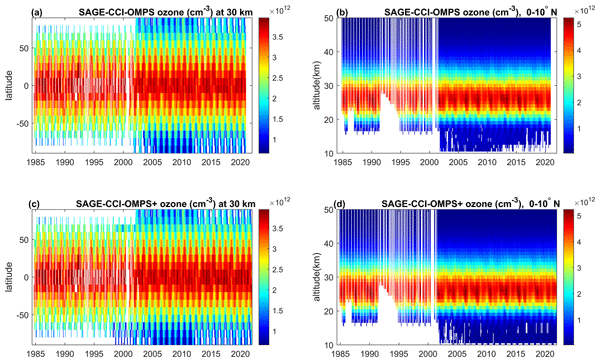
Viktoria F. Sofieva, Monika Szelag, Johanna Tamminen, Carlo Arosio, Alexei Rozanov, Mark Weber, Doug Degenstein, Adam Bourassa, Daniel Zawada, Michael Kiefer, Alexandra Laeng, Kaley A. Walker, Patrick Sheese, Daan Hubert, Michel van Roozendael, Christian Retscher, Robert Damadeo, and Jerry D. Lumpe
Atmos. Meas. Tech., 16, 1881–1899, https://doi.org/10.5194/amt-16-1881-2023, https://doi.org/10.5194/amt-16-1881-2023, 2023
Short summary
Short summary
The paper presents the updated SAGE-CCI-OMPS+ climate data record of monthly zonal mean ozone profiles. This dataset covers the stratosphere and combines measurements by nine limb and occultation satellite instruments (SAGE II, OSIRIS, MIPAS, SCIAMACHY, GOMOS, ACE-FTS, OMPS-LP, POAM III, and SAGE III/ISS). The update includes new versions of MIPAS, ACE-FTS, and OSIRIS datasets and introduces data from additional sensors (POAM III and SAGE III/ISS) and retrieval processors (OMPS-LP).
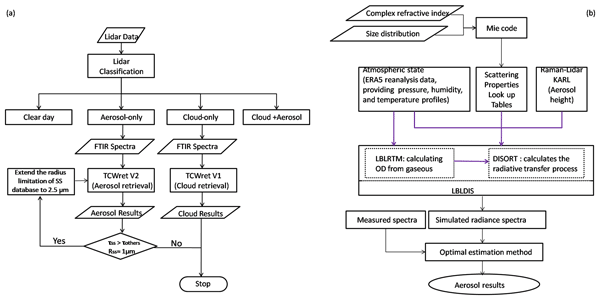
Denghui Ji, Mathias Palm, Christoph Ritter, Philipp Richter, Xiaoyu Sun, Matthias Buschmann, and Justus Notholt
Atmos. Meas. Tech., 16, 1865–1879, https://doi.org/10.5194/amt-16-1865-2023, https://doi.org/10.5194/amt-16-1865-2023, 2023
Short summary
Short summary
To measuring aerosol components, a Fourier transform infrared spectrometer (FTIS) and a lidar are operated in Ny-Ålesund, Spitsbergen (78° N, 11° E). Using the FTIS, a retrieval algorithm is developed for dust, sea salt, black carbon, and sulfate. The distribution of aerosols or clouds is provided by lidar and used as an indicator for aerosol or cloud retrieval with the FTS. Thus, a two-instrument joint-observation scheme is designed and is used on the data measured from 2019 to the present.
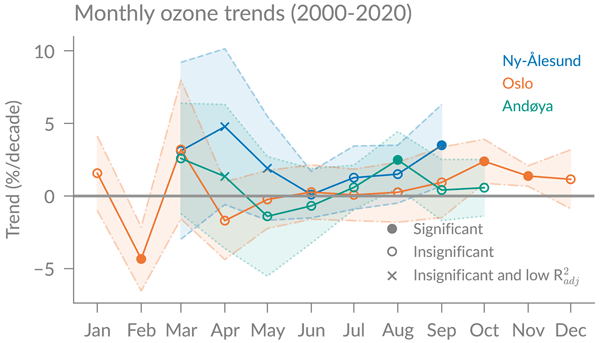
Leonie Bernet, Tove Svendby, Georg Hansen, Yvan Orsolini, Arne Dahlback, Florence Goutail, Andrea Pazmiño, Boyan Petkov, and Arve Kylling
Atmos. Chem. Phys., 23, 4165–4184, https://doi.org/10.5194/acp-23-4165-2023, https://doi.org/10.5194/acp-23-4165-2023, 2023
Short summary
Short summary
After the severe destruction of the ozone layer, the amount of ozone in the stratosphere is expected to increase again. At northern high latitudes, however, such a recovery has not been detected yet. To assess ozone changes in that region, we analyse the amount of ozone above specific locations (total ozone) measured at three stations in Norway. We found that total ozone increases significantly at two Arctic stations, which may be an indication of ozone recovery at northern high latitudes.
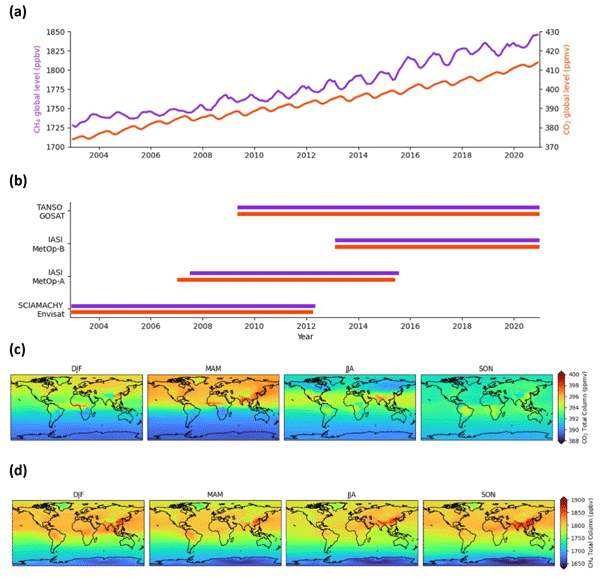
Anna Agustí-Panareda, Jérôme Barré, Sébastien Massart, Antje Inness, Ilse Aben, Melanie Ades, Bianca C. Baier, Gianpaolo Balsamo, Tobias Borsdorff, Nicolas Bousserez, Souhail Boussetta, Michael Buchwitz, Luca Cantarello, Cyril Crevoisier, Richard Engelen, Henk Eskes, Johannes Flemming, Sébastien Garrigues, Otto Hasekamp, Vincent Huijnen, Luke Jones, Zak Kipling, Bavo Langerock, Joe McNorton, Nicolas Meilhac, Stefan Noël, Mark Parrington, Vincent-Henri Peuch, Michel Ramonet, Miha Razinger, Maximilian Reuter, Roberto Ribas, Martin Suttie, Colm Sweeney, Jérôme Tarniewicz, and Lianghai Wu
Atmos. Chem. Phys., 23, 3829–3859, https://doi.org/10.5194/acp-23-3829-2023, https://doi.org/10.5194/acp-23-3829-2023, 2023
Short summary
Short summary
We present a global dataset of atmospheric CO2 and CH4, the two most important human-made greenhouse gases, which covers almost 2 decades (2003–2020). It is produced by combining satellite data of CO2 and CH4 with a weather and air composition prediction model, and it has been carefully evaluated against independent observations to ensure validity and point out deficiencies to the user. This dataset can be used for scientific studies in the field of climate change and the global carbon cycle.
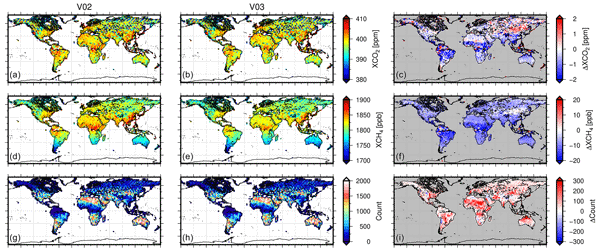
Yu Someya, Yukio Yoshida, Hirofumi Ohyama, Shohei Nomura, Akihide Kamei, Isamu Morino, Hitoshi Mukai, Tsuneo Matsunaga, Joshua L. Laughner, Voltaire A. Velazco, Benedikt Herkommer, Yao Té, Mahesh Kumar Sha, Rigel Kivi, Minqiang Zhou, Young Suk Oh, Nicholas M. Deutscher, and David W. T. Griffith
Atmos. Meas. Tech., 16, 1477–1501, https://doi.org/10.5194/amt-16-1477-2023, https://doi.org/10.5194/amt-16-1477-2023, 2023
Short summary
Short summary
The updated retrieval algorithm for the Greenhouse gases Observing SATellite level 2 product is presented. The main changes in the algorithm from the previous one are the treatment of cirrus clouds, the degradation model of the sensor, solar irradiance, and gas absorption coefficient tables. The retrieval results showed improvements in fitting accuracy and an increase in the data amount over land. On the other hand, there are still large biases of XCO2 which should be corrected over the ocean.
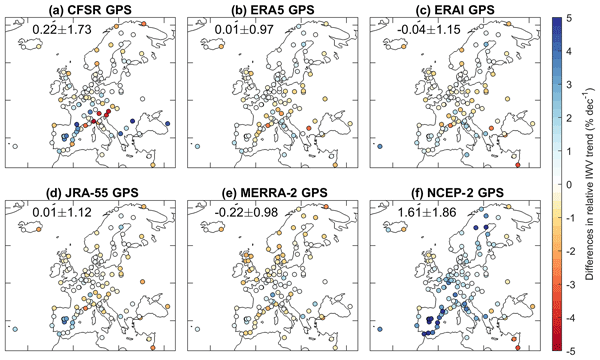
Peng Yuan, Roeland Van Malderen, Xungang Yin, Hannes Vogelmann, Weiping Jiang, Joseph Awange, Bernhard Heck, and Hansjörg Kutterer
Atmos. Chem. Phys., 23, 3517–3541, https://doi.org/10.5194/acp-23-3517-2023, https://doi.org/10.5194/acp-23-3517-2023, 2023
Short summary
Short summary
Water vapour plays an important role in various weather and climate processes. However, due to its large spatiotemporal variability, its high-accuracy quantification remains a challenge. In this study, 20+ years of GPS-derived integrated water vapour (IWV) retrievals in Europe were obtained. They were then used to characterise the temporal features of Europe's IWV and assess six atmospheric reanalyses. Results show that ERA5 outperforms the other reanalyses at most temporal scales.
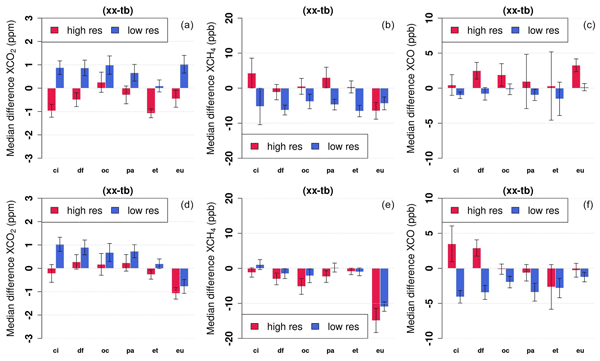
Nasrin Mostafavi Pak, Jacob K. Hedelius, Sébastien Roche, Liz Cunningham, Bianca Baier, Colm Sweeney, Coleen Roehl, Joshua Laughner, Geoffrey Toon, Paul Wennberg, Harrison Parker, Colin Arrowsmith, Joseph Mendonca, Pierre Fogal, Tyler Wizenberg, Beatriz Herrera, Kimberly Strong, Kaley A. Walker, Felix Vogel, and Debra Wunch
Atmos. Meas. Tech., 16, 1239–1261, https://doi.org/10.5194/amt-16-1239-2023, https://doi.org/10.5194/amt-16-1239-2023, 2023
Short summary
Short summary
Ground-based remote sensing instruments in the Total Carbon Column Observing Network (TCCON) measure greenhouse gases in the atmosphere. Consistency between TCCON measurements is crucial to accurately infer changes in atmospheric composition. We use portable remote sensing instruments (EM27/SUN) to evaluate biases between TCCON stations in North America. We also improve the retrievals of EM27/SUN instruments and evaluate the previous (GGG2014) and newest (GGG2020) retrieval algorithms.
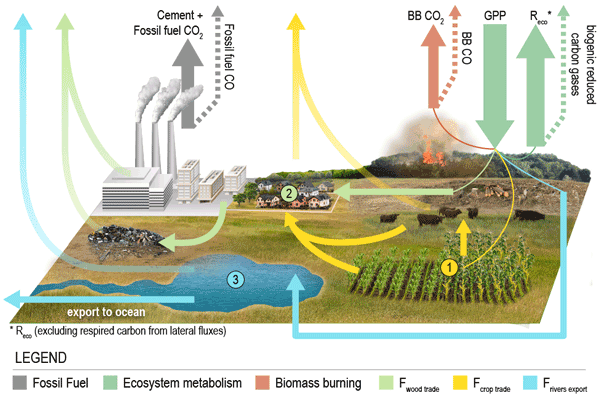
Brendan Byrne, David F. Baker, Sourish Basu, Michael Bertolacci, Kevin W. Bowman, Dustin Carroll, Abhishek Chatterjee, Frédéric Chevallier, Philippe Ciais, Noel Cressie, David Crisp, Sean Crowell, Feng Deng, Zhu Deng, Nicholas M. Deutscher, Manvendra K. Dubey, Sha Feng, Omaira E. García, David W. T. Griffith, Benedikt Herkommer, Lei Hu, Andrew R. Jacobson, Rajesh Janardanan, Sujong Jeong, Matthew S. Johnson, Dylan B. A. Jones, Rigel Kivi, Junjie Liu, Zhiqiang Liu, Shamil Maksyutov, John B. Miller, Scot M. Miller, Isamu Morino, Justus Notholt, Tomohiro Oda, Christopher W. O'Dell, Young-Suk Oh, Hirofumi Ohyama, Prabir K. Patra, Hélène Peiro, Christof Petri, Sajeev Philip, David F. Pollard, Benjamin Poulter, Marine Remaud, Andrew Schuh, Mahesh K. Sha, Kei Shiomi, Kimberly Strong, Colm Sweeney, Yao Té, Hanqin Tian, Voltaire A. Velazco, Mihalis Vrekoussis, Thorsten Warneke, John R. Worden, Debra Wunch, Yuanzhi Yao, Jeongmin Yun, Andrew Zammit-Mangion, and Ning Zeng
Earth Syst. Sci. Data, 15, 963–1004, https://doi.org/10.5194/essd-15-963-2023, https://doi.org/10.5194/essd-15-963-2023, 2023
Short summary
Short summary
Changes in the carbon stocks of terrestrial ecosystems result in emissions and removals of CO2. These can be driven by anthropogenic activities (e.g., deforestation), natural processes (e.g., fires) or in response to rising CO2 (e.g., CO2 fertilization). This paper describes a dataset of CO2 emissions and removals derived from atmospheric CO2 observations. This pilot dataset informs current capabilities and future developments towards top-down monitoring and verification systems.
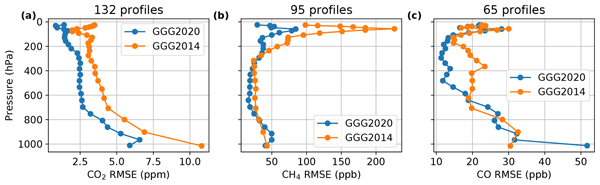
Joshua L. Laughner, Sébastien Roche, Matthäus Kiel, Geoffrey C. Toon, Debra Wunch, Bianca C. Baier, Sébastien Biraud, Huilin Chen, Rigel Kivi, Thomas Laemmel, Kathryn McKain, Pierre-Yves Quéhé, Constantina Rousogenous, Britton B. Stephens, Kaley Walker, and Paul O. Wennberg
Atmos. Meas. Tech., 16, 1121–1146, https://doi.org/10.5194/amt-16-1121-2023, https://doi.org/10.5194/amt-16-1121-2023, 2023
Short summary
Short summary
Observations using sunlight to measure surface-to-space total column of greenhouse gases in the atmosphere need an initial guess of the vertical distribution of those gases to start from. We have developed an approach to provide those initial guess profiles that uses readily available meteorological data as input. This lets us make these guesses without simulating them with a global model. The profiles generated this way match independent observations well.
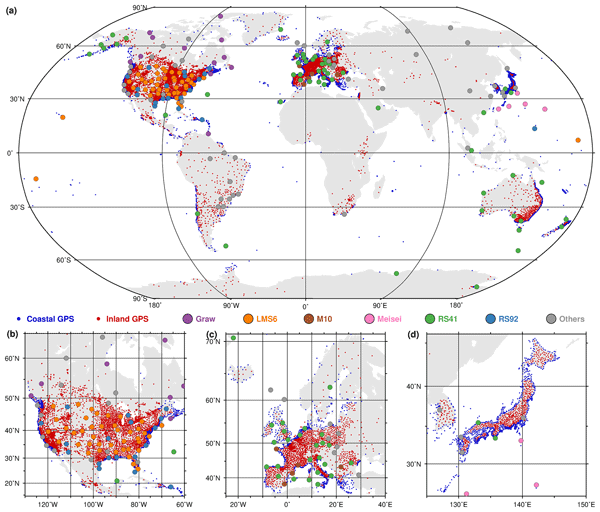
Peng Yuan, Geoffrey Blewitt, Corné Kreemer, William C. Hammond, Donald Argus, Xungang Yin, Roeland Van Malderen, Michael Mayer, Weiping Jiang, Joseph Awange, and Hansjörg Kutterer
Earth Syst. Sci. Data, 15, 723–743, https://doi.org/10.5194/essd-15-723-2023, https://doi.org/10.5194/essd-15-723-2023, 2023
Short summary
Short summary
We developed a 5 min global integrated water vapour (IWV) product from 12 552 ground-based GPS stations in 2020. It contains more than 1 billion IWV estimates. The dataset is an enhanced version of the existing operational GPS IWV dataset from the Nevada Geodetic Laboratory. The enhancement is reached by using accurate meteorological information from ERA5 for the GPS IWV retrieval with a significantly higher spatiotemporal resolution. The dataset is recommended for high-accuracy applications.
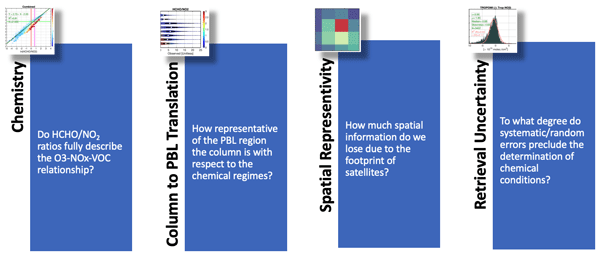
Amir H. Souri, Matthew S. Johnson, Glenn M. Wolfe, James H. Crawford, Alan Fried, Armin Wisthaler, William H. Brune, Donald R. Blake, Andrew J. Weinheimer, Tijl Verhoelst, Steven Compernolle, Gaia Pinardi, Corinne Vigouroux, Bavo Langerock, Sungyeon Choi, Lok Lamsal, Lei Zhu, Shuai Sun, Ronald C. Cohen, Kyung-Eun Min, Changmin Cho, Sajeev Philip, Xiong Liu, and Kelly Chance
Atmos. Chem. Phys., 23, 1963–1986, https://doi.org/10.5194/acp-23-1963-2023, https://doi.org/10.5194/acp-23-1963-2023, 2023
Short summary
Short summary
We have rigorously characterized different sources of error in satellite-based HCHO / NO2 tropospheric columns, a widely used metric for diagnosing near-surface ozone sensitivity. Specifically, the errors were categorized/quantified into (i) an inherent chemistry error, (ii) the decoupled relationship between columns and the near-surface concentration, (iii) the spatial representativeness error of ground satellite pixels, and (iv) the satellite retrieval errors.
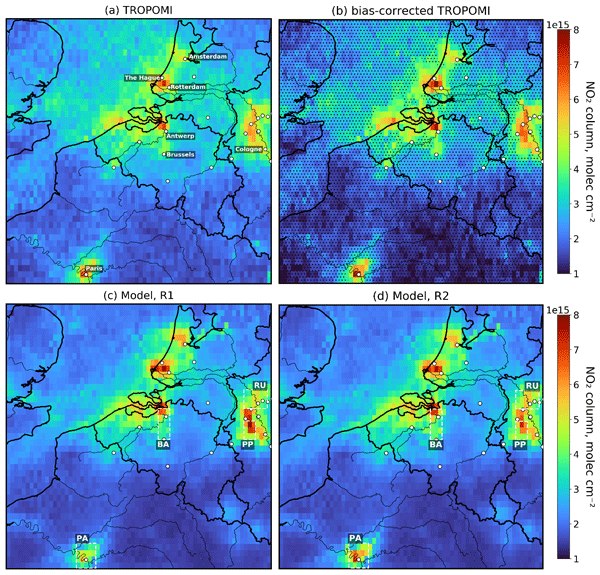
Catalina Poraicu, Jean-François Müller, Trissevgeni Stavrakou, Dominique Fonteyn, Frederik Tack, Felix Deutsch, Quentin Laffineur, Roeland Van Malderen, and Nele Veldeman
Geosci. Model Dev., 16, 479–508, https://doi.org/10.5194/gmd-16-479-2023, https://doi.org/10.5194/gmd-16-479-2023, 2023
Short summary
Short summary
High-resolution WRF-Chem simulations are conducted over Antwerp, Belgium, in June 2019 and evaluated using meteorological data and in situ, airborne, and spaceborne NO2 measurements. An intercomparison of model, aircraft, and TROPOMI NO2 columns is conducted to characterize biases in versions 1.3.1 and 2.3.1 of the satellite product. A mass balance method is implemented to provide improved emissions for simulating NO2 distribution over the study area.
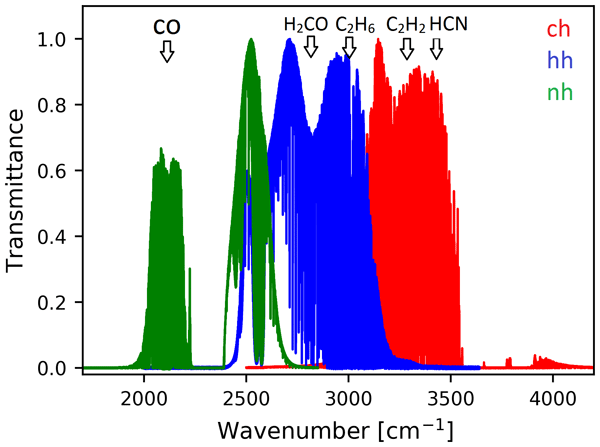
Minqiang Zhou, Bavo Langerock, Pucai Wang, Corinne Vigouroux, Qichen Ni, Christian Hermans, Bart Dils, Nicolas Kumps, Weidong Nan, and Martine De Mazière
Atmos. Meas. Tech., 16, 273–293, https://doi.org/10.5194/amt-16-273-2023, https://doi.org/10.5194/amt-16-273-2023, 2023
Short summary
Short summary
The ground-based FTIR measurements at Xianghe provide carbon monoxide (CO), acetylene (C2H2), ethane (C2H6), formaldehyde (H2CO), and hydrogen cyanide (HCN) total columns between June 2018 and November 2021. The retrieval strategies, information, and uncertainties of these five important trace gases are presented and discussed. This study provides insight into the time series, variations, and correlations of these five species in northern China.
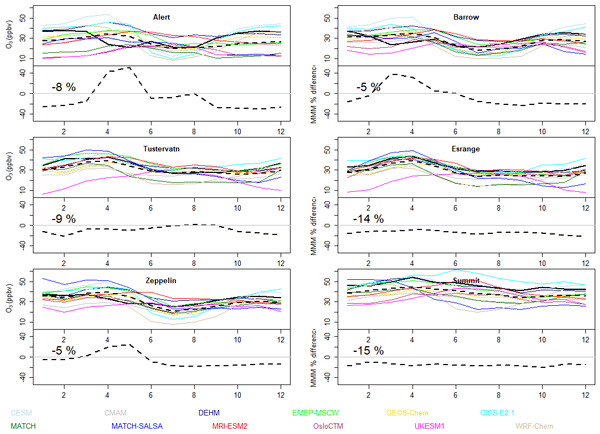
Cynthia H. Whaley, Kathy S. Law, Jens Liengaard Hjorth, Henrik Skov, Stephen R. Arnold, Joakim Langner, Jakob Boyd Pernov, Garance Bergeron, Ilann Bourgeois, Jesper H. Christensen, Rong-You Chien, Makoto Deushi, Xinyi Dong, Peter Effertz, Gregory Faluvegi, Mark Flanner, Joshua S. Fu, Michael Gauss, Greg Huey, Ulas Im, Rigel Kivi, Louis Marelle, Tatsuo Onishi, Naga Oshima, Irina Petropavlovskikh, Jeff Peischl, David A. Plummer, Luca Pozzoli, Jean-Christophe Raut, Tom Ryerson, Ragnhild Skeie, Sverre Solberg, Manu A. Thomas, Chelsea Thompson, Kostas Tsigaridis, Svetlana Tsyro, Steven T. Turnock, Knut von Salzen, and David W. Tarasick
Atmos. Chem. Phys., 23, 637–661, https://doi.org/10.5194/acp-23-637-2023, https://doi.org/10.5194/acp-23-637-2023, 2023
Short summary
Short summary
This study summarizes recent research on ozone in the Arctic, a sensitive and rapidly warming region. We find that the seasonal cycles of near-surface atmospheric ozone are variable depending on whether they are near the coast, inland, or at high altitude. Several global model simulations were evaluated, and we found that because models lack some of the ozone chemistry that is important for the coastal Arctic locations, they do not accurately simulate ozone there.
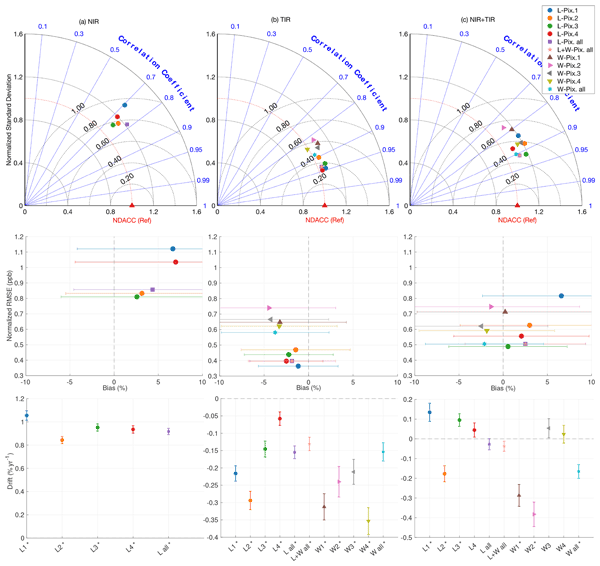
Ali Jalali, Kaley A. Walker, Kimberly Strong, Rebecca R. Buchholz, Merritt N. Deeter, Debra Wunch, Sébastien Roche, Tyler Wizenberg, Erik Lutsch, Erin McGee, Helen M. Worden, Pierre Fogal, and James R. Drummond
Atmos. Meas. Tech., 15, 6837–6863, https://doi.org/10.5194/amt-15-6837-2022, https://doi.org/10.5194/amt-15-6837-2022, 2022
Short summary
Short summary
This study validates MOPITT version 8 carbon monoxide measurements over the Canadian high Arctic for the period 2006 to 2019. The MOPITT products from different detector pixels and channels are compared with ground-based measurements from the Polar Environment Atmospheric Research Laboratory (PEARL) in Eureka, Nunavut, Canada. These results show good consistency between the satellite and ground-based measurements and provide guidance on the usage of these MOPITT data at high latitudes.
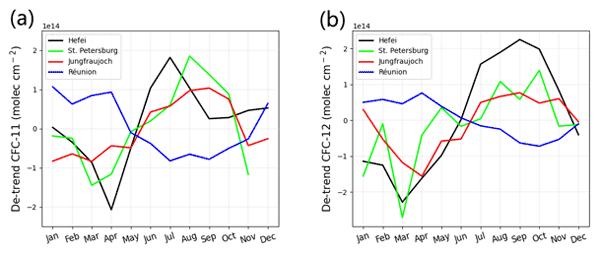
Xiangyu Zeng, Wei Wang, Cheng Liu, Changgong Shan, Yu Xie, Peng Wu, Qianqian Zhu, Minqiang Zhou, Martine De Mazière, Emmanuel Mahieu, Irene Pardo Cantos, Jamal Makkor, and Alexander Polyakov
Atmos. Meas. Tech., 15, 6739–6754, https://doi.org/10.5194/amt-15-6739-2022, https://doi.org/10.5194/amt-15-6739-2022, 2022
Short summary
Short summary
CFC-11 and CFC-12, which are classified as ozone-depleting substances, also have high global warming potentials. This paper describes obtaining the CFC-11 and CFC-12 total columns from the solar spectra based on ground-based Fourier transform infrared spectroscopy at Hefei, China. The seasonal variation and annual trend of the two gases are analyzed, and then the data are compared with other independent datasets.

Antje Inness, Ilse Aben, Melanie Ades, Tobias Borsdorff, Johannes Flemming, Luke Jones, Jochen Landgraf, Bavo Langerock, Philippe Nedelec, Mark Parrington, and Roberto Ribas
Atmos. Chem. Phys., 22, 14355–14376, https://doi.org/10.5194/acp-22-14355-2022, https://doi.org/10.5194/acp-22-14355-2022, 2022
Short summary
Short summary
The Copernicus Atmosphere Monitoring Service (CAMS) provides daily global air quality forecasts to users worldwide. One of the species of interest is carbon monoxide (CO), an important trace gas in the atmosphere with anthropogenic and natural sources, produced by incomplete combustion, for example, by wildfires. This paper looks at how well CAMS can model CO in the atmosphere and shows that the fields can be improved when blending CO data from the TROPOMI instrument with the CAMS model.
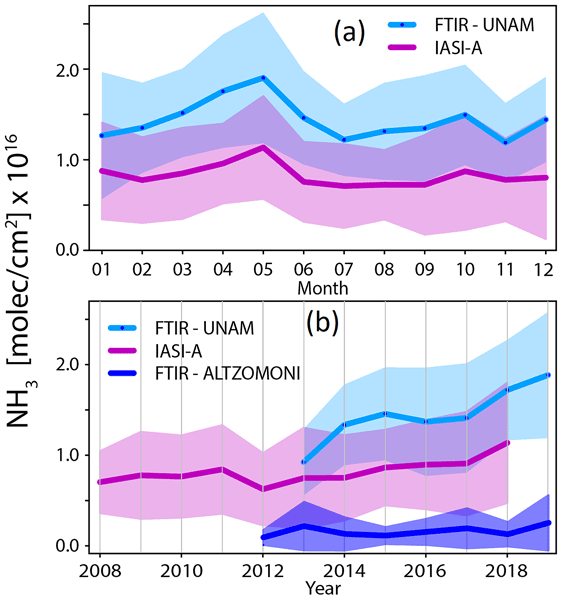
Beatriz Herrera, Alejandro Bezanilla, Thomas Blumenstock, Enrico Dammers, Frank Hase, Lieven Clarisse, Adolfo Magaldi, Claudia Rivera, Wolfgang Stremme, Kimberly Strong, Camille Viatte, Martin Van Damme, and Michel Grutter
Atmos. Chem. Phys., 22, 14119–14132, https://doi.org/10.5194/acp-22-14119-2022, https://doi.org/10.5194/acp-22-14119-2022, 2022
Short summary
Short summary
This work investigates atmospheric ammonia (NH3), a key trace gas with consequences for the environment and human health, in Mexico City. The results from the ground-based and satellite instruments show the variability and spatial distribution of NH3 over this region. NH3 in Mexico City has been increasing for the past 10 years and most of its sources are urban. This work contributes to a better understanding of NH3 sources and variability in urban and remote areas.
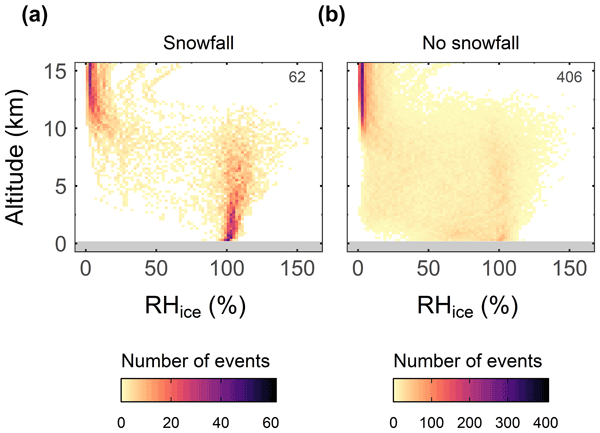
Claudia Mignani, Lukas Zimmermann, Rigel Kivi, Alexis Berne, and Franz Conen
Atmos. Chem. Phys., 22, 13551–13568, https://doi.org/10.5194/acp-22-13551-2022, https://doi.org/10.5194/acp-22-13551-2022, 2022
Short summary
Short summary
We determined over the course of 8 winter months the phase of clouds associated with snowfall in Northern Finland using radiosondes and observations of ice particle habits at ground level. We found that precipitating clouds were extending from near ground to at least 2.7 km altitude and approximately three-quarters of them were likely glaciated. Possible moisture sources and ice formation processes are discussed.
Xin Yang, Kimberly Strong, Alison S. Criscitiello, Marta Santos-Garcia, Kristof Bognar, Xiaoyi Zhao, Pierre Fogal, Kaley A. Walker, Sara M. Morris, and Peter Effertz
EGUsphere, https://doi.org/10.5194/egusphere-2022-696, https://doi.org/10.5194/egusphere-2022-696, 2022
Preprint archived
Short summary
Short summary
Snow pack in high Arctic plays a key role in polar atmospheric chemistry, especially in spring when photochemistry becomes active. By sampling surface snow from a Canadian high Arctic location at Eureka, Nunavut (80° N, 86° W), we demonstrate that surface snow is a net sink rather than a source of atmospheric reactive bromine and nitrate. This finding is new and opposite to previous conclusions that snowpack is a large and direct source of reactive bromine in polar spring.
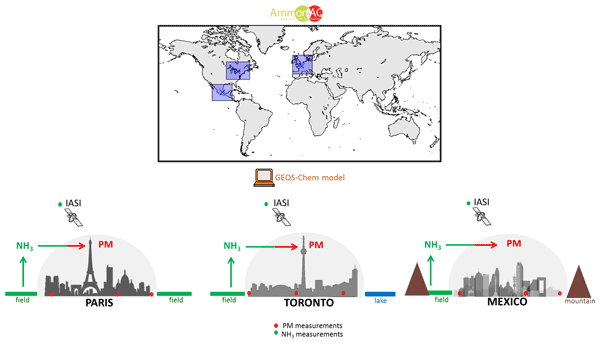
Camille Viatte, Rimal Abeed, Shoma Yamanouchi, William C. Porter, Sarah Safieddine, Martin Van Damme, Lieven Clarisse, Beatriz Herrera, Michel Grutter, Pierre-Francois Coheur, Kimberly Strong, and Cathy Clerbaux
Atmos. Chem. Phys., 22, 12907–12922, https://doi.org/10.5194/acp-22-12907-2022, https://doi.org/10.5194/acp-22-12907-2022, 2022
Short summary
Short summary
Large cities can experience high levels of fine particulate matter (PM2.5) pollution linked to ammonia (NH3) mainly emitted from agricultural activities. Using a combination of PM2.5 and NH3 measurements from in situ instruments, satellite infrared spectrometers, and atmospheric model simulations, we have demonstrated the role of NH3 and meteorological conditions on pollution events occurring over Paris, Toronto, and Mexico City.
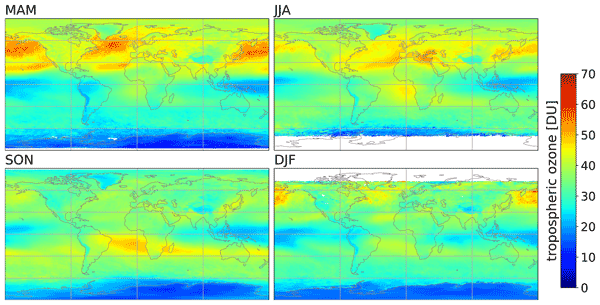
Klaus-Peter Heue, Diego Loyola, Fabian Romahn, Walter Zimmer, Simon Chabrillat, Quentin Errera, Jerry Ziemke, and Natalya Kramarova
Atmos. Meas. Tech., 15, 5563–5579, https://doi.org/10.5194/amt-15-5563-2022, https://doi.org/10.5194/amt-15-5563-2022, 2022
Short summary
Short summary
To retrieve tropospheric ozone column information, we subtract stratospheric column data of BASCOE from TROPOMI/S5P total ozone columns.
The new S5P-BASCOE data agree well with existing tropospheric data like OMPS-MERRA-2. The data are also compared to ozone soundings.
The tropospheric ozone columns show the expected temporal and spatial patterns. We will also apply the algorithm to future UV nadir missions like Sentinel 4 or 5 or to recent and ongoing missions like GOME_2 or OMI.

Alena Dekhtyareva, Mark Hermanson, Anna Nikulina, Ove Hermansen, Tove Svendby, Kim Holmén, and Rune Grand Graversen
Atmos. Chem. Phys., 22, 11631–11656, https://doi.org/10.5194/acp-22-11631-2022, https://doi.org/10.5194/acp-22-11631-2022, 2022
Short summary
Short summary
Despite decades of industrial activity in Svalbard, there is no continuous air pollution monitoring in the region’s settlements except Ny-Ålesund. The NOx and O3 observations from the three-station network have been compared for the first time in this study. It has been shown how the large-scale weather regimes control the synoptic meteorological conditions and determine the atmospheric long-range transport pathways and efficiency of local air pollution dispersion.
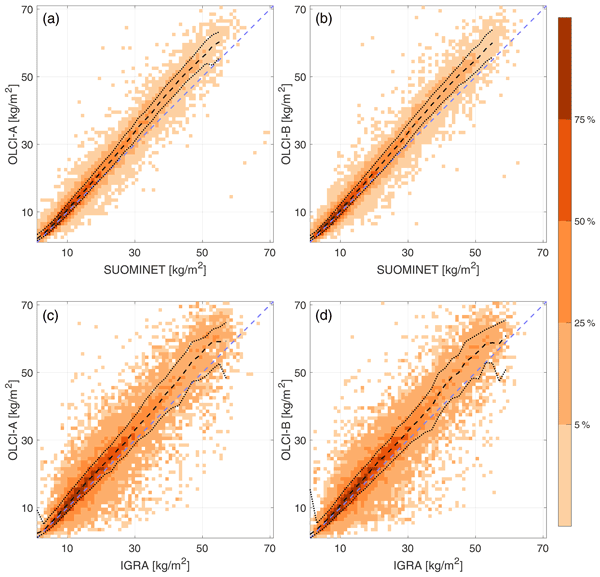
Niilo Kalakoski, Viktoria F. Sofieva, René Preusker, Claire Henocq, Matthieu Denisselle, Steffen Dransfeld, and Silvia Scifoni
Atmos. Meas. Tech., 15, 5129–5140, https://doi.org/10.5194/amt-15-5129-2022, https://doi.org/10.5194/amt-15-5129-2022, 2022
Short summary
Short summary
Geophysical validation of the Integrated Water Vapour (IWV) product from the Sentinel-3 Ocean and Land Colour Instrument (OLCI) was performed against reference observations from SUOMINET and IGRA databases. Results for cloud-free matchups over land show a wet bias of 7 %–10 % for OLCI, with a high correlation against the reference observations (0.98 against SUOMINET and 0.90 against IGRA). Special attention is given to validation of uncertainty estimates and cloud flagging.
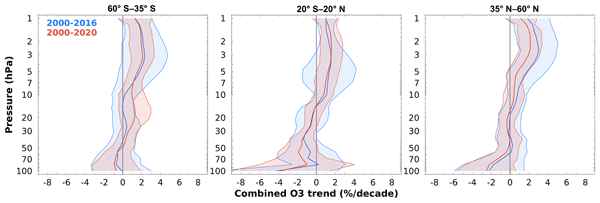
Sophie Godin-Beekmann, Niramson Azouz, Viktoria F. Sofieva, Daan Hubert, Irina Petropavlovskikh, Peter Effertz, Gérard Ancellet, Doug A. Degenstein, Daniel Zawada, Lucien Froidevaux, Stacey Frith, Jeannette Wild, Sean Davis, Wolfgang Steinbrecht, Thierry Leblanc, Richard Querel, Kleareti Tourpali, Robert Damadeo, Eliane Maillard Barras, René Stübi, Corinne Vigouroux, Carlo Arosio, Gerald Nedoluha, Ian Boyd, Roeland Van Malderen, Emmanuel Mahieu, Dan Smale, and Ralf Sussmann
Atmos. Chem. Phys., 22, 11657–11673, https://doi.org/10.5194/acp-22-11657-2022, https://doi.org/10.5194/acp-22-11657-2022, 2022
Short summary
Short summary
An updated evaluation up to 2020 of stratospheric ozone profile long-term trends at extrapolar latitudes based on satellite and ground-based records is presented. Ozone increase in the upper stratosphere is confirmed, with significant trends at most latitudes. In this altitude region, a very good agreement is found with trends derived from chemistry–climate model simulations. Observed and modelled trends diverge in the lower stratosphere, but the differences are non-significant.
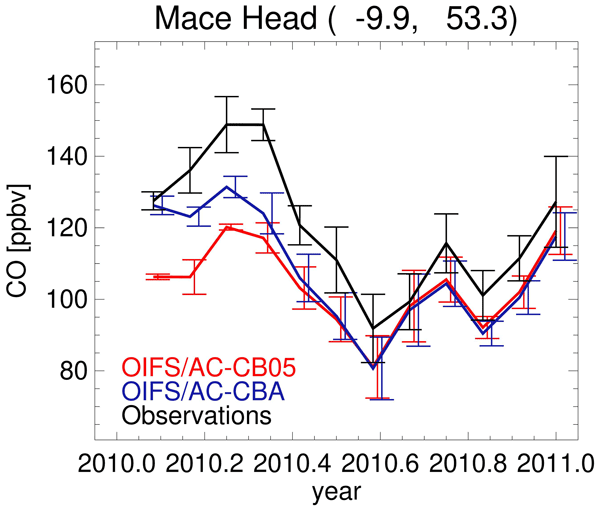
Vincent Huijnen, Philippe Le Sager, Marcus O. Köhler, Glenn Carver, Samuel Rémy, Johannes Flemming, Simon Chabrillat, Quentin Errera, and Twan van Noije
Geosci. Model Dev., 15, 6221–6241, https://doi.org/10.5194/gmd-15-6221-2022, https://doi.org/10.5194/gmd-15-6221-2022, 2022
Short summary
Short summary
We report on the first implementation of atmospheric chemistry and aerosol as part of the OpenIFS model, based on the CAMS global model. We give an overview of the model and evaluate two reference model configurations, with and without the stratospheric chemistry extension, against a variety of observational datasets. This OpenIFS version with atmospheric composition components is open to the scientific user community under a standard OpenIFS license.
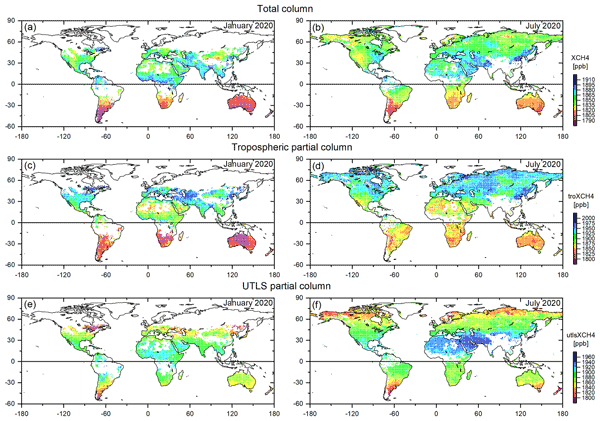
Matthias Schneider, Benjamin Ertl, Qiansi Tu, Christopher J. Diekmann, Farahnaz Khosrawi, Amelie N. Röhling, Frank Hase, Darko Dubravica, Omaira E. García, Eliezer Sepúlveda, Tobias Borsdorff, Jochen Landgraf, Alba Lorente, André Butz, Huilin Chen, Rigel Kivi, Thomas Laemmel, Michel Ramonet, Cyril Crevoisier, Jérome Pernin, Martin Steinbacher, Frank Meinhardt, Kimberly Strong, Debra Wunch, Thorsten Warneke, Coleen Roehl, Paul O. Wennberg, Isamu Morino, Laura T. Iraci, Kei Shiomi, Nicholas M. Deutscher, David W. T. Griffith, Voltaire A. Velazco, and David F. Pollard
Atmos. Meas. Tech., 15, 4339–4371, https://doi.org/10.5194/amt-15-4339-2022, https://doi.org/10.5194/amt-15-4339-2022, 2022
Short summary
Short summary
We present a computationally very efficient method for the synergetic use of level 2 remote-sensing data products. We apply the method to IASI vertical profile and TROPOMI total column space-borne methane observations and thus gain sensitivity for the tropospheric methane partial columns, which is not achievable by the individual use of TROPOMI and IASI. These synergetic effects are evaluated theoretically and empirically by inter-comparisons to independent references of TCCON, AirCore, and GAW.
Minqiang Zhou, Bavo Langerock, Pucai Wang, Corinne Vigouroux, Qichen Ni, Christian Hermans, Bart Dils, Nicolas Kumps, Weidong Nan, and Martine De Mazière
Atmos. Chem. Phys. Discuss., https://doi.org/10.5194/acp-2022-354, https://doi.org/10.5194/acp-2022-354, 2022
Revised manuscript not accepted
Short summary
Short summary
The ground-based FTIR measurements at Xianghe provide carbon monoxide (CO), acetylene (C2H2), ethane (C2H6), formaldehyde (H2CO), and hydrogen cyanide (HCN) total columns between June 2018 and November 2021. The retrieval strategies, retrieval information, and uncertainties of these five important trace gases are presented and discussed. This study provides an insight into the time series, variations, and correlations of these five species in North China.
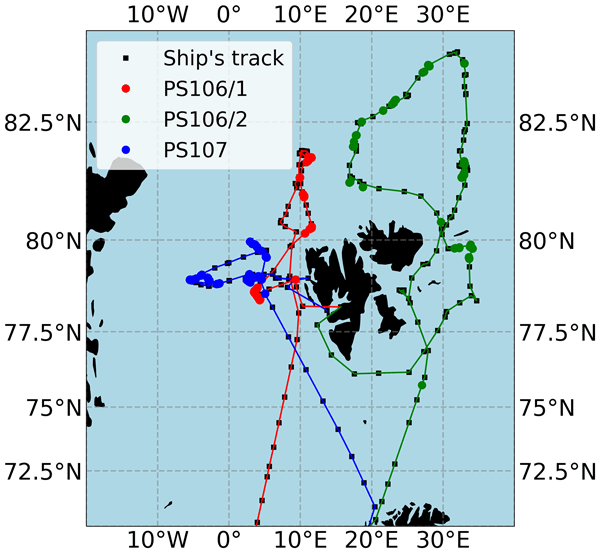
Philipp Richter, Mathias Palm, Christine Weinzierl, Hannes Griesche, Penny M. Rowe, and Justus Notholt
Earth Syst. Sci. Data, 14, 2767–2784, https://doi.org/10.5194/essd-14-2767-2022, https://doi.org/10.5194/essd-14-2767-2022, 2022
Short summary
Short summary
We present a dataset of cloud optical depths, effective radii and water paths from optically thin clouds observed in the Arctic around Svalbard. The data have been retrieved from infrared spectral radiance measured using a Fourier-transform infrared (FTIR) spectrometer. Besides a description of the measurements and retrieval technique, the data are put into context with results of corresponding measurements from microwave radiometer, lidar and cloud radar.
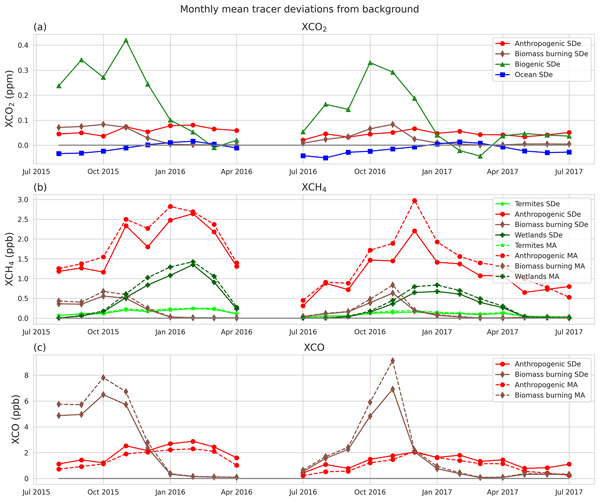
Sieglinde Callewaert, Jérôme Brioude, Bavo Langerock, Valentin Duflot, Dominique Fonteyn, Jean-François Müller, Jean-Marc Metzger, Christian Hermans, Nicolas Kumps, Michel Ramonet, Morgan Lopez, Emmanuel Mahieu, and Martine De Mazière
Atmos. Chem. Phys., 22, 7763–7792, https://doi.org/10.5194/acp-22-7763-2022, https://doi.org/10.5194/acp-22-7763-2022, 2022
Short summary
Short summary
A regional atmospheric transport model is used to analyze the factors contributing to CO2, CH4, and CO observations at Réunion Island. We show that the surface observations are dominated by local fluxes and dynamical processes, while the column data are influenced by larger-scale mechanisms such as biomass burning plumes. The model is able to capture the measured time series well; however, the results are highly dependent on accurate boundary conditions and high-resolution emission inventories.
Saheba Bhatnagar, Mahesh Kumar Sha, Laurence Gill, Bavo Langerock, and Bidisha Ghosh
Biogeosciences Discuss., https://doi.org/10.5194/bg-2022-88, https://doi.org/10.5194/bg-2022-88, 2022
Revised manuscript not accepted
Short summary
Short summary
Different land types emit a different quantity of methane, with wetlands being one of the largest sources of methane emissions, contributing to climate change. This study finds variations in land types using the methane total column data from Sentinel 5-precursor satellite with a machine learning algorithm. The variations in land types were identified with high confidence, demonstrating that the methane emissions from the wetland and other land types substantially affect the total column.
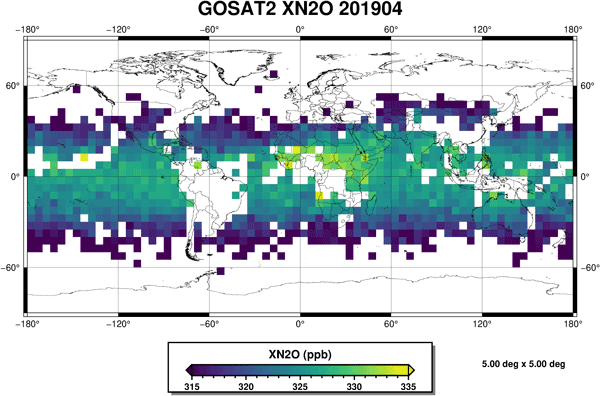
Stefan Noël, Maximilian Reuter, Michael Buchwitz, Jakob Borchardt, Michael Hilker, Oliver Schneising, Heinrich Bovensmann, John P. Burrows, Antonio Di Noia, Robert J. Parker, Hiroshi Suto, Yukio Yoshida, Matthias Buschmann, Nicholas M. Deutscher, Dietrich G. Feist, David W. T. Griffith, Frank Hase, Rigel Kivi, Cheng Liu, Isamu Morino, Justus Notholt, Young-Suk Oh, Hirofumi Ohyama, Christof Petri, David F. Pollard, Markus Rettinger, Coleen Roehl, Constantina Rousogenous, Mahesh Kumar Sha, Kei Shiomi, Kimberly Strong, Ralf Sussmann, Yao Té, Voltaire A. Velazco, Mihalis Vrekoussis, and Thorsten Warneke
Atmos. Meas. Tech., 15, 3401–3437, https://doi.org/10.5194/amt-15-3401-2022, https://doi.org/10.5194/amt-15-3401-2022, 2022
Short summary
Short summary
We present a new version (v3) of the GOSAT and GOSAT-2 FOCAL products.
In addition to an increased number of XCO2 data, v3 also includes products for XCH4 (full-physics and proxy), XH2O and the relative ratio of HDO to H2O (δD). For GOSAT-2, we also present first XCO and XN2O results. All FOCAL data products show reasonable spatial distribution and temporal variations and agree well with TCCON. Global XN2O maps show a gradient from the tropics to higher latitudes on the order of 15 ppb.
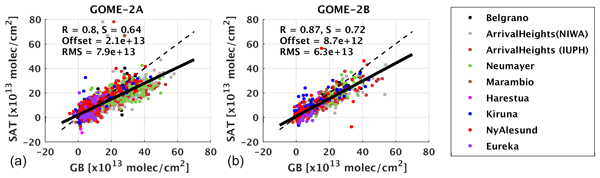
Gaia Pinardi, Michel Van Roozendael, François Hendrick, Andreas Richter, Pieter Valks, Ramina Alwarda, Kristof Bognar, Udo Frieß, José Granville, Myojeong Gu, Paul Johnston, Cristina Prados-Roman, Richard Querel, Kimberly Strong, Thomas Wagner, Folkard Wittrock, and Margarita Yela Gonzalez
Atmos. Meas. Tech., 15, 3439–3463, https://doi.org/10.5194/amt-15-3439-2022, https://doi.org/10.5194/amt-15-3439-2022, 2022
Short summary
Short summary
We report on the GOME-2A and GOME-2B OClO dataset (2007 to 2016, from the EUMETSAT's AC SAF) validation using data from nine NDACC zenith-scattered-light DOAS (ZSL-DOAS) instruments distributed in both the Arctic and Antarctic. Specific sensitivity tests are performed on the ground-based data to estimate the impact of the different OClO DOAS analysis settings and their typical errors. Good agreement is found for both the inter-annual variability and the overall OClO seasonal behavior.
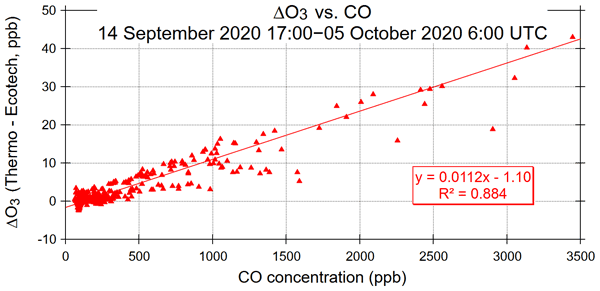
Noah Bernays, Daniel A. Jaffe, Irina Petropavlovskikh, and Peter Effertz
Atmos. Meas. Tech., 15, 3189–3192, https://doi.org/10.5194/amt-15-3189-2022, https://doi.org/10.5194/amt-15-3189-2022, 2022
Short summary
Short summary
Ozone is an important pollutant that impacts millions of people worldwide. It is therefore important to ensure accurate measurements. A recent surge in wildfire activity in the USA has resulted in significant enhancements in ozone concentration. However given the nature of wildfire smoke, there are questions about our ability to accurately measure ozone. In this comment, we discuss possible biases in the UV measurements of ozone in the presence of smoke.
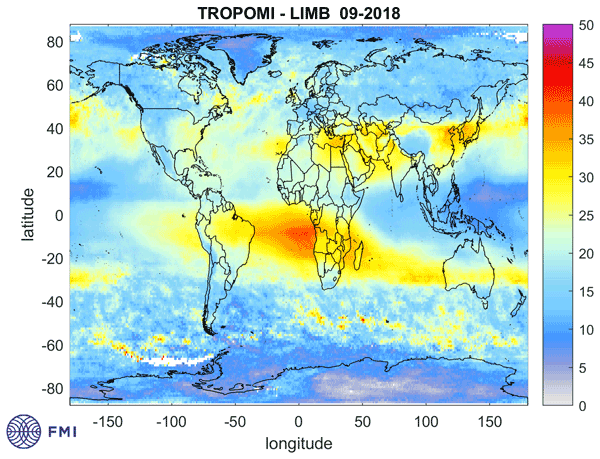
Viktoria F. Sofieva, Risto Hänninen, Mikhail Sofiev, Monika Szeląg, Hei Shing Lee, Johanna Tamminen, and Christian Retscher
Atmos. Meas. Tech., 15, 3193–3212, https://doi.org/10.5194/amt-15-3193-2022, https://doi.org/10.5194/amt-15-3193-2022, 2022
Short summary
Short summary
We present tropospheric ozone column datasets that have been created using combinations of total ozone column from OMI and TROPOMI with stratospheric ozone column datasets from several available limb-viewing instruments (MLS, OSIRIS, MIPAS, SCIAMACHY, OMPS-LP, GOMOS). The main results are (i) several methodological developments, (ii) new tropospheric ozone column datasets from OMI and TROPOMI, and (iii) a new high-resolution dataset of ozone profiles from limb satellite instruments.
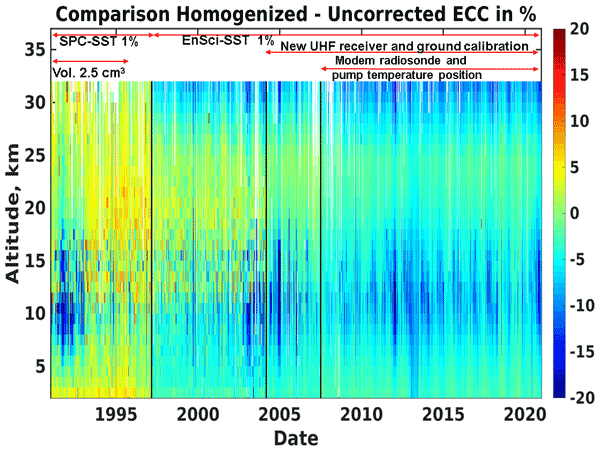
Gérard Ancellet, Sophie Godin-Beekmann, Herman G. J. Smit, Ryan M. Stauffer, Roeland Van Malderen, Renaud Bodichon, and Andrea Pazmiño
Atmos. Meas. Tech., 15, 3105–3120, https://doi.org/10.5194/amt-15-3105-2022, https://doi.org/10.5194/amt-15-3105-2022, 2022
Short summary
Short summary
The 1991–2021 Observatoire de Haute Provence electrochemical concentration cell (ECC) ozonesonde data have been homogenized according to the recommendations of the Ozonesonde Data Quality Assessment panel. Comparisons with ground-based instruments also measuring ozone at the same station (lidar, surface measurements) and with colocated satellite observations show the benefits of this homogenization. Remaining differences between ECC and other observations in the stratosphere are also discussed.

Nora Mettig, Mark Weber, Alexei Rozanov, John P. Burrows, Pepijn Veefkind, Anne M. Thompson, Ryan M. Stauffer, Thierry Leblanc, Gerard Ancellet, Michael J. Newchurch, Shi Kuang, Rigel Kivi, Matthew B. Tully, Roeland Van Malderen, Ankie Piters, Bogumil Kois, René Stübi, and Pavla Skrivankova
Atmos. Meas. Tech., 15, 2955–2978, https://doi.org/10.5194/amt-15-2955-2022, https://doi.org/10.5194/amt-15-2955-2022, 2022
Short summary
Short summary
Vertical ozone profiles from combined spectral measurements in the UV and IR spectral ranges were retrieved by using data from TROPOMI/S5P and CrIS/Suomi-NPP. The vertical resolution and accuracy of the ozone profiles are improved by combining both wavelength ranges compared to retrievals limited to UV or IR spectral data only. The advancement of our TOPAS algorithm for combined measurements is required because in the UV-only retrieval the vertical resolution in the troposphere is very limited.
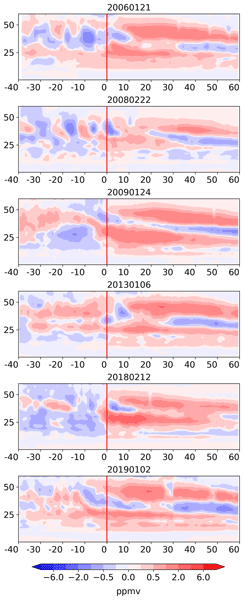
Shima Bahramvash Shams, Von P. Walden, James W. Hannigan, William J. Randel, Irina V. Petropavlovskikh, Amy H. Butler, and Alvaro de la Cámara
Atmos. Chem. Phys., 22, 5435–5458, https://doi.org/10.5194/acp-22-5435-2022, https://doi.org/10.5194/acp-22-5435-2022, 2022
Short summary
Short summary
Large-scale atmospheric circulation has a strong influence on ozone in the Arctic, and certain anomalous dynamical events, such as sudden stratospheric warmings, cause dramatic alterations of the large-scale circulation. A reanalysis model is evaluated and then used to investigate the impact of sudden stratospheric warmings on mid-atmospheric ozone. Results show that the position of the cold jet stream over the Arctic before these events influences the variability of ozone.
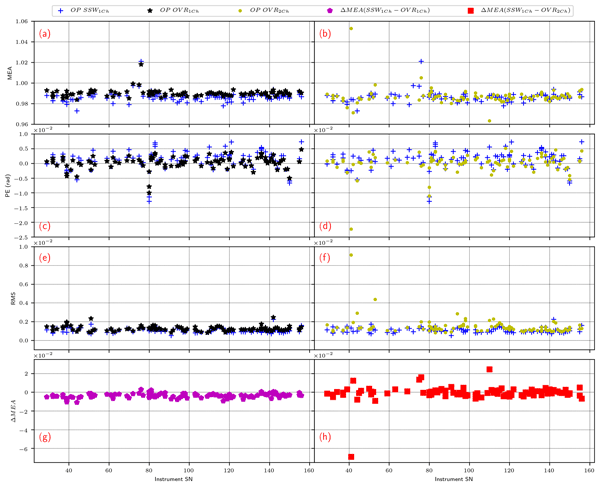
Carlos Alberti, Frank Hase, Matthias Frey, Darko Dubravica, Thomas Blumenstock, Angelika Dehn, Paolo Castracane, Gregor Surawicz, Roland Harig, Bianca C. Baier, Caroline Bès, Jianrong Bi, Hartmut Boesch, André Butz, Zhaonan Cai, Jia Chen, Sean M. Crowell, Nicholas M. Deutscher, Dragos Ene, Jonathan E. Franklin, Omaira García, David Griffith, Bruno Grouiez, Michel Grutter, Abdelhamid Hamdouni, Sander Houweling, Neil Humpage, Nicole Jacobs, Sujong Jeong, Lilian Joly, Nicholas B. Jones, Denis Jouglet, Rigel Kivi, Ralph Kleinschek, Morgan Lopez, Diogo J. Medeiros, Isamu Morino, Nasrin Mostafavipak, Astrid Müller, Hirofumi Ohyama, Paul I. Palmer, Mahesh Pathakoti, David F. Pollard, Uwe Raffalski, Michel Ramonet, Robbie Ramsay, Mahesh Kumar Sha, Kei Shiomi, William Simpson, Wolfgang Stremme, Youwen Sun, Hiroshi Tanimoto, Yao Té, Gizaw Mengistu Tsidu, Voltaire A. Velazco, Felix Vogel, Masataka Watanabe, Chong Wei, Debra Wunch, Marcia Yamasoe, Lu Zhang, and Johannes Orphal
Atmos. Meas. Tech., 15, 2433–2463, https://doi.org/10.5194/amt-15-2433-2022, https://doi.org/10.5194/amt-15-2433-2022, 2022
Short summary
Short summary
Space-borne greenhouse gas missions require ground-based validation networks capable of providing fiducial reference measurements. Here, considerable refinements of the calibration procedures for the COllaborative Carbon Column Observing Network (COCCON) are presented. Laboratory and solar side-by-side procedures for the characterization of the spectrometers have been refined and extended. Revised calibration factors for XCO2, XCO and XCH4 are provided, incorporating 47 new spectrometers.

Alexandra Laeng, Thomas von Clarmann, Quentin Errera, Udo Grabowski, and Shawn Honomichl
Atmos. Meas. Tech., 15, 2407–2416, https://doi.org/10.5194/amt-15-2407-2022, https://doi.org/10.5194/amt-15-2407-2022, 2022
Short summary
Short summary
In validation exercises, a universal excuse used to explain the residual discrepancy between the data is the natural atmospheric variability due to imperfect co-locations. This work is the first attempt to quantify this atmospheric variability for a large sample of atmospheric constituents and to provide the user with a tool to substract the natural atmospheric variability portion from the residual variability.
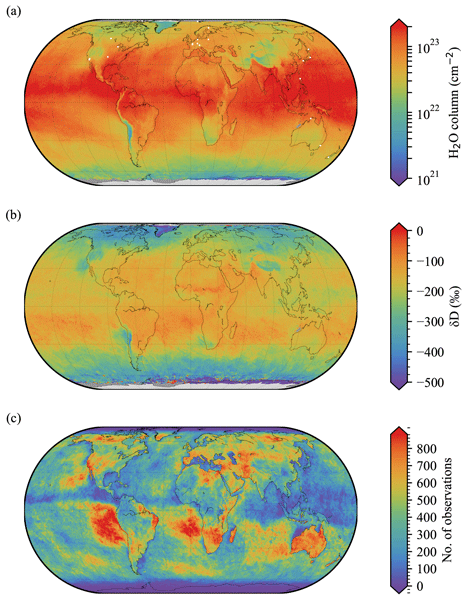
Andreas Schneider, Tobias Borsdorff, Joost aan de Brugh, Alba Lorente, Franziska Aemisegger, David Noone, Dean Henze, Rigel Kivi, and Jochen Landgraf
Atmos. Meas. Tech., 15, 2251–2275, https://doi.org/10.5194/amt-15-2251-2022, https://doi.org/10.5194/amt-15-2251-2022, 2022
Short summary
Short summary
This paper presents an extended H₂O/HDO total column dataset from short-wave infrared measurements by TROPOMI including cloudy and clear-sky scenes. Coverage is tremendously increased compared to previous TROPOMI HDO datasets. The new dataset is validated against recent ground-based FTIR measurements from TCCON and against aircraft measurements over the ocean. The use of the new dataset is demonstrated with a case study of a cold air outbreak in January 2020.
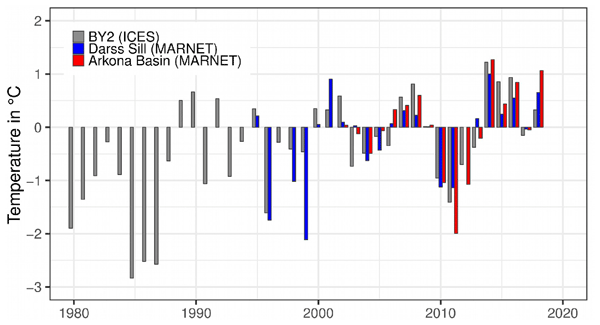
H. E. Markus Meier, Madline Kniebusch, Christian Dieterich, Matthias Gröger, Eduardo Zorita, Ragnar Elmgren, Kai Myrberg, Markus P. Ahola, Alena Bartosova, Erik Bonsdorff, Florian Börgel, Rene Capell, Ida Carlén, Thomas Carlund, Jacob Carstensen, Ole B. Christensen, Volker Dierschke, Claudia Frauen, Morten Frederiksen, Elie Gaget, Anders Galatius, Jari J. Haapala, Antti Halkka, Gustaf Hugelius, Birgit Hünicke, Jaak Jaagus, Mart Jüssi, Jukka Käyhkö, Nina Kirchner, Erik Kjellström, Karol Kulinski, Andreas Lehmann, Göran Lindström, Wilhelm May, Paul A. Miller, Volker Mohrholz, Bärbel Müller-Karulis, Diego Pavón-Jordán, Markus Quante, Marcus Reckermann, Anna Rutgersson, Oleg P. Savchuk, Martin Stendel, Laura Tuomi, Markku Viitasalo, Ralf Weisse, and Wenyan Zhang
Earth Syst. Dynam., 13, 457–593, https://doi.org/10.5194/esd-13-457-2022, https://doi.org/10.5194/esd-13-457-2022, 2022
Short summary
Short summary
Based on the Baltic Earth Assessment Reports of this thematic issue in Earth System Dynamics and recent peer-reviewed literature, current knowledge about the effects of global warming on past and future changes in the climate of the Baltic Sea region is summarised and assessed. The study is an update of the Second Assessment of Climate Change (BACC II) published in 2015 and focuses on the atmosphere, land, cryosphere, ocean, sediments, and the terrestrial and marine biosphere.
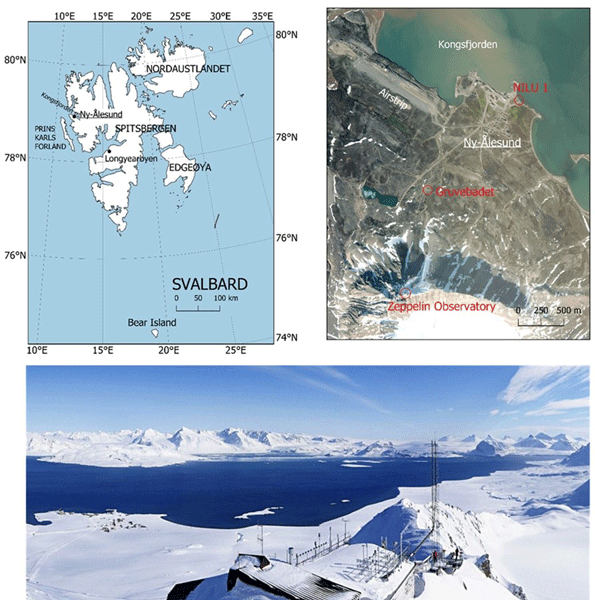
Stephen M. Platt, Øystein Hov, Torunn Berg, Knut Breivik, Sabine Eckhardt, Konstantinos Eleftheriadis, Nikolaos Evangeliou, Markus Fiebig, Rebecca Fisher, Georg Hansen, Hans-Christen Hansson, Jost Heintzenberg, Ove Hermansen, Dominic Heslin-Rees, Kim Holmén, Stephen Hudson, Roland Kallenborn, Radovan Krejci, Terje Krognes, Steinar Larssen, David Lowry, Cathrine Lund Myhre, Chris Lunder, Euan Nisbet, Pernilla B. Nizzetto, Ki-Tae Park, Christina A. Pedersen, Katrine Aspmo Pfaffhuber, Thomas Röckmann, Norbert Schmidbauer, Sverre Solberg, Andreas Stohl, Johan Ström, Tove Svendby, Peter Tunved, Kjersti Tørnkvist, Carina van der Veen, Stergios Vratolis, Young Jun Yoon, Karl Espen Yttri, Paul Zieger, Wenche Aas, and Kjetil Tørseth
Atmos. Chem. Phys., 22, 3321–3369, https://doi.org/10.5194/acp-22-3321-2022, https://doi.org/10.5194/acp-22-3321-2022, 2022
Short summary
Short summary
Here we detail the history of the Zeppelin Observatory, a unique global background site and one of only a few in the high Arctic. We present long-term time series of up to 30 years of atmospheric components and atmospheric transport phenomena. Many of these time series are important to our understanding of Arctic and global atmospheric composition change. Finally, we discuss the future of the Zeppelin Observatory and emerging areas of future research on the Arctic atmosphere.
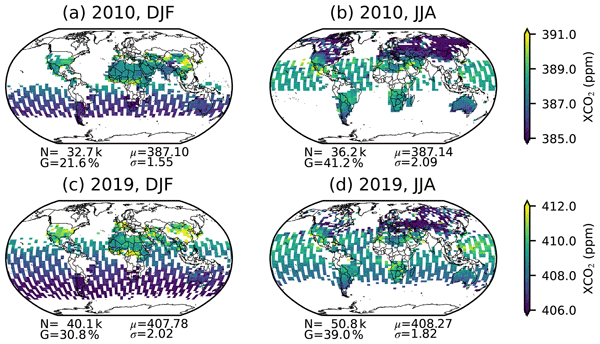
Thomas E. Taylor, Christopher W. O'Dell, David Crisp, Akhiko Kuze, Hannakaisa Lindqvist, Paul O. Wennberg, Abhishek Chatterjee, Michael Gunson, Annmarie Eldering, Brendan Fisher, Matthäus Kiel, Robert R. Nelson, Aronne Merrelli, Greg Osterman, Frédéric Chevallier, Paul I. Palmer, Liang Feng, Nicholas M. Deutscher, Manvendra K. Dubey, Dietrich G. Feist, Omaira E. García, David W. T. Griffith, Frank Hase, Laura T. Iraci, Rigel Kivi, Cheng Liu, Martine De Mazière, Isamu Morino, Justus Notholt, Young-Suk Oh, Hirofumi Ohyama, David F. Pollard, Markus Rettinger, Matthias Schneider, Coleen M. Roehl, Mahesh Kumar Sha, Kei Shiomi, Kimberly Strong, Ralf Sussmann, Yao Té, Voltaire A. Velazco, Mihalis Vrekoussis, Thorsten Warneke, and Debra Wunch
Earth Syst. Sci. Data, 14, 325–360, https://doi.org/10.5194/essd-14-325-2022, https://doi.org/10.5194/essd-14-325-2022, 2022
Short summary
Short summary
We provide an analysis of an 11-year record of atmospheric carbon dioxide (CO2) concentrations derived using an optimal estimation retrieval algorithm on measurements made by the GOSAT satellite. The new product (version 9) shows improvement over the previous version (v7.3) as evaluated against independent estimates of CO2 from ground-based sensors and atmospheric inversion systems. We also compare the new GOSAT CO2 values to collocated estimates from NASA's Orbiting Carbon Observatory-2.
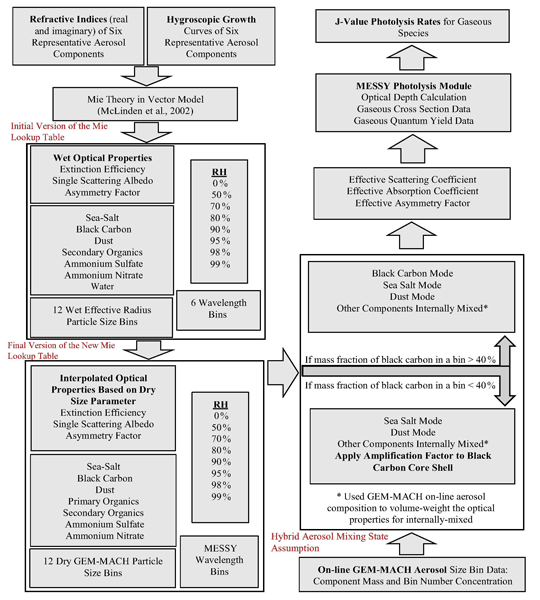
Mahtab Majdzadeh, Craig A. Stroud, Christopher Sioris, Paul A. Makar, Ayodeji Akingunola, Chris McLinden, Xiaoyi Zhao, Michael D. Moran, Ihab Abboud, and Jack Chen
Geosci. Model Dev., 15, 219–249, https://doi.org/10.5194/gmd-15-219-2022, https://doi.org/10.5194/gmd-15-219-2022, 2022
Short summary
Short summary
A new lookup table for aerosol optical properties based on a Mie scattering code was calculated and adopted within an improved version of the photolysis module in the GEM-MACH in-line chemical transport model. The modified version of the photolysis module makes use of online interactive aerosol feedback and applies core-shell parameterizations to the black carbon absorption efficiency based on Bond et al. (2006) to the size bins with black carbon mass fraction of less than 40 %.
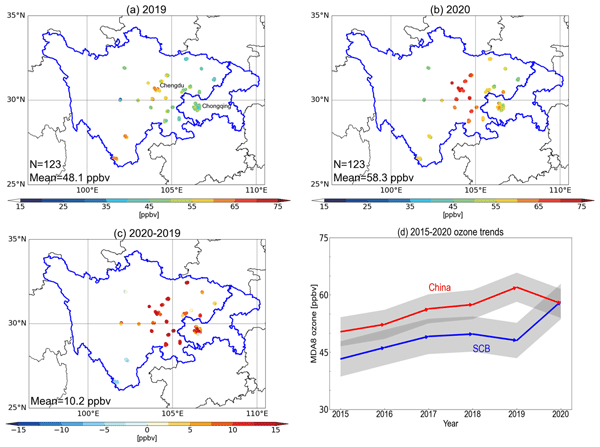
Youwen Sun, Hao Yin, Xiao Lu, Justus Notholt, Mathias Palm, Cheng Liu, Yuan Tian, and Bo Zheng
Atmos. Chem. Phys., 21, 18589–18608, https://doi.org/10.5194/acp-21-18589-2021, https://doi.org/10.5194/acp-21-18589-2021, 2021
Short summary
Short summary
This study uses high-resolution nested-grid GEOS-Chem simulation, the eXtreme Gradient Boosting (XGBoost) machine learning method, and the exposure–response relationship to determine the drivers and evaluate the health risks of the unexpected surface O3 enhancements over the Sichuan Basin in 2020. These unexpected O3 enhancements were induced by meteorological anomalies and caused dramatically high health risks.
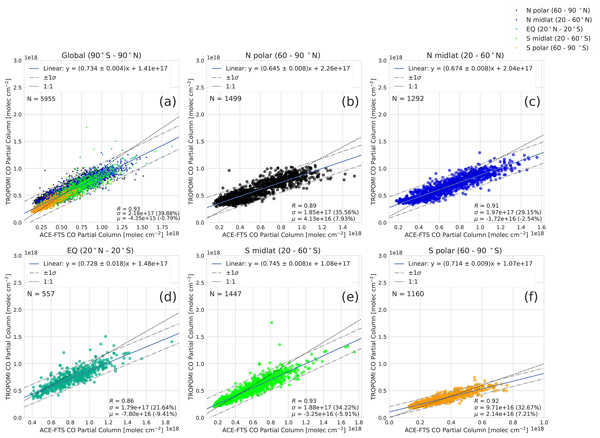
Tyler Wizenberg, Kimberly Strong, Kaley Walker, Erik Lutsch, Tobias Borsdorff, and Jochen Landgraf
Atmos. Meas. Tech., 14, 7707–7728, https://doi.org/10.5194/amt-14-7707-2021, https://doi.org/10.5194/amt-14-7707-2021, 2021
Short summary
Short summary
CO is an important atmospheric gas that influences both air quality and the climate. Here, we compare CO measurements from TROPOMI with those from ACE-FTS and an Arctic ground-based FTS at Eureka, Nunavut, to further characterize the accuracy of TROPOMI measurements. CO columns from the instruments agree well but show larger differences at high latitudes. Despite this, the results fall within the TROPOMI accuracy target, indicating good data quality at high latitudes.
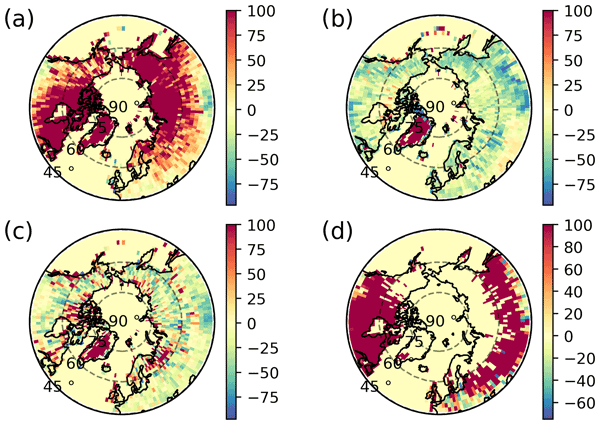
Joseph Mendonca, Ray Nassar, Christopher W. O'Dell, Rigel Kivi, Isamu Morino, Justus Notholt, Christof Petri, Kimberly Strong, and Debra Wunch
Atmos. Meas. Tech., 14, 7511–7524, https://doi.org/10.5194/amt-14-7511-2021, https://doi.org/10.5194/amt-14-7511-2021, 2021
Short summary
Short summary
Machine learning has become an important tool for pattern recognition in many applications. In this study, we used a neural network to improve the data quality of OCO-2 measurements made at northern high latitudes. The neural network was trained and used as a binary classifier to filter out bad OCO-2 measurements in order to increase the accuracy and precision of OCO-2 XCO2 measurements in the Boreal and Arctic regions.
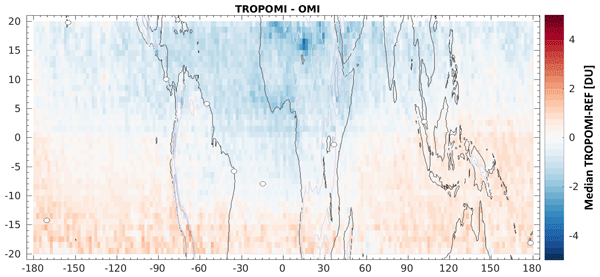
Daan Hubert, Klaus-Peter Heue, Jean-Christopher Lambert, Tijl Verhoelst, Marc Allaart, Steven Compernolle, Patrick D. Cullis, Angelika Dehn, Christian Félix, Bryan J. Johnson, Arno Keppens, Debra E. Kollonige, Christophe Lerot, Diego Loyola, Matakite Maata, Sukarni Mitro, Maznorizan Mohamad, Ankie Piters, Fabian Romahn, Henry B. Selkirk, Francisco R. da Silva, Ryan M. Stauffer, Anne M. Thompson, J. Pepijn Veefkind, Holger Vömel, Jacquelyn C. Witte, and Claus Zehner
Atmos. Meas. Tech., 14, 7405–7433, https://doi.org/10.5194/amt-14-7405-2021, https://doi.org/10.5194/amt-14-7405-2021, 2021
Short summary
Short summary
We assess the first 2 years of TROPOMI tropical tropospheric ozone column data. Comparisons to reference measurements by ozonesonde and satellite sensors show that TROPOMI bias (−0.1 to +2.3 DU) and precision (1.5 to 2.5 DU) meet mission requirements. Potential causes of bias and its spatio-temporal structure are discussed, as well as ways to identify sampling errors. Our analysis of known geophysical patterns demonstrates the improved performance of TROPOMI with respect to its predecessors.
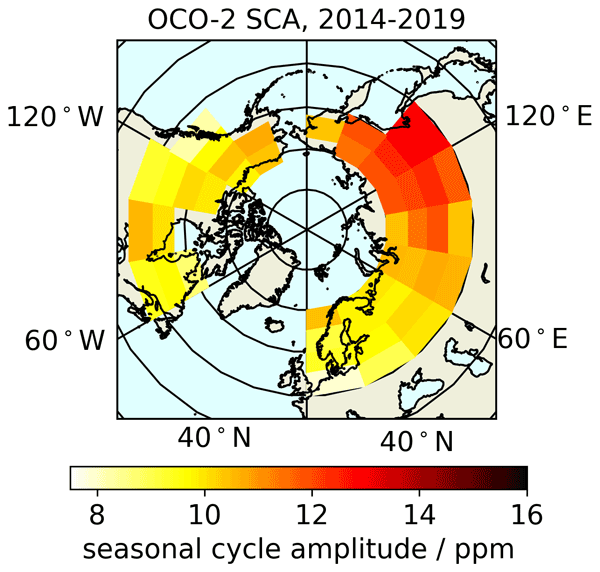
Nicole Jacobs, William R. Simpson, Kelly A. Graham, Christopher Holmes, Frank Hase, Thomas Blumenstock, Qiansi Tu, Matthias Frey, Manvendra K. Dubey, Harrison A. Parker, Debra Wunch, Rigel Kivi, Pauli Heikkinen, Justus Notholt, Christof Petri, and Thorsten Warneke
Atmos. Chem. Phys., 21, 16661–16687, https://doi.org/10.5194/acp-21-16661-2021, https://doi.org/10.5194/acp-21-16661-2021, 2021
Short summary
Short summary
Spatial patterns of carbon dioxide seasonal cycle amplitude and summer drawdown timing derived from the OCO-2 satellite over northern high latitudes agree well with corresponding estimates from two models. The Asian boreal forest is anomalous with the largest amplitude and earliest seasonal drawdown. Modeled land contact tracers suggest that accumulated CO2 exchanges during atmospheric transport play a major role in shaping carbon dioxide seasonality in northern high-latitude regions.
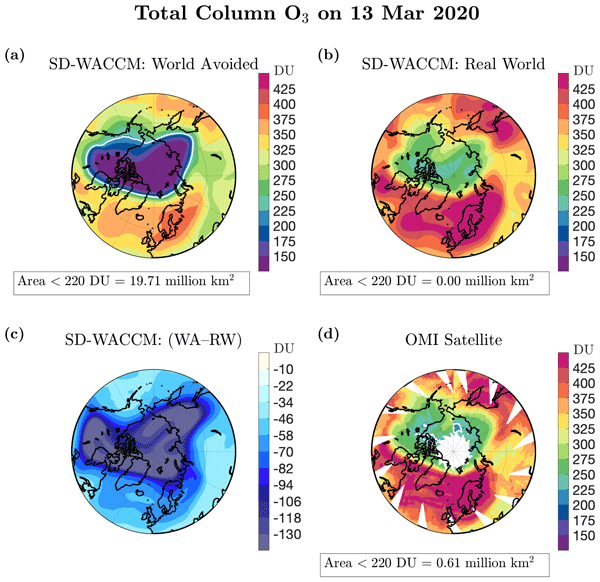
Catherine Wilka, Susan Solomon, Doug Kinnison, and David Tarasick
Atmos. Chem. Phys., 21, 15771–15781, https://doi.org/10.5194/acp-21-15771-2021, https://doi.org/10.5194/acp-21-15771-2021, 2021
Short summary
Short summary
We use satellite and balloon measurements to evaluate modeled ozone loss seen in the unusually cold Arctic of 2020 in the real world and compare it to simulations of a world avoided. We show that extensive denitrification in 2020 provides an important test case for stratospheric model process representations. If the Montreal Protocol had not banned ozone-depleting substances, an Arctic ozone hole would have emerged for the first time in spring 2020 that is comparable to those in the Antarctic.
Cited articles
Anjali, S. and Kuttippurath, J.: Tracing the signatures of ozone recovery in the Arctic ozone, Sci. Rep., 15, 35304, https://doi.org/10.1038/s41598-025-19373-0, 2025. a, b, c, d
Arosio, C., Rozanov, A., Malinina, E., Weber, M., and Burrows, J. P.: Merging of ozone profiles from SCIAMACHY, OMPS and SAGE II observations to study stratospheric ozone changes, Atmos. Meas. Tech., 12, 2423–2444, https://doi.org/10.5194/amt-12-2423-2019, 2019. a, b, c
Arosio, C., Chipperfield, M. P., Rozanov, A., Weber, M., Dhomse, S., Feng, W., Jaross, G., Zhou, X., and Burrows, J. P.: Investigating Zonal Asymmetries in Stratospheric Ozone Trends From Satellite Limb Observations and a Chemical Transport Model, J. Geophys. Res.-Atmos., 129, e2023JD040353, https://doi.org/10.1029/2023JD040353, 2024. a, b
Ball, W. T., Alsing, J., Mortlock, D. J., Staehelin, J., Haigh, J. D., Peter, T., Tummon, F., Stübi, R., Stenke, A., Anderson, J., Bourassa, A., Davis, S. M., Degenstein, D., Frith, S., Froidevaux, L., Roth, C., Sofieva, V., Wang, R., Wild, J., Yu, P., Ziemke, J. R., and Rozanov, E. V.: Evidence for a continuous decline in lower stratospheric ozone offsetting ozone layer recovery, Atmos. Chem. Phys., 18, 1379–1394, https://doi.org/10.5194/acp-18-1379-2018, 2018. a
Barnett, J. J., Houghton, J. T., and Pyle, J. A.: The temperature dependence of the ozone concentration near the stratopause, Q. J. Roy. Meteor. Soc., 101, 245–257, https://doi.org/10.1002/qj.49710142808, 1975. a
Benito-Barca, S., Abalos, M., Calvo, N., Garny, H., Birner, T., Abraham, N. L., Akiyoshi, H., Dennison, F., Jöckel, P., Josse, B., Keeble, J., Kinnison, D., Marchand, M., Morgenstern, O., Plummer, D., Rozanov, E., Strode, S., Sukhodolov, T., Watanabe, S., and Yamashita, Y.: Recent Lower Stratospheric Ozone Trends in CCMI-2022 Models: Role of Natural Variability and Transport, J. Geophys. Res.-Atmos., 130, e2024JD042412, https://doi.org/10.1029/2024JD042412, 2025. a
Björklund, R., Vigouroux, C., Effertz, P., García, O. E., Geddes, A., Hannigan, J., Miyagawa, K., Kotkamp, M., Langerock, B., Nedoluha, G., Ortega, I., Petropavlovskikh, I., Poyraz, D., Querel, R., Robinson, J., Shiona, H., Smale, D., Smale, P., Van Malderen, R., and De Mazière, M.: Intercomparison of long-term ground-based measurements of total, tropospheric, and stratospheric ozone at Lauder, New Zealand, Atmos. Meas. Tech., 17, 6819–6849, https://doi.org/10.5194/amt-17-6819-2024, 2024. a
Bontempi, G.: Statistical foundations of machine learning: the handbook, Machine Learning Group, ULB, https://leanpub.com/statisticalfoundationsofmachinelearning (last access: 8 June 2026, 2024. a
Boynard, A., Wespes, C., Hadji-Lazaro, J., Sinnathamby, S., Hurtmans, D., Coheur, P.-F., Doutriaux-Boucher, M., Onderwaater, J., Steinbrecht, W., Pennington, E. A., Bowman, K., and Clerbaux, C.: Assessment of 16-year tropospheric ozone trends from the IASI Climate Data Record, Atmos. Chem. Phys., 25, 11719–11755, https://doi.org/10.5194/acp-25-11719-2025, 2025. a, b, c, d, e, f
Brasseur, G. P. and Solomon, S.: Aeronomy of the middle atmosphere, Chemistry and Physics of the Stratosphere and Mesosphere, Atmospheric and Oceanographic Sciences Library, Springer, Dordrecht, 3rd edn., https://doi.org/10.1007/1-4020-3824-0, 2005. a, b, c
Brunner, D., Staehelin, J., Maeder, J. A., Wohltmann, I., and Bodeker, G. E.: Variability and trends in total and vertically resolved stratospheric ozone based on the CATO ozone data set, Atmos. Chem. Phys., 6, 4985–5008, https://doi.org/10.5194/acp-6-4985-2006, 2006. a
CAMS (Copernicus Atmosphere Monitoring Service): CAMS global reanalysis (EAC4) monthly averaged fields. Copernicus Atmosphere Monitoring Service (CAMS) Atmosphere Data Store [data set], https://doi.org/10.24381/fd75fff2, 2020. a
Chipperfield, M. P. and Santee, M. L.: Chapter 4: Polar Stratospheric Ozone: Past, Present, and Future, in: Scientific Assessment of Ozone Depletion: 2022, Global Ozone Research and Monitoring Project–Report No. 278, p. 509, World Meteorological Organization, Geneva, Switzerland, https://csl.noaa.gov/assessments/ozone/2022/downloads/Chapter4_2022OzoneAssessment.pdf (last access: 8 June 2026), 2022. a
Chipperfield, M. P., Dhomse, S., Hossaini, R., Feng, W., Santee, M. L., Weber, M., Burrows, J. P., Wild, J. D., Loyola, D., and Coldewey-Egbers, M.: On the Cause of Recent Variations in Lower Stratospheric Ozone, Geophys. Res. Lett., 45, 5718–5726, https://doi.org/10.1029/2018GL078071, 2018. a
Christiansen, B., Jepsen, N., Kivi, R., Hansen, G., Larsen, N., and Korsholm, U. S.: Trends and annual cycles in soundings of Arctic tropospheric ozone, Atmos. Chem. Phys., 17, 9347–9364, https://doi.org/10.5194/acp-17-9347-2017, 2017. a
Clerbaux, C. and Coheur, P.-F.: Daily IASI/Metop-A ULB-LATMOS ozone (O3) L2 product (vertical profile and columns – EUMETSAT processing), https://doi.org/10.25326/806, 2025a. a
Clerbaux, C. and Coheur, P.-F.: Daily IASI/Metop-B ULB-LATMOS ozone (O3) L2 product (vertical profile and columns – EUMETSAT processing), https://doi.org/10.25326/807, 2025b. a
Coldewey-Egbers, M., Loyola, D. G., Lerot, C., and Van Roozendael, M.: Global, regional and seasonal analysis of total ozone trends derived from the 1995–2020 GTO-ECV climate data record, Atmos. Chem. Phys., 22, 6861–6878, https://doi.org/10.5194/acp-22-6861-2022, 2022. a, b, c
Cooper, O. R., Parrish, D. D., Ziemke, J., Balashov, N. V., Cupeiro, M., Galbally, I. E., Gilge, S., Horowitz, L., Jensen, N. R., Lamarque, J.-F., Naik, V., Oltmans, S. J., Schwab, J., Shindell, D. T., Thompson, A. M., Thouret, V., Wang, Y., and Zbinden, R. M.: Global distribution and trends of tropospheric ozone: An observation-based review, Elementa, 2, https://doi.org/10.12952/journal.elementa.000029, 2014. a
De Mazière, M., Thompson, A. M., Kurylo, M. J., Wild, J. D., Bernhard, G., Blumenstock, T., Braathen, G. O., Hannigan, J. W., Lambert, J.-C., Leblanc, T., McGee, T. J., Nedoluha, G., Petropavlovskikh, I., Seckmeyer, G., Simon, P. C., Steinbrecht, W., and Strahan, S. E.: The Network for the Detection of Atmospheric Composition Change (NDACC): history, status and perspectives, Atmos. Chem. Phys., 18, 4935–4964, https://doi.org/10.5194/acp-18-4935-2018, 2018. a
Deshler, T., Stübi, R., Schmidlin, F. J., Mercer, J. L., Smit, H. G. J., Johnson, B. J., Kivi, R., and Nardi, B.: Methods to homogenize electrochemical concentration cell (ECC) ozonesonde measurements across changes in sensing solution concentration or ozonesonde manufacturer, Atmos. Meas. Tech., 10, 2021–2043, https://doi.org/10.5194/amt-10-2021-2017, 2017. a
Farman, J. C., Gardiner, B. G., and Shanklin, J. D.: Large losses of total ozone in Antarctica reveal seasonal ClOx/NOx interaction, Nature, 315, 207–210, https://doi.org/10.1038/315207a0, 1985. a
Fioletov, V., Zhao, X., Abboud, I., Brohart, M., Ogyu, A., Sit, R., Lee, S. C., Petropavlovskikh, I., Miyagawa, K., Johnson, B. J., Cullis, P., Booth, J., McConville, G., and McElroy, C. T.: Total ozone variability and trends over the South Pole during the wintertime, Atmos. Chem. Phys., 23, 12731–12751, https://doi.org/10.5194/acp-23-12731-2023, 2023. a
Fioletov, V. E., Kerr, J. B., McElroy, C. T., Wardle, D. I., Savastiouk, V., and Grajnar, T. S.: The Brewer reference triad, Geophys. Res. Lett., 32, https://doi.org/10.1029/2005GL024244, 2005. a
García, O. E., Schneider, M., Hase, F., Blumenstock, T., Sepúlveda, E., and González, Y.: Quality assessment of ozone total column amounts as monitored by ground-based solar absorption spectrometry in the near infrared (>3000 cm−1), Atmos. Meas. Tech., 7, 3071–3084, https://doi.org/10.5194/amt-7-3071-2014, 2014. a, b
Gilda, S.: tsbootstrap, Zenodo, https://doi.org/10.5281/zenodo.8226495, 2024. a
Godin-Beekmann, S., Azouz, N., Sofieva, V. F., Hubert, D., Petropavlovskikh, I., Effertz, P., Ancellet, G., Degenstein, D. A., Zawada, D., Froidevaux, L., Frith, S., Wild, J., Davis, S., Steinbrecht, W., Leblanc, T., Querel, R., Tourpali, K., Damadeo, R., Maillard Barras, E., Stübi, R., Vigouroux, C., Arosio, C., Nedoluha, G., Boyd, I., Van Malderen, R., Mahieu, E., Smale, D., and Sussmann, R.: Updated trends of the stratospheric ozone vertical distribution in the 60° S–60° N latitude range based on the LOTUS regression model , Atmos. Chem. Phys., 22, 11657–11673, https://doi.org/10.5194/acp-22-11657-2022, 2022. a
Gordon, I., Rothman, L., Hargreaves, R., Hashemi, R., Karlovets, E., Skinner, F., Conway, E., Hill, C., Kochanov, R., Tan, Y., Wcisło, P., Finenko, A., Nelson, K., Bernath, P., Birk, M., Boudon, V., Campargue, A., Chance, K., Coustenis, A., Drouin, B., Flaud, J., Gamache, R., Hodges, J., Jacquemart, D., Mlawer, E., Nikitin, A., Perevalov, V., Rotger, M., Tennyson, J., Toon, G., Tran, H., Tyuterev, V., Adkins, E., Baker, A., Barbe, A., Canè, E., Császár, A., Dudaryonok, A., Egorov, O., Fleisher, A., Fleurbaey, H., Foltynowicz, A., Furtenbacher, T., Harrison, J., Hartmann, J., Horneman, V., Huang, X., Karman, T., Karns, J., Kassi, S., Kleiner, I., Kofman, V., Kwabia-Tchana, F., Lavrentieva, N., Lee, T., Long, D., Lukashevskaya, A., Lyulin, O., Makhnev, V., Matt, W., Massie, S., Melosso, M., Mikhailenko, S., Mondelain, D., Müller, H., Naumenko, O., Perrin, A., Polyansky, O., Raddaoui, E., Raston, P., Reed, Z., Rey, M., Richard, C., Tóbiás, R., Sadiek, I., Schwenke, D., Starikova, E., Sung, K., Tamassia, F., Tashkun, S., Vander Auwera, J., Vasilenko, I., Vigasin, A., Villanueva, G., Vispoel, B., Wagner, G., Yachmenev, A., and Yurchenko, S.: The HITRAN2020 molecular spectroscopic database, J. Quant. Spectrosc. Ra., 277, 107949, https://doi.org/10.1016/j.jqsrt.2021.107949, 2022. a
Haigh, J. D. and Pyle, J. A.: Ozone perturbation experiments in a two-dimensional circulation model, Q. J. Roy. Meteor. Soc., 108, 551–574, https://doi.org/10.1002/qj.49710845705, 1982. a
Hannigan, J., Palm, M., Jones, N., Ortega, I., Langerock, B., Mahieu, E., Zhou, M., and Smale, D.: SFIT4 Line-by-line nonlinear spectral fitting software: version 1.0.18, Royal Belgian Institute for Space Aeronomy, https://doi.org/10.18758/ZEI21098, 2024. a
Harris, N. R. P., Ancellet, G., Bishop, L., Hofmann, D. J., Kerr, J. B., McPeters, R. D., Prendez, M., Randel, W. J., Staehelin, J., Subbaraya, B. H., Volz-Thomas, A., Zawodny, J., and Zerefos, C. S.: Trends in stratospheric and free tropospheric ozone, J. Geophys. Res.-Atmos., 102, 1571–1590, https://doi.org/10.1029/96JD02440, 1997. a
Hase, F., Hannigan, J., Coffey, M., Goldman, A., Höpfner, M., Jones, N., Rinsland, C., and Wood, S.: Intercomparison of retrieval codes used for the analysis of high-resolution, ground-based FTIR measurements, J. Quant. Spectrosc. Ra., 87, 25–52, https://doi.org/10.1016/j.jqsrt.2003.12.008, 2004. a
Hoinka, K. P., Claude, H., and Köhler, U.: On the correlation between tropopause pressure and ozone above central Europe, Geophys. Res. Lett., 23, 1753–1756, https://doi.org/10.1029/96GL01722, 1996. a
IASI: IASI portal, Atmospheric composition data products, https://iasi.aeris-data.fr/ (last access: 20 October 2025), 2025. a
Inness, A., Ades, M., Agustí-Panareda, A., Barré, J., Benedictow, A., Blechschmidt, A.-M., Dominguez, J. J., Engelen, R., Eskes, H., Flemming, J., Huijnen, V., Jones, L., Kipling, Z., Massart, S., Parrington, M., Peuch, V.-H., Razinger, M., Remy, S., Schulz, M., and Suttie, M.: The CAMS reanalysis of atmospheric composition, Atmos. Chem. Phys., 19, 3515–3556, https://doi.org/10.5194/acp-19-3515-2019, 2019. a, b
Jonas, C. and Vigouroux, C.: Regional weighted means of groundbased ozone (O3) anomalies timeseries in the Arctic, 2000–2024 (Version 1), Royal Belgian Institute for Space Aeronomy [data set], https://doi.org/10.18758/74y0x62y, 2026. a, b
Jonassen, M. O., Chechin, D., Karpechko, A., Lüpkes, C., Spengler, T., Tepstra, A., Vihma, T., and Zhang, X.: Dynamical Processes in the Arctic Atmosphere, 1–51, Springer International Publishing, Cham, https://doi.org/10.1007/978-3-030-33566-3_1, 2020. a
Keppens, A., Hubert, D., Granville, J., Nath, O., Lambert, J.-C., Wespes, C., Coheur, P.-F., Clerbaux, C., Boynard, A., Siddans, R., Latter, B., Kerridge, B., Di Pede, S., Veefkind, P., Cuesta, J., Dufour, G., Heue, K.-P., Coldewey-Egbers, M., Loyola, D., Orfanoz-Cheuquelaf, A., Maratt Satheesan, S., Eichmann, K.-U., Rozanov, A., Sofieva, V. F., Ziemke, J. R., Inness, A., Van Malderen, R., and Hoffmann, L.: Harmonisation of sixteen tropospheric ozone satellite data records, Atmos. Meas. Tech., 18, 6893–6916, https://doi.org/10.5194/amt-18-6893-2025, 2025. a, b
Kivi, R., Kyrö, E., Turunen, T., Harris, N. R. P., von der Gathen, P., Rex, M., Andersen, S. B., and Wohltmann, I.: Ozonesonde observations in the Arctic during 1989–2003: Ozone variability and trends in the lower stratosphere and free troposphere, J. Geophys. Res.-Atmos., 112, https://doi.org/10.1029/2006JD007271, 2007. a
Kivi, R., Vigouroux, C., Langerock, B., and Bjorklund, R.: FTIR ozone (O3) groundbased remote sensing at Sodankylä from HR125 FTS FMI instrument (Version 1), Royal Belgian Institute for Space Aeronomy [data set], https://doi.org/10.18758/tzwr7tr6, 2026. a, b
Langematz, U. and Tully, M. B.: Polar Stratospheric Ozone: Past, Present, and Future, in: Scientific Assessment of Ozone Depletion: 2018, Global Ozone Research and Monitoring Project – Report No. 58, chap. 4, World Meteorological Organization/UNEP, Geneva, Switzerland, https://wmo.int/scientific-assessment-of-ozone-depletion-2018 (last access: 2 December 2025), 2018. a, b, c
Law, K. S., Hjorth, J. L., Pernov, J. B., Whaley, C. H., Skov, H., Collaud Coen, M., Langner, J., Arnold, S. R., Tarasick, D., Christensen, J., Deushi, M., Effertz, P., Faluvegi, G., Gauss, M., Im, U., Oshima, N., Petropavlovskikh, I., Plummer, D., Tsigaridis, K., Tsyro, S., Solberg, S., and Turnock, S. T.: Arctic Tropospheric Ozone Trends, Geophys. Res. Lett., 50, e2023GL103096, https://doi.org/10.1029/2023GL103096, 2023. a, b, c
Lawrence, Z. D., Perlwitz, J., Butler, A. H., Manney, G. L., Newman, P. A., Lee, S. H., and Nash, E. R.: The Remarkably Strong Arctic Stratospheric Polar Vortex of Winter 2020: Links to Record-Breaking Arctic Oscillation and Ozone Loss, J. Geophys. Res.-Atmos., 125, e2020JD033271, https://doi.org/10.1029/2020JD033271, 2020. a
Li, Y., Dhomse, S. S., Chipperfield, M. P., Feng, W., Bian, J., Xia, Y., and Guo, D.: Quantifying stratospheric ozone trends over 1984–2020: a comparison of ordinary and regularized multivariate regression models, Atmos. Chem. Phys., 23, 13029–13047, https://doi.org/10.5194/acp-23-13029-2023, 2023. a
Mäder, J. A., Staehelin, J., Brunner, D., Stahel, W. A., Wohltmann, I., and Peter, T.: Statistical modeling of total ozone: Selection of appropriate explanatory variables, J. Geophys. Res.-Atmos., 112, https://doi.org/10.1029/2006JD007694, 2007. a, b
Millán, L., Hoor, P., Hegglin, M. I., Manney, G. L., Jeffery, P. S., Weyland, F. M., Leblanc, T., Walker, K. A., Boenisch, H., Kunkel, D., Petropavlovskikh, I., and Ye, H.: Ozone Trends in the Upper Troposphere-Lower Stratosphere Using Equivalent Latitude-Potential Temperature Coordinates, Geophys. Res. Lett., 52, e2025GL118651, https://doi.org/10.1029/2025GL118651, 2025. a, b
Okamoto, S., Ancellet, G., Godin-Beekmann, S., and Bodichon, R.: Correction of the Observatoire Haute Provence electrochemical concentration cell (ECC) ozonesonde 1991–2023 data record, Earth Syst. Sci. Data Discuss. [preprint], https://doi.org/10.5194/essd-2025-796, in review, 2026. a
Ozonecci: ESA Climate Change Initiative Ozone project, https://climate.esa.int/fr/projets/ozone/data/ (last access: 27 August 2025), 2025. a
Pazmiño, A., Goutail, F., Godin-Beekmann, S., Hauchecorne, A., Pommereau, J.-P., Chipperfield, M. P., Feng, W., Lefèvre, F., Lecouffe, A., Van Roozendael, M., Jepsen, N., Hansen, G., Kivi, R., Strong, K., and Walker, K. A.: Trends in polar ozone loss since 1989: potential sign of recovery in the Arctic ozone column, Atmos. Chem. Phys., 23, 15655–15670, https://doi.org/10.5194/acp-23-15655-2023, 2023. a, b, c, d
Petropavlovskikh, I., Godin-Beekmann, S., Hubert, D., Damadeo, R., Hassler, B., and Sofieva, V.: SPARC/IO3C/GAW Report on Long-term Ozone Trends and Uncertainties in the Stratosphere, Tech. rep., 9th assessment report of the SPARC project, International Project Office at DLR-IPA, GAW Report No. 241, WCRP Report 17/2018, https://elib.dlr.de/126666/ (last access: 8 June 2026), 2019. a, b
Rex, M., Salawitch, R. J., von der Gathen, P., Harris, N. R. P., Chipperfield, M. P., and Naujokat, B.: Arctic ozone loss and climate change, Geophys. Res. Lett., 31, https://doi.org/10.1029/2003GL018844, 2004. a, b
Rodgers, C. D.: Inverse Methods for Atmospheric Sounding, WORLD SCIENTIFIC, https://doi.org/10.1142/3171, 2000. a, b
Rodgers, C. D. and Connor, B. J.: Intercomparison of remote sounding instruments, J. Geophys. Res.-Atmos., 108, https://doi.org/10.1029/2002JD002299, 2003. a
Santer, B. D., Thorne, P. W., Haimberger, L., Taylor, K. E., Wigley, T. M. L., Lanzante, J. R., Solomon, S., Free, M., Gleckler, P. J., Jones, P. D., Karl, T. R., Klein, S. A., Mears, C., Nychka, D., Schmidt, G. A., Sherwood, S. C., and Wentz, F. J.: Consistency of modelled and observed temperature trends in the tropical troposphere, Int. J. Climatol., 28, 1703–1722, https://doi.org/10.1002/joc.1756, 2008. a
Sen, P. K.: Estimates of the Regression Coefficient Based on Kendall's Tau, J. Am. Stat. Assoc., 63, 1379–1389, 1968. a
Smit, H. and the O3S-DQA Panel: Guidelines for Homogenization of Ozonesonde Data, SI2N/O3S-DQA Activity as part of “Past Changes in the Vertical Distribution of Ozone Assessment”, https://www.wccos-josie.org/en/o3s-dqa/ (last access: 19 November 2025), 2012. a
Smit, H. G. J., Poyraz, D., Van Malderen, R., Thompson, A. M., Tarasick, D. W., Stauffer, R. M., Johnson, B. J., and Kollonige, D. E.: New insights from the Jülich Ozone Sonde Intercomparison Experiment: calibration functions traceable to one ozone reference instrument, Atmos. Meas. Tech., 17, 73–112, https://doi.org/10.5194/amt-17-73-2024, 2024. a
Smit, H. G. J., Thompson, A. M., and the ASOPOS 2.0 Panel: Ozonesonde Measurement Principles and Best Operational Practices, https://library.wmo.int/idurl/4/57720 (last access: 19 November 2025), 2021. a
Sofieva, V. F., Szeląg, M., Tamminen, J., Kyrölä, E., Degenstein, D., Roth, C., Zawada, D., Rozanov, A., Arosio, C., Burrows, J. P., Weber, M., Laeng, A., Stiller, G. P., von Clarmann, T., Froidevaux, L., Livesey, N., van Roozendael, M., and Retscher, C.: Measurement report: regional trends of stratospheric ozone evaluated using the MErged GRIdded Dataset of Ozone Profiles (MEGRIDOP), Atmos. Chem. Phys., 21, 6707–6720, https://doi.org/10.5194/acp-21-6707-2021, 2021. a, b, c, d, e, f, g, h, i
Stauffer, R. M., Thompson, A. M., Kollonige, D. E., Tarasick, D. W., Van Malderen, R., Smit, H. G. J., Vömel, H., Morris, G. A., Johnson, B. J., Cullis, P. D., Stübi, R., Davies, J., and Yan, M. M.: An Examination of the Recent Stability of Ozonesonde Global Network Data, Earth Space Sci., 9, e2022EA002459, https://doi.org/10.1029/2022EA002459, 2022. a
Steinbrecht, W., Claude, H., KöHler, U., and Hoinka, K. P.: Correlations between tropopause height and total ozone: Implications for long-term changes, J. Geophys. Res.-Atmos., 103, 19183–19192, https://doi.org/10.1029/98JD01929, 1998. a
Tarasick, D. W., Davies, J., Smit, H. G. J., and Oltmans, S. J.: A re-evaluated Canadian ozonesonde record: measurements of the vertical distribution of ozone over Canada from 1966 to 2013, Atmos. Meas. Tech., 9, 195–214, https://doi.org/10.5194/amt-9-195-2016, 2016. a, b, c
Thölix, L.: The Volume of Polar Stratospheric Clouds (VPSC), https://doi.org/10.57707/fmi-b2share.f24fx-8xk03, 2026. a, b
Van Malderen, R., Thompson, A. M., Kollonige, D. E., Stauffer, R. M., Smit, H. G. J., Maillard Barras, E., Vigouroux, C., Petropavlovskikh, I., Leblanc, T., Thouret, V., Wolff, P., Effertz, P., Tarasick, D. W., Poyraz, D., Ancellet, G., De Backer, M.-R., Evan, S., Flood, V., Frey, M. M., Hannigan, J. W., Hernandez, J. L., Iarlori, M., Johnson, B. J., Jones, N., Kivi, R., Mahieu, E., McConville, G., Müller, K., Nagahama, T., Notholt, J., Piters, A., Prats, N., Querel, R., Smale, D., Steinbrecht, W., Strong, K., and Sussmann, R.: Global ground-based tropospheric ozone measurements: reference data and individual site trends (2000–2022) from the TOAR-II/HEGIFTOM project, Atmos. Chem. Phys., 25, 7187–7225, https://doi.org/10.5194/acp-25-7187-2025, 2025a. a, b
Van Malderen, R., Zang, Z., Chang, K.-L., Björklund, R., Cooper, O. R., Liu, J., Maillard Barras, E., Vigouroux, C., Petropavlovskikh, I., Leblanc, T., Thouret, V., Wolff, P., Effertz, P., Gaudel, A., Tarasick, D. W., Smit, H. G. J., Thompson, A. M., Stauffer, R. M., Kollonige, D. E., Poyraz, D., Ancellet, G., De Backer, M.-R., Frey, M. M., Hannigan, J. W., Hernandez, J. L., Johnson, B. J., Jones, N., Kivi, R., Mahieu, E., Morino, I., McConville, G., Müller, K., Murata, I., Notholt, J., Piters, A., Prignon, M., Querel, R., Rizi, V., Smale, D., Steinbrecht, W., Strong, K., and Sussmann, R.: Ground-based tropospheric ozone measurements: regional tropospheric ozone column trends from the TOAR-II/HEGIFTOM homogenized datasets, Atmos. Chem. Phys., 25, 9905–9935, https://doi.org/10.5194/acp-25-9905-2025, 2025b. a, b, c, d, e, f, g
Vigouroux, C., De Mazière, M., Demoulin, P., Servais, C., Hase, F., Blumenstock, T., Kramer, I., Schneider, M., Mellqvist, J., Strandberg, A., Velazco, V., Notholt, J., Sussmann, R., Stremme, W., Rockmann, A., Gardiner, T., Coleman, M., and Woods, P.: Evaluation of tropospheric and stratospheric ozone trends over Western Europe from ground-based FTIR network observations, Atmos. Chem. Phys., 8, 6865–6886, https://doi.org/10.5194/acp-8-6865-2008, 2008. a
Vigouroux, C., Blumenstock, T., Coffey, M., Errera, Q., García, O., Jones, N. B., Hannigan, J. W., Hase, F., Liley, B., Mahieu, E., Mellqvist, J., Notholt, J., Palm, M., Persson, G., Schneider, M., Servais, C., Smale, D., Thölix, L., and De Mazière, M.: Trends of ozone total columns and vertical distribution from FTIR observations at eight NDACC stations around the globe, Atmos. Chem. Phys., 15, 2915–2933, https://doi.org/10.5194/acp-15-2915-2015, 2015. a, b, c, d, e, f, g, h
Vogler, C., Brönnimann, S., Staehelin, J., and Griffin, R. E. M.: Dobson total ozone series of Oxford: Reevaluation and applications, J. Geophys. Res.-Atmos., 112, https://doi.org/10.1029/2007JD008894, 2007. a
von der Gathen, P., Kivi, R., Wohltmann, I., Salawitch, R. J., and Rex, M.: Climate change favours large seasonal loss of Arctic ozone, Nat. Commun., 12, 3886, https://doi.org/10.1038/s41467-021-24089-6, 2021. a, b
Weatherhead, E. C., Bodeker, G. E., Fassò, A., Chang, K.-L., Lazo, J. K., Clack, C. T. M., Hurst, D. F., Hassler, B., English, J. M., and Yorgun, S.: Spatial Coverage of Monitoring Networks: A Climate Observing System Simulation Experiment, J. Appl. Meteorol. Clim., 56, 3211–3228, https://doi.org/10.1175/JAMC-D-17-0040.1, 2017. a, b, c
Weber, M.: Stability requirements of satellites to detect long-term stratospheric ozone trends based upon Monte Carlo simulations, Atmos. Meas. Tech., 17, 3597–3604, https://doi.org/10.5194/amt-17-3597-2024, 2024. a, b
Weber, M., Dikty, S., Burrows, J. P., Garny, H., Dameris, M., Kubin, A., Abalichin, J., and Langematz, U.: The Brewer-Dobson circulation and total ozone from seasonal to decadal time scales, Atmos. Chem. Phys., 11, 11221–11235, https://doi.org/10.5194/acp-11-11221-2011, 2011. a
Weber, M., Arosio, C., Coldewey-Egbers, M., Fioletov, V. E., Frith, S. M., Wild, J. D., Tourpali, K., Burrows, J. P., and Loyola, D.: Global total ozone recovery trends attributed to ozone-depleting substance (ODS) changes derived from five merged ozone datasets, Atmos. Chem. Phys., 22, 6843–6859, https://doi.org/10.5194/acp-22-6843-2022, 2022. a, b, c, d, e
WMO/GAW Ozone Monitoring Community, World Meteorological Organization-Global Atmosphere Watch Program (WMO-GAW), and World Ozone and Ultraviolet Radiation Data Centre (WOUDC): WMO-GAW/WOUDC Ozone and Ultraviolet Radiation Data, WOUDC [data set], https://doi.org/10.14287/10000001, 2013. a
Wohltmann, I., Rex, M., Brunner, D., and Mäder, J.: Integrated equivalent latitude as a proxy for dynamical changes in ozone column, Geophys. Res. Lett., 32, https://doi.org/10.1029/2005GL022497, 2005. a
Zängl, G. and Hoinka, K. P.: The Tropopause in the Polar Regions, J. Climate, 14, 3117–3139, https://doi.org/10.1175/1520-0442(2001)014<3117:TTITPR>2.0.CO;2, 2001. a
Zhou, M., Wang, P., Langerock, B., Vigouroux, C., Hermans, C., Kumps, N., Wang, T., Yang, Y., Ji, D., Ran, L., Zhang, J., Xuan, Y., Chen, H., Posny, F., Duflot, V., Metzger, J.-M., and De Mazière, M.: Ground-based Fourier transform infrared (FTIR) O3 retrievals from the 3040 cm−1 spectral range at Xianghe, China, Atmos. Meas. Tech., 13, 5379–5394, https://doi.org/10.5194/amt-13-5379-2020, 2020. a, b
Short summary
We study the evolution of ozone in the Arctic over the 2000–2024 period in the stratosphere (about 10 to 50 km) to assess the expected recovery of the ozone layer following the diminution of ozone-depleting substances. We merge ground-based data sets within spatially coherent regions to reduce uncertainties and we obtain positive trends for the total column everywhere in the Arctic and for the middle and upper stratosphere over Canada, but no significant trends in the lower stratosphere.
We study the evolution of ozone in the Arctic over the 2000–2024 period in the stratosphere...


Altmetrics
Final-revised paper
Preprint