
Articles | Volume 26, issue 4
https://doi.org/10.5194/acp-26-2985-2026
© Author(s) 2026. This work is distributed under
the Creative Commons Attribution 4.0 License.
the Creative Commons Attribution 4.0 License.
https://doi.org/10.5194/acp-26-2985-2026
© Author(s) 2026. This work is distributed under
the Creative Commons Attribution 4.0 License.
the Creative Commons Attribution 4.0 License.
Research article
| 
27 Feb 2026
Research article |
| 27 Feb 2026
| 27 Feb 2026
Contrasting aerosol mixing states at inland and coastal sites: an entropy-based metric for CCN activity
Jingye Ren
State Key Laboratory of Loess Science, Institute of Earth Environment, Chinese Academy of Sciences, Xi'an, 710061, China
Xi'an Institute for Innovative Earth Environment Research, Xi'an, 710061, China
State Key Laboratory of Advanced Environmental Technology, Institute of Urban Environment, Chinese Academy of Sciences, Xiamen, 361021, China
Ru-Jin Huang
CORRESPONDING AUTHOR

State Key Laboratory of Loess Science, Institute of Earth Environment, Chinese Academy of Sciences, Xi'an, 710061, China
Shenzhen Key Laboratory of Organic Pollution Prevention and Control, School of Eco-Environment, Harbin Institute of Technology Shenzhen, Shenzhen, 518055, China
Ying Wang
State Key Laboratory of Loess Science, Institute of Earth Environment, Chinese Academy of Sciences, Xi'an, 710061, China
Lu Chen
School of Ocean and Geographic Science, Yancheng Teachers University, Yancheng, 224051, China
Jurgita Ovadnevaite
School of Natural Sciences, Centre for Climate & Air Pollution Studies, Ryan Institute, University of Galway, University Road, Galway, Ireland
Darius Ceburnis
School of Natural Sciences, Centre for Climate & Air Pollution Studies, Ryan Institute, University of Galway, University Road, Galway, Ireland
Colin O'Dowd
School of Natural Sciences, Centre for Climate & Air Pollution Studies, Ryan Institute, University of Galway, University Road, Galway, Ireland
State Key Laboratory of Atmospheric Boundary Layer Physics and Atmospheric Chemistry, Institute of Atmospheric Physics, Chinese Academy of Sciences, Beijing, 100029, China
Related authors
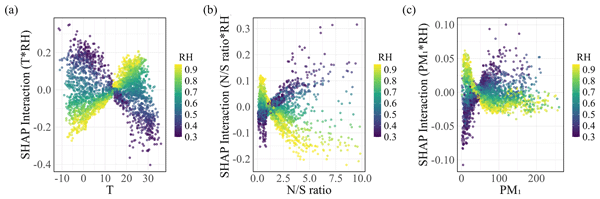
Jing Duan, Ting Wang, Ru-Jin Huang, Jingye Ren, Haobin Zhong, Wei Xu, Chunshui Lin, Yanan Zhan, Huabin Huang, and Yongjie Li
Atmos. Chem. Phys., 26, 11683–11693, https://doi.org/10.5194/acp-26-11683-2026, https://doi.org/10.5194/acp-26-11683-2026, 2026
Short summary
Short summary
This study combines explainable machine learning with thermodynamic modeling to quantitatively assess how meteorological conditions and chemical composition jointly contribute to aerosol pH variation in an ammonia-rich urban atmosphere. The analysis highlights regime-dependent interactions, threshold behaviors, and sample-specific variability, providing a data-driven framework for interpreting aerosol acidity under diverse environmental conditions.
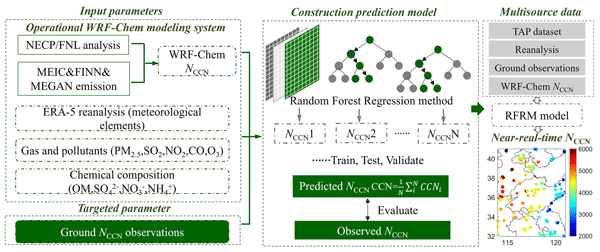
Jingye Ren, Songjian Zou, Honghao Xu, Guiquan Liu, Zhe Wang, Anran Zhang, Chuanfeng Zhao, Min Hu, Dongjie Shang, Lizi Tang, Ru-Jin Huang, Yele Sun, and Fang Zhang
Geosci. Model Dev., 19, 6403–6416, https://doi.org/10.5194/gmd-19-6403-2026, https://doi.org/10.5194/gmd-19-6403-2026, 2026
Short summary
Short summary
In this study, a new framework of cloud condensation nuclei (CCN) prediction in polluted region has been developed and it achieves well prediction of hourly-to-yearly scale across North China Plain. The study reveals the machine learning model can largely reduce the uncertainty in simulating cloud radiative forcing, illustrating the high sensitivity of climate forcing to changes in CCN. This improvement of our new model would be helpful to aerosols climate effect assessment in models.
Jingye Ren, Songjian Zou, Honghao Xu, Guiquan Liu, Zhe Wang, Anran Zhang, Chuanfeng Zhao, Min Hu, Dongjie Shang, Lizi Tang, Ru-Jin Huang, Yele Sun, and Fang Zhang
EGUsphere, https://doi.org/10.5194/egusphere-2025-1483, https://doi.org/10.5194/egusphere-2025-1483, 2025
Preprint archived
Short summary
Short summary
In this study, a new framework of cloud condensation nuclei (CCN) prediction in polluted region has been developed and it achieves well prediction of hourly-to-yearly scale across North China Plain. The study reveals a significant long-term decreasing trend of CCN concentration at typical supersaturations due to a rapid reduction in aerosol concentrations from 2014 to 2018. This improvement of our new model would be helpful to aerosols climate effect assessment in models.
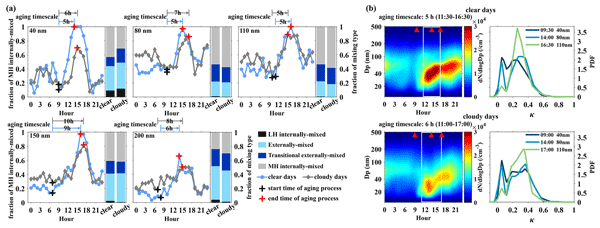
Jieyao Liu, Fang Zhang, Jingye Ren, Lu Chen, Anran Zhang, Zhe Wang, Songjian Zou, Honghao Xu, and Xingyan Yue
Atmos. Chem. Phys., 25, 5075–5086, https://doi.org/10.5194/acp-25-5075-2025, https://doi.org/10.5194/acp-25-5075-2025, 2025
Short summary
Short summary
Particle mixing states and aging timescales are important for the evaluation of aerosol climate effects, but they are poorly parameterized in current models. We unravel the evolution of real-time mixing states and the aging timescale of size-resolved particles based on field measurements in urban Beijing. This study provides an observational basis for accurately parameterizing the aging timescale of aerosol particles in climate models.
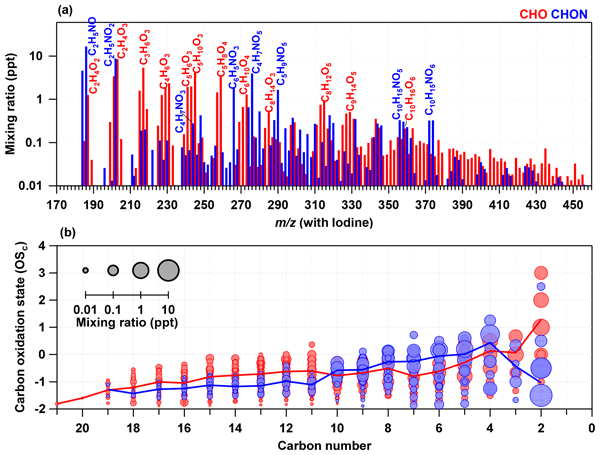
Yi Zhang, Wei Zhou, Weiqi Xu, Yan Li, Yu Zhang, Zijun Zhang, Bojiang Su, Ning Zhang, Eleonora Aruffo, Junfeng Wang, Piero Di Carlo, Lanzhong Liu, Xiaole Pan, Zifa Wang, Douglas R. Worsnop, and Yele Sun
Atmos. Chem. Phys., 26, 14637–14653, https://doi.org/10.5194/acp-26-14637-2026, https://doi.org/10.5194/acp-26-14637-2026, 2026
Short summary
Short summary
We investigated how plants, pollution and weather shape air quality at a forested mountain in southeastern China, with frequent clouds. We measured compounds formed as plant and human emissions react in the atmosphere. Warm conditions favored plant emissions, while cooler periods increased the influence of pollution transported from other regions. Clouds both removed some compounds and changed others through chemical reactions, showing how weather and clouds shape air quality in mountains.
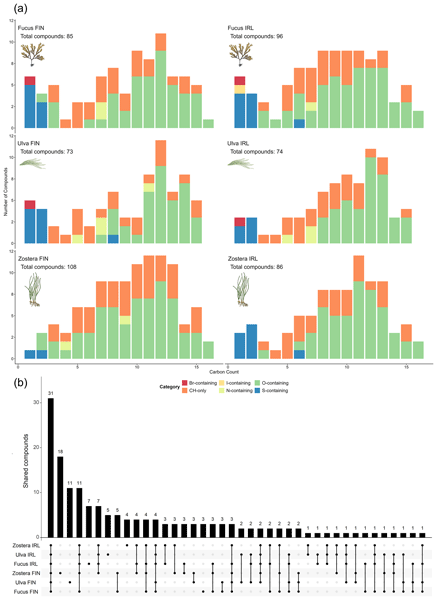
Max Gräfnings, Yuanyuan Luo, Jian Zhao, Claudia L. Cara-Ortega, Kirsten N. Fossum, Frans Graeffe, Lu Lei, Dagmar B. Stengel, Roseline C. Thakur, Jurgita Ovadnevaite, Mikael Ehn, and Camilla Gustafsson
Biogeosciences, 23, 7183–7201, https://doi.org/10.5194/bg-23-7183-2026, https://doi.org/10.5194/bg-23-7183-2026, 2026
Short summary
Short summary
Biogenic volatile organic compounds (BVOCs) emitted by Earth’s ecosystems have profound climate impacts, but emissions from marine benthic sources are poorly quantified. We quantified BVOC emission rates from three macrophytes across two contrasting marine regions and found highly diverse emission profiles with high intra‑ and interspecific variability. Our results underscore the need for more high-quality data, so that macrophyte emissions can eventually be integrated into marine BVOC budgets.
Ting Wang, Youwei Hong, Jing Duan, Liyuan Zhou, Ying Wang, and Wei Xu
EGUsphere, https://doi.org/10.5194/egusphere-2026-4296, https://doi.org/10.5194/egusphere-2026-4296, 2026
This preprint is open for discussion and under review for Atmospheric Chemistry and Physics (ACP).
Short summary
Short summary
Organosulfates are important components of fine particles, but their formation in mountain regions remains poorly constrained. Seasonal samples from Wuyi Mountain were analyzed using high-resolution mass spectrometry. Summer formation was closely linked to acidic, sulfate-rich particles, while winter formation was more influenced by atmospheric oxidation, nitrogen chemistry, and anthropogenic precursors. The results show that seasonal changes reflect both local chemistry and regional transport.
Jing Duan, Ting Wang, Ru-Jin Huang, Jingye Ren, Haobin Zhong, Wei Xu, Chunshui Lin, Yanan Zhan, Huabin Huang, and Yongjie Li
Atmos. Chem. Phys., 26, 11683–11693, https://doi.org/10.5194/acp-26-11683-2026, https://doi.org/10.5194/acp-26-11683-2026, 2026
Short summary
Short summary
This study combines explainable machine learning with thermodynamic modeling to quantitatively assess how meteorological conditions and chemical composition jointly contribute to aerosol pH variation in an ammonia-rich urban atmosphere. The analysis highlights regime-dependent interactions, threshold behaviors, and sample-specific variability, providing a data-driven framework for interpreting aerosol acidity under diverse environmental conditions.
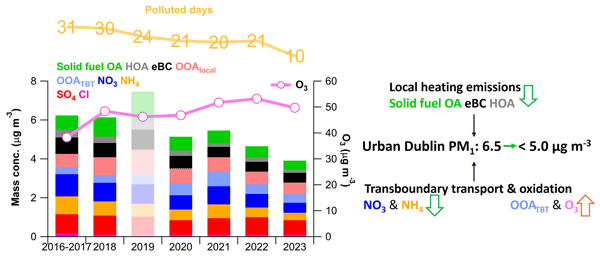
Lu Lei, Wei Xu, Chunshui Lin, Kirsten N. Fossum, Darius Ceburnis, John Gallagher, Colin O'Dowd, and Jurgita Ovadnevaite
Atmos. Chem. Phys., 26, 10927–10946, https://doi.org/10.5194/acp-26-10927-2026, https://doi.org/10.5194/acp-26-10927-2026, 2026
Short summary
Short summary
Home heating is the major driver of air pollution across Europe, yet pollution trends and mitigation responses remain limited. PM1 observations from 2016–2023 in a temperate European city influenced by continental pollution reveal changing sources and composition. Major pollution contributors were identified, shaping clear seasonal patterns. Air quality has improved with reduced heating emissions and regional precursors reductions, while secondary organic aerosols show increasing importance.
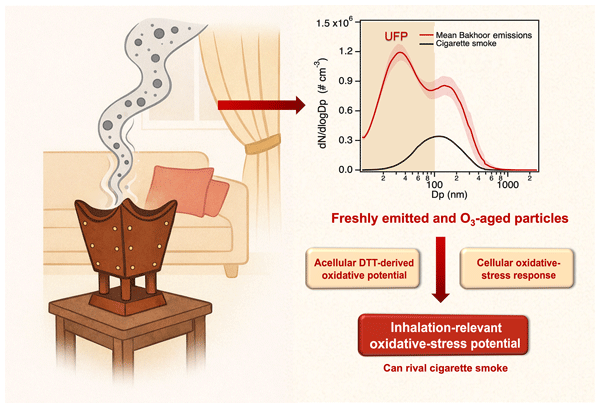
Liyuan Zhou, Zhancong Liang, Wei Xu, Ru-Jin Huang, Patrick K. H. Lee, and Chak K. Chan
Atmos. Chem. Phys., 26, 10587–10604, https://doi.org/10.5194/acp-26-10587-2026, https://doi.org/10.5194/acp-26-10587-2026, 2026
Short summary
Short summary
Indoor combustion sources are an important but still poorly understood cause of indoor particle pollution. Using chamber experiments, we studied a widely used incense-burning practice and found that it produces ultrafine-rich particles with strong oxidative activity. We also showed that the burning material, ignition charcoal, and ozone exposure affect how these particles form and change. This work highlights the important role of indoor combustion sources in shaping indoor particle pollution.
Aino Ovaska, Daniel Holmberg, Elio Rauth, Mansour Alghamdi, Paulo Artaxo, Eija Asmi, John Backman, Benjamin Bergmans, Matthew Boyer, Liezl Bredenkamp, Maurizio Busetto, Delano Campos De Oliveira, Juan Andrés Casquero-Vera, Darius Ceburnis, Tak Chan, Tommy Chan, Sebastien Conil, Daniele Contini, Suzanne Crumeyrolle, Valentin Duflot, Kostas Eleftheriadis, Johan Esveld, Ekaterina Ezhova, Markus Fiebig, Shahzad Gani, Olga Garmash, Francisco Gómez-Moreno, Roy M. Harrison, Andras Hoffer, Rakesh Hooda, Antti Hyvärinen, Tareq Hussein, Jorma Joutsensaari, Nikos Kalivitis, Heinz Kaminski, Jutta Kesti, Radovan Krejci, Adam Kristensson, Chongai Kuang, Markku Kulmala, Lauri Laakso, Ari Leskinen, Heikki Lihavainen, Andreas Massling, Maik Merkel, Steffen Noe, Jakub Ondracek, Noemí Perez, Jean-Eudes Petit, Tuukka Petäjä, Michael Pikridas, Christopher Pöhlker, Mira Pöhlker, Jean-Philippe Putaud, Ximeng Qi, Cristina Reche, Sergio Rodríguez, Petr Roztocil, Jean Sciare, Karine Sellegri, Dongjie Shang, Ashish Singh, Mikko Sipilä, Henrik Skov, Mar Sorribas, Tamanna Subba, Junying Sun, Peter Tunved, Ville Vakkari, Pieter G. Van Zyl, Aki Virkkula, Jens Voigtländer, Kay Weinhold, Alfred Wiedensohler, Hee-Jung Yoo, Putian Zhou, Kai Puolamäki, Tuomo Nieminen, Veli-Matti Kerminen, Victoria A. Sinclair, and Pauli Paasonen
Earth Syst. Sci. Data Discuss., https://doi.org/10.5194/essd-2026-415, https://doi.org/10.5194/essd-2026-415, 2026
Preprint under review for ESSD
Short summary
Short summary
All clouds form around aerosol particles, and their abundance influences cloud properties. In turn, clouds affect climate by changing how energy moves through the atmosphere, making them important for climate change. To better understand these interactions, we need accurate information on how many aerosol particles are in the atmosphere. Therefore, we have developed a new 21-year global dataset of particle concentrations relevant for cloud formation.
Jingye Ren, Songjian Zou, Honghao Xu, Guiquan Liu, Zhe Wang, Anran Zhang, Chuanfeng Zhao, Min Hu, Dongjie Shang, Lizi Tang, Ru-Jin Huang, Yele Sun, and Fang Zhang
Geosci. Model Dev., 19, 6403–6416, https://doi.org/10.5194/gmd-19-6403-2026, https://doi.org/10.5194/gmd-19-6403-2026, 2026
Short summary
Short summary
In this study, a new framework of cloud condensation nuclei (CCN) prediction in polluted region has been developed and it achieves well prediction of hourly-to-yearly scale across North China Plain. The study reveals the machine learning model can largely reduce the uncertainty in simulating cloud radiative forcing, illustrating the high sensitivity of climate forcing to changes in CCN. This improvement of our new model would be helpful to aerosols climate effect assessment in models.
Hao Liu, Hao Xu, Yixin Huang, Wei Zhou, Yunting Xiao, Qinghao Guo, Xi Zhao, Junjun Deng, Yele Sun, Pingqing Fu, and Jialei Zhu
EGUsphere, https://doi.org/10.5194/egusphere-2026-3708, https://doi.org/10.5194/egusphere-2026-3708, 2026
Short summary
Short summary
To better track natural emissions from forests, we built a detailed model covering 234 tree species across China—far more precise than past methods that lumped all trees into broad categories. The study found that planting different tree species in the same location can produce very different emission patterns, affecting haze and ozone formation in distinct ways. These findings suggest that thoughtful species selection can help balance carbon goals with cleaner air.
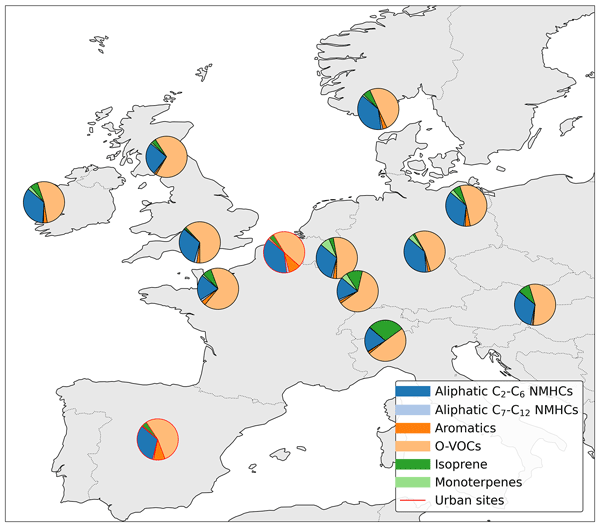
Wenche Aas, Thérèse Salameh, Robert Wegener, Heidi Hellén, Jean-Luc Jaffrezo, Pontus Roldin, Elisabeth Alonso-Blanco, Andres Alastuey, Crist Amelynck, Jgor Arduini, Benjamin Bergmans, Marie Bertrand, Agnes Borbon, Efstratios Bourtsoukidis, Laetitia Bouvier, David Butterfield, Iris Buxbaum, Darius Ceburnis, Anja Claude, Augustin Colette, Aurélie Colomb, Sophie Darfeuil, James Dernie, Maximilien Desservettaz, Elías Díaz-Ramiro, Marvin Dufresne, René Dubus, Mario Duval, Marie Dury, Anna Font, Kirsten N. Fossum, Evelyn Freney, Gotzon Gangoiti, Yao Ge, Maria Carmen Gomez, Francisco J. Gómez-Moreno, Marie Gohy, Valérie Gros, Paul Hamer, Bryan Hellack, Hartmut Herrmann, Robert Holla, Adéla Holubová, Niels R. Jensen, Tuija Jokinen, Matthew Jones, Uwe Käfer, Lukas Kesper, Dieter Klemp, Dagmar Kubistin, Angela Marinoni, Martina Mazzini, Vy Ngoc Thuy Dinh, Jurgita Ovadnevaite, Tuukka Petäjä, Miguel Portillo-Estrada, Jitka Přívozníková, Jean-Philippe Putaud, Stefan Reimann, Laura Renzi, Veronique Riffault, Stuart Ritchie, Chris Robins, Begoña Artíñano Rodríguez de Torres, Laurent Poulain, Julian Rüdiger, Agnieszka Sanocka, Estibaliz Saez de Camara Oleaga, Niels Schoon, Roger Seco, Ivan Simmons, Leïla Simon, David Simpson, Sverre Solberg, Emmanuel Tison, August Thomasson, Svetlana Tsyro, Marsailidh Twigg, Toni Tykkä, Bert Verreyken, Ågot Watne, Katie Williams, Ana Maria Yáñez-Serrano, Karen Yeung, Ilona Ylivinkka, and Karl Espen Yttri
Atmos. Chem. Phys., 26, 8717–8751, https://doi.org/10.5194/acp-26-8717-2026, https://doi.org/10.5194/acp-26-8717-2026, 2026
Short summary
Short summary
A one-week intensive measurement campaign during the 2022 European heatwave included monitoring of ozone, volatile organic compounds, aerosol chemical composition, and organic tracers to investigate air pollution sources. Results showed that emissions from vegetation and human activities contributed to peaks in ozone and secondary organic aerosol particles. Differences between measurements and model simulations underline the need for better characterization of sources and formation pathways.
Emmanuel Chevassus, Vaios Moschos, Kirsten N. Fossum, Lu Lei, Liz Coleman, Dagmar B. Stengel, Vignesh Prabhu, Wei Xu, Darius Ceburnis, Colin O'Dowd, and Jurgita Ovadnevaite
EGUsphere, https://doi.org/10.5194/egusphere-2026-2745, https://doi.org/10.5194/egusphere-2026-2745, 2026
Short summary
Short summary
The ocean is a major source of tiny airborne particles that can influence clouds and climate, but their biological controls remain poorly understood. Here, one year of measurements at Mace Head, Ireland, was combined with ocean biology and air transport data. Sea spray particle formation was found to depend on plankton community, small marine animals, and the combined effects of season, wind, waves and temperature. These results call for mesocosm experiments to better represent sea spray.
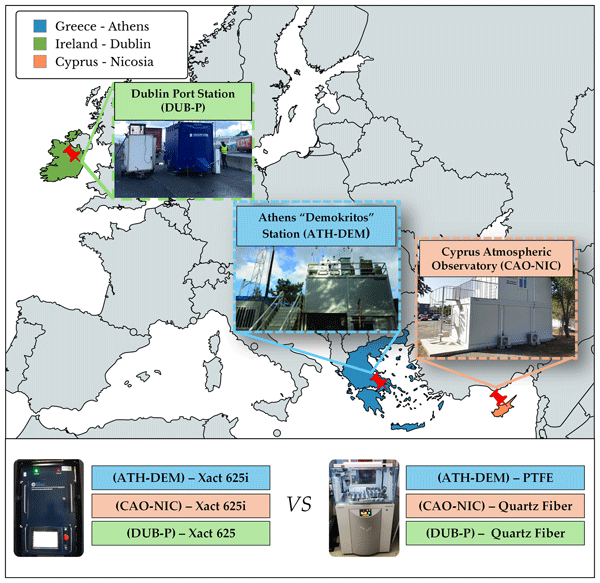
Stefanos Papagiannis, Manousos I. Manousakas, Dimitrios F. Anagnostopoulos, Michael Pikridas, Rima Baalbaki, Jean Sciare, Niall O'Sullivan, Stig Hellebust, John Wenger, Kirsten N. Fossum, Jurgita Ovadnevaite, Anja Tremper, David Green, Konstantinos Eleftheriadis, and Evangelia Diapouli
Atmos. Meas. Tech., 19, 3491–3509, https://doi.org/10.5194/amt-19-3491-2026, https://doi.org/10.5194/amt-19-3491-2026, 2026
Short summary
Short summary
We compared near real-time and benchtop XRF spectrometers measuring trace elements in airborne particles across three European cities. Results show filter material dictates accuracy: Teflon yielded strong inter-instrument agreement, while quartz caused systematic attenuation errors for light elements. Because empirical corrections left residual biases, using optimal substrates—preferably Teflon—is essential for accurately tracking pollution sources.
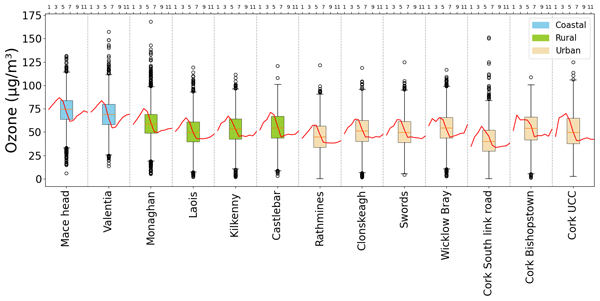
Nikhil Korhale, Tabish Ansari, Tim Butler, Jurgita Ovadnevaite, Emmanuel Chevassus, Darius Ceburnis, Damien Martin, Colin D. O'Dowd, and Liz Coleman
Atmos. Chem. Phys., 26, 6557–6577, https://doi.org/10.5194/acp-26-6557-2026, https://doi.org/10.5194/acp-26-6557-2026, 2026
Short summary
Short summary
We investigate the distribution and trends of surface ozone and its precursors over Ireland using advanced modelling to determine the drivers of ozone. Trajectory analysis is used to trace the origins of air masses, revealing the impact of transboundary pollution and atmospheric transport. The rising trend has been observed at urban sites over the past two decades, but without a similar trend at coastal sites. Coastal areas consistently show higher ozone levels than rural and urban areas.
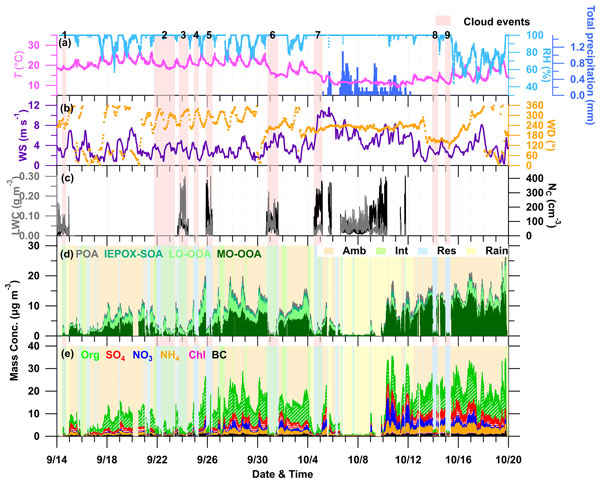
Yi Zhang, Weiqi Xu, Yan Li, Guohua Zhang, Dantong Liu, Ye Kuang, Yu Zhang, Wei Zhou, Xiaocong Peng, Bojiang Su, Weihong Huang, Zijun Zhang, Liu Yang, Yangzhou Wu, Siyuan Li, Shitong Zhao, Lanzhong Liu, Xiaole Pan, Zifa Wang, Xinhui Bi, Mikael Ehn, Douglas R. Worsnop, and Yele Sun
Atmos. Chem. Phys., 26, 5617–5634, https://doi.org/10.5194/acp-26-5617-2026, https://doi.org/10.5194/acp-26-5617-2026, 2026
Short summary
Short summary
This study explores how clouds influence the chemical composition of air particles through field research at a high-altitude station in southeastern China across different seasons. We found that different cloud types cause varying degrees of chemical changes in these particles. These findings enhance our understanding of the impact of clouds on air quality and contribute to improving climate models.
Peng Yao, Rupert Holzinger, Beatriz Sayuri Oyama, Agne Masalaite, Dipayan Paul, Haiyan Ni, Hanne Noto, Dušan Materić, Maria de Fátima Andrade, Ru-Jin Huang, and Ulrike Dusek
Atmos. Chem. Phys., 26, 5005–5018, https://doi.org/10.5194/acp-26-5005-2026, https://doi.org/10.5194/acp-26-5005-2026, 2026
Short summary
Short summary
We identify a previously unrecognized class of synthetic organic compounds, large molecular methylsiloxanes, in ambient aerosols across diverse environments in three countries. These compounds are present at substantial levels, primarily originating from traffic emissions related to engine lubrication. Their high abundance and significant daily human exposure suggest potential, yet still poorly understood, implications for both health and climate.
Hongyi Li, Ting Yang, Yele Sun, and Zifa Wang
Atmos. Meas. Tech., 19, 2225–2244, https://doi.org/10.5194/amt-19-2225-2026, https://doi.org/10.5194/amt-19-2225-2026, 2026
Short summary
Short summary
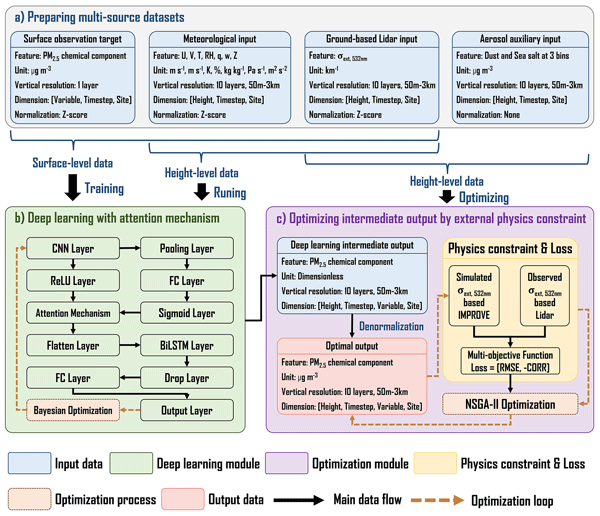
We develop a physics-constrained deep-learning framework to retrieve vertical profiles of particulate matter <2.5 µm chemical components from lidar measurements. Comparisons with surface, tower, and aircraft measurements validate the performance of the framework. A six-year vertical profile dataset generated for Beijing reveals that organic matter and nitrate are dominant chemical components. This work offers a new perspective on the lidar inversion of chemical component profiles.
Yali Jin, Hao Luo, Siqi Tang, Shuhui Xue, Chengyu Nie, Xiaocong Peng, Yan Zheng, Weiqi Xu, Guohua Zhang, Xiaole Pan, Yele Sun, Qi Chen, Lanzhong Liu, and Defeng Zhao
Atmos. Chem. Phys., 26, 2813–2830, https://doi.org/10.5194/acp-26-2813-2026, https://doi.org/10.5194/acp-26-2813-2026, 2026
Short summary
Short summary
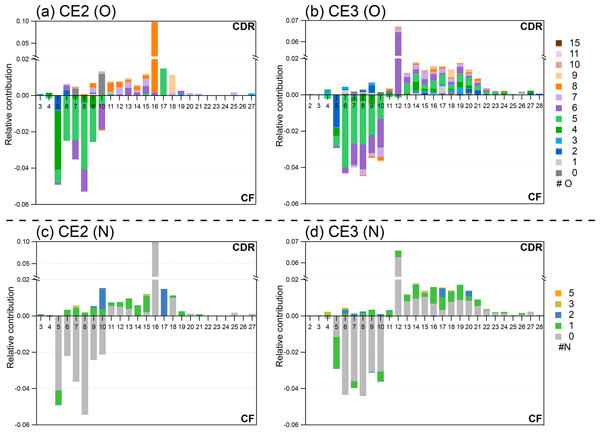
Cloud substantially changes the compositions organic aerosol. How cloud processing of organics occur on molecular level remains unclear. We found that compared with cloud free particles, organics in cloud contains more large molecules likely due to accretion reactions and has more nitrogen-containing compounds. We identify some new compounds formed in cloud. Such modifications of the organics in cloud can further change its physicochemical properties, and impact on climate and human health.
Sabine Lüchtrath, Sven Klemer, Florian Fröhlich, Darius Ceburnis, Dominik van Pinxteren, Hartmut Herrmann, Wolfgang Frenzel, and Andreas Held
Aerosol Research, 4, 81–101, https://doi.org/10.5194/ar-4-81-2026, https://doi.org/10.5194/ar-4-81-2026, 2026
Short summary
Short summary
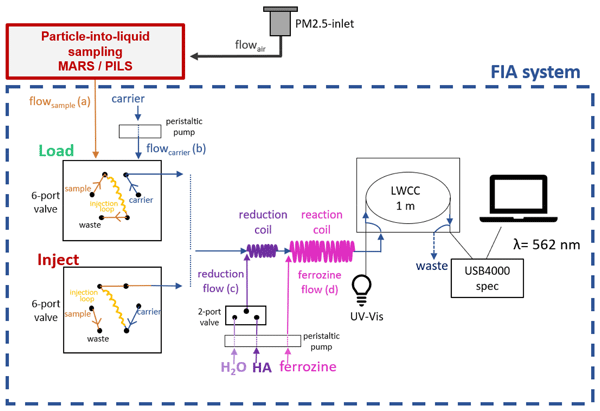
The first online instrument for the speciation of water‑soluble iron in ambient aerosols is presented. The system combines flow injection analysis with spectrophotometric detection using a liquid waveguide capillary cell. Sensitive iron speciation will help to better describe tropospheric aqueous-phase reactions driven by soluble iron, e.g. hydroxyl radical formation through Fenton chemistry. In first measurements in Berlin, ambient water-soluble-iron concentrations reached up to 47 ng m-3.
Chunshui Lin, Ru-Jin Huang, Jing Duan, Jing Qu, Jiahua Liu, Yi Liu, Yan Luo, Wei Huang, Wei Xu, Yanan Zhan, Zhitao Liu, Sihan Liu, Qingshuang Zhang, Quan Liu, Zirui Liu, Shengrong Lou, Huinan Yang, Dan Dan Huang, Cheng Huang, and Hongli Wang
Atmos. Chem. Phys., 26, 2635–2647, https://doi.org/10.5194/acp-26-2635-2026, https://doi.org/10.5194/acp-26-2635-2026, 2026
Short summary
Short summary
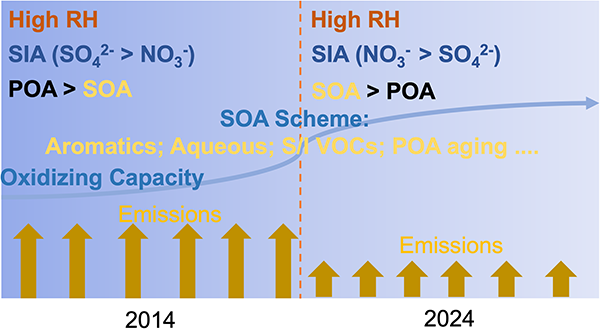
Since China's 2013 Clean Air Act cut PM2.5 by over half, winter haze in the North China Plain persists partly due to secondary organic aerosols now dominating primary organic aerosol, requiring urgent regional cooperation to address model-underestimated chemical transformations and cross-border pollution.

Wei Zhou, Liu Yang, Siqi Zeng, Yunping Kan, Lirong Yang, Weihong Zhang, Weijie Wang, Zijun Zhang, Yan Li, Weiqi Xu, Yucheng Gu, Yaozong Wang, Zhengyan Zuo, Jie Li, Zifa Wang, and Yele Sun
Atmos. Chem. Phys., 26, 2425–2441, https://doi.org/10.5194/acp-26-2425-2026, https://doi.org/10.5194/acp-26-2425-2026, 2026
Short summary
Short summary
Northwest China, situated in an arid and semi-arid climate region; air quality issues in this area have received less attention compared to other Chinese metropolitan clusters. This research identify a significant shift towards the coupling PM2.5 and O3 relationships over the past decade in northwest China, highlighting the great importance of urban terpenes and aromatic oxidation in secondary organic aerosol formation.
Weibin Zhu, Sai Shang, Jieqi Wang, Yunfei Wu, Zhaoze Deng, Liang Ran, Ye Kuang, Guiqian Tang, Xiangpeng Huang, Xiaole Pan, Lanzhong Liu, Weiqi Xu, Yele Sun, Bo Hu, Zifa Wang, and Zirui Liu
Atmos. Chem. Phys., 26, 1947–1965, https://doi.org/10.5194/acp-26-1947-2026, https://doi.org/10.5194/acp-26-1947-2026, 2026
Short summary
Short summary
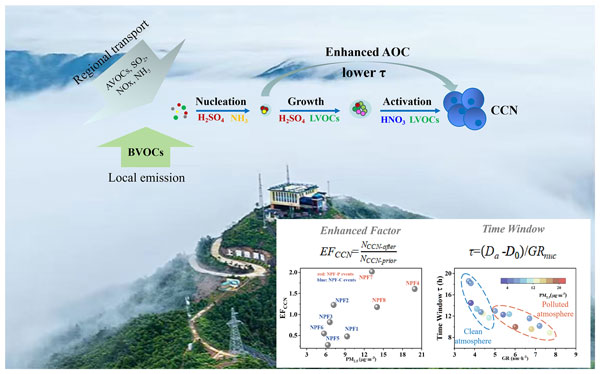
NPF (new particle formation) is a key global CCN (cloud condensation nuclei) source, but its contribution at the polluted boundary-layer top remains unclear. Based on mountaintop observations in the Yangtze River Delta, we show that under polluted conditions, NPF at the boundary-layer top is enhanced and accelerates its conversion to CCN. Ammonia plays a key role, and a newly defined "Time Window" metric highlights the importance of oxidation-driven growth and regional transport in this process.
Guochen Wang, Xuedong Cui, Bingye Xu, Can Wu, Minkang Zhi, Keliang Li, Liang Xu, Qi Yuan, Yuntao Wang, Yele Sun, Zongbo Shi, Akinori Ito, Shixian Zhai, and Weijun Li
Atmos. Chem. Phys., 26, 1483–1496, https://doi.org/10.5194/acp-26-1483-2026, https://doi.org/10.5194/acp-26-1483-2026, 2026
Short summary
Short summary
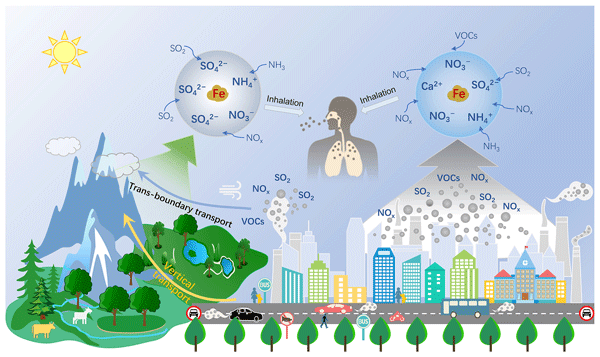
Iron acidification process is primarily driven by sulphuric acid in the upper mixing layer different from nitric acid at the ground-level. Enhanced atmospheric aging process contributes to high iron solubility in the upper mixing layer. Numerical models should consider vertical variations in iron dissolution to improve simulation accuracy.
Yujue Wang, Yizhe Yi, Wei Xu, Yiwen Zhang, Shubin Li, Hong-Hai Zhang, Mingliang Gu, Shibo Yan, Jialei Zhu, Chao Zhang, Jinhui Shi, Yang Gao, Xiaohong Yao, and Huiwang Gao
Biogeosciences, 23, 77–93, https://doi.org/10.5194/bg-23-77-2026, https://doi.org/10.5194/bg-23-77-2026, 2026
Short summary
Short summary
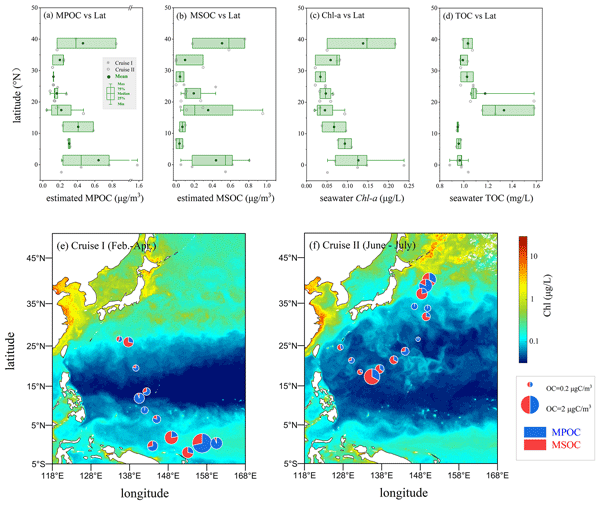
Marine organic aerosols remain poorly quantified, which limits our understanding on the climate regulation of marine aerosols. Based on shipboard cruises over the Pacific Ocean, we proposed an observation-based parameterization approach to estimate the primary and secondary marine organic aerosols using sea surface chlorophyll a and sea salts in marine aerosols. The results highlight that the spatial distribution of marine organic aerosols was driven by the marine biological activities.
Jialu Xu, Yingjie Zhang, Yuying Wang, Xing Yan, Bin Zhu, Chunsong Lu, Yuanjian Yang, Yele Sun, Junhui Zhang, Xiaofan Zuo, Zhanghanshu Han, and Rui Zhang
Atmos. Chem. Phys., 25, 18599–18616, https://doi.org/10.5194/acp-25-18599-2025, https://doi.org/10.5194/acp-25-18599-2025, 2025
Short summary
Short summary
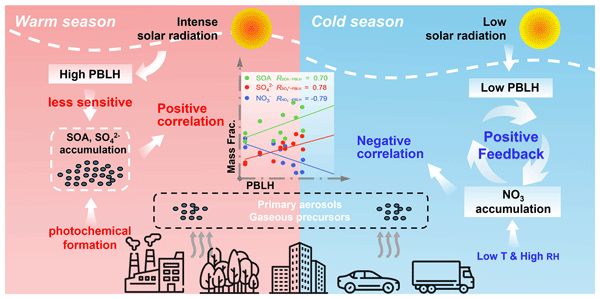
We conducted a year-long study in Nanjing to explore how the height of the atmospheric boundary layer affects fine particle pollution. We found that low boundary layers in winter trap pollutants like nitrate and primary particles, while higher layers in summer help form secondary pollutants like sulfate and organic aerosols. These findings show that boundary layer dynamics are key to understanding and managing seasonal air pollution.
Rou Zhang, Xiaoxiao Huang, Pu Wang, Guiquan Liu, Mengyu Liu, Songjian Zou, Lu Chen, and Fang Zhang
Atmos. Chem. Phys., 25, 18077–18091, https://doi.org/10.5194/acp-25-18077-2025, https://doi.org/10.5194/acp-25-18077-2025, 2025
Short summary
Short summary
This study reveals aerosol-driven light rain shifts in China's Emission Control Era (2000–2022). The dominant role of aerosol-cloud microphysical processes is further quantified, with PM2.5 changes explaining 59-63 % of the decadal trends of light rain. This offers critical insights for aligning air pollution mitigation with climate adaptation strategies.
Yutong Tian, Ting Yang, Hongyi Li, Ping Tian, Yifan Song, Jiancun He, Yining Tan, Yele Sun, and Zifa Wang
Atmos. Chem. Phys., 25, 17581–17594, https://doi.org/10.5194/acp-25-17581-2025, https://doi.org/10.5194/acp-25-17581-2025, 2025
Short summary
Short summary
This study examines how nitrate pollution varies with height and season to combat urban haze. Nitrate levels peak near the ground in spring/winter due to humidity and temperature, while wind and sunlight drive high-altitude pollution in late autumn. Winter shows unique daytime peaks linked to sunlight and nighttime chemistry. Findings help cities design targeted strategies, like timing emissions cuts, to improve air quality by addressing pollution at specific heights and times.
Junhui Zhang, Yuying Wang, Jialu Xu, Xiaofan Zuo, Chunsong Lu, Bin Zhu, Yuanjian Yang, Xing Yan, and Yele Sun
Atmos. Chem. Phys., 25, 17413–17428, https://doi.org/10.5194/acp-25-17413-2025, https://doi.org/10.5194/acp-25-17413-2025, 2025
Short summary
Short summary
We conducted a year-long study in Nanjing to understand how tiny airborne particles take up water, which affects air quality and climate. We found that particle water uptake varies by season and size, with lower values in summer due to more organic materials. Local pollution mainly influences smaller particles, while larger ones are shaped by air mass transport. These findings help improve climate models and support better air pollution control in fast-growing cities.
Wenqing Jiang, Lijuan Li, Lu Yu, Hwajin Kim, Yele Sun, and Qi Zhang
Atmos. Chem. Phys., 25, 16817–16832, https://doi.org/10.5194/acp-25-16817-2025, https://doi.org/10.5194/acp-25-16817-2025, 2025
Short summary
Short summary
We studied how sunlight changes natural organic matter in fog droplets and the tiny airborne particles formed after the water evaporation. Advanced analyses showed that sunlight makes this material more oxidized, nitrogen-enriched, chemically transformed, and different in light absorption and volatility. These sunlight-driven changes influence the particles’ behavior in the air, affecting air quality, climate, and how long they remain suspended in the atmosphere.
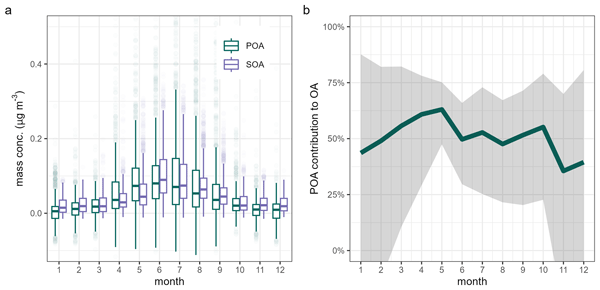
Baihua Chen, Lu Lei, Emmanuel Chevassus, Wei Xu, Ling Zhen, Haobin Zhong, Lin Wang, Chunshui Lin, Ru-Jin Huang, Darius Ceburnis, Colin O'Dowd, and Jurgita Ovadnevaite
Atmos. Chem. Phys., 25, 14205–14219, https://doi.org/10.5194/acp-25-14205-2025, https://doi.org/10.5194/acp-25-14205-2025, 2025
Short summary
Short summary
This study uses machine learning to separate marine primary organic aerosol (POA) and secondary organic aerosol (SOA) from 1 decade of high-resolution data. POA averages 51 % of marine organic aerosols annually, peaking at 63 % in summer. A support vector regression model, validated via fuzzy clustering and Monte Carlo simulations, identifies seasonal patterns of POA linked to biological activity. We found diverse impacts of marine POA and SOA on the aerosol hygroscopicity and mixing state.
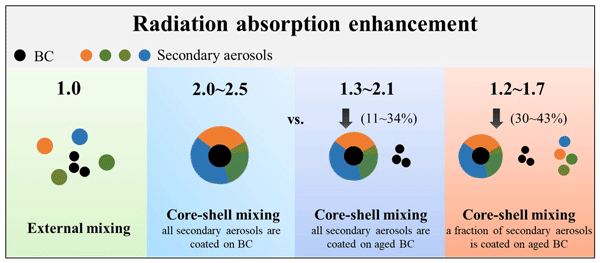
Huiyun Du, Jie Li, Xueshun Chen, Gabriele Curci, Fangqun Yu, Yele Sun, Xu Dao, Song Guo, Zhe Wang, Wenyi Yang, Lianfang Wei, and Zifa Wang
Atmos. Chem. Phys., 25, 5665–5681, https://doi.org/10.5194/acp-25-5665-2025, https://doi.org/10.5194/acp-25-5665-2025, 2025
Short summary
Short summary
Inadequate consideration of mixing states and coatings on black carbon (BC) hinders aerosol radiation forcing quantification. Core–shell mixing aligns well with observations, but partial internal mixing is a more realistic representation. We used a microphysics module to determine the fraction of embedded BC and coating aerosols, constraining the mixing state. This reduced absorption enhancement by 30 %–43 % in northern China, offering insights into BC's radiative effects.
Jingye Ren, Songjian Zou, Honghao Xu, Guiquan Liu, Zhe Wang, Anran Zhang, Chuanfeng Zhao, Min Hu, Dongjie Shang, Lizi Tang, Ru-Jin Huang, Yele Sun, and Fang Zhang
EGUsphere, https://doi.org/10.5194/egusphere-2025-1483, https://doi.org/10.5194/egusphere-2025-1483, 2025
Preprint archived
Short summary
Short summary
In this study, a new framework of cloud condensation nuclei (CCN) prediction in polluted region has been developed and it achieves well prediction of hourly-to-yearly scale across North China Plain. The study reveals a significant long-term decreasing trend of CCN concentration at typical supersaturations due to a rapid reduction in aerosol concentrations from 2014 to 2018. This improvement of our new model would be helpful to aerosols climate effect assessment in models.
Jieyao Liu, Fang Zhang, Jingye Ren, Lu Chen, Anran Zhang, Zhe Wang, Songjian Zou, Honghao Xu, and Xingyan Yue
Atmos. Chem. Phys., 25, 5075–5086, https://doi.org/10.5194/acp-25-5075-2025, https://doi.org/10.5194/acp-25-5075-2025, 2025
Short summary
Short summary
Particle mixing states and aging timescales are important for the evaluation of aerosol climate effects, but they are poorly parameterized in current models. We unravel the evolution of real-time mixing states and the aging timescale of size-resolved particles based on field measurements in urban Beijing. This study provides an observational basis for accurately parameterizing the aging timescale of aerosol particles in climate models.
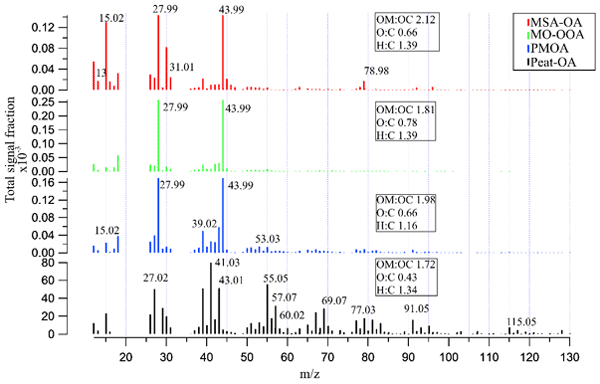
Emmanuel Chevassus, Kirsten N. Fossum, Darius Ceburnis, Lu Lei, Chunshui Lin, Wei Xu, Colin O'Dowd, and Jurgita Ovadnevaite
Atmos. Chem. Phys., 25, 4107–4129, https://doi.org/10.5194/acp-25-4107-2025, https://doi.org/10.5194/acp-25-4107-2025, 2025
Short summary
Short summary
This study presents the first source apportionment of organic aerosol at Mace Head via high-resolution mass spectrometry. Introducing transfer entropy as a novel method reveals that aged organic aerosol originates from both open-ocean ozonolysis and local peat-burning oxidation. Methanesulfonic acid and organic sea spray both mirror phytoplankton activity, with the former closely tied to coccolithophore blooms and the latter linked to diatoms, chlorophytes, and cyanobacteria.
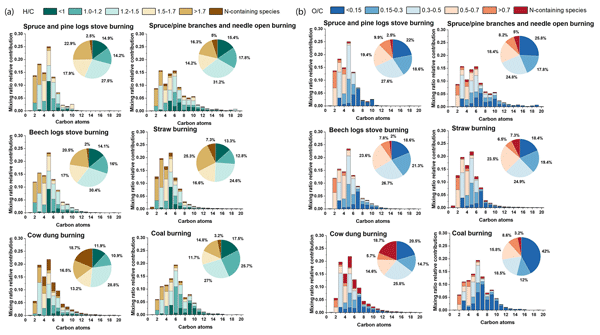
Tiantian Wang, Jun Zhang, Houssni Lamkaddam, Kun Li, Ka Yuen Cheung, Lisa Kattner, Erlend Gammelsæter, Michael Bauer, Zachary C. J. Decker, Deepika Bhattu, Rujin Huang, Rob L. Modini, Jay G. Slowik, Imad El Haddad, Andre S. H. Prevot, and David M. Bell
Atmos. Chem. Phys., 25, 2707–2724, https://doi.org/10.5194/acp-25-2707-2025, https://doi.org/10.5194/acp-25-2707-2025, 2025
Short summary
Short summary
Our study analyzes real-time emissions of organic vapors from solid fuel combustion. Using the mass spectrometer, we tested various fuels, finding higher emission factors for organic vapors from wood burning. Intermediate-volatility organic compounds constituted a significant fraction of emissions in solid fuel combustion. Statistical tests identified unique potential markers. Our insights benefit air quality, climate, and health, aiding accurate emission assessments.
Ye Kuang, Jiangchuan Tao, Hanbing Xu, Li Liu, Pengfei Liu, Wanyun Xu, Weiqi Xu, Yele Sun, and Chunsheng Zhao
Atmos. Chem. Phys., 25, 1163–1174, https://doi.org/10.5194/acp-25-1163-2025, https://doi.org/10.5194/acp-25-1163-2025, 2025
Short summary
Short summary
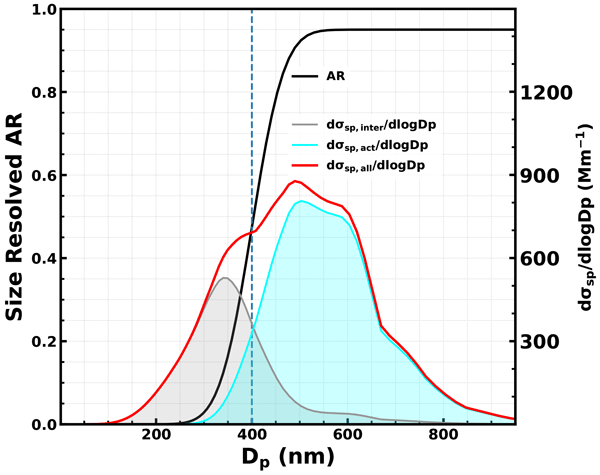
This study presents a novel optical framework to measure supersaturation, a fundamental parameter in cloud physics, by observing the scattering properties of particles that have or have not grown into cloud droplets. The technique offers high-resolution measurements, capturing essential fluctuations in supersaturation necessary for understanding cloud physics.
Wei Yuan, Ru-Jin Huang, Chao Luo, Lu Yang, Wenjuan Cao, Jie Guo, and Huinan Yang
Atmos. Chem. Phys., 24, 13219–13230, https://doi.org/10.5194/acp-24-13219-2024, https://doi.org/10.5194/acp-24-13219-2024, 2024
Short summary
Short summary
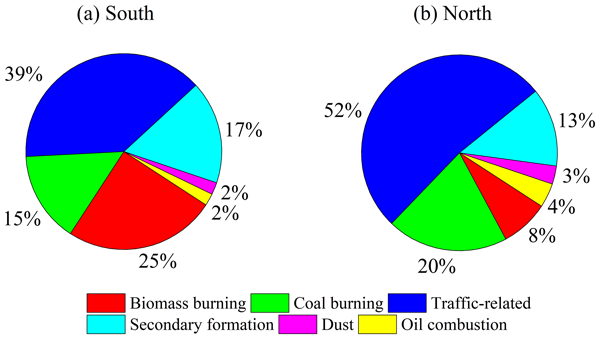
We characterized water-soluble oxidative potential (OP) levels in wintertime PM2.5 in the south and north of Beijing. Our results show that the volume-normalized dithiothreitol (DTTv) in the north was comparable to that in the south, while the mass-normalized dithiothreitol (DTTm) in the north was almost twice that in the south. Traffic-related emissions and biomass burning were the main sources of DTTv in the south, and traffic-related emissions contributed the most to DTTv in the north.
Hongyi Li, Ting Yang, Lars Nerger, Dawei Zhang, Di Zhang, Guigang Tang, Haibo Wang, Yele Sun, Pingqing Fu, Hang Su, and Zifa Wang
Geosci. Model Dev., 17, 8495–8519, https://doi.org/10.5194/gmd-17-8495-2024, https://doi.org/10.5194/gmd-17-8495-2024, 2024
Short summary
Short summary
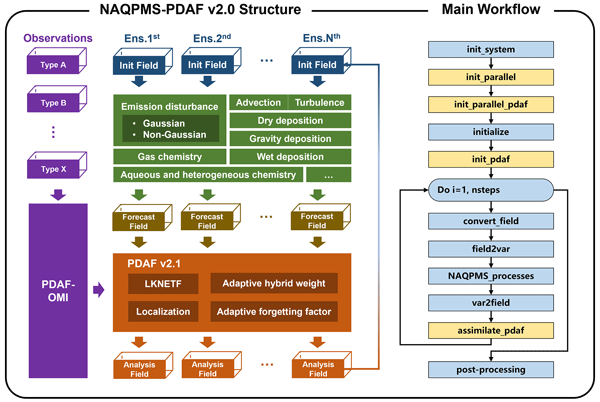
To accurately characterize the spatiotemporal distribution of particulate matter <2.5 µm chemical components, we developed the Nested Air Quality Prediction Model System with the Parallel Data Assimilation Framework (NAQPMS-PDAF) v2.0 for chemical components with non-Gaussian and nonlinear properties. NAQPMS-PDAF v2.0 has better computing efficiency, excels when used with a small ensemble size, and can significantly improve the simulation performance of chemical components.
Kirsten N. Fossum, Chunshui Lin, Niall O'Sullivan, Lu Lei, Stig Hellebust, Darius Ceburnis, Aqeel Afzal, Anja Tremper, David Green, Srishti Jain, Steigvilė Byčenkienė, Colin O'Dowd, John Wenger, and Jurgita Ovadnevaite
Atmos. Chem. Phys., 24, 10815–10831, https://doi.org/10.5194/acp-24-10815-2024, https://doi.org/10.5194/acp-24-10815-2024, 2024
Short summary
Short summary
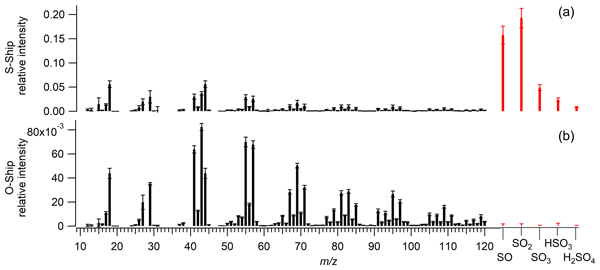
The chemical composition and sources of submicron aerosol in the Dublin Port area were investigated over a month-long campaign. Two distinct types of ship emissions were identified and characterised: sulfate-rich plumes from the use of heavy fuel oil with scrubbers and organic-rich plumes from the use of low-sulfur fuels. The latter were more frequent, emitting double the particle number and having a typical V / Ni ratio for ship emission.
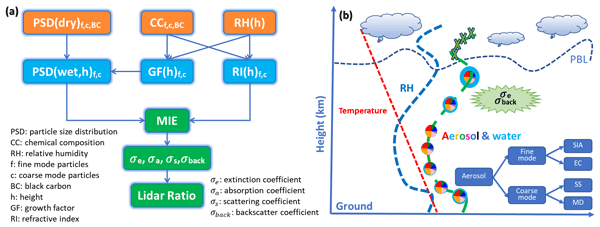
Xinya Liu, Diego Alves Gouveia, Bas Henzing, Arnoud Apituley, Arjan Hensen, Danielle van Dinther, Rujin Huang, and Ulrike Dusek
Atmos. Chem. Phys., 24, 9597–9614, https://doi.org/10.5194/acp-24-9597-2024, https://doi.org/10.5194/acp-24-9597-2024, 2024
Short summary
Short summary
The vertical distribution of aerosol optical properties is important for their effect on climate. This is usually measured by lidar, which has limitations, most notably the assumption of a lidar ratio. Our study shows that routine surface-level aerosol measurements are able to predict this lidar ratio reasonably well within the lower layers of the atmosphere and thus provide a relatively simple and cost-effective method to improve lidar measurements.
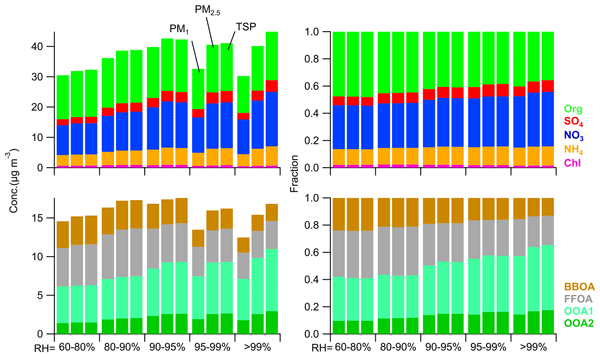
Weiqi Xu, Ye Kuang, Wanyun Xu, Zhiqiang Zhang, Biao Luo, Xiaoyi Zhang, Jiangchuang Tao, Hongqin Qiao, Li Liu, and Yele Sun
Atmos. Chem. Phys., 24, 9387–9399, https://doi.org/10.5194/acp-24-9387-2024, https://doi.org/10.5194/acp-24-9387-2024, 2024
Short summary
Short summary
We deployed an advanced aerosol–fog sampling system at a rural site in the North China Plain to investigate impacts of aerosol hygroscopic growth and activation on the physicochemical properties of submicron aerosols. Observed results highlighted remarkably different aqueous processing of primary and secondary submicron aerosol components under distinct ambient relative humidity (RH) conditions and that RH levels significantly impact aerosol sampling through the aerosol swelling effect.
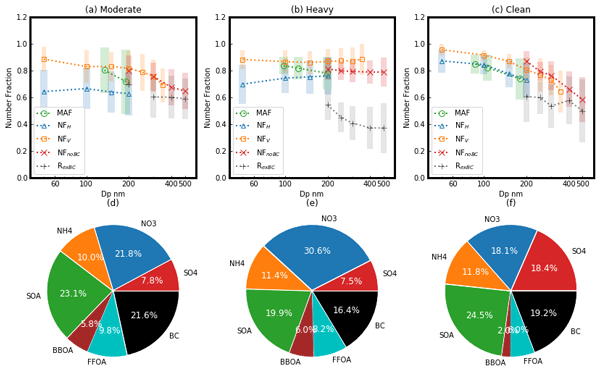
Jiangchuan Tao, Biao Luo, Weiqi Xu, Gang Zhao, Hanbin Xu, Biao Xue, Miaomiao Zhai, Wanyun Xu, Huarong Zhao, Sanxue Ren, Guangsheng Zhou, Li Liu, Ye Kuang, and Yele Sun
Atmos. Chem. Phys., 24, 9131–9154, https://doi.org/10.5194/acp-24-9131-2024, https://doi.org/10.5194/acp-24-9131-2024, 2024
Short summary
Short summary
Using simultaneous measurements of DMA–CCNC, H(/V)TDMA, and DMA–SP2, impacts of primary emissions and secondary aerosol formations on changes in aerosol physicochemical properties were comprehensively investigated. It was found that intercomparisons among aerosol mixing-state parameters derived from different techniques can help us gain more insight into aerosol physical properties which, in turn, will aid the investigation of emission characteristics and secondary aerosol formation pathways.
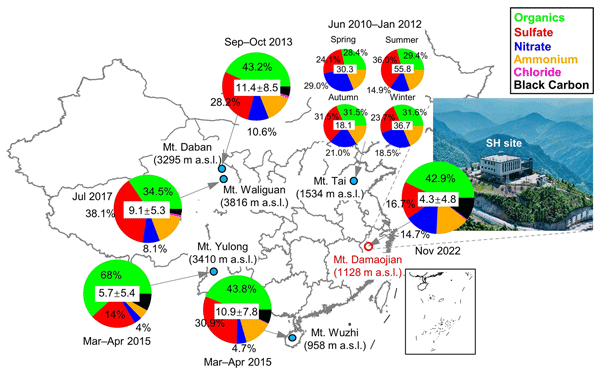
Zijun Zhang, Weiqi Xu, Yi Zhang, Wei Zhou, Xiangyu Xu, Aodong Du, Yinzhou Zhang, Hongqin Qiao, Ye Kuang, Xiaole Pan, Zifa Wang, Xueling Cheng, Lanzhong Liu, Qingyan Fu, Douglas R. Worsnop, Jie Li, and Yele Sun
Atmos. Chem. Phys., 24, 8473–8488, https://doi.org/10.5194/acp-24-8473-2024, https://doi.org/10.5194/acp-24-8473-2024, 2024
Short summary
Short summary
We investigated aerosol composition and sources and the interaction between secondary organic aerosol (SOA) and clouds at a regional mountain site in southeastern China. Clouds efficiently scavenge more oxidized SOA; however, cloud evaporation leads to the production of less oxidized SOA. The unexpectedly high presence of nitrate in aerosol particles indicates that nitrate formed in polluted areas has undergone interactions with clouds, significantly influencing the regional background site.
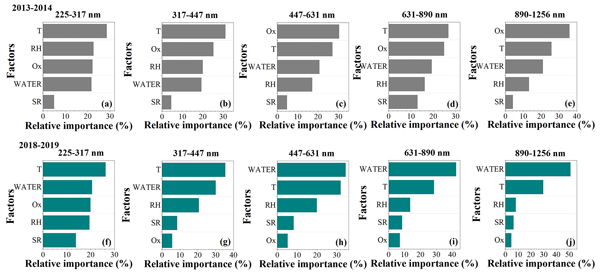
Jing Duan, Ru-Jin Huang, Ying Wang, Wei Xu, Haobin Zhong, Chunshui Lin, Wei Huang, Yifang Gu, Jurgita Ovadnevaite, Darius Ceburnis, and Colin O'Dowd
Atmos. Chem. Phys., 24, 7687–7698, https://doi.org/10.5194/acp-24-7687-2024, https://doi.org/10.5194/acp-24-7687-2024, 2024
Short summary
Short summary
The chemical composition of atmospheric particles has shown significant changes in recent years. We investigated the potential effects of changes in inorganics on aerosol water uptake and, thus, secondary organic aerosol formation in wintertime haze based on the size-resolved measurements of non-refractory fine particulate matter (NR-PM2.5) in Xi’an, northwestern China. We highlight the key role of aerosol water as a medium to link inorganics and organics in their multiphase processes.
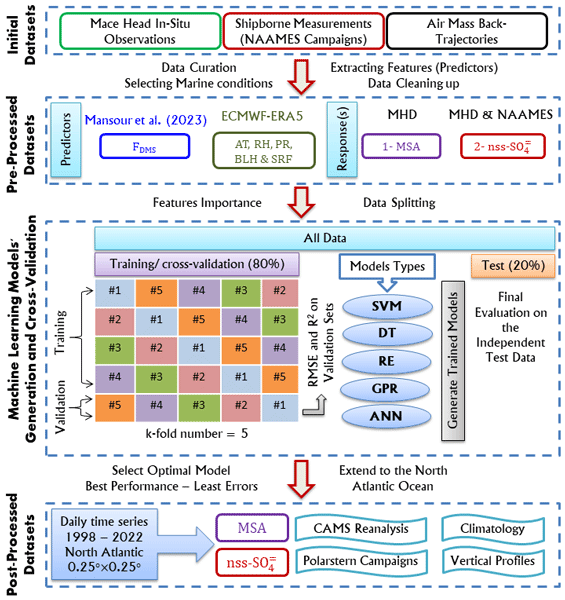
Karam Mansour, Stefano Decesari, Darius Ceburnis, Jurgita Ovadnevaite, Lynn M. Russell, Marco Paglione, Laurent Poulain, Shan Huang, Colin O'Dowd, and Matteo Rinaldi
Earth Syst. Sci. Data, 16, 2717–2740, https://doi.org/10.5194/essd-16-2717-2024, https://doi.org/10.5194/essd-16-2717-2024, 2024
Short summary
Short summary
We propose and evaluate machine learning predictive algorithms to model freshly formed biogenic methanesulfonic acid and sulfate concentrations. The long-term constructed dataset covers the North Atlantic at an unprecedented resolution. The improved parameterization of biogenic sulfur aerosols at regional scales is essential for determining their radiative forcing, which could help further understand marine-aerosol–cloud interactions and reduce uncertainties in climate models
Ming Chu, Xing Wei, Shangfei Hai, Yang Gao, Huiwang Gao, Yujiao Zhu, Biwu Chu, Nan Ma, Juan Hong, Yele Sun, and Xiaohong Yao
Atmos. Chem. Phys., 24, 6769–6786, https://doi.org/10.5194/acp-24-6769-2024, https://doi.org/10.5194/acp-24-6769-2024, 2024
Short summary
Short summary
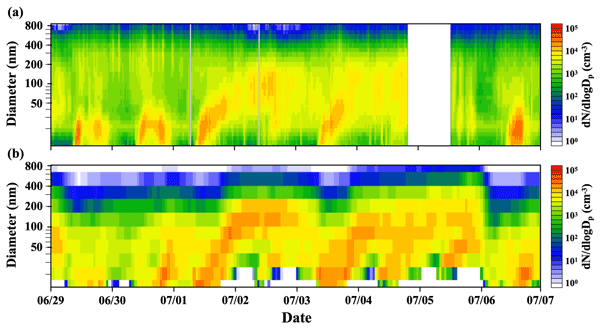
We used a 20-bin WRF-Chem model to simulate NPF events in the NCP during a three-week observational period in the summer of 2019. The model was able to reproduce the observations during June 29–July 6, which was characterized by a high frequency of NPF occurrence.
Zhiqiang Zhang, Ying Li, Haiyan Ran, Junling An, Yu Qu, Wei Zhou, Weiqi Xu, Weiwei Hu, Hongbin Xie, Zifa Wang, Yele Sun, and Manabu Shiraiwa
Atmos. Chem. Phys., 24, 4809–4826, https://doi.org/10.5194/acp-24-4809-2024, https://doi.org/10.5194/acp-24-4809-2024, 2024
Short summary
Short summary
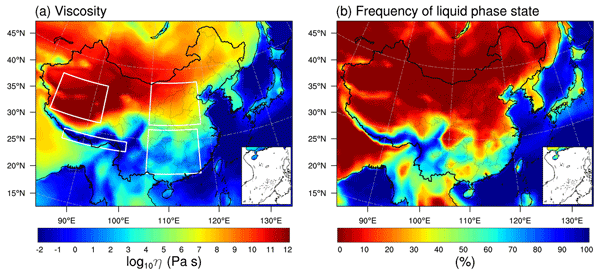
Secondary organic aerosols (SOAs) can exist in liquid, semi-solid, or amorphous solid states, which are rarely accounted for in current chemical transport models. We predict the phase state of SOA particles over China and find that in northwestern China SOA particles are mostly highly viscous or glassy solid. Our results indicate that the particle phase state should be considered in SOA formation in chemical transport models for more accurate prediction of SOA mass concentrations.
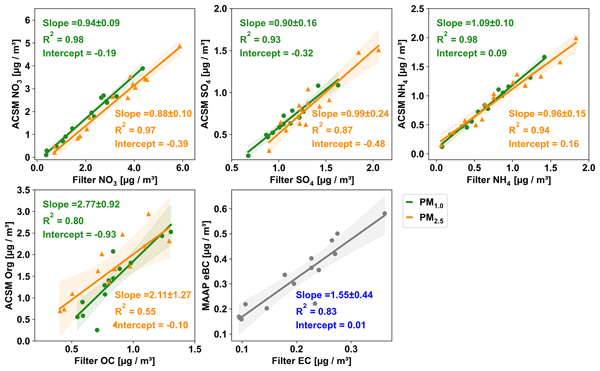
Xinya Liu, Bas Henzing, Arjan Hensen, Jan Mulder, Peng Yao, Danielle van Dinther, Jerry van Bronckhorst, Rujin Huang, and Ulrike Dusek
Atmos. Chem. Phys., 24, 3405–3420, https://doi.org/10.5194/acp-24-3405-2024, https://doi.org/10.5194/acp-24-3405-2024, 2024
Short summary
Short summary
We evaluated the time-of-flight aerosol chemical speciation monitor (TOF-ACSM) following the implementation of the PM2.5 aerodynamic lens and a capture vaporizer (CV). The results showed that it significantly improved the accuracy and precision of ACSM in the field observations. The paper elucidates the measurement outcomes of various instruments and provides an analysis of their biases. This comprehensive evaluation is expected to benefit the ACSM community and other aerosol field measurements.
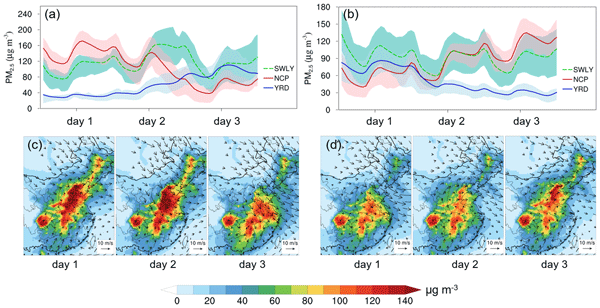
Feifan Yan, Hang Su, Yafang Cheng, Rujin Huang, Hong Liao, Ting Yang, Yuanyuan Zhu, Shaoqing Zhang, Lifang Sheng, Wenbin Kou, Xinran Zeng, Shengnan Xiang, Xiaohong Yao, Huiwang Gao, and Yang Gao
Atmos. Chem. Phys., 24, 2365–2376, https://doi.org/10.5194/acp-24-2365-2024, https://doi.org/10.5194/acp-24-2365-2024, 2024
Short summary
Short summary
PM2.5 pollution is a major air quality issue deteriorating human health, and previous studies mostly focus on regions like the North China Plain and Yangtze River Delta. However, the characteristics of PM2.5 concentrations between these two regions are studied less often. Focusing on the transport corridor region, we identify an interesting seesaw transport phenomenon with stagnant weather conditions, conducive to PM2.5 accumulation over this region, resulting in large health effects.
Shuzheng Guo, Chunxiang Ye, Weili Lin, Yi Chen, Limin Zeng, Xuena Yu, Jinhui Cui, Chong Zhang, Jing Duan, Haobin Zhong, Rujin Huang, Xuguang Chi, Wei Nie, and Aijun Ding
EGUsphere, https://doi.org/10.5194/egusphere-2024-262, https://doi.org/10.5194/egusphere-2024-262, 2024
Preprint archived
Short summary
Short summary
@Tibet field campaigns 2021 discovered surprisingly high levels and activity contributions of oxygenated volatile organic compounds on the southeast of the Tibetan Plateau, which suggests that OVOCs may play a larger role in the chemical reactions that occur in high-altitude regions than previously thought.
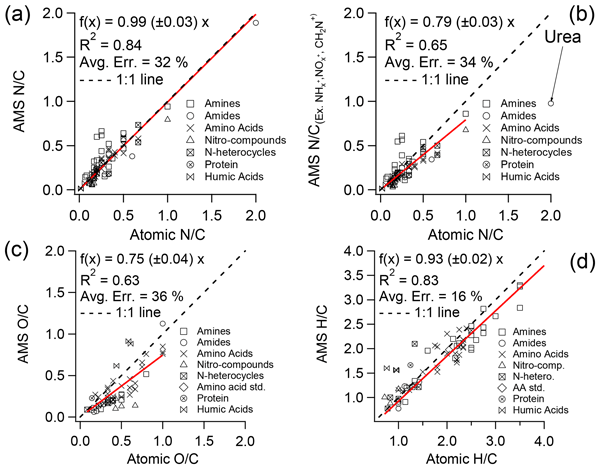
Xinlei Ge, Yele Sun, Justin Trousdell, Mindong Chen, and Qi Zhang
Atmos. Meas. Tech., 17, 423–439, https://doi.org/10.5194/amt-17-423-2024, https://doi.org/10.5194/amt-17-423-2024, 2024
Short summary
Short summary
This study aims to enhance the application of the Aerodyne high-resolution aerosol mass spectrometer (HR-AMS) in characterizing organic nitrogen (ON) species within aerosol particles and droplets. A thorough analysis was conducted on 75 ON standards that represent a diverse spectrum of ambient ON types. The results underscore the capacity of the HR-AMS in examining the concentration and chemistry of atmospheric ON compounds, thereby offering insights into their sources and environmental impacts.
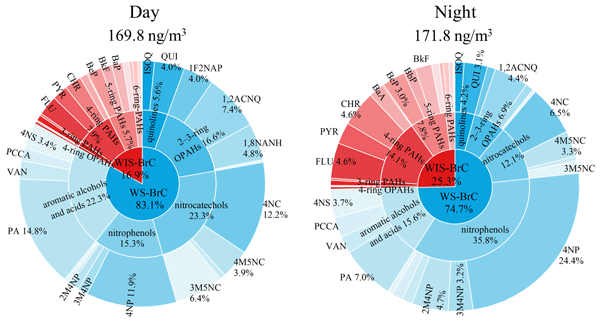
Yuquan Gong, Ru-Jin Huang, Lu Yang, Ting Wang, Wei Yuan, Wei Xu, Wenjuan Cao, Yang Wang, and Yongjie Li
Atmos. Chem. Phys., 23, 15197–15207, https://doi.org/10.5194/acp-23-15197-2023, https://doi.org/10.5194/acp-23-15197-2023, 2023
Short summary
Short summary
This study reveals the large day–night differences in brown carbon (BrC) chromophore composition, which was not known previously. The results provide insights into the effects of atmospheric processes and emissions on BrC composition.
Jiyeon Park, Hyojin Kang, Yeontae Gim, Eunho Jang, Ki-Tae Park, Sangjong Park, Chang Hoon Jung, Darius Ceburnis, Colin O'Dowd, and Young Jun Yoon
Atmos. Chem. Phys., 23, 13625–13646, https://doi.org/10.5194/acp-23-13625-2023, https://doi.org/10.5194/acp-23-13625-2023, 2023
Short summary
Short summary
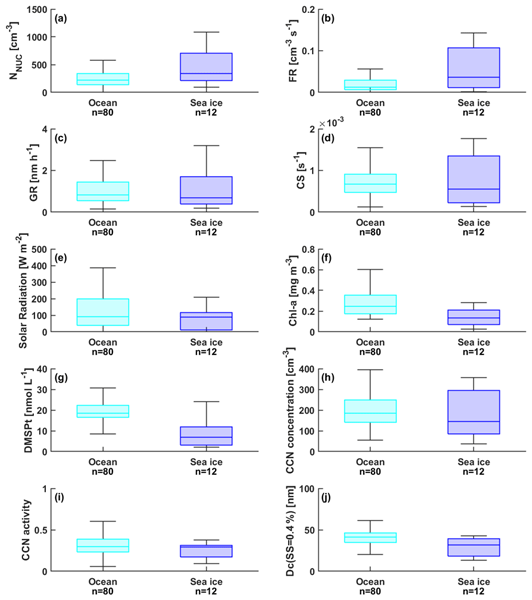
We measured the number size distribution of 2.5–300 nm particles and cloud condensation nuclei (CCN) number concentrations at King Sejong Station on the Antarctic Peninsula continuously from 1 January to 31 December 2018. During the pristine and clean periods, 97 new particle formation (NPF) events were detected. For 83 of these, CCN concentrations increased by 2 %–268 % (median 44 %) following 1 to 36 h (median 8 h) after NPF events.
Aodong Du, Jiaxing Sun, Hang Liu, Weiqi Xu, Wei Zhou, Yuting Zhang, Lei Li, Xubing Du, Yan Li, Xiaole Pan, Zifa Wang, and Yele Sun
Atmos. Chem. Phys., 23, 13597–13611, https://doi.org/10.5194/acp-23-13597-2023, https://doi.org/10.5194/acp-23-13597-2023, 2023
Short summary
Short summary
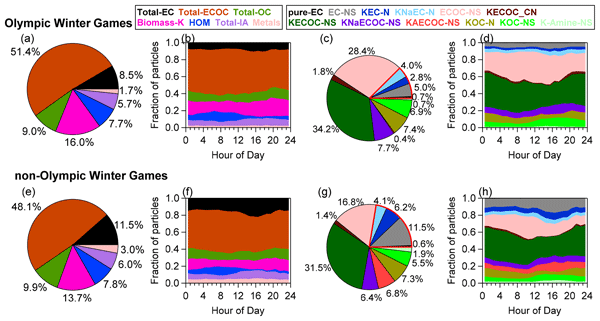
We characterized the impacts of emission controls on particle mixing state and density during the Beijing Olympic Winter Games using a SPAMS in tandem with a DMA and an AAC. OC and sulfate-containing particles increased, while those from primary emissions decreased. The effective particle densities increased and varied largely for different particles, highlighting the impacts of aging and formation processes on the changes of particle density and mixing state.
Tao Wang, Hang Liu, Jie Li, Shuai Wang, Youngseob Kim, Yele Sun, Wenyi Yang, Huiyun Du, Zhe Wang, and Zifa Wang
Geosci. Model Dev., 16, 5585–5599, https://doi.org/10.5194/gmd-16-5585-2023, https://doi.org/10.5194/gmd-16-5585-2023, 2023
Short summary
Short summary
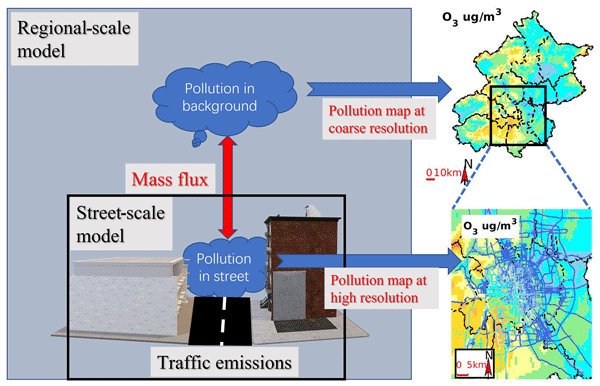
This paper developed a two-way coupled module in a new version of a regional urban–street network model, IAQMS-street v2.0, in which the mass flux from streets to background is considered. Test cases are defined to evaluate the performance of IAQMS-street v2.0 in Beijing by comparing it with that simulated by IAQMS-street v1.0 and a regional model. The contribution of local emissions and the influence of on-road vehicle control measures on air quality are evaluated by using IAQMS-street v2.0.
Yong Zhang, Jie Tian, Qiyuan Wang, Lu Qi, Manousos Ioannis Manousakas, Yuemei Han, Weikang Ran, Yele Sun, Huikun Liu, Renjian Zhang, Yunfei Wu, Tianqu Cui, Kaspar Rudolf Daellenbach, Jay Gates Slowik, André S. H. Prévôt, and Junji Cao
Atmos. Chem. Phys., 23, 9455–9471, https://doi.org/10.5194/acp-23-9455-2023, https://doi.org/10.5194/acp-23-9455-2023, 2023
Short summary
Short summary
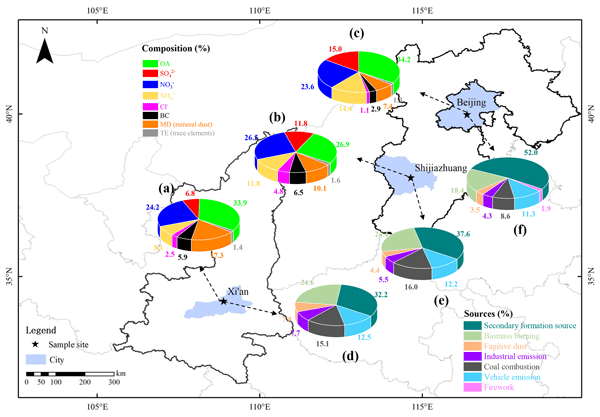
PM2.5 pollution still frequently occurs in northern China during winter, and it is necessary to figure out the causes of air pollution based on intensive real-time measurement. The findings elaborate the chemical characteristics and source contributions of PM2.5 in three pilot cities, reveal potential formation mechanisms of secondary aerosols, and highlight the importance of controlling biomass burning and inhibiting generation of secondary aerosol for air quality improvement.
Hang Liu, Xiaole Pan, Shandong Lei, Yuting Zhang, Aodong Du, Weijie Yao, Guiqian Tang, Tao Wang, Jinyuan Xin, Jie Li, Yele Sun, Junji Cao, and Zifa Wang
Atmos. Chem. Phys., 23, 7225–7239, https://doi.org/10.5194/acp-23-7225-2023, https://doi.org/10.5194/acp-23-7225-2023, 2023
Short summary
Short summary
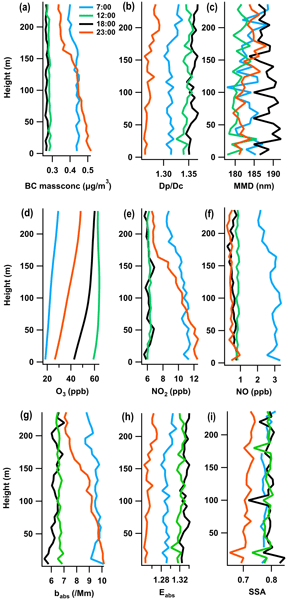
We provide the average vertical profiles of black carbon (BC) concentration, size distribution and coating thickness at different times of the day in an urban area based on 112 vertical profiles. In addition, it is found that BC in the residual layer generally has a thicker coating, higher absorption enhancement and hygroscopicity than on the surface. Such aged BC could enter into the boundary layer and influence the BC properties in the early morning.
Lei Kong, Xiao Tang, Jiang Zhu, Zifa Wang, Yele Sun, Pingqing Fu, Meng Gao, Huangjian Wu, Miaomiao Lu, Qian Wu, Shuyuan Huang, Wenxuan Sui, Jie Li, Xiaole Pan, Lin Wu, Hajime Akimoto, and Gregory R. Carmichael
Atmos. Chem. Phys., 23, 6217–6240, https://doi.org/10.5194/acp-23-6217-2023, https://doi.org/10.5194/acp-23-6217-2023, 2023
Short summary
Short summary
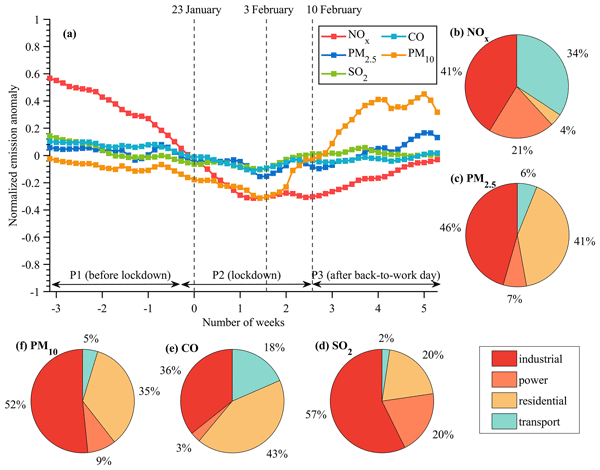
A multi-air-pollutant inversion system has been developed in this study to estimate emission changes in China during COVID-19 lockdown. The results demonstrate that the lockdown is largely a nationwide road traffic control measure with NOx emissions decreasing by ~40 %. Emissions of other species only decreased by ~10 % due to smaller effects of lockdown on other sectors. Assessment results further indicate that the lockdown only had limited effects on the control of PM2.5 and O3 in China.
Joanna E. Dyson, Lisa K. Whalley, Eloise J. Slater, Robert Woodward-Massey, Chunxiang Ye, James D. Lee, Freya Squires, James R. Hopkins, Rachel E. Dunmore, Marvin Shaw, Jacqueline F. Hamilton, Alastair C. Lewis, Stephen D. Worrall, Asan Bacak, Archit Mehra, Thomas J. Bannan, Hugh Coe, Carl J. Percival, Bin Ouyang, C. Nicholas Hewitt, Roderic L. Jones, Leigh R. Crilley, Louisa J. Kramer, W. Joe F. Acton, William J. Bloss, Supattarachai Saksakulkrai, Jingsha Xu, Zongbo Shi, Roy M. Harrison, Simone Kotthaus, Sue Grimmond, Yele Sun, Weiqi Xu, Siyao Yue, Lianfang Wei, Pingqing Fu, Xinming Wang, Stephen R. Arnold, and Dwayne E. Heard
Atmos. Chem. Phys., 23, 5679–5697, https://doi.org/10.5194/acp-23-5679-2023, https://doi.org/10.5194/acp-23-5679-2023, 2023
Short summary
Short summary
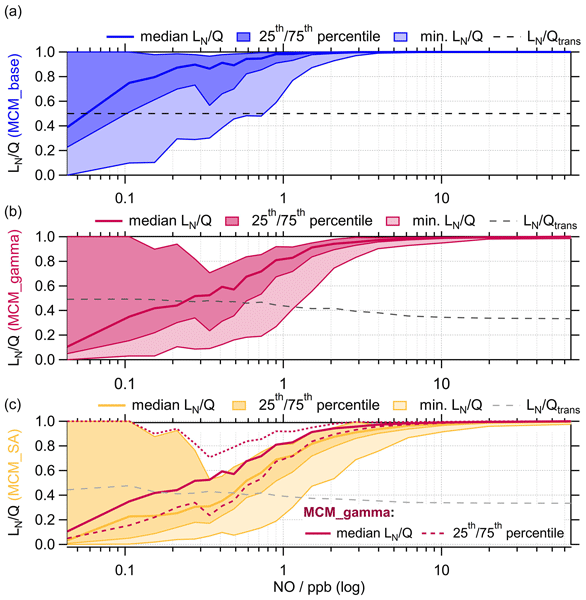
The hydroxyl (OH) and closely coupled hydroperoxyl (HO2) radicals are vital for their role in the removal of atmospheric pollutants. In less polluted regions, atmospheric models over-predict HO2 concentrations. In this modelling study, the impact of heterogeneous uptake of HO2 onto aerosol surfaces on radical concentrations and the ozone production regime in Beijing in the summertime is investigated, and the implications for emissions policies across China are considered.
Yifang Gu, Ru-Jin Huang, Jing Duan, Wei Xu, Chunshui Lin, Haobin Zhong, Ying Wang, Haiyan Ni, Quan Liu, Ruiguang Xu, Litao Wang, and Yong Jie Li
Atmos. Chem. Phys., 23, 5419–5433, https://doi.org/10.5194/acp-23-5419-2023, https://doi.org/10.5194/acp-23-5419-2023, 2023
Short summary
Short summary
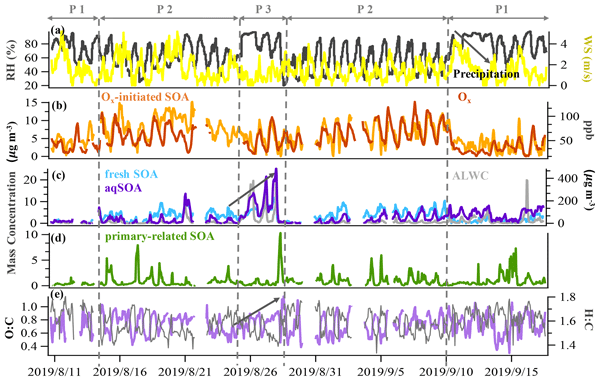
Secondary organic aerosol (SOA) can be produced by various pathways, but its formation mechanisms are unclear. Observations were conducted in the North China Plain during a highly oxidizing atmosphere in summer. We found that fast photochemistry dominated SOA formation during daytime. Two types of aqueous-phase chemistry (nocturnal and daytime processing) take place at high relative humidity. The potential transformation from primary organic aerosol (POA) to SOA was also an important pathway.
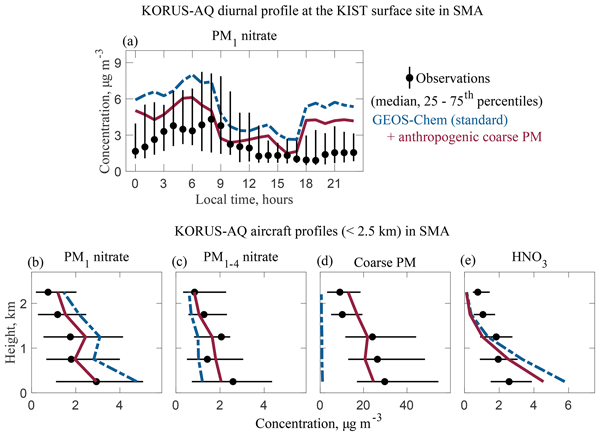
Shixian Zhai, Daniel J. Jacob, Drew C. Pendergrass, Nadia K. Colombi, Viral Shah, Laura Hyesung Yang, Qiang Zhang, Shuxiao Wang, Hwajin Kim, Yele Sun, Jin-Soo Choi, Jin-Soo Park, Gan Luo, Fangqun Yu, Jung-Hun Woo, Younha Kim, Jack E. Dibb, Taehyoung Lee, Jin-Seok Han, Bruce E. Anderson, Ke Li, and Hong Liao
Atmos. Chem. Phys., 23, 4271–4281, https://doi.org/10.5194/acp-23-4271-2023, https://doi.org/10.5194/acp-23-4271-2023, 2023
Short summary
Short summary
Anthropogenic fugitive dust in East Asia not only causes severe coarse particulate matter air pollution problems, but also affects fine particulate nitrate. Due to emission control efforts, coarse PM decreased steadily. We find that the decrease of coarse PM is a major driver for a lack of decrease of fine particulate nitrate, as it allows more nitric acid to form fine particulate nitrate. The continuing decrease of coarse PM requires more stringent ammonia and nitrogen oxides emission controls.
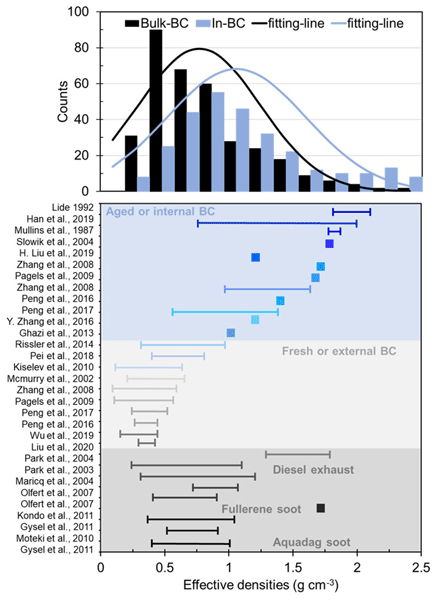
Jingye Ren, Lu Chen, Jieyao Liu, and Fang Zhang
Atmos. Chem. Phys., 23, 4327–4342, https://doi.org/10.5194/acp-23-4327-2023, https://doi.org/10.5194/acp-23-4327-2023, 2023
Short summary
Short summary
The density of black carbon (BC) is linked to its morphology and mixing state and could cause uncertainty in evaluating cloud condensation nuclei (CCN) activity. A method for retrieving the mixing state and density of BC in the urban atmosphere is developed. The mean retrieval density of internally mixed BC was lower, assuming void-free spherical structures. Our study suggests the importance of accounting for variable BC density in models when assessing its climate effect in urban atmosphere.
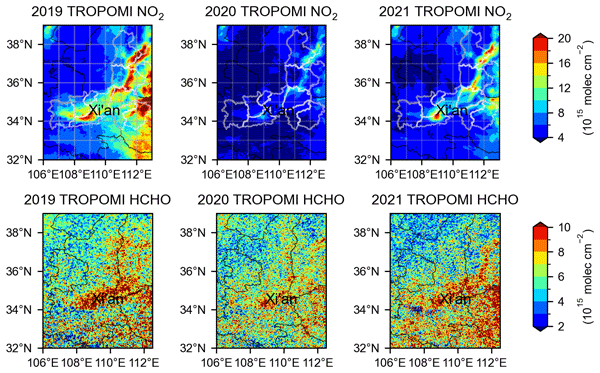
Chunshui Lin, Ru-Jin Huang, Haobin Zhong, Jing Duan, Zixi Wang, Wei Huang, and Wei Xu
Atmos. Chem. Phys., 23, 3595–3607, https://doi.org/10.5194/acp-23-3595-2023, https://doi.org/10.5194/acp-23-3595-2023, 2023
Short summary
Short summary
The complex interaction between O3 and PM2.5, coupled with the topology of the Fenwei Plain and the evolution of the boundary layer height, highlights the challenges in further reducing particulate pollution in winter despite years of efforts to reduce emissions. Through scenario analysis in a chemical box model constrained by observation, we show the co-benefits of reducing NOx and VOCs simultaneously in reducing ozone and SOA.
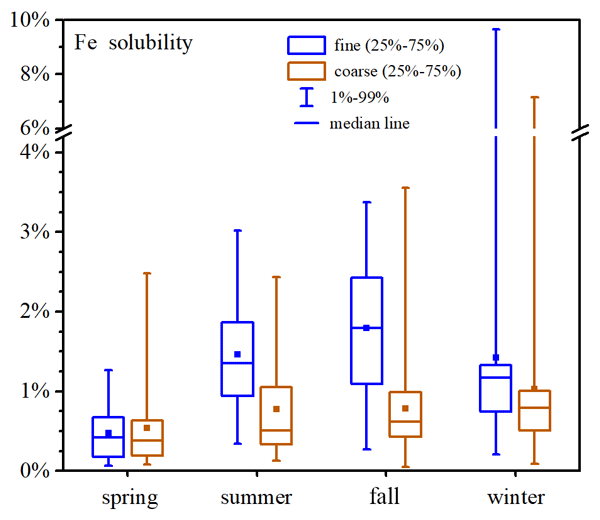
Huanhuan Zhang, Rui Li, Chengpeng Huang, Xiaofei Li, Shuwei Dong, Fu Wang, Tingting Li, Yizhu Chen, Guohua Zhang, Yan Ren, Qingcai Chen, Ru-jin Huang, Siyu Chen, Tao Xue, Xinming Wang, and Mingjin Tang
Atmos. Chem. Phys., 23, 3543–3559, https://doi.org/10.5194/acp-23-3543-2023, https://doi.org/10.5194/acp-23-3543-2023, 2023
Short summary
Short summary
This work investigated the seasonal variation of aerosol Fe solubility for coarse and fine particles in Xi’an, a megacity in northwestern China severely affected by anthropogenic emission and desert dust aerosol. In addition, we discussed in depth what controlled aerosol Fe solubility at different seasons for coarse and fine particles.

Shujun Zhong, Shuang Chen, Junjun Deng, Yanbing Fan, Qiang Zhang, Qiaorong Xie, Yulin Qi, Wei Hu, Libin Wu, Xiaodong Li, Chandra Mouli Pavuluri, Jialei Zhu, Xin Wang, Di Liu, Xiaole Pan, Yele Sun, Zifa Wang, Yisheng Xu, Haijie Tong, Hang Su, Yafang Cheng, Kimitaka Kawamura, and Pingqing Fu
Atmos. Chem. Phys., 23, 2061–2077, https://doi.org/10.5194/acp-23-2061-2023, https://doi.org/10.5194/acp-23-2061-2023, 2023
Short summary
Short summary
This study investigated the role of the secondary organic aerosol (SOA) loading on the molecular composition of wintertime urban aerosols by ultrahigh-resolution mass spectrometry. Results demonstrate that the SOA loading is an important factor associated with the oxidation degree, nitrate group content, and chemodiversity of nitrooxy–organosulfates. Our study also found that the hydrolysis of nitrooxy–organosulfates is a possible pathway for the formation of organosulfates.
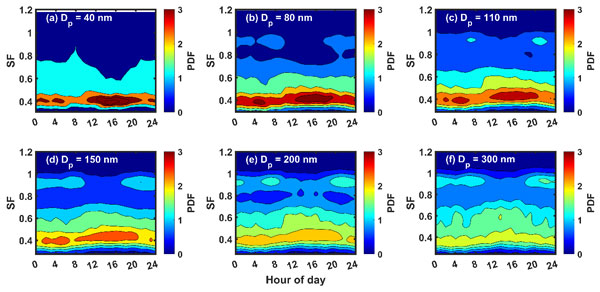
Yuying Wang, Rong Hu, Qiuyan Wang, Zhanqing Li, Maureen Cribb, Yele Sun, Xiaorui Song, Yi Shang, Yixuan Wu, Xin Huang, and Yuxiang Wang
Atmos. Chem. Phys., 22, 14133–14146, https://doi.org/10.5194/acp-22-14133-2022, https://doi.org/10.5194/acp-22-14133-2022, 2022
Short summary
Short summary
The mixing state of size-resolved soot particles and their influencing factors were investigated. The results suggest anthropogenic emissions and aging processes have diverse impacts on the mixing state of soot particles in different modes. Considering that the mixing state of soot particles is crucial to model aerosol absorption, this finding is important to study particle growth and the warming effect of black carbon aerosols.
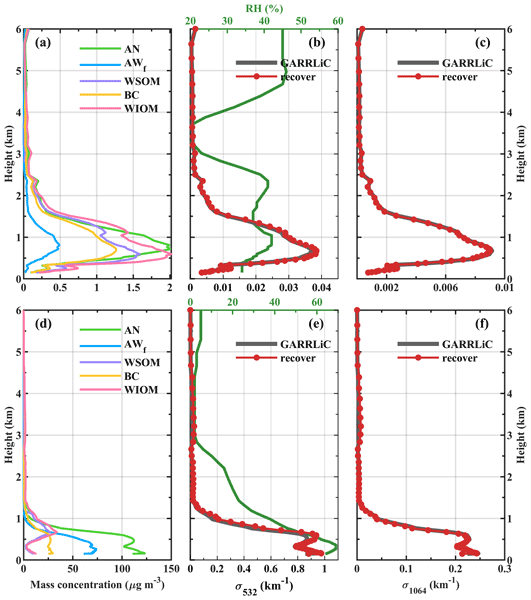
Futing Wang, Ting Yang, Zifa Wang, Haibo Wang, Xi Chen, Yele Sun, Jianjun Li, Guigang Tang, and Wenxuan Chai
Atmos. Meas. Tech., 15, 6127–6144, https://doi.org/10.5194/amt-15-6127-2022, https://doi.org/10.5194/amt-15-6127-2022, 2022
Short summary
Short summary
We develop a new algorithm to get the vertical mass concentration profiles of fine aerosol components based on the synergy of ground-based remote sensing for the first time. The comparisons with in situ observations and chemistry transport models validate the performance of the algorithm. Uncertainties caused by input parameters are also assessed in this paper. We expected that the algorithm can provide a new idea for lidar inversion and promote the development of aerosol component profiles.
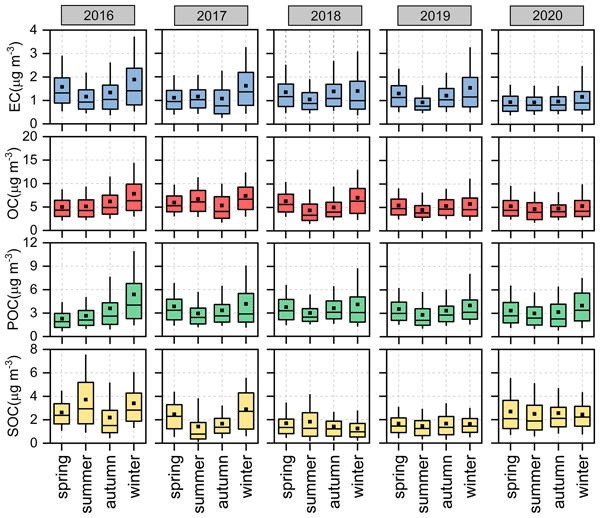
Meng Wang, Yusen Duan, Wei Xu, Qiyuan Wang, Zhuozhi Zhang, Qi Yuan, Xinwei Li, Shuwen Han, Haijie Tong, Juntao Huo, Jia Chen, Shan Gao, Zhongbiao Wu, Long Cui, Yu Huang, Guangli Xiu, Junji Cao, Qingyan Fu, and Shun-cheng Lee
Atmos. Chem. Phys., 22, 12789–12802, https://doi.org/10.5194/acp-22-12789-2022, https://doi.org/10.5194/acp-22-12789-2022, 2022
Short summary
Short summary
In this study, we report the long-term measurement of organic carbon (OC) and elementary carbon (EC) in PM2.5 with hourly time resolution conducted at a regional site in Shanghai from 2016 to 2020. The results from this study provide critical information about the long-term trend of carbonaceous aerosol, in particular secondary OC, in one of the largest megacities in the world and are helpful for developing pollution control measures from a long-term planning perspective.
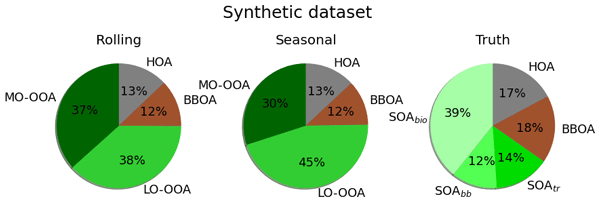
Marta Via, Gang Chen, Francesco Canonaco, Kaspar R. Daellenbach, Benjamin Chazeau, Hasna Chebaicheb, Jianhui Jiang, Hannes Keernik, Chunshui Lin, Nicolas Marchand, Cristina Marin, Colin O'Dowd, Jurgita Ovadnevaite, Jean-Eudes Petit, Michael Pikridas, Véronique Riffault, Jean Sciare, Jay G. Slowik, Leïla Simon, Jeni Vasilescu, Yunjiang Zhang, Olivier Favez, André S. H. Prévôt, Andrés Alastuey, and María Cruz Minguillón
Atmos. Meas. Tech., 15, 5479–5495, https://doi.org/10.5194/amt-15-5479-2022, https://doi.org/10.5194/amt-15-5479-2022, 2022
Short summary
Short summary
This work presents the differences resulting from two techniques (rolling and seasonal) of the positive matrix factorisation model that can be run for organic aerosol source apportionment. The current state of the art suggests that the rolling technique is more accurate, but no proof of its effectiveness has been provided yet. This paper tackles this issue in the context of a synthetic dataset and a multi-site real-world comparison.
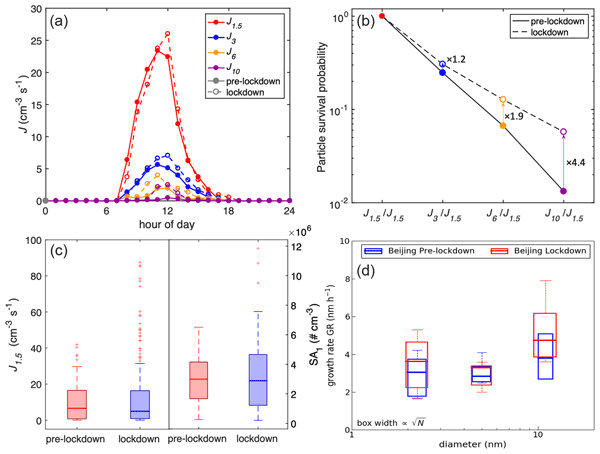
Chao Yan, Yicheng Shen, Dominik Stolzenburg, Lubna Dada, Ximeng Qi, Simo Hakala, Anu-Maija Sundström, Yishuo Guo, Antti Lipponen, Tom V. Kokkonen, Jenni Kontkanen, Runlong Cai, Jing Cai, Tommy Chan, Liangduo Chen, Biwu Chu, Chenjuan Deng, Wei Du, Xiaolong Fan, Xu-Cheng He, Juha Kangasluoma, Joni Kujansuu, Mona Kurppa, Chang Li, Yiran Li, Zhuohui Lin, Yiliang Liu, Yuliang Liu, Yiqun Lu, Wei Nie, Jouni Pulliainen, Xiaohui Qiao, Yonghong Wang, Yifan Wen, Ye Wu, Gan Yang, Lei Yao, Rujing Yin, Gen Zhang, Shaojun Zhang, Feixue Zheng, Ying Zhou, Antti Arola, Johanna Tamminen, Pauli Paasonen, Yele Sun, Lin Wang, Neil M. Donahue, Yongchun Liu, Federico Bianchi, Kaspar R. Daellenbach, Douglas R. Worsnop, Veli-Matti Kerminen, Tuukka Petäjä, Aijun Ding, Jingkun Jiang, and Markku Kulmala
Atmos. Chem. Phys., 22, 12207–12220, https://doi.org/10.5194/acp-22-12207-2022, https://doi.org/10.5194/acp-22-12207-2022, 2022
Short summary
Short summary
Atmospheric new particle formation (NPF) is a dominant source of atmospheric ultrafine particles. In urban environments, traffic emissions are a major source of primary pollutants, but their contribution to NPF remains under debate. During the COVID-19 lockdown, traffic emissions were significantly reduced, providing a unique chance to examine their relevance to NPF. Based on our comprehensive measurements, we demonstrate that traffic emissions alone are not able to explain the NPF in Beijing.
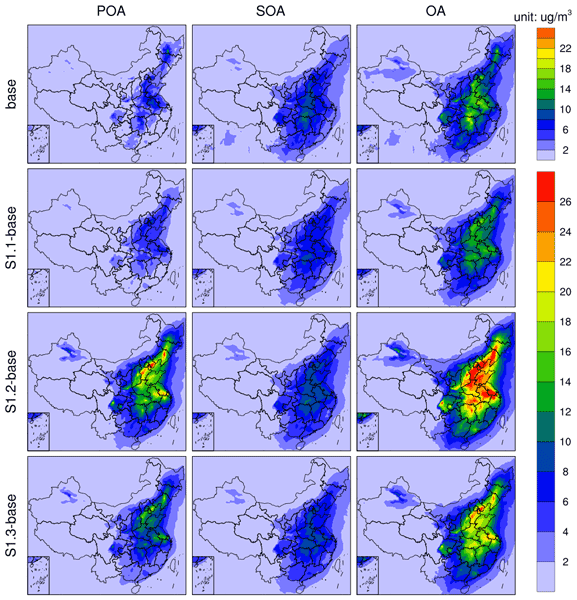
Mengying Li, Shaocai Yu, Xue Chen, Zhen Li, Yibo Zhang, Zhe Song, Weiping Liu, Pengfei Li, Xiaoye Zhang, Meigen Zhang, Yele Sun, Zirui Liu, Caiping Sun, Jingkun Jiang, Shuxiao Wang, Benjamin N. Murphy, Kiran Alapaty, Rohit Mathur, Daniel Rosenfeld, and John H. Seinfeld
Atmos. Chem. Phys., 22, 11845–11866, https://doi.org/10.5194/acp-22-11845-2022, https://doi.org/10.5194/acp-22-11845-2022, 2022
Short summary
Short summary
This study constructed an emission inventory of condensable particulate matter (CPM) in China with a focus on organic aerosols (OAs), based on collected CPM emission information. The results show that OA emissions are enhanced twofold for the years 2014 and 2017 after the inclusion of CPM in the new inventory. Sensitivity cases demonstrated the significant contributions of CPM emissions from stationary combustion and mobile sources to primary, secondary, and total OA concentrations.
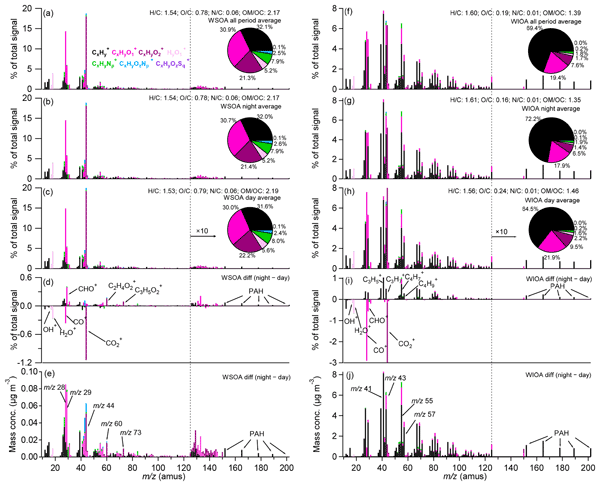
Zhiqiang Zhang, Yele Sun, Chun Chen, Bo You, Aodong Du, Weiqi Xu, Yan Li, Zhijie Li, Lu Lei, Wei Zhou, Jiaxing Sun, Yanmei Qiu, Lianfang Wei, Pingqing Fu, and Zifa Wang
Atmos. Chem. Phys., 22, 10409–10423, https://doi.org/10.5194/acp-22-10409-2022, https://doi.org/10.5194/acp-22-10409-2022, 2022
Short summary
Short summary
We present a comprehensive characterization of water-soluble organic aerosol and the first mass spectral characterization of water-insoluble organic aerosol in the cold season in Beijing by integrating online and offline aerosol mass spectrometer measurements. WSOA comprised dominantly secondary OA and showed large changes during the transition season from autumn to winter. WIOA was characterized by prominent hydrocarbon ions series, low oxidation states, and significant day–night differences.
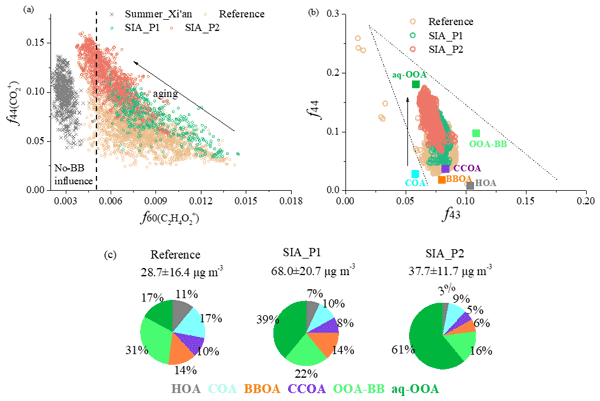
Jing Duan, Ru-Jin Huang, Yifang Gu, Chunshui Lin, Haobin Zhong, Wei Xu, Quan Liu, Yan You, Jurgita Ovadnevaite, Darius Ceburnis, Thorsten Hoffmann, and Colin O'Dowd
Atmos. Chem. Phys., 22, 10139–10153, https://doi.org/10.5194/acp-22-10139-2022, https://doi.org/10.5194/acp-22-10139-2022, 2022
Short summary
Short summary
Biomass-burning-influenced oxygenated organic aerosol (OOA-BB), formed from the photochemical oxidation and aging of biomass burning OA (BBOA), was resolved in urban Xi’an. The aqueous-phase processed oxygenated OA (aq-OOA) concentration was more dependent on secondary inorganic aerosol (SIA) content and aerosol liquid water content (ALWC). The increased aq-OOA contribution during SIA-enhanced periods likely reflects OA evolution due to the addition of alcohol or peroxide groups
Haobin Zhong, Ru-Jin Huang, Chunshui Lin, Wei Xu, Jing Duan, Yifang Gu, Wei Huang, Haiyan Ni, Chongshu Zhu, Yan You, Yunfei Wu, Renjian Zhang, Jurgita Ovadnevaite, Darius Ceburnis, and Colin D. O'Dowd
Atmos. Chem. Phys., 22, 9513–9524, https://doi.org/10.5194/acp-22-9513-2022, https://doi.org/10.5194/acp-22-9513-2022, 2022
Short summary
Short summary
To investigate the physico-chemical properties of aerosol transported from major pollution regions in China, observations were conducted ~200 m above the ground at the junction location of the two key pollution areas. We found that the formation efficiency, oxidation state and production rate of secondary aerosol were different in the transport sectors from different pollution regions, and they were largely enhanced by the regional long-distance transport.
Jiaxing Sun, Yele Sun, Conghui Xie, Weiqi Xu, Chun Chen, Zhe Wang, Lei Li, Xubing Du, Fugui Huang, Yan Li, Zhijie Li, Xiaole Pan, Nan Ma, Wanyun Xu, Pingqing Fu, and Zifa Wang
Atmos. Chem. Phys., 22, 7619–7630, https://doi.org/10.5194/acp-22-7619-2022, https://doi.org/10.5194/acp-22-7619-2022, 2022
Short summary
Short summary
We analyzed the chemical composition and mixing state of BC-containing particles at urban and rural sites in winter in the North China Plain and evaluated their impact on light absorption enhancement. BC was dominantly mixed with organic carbon, nitrate, and sulfate, and the mixing state evolved significantly as a function of relative humidity (RH) at both sites. The absorption enhancement depended strongly on coated secondary inorganic aerosol and was up to ~1.3–1.4 during aging processes.
Lu Chen, Fang Zhang, Dongmei Zhang, Xinming Wang, Wei Song, Jieyao Liu, Jingye Ren, Sihui Jiang, Xue Li, and Zhanqing Li
Atmos. Chem. Phys., 22, 6773–6786, https://doi.org/10.5194/acp-22-6773-2022, https://doi.org/10.5194/acp-22-6773-2022, 2022
Short summary
Short summary
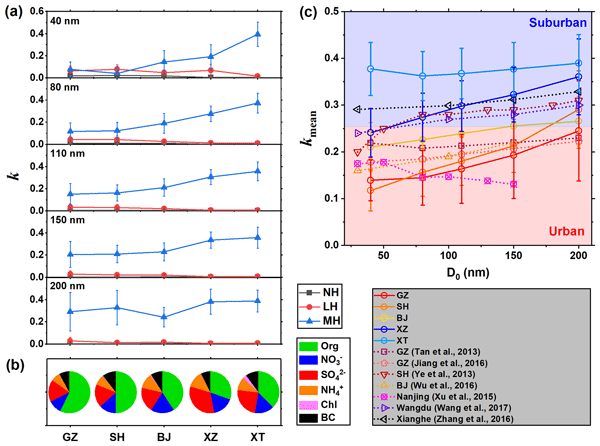
Aerosol hygroscopicity is critical when evaluating its effect on visibility and climate. Here, the size-resolved particle hygroscopicity at five sites in China is characterized using field measurements. We show the distinct behavior of hygroscopic particles during pollution evolution among the five sites. Moreover, different hygroscopic behavior during NPF events were also observed. The dataset is helpful for understanding the spatial variability in particle composition and formation mechanisms.
Junjun Deng, Hao Ma, Xinfeng Wang, Shujun Zhong, Zhimin Zhang, Jialei Zhu, Yanbing Fan, Wei Hu, Libin Wu, Xiaodong Li, Lujie Ren, Chandra Mouli Pavuluri, Xiaole Pan, Yele Sun, Zifa Wang, Kimitaka Kawamura, and Pingqing Fu
Atmos. Chem. Phys., 22, 6449–6470, https://doi.org/10.5194/acp-22-6449-2022, https://doi.org/10.5194/acp-22-6449-2022, 2022
Short summary
Short summary
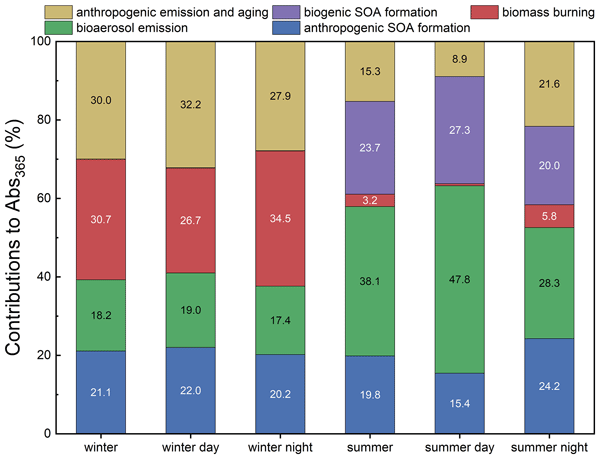
Light-absorbing brown carbon (BrC) plays an important role in climate change and atmospheric chemistry. Here we investigated the seasonal and diurnal variations in water-soluble BrC in PM2.5 in the megacity Tianjin in coastal China. Results of the source apportionments from the combination with organic molecular compositions and optical properties of water-soluble BrC reveal a large contribution from primary bioaerosol particles to BrC in the urban atmosphere.
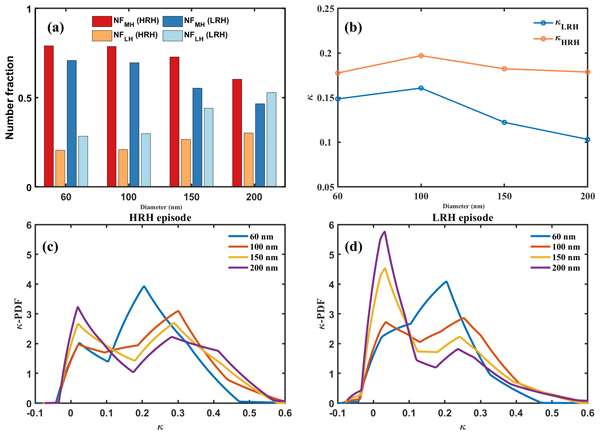
Jingnan Shi, Juan Hong, Nan Ma, Qingwei Luo, Yao He, Hanbing Xu, Haobo Tan, Qiaoqiao Wang, Jiangchuan Tao, Yaqing Zhou, Shuang Han, Long Peng, Linhong Xie, Guangsheng Zhou, Wanyun Xu, Yele Sun, Yafang Cheng, and Hang Su
Atmos. Chem. Phys., 22, 4599–4613, https://doi.org/10.5194/acp-22-4599-2022, https://doi.org/10.5194/acp-22-4599-2022, 2022
Short summary
Short summary
In this study, we investigated the hygroscopicity of submicron aerosols at a rural site in the North China Plain during the winter of 2018, using a HTDMA and a CV-ToF-ACSM. We observed differences in aerosol hygroscopicity during two distinct episodes with different primary emissions and secondary aerosol formation processes. These results provide an improved understanding of the complex influence of sources and aerosol evolution processes on their hygroscopicity.
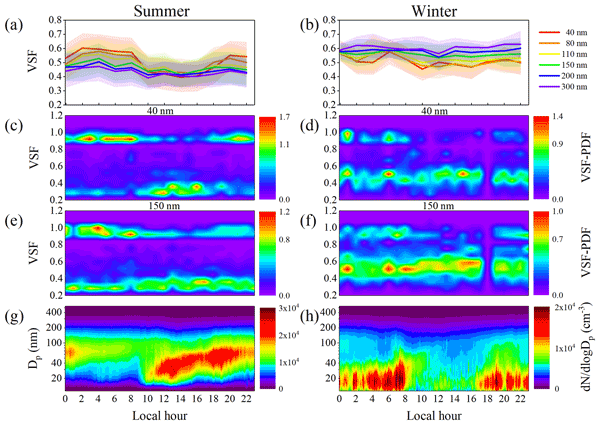
Lu Chen, Fang Zhang, Don Collins, Jingye Ren, Jieyao Liu, Sihui Jiang, and Zhanqing Li
Atmos. Chem. Phys., 22, 2293–2307, https://doi.org/10.5194/acp-22-2293-2022, https://doi.org/10.5194/acp-22-2293-2022, 2022
Short summary
Short summary
Understanding the volatility and mixing state of atmospheric aerosols is important for elucidating their formation. Here, the size-resolved volatility of fine particles is characterized using field measurements. On average, the particles are more volatile in the summer. The retrieved mixing state shows that black carbon (BC)-containing particles dominate and contribute 67–77 % toward the total number concentration in the winter, while the non-BC particles accounted for 52–69 % in the summer.
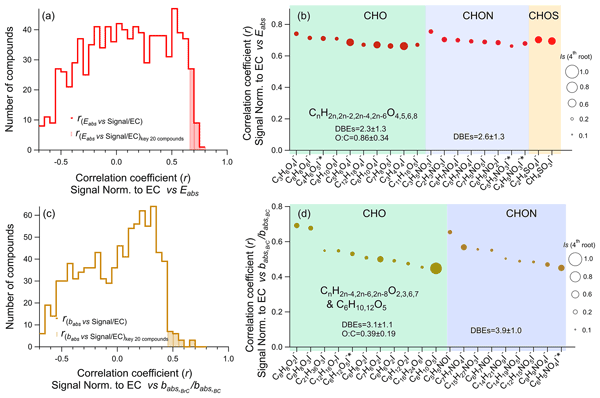
Jing Cai, Cheng Wu, Jiandong Wang, Wei Du, Feixue Zheng, Simo Hakala, Xiaolong Fan, Biwu Chu, Lei Yao, Zemin Feng, Yongchun Liu, Yele Sun, Jun Zheng, Chao Yan, Federico Bianchi, Markku Kulmala, Claudia Mohr, and Kaspar R. Daellenbach
Atmos. Chem. Phys., 22, 1251–1269, https://doi.org/10.5194/acp-22-1251-2022, https://doi.org/10.5194/acp-22-1251-2022, 2022
Short summary
Short summary
This study investigates the connection between organic aerosol (OA) molecular composition and particle absorptive properties in autumn in Beijing. We find that the molecular properties of OA compounds in different episodes influence particle light absorption properties differently: the light absorption enhancement of black carbon and light absorption coefficient of brown carbon were mostly related to more oxygenated OA (low C number and four O atoms) and aromatics/nitro-aromatics, respectively.
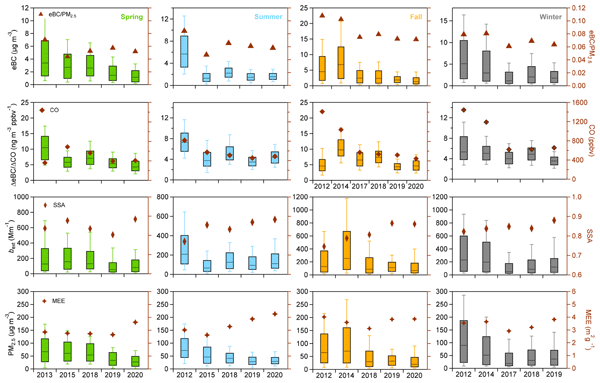
Jiaxing Sun, Zhe Wang, Wei Zhou, Conghui Xie, Cheng Wu, Chun Chen, Tingting Han, Qingqing Wang, Zhijie Li, Jie Li, Pingqing Fu, Zifa Wang, and Yele Sun
Atmos. Chem. Phys., 22, 561–575, https://doi.org/10.5194/acp-22-561-2022, https://doi.org/10.5194/acp-22-561-2022, 2022
Short summary
Short summary
We analyzed 9-year measurements of BC and aerosol optical properties from 2012 to 2020 in Beijing, China. Our results showed large reductions in BC and light extinction coefficient due to the Clean Air Action Plan. As a response, both SSA and mass extinction efficiency (MEE) showed considerable increases, demonstrating a future challenge in visibility improvement. The primary and secondary BrC was also separated and quantified, and the changes in radiative forcing of BC and BrC were estimated.
Yuting Zhang, Hang Liu, Shandong Lei, Wanyun Xu, Yu Tian, Weijie Yao, Xiaoyong Liu, Qi Liao, Jie Li, Chun Chen, Yele Sun, Pingqing Fu, Jinyuan Xin, Junji Cao, Xiaole Pan, and Zifa Wang
Atmos. Chem. Phys., 21, 17631–17648, https://doi.org/10.5194/acp-21-17631-2021, https://doi.org/10.5194/acp-21-17631-2021, 2021
Short summary
Short summary
In this study, the authors used a single-particle soot photometer (SP2) to characterize the particle size, mixing state, and optical properties of black carbon aerosols in rural areas of the North China Plain in winter. Relatively warm and high-RH environments (RH > 50 %, −4° < T < 4 °) were more favorable to rBC aging than dry and cold environments (RH < 60 %, T < −8°). The paper emphasizes the importance of meteorological parameters in the mixing state of black carbon.

Chunshui Lin, Darius Ceburnis, Anna Trubetskaya, Wei Xu, William Smith, Stig Hellebust, John Wenger, Colin O'Dowd, and Jurgita Ovadnevaite
Atmos. Meas. Tech., 14, 6905–6916, https://doi.org/10.5194/amt-14-6905-2021, https://doi.org/10.5194/amt-14-6905-2021, 2021
Short summary
Short summary
Source apportionment of solid-fuel-burning emissions can be complicated by the use of different fuels, stoves, and burning conditions. Here, the organic aerosol mass spectra produced from burning a range of solid fuels in several stoves were compared. This study accounts for the source variability and provides better constraints on the primary factor contributions to the ambient organic aerosol estimations, holding significant implications for public health and policymakers.
Cited articles
Bhattu, D. and Tripathi, S. N.: CCN closure study: Effects of aerosol chemical composition and mixing state, Journal of Geophysical Research: Atmospheres, 120, 766–783, https://doi.org/10.1002/2014JD021978, 2015.
Bellouin, N., Quaas, J., Gryspeerdt, E., Kinne, S., Stier, P., Watson-Parris, D., Boucher, O., Carslaw, K. S., Christensen, M., Daniau, A-L., Dufresne, J.-L., Feingold, G., Fiedler, S., Foster, P., Gettelman, A., Haywood, J. M., Lohmann, U., Malavelle, F., Mauritsen, T., McCoy, D. T., Schulz, M., Schwartz, S. E., Sourdeval, O., Storelvmo, T., Toll, V., Winker, D., and Stevens, B: Bounding global aerosol radiative forcing of climate change, Rev. Geophys., 58, e2019RG000660, https://doi.org/10.1029/2019RG000660, 2020.
Bauer, S. E., Ault, A., and Prather, K. A.: Evaluation of aerosol mixing state classes in the GISS modelE-MATRIX climate model using single-particle mass spectrometry measurements, Journal of Geophysical Research: Atmospheres, 118, 9834–9844, https://doi.org/10.1002/jgrd.50700, 2013.
Charlson, R. J., Schwartz, S. E., Hales, J. M., Cess, R. D., Coakley Jr., J. A., Hansen, J. E., and Hofmann, D. J.: Climate forcing by anthropogenic aerosols, Science, 255, 423–430, https://doi.org/10.1126/science.255.5043.423, 1992.
Chen, Y., Haywood, J., Wang, Y., Malavelle, F., Jordan, G., Partridge, D., Fieldsend, J., Leeuw, J. D., Schmidt, A., Cho, N., Oreopoulos, L., Platnick, S., Grosvenor, D., Field, P., and Lohmann, U.: Machine learning reveals climate forcing from aerosols is dominated by increased cloud cover, Nature Geoscience, 15, 609–614, https://doi.org/10.1038/s41561-022-01027-9, 2022a.
Chen, L., Zhang, F., Zhang, D., Wang, X., Song, W., Liu, J., Ren, J., Jiang, S., Li, X., and Li, Z.: Measurement report: Hygroscopic growth of ambient fine particles measured at five sites in China, Atmos. Chem. Phys., 22, 6773–6786, https://doi.org/10.5194/acp-22-6773-2022, 2022b.
Ching, J., Zaveri, R. A., Easter, R. C., Riemer, N., and Fast, J. D.: A three-dimensional sectional representation of aerosol mixing state for simulating optical properties and cloud condensation nuclei, Journal of Geophysical Research: Atmospheres, 121, 5912–5929, https://doi.org/10.1002/2015JD024323, 2016.
Ching, J., Fast, J., West, M., and Riemer, N.: Metrics to quantify the importance of mixing state for CCN activity, Atmos. Chem. Phys., 17, 7445–7458, https://doi.org/10.5194/acp-17-7445-2017, 2017.
Ching, J., Adachi, K., Zaizen, Y., Igarashi, Y., and Kajino, M.: Aerosol mixing state revealed by transmission electron microscopy pertaining to cloud formation and human airway deposition, npj Climate and Atmospheric Science, 2, 22, https://doi.org/10.1038/s41612-019-0081-9, 2019.
Collins, D. B., Ault, A. P., Moffet, R. C., Ruppel, M. J., Cuadra-Rodriguez, L. A., Guasco, T. L., Corrigan, C. E., Pedler, B. E., Azam, F., Aluwihare, L. I., Bertram, T. H., Roberts, G. C., Grassian, V. H., and Prather, K. A.: Impact of marine biogeochemistry on the chemical mixing state and cloud forming ability of nascent sea spray aerosol, Journal of Geophysical Research: Atmospheres, 118, 8553–8565, https://doi.org/10.1002/jgrd.50598, 2013.
Cheung, H. C., Chou, C. C. K., Lee, C. S. L., Kuo, W. C., and Chang, S. C.: Hygroscopic properties and cloud condensation nuclei activity of atmospheric aerosols under the influences of Asian continental outflow and new particle formation at a coastal site in eastern Asia, Atmos. Chem. Phys., 20, 5911–5922, https://doi.org/10.5194/acp-20-5911-2020, 2020.
Cai, J., Chu, B., Yao, L., Yan, C., Heikkinen, L. M., Zheng, F., Li, C., Fan, X., Zhang, S., Yang, D., Wang, Y., Kokkonen, T. V., Chan, T., Zhou, Y., Dada, L., Liu, Y., He, H., Paasonen, P., Kujansuu, J. T., Petäjä, T., Mohr, C., Kangasluoma, J., Bianchi, F., Sun, Y., Croteau, P. L., Worsnop, D. R., Kerminen, V. M., Du, W., Kulmala, M., and Daellenbach, K. R.: Size-segregated particle number and mass concentrations from different emission sources in urban Beijing, Atmos. Chem. Phys., 20, 12721–12740, https://doi.org/10.5194/acp-20-12721-2020, 2020.
Dusek, U., Frank, G. P., Hildebrandt, L., Curtius, J., Schneider, J., Walter, S., Chand, D., Drewnick, F., Hings, S., Jung, D., Borrmann, S., and Andreae, M. O.: Size matters more than chemistry for cloud-nucleating ability of aerosol particles, Science, 312, 1375–1378, https://doi.org/10.1126/science.1125261, 2006.
DeCarlo, P. F., Kimmel, J. R., Trimborn, A., Northway, M. J., Jayne, J. T., Aiken, A. C., Gonin, M., Fuhrer, K., Horvath, T., Docherty, K. S., Worsnop, D. R., and Jimenez, J. L.: Field-deployable, high-resolution, time of-flight aerosol mass spectrometer, Analytical Chemistry, 78, 8281–8289, https://doi.org/10.1021/ac061249n, 2006.
Ervens, B., Cubison, M. J., Andrews, E., Feingold, G., Ogren, J. A., Jimenez, J. L., Quinn, P. K., Bates, T. S., Wang, J., Zhang, Q., Coe, H., Flynn, M., and Allan, J. D.: CCN predictions using simplified assumptions of organic aerosol composition and mixing state: a synthesis from six different locations, Atmos. Chem. Phys., 10, 4795–4807, https://doi.org/10.5194/acp-10-4795-2010, 2010.
Fierce, L., Onasch, T. B., Cappa, C. D., Mazzoleni, C., China, S., Bhandari, J., Davidovits, P., Fischer, D. A., Helgestad, T., Lambe, A. T., Sedlacek, A. J., Smith, G. D., and Wolff, L.: Radiative absorption enhancements by black carbon controlled by particle-to-particle heterogeneity in composition, P. Natl. Acad. Sci. USA, 117, 5196–5203, https://doi.org/10.1073/pnas.1919723117, 2020.
Fan, X., Liu, J., Zhang, F., Chen, L., Collins, D., Xu, W., Jin, X., Ren, J., Wang, Y., Wu, H., Li, S., Sun, Y., and Li, Z.: Contrasting size-resolved hygroscopicity of fine particles derived by HTDMA and HR-ToF-AMS measurements between summer and winter in Beijing: the impacts of aerosol aging and local emissions, Atmos. Chem. Phys., 20, 915–929, https://doi.org/10.5194/acp-20-915-2020, 2020.
Gysel, M., Mcfiggans, G. B., and Coe, H.: Inversion of tandem differential mobility analyser (TDMA) measurements, Journal of Aerosol Science, 40, 134–151, https://doi.org/10.1016/j.jaerosci.2008.07.013, 2009.
Hughes, M., Kodros, J. K., Pierce, J. R., West, M., and Riemer, N.: Machine learning to predict the global distribution of aerosol mixing state metrics, Atmosphere, 9, 15, https://doi.org/10.3390/atmos9010015, 2018.
Huang, R. J., Zhang, Y., Bozzetti, C., Ho, K. F., Cao, J. J., Han, Y., Daellenbach, K. R., Slowik, J. G., Platt, S. M., Canonaco, F., Zotter, P., Wolf, R., Pieber, S. M., Bruns, E. A., Crippa, M., Ciarelli, G., Piazzalunga, A., Schwikowski, M., Abbaszade, G., Schnelle-Kreis, J., Zimmermann, R., An, Z., Szidat, S., Baltensperger, U., Haddad, I. E., and Prévôt, A. S.: High secondary aerosol contribution to particulate pollution during haze events in China, Nature, 514, 218–222, https://doi.org/10.1038/nature13774, 2014.
IPCC (Intergovernmental Panel on Climate Change): Climate Change 2021: The Physical Science Basis. Contribution of Working Group I to the Sixth Assessment Report of the Intergovernmental Panel on Climate Change, edited by: Masson-Delmotte, V., Zhai, P., Pirani, A., Connors, S. L., Péan, C., Berger, S., Caud, N., Chen, Y., Goldfarb, L., Gomis, M. I., Huang, M., Leitzell, K., Lonnoy, E., Matthews, J. B. R., Maycock, T. K., Waterfield, T., Yelekçi, O., Yu, R., and Zhou, B., Cambridge University Press, Cambridge, United Kingdom and New York, NY, USA, 2391 pp., https://doi.org/10.1017/9781009157896, 2021.
Liu, P., Song, M., Zhao, T., Gunthe, S. S., Ham, S., He, Y., Qin, Y., Gong, Z., Amorim, C. J., Bertram, K. A., and Martin, S. T.: Resolving the mechanisms of hygroscopic growth and cloud condensation nuclei activity for organic particulate matter, Nature Communications, 9, 4076, https://doi.org/10.1038/s41467-018-06622-2, 2018.
Liu, J., Zhang, F., Ren, J., Chen, L., Zhang, A., Wang, Z., Zou, S., Xu, H., and Yue, X.: The evolution of aerosol mixing state derived from a field campaign in Beijing: implications for particle aging timescales in urban atmospheres, Atmos. Chem. Phys., 25, 5075–5086, https://doi.org/10.5194/acp-25-5075-2025, 2025.
Liu, Y., Lin, T., Zhang, J., Wang, F., Huang, Y., Wu, X., Ye, H., Zhang, G., Cao, X., and de Leeuw, G.: Opposite effects of aerosols and meteorological parameters on warm clouds in two contrasting regions over eastern China, Atmos. Chem. Phys., 24, 4651–4673, https://doi.org/10.5194/acp-24-4651-2024, 2024.
Lance, S., Nenes, A., Medina, J., and Smith, J. N.: Mapping the operation of the DMT continuous flow CCN counter, Aerosol Science and Technology, 40, 242–254, https://doi.org/10.1080/02786820500543290, 2006.
Manavi, S. E. I., Aktypis, A., Siouti, E., Skyllakou, K., Myriokefalitakis, S., Kanakidou, M., and Pandis, S. N.: Atmospheric aerosol spatial variability: Impacts on air quality and climate change, One Earth, 8, https://doi.org/10.1016/j.oneear.2025.101237, 2025.
Ovadnevaite, J., Ceburnis, D., Leinert, S., Dall'Osto, M., Canagaratna, M., O'Doherty, S., Berresheim, H., and O'Dowd, C.: Submicron NE Atlantic marine aerosol chemical composition and abundance: Seasonal trends and air mass categorization, Journal of Geophysical Research: Atmospheres, 119, 11850–11863, https://doi.org/10.1002/2013JD021330, 2014.
Petters, M. D. and Kreidenweis, S. M.: A single parameter representation of hygroscopic growth and cloud condensation nucleus activity, Atmos. Chem. Phys., 7, 1961–1971, https://doi.org/10.5194/acp-7-1961-2007, 2007.
Padró, L. T., Moore, R. H., Zhang, X., Rastogi, N., Weber, R. J., and Nenes, A.: Mixing state and compositional effects on CCN activity and droplet growth kinetics of size-resolved CCN in an urban environment, Atmos. Chem. Phys., 2012, 10239–10255, https://doi.org/10.5194/acp-12-10239-2012, 2012.
Ramachandran, S. and Srivastava, R.: Mixing states of aerosols over four environmentally distinct atmospheric regimes in Asia: coastal, urban, and industrial locations influenced by dust, Environmental Science and Pollution Research., 23, 11109–11128, https://doi.org/10.1007/s11356-016-6254-8, 2016.
Ren, J., Zhang, F., Wang, Y., Collins, D., Fan, X., Jin, X., Xu, W., Sun, Y., Cribb, M., and Li, Z.: Using different assumptions of aerosol mixing state and chemical composition to predict CCN concentrations based on field measurements in urban Beijing, Atmos. Chem. Phys., 18, 6907–6921, https://doi.org/10.5194/acp-18-6907-2018 2018.
Ren, J., Zhang, F., Chen, L., Cao, G., Liu, M., Li, X., Wu, H., Cheng, Y., and Li, Z.: Identifying the hygroscopic properties of fine aerosol particles from diverse sources in urban atmosphere and the applicability in prediction of cloud nuclei, Atmos. Environ., 298, 119615, https://doi.org/10.1016/j.atmosenv.2023.119615, 2023.
Riemer, N. and West, M.: Quantifying aerosol mixing state with entropy and diversity measures, Atmos. Chem. Phys., 13, 11423–11439, https://doi.org/10.5194/acp-13-11423-2013, 2013.
Riemer, N., Ault, A. P., West, M., Craig, R. L., and Curtis, J. H.: Aerosol mixing state: Measurements, modeling, and impacts, Reviews of Geophysics, 57, 187–249, https://doi.org/10.1029/2018RG000615, 2019.
Rose, D., Gunthe, S. S., Mikhailov, E., Frank, G. P., Dusek, U., Andreae, M. O., and Pöschl, U.: Calibration and measurement uncertainties of a continuous-flow cloud condensation nuclei counter (DMT-CCNC): CCN activation of ammonium sulfate and sodium chloride aerosol particles in theory and experiment, Atmos. Chem. Phys., 8, 1153–1179, https://doi.org/10.5194/acp-8-1153-2008, 2008.
Rosenfeld, D., Zhu, Y., Wang, M., Zheng, Y., Goren, T., and Yu, S.: Aerosol – driven droplet concentrations dominate coverage and water of oceanic low-level clouds, Science, 363, 6427, https://doi.org/10.1126/science.aay4194, 2019.
Schill, S. R., Collins, D. B., Lee, C., Morris, H. S., Novak, G. A., Prather, K. A., Quinn, P. K., Sultana, C. M., Tivanski, A. V., Zimmermann, K., Cappa, C. D., and Bertram, T. H.: The impact of aerosol particle mixing state on the hygroscopicity of sea spray aerosol, ACS Central Science, 1, 132–141, https://doi.org/10.1021/acscentsci.5b00174, 2015.
Shi, Z., Vu, T., Kotthaus, S., Harrison, R. M., Grimmond, S., Yue, S., Zhu, T., Lee, J., Han, Y., Demuzere, M., Dunmore, R. E., Ren, L., Liu, D., Wang, Y., Wild, O., Allan, J., Acton, W. J., Barlow, J., Barratt, B., Beddows, D., Bloss, W. J., Calzolai, G., Carruthers, D., Carslaw, D. C., Chan, Q., Chatzidiakou, L., Chen, Y., Crilley, L., Coe, H., Dai, T., Doherty, R., Duan, F., Fu, P., Ge, B., Ge, M., Guan, D., Hamilton, J. F., He, K., Heal, M., Heard, D., Hewitt, C. N., Hollaway, M., Hu, M., Ji, D., Jiang, X., Jones, R., Kalberer, M., Kelly, F. J., Kramer, L., Langford, B., Lin, C., Lewis, A. C., Li, J., Li, W., Liu, H., Liu, J., Loh, M., Lu, K., Lucarelli, F., Mann, G., McFiggans, G., Miller, M. R., Mills, G., Monk, P., Nemitz, E., O'Connor, F., Ouyang, B., Palmer, P. I., Percival, C., Popoola, O., Reeves, C., Rickard, A. R., Shao, L., Shi, G., Spracklen, D., Stevenson, D., Sun, Y., Sun, Z., Tao, S., Tong, S., Wang, Q., Wang, W., Wang, X., Wang, X., Wang, Z., Wei, L., Whalley, L., Wu, X., Wu, Z., Xie, P., Yang, F., Zhang, Q., Zhang, Y., Zhang, Y., and Zheng, M.: Introduction to the special issue “In-depth study of air pollution sources and processes within Beijing and its surrounding region (APHH-Beijing)”, Atmos. Chem. Phys., 19, 7519–7546, https://doi.org/10.5194/acp-19-7519-2019, 2019.
Shrivastava, M., Cappa, C. D., Fan, J., Goldstein, A. H., Guenther, A. B., Jimenez, J. L., Kuang, C., Laskin, A., Martin, S. T., Ng, N. L., Petaja, T., Pierce, J. R., Rasch, P. J., Roldin, P., Seinfeld, J. H., Shilling, J., Smith, J. N., Thornton, J. A., Volkamer, R., Wang, J., Worsnop, D. R., Zaveri, R. A., Zelenyuk, A., and Zhang, Q.: Recent advances in understanding secondary organic aerosol: Implications for global climate forcing, Reviews of Geophysics, 55, 509–559, https://doi.org/10.1002/2016RG000540, 2017.
Sotiropoulou, R. E. P., Nenes, A., Adams, P. J., and Seinfeld, J. H.: Cloud condensation nuclei prediction error from application of Köhler theory: Importance for the aerosol indirect effect, Journal of Geophysical Research: Atmospheres, 112, https://doi.org/10.1029/2006JD007834, 2007.
Spitieri, C., Gini, M., Gysel-Beer, M., and Eleftheriadis, K.: Annual cycle of hygroscopic properties and mixing state of the suburban aerosol in Athens, Greece, Atmos. Chem. Phys., 23, 235–249, https://doi.org/10.5194/acp-23-235-2023, 2023.
Stevens, R. and Dastoor, A.: A Review of the Representation of Aerosol Mixing State in Atmospheric Models, Atmosphere, 10, 168, https://doi.org/10.3390/atmos10040168, 2019.
Stokes, R. H. and Robinson, R. A.: Interactions in aqueous nonelectrolyte solutions, I. Solute-Solvent equilibria, Journal of Physical Chemistry, 70, 2126–2130, https://doi.org/10.1021/j100879a010, 1966.
Tao, J., Kuang, Y., Ma, N., Hong, J., Sun, Y., Xu, W., Zhang, Y., He, Y., Luo, Q., Xie, L., Su, H., and Cheng, Y.: Secondary aerosol formation alters CCN activity in the North China Plain, Atmos. Chem. Phys., 21, 7409–7427, https://doi.org/10.5194/acp-21-7409-2021, 2021.
Tao, J., Luo, B., Xu, W., Zhao, G., Xu, H., Xue, B., Zhai, M., Xu, W., Zhao, H., Ren, S., Zhou, G., Liu, L., Kuang, Y., and Sun, Y.: Markedly different impacts of primary emissions and secondary aerosol formation on aerosol mixing states revealed by simultaneous measurements of CCNC, H(/V)TDMA, and SP2, Atmos. Chem. Phys., 24, 9131–9154, https://doi.org/10.5194/acp-24-9131-2024, 2024.
Virtanen, A., Joutsensaari, J., Kokkola, H., Partridge, G. D., Blichner, S., Seland, Ø., Holopainen, E., Tovazzi, E., Lipponen, A., Mikkonen, S., Leskinen, A., Hyvärinen, A., Zieger, P., Krejci, R., Ekman, A. M. L., Riipinen, I., Quaas, J., and Romakkaniemi, S.: High sensitivity of cloud formation to aerosol changes, Nature Geoscience, 18, 289–295, https://doi.org/10.1038/s41561-025-01662-y, 2025.
Winkler, P.: The growth of atmospheric aerosol particles as a function of the relative humidity – II. An improved concept of mixed nuclei, Journal of Aerosol Science., 4, 373–387, https://doi.org/10.1016/0021-8502(73)90027-X, 1973.
Wang, J., Cubison, M. J., Aiken, A. C., Jimenez, J. L., and Collins, D. R.: The importance of aerosol mixing state and size-resolved composition on CCN concentration and the variation of the importance with atmospheric aging of aerosols, Atmos. Chem. Phys., 10, 7267–7283, https://doi.org/10.5194/acp-10-7267-2010, 2010.
Wang, Y., Li, Z., Zhang, R., Jin, X., Xu, W., Fan, X., Wu, H., Zhang, F., Sun, Y., Wang, Q., Cribb, M., and Hu, D.: Distinct ultrafine- and accumulation-mode particle properties in clean and polluted urban environments, Geophysical Research Letters, 46, 10918–10925, https://doi.org/10.1029/2019GL084047, 2019.
Xie, C., He, Y., Lei, L., Zhou, W., Liu, J., Wang, Q., Xu, W., Qiu, Y., Zhao, J., Sun, J., Li, L., Li, M., Zhou, Z., Fu, P., Wang, Z., and Sun, Y.: Contrasting mixing state of black carbon-containing particles in summer and winter in Beijing, Environ. Pollution., 263, 114455, https://doi.org/10.1016/j.envpol.2020.114455, 2020.
Xu, W., Sun, Y., Wang, Q., Zhao, J., Wang, J., Ge, X., Xie, C., Zhou, W., Du, W., Li, J., Fu, P., Wang, Z., Worsnop, D. R., and Coe, H.: Changes in aerosol chemistry from 2014 to 2016 in winter in Beijing: Insights from high-resolution aerosol mass spectrometry, Journal of Geophysical Research: Atmospheres, 124, 1132–1147, https://doi.org/10.1029/2018JD029245, 2019.
Xu, W., Ovadnevaite, J., Fossum, K. N., Lin, C., Huang, R. J., O'Dowd, C., and Ceburnis, D.: Aerosol hygroscopicity and its link to chemical composition in the coastal atmosphere of Mace Head: marine and continental air masses, Atmos. Chem. Phys., 20, 3777–3791, https://doi.org/10.5194/acp-20-3777-2020, 2020.
Xu, W., Ovadnevaite, J., Fossum, K. N., Lin, C., Huang, R.-J., O'Dowd, C., and Ceburnis, D.: Seasonal trends of aerosol hygroscopicity and mixing state in clean marine and polluted continental air masses over the Northeast Atlantic, Journal of Geophysical Research: Atmospheres, 126, e2020JD033851, https://doi.org/10.1029/2020JD033851, 2021a.
Xu, W., Fossum, K. N., Ovadnevaite, J., Lin, C., Huang, R. J., O'Dowd, C., and Ceburnis, D.: The impact of aerosol size-dependent hygroscopicity and mixing state on the cloud condensation nuclei potential over the north-east Atlantic, Atmos. Chem. Phys., 21, 8655–8675, https://doi.org/10.5194/acp-21-8655-2021, 2021b.
Xu, W., Ovadnevaite, J., Fossum, K. N., Lin, C., Huang, R. J., Ceburnis, D., and O'Dowd, C.: Sea spray as an obscured source for marine cloud nuclei, Nature Geoscience, 15, 282–286, https://doi.org/10.1038/s41561-022-00917-2, 2022.
Xu, W., Ovadnevaite, J., Fossum, K. N., Huang, R. J., Huang, D., Zhong, H., Gu, Y., Lin, C., Huang, C., O'Dowd, C., and Ceburnis, D.: Condensation of organic-inorganic vapours governs the production of ultrafine secondary marine cloud nuclei, Communications Earth and Environment, 5, 359, https://doi.org/10.1038/s43247-024-01519-z, 2024.
Yang, F., Chen, H., Du, J., Yang, X., Gao, S., Chen, J., and Geng, F.: Evolution of the mixing state of fine aerosols during haze events in Shanghai, Atmospheric Research, 104, 193–201, https://doi.org/10.1016/j.atmosres.2011.10.005, 2012.
Ye, Q., Gu, P., Li, H. Z., Robinson, E. S., Lipsky, E. M., Kaltsonoudis, C., Lee, A. K. Y., Apte, J. S., Robinson, A. L., Sullivan, R. C., Presto, A. A., and Donahue, N. M.: Spatial variability of sources and mixing state of atmospheric particles in a metropolitan area, Environmental Science and Technology, 52, 6807–6815, https://doi.org/10.1021/acs.est.8b01011, 2018.
Yuan, L. and Zhao, C.: Quantifying particle-to-particle heterogeneity in aerosol hygroscopicity, Atmos. Chem. Phys., 23, 3195–3205, https://doi.org/10.5194/acp-23-3195-2023, 2023.
Zdanovskii, A.: New methods for calculating solubilities of electrolytes in multicomponent systems, Zh. Fiz. Khim. C, 22, 1475–1485, 1948.
Zhao, G., Tan, T., Zhu, Y., Hu, M., and Zhao, C.: Method to quantify black carbon aerosol light absorption enhancement with a mixing state index, Atmos. Chem. Phys., 21, 18055–18063, https://doi.org/10.5194/acp-21-18055-2021, 2021.
Zheng, Z., Curtis, J. H., Yao, Y., Gasparik, J. T., Anantharaj, V. G., Zhao, L., West, M., and Riemer, N.: Estimating submicron aerosol mixing state at the global scale with machine learning and Earth system modeling, Earth and Space Science, 8, e2020EA001500, https://doi.org/10.1029/2020EA001500, 2021a.
Zheng, Z., West, M., Zhao, L., Ma, P.-L., Liu, X., and Riemer, N.: Quantifying the structural uncertainty of the aerosol mixing state representation in a modal model, Atmos. Chem. Phys., 21, 17727–17741, https://doi.org/10.5194/acp-21-17727-2021 , 2021b.
Zhong, H., Huang, R. J., Lin, C., Xu, W., Duan, J., Gu, Y., Huang, W., Ni, H.; Zhu, C., You, Y., Wu, Y., Zhang, R., Ovadnevaite, J., Ceburnis, D., and O'Dowd, C.: Measurement report: On the contribution of long-distance transport to the secondary aerosol formation and aging, Atmos. Chem. Phys., 22, 9513–9524, https://doi.org/10.5194/acp-22-9513-2022, 2022.
Short summary
Impact of mixing state on cloud condensation nuclei (CCN) was incorporated in limited modeling with simplified assumption. This study derived a mixing state index from hygroscopicity and systematically investigated the covariation between the mixing state and CCN activity in inland and coastal air. We propose a practical approach for estimating critical diameter from mixing state index, applicable when the aerosol particles are not highly aged.
Impact of mixing state on cloud condensation nuclei (CCN) was incorporated in limited modeling...


Altmetrics
Final-revised paper
Preprint