the Creative Commons Attribution 4.0 License.
the Creative Commons Attribution 4.0 License.
 | 19 Feb 2026
Implementation of primary and secondary ice production in EC-Earth3-AerChem: global impacts and insights
Montserrat Costa-Surós

María Gonçalves Ageitos
Marios Chatziparaschos
Paraskevi Georgakaki
Manu Anna Thomas
Gilbert Montané Pinto
Stelios Myriokefalitakis
Twan van Noije
Philippe Le Sager
Maria Kanakidou
Athanasios Nenes
Carlos Pérez García-Pando
Related authors
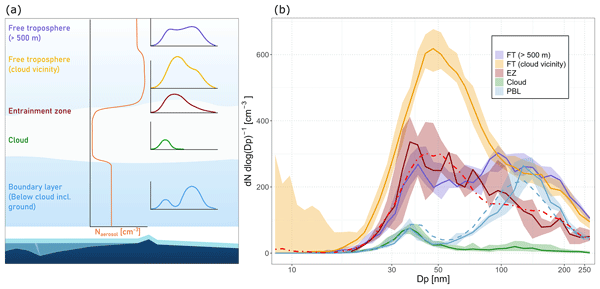
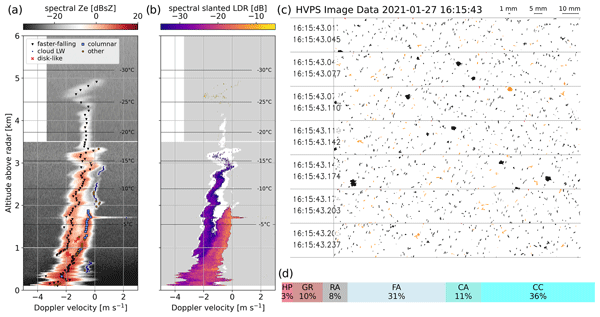
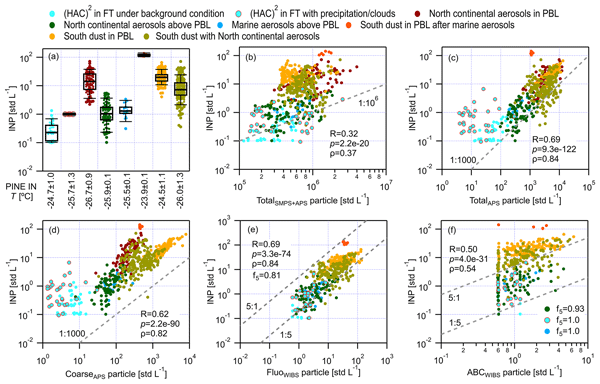
The processes that establish how mixed-phase closed-cell clouds transition to more open cellular structures are poorly known. First-of-its kind aircraft observations document such a transition in the presence of anomalously high aerosol concentrations over the Nordic Seas at cloud temperatures < -15 °C. The reduces the drop size, discouraging riming. Eventually, ice precipitation produces surface cold pools that drive the convective transition, despite strong counteracting surface fluxes.
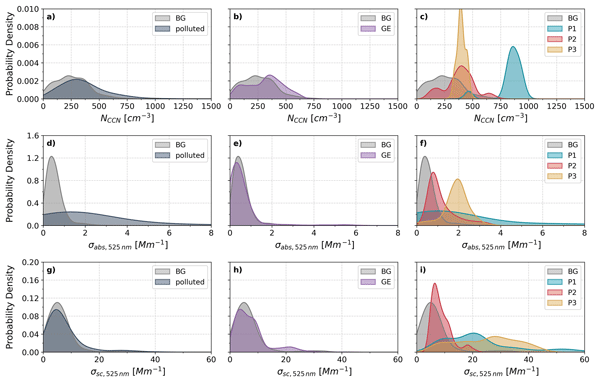


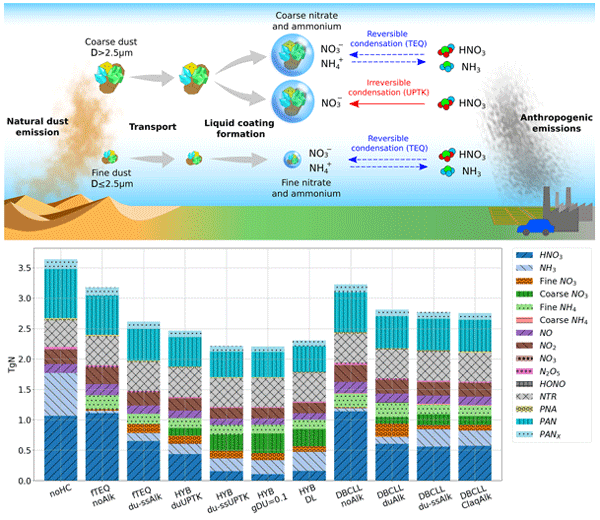
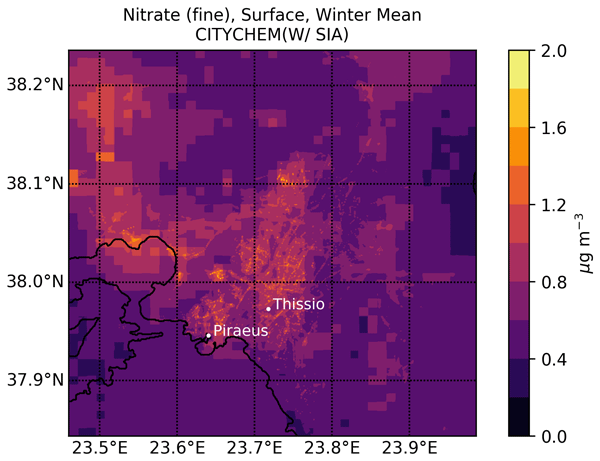
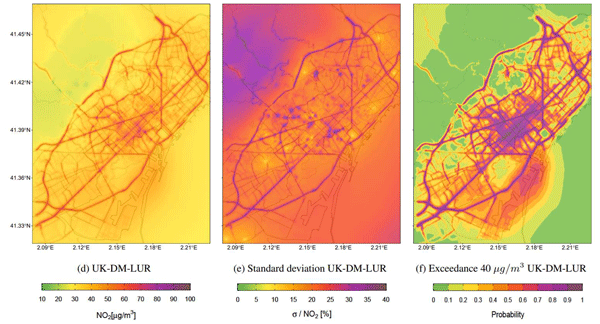
A state-of-the-art thermodynamic model has been coupled with the city-scale chemistry transport model EPISODE–CityChem to investigate the equilibrium between the inorganic gas and aerosol phases over the greater Athens area, Greece. The simulations indicate that the formation of nitrates in an urban environment is significantly affected by local nitrogen oxide emissions, as well as ambient temperature, relative humidity, photochemical activity, and the presence of non-volatile cations.