
Articles | Volume 26, issue 15
https://doi.org/10.5194/acp-26-11421-2026
© Author(s) 2026. This work is distributed under
the Creative Commons Attribution 4.0 License.
the Creative Commons Attribution 4.0 License.
https://doi.org/10.5194/acp-26-11421-2026
© Author(s) 2026. This work is distributed under
the Creative Commons Attribution 4.0 License.
the Creative Commons Attribution 4.0 License.
Research article
| 
13 Aug 2026
Research article |
| 13 Aug 2026
| 13 Aug 2026
Using high frequency observations of δ13C-CH4 and δ2H-CH4 and uncertain regional isotopic signatures to estimate sources of UK methane emissions
Alice E. Ramsden
CORRESPONDING AUTHOR

Met Office Hadley Centre, Exeter, UK
School of Geographical Sciences, University of Bristol, Bristol, UK
Anita L. Ganesan
School of Geographical Sciences, University of Bristol, Bristol, UK
Matthew Rigby
School of Chemistry, University of Bristol, Bristol, UK
Chris Rennick
National Physical Laboratory, Teddington, UK
Tim Arnold
Department of Earth and Environmental Sciences, Lund University, Lund, Sweden
School of Geosciences, University of Edinburgh, Edinburgh, UK
Emmal Safi
National Physical Laboratory, Teddington, UK
Edward Chung
National Physical Laboratory, Teddington, UK
Dafina Kikaj
National Physical Laboratory, Teddington, UK
Cameron Yeo
National Physical Laboratory, Teddington, UK
School of Geographical Sciences, University of Bristol, Bristol, UK
Dave Lowry
Department of Earth Sciences, Royal Holloway, University of London, Egham, UK
Pete Levy
Centre of Ecology and Hydrology, Penicuik, UK
Simon O'Doherty
School of Chemistry, University of Bristol, Bristol, UK
Kieran M. Stanley
School of Chemistry, University of Bristol, Bristol, UK
Dickon Young
School of Chemistry, University of Bristol, Bristol, UK
School of Chemistry, University of Bristol, Bristol, UK
Damien Martin
School of Physics, Ryan Institute's Centre for Climate and Air Pollution Studies, National University of Ireland Galway, Galway, Ireland
Morgan Lopez
Laboratoire des Sciences du Climat et de l'Environnement (LSCE-IPSL), CEA-CNRS-UVSQ, Université Paris-Saclay, 91191 Gif-sur-Yvette, France
Michel Ramonet
Laboratoire des Sciences du Climat et de l'Environnement (LSCE-IPSL), CEA-CNRS-UVSQ, Université Paris-Saclay, 91191 Gif-sur-Yvette, France
Grant L. Forster
Centre for Ocean and Atmospheric Sciences, School of Environmental Sciences, University of East Anglia, Norwich, UK
National Centre for Atmospheric Sciences, University of East Anglia, Norwich, UK
Arnoud Frumau
Netherlands Organisation for Applied Scientific Research (TNO), Petten, 1755 LE, the Netherlands
Alistair J. Manning
Met Office Hadley Centre, Exeter, UK
Related authors
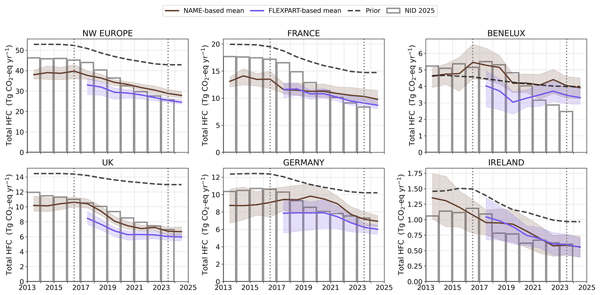
Hélène De Longueville, Daniela B. Melo, Alison L. Redington, Alice Ramsden, Alexandre Danjou, Peter Andrews, Joseph Pitt, Brendan Murphy, Lionel Constantin, Kieran M. Stanley, Simon O'Doherty, Angelina Wenger, Dickon Young, Andreas Engel, Tanja Schuck, Katharina Meixner, Thomas Wagenhaeuser, Fides Gad, Martin K. Vollmer, Stefan Reimann, Michela Maoine, Jgor Arduini, Chris Lunder, Norbert Schmidtbauer, László Haszpra, Mihály Molnár, Arnoud Frumau, Cedric Couret, Matthew Rigby, Stephan Henne, Alistair Manning, and Anita L. Ganesan
Atmos. Chem. Phys., 26, 7647–7675, https://doi.org/10.5194/acp-26-7647-2026, https://doi.org/10.5194/acp-26-7647-2026, 2026
Short summary
Short summary
This study estimates emissions of hydrofluorocarbons, potent greenhouse gases, in north-western Europe using atmospheric observations and atmospheric modelling. The estimates are compared with nationally reported emissions submitted to the United Nations. Overall, our results are consistent with reported values, although differences are found for some gases and countries. The findings indicate that emissions in north-western Europe are declining, reflecting the effects of climate regulations.
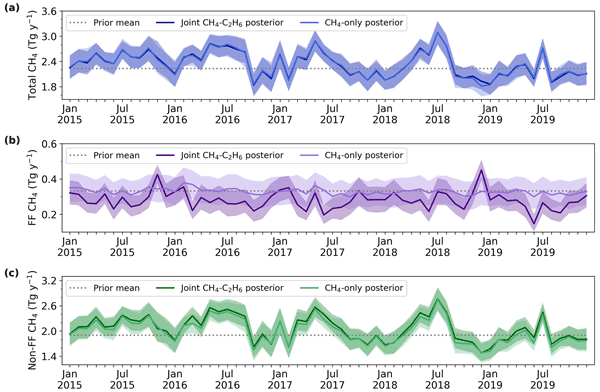
Alice E. Ramsden, Anita L. Ganesan, Luke M. Western, Matthew Rigby, Alistair J. Manning, Amy Foulds, James L. France, Patrick Barker, Peter Levy, Daniel Say, Adam Wisher, Tim Arnold, Chris Rennick, Kieran M. Stanley, Dickon Young, and Simon O'Doherty
Atmos. Chem. Phys., 22, 3911–3929, https://doi.org/10.5194/acp-22-3911-2022, https://doi.org/10.5194/acp-22-3911-2022, 2022
Short summary
Short summary
Quantifying methane emissions from different sources is a key focus of current research. We present a method for estimating sectoral methane emissions that uses ethane as a tracer for fossil fuel methane. By incorporating variable ethane : methane emission ratios into this model, we produce emissions estimates with improved uncertainty characterisation. This method will be particularly useful for studying methane emissions in areas with complex distributions of sources.
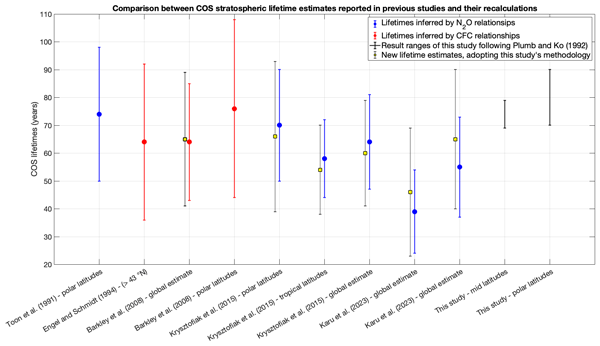
Alessandro Zanchetta, Steven van Heuven, Rigel Kivi, Michel Ramonet, Andreas Engel, Maarten Krol, and Huilin Chen
Atmos. Chem. Phys., 26, 13909–13927, https://doi.org/10.5194/acp-26-13909-2026, https://doi.org/10.5194/acp-26-13909-2026, 2026
Short summary
Short summary
In this study, we calculate the mean lifetime of carbonyl sulfide (COS) and methane (CH4) in the stratosphere from continuous vertical profiles sampled with balloon-borne instruments. We used two methods based on the stratospheric relationship of these gas species with N2O. The estimated stratospheric lifetime range is 69–90 years for COS and 146–172 years for CH4. These results are consistent with other studies and suggest no long-term trends in the stratospheric lifetime of these gas species.
Nawid Keshtmand, Elena Fillola, Jeff Clark, Raul Santos-Rodriguez, and Matthew Rigby
EGUsphere, https://doi.org/10.5194/egusphere-2026-3361, https://doi.org/10.5194/egusphere-2026-3361, 2026
This preprint is open for discussion and under review for Geoscientific Model Development (GMD).
Short summary
Short summary
Scientists track greenhouse gases by measuring them in the air and working backwards to find their sources. This requires powerful computer models that are slow and expensive to run. We built an AI model called GATESBackground that quickly estimates how much gas drifts into a region from outside its borders. Tested over South America, it matched the traditional model closely while running far faster, helping make pollution tracking from satellites quicker, cheaper, and more practical worldwide.
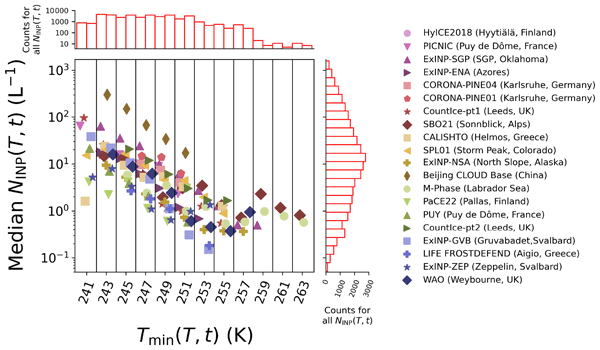
Ross J. Herbert, Larissa Lacher, Alexander Böhmländer, Mark D. Tarn, Antoine Canzi, Aidan Pantoya, Evelyn Freney, Kristina Höhler, Pia Bogert, Céline Planche, Ping Tian, Michael Adams, Sarah Barr, David Brus, Nicole Büttner, Martin Daily, Konstantinos Doulgeris, Konstantinos Eleftheriadis, Grant Forster, Romy Fösig, Dimitrios G. Georgakopoulos, Maria I. Gini, A. Gannet Hallar, Radovan Krejci, Elke Ludewig, Mauro Mazzola, Ian B. McCubbin, Athanasios Nenes, Tuukka Petäjä, Joseph Robinson, Franziska Vogel, Paul Zieger, Stephen Arnold, Kenneth S. Carslaw, Naruki Hiranuma, Ottmar Möhler, and Benjamin J. Murray
Earth Syst. Sci. Data, 18, 6465–6483, https://doi.org/10.5194/essd-18-6465-2026, https://doi.org/10.5194/essd-18-6465-2026, 2026
Short summary
Short summary
Ice formation in sub-zero clouds is influenced by airborne particles called ice-nucleating particles (INPs), whose concentrations vary substantially over short time and spatial scales. To assess the role of INPs in our climate, a comprehensive and consistent global dataset is essential. Our GloPINE model-ready dataset is a major step in this direction, comprising 36,000 measurements made using a single instrument design (PINE) over 70,000 hours of operation at 20 Northern Hemisphere sites.
Hui Li, Philippe Ciais, Frédéric Chevallier, Bo Zheng, Paul I. Palmer, Frank Hase, Morgan Lopez, Elsa M. Ordway, Shushi Peng, Danielle Monteverde, Michel Ramonet, Jason M. St. Clair, Le Bienfaiteur Sagang, and Benjamin Poulter
Atmos. Chem. Phys., 26, 11893–11908, https://doi.org/10.5194/acp-26-11893-2026, https://doi.org/10.5194/acp-26-11893-2026, 2026
Short summary
Short summary
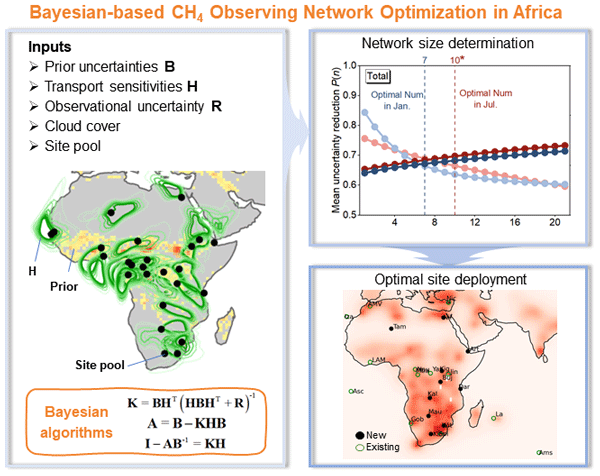
We studied how to best place methane monitoring instruments across Africa to better understand where emissions come from. Because observations can overlap in what they detect, adding more sites does not always improve results equally. Using a statistical approach, we identified both the ideal number and locations of sites (ten new sites can reduce emission uncertainty by over 65 % for total African CH4). Our results help guide cost-effective monitoring strategies in regions with limited data.
Kirstin Gerrand, Elena Fillola, Alistair J. Manning, Jgor Arduini, Paul B. Krummel, Chris R. Lunder, Jens Mühle, Simon O'Doherty, Sunyoung Park, Ronald G. Prinn, Stefan Reimann, Dickon Young, and Matthew Rigby
Atmos. Meas. Tech., 19, 5387–5400, https://doi.org/10.5194/amt-19-5387-2026, https://doi.org/10.5194/amt-19-5387-2026, 2026
Short summary
Short summary
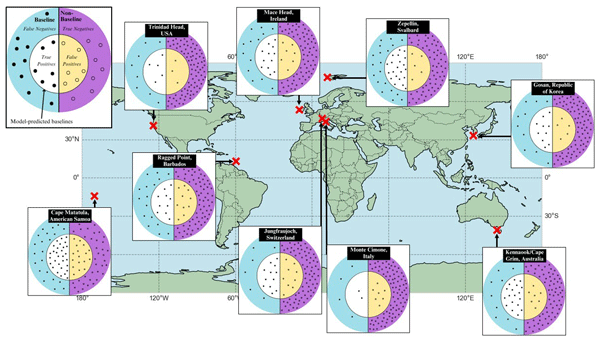
To analyse long-term trends in atmospheric trace gas concentrations, it is important to identify data points minimally affected by local pollution sources or air masses carried from other latitudes or altitudes. Traditional methods for detecting these “baselines” are computationally expensive or lack a basis in physical principles. This paper introduces a machine-learning method that uses meteorological data and offers significantly lower computational costs compared to physics-based techniques.
Alohotsy Rafalimanana, Thomas Lauvaux, Charbel Abdallah, Mali Chariot, Michel Ramonet, Josselin Doc, Olivier Laurent, Morgan Lopez, Anja Raznjevic, Maarten Krol, Leena Järvi, Andreas Christen, Dana Looschelders, Leslie David, Olivier Sanchez, Laura Bignotti, Benjamin Loubet, Sue Grimmond, and William Morrison
EGUsphere, https://doi.org/10.5194/egusphere-2026-2581, https://doi.org/10.5194/egusphere-2026-2581, 2026
Short summary
Short summary
Using WRF-Chem simulations over Greater Paris at resolutions from 900 m to 100 m (LES), we show that horizontal resolution critically shapes urban CO2 plume structure. Mesoscale runs underestimate spatial contrasts by a factor of 2–3, with representativeness errors of 29–61 % (near-surface) and 21–59 % (XCO2). LES improves intra-urban variability and enables more accurate spatial attribution of emissions, a key step toward reliable top-down estimates for city-scale climate mitigation.
Ben Adam, Rayne Holland, Daniel Van Hoomissen, James B. Burkholder, M. Anwar H. Khan, Paul Griffiths, Jens Mühle, Dudley Shallcross, and Matt Rigby
Atmos. Chem. Phys., 26, 10979–10996, https://doi.org/10.5194/acp-26-10979-2026, https://doi.org/10.5194/acp-26-10979-2026, 2026
Short summary
Short summary
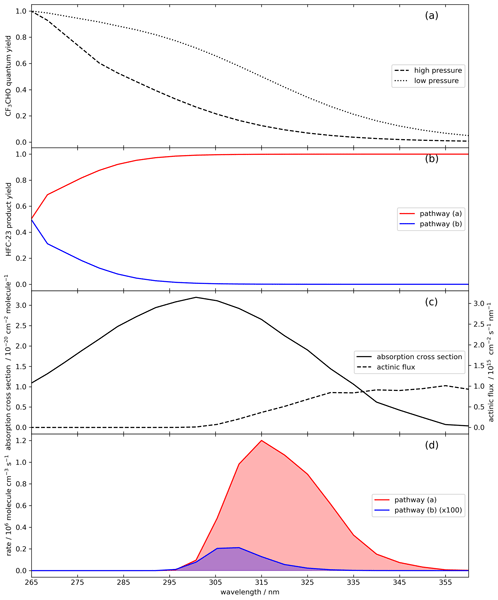
Some man-made gases emitted into the atmosphere can break down to form a powerful greenhouse gas called HFC-23 (hydrofluorocarbons). In this study, we use a full three-dimensional model of the atmosphere and its chemistry to improve on previous work and determine how much HFC-23 is produced from this route. Our model estimates HFC-23 production ten times lower than previously suggested, confirming that this source is a very small contributor to the total amount of HFC-23 in the atmosphere.
Kristian D. Hajny, Joseph Pitt, and Paul B. Shepson
EGUsphere, https://doi.org/10.5194/egusphere-2026-3635, https://doi.org/10.5194/egusphere-2026-3635, 2026
This preprint is open for discussion and under review for Geoscientific Model Development (GMD).
Short summary
Short summary
This work describes the Modular Methane Mapping Tool (M3T) to build methane inventories and compares 2019 output against the existing Environmental Protection Agency product for the urban areas with the largest emissions. M3T utilizes various research-based methods to grid methane emissions using publicly available data with a focus on sectors relevant to urban areas. The location within the Continental United States, year (> 2011), methods, and resolution (> ~1 km) can be varied by the user.
Kane Stone, Candice Chen, Susan Solomon, Luke M. Western, Paul B. Krummel, Gabrielle Pétron, Jens Mühle, and Simon O'Doherty
Atmos. Chem. Phys., 26, 10241–10253, https://doi.org/10.5194/acp-26-10241-2026, https://doi.org/10.5194/acp-26-10241-2026, 2026
Short summary
Short summary
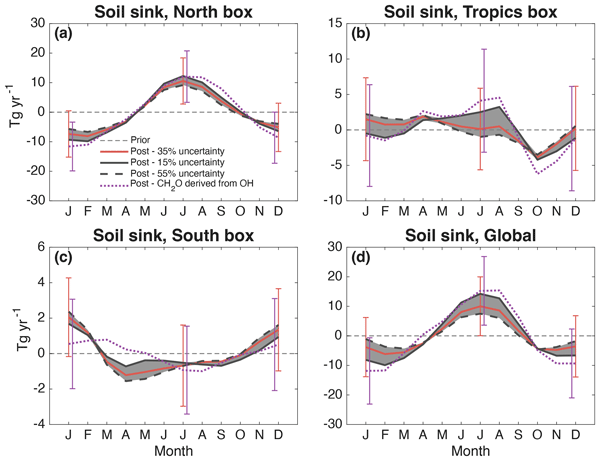
There is growing interest in hydrogens impact on atmospheric chemistry and climate. Here, the seasonality of hydrogen oxidation and loss to microbial activity in soils are investigated using information from the hydrofluorocarbon, HFC-152a. A large seasonal range of the soil sink, over twice that of hydroxyl loss, is seen in the Northern latitudes peaking in the late summer, while the Southern latitudes show a much lower range. This will be useful for validating model hydrogen cycles.
Joseph R. Pitt, Dominique Rust, Anita Ganesan, Luke M. Western, Martin K. Vollmer, Jens Mühle, Tobias Bühlmann, Christina M. Harth, Stephen A. Montzka, Brad D. Hall, Isaac J. Vimont, Alistair J. Manning, Alison L. Redington, Stephan Henne, Daniela B. Melo, Saurabh Annadate, Lionel Constantin, Brendan M. Murphy, Matthew Rigby, Dickon Young, Simon O'Doherty, Angelina Wenger, Chris R. Lunder, Ove Hermansen, Thomas Wagenhäuser, Andreas Engel, Jgor Arduini, Michela Maione, Jaegeun Yun, Blagoj Mitrevski, Paul B. Krummel, Paul J. Fraser, Jooil Kim, Ray H. J. Wang, Tae Siek Rhee, Peter K. Salameh, T. Gerard Spain, Stefan Reimann, Ronald G. Prinn, Ray F. Weiss, and Kieran M. Stanley
Atmos. Chem. Phys., 26, 10167–10195, https://doi.org/10.5194/acp-26-10167-2026, https://doi.org/10.5194/acp-26-10167-2026, 2026
Short summary
Short summary
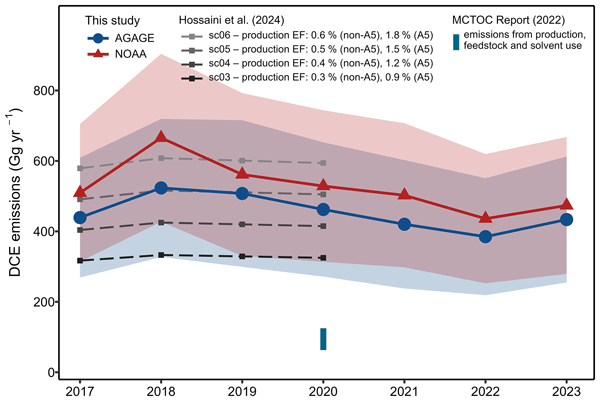
1,2‑Dichloroethane (DCE) can contribute to the depletion of the stratospheric ozone layer. Whether DCE reaches the stratosphere depends on where and when it is emitted. We present the ongoing measurements of DCE from the Advanced Global Atmospheric Gases Experiment (AGAGE) and National Oceanic and Atmospheric Administration (NOAA) global monitoring networks. For the period 2017–2023, our modelled average global emissions based on these observations align with another study, while regional estimates differ. This suggests remaining uncertainty in the geographical distribution of emissions.
Thomas C. Moore, James R. Hopkins, Will S. Drysdale, Stuart Young, Sri Hapsari Budisulistiorini, Marvin D. Shaw, Mackenzie LeVernois, James L. France, David Lowry, and James D. Lee
Atmos. Meas. Tech., 19, 4459–4475, https://doi.org/10.5194/amt-19-4459-2026, https://doi.org/10.5194/amt-19-4459-2026, 2026
Short summary
Short summary
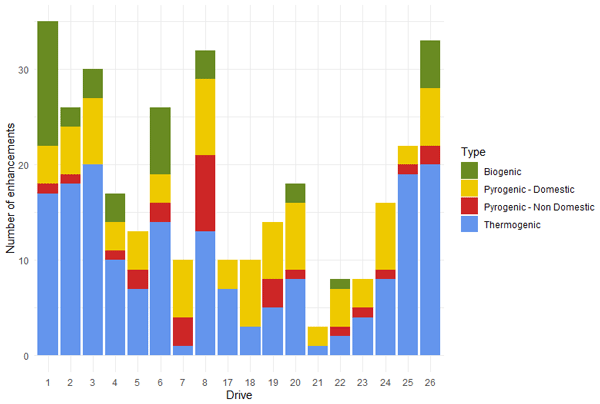
The Global Methane Pledge has led to increased effort to reduce methane emissions globally. One sector under increased scrutiny is the oil and gas industry, a major source of methane in this industry is from fugitive emissions (gas leaks). Locating these from pipework in cities requires mobile measurements. This work adapts previous methodologies to detect smaller leaks and suggests previous methods may detect 53.5 % less gas leaks.
Alohotsy Rafalimanana, Thomas Lauvaux, Charbel Abdallah, Mali Chariot, Michel Ramonet, Josselin Doc, Olivier Laurent, Morgan Lopez, Anja Raznjevic, Maarten Krol, Leena Järvi, Andreas Christen, Dana Looschelders, Leslie David, Olivier Sanchez, Laura Bignotti, Benjamin Loubet, Sue Grimmond, and William Morrison
EGUsphere, https://doi.org/10.5194/egusphere-2026-2109, https://doi.org/10.5194/egusphere-2026-2109, 2026
Short summary
Short summary
This study explores how city design and buildings affect CO2 levels in the air over Paris. Using a transport model, we tested different urban canopy models to represent the city environment and its influence on air motion. We found that realistic descriptions of urban surfaces are crucial, especially in winter, for accurately showing how CO2 builds up and disperses, leading to better satellite monitoring of city CO2 emissions.
Josselin Doc, François-Marie Bréon, Morgan Lopez, Yao Té, Pascal Jeseck, Jinghui Lian, Guillaume Nief, Antoine Parent, Hippolyte Leuridan, and Michel Ramonet
Atmos. Chem. Phys., 26, 8937–8959, https://doi.org/10.5194/acp-26-8937-2026, https://doi.org/10.5194/acp-26-8937-2026, 2026
Short summary
Short summary
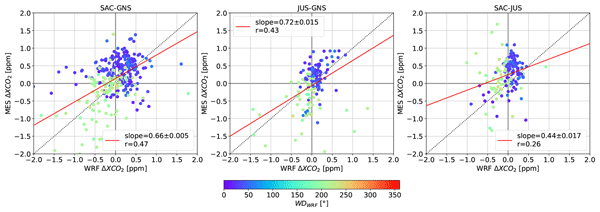
A greenhouse gas monitoring network was set up around Paris. From July 2022 to December 2024, three stations placed along the main wind direction detected differences of 0.5–1 ppm between sites. Compared with WRF-Chem (Weather Research and Forecasting model coupled with Chemistry) simulations using the Origins.earth inventory, the data suggest that emissions are overestimated by the inventory. A reduction of about 34 % would be needed, a stronger correction than indicated by surface-based studies.
Piers M. Forster, Tristram Walsh, Chris Smith, William F. Lamb, Robin Lamboll, Christophe Cassou, Mathias Hauser, Zeke Hausfather, June-Yi Lee, Matthew D. Palmer, Karina von Schuckmann, Aimée B. A. Slangen, Sophie Szopa, Blair Trewin, Jeongeun Yun, Nathan P. Gillett, Stuart Jenkins, H. Damon Matthews, Krishnan Raghavan, Aurélien Ribes, Joeri Rogelj, Debbie Rosen, Xuebin Zhang, Myles Allen, Robbie M. Andrew, Chris Atkinson, Richard A. Betts, Antonio Bombelli, Samantha N. Burgess, Lijing Cheng, Helen E. Claxton, Pierre Friedlingstein, Thomas L. Frölicher, Catia M. Domingues, Thomas Gasser, Catherine H. Gregory, Rachel M. Hoesly, Daniel Huppmann, Masayoshi Ishii, Christopher Kadow, Alexia Karwat, John Kennedy, Rachel E. Killick, Mahesh V. M. Kovilakam, Paul B. Krummel, Xin Lan, Jean-François Lamarque, Aurélien Liné, Belén Martín-Míguez, Didier P. Monselesan, Colin Morice, Jens Mühle, Pino Mussak, Glen P. Peters, Anna Pirani, Julia Pongratz, Matthew Rigby, Robert Rohde, Abhishek Savita, Sonia I. Seneviratne, Steven J. Smith, Ghassan Taha, Caterina Tassone, Peter Thorne, Christopher Wells, Luke M. Western, Guido R. van der Werf, Susan E. Wijffels, Marco Zecchetto, Junting Zhong, Xiao-Ye Zhang, Valérie Masson-Delmotte, and Panmao Zhai
Earth Syst. Sci. Data, 18, 3889–3933, https://doi.org/10.5194/essd-18-3889-2026, https://doi.org/10.5194/essd-18-3889-2026, 2026
Short summary
Short summary
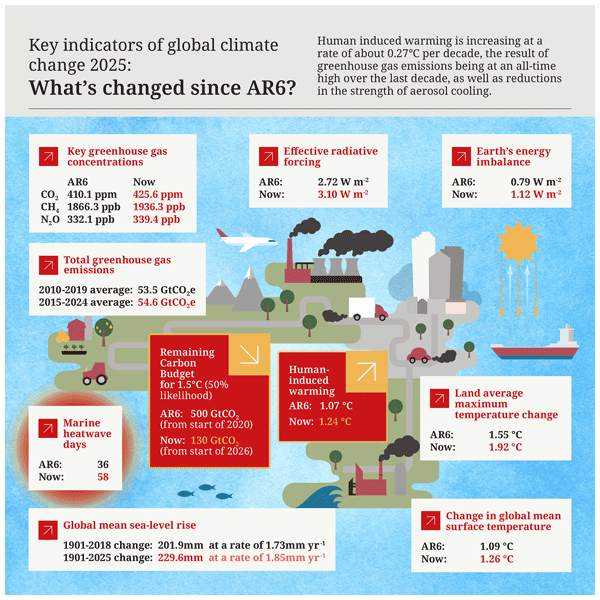
We give our annual update of key climate indicators. Our work quantifies the human contribution to global warming and the pace of climate change. This represents a large effort by the international community akin to an Intergovernmental Panel on Climate Change (IPCC) report.
Hélène De Longueville, Daniela B. Melo, Alison L. Redington, Alice Ramsden, Alexandre Danjou, Peter Andrews, Joseph Pitt, Brendan Murphy, Lionel Constantin, Kieran M. Stanley, Simon O'Doherty, Angelina Wenger, Dickon Young, Andreas Engel, Tanja Schuck, Katharina Meixner, Thomas Wagenhaeuser, Fides Gad, Martin K. Vollmer, Stefan Reimann, Michela Maoine, Jgor Arduini, Chris Lunder, Norbert Schmidtbauer, László Haszpra, Mihály Molnár, Arnoud Frumau, Cedric Couret, Matthew Rigby, Stephan Henne, Alistair Manning, and Anita L. Ganesan
Atmos. Chem. Phys., 26, 7647–7675, https://doi.org/10.5194/acp-26-7647-2026, https://doi.org/10.5194/acp-26-7647-2026, 2026
Short summary
Short summary
This study estimates emissions of hydrofluorocarbons, potent greenhouse gases, in north-western Europe using atmospheric observations and atmospheric modelling. The estimates are compared with nationally reported emissions submitted to the United Nations. Overall, our results are consistent with reported values, although differences are found for some gases and countries. The findings indicate that emissions in north-western Europe are declining, reflecting the effects of climate regulations.
Emmal Safi, Joe Pitt, Grant Forster, Chris Rennick, Simon O’Doherty, Dickon Young, Kanokrat Charoenpornpukdee, Nick Garrard, Dafina Kikaj, Andrew Manning, Gerard Spain, Damien Martin, Morgan Lopez, Michel Ramonet, and Kieran Stanely
EGUsphere, https://doi.org/10.5194/egusphere-2026-1802, https://doi.org/10.5194/egusphere-2026-1802, 2026
Short summary
Short summary
We compared whole and synthetic-air reference materials (RMs) for investigating offsets in greenhouse gas measurements so data from different sites/networks can be trusted when combined. By sending whole and synthetic-air (RMs) to six sites and measuring under routine field conditions, we found whole-air gives the most precise results, especially for carbon dioxide and nitrous oxide. Synthetic-air worked fairly well for methane but synthetic-air RMs needs lower uncertainty before wide use.
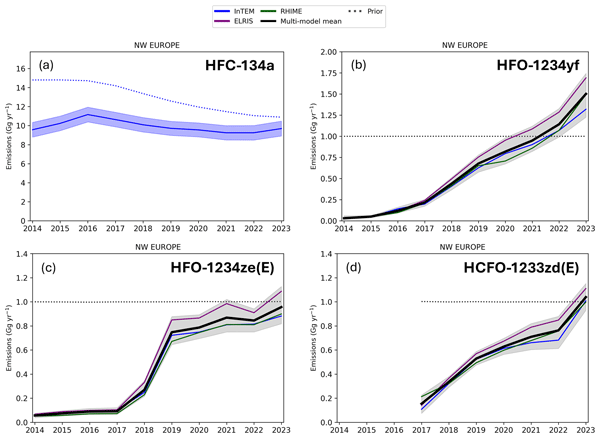
Martin K. Vollmer, Joseph R. Pitt, Dickon Young, Stephan Henne, Blagoj Mitrevski, Jens Mühle, Anita Ganesan, Jgor Arduini, Alistair J. Manning, Thomas Wagenhäuser, Alison L. Redington, Daniela B. Melo, Brendan Murphy, Ray Gluckmann, Kieran M. Stanley, Paul B. Krummel, Chris R. Lunder, Jaegeun Yun, Dominique Rust, Angelina Wenger, Myriam Guillevic, Jooil Kim, Ray H. J. Wang, Tae Siek Rhee, Lionel Constantin, Arnoud Frumau, Christina M. Harth, Peter K. Salameh, Ove Hermansen, Matthew Rigby, Luke M. Western, Andreas Engel, Simon O'Doherty, Sunyoung Park, Michela Maione, Paul J. Fraser, Ronald G. Prinn, Ray F. Weiss, and Stefan Reimann
Atmos. Chem. Phys., 26, 6993–7012, https://doi.org/10.5194/acp-26-6993-2026, https://doi.org/10.5194/acp-26-6993-2026, 2026
Short summary
Short summary
Halogenated olefins (HFOs) are newly emerging compounds in the atmosphere. They are in reach of the definition of PFAS (Per- and polyfluoroalkyl substances) and some decay to the eternal chemical trifluoroacetate (TFA). We provide atmospheric measurements of three HFOs from the large Advanced Global Atmospheric Gases Experiment (AGAGE) network and estimate emissions for Northwest Europe for the first time. We find a quasi-ubiquitous presence in the atmosphere and rapidly increasing emissions.
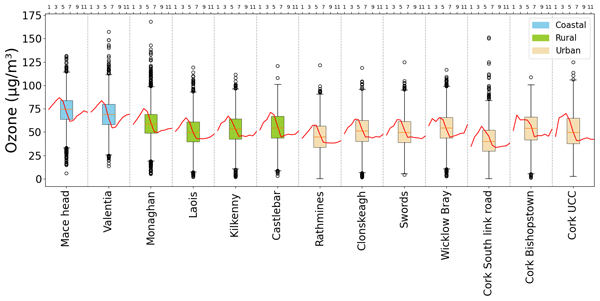
Nikhil Korhale, Tabish Ansari, Tim Butler, Jurgita Ovadnevaite, Emmanuel Chevassus, Darius Ceburnis, Damien Martin, Colin D. O'Dowd, and Liz Coleman
Atmos. Chem. Phys., 26, 6557–6577, https://doi.org/10.5194/acp-26-6557-2026, https://doi.org/10.5194/acp-26-6557-2026, 2026
Short summary
Short summary
We investigate the distribution and trends of surface ozone and its precursors over Ireland using advanced modelling to determine the drivers of ozone. Trajectory analysis is used to trace the origins of air masses, revealing the impact of transboundary pollution and atmospheric transport. The rising trend has been observed at urban sites over the past two decades, but without a similar trend at coastal sites. Coastal areas consistently show higher ozone levels than rural and urban areas.
Maria Tsivlidou, Jamie McQuilkin, Hugo Ricketts, Kieran Wood, Jonathan Helmore, David Lowry, and Grant Allen
EGUsphere, https://doi.org/10.5194/egusphere-2026-1665, https://doi.org/10.5194/egusphere-2026-1665, 2026
Short summary
Short summary
We assess a drone-based method to measure methane emissions using controlled release experiments at two sites. Estimated emission rates showed very good agreement with known release rates, demonstrating good accuracy. This work supports the development of direct emission measurement methods, which are essential for tracking emissions, informing reduction strategies, and improving greenhouse gas reporting, for local sources such as waste management.
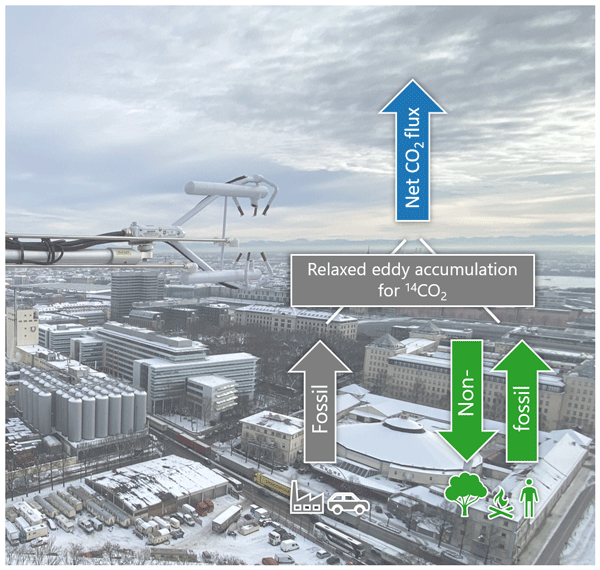
Ann-Kristin Kunz, Samuel Hammer, Patrick Aigner, Laura Bignotti, Lars Borchardt, Jia Chen, Julian Della Coletta, Lukas Emmenegger, Markus Eritt, Xochilt Gutiérrez, Josh Hashemi, Rainer Hilland, Christopher Holst, Armin Jordan, Natascha Kljun, Richard Kneißl, Changxing Lan, Virgile Legendre, Ingeborg Levin, Benjamin Loubet, Matthias Mauder, Betty Molinier, Susanne Preunkert, Michel Ramonet, Stavros Stagakis, and Andreas Christen
Atmos. Chem. Phys., 26, 4967–5003, https://doi.org/10.5194/acp-26-4967-2026, https://doi.org/10.5194/acp-26-4967-2026, 2026
Short summary
Short summary
We present radiocarbon (14C)-based fossil fuel CO2 fluxes from relaxed eddy accumulation measurements on tall towers in the cities of Zurich, Paris, and Munich. By separating net CO2 fluxes into fossil and non-fossil components, these data reveal significant and variable contributions from human, plant, and soil respiration, as well as point-source emissions. These unique insights into CO2 flux composition offer crucial information for observation-based validation of urban emission estimates.
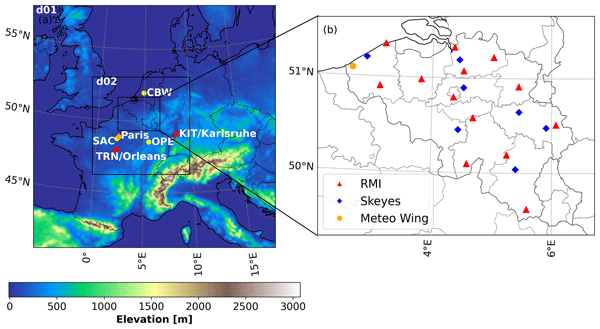
Jiaxin Wang, Sieglinde Callewaert, Minqiang Zhou, Filip Desmet, Sébastien Conil, Michel Ramonet, Pucai Wang, and Martine De Mazière
Atmos. Chem. Phys., 26, 3541–3565, https://doi.org/10.5194/acp-26-3541-2026, https://doi.org/10.5194/acp-26-3541-2026, 2026
Short summary
Short summary
We used a regional atmospheric transport model to simulate carbon dioxide mole fractions over Western Europe. The results show the importance of anthropogenic emission configurations, particularly near large emission sources, as well as the necessity of improving biogenic flux simulations. These findings contribute to enhancing the accuracy of carbon dioxide modeling and carbon budget inversions.
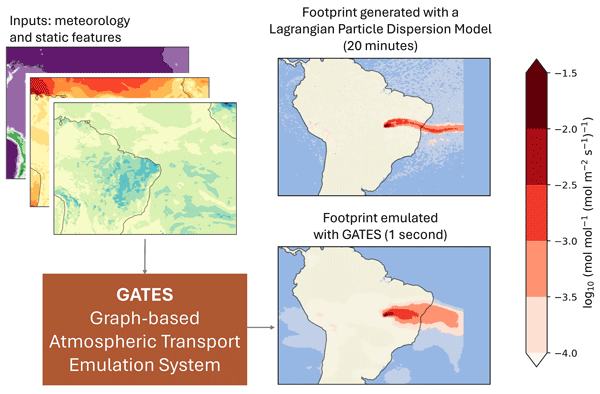
Elena Fillola, Raul Santos-Rodriguez, Rachel Tunnicliffe, Jeffrey N. Clark, Nawid Keshtmand, Anita Ganesan, and Matthew Rigby
Geosci. Model Dev., 19, 1893–1915, https://doi.org/10.5194/gmd-19-1893-2026, https://doi.org/10.5194/gmd-19-1893-2026, 2026
Short summary
Short summary
Satellite-based greenhouse gas measurements can be used in “inverse models” to improve emissions reporting, but one of the key components, the simulations of atmospheric transport, struggle to scale to large datasets. We introduce the model GATES, an AI-driven emulator that outputs transport plumes 1000× faster than traditional models. Applied to Brazil’s methane emissions, GATES produces estimates consistent with physics-based methods, offering a scalable path for timely emissions monitoring.
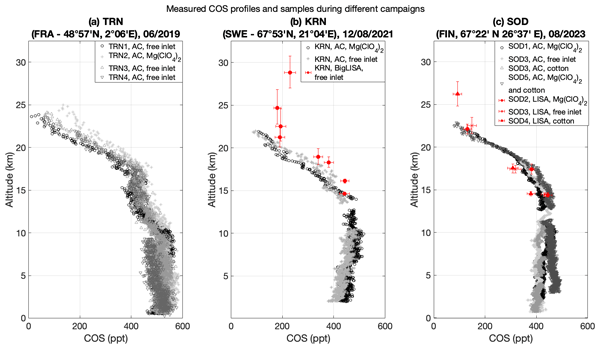
Alessandro Zanchetta, Steven van Heuven, Joram Hooghiem, Rigel Kivi, Thomas Laemmel, Michel Ramonet, Markus Leuenberger, Peter Nyfeler, Sophie L. Baartman, Maarten Krol, and Huilin Chen
Atmos. Meas. Tech., 19, 1465–1486, https://doi.org/10.5194/amt-19-1465-2026, https://doi.org/10.5194/amt-19-1465-2026, 2026
Short summary
Short summary
Continuous vertical profiles and discrete stratospheric samples of carbonyl sulfide (COS) were collected deploying the balloon-borne AirCore, LIghtweight Stratospheric Air (LISA) and BigLISA samplers and measured on a Quantum Cascade Laser Spectrometer (QCLS). Our measurements show good accordance with previous COS observations. Moreover, laboratory tests of ozone (O3) scrubbers proved squalene to remove O3 very efficiently without biasing the measurements of other trace gases.
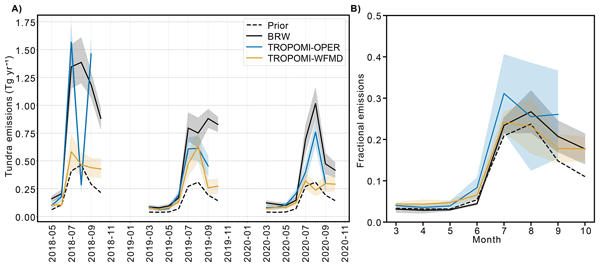
Rebecca H. Ward, Luke M. Western, Rachel L. Tunnicliffe, Elena Fillola, Aki Tsuruta, Tuula Aalto, and Anita L. Ganesan
Atmos. Meas. Tech., 19, 813–837, https://doi.org/10.5194/amt-19-813-2026, https://doi.org/10.5194/amt-19-813-2026, 2026
Short summary
Short summary
We studied methane emissions in Arctic Alaska using satellite observations to assess how well they can monitor this important greenhouse gas. We found that emission estimates varied depending on the satellite data product and were strongly affected by assumptions in the model. Our results highlight the need for careful interpretation of emissions from Arctic satellite data and thorough testing of models, with implications for reliable climate monitoring.
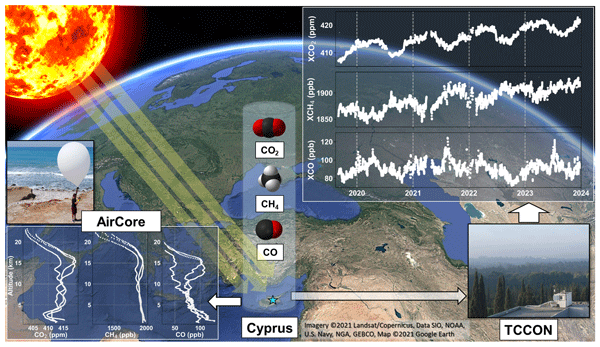
Constantina Rousogenous, Christof Petri, Pierre-Yves Quéhé, Thomas Laemmel, Joshua L. Laughner, Maximilien Desservettaz, Michael Pikridas, Michel Ramonet, Efstratios Bourtsoukidis, Matthias Buschmann, Justus Notholt, Thorsten Warneke, Jean-Daniel Paris, Jean Sciare, and Mihalis Vrekoussis
Atmos. Meas. Tech., 19, 565–581, https://doi.org/10.5194/amt-19-565-2026, https://doi.org/10.5194/amt-19-565-2026, 2026
Short summary
Short summary
The Eastern Mediterranean and Middle East is a greenhouse gas emission hotspot but lacks atmospheric monitoring. Our study introduces the first Total Carbon Column Observing Network site in this region, in Cyprus, providing high-precision columnar measurement of key greenhouse gases. This new dataset enhances global climate monitoring efforts, supports the validation of satellites, will help assess regional emission trends, filling a critical observational gap in this climate-sensitive region.
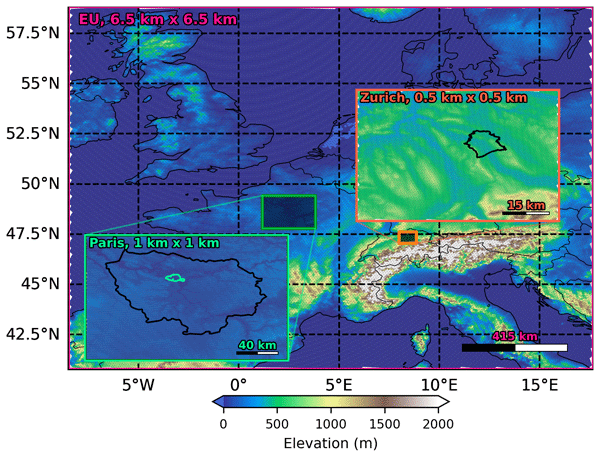
Nikolai Ponomarev, Michael Steiner, Erik Koene, Pascal Rubli, Stuart Grange, Lionel Constantin, Michel Ramonet, Leslie David, Arash Hamzehloo, Lukas Emmenegger, and Dominik Brunner
Atmos. Chem. Phys., 26, 547–570, https://doi.org/10.5194/acp-26-547-2026, https://doi.org/10.5194/acp-26-547-2026, 2026
Short summary
Short summary
Urban inversions are gaining increasing attention, as cities are major contributors to anthropogenic emissions, making accurate emission estimates at this scale essential for supporting climate action plans and verifying reported emission reductions. We estimated carbon dioxide emissions in Zurich and Paris over one year by combining atmospheric observations with mesoscale model simulations. Our study shows how factors like city size, terrain, and measurement methods affect emission estimates.
Benjamin Püschel, Martin Vojta, Luise Kandler, Molly Crotwell, Andreas Engel, Paul B. Krummel, Chris R. Lunder, Jens Mühle, Simon O'Doherty, Ronald G. Prinn, Kieran M. Stanley, Isaac Vimont, Martin K. Vollmer, Thomas Wagenhäuser, Ray F. Weiss, Dickon Young, and Andreas Stohl
EGUsphere, https://doi.org/10.5194/egusphere-2025-5656, https://doi.org/10.5194/egusphere-2025-5656, 2025
Short summary
Short summary
We present global and regionally resolved emissions of the two highly potent greenhouse gases CF4 and C2F6 from 2006 to 2023, based on atmospheric measurements and transport modeling. In nearly all regions studied, our results show that national reports and industry-based data underestimate emissions. While emissions in Europe and the U.S. declined, we find rising emissions in South, Southeast, and East Asia. China and India are the major contributors to global emissions in recent years.
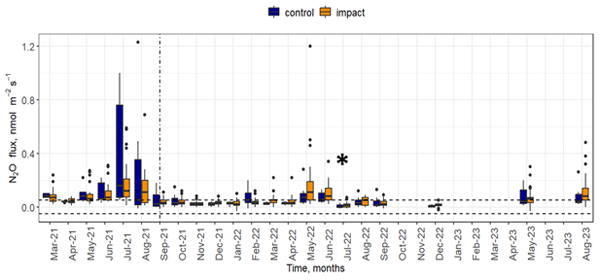
Galina Y. Toteva, David Reay, Matthew Jones, Ajinkya Deshpande, Nicholas Cowan, Peter Levy, Duncan Harvey, Agata Iwanicka, and Julia Drewer
Biogeosciences, 22, 7829–7844, https://doi.org/10.5194/bg-22-7829-2025, https://doi.org/10.5194/bg-22-7829-2025, 2025
Short summary
Short summary
The impacts of increasing nitrogen deposition on the fluxes of nitrous oxide from a temperate birch forest were investigated in-situ and ex-situ. Nitrogen levels had a limited effect on emissions. Instead, emissions of nitrous oxide were modulated by soil carbon availability and meeting a dual temperature-moisture threshold. An implication of these findings is that forests could be used for mitigating nitrogen pollution without incurring a greenhouse gas penalty, at least in the short term.
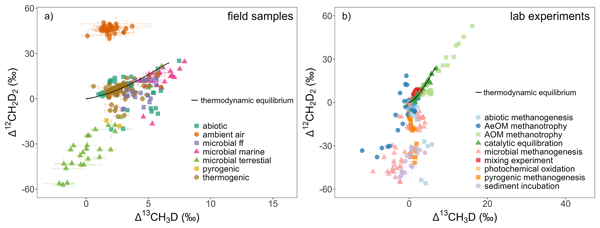
Sara M. Defratyka, Julianne M. Fernandez, Getachew A. Adnew, Guannan Dong, Peter M. J. Douglas, Daniel L. Eldridge, Giuseppe Etiope, Thomas Giunta, Mojhgan A. Haghnegahdar, Alexander N. Hristov, Nicole Hultquist, Iñaki Vadillo, Josue Jautzy, Ji-Hyun Kim, Jabrane Labidi, Ellen Lalk, Wil Leavitt, Jiawen Li, Li-Hung Lin, Jiarui Liu, Lucía Ojeda, Shuhei Ono, Jeemin H. Rhim, Thomas Röckmann, Barbara Sherwood Lollar, Malavika Sivan, Jiayang Sun, Gregory T. Ventura, David T. Wang, Edward D. Young, Naizhong Zhang, and Tim Arnold
Earth Syst. Sci. Data, 17, 6889–6910, https://doi.org/10.5194/essd-17-6889-2025, https://doi.org/10.5194/essd-17-6889-2025, 2025
Short summary
Short summary
Measurement of methane’s doubly substituted isotopologues at natural abundances holds promise for better constraining the Earth’s atmospheric CH4 budget. We compiled 1475 measurements from field samples and laboratory experiments, conducted since 2014, to facilitate the differentiation of CH4 formation pathways and processes, to identify existing gaps limiting application of Δ13CH3D and Δ12CH2D2, and to develop isotope ratio source signature inputs for global CH4 flux modelling.
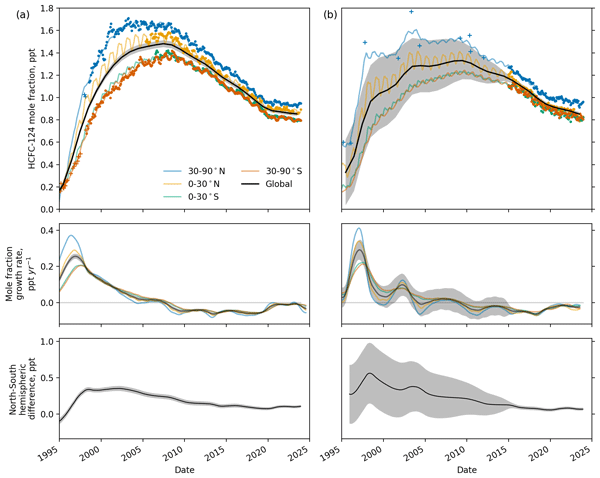
Luke M. Western, Stephen Bourguet, Molly Crotwell, Lei Hu, Paul B. Krummel, Hélène De Longueville, Alistair J. Manning, Jens Mühle, Dominique Rust, Isaac Vimont, Martin K. Vollmer, Minde An, Jgor Arduini, Andreas Engel, Paul J. Fraser, Anita L. Ganesan, Christina M. Harth, Chris Lunder, Michela Maione, Stephen A. Montzka, David Nance, Simon O'Doherty, Sunyoung Park, Stefan Reimann, Peter K. Salameh, Roland Schmidt, Kieran M. Stanley, Thomas Wagenhäuser, Dickon Young, Matt Rigby, Ronald G. Prinn, and Ray F. Weiss
Atmos. Chem. Phys., 25, 17761–17778, https://doi.org/10.5194/acp-25-17761-2025, https://doi.org/10.5194/acp-25-17761-2025, 2025
Short summary
Short summary
We used atmospheric measurements to estimate emissions of two hydrochlorofluorocarbon (HCFC) gases, called HCFC-123 and HCFC-124, that harm the ozone layer. Despite international regulation to stop their production, their emissions have not fallen. This may be linked to how they are used to make other chemicals. Our findings show that some banned substances are still reaching the atmosphere, likely through leaks during chemical production, which could slow the recovery of the ozone layer.
Luke M. Western, Matthew Rigby, Jens Mühle, Paul B. Krummel, Chris R. Lunder, Simon O'Doherty, Stefan Reimann, Martin K. Vollmer, Dickon Young, Ben Adam, Paul J. Fraser, Anita L. Ganesan, Christina M. Harth, Ove Hermansen, Jooil Kim, Ray L. Langenfelds, Zoë M. Loh, Blagoj Mitrevski, Joseph R. Pitt, Peter K. Salameh, Roland Schmidt, Kieran Stanley, Ann R. Stavert, Hsiang-Jui Wang, Ray F. Weiss, and Ronald G. Prinn
Earth Syst. Sci. Data, 17, 6557–6582, https://doi.org/10.5194/essd-17-6557-2025, https://doi.org/10.5194/essd-17-6557-2025, 2025
Short summary
Short summary
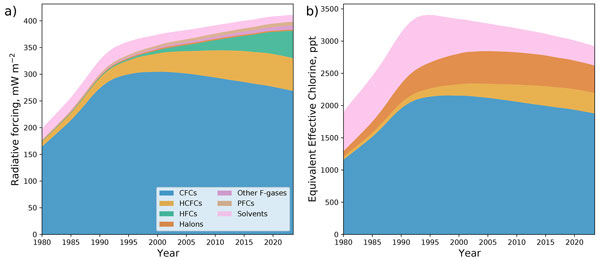
We used global measurements and an atmospheric model to estimate how emissions and abundances of 42 chemically and radiatively important trace gases have changed over time. These gases affect the Earth's radiative balance and the ozone layer. Our data sets help track progress in reducing emissions of these gases to the atmosphere. This work supports international efforts to protect the environment by providing clear, long-term, consistent data on how these gases are changing in the atmosphere.
Camille Yver-Kwok, Michel Ramonet, Leonard Rivier, Jinghui Lian, Claudia Grossi, Roger Curcoll, Dafina Kikaj, Edward Chung, and Ute Karstens
Atmos. Chem. Phys., 25, 16085–16106, https://doi.org/10.5194/acp-25-16085-2025, https://doi.org/10.5194/acp-25-16085-2025, 2025
Short summary
Short summary
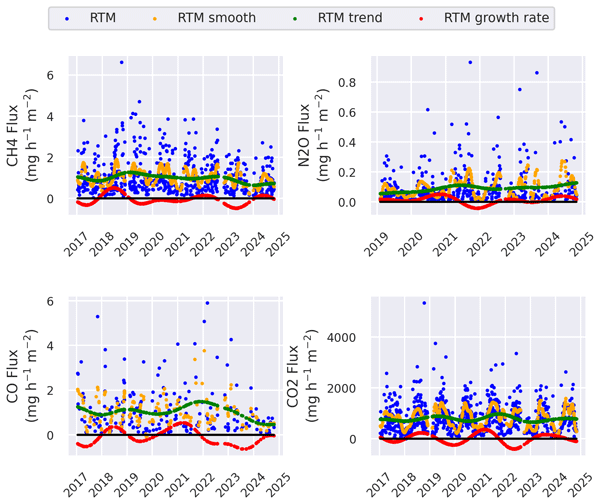
Here, we use greenhouse gas and radon data from a tall tower in France to estimate their fluxes within the station footprint from January 2017 to October 2024 using the Radon Tracer Method. Using the latest radon exhalation maps and standardized radon measurements, we found the greenhouse gas fluxes to be in agreement with the literature. Compared to inventories, there is a general agreement except for carbon dioxide where we show that the biogenic fluxes are not well represented in the model.
Laura Bouillon, Valérie Gros, Morgan Lopez, Nicolas Bonnaire, Carole Philippon, Camille Yver Kwok, Leslie David, Olivier Perrussel, Olivier Sanchez, Simone Kotthaus, Jean-Eudes Petit, Philippe Ciais, and Michel Ramonet
Earth Syst. Sci. Data Discuss., https://doi.org/10.5194/essd-2025-602, https://doi.org/10.5194/essd-2025-602, 2025
Revised manuscript accepted for ESSD
Short summary
Short summary
The Saclay observatory, 20 km southwest of Paris, monitored greenhouse and reactive gases, as well as aerosols, over 10 years to assess the impact of urban emissions. By comparing downwind and background conditions, the study revealed significant reductions in pollutants linked to traffic: -35.6 % for CO, -52.3 % for NOₓ, -56.7 % for eBC, and -15 % for CO2. These trends align with emission decrease estimates from AIRPARIF inventories over the same period.
Bibhasvata Dasgupta, Malika Menoud, Carina van der Veen, Ingeborg Levin, Cordelia Veidt, Heiko Moossen, Sylvia Englund Michel, Peter Sperlich, Shinji Morimoto, Ryo Fujita, Taku Umezawa, Stephen Platt, Christine Groot Zwaaftink, Cathrine Lund Myhre, Rebecca Fisher, David Lowry, Euan G. Nisbet, James France, Ceres Woolley Maisch, Gordon Brailsford, Rowena Moss, Daisuke Goto, Sudhanshu Pandey, Sander Houweling, Nicola Warwick, and Thomas Röckmann
Atmos. Meas. Tech., 18, 6591–6607, https://doi.org/10.5194/amt-18-6591-2025, https://doi.org/10.5194/amt-18-6591-2025, 2025
Short summary
Short summary
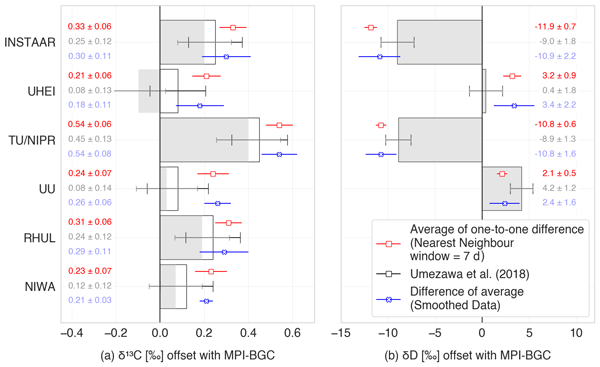
We combined long-term methane mole fraction and isotope measurements from eight laboratories that sample high-latitude stations to compare, offset correct and harmonise the datasets into a hemisphere merged timeseries. Because each laboratory uses slightly different methods, we adjusted the data to make it directly comparable. This allowed us to create a consistent record of atmospheric methane concentration and its isotopes from 1988 to 2023.
Scott D. Chambers, Ute Karstens, Alan D. Griffiths, Stefan Röttger, Arnoud Frumau, Christopher T. Roulston, Peter Sperlich, Felix Vogel, Agnieszka Podstawczyńska, Dafina Kikaj, Maksym Gachkivskyi, Michel Ramonet, Blagoj Mitrevski, Janja Vaupotič, Xuemeng Chen, and Annette Röttger
EGUsphere, https://doi.org/10.5194/egusphere-2025-5042, https://doi.org/10.5194/egusphere-2025-5042, 2025
Short summary
Short summary
The Radon Tracer Method (RTM) is a top-down approach to estimate greenhouse gas emissions. While simple in principle, incorrect use can complicate interpretation of results. Based on observations from a range of contrasting sites, this article reviews the underlying assumptions and key considerations for applying the RTM. It also introduces the concept of coupling RTM analyses with nocturnal stability classification, to reduce uncertainty of fetch estimates and improve interpretation of results.
Martin Vojta, Andreas Plach, Rona L. Thompson, Pallav Purohit, Kieran Stanley, Simon O'Doherty, Dickon Young, Joe Pitt, Jgor Arduini, Xin Lan, and Andreas Stohl
Atmos. Chem. Phys., 25, 15197–15243, https://doi.org/10.5194/acp-25-15197-2025, https://doi.org/10.5194/acp-25-15197-2025, 2025
Short summary
Short summary
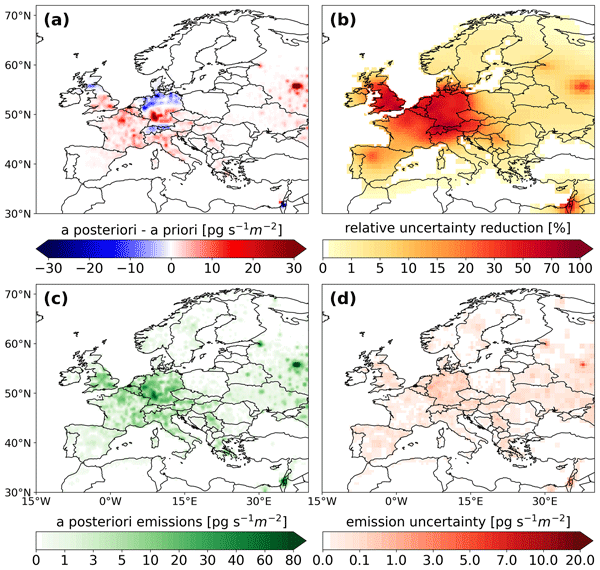
We determine European emissions of the highly potent greenhouse gas sulfur hexafluoride from 2005 to 2021 – focusing on high-emitting countries and the aggregated EU-27 emissions. Emissions declined in most regions, likely due to EU F-gas regulations. However, our results reveal that most studied countries underestimate their emissions in their national reports. Our sensitivity tests highlight the importance of dense observational networks for reliable inversion-based emission estimates.

Félix Langot, Cyril Crevoisier, Thomas Lauvaux, Charbel Abdallah, Jérôme Pernin, Xin Lin, Marielle Saunois, Axel Guedj, Thomas Ponthieu, Julien Moyé, Michel Ramonet, Anke Roiger, Klaus-Dirk Gottschaldt, and Alina Fiehn
Atmos. Meas. Tech., 18, 5955–5983, https://doi.org/10.5194/amt-18-5955-2025, https://doi.org/10.5194/amt-18-5955-2025, 2025
Short summary
Short summary
Our study compares outputs from meteorological and atmospheric composition models to data from the MAGIC2021 campaign that took place in Sweden. Our results highlight performance differences among models, revealing strengths and weaknesses of different modelling techniques. We also found that wetland emission inventories overestimated emissions in regional simulations. This work helps to refine methane emission predictions, essential for understanding climate change.
Fabian Maier, Eva Falge, Maksym Gachkivskyi, Stephan Henne, Ute Karstens, Dafina Kikaj, Ingeborg Levin, Alistair Manning, Christian Rödenbeck, and Christoph Gerbig
Atmos. Chem. Phys., 25, 12779–12809, https://doi.org/10.5194/acp-25-12779-2025, https://doi.org/10.5194/acp-25-12779-2025, 2025
Short summary
Short summary
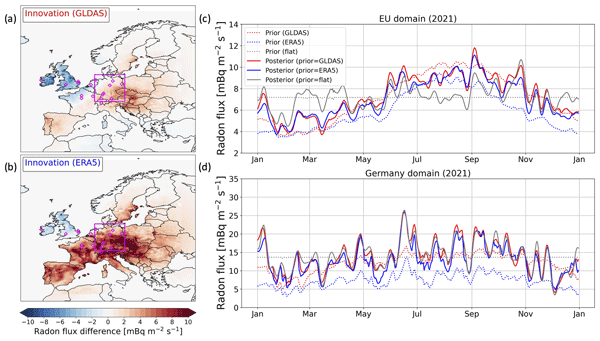
The radioactive noble gas radon (222Rn) is a suitable natural tracer for atmospheric transport and mixing processes that can be used to validate and calibrate atmospheric transport models. However, this requires accurate estimates of the 222Rn flux from the soil into the atmosphere. In our study, we evaluate the reliability of process-based 222Rn flux maps for Europe using a 222Rn inversion. Our inversion results can give some indications on how to improve the process-based 222Rn flux maps.
Peter E. Levy
EGUsphere, https://doi.org/10.5194/egusphere-2025-4765, https://doi.org/10.5194/egusphere-2025-4765, 2025
This preprint is open for discussion and under review for Atmospheric Measurement Techniques (AMT).
Short summary
Short summary
Eddy covariance is the state-of-the-art technique for measuring fluxes of energy and gases between the land surface and the atmosphere. However, quantifying the uncertainty in the results is difficult and usually treated simplistically or avoided completely. Here we use a Bayesian approach, in which the uncertainty is correctly represented. The approach produce estimates of the fluxes, (e.g. the long-term net carbon balance), in the form of posterior probability distributions.
Judith Tettenborn, Daniel Zavala-Araiza, Daan Stroeken, Hossein Maazallahi, Carina van der Veen, Arjan Hensen, Ilona Velzeboer, Pim van den Bulk, Felix Vogel, Lawson Gillespie, Sebastien Ars, James France, David Lowry, Rebecca Fisher, and Thomas Röckmann
Atmos. Meas. Tech., 18, 3569–3584, https://doi.org/10.5194/amt-18-3569-2025, https://doi.org/10.5194/amt-18-3569-2025, 2025
Short summary
Short summary
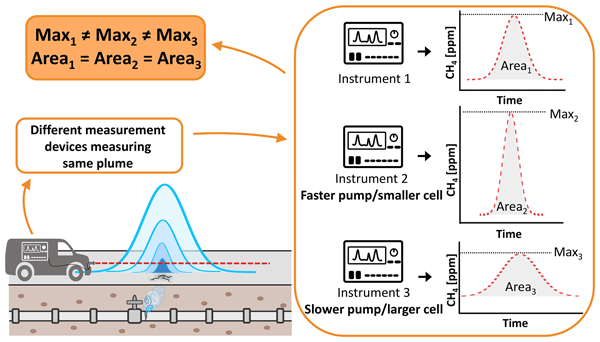
Measurements of methane with vehicle-based sensors are an effective method to identify and quantify leaks from urban gas distribution systems. We deliberately released methane in different environments and calibrated the response of different methane analysers when they transected the plumes in a vehicle. We derived an improved statistical function for consistent emission estimations using different instruments. Repeated transects reduce the uncertainty in emission rate estimates.
Xiao Lu, Yiming Liu, Jiayin Su, Xiang Weng, Tabish Ansari, Yuqiang Zhang, Guowen He, Yuqi Zhu, Haolin Wang, Ganquan Zeng, Jingyu Li, Cheng He, Shuai Li, Teerachai Amnuaylojaroen, Tim Butler, Qi Fan, Shaojia Fan, Grant L. Forster, Meng Gao, Jianlin Hu, Yugo Kanaya, Mohd Talib Latif, Keding Lu, Philippe Nédélec, Peer Nowack, Bastien Sauvage, Xiaobin Xu, Lin Zhang, Ke Li, Ja-Ho Koo, and Tatsuya Nagashima
Atmos. Chem. Phys., 25, 7991–8028, https://doi.org/10.5194/acp-25-7991-2025, https://doi.org/10.5194/acp-25-7991-2025, 2025
Short summary
Short summary
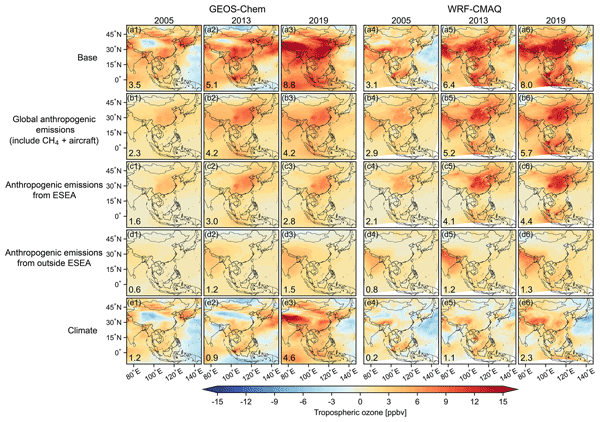
This study analyzes summertime ozone trends in East and Southeast Asia derived from a comprehensive observational database spanning from 1995 to 2019, incorporating aircraft observations, ozonesonde data, and measurements from 2500 surface sites. Multiple models are applied to attribute to changes in anthropogenic emissions and climate. The results highlight that increases in anthropogenic emissions are the primary driver of ozone increases both in the free troposphere and at the surface.
Nicholas Cowan, Toby Roberts, Mark Hanlon, Aurelia Bezanger, Galina Toteva, Alex Tweedie, Karen Yeung, Ajinkya Deshpande, Peter Levy, Ute Skiba, Eiko Nemitz, and Julia Drewer
Biogeosciences, 22, 3449–3461, https://doi.org/10.5194/bg-22-3449-2025, https://doi.org/10.5194/bg-22-3449-2025, 2025
Short summary
Short summary
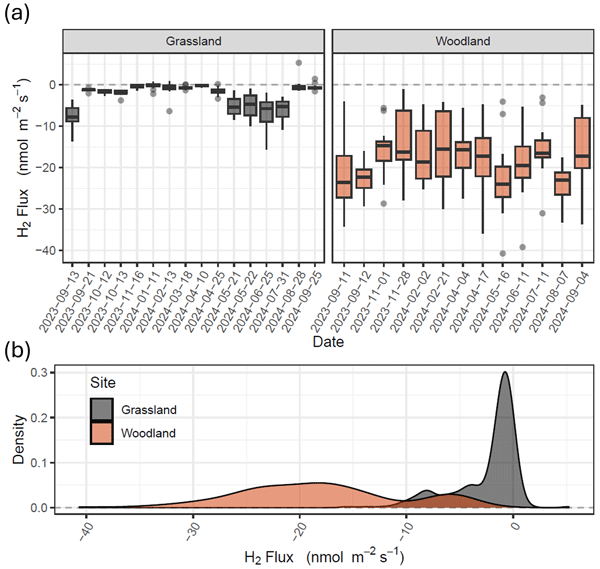
We measured soil hydrogen (H2) fluxes from two field sites, a managed grassland and a planted deciduous woodland, with flux measurements of H2 covering full seasonal cycles. We estimate annual H2 uptake of −3.1 ± 0.1 and −12.0 ± 0.4 kg H2 ha−1 yr−1 for the grassland and woodland sites, respectively. Soil moisture was found to be the primary driver of H2 uptake, with the silt/clay content of the soils providing a physical barrier which limited H2 uptake.
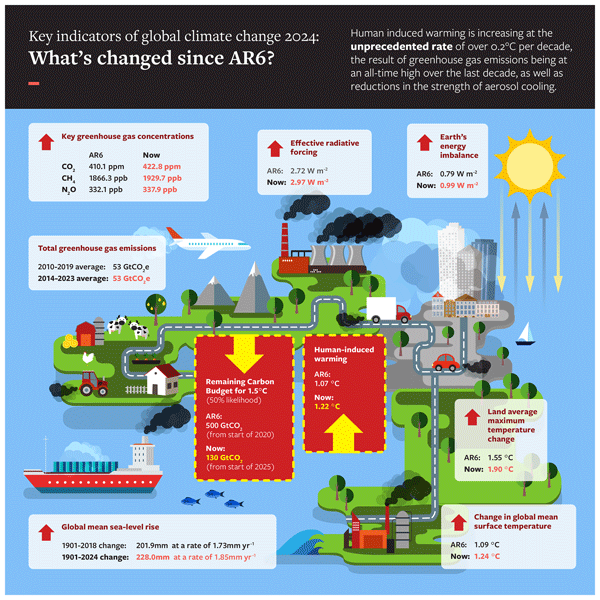
Piers M. Forster, Chris Smith, Tristram Walsh, William F. Lamb, Robin Lamboll, Christophe Cassou, Mathias Hauser, Zeke Hausfather, June-Yi Lee, Matthew D. Palmer, Karina von Schuckmann, Aimée B. A. Slangen, Sophie Szopa, Blair Trewin, Jeongeun Yun, Nathan P. Gillett, Stuart Jenkins, H. Damon Matthews, Krishnan Raghavan, Aurélien Ribes, Joeri Rogelj, Debbie Rosen, Xuebin Zhang, Myles Allen, Lara Aleluia Reis, Robbie M. Andrew, Richard A. Betts, Alex Borger, Jiddu A. Broersma, Samantha N. Burgess, Lijing Cheng, Pierre Friedlingstein, Catia M. Domingues, Marco Gambarini, Thomas Gasser, Johannes Gütschow, Masayoshi Ishii, Christopher Kadow, John Kennedy, Rachel E. Killick, Paul B. Krummel, Aurélien Liné, Didier P. Monselesan, Colin Morice, Jens Mühle, Vaishali Naik, Glen P. Peters, Anna Pirani, Julia Pongratz, Jan C. Minx, Matthew Rigby, Robert Rohde, Abhishek Savita, Sonia I. Seneviratne, Peter Thorne, Christopher Wells, Luke M. Western, Guido R. van der Werf, Susan E. Wijffels, Valérie Masson-Delmotte, and Panmao Zhai
Earth Syst. Sci. Data, 17, 2641–2680, https://doi.org/10.5194/essd-17-2641-2025, https://doi.org/10.5194/essd-17-2641-2025, 2025
Short summary
Short summary
In a rapidly changing climate, evidence-based decision-making benefits from up-to-date and timely information. Here we compile monitoring datasets to track real-world changes over time. To make our work relevant to policymakers, we follow methods from the Intergovernmental Panel on Climate Change (IPCC). Human activities are increasing the Earth's energy imbalance and driving faster sea-level rise compared to the IPCC assessment.
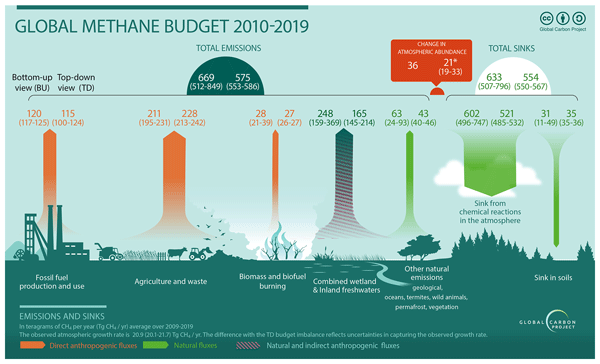
Marielle Saunois, Adrien Martinez, Benjamin Poulter, Zhen Zhang, Peter A. Raymond, Pierre Regnier, Josep G. Canadell, Robert B. Jackson, Prabir K. Patra, Philippe Bousquet, Philippe Ciais, Edward J. Dlugokencky, Xin Lan, George H. Allen, David Bastviken, David J. Beerling, Dmitry A. Belikov, Donald R. Blake, Simona Castaldi, Monica Crippa, Bridget R. Deemer, Fraser Dennison, Giuseppe Etiope, Nicola Gedney, Lena Höglund-Isaksson, Meredith A. Holgerson, Peter O. Hopcroft, Gustaf Hugelius, Akihiko Ito, Atul K. Jain, Rajesh Janardanan, Matthew S. Johnson, Thomas Kleinen, Paul B. Krummel, Ronny Lauerwald, Tingting Li, Xiangyu Liu, Kyle C. McDonald, Joe R. Melton, Jens Mühle, Jurek Müller, Fabiola Murguia-Flores, Yosuke Niwa, Sergio Noce, Shufen Pan, Robert J. Parker, Changhui Peng, Michel Ramonet, William J. Riley, Gerard Rocher-Ros, Judith A. Rosentreter, Motoki Sasakawa, Arjo Segers, Steven J. Smith, Emily H. Stanley, Joël Thanwerdas, Hanqin Tian, Aki Tsuruta, Francesco N. Tubiello, Thomas S. Weber, Guido R. van der Werf, Douglas E. J. Worthy, Yi Xi, Yukio Yoshida, Wenxin Zhang, Bo Zheng, Qing Zhu, Qiuan Zhu, and Qianlai Zhuang
Earth Syst. Sci. Data, 17, 1873–1958, https://doi.org/10.5194/essd-17-1873-2025, https://doi.org/10.5194/essd-17-1873-2025, 2025
Short summary
Short summary
Methane (CH4) is the second most important human-influenced greenhouse gas in terms of climate forcing after carbon dioxide (CO2). A consortium of multi-disciplinary scientists synthesise and update the budget of the sources and sinks of CH4. This edition benefits from important progress in estimating emissions from lakes and ponds, reservoirs, and streams and rivers. For the 2010s decade, global CH4 emissions are estimated at 575 Tg CH4 yr-1, including ~65 % from anthropogenic sources.
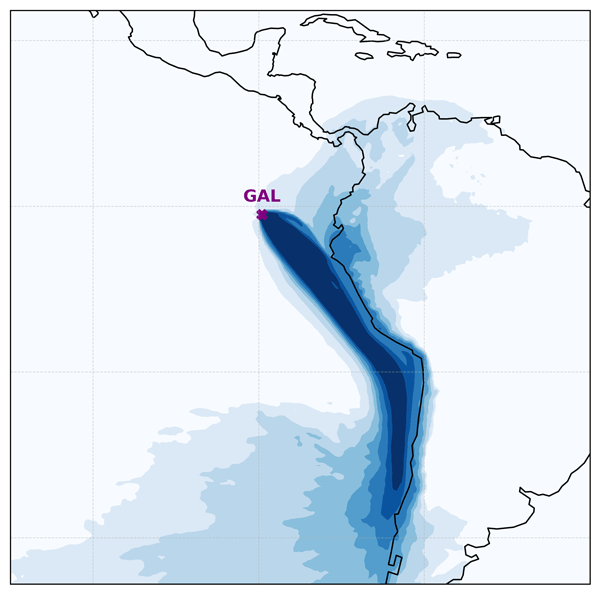
Timur Cinay, Dickon Young, Nazaret Narváez Jimenez, Cristina Vintimilla-Palacios, Ariel Pila Alonso, Paul B. Krummel, William Vizuete, and Andrew R. Babbin
Atmos. Chem. Phys., 25, 4703–4718, https://doi.org/10.5194/acp-25-4703-2025, https://doi.org/10.5194/acp-25-4703-2025, 2025
Short summary
Short summary
We present the initial 15 months of nitrous oxide measurements from the Galapagos Emissions Monitoring Station. The observed variability in atmospheric mole fractions during this period can be linked to several factors: seasonal variations in trade wind speed and direction across the eastern Pacific, differences in the transport history of air masses sampled, and spatiotemporal heterogeneity in regional marine nitrous oxide emissions from the coastal upwelling systems of Peru and Chile.
Sebastien Conil, Gilles Bergametti, Laurent Langrene, Morgan Lopez, Olivier Masson, Cyril Pallares, and Michel Ramonet
EGUsphere, https://doi.org/10.5194/egusphere-2025-148, https://doi.org/10.5194/egusphere-2025-148, 2025
Preprint archived
Short summary
Short summary
From 2012 to 2023, hourly surface ozone, trace gases, meteorological parameters, and weekly beryllium-7 and sodium-22 activity were monitored at the OPE station in eastern France. While mean afternoon ozone concentrations showed no significant trend, baseline ozone increased by 0.7 µg·m⁻³ per year. Ozone anomalies were linked to pollutants (CO, NOx, CH4) from November to February, and to Stratosphere-to-Troposphere Transport proxies from April to September.
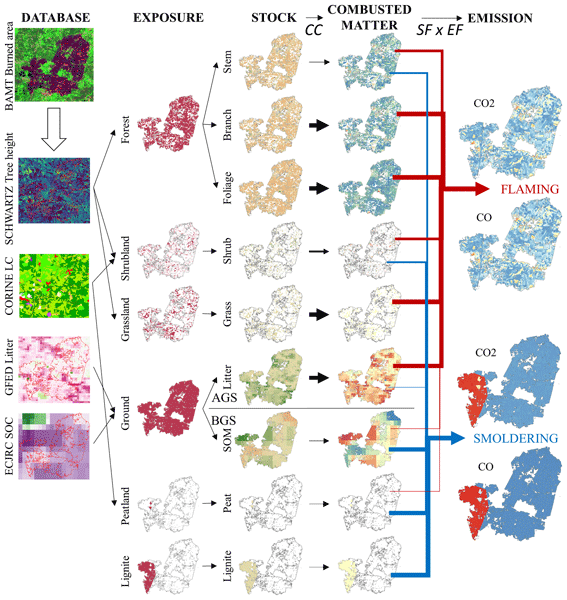
Lilian Vallet, Charbel Abdallah, Thomas Lauvaux, Lilian Joly, Michel Ramonet, Philippe Ciais, Morgan Lopez, Irène Xueref-Remy, and Florent Mouillot
Biogeosciences, 22, 213–242, https://doi.org/10.5194/bg-22-213-2025, https://doi.org/10.5194/bg-22-213-2025, 2025
Short summary
Short summary
The 2022 fire season had a huge impact on European temperate forest, with several large fires exhibiting prolonged soil combustion reported. We analyzed CO and CO2 concentration recorded at nearby atmospheric towers, revealing intense smoldering combustion. We refined a fire emission model to incorporate this process. We estimated 7.95 Mteq CO2 fire emission, twice the global estimate. Fires contributed to 1.97 % of France's annual carbon footprint, reducing forest carbon sink by 30 % this year.
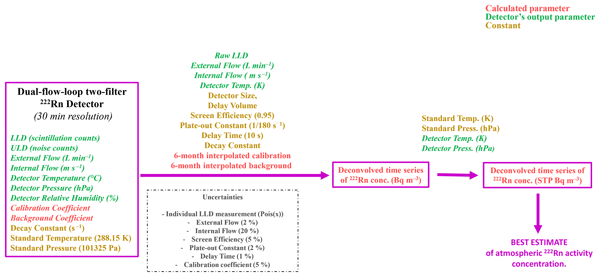
Dafina Kikaj, Edward Chung, Alan D. Griffiths, Scott D. Chambers, Grant Forster, Angelina Wenger, Penelope Pickers, Chris Rennick, Simon O'Doherty, Joseph Pitt, Kieran Stanley, Dickon Young, Leigh S. Fleming, Karina Adcock, Emmal Safi, and Tim Arnold
Atmos. Meas. Tech., 18, 151–175, https://doi.org/10.5194/amt-18-151-2025, https://doi.org/10.5194/amt-18-151-2025, 2025
Short summary
Short summary
We present a protocol to improve confidence in atmospheric radon measurements, enabling site comparisons and integration with greenhouse gas data. As a natural tracer, radon provides an independent check of transport model performance. This standardized method enhances radon’s use as a metric for model evaluation. Beyond UK observatories, it can support broader networks like ICOS and WMO/GAW, advancing global atmospheric research.
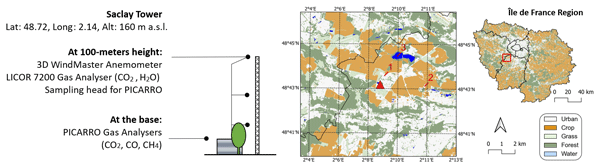
Pedro Henrique Herig Coimbra, Benjamin Loubet, Olivier Laurent, Laura Bignotti, Mathis Lozano, and Michel Ramonet
Atmos. Meas. Tech., 17, 6625–6645, https://doi.org/10.5194/amt-17-6625-2024, https://doi.org/10.5194/amt-17-6625-2024, 2024
Short summary
Short summary
This study presents direct flux measurements in tall towers using existing slow-response analysers and adding 3D sonic anemometers. This way, we can significantly improve greenhouse gas monitoring with little extra instrumental effort. Slow-response analysers may be used here as the relevant frequency ranges depend on measuring height. Tall towers offer a large footprint, amplifying spatial coverage. The presented concept is a valuable bridge between atmospheric and ecosystem communities.
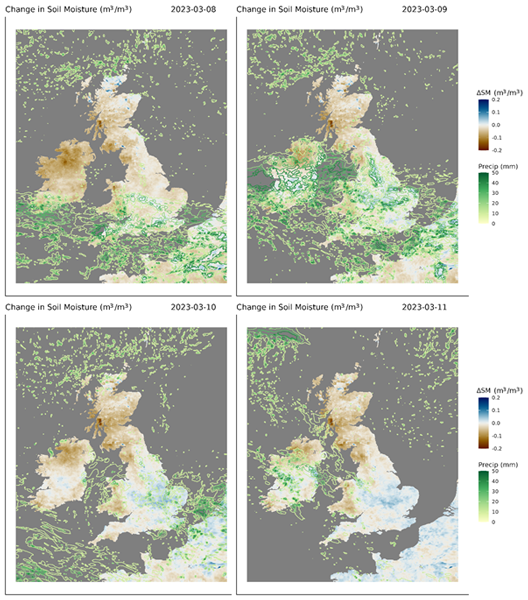
Peter E. Levy and the COSMOS-UK team
Hydrol. Earth Syst. Sci., 28, 4819–4836, https://doi.org/10.5194/hess-28-4819-2024, https://doi.org/10.5194/hess-28-4819-2024, 2024
Short summary
Short summary
Having accurate up-to-date maps of soil moisture is important for many purposes. However, current modelled and remotely sensed maps are rather coarse and not very accurate. Here, we demonstrate a simple but accurate approach that is closely linked to direct measurements of soil moisture at a network sites across the UK, to the water balance (precipitation minus drainage and evaporation) measured at a large number of catchments (1212) and to remotely sensed satellite estimates.
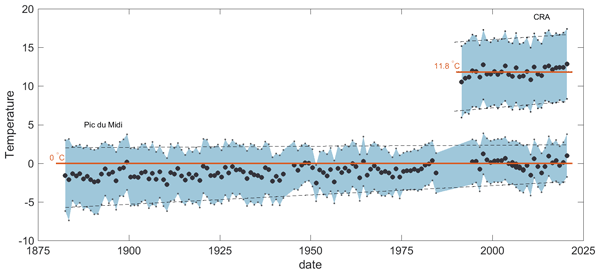
Marie Lothon, François Gheusi, Fabienne Lohou, Véronique Pont, Serge Soula, Corinne Jambert, Solène Derrien, Yannick Bezombes, Emmanuel Leclerc, Gilles Athier, Antoine Vial, Alban Philibert, Bernard Campistron, Frédérique Saïd, Jeroen Sonke, Julien Amestoy, Erwan Bargain, Pierre Bosser, Damien Boulanger, Guillaume Bret, Renaud Bodichon, Laurent Cabanas, Guylaine Canut, Jean-Bernard Estrampes, Eric Gardrat, Zaida Gomez Kuri, Jérémy Gueffier, Fabienne Guesdon, Morgan Lopez, Olivier Masson, Pierre-Yves Meslin, Yves Meyerfeld, Nicolas Pascal, Eric Pique, Michel Ramonet, Felix Starck, and Romain Vidal
Atmos. Meas. Tech., 17, 6265–6300, https://doi.org/10.5194/amt-17-6265-2024, https://doi.org/10.5194/amt-17-6265-2024, 2024
Short summary
Short summary
The Pyrenean Platform for Observation of the Atmosphere (P2OA) is a coupled plain–mountain instrumented platform in southwestern France for the monitoring of climate variables and the study of meteorological processes in a mountainous region. A comprehensive description of this platform is presented for the first time: its instrumentation, the associated dataset, and a meteorological characterization the site. The potential of the P2OA is illustrated through several examples of process studies.
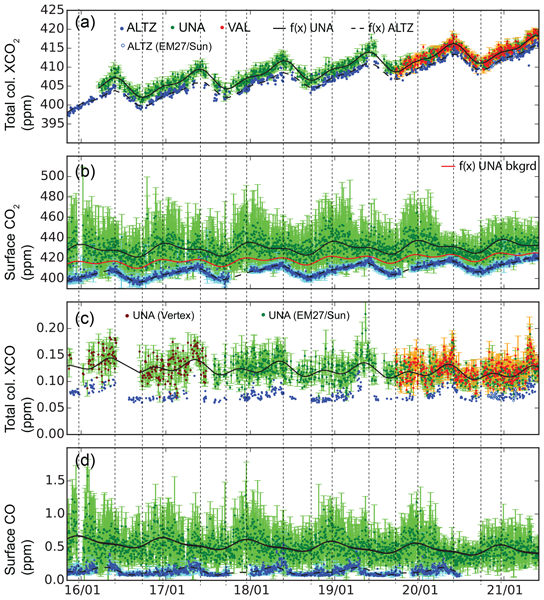
Noémie Taquet, Wolfgang Stremme, María Eugenia González del Castillo, Victor Almanza, Alejandro Bezanilla, Olivier Laurent, Carlos Alberti, Frank Hase, Michel Ramonet, Thomas Lauvaux, Ke Che, and Michel Grutter
Atmos. Chem. Phys., 24, 11823–11848, https://doi.org/10.5194/acp-24-11823-2024, https://doi.org/10.5194/acp-24-11823-2024, 2024
Short summary
Short summary
We characterize the variability in CO and CO2 emissions over Mexico City from long-term time-resolved Fourier transform infrared spectroscopy solar absorption and surface measurements from 2013 to 2021. Using the average intraday CO growth rate from total columns, the average CO / CO2 ratio and TROPOMI data, we estimate the interannual variability in the CO and CO2 anthropogenic emissions of Mexico City, highlighting the effect of an unprecedented drop in activity due to the COVID-19 lockdown.
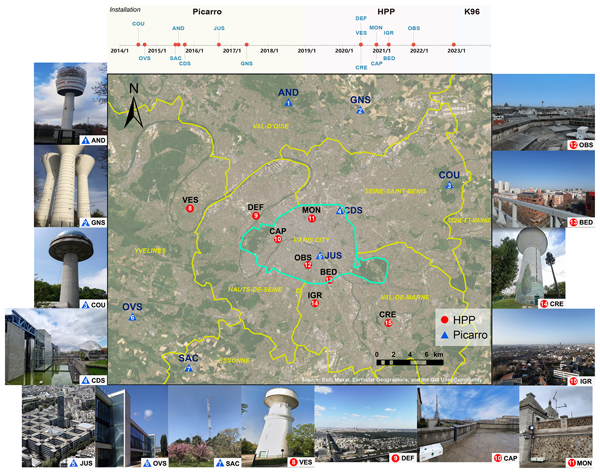
Jinghui Lian, Olivier Laurent, Mali Chariot, Luc Lienhardt, Michel Ramonet, Hervé Utard, Thomas Lauvaux, François-Marie Bréon, Grégoire Broquet, Karina Cucchi, Laurent Millair, and Philippe Ciais
Atmos. Meas. Tech., 17, 5821–5839, https://doi.org/10.5194/amt-17-5821-2024, https://doi.org/10.5194/amt-17-5821-2024, 2024
Short summary
Short summary
We have designed and deployed a mid-cost medium-precision CO2 sensor monitoring network in Paris since July 2020. The data are automatically calibrated by a newly implemented data processing system. The accuracies of the mid-cost instruments vary from 1.0 to 2.4 ppm for hourly afternoon measurements. Our model–data analyses highlight prospects for integrating mid-cost instrument data with high-precision measurements to improve fine-scale CO2 emission quantification in urban areas.
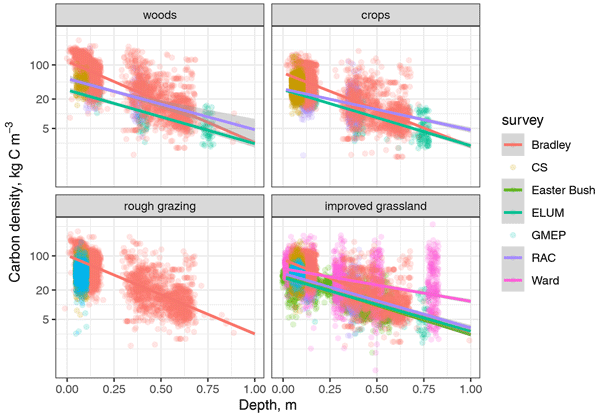
Peter Levy, Laura Bentley, Peter Danks, Bridget Emmett, Angus Garbutt, Stephen Heming, Peter Henrys, Aidan Keith, Inma Lebron, Niall McNamara, Richard Pywell, John Redhead, David Robinson, and Alexander Wickenden
Biogeosciences, 21, 4301–4315, https://doi.org/10.5194/bg-21-4301-2024, https://doi.org/10.5194/bg-21-4301-2024, 2024
Short summary
Short summary
We collated a large data set (15 790 soil cores) on soil carbon stock in different land uses. Soil carbon stocks were highest in woodlands and lowest in croplands. The variability in the effects was large. This has important implications for agri-environment schemes seeking to sequester carbon in the soil by altering land use because the effect of a given intervention is very hard to verify.
Josselin Doc, Michel Ramonet, François-Marie Bréon, Delphine Combaz, Mali Chariot, Morgan Lopez, Marc Delmotte, Cristelle Cailteau-Fischbach, Guillaume Nief, Nathanaël Laporte, Thomas Lauvaux, and Philippe Ciais
EGUsphere, https://doi.org/10.5194/egusphere-2024-2826, https://doi.org/10.5194/egusphere-2024-2826, 2024
Short summary
Short summary
Description of the network for measuring greenhouse gas concentrations in the Paris region and analysis of eight years of continuous monitoring.
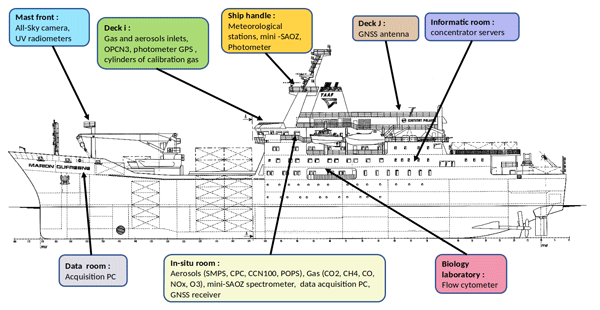
Pierre Tulet, Joel Van Baelen, Pierre Bosser, Jérome Brioude, Aurélie Colomb, Philippe Goloub, Andrea Pazmino, Thierry Portafaix, Michel Ramonet, Karine Sellegri, Melilotus Thyssen, Léa Gest, Nicolas Marquestaut, Dominique Mékiès, Jean-Marc Metzger, Gilles Athier, Luc Blarel, Marc Delmotte, Guillaume Desprairies, Mérédith Dournaux, Gaël Dubois, Valentin Duflot, Kevin Lamy, Lionel Gardes, Jean-François Guillemot, Valérie Gros, Joanna Kolasinski, Morgan Lopez, Olivier Magand, Erwan Noury, Manuel Nunes-Pinharanda, Guillaume Payen, Joris Pianezze, David Picard, Olivier Picard, Sandrine Prunier, François Rigaud-Louise, Michael Sicard, and Benjamin Torres
Earth Syst. Sci. Data, 16, 3821–3849, https://doi.org/10.5194/essd-16-3821-2024, https://doi.org/10.5194/essd-16-3821-2024, 2024
Short summary
Short summary
The MAP-IO program aims to compensate for the lack of atmospheric and oceanographic observations in the Southern Ocean by equipping the ship Marion Dufresne with a set of 17 scientific instruments. This program collected 700 d of measurements under different latitudes, seasons, sea states, and weather conditions. These new data will support the calibration and validation of numerical models and the understanding of the atmospheric composition of this region of Earth.
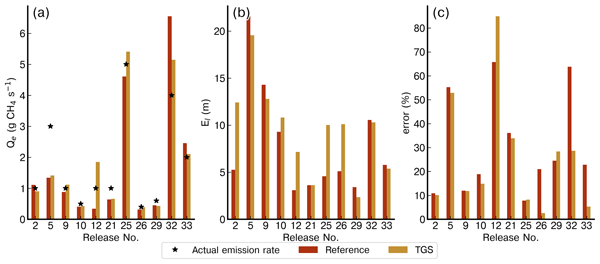
Rodrigo Rivera-Martinez, Pramod Kumar, Olivier Laurent, Gregoire Broquet, Christopher Caldow, Ford Cropley, Diego Santaren, Adil Shah, Cécile Mallet, Michel Ramonet, Leonard Rivier, Catherine Juery, Olivier Duclaux, Caroline Bouchet, Elisa Allegrini, Hervé Utard, and Philippe Ciais
Atmos. Meas. Tech., 17, 4257–4290, https://doi.org/10.5194/amt-17-4257-2024, https://doi.org/10.5194/amt-17-4257-2024, 2024
Short summary
Short summary
We explore the use of metal oxide semiconductors (MOSs) as a low-cost alternative for detecting and measuring CH4 emissions from industrial facilities. MOSs were exposed to several controlled releases to test their accuracy in detecting and quantifying emissions. Two reconstruction models were compared, and emission estimates were computed using a Gaussian dispersion model. Findings show that MOSs can provide accurate emission estimates with a 25 % emission rate error and a 9.5 m location error.
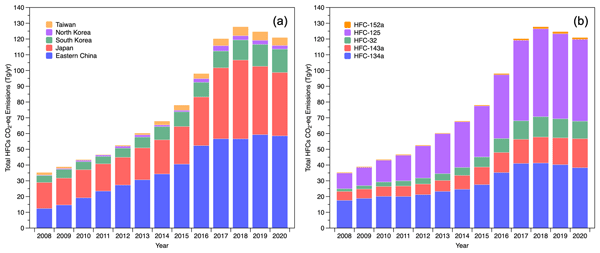
Haklim Choi, Alison L. Redington, Hyeri Park, Jooil Kim, Rona L. Thompson, Jens Mühle, Peter K. Salameh, Christina M. Harth, Ray F. Weiss, Alistair J. Manning, and Sunyoung Park
Atmos. Chem. Phys., 24, 7309–7330, https://doi.org/10.5194/acp-24-7309-2024, https://doi.org/10.5194/acp-24-7309-2024, 2024
Short summary
Short summary
We analyzed with an inversion model the atmospheric abundance of hydrofluorocarbons (HFCs), potent greenhouse gases, from 2008 to 2020 at Gosan station in South Korea and revealed a significant increase in emissions, especially from eastern China and Japan. This increase contradicts reported data, underscoring the need for accurate monitoring and reporting. Our findings are crucial for understanding and managing global HFCs emissions, highlighting the importance of efforts to reduce HFCs.
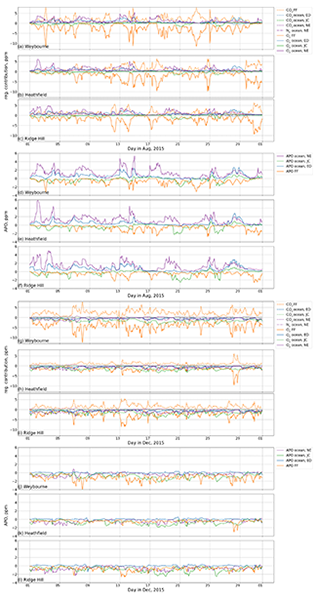
Hannah Chawner, Eric Saboya, Karina E. Adcock, Tim Arnold, Yuri Artioli, Caroline Dylag, Grant L. Forster, Anita Ganesan, Heather Graven, Gennadi Lessin, Peter Levy, Ingrid T. Luijkx, Alistair Manning, Penelope A. Pickers, Chris Rennick, Christian Rödenbeck, and Matthew Rigby
Atmos. Chem. Phys., 24, 4231–4252, https://doi.org/10.5194/acp-24-4231-2024, https://doi.org/10.5194/acp-24-4231-2024, 2024
Short summary
Short summary
The quantity of atmospheric potential oxygen (APO), derived from coincident measurements of carbon dioxide (CO2) and oxygen (O2), has been proposed as a tracer for fossil fuel CO2 emissions. In this model sensitivity study, we examine the use of APO for this purpose in the UK and compare our model to observations. We find that our model simulations are most sensitive to uncertainties relating to ocean fluxes and boundary conditions.
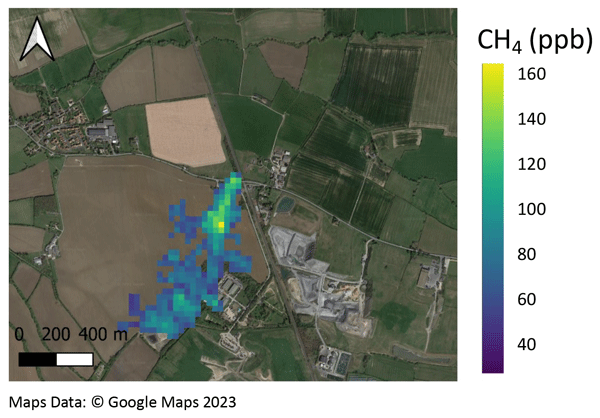
Emily Dowd, Alistair J. Manning, Bryn Orth-Lashley, Marianne Girard, James France, Rebecca E. Fisher, Dave Lowry, Mathias Lanoisellé, Joseph R. Pitt, Kieran M. Stanley, Simon O'Doherty, Dickon Young, Glen Thistlethwaite, Martyn P. Chipperfield, Emanuel Gloor, and Chris Wilson
Atmos. Meas. Tech., 17, 1599–1615, https://doi.org/10.5194/amt-17-1599-2024, https://doi.org/10.5194/amt-17-1599-2024, 2024
Short summary
Short summary
We provide the first validation of the satellite-derived emission estimates using surface-based mobile greenhouse gas surveys of an active gas leak detected near Cheltenham, UK. GHGSat’s emission estimates broadly agree with the surface-based mobile survey and steps were taken to fix the leak, highlighting the importance of satellite data in identifying emissions and helping to reduce our human impact on climate change.
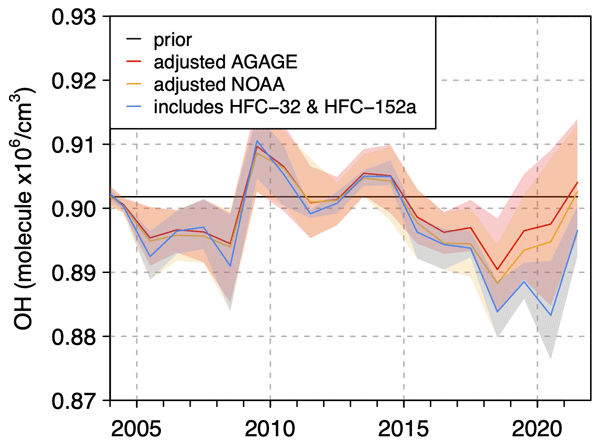
Rona L. Thompson, Stephen A. Montzka, Martin K. Vollmer, Jgor Arduini, Molly Crotwell, Paul B. Krummel, Chris Lunder, Jens Mühle, Simon O'Doherty, Ronald G. Prinn, Stefan Reimann, Isaac Vimont, Hsiang Wang, Ray F. Weiss, and Dickon Young
Atmos. Chem. Phys., 24, 1415–1427, https://doi.org/10.5194/acp-24-1415-2024, https://doi.org/10.5194/acp-24-1415-2024, 2024
Short summary
Short summary
The hydroxyl radical determines the atmospheric lifetimes of numerous species including methane. Since OH is very short-lived, it is not possible to directly measure its concentration on scales relevant for understanding its effect on other species. Here, OH is inferred by looking at changes in hydrofluorocarbons (HFCs). We find that OH levels have been fairly stable over our study period (2004 to 2021), suggesting that OH is not the main driver of the recent increase in atmospheric methane.
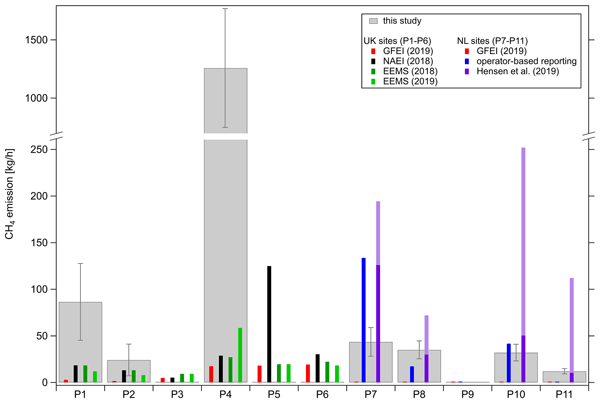
Magdalena Pühl, Anke Roiger, Alina Fiehn, Alan M. Gorchov Negron, Eric A. Kort, Stefan Schwietzke, Ignacio Pisso, Amy Foulds, James Lee, James L. France, Anna E. Jones, Dave Lowry, Rebecca E. Fisher, Langwen Huang, Jacob Shaw, Prudence Bateson, Stephen Andrews, Stuart Young, Pamela Dominutti, Tom Lachlan-Cope, Alexandra Weiss, and Grant Allen
Atmos. Chem. Phys., 24, 1005–1024, https://doi.org/10.5194/acp-24-1005-2024, https://doi.org/10.5194/acp-24-1005-2024, 2024
Short summary
Short summary
In April–May 2019 we carried out an airborne field campaign in the southern North Sea with the aim of studying methane emissions of offshore gas installations. We determined methane emissions from elevated methane measured downstream of the sampled installations. We compare our measured methane emissions with estimated methane emissions from national and global annual inventories. As a result, we find inconsistencies of inventories and large discrepancies between measurements and inventories.
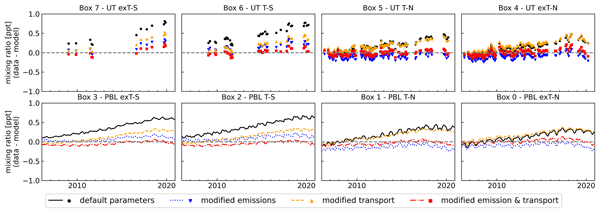
Tanja J. Schuck, Johannes Degen, Eric Hintsa, Peter Hoor, Markus Jesswein, Timo Keber, Daniel Kunkel, Fred Moore, Florian Obersteiner, Matt Rigby, Thomas Wagenhäuser, Luke M. Western, Andreas Zahn, and Andreas Engel
Atmos. Chem. Phys., 24, 689–705, https://doi.org/10.5194/acp-24-689-2024, https://doi.org/10.5194/acp-24-689-2024, 2024
Short summary
Short summary
We study the interhemispheric gradient of sulfur hexafluoride (SF6), a strong long-lived greenhouse gas. Its emissions are stronger in the Northern Hemisphere; therefore, mixing ratios in the Southern Hemisphere lag behind. Comparing the observations to a box model, the model predicts air in the Southern Hemisphere to be older. For a better agreement, the emissions used as model input need to be increased (and their spatial pattern changed), and we need to modify north–south transport.
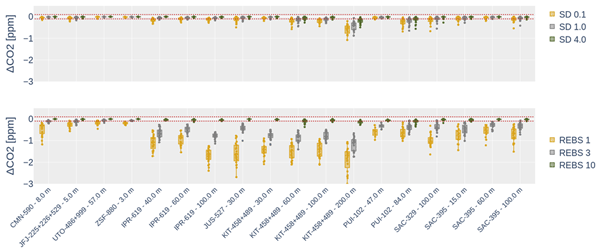
Paolo Cristofanelli, Cosimo Fratticioli, Lynn Hazan, Mali Chariot, Cedric Couret, Orestis Gazetas, Dagmar Kubistin, Antti Laitinen, Ari Leskinen, Tuomas Laurila, Matthias Lindauer, Giovanni Manca, Michel Ramonet, Pamela Trisolino, and Martin Steinbacher
Atmos. Meas. Tech., 16, 5977–5994, https://doi.org/10.5194/amt-16-5977-2023, https://doi.org/10.5194/amt-16-5977-2023, 2023
Short summary
Short summary
We investigated the application of two automatic methods for detecting spikes due to local emissions in greenhouse gas (GHG) observations at a subset of sites from the ICOS Atmosphere network. We analysed the sensitivity to the spike frequency of using different methods and settings. We documented the impact of the de-spiking on different temporal aggregations (i.e. hourly, monthly and seasonal averages) of CO2, CH4 and CO 1 min time series.
Douglas E. J. Worthy, Michele K. Rauh, Lin Huang, Felix R. Vogel, Alina Chivulescu, Kenneth A. Masarie, Ray L. Langenfelds, Paul B. Krummel, Colin E. Allison, Andrew M. Crotwell, Monica Madronich, Gabrielle Pétron, Ingeborg Levin, Samuel Hammer, Sylvia Michel, Michel Ramonet, Martina Schmidt, Armin Jordan, Heiko Moossen, Michael Rothe, Ralph Keeling, and Eric J. Morgan
Atmos. Meas. Tech., 16, 5909–5935, https://doi.org/10.5194/amt-16-5909-2023, https://doi.org/10.5194/amt-16-5909-2023, 2023
Short summary
Short summary
Network compatibility is important for inferring greenhouse gas fluxes at global or regional scales. This study is the first assessment of the measurement agreement among seven individual programs within the World Meteorological Organization community. It compares co-located flask air measurements at the Alert Observatory in Canada over a 17-year period. The results provide stronger confidence in the uncertainty estimation while using those datasets in various data interpretation applications.
Karina E. Adcock, Penelope A. Pickers, Andrew C. Manning, Grant L. Forster, Leigh S. Fleming, Thomas Barningham, Philip A. Wilson, Elena A. Kozlova, Marica Hewitt, Alex J. Etchells, and Andy J. Macdonald
Earth Syst. Sci. Data, 15, 5183–5206, https://doi.org/10.5194/essd-15-5183-2023, https://doi.org/10.5194/essd-15-5183-2023, 2023
Short summary
Short summary
We present a 12-year time series of continuous atmospheric measurements of O2 and CO2 at the Weybourne Atmospheric Observatory in the United Kingdom. These measurements are combined into the term atmospheric potential oxygen (APO), a tracer that is not influenced by land biosphere processes. The datasets show a long-term increasing trend in CO2 and decreasing trends in O2 and APO between 2010 and 2021.
Robert Woodward-Massey, Roberto Sommariva, Lisa K. Whalley, Danny R. Cryer, Trevor Ingham, William J. Bloss, Stephen M. Ball, Sam Cox, James D. Lee, Chris P. Reed, Leigh R. Crilley, Louisa J. Kramer, Brian J. Bandy, Grant L. Forster, Claire E. Reeves, Paul S. Monks, and Dwayne E. Heard
Atmos. Chem. Phys., 23, 14393–14424, https://doi.org/10.5194/acp-23-14393-2023, https://doi.org/10.5194/acp-23-14393-2023, 2023
Short summary
Short summary
Measurements of OH, HO2 and RO2 radicals and also OH reactivity were made at a UK coastal site and compared to calculations from a constrained box model utilising the Master Chemical Mechanism. The model agreement displayed a strong dependence on the NO concentration. An experimental budget analysis for OH, HO2, RO2 and total ROx demonstrated significant imbalances between HO2 and RO2 production rates. Ozone production rates were calculated from measured radicals and compared to modelled values.
Ioannis Katharopoulos, Dominique Rust, Martin K. Vollmer, Dominik Brunner, Stefan Reimann, Simon J. O'Doherty, Dickon Young, Kieran M. Stanley, Tanja Schuck, Jgor Arduini, Lukas Emmenegger, and Stephan Henne
Atmos. Chem. Phys., 23, 14159–14186, https://doi.org/10.5194/acp-23-14159-2023, https://doi.org/10.5194/acp-23-14159-2023, 2023
Short summary
Short summary
The effectiveness of climate change mitigation needs to be scrutinized by monitoring greenhouse gas (GHG) emissions. Countries report their emissions to the UN in a bottom-up manner. By combining atmospheric observations and transport models someone can independently validate emission estimates in a top-down fashion. We report Swiss emissions of synthetic GHGs based on kilometer-scale transport and inverse modeling, highlighting the role of appropriate resolution in complex terrain.
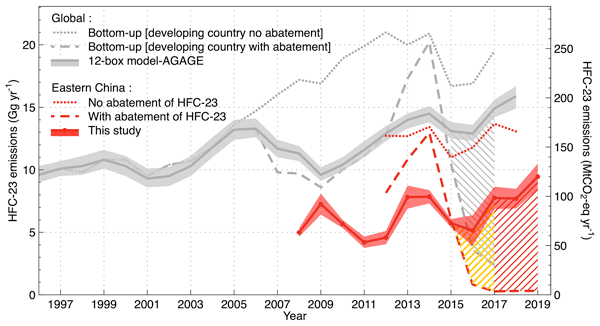
Hyeri Park, Jooil Kim, Haklim Choi, Sohyeon Geum, Yeaseul Kim, Rona L. Thompson, Jens Mühle, Peter K. Salameh, Christina M. Harth, Kieran M. Stanley, Simon O'Doherty, Paul J. Fraser, Peter G. Simmonds, Paul B. Krummel, Ray F. Weiss, Ronald G. Prinn, and Sunyoung Park
Atmos. Chem. Phys., 23, 9401–9411, https://doi.org/10.5194/acp-23-9401-2023, https://doi.org/10.5194/acp-23-9401-2023, 2023
Short summary
Short summary
Based on atmospheric HFC-23 observations, the first estimate of post-CDM HFC-23 emissions in eastern Asia for 2008–2019 shows that these emissions contribute significantly to the global emissions rise. The observation-derived emissions were much larger than the bottom-up estimates expected to approach zero after 2015 due to national abatement activities. These discrepancies could be attributed to unsuccessful factory-level HFC-23 abatement and inaccurate quantification of emission reductions.
Sara M. Defratyka, James L. France, Rebecca E. Fisher, Dave Lowry, Julianne M. Fernandez, Semra Bakkaloglu, Camille Yver-Kwok, Jean-Daniel Paris, Philippe Bousquet, Tim Arnold, Chris Rennick, Jon Helmore, Nigel Yarrow, and Euan G. Nisbet
EGUsphere, https://doi.org/10.5194/egusphere-2023-1490, https://doi.org/10.5194/egusphere-2023-1490, 2023
Preprint archived
Short summary
Short summary
We are focused on verification of δ13CH4 measurements in near-source conditions and we have provided an insight into the impact of chosen calculation methods for determined isotopic signatures. Our study offers a step forward for establishing an unified, robust, and reliable analytical technique to determine δ13CH4 of methane sources. Our recommended analytical approach reduces biases and uncertainties coming from measurement conditions, data clustering and various available fitting methods.
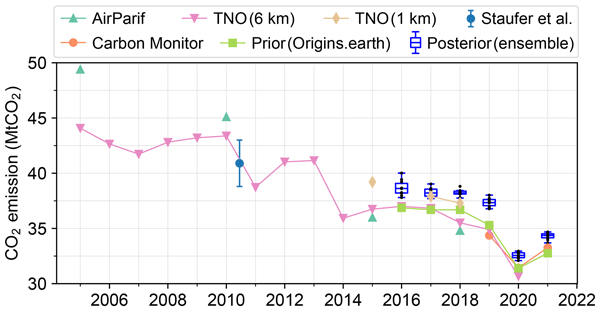
Jinghui Lian, Thomas Lauvaux, Hervé Utard, François-Marie Bréon, Grégoire Broquet, Michel Ramonet, Olivier Laurent, Ivonne Albarus, Mali Chariot, Simone Kotthaus, Martial Haeffelin, Olivier Sanchez, Olivier Perrussel, Hugo Anne Denier van der Gon, Stijn Nicolaas Camiel Dellaert, and Philippe Ciais
Atmos. Chem. Phys., 23, 8823–8835, https://doi.org/10.5194/acp-23-8823-2023, https://doi.org/10.5194/acp-23-8823-2023, 2023
Short summary
Short summary
This study quantifies urban CO2 emissions via an atmospheric inversion for the Paris metropolitan area over a 6-year period from 2016 to 2021. Results show a long-term decreasing trend of about 2 % ± 0.6 % per year in the annual CO2 emissions over Paris. We conclude that our current capacity can deliver near-real-time CO2 emission estimates at the city scale in under a month, and the results agree within 10 % with independent estimates from multiple city-scale inventories.
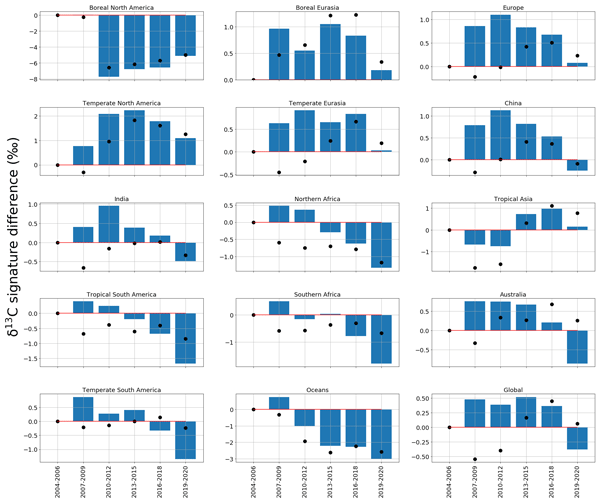
Alice Drinkwater, Paul I. Palmer, Liang Feng, Tim Arnold, Xin Lan, Sylvia E. Michel, Robert Parker, and Hartmut Boesch
Atmos. Chem. Phys., 23, 8429–8452, https://doi.org/10.5194/acp-23-8429-2023, https://doi.org/10.5194/acp-23-8429-2023, 2023
Short summary
Short summary
Changes in atmospheric methane over the last few decades are largely unexplained. Previous studies have proposed different hypotheses to explain short-term changes in atmospheric methane. We interpret observed changes in atmospheric methane and stable isotope source signatures (2004–2020). We argue that changes over this period are part of a large-scale shift from high-northern-latitude thermogenic energy emissions to tropical biogenic emissions, particularly from North Africa and South America.
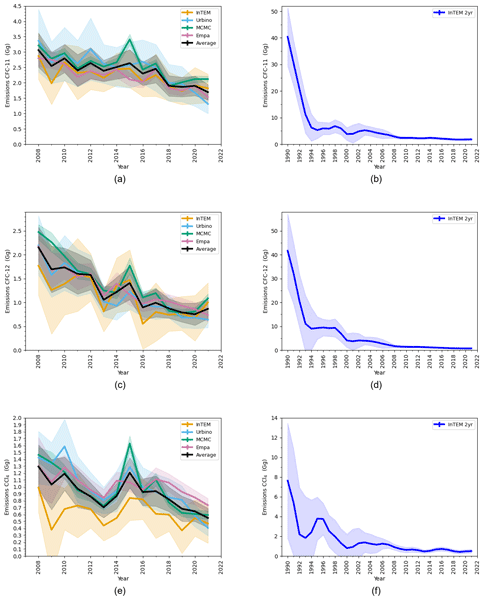
Alison L. Redington, Alistair J. Manning, Stephan Henne, Francesco Graziosi, Luke M. Western, Jgor Arduini, Anita L. Ganesan, Christina M. Harth, Michela Maione, Jens Mühle, Simon O'Doherty, Joseph Pitt, Stefan Reimann, Matthew Rigby, Peter K. Salameh, Peter G. Simmonds, T. Gerard Spain, Kieran Stanley, Martin K. Vollmer, Ray F. Weiss, and Dickon Young
Atmos. Chem. Phys., 23, 7383–7398, https://doi.org/10.5194/acp-23-7383-2023, https://doi.org/10.5194/acp-23-7383-2023, 2023
Short summary
Short summary
Chlorofluorocarbons (CFCs) were used in Europe pre-1990, damaging the stratospheric ozone layer. Legislation has controlled production and use, and global emissions have decreased sharply. The global rate of decline in CFC-11 recently slowed and was partly attributed to illegal emission in eastern China. This study concludes that emissions of CFC-11 in western Europe have not contributed to the unexplained part of the global increase in CFC-11 observed in the last decade.
Emily Dowd, Chris Wilson, Martyn P. Chipperfield, Emanuel Gloor, Alistair Manning, and Ruth Doherty
Atmos. Chem. Phys., 23, 7363–7382, https://doi.org/10.5194/acp-23-7363-2023, https://doi.org/10.5194/acp-23-7363-2023, 2023
Short summary
Short summary
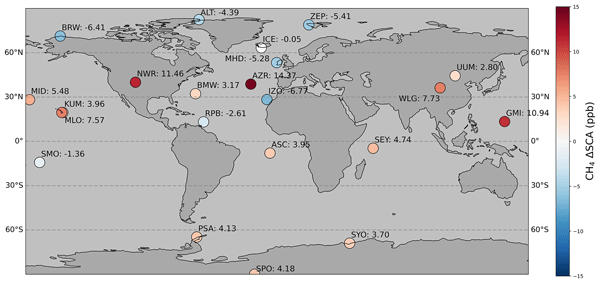
Surface observations of methane show that the seasonal cycle amplitude (SCA) of methane is decreasing in the northern high latitudes (NHLs) but increased globally (1995–2020). The NHL decrease is counterintuitive, as we expect the SCA to increase with increasing concentrations. We use a chemical transport model to investigate changes in SCA in the NHLs. We find well-mixed methane and changes in emissions from Canada, the Middle East, and Europe are the largest contributors to the SCA in NHLs.
Rodrigo Andres Rivera Martinez, Diego Santaren, Olivier Laurent, Gregoire Broquet, Ford Cropley, Cécile Mallet, Michel Ramonet, Adil Shah, Leonard Rivier, Caroline Bouchet, Catherine Juery, Olivier Duclaux, and Philippe Ciais
Atmos. Meas. Tech., 16, 2209–2235, https://doi.org/10.5194/amt-16-2209-2023, https://doi.org/10.5194/amt-16-2209-2023, 2023
Short summary
Short summary
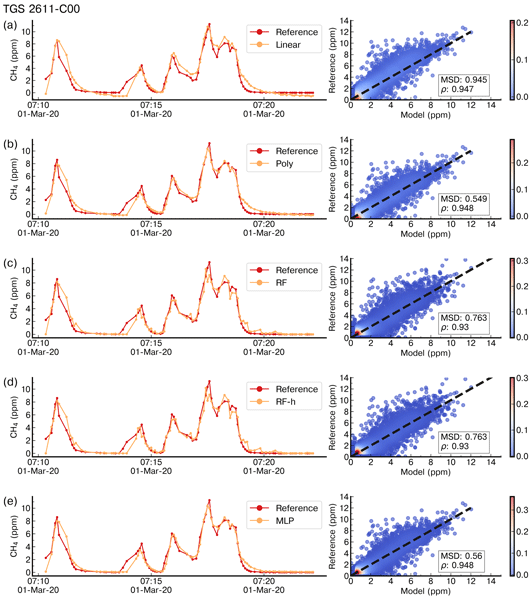
A network of low-cost sensors is a good alternative to improve the detection of fugitive CH4 emissions. We present the results of four tests conducted with two types of Figaro sensors that were assembled on four chambers in a laboratory experiment: a comparison of five models to reconstruct the CH4 signal, a strategy to reduce the training set size, a detection of age effects in the sensors and a test of the capability to transfer a model between chambers for the same type of sensor.
Elena Fillola, Raul Santos-Rodriguez, Alistair Manning, Simon O'Doherty, and Matt Rigby
Geosci. Model Dev., 16, 1997–2009, https://doi.org/10.5194/gmd-16-1997-2023, https://doi.org/10.5194/gmd-16-1997-2023, 2023
Short summary
Short summary
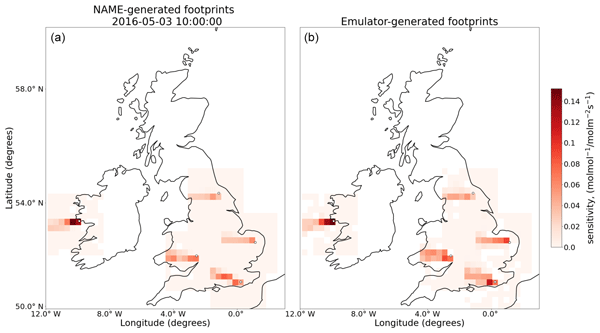
Lagrangian particle dispersion models are used extensively for the estimation of greenhouse gas (GHG) fluxes using atmospheric observations. However, these models do not scale well as data volumes increase. Here, we develop a proof-of-concept machine learning emulator that can produce outputs similar to those of the dispersion model, but 50 000 times faster, using only meteorological inputs. This works demonstrates the potential of machine learning to accelerate GHG estimations across the globe.
Anna Agustí-Panareda, Jérôme Barré, Sébastien Massart, Antje Inness, Ilse Aben, Melanie Ades, Bianca C. Baier, Gianpaolo Balsamo, Tobias Borsdorff, Nicolas Bousserez, Souhail Boussetta, Michael Buchwitz, Luca Cantarello, Cyril Crevoisier, Richard Engelen, Henk Eskes, Johannes Flemming, Sébastien Garrigues, Otto Hasekamp, Vincent Huijnen, Luke Jones, Zak Kipling, Bavo Langerock, Joe McNorton, Nicolas Meilhac, Stefan Noël, Mark Parrington, Vincent-Henri Peuch, Michel Ramonet, Miha Razinger, Maximilian Reuter, Roberto Ribas, Martin Suttie, Colm Sweeney, Jérôme Tarniewicz, and Lianghai Wu
Atmos. Chem. Phys., 23, 3829–3859, https://doi.org/10.5194/acp-23-3829-2023, https://doi.org/10.5194/acp-23-3829-2023, 2023
Short summary
Short summary
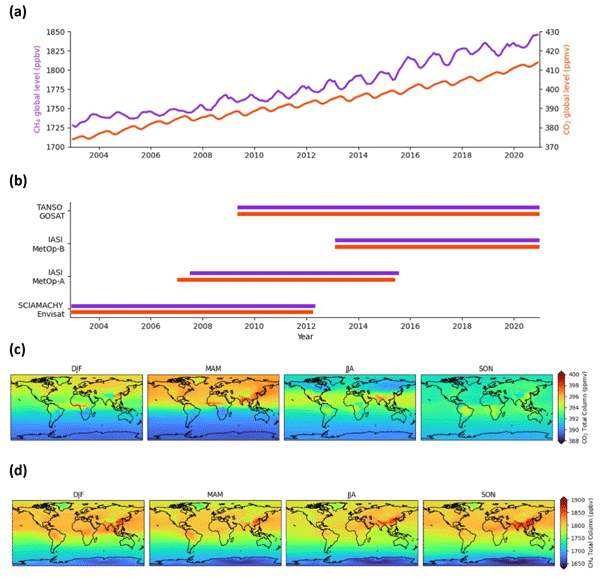
We present a global dataset of atmospheric CO2 and CH4, the two most important human-made greenhouse gases, which covers almost 2 decades (2003–2020). It is produced by combining satellite data of CO2 and CH4 with a weather and air composition prediction model, and it has been carefully evaluated against independent observations to ensure validity and point out deficiencies to the user. This dataset can be used for scientific studies in the field of climate change and the global carbon cycle.
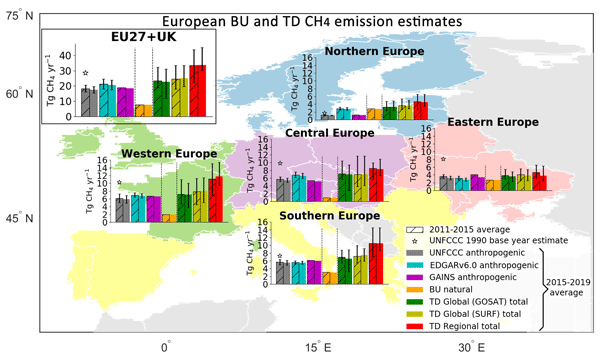
Ana Maria Roxana Petrescu, Chunjing Qiu, Matthew J. McGrath, Philippe Peylin, Glen P. Peters, Philippe Ciais, Rona L. Thompson, Aki Tsuruta, Dominik Brunner, Matthias Kuhnert, Bradley Matthews, Paul I. Palmer, Oksana Tarasova, Pierre Regnier, Ronny Lauerwald, David Bastviken, Lena Höglund-Isaksson, Wilfried Winiwarter, Giuseppe Etiope, Tuula Aalto, Gianpaolo Balsamo, Vladislav Bastrikov, Antoine Berchet, Patrick Brockmann, Giancarlo Ciotoli, Giulia Conchedda, Monica Crippa, Frank Dentener, Christine D. Groot Zwaaftink, Diego Guizzardi, Dirk Günther, Jean-Matthieu Haussaire, Sander Houweling, Greet Janssens-Maenhout, Massaer Kouyate, Adrian Leip, Antti Leppänen, Emanuele Lugato, Manon Maisonnier, Alistair J. Manning, Tiina Markkanen, Joe McNorton, Marilena Muntean, Gabriel D. Oreggioni, Prabir K. Patra, Lucia Perugini, Isabelle Pison, Maarit T. Raivonen, Marielle Saunois, Arjo J. Segers, Pete Smith, Efisio Solazzo, Hanqin Tian, Francesco N. Tubiello, Timo Vesala, Guido R. van der Werf, Chris Wilson, and Sönke Zaehle
Earth Syst. Sci. Data, 15, 1197–1268, https://doi.org/10.5194/essd-15-1197-2023, https://doi.org/10.5194/essd-15-1197-2023, 2023
Short summary
Short summary
This study updates the state-of-the-art scientific overview of CH4 and N2O emissions in the EU27 and UK in Petrescu et al. (2021a). Yearly updates are needed to improve the different respective approaches and to inform on the development of formal verification systems. It integrates the most recent emission inventories, process-based model and regional/global inversions, comparing them with UNFCCC national GHG inventories, in support to policy to facilitate real-time verification procedures.
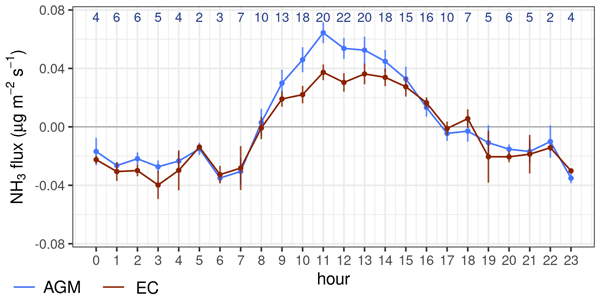
Daan Swart, Jun Zhang, Shelley van der Graaf, Susanna Rutledge-Jonker, Arjan Hensen, Stijn Berkhout, Pascal Wintjen, René van der Hoff, Marty Haaima, Arnoud Frumau, Pim van den Bulk, Ruben Schulte, Margreet van Zanten, and Thomas van Goethem
Atmos. Meas. Tech., 16, 529–546, https://doi.org/10.5194/amt-16-529-2023, https://doi.org/10.5194/amt-16-529-2023, 2023
Short summary
Short summary
During a 5-week comparison campaign, we tested two set-ups to measure half hourly ammonia fluxes. The eddy covariance and flux gradient systems showed very similar results when the upwind terrain was both homogeneous and free of obstacles. We discuss the technical performance and practical limitations of both systems. Measurements from these instruments can facilitate the study of processes behind ammonia deposition, an important contributor to eutrophication and acidificationin natural areas.

Leigh S. Fleming, Andrew C. Manning, Penelope A. Pickers, Grant L. Forster, and Alex J. Etchells
Atmos. Meas. Tech., 16, 387–401, https://doi.org/10.5194/amt-16-387-2023, https://doi.org/10.5194/amt-16-387-2023, 2023
Short summary
Short summary
Measurements of atmospheric O2 can help constrain the carbon cycle processes and quantify fossil fuel CO2 emissions; however, measurement of atmospheric O2 is very challenging, and existing analysers are complex systems to build and maintain. We have tested a new O2 analyser (Picarro Inc. G2207-i) in the laboratory and at Weybourne Atmospheric Observatory. We have found that the G2207-i does not perform as well as an existing O2 analyser from Sable Systems Inc.
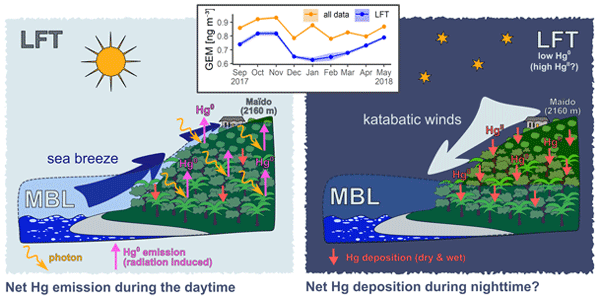
Alkuin M. Koenig, Olivier Magand, Bert Verreyken, Jerome Brioude, Crist Amelynck, Niels Schoon, Aurélie Colomb, Beatriz Ferreira Araujo, Michel Ramonet, Mahesh K. Sha, Jean-Pierre Cammas, Jeroen E. Sonke, and Aurélien Dommergue
Atmos. Chem. Phys., 23, 1309–1328, https://doi.org/10.5194/acp-23-1309-2023, https://doi.org/10.5194/acp-23-1309-2023, 2023
Short summary
Short summary
The global distribution of mercury, a potent neurotoxin, depends on atmospheric transport, chemistry, and interactions between the Earth’s surface and the air. Our understanding of these processes is still hampered by insufficient observations. Here, we present new data from a mountain observatory in the Southern Hemisphere. We give insights into mercury concentrations in air masses coming from aloft, and we show that tropical mountain vegetation may be a daytime source of mercury to the air.
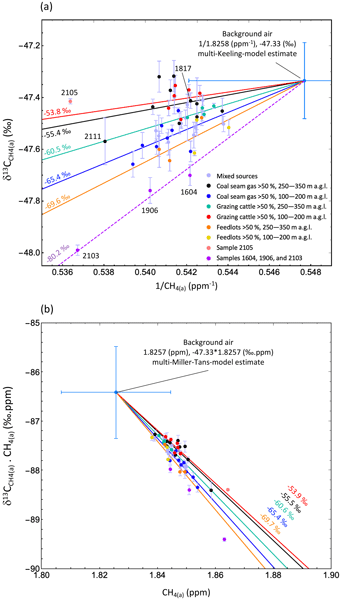
Bryce F. J. Kelly, Xinyi Lu, Stephen J. Harris, Bruno G. Neininger, Jorg M. Hacker, Stefan Schwietzke, Rebecca E. Fisher, James L. France, Euan G. Nisbet, David Lowry, Carina van der Veen, Malika Menoud, and Thomas Röckmann
Atmos. Chem. Phys., 22, 15527–15558, https://doi.org/10.5194/acp-22-15527-2022, https://doi.org/10.5194/acp-22-15527-2022, 2022
Short summary
Short summary
This study explores using the composition of methane of in-flight atmospheric air samples for greenhouse gas inventory verification. The air samples were collected above one of the largest coal seam gas production regions in the world. Adjacent to these gas fields are coal mines, Australia's largest cattle feedlot, and over 1 million grazing cattle. The results are also used to identify methane mitigation opportunities.
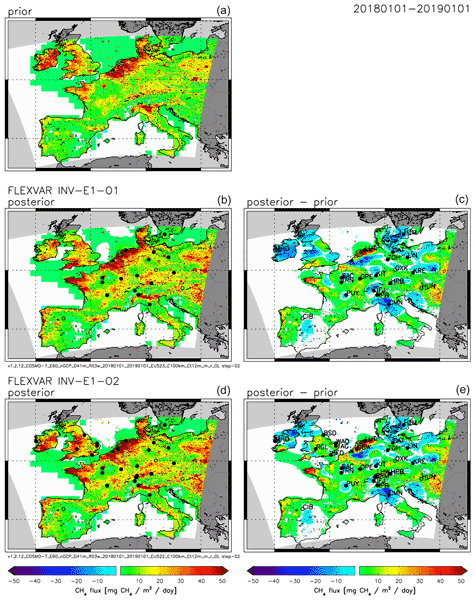
Peter Bergamaschi, Arjo Segers, Dominik Brunner, Jean-Matthieu Haussaire, Stephan Henne, Michel Ramonet, Tim Arnold, Tobias Biermann, Huilin Chen, Sebastien Conil, Marc Delmotte, Grant Forster, Arnoud Frumau, Dagmar Kubistin, Xin Lan, Markus Leuenberger, Matthias Lindauer, Morgan Lopez, Giovanni Manca, Jennifer Müller-Williams, Simon O'Doherty, Bert Scheeren, Martin Steinbacher, Pamela Trisolino, Gabriela Vítková, and Camille Yver Kwok
Atmos. Chem. Phys., 22, 13243–13268, https://doi.org/10.5194/acp-22-13243-2022, https://doi.org/10.5194/acp-22-13243-2022, 2022
Short summary
Short summary
We present a novel high-resolution inverse modelling system, "FLEXVAR", and its application for the inverse modelling of European CH4 emissions in 2018. The new system combines a high spatial resolution of 7 km x 7 km with a variational data assimilation technique, which allows CH4 emissions to be optimized from individual model grid cells. The high resolution allows the observations to be better reproduced, while the derived emissions show overall good consistency with two existing models.
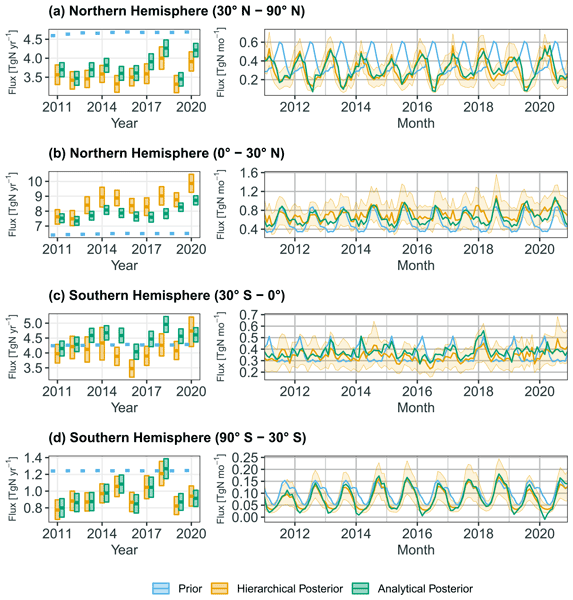
Angharad C. Stell, Michael Bertolacci, Andrew Zammit-Mangion, Matthew Rigby, Paul J. Fraser, Christina M. Harth, Paul B. Krummel, Xin Lan, Manfredi Manizza, Jens Mühle, Simon O'Doherty, Ronald G. Prinn, Ray F. Weiss, Dickon Young, and Anita L. Ganesan
Atmos. Chem. Phys., 22, 12945–12960, https://doi.org/10.5194/acp-22-12945-2022, https://doi.org/10.5194/acp-22-12945-2022, 2022
Short summary
Short summary
Nitrous oxide is a potent greenhouse gas and ozone-depleting substance, whose atmospheric abundance has risen throughout the contemporary record. In this work, we carry out the first global hierarchical Bayesian inversion to solve for nitrous oxide emissions. We derive increasing global nitrous oxide emissions over 2011–2020, which are mainly driven by emissions between 0° and 30°N, with the highest emissions recorded in 2020.
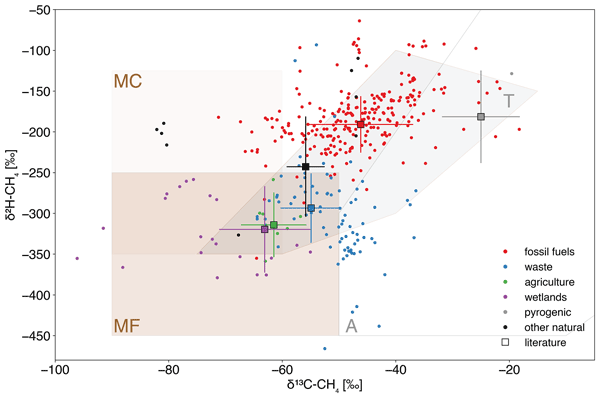
Malika Menoud, Carina van der Veen, Dave Lowry, Julianne M. Fernandez, Semra Bakkaloglu, James L. France, Rebecca E. Fisher, Hossein Maazallahi, Mila Stanisavljević, Jarosław Nęcki, Katarina Vinkovic, Patryk Łakomiec, Janne Rinne, Piotr Korbeń, Martina Schmidt, Sara Defratyka, Camille Yver-Kwok, Truls Andersen, Huilin Chen, and Thomas Röckmann
Earth Syst. Sci. Data, 14, 4365–4386, https://doi.org/10.5194/essd-14-4365-2022, https://doi.org/10.5194/essd-14-4365-2022, 2022
Short summary
Short summary
Emission sources of methane (CH4) can be distinguished with measurements of CH4 stable isotopes. We present new measurements of isotope signatures of various CH4 sources in Europe, mainly anthropogenic, sampled from 2017 to 2020. The present database also contains the most recent update of the global signature dataset from the literature. The dataset improves CH4 source attribution and the understanding of the global CH4 budget.
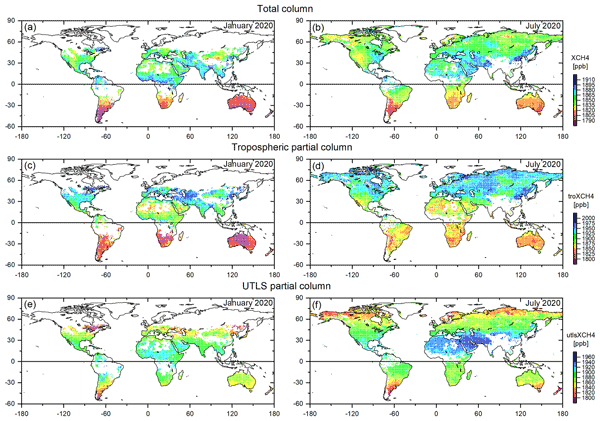
Matthias Schneider, Benjamin Ertl, Qiansi Tu, Christopher J. Diekmann, Farahnaz Khosrawi, Amelie N. Röhling, Frank Hase, Darko Dubravica, Omaira E. García, Eliezer Sepúlveda, Tobias Borsdorff, Jochen Landgraf, Alba Lorente, André Butz, Huilin Chen, Rigel Kivi, Thomas Laemmel, Michel Ramonet, Cyril Crevoisier, Jérome Pernin, Martin Steinbacher, Frank Meinhardt, Kimberly Strong, Debra Wunch, Thorsten Warneke, Coleen Roehl, Paul O. Wennberg, Isamu Morino, Laura T. Iraci, Kei Shiomi, Nicholas M. Deutscher, David W. T. Griffith, Voltaire A. Velazco, and David F. Pollard
Atmos. Meas. Tech., 15, 4339–4371, https://doi.org/10.5194/amt-15-4339-2022, https://doi.org/10.5194/amt-15-4339-2022, 2022
Short summary
Short summary
We present a computationally very efficient method for the synergetic use of level 2 remote-sensing data products. We apply the method to IASI vertical profile and TROPOMI total column space-borne methane observations and thus gain sensitivity for the tropospheric methane partial columns, which is not achievable by the individual use of TROPOMI and IASI. These synergetic effects are evaluated theoretically and empirically by inter-comparisons to independent references of TCCON, AirCore, and GAW.
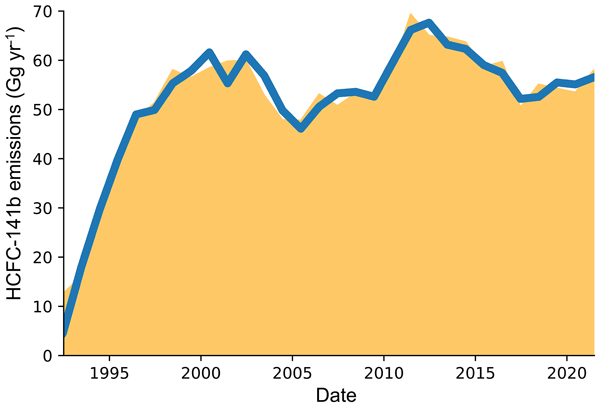
Luke M. Western, Alison L. Redington, Alistair J. Manning, Cathy M. Trudinger, Lei Hu, Stephan Henne, Xuekun Fang, Lambert J. M. Kuijpers, Christina Theodoridi, David S. Godwin, Jgor Arduini, Bronwyn Dunse, Andreas Engel, Paul J. Fraser, Christina M. Harth, Paul B. Krummel, Michela Maione, Jens Mühle, Simon O'Doherty, Hyeri Park, Sunyoung Park, Stefan Reimann, Peter K. Salameh, Daniel Say, Roland Schmidt, Tanja Schuck, Carolina Siso, Kieran M. Stanley, Isaac Vimont, Martin K. Vollmer, Dickon Young, Ronald G. Prinn, Ray F. Weiss, Stephen A. Montzka, and Matthew Rigby
Atmos. Chem. Phys., 22, 9601–9616, https://doi.org/10.5194/acp-22-9601-2022, https://doi.org/10.5194/acp-22-9601-2022, 2022
Short summary
Short summary
The production of ozone-destroying gases is being phased out. Even though production of one of the main ozone-depleting gases, called HCFC-141b, has been declining for many years, the amount that is being released to the atmosphere has been increasing since 2017. We do not know for sure why this is. A possible explanation is that HCFC-141b that was used to make insulating foams many years ago is only now escaping to the atmosphere, or a large part of its production is not being reported.
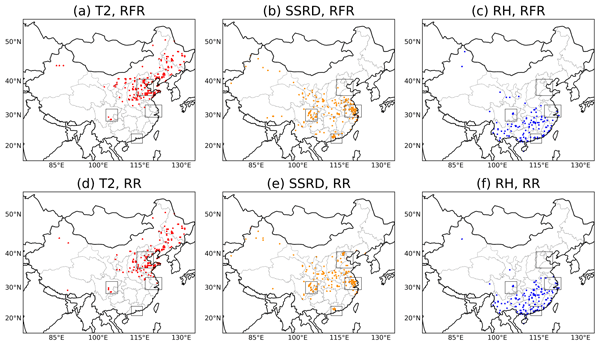
Xiang Weng, Grant L. Forster, and Peer Nowack
Atmos. Chem. Phys., 22, 8385–8402, https://doi.org/10.5194/acp-22-8385-2022, https://doi.org/10.5194/acp-22-8385-2022, 2022
Short summary
Short summary
We use machine learning to quantify the meteorological drivers behind surface ozone variations in China between 2015 and 2019. Our novel approaches show improved performance when compared to previous analysis methods. We highlight that nonlinearity in driver relationships and the impacts of large-scale meteorological phenomena are key to understanding ozone pollution. Moreover, we find that almost half of the observed ozone trend between 2015 and 2019 might have been driven by meteorology.
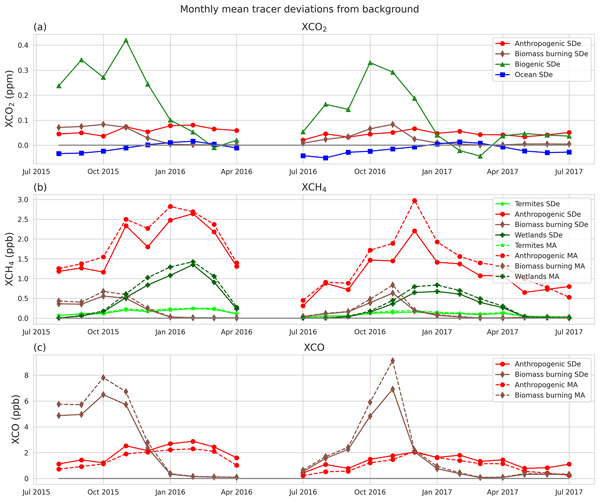
Sieglinde Callewaert, Jérôme Brioude, Bavo Langerock, Valentin Duflot, Dominique Fonteyn, Jean-François Müller, Jean-Marc Metzger, Christian Hermans, Nicolas Kumps, Michel Ramonet, Morgan Lopez, Emmanuel Mahieu, and Martine De Mazière
Atmos. Chem. Phys., 22, 7763–7792, https://doi.org/10.5194/acp-22-7763-2022, https://doi.org/10.5194/acp-22-7763-2022, 2022
Short summary
Short summary
A regional atmospheric transport model is used to analyze the factors contributing to CO2, CH4, and CO observations at Réunion Island. We show that the surface observations are dominated by local fluxes and dynamical processes, while the column data are influenced by larger-scale mechanisms such as biomass burning plumes. The model is able to capture the measured time series well; however, the results are highly dependent on accurate boundary conditions and high-resolution emission inventories.
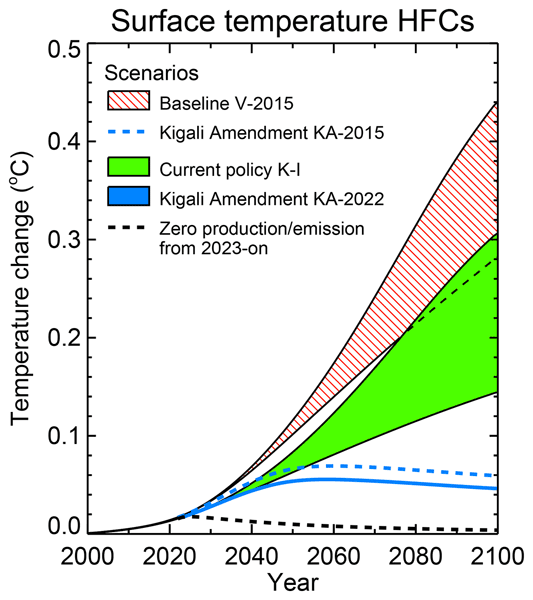
Guus J. M. Velders, John S. Daniel, Stephen A. Montzka, Isaac Vimont, Matthew Rigby, Paul B. Krummel, Jens Muhle, Simon O'Doherty, Ronald G. Prinn, Ray F. Weiss, and Dickon Young
Atmos. Chem. Phys., 22, 6087–6101, https://doi.org/10.5194/acp-22-6087-2022, https://doi.org/10.5194/acp-22-6087-2022, 2022
Short summary
Short summary
The emissions of hydrofluorocarbons (HFCs) have increased significantly in the past as a result of the phasing out of ozone-depleting substances. Observations indicate that HFCs are used much less in certain refrigeration applications than previously projected. Current policies are projected to reduce emissions and the surface temperature contribution of HFCs from 0.28–0.44 °C to 0.14–0.31 °C in 2100. The Kigali Amendment is projected to reduce the contributions further to 0.04 °C in 2100.
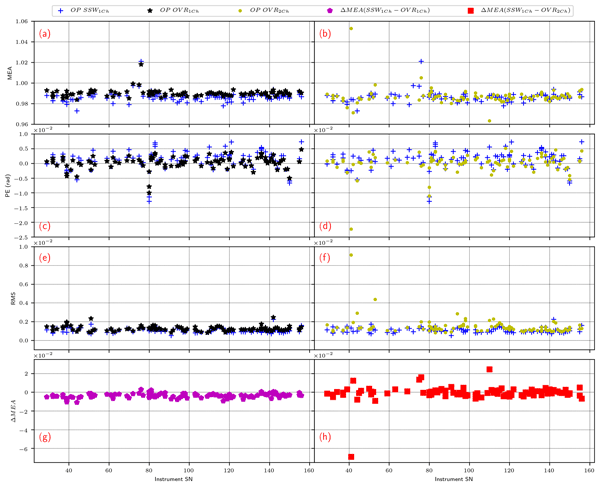
Carlos Alberti, Frank Hase, Matthias Frey, Darko Dubravica, Thomas Blumenstock, Angelika Dehn, Paolo Castracane, Gregor Surawicz, Roland Harig, Bianca C. Baier, Caroline Bès, Jianrong Bi, Hartmut Boesch, André Butz, Zhaonan Cai, Jia Chen, Sean M. Crowell, Nicholas M. Deutscher, Dragos Ene, Jonathan E. Franklin, Omaira García, David Griffith, Bruno Grouiez, Michel Grutter, Abdelhamid Hamdouni, Sander Houweling, Neil Humpage, Nicole Jacobs, Sujong Jeong, Lilian Joly, Nicholas B. Jones, Denis Jouglet, Rigel Kivi, Ralph Kleinschek, Morgan Lopez, Diogo J. Medeiros, Isamu Morino, Nasrin Mostafavipak, Astrid Müller, Hirofumi Ohyama, Paul I. Palmer, Mahesh Pathakoti, David F. Pollard, Uwe Raffalski, Michel Ramonet, Robbie Ramsay, Mahesh Kumar Sha, Kei Shiomi, William Simpson, Wolfgang Stremme, Youwen Sun, Hiroshi Tanimoto, Yao Té, Gizaw Mengistu Tsidu, Voltaire A. Velazco, Felix Vogel, Masataka Watanabe, Chong Wei, Debra Wunch, Marcia Yamasoe, Lu Zhang, and Johannes Orphal
Atmos. Meas. Tech., 15, 2433–2463, https://doi.org/10.5194/amt-15-2433-2022, https://doi.org/10.5194/amt-15-2433-2022, 2022
Short summary
Short summary
Space-borne greenhouse gas missions require ground-based validation networks capable of providing fiducial reference measurements. Here, considerable refinements of the calibration procedures for the COllaborative Carbon Column Observing Network (COCCON) are presented. Laboratory and solar side-by-side procedures for the characterization of the spectrometers have been refined and extended. Revised calibration factors for XCO2, XCO and XCH4 are provided, incorporating 47 new spectrometers.
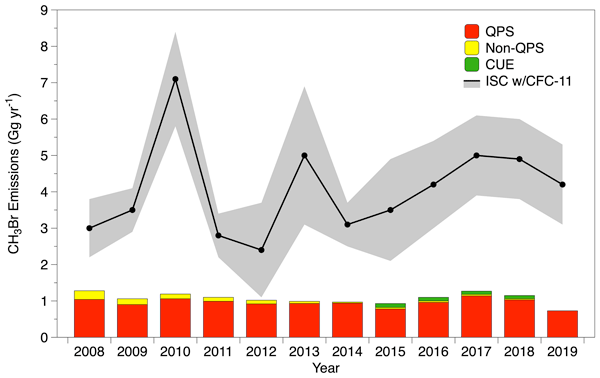
Haklim Choi, Mi-Kyung Park, Paul J. Fraser, Hyeri Park, Sohyeon Geum, Jens Mühle, Jooil Kim, Ian Porter, Peter K. Salameh, Christina M. Harth, Bronwyn L. Dunse, Paul B. Krummel, Ray F. Weiss, Simon O'Doherty, Dickon Young, and Sunyoung Park
Atmos. Chem. Phys., 22, 5157–5173, https://doi.org/10.5194/acp-22-5157-2022, https://doi.org/10.5194/acp-22-5157-2022, 2022
Short summary
Short summary
We observed 12-year continuous CH3Br pollution signals at Gosan and estimated anthropogenic CH3Br emissions in eastern China. The analysis revealed a significant discrepancy between top-down estimates and the bottom-up emissions from the fumigation usage reported to the United Nations Environment Programme, likely due to unreported or inaccurately reported fumigation usage. This result provides information to monitor international compliance with the Montreal Protocol.
Robert Woodward-Massey, Roberto Sommariva, Lisa K. Whalley, Danny R. Cryer, Trevor Ingham, William J1 Bloss, Sam Cox, James D. Lee, Chris P. Reed, Leigh R. Crilley, Louisa J. Kramer, Brian J. Bandy, Grant L. Forster, Claire E. Reeves, Paul S. Monks, and Dwayne E. Heard
Atmos. Chem. Phys. Discuss., https://doi.org/10.5194/acp-2022-207, https://doi.org/10.5194/acp-2022-207, 2022
Preprint withdrawn
Short summary
Short summary
We measured radicals (OH, HO2, RO2) and OH reactivity at a UK coastal site and compared our observations to the predictions of an MCMv3.3.1 box model. We find variable agreement between measured and modelled radical concentrations and OH reactivity, where the levels of agreement for individual species display strong dependences on NO concentrations. The most substantial disagreement is found for RO2 at high NO (> 1 ppbv), when RO2 levels are underpredicted by a factor of ~10–30.
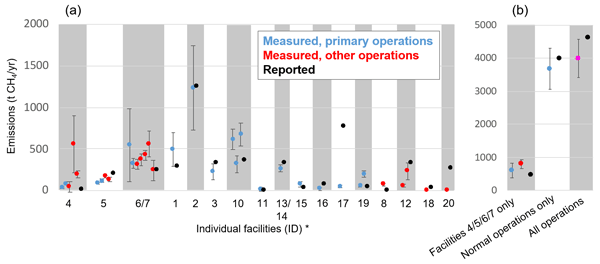
Amy Foulds, Grant Allen, Jacob T. Shaw, Prudence Bateson, Patrick A. Barker, Langwen Huang, Joseph R. Pitt, James D. Lee, Shona E. Wilde, Pamela Dominutti, Ruth M. Purvis, David Lowry, James L. France, Rebecca E. Fisher, Alina Fiehn, Magdalena Pühl, Stéphane J. B. Bauguitte, Stephen A. Conley, Mackenzie L. Smith, Tom Lachlan-Cope, Ignacio Pisso, and Stefan Schwietzke
Atmos. Chem. Phys., 22, 4303–4322, https://doi.org/10.5194/acp-22-4303-2022, https://doi.org/10.5194/acp-22-4303-2022, 2022
Short summary
Short summary
We measured CH4 emissions from 21 offshore oil and gas facilities in the Norwegian Sea in 2019. Measurements compared well with operator-reported emissions but were greatly underestimated when compared with a 2016 global fossil fuel inventory. This study demonstrates the need for up-to-date and accurate inventories for use in research and policy and the important benefits of best-practice reporting methods by operators. Airborne measurements are an effective tool to validate such inventories.
Alice E. Ramsden, Anita L. Ganesan, Luke M. Western, Matthew Rigby, Alistair J. Manning, Amy Foulds, James L. France, Patrick Barker, Peter Levy, Daniel Say, Adam Wisher, Tim Arnold, Chris Rennick, Kieran M. Stanley, Dickon Young, and Simon O'Doherty
Atmos. Chem. Phys., 22, 3911–3929, https://doi.org/10.5194/acp-22-3911-2022, https://doi.org/10.5194/acp-22-3911-2022, 2022
Short summary
Short summary
Quantifying methane emissions from different sources is a key focus of current research. We present a method for estimating sectoral methane emissions that uses ethane as a tracer for fossil fuel methane. By incorporating variable ethane : methane emission ratios into this model, we produce emissions estimates with improved uncertainty characterisation. This method will be particularly useful for studying methane emissions in areas with complex distributions of sources.
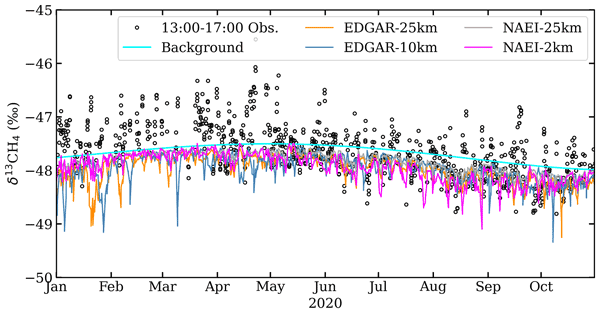
Eric Saboya, Giulia Zazzeri, Heather Graven, Alistair J. Manning, and Sylvia Englund Michel
Atmos. Chem. Phys., 22, 3595–3613, https://doi.org/10.5194/acp-22-3595-2022, https://doi.org/10.5194/acp-22-3595-2022, 2022
Short summary
Short summary
Continuous measurements of atmospheric methane concentrations and its carbon-13 isotope have been made in central London since early 2018. These measurements were used to evaluate methane emissions reported in global and UK-specific emission inventories for the London area. Compared to atmospheric methane measurements from March 2018 to October 2020, both inventories are under-reporting natural gas leakage for the London area.
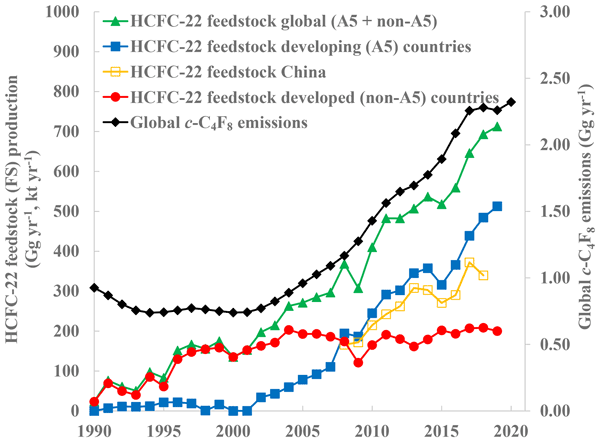
Jens Mühle, Lambert J. M. Kuijpers, Kieran M. Stanley, Matthew Rigby, Luke M. Western, Jooil Kim, Sunyoung Park, Christina M. Harth, Paul B. Krummel, Paul J. Fraser, Simon O'Doherty, Peter K. Salameh, Roland Schmidt, Dickon Young, Ronald G. Prinn, Ray H. J. Wang, and Ray F. Weiss
Atmos. Chem. Phys., 22, 3371–3378, https://doi.org/10.5194/acp-22-3371-2022, https://doi.org/10.5194/acp-22-3371-2022, 2022
Short summary
Short summary
Emissions of the strong greenhouse gas perfluorocyclobutane (c-C4F8) into the atmosphere have been increasing sharply since the early 2000s. These c-C4F8 emissions are highly correlated with the amount of hydrochlorofluorocarbon-22 produced to synthesize polytetrafluoroethylene (known for its non-stick properties) and related chemicals. From this process, c-C4F8 by-product is vented to the atmosphere. Avoiding these unnecessary c-C4F8 emissions could reduce the climate impact of this industry.
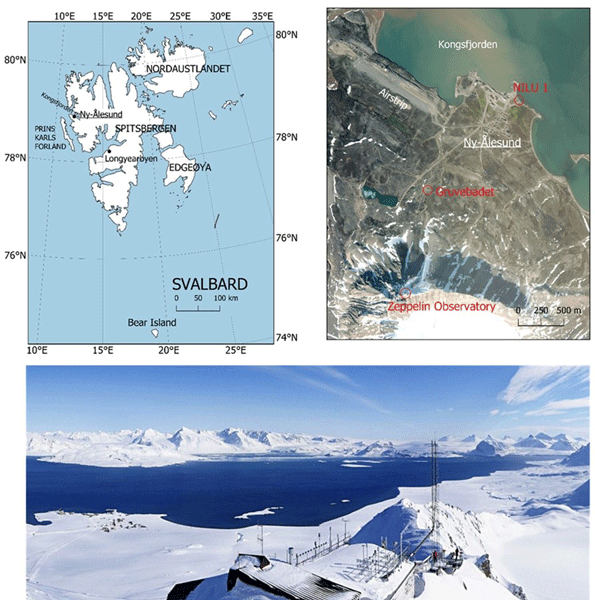
Stephen M. Platt, Øystein Hov, Torunn Berg, Knut Breivik, Sabine Eckhardt, Konstantinos Eleftheriadis, Nikolaos Evangeliou, Markus Fiebig, Rebecca Fisher, Georg Hansen, Hans-Christen Hansson, Jost Heintzenberg, Ove Hermansen, Dominic Heslin-Rees, Kim Holmén, Stephen Hudson, Roland Kallenborn, Radovan Krejci, Terje Krognes, Steinar Larssen, David Lowry, Cathrine Lund Myhre, Chris Lunder, Euan Nisbet, Pernilla B. Nizzetto, Ki-Tae Park, Christina A. Pedersen, Katrine Aspmo Pfaffhuber, Thomas Röckmann, Norbert Schmidbauer, Sverre Solberg, Andreas Stohl, Johan Ström, Tove Svendby, Peter Tunved, Kjersti Tørnkvist, Carina van der Veen, Stergios Vratolis, Young Jun Yoon, Karl Espen Yttri, Paul Zieger, Wenche Aas, and Kjetil Tørseth
Atmos. Chem. Phys., 22, 3321–3369, https://doi.org/10.5194/acp-22-3321-2022, https://doi.org/10.5194/acp-22-3321-2022, 2022
Short summary
Short summary
Here we detail the history of the Zeppelin Observatory, a unique global background site and one of only a few in the high Arctic. We present long-term time series of up to 30 years of atmospheric components and atmospheric transport phenomena. Many of these time series are important to our understanding of Arctic and global atmospheric composition change. Finally, we discuss the future of the Zeppelin Observatory and emerging areas of future research on the Arctic atmosphere.
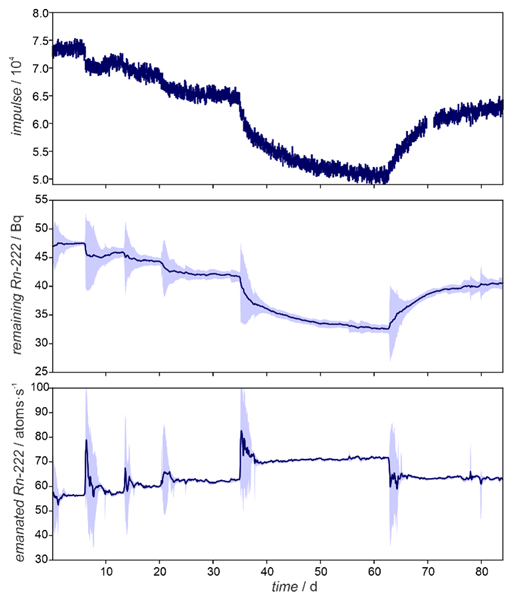
Stefan Röttger, Annette Röttger, Claudia Grossi, Arturo Vargas, Ute Karstens, Giorgia Cinelli, Edward Chung, Dafina Kikaj, Chris Rennick, Florian Mertes, and Ileana Radulescu
Adv. Geosci., 57, 37–47, https://doi.org/10.5194/adgeo-57-37-2022, https://doi.org/10.5194/adgeo-57-37-2022, 2022
Short summary
Short summary
Radon gas is the largest source of public exposure to naturally occurring radioactivity. Radon can also be used, as a tracer to improve indirectly the estimates of greenhouse gases important for supporting successful GHG mitigation strategies.
Both climate and radiation protection research communities need improved traceable low-level atmospheric radon measurements. The EMPIR project 19ENV01 traceRadon started to provide the necessary measurement infrastructure and transfer standards.
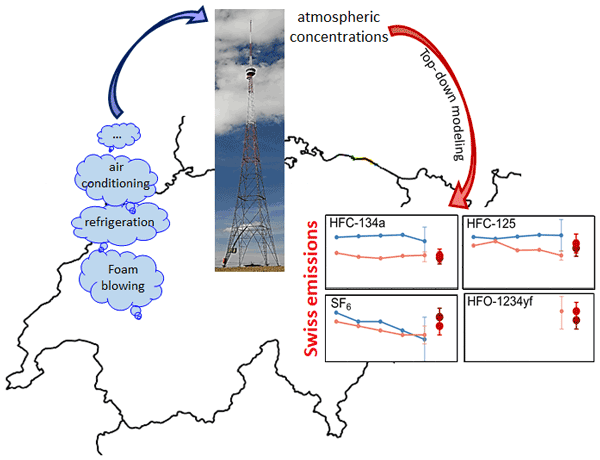
Dominique Rust, Ioannis Katharopoulos, Martin K. Vollmer, Stephan Henne, Simon O'Doherty, Daniel Say, Lukas Emmenegger, Renato Zenobi, and Stefan Reimann
Atmos. Chem. Phys., 22, 2447–2466, https://doi.org/10.5194/acp-22-2447-2022, https://doi.org/10.5194/acp-22-2447-2022, 2022
Short summary
Short summary
Artificial halocarbons contribute to ozone layer depletion and to global warming. We measured the atmospheric concentrations of halocarbons at the Beromünster tower, modelled the Swiss emissions, and compared the results to the internationally reported Swiss emissions inventory. For most of the halocarbons, we found good agreement, whereas one refrigerant might be overestimated in the inventory. In addition, we present first emission estimates of the newest types of halocarbons.
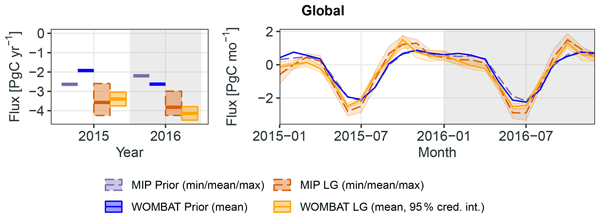
Andrew Zammit-Mangion, Michael Bertolacci, Jenny Fisher, Ann Stavert, Matthew Rigby, Yi Cao, and Noel Cressie
Geosci. Model Dev., 15, 45–73, https://doi.org/10.5194/gmd-15-45-2022, https://doi.org/10.5194/gmd-15-45-2022, 2022
Short summary
Short summary
We present a framework for estimating the sources and sinks (flux) of carbon dioxide from satellite data. The framework is statistical and yields measures of uncertainty alongside all estimates of flux and other parameters in the underlying model. It also allows us to generate other insights, such as the size of errors and biases in the data. The primary aim of this research was to develop a fully statistical flux inversion framework for use by atmospheric scientists.
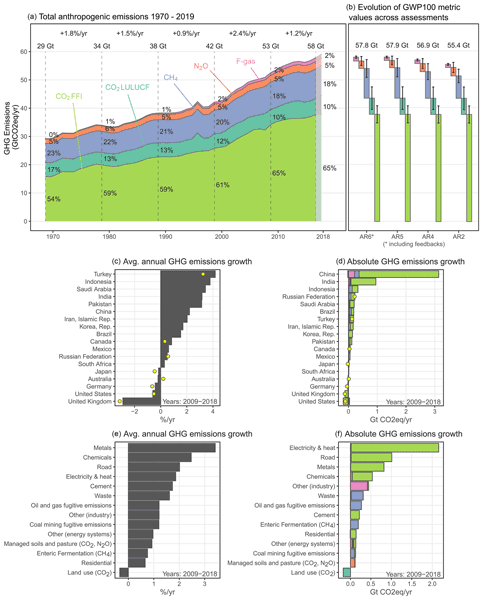
Jan C. Minx, William F. Lamb, Robbie M. Andrew, Josep G. Canadell, Monica Crippa, Niklas Döbbeling, Piers M. Forster, Diego Guizzardi, Jos Olivier, Glen P. Peters, Julia Pongratz, Andy Reisinger, Matthew Rigby, Marielle Saunois, Steven J. Smith, Efisio Solazzo, and Hanqin Tian
Earth Syst. Sci. Data, 13, 5213–5252, https://doi.org/10.5194/essd-13-5213-2021, https://doi.org/10.5194/essd-13-5213-2021, 2021
Short summary
Short summary
We provide a synthetic dataset on anthropogenic greenhouse gas (GHG) emissions for 1970–2018 with a fast-track extension to 2019. We show that GHG emissions continued to rise across all gases and sectors. Annual average GHG emissions growth slowed, but absolute decadal increases have never been higher in human history. We identify a number of data gaps and data quality issues in global inventories and highlight their importance for monitoring progress towards international climate goals.

Mark F. Lunt, Alistair J. Manning, Grant Allen, Tim Arnold, Stéphane J.-B. Bauguitte, Hartmut Boesch, Anita L. Ganesan, Aoife Grant, Carole Helfter, Eiko Nemitz, Simon J. O'Doherty, Paul I. Palmer, Joseph R. Pitt, Chris Rennick, Daniel Say, Kieran M. Stanley, Ann R. Stavert, Dickon Young, and Matt Rigby
Atmos. Chem. Phys., 21, 16257–16276, https://doi.org/10.5194/acp-21-16257-2021, https://doi.org/10.5194/acp-21-16257-2021, 2021
Short summary
Short summary
We present an evaluation of the UK's methane emissions between 2013 and 2020 using a network of tall tower measurement sites. We find emissions that are consistent in both magnitude and trend with the UK's reported emissions, with a declining trend driven by a decrease in emissions from England. The impact of various components of the modelling set-up on these findings are explored through a number of sensitivity studies.
Cited articles
Arias, P., Bellouin, N., Coppola, E., Jones, R., Krinner, G., Marotzke, J., Naik, V., Palmer, M., Plattner, G.-K., Rogelj, J., Rojas, M., Sillmann, J., Storelvmo, T., Thorne, P., Trewin, B., Achuta Rao, K., Adhikary, B., Allan, R., Armour, K., Bala, G., Barimalala, R., Berger, S., Canadell, J., Cassou, C., Cherchi, A., Collins, W., Collins, W., Connors, S., Corti, S., Cruz, F., Dentener, F., Dereczynski, C., Di Luca, A., Diongue Niang, A., Doblas-Reyes, F., Dosio, A., Douville, H., Engelbrecht, F., Eyring, V., Fischer, E., Forster, P., Fox-Kemper, B., Fuglestvedt, J., Fyfe, J., Gillett, N., Goldfarb, L., Gorodetskaya, I., Gutierrez, J., Hamdi, R., Hawkins, E., Hewitt, H., Hope, P., Islam, A., Jones, C., Kaufman, D., Kopp, R., Kosaka, Y., Kossin, J., S., K., Lee, Y.-Y., Li, J., Mauritsen, T., Maycock, T., Meinshausen, M., Min, S.-K., Monteiro, P., Ngo-Duc, T., Otto, F., Pinto, I., Pirani, A., Raghavan, K., Ranasinghe, R., Ruane, A., Ruiz, L., Sallée, J.-B., Samset, B., Sathyendranath, S., Seneviratne, S., Sörensson, A., Szopa, S., Takayabu, I., Tréguier, A.-M., van den Hurk, B., R., V., von Schuckmann, K., Zaehle, S., Zhang, X., and Zickfeld, K.: Technical Summary, In Climate Change 2021: The Physical Science Basis. Contribution of Working Group I to the Sixth Assessment Report of the Intergovernmental Panel on Climate Change, Tech. rep., Intergovernmental Panel on Climate Change, Cambridge, United Kingdom and New York, NY, USA, https://doi.org/10.1017/9781009157896.002, 2021. a
AVENGERS: Attributing and Verifying European and National Greenhouse Gas and Aerosol Emissions and Reconciliation with Statistical Bottom-up Estimates (AVENGERS), https://avengers-project.eu/ (last access: 9 February 2026), 2023. a
Bakkaloglu, S., Lowry, D., Fisher, R. E., France, J. L., and Nisbet, E. G.: Carbon isotopic characterisation and oxidation of UK landfill methane emissions by atmospheric measurements, Waste Manage., 162–175, https://doi.org/10.1016/j.wasman.2021.07.012, 2021. a
Basu, S., Lan, X., Dlugokencky, E., Michel, S., Schwietzke, S., Miller, J. B., Bruhwiler, L., Oh, Y., Tans, P. P., Apadula, F., Gatti, L. V., Jordan, A., Necki, J., Sasakawa, M., Morimoto, S., Di Iorio, T., Lee, H., Arduini, J., and Manca, G.: Estimating emissions of methane consistent with atmospheric measurements of methane and δ13C of methane, Atmos. Chem. Phys., 22, 15351–15377, https://doi.org/10.5194/acp-22-15351-2022, 2022. a
Brand, W. A., Assonov, S. S., and Coplen, T. B.: Correction for the 17O interference in δ(13C) measurements when analyzing CO2 with stable isotope mass spectrometry (IUPAC Technical Report), Pure Appl. Chem., 82, 1719–1733, https://doi.org/10.1351/PAC-REP-09-01-05, 2010. a
Cain, M., Warwick, N. J., Fisher, R. E., Lowry, D., Lanoisellé, M., Nisbet, E. G., France, J., Pitt, J., O'Shea, S., Bower, K. N., Allen, G., Illingworth, S., Manning, A. J., Bauguitte, S., Pisso, I., and Pyle, J. A.: A cautionary tale: A study of a methane enhancement over the North Sea, J. Geophys. Res.-Atmos., 122, 7630–7645, https://doi.org/10.1002/2017JD026626, 2017. a
Crippa, M., Guizzardi, D., Schaaf, E., Monforti-Ferrario, F., Quadrelli, R. Risquez Martin, A., Rossi, S., Vignati, E., Muntean, M., Brandao De Melo, J., Oom, D., Pagani, F., Banja, M., Taghavi-Moharamli, P., Köykkä, J., Grassi, G., Branco, A., and San-Miguel, J.: GHG emissions of all world countries, Publications Office of the European Union, https://doi.org/10.2760/953322, 2023. a
Cui, Y. Y., Henze, D. K., Brioude, J., Angevine, W. M., Liu, Z., Bousserez, N., Guerrette, J., McKeen, S. A., Peischl, J., Yuan, B., Ryerson, T., Frost, G., and Trainer, M.: Inversion Estimates of Lognormally Distributed Methane Emission Rates From the Haynesville‐Bossier Oil and Gas Production Region Using Airborne Measurements, J. Geophys. Res.-Atmos., 124, 3520–3531, https://doi.org/10.1029/2018JD029489, 2019. a
Dasgupta, B., Menoud, M., van der Veen, C., Levin, I., Veidt, C., Moossen, H., Englund Michel, S., Sperlich, P., Morimoto, S., Fujita, R., Umezawa, T., Platt, S., Zwaaftink, C. G., Myhre, C. L., Fisher, R., Lowry, D., Nisbet, E. G., France, J., Woolley Maisch, C., Brailsford, G., Moss, R., Goto, D., Pandey, S., Houweling, S., Warwick, N., and Röckmann, T.: Harmonisation of methane isotope ratio measurements from different laboratories using atmospheric samples, Atmos. Meas. Tech., 18, 6591–6607, https://doi.org/10.5194/amt-18-6591-2025, 2025a. a, b, c
Dasgupta, B., Menoud, M., Van Der Veen, C., Levin, I., Veidt, C., Moossen, H., Englund Michel, S., Sperlich, P., Morimoto, S., Fujita, R., Umezawa, T., Platt, S., Zwaaftink, C. G., Myhre, C. L., Fisher, R., Lowry, D., Nisbet, E. G., France, J., Woolley Maisch, C., Brailsford, G., Moss, R., Goto, D., Pandey, S., Houweling, S., Warwick, N., and Röckmann, T.: Harmonised and offset corrected methane isotopic composition (ch4, 13ch4, d2h_ch4) from high northern and southern latitudes, ICOS, https://doi.org/10.18160/V1Y4-NTK0, 2025b. a, b, c
Drinkwater, A., Palmer, P. I., Feng, L., Arnold, T., Lan, X., Michel, S. E., Parker, R., and Boesch, H.: Atmospheric data support a multi-decadal shift in the global methane budget towards natural tropical emissions, Atmos. Chem. Phys., 23, 8429–8452, https://doi.org/10.5194/acp-23-8429-2023, 2023. a
European Commission, Joint Research Centre (JRC), and the International Energy Agency (IEA): EDGAR (Emissions Database for Global Atmospheric Research) Community GHG Database, comprising IEA-EDGAR CO2, EDGAR CH4, EDGAR N2O, EDGAR F-GASES version 8.0, https://edgar.jrc.ec.europa.eu/report_2023 (last access: 9 February 2026), 2023. a
France, J. L., Cain, M., Fisher, R. E., Lowry, D., Allen, G., O'Shea, S. J., Illingworth, S., Pyle, J., Warwick, N., Jones, B. T., Gallagher, M. W., Bower, K., Le Breton, M., Percival, C., Muller, J., Welpott, A., Bauguitte, S., George, C., Hayman, G. D., Manning, A. J., Myhre, C. L., Lanoisellé, M., and Nisbet, E. G.: Measurements of δ13C in CH4 and using particle dispersion modeling to characterize sources of Arctic methane within an air mass, J. Geophys. Res.-Atmos., 121, https://doi.org/10.1002/2016JD026006, 2016. a
Ganesan, A. L., Rigby, M., Zammit-Mangion, A., Manning, A. J., Prinn, R. G., Fraser, P. J., Harth, C. M., Kim, K.-R., Krummel, P. B., Li, S., Mühle, J., O'Doherty, S. J., Park, S., Salameh, P. K., Steele, L. P., and Weiss, R. F.: Characterization of uncertainties in atmospheric trace gas inversions using hierarchical Bayesian methods, Atmos. Chem. Phys., 14, 3855–3864, https://doi.org/10.5194/acp-14-3855-2014, 2014. a, b, c
Ganesan, A. L., Manning, A. J., Grant, A., Young, D., Oram, D. E., Sturges, W. T., Moncrieff, J. B., and O'Doherty, S.: Quantifying methane and nitrous oxide emissions from the UK and Ireland using a national-scale monitoring network, Atmos. Chem. Phys., 15, 6393–6406, https://doi.org/10.5194/acp-15-6393-2015, 2015. a
Ganesan, A. L., Schwietzke, S., Poulter, B., Arnold, T., Lan, X., Rigby, M., Vogel, F. R., Werf, G. R., Janssens‐Maenhout, G., Boesch, H., Pandey, S., Manning, A. J., Jackson, R. B., Nisbet, E. G., and Manning, M. R.: Advancing Scientific Understanding of the Global Methane Budget in Support of the Paris Agreement, Glob. Biogeochem. Cycles., 33, 1475–1512, https://doi.org/10.1029/2018GB006065, 2019. a, b
Henne, S., Brunner, D., Oney, B., Leuenberger, M., Eugster, W., Bamberger, I., Meinhardt, F., Steinbacher, M., and Emmenegger, L.: Validation of the Swiss methane emission inventory by atmospheric observations and inverse modelling, Atmos. Chem. Phys., 16, 3683–3710, https://doi.org/10.5194/acp-16-3683-2016, 2016. a
Hoheisel, A. and Schmidt, M.: Six years of continuous carbon isotope composition measurements of methane in Heidelberg (Germany) – a study of source contributions and comparison to emission inventories, Atmos. Chem. Phys., 24, 2951–2969, https://doi.org/10.5194/acp-24-2951-2024, 2024. a
ICOS RI, Apadula, F., Arnold, S., Arriga, N., Bergamaschi, P., Biermann, T., Blandin, E., Blessing, C., Bracci, A., Busetto, M., Bán, S., Bäni, L., Calzolari, F., Chen, H., Colomb, A., Conen, F., Conil, S., Couret, C., Cristofanelli, P., De Mazière, M., Delmotte, M., Di Iorio, T., Elsasser, M., Emmenegger, L., Forster, G., Fratticioli, C., Friedli, J., Frumau, A., Fuente-Lastra, M., Gest, L., Grossmann, J., Hanuš, V., Harris, E., Haszpra, L., Hatakka, J., Heliasz, M., Helle, J., Heltai, D., Hensen, A., Hermans, C., Hermansen, O., Hoheisel, A., Kazan, V., Keronen, P., Kneuer, T., Kolari, P., Komínková, K., Kubistin, D., Kumps, N., Laitinen, A., Langrene, L., Lanza, A., Larmanou, E., Laurent, O., Laurila, T., Legendre, V., Lehner, I., Lehtinen, K., Leskinen, A., Leuenberger, M., Levula, J., Lindauer, M., Lopez, D., Lopez, M., Lund Myhre, C., Lunder, C., Mammarella, I., Manca, G., Mandrick, Z., Manning, A., Marek, M., Marklund, P., Meinhardt, F., Metzger, J.-M., Miettinen, P., Molder, M., Molnár, M., Montaguti, S., Mölder, M., Müller-Williams, J., O'Doherty, S., Ottosson-Löfvenius, M., Piacentino, S., Pichon, J.-M., Pitt, J., Platt, S., Plaß-Dülmer, C., Ramonet, M., Rigouleau, L.-J., Rivas-Soriano, P., Roulet, Y.-A., Scheeren, B., Schmidt, M., Schreiber, M., Schumacher, M., Sferlazzo, D., Sha, M., Smith, P., Stanley, K., Steger, D., Steinbacher, M., Sørensen, L., Taipale, R., Trisolino, P., Vermeulen, A., Vítková, G., Weyrauch, D., Ylisirniö, A., Yver-Kwok, C., Zazzeri, G., Zwerschke, E., di Sarra, A., van den Bulk, P., and Álvarez Hernández, A.: European Obspack compilation of atmospheric carbon dioxide, methane, nitrous oxide and carbon monoxide data from ICOS stations for the period 1972–2025; obspack_466_ICOSFT2025.3_20251003, ICOS, https://doi.org/10.18160/46ST-DEVK, 2025. a
Jones, A., Thomson, D., Hort, M., and Devenish, B.: The U.K. Met Office's Next-Generation Atmospheric Dispersion Model, NAME III, in: Air Pollution Modeling and Its Application XVII, edited by: Borrego, C. and Norman, A.-L., pp. 580–589, Springer US, Boston, MA, ISBN 978-0-387-68854-1, 2007. a
Lan, X., Basu, S., Schwietzke, S., Bruhwiler, L. M. P., Dlugokencky, E. J., Michel, S. E., Sherwood, O. A., Tans, P. P., Thoning, K., Etiope, G., Zhuang, Q., Liu, L., Oh, Y., Miller, J. B., Pétron, G., Vaughn, B. H., and Crippa, M.: Improved Constraints on Global Methane Emissions and Sinks Using δ14C‐CH4, Glob. Biogeochem. Cycles., 35, https://doi.org/10.1029/2021GB007000, 2021. a
Lan, X., Thoning, K., and Dlugokencky, E.: Trends in globally-averaged CH4, N2O, and SF6 determined from NOAA Global Monitoring Laboratory measurements, Version 2023-01, Global Monitoring Laboratory, https://doi.org/10.15138/P8XG-AA10, 2023. a
Leip, A., Skiba, U., Vermeulen, A., and Thompson, R. L.: A complete rethink is needed on how greenhouse gas emissions are quantified for national reporting, Atmos. Environ., 174, 237–240, https://doi.org/10.1016/j.atmosenv.2017.12.006, 2018. a
Lowry, D., Fisher, R. E., France, J. L., Coleman, M., Lanoisellé, M., Zazzeri, G., Nisbet, E. G., Shaw, J. T., Allen, G., Pitt, J., and Ward, R. S.: Environmental baseline monitoring for shale gas development in the UK: Identification and geochemical characterisation of local source emissions of methane to atmosphere, Sci. Total Environ., 708, 134600, https://doi.org/10.1016/j.scitotenv.2019.134600, 2020. a, b, c
Lunt, M. F., Manning, A. J., Allen, G., Arnold, T., Bauguitte, S. J.-B., Boesch, H., Ganesan, A. L., Grant, A., Helfter, C., Nemitz, E., O'Doherty, S. J., Palmer, P. I., Pitt, J. R., Rennick, C., Say, D., Stanley, K. M., Stavert, A. R., Young, D., and Rigby, M.: Atmospheric observations consistent with reported decline in the UK's methane emissions (2013–2020), Atmos. Chem. Phys., 21, 16257–16276, https://doi.org/10.5194/acp-21-16257-2021, 2021. a
Maasakkers, J. D., Jacob, D. J., Sulprizio, M. P., Scarpelli, T. R., Nesser, H., Sheng, J.-X., Zhang, Y., Hersher, M., Bloom, A. A., Bowman, K. W., Worden, J. R., Janssens-Maenhout, G., and Parker, R. J.: Global distribution of methane emissions, emission trends, and OH concentrations and trends inferred from an inversion of GOSAT satellite data for 2010–2015, Atmos. Chem. Phys., 19, 7859–7881, https://doi.org/10.5194/acp-19-7859-2019, 2019. a
Manning, A. J., Redington, A. L., Say, D., O'Doherty, S., Young, D., Simmonds, P. G., Vollmer, M. K., Mühle, J., Arduini, J., Spain, G., Wisher, A., Maione, M., Schuck, T. J., Stanley, K., Reimann, S., Engel, A., Krummel, P. B., Fraser, P. J., Harth, C. M., Salameh, P. K., Weiss, R. F., Gluckman, R., Brown, P. N., Watterson, J. D., and Arnold, T.: Evidence of a recent decline in UK emissions of hydrofluorocarbons determined by the InTEM inverse model and atmospheric measurements, Atmos. Chem. Phys., 21, 12739–12755, https://doi.org/10.5194/acp-21-12739-2021, 2021. a
Menoud, M., van der Veen, C., Necki, J., Bartyzel, J., Szénási, B., Stanisavljević, M., Pison, I., Bousquet, P., and Röckmann, T.: Methane (CH4) sources in Krakow, Poland: insights from isotope analysis, Atmos. Chem. Phys., 21, 13167–13185, https://doi.org/10.5194/acp-21-13167-2021, 2021. a, b
Menoud, M., van der Veen, C., Lowry, D., Fernandez, J. M., Bakkaloglu, S., France, J. L., Fisher, R. E., Maazallahi, H., Stanisavljević, M., Nęcki, J., Vinkovic, K., Łakomiec, P., Rinne, J., Korbeń, P., Schmidt, M., Defratyka, S., Yver-Kwok, C., Andersen, T., Chen, H., and Röckmann, T.: New contributions of measurements in Europe to the global inventory of the stable isotopic composition of methane, Earth Syst. Sci. Data, 14, 4365–4386, https://doi.org/10.5194/essd-14-4365-2022, 2022. a, b, c
Michel, S., Clark, J., Vaughn, B., Crotwell, M., Madronich, M., Moglia, E., Neff, D., and Mund, J.: NOAA Global Greenhouse Gas Reference Network Flask-Air Sample Measurements of CO2, CH4, CO, N2O, H2, SF6 and isotopic ratios at Global and Regional Background Sites, 1967–Present, Global Monitoring Laboratory, https://doi.org/10.15138/9p89-1x02, 2023. a
Milkov, A. V., Schwietzke, S., Allen, G., Sherwood, O. A., and Etiope, G.: Using global isotopic data to constrain the role of shale gas production in recent increases in atmospheric methane, Sci. Rep., 10, 1–7, https://doi.org/10.1038/s41598-020-61035-w, 2020. a
Myhre, G., Shindell, D., Bréon, F.-M., Collins, W., Fuglestvedt, J., J. Huang, D. K., Lamarque, J.-F., Lee, D., Mendoza, B., Nakajima, T., Robock, A., Stephens, G., Takemura, T., and Zhang, H.: 2013: Anthropogenic and Natural Radiative Forcing, in: Climate Change 2013: The Physical Science Basis, Contribution of Working Group I to the Fifth Assessment Report of the Intergovernmental Panel on Climate Change, Tech. rep., Intergovernmental Panel on Climate Change, Cambridge, United Kingdom and New York, NY, USA, https://doi.org/10.1017/CBO9781107415324, 2013. a
Nisbet, E. G., Manning, M. R., Dlugokencky, E. J., Fisher, R. E., Lowry, D., Michel, S. E., Myhre, C. L., Platt, S. M., Allen, G., Bousquet, P., Brownlow, R., Cain, M., France, J. L., Hermansen, O., Hossaini, R., Jones, A. E., Levin, I., Manning, A. C., Myhre, G., Pyle, J. A., Vaughn, B. H., Warwick, N. J., and White, J. W. C.: Very Strong Atmospheric Methane Growth in the 4 Years 2014–2017: Implications for the Paris Agreement, Glob. Biogeochem. Cycles., 33, 318–342, https://doi.org/10.1029/2018GB006009, 2019. a
PARIS: Process Attribution of Regional Emissions (PARIS), https://horizoneurope-paris.eu/ (last access: 9 February 2026), 2023. a
Perry, M. C., Vanvyve, E., Betts, R. A., and Palin, E. J.: Past and future trends in fire weather for the UK, Nat. Hazards Earth Syst. Sci., 22, 559–575, https://doi.org/10.5194/nhess-22-559-2022, 2022. a
Pison, I., Ringeval, B., Bousquet, P., Prigent, C., and Papa, F.: Stable atmospheric methane in the 2000s: key-role of emissions from natural wetlands, Atmos. Chem. Phys., 13, 11609–11623, https://doi.org/10.5194/acp-13-11609-2013, 2013. a
Ramsden, A. E.: multiple_gas_inverse_model v1.0 (Version v1), Zenodo [code], https://doi.org/10.5281/zenodo.18496508, 2026. a
Ramsden, A. E., Ganesan, A. L., Western, L. M., Rigby, M., Manning, A. J., Foulds, A., France, J. L., Barker, P., Levy, P., Say, D., Wisher, A., Arnold, T., Rennick, C., Stanley, K. M., Young, D., and O'Doherty, S.: Quantifying fossil fuel methane emissions using observations of atmospheric ethane and an uncertain emission ratio, Atmos. Chem. Phys., 22, 3911–3929, https://doi.org/10.5194/acp-22-3911-2022, 2022. a, b, c, d, e
Rennick, C., Arnold, T., Safi, E., Drinkwater, A., Dylag, C., Webber, E. M., Hill-Pearce, R., Worton, D. R., Bausi, F., and Lowry, D.: Boreas: A Sample Preparation-Coupled Laser Spectrometer System for Simultaneous High-Precision In Situ Analysis of δ13C and δ2H from Ambient Air Methane, Anal. Chem., 93, 10141–10151, https://doi.org/10.1021/acs.analchem.1c01103, 2021. a, b, c
Rennick, C., Arnold, T., Chung, E., Safi, E., and Kikaj, D.: Atmospheric GHG data product (ch4, ch4_stdev, 13ch4, 13ch4_stdev, d2h_ch4, d2h_ch4_stdev) from Heathfield (100.0 m), ICOS [data set], https://doi.org/11676/MRHwmQFqm0O_Y39065JsIQLS, 2025. a, b
Riddell-Young, B., Lan, X., Sherwood, O. A., S, S., and NOAA Global Monitoring Laboratory: Global Inventory of Fossil and Non-fossil Methane δ13C and δD Source Signature Measurements for Improved Atmospheric Modeling, version 2025, Global Monitoring Laboratory [data set], https://doi.org/10.15138/92GG-EY58, 2025a. a
Riddell-Young, B., Michel, S. E., Lan, X., Tans, P., Röckmann, T., Dasgupta, B., Oh, Y., Bruhwiler, L. M. P., Fujita, R., Umezawa, T., Morimoto, S., and Miller, J. B.: Microbial driver of 2006–2023 CH4 growth indicated by trends in atmospheric δD–CH4 and δ13C–CH4, Proc. Natl. Acad. Sci. USA, 122, https://doi.org/10.1073/pnas.2516543122, 2025b. a
Rigby, M., Manning, A. J., and Prinn, R. G.: The value of high‐frequency, high‐precision methane isotopologue measurements for source and sink estimation, 117, J. Geophys. Res.-Atmos., https://doi.org/10.1029/2011JD017384, 2021. a
Röckmann, T., Eyer, S., van der Veen, C., Popa, M. E., Tuzson, B., Monteil, G., Houweling, S., Harris, E., Brunner, D., Fischer, H., Zazzeri, G., Lowry, D., Nisbet, E. G., Brand, W. A., Necki, J. M., Emmenegger, L., and Mohn, J.: In situ observations of the isotopic composition of methane at the Cabauw tall tower site, Atmos. Chem. Phys., 16, 10469–10487, https://doi.org/10.5194/acp-16-10469-2016, 2016. a
Saboya, E., Zazzeri, G., Graven, H., Manning, A. J., and Englund Michel, S.: Continuous CH4 and δ13CH4 measurements in London demonstrate under-reported natural gas leakage, Atmos. Chem. Phys., 22, 3595–3613, https://doi.org/10.5194/acp-22-3595-2022, 2022. a
Safi, E., Arnold, T., and Rennick, C.: Fractionation of Methane Isotopologues during Preparation for Analysis from Ambient Air, Anal. Chem., https://doi.org/10.1021/acs.analchem.3c04891, 2024. a, b
Saunois, M., Martinez, A., Poulter, B., Zhang, Z., Raymond, P. A., Regnier, P., Canadell, J. G., Jackson, R. B., Patra, P. K., Bousquet, P., Ciais, P., Dlugokencky, E. J., Lan, X., Allen, G. H., Bastviken, D., Beerling, D. J., Belikov, D. A., Blake, D. R., Castaldi, S., Crippa, M., Deemer, B. R., Dennison, F., Etiope, G., Gedney, N., Höglund-Isaksson, L., Holgerson, M. A., Hopcroft, P. O., Hugelius, G., Ito, A., Jain, A. K., Janardanan, R., Johnson, M. S., Kleinen, T., Krummel, P. B., Lauerwald, R., Li, T., Liu, X., McDonald, K. C., Melton, J. R., Mühle, J., Müller, J., Murguia-Flores, F., Niwa, Y., Noce, S., Pan, S., Parker, R. J., Peng, C., Ramonet, M., Riley, W. J., Rocher-Ros, G., Rosentreter, J. A., Sasakawa, M., Segers, A., Smith, S. J., Stanley, E. H., Thanwerdas, J., Tian, H., Tsuruta, A., Tubiello, F. N., Weber, T. S., van der Werf, G. R., Worthy, D. E. J., Xi, Y., Yoshida, Y., Zhang, W., Zheng, B., Zhu, Q., Zhu, Q., and Zhuang, Q.: Global Methane Budget 2000–2020, Earth Syst. Sci. Data, 17, 1873–1958, https://doi.org/10.5194/essd-17-1873-2025, 2025. a, b, c, d
Schaefer, H., Fletcher, S. E. M., Veidt, C., Lassey, K. R., Brailsford, G. W., Bromley, T. M., Dlugokencky, E. J., Michel, S. E., Miller, J. B., Levin, I., Lowe, D. C., Martin, R. J., Vaughn, B. H., and White, J. W. C.: A 21st-century shift from fossil-fuel to biogenic methane emissions indicated by 13CH4, Science, 352, 80–84, https://doi.org/10.1126/science.aad2705, 2016. a
Sheng, J.-X., Jacob, D. J., Turner, A. J., Maasakkers, J. D., Sulprizio, M. P., Bloom, A. A., Andrews, A. E., and Wunch, D.: High-resolution inversion of methane emissions in the Southeast US using SEAC4RS aircraft observations of atmospheric methane: anthropogenic and wetland sources, Atmos. Chem. Phys., 18, 6483–6491, https://doi.org/10.5194/acp-18-6483-2018, 2018. a
Sherwood, O. A., Schwietzke, S., Arling, V. A., and Etiope, G.: Global Inventory of Gas Geochemistry Data from Fossil Fuel, Microbial and Burning Sources, version 2017, Earth Syst. Sci. Data, 9, 639–656, https://doi.org/10.5194/essd-9-639-2017, 2017. a, b
Stanley, K. M., Grant, A., O'Doherty, S., Young, D., Manning, A. J., Stavert, A. R., Spain, T. G., Salameh, P. K., Harth, C. M., Simmonds, P. G., Sturges, W. T., Oram, D. E., and Derwent, R. G.: Greenhouse gas measurements from a UK network of tall towers: technical description and first results, Atmos. Meas. Tech., 11, 1437–1458, https://doi.org/10.5194/amt-11-1437-2018, 2018. a
Stavert, A. R., O'Doherty, S., Stanley, K., Young, D., Manning, A. J., Lunt, M. F., Rennick, C., and Arnold, T.: UK greenhouse gas measurements at two new tall towers for aiding emissions verification, Atmos. Meas. Tech., 12, 4495–4518, https://doi.org/10.5194/amt-12-4495-2019, 2019. a
Thanwerdas, J., Saunois, M., Berchet, A., Pison, I., Vaughn, B. H., Michel, S. E., and Bousquet, P.: Variational inverse modeling within the Community Inversion Framework v1.1 to assimilate δ13C(CH4) and CH4: a case study with model LMDz-SACS, Geosci. Model Dev., 15, 4831–4851, https://doi.org/10.5194/gmd-15-4831-2022, 2022. a, b
Thanwerdas, J., Saunois, M., Berchet, A., Pison, I., and Bousquet, P.: Investigation of the renewed methane growth post-2007 with high-resolution 3-D variational inverse modeling and isotopic constraints, Atmos. Chem. Phys., 24, 2129–2167, https://doi.org/10.5194/acp-24-2129-2024, 2024. a
Tunnicliffe, R. L., Ganesan, A. L., Parker, R. J., Boesch, H., Gedney, N., Poulter, B., Zhang, Z., Lavrič, J. V., Walter, D., Rigby, M., Henne, S., Young, D., and O'Doherty, S.: Quantifying sources of Brazil's CH4 emissions between 2010 and 2018 from satellite data, Atmos. Chem. Phys., 20, 13041–13067, https://doi.org/10.5194/acp-20-13041-2020, 2020. a
Varga, T., Fisher, R. E., France, J. L., Haszpra, L., Jull, A. J. T., Lowry, D., Major, I., Molnár, M., Nisbet, E. G., and László, E.: Identification of Potential Methane Source Regions in Europe Using δ13CCH4 Measurements and Trajectory Modeling, J. Geophys. Res.-Atmos., 126, https://doi.org/10.1029/2020JD033963, 2021. a
Walters, D. N., Williams, K. D., Boutle, I. A., Bushell, A. C., Edwards, J. M., Field, P. R., Lock, A. P., Morcrette, C. J., Stratton, R. A., Wilkinson, J. M., Willett, M. R., Bellouin, N., Bodas-Salcedo, A., Brooks, M. E., Copsey, D., Earnshaw, P. D., Hardiman, S. C., Harris, C. M., Levine, R. C., MacLachlan, C., Manners, J. C., Martin, G. M., Milton, S. F., Palmer, M. D., Roberts, M. J., Rodríguez, J. M., Tennant, W. J., and Vidale, P. L.: The Met Office Unified Model Global Atmosphere 4.0 and JULES Global Land 4.0 configurations, Geosci. Model Dev., 7, 361–386, https://doi.org/10.5194/gmd-7-361-2014, 2014. a
Werner, R. A. and Brand, W. A.: Referencing Strategies and Techniques in Stable Isotope Ratio Analysis, Rapid Commun. Mass Spectrom., 17, 501–519, https://doi.org/10.1002/rcm.258, 2001. a
Western, L. M., Ramsden, A. E., Ganesan, A. L., Boesch, H., Parker, R. J., Scarpelli, T. R., Tunnicliffe, R. L., and Rigby, M.: Estimates of North African Methane Emissions from 2010 to 2017 Using GOSAT Observations, Environ. Sci. Technol. Lett., https://doi.org/10.1021/acs.estlett.1c00327, 2021. a
Zazzeri, G., Lowry, D., Fisher, R. E., France, J. L., Lanoisellé, M., Grimmond, C. S. B., and Nisbet, E. G.: Evaluating methane inventories by isotopic analysis in the London region, Sci. Rep., 7, 4854, https://doi.org/10.1038/s41598-017-04802-6, 2017. a
Zhang, Y., Jacob, D. J., Lu, X., Maasakkers, J. D., Scarpelli, T. R., Sheng, J.-X., Shen, L., Qu, Z., Sulprizio, M. P., Chang, J., Bloom, A. A., Ma, S., Worden, J., Parker, R. J., and Boesch, H.: Attribution of the accelerating increase in atmospheric methane during 2010–2018 by inverse analysis of GOSAT observations, Atmos. Chem. Phys., 21, 3643–3666, https://doi.org/10.5194/acp-21-3643-2021, 2021. a
Short summary
Methane is emitted from a range of anthropogenic and natural sources, each with a characteristic isotope ratio signature. We present a method for estimating emissions from multiple sources using isotopic signatures and observations of atmospheric methane isotope ratios. We show the importance of considering isotopic signature uncertainty and demonstrate how our current understanding of these signatures may be limiting this method’s ability to reduce uncertainties in emissions estimates.
Methane is emitted from a range of anthropogenic and natural sources, each with a characteristic...


Altmetrics
Final-revised paper
Preprint