
Articles | Volume 26, issue 13
https://doi.org/10.5194/acp-26-9509-2026
© Author(s) 2026. This work is distributed under
the Creative Commons Attribution 4.0 License.
the Creative Commons Attribution 4.0 License.
https://doi.org/10.5194/acp-26-9509-2026
© Author(s) 2026. This work is distributed under
the Creative Commons Attribution 4.0 License.
the Creative Commons Attribution 4.0 License.
Research article
| 
07 Jul 2026
Research article |
| 07 Jul 2026
| 07 Jul 2026
A multi-model approach to constrain the atmospheric hydrogen budget
Srinath Krishnan
CORRESPONDING AUTHOR

CICERO Center for International Climate Research, Oslo, Norway
Ragnhild Bieltvedt Skeie
CICERO Center for International Climate Research, Oslo, Norway
Øivind Hodnebrog
CICERO Center for International Climate Research, Oslo, Norway
Gunnar Myhre
CICERO Center for International Climate Research, Oslo, Norway
Maria Sand
CICERO Center for International Climate Research, Oslo, Norway
Marit Sandstad
CICERO Center for International Climate Research, Oslo, Norway
Hannah Bryant
School of Geosciences, University of Edinburgh, Edinburgh, UK
Didier A. Hauglustaine
Laboratoire des Sciences du Climat et de l'Environnement (LSCE), CEA-CNRS-UVSQ, Université Paris-Saclay, Gif-sur-Yvette, France
Fabien Paulot
Geophysical Fluid Dynamics Laboratory, National Oceanic & Atmospheric Administration, Princeton, NJ, USA
Michael Prather
Earth System Science Department, University of California Irvine, Irvine, CA, USA
David Stevenson
School of Geosciences, University of Edinburgh, Edinburgh, UK
Related authors
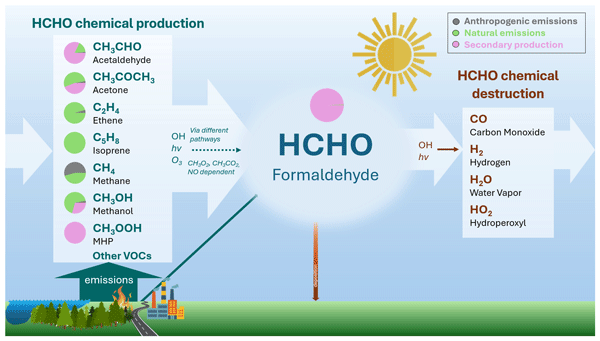
Gunnar Myhre, Øivind Hodnebrog, Srinath Krishnan, Maria Sand, Marit Sandstad, Ragnhild B. Skeie, Lieven Clarisse, Bruno Franco, Dylan B. Millet, Kelley C. Wells, Alexander Archibald, Hannah N. Bryant, Alex T. Chaudhri, David S. Stevenson, Didier Hauglustaine, Michael Prather, J. Christopher Kaiser, Dirk J. L. Olivie, Michael Schulz, Oliver Wild, Ye Wang, Thérèse Salameh, Jason E. Williams, Philippe Le Sager, Fabien Paulot, Kostas Tsigaridis, and Haley E. Plaas
Geosci. Model Dev., 19, 2577–2591, https://doi.org/10.5194/gmd-19-2577-2026, https://doi.org/10.5194/gmd-19-2577-2026, 2026
Short summary
Short summary
Volatile organic compounds (VOCs) affect air quality and climate, but their behavior in the atmosphere is still uncertain. We launched a global research effort to compare how different models represent these compounds and to improve their accuracy. By analyzing model results alongside observations and satellite data, we aim to better understand the atmospheric composition of these compounds.
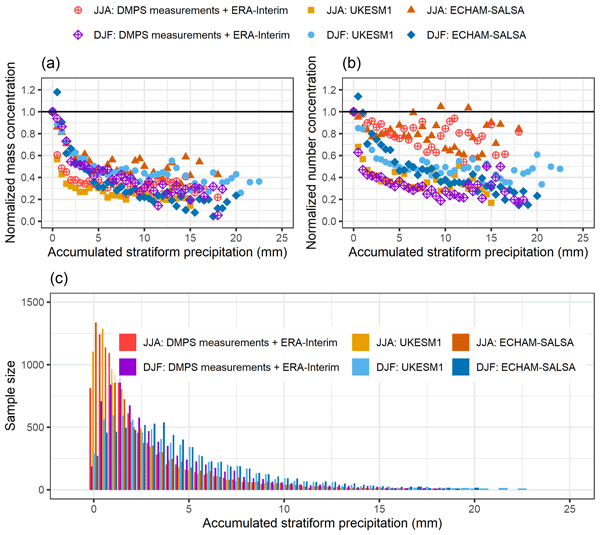
Sini Talvinen, Paul Kim, Emanuele Tovazzi, Eemeli Holopainen, Roxana Cremer, Thomas Kühn, Harri Kokkola, Zak Kipling, David Neubauer, João C. Teixeira, Alistair Sellar, Duncan Watson-Parris, Yang Yang, Jialei Zhu, Srinath Krishnan, Annele Virtanen, and Daniel G. Partridge
Atmos. Chem. Phys., 25, 14449–14478, https://doi.org/10.5194/acp-25-14449-2025, https://doi.org/10.5194/acp-25-14449-2025, 2025
Short summary
Short summary
Climate models struggle to predict how clouds and aerosols interact, affecting Earth’s energy balance. This study compares models to observations to see how they describe effects of clouds and rain on aerosols. While both models show similar overall trends, seasonal differences emerged. These, however, align with differences in key variables participating in cloud formation. The study provides insights on how to improve the representation of aerosol-cloud interactions in climate models.
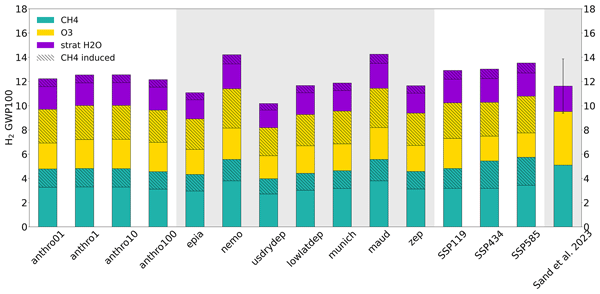
Ragnhild Bieltvedt Skeie, Marit Sandstad, Srinath Krishnan, Gunnar Myhre, and Maria Sand
Atmos. Chem. Phys., 25, 4929–4942, https://doi.org/10.5194/acp-25-4929-2025, https://doi.org/10.5194/acp-25-4929-2025, 2025
Short summary
Short summary
Hydrogen leakages can alter the amount of climate gases in the atmosphere and hence have a climate impact. In this study we investigate, using an atmospheric chemistry model, how this indirect climate effect differs with different amounts of leakages and with where the hydrogen leaks and if this effect changes in the future. The effect is largest for emissions far from areas where hydrogen is removed from the atmosphere by the soil, but these are not relevant locations for a future hydrogen economy.
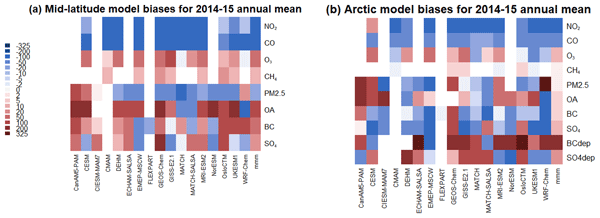
Cynthia H. Whaley, Rashed Mahmood, Knut von Salzen, Barbara Winter, Sabine Eckhardt, Stephen Arnold, Stephen Beagley, Silvia Becagli, Rong-You Chien, Jesper Christensen, Sujay Manish Damani, Xinyi Dong, Konstantinos Eleftheriadis, Nikolaos Evangeliou, Gregory Faluvegi, Mark Flanner, Joshua S. Fu, Michael Gauss, Fabio Giardi, Wanmin Gong, Jens Liengaard Hjorth, Lin Huang, Ulas Im, Yugo Kanaya, Srinath Krishnan, Zbigniew Klimont, Thomas Kühn, Joakim Langner, Kathy S. Law, Louis Marelle, Andreas Massling, Dirk Olivié, Tatsuo Onishi, Naga Oshima, Yiran Peng, David A. Plummer, Olga Popovicheva, Luca Pozzoli, Jean-Christophe Raut, Maria Sand, Laura N. Saunders, Julia Schmale, Sangeeta Sharma, Ragnhild Bieltvedt Skeie, Henrik Skov, Fumikazu Taketani, Manu A. Thomas, Rita Traversi, Kostas Tsigaridis, Svetlana Tsyro, Steven Turnock, Vito Vitale, Kaley A. Walker, Minqi Wang, Duncan Watson-Parris, and Tahya Weiss-Gibbons
Atmos. Chem. Phys., 22, 5775–5828, https://doi.org/10.5194/acp-22-5775-2022, https://doi.org/10.5194/acp-22-5775-2022, 2022
Short summary
Short summary
Air pollutants, like ozone and soot, play a role in both global warming and air quality. Atmospheric models are often used to provide information to policy makers about current and future conditions under different emissions scenarios. In order to have confidence in those simulations, in this study we compare simulated air pollution from 18 state-of-the-art atmospheric models to measured air pollution in order to assess how well the models perform.
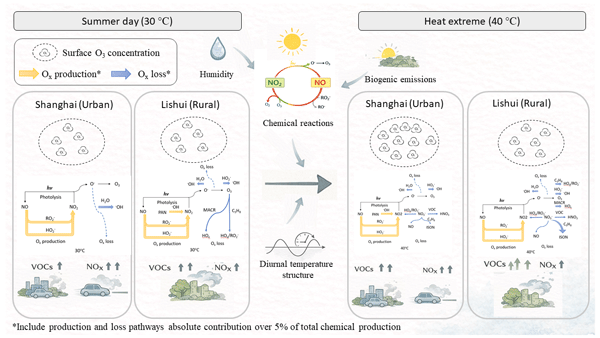
Chang Su, Massimo Bollasina, James Weber, and David Stevenson
Atmos. Chem. Phys., 26, 14439–14469, https://doi.org/10.5194/acp-26-14439-2026, https://doi.org/10.5194/acp-26-14439-2026, 2026
Short summary
Short summary
Hot weather can strongly increase surface ozone, a harmful air pollutant, but the reasons differ between urban and rural areas. We studied a large city and a nearby rural region in eastern China using air quality observations and simplified chemistry modelling. We found that heat-driven plant emissions dominate ozone increases in the city, while chemical nitrogen cycling is key in the rural area. Our results help identify heat-resilient air pollution control strategies under climate change.
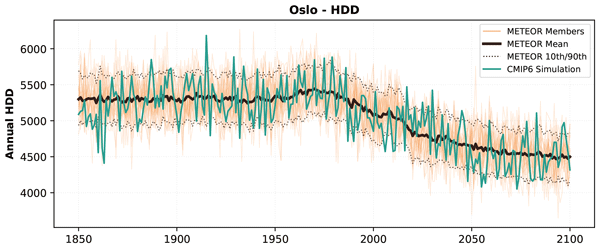
Benjamin M. Sanderson, Marit Sandstad, Maura Dewey, Norman Julius Steinert, and Johannes L. Fjeldså
Geosci. Model Dev., 19, 9263–9288, https://doi.org/10.5194/gmd-19-9263-2026, https://doi.org/10.5194/gmd-19-9263-2026, 2026
Short summary
Short summary
Planning for climate change requires understanding how climate and weather interact to drive possible impacts. We developed a tool that simulates realistic monthly climate patterns and translates them into useful measures like energy needs. It captures seasonal cycles and year-to-year variations to bridges the gap between global climate predictions and local planning, making climate risk assessment faster and more accessible.
Li Xu, Qi Tang, Qing Zhu, William J. Riley, Guido R. van der Werf, Yang Chen, Michael J. Prather, and James T. Randerson
EGUsphere, https://doi.org/10.5194/egusphere-2026-4288, https://doi.org/10.5194/egusphere-2026-4288, 2026
This preprint is open for discussion and under review for Atmospheric Chemistry and Physics (ACP).
Short summary
Short summary
Using the E3SM version 3 model with interactive chemistry, this study shows that wildfires substantially perturb global and regional tropospheric chemistry and modify radiative effects through aerosol and ozone interactions, with particularly strong impacts in tropical fire regions. By connecting wildfire emissions with changes in atmospheric composition, radiation, and climate, this study provides important insights on how the atmosphere responds to changing fire activities.
Calum Patrick Wilson and Michael John Prather
EGUsphere, https://doi.org/10.5194/egusphere-2026-4590, https://doi.org/10.5194/egusphere-2026-4590, 2026
This preprint is open for discussion and under review for Atmospheric Chemistry and Physics (ACP).
Short summary
Short summary
We model the change in greenhouse gas (ozone and methane) levels in the atmosphere caused by South Korean air pollution. We compare results obtained using a global chemistry-transport model with simplified chemistry, and a specialised hybrid model with detailed chemistry but simplified transport. Air pollution in the chemistry-transport model produces less ozone, and destroys much less methane, than the hybrid model. This leads to net global warming in the former model and cooling in the latter.
Jianyu Zheng, Hongbin Yu, Chamara Rajapakse, Mian Chin, Michael Schulz, Yves Balkanski, Susanne E. Bauer, Huisheng Bian, Peter Colarco, Dongchul Kim, Ramiro Checa-Garcia, Yevgeny Derimian, Oleg Dubovik, Paul Ginoux, Zak Kipling, Jasper F. Kok, Harri Kokkola, Philippe Le Sager, Lei Li, Marianne Tronstad Lund, Gunnar Myhre, Hitoshi Matsui, Dirk J. L. Olivie, Samuel Remy, Oyvind Seland, Qianqian Song, Toshihiko Takemura, Qian Tan, Kostas Tsigaridis, Twan van Noije, David Winker, Bin Xie, Hua Zhang, Xindan Zhang, and Zhibo Zhang
EGUsphere, https://doi.org/10.5194/egusphere-2026-4322, https://doi.org/10.5194/egusphere-2026-4322, 2026
This preprint is open for discussion and under review for Atmospheric Chemistry and Physics (ACP).
Short summary
Short summary
Winds carry vast amounts of Saharan dust across the Atlantic Ocean, influencing climate, air quality, and ocean ecosystems. Within the Aerosol Comparisons between Observations and Models (AeroCom) project, we evaluated 17 numerical models against observations. Models deposit dust too quickly, so too little reaches the Caribbean. Better simulations require emitting larger particles, treating their non-spherical shapes, and capturing processes that keep dust aloft during transport.
Ragnhild Bieltvedt Skeie, Terje K. Berntsen, Ada Gjermundsen, Ragnar Bang Huseby, Gunnar Myhre, Dirk Olivié, and Trude Storelvmo
EGUsphere, https://doi.org/10.5194/egusphere-2026-4634, https://doi.org/10.5194/egusphere-2026-4634, 2026
This preprint is open for discussion and under review for Earth System Dynamics (ESD).
Short summary
Short summary
Climate sensitivity is a key quantity in climate science. We tested an observation-based method for estimating climate sensitivity by replacing observations with historical climate model simulations. Estimates varied substantially among simulations of the same model where only the initial conditions differed. Since the historical climate is only one realization of the Earth’s climate, this highlights that natural variability is an important source of uncertainty in observation-based estimates.
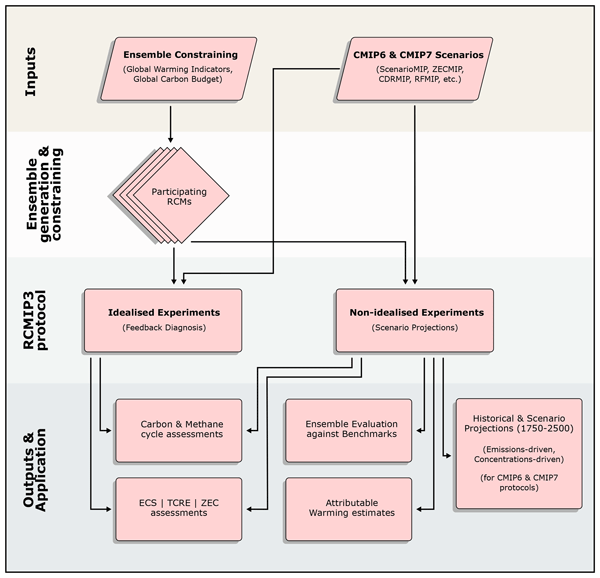
Alejandro Romero-Prieto, Marit Sandstad, Benjamin M. Sanderson, Zebedee R. J. Nicholls, Norman J. Steinert, Thomas Gasser, Camilla Mathison, Jarmo Kikstra, Thomas J. Aubry, Katsumasa Tanaka, Konstantin Weber, and Chris Smith
Geosci. Model Dev., 19, 7111–7133, https://doi.org/10.5194/gmd-19-7111-2026, https://doi.org/10.5194/gmd-19-7111-2026, 2026
Short summary
Short summary
Reduced-complexity models are an important tool in climate science, helping us understand and estimate future climate change. We present the experimental protocol for the next phase of the reduced-complexity model intercomparison project, which aims to compare results from many such models to better understand their behaviour. This knowledge will guide how these models are developed and used in the future, including in the upcoming Intergovernmental Panel on Climate Change (IPCC) assessment report (AR7).
Tianhui Zhou, Massimo A. Bollasina, and David S. Stevenson
EGUsphere, https://doi.org/10.5194/egusphere-2026-3416, https://doi.org/10.5194/egusphere-2026-3416, 2026
Short summary
Short summary
Future drought risk will be shaped not only by greenhouse-gas-driven warming, but also by changes in air-pollution-related emissions. We examine how reducing non-methane short-lived climate forcers affects future droughts characteristics. The Sahel, Middle East, and Central Asia face substantially worsened drought conditions. Our findings show that air-pollution mitigation can substantially increase future drought risk and population exposure in vulnerable regions.
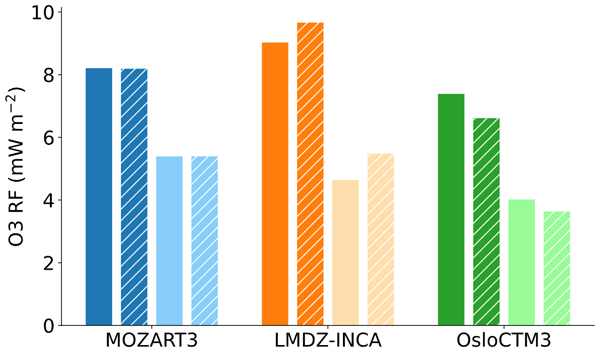
Zosia Staniaszek, Didier A. Hauglustaine, Yann Cohen, Agnieszka Skowron, Sigrun Matthes, Robin Thor, and Marianne T. Lund
Atmos. Chem. Phys., 26, 7985–7999, https://doi.org/10.5194/acp-26-7985-2026, https://doi.org/10.5194/acp-26-7985-2026, 2026
Short summary
Short summary
NOx emissions from aircraft affect the climate indirectly, by changing greenhouse gas concentrations. We explore whether the NOx emissions from aviation would have a different effect in different potential future climate states, i.e. a high pollution and low pollution case. The three models we use show varied responses for how this background state alters the climate effects of the NOx emissions. This shows the continuing need to improve our understanding of non-CO2 aviation impacts.
Benjamin M. Sanderson, Marit Sandstad, Alejandro Romero-Prieto, Stuart Jenkins, Charles Koven, Glen Peters, Roland Séfèrian, Andrew H. MacDougall, Ashwin Seshadri, Victor Brovkin, John Dunne, Abigail L. S. Swann, Torben Koenigk, Rosie A. Fisher, David Hohn, Tatiana Ilyina, Chris D. Jones, Hongmei Li, Peter Lawrence, Spencer Liddicoat, Nadine Mengis, Anastasia Romanou, Lori T. Sentman, Chris Smith, Norman J. Steinert, Jerry Tjiputra, and Tilo Ziehn
EGUsphere, https://doi.org/10.5194/egusphere-2026-1875, https://doi.org/10.5194/egusphere-2026-1875, 2026
Short summary
Short summary
When humanity stops emitting carbon dioxide, will temperatures keep rising, stabilize, or fall? Our study reveals in most models, temperatures remain nearly stable, but this hides a balance between the warming in response to radiation imbalance, and the cooling due to uptake of carbon in the land and ocean. Understanding this balance helps refine how much more CO2 we can safely emit.
Yann Cohen, Didier Hauglustaine, Zosia Staniaszek, Marianne Tronstad Lund, Irene Dedoussi, Sigrun Matthes, Flávio Quadros, Mattia Righi, Agnieszka Skowron, and Robin Thor
Atmos. Chem. Phys., 26, 5983–6013, https://doi.org/10.5194/acp-26-5983-2026, https://doi.org/10.5194/acp-26-5983-2026, 2026
Short summary
Short summary
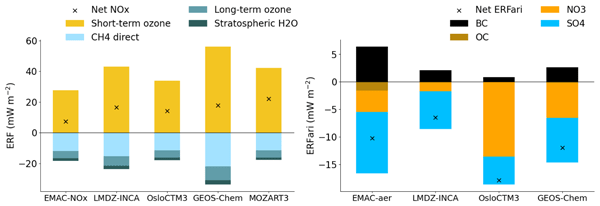
Non-CO2 effects from aviation on climate show large uncertainties. Among them, this study investigates the present-day impact of nitrogen oxides (through ozone and methane) and aerosols produced by aviation on atmospheric composition and therefore on climate, using a global-model intercomparison. Our results show a good consistency between the models for gaseous chemistry, but they also highlight the need for more accurate comparisons and further model development for aerosol parameterization.
Stephanie Fiedler, Fiona M. O'Connor, Duncan Watson-Parris, Robert J. Allen, William J. Collins, Paul T. Griffiths, Matthew Kasoar, Jarmo Kikstra, Jasper F. Kok, Lee T. Murray, Fabien Paulot, Maria Sand, Steven T. Turnock, James Weber, Laura J. Wilcox, and Vaishali Naik
Geosci. Model Dev., 19, 3477–3508, https://doi.org/10.5194/gmd-19-3477-2026, https://doi.org/10.5194/gmd-19-3477-2026, 2026
Short summary
Short summary
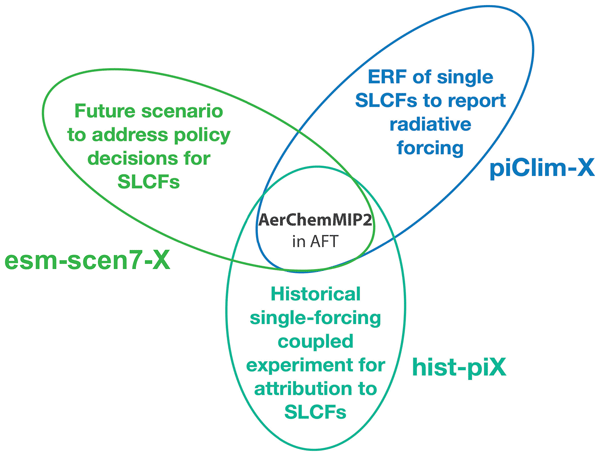
The Aerosol and Chemistry Model Intercomparison Project phase two (AerChemMIP2) allows the community to compare results from contemporary Earth system models. AerChemMIP2 is asking modelling centres to perform experiments following the same protocol. It includes experiments for enabling new science and for tracking progress. Model output will be used for addressing research and policy questions about anthropogenic and natural drivers of climate change, and the impacts on air quality.
Jianing Guo, Xiaoning Xie, Gunnar Myhre, Drew Shindell, Alf Kirkevåg, Trond Iversen, Apostolos Voulgarakis, Toshihiko Takemura, Ke Shang, Xinzhou Li, Zhengguo Shi, Yangang Liu, Xiaodong Liu, and Hong Yan
Atmos. Chem. Phys., 26, 5169–5184, https://doi.org/10.5194/acp-26-5169-2026, https://doi.org/10.5194/acp-26-5169-2026, 2026
Short summary
Short summary
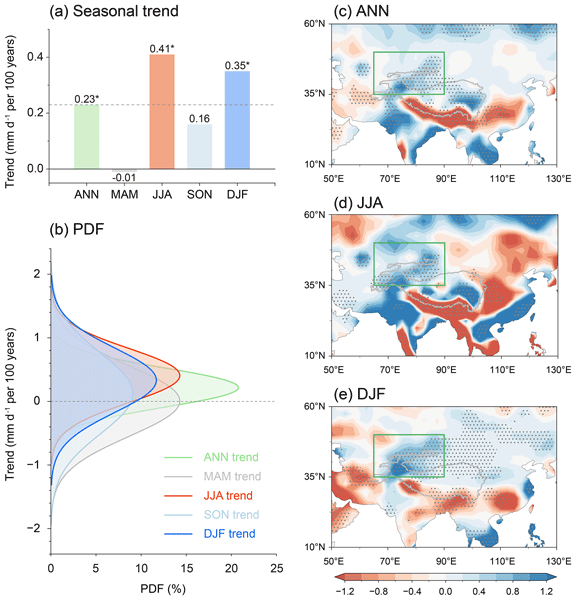
Central Asia has grown wetter in recent decades, but the drivers differ by season. We analyzed observations and climate model experiments to understand these changes and their future. Our analysis reveals that greenhouse gases from human activities drive winter wetting, whereas aerosol from Asia urbanization and industrialization enhances summer precipitation. As future reductions in air pollution, the region may experience drier summers and create new risks for regional water resources.
Detlef P. Van Vuuren, Brian C. O'Neill, Claudia Tebaldi, Benjamin M. Sanderson, Louise P. Chini, Pierre Friedlingstein, Tomoko Hasegawa, Keywan Riahi, Bala Govindasamy, Nico Bauer, Veronika Eyring, Cheikh M. N. Fall, Katja Frieler, Matthew J. Gidden, Laila K. Gohar, Annika Högner, Andrew D. Jones, Jarmo Kikstra, Andrew King, Reto Knutti, Elmar Kriegler, Peter Lawrence, Chris Lennard, Jason Lowe, Camilla Mathison, Shahbaz Mehmood, Zebedee Nicholls, Luciana F. Prado, Qiang Zhang, Steven K. Rose, Alex C. Ruane, Marit Sandstad, Carl-Friedrich Schleussner, Roland Seferian, Jana Sillmann, Chris Smith, Anna A. Sörensson, Swapna Panickal, Kaoru Tachiiri, Naomi Vaughan, Saritha S. Vishwanathan, Tokuta Yokohata, Marco Zecchetto, and Tilo Ziehn
Geosci. Model Dev., 19, 2627–2656, https://doi.org/10.5194/gmd-19-2627-2026, https://doi.org/10.5194/gmd-19-2627-2026, 2026
Short summary
Short summary
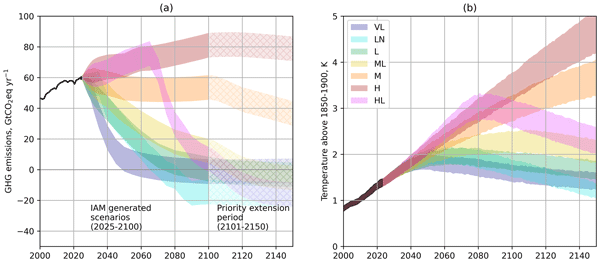
We propose a set of seven plausible 21st century emission scenarios, and their multi-century extensions, that will be used by the international community of climate modeling centers to produce the next generation of climate projections. These projections will support climate, impact and mitigation researchers, provide information to practitioners to address future risks from climate change, and contribute to policymakers’ considerations of the trade-offs among various levels of mitigation.
Gunnar Myhre, Øivind Hodnebrog, Srinath Krishnan, Maria Sand, Marit Sandstad, Ragnhild B. Skeie, Lieven Clarisse, Bruno Franco, Dylan B. Millet, Kelley C. Wells, Alexander Archibald, Hannah N. Bryant, Alex T. Chaudhri, David S. Stevenson, Didier Hauglustaine, Michael Prather, J. Christopher Kaiser, Dirk J. L. Olivie, Michael Schulz, Oliver Wild, Ye Wang, Thérèse Salameh, Jason E. Williams, Philippe Le Sager, Fabien Paulot, Kostas Tsigaridis, and Haley E. Plaas
Geosci. Model Dev., 19, 2577–2591, https://doi.org/10.5194/gmd-19-2577-2026, https://doi.org/10.5194/gmd-19-2577-2026, 2026
Short summary
Short summary
Volatile organic compounds (VOCs) affect air quality and climate, but their behavior in the atmosphere is still uncertain. We launched a global research effort to compare how different models represent these compounds and to improve their accuracy. By analyzing model results alongside observations and satellite data, we aim to better understand the atmospheric composition of these compounds.
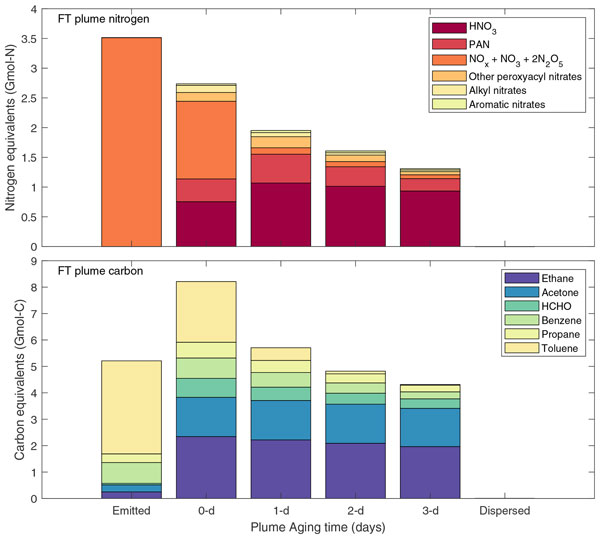
Calum Patrick Wilson and Michael John Prather
Atmos. Chem. Phys., 26, 3995–4017, https://doi.org/10.5194/acp-26-3995-2026, https://doi.org/10.5194/acp-26-3995-2026, 2026
Short summary
Short summary
Air pollution impacts global warming by changing atmospheric chemistry, effectively producing ozone and destroying methane (greenhouse gases). We quantify these greenhouse gas changes with a specialized model that tracks the chemical impact of air pollutants over their lifetime. Our summertime Korean results, scaled to all air pollution, estimate that up to 30 % of tropospheric ozone production and 10 % of methane loss is caused by air pollutants, but this scaling overrates wintertime pollution.
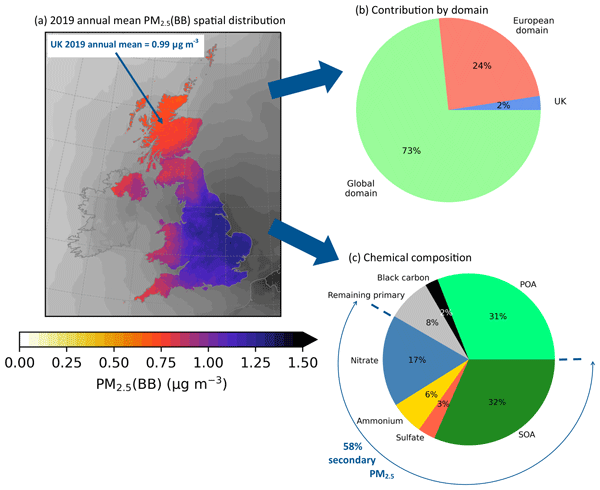
Damaris Y. T. Tan, Mathew R. Heal, David S. Stevenson, Stefan Reis, Massimo Vieno, and Eiko Nemitz
Atmos. Chem. Phys., 26, 3973–3993, https://doi.org/10.5194/acp-26-3973-2026, https://doi.org/10.5194/acp-26-3973-2026, 2026
Short summary
Short summary
Our focus is the cumulative influence of biomass burning (BB) on PM2.5 concentrations in a country far-removed from major BB sources. We find that ~10% of UK annual mean PM2.5 is conditional on BB emissions, 97% and 73% from BB outside the UK and outside Europe. The majority of the long-range component is secondary, of which much of the inorganic is mediated through local anthropogenic emissions. The relative contribution of BB in such locations is an increasing challenge for PM2.5 targets.
William James Collins, Øivind Hodnebrog, Keith Peter Shine, and James B. Burkholder
EGUsphere, https://doi.org/10.5194/egusphere-2026-674, https://doi.org/10.5194/egusphere-2026-674, 2026
Short summary
Short summary
The global warming potential (GWP) is a commonly used metric for relating the climate impact of emissions of a gas relative to that for carbon dioxide. We show that previous calculations have systematically underestimated these values by applying calculations of radiative forcing efficiency appropriate to changes in surface mole fractions rather than changes in the mass-weighted mean mole fraction in the atmosphere.
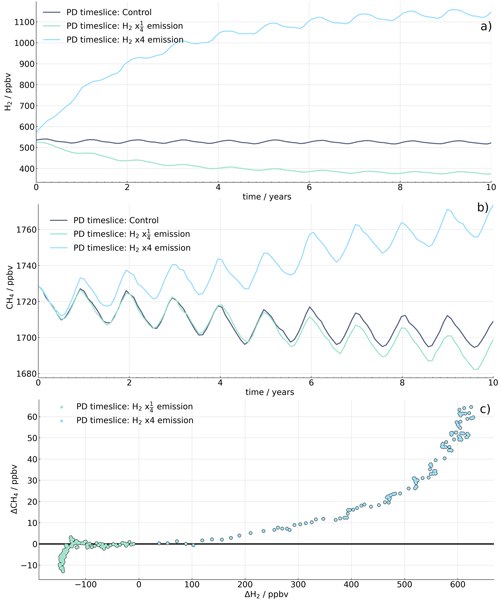
Megan A. J. Brown, Nicola J. Warwick, Nathan Luke Abraham, Paul T. Griffiths, Steve T. Rumbold, Gerd A. Folberth, Fiona M. O'Connor, Hannah Bryant, and Alex T. Archibald
Geosci. Model Dev., 19, 1537–1557, https://doi.org/10.5194/gmd-19-1537-2026, https://doi.org/10.5194/gmd-19-1537-2026, 2026
Short summary
Short summary
Hydrogen (H2) is an indirect greenhouse gas by increasing methane (CH4) lifetime. Interaction between H2 and CH4 is important for hydrogen’s global warming potential (GWP). Global models do not represent this interaction well; H2 or CH4 are prescribed at the surface. We implement an interactive H2 scheme into a global model coupled with interactive CH4. We simulate scenarios demonstrating its capability, improving model performance and more accurately representing H2-CH4 interaction.
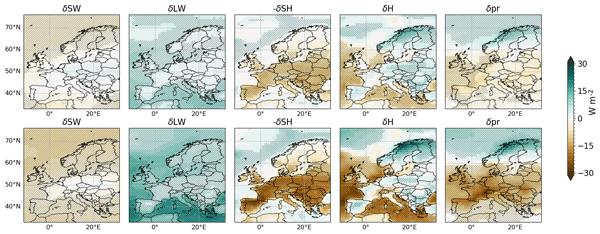
Birthe Marie Steensen, Gunnar Myhre, Rachael Byrom, Ada Gjermundsen, Caroline Jouan, and Camilla Weum Stjern
Atmos. Chem. Phys., 26, 2041–2054, https://doi.org/10.5194/acp-26-2041-2026, https://doi.org/10.5194/acp-26-2041-2026, 2026
Short summary
Short summary
In this study we analyze summer precipitation within a regional atmospheric budget framework over Europe. We identify the terms with the largest uncertainties for current change and future projections that cause the large spread in precipitation change, as sensible heat and dry static energy flux divergence in Earth System models. However, the Earth System models show consistent agreement that there will be an increase in drying over continental Europe with global warming.

Nina Schuhen, Carley E. Iles, Marit Sandstad, Viktor Ananiev, and Jana Sillmann
Nat. Hazards Earth Syst. Sci., 26, 753–773, https://doi.org/10.5194/nhess-26-753-2026, https://doi.org/10.5194/nhess-26-753-2026, 2026
Short summary
Short summary
As climate changes, extremes are becoming increasingly frequent. We investigate the time of emergence for a large range of different extremes, meaning the earliest time when a significant change in these extremes can be detected beyond natural variability, whether in the past or in the future. The results are based on 21 global climate models and show considerable differences between regions, types of indices and emissions scenarios, as well as between temperature and precipitation extremes.
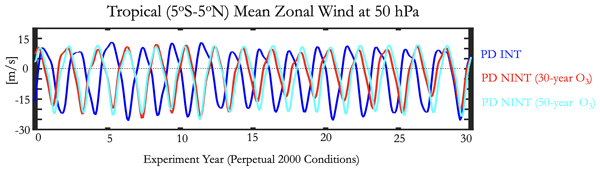
Clara Orbe, Alison Ming, Gabriel Chiodo, Michael Prather, Mohamadou Diallo, Qi Tang, Andreas Chrysanthou, Hiroaki Naoe, Xin Zhou, Irina Thaler, Dillon Elsbury, Ewa Bednarz, Jonathon S. Wright, Aaron Match, Shingo Watanabe, James Anstey, Tobias Kerzenmacher, Stefan Versick, Marion Marchand, Feng Li, and James Keeble
Geosci. Model Dev., 19, 773–794, https://doi.org/10.5194/gmd-19-773-2026, https://doi.org/10.5194/gmd-19-773-2026, 2026
Short summary
Short summary
The quasi-biennial oscillation (QBO) is the main source of wind fluctuations in the tropical stratosphere, which can couple to surface climate. However, models do a poor job of simulating the QBO in the lower stratosphere, for reasons that remain unclear. One possibility is that models do not completely represent how ozone influences the QBO-associated wind variations. Here we propose a multi-model framework for assessing how ozone influences the QBO in recent past and future climates.
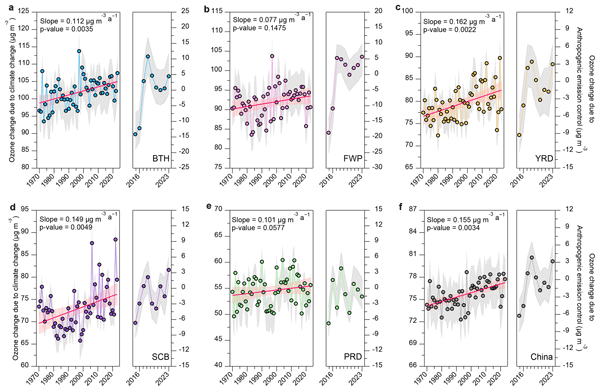
Jie Fang, Yunjiang Zhang, Didier Hauglustaine, Bo Zheng, Ming Wang, Jingyi Li, Yong Sun, Haiwei Li, Junfeng Wang, Yun Wu, Bin Yuan, Mindong Chen, and Xinlei Ge
Atmos. Chem. Phys., 26, 851–867, https://doi.org/10.5194/acp-26-851-2026, https://doi.org/10.5194/acp-26-851-2026, 2026
Short summary
Short summary
Surface ozone pollution is a pressing global challenge driven by human activities and a warming climate. Using nationwide observations (2013–2023) across China together with satellite data, we developed a new machine learning approach to decouple the impacts of emission controls and weather changes. Our results show that while emission reductions improved ozone in some regions, climate change is increasingly offsetting these gains, underscoring the need for joint air quality and climate actions.
William J. Collins, John S. Daniel, Martyn P. Chipperfield, Martin Cussac, Makoto Deushi, Gregory Faluvegi, Paul Griffiths, Øivind Hodnebrog, Larry W. Horowitz, James Keeble, Douglas Kinnison, Vaishali Naik, Fiona M. O'Connor, Drew Shindell, Simone Tilmes, Kostas Tsigaridis, Zihao Wang, and James Weber
EGUsphere, https://doi.org/10.5194/egusphere-2025-6033, https://doi.org/10.5194/egusphere-2025-6033, 2026
Short summary
Short summary
Ozone depleting substances (ODSs) are also greenhouse gases that cause global warming. However, their destruction of ozone contributes a global cooling. We have used results from climate models that include atmospheric chemistry and found that the cooling effect of the ozone depletion diagnosed in the models was larger than that calculated using a standard method. We find that some ODSs have a net cooling effect whereas for others the warming effect is significantly reduced.
Benjamin M. Sanderson, Susanne Baur, Carl-Freidrich Schleussner, Glen P. Peters, Shivika Mittal, Marit Sandstad, Steffen Kallbekken, Chris Smith, Sabine Fuss, Bas van Ruijven, Rosie A. Fisher, Joeri Rogelj, Roland Séférian, Bjørn Samset, Norman J. Steinert, Laurent Terray, and Jan Fuglestvedt
EGUsphere, https://doi.org/10.5194/egusphere-2026-28, https://doi.org/10.5194/egusphere-2026-28, 2026
Preprint archived
Short summary
Short summary
Solar Radiation Modification by adding aerosols to the stratosphere could rapidly and temporarily cool the Earth, but this speed creates unprecedented risks. Fast climate responses coupled with political instability create risks of failure to decarbonise, super-rapid climate change, and conflict. Idealized scenarios or conventional modeling tools could lead to systematic ignorance of these risks. We thus introduce a framework outlining what must be represented in future modeling and assessment.
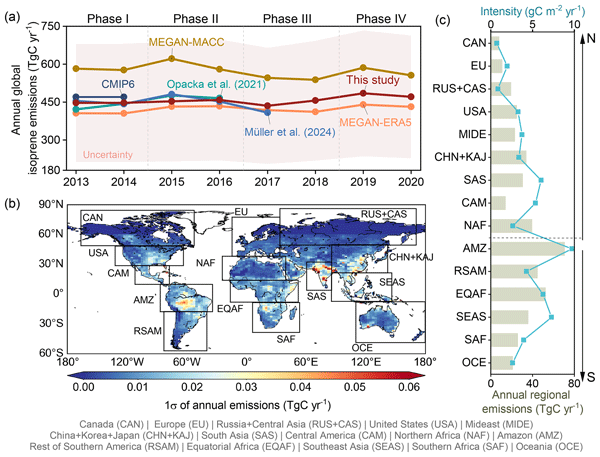
Hui Li, Philippe Ciais, Pramod Kumar, Didier A. Hauglustaine, Frédéric Chevallier, Grégoire Broquet, Dylan B. Millet, Kelley C. Wells, Jinghui Lian, and Bo Zheng
Earth Syst. Sci. Data, 17, 7035–7054, https://doi.org/10.5194/essd-17-7035-2025, https://doi.org/10.5194/essd-17-7035-2025, 2025
Short summary
Short summary
We present the first global, multi-year maps of monthly isoprene emissions (2013–2020) derived from satellite isoprene observations, averaging 456 TgC yr-1. The dataset reveals two emission peaks linked to 2015–2016 El Niño and 2019–2020 extreme heat events, driven mainly by tropical regions such as the Amazon. It highlights the region-specific sensitivity of biogenic isoprene emissions to temperature anomalies, providing new insights into their roles in air quality and climate feedbacks.
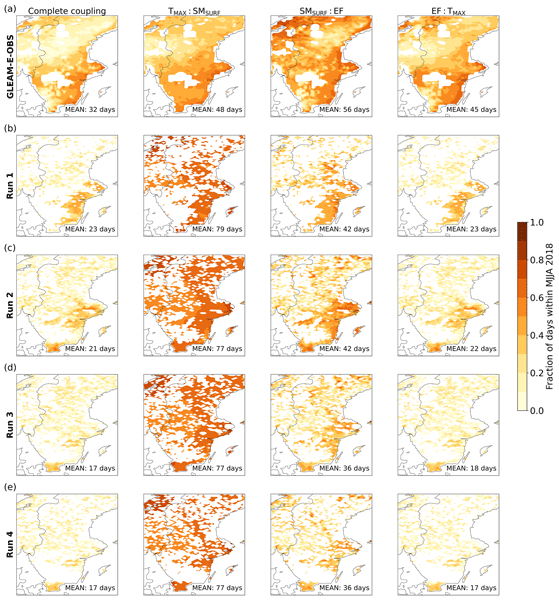
Iris Mužić, Øivind Hodnebrog, Yeliz A. Yilmaz, Terje K. Berntsen, Jana Sillmann, David M. Lawrence, and Paul A. Dirmeyer
Adv. Stat. Clim. Meteorol. Oceanogr., 11, 273–292, https://doi.org/10.5194/ascmo-11-273-2025, https://doi.org/10.5194/ascmo-11-273-2025, 2025
Short summary
Short summary
This study investigates soil moisture–temperature coupling during the extreme warm conditions in May–August 2018 in southern and central Sweden using the merged GLEAM-E-OBS dataset and four simulations from the Weather Research and Forecasting model coupled with the Community Terrestrial Systems Model (WRF-CTSM). Based on changes in surface soil moisture, evaporative fraction, and daily maximum 2 m temperature, on average across the region and five datasets, the coupling lasted for 22 d.
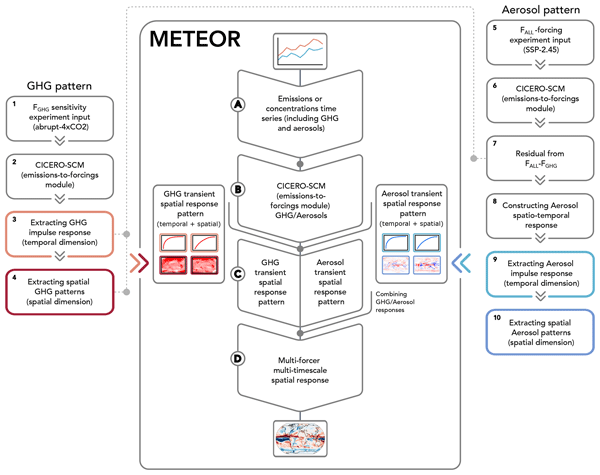
Marit Sandstad, Norman Julius Steinert, Susanne Baur, and Benjamin Mark Sanderson
Geosci. Model Dev., 18, 8269–8312, https://doi.org/10.5194/gmd-18-8269-2025, https://doi.org/10.5194/gmd-18-8269-2025, 2025
Short summary
Short summary
We present METEORv1.0.1, a climate model emulator, that can be trained on full spatially resolved and widely available climate model data to reproduce climate variables and make predictions from unseen emission trajectories. The methodology identifies patterns with timescales of impact for one or more forcers using idealised experiments and anomaly calculations. Results for precipitation and temperature show good model performance and can reproduce hysteresis for overshoot scenarios.
Sini Talvinen, Paul Kim, Emanuele Tovazzi, Eemeli Holopainen, Roxana Cremer, Thomas Kühn, Harri Kokkola, Zak Kipling, David Neubauer, João C. Teixeira, Alistair Sellar, Duncan Watson-Parris, Yang Yang, Jialei Zhu, Srinath Krishnan, Annele Virtanen, and Daniel G. Partridge
Atmos. Chem. Phys., 25, 14449–14478, https://doi.org/10.5194/acp-25-14449-2025, https://doi.org/10.5194/acp-25-14449-2025, 2025
Short summary
Short summary
Climate models struggle to predict how clouds and aerosols interact, affecting Earth’s energy balance. This study compares models to observations to see how they describe effects of clouds and rain on aerosols. While both models show similar overall trends, seasonal differences emerged. These, however, align with differences in key variables participating in cloud formation. The study provides insights on how to improve the representation of aerosol-cloud interactions in climate models.
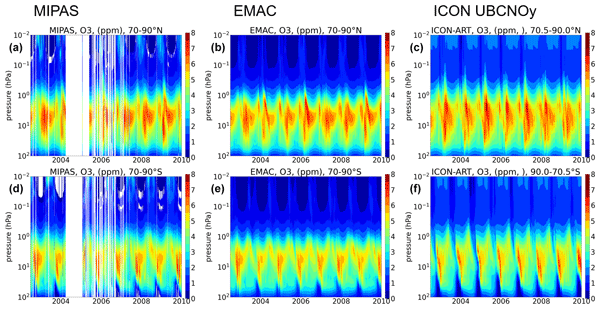
Maryam Ramezani Ziarani, Miriam Sinnhuber, Thomas Reddmann, Bernd Funke, Stefan Bender, and Michael Prather
Geosci. Model Dev., 18, 7891–7905, https://doi.org/10.5194/gmd-18-7891-2025, https://doi.org/10.5194/gmd-18-7891-2025, 2025
Short summary
Short summary
Our study aims to present a new method for incorporating top-down solar forcing into stratospheric ozone relying on linearized ozone scheme. The addition of geomagnetic forcing led to significant ozone losses in the polar upper stratosphere of both hemispheres due to the catalytic cycles involving NOy. In addition to the particle precipitation effect, accounting for solar UV variability in the ICON-ART model leads to the changes in ozone in the tropical stratosphere.
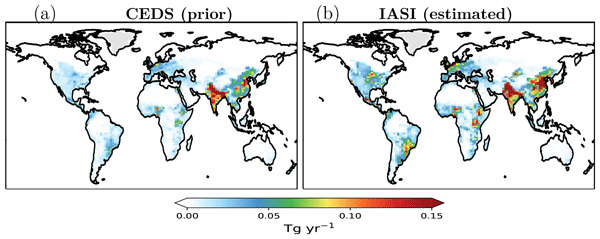
Pramod Kumar, Grégoire Broquet, Didier Hauglustaine, Maureen Beaudor, Lieven Clarisse, Martin Van Damme, Pierre Coheur, Anne Cozic, Bo Zheng, Beatriz Revilla Romero, Antony Delavois, and Philippe Ciais
Atmos. Chem. Phys., 25, 12379–12407, https://doi.org/10.5194/acp-25-12379-2025, https://doi.org/10.5194/acp-25-12379-2025, 2025
Short summary
Short summary
Global maps of the NH3 emissions over 2019–2022 are derived using IASI NH3 spaceborne observations, the LMDZ-INCA chemistry transport model at 1.27°×2.5° resolution, and the mass-balance approach. The average global NH3 emissions over the period are ~97 Tg NH3 yr-1, which is significantly higher than three reference inventories. The analysis provides confidence in the seasonal variability and regional budgets and provides new insights into NH3 emissions at global and regional scales.
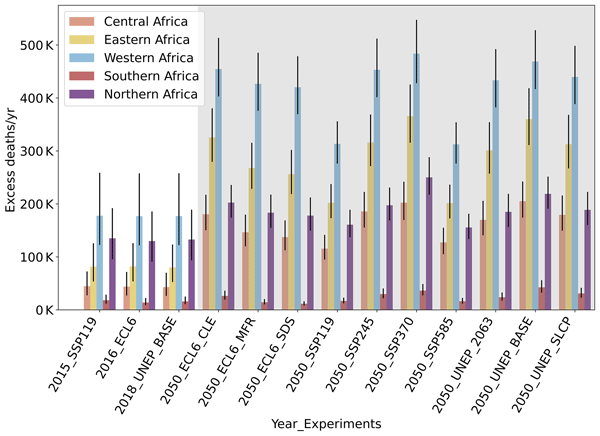
Joe Adabouk Amooli, Marianne T. Lund, Sourangsu Chowdhury, Gunnar Myhre, Ane N. Johansen, Bjørn H. Samset, and Daniel M. Westervelt
Atmos. Chem. Phys., 25, 11611–11632, https://doi.org/10.5194/acp-25-11611-2025, https://doi.org/10.5194/acp-25-11611-2025, 2025
Short summary
Short summary
We analyze various projections of African aerosol emissions and their potential impacts on climate and public health. We find that future emissions vary widely across emission projections, with differences in sectoral emission distributions. Using the Oslo chemical transport model, we show that air pollution exposure in some regions of Africa could increase significantly by 2050, increasing pollution-related deaths, with most scenarios projecting aerosol-induced warming over sub-Saharan Africa.
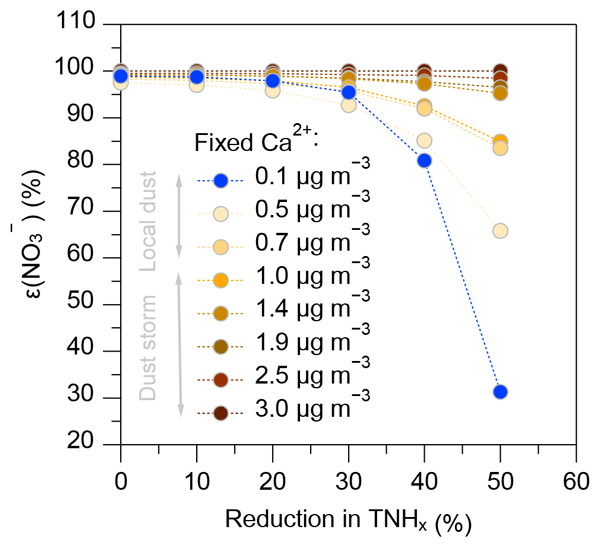
Hanrui Lang, Yunjiang Zhang, Sheng Zhong, Yongcai Rao, Minfeng Zhou, Jian Qiu, Jingyi Li, Diwen Liu, Florian Couvidat, Olivier Favez, Didier Hauglustaine, and Xinlei Ge
Atmos. Chem. Phys., 25, 10587–10601, https://doi.org/10.5194/acp-25-10587-2025, https://doi.org/10.5194/acp-25-10587-2025, 2025
Short summary
Short summary
This study investigates how dust pollution influences particulate nitrate formation. We found that dust pollution could reduce the effectiveness of ammonia emission controls by altering aerosol chemistry. Using field observations and modeling, we showed that dust particles affect nitrate distribution between gas and particle phases. Our findings highlight the need for pollution control strategies that consider both human emissions and dust sources for better urban air quality management.
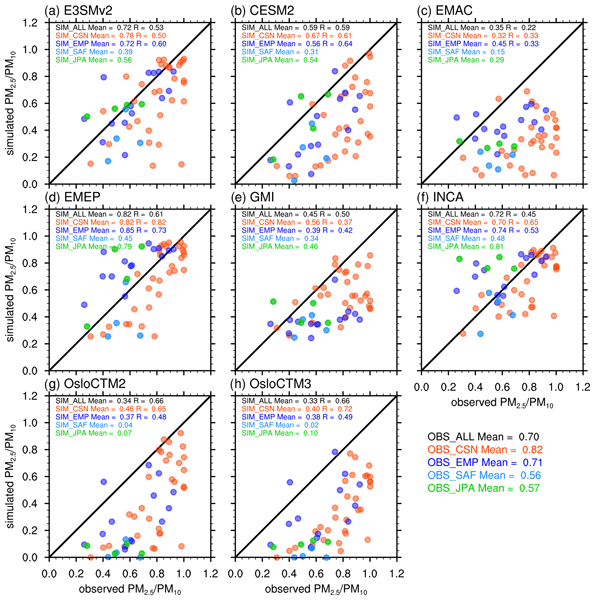
Mingxuan Wu, Hailong Wang, Zheng Lu, Xiaohong Liu, Huisheng Bian, David D. Cohen, Yan Feng, Mian Chin, Didier A. Hauglustaine, Vlassis A. Karydis, Marianne T. Lund, Gunnar Myhre, Andrea Pozzer, Michael Schulz, Ragnhild B. Skeie, Alexandra P. Tsimpidi, Svetlana G. Tsyro, and Shaocheng Xie
Atmos. Chem. Phys., 25, 10049–10074, https://doi.org/10.5194/acp-25-10049-2025, https://doi.org/10.5194/acp-25-10049-2025, 2025
Short summary
Short summary
A key challenge in simulating the life cycle of nitrate aerosol in global models is accurately representing the mass size distribution of nitrate aerosol, which lacks sufficient observational constraints. We found that most global models underestimate the mass fraction of fine-mode nitrate at the surface in all regions. Our study highlights the importance of gas–aerosol partitioning parameterization and the simulation of dust and sea salt in correctly simulating the mass size distribution of nitrate.
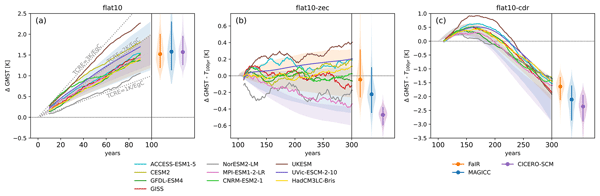
Benjamin M. Sanderson, Victor Brovkin, Rosie A. Fisher, David Hohn, Tatiana Ilyina, Chris D. Jones, Torben Koenigk, Charles Koven, Hongmei Li, David M. Lawrence, Peter Lawrence, Spencer Liddicoat, Andrew H. MacDougall, Nadine Mengis, Zebedee Nicholls, Eleanor O'Rourke, Anastasia Romanou, Marit Sandstad, Jörg Schwinger, Roland Séférian, Lori T. Sentman, Isla R. Simpson, Chris Smith, Norman J. Steinert, Abigail L. S. Swann, Jerry Tjiputra, and Tilo Ziehn
Geosci. Model Dev., 18, 5699–5724, https://doi.org/10.5194/gmd-18-5699-2025, https://doi.org/10.5194/gmd-18-5699-2025, 2025
Short summary
Short summary
This study investigates how climate models warm in response to simplified carbon emissions trajectories, refining the understanding of climate reversibility and commitment. Metrics are defined for warming response to cumulative emissions and for the cessation of emissions or ramp-down to net-zero and net-negative levels. Results indicate that previous concentration-driven experiments may have overstated the Zero Emissions Commitment due to emissions rates exceeding historical levels.
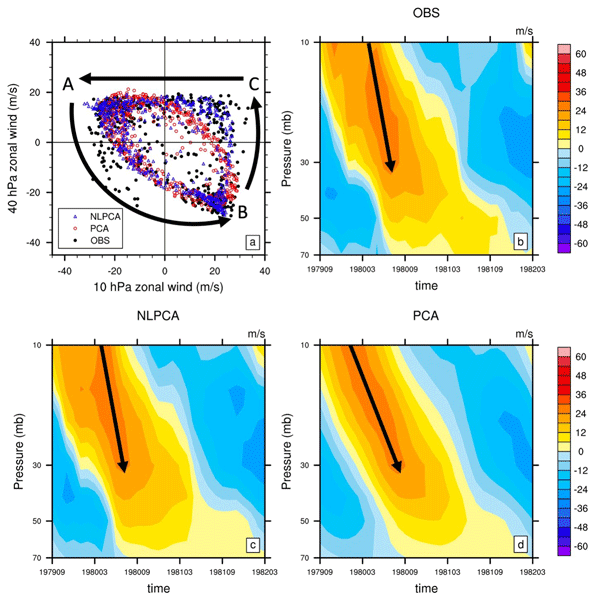
Jinbo Xie, Qi Tang, Michael Prather, Jadwiga Richter, and Shixuan Zhang
Atmos. Chem. Phys., 25, 9315–9333, https://doi.org/10.5194/acp-25-9315-2025, https://doi.org/10.5194/acp-25-9315-2025, 2025
Short summary
Short summary
Analysis of the interaction between the climate and ozone in the stratosphere is complicated by the inability of climate models to simulate the quasi-biennial oscillation (QBO) – an important climate mode in the stratosphere. We use a set of model simulations that realistically simulate QBO and a novel ozone diagnostic tool to separate temperature- and circulation-driven QBO impacts. These are important for diagnosing model–model differences in QBO–ozone responses for climate projections.
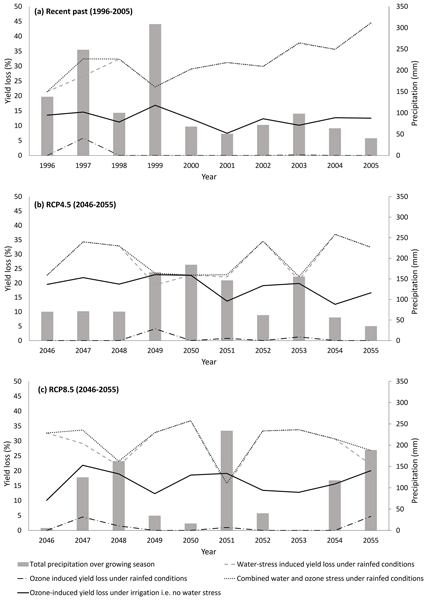
Gabriella Everett, Øivind Hodnebrog, Madhoolika Agrawal, Durgesh Singh Yadav, Connie O'Neill, Chubamenla Jamir, Jo Cook, Pritha Pande, Sam Bland, and Lisa Emberson
Biogeosciences, 22, 4203–4219, https://doi.org/10.5194/bg-22-4203-2025, https://doi.org/10.5194/bg-22-4203-2025, 2025
Short summary
Short summary
Ground-level ozone (O3), heat, and water stress (WS) reduce wheat yields, threatening food security in India. O3, heat, and WS interact as stressed plants close stomata, limiting O3 entry and damage. This study models O3 uptake under rainfed (WS) and irrigated conditions for current and future climates. Results show little O3-related yield loss under WS but higher losses with irrigation. Both climate scenarios increase O3-related losses, highlighting risks to India’s wheat productivity.
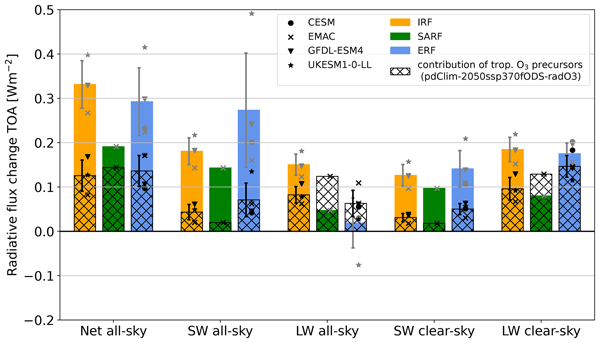
William J. Collins, Fiona M. O'Connor, Rachael E. Byrom, Øivind Hodnebrog, Patrick Jöckel, Mariano Mertens, Gunnar Myhre, Matthias Nützel, Dirk Olivié, Ragnhild Bieltvedt Skeie, Laura Stecher, Larry W. Horowitz, Vaishali Naik, Gregory Faluvegi, Ulas Im, Lee T. Murray, Drew Shindell, Kostas Tsigaridis, Nathan Luke Abraham, and James Keeble
Atmos. Chem. Phys., 25, 9031–9060, https://doi.org/10.5194/acp-25-9031-2025, https://doi.org/10.5194/acp-25-9031-2025, 2025
Short summary
Short summary
We used 7 climate models that include atmospheric chemistry and find that in a scenario with weak controls on air quality, the warming effects (over 2015 to 2050) of decreases in ozone-depleting substances and increases in air quality pollutants are approximately equal and would make ozone the second highest contributor to warming over this period. We find that for stratospheric ozone recovery, the standard measure of climate effects underestimates a more comprehensive measure.
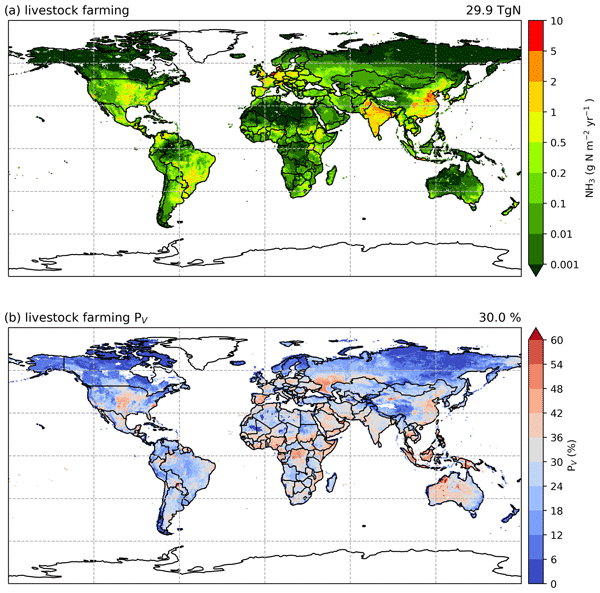
Jize Jiang, David S. Stevenson, Aimable Uwizeye, Giuseppe Tempio, Alessandra Falcucci, Flavia Casu, and Mark A. Sutton
Geosci. Model Dev., 18, 5051–5099, https://doi.org/10.5194/gmd-18-5051-2025, https://doi.org/10.5194/gmd-18-5051-2025, 2025
Short summary
Short summary
A special model called AMmonia–CLIMate (AMCLIM) has been developed to understand and calculate NH3 emissions from livestock farming. It is estimated that about 30 % of excreted N from livestock is lost due to NH3 emissions from housing, manure management and land application of manure. High NH3 volatilization often occurs in hot regions, while poor management practices also result in significant N losses through NH3 emissions.
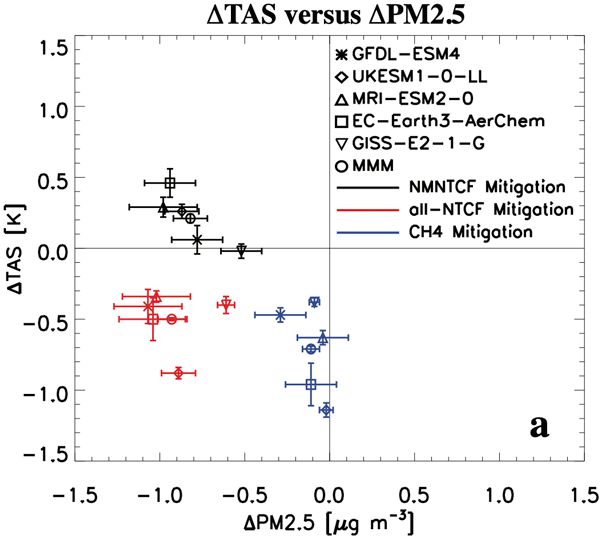
Paul T. Griffiths, Laura J. Wilcox, Robert J. Allen, Vaishali Naik, Fiona M. O'Connor, Michael Prather, Alex Archibald, Florence Brown, Makoto Deushi, William Collins, Stephanie Fiedler, Naga Oshima, Lee T. Murray, Bjørn H. Samset, Chris Smith, Steven Turnock, Duncan Watson-Parris, and Paul J. Young
Atmos. Chem. Phys., 25, 8289–8328, https://doi.org/10.5194/acp-25-8289-2025, https://doi.org/10.5194/acp-25-8289-2025, 2025
Short summary
Short summary
The Aerosol Chemistry Model Intercomparison Project (AerChemMIP) aimed to quantify the climate and air quality impacts of aerosols and chemically reactive gases. We review its contribution to AR6 (Sixth Assessment Report of the Intergovernmental Panel on Climate Change) and the wider understanding of the role of these species in climate and climate change. We identify challenges and provide recommendations to improve the utility and uptake of climate model data, detailed summary tables of CMIP6 models, experiments, and emergent diagnostics.
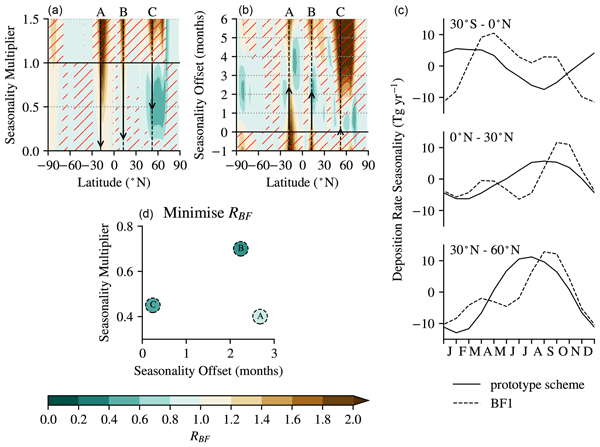
Alexander K. Tardito Chaudhri and David S. Stevenson
Atmos. Chem. Phys., 25, 7369–7385, https://doi.org/10.5194/acp-25-7369-2025, https://doi.org/10.5194/acp-25-7369-2025, 2025
Short summary
Short summary
There remains a large uncertainty in the global warming potential of atmospheric hydrogen due to poor constraints on its soil deposition and, therefore, its lifetime. A new analysis of the latitudinal variation in the observed seasonality of hydrogen is used to constrain its surface fluxes. This is complemented with a simple latitude–height model where surface fluxes are adjusted from a prototype deposition scheme.
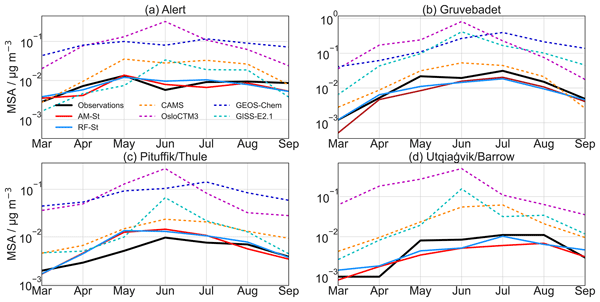
Jakob Boyd Pernov, William H. Aeberhard, Michele Volpi, Eliza Harris, Benjamin Hohermuth, Sakiko Ishino, Ragnhild B. Skeie, Stephan Henne, Ulas Im, Patricia K. Quinn, Lucia M. Upchurch, and Julia Schmale
Atmos. Chem. Phys., 25, 6497–6537, https://doi.org/10.5194/acp-25-6497-2025, https://doi.org/10.5194/acp-25-6497-2025, 2025
Short summary
Short summary
Particulate methanesulfonic acid (MSAp) is vital for the Arctic climate system. Numerical models struggle to reproduce the MSAp seasonal cycle. We evaluate three numerical models and one reanalysis product’s ability to simulate MSAp. We develop data-driven models for MSAp at four Arctic stations. The data-driven models outperform the numerical models and reanalysis product and identified precursor source-, chemical-processing-, and removal-related features as being important for modeling MSAp.
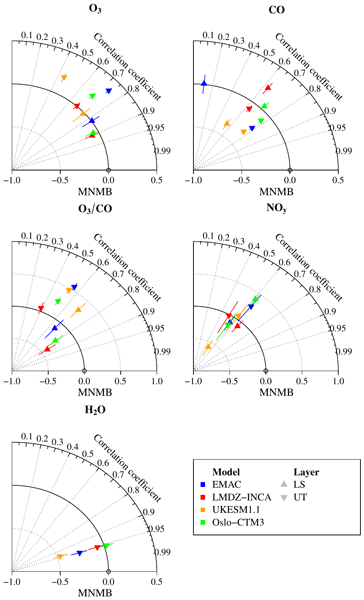
Yann Cohen, Didier Hauglustaine, Nicolas Bellouin, Marianne Tronstad Lund, Sigrun Matthes, Agnieszka Skowron, Robin Thor, Ulrich Bundke, Andreas Petzold, Susanne Rohs, Valérie Thouret, Andreas Zahn, and Helmut Ziereis
Atmos. Chem. Phys., 25, 5793–5836, https://doi.org/10.5194/acp-25-5793-2025, https://doi.org/10.5194/acp-25-5793-2025, 2025
Short summary
Short summary
The chemical composition of the atmosphere near the tropopause is a key parameter for evaluating the climate impact of subsonic aviation pollutants. This study uses in situ data collected aboard passenger aircraft to assess the ability of four chemistry–climate models to reproduce (bi-)decadal climatologies of ozone, carbon monoxide, water vapour, and reactive nitrogen in this region. The models reproduce the very distinct ozone seasonality in the upper troposphere and in the lower stratosphere well.
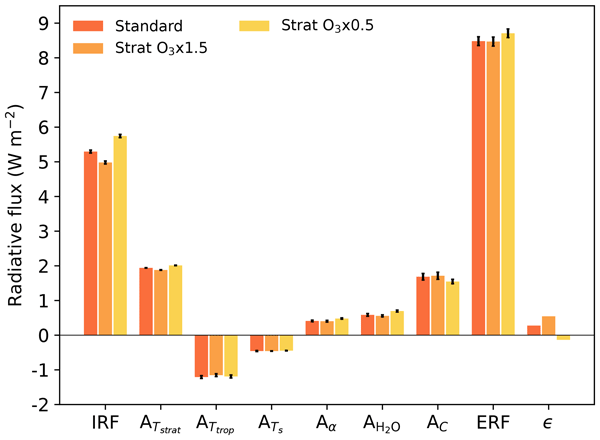
Rachael E. Byrom, Gunnar Myhre, Øivind Hodnebrog, Dirk Olivié, and Michael Schulz
Atmos. Chem. Phys., 25, 5683–5693, https://doi.org/10.5194/acp-25-5683-2025, https://doi.org/10.5194/acp-25-5683-2025, 2025
Short summary
Short summary
Addressing the cause of model spread in CO2 effective radiative forcing (ERF) is important for reducing uncertainty in climate change. We investigate stratospheric O3 as a driver of this spread by altering its concentration by 50 % and analysing the impact on CO2 forcing. Our experiments show a significant effect on stratospheric temperature that impacts instantaneous radiative forcing, primarily due to the influence on longwave emission. However, the impact on ERF is minimal.
Ragnhild Bieltvedt Skeie, Marit Sandstad, Srinath Krishnan, Gunnar Myhre, and Maria Sand
Atmos. Chem. Phys., 25, 4929–4942, https://doi.org/10.5194/acp-25-4929-2025, https://doi.org/10.5194/acp-25-4929-2025, 2025
Short summary
Short summary
Hydrogen leakages can alter the amount of climate gases in the atmosphere and hence have a climate impact. In this study we investigate, using an atmospheric chemistry model, how this indirect climate effect differs with different amounts of leakages and with where the hydrogen leaks and if this effect changes in the future. The effect is largest for emissions far from areas where hydrogen is removed from the atmosphere by the soil, but these are not relevant locations for a future hydrogen economy.
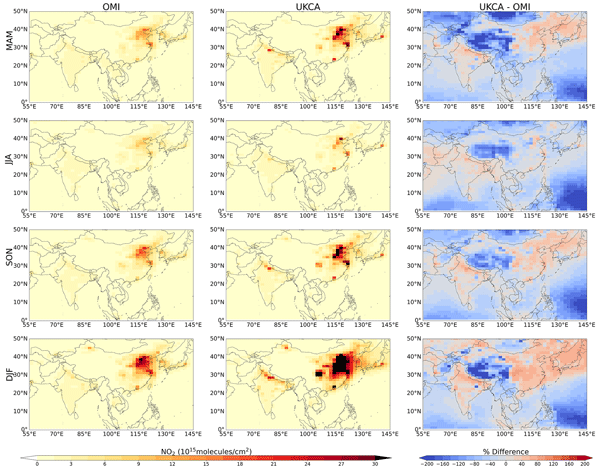
Alok K. Pandey, David S. Stevenson, Alcide Zhao, Richard J. Pope, Ryan Hossaini, Krishan Kumar, and Martyn P. Chipperfield
Atmos. Chem. Phys., 25, 4785–4802, https://doi.org/10.5194/acp-25-4785-2025, https://doi.org/10.5194/acp-25-4785-2025, 2025
Short summary
Short summary
Nitrogen dioxide is an air pollutant largely controlled by human activity that affects ozone, methane, and aerosols. Satellite instruments can quantify column NO2 and, by carefully matching the time and location of measurements, enable evaluation of model simulations. NO2 over south and east Asia is assessed, showing that the model captures not only many features of the measurements, but also important differences that suggest model deficiencies in representing several aspects of the atmospheric chemistry of NO2.
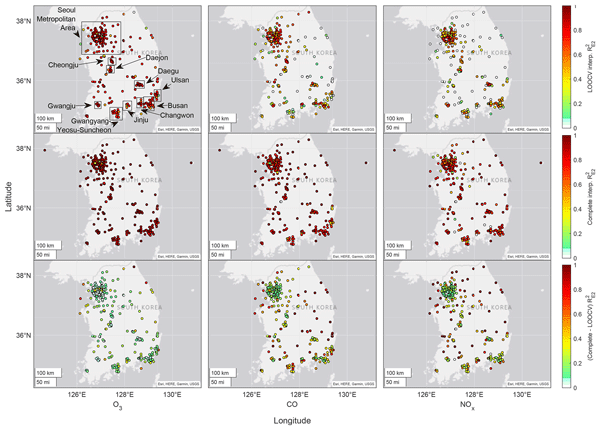
Calum P. Wilson and Michael J. Prather
Atmos. Meas. Tech., 18, 1757–1769, https://doi.org/10.5194/amt-18-1757-2025, https://doi.org/10.5194/amt-18-1757-2025, 2025
Short summary
Short summary
We evaluated how well we can infer air pollutant levels (ozone, carbon monoxide, and nitrogen oxides) between air quality stations throughout South Korea, finding good representation in most densely measured cities in spite of intense small-scale emission hotspots. Comparing observed air quality with gridded model output is desirable, and so we created gridded datasets over South Korea using air quality station measurements, which agreed with airborne measurements around Seoul.
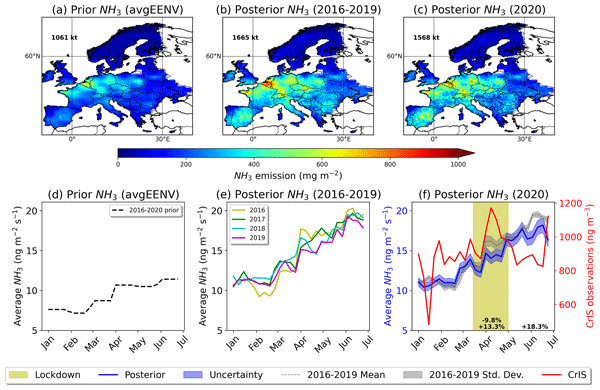
Nikolaos Evangeliou, Ondřej Tichý, Marit Svendby Otervik, Sabine Eckhardt, Yves Balkanski, and Didier A. Hauglustaine
Aerosol Research, 3, 155–174, https://doi.org/10.5194/ar-3-155-2025, https://doi.org/10.5194/ar-3-155-2025, 2025
Short summary
Short summary
The COVID-19 lockdown measures in 2020 reduced emissions of various substances, improving air quality. However, PM2.5 stayed unchanged due to NH3 and related chemical transformations. Higher humidity favoured more SO42- production, as did the accumulated NH3. Excess NH3 reacted with HNO3 to make NO3-. In high-NH3 conditions such as those in 2020, a small reduction in NOx levels drove faster oxidation of NO3- and slower deposition of total inorganic NO3-, causing high secondary PM2.5.
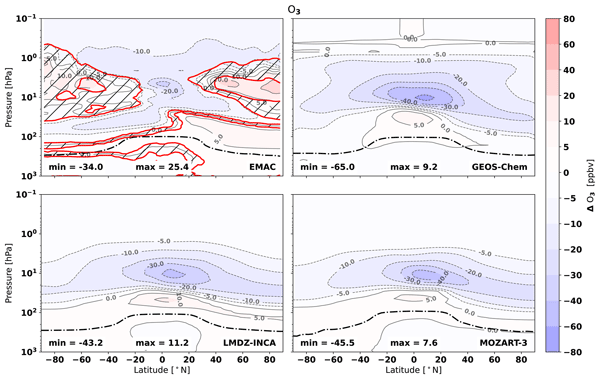
Jurriaan A. van 't Hoff, Didier Hauglustaine, Johannes Pletzer, Agnieszka Skowron, Volker Grewe, Sigrun Matthes, Maximilian M. Meuser, Robin N. Thor, and Irene C. Dedoussi
Atmos. Chem. Phys., 25, 2515–2550, https://doi.org/10.5194/acp-25-2515-2025, https://doi.org/10.5194/acp-25-2515-2025, 2025
Short summary
Short summary
Civil supersonic aircraft may return in the near future, and their emissions could lead to atmospheric changes which are detrimental to public health and the climate. We use four atmospheric chemistry models and show that emissions from a future supersonic aircraft fleet increase stratospheric nitrogen and water vapor levels, while depleting the global ozone column and leading to increases in radiative forcing. Their impacts can be reduced by reducing NOx emissions or the cruise altitude.
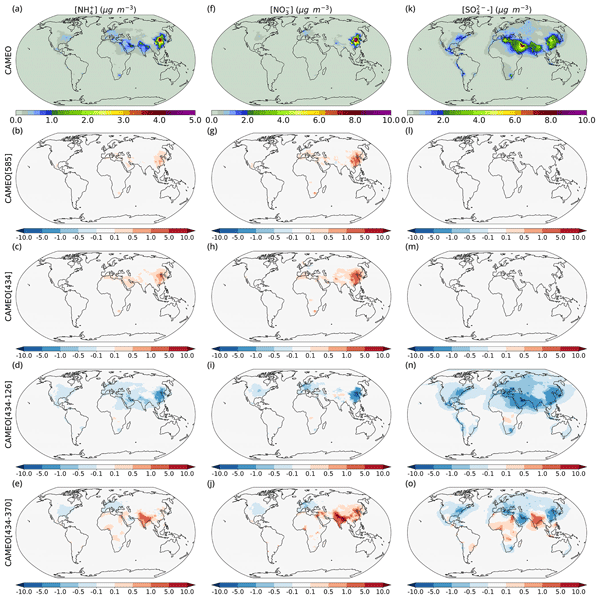
Maureen Beaudor, Didier Hauglustaine, Juliette Lathière, Martin Van Damme, Lieven Clarisse, and Nicolas Vuichard
Atmos. Chem. Phys., 25, 2017–2046, https://doi.org/10.5194/acp-25-2017-2025, https://doi.org/10.5194/acp-25-2017-2025, 2025
Short summary
Short summary
Agriculture is the biggest ammonia (NH3) source, impacting air quality, climate, and ecosystems. Because of food demand, NH3 emissions are projected to rise by 2100. Using a global model, we analyzed the impact of present and future NH3 emissions generated from a land model. Our results show improved ammonia patterns compared to a reference inventory. Future scenarios predict up to 70 % increase in global NH3 burden, with significant changes in radiative forcing that can greatly elevate N2O.
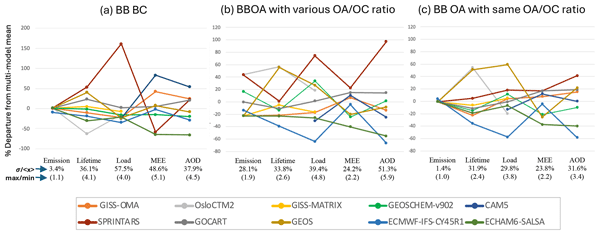
Mariya Petrenko, Ralph Kahn, Mian Chin, Susanne E. Bauer, Tommi Bergman, Huisheng Bian, Gabriele Curci, Ben Johnson, Johannes W. Kaiser, Zak Kipling, Harri Kokkola, Xiaohong Liu, Keren Mezuman, Tero Mielonen, Gunnar Myhre, Xiaohua Pan, Anna Protonotariou, Samuel Remy, Ragnhild Bieltvedt Skeie, Philip Stier, Toshihiko Takemura, Kostas Tsigaridis, Hailong Wang, Duncan Watson-Parris, and Kai Zhang
Atmos. Chem. Phys., 25, 1545–1567, https://doi.org/10.5194/acp-25-1545-2025, https://doi.org/10.5194/acp-25-1545-2025, 2025
Short summary
Short summary
We compared smoke plume simulations from 11 global models to each other and to satellite smoke amount observations aimed at constraining smoke source strength. In regions where plumes are thick and background aerosol is low, models and satellites compare well. However, the input emission inventory tends to underestimate in many places, and particle property and loss rate assumptions vary enormously among models, causing uncertainties that require systematic in situ measurements to resolve.
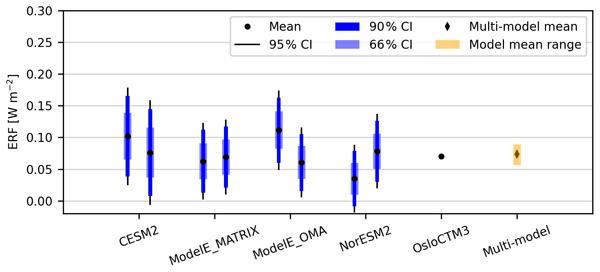
Ragnhild Bieltvedt Skeie, Rachael Byrom, Øivind Hodnebrog, Caroline Jouan, and Gunnar Myhre
Atmos. Chem. Phys., 24, 13361–13370, https://doi.org/10.5194/acp-24-13361-2024, https://doi.org/10.5194/acp-24-13361-2024, 2024
Short summary
Short summary
In 2020, new regulations by the International Maritime Organization regarding sulfur emissions came into force, reducing emissions of SO2 from the shipping sector by approximately 80 %. In this study, we use multiple models to calculate how much the Earth energy balance changed due to the emission reduction or the so-called effective radiative forcing. The calculated effective radiative forcing is weak, comparable to the effect of the increase in CO2 over the last 2 to 3 years.
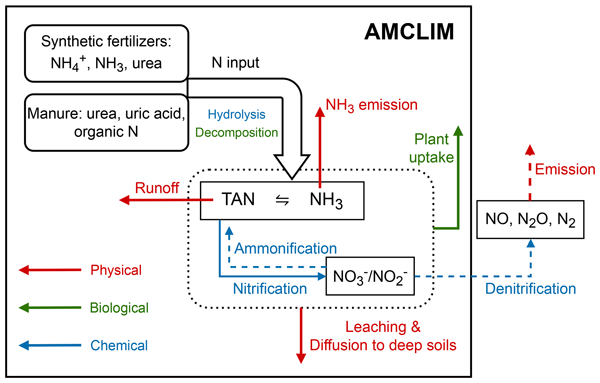
Jize Jiang, David S. Stevenson, and Mark A. Sutton
Geosci. Model Dev., 17, 8181–8222, https://doi.org/10.5194/gmd-17-8181-2024, https://doi.org/10.5194/gmd-17-8181-2024, 2024
Short summary
Short summary
A special model called AMmonia–CLIMate (AMCLIM) has been developed to understand and calculate NH3 emissions from fertilizer use and also taking into account how the environment influences these NH3 emissions. It is estimated that about 17 % of applied N in fertilizers was lost due to NH3 emissions. Hot and dry conditions and regions with high-pH soils can expect higher NH3 emissions.
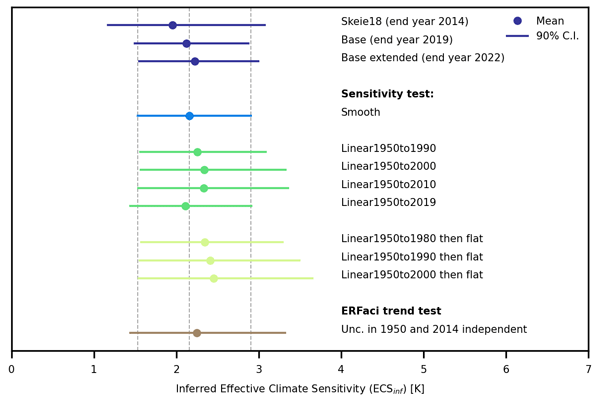
Ragnhild Bieltvedt Skeie, Magne Aldrin, Terje K. Berntsen, Marit Holden, Ragnar Bang Huseby, Gunnar Myhre, and Trude Storelvmo
Earth Syst. Dynam., 15, 1435–1458, https://doi.org/10.5194/esd-15-1435-2024, https://doi.org/10.5194/esd-15-1435-2024, 2024
Short summary
Short summary
Climate sensitivity and aerosol forcing are central quantities in climate science that are uncertain and contribute to the spread in climate projections. To constrain them, we use observations of temperature and ocean heat content as well as prior knowledge of radiative forcings over the industrialized period. The estimates are sensitive to how aerosol cooling evolved over the latter part of the 20th century, and a strong aerosol forcing trend in the 1960s–1970s is not supported by our analysis.

Marit Sandstad, Borgar Aamaas, Ane Nordlie Johansen, Marianne Tronstad Lund, Glen Philip Peters, Bjørn Hallvard Samset, Benjamin Mark Sanderson, and Ragnhild Bieltvedt Skeie
Geosci. Model Dev., 17, 6589–6625, https://doi.org/10.5194/gmd-17-6589-2024, https://doi.org/10.5194/gmd-17-6589-2024, 2024
Short summary
Short summary
The CICERO-SCM has existed as a Fortran model since 1999 that calculates the radiative forcing and concentrations from emissions and is an upwelling diffusion energy balance model of the ocean that calculates temperature change. In this paper, we describe an updated version ported to Python and publicly available at https://github.com/ciceroOslo/ciceroscm (https://doi.org/10.5281/zenodo.10548720). This version contains functionality for parallel runs and automatic calibration.

Hanqin Tian, Naiqing Pan, Rona L. Thompson, Josep G. Canadell, Parvadha Suntharalingam, Pierre Regnier, Eric A. Davidson, Michael Prather, Philippe Ciais, Marilena Muntean, Shufen Pan, Wilfried Winiwarter, Sönke Zaehle, Feng Zhou, Robert B. Jackson, Hermann W. Bange, Sarah Berthet, Zihao Bian, Daniele Bianchi, Alexander F. Bouwman, Erik T. Buitenhuis, Geoffrey Dutton, Minpeng Hu, Akihiko Ito, Atul K. Jain, Aurich Jeltsch-Thömmes, Fortunat Joos, Sian Kou-Giesbrecht, Paul B. Krummel, Xin Lan, Angela Landolfi, Ronny Lauerwald, Ya Li, Chaoqun Lu, Taylor Maavara, Manfredi Manizza, Dylan B. Millet, Jens Mühle, Prabir K. Patra, Glen P. Peters, Xiaoyu Qin, Peter Raymond, Laure Resplandy, Judith A. Rosentreter, Hao Shi, Qing Sun, Daniele Tonina, Francesco N. Tubiello, Guido R. van der Werf, Nicolas Vuichard, Junjie Wang, Kelley C. Wells, Luke M. Western, Chris Wilson, Jia Yang, Yuanzhi Yao, Yongfa You, and Qing Zhu
Earth Syst. Sci. Data, 16, 2543–2604, https://doi.org/10.5194/essd-16-2543-2024, https://doi.org/10.5194/essd-16-2543-2024, 2024
Short summary
Short summary
Atmospheric concentrations of nitrous oxide (N2O), a greenhouse gas 273 times more potent than carbon dioxide, have increased by 25 % since the preindustrial period, with the highest observed growth rate in 2020 and 2021. This rapid growth rate has primarily been due to a 40 % increase in anthropogenic emissions since 1980. Observed atmospheric N2O concentrations in recent years have exceeded the worst-case climate scenario, underscoring the importance of reducing anthropogenic N2O emissions.
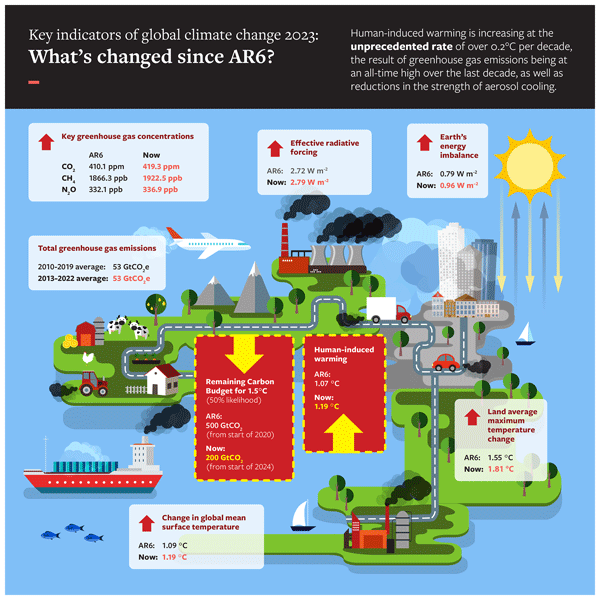
Piers M. Forster, Chris Smith, Tristram Walsh, William F. Lamb, Robin Lamboll, Bradley Hall, Mathias Hauser, Aurélien Ribes, Debbie Rosen, Nathan P. Gillett, Matthew D. Palmer, Joeri Rogelj, Karina von Schuckmann, Blair Trewin, Myles Allen, Robbie Andrew, Richard A. Betts, Alex Borger, Tim Boyer, Jiddu A. Broersma, Carlo Buontempo, Samantha Burgess, Chiara Cagnazzo, Lijing Cheng, Pierre Friedlingstein, Andrew Gettelman, Johannes Gütschow, Masayoshi Ishii, Stuart Jenkins, Xin Lan, Colin Morice, Jens Mühle, Christopher Kadow, John Kennedy, Rachel E. Killick, Paul B. Krummel, Jan C. Minx, Gunnar Myhre, Vaishali Naik, Glen P. Peters, Anna Pirani, Julia Pongratz, Carl-Friedrich Schleussner, Sonia I. Seneviratne, Sophie Szopa, Peter Thorne, Mahesh V. M. Kovilakam, Elisa Majamäki, Jukka-Pekka Jalkanen, Margreet van Marle, Rachel M. Hoesly, Robert Rohde, Dominik Schumacher, Guido van der Werf, Russell Vose, Kirsten Zickfeld, Xuebin Zhang, Valérie Masson-Delmotte, and Panmao Zhai
Earth Syst. Sci. Data, 16, 2625–2658, https://doi.org/10.5194/essd-16-2625-2024, https://doi.org/10.5194/essd-16-2625-2024, 2024
Short summary
Short summary
This paper tracks some key indicators of global warming through time, from 1850 through to the end of 2023. It is designed to give an authoritative estimate of global warming to date and its causes. We find that in 2023, global warming reached 1.3 °C and is increasing at over 0.2 °C per decade. This is caused by all-time-high greenhouse gas emissions.
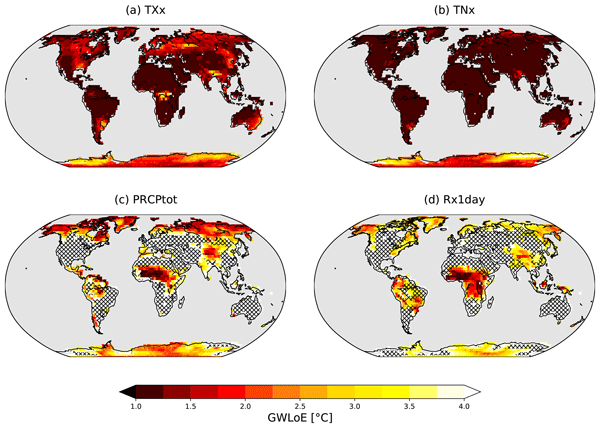
David Gampe, Clemens Schwingshackl, Andrea Böhnisch, Magdalena Mittermeier, Marit Sandstad, and Raul R. Wood
Earth Syst. Dynam., 15, 589–605, https://doi.org/10.5194/esd-15-589-2024, https://doi.org/10.5194/esd-15-589-2024, 2024
Short summary
Short summary
Using a special suite of climate simulations, we determine if and when climate change is detectable and translate this to the global warming prevalent in the corresponding year. Our results show that, at 1.5°C warming, >85 % of the global population (>95 % at 2.0° warming) is already exposed to nighttime temperatures altered by climate change beyond natural variability. Furthermore, even incremental changes in global warming levels result in increased human exposure to emerged climate signals.
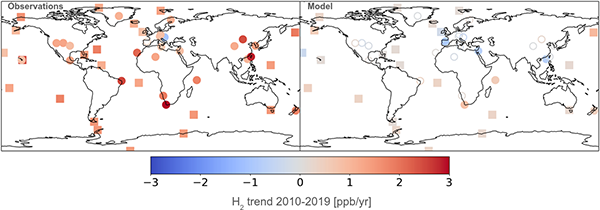
Fabien Paulot, Gabrielle Pétron, Andrew M. Crotwell, and Matteo B. Bertagni
Atmos. Chem. Phys., 24, 4217–4229, https://doi.org/10.5194/acp-24-4217-2024, https://doi.org/10.5194/acp-24-4217-2024, 2024
Short summary
Short summary
New data from the National Oceanic and Atmospheric Administration show that hydrogen (H2) concentrations increased from 2010 to 2019, which is consistent with the simulated increase in H2 photochemical production (mainly from methane). But this cannot be reconciled with the expected decrease (increase) in H2 anthropogenic emissions (soil deposition) in the same period. This shows gaps in our knowledge of the H2 biogeochemical cycle that must be resolved to quantify the impact of higher H2 usage.
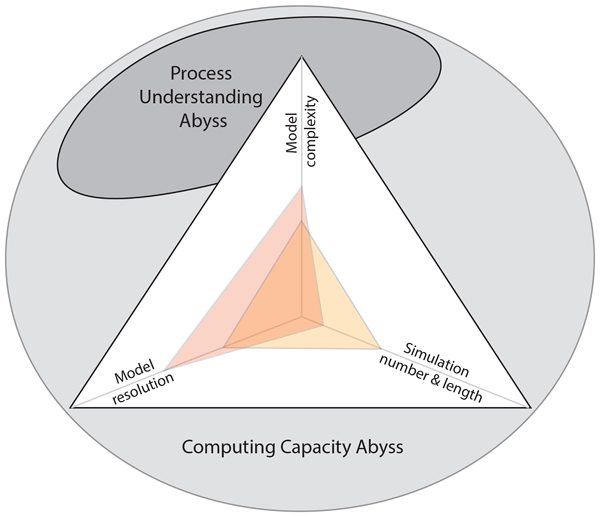
Stephanie Fiedler, Vaishali Naik, Fiona M. O'Connor, Christopher J. Smith, Paul Griffiths, Ryan J. Kramer, Toshihiko Takemura, Robert J. Allen, Ulas Im, Matthew Kasoar, Angshuman Modak, Steven Turnock, Apostolos Voulgarakis, Duncan Watson-Parris, Daniel M. Westervelt, Laura J. Wilcox, Alcide Zhao, William J. Collins, Michael Schulz, Gunnar Myhre, and Piers M. Forster
Geosci. Model Dev., 17, 2387–2417, https://doi.org/10.5194/gmd-17-2387-2024, https://doi.org/10.5194/gmd-17-2387-2024, 2024
Short summary
Short summary
Climate scientists want to better understand modern climate change. Thus, climate model experiments are performed and compared. The results of climate model experiments differ, as assessed in the latest Intergovernmental Panel on Climate Change (IPCC) assessment report. This article gives insights into the challenges and outlines opportunities for further improving the understanding of climate change. It is based on views of a group of experts in atmospheric composition–climate interactions.
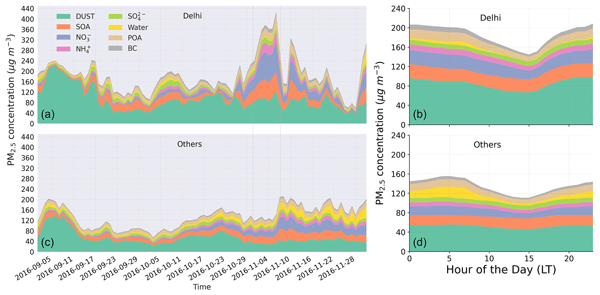
Prerita Agarwal, David S. Stevenson, and Mathew R. Heal
Atmos. Chem. Phys., 24, 2239–2266, https://doi.org/10.5194/acp-24-2239-2024, https://doi.org/10.5194/acp-24-2239-2024, 2024
Short summary
Short summary
Air pollution levels across northern India are amongst some of the worst in the world, with episodic and hazardous haze events. Here, the ability of the WRF-Chem model to predict air quality over northern India is assessed against several datasets. Whilst surface wind speed and particle pollution peaks are over- and underestimated, respectively, meteorology and aerosol trends are adequately captured, and we conclude it is suitable for investigating severe particle pollution events.
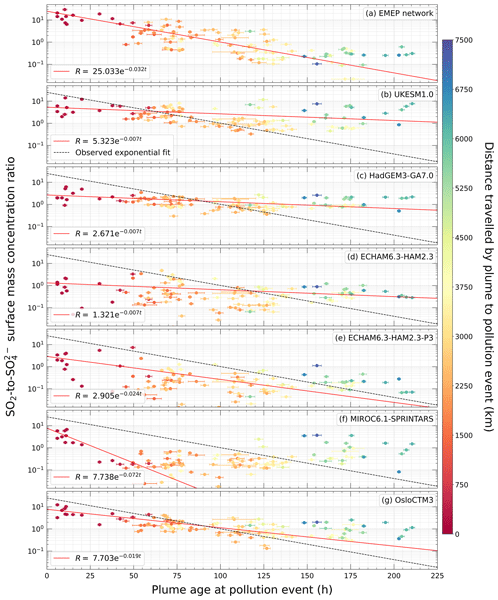
George Jordan, Florent Malavelle, Ying Chen, Amy Peace, Eliza Duncan, Daniel G. Partridge, Paul Kim, Duncan Watson-Parris, Toshihiko Takemura, David Neubauer, Gunnar Myhre, Ragnhild Skeie, Anton Laakso, and James Haywood
Atmos. Chem. Phys., 24, 1939–1960, https://doi.org/10.5194/acp-24-1939-2024, https://doi.org/10.5194/acp-24-1939-2024, 2024
Short summary
Short summary
The 2014–15 Holuhraun eruption caused a huge aerosol plume in an otherwise unpolluted region, providing a chance to study how aerosol alters cloud properties. This two-part study uses observations and models to quantify this relationship’s impact on the Earth’s energy budget. Part 1 suggests the models capture the observed spatial and chemical evolution of the plume, yet no model plume is exact. Understanding these differences is key for Part 2, where changes to cloud properties are explored.
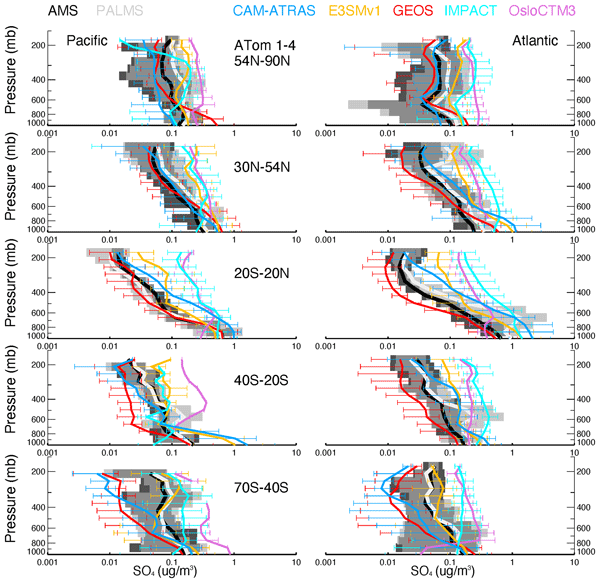
Huisheng Bian, Mian Chin, Peter R. Colarco, Eric C. Apel, Donald R. Blake, Karl Froyd, Rebecca S. Hornbrook, Jose Jimenez, Pedro Campuzano Jost, Michael Lawler, Mingxu Liu, Marianne Tronstad Lund, Hitoshi Matsui, Benjamin A. Nault, Joyce E. Penner, Andrew W. Rollins, Gregory Schill, Ragnhild B. Skeie, Hailong Wang, Lu Xu, Kai Zhang, and Jialei Zhu
Atmos. Chem. Phys., 24, 1717–1741, https://doi.org/10.5194/acp-24-1717-2024, https://doi.org/10.5194/acp-24-1717-2024, 2024
Short summary
Short summary
This work studies sulfur in the remote troposphere at global and seasonal scales using aircraft measurements and multi-model simulations. The goal is to understand the sulfur cycle over remote oceans, spread of model simulations, and observation–model discrepancies. Such an understanding and comparison with real observations are crucial to narrow down the uncertainties in model sulfur simulations and improve understanding of the sulfur cycle in atmospheric air quality, climate, and ecosystems.
Hsiang-He Lee, Qi Tang, and Michael Prather
Geosci. Model Dev. Discuss., https://doi.org/10.5194/gmd-2023-203, https://doi.org/10.5194/gmd-2023-203, 2024
Revised manuscript not accepted
Short summary
Short summary
The E3SM Chemistry diagnostics package (ChemDyg) is a software tool, which is designed for the global climate model (E3SM) chemistry development. ChemDyg generates several diagnostic plots and tables for model-to-model and model-to-observation comparison, including 2-dimentional contour mapping plots, diurnal and annual cycle, time-series plots, and comprehensive processing tables. This paper is to introduce the details of each diagnostics set and its required input data formats in ChemDyg.
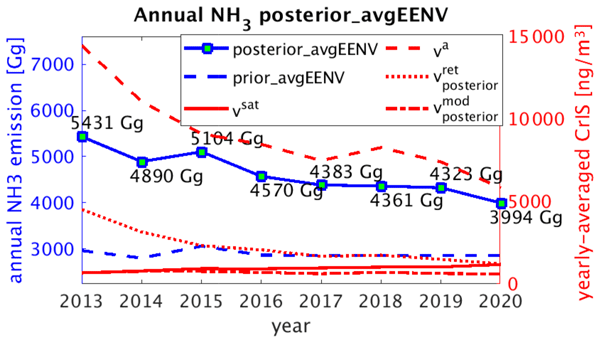
Ondřej Tichý, Sabine Eckhardt, Yves Balkanski, Didier Hauglustaine, and Nikolaos Evangeliou
Atmos. Chem. Phys., 23, 15235–15252, https://doi.org/10.5194/acp-23-15235-2023, https://doi.org/10.5194/acp-23-15235-2023, 2023
Short summary
Short summary
We show declining trends in NH3 emissions over Europe for 2013–2020 using advanced dispersion and inverse modelling and satellite measurements from CrIS. Emissions decreased by −26% since 2013, showing that the abatement strategies adopted by the European Union have been very efficient. Ammonia emissions are low in winter and peak in summer due to temperature-dependent soil volatilization. The largest decreases were observed in central and western Europe in countries with high emissions.
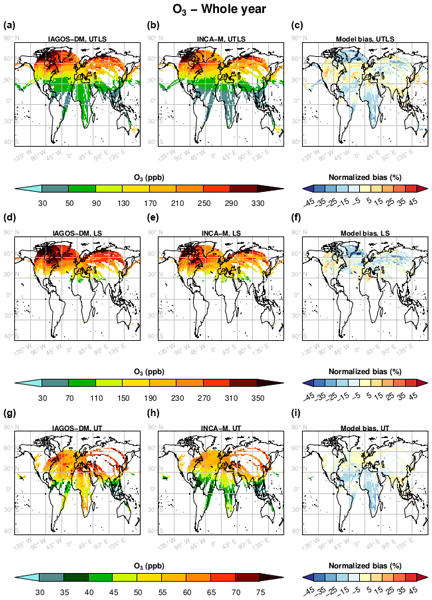
Yann Cohen, Didier Hauglustaine, Bastien Sauvage, Susanne Rohs, Patrick Konjari, Ulrich Bundke, Andreas Petzold, Valérie Thouret, Andreas Zahn, and Helmut Ziereis
Atmos. Chem. Phys., 23, 14973–15009, https://doi.org/10.5194/acp-23-14973-2023, https://doi.org/10.5194/acp-23-14973-2023, 2023
Short summary
Short summary
The upper troposphere–lower stratosphere (UTLS) is a key region regarding the lower atmospheric composition. This study consists of a comprehensive evaluation of an up-to-date chemistry–climate model in this layer, using regular in situ measurements based on passenger aircraft. For this purpose, a specific software (Interpol-IAGOS) has been updated and made publicly available. The model reproduces the carbon monoxide peaks due to biomass burning over the continental tropics particularly well.
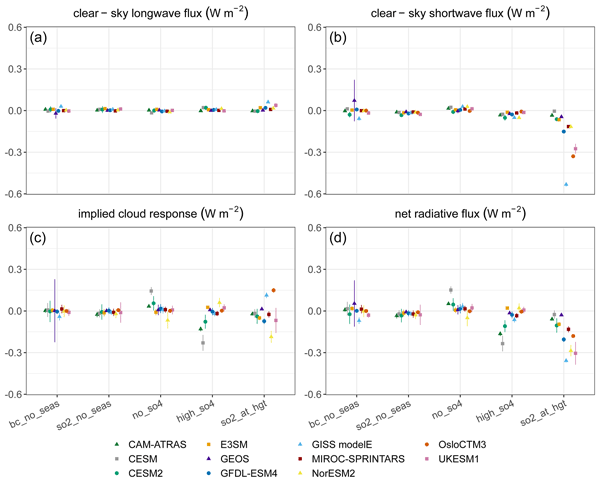
Hamza Ahsan, Hailong Wang, Jingbo Wu, Mingxuan Wu, Steven J. Smith, Susanne Bauer, Harrison Suchyta, Dirk Olivié, Gunnar Myhre, Hitoshi Matsui, Huisheng Bian, Jean-François Lamarque, Ken Carslaw, Larry Horowitz, Leighton Regayre, Mian Chin, Michael Schulz, Ragnhild Bieltvedt Skeie, Toshihiko Takemura, and Vaishali Naik
Atmos. Chem. Phys., 23, 14779–14799, https://doi.org/10.5194/acp-23-14779-2023, https://doi.org/10.5194/acp-23-14779-2023, 2023
Short summary
Short summary
We examine the impact of the assumed effective height of SO2 injection, SO2 and BC emission seasonality, and the assumed fraction of SO2 emissions injected as SO4 on climate and chemistry model results. We find that the SO2 injection height has a large impact on surface SO2 concentrations and, in some models, radiative flux. These assumptions are a
hiddensource of inter-model variability and may be leading to bias in some climate model results.
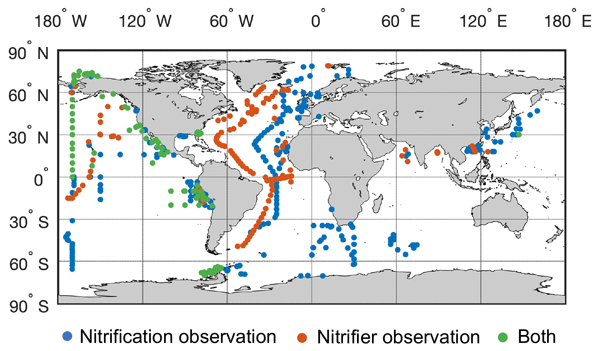
Weiyi Tang, Bess B. Ward, Michael Beman, Laura Bristow, Darren Clark, Sarah Fawcett, Claudia Frey, François Fripiat, Gerhard J. Herndl, Mhlangabezi Mdutyana, Fabien Paulot, Xuefeng Peng, Alyson E. Santoro, Takuhei Shiozaki, Eva Sintes, Charles Stock, Xin Sun, Xianhui S. Wan, Min N. Xu, and Yao Zhang
Earth Syst. Sci. Data, 15, 5039–5077, https://doi.org/10.5194/essd-15-5039-2023, https://doi.org/10.5194/essd-15-5039-2023, 2023
Short summary
Short summary
Nitrification and nitrifiers play an important role in marine nitrogen and carbon cycles by converting ammonium to nitrite and nitrate. Nitrification could affect microbial community structure, marine productivity, and the production of nitrous oxide – a powerful greenhouse gas. We introduce the newly constructed database of nitrification and nitrifiers in the marine water column and guide future research efforts in field observations and model development of nitrification.
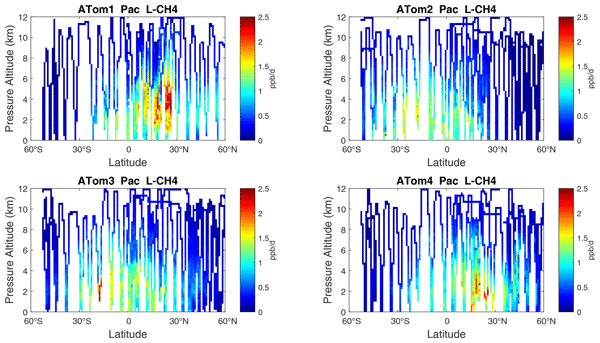
Michael J. Prather, Hao Guo, and Xin Zhu
Earth Syst. Sci. Data, 15, 3299–3349, https://doi.org/10.5194/essd-15-3299-2023, https://doi.org/10.5194/essd-15-3299-2023, 2023
Short summary
Short summary
The Atmospheric Tomography Mission (ATom) measured the chemical composition in air parcels from 0–12 km altitude on 2 km horizontal by 80 m vertical scales for four seasons, resolving most scales of chemical heterogeneity. ATom is one of the first missions designed to calculate the chemical evolution of each parcel, providing semi-global diurnal budgets for ozone and methane. Observations covered the remote troposphere: Pacific and Atlantic Ocean basins, Southern Ocean, Arctic basin, Antarctica.
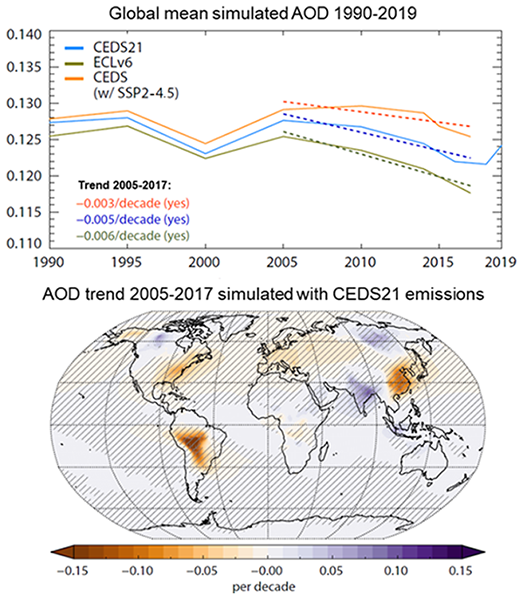
Marianne Tronstad Lund, Gunnar Myhre, Ragnhild Bieltvedt Skeie, Bjørn Hallvard Samset, and Zbigniew Klimont
Atmos. Chem. Phys., 23, 6647–6662, https://doi.org/10.5194/acp-23-6647-2023, https://doi.org/10.5194/acp-23-6647-2023, 2023
Short summary
Short summary
Here we show that differences, in magnitude and trend, between recent global anthropogenic emission inventories have a notable influence on simulated regional abundances of anthropogenic aerosol over the 1990–2019 period. This, in turn, affects estimates of radiative forcing. Our findings form a basis for comparing existing and upcoming studies on anthropogenic aerosols using different emission inventories.
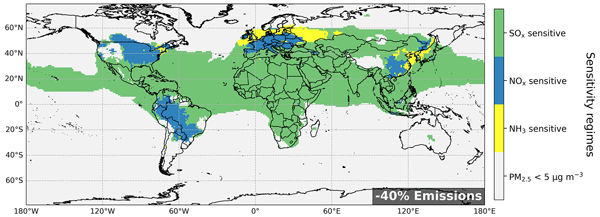
Yao Ge, Massimo Vieno, David S. Stevenson, Peter Wind, and Mathew R. Heal
Atmos. Chem. Phys., 23, 6083–6112, https://doi.org/10.5194/acp-23-6083-2023, https://doi.org/10.5194/acp-23-6083-2023, 2023
Short summary
Short summary
The sensitivity of fine particles and reactive N and S species to reductions in precursor emissions is investigated using the EMEP MSC-W (European Monitoring and Evaluation Programme Meteorological Synthesizing Centre – West) atmospheric chemistry transport model. This study reveals that the individual emissions reduction has multiple and geographically varying co-benefits and small disbenefits on different species, demonstrating the importance of prioritizing regional emissions controls.
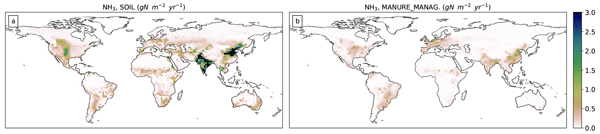
Maureen Beaudor, Nicolas Vuichard, Juliette Lathière, Nikolaos Evangeliou, Martin Van Damme, Lieven Clarisse, and Didier Hauglustaine
Geosci. Model Dev., 16, 1053–1081, https://doi.org/10.5194/gmd-16-1053-2023, https://doi.org/10.5194/gmd-16-1053-2023, 2023
Short summary
Short summary
Ammonia mainly comes from the agricultural sector, and its volatilization relies on environmental variables. Our approach aims at benefiting from an Earth system model framework to estimate it. By doing so, we represent a consistent spatial distribution of the emissions' response to environmental changes.
We greatly improved the seasonal cycle of emissions compared with previous work. In addition, our model includes natural soil emissions (that are rarely represented in modeling approaches).
Michael J. Prather, Lucien Froidevaux, and Nathaniel J. Livesey
Atmos. Chem. Phys., 23, 843–849, https://doi.org/10.5194/acp-23-843-2023, https://doi.org/10.5194/acp-23-843-2023, 2023
Short summary
Short summary
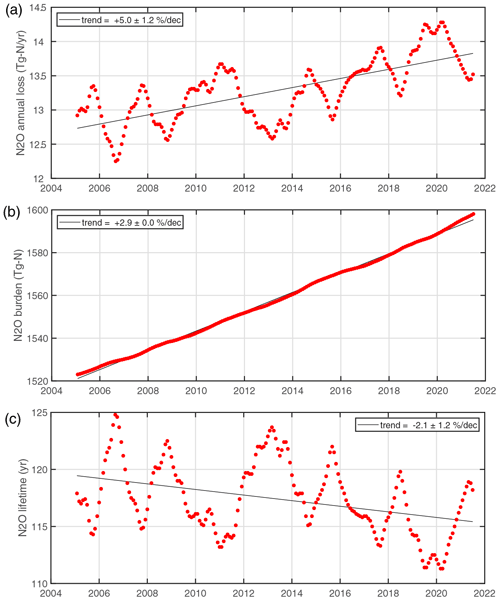
From satellite data for nitrous oxide (N2O), ozone and temperature, we calculate the monthly loss of N2O and find it is increasing faster than expected, resulting in a shorter lifetime, which reduces the impact of anthropogenic emissions. We identify the cause as enhanced vertical lofting of high-N2O air into the tropical middle stratosphere, where it is destroyed photochemically. Because global warming is due in part to N2O, this finding presents a new negative climate-chemistry feedback.
Cynthia H. Whaley, Kathy S. Law, Jens Liengaard Hjorth, Henrik Skov, Stephen R. Arnold, Joakim Langner, Jakob Boyd Pernov, Garance Bergeron, Ilann Bourgeois, Jesper H. Christensen, Rong-You Chien, Makoto Deushi, Xinyi Dong, Peter Effertz, Gregory Faluvegi, Mark Flanner, Joshua S. Fu, Michael Gauss, Greg Huey, Ulas Im, Rigel Kivi, Louis Marelle, Tatsuo Onishi, Naga Oshima, Irina Petropavlovskikh, Jeff Peischl, David A. Plummer, Luca Pozzoli, Jean-Christophe Raut, Tom Ryerson, Ragnhild Skeie, Sverre Solberg, Manu A. Thomas, Chelsea Thompson, Kostas Tsigaridis, Svetlana Tsyro, Steven T. Turnock, Knut von Salzen, and David W. Tarasick
Atmos. Chem. Phys., 23, 637–661, https://doi.org/10.5194/acp-23-637-2023, https://doi.org/10.5194/acp-23-637-2023, 2023
Short summary
Short summary
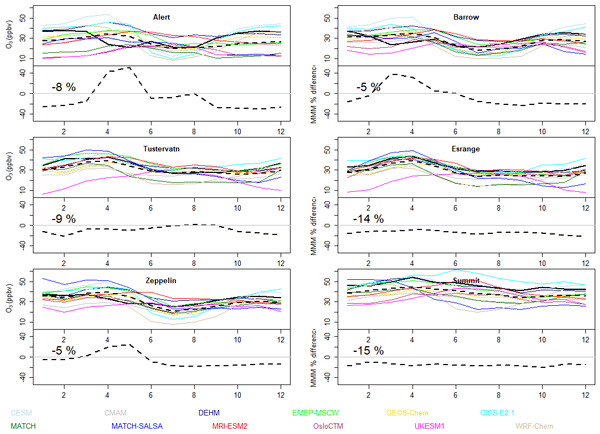
This study summarizes recent research on ozone in the Arctic, a sensitive and rapidly warming region. We find that the seasonal cycles of near-surface atmospheric ozone are variable depending on whether they are near the coast, inland, or at high altitude. Several global model simulations were evaluated, and we found that because models lack some of the ozone chemistry that is important for the coastal Arctic locations, they do not accurately simulate ozone there.
Hao Guo, Clare M. Flynn, Michael J. Prather, Sarah A. Strode, Stephen D. Steenrod, Louisa Emmons, Forrest Lacey, Jean-Francois Lamarque, Arlene M. Fiore, Gus Correa, Lee T. Murray, Glenn M. Wolfe, Jason M. St. Clair, Michelle Kim, John Crounse, Glenn Diskin, Joshua DiGangi, Bruce C. Daube, Roisin Commane, Kathryn McKain, Jeff Peischl, Thomas B. Ryerson, Chelsea Thompson, Thomas F. Hanisco, Donald Blake, Nicola J. Blake, Eric C. Apel, Rebecca S. Hornbrook, James W. Elkins, Eric J. Hintsa, Fred L. Moore, and Steven C. Wofsy
Atmos. Chem. Phys., 23, 99–117, https://doi.org/10.5194/acp-23-99-2023, https://doi.org/10.5194/acp-23-99-2023, 2023
Short summary
Short summary
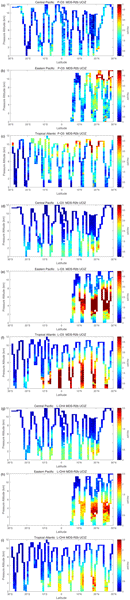
We have prepared a unique and unusual result from the recent ATom aircraft mission: a measurement-based derivation of the production and loss rates of ozone and methane over the ocean basins. These are the key products of chemistry models used in assessments but have thus far lacked observational metrics. It also shows the scales of variability of atmospheric chemical rates and provides a major challenge to the atmospheric models.
Jarmo S. Kikstra, Zebedee R. J. Nicholls, Christopher J. Smith, Jared Lewis, Robin D. Lamboll, Edward Byers, Marit Sandstad, Malte Meinshausen, Matthew J. Gidden, Joeri Rogelj, Elmar Kriegler, Glen P. Peters, Jan S. Fuglestvedt, Ragnhild B. Skeie, Bjørn H. Samset, Laura Wienpahl, Detlef P. van Vuuren, Kaj-Ivar van der Wijst, Alaa Al Khourdajie, Piers M. Forster, Andy Reisinger, Roberto Schaeffer, and Keywan Riahi
Geosci. Model Dev., 15, 9075–9109, https://doi.org/10.5194/gmd-15-9075-2022, https://doi.org/10.5194/gmd-15-9075-2022, 2022
Short summary
Short summary
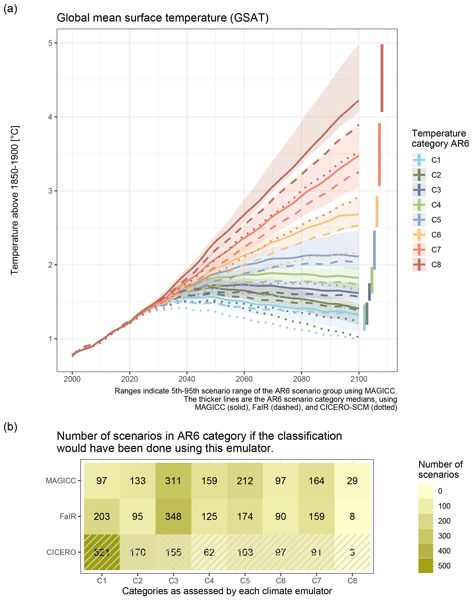
Assessing hundreds or thousands of emission scenarios in terms of their global mean temperature implications requires standardised procedures of infilling, harmonisation, and probabilistic temperature assessments. We here present the open-source
climate-assessmentworkflow that was used in the IPCC AR6 Working Group III report. The paper provides key insight for anyone wishing to understand the assessment of climate outcomes of mitigation pathways in the context of the Paris Agreement.
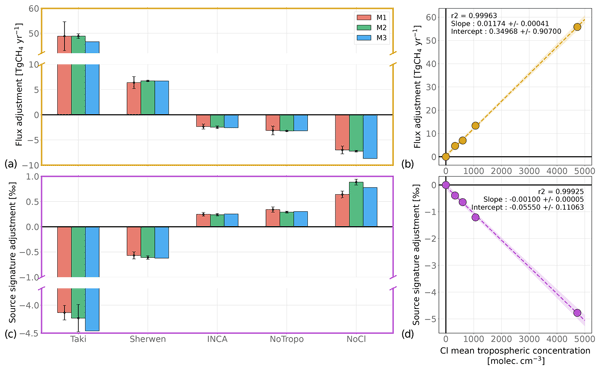
Joël Thanwerdas, Marielle Saunois, Isabelle Pison, Didier Hauglustaine, Antoine Berchet, Bianca Baier, Colm Sweeney, and Philippe Bousquet
Atmos. Chem. Phys., 22, 15489–15508, https://doi.org/10.5194/acp-22-15489-2022, https://doi.org/10.5194/acp-22-15489-2022, 2022
Short summary
Short summary
Atmospheric methane (CH4) concentrations have been rising since 2007, resulting from an imbalance between CH4 sources and sinks. The CH4 budget is generally estimated through top-down approaches using CH4 and δ13C(CH4) observations as constraints. The oxidation by chlorine (Cl) contributes little to the total oxidation of CH4 but strongly influences δ13C(CH4). Here, we compare multiple recent Cl fields and quantify the influence of Cl concentrations on CH4, δ13C(CH4), and CH4 budget estimates.

Johannes Pletzer, Didier Hauglustaine, Yann Cohen, Patrick Jöckel, and Volker Grewe
Atmos. Chem. Phys., 22, 14323–14354, https://doi.org/10.5194/acp-22-14323-2022, https://doi.org/10.5194/acp-22-14323-2022, 2022
Short summary
Short summary
Very fast aircraft can travel long distances in extremely short times and can fly at high altitudes (15 to 35 km). These aircraft emit water vapour, nitrogen oxides, and hydrogen. Water vapour emissions remain for months to several years at these altitudes and have an important impact on temperature. We investigate two aircraft fleets flying at 26 and 35 km. Ozone is depleted more, and the water vapour perturbation and temperature change are larger for the aircraft flying at 35 km.
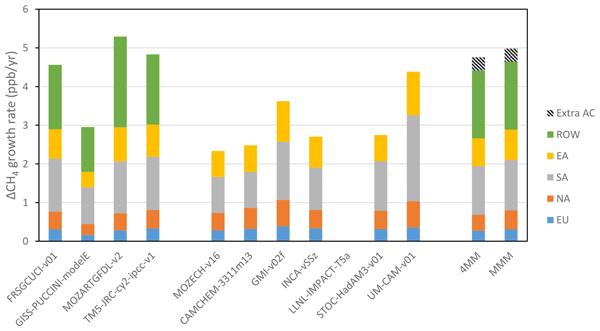
David S. Stevenson, Richard G. Derwent, Oliver Wild, and William J. Collins
Atmos. Chem. Phys., 22, 14243–14252, https://doi.org/10.5194/acp-22-14243-2022, https://doi.org/10.5194/acp-22-14243-2022, 2022
Short summary
Short summary
Atmospheric methane’s growth rate rose by 50 % in 2020 relative to 2019. Lower nitrogen oxide (NOx) emissions tend to increase methane’s atmospheric residence time; lower carbon monoxide (CO) and non-methane volatile organic compound (NMVOC) emissions decrease its lifetime. Combining model sensitivities with emission changes, we find that COVID-19 lockdown emission reductions can explain over half the observed increases in methane in 2020.
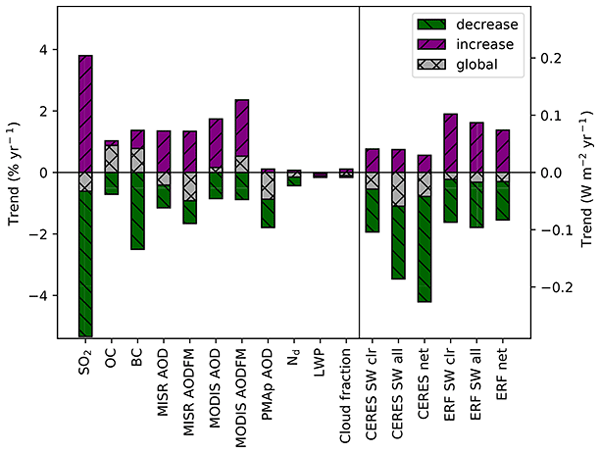
Johannes Quaas, Hailing Jia, Chris Smith, Anna Lea Albright, Wenche Aas, Nicolas Bellouin, Olivier Boucher, Marie Doutriaux-Boucher, Piers M. Forster, Daniel Grosvenor, Stuart Jenkins, Zbigniew Klimont, Norman G. Loeb, Xiaoyan Ma, Vaishali Naik, Fabien Paulot, Philip Stier, Martin Wild, Gunnar Myhre, and Michael Schulz
Atmos. Chem. Phys., 22, 12221–12239, https://doi.org/10.5194/acp-22-12221-2022, https://doi.org/10.5194/acp-22-12221-2022, 2022
Short summary
Short summary
Pollution particles cool climate and offset part of the global warming. However, they are washed out by rain and thus their effect responds quickly to changes in emissions. We show multiple datasets to demonstrate that aerosol emissions and their concentrations declined in many regions influenced by human emissions, as did the effects on clouds. Consequently, the cooling impact on the Earth energy budget became smaller. This change in trend implies a relative warming.
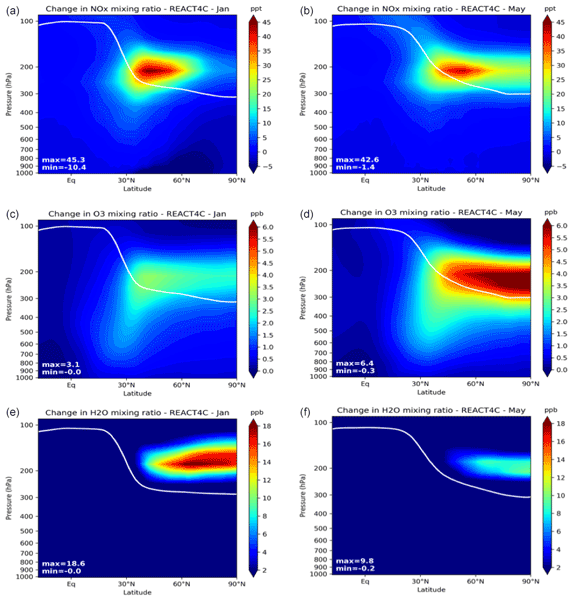
Etienne Terrenoire, Didier A. Hauglustaine, Yann Cohen, Anne Cozic, Richard Valorso, Franck Lefèvre, and Sigrun Matthes
Atmos. Chem. Phys., 22, 11987–12023, https://doi.org/10.5194/acp-22-11987-2022, https://doi.org/10.5194/acp-22-11987-2022, 2022
Short summary
Short summary
Aviation NOx emissions not only have an impact on global climate by changing ozone and methane levels in the atmosphere, but also contribute to the deterioration of local air quality. The LMDZ-INCA global model is applied to re-evaluate the impact of aircraft NOx and aerosol emissions on climate. We investigate the impact of present-day and future (2050) aircraft emissions on atmospheric composition and the associated radiative forcings of climate for ozone, methane and aerosol direct forcings.
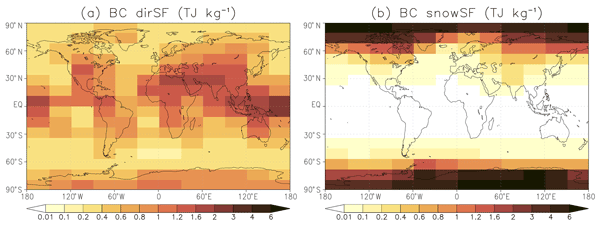
Petri Räisänen, Joonas Merikanto, Risto Makkonen, Mikko Savolahti, Alf Kirkevåg, Maria Sand, Øyvind Seland, and Antti-Ilari Partanen
Atmos. Chem. Phys., 22, 11579–11602, https://doi.org/10.5194/acp-22-11579-2022, https://doi.org/10.5194/acp-22-11579-2022, 2022
Short summary
Short summary
A climate model is used to evaluate how the radiative forcing (RF) associated with black carbon (BC) emissions depends on the latitude, longitude, and seasonality of emissions. It is found that both the direct RF (BC absorption of solar radiation in air) and snow RF (BC absorption in snow/ice) depend strongly on the emission region and season. The results suggest that, for a given mass of BC emitted, climatic impacts are likely to be largest for high-latitude emissions due to the large snow RF.
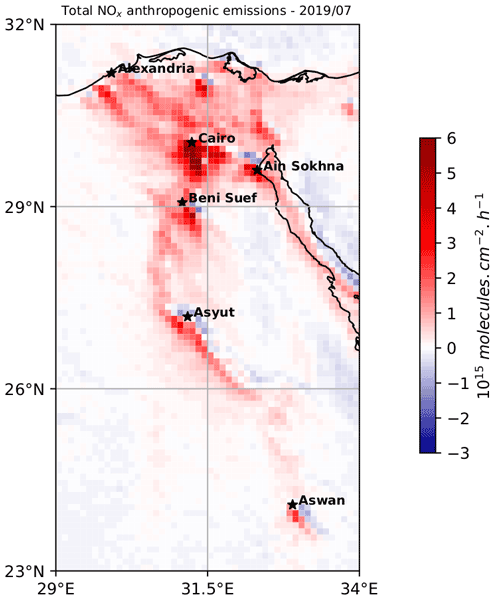
Anthony Rey-Pommier, Frédéric Chevallier, Philippe Ciais, Grégoire Broquet, Theodoros Christoudias, Jonilda Kushta, Didier Hauglustaine, and Jean Sciare
Atmos. Chem. Phys., 22, 11505–11527, https://doi.org/10.5194/acp-22-11505-2022, https://doi.org/10.5194/acp-22-11505-2022, 2022
Short summary
Short summary
Emission inventories for air pollutants can be uncertain in developing countries. In order to overcome these uncertainties, we model nitrogen oxide emissions in Egypt using satellite retrievals. We detect a weekly cycle reflecting Egyptian social norms, an annual cycle consistent with electricity consumption and an activity drop due to the COVID-19 pandemic. However, discrepancies with inventories remain high, illustrating the needs for additional data to improve the potential of our method.
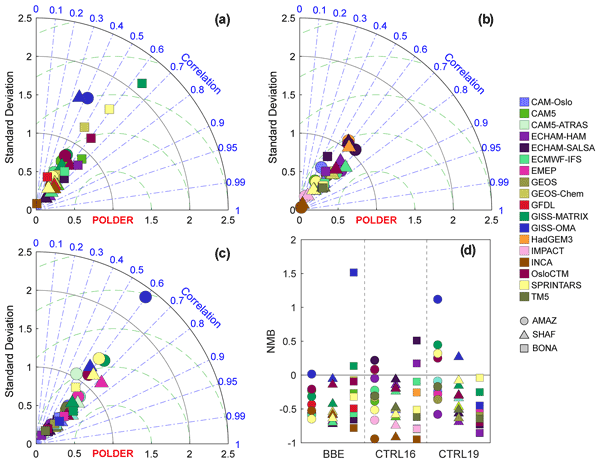
Qirui Zhong, Nick Schutgens, Guido van der Werf, Twan van Noije, Kostas Tsigaridis, Susanne E. Bauer, Tero Mielonen, Alf Kirkevåg, Øyvind Seland, Harri Kokkola, Ramiro Checa-Garcia, David Neubauer, Zak Kipling, Hitoshi Matsui, Paul Ginoux, Toshihiko Takemura, Philippe Le Sager, Samuel Rémy, Huisheng Bian, Mian Chin, Kai Zhang, Jialei Zhu, Svetlana G. Tsyro, Gabriele Curci, Anna Protonotariou, Ben Johnson, Joyce E. Penner, Nicolas Bellouin, Ragnhild B. Skeie, and Gunnar Myhre
Atmos. Chem. Phys., 22, 11009–11032, https://doi.org/10.5194/acp-22-11009-2022, https://doi.org/10.5194/acp-22-11009-2022, 2022
Short summary
Short summary
Aerosol optical depth (AOD) errors for biomass burning aerosol (BBA) are evaluated in 18 global models against satellite datasets. Notwithstanding biases in satellite products, they allow model evaluations. We observe large and diverse model biases due to errors in BBA. Further interpretations of AOD diversities suggest large biases exist in key processes for BBA which require better constraining. These results can contribute to further model improvement and development.
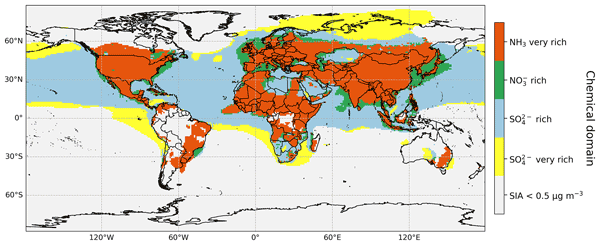
Yao Ge, Massimo Vieno, David S. Stevenson, Peter Wind, and Mathew R. Heal
Atmos. Chem. Phys., 22, 8343–8368, https://doi.org/10.5194/acp-22-8343-2022, https://doi.org/10.5194/acp-22-8343-2022, 2022
Short summary
Short summary
Reactive N and S gases and aerosols are critical determinants of air quality. We report a comprehensive analysis of the concentrations, wet and dry deposition, fluxes, and lifetimes of these species globally as well as for 10 world regions. We used the EMEP MSC-W model coupled with WRF meteorology and 2015 global emissions. Our work demonstrates the substantial regional variation in these quantities and the need for modelling to simulate atmospheric responses to precursor emissions.
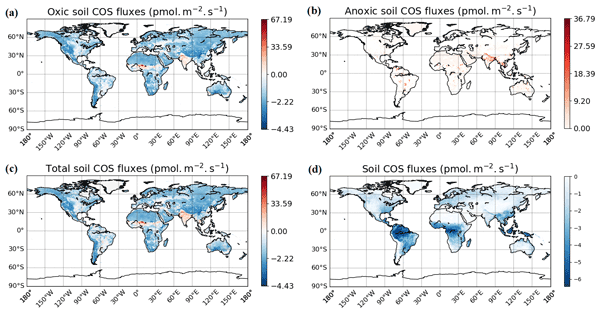
Camille Abadie, Fabienne Maignan, Marine Remaud, Jérôme Ogée, J. Elliott Campbell, Mary E. Whelan, Florian Kitz, Felix M. Spielmann, Georg Wohlfahrt, Richard Wehr, Wu Sun, Nina Raoult, Ulli Seibt, Didier Hauglustaine, Sinikka T. Lennartz, Sauveur Belviso, David Montagne, and Philippe Peylin
Biogeosciences, 19, 2427–2463, https://doi.org/10.5194/bg-19-2427-2022, https://doi.org/10.5194/bg-19-2427-2022, 2022
Short summary
Short summary
A better constraint of the components of the carbonyl sulfide (COS) global budget is needed to exploit its potential as a proxy of gross primary productivity. In this study, we compare two representations of oxic soil COS fluxes, and we develop an approach to represent anoxic soil COS fluxes in a land surface model. We show the importance of atmospheric COS concentration variations on oxic soil COS fluxes and provide new estimates for oxic and anoxic soil contributions to the COS global budget.
Cynthia H. Whaley, Rashed Mahmood, Knut von Salzen, Barbara Winter, Sabine Eckhardt, Stephen Arnold, Stephen Beagley, Silvia Becagli, Rong-You Chien, Jesper Christensen, Sujay Manish Damani, Xinyi Dong, Konstantinos Eleftheriadis, Nikolaos Evangeliou, Gregory Faluvegi, Mark Flanner, Joshua S. Fu, Michael Gauss, Fabio Giardi, Wanmin Gong, Jens Liengaard Hjorth, Lin Huang, Ulas Im, Yugo Kanaya, Srinath Krishnan, Zbigniew Klimont, Thomas Kühn, Joakim Langner, Kathy S. Law, Louis Marelle, Andreas Massling, Dirk Olivié, Tatsuo Onishi, Naga Oshima, Yiran Peng, David A. Plummer, Olga Popovicheva, Luca Pozzoli, Jean-Christophe Raut, Maria Sand, Laura N. Saunders, Julia Schmale, Sangeeta Sharma, Ragnhild Bieltvedt Skeie, Henrik Skov, Fumikazu Taketani, Manu A. Thomas, Rita Traversi, Kostas Tsigaridis, Svetlana Tsyro, Steven Turnock, Vito Vitale, Kaley A. Walker, Minqi Wang, Duncan Watson-Parris, and Tahya Weiss-Gibbons
Atmos. Chem. Phys., 22, 5775–5828, https://doi.org/10.5194/acp-22-5775-2022, https://doi.org/10.5194/acp-22-5775-2022, 2022
Short summary
Short summary
Air pollutants, like ozone and soot, play a role in both global warming and air quality. Atmospheric models are often used to provide information to policy makers about current and future conditions under different emissions scenarios. In order to have confidence in those simulations, in this study we compare simulated air pollution from 18 state-of-the-art atmospheric models to measured air pollution in order to assess how well the models perform.
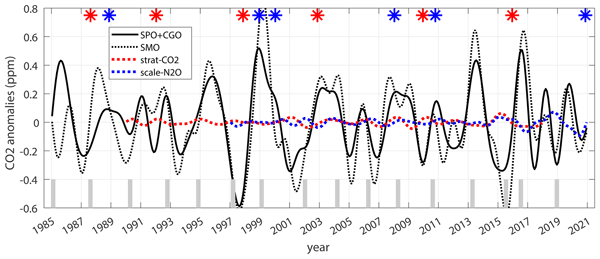
Michael J. Prather
Earth Syst. Dynam., 13, 703–709, https://doi.org/10.5194/esd-13-703-2022, https://doi.org/10.5194/esd-13-703-2022, 2022
Short summary
Short summary
Atmospheric CO2 fluctuations point to changes in fossil fuel emissions plus natural and perturbed variations in the natural carbon cycle. One unstudied source of variability is the stratosphere, where the influx of aged CO2-depleted air can cause surface fluctuations. Using modeling and, separately, scaling the observed N2O variability, I find that stratosphere-driven surface variability in CO2 is not a significant uncertainty (at most 10 % of the observed interannual variability).
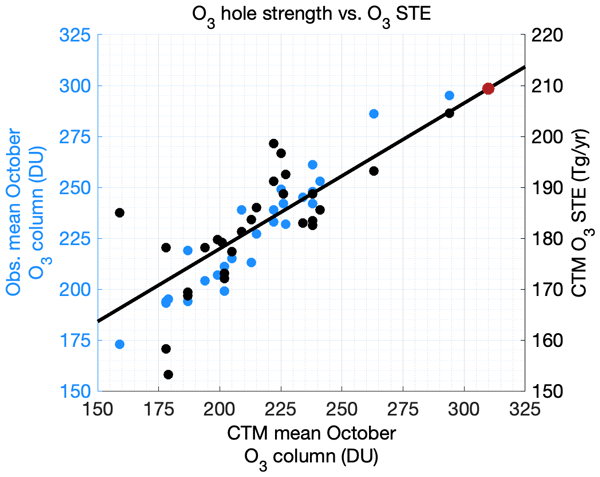
Daniel J. Ruiz and Michael J. Prather
Atmos. Chem. Phys., 22, 2079–2093, https://doi.org/10.5194/acp-22-2079-2022, https://doi.org/10.5194/acp-22-2079-2022, 2022
Short summary
Short summary
The stratosphere is an important source of tropospheric ozone, which affects climate, chemistry, and air quality, but is extremely difficult to quantify given the large production and loss terms in the troposphere. Here, we use other gases that are well observed and quantified as a reference to test our simulations of ozone transport in the atmosphere. This allows us to better constrain the stratospheric source of ozone and also offers guidance to improve future simulations of ozone transport.

Yao Ge, Mathew R. Heal, David S. Stevenson, Peter Wind, and Massimo Vieno
Geosci. Model Dev., 14, 7021–7046, https://doi.org/10.5194/gmd-14-7021-2021, https://doi.org/10.5194/gmd-14-7021-2021, 2021
Short summary
Short summary
This study reports the first evaluation of the global EMEP MSC-W ACTM driven by WRF meteorology, with a focus on surface concentrations and wet deposition of reactive N and S species. The model–measurement comparison is conducted both spatially and temporally, covering 10 monitoring networks worldwide. The statistics from the comprehensive evaluations presented in this study support the application of this model framework for global analysis of the budgets and fluxes of reactive N and SIA.

Gaëlle Dufour, Didier Hauglustaine, Yunjiang Zhang, Maxim Eremenko, Yann Cohen, Audrey Gaudel, Guillaume Siour, Mathieu Lachatre, Axel Bense, Bertrand Bessagnet, Juan Cuesta, Jerry Ziemke, Valérie Thouret, and Bo Zheng
Atmos. Chem. Phys., 21, 16001–16025, https://doi.org/10.5194/acp-21-16001-2021, https://doi.org/10.5194/acp-21-16001-2021, 2021
Short summary
Short summary
The IASI observations and the LMDZ-OR-INCA model simulations show negative ozone trends in the Central East China region in the lower free (3–6 km column) and the upper free (6–9 km column) troposphere. Sensitivity studies from the model show that the Chinese anthropogenic emissions contribute to more than 50 % in the trend. The reduction in NOx emissions that has occurred since 2013 in China seems to lead to a decrease in ozone in the free troposphere, contrary to the increase at the surface.
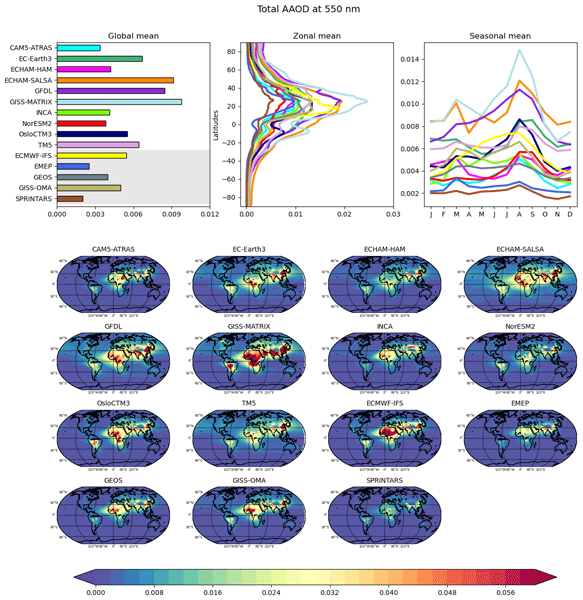
Maria Sand, Bjørn H. Samset, Gunnar Myhre, Jonas Gliß, Susanne E. Bauer, Huisheng Bian, Mian Chin, Ramiro Checa-Garcia, Paul Ginoux, Zak Kipling, Alf Kirkevåg, Harri Kokkola, Philippe Le Sager, Marianne T. Lund, Hitoshi Matsui, Twan van Noije, Dirk J. L. Olivié, Samuel Remy, Michael Schulz, Philip Stier, Camilla W. Stjern, Toshihiko Takemura, Kostas Tsigaridis, Svetlana G. Tsyro, and Duncan Watson-Parris
Atmos. Chem. Phys., 21, 15929–15947, https://doi.org/10.5194/acp-21-15929-2021, https://doi.org/10.5194/acp-21-15929-2021, 2021
Short summary
Short summary
Absorption of shortwave radiation by aerosols can modify precipitation and clouds but is poorly constrained in models. A total of 15 different aerosol models from AeroCom phase III have reported total aerosol absorption, and for the first time, 11 of these models have reported in a consistent experiment the contributions to absorption from black carbon, dust, and organic aerosol. Here, we document the model diversity in aerosol absorption.
Cited articles
Andreae, M. O. and Merlet, P.: Emission of trace gases and aerosols from biomass burning, Global Biogeochem. Cy., 15, 955–966, https://doi.org/10.1029/2000GB001382, 2001.
Archibald, A. T., O'Connor, F. M., Abraham, N. L., Archer-Nicholls, S., Chipperfield, M. P., Dalvi, M., Folberth, G. A., Dennison, F., Dhomse, S. S., Griffiths, P. T., Hardacre, C., Hewitt, A. J., Hill, R. S., Johnson, C. E., Keeble, J., Köhler, M. O., Morgenstern, O., Mulcahy, J. P., Ordóñez, C., Pope, R. J., Rumbold, S. T., Russo, M. R., Savage, N. H., Sellar, A., Stringer, M., Turnock, S. T., Wild, O., and Zeng, G.: Description and evaluation of the UKCA stratosphere–troposphere chemistry scheme (StratTrop vn 1.0) implemented in UKESM1, Geosci. Model Dev., 13, 1223–1266, https://doi.org/10.5194/gmd-13-1223-2020, 2020.
Batenburg, A. M., Walter, S., Pieterse, G., Levin, I., Schmidt, M., Jordan, A., Hammer, S., Yver, C., and Röckmann, T.: Temporal and spatial variability of the stable isotopic composition of atmospheric molecular hydrogen: observations at six EUROHYDROS stations, Atmos. Chem. Phys., 11, 6985–6999, https://doi.org/10.5194/acp-11-6985-2011, 2011.
Buzzard, V., Thorne, D., Gil-Loaiza, J., Cueva, A., and Meredith, L. K.: Sensitivity of soil hydrogen uptake to natural and managed moisture dynamics in a semiarid urban ecosystem, PeerJ, 10, e12966, https://doi.org/10.7717/peerj.12966, 2022.
Chance, K., Palmer, P. I., Spurr, R. J. D., Martin, R. V., Kurosu, T. P., and Jacob, D. J.: Satellite observations of formaldehyde over North America from GOME, Geophys. Res. Lett., 27, 3461–3464, https://doi.org/10.1029/2000GL011857, 2000.
Conrad, R.: Soil microorganisms as controllers of atmospheric trace gases (H2, CO, CH4, OCS, N2O, and NO), Microbiol. Rev., 60, 609, https://doi.org/10.1128/mr.60.4.609-640.1996, 1996.
Conrad, R. and Babbel, M.: Effect of dilution on methanogenesis, hydrogen turnover and interspecies hydrogen transfer in anoxic paddy soil, FEMS Microbiol. Lett., 62, 21–27, https://doi.org/10.1111/j.1574-6968.1989.tb03654.x, 1989.
Conrad, R. and Seiler, W.: Contribution of hydrogen production by biological nitrogen fixation to the global hydrogen budget, J. Geophys. Res.-Oceans, 85, 5493–5498, https://doi.org/10.1029/JC085iC10p05493, 1980.
Dalsøren, S. B., Myhre, C. L., Myhre, G., Gomez-Pelaez, A. J., Søvde, O. A., Isaksen, I. S. A., Weiss, R. F., and Harth, C. M.: Atmospheric methane evolution the last 40 years, Atmos. Chem. Phys., 16, 3099–3126, https://doi.org/10.5194/acp-16-3099-2016, 2016.
Deeter, M. N., Emmons, L. K., Francis, G. L., Edwards, D. P., Gille, J. C., Warner, J. X., Khattatov, B., Ziskin, D., Lamarque, J.-F., Ho, S.-P., Yudin, V., Attié, J.-L., Packman, D., Chen, J., Mao, D., and Drummond, J. R.: Operational carbon monoxide retrieval algorithm and selected results for the MOPITT instrument, J. Geophys. Res.-Atmos., 108, https://doi.org/10.1029/2002JD003186, 2003.
Derwent, R. G. and Jenkin, M. E.: Estimation of the atmospheric hydrogen source from the oxidation of man-made and natural non-methane organic compounds using a Master Chemical Mechanism, Atmos. Environ., 339, 120871, https://doi.org/10.1016/j.atmosenv.2024.120871, 2024.
De Smedt, I., Müller, J.-F., Stavrakou, T., van der A, R., Eskes, H., and Van Roozendael, M.: Twelve years of global observations of formaldehyde in the troposphere using GOME and SCIAMACHY sensors, Atmos. Chem. Phys., 8, 4947–4963, https://doi.org/10.5194/acp-8-4947-2008, 2008.
Duncan, B. N., Logan, J. A., Bey, I., Megretskaia, I. A., Yantosca, R. M., Novelli, P. C., Jones, N. B., and Rinsland, C. P.: Global budget of CO, 1988–1997: Source estimates and validation with a global model, J. Geophys. Res.-Atmos., 112, https://doi.org/10.1029/2007JD008459, 2007.
Dunne, J. P., Horowitz, L. W., Adcroft, A. J., Ginoux, P., Held, I. M., John, J. G., Krasting, J. P., Malyshev, S., Naik, V., Paulot, F., Shevliakova, E., Stock, C. A., Zadeh, N., Balaji, V., Blanton, C., Dunne, K. A., Dupuis, C., Durachta, J., Dussin, R., Gauthier, P. P. G., Griffies, S. M., Guo, H., Hallberg, R. W., Harrison, M., He, J., Hurlin, W., McHugh, C., Menzel, R., Milly, P. C. D., Nikonov, S., Paynter, D. J., Ploshay, J., Radhakrishnan, A., Rand, K., Reichl, B. G., Robinson, T., Schwarzkopf, D. M., Sentman, L. T., Underwood, S., Vahlenkamp, H., Winton, M., Wittenberg, A. T., Wyman, B., Zeng, Y., and Zhao, M.: The GFDL Earth System Model Version 4.1 (GFDL-ESM 4.1): Overall Coupled Model Description and Simulation Characteristics, J. Adv. Model. Earth Sy., 12, e2019MS002015, https://doi.org/10.1029/2019MS002015, 2020.
Ehhalt, D. H.: Gas phase chemistry of the troposphere, in: Global Aspects of Atmospheric Chemistry (Topics in Physical Chemistry), vol. 6, edited by: Zellner, R., Springer-Verlag, New York, 21–109, ISBN 3-7985-1127-6, 1999.
Ehhalt, D. H. and Rohrer, F.: The tropospheric cycle of H2: a critical review, Tellus B, 61, 500–535, https://doi.org/10.1111/j.1600-0889.2009.00416.x, 2009.
Ehhalt, D., Prather, M., Dentener, F., Derwent, R., Dlugokencky, E., Holland, E., Isaksen, I., Katima, J., Kirchhoff, V., Matson, P., Midgley, P., Wang, M., Berntsen, T., Bey, I., Brasseur, G., Buja, L., Collins, W. J., Daniel, J., DeMore, W. B., Derek, N., Dickerson, R., Etheridge, D., Feichter, J., Fraser, P., Friedl, R., Fuglestvedt, J., Gauss, M., Grenfell, L., Grübler, A., Harris, N., Hauglustaine, D., Horowitz, L., Jackman, C., Jacob, D., Jaeglé, L., Jain, A., Kanakidou, M., Karlsdottir, S., Ko, M., Kurylo, M., Lawrence, M., Logan, J. A., Manning, M., Mauzerall, D., McConnell, J., Mickley, L., Montzka, S., Müller, J. F., Olivier, J., Pickering, K., Pitari, G., Roelofs, G. J., Rogers, H., Rognerud, B., Smith, S., Solomon, S., Staehelin, J., Steele, P., Stevenson, D., Sundet, J., Thompson, A., van Weele, M., Joos, F., and McFarland, M.: Atmospheric Chemistry and Greenhouse Gases, in: Climate Change 2001: The Scientific Basis. Contribution of Working Group I to the Third Assessment Report of the Intergovernmental Panel on Climate Change, Cambridge University Press, 239–288, ISBN 0521 80767 0, ISBN 0521 01495 6, 2001.
Esquivel-Elizondo, S., Hormaza Mejia, A., Sun, T., Shrestha, E., Hamburg, S. P., and Ocko, I. B.: Wide range in estimates of hydrogen emissions from infrastructure, Front. Energy Res., 11, https://doi.org/10.3389/fenrg.2023.1207208, 2023.
Gerst, S. and Quay, P.: Deuterium component of the global molecular hydrogen cycle, J. Geophys. Res.-Atmos., 106, 5021–5031, https://doi.org/10.1029/2000JD900593, 2001.
Gettelman, A., Mills, M. J., Kinnison, D. E., Garcia, R. R., Smith, A. K., Marsh, D. R., Tilmes, S., Vitt, F., Bardeen, C. G., McInerny, J., Liu, H.-L., Solomon, S. C., Polvani, L. M., Emmons, L. K., Lamarque, J.-F., Richter, J. H., Glanville, A. S., Bacmeister, J. T., Phillips, A. S., Neale, R. B., Simpson, I. R., DuVivier, A. K., Hodzic, A., and Randel, W. J.: The Whole Atmosphere Community Climate Model Version 6 (WACCM6), J. Geophys. Res.-Atmos., 124, 12380–12403, https://doi.org/10.1029/2019JD030943, 2019.
Gibson, J. J., Eby, P., and Jaggi, A.: Natural isotope fingerprinting of produced hydrogen and its potential applications to the hydrogen economy, Int. J. Hydrogen Energ., 66, 468–478, https://doi.org/10.1016/j.ijhydene.2024.04.077, 2024.
Hagemann, R., Nief, G., and Roth, E.: Absolute isotopic scale for deuterium analysis of natural waters, Absolute D/H ratio for SMOW, Tellus, 22, 712–715, https://doi.org/10.1111/j.2153-3490.1970.tb00540.x, 1970.
Hauglustaine, D. A. and Ehhalt, D. H.: A three-dimensional model of molecular hydrogen in the troposphere, J. Geophys. Res.-Atmos., 107, ACH 4-1–ACH 4-16, https://doi.org/10.1029/2001JD001156, 2002.
Hauglustaine, D. A., Hourdin, F., Jourdain, L., Filiberti, M.-A., Walters, S., Lamarque, J.-F., and Holland, E. A.: Interactive chemistry in the Laboratoire de Météorologie Dynamique general circulation model: Description and background tropospheric chemistry evaluation, J. Geophys. Res., 109, D04314, https://doi.org/10.1029/2003JD003957, 2004.
Hodnebrog, Ø.: CESM2-WACCM data for A multi-model approach to constrain the atmospheric hydrogen budget, Sigma2 [data set], https://doi.org/10.11582/2025.98qdasg2, 2025.
Hoesly, R. M., Smith, S. J., Feng, L., Klimont, Z., Janssens-Maenhout, G., Pitkanen, T., Seibert, J. J., Vu, L., Andres, R. J., Bolt, R. M., Bond, T. C., Dawidowski, L., Kholod, N., Kurokawa, J.-I., Li, M., Liu, L., Lu, Z., Moura, M. C. P., O'Rourke, P. R., and Zhang, Q.: Historical (1750–2014) anthropogenic emissions of reactive gases and aerosols from the Community Emissions Data System (CEDS), Geosci. Model Dev., 11, 369–408, https://doi.org/10.5194/gmd-11-369-2018, 2018.
Horowitz, L. W., Naik, V., Paulot, F., Ginoux, P. A., Dunne, J. P., Mao, J., Schnell, J., Chen, X., He, J., John, J. G., Lin, M., Lin, P., Malyshev, S., Paynter, D., Shevliakova, E., and Zhao, M.: The GFDL Global Atmospheric Chemistry-Climate Model AM4.1: Model Description and Simulation Characteristics, J. Adv. Model. Earth Sy., 12, e2019MS002032, https://doi.org/10.1029/2019MS002032, 2020.
Lama, S., Houweling, S., Boersma, K. F., Aben, I., Denier van der Gon, H. A. C., and Krol, M. C.: Estimation of OH in urban plumes using TROPOMI-inferred
Meinshausen, M., Vogel, E., Nauels, A., Lorbacher, K., Meinshausen, N., Etheridge, D. M., Fraser, P. J., Montzka, S. A., Rayner, P. J., Trudinger, C. M., Krummel, P. B., Beyerle, U., Canadell, J. G., Daniel, J. S., Enting, I. G., Law, R. M., Lunder, C. R., O'Doherty, S., Prinn, R. G., Reimann, S., Rubino, M., Velders, G. J. M., Vollmer, M. K., Wang, R. H. J., and Weiss, R.: Historical greenhouse gas concentrations for climate modelling (CMIP6), Geosci. Model Dev., 10, 2057–2116, https://doi.org/10.5194/gmd-10-2057-2017, 2017.
Novelli, P. C., Lang, P. M., Masarie, K. A., Hurst, D. F., Myers, R., and Elkins, J. W.: Molecular hydrogen in the troposphere: Global distribution and budget, J. Geophys. Res.-Atmos., 104, 30427–30444, https://doi.org/10.1029/1999JD900788, 1999.
O'Rourke, P. R., Smith, S. J., Mott, A., Ahsan, H., McDuffie, E. E., Crippa, M., Klimont, S., McDonald, B., Wang, Z., Nicholson, M. B., Feng, L., and Hoesly, R. M.: CEDS v-2021-02-05 Emission Data 1975–2019 (version Feb-05-2021), Zenodo [data set], https://doi.org/10.5281/zenodo.4509372, 2021.
Ouyang, Z., Jackson, R. B., Saunois, M., Canadell, J. G., Zhao, Y., Morfopoulos, C., Krummel, P. B., Patra, P. K., Peters, G. P., Dennison, F., Gasser, T., Archibald, A. T., Arora, V., Baudoin, G., Chandra, N., Ciais, P., Davis, S. J., Feron, S., Guo, F., Hauglustaine, D., Jones, C. D., Jones, M. W., Kato, E., Kennedy, D., Knauer, J., Lienert, S., Lombardozzi, D., Melton, J. R., Nabel, J. E. M. S., O'Sullivan, M., Pétron, G., Poulter, B., Rogelj, J., Sandoval Calle, D., Smith, P., Suntharalingam, P., Tian, H., Wang, C., and Wiltshire, A.: The global hydrogen budget, Nature, 648, 616–624, https://doi.org/10.1038/s41586-025-09806-1, 2025.
Patterson, J. D., Aydin, M., Crotwell, A. M., Petron, G., Severinghaus, J. P., and Saltzman, E. S.: Atmospheric History of H2 Over the Past Century Reconstructed From South Pole Firn Air, Geophys. Res. Lett., 47, e2020GL087787, https://doi.org/10.1029/2020GL087787, 2020.
Patterson, J. D., Aydin, M., Crotwell, A. M., Pétron, G., Severinghaus, J. P., Krummel, P. B., Langenfelds, R. L., and Saltzman, E. S.: H2 in Antarctic firn air: Atmospheric reconstructions and implications for anthropogenic emissions, P. Natl. A. Sci., 118, e2103335118, https://doi.org/10.1073/pnas.2103335118, 2021.
Paulot, F., Paynter, D., Naik, V., Malyshev, S., Menzel, R., and Horowitz, L. W.: Global modeling of hydrogen using GFDL-AM4.1: Sensitivity of soil removal and radiative forcing, Int. J. Hydrogen Energ., 46, 13446–13460, https://doi.org/10.1016/j.ijhydene.2021.01.088, 2021.
Paulot, F., Pétron, G., Crotwell, A. M., and Bertagni, M. B.: Reanalysis of NOAA H2 observations: implications for the H2 budget, Atmos. Chem. Phys., 24, 4217–4229, https://doi.org/10.5194/acp-24-4217-2024, 2024.
Pérez-Peña, M. P., Fisher, J. A., Millet, D. B., Yashiro, H., Langenfelds, R. L., Krummel, P. B., and Kable, S. H.: Evaluating the contribution of the unexplored photochemistry of aldehydes on the tropospheric levels of molecular hydrogen (H2), Atmos. Chem. Phys., 22, 12367–12386, https://doi.org/10.5194/acp-22-12367-2022, 2022.
Pétron, G., Crotwell, A. M., Mund, J., Crotwell, M., Mefford, T., Thoning, K., Hall, B., Kitzis, D., Madronich, M., Moglia, E., Neff, D., Wolter, S., Jordan, A., Krummel, P., Langenfelds, R., and Patterson, J.: Atmospheric H2 observations from the NOAA Cooperative Global Air Sampling Network, Atmos. Meas. Tech., 17, 4803–4823, https://doi.org/10.5194/amt-17-4803-2024, 2024.
Pieterse, G., Krol, M. C., and Röckmann, T.: A consistent molecular hydrogen isotope chemistry scheme based on an independent bond approximation, Atmos. Chem. Phys., 9, 8503–8529, https://doi.org/10.5194/acp-9-8503-2009, 2009.
Pieterse, G., Krol, M. C., Batenburg, A. M., Steele, L. P., Krummel, P. B., Langenfelds, R. L., and Röckmann, T.: Global modelling of H2 mixing ratios and isotopic compositions with the TM5 model, Atmos. Chem. Phys., 11, 7001–7026, https://doi.org/10.5194/acp-11-7001-2011, 2011.
Pieterse, G., Krol, M. C., Batenburg, A. M., M. Brenninkmeijer, C. A., Popa, M. E., O'Doherty, S., Grant, A., Steele, L. P., Krummel, P. B., Langenfelds, R. L., Wang, H. J., Vermeulen, A. T., Schmidt, M., Yver, C., Jordan, A., Engel, A., Fisher, R. E., Lowry, D., Nisbet, E. G., Reimann, S., Vollmer, M. K., Steinbacher, M., Hammer, S., Forster, G., Sturges, W. T., and Röckmann, T.: Reassessing the variability in atmospheric H2 using the two-way nested TM5 model, J. Geophys. Res.-Atmos., 118, 3764–3780, https://doi.org/10.1002/jgrd.50204, 2013.
Prather, M. J., Zhu, X., Flynn, C. M., Strode, S. A., Rodriguez, J. M., Steenrod, S. D., Liu, J., Lamarque, J.-F., Fiore, A. M., Horowitz, L. W., Mao, J., Murray, L. T., Shindell, D. T., and Wofsy, S. C.: Global atmospheric chemistry – which air matters, Atmos. Chem. Phys., 17, 9081–9102, https://doi.org/10.5194/acp-17-9081-2017, 2017.
Price, H., Jaeglé, L., Rice, A., Quay, P., Novelli, P. C., and Gammon, R.: Global budget of molecular hydrogen and its deuterium content: Constraints from ground station, cruise, and aircraft observations, J. Geophys. Res.-Atmos., 112, https://doi.org/10.1029/2006JD008152, 2007.
Prinn, R. G., Weiss, R. F., Miller, B. R., Huang, J., Alyea, F. N., Cunnold, D. M., Fraser, P. J., Hartley, D. E., and Simmonds, P. G.: Atmospheric Trends and Lifetime of CH3CCI3 and Global OH Concentrations, Science, 269, 187–192, https://doi.org/10.1126/science.269.5221.187, 1995.
Rhee, T. S., Brenninkmeijer, C. A. M., and Röckmann, T.: The overwhelming role of soils in the global atmospheric hydrogen cycle, Atmos. Chem. Phys., 6, 1611–1625, https://doi.org/10.5194/acp-6-1611-2006, 2006.
Rhee, T. S., Brenninkmeijer, C. A. M., and Röckmann, T.: Hydrogen isotope fractionation in the photolysis of formaldehyde, Atmos. Chem. Phys., 8, 1353–1366, https://doi.org/10.5194/acp-8-1353-2008, 2008.
Rice, A. L. and Quay, P.: Isotopic Composition of Formaldehyde in Urban Air, Environ. Sci. Technol., 43, 8752–8758, https://doi.org/10.1021/es9010916, 2009.
Röckmann, T., Gómez Álvarez, C. X., Walter, S., van der Veen, C., Wollny, A. G., Gunthe, S. S., Helas, G., Pöschl, U., Keppler, F., Greule, M., and Brand, W. A.: Isotopic composition of H2 from wood burning: Dependency on combustion efficiency, moisture content, and δD of local precipitation, J. Geophys. Res.-Atmos., 115, https://doi.org/10.1029/2009JD013188, 2010.
Sand, M., Skeie, R. B., Sandstad, M., Krishnan, S., Myhre, G., Bryant, H., Derwent, R., Hauglustaine, D., Paulot, F., Prather, M., and Stevenson, D.: A multi-model assessment of the Global Warming Potential of hydrogen, Commun. Earth Environ., 4, 203, https://doi.org/10.1038/s43247-023-00857-8, 2023.
Sanderson, M. G., Collins, W. J., Derwent, R. G., and Johnson, C. E.: Simulation of Global Hydrogen Levels Using a Lagrangian Three-Dimensional Model, J. Atmos. Chem., 46, 15–28, https://doi.org/10.1023/A:1024824223232, 2003.
Seiler, W. and Conrad, R.: Contribution of tropical ecosystems to the global budgets of trace gases, especially CH4, H2, CO, and N2O, in: The Geophysiology of Amazonia, edited by: Dickinson, R. E., Wiley, New York, 133–162, 1987.
Skeie, R. B., Hodnebrog, Ø., and Myhre, G.: Trends in atmospheric methane concentrations since 1990 were driven and modified by anthropogenic emissions, Commun. Earth Environ., 4, 1–14, https://doi.org/10.1038/s43247-023-00969-1, 2023a.
Skeie, R. B., Sandstad, M., and Krishnan, S.: ciceroOslo / simpleH2, GitHub [code], https://github.com/ciceroOslo/simpleH2/tree/simpleH2_plot_preprint_withiso (last access: 5 June 2026), 2023b.
Skeie, R. B., Sandstad, M., and Krishnan, S.: ciceroOslo/simpleH2: v1.0.1 (v1.0.1), Zenodo [code], https://doi.org/10.5281/zenodo.20643957, 2026.
Søvde, O. A., Prather, M. J., Isaksen, I. S. A., Berntsen, T. K., Stordal, F., Zhu, X., Holmes, C. D., and Hsu, J.: The chemical transport model Oslo CTM3, Geosci. Model Dev., 5, 1441–1469, https://doi.org/10.5194/gmd-5-1441-2012, 2012.
Stevenson, D. S., Zhao, A., Naik, V., O'Connor, F. M., Tilmes, S., Zeng, G., Murray, L. T., Collins, W. J., Griffiths, P. T., Shim, S., Horowitz, L. W., Sentman, L. T., and Emmons, L.: Trends in global tropospheric hydroxyl radical and methane lifetime since 1850 from AerChemMIP, Atmos. Chem. Phys., 20, 12905–12920, https://doi.org/10.5194/acp-20-12905-2020, 2020.
Trapani, D., Marocco, P., Gandiglio, M., and Santarelli, M.: Hydrogen leakages across the supply chain: Current estimates and future scenarios, Int. J. Hydrogen Energ., 145, 1084–1095, https://doi.org/10.1016/j.ijhydene.2025.06.103, 2025.
van der Werf, G. R., Randerson, J. T., Giglio, L., van Leeuwen, T. T., Chen, Y., Rogers, B. M., Mu, M., van Marle, M. J. E., Morton, D. C., Collatz, G. J., Yokelson, R. J., and Kasibhatla, P. S.: Global fire emissions estimates during 1997–2016, Earth Syst. Sci. Data, 9, 697–720, https://doi.org/10.5194/essd-9-697-2017, 2017.
Veefkind, J. P., Aben, I., McMullan, K., Förster, H., de Vries, J., Otter, G., Claas, J., Eskes, H. J., de Haan, J. F., Kleipool, Q., van Weele, M., Hasekamp, O., Hoogeveen, R., Landgraf, J., Snel, R., Tol, P., Ingmann, P., Voors, R., Kruizinga, B., Vink, R., Visser, H., and Levelt, P. F.: TROPOMI on the ESA Sentinel-5 Precursor: A GMES mission for global observations of the atmospheric composition for climate, air quality and ozone layer applications, Proc. Spie., 120, 70–83, https://doi.org/10.1016/j.rse.2011.09.027, 2012.
Vollmer, M. K., Walter, S., Bond, S. W., Soltic, P., and Röckmann, T.: Molecular hydrogen (H2) emissions and their isotopic signatures (H
Walter, S., Laukenmann, S., Stams, A. J. M., Vollmer, M. K., Gleixner, G., and Röckmann, T.: The stable isotopic signature of biologically produced molecular hydrogen (H2), Biogeosciences, 9, 4115–4123, https://doi.org/10.5194/bg-9-4115-2012, 2012.
Warneck, P.: Chemistry of the Natural Atmosphere, Int. Geophys. Ser., vol. 41, 757 pp., Academic, San Diego, Calif., 1988.
Xiao, X., Prinn, R. G., Simmonds, P. G., Steele, L. P., Novelli, P. C., Huang, J., Langenfelds, R. L., O'Doherty, S., Krummel, P. B., Fraser, P. J., Porter, L. W., Weiss, R. F., Salameh, P., and Wang, R. H. J.: Optimal estimation of the soil uptake rate of molecular hydrogen from the Advanced Global Atmospheric Gases Experiment and other measurements, J. Geophys. Res.-Atmos., 112, https://doi.org/10.1029/2006JD007241, 2007.
Yang, L. H., Jacob, D. J., Lin, H., Dang, R., Bates, K. H., East, J. D., Travis, K. R., Pendergrass, D. C., and Murray, L. T.: Assessment of Hydrogen's Climate Impact Is Affected by Model OH Biases, Geophys. Res. Lett., 52, e2024GL112445, https://doi.org/10.1029/2024GL112445, 2025.
Yver, C. E., Pison, I. C., Fortems-Cheiney, A., Schmidt, M., Chevallier, F., Ramonet, M., Jordan, A., Søvde, O. A., Engel, A., Fisher, R. E., Lowry, D., Nisbet, E. G., Levin, I., Hammer, S., Necki, J., Bartyzel, J., Reimann, S., Vollmer, M. K., Steinbacher, M., Aalto, T., Maione, M., Arduini, J., O'Doherty, S., Grant, A., Sturges, W. T., Forster, G. L., Lunder, C. R., Privalov, V., Paramonova, N., Werner, A., and Bousquet, P.: A new estimation of the recent tropospheric molecular hydrogen budget using atmospheric observations and variational inversion, Atmos. Chem. Phys., 11, 3375–3392, https://doi.org/10.5194/acp-11-3375-2011, 2011.
Zgonnik, V.: The occurrence and geoscience of natural hydrogen: A comprehensive review, Earth-Sci. Rev., 203, 103140, https://doi.org/10.1016/j.earscirev.2020.103140, 2020.
Zimmerman, P. R., Greenberg, J. P., Wandiga, S. O., and Crutzen, P. J.: Termites: A Potentially Large Source of Atmospheric Methane, Carbon Dioxide, and Molecular Hydrogen, Science, 218, 563–565, https://doi.org/10.1126/science.218.4572.563, 1982.
Short summary
Hydrogen (H2) is an indirect greenhouse gas that can affect climate through chemical reactions in the atmosphere. To better understand this impact, it is important to constrain the sources and sinks of hydrogen. Using a suite of three-dimensional and one-dimensional models, we find that atmospheric production of hydrogen is 37–60 Tg/yr and that the geological source of H2 is much smaller than suggested. More field and isotopic measurements are needed to improve these estimates.
Hydrogen (H2) is an indirect greenhouse gas that can affect climate through chemical reactions...


Altmetrics
Final-revised paper
Preprint