
Articles | Volume 26, issue 22
https://doi.org/10.5194/acp-26-16151-2026
© Author(s) 2026. This work is distributed under
the Creative Commons Attribution 4.0 License.
the Creative Commons Attribution 4.0 License.
https://doi.org/10.5194/acp-26-16151-2026
© Author(s) 2026. This work is distributed under
the Creative Commons Attribution 4.0 License.
the Creative Commons Attribution 4.0 License.
Research article
| 
16 Nov 2026
Research article |
| 16 Nov 2026
| 16 Nov 2026
Vertically stratified long-range transport of biomass-burning aerosol over Reunion Island during September 2017
Dominique Gantois
CORRESPONDING AUTHOR

Laboratoire de l'Atmosphère et des Cyclones, UMR 8105 Université de La Réunion – CNRS – Météo-France, Saint Denis de La Réunion, France
Alexandre Baron
Cooperative Institute for Research in Environmental Sciences (CIRES), University of Colorado, Boulder, CO, USA
Michaël Sicard
Laboratoire de l'Atmosphère et des Cyclones, UMR 8105 Université de La Réunion – CNRS – Météo-France, Saint Denis de La Réunion, France
CommSensLab-UPC, Universitat Politècnica de Catalunya, Barcelona, 08034, Spain
Valentin Duflot
Stiftelsen, NILU (former Norwegian Institute for Air Research), Kjeller, Norway
Niels Groenen
Laboratoire de l'Atmosphère et des Cyclones, UMR 8105 Université de La Réunion – CNRS – Météo-France, Saint Denis de La Réunion, France
Nelson Bègue
Laboratoire de l'Atmosphère et des Cyclones, UMR 8105 Université de La Réunion – CNRS – Météo-France, Saint Denis de La Réunion, France
Sabine Eckhardt
Stiftelsen, NILU (former Norwegian Institute for Air Research), Kjeller, Norway
Nikolaos Evangeliou
Stiftelsen, NILU (former Norwegian Institute for Air Research), Kjeller, Norway
Martine De Mazière
Royal Belgian Institute for Space Aeronomy (BIRA-IASB), Ringlaan 3, 1180, Brussels, Belgium
Corinne Vigouroux
Royal Belgian Institute for Space Aeronomy (BIRA-IASB), Ringlaan 3, 1180, Brussels, Belgium
Guillaume Payen
Observatoire des Sciences de l'Univers de La Réunion (OSU-Réunion), UAR3365, Université de La Réunion, CNRS, IRD, Météo-France, 97490 Saint-Denis de La Réunion, France
Nicolas Marquestaut
Observatoire des Sciences de l'Univers de La Réunion (OSU-Réunion), UAR3365, Université de La Réunion, CNRS, IRD, Météo-France, 97490 Saint-Denis de La Réunion, France
Jean-Marc Metzger
Observatoire des Sciences de l'Univers de La Réunion (OSU-Réunion), UAR3365, Université de La Réunion, CNRS, IRD, Météo-France, 97490 Saint-Denis de La Réunion, France
Patrick Chazette
Laboratoire des Sciences du Climat et de l'Environnement (LSCE)/IPSL, UMR CNRS 1572, CEA, UVSQ, Gif-sur-Yvette, France
Cyrille Flamant
Laboratoire Atmosphère Milieux Observations Spatiales (LATMOS)/IPSL, UMR CNRS 8190, Sorbonne Université, UVSQ, Paris, France
Related authors
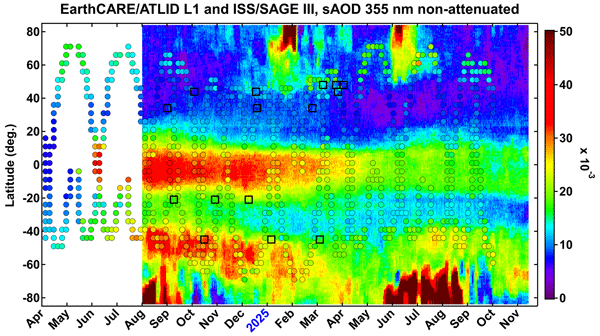
Sergey Khaykin, Michaël Sicard, Thierry Leblanc, Tetsu Sakai, Nickolay Balugin, Gwenaël Berthet, Stëphane Chevrier, Fernando Chouza, Artem Feofilov, Dominique Gantois, Sophie Godin-Beekmann, Arezki Haddouche, Yoshitaka Jin, Isamu Morino, Nicolas Kadygrov, Thomas Lecas, Ben Liley, Richard Querel, Ghasssan Taha, and Vladimir Yushkov
Atmos. Chem. Phys., 26, 607–622, https://doi.org/10.5194/acp-26-607-2026, https://doi.org/10.5194/acp-26-607-2026, 2026
Short summary
Short summary
In April 2024, the Ruang volcano in Indonesia sent large amounts of gas and particles high into the atmosphere, which then spread worldwide. Using the new European EarthCARE satellite and its advanced laser instrument ATLID (Atmospheric LIDar), together with ground and balloon observations, we tracked how these particles doubled levels in the tropics and spread into both hemispheres. The study shows ATLID’s power to reveal how eruptions can affect climate, clouds, and ozone for more than a year.
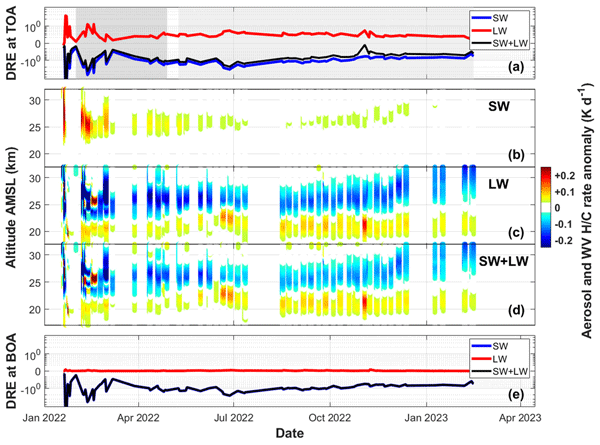
Michaël Sicard, Alexandre Baron, Marion Ranaivombola, Dominique Gantois, Tristan Millet, Pasquale Sellitto, Nelson Bègue, Hassan Bencherif, Guillaume Payen, Nicolas Marquestaut, and Valentin Duflot
Atmos. Chem. Phys., 25, 367–381, https://doi.org/10.5194/acp-25-367-2025, https://doi.org/10.5194/acp-25-367-2025, 2025
Short summary
Short summary
This study quantifies the radiative impact over Réunion Island (21° S, 55° E) of the aerosols and water vapor injected into the stratosphere by the Hunga volcano in the South Pacific. The overall aerosol and water vapor impact on the Earth’s radiation budget for the whole period is negative (cooling, -0.82 ± 0.35 W m-2) and dominated by the aerosols. At the Earth’s surface, aerosols are the main drivers and produce a negative (cooling, -1.04 ± 0.36 W m-2) radiative impact.
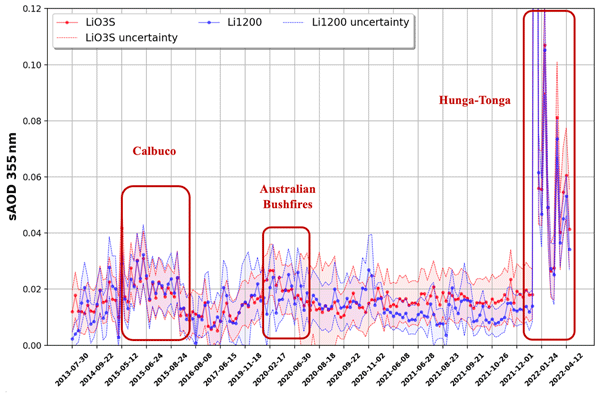
Dominique Gantois, Guillaume Payen, Michaël Sicard, Valentin Duflot, Nelson Bègue, Nicolas Marquestaut, Thierry Portafaix, Sophie Godin-Beekmann, Patrick Hernandez, and Eric Golubic
Earth Syst. Sci. Data, 16, 4137–4159, https://doi.org/10.5194/essd-16-4137-2024, https://doi.org/10.5194/essd-16-4137-2024, 2024
Short summary
Short summary
We describe three instruments that have been measuring interactions between aerosols (particles of various origin) and light over Réunion Island since 2012. Aerosols directly or indirectly influence the temperature in the atmosphere and can interact with clouds. Details are given on how we derived aerosol properties from our measurements and how we assessed the quality of our data before sharing them with the scientific community. A good correlation was found between the three instruments.
Patrick Chazette and Julien Totems
EGUsphere, https://doi.org/10.5194/egusphere-2026-6720, https://doi.org/10.5194/egusphere-2026-6720, 2026
This preprint is open for discussion and under review for Atmospheric Measurement Techniques (AMT).
Short summary
Short summary
Designed to overcome the challenges of airborne measurements, the new Raman lidar system A–WALI was developed for the European MAESTRO (Mesoscale Organisation of Tropical Convection) project to simultaneously characterize the horizontal distributions of aerosols, clouds, water vapor, and atmospheric temperature. Its measurement performance was assessed using a dedicated digital twin, with numerical predictions supported by both airborne and ground-based observations.
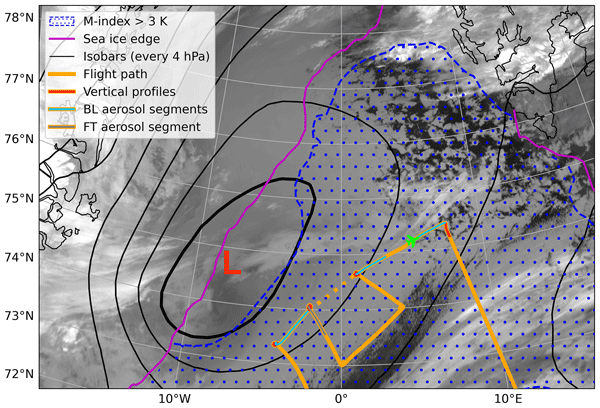
Samuel Ephraim, Paquita Zuidema, Aaron Bansemer, Lintong Cai, Markus Petters, Elise Rosky, Jefferson R. Snider, Zhien Wang, Sarah Woods, Kevin Barry, Theresa Campos, Owen Cruikshank, Sabine Eckhardt, Nikolaos Evangeliou, Romanos Foskinis, Jeffrey R. French, Bart Geerts, Coltin Grasmick, Silvia Henning, Varun Kumar, Andreas Massling, Camille Mavis, Greg M. McFarquhar, Athanasios Nenes, Gunnar Noer, Ryan Patnaude, Russell Perkins, Lise Lotte Sørensen, Henrik Skov, Tyler Tatro, Florian Tornow, and Lu Zhang
Atmos. Chem. Phys., 26, 15375–15404, https://doi.org/10.5194/acp-26-15375-2026, https://doi.org/10.5194/acp-26-15375-2026, 2026
Short summary
Short summary
The processes that establish how mixed-phase closed-cell clouds transition to open-cells are poorly known. First-of-its kind aircraft observations document such a transition in the presence of anomalously high aerosol concentrations, reducing the drop size thereby discouraging riming, over the Nordic Seas at cloud temperatures < −15 °C. Eventually, ice precipitation produces surface cold pools that appear to drive the convective transition, despite strong counteracting surface fluxes.
Xiaoyi Zhao, Vitali Fioletov, Irina Petropavlovskikh, Voltaire Velazco, Alberto Redondas, Anna Solomatnikova, Corinne Vigouroux, Kimberly Strong, Michel Van Roozendael, Andrea Pazmino, Thomas F. Hanisco, Alexander Cede, Martin Tiefengraber, Gordon Labow, Masatomo Fujiwara, Ronald van der A, Debora Griffin, Chris McLinden, Tom Kralidis, Wolfgang Steinbrecht, and Sum Chi Lee
Atmos. Chem. Phys., 26, 13693–13720, https://doi.org/10.5194/acp-26-13693-2026, https://doi.org/10.5194/acp-26-13693-2026, 2026
Short summary
Short summary
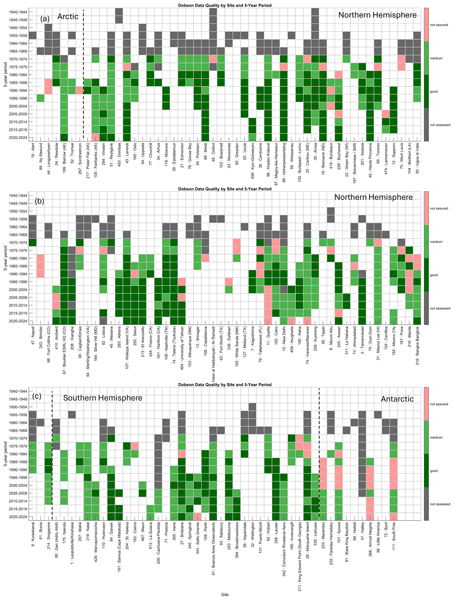
Total column ozone (TCO) records from six ground-based networks are compiled and evaluated using multiple satellites and reanalysis data. Station performance (1940–2024) is assessed using harmonized metrics. Ground-based annual means agree within ±2 %, while pre-satellite reanalyses show larger biases (up to −5 %). The resulting quality-assessed dataset supports trend analysis and satellite validation.
Shrutika Wagh, Luana S. Basso, Ayan F. Fleischmann, João Henrique Fernandes Amaral, John Melack, Jost Larvic, David Walter, Stijn Hantson, Julia Marshall, Chris Wilson, Youmi Oh, Lori Bruhwiler, John B. Miller, Corinne Vigouroux, Christian Rödenbeck, and Santiago Botía
EGUsphere, https://doi.org/10.5194/egusphere-2026-5245, https://doi.org/10.5194/egusphere-2026-5245, 2026
This preprint is open for discussion and under review for Atmospheric Chemistry and Physics (ACP).
Short summary
Short summary
We estimated methane emissions from the Amazon, Orinoco, and Paraná river basins using the Jena CarboScope global inversion system. We included Amazon measurements to evaluate their effect on the results. Adding them led to a large adjustment in estimated wetland emissions and strongly influenced the Amazon estimate. Without these measurements, the Amazon estimate increased by about 75 %. Our findings highlight the need to maintain and expand measurements across tropical South America.
Ondřej Tichý, Václav Košík, Sabine Eckhardt, Nikolaos Evangeliou, and Václav Šmídl
EGUsphere, https://doi.org/10.5194/egusphere-2026-5158, https://doi.org/10.5194/egusphere-2026-5158, 2026
Short summary
Short summary
Atmospheric microplastic (MP) emissions were constrained using deposition measurements, FLEXPARTv11 modelling, and Bayesian inversion. We estimate global emissions of 1001 ± 781 Gg yr-1, dominated by oceanic sources (763 ± 611 Gg yr⁻¹), with substantial terrestrial contributions. Independent validation supports the MP emissions and indicate non-negligible ocean contribution. Particle size and shape strongly influence estimated mass emissions.
Antonio G. Bruno, David P. Moore, Jeremy J. Harrison, Ailish Graham, Martyn P. Chipperfield, and Corinne Vigouroux
Atmos. Chem. Phys., 26, 12925–12952, https://doi.org/10.5194/acp-26-12925-2026, https://doi.org/10.5194/acp-26-12925-2026, 2026
Short summary
Short summary
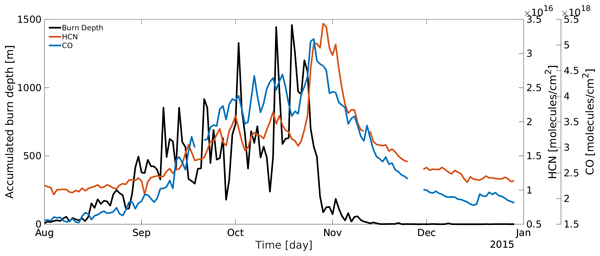
Indonesian peatlands store vast carbon reserves, but can release large quantities of greenhouse gases and other species with significant environmental impacts, including hydrogen cyanide (HCN), when fires occur. Analyzing three major El Niño years with satellites and models, we found that emissions depend on local hydrological conditions, not just El Niño strength. Including soil moisture and burn depth can improve emission estimates and climate strategies.
Kate Smith, Alexandre Baron, Joshua Schwarz, Elizabeth Asher, Emrys Hall, Patrick Cullis, Alex Fritz, Hagen Telg, Ross Burgener, Bryan Thomas, Matthew Martinsen, David Nardini, Darryl Kuniyuki, Penny Smale, Ben Liley, Richard Querel, Krystian Kopka, Ian Crocker, Skyler Jordan, Michael Doneghey, Luke Longren, Stephanie Evan, Jerome Brioude, Jean-Marc Metzger, David Combemale, Cor Becker, Dwight Samuel, Cheryll Tjon A Ten, Mohammed Amierali, Christopher Wongsowidjojo, Dennis Rodrigues, George Paiman, Ankie Piters, Katrin Müller, and Troy Thornberry
Earth Syst. Sci. Data Discuss., https://doi.org/10.5194/essd-2026-644, https://doi.org/10.5194/essd-2026-644, 2026
Preprint under review for ESSD
Short summary
Short summary
Direct measurements of stratospheric aerosol are sparse, yet it plays an important role in Earth’s climate by scattering incoming solar radiation. The B2SAP network addresses this gap by regularly launching balloons carrying Portable Optical Particle Spectrometers (POPS) from 8 latitudinally diverse sites. The dataset provides vertical profiles of aerosol abundance and size distributions from the ground to 28 km, helping characterize global stratospheric aerosol abundance and variability.
Gytha Mettepenningen, Caroline Fayt, Cato Van Doorne, Aurélien Aubry, Sophie Berkenbosch, Martine De Mazière, Filip Desmet, Lars Jacobs, Eddy Neefs, Frederik Tack, Timo Van Laar, Clemens Mensink, and Michel Van Roozendael
EGUsphere, https://doi.org/10.5194/egusphere-2026-3783, https://doi.org/10.5194/egusphere-2026-3783, 2026
This preprint is open for discussion and under review for Atmospheric Measurement Techniques (AMT).
Short summary
Short summary
Pollution from ships impacts air quality in dense coastal regions of the North Sea. SEMPAS (Ship Emission Monitoring with Passive Absorption Spectroscopy) remotely monitors the emissions of ships passing by. Without ships nearby, SEMPAS is used for atmospheric research in a marine environment. This study presents the instrument’s development. Tests in the Belgian port of Zeebrugge show strong variations in ship emissions, while atmospheric measurements agree well with satellite observations.
Patrick Chazette, Andreas Behrendt, Adolfo Comerón, Paolo Di Girolamo, Marco Di Paolantonio, Davide Dionisi, Cyrille Flamant, José Luis Gómez-Amo, Jérémy Lagarrigue, Frédéric Laly, Diego Lange, Constantino Muñoz-Porcar, Alejandro Rodríguez-Gómez, Michaël Sicard, Donato Summa, Julien Totems, María Pilar Utrillas, Pedro C. Valdelomar, and Volker Wulfmeyer
Atmos. Meas. Tech., 19, 5223–5242, https://doi.org/10.5194/amt-19-5223-2026, https://doi.org/10.5194/amt-19-5223-2026, 2026
Short summary
Short summary
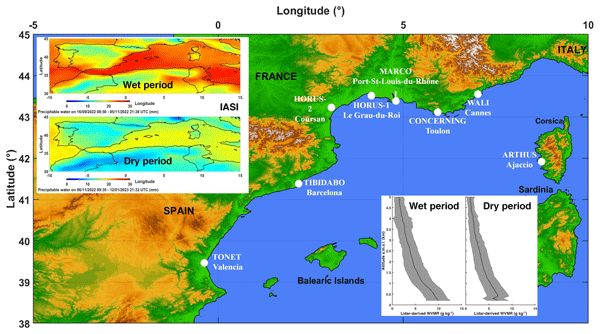
Between October 2022 and January 2023, the Water Vapour Lidar Network Assimilation (WaLiNeAs) campaign was conducted on the western Mediterranean by four European countries. To improve the forecasting of heavy precipitation events, eight ground-based stations equipped with water vapour Raman lidars were strategically deployed. They offered a valuable chance to verify the consistency of the water vapour products of both the Infrared Atmospheric Sounding Interferometer (IASI) and ERA5 reanalysis.
Stephen M. Platt, Milos Davidović, Alena Bartonova, Željko Ćirović, Sabine Eckhardt, Nikolaos Evangeliou, Hans Gundersen, Maja Jovanović, Milena Jovašević-Stojanović, Griša Močnik, Bojana Petrović, Philipp Schneider, and Karl Espen Yttri
EGUsphere, https://doi.org/10.5194/egusphere-2026-1708, https://doi.org/10.5194/egusphere-2026-1708, 2026
This preprint is open for discussion and under review for Atmospheric Chemistry and Physics (ACP).
Short summary
Short summary
We present year-round (2023 to 2025) carbonaceous aerosol measurements from Ada Marina, Belgrade, combining tracers, the aethalometer model, a new NNMF application, and FLEXPART. All methods show residential wood combustion is important, driving winter increases in eBC and OC, enhanced secondary OC, and brown carbon absorption. FLEXPART highlights regional transport within Serbia and the Pannonian Basin, with good model–observation agreement, underscoring the need to reduce RWC emissions.

Sophie Vandenbussche, Christodoulos Biskas, Maria-Elissavet Koukouli, Stelios Kazadzis, and Martine De Mazière
Atmos. Meas. Tech., 19, 4889–4922, https://doi.org/10.5194/amt-19-4889-2026, https://doi.org/10.5194/amt-19-4889-2026, 2026
Short summary
Short summary
Mineral dust aerosols are tiny particles uplifted by winds from deserts, which may be transported for long distances. They are climate forcers and affect human health and socio-economic sectors, making near-real-time and long-term monitoring essential. Here, we use satellite observations to retrieve global 3D distributions of dust aerosols. We present an updated and improved algorithm and its long-term consistent data since late 2007, with high potential for climate analyses and alert systems.
Patrick C. Taylor, Armin Sorooshian, Rei Ueyama, Sebastian Schmidt, Ihab Abboud, Quincy Allison, Kevin Barry, Sebastian Becker, Holly A. Bender, Joseph R. Bennett, James B. Blair, Niklas Bohn, Linette Boisvert, Matthew D. Brown, Roelof Bruintjes, Anthony Bucholtz, Megan Buzanowicz, Brian Cairns, Filippo Calì Quaglia, Eduard Chemyakin, Bo Chen, Gao Chen, Hong Chen, Yu-Wen Chen, Zezhen Cheng, Swarup China, Dan Chirica, Yonghoon Choi, Peter Colarco, Brian Collister, Ewan Crosbie, Maurice J. Cross, Janet Daniels, Paul DeMott, Joshua P. DiGangi, Alcide Giorgio di Sarra, Glenn S. Diskin, Erica K. Dolinar, Eva-Lou Edwards, Samuel Ephraim, Nikolaos Evangeliou, Romanos Foskinis, Francesca Gallo, Lan Gao, José Luis Gómez-Amo, Daisy Gonzalez, Christine Groot Zwaaftink, Pawan Gupta, Ivan Heckman, Michael Hendrickson, Miguel Ricardo A. Hilario, Ken Hirata, Michelle Hofton, Andrew L. Holen, Ulas Im, Alia L. Khan, Ralph Kahn, Alexei V. Korolev, Sonia Kreidenweis, Thomas Krumpen, Nathan Kurtz, Leslie Lait, Bradley Lamkin, Jack Landy, Nurun Nahar Lata, Paul Lawson, Samuel LeBlanc, Sean Leavor, Jing Li, Thorsten Markus, Hal Maring, Andreas H. Massling, Camille Mavis, Flynn McGinnity, Kerry Meyer, Gabriel Mojica, Richard H. Moore, Parker Morris, Giovanni Muscari, Vikas Nataraja, Amin R. Nehrir, Athanasios Nenes, Edward P. Nowottnick, Matteo Ottaviani, Chelsea Parker, Ryan Patnaude, Michael Perez, Russell J. Perkins, Colten Peterson, Alek Petty, Stevie Phothisane, Chris Polashenski, Kerri A. Pratt, Kayla M. Preisler, John Prytherch, David Rabine, Jens Redemann, Ju-Mee Ryoo, Joseph S. Schlosser, Vanessa Selimovic, Michael A. Shook, Morgan Silverman, Henrik Skov, Alexander Smirnov, Cassidy Soloff, Amy Solomon, Snorre Stamnes, Azusa Takeishi, David R. Thompson, K. Lee Thornhill, Rachel Tilling, Michael Tjernström, Monica Tosco, Pedro C. Valdelomar, David Van Gilst, Jian Wang, Zhien Wang, Andrzej Wasilewski, Manfred Wendisch, Brent Wilder, Edward L. Winstead, Albert Wu, Peng Xian, Lauren M. Zamora, Jiaoshi Zhang, Lei Zhang, Lu Zhang, Luke Ziemba, and Paquita Zuidema
Earth Syst. Sci. Data Discuss., https://doi.org/10.5194/essd-2026-241, https://doi.org/10.5194/essd-2026-241, 2026
Preprint under review for ESSD
Short summary
Short summary
This article summarizes the data sets collected during the Arctic Radiation Cloud aerosol Sea ice Interaction eXperiment (ARCSIX), NASA's most comprehensive Arctic field campaign to date. The overarching goal was to quantify the contributions of surface, clouds, aerosol particles, and precipitation to summer sea ice melt. This paper describes the ARCSIX implementation including the flight strategy, instruments, complementary data sets, access, and usage details.
Louis Mirallie, Eliane Maillard Barras, Caroline Jonas, Corinne Vigouroux, Roeland Van Malderen, Irina Petropavlovskikh, Sophie Godin-Beekmann, Thierry Leblanc, Wolfgang Steinbrecht, Antoine Vadès, Rolf Ruefenacht, Alexander Haefele, Gunter Stober, Peter Effertz, Julian Gröbner, Gerard Ancellet, María Cazorla, Petra Duff, Matthias M. Frey, Michael Gill, James W. Hannigan, Nicholas Jones, Rigel Kivi, Raphael Köhler, Bogumil Kois, Debra E. Kollonige, Emmanuel Mahieu, Glen McConville, Johan Mellqvist, Gary Morris, Isao Murata, Tomoo Nagahama, Gerald E. Nedoluha, Shin-Ya Ogino, Richard Querel, Ryan M. Stauffer, Wolfgang Stremme, Kimberly Strong, Ralf Sussmann, Anne M. Thompson, and Yana Virolainen
Atmos. Chem. Phys., 26, 10303–10330, https://doi.org/10.5194/acp-26-10303-2026, https://doi.org/10.5194/acp-26-10303-2026, 2026
Short summary
Short summary
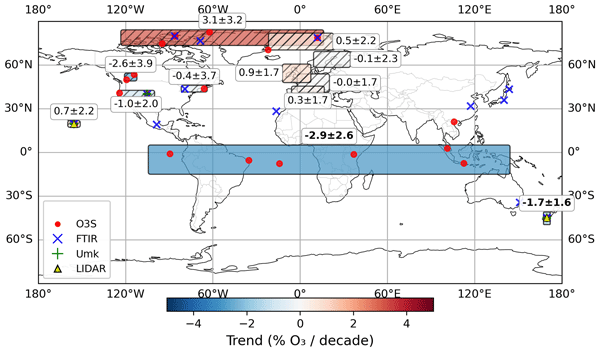
We present regional Bayesian composites of ground-based ozone partial column records. Defining coherent regions using a CAMS (Copernicus Atmosphere Monitoring Service) representativeness study, we merge five instrument types using the BASIC (Ball et al., 2017) algorithm, reducing trend uncertainties by 9.4 % compared to a weighted mean. Results confirm upper stratospheric recovery, predominantly negative middle stratospheric trends, while lower stratospheric trends remain mostly non-significant.
Adolfo Comerón, Constantino Muñoz-Porcar, Alejandro Rodríguez-Gómez, Michaël Sicard, Federico Dios, Cristina Gil-Díaz, Daniel Camilo Fortunato dos Santos Oliveira, and Francesc Rocadenbosch
EGUsphere, https://doi.org/10.5194/egusphere-2026-2703, https://doi.org/10.5194/egusphere-2026-2703, 2026
Short summary
Short summary
The overlap function of an aerosol lidar is a key feature determining the minimum range from which the lidar can perform reliable measurements. This article develops the relationship between the retrieved overlap function, which requires an assumption on the relationship between the extinction and backscatter coefficients of the aerosols present, and the “true” overlap function, and proposes a simple, two-step, non-iterative formulation for the retrieval of the lidar overlap function.
Patrick Chazette
Atmos. Meas. Tech., 19, 4293–4311, https://doi.org/10.5194/amt-19-4293-2026, https://doi.org/10.5194/amt-19-4293-2026, 2026
Short summary
Short summary
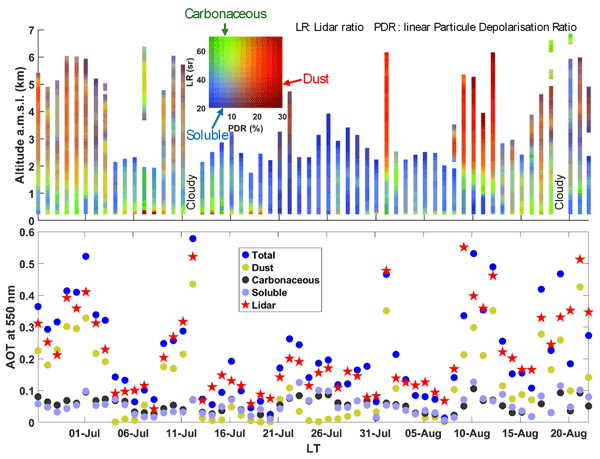
A novel aerosol classification methodology based on Raman lidar observations is presented and applied to measurements acquired during the FENNEC field campaign. The temporal evolution of aerosol classes and optical properties is then used to perform a quantitative evaluation of numerical simulations from the Copernicus Atmosphere Monitoring Service (CAMS) global reanalysis (EAC4).
Irina Petropavlovskikh, Martine De Mazière, Anne M. Thompson, Jeannette D. Wild, James W. Hannigan, Henry B. Selkirk, Reem A. Hannun, Wolfgang Steinbrecht, Jean-Christopher Lambert, Roeland Van Malderen, Elizabeth Asher, Raul R. Cordero, Sophie Godin-Beekmann, Daan Hubert, Sergey Khaykin, Karin Kreher, Thierry Leblanc, Emmanuel Mahieu, Eliane Maillard Barras, Glen McConville, Gerald Nedoluha, Ivan Ortega, Alberto Redondas Marrero, Gunther Seckmeyer, Ryan M. Stauffer, Sarah A. Strode, Kim Strong, Takafumi Sugita, Michel Van Roozendael, Voltaire Velazco, Corinne Vigouroux, and Bärbel Vogel
Atmos. Chem. Phys., 26, 8637–8675, https://doi.org/10.5194/acp-26-8637-2026, https://doi.org/10.5194/acp-26-8637-2026, 2026
Short summary
Short summary
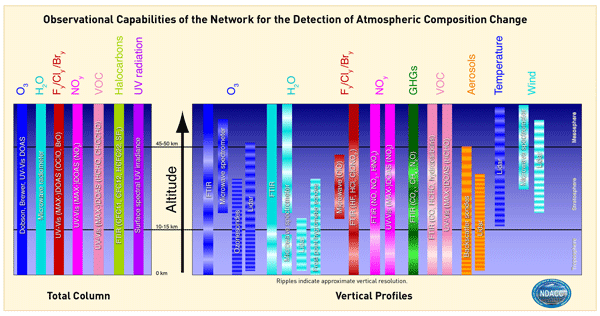
This introduction to the special issue "Achievements and perspectives of the Network for the Detection of Atmospheric Composition Change after 35 years of operation” provides an overview of important research findings achieved under the NDACC objectives. The future of NDACC is discussed in the light of the evolution of the scientific questions, evolving collaborations with partners and Cooperating Networks, and the current landscape of gaps in satellite and ground-based observations.
Beatriz Herrera, Enrico Dammers, Martine De Maziere, Omaira Garcia, Michel Grutter, James W. Hannigan, Dylan B. A. Jones, Nicholas Jones, Emmanuel Mahieu, Maria Makarova, Kazuyuki Miyazaki, Isamu Morino, Isao Murata, Ivan Ortega, Mathias Palm, Anatoly Poverovskii, Takashi Sekiya, Dan Smale, Hannah Sill, Wolfgang Stremme, Ralf Sussmann, Geoffrey Toon, Corinne Vigouroux, Wei Wang, Tyler Wizenberg, and Kimberly Strong
EGUsphere, https://doi.org/10.5194/egusphere-2026-3138, https://doi.org/10.5194/egusphere-2026-3138, 2026
Short summary
Short summary
This work investigates how atmospheric ammonia changes over time using long-term observations and simulations at locations around the world. While its main sources are related to agriculture, wildfires, vehicles, and volcanoes also contribute. The results show that ammonia levels vary strongly during the day and across seasons, and are rising at most locations. These findings improve our understanding of air pollution and its impacts.
Caroline Jonas, Corinne Vigouroux, Bavo Langerock, Robin Björklund, Anne Boynard, Thomas Carlund, Martine De Mazière, Peter Effertz, Quentin Errera, Matthias M. Frey, José Granville, James W. Hannigan, Arno Keppens, Nis Jepsen, Rigel Kivi, Norrie Lyall, Mathias Palm, Maxime Prignon, Viktoria F. Sofieva, Kimberly Strong, Tove Svendby, David Tarasick, Laura Thölix, Roeland Van Malderen, Yana Virolainen, Sibylle von Löwis, and Xiaoyi Zhao
Atmos. Chem. Phys., 26, 8089–8124, https://doi.org/10.5194/acp-26-8089-2026, https://doi.org/10.5194/acp-26-8089-2026, 2026
Short summary
Short summary
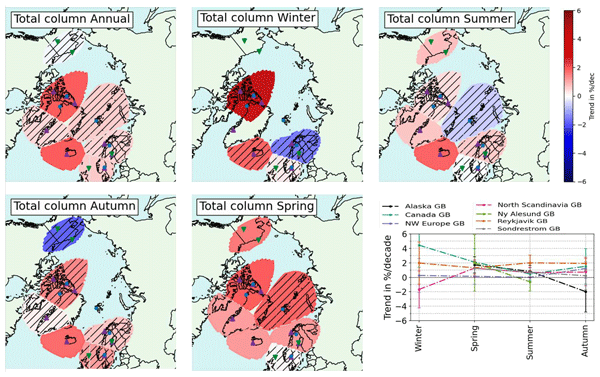
We study the evolution of ozone in the Arctic over the 2000–2024 period in the stratosphere (about 10 to 50 km) to assess the expected recovery of the ozone layer following the diminution of ozone-depleting substances. We merge ground-based data sets within spatially coherent regions to reduce uncertainties and we obtain positive trends for the total column everywhere in the Arctic and for the middle and upper stratosphere over Canada, but no significant trends in the lower stratosphere.
Paul D. Hamer, Miha Markelj, Oscar Rojas-Munoz, Bertrand Bonan, Jean-Christophe Calvet, Virginie Marécal, Alex Guenther, Heidi Trimmel, Islen Vallejo, Sabine Eckhardt, Gabriela Sousa Santos, Katerina Sindelarova, David Simpson, Norbert Schmidbauer, Heidi Hellén, Pascal Rubli, Stefan Reimann, Anja Claude, Dagmar Kubistin, Julie Cozic, James Dernie, and Leonor Tarrasón
Earth Syst. Sci. Data, 18, 3635–3669, https://doi.org/10.5194/essd-18-3635-2026, https://doi.org/10.5194/essd-18-3635-2026, 2026
Short summary
Short summary
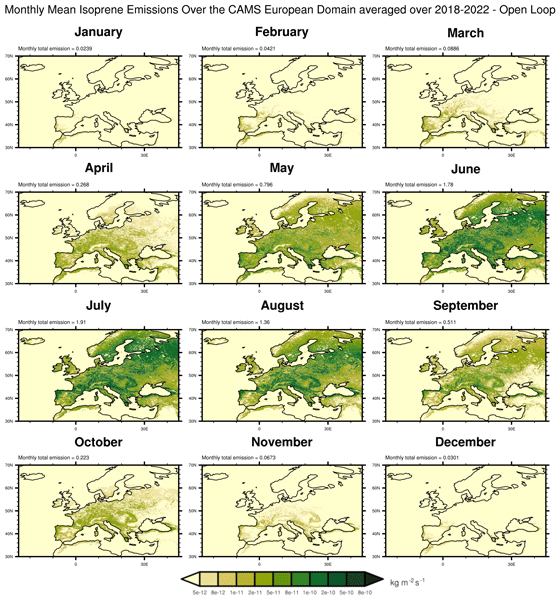
Plants release gases like isoprene that can form ozone and affect air quality. Using models and satellite data, we mapped the emissions of isoprene from plants across Europe and found that droughts can reduce leaf growth, leading to lower emissions. This shows that to understand and predict air quality, we must also understand how drought impacts vegetation. Our findings highlight the value of linking extreme weather, plant health, and pollution in models of the Earth system as a whole.
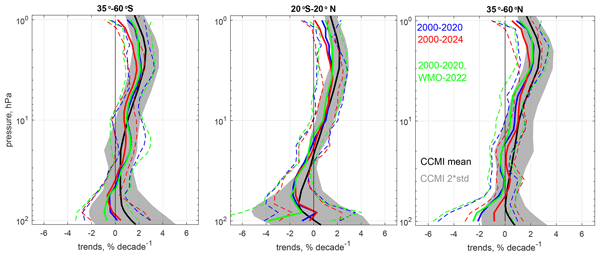
Viktoria F. Sofieva, Monika E. Szelag, Natalya A. Kramarova, Robert Damadeo, Wolfgang Steinbrecht, Irina Petropavlovskikh, Corinne Vigouroux, Eliane Maillard Barras, Daniel Zawada, Kleareti Tourpali, Stacey M. Frith, Jeannette D. Wild, Sean M. Davis, Carlo Arosio, Mark Weber, Alexei Rozanov, Brian Auffarth, Lucien Froidevaux, Ryan Fuller, Doug Degenstein, Kimberlee Dube, Peter Effertz, Thierry Leblanc, Gérard Ancellet, Sophie Godin-Beekmann, Glen McConville, Richard Querel, Dan Smale, Marie-Renee DeBacker, Emmanuel Mahieu, and Ralf Sussmann
Atmos. Chem. Phys., 26, 7387–7405, https://doi.org/10.5194/acp-26-7387-2026, https://doi.org/10.5194/acp-26-7387-2026, 2026
Short summary
Short summary
We present an updated evaluation of stratospheric ozone profile trends in the 60°S–60°N latitude range using long-term ground-based and satellite climate data records, as well as simulations by chemistry-climate models. Analyses confirm the statistically significant positive ozone trends in the upper stratosphere of ~1–3 % decade-1. The trends are close to zero in the middle stratosphere, and mostly negative in the lower stratosphere, but they are not statistically significant.
Dimitri Trapon, Holger Baars, Sebastian Bley, Albert Ansmann, Michael Rennie, Sergey Khaykin, and Michael Sicard
EGUsphere, https://doi.org/10.5194/egusphere-2026-2575, https://doi.org/10.5194/egusphere-2026-2575, 2026
Short summary
Short summary
The study presents observations of the 2022 Hunga volcanic aerosol in the stratosphere made by the European Space Agency’s Aeolus satellite. Aeolus tracks the long-range transported plumes that circumnavigate the Earth at distinct latitudes and altitudes up to 30 km. Vertical gradient of optical properties measured with the ultraviolet lidar signal are shown, such as decreasing trends over time. This helps to understand the stratospheric residence time of aerosols in the Southern Hemisphere.
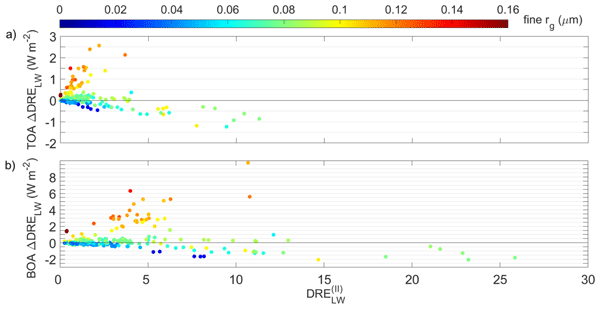
María Ángeles López-Cayuela, Carmen Córdoba-Jabonero, Michaël Sicard, Jesús Abril-Gago, Vanda Salgueiro, Adolfo Comerón, María José Granados-Muñoz, Maria João Costa, Constantino Muñoz-Porcar, Juan Antonio Bravo-Aranda, Daniele Bortoli, Alejandro Rodríguez-Gómez, Lucas Alados-Arboledas, and Juan Luis Guerrero-Rascado
Atmos. Chem. Phys., 26, 6257–6281, https://doi.org/10.5194/acp-26-6257-2026, https://doi.org/10.5194/acp-26-6257-2026, 2026
Short summary
Short summary
Due to the major radiative role of dust in Climate Change, a vertical assessment of the long-wave (and net) dust direct radiative effect of both fine and coarse dust, separately, is introduced. The study relies on an intense Saharan dust outbreak across the Iberian Peninsula, as observed by five lidar stations with coverage from south-west to north-east. A comparative evaluation with respect to total dust (no separation) is also performed. It complements a similar study in the short-wave range.
Marco Zanatta, Paolo Bonasoni, Francescopiero Calzolari, Paolo Cristofanelli, Sabine Eckhardt, Nikolaos Evangeliou, Cecilia Magnani, Camilla Perfetti, Davide Putero, Laura Renzi, Franziska Vogel, and Angela Marinoni
Earth Syst. Sci. Data Discuss., https://doi.org/10.5194/essd-2026-211, https://doi.org/10.5194/essd-2026-211, 2026
Revised manuscript accepted for ESSD
Short summary
Short summary
This work presents 18 years of high-quality observations of equivalent black carbon concentration measured at the Monte Cimone mountain site in Italy. We provide a detailed description of the measurement setup, data processing, and associated uncertainties to ensure consistency over time. The openly available dataset offers information for long-term studies, including the integration of renaltysis data parameters and comparison with atmospheric models.
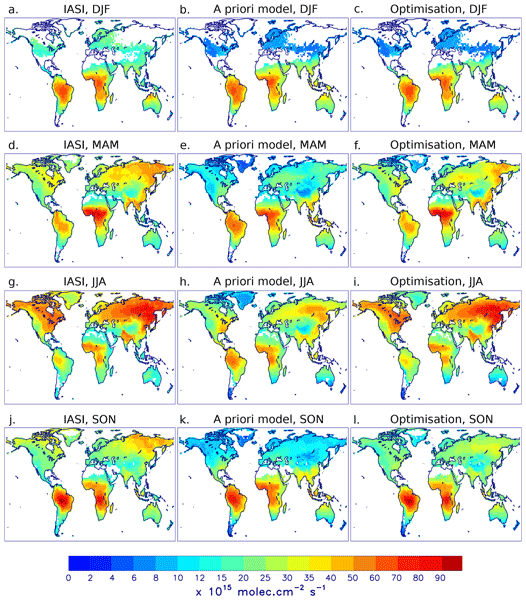
Jean-François Müller, Trissevgeni Stavrakou, Bruno Franco, Lieven Clarisse, Crist Amelynck, Niels Schoon, Bert W. D. Verreyken, Beata Opacka, Corinne Vigouroux, Alex B. Guenther, Emmanuel Mahieu, Maria Makarova, and Kimberly Strong
Atmos. Chem. Phys., 26, 5375–5406, https://doi.org/10.5194/acp-26-5375-2026, https://doi.org/10.5194/acp-26-5375-2026, 2026
Short summary
Short summary
We use an atmospheric model and aircraft measurements to evaluate methanol measurements from satellite sensors. The spaceborne data are found to be too low over source regions. Next, we use the model and the bias-corrected satellite data to derive improved terrestrial emissions of methanol between 2008 and 2019, and we evaluate the results against aircraft and ground-based measurements. This work shows that biogenic emissions of methanol might be ~ 60 % larger than previously estimated.
Bavo Langerock, Minqiang Zhou, Martine De Mazière, Mahesh Kumar Sha, Filip Desmet, Bart Dils, Corinne Vigouroux, Rigel Kivi, Isamu Morino, Mathias Palm, Gopala Krishna Darbha, Soumik Banerjee, Sujata Ray, and Mohmmed Talib
EGUsphere, https://doi.org/10.5194/egusphere-2026-1890, https://doi.org/10.5194/egusphere-2026-1890, 2026
This preprint is open for discussion and under review for Atmospheric Measurement Techniques (AMT).
Short summary
Short summary
This work describes an algorithm to correct measurements obtained from Fourier-Transform Infrared spectrometers (FTIR) for nonlinear detector response. The method is demonstrated for remote sensing observational networks for atmospheric gas products (NDACC, TCCON and COCCON). Diagnostic metrics are introduced and have the potential to characterize the cause of the underlying nonlinearity (saturation or optical misalignment). The algorithm is made available in python.
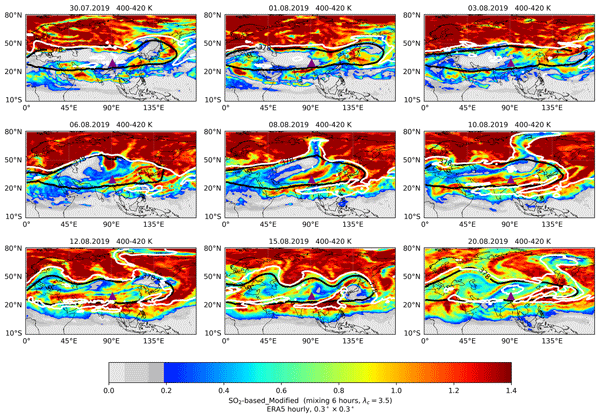
Zhen Yang, Bärbel Vogel, Felix Plöger, Zhixuan Bai, Dan Li, Sabine Griessbach, Lars Hoffmann, Frank G. Wienhold, Elizabeth Asher, Alexandre A. Baron, Katie R. Smith, Troy Thornberry, Jianchun Bian, and Michaela I. Hegglin
Atmos. Chem. Phys., 26, 4749–4769, https://doi.org/10.5194/acp-26-4749-2026, https://doi.org/10.5194/acp-26-4749-2026, 2026
Short summary
Short summary
Balloon measurements over Lhasa, China, combined with satellite guided modelling, tracked aerosol from the 2019 Raikoke eruption through the Asian summer monsoon anticyclone. We find two altitude dependent routes into the anticyclone. It partly blocks transport but also allows entry and mixing, explaining the gradual weakening of the layers. Balloon measurements over Boulder, United States, outside the anticyclone, provide an independent check outside the region.
Zihui Teng, Jane Tygesen Skønager, Andreas Massling, Henrik Skov, Nikolaos Evangeliou, Sabine Eckhardt, Merete Bilde, and Bernadette Rosati
Aerosol Research, 4, 169–187, https://doi.org/10.5194/ar-4-169-2026, https://doi.org/10.5194/ar-4-169-2026, 2026
Short summary
Short summary
Coastal aerosols in Scandinavian urban areas remain understudied. We examined aerosol optical properties and size distributions along Denmark's coastline. Combining in situ data with dispersion modelling, we identified two main aerosol types: carbonaceous aerosols from fossil fuel and biomass burning and large, highly scattering aerosols (potentially sea salt). Black carbon from in situ data and dispersion modelling correlated well, while FLEXPART underestimated the concentration.
Marilena Gidarakou, Alexandros Papayannis, Maria Mylonaki, Eleni Kralli, Kostas Eleftheratos, Ilias Fountoulakis, Olga Zografou, Evangelia Diapouli, Maria I. Gini, Stergios Vratolis, Konstantinos Granakis, Konstantinos Eleftheriadis, Nikolaos Evangeliou, Christine Groot Zwaaftink, Eugenia Giagka, Marios-Andreas Zagklis, and Igor Veselovskii
Atmos. Chem. Phys., 26, 4313–4339, https://doi.org/10.5194/acp-26-4313-2026, https://doi.org/10.5194/acp-26-4313-2026, 2026
Short summary
Short summary
In summer 2023, Greece experienced one of its most intense wildfire seasons, with major fires across several regions. This study examines how smoke from two major fire events affected air quality and ultraviolet radiation in Athens using satellite images, modelling, and ground-based measurements to understand the optical and microphysical behavior of airborne particles.
Jiaxin Wang, Sieglinde Callewaert, Minqiang Zhou, Filip Desmet, Sébastien Conil, Michel Ramonet, Pucai Wang, and Martine De Mazière
Atmos. Chem. Phys., 26, 3541–3565, https://doi.org/10.5194/acp-26-3541-2026, https://doi.org/10.5194/acp-26-3541-2026, 2026
Short summary
Short summary
We used a regional atmospheric transport model to simulate carbon dioxide mole fractions over Western Europe. The results show the importance of anthropogenic emission configurations, particularly near large emission sources, as well as the necessity of improving biogenic flux simulations. These findings contribute to enhancing the accuracy of carbon dioxide modeling and carbon budget inversions.
África Barreto, Francisco Quirós, Omaira E. García, Jorge Pereda-de-Pablo, Daniel González-Fernández, Andrés Bedoya-Velásquez, Michael Sicard, Carmen Córdoba-Jabonero, Marco Iarlori, Vincenzo Rizi, Nickolay Krotkov, Simon Carn, Reijo Roininen, Antonio J. Molina-Arias, A. Fernando Almansa, Óscar Álvarez-Losada, Carla Aramo, Juan José Bustos, Romain Ceolato, Adolfo Comerón, Alicia Felpeto, Rosa D. García, Pablo González-Sicilia, Yenny González, Pascal Hedelt, Miguel Hernández, María-Ángeles López-Cayuela, Diego Loyola, Stavros Meletlidis, Constantino Muñoz-Porcar, Ermanno Pietropaolo, Ramón Ramos, Alejandro Rodríguez-Gómez, Roberto Román, Pedro M. Romero-Campos, Martin Stuefer, Carlos Toledano, and Ellsworth J. Welton
Atmos. Meas. Tech., 19, 1385–1406, https://doi.org/10.5194/amt-19-1385-2026, https://doi.org/10.5194/amt-19-1385-2026, 2026
Short summary
Short summary
This manuscript describes the instrumental coverage deployed during the Tajogaite eruption (19 September–25 December 2021) by the Instituto Geográfico Nacional (IGN), the Spanish State Meteorological Agency (AEMET), and other Spanish members of ACTRIS (Aerosol, Clouds and Trace Gases Research Infrastructure) to monitor its atmospheric impact. Two complementary methods provide consistent plume height data for future operational surveillance.
Gaia Pinardi, Martina M. Friedrich, Corinne Vigouroux, Bavo Langerock, Isabelle De Smedt, Caroline Fayt, Christian Hermans, Steffen Beirle, Thomas Wagner, Minqiang Zhou, Ting Wang, Pucai Wang, Martine De Mazière, and Michel Van Roozendael
Atmos. Meas. Tech., 19, 1259–1291, https://doi.org/10.5194/amt-19-1259-2026, https://doi.org/10.5194/amt-19-1259-2026, 2026
Short summary
Short summary
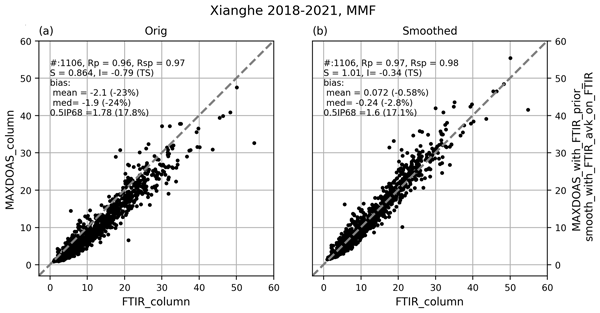
We evaluate ground-based remote-sensing measurements of formaldehyde from three techniques at a suburban site in China. A systematic −20 % bias in Multi-AXis Differential Optical Absorption Spectroscopy compared to direct-sun ultraviolet and infrared data is linked to limited sensitivity above a few kilometers and simplified vertical profiles assumptions. Using model-based priors and accounting for vertical sensitivity removes these differences, improving consistency for satellite validation.
Sara Herrero-Anta, Sabine Eckhardt, Nikolaos Evangeliou, Stefania Gilardoni, Sandra Graßl, Dominic Heslin-Rees, Stelios Kazadzis, Natalia Kouremeti, Radovan Krejci, David Mateos, Mauro Mazzola, Christoph Ritter, Roberto Román, Kerstin Stebel, and Tymon Zielinski
Atmos. Chem. Phys., 26, 1435–1457, https://doi.org/10.5194/acp-26-1435-2026, https://doi.org/10.5194/acp-26-1435-2026, 2026
Short summary
Short summary
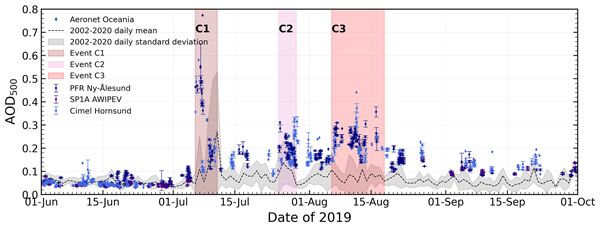
In summer 2019, unusually high aerosol concentrations were measured in the Arctic, extending through the troposphere and stratosphere up to 16 km. Using multiple instruments and models, aerosol particles were linked to wildfires, volcanic eruptions, and anthropogenic pollution. The aerosol consisted of spherical, fine-mode, weakly absorbing particles, which significantly reduced direct solar radiation. This combined approach improves understanding of Arctic aerosol events and climate processes.

Maria Fernanda Sanchez-Barrero, Philippe Goloub, Luc Blarel, Ioana Elisabeta Popovici, Benjamin Torres, Gaël Dubois, Thierry Podvin, Fabrice Ducos, Romain de Filippi, Michaël Sicard, Viviane Bout Roumazeilles, and Charlotte Skonieczny
Atmos. Meas. Tech., 19, 507–528, https://doi.org/10.5194/amt-19-507-2026, https://doi.org/10.5194/amt-19-507-2026, 2026
Short summary
Short summary
The TRANSAMA ship-based campaign (April–May 2023) aboard Marion Dufresne investigated aerosols from La Réunion to Barbados using photometer and lidar. Observations revealed clean conditions over the South Atlantic, with thin transported aerosol plumes from Southern Africa. Clouds were detected in 53 % of lidar profiles with higher occurrence in the first 2 km. The results show how combined lidar and photometer measurements can improve our understanding of aerosols in marine environment.
Sieglinde Callewaert, Minqiang Zhou, Bavo Langerock, Pucai Wang, Ting Wang, Emmanuel Mahieu, and Martine De Mazière
Atmos. Chem. Phys., 26, 899–921, https://doi.org/10.5194/acp-26-899-2026, https://doi.org/10.5194/acp-26-899-2026, 2026
Short summary
Short summary
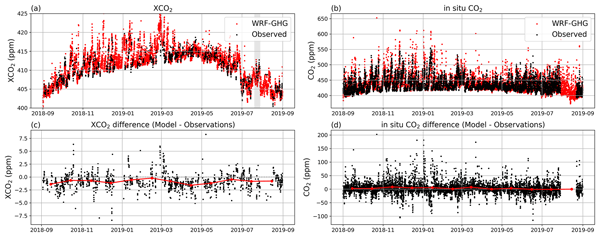
We investigated changes in carbon dioxide levels at a suburban site in China using ground-based measurements, remote sensing, and an atmospheric model. The model matched many observed patterns but showed nighttime and background errors. We identified the main human and natural sources and sinks, offering insights to improve future greenhouse gas monitoring and climate modelling.
Sergey Khaykin, Michaël Sicard, Thierry Leblanc, Tetsu Sakai, Nickolay Balugin, Gwenaël Berthet, Stëphane Chevrier, Fernando Chouza, Artem Feofilov, Dominique Gantois, Sophie Godin-Beekmann, Arezki Haddouche, Yoshitaka Jin, Isamu Morino, Nicolas Kadygrov, Thomas Lecas, Ben Liley, Richard Querel, Ghasssan Taha, and Vladimir Yushkov
Atmos. Chem. Phys., 26, 607–622, https://doi.org/10.5194/acp-26-607-2026, https://doi.org/10.5194/acp-26-607-2026, 2026
Short summary
Short summary
In April 2024, the Ruang volcano in Indonesia sent large amounts of gas and particles high into the atmosphere, which then spread worldwide. Using the new European EarthCARE satellite and its advanced laser instrument ATLID (Atmospheric LIDar), together with ground and balloon observations, we tracked how these particles doubled levels in the tropics and spread into both hemispheres. The study shows ATLID’s power to reveal how eruptions can affect climate, clouds, and ozone for more than a year.
Frédéric Laly, Patrick Chazette, Julien Totems, Vincent Crenn, David Ledur, and Alexandre Marpillat
Atmos. Meas. Tech., 18, 7629–7649, https://doi.org/10.5194/amt-18-7629-2025, https://doi.org/10.5194/amt-18-7629-2025, 2025
Short summary
Short summary
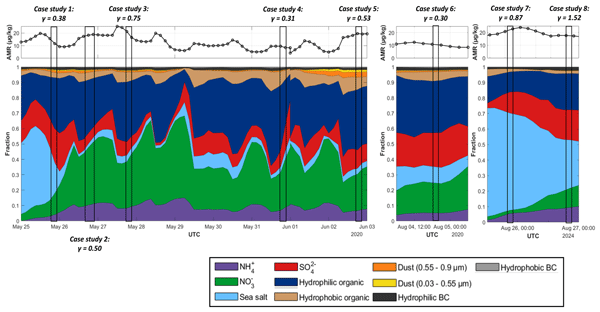
This article presents the evolution of aerosol optical properties as derived from a Raman lidar in relation to relative humidity over the Paris area. It examines the influence of aerosol chemical compounds linked to air mass origins, as well as their relationship with the efficiency of aerosol growth. Such a study provides a better understanding of the interactions between aerosols and water vapour, which is important for reducing the uncertainties surrounding the Earth's radiative balance.
Luis Valero, Konrad Kandler, Sina Jost, Holger Tost, Luca Katarina Eichhorn, Christian von Glahn, Harald Rott, Marilena Flory, Alexandre Baron, Kathie Smith, Troy Thornberry, and Ralf Weigel
EGUsphere, https://doi.org/10.5194/egusphere-2025-5568, https://doi.org/10.5194/egusphere-2025-5568, 2025
Preprint archived
Short summary
Short summary
We developed a low-cost, balloon-lifted platform with lightweight instruments to measure particles and collect samples. We tested this platform during two field campaigns in Germany. A case study showed its ability to observe the vertical distribution of particles and how they form cloud droplets. Electronic microscope analysis of the samples identified their chemical composition. This work shows the platform is a capable tool for studying atmospheric processes.
Sandrine Bony, Basile Poujol, Brett McKim, Nicolas Rochetin, Marie Lothon, Julia Windmiller, Nicolas Maury, Clarisse Dufaux, Louis Jaffeux, Patrick Chazette, and Julien Delanoë
Atmos. Chem. Phys., 25, 17331–17362, https://doi.org/10.5194/acp-25-17331-2025, https://doi.org/10.5194/acp-25-17331-2025, 2025
Short summary
Short summary
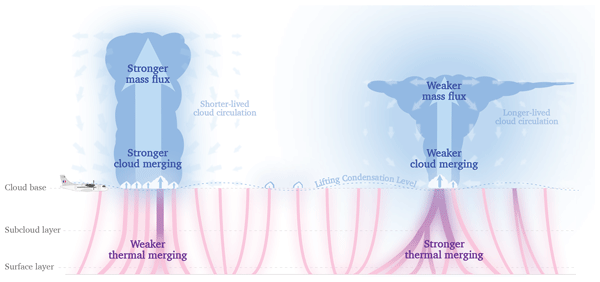
Space photographs of the Earth show that clouds form diverse, common but poorly understood cloud patterns. The analysis of observations gathered from research aircraft over the tropical ocean shows that the merging of thermals and clouds in the first kilometer of the atmosphere plays a key role in controlling the size, depth and spacing of clouds. This reveals a fundamental process through which clouds interact with each other and with their environment.
Cameron McErlich, Felix Goddard, Alex Aves, Catherine Hardacre, Nikolaos Evangeliou, Alan J. Hewitt, and Laura E. Revell
Geosci. Model Dev., 18, 8827–8854, https://doi.org/10.5194/gmd-18-8827-2025, https://doi.org/10.5194/gmd-18-8827-2025, 2025
Short summary
Short summary
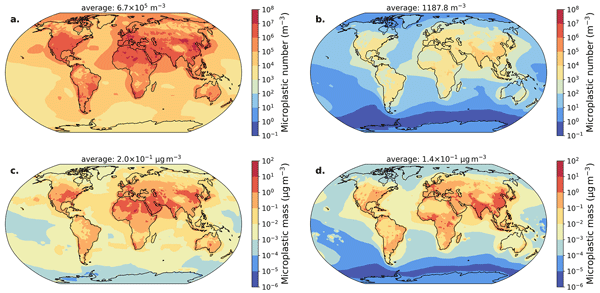
Airborne microplastics are a new air pollutant but are not yet included in most global models. We add them to the UK Earth System Model to show how they move, change, and are removed from air. Smaller microplastics persist for longer and can travel further, even to Antarctica. While their current role in air pollution is small, their presence is expected to grow in future. This work offers a framework to assess future impacts of microplastics on air quality and climate.
Maggie Bruckner, R. Bradley Pierce, Allen Lenzen, Glenn Diskin, Joshua P. DiGangi, Martine De Maziere, Nicholas Jones, and Maria Makarova
Geosci. Model Dev., 18, 8109–8127, https://doi.org/10.5194/gmd-18-8109-2025, https://doi.org/10.5194/gmd-18-8109-2025, 2025
Short summary
Short summary
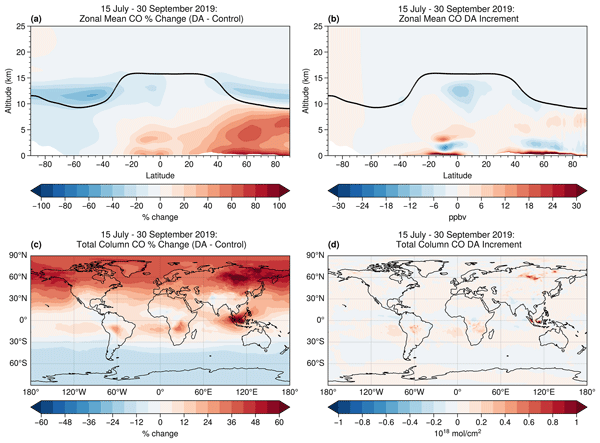
UFS-RAQMS incorporates the Real-time Air Quality Modeling System (RAQMS) stratosphere/troposphere chemistry into the existing NOAA Global Ensemble Forecast System (GEFS-Aerosols) version of NOAA's Unified Forecast System (UFS). Chemical data assimilation using TROPOMI CO column observations is conducted during the July–August–September 2019 period. Comparison of the CO column with independent measurements shows a systematic low bias in biomass burning CO emissions without assimilation.
Benjamin Torres, Luc Blarel, Philippe Goloub, Gaël Dubois, Maria Fernanda Sanchez-Barrero, Ioana Elisabeta Popovici, Fabrice Maupin, Elena Lind, Alexander Smirnov, Ilya Slutsker, Julien Chimot, Ramiro González, Michaël Sicard, Jean Marc Metzger, and Pierre Tulet
Atmos. Meas. Tech., 18, 4809–4838, https://doi.org/10.5194/amt-18-4809-2025, https://doi.org/10.5194/amt-18-4809-2025, 2025
Short summary
Short summary
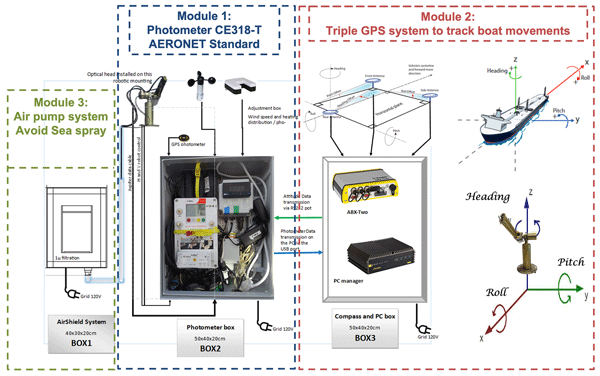
This study shows that it is possible to automatically monitor atmospheric aerosols from research vessels using automated instruments, following the same standards as AERONET (AErosol RObotic NETwork) land-based stations. By collecting 3 years of data in the Indian Ocean, we demonstrate that high-quality measurements can be made, even on a moving platform. These results open new possibilities for observing aerosols over the ocean and improving satellite data and climate studies.
Tristan Millet, Hassan Bencherif, Thierry Portafaix, Nelson Bègue, Alexandre Baron, Valentin Duflot, Cathy Clerbaux, Pierre-François Coheur, Andrea Pazmiño, Michaël Sicard, Anne Boynard, Jean-Marc Metzger, Guillaume Payen, Nicolas Marquestaut, and Sophie Godin-Beekmann
Atmos. Chem. Phys., 25, 10887–10905, https://doi.org/10.5194/acp-25-10887-2025, https://doi.org/10.5194/acp-25-10887-2025, 2025
Short summary
Short summary
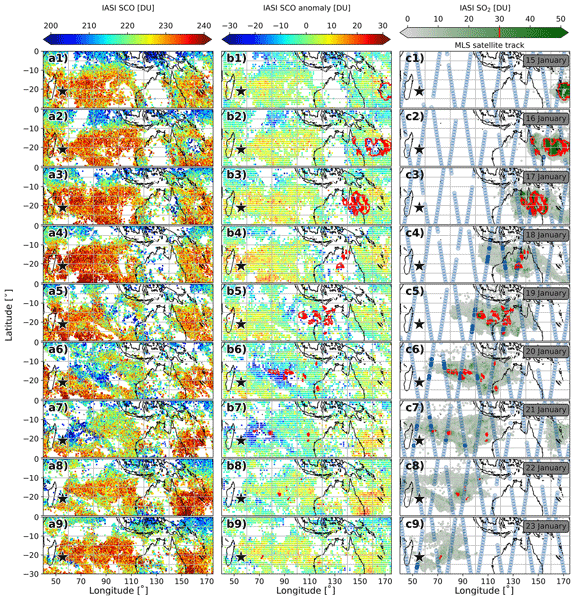
On 15 January 2022, the Hunga volcano erupted, releasing sulfur dioxide and water vapor into the stratosphere, impacting ozone levels over the Indian Ocean. Satellite data show the presence of a transient ozone depletion event related to the water vapor anomalies and sulfate aerosol clouds. Ozone reduction was confined to two distinct layers. On 21 January, the fifth percentile of total and stratospheric column ozone anomalies reached −18.6 and −14.5 DU, respectively.
Meredith Dournaux, Pierre Tulet, Joris Pianezze, Jérome Brioude, Jean-Marc Metzger, Melilotus Thyssen, and Gilles Athier
Atmos. Chem. Phys., 25, 10315–10335, https://doi.org/10.5194/acp-25-10315-2025, https://doi.org/10.5194/acp-25-10315-2025, 2025
Short summary
Short summary
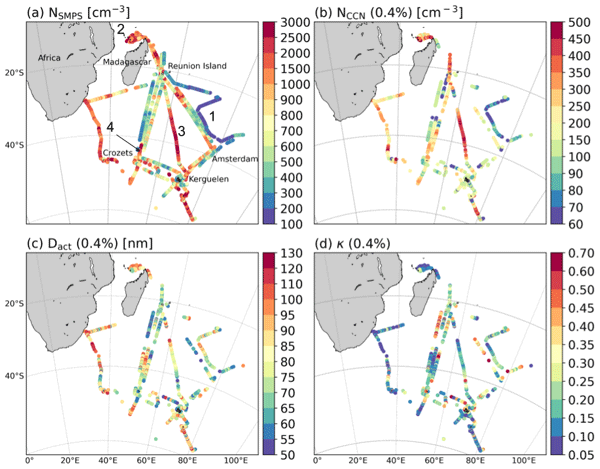
Aerosol measurements collected during six oceanographic campaigns carried out in 2021 and 2023 in the southwestern Indian Ocean are presented and analyzed in this paper. The results highlight large variability in the aerosol concentration, size, and water vapor affinity depending on in situ conditions and air mass transport over the ocean. Marine aerosol chemical composition is highly variable over this region and should be considered to better study the impacts of aerosols on regional weather and climate.
Roeland Van Malderen, Zhou Zang, Kai-Lan Chang, Robin Björklund, Owen R. Cooper, Jane Liu, Eliane Maillard Barras, Corinne Vigouroux, Irina Petropavlovskikh, Thierry Leblanc, Valérie Thouret, Pawel Wolff, Peter Effertz, Audrey Gaudel, David W. Tarasick, Herman G. J. Smit, Anne M. Thompson, Ryan M. Stauffer, Debra E. Kollonige, Deniz Poyraz, Gérard Ancellet, Marie-Renée De Backer, Matthias M. Frey, James W. Hannigan, José L. Hernandez, Bryan J. Johnson, Nicholas Jones, Rigel Kivi, Emmanuel Mahieu, Isamu Morino, Glen McConville, Katrin Müller, Isao Murata, Justus Notholt, Ankie Piters, Maxime Prignon, Richard Querel, Vincenzo Rizi, Dan Smale, Wolfgang Steinbrecht, Kimberly Strong, and Ralf Sussmann
Atmos. Chem. Phys., 25, 9905–9935, https://doi.org/10.5194/acp-25-9905-2025, https://doi.org/10.5194/acp-25-9905-2025, 2025
Short summary
Short summary
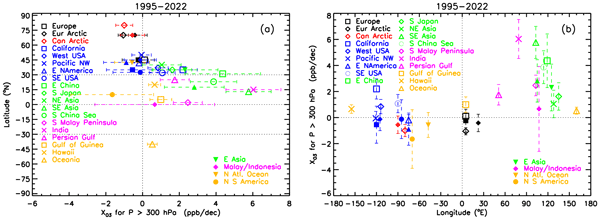
Tropospheric ozone is an important greenhouse gas and an air pollutant whose distribution and time variability are mainly governed by anthropogenic emissions and dynamics. In this paper, we assess regional trends of tropospheric ozone column amounts, based on two different approaches of merging or synthesizing ground-based observations and their trends within specific regions. Our findings clearly demonstrate regional trend differences but also consistently higher pre-COVID than post-COVID trends.
Tanguy Jonville, Maurus Borne, Cyrille Flamant, Juan Cuesta, Olivier Bock, Pierre Bosser, Christophe Lavaysse, Andreas Fink, and Peter Knippertz
Atmos. Chem. Phys., 25, 9765–9786, https://doi.org/10.5194/acp-25-9765-2025, https://doi.org/10.5194/acp-25-9765-2025, 2025
Short summary
Short summary
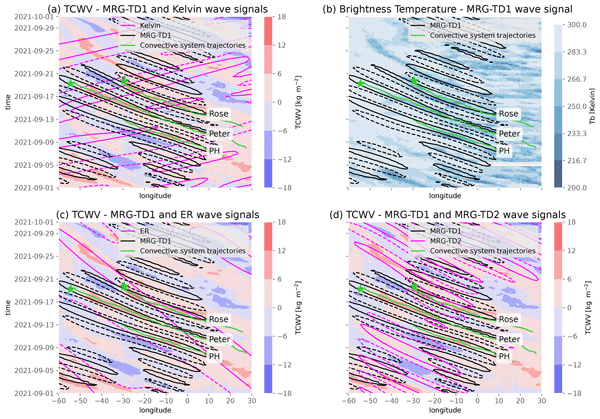
Tropical waves structure the atmosphere. Four types of tropical waves (equatorial Rossby – ER, Kelvin, MRG-TD1, and MRG-TD2 – mixed Rossby gravity–tropical depressions) are studied using filters, satellite measurements, and in situ data from the Clouds–Atmosphere Dynamics–Dust Interaction in West Africa (CADDIWA) campaign held in September 2021 in Cabo Verde. ER waves impact temperature and humidity above 2500 m, MRG-TD1 around 3500 m, and MRG-TD2 around 2000 m. Interactions between these waves favor tropical cyclone formation.
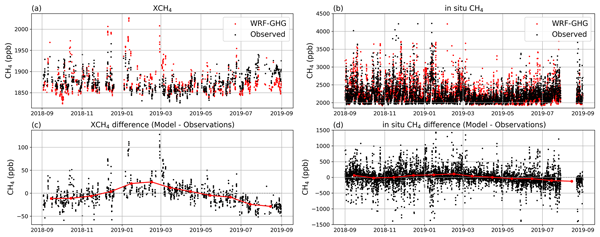
Sieglinde Callewaert, Minqiang Zhou, Bavo Langerock, Pucai Wang, Ting Wang, Emmanuel Mahieu, and Martine De Mazière
Atmos. Chem. Phys., 25, 9519–9544, https://doi.org/10.5194/acp-25-9519-2025, https://doi.org/10.5194/acp-25-9519-2025, 2025
Short summary
Short summary
We used an atmospheric transport model and satellite data to study CH4 observations in Xianghe, China. Our study shows the key source sectors that influence the concentrations and their respective importance. Furthermore, meteorological factors such as wind direction are discussed. This research highlights the challenges in accurately simulating these kinds of measurements and helps us to better understand CH4 variability in the region.
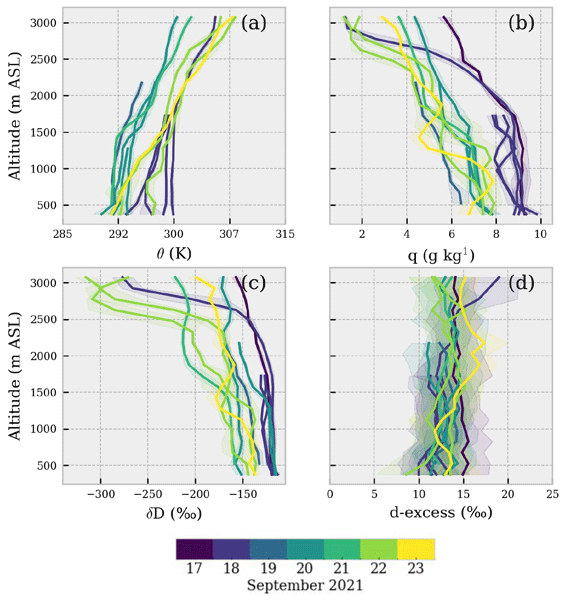
Daniele Zannoni, Hans Christian Steen-Larsen, Harald Sodemann, Iris Thurnherr, Cyrille Flamant, Patrick Chazette, Julien Totems, Martin Werner, and Myriam Raybaut
Atmos. Chem. Phys., 25, 9471–9495, https://doi.org/10.5194/acp-25-9471-2025, https://doi.org/10.5194/acp-25-9471-2025, 2025
Short summary
Short summary
High-resolution airborne observations reveal that mixing between the free troposphere and surface evapotranspiration flux primarily modulates the water vapor isotopic composition in the lower troposphere. Water vapor isotope structure variations occur on the scale of hundreds of meters, underlining the utility of stable isotopes for studying microscale atmospheric dynamics. This study also provides the basis for better validation of water vapor isotope remote sensing retrievals with surface observations.
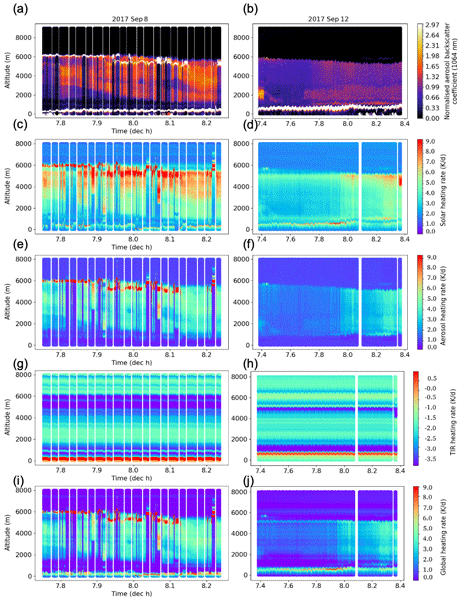
Mégane Ventura, Fabien Waquet, Isabelle Chiapello, Gérard Brogniez, Frédéric Parol, Frédérique Auriol, Rodrigue Loisil, Cyril Delegove, Luc Blarel, Oleg Dubovik, Marc Mallet, Cyrille Flamant, and Paola Formenti
Atmos. Meas. Tech., 18, 4005–4024, https://doi.org/10.5194/amt-18-4005-2025, https://doi.org/10.5194/amt-18-4005-2025, 2025
Short summary
Short summary
Biomass-burning aerosols (BBAs) from Central Africa are transported above stratocumulus clouds. The absorption of solar energy by aerosols induces warming, altering the cloud dynamics. We developed an approach that combines polarimeter and lidar to quantify this. This methodology is assessed during the AEROCLO-sA (AErosol RadiatiOn and CLOud in Southern Africa) campaign. To validate it, we used irradiance measurements acquired during aircraft spiral descents. A major perspective is the generalization of this method to the global level.
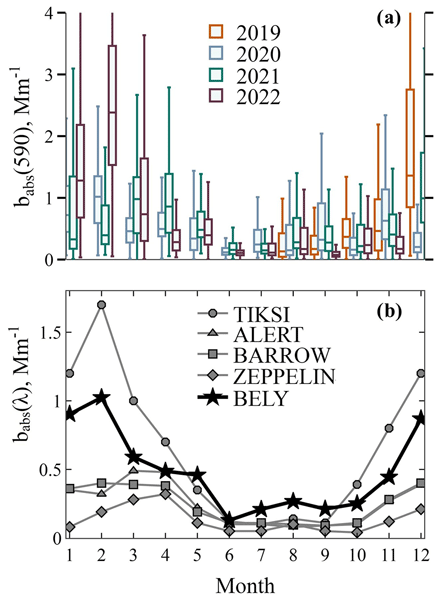
Olga B. Popovicheva, Marina A. Chichaeva, Nikolaos Evangeliou, Sabine Eckhardt, Evangelia Diapouli, and Nikolay S. Kasimov
Atmos. Chem. Phys., 25, 7719–7739, https://doi.org/10.5194/acp-25-7719-2025, https://doi.org/10.5194/acp-25-7719-2025, 2025
Short summary
Short summary
High-quality measurements of light-absorbing carbon were performed at the polar aerosol station "Island Bely” (Western Siberian Arctic) from 2019 to 2022. The maximum light absorption coefficients were seen in summer due to gas flaring, which is the most significant source in the region. However, the increasing Siberian wildfires had a special share in carbon contribution at this high Arctic station, with a persistent smoke layer extending over the whole troposphere in summer.
Roeland Van Malderen, Anne M. Thompson, Debra E. Kollonige, Ryan M. Stauffer, Herman G. J. Smit, Eliane Maillard Barras, Corinne Vigouroux, Irina Petropavlovskikh, Thierry Leblanc, Valérie Thouret, Pawel Wolff, Peter Effertz, David W. Tarasick, Deniz Poyraz, Gérard Ancellet, Marie-Renée De Backer, Stéphanie Evan, Victoria Flood, Matthias M. Frey, James W. Hannigan, José L. Hernandez, Marco Iarlori, Bryan J. Johnson, Nicholas Jones, Rigel Kivi, Emmanuel Mahieu, Glen McConville, Katrin Müller, Tomoo Nagahama, Justus Notholt, Ankie Piters, Natalia Prats, Richard Querel, Dan Smale, Wolfgang Steinbrecht, Kimberly Strong, and Ralf Sussmann
Atmos. Chem. Phys., 25, 7187–7225, https://doi.org/10.5194/acp-25-7187-2025, https://doi.org/10.5194/acp-25-7187-2025, 2025
Short summary
Short summary
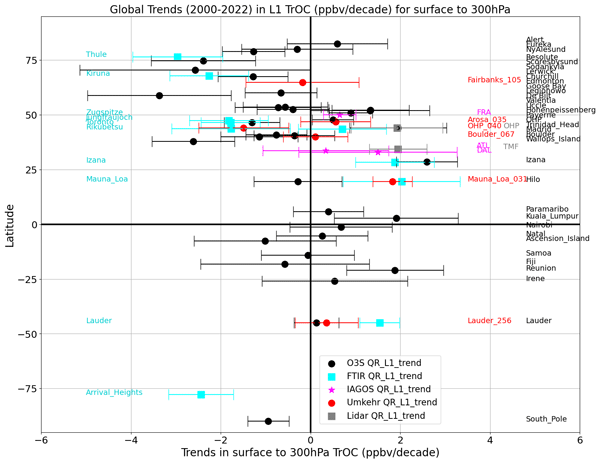
Tropospheric ozone is an important greenhouse gas and is an air pollutant. The time variability of tropospheric ozone is mainly driven by anthropogenic emissions. In this paper, we study the distribution and time variability of ozone from harmonized ground-based observations from five different measurement techniques. Our findings provide clear standard references for atmospheric models and evolving tropospheric ozone satellite data for the 2000–2022 period.
Catalina Poraicu, Jean-François Müller, Trissevgeni Stavrakou, Crist Amelynck, Bert W. D. Verreyken, Niels Schoon, Corinne Vigouroux, Nicolas Kumps, Jérôme Brioude, Pierre Tulet, and Camille Mouchel-Vallon
Atmos. Chem. Phys., 25, 6903–6941, https://doi.org/10.5194/acp-25-6903-2025, https://doi.org/10.5194/acp-25-6903-2025, 2025
Short summary
Short summary
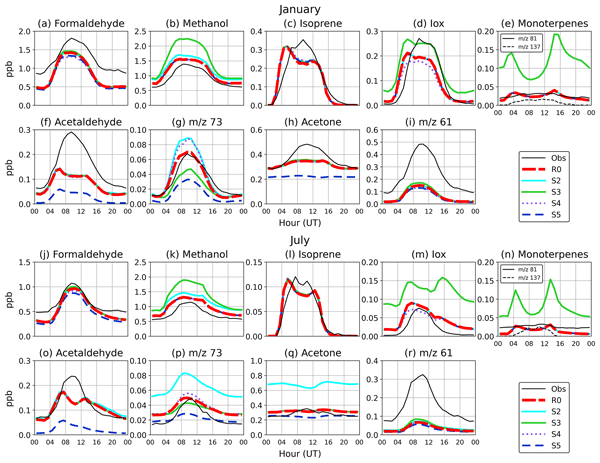
We investigated the sources and impacts of nitrogen oxides and organic compounds over a remote tropical island. Simulations of the high-resolution Weather Research and Forecasting model coupled with chemistry (WRF-Chem) were evaluated using in situ Fourier transform infrared spectroscopy (FTIR) and satellite measurements. This work highlights gaps in current models, like missing sources of key organic compounds and inaccuracies in emission inventories, emphasizing the importance of improving chemical and dynamical processes in atmospheric modelling for budget estimates in tropical regions.
Patrick Chazette, Julien Totems, and Frédéric Laly
Atmos. Meas. Tech., 18, 2681–2699, https://doi.org/10.5194/amt-18-2681-2025, https://doi.org/10.5194/amt-18-2681-2025, 2025
Short summary
Short summary
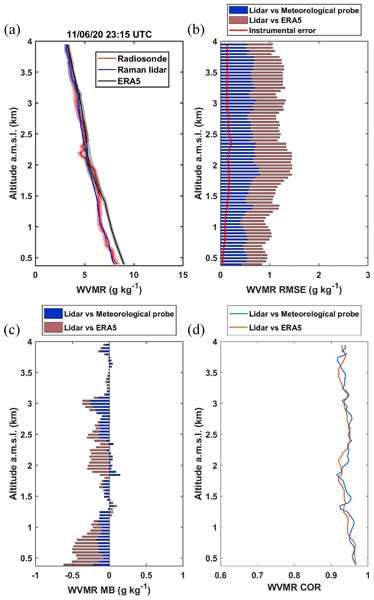
The use of active remote sensing instruments to sample the atmospheric environment requires accurate calibration that is stable over time so that measurements are reproducible. This is the case for measurements of atmospheric water vapour using Raman lidar, which are of growing interest in the context of climate risks such as extreme precipitation. This study addresses this issue. It is based on six campaigns spread over a period of 7 years between 2016 and 2022.
Lubna Dada, Benjamin T. Brem, Lidia-Marta Amarandi-Netedu, Martine Collaud Coen, Nikolaos Evangeliou, Christoph Hueglin, Nora Nowak, Robin Modini, Martin Steinbacher, and Martin Gysel-Beer
Aerosol Research, 3, 315–336, https://doi.org/10.5194/ar-3-315-2025, https://doi.org/10.5194/ar-3-315-2025, 2025
Short summary
Short summary
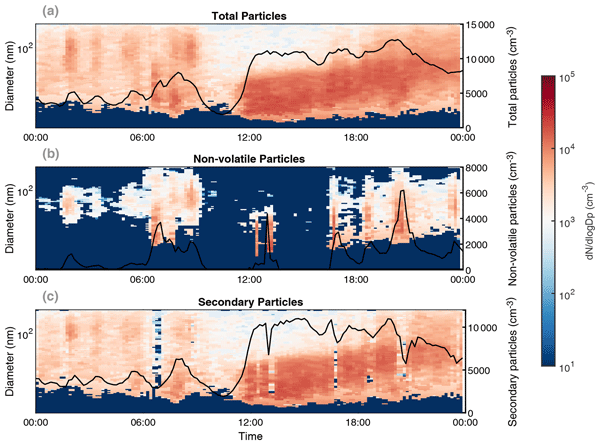
We investigated the sources of ultrafine particles (UFPs) in Payerne, Switzerland, highlighting the significant role of secondary processes in elevating UFP concentrations to levels comparable to urban areas. As the first study in rural midland Switzerland to analyze new particle formation events and secondary contributions, it offers key insights for air quality regulation and the role of agriculture in Switzerland and central Europe.
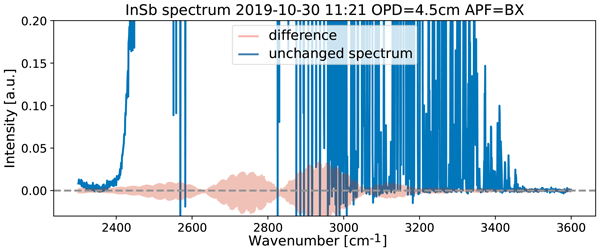
Bavo Langerock, Martine De Mazière, Filip Desmet, Pauli Heikkinen, Rigel Kivi, Mahesh Kumar Sha, Corinne Vigouroux, Minqiang Zhou, Gopala Krishna Darbha, and Mohmmed Talib
Atmos. Meas. Tech., 18, 2439–2446, https://doi.org/10.5194/amt-18-2439-2025, https://doi.org/10.5194/amt-18-2439-2025, 2025
Short summary
Short summary
Ground-based Fourier transform interferometer instruments have been used for many decades to measure direct solar light in the infrared to obtain high-resolution spectra from which atmospheric gas profile concentrations can be derived. It is shown that the typical processing chain used to derive atmospheric gas columns can be sensitive to relatively small shortenings of the recorded interferograms. Low-resolution recordings, used in more recent years, are more sensitive to such adaptations.
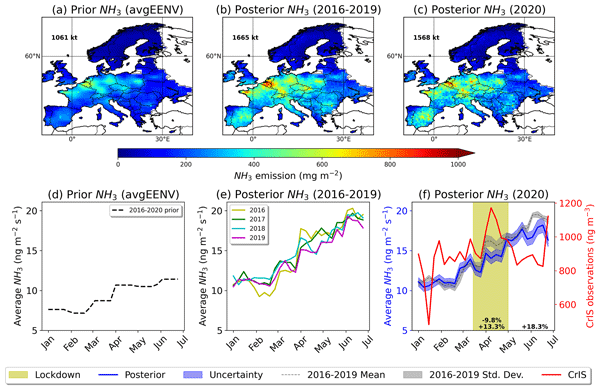
Nikolaos Evangeliou, Ondřej Tichý, Marit Svendby Otervik, Sabine Eckhardt, Yves Balkanski, and Didier A. Hauglustaine
Aerosol Research, 3, 155–174, https://doi.org/10.5194/ar-3-155-2025, https://doi.org/10.5194/ar-3-155-2025, 2025
Short summary
Short summary
The COVID-19 lockdown measures in 2020 reduced emissions of various substances, improving air quality. However, PM2.5 stayed unchanged due to NH3 and related chemical transformations. Higher humidity favoured more SO42- production, as did the accumulated NH3. Excess NH3 reacted with HNO3 to make NO3-. In high-NH3 conditions such as those in 2020, a small reduction in NOx levels drove faster oxidation of NO3- and slower deposition of total inorganic NO3-, causing high secondary PM2.5.
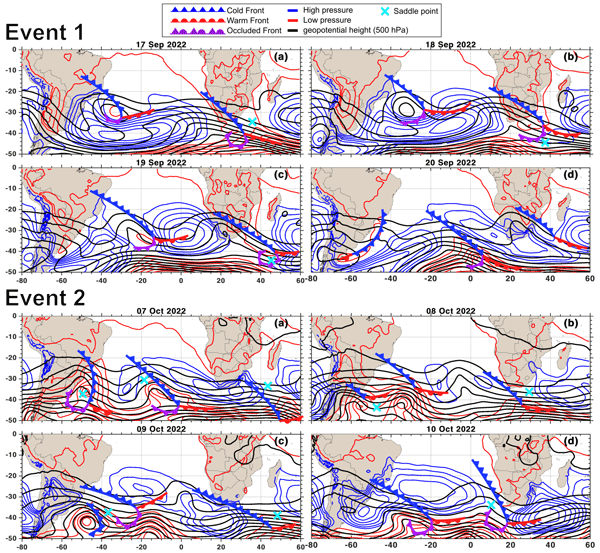
Marion Ranaivombola, Nelson Bègue, Lucas Vaz Peres, Farahnaz Fazel-Rastgar, Venkataraman Sivakumar, Gisèle Krysztofiak, Gwenaël Berthet, Fabrice Jegou, Stuart Piketh, and Hassan Bencherif
Atmos. Chem. Phys., 25, 3519–3540, https://doi.org/10.5194/acp-25-3519-2025, https://doi.org/10.5194/acp-25-3519-2025, 2025
Short summary
Short summary
From September to October 2022, the Biomass Burning Aerosol Campaign (BiBAC) in Kruger National Park revealed a significant aerosol loading linked to biomass burning activity, with southeastward transport over southern Africa and the southwestern Indian Ocean (SWIO) basin. The study revealed a predominance of biomass burning aerosols and two distinct transport mechanisms of aerosol plumes and CO, underscoring the importance of east-coast observations in understanding atmospheric dynamics.
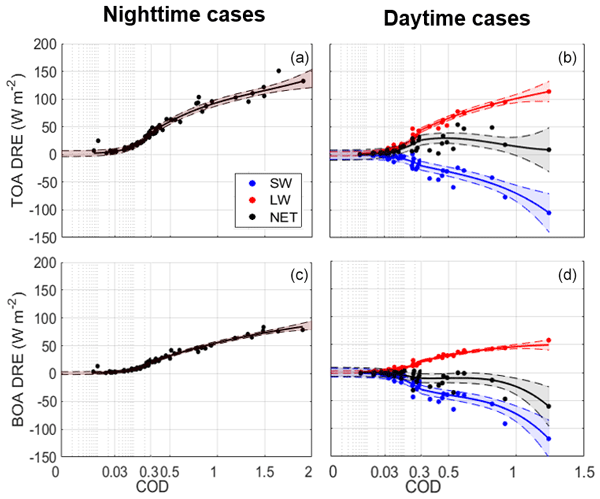
Cristina Gil-Díaz, Michäel Sicard, Odran Sourdeval, Athulya Saiprakash, Constantino Muñoz-Porcar, Adolfo Comerón, Alejandro Rodríguez-Gómez, and Daniel Camilo Fortunato dos Santos Oliveira
Atmos. Chem. Phys., 25, 3445–3464, https://doi.org/10.5194/acp-25-3445-2025, https://doi.org/10.5194/acp-25-3445-2025, 2025
Short summary
Short summary
This study presents a comprehensive analysis of optical scattering properties and direct radiative effects of cirrus clouds based on 4 years of continuous ground-based lidar measurements with the Barcelona MPLNET lidar. A novel approach of the self-consistent scattering model for cirrus clouds is presented to determine their optical scattering properties at different wavelengths, and their direct radiative effects are calculated with the discrete ordinates method embedded in the ARTDECO package.
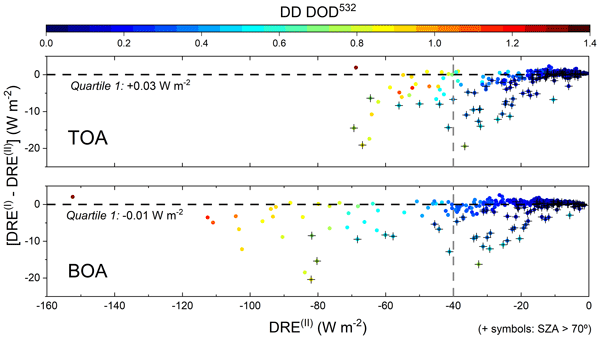
María-Ángeles López-Cayuela, Carmen Córdoba-Jabonero, Michaël Sicard, Jesús Abril-Gago, Vanda Salgueiro, Adolfo Comerón, María José Granados-Muñoz, Maria João Costa, Constantino Muñoz-Porcar, Juan Antonio Bravo-Aranda, Daniele Bortoli, Alejandro Rodríguez-Gómez, Lucas Alados-Arboledas, and Juan Luis Guerrero-Rascado
Atmos. Chem. Phys., 25, 3213–3231, https://doi.org/10.5194/acp-25-3213-2025, https://doi.org/10.5194/acp-25-3213-2025, 2025
Short summary
Short summary
Due to the significant radiative role of dust in climate change, vertical assessments of the short-wave dust direct radiative effect of both fine and coarse dust particles are performed separately. The study is focused on an intense Saharan dust outbreak crossing the Iberian Peninsula in springtime monitored by five Iberian lidar stations with southwest–northeast coverage. A comparative study to evaluate the differences found by considering the total dust (no separation) is also examined.

Frank Hase, Paolo Castracane, Angelika Dehn, Omaira Elena García, David W. T. Griffith, Lukas Heizmann, Nicholas B. Jones, Tomi Karppinen, Rigel Kivi, Martine de Mazière, Justus Notholt, and Mahesh Kumar Sha
Atmos. Meas. Tech., 18, 1257–1267, https://doi.org/10.5194/amt-18-1257-2025, https://doi.org/10.5194/amt-18-1257-2025, 2025
Short summary
Short summary
The primary measurement result delivered by a Fourier transform spectrometer is an interferogram, and the spectrum required for further analysis needs to be calculated from the interferogram by Fourier analysis. The paper deals with technical aspects of this process and shows how the reconstruction of the spectrum can be optimized.
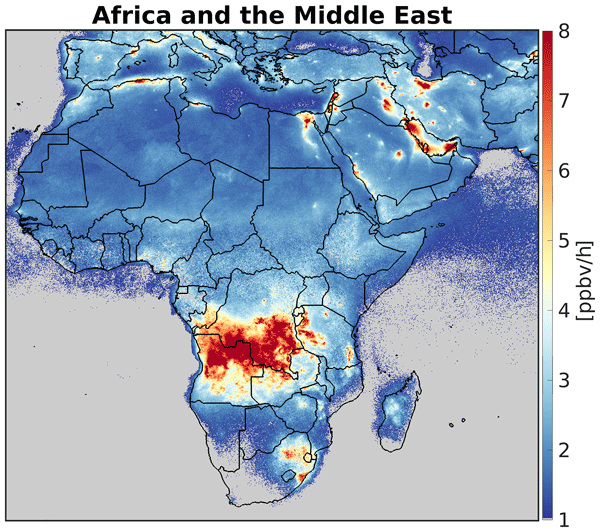
Amir H. Souri, Gonzalo González Abad, Glenn M. Wolfe, Tijl Verhoelst, Corinne Vigouroux, Gaia Pinardi, Steven Compernolle, Bavo Langerock, Bryan N. Duncan, and Matthew S. Johnson
Atmos. Chem. Phys., 25, 2061–2086, https://doi.org/10.5194/acp-25-2061-2025, https://doi.org/10.5194/acp-25-2061-2025, 2025
Short summary
Short summary
We establish a simple yet robust relationship between ozone production rates and geophysical parameters obtained from several intensive atmospheric composition campaigns. We show that satellite remote sensing data can effectively constrain these parameters, enabling us to produce the first global maps of ozone production rates with unprecedented resolution.
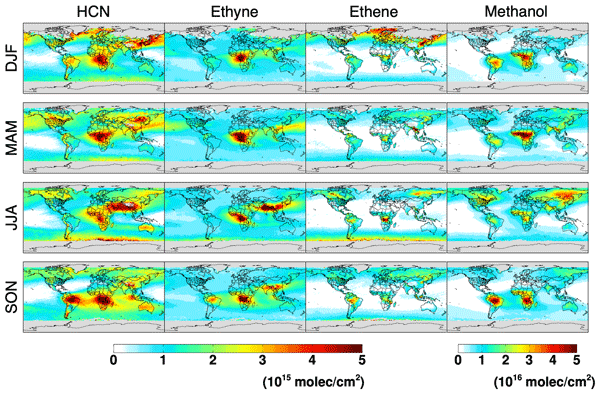
Kelley C. Wells, Dylan B. Millet, Jared F. Brewer, Vivienne H. Payne, Karen E. Cady-Pereira, Rick Pernak, Susan Kulawik, Corinne Vigouroux, Nicholas Jones, Emmanuel Mahieu, Maria Makarova, Tomoo Nagahama, Ivan Ortega, Mathias Palm, Kimberly Strong, Matthias Schneider, Dan Smale, Ralf Sussmann, and Minqiang Zhou
Atmos. Meas. Tech., 18, 695–716, https://doi.org/10.5194/amt-18-695-2025, https://doi.org/10.5194/amt-18-695-2025, 2025
Short summary
Short summary
Atmospheric volatile organic compounds (VOCs) affect both air quality and climate. Satellite measurements can help us to assess and predict their global impacts. We present new decadal (2012–2023) measurements of four key VOCs – methanol, ethene, ethyne, and hydrogen cyanide (HCN) – from the Cross-track Infrared Sounder. The measurements reflect emissions from major forests, wildfires, and industry and provide new information to advance understanding of these sources and their changes over time.
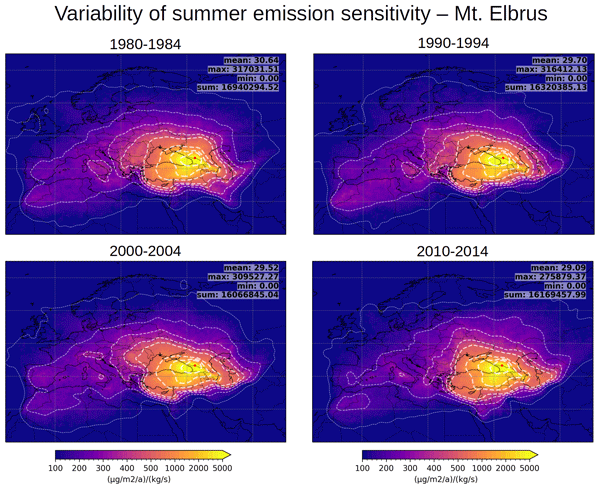
Michel Legrand, Mstislav Vorobyev, Daria Bokuchava, Stanislav Kutuzov, Andreas Plach, Andreas Stohl, Alexandra Khairedinova, Vladimir Mikhalenko, Maria Vinogradova, Sabine Eckhardt, and Susanne Preunkert
Atmos. Chem. Phys., 25, 1385–1399, https://doi.org/10.5194/acp-25-1385-2025, https://doi.org/10.5194/acp-25-1385-2025, 2025
Short summary
Short summary
Past atmospheric NH3 pollution in south-eastern Europe was reconstructed by analysing ammonium in an ice core drilled at the Mount Elbrus (Caucasus, Russia). The observed 3.5-fold increase in ice concentrations between 1750 and 1990 CE is in good agreement with estimated past dominant ammonia emissions from agriculture, mainly from south European Russia and Türkiye. In contrast to present-day conditions, the ammonium level observed in 1750 CE indicates significant natural emissions at that time.
Michaël Sicard, Alexandre Baron, Marion Ranaivombola, Dominique Gantois, Tristan Millet, Pasquale Sellitto, Nelson Bègue, Hassan Bencherif, Guillaume Payen, Nicolas Marquestaut, and Valentin Duflot
Atmos. Chem. Phys., 25, 367–381, https://doi.org/10.5194/acp-25-367-2025, https://doi.org/10.5194/acp-25-367-2025, 2025
Short summary
Short summary
This study quantifies the radiative impact over Réunion Island (21° S, 55° E) of the aerosols and water vapor injected into the stratosphere by the Hunga volcano in the South Pacific. The overall aerosol and water vapor impact on the Earth’s radiation budget for the whole period is negative (cooling, -0.82 ± 0.35 W m-2) and dominated by the aerosols. At the Earth’s surface, aerosols are the main drivers and produce a negative (cooling, -1.04 ± 0.36 W m-2) radiative impact.

Cedric G. Ngoungue Langue, Christophe Lavaysse, and Cyrille Flamant
Nat. Hazards Earth Syst. Sci., 25, 147–168, https://doi.org/10.5194/nhess-25-147-2025, https://doi.org/10.5194/nhess-25-147-2025, 2025
Short summary
Short summary
The present study addresses the predictability of heat waves at subseasonal timescales in West African cities over the period 2001–2020. Two models, the European Centre for Medium-Range Weather Forecasts (ECMWF) and the UK Met Office models, were evaluated using two reanalyses: ERA5 and MERRA. The results suggest that at subseasonal timescales, the forecast models provide a better forecast than climatology, but the hit rate and false alarm rate are sub-optimal.
Frédéric Laly, Patrick Chazette, Julien Totems, Jérémy Lagarrigue, Laurent Forges, and Cyrille Flamant
Earth Syst. Sci. Data, 16, 5579–5602, https://doi.org/10.5194/essd-16-5579-2024, https://doi.org/10.5194/essd-16-5579-2024, 2024
Short summary
Short summary
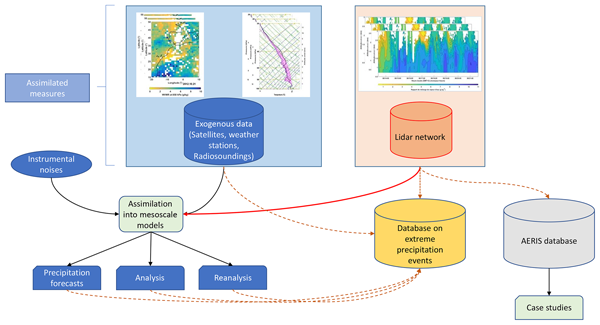
We present a dataset of water vapor mixing ratio profiles acquired during the Water Vapor Lidar Network Assimilation campaign in fall and winter 2022 and summer 2023, using three lidar systems deployed on the western Mediterranean coastline. This innovative campaign provides access to lower-tropospheric water vapor variability to constrain meteorological forecasting models. The scientific objective is to improve forecasting of heavy-precipation events that lead to flash floods and landslides.
Robin Björklund, Corinne Vigouroux, Peter Effertz, Omaira E. García, Alex Geddes, James Hannigan, Koji Miyagawa, Michael Kotkamp, Bavo Langerock, Gerald Nedoluha, Ivan Ortega, Irina Petropavlovskikh, Deniz Poyraz, Richard Querel, John Robinson, Hisako Shiona, Dan Smale, Penny Smale, Roeland Van Malderen, and Martine De Mazière
Atmos. Meas. Tech., 17, 6819–6849, https://doi.org/10.5194/amt-17-6819-2024, https://doi.org/10.5194/amt-17-6819-2024, 2024
Short summary
Short summary
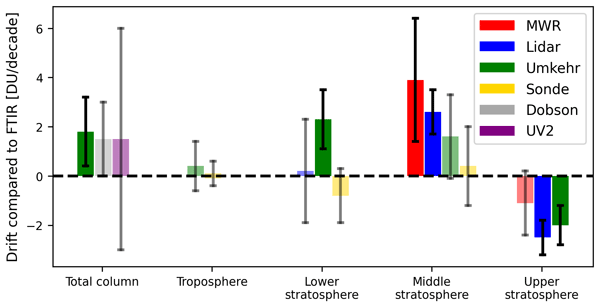
Different ground-based ozone measurements from the last 2 decades at Lauder are compared to each other. We want to know why different trends have been observed in the stratosphere. Also, the quality and relevance of tropospheric datasets need to be evaluated. While remaining drifts are still present, our study explains roughly half of the differences in observed trends in previous studies and shows the necessity for continuous review and improvement of the measurements.
Minqiang Zhou, Pucai Wang, Bart Dils, Bavo Langerock, Geoff Toon, Christian Hermans, Weidong Nan, Qun Cheng, and Martine De Mazière
Atmos. Meas. Tech., 17, 6385–6396, https://doi.org/10.5194/amt-17-6385-2024, https://doi.org/10.5194/amt-17-6385-2024, 2024
Short summary
Short summary
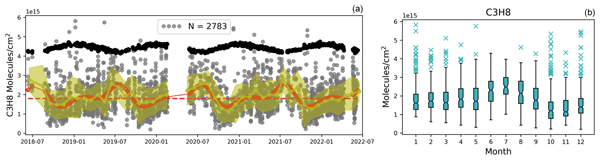
Solar absorption spectra near 2967 cm−1 recorded by a ground-based FTIR with a high spectral resolution of 0.0035 cm-1 are applied to retrieve C3H8 columns for the first time in Xianghe, China, within the NDACC-IRWG. The mean and standard deviation of the C3H8 columns are 1.80 ± 0.81 (1σ) × 1015 molec. cm-2. Good correlations are found between C3H8 and other non-methane hydrocarbons, such as C2H6 (R = 0.84) and C2H2 (R = 0.79), as well as between C3H8 and CO (R = 0.72).
Lucie Bakels, Daria Tatsii, Anne Tipka, Rona Thompson, Marina Dütsch, Michael Blaschek, Petra Seibert, Katharina Baier, Silvia Bucci, Massimo Cassiani, Sabine Eckhardt, Christine Groot Zwaaftink, Stephan Henne, Pirmin Kaufmann, Vincent Lechner, Christian Maurer, Marie D. Mulder, Ignacio Pisso, Andreas Plach, Rakesh Subramanian, Martin Vojta, and Andreas Stohl
Geosci. Model Dev., 17, 7595–7627, https://doi.org/10.5194/gmd-17-7595-2024, https://doi.org/10.5194/gmd-17-7595-2024, 2024
Short summary
Short summary
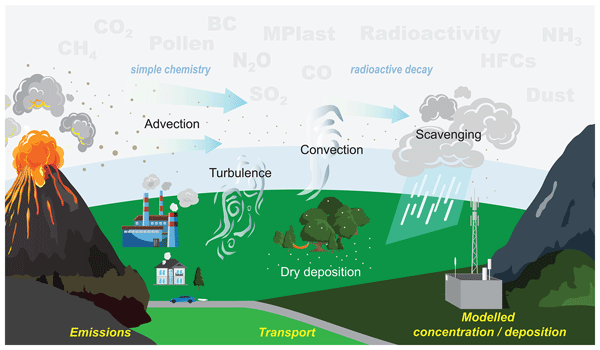
Computer models are essential for improving our understanding of how gases and particles move in the atmosphere. We present an update of the atmospheric transport model FLEXPART. FLEXPART 11 is more accurate due to a reduced number of interpolations and a new scheme for wet deposition. It can simulate non-spherical aerosols and includes linear chemical reactions. It is parallelised using OpenMP and includes new user options. A new user manual details how to use FLEXPART 11.
Kavitha Mottungan, Chayan Roychoudhury, Vanessa Brocchi, Benjamin Gaubert, Wenfu Tang, Mohammad Amin Mirrezaei, John McKinnon, Yafang Guo, David W. T. Griffith, Dietrich G. Feist, Isamu Morino, Mahesh K. Sha, Manvendra K. Dubey, Martine De Mazière, Nicholas M. Deutscher, Paul O. Wennberg, Ralf Sussmann, Rigel Kivi, Tae-Young Goo, Voltaire A. Velazco, Wei Wang, and Avelino F. Arellano Jr.
Atmos. Meas. Tech., 17, 5861–5885, https://doi.org/10.5194/amt-17-5861-2024, https://doi.org/10.5194/amt-17-5861-2024, 2024
Short summary
Short summary
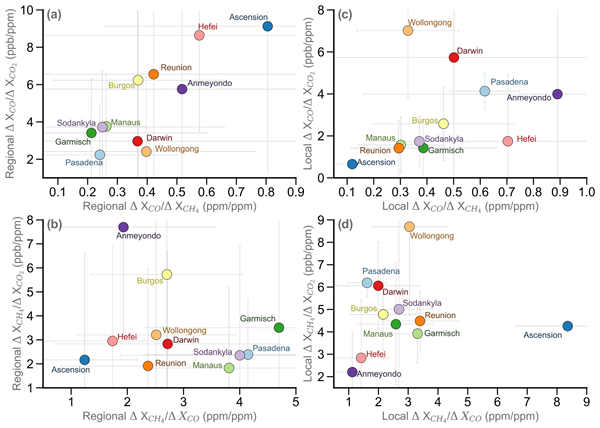
A combination of data analysis techniques is introduced to separate local and regional influences on observed levels of carbon dioxide, carbon monoxide, and methane from an established ground-based remote sensing network. We take advantage of the covariations in these trace gases to identify the dominant type of sources driving these levels. Applying these methods in conjunction with existing approaches to other datasets can better address uncertainties in identifying sources and sinks.
Bart Dils, Minqiang Zhou, Claude Camy-Peyret, Martine De Mazière, Yannick Kangah, Bavo Langerock, Pascal Prunet, Carmine Serio, Richard Siddans, and Brian Kerridge
Atmos. Meas. Tech., 17, 5491–5524, https://doi.org/10.5194/amt-17-5491-2024, https://doi.org/10.5194/amt-17-5491-2024, 2024
Short summary
Short summary
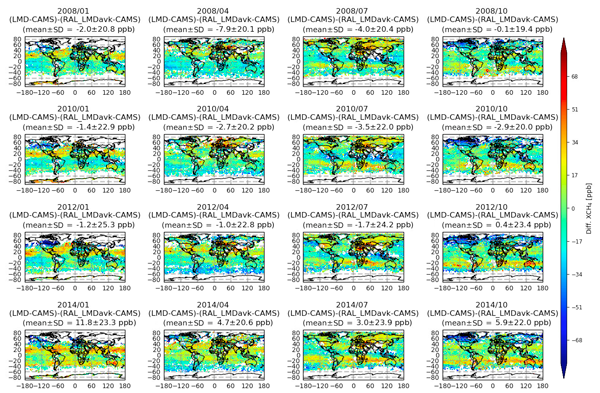
The paper discusses two very distinct methane products from the IASI instrument aboard the MetOp-A satellite. One (referred to as LMD NLISv8.3) uses a machine-learning approach, while the other (RALv2.0) uses a more conventional optimal estimation approach. We used a variety of model and independent reference measurement data to assess both products' overall quality, their differences, and specific aspects of each product that would benefit from further analysis by the product development teams.
Dominique Gantois, Guillaume Payen, Michaël Sicard, Valentin Duflot, Nelson Bègue, Nicolas Marquestaut, Thierry Portafaix, Sophie Godin-Beekmann, Patrick Hernandez, and Eric Golubic
Earth Syst. Sci. Data, 16, 4137–4159, https://doi.org/10.5194/essd-16-4137-2024, https://doi.org/10.5194/essd-16-4137-2024, 2024
Short summary
Short summary
We describe three instruments that have been measuring interactions between aerosols (particles of various origin) and light over Réunion Island since 2012. Aerosols directly or indirectly influence the temperature in the atmosphere and can interact with clouds. Details are given on how we derived aerosol properties from our measurements and how we assessed the quality of our data before sharing them with the scientific community. A good correlation was found between the three instruments.
Gabriela Dornelles Bittencourt, Hassan Bencherif, Damaris Kirsch Pinheiro, Nelson Begue, Lucas Vaz Peres, José Valentin Bageston, Douglas Lima de Bem, Francisco Raimundo da Silva, and Tristan Millet
Atmos. Meas. Tech., 17, 5201–5220, https://doi.org/10.5194/amt-17-5201-2024, https://doi.org/10.5194/amt-17-5201-2024, 2024
Short summary
Short summary
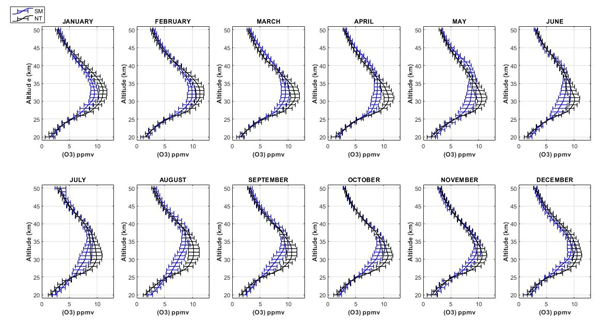
The study examines the behavior of ozone at equatorial and subtropical latitudes in South America, in a multi-instrumental analysis. The methodology applied used ozonesondes (SHADOZ/NASA) and satellite data (TIMED/SABER), as well as analysis with ground-based and satellite instruments, allowing a more in-depth study at both latitudes. The main motivation is to understand how latitudinal differences in the observation of ozone content can interfere with the behavior of this trace gas.
Pierre Tulet, Joel Van Baelen, Pierre Bosser, Jérome Brioude, Aurélie Colomb, Philippe Goloub, Andrea Pazmino, Thierry Portafaix, Michel Ramonet, Karine Sellegri, Melilotus Thyssen, Léa Gest, Nicolas Marquestaut, Dominique Mékiès, Jean-Marc Metzger, Gilles Athier, Luc Blarel, Marc Delmotte, Guillaume Desprairies, Mérédith Dournaux, Gaël Dubois, Valentin Duflot, Kevin Lamy, Lionel Gardes, Jean-François Guillemot, Valérie Gros, Joanna Kolasinski, Morgan Lopez, Olivier Magand, Erwan Noury, Manuel Nunes-Pinharanda, Guillaume Payen, Joris Pianezze, David Picard, Olivier Picard, Sandrine Prunier, François Rigaud-Louise, Michael Sicard, and Benjamin Torres
Earth Syst. Sci. Data, 16, 3821–3849, https://doi.org/10.5194/essd-16-3821-2024, https://doi.org/10.5194/essd-16-3821-2024, 2024
Short summary
Short summary
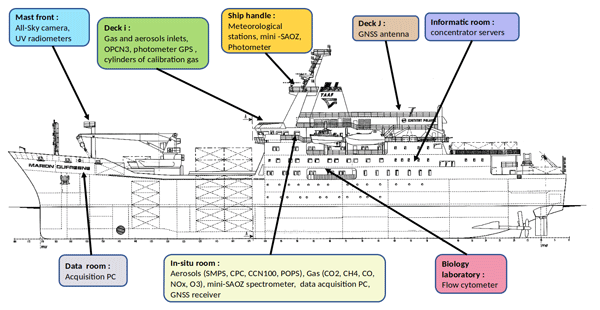
The MAP-IO program aims to compensate for the lack of atmospheric and oceanographic observations in the Southern Ocean by equipping the ship Marion Dufresne with a set of 17 scientific instruments. This program collected 700 d of measurements under different latitudes, seasons, sea states, and weather conditions. These new data will support the calibration and validation of numerical models and the understanding of the atmospheric composition of this region of Earth.
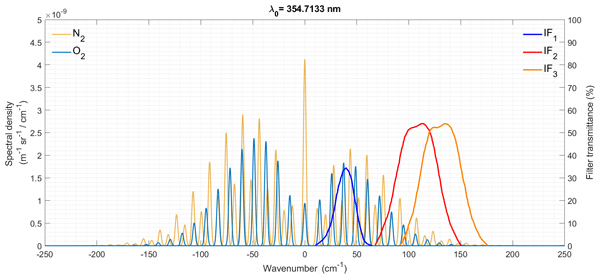
José Alex Zenteno-Hernández, Adolfo Comerón, Federico Dios, Alejandro Rodríguez-Gómez, Constantino Muñoz-Porcar, Michaël Sicard, Noemi Franco, Andreas Behrendt, and Paolo Di Girolamo
Atmos. Meas. Tech., 17, 4687–4694, https://doi.org/10.5194/amt-17-4687-2024, https://doi.org/10.5194/amt-17-4687-2024, 2024
Short summary
Short summary
We study how the spectral characteristics of a solid-state laser in an atmospheric temperature profiling lidar using the Raman technique impact the temperature retrieval accuracy. We find that the spectral widening, with respect to a seeded laser, has virtually no impact, while crystal-rod temperature variations in the laser must be kept within a range of 1 K for the uncertainty in the atmospheric temperature below 1 K. The study is carried out through spectroscopy simulations.
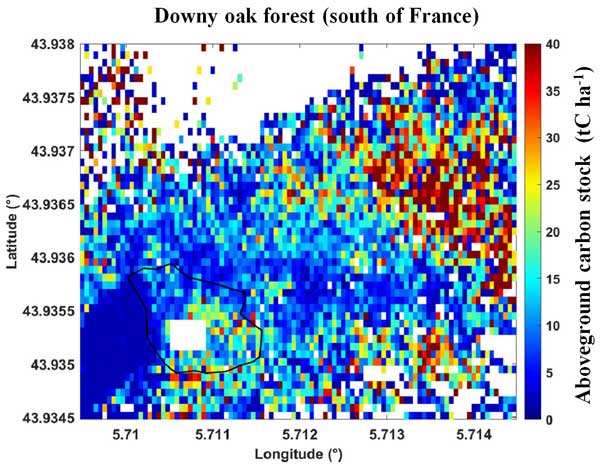
Maëlie Chazette, Patrick Chazette, Ilja M. Reiter, Xiaoxia Shang, Julien Totems, Jean-Philippe Orts, Irène Xueref-Remy, and Nicolas Montes
Biogeosciences, 21, 3289–3303, https://doi.org/10.5194/bg-21-3289-2024, https://doi.org/10.5194/bg-21-3289-2024, 2024
Short summary
Short summary
The approach presented is original in its coupling between field observations and airborne lidar observations. It has been applied to an instrumented reference forest site in the south of France, which is heavily impacted by climate change. It leads to the evaluation of tree heights and ends with assessments of aerial and root carbon stocks. A detailed assessment of uncertainties is presented to add a level of reliability to the scientific products delivered.
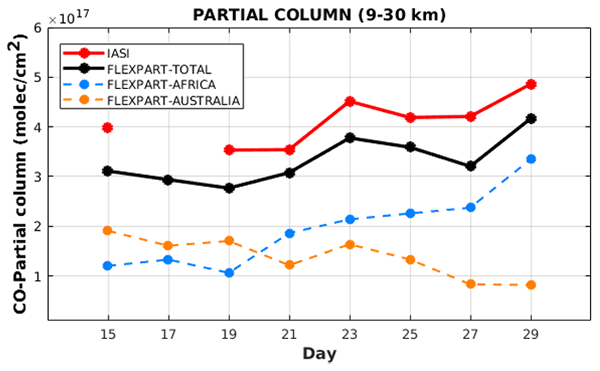
Nelson Bègue, Alexandre Baron, Gisèle Krysztofiak, Gwenaël Berthet, Corinna Kloss, Fabrice Jégou, Sergey Khaykin, Marion Ranaivombola, Tristan Millet, Thierry Portafaix, Valentin Duflot, Philippe Keckhut, Hélène Vérèmes, Guillaume Payen, Mahesh Kumar Sha, Pierre-François Coheur, Cathy Clerbaux, Michaël Sicard, Tetsu Sakai, Richard Querel, Ben Liley, Dan Smale, Isamu Morino, Osamu Uchino, Tomohiro Nagai, Penny Smale, John Robinson, and Hassan Bencherif
Atmos. Chem. Phys., 24, 8031–8048, https://doi.org/10.5194/acp-24-8031-2024, https://doi.org/10.5194/acp-24-8031-2024, 2024
Short summary
Short summary
During the 2020 austral summer, the pristine atmosphere of the southwest Indian Ocean basin experienced significant perturbations. Numerical models indicated that the lower-stratospheric aerosol content was influenced by the intense and persistent stratospheric aerosol layer generated during the 2019–2020 extreme Australian bushfire events. Ground-based observations at Réunion confirmed the simultaneous presence of African and Australian aerosol layers.
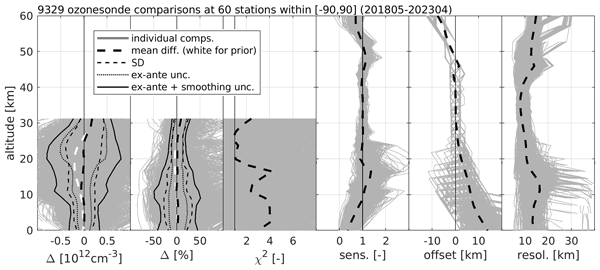
Arno Keppens, Serena Di Pede, Daan Hubert, Jean-Christopher Lambert, Pepijn Veefkind, Maarten Sneep, Johan De Haan, Mark ter Linden, Thierry Leblanc, Steven Compernolle, Tijl Verhoelst, José Granville, Oindrila Nath, Ann Mari Fjæraa, Ian Boyd, Sander Niemeijer, Roeland Van Malderen, Herman G. J. Smit, Valentin Duflot, Sophie Godin-Beekmann, Bryan J. Johnson, Wolfgang Steinbrecht, David W. Tarasick, Debra E. Kollonige, Ryan M. Stauffer, Anne M. Thompson, Angelika Dehn, and Claus Zehner
Atmos. Meas. Tech., 17, 3969–3993, https://doi.org/10.5194/amt-17-3969-2024, https://doi.org/10.5194/amt-17-3969-2024, 2024
Short summary
Short summary
The Sentinel-5P satellite operated by the European Space Agency has carried the TROPOspheric Monitoring Instrument (TROPOMI) around the Earth since October 2017. This mission also produces atmospheric ozone profile data which are described in detail for May 2018 to April 2023. Independent validation using ground-based reference measurements demonstrates that the operational ozone profile product mostly fully and at least partially complies with all mission requirements.
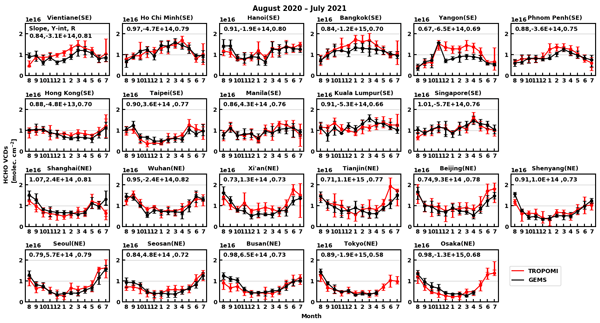
Gitaek T. Lee, Rokjin J. Park, Hyeong-Ahn Kwon, Eunjo S. Ha, Sieun D. Lee, Seunga Shin, Myoung-Hwan Ahn, Mina Kang, Yong-Sang Choi, Gyuyeon Kim, Dong-Won Lee, Deok-Rae Kim, Hyunkee Hong, Bavo Langerock, Corinne Vigouroux, Christophe Lerot, Francois Hendrick, Gaia Pinardi, Isabelle De Smedt, Michel Van Roozendael, Pucai Wang, Heesung Chong, Yeseul Cho, and Jhoon Kim
Atmos. Chem. Phys., 24, 4733–4749, https://doi.org/10.5194/acp-24-4733-2024, https://doi.org/10.5194/acp-24-4733-2024, 2024
Short summary
Short summary
This study evaluates the Geostationary Environment Monitoring Spectrometer (GEMS) HCHO product by comparing its vertical column densities (VCDs) with those of TROPOMI and ground-based observations. Based on some sensitivity tests, obtaining radiance references under clear-sky conditions significantly improves HCHO retrieval quality. GEMS HCHO VCDs captured seasonal and diurnal variations well during the first year of observation, showing consistency with TROPOMI and ground-based observations.
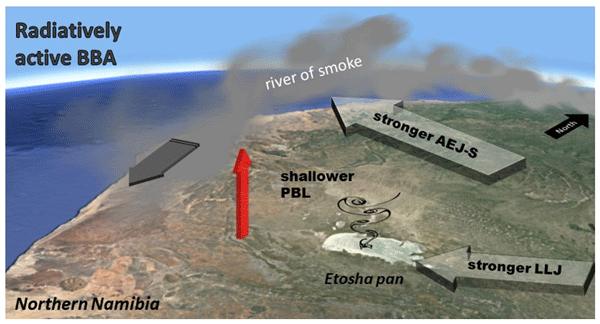
Cyrille Flamant, Jean-Pierre Chaboureau, Marco Gaetani, Kerstin Schepanski, and Paola Formenti
Atmos. Chem. Phys., 24, 4265–4288, https://doi.org/10.5194/acp-24-4265-2024, https://doi.org/10.5194/acp-24-4265-2024, 2024
Short summary
Short summary
In the austral dry season, the atmospheric composition over southern Africa is dominated by biomass burning aerosols and terrigenous aerosols (so-called mineral dust). This study suggests that the radiative effect of biomass burning aerosols needs to be taken into account to properly forecast dust emissions in Namibia.
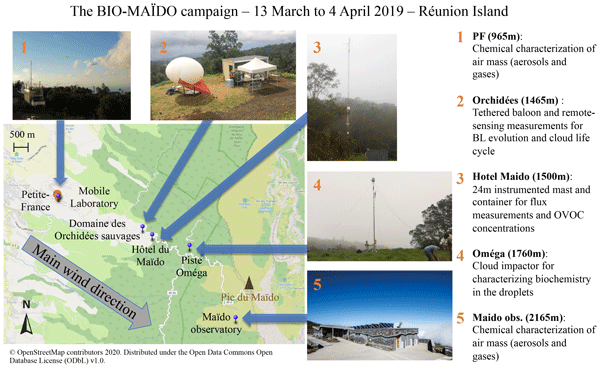
Maud Leriche, Pierre Tulet, Laurent Deguillaume, Frédéric Burnet, Aurélie Colomb, Agnès Borbon, Corinne Jambert, Valentin Duflot, Stéphan Houdier, Jean-Luc Jaffrezo, Mickaël Vaïtilingom, Pamela Dominutti, Manon Rocco, Camille Mouchel-Vallon, Samira El Gdachi, Maxence Brissy, Maroua Fathalli, Nicolas Maury, Bert Verreyken, Crist Amelynck, Niels Schoon, Valérie Gros, Jean-Marc Pichon, Mickael Ribeiro, Eric Pique, Emmanuel Leclerc, Thierry Bourrianne, Axel Roy, Eric Moulin, Joël Barrie, Jean-Marc Metzger, Guillaume Péris, Christian Guadagno, Chatrapatty Bhugwant, Jean-Mathieu Tibere, Arnaud Tournigand, Evelyn Freney, Karine Sellegri, Anne-Marie Delort, Pierre Amato, Muriel Joly, Jean-Luc Baray, Pascal Renard, Angelica Bianco, Anne Réchou, and Guillaume Payen
Atmos. Chem. Phys., 24, 4129–4155, https://doi.org/10.5194/acp-24-4129-2024, https://doi.org/10.5194/acp-24-4129-2024, 2024
Short summary
Short summary
Aerosol particles in the atmosphere play a key role in climate change and air pollution. A large number of aerosol particles are formed from the oxidation of volatile organic compounds (VOCs and secondary organic aerosols – SOA). An important field campaign was organized on Réunion in March–April 2019 to understand the formation of SOA in a tropical atmosphere mostly influenced by VOCs emitted by forest and in the presence of clouds. This work synthesizes the results of this campaign.
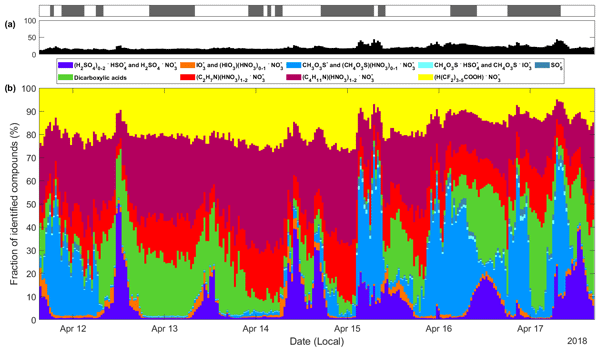
Romain Salignat, Matti Rissanen, Siddharth Iyer, Jean-Luc Baray, Pierre Tulet, Jean-Marc Metzger, Jérôme Brioude, Karine Sellegri, and Clémence Rose
Atmos. Chem. Phys., 24, 3785–3812, https://doi.org/10.5194/acp-24-3785-2024, https://doi.org/10.5194/acp-24-3785-2024, 2024
Short summary
Short summary
Using mass spectrometry data collected at the Maïdo Observatory (2160 m a.s.l., Réunion), we provide the first detailed analysis of molecular cluster chemical composition specifically in the marine free troposphere. The abundance of the identified species is related both to in situ meteorological parameters and air mass history, which also provide insight into their origin. Our work makes an important contribution to documenting the chemistry and physics of the marine free troposphere.
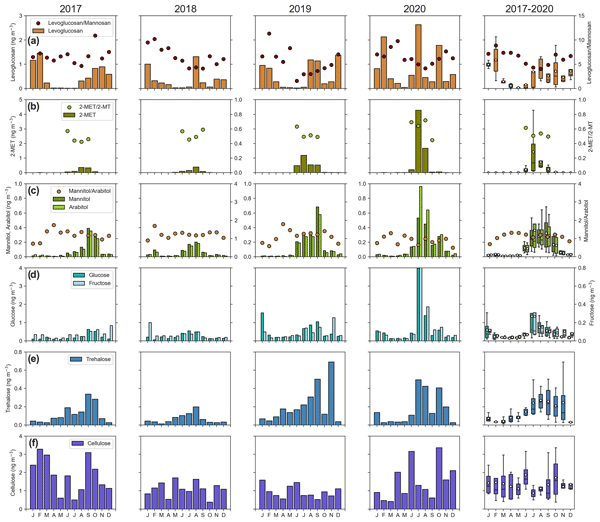
Karl Espen Yttri, Are Bäcklund, Franz Conen, Sabine Eckhardt, Nikolaos Evangeliou, Markus Fiebig, Anne Kasper-Giebl, Avram Gold, Hans Gundersen, Cathrine Lund Myhre, Stephen Matthew Platt, David Simpson, Jason D. Surratt, Sönke Szidat, Martin Rauber, Kjetil Tørseth, Martin Album Ytre-Eide, Zhenfa Zhang, and Wenche Aas
Atmos. Chem. Phys., 24, 2731–2758, https://doi.org/10.5194/acp-24-2731-2024, https://doi.org/10.5194/acp-24-2731-2024, 2024
Short summary
Short summary
We discuss carbonaceous aerosol (CA) observed at the high Arctic Zeppelin Observatory (2017 to 2020). We find that organic aerosol is a significant fraction of the Arctic aerosol, though less than sea salt aerosol and mineral dust, as well as non-sea-salt sulfate, originating mainly from anthropogenic sources in winter and from natural sources in summer, emphasizing the importance of wildfires for biogenic secondary organic aerosol and primary biological aerosol particles observed in the Arctic.
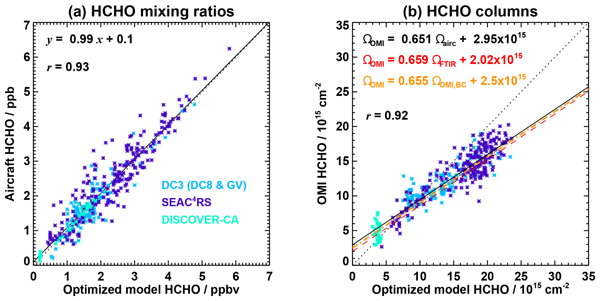
Jean-François Müller, Trissevgeni Stavrakou, Glenn-Michael Oomen, Beata Opacka, Isabelle De Smedt, Alex Guenther, Corinne Vigouroux, Bavo Langerock, Carlos Augusto Bauer Aquino, Michel Grutter, James Hannigan, Frank Hase, Rigel Kivi, Erik Lutsch, Emmanuel Mahieu, Maria Makarova, Jean-Marc Metzger, Isamu Morino, Isao Murata, Tomoo Nagahama, Justus Notholt, Ivan Ortega, Mathias Palm, Amelie Röhling, Wolfgang Stremme, Kimberly Strong, Ralf Sussmann, Yao Té, and Alan Fried
Atmos. Chem. Phys., 24, 2207–2237, https://doi.org/10.5194/acp-24-2207-2024, https://doi.org/10.5194/acp-24-2207-2024, 2024
Short summary
Short summary
Formaldehyde observations from satellites can be used to constrain the emissions of volatile organic compounds, but those observations have biases. Using an atmospheric model, aircraft and ground-based remote sensing data, we quantify these biases, propose a correction to the data, and assess the consequence of this correction for the evaluation of emissions.
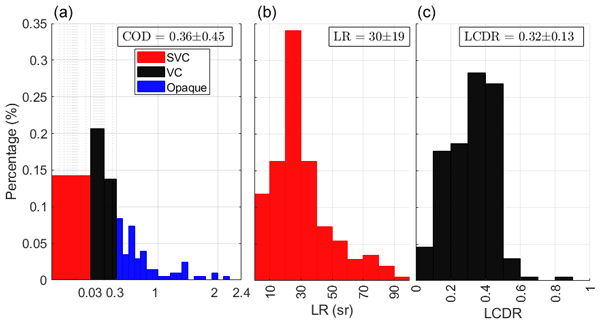
Cristina Gil-Díaz, Michäel Sicard, Adolfo Comerón, Daniel Camilo Fortunato dos Santos Oliveira, Constantino Muñoz-Porcar, Alejandro Rodríguez-Gómez, Jasper R. Lewis, Ellsworth J. Welton, and Simone Lolli
Atmos. Meas. Tech., 17, 1197–1216, https://doi.org/10.5194/amt-17-1197-2024, https://doi.org/10.5194/amt-17-1197-2024, 2024
Short summary
Short summary
In this paper, a statistical study of cirrus geometrical and optical properties based on 4 years of continuous ground-based lidar measurements with the Barcelona (Spain) Micro Pulse Lidar (MPL) is analysed. The cloud optical depth, effective column lidar ratio and linear cloud depolarisation ratio have been calculated by a new approach to the two-way transmittance method, which is valid for both ground-based and spaceborne lidar systems. Their associated errors are also provided.
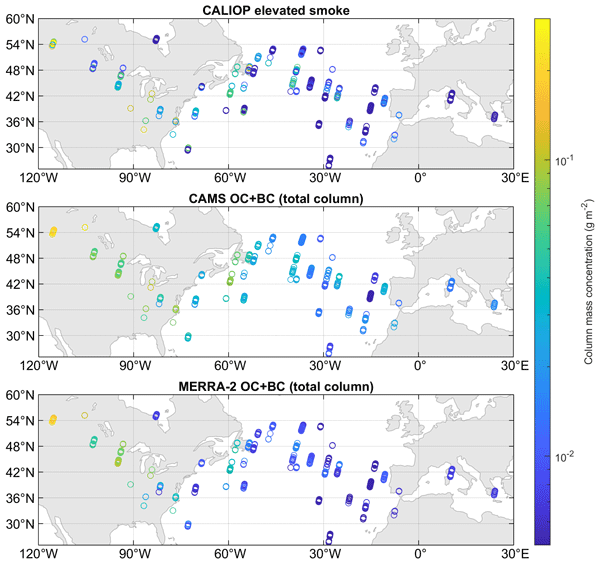
Xiaoxia Shang, Antti Lipponen, Maria Filioglou, Anu-Maija Sundström, Mark Parrington, Virginie Buchard, Anton S. Darmenov, Ellsworth J. Welton, Eleni Marinou, Vassilis Amiridis, Michael Sicard, Alejandro Rodríguez-Gómez, Mika Komppula, and Tero Mielonen
Atmos. Chem. Phys., 24, 1329–1344, https://doi.org/10.5194/acp-24-1329-2024, https://doi.org/10.5194/acp-24-1329-2024, 2024
Short summary
Short summary
In June 2019, smoke particles from a Canadian wildfire event were transported to Europe. The long-range-transported smoke plumes were monitored with a spaceborne lidar and reanalysis models. Based on the aerosol mass concentrations estimated from the observations, the reanalysis models had difficulties in reproducing the amount and location of the smoke aerosols during the transport event. Consequently, more spaceborne lidar missions are needed for reliable monitoring of aerosol plumes.
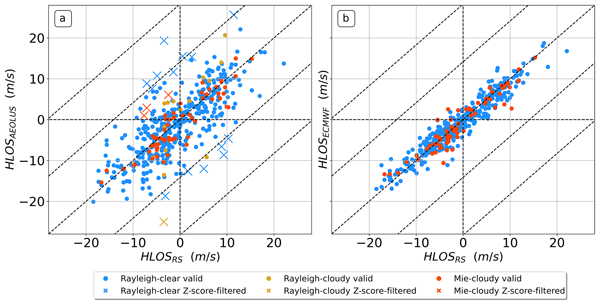
Maurus Borne, Peter Knippertz, Martin Weissmann, Benjamin Witschas, Cyrille Flamant, Rosimar Rios-Berrios, and Peter Veals
Atmos. Meas. Tech., 17, 561–581, https://doi.org/10.5194/amt-17-561-2024, https://doi.org/10.5194/amt-17-561-2024, 2024
Short summary
Short summary
This study assesses the quality of Aeolus wind measurements over the tropical Atlantic. The results identified the accuracy and precision of the Aeolus wind measurements and the potential source of errors. For instance, the study revealed atmospheric conditions that can deteriorate the measurement quality, such as weaker laser signal in cloudy or dusty conditions, and confirmed the presence of an orbital-dependant bias. These results can help to improve the Aeolus wind measurement algorithm.
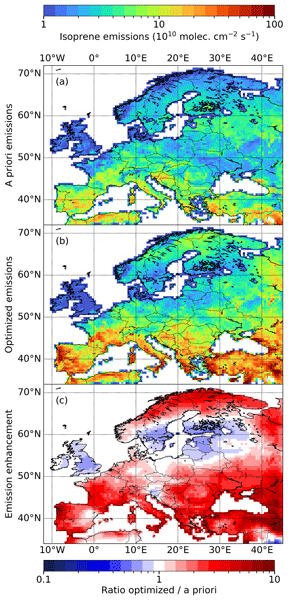
Glenn-Michael Oomen, Jean-François Müller, Trissevgeni Stavrakou, Isabelle De Smedt, Thomas Blumenstock, Rigel Kivi, Maria Makarova, Mathias Palm, Amelie Röhling, Yao Té, Corinne Vigouroux, Martina M. Friedrich, Udo Frieß, François Hendrick, Alexis Merlaud, Ankie Piters, Andreas Richter, Michel Van Roozendael, and Thomas Wagner
Atmos. Chem. Phys., 24, 449–474, https://doi.org/10.5194/acp-24-449-2024, https://doi.org/10.5194/acp-24-449-2024, 2024
Short summary
Short summary
Natural emissions from vegetation have a profound impact on air quality for their role in the formation of harmful tropospheric ozone and organic aerosols, yet these emissions are highly uncertain. In this study, we quantify emissions of organic gases over Europe using high-quality satellite measurements of formaldehyde. These satellite observations suggest that emissions from vegetation are much higher than predicted by models, especially in southern Europe.
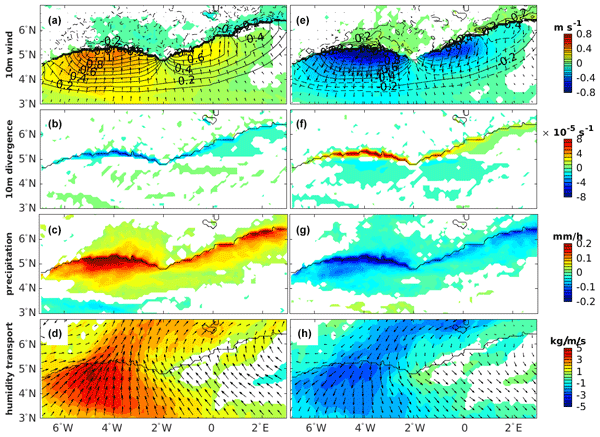
Gaëlle de Coëtlogon, Adrien Deroubaix, Cyrille Flamant, Laurent Menut, and Marco Gaetani
Atmos. Chem. Phys., 23, 15507–15521, https://doi.org/10.5194/acp-23-15507-2023, https://doi.org/10.5194/acp-23-15507-2023, 2023
Short summary
Short summary
Using a numerical atmospheric model, we found that cooling sea surface temperatures along the southern coast of West Africa in July cause the “little dry season”. This effect reduces humidity and pollutant transport inland, potentially enhancing West Africa's synoptic and seasonal forecasting.
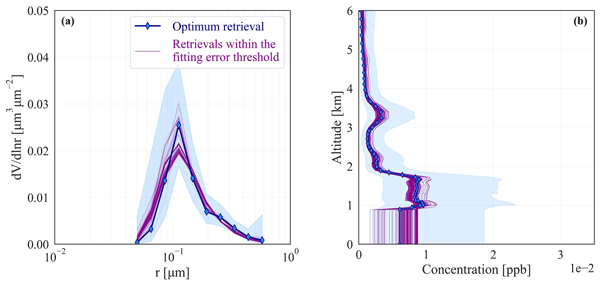
Alexandra Tsekeri, Anna Gialitaki, Marco Di Paolantonio, Davide Dionisi, Gian Luigi Liberti, Alnilam Fernandes, Artur Szkop, Aleksander Pietruczuk, Daniel Pérez-Ramírez, Maria J. Granados Muñoz, Juan Luis Guerrero-Rascado, Lucas Alados-Arboledas, Diego Bermejo Pantaleón, Juan Antonio Bravo-Aranda, Anna Kampouri, Eleni Marinou, Vassilis Amiridis, Michael Sicard, Adolfo Comerón, Constantino Muñoz-Porcar, Alejandro Rodríguez-Gómez, Salvatore Romano, Maria Rita Perrone, Xiaoxia Shang, Mika Komppula, Rodanthi-Elisavet Mamouri, Argyro Nisantzi, Diofantos Hadjimitsis, Francisco Navas-Guzmán, Alexander Haefele, Dominika Szczepanik, Artur Tomczak, Iwona S. Stachlewska, Livio Belegante, Doina Nicolae, Kalliopi Artemis Voudouri, Dimitris Balis, Athena A. Floutsi, Holger Baars, Linda Miladi, Nicolas Pascal, Oleg Dubovik, and Anton Lopatin
Atmos. Meas. Tech., 16, 6025–6050, https://doi.org/10.5194/amt-16-6025-2023, https://doi.org/10.5194/amt-16-6025-2023, 2023
Short summary
Short summary
EARLINET/ACTRIS organized an intensive observational campaign in May 2020, with the objective of monitoring the atmospheric state over Europe during the COVID-19 lockdown and relaxation period. The work presented herein focuses on deriving a common methodology for applying a synergistic retrieval that utilizes the network's ground-based passive and active remote sensing measurements and deriving the aerosols from anthropogenic activities over Europe.
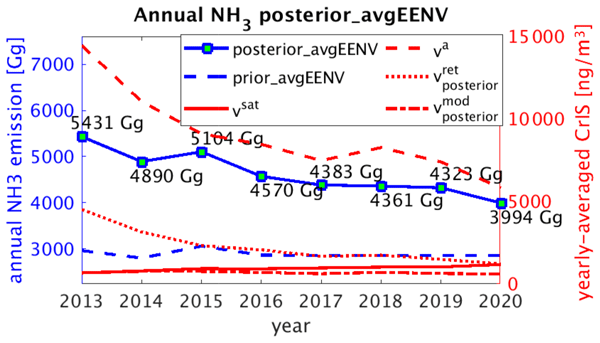
Ondřej Tichý, Sabine Eckhardt, Yves Balkanski, Didier Hauglustaine, and Nikolaos Evangeliou
Atmos. Chem. Phys., 23, 15235–15252, https://doi.org/10.5194/acp-23-15235-2023, https://doi.org/10.5194/acp-23-15235-2023, 2023
Short summary
Short summary
We show declining trends in NH3 emissions over Europe for 2013–2020 using advanced dispersion and inverse modelling and satellite measurements from CrIS. Emissions decreased by −26% since 2013, showing that the abatement strategies adopted by the European Union have been very efficient. Ammonia emissions are low in winter and peak in summer due to temperature-dependent soil volatilization. The largest decreases were observed in central and western Europe in countries with high emissions.
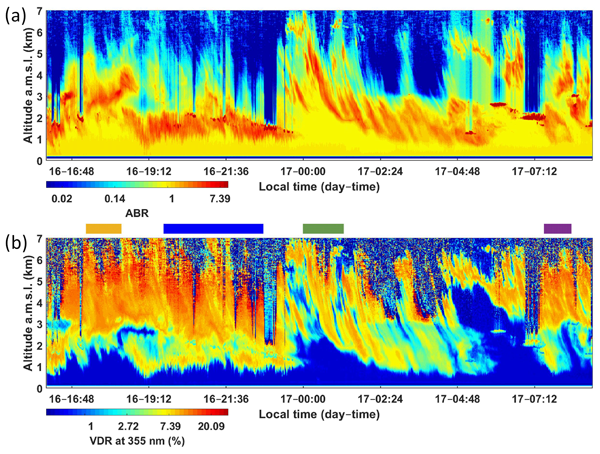
Patrick Chazette and Jean-Christophe Raut
Atmos. Meas. Tech., 16, 5847–5861, https://doi.org/10.5194/amt-16-5847-2023, https://doi.org/10.5194/amt-16-5847-2023, 2023
Short summary
Short summary
The vertical profiles of the effective radii of ice crystals and ice water content in Arctic semi-transparent stratiform clouds were assessed using quantitative ground-based lidar measurements. The field campaign was part of the Pollution in the ARCtic System (PARCS) project which took place from 13 to 26 May 2016 in Hammerfest (70° 39′ 48″ N, 23° 41′ 00″ E). We show that under certain cloud conditions, lidar measurement combined with a dedicated algorithmic approach is an efficient tool.
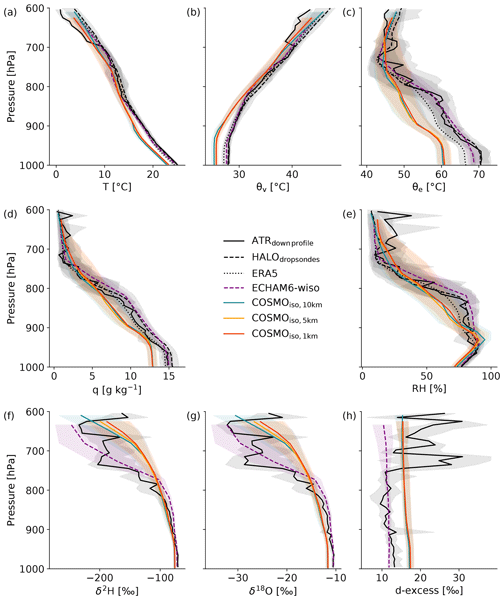
Leonie Villiger, Marina Dütsch, Sandrine Bony, Marie Lothon, Stephan Pfahl, Heini Wernli, Pierre-Etienne Brilouet, Patrick Chazette, Pierre Coutris, Julien Delanoë, Cyrille Flamant, Alfons Schwarzenboeck, Martin Werner, and Franziska Aemisegger
Atmos. Chem. Phys., 23, 14643–14672, https://doi.org/10.5194/acp-23-14643-2023, https://doi.org/10.5194/acp-23-14643-2023, 2023
Short summary
Short summary
This study evaluates three numerical simulations performed with an isotope-enabled weather forecast model and investigates the coupling between shallow trade-wind cumulus clouds and atmospheric circulations on different scales. We show that the simulations reproduce key characteristics of shallow trade-wind clouds as observed during the field experiment EUREC4A and that the spatial distribution of stable-water-vapour isotopes is shaped by the overturning circulation associated with these clouds.
Tristan Millet, Hassan Bencherif, Thierry Portafaix, Nelson Bègue, Alexandre Baron, Valentin Duflot, Michaël Sicard, Jean-Marc Metzger, Guillaume Payen, Nicolas Marquestaut, and Sophie Godin-Beekmann
EGUsphere, https://doi.org/10.5194/egusphere-2023-2645, https://doi.org/10.5194/egusphere-2023-2645, 2023
Preprint withdrawn
Short summary
Short summary
The eruption of the Hunga Tonga volcano in January 2022 released substantial amounts of aerosols, sulfur dioxide, and water vapor into the stratosphere. Satellite and ground instruments followed the displacement of the volcanic aerosol plume and its impact on ozone levels over the Indian Ocean. Ozone data reveal the presence of a persistent ozone mini-hole structure from 17 January to 22 January, with most ozone depletion occurring within the ozone layer at the location of the aerosol plume.
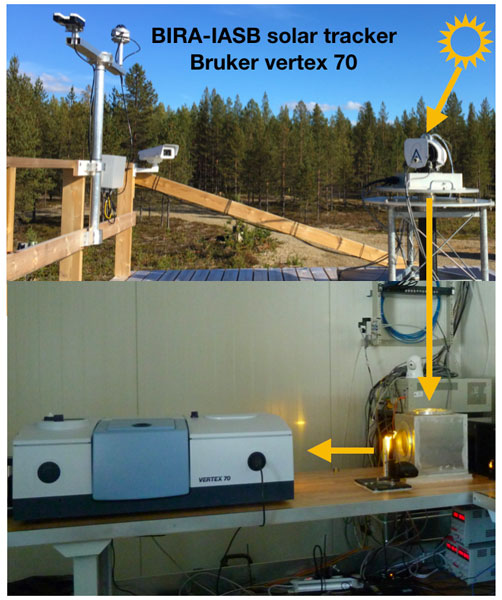
Minqiang Zhou, Bavo Langerock, Mahesh Kumar Sha, Christian Hermans, Nicolas Kumps, Rigel Kivi, Pauli Heikkinen, Christof Petri, Justus Notholt, Huilin Chen, and Martine De Mazière
Atmos. Meas. Tech., 16, 5593–5608, https://doi.org/10.5194/amt-16-5593-2023, https://doi.org/10.5194/amt-16-5593-2023, 2023
Short summary
Short summary
Atmospheric N2O and CH4 columns are successfully retrieved from low-resolution FTIR spectra recorded by a Bruker VERTEX 70. The 1-year measurements at Sodankylä show that the N2O total columns retrieved from 125HR and VERTEX 70 spectra are −0.3 ± 0.7 % with an R value of 0.93. The relative differences between the CH4 total columns retrieved from the 125HR and VERTEX spectra are 0.0 ± 0.8 % with an R value of 0.87. Such a technique can help to fill the gap in NDACC N2O and CH4 measurements.
Sieglinde Callewaert, Minqiang Zhou, Bavo Langerock, Pucai Wang, Ting Wang, Emmanuel Mahieu, and Martine De Mazière
EGUsphere, https://doi.org/10.5194/egusphere-2023-2103, https://doi.org/10.5194/egusphere-2023-2103, 2023
Preprint archived
Short summary
Short summary
We used an atmospheric transport model and satellite data to study greenhouse gas observations at Xianghe, China. Our study shows the key source sectors that influence the concentrations and their respective importance. Furthermore, meteorological factors such as wind direction are discussed. This research highlights the challenges in accurately simulating these kind of measurements and helps us to better understand greenhouse gas variability in the region.
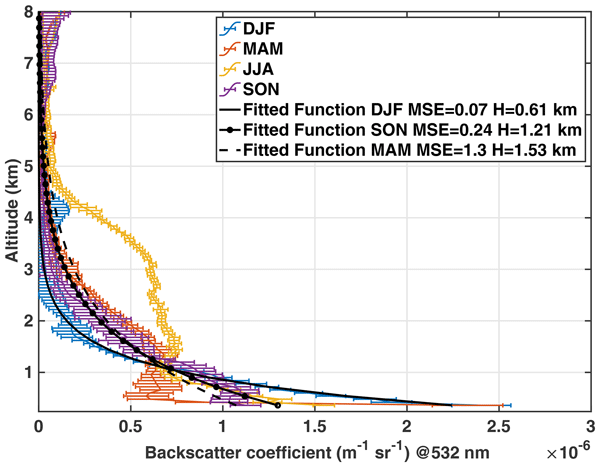
Simone Lolli, Michaël Sicard, Francesco Amato, Adolfo Comeron, Cristina Gíl-Diaz, Tony C. Landi, Constantino Munoz-Porcar, Daniel Oliveira, Federico Dios Otin, Francesc Rocadenbosch, Alejandro Rodriguez-Gomez, Andrés Alastuey, Xavier Querol, and Cristina Reche
Atmos. Chem. Phys., 23, 12887–12906, https://doi.org/10.5194/acp-23-12887-2023, https://doi.org/10.5194/acp-23-12887-2023, 2023
Short summary
Short summary
We evaluated the long-term trends and seasonal variability of the vertically resolved aerosol properties over the past 17 years in Barcelona. Results shows that air quality is improved, with a consistent drop in PM concentrations at the surface, as well as the column aerosol optical depth. The results also show that natural dust outbreaks are more likely in summer, with aerosols reaching an altitude of 5 km, while in winter, aerosols decay as an exponential with a scale height of 600 m.
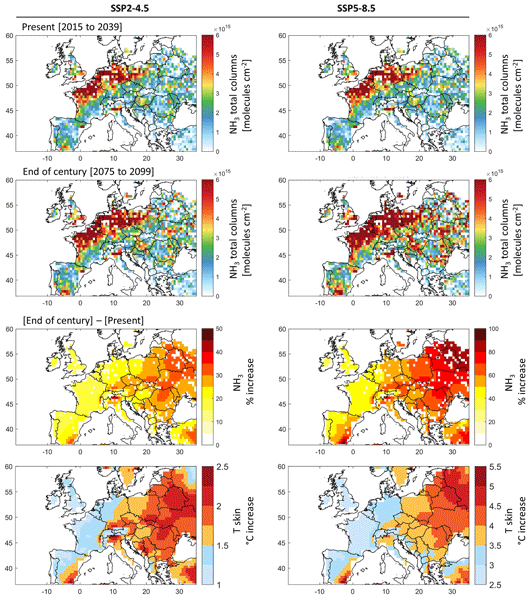
Rimal Abeed, Camille Viatte, William C. Porter, Nikolaos Evangeliou, Cathy Clerbaux, Lieven Clarisse, Martin Van Damme, Pierre-François Coheur, and Sarah Safieddine
Atmos. Chem. Phys., 23, 12505–12523, https://doi.org/10.5194/acp-23-12505-2023, https://doi.org/10.5194/acp-23-12505-2023, 2023
Short summary
Short summary
Ammonia emissions from agricultural activities will inevitably increase with the rise in population. We use a variety of datasets (satellite, reanalysis, and model simulation) to calculate the first regional map of ammonia emission potential during the start of the growing season in Europe. We then apply our developed method using a climate model to show the effect of the temperature increase on future ammonia columns under two possible climate scenarios.
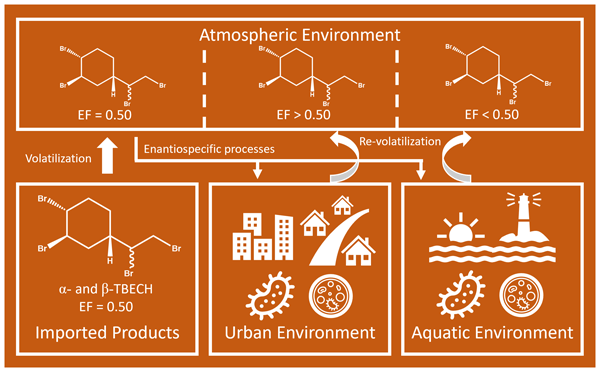
Jenny Oh, Chubashini Shunthirasingham, Ying Duan Lei, Faqiang Zhan, Yuening Li, Abigaëlle Dalpé Castilloux, Amina Ben Chaaben, Zhe Lu, Kelsey Lee, Frank A. P. C. Gobas, Sabine Eckhardt, Nick Alexandrou, Hayley Hung, and Frank Wania
Atmos. Chem. Phys., 23, 10191–10205, https://doi.org/10.5194/acp-23-10191-2023, https://doi.org/10.5194/acp-23-10191-2023, 2023
Short summary
Short summary
An emerging brominated flame retardant (BFR) called TBECH (1,2-dibromo-4-(1,2-dibromoethyl)cyclohexane) has never been produced or imported for use in Canada yet is found to be one of the most abundant gaseous BFRs in the Canadian atmosphere. The recorded spatial and temporal variability of TBECH suggest that the release from imported consumer products containing TBECH is the most likely explanation for its environmental occurrence in Canada.
Gabriela Dornelles Bittencourt, Damaris Kirsch Pinheiro, Hassan Bencherif, Lucas Vaz Peres, Nelson Begue, José Valentin Bageston, Douglas Lima de Bem, Vagner Anabor, and Luiz Angelo Steffenel
EGUsphere, https://doi.org/10.5194/egusphere-2023-1471, https://doi.org/10.5194/egusphere-2023-1471, 2023
Preprint archived
Short summary
Short summary
The study examines ozone depletions at mid-latitudes in Brazil during austral spring Antarctic Ozone Hole influence events. The methodology applied used data from the total column ozone, vertical profile of the atmosphere, and reanalysis data to analyze the atmospheric dynamics. The main motivation of this work is to show how this important trace gas dynamically behaves in the atmosphere in the active period of the Antarctic Ozone Hole in regions of medium latitudes.
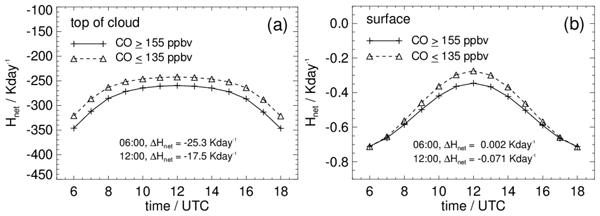
Valerian Hahn, Ralf Meerkötter, Christiane Voigt, Sonja Gisinger, Daniel Sauer, Valéry Catoire, Volker Dreiling, Hugh Coe, Cyrille Flamant, Stefan Kaufmann, Jonas Kleine, Peter Knippertz, Manuel Moser, Philip Rosenberg, Hans Schlager, Alfons Schwarzenboeck, and Jonathan Taylor
Atmos. Chem. Phys., 23, 8515–8530, https://doi.org/10.5194/acp-23-8515-2023, https://doi.org/10.5194/acp-23-8515-2023, 2023
Short summary
Short summary
During the DACCIWA campaign in West Africa, we found a 35 % increase in the cloud droplet concentration that formed in a polluted compared with a less polluted environment and a decrease of 17 % in effective droplet diameter. Radiative transfer simulations, based on the measured cloud properties, reveal that these low-level polluted clouds radiate only 2.6 % more energy back to space, compared with a less polluted cloud. The corresponding additional decrease in temperature is rather small.
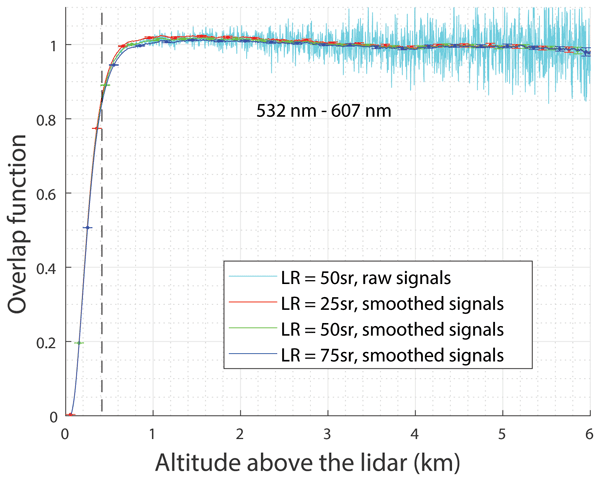
Adolfo Comerón, Constantino Muñoz-Porcar, Alejandro Rodríguez-Gómez, Michaël Sicard, Federico Dios, Cristina Gil-Díaz, Daniel Camilo Fortunato dos Santos Oliveira, and Francesc Rocadenbosch
Atmos. Meas. Tech., 16, 3015–3025, https://doi.org/10.5194/amt-16-3015-2023, https://doi.org/10.5194/amt-16-3015-2023, 2023
Short summary
Short summary
We derive an explicit (i.e., non-iterative) formula for the retrieval of the overlap function in an aerosol lidar with both elastic and Raman N2 and/or O2 channels used for independent measurements of aerosol backscatter and extinction coefficients. The formula requires only the measured, range-corrected elastic and the corresponding Raman signals, plus an assumed lidar ratio. We assess the influence of the lidar ratio error in the overlap function retrieval and present retrieval examples.
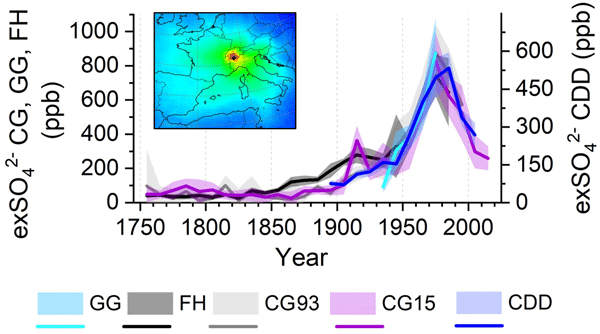
Anja Eichler, Michel Legrand, Theo M. Jenk, Susanne Preunkert, Camilla Andersson, Sabine Eckhardt, Magnuz Engardt, Andreas Plach, and Margit Schwikowski
The Cryosphere, 17, 2119–2137, https://doi.org/10.5194/tc-17-2119-2023, https://doi.org/10.5194/tc-17-2119-2023, 2023
Short summary
Short summary
We investigate how a 250-year history of the emission of air pollutants (major inorganic aerosol constituents, black carbon, and trace species) is preserved in ice cores from four sites in the European Alps. The observed uniform timing in species-dependent longer-term concentration changes reveals that the different ice-core records provide a consistent, spatially representative signal of the pollution history from western European countries.
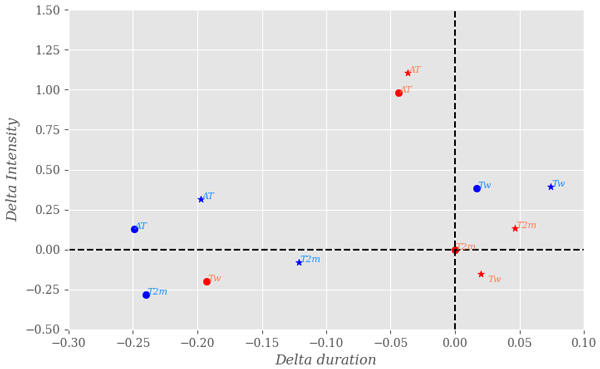
Cedric Gacial Ngoungue Langue, Christophe Lavaysse, Mathieu Vrac, and Cyrille Flamant
Nat. Hazards Earth Syst. Sci., 23, 1313–1333, https://doi.org/10.5194/nhess-23-1313-2023, https://doi.org/10.5194/nhess-23-1313-2023, 2023
Short summary
Short summary
Heat waves (HWs) are climatic hazards that affect the planet. We assess here uncertainties encountered in the process of HW detection and analyse their recent trends in West Africa using reanalysis data. Three types of uncertainty have been investigated. We identified 6 years with higher frequency of HWs, possibly due to higher sea surface temperatures in the equatorial Atlantic. We noticed an increase in HW characteristics during the last decade, which could be a consequence of climate change.
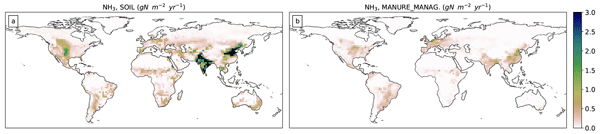
Maureen Beaudor, Nicolas Vuichard, Juliette Lathière, Nikolaos Evangeliou, Martin Van Damme, Lieven Clarisse, and Didier Hauglustaine
Geosci. Model Dev., 16, 1053–1081, https://doi.org/10.5194/gmd-16-1053-2023, https://doi.org/10.5194/gmd-16-1053-2023, 2023
Short summary
Short summary
Ammonia mainly comes from the agricultural sector, and its volatilization relies on environmental variables. Our approach aims at benefiting from an Earth system model framework to estimate it. By doing so, we represent a consistent spatial distribution of the emissions' response to environmental changes.
We greatly improved the seasonal cycle of emissions compared with previous work. In addition, our model includes natural soil emissions (that are rarely represented in modeling approaches).
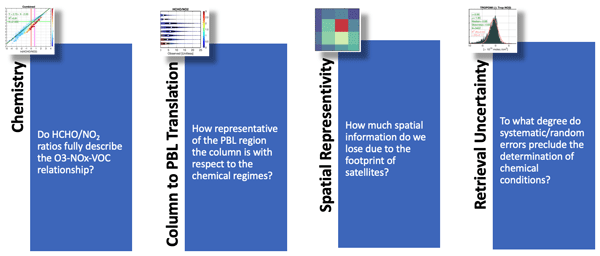
Amir H. Souri, Matthew S. Johnson, Glenn M. Wolfe, James H. Crawford, Alan Fried, Armin Wisthaler, William H. Brune, Donald R. Blake, Andrew J. Weinheimer, Tijl Verhoelst, Steven Compernolle, Gaia Pinardi, Corinne Vigouroux, Bavo Langerock, Sungyeon Choi, Lok Lamsal, Lei Zhu, Shuai Sun, Ronald C. Cohen, Kyung-Eun Min, Changmin Cho, Sajeev Philip, Xiong Liu, and Kelly Chance
Atmos. Chem. Phys., 23, 1963–1986, https://doi.org/10.5194/acp-23-1963-2023, https://doi.org/10.5194/acp-23-1963-2023, 2023
Short summary
Short summary
We have rigorously characterized different sources of error in satellite-based HCHO / NO2 tropospheric columns, a widely used metric for diagnosing near-surface ozone sensitivity. Specifically, the errors were categorized/quantified into (i) an inherent chemistry error, (ii) the decoupled relationship between columns and the near-surface concentration, (iii) the spatial representativeness error of ground satellite pixels, and (iv) the satellite retrieval errors.
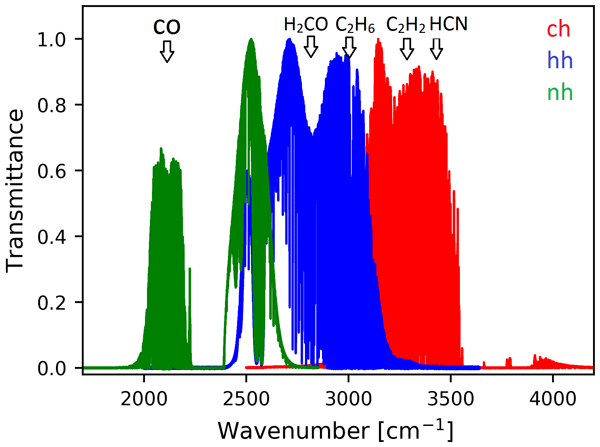
Minqiang Zhou, Bavo Langerock, Pucai Wang, Corinne Vigouroux, Qichen Ni, Christian Hermans, Bart Dils, Nicolas Kumps, Weidong Nan, and Martine De Mazière
Atmos. Meas. Tech., 16, 273–293, https://doi.org/10.5194/amt-16-273-2023, https://doi.org/10.5194/amt-16-273-2023, 2023
Short summary
Short summary
The ground-based FTIR measurements at Xianghe provide carbon monoxide (CO), acetylene (C2H2), ethane (C2H6), formaldehyde (H2CO), and hydrogen cyanide (HCN) total columns between June 2018 and November 2021. The retrieval strategies, information, and uncertainties of these five important trace gases are presented and discussed. This study provides insight into the time series, variations, and correlations of these five species in northern China.

María Ángeles López-Cayuela, Carmen Córdoba-Jabonero, Diego Bermejo-Pantaleón, Michaël Sicard, Vanda Salgueiro, Francisco Molero, Clara Violeta Carvajal-Pérez, María José Granados-Muñoz, Adolfo Comerón, Flavio T. Couto, Rubén Barragán, María-Paz Zorzano, Juan Antonio Bravo-Aranda, Constantino Muñoz-Porcar, María João Costa, Begoña Artíñano, Alejandro Rodríguez-Gómez, Daniele Bortoli, Manuel Pujadas, Jesús Abril-Gago, Lucas Alados-Arboledas, and Juan Luis Guerrero-Rascado
Atmos. Chem. Phys., 23, 143–161, https://doi.org/10.5194/acp-23-143-2023, https://doi.org/10.5194/acp-23-143-2023, 2023
Short summary
Short summary
An intense Saharan dust outbreak crossing the Iberian Peninsula in springtime was monitored to determinine the specific contribution of fine and coarse dust particles at five lidar stations, strategically covering its SW–central–NE pathway. Expected dust ageing along the transport started unappreciated. A different fine-dust impact on optical (~30 %) and mass (~10 %) properties was found. Use of polarized lidar measurements (mainly in elastic systems) for fine/coarse dust separation is crucial.
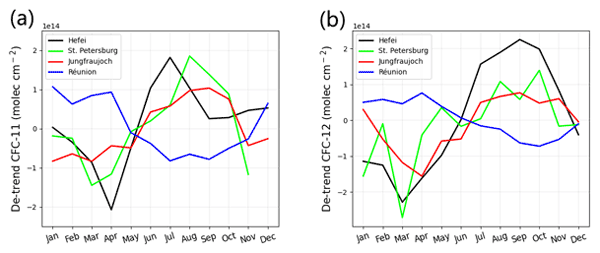
Xiangyu Zeng, Wei Wang, Cheng Liu, Changgong Shan, Yu Xie, Peng Wu, Qianqian Zhu, Minqiang Zhou, Martine De Mazière, Emmanuel Mahieu, Irene Pardo Cantos, Jamal Makkor, and Alexander Polyakov
Atmos. Meas. Tech., 15, 6739–6754, https://doi.org/10.5194/amt-15-6739-2022, https://doi.org/10.5194/amt-15-6739-2022, 2022
Short summary
Short summary
CFC-11 and CFC-12, which are classified as ozone-depleting substances, also have high global warming potentials. This paper describes obtaining the CFC-11 and CFC-12 total columns from the solar spectra based on ground-based Fourier transform infrared spectroscopy at Hefei, China. The seasonal variation and annual trend of the two gases are analyzed, and then the data are compared with other independent datasets.

Lauren M. Zamora, Ralph A. Kahn, Nikolaos Evangeliou, Christine D. Groot Zwaaftink, and Klaus B. Huebert
Atmos. Chem. Phys., 22, 12269–12285, https://doi.org/10.5194/acp-22-12269-2022, https://doi.org/10.5194/acp-22-12269-2022, 2022
Short summary
Short summary
Arctic dust, smoke, and pollution particles can affect clouds and Arctic warming. The distributions of these particles were estimated in three different satellite, reanalysis, and model products. These products showed good agreement overall but indicate that it is important to include local dust in models. We hypothesize that mineral dust effects on ice processes in the Arctic atmosphere might be highest over Siberia, where it is cold, moist, and subject to relatively high dust levels.
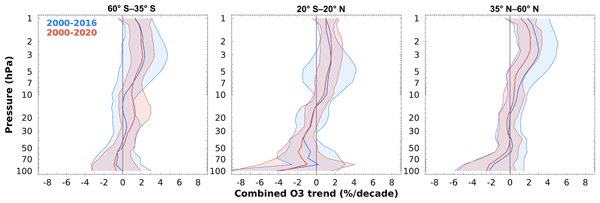
Sophie Godin-Beekmann, Niramson Azouz, Viktoria F. Sofieva, Daan Hubert, Irina Petropavlovskikh, Peter Effertz, Gérard Ancellet, Doug A. Degenstein, Daniel Zawada, Lucien Froidevaux, Stacey Frith, Jeannette Wild, Sean Davis, Wolfgang Steinbrecht, Thierry Leblanc, Richard Querel, Kleareti Tourpali, Robert Damadeo, Eliane Maillard Barras, René Stübi, Corinne Vigouroux, Carlo Arosio, Gerald Nedoluha, Ian Boyd, Roeland Van Malderen, Emmanuel Mahieu, Dan Smale, and Ralf Sussmann
Atmos. Chem. Phys., 22, 11657–11673, https://doi.org/10.5194/acp-22-11657-2022, https://doi.org/10.5194/acp-22-11657-2022, 2022
Short summary
Short summary
An updated evaluation up to 2020 of stratospheric ozone profile long-term trends at extrapolar latitudes based on satellite and ground-based records is presented. Ozone increase in the upper stratosphere is confirmed, with significant trends at most latitudes. In this altitude region, a very good agreement is found with trends derived from chemistry–climate model simulations. Observed and modelled trends diverge in the lower stratosphere, but the differences are non-significant.
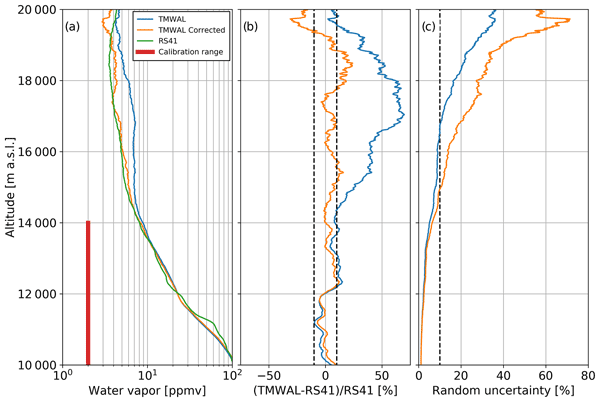
Fernando Chouza, Thierry Leblanc, Mark Brewer, Patrick Wang, Giovanni Martucci, Alexander Haefele, Hélène Vérèmes, Valentin Duflot, Guillaume Payen, and Philippe Keckhut
Atmos. Meas. Tech., 15, 4241–4256, https://doi.org/10.5194/amt-15-4241-2022, https://doi.org/10.5194/amt-15-4241-2022, 2022
Short summary
Short summary
The comparison of water vapor lidar measurements with co-located radiosondes and aerosol backscatter profiles indicates that laser-induced aerosol fluorescence in smoke layers injected into the stratosphere can introduce very large and chronic wet biases above 15 km, thus impacting the ability of these systems to accurately estimate long-term water vapor trends. The proposed correction method presented in this work is able to reduce this fluorescence-induced bias from 75 % to under 5 %.
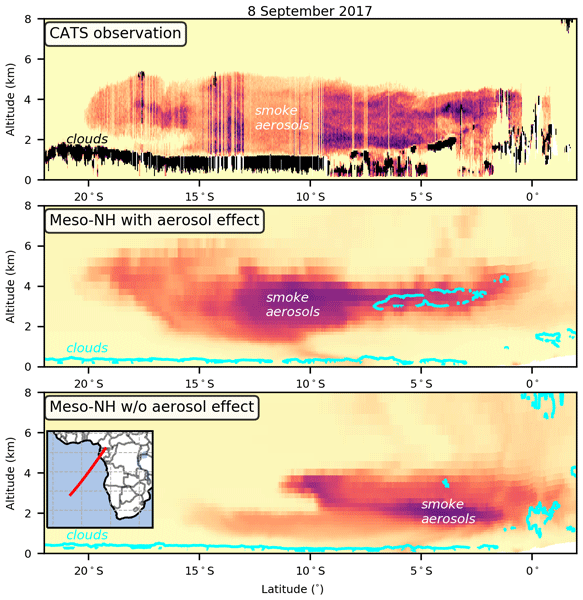
Jean-Pierre Chaboureau, Laurent Labbouz, Cyrille Flamant, and Alma Hodzic
Atmos. Chem. Phys., 22, 8639–8658, https://doi.org/10.5194/acp-22-8639-2022, https://doi.org/10.5194/acp-22-8639-2022, 2022
Short summary
Short summary
Ground-based, spaceborne and rare airborne observations of biomass burning aerosols (BBAs) during the AEROCLO-sA field campaign in 2017 are complemented with convection-permitting simulations with online trajectories. The results show that the radiative effect of the BBA accelerates the southern African easterly jet and generates upward motions that transport the BBAs to higher altitudes and farther southwest.
Minqiang Zhou, Bavo Langerock, Pucai Wang, Corinne Vigouroux, Qichen Ni, Christian Hermans, Bart Dils, Nicolas Kumps, Weidong Nan, and Martine De Mazière
Atmos. Chem. Phys. Discuss., https://doi.org/10.5194/acp-2022-354, https://doi.org/10.5194/acp-2022-354, 2022
Revised manuscript not accepted
Short summary
Short summary
The ground-based FTIR measurements at Xianghe provide carbon monoxide (CO), acetylene (C2H2), ethane (C2H6), formaldehyde (H2CO), and hydrogen cyanide (HCN) total columns between June 2018 and November 2021. The retrieval strategies, retrieval information, and uncertainties of these five important trace gases are presented and discussed. This study provides an insight into the time series, variations, and correlations of these five species in North China.
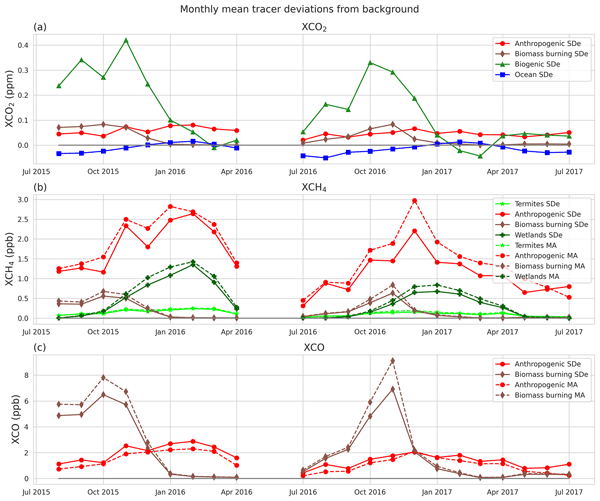
Sieglinde Callewaert, Jérôme Brioude, Bavo Langerock, Valentin Duflot, Dominique Fonteyn, Jean-François Müller, Jean-Marc Metzger, Christian Hermans, Nicolas Kumps, Michel Ramonet, Morgan Lopez, Emmanuel Mahieu, and Martine De Mazière
Atmos. Chem. Phys., 22, 7763–7792, https://doi.org/10.5194/acp-22-7763-2022, https://doi.org/10.5194/acp-22-7763-2022, 2022
Short summary
Short summary
A regional atmospheric transport model is used to analyze the factors contributing to CO2, CH4, and CO observations at Réunion Island. We show that the surface observations are dominated by local fluxes and dynamical processes, while the column data are influenced by larger-scale mechanisms such as biomass burning plumes. The model is able to capture the measured time series well; however, the results are highly dependent on accurate boundary conditions and high-resolution emission inventories.
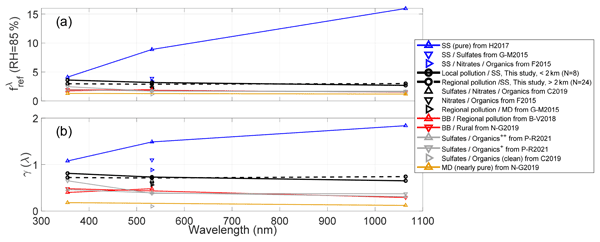
Michaël Sicard, Daniel Camilo Fortunato dos Santos Oliveira, Constantino Muñoz-Porcar, Cristina Gil-Díaz, Adolfo Comerón, Alejandro Rodríguez-Gómez, and Federico Dios Otín
Atmos. Chem. Phys., 22, 7681–7697, https://doi.org/10.5194/acp-22-7681-2022, https://doi.org/10.5194/acp-22-7681-2022, 2022
Short summary
Short summary
Atmospheric particles can absorb water vapor, and this water uptake may change their properties, e.g., their size. In the coastal region of Barcelona, Spain, we observe that (1) smaller particles absorb more water vapor, in relative terms, than larger particles and (2) the particle capacity to absorb water vapor has no annual tendency, probably because the site background is quite constant (urban + marine aerosol regime).

Olga B. Popovicheva, Nikolaos Evangeliou, Vasilii O. Kobelev, Marina A. Chichaeva, Konstantinos Eleftheriadis, Asta Gregorič, and Nikolay S. Kasimov
Atmos. Chem. Phys., 22, 5983–6000, https://doi.org/10.5194/acp-22-5983-2022, https://doi.org/10.5194/acp-22-5983-2022, 2022
Short summary
Short summary
Measurements of black carbon (BC) combined with atmospheric transport modeling reveal that gas flaring from oil and gas extraction in Kazakhstan, Volga-Ural, Komi, Nenets and western Siberia contributes the largest share of surface BC in the Russian Arctic dominating over domestic, industrial and traffic sectors. Pollution episodes show an increasing trend in concentration levels and frequency as the station is in the Siberian gateway of the highest anthropogenic pollution to the Russian Arctic.
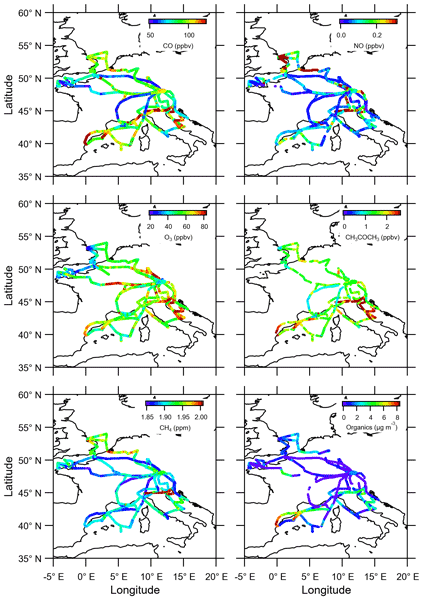
M. Dolores Andrés Hernández, Andreas Hilboll, Helmut Ziereis, Eric Förster, Ovid O. Krüger, Katharina Kaiser, Johannes Schneider, Francesca Barnaba, Mihalis Vrekoussis, Jörg Schmidt, Heidi Huntrieser, Anne-Marlene Blechschmidt, Midhun George, Vladyslav Nenakhov, Theresa Harlass, Bruna A. Holanda, Jennifer Wolf, Lisa Eirenschmalz, Marc Krebsbach, Mira L. Pöhlker, Anna B. Kalisz Hedegaard, Linlu Mei, Klaus Pfeilsticker, Yangzhuoran Liu, Ralf Koppmann, Hans Schlager, Birger Bohn, Ulrich Schumann, Andreas Richter, Benjamin Schreiner, Daniel Sauer, Robert Baumann, Mariano Mertens, Patrick Jöckel, Markus Kilian, Greta Stratmann, Christopher Pöhlker, Monica Campanelli, Marco Pandolfi, Michael Sicard, José L. Gómez-Amo, Manuel Pujadas, Katja Bigge, Flora Kluge, Anja Schwarz, Nikos Daskalakis, David Walter, Andreas Zahn, Ulrich Pöschl, Harald Bönisch, Stephan Borrmann, Ulrich Platt, and John P. Burrows
Atmos. Chem. Phys., 22, 5877–5924, https://doi.org/10.5194/acp-22-5877-2022, https://doi.org/10.5194/acp-22-5877-2022, 2022
Short summary
Short summary
EMeRGe provides a unique set of in situ and remote sensing airborne measurements of trace gases and aerosol particles along selected flight routes in the lower troposphere over Europe. The interpretation uses also complementary collocated ground-based and satellite measurements. The collected data help to improve the current understanding of the complex spatial distribution of trace gases and aerosol particles resulting from mixing, transport, and transformation of pollution plumes over Europe.
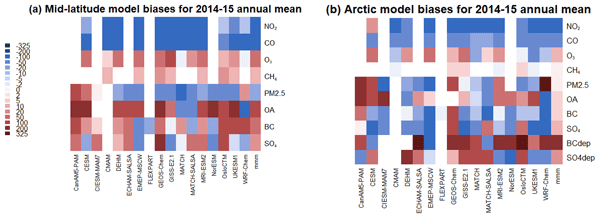
Cynthia H. Whaley, Rashed Mahmood, Knut von Salzen, Barbara Winter, Sabine Eckhardt, Stephen Arnold, Stephen Beagley, Silvia Becagli, Rong-You Chien, Jesper Christensen, Sujay Manish Damani, Xinyi Dong, Konstantinos Eleftheriadis, Nikolaos Evangeliou, Gregory Faluvegi, Mark Flanner, Joshua S. Fu, Michael Gauss, Fabio Giardi, Wanmin Gong, Jens Liengaard Hjorth, Lin Huang, Ulas Im, Yugo Kanaya, Srinath Krishnan, Zbigniew Klimont, Thomas Kühn, Joakim Langner, Kathy S. Law, Louis Marelle, Andreas Massling, Dirk Olivié, Tatsuo Onishi, Naga Oshima, Yiran Peng, David A. Plummer, Olga Popovicheva, Luca Pozzoli, Jean-Christophe Raut, Maria Sand, Laura N. Saunders, Julia Schmale, Sangeeta Sharma, Ragnhild Bieltvedt Skeie, Henrik Skov, Fumikazu Taketani, Manu A. Thomas, Rita Traversi, Kostas Tsigaridis, Svetlana Tsyro, Steven Turnock, Vito Vitale, Kaley A. Walker, Minqi Wang, Duncan Watson-Parris, and Tahya Weiss-Gibbons
Atmos. Chem. Phys., 22, 5775–5828, https://doi.org/10.5194/acp-22-5775-2022, https://doi.org/10.5194/acp-22-5775-2022, 2022
Short summary
Short summary
Air pollutants, like ozone and soot, play a role in both global warming and air quality. Atmospheric models are often used to provide information to policy makers about current and future conditions under different emissions scenarios. In order to have confidence in those simulations, in this study we compare simulated air pollution from 18 state-of-the-art atmospheric models to measured air pollution in order to assess how well the models perform.
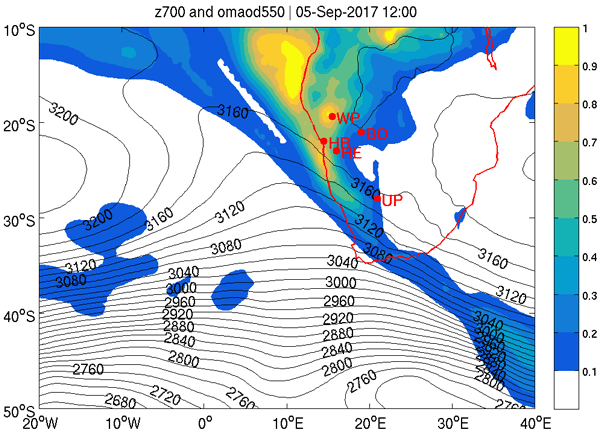
Cyrille Flamant, Marco Gaetani, Jean-Pierre Chaboureau, Patrick Chazette, Juan Cuesta, Stuart John Piketh, and Paola Formenti
Atmos. Chem. Phys., 22, 5701–5724, https://doi.org/10.5194/acp-22-5701-2022, https://doi.org/10.5194/acp-22-5701-2022, 2022
Short summary
Short summary
Rivers of smoke extend from tropical southern Africa towards the Indian Ocean during the winter fire season, controlled by the interaction of tropical easterly waves, and westerly waves at mid latitudes. During the AEROCLO-sA field campaign in 2017, a river of smoke was directly observed over Namibia. In this paper, the evolution and atmospheric drivers of the river of smoke are described, and the role of a mid-latitude cut-off low in lifting the smoke to the upper troposphere is highlighted.
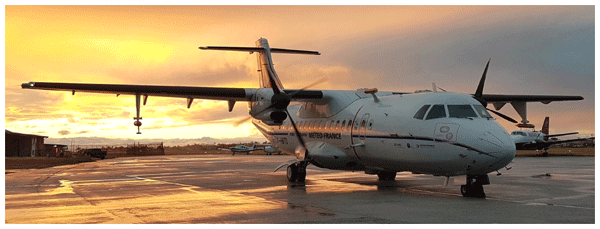
Sandrine Bony, Marie Lothon, Julien Delanoë, Pierre Coutris, Jean-Claude Etienne, Franziska Aemisegger, Anna Lea Albright, Thierry André, Hubert Bellec, Alexandre Baron, Jean-François Bourdinot, Pierre-Etienne Brilouet, Aurélien Bourdon, Jean-Christophe Canonici, Christophe Caudoux, Patrick Chazette, Michel Cluzeau, Céline Cornet, Jean-Philippe Desbios, Dominique Duchanoy, Cyrille Flamant, Benjamin Fildier, Christophe Gourbeyre, Laurent Guiraud, Tetyana Jiang, Claude Lainard, Christophe Le Gac, Christian Lendroit, Julien Lernould, Thierry Perrin, Frédéric Pouvesle, Pascal Richard, Nicolas Rochetin, Kevin Salaün, Alfons Schwarzenboeck, Guillaume Seurat, Bjorn Stevens, Julien Totems, Ludovic Touzé-Peiffer, Gilles Vergez, Jessica Vial, Leonie Villiger, and Raphaela Vogel
Earth Syst. Sci. Data, 14, 2021–2064, https://doi.org/10.5194/essd-14-2021-2022, https://doi.org/10.5194/essd-14-2021-2022, 2022
Short summary
Short summary
The French ATR42 research aircraft participated in the EUREC4A international field campaign that took place in 2020 over the tropical Atlantic, east of Barbados. We present the extensive instrumentation of the aircraft, the research flights and the different measurements. We show that the ATR measurements of humidity, wind, aerosols and cloudiness in the lower atmosphere are robust and consistent with each other. They will make it possible to advance understanding of cloud–climate interactions.

Christine D. Groot Zwaaftink, Wenche Aas, Sabine Eckhardt, Nikolaos Evangeliou, Paul Hamer, Mona Johnsrud, Arve Kylling, Stephen M. Platt, Kerstin Stebel, Hilde Uggerud, and Karl Espen Yttri
Atmos. Chem. Phys., 22, 3789–3810, https://doi.org/10.5194/acp-22-3789-2022, https://doi.org/10.5194/acp-22-3789-2022, 2022
Short summary
Short summary
We investigate causes of a poor-air-quality episode in northern Europe in October 2020 during which EU health limits for air quality were vastly exceeded. Such episodes may trigger measures to improve air quality. Analysis based on satellite observations, transport simulations, and surface observations revealed two sources of pollution. Emissions of mineral dust in Central Asia and biomass burning in Ukraine arrived almost simultaneously in Norway, and transport continued into the Arctic.
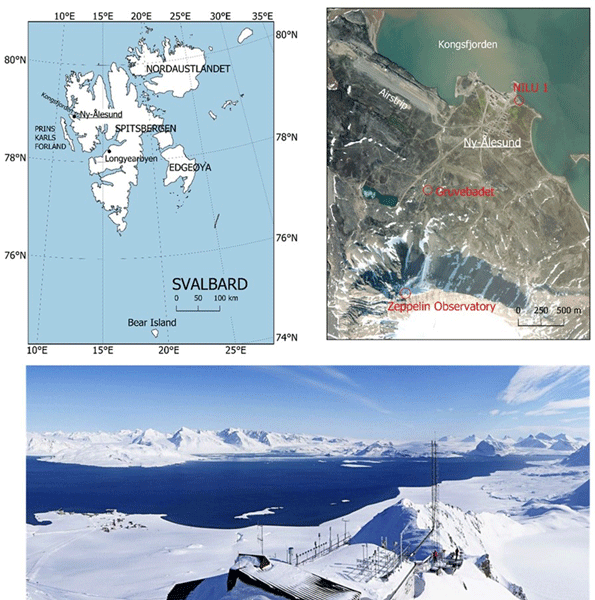
Stephen M. Platt, Øystein Hov, Torunn Berg, Knut Breivik, Sabine Eckhardt, Konstantinos Eleftheriadis, Nikolaos Evangeliou, Markus Fiebig, Rebecca Fisher, Georg Hansen, Hans-Christen Hansson, Jost Heintzenberg, Ove Hermansen, Dominic Heslin-Rees, Kim Holmén, Stephen Hudson, Roland Kallenborn, Radovan Krejci, Terje Krognes, Steinar Larssen, David Lowry, Cathrine Lund Myhre, Chris Lunder, Euan Nisbet, Pernilla B. Nizzetto, Ki-Tae Park, Christina A. Pedersen, Katrine Aspmo Pfaffhuber, Thomas Röckmann, Norbert Schmidbauer, Sverre Solberg, Andreas Stohl, Johan Ström, Tove Svendby, Peter Tunved, Kjersti Tørnkvist, Carina van der Veen, Stergios Vratolis, Young Jun Yoon, Karl Espen Yttri, Paul Zieger, Wenche Aas, and Kjetil Tørseth
Atmos. Chem. Phys., 22, 3321–3369, https://doi.org/10.5194/acp-22-3321-2022, https://doi.org/10.5194/acp-22-3321-2022, 2022
Short summary
Short summary
Here we detail the history of the Zeppelin Observatory, a unique global background site and one of only a few in the high Arctic. We present long-term time series of up to 30 years of atmospheric components and atmospheric transport phenomena. Many of these time series are important to our understanding of Arctic and global atmospheric composition change. Finally, we discuss the future of the Zeppelin Observatory and emerging areas of future research on the Arctic atmosphere.
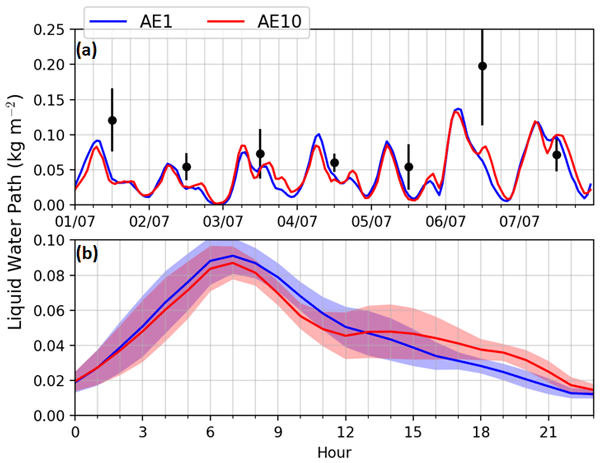
Adrien Deroubaix, Laurent Menut, Cyrille Flamant, Peter Knippertz, Andreas H. Fink, Anneke Batenburg, Joel Brito, Cyrielle Denjean, Cheikh Dione, Régis Dupuy, Valerian Hahn, Norbert Kalthoff, Fabienne Lohou, Alfons Schwarzenboeck, Guillaume Siour, Paolo Tuccella, and Christiane Voigt
Atmos. Chem. Phys., 22, 3251–3273, https://doi.org/10.5194/acp-22-3251-2022, https://doi.org/10.5194/acp-22-3251-2022, 2022
Short summary
Short summary
During the summer monsoon in West Africa, pollutants emitted in urbanized areas modify cloud cover and precipitation patterns. We analyze these patterns with the WRF-CHIMERE model, integrating the effects of aerosols on meteorology, based on the numerous observations provided by the Dynamics-Aerosol-Climate-Interactions campaign. This study adds evidence to recent findings that increased pollution levels in West Africa delay the breakup time of low-level clouds and reduce precipitation.
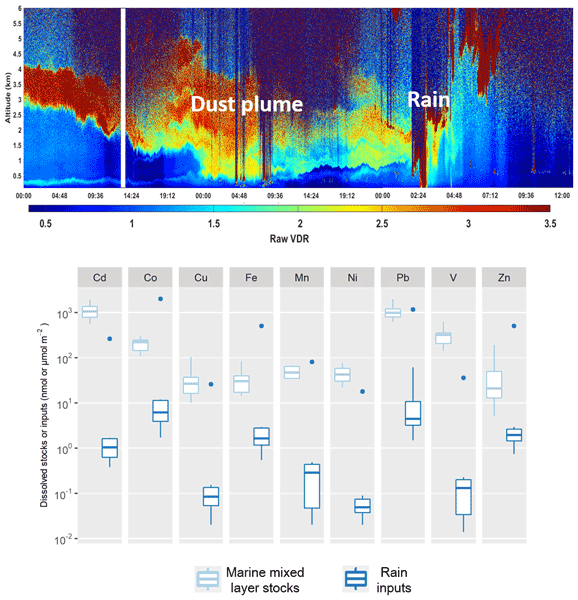
Karine Desboeufs, Franck Fu, Matthieu Bressac, Antonio Tovar-Sánchez, Sylvain Triquet, Jean-François Doussin, Chiara Giorio, Patrick Chazette, Julie Disnaquet, Anaïs Feron, Paola Formenti, Franck Maisonneuve, Araceli Rodríguez-Romero, Pascal Zapf, François Dulac, and Cécile Guieu
Atmos. Chem. Phys., 22, 2309–2332, https://doi.org/10.5194/acp-22-2309-2022, https://doi.org/10.5194/acp-22-2309-2022, 2022
Short summary
Short summary
This article reports the first concurrent sampling of wet deposition samples and surface seawater and was performed during the PEACETIME cruise in the remote Mediterranean (May–June 2017). Through the chemical composition of trace metals (TMs) in these samples, it emphasizes the decrease of atmospheric metal pollution in this area during the last few decades and the critical role of wet deposition as source of TMs for Mediterranean surface seawater, especially for intense dust deposition events.
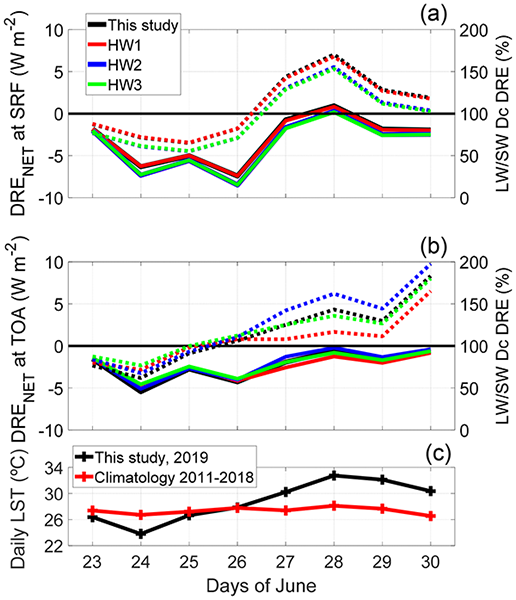
Michaël Sicard, Carmen Córdoba-Jabonero, María-Ángeles López-Cayuela, Albert Ansmann, Adolfo Comerón, María-Paz Zorzano, Alejandro Rodríguez-Gómez, and Constantino Muñoz-Porcar
Atmos. Chem. Phys., 22, 1921–1937, https://doi.org/10.5194/acp-22-1921-2022, https://doi.org/10.5194/acp-22-1921-2022, 2022
Short summary
Short summary
This paper completes the companion paper of Córdoba-Jabonero et al. (2021). We estimate the total direct radiative effect produced by mineral dust particles during the June 2019 mega-heatwave at two sites in Spain and Germany. The results show that the dust particles in the atmosphere contribute to cooling the surface (less radiation reaches the surface) and that the heatwave (parametrized by high surface and air temperatures) contributes to reducing this cooling.
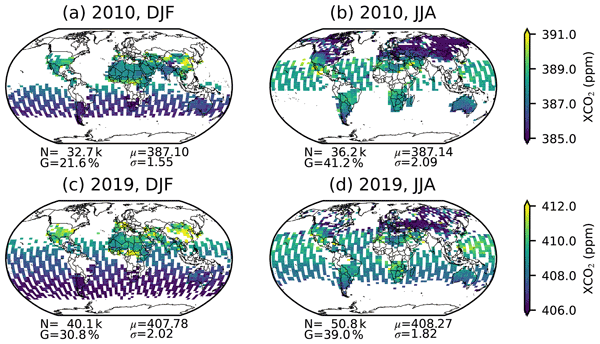
Thomas E. Taylor, Christopher W. O'Dell, David Crisp, Akhiko Kuze, Hannakaisa Lindqvist, Paul O. Wennberg, Abhishek Chatterjee, Michael Gunson, Annmarie Eldering, Brendan Fisher, Matthäus Kiel, Robert R. Nelson, Aronne Merrelli, Greg Osterman, Frédéric Chevallier, Paul I. Palmer, Liang Feng, Nicholas M. Deutscher, Manvendra K. Dubey, Dietrich G. Feist, Omaira E. García, David W. T. Griffith, Frank Hase, Laura T. Iraci, Rigel Kivi, Cheng Liu, Martine De Mazière, Isamu Morino, Justus Notholt, Young-Suk Oh, Hirofumi Ohyama, David F. Pollard, Markus Rettinger, Matthias Schneider, Coleen M. Roehl, Mahesh Kumar Sha, Kei Shiomi, Kimberly Strong, Ralf Sussmann, Yao Té, Voltaire A. Velazco, Mihalis Vrekoussis, Thorsten Warneke, and Debra Wunch
Earth Syst. Sci. Data, 14, 325–360, https://doi.org/10.5194/essd-14-325-2022, https://doi.org/10.5194/essd-14-325-2022, 2022
Short summary
Short summary
We provide an analysis of an 11-year record of atmospheric carbon dioxide (CO2) concentrations derived using an optimal estimation retrieval algorithm on measurements made by the GOSAT satellite. The new product (version 9) shows improvement over the previous version (v7.3) as evaluated against independent estimates of CO2 from ground-based sensors and atmospheric inversion systems. We also compare the new GOSAT CO2 values to collocated estimates from NASA's Orbiting Carbon Observatory-2.
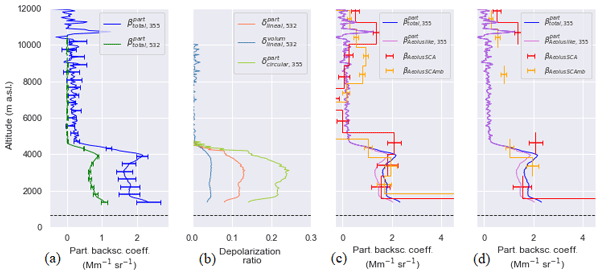
Jesús Abril-Gago, Juan Luis Guerrero-Rascado, Maria João Costa, Juan Antonio Bravo-Aranda, Michaël Sicard, Diego Bermejo-Pantaleón, Daniele Bortoli, María José Granados-Muñoz, Alejandro Rodríguez-Gómez, Constantino Muñoz-Porcar, Adolfo Comerón, Pablo Ortiz-Amezcua, Vanda Salgueiro, Marta María Jiménez-Martín, and Lucas Alados-Arboledas
Atmos. Chem. Phys., 22, 1425–1451, https://doi.org/10.5194/acp-22-1425-2022, https://doi.org/10.5194/acp-22-1425-2022, 2022
Short summary
Short summary
A validation of Aeolus reprocessed optical products is carried out via an intercomparison with ground-based measurements taken at several ACTRIS/EARLINET stations in western Europe. Case studies and a statistical analysis are presented. The stations are located in a hot spot between Africa and the rest of Europe, which guarantees a variety of aerosol types, from mineral dust layers to continental/anthropogenic aerosol, and allows us to test Aeolus performance under different scenarios.
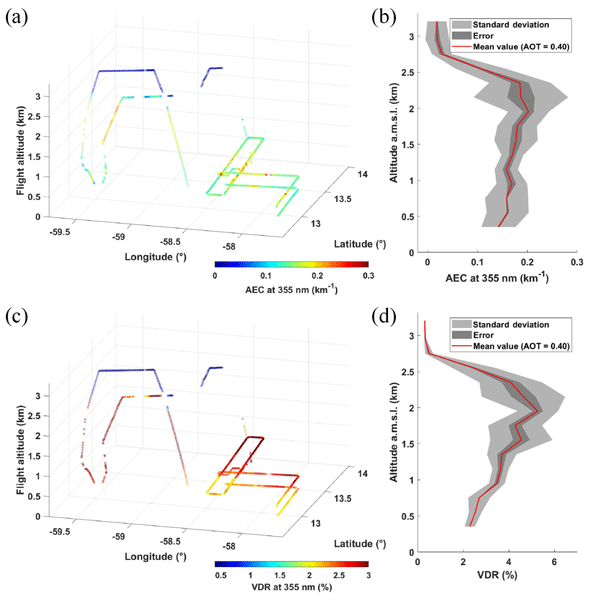
Patrick Chazette, Alexandre Baron, and Cyrille Flamant
Atmos. Chem. Phys., 22, 1271–1292, https://doi.org/10.5194/acp-22-1271-2022, https://doi.org/10.5194/acp-22-1271-2022, 2022
Short summary
Short summary
Within the framework of the international EUREC4A project, horizontal lidar measurements were carried out over Barbados from the French research aircraft ATR-42. These measurements highlighted the strong heterogeneity of the aerosol field (mainly dust and biomass burning aerosols) and therefore of the associated optical properties. This heterogeneity varies according to meteorological conditions and could significantly modulate the climatic impact of aerosols trapped over the tropical Atlantic.
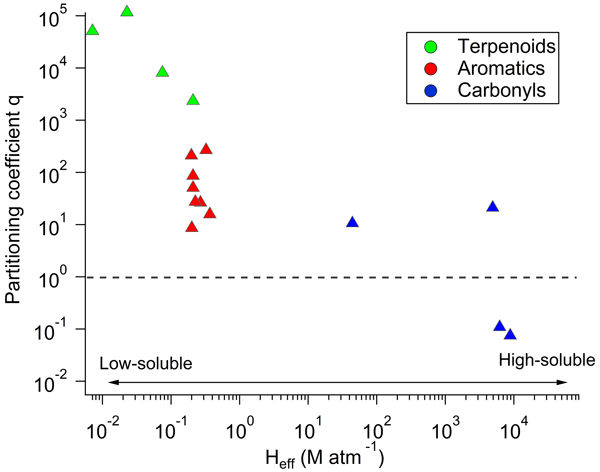
Pamela A. Dominutti, Pascal Renard, Mickaël Vaïtilingom, Angelica Bianco, Jean-Luc Baray, Agnès Borbon, Thierry Bourianne, Frédéric Burnet, Aurélie Colomb, Anne-Marie Delort, Valentin Duflot, Stephan Houdier, Jean-Luc Jaffrezo, Muriel Joly, Martin Leremboure, Jean-Marc Metzger, Jean-Marc Pichon, Mickaël Ribeiro, Manon Rocco, Pierre Tulet, Anthony Vella, Maud Leriche, and Laurent Deguillaume
Atmos. Chem. Phys., 22, 505–533, https://doi.org/10.5194/acp-22-505-2022, https://doi.org/10.5194/acp-22-505-2022, 2022
Short summary
Short summary
We present here the results obtained during an intensive field campaign conducted in March to April 2019 in Reunion. Our study integrates a comprehensive chemical and microphysical characterization of cloud water. Our investigations reveal that air mass history and cloud microphysical properties do not fully explain the variability observed in their chemical composition. This highlights the complexity of emission sources, multiphasic exchanges, and transformations in clouds.
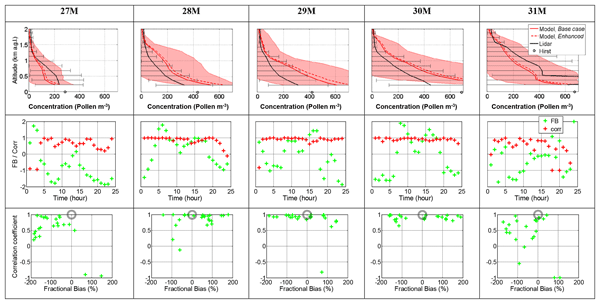
Michaël Sicard, Oriol Jorba, Jiang Ji Ho, Rebeca Izquierdo, Concepción De Linares, Marta Alarcón, Adolfo Comerón, and Jordina Belmonte
Atmos. Chem. Phys., 21, 17807–17832, https://doi.org/10.5194/acp-21-17807-2021, https://doi.org/10.5194/acp-21-17807-2021, 2021
Short summary
Short summary
This paper investigates the mechanisms involved in the dispersion, structure, and mixing in the vertical column of atmospheric pollen, using observations of pollen concentration obtained at the ground and its stratification in the atmosphere measured by a lidar (laser radar), as well as an atmospheric transport model and a simplified pollen module developed especially for this study. The largest pollen concentration difference between the ground and the layers above is observed during nighttime.
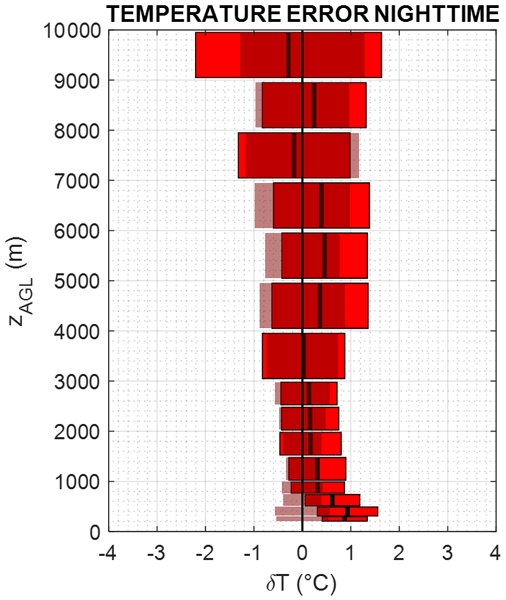
Julien Totems, Patrick Chazette, and Alexandre Baron
Atmos. Meas. Tech., 14, 7525–7544, https://doi.org/10.5194/amt-14-7525-2021, https://doi.org/10.5194/amt-14-7525-2021, 2021
Short summary
Short summary
We describe in detail the design and calibration of the new Raman channels for the WALI system, going over the important sources of bias and uncertainty on retrieved temperature profiles. For the first time, their impact is investigated using horizontal shots in a homogenous atmosphere: the magnitude of the highlighted biases can be much larger than the targeted absolute accuracy of 1° C. Actual measurement errors are quantified using radiosoundings launched close to the lidar site.
Cited articles
Abel, S. J., Haywood, J. M., Highwood, E. J., Li, J., and Buseck, P. R.: Evolution of biomass burning aerosol properties from an agricultural fire in southern Africa, Geophys. Res. Lett., 30, 2003GL017342, https://doi.org/10.1029/2003GL017342, 2003.
Annegarn, H. J., Otter, L., Swap, R. J., and Scholes, R. J.: Southern Africa's ecosystem in a test-tube: A perspective on the Southern African Regional Science Initiative (SAFARI 2000), S. Afr. J. Sci., 98, 111–113, 2002.
Ansmann, A., Wandinger, U., Riebesell, M., Weitkamp, C., and Michaelis, W.: Independent measurement of extinction and backscatter profiles in cirrus clouds by using a combined Raman elastic-backscatter lidar, Appl. Opt., 31, 7113, https://doi.org/10.1364/AO.31.007113, 1992.
Baray, J.-L., Courcoux, Y., Keckhut, P., Portafaix, T., Tulet, P., Cammas, J.-P., Hauchecorne, A., Godin Beekmann, S., De Mazière, M., Hermans, C., Desmet, F., Sellegri, K., Colomb, A., Ramonet, M., Sciare, J., Vuillemin, C., Hoareau, C., Dionisi, D., Duflot, V., Vérèmes, H., Porteneuve, J., Gabarrot, F., Gaudo, T., Metzger, J.-M., Payen, G., Leclair de Bellevue, J., Barthe, C., Posny, F., Ricaud, P., Abchiche, A., and Delmas, R.: Maïdo observatory: a new high-altitude station facility at Reunion Island (21° S, 55° E) for long-term atmospheric remote sensing and in situ measurements, Atmos. Meas. Tech., 6, 2865–2877, https://doi.org/10.5194/amt-6-2865-2013, 2013.
Benedetti, A., Morcrette, J.-J., Boucher, O., Dethof, A., Engelen, R. J., Fisher, M., Flentje, H., Huneeus, N., Jones, L., Kaiser, J. W., Kinne, S., Mangold, A., Razinger, M., Simmons, A. J., and Suttie, M.: Aerosol analysis and forecast in the European Centre for Medium-Range Weather Forecasts Integrated Forecast System: 2. Data assimilation, J. Geophys. Res.-Atmos., 114, https://doi.org/10.1029/2008JD011115, 2009.
Chazette, P.: Raman lidar-derived aerosol optical properties and classification during the FENNEC experiment – coherence with CAMS data, Atmos. Meas. Tech., 19, 4293–4311, https://doi.org/10.5194/amt-19-4293-2026, 2026.
Chazette, P., Flamant, C., Totems, J., Gaetani, M., Smith, G., Baron, A., Landsheere, X., Desboeufs, K., Doussin, J.-F., and Formenti, P.: Evidence of the complexity of aerosol transport in the lower troposphere on the Namibian coast during AEROCLO-sA, Atmos. Chem. Phys., 19, 14979–15005, https://doi.org/10.5194/acp-19-14979-2019, 2019.
Chu, D. A., Kaufman, Y. J., Ichoku, C., Remer, L. A., Tanré, D., and Holben, B. N.: Validation of MODIS aerosol optical depth retrieval over land, Geophys. Res. Lett., 29, https://doi.org/10.1029/2001GL013205, 2002.
Copernicus Atmosphere Monitoring Service: CAMS global reanalysis (EAC4), Copernicus Atmosphere Monitoring Service (CAMS) Atmosphere Data Store [data set], https://doi.org/10.24381/D58BBF47, 2020.
Das, S., Colarco, P. R., Bian, H., and Gassó, S.: Improved simulations of biomass burning aerosol optical properties and lifetimes in the NASA GEOS Model during the ORACLES-I campaign, Atmos. Chem. Phys., 24, 4421–4449, https://doi.org/10.5194/acp-24-4421-2024, 2024.
Duflot, V., Dils, B., Baray, J. L., De Mazière, M., Attié, J. L., Vanhaelewyn, G., Senten, C., Vigouroux, C., Clain, G., and Delmas, R.: Analysis of the origin of the distribution of CO in the subtropical southern Indian Ocean in 2007, J. Geophys. Res., 115, D22106, https://doi.org/10.1029/2010JD013994, 2010.
Duflot, V., Bègue, N., Pouliquen, M.-L., Goloub, P., and Metzger, J.-M.: Aerosols on the Tropical Island of La Réunion (21° S, 55° E): Assessment of Climatology, Origin of Variability and Trend, Remote Sensing, 14, 4945, https://doi.org/10.3390/rs14194945, 2022.
Edwards, D. P., Emmons, L. K., Gille, J. C., Chu, A., Attié, J.-L., Giglio, L., Wood, S. W., Haywood, J., Deeter, M. N., Massie, S. T., Ziskin, D. C., and Drummond, J. R.: Satellite-observed pollution from Southern Hemisphere biomass burning, J. Geophys. Res., 111, D14312, https://doi.org/10.1029/2005JD006655, 2006.
Fiebig, M., Stohl, A., Wendisch, M., Eckhardt, S., and Petzold, A.: Dependence of solar radiative forcing of forest fire aerosol on ageing and state of mixture, Atmos. Chem. Phys., 3, 881–891, https://doi.org/10.5194/acp-3-881-2003, 2003.
Flamant, C., Gaetani, M., Chaboureau, J.-P., Chazette, P., Cuesta, J., Piketh, S. J., and Formenti, P.: Smoke in the river: an Aerosols, Radiation and Clouds in southern Africa (AEROCLO-sA) case study, Atmos. Chem. Phys., 22, 5701–5724, https://doi.org/10.5194/acp-22-5701-2022, 2022.
Floutsi, A. A., Baars, H., Engelmann, R., Althausen, D., Ansmann, A., Bohlmann, S., Heese, B., Hofer, J., Kanitz, T., Haarig, M., Ohneiser, K., Radenz, M., Seifert, P., Skupin, A., Yin, Z., Abdullaev, S. F., Komppula, M., Filioglou, M., Giannakaki, E., Stachlewska, I. S., Janicka, L., Bortoli, D., Marinou, E., Amiridis, V., Gialitaki, A., Mamouri, R.-E., Barja, B., and Wandinger, U.: DeLiAn – a growing collection of depolarization ratio, lidar ratio and Ångström exponent for different aerosol types and mixtures from ground-based lidar observations, Atmos. Meas. Tech., 16, 2353–2379, https://doi.org/10.5194/amt-16-2353-2023, 2023.
Formenti, P., D'Anna, B., Flamant, C., Mallet, M., Piketh, S. J., Schepanski, K., Waquet, F., Auriol, F., Brogniez, G., Burnet, F., Chaboureau, J.-P., Chauvigné, A., Chazette, P., Denjean, C., Desboeufs, K., Doussin, J.-F., Elguindi, N., Feuerstein, S., Gaetani, M., Giorio, C., Klopper, D., Mallet, M. D., Nabat, P., Monod, A., Solmon, F., Namwoonde, A., Chikwililwa, C., Mushi, R., Welton, E. J., and Holben, B.: The Aerosols, Radiation and Clouds in Southern Africa Field Campaign in Namibia: Overview, Illustrative Observations, and Way Forward, B. Am. Meteorol. Soc., 100, 1277–1298, https://doi.org/10.1175/BAMS-D-17-0278.1, 2019.
Forster, C., Stohl, A., and Seibert, P.: Parameterization of Convective Transport in a Lagrangian Particle Dispersion Model and Its Evaluation, J. Appl. Meteorol. Clim., 46, 403–422, https://doi.org/10.1175/JAM2470.1, 2007.
Gantois, D.: Entwined long-range transports of biomass burning aerosols over the South-West Indian Ocean: a case study of aerosol river in September 2017, TIB [video], https://doi.org/10.5446/73218, 2026., 2026.
Gantois, D., Payen, G., Sicard, M., Duflot, V., Bègue, N., Marquestaut, N., Portafaix, T., Godin Beekmann, S., Hernandez, P., and Golubic, E.: Multiwavelength aerosol lidars at Maïdo Observatory, GEOSUR [data set], https://doi.org/10.26171/rwcm-q370, 2024a.
Gantois, D., Payen, G., Sicard, M., Duflot, V., Bègue, N., Marquestaut, N., Portafaix, T., Godin-Beekmann, S., Hernandez, P., and Golubic, E.: Multiwavelength aerosol lidars at the Maïdo supersite, Réunion Island, France: instrument description, data processing chain, and quality assessment, Earth Syst. Sci. Data, 16, 4137–4159, https://doi.org/10.5194/essd-16-4137-2024, 2024b.
Garstang, M., Tyson, P. D., Swap, R., Edwards, M., Kållberg, P., and Lindesay, J. A.: Horizontal and vertical transport of air over southern Africa, J. Geophys. Res., 101, 23721–23736, https://doi.org/10.1029/95JD00844, 1996.
Giles, D. M., Sinyuk, A., Sorokin, M. G., Schafer, J. S., Smirnov, A., Slutsker, I., Eck, T. F., Holben, B. N., Lewis, J. R., Campbell, J. R., Welton, E. J., Korkin, S. V., and Lyapustin, A. I.: Advancements in the Aerosol Robotic Network (AERONET) Version 3 database – automated near-real-time quality control algorithm with improved cloud screening for Sun photometer aerosol optical depth (AOD) measurements, Atmos. Meas. Tech., 12, 169–209, https://doi.org/10.5194/amt-12-169-2019, 2019.
Groenen, N., Sicard, M., and Nabat, P.: Characteristics and trend of the wildfire activity in the Southern Hemisphere (2003–2022), Sci. Total Environ., 1052, 182240, https://doi.org/10.1016/j.scitotenv.2026.182240, 2026.
Guan, L., Cohen, J. B., Wang, S., Tiwari, P., Liu, Z., and Qin, K.: Improving Aerosol Absorption Estimates Via Size-Resolved Constraints Based on AERONET and In Situ Measurements, Geophys. Res. Lett., 53, e2025GL117418, https://doi.org/10.1029/2025GL117418, 2026.
Haarig, M., Ansmann, A., Baars, H., Jimenez, C., Veselovskii, I., Engelmann, R., and Althausen, D.: Depolarization and lidar ratios at 355, 532, and 1064 nm and microphysical properties of aged tropospheric and stratospheric Canadian wildfire smoke, Atmos. Chem. Phys., 18, 11847–11861, https://doi.org/10.5194/acp-18-11847-2018, 2018.
Hannigan, J., Palm, M., Jones, N., Ortega, I., Langerock, B., Mahieu, E., Zhou, M., and Smale, D.: SFIT4 Line-by-line nonlinear spectral fitting software: version 0.9.4 (0.9.4), Royal Belgian Institute for Space Aeronomy [software], https://doi.org/10.18758/EIJXNQWO, 2024.
Haywood, J. M., Osborne, S. R., Francis, P. N., Keil, A., Formenti, P., Andreae, M. O., and Kaye, P. H.: The mean physical and optical properties of regional haze dominated by biomass burning aerosol measured from the C-130 aircraft during SAFARI 2000, J. Geophys. Res., 108, 2002JD002226, https://doi.org/10.1029/2002JD002226, 2003.
Hersbach, H., Bell, B., Berrisford, P., Hirahara, S., Horányi, A., Muñoz-Sabater, J., Nicolas, J., Peubey, C., Radu, R., Schepers, D., Simmons, A., Soci, C., Abdalla, S., Abellan, X., Balsamo, G., Bechtold, P., Biavati, G., Bidlot, J., Bonavita, M., De Chiara, G., Dahlgren, P., Dee, D., Diamantakis, M., Dragani, R., Flemming, J., Forbes, R., Fuentes, M., Geer, A., Haimberger, L., Healy, S., Hogan, R. J., Hólm, E., Janisková, M., Keeley, S., Laloyaux, P., Lopez, P., Lupu, C., Radnoti, G., De Rosnay, P., Rozum, I., Vamborg, F., Villaume, S., and Thépaut, J.: The ERA5 global reanalysis, Q. J. Roy. Meteorol. Soc., 146, 1999–2049, https://doi.org/10.1002/qj.3803, 2020.
Holben, B. N., Eck, T. F., Slutsker, I., Tanré, D., Buis, J. P., Setzer, A., Vermote, E., Reagan, J. A., Kaufman, Y. J., Nakajima, T., Lavenu, F., Jankowiak, I., and Smirnov, A.: AERONET – A Federated Instrument Network and Data Archive for Aerosol Characterization, Remote Sens. Environ., 66, 1–16, https://doi.org/10.1016/S0034-4257(98)00031-5, 1998.
Inness, A., Ades, M., Agustí-Panareda, A., Barré, J., Benedictow, A., Blechschmidt, A.-M., Dominguez, J. J., Engelen, R., Eskes, H., Flemming, J., Huijnen, V., Jones, L., Kipling, Z., Massart, S., Parrington, M., Peuch, V.-H., Razinger, M., Remy, S., Schulz, M., and Suttie, M.: The CAMS reanalysis of atmospheric composition, Atmos. Chem. Phys., 19, 3515–3556, https://doi.org/10.5194/acp-19-3515-2019, 2019.
Kahn, R. A., Andrews, E., Brock, C. A., Chin, M., Feingold, G., Gettelman, A., Levy, R. C., Murphy, D. M., Nenes, A., Pierce, J. R., Popp, T., Redemann, J., Sayer, A. M., Da Silva, A. M., Sogacheva, L., and Stier, P.: Reducing Aerosol Forcing Uncertainty by Combining Models With Satellite and Within-The-Atmosphere Observations: A Three-Way Street, Rev. Geophys., 61, e2022RG000796, https://doi.org/10.1029/2022RG000796, 2023.
Kaiser, J. W., Heil, A., Andreae, M. O., Benedetti, A., Chubarova, N., Jones, L., Morcrette, J.-J., Razinger, M., Schultz, M. G., Suttie, M., and van der Werf, G. R.: Biomass burning emissions estimated with a global fire assimilation system based on observed fire radiative power, Biogeosciences, 9, 527–554, https://doi.org/10.5194/bg-9-527-2012, 2012.
Kim, M.-H., Omar, A. H., Tackett, J. L., Vaughan, M. A., Winker, D. M., Trepte, C. R., Hu, Y., Liu, Z., Poole, L. R., Pitts, M. C., Kar, J., and Magill, B. E.: The CALIPSO version 4 automated aerosol classification and lidar ratio selection algorithm, Atmos. Meas. Tech., 11, 6107–6135, https://doi.org/10.5194/amt-11-6107-2018, 2018.
King, M. D., Kaufman, Y. J., Menzel, W. P., and Tanre, D.: Remote sensing of cloud, aerosol, and water vapor properties from the moderate resolution imaging spectrometer (MODIS), IEEE T. Geosci. Remote, 30, 2–27, https://doi.org/10.1109/36.124212, 1992.
Klett, J. D.: Lidar inversion with variable backscatter/extinction ratios, Appl. Opt., 24, 1638, https://doi.org/10.1364/AO.24.001638, 1985.
Konovalov, I. B., Golovushkin, N. A., Beekmann, M., Panchenko, M. V., and Andreae, M. O.: Inferring the absorption properties of organic aerosol in Siberian biomass burning plumes from remote optical observations, Atmos. Meas. Tech., 14, 6647–6673, https://doi.org/10.5194/amt-14-6647-2021, 2021.
Lu, Z., Liu, X., Zhang, Z., Zhao, C., Meyer, K., Rajapakshe, C., Wu, C., Yang, Z., and Penner, J. E.: Biomass smoke from southern Africa can significantly enhance the brightness of stratocumulus over the southeastern Atlantic Ocean, P. Natl. Acad. Sci. USA, 115, 2924–2929, https://doi.org/10.1073/pnas.1713703115, 2018.
Mangold, A., De Backer, H., De Paepe, B., Dewitte, S., Chiapello, I., Derimian, Y., Kacenelenbogen, M., Léon, J.-F., Huneeus, N., Schulz, M., Ceburnis, D., O'Dowd, C., Flentje, H., Kinne, S., Benedetti, A., Morcrette, J.-J., and Boucher, O.: Aerosol analysis and forecast in the European Centre for Medium-Range Weather Forecasts Integrated Forecast System: 3. Evaluation by means of case studies, J. Geophys. Res.-Atmos., 116, https://doi.org/10.1029/2010JD014864, 2011.
Mascaut, F., Pujol, O., Verreyken, B., Peroni, R., Metzger, J. M., Blarel, L., Podvin, T., Goloub, P., Sellegri, K., Thornberry, T., Duflot, V., Tulet, P., and Brioude, J.: Aerosol characterization in an oceanic context around Reunion Island (AEROMARINE field campaign), Atmos. Environ., 268, 118770, https://doi.org/10.1016/j.atmosenv.2021.118770, 2022.
Morcrette, J.-J., Boucher, O., Jones, L., Salmond, D., Bechtold, P., Beljaars, A., Benedetti, A., Bonet, A., Kaiser, J. W., Razinger, M., Schulz, M., Serrar, S., Simmons, A. J., Sofiev, M., Suttie, M., Tompkins, A. M., and Untch, A.: Aerosol analysis and forecast in the European Centre for Medium-Range Weather Forecasts Integrated Forecast System: Forward modeling, J. Geophys. Res.-Atmos., 114, https://doi.org/10.1029/2008JD011235, 2009.
Pisso, I., Sollum, E., Grythe, H., Kristiansen, N. I., Cassiani, M., Eckhardt, S., Arnold, D., Morton, D., Thompson, R. L., Groot Zwaaftink, C. D., Evangeliou, N., Sodemann, H., Haimberger, L., Henne, S., Brunner, D., Burkhart, J. F., Fouilloux, A., Brioude, J., Philipp, A., Seibert, P., and Stohl, A.: The Lagrangian particle dispersion model FLEXPART version 10.4, Geosci. Model Dev., 12, 4955–4997, https://doi.org/10.5194/gmd-12-4955-2019, 2019.
Ramanathan, V., Crutzen, P. J., Lelieveld, J., Mitra, A. P., Althausen, D., Anderson, J., Andreae, M. O., Cantrell, W., Cass, G. R., Chung, C. E., Clarke, A. D., Coakley, J. A., Collins, W. D., Conant, W. C., Dulac, F., Heintzenberg, J., Heymsfield, A. J., Holben, B., Howell, S., Hudson, J., Jayaraman, A., Kiehl, J. T., Krishnamurti, T. N., Lubin, D., McFarquhar, G., Novakov, T., Ogren, J. A., Podgorny, I. A., Prather, K., Priestley, K., Prospero, J. M., Quinn, P. K., Rajeev, K., Rasch, P., Rupert, S., Sadourny, R., Satheesh, S. K., Shaw, G. E., Sheridan, P., and Valero, F. P. J.: Indian Ocean Experiment: An integrated analysis of the climate forcing and effects of the great Indo-Asian haze, J. Geophys. Res., 106, 28371–28398, https://doi.org/10.1029/2001JD900133, 2001.
Ranaivombola, M., Bègue, N., Bencherif, H., Millet, T., Sivakumar, V., Duflot, V., Baron, A., Mbatha, N., Piketh, S., Formenti, P., and Goloub, P.: Aerosol Optical Properties and Types over Southern Africa and Reunion Island Determined from Ground-Based and Satellite Observations over a 13-Year Period (2008–2021), Remote Sensing, 15, 1581, https://doi.org/10.3390/rs15061581, 2023.
Ranaivombola, M., Bègue, N., Vaz Peres, L., Fazel-Rastgar, F., Sivakumar, V., Krysztofiak, G., Berthet, G., Jegou, F., Piketh, S., and Bencherif, H.: Characterization of aerosol optical depth (AOD) anomalies in September and October 2022 over Skukuza in South Africa, Atmos. Chem. Phys., 25, 3519–3540, https://doi.org/10.5194/acp-25-3519-2025, 2025.
Redemann, J., Wood, R., Zuidema, P., Doherty, S. J., Luna, B., LeBlanc, S. E., Diamond, M. S., Shinozuka, Y., Chang, I. Y., Ueyama, R., Pfister, L., Ryoo, J.-M., Dobracki, A. N., da Silva, A. M., Longo, K. M., Kacenelenbogen, M. S., Flynn, C. J., Pistone, K., Knox, N. M., Piketh, S. J., Haywood, J. M., Formenti, P., Mallet, M., Stier, P., Ackerman, A. S., Bauer, S. E., Fridlind, A. M., Carmichael, G. R., Saide, P. E., Ferrada, G. A., Howell, S. G., Freitag, S., Cairns, B., Holben, B. N., Knobelspiesse, K. D., Tanelli, S., L'Ecuyer, T. S., Dzambo, A. M., Sy, O. O., McFarquhar, G. M., Poellot, M. R., Gupta, S., O'Brien, J. R., Nenes, A., Kacarab, M., Wong, J. P. S., Small-Griswold, J. D., Thornhill, K. L., Noone, D., Podolske, J. R., Schmidt, K. S., Pilewskie, P., Chen, H., Cochrane, S. P., Sedlacek, A. J., Lang, T. J., Stith, E., Segal-Rozenhaimer, M., Ferrare, R. A., Burton, S. P., Hostetler, C. A., Diner, D. J., Seidel, F. C., Platnick, S. E., Myers, J. S., Meyer, K. G., Spangenberg, D. A., Maring, H., and Gao, L.: An overview of the ORACLES (ObseRvations of Aerosols above CLouds and their intEractionS) project: aerosol–cloud–radiation interactions in the southeast Atlantic basin, Atmos. Chem. Phys., 21, 1507–1563, https://doi.org/10.5194/acp-21-1507-2021, 2021.
Reid, J. S., Hobbs, P. V., Ferek, R. J., Blake, D. R., Martins, J. V., Dunlap, M. R., and Liousse, C.: Physical, chemical, and optical properties of regional hazes dominated by smoke in Brazil, J. Geophys. Res., 103, 32059–32080, https://doi.org/10.1029/98JD00458, 1998.
Rodgers, C. D.: Inverse Methods for Atmospheric Sounding: Theory and Practice, World Scientific, 256 pp., https://doi.org/10.1142/3171, 2000.
Rodgers, C. D. and Connor, B. J.: Intercomparison of remote sounding instruments, J. Geophys. Res., 108, 2002JD002299, https://doi.org/10.1029/2002JD002299, 2003.
Salomonson, V. V., Barnes, W. L., Maymon, P. W., Montgomery, H. E., and Ostrow, H.: MODIS: advanced facility instrument for studies of the Earth as a system, IEEE T. Geosci. Remote, 27, 145–153, https://doi.org/10.1109/36.20292, 1989.
Samset, B. H., Stjern, C. W., Andrews, E., Kahn, R. A., Myhre, G., Schulz, M., and Schuster, G. L.: Aerosol Absorption: Progress Towards Global and Regional Constraints, Curr. Clim. Change Rep., 4, 65–83, https://doi.org/10.1007/s40641-018-0091-4, 2018.
Schmid, B., Redemann, J., Russell, P. B., Hobbs, P. V., Hlavka, D. L., McGill, M. J., Holben, B. N., Welton, E. J., Campbell, J. R., Torres, O., Kahn, R. A., Diner, D. J., Helmlinger, M. C., Chu, D. A., Robles-Gonzalez, C., and De Leeuw, G.: Coordinated airborne, spaceborne, and ground-based measurements of massive thick aerosol layers during the dry season in southern Africa, J. Geophys. Res., 108, 2002JD002297, https://doi.org/10.1029/2002JD002297, 2003.
Senten, C., De Mazière, M., Dils, B., Hermans, C., Kruglanski, M., Neefs, E., Scolas, F., Vandaele, A. C., Vanhaelewyn, G., Vigouroux, C., Carleer, M., Coheur, P. F., Fally, S., Barret, B., Baray, J. L., Delmas, R., Leveau, J., Metzger, J. M., Mahieu, E., Boone, C., Walker, K. A., Bernath, P. F., and Strong, K.: Technical Note: New ground-based FTIR measurements at Ile de La Réunion: observations, error analysis, and comparisons with independent data, Atmos. Chem. Phys., 8, 3483–3508, https://doi.org/10.5194/acp-8-3483-2008, 2008.
Simoneit, B. R. T.: Biomass burning – a review of organic tracers for smoke from incomplete combustion, Appl. Geochem., 17, 129–162, https://doi.org/10.1016/S0883-2927(01)00061-0, 2002.
Smirnov, A., Holben, B. N., Eck, T. F., Dubovik, O., and Slutsker, I.: Cloud-Screening and Quality Control Algorithms for the AERONET Database, Remote Sens. Environ., 73, 337–349, https://doi.org/10.1016/S0034-4257(00)00109-7, 2000.
Stohl, A., Forster, C., Frank, A., Seibert, P., and Wotawa, G.: Technical note: The Lagrangian particle dispersion model FLEXPART version 6.2, Atmos. Chem. Phys., 5, 2461–2474, https://doi.org/10.5194/acp-5-2461-2005, 2005.
Swap, R. J., Annegarn, H. J., Suttles, J. T., King, M. D., Platnick, S., Privette, J. L., and Scholes, R. J.: Africa burning: A thematic analysis of the Southern African Regional Science Initiative (SAFARI 2000), J. Geophys. Res., 108, 8465, https://doi.org/10.1029/2003JD003747, 2003.
Tackett, J. L., Kar, J., Vaughan, M. A., Getzewich, B. J., Kim, M.-H., Vernier, J.-P., Omar, A. H., Magill, B. E., Pitts, M. C., and Winker, D. M.: The CALIPSO version 4.5 stratospheric aerosol subtyping algorithm, Atmos. Meas. Tech., 16, 745–768, https://doi.org/10.5194/amt-16-745-2023, 2023.
Thompson, A. M., Pickering, K. E., McNamara, D. P., Schoeberl, M. R., Hudson, R. D., Kim, J. H., Browell, E. V., Kirchhoff, V. W. J. H., and Nganga, D.: Where did tropospheric ozone over southern Africa and the tropical Atlantic come from in October 1992? Insights from TOMS, GTE TRACE A, and SAFARI 1992, J. Geophys. Res., 101, 24251–24278, https://doi.org/10.1029/96JD01463, 1996.
Tiwari, P., Cohen, J. B., Wang, X., Wang, S., and Qin, K.: Radiative forcing bias calculation based on COSMO (Core-Shell Mie model Optimization) and AERONET data, npj Clim. Atmos. Sci., 6, 193, https://doi.org/10.1038/s41612-023-00520-1, 2023.
Tiwari, P., Cohen, J. B., Gao, H., Lu, L., Wang, J., Dubovik, O., and Qin, K.: Microphysical evolution and column loading drive nonlinear regional contrast in black carbon top-of-atmosphere forcing, Atmos. Chem. Phys., 26, 9149–9180, https://doi.org/10.5194/acp-26-9149-2026, 2026.
van der Werf, G. R., Randerson, J. T., Giglio, L., van Leeuwen, T. T., Chen, Y., Rogers, B. M., Mu, M., van Marle, M. J. E., Morton, D. C., Collatz, G. J., Yokelson, R. J., and Kasibhatla, P. S.: Global fire emissions estimates during 1997–2016, Earth Syst. Sci. Data, 9, 697–720, https://doi.org/10.5194/essd-9-697-2017, 2017.
Vérèmes, H., Payen, G., Keckhut, P., Duflot, V., Baray, J.-L., Cammas, J.-P., Evan, S., Posny, F., Körner, S., and Bosser, P.: Validation of the Water Vapor Profiles of the Raman Lidar at the Maïdo Observatory (Reunion Island) Calibrated with Global Navigation Satellite System Integrated Water Vapor, Atmosphere, 10, 713, https://doi.org/10.3390/atmos10110713, 2019.
Wandinger, U., Müller, D., Böckmann, C., Althausen, D., Matthias, V., Bösenberg, J., Weiß, V., Fiebig, M., Wendisch, M., Stohl, A., and Ansmann, A.: Optical and microphysical characterization of biomass- burning and industrial-pollution aerosols from- multiwavelength lidar and aircraft measurements, J. Geophys. Res., 107, https://doi.org/10.1029/2000JD000202, 2002.
Wang, S., Cohen, J. B., Guan, L., Lu, L., Tiwari, P., and Qin, K.: Observationally constrained global NOx and CO emissions variability reveals sources which contribute significantly to CO2 emissions, npj Clim. Atmos. Sci., 8, 87, https://doi.org/10.1038/s41612-025-00977-2, 2025.
Whiteman, D. N., Demoz, B., Rush, K., Schwemmer, G., Gentry, B., Di Girolamo, P., Comer, J., Veselovskii, I., Evans, K., Melfi, S. H., Wang, Z., Cadirola, M., Mielke, B., Venable, D., and Van Hove, T.: Raman Lidar Measurements during the International H2O Project. Part I: Instrumentation and Analysis Techniques, J. Atmos. Ocean. Tech., 23, 157–169, https://doi.org/10.1175/JTECH1838.1, 2006.
Winker, D. M., Hunt, W. H., and McGill, M. J.: Initial performance assessment of CALIOP, Geophys. Res. Lett., 34, 2007GL030135, https://doi.org/10.1029/2007GL030135, 2007.
Young, S. A. and Vaughan, M. A.: The Retrieval of Profiles of Particulate Extinction from Cloud-Aerosol Lidar Infrared Pathfinder Satellite Observations (CALIPSO) Data: Algorithm Description, J. Atmos. Ocean. Tech., 26, 1105–1119, https://doi.org/10.1175/2008JTECHA1221.1, 2009.
Zhou, M., Langerock, B., Vigouroux, C., Wang, P., Hermans, C., Stiller, G., Walker, K. A., Dutton, G., Mahieu, E., and De Mazière, M.: Ground-based FTIR retrievals of SF6 on Reunion Island, Atmos. Meas. Tech., 11, 651–662, https://doi.org/10.5194/amt-11-651-2018, 2018.
Short summary
Smoke from Southern African and South American wildfires can travel for thousands of kilometers before reaching the Indian Ocean and Reunion Island. In this study, we use instruments measuring from the ground and from space, as well as atmospheric models, to track these smoke plumes and identify their origins and properties. Our findings should help future research focusing on the impact of these plumes on the atmospheric temperature.
Smoke from Southern African and South American wildfires can travel for thousands of kilometers...


Altmetrics
Final-revised paper
Preprint