
Articles | Volume 13, issue 17
https://doi.org/10.5194/acp-13-8525-2013
© Author(s) 2013. This work is distributed under
the Creative Commons Attribution 3.0 License.
the Creative Commons Attribution 3.0 License.
https://doi.org/10.5194/acp-13-8525-2013
© Author(s) 2013. This work is distributed under
the Creative Commons Attribution 3.0 License.
the Creative Commons Attribution 3.0 License.
Research article
| 
02 Sep 2013
Research article |
| 02 Sep 2013
The diurnal evolution of the urban heat island of Paris: a model-based case study during Summer 2006
H. Wouters
VITO, Flemish Institute for Technological Research, Department of Environmental and Atmospheric Modelling, Mol, Belgium
KU Leuven, Department of Earth and Environmental Sciences, Leuven, Belgium
K. De Ridder
VITO, Flemish Institute for Technological Research, Department of Environmental and Atmospheric Modelling, Mol, Belgium
M. Demuzere
KU Leuven, Department of Earth and Environmental Sciences, Leuven, Belgium
D. Lauwaet
VITO, Flemish Institute for Technological Research, Department of Environmental and Atmospheric Modelling, Mol, Belgium
N. P. M. van Lipzig
KU Leuven, Department of Earth and Environmental Sciences, Leuven, Belgium
Related authors
Hendrik Wouters, Jente Broeckx, Francisco Pereira, Boucary Dara, Afoussatou Diarra, Robin Houdmeyers, and Dirk Lauwaet
EGUsphere, https://doi.org/10.5194/egusphere-2025-2214, https://doi.org/10.5194/egusphere-2025-2214, 2025
Short summary
Short summary
Predicting shifts in local extreme weather under global warming is key for climate adaptation, but climate projections lack detail. A new tool, EXSoDOS, combines ground measurements, reanalysis data, and climate models to improve estimates of extreme weather, aiding better risk planning. Tested in five regions, it accurately captures temperature, rainfall, and wind extremes including their past changes, outperforming raw model data. Results show worsening heat (stress) and precipitation by 2100.
Andrea Zonato, Harsh G. Kamath, Naveen Sudharsan, Luca Monaco, Jonas Kittner, Luise Wolf, Matthias Andreas Demuzere, Ariane Middel, Benjamin Bechtel, and Massimo Milelli
EGUsphere, https://doi.org/10.5194/egusphere-2026-776, https://doi.org/10.5194/egusphere-2026-776, 2026
This preprint is open for discussion and under review for Geoscientific Model Development (GMD).
Short summary
Short summary
Cities need fast, reliable heat-stress maps to plan cooling measures and protect people. We built an automated workflow that gathers global public data, runs an outdoor comfort model much faster on graphics processing units, and adds simple corrections for wind and night-time warming. Tested in Dortmund against many sensors, errors fell from about ten to under three degrees Celsius.
Hendrik Wouters, Jente Broeckx, Francisco Pereira, Boucary Dara, Afoussatou Diarra, Robin Houdmeyers, and Dirk Lauwaet
EGUsphere, https://doi.org/10.5194/egusphere-2025-2214, https://doi.org/10.5194/egusphere-2025-2214, 2025
Short summary
Short summary
Predicting shifts in local extreme weather under global warming is key for climate adaptation, but climate projections lack detail. A new tool, EXSoDOS, combines ground measurements, reanalysis data, and climate models to improve estimates of extreme weather, aiding better risk planning. Tested in five regions, it accurately captures temperature, rainfall, and wind extremes including their past changes, outperforming raw model data. Results show worsening heat (stress) and precipitation by 2100.
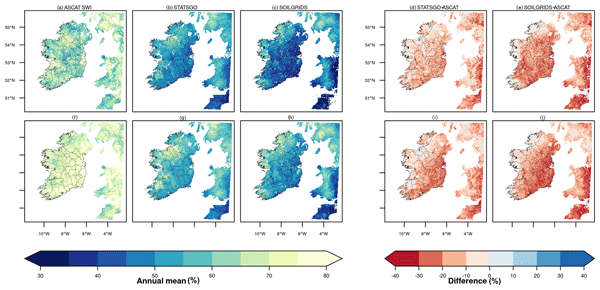
Kazeem Abiodun Ishola, Gerald Mills, Ankur Prabhat Sati, Benjamin Obe, Matthias Demuzere, Deepak Upreti, Gourav Misra, Paul Lewis, Daire Walsh, Tim McCarthy, and Rowan Fealy
Hydrol. Earth Syst. Sci., 29, 2551–2582, https://doi.org/10.5194/hess-29-2551-2025, https://doi.org/10.5194/hess-29-2551-2025, 2025
Short summary
Short summary
Global soil information introduces uncertainty into models that simulate soil hydrothermal changes. Using the Noah with Multiparameterization (Noah-MP) model with two different global soil datasets, we find under-represented soil properties in wet loam, causing a dry bias in soil moisture. This bias is more pronounced and drought categories are more severe in the SoilGrids dataset. We conclude that models should incorporate detailed, region-specific soil information to minimize model uncertainties.
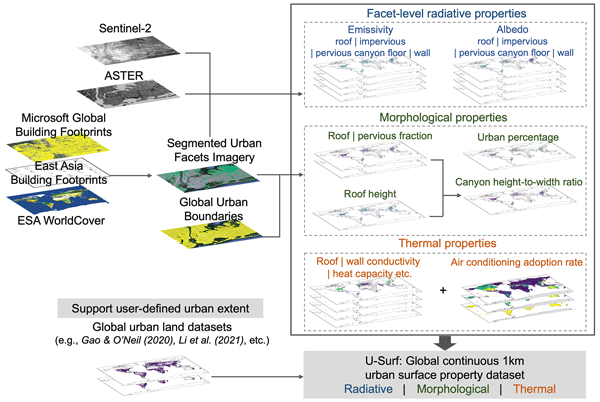
Yifan Cheng, Lei Zhao, TC Chakraborty, Keith Oleson, Matthias Demuzere, Xiaoping Liu, Yangzi Che, Weilin Liao, Yuyu Zhou, and Xinchang “Cathy” Li
Earth Syst. Sci. Data, 17, 2147–2174, https://doi.org/10.5194/essd-17-2147-2025, https://doi.org/10.5194/essd-17-2147-2025, 2025
Short summary
Short summary
The absence of globally consistent and spatially continuous urban surface input has long hindered large-scale high-resolution urban climate modeling. Using remote sensing, cloud computing, and machine learning, we developed U-Surf, a 1 km dataset providing key urban surface properties worldwide. U-Surf enhances urban representation across scales and supports kilometer-scale urban-resolving Earth system modeling unprecedentedly, with broader applications in urban studies and beyond.
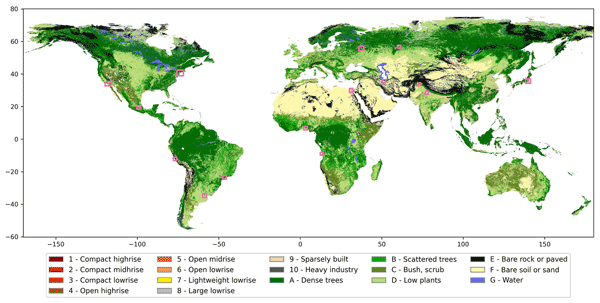
Matthias Demuzere, Jonas Kittner, Alberto Martilli, Gerald Mills, Christian Moede, Iain D. Stewart, Jasper van Vliet, and Benjamin Bechtel
Earth Syst. Sci. Data, 14, 3835–3873, https://doi.org/10.5194/essd-14-3835-2022, https://doi.org/10.5194/essd-14-3835-2022, 2022
Short summary
Short summary
Because urban areas are key contributors to climate change but are also susceptible to multiple hazards, one needs spatially detailed information on urban landscapes to support environmental services. This global local climate zone map describes this much-needed intra-urban heterogeneity across the whole surface of the earth in a universal language and can serve as a basic infrastructure to study e.g. environmental hazards, energy demand, and climate adaptation and mitigation solutions.
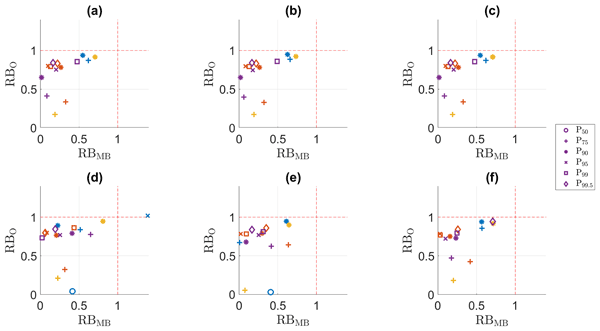
Jorn Van de Velde, Matthias Demuzere, Bernard De Baets, and Niko E. C. Verhoest
Hydrol. Earth Syst. Sci., 26, 2319–2344, https://doi.org/10.5194/hess-26-2319-2022, https://doi.org/10.5194/hess-26-2319-2022, 2022
Short summary
Short summary
An important step in projecting future climate is the bias adjustment of the climatological and hydrological variables. In this paper, we illustrate how bias adjustment can be impaired by bias nonstationarity. Two univariate and four multivariate methods are compared, and for both types bias nonstationarity can be linked with less robust adjustment.
Cited articles
Alexandri, E. and Jones, P.: Developing a one-dimensional heat and mass transfer algorithm for describing the effect of green roofs on the built environment: Comparison with experimental results, Build. Environ., 42, 2835–2849, https://doi.org/10.1016/j.buildenv.2006.07.004, 2007.
Arnfield, A. J.: Two decades of urban climate research: a review of turbulence, exchanges of energy and water, and the urban heat island, Int. J. Climatol., 23, 1–26, https://doi.org/10.1002/joc.859, 2003.
Arya, S. P.: Introduction to micrometeorology, Academic Press, San Diego, CA, USA, 2nd edn edn., 2001.
Bohnenstengel, S. I., Evans, S., Clark, P. A., and Belcher, S. E.: Simulations of the London urban heat island, Q. J. Roy. Meteorol. Soc., 137, 1625–1640, https://doi.org/10.1002/qj.855, 2011.
Bowler, D. E., Buyung-Ali, L., Knight, T. M., and Pullin, A. S.: Urban greening to cool towns and cities: A systematic review of the empirical evidence, Landsc. Urb. Plan., 97, 147–155, https://doi.org/10.1016/j.landurbplan.2010.05.006, 2010.
Businger, J. A.: Transfer of momentum and heat in the planetary boundary layer, Proc. Symp. Arctic Heat Budget and Atmospheric Circulation, RM-5233-NSF, 305–331, 1966.
Cai, G., Du, M., Xue, Y., and Li, S.: Analysis of an Urban Heat Sink using Thermal Inertia Model from ASTER Data in Beijing, China, in: Geoscience and Remote Sensing Symposium, 2008. IGARSS 2008. IEEE International, III – 1346–III – 1349, IEEE International, Boston, Massachusetts, USA, https://doi.org/10.1109/IGARSS.2008.4779609, 2008.
Cermak, J. E., Davenport, A. G., Plate, E. J., and Viegas, D. X.: Wind climate in cities, Kluwer, Dordrecht, the Netherlands, 772 pp., 1995.
Cheng, Y. G. and Brutsaert, W.: Flux-profile relationships for wind speed and temperature in the stable atmospheric boundary layer, Bound.-Lay. Meteorol., 114, 519–538, https://doi.org/10.1007/s10546-004-1425-4, 2005.
Clapp, R. B. and Hornberger, G. M.: Empirical equations for some soil hydraulic properties, Water Resour. Res., 14, 601–604, https://doi.org/10.1029/WR014i004p00601, 1978.
Cosby, B. J., Hornberger, G. M., Clapp, R. B., and Ginn, T. R.: A Statistical Exploration of the Relationships of Soil Moisture Characteristics to the Physical Properties of Soils, Water Resour. Res., 20, 682, https://doi.org/10.1029/WR020i006p00682, 1984.
Cuxart, J., Holtslag, A. A. M., Beare, R. J., Bazile, E., Beljaars, A., Cheng, A., Conangla, L., Ek, M., Freedman, F., Hamdi, R., Kerstein, A., Kitagawa, H., Lenderink, G., Lewellen, D., Mailhot, J., Mauritsen, T., Perov, V., Schayes, G., Steeneveld, G.-J., Svensson, G., Taylor, P., Weng, W., Wunsch, S., and Xu, K.-M.: Single-Column Model Intercomparison for a Stably Stratified Atmospheric Boundary Layer, Bound.-Lay. Meteorol., 118, 273–303, https://doi.org/10.1007/s10546-005-3780-1, 2006.
De Ridder, K.: Bulk Transfer Relations for the Roughness Sublayer, Bound.-Lay. Meteorol., 134, 257–267, https://doi.org/10.1007/s10546-009-9450-y, 2010.
De Ridder, K. and Schayes, G.: The IAGL Land Surface Model, J. Appl. Meteor., 36, 167–182, https://doi.org/10.1175/1520-0450(1997)036<0167:TILSM>2.0.CO;2, 1997.
Demuzere, M., De Ridder, K., and van Lipzig, N. P. M.: Modeling the energy balance in Marseille: Sensitivity to roughness length parametrizations and thermal admittance, J. Geophys. Res., 113, 1–19, 2008.
Dimoudi, A.: Vegetation in the urban environment: microclimatic analysis and benefits, Energ. Build., 35, 69–76, https://doi.org/10.1016/S0378-7788(02)00081-6, 2003.
Dyer, A. J.: The turbulent transport of heat and water vapour in an unstable atmosphere, Q. J. Roy. Meteor. Soc., 93, 501–508, https://doi.org/10.1002/qj.49709339809, 1967.
Garratt, J. R.: The atmospheric boundary layer, Cambridge University Press, UK, 1992.
Grimmond, C. S. B. and Oke, T. R.: Evapotranspiration rates in urban areas, AHS Publ., 259, 235–243, 1999.
Grimmond, C. S. B., Oke, T. R., and Timothy, R.: Heat Storage in Urban Areas: Local-Scale Observations and Evaluation of a Simple Model, J. Appl. Meteor., 38, 922–940, https://doi.org/10.1175/1520-0450(1999)038<0922:HSIUAL>2.0.CO;2, 1999.
Gutman, G. and Ignatov, A.: The derivation of the green vegetation fraction from NOAA/AVHRR data for use in numerical weather prediction models, Int. J. Remote Sens., 19, 1533–1543, https://doi.org/10.1080/014311698215333, 1998.
Ha, K.-J. and Mahrt, L.: Radiative and turbulent fluxes in the nocturnal boundary layer, Tellus, 55A, 317–327, https://doi.org/10.1034/j.1600-0870.2003.00031.x, 2003.
Hamdi, R., Degrauwe, D., and Termonia, P.: Coupling the Town Energy Balance (TEB) Scheme to an Operational Limited-Area NWP Model: Evaluation for a Highly Urbanized Area in Belgium, Weather Forecast., 27, 323–344, https://doi.org/10.1175/WAF-D-11-00064.1, 2012.
Harman, I. N. and Belcher, S. E.: The surface energy balance and boundary layer over urban street canyons, Q. J. Roy. Meteorol. Soc., 132, 2749–2768, https://doi.org/10.1256/qj.05.185, 2006.
Jain, A. K.: Fundamentals of Digital Image Processing, Prentice Hall, 1989.
Landsberg, H. E.: International Geophysics Series, Vol. 28: The urban climate, Academic Press, Londen, UK, 1981.
Lee, J. S.: Speckle suppression and analysis for synthetic aperture radar images, Opt. Eng., 25, 636–643, 1986.
Lemonsu, A. and Masson, V.: Simulation of a Summer Urban Breeze Over Paris, Bound.-Lay. Meteorol., 104, 463–490, https://doi.org/10.1023/A:1016509614936, 2002.
Lemonsu, A., Belair, S., and Mailhot, J.: The New Canadian Urban Modelling System: Evaluation for Two Cases from the Joint Urban 2003 Oklahoma City Experiment, Bound.-Lay. Meteorol., 133, 47–70, https://doi.org/10.1007/s10546-009-9414-2, 2009.
Lin, Y.-L.: Mesoscale Dynamics, Cambridge University Press, 2007.
Makar, A., Gravel, S., Chirkov, V., Strawbridge, K. B., Froude, F., Arnold, J., and Brook, J.: Heat flux, urban properties, and regional weather, Atmos Environ, 40, 2750–2766, 2006.
Oke, T.: The energetic basis of the urban heat island, Q. J. Roy. Meteorol. Soc., 108, 1–24, https://doi.org/10.1002/qj.49710845502, 1982.
Oke, T. R.: Boundary Layer Climates, Methuen and Co. Ltd, London, 2nd edn., 1987.
Oleson, K. W., Bonan, G. B., Feddema, J., and Jackson, T.: An examination of urban heat island characteristics in a global climate model, Int. J. Climatol., 31, 1848–1865, https://doi.org/10.1002/joc.2201, 2011.
Pielke, R. A.: Mesoscale Meteorological Modeling, Academic Press, San Diego, CA, USA, 2nd edn., 2002.
Press, W. H., Teukolsky, S. A., Vetterling, W. T., and Flannery, B. P.: Numerical recipes in FORTRAN: The art of scientific computing, Cambridge University Press, 2nd edn edn., 1992.
Ridders, C. J. F.: A new algorithm for computing a single root of a real continuous function, IEEE Trans. Circuits Syst., 26, 979–980, 1979.
Rodell, M., Houser, P. R., Jambor, U., Gottschalck, J., Mitchell, K., Meng, C.-J., Arsenault, K., Cosgrove, B., Radakovich, J., Bosilovich, M., Entin, J. K., Walker, J. P., Lohmann, D., and Toll, D.: The Global Land Data Assimilation System, B. Am. Meteorol. Soc., 85, 381–394, https://doi.org/10.1175/BAMS-85-3-381, 2004.
Sarkar, A. and De Ridder, K.: The Urban Heat Island Intensity of Paris: A Case Study Based on a Simple Urban Surface Parametrization, Bound.-Layer Meteorol., 138, 511–520, https://doi.org/10.1007/s10546-010-9568-y, 2010.
Savijärvi, H.: Radiative and turbulent heating rates in the clear-air boundary layer, Q. J. Roy. Meteorol. Soc., 132, 147–161, https://doi.org/10.1256/qj.05.61, 2006.
Steeneveld, G. J., Wokke, M. J. J., Groot Zwaaftink, C. D., Pijlman, S., Heusinkveld, B. G., Jacobs, A. F. G., and Holtslag, A. A. M.: Observations of the radiation divergence in the surface layer and its implication for its parameterization in numerical weather prediction models, J. Geophys. Res.: Atmos., 115, D06107, https://doi.org/10.1029/2009JD013074, 2010.
Sugawara, H. and Narita, K.: Roughness Length for Heat over an Urban Canopy, Theor. Appl. Climatol., 95, 291–299, 2008.
Van Weverberg, K., De Ridder, K., and Van Rompaey, A.: Modeling the Contribution of the Brussels Heat Island to a Long Temperature Time Series, J. Appl. Meteor. Climatol., 47, 976–990, https://doi.org/10.1175/2007JAMC1482.1, 2008.
Wittich, K.-P. and Hansing, O.: Area-averaged vegetative cover fraction estimated from satellite data, Int. J. Biometeorol., 38, 209–215, https://doi.org/10.1007/BF01245391, 1995.
Xue, M., Droegemeier, K. K., and Wong, V.: The Advanced Regional Prediction System (ARPS) - A multi-scale nonhydrostatic atmospheric simulation and prediction model. Part I: Model dynamics and verification, Meteorol. Atmos. Phys., 75, 161–193, https://doi.org/10.1007/s007030070003, 2000.
Xue, M., Droegemeier, K. K., Wong, V., Shapiro, A., Brewster, K., Carr, F., Weber, D., Liu, Y., and Wang, D.: The Advanced Regional Prediction System (ARPS) – A multi-scale nonhydrostatic atmospheric simulation and prediction tool. Part II: Model physics and applications, Meteorol. Atmos. Phys., 76, 143–165, https://doi.org/10.1007/s007030170027, 2001.
Zilitinkevich, S. S.: Dynamics of the atmospheric boundary layer, Leningrad Gidrometeor, 1970.


Altmetrics
Final-revised paper
Preprint