
Articles | Volume 26, issue 3
https://doi.org/10.5194/acp-26-2055-2026
© Author(s) 2026. This work is distributed under
the Creative Commons Attribution 4.0 License.
the Creative Commons Attribution 4.0 License.
https://doi.org/10.5194/acp-26-2055-2026
© Author(s) 2026. This work is distributed under
the Creative Commons Attribution 4.0 License.
the Creative Commons Attribution 4.0 License.
Research article
| 
10 Feb 2026
Research article |
| 10 Feb 2026
| 10 Feb 2026
Volume-to-extinction ratio: an important property of dust
Climate and Atmosphere Research Centre (CARE-C), The Cyprus Institute, Nicosia 2121, Cyprus
Maria Kezoudi
Climate and Atmosphere Research Centre (CARE-C), The Cyprus Institute, Nicosia 2121, Cyprus
Holger Baars
Leibniz Institute for Tropospheric Research (TROPOS), 04318 Leipzig, Germany
Athina Floutsi
Leibniz Institute for Tropospheric Research (TROPOS), 04318 Leipzig, Germany
Eleni Drakaki
Institute for Astronomy, Astrophysics, Space Applications and Remote Sensing, National Observatory of Athens, Athens, 15236, Greece
Konrad Kandler
Institute of Applied Geosciences, Technical University of Darmstadt, Darmstadt 64287, Germany
Sudharaj Aryasree
Institute of Applied Geosciences, Technical University of Darmstadt, Darmstadt 64287, Germany
Elena Louca
Climate and Atmosphere Research Centre (CARE-C), The Cyprus Institute, Nicosia 2121, Cyprus
Theodoros Christoudias
Climate and Atmosphere Research Centre (CARE-C), The Cyprus Institute, Nicosia 2121, Cyprus
Eleni Marinou
Institute for Astronomy, Astrophysics, Space Applications and Remote Sensing, National Observatory of Athens, Athens, 15236, Greece
Chris Stopford
University of Hertfordshire, Hatfield, United Kingdom
Troy Thornberry
National Oceanic Atmospheric Administration (NOAA), Boulder, CO 80305, USA
Vassilis Amiridis
Institute for Astronomy, Astrophysics, Space Applications and Remote Sensing, National Observatory of Athens, Athens, 15236, Greece
Jean Sciare
Climate and Atmosphere Research Centre (CARE-C), The Cyprus Institute, Nicosia 2121, Cyprus
Franco Marenco
Climate and Atmosphere Research Centre (CARE-C), The Cyprus Institute, Nicosia 2121, Cyprus
Related authors
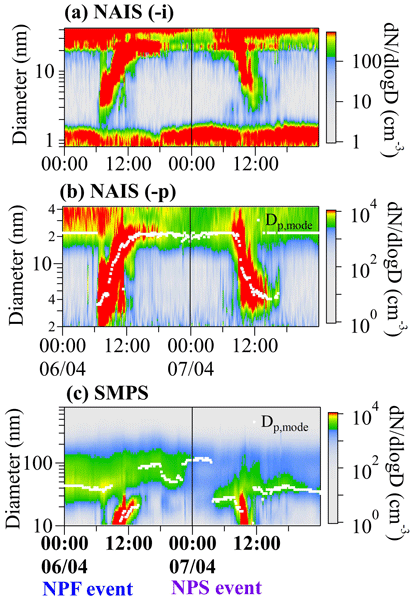
Vijay P. Kanawade, Neha Deot, Mihai Ciobanu, Aliki Christodoulou, Marije van den Born, Chengfeng Liu, Alkistis Papetta, Rima Baalbaki, Michael Pikridas, Spyros Bezantakos, Anchal Garg, Chrysanthos Savvides, Efstratios Bourtsoukidis, George Biskos, Franco Marenco, Jean Sciare, and Tuija Jokinen
Atmos. Chem. Phys., 26, 8839–8854, https://doi.org/10.5194/acp-26-8839-2026, https://doi.org/10.5194/acp-26-8839-2026, 2026
Short summary
Short summary
Only a small fraction of airborne particles acts as seeds for cloud droplets and influence climate, yet the processes controlling their abundance remain unclear. Field measurements in Cyprus reveal that particles smaller than 20 nanometers can rapidly shrink. This shrinkage was linked to dilution and possible evaporation of organic compounds, identifying a previously overlooked nanoparticle sink that may reduce cloud-forming particles and weaken aerosol-driven cooling.
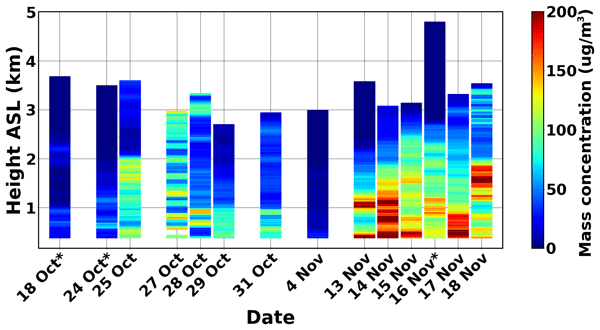
Maria Kezoudi, Alkistis Papetta, Konrad Kandler, Claire L. Ryder, Andreas Leonidou, Christos Keleshis, Chris Stopford, Troy Thornberry, Rodanthi-Elisavet Mamouri, Jean Sciare, and Franco Marenco
Atmos. Chem. Phys., 26, 7361–7385, https://doi.org/10.5194/acp-26-7361-2026, https://doi.org/10.5194/acp-26-7361-2026, 2026
Short summary
Short summary
This study demonstrates a cost-efficient methodology using Uncrewed Aerial Systems for quantitative characterization of airborne dust. It enables high-resolution vertical profiling of microphysical properties of dust layers from the Middle East and North Africa over Cyprus, improving understanding of regional dust transport, source-dependent variability, and impacts on air quality, radiation, and climate.
Alkistis Papetta, Celia Herrero del Barrio, S. Yeşer Aslanoğlu, Rizos-Theodoros Chadoulis, Georgia Charalampous, Sara Herrero-Anta, Dimitra Kouklaki, Michail Mytilinaios, Anna Moustaka, Emmanouil Proestakis, Vassilis Amiridis, Christos Spyrou, Antonis Gkikas, Michael Pikridas, Maria Kezoudi, Franco Marenco, Jean Sciare, Sophie Vandenbussche, Stavros Solomos, Stelios Kazadzis, and Ilias Fountoulakis
EGUsphere, https://doi.org/10.5194/egusphere-2026-1956, https://doi.org/10.5194/egusphere-2026-1956, 2026
This preprint is open for discussion and under review for Atmospheric Chemistry and Physics (ACP).
Short summary
Short summary
We studied four major dust events from the Sahara and the Middle East over the Mediterranean. Saharan dust events exhibited coarser and more scattering particles, while Middle Eastern dust was finer and mixed with pollution. Differences in absorption were driven by mixing, not mineral type.
Dimitra Kouklaki, Georgia Charalampous, Anna Moustaka, Alkistis Papetta, Celia Herrero del Barrio, Rizos-Theodoros Chadoulis, S. Yeşer Aslanoğlu, Sara Herrero-Anta, Michail Mytilinaios, Nikolaos Papadimitriou, Katerina Anyfanti, Christos Spyrou, Daniela Meloni, Konstantinos Fragkos, Yevgeny Derimian, Tatiana Di Iorio, Rodanthi-Elisavet Mamouri, Vassilis Amiridis, Stavros Solomos, Stelios Kazadzis, and Ilias Fountoulakis
EGUsphere, https://doi.org/10.5194/egusphere-2026-2775, https://doi.org/10.5194/egusphere-2026-2775, 2026
Short summary
Short summary
In the present study we investigated how aerosols, and specifically dust, affect solar radiation and energy production by investigating several dust events across multiple sites in the Mediterranean Basin between 2021 and 2022 through ground-based observations and model simulations. The results revealed that dust can significantly attenuate solar radiation and, therefore, lead to considerable losses in solar power generation, specifically in the case of solar tracking systems.
Maria Tsichla, Konrad Kandler, Sudharaj Aryasree, Stavros Solomos, Christos Spyrou, Alexandra Tsekeri, Anna Kampouri, Anna Gialitaki, Eleni Drakaki, Thanasis Natsis, Maria Kezoudi, Alkistis Papetta, Franco Marenco, Jean Sciare, Eleni Marinou, Kalliopi Artemis Voudouri, Nikos Mihalopoulos, and Vassilis Amiridis
EGUsphere, https://doi.org/10.5194/egusphere-2026-921, https://doi.org/10.5194/egusphere-2026-921, 2026
Short summary
Short summary
Desert dust plays an important role in the Earth–atmosphere system by affecting clouds, radiation, and ocean processes. Here, we determine the composition of desert dust over Cabo Verde using drones and microscopy analysis, and compare the measurements with model simulations. We find that the main dust mineral is illite, while the dominant element is silicon. Our results highlight the value of airborne in-situ observations for improving dust models and understanding dust–climate interactions.
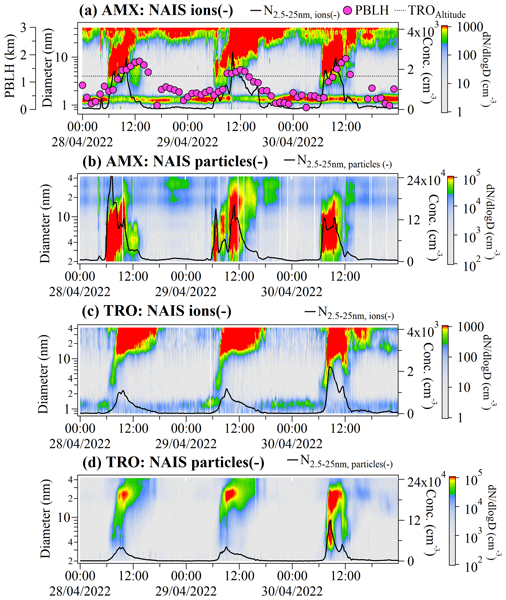
Neha Deot, Vijay P. Kanawade, Alkistis Papetta, Rima Baalbaki, Michael Pikridas, Franco Marenco, Markku Kulmala, Jean Sciare, Katrianne Lehtipalo, and Tuija Jokinen
Aerosol Research, 3, 139–154, https://doi.org/10.5194/ar-3-139-2025, https://doi.org/10.5194/ar-3-139-2025, 2025
Short summary
Short summary
We studied how nanoparticles form in the atmosphere at two different altitudes in Cyprus, focusing on how meteorology impacts this process. Using data from two sites, we found that air from lower regions carries particles up to higher areas, affecting air quality and potentially climate. Our findings help improve understanding of how particles form and grow in the air, which is important for predicting changes in climate and air pollution in the future.
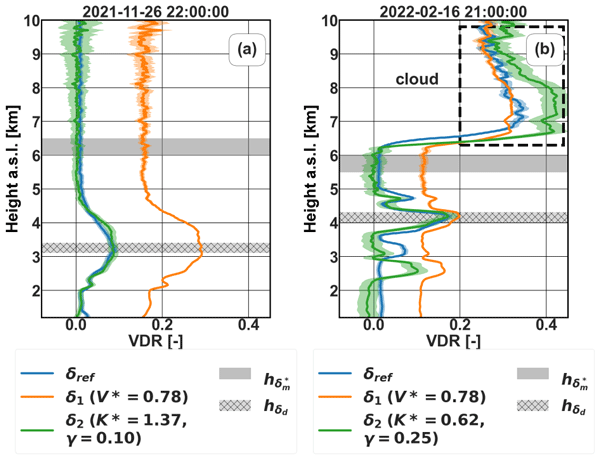
Alkistis Papetta, Franco Marenco, Maria Kezoudi, Rodanthi-Elisavet Mamouri, Argyro Nisantzi, Holger Baars, Ioana Elisabeta Popovici, Philippe Goloub, Stéphane Victori, and Jean Sciare
Atmos. Meas. Tech., 17, 1721–1738, https://doi.org/10.5194/amt-17-1721-2024, https://doi.org/10.5194/amt-17-1721-2024, 2024
Short summary
Short summary
We propose a method to determine depolarization parameters using observations from a reference instrument at a nearby location, needed for systems where a priori knowledge of cross-talk parameters is not available. It uses three-parameter equations to compare VDR between two co-located lidars at dust and molecular layers. It can be applied retrospectively to existing data acquired during campaigns. Its application to Cimel CE376 corrected VDR bias at high- and low-depolarizing layers.
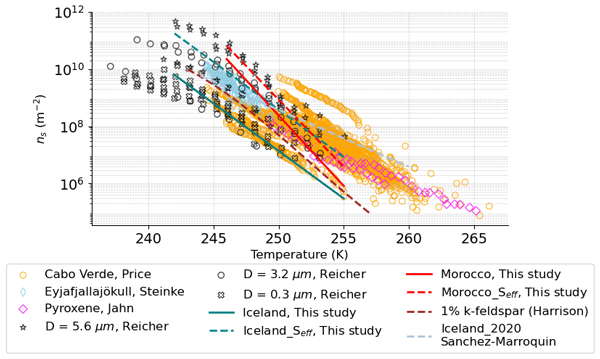
Sebastian Vergara-Palacio, Alexei Kiselev, Franziska Vogel, Adolfo González-Romero, Romy Fösig, Xavier Querol, Corinna Hoose, Nsikanabasi Silas Umo, Ottmar Möhler, Konrad Kandler, Carlos Pérez García-Pando, and Martina Klose
Atmos. Chem. Phys., 26, 9113–9147, https://doi.org/10.5194/acp-26-9113-2026, https://doi.org/10.5194/acp-26-9113-2026, 2026
Short summary
Short summary
Atmospheric mineral dust can help clouds form ice, changing cloud properties and affecting weather and climate. We tested dust from Morocco and Iceland in more than 300 controlled laboratory experiments. Icelandic samples were up to 100 times less able to promote ice formation than Moroccan samples, and showed mineral-composition dependence. The results show the role of larger dust particles in ice nucleation and their relationship with mineralogy and size for low- and high-latitude sources.
Vijay P. Kanawade, Neha Deot, Mihai Ciobanu, Aliki Christodoulou, Marije van den Born, Chengfeng Liu, Alkistis Papetta, Rima Baalbaki, Michael Pikridas, Spyros Bezantakos, Anchal Garg, Chrysanthos Savvides, Efstratios Bourtsoukidis, George Biskos, Franco Marenco, Jean Sciare, and Tuija Jokinen
Atmos. Chem. Phys., 26, 8839–8854, https://doi.org/10.5194/acp-26-8839-2026, https://doi.org/10.5194/acp-26-8839-2026, 2026
Short summary
Short summary
Only a small fraction of airborne particles acts as seeds for cloud droplets and influence climate, yet the processes controlling their abundance remain unclear. Field measurements in Cyprus reveal that particles smaller than 20 nanometers can rapidly shrink. This shrinkage was linked to dilution and possible evaporation of organic compounds, identifying a previously overlooked nanoparticle sink that may reduce cloud-forming particles and weaken aerosol-driven cooling.
Konstantin Krüger, Martin Wirth, Athena Augusta Floutsi, David Patrick Donovan, Gerd-Jan van Zadelhoff, and Silke Martha Groß
EGUsphere, https://doi.org/10.5194/egusphere-2026-3051, https://doi.org/10.5194/egusphere-2026-3051, 2026
This preprint is open for discussion and under review for Atmospheric Measurement Techniques (AMT).
Short summary
Short summary
Cloud properties from the ATLID L2 products A-TC, A-FM, and A-CTH are independently validated using airborne HSRL observations from EarthCARE underflights in the tropics and extratropics. Results for baseline BA show reliable depiction of cloud distribution and cloud top height, though A-TC overestimates ice cloud fraction and A-CTH slightly overestimates top height. Comparison with proto-CA baseline indicates some improvements, underscoring their suitability for investigating cloud properties.
Semontee Deb, Elena Louca, Angelos Violaris, Pantelis Kiriakidis, Yannis Proestos, Jonilda Kushta, Antonis Gkikas, Andrea Pozzer, and Theodoros Christoudias
EGUsphere, https://doi.org/10.5194/egusphere-2026-1900, https://doi.org/10.5194/egusphere-2026-1900, 2026
This preprint is open for discussion and under review for Geoscientific Model Development (GMD).
Short summary
Short summary
This study presents an extensive model evaluation of WRF-Chem (v4.7.1) dust simulations over the dust belt. We test three dust emission schemes and two land surface models using different measurements and reanalysis datasets. Our results identify effective model configurations and propose empirical scaling factors that improve dust representation and may be applicable more broadly.
Zhaolong Wu, Patric Seifert, Yun He, Holger Baars, Cristofer Jimenez, Chengcai Li, Jing Li, Albert Ansmann, and Chuanfeng Zhao
EGUsphere, https://doi.org/10.5194/egusphere-2026-3314, https://doi.org/10.5194/egusphere-2026-3314, 2026
This preprint is open for discussion and under review for Atmospheric Chemistry and Physics (ACP).
Short summary
Short summary
Using a full year of laser and radar observations in Beijing, this study shows when and where flat ice crystals tend to align horizontally instead of randomly, which suggests that flat ice crystals are most common in moderately cold, weakly turbulent clouds and often form below supercooled liquid water. This new finding can help weather and climate models better represent ice clouds.
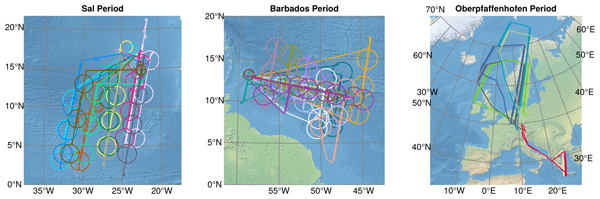
Silke Groß, Florian Ewald, Bjorn Stevens, Martin Wirth, Georgios Dekoutsidis, André Ehrlich, Dimitra Kouklaki, Konstantin Krüger, Sophie Rosenburg, Lea Volkmer, Jonas von Bismark, Lutz Hirsch, Anna E. Luebke, Eleni Marinou, Bernhard Mayer, Montserrat Pinol Sole, Manfred Wendisch, Julia Windmiller, Vassilis Amiridis, Rob Koopman, Takuji Kubota, and Markus Rapp
Atmos. Meas. Tech., 19, 3933–3959, https://doi.org/10.5194/amt-19-3933-2026, https://doi.org/10.5194/amt-19-3933-2026, 2026
Short summary
Short summary
In May 2024 the joint European Space Agency (ESA) and the Japan Aerospace Exploration Agency (JAXA) mission EarthCARE was launched. A similar payload as on the satellite was set up on the German research aircraft HALO, and deployed during an extensive measurement campaign to validated the satellite. We present our instrumentation, the measurements, and its potential for the validation of EarthCARE. We show first validation results and assessments of the EarthCARE data quality.
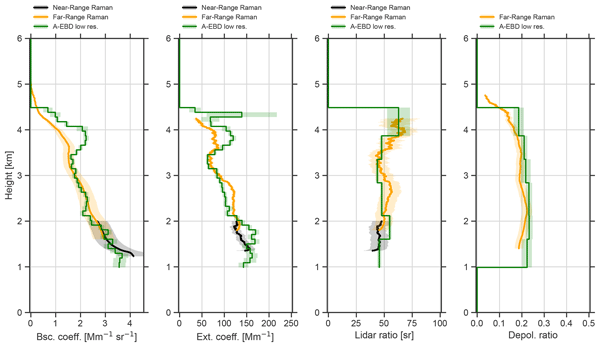
Holger Baars, Moritz Haarig, Leonard König, Athena A. Floutsi, Elizaveta Basharova, Julian Hofer, Henriette Gebauer, Ronny Engelmann, Dietrich Althausen, Annett Skupin, Benedikt Gast, Felix Fritzsch, Kevin Ohneiser, Cristofer Jimenez, Tom Gaudek, Martin Radenz, Håvard Buholdt, Birgit Heese, Andi Klamt, Patric Seifert, David P. Donovan, Gerd-Jan van Zadelhoff, Sabur F. Abdullaev, Shohina K. Khalifaeva, Dilovar F. Nozirov, and Ulla Wandinger
Atmos. Meas. Tech., 19, 3831–3864, https://doi.org/10.5194/amt-19-3831-2026, https://doi.org/10.5194/amt-19-3831-2026, 2026
Short summary
Short summary
The satellite mission EarthCARE (Earth Cloud, Aerosol, and Radiation Explorer) was launched in May 2024 and has 4 unique instruments on board. We used ground-based PollyNET/ACTRIS (Aerosol, Clouds and Trace gases Research Infrastructure) profiling data to discuss the quality of EarthCARE’s lidar products based on case studies from different geographic locations. Our investigations revealed that the space-borne lidar instrument has remarkable profiling capabilities but currently also still some limitations, however, not preventing first scientific studies when quality checking the data intensively.
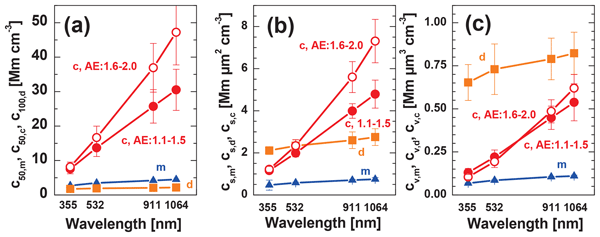
Albert Ansmann, Julian Hofer, Rodanthi-Elisavet Mamouri, Moritz Haarig, Holger Baars, and Ulla Wandinger
Atmos. Meas. Tech., 19, 3801–3830, https://doi.org/10.5194/amt-19-3801-2026, https://doi.org/10.5194/amt-19-3801-2026, 2026
Short summary
Short summary
Updated lidar and ceilometer conversion factors are presented. The conversion factors allow us to calculate microphyscial properties from measurned optical properties. One of the main goals is to support 355 nm space lidar observations.
Maria Kezoudi, Alkistis Papetta, Konrad Kandler, Claire L. Ryder, Andreas Leonidou, Christos Keleshis, Chris Stopford, Troy Thornberry, Rodanthi-Elisavet Mamouri, Jean Sciare, and Franco Marenco
Atmos. Chem. Phys., 26, 7361–7385, https://doi.org/10.5194/acp-26-7361-2026, https://doi.org/10.5194/acp-26-7361-2026, 2026
Short summary
Short summary
This study demonstrates a cost-efficient methodology using Uncrewed Aerial Systems for quantitative characterization of airborne dust. It enables high-resolution vertical profiling of microphysical properties of dust layers from the Middle East and North Africa over Cyprus, improving understanding of regional dust transport, source-dependent variability, and impacts on air quality, radiation, and climate.
Alkistis Papetta, Celia Herrero del Barrio, S. Yeşer Aslanoğlu, Rizos-Theodoros Chadoulis, Georgia Charalampous, Sara Herrero-Anta, Dimitra Kouklaki, Michail Mytilinaios, Anna Moustaka, Emmanouil Proestakis, Vassilis Amiridis, Christos Spyrou, Antonis Gkikas, Michael Pikridas, Maria Kezoudi, Franco Marenco, Jean Sciare, Sophie Vandenbussche, Stavros Solomos, Stelios Kazadzis, and Ilias Fountoulakis
EGUsphere, https://doi.org/10.5194/egusphere-2026-1956, https://doi.org/10.5194/egusphere-2026-1956, 2026
This preprint is open for discussion and under review for Atmospheric Chemistry and Physics (ACP).
Short summary
Short summary
We studied four major dust events from the Sahara and the Middle East over the Mediterranean. Saharan dust events exhibited coarser and more scattering particles, while Middle Eastern dust was finer and mixed with pollution. Differences in absorption were driven by mixing, not mineral type.
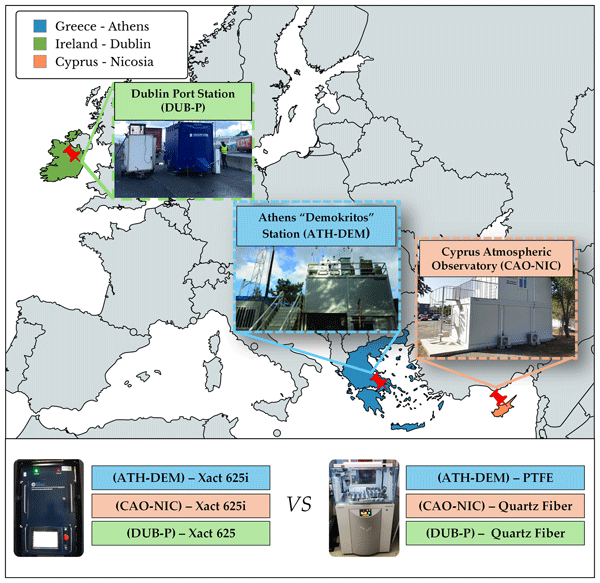
Stefanos Papagiannis, Manousos I. Manousakas, Dimitrios F. Anagnostopoulos, Michael Pikridas, Rima Baalbaki, Jean Sciare, Niall O'Sullivan, Stig Hellebust, John Wenger, Kirsten N. Fossum, Jurgita Ovadnevaite, Anja Tremper, David Green, Konstantinos Eleftheriadis, and Evangelia Diapouli
Atmos. Meas. Tech., 19, 3491–3509, https://doi.org/10.5194/amt-19-3491-2026, https://doi.org/10.5194/amt-19-3491-2026, 2026
Short summary
Short summary
We compared near real-time and benchtop XRF spectrometers measuring trace elements in airborne particles across three European cities. Results show filter material dictates accuracy: Teflon yielded strong inter-instrument agreement, while quartz caused systematic attenuation errors for light elements. Because empirical corrections left residual biases, using optimal substrates—preferably Teflon—is essential for accurately tracking pollution sources.
Dimitra Kouklaki, Georgia Charalampous, Anna Moustaka, Alkistis Papetta, Celia Herrero del Barrio, Rizos-Theodoros Chadoulis, S. Yeşer Aslanoğlu, Sara Herrero-Anta, Michail Mytilinaios, Nikolaos Papadimitriou, Katerina Anyfanti, Christos Spyrou, Daniela Meloni, Konstantinos Fragkos, Yevgeny Derimian, Tatiana Di Iorio, Rodanthi-Elisavet Mamouri, Vassilis Amiridis, Stavros Solomos, Stelios Kazadzis, and Ilias Fountoulakis
EGUsphere, https://doi.org/10.5194/egusphere-2026-2775, https://doi.org/10.5194/egusphere-2026-2775, 2026
Short summary
Short summary
In the present study we investigated how aerosols, and specifically dust, affect solar radiation and energy production by investigating several dust events across multiple sites in the Mediterranean Basin between 2021 and 2022 through ground-based observations and model simulations. The results revealed that dust can significantly attenuate solar radiation and, therefore, lead to considerable losses in solar power generation, specifically in the case of solar tracking systems.
Dimitri Trapon, Holger Baars, Sebastian Bley, Albert Ansmann, Michael Rennie, Sergey Khaykin, and Michael Sicard
EGUsphere, https://doi.org/10.5194/egusphere-2026-2575, https://doi.org/10.5194/egusphere-2026-2575, 2026
This preprint is open for discussion and under review for Atmospheric Chemistry and Physics (ACP).
Short summary
Short summary
The study presents observations of the 2022 Hunga volcanic aerosol in the stratosphere made by the European Space Agency’s Aeolus satellite. Aeolus tracks the long-range transported plumes that circumnavigate the Earth at distinct latitudes and altitudes up to 30 km. Vertical gradient of optical properties measured with the ultraviolet lidar signal are shown, such as decreasing trends over time. This helps to understand the stratospheric residence time of aerosols in the Southern Hemisphere.
Maria Tsichla, Konrad Kandler, Sudharaj Aryasree, Stavros Solomos, Christos Spyrou, Alexandra Tsekeri, Anna Kampouri, Anna Gialitaki, Eleni Drakaki, Thanasis Natsis, Maria Kezoudi, Alkistis Papetta, Franco Marenco, Jean Sciare, Eleni Marinou, Kalliopi Artemis Voudouri, Nikos Mihalopoulos, and Vassilis Amiridis
EGUsphere, https://doi.org/10.5194/egusphere-2026-921, https://doi.org/10.5194/egusphere-2026-921, 2026
Short summary
Short summary
Desert dust plays an important role in the Earth–atmosphere system by affecting clouds, radiation, and ocean processes. Here, we determine the composition of desert dust over Cabo Verde using drones and microscopy analysis, and compare the measurements with model simulations. We find that the main dust mineral is illite, while the dominant element is silicon. Our results highlight the value of airborne in-situ observations for improving dust models and understanding dust–climate interactions.
Friederike Jakob, Martin Radenz, Holger Baars, Patric Seifert, and Ronny Engelmann
EGUsphere, https://doi.org/10.5194/egusphere-2026-2445, https://doi.org/10.5194/egusphere-2026-2445, 2026
This preprint is open for discussion and under review for Atmospheric Chemistry and Physics (ACP).
Short summary
Short summary
Continuous water vapor mixing ratio profiles at Neumayer Station III, Antarctica during winter 2023 are presented. The observations reveal synoptic patterns governing moisture transport towards the Antarctic coast. Comparison with ER5 reanalysis data shows generally good agreement, but a dry bias of 10% in the lower troposphere. The bias depends on assimilation cycle, surface representation in ERA5, and synoptic conditions, suggesting uncertainties in boundary layer processes as a key causes.
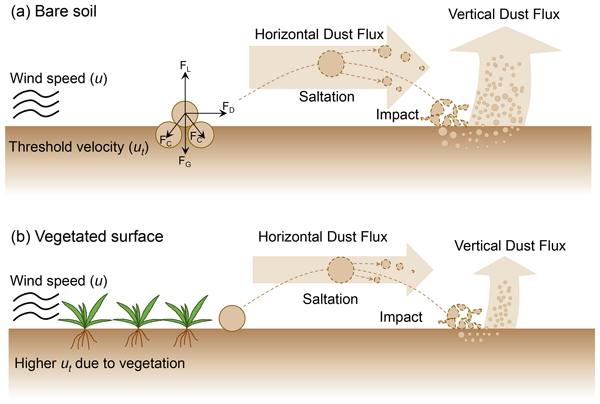
Siqing Xu, Yves Balkanski, Philippe Ciais, and Jean Sciare
Atmos. Chem. Phys., 26, 6321–6350, https://doi.org/10.5194/acp-26-6321-2026, https://doi.org/10.5194/acp-26-6321-2026, 2026
Short summary
Short summary
Uncertainty in dust emission estimates stems from simplified surface parameterizations. We incorporate dynamic vegetation cover into the dust emission scheme of an Earth System Model. Including vegetation reduces global dust emissions by 23 % and redistributes regional contributions by suppressing emissions in grass-covered dryland, improving agreement with observations of the global dust cycle. This work establishes a framework for advancing the representation of land–atmosphere feedbacks.
Kalliopi Artemis Voudouri, Eleni Marinou, Ilianna Koutsoupi, Vassilis Spyrakos, Dimitra Karkani, Ioanna Tsikoudi, Alessandro Battaglia, Pavlos Kollias, Eleni Giannakaki, and Vassilis Amiridis
EGUsphere, https://doi.org/10.5194/egusphere-2026-2384, https://doi.org/10.5194/egusphere-2026-2384, 2026
This preprint is open for discussion and under review for Atmospheric Chemistry and Physics (ACP).
Short summary
Short summary
Cloud observations from the CloudSat mission (2007–2017) reveal how clouds vary per altitude and season across the Mediterranean. Comparisons with ERA5 reanalysis show good overall agreement, though ice clouds are often underestimated. Early EarthCARE mission data are also presented, towards improving long-term climate records.
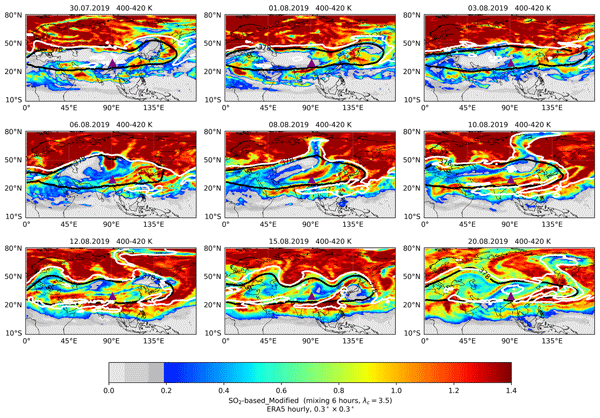
Zhen Yang, Bärbel Vogel, Felix Plöger, Zhixuan Bai, Dan Li, Sabine Griessbach, Lars Hoffmann, Frank G. Wienhold, Elizabeth Asher, Alexandre A. Baron, Katie R. Smith, Troy Thornberry, Jianchun Bian, and Michaela I. Hegglin
Atmos. Chem. Phys., 26, 4749–4769, https://doi.org/10.5194/acp-26-4749-2026, https://doi.org/10.5194/acp-26-4749-2026, 2026
Short summary
Short summary
Balloon measurements over Lhasa, China, combined with satellite guided modelling, tracked aerosol from the 2019 Raikoke eruption through the Asian summer monsoon anticyclone. We find two altitude dependent routes into the anticyclone. It partly blocks transport but also allows entry and mixing, explaining the gradual weakening of the layers. Balloon measurements over Boulder, United States, outside the anticyclone, provide an independent check outside the region.
Maximilian Dollner, Josef Gasteiger, Konrad Kandler, Manuel Schöberl, Sudharaj Aryasree, Benjamin Witschas, and Bernadett Weinzierl
EGUsphere, https://doi.org/10.5194/egusphere-2026-531, https://doi.org/10.5194/egusphere-2026-531, 2026
Short summary
Short summary
During the A-LIFE campaign in the Eastern Mediterranean, a research aircraft observed clouds in a Saharan dust layer using in situ and remote sensing measurements. With new analysis tools for improved particle sizing and liquid water content measurements, this study assesses two different aerosol-cloud interaction processes: heterogeneous ice nucleation on super-micron dust particles at the cloud top, and small-scale activation of mineral dust particles to liquid droplets within the cloud.
Georgia Charalampous, Konstantinos Fragkos, Ilias Fountoulakis, Kyriakoula Papachristopoulou, Anna Moustaka, Franco Marenco, Yevgeny Derimian, Argyro Nisantzi, Rodanthi-Elisavet Mamouri, Diofantos Hadjimitsis, and Stelios Kazadzis
EGUsphere, https://doi.org/10.5194/egusphere-2026-1775, https://doi.org/10.5194/egusphere-2026-1775, 2026
Short summary
Short summary
This study analyses seven years of dust events over Cyprus to identify their origin and quantify their impact on surface solar radiation. Most events originated from the Sahara. Dust reduces surface solar radiation, leading to surface cooling, while also causing atmospheric heating and cooling at the top of the atmosphere. Surface reductions in solar radiation reach about 5–15 % on average, with effects mainly controlled by dust amount.
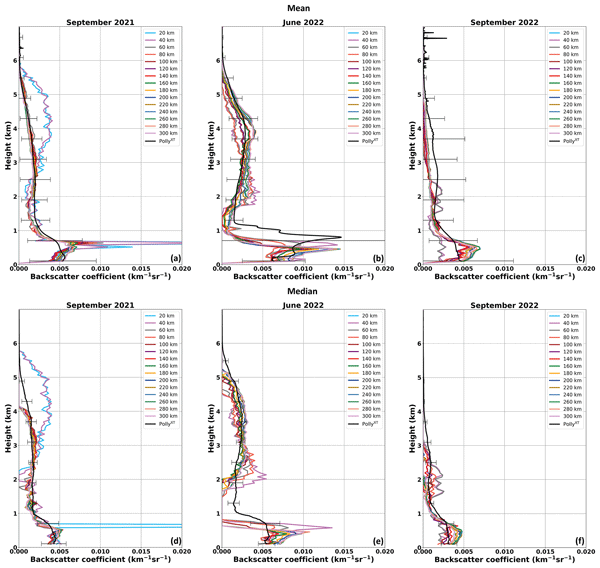
Athena Augusta Floutsi, Konstantinos Rizos, Dimitri Trapon, Ronny Engelmann, Dietrich Althausen, Eleni Marinou, Peristera Paschou, Julian Hofer, Emmanouil Proestakis, Henriette Gebauer, Annett Skupin, Albert Ansmann, Thorsten Fehr, Timon Hummel, Rob Koopman, Vassilis Amiridis, Ulla Wandinger, and Holger Baars
Atmos. Meas. Tech., 19, 1901–1925, https://doi.org/10.5194/amt-19-1901-2026, https://doi.org/10.5194/amt-19-1901-2026, 2026
Short summary
Short summary
We assess the representativeness of a remote ground-based station in Mindelo, Cabo Verde by utilizing continuous observations of a ground-based multiwavelength polarization Raman lidar and the LIdar climatology of Vertical Aerosol Structure (LIVAS) products. Based on a statistical analysis of the optical properties at different radii around Mindelo and case studies, we conclude that overall, the ground-based station in Mindelo can be considered conditionally representative.
Anna Moustaka, Antonis Gkikas, Stavros-Andreas Logothetis, Johannes Flemming, Samuel Rémy, Melanie Ades, Angela Benedetti, Kleareti Tourpali, Vassilis Amiridis, and Stelios Kazadzis
EGUsphere, https://doi.org/10.5194/egusphere-2026-1107, https://doi.org/10.5194/egusphere-2026-1107, 2026
This preprint is open for discussion and under review for Atmospheric Chemistry and Physics (ACP).
Short summary
Short summary
We examined how atmospheric aerosols have changed worldwide over the past two decades using a global atmospheric reanalysis together with ground-based observations. We found strong regional differences, with clear declines in some industrialized areas and increases in parts of South Asia and the Middle East. These long-term records help improve understanding of changes in climate and air quality.
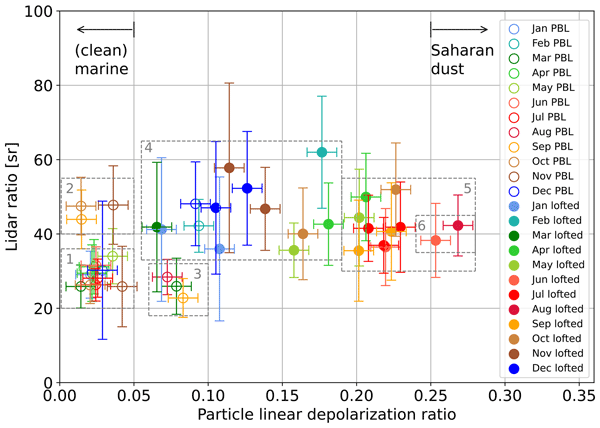
Henriette Gebauer, Athena Augusta Floutsi, Julian Hofer, Moritz Haarig, Annett Skupin, Ronny Engelmann, Cristofer Jimenez, Robert Wagner, and Holger Baars
Atmos. Chem. Phys., 26, 3439–3465, https://doi.org/10.5194/acp-26-3439-2026, https://doi.org/10.5194/acp-26-3439-2026, 2026
Short summary
Short summary
The annual aerosol cycle over Mindelo, Cabo Verde, was characterized using lidar and sun photometer measurements between July 2021 and August 2023. The observations were used to define and characterize the aerosol-related seasons at this location. These are the dust season (June–September), when thick layers of Saharan dust are transported over Mindelo, and the mixing season (November–March), when this dust is mixed with smoke from the African continent. April, May, and October were defined as transition months.
Kangwen Sun, Guangyao Dai, Dimitri Trapon, Holger Baars, Albert Ansmann, Ulla Wandinger, and Songhua Wu
EGUsphere, https://doi.org/10.5194/egusphere-2026-596, https://doi.org/10.5194/egusphere-2026-596, 2026
Short summary
Short summary
Targeting a large-scale smoke transport from the western US to Europe in September 2020 a smoke dataset was constructed based on Aeolus observations, in synergy with multi-platform data. The selected cross-sections show the vertical structure of the smoke layers at different transport phases. Statistical analyses of the complete dataset reveal the evolution of the smoke plume throughout its transatlantic transport.
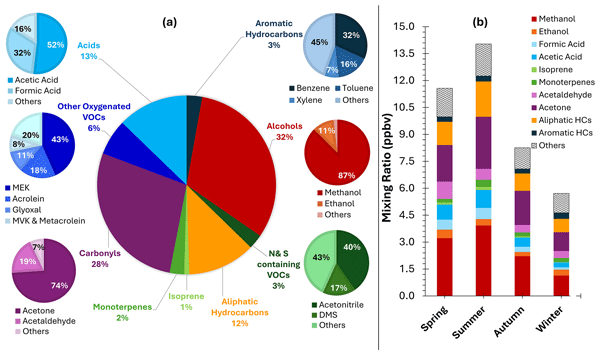
Anchal Garg, Maximilien Desservettaz, Aliki Christodoulou, Theodoros Christoudias, Vijay Punjaji Kanawade, Chrysanthos Savvides, Mihalis Vrekoussis, Shahid Naqui, Tuija Jokinen, Joseph Byron, Jonathan Williams, Nikos Mihalopoulos, Eleni Liakakou, Jean Sciare, and Efstratios Bourtsoukidis
Atmos. Chem. Phys., 26, 2597–2622, https://doi.org/10.5194/acp-26-2597-2026, https://doi.org/10.5194/acp-26-2597-2026, 2026
Short summary
Short summary
This study reports multi-year (2022–2024) measurements of 76 volatile organic compounds (VOCs) at a rural site in Cyprus. Oxygenated VOCs were the most abundant and showed strong daytime increases due to sunlight-driven chemistry. Air-mass analysis showed that transport from Middle East strongly influenced aromatic VOC levels. Climate–chemistry modeling underestimated most VOCs, highlighting gaps in current emission and chemical processes.
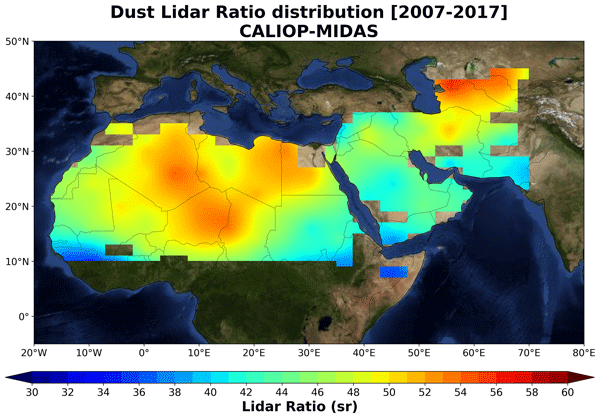
Anna Moustaka, Nikolaos Siomos, Stelios Kazadzis, Emmanouil Proestakis, Kalliopi Artemis Voudouri, Anton Lopatin, Oleg Dubovik, Kleareti Tourpali, Christos Zerefos, Vassilis Amiridis, and Antonis Gkikas
Atmos. Meas. Tech., 19, 1201–1225, https://doi.org/10.5194/amt-19-1201-2026, https://doi.org/10.5194/amt-19-1201-2026, 2026
Short summary
Short summary
North Africa and the Middle East are home to the world’s most active dust sources, but accurately monitoring airborne dust remains challenging. We combine active and passive satellite aerosol products to dynamically estimate dust lidar ratios over a 12-year period. The results reveal pronounced and physically meaningful regional variability, improving aerosol characterization and supporting climate and air-quality applications.
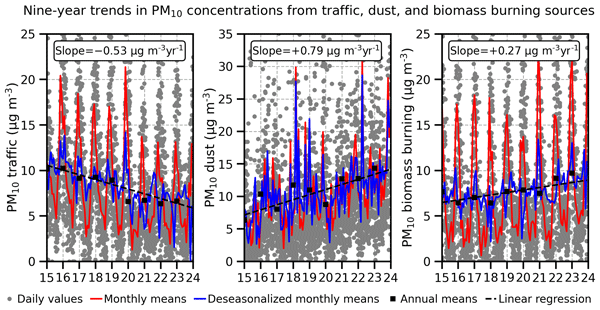
Elie Bimenyimana, Jean Sciare, Michael Pikridas, Konstantina Oikonomou, Minas Iakovides, Emily Vasiliadou, Chrysanthos Savvides, and Nikos Mihalopoulos
Atmos. Chem. Phys., 26, 1605–1622, https://doi.org/10.5194/acp-26-1605-2026, https://doi.org/10.5194/acp-26-1605-2026, 2026
Short summary
Short summary
Long-term (2015–2023) source apportionment analysis reveals that reduction in PM10 concentration levels from traffic in Cypriot cities is completely offset by the concomitant increase of uncontrolled PM from local sources (road dust resuspension, and domestic wood burning), along with rising Middle East PM from fossil fuel emissions. This poses a major challenge for Cyprus to comply with the stricter PM10 limits set by the new EU air quality directive.
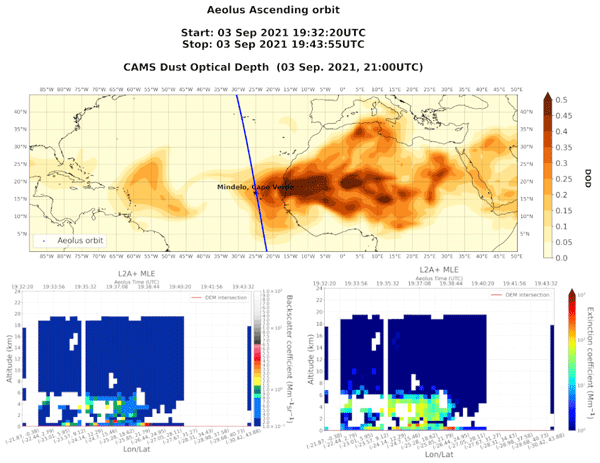
Konstantinos Rizos, Emmanouil Proestakis, Thanasis Georgiou, Antonis Gkikas, Eleni Marinou, Peristera Paschou, Kalliopi Artemis Voudouri, Athanasios Tsikerdekis, David P. Donovan, Gerd-Jan van Zadelhoff, Angela Benedetti, Holger Baars, Athena Augusta Floutsi, Nikos Benas, Martin Stengel, Christian Retscher, Edward Malina, and Vassilis Amiridis
Atmos. Meas. Tech., 19, 699–728, https://doi.org/10.5194/amt-19-699-2026, https://doi.org/10.5194/amt-19-699-2026, 2026
Short summary
Short summary
The Aeolus satellite's lidar system had limitations in detecting certain atmospheric layers and distinguishing between aerosol and cloud types. To improve accuracy, a new dust detection product was developed. By combining data from various sources and validating it with ground-based measurements, this enhanced product performs better than the original. It helps improve dust transport models and weather predictions, making it a valuable tool for atmospheric monitoring and forecasting.
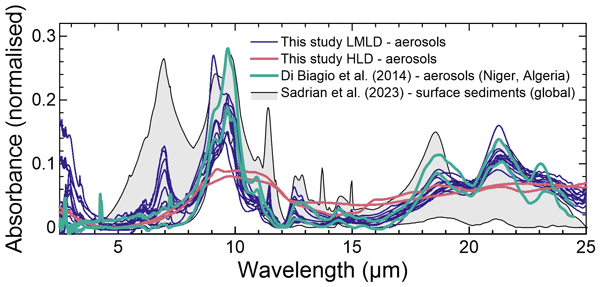
Claudia Di Biagio, Elisa Bru, Avila Orta, Servanne Chevaillier, Clarissa Baldo, Antonin Bergé, Mathieu Cazaunau, Sandra Lafon, Sophie Nowak, Edouard Pangui, Meinrat O. Andreae, Pavla Dagsson-Waldhauserova, Kebonyethata Dintwe, Konrad Kandler, James S. King, Amelie Chaput, Gregory S. Okin, Stuart Piketh, Thuraya Saeed, David Seibert, Zongbo Shi, Earle Williams, Pasquale Sellitto, and Paola Formenti
Atmos. Chem. Phys., 26, 1079–1091, https://doi.org/10.5194/acp-26-1079-2026, https://doi.org/10.5194/acp-26-1079-2026, 2026
Short summary
Short summary
Spectroscopy measurements show that the absorbance of dust in the far-infrared up to 25 µm is comparable in intensity to that in the mid-infrared (3–15 µm) suggesting possible relevance for its direct radiative effect. Absorption signatures differ between Icelandic and low/mid-latitude dust due to differences in mineralogical composition. Spectral differences could be used to characterise the mineralogy and trace the origin of airborne dust based on infrared remote sensing observations.
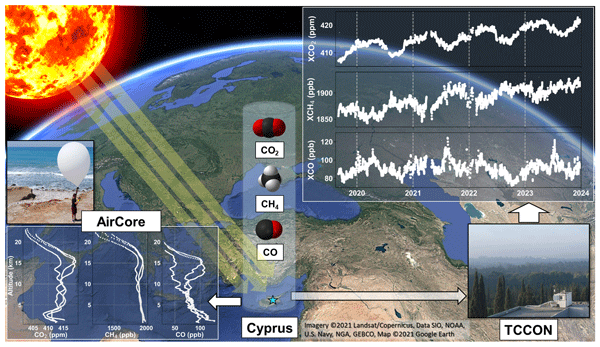
Constantina Rousogenous, Christof Petri, Pierre-Yves Quéhé, Thomas Laemmel, Joshua L. Laughner, Maximilien Desservettaz, Michael Pikridas, Michel Ramonet, Efstratios Bourtsoukidis, Matthias Buschmann, Justus Notholt, Thorsten Warneke, Jean-Daniel Paris, Jean Sciare, and Mihalis Vrekoussis
Atmos. Meas. Tech., 19, 565–581, https://doi.org/10.5194/amt-19-565-2026, https://doi.org/10.5194/amt-19-565-2026, 2026
Short summary
Short summary
The Eastern Mediterranean and Middle East is a greenhouse gas emission hotspot but lacks atmospheric monitoring. Our study introduces the first Total Carbon Column Observing Network site in this region, in Cyprus, providing high-precision columnar measurement of key greenhouse gases. This new dataset enhances global climate monitoring efforts, supports the validation of satellites, will help assess regional emission trends, filling a critical observational gap in this climate-sensitive region.
Sofía Gómez Maqueo Anaya, Sudharaj Aryasree, Konrad Kandler, Eduardo José dos Santos Souza, Khanneh Wadinga Fomba, Dietrich Althausen, Maria Kezoudi, Matthias Faust, Bernd Heinold, Ina Tegen, Moritz Haarig, Holger Baars, and Kerstin Schepanski
EGUsphere, https://doi.org/10.5194/egusphere-2026-23, https://doi.org/10.5194/egusphere-2026-23, 2026
Short summary
Short summary
During the JATAC 2022 campaign in Cape Verde, Saharan dust aerosols were collected and analyzed for mineral composition. Mineralogy is crucial for dust–radiation and dust–cloud interactions. We improve dust representation in an atmospheric model by refining the translation of soil into aerosol particle size distributions. Validation with mineral and elemental measurements shows improved representation of some minerals and reveals biases missed by mineral-only comparisons.
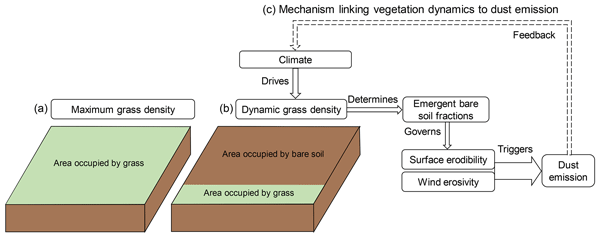
Siqing Xu, Sebastiaan Luyssaert, Yves Balkanski, Philippe Ciais, Nicolas Viovy, Liang Wan, and Jean Sciare
Geosci. Model Dev., 19, 1–25, https://doi.org/10.5194/gmd-19-1-2026, https://doi.org/10.5194/gmd-19-1-2026, 2026
Short summary
Short summary
Prescribing a fixed grassland density in the ORCHIDEE model limits its ability to capture grassland dynamics, leading to unrealistic mortality, especially in semi-arid grasslands. We proposed a dynamic density approach where a positive density-precipitation relationship emerges. This method improves spatial pattern, significantly reduces mortality, sustains productivity, and raises the aridity threshold above which frequent mortality events occur in grasslands.
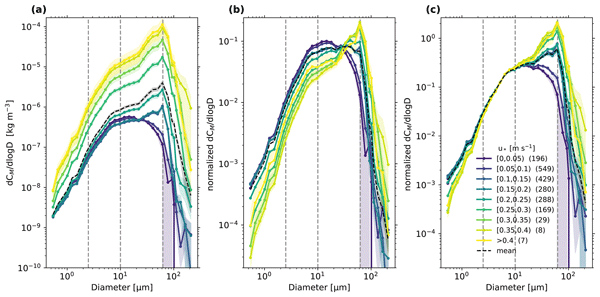
Hannah Meyer, Konrad Kandler, Sylvain Dupont, Jerónimo Escribano, Jessica Girdwood, George Nikolich, Andrés Alastuey, Vicken Etyemezian, Cristina González-Flórez, Adolfo González-Romero, Tareq Hussein, Mark Irvine, Peter Knippertz, Ottmar Möhler, Xavier Querol, Chris Stopford, Franziska Vogel, Frederik Weis, Andreas Wieser, Carlos Pérez García-Pando, and Martina Klose
Atmos. Meas. Tech., 19, 21–61, https://doi.org/10.5194/amt-19-21-2026, https://doi.org/10.5194/amt-19-21-2026, 2026
Short summary
Short summary
Mineral dust particles emitted from dry soils are of various sizes, yet the abundance of very large particles is not well understood. Here we measured the dust size distribution from fine to giant particles at an emission source during a field campaign in Jordan (J-WADI) using multiple instruments. Our findings show that large particles make up a significant part of the total dust mass. This knowledge is essential to improve climate models and to predict dust impacts on climate and environment.
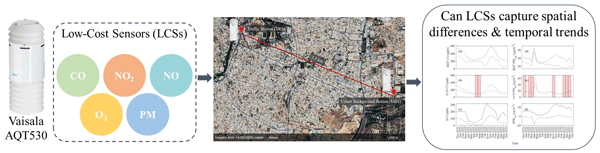
Roubina Papaconstantinou, Spyros Bezantakos, Michael Pikridas, Moreno Parolin, Melina Stylianou, Chrysanthos Savvides, Jean Sciare, and George Biskos
Atmos. Meas. Tech., 19, 63–78, https://doi.org/10.5194/amt-19-63-2026, https://doi.org/10.5194/amt-19-63-2026, 2026
Short summary
Short summary
We evaluate the ability of the Vaisala AQT530 (Air Quality Transmitter) monitors, comprising of low-cost sensors, to detect spatial and temporal differences. Collocated with reference instruments over 19 months in Nicosia, results showed that CO and PM (particulate matter) sensors captured daily, hourly, and monthly spatial trends. NO2, NO, and O3 sensors were less reliable due to environmental effects. Still, all sensors tracked monthly temporal variations at the same location, with PM2.5 showing the strongest agreement with reference data.
Luis Valero, Konrad Kandler, Sina Jost, Holger Tost, Luca Katarina Eichhorn, Christian von Glahn, Harald Rott, Marilena Flory, Alexandre Baron, Kathie Smith, Troy Thornberry, and Ralf Weigel
EGUsphere, https://doi.org/10.5194/egusphere-2025-5568, https://doi.org/10.5194/egusphere-2025-5568, 2025
Short summary
Short summary
We developed a low-cost, balloon-lifted platform with lightweight instruments to measure particles and collect samples. We tested this platform during two field campaigns in Germany. A case study showed its ability to observe the vertical distribution of particles and how they form cloud droplets. Electronic microscope analysis of the samples identified their chemical composition. This work shows the platform is a capable tool for studying atmospheric processes.
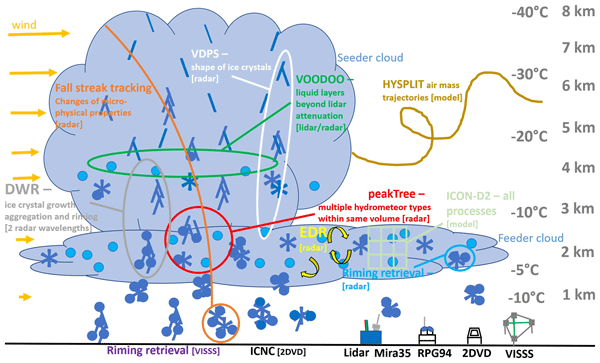
Kevin Ohneiser, Patric Seifert, Willi Schimmel, Fabian Senf, Tom Gaudek, Martin Radenz, Audrey Teisseire, Veronika Ettrichrätz, Teresa Vogl, Nina Maherndl, Nils Pfeifer, Jan Henneberger, Anna J. Miller, Nadja Omanovic, Christopher Fuchs, Huiying Zhang, Fabiola Ramelli, Robert Spirig, Anton Kötsche, Heike Kalesse-Los, Maximilian Maahn, Heather Corden, Alexis Berne, Majid Hajipour, Hannes Griesche, Julian Hofer, Ronny Engelmann, Annett Skupin, Albert Ansmann, and Holger Baars
Atmos. Chem. Phys., 25, 17363–17386, https://doi.org/10.5194/acp-25-17363-2025, https://doi.org/10.5194/acp-25-17363-2025, 2025
Short summary
Short summary
This study focuses on a seeder-feeder cloud system on 8 Jan 2024 in Eriswil, Switzerland. It is shown how the interaction of these cloud systems changes the cloud microphysical properties and the precipitation patterns. A big set of advanced remote-sensing techniques and retrieval algorithms are applied, so that a detailed view on the seeder-feeder cloud system is available. The gained knowledge can be used to improve weather models and weather forecasts.
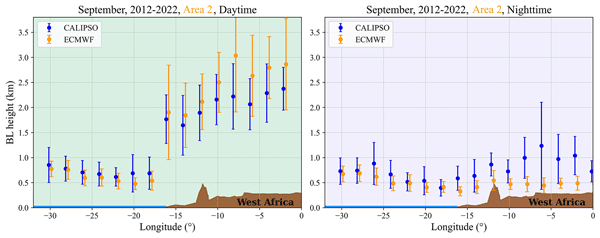
Ioanna Tsikoudi, Eleni Marinou, Maria Tombrou, Eleni Giannakaki, Emmanouil Proestakis, Konstantinos Rizos, Ville Vakkari, Holger Baars, Annett Skupin, Ronny Engelmann, Zhenping Yin, and Vassilis Amiridis
Atmos. Chem. Phys., 25, 16491–16510, https://doi.org/10.5194/acp-25-16491-2025, https://doi.org/10.5194/acp-25-16491-2025, 2025
Short summary
Short summary
We study the characteristics of the boundary layer over three areas: the tropical Atlantic, the tropical West African continent, and near Cabo Verde using PollyXT and CALIPSO (Cloud-Aerosol Lidar and Infrared Pathfinder Satellite Observations) lidar measurements, as well as ECMWF (European Centre for Medium-Range Weather Forecasts) data. The findings underline the strengths and limitations of different observational and modeling approaches, and emphasizes on the importance of considering aerosol conditions and local meteorology when interpreting boundary layer dynamics.
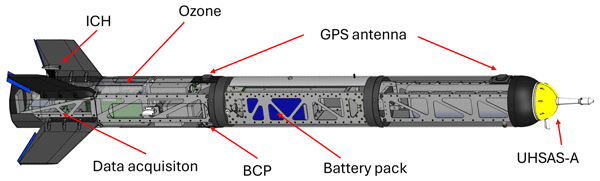
Heiko Bozem, Philipp Joppe, Yun Li, Nicolas Emig, Armin Afchine, Anna Breuninger, Joachim Curtius, Stefan Hofmann, Sadath Ismayil, Konrad Kandler, Daniel Kunkel, Arthur Kutschka, Hans-Christoph Lachnitt, Andreas Petzold, Sarah Richter, Timo Röschenthaler, Christian Rolf, Lisa Schneider, Johannes Schneider, Alexander Vogel, and Peter Hoor
Atmos. Meas. Tech., 18, 6545–6568, https://doi.org/10.5194/amt-18-6545-2025, https://doi.org/10.5194/amt-18-6545-2025, 2025
Short summary
Short summary
Deployed on a Learjet as a tandem measurement platform during the TPEx I (TropoPause composition gradients and mixing Experiment) campaign in June 2024, the new TPC-TOSS (TropoPause Composition Towed Sensor Shuttle) system delivers high-resolution in situ data on ozone, aerosol, and key meteorological parameters. Laboratory and in-flight tests confirmed its precision and stability. Observed gradients near the tropopause reveal active mixing and transport processes in the tropopause region.
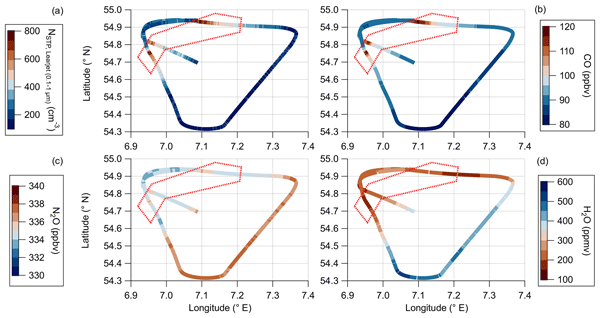
Philipp Joppe, Johannes Schneider, Jonas Wilsch, Heiko Bozem, Anna Breuninger, Joachim Curtius, Martin Ebert, Nicolas Emig, Peter Hoor, Sadath Ismayil, Konrad Kandler, Daniel Kunkel, Isabel Kurth, Hans-Christoph Lachnitt, Yun Li, Annette Miltenberger, Sarah Richter, Christian Rolf, Lisa Schneider, Cornelis Schwenk, Nicole Spelten, Alexander L. Vogel, Yafang Cheng, and Stephan Borrmann
Atmos. Chem. Phys., 25, 15077–15103, https://doi.org/10.5194/acp-25-15077-2025, https://doi.org/10.5194/acp-25-15077-2025, 2025
Short summary
Short summary
We show measurements of a filament with biomass burning influence transported by a warm conveyor belt (WCB) into the tropopause region over Europe. The pollution originates from Canadian forest fires and is transported in the lower troposphere towards Europe. The WCB transport is followed by mixing with air masses of stratospheric chemical signatures. We hypothesize that this mixing leads to a change in the vertical gradient of the potential temperature.
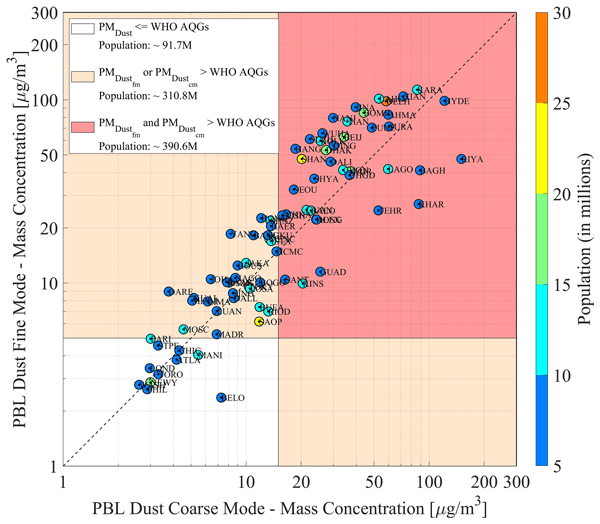
Emmanouil Proestakis, Kyriakoula Papachristopoulou, Thanasis Georgiou, Sofia Eirini Chatoutsidou, Mihalis Lazaridis, Antonis Gkikas, Ilias Fountoulakis, Ioanna Tsikoudi, Manolis P. Petrakis, and Vassilis Amiridis
Atmos. Chem. Phys., 25, 14777–14823, https://doi.org/10.5194/acp-25-14777-2025, https://doi.org/10.5194/acp-25-14777-2025, 2025
Short summary
Short summary
Based on Earth observations of dust the study addresses the questions: To what extent have the fine and coarse modes of atmospheric dust within the planetary boundary layer (PBL) changed over major cities worldwide? Which areas experience fine-mode and coarse-mode dust mass concentrations within the PBL that exceed World Health Organization air quality guidelines, and which areas are projected to exceed these guidelines in the near future? Can we quantify associated impacts on human health?
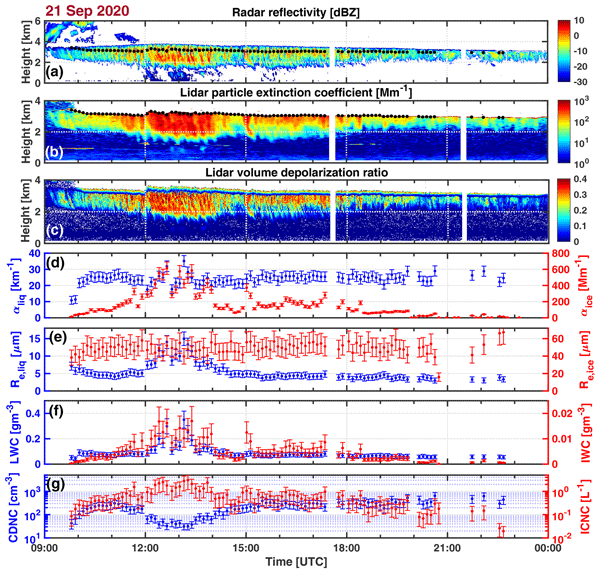
Cristofer Jimenez, Albert Ansmann, Kevin Ohneiser, Hannes Griesche, Ronny Engelmann, Martin Radenz, Julian Hofer, Dietrich Althausen, Daniel A. Knopf, Sandro Dahlke, Johannes Bühl, Holger Baars, Patric Seifert, and Ulla Wandinger
Atmos. Chem. Phys., 25, 12955–12981, https://doi.org/10.5194/acp-25-12955-2025, https://doi.org/10.5194/acp-25-12955-2025, 2025
Short summary
Short summary
We studied the water and ice phases of Arctic mixed-phase clouds (MPCs) using dual FOV polarization lidar and Doppler radar on board Polarstern during the MOSAiC expedition. Two long-lasting Arctic MPCs and year-round statistics show persistent droplet activation and dominant immersion freezing, indicating well-filled cloud condensation nuclei and ice-nucleating particle reservoirs. These findings help explain MPC longevity and may improve cloud life cycle representation in weather and climate models.
Lisa Schneider, Jann Schrod, Daniel Weber, Heinz Bingemer, Konrad Kandler, Joachim Curtius, and Martin Ebert
Atmos. Meas. Tech., 18, 5223–5245, https://doi.org/10.5194/amt-18-5223-2025, https://doi.org/10.5194/amt-18-5223-2025, 2025
Short summary
Short summary
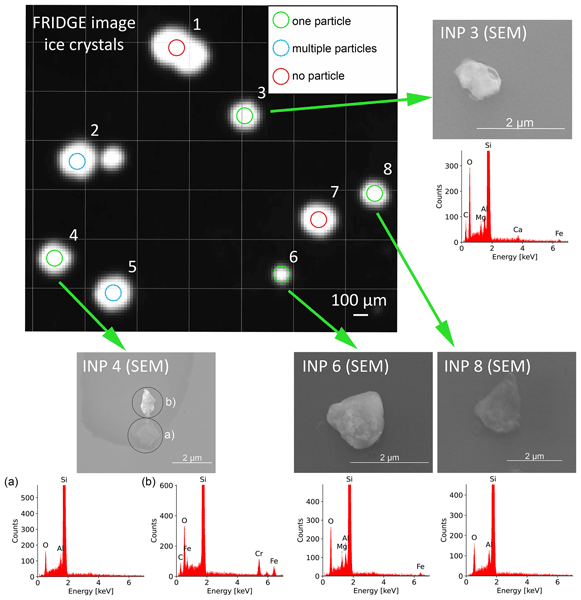
Ice-nucleating particles (INPs) are important for cloud formation and properties affecting weather and climate. This article presents a method coupling an offline ice nucleus counter to an electron microscope to obtain information, not only about INP number concentrations but also about physico-chemical properties (e.g., size and chemical composition) relevant to ice nucleation on single particles. The method was evaluated on the basis of a case study at the high-altitude research station Jungfraujoch.
Ioanna Tsikoudi, Alessandro Battaglia, Christine Unal, and Eleni Marinou
Atmos. Meas. Tech., 18, 4857–4870, https://doi.org/10.5194/amt-18-4857-2025, https://doi.org/10.5194/amt-18-4857-2025, 2025
Short summary
Short summary
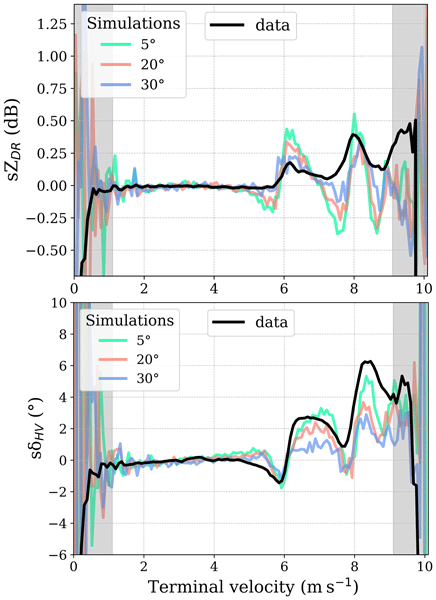
In the study, we simulate spectral polarimetric variables for raindrops as observed by cloud radar. Raindrops are modeled as oblate spheroids, and backscattering properties are computed via the T-matrix method, including noise, turbulence, and spectral averaging effects. When comparing simulations with measurements, differences in the amplitudes of polarimetric variables are noted. This shows the challenge of using simplified shapes to model raindrop polarimetric variables when moving to millimeter wavelengths.
Peristera Paschou, Nikolaos Siomos, Eleni Marinou, Antonis Gkikas, Samira M. Idrissa, Daniel T. Quaye, Désiré D. Fiogbe Attannon, Kalliopi Artemis Voudouri, Charikleia Meleti, David P. Donovan, George Georgoussis, Tommaso Parrinello, Thorsten Fehr, Jonas von Bismarck, and Vassilis Amiridis
Atmos. Meas. Tech., 18, 4731–4754, https://doi.org/10.5194/amt-18-4731-2025, https://doi.org/10.5194/amt-18-4731-2025, 2025
Short summary
Short summary
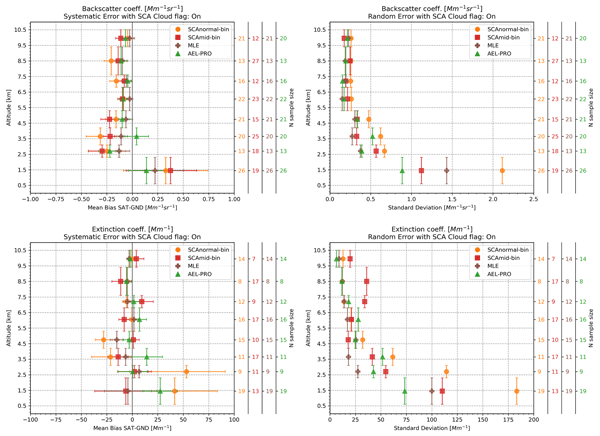
This study presents the results from a validation study on the Level 2A products (aerosol optical properties) of the ESA's (European Space Agency) Aeolus mission. Measurements from the eVe lidar, a combined linear/circular polarization and Raman lidar and ESA's ground reference system, that have been collected during the Joint Aeolus Tropical Atlantic Campaign are compared with collocated Aeolus Level 2A profiles obtained from the latest version (Baseline 16) of the Aeolus algorithms.
Agnesh Panta, Konrad Kandler, Kerstin Schepanski, Andres Alastuey, Pavla Dagsson Waldhauserova, Sylvain Dupont, Melanie Eknayan, Cristina González-Flórez, Adolfo González-Romero, Martina Klose, Mara Montag, Xavier Querol, Jesús Yus-Díez, and Carlos Pérez García-Pando
Atmos. Chem. Phys., 25, 10457–10478, https://doi.org/10.5194/acp-25-10457-2025, https://doi.org/10.5194/acp-25-10457-2025, 2025
Short summary
Short summary
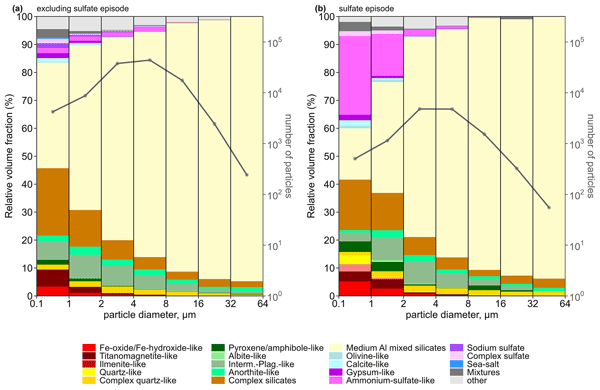
Iceland is among the most active dust source areas in the world. Dust properties are influenced by particle size, mineralogy, shape, and mixing state. This work characterizes freshly emitted individual aerosol particles of Icelandic dust using electron microscopy. Our study provides insights into critical particle-specific information and will contribute to better constraining climate models that consider mineralogical variations in their representation of the dust cycle.
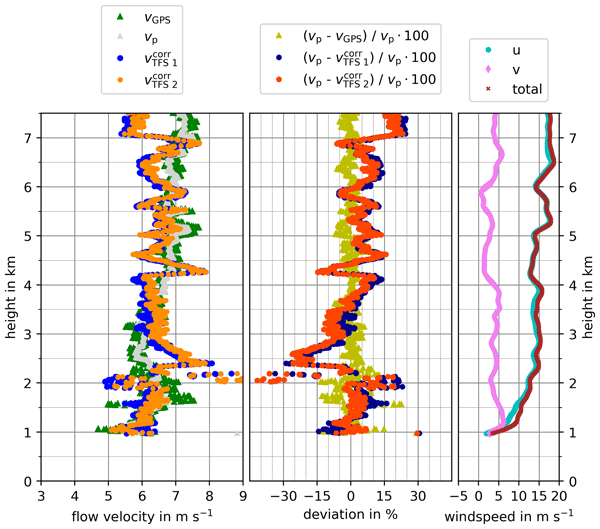
Sina Jost, Ralf Weigel, Konrad Kandler, Luis Valero, Jessica Girdwood, Chris Stopford, Warren Stanley, Luca K. Eichhorn, Christian von Glahn, and Holger Tost
Atmos. Meas. Tech., 18, 4397–4412, https://doi.org/10.5194/amt-18-4397-2025, https://doi.org/10.5194/amt-18-4397-2025, 2025
Short summary
Short summary
For the balloon-borne detection of particles (diameter 0.4 < Dp < 40 µm), the Universal Cloud and Aerosol Sounding System (UCASS) was used, whose sample flow is determined by GPS-measured ascent rates. In flights, actual UCASS sample flows rarely match the ascent rates. Errors are minimised by real-time detection of the UCASS flows, e.g. by implementing a thermal flow sensor (TFS) within the UCASS. The TFSs were tested in flight and calibrated at up to 10 m s−1 and at variable angles of attack.

Emmanouil Proestakis, Vassilis Amiridis, Carlos Pérez García-Pando, Svetlana Tsyro, Jan Griesfeller, Antonis Gkikas, Thanasis Georgiou, María Gonçalves Ageitos, Jeronimo Escribano, Stelios Myriokefalitakis, Elisa Bergas Masso, Enza Di Tomaso, Sara Basart, Jan-Berend W. Stuut, and Angela Benedetti
Earth Syst. Sci. Data, 17, 4351–4395, https://doi.org/10.5194/essd-17-4351-2025, https://doi.org/10.5194/essd-17-4351-2025, 2025
Short summary
Short summary
Quantification of dust deposition into the broader Atlantic Ocean is provided, with the estimates established based on Earth observations. The dataset is considered unique with respect to a range of applications, including compensating for spatiotemporal gaps of sediment-trap measurements, assessments of model simulations, shedding light on physical processes related to the dust cycle, and improving the understanding of dust biogeochemical impacts on oceanic ecosystems, weather, and climate.
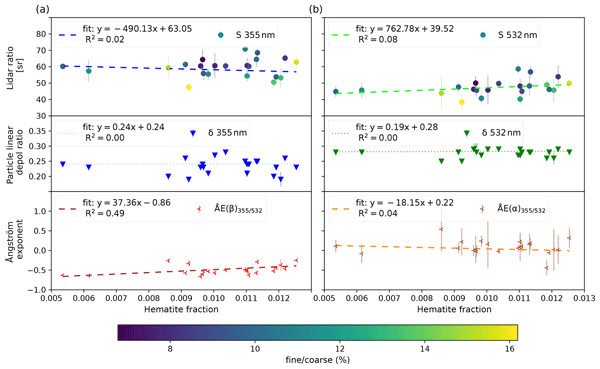
Sofía Gómez Maqueo Anaya, Dietrich Althausen, Julian Hofer, Moritz Haarig, Ulla Wandinger, Bernd Heinold, Ina Tegen, Matthias Faust, Holger Baars, Albert Ansmann, Ronny Engelmann, Annett Skupin, Birgit Heese, and Kerstin Schepanski
Atmos. Chem. Phys., 25, 9737–9764, https://doi.org/10.5194/acp-25-9737-2025, https://doi.org/10.5194/acp-25-9737-2025, 2025
Short summary
Short summary
This study investigates how hematite in Sahara dust affects how dust particles interact with radiation. Using lidar data from Cabo Verde (2021–2022) and hematite content from atmospheric model simulations, the results show that a higher hematite fraction leads to a decrease in the particle backscattering coefficients in a spectrally different way. These findings can improve the representation of mineral dust in climate models, particularly regarding their radiative effect.
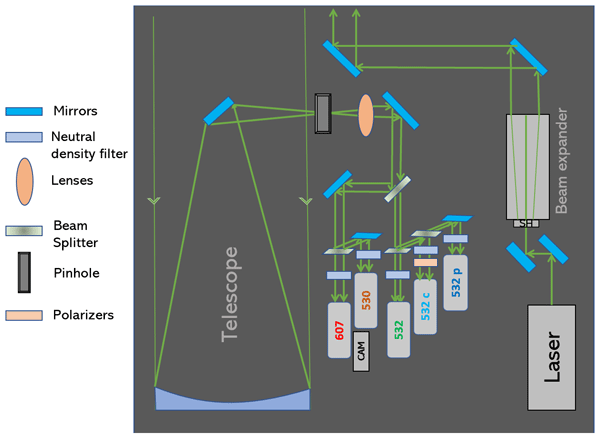
Gladiola Malollari, Albert Ansmann, Holger Baars, Cristofer Jimenez, Julian Hofer, Ronny Engelmann, Nathan Skupin, and Seit Shallari
Atmos. Meas. Tech., 18, 3937–3944, https://doi.org/10.5194/amt-18-3937-2025, https://doi.org/10.5194/amt-18-3937-2025, 2025
Short summary
Short summary
This study presents, for the first time, the uncertainty analysis of the Ångström exponent assumption on the full set of retrievable optical properties obtained with Raman lidar. A quantitative comparison between the pure rotational and vibrational–rotational Raman lidar approaches is presented. A minor impact of a wrong Ångström exponent on the determined aerosol optical properties is found.
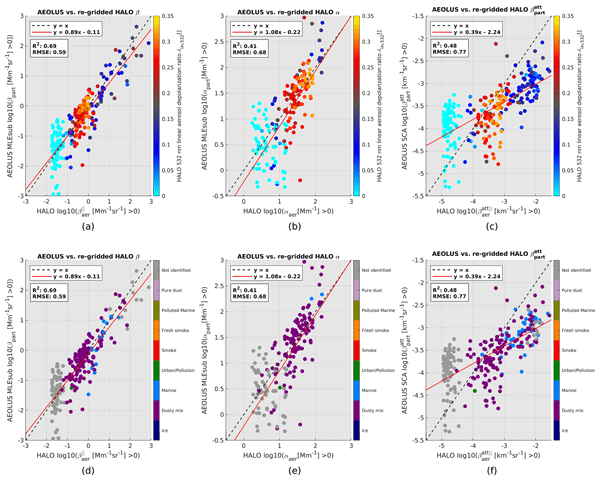
Dimitri Trapon, Holger Baars, Athena Augusta Floutsi, Sebastian Bley, Moritz Haarig, Adrien Lacour, Thomas Flament, Alain Dabas, Amin R. Nehrir, Frithjof Ehlers, and Dorit Huber
Atmos. Meas. Tech., 18, 3873–3896, https://doi.org/10.5194/amt-18-3873-2025, https://doi.org/10.5194/amt-18-3873-2025, 2025
Short summary
Short summary
The study highlights how aerosol measurements from aircraft can be used in synergy with ground-based observations to validate the European Space Agency's Aeolus satellite aerosol product above the tropical Atlantic. For the first time, collocated sections of the troposphere up to 626 km long are crossed. Combining measurements from satellite, aircraft, and ground-based instruments allows characterization of the optical properties of the observed dust particles emitted from the Sahara.
Zhaolong Wu, Patric Seifert, Yun He, Holger Baars, Haoran Li, Cristofer Jimenez, Chengcai Li, and Albert Ansmann
Atmos. Meas. Tech., 18, 3611–3634, https://doi.org/10.5194/amt-18-3611-2025, https://doi.org/10.5194/amt-18-3611-2025, 2025
Short summary
Short summary
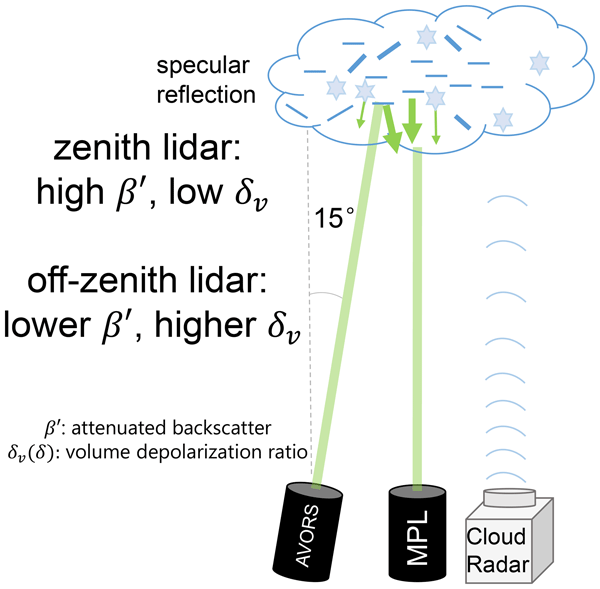
This study introduces a novel method to detect horizontally oriented ice crystals (HOICs) using two ground-based polarization lidars at different zenith angles, based on a yearlong dataset collected in Beijing. Combined with cloud radar and reanalysis data, the fine categorization results reveal HOICs occur in calm winds and moderately cold temperatures and are influenced by turbulence near cloud bases. The results enhance our understanding of cloud processes and improve atmospheric models.
Moritz Haarig, Ronny Engelmann, Holger Baars, Benedikt Gast, Dietrich Althausen, and Albert Ansmann
Atmos. Chem. Phys., 25, 7741–7763, https://doi.org/10.5194/acp-25-7741-2025, https://doi.org/10.5194/acp-25-7741-2025, 2025
Short summary
Short summary
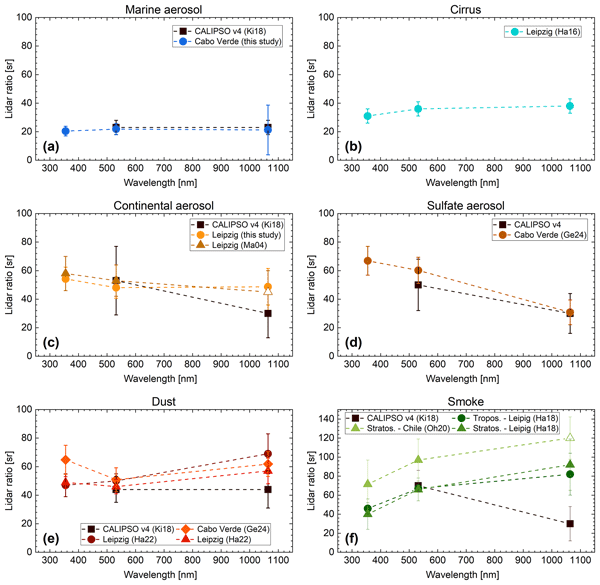
The lidar ratio is an important quantity in aerosol typing. Its spectral slope contains information about the source region or transport paths of the observed aerosol. The extension to 1064 nm is a recent development led by our institute. We gathered previous observations and added new ones to provide the spectral slope for the most important aerosol types such as marine and continental aerosol, dust, smoke, and sulfate. We compared it to assumptions used for spaceborne backscatter lidars.
Jasna V. Pittman, Bruce C. Daube, Steven C. Wofsy, Elliot L. Atlas, Maria A. Navarro, Eric J. Hintsa, Fred L. Moore, Geoff S. Dutton, James W. Elkins, Troy D. Thornberry, Andrew W. Rollins, Eric J. Jensen, Thaopaul Bui, Jonathan Dean-Day, and Leonhard Pfister
Atmos. Chem. Phys., 25, 7543–7562, https://doi.org/10.5194/acp-25-7543-2025, https://doi.org/10.5194/acp-25-7543-2025, 2025
Short summary
Short summary
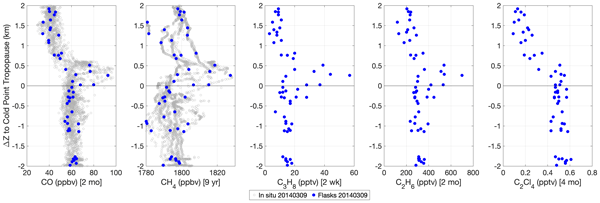
Biomass fires emit aerosols and precursors that can provide a novel environment for initiating stratospheric ozone loss. The Airborne Tropical TRopopause EXperiment campaign sampled the western Pacific, the dominant longitudes for surface air lofted by convection to enter the global stratosphere. Aircraft measurements over multiple flights revealed persistent layers of biomass burning pollutants entering the lower stratosphere and originating from fires as far away as Africa and Indonesia.
Anna Kampouri, Vassilis Amiridis, Thanasis Georgiou, Stavros Solomos, Anna Gialitaki, Maria Tsichla, Michael Rennie, Simona Scollo, and Prodromos Zanis
Atmos. Chem. Phys., 25, 7343–7368, https://doi.org/10.5194/acp-25-7343-2025, https://doi.org/10.5194/acp-25-7343-2025, 2025
Short summary
Short summary
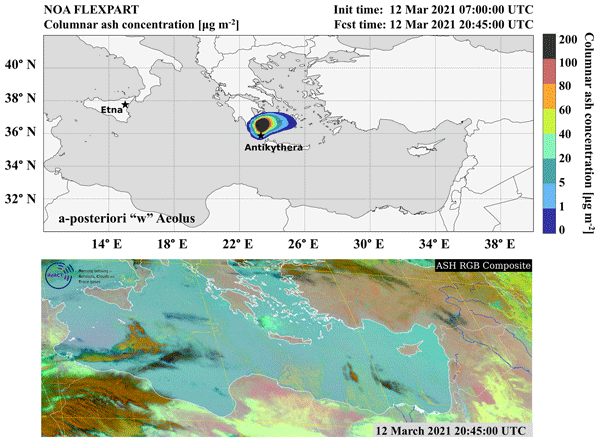
This study proposes a novel inverse modeling framework coupled with remote sensing data for improving volcanic ash dispersion forecasts, essential for aviation safety. By integrating FLEXPART dispersion model outputs with ground-based ACTRIS lidar observations, the approach estimates Etna's volcanic particle emissions and highlights a significant enhancement in the forecast accuracy.
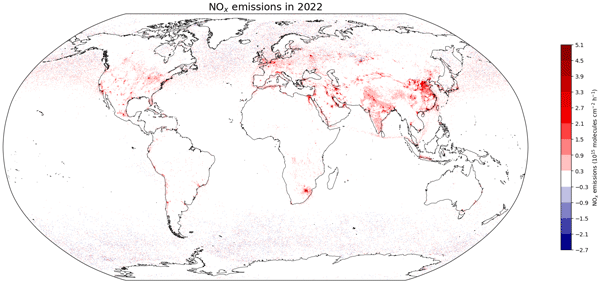
Anthony Rey-Pommier, Alexandre Héraud, Frédéric Chevallier, Philippe Ciais, Theodoros Christoudias, Jonilda Kushta, and Jean Sciare
Earth Syst. Sci. Data, 17, 3329–3351, https://doi.org/10.5194/essd-17-3329-2025, https://doi.org/10.5194/essd-17-3329-2025, 2025
Short summary
Short summary
In this study, we estimate emissions of nitrogen oxides (NOx) in 2022 at high resolution at the global scale, using satellite observations. We provide maps of the emissions and identify several types of sources. Our results are similar to the EDGAR emission inventory. However, differences are found in countries with lower observation densities and lower emissions.
Jesús Yus-Díez, Jeronimo Escribano, Marco Pandolfi, Andres Alastuey, Cristina González-Flórez, Adolfo Gonzalez-Romero, Maria Gonçalves Ageitos, Matic Ivančič, Martina Klose, Konrad Kandler, Vicenzo Obiso, Agnesh Panta, Cristina Reche, Martin Rigler, Xavier Querol, and Carlos Perez Garćia-Pando
EGUsphere, https://doi.org/10.5194/egusphere-2025-2571, https://doi.org/10.5194/egusphere-2025-2571, 2025
Short summary
Short summary
Here we present measurements of dust optical properties during active emissions at a source region in the Moroccan Sahara. We present results on its single scattering albedo, absorption and scattering wavelength dependence and mass efficiency. Furthermore, we have performed imaginary refractive index (k) retrieval under varying assumptions of the refractive index real part, and particle sphericity. We also provide a comparison between the k retrievals and estimations on dust k from AERONET.
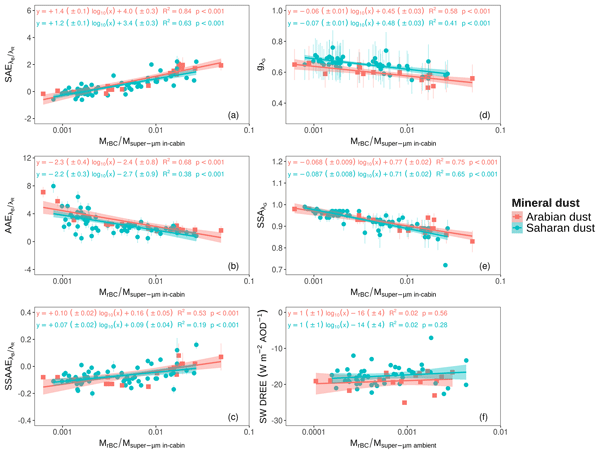
Marilena Teri, Josef Gasteiger, Katharina Heimerl, Maximilian Dollner, Manuel Schöberl, Petra Seibert, Anne Tipka, Thomas Müller, Sudharaj Aryasree, Konrad Kandler, and Bernadett Weinzierl
Atmos. Chem. Phys., 25, 6633–6662, https://doi.org/10.5194/acp-25-6633-2025, https://doi.org/10.5194/acp-25-6633-2025, 2025
Short summary
Short summary
The A-LIFE aircraft field experiment was carried out in the eastern Mediterranean in 2017. Using A-LIFE data, we studied the change in mineral dust optical properties due to mixing with anthropogenic aerosols. We found that increasing pollution affects dust optical properties, which has implications for identifying dust events and understanding their climate effects. We also show that optical properties of Saharan and Arabian dust are similar when comparing cases with equal pollution content.
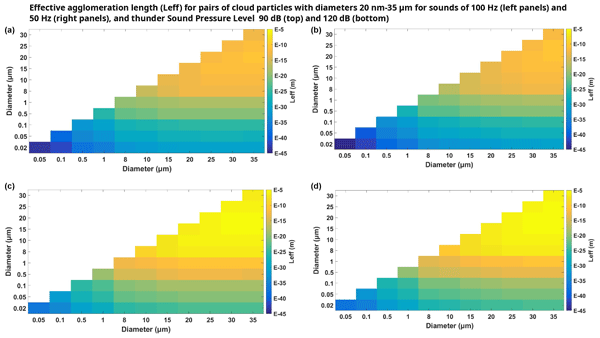
Konstantinos Kourtidis, Stavros Stathopoulos, and Vassilis Amiridis
Atmos. Chem. Phys., 25, 5935–5946, https://doi.org/10.5194/acp-25-5935-2025, https://doi.org/10.5194/acp-25-5935-2025, 2025
Short summary
Short summary
The sound of thunder induces mechanical effects on cloud droplets and ice particles, causing changes in their size distribution. A shock wave near the lightning channel causes extensive shattering of cloud particles. At a distance, the audio wave will cause agglomeration of particles. So, thunder may influence the rain generation process and the radiative properties of clouds. As global warming may influence the occurrence rate of lightning, a climate feedback may be induced by these mechanisms.
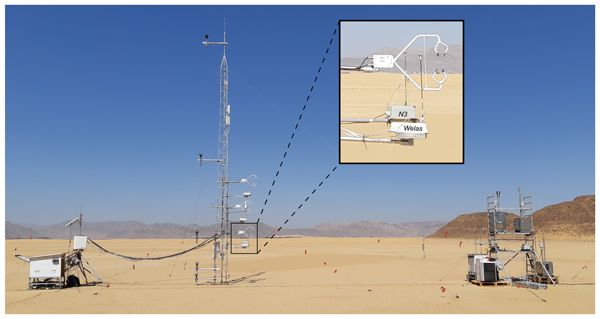
Sylvain Dupont, Eric Lamaud, Mark R. Irvine, Jean-Marc Bonnefond, Adolfo González-Romero, Andrés Alastuey, Cristina González-Flórez, Xavier Querol, Konrad Kandler, Martina Klose, and Carlos Pérez García-Pando
Atmos. Meas. Tech., 18, 2183–2200, https://doi.org/10.5194/amt-18-2183-2025, https://doi.org/10.5194/amt-18-2183-2025, 2025
Short summary
Short summary
Low-cost optical particle counters (OPCs) offer new opportunities to monitor dust particles from wind soil erosion. Their price, size, and power consumption are lower than those of traditional OPCs. We tested the ability of the low-cost OPC-N3 from Alphasense to estimate dust emission flux during erosion events in Jordan. N3 estimated the dust flux well, with differences of less than 30 % compared to a traditional OPC. Our results confirm the potential of low-cost OPCs for dust erosion research.
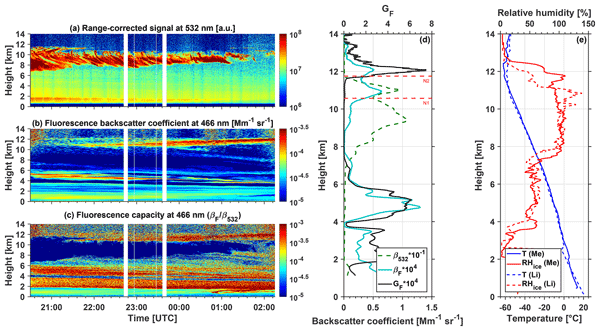
Benedikt Gast, Cristofer Jimenez, Albert Ansmann, Moritz Haarig, Ronny Engelmann, Felix Fritzsch, Athena A. Floutsi, Hannes Griesche, Kevin Ohneiser, Julian Hofer, Martin Radenz, Holger Baars, Patric Seifert, and Ulla Wandinger
Atmos. Chem. Phys., 25, 3995–4011, https://doi.org/10.5194/acp-25-3995-2025, https://doi.org/10.5194/acp-25-3995-2025, 2025
Short summary
Short summary
In this study, we discuss the enhanced detection capabilities of a fluorescence lidar in the case of optically thin aerosol layers in the upper troposphere and lower stratosphere (UTLS) region. Our results suggest that such thin aerosol layers are not so rare in the UTLS and can potentially trigger and impact cirrus cloud formation through heterogeneous ice nucleation. By altering the microphysical cloud properties, this could affect clouds' evolution and lifetime and thus their climate effect.
Neha Deot, Vijay P. Kanawade, Alkistis Papetta, Rima Baalbaki, Michael Pikridas, Franco Marenco, Markku Kulmala, Jean Sciare, Katrianne Lehtipalo, and Tuija Jokinen
Aerosol Research, 3, 139–154, https://doi.org/10.5194/ar-3-139-2025, https://doi.org/10.5194/ar-3-139-2025, 2025
Short summary
Short summary
We studied how nanoparticles form in the atmosphere at two different altitudes in Cyprus, focusing on how meteorology impacts this process. Using data from two sites, we found that air from lower regions carries particles up to higher areas, affecting air quality and potentially climate. Our findings help improve understanding of how particles form and grow in the air, which is important for predicting changes in climate and air pollution in the future.
Birte Klug, Ralf Weigel, Konrad Kandler, Markus Rapp, Manuel Baumgartner, Thomas Böttger, Klaus Dieter Wilhelm, Harald Rott, Thomas Kenntner, Oliver Drescher, and Anna Hundertmark
EGUsphere, https://doi.org/10.5194/egusphere-2025-510, https://doi.org/10.5194/egusphere-2025-510, 2025
Short summary
Short summary
The nuclei onto which noctilucent clouds (NLC) form are largely unknown. We investigated the development of an inertia-based particle collector allowing for sampling NLC particles during a sounding rocket flight for off-line single particle physico-chemical analyzes. Computational fluid dynamics simulations (for Mach numbers 1.31 and 1.75) support the design and development process in reference to a basic mechanical concept of particle sampling and sample storage, which is also presented here.
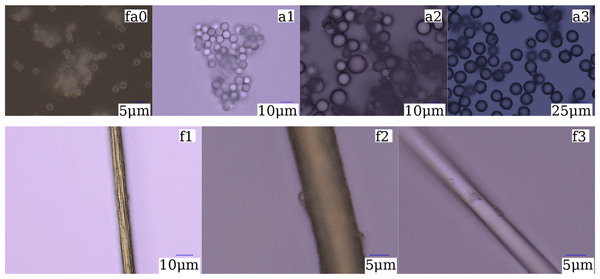
Jessica Girdwood, Harry Ballington, Chris Stopford, Rob Lewis, and Evelyn Hesse
Atmos. Meas. Tech., 18, 305–317, https://doi.org/10.5194/amt-18-305-2025, https://doi.org/10.5194/amt-18-305-2025, 2025
Short summary
Short summary
Optical particle spectrometers (OPSs) are a class of instruments (commonly used for measurement of particle size distributions) that require calibration. Conventionally, this is performed using a known aerosol source, which has reliability issues. In this paper, we present a technique for OPS calibration which involves placing objects in the instrument that generate a known response. This fibre calibration method was more reliable than a conventional calibration.
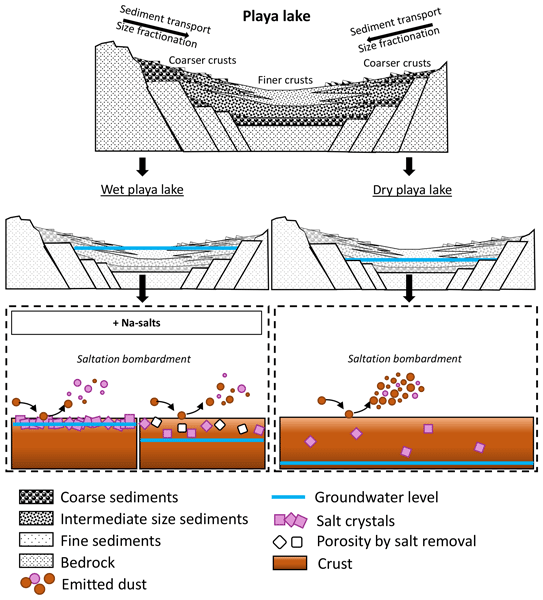
Adolfo González-Romero, Cristina González-Flórez, Agnesh Panta, Jesús Yus-Díez, Patricia Córdoba, Andres Alastuey, Natalia Moreno, Melani Hernández-Chiriboga, Konrad Kandler, Martina Klose, Roger N. Clark, Bethany L. Ehlmann, Rebecca N. Greenberger, Abigail M. Keebler, Phil Brodrick, Robert Green, Paul Ginoux, Xavier Querol, and Carlos Pérez García-Pando
Atmos. Chem. Phys., 24, 9155–9176, https://doi.org/10.5194/acp-24-9155-2024, https://doi.org/10.5194/acp-24-9155-2024, 2024
Short summary
Short summary
In this research, we studied the dust-emitting properties of crusts and aeolian ripples from the Mojave Desert. These properties are key to understanding the effect of dust upon climate. We found two different playa lakes according to the groundwater regime, which implies differences in crusts' cohesion state and mineralogy, which can affect the dust emission potential and properties. We also compare them with Moroccan Sahara crusts and Icelandic top sediments.
Pantelis Georgiades, Matthias Kohl, Mihalis A. Nicolaou, Theodoros Christoudias, Andrea Pozzer, Constantine Dovrolis, and Jos Lelieveld
Earth Syst. Sci. Data Discuss., https://doi.org/10.5194/essd-2024-314, https://doi.org/10.5194/essd-2024-314, 2024
Manuscript not accepted for further review
Short summary
Short summary
This study maps global ultrafine particle (UFP) concentrations, pollutants known to affect health, using machine learning. By combining environmental and urban data, we predicted UFP levels at a fine 1 km resolution, highlighting areas of high exposure. Our results provide data for public health policies aimed at reducing air pollution impacts. This research bridges data gaps, offering a valuable tool for understanding and mitigating the health effects of UFP exposure.
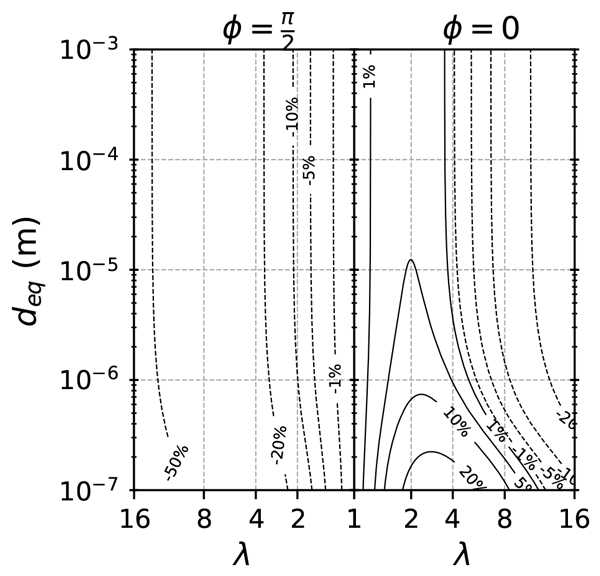
Sylvain Mailler, Sotirios Mallios, Arineh Cholakian, Vassilis Amiridis, Laurent Menut, and Romain Pennel
Geosci. Model Dev., 17, 5641–5655, https://doi.org/10.5194/gmd-17-5641-2024, https://doi.org/10.5194/gmd-17-5641-2024, 2024
Short summary
Short summary
We propose two explicit expressions to calculate the settling speed of solid atmospheric particles with prolate spheroidal shapes. The first formulation is based on theoretical arguments only, while the second one is based on computational fluid dynamics calculations. We show that the first method is suitable for virtually all atmospheric aerosols, provided their shape can be adequately described as a prolate spheroid, and we provide an implementation of the first method in AerSett v2.0.2.
Claire L. Ryder, Clément Bézier, Helen F. Dacre, Rory Clarkson, Vassilis Amiridis, Eleni Marinou, Emmanouil Proestakis, Zak Kipling, Angela Benedetti, Mark Parrington, Samuel Rémy, and Mark Vaughan
Nat. Hazards Earth Syst. Sci., 24, 2263–2284, https://doi.org/10.5194/nhess-24-2263-2024, https://doi.org/10.5194/nhess-24-2263-2024, 2024
Short summary
Short summary
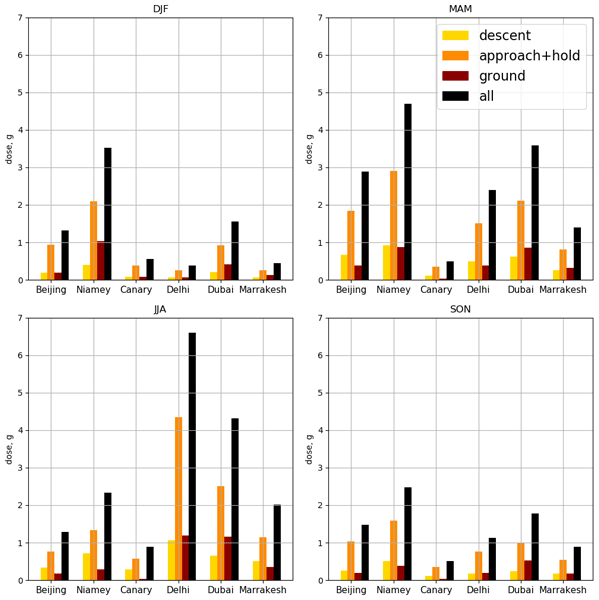
Desert dust poses a hazard to aircraft via degradation of engine components. This has financial implications for the aviation industry and results in increased fuel burn with climate impacts. Here we quantify dust ingestion by aircraft engines at airports worldwide. We find Dubai and Delhi in summer are among the dustiest airports, where substantial engine degradation would occur after 1000 flights. Dust ingestion can be reduced by changing take-off times and the altitude of holding patterns.
Emmanouil Proestakis, Antonis Gkikas, Thanasis Georgiou, Anna Kampouri, Eleni Drakaki, Claire L. Ryder, Franco Marenco, Eleni Marinou, and Vassilis Amiridis
Atmos. Meas. Tech., 17, 3625–3667, https://doi.org/10.5194/amt-17-3625-2024, https://doi.org/10.5194/amt-17-3625-2024, 2024
Short summary
Short summary
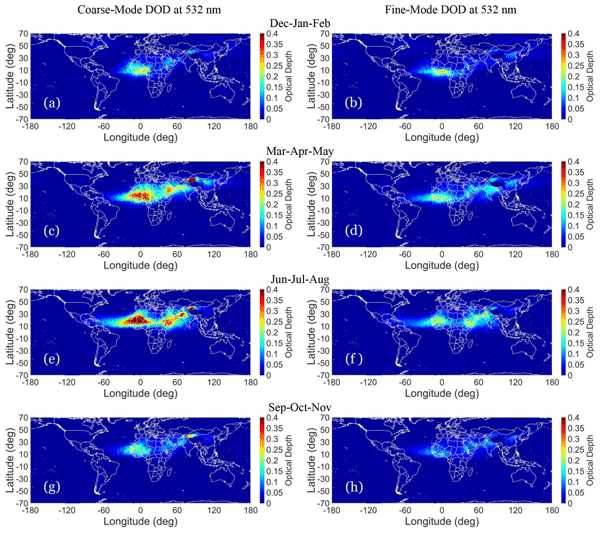
A new four-dimensional, multiyear, and near-global climate data record of the fine-mode (submicrometer diameter) and coarse-mode (supermicrometer diameter) components of atmospheric pure dust is presented. The dataset is considered unique with respect to a wide range of potential applications, including climatological, time series, and trend analysis over extensive geographical domains and temporal periods, validation of atmospheric dust models and datasets, and air quality.
Adolfo González-Romero, Cristina González-Flórez, Agnesh Panta, Jesús Yus-Díez, Patricia Córdoba, Andres Alastuey, Natalia Moreno, Konrad Kandler, Martina Klose, Roger N. Clark, Bethany L. Ehlmann, Rebecca N. Greenberger, Abigail M. Keebler, Phil Brodrick, Robert O. Green, Xavier Querol, and Carlos Pérez García-Pando
Atmos. Chem. Phys., 24, 6883–6910, https://doi.org/10.5194/acp-24-6883-2024, https://doi.org/10.5194/acp-24-6883-2024, 2024
Short summary
Short summary
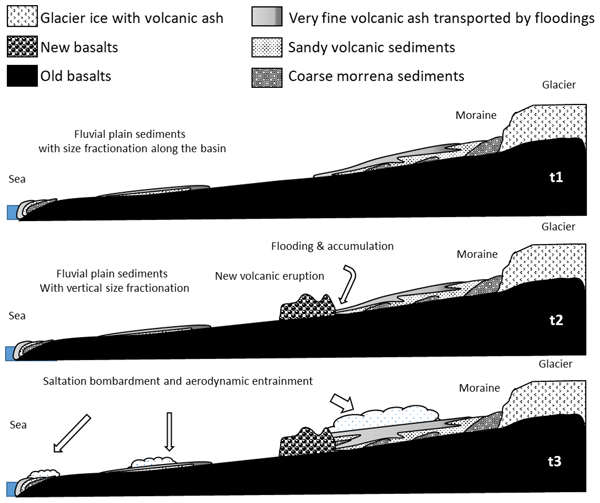
The knowledge of properties from dust emitted in high latitudes such as in Iceland is scarce. This study focuses on the particle size, mineralogy, cohesion, and iron mode of occurrence and reflectance spectra of dust-emitting sediments. Icelandic top sediments have lower cohesion state, coarser particle size, distinctive mineralogy, and 3-fold bulk Fe content, with a large presence of magnetite compared to Saharan crusts.
Francesca Lappin, Gijs de Boer, Petra Klein, Jonathan Hamilton, Michelle Spencer, Radiance Calmer, Antonio R. Segales, Michael Rhodes, Tyler M. Bell, Justin Buchli, Kelsey Britt, Elizabeth Asher, Isaac Medina, Brian Butterworth, Leia Otterstatter, Madison Ritsch, Bryony Puxley, Angelina Miller, Arianna Jordan, Ceu Gomez-Faulk, Elizabeth Smith, Steven Borenstein, Troy Thornberry, Brian Argrow, and Elizabeth Pillar-Little
Earth Syst. Sci. Data, 16, 2525–2541, https://doi.org/10.5194/essd-16-2525-2024, https://doi.org/10.5194/essd-16-2525-2024, 2024
Short summary
Short summary
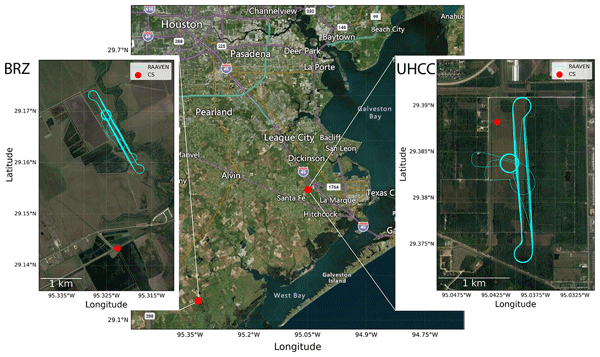
This article provides an overview of the lower-atmospheric dataset collected by two uncrewed aerial systems near the Gulf of Mexico coastline south of Houston, TX, USA, as part of the TRacking Aerosol Convection interactions ExpeRiment (TRACER) campaign. The data were collected through boundary layer transitions, through sea breeze circulations, and in the pre- and near-storm environment to understand how these processes influence the coastal environment.
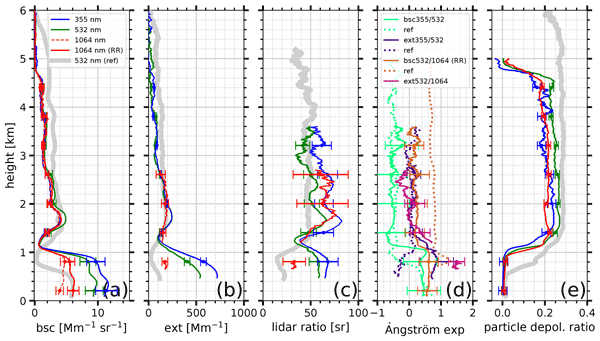
Henriette Gebauer, Athena Augusta Floutsi, Moritz Haarig, Martin Radenz, Ronny Engelmann, Dietrich Althausen, Annett Skupin, Albert Ansmann, Cordula Zenk, and Holger Baars
Atmos. Chem. Phys., 24, 5047–5067, https://doi.org/10.5194/acp-24-5047-2024, https://doi.org/10.5194/acp-24-5047-2024, 2024
Short summary
Short summary
Sulfate aerosol from the volcanic eruption at La Palma in 2021 was observed over Cabo Verde. We characterized the aerosol burden based on a case study of lidar and sun photometer observations. We compared the volcanic case to the typical background conditions (reference case) to quantify the volcanic pollution. We show the first ever measurements of the extinction coefficient, lidar ratio and depolarization ratio at 1064 nm for volcanic sulfate.
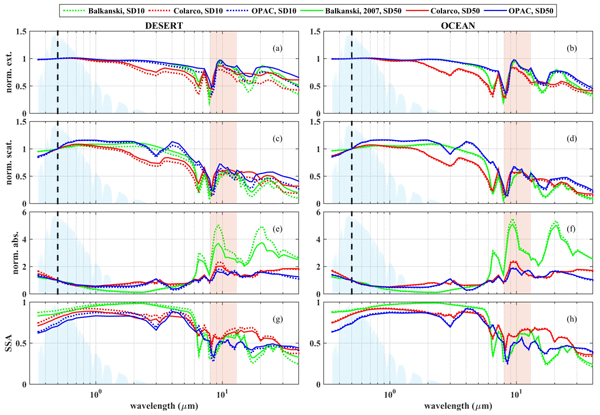
Ilias Fountoulakis, Alexandra Tsekeri, Stelios Kazadzis, Vassilis Amiridis, Angelos Nersesian, Maria Tsichla, Emmanouil Proestakis, Antonis Gkikas, Kyriakoula Papachristopoulou, Vasileios Barlakas, Claudia Emde, and Bernhard Mayer
Atmos. Chem. Phys., 24, 4915–4948, https://doi.org/10.5194/acp-24-4915-2024, https://doi.org/10.5194/acp-24-4915-2024, 2024
Short summary
Short summary
In our study we provide an assessment, through a sensitivity study, of the limitations of models to calculate the dust direct radiative effect (DRE) due to the underrepresentation of its size, refractive index (RI), and shape. Our results indicate the necessity of including more realistic sizes and RIs for dust particles in dust models, in order to derive better estimations of the dust direct radiative effects.
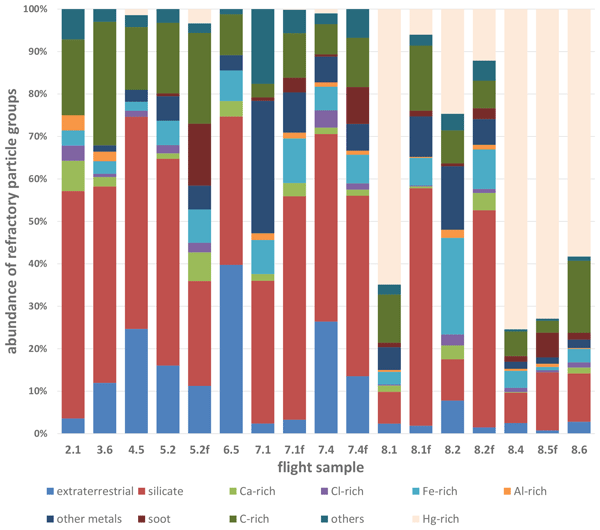
Martin Ebert, Ralf Weigel, Stephan Weinbruch, Lisa Schneider, Konrad Kandler, Stefan Lauterbach, Franziska Köllner, Felix Plöger, Gebhard Günther, Bärbel Vogel, and Stephan Borrmann
Atmos. Chem. Phys., 24, 4771–4788, https://doi.org/10.5194/acp-24-4771-2024, https://doi.org/10.5194/acp-24-4771-2024, 2024
Short summary
Short summary
Particles were collected during the flight campaign StratoClim 2017 within the Asian tropopause aerosol layer (ATAL). Refractory particles from seven different flights were characterized by scanning and transmission electron microscopy (SEM, TEM). The most abundant refractory particles are silicates and non-volatile organics. The most important sources are combustion processes at the ground and the agitation of soil material. During one flight, small cinnabar particles (HgS) were also detected.
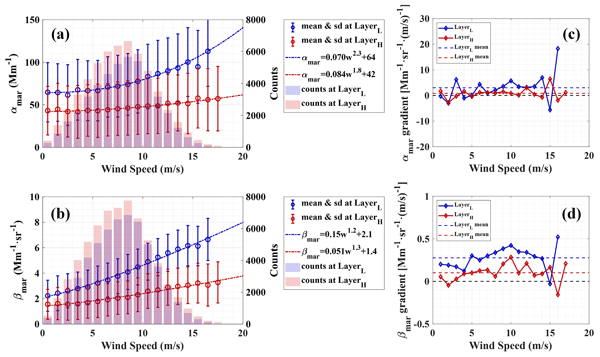
Kangwen Sun, Guangyao Dai, Songhua Wu, Oliver Reitebuch, Holger Baars, Jiqiao Liu, and Suping Zhang
Atmos. Chem. Phys., 24, 4389–4409, https://doi.org/10.5194/acp-24-4389-2024, https://doi.org/10.5194/acp-24-4389-2024, 2024
Short summary
Short summary
This paper investigates the correlation between marine aerosol optical properties and wind speeds over remote oceans using the spaceborne lidars ALADIN and CALIOP. Three remote ocean areas are selected. Pure marine aerosol optical properties at 355 nm are derived from ALADIN. The relationships between marine aerosol optical properties and wind speeds are analyzed within and above the marine atmospheric boundary layer, revealing the effect of wind speed on marine aerosols over remote oceans.
Alkistis Papetta, Franco Marenco, Maria Kezoudi, Rodanthi-Elisavet Mamouri, Argyro Nisantzi, Holger Baars, Ioana Elisabeta Popovici, Philippe Goloub, Stéphane Victori, and Jean Sciare
Atmos. Meas. Tech., 17, 1721–1738, https://doi.org/10.5194/amt-17-1721-2024, https://doi.org/10.5194/amt-17-1721-2024, 2024
Short summary
Short summary
We propose a method to determine depolarization parameters using observations from a reference instrument at a nearby location, needed for systems where a priori knowledge of cross-talk parameters is not available. It uses three-parameter equations to compare VDR between two co-located lidars at dust and molecular layers. It can be applied retrospectively to existing data acquired during campaigns. Its application to Cimel CE376 corrected VDR bias at high- and low-depolarizing layers.
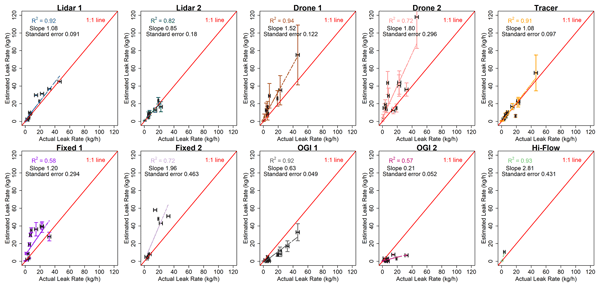
Yunsong Liu, Jean-Daniel Paris, Gregoire Broquet, Violeta Bescós Roy, Tania Meixus Fernandez, Rasmus Andersen, Andrés Russu Berlanga, Emil Christensen, Yann Courtois, Sebastian Dominok, Corentin Dussenne, Travis Eckert, Andrew Finlayson, Aurora Fernández de la Fuente, Catlin Gunn, Ram Hashmonay, Juliano Grigoleto Hayashi, Jonathan Helmore, Soeren Honsel, Fabrizio Innocenti, Matti Irjala, Torgrim Log, Cristina Lopez, Francisco Cortés Martínez, Jonathan Martinez, Adrien Massardier, Helle Gottschalk Nygaard, Paula Agregan Reboredo, Elodie Rousset, Axel Scherello, Matthias Ulbricht, Damien Weidmann, Oliver Williams, Nigel Yarrow, Murès Zarea, Robert Ziegler, Jean Sciare, Mihalis Vrekoussis, and Philippe Bousquet
Atmos. Meas. Tech., 17, 1633–1649, https://doi.org/10.5194/amt-17-1633-2024, https://doi.org/10.5194/amt-17-1633-2024, 2024
Short summary
Short summary
We investigated the performance of 10 methane emission quantification techniques in a blind controlled-release experiment at an inerted natural gas compressor station. We reported their respective strengths, weaknesses, and potential complementarity depending on the emission rates and atmospheric conditions. Additionally, we assess the dependence of emission quantification performance on key parameters such as wind speed, deployment constraints, and measurement duration.
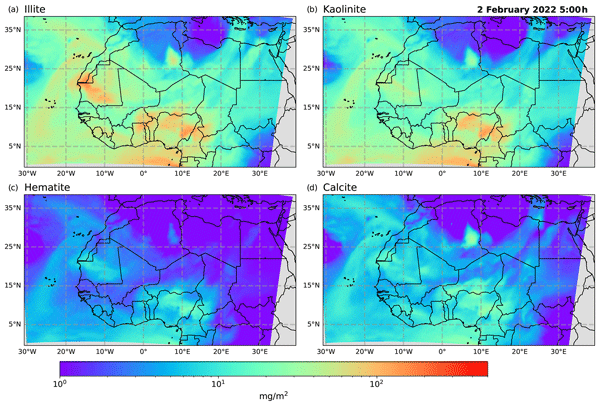
Sofía Gómez Maqueo Anaya, Dietrich Althausen, Matthias Faust, Holger Baars, Bernd Heinold, Julian Hofer, Ina Tegen, Albert Ansmann, Ronny Engelmann, Annett Skupin, Birgit Heese, and Kerstin Schepanski
Geosci. Model Dev., 17, 1271–1295, https://doi.org/10.5194/gmd-17-1271-2024, https://doi.org/10.5194/gmd-17-1271-2024, 2024
Short summary
Short summary
Mineral dust aerosol particles vary greatly in their composition depending on source region, which leads to different physicochemical properties. Most atmosphere–aerosol models consider mineral dust aerosols to be compositionally homogeneous, which ultimately increases model uncertainty. Here, we present an approach to explicitly consider the heterogeneity of the mineralogical composition for simulations of the Saharan atmospheric dust cycle with regard to dust transport towards the Atlantic.
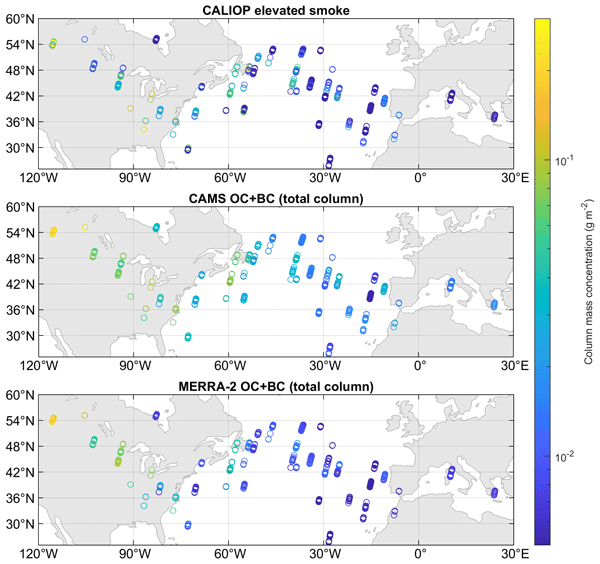
Xiaoxia Shang, Antti Lipponen, Maria Filioglou, Anu-Maija Sundström, Mark Parrington, Virginie Buchard, Anton S. Darmenov, Ellsworth J. Welton, Eleni Marinou, Vassilis Amiridis, Michael Sicard, Alejandro Rodríguez-Gómez, Mika Komppula, and Tero Mielonen
Atmos. Chem. Phys., 24, 1329–1344, https://doi.org/10.5194/acp-24-1329-2024, https://doi.org/10.5194/acp-24-1329-2024, 2024
Short summary
Short summary
In June 2019, smoke particles from a Canadian wildfire event were transported to Europe. The long-range-transported smoke plumes were monitored with a spaceborne lidar and reanalysis models. Based on the aerosol mass concentrations estimated from the observations, the reanalysis models had difficulties in reproducing the amount and location of the smoke aerosols during the transport event. Consequently, more spaceborne lidar missions are needed for reliable monitoring of aerosol plumes.
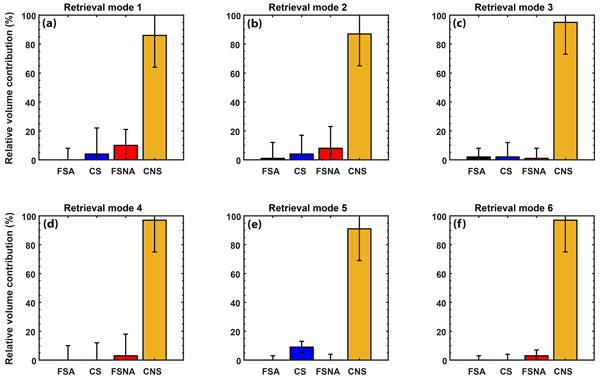
Athena Augusta Floutsi, Holger Baars, and Ulla Wandinger
Atmos. Meas. Tech., 17, 693–714, https://doi.org/10.5194/amt-17-693-2024, https://doi.org/10.5194/amt-17-693-2024, 2024
Short summary
Short summary
We introduce an aerosol-typing scheme (HETEAC-Flex) based on lidar-derived intensive optical properties and applicable to ground-based and spaceborne lidars. HETEAC-Flex utilizes the optimal estimation method and enables the identification of up to four different aerosol components, as well as the determination of their contribution to the aerosol mixture in terms of relative volume. The aerosol components represent common aerosol types such as dust, sea salt, smoke and pollution.
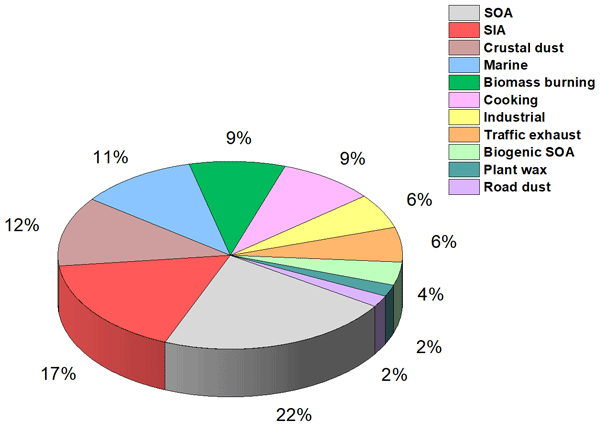
Nansi Fakhri, Robin Stevens, Arnold Downey, Konstantina Oikonomou, Jean Sciare, Charbel Afif, and Patrick L. Hayes
Atmos. Chem. Phys., 24, 1193–1212, https://doi.org/10.5194/acp-24-1193-2024, https://doi.org/10.5194/acp-24-1193-2024, 2024
Short summary
Short summary
We investigated the chemical composition of atmospheric fine particles, their emission sources, and the potential human health risk associated with trace elements in particles for an urban site in Montréal over a 3-month period (August–November). This study represents the first time that such extensive composition measurements were included in an urban source apportionment study in Canada, and it provides greater resolution of fine-particle sources than has been previously achieved in Canada.
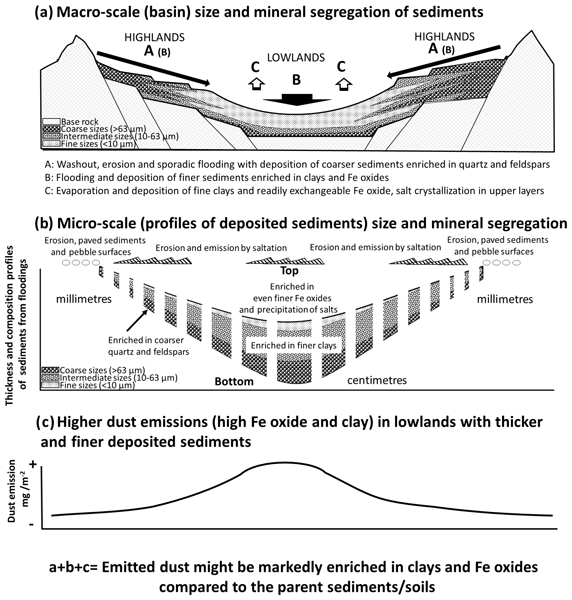
Adolfo González-Romero, Cristina González-Flórez, Agnesh Panta, Jesús Yus-Díez, Cristina Reche, Patricia Córdoba, Natalia Moreno, Andres Alastuey, Konrad Kandler, Martina Klose, Clarissa Baldo, Roger N. Clark, Zongbo Shi, Xavier Querol, and Carlos Pérez García-Pando
Atmos. Chem. Phys., 23, 15815–15834, https://doi.org/10.5194/acp-23-15815-2023, https://doi.org/10.5194/acp-23-15815-2023, 2023
Short summary
Short summary
The effect of dust emitted from desertic surfaces upon climate and ecosystems depends on size and mineralogy, but data from soil mineral atlases of desert soils are scarce. We performed particle-size distribution, mineralogy, and Fe speciation in southern Morocco. Results show coarser particles with high quartz proportion are near the elevated areas, while in depressed areas, sizes are finer, and proportions of clays and nano-Fe oxides are higher. This difference is important for dust modelling.
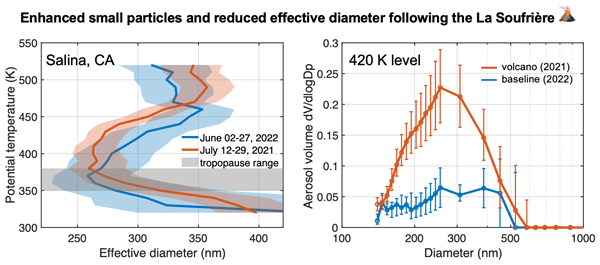
Yaowei Li, Corey Pedersen, John Dykema, Jean-Paul Vernier, Sandro Vattioni, Amit Kumar Pandit, Andrea Stenke, Elizabeth Asher, Troy Thornberry, Michael A. Todt, Thao Paul Bui, Jonathan Dean-Day, and Frank N. Keutsch
Atmos. Chem. Phys., 23, 15351–15364, https://doi.org/10.5194/acp-23-15351-2023, https://doi.org/10.5194/acp-23-15351-2023, 2023
Short summary
Short summary
In 2021, the eruption of La Soufrière released sulfur dioxide into the stratosphere, resulting in a spread of volcanic aerosol over the Northern Hemisphere. We conducted extensive aircraft and balloon-borne measurements after that, revealing enhanced particle concentration and altered size distribution due to the eruption. The eruption's impact on ozone depletion was minimal, contributing ~0.6 %, and its global radiative forcing effect was modest, mainly affecting tropical and midlatitude areas.
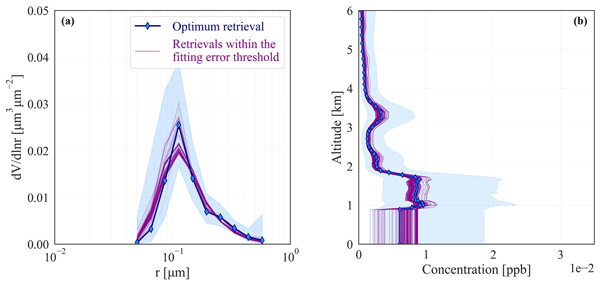
Alexandra Tsekeri, Anna Gialitaki, Marco Di Paolantonio, Davide Dionisi, Gian Luigi Liberti, Alnilam Fernandes, Artur Szkop, Aleksander Pietruczuk, Daniel Pérez-Ramírez, Maria J. Granados Muñoz, Juan Luis Guerrero-Rascado, Lucas Alados-Arboledas, Diego Bermejo Pantaleón, Juan Antonio Bravo-Aranda, Anna Kampouri, Eleni Marinou, Vassilis Amiridis, Michael Sicard, Adolfo Comerón, Constantino Muñoz-Porcar, Alejandro Rodríguez-Gómez, Salvatore Romano, Maria Rita Perrone, Xiaoxia Shang, Mika Komppula, Rodanthi-Elisavet Mamouri, Argyro Nisantzi, Diofantos Hadjimitsis, Francisco Navas-Guzmán, Alexander Haefele, Dominika Szczepanik, Artur Tomczak, Iwona S. Stachlewska, Livio Belegante, Doina Nicolae, Kalliopi Artemis Voudouri, Dimitris Balis, Athena A. Floutsi, Holger Baars, Linda Miladi, Nicolas Pascal, Oleg Dubovik, and Anton Lopatin
Atmos. Meas. Tech., 16, 6025–6050, https://doi.org/10.5194/amt-16-6025-2023, https://doi.org/10.5194/amt-16-6025-2023, 2023
Short summary
Short summary
EARLINET/ACTRIS organized an intensive observational campaign in May 2020, with the objective of monitoring the atmospheric state over Europe during the COVID-19 lockdown and relaxation period. The work presented herein focuses on deriving a common methodology for applying a synergistic retrieval that utilizes the network's ground-based passive and active remote sensing measurements and deriving the aerosols from anthropogenic activities over Europe.
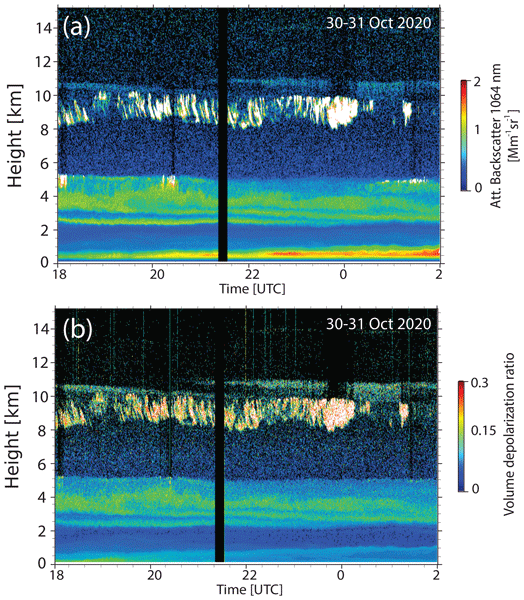
Rodanthi-Elisavet Mamouri, Albert Ansmann, Kevin Ohneiser, Daniel A. Knopf, Argyro Nisantzi, Johannes Bühl, Ronny Engelmann, Annett Skupin, Patric Seifert, Holger Baars, Dragos Ene, Ulla Wandinger, and Diofantos Hadjimitsis
Atmos. Chem. Phys., 23, 14097–14114, https://doi.org/10.5194/acp-23-14097-2023, https://doi.org/10.5194/acp-23-14097-2023, 2023
Short summary
Short summary
For the first time, rather clear evidence is found that wildfire smoke particles can trigger strong cirrus formation. This finding is of importance because intensive and large wildfires may occur increasingly often in the future as climate change proceeds. Based on lidar observations in Cyprus in autumn 2020, we provide detailed insight into the cirrus formation at the tropopause in the presence of aged wildfire smoke (here, 8–9 day old Californian wildfire smoke).
Ioannis Cheliotis, Thomas Lauvaux, Jinghui Lian, Theodoros Christoudias, George Georgiou, Alba Badia, Frédéric Chevallier, Pramod Kumar, Yathin Kudupaje, Ruixue Lei, and Philippe Ciais
EGUsphere, https://doi.org/10.5194/egusphere-2023-2487, https://doi.org/10.5194/egusphere-2023-2487, 2023
Preprint withdrawn
Short summary
Short summary
A consistent estimation of CO2 emissions is complicated due to the scarcity of CO2 observations. In this study, we showcase the potential to improve the CO2 emissions estimations from the NO2 concentrations based on the NO2-to-CO2 ratio, which should be constant for a source co-emitting NO2 and CO2, by comparing satellite observations with atmospheric chemistry and transport model simulations for NO2 and CO2. Furthermore, we demonstrate the significance of the chemistry in NO2 simulations.
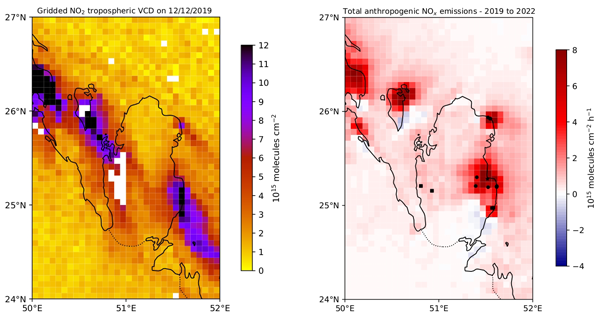
Anthony Rey-Pommier, Frédéric Chevallier, Philippe Ciais, Jonilda Kushta, Theodoros Christoudias, I. Safak Bayram, and Jean Sciare
Atmos. Chem. Phys., 23, 13565–13583, https://doi.org/10.5194/acp-23-13565-2023, https://doi.org/10.5194/acp-23-13565-2023, 2023
Short summary
Short summary
We use four years (2019–2022) of TROPOMI NO2 data to map NOx emissions in Qatar. We estimate average monthly emissions for the country and industrial facilities and derive an emission factor for the power sector. Monthly emissions have a weekly cycle reflecting the social norms in Qatar and an annual cycle consistent with the electricity production by gas-fired power plants. Their mean value is lower than the NOx emissions in global inventories but similar to the emissions reported for 2007.
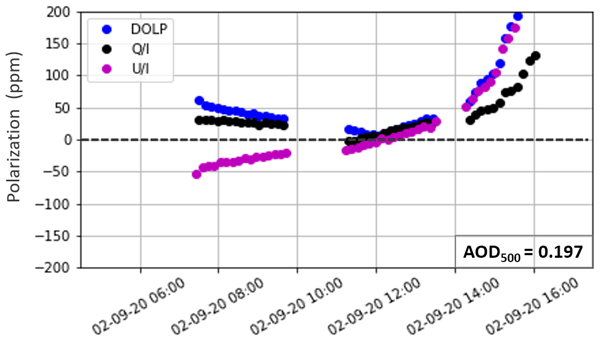
Vasiliki Daskalopoulou, Panagiotis I. Raptis, Alexandra Tsekeri, Vassilis Amiridis, Stelios Kazadzis, Zbigniew Ulanowski, Vassilis Charmandaris, Konstantinos Tassis, and William Martin
Atmos. Meas. Tech., 16, 4529–4550, https://doi.org/10.5194/amt-16-4529-2023, https://doi.org/10.5194/amt-16-4529-2023, 2023
Short summary
Short summary
Atmospheric dust particles may present a preferential alignment due to their shape on long range transport. Since dust is abundant and plays a key role to global climate, the elusive observation of orientation will be a game changer to existing measurement techniques and the representation of particles in climate models. We utilize a specifically designed instrument, SolPol, and target the Sun from the ground for large polarization values under dusty conditions, a clear sign of orientation.
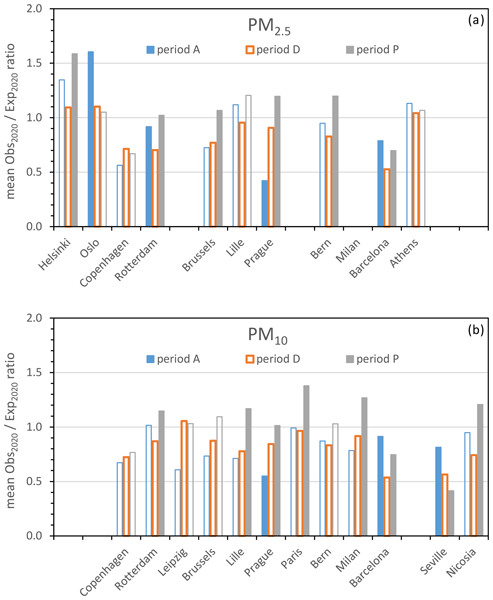
Jean-Philippe Putaud, Enrico Pisoni, Alexander Mangold, Christoph Hueglin, Jean Sciare, Michael Pikridas, Chrysanthos Savvides, Jakub Ondracek, Saliou Mbengue, Alfred Wiedensohler, Kay Weinhold, Maik Merkel, Laurent Poulain, Dominik van Pinxteren, Hartmut Herrmann, Andreas Massling, Claus Nordstroem, Andrés Alastuey, Cristina Reche, Noemí Pérez, Sonia Castillo, Mar Sorribas, Jose Antonio Adame, Tuukka Petaja, Katrianne Lehtipalo, Jarkko Niemi, Véronique Riffault, Joel F. de Brito, Augustin Colette, Olivier Favez, Jean-Eudes Petit, Valérie Gros, Maria I. Gini, Stergios Vratolis, Konstantinos Eleftheriadis, Evangelia Diapouli, Hugo Denier van der Gon, Karl Espen Yttri, and Wenche Aas
Atmos. Chem. Phys., 23, 10145–10161, https://doi.org/10.5194/acp-23-10145-2023, https://doi.org/10.5194/acp-23-10145-2023, 2023
Short summary
Short summary
Many European people are still exposed to levels of air pollution that can affect their health. COVID-19 lockdowns in 2020 were used to assess the impact of the reduction in human mobility on air pollution across Europe by comparing measurement data with values that would be expected if no lockdown had occurred. We show that lockdown measures did not lead to consistent decreases in the concentrations of fine particulate matter suspended in the air, and we investigate why.
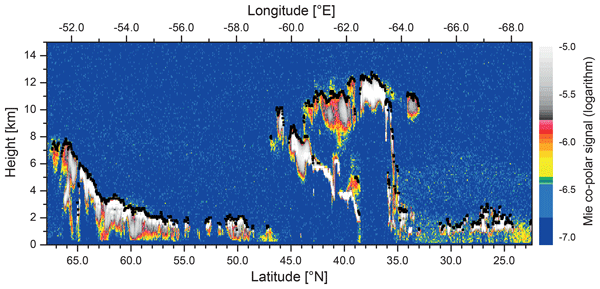
Ulla Wandinger, Moritz Haarig, Holger Baars, David Donovan, and Gerd-Jan van Zadelhoff
Atmos. Meas. Tech., 16, 4031–4052, https://doi.org/10.5194/amt-16-4031-2023, https://doi.org/10.5194/amt-16-4031-2023, 2023
Short summary
Short summary
We introduce the algorithms that have been developed to derive cloud top height and aerosol layer products from observations with the Atmospheric Lidar (ATLID) onboard the Earth Cloud, Aerosol and Radiation Explorer (EarthCARE). The products provide information on the uppermost cloud and geometrical and optical properties of aerosol layers in an atmospheric column. They can be used individually but also serve as input for algorithms that combine observations with EarthCARE’s lidar and imager.
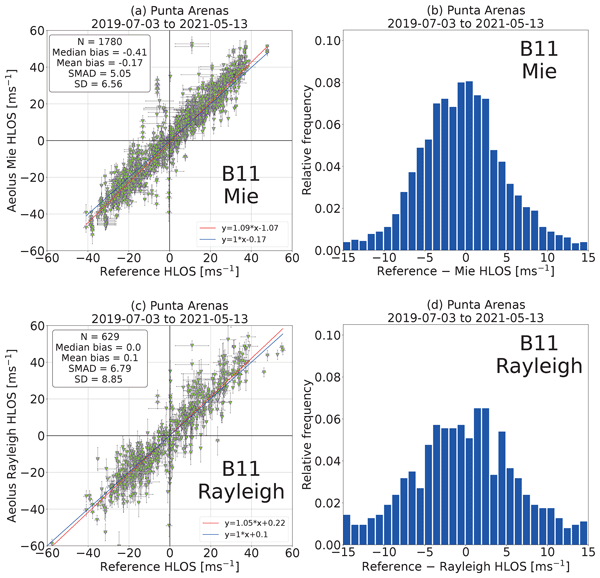
Holger Baars, Joshua Walchester, Elizaveta Basharova, Henriette Gebauer, Martin Radenz, Johannes Bühl, Boris Barja, Ulla Wandinger, and Patric Seifert
Atmos. Meas. Tech., 16, 3809–3834, https://doi.org/10.5194/amt-16-3809-2023, https://doi.org/10.5194/amt-16-3809-2023, 2023
Short summary
Short summary
In 2018, the Aeolus satellite of the European Space Agency (ESA) was launched to improve weather forecasts through global measurements of wind profiles. Given the novel lidar technique onboard, extensive validation efforts have been needed to verify the observations. For this reason, we performed long-term validation measurements in Germany and Chile. We found significant improvement in the data products due to a new algorithm version and can confirm the general validity of Aeolus observations.
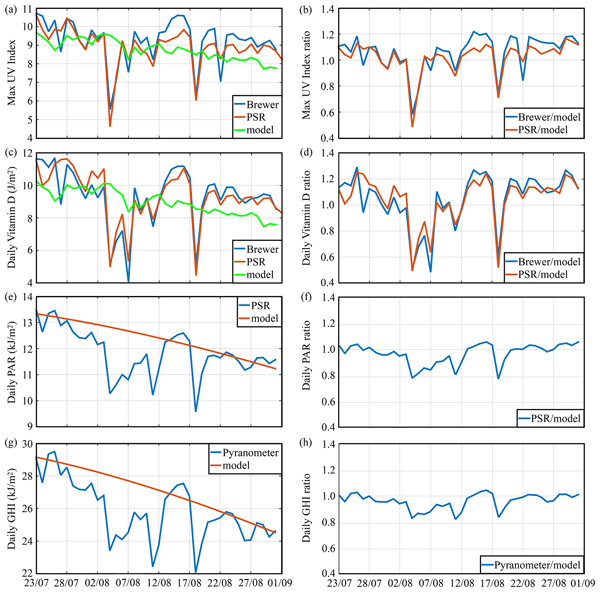
Akriti Masoom, Ilias Fountoulakis, Stelios Kazadzis, Ioannis-Panagiotis Raptis, Anna Kampouri, Basil E. Psiloglou, Dimitra Kouklaki, Kyriakoula Papachristopoulou, Eleni Marinou, Stavros Solomos, Anna Gialitaki, Dimitra Founda, Vasileios Salamalikis, Dimitris Kaskaoutis, Natalia Kouremeti, Nikolaos Mihalopoulos, Vassilis Amiridis, Andreas Kazantzidis, Alexandros Papayannis, Christos S. Zerefos, and Kostas Eleftheratos
Atmos. Chem. Phys., 23, 8487–8514, https://doi.org/10.5194/acp-23-8487-2023, https://doi.org/10.5194/acp-23-8487-2023, 2023
Short summary
Short summary
We analyse the spatial and temporal aerosol spectral optical properties during the extreme wildfires of August 2021 in Greece and assess their effects on air quality and solar radiation quantities related to health, agriculture, and energy. Different aerosol conditions are identified (pure smoke, pure dust, dust–smoke together); the largest impact on solar radiation quantities is found for cases with mixed dust–smoke aerosols. Such situations are expected to occur more frequently in the future.
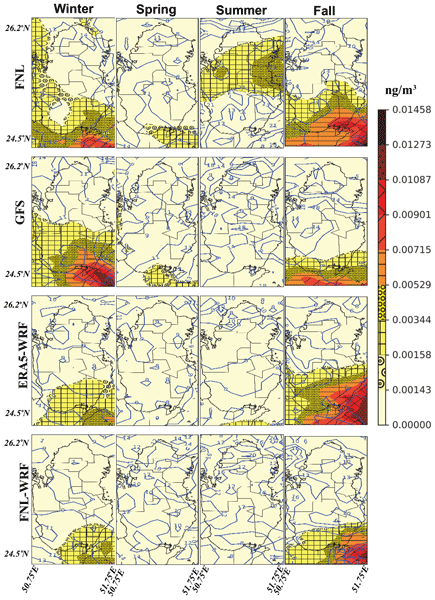
Seyed Omid Nabavi, Theodoros Christoudias, Yiannis Proestos, Christos Fountoukis, Huda Al-Sulaiti, and Jos Lelieveld
Atmos. Chem. Phys., 23, 7719–7739, https://doi.org/10.5194/acp-23-7719-2023, https://doi.org/10.5194/acp-23-7719-2023, 2023
Short summary
Short summary
The objective of our study is to comprehensively assess the timing of radioactive material transportation and deposition, along with the associated population exposure in the designated region. We employed diverse meteorological inputs, emission specifics, and simulation codes, aiming to quantify the level of uncertainty.
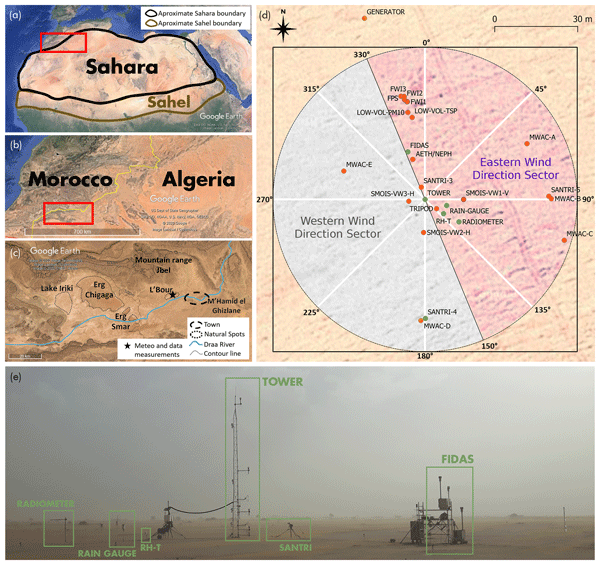
Cristina González-Flórez, Martina Klose, Andrés Alastuey, Sylvain Dupont, Jerónimo Escribano, Vicken Etyemezian, Adolfo Gonzalez-Romero, Yue Huang, Konrad Kandler, George Nikolich, Agnesh Panta, Xavier Querol, Cristina Reche, Jesús Yus-Díez, and Carlos Pérez García-Pando
Atmos. Chem. Phys., 23, 7177–7212, https://doi.org/10.5194/acp-23-7177-2023, https://doi.org/10.5194/acp-23-7177-2023, 2023
Short summary
Short summary
Atmospheric mineral dust consists of tiny mineral particles that are emitted by wind erosion from arid regions. Its particle size distribution (PSD) affects its impact on the Earth's system. Nowadays, there is an incomplete understanding of the emitted dust PSD and a lot of debate about its variability. Here, we try to address these issues based on the measurements performed during a wind erosion and dust emission field campaign in the Moroccan Sahara within the framework of FRAGMENT project.
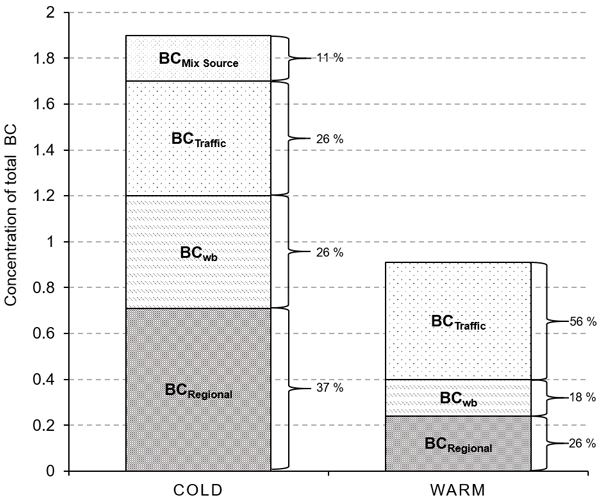
Aliki Christodoulou, Iasonas Stavroulas, Mihalis Vrekoussis, Maximillien Desservettaz, Michael Pikridas, Elie Bimenyimana, Jonilda Kushta, Matic Ivančič, Martin Rigler, Philippe Goloub, Konstantina Oikonomou, Roland Sarda-Estève, Chrysanthos Savvides, Charbel Afif, Nikos Mihalopoulos, Stéphane Sauvage, and Jean Sciare
Atmos. Chem. Phys., 23, 6431–6456, https://doi.org/10.5194/acp-23-6431-2023, https://doi.org/10.5194/acp-23-6431-2023, 2023
Short summary
Short summary
Our study presents, for the first time, a detailed source identification of aerosols at an urban background site in Cyprus (eastern Mediterranean), a region strongly impacted by climate change and air pollution. Here, we identify an unexpected high contribution of long-range transported pollution from fossil fuel sources in the Middle East, highlighting an urgent need to further characterize these fast-growing emissions and their impacts on regional atmospheric composition, climate, and health.
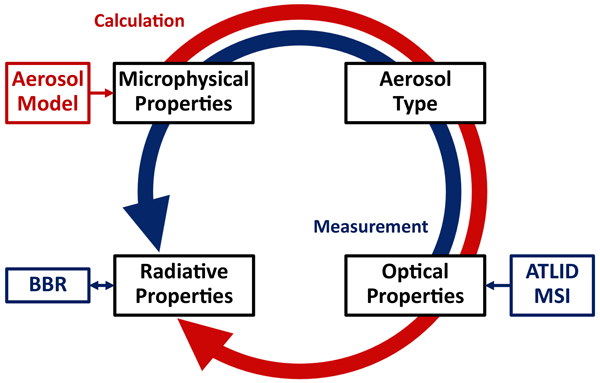
Ulla Wandinger, Athena Augusta Floutsi, Holger Baars, Moritz Haarig, Albert Ansmann, Anja Hünerbein, Nicole Docter, David Donovan, Gerd-Jan van Zadelhoff, Shannon Mason, and Jason Cole
Atmos. Meas. Tech., 16, 2485–2510, https://doi.org/10.5194/amt-16-2485-2023, https://doi.org/10.5194/amt-16-2485-2023, 2023
Short summary
Short summary
We introduce an aerosol classification model that has been developed for the Earth Clouds, Aerosols and Radiation Explorer (EarthCARE). The model provides a consistent description of microphysical, optical, and radiative properties of common aerosol types such as dust, sea salt, pollution, and smoke. It is used for aerosol classification and assessment of radiation effects based on the synergy of active and passive observations with lidar, imager, and radiometer of the multi-instrument platform.
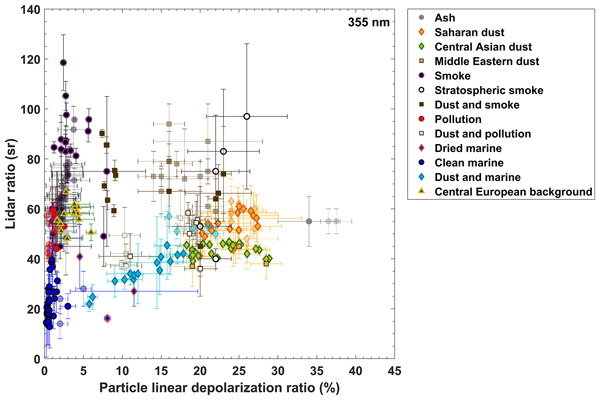
Athena Augusta Floutsi, Holger Baars, Ronny Engelmann, Dietrich Althausen, Albert Ansmann, Stephanie Bohlmann, Birgit Heese, Julian Hofer, Thomas Kanitz, Moritz Haarig, Kevin Ohneiser, Martin Radenz, Patric Seifert, Annett Skupin, Zhenping Yin, Sabur F. Abdullaev, Mika Komppula, Maria Filioglou, Elina Giannakaki, Iwona S. Stachlewska, Lucja Janicka, Daniele Bortoli, Eleni Marinou, Vassilis Amiridis, Anna Gialitaki, Rodanthi-Elisavet Mamouri, Boris Barja, and Ulla Wandinger
Atmos. Meas. Tech., 16, 2353–2379, https://doi.org/10.5194/amt-16-2353-2023, https://doi.org/10.5194/amt-16-2353-2023, 2023
Short summary
Short summary
DeLiAn is a collection of lidar-derived aerosol intensive optical properties for several aerosol types, namely the particle linear depolarization ratio, the extinction-to-backscatter ratio (lidar ratio) and the Ångström exponent. The data collection is based on globally distributed, long-term, ground-based, multiwavelength, Raman and polarization lidar measurements and currently covers two wavelengths, 355 and 532 nm, for 13 aerosol categories ranging from basic aerosol types to mixtures.
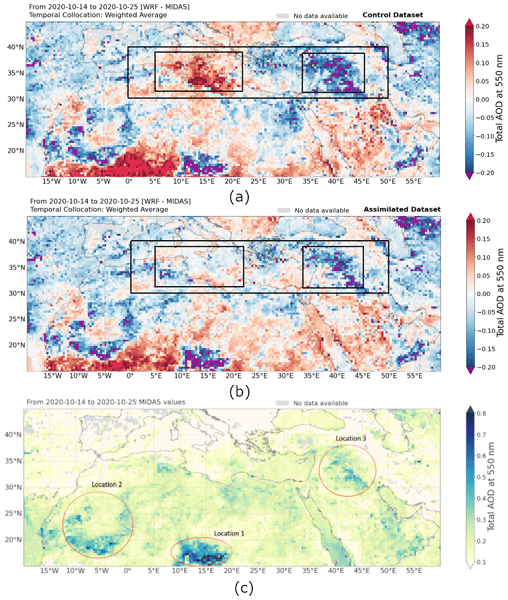
Pantelis Kiriakidis, Antonis Gkikas, Georgios Papangelis, Theodoros Christoudias, Jonilda Kushta, Emmanouil Proestakis, Anna Kampouri, Eleni Marinou, Eleni Drakaki, Angela Benedetti, Michael Rennie, Christian Retscher, Anne Grete Straume, Alexandru Dandocsi, Jean Sciare, and Vasilis Amiridis
Atmos. Chem. Phys., 23, 4391–4417, https://doi.org/10.5194/acp-23-4391-2023, https://doi.org/10.5194/acp-23-4391-2023, 2023
Short summary
Short summary
With the launch of the Aeolus satellite, higher-accuracy wind products became available. This research was carried out to validate the assimilated wind products by testing their effect on the WRF-Chem model predictive ability of dust processes. This was carried out for the eastern Mediterranean and Middle East region for two 2-month periods in autumn and spring 2020. The use of the assimilated products improved the dust forecasts of the autumn season (both quantitatively and qualitatively).
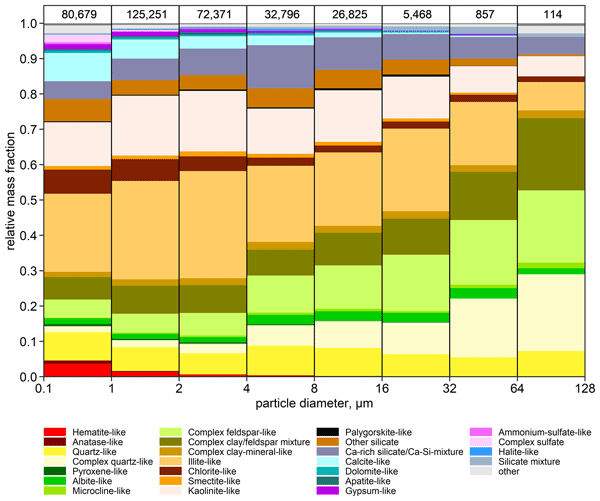
Agnesh Panta, Konrad Kandler, Andres Alastuey, Cristina González-Flórez, Adolfo González-Romero, Martina Klose, Xavier Querol, Cristina Reche, Jesús Yus-Díez, and Carlos Pérez García-Pando
Atmos. Chem. Phys., 23, 3861–3885, https://doi.org/10.5194/acp-23-3861-2023, https://doi.org/10.5194/acp-23-3861-2023, 2023
Short summary
Short summary
Desert dust is a major aerosol component of the Earth system and affects the climate. Dust properties are influenced by particle size, mineralogy, shape, and mixing state. This work characterizes freshly emitted individual mineral dust particles from a major source region using electron microscopy. Our new insights into critical particle-specific information will contribute to better constraining climate models that consider mineralogical variations in their representation of the dust cycle.
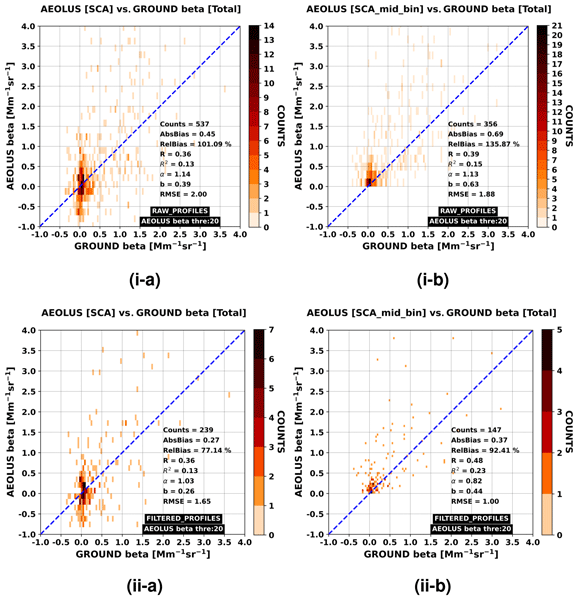
Antonis Gkikas, Anna Gialitaki, Ioannis Binietoglou, Eleni Marinou, Maria Tsichla, Nikolaos Siomos, Peristera Paschou, Anna Kampouri, Kalliopi Artemis Voudouri, Emmanouil Proestakis, Maria Mylonaki, Christina-Anna Papanikolaou, Konstantinos Michailidis, Holger Baars, Anne Grete Straume, Dimitris Balis, Alexandros Papayannis, Tomasso Parrinello, and Vassilis Amiridis
Atmos. Meas. Tech., 16, 1017–1042, https://doi.org/10.5194/amt-16-1017-2023, https://doi.org/10.5194/amt-16-1017-2023, 2023
Short summary
Short summary
We perform an assessment analysis of the Aeolus Standard Correct Algorithm (SCA) backscatter coefficient retrievals against reference observations acquired at three Greek lidar stations (Athens, Thessaloniki and Antikythera) of the PANACEA network. Overall, 43 cases are analysed, whereas specific aerosol scenarios in the vicinity of Antikythera island (SW Greece) are emphasised. All key Cal/Val aspects and recommendations, and the ongoing related activities, are thoroughly discussed.
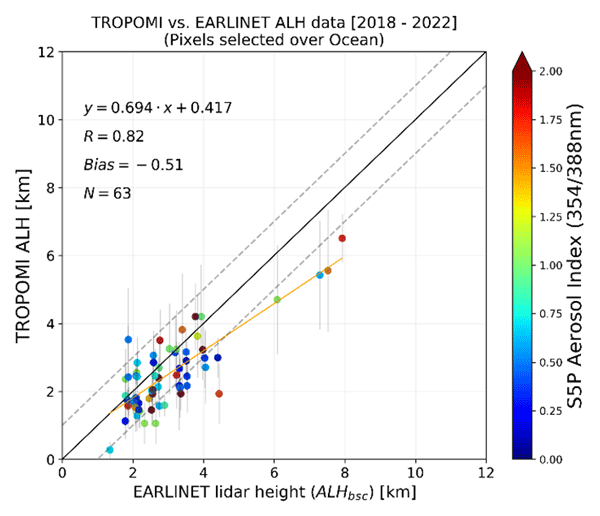
Konstantinos Michailidis, Maria-Elissavet Koukouli, Dimitris Balis, J. Pepijn Veefkind, Martin de Graaf, Lucia Mona, Nikolaos Papagianopoulos, Gesolmina Pappalardo, Ioanna Tsikoudi, Vassilis Amiridis, Eleni Marinou, Anna Gialitaki, Rodanthi-Elisavet Mamouri, Argyro Nisantzi, Daniele Bortoli, Maria João Costa, Vanda Salgueiro, Alexandros Papayannis, Maria Mylonaki, Lucas Alados-Arboledas, Salvatore Romano, Maria Rita Perrone, and Holger Baars
Atmos. Chem. Phys., 23, 1919–1940, https://doi.org/10.5194/acp-23-1919-2023, https://doi.org/10.5194/acp-23-1919-2023, 2023
Short summary
Short summary
Comparisons with ground-based correlative lidar measurements constitute a key component in the validation of satellite aerosol products. This paper presents the validation of the TROPOMI aerosol layer height (ALH) product, using archived quality assured ground-based data from lidar stations that belong to the EARLINET network. Comparisons between the TROPOMI ALH and co-located EARLINET measurements show good agreement over the ocean.

Eleni Drakaki, Vassilis Amiridis, Alexandra Tsekeri, Antonis Gkikas, Emmanouil Proestakis, Sotirios Mallios, Stavros Solomos, Christos Spyrou, Eleni Marinou, Claire L. Ryder, Demetri Bouris, and Petros Katsafados
Atmos. Chem. Phys., 22, 12727–12748, https://doi.org/10.5194/acp-22-12727-2022, https://doi.org/10.5194/acp-22-12727-2022, 2022
Short summary
Short summary
State-of-the-art atmospheric dust models have limitations in accounting for a realistic dust size distribution (emission, transport). We modify the parameterization of the mineral dust cycle by including particles with diameter >20 μm, as indicated by observations over deserts. Moreover, we investigate the effects of reduced settling velocities of dust particles. Model results are evaluated using airborne and spaceborne dust measurements above Cabo Verde.
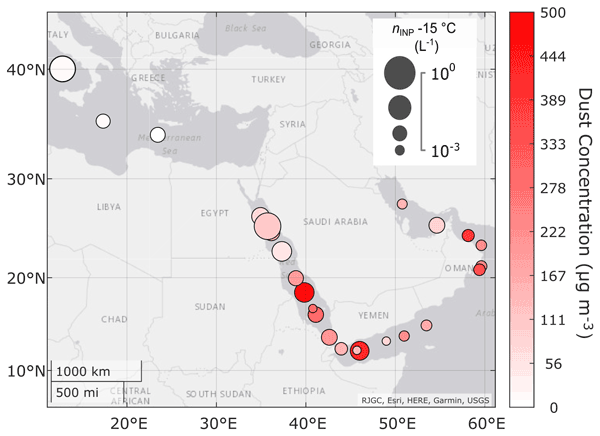
Charlotte M. Beall, Thomas C. J. Hill, Paul J. DeMott, Tobias Köneman, Michael Pikridas, Frank Drewnick, Hartwig Harder, Christopher Pöhlker, Jos Lelieveld, Bettina Weber, Minas Iakovides, Roman Prokeš, Jean Sciare, Meinrat O. Andreae, M. Dale Stokes, and Kimberly A. Prather
Atmos. Chem. Phys., 22, 12607–12627, https://doi.org/10.5194/acp-22-12607-2022, https://doi.org/10.5194/acp-22-12607-2022, 2022
Short summary
Short summary
Ice-nucleating particles (INPs) are rare aerosols that can trigger ice formation in clouds and affect climate-relevant cloud properties such as phase, reflectivity and lifetime. Dust is the dominant INP source, yet few measurements have been reported near major dust sources. We report INP observations within hundreds of kilometers of the biggest dust source regions globally: the Sahara and the Arabian Peninsula. Results show that at temperatures > −15 °C, INPs are dominated by organics.
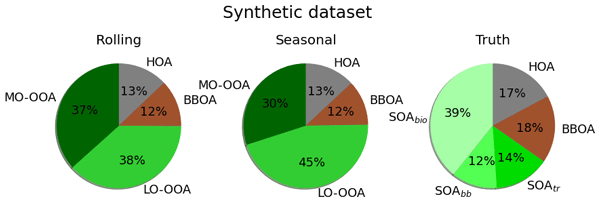
Marta Via, Gang Chen, Francesco Canonaco, Kaspar R. Daellenbach, Benjamin Chazeau, Hasna Chebaicheb, Jianhui Jiang, Hannes Keernik, Chunshui Lin, Nicolas Marchand, Cristina Marin, Colin O'Dowd, Jurgita Ovadnevaite, Jean-Eudes Petit, Michael Pikridas, Véronique Riffault, Jean Sciare, Jay G. Slowik, Leïla Simon, Jeni Vasilescu, Yunjiang Zhang, Olivier Favez, André S. H. Prévôt, Andrés Alastuey, and María Cruz Minguillón
Atmos. Meas. Tech., 15, 5479–5495, https://doi.org/10.5194/amt-15-5479-2022, https://doi.org/10.5194/amt-15-5479-2022, 2022
Short summary
Short summary
This work presents the differences resulting from two techniques (rolling and seasonal) of the positive matrix factorisation model that can be run for organic aerosol source apportionment. The current state of the art suggests that the rolling technique is more accurate, but no proof of its effectiveness has been provided yet. This paper tackles this issue in the context of a synthetic dataset and a multi-site real-world comparison.
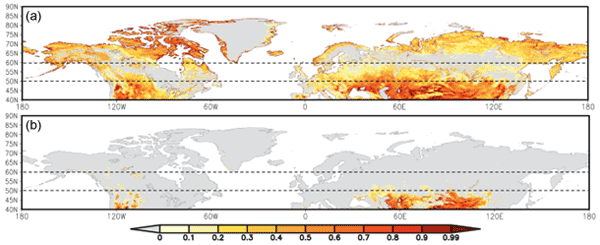
Outi Meinander, Pavla Dagsson-Waldhauserova, Pavel Amosov, Elena Aseyeva, Cliff Atkins, Alexander Baklanov, Clarissa Baldo, Sarah L. Barr, Barbara Barzycka, Liane G. Benning, Bojan Cvetkovic, Polina Enchilik, Denis Frolov, Santiago Gassó, Konrad Kandler, Nikolay Kasimov, Jan Kavan, James King, Tatyana Koroleva, Viktoria Krupskaya, Markku Kulmala, Monika Kusiak, Hanna K. Lappalainen, Michał Laska, Jerome Lasne, Marek Lewandowski, Bartłomiej Luks, James B. McQuaid, Beatrice Moroni, Benjamin Murray, Ottmar Möhler, Adam Nawrot, Slobodan Nickovic, Norman T. O’Neill, Goran Pejanovic, Olga Popovicheva, Keyvan Ranjbar, Manolis Romanias, Olga Samonova, Alberto Sanchez-Marroquin, Kerstin Schepanski, Ivan Semenkov, Anna Sharapova, Elena Shevnina, Zongbo Shi, Mikhail Sofiev, Frédéric Thevenet, Throstur Thorsteinsson, Mikhail Timofeev, Nsikanabasi Silas Umo, Andreas Uppstu, Darya Urupina, György Varga, Tomasz Werner, Olafur Arnalds, and Ana Vukovic Vimic
Atmos. Chem. Phys., 22, 11889–11930, https://doi.org/10.5194/acp-22-11889-2022, https://doi.org/10.5194/acp-22-11889-2022, 2022
Short summary
Short summary
High-latitude dust (HLD) is a short-lived climate forcer, air pollutant, and nutrient source. Our results suggest a northern HLD belt at 50–58° N in Eurasia and 50–55° N in Canada and at >60° N in Eurasia and >58° N in Canada. Our addition to the previously identified global dust belt (GDB) provides crucially needed information on the extent of active HLD sources with both direct and indirect impacts on climate and environment in remote regions, which are often poorly understood and predicted.

Albert Ansmann, Kevin Ohneiser, Alexandra Chudnovsky, Daniel A. Knopf, Edwin W. Eloranta, Diego Villanueva, Patric Seifert, Martin Radenz, Boris Barja, Félix Zamorano, Cristofer Jimenez, Ronny Engelmann, Holger Baars, Hannes Griesche, Julian Hofer, Dietrich Althausen, and Ulla Wandinger
Atmos. Chem. Phys., 22, 11701–11726, https://doi.org/10.5194/acp-22-11701-2022, https://doi.org/10.5194/acp-22-11701-2022, 2022
Short summary
Short summary
For the first time we present a systematic study on the impact of wildfire smoke on ozone depletion in the Arctic (2020) and Antarctic stratosphere (2020, 2021). Two major fire events in Siberia and Australia were responsible for the observed record-breaking stratospheric smoke pollution. Our analyses were based on lidar observations of smoke parameters (Polarstern, Punta Arenas) and NDACC Arctic and Antarctic ozone profiles as well as on Antarctic OMI satellite observations of column ozone.
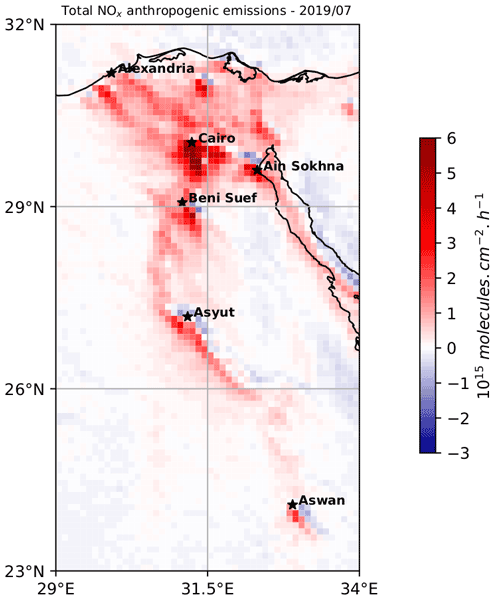
Anthony Rey-Pommier, Frédéric Chevallier, Philippe Ciais, Grégoire Broquet, Theodoros Christoudias, Jonilda Kushta, Didier Hauglustaine, and Jean Sciare
Atmos. Chem. Phys., 22, 11505–11527, https://doi.org/10.5194/acp-22-11505-2022, https://doi.org/10.5194/acp-22-11505-2022, 2022
Short summary
Short summary
Emission inventories for air pollutants can be uncertain in developing countries. In order to overcome these uncertainties, we model nitrogen oxide emissions in Egypt using satellite retrievals. We detect a weekly cycle reflecting Egyptian social norms, an annual cycle consistent with electricity consumption and an activity drop due to the COVID-19 pandemic. However, discrepancies with inventories remain high, illustrating the needs for additional data to improve the potential of our method.
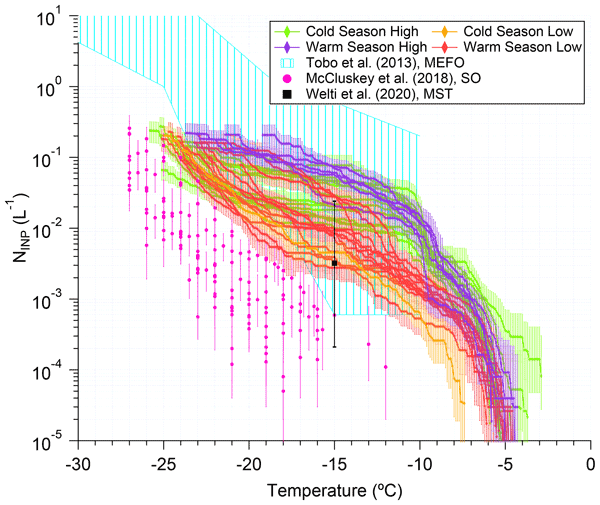
Xianda Gong, Martin Radenz, Heike Wex, Patric Seifert, Farnoush Ataei, Silvia Henning, Holger Baars, Boris Barja, Albert Ansmann, and Frank Stratmann
Atmos. Chem. Phys., 22, 10505–10525, https://doi.org/10.5194/acp-22-10505-2022, https://doi.org/10.5194/acp-22-10505-2022, 2022
Short summary
Short summary
The sources of ice-nucleating particles (INPs) are poorly understood in the Southern Hemisphere (SH). We studied INPs in the boundary layer in the southern Patagonia region. No seasonal cycle of INP concentrations was observed. The majority of INPs are biogenic particles, likely from local continental sources. The INP concentrations are higher when strong precipitation occurs. While previous studies focused on marine INP sources in SH, we point out the importance of continental sources of INPs.

Bernd Heinold, Holger Baars, Boris Barja, Matthew Christensen, Anne Kubin, Kevin Ohneiser, Kerstin Schepanski, Nick Schutgens, Fabian Senf, Roland Schrödner, Diego Villanueva, and Ina Tegen
Atmos. Chem. Phys., 22, 9969–9985, https://doi.org/10.5194/acp-22-9969-2022, https://doi.org/10.5194/acp-22-9969-2022, 2022
Short summary
Short summary
The extreme 2019–2020 Australian wildfires produced massive smoke plumes lofted into the lower stratosphere by pyrocumulonimbus convection. Most climate models do not adequately simulate the injection height of such intense fires. By combining aerosol-climate modeling with prescribed pyroconvective smoke injection and lidar observations, this study shows the importance of the representation of the most extreme wildfire events for estimating the atmospheric energy budget.
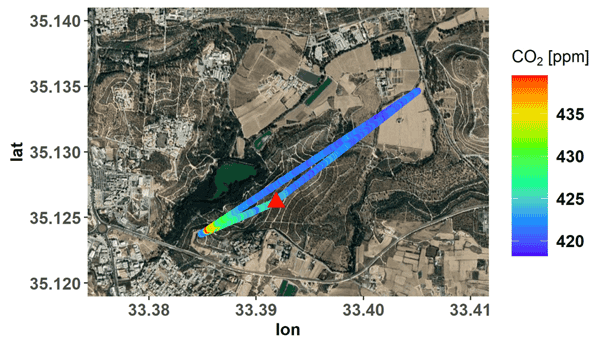
Yunsong Liu, Jean-Daniel Paris, Mihalis Vrekoussis, Panayiota Antoniou, Christos Constantinides, Maximilien Desservettaz, Christos Keleshis, Olivier Laurent, Andreas Leonidou, Carole Philippon, Panagiotis Vouterakos, Pierre-Yves Quéhé, Philippe Bousquet, and Jean Sciare
Atmos. Meas. Tech., 15, 4431–4442, https://doi.org/10.5194/amt-15-4431-2022, https://doi.org/10.5194/amt-15-4431-2022, 2022
Short summary
Short summary
This paper details laboratory-based and field developments of a cost-effective and compacted UAV CO2 sensor system to address the challenge of measuring CO2 with sufficient precision and acquisition frequency. We assess its performance extensively through laboratory and field tests and provide a case study in an urban area (Nicosia, Cyprus). We therefore expect that this portable system will be widely used for measuring CO2 emission and distribution in natural or urban environments.
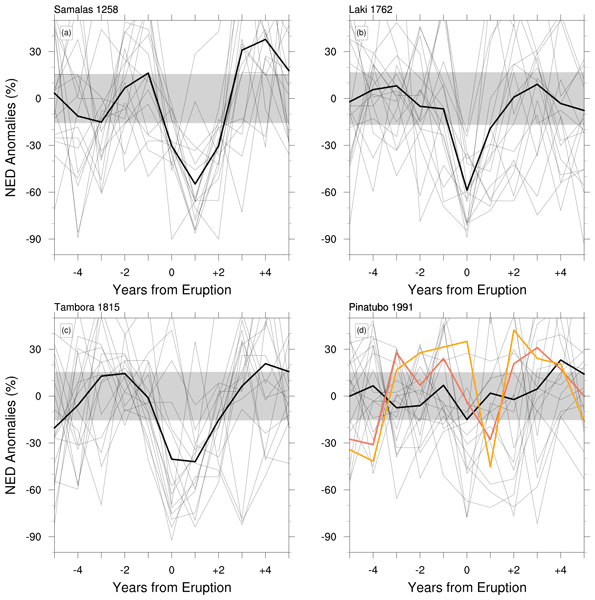
Stergios Misios, Ioannis Logothetis, Mads F. Knudsen, Christoffer Karoff, Vassilis Amiridis, and Kleareti Tourpali
Weather Clim. Dynam., 3, 811–823, https://doi.org/10.5194/wcd-3-811-2022, https://doi.org/10.5194/wcd-3-811-2022, 2022
Short summary
Short summary
We investigate the impact of strong volcanic eruptions on the northerly Etesian winds blowing in the eastern Mediterranean. Μodel simulations of the last millennium demonstrate a robust reduction in the total number of days with Etesian winds in the post-eruption summers. The decline in the Etesian winds is attributed to a weakened Indian summer monsoon in the post-eruption summer. These findings could improve seasonal predictions of the wind circulation in the eastern Mediterranean.
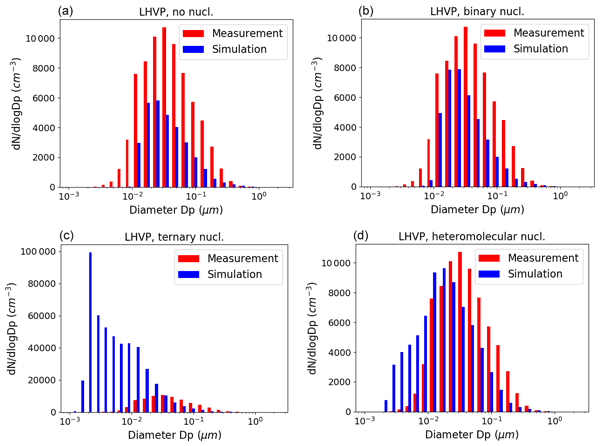
Karine Sartelet, Youngseob Kim, Florian Couvidat, Maik Merkel, Tuukka Petäjä, Jean Sciare, and Alfred Wiedensohler
Atmos. Chem. Phys., 22, 8579–8596, https://doi.org/10.5194/acp-22-8579-2022, https://doi.org/10.5194/acp-22-8579-2022, 2022
Short summary
Short summary
A methodology is defined to estimate number emissions from an inventory providing mass emissions. Number concentrations are simulated over Greater Paris using different nucleation parameterisations (binary, ternary involving sulfuric acid and ammonia, and heteromolecular involving sulfuric acid and extremely low-volatility organics, ELVOCs). The comparisons show that ternary nucleation may not be a dominant process for new particle formation in cities, but they stress the role of ELVOCs.
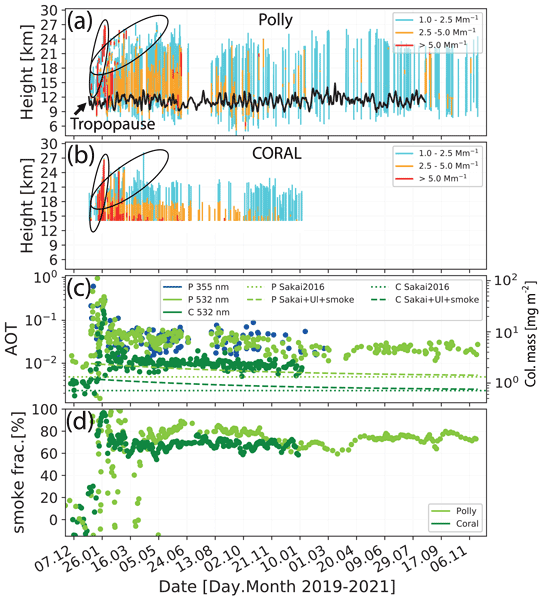
Kevin Ohneiser, Albert Ansmann, Bernd Kaifler, Alexandra Chudnovsky, Boris Barja, Daniel A. Knopf, Natalie Kaifler, Holger Baars, Patric Seifert, Diego Villanueva, Cristofer Jimenez, Martin Radenz, Ronny Engelmann, Igor Veselovskii, and Félix Zamorano
Atmos. Chem. Phys., 22, 7417–7442, https://doi.org/10.5194/acp-22-7417-2022, https://doi.org/10.5194/acp-22-7417-2022, 2022
Short summary
Short summary
We present and discuss 2 years of long-term lidar observations of the largest stratospheric perturbation by wildfire smoke ever observed. The smoke originated from the record-breaking Australian fires in 2019–2020 and affects climate conditions and even the ozone layer in the Southern Hemisphere. The obvious link between dense smoke occurrence in the stratosphere and strong ozone depletion found in the Arctic and in the Antarctic in 2020 can be regarded as a new aspect of climate change.
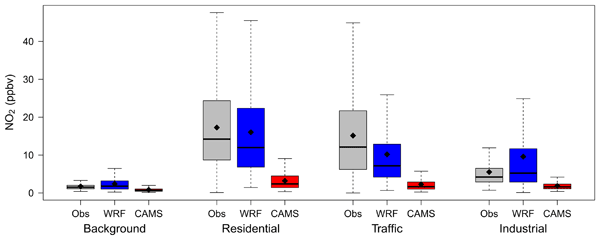
George K. Georgiou, Theodoros Christoudias, Yiannis Proestos, Jonilda Kushta, Michael Pikridas, Jean Sciare, Chrysanthos Savvides, and Jos Lelieveld
Geosci. Model Dev., 15, 4129–4146, https://doi.org/10.5194/gmd-15-4129-2022, https://doi.org/10.5194/gmd-15-4129-2022, 2022
Short summary
Short summary
We evaluate the skill of the WRF-Chem model to perform high-resolution air quality forecasts (including ozone, nitrogen dioxide, and fine particulate matter) over the Eastern Mediterranean, during winter and summer. We compare the forecast output to observational data from background and urban locations and the forecast output from CAMS. WRF-Chem was found to forecast the concentrations and diurnal profiles of gas-phase pollutants in urban areas with higher accuracy.
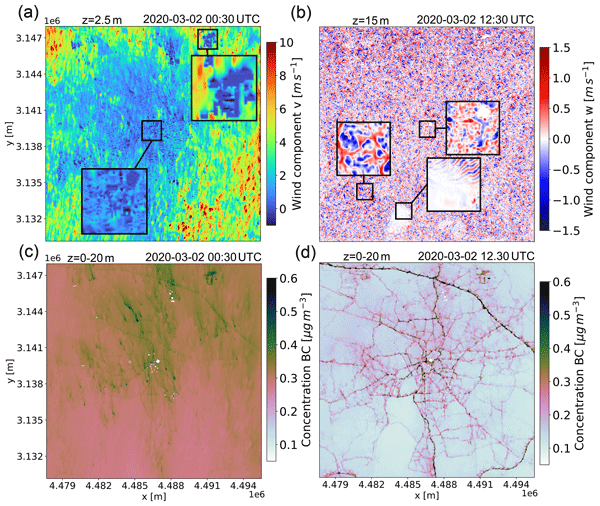
Michael Weger, Holger Baars, Henriette Gebauer, Maik Merkel, Alfred Wiedensohler, and Bernd Heinold
Geosci. Model Dev., 15, 3315–3345, https://doi.org/10.5194/gmd-15-3315-2022, https://doi.org/10.5194/gmd-15-3315-2022, 2022
Short summary
Short summary
Numerical models are an important tool to assess the air quality in cities,
as they can provide near-continouos data in time and space. In this paper,
air pollution for an entire city is simulated at a high spatial resolution of 40 m.
At this spatial scale, the effects of buildings on the atmosphere,
like channeling or blocking of the air flow, are directly represented by diffuse obstacles in the used model CAIRDIO. For model validation, measurements from air-monitoring sites are used.

Peristera Paschou, Nikolaos Siomos, Alexandra Tsekeri, Alexandros Louridas, George Georgoussis, Volker Freudenthaler, Ioannis Binietoglou, George Tsaknakis, Alexandros Tavernarakis, Christos Evangelatos, Jonas von Bismarck, Thomas Kanitz, Charikleia Meleti, Eleni Marinou, and Vassilis Amiridis
Atmos. Meas. Tech., 15, 2299–2323, https://doi.org/10.5194/amt-15-2299-2022, https://doi.org/10.5194/amt-15-2299-2022, 2022
Short summary
Short summary
The eVe lidar delivers quality-assured aerosol and cloud optical properties according to the standards of ACTRIS. It is a mobile reference system for the validation of the ESA's Aeolus satellite mission (L2 aerosol and cloud products). eVe provides linear and circular polarisation measurements with Raman capabilities. Here, we describe the system design, the polarisation calibration techniques, and the software for the retrieval of the optical products.
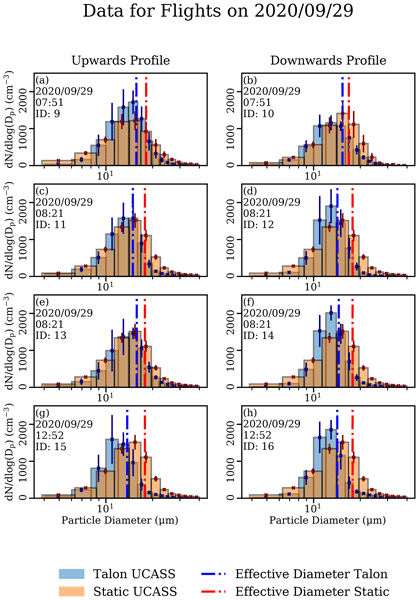
Joseph Girdwood, Warren Stanley, Chris Stopford, and David Brus
Atmos. Meas. Tech., 15, 2061–2076, https://doi.org/10.5194/amt-15-2061-2022, https://doi.org/10.5194/amt-15-2061-2022, 2022
Short summary
Short summary
UAVs have great potential to be used for airborne measurements of cloud and aerosol properties, which are of particular importance due to the largely uncharacterised nature of such phenomena. However, since UAVs are a new tool in atmospheric physics expensive platform validation and characterisation of UAV-instrument combinations needs to be performed. This paper presents an evaluation of a fixed-wing UAV in combination with an instrument that measures cloud droplet diameter.
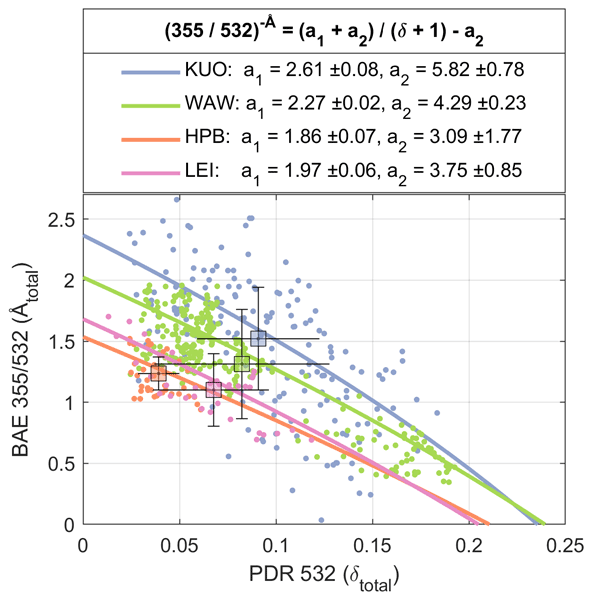
Xiaoxia Shang, Holger Baars, Iwona S. Stachlewska, Ina Mattis, and Mika Komppula
Atmos. Chem. Phys., 22, 3931–3944, https://doi.org/10.5194/acp-22-3931-2022, https://doi.org/10.5194/acp-22-3931-2022, 2022
Short summary
Short summary
This study reports pollen observations at four lidar stations (Hohenpeißenberg, Germany; Kuopio, Finland; Leipzig, Germany; and Warsaw, Poland) during the intensive observation campaign organized in May 2020. A novel simple method for the characterization of the pure pollen is proposed, based on lidar measurements. It was applied to evaluate the pollen depolarization ratio and for the aerosol classifications.
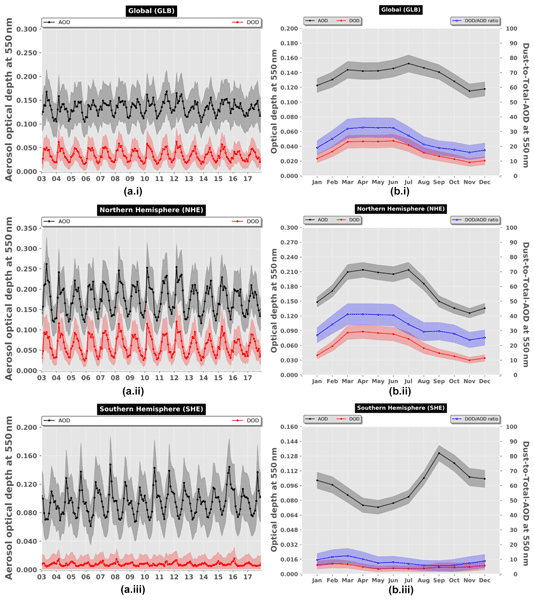
Antonis Gkikas, Emmanouil Proestakis, Vassilis Amiridis, Stelios Kazadzis, Enza Di Tomaso, Eleni Marinou, Nikos Hatzianastassiou, Jasper F. Kok, and Carlos Pérez García-Pando
Atmos. Chem. Phys., 22, 3553–3578, https://doi.org/10.5194/acp-22-3553-2022, https://doi.org/10.5194/acp-22-3553-2022, 2022
Short summary
Short summary
We present a comprehensive climatological analysis of dust optical depth (DOD) relying on the MIDAS dataset. MIDAS provides columnar mid-visible (550 nm) DOD at fine spatial resolution (0.1° × 0.1°) over a 15-year period (2003–2017). In the current study, the analysis is performed at various spatial (from regional to global) and temporal (from months to years) scales. More specifically, focus is given to specific regions hosting the major dust sources as well as downwind areas of the planet.
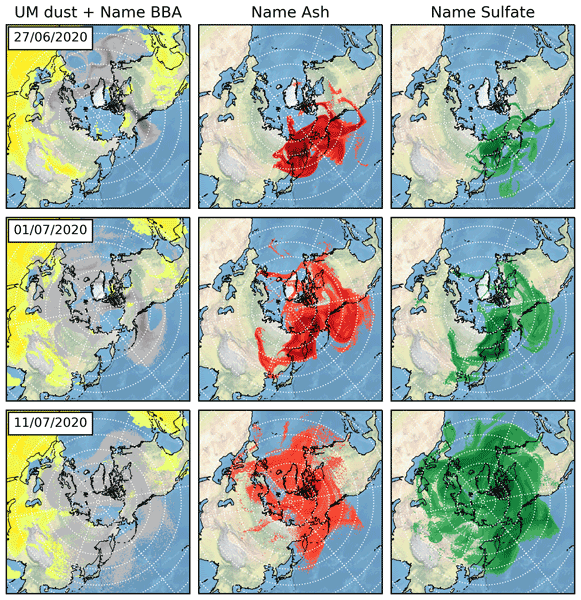
Martin J. Osborne, Johannes de Leeuw, Claire Witham, Anja Schmidt, Frances Beckett, Nina Kristiansen, Joelle Buxmann, Cameron Saint, Ellsworth J. Welton, Javier Fochesatto, Ana R. Gomes, Ulrich Bundke, Andreas Petzold, Franco Marenco, and Jim Haywood
Atmos. Chem. Phys., 22, 2975–2997, https://doi.org/10.5194/acp-22-2975-2022, https://doi.org/10.5194/acp-22-2975-2022, 2022
Short summary
Short summary
Using the Met Office NAME dispersion model, supported by satellite- and ground-based remote-sensing observations, we describe the dispersion of aerosols from the 2019 Raikoke eruption and the concurrent wildfires in Alberta Canada. We show how the synergy of dispersion modelling and multiple observation sources allowed observers in the London VAAC to arrive at a more complete picture of the aerosol loading at altitudes commonly used by aviation.
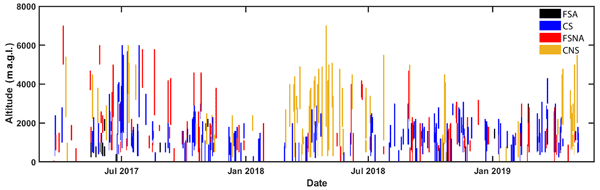
Birgit Heese, Athena Augusta Floutsi, Holger Baars, Dietrich Althausen, Julian Hofer, Alina Herzog, Silke Mewes, Martin Radenz, and Yoav Y. Schechner
Atmos. Chem. Phys., 22, 1633–1648, https://doi.org/10.5194/acp-22-1633-2022, https://doi.org/10.5194/acp-22-1633-2022, 2022
Short summary
Short summary
The aerosol distribution over Haifa, Israel, was measured for 2 years by a laser-based vertically resolved measurement technique called lidar. From these data, the aerosol types and their percentages of the observed aerosol mixtures were identified in terms of their size and shape. We found mostly desert dust from the surrounding deserts and sea salt from the close-by Mediterranean Sea. But aerosols from anthropogenic and industrial pollution from local and far away sources were also detected.
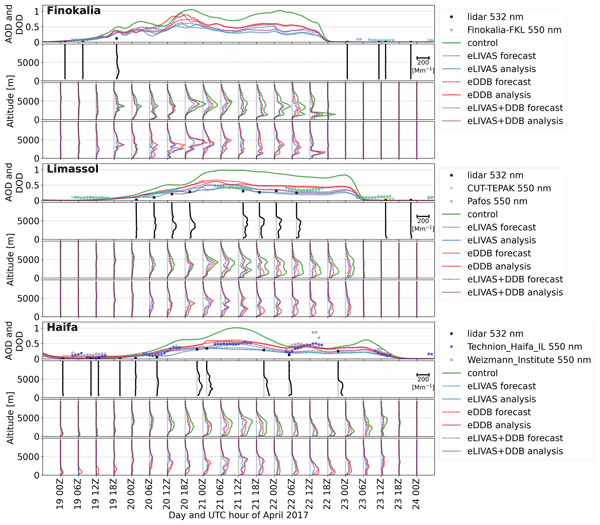
Jerónimo Escribano, Enza Di Tomaso, Oriol Jorba, Martina Klose, Maria Gonçalves Ageitos, Francesca Macchia, Vassilis Amiridis, Holger Baars, Eleni Marinou, Emmanouil Proestakis, Claudia Urbanneck, Dietrich Althausen, Johannes Bühl, Rodanthi-Elisavet Mamouri, and Carlos Pérez García-Pando
Atmos. Chem. Phys., 22, 535–560, https://doi.org/10.5194/acp-22-535-2022, https://doi.org/10.5194/acp-22-535-2022, 2022
Short summary
Short summary
We explore the benefits and consistency in adding lidar dust observations in a dust optical depth assimilation. We show that adding lidar data to a dust optical depth assimilation has valuable benefits and the dust analysis improves. We discuss the impact of the narrow satellite footprint of the lidar dust observations on the assimilation.
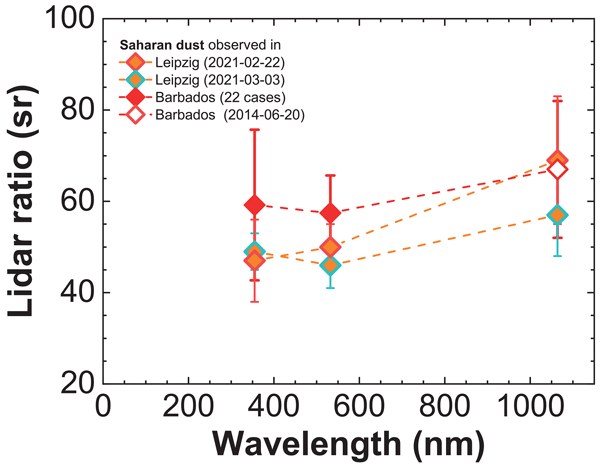
Moritz Haarig, Albert Ansmann, Ronny Engelmann, Holger Baars, Carlos Toledano, Benjamin Torres, Dietrich Althausen, Martin Radenz, and Ulla Wandinger
Atmos. Chem. Phys., 22, 355–369, https://doi.org/10.5194/acp-22-355-2022, https://doi.org/10.5194/acp-22-355-2022, 2022
Short summary
Short summary
The irregular shape of dust particles makes it difficult to treat them correctly in optical models. Atmospheric measurements of dust optical properties are therefore of great importance. The present study increases the space of observed parameters from 355 and 532 nm towards 1064 nm, which is of special importance for large dust particles. The lidar ratio influenced by mineralogy and the depolarization ratio influenced by shape are measured for the first time at all three wavelengths.
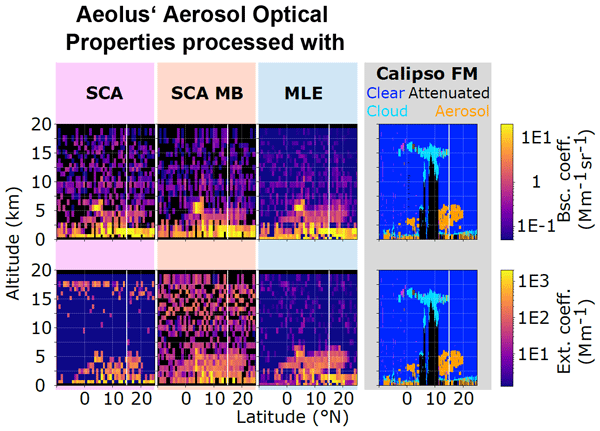
Frithjof Ehlers, Thomas Flament, Alain Dabas, Dimitri Trapon, Adrien Lacour, Holger Baars, and Anne Grete Straume-Lindner
Atmos. Meas. Tech., 15, 185–203, https://doi.org/10.5194/amt-15-185-2022, https://doi.org/10.5194/amt-15-185-2022, 2022
Short summary
Short summary
The Aeolus satellite observes the Earth and can vertically detect any kind of particles (aerosols or clouds) in the atmosphere below it. These observations are typically very noisy, which needs to be accounted for. This work dampens the noise in Aeolus' aerosol and cloud data, which are provided publicly by the ESA, so that the scientific community can make better use of it. This makes the data potentially more useful for weather prediction and climate research.
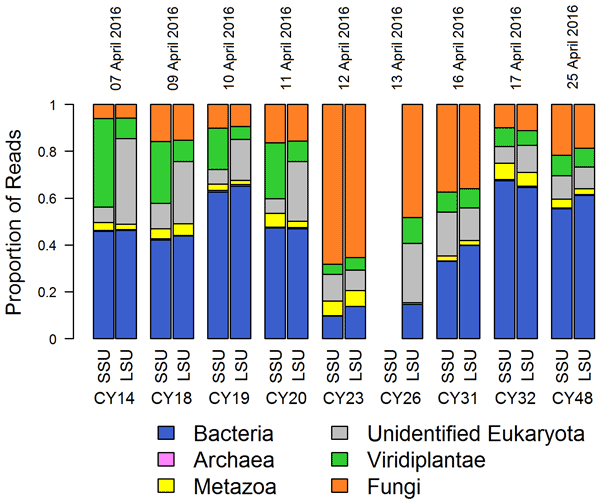
Kai Tang, Beatriz Sánchez-Parra, Petya Yordanova, Jörn Wehking, Anna T. Backes, Daniel A. Pickersgill, Stefanie Maier, Jean Sciare, Ulrich Pöschl, Bettina Weber, and Janine Fröhlich-Nowoisky
Biogeosciences, 19, 71–91, https://doi.org/10.5194/bg-19-71-2022, https://doi.org/10.5194/bg-19-71-2022, 2022
Short summary
Short summary
Metagenomic sequencing and freezing experiments of aerosol samples collected on Cyprus revealed rain-related short-term changes of bioaerosol and ice nuclei composition. Filtration experiments showed a rain-related enhancement of biological ice nuclei > 5 µm and < 0.1 µm. The observed effects of rainfall on the composition of atmospheric bioaerosols and ice nuclei may influence the hydrological cycle as well as the health effects of air particulate matter (pathogens, allergens).
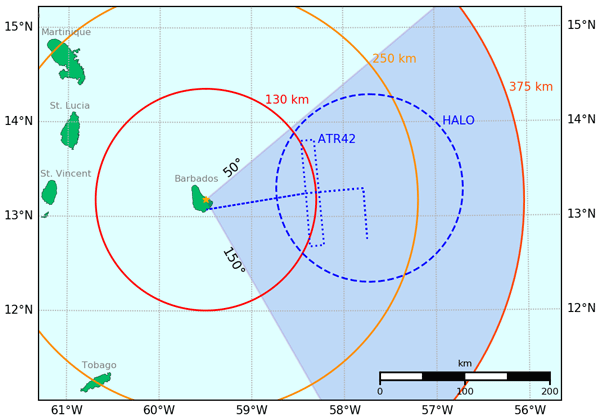
Martin Hagen, Florian Ewald, Silke Groß, Lothar Oswald, David A. Farrell, Marvin Forde, Manuel Gutleben, Johann Heumos, Jens Reimann, Eleni Tetoni, Gregor Köcher, Eleni Marinou, Christoph Kiemle, Qiang Li, Rebecca Chewitt-Lucas, Alton Daley, Delando Grant, and Kashawn Hall
Earth Syst. Sci. Data, 13, 5899–5914, https://doi.org/10.5194/essd-13-5899-2021, https://doi.org/10.5194/essd-13-5899-2021, 2021
Short summary
Short summary
The German polarimetric weather radar Poldirad was deployed for the international campaign EUREC4A on Barbados. The focus was monitoring clouds and precipitation in the trade wind region east of Barbados. Observations were with a temporal sequence of 5 min and a maximum range of 375 km. Examples of mesoscale precipitation patterns, rain rate accumulation, diurnal cycle, and vertical distribution show the potential for further studies on the life cycle of precipitating shallow cumulus clouds.
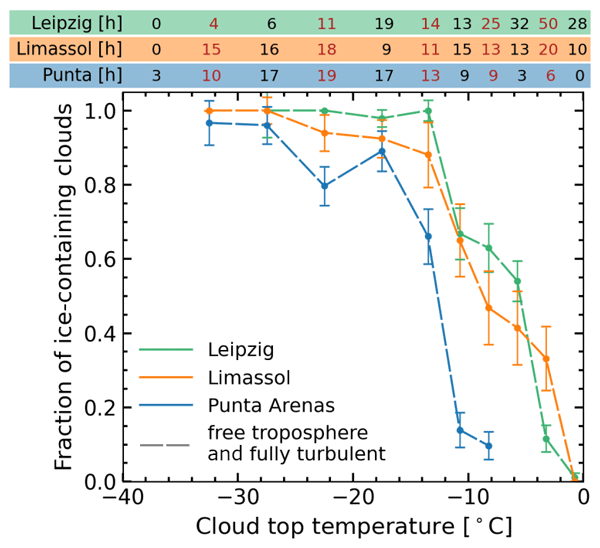
Martin Radenz, Johannes Bühl, Patric Seifert, Holger Baars, Ronny Engelmann, Boris Barja González, Rodanthi-Elisabeth Mamouri, Félix Zamorano, and Albert Ansmann
Atmos. Chem. Phys., 21, 17969–17994, https://doi.org/10.5194/acp-21-17969-2021, https://doi.org/10.5194/acp-21-17969-2021, 2021
Short summary
Short summary
This study brings together long-term ground-based remote-sensing observations of mixed-phase clouds at three key locations of aerosol–cloud interactions in the Northern and Southern Hemisphere midlatitudes. The findings contribute several new aspects on the nature of the excess of supercooled liquid clouds in the Southern Hemisphere, such as a long-term lidar-based estimate of ice-nucleating particle profiles as well as the effects of boundary layer coupling and gravity waves on ice formation.
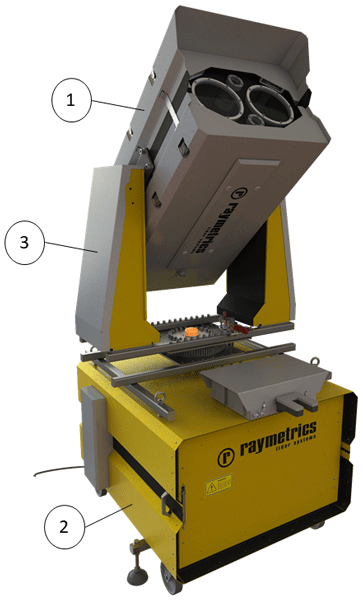
Alexandra Tsekeri, Vassilis Amiridis, Alexandros Louridas, George Georgoussis, Volker Freudenthaler, Spiros Metallinos, George Doxastakis, Josef Gasteiger, Nikolaos Siomos, Peristera Paschou, Thanasis Georgiou, George Tsaknakis, Christos Evangelatos, and Ioannis Binietoglou
Atmos. Meas. Tech., 14, 7453–7474, https://doi.org/10.5194/amt-14-7453-2021, https://doi.org/10.5194/amt-14-7453-2021, 2021
Short summary
Short summary
Dust orientation in the Earth's atmosphere has been an ongoing investigation in recent years, and its potential proof will be a paradigm shift for dust remote sensing. We have designed and developed a polarization lidar that provides direct measurements of dust orientation, as well as more detailed information of the particle microphysics. We provide a description of its design as well as its first measurements.
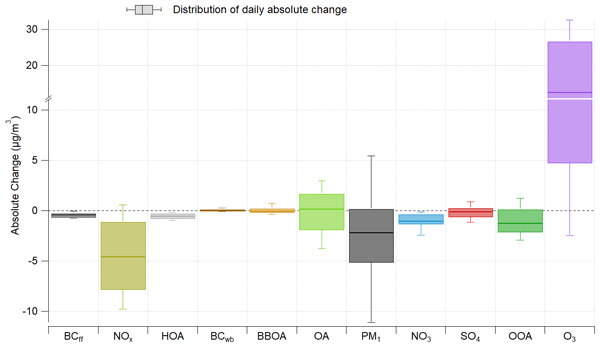
Jean-Eudes Petit, Jean-Charles Dupont, Olivier Favez, Valérie Gros, Yunjiang Zhang, Jean Sciare, Leila Simon, François Truong, Nicolas Bonnaire, Tanguy Amodeo, Robert Vautard, and Martial Haeffelin
Atmos. Chem. Phys., 21, 17167–17183, https://doi.org/10.5194/acp-21-17167-2021, https://doi.org/10.5194/acp-21-17167-2021, 2021
Short summary
Short summary
The COVID-19 outbreak led to lockdowns at national scales in spring 2020. Large cuts in emissions occurred, but the quantitative assessment of their role from observations is hindered by weather and interannual variability. That is why we developed an innovative methodology in order to best characterize the impact of lockdown on atmospheric chemistry. We find that a local decrease in traffic-related pollutants triggered a decrease of secondary aerosols and an increase in ozone.
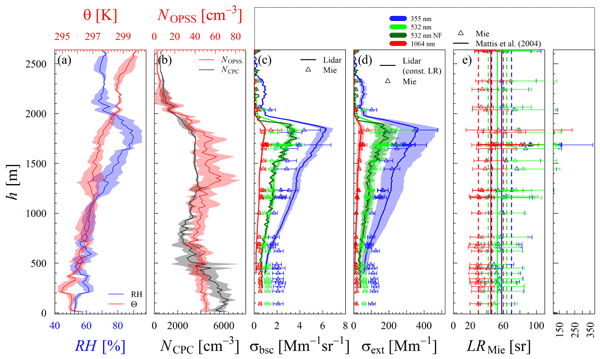
Sebastian Düsing, Albert Ansmann, Holger Baars, Joel C. Corbin, Cyrielle Denjean, Martin Gysel-Beer, Thomas Müller, Laurent Poulain, Holger Siebert, Gerald Spindler, Thomas Tuch, Birgit Wehner, and Alfred Wiedensohler
Atmos. Chem. Phys., 21, 16745–16773, https://doi.org/10.5194/acp-21-16745-2021, https://doi.org/10.5194/acp-21-16745-2021, 2021
Short summary
Short summary
The work deals with optical properties of aerosol particles in dried and atmospheric states. Based on two measurement campaigns in the rural background of central Europe, different measurement approaches were compared with each other, such as modeling based on Mie theory and direct in situ or remote sensing measurements. Among others, it was shown that the aerosol extinction-to-backscatter ratio is relative humidity dependent, and refinement with respect to the model input parameters is needed.

Stavros-Andreas Logothetis, Vasileios Salamalikis, Antonis Gkikas, Stelios Kazadzis, Vassilis Amiridis, and Andreas Kazantzidis
Atmos. Chem. Phys., 21, 16499–16529, https://doi.org/10.5194/acp-21-16499-2021, https://doi.org/10.5194/acp-21-16499-2021, 2021
Short summary
Short summary
This study investigates the temporal trends of dust optical depth (DOD; 550 nm) on global, regional and seasonal scales over a 15-year period (2003–2017) using the MIDAS (ModIs Dust AeroSol) dataset. The findings of this study revealed that the DOD was increased across the central Sahara and the Arabian Peninsula, with opposite trends over the eastern and western Sahara, the Thar and Gobi deserts, in the Bodélé Depression, and in the southern Mediterranean.
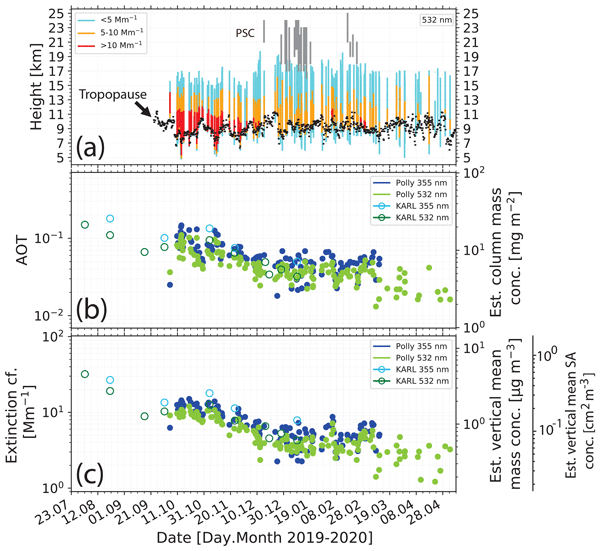
Kevin Ohneiser, Albert Ansmann, Alexandra Chudnovsky, Ronny Engelmann, Christoph Ritter, Igor Veselovskii, Holger Baars, Henriette Gebauer, Hannes Griesche, Martin Radenz, Julian Hofer, Dietrich Althausen, Sandro Dahlke, and Marion Maturilli
Atmos. Chem. Phys., 21, 15783–15808, https://doi.org/10.5194/acp-21-15783-2021, https://doi.org/10.5194/acp-21-15783-2021, 2021
Short summary
Short summary
The highlight of the lidar measurements during the 1-year MOSAiC (Multidisciplinary drifting Observatory for the Study of Arctic Climate) expedition of the German icebreaker Polarstern (October 2019–October 2020) was the detection of a persistent, 10 km deep Siberian wildfire smoke layer in the upper troposphere and lower stratosphere (UTLS) from about 7–8 km to 17–18 km height that could potentially have impacted the record-breaking ozone depletion over the Arctic in the spring of 2020.
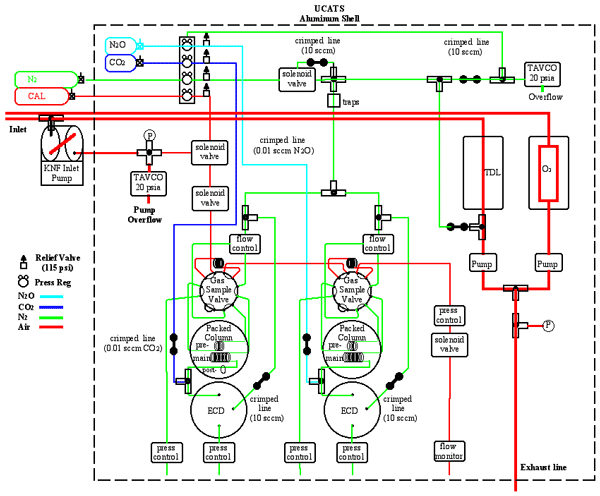
Eric J. Hintsa, Fred L. Moore, Dale F. Hurst, Geoff S. Dutton, Bradley D. Hall, J. David Nance, Ben R. Miller, Stephen A. Montzka, Laura P. Wolton, Audra McClure-Begley, James W. Elkins, Emrys G. Hall, Allen F. Jordan, Andrew W. Rollins, Troy D. Thornberry, Laurel A. Watts, Chelsea R. Thompson, Jeff Peischl, Ilann Bourgeois, Thomas B. Ryerson, Bruce C. Daube, Yenny Gonzalez Ramos, Roisin Commane, Gregory W. Santoni, Jasna V. Pittman, Steven C. Wofsy, Eric Kort, Glenn S. Diskin, and T. Paul Bui
Atmos. Meas. Tech., 14, 6795–6819, https://doi.org/10.5194/amt-14-6795-2021, https://doi.org/10.5194/amt-14-6795-2021, 2021
Short summary
Short summary
We built UCATS to study atmospheric chemistry and transport. It has measured trace gases including CFCs, N2O, SF6, CH4, CO, and H2 with gas chromatography, as well as ozone and water vapor. UCATS has been part of missions to study the tropical tropopause; transport of air into the stratosphere; greenhouse gases, transport, and chemistry in the troposphere; and ozone chemistry, on both piloted and unmanned aircraft. Its design, capabilities, and some results are shown and described here.
Mariana Adam, Iwona S. Stachlewska, Lucia Mona, Nikolaos Papagiannopoulos, Juan Antonio Bravo-Aranda, Michaël Sicard, Doina N. Nicolae, Livio Belegante, Lucja Janicka, Dominika Szczepanik, Maria Mylonaki, Christina-Anna Papanikolaou, Nikolaos Siomos, Kalliopi Artemis Voudouri, Luca Alados-Arboledas, Arnoud Apituley, Ina Mattis, Anatoli Chaikovsky, Constantino Muñoz-Porcar, Aleksander Pietruczuk, Daniele Bortoli, Holger Baars, Ivan Grigorov, and Zahary Peshev
Atmos. Chem. Phys. Discuss., https://doi.org/10.5194/acp-2021-759, https://doi.org/10.5194/acp-2021-759, 2021
Revised manuscript not accepted
Short summary
Short summary
Results over 10 years of biomass burning events measured by EARLINET are analysed by means of the intensive parameters, based on the methodology described in Part I. Smoke type is characterized for each of the four geographical regions based on continental smoke origin. Relationships between intensive parameters or colour ratios are shown. The smoke is labelled in average as aged smoke.
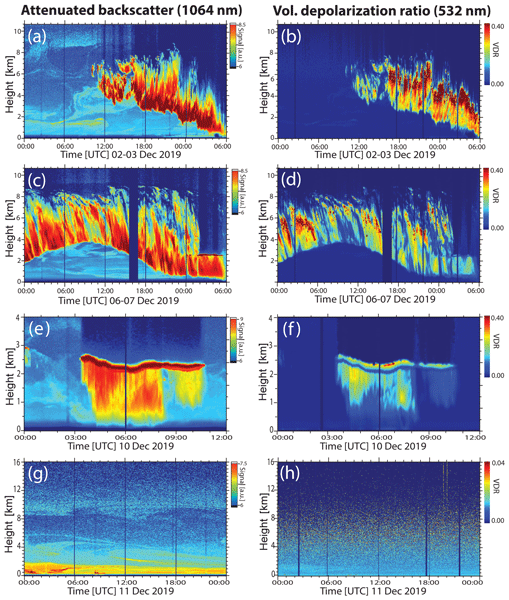
Ronny Engelmann, Albert Ansmann, Kevin Ohneiser, Hannes Griesche, Martin Radenz, Julian Hofer, Dietrich Althausen, Sandro Dahlke, Marion Maturilli, Igor Veselovskii, Cristofer Jimenez, Robert Wiesen, Holger Baars, Johannes Bühl, Henriette Gebauer, Moritz Haarig, Patric Seifert, Ulla Wandinger, and Andreas Macke
Atmos. Chem. Phys., 21, 13397–13423, https://doi.org/10.5194/acp-21-13397-2021, https://doi.org/10.5194/acp-21-13397-2021, 2021
Short summary
Short summary
A Raman lidar was operated aboard the icebreaker Polarstern during MOSAiC and monitored aerosol and cloud layers in the central Arctic up to 30 km height. The article provides an overview of the spectrum of aerosol profiling observations and shows aerosol–cloud interaction studies for liquid-water and ice clouds. A highlight was the detection of a 10 km deep wildfire smoke layer over the North Pole up to 17 km height from the fire season of 2019, which persisted over the whole winter period.
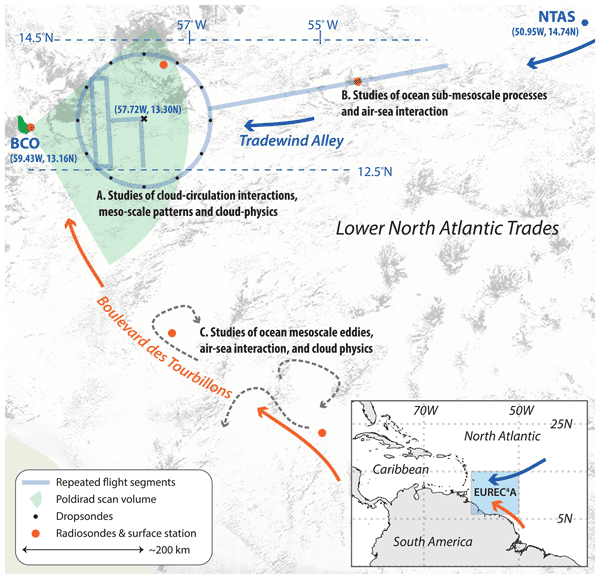
Bjorn Stevens, Sandrine Bony, David Farrell, Felix Ament, Alan Blyth, Christopher Fairall, Johannes Karstensen, Patricia K. Quinn, Sabrina Speich, Claudia Acquistapace, Franziska Aemisegger, Anna Lea Albright, Hugo Bellenger, Eberhard Bodenschatz, Kathy-Ann Caesar, Rebecca Chewitt-Lucas, Gijs de Boer, Julien Delanoë, Leif Denby, Florian Ewald, Benjamin Fildier, Marvin Forde, Geet George, Silke Gross, Martin Hagen, Andrea Hausold, Karen J. Heywood, Lutz Hirsch, Marek Jacob, Friedhelm Jansen, Stefan Kinne, Daniel Klocke, Tobias Kölling, Heike Konow, Marie Lothon, Wiebke Mohr, Ann Kristin Naumann, Louise Nuijens, Léa Olivier, Robert Pincus, Mira Pöhlker, Gilles Reverdin, Gregory Roberts, Sabrina Schnitt, Hauke Schulz, A. Pier Siebesma, Claudia Christine Stephan, Peter Sullivan, Ludovic Touzé-Peiffer, Jessica Vial, Raphaela Vogel, Paquita Zuidema, Nicola Alexander, Lyndon Alves, Sophian Arixi, Hamish Asmath, Gholamhossein Bagheri, Katharina Baier, Adriana Bailey, Dariusz Baranowski, Alexandre Baron, Sébastien Barrau, Paul A. Barrett, Frédéric Batier, Andreas Behrendt, Arne Bendinger, Florent Beucher, Sebastien Bigorre, Edmund Blades, Peter Blossey, Olivier Bock, Steven Böing, Pierre Bosser, Denis Bourras, Pascale Bouruet-Aubertot, Keith Bower, Pierre Branellec, Hubert Branger, Michal Brennek, Alan Brewer, Pierre-Etienne Brilouet, Björn Brügmann, Stefan A. Buehler, Elmo Burke, Ralph Burton, Radiance Calmer, Jean-Christophe Canonici, Xavier Carton, Gregory Cato Jr., Jude Andre Charles, Patrick Chazette, Yanxu Chen, Michal T. Chilinski, Thomas Choularton, Patrick Chuang, Shamal Clarke, Hugh Coe, Céline Cornet, Pierre Coutris, Fleur Couvreux, Susanne Crewell, Timothy Cronin, Zhiqiang Cui, Yannis Cuypers, Alton Daley, Gillian M. Damerell, Thibaut Dauhut, Hartwig Deneke, Jean-Philippe Desbios, Steffen Dörner, Sebastian Donner, Vincent Douet, Kyla Drushka, Marina Dütsch, André Ehrlich, Kerry Emanuel, Alexandros Emmanouilidis, Jean-Claude Etienne, Sheryl Etienne-Leblanc, Ghislain Faure, Graham Feingold, Luca Ferrero, Andreas Fix, Cyrille Flamant, Piotr Jacek Flatau, Gregory R. Foltz, Linda Forster, Iulian Furtuna, Alan Gadian, Joseph Galewsky, Martin Gallagher, Peter Gallimore, Cassandra Gaston, Chelle Gentemann, Nicolas Geyskens, Andreas Giez, John Gollop, Isabelle Gouirand, Christophe Gourbeyre, Dörte de Graaf, Geiske E. de Groot, Robert Grosz, Johannes Güttler, Manuel Gutleben, Kashawn Hall, George Harris, Kevin C. Helfer, Dean Henze, Calvert Herbert, Bruna Holanda, Antonio Ibanez-Landeta, Janet Intrieri, Suneil Iyer, Fabrice Julien, Heike Kalesse, Jan Kazil, Alexander Kellman, Abiel T. Kidane, Ulrike Kirchner, Marcus Klingebiel, Mareike Körner, Leslie Ann Kremper, Jan Kretzschmar, Ovid Krüger, Wojciech Kumala, Armin Kurz, Pierre L'Hégaret, Matthieu Labaste, Tom Lachlan-Cope, Arlene Laing, Peter Landschützer, Theresa Lang, Diego Lange, Ingo Lange, Clément Laplace, Gauke Lavik, Rémi Laxenaire, Caroline Le Bihan, Mason Leandro, Nathalie Lefevre, Marius Lena, Donald Lenschow, Qiang Li, Gary Lloyd, Sebastian Los, Niccolò Losi, Oscar Lovell, Christopher Luneau, Przemyslaw Makuch, Szymon Malinowski, Gaston Manta, Eleni Marinou, Nicholas Marsden, Sebastien Masson, Nicolas Maury, Bernhard Mayer, Margarette Mayers-Als, Christophe Mazel, Wayne McGeary, James C. McWilliams, Mario Mech, Melina Mehlmann, Agostino Niyonkuru Meroni, Theresa Mieslinger, Andreas Minikin, Peter Minnett, Gregor Möller, Yanmichel Morfa Avalos, Caroline Muller, Ionela Musat, Anna Napoli, Almuth Neuberger, Christophe Noisel, David Noone, Freja Nordsiek, Jakub L. Nowak, Lothar Oswald, Douglas J. Parker, Carolyn Peck, Renaud Person, Miriam Philippi, Albert Plueddemann, Christopher Pöhlker, Veronika Pörtge, Ulrich Pöschl, Lawrence Pologne, Michał Posyniak, Marc Prange, Estefanía Quiñones Meléndez, Jule Radtke, Karim Ramage, Jens Reimann, Lionel Renault, Klaus Reus, Ashford Reyes, Joachim Ribbe, Maximilian Ringel, Markus Ritschel, Cesar B. Rocha, Nicolas Rochetin, Johannes Röttenbacher, Callum Rollo, Haley Royer, Pauline Sadoulet, Leo Saffin, Sanola Sandiford, Irina Sandu, Michael Schäfer, Vera Schemann, Imke Schirmacher, Oliver Schlenczek, Jerome Schmidt, Marcel Schröder, Alfons Schwarzenboeck, Andrea Sealy, Christoph J. Senff, Ilya Serikov, Samkeyat Shohan, Elizabeth Siddle, Alexander Smirnov, Florian Späth, Branden Spooner, M. Katharina Stolla, Wojciech Szkółka, Simon P. de Szoeke, Stéphane Tarot, Eleni Tetoni, Elizabeth Thompson, Jim Thomson, Lorenzo Tomassini, Julien Totems, Alma Anna Ubele, Leonie Villiger, Jan von Arx, Thomas Wagner, Andi Walther, Ben Webber, Manfred Wendisch, Shanice Whitehall, Anton Wiltshire, Allison A. Wing, Martin Wirth, Jonathan Wiskandt, Kevin Wolf, Ludwig Worbes, Ethan Wright, Volker Wulfmeyer, Shanea Young, Chidong Zhang, Dongxiao Zhang, Florian Ziemen, Tobias Zinner, and Martin Zöger
Earth Syst. Sci. Data, 13, 4067–4119, https://doi.org/10.5194/essd-13-4067-2021, https://doi.org/10.5194/essd-13-4067-2021, 2021
Short summary
Short summary
The EUREC4A field campaign, designed to test hypothesized mechanisms by which clouds respond to warming and benchmark next-generation Earth-system models, is presented. EUREC4A comprised roughly 5 weeks of measurements in the downstream winter trades of the North Atlantic – eastward and southeastward of Barbados. It was the first campaign that attempted to characterize the full range of processes and scales influencing trade wind clouds.
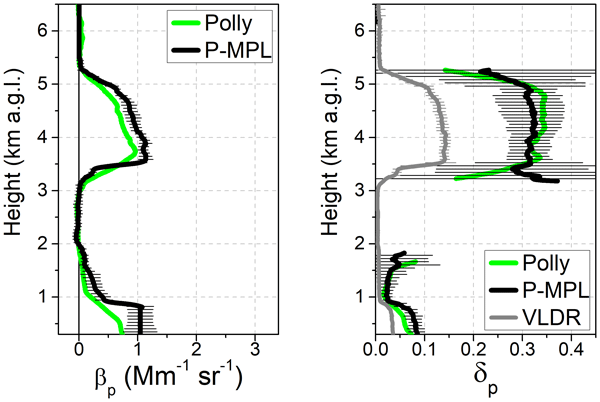
Carmen Córdoba-Jabonero, Albert Ansmann, Cristofer Jiménez, Holger Baars, María-Ángeles López-Cayuela, and Ronny Engelmann
Atmos. Meas. Tech., 14, 5225–5239, https://doi.org/10.5194/amt-14-5225-2021, https://doi.org/10.5194/amt-14-5225-2021, 2021
Short summary
Short summary
An experimental assessment of a polarized micro-pulse lidar (P-MPL) in comparison to reference lidars is presented regarding the retrieval of aerosol optical properties. The evaluation is focused on both the optimally determined overlap function and volume linear depolarization ratio. A P-MPL overlap must be regularly estimated to derive suitable aerosol products (backscatter, extinction, and particle depolarization ratio). This methodology can be easily applied to other P-MPL systems.
Cited articles
Adebiyi, A., Kok, J. F., Murray, B. J., Ryder, C. L., Stuut, J. B. W., Kahn, R. A., Knippertz, P., Formenti, P., Mahowald, N. M., Pérez García-Pando, C., Klose, M., Ansmann, A., Samset, B. H., Ito, A., Balkanski, Y., Di Biagio, C., Romanias, M. N., Huang, Y., and Meng, J.: A review of coarse mineral dust in the Earth system, Aeolian Research, 60, https://doi.org/10.1016/j.aeolia.2022.100849, 2023. a
Adebiyi, A. A. and Kok, J. F.: Climate models miss most of the coarse dust in the atmosphere, Science Advances, 6, eaaz9507, https://doi.org/10.1126/sciadv.aaz9507, 2020. a, b, c
Albrecht, B.: Aerosols, Cloud Microphysics, and Fractional Cloudiness, Science, https://doi.org/10.1126/science.245.4923.1227, 1989. a
Althausen, D., Engelmann, R., Baars, H., Heese, B., Ansmann, A., Müller, D., and Komppula, M.: Portable Raman Lidar PollyXT for automated profiling of aerosol backscatter, extinction, and depolarization, J. Atmos. Ocean. Tech., 26, 2366–2378, https://doi.org/10.1175/2009JTECHA1304.1, 2009. a
Andreae, M. O., Jones, C. D., and Cox, P. M.: Strong present-day aerosol cooling implies a hot future, Nature, 435, 1187–1190, https://doi.org/10.1038/nature03671, 2005. a
Andrews, E., Ogren, J. A., Kinne, S., and Samset, B.: Comparison of AOD, AAOD and column single scattering albedo from AERONET retrievals and in situ profiling measurements, Atmos. Chem. Phys., 17, 6041–6072, https://doi.org/10.5194/acp-17-6041-2017, 2017. a
Ansmann, A., Tesche, M., Seifert, P., Groß, S., Freudenthaler, V., Apituley, A., Wilson, K. M., Serikov, I., Linné, H., Heinold, B., Hiebsch, A., Schnell, F., Schmidt, J., Mattis, I., Wandinger, U., and Wiegner, M.: Ash and fine-mode particle mass profiles from EARLINET-AERONET observations over central Europe after the eruptions of the Eyjafjallajökull volcano in 2010, J. Geophys. Res., 116, D00U02, https://doi.org/10.1029/2010JD015567, 2011. a, b, c
Ansmann, A., Seifert, P., Tesche, M., and Wandinger, U.: Profiling of fine and coarse particle mass: case studies of Saharan dust and Eyjafjallajökull/Grimsvötn volcanic plumes, Atmos. Chem. Phys., 12, 9399–9415, https://doi.org/10.5194/acp-12-9399-2012, 2012. a, b, c, d
Ansmann, A., Mamouri, R.-E., Bühl, J., Seifert, P., Engelmann, R., Hofer, J., Nisantzi, A., Atkinson, J. D., Kanji, Z. A., Sierau, B., Vrekoussis, M., and Sciare, J.: Ice-nucleating particle versus ice crystal number concentrationin altocumulus and cirrus layers embedded in Saharan dust:a closure study, Atmos. Chem. Phys., 19, 15087–15115, https://doi.org/10.5194/acp-19-15087-2019, 2019a. a
Ansmann, A., Mamouri, R.-E., Hofer, J., Baars, H., Althausen, D., and Abdullaev, S. F.: Dust mass, cloud condensation nuclei, and ice-nucleating particle profiling with polarization lidar: updated POLIPHON conversion factors from global AERONET analysis, Atmos. Meas. Tech., 12, 4849–4865, https://doi.org/10.5194/amt-12-4849-2019, 2019b. a
Antuña-Marrero, J. C., Landulfo, E., Estevan, R., Barja, B., Robock, A., Wolfram, E., Ristori, P., Clemesha, B., Zaratti, F., Forno, R., Armandillo, E., Bastidas, Ã. E., de Frutos Baraja, Ã. M., Whiteman, D. N., Quel, E., Barbosa, H. M. J., Lopes, F., Montilla-Rosero, E., and Guerrero-Rascado, J. L.: LALINET: The First Latin American-born Regional Atmospheric Observational Network, Bulletin of the American Meteorological Society, 98, 1255–1275, https://doi.org/10.1175/BAMS-D-15-00228.1, 2017. a
Aryasree, S., Kandler, K., Benker, N., Walser, A., Tipka, A., Dollner, M., Seibert, P., and Weinzierl, B.: Vertical Variability in morphology, chemistry and optical properties of the transported Saharan air layer measured from Cape Verde and the Caribbean, Royal Society Open Science, 11, 231433, https://doi.org/10.1098/rsos.231433, 2024. a
Baars, H., Kanitz, T., Engelmann, R., Althausen, D., Heese, B., Komppula, M., Preißler, J., Tesche, M., Ansmann, A., Wandinger, U., Lim, J.-H., Ahn, J. Y., Stachlewska, I. S., Amiridis, V., Marinou, E., Seifert, P., Hofer, J., Skupin, A., Schneider, F., Bohlmann, S., Foth, A., Bley, S., Pfüller, A., Giannakaki, E., Lihavainen, H., Viisanen, Y., Hooda, R. K., Pereira, S. N., Bortoli, D., Wagner, F., Mattis, I., Janicka, L., Markowicz, K. M., Achtert, P., Artaxo, P., Pauliquevis, T., Souza, R. A. F., Sharma, V. P., van Zyl, P. G., Beukes, J. P., Sun, J., Rohwer, E. G., Deng, R., Mamouri, R.-E., and Zamorano, F.: An overview of the first decade of PollyNET: an emerging network of automated Raman-polarization lidars for continuous aerosol profiling, Atmos. Chem. Phys., 16, 5111–5137, https://doi.org/10.5194/acp-16-5111-2016, 2016. a, b
Barnaba, F. and Gobbi, G. P.: Aerosol seasonal variability over the Mediterranean region and relative impact of maritime, continental and Saharan dust particles over the basin from MODIS data in the year 2001, Atmos. Chem. Phys., 4, 2367–2391, https://doi.org/10.5194/acp-4-2367-2004, 2004. a
Barnard, J. C., Fast, J. D., Paredes-Miranda, G., Arnott, W. P., and Laskin, A.: Evaluation of the WRF-Chem “Aerosol Chemical to Aerosol Optical Properties” Module Using Data from the MILAGRO Campaign, Journal of Geophysical Research: Atmospheres, 115, D07206, https://doi.org/10.1029/2009JD013694, 2010. a
Bimenyimana, E., Sciare, J., Oikonomou, K., Iakovides, M., Pikridas, M., Vasiliadou, E., Savvides, C., and Mihalopoulos, N.: Cross-validation of methods for quantifying the contribution of local (urban) and regional sources to PM2.5 pollution: Application in the Eastern Mediterranean (Cyprus), Atmospheric Environment, 343, 120975, https://doi.org/10.1016/j.atmosenv.2024.120975, 2025. a, b
Bösenberg, J., Matthias, V., Linné, H., Comeron, A., Rocadenbosch, F., Perez, C., and Baldasano, J.: EARLINET: A European Aerosol Research Lidar Network to Establish an Aerosol Climatology, Report 348, Max-Planck-Institut für Meteorologie, Hamburg, Germany, eARLINET Project Report, https://hdl.handle.net/2117/87211 (last access: 6 February 2026), 2003. a
Carslaw, K. S., Boucher, O., Spracklen, D. V., Mann, G. W., Rae, J. G. L., Woodward, S., and Kulmala, M.: A review of natural aerosol interactions and feedbacks within the Earth system, Atmos. Chem. Phys., 10, 1701–1737, https://doi.org/10.5194/acp-10-1701-2010, 2010. a
Chapman, E. G., Gustafson Jr., W. I., Easter, R. C., Barnard, J. C., Ghan, S. J., Pekour, M. S., and Fast, J. D.: Coupling aerosol-cloud-radiative processes in the WRF-Chem model: Investigating the radiative impact of elevated point sources, Atmos. Chem. Phys., 9, 945–964, https://doi.org/10.5194/acp-9-945-2009, 2009. a
Chen, J., Wu, Z., Chen, J., Reicher, N., Fang, X., Rudich, Y., and Hu, M.: Size-resolved atmospheric ice-nucleating particles during East Asian dust events, Atmos. Chem. Phys., 21, 3491–3506, https://doi.org/10.5194/acp-21-3491-2021, 2021. a
Christodoulou, A., Stavroulas, I., Vrekoussis, M., Desservettaz, M., Pikridas, M., Bimenyimana, E., Kushta, J., Ivančič, M., Rigler, M., Goloub, P., Oikonomou, K., Sarda-Estève, R., Savvides, C., Afif, C., Mihalopoulos, N., Sauvage, S., and Sciare, J.: Ambient carbonaceous aerosol levels in Cyprus and the role of pollution transport from the Middle East, Atmos. Chem. Phys., 23, 6431–6456, https://doi.org/10.5194/acp-23-6431-2023, 2023. a
Deb, S., et al.: Evaluation of WRF-Chem (version 4.7.1) aeolian dust emission and land surface models over the dust belt, Geoscientific Model Development, in preparation, 2026. a
DeMott, P. J., Sassen, K., Poellot, M. R., Baumgardner, D., Rogers, D. C., Brooks, S. D., Prenni, A. J., and Kreidenweis, S. M.: African dust aerosols as atmospheric ice nuclei, Geophysical Research Letters, 30, 2003GL017410, https://doi.org/10.1029/2003GL017410, 2003. a
DeMott, P. J., Prenni, A. J., McMeeking, G. R., Sullivan, R. C., Petters, M. D., Tobo, Y., Niemand, M., Möhler, O., Snider, J. R., Wang, Z., and Kreidenweis, S. M.: Integrating laboratory and field data to quantify the immersion freezing ice nucleation activity of mineral dust particles, Atmos. Chem. Phys., 15, 393–409, https://doi.org/10.5194/acp-15-393-2015, 2015. a
Di Biagio, C., Formenti, P., Balkanski, Y., Caponi, L., Cazaunau, M., Pangui, E., Journet, E., Nowak, S., Caquineau, S., Andreae, M. O., Kandler, K., Saeed, T., Piketh, S., Seibert, D., Williams, E., and Doussin, J.-F.: Global scale variability of the mineral dust long-wave refractive index: a new dataset of in situ measurements for climate modeling and remote sensing, Atmos. Chem. Phys., 17, 1901–1929, https://doi.org/10.5194/acp-17-1901-2017, 2017. a
Di Biagio, C., Formenti, P., Balkanski, Y., Caponi, L., Cazaunau, M., Pangui, E., Journet, E., Nowak, S., Andreae, M. O., Kandler, K., Saeed, T., Piketh, S., Seibert, D., Williams, E., and Doussin, J.-F.: Complex refractive indices and single-scattering albedo of global dust aerosols in the shortwave spectrum and relationship to size and iron content, Atmos. Chem. Phys., 19, 15503–15531, https://doi.org/10.5194/acp-19-15503-2019, 2019. a
Drakaki, E., Amiridis, V., Tsekeri, A., Gkikas, A., Proestakis, E., Mallios, S., Solomos, S., Spyrou, C., Marinou, E., Ryder, C. L., Bouris, D., and Katsafados, P.: Modeling coarse and giant desert dust particles, Atmos. Chem. Phys., 22, 12727–12748, https://doi.org/10.5194/acp-22-12727-2022, 2022. a, b
Dubovik, O. and King, M. D.: A flexible inversion algorithm for retrieval of aerosol optical properties from Sun and sky radiance measurements, Journal of Geophysical Research: Atmospheres, 105, 20673–20696, https://doi.org/10.1029/2000JD900282, 2000. a, b
Dubovik, O., Holben, B. N., Eck, T. F., Smirnov, A., Kaufman, Y. J., King, M. D., Tanré, D., and Slutsker, I.: Variability of Absorption and Optical Properties of Key Aerosol Types Observed in Worldwide Locations, Journal of the Atmospheric Sciences, 59, 590–608, https://doi.org/10.1175/1520-0469(2002)059<0590:VOAAOP>2.0.CO;2, 2002. a, b
Engelmann, R., Kanitz, T., Baars, H., Heese, B., Althausen, D., Skupin, A., Wandinger, U., Komppula, M., Stachlewska, I. S., Amiridis, V., Marinou, E., Mattis, I., Linné, H., and Ansmann, A.: The automated multiwavelength Raman polarization and water-vapor lidar PollyXT: the neXT generation, Atmos. Meas. Tech., 9, 1767–1784, https://doi.org/10.5194/amt-9-1767-2016, 2016. a, b
Estellés, V., Marenco, F., Ryder, C., Segura, S., O'Sullivan, D., Brooke, J., Campanelli, M., Buxmann, J., and Martínez-Lozano, J. A.: Validation of AERONET and ESR/SKYNET size distributions with airborne in situ measurements in dust conditions, in: 9th International Workshop on Sand/Duststorms and Associated Dustfall, 22–24 May 2018, Tenerife, Spain, http://dustworkshop9.net/wp-content/uploads/2018/05/abstracts-dw9.pdf (last access: 6 February 2026), 2018. a, b
Fast, J. D., Gustafson Jr., W. I., Easter, R. C., Zaveri, R. A., Barnard, J. C., Chapman, E. G., Grell, G. A., and Peckham, S. E.: Evolution of ozone, particulates, and aerosol direct radiative forcing in the vicinity of Houston using a fully coupled meteorology-chemistry-aerosol model, Journal of Geophysical Research: Atmospheres, 111, https://doi.org/10.1029/2005JD006721, 2006. a, b
Fehr, T., McCarthy, W., Amiridis, V., Baars, H., von Bismarck, J., Borne, M., Chen, S., Flamant, C., Marenco, F., Knipperz, P., Koopman, R., Lemmerz, C. L., Marinou, E., Močnik, G., Parrinello, T., Piña, A., Reitebuch, O., Skofronick-Jackson, G., Zawislak, J., and Zenk, C.: The Joint Aeolus Tropical Atlantic Campaign 2021/2022 Overview – Atmospheric Science and Satellite Validation in the Tropics, EGU General Assembly 2023, Vienna, Austria, 23–28 Apr 2023, EGU23-7249, https://doi.org/10.5194/egusphere-egu23-7249, 2023. a
Fernald, G. F.: Analysis of atmospheric lidar observations: some comments, Appl. Opt., 23, 652–653, https://doi.org/10.1364/AO.23.000652, 1984. a, b
Floutsi, A. A., Rizos, K., Trapon, D., Engelmann, R., Althausen, D., Marinou, E., Paschou, P., Hofer, J., Proestakis, E., Gebauer, H., Skupin, A., Ansmann, A., Fehr, T., Hummel, T., Koopman, R., Amiridis, V., Wandinger, U., and Baars, H.: On the representativeness of the ground-based lidar observations for satellite calibration/validation – the example of the archipelago of Cabo Verde, EGUsphere [preprint], https://doi.org/10.5194/egusphere-2025-4742, 2025. a
Fountoulakis, I., Tsekeri, A., Kazadzis, S., Amiridis, V., Nersesian, A., Tsichla, M., Proestakis, E., Gkikas, A., Papachristopoulou, K., Barlakas, V., Emde, C., and Mayer, B.: A sensitivity study on radiative effects due to the parameterization of dust optical properties in models, Atmos. Chem. Phys., 24, 4915–4948, https://doi.org/10.5194/acp-24-4915-2024, 2024. a
Gao, R. S., Telg, H., McLaughlin, R. J., Ciciora, S. J., Watts, L. A., Richardson, M. S., Schwarz, J. P., Perring, A. E., Thornberry, T. D., Rollins, A. W., Markovic, M. Z., Bates, T. S., Johnson, J. E., and Fahey, D. W.: A light-weight, high-sensitivity particle spectrometer for PM2.5 aerosol measurements, Aerosol Science and Technology, 50, 88–99, https://doi.org/10.1080/02786826.2015.1131809, 2016. a, b, c, d
Garcia-Suñer, M., Estellés, V., Marenco, F., Ryder, C., Kumar, G., Momoi, M., Campanelli, M., O'Sullivan, D., Brooke, J., and Buxmann, J.: Validation of AERONET and SKYNET columnar aerosol size distributions by comparison with aircraft in situ measurements at Cape Verde, EMS Annual Meeting 2024, Barcelona, Spain, 1–6 Sep 2024, EMS2024-717, https://doi.org/10.5194/ems2024-717, 2024. a
Gasteiger, J. and Wiegner, M.: Modeling of aerosol optical properties with MOPSMAP: Fortran program with data set, Zenodo, https://doi.org/10.5281/zenodo.1284217, 2018a. a
Gasteiger, J. and Wiegner, M.: MOPSMAP v1.0: a versatile tool for the modeling of aerosol optical properties, Geosci. Model Dev., 11, 2739–2762, https://doi.org/10.5194/gmd-11-2739-2018, 2018b. a
Gasteiger, J., Groß, S., Freudenthaler, V., and Wiegner, M.: Volcanic ash from Iceland over Munich: mass concentration retrieved from ground-based remote sensing measurements, Atmos. Chem. Phys., 11, 2209–2223, https://doi.org/10.5194/acp-11-2209-2011, 2011. a
Gebauer, H., Floutsi, A. A., Haarig, M., Radenz, M., Engelmann, R., Althausen, D., Skupin, A., Ansmann, A., Zenk, C., and Baars, H.: Tropospheric sulfate from Cumbre Vieja (La Palma) observed over Cabo Verde contrasted with background conditions: a lidar case study of aerosol extinction, backscatter, depolarization and lidar ratio profiles at 355, 532 and 1064 nm, Atmos. Chem. Phys., 24, 5047–5067, https://doi.org/10.5194/acp-24-5047-2024, 2024. a
Gebauer, H., Floutsi, A. A., Hofer, J., Haarig, M., Skupin, A., Engelmann, R., Jimenez, C., and Baars, H.: Characterization of the annual cycle of atmospheric aerosol over Mindelo, Cabo Verde, by means of continuous multiwavelength lidar observations, EGUsphere [preprint], https://doi.org/10.5194/egusphere-2025-3344, 2025. a
Georgiou, G. K., Christoudias, T., Proestos, Y., Kushta, J., Pikridas, M., Sciare, J., Savvides, C., and Lelieveld, J.: Evaluation of WRF-Chem model (v3.9.1.1) real-time air quality forecasts over the Eastern Mediterranean, Geosci. Model Dev., 15, 4129–4146, https://doi.org/10.5194/gmd-15-4129-2022, 2022. a
Ghan, S. J. and Zaveri, R. A.: Parameterization of Optical Properties for Hydrated Internally Mixed Aerosols, Journal of Geophysical Research: Atmospheres, 112, D10201, https://doi.org/10.1029/2006JD007927, 2007. a, b
Grell, G. A., Peckham, S. E., Schmitz, R., McKeen, S. A., Frost, G., Skamarock, W. C., and Eder, B.: Fully coupled online chemistry within the WRF model, Atmospheric Environment, 39, 6957–6975, https://doi.org/10.1016/j.atmosenv.2005.04.027, 2005. a
Groß, S., Freudenthaler, V., Schepanski, K., Toledano, C., Schäfler, A., Ansmann, A., and Weinzierl, B.: Optical properties of long-range transported Saharan dust over Barbados as measured by dual-wavelength depolarization Raman lidar measurements, Atmos. Chem. Phys., 15, 11067–11080, https://doi.org/10.5194/acp-15-11067-2015, 2015. a
Haarig, M., Ansmann, A., Engelmann, R., Baars, H., Toledano, C., Torres, B., Althausen, D., Radenz, M., and Wandinger, U.: First triple-wavelength lidar observations of depolarization and extinction-to-backscatter ratios of Saharan dust, Atmos. Chem. Phys., 22, 355–369, https://doi.org/10.5194/acp-22-355-2022, 2022. a
Haywood, J., Francis, P., Osborne, S., Glew, M., Loeb, N., Highwood, E., Tanré, D., Myhre, G., Formenti, P., and Hirst, E.: Radiative properties and direct radiative effect of Saharan dust measured by the C-130 aircraft during SHADE: 1. Solar spectrum, Journal of Geophysical Research: Atmospheres, 108, https://doi.org/10.1029/2002jd002687, 2003. a, b
Hess, M., Koepke, P., and Schult, I.: Optical properties of aerosols and clouds: The software package OPAC, B. Am. Meteorol. Soc., 79, 831–844, 1998. a
Hofer, J., Althausen, D., Abdullaev, S. F., Makhmudov, A. N., Nazarov, B. I., Schettler, G., Engelmann, R., Baars, H., Fomba, K. W., Müller, K., Heinold, B., Kandler, K., and Ansmann, A.: Long-term profiling of mineral dust and pollution aerosol with multiwavelength polarization Raman lidar at the Central Asian site of Dushanbe, Tajikistan: case studies, Atmos. Chem. Phys., 17, 14559–14577, https://doi.org/10.5194/acp-17-14559-2017, 2017. a
Hofer, J., Ansmann, A., Althausen, D., Engelmann, R., Baars, H., Abdullaev, S. F., and Makhmudov, A. N.: Long-term profiling of aerosol light extinction, particle mass, cloud condensation nuclei, and ice-nucleating particle concentration over Dushanbe, Tajikistan, in Central Asia, Atmos. Chem. Phys., 20, 4695–4711, https://doi.org/10.5194/acp-20-4695-2020, 2020a. a
Hofer, J., Ansmann, A., Althausen, D., Engelmann, R., Baars, H., Fomba, K. W., Wandinger, U., Abdullaev, S. F., and Makhmudov, A. N.: Optical properties of Central Asian aerosol relevant for spaceborne lidar applications and aerosol typing at 355 and 532 nm, Atmos. Chem. Phys., 20, 9265–9280, https://doi.org/10.5194/acp-20-9265-2020, 2020b. a
Holben, B., Eck, T., Slutsker, I., Tanré, D., Buis, J., Setzer, A., Vermote, E., Reagan, J., Kaufman, Y., Nakajima, T., Lavenu, F., Jankowiak, I., and Smirnov, A.: AERONET: A Federated Instrument Network and Data Archive for Aerosol Characterization, Remote Sensing of Environment, 66, 1–16, https://doi.org/10.1016/S0034-4257(98)00031-5, 1998. a, b, c, d
Illingworth, A. J., Barker, H. W., Beljaars, A., Ceccaldi, M., Chepfer, H., Clerbaux, N., Cole, J., Delanoë, J., Domenech, C., Donovan, D. P., Fukuda, S., Hirakata, M., Hogan, R. J., Huenerbein, A., Kollias, P., Kubota, T., Nakajima, T., Nakajima, T. Y., Nishizawa, T., Ohno, Y., Okamoto, H., Oki, R., Sato, K., Satoh, M., Shephard, M. W., Velázquez-Blázquez, A., Wandinger, U., Wehr, T., and van Zadelhoff, G.-J.: The EarthCARE Satellite: The Next Step Forward in Global Measurements of Clouds, Aerosols, Precipitation, and Radiation, Bulletin of the American Meteorological Society, 96, 1311–1332, https://doi.org/10.1175/BAMS-D-12-00227.1, 2015. a
IPCC: Climate Change 2021: The Physical Science Basis. Contribution of Working Group I to the Sixth Assessment Report of the Intergovernmental Panel on Climate Change, Cambridge University Press, https://doi.org/10.1017/9781009157896, 2021. a
Jimenez, C., Ansmann, A., Engelmann, R., Donovan, D., Malinka, A., Schmidt, J., Seifert, P., and Wandinger, U.: The dual-field-of-view polarization lidar technique: a new concept in monitoring aerosol effects in liquid-water clouds – theoretical framework, Atmos. Chem. Phys., 20, 15247–15263, https://doi.org/10.5194/acp-20-15247-2020, 2020. a, b
Johnson, B. and Osborne, S. R.: Physical and optical properties of mineral dust aerosol measured by aircraft during the GERBILS campaign, Q. J. Roy. Meteor. Soc., 137, 1117–1130, 2011. a
Johnson, B., Turnbull, K., Brown, P., Burgess, R., Dorsey, J., Baran, A. J., Webster, H., Haywood, J., Cotton, R., Ulanowski, Z., Hesse, E., Woolley, A., and Rosenberg, P.: In situ observations of volcanic ash clouds from the FAAM aircraft during the eruption of Eyjafjallajökull in 2010, Journal of Geophysical Research: Atmospheres, 117, https://doi.org/10.1029/2011JD016760, 2012. a
Johnson, B. T., Haywood, J. M., Langridge, J. M., Darbyshire, E., Morgan, W. T., Szpek, K., Brooke, J. K., Marenco, F., Coe, H., Artaxo, P., Longo, K. M., Mulcahy, J. P., Mann, G. W., Dalvi, M., and Bellouin, N.: Evaluation of biomass burning aerosols in the HadGEM3 climate model with observations from the SAMBBA field campaign, Atmos. Chem. Phys., 16, 14657–14685, https://doi.org/10.5194/acp-16-14657-2016, 2016. a
Kandler, K., Benker, N., Bundke, U., Cuevas, E., Ebert, M., Knippertz, P., Rodríguez, S., Schütz, L., and Weinbruch, S.: Chemical composition and complex refractive index of Saharan Mineral Dust at Izaña, Tenerife (Spain) derived by electron microscopy, Atmospheric Environment, 41, 8058–8074, https://doi.org/10.1016/j.atmosenv.2007.06.047, 2007. a, b
Kandler, K., Schütz, L., Deutscher, C., Ebert, M., Hofmann, H., Jäckel, S., Jaenicke, R., Knippertz, P., Lieke, K., Massling, A., Petzold, A., Schladitz, A., Weinzierl, B., Wiedensohler, A., Zorn, S., and Weinbruch, S.: Size distribution, mass concentration, chemical and mineralogical composition and derived optical parameters of the boundary layer aerosol at Tinfou, Morocco, during SAMUM 2006, Tellus, Series B: Chemical and Physical Meteorology, 61, 32–50, https://doi.org/10.1111/j.1600-0889.2008.00385.x, 2009. a, b
Kandler, K., Schneiders, K., Ebert, M., Hartmann, M., Weinbruch, S., Prass, M., and Pöhlker, C.: Composition and mixing state of atmospheric aerosols determined by electron microscopy: method development and application to aged Saharan dust deposition in the Caribbean boundary layer, Atmos. Chem. Phys., 18, 13429–13455, https://doi.org/10.5194/acp-18-13429-2018, 2018. a, b
Karanasiou, A., Moreno, N., Moreno, T., Viana, M., Leeuw, F. D., and Querol, X.: Health effects from Sahara dust episodes in Europe: literature review and research gaps, Environment International, https://doi.org/10.1016/j.envint.2012.06.012, 2012. a
Karyampudi, V. M., Palm, S. P., Reagen, J. A., Fang, H., Grant, W. B., Hoff, R. M., Moulin, C., Pierce, H. F., Torres, O., Browell, E. V., and Melfi, S. H.: Validation of the Saharan Dust Plume Conceptual Model Using Lidar, Meteosat, and ECMWF Data, Bulletin of the American Meteorological Society, 80, 1045–1076, https://doi.org/10.1175/1520-0477(1999)080<1045:VOTSDP>2.0.CO;2, 1999. a
Karydis, V. A., Kumar, P., Barahona, D., Sokolik, I. N., and Nenes, A.: On the effect of dust particles on global cloud condensation nuclei and cloud droplet number: DUST IMPACTS ON CLOUD CONDENSATION NUCLEI, Journal of Geophysical Research, 116, https://doi.org/10.1029/2011JD016283, 2011. a
Karydis, V. A., Tsimpidi, A. P., Bacer, S., Pozzer, A., Nenes, A., and Lelieveld, J.: Global impact of mineral dust on cloud droplet number concentration, Atmos. Chem. Phys., 17, 5601–5621, https://doi.org/10.5194/acp-17-5601-2017, 2017. a
Kezoudi, M., Keleshis, C., Antoniou, P., Biskos, G., Bronz, M., Constantinides, C., Desservettaz, M., Gao, R.-S., Girdwood, J., Harnetiaux, J., Kandler, K., Leonidou, A., Liu, Y., Lelieveld, J., Marenco, F., Mihalopoulos, N., Močnik, G., Neitola, K., Paris, J.-D., Pikridas, M., Sarda-Esteve, R., Stopford, C., Unga, F., Vrekoussis, M., and Sciare, J.: The Unmanned Systems Research Laboratory (USRL): A New Facility for UAV-Based Atmospheric Observations, Atmosphere, 12, https://doi.org/10.3390/atmos12081042, 2021a. a, b, c, d, e
Kezoudi, M., Tesche, M., Smith, H., Tsekeri, A., Baars, H., Dollner, M., Estellés, V., Bühl, J., Weinzierl, B., Ulanowski, Z., Müller, D., and Amiridis, V.: Measurement report: Balloon-borne in situ profiling of Saharan dust over Cyprus with the UCASS optical particle counter, Atmos. Chem. Phys., 21, 6781–6797, https://doi.org/10.5194/acp-21-6781-2021, 2021b. a
Kezoudi, M., Papetta, A., Kandler, K., Ryder, C. L., Leonidou, A., Keleshis, C., Stopford, C., Thornberry, T., Mamouri, R.-E., Sciare, J., and Marenco, F.: Microphysical and Compositional Differences Between Saharan and Middle Eastern Dust Revealed by UAS Observations, EGUsphere [preprint], https://doi.org/10.5194/egusphere-2025-5234, 2025. a, b, c
Klett, J. D.: Lidar inversion with variable backscatter/extinction ratios, Appl. Opt., 24, 1638–1643, https://doi.org/10.1364/AO.25.000833, 1985. a, b
Koch, D. and Del Genio, A. D.: Black carbon semi-direct effects on cloud cover: review and synthesis, Atmos. Chem. Phys., 10, 7685–7696, https://doi.org/10.5194/acp-10-7685-2010, 2010. a
Kok, J. F., Storelvmo, T., Karydis, V. A., Adebiyi, A. A., Mahowald, N. M., Evan, A. T., He, C., and Leung, D. M.: Mineral dust aerosol impacts on global climate and climate change, Nature Reviews Earth & Environment, 4, 71–86, https://doi.org/10.1038/s43017-022-00379-5, 2023. a, b
Kudo, R., Diémoz, H., Estellés, V., Campanelli, M., Momoi, M., Marenco, F., Ryder, C. L., Ijima, O., Uchiyama, A., Nakashima, K., Yamazaki, A., Nagasawa, R., Ohkawara, N., and Ishida, H.: Optimal use of the Prede POM sky radiometer for aerosol, water vapor, and ozone retrievals, Atmos. Meas. Tech., 14, 3395–3426, https://doi.org/10.5194/amt-14-3395-2021, 2021. a
Levin, Z. and Cotton, W. R.: Aerosol pollution impact on precipitation: a scientific review, Springer Nature, https://doi.org/10.1007/978-1-4020-8690-8, 2008. a
Lieke, K., Kandler, K., Scheuvens, D., Emmel, C., Von Glahn, C., Petzold, A., Weinzierl, B., Veira, A., Ebert, M., Weinbruch, S., and Schütz, L.: Particle chemical properties in the vertical column based on aircraft observations in the vicinity of Cape Verde Islands, Tellus B: Chemical and Physical Meteorology, https://doi.org/10.1111/j.1600-0889.2011.00553.x, 2011. a
Lopatin, A., Dubovik, O., Fuertes, D., Stenchikov, G., Lapyonok, T., Veselovskii, I., Wienhold, F. G., Shevchenko, I., Hu, Q., and Parajuli, S.: Synergy processing of diverse ground-based remote sensing and in situ data using the GRASP algorithm: applications to radiometer, lidar and radiosonde observations, Atmos. Meas. Tech., 14, 2575–2614, https://doi.org/10.5194/amt-14-2575-2021, 2021. a
Lorenz, L.: Lysbevægelsen i og uden for en af plane Lysbølger belyst Kugle, Kongelige Danske Videnskabernes Selskabs Skrifter: Naturvidenskabelig og Mathematisk Afdeling, https://books.google.com.cy/books?id=hnE7QwAACAAJ (last access: 23 December 2025), 1890. a
Mahowald, N., Albani, S., Kok, J. F., Engelstaeder, S., Scanza, R., Ward, D. S., and Flanner, M. G.: The size distribution of desert dust aerosols and its impact on the Earth system, Aeolian Research, 15, 53–71, https://doi.org/10.1016/j.aeolia.2013.09.002, 2014. a
Mamouri, R. E. and Ansmann, A.: Fine and coarse dust separation with polarization lidar, Atmos. Meas. Tech., 7, 3717–3735, https://doi.org/10.5194/amt-7-3717-2014, 2014. a
Mamouri, R. E., Ansmann, A., Nisantzi, A., Kokkalis, P., Schwarz, A., and Hadjimitsis, D.: Low Arabian dust extinction-to-backscatter ratio, Geophysical Research Letters, 40, 4762–4766, https://doi.org/10.1002/grl.50898, 2013. a
Mamouri, R.-E., Ansmann, A., Nisantzi, A., Solomos, S., Kallos, G., and Hadjimitsis, D. G.: Extreme dust storm over the eastern Mediterranean in September 2015: satellite, lidar, and surface observations in the Cyprus region, Atmos. Chem. Phys., 16, 13711–13724, https://doi.org/10.5194/acp-16-13711-2016, 2016. a
Marenco, F., Santacesaria, V., Bais, A. F., Balis, D., di Sarra, A., Papayannis, A., and Zerefos, C.: Optical properties of tropospheric aerosols determined by lidar andspectrophotometric measurements (Photochemical Activity and Solar UltravioletRadiation campaign), Appl. Opt., 36, 6875–6886, https://doi.org/10.1364/AO.36.006875, 1997. a
Marenco, F., Johnson, B., Turnbull, K., Newman, S., Haywood, J., Webster, H., and Ricketts, H.: Airborne lidar observations of the 2010 Eyjafjallajökull volcanic ash plume, Journal of Geophysical Research: Atmospheres, 116, https://doi.org/10.1029/2011JD016396, 2011. a
Marenco, F., Ryder, C., Estellés, V., O'Sullivan, D., Brooke, J., Orgill, L., Lloyd, G., and Gallagher, M.: Unexpected vertical structure of the Saharan Air Layer and giant dust particles during AER-D, Atmos. Chem. Phys., 18, 17655–17668, https://doi.org/10.5194/acp-18-17655-2018, 2018. a
Marinou, E., Paschou, P., Tsikoudi, I., Tsekeri, A., Daskalopoulou, V., Kouklaki, D., Siomos, N., Spanakis-Misirlis, V., Voudouri, K. A., Georgiou, T., Drakaki, E., Kampouri, A., Papachristopoulou, K., Mavropoulou, I., Mallios, S., Proestakis, E., Gkikas, A., Koutsoupi, I., Raptis, I. P., Kazadzis, S., Baars, H., Floutsi, A., Pirloaga, R., Nemuc, A., Marenco, F., Kezoudi, M., Papetta, A., Močnik, G., Díez, J. Y., Ryder, C. L., Ratcliffe, N., Kandler, K., Sudharaj, A., and Amiridis, V.: An Overview of the ASKOS Campaign in Cabo Verde, Environmental Sciences Proceedings, p. 200, https://doi.org/10.3390/environsciproc2023026200, 2023. a, b
Mei, F., McMeeking, G., Pekour, M., Gao, R.-S., Kulkarni, G., China, S., Telg, H., Dexheimer, D., Tomlinson, J., and Schmid, B.: Performance Assessment of Portable Optical Particle Spectrometer (POPS), Sensors, 20, https://doi.org/10.3390/s20216294, 2020. a
Middleton, N.: Desert dust hazards: A global review, Aeolian Research, 24, 53–63, https://doi.org/10.1016/j.aeolia.2016.12.001, 2017. a
Mie, G.: Beiträge zur Optik trüber Medien, speziell kolloidaler Metallösungen, Annalen der Physik, 330, 377–445, https://doi.org/10.1002/andp.19083300302, 1908. a
Moteki, N.: Climate-relevant properties of black carbon aerosols revealed by in situ measurements: a review, Progress in Earth and Planetary Science, https://doi.org/10.1186/s40645-023-00544-4, 2023. a
Müller, T., Weinzierl, B., Petzold, A., Kandler, K., Ansmann, A., Mller, D., Tesche, M., Freudenthaler, V., Esselborn, M., Heese, B., Althausen, D., Schladitz, A., Otto, S., and Knippertz, P.: Mineral dust observed with AERONET Sun photometer, Raman lidar, and in situ instruments during SAMUM 2006: Shape-independent particle properties, Journal of Geophysical Research Atmospheres, 115, 1–18, https://doi.org/10.1029/2009JD012520, 2010. a
Müller, D., Veselovskii, I., Kolgotin, A., Tesche, M., Ansmann, A., and Dubovik, O.: Vertical profiles of pure dust and mixed smoke–dust plumes inferred from inversion of multiwavelength Raman/polarization lidar data and comparison to AERONET retrievals and in situ observations, Appl. Opt., 52, 3178–3202, 2013. a
Nakajima, T., Yoon, S.-C., Ramanathan, V., Shi, G.-Y., Takemura, T., Higurashi, A., Takamura, T., Aoki, K., Sohn, B.-J., Kim, S.-W., Tsuruta, H., Sugimoto, N., Shimizu, A., Tanimoto, H., Sawa, Y., Lin, N.-H., Lee, C.-T., Goto, D., and Schutgens, N.: Overview of the Atmospheric Brown Cloud East Asian Regional Experiment 2005 and a study of the aerosol direct radiative forcing in east Asia, Journal of Geophysical Research: Atmospheres, 112, https://doi.org/10.1029/2007JD009009, 2007. a, b
Nickovic, S., Cvetkovic, B., Petkovic, S., Amiridis, V., Pejanovic, G., Solomos, S., Marinou, E., and Nikolic, J.: Cloud icing by mineral dust and impacts to aviation safety, Scientific Reports, 11, 6411, https://doi.org/10.1038/s41598-021-85566-y, 2021. a
Osborne, S. R., Johnson, B. T., Haywood, J. M., Baran, A. J., Harrison, M. A. J., and McConnell, C. L.: Physical and optical properties of mineral dust aerosol during the Dust and Biomass-burning Experiment, J. Geophys. Res., 113, D00C03, https://doi.org/10.1029/2007JD009551, 2008. a
O'Sullivan, D., Marenco, F., Ryder, C. L., Pradhan, Y., Kipling, Z., Johnson, B., Benedetti, A., Brooks, M., McGill, M., Yorks, J., and Selmer, P.: Models transport Saharan dust too low in the atmosphere: a comparison of the MetUM and CAMS forecasts with observations, Atmos. Chem. Phys., 20, 12955–12982, https://doi.org/10.5194/acp-20-12955-2020, 2020. a, b, c
Papetta, A.: Dataset for 'Volume-to-extinction ratio: An important property of dust' by Papetta A et al., Zenodo [data set], https://doi.org/10.5281/zenodo.15910856, 2025. a
Papetta, A., Marenco, F., Kezoudi, M., Mamouri, R.-E., Nisantzi, A., Baars, H., Popovici, I. E., Goloub, P., Victori, S., and Sciare, J.: Lidar depolarization characterization using a reference system, Atmos. Meas. Tech., 17, 1721–1738, https://doi.org/10.5194/amt-17-1721-2024, 2024. a
Paschou, P., Siomos, N., Tsekeri, A., Louridas, A., Georgoussis, G., Freudenthaler, V., Binietoglou, I., Tsaknakis, G., Tavernarakis, A., Evangelatos, C., von Bismarck, J., Kanitz, T., Meleti, C., Marinou, E., and Amiridis, V.: The eVe reference polarisation lidar system for the calibration and validation of the Aeolus L2A product, Atmos. Meas. Tech., 15, 2299–2323, https://doi.org/10.5194/amt-15-2299-2022, 2022. a
Proestakis, E., Papachristopoulou, K., Georgiou, T., Chatoutsidou, S. E., Lazaridis, M., Gkikas, A., Fountoulakis, I., Tsikoudi, I., Petrakis, M. P., and Amiridis, V.: Atmospheric dust and air quality over large-cities and megacities of the world, Atmos. Chem. Phys., 25, 14777–14823, https://doi.org/10.5194/acp-25-14777-2025, 2025. a
Prospero, J. M., Collard, F.-X., Molinié, J., and Jeannot, A.: Characterizing the annual cycle of African dust transport to the Caribbean Basin and South America and its impact on the environment and air quality, Global Biogeochemical Cycles, 28, 757–773, https://doi.org/10.1002/2013GB004802, 2014. a
Robock, A.: Volcanic eruptions and climate, Rev. Geophys., https://doi.org/10.1029/1998rg000054, 2000. a
Rosenfeld, D., Rudich, Y., and Lahav, R.: Desert dust suppressing precipitation: A possible desertification feedback loop, Proceedings of the National Academy of Sciences of the United States of America, 98, 5975–5980, https://doi.org/10.1073/pnas.101122798, 2001. a
Ryder, C. L., Highwood, E. J., Rosenberg, P. D., Trembath, J., Brooke, J. K., Bart, M., Dean, A., Crosier, J., Dorsey, J., Brindley, H., Banks, J., Marsham, J. H., McQuaid, J. B., Sodemann, H., and Washington, R.: Optical properties of Saharan dust aerosol and contribution from the coarse mode as measured during the Fennec 2011 aircraft campaign, Atmos. Chem. Phys., 13, 303–325, https://doi.org/10.5194/acp-13-303-2013, 2013. a
Ryder, C. L., McQuaid, J. B., Flamant, C., Rosenberg, P. D., Washington, R., Brindley, H. E., Highwood, E. J., Marsham, J. H., Parker, D. J., Todd, M. C., Banks, J. R., Brooke, J. K., Engelstaedter, S., Estelles, V., Formenti, P., Garcia-Carreras, L., Kocha, C., Marenco, F., Sodemann, H., Allen, C. J. T., Bourdon, A., Bart, M., Cavazos-Guerra, C., Chevaillier, S., Crosier, J., Darbyshire, E., Dean, A. R., Dorsey, J. R., Kent, J., O'Sullivan, D., Schepanski, K., Szpek, K., Trembath, J., and Woolley, A.: Advances in understanding mineral dust and boundary layer processes over the Sahara from Fennec aircraft observations, Atmos. Chem. Phys., 15, 8479–8520, https://doi.org/10.5194/acp-15-8479-2015, 2015a. a, b
Ryder, C. L., McQuaid, J. B., Flamant, C., Rosenberg, P. D., Washington, R., Brindley, H. E., Highwood, E. J., Marsham, J. H., Parker, D. J., Todd, M. C., Banks, J. R., Brooke, J. K., Engelstaedter, S., Estelles, V., Formenti, P., Garcia-Carreras, L., Kocha, C., Marenco, F., Sodemann, H., Allen, C. J. T., Bourdon, A., Bart, M., Cavazos-Guerra, C., Chevaillier, S., Crosier, J., Darbyshire, E., Dean, A. R., Dorsey, J. R., Kent, J., O'Sullivan, D., Schepanski, K., Szpek, K., Trembath, J., and Woolley, A.: Advances in understanding mineral dust and boundary layer processes over the Sahara from Fennec aircraft observations, Atmos. Chem. Phys., 15, 8479–8520, https://doi.org/10.5194/acp-15-8479-2015, 2015b. a
Ryder, C. L., Marenco, F., Brooke, J. K., Estelles, V., Cotton, R., Formenti, P., McQuaid, J. B., Price, H. C., Liu, D., Ausset, P., Rosenberg, P. D., Taylor, J. W., Choularton, T., Bower, K., Coe, H., Gallagher, M., Crosier, J., Lloyd, G., Highwood, E. J., and Murray, B. J.: Coarse-mode mineral dust size distributions, composition and optical properties from AER-D aircraft measurements over the tropical eastern Atlantic, Atmos. Chem. Phys., 18, 17225–17257, https://doi.org/10.5194/acp-18-17225-2018, 2018. a, b, c, d, e
Ryder, C. L., Highwood, E. J., Walser, A., Seibert, P., Philipp, A., and Weinzierl, B.: Coarse and giant particles are ubiquitous in Saharan dust export regions and are radiatively significant over the Sahara, Atmos. Chem. Phys., 19, 15353–15376, https://doi.org/10.5194/acp-19-15353-2019, 2019. a, b
Ryder, C. L., Bézier, C., Dacre, H. F., Clarkson, R., Amiridis, V., Marinou, E., Proestakis, E., Kipling, Z., Benedetti, A., Parrington, M., Rémy, S., and Vaughan, M.: Aircraft engine dust ingestion at global airports, Nat. Hazards Earth Syst. Sci., 24, 2263–2284, https://doi.org/10.5194/nhess-24-2263-2024, 2024. a
Schumann, U., Mayer, B., Gierens, K., Unterstrasser, S., Jessberger, P., Petzold, A., Voigt, C., and Gayet, J. F.: Effective radius of ice particles in cirrus and contrails, Journal of the Atmospheric Sciences, 68, 300–321, https://doi.org/10.1175/2010JAS3562.1, 2011. a, b
Seinfeld, J. H. and Pandis, N. S.: Atmospheric chemistry and physics: from air pollution to climate change, J. Wiley, ISBN 0471720178, 2006. a
Sinyuk, A., Holben, B. N., Eck, T. F., Giles, D. M., Slutsker, I., Korkin, S., Schafer, J. S., Smirnov, A., Sorokin, M., and Lyapustin, A.: The AERONET Version 3 aerosol retrieval algorithm, associated uncertainties and comparisons to Version 2, Atmos. Meas. Tech., 13, 3375–3411, https://doi.org/10.5194/amt-13-3375-2020, 2020. a
Smith, H. R., Ulanowski, Z., Kaye, P. H., Hirst, E., Stanley, W., Kaye, R., Wieser, A., Stopford, C., Kezoudi, M., Girdwood, J., Greenaway, R., and Mackenzie, R.: The Universal Cloud and Aerosol Sounding System (UCASS): a low-cost miniature optical particle counter for use in dropsonde or balloon-borne sounding systems, Atmos. Meas. Tech., 12, 6579–6599, https://doi.org/10.5194/amt-12-6579-2019, 2019. a, b
Stein, A. F., Draxler, R. R., Rolph, G. D., Stunder, B. J. B., Cohen, M. D., and Ngan, F.: NOAA's HYSPLIT Atmospheric Transport and Dispersion Modeling System, Bulletin of the American Meteorological Society, 96, 2059–2077, https://doi.org/10.1175/BAMS-D-14-00110.1, 2015. a, b
Teri, M., Gasteiger, J., Heimerl, K., Dollner, M., Schöberl, M., Seibert, P., Tipka, A., Müller, T., Aryasree, S., Kandler, K., and Weinzierl, B.: Pollution affects Arabian and Saharan dust optical properties in the eastern Mediterranean, Atmos. Chem. Phys., 25, 6633–6662, https://doi.org/10.5194/acp-25-6633-2025, 2025. a, b, c, d, e
Tsamalis, C., Chédin, A., Pelon, J., and Capelle, V.: The seasonal vertical distribution of the Saharan Air Layer and its modulation by the wind, Atmos. Chem. Phys., 13, 11235–11257, https://doi.org/10.5194/acp-13-11235-2013, 2013. a
Tsekeri, A., Gialitaki, A., Di Paolantonio, M., Dionisi, D., Liberti, G. L., Fernandes, A., Szkop, A., Pietruczuk, A., Pérez-Ramírez, D., Granados Muñoz, M. J., Guerrero-Rascado, J. L., Alados-Arboledas, L., Bermejo Pantaleón, D., Bravo-Aranda, J. A., Kampouri, A., Marinou, E., Amiridis, V., Sicard, M., Comerón, A., Muñoz-Porcar, C., Rodríguez-Gómez, A., Romano, S., Perrone, M. R., Shang, X., Komppula, M., Mamouri, R.-E., Nisantzi, A., Hadjimitsis, D., Navas-Guzmán, F., Haefele, A., Szczepanik, D., Tomczak, A., Stachlewska, I. S., Belegante, L., Nicolae, D., Voudouri, K. A., Balis, D., Floutsi, A. A., Baars, H., Miladi, L., Pascal, N., Dubovik, O., and Lopatin, A.: Combined sun-photometer–lidar inversion: lessons learned during the EARLINET/ACTRIS COVID-19 campaign, Atmos. Meas. Tech., 16, 6025–6050, https://doi.org/10.5194/amt-16-6025-2023, 2023. a
Turnbull, K., Johnson, B., Marenco, F., Haywood, J., Minikin, A., Weinzierl, B., Schlager, H., Schumann, U., Leadbetter, S., and Woolley, A.: A case study of observations of volcanic ash from the Eyjafjallajökull eruption: 1. In situ airborne observations, Journal of Geophysical Research: Atmospheres, 117, https://doi.org/10.1029/2011JD016688, 2012. a
Ukhov, A., Ahmadov, R., Grell, G., and Stenchikov, G.: Improving dust simulations in WRF-Chem v4.1.3 coupled with the GOCART aerosol module, Geosci. Model Dev., 14, 473–493, https://doi.org/10.5194/gmd-14-473-2021, 2021. a
Van de Hulst, H. C.: Light Scattering by Small Particles, John Wiley and Sons, https://doi.org/10.1063/1.3060205, 1957. a
van der Does, M., Korte, L. F., Munday, C. I., Brummer, G.-J. A., and Stuut, J.-B. W.: Particle size traces modern Saharan dust transport and deposition across the equatorial North Atlantic, Atmos. Chem. Phys., 16, 13697–13710, https://doi.org/10.5194/acp-16-13697-2016, 2016. a
van der Does, M., Knippertz, P., Zschenderlein, P., Harrison, R. G., and Stuut, J.-B. W.: The mysterious long-range transport of giant mineral dust particles, Science Advances, 4, eaau2768, https://doi.org/10.1126/sciadv.aau2768, 2018. a
Wadell, H.: Volume, Shape, and Roundness of Quartz Particles, The Journal of Geology, https://doi.org/10.1086/624298, 1935. a
Weinzierl, B., Petzold, A., Esselborn, M., Wirth, M., Rasp, K., Kandler, K., Schütz, L., Koepke, P., and Fiebig, M.: Airborne measurements of dust layer properties, particle size distribution and mixing state of Saharan dust during SAMUM 2006, Tellus B, 61, 96–117, https://doi.org/10.1111/j.1600-0889.2008.00392.x, 2009. a, b, c
Weinzierl, B., Sauer, D., Esselborn, M., Petzold, A., Veira, A., Rose, M., Mund, S., Wirth, M., Ansmann, A., Tesche, M., Gross, S., and Freudenthaler, V.: Microphysical and optical properties of dust and tropical biomass burning aerosol layers in the Cape Verde region – an overview of the airborne in situ and lidar measurements during SAMUM-2, Tellus B, 63, 589–618, https://doi.org/10.1111/j.1600-0889.2011.00566.x, 2011. a
Weinzierl, B., Ansmann, A., Prospero, J. M., Althausen, D., Benker, N., Chouza, F., Dollner, M., Farrell, D., Fomba, W. K., Freudenthaler, V., Gasteiger, J., Groß, S., Haarig, M., Heinold, B., Kandler, K., Kristensen, T. B., Mayol-Bracero, O. L., Müller, T., Reitebuch, O., Sauer, D., Schäfler, A., Schepanski, K., Spanu, A., Tegen, I., Toledano, C., and Walser, A.: The Saharan Aerosol Long-Range Transport and Aerosol–Cloud-Interaction Experiment: Overview and Selected Highlights, Bulletin of the American Meteorological Society, 98, 1427–1451, https://doi.org/10.1175/BAMS-D-15-00142.1, 2017. a, b
Welton, E. J., Campbell, J. R., Spinhirne, J. D., and Scott III, V. S.: Global monitoring of clouds and aerosols using a network of micropulse lidar systems, in: Lidar Remote Sensing for Industry and Environment Monitoring, edited by: Singh, U. N., Asai, K., Ogawa, T., Singh, U. N., Itabe, T., and Sugimoto, N., Vol. 4153, 151–158, International Society for Optics and Photonics, SPIE, https://doi.org/10.1117/12.417040, 2001. a
Winker, D. M., Vaughan, M. A., Omar, A., Hu, Y., Powell, K. A., Liu, Z., Hunt, W. H., and Young, S. A.: Overview of the CALIPSO Mission and CALIOP Data Processing Algorithms, Journal of Atmospheric and Oceanic Technology, 26, 2310–2323, https://doi.org/10.1175/2009JTECHA1281.1, 2009. a
Zaehle, S., Ciais, P., Friend, A. D., and Prieur, V.: Carbon benefits of anthropogenic reactive nitrogen offset by nitrous oxide emissions, Nature Geoscience, https://doi.org/10.1038/ngeo1207, 2011. a
Zhao, C., Liu, X., Leung, L. R., Johnson, B., McFarlane, S. A., Gustafson Jr., W. I., Fast, J. D., and Easter, R.: The spatial distribution of mineral dust and its shortwave radiative forcing over North Africa: modeling sensitivities to dust emissions and aerosol size treatments, Atmos. Chem. Phys., 10, 8821–8838, https://doi.org/10.5194/acp-10-8821-2010, 2010. a
Zhao, G., Li, F., and Zhao, C.: Determination of the refractive index of ambient aerosols, Atmospheric Environment, 240, 117800, https://doi.org/10.1016/j.atmosenv.2020.117800, 2020. a
Short summary
Dust in the atmosphere affects air quality, weather, and climate, but measuring it is challenging. We used drones and ground-based instruments to study how dust particles interact with light and relate this to their mass. Current methods often underestimate large dust particles, leading to errors in dust quantity. Our results show that regional differences in dust must be considered to improve climate models and satellite observations.
Dust in the atmosphere affects air quality, weather, and climate, but measuring it is...


Altmetrics
Final-revised paper
Preprint