
Articles | Volume 26, issue 21
https://doi.org/10.5194/acp-26-15653-2026
© Author(s) 2026. This work is distributed under
the Creative Commons Attribution 4.0 License.
the Creative Commons Attribution 4.0 License.
https://doi.org/10.5194/acp-26-15653-2026
© Author(s) 2026. This work is distributed under
the Creative Commons Attribution 4.0 License.
the Creative Commons Attribution 4.0 License.
Research article
| 
09 Nov 2026
Research article |
| 09 Nov 2026
| 09 Nov 2026
Characterisation of hygroscopic aerosol processes using remote sensing and in situ techniques at the MeteoSwiss Payerne station
Arlett Díaz-Zurita
Andalusian Institute for Earth System Research (IISTA), University of Granada, Granada, 18006, Spain
Department of Applied Physics, University of Granada, Granada, 18071, Spain
Simone Brunamonti
Empa, Laboratory for Air Pollution/Environmental Technology, Dübendorf, Switzerland
Alexander Haefele
Federal Office of Meteorology and Climatology MeteoSwiss, Payerne, Switzerland
Martine Collaud Coen
Federal Office of Meteorology and Climatology MeteoSwiss, Payerne, Switzerland
Giovanni Martucci
Federal Office of Meteorology and Climatology MeteoSwiss, Payerne, Switzerland
Benjamin Tobias Brem
PSI Center for Energy and Environmental Sciences, 5232 Villigen PSI, Switzerland
Martin Gysel-Beer
PSI Center for Energy and Environmental Sciences, 5232 Villigen PSI, Switzerland
Hassan Lyamani
Department of Applied Physics, University of Granada, Granada, 18071, Spain
Gloria Titos
Andalusian Institute for Earth System Research (IISTA), University of Granada, Granada, 18006, Spain
Department of Applied Physics, University of Granada, Granada, 18071, Spain
Daniel Pérez-Ramírez
Andalusian Institute for Earth System Research (IISTA), University of Granada, Granada, 18006, Spain
Department of Applied Physics, University of Granada, Granada, 18071, Spain
Christoph Hüglin
Empa, Laboratory for Air Pollution/Environmental Technology, Dübendorf, Switzerland
Lucas Alados-Arboledas
Andalusian Institute for Earth System Research (IISTA), University of Granada, Granada, 18006, Spain
Department of Applied Physics, University of Granada, Granada, 18071, Spain
Alejandro Keller
University of Applied Sciences Northwestern Switzerland, Windisch, 5210, Switzerland
Frank Gunther Wienhold
Federal Office of Meteorology and Climatology MeteoSwiss, Payerne, Switzerland
Maxime Hervo
Federal Office of Meteorology and Climatology MeteoSwiss, Payerne, Switzerland

Andalusian Institute for Earth System Research (IISTA), University of Granada, Granada, 18006, Spain
Department of Applied Physics, University of Granada, Granada, 18071, Spain
Related authors
Jorge Muñiz-Rosado, Alberto Cazorla, Eric Sauvageat, Alexander Haefele, Celia Herrero del Barrio, Ramiro González, Roberto Román, Pedro Luis Molina-Molero, Arlett Díaz-Zurita, Víctor Manuel Naval-Hernández, Onel Rodríguez-Navarro, María José Granados-Muñoz, Juan Antonio Bravo-Aranda, Milagros Herrera, Daniel Pérez-Ramírez, Lionel Doppler, Lucas Alados-Arboledas, and Francisco Navas-Guzmán
Atmos. Chem. Phys., 26, 10255–10285, https://doi.org/10.5194/acp-26-10255-2026, https://doi.org/10.5194/acp-26-10255-2026, 2026
Short summary
Short summary
Ceilometers can track dust and pollution particles in the atmosphere, but their measurements need validation. This study statistically compared two processing methods against thousands of measurements from sun-tracking instruments and balloon soundings at three European sites over two years. One method, using an independent calibration procedure, proved more accurate across all conditions, cutting uncertainties by around half. This supports its wider use for air quality monitoring.
Arlett Díaz-Zurita, Daniel Pérez-Ramírez, David N. Whiteman, Onel Rodríguez-Navarro, Víctor M. Naval-Hernández, Jorge Muñiz-Rosado, Soledad Fernández-Carvelo, Jesús Abril-Gago, Ana del Águila, Pablo Ortiz-Amezcua, Juan Antonio Bravo-Aranda, María José Granados-Muñoz, Juan Luis Guerrero-Rascado, Manuel Antón, Javier Vaquero-Martínez, Inmaculada Foyo-Moreno, Jose Antonio Benavent-Oltra, Lucas Alados-Arboledas, and Francisco Navas-Guzmán
Atmos. Meas. Tech., 19, 3169–3192, https://doi.org/10.5194/amt-19-3169-2026, https://doi.org/10.5194/amt-19-3169-2026, 2026
Short summary
Short summary
This study introduces a new hybrid calibration method for Raman lidar water vapour measurements that combines precipitable water vapour retrievals from Global Navigation Satellite System (GNSS) with ERA5 model data to reconstruct the lidar profile in the incomplete overlap region. The proposed methodology enables the retrieval of calibration constants with high temporal resolution, allowing accurate vertical profiling of water vapour from near the surface up to the upper troposphere.
Elena Bazo, Daniel Pérez-Ramírez, Antonio Valenzuela, J. Vanderlei Martins, Gloria Titos, Alberto Cazorla, Fernando Rejano, Diego Patrón, Arlett Díaz-Zurita, Francisco José García-Izquierdo, David Fuertes, Lucas Alados-Arboledas, and Francisco José Olmo
Atmos. Chem. Phys., 25, 6325–6352, https://doi.org/10.5194/acp-25-6325-2025, https://doi.org/10.5194/acp-25-6325-2025, 2025
Short summary
Short summary
This works analyzes the aerosol scattering phase function for transported Saharan dust to the city of Granada – located in southwestern Europe. We use the novel technique polar imaging nephelometry that helps to determine the phase functions using a CMOS camera. The capability of measuring with polarized light helps to infer new properties about the mixture of Saharan dust particles with those of anthropogenic origin.
Julian Weng, Yufang Hao, Benjamin T. Brem, Tianqu Cui, Sophie Darfeuil, Gaëlle Uzu, Jean-Luc Jaffrezo, Martin Steinbacher, Martine Collaud Coen, Thaleia Gkraikou, Konstantina Oikonomou, Jean Sciare, Claudia Mohr, Andre S. H. Prévôt, Martin Gysel-Beer, Imad El Haddad, and Patrik Winiger
EGUsphere, https://doi.org/10.5194/egusphere-2026-4141, https://doi.org/10.5194/egusphere-2026-4141, 2026
This preprint is open for discussion and under review for Atmospheric Chemistry and Physics (ACP).
Short summary
Short summary
Satellite remote-sensing backtracking and long-term in-situ chemical analysis from 2011 to 2021 at the Jungfraujoch High Altitude Research Station reveals substantial compositional variability in long-range transported Saharan dust, which reflects the combined influence of source region mineralogy and atmospheric processing. Incorporating these process-level insights into atmospheric models is essential for accurately assessing global impacts of mineral dust on ecosystems and climate.
Elena Bazo, Olga Ruiz-Galera, Francisco José Olmo Reyes, Lucas Alados-Arboledas, Alberto Cazorla, and Gloria Titos
EGUsphere, https://doi.org/10.5194/egusphere-2026-6200, https://doi.org/10.5194/egusphere-2026-6200, 2026
This preprint is open for discussion and under review for Atmospheric Chemistry and Physics (ACP).
Short summary
Short summary
We analyzed ice-nucleating particle (INP) concentrations at two contrasting and nearby environments: an urban station and a high mountain station in Southern Spain. We observed a clear seasonal pattern related to the presence of biological particles during spring and Saharan dust particles during summer and autumn. Additionally, we developed parameterizations based on aerosol optical properties (AOPs) to estimate INP concentrations in similar environments.
Cuiqi Zhang, Xiaoli Shen, Justin Jacquot, Larissa Lacher, Selvakumar Vishnupriya, Benjamin T. Brem, Robin L. Modini, Nora Nowak, Michael Sprenger, Martin Steinbacher, Stephan Henne, Martine Collaud Coen, Franz Conen, Kristina Höhler, Ottmar Möhler, Martin Gysel-Beer, Daniel J. Cziczo, and Zamin A. Kanji
EGUsphere, https://doi.org/10.5194/egusphere-2026-5645, https://doi.org/10.5194/egusphere-2026-5645, 2026
This preprint is open for discussion and under review for Atmospheric Chemistry and Physics (ACP).
Short summary
Short summary
Clouds play a key role in weather and climate, but the particles that trigger cloud ice formation are difficult to identify directly. By simulating clouds in a cloud chamber and particle measurements at a mountain station, we found that mineral dust was the main trigger of cloud ice formation. Dust from local construction and transported from higher atmospheric layers both contributed. The study shows that both human activities and atmospheric processes can influence cloud formation.
Md Atiur Rahman, Ralf Kaegi, and Christoph Hueglin
EGUsphere, https://doi.org/10.5194/egusphere-2026-5039, https://doi.org/10.5194/egusphere-2026-5039, 2026
This preprint is open for discussion and under review for Atmospheric Measurement Techniques (AMT).
Short summary
Short summary
Tire wear particles (TWP) are environmental pollutants of growing concern. We developed an analytical method for TWP because no standardized reference method is currently available and there is a clear need for robust and reliable techniques to quantify tire wear particles in environmental samples. The proposed method is based on pyrolysis gas chromatography-mass spectrometry (Py-GC-MS) and uses multiple pyrolysis products that are characteristic of the main rubber polymers used in tires.
Julia Thomas, Hendrik Reich, Thorsten Steinert, Gernot Geppert, Klaus Stephan, Anselm Erdmann, Philipp Gasch, Maxime Hervo, Jan Keller, Alberto Carrassi, Peter Knippertz, and Annika Oertel
Earth Syst. Sci. Data Discuss., https://doi.org/10.5194/essd-2026-352, https://doi.org/10.5194/essd-2026-352, 2026
Preprint under review for ESSD
Short summary
Short summary
We present a convective-scale reanalysis of the 'Swabian MOSES 2023' campaign that assimilates 3-months of additional field campaign observations in southwest Germany. It is computed with a 1-hourly assimilation timestep on a 2.2 km grid centred over Germany in moderately complex terrain. In addition to all operationally available observations, it incorporates 6 additional observation types. Among these is an unprecedented number of vertical wind profiles retrieved from 12 Doppler wind lidars.
Matheus Tolentino, Lukas Pfitzenmaier, Tuomas Siipola, Ewan O’Connor, Simo Tukiainen, Juan Antonio Bravo-Aranda, Lucas Alados-Arboledas, and Maria José Granados-Muñoz
EGUsphere, https://doi.org/10.5194/egusphere-2026-5139, https://doi.org/10.5194/egusphere-2026-5139, 2026
This preprint is open for discussion and under review for Atmospheric Measurement Techniques (AMT).
Short summary
Short summary
Cloud radars are key for studies on cloud properties and development. However, their measurements can be biased when particles move too fast for the instrument to measure accurately due to technical limitations. We developed a new open-source tool that automatically identifies and corrects these biases. Tests under different weather conditions showed reliable performance, improving the quality of cloud observations and supporting more accurate weather, climate, and satellite validation studies.
Simone Brunamonti, Yann Poltera, Gonzague Romanens, Alex Weitnauer, Philipp Scheidegger, Adrianos Filinis, Alistair Bell, Giovanni Martucci, Frank Gunther Wienhold, Thomas Peter, Peter Oelsner, Ruud Dirksen, Alexander Haefele, Lukas Emmenegger, Gunter Stober, and Béla Tuzson
EGUsphere, https://doi.org/10.5194/egusphere-2026-4762, https://doi.org/10.5194/egusphere-2026-4762, 2026
Short summary
Short summary
Accurate measurements of the concentration of water vapor in the upper atmosphere are essential for reliable climate predictions. We investigated the performance of a new lightweight (less than 4 kg) hygrometer, based on laser absorption spectroscopy, in a series of atmospheric test flights using weather balloons, reaching up to 35 km altitude. The results demonstrate the high accuracy and suitability of this technique for applications in long-term climate monitoring and atmospheric research.
Narain M. Ashta, Guillaume Crosset-Perrotin, Angélique Moraz, Matthias Philipp, Thomas D. Bucheli, Ralf Kaegi, and Christoph Hueglin
Atmos. Chem. Phys., 26, 11803–11815, https://doi.org/10.5194/acp-26-11803-2026, https://doi.org/10.5194/acp-26-11803-2026, 2026
Short summary
Short summary
Microplastics are environmental contaminants of concern that are also present in air. Using an infrared-based device, we measured the amount of microplastics deposited from air to different parts of Switzerland over a one-year period. We found microplastics everywhere, with levels in the city being more than twice as high as those in suburban, rural and mountainous places. We also found that air is an important transporter of microplastics that contaminates agricultural land and water bodies.
Gonzague Romanens, Giovanni Martucci, Marco Rosoldi, Yann Poltera, Cristina Cardós, Natalia Prats, Sunji Ambe, Gessica Cosimato, Antoine Farah, Christian Félix, Ilaria Gandolfi, Alexander Haefele, Miguel Hernández, Masami Iwabuchi, Patrick Jann, Jason Ming Chun Lam, Fabrizio Marra, José María Rodríguez, Yves-Alain Roulet, Yuta Tanaka, Ruud Dirksen, and Fabio Madonna
EGUsphere, https://doi.org/10.5194/egusphere-2026-3215, https://doi.org/10.5194/egusphere-2026-3215, 2026
Short summary
Short summary
Automatic systems are increasingly used to launch weather balloons, raising questions about the long-term consistency of reference humidity measurements within the Global Climate Observing System Reference Upper-Air Network. We tested how storing balloon instruments inside automatic launch systems for up to two weeks affects humidity measurements under controlled conditions at six international sites. Results show that the impact strongly depends on the instrument type and storage environment.
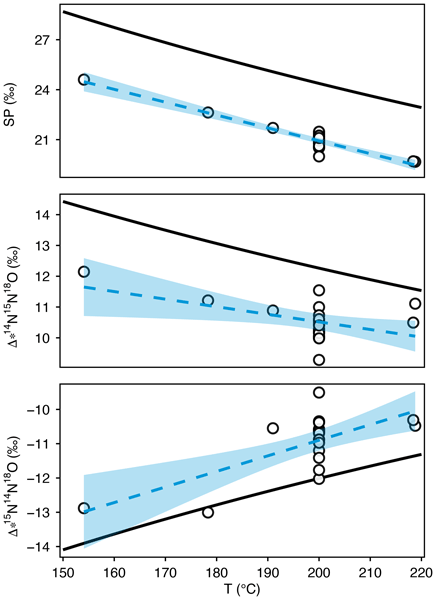
Paul M. Magyar, Nico Kueter, Simone Brunamonti, Naizhong Zhang, Ivan Prokhorov, Noémy Chénier, Lukas Emmenegger, Béla Tuzson, and Joachim Mohn
Atmos. Meas. Tech., 19, 5267–5280, https://doi.org/10.5194/amt-19-5267-2026, https://doi.org/10.5194/amt-19-5267-2026, 2026
Short summary
Short summary
Human activity drives increases in atmospheric nitrous oxide. Stable isotopes help trace the pathways involved. We developed a reliable way to calibrate measurements of rare isotopic variants of nitrous oxide so results from different labs can be compared. By heating nitrous oxide with a catalyst, the molecules reach well-defined equilibrium patterns suitable as a reference. To measure these isotopic variants quickly and precisely, we improved a laser-based measurement approach.
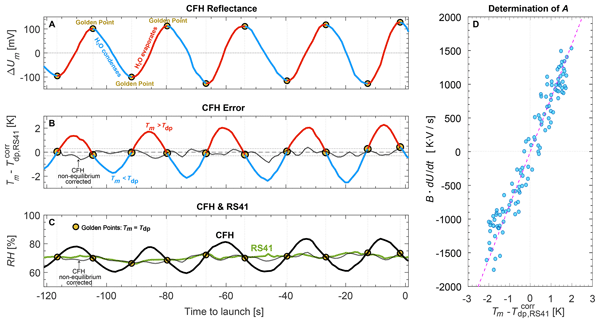
Yann Poltera, Beiping Luo, Frank G. Wienhold, and Thomas Peter
Atmos. Meas. Tech., 19, 5091–5134, https://doi.org/10.5194/amt-19-5091-2026, https://doi.org/10.5194/amt-19-5091-2026, 2026
Short summary
Short summary
Chilled mirror hygrometers are the most accurate instruments for measuring water vapor in the upper troposphere and lower stratosphere. The “Golden Points” and nonequilibrium correction are a new post-processing technique for these instruments, which can correct frost point data using mirror reflectance information to achieve unprecedented accuracy of better than 4 % in the H2O mixing ratio, even under rapidly changing humidity conditions, from the ground to the middle stratosphere.
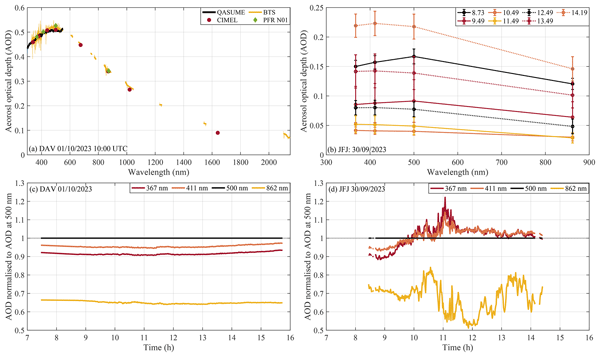
Akriti Masoom, Stelios Kazadzis, Robin Lewis Modini, Martin Gysel-Beer, Julian Gröbner, Martine Collaud Coen, Francisco Navas-Guzman, Natalia Kouremeti, Benjamin Tobias Brem, Nora Kristina Nowak, Giovanni Martucci, and Maxime Hervo
Atmos. Chem. Phys., 26, 10801–10834, https://doi.org/10.5194/acp-26-10801-2026, https://doi.org/10.5194/acp-26-10801-2026, 2026
Short summary
Short summary
This article aims at providing details on the spectral aerosol properties observed during 2023 Canadian wildfire plume transport and exploring the synergism between remote sensing and in situ measurements for investigating the cause of the occurrence of the observations of spectral aerosol properties.
Jorge Muñiz-Rosado, Alberto Cazorla, Eric Sauvageat, Alexander Haefele, Celia Herrero del Barrio, Ramiro González, Roberto Román, Pedro Luis Molina-Molero, Arlett Díaz-Zurita, Víctor Manuel Naval-Hernández, Onel Rodríguez-Navarro, María José Granados-Muñoz, Juan Antonio Bravo-Aranda, Milagros Herrera, Daniel Pérez-Ramírez, Lionel Doppler, Lucas Alados-Arboledas, and Francisco Navas-Guzmán
Atmos. Chem. Phys., 26, 10255–10285, https://doi.org/10.5194/acp-26-10255-2026, https://doi.org/10.5194/acp-26-10255-2026, 2026
Short summary
Short summary
Ceilometers can track dust and pollution particles in the atmosphere, but their measurements need validation. This study statistically compared two processing methods against thousands of measurements from sun-tracking instruments and balloon soundings at three European sites over two years. One method, using an independent calibration procedure, proved more accurate across all conditions, cutting uncertainties by around half. This supports its wider use for air quality monitoring.
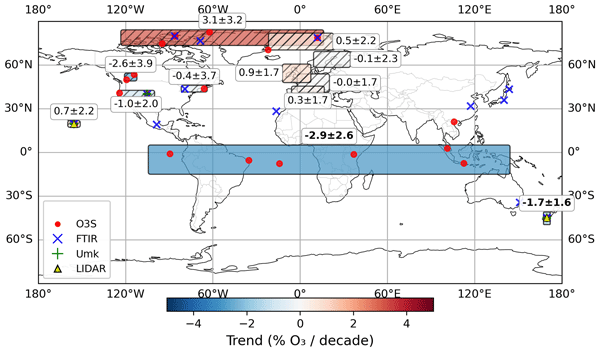
Louis Mirallie, Eliane Maillard Barras, Caroline Jonas, Corinne Vigouroux, Roeland Van Malderen, Irina Petropavlovskikh, Sophie Godin-Beekmann, Thierry Leblanc, Wolfgang Steinbrecht, Antoine Vadès, Rolf Ruefenacht, Alexander Haefele, Gunter Stober, Peter Effertz, Julian Gröbner, Gerard Ancellet, María Cazorla, Petra Duff, Matthias M. Frey, Michael Gill, James W. Hannigan, Nicholas Jones, Rigel Kivi, Raphael Köhler, Bogumil Kois, Debra E. Kollonige, Emmanuel Mahieu, Glen McConville, Johan Mellqvist, Gary Morris, Isao Murata, Tomoo Nagahama, Gerald E. Nedoluha, Shin-Ya Ogino, Richard Querel, Ryan M. Stauffer, Wolfgang Stremme, Kimberly Strong, Ralf Sussmann, Anne M. Thompson, and Yana Virolainen
Atmos. Chem. Phys., 26, 10303–10330, https://doi.org/10.5194/acp-26-10303-2026, https://doi.org/10.5194/acp-26-10303-2026, 2026
Short summary
Short summary
We present regional Bayesian composites of ground-based ozone partial column records. Defining coherent regions using a CAMS (Copernicus Atmosphere Monitoring Service) representativeness study, we merge five instrument types using the BASIC (Ball et al., 2017) algorithm, reducing trend uncertainties by 9.4 % compared to a weighted mean. Results confirm upper stratospheric recovery, predominantly negative middle stratospheric trends, while lower stratospheric trends remain mostly non-significant.
Julian Weng, Yufang Hao, Benjamin T. Brem, Tianqu Cui, Peeyush Khare, Lubna Dada, Kaspar R. Daellenbach, Sophie Darfeuil, Gaëlle Uzu, Jean-Luc Jaffrezo, Martin Steinbacher, Stefan Reimann, Thaleia Gkraikou, Konstantina Oikonomou, Jean Sciare, Martine Collaud Coen, Claudia Mohr, Andre S. H. Prévôt, Martin Gysel-Beer, Imad El Haddad, and Patrik Winiger
EGUsphere, https://doi.org/10.5194/egusphere-2026-3660, https://doi.org/10.5194/egusphere-2026-3660, 2026
Short summary
Short summary
Long-term observations at the Jungfraujoch High Altitude Research Station show that, alongside air mass transport, sustained oxidative processing shaped by atmospheric water vapor plays a central role in driving aerosol loading and composition. Combining detailed aerosol chemical characterization with process-level insights, we provide important observational benchmarks for improving atmospheric model performance in the remote free troposphere, where uncertainties remain particularly high.
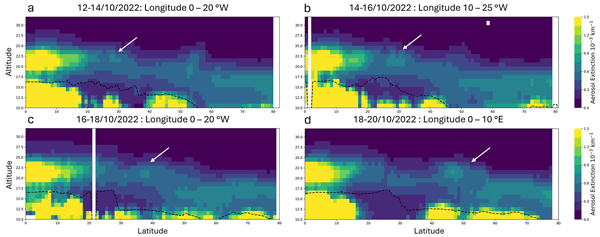
Corinna Kloss, Gwenaël Berthet, Pasquale Sellitto, Irene Bartolome Garcia, Emmanuel Briaud, Rubel Chandra Das, Stéphane Chevrier, Nicolas Dumelié, Lilian Joly, Thomas Lecas, Pauline Marbach, Felix Ploeger, Jean-Baptiste Renard, Jean-Paul Vernier, Frank G. Wienhold, and Michaela I. Hegglin
Atmos. Chem. Phys., 26, 8981–8997, https://doi.org/10.5194/acp-26-8981-2026, https://doi.org/10.5194/acp-26-8981-2026, 2026
Short summary
Short summary
In October 2022, we detected volcanic particles in the stratosphere over France, linked to the January 2022 Hunga eruption in the South Pacific. Found between 17 and 23 km altitude, they were traced back to the tropics using trajectory simulations and satellite data. Their optical properties matched those in the Southern Hemisphere. The particles spread across the Northern Hemisphere, reflecting sunlight and slightly cooling the surface – a small but non-negligible effect.
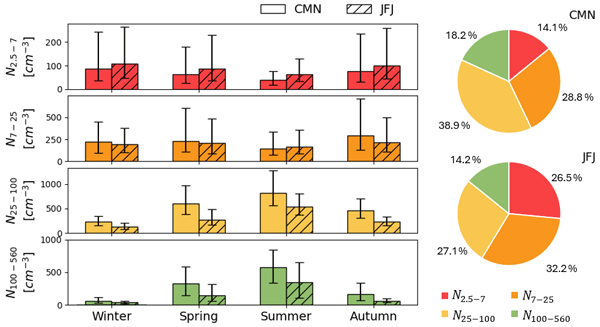
Martina Mazzini, Diego Aliaga, Janne Lamphilati, Martin Gysel-Beer, Benjamin Tobias Brem, Robin Lewis Modini, Dominic Heslin-Rees, Tareq Hussein, Marco Zanatta, Paolo Cristofanelli, Federico Bianchi, Markku Kulmala, and Angela Marinoni
Atmos. Chem. Phys., 26, 8893–8912, https://doi.org/10.5194/acp-26-8893-2026, https://doi.org/10.5194/acp-26-8893-2026, 2026
Short summary
Short summary
This study investigates particle number size distribution at two high-altitude European stations to better understand the mechanisms driving new particle formation (NPF) in the free troposphere. Interestingly, despite a consistently higher background of freshly nucleated particles at Jungfraujoch, NPF events were more frequent and intense at Monte Cimone, which also shows higher formation and growth rates, likely due to the proximity of the polluted planetary boundary layer from the Po Valley.
Jean-Paul Vernier, Nicolas Dumelie, Amit Kumar Pandit, Gwenael Berthet, Lilian Joly, Giovanni de Souza, Eduardo Landulfo, Demilson Quintao, Bruno Biazon, Ravi Kiran, Vankat Ratnam, James Flaten, Rubel Das, David Paraiseau, Frank Wienhold, and Yaowei Li
EGUsphere, https://doi.org/10.5194/egusphere-2026-3280, https://doi.org/10.5194/egusphere-2026-3280, 2026
Short summary
Short summary
Stratospheric aerosols, from volcanoes, wildfires, pollution, and space debris, impact climate and atmospheric chemistry. A new lightweight, 500g particle counter – measures aerosol sizes (0.3–10 µm) with high accuracy. Validated against leading instruments, it has tracked volcanic plumes and smoke globally since 2018. Now used in the BalNeO network, its data is publicly available for research.
Vasura Jayaweera, Robert J. Sica, Giovanni Martucci, and Alexander Haefele
EGUsphere, https://doi.org/10.5194/egusphere-2026-2823, https://doi.org/10.5194/egusphere-2026-2823, 2026
Short summary
Short summary
Water vapor is the most important greenhouse gas, but how it behaves as the climate warms remains uncertain. Using 15 years of surface based remote sensing measurements over Switzerland, we established a climatology and trends of atmospheric temperature and relative humidity between 3 and 10 km above the ground. We found the atmosphere has warmed by about 1 to 3 degrees per decade, yet relative humidity has stayed roughly constant.
Luka Drinovec, Jesus Yus-Diez, Tobias Bühlmann, Maitane Iturrate-Garcia, Tobias Hammer, Konstantina Vasilatou, Arun Babu Suja, Thomas Müller, Krzysztof Ciupek, Alejandro Keller, Ernest Weingartner, Jorge Saturno, Maria Gini, Kostas Eleftheriadis, John Backman, Eija Asmi, and Griša Močnik
EGUsphere, https://doi.org/10.5194/egusphere-2026-1501, https://doi.org/10.5194/egusphere-2026-1501, 2026
Short summary
Short summary
We evaluated a traceable calibration method for aerosol absorption instruments based on monodisperse nigrosin particles. The absorption coefficient calculated using Mie theory was compared with measurements using the Photo-Thermal Aerosol Absorption Monitor, traceably calibrated with NO2. Particle classification using setups with the differential mobility analyzer, the centrifugal particle mass analyzer and a tandem of both in series were tested.
Kunfeng Gao, Romanos Foskinis, Marilena Gidarakou, Kalliopi Violaki, Guangyu Li, Benjamin Tobias Brem, Sophie Erb, Bernard Clot, Marie-José Graber, Branko Sikoparjja, Predrag Matavulj, Dusan Licina, Cuiqi Zhang, Benoît Crouzy, Alexandros Papayannis, Zamin A. Kanji, and Athanasios Nenes
EGUsphere, https://doi.org/10.5194/egusphere-2026-2699, https://doi.org/10.5194/egusphere-2026-2699, 2026
Short summary
Short summary
This study identified bioaerosols (>85%) as the dominant source for ice nucleating particles in mixed-phase clouds at a semi-rural site in central Europe, using a combination of in-situ, remote sensing and airmass modelling analysis. We developed a bioaerosol-aware ice nucleating particle parameterization that outperformed existing dust-only schemes across multiple field datasets. These findings improve representation of bioaerosol–cloud interactions and reduce uncertainty in climate feedback.
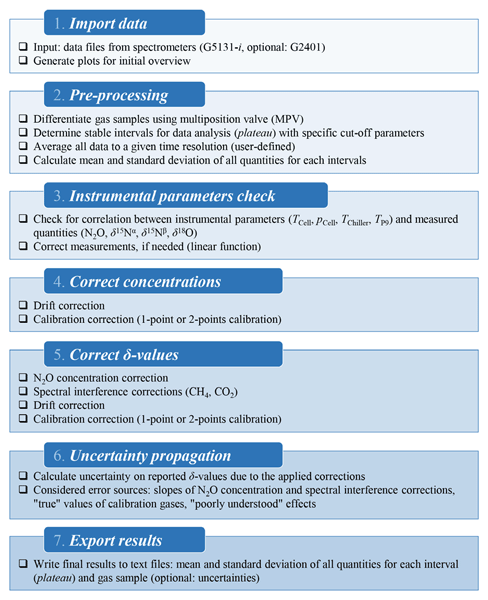
Julius C. Havsteen, Mehr Fatima, Simone Brunamonti, Andrea Pogány, Thomas Hausmaninger, Benjamin Wolf, Reinhard Well, and Joachim Mohn
Atmos. Meas. Tech., 19, 3557–3580, https://doi.org/10.5194/amt-19-3557-2026, https://doi.org/10.5194/amt-19-3557-2026, 2026
Short summary
Short summary
We present a new correction and calibration protocol to improve the accuracy of nitrous oxide isotope measurements obtained using laser spectroscopy. Through laboratory experiments, spectral simulations, and an automated MATLAB (Matrix Laboratory) reduction scheme, we identify and correct biases caused by matrix gas composition, spectral interferences and instrument variability. This protocol enables researchers to produce more reliable isotope data and supports standardised isotope analyses across laboratories.
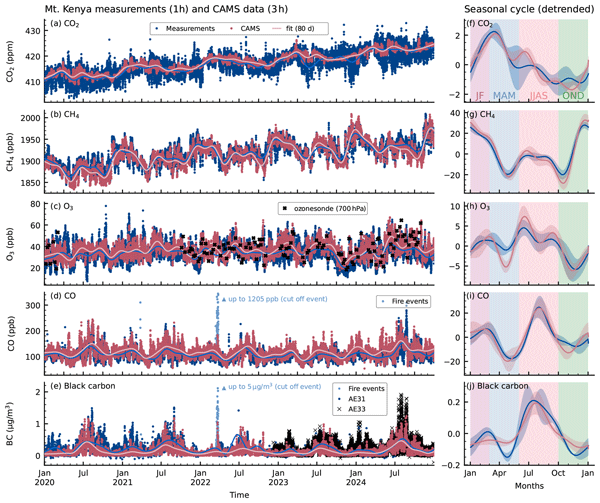
Leonie Bernet, Benjamin T. Brem, Nicolas Bukowiecki, Stephan Henne, Jörg Klausen, Mathew Mutuku, David Njiru, Patricia Nying'uro, Christoph Zellweger, and Martin Steinbacher
Atmos. Chem. Phys., 26, 6741–6762, https://doi.org/10.5194/acp-26-6741-2026, https://doi.org/10.5194/acp-26-6741-2026, 2026
Short summary
Short summary
Long-term atmospheric measurements are crucial to understanding climate change but remain scarce across Africa. We monitored atmospheric species at Mt. Kenya from 2020 to 2024. Our data reveal equatorial seasonal and daily variability and show that models miss local patterns. Emissions at Mt. Kenya mainly come from households, industry, and agriculture, though with large uncertainties. These findings stress the need for more ground stations to improve climate models and emission estimates.
Arlett Díaz-Zurita, Daniel Pérez-Ramírez, David N. Whiteman, Onel Rodríguez-Navarro, Víctor M. Naval-Hernández, Jorge Muñiz-Rosado, Soledad Fernández-Carvelo, Jesús Abril-Gago, Ana del Águila, Pablo Ortiz-Amezcua, Juan Antonio Bravo-Aranda, María José Granados-Muñoz, Juan Luis Guerrero-Rascado, Manuel Antón, Javier Vaquero-Martínez, Inmaculada Foyo-Moreno, Jose Antonio Benavent-Oltra, Lucas Alados-Arboledas, and Francisco Navas-Guzmán
Atmos. Meas. Tech., 19, 3169–3192, https://doi.org/10.5194/amt-19-3169-2026, https://doi.org/10.5194/amt-19-3169-2026, 2026
Short summary
Short summary
This study introduces a new hybrid calibration method for Raman lidar water vapour measurements that combines precipitable water vapour retrievals from Global Navigation Satellite System (GNSS) with ERA5 model data to reconstruct the lidar profile in the incomplete overlap region. The proposed methodology enables the retrieval of calibration constants with high temporal resolution, allowing accurate vertical profiling of water vapour from near the surface up to the upper troposphere.
María Ángeles López-Cayuela, Carmen Córdoba-Jabonero, Michaël Sicard, Jesús Abril-Gago, Vanda Salgueiro, Adolfo Comerón, María José Granados-Muñoz, Maria João Costa, Constantino Muñoz-Porcar, Juan Antonio Bravo-Aranda, Daniele Bortoli, Alejandro Rodríguez-Gómez, Lucas Alados-Arboledas, and Juan Luis Guerrero-Rascado
Atmos. Chem. Phys., 26, 6257–6281, https://doi.org/10.5194/acp-26-6257-2026, https://doi.org/10.5194/acp-26-6257-2026, 2026
Short summary
Short summary
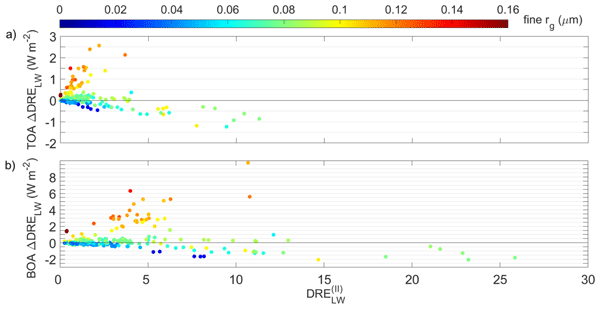
Due to the major radiative role of dust in Climate Change, a vertical assessment of the long-wave (and net) dust direct radiative effect of both fine and coarse dust, separately, is introduced. The study relies on an intense Saharan dust outbreak across the Iberian Peninsula, as observed by five lidar stations with coverage from south-west to north-east. A comparative evaluation with respect to total dust (no separation) is also performed. It complements a similar study in the short-wave range.
Elena Bazo, Olga Ruiz-Galera, Lucas Alados-Arboledas, Alexander Böhmländer, Kristina Höhler, Najin Kim, Larissa Lacher, Ottmar Möhler, Frascisco José Olmo, German Perez Fogwill, Ana A. Piedehierro, Nsikanabasi Silas Umo, André Welti, Gloria Titos, and Alberto Cazorla
Atmos. Meas. Tech., 19, 2695–2713, https://doi.org/10.5194/amt-19-2695-2026, https://doi.org/10.5194/amt-19-2695-2026, 2026
Short summary
Short summary
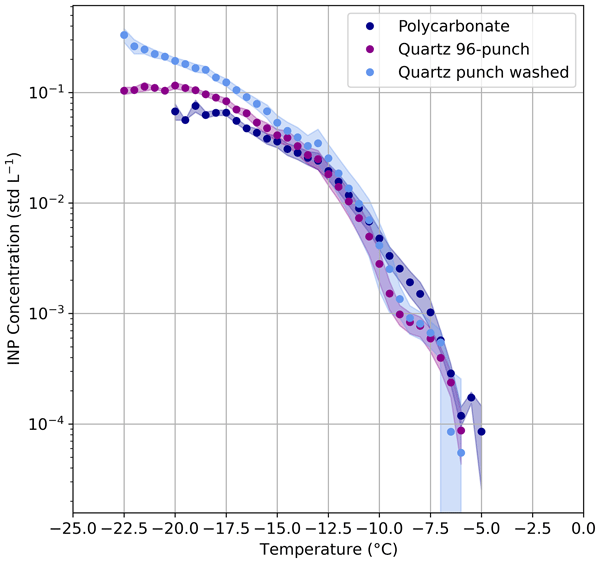
We evaluated different methods to obtain the ice nucleating particle (INP) concentration from ambient filters using GRAINS (GRAnada Ice Nuclei Spectrometer), the INP spectrometer at the Andalusian ObseRvatory of the Atmosphere (AGORA). We first characterized GRAINS and compared it to other INP devices. Then, we sampled polycarbonate and quartz filters for three months and tested three different particle extraction methods, finding general good agreement but that the INP concentration is systematically higher when using quartz filters.
Clara M. Nussbaumer, Colette L. Heald, Amanda M. Häne, and Christoph Hüglin
Atmos. Chem. Phys., 26, 5355–5373, https://doi.org/10.5194/acp-26-5355-2026, https://doi.org/10.5194/acp-26-5355-2026, 2026
Short summary
Short summary
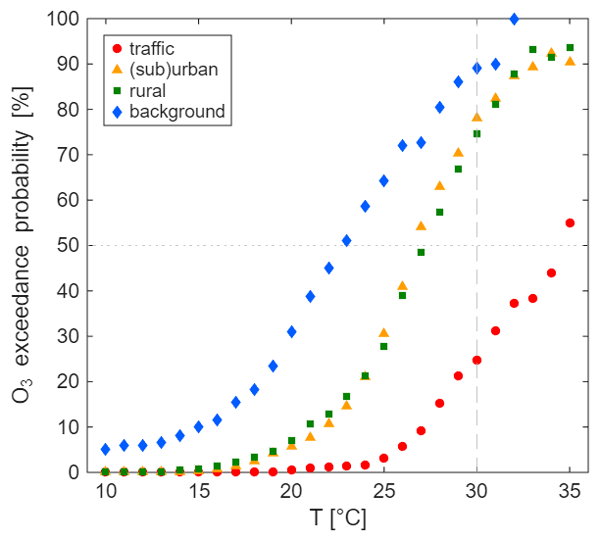
Ground-level ozone is harmful to human health. While precursors to ozone were strongly reduced over the past decades, unhealthy levels of ozone are still frequently reported in Switzerland. In this study, we investigate changes in ozone and its relationship with temperature over time. We find that precursor reductions have positively affected ozone in remote locations, while ozone is increasing close to busy roads. High ozone is often associated with hot summer days.
Jesús Abril-Gago, Irene Tovar, Enrique Echeverría-Martín, Juana Andújar-Maqueda, Pablo Ortiz-Amezcua, Germán Cabrera-Carrillo, Penélope Serrano-Ortiz, Francisco Domingo, Lucas Alados-Arboledas, Andrew S. Kowalski, Enrique P. Sánchez-Cañete, and Juan Luis Guerrero-Rascado
Biogeosciences, 23, 2569–2581, https://doi.org/10.5194/bg-23-2569-2026, https://doi.org/10.5194/bg-23-2569-2026, 2026
Short summary
Short summary
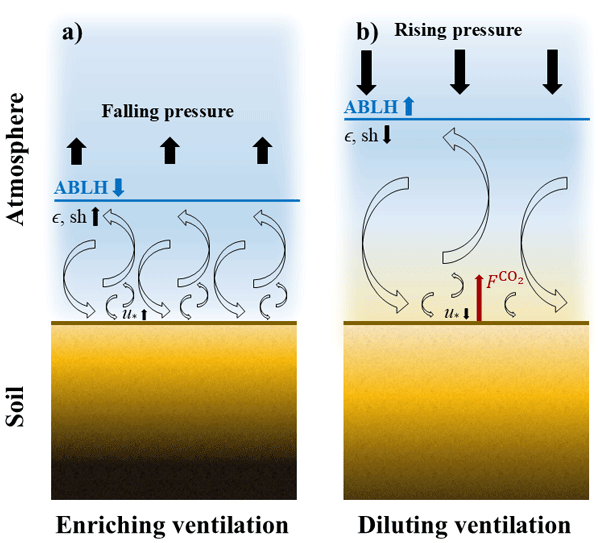
This study investigates non-biological soil CO2 ventilation in a semiarid Mediterranean shrubland and standardizes the criteria for its detection. Ten ventilation events were identified during the SCARCE (Synchronized Characterization of Aerosol, Radon and Carbon dioxide Exchanges in drylands) campaign, with several atmospheric parameters acting as drivers. Surface pressure emerged as the primary driver at the site, while friction velocity and boundary layer turbulence were also found to be relevant, highlighting the value of Doppler lidar for soil–atmosphere exchange studies.
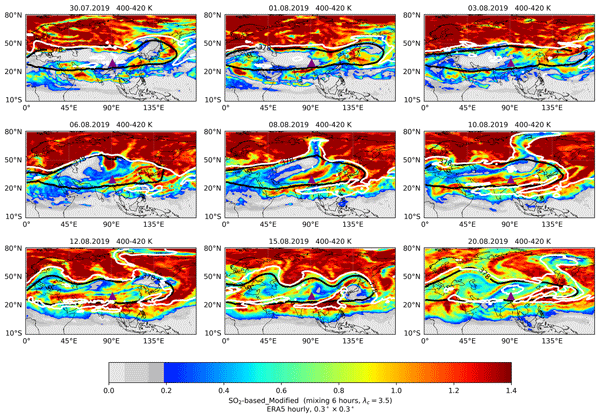
Zhen Yang, Bärbel Vogel, Felix Plöger, Zhixuan Bai, Dan Li, Sabine Griessbach, Lars Hoffmann, Frank G. Wienhold, Elizabeth Asher, Alexandre A. Baron, Katie R. Smith, Troy Thornberry, Jianchun Bian, and Michaela I. Hegglin
Atmos. Chem. Phys., 26, 4749–4769, https://doi.org/10.5194/acp-26-4749-2026, https://doi.org/10.5194/acp-26-4749-2026, 2026
Short summary
Short summary
Balloon measurements over Lhasa, China, combined with satellite guided modelling, tracked aerosol from the 2019 Raikoke eruption through the Asian summer monsoon anticyclone. We find two altitude dependent routes into the anticyclone. It partly blocks transport but also allows entry and mixing, explaining the gradual weakening of the layers. Balloon measurements over Boulder, United States, outside the anticyclone, provide an independent check outside the region.
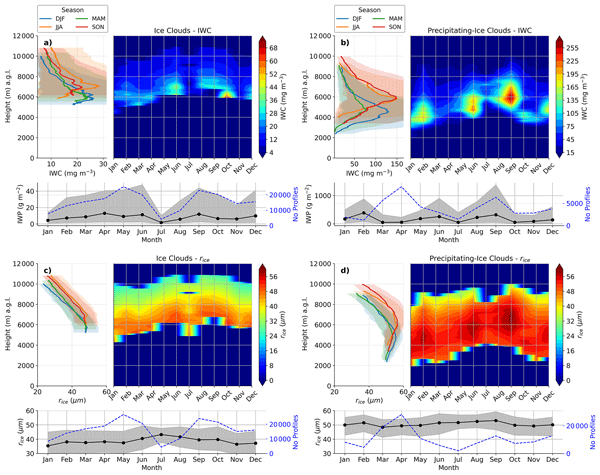
Matheus Tolentino, Juan Antonio Bravo-Aranda, Juan Luis Guerrero-Rascado, Francisco Navas-Guzmán, Daniel Pérez-Ramírez, Lucas Alados-Arboledas, and Maria José Granados-Muñoz
Atmos. Meas. Tech., 19, 2079–2102, https://doi.org/10.5194/amt-19-2079-2026, https://doi.org/10.5194/amt-19-2079-2026, 2026
Short summary
Short summary
Clouds strongly influence weather and climate, yet long-term observations are rare in southern Europe. We analyzed five years of measurements in Granada, Spain, to study how different cloud types vary through the seasons. We developed a new method that improves cloud classification and found clear differences in height, thickness, and water content. These results provide valuable reference data to support satellite observations and climate models.
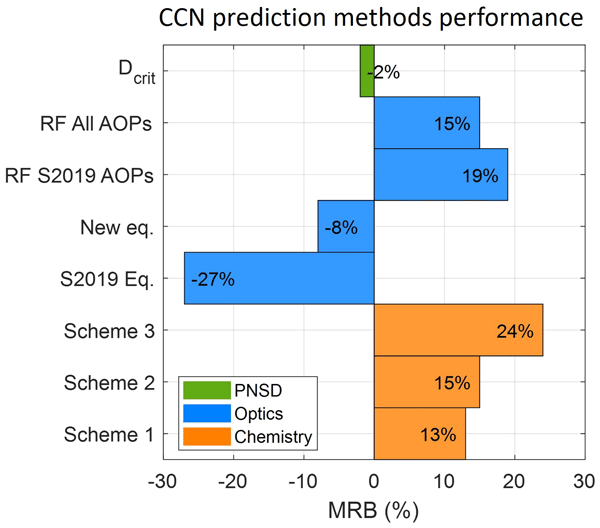
Inés Zabala, Juan Andrés Casquero-Vera, Elisabeth Andrews, Andrea Casans, Gerardo Carrillo-Cardenas, Anna Gannet Hallar, and Gloria Titos
Atmos. Chem. Phys., 26, 3697–3722, https://doi.org/10.5194/acp-26-3697-2026, https://doi.org/10.5194/acp-26-3697-2026, 2026
Short summary
Short summary
This study presents a comprehensive analysis of cloud condensation nuclei (CCN) phenomenology across nine observatories in diverse environments. We evaluate CCN prediction methods based on aerosol chemical composition and optical properties, including empirical and machine learning approaches. While simplified chemical schemes provide first-order estimates, incorporating optical data substantially improves CCN prediction accuracy in regions without direct measurements.
Michael Kahnert, Melanie Ades, Mickaël Bacles, Johannes Flemming, Vincent Guidard, Alexander Haefele, Robin J. Hogan, Samuel Rémy, and Eric Sauvageat
EGUsphere, https://doi.org/10.5194/egusphere-2025-6077, https://doi.org/10.5194/egusphere-2025-6077, 2026
Short summary
Short summary
The Copernicus Atmosphere Monitoring Service (CAMS) provides quality-controlled information related to air quality and health. We explore the possibility to constrain the CAMS global forecasting model by use of ground-based observations of laser light backscattered by particulate matter. We find that the vertical distribution of particulate matter can be predicted more faithfully with this approach, which can have implications for air quality forecasts provided by CAMS to end users.
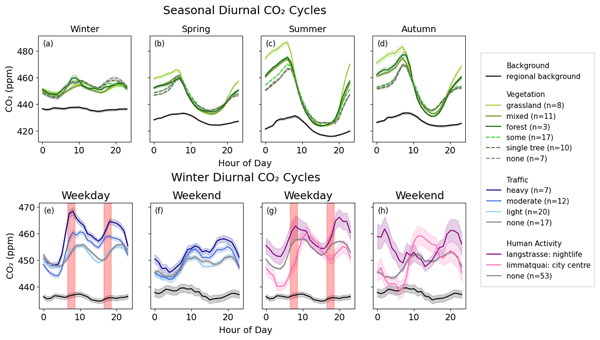
Luce Creman, Stuart K. Grange, Pascal Rubli, Andrea Fischer, Dominik Brunner, Christoph Hueglin, Lukas Emmenegger, and Leonie Bernet
Atmos. Meas. Tech., 19, 1441–1463, https://doi.org/10.5194/amt-19-1441-2026, https://doi.org/10.5194/amt-19-1441-2026, 2026
Short summary
Short summary
ZiCOS-L is a network of low-cost sensors in Zurich (Switzerland) to monitor carbon dioxide (CO2) concentrations. After correcting for drift and checking the sensor performance, we found that local factors like traffic, public events and vegetation affect CO2 levels. Even though the sensors have higher uncertainties than other sensors, the lower cost allows for a denser network with detailed insights into CO2 levels across the city, helping cities track emissions and support climate action plans.
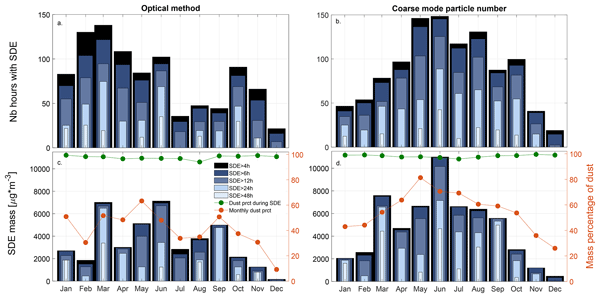
Martine Collaud Coen, Benjamin Tobias Brem, Martin Gysel-Beer, Robin Modini, Stephan Henne, Martin Steinbacher, Davide Putero, Maria I. Gini, and Kostantinos Eleftheriadis
Atmos. Chem. Phys., 26, 1623–1645, https://doi.org/10.5194/acp-26-1623-2026, https://doi.org/10.5194/acp-26-1623-2026, 2026
Short summary
Short summary
Saharan dust (SD) is transported over long distances by large-scale atmospheric circulation, reaching the Jungfraujoch high-altitude station 30 to 150 times per year. This study analyses the influence of instrument types on the SD detection using the single scattering albedo spectral dependence. This optical method is then compared to those based on size distribution and back-trajectories. The 23-year climatology of dust frequency and mass as well as the source sensitivity are also examined.
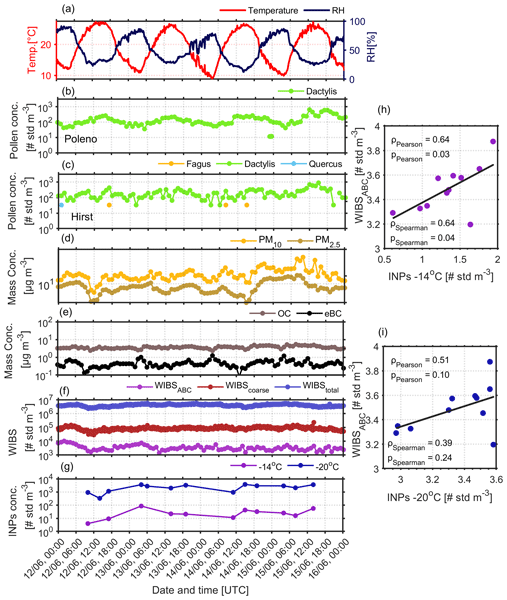
Marilena Gidarakou, Alexandros Papayannis, Kunfeng Gao, Panagiotis Gidarakos, Benoît Crouzy, Romanos Foskinis, Sophie Erb, Benjamin T. Brem, Cuiqi Zhang, Gian Lieberherr, Martine Collaud Coen, Branko Sikoparija, Zamin A. Kanji, Bernard Clot, Bertrand Calpini, Eugenia Giagka, and Athanasios Nenes
Atmos. Chem. Phys., 26, 923–945, https://doi.org/10.5194/acp-26-923-2026, https://doi.org/10.5194/acp-26-923-2026, 2026
Short summary
Short summary
Vertical profiles of pollen and biomass burning particles were obtained at a semi-rural site at the MeteoSwiss station near Payerne (Switzerland) using a novel multi-channel elastic-fluorescence lidar system combined with in situ measurements during the spring 2023 wildfires and pollination season during the PERICLES (PayernE lidaR and Insitu detection of fluorescent bioaerosol and dust partiCLES and their cloud impacts) campaign.
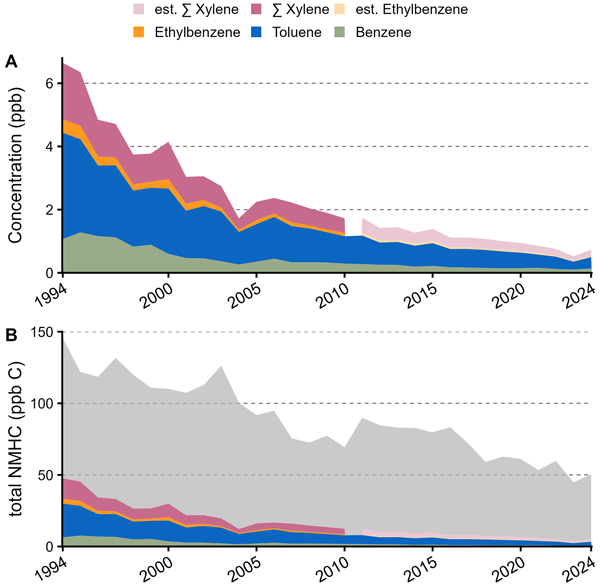
Zoé Le Bras, Pascal Rubli, Christoph Hueglin, and Stefan Reimann
Atmos. Chem. Phys., 26, 869–878, https://doi.org/10.5194/acp-26-869-2026, https://doi.org/10.5194/acp-26-869-2026, 2026
Short summary
Short summary
Since 1994, harmful air pollutants called BTEX (benzene, toluene, ethylbenzene and xylene) have declined by up to 89 % in the suburban area of Zurich thanks to the introduction of various air quality directives in Switzerland and in Europe. Although their contribution to ozone formation became less abundant, they still significantly contribute to the formation of airborne particles. While this study shows clear improvements in air quality, it also highlights the need for further efforts.
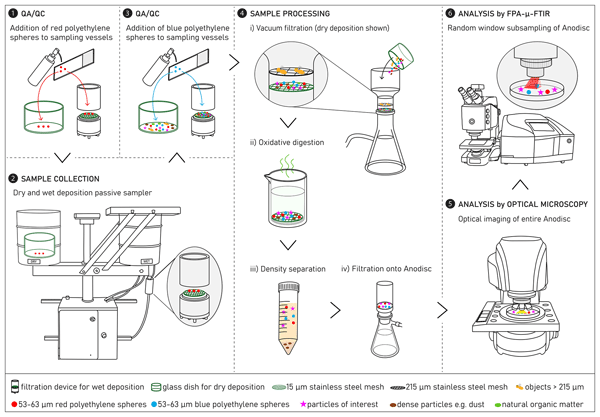
Narain M. Ashta, Guillaume Crosset-Perrotin, Angélique Moraz, Josua Stoffel, Ueli Schilt, Eric Ceglie, David Schoenenberger, Matthias Philipp, Thomas D. Bucheli, Ralf Kaegi, and Christoph Hueglin
Atmos. Meas. Tech., 19, 371–388, https://doi.org/10.5194/amt-19-371-2026, https://doi.org/10.5194/amt-19-371-2026, 2026
Short summary
Short summary
Microplastics are environmental contaminants of global concern. In this study, we developed a method for measuring the amount of microplastics in atmospheric samples. In doing so, we introduced a new way to collect rain/snow samples and a custom software that helps with the analysis of microplastics. We then assessed the precision of our method and tested it on real samples. Our work may be useful for researchers seeking to measure microplastics in environmental samples.
Hazel Vernier, Demilson Quintao, Bruno Biazon, Eduardo Landulfo, Giovanni Souza, Amanda Santos, Fabio Lopes, Alex Mendes, José da Matta, Pinheiro Damaris, Benoit Grosslin, Maria Paulete, Maria de Fátima Andrade, Neeraj Rastogi, Akhil Raj, Hongyu Liu, Mahesh Kovilakam, Suvarna Fadnavis, Frank Wienhold, Mathieu Colombier, Chris Boone, Gwenael Berthet, Nicolas Dumelie, Lilian Joly, and Jean-Paul Vernier
EGUsphere, https://doi.org/10.5194/egusphere-2025-6226, https://doi.org/10.5194/egusphere-2025-6226, 2026
Preprint archived
Short summary
Short summary
This paper shows unique balloon measurements from Brazil within the Hunga volcanic plume eight months after the eruption. The chemical analysis of samples collected reveal new insights on volcanic aerosol composition and suggest the presence of marine aerosols.
Pauline Bros, Sophie Darfeuil, Véronique Jacob, Rhabira Elazzouzi, Dielleza Tusha, Tristan Rousseau, Julian Weng, Patrik Winiger, Imad El Haddad, Christoph Hueglin, Gaëlle Uzu, and Jean-Luc Jaffrezo
Atmos. Meas. Tech., 18, 6315–6327, https://doi.org/10.5194/amt-18-6315-2025, https://doi.org/10.5194/amt-18-6315-2025, 2025
Short summary
Short summary
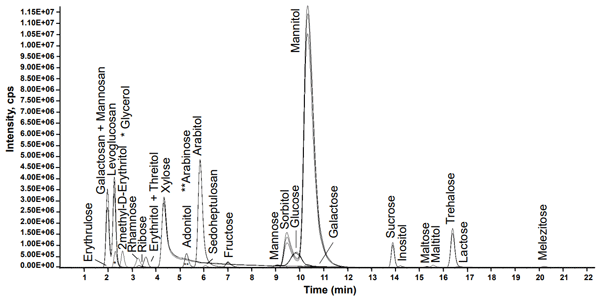
We present and validate an ultra-high-performance liquid chromatography tandem mass spectrometry method for the quantification of 21 sugars in atmospheric particulate matter. The method is fast, sensitive, and suitable for low-mass samples. Its application to a 6-year dataset from the Jungfraujoch site highlights its potential for source identification and understanding of biogenic and biomass burning tracers.
Simone Brunamonti, Harald Saathoff, Albert Hertzog, Glenn Diskin, Masatomo Fujiwara, Karen Rosenlof, Ottmar Möhler, Béla Tuzson, Lukas Emmenegger, Nadir Amarouche, Georges Durry, Fabien Frérot, Jean-Christophe Samake, Claire Cenac, Julio Lopez, Paul Monnier, and Mélanie Ghysels
Atmos. Meas. Tech., 18, 5321–5348, https://doi.org/10.5194/amt-18-5321-2025, https://doi.org/10.5194/amt-18-5321-2025, 2025
Short summary
Short summary
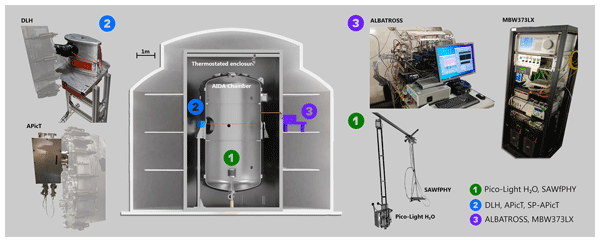
Water vapor is a strong greenhouse gas, and accurate measurements of its concentration in the upper atmosphere (~8–25 km altitude) are crucial for reliable climate predictions. We investigated the performance of four airborne hygrometers, deployed on aircraft or stratospheric balloon platforms and based on different techniques, in a climate simulation chamber. The results demonstrate the high accuracy and reliability of the involved sensors for atmospheric monitoring and research applications.
Ana del Águila, Pablo Ortiz-Amezcua, Siham Tabik, Juan Antonio Bravo-Aranda, Sol Fernández-Carvelo, and Lucas Alados-Arboledas
Atmos. Chem. Phys., 25, 12549–12567, https://doi.org/10.5194/acp-25-12549-2025, https://doi.org/10.5194/acp-25-12549-2025, 2025
Short summary
Short summary
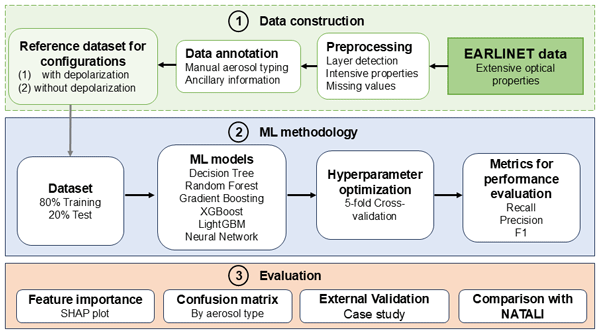
This study applies machine learning (ML) techniques to classify aerosols using high-resolution multiwavelength lidar data from EARLINET network. We developed a reference dataset and evaluated six ML models, with LightGBM achieving over 90 % accuracy. Depolarization data proved critical for improving dust classification. Validated against independent datasets, our approach improves aerosol classification and may help refine lidar-based processing strategies.
Vadassery Neelamana Santhosh, Bomidi Lakshmi Madhavan, Sivan Thankamani Akhil Raj, Madineni Venkat Ratnam, Jean-Paul Vernier, and Frank Gunther Wienhold
Atmos. Chem. Phys., 25, 8255–8270, https://doi.org/10.5194/acp-25-8255-2025, https://doi.org/10.5194/acp-25-8255-2025, 2025
Short summary
Short summary
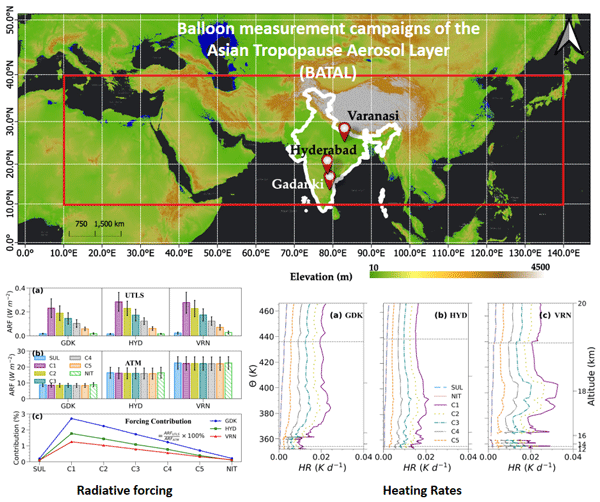
Our study examines a lesser-known atmospheric feature, the Asian Tropopause Aerosol Layer, located high above the Earth. We investigated how different aerosols, such as sulfates, nitrates, and pollutants, influence the exchange of heat between the atmosphere and its surroundings. The results show that these particles can alter temperature patterns, especially during the Asian summer monsoon. This research improves our understanding of how human activities may affect regional climate.
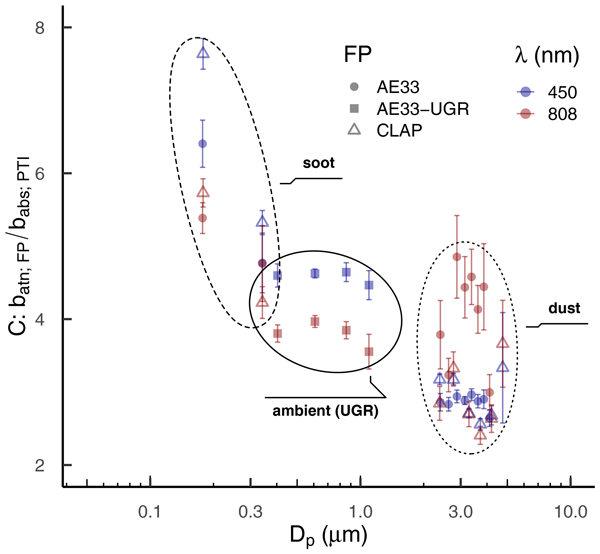
Jesús Yus-Díez, Luka Drinovec, Lucas Alados-Arboledas, Gloria Titos, Elena Bazo, Andrea Casans, Diego Patrón, Xavier Querol, Adolfo Gonzalez-Romero, Carlos Perez García-Pando, and Griša Močnik
Atmos. Meas. Tech., 18, 3073–3093, https://doi.org/10.5194/amt-18-3073-2025, https://doi.org/10.5194/amt-18-3073-2025, 2025
Short summary
Short summary
We have used absorption from a photothermal interferometer and scattering measurements to evaluate the most deployed filter photometers used to measure absorption for monitoring networks. We used soot- and dust-dominated aerosol samples in both laboratory and ambient settings. Our results indicated that one of these filter photometers, the MAAP (Multiangle Absorption Photometer), usually used as a pseudo-reference instrument, had 47 % higher absorption values than our reference measurements.
Elena Bazo, Daniel Pérez-Ramírez, Antonio Valenzuela, J. Vanderlei Martins, Gloria Titos, Alberto Cazorla, Fernando Rejano, Diego Patrón, Arlett Díaz-Zurita, Francisco José García-Izquierdo, David Fuertes, Lucas Alados-Arboledas, and Francisco José Olmo
Atmos. Chem. Phys., 25, 6325–6352, https://doi.org/10.5194/acp-25-6325-2025, https://doi.org/10.5194/acp-25-6325-2025, 2025
Short summary
Short summary
This works analyzes the aerosol scattering phase function for transported Saharan dust to the city of Granada – located in southwestern Europe. We use the novel technique polar imaging nephelometry that helps to determine the phase functions using a CMOS camera. The capability of measuring with polarized light helps to infer new properties about the mixture of Saharan dust particles with those of anthropogenic origin.
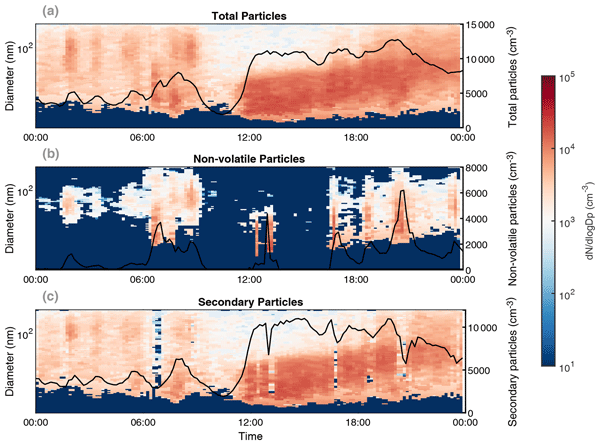
Lubna Dada, Benjamin T. Brem, Lidia-Marta Amarandi-Netedu, Martine Collaud Coen, Nikolaos Evangeliou, Christoph Hueglin, Nora Nowak, Robin Modini, Martin Steinbacher, and Martin Gysel-Beer
Aerosol Research, 3, 315–336, https://doi.org/10.5194/ar-3-315-2025, https://doi.org/10.5194/ar-3-315-2025, 2025
Short summary
Short summary
We investigated the sources of ultrafine particles (UFPs) in Payerne, Switzerland, highlighting the significant role of secondary processes in elevating UFP concentrations to levels comparable to urban areas. As the first study in rural midland Switzerland to analyze new particle formation events and secondary contributions, it offers key insights for air quality regulation and the role of agriculture in Switzerland and central Europe.
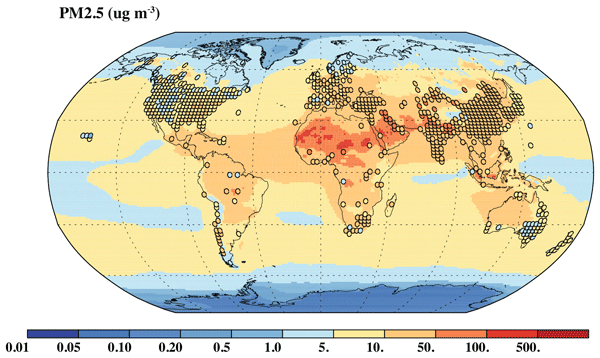
Natalie M. Mahowald, Longlei Li, Julius Vira, Marje Prank, Douglas S. Hamilton, Hitoshi Matsui, Ron L. Miller, P. Louis Lu, Ezgi Akyuz, Daphne Meidan, Peter Hess, Heikki Lihavainen, Christine Wiedinmyer, Jenny Hand, Maria Grazia Alaimo, Célia Alves, Andres Alastuey, Paulo Artaxo, Africa Barreto, Francisco Barraza, Silvia Becagli, Giulia Calzolai, Shankararaman Chellam, Ying Chen, Patrick Chuang, David D. Cohen, Cristina Colombi, Evangelia Diapouli, Gaetano Dongarra, Konstantinos Eleftheriadis, Johann Engelbrecht, Corinne Galy-Lacaux, Cassandra Gaston, Dario Gomez, Yenny González Ramos, Roy M. Harrison, Chris Heyes, Barak Herut, Philip Hopke, Christoph Hüglin, Maria Kanakidou, Zsofia Kertesz, Zbigniew Klimont, Katriina Kyllönen, Fabrice Lambert, Xiaohong Liu, Remi Losno, Franco Lucarelli, Willy Maenhaut, Beatrice Marticorena, Randall V. Martin, Nikolaos Mihalopoulos, Yasser Morera-Gómez, Adina Paytan, Joseph Prospero, Sergio Rodríguez, Patricia Smichowski, Daniela Varrica, Brenna Walsh, Crystal L. Weagle, and Xi Zhao
Atmos. Chem. Phys., 25, 4665–4702, https://doi.org/10.5194/acp-25-4665-2025, https://doi.org/10.5194/acp-25-4665-2025, 2025
Short summary
Short summary
Aerosol particles are an important part of the Earth system, but their concentrations are spatially and temporally heterogeneous, as well as being variable in size and composition. Here, we present a new compilation of PM2.5 and PM10 aerosol observations, focusing on the spatial variability across different observational stations, including composition, and demonstrate a method for comparing the data sets to model output.
Hazel Vernier, Demilson Quintão, Bruno Biazon, Eduardo Landulfo, Giovanni Souza, V. Amanda Santos, J. S. Fabio Lopes, C. P. Alex Mendes, A. S. José da Matta, K. Pinheiro Damaris, Benoit Grosslin, P. M. P. Maria Jorge, Maria de Fátima Andrade, Neeraj Rastogi, Akhil Raj, Hongyu Liu, Mahesh Kovilakam, Suvarna Fadnavis, Frank G. Wienhold, Mathieu Colombier, D. Chris Boone, Gwenael Berthet, Nicolas Dumelie, Lilian Joly, and Jean-Paul Vernier
EGUsphere, https://doi.org/10.5194/egusphere-2025-924, https://doi.org/10.5194/egusphere-2025-924, 2025
Preprint withdrawn
Short summary
Short summary
The eruption of Hunga Tonga-Hunga Ha'apai injected large amounts of water vapor and sea salt into the stratosphere, altering traditional views of volcanic aerosols. Using balloon-borne samplers, we collected aerosol samples and found high levels of sea salt and calcium, suggesting sulfate depletion due to gypsum formation. These findings highlight the need to consider sea salt in climate models to better predict volcanic impacts on the atmosphere and climate.
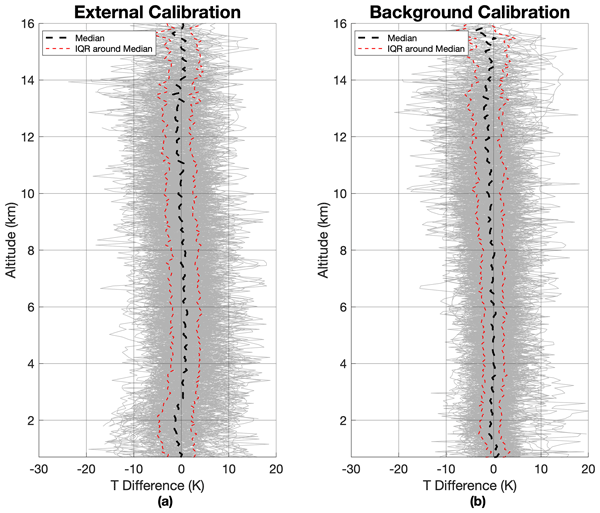
Vasura Jayaweera, Robert J. Sica, Giovanni Martucci, and Alexander Haefele
Atmos. Meas. Tech., 18, 1461–1469, https://doi.org/10.5194/amt-18-1461-2025, https://doi.org/10.5194/amt-18-1461-2025, 2025
Short summary
Short summary
Our study presents a new method, the solar background calibration method, which improves temperature determinations in rotational Raman lidar systems. By utilizing background solar radiation, this technique offers more continuous and reliable temperatures independent of external measuring instruments. This new method enhances our ability to monitor and understand atmospheric trends and their association with climate change with greater accuracy.
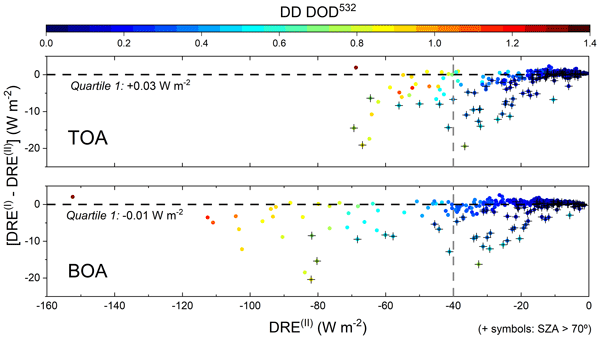
María-Ángeles López-Cayuela, Carmen Córdoba-Jabonero, Michaël Sicard, Jesús Abril-Gago, Vanda Salgueiro, Adolfo Comerón, María José Granados-Muñoz, Maria João Costa, Constantino Muñoz-Porcar, Juan Antonio Bravo-Aranda, Daniele Bortoli, Alejandro Rodríguez-Gómez, Lucas Alados-Arboledas, and Juan Luis Guerrero-Rascado
Atmos. Chem. Phys., 25, 3213–3231, https://doi.org/10.5194/acp-25-3213-2025, https://doi.org/10.5194/acp-25-3213-2025, 2025
Short summary
Short summary
Due to the significant radiative role of dust in climate change, vertical assessments of the short-wave dust direct radiative effect of both fine and coarse dust particles are performed separately. The study is focused on an intense Saharan dust outbreak crossing the Iberian Peninsula in springtime monitored by five Iberian lidar stations with southwest–northeast coverage. A comparative study to evaluate the differences found by considering the total dust (no separation) is also examined.
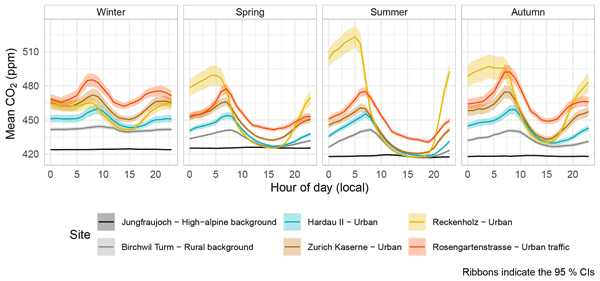
Stuart K. Grange, Pascal Rubli, Andrea Fischer, Dominik Brunner, Christoph Hueglin, and Lukas Emmenegger
Atmos. Chem. Phys., 25, 2781–2806, https://doi.org/10.5194/acp-25-2781-2025, https://doi.org/10.5194/acp-25-2781-2025, 2025
Short summary
Short summary
Carbon dioxide (CO2) is a very important atmospheric pollutant, and to better understand the gas's source and sink dynamics, a mid-cost sensor network hosting 26 sites was deployed in and around Zurich, Switzerland. The sensor measurement performance was quantified, and natural and anthropogenic CO2 emission sources were explored with a focus on what drives high CO2 levels. The observations will be used further by others to validate what is thought to be known about CO2 emissions in the region.
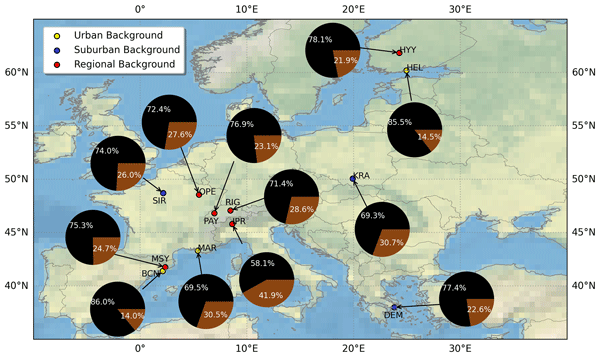
Hector Navarro-Barboza, Jordi Rovira, Vincenzo Obiso, Andrea Pozzer, Marta Via, Andres Alastuey, Xavier Querol, Noemi Perez, Marjan Savadkoohi, Gang Chen, Jesus Yus-Díez, Matic Ivancic, Martin Rigler, Konstantinos Eleftheriadis, Stergios Vratolis, Olga Zografou, Maria Gini, Benjamin Chazeau, Nicolas Marchand, Andre S. H. Prevot, Kaspar Dallenbach, Mikael Ehn, Krista Luoma, Tuukka Petäjä, Anna Tobler, Jaroslaw Necki, Minna Aurela, Hilkka Timonen, Jarkko Niemi, Olivier Favez, Jean-Eudes Petit, Jean-Philippe Putaud, Christoph Hueglin, Nicolas Pascal, Aurélien Chauvigné, Sébastien Conil, Marco Pandolfi, and Oriol Jorba
Atmos. Chem. Phys., 25, 2667–2694, https://doi.org/10.5194/acp-25-2667-2025, https://doi.org/10.5194/acp-25-2667-2025, 2025
Short summary
Short summary
Brown carbon (BrC) absorbs ultraviolet (UV) and visible light, influencing climate. This study explores BrC's imaginary refractive index (k) using data from 12 European sites. Residential emissions are a major organic aerosol (OA) source in winter, while secondary organic aerosol (SOA) dominates in summer. Source-specific k values were derived, improving model accuracy. The findings highlight BrC's climate impact and emphasize source-specific constraints in atmospheric models.

Alexandre Bugnard, Martine Collaud Coen, Maxime Hervo, Daniel Leuenberger, Marco Arpagaus, and Samuel Monhart
Atmos. Meas. Tech., 18, 1039–1061, https://doi.org/10.5194/amt-18-1039-2025, https://doi.org/10.5194/amt-18-1039-2025, 2025
Short summary
Short summary
Temperature (T) and wind profiles were measured by a Doppler wind lidar and a microwave radiometer in Meiringen in a medium-sized Alpine valley. Ground-based T inversions and thermal winds were studied during the 10 months of the campaign. The comparison between the observations and the COSMO-1E model provides good model performance for monthly climatologies. T inversions are however frequently missed, and important differences for particular cases are found, especially for foehn events.
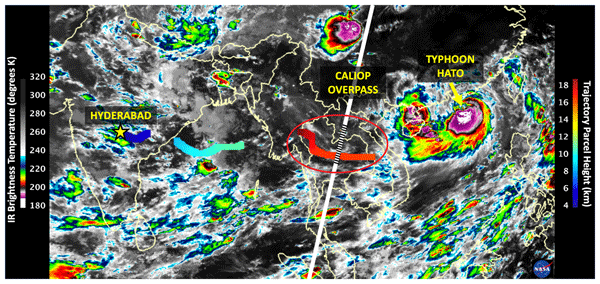
Amit Kumar Pandit, Jean-Paul Vernier, Thomas Duncan Fairlie, Kristopher M. Bedka, Melody A. Avery, Harish Gadhavi, Madineni Venkat Ratnam, Sanjeev Dwivedi, Kasimahanthi Amar Jyothi, Frank G. Wienhold, Holger Vömel, Hongyu Liu, Bo Zhang, Buduru Suneel Kumar, Tra Dinh, and Achuthan Jayaraman
Atmos. Chem. Phys., 24, 14209–14238, https://doi.org/10.5194/acp-24-14209-2024, https://doi.org/10.5194/acp-24-14209-2024, 2024
Short summary
Short summary
This study investigates the formation mechanism of a tropopause cirrus cloud layer observed at extremely cold temperatures over Hyderabad in India during the 2017 Asian summer monsoon using balloon-borne sensors. Ice crystals smaller than 50 µm were found in this optically thin cirrus cloud layer. Combined analysis of back trajectories, satellite, and model data revealed that the formation of this layer was influenced by waves and stratospheric hydration induced by typhoon Hato.
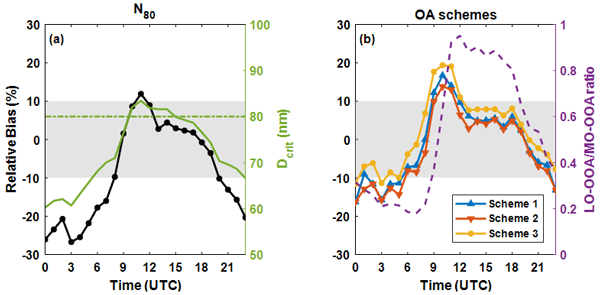
Fernando Rejano, Andrea Casans, Marta Via, Juan Andrés Casquero-Vera, Sonia Castillo, Hassan Lyamani, Alberto Cazorla, Elisabeth Andrews, Daniel Pérez-Ramírez, Andrés Alastuey, Francisco Javier Gómez-Moreno, Lucas Alados-Arboledas, Francisco José Olmo, and Gloria Titos
Atmos. Chem. Phys., 24, 13865–13888, https://doi.org/10.5194/acp-24-13865-2024, https://doi.org/10.5194/acp-24-13865-2024, 2024
Short summary
Short summary
This study provides valuable insights to improve cloud condensation nuclei (CCN) estimations at a high-altitude remote site which is influenced by nearby urban pollution. Understanding the factors that affect CCN estimations is essential to improve the CCN data coverage worldwide and assess aerosol–cloud interactions on a global scale. This is crucial for improving climate models, since aerosol–cloud interactions are the most important source of uncertainty in climate projections.
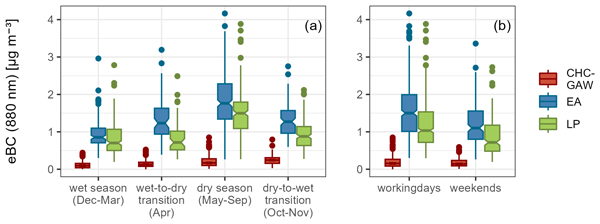
Valeria Mardoñez-Balderrama, Griša Močnik, Marco Pandolfi, Robin L. Modini, Fernando Velarde, Laura Renzi, Angela Marinoni, Jean-Luc Jaffrezo, Isabel Moreno R., Diego Aliaga, Federico Bianchi, Claudia Mohr, Martin Gysel-Beer, Patrick Ginot, Radovan Krejci, Alfred Wiedensohler, Gaëlle Uzu, Marcos Andrade, and Paolo Laj
Atmos. Chem. Phys., 24, 12055–12077, https://doi.org/10.5194/acp-24-12055-2024, https://doi.org/10.5194/acp-24-12055-2024, 2024
Short summary
Short summary
Levels of black carbon (BC) are scarcely reported in the Southern Hemisphere, especially in high-altitude conditions. This study provides insight into the concentration level, variability, and optical properties of BC in La Paz and El Alto and at the Chacaltaya Global Atmosphere Watch Station. Two methods of source apportionment of absorption were tested and compared showing traffic as the main contributor to absorption in the urban area, in addition to biomass and open waste burning.
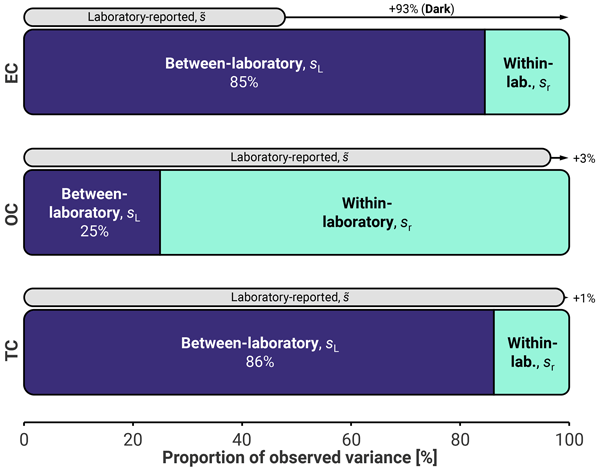
Timothy A. Sipkens, Joel C. Corbin, Brett Smith, Stéphanie Gagné, Prem Lobo, Benjamin T. Brem, Mark P. Johnson, and Gregory J. Smallwood
Atmos. Meas. Tech., 17, 4291–4302, https://doi.org/10.5194/amt-17-4291-2024, https://doi.org/10.5194/amt-17-4291-2024, 2024
Short summary
Short summary
Carbonaceous particles, such as soot, contribute to climate forcing, air pollution, and human health impacts. Thermal–optical analysis is a calibration standard used to measure these particles, but significant differences have been observed in the measurements across identical instruments. We report on the reproducibility of these measurements for aircraft emissions, which range from 8.0 % of the nominal value for organic carbon to 17 % for elemental carbon.
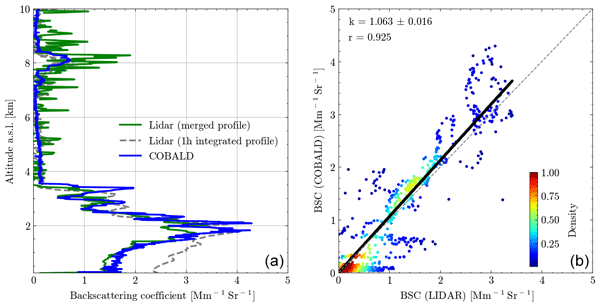
Hengheng Zhang, Christian Rolf, Ralf Tillmann, Christian Wesolek, Frank Gunther Wienhold, Thomas Leisner, and Harald Saathoff
Aerosol Research, 2, 135–151, https://doi.org/10.5194/ar-2-135-2024, https://doi.org/10.5194/ar-2-135-2024, 2024
Short summary
Short summary
Our study employs advanced tools, including scanning lidar, balloons, and UAVs, to explore aerosol particles in the atmosphere. The scanning lidar offers distinctive near-ground-level insights, enriching our comprehension of aerosol distribution from ground level to the free troposphere. This research provides valuable data for comparing remote sensing and in situ aerosol measurements, advancing our understanding of aerosol impacts on radiative transfer, clouds, and air quality.
Celia Herrero del Barrio, Roberto Román, Ramiro González, Alberto Cazorla, Marcos Herreras-Giralda, Juan Carlos Antuña-Sánchez, Francisco Molero, Francisco Navas-Guzmán, Antonio Serrano, María Ángeles Obregón, Yolanda Sola, Marco Pandolfi, Sara Herrero-Anta, Daniel González-Fernández, Jorge Muñiz-Rosado, David Mateos, Abel Calle, Carlos Toledano, Victoria Eugenia Cachorro, and Ángel Máximo de Frutos
EGUsphere, https://doi.org/10.5194/egusphere-2024-581, https://doi.org/10.5194/egusphere-2024-581, 2024
Preprint withdrawn
Short summary
Short summary
Introducing CAECENET, a novel system that combines sun-sky photometer and ceilometer data, enabling the continuous monitoring and automatic retrieval of both vertical and columnar aerosol properties in near real-time. A case study on a Saharan dust outbreak illustrates it's efficacy in tracking aerosol events. Additionally, the analysis of Canadian wildfires' long-range transport is presented, showing it's utility in monitoring event propagation, aerosol concentration, and optical properties.
Natalie M. Mahowald, Longlei Li, Julius Vira, Marje Prank, Douglas S. Hamilton, Hitoshi Matsui, Ron L. Miller, Louis Lu, Ezgi Akyuz, Daphne Meidan, Peter Hess, Heikki Lihavainen, Christine Wiedinmyer, Jenny Hand, Maria Grazia Alaimo, Célia Alves, Andres Alastuey, Paulo Artaxo, Africa Barreto, Francisco Barraza, Silvia Becagli, Giulia Calzolai, Shankarararman Chellam, Ying Chen, Patrick Chuang, David D. Cohen, Cristina Colombi, Evangelia Diapouli, Gaetano Dongarra, Konstantinos Eleftheriadis, Corinne Galy-Lacaux, Cassandra Gaston, Dario Gomez, Yenny González Ramos, Hannele Hakola, Roy M. Harrison, Chris Heyes, Barak Herut, Philip Hopke, Christoph Hüglin, Maria Kanakidou, Zsofia Kertesz, Zbiginiw Klimont, Katriina Kyllönen, Fabrice Lambert, Xiaohong Liu, Remi Losno, Franco Lucarelli, Willy Maenhaut, Beatrice Marticorena, Randall V. Martin, Nikolaos Mihalopoulos, Yasser Morera-Gomez, Adina Paytan, Joseph Prospero, Sergio Rodríguez, Patricia Smichowski, Daniela Varrica, Brenna Walsh, Crystal Weagle, and Xi Zhao
Earth Syst. Sci. Data Discuss., https://doi.org/10.5194/essd-2024-1, https://doi.org/10.5194/essd-2024-1, 2024
Preprint withdrawn
Short summary
Short summary
Aerosol particles can interact with incoming solar radiation and outgoing long wave radiation, change cloud properties, affect photochemistry, impact surface air quality, and when deposited impact surface albedo of snow and ice, and modulate carbon dioxide uptake by the land and ocean. Here we present a new compilation of aerosol observations including composition, a methodology for comparing the datasets to model output, and show the implications of these results using one model.
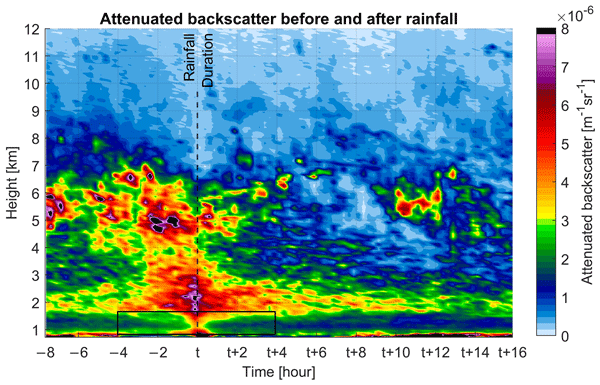
Wenyue Wang, Klemens Hocke, Leonardo Nania, Alberto Cazorla, Gloria Titos, Renaud Matthey, Lucas Alados-Arboledas, Agustín Millares, and Francisco Navas-Guzmán
Atmos. Chem. Phys., 24, 1571–1585, https://doi.org/10.5194/acp-24-1571-2024, https://doi.org/10.5194/acp-24-1571-2024, 2024
Short summary
Short summary
The south-central interior of Andalusia experiences complex precipitation patterns as a result of the semi-arid Mediterranean climate and the influence of Saharan dust. This study monitored the inter-relations between aerosols, clouds, meteorological variables, and precipitation systems using ground-based remote sensing and in situ instruments.

Alejandro Keller, Patrick Specht, Peter Steigmeier, and Ernest Weingartner
Aerosol Research, 1, 65–79, https://doi.org/10.5194/ar-1-65-2023, https://doi.org/10.5194/ar-1-65-2023, 2023
Short summary
Short summary
Ultra-fine airborne carbon particles affect climate and health, but measuring them poses many challenges. This paper presents an innovative device called FATCAT that enables unattended and continuous measurement of these particles over extended periods of time. We detail FATCAT's performance, demonstrate its compatibility with established methods and introduce the unique feature of fast thermograms, a novel approach to further understand real-world samples containing carbonaceous particles.
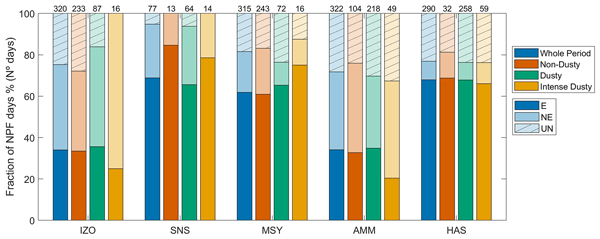
Juan Andrés Casquero-Vera, Daniel Pérez-Ramírez, Hassan Lyamani, Fernando Rejano, Andrea Casans, Gloria Titos, Francisco José Olmo, Lubna Dada, Simo Hakala, Tareq Hussein, Katrianne Lehtipalo, Pauli Paasonen, Antti Hyvärinen, Noemí Pérez, Xavier Querol, Sergio Rodríguez, Nikos Kalivitis, Yenny González, Mansour A. Alghamdi, Veli-Matti Kerminen, Andrés Alastuey, Tuukka Petäjä, and Lucas Alados-Arboledas
Atmos. Chem. Phys., 23, 15795–15814, https://doi.org/10.5194/acp-23-15795-2023, https://doi.org/10.5194/acp-23-15795-2023, 2023
Short summary
Short summary
Here we present the first study of the effect of mineral dust on the inhibition/promotion of new particle formation (NPF) events in different dust-influenced areas. Unexpectedly, we show that the occurrence of NPF events is highly frequent during mineral dust outbreaks, occurring even during extreme dust outbreaks. We also show that the occurrence of NPF events during mineral dust outbreaks significantly affects the potential cloud condensation nuclei budget.
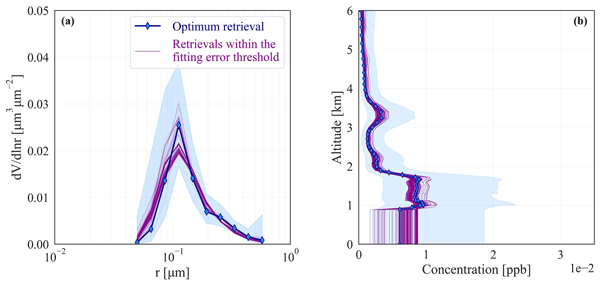
Alexandra Tsekeri, Anna Gialitaki, Marco Di Paolantonio, Davide Dionisi, Gian Luigi Liberti, Alnilam Fernandes, Artur Szkop, Aleksander Pietruczuk, Daniel Pérez-Ramírez, Maria J. Granados Muñoz, Juan Luis Guerrero-Rascado, Lucas Alados-Arboledas, Diego Bermejo Pantaleón, Juan Antonio Bravo-Aranda, Anna Kampouri, Eleni Marinou, Vassilis Amiridis, Michael Sicard, Adolfo Comerón, Constantino Muñoz-Porcar, Alejandro Rodríguez-Gómez, Salvatore Romano, Maria Rita Perrone, Xiaoxia Shang, Mika Komppula, Rodanthi-Elisavet Mamouri, Argyro Nisantzi, Diofantos Hadjimitsis, Francisco Navas-Guzmán, Alexander Haefele, Dominika Szczepanik, Artur Tomczak, Iwona S. Stachlewska, Livio Belegante, Doina Nicolae, Kalliopi Artemis Voudouri, Dimitris Balis, Athena A. Floutsi, Holger Baars, Linda Miladi, Nicolas Pascal, Oleg Dubovik, and Anton Lopatin
Atmos. Meas. Tech., 16, 6025–6050, https://doi.org/10.5194/amt-16-6025-2023, https://doi.org/10.5194/amt-16-6025-2023, 2023
Short summary
Short summary
EARLINET/ACTRIS organized an intensive observational campaign in May 2020, with the objective of monitoring the atmospheric state over Europe during the COVID-19 lockdown and relaxation period. The work presented herein focuses on deriving a common methodology for applying a synergistic retrieval that utilizes the network's ground-based passive and active remote sensing measurements and deriving the aerosols from anthropogenic activities over Europe.
Alessandro Bigi, Giorgio Veratti, Elisabeth Andrews, Martine Collaud Coen, Lorenzo Guerrieri, Vera Bernardoni, Dario Massabò, Luca Ferrero, Sergio Teggi, and Grazia Ghermandi
Atmos. Chem. Phys., 23, 14841–14869, https://doi.org/10.5194/acp-23-14841-2023, https://doi.org/10.5194/acp-23-14841-2023, 2023
Short summary
Short summary
Atmospheric particles include compounds that play a key role in the greenhouse effect and air toxicity. Concurrent observations of these compounds by multiple instruments are presented, following deployment within an urban environment in the Po Valley, one of Europe's pollution hotspots. The study compares these data, highlighting the impact of ground emissions, mainly vehicular traffic and biomass burning, on the absorption of sun radiation and, ultimately, on climate change and air quality.
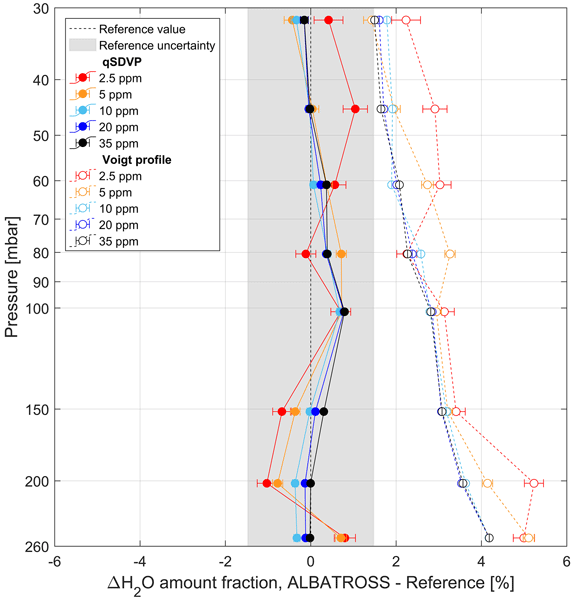
Simone Brunamonti, Manuel Graf, Tobias Bühlmann, Céline Pascale, Ivan Ilak, Lukas Emmenegger, and Béla Tuzson
Atmos. Meas. Tech., 16, 4391–4407, https://doi.org/10.5194/amt-16-4391-2023, https://doi.org/10.5194/amt-16-4391-2023, 2023
Short summary
Short summary
The abundance of water vapor (H2O) in the upper atmosphere has a significant impact on the rate of global warming. We developed a new lightweight spectrometer (ALBATROSS) for H2O measurements aboard meteorological balloons. Here, we assess the accuracy and precision of ALBATROSS using metrology-grade reference gases. The results demonstrate the exceptional potential of mid-infrared laser absorption spectroscopy as a new reference method for in situ measurements of H2O in the upper atmosphere.
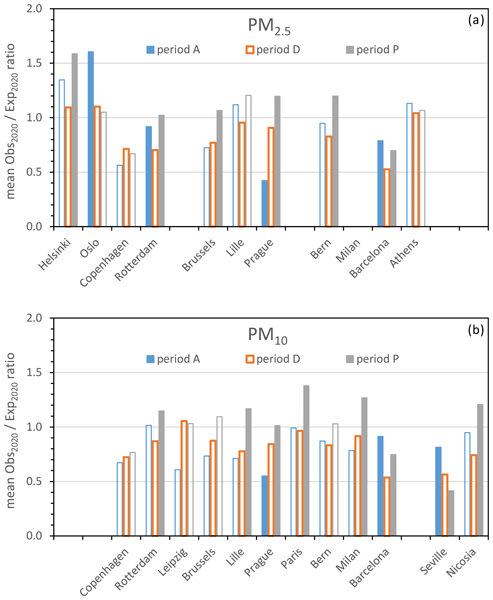
Jean-Philippe Putaud, Enrico Pisoni, Alexander Mangold, Christoph Hueglin, Jean Sciare, Michael Pikridas, Chrysanthos Savvides, Jakub Ondracek, Saliou Mbengue, Alfred Wiedensohler, Kay Weinhold, Maik Merkel, Laurent Poulain, Dominik van Pinxteren, Hartmut Herrmann, Andreas Massling, Claus Nordstroem, Andrés Alastuey, Cristina Reche, Noemí Pérez, Sonia Castillo, Mar Sorribas, Jose Antonio Adame, Tuukka Petaja, Katrianne Lehtipalo, Jarkko Niemi, Véronique Riffault, Joel F. de Brito, Augustin Colette, Olivier Favez, Jean-Eudes Petit, Valérie Gros, Maria I. Gini, Stergios Vratolis, Konstantinos Eleftheriadis, Evangelia Diapouli, Hugo Denier van der Gon, Karl Espen Yttri, and Wenche Aas
Atmos. Chem. Phys., 23, 10145–10161, https://doi.org/10.5194/acp-23-10145-2023, https://doi.org/10.5194/acp-23-10145-2023, 2023
Short summary
Short summary
Many European people are still exposed to levels of air pollution that can affect their health. COVID-19 lockdowns in 2020 were used to assess the impact of the reduction in human mobility on air pollution across Europe by comparing measurement data with values that would be expected if no lockdown had occurred. We show that lockdown measures did not lead to consistent decreases in the concentrations of fine particulate matter suspended in the air, and we investigate why.
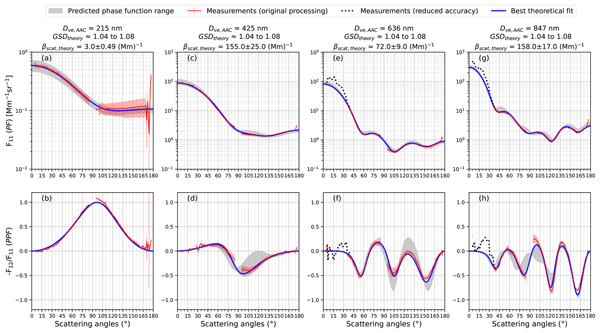
Alireza Moallemi, Robin L. Modini, Benjamin T. Brem, Barbara Bertozzi, Philippe Giaccari, and Martin Gysel-Beer
Atmos. Meas. Tech., 16, 3653–3678, https://doi.org/10.5194/amt-16-3653-2023, https://doi.org/10.5194/amt-16-3653-2023, 2023
Short summary
Short summary
Polarimetric data, i.e., the angular and polarization dependence of light scattering by aerosols, contain ample information on optical and microphysical properties. Retrieval of these properties is a central approach in aerosol remote sensing. We present a description, calibration, validation, and a first application of a new benchtop polar nephelometer, which provides in situ polarimetric measurements of an aerosol. Such data facilitate agreement between retrieval results and independent data.
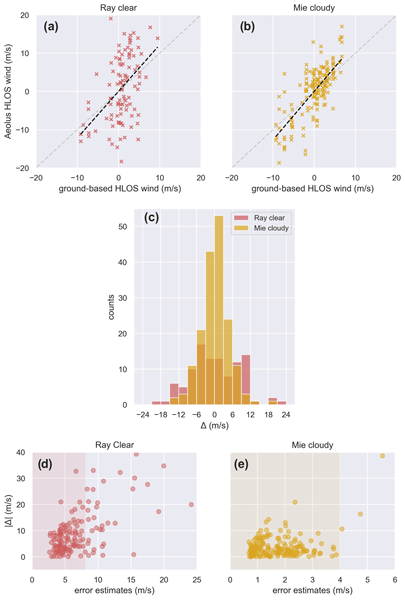
Jesús Abril-Gago, Pablo Ortiz-Amezcua, Diego Bermejo-Pantaleón, Juana Andújar-Maqueda, Juan Antonio Bravo-Aranda, María José Granados-Muñoz, Francisco Navas-Guzmán, Lucas Alados-Arboledas, Inmaculada Foyo-Moreno, and Juan Luis Guerrero-Rascado
Atmos. Chem. Phys., 23, 8453–8471, https://doi.org/10.5194/acp-23-8453-2023, https://doi.org/10.5194/acp-23-8453-2023, 2023
Short summary
Short summary
Validation activities of Aeolus wind products were performed in Granada with different upward-probing instrumentation (Doppler lidar system and radiosondes) and spatiotemporal collocation criteria. Specific advantages and disadvantages of each instrument were identified, and an optimal comparison criterion is proposed. Aeolus was proven to provide reliable wind products, and the upward-probing instruments were proven to be useful for Aeolus wind product validation activities.
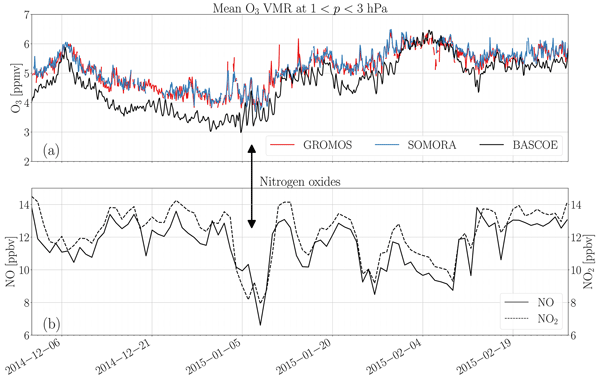
Eric Sauvageat, Klemens Hocke, Eliane Maillard Barras, Shengyi Hou, Quentin Errera, Alexander Haefele, and Axel Murk
Atmos. Chem. Phys., 23, 7321–7345, https://doi.org/10.5194/acp-23-7321-2023, https://doi.org/10.5194/acp-23-7321-2023, 2023
Short summary
Short summary
In Switzerland, two microwave radiometers can measure continuous ozone profiles in the middle atmosphere. From these instruments, we can study the diurnal variation of ozone, which is difficult to observe otherwise. It is valuable to validate the model simulations of diurnal variations in this region. We present results obtained during the last decade and compare them against various models. For the first time, we also show that the winter diurnal variations have some short-term fluctuations.
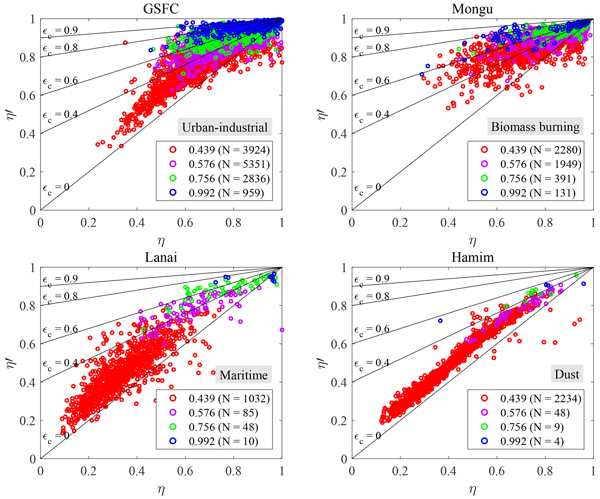
Norman T. O'Neill, Keyvan Ranjbar, Liviu Ivănescu, Thomas F. Eck, Jeffrey S. Reid, David M. Giles, Daniel Pérez-Ramírez, and Jai Prakash Chaubey
Atmos. Meas. Tech., 16, 1103–1120, https://doi.org/10.5194/amt-16-1103-2023, https://doi.org/10.5194/amt-16-1103-2023, 2023
Short summary
Short summary
Aerosols are atmospheric particles that vary in size (radius) from a fraction of a micrometer (µm) to around 20 µm. They tend to be either smaller than 1 µm (like smoke or pollution) or larger than 1 µm (like dust or sea salt). Their optical effect (scattering and absorbing sunlight) can be divided into FM (fine-mode) and CM (coarse-mode) parts using a cutoff radius around 1 µm or a spectral (color) technique. We present and validate a theoretical link between the types of FM and CM divisions.
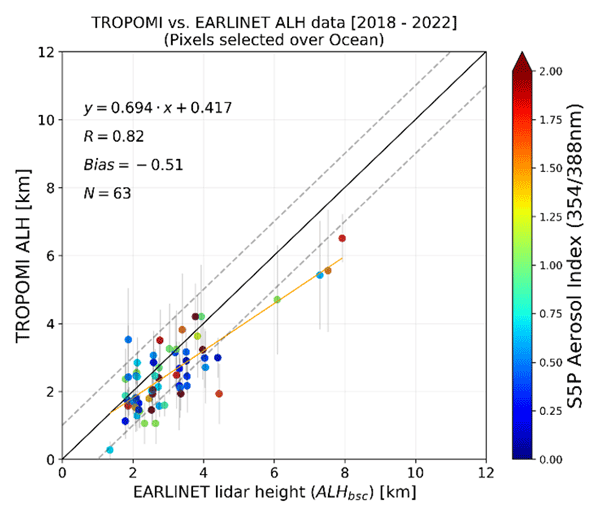
Konstantinos Michailidis, Maria-Elissavet Koukouli, Dimitris Balis, J. Pepijn Veefkind, Martin de Graaf, Lucia Mona, Nikolaos Papagianopoulos, Gesolmina Pappalardo, Ioanna Tsikoudi, Vassilis Amiridis, Eleni Marinou, Anna Gialitaki, Rodanthi-Elisavet Mamouri, Argyro Nisantzi, Daniele Bortoli, Maria João Costa, Vanda Salgueiro, Alexandros Papayannis, Maria Mylonaki, Lucas Alados-Arboledas, Salvatore Romano, Maria Rita Perrone, and Holger Baars
Atmos. Chem. Phys., 23, 1919–1940, https://doi.org/10.5194/acp-23-1919-2023, https://doi.org/10.5194/acp-23-1919-2023, 2023
Short summary
Short summary
Comparisons with ground-based correlative lidar measurements constitute a key component in the validation of satellite aerosol products. This paper presents the validation of the TROPOMI aerosol layer height (ALH) product, using archived quality assured ground-based data from lidar stations that belong to the EARLINET network. Comparisons between the TROPOMI ALH and co-located EARLINET measurements show good agreement over the ocean.
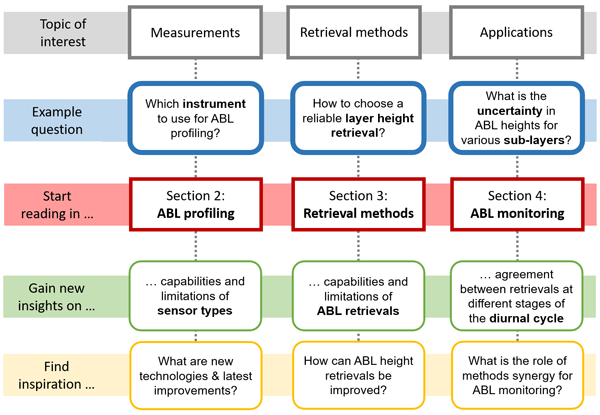
Simone Kotthaus, Juan Antonio Bravo-Aranda, Martine Collaud Coen, Juan Luis Guerrero-Rascado, Maria João Costa, Domenico Cimini, Ewan J. O'Connor, Maxime Hervo, Lucas Alados-Arboledas, María Jiménez-Portaz, Lucia Mona, Dominique Ruffieux, Anthony Illingworth, and Martial Haeffelin
Atmos. Meas. Tech., 16, 433–479, https://doi.org/10.5194/amt-16-433-2023, https://doi.org/10.5194/amt-16-433-2023, 2023
Short summary
Short summary
Profile observations of the atmospheric boundary layer now allow for layer heights and characteristics to be derived at high temporal and vertical resolution. With novel high-density ground-based remote-sensing measurement networks emerging, horizontal information content is also increasing. This review summarises the capabilities and limitations of various sensors and retrieval algorithms which need to be considered during the harmonisation of data products for high-impact applications.
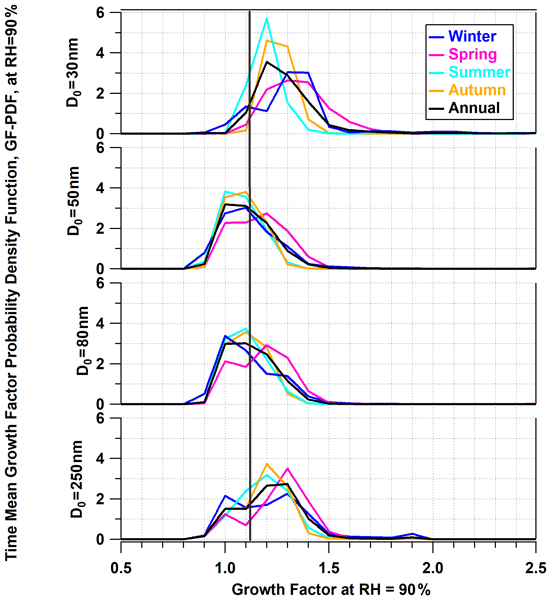
Christina Spitieri, Maria Gini, Martin Gysel-Beer, and Konstantinos Eleftheriadis
Atmos. Chem. Phys., 23, 235–249, https://doi.org/10.5194/acp-23-235-2023, https://doi.org/10.5194/acp-23-235-2023, 2023
Short summary
Short summary
The paper provides insights into the hygroscopic properties and state of mixing of atmospheric aerosol through 1 year of measurements of key microphysical parameters in the suburbs of the most densely populated city of Greece, Athens, in the eastern Mediterranean, which is considered an important climate change hotspot. The results can be used for the prediction of cloud condensation nuclei and quantification of the influence of ambient relative humidity on light scattering by aerosol particles.

María Ángeles López-Cayuela, Carmen Córdoba-Jabonero, Diego Bermejo-Pantaleón, Michaël Sicard, Vanda Salgueiro, Francisco Molero, Clara Violeta Carvajal-Pérez, María José Granados-Muñoz, Adolfo Comerón, Flavio T. Couto, Rubén Barragán, María-Paz Zorzano, Juan Antonio Bravo-Aranda, Constantino Muñoz-Porcar, María João Costa, Begoña Artíñano, Alejandro Rodríguez-Gómez, Daniele Bortoli, Manuel Pujadas, Jesús Abril-Gago, Lucas Alados-Arboledas, and Juan Luis Guerrero-Rascado
Atmos. Chem. Phys., 23, 143–161, https://doi.org/10.5194/acp-23-143-2023, https://doi.org/10.5194/acp-23-143-2023, 2023
Short summary
Short summary
An intense Saharan dust outbreak crossing the Iberian Peninsula in springtime was monitored to determinine the specific contribution of fine and coarse dust particles at five lidar stations, strategically covering its SW–central–NE pathway. Expected dust ageing along the transport started unappreciated. A different fine-dust impact on optical (~30 %) and mass (~10 %) properties was found. Use of polarized lidar measurements (mainly in elastic systems) for fine/coarse dust separation is crucial.

Eric Sauvageat, Eliane Maillard Barras, Klemens Hocke, Alexander Haefele, and Axel Murk
Atmos. Meas. Tech., 15, 6395–6417, https://doi.org/10.5194/amt-15-6395-2022, https://doi.org/10.5194/amt-15-6395-2022, 2022
Short summary
Short summary
We present new harmonized ozone time series from two ground-based microwave radiometers in Switzerland. The new series consist of hourly ozone profiles in the middle atmosphere (~ 20–70 km) from 2009 until 2021. Cross-validation of the new data series shows the benefit of the harmonization process compared to the previous versions. Comparisons with collocated satellite observations is used to further validate these time series for long-term ozone monitoring over central Europe.
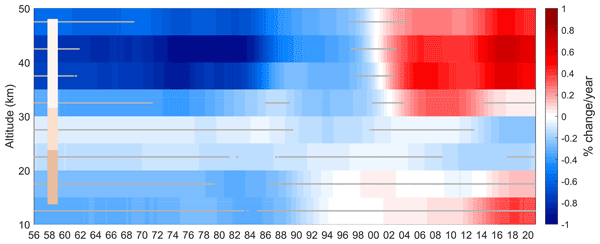
Eliane Maillard Barras, Alexander Haefele, René Stübi, Achille Jouberton, Herbert Schill, Irina Petropavlovskikh, Koji Miyagawa, Martin Stanek, and Lucien Froidevaux
Atmos. Chem. Phys., 22, 14283–14302, https://doi.org/10.5194/acp-22-14283-2022, https://doi.org/10.5194/acp-22-14283-2022, 2022
Short summary
Short summary
Intercomparisons of three Dobson and three Brewer spectrophotometers at Arosa/Davos, Switzerland, are used for the homogenization of the longest Umkehr ozone profiles time series worldwide. Dynamic linear modeling (DLM) reveals a significant positive trend after 2004 in the upper stratosphere, a persistent negative trend between 25 and 30 km in the middle stratosphere, and a negative trend at 20 km in the lower stratosphere, with different levels of significance depending on the dataset.
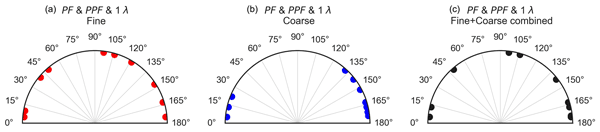
Alireza Moallemi, Rob L. Modini, Tatyana Lapyonok, Anton Lopatin, David Fuertes, Oleg Dubovik, Philippe Giaccari, and Martin Gysel-Beer
Atmos. Meas. Tech., 15, 5619–5642, https://doi.org/10.5194/amt-15-5619-2022, https://doi.org/10.5194/amt-15-5619-2022, 2022
Short summary
Short summary
Aerosol properties (size distributions, refractive indices) can be retrieved from in situ, angularly resolved light scattering measurements performed with polar nephelometers. We apply an established framework to assess the aerosol property retrieval potential for different instrument configurations, target applications, and assumed prior knowledge. We also demonstrate how a reductive greedy algorithm can be used to determine the optimal placements of the angular sensors in a polar nephelometer.
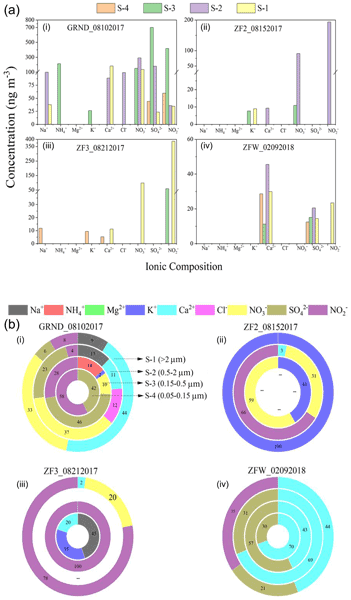
Hazel Vernier, Neeraj Rastogi, Hongyu Liu, Amit Kumar Pandit, Kris Bedka, Anil Patel, Madineni Venkat Ratnam, Buduru Suneel Kumar, Bo Zhang, Harish Gadhavi, Frank Wienhold, Gwenael Berthet, and Jean-Paul Vernier
Atmos. Chem. Phys., 22, 12675–12694, https://doi.org/10.5194/acp-22-12675-2022, https://doi.org/10.5194/acp-22-12675-2022, 2022
Short summary
Short summary
The chemical composition of the stratospheric aerosols collected aboard high-altitude balloons above the summer Asian monsoon reveals the presence of nitrate/nitrite. Using numerical simulations and satellite observations, we found that pollution as well as lightning could explain some of our observations.
Clare E. Singer, Benjamin W. Clouser, Sergey M. Khaykin, Martina Krämer, Francesco Cairo, Thomas Peter, Alexey Lykov, Christian Rolf, Nicole Spelten, Armin Afchine, Simone Brunamonti, and Elisabeth J. Moyer
Atmos. Meas. Tech., 15, 4767–4783, https://doi.org/10.5194/amt-15-4767-2022, https://doi.org/10.5194/amt-15-4767-2022, 2022
Short summary
Short summary
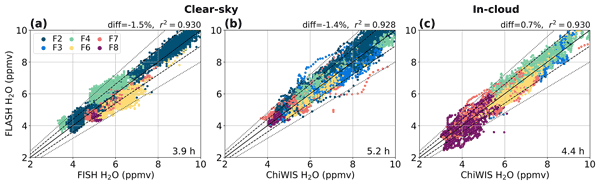
In situ measurements of water vapor in the upper troposphere are necessary to study cloud formation and hydration of the stratosphere but challenging due to cold–dry conditions. We compare measurements from three water vapor instruments from the StratoClim campaign in 2017. In clear sky (clouds), point-by-point differences were <1.5±8 % (<1±8 %). This excellent agreement allows detection of fine-scale structures required to understand the impact of convection on stratospheric water vapor.

Varaha Ravi Kiran, Madineni Venkat Ratnam, Masatomo Fujiwara, Herman Russchenberg, Frank G. Wienhold, Bomidi Lakshmi Madhavan, Mekalathur Roja Raman, Renju Nandan, Sivan Thankamani Akhil Raj, Alladi Hemanth Kumar, and Saginela Ravindra Babu
Atmos. Meas. Tech., 15, 4709–4734, https://doi.org/10.5194/amt-15-4709-2022, https://doi.org/10.5194/amt-15-4709-2022, 2022
Short summary
Short summary
We proposed and conducted the multi-instrumental BACIS (Balloon-borne Aerosol–Cloud Interaction Studies) field campaigns using balloon-borne in situ measurements and ground-based and space-borne remote sensing instruments. Aerosol-cloud interaction is quantified for liquid clouds by segregating aerosol and cloud information in a balloon profile. Overall, the observational approach proposed here demonstrated its capability for understanding the aerosol–cloud interaction process.
Christian Tatzelt, Silvia Henning, André Welti, Andrea Baccarini, Markus Hartmann, Martin Gysel-Beer, Manuela van Pinxteren, Robin L. Modini, Julia Schmale, and Frank Stratmann
Atmos. Chem. Phys., 22, 9721–9745, https://doi.org/10.5194/acp-22-9721-2022, https://doi.org/10.5194/acp-22-9721-2022, 2022
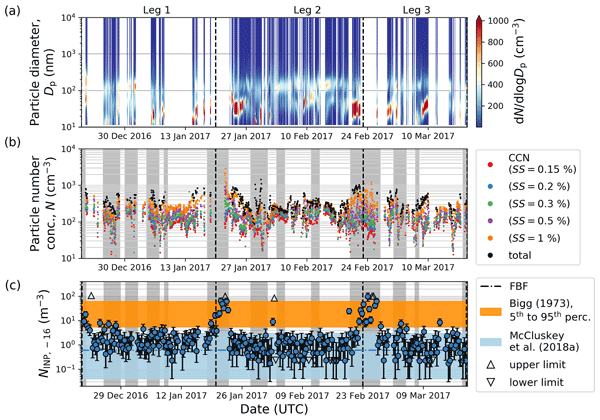
Short summary
Short summary
We present the abundance and origin of cloud-relevant aerosol particles in the preindustral-like conditions of the Southern Ocean (SO) during austral summer. Cloud condensation nuclei (CCN) and ice-nucleating particles (INP) were measured during a circum-Antarctic scientific cruise with in situ instrumentation and offline filter measurements, respectively. Transport processes were found to play an equally important role as local sources for both the CCN and INP population of the SO.
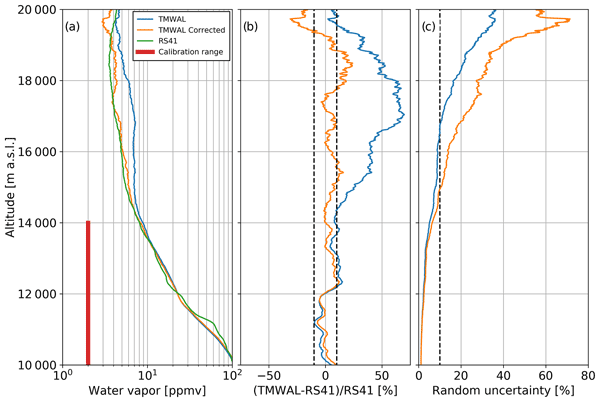
Fernando Chouza, Thierry Leblanc, Mark Brewer, Patrick Wang, Giovanni Martucci, Alexander Haefele, Hélène Vérèmes, Valentin Duflot, Guillaume Payen, and Philippe Keckhut
Atmos. Meas. Tech., 15, 4241–4256, https://doi.org/10.5194/amt-15-4241-2022, https://doi.org/10.5194/amt-15-4241-2022, 2022
Short summary
Short summary
The comparison of water vapor lidar measurements with co-located radiosondes and aerosol backscatter profiles indicates that laser-induced aerosol fluorescence in smoke layers injected into the stratosphere can introduce very large and chronic wet biases above 15 km, thus impacting the ability of these systems to accurately estimate long-term water vapor trends. The proposed correction method presented in this work is able to reduce this fluorescence-induced bias from 75 % to under 5 %.
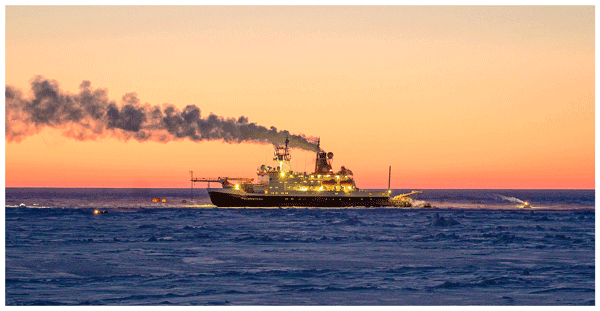
Ivo Beck, Hélène Angot, Andrea Baccarini, Lubna Dada, Lauriane Quéléver, Tuija Jokinen, Tiia Laurila, Markus Lampimäki, Nicolas Bukowiecki, Matthew Boyer, Xianda Gong, Martin Gysel-Beer, Tuukka Petäjä, Jian Wang, and Julia Schmale
Atmos. Meas. Tech., 15, 4195–4224, https://doi.org/10.5194/amt-15-4195-2022, https://doi.org/10.5194/amt-15-4195-2022, 2022
Short summary
Short summary
We present the pollution detection algorithm (PDA), a new method to identify local primary pollution in remote atmospheric aerosol and trace gas time series. The PDA identifies periods of contaminated data and relies only on the target dataset itself; i.e., it is independent of ancillary data such as meteorological variables. The parameters of all pollution identification steps are adjustable so that the PDA can be tuned to different locations and situations. It is available as open-access code.
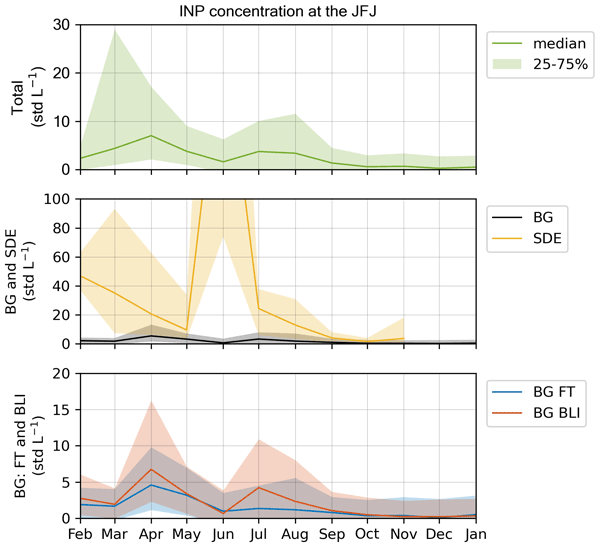
Cyril Brunner, Benjamin T. Brem, Martine Collaud Coen, Franz Conen, Martin Steinbacher, Martin Gysel-Beer, and Zamin A. Kanji
Atmos. Chem. Phys., 22, 7557–7573, https://doi.org/10.5194/acp-22-7557-2022, https://doi.org/10.5194/acp-22-7557-2022, 2022
Short summary
Short summary
Microscopic particles called ice-nucleating particles (INPs) are essential for ice crystals to form in clouds. INPs are a tiny proportion of atmospheric aerosol, and their abundance is poorly constrained. We study how the concentration of INPs changes diurnally and seasonally at a mountaintop station in central Europe. Unsurprisingly, a diurnal cycle is only found when considering air masses that have had lower-altitude ground contact. The highest INP concentrations occur in spring.
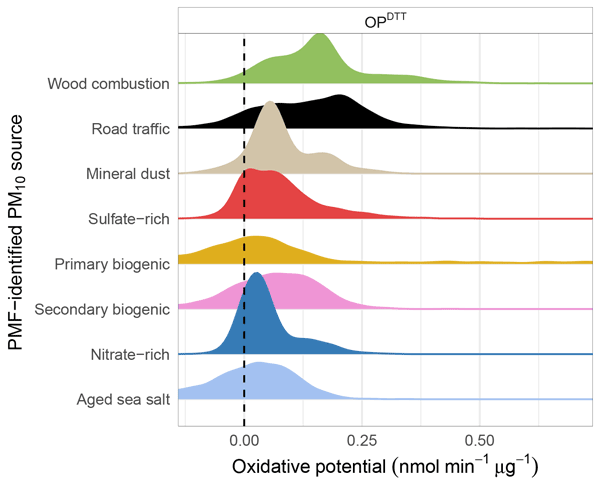
Stuart K. Grange, Gaëlle Uzu, Samuël Weber, Jean-Luc Jaffrezo, and Christoph Hueglin
Atmos. Chem. Phys., 22, 7029–7050, https://doi.org/10.5194/acp-22-7029-2022, https://doi.org/10.5194/acp-22-7029-2022, 2022
Short summary
Short summary
Oxidative potential (OP), a biologically relevant metric for particulate matter (PM), was linked to PM10 and PM2.5 sources and constituents across Switzerland between 2018 and 2019. Wood burning and non-exhaust traffic emissions were identified as key processes that led to enhanced OP. Therefore, the make-up of the PM mix was very important for OP. The results highlight the importance of the management of wood burning and non-exhaust emissions to reduce OP, and presumably biological harm.
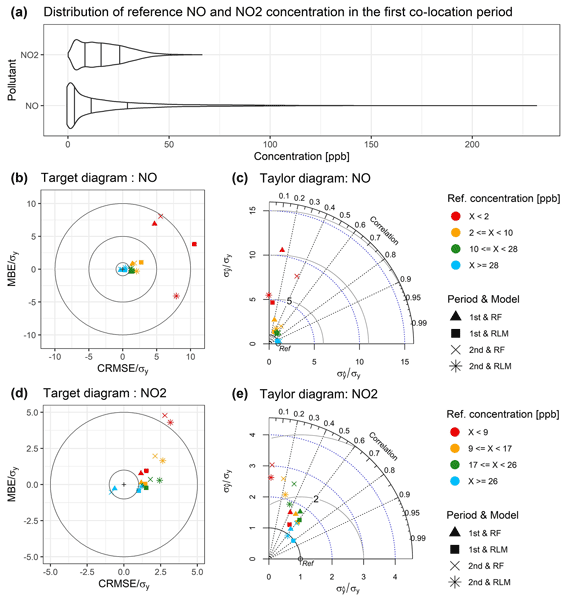
Horim Kim, Michael Müller, Stephan Henne, and Christoph Hüglin
Atmos. Meas. Tech., 15, 2979–2992, https://doi.org/10.5194/amt-15-2979-2022, https://doi.org/10.5194/amt-15-2979-2022, 2022
Short summary
Short summary
In this study, the performance of electrochemical sensors for NO and NO2 for measuring air quality was determined over a longer operating period. The performance of NO sensors remained reliable for more than 18 months. However, the NO2 sensors showed decreasing performance over time. During deployment, we found that the NO2 sensors can distinguish general pollution levels, but they proved unsuitable for accurate measurements due to significant biases.
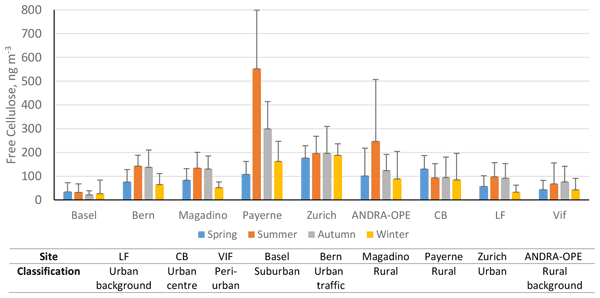
Adam Brighty, Véronique Jacob, Gaëlle Uzu, Lucille Borlaza, Sébastien Conil, Christoph Hueglin, Stuart K. Grange, Olivier Favez, Cécile Trébuchon, and Jean-Luc Jaffrezo
Atmos. Chem. Phys., 22, 6021–6043, https://doi.org/10.5194/acp-22-6021-2022, https://doi.org/10.5194/acp-22-6021-2022, 2022
Short summary
Short summary
With an revised analytical method and long-term sampling strategy, we have been able to elucidate much more information about atmospheric plant debris, a poorly understood class of particulate matter. We found weaker seasonal patterns at urban locations compared to rural locations and significant interannual variability in concentrations between previous years and 2020, during the COVID-19 pandemic. This suggests a possible man-made influence on plant debris concentration and source strength.
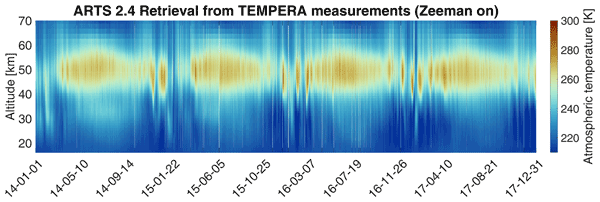
Witali Krochin, Francisco Navas-Guzmán, David Kuhl, Axel Murk, and Gunter Stober
Atmos. Meas. Tech., 15, 2231–2249, https://doi.org/10.5194/amt-15-2231-2022, https://doi.org/10.5194/amt-15-2231-2022, 2022
Short summary
Short summary
This study leverages atmospheric temperature measurements performed with a ground-based radiometer making use of data that was collected during a 4-year observational campaign applying a new retrieval algorithm that improves the maximal altitude range from 45 to 55 km. The measurements are validated against two independent data sets, MERRA2 reanalysis data and the meteorological analysis of NAVGEM-HA.
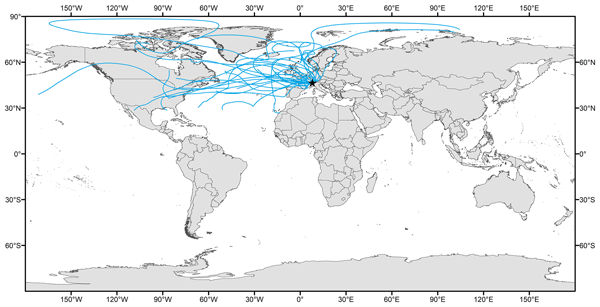
Franz Conen, Annika Einbock, Claudia Mignani, and Christoph Hüglin
Atmos. Chem. Phys., 22, 3433–3444, https://doi.org/10.5194/acp-22-3433-2022, https://doi.org/10.5194/acp-22-3433-2022, 2022
Short summary
Short summary
Above western Europe, ice typically starts to form in clouds a few kilometres above the ground if suitable aerosol particles are present. In air masses typical for that altitude, we found that such particles most likely originate from bacteria and fungi living on plants. Occasional Saharan dust intrusions seem to contribute little to the number concentration of particles able to freeze cloud droplets between 0°C and −15°C.
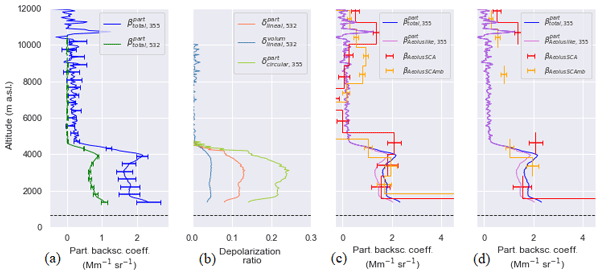
Jesús Abril-Gago, Juan Luis Guerrero-Rascado, Maria João Costa, Juan Antonio Bravo-Aranda, Michaël Sicard, Diego Bermejo-Pantaleón, Daniele Bortoli, María José Granados-Muñoz, Alejandro Rodríguez-Gómez, Constantino Muñoz-Porcar, Adolfo Comerón, Pablo Ortiz-Amezcua, Vanda Salgueiro, Marta María Jiménez-Martín, and Lucas Alados-Arboledas
Atmos. Chem. Phys., 22, 1425–1451, https://doi.org/10.5194/acp-22-1425-2022, https://doi.org/10.5194/acp-22-1425-2022, 2022
Short summary
Short summary
A validation of Aeolus reprocessed optical products is carried out via an intercomparison with ground-based measurements taken at several ACTRIS/EARLINET stations in western Europe. Case studies and a statistical analysis are presented. The stations are located in a hot spot between Africa and the rest of Europe, which guarantees a variety of aerosol types, from mineral dust layers to continental/anthropogenic aerosol, and allows us to test Aeolus performance under different scenarios.
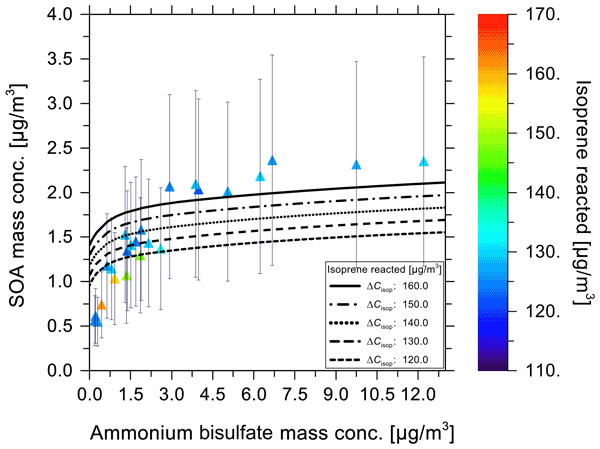
Dalrin Ampritta Amaladhasan, Claudia Heyn, Christopher R. Hoyle, Imad El Haddad, Miriam Elser, Simone M. Pieber, Jay G. Slowik, Antonio Amorim, Jonathan Duplissy, Sebastian Ehrhart, Vladimir Makhmutov, Ugo Molteni, Matti Rissanen, Yuri Stozhkov, Robert Wagner, Armin Hansel, Jasper Kirkby, Neil M. Donahue, Rainer Volkamer, Urs Baltensperger, Martin Gysel-Beer, and Andreas Zuend
Atmos. Chem. Phys., 22, 215–244, https://doi.org/10.5194/acp-22-215-2022, https://doi.org/10.5194/acp-22-215-2022, 2022
Short summary
Short summary
We use a combination of models for gas-phase chemical reactions and equilibrium gas–particle partitioning of isoprene-derived secondary organic aerosols (SOAs) informed by dark ozonolysis experiments conducted in the CLOUD chamber. Our predictions cover high to low relative humidities (RHs) and quantify how SOA mass yields are enhanced at high RH as well as the impact of inorganic seeds of distinct hygroscopicities and acidities on the coupled partitioning of water and semi-volatile organics.
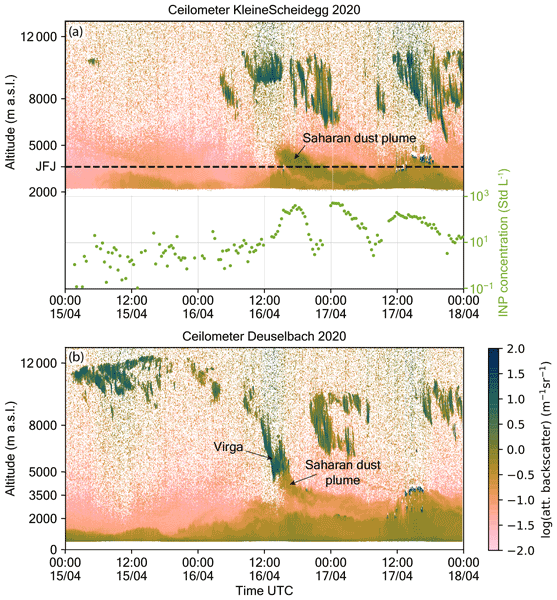
Cyril Brunner, Benjamin T. Brem, Martine Collaud Coen, Franz Conen, Maxime Hervo, Stephan Henne, Martin Steinbacher, Martin Gysel-Beer, and Zamin A. Kanji
Atmos. Chem. Phys., 21, 18029–18053, https://doi.org/10.5194/acp-21-18029-2021, https://doi.org/10.5194/acp-21-18029-2021, 2021
Short summary
Short summary
Special microscopic particles called ice-nucleating particles (INPs) are essential for ice crystals to form in the atmosphere. INPs are sparse and their atmospheric concentration and properties are not well understood. Mineral dust particles make up a significant fraction of INPs but how much remains unknown. Here, we address this knowledge gap by studying periods when mineral particles are present in large quantities at a mountaintop station in central Europe.
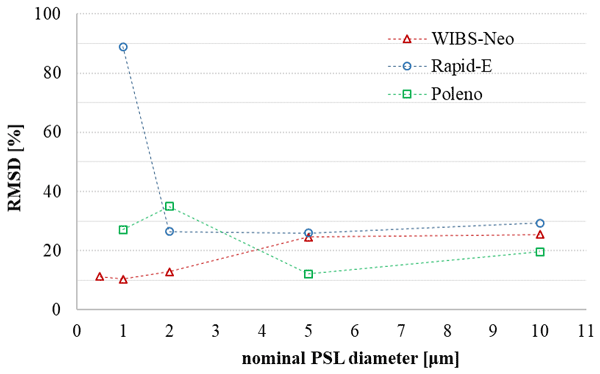
Gian Lieberherr, Kevin Auderset, Bertrand Calpini, Bernard Clot, Benoît Crouzy, Martin Gysel-Beer, Thomas Konzelmann, José Manzano, Andrea Mihajlovic, Alireza Moallemi, David O'Connor, Branko Sikoparija, Eric Sauvageat, Fiona Tummon, and Konstantina Vasilatou
Atmos. Meas. Tech., 14, 7693–7706, https://doi.org/10.5194/amt-14-7693-2021, https://doi.org/10.5194/amt-14-7693-2021, 2021
Short summary
Short summary
Today there is no standard procedure to validate bioaerosol and pollen monitors. Three instruments were tested, focusing on detecting particles of different sizes. Only one instrument was able to detect the smallest particles (0.5 µm Ø), whereas the others performed best at the largest tested particles (10 µm Ø). These results are the first step towards a standardised validation procedure. The need for a reference counting method for larger particles (pollen grains: 10–200 µm Ø) was emphasised.
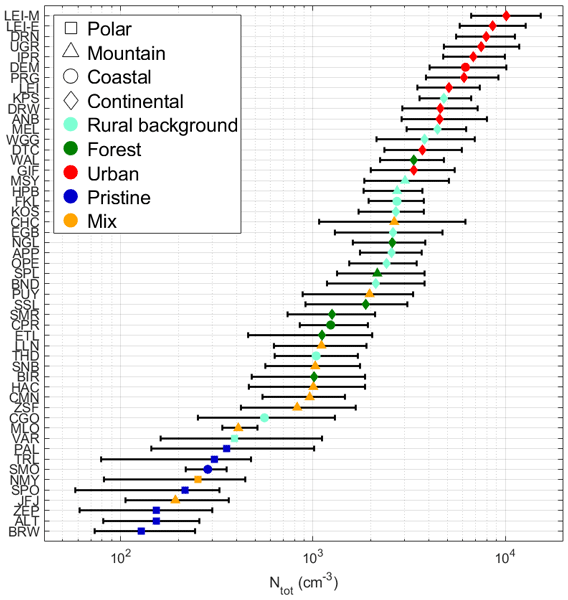
Clémence Rose, Martine Collaud Coen, Elisabeth Andrews, Yong Lin, Isaline Bossert, Cathrine Lund Myhre, Thomas Tuch, Alfred Wiedensohler, Markus Fiebig, Pasi Aalto, Andrés Alastuey, Elisabeth Alonso-Blanco, Marcos Andrade, Begoña Artíñano, Todor Arsov, Urs Baltensperger, Susanne Bastian, Olaf Bath, Johan Paul Beukes, Benjamin T. Brem, Nicolas Bukowiecki, Juan Andrés Casquero-Vera, Sébastien Conil, Konstantinos Eleftheriadis, Olivier Favez, Harald Flentje, Maria I. Gini, Francisco Javier Gómez-Moreno, Martin Gysel-Beer, Anna Gannet Hallar, Ivo Kalapov, Nikos Kalivitis, Anne Kasper-Giebl, Melita Keywood, Jeong Eun Kim, Sang-Woo Kim, Adam Kristensson, Markku Kulmala, Heikki Lihavainen, Neng-Huei Lin, Hassan Lyamani, Angela Marinoni, Sebastiao Martins Dos Santos, Olga L. Mayol-Bracero, Frank Meinhardt, Maik Merkel, Jean-Marc Metzger, Nikolaos Mihalopoulos, Jakub Ondracek, Marco Pandolfi, Noemi Pérez, Tuukka Petäjä, Jean-Eudes Petit, David Picard, Jean-Marc Pichon, Veronique Pont, Jean-Philippe Putaud, Fabienne Reisen, Karine Sellegri, Sangeeta Sharma, Gerhard Schauer, Patrick Sheridan, James Patrick Sherman, Andreas Schwerin, Ralf Sohmer, Mar Sorribas, Junying Sun, Pierre Tulet, Ville Vakkari, Pieter Gideon van Zyl, Fernando Velarde, Paolo Villani, Stergios Vratolis, Zdenek Wagner, Sheng-Hsiang Wang, Kay Weinhold, Rolf Weller, Margarita Yela, Vladimir Zdimal, and Paolo Laj
Atmos. Chem. Phys., 21, 17185–17223, https://doi.org/10.5194/acp-21-17185-2021, https://doi.org/10.5194/acp-21-17185-2021, 2021
Short summary
Short summary
Aerosol particles are a complex component of the atmospheric system the effects of which are among the most uncertain in climate change projections. Using data collected at 62 stations, this study provides the most up-to-date picture of the spatial distribution of particle number concentration and size distribution worldwide, with the aim of contributing to better representation of aerosols and their interactions with clouds in models and, therefore, better evaluation of their impact on climate.
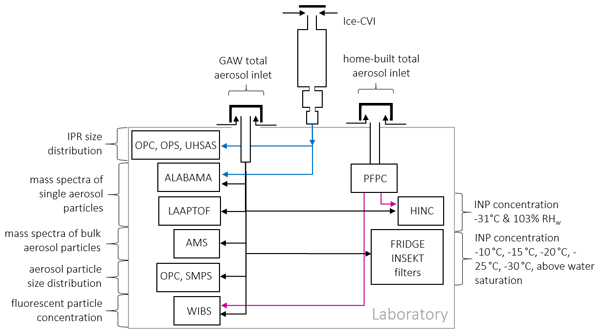
Larissa Lacher, Hans-Christian Clemen, Xiaoli Shen, Stephan Mertes, Martin Gysel-Beer, Alireza Moallemi, Martin Steinbacher, Stephan Henne, Harald Saathoff, Ottmar Möhler, Kristina Höhler, Thea Schiebel, Daniel Weber, Jann Schrod, Johannes Schneider, and Zamin A. Kanji
Atmos. Chem. Phys., 21, 16925–16953, https://doi.org/10.5194/acp-21-16925-2021, https://doi.org/10.5194/acp-21-16925-2021, 2021
Short summary
Short summary
We investigate ice-nucleating particle properties at Jungfraujoch during the 2017 joint INUIT/CLACE field campaign, to improve the knowledge about those rare particles in a cloud-relevant environment. By quantifying ice-nucleating particles in parallel to single-particle mass spectrometry measurements, we find that mineral dust and aged sea spray particles are potential candidates for ice-nucleating particles. Our findings are supported by ice residual analysis and source region modeling.
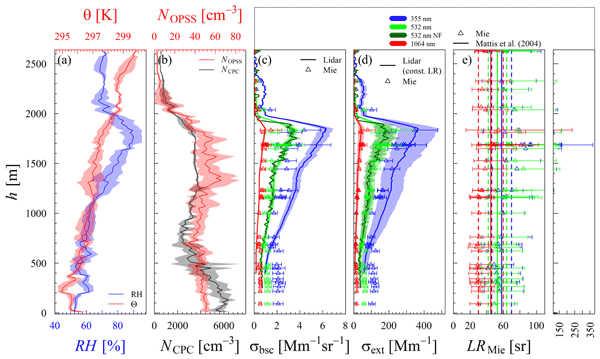
Sebastian Düsing, Albert Ansmann, Holger Baars, Joel C. Corbin, Cyrielle Denjean, Martin Gysel-Beer, Thomas Müller, Laurent Poulain, Holger Siebert, Gerald Spindler, Thomas Tuch, Birgit Wehner, and Alfred Wiedensohler
Atmos. Chem. Phys., 21, 16745–16773, https://doi.org/10.5194/acp-21-16745-2021, https://doi.org/10.5194/acp-21-16745-2021, 2021
Short summary
Short summary
The work deals with optical properties of aerosol particles in dried and atmospheric states. Based on two measurement campaigns in the rural background of central Europe, different measurement approaches were compared with each other, such as modeling based on Mie theory and direct in situ or remote sensing measurements. Among others, it was shown that the aerosol extinction-to-backscatter ratio is relative humidity dependent, and refinement with respect to the model input parameters is needed.
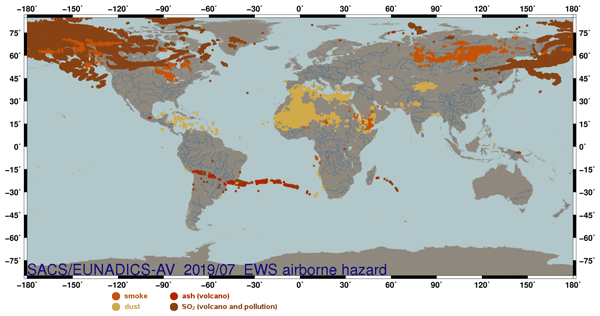
Hugues Brenot, Nicolas Theys, Lieven Clarisse, Jeroen van Gent, Daniel R. Hurtmans, Sophie Vandenbussche, Nikolaos Papagiannopoulos, Lucia Mona, Timo Virtanen, Andreas Uppstu, Mikhail Sofiev, Luca Bugliaro, Margarita Vázquez-Navarro, Pascal Hedelt, Michelle Maree Parks, Sara Barsotti, Mauro Coltelli, William Moreland, Simona Scollo, Giuseppe Salerno, Delia Arnold-Arias, Marcus Hirtl, Tuomas Peltonen, Juhani Lahtinen, Klaus Sievers, Florian Lipok, Rolf Rüfenacht, Alexander Haefele, Maxime Hervo, Saskia Wagenaar, Wim Som de Cerff, Jos de Laat, Arnoud Apituley, Piet Stammes, Quentin Laffineur, Andy Delcloo, Robertson Lennart, Carl-Herbert Rokitansky, Arturo Vargas, Markus Kerschbaum, Christian Resch, Raimund Zopp, Matthieu Plu, Vincent-Henri Peuch, Michel Van Roozendael, and Gerhard Wotawa
Nat. Hazards Earth Syst. Sci., 21, 3367–3405, https://doi.org/10.5194/nhess-21-3367-2021, https://doi.org/10.5194/nhess-21-3367-2021, 2021
Short summary
Short summary
The purpose of the EUNADICS-AV (European Natural Airborne Disaster Information and Coordination System for Aviation) prototype early warning system (EWS) is to develop the combined use of harmonised data products from satellite, ground-based and in situ instruments to produce alerts of airborne hazards (volcanic, dust, smoke and radionuclide clouds), satisfying the requirement of aviation air traffic management (ATM) stakeholders (https://cordis.europa.eu/project/id/723986).
Cited articles
Aksoyoglu, S., Keller, J., Barmpadimos, I., Oderbolz, D., Lanz, V. A., Prévôt, A. S. H., and Baltensperger, U.: Aerosol modelling in Europe with a focus on Switzerland during summer and winter episodes, Atmos. Chem. Phys., 11, 7355–7373, https://doi.org/10.5194/acp-11-7355-2011, 2011. a
Alonso-Blanco, E., Gómez-Moreno, F. J., and Artíñano, B.: Size-resolved hygroscopicity of ambient submicron particles in a suburban Atmos, Atmos. Environ., 213, 349–358, https://doi.org/10.1016/j.atmosenv.2019.05.065, 2019. a
Anderson, T. L. and Ogren, J. A.: Determining Aerosol Radiative Properties Using the TSI 3563 Integrating Nephelometer, Aerosol Sci. Technol., 29, 57–69, https://doi.org/10.1080/02786829808965551, 1998. a
Ångström, A.: On the Atmospheric Transmission of Sun Radiation and on Dust in the Air, Geogr. Ann. B, 11, https://doi.org/10.2307/519399, 1929. a
Ansmann, A., Riebesell, M., and Weitkamp, C.: Measurement of atmospheric aerosol extinction profiles with a Raman lidar, Opt. Lett., 15, https://doi.org/10.1364/ol.15.000746, 1990. a, b
Bader, S., Collaud Coen, M., Duguay-Tetzlaff, A., Frei, C., Fukutome, S., Gehrig, R., Maillard Barras, E., Martucci, G., Romanens, G., Scherrer, S., Schlegel, T., Spirig, C., Stübi, R., Vuilleumier, L., and Zubler, E.: Rapport climatologique 2019, Rapports et Bulletins 313.008.f, MeteoSwiss and OFCL, Vente des publications fédérales, CH-3303 Berne, Switzerland, ISSN 2296-1496, https://www.meteosuisse.admin.ch/services-et-publications/publications/rapports-et-bulletins/2016/2020/rapport-climatologique-2019.html (last access: 5 November 2026), 2020. a
Bedoya-Velásquez, A. E., Navas-Guzmán, F., Granados-Muñoz, M. J., Titos, G., Román, R., Casquero-Vera, J. A., Ortiz-Amezcua, P., Benavent-Oltra, J. A., de Arruda Moreira, G., Montilla-Rosero, E., Hoyos, C. D., Artiñano, B., Coz, E., Olmo-Reyes, F. J., Alados-Arboledas, L., and Guerrero-Rascado, J. L.: Hygroscopic growth study in the framework of EARLINET during the SLOPE I campaign: synergy of remote sensing and in situ instrumentation, Atmos. Chem. Phys., 18, 7001–7017, https://doi.org/10.5194/acp-18-7001-2018, 2018. a, b, c
Bedoya-Velásquez, A. E., Titos, G., Bravo-Aranda, J. A., Haeffelin, M., Favez, O., Petit, J.-E., Casquero-Vera, J. A., Olmo-Reyes, F. J., Montilla-Rosero, E., Hoyos, C. D., Alados-Arboledas, L., and Guerrero-Rascado, J. L.: Long-term aerosol optical hygroscopicity study at the ACTRIS SIRTA observatory: synergy between ceilometer and in situ measurements, Atmos. Chem. Phys., 19, 7883–7896, https://doi.org/10.5194/acp-19-7883-2019, 2019. a, b, c
Bindoff, N. L., Stott, P., AchutaRao, K., Allen, M., Gillett, N., Gutzler, D., Hansingo, K., Hegerl, G., Hu, Y., Jain, S., Mokhov, I., Overland, J., Perlwitz, J., Sebbari, R., and Zhang, X.: IPCC 2013 AR5 – Chapter 10: Detection and Attribution of Climate Change: From Global to Regional, Climate Change 2013: The Physical Science Basis – Working Group I Contribution to the Fifth Assessment Report of the Intergovernmental Panel on Climate Change 2013, Change, edited by: Stocker, T. F., Qin, D., Plattner, G.-K., Tignor, M., Allen, S. K., Boschung, J., Nauels, A., Xia, Y., Bex, V., and Midgley, P. M., Cambridge University Press, Cambridge, UK, New York, NY, USA, ISBN 9781107057999, 867–952, https://doi.org/10.1017/CBO9781107415324.022, 2013. a
Bohren, C. F. and Huffman, D. R.: Absorption and Scattering of Light by Small Particles, Wiley, https://doi.org/10.1002/9783527618156, 2007. a, b
Bozzetti, C., Daellenbach, K. R., Hüglin, C., Fermo, P., Sciare, J., Kasper-Giebl, A., Mazar, Y., Abbaszade, G., Kazzi, M. E., Gonzalez, R., Shuster-Meiseles, T., Flasch, M., Wolf, R., Křepelová, A., Canonaco, F., Schnelle-Kreis, J., Slowik, J. G., Zimmermann, R., Rudich, Y., Baltensperger, U., Haddad, I. E., and Prévôt, A. S.: Size-Resolved Identification, Characterization, and Quantification of Primary Biological Organic Aerosol at a European Rural Site, Environ. Sci. Technol., 50, https://doi.org/10.1021/acs.est.5b05960, 2016. a
Brocard, E., Philipona, R., Haefele, A., Romanens, G., Mueller, A., Ruffieux, D., Simeonov, V., and Calpini, B.: Raman Lidar for Meteorological Observations, RALMO – Part 2: Validation of water vapor measurements, Atmos. Meas. Tech., 6, 1347–1358, https://doi.org/10.5194/amt-6-1347-2013, 2013. a
Brunamonti, S., Jorge, T., Oelsner, P., Hanumanthu, S., Singh, B. B., Kumar, K. R., Sonbawne, S., Meier, S., Singh, D., Wienhold, F. G., Luo, B. P., Boettcher, M., Poltera, Y., Jauhiainen, H., Kayastha, R., Karmacharya, J., Dirksen, R., Naja, M., Rex, M., Fadnavis, S., and Peter, T.: Balloon-borne measurements of temperature, water vapor, ozone and aerosol backscatter on the southern slopes of the Himalayas during StratoClim 2016–2017, Atmos. Chem. Phys., 18, 15937–15957, https://doi.org/10.5194/acp-18-15937-2018, 2018. a
Brunamonti, S., Martucci, G., Romanens, G., Poltera, Y., Wienhold, F. G., Hervo, M., Haefele, A., and Navas-Guzmán, F.: Validation of aerosol backscatter profiles from Raman lidar and ceilometer using balloon-borne measurements, Atmos. Chem. Phys., 21, 2267–2285, https://doi.org/10.5194/acp-21-2267-2021, 2021. a, b, c, d, e
Bucholtz, A.: Rayleigh-scattering calculations for the terrestrial Atmos, Appl. Opt., 34, 2765–2773, https://doi.org/10.1364/ao.34.002765, 1995. a
Burgos, M. A., Andrews, E., Titos, G., Alados-Arboledas, L., Baltensperger, U., Day, D., Jefferson, A., Kalivitis, N., Mihalopoulos, N., Sherman, J., Sun, J., Weingartner, E., and Zieger, P.: A global view on the effect of water uptake on aerosol particle light scattering, Sci. Data, 6, https://doi.org/10.1038/s41597-019-0158-7, 2019. a
Carrico, C. M., Kus, P., Rood, M. J., Quinn, P. K., and Bates, T. S.: Mixtures of pollution, dust, sea salt, and volcanic aerosol during ACE-Asia: Radiative properties as a function of relative humidity, J. Geophys. Res.-Atmos., 108, https://doi.org/10.1029/2003jd003405, 2003. a
Cavalli, F., Viana, M., Yttri, K. E., Genberg, J., and Putaud, J.-P.: Toward a standardised thermal-optical protocol for measuring atmospheric organic and elemental carbon: the EUSAAR protocol, Atmos. Meas. Tech., 3, 79–89, https://doi.org/10.5194/amt-3-79-2010, 2010. a
Cedeño, E., Sun, Z., Hong, Z., and Du, J.: Raman spectroscopy for profiling physical and chemical properties of atmospheric aerosol particles: A review, Ecotoxicol. Environ. Saf., 249, https://doi.org/10.1016/j.ecoenv.2022.114405, 2023. a
Chen, J., Li, Z., Lv, M., Wang, Y., Wang, W., Zhang, Y., Wang, H., Yan, X., Sun, Y., and Cribb, M.: Aerosol hygroscopic growth, contributing factors, and impact on haze events in a severely polluted region in northern China, Atmos. Chem. Phys., 19, 1327–1342, https://doi.org/10.5194/acp-19-1327-2019, 2019. a, b
Chen, X., Chu, Y., Chu, Y., Lee, A. K., Gen, M., Kasthuriarachchi, N. Y., Chan, C. K., and Li, Y. J.: Relative Humidity History Affects Hygroscopicity of Mixed Particles of Glyoxal and Reduced Nitrogenous Species, Environ. Sci. Technol., 54, https://doi.org/10.1021/acs.est.0c00680, 2020. a, b
Chicco, D., Sichenze, A., and Jurman, G.: A simple guide to the use of Student’s t-test, Mann-Whitney U test, Chi-squared test, and Kruskal-Wallis test in biostatistics, BioData Mining, 18, https://doi.org/10.1186/s13040-025-00465-6, 2025. a
Cirisan, A., Luo, B. P., Engel, I., Wienhold, F. G., Sprenger, M., Krieger, U. K., Weers, U., Romanens, G., Levrat, G., Jeannet, P., Ruffieux, D., Philipona, R., Calpini, B., Spichtinger, P., and Peter, T.: Balloon-borne match measurements of midlatitude cirrus clouds, Atmos. Chem. Phys., 14, 7341–7365, https://doi.org/10.5194/acp-14-7341-2014, 2014. a
Clarke, A. D., Howell, S., Quinn, P. K., Bates, T. S., Ogren, J. A., Andrews, E., Jefferson, A., Massling, A., Mayol-Bracero, O., Maring, H., Savoie, D., and Cass, G.: INDOEX aerosol: A comparison and summary of chemical, microphysical, and optical properties observed from land, ship, and aircraft, J. Geophys. Res.-Atmos., 107, https://doi.org/10.1029/2001JD000572, 2002. a
Collaud Coen, M., Praz, C., Haefele, A., Ruffieux, D., Kaufmann, P., and Calpini, B.: Determination and climatology of the planetary boundary layer height above the Swiss plateau by in situ and remote sensing measurements as well as by the COSMO-2 model, Atmos. Chem. Phys., 14, 13205–13221, https://doi.org/10.5194/acp-14-13205-2014, 2014. a, b, c
Collaud Coen, M., Brem, B. T., Gysel-Beer, M., Modini, R., Henne, S., Steinbacher, M., Putero, D., Gini, M. I., and Eleftheriadis, K.: Detection and climatology of Saharan dust frequency and mass at the Jungfraujoch (3580 m a.s.l., Switzerland), Atmos. Chem. Phys., 26, 1623–1645, https://doi.org/10.5194/acp-26-1623-2026, 2026. a
Dada, L., Brem, B. T., Amarandi-Netedu, L.-M., Collaud Coen, M., Evangeliou, N., Hueglin, C., Nowak, N., Modini, R., Steinbacher, M., and Gysel-Beer, M.: Sources of ultrafine particles at a rural midland site in Switzerland, Aerosol Research, 3, 315–336, https://doi.org/10.5194/ar-3-315-2025, 2025. a, b, c, d, e
Deshmukh, S., Poulain, L., Wehner, B., Henning, S., Petit, J.-E., Fombelle, P., Favez, O., Herrmann, H., and Pöhlker, M.: External particle mixing influences hygroscopicity in a sub-urban area, Atmos. Chem. Phys., 25, 741–758, https://doi.org/10.5194/acp-25-741-2025, 2025. a, b, c
Díaz-Zurita, A., Naval-Hernández, V. M., Whiteman, D. N., Rodríguez-Navarro, O., Muñiz-Rosado, J., Pérez-Ramírez, D., Alados-Arboledas, L., and Navas-Guzmán, F.: Sensitivity Analysis of the Differential Atmospheric Transmission in Water Vapour Mixing Ratio Retrieval from Raman Lidar Measurements, Remote Sens, 17, 3444, https://doi.org/10.3390/rs17203444, 2025. a
Díaz-Zurita, A., Navas-Guzmán, F., and Pérez-Ramírez, D.: Five-day NOAA HYSPLIT backward trajectories for hygroscopic aerosol layers over Payerne, Zenodo [data set], https://doi.org/10.5281/zenodo.23010868, 2026. a
Dinoev, T., Simeonov, V., Arshinov, Y., Bobrovnikov, S., Ristori, P., Calpini, B., Parlange, M., and van den Bergh, H.: Raman Lidar for Meteorological Observations, RALMO – Part 1: Instrument description, Atmos. Meas. Tech., 6, 1329–1346, https://doi.org/10.5194/amt-6-1329-2013, 2013. a, b, c, d, e, f
Doane, D. P.: Aesthetic frequency classifications, Am. Stat., 30, https://doi.org/10.1080/00031305.1976.10479172, 1976. a
Douville, H., Raghavan, K., Renwick, J., Allan, R., Arias, P., Barlow, M., Cerezo-Mota, R., Cherchi, A., Gan, T., Gergis, J., Jiang, D., Khan, A., Pokam Mba, W., Rosenfeld, D., Tierney, J., and Zolina, O.: Water Cycle Changes, in: Climate Change 2021: The Physical Science Basis. Contribution of Working Group I to the Sixth Assessment Report of the Intergovernmental Panel on Climate Change, edited by: Masson-Delmotte, V., Zhai, P., Pirani, A., Connors, S., Péan, C., Berger, S., Caud, N., Chen, Y., Goldfarb, L., Gomis, M., Huang, M., Leitzell, K., Lonnoy, E., Matthews, J., Maycock, T., Waterfield, T., Yelekçi, O., Yu, R., and Zhou, B., chap. 8, pp. 1055–1210, Cambridge University Press, Cambridge, United Kingdom and New York, NY, USA, https://doi.org/10.1017/9781009157896.010, 2021. a
Durand, E., Durdina, L., Smallwood, G., Johnson, M., Spirig, C., Edebeli, J., Roth, M., Brem, B., Sevcenco, Y., and Crayford, A.: Correction for particle loss in a regulatory aviation nvPM emissions system using measured particle size, J. Aerosol. Sci., 169, https://doi.org/10.1016/j.jaerosci.2023.106140, 2023. a
Eck, T. F., Holben, B. N., Reid, J. S., Giles, D. M., Rivas, M. A., Singh, R. P., Tripathi, S. N., Bruegge, C. J., Platnick, S., Arnold, G. T., Krotkov, N. A., Carn, S. A., Sinyuk, A., Dubovik, O., Arola, A., Schafer, J. S., Artaxo, P., Smirnov, A., Chen, H., and Goloub, P.: Fog- and cloud-induced aerosol modification observed by the aerosol robotic network (AERONET), J. Geophys. Res.-Atmos., 117, https://doi.org/10.1029/2011JD016839, 2012. a
Eirund, G. K., Drossaart van Dusseldorp, S., Brem, B. T., Dedekind, Z., Karrer, Y., Stoll, M., and Lohmann, U.: Aerosol–cloud–precipitation interactions during a Saharan dust event–A summertime case-study from the Alps, Q. J. R. Meteorol. Soc., 148, 943–961, https://doi.org/10.1002/qj.4240, 2022. a
EMPA: Technischer Bericht zum Nationalen Beobachtungsnetz für Luftfremdstoffe (NABEL) 2025, Tech. rep., EMPA, Dübendorf, Switzerland, https://www.empa.ch/documents/d/s503/technischer-bericht-nabel-2025 (last access: 16 October 2026), 2025. a
Feingold, G. and Morley, B.: Aerosol hygroscopic properties as measured by lidar and comparison with in situ measurements, J. Geophys. Res.-Atmos, 108, https://doi.org/10.1029/2002jd002842, 2003. a, b, c
Fernández, A. J., Molero, F., Becerril-Valle, M., Coz, E., Salvador, P., Artíñano, B., and Pujadas, M.: Application of Remote Sens techniques to study aerosol water vapour uptake in a real Atmos, Atmos. Res., 202, 112–127, https://doi.org/10.1016/j.atmosres.2017.11.020, 2018. a, b
Ferrare, R. A., Melfi, S. H., Whiteman, D. N., Evans, K. D., Poellot, M., and Kaufman, Y. J.: Raman lidar measurements of aerosol extinction and backscattering 2. Derivation of aerosol real refractive index, single-scattering albedo, and humidification factor using Raman lidar and aircraft size distribution measurements, J. Geophys. Res.-Atmos., 103, https://doi.org/10.1029/98JD01647, 1998. a
Fierz-Schmidhauser, R., Zieger, P., Gysel, M., Kammermann, L., DeCarlo, P. F., Baltensperger, U., and Weingartner, E.: Measured and predicted aerosol light scattering enhancement factors at the high alpine site Jungfraujoch, Atmos. Chem. Phys., 10, 2319–2333, https://doi.org/10.5194/acp-10-2319-2010, 2010. a
Giles, D. M., Sinyuk, A., Sorokin, M. G., Schafer, J. S., Smirnov, A., Slutsker, I., Eck, T. F., Holben, B. N., Lewis, J. R., Campbell, J. R., Welton, E. J., Korkin, S. V., and Lyapustin, A. I.: Advancements in the Aerosol Robotic Network (AERONET) Version 3 database – automated near-real-time quality control algorithm with improved cloud screening for Sun photometer aerosol optical depth (AOD) measurements, Atmos. Meas. Tech., 12, 169–209, https://doi.org/10.5194/amt-12-169-2019, 2019. a
Goldsmith, J. E.: Turn-key Raman lidar for profiling atmospheric water vapor, clouds, and aerosols, Appl. Opt., 37, https://doi.org/10.1364/ao.37.004979, 1998. a
Granados-Muñoz, M. J., Navas-Guzmán, F., Bravo-Aranda, J. A., Guerrero-Rascado, J. L., Lyamani, H., Valenzuela, A., Titos, G., Fernández-Gálvez, J., and Alados-Arboledas, L.: Hygroscopic growth of atmospheric aerosol particles based on active remote sensing and radiosounding measurements: selected cases in southeastern Spain, Atmos. Meas. Tech., 8, 705–718, https://doi.org/10.5194/amt-8-705-2015, 2015. a
Gysel, M., Crosier, J., Topping, D. O., Whitehead, J. D., Bower, K. N., Cubison, M. J., Williams, P. I., Flynn, M. J., McFiggans, G. B., and Coe, H.: Closure study between chemical composition and hygroscopic growth of aerosol particles during TORCH2, Atmos. Chem. Phys., 7, 6131–6144, https://doi.org/10.5194/acp-7-6131-2007, 2007. a
Haefele, A., Hervo, M., Turp, M., Lampin, J.-L., Haeffelin, M., Lehmann, V., the E-PROFILE team, and the TOPROF team: The E-PROFILE network for the operational measurement of wind and aerosol profiles over Europe, in: Proceedings of TECO, Madrid, Spain, https://www.eumetnet.eu/wp-content/uploads/2016/10/E-PROFILE_TECO_Madrid_2016.pdf (last access: 5 November 2026), 2016. a
Hale, G. M. and Querry, M. R.: Optical Constants of Water in the 200-nm to 200-µm Wavelength Region, Appl. Opt., 12, 555–563, https://doi.org/10.1364/AO.12.000555, 1973. a
Hänel, G.: The properties of atmospheric aerosol particles as functions of the relative humidity at thermodynamic equilibrium with the surrounding moist air, Adv. Geophys., 19, https://doi.org/10.1016/S0065-2687(08)60142-9, 1976. a, b
Hermann, M., Stratmann, F., Wilck, M., and Wiedensohler, A.: Sampling characteristics of an aircraft-borne aerosol inlet system, J. Atmos. Ocean Tech., 18, https://doi.org/10.1175/1520-0426(2001)018<0007:SCOAAB>2.0.CO;2, 2001. a
Hicks-Jalali, S., Sica, R. J., Martucci, G., Maillard Barras, E., Voirin, J., and Haefele, A.: A Raman lidar tropospheric water vapour climatology and height-resolved trend analysis over Payerne, Switzerland, Atmos. Chem. Phys., 20, 9619–9640, https://doi.org/10.5194/acp-20-9619-2020, 2020. a
Holben, B. N., Eck, T. F., Slutsker, I., Tanré, D., Buis, J. P., Setzer, A., Vermote, E., Reagan, J. A., Kaufman, Y. J., Nakajima, T., Lavenu, F., Jankowiak, I., and Smirnov, A.: AERONET – A federated instrument network and data archive for aerosol characterization, Remote Sens. Environ., 66, https://doi.org/10.1016/S0034-4257(98)00031-5, 1998. a
Hüglin, C. and Grange, S. K.: Chemical Characterisation and Source Identification of PM10 and PM2.5 in Switzerland, Project report, Empa, Swiss Federal Laboratories for Materials Science and Technology, Dübendorf, Switzerland, https://www.bafu.admin.ch/dam/en/sd-web/oyMXRQizcq24 (last access: 5 November 2026), 2021. a, b, c
Hüglin, C. and Schwarzenbach, B.: Feinstaubmessungen (PM10 und PM2.5) mit dem Fidas 200 der Firma Palas im NABEL, Tech. rep., Empa, Abteilung für Luftfremdstoffe und Umwelttechnik, https://www.empa.ch/documents/56101/246436/Fidas_200_NABEL.pdf/93790947-135a-4575-a718-370316f506c5 (last access: 5 November 2026), 2016. a
Hüglin, C., Buchmann, B., Steinbacher, M., and Emmenegger, L.: The Swiss National Air Pollution Monitoring Network (NABEL) – Bridging Science and Environmental Policy, Chimia, 78, 722–727, https://doi.org/10.2533/chimia.2024.722, 2024. a
Jefferson, A., Hageman, D., Morrow, H., Mei, F., and Watson, T.: Seven years of aerosol scattering hygroscopic growth measurements from SGP: Factors influencing water uptake, J. Geophys. Res.-Atmos., 122, https://doi.org/10.1002/2017JD026804, 2017. a, b
Jones, A. C., Hill, A., Remy, S., Abraham, N. L., Dalvi, M., Hardacre, C., Hewitt, A. J., Johnson, B., Mulcahy, J. P., and Turnock, S. T.: Exploring the sensitivity of atmospheric nitrate concentrations to nitric acid uptake rate using the Met Office's Unified Model, Atmos. Chem. Phys., 21, 15901–15927, https://doi.org/10.5194/acp-21-15901-2021, 2021. a
Kammermann, L., Gysel, M., Weingartner, E., and Baltensperger, U.: 13-month climatology of the aerosol hygroscopicity at the free tropospheric site Jungfraujoch (3580 m a.s.l.), Atmos. Chem. Phys., 10, 10717–10732, https://doi.org/10.5194/acp-10-10717-2010, 2010. a, b, c
Keller, A., Specht, P., Steigmeier, P., and Weingartner, E.: A novel measurement system for unattended, in situ characterization of carbonaceous aerosols, Aerosol Research, 1, 65–79, https://doi.org/10.5194/ar-1-65-2023, 2023. a
Klett, J. D.: Stable analytical inversion solution for processing lidar returns, Appl. Opt., 20, 211–220, https://doi.org/10.1364/ao.20.000211, 1981. a, b
Klett, J. D.: Lidar inversion with variable backscatter/extinction ratios, Appl. Opt., 24, 1638–1643, https://doi.org/10.1364/ao.24.001638, 1985. a, b
Laly, F., Chazette, P., Totems, J., Crenn, V., Ledur, D., and Marpillat, A.: How does humidity affect lidar-derived aerosol optical properties, and how do they compare with CAMS?, Atmos. Meas. Tech., 18, 7629–7649, https://doi.org/10.5194/amt-18-7629-2025, 2025. a, b, c
Li, L., Li, M., Fan, X., Chen, Y., Lin, Z., Hou, A., Zhang, S., Zheng, R., and Chen, J.: Measurement report: The variation properties of aerosol hygroscopic growth related to chemical composition during new particle formation days in a coastal city of Southeast China, Atmos. Chem. Phys., 25, 3669–3685, https://doi.org/10.5194/acp-25-3669-2025, 2025. a, b, c
List, R. J.: Smithsonian Meteorological Tables, vol. 114 of Smithsonian Miscellaneous Collections, Smithsonian Institution, Washington, DC, 6th revised edn., https://repository.si.edu/handle/10088/23746 (last access: 5 November 2026), 1951. a
Liu, L., Tan, H., Fan, S., Cai, M., Xu, H., Li, F., and Chan, P.: Influence of aerosol hygroscopicity and mixing state on aerosol optical properties in the Pearl River Delta region, China, Sci. Total Environ., 627, https://doi.org/10.1016/j.scitotenv.2018.01.199, 2018. a
Liu, Y. and Daum, P. H.: Relationship of refractive index to mass density and self-consistency of mixing rules for multicomponent mixtures like ambient aerosols, J. Aerosol Sci., 39, https://doi.org/10.1016/j.jaerosci.2008.06.006, 2008. a
Liu, Y., Feng, Z., Zheng, F., Bao, X., Liu, P., Ge, Y., Zhao, Y., Jiang, T., Liao, Y., Zhang, Y., Fan, X., Yan, C., Chu, B., Wang, Y., Du, W., Cai, J., Bianchi, F., Petäjä, T., Mu, Y., He, H., and Kulmala, M.: Ammonium nitrate promotes sulfate formation through uptake kinetic regime, Atmos. Chem. Phys., 21, 13269–13286, https://doi.org/10.5194/acp-21-13269-2021, 2021. a
Lorenzo, G. R., Ziemba, L. D., Arellano, A. F., Barth, M. C., Crosbie, E. C., DiGangi, J. P., Diskin, G. S., Ferrare, R., Hilario, M. R. A., Shook, M. A., Tilmes, S., Wang, J., Xiao, Q., Zhang, J., and Sorooshian, A.: Measurement report: Characterization of aerosol hygroscopicity over Southeast Asia during the NASA CAMP2Ex campaign, Atmos. Chem. Phys., 25, 5469–5495, https://doi.org/10.5194/acp-25-5469-2025, 2025. a, b
Lv, M., Liu, D., Li, Z., Mao, J., Sun, Y., Wang, Z., Wang, Y., and Xie, C.: Hygroscopic growth of atmospheric aerosol particles based on lidar, radiosonde, and in situ measurements: Case studies from the Xinzhou field campaign, J. Quant. Spectrosc. Ra., 188, https://doi.org/10.1016/j.jqsrt.2015.12.029, 2017. a, b
Martucci, G., Voirin, J., Simeonov, V., Renaud, L., and Haefele, A.: A novel automatic calibration system for water vapor Raman LIDAR, in: EPJ Web of Conferences, vol. 176, p. 05008, EDP Sciences, ISSN 2100014X, https://doi.org/10.1051/epjconf/201817605008, 2018. a
Martucci, G., Navas-Guzmán, F., Renaud, L., Romanens, G., Gamage, S. M., Hervo, M., Jeannet, P., and Haefele, A.: Validation of pure rotational Raman temperature data from the Raman Lidar for Meteorological Observations (RALMO) at Payerne, Atmos. Meas. Tech., 14, 1333–1353, https://doi.org/10.5194/amt-14-1333-2021, 2021. a, b, c
MeteoSwiss: Air Pressure and Anticyclone Overview, https://www.meteoswiss.admin.ch/weather/weather-and-climate-from-a-to-z/anticyclone-high-pressure.html (last access: 12 January 2026), 2026a. a
Minguillón, M. C., Querol, X., Baltensperger, U., and Prévôt, A. S.: Fine and coarse PM composition and sources in rural and urban sites in Switzerland: Local or regional pollution?, Sci. Total Environ., 427-428, https://doi.org/10.1016/j.scitotenv.2012.04.030, 2012. a, b, c, d
Miri, R., Pujol, O., Hu, Q., Goloub, P., Veselovskii, I., Podvin, T., and Ducos, F.: Innovative aerosol hygroscopic growth study from Mie–Raman–fluorescence lidar and microwave radiometer synergy, Atmos. Meas. Tech., 17, 3367–3375, https://doi.org/10.5194/amt-17-3367-2024, 2024. a
Mouton, M., Malek, K. A., James, M. H., Pokhrel, R. P., Fiddler, M. N., Asa-Awuku, A. A., and Bililign, S.: The hygroscopic properties of biomass burning aerosol from Eucalyptus and cow dung under different combustion conditions, Aerosol Sci. Technol., 57, 665–677, https://doi.org/10.1080/02786826.2023.2198587, 2023. a
Müller, T., Laborde, M., Kassell, G., and Wiedensohler, A.: Design and performance of a three-wavelength LED-based total scatter and backscatter integrating nephelometer, Atmos. Meas. Tech., 4, 1291–1303, https://doi.org/10.5194/amt-4-1291-2011, 2011. a
Navas-Guzmán, F., Fernández-Gálvez, J., Granados-Muñoz, M. J., Guerrero-Rascado, J. L., Bravo-Aranda, J. A., and Alados-Arboledas, L.: Tropospheric water vapour and relative humidity profiles from lidar and microwave radiometry, Atmos. Meas. Tech., 7, 1201–1211, https://doi.org/10.5194/amt-7-1201-2014, 2014. a
Navas-Guzmán, F., Kämpfer, N., and Haefele, A.: Validation of brightness and physical temperature from two scanning microwave radiometers in the 60 GHz O2 band using radiosonde measurements, Atmos. Meas. Tech., 9, 4587–4600, https://doi.org/10.5194/amt-9-4587-2016, 2016. a
Navas-Guzmán, F., Martucci, G., Collaud Coen, M., Granados-Muñoz, M. J., Hervo, M., Sicard, M., and Haefele, A.: Characterization of aerosol hygroscopicity using Raman lidar measurements at the EARLINET station of Payerne, Atmos. Chem. Phys., 19, 11651–11668, https://doi.org/10.5194/acp-19-11651-2019, 2019. a, b, c, d, e, f, g, h, i, j
Nowak, D.: Radiation and clouds: observations and model calculations for Payerne BSRN site, Ph.D. thesis, ETH Zurich, https://doi.org/10.3929/ethz-a-005694186, 2008. a
Nowak, N., Brem, B., Gysel-Beer, M., and Simon, L.: Inorganics in air and particle phase at Payerne, EBAS at NILU, https://doi.org/10.48597/HB8T-9C9B, 2023–2025. a
Pariyothon, J., Bualert, S., Choomanee, P., Rungratanaubon, T., Thongyen, T., Fakkaew, N., Phuetfoo, C., Phupijit, J., and Szymanski, W. W.: Hygroscopic Growth Factors of Sub-micrometer Atmospheric Aerosols at Four Selected Sites in Thailand, Aerosol Air Qual. Res., 23, https://doi.org/10.4209/aaqr.220374, 2023. a
Petters, M. D. and Kreidenweis, S. M.: A single parameter representation of hygroscopic growth and cloud condensation nucleus activity, Atmos. Chem. Phys., 7, 1961–1971, https://doi.org/10.5194/acp-7-1961-2007, 2007. a, b
Petzold, A., Ogren, J. A., Fiebig, M., Laj, P., Li, S.-M., Baltensperger, U., Holzer-Popp, T., Kinne, S., Pappalardo, G., Sugimoto, N., Wehrli, C., Wiedensohler, A., and Zhang, X.-Y.: Recommendations for reporting ”black carbon” measurements, Atmos. Chem. Phys., 13, 8365–8379, https://doi.org/10.5194/acp-13-8365-2013, 2013. a
Pérez-Ramírez, D., Whiteman, D. N., Veselovskii, I., Ferrare, R., Titos, G., Granados-Muñoz, M. J., Sánchez-Hernández, G., and Navas-Guzmán, F.: Spatiotemporal changes in aerosol properties by hygroscopic growth and impacts on radiative forcing and heating rates during DISCOVER-AQ 2011, Atmos. Chem. Phys., 21, 12021–12048, https://doi.org/10.5194/acp-21-12021-2021, 2021. a, b, c, d, e, f, g, h, i
Prahl, S.: miepython: Pure Python calculation of Mie scattering, Zenodo, https://doi.org/10.5281/zenodo.7949264, 2026. a
Rolph, G., Stein, A., and Stunder, B.: Real-time Environmental Applications and Display sYstem: READY, Environ. Model Softw., 95, https://doi.org/10.1016/j.envsoft.2017.06.025, 2017. a
Rosen, J. M. and Kjome, N. T.: Backscattersonde: a new instrument for atmospheric Aerosol Res, Appl. Opt., 30, 1552–1561, https://doi.org/10.1364/ao.30.001552, 1991. a
Rovira, J., Savadkoohi, M., Chen, G. I., Močnik, G., Aas, W., Alados-Arboledas, L., Artiñano, B., Aurela, M., Backman, J., Banerji, S., Beddow, D., Brem, B., Chazeau, B., Coen, M. C., Colombi, C., Conil, S., Costabile, F., Coz, E., de Brito, J. F., Eleftheriadis, K., Favez, O., Flentje, H., Freney, E., Gregorič, A., Gysel-Beer, M., Harrison, R., Hüglin, C., Hyvärinen, A., Ivančič, M., Kalogridis, A. C., Keernik, H., Konstantinos, G., Laj, P., Liakakou, E., Lin, C., Listrani, S., Luoma, K., Maasikmets, M., Manninen, H. E., Marchand, N., dos Santos, S. M., Mbengue, S., Mihalopoulos, N., Nicolae, D., Niemi, J. V., Norman, M., Ovadnevaite, J., Petit, J. E., Platt, S., Prévôt, A. S., Pujadas, M., Putaud, J. P., Riffault, V., Rigler, M., Rinaldi, M., Schwarz, J., Silvergren, S., Teinemaa, E., Teinilä, K., Timonen, H., Titos, G., Tobler, A., Vasilescu, J., Vratolis, S., Yttri, K. E., Yubero, E., Zíková, N., Alastuey, A., Petäjä, T., Querol, X., Yus-Díez, J., and Pandolfi, M.: A European aerosol phenomenology – 9: Light absorption properties of carbonaceous aerosol particles across surface Europe, Environ. Int., 195, https://doi.org/10.1016/j.envint.2024.109185, 2025. a
Rubia, J. M. D. L.: Rice University Rule to Determine the Number of Bins, Open J. Stat., 14, https://doi.org/10.4236/ojs.2024.141006, 2024. a
Schafer, J. S., Eck, T. F., Holben, B. N., Artaxo, P., and Duarte, A. F.: Characterization of the optical properties of atmospheric aerosols in Amazônia from long-term AERONET monitoring (1993–1995 and 1999–2006), J. Geophys. Res.-Atmos., 113, https://doi.org/10.1029/2007JD009319, 2008. a
Scott, D. W.: Scott's rule, Wiley Interdisciplinary Reviews: Computational Statistics, 2, https://doi.org/10.1002/wics.103, 2010. a
Seinfeld, J. H., Bretherton, C., Carslaw, K. S., Coe, H., DeMott, P. J., Dunlea, E. J., Feingold, G., Ghan, S., Guenther, A. B., Kahn, R., Kraucunas, I., Kreidenweis, S. M., Molina, M. J., Nenes, A., Penner, J. E., Prather, K. A., Ramanathan, V., Ramaswamy, V., Rasch, P. J., Ravishankara, A. R., Rosenfeld, D., Stephens, G., and Wood, R.: Improving our fundamental understanding of the role of aerosol-cloud interactions in the climate system, P. Natl. Acad. Sci. USA, 113, https://doi.org/10.1073/pnas.1514043113, 2016. a, b
Sicard, M., Fortunato dos Santos Oliveira, D. C., Muñoz-Porcar, C., Gil-Díaz, C., Comerón, A., Rodríguez-Gómez, A., and Dios Otín, F.: Measurement report: Spectral and statistical analysis of aerosol hygroscopic growth from multi-wavelength lidar measurements in Barcelona, Spain, Atmos. Chem. Phys., 22, 7681–7697, https://doi.org/10.5194/acp-22-7681-2022, 2022. a, b, c, d
Stein, A. F., Draxler, R. R., Rolph, G. D., Stunder, B. J., Cohen, M. D., and Ngan, F.: Noaa's hysplit atmospheric transport and dispersion modeling system, B. Am. Meteorol. Soc., 96, https://doi.org/10.1175/BAMS-D-14-00110.1, 2015. a
Swietlicki, E., Hansson, H. C., Hämeri, K., Svenningsson, B., Massling, A., Mcfiggans, G., Mcmurry, P. H., Petäjä, T., Tunved, P., Gysel, M., Topping, D., Weingartner, E., Baltensperger, U., Rissler, J., Wiedensohler, A., and Kulmala, M.: Hygroscopic properties of submicrometer atmospheric aerosol particles measured with H-TDMA instruments in various environments – A review, Tellus B, 60 B, https://doi.org/10.1111/j.1600-0889.2008.00350.x, 2008. a
Titos, G., Jefferson, A., Sheridan, P. J., Andrews, E., Lyamani, H., Alados-Arboledas, L., and Ogren, J. A.: Aerosol light-scattering enhancement due to water uptake during the TCAP campaign, Atmos. Chem. Phys., 14, 7031–7043, https://doi.org/10.5194/acp-14-7031-2014, 2014a. a, b
Titos, G., Lyamani, H., Cazorla, A., Sorribas, M., Foyo-Moreno, I., Wiedensohler, A., and Alados-Arboledas, L.: Study of the relative humidity dependence of aerosol light-scattering in southern Spain, Tellus B, 66, https://doi.org/10.3402/tellusb.v66.24536, 2014b. a, b
Titos, G., Cazorla, A., Zieger, P., Andrews, E., Lyamani, H., Granados-Muñoz, M. J., Olmo, F. J., and Alados-Arboledas, L.: Effect of hygroscopic growth on the aerosol light-scattering coefficient: A review of measurements, techniques and error sources, J. Atmos. Environ., https://doi.org/10.1016/j.atmosenv.2016.07.021, 2016. a
Titos, G., Burgos, M. A., Zieger, P., Alados-Arboledas, L., Baltensperger, U., Jefferson, A., Sherman, J., Weingartner, E., Henzing, B., Luoma, K., O'Dowd, C., Wiedensohler, A., and Andrews, E.: A global study of hygroscopicity-driven light-scattering enhancement in the context of other in situ aerosol optical properties, Atmos. Chem. Phys., 21, 13031–13050, https://doi.org/10.5194/acp-21-13031-2021, 2021. a, b
Vaisala: Vaisala Radiosonde RS41 Measurement Performance, Tech. rep., Vaisala, Helsinki, Finland, https://www.vaisala.com/sites/default/files/documents/WEA-MET-RS41-Performance-White-paper (last access: 5 November 2026), 2017. a
Vernier, J. P., Fairlie, T. D., Natarajan, M., Wienhold, F. G., Bian, J., Martinsson, B. G., Crumeyrolle, S., Thomason, L. W., and Bedka, K. M.: Increase in upper tropospheric and lower stratospheric aerosol levels and its potential connection with Asian pollution, J. Geophys. Res.-Atmos., 120, 1609–1619, https://doi.org/10.1002/2014JD022372, 2015. a
Veselovskii, I., Whiteman, D. N., Kolgotin, A., Andrews, E., and Korenskii, M.: Demonstration of aerosol property profiling by multiwavelength lidar under varying relative humidity conditions, J. Atmos. Ocean. Technol., 26, 1543–1557, https://doi.org/10.1175/2009JTECHA1254.1, 2009. a, b, c
Veselovskii, I., Whiteman, D. N., Korenskiy, M., Kolgotin, A., Dubovik, O., Perez-Ramirez, D., and Suvorina, A.: Retrieval of spatio-temporal distributions of particle parameters from multiwavelength lidar measurements using the linear estimation technique and comparison with AERONET, Atmos. Meas. Tech., 6, 2671–2682, https://doi.org/10.5194/amt-6-2671-2013, 2013. a
Veselovskii, I., Whiteman, D. N., Korenskiy, M., Suvorina, A., and Pérez-Ramírez, D.: Use of rotational Raman measurements in multiwavelength aerosol lidar for evaluation of particle backscattering and extinction, Atmos. Meas. Tech., 8, 4111–4122, https://doi.org/10.5194/amt-8-4111-2015, 2015. a, b
Veselovskii, I., Hu, Q., Goloub, P., Podvin, T., Dubois, G., Kolgotin, A., and Korenskii, M.: Impact of water uptake on fluorescence of atmospheric aerosols: insights from Mie–Raman–fluorescence lidar measurements, Atmos. Meas. Tech., 18, 6039–6051, https://doi.org/10.5194/amt-18-6039-2025, 2025. a
Whiteman, D. N.: Examination of the traditional Raman lidar technique I Evaluating the temperature-dependent lidar equations, Appl. Opt., 42, https://doi.org/10.1364/ao.42.002571, 2003. a, b, c, d
Whiteman, D. N., Melfi, S. H., and Ferrare, R. A.: Raman lidar system for the measurement of water vapor and aerosols in the Earth’s Atmos, Appl. Opt., 31, https://doi.org/10.1364/ao.31.003068, 1992. a
Whiteman, D. N., Demoz, B., Girolamo, P. D., Comer, J., Veselovskii, I., Evans, K., Wang, Z., Cadirola, M., Rush, K., Schwemmer, G., Gentry, B., Melfi, S. H., Mielke, B., Venable, D., and van Hove, T.: Raman lidar measurements during the International H2O Project. Part I: Instrumentation and analysis techniques, J. Atmos. Ocean Technol., 23, https://doi.org/10.1175/JTECH1838.1, 2006. a, b
WMO: Guide to Meteorological Instruments and Methods of Observation, WMO-No. 8, World Meteorological Organization, Geneva, Switzerland, 7th edn., https://www.weather.gov/media/epz/mesonet/CWOP-WMO8.pdf (last access: 5 November 2026), 2008. a
Wulfmeyer, V. and Feingold, G.: On the relationship between relative humidity and particle backscattering coefficient in the marine boundary layer determined with differential absorption lidar, J. Geophys. Res.-Atmos., 105, https://doi.org/10.1029/1999jd901030, 2000. a
Yau, M. K. and Rogers, R. R.: A short course in cloud physics, Elsevier, 3rd edn., https://shop.elsevier.com/books/a-short-course-in-cloud-physics/yau/978-0-08-057094-5 (last access: 5 November 2026), 1996. a
Yuan, L. and Zhao, C.: Quantifying particle-to-particle heterogeneity in aerosol hygroscopicity, Atmos. Chem. Phys., 23, 3195–3205, https://doi.org/10.5194/acp-23-3195-2023, 2023. a
Zanatta, M., Gysel, M., Bukowiecki, N., Müller, T., Weingartner, E., Areskoug, H., Fiebig, M., Yttri, K. E., Mihalopoulos, N., Kouvarakis, G., Beddows, D., Harrison, R. M., Cavalli, F., Putaud, J. P., Spindler, G., Wiedensohler, A., Alastuey, A., Pandolfi, M., Sellegri, K., Swietlicki, E., Jaffrezo, J. L., Baltensperger, U., and Laj, P.: A European aerosol phenomenology-5: Climatology of black carbon optical properties at 9 regional background sites across Europe, Atmos. Environ., 145, https://doi.org/10.1016/j.atmosenv.2016.09.035, 2016. a
Zhang, J., Wang, Y., Xu, J., Zuo, X., Lu, C., Zhu, B., Yang, Y., Yan, X., and Sun, Y.: Measurement report: Size-resolved and seasonal variations in aerosol hygroscopicity dominated by organic formation and aging: insights from a year-long observation in Nanjing, Atmos. Chem. Phys., 25, 17413–17428, https://doi.org/10.5194/acp-25-17413-2025, 2025. a
Zieger, P., Fierz-Schmidhauser, R., Weingartner, E., and Baltensperger, U.: Effects of relative humidity on aerosol light scattering: results from different European sites, Atmos. Chem. Phys., 13, 10609–10631, https://doi.org/10.5194/acp-13-10609-2013, 2013. a, b, c, d
Zieger, P., Fierz-Schmidhauser, R., Poulain, L., Müller, T., Birmili, W., Spindler, G., Wiedensohler, A., Baltensperger, U., and Weingartner, E.: Influence of water uptake on the aerosol particle light scattering coefficients of the Central European aerosol, Tellus B, 66, https://doi.org/10.3402/tellusb.v66.22716, 2014. a, b, c, d
Short summary
This study provides a unique framework for assessing aerosol hygroscopicity by combining Raman lidar observations with vertically resolved in situ measurements from the balloon-borne Compact Backscatter Aerosol Detector coupled with Vaisala RS41 radiosondes and ground-based tandem nephelometers. The three approaches showed good agreement. Raman lidar identified more than 200 hygroscopic aerosol layers, constituting one of the largest datasets available for statistical investigations.
This study provides a unique framework for assessing aerosol hygroscopicity by combining Raman...


Altmetrics
Final-revised paper
Preprint