
Articles | Volume 26, issue 16
https://doi.org/10.5194/acp-26-11709-2026
© Author(s) 2026. This work is distributed under
the Creative Commons Attribution 4.0 License.
the Creative Commons Attribution 4.0 License.
https://doi.org/10.5194/acp-26-11709-2026
© Author(s) 2026. This work is distributed under
the Creative Commons Attribution 4.0 License.
the Creative Commons Attribution 4.0 License.
Research article
| 
19 Aug 2026
Research article |
| 19 Aug 2026
| 19 Aug 2026
Evidence of cloud sensitivity to above-cloud CCN as a function of environmental stability in the Southeast Atlantic based on remote sensing observations

School of Meteorology, University of Oklahoma, Norman, OK 73072, USA
School of Meteorology, University of Oklahoma, Norman, OK 73072, USA
Siddhant Gupta
Environmental Science Division, Argonne National Laboratory, Lemont, IL 60439, USA
Greg M. McFarquhar
School of Meteorology, University of Oklahoma, Norman, OK 73072, USA
Cooperative Institute for Severe and High-Impact Weather Research and Operations, University of Oklahoma, Norman, OK 73072, USA
Feng Xu
School of Meteorology, University of Oklahoma, Norman, OK 73072, USA
Richard A. Ferrare
NASA Langley Research Center, Hampton, VA 23681, USA
Chris A. Hostetler
NASA Langley Research Center, Hampton, VA 23681, USA
Jens Redemann
School of Meteorology, University of Oklahoma, Norman, OK 73072, USA
Related authors
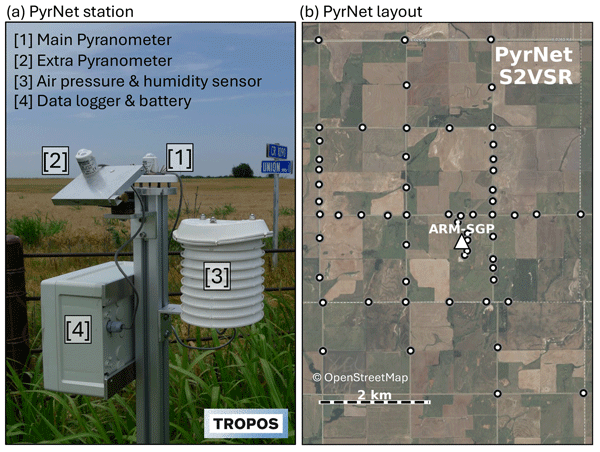
Jonas Witthuhn, Hartwig Deneke, Andreas Macke, Oscar Ritter, Jens Redemann, Connor J. Flynn, Abdulamid A. Fakoya, Bradley F. Lamkin, Emily D. Lenhardt, Logan T. Mitchell, Emily K. West, David M. Romps, Rusen Öktem, and Heike Kalesse-Los
Atmos. Chem. Phys., 26, 5727–5745, https://doi.org/10.5194/acp-26-5727-2026, https://doi.org/10.5194/acp-26-5727-2026, 2026
Short summary
Short summary
This study examines how solar irradiance changes when sunlight passes from clear sky into cloud shadows, focusing on 3‑D radiative effects of shallow cumulus clouds. Using data from a dense pyranometer network and cloud masks from cameras we found that irradiance can rise up to 20 % above clear‑sky levels near cloud edges. Key drivers include sun‑cloud geometry and microphysical cloud properties. The results highlight the need to incorporate such 3‑D effects in atmospheric models.
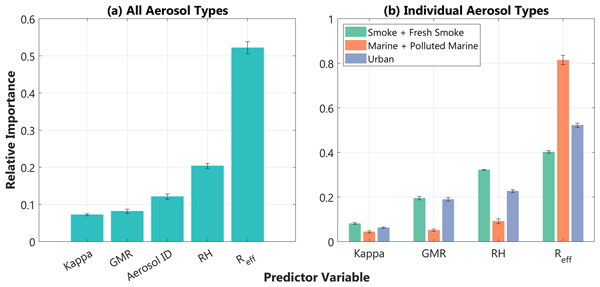
Emily Lenhardt, Lan Gao, Chris A. Hostetler, Richard A. Ferrare, Sharon P. Burton, Richard H. Moore, Luke D. Ziemba, Ewan Crosbie, Armin Sorooshian, Cassidy Soloff, and Jens Redemann
Atmos. Chem. Phys., 25, 13747–13768, https://doi.org/10.5194/acp-25-13747-2025, https://doi.org/10.5194/acp-25-13747-2025, 2025
Short summary
Short summary
Small particles that form cloud droplets greatly impact Earth's climate but are very difficult to measure. If we can measure them using satellite-based instruments, we greatly increase the amount of available data on their concentrations. In this study, we find that including information about particle size is most important to measure them accurately from such satellite-based instruments. This can inform future studies on how to obtain more accurate information about small particles.
Emily D. Lenhardt, Lan Gao, Jens Redemann, Feng Xu, Sharon P. Burton, Brian Cairns, Ian Chang, Richard A. Ferrare, Chris A. Hostetler, Pablo E. Saide, Calvin Howes, Yohei Shinozuka, Snorre Stamnes, Mary Kacarab, Amie Dobracki, Jenny Wong, Steffen Freitag, and Athanasios Nenes
Atmos. Meas. Tech., 16, 2037–2054, https://doi.org/10.5194/amt-16-2037-2023, https://doi.org/10.5194/amt-16-2037-2023, 2023
Short summary
Short summary
Small atmospheric particles, such as smoke from wildfires or pollutants from human activities, impact cloud properties, and clouds have a strong influence on climate. To better understand the distributions of these particles, we develop relationships to derive their concentrations from remote sensing measurements from an instrument called a lidar. Our method is reliable for smoke particles, and similar steps can be taken to develop relationships for other particle types.
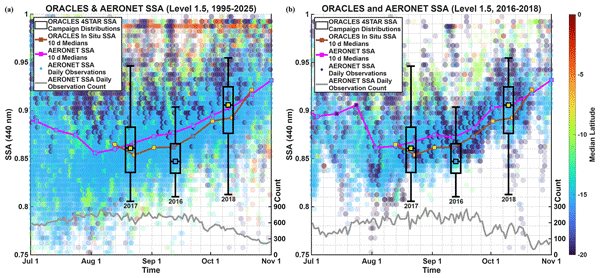
Logan T. Mitchell, Connor J. Flynn, Kristina Pistone, Samuel E. LeBlanc, K. Sebastian Schmidt, Hong Chen, Paquita Zuidema, Robert Wood, and Jens Redemann
Atmos. Chem. Phys., 26, 13083–13102, https://doi.org/10.5194/acp-26-13083-2026, https://doi.org/10.5194/acp-26-13083-2026, 2026
Short summary
Short summary
During 2016–2018, NASA conducted an airborne field campaign over the Southeast Atlantic Ocean to study biomass burning aerosols emitted from Southern African fires. We have found that aerosol absorption decreases over the course of the emission season, which is due to a compositional change within black carbon as the source fires shift southeastward, rather than an increase in brown carbon. This aerosol brightening is also noted within a 30-year aerosol climatology from ground-based stations.
Patrick C. Taylor, Armin Sorooshian, Rei Ueyama, Sebastian Schmidt, Ihab Abboud, Quincy Allison, Kevin Barry, Sebastian Becker, Holly A. Bender, Joseph R. Bennett, James B. Blair, Niklas Bohn, Linette Boisvert, Matthew D. Brown, Roelof Bruintjes, Anthony Bucholtz, Megan Buzanowicz, Brian Cairns, Filippo Calì Quaglia, Eduard Chemyakin, Bo Chen, Gao Chen, Hong Chen, Yu-Wen Chen, Zezhen Cheng, Swarup China, Dan Chirica, Yonghoon Choi, Peter Colarco, Brian Collister, Ewan Crosbie, Maurice J. Cross, Janet Daniels, Paul DeMott, Joshua P. DiGangi, Alcide Giorgio di Sarra, Glenn S. Diskin, Erica K. Dolinar, Eva-Lou Edwards, Samuel Ephraim, Nikolaos Evangeliou, Romanos Foskinis, Francesca Gallo, Lan Gao, José Luis Gómez-Amo, Daisy Gonzalez, Christine Groot Zwaaftink, Pawan Gupta, Ivan Heckman, Michael Hendrickson, Miguel Ricardo A. Hilario, Ken Hirata, Michelle Hofton, Andrew L. Holen, Ulas Im, Alia L. Khan, Ralph Kahn, Alexei V. Korolev, Sonia Kreidenweis, Thomas Krumpen, Nathan Kurtz, Leslie Lait, Bradley Lamkin, Jack Landy, Nurun Nahar Lata, Paul Lawson, Samuel LeBlanc, Sean Leavor, Jing Li, Thorsten Markus, Hal Maring, Andreas H. Massling, Camille Mavis, Flynn McGinnity, Kerry Meyer, Gabriel Mojica, Richard H. Moore, Parker Morris, Giovanni Muscari, Vikas Nataraja, Amin R. Nehrir, Athanasios Nenes, Edward P. Nowottnick, Matteo Ottaviani, Chelsea Parker, Ryan Patnaude, Michael Perez, Russell J. Perkins, Colten Peterson, Alek Petty, Stevie Phothisane, Chris Polashenski, Kerri A. Pratt, Kayla M. Preisler, John Prytherch, David Rabine, Jens Redemann, Ju-Mee Ryoo, Joseph S. Schlosser, Vanessa Selimovic, Michael A. Shook, Morgan Silverman, Henrik Skov, Alexander Smirnov, Cassidy Soloff, Amy Solomon, Snorre Stamnes, Azusa Takeishi, David R. Thompson, K. Lee Thornhill, Rachel Tilling, Michael Tjernström, Monica Tosco, Pedro C. Valdelomar, David Van Gilst, Jian Wang, Zhien Wang, Andrzej Wasilewski, Manfred Wendisch, Brent Wilder, Edward L. Winstead, Albert Wu, Peng Xian, Lauren M. Zamora, Jiaoshi Zhang, Lei Zhang, Lu Zhang, Luke Ziemba, and Paquita Zuidema
Earth Syst. Sci. Data Discuss., https://doi.org/10.5194/essd-2026-241, https://doi.org/10.5194/essd-2026-241, 2026
Preprint under review for ESSD
Short summary
Short summary
This article summarizes the data sets collected during the Arctic Radiation Cloud aerosol Sea ice Interaction eXperiment (ARCSIX), NASA's most comprehensive Arctic field campaign to date. The overarching goal was to quantify the contributions of surface, clouds, aerosol particles, and precipitation to summer sea ice melt. This paper describes the ARCSIX implementation including the flight strategy, instruments, complementary data sets, access, and usage details.
Samuel Ephraim, Paquita Zuidema, Aaron Bansemer, Lintong Cai, Markus Petters, Elise Rosky, Jefferson R. Snider, Zhien Wang, Sarah Woods, Kevin Barry, Theresa Campos, Owen Cruikshank, Sabine Eckhardt, Nikolaos Evangeliou, Romanos Foskinis, Jeffrey R. French, Bart Geerts, Coltin Grasmick, Silvia Henning, Varun Kumar, Andreas Massling, Camille Mavis, Greg M. McFarquhar, Athanasios Nenes, Gunnar Noer, Ryan Patnaude, Russell Perkins, Lise Lotte Sorensen, Henrik Skov, Tyler Tatro, Florian Tornow, and Lu Zhang
EGUsphere, https://doi.org/10.5194/egusphere-2026-2940, https://doi.org/10.5194/egusphere-2026-2940, 2026
Short summary
Short summary
The processes that establish how mixed-phase closed-cell clouds transition to more open cellular structures are poorly known. First-of-its kind aircraft observations document such a transition in the presence of anomalously high aerosol concentrations over the Nordic Seas at cloud temperatures < -15 °C. The reduces the drop size, discouraging riming. Eventually, ice precipitation produces surface cold pools that drive the convective transition, despite strong counteracting surface fluxes.
Jonas Witthuhn, Hartwig Deneke, Andreas Macke, Oscar Ritter, Jens Redemann, Connor J. Flynn, Abdulamid A. Fakoya, Bradley F. Lamkin, Emily D. Lenhardt, Logan T. Mitchell, Emily K. West, David M. Romps, Rusen Öktem, and Heike Kalesse-Los
Atmos. Chem. Phys., 26, 5727–5745, https://doi.org/10.5194/acp-26-5727-2026, https://doi.org/10.5194/acp-26-5727-2026, 2026
Short summary
Short summary
This study examines how solar irradiance changes when sunlight passes from clear sky into cloud shadows, focusing on 3‑D radiative effects of shallow cumulus clouds. Using data from a dense pyranometer network and cloud masks from cameras we found that irradiance can rise up to 20 % above clear‑sky levels near cloud edges. Key drivers include sun‑cloud geometry and microphysical cloud properties. The results highlight the need to incorporate such 3‑D effects in atmospheric models.
Richard Ferrare, Johnathan Hair, Taylor Shingler, Chris Hostetler, Amin Nehrir, Marta Fenn, Amy Jo Scarino, Sharon Burton, Marian Clayton, James Collins, Laura Judd, James Crawford, Katherine Travis, Travis Toth, Pablo Saide, Jose Luis Jimenez, Pedro Campuzano-Jost, Guy Symonds, Richard Moore, Luke Ziemba, Michael Shook, Glenn Diskin, Joshua P. DiGangi, Ryan Bennett, Chia-Hsiang Ho, Lim-Seok Chang, Adisak Aiampisanuvong, and Ittipol Pawarmart
Atmos. Meas. Tech., 18, 7735–7766, https://doi.org/10.5194/amt-18-7735-2025, https://doi.org/10.5194/amt-18-7735-2025, 2025
Short summary
Short summary
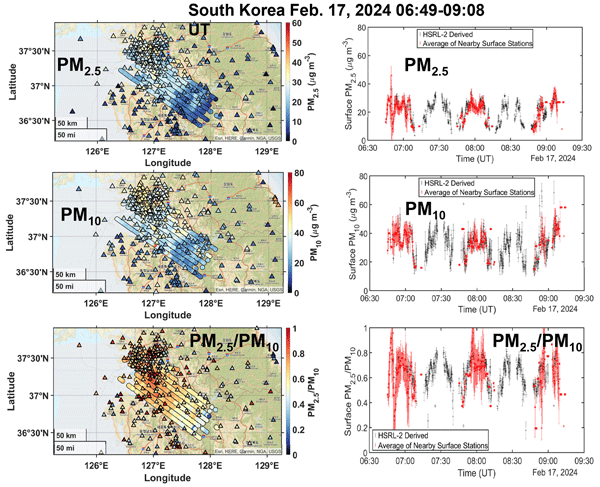
We present a new method to retrieve atmospheric particulate matter concentrations using only airborne High Spectral Resolution Lidar measurements in machine learning algorithms. Retrieved concentrations agree well with surface measurements. These concentrations and our estimates of the particle mass extinction efficiency are also consistent with those retrieved from airborne in situ measurements. This methodology can also be applied to the Atmosphere Lidar on the EarthCARE satellite.
Jeffrey S. Reid, Robert E. Holz, Chris A. Hostetler, Richard A. Ferrare, Juli I. Rubin, Elizabeth J. Thompson, Susan C. van den Heever, Corey G. Amiot, Sharon P. Burton, Joshua P. DiGangi, Glenn S. Diskin, Joshua H. Cossuth, Daniel P. Eleuterio, Edwin W. Eloranta, Ralph Kuehn, Willem J. Marais, Hal B. Maring, Armin Sorooshian, Kenneth L. Thornhill, Charles R. Trepte, Jian Wang, Peng Xian, and Luke D. Ziemba
Atmos. Chem. Phys., 25, 18639–18673, https://doi.org/10.5194/acp-25-18639-2025, https://doi.org/10.5194/acp-25-18639-2025, 2025
Short summary
Short summary
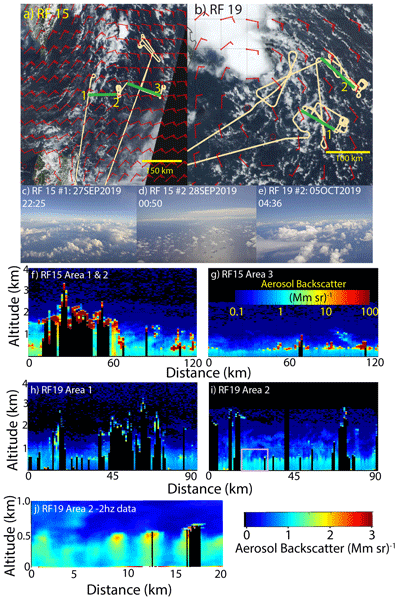
We document air and ship born measurements of the vertical distribution of pollution and biomass burning aerosol particles transported within the Maritime Continent's monsoonal flows for 1000s of kilometers, and yet still exhibit intricate patterns around clouds near the ocean's surface. Findings demonstrate that, while aerosol transport occurs near the surface, there is heterogeneity in particle extinction that must be considered for both in situ observations and satellite retrievals.
Joseph S. Schlosser, Sanja Dmitrovic, Ryan Bennett, Brian Cairns, Gao Chen, Glenn S. Diskin, Richard A. Ferrare, Johnathan W. Hair, Michael A. Jones, Jeffrey S. Reid, Taylor J. Shingler, Michael A. Shook, Armin Sorooshian, Kenneth L. Thornhill, Luke D. Ziemba, and Snorre Stamnes
Atmos. Meas. Tech., 18, 7187–7220, https://doi.org/10.5194/amt-18-7187-2025, https://doi.org/10.5194/amt-18-7187-2025, 2025
Short summary
Short summary
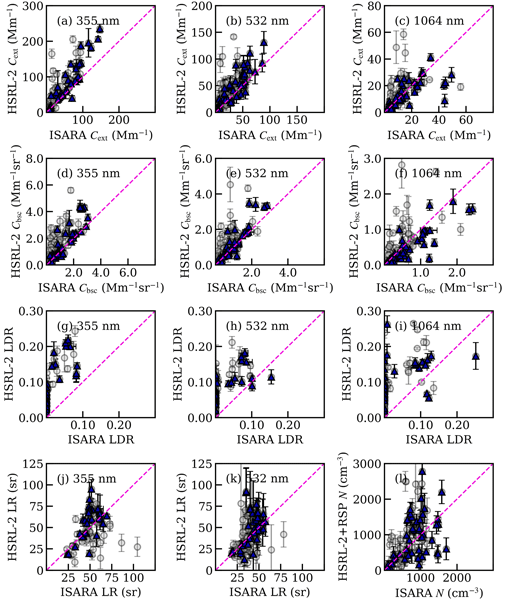
This study focuses on aerosol particles, which critically influence the atmosphere by scattering and absorbing light. To understand these interactions, airborne field campaigns deploy instruments that can measure these particles’ directly or indirectly via remote sensing. We introduce the In Situ Aerosol Retrieval Algorithm (ISARA) to ensure consistency between aerosol measurements and show that the two data sets generally align, with some deviation caused by the presence of larger particles.
Travis D. Toth, Marian B. Clayton, Zhujun Li, David Painemal, Sharon D. Rodier, Jayanta Kar, Tyler J. Thorsen, Richard A. Ferrare, Mark A. Vaughan, Jason L. Tackett, Huisheng Bian, Mian Chin, Anne E. Garnier, Ellsworth J. Welton, Robert A. Ryan, Charles R. Trepte, and David M. Winker
Atmos. Meas. Tech., 18, 6765–6793, https://doi.org/10.5194/amt-18-6765-2025, https://doi.org/10.5194/amt-18-6765-2025, 2025
Short summary
Short summary
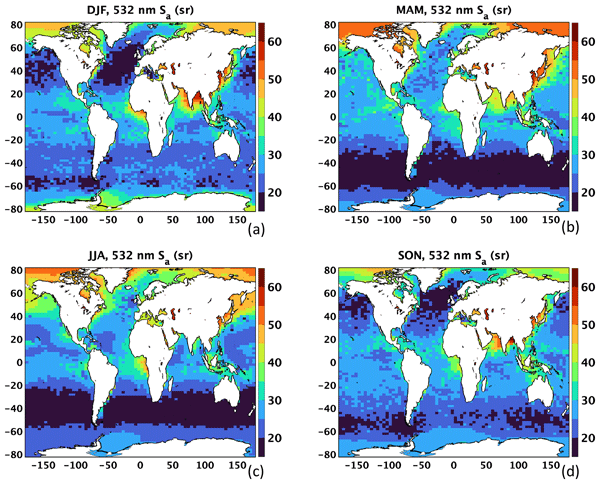
NASA's CALIPSO satellite mission observed aerosols (airborne particles) globally from 2006 to 2023. Its final data products update improves its aerosol optical parameters over oceans by adjusting for regional and seasonal differences in a new measurement-model synergistic approach. This results in a more realistic aerosol characterization, specifically near coastlines (where sea salt mixes with pollution), with potential impacts to future studies of science applications (e.g., climate effects).
Meloë S. F. Kacenelenbogen, Ralph Kuehn, Nandana D. Amarasinghe, Kerry G. Meyer, Edward P. Nowottnick, Mark A. Vaughan, Hong Chen, Sebastian Schmidt, Richard A. Ferrare, Johnathan W. Hair, Robert C. Levy, Hongbin Yu, Paquita Zuidema, Robert Holz, and Willem Marais
Atmos. Chem. Phys., 25, 15875–15911, https://doi.org/10.5194/acp-25-15875-2025, https://doi.org/10.5194/acp-25-15875-2025, 2025
Short summary
Short summary
Aerosols perturb the radiation balance of the Earth–atmosphere system. To reduce the uncertainty in quantifying present-day climate change, we combine two satellite sensors and a model to assess the aerosol effects on radiation in all-sky conditions. Satellite-based and coincident aircraft measurements of aerosol radiative effects agree well over the southeast Atlantic. This constitutes a crucial first evaluation before we apply our method to more years and more regions of the world.
Sharon P. Burton, Johnathan W. Hair, Chris A. Hostetler, Marta A. Fenn, John A. Smith, and Richard A. Ferrare
Atmos. Meas. Tech., 18, 6527–6543, https://doi.org/10.5194/amt-18-6527-2025, https://doi.org/10.5194/amt-18-6527-2025, 2025
Short summary
Short summary
Advanced lidars can retrieve atmospheric aerosol backscatter, extinction, and linear depolarization ratio. However excessive noise propagation in the traditional inversion method can make extinction unusable when the signal is weak, such as from space. Implementing a weak constraint can reduce the noise propagation while preserving accuracy. Here we also focus on fully characterizing both random and systematic uncertainties and examining the tradeoff between uncertainty and resolution.
Emily Lenhardt, Lan Gao, Chris A. Hostetler, Richard A. Ferrare, Sharon P. Burton, Richard H. Moore, Luke D. Ziemba, Ewan Crosbie, Armin Sorooshian, Cassidy Soloff, and Jens Redemann
Atmos. Chem. Phys., 25, 13747–13768, https://doi.org/10.5194/acp-25-13747-2025, https://doi.org/10.5194/acp-25-13747-2025, 2025
Short summary
Short summary
Small particles that form cloud droplets greatly impact Earth's climate but are very difficult to measure. If we can measure them using satellite-based instruments, we greatly increase the amount of available data on their concentrations. In this study, we find that including information about particle size is most important to measure them accurately from such satellite-based instruments. This can inform future studies on how to obtain more accurate information about small particles.
Logan T. Mitchell, Connor J. Flynn, Kristina Pistone, Samuel E. LeBlanc, K. Sebastian Schmidt, and Jens Redemann
Earth Syst. Sci. Data, 17, 5303–5313, https://doi.org/10.5194/essd-17-5303-2025, https://doi.org/10.5194/essd-17-5303-2025, 2025
Short summary
Short summary
During 2016–2018, NASA conducted an airborne field campaign over the Southeast Atlantic Ocean to study biomass burning aerosols emitted from Southern African fires. These aerosols then interact with stratocumulus clouds over the Southeast Atlantic, which is difficult for climate models to account for. Our instrument, 4STAR, determines aerosol radiative properties. A dataset was already created for 2016, but additional quality control was required to address instrument issues for 2017 and 2018.
Corey G. Amiot, Timothy J. Lang, Susan C. van den Heever, Richard A. Ferrare, Ousmane O. Sy, Lawrence D. Carey, Sundar A. Christopher, John R. Mecikalski, Sean W. Freeman, George Alexander Sokolowsky, Chris A. Hostetler, and Simone Tanelli
Atmos. Chem. Phys., 25, 12335–12355, https://doi.org/10.5194/acp-25-12335-2025, https://doi.org/10.5194/acp-25-12335-2025, 2025
Short summary
Short summary
Decoupling aerosol and environmental impacts on convection is challenging. Using airborne data, we correlated convective metrics with aerosol concentrations in several different environments. Results were mixed, but some comparisons suggest that medium-to-high aerosol concentrations were occasionally strongly correlated with convective intensity and prevalence, especially when the atmosphere was relatively unstable. It is important to consider storm environment when evaluating aerosol effects.
Travis Hahn, Hershel Weiner, Calvin Brooks, Jie Xi Li, Siddhant Gupta, and Dié Wang
Geosci. Model Dev., 18, 5971–5996, https://doi.org/10.5194/gmd-18-5971-2025, https://doi.org/10.5194/gmd-18-5971-2025, 2025
Short summary
Short summary
Understanding how clouds evolve is important for improving weather predictions, but existing tools for tracking cloud changes are complex and difficult to compare. To address this, we developed the Community Cloud Model Evaluation Toolkit (CoCoMET) that makes it easier to analyze clouds in both models and observations. By simplifying data processing, standardizing results, and introducing new analysis features, CoCoMET helps researchers better evaluate cloud behavior and improve models.
Soodabeh Namdari, Sanja Dmitrovic, Gao Chen, Yonghoon Choi, Ewan Crosbie, Joshua P. DiGangi, Glenn S. Diskin, Richard A. Ferrare, Johnathan W. Hair, Simon Kirschler, John B. Nowak, Kenneth L. Thornhill, Christiane Voigt, Holger Vömel, Xubin Zeng, and Armin Sorooshian
Atmos. Meas. Tech., 18, 4325–4345, https://doi.org/10.5194/amt-18-4325-2025, https://doi.org/10.5194/amt-18-4325-2025, 2025
Short summary
Short summary
We conducted this study to assess the accuracy of airborne measurements of wind, temperature, and humidity, essential for understanding atmospheric processes. Using data from NASA's ACTIVATE campaign, we compared measurements from the Turbulent Air Motion Measurement System (TAMMS) and diode laser hygrometer (DLH) aboard a Falcon aircraft with dropsondes from a King Air, matching data points based on location and time using statistical methods. The study showed strong agreement, confirming the reliability of these methods for advancing climate models.
Dié Wang, Roni Kobrosly, Tao Zhang, Tamanna Subba, Susan van den Heever, Siddhant Gupta, and Michael Jensen
Atmos. Chem. Phys., 25, 9295–9314, https://doi.org/10.5194/acp-25-9295-2025, https://doi.org/10.5194/acp-25-9295-2025, 2025
Short summary
Short summary
We aim to understand how tiny particles in the air, called aerosols, affect rain clouds in the Houston–Galveston area. More aerosols generally do not make these clouds grow much taller, with an average height increase of about 1 km. However, their effects on rainfall strength and cloud expansion are less certain. Clouds influenced by sea breezes show a stronger aerosol impact, possibly due to factors that are unaccounted for like vertical winds in near-surface layers.
Abdulamid A. Fakoya, Jens Redemann, Pablo E. Saide, Lan Gao, Logan T. Mitchell, Calvin Howes, Amie Dobracki, Ian Chang, Gonzalo A. Ferrada, Kristina Pistone, Samuel E. Leblanc, Michal Segal-Rozenhaimer, Arthur J. Sedlacek III, Thomas Eck, Brent Holben, Pawan Gupta, Elena Lind, Paquita Zuidema, Gregory Carmichael, and Connor J. Flynn
Atmos. Chem. Phys., 25, 7879–7902, https://doi.org/10.5194/acp-25-7879-2025, https://doi.org/10.5194/acp-25-7879-2025, 2025
Short summary
Short summary
Tiny atmospheric particles from wildfire smoke impact the climate by interacting with sunlight and clouds, the extent of which is uncertain due to gaps in understanding how smoke changes over time. We developed a new method using remote sensing instruments to track how these particles evolve during atmospheric transport. Our results show that the ability of these particles to absorb sunlight increases as they travel. This discovery could help improve predictions of future climate scenarios.
Ewan Crosbie, Johnathan W. Hair, Amin R. Nehrir, Richard A. Ferrare, Chris Hostetler, Taylor Shingler, David Harper, Marta Fenn, James Collins, Rory Barton-Grimley, Brian Collister, K. Lee Thornhill, Christiane Voigt, Simon Kirschler, and Armin Sorooshian
Atmos. Meas. Tech., 18, 2639–2658, https://doi.org/10.5194/amt-18-2639-2025, https://doi.org/10.5194/amt-18-2639-2025, 2025
Short summary
Short summary
A method was developed to extract information from airborne lidar observations about the distribution of ice and liquid water within clouds. The method specifically targets signatures of horizontal and vertical gradients in ice and water that appear in the polarization of the lidar signals. The method was tested against direct measurements of the cloud properties collected by a second aircraft.
Genevieve Rose Lorenzo, Luke D. Ziemba, Avelino F. Arellano, Mary C. Barth, Ewan C. Crosbie, Joshua P. DiGangi, Glenn S. Diskin, Richard Ferrare, Miguel Ricardo A. Hilario, Michael A. Shook, Simone Tilmes, Jian Wang, Qian Xiao, Jun Zhang, and Armin Sorooshian
Atmos. Chem. Phys., 25, 5469–5495, https://doi.org/10.5194/acp-25-5469-2025, https://doi.org/10.5194/acp-25-5469-2025, 2025
Short summary
Short summary
Novel aerosol hygroscopicity analyses of CAMP2Ex (Cloud, Aerosol, and Monsoon Processes Philippines Experiment) field campaign data show low aerosol hygroscopicity values in Southeast Asia. Organic carbon from smoke decreases hygroscopicity to levels more like those in continental than in polluted marine regions. Hygroscopicity changes at cloud level demonstrate how surface particles impact clouds in the region, affecting model representation of aerosol and cloud interactions in similar polluted marine regions with high organic carbon emissions.
Kerry Meyer, Steven Platnick, G. Thomas Arnold, Nandana Amarasinghe, Daniel Miller, Jennifer Small-Griswold, Mikael Witte, Brian Cairns, Siddhant Gupta, Greg McFarquhar, and Joseph O'Brien
Atmos. Meas. Tech., 18, 981–1011, https://doi.org/10.5194/amt-18-981-2025, https://doi.org/10.5194/amt-18-981-2025, 2025
Short summary
Short summary
Satellite remote sensing retrievals of cloud droplet size are used to understand clouds and their interactions with aerosols and radiation but require many simplifying assumptions. Evaluation of these retrievals is typically done by comparing against direct measurements of droplets from airborne cloud probes. This paper details an evaluation of proxy airborne remote sensing droplet size retrievals against several cloud probes and explores the impact of key assumptions on retrieval agreement.
Hongyu Liu, Bo Zhang, Richard H. Moore, Luke D. Ziemba, Richard A. Ferrare, Hyundeok Choi, Armin Sorooshian, David Painemal, Hailong Wang, Michael A. Shook, Amy Jo Scarino, Johnathan W. Hair, Ewan C. Crosbie, Marta A. Fenn, Taylor J. Shingler, Chris A. Hostetler, Gao Chen, Mary M. Kleb, Gan Luo, Fangqun Yu, Mark A. Vaughan, Yongxiang Hu, Glenn S. Diskin, John B. Nowak, Joshua P. DiGangi, Yonghoon Choi, Christoph A. Keller, and Matthew S. Johnson
Atmos. Chem. Phys., 25, 2087–2121, https://doi.org/10.5194/acp-25-2087-2025, https://doi.org/10.5194/acp-25-2087-2025, 2025
Short summary
Short summary
We use the GEOS-Chem model to simulate aerosol distributions and properties over the western North Atlantic Ocean (WNAO) during the winter and summer deployments in 2020 of the NASA ACTIVATE mission. Model results are evaluated against aircraft, ground-based, and satellite observations. The improved understanding of life cycle, composition, transport pathways, and distribution of aerosols has important implications for characterizing aerosol–cloud–meteorology interactions over WNAO.
Jeonggyu Kim, Sungmin Park, Greg M. McFarquhar, Anthony J. Baran, Joo Wan Cha, Kyoungmi Lee, Seoung Soo Lee, Chang Hoon Jung, Kyo-Sun Sunny Lim, and Junshik Um
Atmos. Chem. Phys., 24, 12707–12726, https://doi.org/10.5194/acp-24-12707-2024, https://doi.org/10.5194/acp-24-12707-2024, 2024
Short summary
Short summary
We developed idealized models to represent the shapes of ice particles found in deep convective clouds and calculated their single-scattering properties. By comparing these results with in situ measurements, we discovered that a mixture of shape models matches in situ measurements more closely than single-form models or aggregate models. This finding has important implications for enhancing the simulation of single-scattering properties of ice crystals in deep convective clouds.
Robert A. Ryan, Mark A. Vaughan, Sharon D. Rodier, Jason L. Tackett, John A. Reagan, Richard A. Ferrare, Johnathan W. Hair, John A. Smith, and Brian J. Getzewich
Atmos. Meas. Tech., 17, 6517–6545, https://doi.org/10.5194/amt-17-6517-2024, https://doi.org/10.5194/amt-17-6517-2024, 2024
Short summary
Short summary
We introduce Ocean Derived Column Optical Depth (ODCOD), a new way to estimate column optical depths using Cloud-Aerosol Lidar with Orthogonal Polarization (CALIOP) measurements from the ocean surface. ODCOD estimates include contributions from particulates in the full column, which CALIOP estimates do not, making it a complement measurement to CALIOP’s standard estimates. We find that ODCOD compares well with other established data sets in the daytime but tends to estimate higher at night.
Alexei Korolev, Zhipeng Qu, Jason Milbrandt, Ivan Heckman, Mélissa Cholette, Mengistu Wolde, Cuong Nguyen, Greg M. McFarquhar, Paul Lawson, and Ann M. Fridlind
Atmos. Chem. Phys., 24, 11849–11881, https://doi.org/10.5194/acp-24-11849-2024, https://doi.org/10.5194/acp-24-11849-2024, 2024
Short summary
Short summary
The phenomenon of high ice water content (HIWC) occurs in mesoscale convective systems (MCSs) when a large number of small ice particles with typical sizes of a few hundred micrometers is found at high altitudes. It was found that secondary ice production in the vicinity of the melting layer plays a key role in the formation and maintenance of HIWC. This study presents a conceptual model of the formation of HIWC in tropical MCSs based on in situ observations and numerical simulation.
Cassidy Soloff, Taiwo Ajayi, Yonghoon Choi, Ewan C. Crosbie, Joshua P. DiGangi, Glenn S. Diskin, Marta A. Fenn, Richard A. Ferrare, Francesca Gallo, Johnathan W. Hair, Miguel Ricardo A. Hilario, Simon Kirschler, Richard H. Moore, Taylor J. Shingler, Michael A. Shook, Kenneth L. Thornhill, Christiane Voigt, Edward L. Winstead, Luke D. Ziemba, and Armin Sorooshian
Atmos. Chem. Phys., 24, 10385–10408, https://doi.org/10.5194/acp-24-10385-2024, https://doi.org/10.5194/acp-24-10385-2024, 2024
Short summary
Short summary
Using aircraft measurements over the northwestern Atlantic between the US East Coast and Bermuda and trajectory modeling of continental outflow, we identify trace gas and particle properties that exhibit gradients with offshore distance and quantify these changes with high-resolution measurements of concentrations and particle chemistry, size, and scattering properties. This work furthers our understanding of the complex interactions between continental and marine environments.
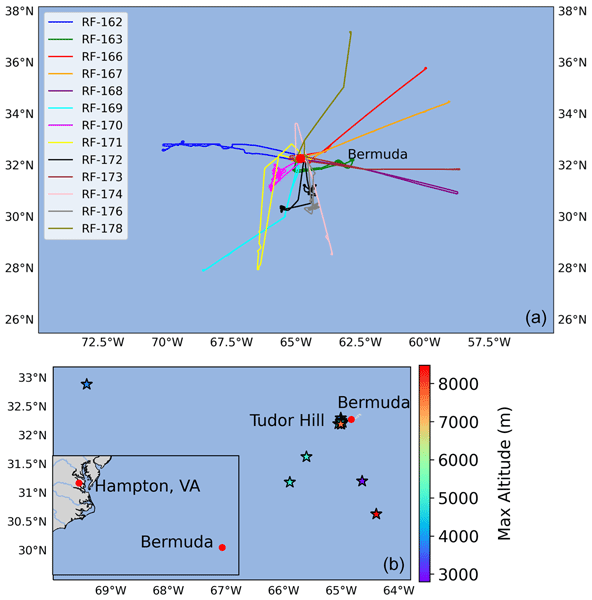
Taiwo Ajayi, Yonghoon Choi, Ewan C. Crosbie, Joshua P. DiGangi, Glenn S. Diskin, Marta A. Fenn, Richard A. Ferrare, Johnathan W. Hair, Miguel Ricardo A. Hilario, Chris A. Hostetler, Simon Kirschler, Richard H. Moore, Taylor J. Shingler, Michael A. Shook, Cassidy Soloff, Kenneth L. Thornhill, Christiane Voigt, Edward L. Winstead, Luke D. Ziemba, and Armin Sorooshian
Atmos. Chem. Phys., 24, 9197–9218, https://doi.org/10.5194/acp-24-9197-2024, https://doi.org/10.5194/acp-24-9197-2024, 2024
Short summary
Short summary
This study uses airborne data to examine vertical profiles of trace gases, aerosol particles, and meteorological variables over a remote marine area (Bermuda). Results show distinct differences based on both air mass source region (North America, Ocean, Caribbean/North Africa) and altitude for a given air mass type. This work highlights the sensitivity of remote marine areas to long-range transport and the importance of considering the vertical dependence of trace gas and aerosol properties.
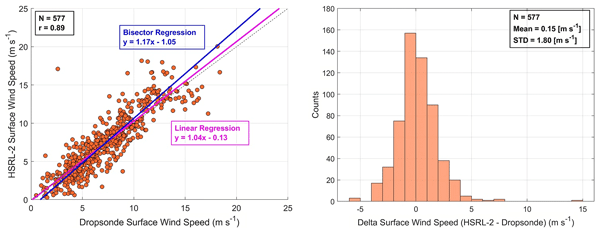
Sanja Dmitrovic, Johnathan W. Hair, Brian L. Collister, Ewan Crosbie, Marta A. Fenn, Richard A. Ferrare, David B. Harper, Chris A. Hostetler, Yongxiang Hu, John A. Reagan, Claire E. Robinson, Shane T. Seaman, Taylor J. Shingler, Kenneth L. Thornhill, Holger Vömel, Xubin Zeng, and Armin Sorooshian
Atmos. Meas. Tech., 17, 3515–3532, https://doi.org/10.5194/amt-17-3515-2024, https://doi.org/10.5194/amt-17-3515-2024, 2024
Short summary
Short summary
This study introduces and evaluates a new ocean surface wind speed product from the NASA Langley Research Center (LARC) airborne High-Spectral-Resolution Lidar – Generation 2 (HSRL-2) during the NASA ACTIVATE mission. We show that HSRL-2 surface wind speed data are accurate when compared to ground-truth dropsonde measurements. Therefore, the HSRL-2 instrument is able obtain accurate, high-resolution surface wind speed data in airborne field campaigns.
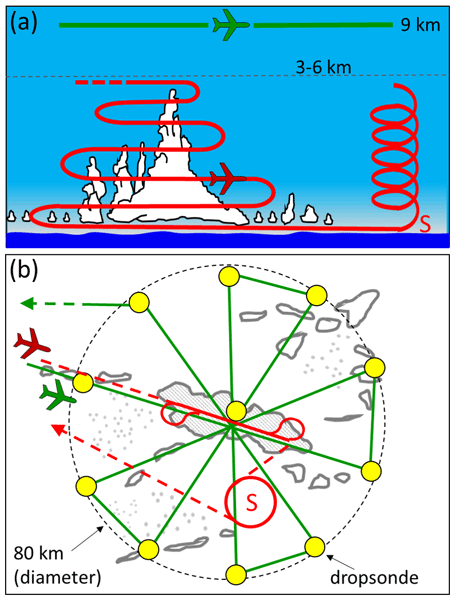
Ewan Crosbie, Luke D. Ziemba, Michael A. Shook, Taylor Shingler, Johnathan W. Hair, Armin Sorooshian, Richard A. Ferrare, Brian Cairns, Yonghoon Choi, Joshua DiGangi, Glenn S. Diskin, Chris Hostetler, Simon Kirschler, Richard H. Moore, David Painemal, Claire Robinson, Shane T. Seaman, K. Lee Thornhill, Christiane Voigt, and Edward Winstead
Atmos. Chem. Phys., 24, 6123–6152, https://doi.org/10.5194/acp-24-6123-2024, https://doi.org/10.5194/acp-24-6123-2024, 2024
Short summary
Short summary
Marine clouds are found to clump together in regions or lines, readily discernible from satellite images of the ocean. While clustering is also a feature of deep storm clouds, we focus on smaller cloud systems associated with fair weather and brief localized showers. Two aircraft sampled the region around these shallow systems: one incorporated measurements taken within, adjacent to, and below the clouds, while the other provided a survey from above using remote sensing techniques.
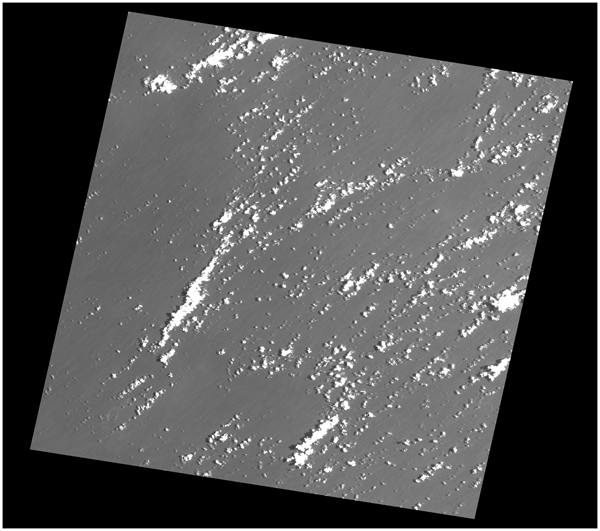
Michie Vianca De Vera, Larry Di Girolamo, Guangyu Zhao, Robert M. Rauber, Stephen W. Nesbitt, and Greg M. McFarquhar
Atmos. Chem. Phys., 24, 5603–5623, https://doi.org/10.5194/acp-24-5603-2024, https://doi.org/10.5194/acp-24-5603-2024, 2024
Short summary
Short summary
Tropical oceanic low clouds remain a dominant source of uncertainty in cloud feedback in climate models due to their macrophysical properties (fraction, size, height, shape, distribution) being misrepresented. High-resolution satellite imagery over the Philippine oceans is used here to characterize cumulus macrophysical properties and their relationship to meteorological variables. Such information can act as a benchmark for cloud models and can improve low-cloud generation in climate models.
Leong Wai Siu, Joseph S. Schlosser, David Painemal, Brian Cairns, Marta A. Fenn, Richard A. Ferrare, Johnathan W. Hair, Chris A. Hostetler, Longlei Li, Mary M. Kleb, Amy Jo Scarino, Taylor J. Shingler, Armin Sorooshian, Snorre A. Stamnes, and Xubin Zeng
Atmos. Meas. Tech., 17, 2739–2759, https://doi.org/10.5194/amt-17-2739-2024, https://doi.org/10.5194/amt-17-2739-2024, 2024
Short summary
Short summary
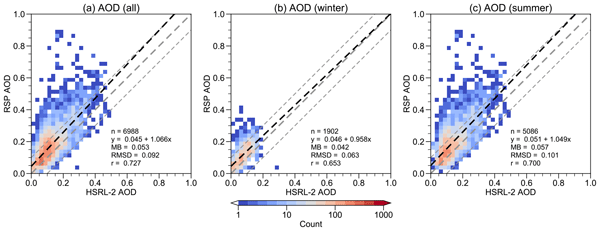
An unprecedented 3-year aerosol dataset was collected from a recent NASA field campaign over the western North Atlantic Ocean, which offers a special opportunity to evaluate two state-of-the-art remote sensing instruments, one lidar and the other polarimeter, on the same aircraft. Special attention has been paid to validate aerosol optical depth data and their uncertainties when no reference dataset is available. Physical reasons for the disagreement between two instruments are discussed.
Hiren T. Jethva, Omar Torres, Richard A. Ferrare, Sharon P. Burton, Anthony L. Cook, David B. Harper, Chris A. Hostetler, Jens Redemann, Vinay Kayetha, Samuel LeBlanc, Kristina Pistone, Logan Mitchell, and Connor J. Flynn
Atmos. Meas. Tech., 17, 2335–2366, https://doi.org/10.5194/amt-17-2335-2024, https://doi.org/10.5194/amt-17-2335-2024, 2024
Short summary
Short summary
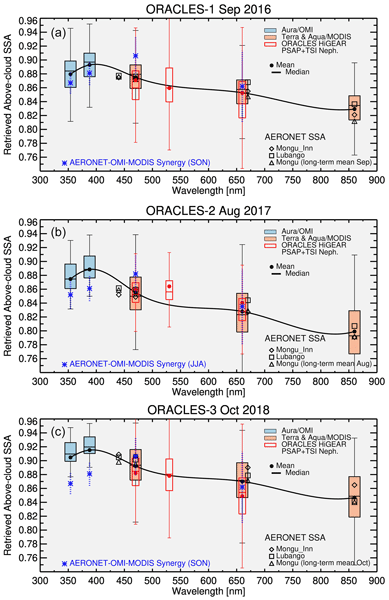
We introduce a novel synergy algorithm applied to ORALCES airborne measurements of above-cloud aerosol optical depth and UV–Vis satellite observations from OMI and MODIS to retrieve spectral aerosol single-scattering albedo of lofted layers of carbonaceous smoke aerosols over clouds. The development of the proposed aerosol–cloud algorithm implies a possible synergy of CALIOP and OMI–MODIS passive sensors to deduce a global product of AOD and SSA of absorbing aerosols above clouds.
Siddhant Gupta, Dié Wang, Scott E. Giangrande, Thiago S. Biscaro, and Michael P. Jensen
Atmos. Chem. Phys., 24, 4487–4510, https://doi.org/10.5194/acp-24-4487-2024, https://doi.org/10.5194/acp-24-4487-2024, 2024
Short summary
Short summary
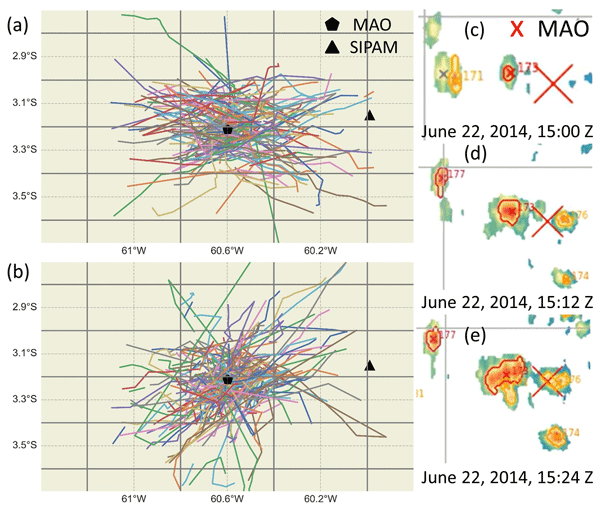
We examine the lifecycle of isolated deep convective clouds (DCCs) in the Amazon rainforest. Weather radar echoes from the DCCs are tracked to evaluate their lifecycle. The DCC size and intensity increase, reach a peak, and then decrease over the DCC lifetime. Vertical profiles of air motion and mass transport from different seasons are examined to understand the transport of energy and momentum within DCC cores and to address the deficiencies in simulating DCCs using weather and climate models.
Piyushkumar N. Patel, Jonathan H. Jiang, Ritesh Gautam, Harish Gadhavi, Olga Kalashnikova, Michael J. Garay, Lan Gao, Feng Xu, and Ali Omar
Atmos. Chem. Phys., 24, 2861–2883, https://doi.org/10.5194/acp-24-2861-2024, https://doi.org/10.5194/acp-24-2861-2024, 2024
Short summary
Short summary
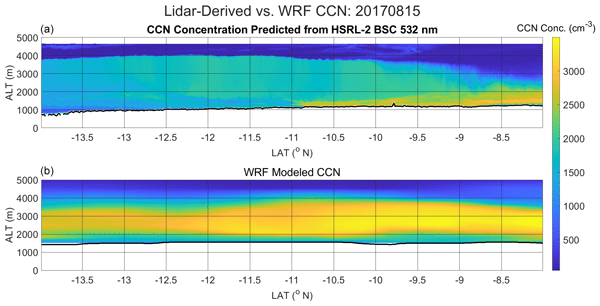
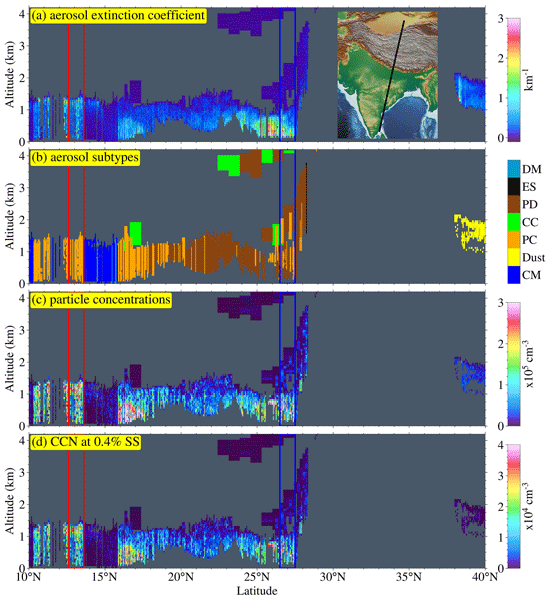
Global measurements of cloud condensation nuclei (CCN) are essential for understanding aerosol–cloud interactions and predicting climate change. To address this gap, we introduced a remote sensing algorithm that retrieves vertically resolved CCN number concentrations from airborne and spaceborne lidar systems. This innovation offers a global distribution of CCN concentrations from space, facilitating model evaluation and precise quantification of aerosol climate forcing.
Calvin Howes, Pablo E. Saide, Hugh Coe, Amie Dobracki, Steffen Freitag, Jim M. Haywood, Steven G. Howell, Siddhant Gupta, Janek Uin, Mary Kacarab, Chongai Kuang, L. Ruby Leung, Athanasios Nenes, Greg M. McFarquhar, James Podolske, Jens Redemann, Arthur J. Sedlacek, Kenneth L. Thornhill, Jenny P. S. Wong, Robert Wood, Huihui Wu, Yang Zhang, Jianhao Zhang, and Paquita Zuidema
Atmos. Chem. Phys., 23, 13911–13940, https://doi.org/10.5194/acp-23-13911-2023, https://doi.org/10.5194/acp-23-13911-2023, 2023
Short summary
Short summary
To better understand smoke properties and its interactions with clouds, we compare the WRF-CAM5 model with observations from ORACLES, CLARIFY, and LASIC field campaigns in the southeastern Atlantic in August 2017. The model transports and mixes smoke well but does not fully capture some important processes. These include smoke chemical and physical aging over 4–12 days, smoke removal by rain, sulfate particle formation, aerosol activation into cloud droplets, and boundary layer turbulence.
Simon Kirschler, Christiane Voigt, Bruce E. Anderson, Gao Chen, Ewan C. Crosbie, Richard A. Ferrare, Valerian Hahn, Johnathan W. Hair, Stefan Kaufmann, Richard H. Moore, David Painemal, Claire E. Robinson, Kevin J. Sanchez, Amy J. Scarino, Taylor J. Shingler, Michael A. Shook, Kenneth L. Thornhill, Edward L. Winstead, Luke D. Ziemba, and Armin Sorooshian
Atmos. Chem. Phys., 23, 10731–10750, https://doi.org/10.5194/acp-23-10731-2023, https://doi.org/10.5194/acp-23-10731-2023, 2023
Short summary
Short summary
In this study we present an overview of liquid and mixed-phase clouds and precipitation in the marine boundary layer over the western North Atlantic Ocean. We compare microphysical properties of pure liquid clouds to mixed-phase clouds and show that the initiation of the ice phase in mixed-phase clouds promotes precipitation. The observational data presented in this study are well suited for investigating the processes that give rise to liquid and mixed-phase clouds, ice, and precipitation.
Rose Marie Miller, Robert M. Rauber, Larry Di Girolamo, Matthew Rilloraza, Dongwei Fu, Greg M. McFarquhar, Stephen W. Nesbitt, Luke D. Ziemba, Sarah Woods, and Kenneth Lee Thornhill
Atmos. Chem. Phys., 23, 8959–8977, https://doi.org/10.5194/acp-23-8959-2023, https://doi.org/10.5194/acp-23-8959-2023, 2023
Short summary
Short summary
The influence of human-produced aerosols on clouds remains one of the uncertainties in radiative forcing of Earth’s climate. Measurements of aerosol chemistry from sources around the Philippines illustrate the linkage between aerosol chemical composition and cloud droplet characteristics. Differences in aerosol chemical composition in the marine layer from biomass burning, industrial, ship-produced, and marine aerosols are shown to impact cloud microphysical structure just above cloud base.
Armin Sorooshian, Mikhail D. Alexandrov, Adam D. Bell, Ryan Bennett, Grace Betito, Sharon P. Burton, Megan E. Buzanowicz, Brian Cairns, Eduard V. Chemyakin, Gao Chen, Yonghoon Choi, Brian L. Collister, Anthony L. Cook, Andrea F. Corral, Ewan C. Crosbie, Bastiaan van Diedenhoven, Joshua P. DiGangi, Glenn S. Diskin, Sanja Dmitrovic, Eva-Lou Edwards, Marta A. Fenn, Richard A. Ferrare, David van Gilst, Johnathan W. Hair, David B. Harper, Miguel Ricardo A. Hilario, Chris A. Hostetler, Nathan Jester, Michael Jones, Simon Kirschler, Mary M. Kleb, John M. Kusterer, Sean Leavor, Joseph W. Lee, Hongyu Liu, Kayla McCauley, Richard H. Moore, Joseph Nied, Anthony Notari, John B. Nowak, David Painemal, Kasey E. Phillips, Claire E. Robinson, Amy Jo Scarino, Joseph S. Schlosser, Shane T. Seaman, Chellappan Seethala, Taylor J. Shingler, Michael A. Shook, Kenneth A. Sinclair, William L. Smith Jr., Douglas A. Spangenberg, Snorre A. Stamnes, Kenneth L. Thornhill, Christiane Voigt, Holger Vömel, Andrzej P. Wasilewski, Hailong Wang, Edward L. Winstead, Kira Zeider, Xubin Zeng, Bo Zhang, Luke D. Ziemba, and Paquita Zuidema
Earth Syst. Sci. Data, 15, 3419–3472, https://doi.org/10.5194/essd-15-3419-2023, https://doi.org/10.5194/essd-15-3419-2023, 2023
Short summary
Short summary
The NASA Aerosol Cloud meTeorology Interactions oVer the western ATlantic Experiment (ACTIVATE) produced a unique dataset for research into aerosol–cloud–meteorology interactions. HU-25 Falcon and King Air aircraft conducted systematic and spatially coordinated flights over the northwest Atlantic Ocean. This paper describes the ACTIVATE flight strategy, instrument and complementary dataset products, data access and usage details, and data application notes.
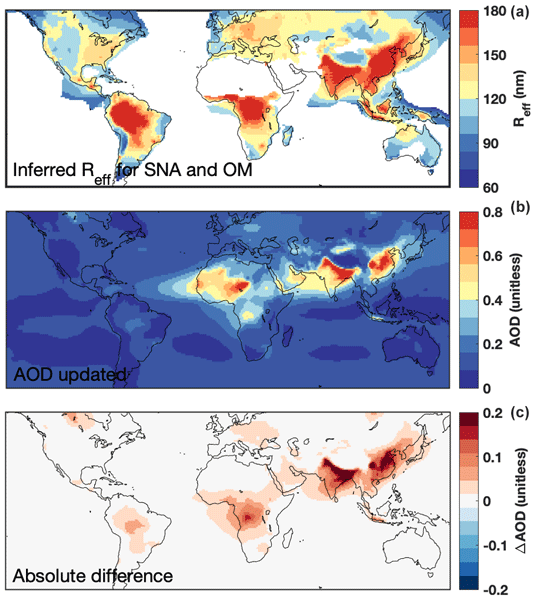
Haihui Zhu, Randall V. Martin, Betty Croft, Shixian Zhai, Chi Li, Liam Bindle, Jeffrey R. Pierce, Rachel Y.-W. Chang, Bruce E. Anderson, Luke D. Ziemba, Johnathan W. Hair, Richard A. Ferrare, Chris A. Hostetler, Inderjeet Singh, Deepangsu Chatterjee, Jose L. Jimenez, Pedro Campuzano-Jost, Benjamin A. Nault, Jack E. Dibb, Joshua S. Schwarz, and Andrew Weinheimer
Atmos. Chem. Phys., 23, 5023–5042, https://doi.org/10.5194/acp-23-5023-2023, https://doi.org/10.5194/acp-23-5023-2023, 2023
Short summary
Short summary
Particle size of atmospheric aerosol is important for estimating its climate and health effects, but simulating atmospheric aerosol size is computationally demanding. This study derives a simple parameterization of the size of organic and secondary inorganic ambient aerosol that can be applied to atmospheric models. Applying this parameterization allows a better representation of the global spatial pattern of aerosol size, as verified by ground and airborne measurements.

Amie Dobracki, Paquita Zuidema, Steven G. Howell, Pablo Saide, Steffen Freitag, Allison C. Aiken, Sharon P. Burton, Arthur J. Sedlacek III, Jens Redemann, and Robert Wood
Atmos. Chem. Phys., 23, 4775–4799, https://doi.org/10.5194/acp-23-4775-2023, https://doi.org/10.5194/acp-23-4775-2023, 2023
Short summary
Short summary
Southern Africa produces approximately one-third of the world’s carbon from fires. The thick smoke layer can flow westward, interacting with the southeastern Atlantic cloud deck. The net radiative impact can alter regional circulation patterns, impacting rainfall over Africa. We find that the smoke is highly absorbing of sunlight, mostly because it contains more black carbon than smoke over the Northern Hemisphere.
Emily D. Lenhardt, Lan Gao, Jens Redemann, Feng Xu, Sharon P. Burton, Brian Cairns, Ian Chang, Richard A. Ferrare, Chris A. Hostetler, Pablo E. Saide, Calvin Howes, Yohei Shinozuka, Snorre Stamnes, Mary Kacarab, Amie Dobracki, Jenny Wong, Steffen Freitag, and Athanasios Nenes
Atmos. Meas. Tech., 16, 2037–2054, https://doi.org/10.5194/amt-16-2037-2023, https://doi.org/10.5194/amt-16-2037-2023, 2023
Short summary
Short summary
Small atmospheric particles, such as smoke from wildfires or pollutants from human activities, impact cloud properties, and clouds have a strong influence on climate. To better understand the distributions of these particles, we develop relationships to derive their concentrations from remote sensing measurements from an instrument called a lidar. Our method is reliable for smoke particles, and similar steps can be taken to develop relationships for other particle types.
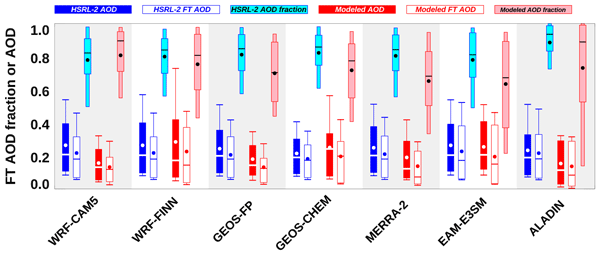
Ian Chang, Lan Gao, Connor J. Flynn, Yohei Shinozuka, Sarah J. Doherty, Michael S. Diamond, Karla M. Longo, Gonzalo A. Ferrada, Gregory R. Carmichael, Patricia Castellanos, Arlindo M. da Silva, Pablo E. Saide, Calvin Howes, Zhixin Xue, Marc Mallet, Ravi Govindaraju, Qiaoqiao Wang, Yafang Cheng, Yan Feng, Sharon P. Burton, Richard A. Ferrare, Samuel E. LeBlanc, Meloë S. Kacenelenbogen, Kristina Pistone, Michal Segal-Rozenhaimer, Kerry G. Meyer, Ju-Mee Ryoo, Leonhard Pfister, Adeyemi A. Adebiyi, Robert Wood, Paquita Zuidema, Sundar A. Christopher, and Jens Redemann
Atmos. Chem. Phys., 23, 4283–4309, https://doi.org/10.5194/acp-23-4283-2023, https://doi.org/10.5194/acp-23-4283-2023, 2023
Short summary
Short summary
Abundant aerosols are present above low-level liquid clouds over the southeastern Atlantic during late austral spring. The model simulation differences in the proportion of aerosol residing in the planetary boundary layer and in the free troposphere can greatly affect the regional aerosol radiative effects. This study examines the aerosol loading and fractional aerosol loading in the free troposphere among various models and evaluates them against measurements from the NASA ORACLES campaign.
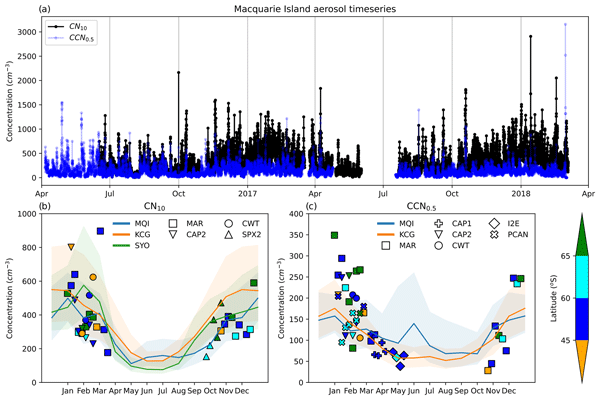
Ruhi S. Humphries, Melita D. Keywood, Jason P. Ward, James Harnwell, Simon P. Alexander, Andrew R. Klekociuk, Keiichiro Hara, Ian M. McRobert, Alain Protat, Joel Alroe, Luke T. Cravigan, Branka Miljevic, Zoran D. Ristovski, Robyn Schofield, Stephen R. Wilson, Connor J. Flynn, Gourihar R. Kulkarni, Gerald G. Mace, Greg M. McFarquhar, Scott D. Chambers, Alastair G. Williams, and Alan D. Griffiths
Atmos. Chem. Phys., 23, 3749–3777, https://doi.org/10.5194/acp-23-3749-2023, https://doi.org/10.5194/acp-23-3749-2023, 2023
Short summary
Short summary
Observations of aerosols in pristine regions are rare but are vital to constraining the natural baseline from which climate simulations are calculated. Here we present recent seasonal observations of aerosols from the Southern Ocean and contrast them with measurements from Antarctica, Australia and regionally relevant voyages. Strong seasonal cycles persist, but striking differences occur at different latitudes. This study highlights the need for more long-term observations in remote regions.
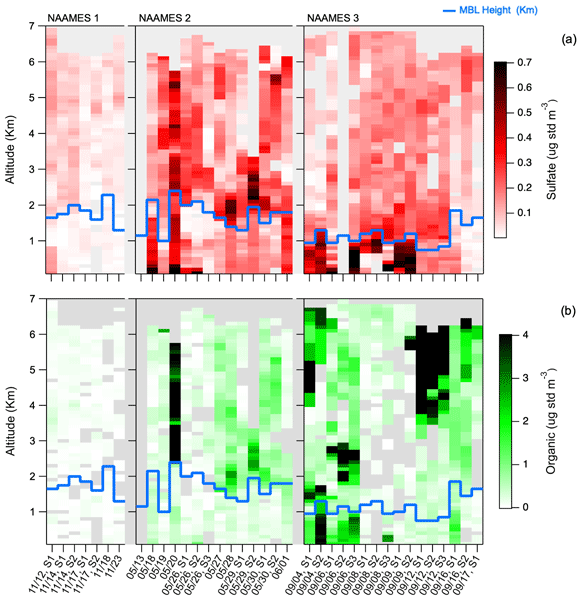
Francesca Gallo, Kevin J. Sanchez, Bruce E. Anderson, Ryan Bennett, Matthew D. Brown, Ewan C. Crosbie, Chris Hostetler, Carolyn Jordan, Melissa Yang Martin, Claire E. Robinson, Lynn M. Russell, Taylor J. Shingler, Michael A. Shook, Kenneth L. Thornhill, Elizabeth B. Wiggins, Edward L. Winstead, Armin Wisthaler, Luke D. Ziemba, and Richard H. Moore
Atmos. Chem. Phys., 23, 1465–1490, https://doi.org/10.5194/acp-23-1465-2023, https://doi.org/10.5194/acp-23-1465-2023, 2023
Short summary
Short summary
We integrate in situ ship- and aircraft-based measurements of aerosol, trace gases, and meteorological parameters collected during the NASA North Atlantic Aerosols and Marine Ecosystems Study (NAAMES) field campaigns in the western North Atlantic Ocean region. A comprehensive characterization of the vertical profiles of aerosol properties under different seasonal regimes is provided for improving the understanding of aerosol key processes and aerosol–cloud interactions in marine regions.

Allison B. Marquardt Collow, Virginie Buchard, Peter R. Colarco, Arlindo M. da Silva, Ravi Govindaraju, Edward P. Nowottnick, Sharon Burton, Richard Ferrare, Chris Hostetler, and Luke Ziemba
Atmos. Chem. Phys., 22, 16091–16109, https://doi.org/10.5194/acp-22-16091-2022, https://doi.org/10.5194/acp-22-16091-2022, 2022
Short summary
Short summary
Biomass burning aerosol impacts aspects of the atmosphere and Earth system through radiative forcing, serving as cloud condensation nuclei, and air quality. Despite its importance, the representation of biomass burning aerosol is not always accurate in models. Field campaign observations from CAMP2Ex are used to evaluate the mass and extinction of aerosols in the GEOS model. Notable biases in the model illuminate areas of future development with GEOS and the underlying GOCART aerosol module.
Ju-Mee Ryoo, Leonhard Pfister, Rei Ueyama, Paquita Zuidema, Robert Wood, Ian Chang, and Jens Redemann
Atmos. Chem. Phys., 22, 14209–14241, https://doi.org/10.5194/acp-22-14209-2022, https://doi.org/10.5194/acp-22-14209-2022, 2022
Short summary
Short summary
The variability in the meteorological fields during each deployment is highly modulated at a daily to synoptic timescale. This paper, along with part 1, the climatological overview paper, provides a meteorological context for interpreting the airborne measurements gathered during the three ORACLES deployments. This study supports related studies focusing on the detailed investigation of the processes controlling stratocumulus decks, aerosol lifting, transport, and their interactions.
Paul A. Barrett, Steven J. Abel, Hugh Coe, Ian Crawford, Amie Dobracki, James Haywood, Steve Howell, Anthony Jones, Justin Langridge, Greg M. McFarquhar, Graeme J. Nott, Hannah Price, Jens Redemann, Yohei Shinozuka, Kate Szpek, Jonathan W. Taylor, Robert Wood, Huihui Wu, Paquita Zuidema, Stéphane Bauguitte, Ryan Bennett, Keith Bower, Hong Chen, Sabrina Cochrane, Michael Cotterell, Nicholas Davies, David Delene, Connor Flynn, Andrew Freedman, Steffen Freitag, Siddhant Gupta, David Noone, Timothy B. Onasch, James Podolske, Michael R. Poellot, Sebastian Schmidt, Stephen Springston, Arthur J. Sedlacek III, Jamie Trembath, Alan Vance, Maria A. Zawadowicz, and Jianhao Zhang
Atmos. Meas. Tech., 15, 6329–6371, https://doi.org/10.5194/amt-15-6329-2022, https://doi.org/10.5194/amt-15-6329-2022, 2022
Short summary
Short summary
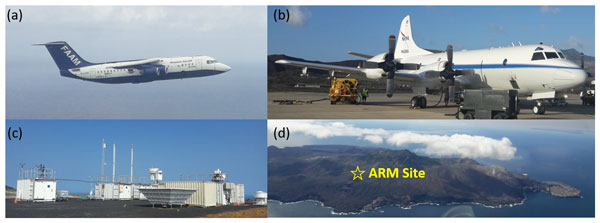
To better understand weather and climate, it is vital to go into the field and collect observations. Often measurements take place in isolation, but here we compared data from two aircraft and one ground-based site. This was done in order to understand how well measurements made on one platform compared to those made on another. Whilst this is easy to do in a controlled laboratory setting, it is more challenging in the real world, and so these comparisons are as valuable as they are rare.

Eva-Lou Edwards, Jeffrey S. Reid, Peng Xian, Sharon P. Burton, Anthony L. Cook, Ewan C. Crosbie, Marta A. Fenn, Richard A. Ferrare, Sean W. Freeman, John W. Hair, David B. Harper, Chris A. Hostetler, Claire E. Robinson, Amy Jo Scarino, Michael A. Shook, G. Alexander Sokolowsky, Susan C. van den Heever, Edward L. Winstead, Sarah Woods, Luke D. Ziemba, and Armin Sorooshian
Atmos. Chem. Phys., 22, 12961–12983, https://doi.org/10.5194/acp-22-12961-2022, https://doi.org/10.5194/acp-22-12961-2022, 2022
Short summary
Short summary
This study compares NAAPS-RA model simulations of aerosol optical thickness (AOT) and extinction to those retrieved with a high spectral resolution lidar near the Philippines. Agreement for AOT was good, and extinction agreement was strongest below 1500 m. Substituting dropsonde relative humidities into NAAPS-RA did not drastically improve agreement, and we discuss potential reasons why. Accurately modeling future conditions in this region is crucial due to its susceptibility to climate change.
Siddhant Gupta, Greg M. McFarquhar, Joseph R. O'Brien, Michael R. Poellot, David J. Delene, Ian Chang, Lan Gao, Feng Xu, and Jens Redemann
Atmos. Chem. Phys., 22, 12923–12943, https://doi.org/10.5194/acp-22-12923-2022, https://doi.org/10.5194/acp-22-12923-2022, 2022
Short summary
Short summary
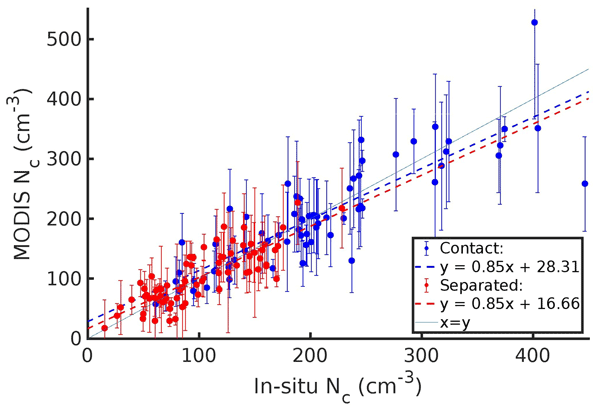
The ability of NASA’s Terra and Aqua satellites to retrieve cloud properties and estimate the changes in cloud properties due to aerosol–cloud interactions (ACI) was examined. There was good agreement between satellite retrievals and in situ measurements over the southeast Atlantic Ocean. This suggests that, combined with information on aerosol properties, satellite retrievals of cloud properties can be used to study ACI over larger domains and longer timescales in the absence of in situ data.
Zhipeng Qu, Alexei Korolev, Jason A. Milbrandt, Ivan Heckman, Yongjie Huang, Greg M. McFarquhar, Hugh Morrison, Mengistu Wolde, and Cuong Nguyen
Atmos. Chem. Phys., 22, 12287–12310, https://doi.org/10.5194/acp-22-12287-2022, https://doi.org/10.5194/acp-22-12287-2022, 2022
Short summary
Short summary
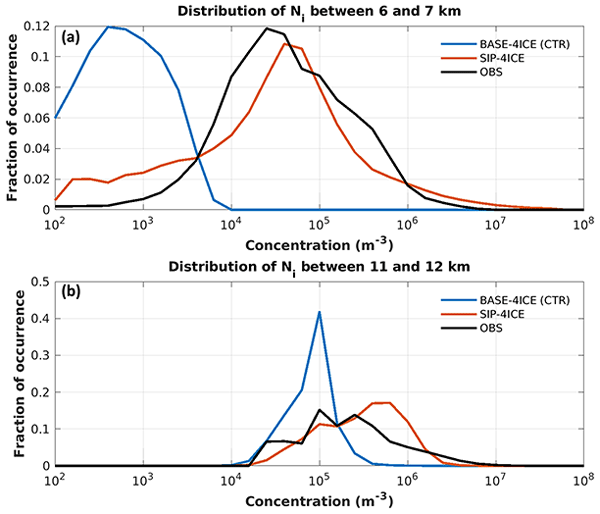
Secondary ice production (SIP) is an important physical phenomenon that results in an increase in the cloud ice particle concentration and can have a significant impact on the evolution of clouds. Here, idealized simulations of a tropical convective system were conducted. Agreement between the simulations and observations highlights the impacts of SIP on the maintenance of tropical convection in nature and the importance of including the modelling of SIP in numerical weather prediction models.
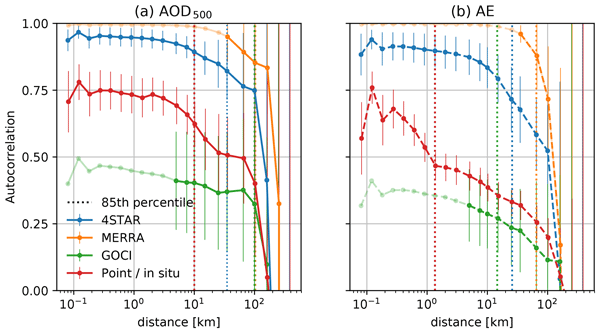
Samuel E. LeBlanc, Michal Segal-Rozenhaimer, Jens Redemann, Connor Flynn, Roy R. Johnson, Stephen E. Dunagan, Robert Dahlgren, Jhoon Kim, Myungje Choi, Arlindo da Silva, Patricia Castellanos, Qian Tan, Luke Ziemba, Kenneth Lee Thornhill, and Meloë Kacenelenbogen
Atmos. Chem. Phys., 22, 11275–11304, https://doi.org/10.5194/acp-22-11275-2022, https://doi.org/10.5194/acp-22-11275-2022, 2022
Short summary
Short summary
Airborne observations of atmospheric particles and pollution over Korea during a field campaign in May–June 2016 showed that the smallest atmospheric particles are present in the lowest 2 km of the atmosphere. The aerosol size is more spatially variable than optical thickness. We show this with remote sensing (4STAR), in situ (LARGE) observations, satellite measurements (GOCI), and modeled properties (MERRA-2), and it is contrary to the current understanding.
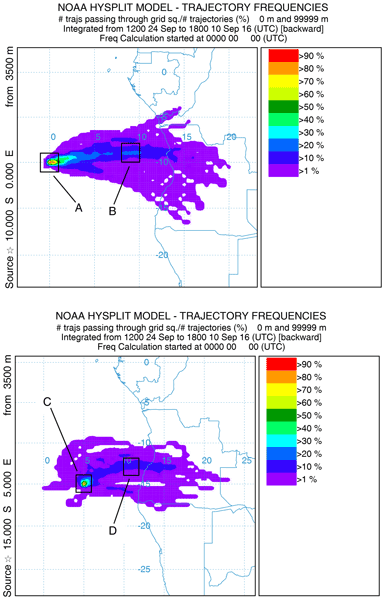
Harshvardhan Harshvardhan, Richard Ferrare, Sharon Burton, Johnathan Hair, Chris Hostetler, David Harper, Anthony Cook, Marta Fenn, Amy Jo Scarino, Eduard Chemyakin, and Detlef Müller
Atmos. Chem. Phys., 22, 9859–9876, https://doi.org/10.5194/acp-22-9859-2022, https://doi.org/10.5194/acp-22-9859-2022, 2022
Short summary
Short summary
The evolution of aerosol in biomass burning smoke plumes that travel over marine clouds off the Atlantic coast of central Africa was studied using measurements made by a lidar deployed on a high-altitude aircraft. The main finding was that the physical properties of aerosol do not change appreciably once the plume has left land and travels over the ocean over a timescale of 1 to 2 d. Almost all particles in the plume are of radius less than 1 micrometer and spherical in shape.
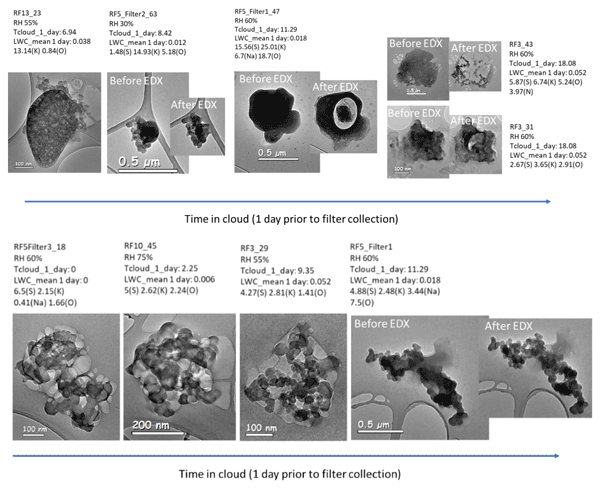
Caroline Dang, Michal Segal-Rozenhaimer, Haochi Che, Lu Zhang, Paola Formenti, Jonathan Taylor, Amie Dobracki, Sara Purdue, Pui-Shan Wong, Athanasios Nenes, Arthur Sedlacek III, Hugh Coe, Jens Redemann, Paquita Zuidema, Steven Howell, and James Haywood
Atmos. Chem. Phys., 22, 9389–9412, https://doi.org/10.5194/acp-22-9389-2022, https://doi.org/10.5194/acp-22-9389-2022, 2022
Short summary
Short summary
Transmission electron microscopy was used to analyze aged African smoke particles and how the smoke interacts with the marine atmosphere. We found that the volatility of organic aerosol increases with biomass burning plume age, that black carbon is often mixed with potassium salts and that the marine atmosphere can incorporate Na and Cl into smoke particles. Marine salts are more processed when mixed with smoke plumes, and there are interesting Cl-rich yet Na-absent marine particles.

Simon Kirschler, Christiane Voigt, Bruce Anderson, Ramon Campos Braga, Gao Chen, Andrea F. Corral, Ewan Crosbie, Hossein Dadashazar, Richard A. Ferrare, Valerian Hahn, Johannes Hendricks, Stefan Kaufmann, Richard Moore, Mira L. Pöhlker, Claire Robinson, Amy J. Scarino, Dominik Schollmayer, Michael A. Shook, K. Lee Thornhill, Edward Winstead, Luke D. Ziemba, and Armin Sorooshian
Atmos. Chem. Phys., 22, 8299–8319, https://doi.org/10.5194/acp-22-8299-2022, https://doi.org/10.5194/acp-22-8299-2022, 2022
Short summary
Short summary
In this study we show that the vertical velocity dominantly impacts the cloud droplet number concentration (NC) of low-level clouds over the western North Atlantic in the winter and summer season, while the cloud condensation nuclei concentration, aerosol size distribution and chemical composition impact NC within a season. The observational data presented in this study can evaluate and improve the representation of aerosol–cloud interactions for a wide range of conditions.
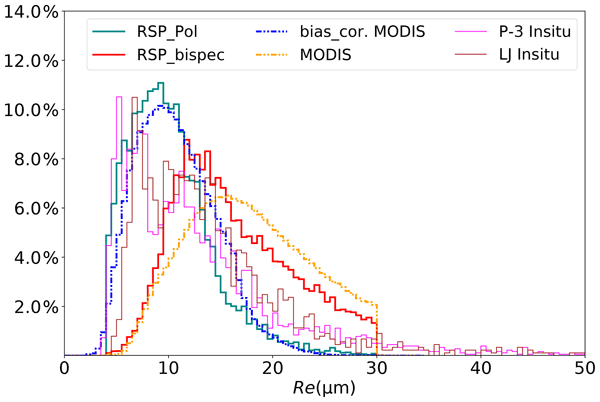
Dongwei Fu, Larry Di Girolamo, Robert M. Rauber, Greg M. McFarquhar, Stephen W. Nesbitt, Jesse Loveridge, Yulan Hong, Bastiaan van Diedenhoven, Brian Cairns, Mikhail D. Alexandrov, Paul Lawson, Sarah Woods, Simone Tanelli, Sebastian Schmidt, Chris Hostetler, and Amy Jo Scarino
Atmos. Chem. Phys., 22, 8259–8285, https://doi.org/10.5194/acp-22-8259-2022, https://doi.org/10.5194/acp-22-8259-2022, 2022
Short summary
Short summary
Satellite-retrieved cloud microphysics are widely used in climate research because of their central role in water and energy cycles. Here, we provide the first detailed investigation of retrieved cloud drop sizes from in situ and various satellite and airborne remote sensing techniques applied to real cumulus cloud fields. We conclude that the most widely used passive remote sensing method employed in climate research produces high biases of 6–8 µm (60 %–80 %) caused by 3-D radiative effects.
Zhujun Li, David Painemal, Gregory Schuster, Marian Clayton, Richard Ferrare, Mark Vaughan, Damien Josset, Jayanta Kar, and Charles Trepte
Atmos. Meas. Tech., 15, 2745–2766, https://doi.org/10.5194/amt-15-2745-2022, https://doi.org/10.5194/amt-15-2745-2022, 2022
Short summary
Short summary
For more than 15 years, CALIPSO has revolutionized our understanding of the role of aerosols in climate. Here we evaluate CALIPSO aerosol typing over the ocean using an independent CALIPSO–CloudSat product. The analysis suggests that CALIPSO correctly categorizes clean marine aerosol over the open ocean, elevated smoke over the SE Atlantic, and dust over the tropical Atlantic. Similarities between clean and dusty marine over the open ocean implies that algorithm modifications are warranted.
Meloë S. F. Kacenelenbogen, Qian Tan, Sharon P. Burton, Otto P. Hasekamp, Karl D. Froyd, Yohei Shinozuka, Andreas J. Beyersdorf, Luke Ziemba, Kenneth L. Thornhill, Jack E. Dibb, Taylor Shingler, Armin Sorooshian, Reed W. Espinosa, Vanderlei Martins, Jose L. Jimenez, Pedro Campuzano-Jost, Joshua P. Schwarz, Matthew S. Johnson, Jens Redemann, and Gregory L. Schuster
Atmos. Chem. Phys., 22, 3713–3742, https://doi.org/10.5194/acp-22-3713-2022, https://doi.org/10.5194/acp-22-3713-2022, 2022
Short summary
Short summary
The impact of aerosols on Earth's radiation budget and human health is important and strongly depends on their composition. One desire of our scientific community is to derive the composition of the aerosol from satellite sensors. However, satellites observe aerosol optical properties (and not aerosol composition) based on remote sensing instrumentation. This study assesses how much aerosol optical properties can tell us about aerosol composition.

Siddhant Gupta, Greg M. McFarquhar, Joseph R. O'Brien, Michael R. Poellot, David J. Delene, Rose M. Miller, and Jennifer D. Small Griswold
Atmos. Chem. Phys., 22, 2769–2793, https://doi.org/10.5194/acp-22-2769-2022, https://doi.org/10.5194/acp-22-2769-2022, 2022
Short summary
Short summary
This study evaluates the impact of biomass burning aerosols on precipitation in marine stratocumulus clouds using observations from the NASA ObseRvations of Aerosols above CLouds and their intEractionS (ORACLES) field campaign over the Southeast Atlantic. Instances of contact and separation between aerosol and cloud layers show polluted clouds have a lower precipitation rate and a lower precipitation susceptibility. This information will help improve cloud representation in Earth system models.
Kevin J. Sanchez, Bo Zhang, Hongyu Liu, Matthew D. Brown, Ewan C. Crosbie, Francesca Gallo, Johnathan W. Hair, Chris A. Hostetler, Carolyn E. Jordan, Claire E. Robinson, Amy Jo Scarino, Taylor J. Shingler, Michael A. Shook, Kenneth L. Thornhill, Elizabeth B. Wiggins, Edward L. Winstead, Luke D. Ziemba, Georges Saliba, Savannah L. Lewis, Lynn M. Russell, Patricia K. Quinn, Timothy S. Bates, Jack Porter, Thomas G. Bell, Peter Gaube, Eric S. Saltzman, Michael J. Behrenfeld, and Richard H. Moore
Atmos. Chem. Phys., 22, 2795–2815, https://doi.org/10.5194/acp-22-2795-2022, https://doi.org/10.5194/acp-22-2795-2022, 2022
Short summary
Short summary
Atmospheric particle concentrations impact clouds, which strongly impact the amount of sunlight reflected back into space and the overall climate. Measurements of particles over the ocean are rare and expensive to collect, so models are necessary to fill in the gaps by simulating both particle and clouds. However, some measurements are needed to test the accuracy of the models. Here, we measure changes in particles in different weather conditions, which are ideal for comparison with models.
Yongjie Huang, Wei Wu, Greg M. McFarquhar, Ming Xue, Hugh Morrison, Jason Milbrandt, Alexei V. Korolev, Yachao Hu, Zhipeng Qu, Mengistu Wolde, Cuong Nguyen, Alfons Schwarzenboeck, and Ivan Heckman
Atmos. Chem. Phys., 22, 2365–2384, https://doi.org/10.5194/acp-22-2365-2022, https://doi.org/10.5194/acp-22-2365-2022, 2022
Short summary
Short summary
Numerous small ice crystals in tropical convective storms are difficult to detect and could be potentially hazardous for commercial aircraft. Previous numerical simulations failed to reproduce this phenomenon and hypothesized that key microphysical processes are still lacking in current models to realistically simulate the phenomenon. This study uses numerical experiments to confirm the dominant role of secondary ice production in the formation of these large numbers of small ice crystals.

Matthew W. Christensen, Andrew Gettelman, Jan Cermak, Guy Dagan, Michael Diamond, Alyson Douglas, Graham Feingold, Franziska Glassmeier, Tom Goren, Daniel P. Grosvenor, Edward Gryspeerdt, Ralph Kahn, Zhanqing Li, Po-Lun Ma, Florent Malavelle, Isabel L. McCoy, Daniel T. McCoy, Greg McFarquhar, Johannes Mülmenstädt, Sandip Pal, Anna Possner, Adam Povey, Johannes Quaas, Daniel Rosenfeld, Anja Schmidt, Roland Schrödner, Armin Sorooshian, Philip Stier, Velle Toll, Duncan Watson-Parris, Robert Wood, Mingxi Yang, and Tianle Yuan
Atmos. Chem. Phys., 22, 641–674, https://doi.org/10.5194/acp-22-641-2022, https://doi.org/10.5194/acp-22-641-2022, 2022
Short summary
Short summary
Trace gases and aerosols (tiny airborne particles) are released from a variety of point sources around the globe. Examples include volcanoes, industrial chimneys, forest fires, and ship stacks. These sources provide opportunistic experiments with which to quantify the role of aerosols in modifying cloud properties. We review the current state of understanding on the influence of aerosol on climate built from the wide range of natural and anthropogenic laboratories investigated in recent decades.
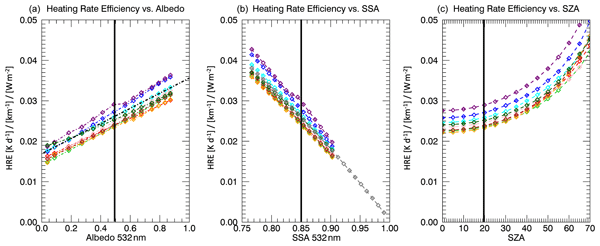
Sabrina P. Cochrane, K. Sebastian Schmidt, Hong Chen, Peter Pilewskie, Scott Kittelman, Jens Redemann, Samuel LeBlanc, Kristina Pistone, Michal Segal Rozenhaimer, Meloë Kacenelenbogen, Yohei Shinozuka, Connor Flynn, Rich Ferrare, Sharon Burton, Chris Hostetler, Marc Mallet, and Paquita Zuidema
Atmos. Meas. Tech., 15, 61–77, https://doi.org/10.5194/amt-15-61-2022, https://doi.org/10.5194/amt-15-61-2022, 2022
Short summary
Short summary
This work presents heating rates derived from aircraft observations from the 2016 and 2017 field campaigns of ORACLES (ObseRvations of Aerosols above CLouds and their intEractionS). We separate the total heating rates into aerosol and gas (primarily water vapor) absorption and explore some of the co-variability of heating rate profiles and their primary drivers, leading to the development of a new concept: the heating rate efficiency (HRE; the heating rate per unit aerosol extinction).
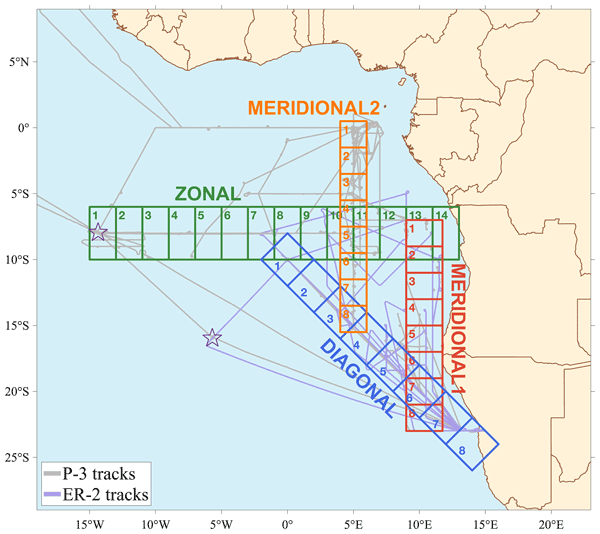
Sarah J. Doherty, Pablo E. Saide, Paquita Zuidema, Yohei Shinozuka, Gonzalo A. Ferrada, Hamish Gordon, Marc Mallet, Kerry Meyer, David Painemal, Steven G. Howell, Steffen Freitag, Amie Dobracki, James R. Podolske, Sharon P. Burton, Richard A. Ferrare, Calvin Howes, Pierre Nabat, Gregory R. Carmichael, Arlindo da Silva, Kristina Pistone, Ian Chang, Lan Gao, Robert Wood, and Jens Redemann
Atmos. Chem. Phys., 22, 1–46, https://doi.org/10.5194/acp-22-1-2022, https://doi.org/10.5194/acp-22-1-2022, 2022
Short summary
Short summary
Between July and October, biomass burning smoke is advected over the southeastern Atlantic Ocean, leading to climate forcing. Model calculations of forcing by this plume vary significantly in both magnitude and sign. This paper compares aerosol and cloud properties observed during three NASA ORACLES field campaigns to the same in four models. It quantifies modeled biases in properties key to aerosol direct radiative forcing and evaluates how these biases propagate to biases in forcing.
Amie Dobracki, Paquita Zuidema, Steve Howell, Pablo Saide, Steffen Freitag, Allison C. Aiken, Sharon P. Burton, Arthur J. Sedlacek III, Jens Redemann, and Robert Wood
Atmos. Chem. Phys. Discuss., https://doi.org/10.5194/acp-2021-1081, https://doi.org/10.5194/acp-2021-1081, 2022
Preprint withdrawn
Short summary
Short summary
The global maximum of shortwave-absorbing aerosol above cloud occurs above the southeast Atlantic, where the biomass-burning aerosol provides a distinct aerosol radiative warming of regional climate. The smoke aerosols are unusually highly absorbing of sunlight. This study seeks to understand the cause. We conclude the aerosol is already strongly absorbing at the fire emission source, but that chemical aging, through encouraging a net loss of organic aerosol, also contributes.
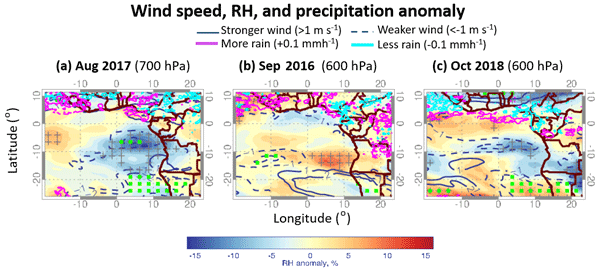
Ju-Mee Ryoo, Leonhard Pfister, Rei Ueyama, Paquita Zuidema, Robert Wood, Ian Chang, and Jens Redemann
Atmos. Chem. Phys., 21, 16689–16707, https://doi.org/10.5194/acp-21-16689-2021, https://doi.org/10.5194/acp-21-16689-2021, 2021
Short summary
Short summary
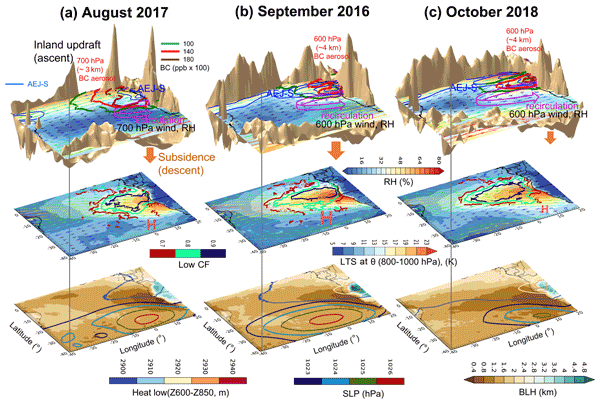
Part 1 of the meteorological overview paper highlights the anomalous meteorological characteristics during the ORACLES deployment compared to the climatological mean at monthly timescales. The upper-level wave disturbance and the associated anomalous circulation explain the weakening of AEJ-S through the reduction of the strength of the heat low over the land during August 2017. This may also help explain the anomalously low aerosol optical depth observed in the August 2017 ORACLES deployment.
Cited articles
Adebiyi, A. A. and Zuidema, P.: The role of the southern African easterly jet in modifying the southeast Atlantic aerosol and cloud environments, Q. J. Roy. Meteor. Soc., 142, 1574–1589, https://doi.org/10.1002/qj.2765, 2016.
Adebiyi, A. A., Zuidema, P., and Abel, S. J.: The Convolution of Dynamics and Moisture with the Presence of Shortwave Absorbing Aerosols over the Southeast Atlantic, J. Climate, 28, 1997–2024, https://doi.org/10.1175/JCLI-D-14-00352.1, 2015.
Alam, K., Iqbal, M. J., Blaschke, T., Qureshi, S., and Khan, G.: Monitoring spatio-temporal variations in aerosols and aerosol–cloud interactions over Pakistan using MODIS data, Adv. Space Res., 46, 1162–1176, https://doi.org/10.1016/j.asr.2010.06.025, 2010.
Albrecht, B. A.: Aerosols, Cloud Microphysics, and Fractional Cloudiness, Science, 245, 1227–1230, https://doi.org/10.1126/science.245.4923.1227, 1989.
Alexandri, F., Müller, F., Choudhury, G., Achtert, P., Seelig, T., and Tesche, M.: A cloud-by-cloud approach for studying aerosol–cloud interaction in satellite observations, Atmos. Meas. Tech., 17, 1739–1757, https://doi.org/10.5194/amt-17-1739-2024, 2024.
Alexandrov, M. D., Cairns, B., Emde, C., Ackerman, A. S., and Van Diedenhoven, B.: Accuracy assessments of cloud droplet size retrievals from polarized reflectance measurements by the research scanning polarimeter, Remote Sens. Environ., 125, 92–111, https://doi.org/10.1016/j.rse.2012.07.012, 2012a.
Alexandrov, M. D., Cairns, B., and Mishchenko, M. I.: Rainbow Fourier transform, J. Quant. Spectrosc. Ra., 113, 2521–2535, https://doi.org/10.1016/j.jqsrt.2012.03.025, 2012b.
Alexandrov, M. D., Cairns, B., Sinclair, K., Wasilewski, A. P., Ziemba, L., Crosbie, E., Moore, R., Hair, J., Scarino, A. J., Hu, Y., Stamnes, S., Shook, M. A., and Chen, G.: Retrievals of cloud droplet size from the research scanning polarimeter data: Validation using in situ measurements, Remote Sens. Environ., 210, 76–95, https://doi.org/10.1016/j.rse.2018.03.005, 2018.
Anderberg, M.: Cluster Analysis for Applications, Elsevier, https://doi.org/10.1016/C2013-0-06161-0, 1973.
Anderson, T. L., Charlson, R. J., Winker, D. M., Ogren, J. A., and Holmén, K.: Mesoscale Variations of Tropospheric Aerosols, J. Atmos. Sci., 60, 119–136, https://doi.org/10.1175/1520-0469(2003)060<0119:MVOTA>2.0.CO;2, 2003.
Andreae, M. O.: Smoking Rain Clouds over the Amazon, Science, 303, 1337–1342, https://doi.org/10.1126/science.1092779, 2004.
Andreae, M. O.: Correlation between cloud condensation nuclei concentration and aerosol optical thickness in remote and polluted regions, Atmos. Chem. Phys., 9, 543–556, https://doi.org/10.5194/acp-9-543-2009, 2009.
Baumgardner, D., Jonsson, H., Dawson, W., O'Connor, D., and Newton, R.: The cloud, aerosol and precipitation spectrometer: a new instrument for cloud investigations, Atmos. Res., 59–60, 251–264, https://doi.org/10.1016/S0169-8095(01)00119-3, 2001.
Braga, R. C., Rosenfeld, D., Weigel, R., Jurkat, T., Andreae, M. O., Wendisch, M., Pöschl, U., Voigt, C., Mahnke, C., Borrmann, S., Albrecht, R. I., Molleker, S., Vila, D. A., Machado, L. A. T., and Grulich, L.: Further evidence for CCN aerosol concentrations determining the height of warm rain and ice initiation in convective clouds over the Amazon basin, Atmos. Chem. Phys., 17, 14433–14456, https://doi.org/10.5194/acp-17-14433-2017, 2017.
Cairns, B., Russell, E. E., and Travis, L. D.: Research Scanning Polarimeter: calibration and ground-based measurements, SPIE's International Symposium on Optical Science, Engineering, and Instrumentation, Denver, CO, 186–196, https://doi.org/10.1117/12.366329, 1999.
Calinski, T. and Harabasz, J.: A dendrite method for cluster analysis, Commun. Stat., 3, 1–27, https://doi.org/10.1080/03610927408827101, 1974.
Chang, I., Gao, L., Adebiyi, A. A., Doherty, S. J., Painemal, D., Smith, W. L., Lenhardt, E. D., Fakoya, A. A., Flynn, C. J., Zheng, J., Yang, Z., Castellanos, P., Da Silva, A. M., Zhang, Z., Wood, R., Zuidema, P., Christopher, S. A., and Redemann, J.: Regional aerosol warming enhanced by the diurnal cycle of low cloud, Nat. Geosci., 18, 702–708, https://doi.org/10.1038/s41561-025-01740-1, 2025.
Chau, K., Franklin, M., Lee, H., Garay, M., and Kalashnikova, O.: Temporal and Spatial Autocorrelation as Determinants of Regional AOD-PM2.5 Model Performance in the Middle East, Remote Sens., 13, 3790, https://doi.org/10.3390/rs13183790, 2021.
Chen, J., Liu, Y., Zhang, M., and Peng, Y.: Height Dependency of Aerosol‐Cloud Interaction Regimes, J. Geophys. Res.-Atmos., 123, 491–506, https://doi.org/10.1002/2017JD027431, 2018.
Chen, Y., Christensen, M. W., Diner, D. J., and Garay, M. J.: Aerosol‐cloud interactions in ship tracks using Terra MODIS/MISR, J. Geophys. Res.-Atmos., 120, 2819–2833, https://doi.org/10.1002/2014JD022736, 2015.
Choudhury, G. and Tesche, M.: Assessment of CALIOP-Derived CCN Concentrations by In Situ Surface Measurements, Remote Sens., 14, 3342, https://doi.org/10.3390/rs14143342, 2022a.
Choudhury, G. and Tesche, M.: Estimating cloud condensation nuclei concentrations from CALIPSO lidar measurements, Atmos. Meas. Tech., 15, 639–654, https://doi.org/10.5194/amt-15-639-2022, 2022b.
Christensen, M. W., Neubauer, D., Poulsen, C. A., Thomas, G. E., McGarragh, G. R., Povey, A. C., Proud, S. R., and Grainger, R. G.: Unveiling aerosol–cloud interactions – Part 1: Cloud contamination in satellite products enhances the aerosol indirect forcing estimate, Atmos. Chem. Phys., 17, 13151–13164, https://doi.org/10.5194/acp-17-13151-2017, 2017.
Costantino, L. and Bréon, F.-M.: Aerosol indirect effect on warm clouds over South-East Atlantic, from co-located MODIS and CALIPSO observations, Atmos. Chem. Phys., 13, 69–88, https://doi.org/10.5194/acp-13-69-2013, 2013.
D'Alessandro, J. J., McFarquhar, G. M., Stith, J. L., Diao, M., DeMott, P. J., McCluskey, C. S., Hill, T. C. J., Roberts, G. C., and Sanchez, K. J.: An Evaluation of Phase, Aerosol‐Cloud Interactions and Microphysical Properties of Single‐ and Multi‐Layer Clouds Over the Southern Ocean Using in Situ Observations From SOCRATES, J. Geophys. Res.-Atmos., 128, e2023JD038610, https://doi.org/10.1029/2023JD038610, 2023.
Dedrick, J. L., Pelayo, C. N., Russell, L. M., Lubin, D., Mülmenstädt, J., and Miller, M.: Competition response of cloud supersaturation explains diminished Twomey effect for smoky aerosol in the tropical Atlantic, P. Natl. Acad. Sci. USA, 122, e2412247122, https://doi.org/10.1073/pnas.2412247122, 2025.
Di Bernardino, A., Iannarelli, A. M., Casadio, S., Pisacane, G., Mevi, G., and Cacciani, M.: Classification of synoptic and local-scale wind patterns using k-means clustering in a Tyrrhenian coastal area (Italy), Meteorol. Atmos. Phys., 134, 30, https://doi.org/10.1007/s00703-022-00871-z, 2022.
Diamond, M. S., Dobracki, A., Freitag, S., Small Griswold, J. D., Heikkila, A., Howell, S. G., Kacarab, M. E., Podolske, J. R., Saide, P. E., and Wood, R.: Time-dependent entrainment of smoke presents an observational challenge for assessing aerosol–cloud interactions over the southeast Atlantic Ocean, Atmos. Chem. Phys., 18, 14623–14636, https://doi.org/10.5194/acp-18-14623-2018, 2018.
Doherty, S. J., Saide, P. E., Zuidema, P., Shinozuka, Y., Ferrada, G. A., Gordon, H., Mallet, M., Meyer, K., Painemal, D., Howell, S. G., Freitag, S., Dobracki, A., Podolske, J. R., Burton, S. P., Ferrare, R. A., Howes, C., Nabat, P., Carmichael, G. R., da Silva, A., Pistone, K., Chang, I., Gao, L., Wood, R., and Redemann, J.: Modeled and observed properties related to the direct aerosol radiative effect of biomass burning aerosol over the southeastern Atlantic, Atmos. Chem. Phys., 22, 1–46, https://doi.org/10.5194/acp-22-1-2022, 2022.
Douglas, A. and L'Ecuyer, T.: Quantifying variations in shortwave aerosol–cloud–radiation interactions using local meteorology and cloud state constraints, Atmos. Chem. Phys., 19, 6251–6268, https://doi.org/10.5194/acp-19-6251-2019, 2019.
Forster, P., Storelvmo, T., Armour, K., Collins, W., Dufresne, J.-L., Frame, D., Lunt, D. J., Mauritsen, T., Palmer, M. D., Watanabe, M., Wild, M., and Zhang, H.: The Earth's Energy Budget, Climate Feedbacks and Climate Sensitivity, in: Climate Change 2021 – The Physical Science Basis, edited by: Masson-Delmotte, V., Zhai, P., Pirani, A., Connors, S. L., Péan, C., Berger, S., Caud, N., Chen, Y., Goldfarb, L., Gomis, M. I., Huang, M., Leitzell, K., Lonnoy, E., Matthews, J. B. R., Maycock, T. K., Waterfield, T., Yelekçi, O., Yu, R., and Zhou, B., Cambridge University Press, 571–658, https://doi.org/10.1017/9781009157896.009, 2021.
Franco, M. A., Morais, F. G., Rizzo, L. V., Palácios, R., Valiati, R., Teixeira, M., Machado, L. A. T., and Artaxo, P.: Aerosol optical depth and water vapor variability assessed through autocorrelation analysis, Meteorol. Atmos. Phys., 136, 15, https://doi.org/10.1007/s00703-024-01011-5, 2024.
Fu, D., Di Girolamo, L., Rauber, R. M., McFarquhar, G. M., Nesbitt, S. W., Loveridge, J., Hong, Y., van Diedenhoven, B., Cairns, B., Alexandrov, M. D., Lawson, P., Woods, S., Tanelli, S., Schmidt, S., Hostetler, C., and Scarino, A. J.: An evaluation of the liquid cloud droplet effective radius derived from MODIS, airborne remote sensing, and in situ measurements from CAMP2Ex, Atmos. Chem. Phys., 22, 8259–8285, https://doi.org/10.5194/acp-22-8259-2022, 2022.
Gao, L., Redemann, J., and Lenhardt, E.: Machine Learning Predicted CCN Concentration for ORACLES ACI Study, Zenodo [data set], https://doi.org/10.5281/ZENODO.18626083, 2026.
Ghan, S., Wang, M., Zhang, S., Ferrachat, S., Gettelman, A., Griesfeller, J., Kipling, Z., Lohmann, U., Morrison, H., Neubauer, D., Partridge, D. G., Stier, P., Takemura, T., Wang, H., and Zhang, K.: Challenges in constraining anthropogenic aerosol effects on cloud radiative forcing using present-day spatiotemporal variability, P. Natl. Acad. Sci. USA, 113, 5804–5811, https://doi.org/10.1073/pnas.1514036113, 2016.
Global Modeling And Assimilation Office (GMAO): MERRA-2 inst3_3d_asm_Np: 3d,3-Hourly,Instantaneous,Pressure-Level,Assimilation,Assimilated Meteorological Fields V5.12.4, Greenbelt, MD, USA, Goddard Earth Sciences Data and Information Services Center (GES DISC), https://doi.org/10.5067/QBZ6MG944HW0, 2015.
Goren, T. and Rosenfeld, D.: Satellite observations of ship emission induced transitions from broken to closed cell marine stratocumulus over large areas, J. Geophys. Res., 117, 2012JD017981, https://doi.org/10.1029/2012JD017981, 2012.
Gryspeerdt, E. and Stier, P.: Regime‐based analysis of aerosol‐cloud interactions, Geophys. Res. Lett., 39, 2012GL053221, https://doi.org/10.1029/2012GL053221, 2012.
Gryspeerdt, E., Stier, P., and Partridge, D. G.: Satellite observations of cloud regime development: the role of aerosol processes, Atmos. Chem. Phys., 14, 1141–1158, https://doi.org/10.5194/acp-14-1141-2014, 2014.
Gryspeerdt, E., Goren, T., Sourdeval, O., Quaas, J., Mülmenstädt, J., Dipu, S., Unglaub, C., Gettelman, A., and Christensen, M.: Constraining the aerosol influence on cloud liquid water path, Atmos. Chem. Phys., 19, 5331–5347, https://doi.org/10.5194/acp-19-5331-2019, 2019.
Gryspeerdt, E., Glassmeier, F., Feingold, G., Hoffmann, F., and Murray-Watson, R. J.: Observing short-timescale cloud development to constrain aerosol–cloud interactions, Atmos. Chem. Phys., 22, 11727–11738, https://doi.org/10.5194/acp-22-11727-2022, 2022.
Gupta, S., McFarquhar, G. M., O'Brien, J. R., Delene, D. J., Poellot, M. R., Dobracki, A., Podolske, J. R., Redemann, J., LeBlanc, S. E., Segal-Rozenhaimer, M., and Pistone, K.: Impact of the variability in vertical separation between biomass burning aerosols and marine stratocumulus on cloud microphysical properties over the Southeast Atlantic, Atmos. Chem. Phys., 21, 4615–4635, https://doi.org/10.5194/acp-21-4615-2021, 2021.
Gupta, S., McFarquhar, G. M., O'Brien, J. R., Poellot, M. R., Delene, D. J., Miller, R. M., and Small Griswold, J. D.: Factors affecting precipitation formation and precipitation susceptibility of marine stratocumulus with variable above- and below-cloud aerosol concentrations over the Southeast Atlantic, Atmos. Chem. Phys., 22, 2769–2793, https://doi.org/10.5194/acp-22-2769-2022, 2022a.
Gupta, S., McFarquhar, G. M., O'Brien, J. R., Poellot, M. R., Delene, D. J., Chang, I., Gao, L., Xu, F., and Redemann, J.: In situ and satellite-based estimates of cloud properties and aerosol–cloud interactions over the southeast Atlantic Ocean, Atmos. Chem. Phys., 22, 12923–12943, https://doi.org/10.5194/acp-22-12923-2022, 2022b.
Hansen, J., Sato, M., and Ruedy, R.: Radiative forcing and climate response, J. Geophys. Res., 102, 6831–6864, https://doi.org/10.1029/96JD03436, 1997.
Heintzenberg, J., Birmili, W., Wiedensohler, A., Nowak, A., and Tuch, T.: Structure, variability and persistence of the submicrometre marine aerosol, Tellus B, 56, 357, https://doi.org/10.3402/tellusb.v56i4.16450, 2004.
Hernández Pardo, L., Toledo Machado, L. A., Amore Cecchini, M., and Sánchez Gácita, M.: Quantifying the aerosol effect on droplet size distribution at cloud top, Atmos. Chem. Phys., 19, 7839–7857, https://doi.org/10.5194/acp-19-7839-2019, 2019.
Jia, H., Ma, X., Quaas, J., Yin, Y., and Qiu, T.: Is positive correlation between cloud droplet effective radius and aerosol optical depth over land due to retrieval artifacts or real physical processes?, Atmos. Chem. Phys., 19, 8879–8896, https://doi.org/10.5194/acp-19-8879-2019, 2019.
Jose, S., Nair, V. S., and Babu, S. S.: Anthropogenic emissions from South Asia reverses the aerosol indirect effect over the northern Indian Ocean, Sci. Rep., 10, 18360, https://doi.org/10.1038/s41598-020-74897-x, 2020.
Kacarab, M., Thornhill, K. L., Dobracki, A., Howell, S. G., O'Brien, J. R., Freitag, S., Poellot, M. R., Wood, R., Zuidema, P., Redemann, J., and Nenes, A.: Biomass burning aerosol as a modulator of the droplet number in the southeast Atlantic region, Atmos. Chem. Phys., 20, 3029–3040, https://doi.org/10.5194/acp-20-3029-2020, 2020.
Kaufman, Y. J., Haywood, J. M., Hobbs, P. V., Hart, W., Kleidman, R., and Schmid, B.: Remote sensing of vertical distributions of smoke aerosol off the coast of Africa, Geophys. Res. Lett., 30, https://doi.org/10.1029/2003GL017068, 2003.
Khatri, P., Hayasaka, T., Holben, B. N., Singh, R. P., Letu, H., and Tripathi, S. N.: Increased aerosols can reverse Twomey effect in water clouds through radiative pathway, Sci. Rep., 12, 20666, https://doi.org/10.1038/s41598-022-25241-y, 2022.
Kim, B., Miller, M. A., Schwartz, S. E., Liu, Y., and Min, Q.: The role of adiabaticity in the aerosol first indirect effect, J. Geophys. Res., 113, 2007JD008961, https://doi.org/10.1029/2007JD008961, 2008.
King, N. J., Bower, K. N., Crosier, J., and Crawford, I.: Evaluating MODIS cloud retrievals with in situ observations from VOCALS-REx, Atmos. Chem. Phys., 13, 191–209, https://doi.org/10.5194/acp-13-191-2013, 2013.
King, W. D., Parkin, D. A., and Handsworth, R. J.: A Hot-Wire Liquid Water Device Having Fully Calculable Response Characteristics, J. Appl. Meteor., 17, 1809–1813, https://doi.org/10.1175/1520-0450(1978)017<1809:AHWLWD>2.0.CO;2, 1978.
Klein, S. A. and Hartmann, D. L.: The Seasonal Cycle of Low Stratiform Clouds, J. Climate, 6, 1587–1606, https://doi.org/10.1175/1520-0442(1993)006<1587:TSCOLS>2.0.CO;2, 1993.
Koch, D. and Del Genio, A. D.: Black carbon semi-direct effects on cloud cover: review and synthesis, Atmos. Chem. Phys., 10, 7685–7696, https://doi.org/10.5194/acp-10-7685-2010, 2010.
Lance, S., Brock, C. A., Rogers, D., and Gordon, J. A.: Water droplet calibration of the Cloud Droplet Probe (CDP) and in-flight performance in liquid, ice and mixed-phase clouds during ARCPAC, Atmos. Meas. Tech., 3, 1683–1706, https://doi.org/10.5194/amt-3-1683-2010, 2010.
LeBlanc, S. E., Segal-Rozenhaimer, M., Redemann, J., Flynn, C., Johnson, R. R., Dunagan, S. E., Dahlgren, R., Kim, J., Choi, M., da Silva, A., Castellanos, P., Tan, Q., Ziemba, L., Lee Thornhill, K., and Kacenelenbogen, M.: Airborne observations during KORUS-AQ show that aerosol optical depths are more spatially self-consistent than aerosol intensive properties, Atmos. Chem. Phys., 22, 11275–11304, https://doi.org/10.5194/acp-22-11275-2022, 2022.
Lenhardt, E. D., Gao, L., Redemann, J., Xu, F., Burton, S. P., Cairns, B., Chang, I., Ferrare, R. A., Hostetler, C. A., Saide, P. E., Howes, C., Shinozuka, Y., Stamnes, S., Kacarab, M., Dobracki, A., Wong, J., Freitag, S., and Nenes, A.: Use of lidar aerosol extinction and backscatter coefficients to estimate cloud condensation nuclei (CCN) concentrations in the southeast Atlantic, Atmos. Meas. Tech., 16, 2037–2054, https://doi.org/10.5194/amt-16-2037-2023, 2023.
Li, Z., Painemal, D., Feng, Y., and Zheng, X.: Advancing the quantification of aerosol-cloud interactions with the CALIPSO-CloudSat-Aqua/MODIS record, Atmos. Chem. Phys., 26, 7705–7720, https://doi.org/10.5194/acp-26-7705-2026, 2026.
Lihavainen, H., Kerminen, V.-M., and Remer, L. A.: Aerosol-cloud interaction determined by both in situ and satellite data over a northern high-latitude site, Atmos. Chem. Phys., 10, 10987–10995, https://doi.org/10.5194/acp-10-10987-2010, 2010.
Lohmann, U., Koren, I., and Kaufman, Y. J.: Disentangling the role of microphysical and dynamical effects in determining cloud properties over the Atlantic, Geophys. Res. Lett., 33, 2005GL024625, https://doi.org/10.1029/2005GL024625, 2006.
Ma, X., Jia, H., Yu, F., and Quaas, J.: Opposite Aerosol Index‐Cloud Droplet Effective Radius Correlations Over Major Industrial Regions and Their Adjacent Oceans, Geophys. Res. Lett., 45, 5771–5778, https://doi.org/10.1029/2018GL077562, 2018.
Malavelle, F. F., Haywood, J. M., Jones, A., Gettelman, A., Clarisse, L., Bauduin, S., Allan, R. P., Karset, I. H. H., Kristjánsson, J. E., Oreopoulos, L., Cho, N., Lee, D., Bellouin, N., Boucher, O., Grosvenor, D. P., Carslaw, K. S., Dhomse, S., Mann, G. W., Schmidt, A., Coe, H., Hartley, M. E., Dalvi, M., Hill, A. A., Johnson, B. T., Johnson, C. E., Knight, J. R., O'Connor, F. M., Partridge, D. G., Stier, P., Myhre, G., Platnick, S., Stephens, G. L., Takahashi, H., and Thordarson, T.: Strong constraints on aerosol–cloud interactions from volcanic eruptions, Nature, 546, 485–491, https://doi.org/10.1038/nature22974, 2017.
Matsui, T., Masunaga, H., Kreidenweis, S. M., Pielke, R. A., Tao, W., Chin, M., and Kaufman, Y. J.: Satellite‐based assessment of marine low cloud variability associated with aerosol, atmospheric stability, and the diurnal cycle, J. Geophys. Res., 111, 2005JD006097, https://doi.org/10.1029/2005JD006097, 2006.
Mauger, G. S. and Norris, J. R.: Meteorological bias in satellite estimates of aerosol‐cloud relationships, Geophys. Res. Lett., 34, 2007GL029952, https://doi.org/10.1029/2007GL029952, 2007.
McComiskey, A., Feingold, G., Frisch, A. S., Turner, D. D., Miller, M. A., Chiu, J. C., Min, Q., and Ogren, J. A.: An assessment of aerosol‐cloud interactions in marine stratus clouds based on surface remote sensing, J. Geophys. Res., 114, 2008JD011006, https://doi.org/10.1029/2008JD011006, 2009.
McCoy, D. T., Bender, F. A.-M., Mohrmann, J. K. C., Hartmann, D. L., Wood, R., and Grosvenor, D. P.: The global aerosol‐cloud first indirect effect estimated using MODIS, MERRA, and AeroCom, J. Geophys. Res.-Atmos., 122, 1779–1796, https://doi.org/10.1002/2016JD026141, 2017.
McFarquhar, G. M.: A New Representation of Collision-Induced Breakup of Raindrops and Its Implications for the Shapes of Raindrop Size Distributions, J. Atmos. Sci., 61, 777–794, https://doi.org/10.1175/1520-0469(2004)061<0777:ANROCB>2.0.CO;2, 2004.
Mellado, J. P.: Cloud-Top Entrainment in Stratocumulus Clouds, Annu. Rev. Fluid Mech., 49, 145–169, https://doi.org/10.1146/annurev-fluid-010816-060231, 2017.
Meyer, K., Platnick, S., Oreopoulos, L., and Lee, D.: Estimating the direct radiative effect of absorbing aerosols overlying marine boundary layer clouds in the southeast Atlantic using MODIS and CALIOP, J. Geophys. Res.-Atmos., 118, 4801–4815, https://doi.org/10.1002/jgrd.50449, 2013.
Meyer, K., Platnick, S., Arnold, G. T., Amarasinghe, N., Miller, D., Small-Griswold, J., Witte, M., Cairns, B., Gupta, S., McFarquhar, G., and O'Brien, J.: Evaluating spectral cloud effective radius retrievals from the Enhanced MODIS Airborne Simulator (eMAS) during ORACLES, Atmos. Meas. Tech., 18, 981–1011, https://doi.org/10.5194/amt-18-981-2025, 2025.
Milligan, G. W. and Cooper, M. C.: A study of standardization of variables in cluster analysis, J. Classif., 5, 181–204, https://doi.org/10.1007/BF01897163, 1988.
Min, Q., Joseph, E., Lin, Y., Min, L., Yin, B., Daum, P. H., Kleinman, L. I., Wang, J., and Lee, Y.-N.: Comparison of MODIS cloud microphysical properties with in-situ measurements over the Southeast Pacific, Atmos. Chem. Phys., 12, 11261–11273, https://doi.org/10.5194/acp-12-11261-2012, 2012.
Modini, R. L., Frossard, A. A., Ahlm, L., Russell, L. M., Corrigan, C. E., Roberts, G. C., Hawkins, L. N., Schroder, J. C., Bertram, A. K., Zhao, R., Lee, A. K. Y., Abbatt, J. P. D., Lin, J., Nenes, A., Wang, Z., Wonaschütz, A., Sorooshian, A., Noone, K. J., Jonsson, H., Seinfeld, J. H., Toom‐Sauntry, D., Macdonald, A. M., and Leaitch, W. R.: Primary marine aerosol‐cloud interactions off the coast of California, J. Geophys. Res.-Atmos., 120, 4282–4303, https://doi.org/10.1002/2014JD022963, 2015.
Murray-Watson, R. J. and Gryspeerdt, E.: Stability-dependent increases in liquid water with droplet number in the Arctic, Atmos. Chem. Phys., 22, 5743–5756, https://doi.org/10.5194/acp-22-5743-2022, 2022.
Myhre, G., Stordal, F., Johnsrud, M., Kaufman, Y. J., Rosenfeld, D., Storelvmo, T., Kristjansson, J. E., Berntsen, T. K., Myhre, A., and Isaksen, I. S. A.: Aerosol-cloud interaction inferred from MODIS satellite data and global aerosol models, Atmos. Chem. Phys., 7, 3081–3101, https://doi.org/10.5194/acp-7-3081-2007, 2007.
Nakajima, T. and King, M. D.: Determination of the Optical Thickness and Effective Particle Radius of Clouds from Reflected Solar Radiation Measurements. Part I: Theory, J. Atmos. Sci., 47, 1878–1893, https://doi.org/10.1175/1520-0469(1990)047<1878:DOTOTA>2.0.CO;2, 1990.
Oh, D., Noh, Y., and Hoffmann, F.: Paths From Aerosol Particles to Activation and Cloud Droplets in Shallow Cumulus Clouds: The Roles of Entrainment and Supersaturation Fluctuations, J. Geophys. Res.-Atmos., 128, e2022JD038450, https://doi.org/10.1029/2022JD038450, 2023.
ORACLES Science Team: Suite of Aerosol, Cloud, and Related Data Acquired Aboard P3 During ORACLES 2016, Version 3, NASA Ames Earth Science Project Office (ESPO) [data set], https://doi.org/10.5067/Suborbital/ORACLES/P3/2016_V3, 2021a.
ORACLES Science Team: Suite of Aerosol, Cloud, and Related Data Acquired Aboard ER2 During ORACLES 2016, Version 3, NASA Ames Earth Science Project Office (ESPO) [data set], https://doi.org/10.5067/Suborbital/ORACLES/ER2/2016_V3, 2021b.
ORACLES Science Team: Suite of Aerosol, Cloud, and Related Data Acquired Aboard P3 During ORACLES 2017, Version 3, NASA Ames Earth Science Project Office (ESPO) [data set], https://doi.org/10.5067/Suborbital/ORACLES/P3/2017_V3, 2021c.
ORACLES Science Team: Suite of Aerosol, Cloud, and Related Data Acquired Aboard P3 During ORACLES 2018, Version 3, NASA Ames Earth Science Project Office (ESPO) [data set], https://doi.org/10.5067/Suborbital/ORACLES/P3/2018_V3, 2021d.
Painemal, D. and Zuidema, P.: Microphysical variability in southeast Pacific Stratocumulus clouds: synoptic conditions and radiative response, Atmos. Chem. Phys., 10, 6255–6269, https://doi.org/10.5194/acp-10-6255-2010, 2010.
Painemal, D. and Zuidema, P.: Assessment of MODIS cloud effective radius and optical thickness retrievals over the Southeast Pacific with VOCALS-REx in situ measurements: MODIS VALIDATION DURING VOCALS-REx, J. Geophys. Res., 116, https://doi.org/10.1029/2011JD016155, 2011.
Painemal, D., Kato, S., and Minnis, P.: Boundary layer regulation in the southeast Atlantic cloud microphysics during the biomass burning season as seen by the A-train satellite constellation, J. Geophys. Res.-Atmos., 119, https://doi.org/10.1002/2014JD022182, 2014.
Painemal, D., Chang, F.-L., Ferrare, R., Burton, S., Li, Z., Smith Jr., W. L., Minnis, P., Feng, Y., and Clayton, M.: Reducing uncertainties in satellite estimates of aerosol–cloud interactions over the subtropical ocean by integrating vertically resolved aerosol observations, Atmos. Chem. Phys., 20, 7167–7177, https://doi.org/10.5194/acp-20-7167-2020, 2020.
Painemal, D., Spangenberg, D., Smith Jr., W. L., Minnis, P., Cairns, B., Moore, R. H., Crosbie, E., Robinson, C., Thornhill, K. L., Winstead, E. L., and Ziemba, L.: Evaluation of satellite retrievals of liquid clouds from the GOES-13 imager and MODIS over the midlatitude North Atlantic during the NAAMES campaign, Atmos. Meas. Tech., 14, 6633–6646, https://doi.org/10.5194/amt-14-6633-2021, 2021.
Painemal, D., Smith, W. L., Gupta, S., Moore, R., Cairns, B., McFarquhar, G. M., and O'Brien, J.: Can We Rely on Satellite Visible/Infrared Microphysical Retrievals of Boundary Layer Clouds in Partially Cloudy Scenes? Implications for Climate Research, Geophys. Res. Lett., 52, e2024GL113825, https://doi.org/10.1029/2024GL113825, 2025.
Pan, Z., Mao, F., Wang, W., Logan, T., and Hong, J.: Examining Intrinsic Aerosol‐Cloud Interactions in South Asia Through Multiple Satellite Observations, J. Geophys. Res.-Atmos., 123, https://doi.org/10.1029/2017JD028232, 2018.
Perkins, R. J., Marinescu, P. J., Levin, E. J. T., Collins, D. R., and Kreidenweis, S. M.: Long- and short-term temporal variability in cloud condensation nuclei spectra over a wide supersaturation range in the Southern Great Plains site, Atmos. Chem. Phys., 22, 6197–6215, https://doi.org/10.5194/acp-22-6197-2022, 2022.
Rajapakshe, C., Zhang, Z., Yorks, J. E., Yu, H., Tan, Q., Meyer, K., Platnick, S., and Winker, D. M.: Seasonally transported aerosol layers over southeast Atlantic are closer to underlying clouds than previously reported, Geophys. Res. Lett., 44, 5818–5825, https://doi.org/10.1002/2017GL073559, 2017.
Redemann, J. and Gao, L.: A machine learning paradigm for necessary observations to reduce uncertainties in aerosol climate forcing, Nat. Commun., 15, 8343, https://doi.org/10.1038/s41467-024-52747-y, 2024.
Redemann, J., Zhang, Q., Schmid, B., Russell, P. B., Livingston, J. M., Jonsson, H., and Remer, L. A.: Assessment of MODIS‐derived visible and near‐IR aerosol optical properties and their spatial variability in the presence of mineral dust, Geophys. Res. Lett., 33, 2006GL026626, https://doi.org/10.1029/2006GL026626, 2006.
Redemann, J., Wood, R., Zuidema, P., Doherty, S. J., Luna, B., LeBlanc, S. E., Diamond, M. S., Shinozuka, Y., Chang, I. Y., Ueyama, R., Pfister, L., Ryoo, J.-M., Dobracki, A. N., da Silva, A. M., Longo, K. M., Kacenelenbogen, M. S., Flynn, C. J., Pistone, K., Knox, N. M., Piketh, S. J., Haywood, J. M., Formenti, P., Mallet, M., Stier, P., Ackerman, A. S., Bauer, S. E., Fridlind, A. M., Carmichael, G. R., Saide, P. E., Ferrada, G. A., Howell, S. G., Freitag, S., Cairns, B., Holben, B. N., Knobelspiesse, K. D., Tanelli, S., L'Ecuyer, T. S., Dzambo, A. M., Sy, O. O., McFarquhar, G. M., Poellot, M. R., Gupta, S., O'Brien, J. R., Nenes, A., Kacarab, M., Wong, J. P. S., Small-Griswold, J. D., Thornhill, K. L., Noone, D., Podolske, J. R., Schmidt, K. S., Pilewskie, P., Chen, H., Cochrane, S. P., Sedlacek, A. J., Lang, T. J., Stith, E., Segal-Rozenhaimer, M., Ferrare, R. A., Burton, S. P., Hostetler, C. A., Diner, D. J., Seidel, F. C., Platnick, S. E., Myers, J. S., Meyer, K. G., Spangenberg, D. A., Maring, H., and Gao, L.: An overview of the ORACLES (ObseRvations of Aerosols above CLouds and their intEractionS) project: aerosol–cloud–radiation interactions in the southeast Atlantic basin, Atmos. Chem. Phys., 21, 1507–1563, https://doi.org/10.5194/acp-21-1507-2021, 2021.
Roberts, G. C. and Nenes, A.: A Continuous-Flow Streamwise Thermal-Gradient CCN Chamber for Atmospheric Measurements, Aerosol Sci. Tech., 39, 206–221, https://doi.org/10.1080/027868290913988, 2005.
Roebeling, R. A., Placidi, S., Donovan, D. P., Russchenberg, H. W. J., and Feijt, A. J.: Validation of liquid cloud property retrievals from SEVIRI using ground‐based observations, Geophys. Res. Lett., 35, 2007GL032115, https://doi.org/10.1029/2007GL032115, 2008.
Rose, D., Gunthe, S. S., Mikhailov, E., Frank, G. P., Dusek, U., Andreae, M. O., and Pöschl, U.: Calibration and measurement uncertainties of a continuous-flow cloud condensation nuclei counter (DMT-CCNC): CCN activation of ammonium sulfate and sodium chloride aerosol particles in theory and experiment, Atmos. Chem. Phys., 8, 1153–1179, https://doi.org/10.5194/acp-8-1153-2008, 2008.
Rosenfeld, D.: Aerosol-Cloud Interactions Control of Earth Radiation and Latent Heat Release Budgets, Space Sci. Rev., 125, 149–157, https://doi.org/10.1007/s11214-006-9053-6, 2006.
Rosenfeld, D., Andreae, M. O., Asmi, A., Chin, M., De Leeuw, G., Donovan, D. P., Kahn, R., Kinne, S., Kivekäs, N., Kulmala, M., Lau, W., Schmidt, K. S., Suni, T., Wagner, T., Wild, M., and Quaas, J.: Global observations of aerosol-cloud-precipitation-climate interactions: Aerosol-cloud-climate interactions, Rev. Geophys., 52, 750–808, https://doi.org/10.1002/2013RG000441, 2014.
Ross, K. E., Piketh, S. J., Bruintjes, R. T., Burger, R. P., Swap, R. J., and Annegarn, H. J.: Spatial and seasonal variations in CCN distribution and the aerosol-CCN relationship over southern Africa, J. Geophys. Res., 108, https://doi.org/10.1029/2002JD002384, 2003.
Ryoo, J.-M., Pfister, L., Ueyama, R., Zuidema, P., Wood, R., Chang, I., and Redemann, J.: A meteorological overview of the ORACLES (ObseRvations of Aerosols above CLouds and their intEractionS) campaign over the southeastern Atlantic during 2016–2018: Part 1 – Climatology, Atmos. Chem. Phys., 21, 16689–16707, https://doi.org/10.5194/acp-21-16689-2021, 2021.
Saleeby, S. M. and Cotton, W. R.: A Large-Droplet Mode and Prognostic Number Concentration of Cloud Droplets in the Colorado State University Regional Atmospheric Modeling System (RAMS). Part II: Sensitivity to a Colorado Winter Snowfall Event, J. Appl. Meteorol., 44, 1912–1929, https://doi.org/10.1175/JAM2312.1, 2005.
Seinfeld, J. H., Bretherton, C., Carslaw, K. S., Coe, H., DeMott, P. J., Dunlea, E. J., Feingold, G., Ghan, S., Guenther, A. B., Kahn, R., Kraucunas, I., Kreidenweis, S. M., Molina, M. J., Nenes, A., Penner, J. E., Prather, K. A., Ramanathan, V., Ramaswamy, V., Rasch, P. J., Ravishankara, A. R., Rosenfeld, D., Stephens, G., and Wood, R.: Improving our fundamental understanding of the role of aerosol-cloud interactions in the climate system, P. Natl. Acad. Sci. USA, 113, 5781–5790, https://doi.org/10.1073/pnas.1514043113, 2016.
Shinozuka, Y. and Redemann, J.: Horizontal variability of aerosol optical depth observed during the ARCTAS airborne experiment, Atmos. Chem. Phys., 11, 8489–8495, https://doi.org/10.5194/acp-11-8489-2011, 2011.
Shinozuka, Y., Clarke, A. D., Nenes, A., Jefferson, A., Wood, R., McNaughton, C. S., Ström, J., Tunved, P., Redemann, J., Thornhill, K. L., Moore, R. H., Lathem, T. L., Lin, J. J., and Yoon, Y. J.: The relationship between cloud condensation nuclei (CCN) concentration and light extinction of dried particles: indications of underlying aerosol processes and implications for satellite-based CCN estimates, Atmos. Chem. Phys., 15, 7585–7604, https://doi.org/10.5194/acp-15-7585-2015, 2015.
Sorooshian, A., Feingold, G., Lebsock, M. D., Jiang, H., and Stephens, G. L.: On the precipitation susceptibility of clouds to aerosol perturbations, Geophys. Res. Lett., 36, 2009GL038993, https://doi.org/10.1029/2009GL038993, 2009.
Sterzinger, L. J. and Igel, A. L.: Above-cloud concentrations of cloud condensation nuclei help to sustain some Arctic low-level clouds, Atmos. Chem. Phys., 24, 3529–3540, https://doi.org/10.5194/acp-24-3529-2024, 2024.
Stevens, B. and Feingold, G.: Untangling aerosol effects on clouds and precipitation in a buffered system, Nature, 461, 607–613, https://doi.org/10.1038/nature08281, 2009.
Stier, P.: Limitations of passive remote sensing to constrain global cloud condensation nuclei, Atmos. Chem. Phys., 16, 6595–6607, https://doi.org/10.5194/acp-16-6595-2016, 2016.
Sun, J., Leighton, H., Yau, M. K., and Ariya, P.: Numerical evidence for cloud droplet nucleation at the cloud-environment interface, Atmos. Chem. Phys., 12, 12155–12164, https://doi.org/10.5194/acp-12-12155-2012, 2012.
Tang, J., Wang, P., Mickley, L. J., Xia, X., Liao, H., Yue, X., Sun, L., and Xia, J.: Positive relationship between liquid cloud droplet effective radius and aerosol optical depth over Eastern China from satellite data, Atmos. Environ., 84, 244–253, https://doi.org/10.1016/j.atmosenv.2013.08.024, 2014.
Twohy, C. H., Petters, M. D., Snider, J. R., Stevens, B., Tahnk, W., Wetzel, M., Russell, L., and Burnet, F.: Evaluation of the aerosol indirect effect in marine stratocumulus clouds: Droplet number, size, liquid water path, and radiative impact, J. Geophys. Res., 110, 2004JD005116, https://doi.org/10.1029/2004JD005116, 2005.
Twomey, S.: Pollution and the planetary albedo, Atmos. Environ. (1967), 8, 1251–1256, https://doi.org/10.1016/0004-6981(74)90004-3, 1974.
Várnai, T. and Marshak, A.: MODIS observations of enhanced clear sky reflectance near clouds, Geophys. Res. Lett., 36, 2008GL037089, https://doi.org/10.1029/2008GL037089, 2009.
Varnai, T. and Marshak, A.: Global CALIPSO Observations of Aerosol Changes Near Clouds, IEEE Geosci. Remote S., 8, 19–23, https://doi.org/10.1109/LGRS.2010.2049982, 2011.
Várnai, T. and Marshak, A.: Analysis of co-located MODIS and CALIPSO observations near clouds, Atmos. Meas. Tech., 5, 389–396, https://doi.org/10.5194/amt-5-389-2012, 2012.
Wang, D., Yang, C. A., and Diao, M.: Validation of Satellite‐Based Cloud Phase Distributions Using Global-Scale In Situ Airborne Observations, Earth and Space Science, 11, e2023EA003355, https://doi.org/10.1029/2023EA003355, 2024.
Warren, S., Hahn, C., London, J., Chervin, R., and Jenne, R.: Global Distribution of Total Cloud Cover and Cloud Type Amounts Over the Ocean, NSF National Center for Atmospheric Research, https://doi.org/10.5065/D6QC01D1, 1988.
Wehr, T., Kubota, T., Tzeremes, G., Wallace, K., Nakatsuka, H., Ohno, Y., Koopman, R., Rusli, S., Kikuchi, M., Eisinger, M., Tanaka, T., Taga, M., Deghaye, P., Tomita, E., and Bernaerts, D.: The EarthCARE mission – science and system overview, Atmos. Meas. Tech., 16, 3581–3608, https://doi.org/10.5194/amt-16-3581-2023, 2023.
Wood, R.: Relationships between optical depth, liquid water path, droplet concentration, and effective radius in adiabatic layer cloud, University of Washington, https://atmos.uw.edu/~robwood/papers/chilean_plume/optical_depth_relations.pdf (last access: 20 January 2026), 2006.
Wood, R.: Stratocumulus Clouds, Monthly Weather Review, 140, 2373–2423, https://doi.org/10.1175/MWR-D-11-00121.1, 2012.
Wood, R. and Bretherton, C. S.: On the Relationship between Stratiform Low Cloud Cover and Lower-Tropospheric Stability, J. Climate, 19, 6425–6432, https://doi.org/10.1175/JCLI3988.1, 2006.
Yin, Y., Levin, Z., Reisin, T. G., and Tzivion, S.: The effects of giant cloud condensation nuclei on the development of precipitation in convective clouds – a numerical study, Atmos. Res., 53, 91–116, https://doi.org/10.1016/S0169-8095(99)00046-0, 2000.
Zhang, S., Wang, M., Ghan, S. J., Ding, A., Wang, H., Zhang, K., Neubauer, D., Lohmann, U., Ferrachat, S., Takeamura, T., Gettelman, A., Morrison, H., Lee, Y., Shindell, D. T., Partridge, D. G., Stier, P., Kipling, Z., and Fu, C.: On the characteristics of aerosol indirect effect based on dynamic regimes in global climate models, Atmos. Chem. Phys., 16, 2765–2783, https://doi.org/10.5194/acp-16-2765-2016, 2016.
Zhao, J., Ma, X., Quaas, J., and Yang, T.: How meteorological conditions influence aerosol-cloud interactions under different pollution regimes, Atmos. Chem. Phys., 25, 17701–17723, https://doi.org/10.5194/acp-25-17701-2025, 2025.
Zheng, X., Dong, X., Xi, B., Logan, T., and Wang, Y.: Distinctive aerosol–cloud–precipitation interactions in marine boundary layer clouds from the ACE-ENA and SOCRATES aircraft field campaigns, Atmos. Chem. Phys., 24, 10323–10347, https://doi.org/10.5194/acp-24-10323-2024, 2024.
Zuidema, P., Redemann, J., Haywood, J., Wood, R., Piketh, S., Hipondoka, M., and Formenti, P.: Smoke and Clouds above the Southeast Atlantic: Upcoming Field Campaigns Probe Absorbing Aerosol's Impact on Climate, B. Am. Meteorol. Soc., 97, 1131–1135, https://doi.org/10.1175/BAMS-D-15-00082.1, 2016.
Short summary
Interactions between clouds and small particles in the atmosphere can cause changes to cloud properties, such as how much of the sun's energy they reflect and whether precipitation is likely to occur. Here we use a new machine learning dataset to investigate these interactions using observations from the Southeast Atlantic. We find that smoke particles above cloud tops have a strong impact on cloud properties in stable environments. This method can also be applied to satellite data.
Interactions between clouds and small particles in the atmosphere can cause changes to cloud...


Altmetrics
Final-revised paper
Preprint