
Articles | Volume 25, issue 23
https://doi.org/10.5194/acp-25-17761-2025
© Author(s) 2025. This work is distributed under
the Creative Commons Attribution 4.0 License.
the Creative Commons Attribution 4.0 License.
https://doi.org/10.5194/acp-25-17761-2025
© Author(s) 2025. This work is distributed under
the Creative Commons Attribution 4.0 License.
the Creative Commons Attribution 4.0 License.
Research article
| 
05 Dec 2025
Research article |
| 05 Dec 2025
| 05 Dec 2025
Impact of leakage during HFC-125 production on the increase in HCFC-123 and HCFC-124 emissions

School of Chemistry, University of Bristol, Bristol, UK
Center for Sustainability Science and Strategy, Massachusetts Institute of Technology, Cambridge, MA, USA
Stephen Bourguet
Earth Commons, Georgetown University, Washington, DC, USA
Molly Crotwell
Cooperative Institute for Research in Environmental Sciences, University of Colorado, Boulder, CO, USA
NOAA Global Monitoring Laboratory, Boulder, CO, USA
NOAA Global Monitoring Laboratory, Boulder, CO, USA
Paul B. Krummel
CSIRO Environment, Aspendale, Victoria, Australia
Hélène De Longueville
School of Chemistry, University of Bristol, Bristol, UK
Alistair J. Manning
Hadley Centre, Met Office, Exeter, UK
Jens Mühle
Scripps Institution of Oceanography, University of California San Diego, La Jolla, CA, USA
Dominique Rust
School of Chemistry, University of Bristol, Bristol, UK
Isaac Vimont
NOAA Global Monitoring Laboratory, Boulder, CO, USA
Martin K. Vollmer
Empa – Laboratory for Air Pollution/Environmental Technology, Dübendorf, Switzerland
Center for Sustainability Science and Strategy, Massachusetts Institute of Technology, Cambridge, MA, USA
Jgor Arduini
Department of Pure and Applied Sciences, University of Urbino, Urbino, Italy
Andreas Engel
Institute for Atmospheric and Environmental Science, Goethe University Frankfurt, Frankfurt am Main, Germany
Paul J. Fraser
CSIRO Environment, Aspendale, Victoria, Australia
Anita L. Ganesan
School of Geographical Sciences, University of Bristol, Bristol, UK
Christina M. Harth
Scripps Institution of Oceanography, University of California San Diego, La Jolla, CA, USA
Chris Lunder
NILU, Kjeller, Norway
Michela Maione
Department of Pure and Applied Sciences, University of Urbino, Urbino, Italy
Stephen A. Montzka
NOAA Global Monitoring Laboratory, Boulder, CO, USA
David Nance
Cooperative Institute for Research in Environmental Sciences, University of Colorado, Boulder, CO, USA
NOAA Global Monitoring Laboratory, Boulder, CO, USA
Simon O'Doherty
School of Chemistry, University of Bristol, Bristol, UK
Sunyoung Park
Department of Oceanography, Kyungpook National University, Daegu, Republic of Korea
Kyungpook Institute of Oceanography, Kyungpook National University, Daegu, Republic of Korea
Stefan Reimann
Empa – Laboratory for Air Pollution/Environmental Technology, Dübendorf, Switzerland
Peter K. Salameh
GC Soft Inc., Carlsbad, CA, USA
Roland Schmidt
Scripps Institution of Oceanography, University of California San Diego, La Jolla, CA, USA
Kieran M. Stanley
School of Chemistry, University of Bristol, Bristol, UK
Thomas Wagenhäuser
Institute for Atmospheric and Environmental Science, Goethe University Frankfurt, Frankfurt am Main, Germany
Dickon Young
School of Chemistry, University of Bristol, Bristol, UK
Matt Rigby
School of Chemistry, University of Bristol, Bristol, UK
Ronald G. Prinn
Center for Sustainability Science and Strategy, Massachusetts Institute of Technology, Cambridge, MA, USA
Ray F. Weiss
Scripps Institution of Oceanography, University of California San Diego, La Jolla, CA, USA
Related authors
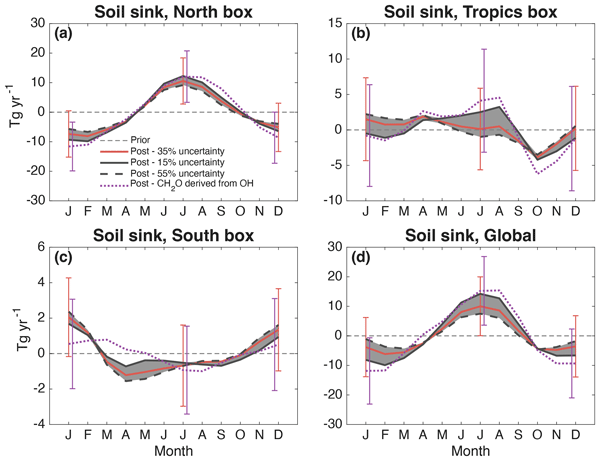
Kane Stone, Candice Chen, Susan Solomon, Luke M. Western, Paul B. Krummel, Gabrielle Pétron, Jens Mühle, and Simon O'Doherty
Atmos. Chem. Phys., 26, 10241–10253, https://doi.org/10.5194/acp-26-10241-2026, https://doi.org/10.5194/acp-26-10241-2026, 2026
Short summary
Short summary
There is growing interest in hydrogens impact on atmospheric chemistry and climate. Here, the seasonality of hydrogen oxidation and loss to microbial activity in soils are investigated using information from the hydrofluorocarbon, HFC-152a. A large seasonal range of the soil sink, over twice that of hydroxyl loss, is seen in the Northern latitudes peaking in the late summer, while the Southern latitudes show a much lower range. This will be useful for validating model hydrogen cycles.
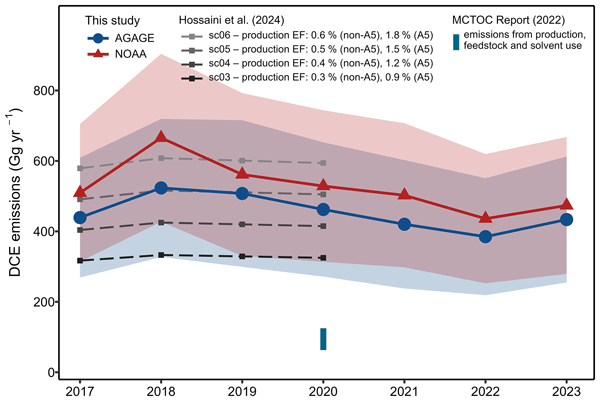
Joseph R. Pitt, Dominique Rust, Anita Ganesan, Luke M. Western, Martin K. Vollmer, Jens Mühle, Tobias Bühlmann, Christina M. Harth, Stephen A. Montzka, Brad D. Hall, Isaac J. Vimont, Alistair J. Manning, Alison L. Redington, Stephan Henne, Daniela B. Melo, Saurabh Annadate, Lionel Constantin, Brendan M. Murphy, Matthew Rigby, Dickon Young, Simon O'Doherty, Angelina Wenger, Chris R. Lunder, Ove Hermansen, Thomas Wagenhäuser, Andreas Engel, Jgor Arduini, Michela Maione, Jaegeun Yun, Blagoj Mitrevski, Paul B. Krummel, Paul J. Fraser, Jooil Kim, Ray H. J. Wang, Tae Siek Rhee, Peter K. Salameh, T. Gerard Spain, Stefan Reimann, Ronald G. Prinn, Ray F. Weiss, and Kieran M. Stanley
Atmos. Chem. Phys., 26, 10167–10195, https://doi.org/10.5194/acp-26-10167-2026, https://doi.org/10.5194/acp-26-10167-2026, 2026
Short summary
Short summary
1,2‑Dichloroethane (DCE) can contribute to the depletion of the stratospheric ozone layer. Whether DCE reaches the stratosphere depends on where and when it is emitted. We present the ongoing measurements of DCE from the Advanced Global Atmospheric Gases Experiment (AGAGE) and National Oceanic and Atmospheric Administration (NOAA) global monitoring networks. For the period 2017–2023, our modelled average global emissions based on these observations align with another study, while regional estimates differ. This suggests remaining uncertainty in the geographical distribution of emissions.
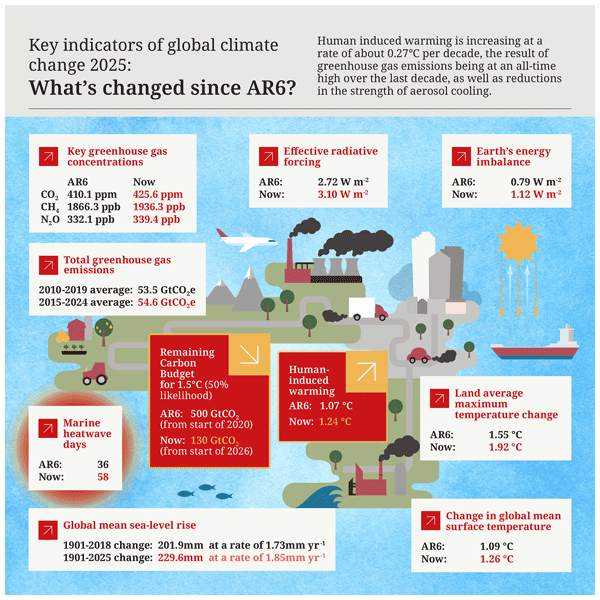
Piers M. Forster, Tristram Walsh, Chris Smith, William F. Lamb, Robin Lamboll, Christophe Cassou, Mathias Hauser, Zeke Hausfather, June-Yi Lee, Matthew D. Palmer, Karina von Schuckmann, Aimée B. A. Slangen, Sophie Szopa, Blair Trewin, Jeongeun Yun, Nathan P. Gillett, Stuart Jenkins, H. Damon Matthews, Krishnan Raghavan, Aurélien Ribes, Joeri Rogelj, Debbie Rosen, Xuebin Zhang, Myles Allen, Robbie M. Andrew, Chris Atkinson, Richard A. Betts, Antonio Bombelli, Samantha N. Burgess, Lijing Cheng, Helen E. Claxton, Pierre Friedlingstein, Thomas L. Frölicher, Catia M. Domingues, Thomas Gasser, Catherine H. Gregory, Rachel M. Hoesly, Daniel Huppmann, Masayoshi Ishii, Christopher Kadow, Alexia Karwat, John Kennedy, Rachel E. Killick, Mahesh V. M. Kovilakam, Paul B. Krummel, Xin Lan, Jean-François Lamarque, Aurélien Liné, Belén Martín-Míguez, Didier P. Monselesan, Colin Morice, Jens Mühle, Pino Mussak, Glen P. Peters, Anna Pirani, Julia Pongratz, Matthew Rigby, Robert Rohde, Abhishek Savita, Sonia I. Seneviratne, Steven J. Smith, Ghassan Taha, Caterina Tassone, Peter Thorne, Christopher Wells, Luke M. Western, Guido R. van der Werf, Susan E. Wijffels, Marco Zecchetto, Junting Zhong, Xiao-Ye Zhang, Valérie Masson-Delmotte, and Panmao Zhai
Earth Syst. Sci. Data, 18, 3889–3933, https://doi.org/10.5194/essd-18-3889-2026, https://doi.org/10.5194/essd-18-3889-2026, 2026
Short summary
Short summary
We give our annual update of key climate indicators. Our work quantifies the human contribution to global warming and the pace of climate change. This represents a large effort by the international community akin to an Intergovernmental Panel on Climate Change (IPCC) report.
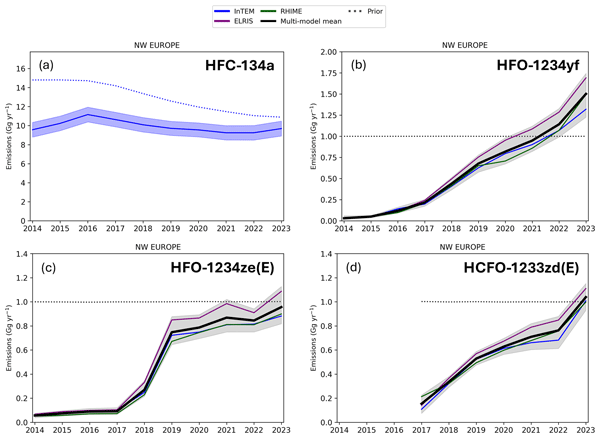
Martin K. Vollmer, Joseph R. Pitt, Dickon Young, Stephan Henne, Blagoj Mitrevski, Jens Mühle, Anita Ganesan, Jgor Arduini, Alistair J. Manning, Thomas Wagenhäuser, Alison L. Redington, Daniela B. Melo, Brendan Murphy, Ray Gluckmann, Kieran M. Stanley, Paul B. Krummel, Chris R. Lunder, Jaegeun Yun, Dominique Rust, Angelina Wenger, Myriam Guillevic, Jooil Kim, Ray H. J. Wang, Tae Siek Rhee, Lionel Constantin, Arnoud Frumau, Christina M. Harth, Peter K. Salameh, Ove Hermansen, Matthew Rigby, Luke M. Western, Andreas Engel, Simon O'Doherty, Sunyoung Park, Michela Maione, Paul J. Fraser, Ronald G. Prinn, Ray F. Weiss, and Stefan Reimann
Atmos. Chem. Phys., 26, 6993–7012, https://doi.org/10.5194/acp-26-6993-2026, https://doi.org/10.5194/acp-26-6993-2026, 2026
Short summary
Short summary
Halogenated olefins (HFOs) are newly emerging compounds in the atmosphere. They are in reach of the definition of PFAS (Per- and polyfluoroalkyl substances) and some decay to the eternal chemical trifluoroacetate (TFA). We provide atmospheric measurements of three HFOs from the large Advanced Global Atmospheric Gases Experiment (AGAGE) network and estimate emissions for Northwest Europe for the first time. We find a quasi-ubiquitous presence in the atmosphere and rapidly increasing emissions.
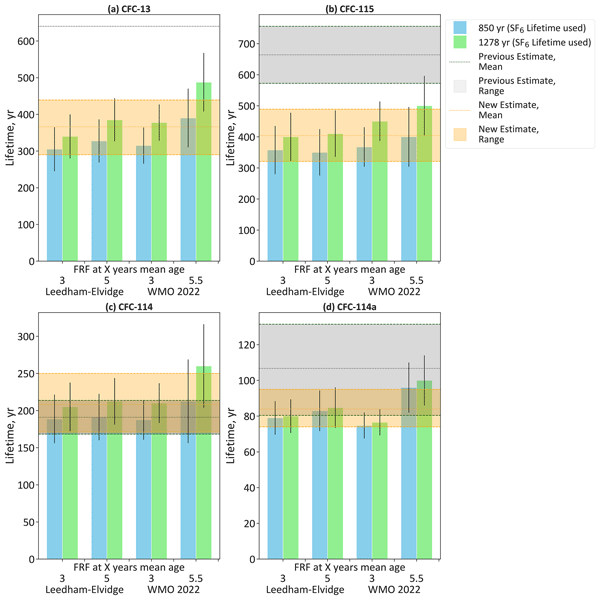
Elinor C. Tuffnell, Emma Leedham-Elvidge, William T. Sturges, Harald Bönisch, Karina E. Adcock, Paul J. Fraser, Paul B. Krummel, David E. Oram, Ray L. Langenfelds, Thomas Röckmann, Luke M. Western, Jens Mühle, and Johannes C. Laube
Atmos. Chem. Phys., 26, 4583–4599, https://doi.org/10.5194/acp-26-4583-2026, https://doi.org/10.5194/acp-26-4583-2026, 2026
Short summary
Short summary
The greater the stratospheric lifetime of chlorofluorocarbons (CFCs), the longer they will deplete ozone. This paper investigates four longer-lived CFCs, and discovers two of them have much shorter lifetimes than previously believed. Demonstrating emissions of these compounds are higher than assumed, to account for their abundance. Unusually this paper uses stratospheric whole-air samples, rather than models or lab-based experiments, to derive policy-relevant metrics for these compounds.
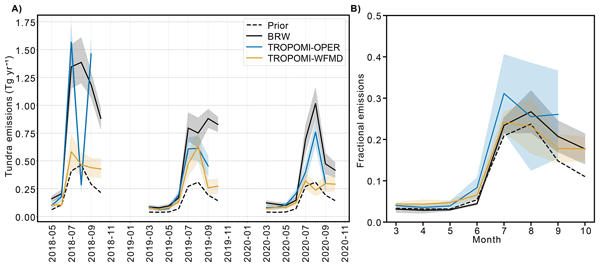
Rebecca H. Ward, Luke M. Western, Rachel L. Tunnicliffe, Elena Fillola, Aki Tsuruta, Tuula Aalto, and Anita L. Ganesan
Atmos. Meas. Tech., 19, 813–837, https://doi.org/10.5194/amt-19-813-2026, https://doi.org/10.5194/amt-19-813-2026, 2026
Short summary
Short summary
We studied methane emissions in Arctic Alaska using satellite observations to assess how well they can monitor this important greenhouse gas. We found that emission estimates varied depending on the satellite data product and were strongly affected by assumptions in the model. Our results highlight the need for careful interpretation of emissions from Arctic satellite data and thorough testing of models, with implications for reliable climate monitoring.
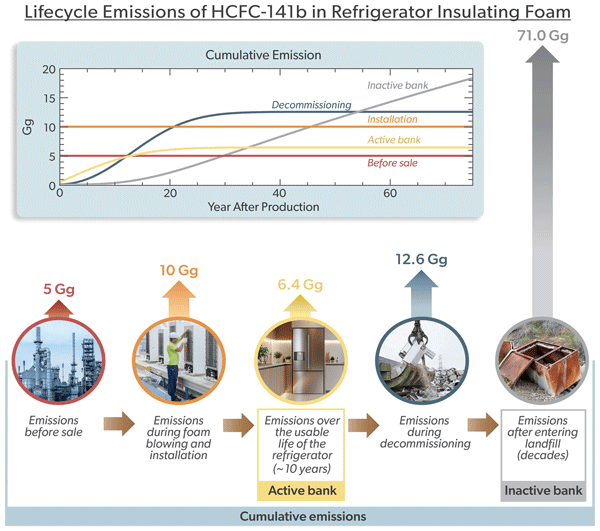
Helen Walter-Terrinoni, John S. Daniel, Chelsea R. Thompson, and Luke M. Western
Atmos. Chem. Phys., 26, 1193–1210, https://doi.org/10.5194/acp-26-1193-2026, https://doi.org/10.5194/acp-26-1193-2026, 2026
Short summary
Short summary
This study presents a new bottom-up model to estimate emissions and banks of long-lived ozone-depleting substances. It is applied here to HCFC-141b. Calculated global emission trends are qualitatively consistent with atmospheric observations from 1990–2017. However, they diverge after 2017, suggesting either a growing additional source or a model deficiency. The easily recoverable portion of the bank is projected to be smaller than previously estimated, impacting future recovery feasibility.
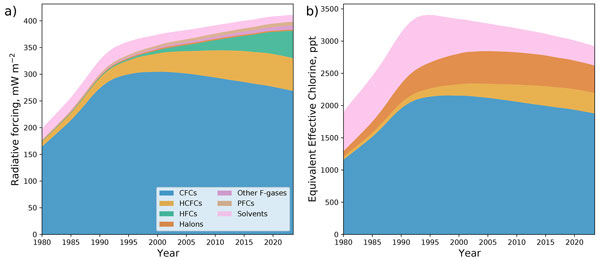
Luke M. Western, Matthew Rigby, Jens Mühle, Paul B. Krummel, Chris R. Lunder, Simon O'Doherty, Stefan Reimann, Martin K. Vollmer, Dickon Young, Ben Adam, Paul J. Fraser, Anita L. Ganesan, Christina M. Harth, Ove Hermansen, Jooil Kim, Ray L. Langenfelds, Zoë M. Loh, Blagoj Mitrevski, Joseph R. Pitt, Peter K. Salameh, Roland Schmidt, Kieran Stanley, Ann R. Stavert, Hsiang-Jui Wang, Ray F. Weiss, and Ronald G. Prinn
Earth Syst. Sci. Data, 17, 6557–6582, https://doi.org/10.5194/essd-17-6557-2025, https://doi.org/10.5194/essd-17-6557-2025, 2025
Short summary
Short summary
We used global measurements and an atmospheric model to estimate how emissions and abundances of 42 chemically and radiatively important trace gases have changed over time. These gases affect the Earth's radiative balance and the ozone layer. Our data sets help track progress in reducing emissions of these gases to the atmosphere. This work supports international efforts to protect the environment by providing clear, long-term, consistent data on how these gases are changing in the atmosphere.
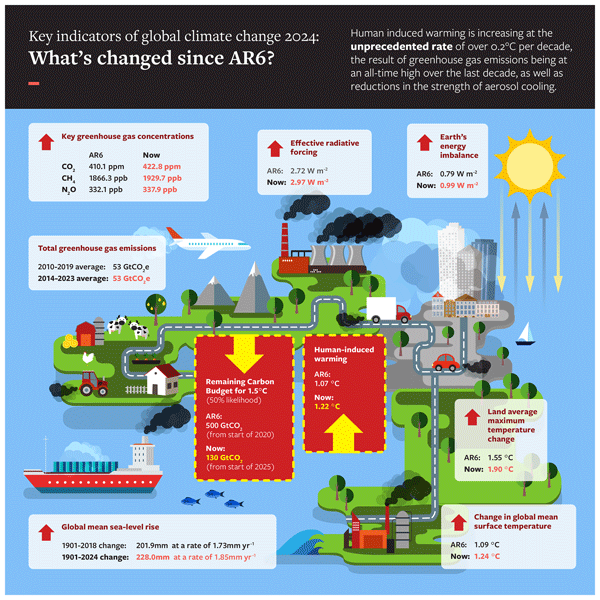
Piers M. Forster, Chris Smith, Tristram Walsh, William F. Lamb, Robin Lamboll, Christophe Cassou, Mathias Hauser, Zeke Hausfather, June-Yi Lee, Matthew D. Palmer, Karina von Schuckmann, Aimée B. A. Slangen, Sophie Szopa, Blair Trewin, Jeongeun Yun, Nathan P. Gillett, Stuart Jenkins, H. Damon Matthews, Krishnan Raghavan, Aurélien Ribes, Joeri Rogelj, Debbie Rosen, Xuebin Zhang, Myles Allen, Lara Aleluia Reis, Robbie M. Andrew, Richard A. Betts, Alex Borger, Jiddu A. Broersma, Samantha N. Burgess, Lijing Cheng, Pierre Friedlingstein, Catia M. Domingues, Marco Gambarini, Thomas Gasser, Johannes Gütschow, Masayoshi Ishii, Christopher Kadow, John Kennedy, Rachel E. Killick, Paul B. Krummel, Aurélien Liné, Didier P. Monselesan, Colin Morice, Jens Mühle, Vaishali Naik, Glen P. Peters, Anna Pirani, Julia Pongratz, Jan C. Minx, Matthew Rigby, Robert Rohde, Abhishek Savita, Sonia I. Seneviratne, Peter Thorne, Christopher Wells, Luke M. Western, Guido R. van der Werf, Susan E. Wijffels, Valérie Masson-Delmotte, and Panmao Zhai
Earth Syst. Sci. Data, 17, 2641–2680, https://doi.org/10.5194/essd-17-2641-2025, https://doi.org/10.5194/essd-17-2641-2025, 2025
Short summary
Short summary
In a rapidly changing climate, evidence-based decision-making benefits from up-to-date and timely information. Here we compile monitoring datasets to track real-world changes over time. To make our work relevant to policymakers, we follow methods from the Intergovernmental Panel on Climate Change (IPCC). Human activities are increasing the Earth's energy imbalance and driving faster sea-level rise compared to the IPCC assessment.

Hanqin Tian, Naiqing Pan, Rona L. Thompson, Josep G. Canadell, Parvadha Suntharalingam, Pierre Regnier, Eric A. Davidson, Michael Prather, Philippe Ciais, Marilena Muntean, Shufen Pan, Wilfried Winiwarter, Sönke Zaehle, Feng Zhou, Robert B. Jackson, Hermann W. Bange, Sarah Berthet, Zihao Bian, Daniele Bianchi, Alexander F. Bouwman, Erik T. Buitenhuis, Geoffrey Dutton, Minpeng Hu, Akihiko Ito, Atul K. Jain, Aurich Jeltsch-Thömmes, Fortunat Joos, Sian Kou-Giesbrecht, Paul B. Krummel, Xin Lan, Angela Landolfi, Ronny Lauerwald, Ya Li, Chaoqun Lu, Taylor Maavara, Manfredi Manizza, Dylan B. Millet, Jens Mühle, Prabir K. Patra, Glen P. Peters, Xiaoyu Qin, Peter Raymond, Laure Resplandy, Judith A. Rosentreter, Hao Shi, Qing Sun, Daniele Tonina, Francesco N. Tubiello, Guido R. van der Werf, Nicolas Vuichard, Junjie Wang, Kelley C. Wells, Luke M. Western, Chris Wilson, Jia Yang, Yuanzhi Yao, Yongfa You, and Qing Zhu
Earth Syst. Sci. Data, 16, 2543–2604, https://doi.org/10.5194/essd-16-2543-2024, https://doi.org/10.5194/essd-16-2543-2024, 2024
Short summary
Short summary
Atmospheric concentrations of nitrous oxide (N2O), a greenhouse gas 273 times more potent than carbon dioxide, have increased by 25 % since the preindustrial period, with the highest observed growth rate in 2020 and 2021. This rapid growth rate has primarily been due to a 40 % increase in anthropogenic emissions since 1980. Observed atmospheric N2O concentrations in recent years have exceeded the worst-case climate scenario, underscoring the importance of reducing anthropogenic N2O emissions.
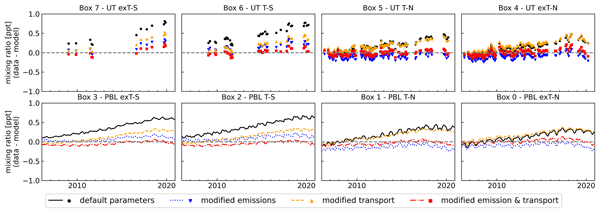
Tanja J. Schuck, Johannes Degen, Eric Hintsa, Peter Hoor, Markus Jesswein, Timo Keber, Daniel Kunkel, Fred Moore, Florian Obersteiner, Matt Rigby, Thomas Wagenhäuser, Luke M. Western, Andreas Zahn, and Andreas Engel
Atmos. Chem. Phys., 24, 689–705, https://doi.org/10.5194/acp-24-689-2024, https://doi.org/10.5194/acp-24-689-2024, 2024
Short summary
Short summary
We study the interhemispheric gradient of sulfur hexafluoride (SF6), a strong long-lived greenhouse gas. Its emissions are stronger in the Northern Hemisphere; therefore, mixing ratios in the Southern Hemisphere lag behind. Comparing the observations to a box model, the model predicts air in the Southern Hemisphere to be older. For a better agreement, the emissions used as model input need to be increased (and their spatial pattern changed), and we need to modify north–south transport.
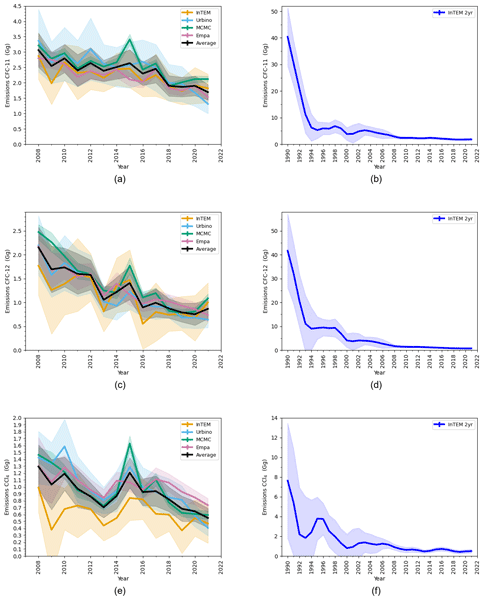
Alison L. Redington, Alistair J. Manning, Stephan Henne, Francesco Graziosi, Luke M. Western, Jgor Arduini, Anita L. Ganesan, Christina M. Harth, Michela Maione, Jens Mühle, Simon O'Doherty, Joseph Pitt, Stefan Reimann, Matthew Rigby, Peter K. Salameh, Peter G. Simmonds, T. Gerard Spain, Kieran Stanley, Martin K. Vollmer, Ray F. Weiss, and Dickon Young
Atmos. Chem. Phys., 23, 7383–7398, https://doi.org/10.5194/acp-23-7383-2023, https://doi.org/10.5194/acp-23-7383-2023, 2023
Short summary
Short summary
Chlorofluorocarbons (CFCs) were used in Europe pre-1990, damaging the stratospheric ozone layer. Legislation has controlled production and use, and global emissions have decreased sharply. The global rate of decline in CFC-11 recently slowed and was partly attributed to illegal emission in eastern China. This study concludes that emissions of CFC-11 in western Europe have not contributed to the unexplained part of the global increase in CFC-11 observed in the last decade.
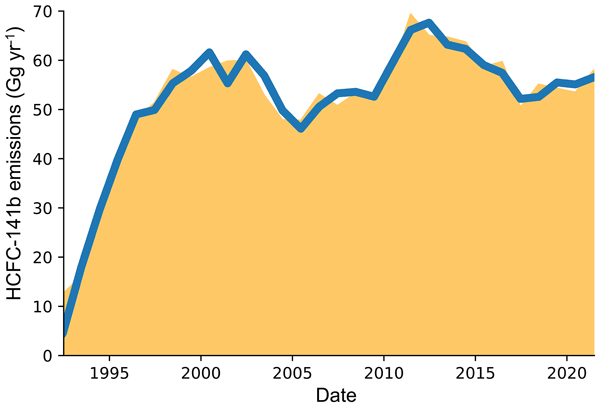
Luke M. Western, Alison L. Redington, Alistair J. Manning, Cathy M. Trudinger, Lei Hu, Stephan Henne, Xuekun Fang, Lambert J. M. Kuijpers, Christina Theodoridi, David S. Godwin, Jgor Arduini, Bronwyn Dunse, Andreas Engel, Paul J. Fraser, Christina M. Harth, Paul B. Krummel, Michela Maione, Jens Mühle, Simon O'Doherty, Hyeri Park, Sunyoung Park, Stefan Reimann, Peter K. Salameh, Daniel Say, Roland Schmidt, Tanja Schuck, Carolina Siso, Kieran M. Stanley, Isaac Vimont, Martin K. Vollmer, Dickon Young, Ronald G. Prinn, Ray F. Weiss, Stephen A. Montzka, and Matthew Rigby
Atmos. Chem. Phys., 22, 9601–9616, https://doi.org/10.5194/acp-22-9601-2022, https://doi.org/10.5194/acp-22-9601-2022, 2022
Short summary
Short summary
The production of ozone-destroying gases is being phased out. Even though production of one of the main ozone-depleting gases, called HCFC-141b, has been declining for many years, the amount that is being released to the atmosphere has been increasing since 2017. We do not know for sure why this is. A possible explanation is that HCFC-141b that was used to make insulating foams many years ago is only now escaping to the atmosphere, or a large part of its production is not being reported.
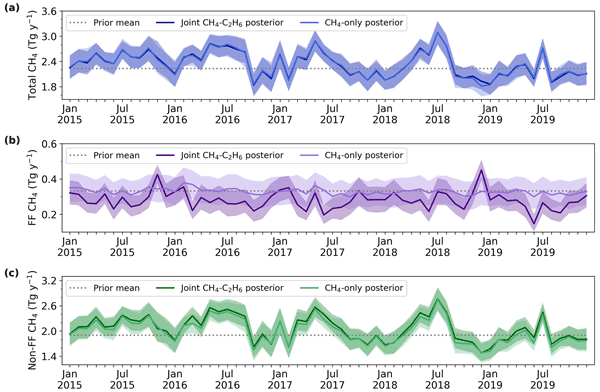
Alice E. Ramsden, Anita L. Ganesan, Luke M. Western, Matthew Rigby, Alistair J. Manning, Amy Foulds, James L. France, Patrick Barker, Peter Levy, Daniel Say, Adam Wisher, Tim Arnold, Chris Rennick, Kieran M. Stanley, Dickon Young, and Simon O'Doherty
Atmos. Chem. Phys., 22, 3911–3929, https://doi.org/10.5194/acp-22-3911-2022, https://doi.org/10.5194/acp-22-3911-2022, 2022
Short summary
Short summary
Quantifying methane emissions from different sources is a key focus of current research. We present a method for estimating sectoral methane emissions that uses ethane as a tracer for fossil fuel methane. By incorporating variable ethane : methane emission ratios into this model, we produce emissions estimates with improved uncertainty characterisation. This method will be particularly useful for studying methane emissions in areas with complex distributions of sources.
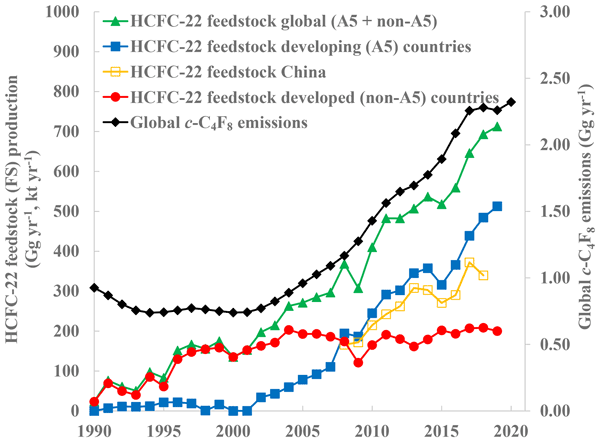
Jens Mühle, Lambert J. M. Kuijpers, Kieran M. Stanley, Matthew Rigby, Luke M. Western, Jooil Kim, Sunyoung Park, Christina M. Harth, Paul B. Krummel, Paul J. Fraser, Simon O'Doherty, Peter K. Salameh, Roland Schmidt, Dickon Young, Ronald G. Prinn, Ray H. J. Wang, and Ray F. Weiss
Atmos. Chem. Phys., 22, 3371–3378, https://doi.org/10.5194/acp-22-3371-2022, https://doi.org/10.5194/acp-22-3371-2022, 2022
Short summary
Short summary
Emissions of the strong greenhouse gas perfluorocyclobutane (c-C4F8) into the atmosphere have been increasing sharply since the early 2000s. These c-C4F8 emissions are highly correlated with the amount of hydrochlorofluorocarbon-22 produced to synthesize polytetrafluoroethylene (known for its non-stick properties) and related chemicals. From this process, c-C4F8 by-product is vented to the atmosphere. Avoiding these unnecessary c-C4F8 emissions could reduce the climate impact of this industry.
Florentin Hiault, Emmanuel Mahieu, Pierre-Henri Lefebvre, Martyn P. Chipperfield, Zihao Wang, Martin K. Vollmer, Jeremy J. Harrison, and Diana Roos
EGUsphere, https://doi.org/10.5194/egusphere-2026-5290, https://doi.org/10.5194/egusphere-2026-5290, 2026
This preprint is open for discussion and under review for Atmospheric Chemistry and Physics (ACP).
Short summary
Short summary
We derived a multi-decadal record of a potent greenhouse gas that is unintentionally released during the production of another industrial chemical. Using infrared measurements collected in the Swiss Alps from 1986 to 2024, we found that the amount of this gas in the atmosphere continued to increase despite efforts to reduce emissions. Comparisons with independent measurements confirmed the reliability of the method and the need for continued long-term monitoring.
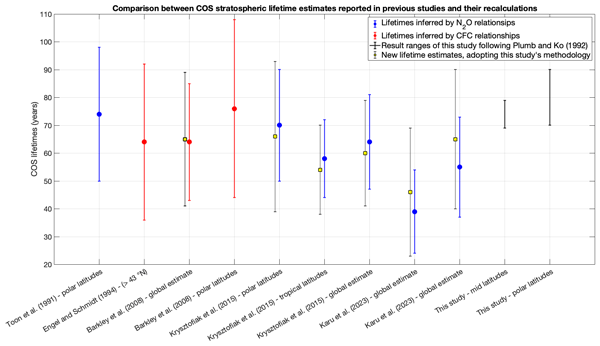
Alessandro Zanchetta, Steven van Heuven, Rigel Kivi, Michel Ramonet, Andreas Engel, Maarten Krol, and Huilin Chen
Atmos. Chem. Phys., 26, 13909–13927, https://doi.org/10.5194/acp-26-13909-2026, https://doi.org/10.5194/acp-26-13909-2026, 2026
Short summary
Short summary
In this study, we calculate the mean lifetime of carbonyl sulfide (COS) and methane (CH4) in the stratosphere from continuous vertical profiles sampled with balloon-borne instruments. We used two methods based on the stratospheric relationship of these gas species with N2O. The estimated stratospheric lifetime range is 69–90 years for COS and 146–172 years for CH4. These results are consistent with other studies and suggest no long-term trends in the stratospheric lifetime of these gas species.
Nawid Keshtmand, Elena Fillola, Jeff Clark, Raul Santos-Rodriguez, and Matthew Rigby
EGUsphere, https://doi.org/10.5194/egusphere-2026-3361, https://doi.org/10.5194/egusphere-2026-3361, 2026
This preprint is open for discussion and under review for Geoscientific Model Development (GMD).
Short summary
Short summary
Scientists track greenhouse gases by measuring them in the air and working backwards to find their sources. This requires powerful computer models that are slow and expensive to run. We built an AI model called GATESBackground that quickly estimates how much gas drifts into a region from outside its borders. Tested over South America, it matched the traditional model closely while running far faster, helping make pollution tracking from satellites quicker, cheaper, and more practical worldwide.
Clara M. Nussbaumer, Colette L. Heald, Teresa Campos, Eric A. Kort, Paul B. Krummel, Ray L. Langenfelds, Monica Madronich, Kathryn McKain, Gabrielle Pétron, Ann Stavert, and Steven C. Wofsy
EGUsphere, https://doi.org/10.5194/egusphere-2026-5476, https://doi.org/10.5194/egusphere-2026-5476, 2026
This preprint is open for discussion and under review for Atmospheric Chemistry and Physics (ACP).
Short summary
Short summary
Changes in emissions and climate increasingly impact the remote Southern Hemisphere and we know little about the consequences for the atmospheric composition. We investigate if rapid increases in the greenhouse gas methane since 2008 have led to increases in carbon monoxide. A global model confirms this hypothesis and shows that enhanced emissions from plants and rising temperatures also contribute to the trend. Observations are inconsistent and highlight the need for more accurate measurements.
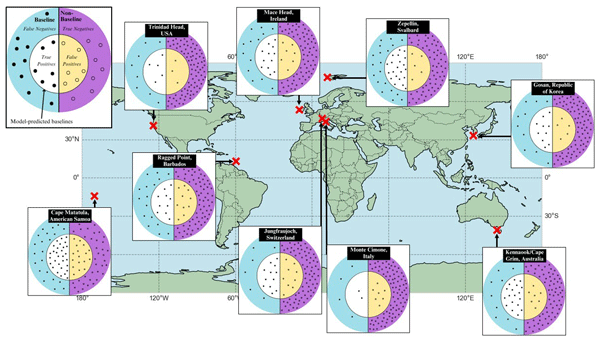
Kirstin Gerrand, Elena Fillola, Alistair J. Manning, Jgor Arduini, Paul B. Krummel, Chris R. Lunder, Jens Mühle, Simon O'Doherty, Sunyoung Park, Ronald G. Prinn, Stefan Reimann, Dickon Young, and Matthew Rigby
Atmos. Meas. Tech., 19, 5387–5400, https://doi.org/10.5194/amt-19-5387-2026, https://doi.org/10.5194/amt-19-5387-2026, 2026
Short summary
Short summary
To analyse long-term trends in atmospheric trace gas concentrations, it is important to identify data points minimally affected by local pollution sources or air masses carried from other latitudes or altitudes. Traditional methods for detecting these “baselines” are computationally expensive or lack a basis in physical principles. This paper introduces a machine-learning method that uses meteorological data and offers significantly lower computational costs compared to physics-based techniques.
Wolfgang Woiwode, Bärbel Vogel, Valentin Lauther, Jens-Uwe Grooß, Jeremy Harrison, Sören Johansson, Jörn Ungermann, Peter Braesicke, Markus Dick, Andreas Engel, Felix Friedl-Vallon, Norbert Glatthor, Thomas Gulde, Michael Höpfner, Markus Jesswein, Jan Kaumanns, Timo Keber, Anne Kleinert, Erik Kretschmer, Guido Maucher, Tom Neubert, Hans Nordmeyer, Christof Piesch, Felix Plöger, Peter Preusse, Markus Retzlaff, Sebastian Rhode, Heinz Rongen, Georg Schardt, Tanja Schuck, Björn-Martin Sinnhuber, Johannes Strobel, Franziska Trinkl, Ronja Van Luijt, Stefan Versick, C. Michael Volk, Gerald Wetzel, Peter Hoor, and Martin Riese
EGUsphere, https://doi.org/10.5194/egusphere-2026-3271, https://doi.org/10.5194/egusphere-2026-3271, 2026
This preprint is open for discussion and under review for Atmospheric Chemistry and Physics (ACP).
Short summary
Short summary
Filaments of CH2Cl2-rich air are revealed by airborne infrared limb-imaging observations in late summer 2023 above the North Pacific, Canada and Alaska and traced back to the Asian Summer Monsoon region. Involving new spectroscopic data, high CH2Cl2 levels were retrieved in the troposphere and moderate enhancements also in air masses with characteristics of the lowermost stratosphere. Mesoscale filaments are shown to transport substantial amounts of CH2Cl2 across the North Pacific.
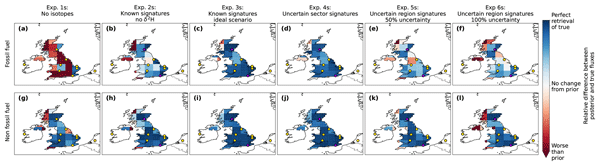
Alice E. Ramsden, Anita L. Ganesan, Matthew Rigby, Chris Rennick, Tim Arnold, Emmal Safi, Edward Chung, Dafina Kikaj, Cameron Yeo, Dave Lowry, Pete Levy, Simon O'Doherty, Kieran M. Stanley, Dickon Young, Joe Pitt, Damien Martin, Morgan Lopez, Michel Ramonet, Grant L. Forster, Arnoud Frumau, and Alistair J. Manning
Atmos. Chem. Phys., 26, 11421–11448, https://doi.org/10.5194/acp-26-11421-2026, https://doi.org/10.5194/acp-26-11421-2026, 2026
Short summary
Short summary
Methane is emitted from a range of anthropogenic and natural sources, each with a characteristic isotope ratio signature. We present a method for estimating emissions from multiple sources using isotopic signatures and observations of atmospheric methane isotope ratios. We show the importance of considering isotopic signature uncertainty and demonstrate how our current understanding of these signatures may be limiting this method’s ability to reduce uncertainties in emissions estimates.
Lucy Hart, Ryan Hossaini, Oliver Wild, Crispin Halsall, Martin K. Vollmer, and David Sherry
EGUsphere, https://doi.org/10.5194/egusphere-2026-4613, https://doi.org/10.5194/egusphere-2026-4613, 2026
Short summary
Short summary
HFO-1234yf is increasingly used in cars because of its low climate impact but once emitted to the atmosphere it forms trifluoroacetic acid (TFA), a chemical that remains on Earth permanently. We present the first global emission inventory of HFO-1234yf from cars and compare our results to atmospheric measurements. Using an atmospheric chemistry model, we found that TFA produced from this source is rapidly growing and most TFA is deposited outside of the region HFO-1234yf was emitted.
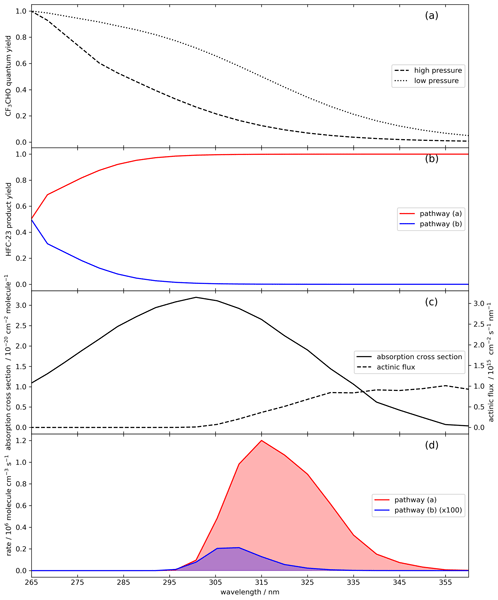
Ben Adam, Rayne Holland, Daniel Van Hoomissen, James B. Burkholder, M. Anwar H. Khan, Paul Griffiths, Jens Mühle, Dudley Shallcross, and Matt Rigby
Atmos. Chem. Phys., 26, 10979–10996, https://doi.org/10.5194/acp-26-10979-2026, https://doi.org/10.5194/acp-26-10979-2026, 2026
Short summary
Short summary
Some man-made gases emitted into the atmosphere can break down to form a powerful greenhouse gas called HFC-23 (hydrofluorocarbons). In this study, we use a full three-dimensional model of the atmosphere and its chemistry to improve on previous work and determine how much HFC-23 is produced from this route. Our model estimates HFC-23 production ten times lower than previously suggested, confirming that this source is a very small contributor to the total amount of HFC-23 in the atmosphere.
Kane Stone, Candice Chen, Susan Solomon, Luke M. Western, Paul B. Krummel, Gabrielle Pétron, Jens Mühle, and Simon O'Doherty
Atmos. Chem. Phys., 26, 10241–10253, https://doi.org/10.5194/acp-26-10241-2026, https://doi.org/10.5194/acp-26-10241-2026, 2026
Short summary
Short summary
There is growing interest in hydrogens impact on atmospheric chemistry and climate. Here, the seasonality of hydrogen oxidation and loss to microbial activity in soils are investigated using information from the hydrofluorocarbon, HFC-152a. A large seasonal range of the soil sink, over twice that of hydroxyl loss, is seen in the Northern latitudes peaking in the late summer, while the Southern latitudes show a much lower range. This will be useful for validating model hydrogen cycles.
Joseph R. Pitt, Dominique Rust, Anita Ganesan, Luke M. Western, Martin K. Vollmer, Jens Mühle, Tobias Bühlmann, Christina M. Harth, Stephen A. Montzka, Brad D. Hall, Isaac J. Vimont, Alistair J. Manning, Alison L. Redington, Stephan Henne, Daniela B. Melo, Saurabh Annadate, Lionel Constantin, Brendan M. Murphy, Matthew Rigby, Dickon Young, Simon O'Doherty, Angelina Wenger, Chris R. Lunder, Ove Hermansen, Thomas Wagenhäuser, Andreas Engel, Jgor Arduini, Michela Maione, Jaegeun Yun, Blagoj Mitrevski, Paul B. Krummel, Paul J. Fraser, Jooil Kim, Ray H. J. Wang, Tae Siek Rhee, Peter K. Salameh, T. Gerard Spain, Stefan Reimann, Ronald G. Prinn, Ray F. Weiss, and Kieran M. Stanley
Atmos. Chem. Phys., 26, 10167–10195, https://doi.org/10.5194/acp-26-10167-2026, https://doi.org/10.5194/acp-26-10167-2026, 2026
Short summary
Short summary
1,2‑Dichloroethane (DCE) can contribute to the depletion of the stratospheric ozone layer. Whether DCE reaches the stratosphere depends on where and when it is emitted. We present the ongoing measurements of DCE from the Advanced Global Atmospheric Gases Experiment (AGAGE) and National Oceanic and Atmospheric Administration (NOAA) global monitoring networks. For the period 2017–2023, our modelled average global emissions based on these observations align with another study, while regional estimates differ. This suggests remaining uncertainty in the geographical distribution of emissions.
Julian Weng, Yufang Hao, Benjamin T. Brem, Tianqu Cui, Peeyush Khare, Lubna Dada, Kaspar R. Daellenbach, Sophie Darfeuil, Gaëlle Uzu, Jean-Luc Jaffrezo, Martin Steinbacher, Stefan Reimann, Thaleia Gkraikou, Konstantina Oikonomou, Jean Sciare, Martine Collaud Coen, Claudia Mohr, Andre S. H. Prévôt, Martin Gysel-Beer, Imad El Haddad, and Patrik Winiger
EGUsphere, https://doi.org/10.5194/egusphere-2026-3660, https://doi.org/10.5194/egusphere-2026-3660, 2026
Short summary
Short summary
Long-term observations at the Jungfraujoch High Altitude Research Station show that, alongside air mass transport, sustained oxidative processing shaped by atmospheric water vapor plays a central role in driving aerosol loading and composition. Combining detailed aerosol chemical characterization with process-level insights, we provide important observational benchmarks for improving atmospheric model performance in the remote free troposphere, where uncertainties remain particularly high.
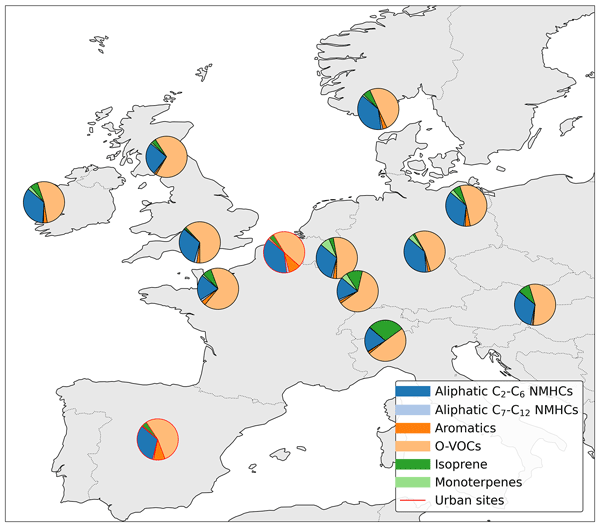
Wenche Aas, Thérèse Salameh, Robert Wegener, Heidi Hellén, Jean-Luc Jaffrezo, Pontus Roldin, Elisabeth Alonso-Blanco, Andres Alastuey, Crist Amelynck, Jgor Arduini, Benjamin Bergmans, Marie Bertrand, Agnes Borbon, Efstratios Bourtsoukidis, Laetitia Bouvier, David Butterfield, Iris Buxbaum, Darius Ceburnis, Anja Claude, Augustin Colette, Aurélie Colomb, Sophie Darfeuil, James Dernie, Maximilien Desservettaz, Elías Díaz-Ramiro, Marvin Dufresne, René Dubus, Mario Duval, Marie Dury, Anna Font, Kirsten N. Fossum, Evelyn Freney, Gotzon Gangoiti, Yao Ge, Maria Carmen Gomez, Francisco J. Gómez-Moreno, Marie Gohy, Valérie Gros, Paul Hamer, Bryan Hellack, Hartmut Herrmann, Robert Holla, Adéla Holubová, Niels R. Jensen, Tuija Jokinen, Matthew Jones, Uwe Käfer, Lukas Kesper, Dieter Klemp, Dagmar Kubistin, Angela Marinoni, Martina Mazzini, Vy Ngoc Thuy Dinh, Jurgita Ovadnevaite, Tuukka Petäjä, Miguel Portillo-Estrada, Jitka Přívozníková, Jean-Philippe Putaud, Stefan Reimann, Laura Renzi, Veronique Riffault, Stuart Ritchie, Chris Robins, Begoña Artíñano Rodríguez de Torres, Laurent Poulain, Julian Rüdiger, Agnieszka Sanocka, Estibaliz Saez de Camara Oleaga, Niels Schoon, Roger Seco, Ivan Simmons, Leïla Simon, David Simpson, Sverre Solberg, Emmanuel Tison, August Thomasson, Svetlana Tsyro, Marsailidh Twigg, Toni Tykkä, Bert Verreyken, Ågot Watne, Katie Williams, Ana Maria Yáñez-Serrano, Karen Yeung, Ilona Ylivinkka, and Karl Espen Yttri
Atmos. Chem. Phys., 26, 8717–8751, https://doi.org/10.5194/acp-26-8717-2026, https://doi.org/10.5194/acp-26-8717-2026, 2026
Short summary
Short summary
A one-week intensive measurement campaign during the 2022 European heatwave included monitoring of ozone, volatile organic compounds, aerosol chemical composition, and organic tracers to investigate air pollution sources. Results showed that emissions from vegetation and human activities contributed to peaks in ozone and secondary organic aerosol particles. Differences between measurements and model simulations underline the need for better characterization of sources and formation pathways.
Piers M. Forster, Tristram Walsh, Chris Smith, William F. Lamb, Robin Lamboll, Christophe Cassou, Mathias Hauser, Zeke Hausfather, June-Yi Lee, Matthew D. Palmer, Karina von Schuckmann, Aimée B. A. Slangen, Sophie Szopa, Blair Trewin, Jeongeun Yun, Nathan P. Gillett, Stuart Jenkins, H. Damon Matthews, Krishnan Raghavan, Aurélien Ribes, Joeri Rogelj, Debbie Rosen, Xuebin Zhang, Myles Allen, Robbie M. Andrew, Chris Atkinson, Richard A. Betts, Antonio Bombelli, Samantha N. Burgess, Lijing Cheng, Helen E. Claxton, Pierre Friedlingstein, Thomas L. Frölicher, Catia M. Domingues, Thomas Gasser, Catherine H. Gregory, Rachel M. Hoesly, Daniel Huppmann, Masayoshi Ishii, Christopher Kadow, Alexia Karwat, John Kennedy, Rachel E. Killick, Mahesh V. M. Kovilakam, Paul B. Krummel, Xin Lan, Jean-François Lamarque, Aurélien Liné, Belén Martín-Míguez, Didier P. Monselesan, Colin Morice, Jens Mühle, Pino Mussak, Glen P. Peters, Anna Pirani, Julia Pongratz, Matthew Rigby, Robert Rohde, Abhishek Savita, Sonia I. Seneviratne, Steven J. Smith, Ghassan Taha, Caterina Tassone, Peter Thorne, Christopher Wells, Luke M. Western, Guido R. van der Werf, Susan E. Wijffels, Marco Zecchetto, Junting Zhong, Xiao-Ye Zhang, Valérie Masson-Delmotte, and Panmao Zhai
Earth Syst. Sci. Data, 18, 3889–3933, https://doi.org/10.5194/essd-18-3889-2026, https://doi.org/10.5194/essd-18-3889-2026, 2026
Short summary
Short summary
We give our annual update of key climate indicators. Our work quantifies the human contribution to global warming and the pace of climate change. This represents a large effort by the international community akin to an Intergovernmental Panel on Climate Change (IPCC) report.
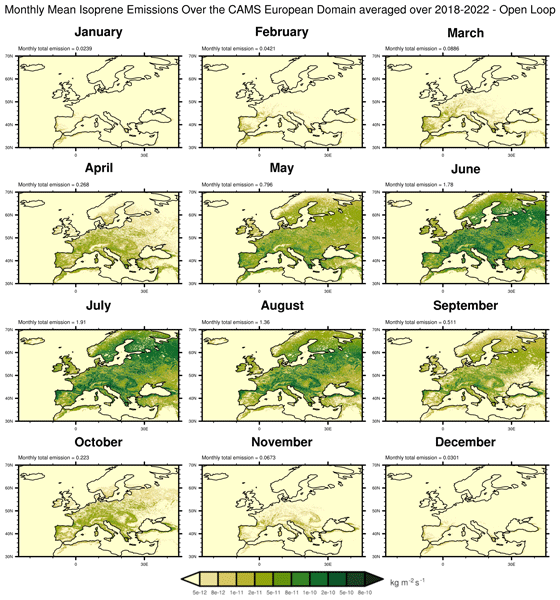
Paul D. Hamer, Miha Markelj, Oscar Rojas-Munoz, Bertrand Bonan, Jean-Christophe Calvet, Virginie Marécal, Alex Guenther, Heidi Trimmel, Islen Vallejo, Sabine Eckhardt, Gabriela Sousa Santos, Katerina Sindelarova, David Simpson, Norbert Schmidbauer, Heidi Hellén, Pascal Rubli, Stefan Reimann, Anja Claude, Dagmar Kubistin, Julie Cozic, James Dernie, and Leonor Tarrasón
Earth Syst. Sci. Data, 18, 3635–3669, https://doi.org/10.5194/essd-18-3635-2026, https://doi.org/10.5194/essd-18-3635-2026, 2026
Short summary
Short summary
Plants release gases like isoprene that can form ozone and affect air quality. Using models and satellite data, we mapped the emissions of isoprene from plants across Europe and found that droughts can reduce leaf growth, leading to lower emissions. This shows that to understand and predict air quality, we must also understand how drought impacts vegetation. Our findings highlight the value of linking extreme weather, plant health, and pollution in models of the Earth system as a whole.
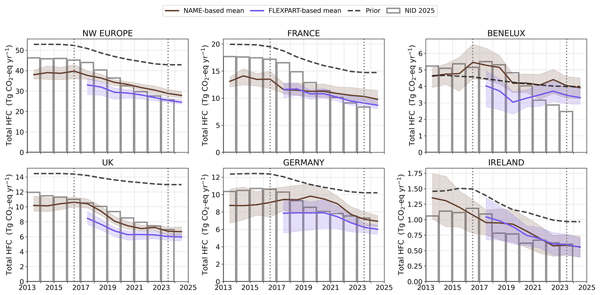
Hélène De Longueville, Daniela B. Melo, Alison L. Redington, Alice Ramsden, Alexandre Danjou, Peter Andrews, Joseph Pitt, Brendan Murphy, Lionel Constantin, Kieran M. Stanley, Simon O'Doherty, Angelina Wenger, Dickon Young, Andreas Engel, Tanja Schuck, Katharina Meixner, Thomas Wagenhaeuser, Fides Gad, Martin K. Vollmer, Stefan Reimann, Michela Maoine, Jgor Arduini, Chris Lunder, Norbert Schmidtbauer, László Haszpra, Mihály Molnár, Arnoud Frumau, Cedric Couret, Matthew Rigby, Stephan Henne, Alistair Manning, and Anita L. Ganesan
Atmos. Chem. Phys., 26, 7647–7675, https://doi.org/10.5194/acp-26-7647-2026, https://doi.org/10.5194/acp-26-7647-2026, 2026
Short summary
Short summary
This study estimates emissions of hydrofluorocarbons, potent greenhouse gases, in north-western Europe using atmospheric observations and atmospheric modelling. The estimates are compared with nationally reported emissions submitted to the United Nations. Overall, our results are consistent with reported values, although differences are found for some gases and countries. The findings indicate that emissions in north-western Europe are declining, reflecting the effects of climate regulations.
Emmal Safi, Joe Pitt, Grant Forster, Chris Rennick, Simon O’Doherty, Dickon Young, Kanokrat Charoenpornpukdee, Nick Garrard, Dafina Kikaj, Andrew Manning, Gerard Spain, Damien Martin, Morgan Lopez, Michel Ramonet, and Kieran Stanely
EGUsphere, https://doi.org/10.5194/egusphere-2026-1802, https://doi.org/10.5194/egusphere-2026-1802, 2026
Short summary
Short summary
We compared whole and synthetic-air reference materials (RMs) for investigating offsets in greenhouse gas measurements so data from different sites/networks can be trusted when combined. By sending whole and synthetic-air (RMs) to six sites and measuring under routine field conditions, we found whole-air gives the most precise results, especially for carbon dioxide and nitrous oxide. Synthetic-air worked fairly well for methane but synthetic-air RMs needs lower uncertainty before wide use.
Martin K. Vollmer, Joseph R. Pitt, Dickon Young, Stephan Henne, Blagoj Mitrevski, Jens Mühle, Anita Ganesan, Jgor Arduini, Alistair J. Manning, Thomas Wagenhäuser, Alison L. Redington, Daniela B. Melo, Brendan Murphy, Ray Gluckmann, Kieran M. Stanley, Paul B. Krummel, Chris R. Lunder, Jaegeun Yun, Dominique Rust, Angelina Wenger, Myriam Guillevic, Jooil Kim, Ray H. J. Wang, Tae Siek Rhee, Lionel Constantin, Arnoud Frumau, Christina M. Harth, Peter K. Salameh, Ove Hermansen, Matthew Rigby, Luke M. Western, Andreas Engel, Simon O'Doherty, Sunyoung Park, Michela Maione, Paul J. Fraser, Ronald G. Prinn, Ray F. Weiss, and Stefan Reimann
Atmos. Chem. Phys., 26, 6993–7012, https://doi.org/10.5194/acp-26-6993-2026, https://doi.org/10.5194/acp-26-6993-2026, 2026
Short summary
Short summary
Halogenated olefins (HFOs) are newly emerging compounds in the atmosphere. They are in reach of the definition of PFAS (Per- and polyfluoroalkyl substances) and some decay to the eternal chemical trifluoroacetate (TFA). We provide atmospheric measurements of three HFOs from the large Advanced Global Atmospheric Gases Experiment (AGAGE) network and estimate emissions for Northwest Europe for the first time. We find a quasi-ubiquitous presence in the atmosphere and rapidly increasing emissions.
Johannes Degen, Nicole Bobrowski, Mélisende M. Bossard, Lucie Boucher, Huilin Chen, Andreas Engel, Bastien H. Geil, Giovanni B. Giuffrida, Steven van Heuven, Thorsten Hoffmann, Niklas Karbach, Gianluigi Ortenzi, and Tanja J. Schuck
EGUsphere, https://doi.org/10.5194/egusphere-2026-1865, https://doi.org/10.5194/egusphere-2026-1865, 2026
This preprint is open for discussion and under review for Atmospheric Measurement Techniques (AMT).
Short summary
Short summary
Observations in volcanic plumes often rely on Uncrewed Aerial Systems (UAS). In July 2024, we used the active AirCore technique with UAS to probe the plumes of Mount Etna (Italy). This was the first time to use this technique inside volcanic plumes. AirCore samples are stored in long coils for laboratory analyses delivering high-quality trace gas measurements. We observed enhanced mole fractions of CO2 and often also of CO. allowing conclusions on oxidation processes inside the crater.
Elinor C. Tuffnell, Emma Leedham-Elvidge, William T. Sturges, Harald Bönisch, Karina E. Adcock, Paul J. Fraser, Paul B. Krummel, David E. Oram, Ray L. Langenfelds, Thomas Röckmann, Luke M. Western, Jens Mühle, and Johannes C. Laube
Atmos. Chem. Phys., 26, 4583–4599, https://doi.org/10.5194/acp-26-4583-2026, https://doi.org/10.5194/acp-26-4583-2026, 2026
Short summary
Short summary
The greater the stratospheric lifetime of chlorofluorocarbons (CFCs), the longer they will deplete ozone. This paper investigates four longer-lived CFCs, and discovers two of them have much shorter lifetimes than previously believed. Demonstrating emissions of these compounds are higher than assumed, to account for their abundance. Unusually this paper uses stratospheric whole-air samples, rather than models or lab-based experiments, to derive policy-relevant metrics for these compounds.
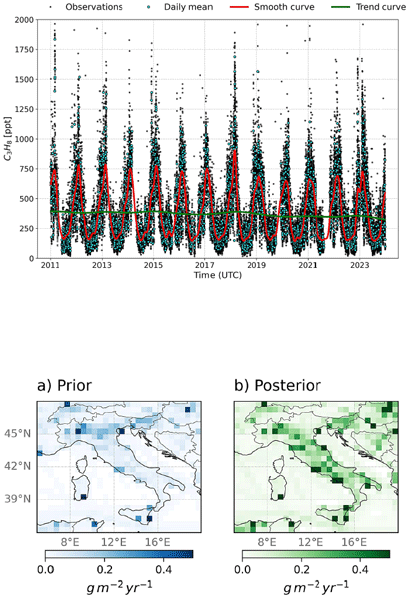
Enrico Mancinelli, Saurabh Annadate, Paolo Cristofanelli, Umberto Giostra, Michela Maione, Stefan Reimann, and Jgor Arduini
Atmos. Chem. Phys., 26, 4105–4129, https://doi.org/10.5194/acp-26-4105-2026, https://doi.org/10.5194/acp-26-4105-2026, 2026
Short summary
Short summary
Propane is the second most abundant non-methane hydrocarbon in the atmosphere and is mainly emitted by anthropogenic activities. Despite playing a significant role in atmospheric chemistry, propane emission sources are poorly defined. Analysis of high-frequency long-term measurements at the GAW-WMO (Global Atmosphere Watch-World Meteorological Organization) station of Monte Cimone Italy make some improvements in identifications of different contributions at the regional scale.
Ariana Elena Castillo, Marianna Linz, Eric Ray, Laura N. Saunders, Kaley A. Walker, Gabriele P. Stiller, Todd A. Mooring, and Stephen Bourguet
EGUsphere, https://doi.org/10.5194/egusphere-2026-1236, https://doi.org/10.5194/egusphere-2026-1236, 2026
Short summary
Short summary
In the stratosphere, transport strongly impacts the distribution of long-lived trace gases, and age of air is a measure of transport times in the stratosphere. We present two datasets that capture the structure and seasonality of stratospheric transport in both hemispheres: (1) latitude-varying empirical relationships of tracers to calculate a (2) 7-year timeseries of age of air. We lay groundwork for a multidecade timeseries of age to understand long-term transport in a warming climate.
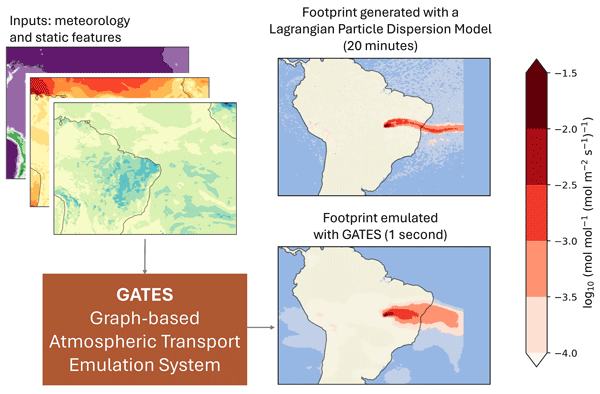
Elena Fillola, Raul Santos-Rodriguez, Rachel Tunnicliffe, Jeffrey N. Clark, Nawid Keshtmand, Anita Ganesan, and Matthew Rigby
Geosci. Model Dev., 19, 1893–1915, https://doi.org/10.5194/gmd-19-1893-2026, https://doi.org/10.5194/gmd-19-1893-2026, 2026
Short summary
Short summary
Satellite-based greenhouse gas measurements can be used in “inverse models” to improve emissions reporting, but one of the key components, the simulations of atmospheric transport, struggle to scale to large datasets. We introduce the model GATES, an AI-driven emulator that outputs transport plumes 1000× faster than traditional models. Applied to Brazil’s methane emissions, GATES produces estimates consistent with physics-based methods, offering a scalable path for timely emissions monitoring.
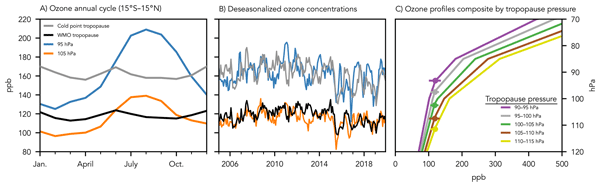
Stephen Bourguet
Atmos. Chem. Phys., 26, 2691–2706, https://doi.org/10.5194/acp-26-2691-2026, https://doi.org/10.5194/acp-26-2691-2026, 2026
Short summary
Short summary
The tropical tropopause is a key region that separates the atmosphere’s two lowermost layers. Ozone concentrations at this level have important implications for atmospheric chemistry and circulation. In this work, we explore how tropical tropopause ozone varies in observations and chemistry-climate models. We show that fluctuations in the elevation of the tropical tropopause play a role in controlling the nearby ozone levels, with implications for future climate and stratospheric ozone.
Rebecca H. Ward, Luke M. Western, Rachel L. Tunnicliffe, Elena Fillola, Aki Tsuruta, Tuula Aalto, and Anita L. Ganesan
Atmos. Meas. Tech., 19, 813–837, https://doi.org/10.5194/amt-19-813-2026, https://doi.org/10.5194/amt-19-813-2026, 2026
Short summary
Short summary
We studied methane emissions in Arctic Alaska using satellite observations to assess how well they can monitor this important greenhouse gas. We found that emission estimates varied depending on the satellite data product and were strongly affected by assumptions in the model. Our results highlight the need for careful interpretation of emissions from Arctic satellite data and thorough testing of models, with implications for reliable climate monitoring.
Helen Walter-Terrinoni, John S. Daniel, Chelsea R. Thompson, and Luke M. Western
Atmos. Chem. Phys., 26, 1193–1210, https://doi.org/10.5194/acp-26-1193-2026, https://doi.org/10.5194/acp-26-1193-2026, 2026
Short summary
Short summary
This study presents a new bottom-up model to estimate emissions and banks of long-lived ozone-depleting substances. It is applied here to HCFC-141b. Calculated global emission trends are qualitatively consistent with atmospheric observations from 1990–2017. However, they diverge after 2017, suggesting either a growing additional source or a model deficiency. The easily recoverable portion of the bank is projected to be smaller than previously estimated, impacting future recovery feasibility.
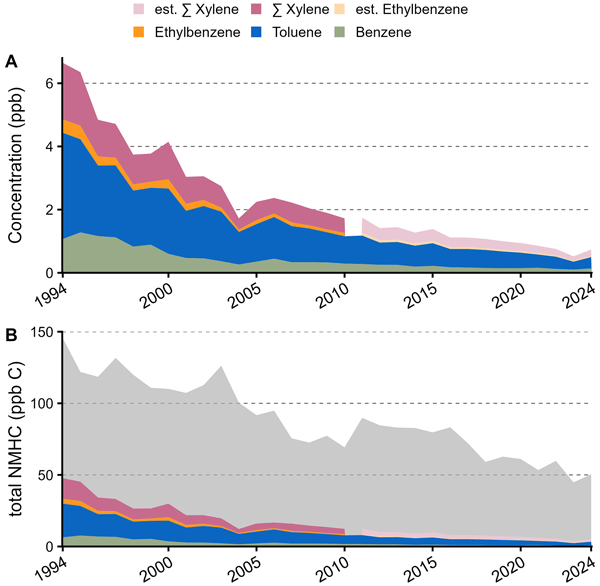
Zoé Le Bras, Pascal Rubli, Christoph Hueglin, and Stefan Reimann
Atmos. Chem. Phys., 26, 869–878, https://doi.org/10.5194/acp-26-869-2026, https://doi.org/10.5194/acp-26-869-2026, 2026
Short summary
Short summary
Since 1994, harmful air pollutants called BTEX (benzene, toluene, ethylbenzene and xylene) have declined by up to 89 % in the suburban area of Zurich thanks to the introduction of various air quality directives in Switzerland and in Europe. Although their contribution to ozone formation became less abundant, they still significantly contribute to the formation of airborne particles. While this study shows clear improvements in air quality, it also highlights the need for further efforts.
Benjamin Püschel, Martin Vojta, Luise Kandler, Molly Crotwell, Andreas Engel, Paul B. Krummel, Chris R. Lunder, Jens Mühle, Simon O'Doherty, Ronald G. Prinn, Kieran M. Stanley, Isaac Vimont, Martin K. Vollmer, Thomas Wagenhäuser, Ray F. Weiss, Dickon Young, and Andreas Stohl
EGUsphere, https://doi.org/10.5194/egusphere-2025-5656, https://doi.org/10.5194/egusphere-2025-5656, 2025
Short summary
Short summary
We present global and regionally resolved emissions of the two highly potent greenhouse gases CF4 and C2F6 from 2006 to 2023, based on atmospheric measurements and transport modeling. In nearly all regions studied, our results show that national reports and industry-based data underestimate emissions. While emissions in Europe and the U.S. declined, we find rising emissions in South, Southeast, and East Asia. China and India are the major contributors to global emissions in recent years.
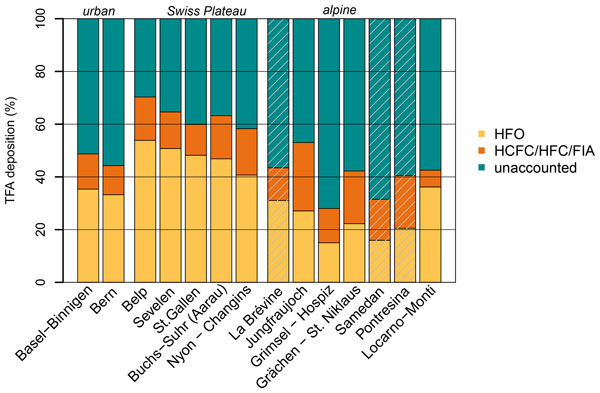
Stephan Henne, Florian R. Storck, Henry Wöhrnschimmel, Markus Leuenberger, Martin K. Vollmer, and Stefan Reimann
Atmos. Chem. Phys., 25, 18157–18186, https://doi.org/10.5194/acp-25-18157-2025, https://doi.org/10.5194/acp-25-18157-2025, 2025
Short summary
Short summary
We observed the persistent, man-made trifluoroacetate (TFA) in precipitation and surface waters. Atmospheric simulations attributed TFA to precursor gases in the atmosphere. Although recently increasing concentrations could be followed, gaps in the budget indicate limited understanding of the atmospheric degradation of widely used fluorocarbons. Without additional regulation, environmental TFA concentrations are expected to rise strongly, necessitating continued monitoring and risk assessment.
Luke M. Western, Matthew Rigby, Jens Mühle, Paul B. Krummel, Chris R. Lunder, Simon O'Doherty, Stefan Reimann, Martin K. Vollmer, Dickon Young, Ben Adam, Paul J. Fraser, Anita L. Ganesan, Christina M. Harth, Ove Hermansen, Jooil Kim, Ray L. Langenfelds, Zoë M. Loh, Blagoj Mitrevski, Joseph R. Pitt, Peter K. Salameh, Roland Schmidt, Kieran Stanley, Ann R. Stavert, Hsiang-Jui Wang, Ray F. Weiss, and Ronald G. Prinn
Earth Syst. Sci. Data, 17, 6557–6582, https://doi.org/10.5194/essd-17-6557-2025, https://doi.org/10.5194/essd-17-6557-2025, 2025
Short summary
Short summary
We used global measurements and an atmospheric model to estimate how emissions and abundances of 42 chemically and radiatively important trace gases have changed over time. These gases affect the Earth's radiative balance and the ozone layer. Our data sets help track progress in reducing emissions of these gases to the atmosphere. This work supports international efforts to protect the environment by providing clear, long-term, consistent data on how these gases are changing in the atmosphere.
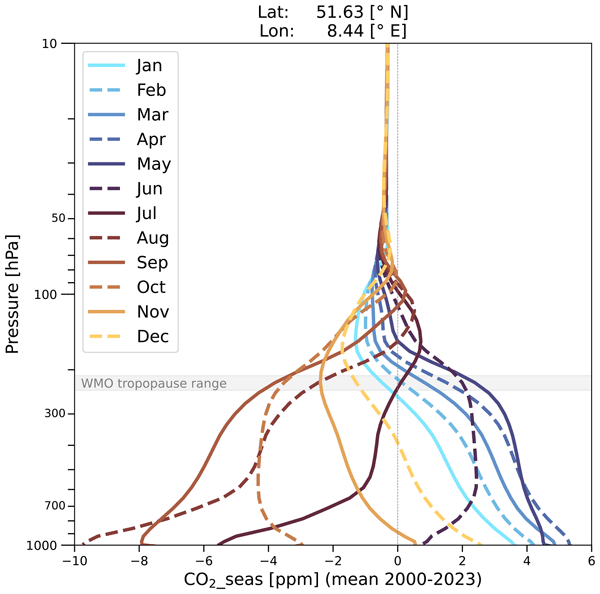
Johannes Degen, Bianca C. Baier, Patrick Jöckel, J. Moritz Menken, Tanja J. Schuck, Colm Sweeney, and Andreas Engel
Atmos. Chem. Phys., 25, 15741–15763, https://doi.org/10.5194/acp-25-15741-2025, https://doi.org/10.5194/acp-25-15741-2025, 2025
Short summary
Short summary
We investigate the distribution of CO2 in the upper troposphere and lower stratosphere using both, observations and an atmospheric model. Simulating an artificial tracer, we separate CO2 seasonality from long-term trend and transport variability. We found that patterns in the seasonal signal are attributable to large-scale transport features like the subtropical jet or the Brewer-Dobson circulation. Being a powerful diagnostic tool we recommend to use this tracer for model intercomparisons.
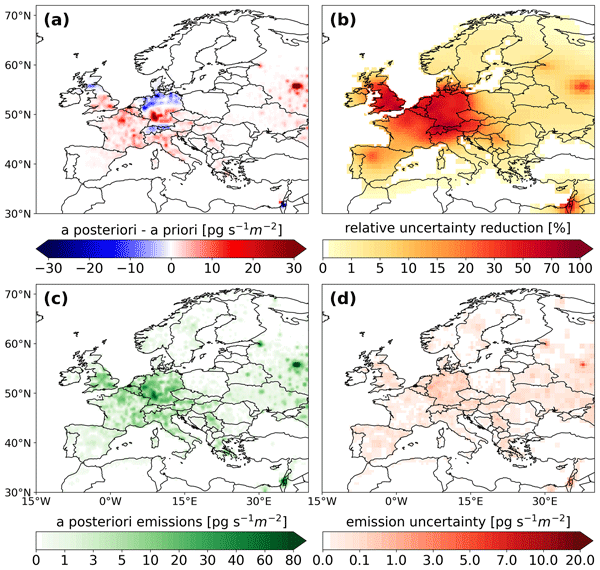
Martin Vojta, Andreas Plach, Rona L. Thompson, Pallav Purohit, Kieran Stanley, Simon O'Doherty, Dickon Young, Joe Pitt, Jgor Arduini, Xin Lan, and Andreas Stohl
Atmos. Chem. Phys., 25, 15197–15243, https://doi.org/10.5194/acp-25-15197-2025, https://doi.org/10.5194/acp-25-15197-2025, 2025
Short summary
Short summary
We determine European emissions of the highly potent greenhouse gas sulfur hexafluoride from 2005 to 2021 – focusing on high-emitting countries and the aggregated EU-27 emissions. Emissions declined in most regions, likely due to EU F-gas regulations. However, our results reveal that most studied countries underestimate their emissions in their national reports. Our sensitivity tests highlight the importance of dense observational networks for reliable inversion-based emission estimates.
Gerald Wetzel, Anne Kleinert, Sören Johansson, Felix Friedl-Vallon, Michael Höpfner, Jörn Ungermann, Tom Neubert, Valéry Catoire, Cyril Crevoisier, Andreas Engel, Thomas Gulde, Patrick Jacquet, Oliver Kirner, Erik Kretschmer, Thomas Kulessa, Johannes C. Laube, Guido Maucher, Hans Nordmeyer, Christof Piesch, Peter Preusse, Markus Retzlaff, Georg Schardt, Johan Schillings, Herbert Schneider, Axel Schönfeld, Tanja Schuck, Wolfgang Woiwode, Martin Riese, and Peter Braesicke
Atmos. Meas. Tech., 18, 5873–5894, https://doi.org/10.5194/amt-18-5873-2025, https://doi.org/10.5194/amt-18-5873-2025, 2025
Short summary
Short summary
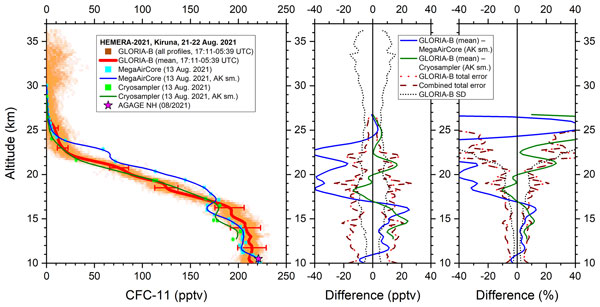
We present vertical trace gas profiles from the first balloon flight of the newly developed GLORIA-B limb-imaging Fourier-Transform spectrometer. Longer-lived gases are compared to external measurements to assess the quality of the GLORIA-B observations. Diurnal changes of photochemically active species are compared to model simulations. GLORIA-B demonstrates the capability of balloon-borne limb imaging to provide high-resolution vertical profiles of trace gases up to the middle stratosphere.
Sophie Bauchinger, Andreas Engel, Markus Jesswein, Timo Keber, Harald Bönisch, Florian Obersteiner, Andreas Zahn, Nicolas Emig, Peter Hoor, Hans-Christoph Lachnitt, Franziska Weyland, Linda Ort, and Tanja J. Schuck
Atmos. Chem. Phys., 25, 14167–14186, https://doi.org/10.5194/acp-25-14167-2025, https://doi.org/10.5194/acp-25-14167-2025, 2025
Short summary
Short summary
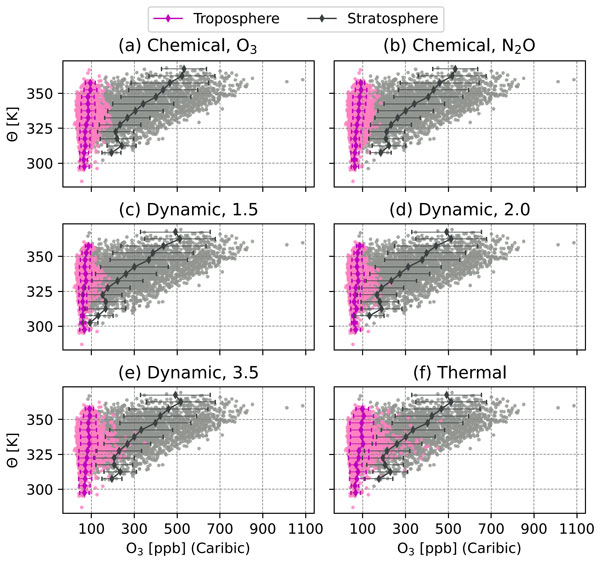
We compared different ways to define the upper barrier of the troposphere in the extra-tropics, the “tropopause”. By analysing ozone distributions sorted by different definitions, we found that the traditional temperature-based tropopause works less well than dynamic or tracer-based definitions. We saw a sharper transition of ozone across the tropopause using a higher value of potential vorticity than often used and recommend this value for future studies of exchange processes in this region.
Fabian Maier, Eva Falge, Maksym Gachkivskyi, Stephan Henne, Ute Karstens, Dafina Kikaj, Ingeborg Levin, Alistair Manning, Christian Rödenbeck, and Christoph Gerbig
Atmos. Chem. Phys., 25, 12779–12809, https://doi.org/10.5194/acp-25-12779-2025, https://doi.org/10.5194/acp-25-12779-2025, 2025
Short summary
Short summary
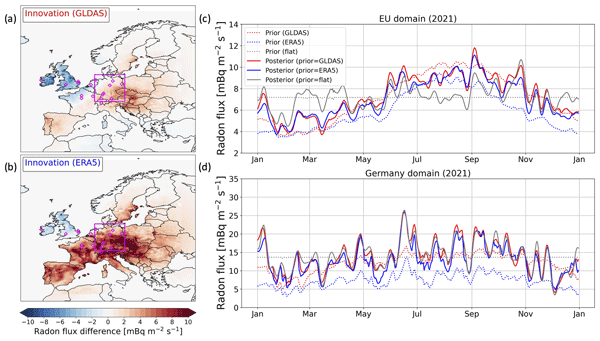
The radioactive noble gas radon (222Rn) is a suitable natural tracer for atmospheric transport and mixing processes that can be used to validate and calibrate atmospheric transport models. However, this requires accurate estimates of the 222Rn flux from the soil into the atmosphere. In our study, we evaluate the reliability of process-based 222Rn flux maps for Europe using a 222Rn inversion. Our inversion results can give some indications on how to improve the process-based 222Rn flux maps.
Johannes C. Laube, Tanja J. Schuck, Sophie Baartman, Huilin Chen, Markus Geldenhuys, Steven van Heuven, Timo Keber, Maria Elena Popa, Elinor Tuffnell, Florian Voet, Bärbel Vogel, Thomas Wagenhäuser, Alessandro Zanchetta, and Andreas Engel
Atmos. Meas. Tech., 18, 4087–4102, https://doi.org/10.5194/amt-18-4087-2025, https://doi.org/10.5194/amt-18-4087-2025, 2025
Short summary
Short summary
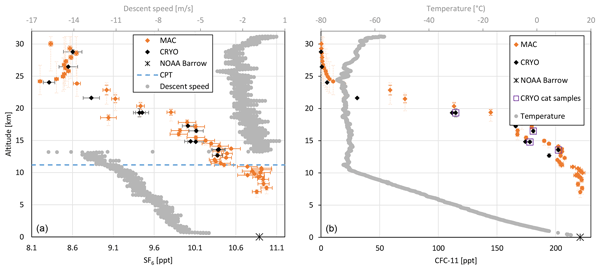
A large balloon was launched in summer 2021 in the Arctic to carry instruments for trace gas measurements up to 32 km, above the reach of aircraft. The main aims were to evaluate different techniques and atmospheric processes. We focus on halogenated greenhouse gases and ozone-depleting substances. For this, air was collected with the AirCore technique and a cryogenic air sampler and measured after the flight. A companion paper reports observations of major greenhouse gases.
Markus Jesswein, Valentin Lauther, Nicolas Emig, Peter Hoor, Timo Keber, Hans-Christoph Lachnitt, Linda Ort, Tanja Schuck, Johannes Strobel, Ronja Van Luijt, C. Michael Volk, Franziska Weyland, and Andreas Engel
Atmos. Chem. Phys., 25, 8107–8126, https://doi.org/10.5194/acp-25-8107-2025, https://doi.org/10.5194/acp-25-8107-2025, 2025
Short summary
Short summary
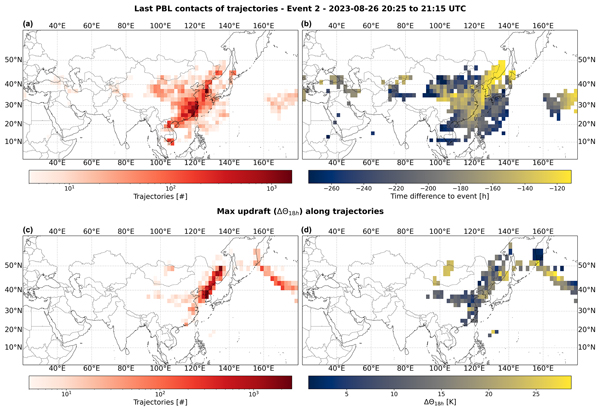
The study investigates transport within the Asian Summer Monsoon, focusing on how CH2Cl2 reaches the subarctic tropopause region. Using data from the PHILEAS campaign in 2023, events with increased mixing ratios were detected. Their origin, the transport paths to the tropopause region, and the potential entry into the stratosphere were analyzed. The East Asian Summer Monsoon was identified as the main transport pathway, with only a small contribution to the stratosphere in the following days.
Piers M. Forster, Chris Smith, Tristram Walsh, William F. Lamb, Robin Lamboll, Christophe Cassou, Mathias Hauser, Zeke Hausfather, June-Yi Lee, Matthew D. Palmer, Karina von Schuckmann, Aimée B. A. Slangen, Sophie Szopa, Blair Trewin, Jeongeun Yun, Nathan P. Gillett, Stuart Jenkins, H. Damon Matthews, Krishnan Raghavan, Aurélien Ribes, Joeri Rogelj, Debbie Rosen, Xuebin Zhang, Myles Allen, Lara Aleluia Reis, Robbie M. Andrew, Richard A. Betts, Alex Borger, Jiddu A. Broersma, Samantha N. Burgess, Lijing Cheng, Pierre Friedlingstein, Catia M. Domingues, Marco Gambarini, Thomas Gasser, Johannes Gütschow, Masayoshi Ishii, Christopher Kadow, John Kennedy, Rachel E. Killick, Paul B. Krummel, Aurélien Liné, Didier P. Monselesan, Colin Morice, Jens Mühle, Vaishali Naik, Glen P. Peters, Anna Pirani, Julia Pongratz, Jan C. Minx, Matthew Rigby, Robert Rohde, Abhishek Savita, Sonia I. Seneviratne, Peter Thorne, Christopher Wells, Luke M. Western, Guido R. van der Werf, Susan E. Wijffels, Valérie Masson-Delmotte, and Panmao Zhai
Earth Syst. Sci. Data, 17, 2641–2680, https://doi.org/10.5194/essd-17-2641-2025, https://doi.org/10.5194/essd-17-2641-2025, 2025
Short summary
Short summary
In a rapidly changing climate, evidence-based decision-making benefits from up-to-date and timely information. Here we compile monitoring datasets to track real-world changes over time. To make our work relevant to policymakers, we follow methods from the Intergovernmental Panel on Climate Change (IPCC). Human activities are increasing the Earth's energy imbalance and driving faster sea-level rise compared to the IPCC assessment.
Marielle Saunois, Adrien Martinez, Benjamin Poulter, Zhen Zhang, Peter A. Raymond, Pierre Regnier, Josep G. Canadell, Robert B. Jackson, Prabir K. Patra, Philippe Bousquet, Philippe Ciais, Edward J. Dlugokencky, Xin Lan, George H. Allen, David Bastviken, David J. Beerling, Dmitry A. Belikov, Donald R. Blake, Simona Castaldi, Monica Crippa, Bridget R. Deemer, Fraser Dennison, Giuseppe Etiope, Nicola Gedney, Lena Höglund-Isaksson, Meredith A. Holgerson, Peter O. Hopcroft, Gustaf Hugelius, Akihiko Ito, Atul K. Jain, Rajesh Janardanan, Matthew S. Johnson, Thomas Kleinen, Paul B. Krummel, Ronny Lauerwald, Tingting Li, Xiangyu Liu, Kyle C. McDonald, Joe R. Melton, Jens Mühle, Jurek Müller, Fabiola Murguia-Flores, Yosuke Niwa, Sergio Noce, Shufen Pan, Robert J. Parker, Changhui Peng, Michel Ramonet, William J. Riley, Gerard Rocher-Ros, Judith A. Rosentreter, Motoki Sasakawa, Arjo Segers, Steven J. Smith, Emily H. Stanley, Joël Thanwerdas, Hanqin Tian, Aki Tsuruta, Francesco N. Tubiello, Thomas S. Weber, Guido R. van der Werf, Douglas E. J. Worthy, Yi Xi, Yukio Yoshida, Wenxin Zhang, Bo Zheng, Qing Zhu, Qiuan Zhu, and Qianlai Zhuang
Earth Syst. Sci. Data, 17, 1873–1958, https://doi.org/10.5194/essd-17-1873-2025, https://doi.org/10.5194/essd-17-1873-2025, 2025
Short summary
Short summary
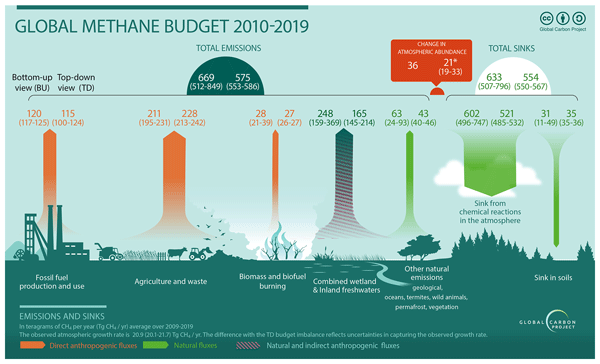
Methane (CH4) is the second most important human-influenced greenhouse gas in terms of climate forcing after carbon dioxide (CO2). A consortium of multi-disciplinary scientists synthesise and update the budget of the sources and sinks of CH4. This edition benefits from important progress in estimating emissions from lakes and ponds, reservoirs, and streams and rivers. For the 2010s decade, global CH4 emissions are estimated at 575 Tg CH4 yr-1, including ~65 % from anthropogenic sources.
Timur Cinay, Dickon Young, Nazaret Narváez Jimenez, Cristina Vintimilla-Palacios, Ariel Pila Alonso, Paul B. Krummel, William Vizuete, and Andrew R. Babbin
Atmos. Chem. Phys., 25, 4703–4718, https://doi.org/10.5194/acp-25-4703-2025, https://doi.org/10.5194/acp-25-4703-2025, 2025
Short summary
Short summary
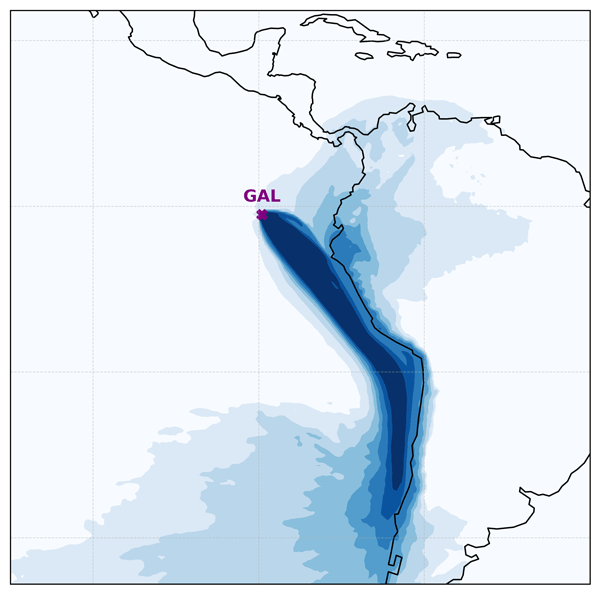
We present the initial 15 months of nitrous oxide measurements from the Galapagos Emissions Monitoring Station. The observed variability in atmospheric mole fractions during this period can be linked to several factors: seasonal variations in trade wind speed and direction across the eastern Pacific, differences in the transport history of air masses sampled, and spatiotemporal heterogeneity in regional marine nitrous oxide emissions from the coastal upwelling systems of Peru and Chile.
Tanja J. Schuck, Johannes Degen, Timo Keber, Katharina Meixner, Thomas Wagenhäuser, Mélanie Ghysels, Georges Durry, Nadir Amarouche, Alessandro Zanchetta, Steven van Heuven, Huilin Chen, Johannes C. Laube, Sophie L. Baartman, Carina van der Veen, Maria Elena Popa, and Andreas Engel
Atmos. Chem. Phys., 25, 4333–4348, https://doi.org/10.5194/acp-25-4333-2025, https://doi.org/10.5194/acp-25-4333-2025, 2025
Short summary
Short summary
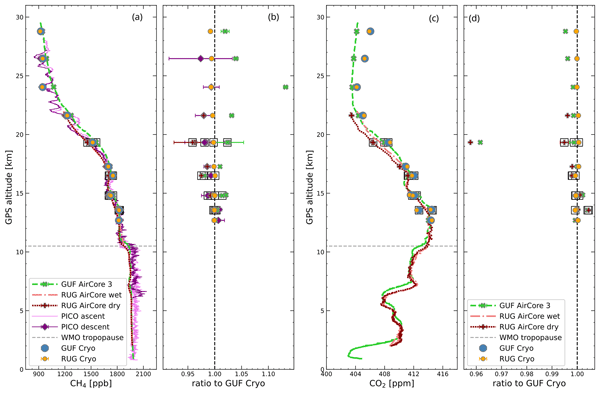
A balloon was launched in 2021 in the Arctic to carry instruments for trace gas measurements up to 32 km. One purpose was to compare measurement techniques. We focus on the major greenhouse gases. To measure these, air was sampled with the AirCore technique and with flask sampling, and samples were analysed after the flight. In flight, observations were done with an optical method. In a companion paper, we report on observations of chlorine and bromine containing trace gases.
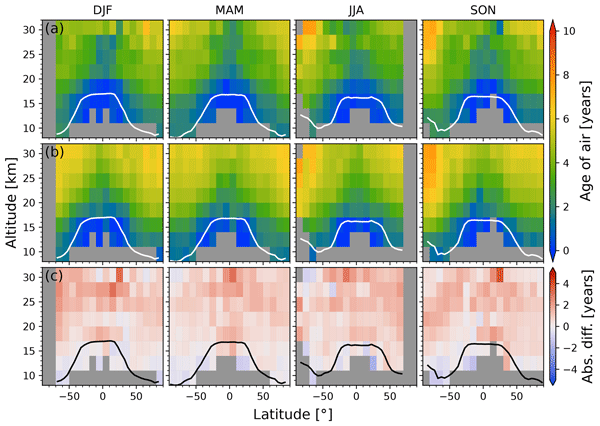
Laura N. Saunders, Kaley A. Walker, Gabriele P. Stiller, Thomas von Clarmann, Florian Haenel, Hella Garny, Harald Bönisch, Chris D. Boone, Ariana E. Castillo, Andreas Engel, Johannes C. Laube, Marianna Linz, Felix Ploeger, David A. Plummer, Eric A. Ray, and Patrick E. Sheese
Atmos. Chem. Phys., 25, 4185–4209, https://doi.org/10.5194/acp-25-4185-2025, https://doi.org/10.5194/acp-25-4185-2025, 2025
Short summary
Short summary
We present a 17-year stratospheric age-of-air dataset derived from ACE-FTS satellite measurements of sulfur hexafluoride. This is the longest continuous, global, and vertically resolved age of air time series available to date. In this paper, we show that this dataset agrees well with age-of-air datasets based on measurements from other instruments. We also present trends in the midlatitude lower stratosphere that indicate changes in the global circulation that are predicted by climate models.
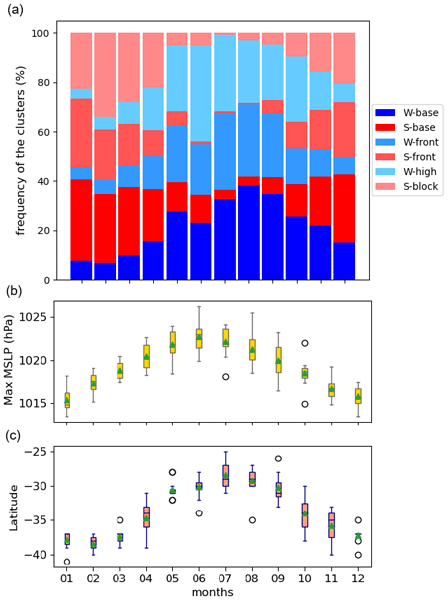
Tahereh Alinejadtabrizi, Yi Huang, Francisco Lang, Steven Siems, Michael Manton, Luis Ackermann, Melita Keywood, Ruhi Humphries, Paul Krummel, Alastair Williams, and Greg Ayers
Atmos. Chem. Phys., 25, 2631–2648, https://doi.org/10.5194/acp-25-2631-2025, https://doi.org/10.5194/acp-25-2631-2025, 2025
Short summary
Short summary
Clouds over the Southern Ocean are crucial to Earth's energy balance, but understanding the factors that control them is complex. Our research examines how weather patterns affect tiny particles called cloud condensation nuclei (CCN), which influence cloud properties. Using data from Kennaook / Cape Grim, we found that winter air from Antarctica brings cleaner conditions with lower CCN, while summer patterns from Australia transport more particles. Precipitation also helps reduce CCN in winter.
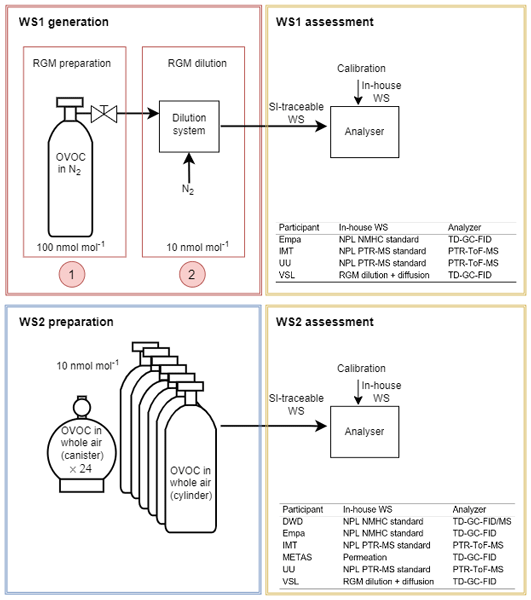
Maitane Iturrate-Garcia, Thérèse Salameh, Paul Schlauri, Annarita Baldan, Martin K. Vollmer, Evdokia Stratigou, Sebastien Dusanter, Jianrong Li, Stefan Persijn, Anja Claude, Rupert Holzinger, Christophe Sutour, Tatiana Macé, Yasin Elshorbany, Andreas Ackermann, Céline Pascale, and Stefan Reimann
Atmos. Meas. Tech., 18, 371–403, https://doi.org/10.5194/amt-18-371-2025, https://doi.org/10.5194/amt-18-371-2025, 2025
Short summary
Short summary
Accurate and comparable measurements of oxygenated organic compounds (OVOCs) are crucial in assessing tropospheric ozone burdens and trends. However, the monitoring of many OVOCs remains challenging because of their low atmospheric abundance and lack of stable and traceable calibration standards. This paper describes the calibration standards developed for OVOCs at a low amount of substance fractions (<100 nmol mol-1) to transfer traceability of the International System of Units to the field.
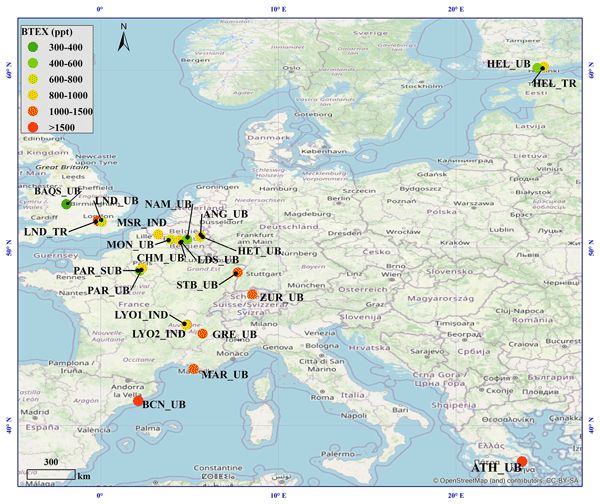
Xiansheng Liu, Xun Zhang, Marvin Dufresne, Tao Wang, Lijie Wu, Rosa Lara, Roger Seco, Marta Monge, Ana Maria Yáñez-Serrano, Marie Gohy, Paul Petit, Audrey Chevalier, Marie-Pierre Vagnot, Yann Fortier, Alexia Baudic, Véronique Ghersi, Grégory Gille, Ludovic Lanzi, Valérie Gros, Leïla Simon, Heidi Héllen, Stefan Reimann, Zoé Le Bras, Michelle Jessy Müller, David Beddows, Siqi Hou, Zongbo Shi, Roy M. Harrison, William Bloss, James Dernie, Stéphane Sauvage, Philip K. Hopke, Xiaoli Duan, Taicheng An, Alastair C. Lewis, James R. Hopkins, Eleni Liakakou, Nikolaos Mihalopoulos, Xiaohu Zhang, Andrés Alastuey, Xavier Querol, and Thérèse Salameh
Atmos. Chem. Phys., 25, 625–638, https://doi.org/10.5194/acp-25-625-2025, https://doi.org/10.5194/acp-25-625-2025, 2025
Short summary
Short summary
This study examines BTEX (benzene, toluene, ethylbenzene, xylenes) pollution in urban areas across seven European countries. Analyzing data from 22 monitoring sites, we found traffic and industrial activities significantly impact BTEX levels, with peaks during rush hours. The risk from BTEX exposure remains moderate, especially in high-traffic and industrial zones, highlighting the need for targeted air quality management to protect public health and improve urban air quality.
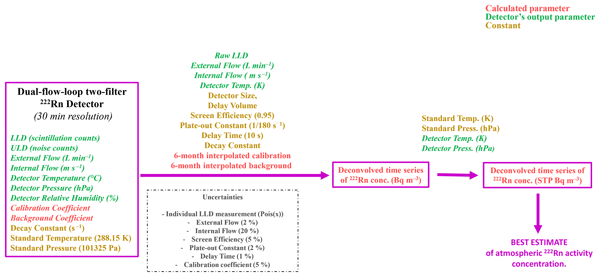
Dafina Kikaj, Edward Chung, Alan D. Griffiths, Scott D. Chambers, Grant Forster, Angelina Wenger, Penelope Pickers, Chris Rennick, Simon O'Doherty, Joseph Pitt, Kieran Stanley, Dickon Young, Leigh S. Fleming, Karina Adcock, Emmal Safi, and Tim Arnold
Atmos. Meas. Tech., 18, 151–175, https://doi.org/10.5194/amt-18-151-2025, https://doi.org/10.5194/amt-18-151-2025, 2025
Short summary
Short summary
We present a protocol to improve confidence in atmospheric radon measurements, enabling site comparisons and integration with greenhouse gas data. As a natural tracer, radon provides an independent check of transport model performance. This standardized method enhances radon’s use as a metric for model evaluation. Beyond UK observatories, it can support broader networks like ICOS and WMO/GAW, advancing global atmospheric research.
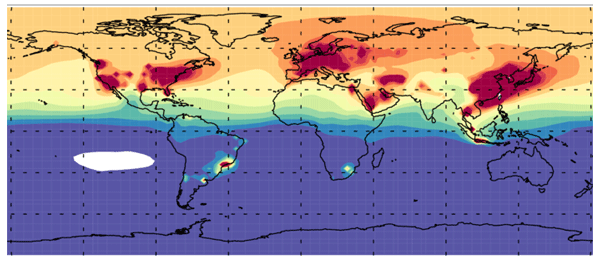
Ryan Hossaini, David Sherry, Zihao Wang, Martyn P. Chipperfield, Wuhu Feng, David E. Oram, Karina E. Adcock, Stephen A. Montzka, Isobel J. Simpson, Andrea Mazzeo, Amber A. Leeson, Elliot Atlas, and Charles C.-K. Chou
Atmos. Chem. Phys., 24, 13457–13475, https://doi.org/10.5194/acp-24-13457-2024, https://doi.org/10.5194/acp-24-13457-2024, 2024
Short summary
Short summary
DCE (1,2-dichloroethane) is an industrial chemical used to produce PVC (polyvinyl chloride). We analysed DCE production data to estimate global DCE emissions (2002–2020). The emissions were included in an atmospheric model and evaluated by comparing simulated DCE to DCE measurements in the troposphere. We show that DCE contributes ozone-depleting Cl to the stratosphere and that this has increased with increasing DCE emissions. DCE’s impact on stratospheric O3 is currently small but non-zero.
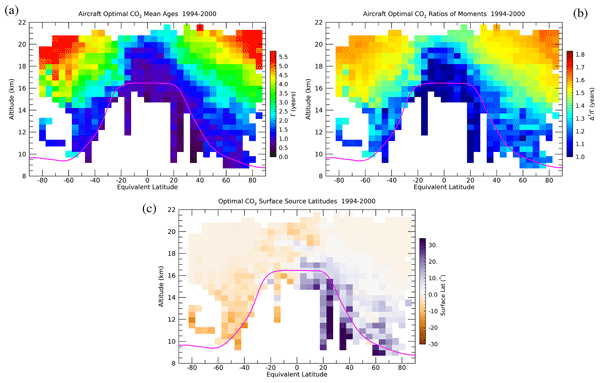
Eric A. Ray, Fred L. Moore, Hella Garny, Eric J. Hintsa, Bradley D. Hall, Geoff S. Dutton, David Nance, James W. Elkins, Steven C. Wofsy, Jasna Pittman, Bruce Daube, Bianca C. Baier, Jianghanyang Li, and Colm Sweeney
Atmos. Chem. Phys., 24, 12425–12445, https://doi.org/10.5194/acp-24-12425-2024, https://doi.org/10.5194/acp-24-12425-2024, 2024
Short summary
Short summary
In this study we describe new techniques to derive age of air from multiple simultaneous measurements of long-lived trace gases in order to improve the fidelity of the age-of-air estimates and to be able to compare age of air from measurements taken from different instruments, platforms and decades. This technique also allows new transport information to be obtained from the measurements such as the primary source latitude that can also be compared to models.
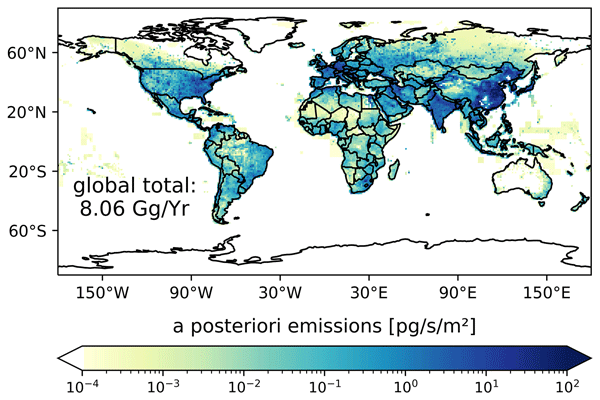
Martin Vojta, Andreas Plach, Saurabh Annadate, Sunyoung Park, Gawon Lee, Pallav Purohit, Florian Lindl, Xin Lan, Jens Mühle, Rona L. Thompson, and Andreas Stohl
Atmos. Chem. Phys., 24, 12465–12493, https://doi.org/10.5194/acp-24-12465-2024, https://doi.org/10.5194/acp-24-12465-2024, 2024
Short summary
Short summary
We constrain the global emissions of the very potent greenhouse gas sulfur hexafluoride (SF6) between 2005 and 2021. We show that SF6 emissions are decreasing in the USA and in the EU, while they are substantially growing in China, leading overall to an increasing global emission trend. The national reports for the USA, EU, and China all underestimated their SF6 emissions. However, stringent mitigation measures can successfully reduce SF6 emissions, as can be seen in the EU emission trend.
Gabrielle Pétron, Andrew M. Crotwell, John Mund, Molly Crotwell, Thomas Mefford, Kirk Thoning, Bradley Hall, Duane Kitzis, Monica Madronich, Eric Moglia, Donald Neff, Sonja Wolter, Armin Jordan, Paul Krummel, Ray Langenfelds, and John Patterson
Atmos. Meas. Tech., 17, 4803–4823, https://doi.org/10.5194/amt-17-4803-2024, https://doi.org/10.5194/amt-17-4803-2024, 2024
Short summary
Short summary
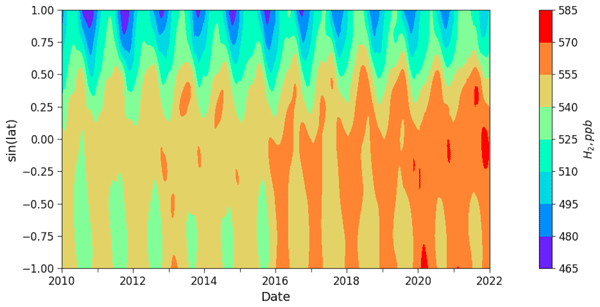
Hydrogen (H2) is a gas in trace amounts in the Earth’s atmosphere with indirect impacts on climate and air quality. Renewed interest in H2 as a low- or zero-carbon source of energy may lead to increased production, uses, and supply chain emissions. NOAA measurements of weekly air samples collected between 2009 and 2021 at over 50 sites in mostly remote locations are now available, and they complement other datasets to study the H2 global budget.
Benjamin Hmiel, Vasilii V. Petrenko, Christo Buizert, Andrew M. Smith, Michael N. Dyonisius, Philip Place, Bin Yang, Quan Hua, Ross Beaudette, Jeffrey P. Severinghaus, Christina Harth, Ray F. Weiss, Lindsey Davidge, Melisa Diaz, Matthew Pacicco, James A. Menking, Michael Kalk, Xavier Faïn, Alden Adolph, Isaac Vimont, and Lee T. Murray
The Cryosphere, 18, 3363–3382, https://doi.org/10.5194/tc-18-3363-2024, https://doi.org/10.5194/tc-18-3363-2024, 2024
Short summary
Short summary
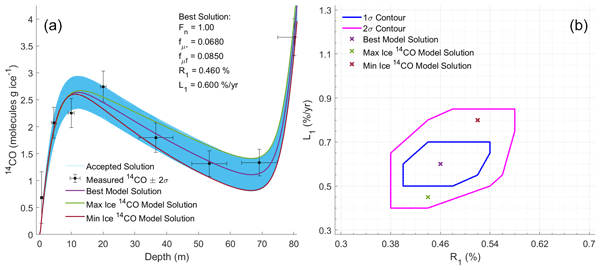
The main aim of this research is to improve understanding of carbon-14 that is produced by cosmic rays in ice sheets. Measurements of carbon-14 in ice cores can provide a range of useful information (age of ice, past atmospheric chemistry, past cosmic ray intensity). Our results show that almost all (>99 %) of carbon-14 that is produced in the upper layer of ice sheets is rapidly lost to the atmosphere. Our results also provide better estimates of carbon-14 production rates in deeper ice.
Yao Ge, Sverre Solberg, Mathew R. Heal, Stefan Reimann, Willem van Caspel, Bryan Hellack, Thérèse Salameh, and David Simpson
Atmos. Chem. Phys., 24, 7699–7729, https://doi.org/10.5194/acp-24-7699-2024, https://doi.org/10.5194/acp-24-7699-2024, 2024
Short summary
Short summary
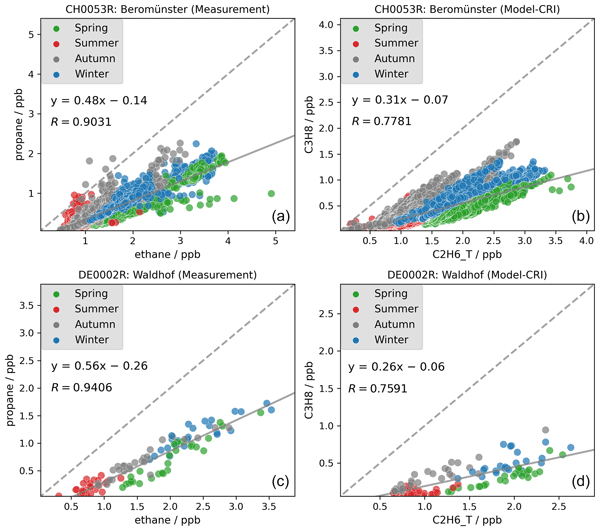
Atmospheric volatile organic compounds (VOCs) constitute many species, acting as precursors to ozone and aerosol. Given the uncertainties in VOC emissions, lack of evaluation studies, and recent changes in emissions, this work adapts the EMEP MSC-W to evaluate emission inventories in Europe. We focus on the varying agreement between modelled and measured VOCs across different species and underscore potential inaccuracies in total and sector-specific emission estimates.
Haklim Choi, Alison L. Redington, Hyeri Park, Jooil Kim, Rona L. Thompson, Jens Mühle, Peter K. Salameh, Christina M. Harth, Ray F. Weiss, Alistair J. Manning, and Sunyoung Park
Atmos. Chem. Phys., 24, 7309–7330, https://doi.org/10.5194/acp-24-7309-2024, https://doi.org/10.5194/acp-24-7309-2024, 2024
Short summary
Short summary
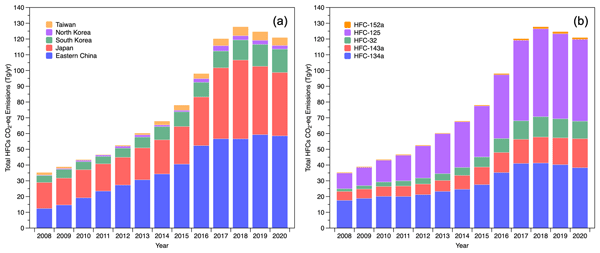
We analyzed with an inversion model the atmospheric abundance of hydrofluorocarbons (HFCs), potent greenhouse gases, from 2008 to 2020 at Gosan station in South Korea and revealed a significant increase in emissions, especially from eastern China and Japan. This increase contradicts reported data, underscoring the need for accurate monitoring and reporting. Our findings are crucial for understanding and managing global HFCs emissions, highlighting the importance of efforts to reduce HFCs.
Hanqin Tian, Naiqing Pan, Rona L. Thompson, Josep G. Canadell, Parvadha Suntharalingam, Pierre Regnier, Eric A. Davidson, Michael Prather, Philippe Ciais, Marilena Muntean, Shufen Pan, Wilfried Winiwarter, Sönke Zaehle, Feng Zhou, Robert B. Jackson, Hermann W. Bange, Sarah Berthet, Zihao Bian, Daniele Bianchi, Alexander F. Bouwman, Erik T. Buitenhuis, Geoffrey Dutton, Minpeng Hu, Akihiko Ito, Atul K. Jain, Aurich Jeltsch-Thömmes, Fortunat Joos, Sian Kou-Giesbrecht, Paul B. Krummel, Xin Lan, Angela Landolfi, Ronny Lauerwald, Ya Li, Chaoqun Lu, Taylor Maavara, Manfredi Manizza, Dylan B. Millet, Jens Mühle, Prabir K. Patra, Glen P. Peters, Xiaoyu Qin, Peter Raymond, Laure Resplandy, Judith A. Rosentreter, Hao Shi, Qing Sun, Daniele Tonina, Francesco N. Tubiello, Guido R. van der Werf, Nicolas Vuichard, Junjie Wang, Kelley C. Wells, Luke M. Western, Chris Wilson, Jia Yang, Yuanzhi Yao, Yongfa You, and Qing Zhu
Earth Syst. Sci. Data, 16, 2543–2604, https://doi.org/10.5194/essd-16-2543-2024, https://doi.org/10.5194/essd-16-2543-2024, 2024
Short summary
Short summary
Atmospheric concentrations of nitrous oxide (N2O), a greenhouse gas 273 times more potent than carbon dioxide, have increased by 25 % since the preindustrial period, with the highest observed growth rate in 2020 and 2021. This rapid growth rate has primarily been due to a 40 % increase in anthropogenic emissions since 1980. Observed atmospheric N2O concentrations in recent years have exceeded the worst-case climate scenario, underscoring the importance of reducing anthropogenic N2O emissions.
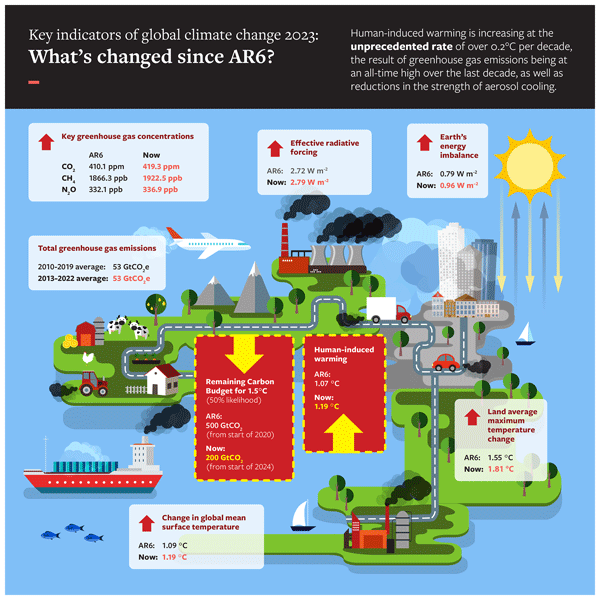
Piers M. Forster, Chris Smith, Tristram Walsh, William F. Lamb, Robin Lamboll, Bradley Hall, Mathias Hauser, Aurélien Ribes, Debbie Rosen, Nathan P. Gillett, Matthew D. Palmer, Joeri Rogelj, Karina von Schuckmann, Blair Trewin, Myles Allen, Robbie Andrew, Richard A. Betts, Alex Borger, Tim Boyer, Jiddu A. Broersma, Carlo Buontempo, Samantha Burgess, Chiara Cagnazzo, Lijing Cheng, Pierre Friedlingstein, Andrew Gettelman, Johannes Gütschow, Masayoshi Ishii, Stuart Jenkins, Xin Lan, Colin Morice, Jens Mühle, Christopher Kadow, John Kennedy, Rachel E. Killick, Paul B. Krummel, Jan C. Minx, Gunnar Myhre, Vaishali Naik, Glen P. Peters, Anna Pirani, Julia Pongratz, Carl-Friedrich Schleussner, Sonia I. Seneviratne, Sophie Szopa, Peter Thorne, Mahesh V. M. Kovilakam, Elisa Majamäki, Jukka-Pekka Jalkanen, Margreet van Marle, Rachel M. Hoesly, Robert Rohde, Dominik Schumacher, Guido van der Werf, Russell Vose, Kirsten Zickfeld, Xuebin Zhang, Valérie Masson-Delmotte, and Panmao Zhai
Earth Syst. Sci. Data, 16, 2625–2658, https://doi.org/10.5194/essd-16-2625-2024, https://doi.org/10.5194/essd-16-2625-2024, 2024
Short summary
Short summary
This paper tracks some key indicators of global warming through time, from 1850 through to the end of 2023. It is designed to give an authoritative estimate of global warming to date and its causes. We find that in 2023, global warming reached 1.3 °C and is increasing at over 0.2 °C per decade. This is caused by all-time-high greenhouse gas emissions.
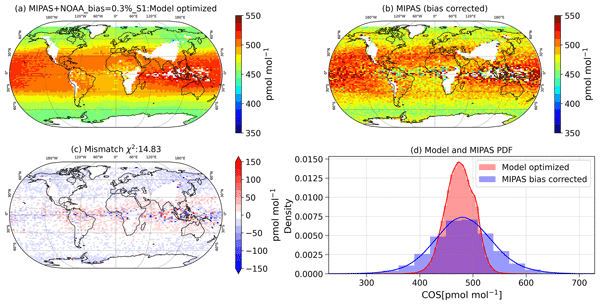
Jin Ma, Linda M. J. Kooijmans, Norbert Glatthor, Stephen A. Montzka, Marc von Hobe, Thomas Röckmann, and Maarten C. Krol
Atmos. Chem. Phys., 24, 6047–6070, https://doi.org/10.5194/acp-24-6047-2024, https://doi.org/10.5194/acp-24-6047-2024, 2024
Short summary
Short summary
The global budget of atmospheric COS can be optimised by inverse modelling using TM5-4DVAR, with the co-constraints of NOAA surface observations and MIPAS satellite data. We found reduced COS biosphere uptake from inversions and improved land and ocean separation using MIPAS satellite data assimilation. Further improvements are expected from better quantification of COS ocean and biosphere fluxes.
Yiming Xu, Qianlai Zhuang, Bailu Zhao, Michael Billmire, Christopher Cook, Jeremy Graham, Nancy French, and Ronald Prinn
EGUsphere, https://doi.org/10.5194/egusphere-2024-1324, https://doi.org/10.5194/egusphere-2024-1324, 2024
Preprint archived
Short summary
Short summary
We use a process-based model to simulate the fire impacts on soil thermal and hydrological dynamics and carbon budget of forest ecosystems in Northern Eurasia based on satellite-derived burn severity data. We find that fire severity generally increases in this region during the study period. Simulations indicate that fires increase soil temperature and water runoff. Fires lead the forest ecosystems to lose 2.3 Pg C, shifting the forests from a carbon sink to a source in this period.
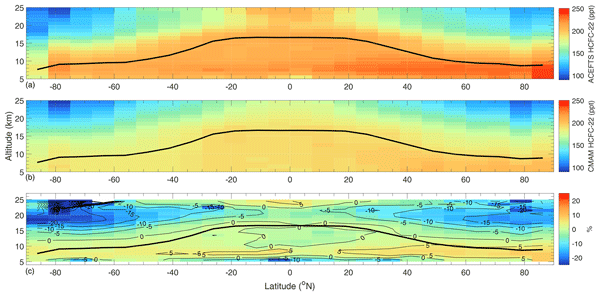
Felicia Kolonjari, Patrick E. Sheese, Kaley A. Walker, Chris D. Boone, David A. Plummer, Andreas Engel, Stephen A. Montzka, David E. Oram, Tanja Schuck, Gabriele P. Stiller, and Geoffrey C. Toon
Atmos. Meas. Tech., 17, 2429–2449, https://doi.org/10.5194/amt-17-2429-2024, https://doi.org/10.5194/amt-17-2429-2024, 2024
Short summary
Short summary
The Canadian Atmospheric Chemistry Experiment Fourier transform spectrometer (ACE-FTS) satellite instrument is currently providing the only vertically resolved chlorodifluoromethane (HCFC-22) measurements from space. This study assesses the most current ACE-FTS HCFC-22 data product in the upper troposphere and lower stratosphere, as well as modelled HCFC-22 from a 39-year run of the Canadian Middle Atmosphere Model (CMAM39) in the same region.
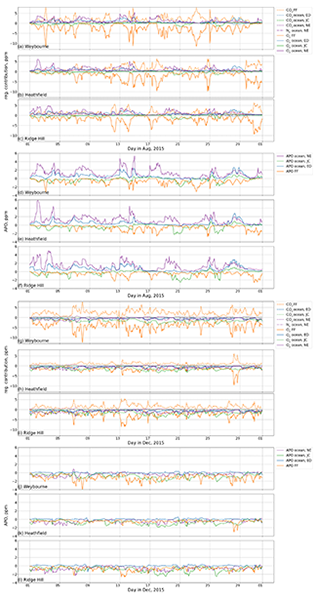
Hannah Chawner, Eric Saboya, Karina E. Adcock, Tim Arnold, Yuri Artioli, Caroline Dylag, Grant L. Forster, Anita Ganesan, Heather Graven, Gennadi Lessin, Peter Levy, Ingrid T. Luijkx, Alistair Manning, Penelope A. Pickers, Chris Rennick, Christian Rödenbeck, and Matthew Rigby
Atmos. Chem. Phys., 24, 4231–4252, https://doi.org/10.5194/acp-24-4231-2024, https://doi.org/10.5194/acp-24-4231-2024, 2024
Short summary
Short summary
The quantity of atmospheric potential oxygen (APO), derived from coincident measurements of carbon dioxide (CO2) and oxygen (O2), has been proposed as a tracer for fossil fuel CO2 emissions. In this model sensitivity study, we examine the use of APO for this purpose in the UK and compare our model to observations. We find that our model simulations are most sensitive to uncertainties relating to ocean fluxes and boundary conditions.
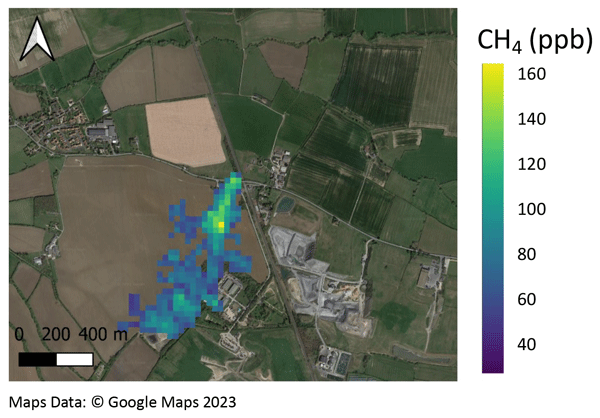
Emily Dowd, Alistair J. Manning, Bryn Orth-Lashley, Marianne Girard, James France, Rebecca E. Fisher, Dave Lowry, Mathias Lanoisellé, Joseph R. Pitt, Kieran M. Stanley, Simon O'Doherty, Dickon Young, Glen Thistlethwaite, Martyn P. Chipperfield, Emanuel Gloor, and Chris Wilson
Atmos. Meas. Tech., 17, 1599–1615, https://doi.org/10.5194/amt-17-1599-2024, https://doi.org/10.5194/amt-17-1599-2024, 2024
Short summary
Short summary
We provide the first validation of the satellite-derived emission estimates using surface-based mobile greenhouse gas surveys of an active gas leak detected near Cheltenham, UK. GHGSat’s emission estimates broadly agree with the surface-based mobile survey and steps were taken to fix the leak, highlighting the importance of satellite data in identifying emissions and helping to reduce our human impact on climate change.
Gabrielle B. Dreyfus, Stephen A. Montzka, Stephen O. Andersen, and Richard Ferris
Atmos. Chem. Phys., 24, 2023–2032, https://doi.org/10.5194/acp-24-2023-2024, https://doi.org/10.5194/acp-24-2023-2024, 2024
Short summary
Short summary
The Montreal Protocol has put the ozone layer on a path to recovery by phasing out 99 % of banned ozone-damaging substances. Most of these substances are also potent greenhouse gases. Atmospheric monitoring has detected unexpected increases in emissions in several of these banned substances. Here we present an approach for quantifying damage to ozone, climate and health for these emissions and offset by preventing the equivalent emissions of ozone-damaging substances.
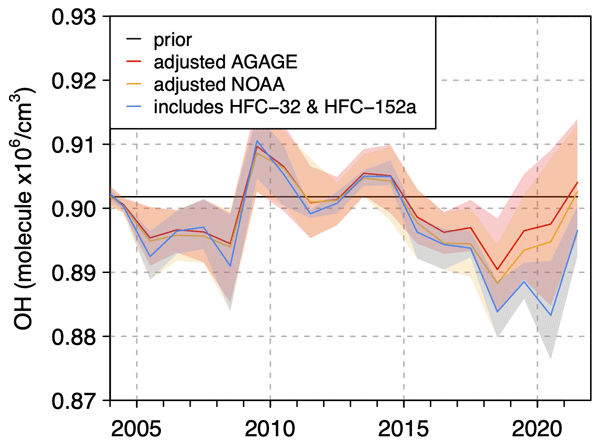
Rona L. Thompson, Stephen A. Montzka, Martin K. Vollmer, Jgor Arduini, Molly Crotwell, Paul B. Krummel, Chris Lunder, Jens Mühle, Simon O'Doherty, Ronald G. Prinn, Stefan Reimann, Isaac Vimont, Hsiang Wang, Ray F. Weiss, and Dickon Young
Atmos. Chem. Phys., 24, 1415–1427, https://doi.org/10.5194/acp-24-1415-2024, https://doi.org/10.5194/acp-24-1415-2024, 2024
Short summary
Short summary
The hydroxyl radical determines the atmospheric lifetimes of numerous species including methane. Since OH is very short-lived, it is not possible to directly measure its concentration on scales relevant for understanding its effect on other species. Here, OH is inferred by looking at changes in hydrofluorocarbons (HFCs). We find that OH levels have been fairly stable over our study period (2004 to 2021), suggesting that OH is not the main driver of the recent increase in atmospheric methane.
Tanja J. Schuck, Johannes Degen, Eric Hintsa, Peter Hoor, Markus Jesswein, Timo Keber, Daniel Kunkel, Fred Moore, Florian Obersteiner, Matt Rigby, Thomas Wagenhäuser, Luke M. Western, Andreas Zahn, and Andreas Engel
Atmos. Chem. Phys., 24, 689–705, https://doi.org/10.5194/acp-24-689-2024, https://doi.org/10.5194/acp-24-689-2024, 2024
Short summary
Short summary
We study the interhemispheric gradient of sulfur hexafluoride (SF6), a strong long-lived greenhouse gas. Its emissions are stronger in the Northern Hemisphere; therefore, mixing ratios in the Southern Hemisphere lag behind. Comparing the observations to a box model, the model predicts air in the Southern Hemisphere to be older. For a better agreement, the emissions used as model input need to be increased (and their spatial pattern changed), and we need to modify north–south transport.
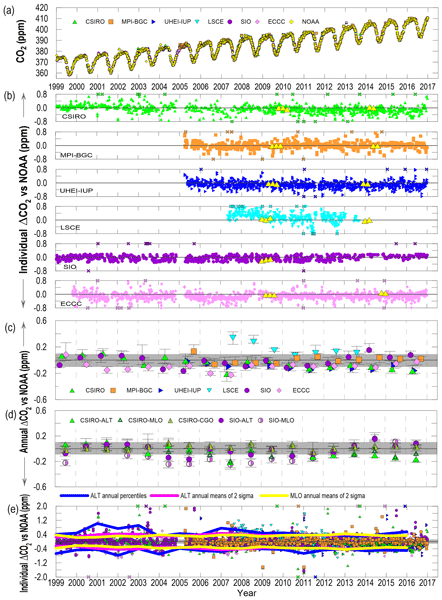
Douglas E. J. Worthy, Michele K. Rauh, Lin Huang, Felix R. Vogel, Alina Chivulescu, Kenneth A. Masarie, Ray L. Langenfelds, Paul B. Krummel, Colin E. Allison, Andrew M. Crotwell, Monica Madronich, Gabrielle Pétron, Ingeborg Levin, Samuel Hammer, Sylvia Michel, Michel Ramonet, Martina Schmidt, Armin Jordan, Heiko Moossen, Michael Rothe, Ralph Keeling, and Eric J. Morgan
Atmos. Meas. Tech., 16, 5909–5935, https://doi.org/10.5194/amt-16-5909-2023, https://doi.org/10.5194/amt-16-5909-2023, 2023
Short summary
Short summary
Network compatibility is important for inferring greenhouse gas fluxes at global or regional scales. This study is the first assessment of the measurement agreement among seven individual programs within the World Meteorological Organization community. It compares co-located flask air measurements at the Alert Observatory in Canada over a 17-year period. The results provide stronger confidence in the uncertainty estimation while using those datasets in various data interpretation applications.
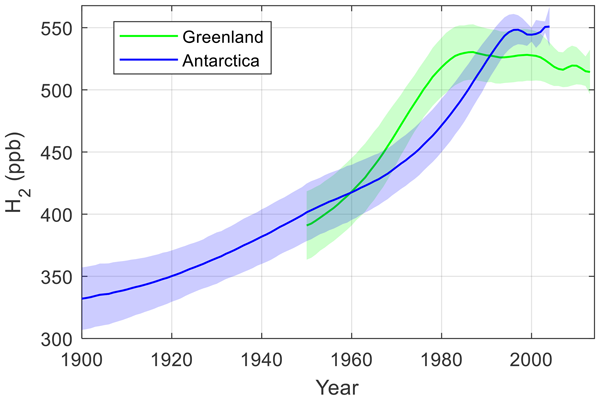
John D. Patterson, Murat Aydin, Andrew M. Crotwell, Gabrielle Pétron, Jeffery P. Severinghaus, Paul B. Krummel, Ray L. Langenfelds, Vasilii V. Petrenko, and Eric S. Saltzman
Clim. Past, 19, 2535–2550, https://doi.org/10.5194/cp-19-2535-2023, https://doi.org/10.5194/cp-19-2535-2023, 2023
Short summary
Short summary
Atmospheric levels of molecular hydrogen (H2) can impact climate and air quality. Constraining past changes to atmospheric H2 is useful for understanding how H2 cycles through the Earth system and predicting the impacts of increasing anthropogenic emissions under the
hydrogen economy. Here, we use the aging air found in the polar snowpack to reconstruct H2 levels over the past 100 years. We find that H2 levels increased by 30 % over Greenland and 60 % over Antarctica during the 20th century.
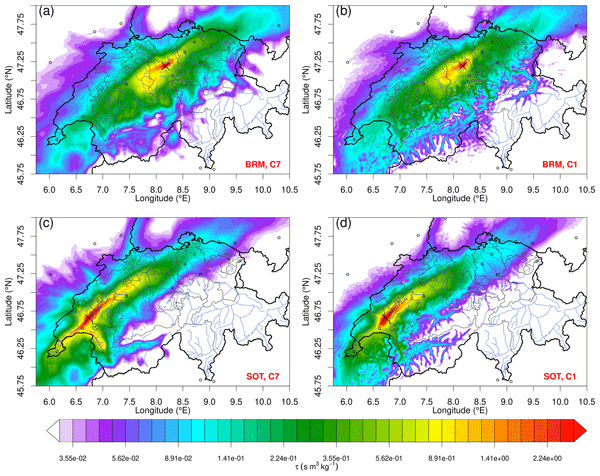
Ioannis Katharopoulos, Dominique Rust, Martin K. Vollmer, Dominik Brunner, Stefan Reimann, Simon J. O'Doherty, Dickon Young, Kieran M. Stanley, Tanja Schuck, Jgor Arduini, Lukas Emmenegger, and Stephan Henne
Atmos. Chem. Phys., 23, 14159–14186, https://doi.org/10.5194/acp-23-14159-2023, https://doi.org/10.5194/acp-23-14159-2023, 2023
Short summary
Short summary
The effectiveness of climate change mitigation needs to be scrutinized by monitoring greenhouse gas (GHG) emissions. Countries report their emissions to the UN in a bottom-up manner. By combining atmospheric observations and transport models someone can independently validate emission estimates in a top-down fashion. We report Swiss emissions of synthetic GHGs based on kilometer-scale transport and inverse modeling, highlighting the role of appropriate resolution in complex terrain.
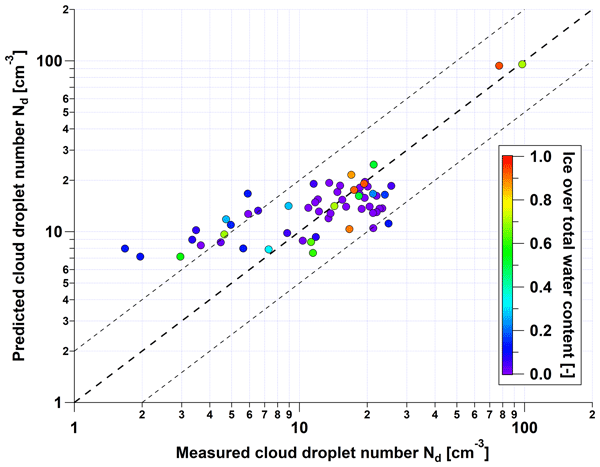
Ghislain Motos, Gabriel Freitas, Paraskevi Georgakaki, Jörg Wieder, Guangyu Li, Wenche Aas, Chris Lunder, Radovan Krejci, Julie Thérèse Pasquier, Jan Henneberger, Robert Oscar David, Christoph Ritter, Claudia Mohr, Paul Zieger, and Athanasios Nenes
Atmos. Chem. Phys., 23, 13941–13956, https://doi.org/10.5194/acp-23-13941-2023, https://doi.org/10.5194/acp-23-13941-2023, 2023
Short summary
Short summary
Low-altitude clouds play a key role in regulating the climate of the Arctic, a region that suffers from climate change more than any other on the planet. We gathered meteorological and aerosol physical and chemical data over a year and utilized them for a parameterization that help us unravel the factors driving and limiting the efficiency of cloud droplet formation. We then linked this information to the sources of aerosol found during each season and to processes of cloud glaciation.
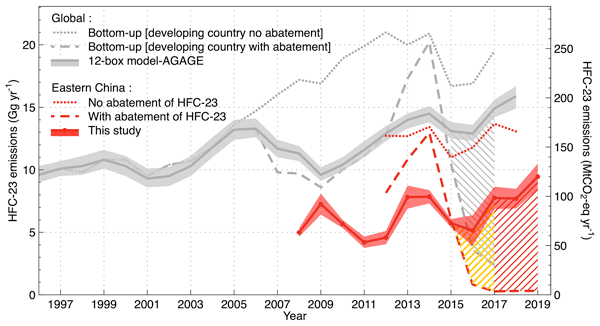
Hyeri Park, Jooil Kim, Haklim Choi, Sohyeon Geum, Yeaseul Kim, Rona L. Thompson, Jens Mühle, Peter K. Salameh, Christina M. Harth, Kieran M. Stanley, Simon O'Doherty, Paul J. Fraser, Peter G. Simmonds, Paul B. Krummel, Ray F. Weiss, Ronald G. Prinn, and Sunyoung Park
Atmos. Chem. Phys., 23, 9401–9411, https://doi.org/10.5194/acp-23-9401-2023, https://doi.org/10.5194/acp-23-9401-2023, 2023
Short summary
Short summary
Based on atmospheric HFC-23 observations, the first estimate of post-CDM HFC-23 emissions in eastern Asia for 2008–2019 shows that these emissions contribute significantly to the global emissions rise. The observation-derived emissions were much larger than the bottom-up estimates expected to approach zero after 2015 due to national abatement activities. These discrepancies could be attributed to unsuccessful factory-level HFC-23 abatement and inaccurate quantification of emission reductions.
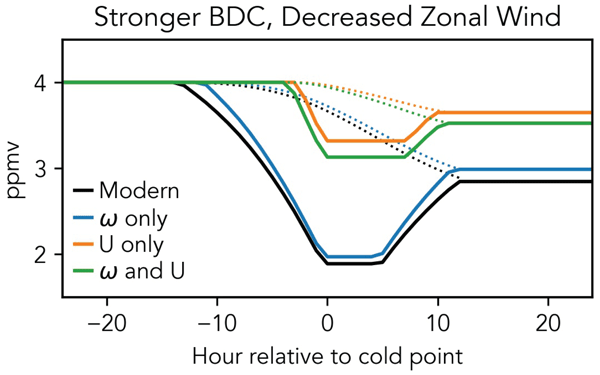
Stephen Bourguet and Marianna Linz
Atmos. Chem. Phys., 23, 7447–7460, https://doi.org/10.5194/acp-23-7447-2023, https://doi.org/10.5194/acp-23-7447-2023, 2023
Short summary
Short summary
Here, we show how projected changes to tropical circulation will impact the water vapor concentration in the lower stratosphere, which has implications for surface climate and stratospheric chemistry. In our transport scenarios with slower east–west winds, air parcels ascending into the stratosphere do not experience the same cold temperatures that they would today. This effect could act in concert with previously modeled changes to stratospheric water vapor to amplify surface warming.
Alison L. Redington, Alistair J. Manning, Stephan Henne, Francesco Graziosi, Luke M. Western, Jgor Arduini, Anita L. Ganesan, Christina M. Harth, Michela Maione, Jens Mühle, Simon O'Doherty, Joseph Pitt, Stefan Reimann, Matthew Rigby, Peter K. Salameh, Peter G. Simmonds, T. Gerard Spain, Kieran Stanley, Martin K. Vollmer, Ray F. Weiss, and Dickon Young
Atmos. Chem. Phys., 23, 7383–7398, https://doi.org/10.5194/acp-23-7383-2023, https://doi.org/10.5194/acp-23-7383-2023, 2023
Short summary
Short summary
Chlorofluorocarbons (CFCs) were used in Europe pre-1990, damaging the stratospheric ozone layer. Legislation has controlled production and use, and global emissions have decreased sharply. The global rate of decline in CFC-11 recently slowed and was partly attributed to illegal emission in eastern China. This study concludes that emissions of CFC-11 in western Europe have not contributed to the unexplained part of the global increase in CFC-11 observed in the last decade.
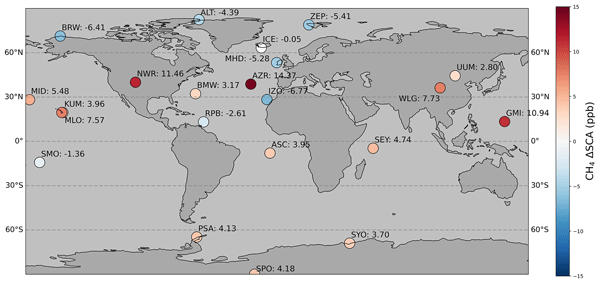
Emily Dowd, Chris Wilson, Martyn P. Chipperfield, Emanuel Gloor, Alistair Manning, and Ruth Doherty
Atmos. Chem. Phys., 23, 7363–7382, https://doi.org/10.5194/acp-23-7363-2023, https://doi.org/10.5194/acp-23-7363-2023, 2023
Short summary
Short summary
Surface observations of methane show that the seasonal cycle amplitude (SCA) of methane is decreasing in the northern high latitudes (NHLs) but increased globally (1995–2020). The NHL decrease is counterintuitive, as we expect the SCA to increase with increasing concentrations. We use a chemical transport model to investigate changes in SCA in the NHLs. We find well-mixed methane and changes in emissions from Canada, the Middle East, and Europe are the largest contributors to the SCA in NHLs.
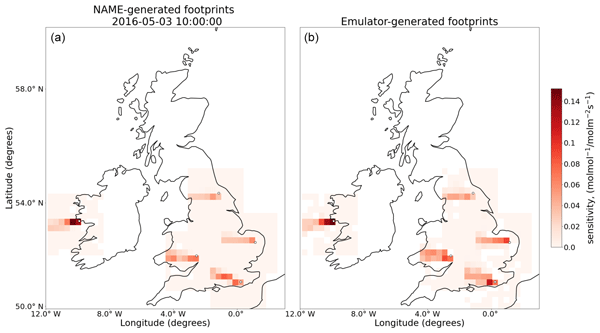
Elena Fillola, Raul Santos-Rodriguez, Alistair Manning, Simon O'Doherty, and Matt Rigby
Geosci. Model Dev., 16, 1997–2009, https://doi.org/10.5194/gmd-16-1997-2023, https://doi.org/10.5194/gmd-16-1997-2023, 2023
Short summary
Short summary
Lagrangian particle dispersion models are used extensively for the estimation of greenhouse gas (GHG) fluxes using atmospheric observations. However, these models do not scale well as data volumes increase. Here, we develop a proof-of-concept machine learning emulator that can produce outputs similar to those of the dispersion model, but 50 000 times faster, using only meteorological inputs. This works demonstrates the potential of machine learning to accelerate GHG estimations across the globe.
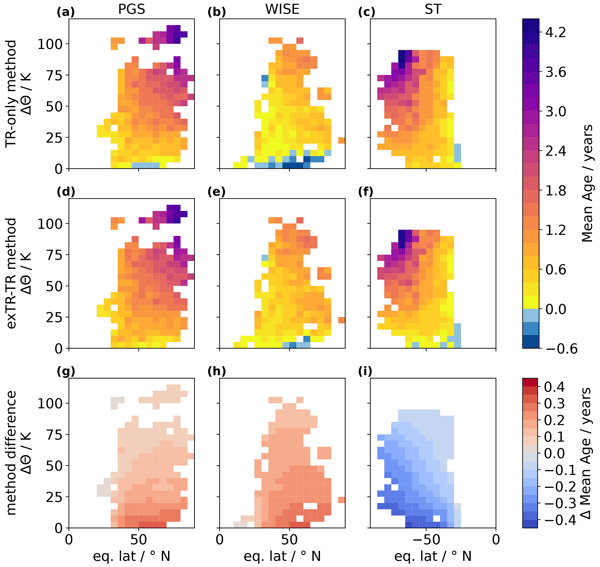
Thomas Wagenhäuser, Markus Jesswein, Timo Keber, Tanja Schuck, and Andreas Engel
Atmos. Chem. Phys., 23, 3887–3903, https://doi.org/10.5194/acp-23-3887-2023, https://doi.org/10.5194/acp-23-3887-2023, 2023
Short summary
Short summary
A common assumption to derive mean age from trace gas observations is that all air enters the stratosphere through the tropical tropopause. Using SF6 as an age tracer, this leads to negative mean age values close to the Northern Hemispheric extra-tropical tropopause. Our improved method also considers extra-tropical input into the stratosphere. More realistic values are derived using this method. Interhemispheric differences in mean age are found when comparing data from two aircraft campaigns.
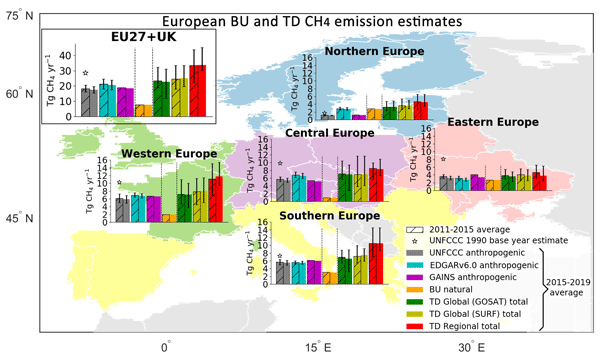
Ana Maria Roxana Petrescu, Chunjing Qiu, Matthew J. McGrath, Philippe Peylin, Glen P. Peters, Philippe Ciais, Rona L. Thompson, Aki Tsuruta, Dominik Brunner, Matthias Kuhnert, Bradley Matthews, Paul I. Palmer, Oksana Tarasova, Pierre Regnier, Ronny Lauerwald, David Bastviken, Lena Höglund-Isaksson, Wilfried Winiwarter, Giuseppe Etiope, Tuula Aalto, Gianpaolo Balsamo, Vladislav Bastrikov, Antoine Berchet, Patrick Brockmann, Giancarlo Ciotoli, Giulia Conchedda, Monica Crippa, Frank Dentener, Christine D. Groot Zwaaftink, Diego Guizzardi, Dirk Günther, Jean-Matthieu Haussaire, Sander Houweling, Greet Janssens-Maenhout, Massaer Kouyate, Adrian Leip, Antti Leppänen, Emanuele Lugato, Manon Maisonnier, Alistair J. Manning, Tiina Markkanen, Joe McNorton, Marilena Muntean, Gabriel D. Oreggioni, Prabir K. Patra, Lucia Perugini, Isabelle Pison, Maarit T. Raivonen, Marielle Saunois, Arjo J. Segers, Pete Smith, Efisio Solazzo, Hanqin Tian, Francesco N. Tubiello, Timo Vesala, Guido R. van der Werf, Chris Wilson, and Sönke Zaehle
Earth Syst. Sci. Data, 15, 1197–1268, https://doi.org/10.5194/essd-15-1197-2023, https://doi.org/10.5194/essd-15-1197-2023, 2023
Short summary
Short summary
This study updates the state-of-the-art scientific overview of CH4 and N2O emissions in the EU27 and UK in Petrescu et al. (2021a). Yearly updates are needed to improve the different respective approaches and to inform on the development of formal verification systems. It integrates the most recent emission inventories, process-based model and regional/global inversions, comparing them with UNFCCC national GHG inventories, in support to policy to facilitate real-time verification procedures.
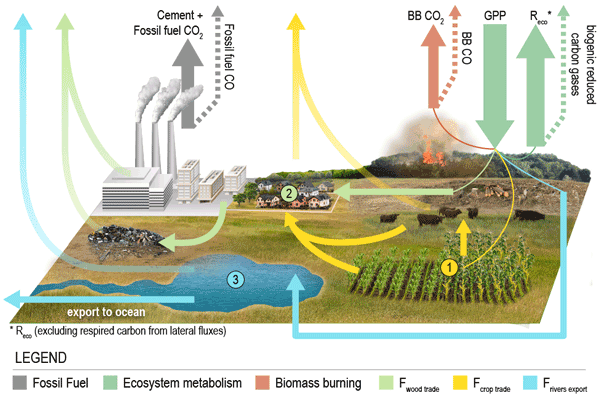
Brendan Byrne, David F. Baker, Sourish Basu, Michael Bertolacci, Kevin W. Bowman, Dustin Carroll, Abhishek Chatterjee, Frédéric Chevallier, Philippe Ciais, Noel Cressie, David Crisp, Sean Crowell, Feng Deng, Zhu Deng, Nicholas M. Deutscher, Manvendra K. Dubey, Sha Feng, Omaira E. García, David W. T. Griffith, Benedikt Herkommer, Lei Hu, Andrew R. Jacobson, Rajesh Janardanan, Sujong Jeong, Matthew S. Johnson, Dylan B. A. Jones, Rigel Kivi, Junjie Liu, Zhiqiang Liu, Shamil Maksyutov, John B. Miller, Scot M. Miller, Isamu Morino, Justus Notholt, Tomohiro Oda, Christopher W. O'Dell, Young-Suk Oh, Hirofumi Ohyama, Prabir K. Patra, Hélène Peiro, Christof Petri, Sajeev Philip, David F. Pollard, Benjamin Poulter, Marine Remaud, Andrew Schuh, Mahesh K. Sha, Kei Shiomi, Kimberly Strong, Colm Sweeney, Yao Té, Hanqin Tian, Voltaire A. Velazco, Mihalis Vrekoussis, Thorsten Warneke, John R. Worden, Debra Wunch, Yuanzhi Yao, Jeongmin Yun, Andrew Zammit-Mangion, and Ning Zeng
Earth Syst. Sci. Data, 15, 963–1004, https://doi.org/10.5194/essd-15-963-2023, https://doi.org/10.5194/essd-15-963-2023, 2023
Short summary
Short summary
Changes in the carbon stocks of terrestrial ecosystems result in emissions and removals of CO2. These can be driven by anthropogenic activities (e.g., deforestation), natural processes (e.g., fires) or in response to rising CO2 (e.g., CO2 fertilization). This paper describes a dataset of CO2 emissions and removals derived from atmospheric CO2 observations. This pilot dataset informs current capabilities and future developments towards top-down monitoring and verification systems.
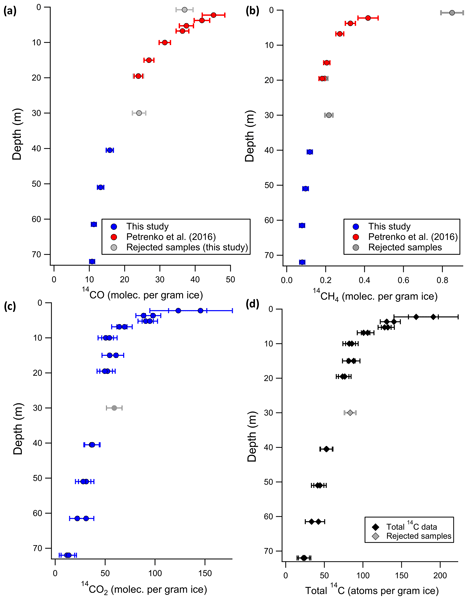
Michael N. Dyonisius, Vasilii V. Petrenko, Andrew M. Smith, Benjamin Hmiel, Peter D. Neff, Bin Yang, Quan Hua, Jochen Schmitt, Sarah A. Shackleton, Christo Buizert, Philip F. Place, James A. Menking, Ross Beaudette, Christina Harth, Michael Kalk, Heidi A. Roop, Bernhard Bereiter, Casey Armanetti, Isaac Vimont, Sylvia Englund Michel, Edward J. Brook, Jeffrey P. Severinghaus, Ray F. Weiss, and Joseph R. McConnell
The Cryosphere, 17, 843–863, https://doi.org/10.5194/tc-17-843-2023, https://doi.org/10.5194/tc-17-843-2023, 2023
Short summary
Short summary
Cosmic rays that enter the atmosphere produce secondary particles which react with surface minerals to produce radioactive nuclides. These nuclides are often used to constrain Earth's surface processes. However, the production rates from muons are not well constrained. We measured 14C in ice with a well-known exposure history to constrain the production rates from muons. 14C production in ice is analogous to quartz, but we obtain different production rates compared to commonly used estimates.
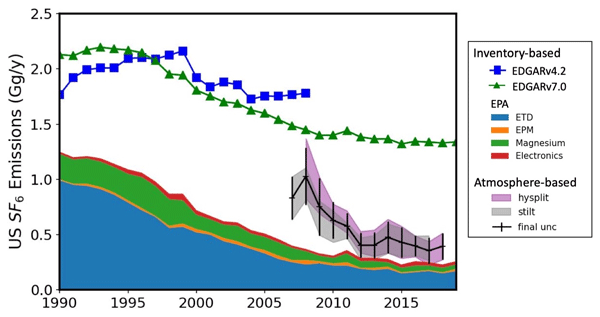
Lei Hu, Deborah Ottinger, Stephanie Bogle, Stephen A. Montzka, Philip L. DeCola, Ed Dlugokencky, Arlyn Andrews, Kirk Thoning, Colm Sweeney, Geoff Dutton, Lauren Aepli, and Andrew Crotwell
Atmos. Chem. Phys., 23, 1437–1448, https://doi.org/10.5194/acp-23-1437-2023, https://doi.org/10.5194/acp-23-1437-2023, 2023
Short summary
Short summary
Effective mitigation of greenhouse gas (GHG) emissions relies on an accurate understanding of emissions. Here we demonstrate the added value of using inventory- and atmosphere-based approaches for estimating US emissions of SF6, the most potent GHG known. The results suggest a large decline in US SF6 emissions, shed light on the possible processes causing the differences between the independent estimates, and identify opportunities for substantial additional emission reductions.
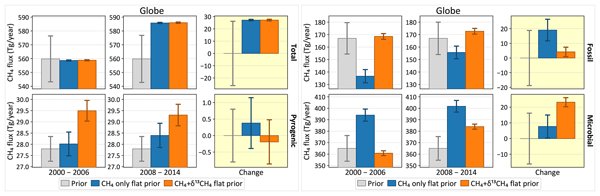
Sourish Basu, Xin Lan, Edward Dlugokencky, Sylvia Michel, Stefan Schwietzke, John B. Miller, Lori Bruhwiler, Youmi Oh, Pieter P. Tans, Francesco Apadula, Luciana V. Gatti, Armin Jordan, Jaroslaw Necki, Motoki Sasakawa, Shinji Morimoto, Tatiana Di Iorio, Haeyoung Lee, Jgor Arduini, and Giovanni Manca
Atmos. Chem. Phys., 22, 15351–15377, https://doi.org/10.5194/acp-22-15351-2022, https://doi.org/10.5194/acp-22-15351-2022, 2022
Short summary
Short summary
Atmospheric methane (CH4) has been growing steadily since 2007 for reasons that are not well understood. Here we determine sources of methane using a technique informed by atmospheric measurements of CH4 and its isotopologue 13CH4. Measurements of 13CH4 provide for better separation of microbial, fossil, and fire sources of methane than CH4 measurements alone. Compared to previous assessments such as the Global Carbon Project, we find a larger microbial contribution to the post-2007 increase.
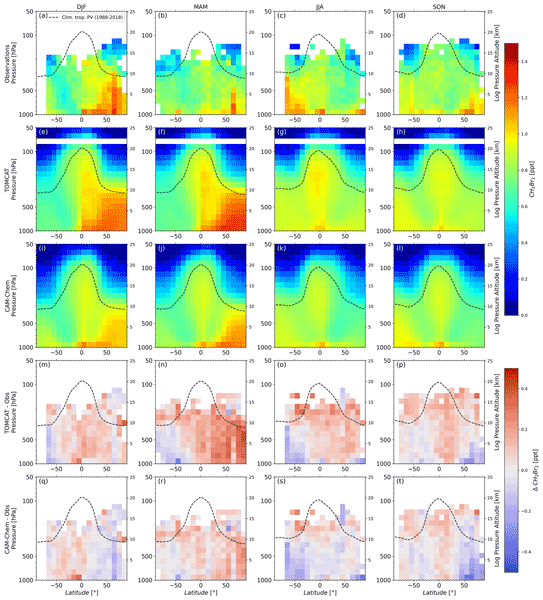
Markus Jesswein, Rafael P. Fernandez, Lucas Berná, Alfonso Saiz-Lopez, Jens-Uwe Grooß, Ryan Hossaini, Eric C. Apel, Rebecca S. Hornbrook, Elliot L. Atlas, Donald R. Blake, Stephen Montzka, Timo Keber, Tanja Schuck, Thomas Wagenhäuser, and Andreas Engel
Atmos. Chem. Phys., 22, 15049–15070, https://doi.org/10.5194/acp-22-15049-2022, https://doi.org/10.5194/acp-22-15049-2022, 2022
Short summary
Short summary
This study presents the global and seasonal distribution of the two major brominated short-lived substances CH2Br2 and CHBr3 in the upper troposphere and lower stratosphere based on observations from several aircraft campaigns. They show similar seasonality for both hemispheres, except in the respective hemispheric autumn lower stratosphere. A comparison with the TOMCAT and CAM-Chem models shows good agreement in the annual mean but larger differences in the seasonal consideration.
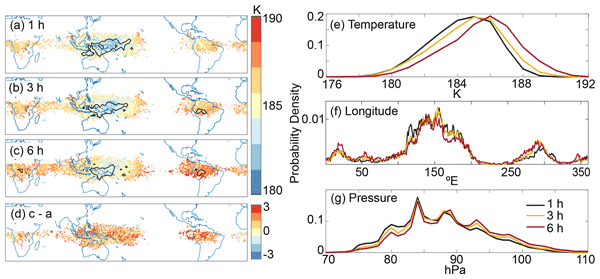
Stephen Bourguet and Marianna Linz
Atmos. Chem. Phys., 22, 13325–13339, https://doi.org/10.5194/acp-22-13325-2022, https://doi.org/10.5194/acp-22-13325-2022, 2022
Short summary
Short summary
Here, we tested the impact of spatial and temporal resolution on Lagrangian trajectory studies in a key region of interest for climate feedbacks and stratospheric chemistry. Our analysis shows that new higher-resolution input data provide an opportunity for a better understanding of physical processes that control how air moves from the troposphere to the stratosphere. Future studies of how these processes will change in a warming climate will benefit from these results.
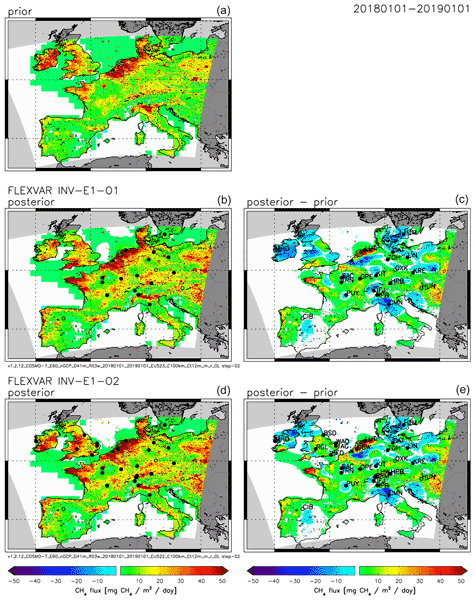
Peter Bergamaschi, Arjo Segers, Dominik Brunner, Jean-Matthieu Haussaire, Stephan Henne, Michel Ramonet, Tim Arnold, Tobias Biermann, Huilin Chen, Sebastien Conil, Marc Delmotte, Grant Forster, Arnoud Frumau, Dagmar Kubistin, Xin Lan, Markus Leuenberger, Matthias Lindauer, Morgan Lopez, Giovanni Manca, Jennifer Müller-Williams, Simon O'Doherty, Bert Scheeren, Martin Steinbacher, Pamela Trisolino, Gabriela Vítková, and Camille Yver Kwok
Atmos. Chem. Phys., 22, 13243–13268, https://doi.org/10.5194/acp-22-13243-2022, https://doi.org/10.5194/acp-22-13243-2022, 2022
Short summary
Short summary
We present a novel high-resolution inverse modelling system, "FLEXVAR", and its application for the inverse modelling of European CH4 emissions in 2018. The new system combines a high spatial resolution of 7 km x 7 km with a variational data assimilation technique, which allows CH4 emissions to be optimized from individual model grid cells. The high resolution allows the observations to be better reproduced, while the derived emissions show overall good consistency with two existing models.
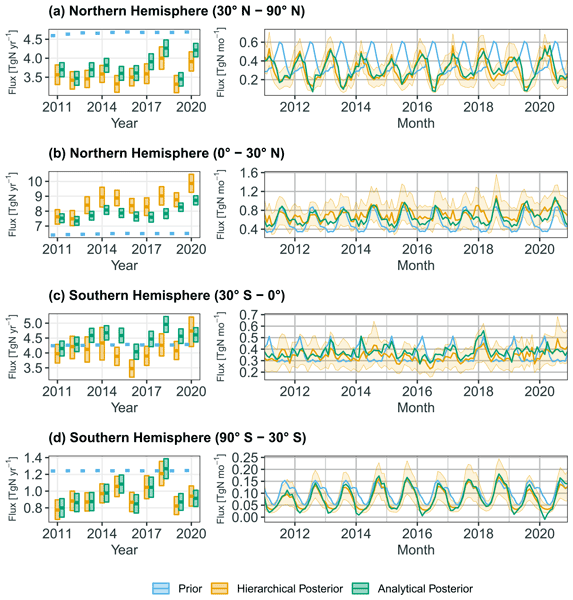
Angharad C. Stell, Michael Bertolacci, Andrew Zammit-Mangion, Matthew Rigby, Paul J. Fraser, Christina M. Harth, Paul B. Krummel, Xin Lan, Manfredi Manizza, Jens Mühle, Simon O'Doherty, Ronald G. Prinn, Ray F. Weiss, Dickon Young, and Anita L. Ganesan
Atmos. Chem. Phys., 22, 12945–12960, https://doi.org/10.5194/acp-22-12945-2022, https://doi.org/10.5194/acp-22-12945-2022, 2022
Short summary
Short summary
Nitrous oxide is a potent greenhouse gas and ozone-depleting substance, whose atmospheric abundance has risen throughout the contemporary record. In this work, we carry out the first global hierarchical Bayesian inversion to solve for nitrous oxide emissions. We derive increasing global nitrous oxide emissions over 2011–2020, which are mainly driven by emissions between 0° and 30°N, with the highest emissions recorded in 2020.
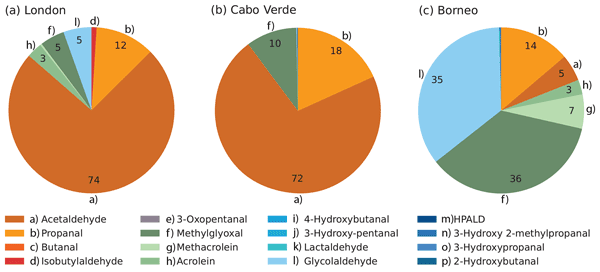
Maria Paula Pérez-Peña, Jenny A. Fisher, Dylan B. Millet, Hisashi Yashiro, Ray L. Langenfelds, Paul B. Krummel, and Scott H. Kable
Atmos. Chem. Phys., 22, 12367–12386, https://doi.org/10.5194/acp-22-12367-2022, https://doi.org/10.5194/acp-22-12367-2022, 2022
Short summary
Short summary
We used two atmospheric models to test the implications of previously unexplored aldehyde photochemistry on the atmospheric levels of molecular hydrogen (H2). We showed that the new photochemistry from aldehydes produces more H2 over densely forested areas. Compared to the rest of the world, it is over these forested regions where the produced H2 is more likely to be removed. The results highlight that other processes that contribute to atmospheric H2 levels should be studied further.
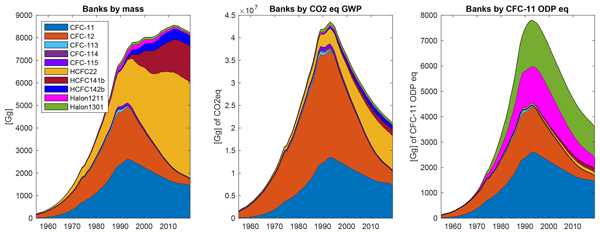
Megan Jeramaz Lickley, John S. Daniel, Eric L. Fleming, Stefan Reimann, and Susan Solomon
Atmos. Chem. Phys., 22, 11125–11136, https://doi.org/10.5194/acp-22-11125-2022, https://doi.org/10.5194/acp-22-11125-2022, 2022
Short summary
Short summary
Halocarbons contained in equipment continue to be emitted after production has ceased. These
banksmust be carefully accounted for in evaluating compliance with the Montreal Protocol. We extend a Bayesian model to the suite of regulated chemicals subject to banking. We find that banks are substantially larger than previous estimates, and we identify banks by chemical and equipment type whose future emissions will contribute to global warming and delay ozone-hole recovery if left unrecovered.
Luke M. Western, Alison L. Redington, Alistair J. Manning, Cathy M. Trudinger, Lei Hu, Stephan Henne, Xuekun Fang, Lambert J. M. Kuijpers, Christina Theodoridi, David S. Godwin, Jgor Arduini, Bronwyn Dunse, Andreas Engel, Paul J. Fraser, Christina M. Harth, Paul B. Krummel, Michela Maione, Jens Mühle, Simon O'Doherty, Hyeri Park, Sunyoung Park, Stefan Reimann, Peter K. Salameh, Daniel Say, Roland Schmidt, Tanja Schuck, Carolina Siso, Kieran M. Stanley, Isaac Vimont, Martin K. Vollmer, Dickon Young, Ronald G. Prinn, Ray F. Weiss, Stephen A. Montzka, and Matthew Rigby
Atmos. Chem. Phys., 22, 9601–9616, https://doi.org/10.5194/acp-22-9601-2022, https://doi.org/10.5194/acp-22-9601-2022, 2022
Short summary
Short summary
The production of ozone-destroying gases is being phased out. Even though production of one of the main ozone-depleting gases, called HCFC-141b, has been declining for many years, the amount that is being released to the atmosphere has been increasing since 2017. We do not know for sure why this is. A possible explanation is that HCFC-141b that was used to make insulating foams many years ago is only now escaping to the atmosphere, or a large part of its production is not being reported.
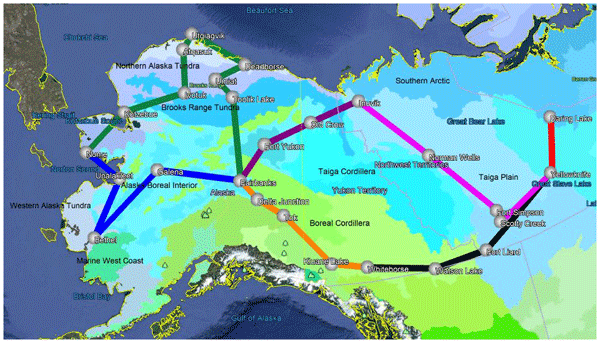
Colm Sweeney, Abhishek Chatterjee, Sonja Wolter, Kathryn McKain, Robert Bogue, Stephen Conley, Tim Newberger, Lei Hu, Lesley Ott, Benjamin Poulter, Luke Schiferl, Brad Weir, Zhen Zhang, and Charles E. Miller
Atmos. Chem. Phys., 22, 6347–6364, https://doi.org/10.5194/acp-22-6347-2022, https://doi.org/10.5194/acp-22-6347-2022, 2022
Short summary
Short summary
The Arctic Carbon Atmospheric Profiles (Arctic-CAP) project demonstrates the utility of aircraft profiles for independent evaluation of model-derived emissions and uptake of atmospheric CO2, CH4, and CO from land and ocean. Comparison with the Goddard Earth Observing System (GEOS) modeling system suggests that fluxes of CO2 are very consistent with observations, while those of CH4 have some regional and seasonal biases, and that CO comparison is complicated by transport errors.
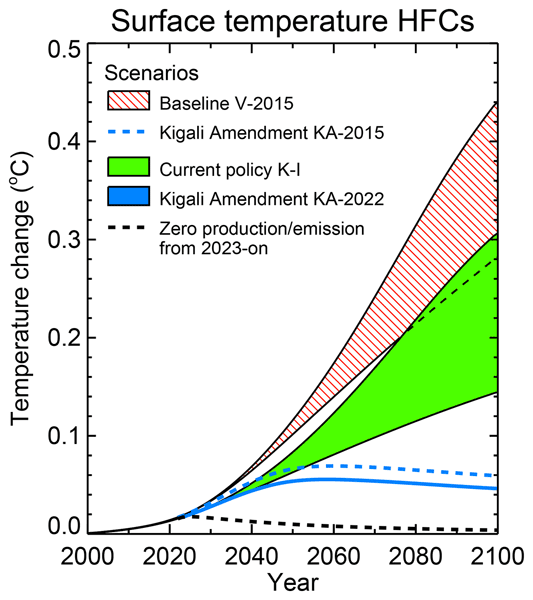
Guus J. M. Velders, John S. Daniel, Stephen A. Montzka, Isaac Vimont, Matthew Rigby, Paul B. Krummel, Jens Muhle, Simon O'Doherty, Ronald G. Prinn, Ray F. Weiss, and Dickon Young
Atmos. Chem. Phys., 22, 6087–6101, https://doi.org/10.5194/acp-22-6087-2022, https://doi.org/10.5194/acp-22-6087-2022, 2022
Short summary
Short summary
The emissions of hydrofluorocarbons (HFCs) have increased significantly in the past as a result of the phasing out of ozone-depleting substances. Observations indicate that HFCs are used much less in certain refrigeration applications than previously projected. Current policies are projected to reduce emissions and the surface temperature contribution of HFCs from 0.28–0.44 °C to 0.14–0.31 °C in 2100. The Kigali Amendment is projected to reduce the contributions further to 0.04 °C in 2100.
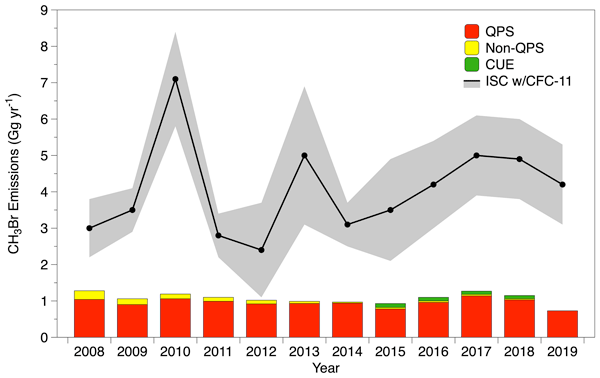
Haklim Choi, Mi-Kyung Park, Paul J. Fraser, Hyeri Park, Sohyeon Geum, Jens Mühle, Jooil Kim, Ian Porter, Peter K. Salameh, Christina M. Harth, Bronwyn L. Dunse, Paul B. Krummel, Ray F. Weiss, Simon O'Doherty, Dickon Young, and Sunyoung Park
Atmos. Chem. Phys., 22, 5157–5173, https://doi.org/10.5194/acp-22-5157-2022, https://doi.org/10.5194/acp-22-5157-2022, 2022
Short summary
Short summary
We observed 12-year continuous CH3Br pollution signals at Gosan and estimated anthropogenic CH3Br emissions in eastern China. The analysis revealed a significant discrepancy between top-down estimates and the bottom-up emissions from the fumigation usage reported to the United Nations Environment Programme, likely due to unreported or inaccurately reported fumigation usage. This result provides information to monitor international compliance with the Montreal Protocol.
Alice E. Ramsden, Anita L. Ganesan, Luke M. Western, Matthew Rigby, Alistair J. Manning, Amy Foulds, James L. France, Patrick Barker, Peter Levy, Daniel Say, Adam Wisher, Tim Arnold, Chris Rennick, Kieran M. Stanley, Dickon Young, and Simon O'Doherty
Atmos. Chem. Phys., 22, 3911–3929, https://doi.org/10.5194/acp-22-3911-2022, https://doi.org/10.5194/acp-22-3911-2022, 2022
Short summary
Short summary
Quantifying methane emissions from different sources is a key focus of current research. We present a method for estimating sectoral methane emissions that uses ethane as a tracer for fossil fuel methane. By incorporating variable ethane : methane emission ratios into this model, we produce emissions estimates with improved uncertainty characterisation. This method will be particularly useful for studying methane emissions in areas with complex distributions of sources.
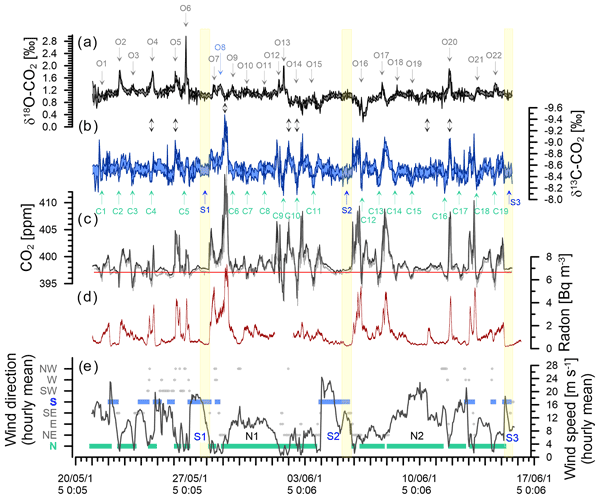
Peter Sperlich, Gordon W. Brailsford, Rowena C. Moss, John McGregor, Ross J. Martin, Sylvia Nichol, Sara Mikaloff-Fletcher, Beata Bukosa, Magda Mandic, C. Ian Schipper, Paul Krummel, and Alan D. Griffiths
Atmos. Meas. Tech., 15, 1631–1656, https://doi.org/10.5194/amt-15-1631-2022, https://doi.org/10.5194/amt-15-1631-2022, 2022
Short summary
Short summary
We tested an in situ analyser for carbon and oxygen isotopes in atmospheric CO2 at Baring Head, New Zealand’s observatory for Southern Ocean baseline air. The analyser was able to resolve regional signals of the terrestrial carbon cycle, although the analysis of small events was limited by analytical uncertainty. Further improvement of the instrument performance would be desirable for the robust analysis of distant signals and to resolve the small variability in Southern Ocean baseline air.
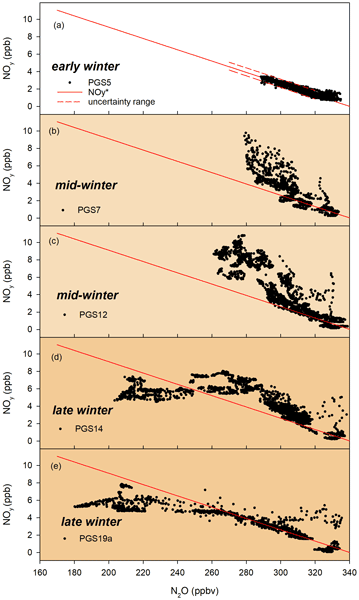
Helmut Ziereis, Peter Hoor, Jens-Uwe Grooß, Andreas Zahn, Greta Stratmann, Paul Stock, Michael Lichtenstern, Jens Krause, Vera Bense, Armin Afchine, Christian Rolf, Wolfgang Woiwode, Marleen Braun, Jörn Ungermann, Andreas Marsing, Christiane Voigt, Andreas Engel, Björn-Martin Sinnhuber, and Hermann Oelhaf
Atmos. Chem. Phys., 22, 3631–3654, https://doi.org/10.5194/acp-22-3631-2022, https://doi.org/10.5194/acp-22-3631-2022, 2022
Short summary
Short summary
Airborne observations were conducted in the lowermost Arctic stratosphere during the winter of 2015/2016. The observed distribution of reactive nitrogen shows clear indications of nitrification in mid-winter and denitrification in late winter. This was caused by the formation of polar stratospheric cloud particles, which were observed during several flights. The sedimentation and evaporation of these particles and the descent of air masses cause a redistribution of reactive nitrogen.
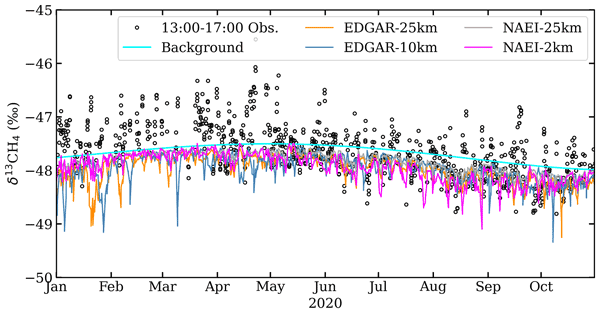
Eric Saboya, Giulia Zazzeri, Heather Graven, Alistair J. Manning, and Sylvia Englund Michel
Atmos. Chem. Phys., 22, 3595–3613, https://doi.org/10.5194/acp-22-3595-2022, https://doi.org/10.5194/acp-22-3595-2022, 2022
Short summary
Short summary
Continuous measurements of atmospheric methane concentrations and its carbon-13 isotope have been made in central London since early 2018. These measurements were used to evaluate methane emissions reported in global and UK-specific emission inventories for the London area. Compared to atmospheric methane measurements from March 2018 to October 2020, both inventories are under-reporting natural gas leakage for the London area.
Jens Mühle, Lambert J. M. Kuijpers, Kieran M. Stanley, Matthew Rigby, Luke M. Western, Jooil Kim, Sunyoung Park, Christina M. Harth, Paul B. Krummel, Paul J. Fraser, Simon O'Doherty, Peter K. Salameh, Roland Schmidt, Dickon Young, Ronald G. Prinn, Ray H. J. Wang, and Ray F. Weiss
Atmos. Chem. Phys., 22, 3371–3378, https://doi.org/10.5194/acp-22-3371-2022, https://doi.org/10.5194/acp-22-3371-2022, 2022
Short summary
Short summary
Emissions of the strong greenhouse gas perfluorocyclobutane (c-C4F8) into the atmosphere have been increasing sharply since the early 2000s. These c-C4F8 emissions are highly correlated with the amount of hydrochlorofluorocarbon-22 produced to synthesize polytetrafluoroethylene (known for its non-stick properties) and related chemicals. From this process, c-C4F8 by-product is vented to the atmosphere. Avoiding these unnecessary c-C4F8 emissions could reduce the climate impact of this industry.
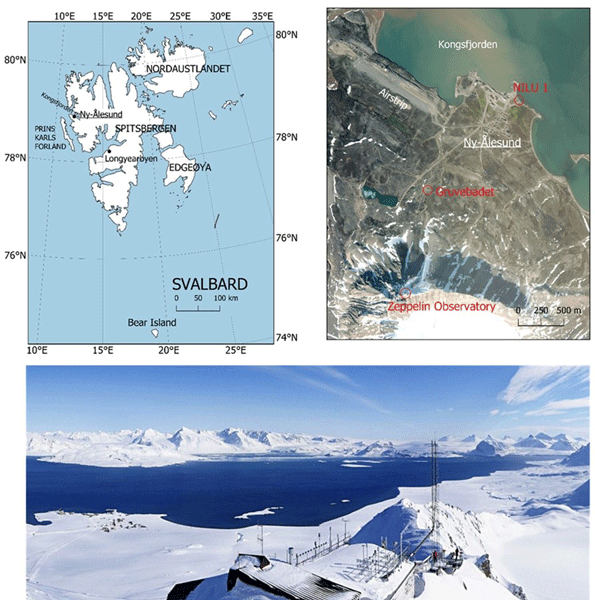
Stephen M. Platt, Øystein Hov, Torunn Berg, Knut Breivik, Sabine Eckhardt, Konstantinos Eleftheriadis, Nikolaos Evangeliou, Markus Fiebig, Rebecca Fisher, Georg Hansen, Hans-Christen Hansson, Jost Heintzenberg, Ove Hermansen, Dominic Heslin-Rees, Kim Holmén, Stephen Hudson, Roland Kallenborn, Radovan Krejci, Terje Krognes, Steinar Larssen, David Lowry, Cathrine Lund Myhre, Chris Lunder, Euan Nisbet, Pernilla B. Nizzetto, Ki-Tae Park, Christina A. Pedersen, Katrine Aspmo Pfaffhuber, Thomas Röckmann, Norbert Schmidbauer, Sverre Solberg, Andreas Stohl, Johan Ström, Tove Svendby, Peter Tunved, Kjersti Tørnkvist, Carina van der Veen, Stergios Vratolis, Young Jun Yoon, Karl Espen Yttri, Paul Zieger, Wenche Aas, and Kjetil Tørseth
Atmos. Chem. Phys., 22, 3321–3369, https://doi.org/10.5194/acp-22-3321-2022, https://doi.org/10.5194/acp-22-3321-2022, 2022
Short summary
Short summary
Here we detail the history of the Zeppelin Observatory, a unique global background site and one of only a few in the high Arctic. We present long-term time series of up to 30 years of atmospheric components and atmospheric transport phenomena. Many of these time series are important to our understanding of Arctic and global atmospheric composition change. Finally, we discuss the future of the Zeppelin Observatory and emerging areas of future research on the Arctic atmosphere.
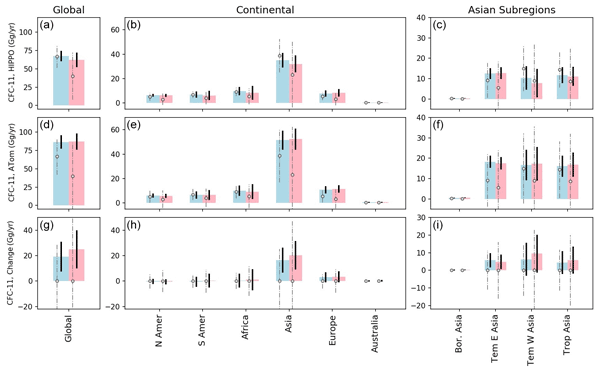
Lei Hu, Stephen A. Montzka, Fred Moore, Eric Hintsa, Geoff Dutton, M. Carolina Siso, Kirk Thoning, Robert W. Portmann, Kathryn McKain, Colm Sweeney, Isaac Vimont, David Nance, Bradley Hall, and Steven Wofsy
Atmos. Chem. Phys., 22, 2891–2907, https://doi.org/10.5194/acp-22-2891-2022, https://doi.org/10.5194/acp-22-2891-2022, 2022
Short summary
Short summary
The unexpected increase in CFC-11 emissions between 2012 and 2017 resulted in concerns about delaying the stratospheric ozone recovery. Although the subsequent decline of CFC-11 emissions indicated a mitigation in part to this problem, the regions fully responsible for these large emission changes were unclear. Here, our new estimate, based on atmospheric measurements from two global campaigns and from NOAA, suggests Asia primarily contributed to the global CFC-11 emission rise during 2012–2017.
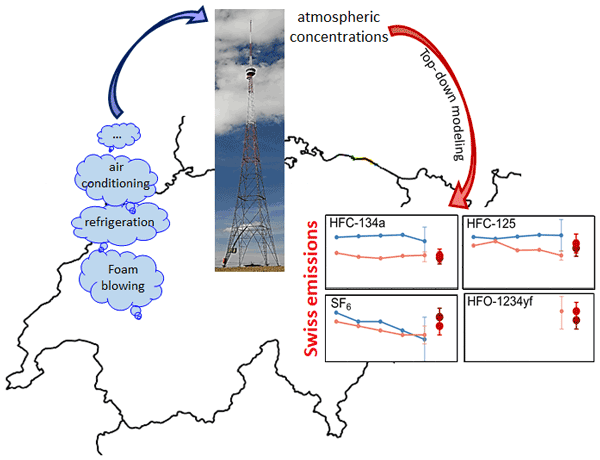
Dominique Rust, Ioannis Katharopoulos, Martin K. Vollmer, Stephan Henne, Simon O'Doherty, Daniel Say, Lukas Emmenegger, Renato Zenobi, and Stefan Reimann
Atmos. Chem. Phys., 22, 2447–2466, https://doi.org/10.5194/acp-22-2447-2022, https://doi.org/10.5194/acp-22-2447-2022, 2022
Short summary
Short summary
Artificial halocarbons contribute to ozone layer depletion and to global warming. We measured the atmospheric concentrations of halocarbons at the Beromünster tower, modelled the Swiss emissions, and compared the results to the internationally reported Swiss emissions inventory. For most of the halocarbons, we found good agreement, whereas one refrigerant might be overestimated in the inventory. In addition, we present first emission estimates of the newest types of halocarbons.
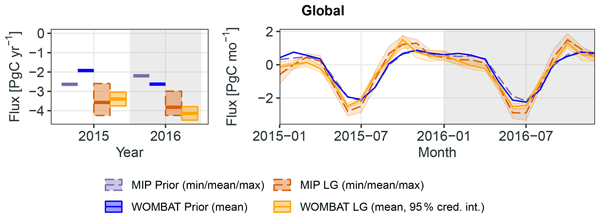
Andrew Zammit-Mangion, Michael Bertolacci, Jenny Fisher, Ann Stavert, Matthew Rigby, Yi Cao, and Noel Cressie
Geosci. Model Dev., 15, 45–73, https://doi.org/10.5194/gmd-15-45-2022, https://doi.org/10.5194/gmd-15-45-2022, 2022
Short summary
Short summary
We present a framework for estimating the sources and sinks (flux) of carbon dioxide from satellite data. The framework is statistical and yields measures of uncertainty alongside all estimates of flux and other parameters in the underlying model. It also allows us to generate other insights, such as the size of errors and biases in the data. The primary aim of this research was to develop a fully statistical flux inversion framework for use by atmospheric scientists.
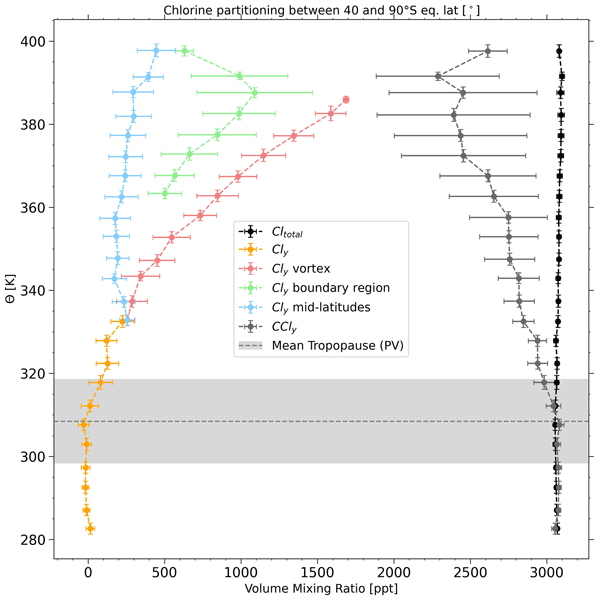
Markus Jesswein, Heiko Bozem, Hans-Christoph Lachnitt, Peter Hoor, Thomas Wagenhäuser, Timo Keber, Tanja Schuck, and Andreas Engel
Atmos. Chem. Phys., 21, 17225–17241, https://doi.org/10.5194/acp-21-17225-2021, https://doi.org/10.5194/acp-21-17225-2021, 2021
Short summary
Short summary
This study presents and compares inorganic chlorine (Cly) derived from observations with the HALO research aircraft in the Antarctic late winter–early fall 2019 and the Arctic winter 2015–2016. Trend-corrected correlations from the Northern Hemisphere show excellent agreement with those from the Southern Hemisphere. After observation allocation inside and outside the vortex based on N2O measurements, results of the two campaigns reveal substantial differences in Cly within the respective vortex.
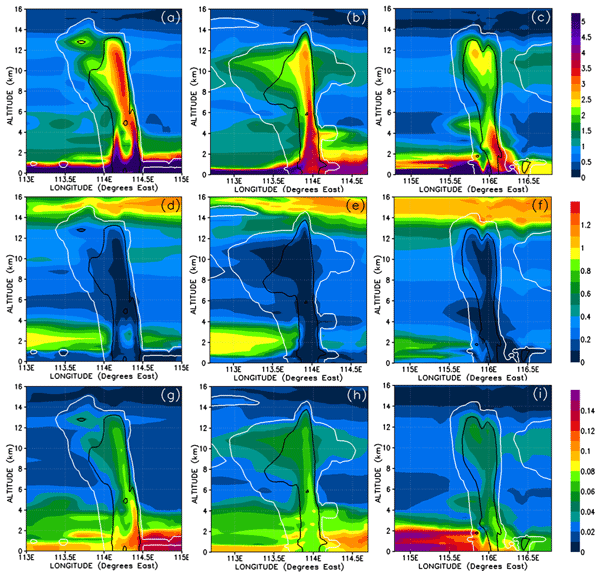
Paul D. Hamer, Virginie Marécal, Ryan Hossaini, Michel Pirre, Gisèle Krysztofiak, Franziska Ziska, Andreas Engel, Stephan Sala, Timo Keber, Harald Bönisch, Elliot Atlas, Kirstin Krüger, Martyn Chipperfield, Valery Catoire, Azizan A. Samah, Marcel Dorf, Phang Siew Moi, Hans Schlager, and Klaus Pfeilsticker
Atmos. Chem. Phys., 21, 16955–16984, https://doi.org/10.5194/acp-21-16955-2021, https://doi.org/10.5194/acp-21-16955-2021, 2021
Short summary
Short summary
Bromoform is a stratospheric ozone-depleting gas released by seaweed and plankton transported to the stratosphere via convection in the tropics. We study the chemical interactions of bromoform and its derivatives within convective clouds using a cloud-scale model and observations. Our findings are that soluble bromine gases are efficiently washed out and removed within the convective clouds and that most bromine is transported vertically to the upper troposphere in the form of bromoform.
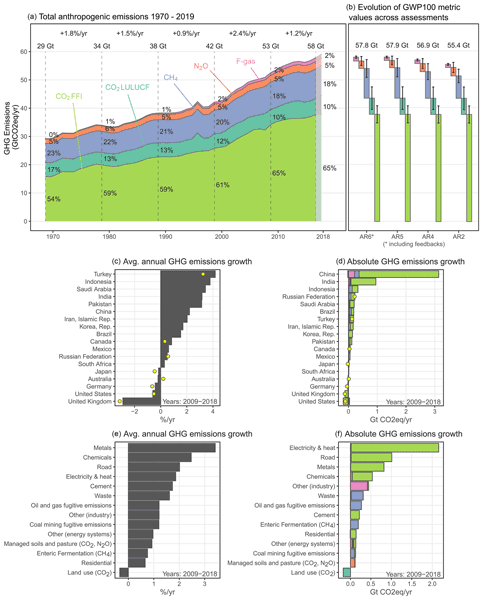
Jan C. Minx, William F. Lamb, Robbie M. Andrew, Josep G. Canadell, Monica Crippa, Niklas Döbbeling, Piers M. Forster, Diego Guizzardi, Jos Olivier, Glen P. Peters, Julia Pongratz, Andy Reisinger, Matthew Rigby, Marielle Saunois, Steven J. Smith, Efisio Solazzo, and Hanqin Tian
Earth Syst. Sci. Data, 13, 5213–5252, https://doi.org/10.5194/essd-13-5213-2021, https://doi.org/10.5194/essd-13-5213-2021, 2021
Short summary
Short summary
We provide a synthetic dataset on anthropogenic greenhouse gas (GHG) emissions for 1970–2018 with a fast-track extension to 2019. We show that GHG emissions continued to rise across all gases and sectors. Annual average GHG emissions growth slowed, but absolute decadal increases have never been higher in human history. We identify a number of data gaps and data quality issues in global inventories and highlight their importance for monitoring progress towards international climate goals.

Mark F. Lunt, Alistair J. Manning, Grant Allen, Tim Arnold, Stéphane J.-B. Bauguitte, Hartmut Boesch, Anita L. Ganesan, Aoife Grant, Carole Helfter, Eiko Nemitz, Simon J. O'Doherty, Paul I. Palmer, Joseph R. Pitt, Chris Rennick, Daniel Say, Kieran M. Stanley, Ann R. Stavert, Dickon Young, and Matt Rigby
Atmos. Chem. Phys., 21, 16257–16276, https://doi.org/10.5194/acp-21-16257-2021, https://doi.org/10.5194/acp-21-16257-2021, 2021
Short summary
Short summary
We present an evaluation of the UK's methane emissions between 2013 and 2020 using a network of tall tower measurement sites. We find emissions that are consistent in both magnitude and trend with the UK's reported emissions, with a declining trend driven by a decrease in emissions from England. The impact of various components of the modelling set-up on these findings are explored through a number of sensitivity studies.
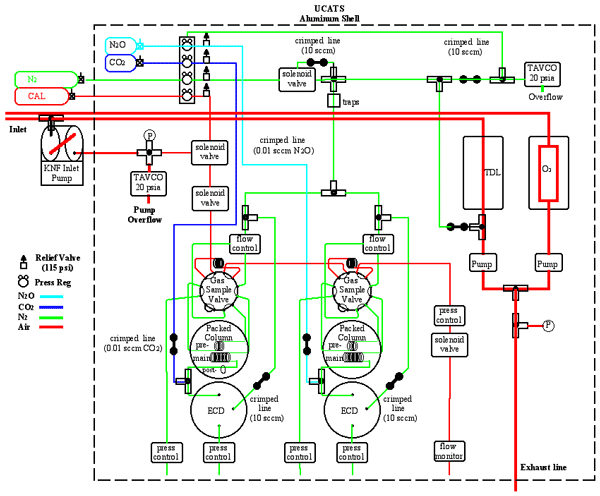
Eric J. Hintsa, Fred L. Moore, Dale F. Hurst, Geoff S. Dutton, Bradley D. Hall, J. David Nance, Ben R. Miller, Stephen A. Montzka, Laura P. Wolton, Audra McClure-Begley, James W. Elkins, Emrys G. Hall, Allen F. Jordan, Andrew W. Rollins, Troy D. Thornberry, Laurel A. Watts, Chelsea R. Thompson, Jeff Peischl, Ilann Bourgeois, Thomas B. Ryerson, Bruce C. Daube, Yenny Gonzalez Ramos, Roisin Commane, Gregory W. Santoni, Jasna V. Pittman, Steven C. Wofsy, Eric Kort, Glenn S. Diskin, and T. Paul Bui
Atmos. Meas. Tech., 14, 6795–6819, https://doi.org/10.5194/amt-14-6795-2021, https://doi.org/10.5194/amt-14-6795-2021, 2021
Short summary
Short summary
We built UCATS to study atmospheric chemistry and transport. It has measured trace gases including CFCs, N2O, SF6, CH4, CO, and H2 with gas chromatography, as well as ozone and water vapor. UCATS has been part of missions to study the tropical tropopause; transport of air into the stratosphere; greenhouse gases, transport, and chemistry in the troposphere; and ozone chemistry, on both piloted and unmanned aircraft. Its design, capabilities, and some results are shown and described here.
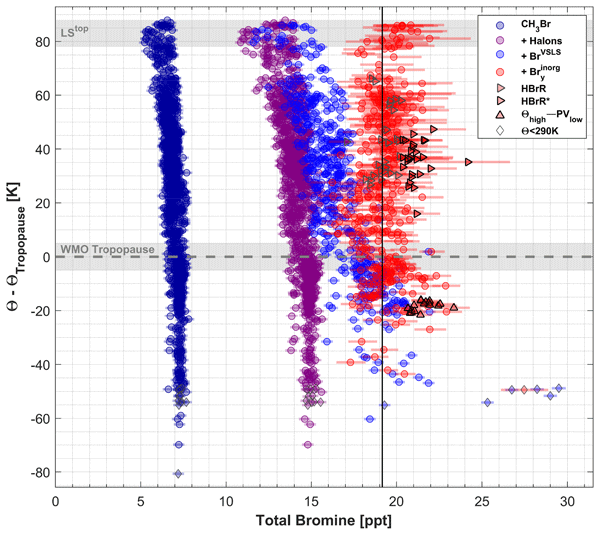
Meike K. Rotermund, Vera Bense, Martyn P. Chipperfield, Andreas Engel, Jens-Uwe Grooß, Peter Hoor, Tilman Hüneke, Timo Keber, Flora Kluge, Benjamin Schreiner, Tanja Schuck, Bärbel Vogel, Andreas Zahn, and Klaus Pfeilsticker
Atmos. Chem. Phys., 21, 15375–15407, https://doi.org/10.5194/acp-21-15375-2021, https://doi.org/10.5194/acp-21-15375-2021, 2021
Short summary
Short summary
Airborne total bromine (Brtot) and tracer measurements suggest Brtot-rich air masses persistently protruded into the lower stratosphere (LS), creating a high Brtot region over the North Atlantic in fall 2017. The main source is via isentropic transport by the Asian monsoon and to a lesser extent transport across the extratropical tropopause as quantified by a Lagrange model. The transport of Brtot via Central American hurricanes is also observed. Lastly, the impact of Brtot on LS O3 is assessed.
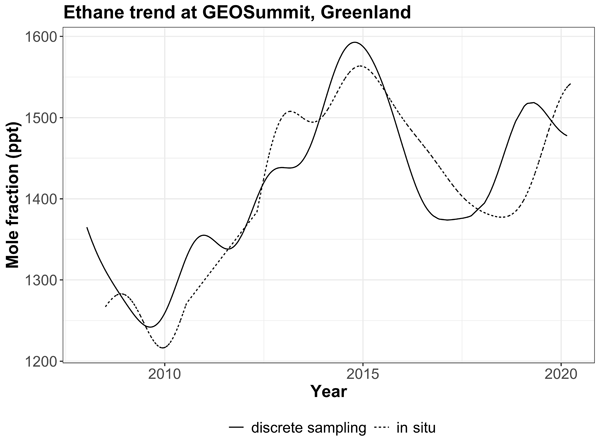
Hélène Angot, Connor Davel, Christine Wiedinmyer, Gabrielle Pétron, Jashan Chopra, Jacques Hueber, Brendan Blanchard, Ilann Bourgeois, Isaac Vimont, Stephen A. Montzka, Ben R. Miller, James W. Elkins, and Detlev Helmig
Atmos. Chem. Phys., 21, 15153–15170, https://doi.org/10.5194/acp-21-15153-2021, https://doi.org/10.5194/acp-21-15153-2021, 2021
Short summary
Short summary
After a multidecadal global decline in atmospheric abundance of ethane and propane (precursors of tropospheric ozone and aerosols), previous work showed a reversal of this trend in 2009–2015 in the Northern Hemisphere due to the growth in oil and natural gas production in North America. Here we show a temporary pause in the growth of atmospheric ethane and propane in 2015–2018 and highlight the critical need for additional top-down studies to further constrain ethane and propane emissions.
Cited articles
Adcock, K. E., Reeves, C. E., Gooch, L. J., Leedham Elvidge, E. C., Ashfold, M. J., Brenninkmeijer, C. A. M., Chou, C., Fraser, P. J., Langenfelds, R. L., Mohd Hanif, N., O'Doherty, S., Oram, D. E., Ou-Yang, C.-F., Phang, S. M., Samah, A. A., Röckmann, T., Sturges, W. T., and Laube, J. C.: Continued increase of CFC-113a (CCl3CF3) mixing ratios in the global atmosphere: emissions, occurrence and potential sources, Atmos. Chem. Phys., 18, 4737–4751, https://doi.org/10.5194/acp-18-4737-2018, 2018. a, b, c, d
Archbold, M. E., Elliot, T., and Kalin, R. M.: Carbon Isotopic Fractionation of CFCs during Abiotic and Biotic Degradation, Environmental Science & Technology, 46, 1764–1773, https://doi.org/10.1021/es203386a, 2012. a
Arnold, T., Mühle, J., Salameh, P. K., Harth, C. M., Ivy, D. J., and Weiss, R. F.: Automated Measurement of Nitrogen Trifluoride in Ambient Air, Analytical Chemistry, 84, 4798–4804, https://doi.org/10.1021/ac300373e, 2012. a
Arnold, T., Manning, A. J., Kim, J., Li, S., Webster, H., Thomson, D., Mühle, J., Weiss, R. F., Park, S., and O'Doherty, S.: Inverse modelling of CF4 and NF3 emissions in East Asia, Atmos. Chem. Phys., 18, 13305–13320, https://doi.org/10.5194/acp-18-13305-2018, 2018. a
Ashford, P., Clodic, D., McCulloch, A., and Kuijpers, L.: Determination of comparative HCFC and HFC emission profiles for the foam and refrigeration sectors until 2015: Part 3: Total Emissions and Global Atmospheric Concentrations, https://www.epa.gov/sites/default/files/2015-08/documents/foamemissionprofiles_part3.pdf (last access: 1 December 2025), 2004. a, b, c, d, e
Bates, S. C., Cullen, A., and Raftery, A. E.: Bayesian uncertainty assessment in multicompartment deterministic simulation models for environmental risk assessment, Environmetrics, 14, 355–371, https://doi.org/10.1002/env.590, 2003. a
Berends, A. G., Boutonnet, J. C., Rooij, C. G. D., and Thompson, R. S.: Toxicity of trifluoroacetate to aquatic organisms, Environmental Toxicology and Chemistry, 18, 1053–1059, https://doi.org/10.1002/etc.5620180533, 1999. a
Bourguet, S.: HFCs Feedstock Data and Code, Zenodo [code and data set], https://doi.org/10.5281/zenodo.13890803, 2024. a
Bourguet, S. and Lickley, M.: Bayesian modeling of HFC production pipeline suggests growth in unreported CFC by-product and feedstock production, Nat. Commun., 15, 14 pp., https://doi.org/10.1038/s41467-024-55250-6, 2024. a, b
Burkholder, J., Sander, S., Abbatt, J., Barker, J., Cappa, C., Crounse, J., Dibble, T., Huie, R., Kolb, C., Kurylo, M., Orkin, V., Percival, C., Wilmouth, D., and Wine, P.: Chemical kinetics and photochemical data for use in atmospheric studies; evaluation number 19, technical report, JPL Open Repository, Jet Propulsion Laborary, Pasadena, CA, USA, https://hdl.handle.net/2014/49199 (last access: 1 December 2025), 2020. a
Bush, M., Boutle, I., Edwards, J., Finnenkoetter, A., Franklin, C., Hanley, K., Jayakumar, A., Lewis, H., Lock, A., Mittermaier, M., Mohandas, S., North, R., Porson, A., Roux, B., Webster, S., and Weeks, M.: The second Met Office Unified Model–JULES Regional Atmosphere and Land configuration, RAL2, Geosci. Model Dev., 16, 1713–1734, https://doi.org/10.5194/gmd-16-1713-2023, 2023. a
Calvo Buendia, E., Tanabe, K., Kranjc, A., Baasansuren, J., Fukuda, M., Ngarize, S., Osako, A., Pyrozhenko, Y., Shermanau, P., and Federici, S.: 2019 Refinement to the 2006 IPCC Guidelines for National Greenhouse Gas Inventories, IPCC, Switzerland, ISBN 978-4-88788-232-4, 2019. a
Cunnold, D. M., Prinn, R. G., Rasmussen, R. A., Simmonds, P. G., Alyea, F. N., Cardelino, C. A., Crawford, A. J., Fraser, P. J., and Rosen, R. D.: The Atmospheric Lifetime Experiment: 3. Lifetime methodology and application to three years of CFCl3 data, Journal of Geophysical Research: Oceans, 88, 8379–8400, https://doi.org/10.1029/JC088iC13p08379, 1983. a
Dalmijn, J., Glüge, J., Scheringer, M., and Cousins, I. T.: Emission inventory of PFASs and other fluorinated organic substances for the fluoropolymer production industry in Europe, Environmental Science: Processes & Impacts, 26, 269–287, https://doi.org/10.1039/D3EM00426K, 2024. a
Ellis, D. A., Mabury, S. A., Martin, J. W., and Muir, D. C. G.: Thermolysis of fluoropolymers as a potential source of halogenated organic acids in the environment, Nature, 412, 321–324, https://doi.org/10.1038/35085548, 2001. a
EPA: Inventory of U.S. Greenhouse Gas Emissions and Sinks: 1990–2022, Tech. Rep. EPA 430-R-24-004, U.S. Environmental Protection Agency, https://www.epa.gov/ghgemissions/inventory-us-greenhouse-gas-emissions-and-sinks-1990-2022 (last access: 1 December 2025), 2024. a
Fang, X., Yao, B., Vollmer, M. K., Reimann, S., Liu, L., Chen, L., Prinn, R. G., and Hu, J.: Changes in HCFC Emissions in China During 2011–2017, Geophysical Research Letters, 46, 10034–10042, https://doi.org/10.1029/2019GL083169, 2019. a, b, c, d
Fraser, P. J., Langenfelds, R. L., Derek, N., and Porter, L. W.: Studies in air archiving techniques, in: Baseline Atmospheric Program (Australia) 1989, edited by: Wilson, S. R. and Gras, J. L., 16–29, Department of the Arts, Sport, the Environment, Tourism and Territories, Bureau of Meteorology and CSIRO Division of Atmospheric Research, Canberra, A.C.T., https://doi.org/10.4225/08/585eb98106135, 1991. a
FSTOC: Report of the UNEP Fire Suppression Technical Options Committee December 2022, United Nations Environment Programme, ISBN 978-9914-733-96-9, 2022. a
Ganesan, A. L., Rigby, M., Zammit-Mangion, A., Manning, A. J., Prinn, R. G., Fraser, P. J., Harth, C. M., Kim, K.-R., Krummel, P. B., Li, S., Mühle, J., O'Doherty, S. J., Park, S., Salameh, P. K., Steele, L. P., and Weiss, R. F.: Characterization of uncertainties in atmospheric trace gas inversions using hierarchical Bayesian methods, Atmos. Chem. Phys., 14, 3855–3864, https://doi.org/10.5194/acp-14-3855-2014, 2014. a, b
Hassler, B. and Young, P. J.: Update on Global Ozone: Past, Present, and Future, in: Scientific Assessment of Ozone Depletion: 2022, GAW Report No. 278, World Meteorological Organization, Geneva, Switzerland, ISBN 978-9914-733-97-6, 2023. a
Hong, B., Strawderman, R. L., Swaney, D. P., and Weinstein, D. A.: Bayesian estimation of input parameters of a nitrogen cycle model applied to a forested reference watershed, Hubbard Brook Watershed Six, Water Resources Research, 41, 2004WR003551, https://doi.org/10.1029/2004WR003551, 2005. a
HTOC: Report of the UNEP Halons Technical Options Committee December 2014, vol. 1, UNEP, Nairobi, Kenya, ISBN 978-9966-076-04-5, 2014. a
Hu, L., Montzka, S. A., Miller, J. B., Andrews, A. E., Lehman, S. J., Miller, B. R., Thoning, K., Sweeney, C., Chen, H., Godwin, D. S., Masarie, K., Bruhwiler, L., Fischer, M. L., Biraud, S. C., Torn, M. S., Mountain, M., Nehrkorn, T., Eluszkiewicz, J., Miller, S., Draxler, R. R., Stein, A. F., Hall, B. D., Elkins, J. W., and Tans, P. P.: U.S. emissions of HFC-134a derived for 2008–2012 from an extensive flask-air sampling network, Journal of Geophysical Research: Atmospheres, 120, 801–825, https://doi.org/10.1002/2014JD022617, 2015. a, b, c
Hu, L., Montzka, S. A., Miller, B. R., Andrews, A. E., Miller, J. B., Lehman, S. J., Sweeney, C., Miller, S. M., Thoning, K., Siso, C., Atlas, E. L., Blake, D. R., de Gouw, J., Gilman, J. B., Dutton, G., Elkins, J. W., Hall, B., Chen, H., Fischer, M. L., Mountain, M. E., Nehrkorn, T., Biraud, S. C., Moore, F. L., and Tans, P.: Continued emissions of carbon tetrachloride from the United States nearly two decades after its phaseout for dispersive uses, Proceedings of the National Academy of Sciences, 113, 2880–2885, https://doi.org/10.1073/pnas.1522284113, 2016. a, b
Hu, L., Montzka, S. A., Lehman, S. J., Godwin, D. S., Miller, B. R., Andrews, A. E., Thoning, K., Miller, J. B., Sweeney, C., Siso, C., Elkins, J. W., Hall, B. D., Mondeel, D. J., Nance, D., Nehrkorn, T., Mountain, M., Fischer, M. L., Biraud, S. C., Chen, H., and Tans, P. P.: Considerable contribution of the Montreal Protocol to declining greenhouse gas emissions from the United States, Geophysical Research Letters, 44, 8075–8083, https://doi.org/10.1002/2017GL074388, 2017. a, b
Ivy, D. J., Arnold, T., Harth, C. M., Steele, L. P., Mühle, J., Rigby, M., Salameh, P. K., Leist, M., Krummel, P. B., Fraser, P. J., Weiss, R. F., and Prinn, R. G.: Atmospheric histories and growth trends of C4F10, C5F12, C6F14, C7F16 and C8F18, Atmos. Chem. Phys., 12, 4313–4325, https://doi.org/10.5194/acp-12-4313-2012, 2012. a
Jones, A., Thomson, D., Hort, M., and Devenish, B.: The U.K. Met Office's Next-Generation Atmospheric Dispersion Model, NAME III, in: Air Pollution Modeling and Its Application XVII, Springer US, Boston, MA, ISBN 978-0-387-28255-8, 580–589, https://doi.org/10.1007/978-0-387-68854-1_62, 2006. a
Kloss, C., Newland, M. J., Oram, D. E., Fraser, P. J., Brenninkmeijer, C. A. M., Röckmann, T., and Laube, J. C.: Atmospheric Abundances, Trends and Emissions of CFC-216ba, CFC-216ca and HCFC-225ca, Atmosphere, 5, 420–434, https://doi.org/10.3390/atmos5020420, 2014. a
Krummel, P. B., Porter, L. W., Fraser, P. J., Dunse, B. L., and Derek, N.: HCFCs, HFCs, halons, minor CFCs, PCE and halomethanes: the AGAGE in situ GC-MS-ADS program at Cape Grim, 1998–2004, in: Baseline Atmospheric Program Australia, Australian Bureau of Meteorology/CSIRO Marine and Atmospheric Research, 65–73, ISBN 1 921061 33 2, 2006. a
Langenfelds, R. L., Fraser, P. J., Francey, R. J., Steele, L. P., Porter, L. W., and Allison, C. E.: Baseline Atmospheric Program Australia 1994–95, Bureau of Meteorology and CSIRO Division of Atmospheric Research, https://doi.org/10.4225/08/5865509FA7A35, 1996. a
Lickley, M., Solomon, S., Fletcher, S., Velders, G. J. M., Daniel, J., Rigby, M., Montzka, S. A., Kuijpers, L. J. M., and Stone, K.: Quantifying contributions of chlorofluorocarbon banks to emissions and impacts on the ozone layer and climate, Nature Communications, 11, https://doi.org/10.1038/s41467-020-15162-7, 2020. a, b
Lickley, M., Fletcher, S., Rigby, M., and Solomon, S.: Joint inference of CFC lifetimes and banks suggests previously unidentified emissions, Nature Communications, 12, 2920, https://doi.org/10.1038/s41467-021-23229-2, 2021. a
Lickley, M. J., Daniel, J. S., Fleming, E. L., Reimann, S., and Solomon, S.: Bayesian assessment of chlorofluorocarbon (CFC), hydrochlorofluorocarbon (HCFC) and halon banks suggest large reservoirs still present in old equipment, Atmos. Chem. Phys., 22, 11125–11136, https://doi.org/10.5194/acp-22-11125-2022, 2022. a
Manning, A. J., Redington, A. L., Say, D., O'Doherty, S., Young, D., Simmonds, P. G., Vollmer, M. K., Mühle, J., Arduini, J., Spain, G., Wisher, A., Maione, M., Schuck, T. J., Stanley, K., Reimann, S., Engel, A., Krummel, P. B., Fraser, P. J., Harth, C. M., Salameh, P. K., Weiss, R. F., Gluckman, R., Brown, P. N., Watterson, J. D., and Arnold, T.: Evidence of a recent decline in UK emissions of hydrofluorocarbons determined by the InTEM inverse model and atmospheric measurements, Atmos. Chem. Phys., 21, 12739–12755, https://doi.org/10.5194/acp-21-12739-2021, 2021. a, b, c, d
McCulloch, A. and Midgley, P. M.: Estimated historic emissions of fluorocarbons from the European Union, Atmospheric Environment, 32, 1571–1580, https://doi.org/10.1016/S1352-2310(97)00393-2, 1998. a, b
MCTOC: Report of the Medical and Chemical Technical Options Committee: 2018 Assessment, https://ozone.unep.org/science/assessment/teap (last access: 1 December 2025), 2018. a
Michalak, A. M., Hirsch, A., Bruhwiler, L., Gurney, K. R., Peters, W., and Tans, P. P.: Maximum likelihood estimation of covariance parameters for Bayesian atmospheric trace gas surface flux inversions, Journal of Geophysical Research: Atmospheres, 110, https://doi.org/10.1029/2005JD005970, 2005. a
Miller, B. R., Weiss, R. F., Salameh, P. K., Tanhua, T., Greally, B. R., Muhle, J., and Simmonds, P. G.: Medusa : A Sample Preconcentration and GC/MS Detector System for in Situ Measurements of Atmospheric Trace Halocarbons, Hydrocarbons , and Sulfur Compounds, Analytical Chemistry, 80, 1536–1545, https://doi.org/10.1021/ac702084k, 2008. a
Miller, B. R., Rigby, M., Kuijpers, L. J. M., Krummel, P. B., Steele, L. P., Leist, M., Fraser, P. J., McCulloch, A., Harth, C., Salameh, P., Mühle, J., Weiss, R. F., Prinn, R. G., Wang, R. H. J., O'Doherty, S., Greally, B. R., and Simmonds, P. G.: HFC-23 (CHF3) emission trend response to HCFC-22 (CHClF2) production and recent HFC-23 emission abatement measures, Atmos. Chem. Phys., 10, 7875–7890, https://doi.org/10.5194/acp-10-7875-2010, 2010. a
Miller, M. and Batchelor, T.: Information Paper on Feedstock Uses of Ozone-Depleting Substances, Tech. rep., https://varmtochkallt.se/wp-content/uploads/2021/04/Touchdown-Consulting-Feedstock-Uses-of-ODS-2012.pdf (last access: 1 December 2025), 2012. a
Ministry of Ecology and Environment of the People's Republic of China: 2024 Hydrofluorocarbon Production and Import Quotas Announced [in Chinese], https://www.mee.gov.cn/xxgk2018/xxgk/xxgk05/202402/W020240318587718307908.pdf (last access: 1 December 2025), 2024. a
MLF: Report of the Sub-Group on the Production Sector, Tech. Rep. UNEP/OzL.Pro/ExCom/95/93, The Multilateral Fund for the Implementation of the Montreal Protocol, Montreal, https://www.multilateralfund.org/api/drupal-documents/download/file/6111d09c-c71e-410d-bc9c-ecdfda38ebfc?filename=9593r1.pdf (last access: 1 December 2025), 2024. a
Montzka, S. A., Dutton, G. S., Yu, P., Ray, E., Portmann, R. W., Daniel, J. S., Kuijpers, L., Hall, B. D., Mondeel, D., Siso, C., Nance, J. D., Rigby, M., Manning, A. J., Hu, L., Moore, F., Miller, B. R., and Elkins, J. W.: An unexpected and persistent increase in global emissions of ozone-depleting CFC-11, Nature, 557, 413–417, https://doi.org/10.1038/s41586-018-0106-2, 2018. a, b
Montzka, S. A., Dutton, G. S., Portmann, R. W., Chipperfield, M. P., Davis, S., Feng, W., Manning, A. J., Ray, E., Rigby, M., Hall, B. D., Siso, C., Nance, J. D., Krummel, P. B., Mühle, J., Young, D., O'Doherty, S., Salameh, P. K., Harth, C. M., Prinn, R. G., Weiss, R. F., Elkins, J. W., Walter-Terrinoni, H., and Theodoridi, C.: A decline in global CFC-11 emissions during 2018–2019, Nature, 590, 428–432, https://doi.org/10.1038/s41586-021-03260-5, 2021. a
Murphy, B., Saboya, E., alexdanjou, Adam, B., Prasad, De Longueville, H., Pitt, J., Jones, G., Western, L., elenafillo, pearson01, and aliceramsden: openghg/openghg_inversions: Release v0.5 (v0.5), Zenodo [code], https://doi.org/10.5281/zenodo.17454638, 2025. a
Park, S., Western, L. M., Saito, T., Redington, A. L., Henne, S., Fang, X., Prinn, R. G., Manning, A. J., Montzka, S. A., Fraser, P. J., Ganesan, A. L., Harth, C. M., Kim, J., Krummel, P. B., Liang, Q., Mühle, J., O'Doherty, S., Park, H., Park, M.-K., Reimann, S., Salameh, P. K., Weiss, R. F., and Rigby, M.: A decline in emissions of CFC-11 and related chemicals from eastern China, Nature, 590, 433–437, https://doi.org/10.1038/s41586-021-03277-w, 2021. a
Pisso, I., Sollum, E., Grythe, H., Kristiansen, N. I., Cassiani, M., Eckhardt, S., Arnold, D., Morton, D., Thompson, R. L., Groot Zwaaftink, C. D., Evangeliou, N., Sodemann, H., Haimberger, L., Henne, S., Brunner, D., Burkhart, J. F., Fouilloux, A., Brioude, J., Philipp, A., Seibert, P., and Stohl, A.: The Lagrangian particle dispersion model FLEXPART version 10.4, Geosci. Model Dev., 12, 4955–4997, https://doi.org/10.5194/gmd-12-4955-2019, 2019. a
Poole, D. and Raftery, A. E.: Inference for Deterministic Simulation Models: The Bayesian Melding Approach, Journal of the American Statistical Association, 95, 1244–1255, https://doi.org/10.1080/01621459.2000.10474324, 2000. a
Prinn, R. G., Weiss, R. F., Fraser, P. J., Simmonds, P. G., Cunnold, D. M., Alyea, F. N., O'Doherty, S., Salameh, P., Miller, B. R., Huang, J., Wang, R. H. J., Hartley, D. E., Harth, C., Steele, L. P., Sturrock, G., Midgley, P. M., and McCulloch, A.: A history of chemically and radiatively important gases in air deduced from ALE/GAGE/AGAGE, Journal of Geophysical Research: Atmospheres, 105, 17751–17792, https://doi.org/10.1029/2000JD900141, 2000. a
Prinn, R. G., Weiss, R. F., Arduini, J., Arnold, T., DeWitt, H. L., Fraser, P. J., Ganesan, A. L., Gasore, J., Harth, C. M., Hermansen, O., Kim, J., Krummel, P. B., Li, S., Loh, Z. M., Lunder, C. R., Maione, M., Manning, A. J., Miller, B. R., Mitrevski, B., Mühle, J., O'Doherty, S., Park, S., Reimann, S., Rigby, M., Saito, T., Salameh, P. K., Schmidt, R., Simmonds, P. G., Steele, L. P., Vollmer, M. K., Wang, R. H., Yao, B., Yokouchi, Y., Young, D., and Zhou, L.: History of chemically and radiatively important atmospheric gases from the Advanced Global Atmospheric Gases Experiment (AGAGE), Earth Syst. Sci. Data, 10, 985–1018, https://doi.org/10.5194/essd-10-985-2018, 2018. a
Prinn, R., Weiss, R., Arduini, J., Arnold, T., Fraser, P., Ganesan, A., Gasore, J., Harth, C., Hermansen, O., Kim, J., Krummel, P., Loh, Z., Lunder, C., Maione, M., Manning, A., Miller, B., Mitrevski, B., Mühle, J., O'Doherty, S., Park, S., Reimann, S., Rigby, M., Saito, T., Salameh, P., Schmidt, R., Simmonds, P., Stanley, K., Steel, P., Vollmer, M., Wang, H. R., Yao, B., Young, D., and Zhou, L.: The dataset of in-situ measurements of chemically and radiatively important atmospheric gases from the Advanced Global Atmospheric Gas Experiment (AGAGE) and affiliated stations (2024R1), ESS-DIVE repository [data set], https://doi.org/10.15485/2476540, 2024. a
Redington, A. L., Manning, A. J., Henne, S., Graziosi, F., Western, L. M., Arduini, J., Ganesan, A. L., Harth, C. M., Maione, M., Mühle, J., O'Doherty, S., Pitt, J., Reimann, S., Rigby, M., Salameh, P. K., Simmonds, P. G., Spain, T. G., Stanley, K., Vollmer, M. K., Weiss, R. F., and Young, D.: Western European emission estimates of CFC-11, CFC-12 and CCl4 derived from atmospheric measurements from 2008 to 2021, Atmos. Chem. Phys., 23, 7383–7398, https://doi.org/10.5194/acp-23-7383-2023, 2023. a
Rigby, M. and Western, L.: mrghg/py12box: v0.2.2 (v0.2.2), Zenodo [code], https://doi.org/10.5281/zenodo.6868589, 2022a. a
Rigby, M. and Western, L.: mrghg/py12box_invert: v0.0.2, Zenodo [code], https://doi.org/10.5281/zenodo.6857794, 2022b. a
Rigby, M., Prinn, R. G., O'Doherty, S., Montzka, S. A., McCulloch, A., Harth, C. M., Mühle, J., Salameh, P. K., Weiss, R. F., Young, D., Simmonds, P. G., Hall, B. D., Dutton, G. S., Nance, D., Mondeel, D. J., Elkins, J. W., Krummel, P. B., Steele, L. P., and Fraser, P. J.: Re-evaluation of the lifetimes of the major CFCs and CH3CCl3 using atmospheric trends, Atmos. Chem. Phys., 13, 2691–2702, https://doi.org/10.5194/acp-13-2691-2013, 2013. a
Rigby, M., Prinn, R. G., O'Doherty, S., Miller, B. R., Ivy, D., Mühle, J., Harth, C. M., Salameh, P. K., Arnold, T., Weiss, R. F., Krummel, P. B., Steele, L. P., Fraser, P. J., Young, D., and Simmonds, P. G.: Recent and future trends in synthetic greenhouse gas radiative forcing, Geophysical Research Letters, 41, 2623–2630, https://doi.org/10.1002/2013GL059099, 2014. a
Rigby, M., Park, S., Saito, T., Western, L. M., Redington, A. L., Fang, X., Henne, S., Manning, A. J., Prinn, R. G., Dutton, G. S., Fraser, P. J., Ganesan, A. L., Hall, B. D., Harth, C. M., Kim, J., Kim, K.-R., Krummel, P. B., Lee, T., Li, S., Liang, Q., Lunt, M. F., Montzka, S. A., Mühle, J., O'Doherty, S., Park, M.-K., Reimann, S., Salameh, P. K., Simmonds, P., Tunnicliffe, R. L., Weiss, R. F., Yokouchi, Y., and Young, D.: Increase in CFC-11 emissions from eastern China based on atmospheric observations, Nature, 569, 546–550, https://doi.org/10.1038/s41586-019-1193-4, 2019. a
Rubin, D. B.: Using the SIR algorithm to simulate posterior distributions (with discussion), Bayesian Statistics Two: Proceedings of the Second Valencia International Meeting on Bayesian Statistics, 6-10 September. 1983, in: Valencia International Meeting on Bayesian Statistics, North-Holland, Amsterdam, 1–5 June 1987, 770 pp., ISBN 978-0-19-852220-1, 1988. a
Saboya, E., Manning, A. J., Levy, P., Stanley, K. M., Pitt, J., Young, D., Say, D., Grant, A., Arnold, T., Rennick, C., Tomlinson, S. J., Carnell, E. J., Artioli, Y., Stavart, A., Spain, T. G., O'Doherty, S., Rigby, M., and Ganesan, A. L.: Combining Top-Down and Bottom-Up Approaches to Evaluate Recent Trends and Seasonal Patterns in UK N2O Emissions, Journal of Geophysical Research: Atmospheres, 129, e2024JD040785, https://doi.org/10.1029/2024JD040785, 2024. a, b, c
Say, D., Kuyper, B., Western, L., Khan, M. A. H., Lesch, T., Labuschagne, C., Martin, D., Young, D., Manning, A. J., O'Doherty, S., Rigby, M., Krummel, P. B., Davies-Coleman, M. T., Ganesan, A. L., and Shallcross, D. E.: Emissions and Marine Boundary Layer Concentrations of Unregulated Chlorocarbons Measured at Cape Point, South Africa, Environmental Science & Technology, 54, 10514–10523, https://doi.org/10.1021/acs.est.0c02057, 2020. a
Simmonds, P. G., O'Doherty, S., Nickless, G., Sturrock, G. A., Swaby, R., Knight, P., Ricketts, J., Woffendin, G., and Smith, R.: Automated Gas Chromatograph/Mass Spectrometer for Routine Atmospheric Field Measurements of the CFC Replacement Compounds, the Hydrofluorocarbons and Hydrochlorofluorocarbons, Analytical Chemistry, 67, 717–723, https://doi.org/10.1021/ac00100a005, 1995. a
Simmonds, P. G., Rigby, M., McCulloch, A., O'Doherty, S., Young, D., Mühle, J., Krummel, P. B., Steele, P., Fraser, P. J., Manning, A. J., Weiss, R. F., Salameh, P. K., Harth, C. M., Wang, R. H. J., and Prinn, R. G.: Changing trends and emissions of hydrochlorofluorocarbons (HCFCs) and their hydrofluorocarbon (HFCs) replacements, Atmos. Chem. Phys., 17, 4641–4655, https://doi.org/10.5194/acp-17-4641-2017, 2017. a, b, c
Tang, Y., Lean, H. W., and Bornemann, J.: The benefits of the Met Office variable resolution NWP model for forecasting convection: Variable resolution NWP for forecasting convection, Meteorological Applications, 20, 417–426, https://doi.org/10.1002/met.1300, 2013. a
Velders, G. J. M., Daniel, J. S., Montzka, S. A., Vimont, I., Rigby, M., Krummel, P. B., Muhle, J., O'Doherty, S., Prinn, R. G., Weiss, R. F., and Young, D.: Projections of hydrofluorocarbon (HFC) emissions and the resulting global warming based on recent trends in observed abundances and current policies, Atmos. Chem. Phys., 22, 6087–6101, https://doi.org/10.5194/acp-22-6087-2022, 2022. a, b, c, d
Vollmer, M. K., Rigby, M., Laube, J. C., Henne, S., Rhee, T. S., Gooch, L. J., Wenger, A., Young, D., Steele, L. P., Langenfelds, R. L., Brenninkmeijer, C. A. M., Wang, J.-L., Ou-Yang, C.-F., Wyss, S. A., Hill, M., Oram, D. E., Krummel, P. B., Schoenenberger, F., Zellweger, C., Fraser, P. J., Sturges, W. T., O'Doherty, S., and Reimann, S.: Abrupt reversal in emissions and atmospheric abundance of HCFC-133a (CF3CH2Cl), Geophysical Research Letters, 42, 8702–8710, https://doi.org/10.1002/2015GL065846, 2015. a
Vollmer, M. K., Mühle, J., Trudinger, C. M., Rigby, M., Montzka, S. A., Harth, C. M., Miller, B. R., Henne, S., Krummel, P. B., Hall, B. D., Young, D., Kim, J., Arduini, J., Wenger, A., Yao, B., Reimann, S., O'Doherty, S., Maione, M., Etheridge, D. M., Li, S., Verdonik, D. P., Park, S., Dutton, G., Steele, L. P., Lunder, C. R., Rhee, T. S., Hermansen, O., Schmidbauer, N., Wang, R. H. J., Hill, M., Salameh, P. K., Langenfelds, R. L., Zhou, L., Blunier, T., Schwander, J., Elkins, J. W., Butler, J. H., Simmonds, P. G., Weiss, R. F., Prinn, R. G., and Fraser, P. J.: Atmospheric histories and global emissions of halons H-1211 (CBrClF2), H-1301 (CBrF3), and H-2402 (CBrF2CBrF2), Journal of Geophysical Research: Atmospheres, 121, 3663–3686, https://doi.org/10.1002/2015JD024488, 2016. a
Vollmer, M. K., Young, D., Trudinger, C. M., Mühle, J., Henne, S., Rigby, M., Park, S., Li, S., Guillevic, M., Mitrevski, B., Harth, C. M., Miller, B. R., Reimann, S., Yao, B., Steele, L. P., Wyss, S. A., Lunder, C. R., Arduini, J., McCulloch, A., Wu, S., Rhee, T. S., Wang, R. H. J., Salameh, P. K., Hermansen, O., Hill, M., Langenfelds, R. L., Ivy, D., O'Doherty, S., Krummel, P. B., Maione, M., Etheridge, D. M., Zhou, L., Fraser, P. J., Prinn, R. G., Weiss, R. F., and Simmonds, P. G.: Atmospheric histories and emissions of chlorofluorocarbons CFC-13 (CClF3), ΣCFC-114 (C2Cl2F4), and CFC-115 (C2ClF5), Atmos. Chem. Phys., 18, 979–1002, https://doi.org/10.5194/acp-18-979-2018, 2018. a, b
Vollmer, M. K., Mühle, J., Henne, S., Young, D., Rigby, M., Mitrevski, B., Park, S., Lunder, C. R., Rhee, T. S., Harth, C. M., Hill, M., Langenfelds, R. L., Guillevic, M., Schlauri, P. M., Hermansen, O., Arduini, J., Wang, R. H. J., Salameh, P. K., Maione, M., Krummel, P. B., Reimann, S., O'Doherty, S., Simmonds, P. G., Fraser, P. J., Prinn, R. G., Weiss, R. F., and Steele, L. P.: Unexpected nascent atmospheric emissions of three ozone-depleting hydrochlorofluorocarbons, Proceedings of the National Academy of Sciences, 118, e2010914118, https://doi.org/10.1073/pnas.2010914118, 2021. a, b
Wang, Z., Buser, A. M., Cousins, I. T., Demattio, S., Drost, W., Johansson, O., Ohno, K., Patlewicz, G., Richard, A. M., Walker, G. W., White, G. S., and Leinala, E.: A New OECD Definition for Per- and Polyfluoroalkyl Substances, Environmental Science & Technology, 55, 15575–15578, https://doi.org/10.1021/acs.est.1c06896, 2021. a
Western, L. M., Ramsden, A. E., Ganesan, A. L., Boesch, H., Parker, R. J., Scarpelli, T. R., Tunnicliffe, R. L., and Rigby, M.: Estimates of North African Methane Emissions from 2010 to 2017 Using GOSAT Observations, Environmental Science & Technology Letters, https://doi.org/10.1021/acs.estlett.1c00327, 2021. a, b
Western, L. M., Redington, A. L., Manning, A. J., Trudinger, C. M., Hu, L., Henne, S., Fang, X., Kuijpers, L. J. M., Theodoridi, C., Godwin, D. S., Arduini, J., Dunse, B., Engel, A., Fraser, P. J., Harth, C. M., Krummel, P. B., Maione, M., Mühle, J., O'Doherty, S., Park, H., Park, S., Reimann, S., Salameh, P. K., Say, D., Schmidt, R., Schuck, T., Siso, C., Stanley, K. M., Vimont, I., Vollmer, M. K., Young, D., Prinn, R. G., Weiss, R. F., Montzka, S. A., and Rigby, M.: A renewed rise in global HCFC-141b emissions between 2017–2021, Atmos. Chem. Phys., 22, 9601–9616, https://doi.org/10.5194/acp-22-9601-2022, 2022. a, b
Western, L. M., Vollmer, M. K., Krummel, P. B., Adcock, K. E., Crotwell, M., Fraser, P. J., Harth, C. M., Langenfelds, R. L., Montzka, S. A., Mühle, J., O'Doherty, S., Oram, D. E., Reimann, S., Rigby, M., Vimont, I., Weiss, R. F., Young, D., and Laube, J. C.: Global increase of ozone-depleting chlorofluorocarbons from 2010 to 2020, Nature Geoscience, 16, 309–313, https://doi.org/10.1038/s41561-023-01147-w, 2023. a, b, c
Western, L. M., Daniel, J. S., Vollmer, M. K., Clingan, S., Crotwell, M., Fraser, P. J., Ganesan, A. L., Hall, B., Harth, C. M., Krummel, P. B., Mühle, J., O'Doherty, S., Salameh, P. K., Stanley, K. M., Reimann, S., Vimont, I., Young, D., Rigby, M., Weiss, R. F., Prinn, R. G., and Montzka, S. A.: A decrease in radiative forcing and equivalent effective chlorine from hydrochlorofluorocarbons, Nature Climate Change, https://doi.org/10.1038/s41558-024-02038-7, 2024. a
Western, L. M., Bourguet, S., Crotwell, M., Hu, L., Krummel, P., De Longueville, H., Manning, A., Mühle, J., Rust, D., Vimont, I., Vollmer, M., An, M., Arduini, J., Engel, A., Fraser, P., Ganesan, A., Harth, C., Lunder, C., Maione, M., Montzka, S., Nance, D., O'Doherty, S., Park, S., Reimann, S., Salameh, P., Roland, S., Stanley, K., Wagenhäuser, T., Young, D., Rigby, M., Prinn, R., and Weiss, R.: Supplementary Datasets to “Increasing emissions of HCFC-123 and HCFC-124 may be due to leakage during HFC-125 production”, Zenodo [data set], https://doi.org/10.5281/zenodo.15595387, 2025. a
Wuebbles, D. J. and Patten, K. O.: Three-Dimensional Modeling of HCFC-123 in the Atmosphere: Assessing Its Potential Environmental Impacts and Rationale for Continued Use, Environmental Science & Technology, 43, 3208–3213, https://doi.org/10.1021/es802308m, 2009. a, b, c
Yvon-Lewis, S. A. and Butler, J. H.: Effect of oceanic uptake on atmospheric lifetimes of selected trace gases, Journal of Geophysical Research: Atmospheres, 107, ACH 1–1–ACH 1–9, https://doi.org/10.1029/2001JD001267, 2002. a
Short summary
We used atmospheric measurements to estimate emissions of two hydrochlorofluorocarbon (HCFC) gases, called HCFC-123 and HCFC-124, that harm the ozone layer. Despite international regulation to stop their production, their emissions have not fallen. This may be linked to how they are used to make other chemicals. Our findings show that some banned substances are still reaching the atmosphere, likely through leaks during chemical production, which could slow the recovery of the ozone layer.
We used atmospheric measurements to estimate emissions of two hydrochlorofluorocarbon (HCFC)...


Altmetrics
Final-revised paper
Preprint