
Articles | Volume 26, issue 8
https://doi.org/10.5194/acp-26-5679-2026
© Author(s) 2026. This work is distributed under
the Creative Commons Attribution 4.0 License.
the Creative Commons Attribution 4.0 License.
https://doi.org/10.5194/acp-26-5679-2026
© Author(s) 2026. This work is distributed under
the Creative Commons Attribution 4.0 License.
the Creative Commons Attribution 4.0 License.
Research article
| 
24 Apr 2026
Research article |
| 24 Apr 2026
| 24 Apr 2026
The radiative forcing of PM2.5 heavy pollution, its influencing factors and importance to precipitation during 2014–2023 in the Bohai Rim, China
Jun Zhu
Jiangsu Key Laboratory of Atmospheric Environment Monitoring and Pollution Control, Collaborative Innovation Center of Atmospheric Environment and Equipment Technology, School of Environmental Science and Engineering, Nanjing University of Information Science & Technology (NUIST), Nanjing, 210044, China
Yingying Wang
Jiangsu Key Laboratory of Atmospheric Environment Monitoring and Pollution Control, Collaborative Innovation Center of Atmospheric Environment and Equipment Technology, School of Environmental Science and Engineering, Nanjing University of Information Science & Technology (NUIST), Nanjing, 210044, China

Jiangsu Key Laboratory of Atmospheric Environment Monitoring and Pollution Control, Collaborative Innovation Center of Atmospheric Environment and Equipment Technology, School of Environmental Science and Engineering, Nanjing University of Information Science & Technology (NUIST), Nanjing, 210044, China
State Key Laboratory of Severe Weather (LASW) and Key Laboratory of Atmospheric Chemistry (LAC), Chinese Academy of Meteorological Sciences, CMA, Beijing, 100081, China
Xiangao Xia
LAGEO, Institute of Atmospheric Physics, Chinese Academy of Sciences, Beijing, 100029, China
University of Chinese Academy of Sciences, Beijing, 100049, China
Xiaofei Lu
Jiangsu Key Laboratory of Atmospheric Environment Monitoring and Pollution Control, Collaborative Innovation Center of Atmospheric Environment and Equipment Technology, School of Environmental Science and Engineering, Nanjing University of Information Science & Technology (NUIST), Nanjing, 210044, China
Chenguang Tian
Jiangsu Key Laboratory of Atmospheric Environment Monitoring and Pollution Control, Collaborative Innovation Center of Atmospheric Environment and Equipment Technology, School of Environmental Science and Engineering, Nanjing University of Information Science & Technology (NUIST), Nanjing, 210044, China
Hong Liao
Jiangsu Key Laboratory of Atmospheric Environment Monitoring and Pollution Control, Collaborative Innovation Center of Atmospheric Environment and Equipment Technology, School of Environmental Science and Engineering, Nanjing University of Information Science & Technology (NUIST), Nanjing, 210044, China
Related authors
Yuxin Zheng, Xu Yue, Xiaofei Lu, and Jun Zhu
EGUsphere, https://doi.org/10.5194/egusphere-2025-1515, https://doi.org/10.5194/egusphere-2025-1515, 2025
Preprint archived
Short summary
Short summary
The sensitivity of gross primary productivity (GPP) to climate varies across regions and ecosystem types. Our study shows that warming enhances GPP in boreal regions but suppresses it in the tropics. Increased precipitation generally promotes GPP but has limited effects on tree species. However, current models tend to overestimate GPP responses to precipitation, resulting in greater GPP variability during drought events.
Yuan Zhao, Xu Yue, Yang Cao, Jun Zhu, Chenguang Tian, Hao Zhou, Yuwen Chen, Yihan Hu, Weijie Fu, and Xu Zhao
Atmos. Chem. Phys., 23, 7823–7838, https://doi.org/10.5194/acp-23-7823-2023, https://doi.org/10.5194/acp-23-7823-2023, 2023
Short summary
Short summary
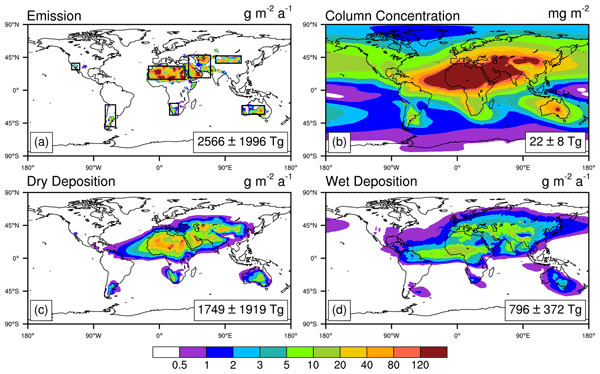
We project the future changes of dust emissions and loading using an ensemble of model outputs from the Coupled Model Intercomparison Project version 6 under four scenarios. We find increased dust emissions and loading in North Africa, due to increased drought and strengthened surface wind, and decreased dust loading over Asia, following enhanced precipitation. Such a spatial pattern remains similar, though the regional intensity varies among different scenarios.
Chenguang Tian, Xu Yue, Jun Zhu, Hong Liao, Yang Yang, Yadong Lei, Xinyi Zhou, Hao Zhou, Yimian Ma, and Yang Cao
Atmos. Chem. Phys., 22, 12353–12366, https://doi.org/10.5194/acp-22-12353-2022, https://doi.org/10.5194/acp-22-12353-2022, 2022
Short summary
Short summary
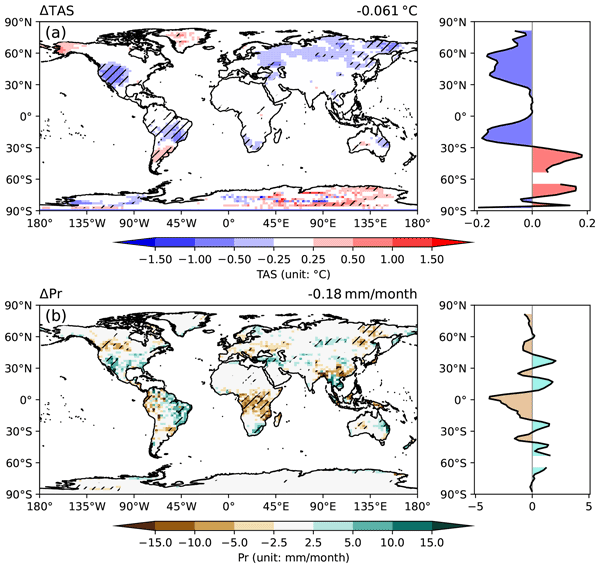
We quantify the impacts of fire aerosols on climate through direct, indirect, and albedo effects. In atmosphere-only simulations, we find global fire aerosols cause surface cooling and rainfall inhibition over many land regions. These fast atmospheric perturbations further lead to a reduction in regional leaf area index and lightning activities. By considering the feedback of fire aerosols on humidity, lightning, and leaf area index, we predict a slight reduction in fire emissions.
Yu Zheng, Huizheng Che, Yupeng Wang, Xiangao Xia, Xiuqing Hu, Xiaochun Zhang, Jun Zhu, Jibiao Zhu, Hujia Zhao, Lei Li, Ke Gui, and Xiaoye Zhang
Atmos. Meas. Tech., 15, 2139–2158, https://doi.org/10.5194/amt-15-2139-2022, https://doi.org/10.5194/amt-15-2139-2022, 2022
Short summary
Short summary
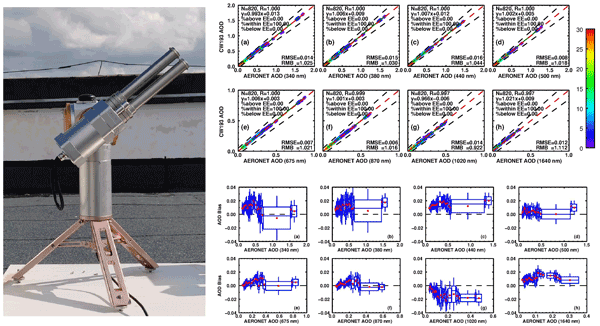
Ground-based observations of aerosols and aerosol data verification is important for satellite and climate model modification. Here we present an evaluation of aerosol microphysical, optical and radiative properties measured using a multiwavelength photometer with a highly integrated design and smart control performance. The validation of this product is discussed in detail using AERONET as a reference. This work contributes to reducing AOD uncertainties in China and combating climate change.
Hao Zhou, Xu Yue, Yadong Lei, Chenguang Tian, Jun Zhu, Yimian Ma, Yang Cao, Xixi Yin, and Zhiding Zhang
Atmos. Chem. Phys., 22, 693–709, https://doi.org/10.5194/acp-22-693-2022, https://doi.org/10.5194/acp-22-693-2022, 2022
Short summary
Short summary
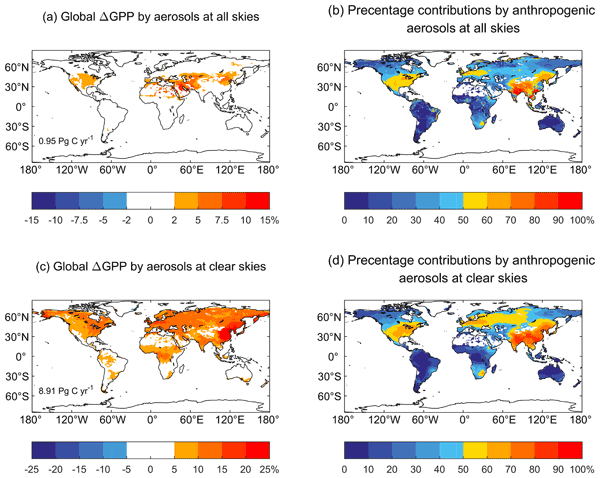
Aerosols enhance plant photosynthesis by increasing diffuse radiation. In this study, we found that the aerosol impacts are quite different for varied species. Scattering aerosols such as sulfate and organic carbon promote photosynthesis while absorbing aerosols such as black carbon have negative impacts. Earth system models should consider the impacts of cloud and aerosol species on terrestrial ecosystems so as to better predict carbon cycles under different emission scenarios.
Weijie Fu, Chenguang Tian, Yuan Zhao, Yihan Hu, Jingchao Huang, Haishan Chen, and Xu Yue
Geosci. Model Dev., 19, 9395–9409, https://doi.org/10.5194/gmd-19-9395-2026, https://doi.org/10.5194/gmd-19-9395-2026, 2026
Short summary
Short summary
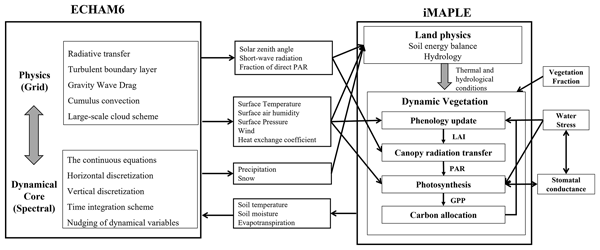
Land-atmosphere interaction is an important process for the exchange of matter and energy between land and atmosphere. In this work, we incorporated the interactive Model for Air Pollution and Land Ecosystems into the European Centre Hamburg general circulation model. Compare with original configuration, the new coupling model demonstrates better performance in simulating terrestrial carbon and water fluxes. Our research provides a useful tool for studying land–atmosphere interactions.
Wenhao Qiao, Xipeng Jin, Xi Chen, Ziyu Long, Zhenjiang Yang, Lei Chen, Ke Li, and Hong Liao
Atmos. Chem. Phys., 26, 13253–13265, https://doi.org/10.5194/acp-26-13253-2026, https://doi.org/10.5194/acp-26-13253-2026, 2026
Short summary
Short summary
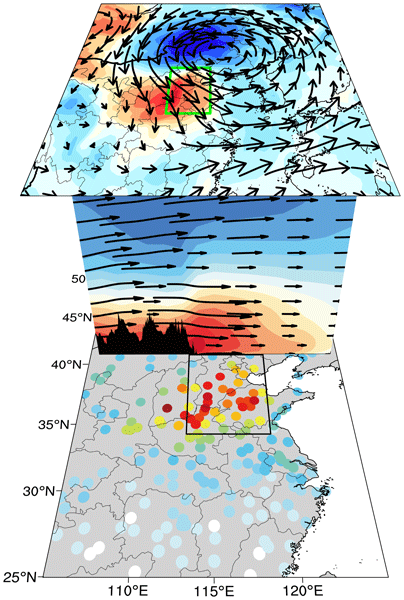
Ground-level ozone is a major summer air pollution problem in the North China Plain. We found that a previously overlooked cyclonic-like circulation causes nearly one-third of ozone pollution days. It favors warm and dry foehn winds that increase ozone levels. This circulation has become more frequent over recent decades. Emission control measures should be designed according to the prevailing circulation patterns to achieve the most effective ozone mitigation.
Mengyun Li, Yang Yang, Pinya Wang, Ke Li, and Hong Liao
EGUsphere, https://doi.org/10.5194/egusphere-2026-1839, https://doi.org/10.5194/egusphere-2026-1839, 2026
This preprint is open for discussion and under review for Atmospheric Chemistry and Physics (ACP).
Short summary
Short summary
Background ozone, the portion of surface ozone remaining after removing local emissions, accounts for about 90 % of total ozone in China. Under SSP1-1.9, global emission cuts reduce transboundary ozone and lower the background baseline in China. Under SSP5-8.5, warmer conditions amplify natural sources and raise background ozone. These contrasting responses of background ozone critically affect total ozone, public health, and radiative forcing.
Zhiwen Wang, Yun Chen, Dazhi Yang, Hongrong Shi, Yanbo Shen, and Xiang'ao Xia
Atmos. Meas. Tech., 19, 5567–5585, https://doi.org/10.5194/amt-19-5567-2026, https://doi.org/10.5194/amt-19-5567-2026, 2026
Short summary
Short summary
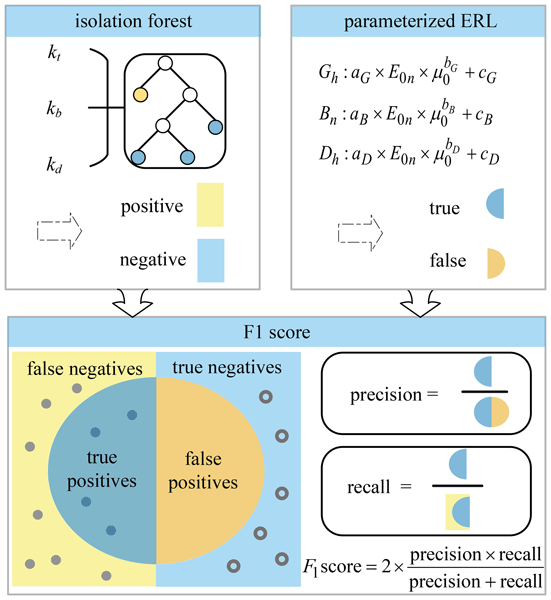
Quality control of ground-based solar radiation measurements is essential for climate and energy research. The current tests apply a global rule that is often too loose, missing anomalies, or too strict in polar regions, rejecting valid data. Using 75 stations, this study identifies seven radiation climates and configures regime-specific quality-control limits. The new limits better match local conditions, retaining valid polar data while restoring sensitivity in aerosol-polluted regions
Liu Zhenxin, Li Weimin, Zhang Bihui, Li Xiaolan, Mao Yuhao, Zhang Kuan, Ma Xinye, and Liao Hong
EGUsphere, https://doi.org/10.5194/egusphere-2026-4511, https://doi.org/10.5194/egusphere-2026-4511, 2026
This preprint is open for discussion and under review for Atmospheric Chemistry and Physics (ACP).
Short summary
Short summary
Aerosols affect air quality and climate by shaping sunlight. Unlike traditional solid‑sphere models, our new model treats real particles as fluffy clusters that block light far more effectively. Tested during a severe haze in northern China, it halved visibility errors and showed sunlight reduction stronger than previously thought, matching measurements. This explains why haze is so dark and why old models overestimate visibility, improving pollution forecasts and climate assessment.
Yuan Zhao, Weijie Fu, Chenguang Tian, Jingchao Huang, Yihan Hu, and Xu Yue
EGUsphere, https://doi.org/10.5194/egusphere-2026-4387, https://doi.org/10.5194/egusphere-2026-4387, 2026
This preprint is open for discussion and under review for Atmospheric Chemistry and Physics (ACP).
Short summary
Short summary
Surface ozone is an air pollutant affecting human health and natural ecosystems. In this study, we developed a new global modeling framework that links atmospheric processes with ecosystem changes to investigate how vegetation and ozone influence each other. We found these interactions can substantially change ozone levels, especially in highly polluted regions. Including these processes improves ozone simulations and provides a better understanding of future air quality and ecosystem responses.
Yueyuan Gong, Wenying He, Disong Fu, Xiang'ao Xia, Hongrong Shi, Weidong Nan, Pucai Wang, and Hongbin Chen
Earth Syst. Sci. Data, 18, 4725–4744, https://doi.org/10.5194/essd-18-4725-2026, https://doi.org/10.5194/essd-18-4725-2026, 2026
Short summary
Short summary
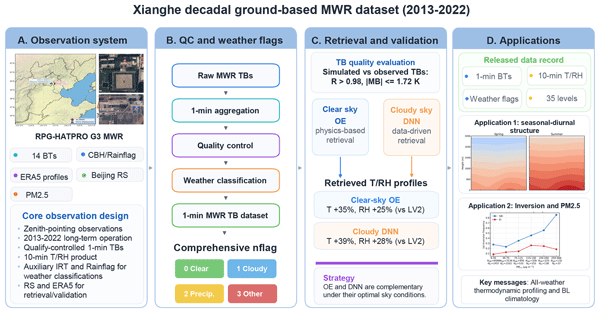
We built China's first ten-year record from a ground-based microwave sensor that tracks temperature and humidity above Xianghe. After checking data quality and separating clear, cloudy, and rainy periods, we produced reliable one- to ten-minute data for 2013-2022. Improved methods reduced errors in temperature and humidity estimates. The record shows that winter cold air is often trapped near the ground, especially during heavy fine-particle pollution, supporting weather and air-quality studies.
Pierre Friedlingstein, Michael O'Sullivan, Matthew W. Jones, Robbie M. Andrew, Dorothee C. E. Bakker, Judith Hauck, Peter Landschützer, Corinne Le Quéré, Hongmei Li, Ingrid T. Luijkx, Glen P. Peters, Wouter Peters, Julia Pongratz, Clemens Schwingshackl, Stephen Sitch, Josep G. Canadell, Philippe Ciais, Kjetil Aas, Simone R. Alin, Peter Anthoni, Leticia Barbero, Nicholas R. Bates, Nicolas Bellouin, Alice Benoit-Cattin, Carla F. Berghoff, Raffaele Bernardello, Laurent Bopp, Ida Bagus Mandhara Brasika, Matthew A. Chamberlain, Naveen Chandra, Frédéric Chevallier, Louise P. Chini, Nathan O. Collier, Thomas H. Colligan, Margot Cronin, Laique M. Djeutchouang, Xinyu Dou, Matt P. Enright, Kazutaka Enyo, Michael Erb, Wiley Evans, Richard A. Feely, Liang Feng, Daniel J. Ford, Adrianna Foster, Filippa Fransner, Thomas Gasser, Marion Gehlen, Thanos Gkritzalis, Jefferson Goncalves De Souza, Giacomo Grassi, Luke Gregor, Nicolas Gruber, Bertrand Guenet, Özgür Gürses, Kirsty Harrington, Ian Harris, Jens Heinke, George C. Hurtt, Yosuke Iida, Tatiana Ilyina, Akihiko Ito, Andrew R. Jacobson, Atul K. Jain, Tereza Jarníková, Annika Jersild, Fei Jiang, Steve D. Jones, Etsushi Kato, Ralph F. Keeling, Kees Klein Goldewijk, Jürgen Knauer, Yawen Kong, Jan Ivar Korsbakken, Charles Koven, Taro Kunimitsu, Xin Lan, Junjie Liu, Zhiqiang Liu, Zhu Liu, Claire Lo Monaco, Lei Ma, Gregg Marland, Patrick C. McGuire, Galen A. McKinley, Joe R. Melton, Natalie Monacci, Erwan Monier, Eric J. Morgan, David R. Munro, Jens D. Müller, Shin-Ichiro Nakaoka, Lorna R. Nayagam, Yosuke Niwa, Tobias Nutzel, Are Olsen, Abdirahman M. Omar, Naiqing Pan, Sudhanshu Pandey, Denis Pierrot, Zhangcai Qin, Pierre Regnier, Gregor Rehder, Laure Resplandy, Alizée Roobaert, Thais M. Rosan, Christian Rödenbeck, Jörg Schwinger, Ingunn Skjelvan, T. Luke Smallman, Victoria Spada, Mohanan G. Sreeush, Qing Sun, Adrienne J. Sutton, Colm Sweeney, Didier Swingedouw, Roland Séférian, Shintaro Takao, Hiroaki Tatebe, Hanqin Tian, Xiangjun Tian, Bronte Tilbrook, Hiroyuki Tsujino, Francesco Tubiello, Erik van Ooijen, Guido R. van der Werf, Sebastiaan J. van de Velde, Anthony P. Walker, Rik Wanninkhof, Xiaojuan Yang, Wenping Yuan, Xu Yue, and Jiye Zeng
Earth Syst. Sci. Data, 18, 3211–3288, https://doi.org/10.5194/essd-18-3211-2026, https://doi.org/10.5194/essd-18-3211-2026, 2026
Short summary
Short summary
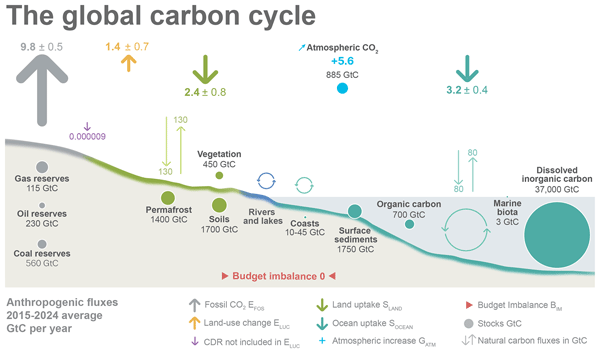
The Global Carbon Budget 2025 describes the methodology, main results, and datasets used to quantify the anthropogenic emissions of carbon dioxide (CO2) and their partitioning among the atmosphere, land ecosystems, and the ocean over the historical period (1750–2025). These living datasets are updated every year to provide the highest transparency and traceability in the reporting of CO2, the key driver of climate change.
Baojie Li, Zhihui Shen, Yan Li, Yongqi Zhao, Wanglijin Gu, Junjie Liu, Yunkai Yang, Weimeng Zhang, Ziqian Ma, and Hong Liao
Atmos. Chem. Phys., 26, 6197–6211, https://doi.org/10.5194/acp-26-6197-2026, https://doi.org/10.5194/acp-26-6197-2026, 2026
Short summary
Short summary
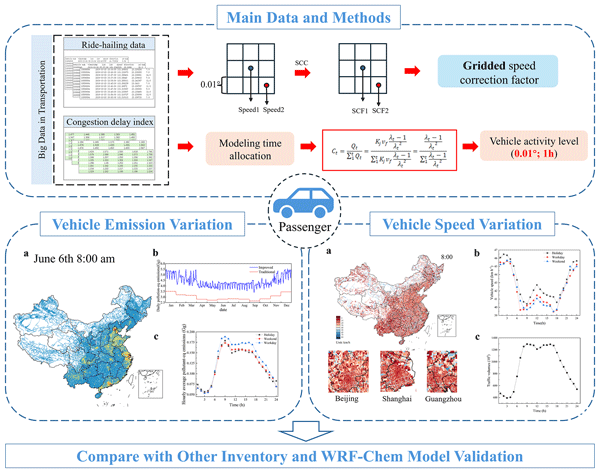
As the global automotive industry continues to grow rapidly, the increasing number of passenger vehicles has contributed to worsening air pollution. This study develops an hourly-resolution emission inventory based on multi-source big data to achieve precise control of air pollution. The results showed that passenger vehicle emissions exhibit significant day-to-day variations and traditional calculation methods underestimated emissions by 31.5%.
Qiurui Li, Zhongxia Sun, Meijing Liu, Huizheng Che, Yu Zheng, and Jing Li
Atmos. Meas. Tech., 19, 2507–2528, https://doi.org/10.5194/amt-19-2507-2026, https://doi.org/10.5194/amt-19-2507-2026, 2026
Short summary
Short summary
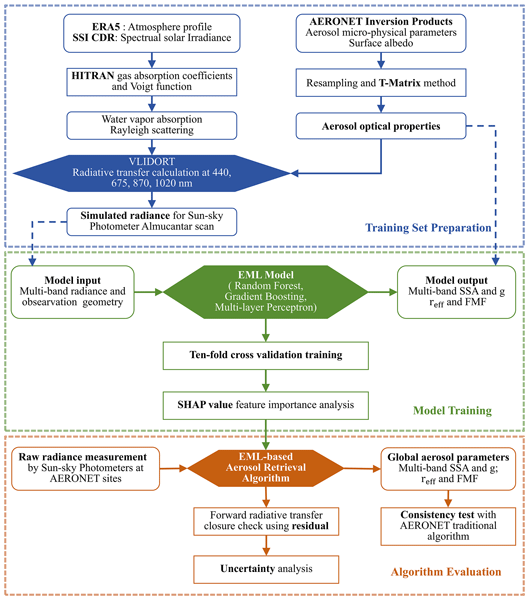
We present a fast, interpretable machine learning method to retrieve key aerosol parameters from ground-based Sun-sky photometer measurements. Trained on simulated data covering diverse aerosol and atmospheric conditions, ensuring robustness and physical consistency. Applied to real observations, it agrees well with AERONET products and reduces computation time by orders of magnitude, offering a practical tool for monitoring aerosols and their effects on air quality and climate.
Dehao Li, Jianbing Jin, Guoqiang Wang, Mijie Pang, Weihong Zhang, and Hong Liao
Geosci. Model Dev., 19, 1703–1725, https://doi.org/10.5194/gmd-19-1703-2026, https://doi.org/10.5194/gmd-19-1703-2026, 2026
Short summary
Short summary
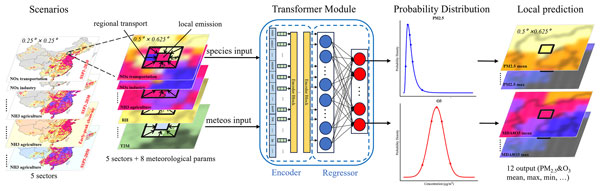
To support air quality decision-making in future emission scenarios, this study presents an agent model for a classic chemical transport model based on a transformer deep-learning framework. Addressing the long runtimes and input/output limitations of previous approaches, our agent model accurately reproduces simulations of fine particulate matter and ozone, enabling rapid air quality assessment.

Nadia K. Colombi, Daniel J. Jacob, Xingpei Ye, Robert M. Yantosca, Kelvin H. Bates, Drew C. Pendergrass, Laura Hyesung Yang, Ke Li, and Hong Liao
Atmos. Chem. Phys., 26, 2623–2633, https://doi.org/10.5194/acp-26-2623-2026, https://doi.org/10.5194/acp-26-2623-2026, 2026
Short summary
Short summary
Surface ozone pollution in East Asia is among the highest in the world and has risen steadily over the past two decades. Using aircraft observations and a global 3-D chemical transport model, we show that ozone in the lower atmosphere in East Asia has risen in part due to intensified transport from the upper atmosphere. This rising natural background limits the effectiveness of local pollution controls, with major implications for air quality policy.
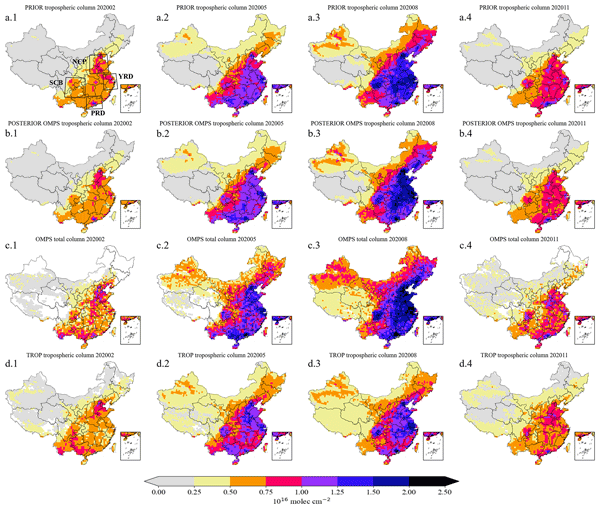
Canjie Xu, Jianbing Jin, Ke Li, Yinfei Qi, Ji Xia, Hai Xiang Lin, and Hong Liao
Atmos. Chem. Phys., 26, 33–58, https://doi.org/10.5194/acp-26-33-2026, https://doi.org/10.5194/acp-26-33-2026, 2026
Short summary
Short summary
This study optimizes non-methane volatile organic compound (NMVOC) emissions in China using satellite formaldehyde data from Ozone Mapping and Profiler Suite (OMPS) and Tropospheric Monitoring Instrument (TROPOMI). By applying an advanced inversion system, we produced improved NMVOC emission inventories in 2019 and 2020. The optimized results improve formaldehyde and ozone simulations in general, and a consistency analysis is further designed to assess the reliability of these two posteriors.
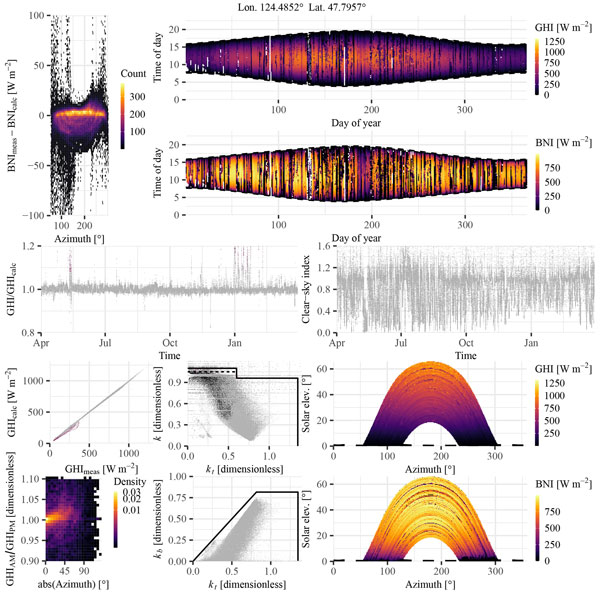
Yun Chen, Dazhi Yang, Chunlin Huang, Hongrong Shi, Adam R. Jensen, Xiang'ao Xia, Yves-Marie Saint-Drenan, Christian A. Gueymard, Martin János Mayer, and Yanbo Shen
Atmos. Meas. Tech., 18, 7315–7336, https://doi.org/10.5194/amt-18-7315-2025, https://doi.org/10.5194/amt-18-7315-2025, 2025
Short summary
Short summary
We tested two satellite-based irradiance datasets against both high- and low-accuracy ground-based measurements. The dataset is unique: it includes irradiance measurements from a new research-grade monitoring station in a rare climate, along with new satellite data from China's Fengyun-4B geostationary satellite. Findings suggest that using low-accuracy measurements as a reference for validation can be risky.
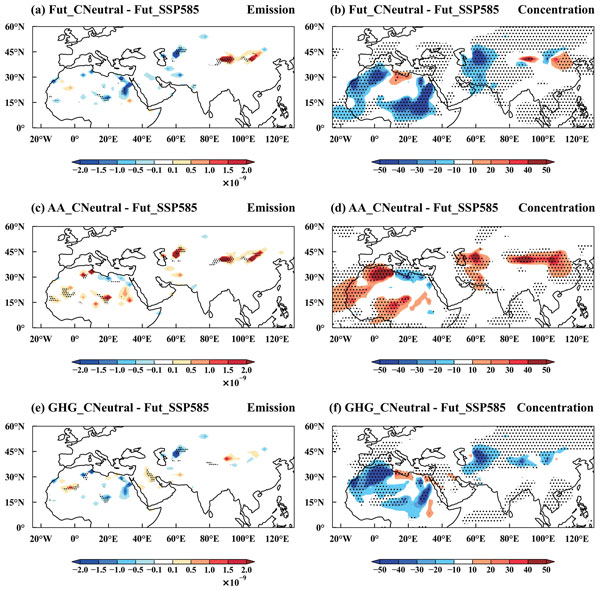
Shicheng Yan, Yang Yang, Lili Ren, Hailong Wang, Pinya Wang, Lei Chen, Jianbin Jin, and Hong Liao
Atmos. Chem. Phys., 25, 16877–16893, https://doi.org/10.5194/acp-25-16877-2025, https://doi.org/10.5194/acp-25-16877-2025, 2025
Short summary
Short summary
In this study, we assess the impact of carbon neutrality by 2060 on dust emissions in the Northern Hemisphere using the Community Earth System Model. Our findings show that reductions in greenhouse gases (GHGs) and aerosols lead to decreased dust loading compared to high fossil fuel scenarios. While aerosol reductions promote dust, GHGs decreases reduce wind speeds, suppressing dust emissions. These results suggest that carbon-neutral policies mitigate climate change and reduce dust pollution.
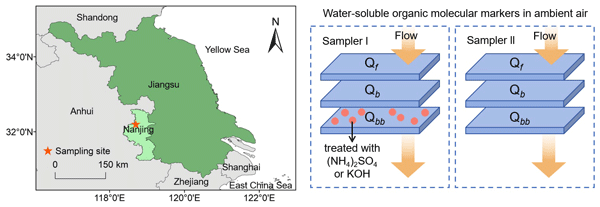
Wei Feng, Xiangyu Zhang, Zhijuan Shao, Guofeng Shen, Hong Liao, Yuhang Wang, and Mingjie Xie
Atmos. Chem. Phys., 25, 16697–16711, https://doi.org/10.5194/acp-25-16697-2025, https://doi.org/10.5194/acp-25-16697-2025, 2025
Short summary
Short summary
In this work, the relative differences in particle concentrations of water-soluble organic molecular markers (WSOMMs) between the collocated filter samples represent the uncertainties in the measurements. The comparisons between the measurements of chemically treated and untreated backup filter samples indicate that the WSOMMs detected on the backup filters may originate from heterogeneous reactions on the filter surfaces, but are not caused by the adsorption of gaseous molecules.
Keqin Tang, Haoran Zhang, Ge Xu, Fengyi Chang, Yang Xu, Ji Miao, Xian Cui, Jianbin Jin, Baojie Li, Ke Li, Hong Liao, and Nan Li
Atmos. Chem. Phys., 25, 14747–14762, https://doi.org/10.5194/acp-25-14747-2025, https://doi.org/10.5194/acp-25-14747-2025, 2025
Short summary
Short summary
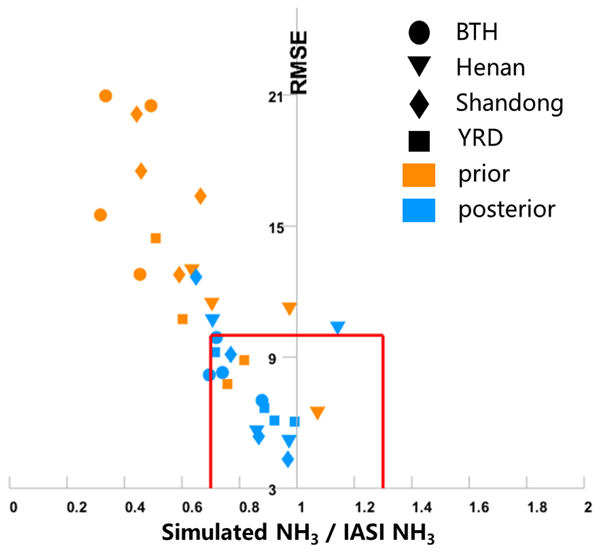
Our research combined satellite observations with air quality modeling to establish a high-resolution ammonia emission inventory for Eastern China. Reducing ammonia emissions could lower particulate pollution levels by 1.5–8.8 micrograms per cubic meter and reduce related health risks. Meanwhile, sensitivity simulations highlight the critical need to non-agricultural emission controls for effective particulate mitigation.
Xueqing Wang, Jia Zhu, Guanjie Jiao, Xi Chen, Zhenjiang Yang, Lei Chen, Xipeng Jin, and Hong Liao
Atmos. Chem. Phys., 25, 13863–13878, https://doi.org/10.5194/acp-25-13863-2025, https://doi.org/10.5194/acp-25-13863-2025, 2025
Short summary
Short summary
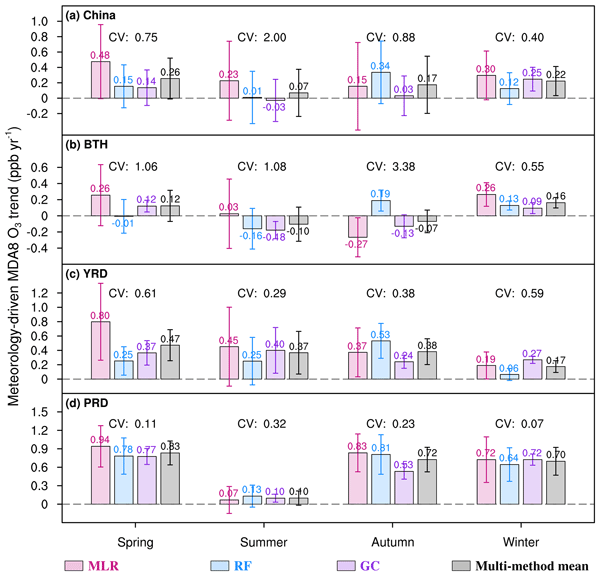
Impacts of meteorology on ozone vary with diverse meteorological datasets and analytical methods. Uncertainties of meteorology-driven ozone trends in China were examined. Multi-dataset analysis shows the largest meteorology-driven ozone trend with the best consistency occurs in spring. Multi-method analysis shows the best (worst) consistency occurs in winter (summer). Overall, meteorology boosts ozone growth in all seasons, with uncertainty from multi-method larger than that from multi-dataset.
Weijie Fu, Xu Yue, Chenguang Tian, Rongbin Xu, and Yuming Guo
Atmos. Chem. Phys., 25, 13103–13121, https://doi.org/10.5194/acp-25-13103-2025, https://doi.org/10.5194/acp-25-13103-2025, 2025
Short summary
Short summary
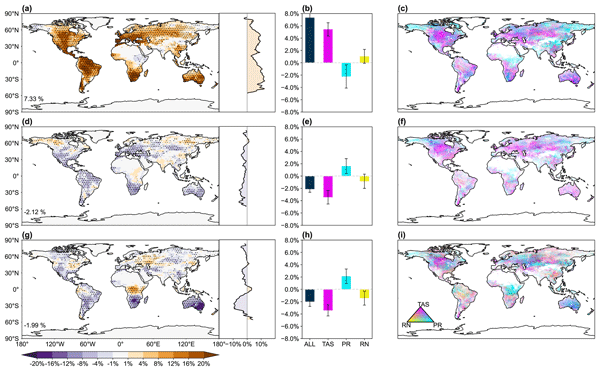
Stratospheric aerosol geoengineering could cool Earth by blocking sunlight, but its impacts on extreme droughts are unclear. Our analysis of global climate simulations shows this approach might reduce extreme droughts overall. However, benefits are uneven: poorer nations face far higher drought risks compared to wealthier regions. These findings suggest that stratospheric aerosol geoengineering strategies may induce the risk of unintentionally worsening regional hydroclimatic disparities.
Ke Li, Rong Tan, Wenhao Qiao, Taegyung Lee, Yufen Wang, Danyuting Zhang, Minglong Tang, Wenqing Zhao, Yixuan Gu, Shaojia Fan, Jinqiang Zhang, Xiaopu Lyu, Likun Xue, Jianming Xu, Zhiqiang Ma, Mohd Talib Latif, Teerachai Amnuaylojaroen, Junsu Gil, Mee-Hye Lee, Juseon Bak, Joowan Kim, Hong Liao, Yugo Kanaya, Xiao Lu, Tatsuya Nagashima, and Ja-Ho Koo
Atmos. Chem. Phys., 25, 11575–11596, https://doi.org/10.5194/acp-25-11575-2025, https://doi.org/10.5194/acp-25-11575-2025, 2025
Short summary
Short summary
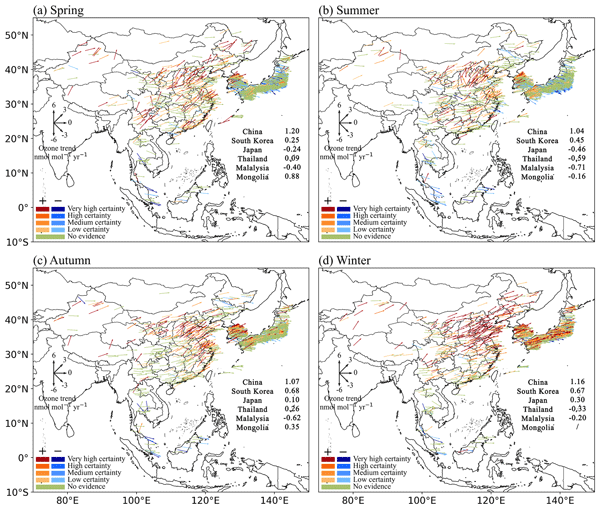
East Asia and Southeast Asia have been identified as a global hot spot, with the fastest ozone increase. This paper presents the most comprehensive observational review of ozone distributions and evolution over East Asia and Southeast Asia across different spatiotemporal scales in the past two decades, which will have important implications for assessing ozone impacts on public health and crop yields and for developing future ozone control strategies.
Jiyuan Gao, Yang Yang, Hailong Wang, Pinya Wang, and Hong Liao
Atmos. Chem. Phys., 25, 10949–10964, https://doi.org/10.5194/acp-25-10949-2025, https://doi.org/10.5194/acp-25-10949-2025, 2025
Short summary
Short summary
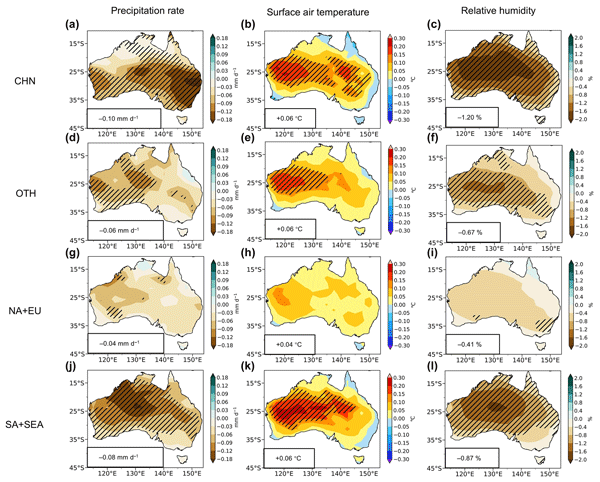
The decline in aerosols in China alters temperature and pressure gradients between the two hemispheres, which intensifies the Southern Trade Winds and causes a moisture divergence in Australia, resulting in less rainfall. Reduced surface moisture leads to more energy being converted into sensible heat instead of evaporating as latent heat, which raises near-surface temperatures in Australia. Our findings offer insights for managing drought and wildfire risks in Australia.
Danyang Wang, Wenying He, Yongheng Bi, Xiangao Xia, and Hongbin Chen
EGUsphere, https://doi.org/10.5194/egusphere-2025-4233, https://doi.org/10.5194/egusphere-2025-4233, 2025
Preprint archived
Short summary
Short summary
Snow forms in two ways: by droplets freezing onto snowflakes (riming) or by snowflakes sticking together (aggregation). These processes often overlap and are hard to tell apart with standard radar. We developed a new radar method using three wavelengths to track how signals change with height, allowing us to distinguish riming and aggregation. It captures subtle changes that older methods miss, providing a clearer picture of how snow forms and leading to more accurate snowfall forecasts.
Xinyao Hu, Aoyuan Yu, Xiaojing Shen, Jiayuan Lu, Yangmei Zhang, Quan Liu, Lei Liu, Linlin Liang, Hongfei Tong, Qianli Ma, Shuxian Zhang, Bing Qi, Rongguang Du, Huizheng Che, Xiaoye Zhang, and Junying Sun
EGUsphere, https://doi.org/10.5194/egusphere-2025-3796, https://doi.org/10.5194/egusphere-2025-3796, 2025
Preprint archived
Short summary
Short summary
Simultaneous measurements of aerosol hygroscopicity and volatility were performed using Volatility-Hygroscopicity Tandem Differential Mobility Analyzer in Beijing. The results reveal that hygroscopicity and volatility of accumulated mode particles are significantly influenced by dust. The size dependences of hygroscopicity and volatility during dust period were different from that before dust period. During dust period, the particles at 300 nm were hydrophobic and less volatile.
Xi Chen, Ke Li, Ting Yang, Xipeng Jin, Lei Chen, Yang Yang, Shuman Zhao, Bo Hu, Bin Zhu, Zifa Wang, and Hong Liao
Atmos. Chem. Phys., 25, 9151–9168, https://doi.org/10.5194/acp-25-9151-2025, https://doi.org/10.5194/acp-25-9151-2025, 2025
Short summary
Short summary
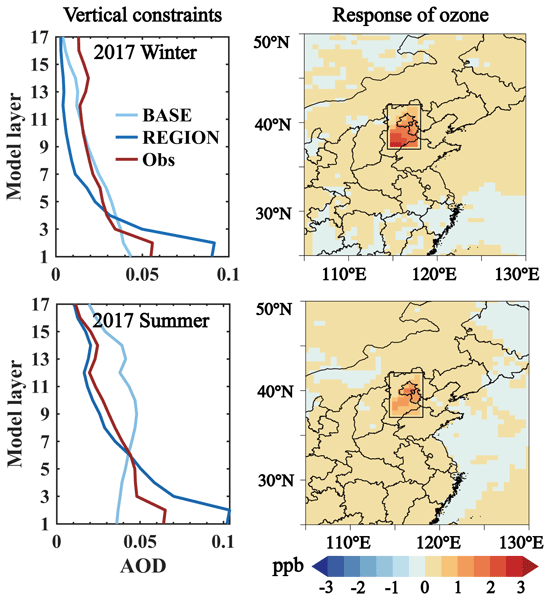
Aerosol vertical distribution that plays a crucial role in aerosol–photolysis interaction (API) remains underrepresented in chemical models. We integrated lidar and radiosonde observations to constrain the simulated aerosol profiles over North China and quantified the photochemical responses. The increased photolysis rates in the lower layers led to increased ozone and accounted for a 36 %–56 % reduction in API effects, resulting in enhanced atmospheric oxidizing capacity and aerosol formation.
Wenjie Zhang, Hong Wang, Xiaoye Zhang, Yue Peng, Zhaodong Liu, Deying Wang, Da Zhang, Chen Han, Yang Zhao, Junting Zhong, Wenxing Jia, Huiqiong Ning, and Huizheng Che
Atmos. Chem. Phys., 25, 9005–9030, https://doi.org/10.5194/acp-25-9005-2025, https://doi.org/10.5194/acp-25-9005-2025, 2025
Short summary
Short summary
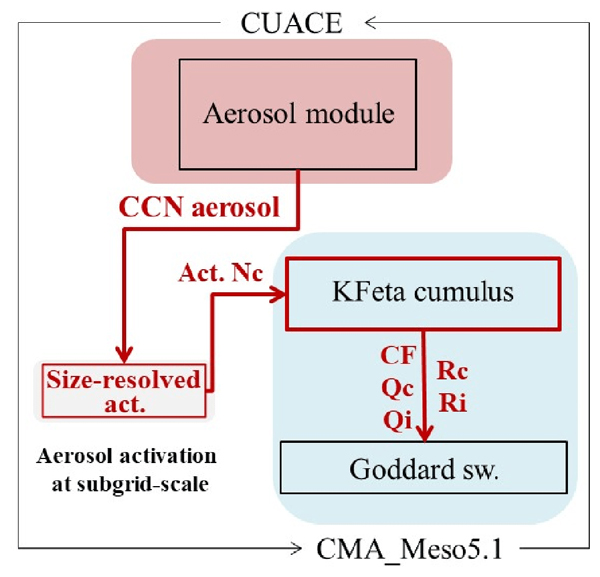
This study achieves quantifiable subgrid-scale aerosol–cloud interaction in an atmospheric chemistry system, with better performance in terms of meteorology prediction, and further finds that subgrid-scale actual aerosol can somewhat improve overestimated cumulative precipitation during a typical heavy rainfall event, which helps us better understand the impact of subgrid-scale aerosol–cloud interaction on weather forecasts.
Yonghang Hu, Chenguang Tian, Xu Yue, Yadong Lei, Yang Cao, Rongbin Xu, and Yuming Guo
Earth Syst. Sci. Data, 17, 3741–3756, https://doi.org/10.5194/essd-17-3741-2025, https://doi.org/10.5194/essd-17-3741-2025, 2025
Short summary
Short summary
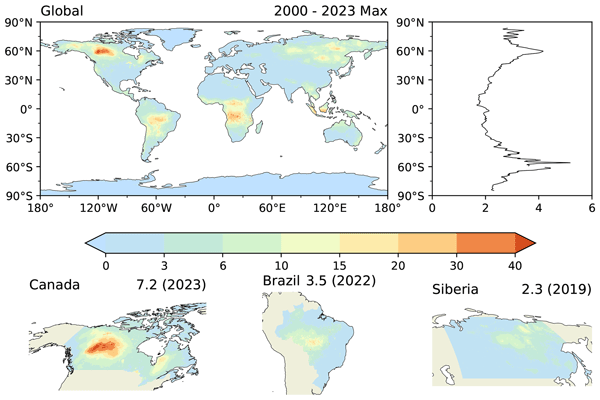
We develop a global dataset of daily fire-sourced PM2.5 concentrations at a spatial resolution of 0.25° for 2000–2023, using a chemical transport model driven with two fire emission inventories and a machine learning approach trained with ground measurements from over 9000 sites. The dataset shows significant spatiotemporal variations of fire PM2.5 in the past decades, serving a useful tool for exploring the impacts of fire-related air pollutants on climate, ecosystems, and public health.
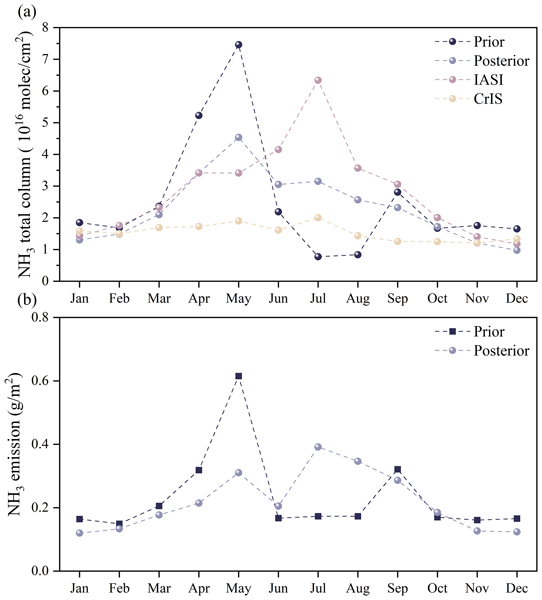
Ji Xia, Yi Zhou, Li Fang, Yingfei Qi, Dehao Li, Hong Liao, and Jianbing Jin
Atmos. Chem. Phys., 25, 7071–7086, https://doi.org/10.5194/acp-25-7071-2025, https://doi.org/10.5194/acp-25-7071-2025, 2025
Short summary
Short summary
This study established an ammonia emission inventory for South Asia via an assimilation-based inversion system. The posterior emissions, calculated by integrating the anthropogenic inventory and satellite observations, showed significant improvement over the prior. Validation against various measurements supports our results. The study offers a deep understanding of ammonia emissions for policymakers and researchers aiming to develop air quality management and mitigation strategies for South Asia.
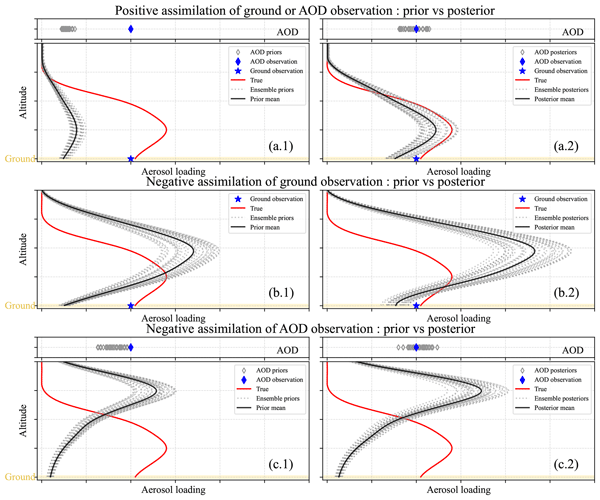
Mijie Pang, Jianbing Jin, Ting Yang, Xi Chen, Arjo Segers, Batjargal Buyantogtokh, Yixuan Gu, Jiandong Li, Hai Xiang Lin, Hong Liao, and Wei Han
Geosci. Model Dev., 18, 3781–3798, https://doi.org/10.5194/gmd-18-3781-2025, https://doi.org/10.5194/gmd-18-3781-2025, 2025
Short summary
Short summary
Aerosol data assimilation has gained popularity as it combines the advantages of modelling and observation. However, few studies have addressed the challenges in the prior vertical structure. Different observations are assimilated to examine the sensitivity of assimilation to vertical structure. Results show that assimilation can optimize the dust field in general. However, if the prior introduces an incorrect structure, the assimilation can significantly deteriorate the integrity of the aerosol profile.
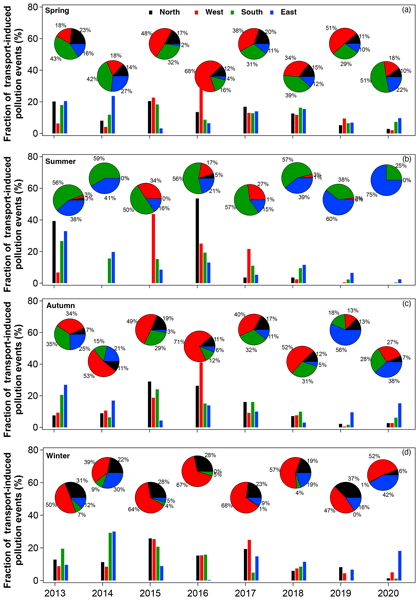
Kang Hu, Hong Liao, Dantong Liu, Jianbing Jin, Lei Chen, Siyuan Li, Yangzhou Wu, Changhao Wu, Shitong Zhao, Xiaotong Jiang, Ping Tian, Kai Bi, Ye Wang, and Delong Zhao
Geosci. Model Dev., 18, 3623–3634, https://doi.org/10.5194/gmd-18-3623-2025, https://doi.org/10.5194/gmd-18-3623-2025, 2025
Short summary
Short summary
This study combines machine learning with concentration-weighted trajectory analysis to quantify regional transport PM2.5. From 2013–2020, local emissions dominated Beijing's pollution events. The Air Pollution Prevention and Control Action Plan reduced regional transport pollution, but the eastern region showed the smallest decrease. Beijing should prioritize local emission reduction while considering the east region's contributions in future strategies.
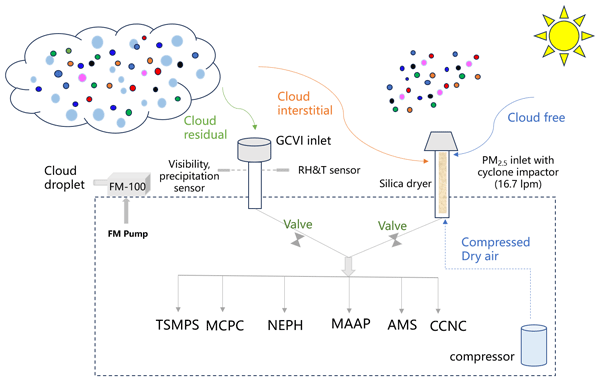
Xiaojing Shen, Quan Liu, Junying Sun, Wanlin Kong, Qianli Ma, Bing Qi, Lujie Han, Yangmei Zhang, Linlin Liang, Lei Liu, Shuo Liu, Xinyao Hu, Jiayuan Lu, Aoyuan Yu, Huizheng Che, and Xiaoye Zhang
Atmos. Chem. Phys., 25, 5711–5725, https://doi.org/10.5194/acp-25-5711-2025, https://doi.org/10.5194/acp-25-5711-2025, 2025
Short summary
Short summary
In this work, an automatic switched inlet system was developed and employed to investigate the aerosols and cloud droplets at a mountain site with frequent cloud processes. It showed different characteristics of cloud residual and interstitial particles. Stronger particle hygroscopicity reduced liquid water content and smaller cloud droplet diameters. This investigation contributes to understanding aerosol–cloud interactions by assessing the impact of aerosol particles on cloud microphysics.
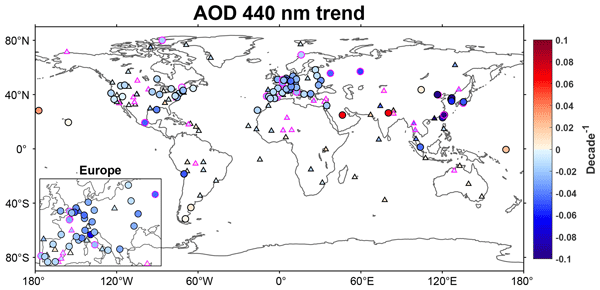
Zhenyu Zhang, Jing Li, Huizheng Che, Yueming Dong, Oleg Dubovik, Thomas Eck, Pawan Gupta, Brent Holben, Jhoon Kim, Elena Lind, Trailokya Saud, Sachchida Nand Tripathi, and Tong Ying
Atmos. Chem. Phys., 25, 4617–4637, https://doi.org/10.5194/acp-25-4617-2025, https://doi.org/10.5194/acp-25-4617-2025, 2025
Short summary
Short summary
We used ground-based remote sensing data from the Aerosol Robotic Network to examine long-term trends in aerosol characteristics. We found aerosol loadings generally decreased globally, and aerosols became more scattering. These changes are closely related to variations in aerosol compositions, such as decreased anthropogenic emissions over East Asia, Europe, and North America; increased anthropogenic sources over northern India; and increased dust activity over the Arabian Peninsula.
Yuxin Zheng, Xu Yue, Xiaofei Lu, and Jun Zhu
EGUsphere, https://doi.org/10.5194/egusphere-2025-1515, https://doi.org/10.5194/egusphere-2025-1515, 2025
Preprint archived
Short summary
Short summary
The sensitivity of gross primary productivity (GPP) to climate varies across regions and ecosystem types. Our study shows that warming enhances GPP in boreal regions but suppresses it in the tropics. Increased precipitation generally promotes GPP but has limited effects on tree species. However, current models tend to overestimate GPP responses to precipitation, resulting in greater GPP variability during drought events.
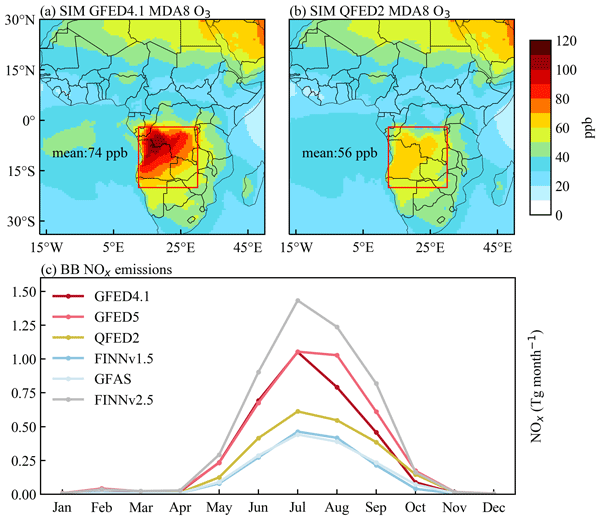
Yufen Wang, Ke Li, Xi Chen, Zhenjiang Yang, Minglong Tang, Pascoal M. D. Campos, Yang Yang, Xu Yue, and Hong Liao
Atmos. Chem. Phys., 25, 4455–4475, https://doi.org/10.5194/acp-25-4455-2025, https://doi.org/10.5194/acp-25-4455-2025, 2025
Short summary
Short summary
The impacts of biomass burning and anthropogenic emissions on high tropospheric ozone levels are not well studied in southern Africa. We combined model simulations with recent observations at the surface and from space to quantify tropospheric ozone and its drivers in southern Africa. Our work focuses on the impact of emissions from different sources at different spatial scales, contributing to a comprehensive understanding of air pollution drivers and their uncertainties in southern Africa.
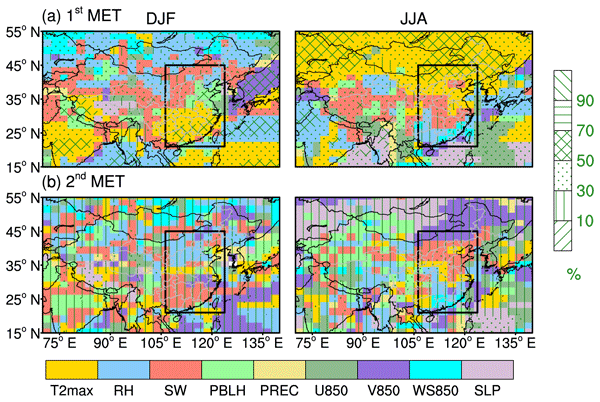
Ling Kang, Hong Liao, Ke Li, Xu Yue, Yang Yang, and Ye Wang
Atmos. Chem. Phys., 25, 3603–3621, https://doi.org/10.5194/acp-25-3603-2025, https://doi.org/10.5194/acp-25-3603-2025, 2025
Short summary
Short summary
Using the model of Global Change and Air Pollution version 2.0, climate change over 2010–2045 under a carbon neutrality scenario is simulated to increase summertime maximum daily 8 h average ozone (O3) levels in eastern China, the North China Plain, and the Yangtze River Delta by 2.3, 4.7, and 3.0 ppbv, respectively. Temperature, radiation, and relative humidity are the key meteorological parameters and net chemical production is the key process in climate-driven O3 increases in eastern China.
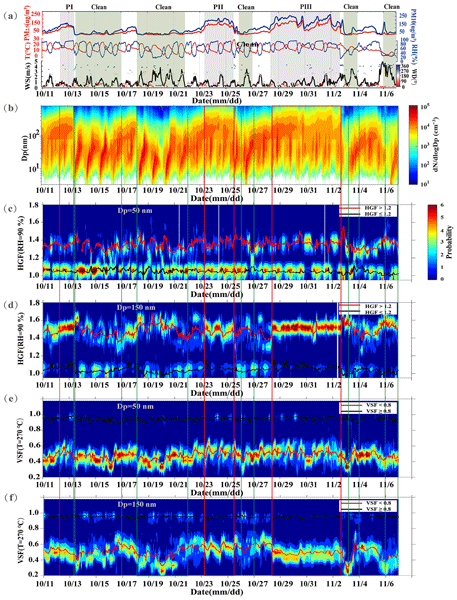
Aoyuan Yu, Xiaojing Shen, Qianli Ma, Jiayuan Lu, Xinyao Hu, Yangmei Zhang, Quan Liu, Linlin Liang, Lei Liu, Shuo Liu, Hongfei Tong, Huizheng Che, Xiaoye Zhang, and Junying Sun
Atmos. Chem. Phys., 25, 3389–3412, https://doi.org/10.5194/acp-25-3389-2025, https://doi.org/10.5194/acp-25-3389-2025, 2025
Short summary
Short summary
In this work, we utilized a volatility hygroscopicity tandem differential mobility analyzer (VH-TDMA) to investigate, for the first time, the hygroscopicity and volatility of submicron aerosols, as well as their hygroscopicity after heating, in urban Beijing during the autumn of 2023. We analyzed the size-resolved characteristics of hygroscopicity and volatility, the relationship between hygroscopic and volatile properties, and the hygroscopicity of heated submicron aerosols.
Yang Yang, Li You, Hailong Wang, Huimin Li, Pinya Wang, and Hong Liao
EGUsphere, https://doi.org/10.5194/egusphere-2025-840, https://doi.org/10.5194/egusphere-2025-840, 2025
Preprint archived
Short summary
Short summary
This study used machine learning to predict global and regional temperature changes under carbon neutrality and high emissions from 2015 to 2100.The results show that while carbon neutrality slows long-term warming, it causes short-term warming due to the rapid decline in aerosols. In contrast, greenhouse gases dominate warming in the high-emission scenario. These findings emphasize the important role of aerosols in shaping near-term climate change under carbon-neutral pathways.
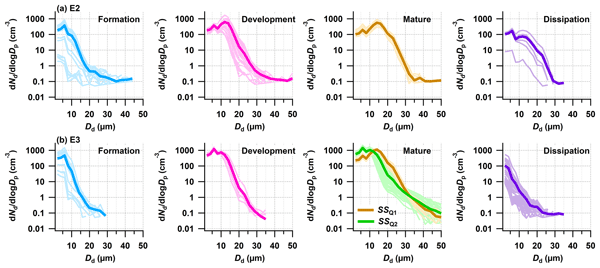
Quan Liu, Xiaojing Shen, Junying Sun, Yangmei Zhang, Bing Qi, Qianli Ma, Lujie Han, Honghui Xu, Xinyao Hu, Jiayuan Lu, Shuo Liu, Aoyuan Yu, Linlin Liang, Qian Gao, Hong Wang, Huizheng Che, and Xiaoye Zhang
Atmos. Chem. Phys., 25, 3253–3267, https://doi.org/10.5194/acp-25-3253-2025, https://doi.org/10.5194/acp-25-3253-2025, 2025
Short summary
Short summary
Through simultaneous measurements of aerosol particles and fog droplets, the evolution of droplets size distribution during the eight observed fog events was investigated. The results showed that the concentration and size distribution of pre-fog aerosol had significant impacts on fog microphysical characteristics. The extinction of fog interstitial particles played an important role in visibility degradation for light fogs, especially in polluted regions.
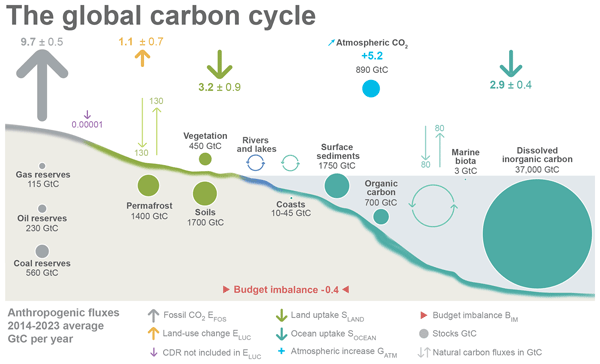
Pierre Friedlingstein, Michael O'Sullivan, Matthew W. Jones, Robbie M. Andrew, Judith Hauck, Peter Landschützer, Corinne Le Quéré, Hongmei Li, Ingrid T. Luijkx, Are Olsen, Glen P. Peters, Wouter Peters, Julia Pongratz, Clemens Schwingshackl, Stephen Sitch, Josep G. Canadell, Philippe Ciais, Robert B. Jackson, Simone R. Alin, Almut Arneth, Vivek Arora, Nicholas R. Bates, Meike Becker, Nicolas Bellouin, Carla F. Berghoff, Henry C. Bittig, Laurent Bopp, Patricia Cadule, Katie Campbell, Matthew A. Chamberlain, Naveen Chandra, Frédéric Chevallier, Louise P. Chini, Thomas Colligan, Jeanne Decayeux, Laique M. Djeutchouang, Xinyu Dou, Carolina Duran Rojas, Kazutaka Enyo, Wiley Evans, Amanda R. Fay, Richard A. Feely, Daniel J. Ford, Adrianna Foster, Thomas Gasser, Marion Gehlen, Thanos Gkritzalis, Giacomo Grassi, Luke Gregor, Nicolas Gruber, Özgür Gürses, Ian Harris, Matthew Hefner, Jens Heinke, George C. Hurtt, Yosuke Iida, Tatiana Ilyina, Andrew R. Jacobson, Atul K. Jain, Tereza Jarníková, Annika Jersild, Fei Jiang, Zhe Jin, Etsushi Kato, Ralph F. Keeling, Kees Klein Goldewijk, Jürgen Knauer, Jan Ivar Korsbakken, Xin Lan, Siv K. Lauvset, Nathalie Lefèvre, Zhu Liu, Junjie Liu, Lei Ma, Shamil Maksyutov, Gregg Marland, Nicolas Mayot, Patrick C. McGuire, Nicolas Metzl, Natalie M. Monacci, Eric J. Morgan, Shin-Ichiro Nakaoka, Craig Neill, Yosuke Niwa, Tobias Nützel, Lea Olivier, Tsuneo Ono, Paul I. Palmer, Denis Pierrot, Zhangcai Qin, Laure Resplandy, Alizée Roobaert, Thais M. Rosan, Christian Rödenbeck, Jörg Schwinger, T. Luke Smallman, Stephen M. Smith, Reinel Sospedra-Alfonso, Tobias Steinhoff, Qing Sun, Adrienne J. Sutton, Roland Séférian, Shintaro Takao, Hiroaki Tatebe, Hanqin Tian, Bronte Tilbrook, Olivier Torres, Etienne Tourigny, Hiroyuki Tsujino, Francesco Tubiello, Guido van der Werf, Rik Wanninkhof, Xuhui Wang, Dongxu Yang, Xiaojuan Yang, Zhen Yu, Wenping Yuan, Xu Yue, Sönke Zaehle, Ning Zeng, and Jiye Zeng
Earth Syst. Sci. Data, 17, 965–1039, https://doi.org/10.5194/essd-17-965-2025, https://doi.org/10.5194/essd-17-965-2025, 2025
Short summary
Short summary
The Global Carbon Budget 2024 describes the methodology, main results, and datasets used to quantify the anthropogenic emissions of carbon dioxide (CO2) and their partitioning among the atmosphere, land ecosystems, and the ocean over the historical period (1750–2024). These living datasets are updated every year to provide the highest transparency and traceability in the reporting of CO2, the key driver of climate change.
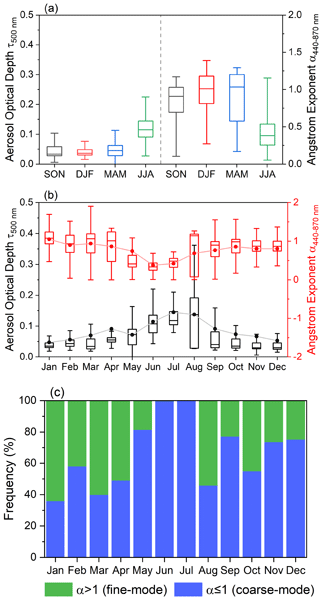
Lijing Chen, Lei Zhang, Yong She, Zhaoliang Zeng, Yu Zheng, Biao Tian, Wenqian Zhang, Zhaohui Liu, Huizheng Che, and Minghu Ding
Atmos. Chem. Phys., 25, 727–739, https://doi.org/10.5194/acp-25-727-2025, https://doi.org/10.5194/acp-25-727-2025, 2025
Short summary
Short summary
Aerosol optical depth (AOD) at Zhongshan Station varies seasonally, with lower values in summer and higher values in winter. Winter and spring AOD increases due to reduced fine-mode particles, while summer and autumn increases are linked to particle growth. Diurnal AOD variation correlates positively with temperature but negatively with wind speed and humidity. Backward trajectories show that aerosols on high-AOD (low-AOD) days primarily originate from the ocean (interior Antarctica).
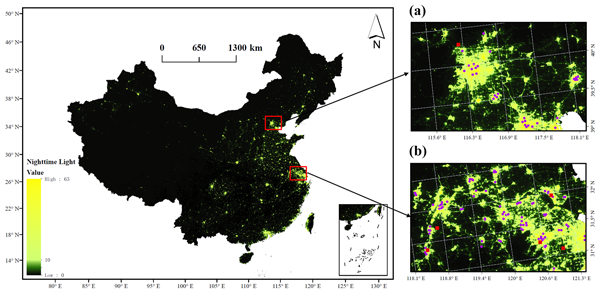
Li Fang, Jianbing Jin, Arjo Segers, Ke Li, Ji Xia, Wei Han, Baojie Li, Hai Xiang Lin, Lei Zhu, Song Liu, and Hong Liao
Geosci. Model Dev., 17, 8267–8282, https://doi.org/10.5194/gmd-17-8267-2024, https://doi.org/10.5194/gmd-17-8267-2024, 2024
Short summary
Short summary
Model evaluations against ground observations are usually unfair. The former simulates mean status over coarse grids and the latter the surrounding atmosphere. To solve this, we proposed the new land-use-based representative (LUBR) operator that considers intra-grid variance. The LUBR operator is validated to provide insights that align with satellite measurements. The results highlight the importance of considering fine-scale urban–rural differences when comparing models and observation.
Mijie Pang, Jianbing Jin, Arjo Segers, Huiya Jiang, Wei Han, Batjargal Buyantogtokh, Ji Xia, Li Fang, Jiandong Li, Hai Xiang Lin, and Hong Liao
Geosci. Model Dev., 17, 8223–8242, https://doi.org/10.5194/gmd-17-8223-2024, https://doi.org/10.5194/gmd-17-8223-2024, 2024
Short summary
Short summary
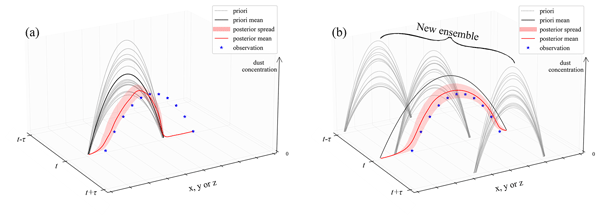
The ensemble Kalman filter (EnKF) improves dust storm forecasts but faces challenges with position errors. The valid time shifting EnKF (VTS-EnKF) addresses this by adjusting for position errors, enhancing accuracy in forecasting dust storms, as proven in tests on 2021 events, even with smaller ensembles and time intervals.
Cuini Qi, Pinya Wang, Yang Yang, Huimin Li, Hui Zhang, Lili Ren, Xipeng Jin, Chenchao Zhan, Jianping Tang, and Hong Liao
Atmos. Chem. Phys., 24, 11775–11789, https://doi.org/10.5194/acp-24-11775-2024, https://doi.org/10.5194/acp-24-11775-2024, 2024
Short summary
Short summary
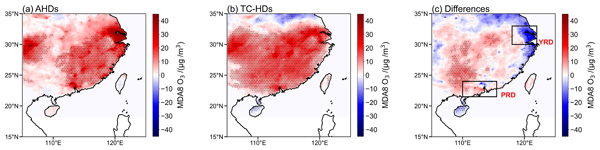
We investigate extremely hot weather impacts on surface ozone over the southeastern coast of China with and without tropical cyclones. Compared to hot days alone, ozone concentration decreased notably in the Yangtze River Delta (YRD) but increased in the Pearl River Delta (PRD) during tropical cyclones and hot days. The YRD benefited from strong and clean sea winds aiding ozone elimination. In contrast, the PRD experienced strong northeasterly winds that potentially transport ozone pollution.
Xinran Xia, Rubin Jiang, Min Min, Shengli Wu, Peng Zhang, and Xiangao Xia
Earth Syst. Sci. Data Discuss., https://doi.org/10.5194/essd-2024-395, https://doi.org/10.5194/essd-2024-395, 2024
Revised manuscript not accepted
Short summary
Short summary
Based on the MicroWave Radiation Imager aboard FY-3 series satellites, we developed a global terrestrial precipitable water vapor dataset from 2012 to 2020. This dataset overcomes the limitations of infrared observations and provides accurate, all-weather PWV data ,spanning all types of land surface. Researchers are expected to leverage it to explore the role of water vapor in weather patterns, refine precipitation forecasting, and validate climate simulations.
Xinyi Zhou, Xu Yue, Chenguang Tian, and Xiaofei Lu
Atmos. Chem. Phys., 24, 9923–9937, https://doi.org/10.5194/acp-24-9923-2024, https://doi.org/10.5194/acp-24-9923-2024, 2024
Short summary
Short summary
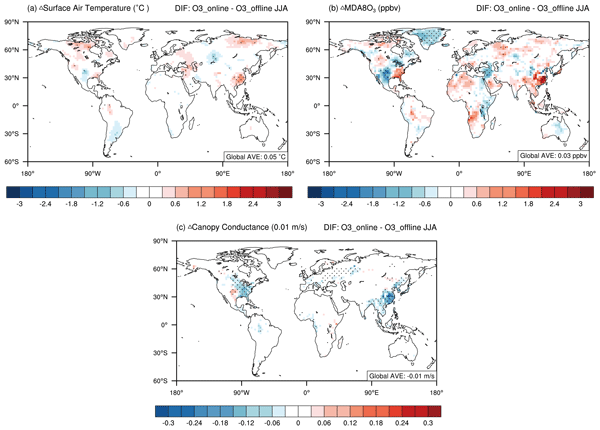
With a climate–vegetation–chemistry coupled model, we explore global climatic responses to the ozone–vegetation interactions of the present day. We find strong warming and drying effects due to the ozone-induced inhibition on plant stomatal conductance, especially over polluted regions such as the eastern US and China. These climatic perturbations further enhance surface ozone by decreasing dry deposition but reduce aerosol optical depth by increasing cloudiness and the drought tendency.
Laura Hyesung Yang, Daniel J. Jacob, Ruijun Dang, Yujin J. Oak, Haipeng Lin, Jhoon Kim, Shixian Zhai, Nadia K. Colombi, Drew C. Pendergrass, Ellie Beaudry, Viral Shah, Xu Feng, Robert M. Yantosca, Heesung Chong, Junsung Park, Hanlim Lee, Won-Jin Lee, Soontae Kim, Eunhye Kim, Katherine R. Travis, James H. Crawford, and Hong Liao
Atmos. Chem. Phys., 24, 7027–7039, https://doi.org/10.5194/acp-24-7027-2024, https://doi.org/10.5194/acp-24-7027-2024, 2024
Short summary
Short summary
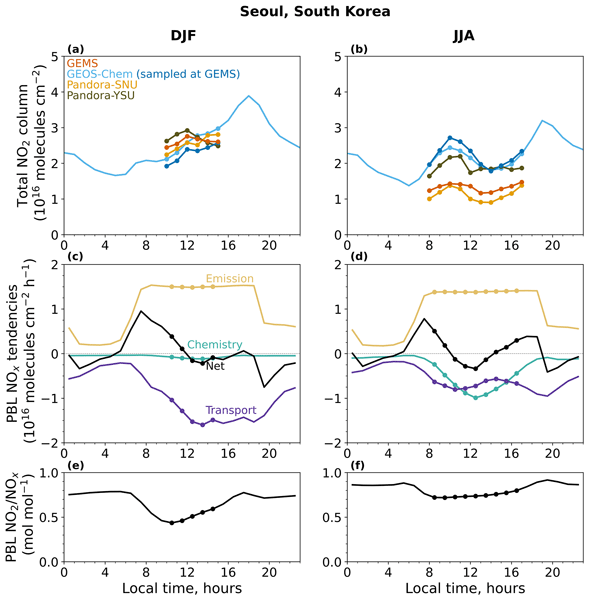
The Geostationary Environment Monitoring Spectrometer (GEMS) provides hourly measurements of NO2. We use the chemical transport model to find how emissions, chemistry, and transport drive the changes in NO2 observed by GEMS at different times of the day. In winter, the chemistry plays a minor role, and high daytime emissions dominate the diurnal variation in NO2, balanced by transport. In summer, emissions, chemistry, and transport play an important role in shaping the diurnal variation in NO2.
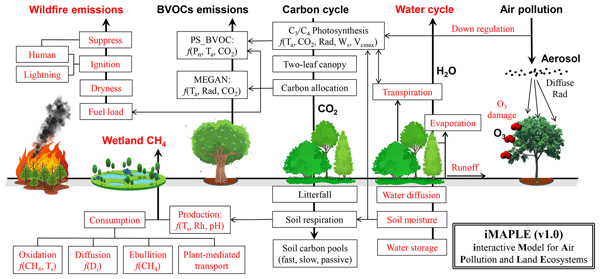
Xu Yue, Hao Zhou, Chenguang Tian, Yimian Ma, Yihan Hu, Cheng Gong, Hui Zheng, and Hong Liao
Geosci. Model Dev., 17, 4621–4642, https://doi.org/10.5194/gmd-17-4621-2024, https://doi.org/10.5194/gmd-17-4621-2024, 2024
Short summary
Short summary
We develop the interactive Model for Air Pollution and Land Ecosystems (iMAPLE). The model considers the full coupling between carbon and water cycles, dynamic fire emissions, wetland methane emissions, biogenic volatile organic compound emissions, and trait-based ozone vegetation damage. Evaluations show that iMAPLE is a useful tool for the study of the interactions among climate, chemistry, and ecosystems.
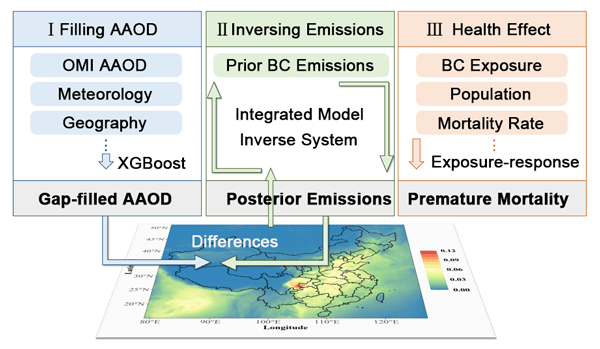
Wenxin Zhao, Yu Zhao, Yu Zheng, Dong Chen, Jinyuan Xin, Kaitao Li, Huizheng Che, Zhengqiang Li, Mingrui Ma, and Yun Hang
Atmos. Chem. Phys., 24, 6593–6612, https://doi.org/10.5194/acp-24-6593-2024, https://doi.org/10.5194/acp-24-6593-2024, 2024
Short summary
Short summary
We evaluate the long-term (2000–2020) variabilities of aerosol absorption optical depth, black carbon emissions, and associated health risks in China with an integrated framework that combines multiple observations and modeling techniques. We demonstrate the remarkable emission abatement resulting from the implementation of national pollution controls and show how human activities affected the emissions with a spatiotemporal heterogeneity, thus supporting differentiated policy-making by region.
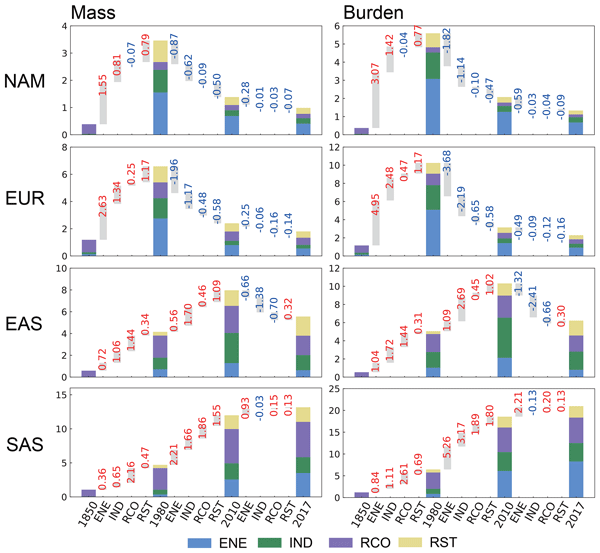
Yang Yang, Shaoxuan Mou, Hailong Wang, Pinya Wang, Baojie Li, and Hong Liao
Atmos. Chem. Phys., 24, 6509–6523, https://doi.org/10.5194/acp-24-6509-2024, https://doi.org/10.5194/acp-24-6509-2024, 2024
Short summary
Short summary
The variations in anthropogenic aerosol concentrations and source contributions and their subsequent radiative impact in major emission regions during historical periods are quantified based on an aerosol-tagging system in E3SMv1. Due to the industrial development and implementation of economic policies, sources of anthropogenic aerosols show different variations, which has important implications for pollution prevention and control measures and decision-making for global collaboration.
Drew C. Pendergrass, Daniel J. Jacob, Yujin J. Oak, Jeewoo Lee, Minseok Kim, Jhoon Kim, Seoyoung Lee, Shixian Zhai, Hitoshi Irie, and Hong Liao
Earth Syst. Sci. Data Discuss., https://doi.org/10.5194/essd-2024-172, https://doi.org/10.5194/essd-2024-172, 2024
Preprint withdrawn
Short summary
Short summary
Fine particles suspended in the atmosphere are a major form of air pollution and an important public health burden. However, measurements of particulate matter are sparse in space and in places like East Asia monitors are established after regulatory policies to improve pollution have changed. In this paper, we use machine learning to fill in the gaps. We train an algorithm to predict pollution at the surface from the atmosphere’s opacity, then produce high resolution maps of data without gaps.
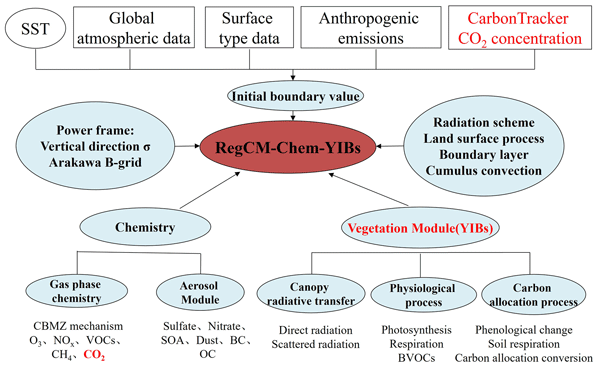
Nanhong Xie, Tijian Wang, Xiaodong Xie, Xu Yue, Filippo Giorgi, Qian Zhang, Danyang Ma, Rong Song, Beiyao Xu, Shu Li, Bingliang Zhuang, Mengmeng Li, Min Xie, Natalya Andreeva Kilifarska, Georgi Gadzhev, and Reneta Dimitrova
Geosci. Model Dev., 17, 3259–3277, https://doi.org/10.5194/gmd-17-3259-2024, https://doi.org/10.5194/gmd-17-3259-2024, 2024
Short summary
Short summary
For the first time, we coupled a regional climate chemistry model, RegCM-Chem, with a dynamic vegetation model, YIBs, to create a regional climate–chemistry–ecology model, RegCM-Chem–YIBs. We applied it to simulate climatic, chemical, and ecological parameters in East Asia and fully validated it on a variety of observational data. Results show that RegCM-Chem–YIBs model is a valuable tool for studying the terrestrial carbon cycle, atmospheric chemistry, and climate change on a regional scale.
Hao Yang, Lei Chen, Hong Liao, Jia Zhu, Wenjie Wang, and Xin Li
Atmos. Chem. Phys., 24, 4001–4015, https://doi.org/10.5194/acp-24-4001-2024, https://doi.org/10.5194/acp-24-4001-2024, 2024
Short summary
Short summary
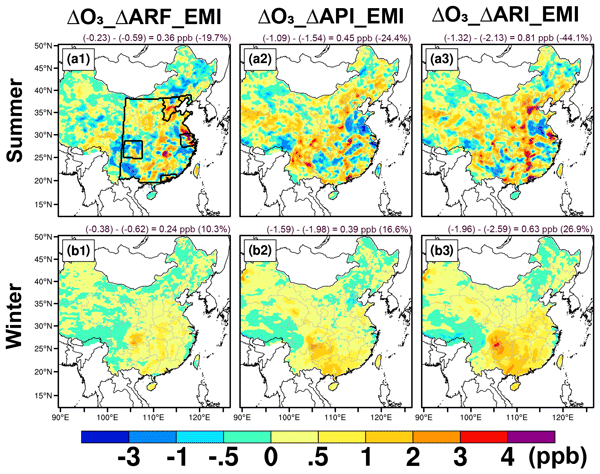
The present study quantifies the response of aerosol–radiation interaction (ARI) to anthropogenic emission reduction from 2013 to 2017, with the main focus on the contribution to changed O3 concentrations over eastern China both in summer and winter using the WRF-Chem model. The weakened ARI due to decreased anthropogenic emission aggravates the summer (winter) O3 pollution by +0.81 ppb (+0.63 ppb), averaged over eastern China.
Jiachen Cao, Xu Yue, and Mingrui Ma
Atmos. Chem. Phys., 24, 3973–3987, https://doi.org/10.5194/acp-24-3973-2024, https://doi.org/10.5194/acp-24-3973-2024, 2024
Short summary
Short summary
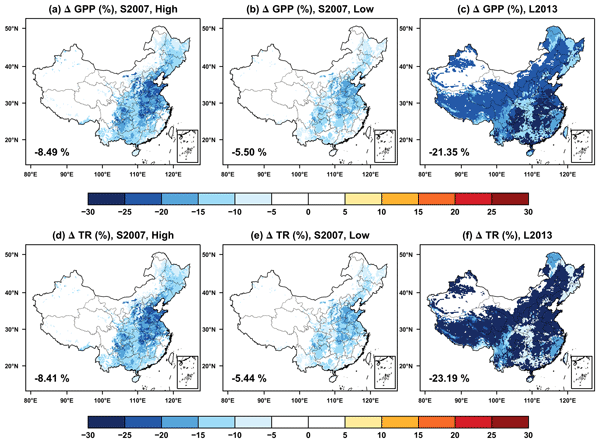
We implemented two widely used ozone damage schemes into a same regional model. Although the two schemes yielded distinct ozone vegetation damages, they predicted similar feedbacks to surface air temperature and ozone air quality in China. Our results highlighted the significance of ozone pollution control given its detrimental impacts on ecosystem functions, contributions to global warming, and amplifications of ozone pollution through ozone–vegetation coupling.
Feifan Yan, Hang Su, Yafang Cheng, Rujin Huang, Hong Liao, Ting Yang, Yuanyuan Zhu, Shaoqing Zhang, Lifang Sheng, Wenbin Kou, Xinran Zeng, Shengnan Xiang, Xiaohong Yao, Huiwang Gao, and Yang Gao
Atmos. Chem. Phys., 24, 2365–2376, https://doi.org/10.5194/acp-24-2365-2024, https://doi.org/10.5194/acp-24-2365-2024, 2024
Short summary
Short summary
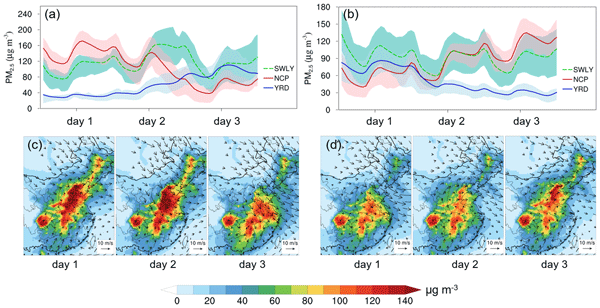
PM2.5 pollution is a major air quality issue deteriorating human health, and previous studies mostly focus on regions like the North China Plain and Yangtze River Delta. However, the characteristics of PM2.5 concentrations between these two regions are studied less often. Focusing on the transport corridor region, we identify an interesting seesaw transport phenomenon with stagnant weather conditions, conducive to PM2.5 accumulation over this region, resulting in large health effects.
Yang Yang, Yang Zhou, Hailong Wang, Mengyun Li, Huimin Li, Pinya Wang, Xu Yue, Ke Li, Jia Zhu, and Hong Liao
Atmos. Chem. Phys., 24, 1177–1191, https://doi.org/10.5194/acp-24-1177-2024, https://doi.org/10.5194/acp-24-1177-2024, 2024
Short summary
Short summary
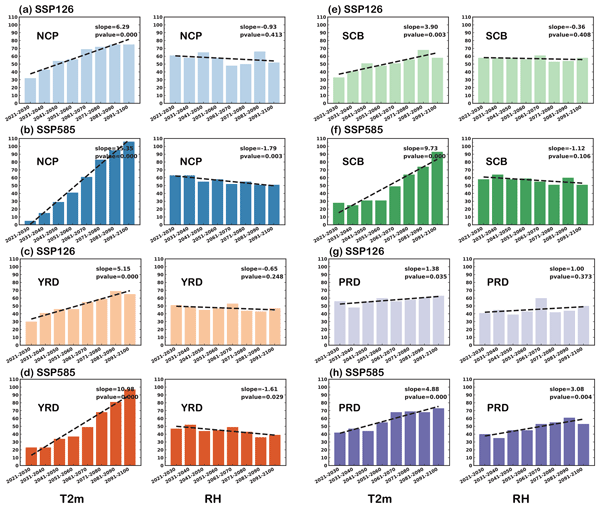
This study reveals that extreme ozone pollution over the North China Plain and Yangtze River Delta is due to the chemical production related to hot and dry conditions, and the regional transport explains the ozone pollution over the Sichuan Basin and Pearl River Delta. The frequency of meteorological conditions of the extreme ozone pollution increases from the past to the future. The sustainable scenario is the optimal path to retaining clean air in China in the future.
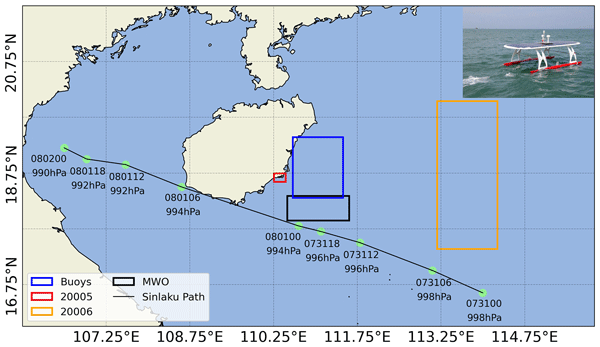
Wenying He, Hongbin Chen, Hongyong Yu, Jun Li, Jidong Pan, Shuqing Ma, Xuefen Zhang, Rang Guo, Bingke Zhao, Xi Chen, Xiangao Xia, and Kaicun Wang
Atmos. Meas. Tech., 17, 135–144, https://doi.org/10.5194/amt-17-135-2024, https://doi.org/10.5194/amt-17-135-2024, 2024
Short summary
Short summary
The Marine Weather Observer (MWO) system completed a long-term observation, actively approaching the center of Typhoon Sinlaku on 24 July–2 August 2020, over the South China Sea. The in situ observations were evaluated through comparison with buoy observations during the evolution of Typhoon Sinlaku. As a mobile observation station, MWO has shown its unique advantages over traditional observation methods, and the results preliminarily demonstrate the reliable observation capability of MWO.
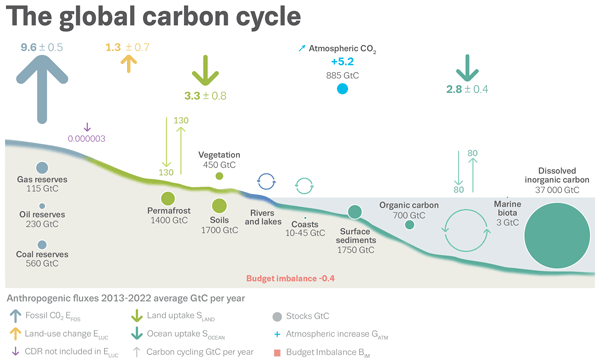
Pierre Friedlingstein, Michael O'Sullivan, Matthew W. Jones, Robbie M. Andrew, Dorothee C. E. Bakker, Judith Hauck, Peter Landschützer, Corinne Le Quéré, Ingrid T. Luijkx, Glen P. Peters, Wouter Peters, Julia Pongratz, Clemens Schwingshackl, Stephen Sitch, Josep G. Canadell, Philippe Ciais, Robert B. Jackson, Simone R. Alin, Peter Anthoni, Leticia Barbero, Nicholas R. Bates, Meike Becker, Nicolas Bellouin, Bertrand Decharme, Laurent Bopp, Ida Bagus Mandhara Brasika, Patricia Cadule, Matthew A. Chamberlain, Naveen Chandra, Thi-Tuyet-Trang Chau, Frédéric Chevallier, Louise P. Chini, Margot Cronin, Xinyu Dou, Kazutaka Enyo, Wiley Evans, Stefanie Falk, Richard A. Feely, Liang Feng, Daniel J. Ford, Thomas Gasser, Josefine Ghattas, Thanos Gkritzalis, Giacomo Grassi, Luke Gregor, Nicolas Gruber, Özgür Gürses, Ian Harris, Matthew Hefner, Jens Heinke, Richard A. Houghton, George C. Hurtt, Yosuke Iida, Tatiana Ilyina, Andrew R. Jacobson, Atul Jain, Tereza Jarníková, Annika Jersild, Fei Jiang, Zhe Jin, Fortunat Joos, Etsushi Kato, Ralph F. Keeling, Daniel Kennedy, Kees Klein Goldewijk, Jürgen Knauer, Jan Ivar Korsbakken, Arne Körtzinger, Xin Lan, Nathalie Lefèvre, Hongmei Li, Junjie Liu, Zhiqiang Liu, Lei Ma, Greg Marland, Nicolas Mayot, Patrick C. McGuire, Galen A. McKinley, Gesa Meyer, Eric J. Morgan, David R. Munro, Shin-Ichiro Nakaoka, Yosuke Niwa, Kevin M. O'Brien, Are Olsen, Abdirahman M. Omar, Tsuneo Ono, Melf Paulsen, Denis Pierrot, Katie Pocock, Benjamin Poulter, Carter M. Powis, Gregor Rehder, Laure Resplandy, Eddy Robertson, Christian Rödenbeck, Thais M. Rosan, Jörg Schwinger, Roland Séférian, T. Luke Smallman, Stephen M. Smith, Reinel Sospedra-Alfonso, Qing Sun, Adrienne J. Sutton, Colm Sweeney, Shintaro Takao, Pieter P. Tans, Hanqin Tian, Bronte Tilbrook, Hiroyuki Tsujino, Francesco Tubiello, Guido R. van der Werf, Erik van Ooijen, Rik Wanninkhof, Michio Watanabe, Cathy Wimart-Rousseau, Dongxu Yang, Xiaojuan Yang, Wenping Yuan, Xu Yue, Sönke Zaehle, Jiye Zeng, and Bo Zheng
Earth Syst. Sci. Data, 15, 5301–5369, https://doi.org/10.5194/essd-15-5301-2023, https://doi.org/10.5194/essd-15-5301-2023, 2023
Short summary
Short summary
The Global Carbon Budget 2023 describes the methodology, main results, and data sets used to quantify the anthropogenic emissions of carbon dioxide (CO2) and their partitioning among the atmosphere, land ecosystems, and the ocean over the historical period (1750–2023). These living datasets are updated every year to provide the highest transparency and traceability in the reporting of CO2, the key driver of climate change.
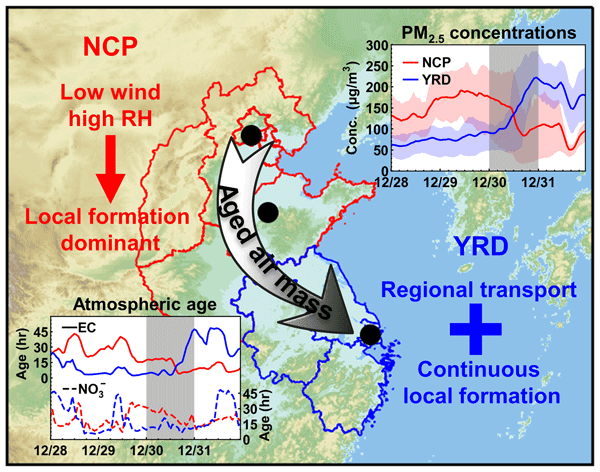
Xiaodong Xie, Jianlin Hu, Momei Qin, Song Guo, Min Hu, Dongsheng Ji, Hongli Wang, Shengrong Lou, Cheng Huang, Chong Liu, Hongliang Zhang, Qi Ying, Hong Liao, and Yuanhang Zhang
Atmos. Chem. Phys., 23, 10563–10578, https://doi.org/10.5194/acp-23-10563-2023, https://doi.org/10.5194/acp-23-10563-2023, 2023
Short summary
Short summary
The atmospheric age of particles reflects how long particles have been formed and suspended in the atmosphere, which is closely associated with the evolution processes of particles. An analysis of the atmospheric age of PM2.5 provides a unique perspective on the evolution processes of different PM2.5 components. The results also shed lights on how to design effective emission control actions under unfavorable meteorological conditions.
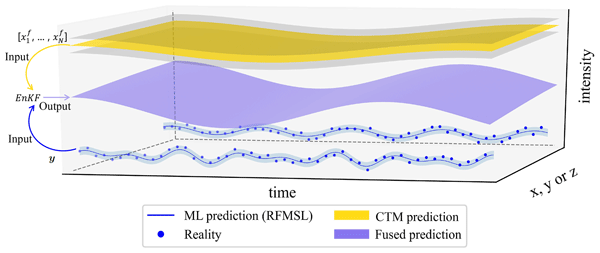
Li Fang, Jianbing Jin, Arjo Segers, Hong Liao, Ke Li, Bufan Xu, Wei Han, Mijie Pang, and Hai Xiang Lin
Geosci. Model Dev., 16, 4867–4882, https://doi.org/10.5194/gmd-16-4867-2023, https://doi.org/10.5194/gmd-16-4867-2023, 2023
Short summary
Short summary
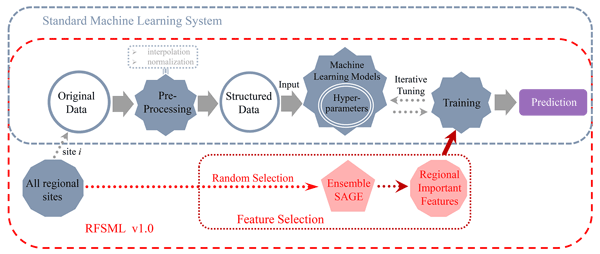
Machine learning models have gained great popularity in air quality prediction. However, they are only available at air quality monitoring stations. In contrast, chemical transport models (CTM) provide predictions that are continuous in the 3D field. Owing to complex error sources, they are typically biased. In this study, we proposed a gridded prediction with high accuracy by fusing predictions from our regional feature selection machine learning prediction (RFSML v1.0) and a CTM prediction.
Zhenxin Liu, Yuanhao Chen, Yuhang Wang, Cheng Liu, Shuhua Liu, and Hong Liao
Geosci. Model Dev., 16, 4385–4403, https://doi.org/10.5194/gmd-16-4385-2023, https://doi.org/10.5194/gmd-16-4385-2023, 2023
Short summary
Short summary
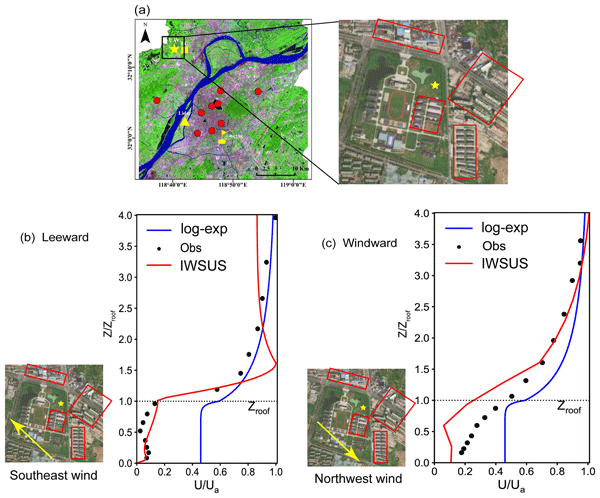
The heterogeneous layout of urban buildings leads to the complex wind field in and over the urban canopy. Large discrepancies between the observations and the current simulations result from misunderstanding the character of the wind field. The Inhomogeneous Wind Scheme in Urban Street (IWSUS) was developed to simulate the heterogeneity of the wind speed in a typical street and then improve the simulated energy budget in the lower atmospheric layer over the urban canopy.
Yue Peng, Hong Wang, Xiaoye Zhang, Zhaodong Liu, Wenjie Zhang, Siting Li, Chen Han, and Huizheng Che
Atmos. Chem. Phys., 23, 8325–8339, https://doi.org/10.5194/acp-23-8325-2023, https://doi.org/10.5194/acp-23-8325-2023, 2023
Short summary
Short summary
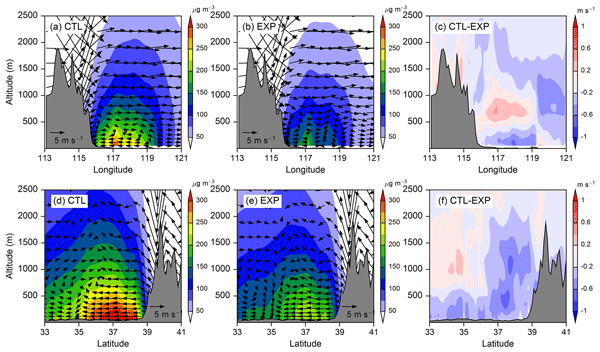
This study demonstrates a strong link between local circulation, aerosol–radiation interaction (ARI), and haze pollution. Under the weak weather-scale systems, the typical local circulation driven by mountainous topography is the main cause of pollutant distribution in the Beijing–Tianjin–Hebei region, and the ARI mechanism amplifies this influence of local circulation on pollutants, making haze pollution aggravated by the superposition of both.
Siting Li, Ping Wang, Hong Wang, Yue Peng, Zhaodong Liu, Wenjie Zhang, Hongli Liu, Yaqiang Wang, Huizheng Che, and Xiaoye Zhang
Geosci. Model Dev., 16, 4171–4191, https://doi.org/10.5194/gmd-16-4171-2023, https://doi.org/10.5194/gmd-16-4171-2023, 2023
Short summary
Short summary
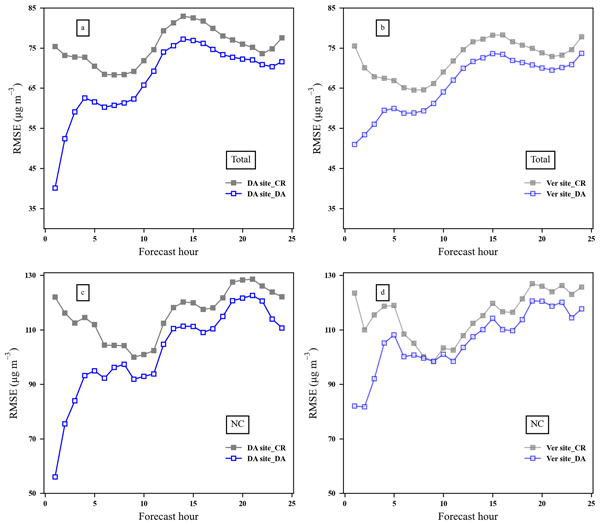
Optimizing the initial state of atmospheric chemistry model input is one of the most essential methods to improve forecast accuracy. Considering the large computational load of the model, we introduce an ensemble optimal interpolation scheme (EnOI) for operational use and efficient updating of the initial fields of chemical components. The results suggest that EnOI provides a practical and cost-effective technique for improving the accuracy of chemical weather numerical forecasts.
Xiaojing Shen, Junying Sun, Huizheng Che, Yangmei Zhang, Chunhong Zhou, Ke Gui, Wanyun Xu, Quan Liu, Junting Zhong, Can Xia, Xinyao Hu, Sinan Zhang, Jialing Wang, Shuo Liu, Jiayuan Lu, Aoyuan Yu, and Xiaoye Zhang
Atmos. Chem. Phys., 23, 8241–8257, https://doi.org/10.5194/acp-23-8241-2023, https://doi.org/10.5194/acp-23-8241-2023, 2023
Short summary
Short summary
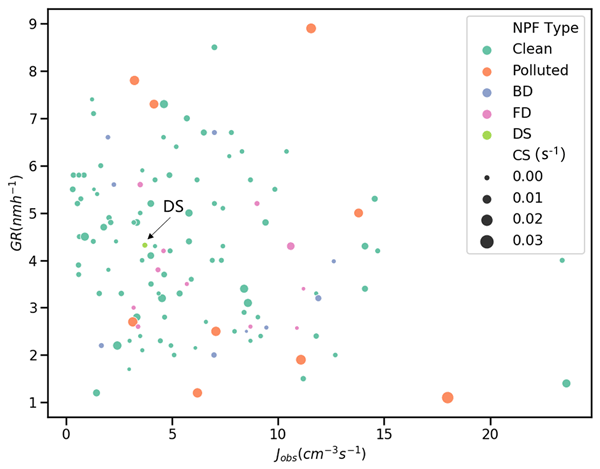
New particle formation (NPF) events occur when the dust episodes' fade is analysed based on long-term measurement of particle number size distribution. Analysis shows that the observed formation and growth rates are approximately 50 % of and 30 % lower than those of other NPF events. As a consequence of the uptake of precursor gases on mineral dust, the physical and chemical properties of submicron particles, as well as the ability to be cloud condensation nuclei, can be changed.
Yuan Zhao, Xu Yue, Yang Cao, Jun Zhu, Chenguang Tian, Hao Zhou, Yuwen Chen, Yihan Hu, Weijie Fu, and Xu Zhao
Atmos. Chem. Phys., 23, 7823–7838, https://doi.org/10.5194/acp-23-7823-2023, https://doi.org/10.5194/acp-23-7823-2023, 2023
Short summary
Short summary
We project the future changes of dust emissions and loading using an ensemble of model outputs from the Coupled Model Intercomparison Project version 6 under four scenarios. We find increased dust emissions and loading in North Africa, due to increased drought and strengthened surface wind, and decreased dust loading over Asia, following enhanced precipitation. Such a spatial pattern remains similar, though the regional intensity varies among different scenarios.
Pengwei Li, Yang Yang, Hailong Wang, Su Li, Ke Li, Pinya Wang, Baojie Li, and Hong Liao
Atmos. Chem. Phys., 23, 5403–5417, https://doi.org/10.5194/acp-23-5403-2023, https://doi.org/10.5194/acp-23-5403-2023, 2023
Short summary
Short summary
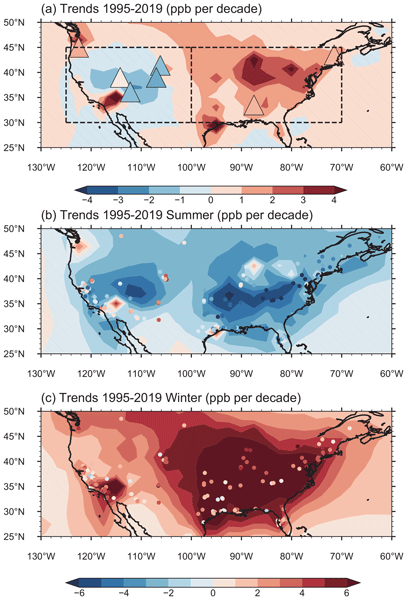
We use a novel technique that can attribute O3 to precursors to investigate O3 changes in the United States during 1995–2019. We found that the US domestic energy and surface transportation emission reductions are primarily responsible for the O3 decrease in summer. In winter, factors such as nitrogen oxide emission reduction in the context of its inhibition of ozone production, increased aviation and shipping activities, and large-scale circulation changes contribute to the O3 increases.
Yimian Ma, Xu Yue, Stephen Sitch, Nadine Unger, Johan Uddling, Lina M. Mercado, Cheng Gong, Zhaozhong Feng, Huiyi Yang, Hao Zhou, Chenguang Tian, Yang Cao, Yadong Lei, Alexander W. Cheesman, Yansen Xu, and Maria Carolina Duran Rojas
Geosci. Model Dev., 16, 2261–2276, https://doi.org/10.5194/gmd-16-2261-2023, https://doi.org/10.5194/gmd-16-2261-2023, 2023
Short summary
Short summary
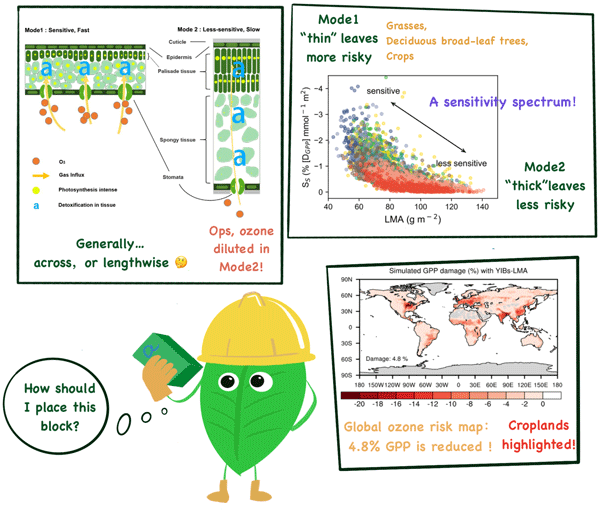
Plants have been found to respond differently to O3, but the variations in the sensitivities have rarely been explained nor fully implemented in large-scale assessment. This study proposes a new O3 damage scheme with leaf mass per area to unify varied sensitivities for all plant species. Our assessment reveals an O3-induced reduction of 4.8 % in global GPP, with the highest reduction of >10 % for cropland, suggesting an emerging risk of crop yield loss under the threat of O3 pollution.
Shixian Zhai, Daniel J. Jacob, Drew C. Pendergrass, Nadia K. Colombi, Viral Shah, Laura Hyesung Yang, Qiang Zhang, Shuxiao Wang, Hwajin Kim, Yele Sun, Jin-Soo Choi, Jin-Soo Park, Gan Luo, Fangqun Yu, Jung-Hun Woo, Younha Kim, Jack E. Dibb, Taehyoung Lee, Jin-Seok Han, Bruce E. Anderson, Ke Li, and Hong Liao
Atmos. Chem. Phys., 23, 4271–4281, https://doi.org/10.5194/acp-23-4271-2023, https://doi.org/10.5194/acp-23-4271-2023, 2023
Short summary
Short summary
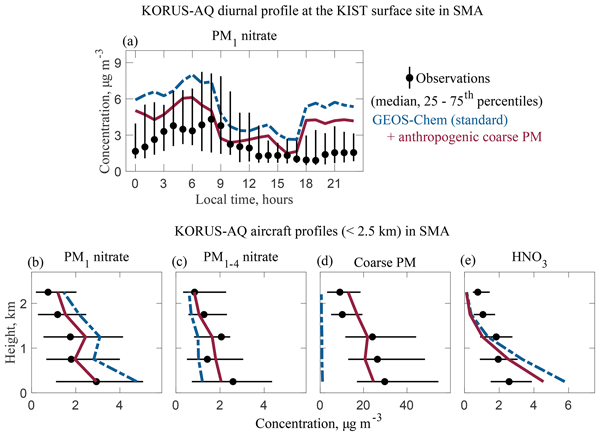
Anthropogenic fugitive dust in East Asia not only causes severe coarse particulate matter air pollution problems, but also affects fine particulate nitrate. Due to emission control efforts, coarse PM decreased steadily. We find that the decrease of coarse PM is a major driver for a lack of decrease of fine particulate nitrate, as it allows more nitric acid to form fine particulate nitrate. The continuing decrease of coarse PM requires more stringent ammonia and nitrogen oxides emission controls.
Nadia K. Colombi, Daniel J. Jacob, Laura Hyesung Yang, Shixian Zhai, Viral Shah, Stuart K. Grange, Robert M. Yantosca, Soontae Kim, and Hong Liao
Atmos. Chem. Phys., 23, 4031–4044, https://doi.org/10.5194/acp-23-4031-2023, https://doi.org/10.5194/acp-23-4031-2023, 2023
Short summary
Short summary
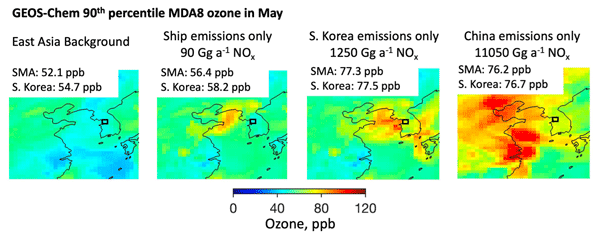
Surface ozone, detrimental to human and ecosystem health, is very high and increasing in South Korea. Using a global model of the atmosphere, we found that emissions from South Korea and China contribute equally to the high ozone observed. We found that in the absence of all anthropogenic emissions over East Asia, ozone is still very high, implying that the air quality standard in South Korea is not practically achievable unless this background external to East Asia can be decreased.
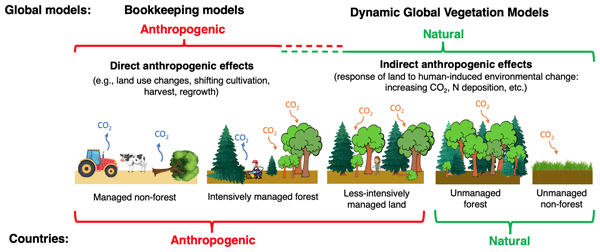
Giacomo Grassi, Clemens Schwingshackl, Thomas Gasser, Richard A. Houghton, Stephen Sitch, Josep G. Canadell, Alessandro Cescatti, Philippe Ciais, Sandro Federici, Pierre Friedlingstein, Werner A. Kurz, Maria J. Sanz Sanchez, Raúl Abad Viñas, Ramdane Alkama, Selma Bultan, Guido Ceccherini, Stefanie Falk, Etsushi Kato, Daniel Kennedy, Jürgen Knauer, Anu Korosuo, Joana Melo, Matthew J. McGrath, Julia E. M. S. Nabel, Benjamin Poulter, Anna A. Romanovskaya, Simone Rossi, Hanqin Tian, Anthony P. Walker, Wenping Yuan, Xu Yue, and Julia Pongratz
Earth Syst. Sci. Data, 15, 1093–1114, https://doi.org/10.5194/essd-15-1093-2023, https://doi.org/10.5194/essd-15-1093-2023, 2023
Short summary
Short summary
Striking differences exist in estimates of land-use CO2 fluxes between the national greenhouse gas inventories and the IPCC assessment reports. These differences hamper an accurate assessment of the collective progress under the Paris Agreement. By implementing an approach that conceptually reconciles land-use CO2 flux from national inventories and the global models used by the IPCC, our study is an important step forward for increasing confidence in land-use CO2 flux estimates.
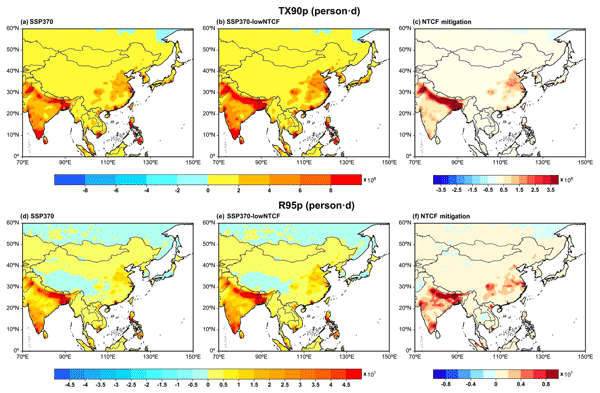
Yingfang Li, Zhili Wang, Yadong Lei, Huizheng Che, and Xiaoye Zhang
Atmos. Chem. Phys., 23, 2499–2523, https://doi.org/10.5194/acp-23-2499-2023, https://doi.org/10.5194/acp-23-2499-2023, 2023
Short summary
Short summary
Since few studies have assessed the impacts of future combined reductions in aerosols, ozone, and their precursors on future climate change, we use models with an interactive representation of tropospheric aerosols and atmospheric chemistry schemes to quantify the impact of their reductions on the Asian climate. Our results suggest that their reductions will exacerbate the warming effect caused by greenhouse gases, increasing future climate extremes and associated population exposure risk.
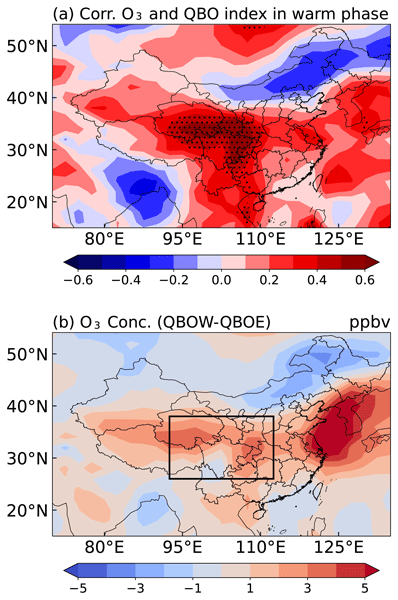
Mengyun Li, Yang Yang, Hailong Wang, Huimin Li, Pinya Wang, and Hong Liao
Atmos. Chem. Phys., 23, 1533–1544, https://doi.org/10.5194/acp-23-1533-2023, https://doi.org/10.5194/acp-23-1533-2023, 2023
Short summary
Short summary
Using the GEOS-Chem model, the impact of the quasi-biennial oscillation (QBO) on summertime tropospheric O3 in China is investigated. In the warm phases of sea surface temperature anomalies over the eastern tropical Pacific, the QBO has a significant positive correlation with near-surface O3 concentrations over central China. The QBO impacts on O3 pollution in China are mainly a result of changing vertical transport of O3.
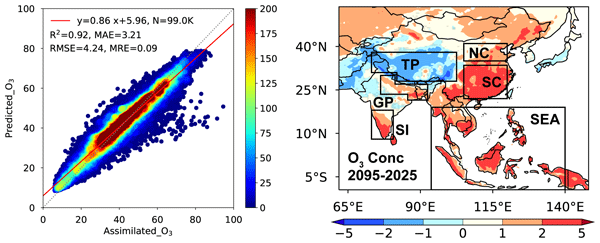
Huimin Li, Yang Yang, Jianbing Jin, Hailong Wang, Ke Li, Pinya Wang, and Hong Liao
Atmos. Chem. Phys., 23, 1131–1145, https://doi.org/10.5194/acp-23-1131-2023, https://doi.org/10.5194/acp-23-1131-2023, 2023
Short summary
Short summary
Future climate change will aggravate ozone pollution in Asia, especially in high-forcing scenarios. Ozone pollution in China will expand from North China to South China and extend into the cold season in a warmer future. The emphasis of this work is to quantify the impacts of future climate change on O3 pollution in Asia, which is of great significance for future O3 pollution mitigation strategies.

Huibin Dai, Hong Liao, Ke Li, Xu Yue, Yang Yang, Jia Zhu, Jianbing Jin, Baojie Li, and Xingwen Jiang
Atmos. Chem. Phys., 23, 23–39, https://doi.org/10.5194/acp-23-23-2023, https://doi.org/10.5194/acp-23-23-2023, 2023
Short summary
Short summary
We apply the 3-D global chemical transport model (GEOS-Chem) to simulate co-polluted days by O3 and PM2.5 (O3–PM2.5PDs) in Beijing–Tianjin–Hebei in 2013–2020 and investigate the chemical and physical characteristics of O3–PM2.5PDs by composited analyses of such days that are captured by both the observations and the model. We report for the first time the unique features in vertical distributions of aerosols during O3–PM2.5PDs and the physical and chemical characteristics of O3–PM2.5PDs.
Wenjie Zhang, Hong Wang, Xiaoye Zhang, Liping Huang, Yue Peng, Zhaodong Liu, Xiao Zhang, and Huizheng Che
Atmos. Chem. Phys., 22, 15207–15221, https://doi.org/10.5194/acp-22-15207-2022, https://doi.org/10.5194/acp-22-15207-2022, 2022
Short summary
Short summary
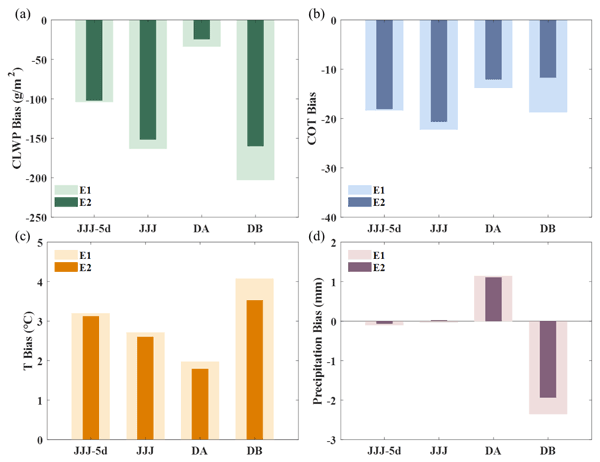
Aerosol–cloud interaction (ACI) is first implemented in the atmospheric chemistry system GRAPES_Meso5.1/CUACE. ACI can improve the simulated cloud, temperature, and precipitation under haze pollution conditions in Jing-Jin-Ji in China. This paper demonstrates the critical role of ACI in current numerical weather prediction over the severely polluted region.
Yang Yang, Liangying Zeng, Hailong Wang, Pinya Wang, and Hong Liao
Atmos. Chem. Phys., 22, 14489–14502, https://doi.org/10.5194/acp-22-14489-2022, https://doi.org/10.5194/acp-22-14489-2022, 2022
Short summary
Short summary
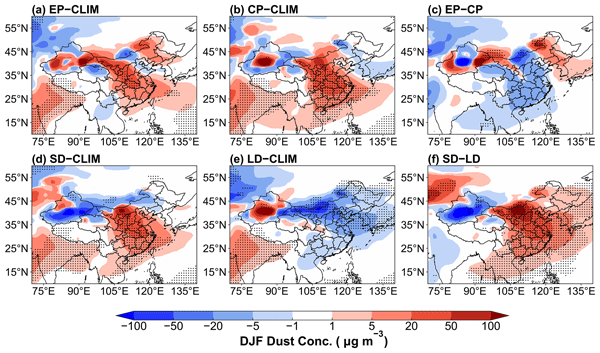
Using an aerosol–climate model, dust pollution in China affected by different spatial and temporal types of El Niño are examined. Both eastern and central Pacific El Niño and short-duration El Niño increase winter dust concentrations over northern China, while long-duration El Niño decreases concentrations. Only long-duration El Niño events can significantly affect dust over China in the following spring. This study has profound implications for air pollution control and dust storm prediction.
Pierre Friedlingstein, Michael O'Sullivan, Matthew W. Jones, Robbie M. Andrew, Luke Gregor, Judith Hauck, Corinne Le Quéré, Ingrid T. Luijkx, Are Olsen, Glen P. Peters, Wouter Peters, Julia Pongratz, Clemens Schwingshackl, Stephen Sitch, Josep G. Canadell, Philippe Ciais, Robert B. Jackson, Simone R. Alin, Ramdane Alkama, Almut Arneth, Vivek K. Arora, Nicholas R. Bates, Meike Becker, Nicolas Bellouin, Henry C. Bittig, Laurent Bopp, Frédéric Chevallier, Louise P. Chini, Margot Cronin, Wiley Evans, Stefanie Falk, Richard A. Feely, Thomas Gasser, Marion Gehlen, Thanos Gkritzalis, Lucas Gloege, Giacomo Grassi, Nicolas Gruber, Özgür Gürses, Ian Harris, Matthew Hefner, Richard A. Houghton, George C. Hurtt, Yosuke Iida, Tatiana Ilyina, Atul K. Jain, Annika Jersild, Koji Kadono, Etsushi Kato, Daniel Kennedy, Kees Klein Goldewijk, Jürgen Knauer, Jan Ivar Korsbakken, Peter Landschützer, Nathalie Lefèvre, Keith Lindsay, Junjie Liu, Zhu Liu, Gregg Marland, Nicolas Mayot, Matthew J. McGrath, Nicolas Metzl, Natalie M. Monacci, David R. Munro, Shin-Ichiro Nakaoka, Yosuke Niwa, Kevin O'Brien, Tsuneo Ono, Paul I. Palmer, Naiqing Pan, Denis Pierrot, Katie Pocock, Benjamin Poulter, Laure Resplandy, Eddy Robertson, Christian Rödenbeck, Carmen Rodriguez, Thais M. Rosan, Jörg Schwinger, Roland Séférian, Jamie D. Shutler, Ingunn Skjelvan, Tobias Steinhoff, Qing Sun, Adrienne J. Sutton, Colm Sweeney, Shintaro Takao, Toste Tanhua, Pieter P. Tans, Xiangjun Tian, Hanqin Tian, Bronte Tilbrook, Hiroyuki Tsujino, Francesco Tubiello, Guido R. van der Werf, Anthony P. Walker, Rik Wanninkhof, Chris Whitehead, Anna Willstrand Wranne, Rebecca Wright, Wenping Yuan, Chao Yue, Xu Yue, Sönke Zaehle, Jiye Zeng, and Bo Zheng
Earth Syst. Sci. Data, 14, 4811–4900, https://doi.org/10.5194/essd-14-4811-2022, https://doi.org/10.5194/essd-14-4811-2022, 2022
Short summary
Short summary
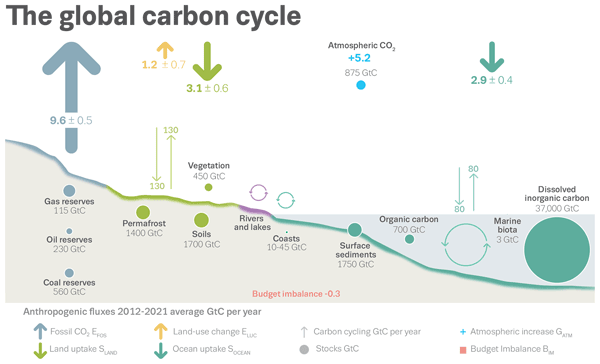
The Global Carbon Budget 2022 describes the datasets and methodology used to quantify the anthropogenic emissions of carbon dioxide (CO2) and their partitioning among the atmosphere, the land ecosystems, and the ocean. These living datasets are updated every year to provide the highest transparency and traceability in the reporting of CO2, the key driver of climate change.
Zhenqi Xu, Wei Feng, Yicheng Wang, Haoran Ye, Yuhang Wang, Hong Liao, and Mingjie Xie
Atmos. Chem. Phys., 22, 13739–13752, https://doi.org/10.5194/acp-22-13739-2022, https://doi.org/10.5194/acp-22-13739-2022, 2022
Short summary
Short summary
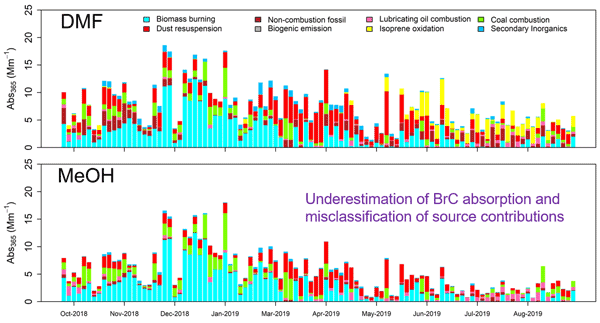
This work uses a solvent (DMF) that can efficiently dissolve low-volatility OC to examine BrC absorption and sources, which will benefit future investigations on the physicochemical properties of large organic molecules. The study results also shed light on potential sources for methanol-insoluble OC. These results highlight the importance of testing different solvents to investigate the structures and light absorption of low-volatility BrC.
Li Fang, Jianbing Jin, Arjo Segers, Hai Xiang Lin, Mijie Pang, Cong Xiao, Tuo Deng, and Hong Liao
Geosci. Model Dev., 15, 7791–7807, https://doi.org/10.5194/gmd-15-7791-2022, https://doi.org/10.5194/gmd-15-7791-2022, 2022
Short summary
Short summary
This study proposes a regional feature selection-based machine learning system to predict short-term air quality in China. The system has a tool that can figure out the importance of input data for better prediction. It provides large-scale air quality prediction that exhibits improved interpretability, fewer training costs, and higher accuracy compared with a standard machine learning system. It can act as an early warning for citizens and reduce exposure to PM2.5 and other air pollutants.
Chenguang Tian, Xu Yue, Jun Zhu, Hong Liao, Yang Yang, Yadong Lei, Xinyi Zhou, Hao Zhou, Yimian Ma, and Yang Cao
Atmos. Chem. Phys., 22, 12353–12366, https://doi.org/10.5194/acp-22-12353-2022, https://doi.org/10.5194/acp-22-12353-2022, 2022
Short summary
Short summary
We quantify the impacts of fire aerosols on climate through direct, indirect, and albedo effects. In atmosphere-only simulations, we find global fire aerosols cause surface cooling and rainfall inhibition over many land regions. These fast atmospheric perturbations further lead to a reduction in regional leaf area index and lightning activities. By considering the feedback of fire aerosols on humidity, lightning, and leaf area index, we predict a slight reduction in fire emissions.
Lei Li, Yevgeny Derimian, Cheng Chen, Xindan Zhang, Huizheng Che, Gregory L. Schuster, David Fuertes, Pavel Litvinov, Tatyana Lapyonok, Anton Lopatin, Christian Matar, Fabrice Ducos, Yana Karol, Benjamin Torres, Ke Gui, Yu Zheng, Yuanxin Liang, Yadong Lei, Jibiao Zhu, Lei Zhang, Junting Zhong, Xiaoye Zhang, and Oleg Dubovik
Earth Syst. Sci. Data, 14, 3439–3469, https://doi.org/10.5194/essd-14-3439-2022, https://doi.org/10.5194/essd-14-3439-2022, 2022
Short summary
Short summary
A climatology of aerosol composition concentration derived from POLDER-3 observations using GRASP/Component is presented. The conceptual specifics of the GRASP/Component approach are in the direct retrieval of aerosol speciation without intermediate retrievals of aerosol optical characteristics. The dataset of satellite-derived components represents scarce but imperative information for validation and potential adjustment of chemical transport models.
Junting Zhong, Xiaoye Zhang, Ke Gui, Jie Liao, Ye Fei, Lipeng Jiang, Lifeng Guo, Liangke Liu, Huizheng Che, Yaqiang Wang, Deying Wang, and Zijiang Zhou
Earth Syst. Sci. Data, 14, 3197–3211, https://doi.org/10.5194/essd-14-3197-2022, https://doi.org/10.5194/essd-14-3197-2022, 2022
Short summary
Short summary
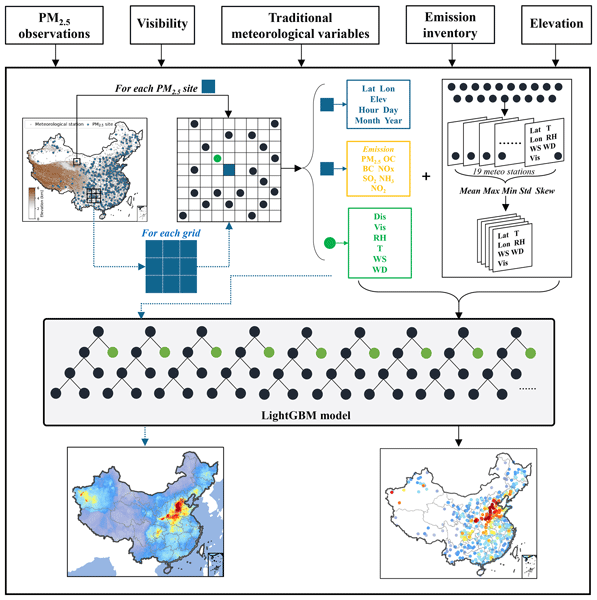
Historical long-term PM2.5 records with high temporal resolution are essential but lacking for research and environmental management. Here, we reconstruct site-based and gridded PM2.5 datasets at 6-hour intervals from 1960 to 2020 that combine visibility, meteorological data, and emissions based on a machine learning model with extracted spatial features. These two PM2.5 datasets will lay the foundation of research studies associated with air pollution, climate change, and aerosol reanalysis.
Shijie Cui, Dan Dan Huang, Yangzhou Wu, Junfeng Wang, Fuzhen Shen, Jiukun Xian, Yunjiang Zhang, Hongli Wang, Cheng Huang, Hong Liao, and Xinlei Ge
Atmos. Chem. Phys., 22, 8073–8096, https://doi.org/10.5194/acp-22-8073-2022, https://doi.org/10.5194/acp-22-8073-2022, 2022
Short summary
Short summary
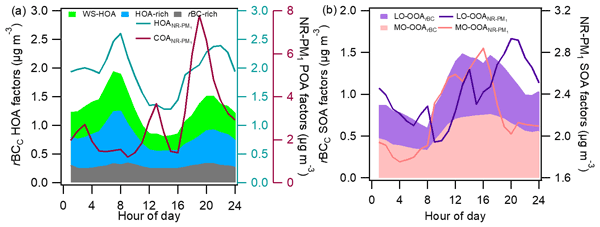
Refractory black carbon (rBC) aerosols are important to air quality and climate change. rBC can mix with many other species, which can significantly change its properties and impacts. We used a specific set of techniques to exclusively characterize rBC-containing (rBCc) particles in Shanghai. We elucidated their composition, sources and size distributions and factors that affect their properties. Our findings are very valuable for advancing the understanding of BC and controlling BC pollution.
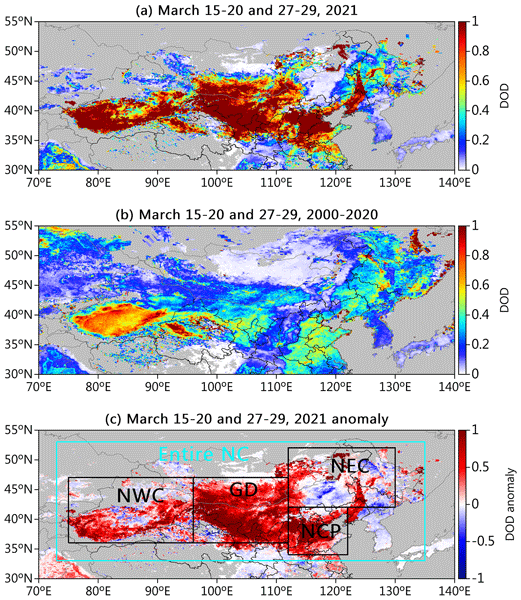
Ke Gui, Wenrui Yao, Huizheng Che, Linchang An, Yu Zheng, Lei Li, Hujia Zhao, Lei Zhang, Junting Zhong, Yaqiang Wang, and Xiaoye Zhang
Atmos. Chem. Phys., 22, 7905–7932, https://doi.org/10.5194/acp-22-7905-2022, https://doi.org/10.5194/acp-22-7905-2022, 2022
Short summary
Short summary
This study investigates the aerosol optical and radiative properties and meteorological drivers during two mega SDS events over Northern China in March 2021. The MODIS-retrieved DOD data registered these two events as the most intense episode in the same period in history over the past 20 years. These two extreme SDS events were associated with both atmospheric circulation extremes and local meteorological anomalies that favor enhanced dust emissions in the Gobi Desert.
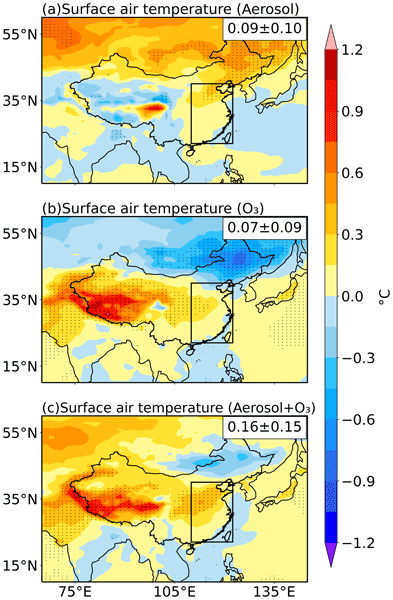
Jiyuan Gao, Yang Yang, Hailong Wang, Pinya Wang, Huimin Li, Mengyun Li, Lili Ren, Xu Yue, and Hong Liao
Atmos. Chem. Phys., 22, 7131–7142, https://doi.org/10.5194/acp-22-7131-2022, https://doi.org/10.5194/acp-22-7131-2022, 2022
Short summary
Short summary
China has been implementing a sequence of policies for clean air since the year 2013. The aerosol decline produced a 0.09 ± 0.10°C warming during 2013–2017 estimated in this study, and the increase in ozone in the lower troposphere during this time period accelerated the warming, leading to a total 0.16 ± 0.15°C temperature increase in eastern China. Residential emission reductions led to a cooling effect because of a substantial decrease in light-absorbing aerosols.
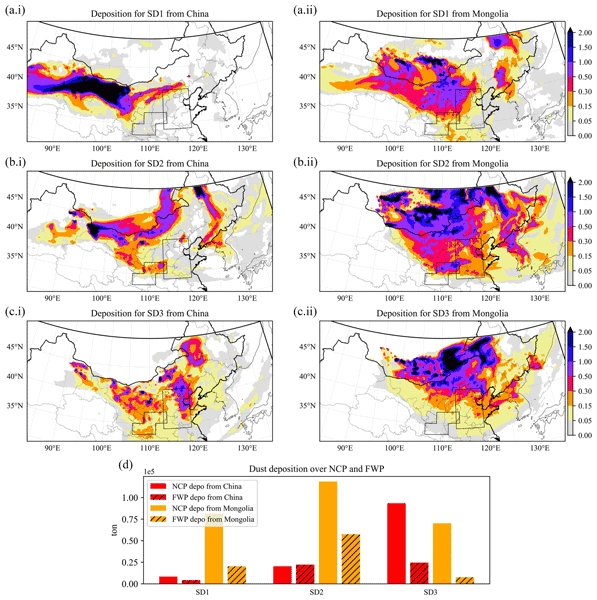
Jianbing Jin, Mijie Pang, Arjo Segers, Wei Han, Li Fang, Baojie Li, Haochuan Feng, Hai Xiang Lin, and Hong Liao
Atmos. Chem. Phys., 22, 6393–6410, https://doi.org/10.5194/acp-22-6393-2022, https://doi.org/10.5194/acp-22-6393-2022, 2022
Short summary
Short summary
Super dust storms reappeared in East Asia last spring after being absent for one and a half decades. Accurate simulation of such super sandstorms is valuable, but challenging due to imperfect emissions. In this study, the emissions of these dust storms are estimated by assimilating multiple observations. The results reveal that emissions originated from both China and Mongolia. However, for northern China, long-distance transport from Mongolia contributes much more dust than Chinese deserts.
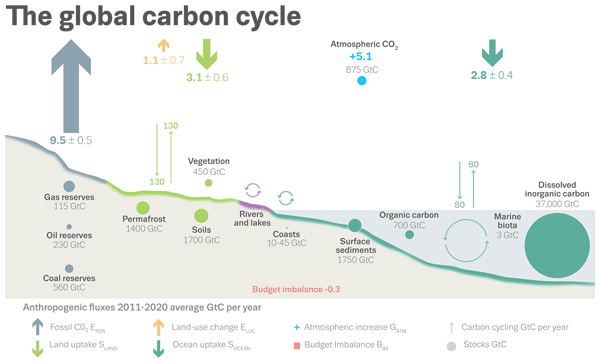
Pierre Friedlingstein, Matthew W. Jones, Michael O'Sullivan, Robbie M. Andrew, Dorothee C. E. Bakker, Judith Hauck, Corinne Le Quéré, Glen P. Peters, Wouter Peters, Julia Pongratz, Stephen Sitch, Josep G. Canadell, Philippe Ciais, Rob B. Jackson, Simone R. Alin, Peter Anthoni, Nicholas R. Bates, Meike Becker, Nicolas Bellouin, Laurent Bopp, Thi Tuyet Trang Chau, Frédéric Chevallier, Louise P. Chini, Margot Cronin, Kim I. Currie, Bertrand Decharme, Laique M. Djeutchouang, Xinyu Dou, Wiley Evans, Richard A. Feely, Liang Feng, Thomas Gasser, Dennis Gilfillan, Thanos Gkritzalis, Giacomo Grassi, Luke Gregor, Nicolas Gruber, Özgür Gürses, Ian Harris, Richard A. Houghton, George C. Hurtt, Yosuke Iida, Tatiana Ilyina, Ingrid T. Luijkx, Atul Jain, Steve D. Jones, Etsushi Kato, Daniel Kennedy, Kees Klein Goldewijk, Jürgen Knauer, Jan Ivar Korsbakken, Arne Körtzinger, Peter Landschützer, Siv K. Lauvset, Nathalie Lefèvre, Sebastian Lienert, Junjie Liu, Gregg Marland, Patrick C. McGuire, Joe R. Melton, David R. Munro, Julia E. M. S. Nabel, Shin-Ichiro Nakaoka, Yosuke Niwa, Tsuneo Ono, Denis Pierrot, Benjamin Poulter, Gregor Rehder, Laure Resplandy, Eddy Robertson, Christian Rödenbeck, Thais M. Rosan, Jörg Schwinger, Clemens Schwingshackl, Roland Séférian, Adrienne J. Sutton, Colm Sweeney, Toste Tanhua, Pieter P. Tans, Hanqin Tian, Bronte Tilbrook, Francesco Tubiello, Guido R. van der Werf, Nicolas Vuichard, Chisato Wada, Rik Wanninkhof, Andrew J. Watson, David Willis, Andrew J. Wiltshire, Wenping Yuan, Chao Yue, Xu Yue, Sönke Zaehle, and Jiye Zeng
Earth Syst. Sci. Data, 14, 1917–2005, https://doi.org/10.5194/essd-14-1917-2022, https://doi.org/10.5194/essd-14-1917-2022, 2022
Short summary
Short summary
The Global Carbon Budget 2021 describes the data sets and methodology used to quantify the emissions of carbon dioxide and their partitioning among the atmosphere, land, and ocean. These living data are updated every year to provide the highest transparency and traceability in the reporting of CO2, the key driver of climate change.
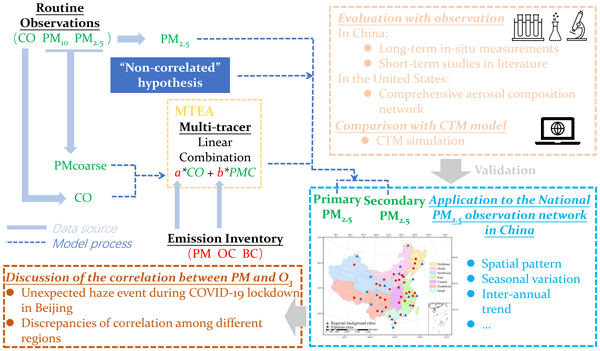
Haoran Zhang, Nan Li, Keqin Tang, Hong Liao, Chong Shi, Cheng Huang, Hongli Wang, Song Guo, Min Hu, Xinlei Ge, Mindong Chen, Zhenxin Liu, Huan Yu, and Jianlin Hu
Atmos. Chem. Phys., 22, 5495–5514, https://doi.org/10.5194/acp-22-5495-2022, https://doi.org/10.5194/acp-22-5495-2022, 2022
Short summary
Short summary
We developed a new algorithm with low economic/technique costs to identify primary and secondary components of PM2.5. Our model was shown to be reliable by comparison with different observation datasets. We systematically explored the patterns and changes in the secondary PM2.5 pollution in China at large spatial and time scales. We believe that this method is a promising tool for efficiently estimating primary and secondary PM2.5, and has huge potential for future PM mitigation.
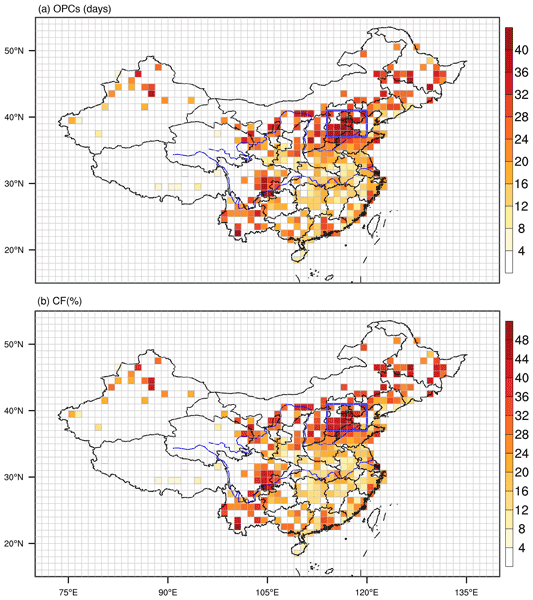
Pinya Wang, Yang Yang, Huimin Li, Lei Chen, Ruijun Dang, Daokai Xue, Baojie Li, Jianping Tang, L. Ruby Leung, and Hong Liao
Atmos. Chem. Phys., 22, 4705–4719, https://doi.org/10.5194/acp-22-4705-2022, https://doi.org/10.5194/acp-22-4705-2022, 2022
Short summary
Short summary
China is now suffering from both severe ozone (O3) pollution and heat events. We highlight that North China Plain is the hot spot of the co-occurrences of extremes in O3 and high temperatures in China. Such coupled extremes exhibit an increasing trend during 2014–2019 and will continue to increase until the middle of this century. And the coupled extremes impose more severe health impacts to human than O3 pollution occurring alone because of elevated O3 levels and temperatures.
Yu Zheng, Huizheng Che, Yupeng Wang, Xiangao Xia, Xiuqing Hu, Xiaochun Zhang, Jun Zhu, Jibiao Zhu, Hujia Zhao, Lei Li, Ke Gui, and Xiaoye Zhang
Atmos. Meas. Tech., 15, 2139–2158, https://doi.org/10.5194/amt-15-2139-2022, https://doi.org/10.5194/amt-15-2139-2022, 2022
Short summary
Short summary
Ground-based observations of aerosols and aerosol data verification is important for satellite and climate model modification. Here we present an evaluation of aerosol microphysical, optical and radiative properties measured using a multiwavelength photometer with a highly integrated design and smart control performance. The validation of this product is discussed in detail using AERONET as a reference. This work contributes to reducing AOD uncertainties in China and combating climate change.
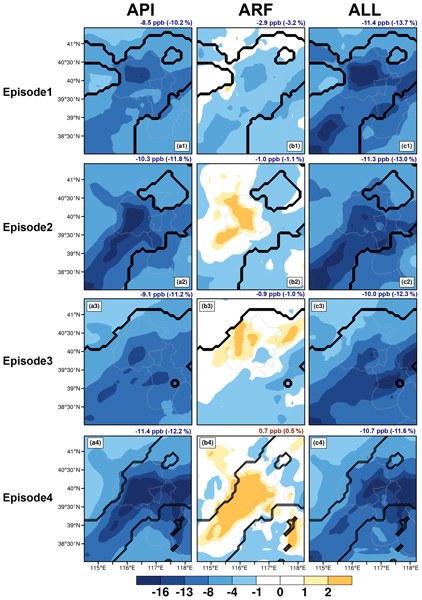
Hao Yang, Lei Chen, Hong Liao, Jia Zhu, Wenjie Wang, and Xin Li
Atmos. Chem. Phys., 22, 4101–4116, https://doi.org/10.5194/acp-22-4101-2022, https://doi.org/10.5194/acp-22-4101-2022, 2022
Short summary
Short summary
Aerosols can influence O3 through aerosol–radiation interactions, including aerosol–photolysis interaction (API) and aerosol–radiation feedback (ARF). The weakened photolysis rates and changed meteorological conditions reduce surface-layer O3 concentrations by up to 9.3–11.4 ppb, with API and ARF contributing 74.6 %–90.0 % and 10.0 %–25.4 % of the O3 decrease in three episodes, respectively, which indicates that API is the dominant way for O3 reduction related to aerosol–radiation interactions.

Drew C. Pendergrass, Shixian Zhai, Jhoon Kim, Ja-Ho Koo, Seoyoung Lee, Minah Bae, Soontae Kim, Hong Liao, and Daniel J. Jacob
Atmos. Meas. Tech., 15, 1075–1091, https://doi.org/10.5194/amt-15-1075-2022, https://doi.org/10.5194/amt-15-1075-2022, 2022
Short summary
Short summary
This paper uses a machine learning algorithm to infer high-resolution maps of particulate air quality in eastern China, Japan, and the Korean peninsula, using data from a geostationary satellite along with meteorology. We then perform an extensive evaluation of this inferred air quality and use it to diagnose trends in the region. We hope this paper and the associated data will be valuable to other scientists interested in epidemiology, air quality, remote sensing, and machine learning.
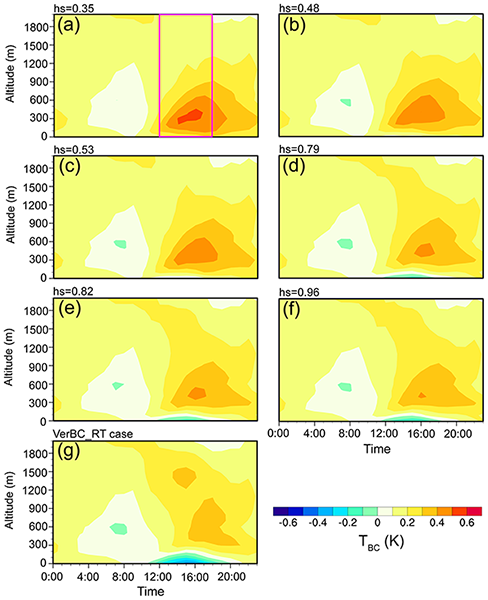
Donglin Chen, Hong Liao, Yang Yang, Lei Chen, Delong Zhao, and Deping Ding
Atmos. Chem. Phys., 22, 1825–1844, https://doi.org/10.5194/acp-22-1825-2022, https://doi.org/10.5194/acp-22-1825-2022, 2022
Short summary
Short summary
The black carbon (BC) vertical profile plays a critical role in BC–meteorology interaction, which also influences PM2.5 concentrations. More BC mass was assigned into high altitudes (above 1000 m) in the model, which resulted in a stronger cooling effect near the surface, a larger temperature inversion below 421 m, more reductions in PBLH, and a larger increase in near-surface PM2.5 in the daytime caused by the direct radiative effect of BC.
Hao Zhou, Xu Yue, Yadong Lei, Chenguang Tian, Jun Zhu, Yimian Ma, Yang Cao, Xixi Yin, and Zhiding Zhang
Atmos. Chem. Phys., 22, 693–709, https://doi.org/10.5194/acp-22-693-2022, https://doi.org/10.5194/acp-22-693-2022, 2022
Short summary
Short summary
Aerosols enhance plant photosynthesis by increasing diffuse radiation. In this study, we found that the aerosol impacts are quite different for varied species. Scattering aerosols such as sulfate and organic carbon promote photosynthesis while absorbing aerosols such as black carbon have negative impacts. Earth system models should consider the impacts of cloud and aerosol species on terrestrial ecosystems so as to better predict carbon cycles under different emission scenarios.
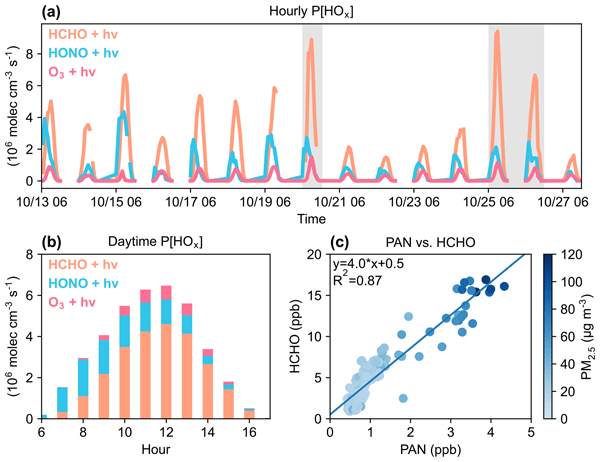
Yulu Qiu, Zhiqiang Ma, Ke Li, Mengyu Huang, Jiujiang Sheng, Ping Tian, Jia Zhu, Weiwei Pu, Yingxiao Tang, Tingting Han, Huaigang Zhou, and Hong Liao
Atmos. Chem. Phys., 21, 17995–18010, https://doi.org/10.5194/acp-21-17995-2021, https://doi.org/10.5194/acp-21-17995-2021, 2021
Short summary
Short summary
Photochemical pollution over the North China Plain (NCP) is attracting much concern. Our observations at a rural site in the NCP identified high peroxyacetyl nitrate (PAN) concentrations, even on cold days. Increased acetaldehyde concentration and hydroxyl radical production rates drive fast PAN formation. Moreover, our study emphasizes the importance of formaldehyde photolysis in PAN formation and calls for implementing strict volatile organic compound controls after summer over the NCP.

Jianping Guo, Jian Zhang, Kun Yang, Hong Liao, Shaodong Zhang, Kaiming Huang, Yanmin Lv, Jia Shao, Tao Yu, Bing Tong, Jian Li, Tianning Su, Steve H. L. Yim, Ad Stoffelen, Panmao Zhai, and Xiaofeng Xu
Atmos. Chem. Phys., 21, 17079–17097, https://doi.org/10.5194/acp-21-17079-2021, https://doi.org/10.5194/acp-21-17079-2021, 2021
Short summary
Short summary
The planetary boundary layer (PBL) is the lowest part of the troposphere, and boundary layer height (BLH) is the depth of the PBL and is of critical importance to the dispersion of air pollution. The study presents the first near-global BLH climatology by using high-resolution (5-10 m) radiosonde measurements. The variations in BLH exhibit large spatial and temporal dependence, with a peak at 17:00 local solar time. The most promising reanalysis product is ERA-5 in terms of modeling BLH.
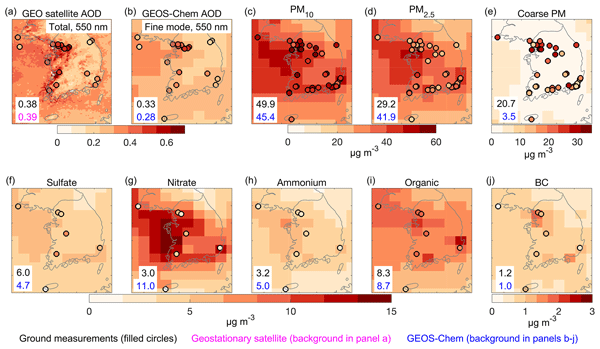
Shixian Zhai, Daniel J. Jacob, Jared F. Brewer, Ke Li, Jonathan M. Moch, Jhoon Kim, Seoyoung Lee, Hyunkwang Lim, Hyun Chul Lee, Su Keun Kuk, Rokjin J. Park, Jaein I. Jeong, Xuan Wang, Pengfei Liu, Gan Luo, Fangqun Yu, Jun Meng, Randall V. Martin, Katherine R. Travis, Johnathan W. Hair, Bruce E. Anderson, Jack E. Dibb, Jose L. Jimenez, Pedro Campuzano-Jost, Benjamin A. Nault, Jung-Hun Woo, Younha Kim, Qiang Zhang, and Hong Liao
Atmos. Chem. Phys., 21, 16775–16791, https://doi.org/10.5194/acp-21-16775-2021, https://doi.org/10.5194/acp-21-16775-2021, 2021
Short summary
Short summary
Geostationary satellite aerosol optical depth (AOD) has tremendous potential for monitoring surface fine particulate matter (PM2.5). Our study explored the physical relationship between AOD and PM2.5 by integrating data from surface networks, aircraft, and satellites with the GEOS-Chem chemical transport model. We quantitatively showed that accurate simulation of aerosol size distributions, boundary layer depths, relative humidity, coarse particles, and diurnal variations in PM2.5 are essential.
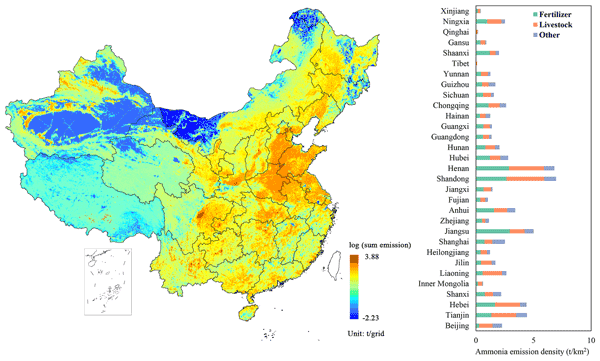
Baojie Li, Lei Chen, Weishou Shen, Jianbing Jin, Teng Wang, Pinya Wang, Yang Yang, and Hong Liao
Atmos. Chem. Phys., 21, 15883–15900, https://doi.org/10.5194/acp-21-15883-2021, https://doi.org/10.5194/acp-21-15883-2021, 2021
Short summary
Short summary
This study focused on improving fertilizer-application-related NH3 emission inventories. We comprehensively evaluated the dates and times of fertilizer application to the major crops in China, improved the spatial allocation methods for NH3 emissions from croplands with different rice types, and established a NH3 emission inventory for mainland China in 2016. The inventory showed a higher level of accuracy than other inventories based on evaluation using the WRF-Chem and observation data.
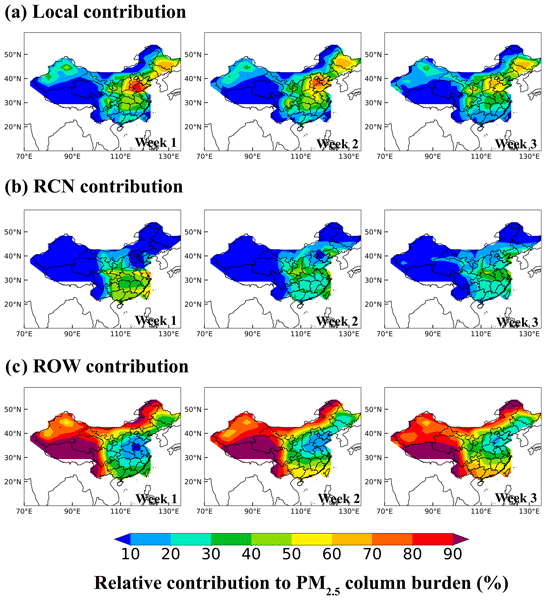
Lili Ren, Yang Yang, Hailong Wang, Pinya Wang, Lei Chen, Jia Zhu, and Hong Liao
Atmos. Chem. Phys., 21, 15431–15445, https://doi.org/10.5194/acp-21-15431-2021, https://doi.org/10.5194/acp-21-15431-2021, 2021
Short summary
Short summary
Due to the COVID-19 pandemic, human activities were strictly restricted in China. Even though anthropogenic aerosol emissions largely decreased, haze events still occurred. Our results shows that PM2.5 over the North China Plain is largely contributed by local sources. For other regions in China, PM2.5 is largely contributed from nonlocal sources. As emission reduction is a future goal, aerosol long-range transport and unfavorable meteorology are increasingly important to air quality.
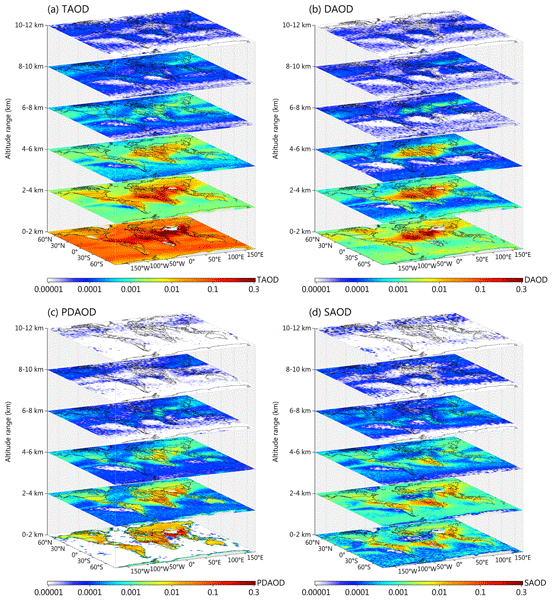
Ke Gui, Huizheng Che, Yu Zheng, Hujia Zhao, Wenrui Yao, Lei Li, Lei Zhang, Hong Wang, Yaqiang Wang, and Xiaoye Zhang
Atmos. Chem. Phys., 21, 15309–15336, https://doi.org/10.5194/acp-21-15309-2021, https://doi.org/10.5194/acp-21-15309-2021, 2021
Short summary
Short summary
This study utilized the globally gridded aerosol extinction data from CALIOP during 2007–2019 to investigate the 3D climatology, trends, and meteorological drivers of tropospheric type-dependent aerosols. Results revealed that the planetary boundary layer (PBL) and the free troposphere contribute 62.08 % and 37.92 %, respectively, of the global tropospheric TAOD. Trends in
CALIOP-derived aerosol loading, in particular those partitioned in the PBL, can be explained to a large extent by meteorology.
Cited articles
Archer, K. J. and Kimes, R. V.: Empirical characterization of random forest variable importance measures, Comput. Stat. Data An., 52, 2249–2260, https://doi.org/10.1016/j.csda.2007.08.015, 2008.
Bi, J., Huang, J., Hu, Z., Holben, B. N., and Guo, Z.: Investigating the aerosol optical and radiative characteristics of heavy haze episodes in Beijing during January of 2013, J. Geophys. Res.-Atmos., 119, 9884–9900, https://doi.org/10.1002/2014JD021757, 2014.
Breiman, L.: Random Forests, Mach. Learn., 45, 5–32, https://doi.org/10.1023/A:1010933404324, 2001.
Calvo, A. I., Alves, C., Castro, A., Pont, V., Vicente, A. M., and Fraile, R.: Research on aerosol sources and chemical composition: Past, current and emerging issues, Atmos. Res., 120–121, 1–28, https://doi.org/10.1016/j.atmosres.2012.09.021, 2013.
Che, H., Xia, X., Zhu, J., Li, Z., Dubovik, O., Holben, B., Goloub, P., Chen, H., Estelles, V., Cuevas-Agulló, E., Blarel, L., Wang, H., Zhao, H., Zhang, X., Wang, Y., Sun, J., Tao, R., Zhang, X., and Shi, G.: Column aerosol optical properties and aerosol radiative forcing during a serious haze-fog month over North China Plain in 2013 based on ground-based sunphotometer measurements, Atmos. Chem. Phys., 14, 2125–2138, https://doi.org/10.5194/acp-14-2125-2014, 2014.
Che, H., Gui, K., Xia, X., Wang, Y., Holben, B. N., Goloub, P., Cuevas-Agulló, E., Wang, H., Zheng, Y., Zhao, H., and Zhang, X.: Large contribution of meteorological factors to inter-decadal changes in regional aerosol optical depth, Atmos. Chem. Phys., 19, 10497–10523, https://doi.org/10.5194/acp-19-10497-2019, 2019.
Chen, G., Li, S., Knibbs, L. D., Hamm, N. A. S., Cao, W., Li, T., Guo, J., Ren, H., Abramson, M. J., and Guo, Y.: A machine learning method to estimate PM2.5 concentrations across China with remote sensing, meteorological and land use information, Sci. Total Environ., 636, 52–60, https://doi.org/10.1016/j.scitotenv.2018.04.251, 2018.
Chen, Q., Miao, R., Geng, G., Shrivastava, M., Dao, X., Xu, B., Sun, J., Zhang, X., Liu, M., Tang, G., Tang, Q., Hu, H., Huang, R.-J., Wang, H., Zheng, Y., Qin, Y., Guo, S., Hu, M., and Zhu, T.: Widespread 2013–2020 decreases and reduction challenges of organic aerosol in China, Nat. Commun., 15, 4465, https://doi.org/10.1038/s41467-024-48902-0, 2024.
Cutler, D. R., Edwards Jr., T. C., Beard, K. H., Cutler, A., Hess, K. T., Gibson, J., and Lawler, J. J.: Random Forests for Classification in Ecology, Ecology, 88, 2783–2792, https://doi.org/10.1890/07-0539.1, 2007.
Ding, Q., Sun, J., Huang, X., Ding, A., Zou, J., Yang, X., and Fu, C.: Impacts of black carbon on the formation of advection–radiation fog during a haze pollution episode in eastern China, Atmos. Chem. Phys., 19, 7759–7774, https://doi.org/10.5194/acp-19-7759-2019, 2019.
Doelling, D. R., Sun, M., Nguyen, L. T., Nordeen, M. L., Haney, C. O., Keyes, D. F., and Mlynczak, P. E.: Advances in Geostationary-Derived Longwave Fluxes for the CERES Synoptic (SYN1deg) Product, J. Atmos. Ocean. Tech., 33, 503–521, https://doi.org/10.1175/JTECH-D-15-0147.1, 2016.
Du, H., Li, J., Wang, Z., Chen, X., Yang, W., Sun, Y., Xin, J., Pan, X., Wang, W., Ye, Q., and Dao, X.: Assessment of the effect of meteorological and emission variations on winter PM2.5 over the North China Plain in the three-year action plan against air pollution in 2018–2020, Atmos. Res., 280, 106395, https://doi.org/10.1016/j.atmosres.2022.106395, 2022.
Elias, T., Haeffelin, M., Drobinski, P., Gomes, L., Rangognio, J., Bergot, T., Chazette, P., Raut, J.-C., and Colomb, M.: Particulate contribution to extinction of visible radiation: Pollution, haze, and fog, Atmos. Res., 92, 443–454, https://doi.org/10.1016/j.atmosres.2009.01.006, 2009.
Fillmore, D. W., Rutan, D. A., Kato, S., Rose, F. G., and Caldwell, T. E.: Evaluation of aerosol optical depths and clear-sky radiative fluxes of the CERES Edition 4.1 SYN1deg data product, Atmos. Chem. Phys., 22, 10115–10137, https://doi.org/10.5194/acp-22-10115-2022, 2022.
Gao, Y., Zhao, C., Liu, X., Zhang, M., and Leung, L. R.: WRF-Chem simulations of aerosols and anthropogenic aerosol radiative forcing in East Asia, Atmos. Environ., 92, 250–266, https://doi.org/10.1016/j.atmosenv.2014.04.038, 2014.
Geng, G., Xiao, Q., Liu, S., Liu, X., Cheng, J., Zheng, Y., Xue, T., Tong, D., Zheng, B., Peng, Y., Huang, X., He, K., and Zhang, Q.: Tracking Air Pollution in China: Near Real-Time PM2.5 Retrievals from Multisource Data Fusion, Environ. Sci. Technol., 55, 12106–12115, https://doi.org/10.1021/acs.est.1c01863, 2021.
Guo, J., Liu, H., Li, Z., Rosenfeld, D., Jiang, M., Xu, W., Jiang, J. H., He, J., Chen, D., Min, M., and Zhai, P.: Aerosol-induced changes in the vertical structure of precipitation: a perspective of TRMM precipitation radar, Atmos. Chem. Phys., 18, 13329–13343, https://doi.org/10.5194/acp-18-13329-2018, 2018.
Haywood, J. and Boucher, O.: Estimates of the direct and indirect radiative forcing due to tropospheric aerosols: A review, Rev. Geophys., 38, 513–543, https://doi.org/10.1029/1999RG000078, 2000.
Hersbach, H., Bell, B., Berrisford, P., Hirahara, S., Horányi, A., Muñoz-Sabater, J., Nicolas, J., Peubey, C., Radu, R., Schepers, D., Simmons, A., Soci, C., Abdalla, S., Abellan, X., Balsamo, G., Bechtold, P., Biavati, G., Bidlot, J., Bonavita, M., De Chiara, G., Dahlgren, P., Dee, D., Diamantakis, M., Dragani, R., Flemming, J., Forbes, R., Fuentes, M., Geer, A., Haimberger, L., Healy, S., Hogan, R. J., Hólm, E., Janisková, M., Keeley, S., Laloyaux, P., Lopez, P., Lupu, C., Radnoti, G., de Rosnay, P., Rozum, I., Vamborg, F., Villaume, S., and Thépaut, J.-N.: The ERA5 global reanalysis, Q. J. Roy. Meteor. Soc., 146, 1999–2049, https://doi.org/10.1002/qj.3803, 2020.
Hersbach, H., Bell, B., Berrisford, P., Biavati, G., Horányi, A., Muñoz Sabater, J., Nicolas, J., Peubey, C., Radu, R., Rozum, I., Schepers, D., Simmons, A., Soci, C., Dee, D., and Thépaut, J.-N.: ERA5 hourly data on pressure levels from 1940 to present, Copernicus Climate Change Service (C3S) Climate Data Store (CDS) [data set], https://doi.org/10.24381/cds.bd0915c6, 2023.
Hoffmann, L., Günther, G., Li, D., Stein, O., Wu, X., Griessbach, S., Heng, Y., Konopka, P., Müller, R., Vogel, B., and Wright, J. S.: From ERA-Interim to ERA5: the considerable impact of ECMWF's next-generation reanalysis on Lagrangian transport simulations, Atmos. Chem. Phys., 19, 3097–3124, https://doi.org/10.5194/acp-19-3097-2019, 2019.
Hou, X., Zhu, B., Kumar, K. R., and Lu, W.: Inter-annual variability in fine particulate matter pollution over China during 2013–2018: Role of meteorology, Atmos. Environ., 214, 116842, https://doi.org/10.1016/j.atmosenv.2019.116842, 2019.
Huang, X., Ding, A., Liu, L., Liu, Q., Ding, K., Niu, X., Nie, W., Xu, Z., Chi, X., Wang, M., Sun, J., Guo, W., and Fu, C.: Effects of aerosol–radiation interaction on precipitation during biomass-burning season in East China, Atmos. Chem. Phys., 16, 10063–10082, https://doi.org/10.5194/acp-16-10063-2016, 2016.
Iftikhar, M., Alam, K., Sorooshian, A., Syed, W. A., Bibi, S., and Bibi, H.: Contrasting aerosol optical and radiative properties between dust and urban haze episodes in megacities of Pakistan, Atmos. Environ., 173, 157–172, https://doi.org/10.1016/j.atmosenv.2017.11.011, 2018.
Ji, Y., Zhang, Y., Liu, D., Zhang, K., Cai, P., Zhu, B., Zhang, B., Xian, J., Wang, H., and Ge, X.: Using machine learning to quantify drivers of aerosol pollution trend in China from 2015 to 2022, Appl. Geochem., 151, 105614, https://doi.org/10.1016/j.apgeochem.2023.105614, 2023.
Jin, S., Ma, Y., Zhang, M., Gong, W., Lei, L., and Ma, X.: Comparation of aerosol optical properties and associated radiative effects of air pollution events between summer and winter: A case study in January and July 2014 over Wuhan, Central China, Atmos. Environ., 218, 117004, https://doi.org/10.1016/j.atmosenv.2019.117004, 2019.
Jin, X., Cai, X., Yu, M., Song, Y., Wang, X., Kang, L., and Zhang, H.: Diagnostic analysis of wintertime PM2.5 pollution in the North China Plain: The impacts of regional transport and atmospheric boundary layer variation, Atmos. Environ., 224, 117346, https://doi.org/10.1016/j.atmosenv.2020.117346, 2020.
Jin, X., Cai, X., Yu, M., Wang, X., Song, Y., Wang, X., Zhang, H., and Zhu, T.: Regional PM2.5 pollution confined by atmospheric internal boundaries in the North China Plain: Analysis based on surface observations, Sci. Total Environ., 841, 156728, https://doi.org/10.1016/j.scitotenv.2022.156728, 2022.
Jones, A., Roberts, D. L., and Slingo, A.: A climate model study of indirect radiative forcing by anthropogenic sulphate aerosols, Nature, 370, 450–453, https://doi.org/10.1038/370450a0, 1994.
Jun, T. and Rind, D.: Increasing contribution of the atmospheric vertical motion to precipitation in a warming climate, Commun. Earth Environ., 5, 541, https://doi.org/10.1038/s43247-024-01676-1, 2024.
Kajino, M., Ueda, H., Han, Z., Kudo, R., Inomata, Y., and Kaku, H.: Synergy between air pollution and urban meteorological changes through aerosol-radiation-diffusion feedback – A case study of Beijing in January 2013, Atmos. Environ., 171, 98–110, https://doi.org/10.1016/j.atmosenv.2017.10.018, 2017.
Khoshsima, M., Ahmadi-Givi, F., Bidokhti, A. A., and Sabetghadam, S.: Impact of meteorological parameters on relation between aerosol optical indices and air pollution in a sub-urban area, J. Aerosol Sci., 68, 46–57, https://doi.org/10.1016/j.jaerosci.2013.10.008, 2014.
Kim, D. and Ramanathan, V.: Solar radiation budget and radiative forcing due to aerosols and clouds, J. Geophys. Res.-Atmos., 113, https://doi.org/10.1029/2007JD008434, 2008.
Kleine Deters, J., Zalakeviciute, R., Gonzalez, M., and Rybarczyk, Y.: Modeling PM2.5 Urban Pollution Using Machine Learning and Selected Meteorological Parameters, Journal of Electrical and Computer Engineering, 2017, 5106045, https://doi.org/10.1155/2017/5106045, 2017.
Kumar, S., Srivastava, A. K., Pathak, V., Bisht, D. S., and Tiwari, S.: Surface solar radiation and its association with aerosol characteristics at an urban station in the Indo-Gangetic Basin: Implication to radiative effect, J. Atmos. Sol.-Terr. Phy., 193, 105061, https://doi.org/10.1016/j.jastp.2019.105061, 2019.
Li, J., Wu, Y., Ren, L., Wang, W., Tao, J., Gao, Y., Li, G., Yang, X., Han, Z., and Zhang, R.: Variation in PM2.5 sources in central North China Plain during 2017–2019: Response to mitigation strategies, J. Environ. Manage., 288, 112370, https://doi.org/10.1016/j.jenvman.2021.112370, 2021.
Li, J., Zhao, C., Sun, Y., Zhao, X., Yang, J., Yang, Y., Chen, A., and Zhou, Y.: Distinct Aerosol Impacts on Local Scale Convective Rainfall Between Sichuan Basin and North China Plain Regions in China, J. Geophys. Res.-Atmos., 130, e2024JD042649, https://doi.org/10.1029/2024JD042649, 2025.
Li, Q., Wu, B., Liu, J., Zhang, H., Cai, X., and Song, Y.: Characteristics of the atmospheric boundary layer and its relation with PM2.5 during haze episodes in winter in the North China Plain, Atmos. Environ., 223, 117265, https://doi.org/10.1016/j.atmosenv.2020.117265, 2020.
Li, Z., Niu, F., Fan, J., Liu, Y., Rosenfeld, D., and Ding, Y.: Long-term impacts of aerosols on the vertical development of clouds and precipitation, Nat. Geosci., 4, 888–894, https://doi.org/10.1038/ngeo1313, 2011.
Li, Z. Q., Xu, H., Li, K. T., Li, D. H., Xie, Y. S., Li, L., Zhang, Y., Gu, X. F., Zhao, W., Tian, Q. J., Deng, R. R., Su, X. L., Huang, B., Qiao, Y. L., Cui, W. Y., Hu, Y., Gong, C. L., Wang, Y. Q., Wang, X. F., Wang, J. P., Du, W. B., Pan, Z. Q., Li, Z. Z., and Bu, D.: Comprehensive Study of Optical, Physical, Chemical, and Radiative Properties of Total Columnar Atmospheric Aerosols over China: An Overview of Sun–Sky Radiometer Observation Network (SONET) Measurements, B. Am. Meteorol. Soc., 99, 739–755, https://doi.org/10.1175/BAMS-D-17-0133.1, 2018.
Liang, X., Li, S., Zhang, S., Huang, H., and Chen, S. X.: PM2.5 data reliability, consistency, and air quality assessment in five Chinese cities, J. Geophys. Res.-Atmos., 121, 10220–10236, https://doi.org/10.1002/2016JD024877, 2016.
Lin, Y., Wang, Y., Pan, B., Hu, J., Guo, S., Levy Zamora, M., Tian, P., Su, Q., Ji, Y., Zhao, J., Gomez-Hernandez, M., Hu, M., and Zhang, R.: Formation, radiative forcing, and climatic effects of severe regional haze, Atmos. Chem. Phys., 22, 4951–4967, https://doi.org/10.5194/acp-22-4951-2022, 2022.
Liu, L., Zhang, X., Zhong, J., Wang, J., and Yang, Y.: The `two-way feedback mechanism' between unfavorable meteorological conditions and cumulative PM2.5 mass existing in polluted areas south of Beijing, Atmos. Environ., 208, 1–9, https://doi.org/10.1016/j.atmosenv.2019.02.050, 2019a.
Liu, S., Xing, J., Zhao, B., Wang, J., Wang, S., Zhang, X., and Ding, A.: Understanding of Aerosol–Climate Interactions in China: Aerosol Impacts on Solar Radiation, Temperature, Cloud, and Precipitation and Its Changes Under Future Climate and Emission Scenarios, Curr. Pollution Rep., 5, 36–51, https://doi.org/10.1007/s40726-019-00107-6, 2019b.
Lloyd, S.: Least squares quantization in PCM, IEEE T. Inform. Theory, 28, 129–137, https://doi.org/10.1109/TIT.1982.1056489, 1982.
López-Romero, J. M., Montávez, J. P., Jerez, S., Lorente-Plazas, R., Palacios-Peña, L., and Jiménez-Guerrero, P.: Precipitation response to aerosol–radiation and aerosol–cloud interactions in regional climate simulations over Europe, Atmos. Chem. Phys., 21, 415–430, https://doi.org/10.5194/acp-21-415-2021, 2021.
Luo, C., Mahowald, N. M., and del Corral, J.: Sensitivity study of meteorological parameters on mineral aerosol mobilization, transport, and distribution, J. Geophys. Res.-Atmos., 108, https://doi.org/10.1029/2003JD003483, 2003.
Luo, H., Han, Y., Lu, C., Yang, J., and Wu, Y.: Characteristics of Surface Solar Radiation under Different Air Pollution Conditions over Nanjing, China: Observation and Simulation, Adv. Atmos. Sci., 36, 1047–1059, https://doi.org/10.1007/s00376-019-9010-4, 2019.
Ma, S., Shao, M., Zhang, Y., Dai, Q., and Xie, M.: Sensitivity of PM2.5 and O3 pollution episodes to meteorological factors over the North China Plain, Sci. Total Environ., 792, 148474, https://doi.org/10.1016/j.scitotenv.2021.148474, 2021.
Ma, Y., Zhang, M., Jin, S., Gong, W., Chen, N., Chen, Z., Jin, Y., and Shi, Y.: Long-Term Investigation of Aerosol Optical and Radiative Characteristics in a Typical Megacity of Central China During Winter Haze Periods, J. Geophys. Res.-Atmos., 124, 12093–12106, https://doi.org/10.1029/2019JD030840, 2019.
Mao, Q. and Wan, H.: Study on the Characteristics of Aerosol Radiative Forcing under Complex Pollution Conditions in Beijing, Atmosphere, 13, 501, https://doi.org/10.3390/atmos13030501, 2022.
Mishra, A. K., Koren, I., and Rudich, Y.: Effect of aerosol vertical distribution on aerosol-radiation interaction: A theoretical prospect, Heliyon, 1, https://doi.org/10.1016/j.heliyon.2015.e00036, 2015.
Park, R. J., Stenchikov, G. L., Pickering, K. E., Dickerson, R. R., Allen, D. J., and Kondragunta, S.: Regional air pollution and its radiative forcing: Studies with a single-column chemical and radiation transport model, J. Geophys. Res.-Atmos., 106, 28751–28770, https://doi.org/10.1029/2001JD001182, 2001.
Peng, J., Han, H., Yi, Y., Huang, H., and Xie, L.: Machine learning and deep learning modeling and simulation for predicting PM2.5 concentrations, Chemosphere, 308, 136353, https://doi.org/10.1016/j.chemosphere.2022.136353, 2022.
Qian, Y., Gong, D., Fan, J., Leung, L. R., Bennartz, R., Chen, D., and Wang, W.: Heavy pollution suppresses light rain in China: Observations and modeling, J. Geophys. Res.-Atmos., 114, https://doi.org/10.1029/2008JD011575, 2009.
Quan, J., Tie, X., Zhang, Q., Liu, Q., Li, X., Gao, Y., and Zhao, D.: Characteristics of heavy aerosol pollution during the 2012–2013 winter in Beijing, China, Atmos. Environ., 88, 83–89, https://doi.org/10.1016/j.atmosenv.2014.01.058, 2014.
Ren, X., Wu, J., Gong, C., Gao, W., Zhao, D., Ma, Y., and Xin, J.: The relationship between PM2.5 pollution and aerosol radiative forcing in a heavy industrial city, Taiyuan, in China, Atmos. Res., 267, 105935, https://doi.org/10.1016/j.atmosres.2021.105935, 2022.
Rutan, D. A., Kato, S., Doelling, D. R., Rose, F. G., Nguyen, L. T., Caldwell, T. E., and Loeb, N. G.: CERES Synoptic Product: Methodology and Validation of Surface Radiant Flux, J. Atmos. Ocean. Tech., 32, 1121–1143, https://doi.org/10.1175/JTECH-D-14-00165.1, 2015.
Shiraiwa, M., Ueda, K., Pozzer, A., Lammel, G., Kampf, C. J., Fushimi, A., Enami, S., Arangio, A. M., Fröhlich-Nowoisky, J., Fujitani, Y., Furuyama, A., Lakey, P. S. J., Lelieveld, J., Lucas, K., Morino, Y., Pöschl, U., Takahama, S., Takami, A., Tong, H., Weber, B., Yoshino, A., and Sato, K.: Aerosol Health Effects from Molecular to Global Scales, Environ. Sci. Technol., 51, 13545–13567, https://doi.org/10.1021/acs.est.7b04417, 2017.
Song, Q., Huang, L., Zhang, Y., Li, Z., Wang, S., Zhao, B., Yin, D., Ma, M., Li, S., Liu, B., Zhu, L., Chang, X., Gao, D., Jiang, Y., Dong, Z., Shi, H., and Hao, J.: Driving Factors of PM2.5 Pollution Rebound in North China Plain in Early 2023, Environ. Sci. Technol. Lett., 12, 305–312, https://doi.org/10.1021/acs.estlett.4c01153, 2025.
Song, X., Jia, J., Wu, F., Niu, H., Ma, Q., Guo, B., Shao, L., and Zhang, D.: Local emissions and secondary pollutants cause severe PM2.5 elevation in urban air at the south edge of the North China Plain: Results from winter haze of 2017–2018 at a mega city, Sci. Total Environ., 802, 149630, https://doi.org/10.1016/j.scitotenv.2021.149630, 2022.
Stier, P., van den Heever, S. C., Christensen, M. W., Gryspeerdt, E., Dagan, G., Saleeby, S. M., Bollasina, M., Donner, L., Emanuel, K., Ekman, A. M. L., Feingold, G., Field, P., Forster, P., Haywood, J., Kahn, R., Koren, I., Kummerow, C., L'Ecuyer, T., Lohmann, U., Ming, Y., Myhre, G., Quaas, J., Rosenfeld, D., Samset, B., Seifert, A., Stephens, G., and Tao, W.-K.: Multifaceted aerosol effects on precipitation, Nat. Geosci., 17, 719–732, https://doi.org/10.1038/s41561-024-01482-6, 2024.
Stoerk, T.: Statistical corruption in Beijing's air quality data has likely ended in 2012, Atmos. Environ., 127, 365–371, https://doi.org/10.1016/j.atmosenv.2015.12.055, 2016.
Sun, M., Xie, Z., Yao, X., Wang, S., and Dong, L.: Multilayer temperature inversion structures and their potential impact on atmospheric pollution in northwest China, Atmos. Environ., 343, 120998, https://doi.org/10.1016/j.atmosenv.2024.120998, 2025.
Sun, N., Fu, Y., Zhong, L., and Li, R.: Aerosol effects on the vertical structure of precipitation in East China, npj Clim. Atmos. Sci., 5, 60, https://doi.org/10.1038/s41612-022-00284-0, 2022.
Sweerts, B., Pfenninger, S., Yang, S., Folini, D., van der Zwaan, B., and Wild, M.: Estimation of losses in solar energy production from air pollution in China since 1960 using surface radiation data, Nat. Energy, 4, 657–663, https://doi.org/10.1038/s41560-019-0412-4, 2019.
Tao, J., Zhang, L., Cao, J., Zhong, L., Chen, D., Yang, Y., Chen, D., Chen, L., Zhang, Z., Wu, Y., Xia, Y., Ye, S., and Zhang, R.: Source apportionment of PM2.5 at urban and suburban areas of the Pearl River Delta region, south China – With emphasis on ship emissions, Sci. Total Environ., 574, 1559–1570, https://doi.org/10.1016/j.scitotenv.2016.08.175, 2017.
Tao, W.-K., Chen, J.-P., Li, Z., Wang, C., and Zhang, C.: Impact of aerosols on convective clouds and precipitation, Rev. Geophys., 50, https://doi.org/10.1029/2011RG000369, 2012.
Tie, X., Huang, R.-J., Dai, W., Cao, J., Long, X., Su, X., Zhao, S., Wang, Q., and Li, G.: Effect of heavy haze and aerosol pollution on rice and wheat productions in China, Sci. Rep., 6, 29612, https://doi.org/10.1038/srep29612, 2016.
Tiwari, S., Pandithurai, G., Attri, S. D., Srivastava, A. K., Soni, V. K., Bisht, D. S., Anil Kumar, V., and Srivastava, M. K.: Aerosol optical properties and their relationship with meteorological parameters during wintertime in Delhi, India, Atmos. Res., 153, 465–479, https://doi.org/10.1016/j.atmosres.2014.10.003, 2015.
Wang, J., Wang, S., Jiang, J., Ding, A., Zheng, M., Zhao, B., Wong, D. C., Zhou, W., Zheng, G., Wang, L., Pleim, J. E., and Hao, J.: Impact of aerosol–meteorology interactions on fine particle pollution during China's severe haze episode in January 2013, Environ. Res. Lett., 9, 094002, https://doi.org/10.1088/1748-9326/9/9/094002, 2014.
Wang, X. and Sun, W.: Meteorological parameters and gaseous pollutant concentrations as predictors of daily continuous PM2.5 concentrations using deep neural network in Beijing–Tianjin–Hebei, China, Atmos. Environ., 211, 128–137, https://doi.org/10.1016/j.atmosenv.2019.05.004, 2019.
Wang, Y., Li, W., Gao, W., Liu, Z., Tian, S., Shen, R., Ji, D., Wang, S., Wang, L., Tang, G., Song, T., Cheng, M., Wang, G., Gong, Z., Hao, J., and Zhang, Y.: Trends in particulate matter and its chemical compositions in China from 2013–2017, Sci. China Earth Sci., 62, 1857–1871, https://doi.org/10.1007/s11430-018-9373-1, 2019.
Wen, W., Ma, X., Guo, C., Zhao, X., Xu, J., Liu, L., Wu, H., Zhou, W., and Zhang, Z.: The Aerosol-Radiation Interaction Effects of Different Particulate Matter Components during Heavy Pollution Periods in China, Atmosphere, 11, 254, https://doi.org/10.3390/atmos11030254, 2020.
Wingo, M. T. and Cecil, D. J.: Effects of Vertical Wind Shear on Tropical Cyclone Precipitation, Mon. Weather Rev., 138, 645–662, https://doi.org/10.1175/2009MWR2921.1, 2010.
Wolf, T., Esau, I., and Reuder, J.: Analysis of the vertical temperature structure in the Bergen valley, Norway, and its connection to pollution episodes, J. Geophys. Res.-Atmos., 119, 10645–10662, https://doi.org/10.1002/2014JD022085, 2014.
Wu, J., Bei, N., Li, X., Cao, J., Feng, T., Wang, Y., Tie, X., and Li, G.: Widespread air pollutants of the North China Plain during the Asian summer monsoon season: a case study, Atmos. Chem. Phys., 18, 8491–8504, https://doi.org/10.5194/acp-18-8491-2018, 2018.
Xiang, Y., Zhang, T., Liu, J., Lv, L., Dong, Y., and Chen, Z.: Atmosphere boundary layer height and its effect on air pollutants in Beijing during winter heavy pollution, Atmos. Res., 215, 305–316, https://doi.org/10.1016/j.atmosres.2018.09.014, 2019.
Xiao, Z., Zhu, S., Miao, Y., Yu, Y., and Che, H.: On the relationship between convective precipitation and aerosol pollution in North China Plain during autumn and winter, Atmos. Res., 271, 106120, https://doi.org/10.1016/j.atmosres.2022.106120, 2022.
Zeng, Z., Gui, K., Wang, Z., Luo, M., Geng, H., Ge, E., An, J., Song, X., Ning, G., Zhai, S., and Liu, H.: Estimating hourly surface PM2.5 concentrations across China from high-density meteorological observations by machine learning, Atmos. Res., 254, 105516, https://doi.org/10.1016/j.atmosres.2021.105516, 2021.
Zhang, B., Wang, Y., and Hao, J.: Simulating aerosol–radiation–cloud feedbacks on meteorology and air quality over eastern China under severe haze conditionsin winter, Atmos. Chem. Phys., 15, 2387–2404, https://doi.org/10.5194/acp-15-2387-2015, 2015.
Zhang, H., Cheng, S., Yao, S., Wang, X., and Wang, C.: Insights into the temporal and spatial characteristics of PM2.5 transport flux across the district, city and region in the North China Plain, Atmos. Environ., 218, 117010, https://doi.org/10.1016/j.atmosenv.2019.117010, 2019.
Zhang, Q., Ma, Q., Zhao, B., Liu, X., Wang, Y., Jia, B., and Zhang, X.: Winter haze over North China Plain from 2009 to 2016: Influence of emission and meteorology, Environ. Pollut., 242, 1308–1318, https://doi.org/10.1016/j.envpol.2018.08.019, 2018.
Zhao, C., Sun, Y., Yang, J., Li, J., Zhou, Y., Yang, Y., Fan, H., and Zhao, X.: Observational evidence and mechanisms of aerosol effects on precipitation, Sci. Bull., 69, 1569–1580, https://doi.org/10.1016/j.scib.2024.03.014, 2024.
Zhao, X., Zhao, X., Liu, P., Ye, C., Xue, C., Zhang, C., Zhang, Y., Liu, C., Liu, J., Chen, H., Chen, J., and Mu, Y.: Pollution levels, composition characteristics and sources of atmospheric PM2.5 in a rural area of the North China Plain during winter, J. Environ. Sci., 95, 172–182, https://doi.org/10.1016/j.jes.2020.03.053, 2020.
Zheng, Y., Che, H., Yang, L., Chen, J., Wang, Y., Xia, X., Zhao, H., Wang, H., Wang, D., Gui, K., An, L., Sun, T., Yu, J., Kuang, X., Li, X., Sun, E., Zhao, D., Yang, D., Guo, Z., Zhao, T., and Zhang, X.: Optical and radiative properties of aerosols during a severe haze episode over the North China Plain in December 2016, J. Meteorol. Res., 31, 1045–1061, https://doi.org/10.1007/s13351-017-7073-7, 2017.
Zhong, J., Zhang, X., Dong, Y., Wang, Y., Liu, C., Wang, J., Zhang, Y., and Che, H.: Feedback effects of boundary-layer meteorological factors on cumulative explosive growth of PM2.5 during winter heavy pollution episodes in Beijing from 2013 to 2016, Atmos. Chem. Phys., 18, 247–258, https://doi.org/10.5194/acp-18-247-2018, 2018a.
Zhong, J., Zhang, X., Wang, Y., Liu, C., and Dong, Y.: Heavy aerosol pollution episodes in winter Beijing enhanced by radiative cooling effects of aerosols, Atmos. Res., 209, 59–64, https://doi.org/10.1016/j.atmosres.2018.03.011, 2018b.
Short summary
The radiative forcing (RF) of PM2.5 heavy pollution, its influencing factors and importance to precipitation in the Bohai Rim regions (China) during 2014–2023 is analyzed. The results show that the variations in PM2.5 and RF values under different temperature profiles are not consistent. Pollution RFs were as important as vertical winds to the total precipitation. The results may improve understanding of the radiative effect of pollution and provide some assistance in precipitation forecasting.
The radiative forcing (RF) of PM2.5 heavy pollution, its influencing factors and importance to...


Altmetrics
Final-revised paper
Preprint