
Articles | Volume 26, issue 14
https://doi.org/10.5194/acp-26-10455-2026
© Author(s) 2026. This work is distributed under
the Creative Commons Attribution 4.0 License.
the Creative Commons Attribution 4.0 License.
https://doi.org/10.5194/acp-26-10455-2026
© Author(s) 2026. This work is distributed under
the Creative Commons Attribution 4.0 License.
the Creative Commons Attribution 4.0 License.
Research article
| 
27 Jul 2026
Research article |
| 27 Jul 2026
| 27 Jul 2026
Applying satellite observations to improve bottom-up national emission inventories for methane: application to Colombia
Sarah E. Hancock
CORRESPONDING AUTHOR

Harvard University, School of Engineering and Applied Sciences, Cambridge, MA, 02138, USA
Daniel J. Jacob
Harvard University, School of Engineering and Applied Sciences, Cambridge, MA, 02138, USA
Rodrigo Jimenez
Harvard University, School of Engineering and Applied Sciences, Cambridge, MA, 02138, USA
Andrés Ardila
Department of Chemical and Environmental Engineering, Universidad Nacional de Colombia–Bogotá, Bogotá, Colombia
Luis Morales-Rincon
Department of Chemical and Environmental Engineering, Universidad Nacional de Colombia–Bogotá, Bogotá, Colombia
Néstor Rojas
Department of Chemical and Environmental Engineering, Universidad Nacional de Colombia–Bogotá, Bogotá, Colombia
Lucas A. Estrada
Harvard University, School of Engineering and Applied Sciences, Cambridge, MA, 02138, USA
Nicholas Balasus
Harvard University, School of Engineering and Applied Sciences, Cambridge, MA, 02138, USA
James D. East
Harvard University, School of Engineering and Applied Sciences, Cambridge, MA, 02138, USA
Melissa P. Sulprizio
Harvard University, School of Engineering and Applied Sciences, Cambridge, MA, 02138, USA
Xiaolin Wang
Harvard University, School of Engineering and Applied Sciences, Cambridge, MA, 02138, USA
James L. France
Environmental Defense Fund Europe, Avenue des Arts 47–49, Brussels, Belgium
Earth Sciences Department, Royal Holloway University of London, Egham, Surrey, UK
Lauren Potyk
Harvard University, School of Engineering and Applied Sciences, Cambridge, MA, 02138, USA
Elise Penn
Harvard University, School of Engineering and Applied Sciences, Cambridge, MA, 02138, USA
Zichong Chen
Harvard University, School of Engineering and Applied Sciences, Cambridge, MA, 02138, USA
Daniel J. Varon
Department of Aeronautics and Astronautics, Massachusetts Institute of Technology, Cambridge, MA, 02139, USA
Massachusetts Institute of Technology, Institute for Data, Systems, and Society, Cambridge, MA, 02139, USA
Christian Frankenberg
California Institute of Technology, Division of Geological and Planetary Sciences, Pasadena, CA, USA
Jet Propulsion Laboratory, California Institute of Technology, Pasadena, CA, USA
Marci Baranski
International Methane Emissions Observatory (IMEO), United Nations Environment Programme (UNEP), Paris, France
Andreea Calcan
International Methane Emissions Observatory (IMEO), United Nations Environment Programme (UNEP), Paris, France
Robert J. Parker
National Centre for Earth Observation, University of Leicester, Leicester, UK
Earth Observation Science, School of Physics and Astronomy, University of Leicester, Leicester, UK
Related authors
Lucas A. Estrada, Daniel J. Jacob, Megan He, James D. East, Daniel J. Varon, Nicholas Balasus, Sarah E. Hancock, Melissa Sulprizio, Kevin W. Bowman, John R. Worden, Emily Reidy, and Benjamin R. K. Runkle
Atmos. Chem. Phys., 26, 10629–10646, https://doi.org/10.5194/acp-26-10629-2026, https://doi.org/10.5194/acp-26-10629-2026, 2026
Short summary
Short summary
We use satellite observations to track US methane emissions from 2019–2024 at national, state, and oil and gas field scales. While total emissions remain stable, oil and gas emissions decline even as production rises, indicating progress in emissions management for the oil and gas sector.
Nicholas Balasus, Daniel J. Jacob, A. Anthony Bloom, James D. East, Lucas A. Estrada, Sarah E. Hancock, Megan He, Todd A. Mooring, Alexander J. Turner, and John R. Worden
Atmos. Chem. Phys., 26, 4601–4617, https://doi.org/10.5194/acp-26-4601-2026, https://doi.org/10.5194/acp-26-4601-2026, 2026
Short summary
Short summary
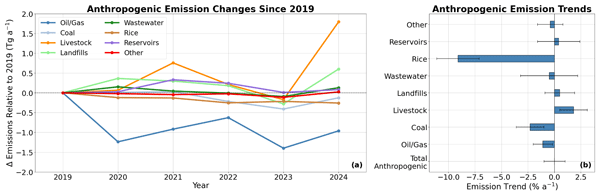
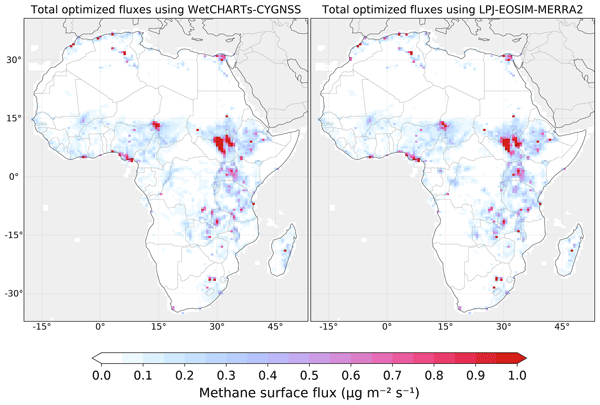
We use satellite observations of methane to determine the amount of methane coming from Africa and relate this to the physical processes responsible, with relevance for climate change given methane's potency as a greenhouse gas. We find that the amount of methane coming from Africa has increased by a third across 2019–2024, driven primarily by steady increases in emissions from livestock, in addition to irregular surges from wetlands.
Lucas A. Estrada, Daniel J. Varon, Melissa Sulprizio, Hannah Nesser, Zichong Chen, Nicholas Balasus, Sarah E. Hancock, Megan He, James D. East, Todd A. Mooring, Alexander Oort Alonso, Joannes D. Maasakkers, Ilse Aben, Sabour Baray, Kevin W. Bowman, John R. Worden, Felipe J. Cardoso-Saldaña, Emily Reidy, and Daniel J. Jacob
Geosci. Model Dev., 18, 3311–3330, https://doi.org/10.5194/gmd-18-3311-2025, https://doi.org/10.5194/gmd-18-3311-2025, 2025
Short summary
Short summary
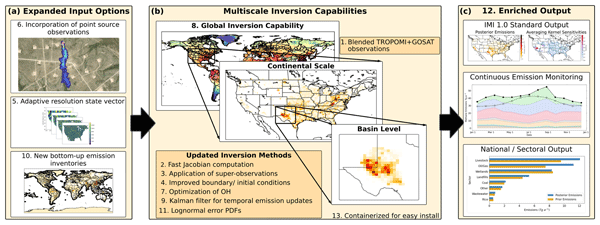
Reducing emissions of methane, a powerful greenhouse gas, is a top policy concern for mitigating anthropogenic climate change. The Integrated Methane Inversion (IMI) is an advanced, cloud-based software that translates satellite observations into actionable emissions data. Here we present IMI version 2.0 with vastly expanded capabilities. These updates enable a wider range of scientific and stakeholder applications from individual basin to global scales with continuous emissions monitoring.
Sarah E. Hancock, Daniel J. Jacob, Zichong Chen, Hannah Nesser, Aaron Davitt, Daniel J. Varon, Melissa P. Sulprizio, Nicholas Balasus, Lucas A. Estrada, María Cazorla, Laura Dawidowski, Sebastián Diez, James D. East, Elise Penn, Cynthia A. Randles, John Worden, Ilse Aben, Robert J. Parker, and Joannes D. Maasakkers
Atmos. Chem. Phys., 25, 797–817, https://doi.org/10.5194/acp-25-797-2025, https://doi.org/10.5194/acp-25-797-2025, 2025
Short summary
Short summary
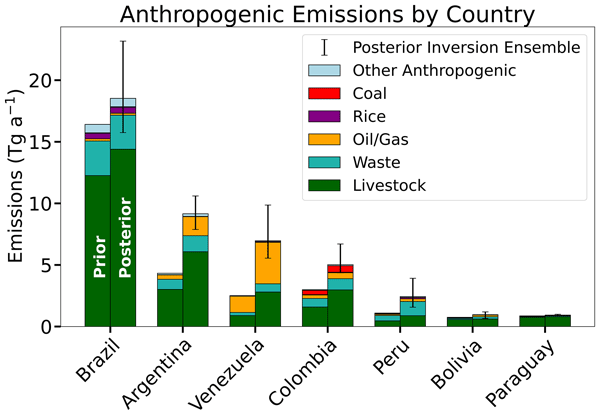
We quantify 2021 methane emissions in South America at up to 25 km × 25 km resolution using satellite methane observations. We find a 55 % upward adjustment to anthropogenic emission inventories, including those reported to the UN Framework Convention on Climate Change under the Paris Agreement. Our estimates match inventories for Brazil, Bolivia, and Paraguay but are much higher for other countries. Livestock emissions (65 % of anthropogenic emissions) show the largest discrepancies.
Yitong Yao, Vincent Humphrey, Alexandra G. Konings, Jeffrey D. Wood, Yujie Wang, Ke Liu, Dien Wu, and Christian Frankenberg
EGUsphere, https://doi.org/10.5194/egusphere-2026-4858, https://doi.org/10.5194/egusphere-2026-4858, 2026
This preprint is open for discussion and under review for Geoscientific Model Development (GMD).
Short summary
Short summary
This study presents the first information-content analysis of mono-band and dual-band VOD observations for jointly retrieving vegetation water content, canopy temperature, and vegetation structure using an electromagnetic model, Bayesian inversion, and observing system simulation experiments. Our findings establish a new framework for interpreting VOD dynamics and provide practical guidance for the design of future multi-frequency microwave missions and retrieval algorithms.
Jacob B. H. Bushey, Michael Bertolacci, Joshua Benmergui, Julian Kostinek, Maryann Sargent, Marvin Knapp, Ethan Kyzivat, Sasha Ayvazov, Marcus Russi, Zhan Zhang, Apisada Chulakadabba, Jia Chen, Christopher Chan Miller, Sébastien Roche, Lucas A. Estrada, James D. East, Luna Yin, James P. Williams, Anthony Himmelberger, Ritesh Gautam, Mark Omara, and Steven C. Wofsy
EGUsphere, https://doi.org/10.5194/egusphere-2026-4693, https://doi.org/10.5194/egusphere-2026-4693, 2026
This preprint is open for discussion and under review for Atmospheric Measurement Techniques (AMT).
Short summary
Short summary
MethaneSAT was a designed to measure the concentration of methane in the atmosphere over oil and gas producing regions. Our modeling framework uses observations from MethaneSAT to estimate emissions from the Permian Basin. We show that the model accurately captures spatial patterns in emissions and compares well to other models that rely on different atmospheric transport. This data set is valuable for emissions monitoring and mitigation at high spatial resolution and with high precision.
Lingze Meng, Ni Lu, Yixin Guo, Ziru Lan, Zhao-Cheng Zeng, Zichong Chen, Yuanhong Zhao, Zhuangmin Zhong, Tao Zhang, Duohong Chen, Xuejun Liu, Lin Zhang, and Junyu Zheng
EGUsphere, https://doi.org/10.5194/egusphere-2026-4773, https://doi.org/10.5194/egusphere-2026-4773, 2026
This preprint is open for discussion and under review for Atmospheric Chemistry and Physics (ACP).
Short summary
Short summary
Ammonia contributes to formation of health-damaging PM2.5 air pollution, but its emission estimations involve substantial uncertainties. Combining ground and satellite observations, a local inventory, and atmospheric modeling, we improved ammonia emissions in Guangdong, China. We found that current inventories overestimated agricultural emissions but underestimated non-agricultural emissions, especially in urban areas during the cool season, informing effective PM2.5 mitigation policy design.
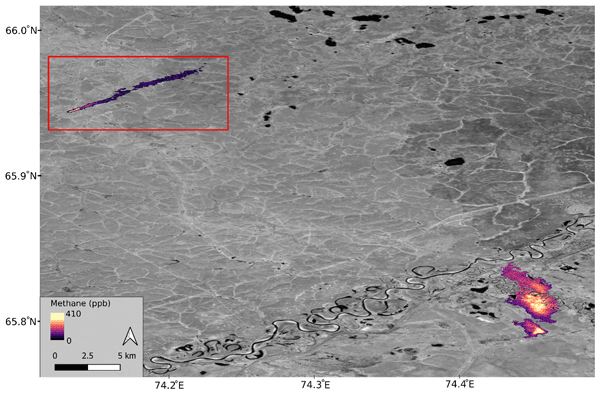
Anthony Campbell, Lauren Potyk, and Benjamin Poulter
Atmos. Meas. Tech., 19, 5603–5615, https://doi.org/10.5194/amt-19-5603-2026, https://doi.org/10.5194/amt-19-5603-2026, 2026
Short summary
Short summary
CH4 observations from space are an essential component for improving our estimates of CH4 emissions from fossil fuels and natural sources. We utilized GHGSat, a CH4 plume mapping satellite constellation, to update the fossil fuel emission inventory in the Western Siberian Lowlands to understand how including plume observations in models changes emissions estimates. Our approach resulted in a reduction in CH4 emissions attributed to wetlands.
Robert J. Parker, Michael P. Cartwright, Dan Orr, Lakshmi N. Bharathan, Neil Humpage, Alex J. Webb, Peter Somkuti, Hartmut Boesch, Antonio Di Noia, Hiroshi Suto, Matthias Buschmann, Nicholas M. Deutscher, David W. T. Griffith, Frank Hase, Rigel Kivi, Erin McGee, Isamu Morino, Hirofumi Ohyama, Christof Petri, John Robinson, Coleen M. Roehl, Mahesh Kumar Sha, Kei Shiomi, Kimberly Strong, Ralf Sussmann, Yao Té, Voltaire A. Velazco, Mihalis Vrekoussis, Wei Wang, Thorsten Warneke, Damien Weidmann, Debra Wunch, and Minqiang Zhou
Earth Syst. Sci. Data Discuss., https://doi.org/10.5194/essd-2026-625, https://doi.org/10.5194/essd-2026-625, 2026
Preprint under review for ESSD
Short summary
Short summary
Methane is a powerful greenhouse gas and its concentration in the atmosphere is rising rapidly. We present a new record of atmospheric methane measured from space by the Japanese GOSAT-2 satellite, covering 2019 to 2025. The measurements are processed identically to those from its predecessor GOSAT and checked against ground-based instruments around the world. Together the two satellites provide a continuous 17-year record that helps track where methane comes from and how quickly it is changing.
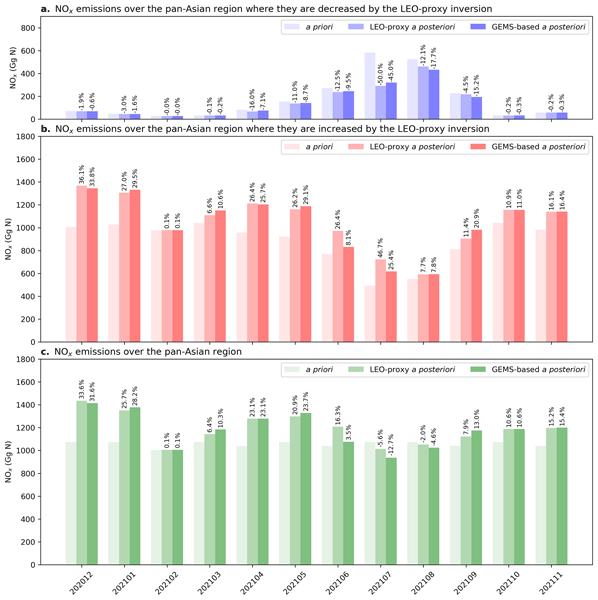
Fei Yao, Paul I. Palmer, Xiaolin Wang, Yi Wang, Gitaek T. Lee, Haolin Wang, Liang Feng, Daven K. Henze, and Rokjin J. Park
Atmos. Chem. Phys., 26, 12049–12066, https://doi.org/10.5194/acp-26-12049-2026, https://doi.org/10.5194/acp-26-12049-2026, 2026
Short summary
Short summary
The Geostationary Environment Monitoring Spectrometer (GEMS) provides hourly measurements of tropospheric NO2 during sunlight hours. We assess the added value of GEMS geostationary satellite observations of tropospheric NO2 to constrain monthly NOx emissions and subsequent air quality modelling over a full annual cycle across Asia. We observe a clear seasonal divide, with significant benefits outside summer while limited or even detrimental impacts during summer.
Matthew L. Loman, Lee T. Murray, Peter D. Ivatt, Róisín Commane, Andrew Hallward-Driemeier, Raghav Dhall, Eric M. Leibensperger, Nicholas Balasus, Lucas Estrada, Melissa P. Sulprizio, Maryann R. Sargent, and Felix Vogel
EGUsphere, https://doi.org/10.5194/egusphere-2026-3153, https://doi.org/10.5194/egusphere-2026-3153, 2026
Short summary
Short summary
We evaluate methane emissions and their trends in New York State based on observations of methane from 29 sites, including four new long-term sites. These observations are most sensitive to emissions in southeastern New York State, including New York City. We find regional trends and biases in some locations, including underestimated emissions in the New York City area. Our results also demonstrate that policy-relevant validation of methane emissions needs a combination of observation platforms.

Yitong Yao, Yujie Wang, Yi Yin, Jeffrey D. Wood, and Christian Frankenberg
Biogeosciences, 23, 5461–5475, https://doi.org/10.5194/bg-23-5461-2026, https://doi.org/10.5194/bg-23-5461-2026, 2026
Short summary
Short summary
Droughts can leave lasting "scars" that slow down recovery long after the rain returns. In this study, we found that models assuming plants recover immediately after drought performed poorly, while those allowing only partial recovery matched real observations much better. Accounting for these delayed recovery processes will make land surface models more accurate in predicting carbon and water cycles under future droughts.
Lucas A. Estrada, Daniel J. Jacob, Megan He, James D. East, Daniel J. Varon, Nicholas Balasus, Sarah E. Hancock, Melissa Sulprizio, Kevin W. Bowman, John R. Worden, Emily Reidy, and Benjamin R. K. Runkle
Atmos. Chem. Phys., 26, 10629–10646, https://doi.org/10.5194/acp-26-10629-2026, https://doi.org/10.5194/acp-26-10629-2026, 2026
Short summary
Short summary
We use satellite observations to track US methane emissions from 2019–2024 at national, state, and oil and gas field scales. While total emissions remain stable, oil and gas emissions decline even as production rises, indicating progress in emissions management for the oil and gas sector.
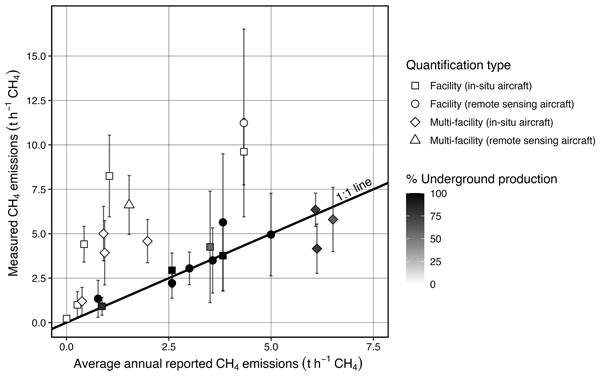
Stephen J. Harris, Sven Krautwurst, Jorg Hacker, Mark Lunt, Jakob Borchardt, Mei Bai, Hartmut Boesch, Tarra Brain, John Philip Burrows, Shakti Chakravarty, Robert A. Field, Rebecca E. Fisher, James L. France, Konstantin Gerilowski, Oke Huhs, Wolfgang Junkermann, Bryce F. J. Kelly, Martin Kumm, Mathias Lanoisellé, Wolfgang Lieff, Andrew McGrath, Adrian Murphy, Thomas Röckmann, Zoe Salmon, Josua Schindewolf, Jakob Thoböll, Carina van der Veen, and Heinrich Bovensmann
Atmos. Chem. Phys., 26, 10043–10069, https://doi.org/10.5194/acp-26-10043-2026, https://doi.org/10.5194/acp-26-10043-2026, 2026
Short summary
Short summary
The accuracy of methods used to estimate and report fugitive methane emissions from Australian coal mines remains unclear. This study compares airborne emission rate estimates with reported estimates from 17 coal mines in the Bowen Basin, a region accounting for 45 % of national coal production. Results show good agreement for underground coal mines, but poor agreement for surface coal mines, suggesting improvements to surface coal mine reporting methods is needed to improve inventory reporting.
Audrey McManemin, Catherine Juéry, Vincent Blandin, Matthew Baker, Stéphane Bauguitte, Dominik Brunner, Philippine Burdeau, James Lawrence France, Anders M. Fredenslund, Andreas Hueni, Gerrit Kuhlmann, Patryk Łakomiec, Sando Meier, Roberto Paglini, Roubina Papaconstantinou, Jean-Daniel Paris, Pierre-Yves Quehe, Thomas Röckmann, Charlotte Scheutz, Martina Schmidt, Marius Vögtli, Julia B. Wietzel, and Adam R. Brandt
EGUsphere, https://doi.org/10.5194/egusphere-2026-1744, https://doi.org/10.5194/egusphere-2026-1744, 2026
Short summary
Short summary
Researchers tested five university-led systems to measure methane leaks at a facility in France. By releasing known amounts of gas, researchers checked if mobile tools on vehicles and planes could accurately detect and quantify emissions. Most sensors were excellent at finding leaks, but their accuracy in measuring the exact emission rate varied. Weather, especially low wind, significantly impacted results. These findings help improve how we track greenhouse gases to meet climate goals.
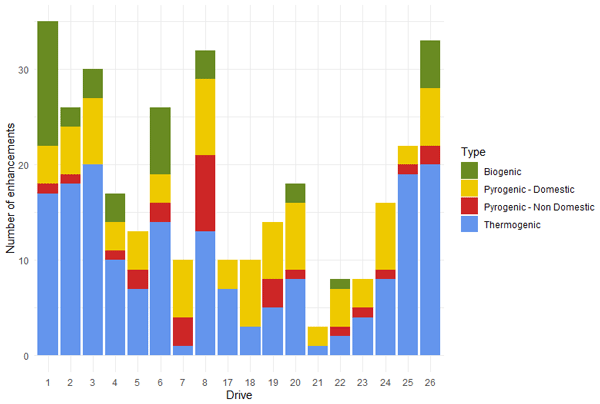
Thomas C. Moore, James R. Hopkins, Will S. Drysdale, Stuart Young, Sri Hapsari Budisulistiorini, Marvin D. Shaw, Mackenzie LeVernois, James L. France, David Lowry, and James D. Lee
Atmos. Meas. Tech., 19, 4459–4475, https://doi.org/10.5194/amt-19-4459-2026, https://doi.org/10.5194/amt-19-4459-2026, 2026
Short summary
Short summary
The Global Methane Pledge has led to increased effort to reduce methane emissions globally. One sector under increased scrutiny is the oil and gas industry, a major source of methane in this industry is from fugitive emissions (gas leaks). Locating these from pipework in cities requires mobile measurements. This work adapts previous methodologies to detect smaller leaks and suggests previous methods may detect 53.5 % less gas leaks.
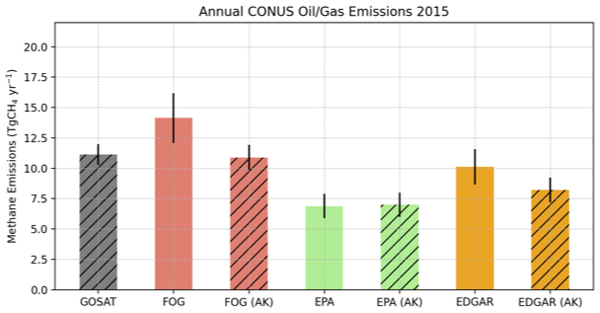
John Worden, Sudhanshu Pandey, Hannah Nesser, Kevin Bowman, Colin Harkins, Congmeng Lyu, Joannes D. Maasakkers, Deborah Gordon, Daniel Jacob, Lucas Estrada, Daniel J. Varon, James D. East, Lauren Schmeisser, and Zhen Qu
Atmos. Chem. Phys., 26, 8855–8873, https://doi.org/10.5194/acp-26-8855-2026, https://doi.org/10.5194/acp-26-8855-2026, 2026
Short summary
Short summary
To support methane reduction, we compared three widely used maps of methane emissions in the United States with estimates derived from a methane-measuring satellite from 2012 to 2020. The satellite indicates higher emissions from oil and gas production and from livestock in several regions, while other sources were harder to pin down. Neither approach shows a clear change over time. The results point to where better measurements can most improve emissions reporting and guide mitigation.
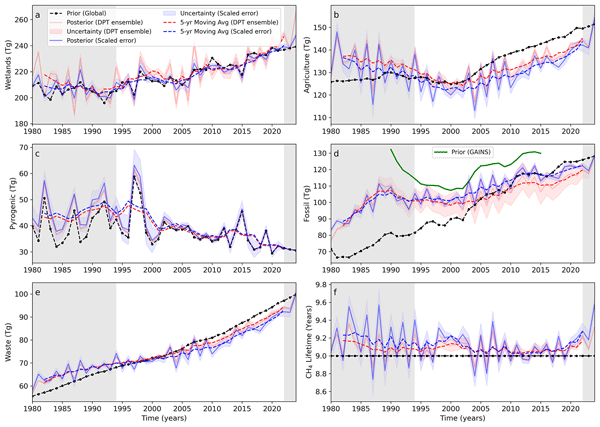
Bibhasvata Dasgupta, Sudhanshu Pandey, Sander Houweling, Malika Menoud, Carina van der Veen, John Miller, Ben Riddell-Young, Sylvia Englund Michel, Peter Sperlich, Shinji Morimoto, Ryo Fujita, Stephen Platt, Christine Groot Zwaaftink, Ingeborg Levin, Cordelia Veidt, Cathrine Lund Myhre, Ceres Woolley Maisch, Rebecca Fisher, Euan G. Nisbet, James France, Rowena Moss, Nicola Warwick, and Thomas Röckmann
Atmos. Chem. Phys., 26, 8601–8616, https://doi.org/10.5194/acp-26-8601-2026, https://doi.org/10.5194/acp-26-8601-2026, 2026
Short summary
Short summary
Methane is a strong greenhouse gas, and its rise since the mid-2000s is debated in terms of sources and sinks. Using top-down and bottom-up data, along with inversion models and methane isotopes (δ13C-CH4 and δD-CH4), we find that wetlands are the primary driver of post-2006 increases, followed by agriculture and fossil fuels. Methane's lifetime has decreased by about 0.1 years. We also assess how isotope signatures and sink processes influence uncertainties.
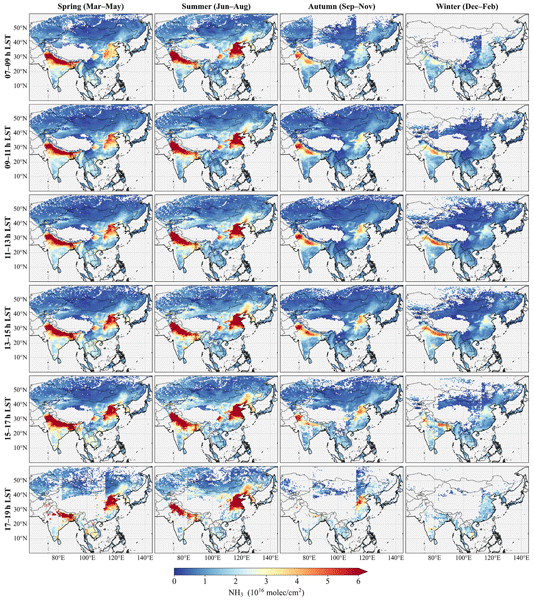
Mengya Sheng, Runyi Zhou, Jiancong Hua, Shan Han, Shangyi Liu, Lin Zhang, Wei Wang, Ruijun Dang, Hansen Cao, Zichong Chen, Yixuan Gu, Mingxu Liu, Lu Lee, Chengli Qi, Feng Lu, Changpei Han, Mark W. Shephard, Nadir Guendouz, Camille Viatte, Lieven Clarisse, Martin Van Damme, Cathy Clerbaux, and Zhao-Cheng Zeng
Atmos. Chem. Phys., 26, 7803–7826, https://doi.org/10.5194/acp-26-7803-2026, https://doi.org/10.5194/acp-26-7803-2026, 2026
Short summary
Short summary
Geostationary observations of NH3 provide an unprecedented opportunity to monitor spatial and temporal variations in emissions and their evolution throughout the day. Using 3 years of observations from FY-4B/GIIRS over East Asia, we demonstrated the enhanced capability of geostationary observations to identify emission sources and capture daytime variations associated with agricultural activities. This shows the potential of future geostationary satellites for monitoring air quality globally.
Liang Feng, Paul I. Palmer, Haolin Wang, Robert Parker, Hartmut Boesch, Sébastien C. Biraud, Łukasz Chmura, Emanuel Gloor, László Haszpra, Elena Kozlova, Euan G. Nisbet, Steffen M. Noe, Thomas Röckmann, Rodrigo Augusto Ferreira de Souza, and Martin Steinbacher
EGUsphere, https://doi.org/10.5194/egusphere-2026-2662, https://doi.org/10.5194/egusphere-2026-2662, 2026
Short summary
Short summary
This study examines the relative roles of emissions and oxidation in recent rapid methane growth. Using an ensemble Kalman filter, we quantify global methane sources and sinks for 2018–2024. Emission changes dominate the increase, except in 2020 when a COVID‑19‑related OH decline strongly affected sinks. Atmospheric photochemistry—including OH and CH₄ variability and temperature‑dependent oxidation—also significantly shapes the methane budget.
Thomas Plewa, André Butz, Christian Frankenberg, Andrew K. Thorpe, and Julia Marshall
EGUsphere, https://doi.org/10.5194/egusphere-2026-2572, https://doi.org/10.5194/egusphere-2026-2572, 2026
Short summary
Short summary
In this paper, we present an improved deep learning method to estimate emissions of methane plumes from 2-D imagery. We present a new neural network architecture that provides insight into the wind speed used for the emission estimation and apply it to synthetic data that were used in previous studies. Our analysis illustrates that the performance increases by around 40% compared to the previous version, and that external wind speed data can be used to verify and improve the model's predictions.
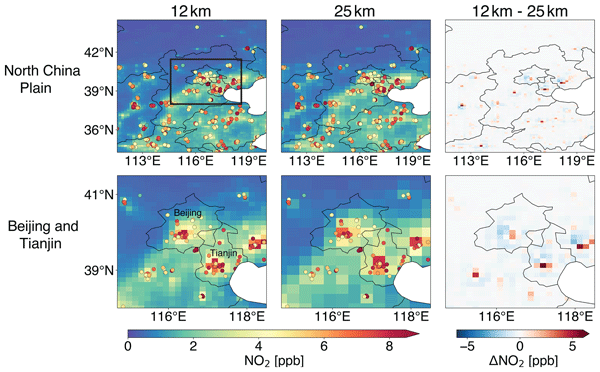
Xiaolin Wang, Melissa P. Sulprizio, Yuyao Zhuge, Randall V. Martin, and Daniel J. Jacob
Atmos. Chem. Phys., 26, 6857–6867, https://doi.org/10.5194/acp-26-6857-2026, https://doi.org/10.5194/acp-26-6857-2026, 2026
Short summary
Short summary
We implement a new 12-km global nested simulation capability in GEOS-Chem, an open-source global 3-D model of atmospheric chemistry. Compared with the standard 25-km simulation, the 12-km simulation features stronger vertical transport due to better resolved horizontal convergence, along with improved representation of urban NO2 and ozone titration. Application to methane emission inversion yields higher information content and resolves finer spatial structure in emission sectors.
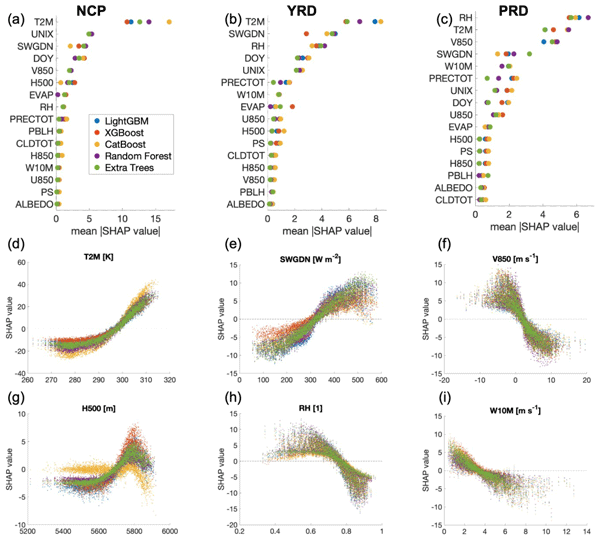
Xingpei Ye, Lin Zhang, Xiaolin Wang, Ni Lu, Sebastian Hickman, Guo Luo, and Alex T. Archibald
Atmos. Chem. Phys., 26, 6377–6390, https://doi.org/10.5194/acp-26-6377-2026, https://doi.org/10.5194/acp-26-6377-2026, 2026
Short summary
Short summary
This study investigates how meteorology influences long-term surface ozone trends and pollution events across three major regions in eastern China using an explainable machine learning framework. The results show physically interpretable yet model-dependent ozone-meteorology relationships, highlighting both the potential and the limitations of explainable machine learning for process understanding in atmospheric chemistry.
Nicholas Balasus, Daniel J. Jacob, A. Anthony Bloom, James D. East, Lucas A. Estrada, Sarah E. Hancock, Megan He, Todd A. Mooring, Alexander J. Turner, and John R. Worden
Atmos. Chem. Phys., 26, 4601–4617, https://doi.org/10.5194/acp-26-4601-2026, https://doi.org/10.5194/acp-26-4601-2026, 2026
Short summary
Short summary
We use satellite observations of methane to determine the amount of methane coming from Africa and relate this to the physical processes responsible, with relevance for climate change given methane's potency as a greenhouse gas. We find that the amount of methane coming from Africa has increased by a third across 2019–2024, driven primarily by steady increases in emissions from livestock, in addition to irregular surges from wetlands.
Yifan Li, Drew Pendergrass, Daniel Jacob, Yunxiao Tang, Jiaxin Qiu, and Bo Zheng
EGUsphere, https://doi.org/10.5194/egusphere-2025-6284, https://doi.org/10.5194/egusphere-2025-6284, 2026
Short summary
Short summary
We tracked China’s weekly methane emissions from 2019 to 2024 by constructing a satellite-based regional atmospheric inversion framework. Over the period, annual methane emissions in China rose from 61.1 to 66.8 million tonnes, with nearly half of the growth driven by livestock, alongside additional contributions from waste and oil and gas. Emissions growth shifted toward previously low-emitting northwest and northeast China, revealing new priorities for targeted methane mitigation.
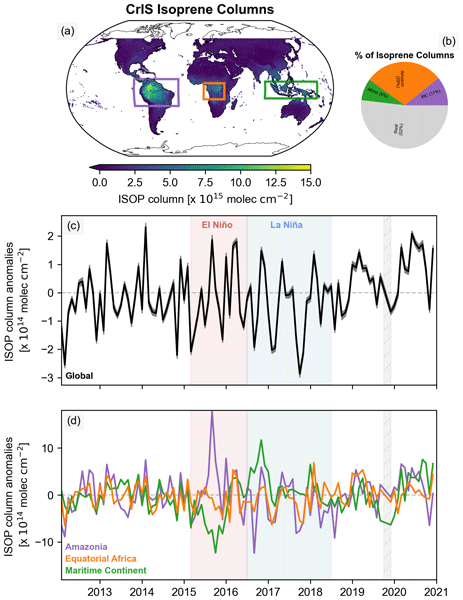
James Young Suk Yoon, Kelley C. Wells, Dylan B. Millet, Christian Frankenberg, Suniti Sanghavi, Abigail L. S. Swann, Joel A. Thornton, and Alexander J. Turner
Atmos. Chem. Phys., 26, 4509–4529, https://doi.org/10.5194/acp-26-4509-2026, https://doi.org/10.5194/acp-26-4509-2026, 2026
Short summary
Short summary
Isoprene is a molecule emitted by trees that is oxidized in the atmosphere within hours. Much of the isoprene globally is emitted in the remote tropics, where we have few direct observations of isoprene. Here, we use new satellite retrievals of isoprene to infer drivers of tropical isoprene variability. Across three regions, isoprene column variability is controlled by different factors, namely changes in isoprene emissions or changes in natural nitrogen oxide sources, like soils and fires.
Lakshmi N. Bharathan, Robert J. Parker, Michael Cartwright, Dan Orr, Antonio Di Noia, Peter Somkuti, Alex Webb, and Hartmut Bösch
EGUsphere, https://doi.org/10.5194/egusphere-2026-1029, https://doi.org/10.5194/egusphere-2026-1029, 2026
Short summary
Short summary
The study aims to enhance satellite- based methane measurements over the Arctic high-latitudes, a critical region where rapid warming feeds the permafrost thawing-methane cycle and poise high concern for global climate stability. A 20 % gain in GOSAT satellite methane data throughput has been achieved using a Genetic algorithm optimisation approach, enhancing our capacity to track methane emissions over most rapidly warming, climatically sensitive regions on the Earth.

Nadia K. Colombi, Daniel J. Jacob, Xingpei Ye, Robert M. Yantosca, Kelvin H. Bates, Drew C. Pendergrass, Laura Hyesung Yang, Ke Li, and Hong Liao
Atmos. Chem. Phys., 26, 2623–2633, https://doi.org/10.5194/acp-26-2623-2026, https://doi.org/10.5194/acp-26-2623-2026, 2026
Short summary
Short summary
Surface ozone pollution in East Asia is among the highest in the world and has risen steadily over the past two decades. Using aircraft observations and a global 3-D chemical transport model, we show that ozone in the lower atmosphere in East Asia has risen in part due to intensified transport from the upper atmosphere. This rising natural background limits the effectiveness of local pollution controls, with major implications for air quality policy.
Srijana Lama, Joannes D. Maasakkers, Xin Zhang, Marianne Girard, Swarna Dutt, Suyash Nandgaonkar, Daniel J. Varon, Melissa P. Sulprizio, Lucas A. Estrada, Nicholas Balasus, Robert J. Parker, Yukio Terao, and Ilse Aben
EGUsphere, https://doi.org/10.5194/egusphere-2025-6528, https://doi.org/10.5194/egusphere-2025-6528, 2026
Short summary
Short summary
Methane is the second most important anthropogenic greenhouse gas in terms of radiative forcing, with a global warming potential 27–30 times that of CO2 over a 100-year timescale. Effective mitigation requires a detailed understanding of the spatial distribution and magnitude of emissions. Here, we quantify India’s 2021 methane emissions at a resolution of up to 0.25° × 0.3125° using TROPOMI observations within the Bayesian Integrated Methane Inversion framework.
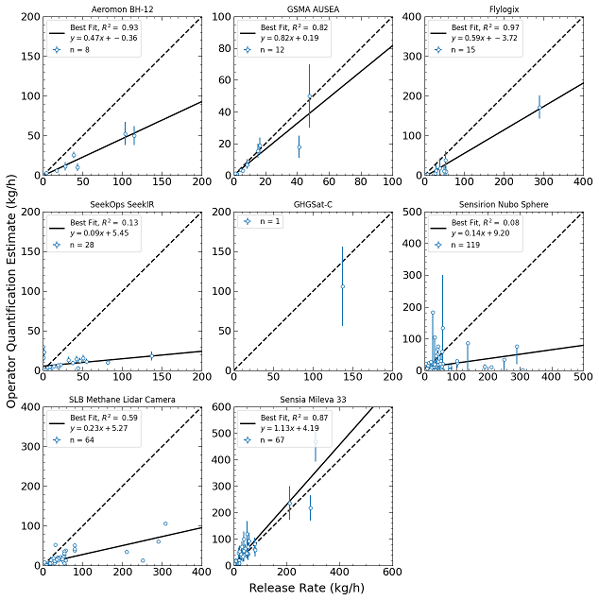
Audrey McManemin, Catherine Juéry, Vincent Blandin, James L. France, Philippine Burdeau, and Adam R. Brandt
Atmos. Meas. Tech., 19, 923–934, https://doi.org/10.5194/amt-19-923-2026, https://doi.org/10.5194/amt-19-923-2026, 2026
Short summary
Short summary
This experiment tested the ability of different technologies to detect and measure methane emissions. Participating teams used satellites, drones, and other systems to estimate methane leak rates without knowing the true rate. Some systems were more accurate than others, and wind and other environmental conditions made measurements harder. Our findings help improve these tools and support efforts to track and reduce methane emissions as new environmental rules take shape in Europe and beyond.
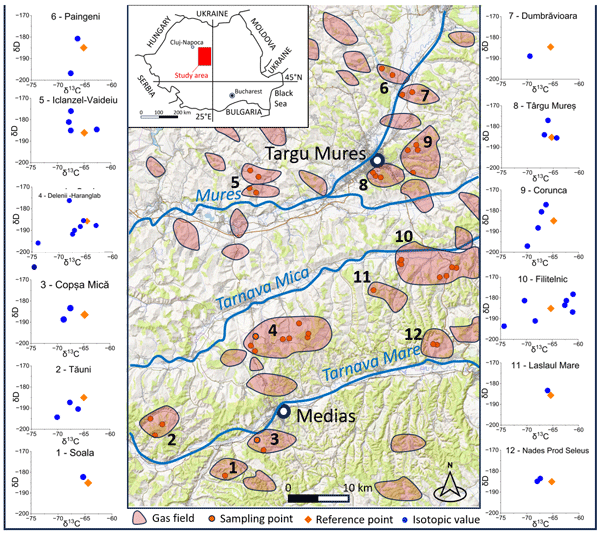
Thomas Röckmann, Malika Menoud, Jacoline van Es, Carina van der Veen, Hossein Maazallahi, Pawel Jagoda, Jaroslav M. Necki, Jakub Bartyzel, Piotr Korben, Sara Defratyka, Martina Schmidt, Marius Corbu, Sebastian Iancu, Andreea Calcan, Magdalena Ardelean, Sorin Ghemulet, Cristian Pop, Andrei Radovici, Alexandru Mereuta, Horatiu Stefanie, and Calin Baciu
Atmos. Chem. Phys., 26, 723–731, https://doi.org/10.5194/acp-26-723-2026, https://doi.org/10.5194/acp-26-723-2026, 2026
Short summary
Short summary
We report the isotopic composition of CH4 emitted from 48 installations in the gas production region of Transylvania, Romania which confirm the biogenic origin of the Transylvanian gas, produced by hydrogenotrophic CO2 reduction. This is similar to values reported previously from natural seeps and natural gas in a major city in the region. However, is more depleted in heavy isotopes than the oil-associated gas emitted in the Southern Romanian Plain, and gas leakages in the city of Bucharest.
Tia R. Scarpelli, Elfie Roy, Daniel J. Jacob, Melissa P. Sulprizio, Ryan D. Tate, and Daniel H. Cusworth
Earth Syst. Sci. Data, 17, 7019–7033, https://doi.org/10.5194/essd-17-7019-2025, https://doi.org/10.5194/essd-17-7019-2025, 2025
Short summary
Short summary
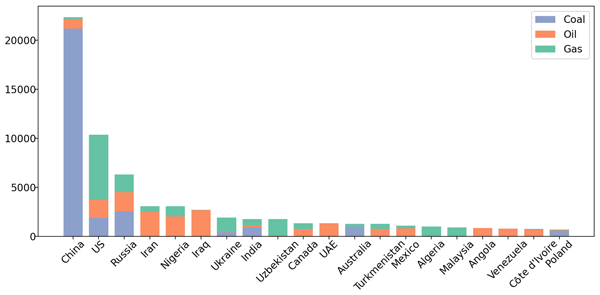
We present an update of the Global Fuel Exploitation Inventory (GFEI), a global inventory of methane emissions from oil, gas, and coal exploitation. GFEI v3 uses emissions as reported by countries in national inventories for 2020, and new infrastructure information, including a new dataset on coal mine locations. The goal of updating GFEI is to provide a more accurate spatial representation of the country-reported national inventories, allowing comparison with methane monitoring data.
Taku Umezawa, Yukio Terao, Masahito Ueyama, Satoshi Kameyama, Mark Lunt, and James Lawrence France
Atmos. Chem. Phys., 25, 18015–18029, https://doi.org/10.5194/acp-25-18015-2025, https://doi.org/10.5194/acp-25-18015-2025, 2025
Short summary
Short summary
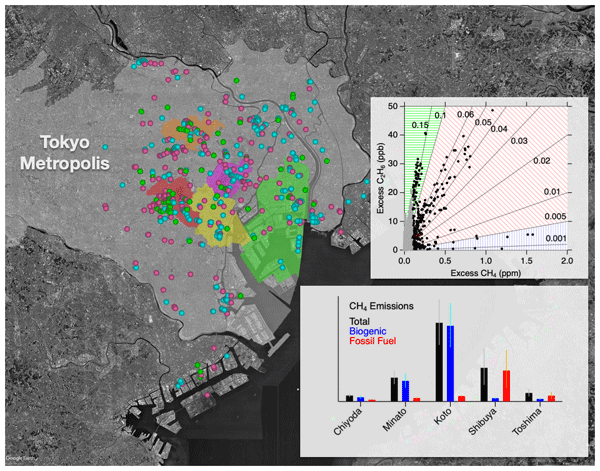
Effective mitigation actions require accurate understanding of methane emission characteristics in cities. We conducted atmospheric methane and ethane measurements using a vehicle in the world’s largest megacity, Tokyo, to identify locations and types of emissions and to examine preliminary estimates of their magnitudes. Waste sectors and fugitive natural gas emissions were found to be the major urban sources, and our data suggested need of improved accounting of natural gas related emissions.
Hannah Nesser, Kevin W. Bowman, Matthew D. Thill, Daniel J. Varon, Cynthia A. Randles, Ashutosh Tewari, Felipe J. Cardoso-Saldaña, Emily Reidy, Joannes D. Maasakkers, and Daniel J. Jacob
Geosci. Model Dev., 18, 9279–9291, https://doi.org/10.5194/gmd-18-9279-2025, https://doi.org/10.5194/gmd-18-9279-2025, 2025
Short summary
Short summary
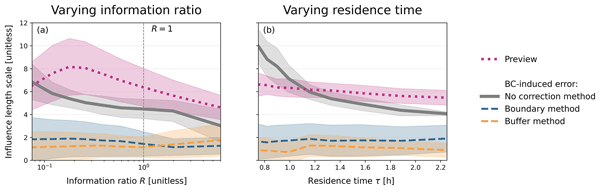
Regional analyses of atmospheric trace gases can improve knowledge of fluxes at high resolution but rely on specified boundary conditions (BCs) at the domain edges. Biases in the often-uncertain BCs propagate to the inferred fluxes. We develop a framework to explain how errors in the BCs influence the optimized fluxes, derive two metrics to estimate this influence, and compare two methods to correct for the biases. We demonstrate correcting BCs directly is more effective at reducing bias.
Bibhasvata Dasgupta, Malika Menoud, Carina van der Veen, Ingeborg Levin, Cordelia Veidt, Heiko Moossen, Sylvia Englund Michel, Peter Sperlich, Shinji Morimoto, Ryo Fujita, Taku Umezawa, Stephen Platt, Christine Groot Zwaaftink, Cathrine Lund Myhre, Rebecca Fisher, David Lowry, Euan G. Nisbet, James France, Ceres Woolley Maisch, Gordon Brailsford, Rowena Moss, Daisuke Goto, Sudhanshu Pandey, Sander Houweling, Nicola Warwick, and Thomas Röckmann
Atmos. Meas. Tech., 18, 6591–6607, https://doi.org/10.5194/amt-18-6591-2025, https://doi.org/10.5194/amt-18-6591-2025, 2025
Short summary
Short summary
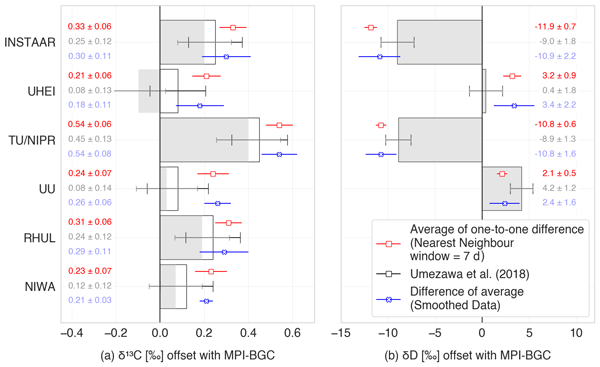
We combined long-term methane mole fraction and isotope measurements from eight laboratories that sample high-latitude stations to compare, offset correct and harmonise the datasets into a hemisphere merged timeseries. Because each laboratory uses slightly different methods, we adjusted the data to make it directly comparable. This allowed us to create a consistent record of atmospheric methane concentration and its isotopes from 1988 to 2023.
Jack H. Bruno, Daniel J. Jacob, Xiaolin Wang, Melissa P. Sulprizio, Lucas A. Estrada, Daniel J. Varon, Steven C. Wofsy, Mark Omara, and Ritesh Gautam
EGUsphere, https://doi.org/10.5194/egusphere-2025-4626, https://doi.org/10.5194/egusphere-2025-4626, 2025
Preprint archived
Short summary
Short summary
We use data from both aircraft (MethaneAIR) and satellite (TROPOMI) based measurements of methane in the atmosphere to better understand methane emissions from fossil fuel extraction. Data from these instruments are combined with a computer model of the atmosphere to improve estimates of methane emissions. We find that combining data from multiple sources provides more information than either source on its own. The tools and data we use are freely available.
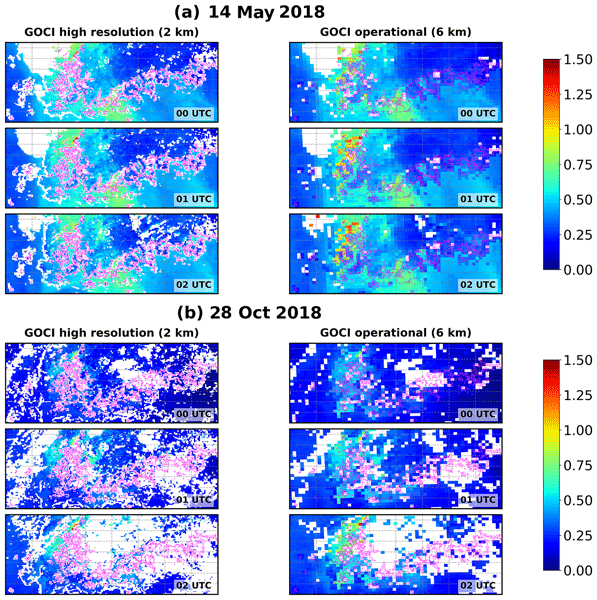
Jeewoo Lee, Jhoon Kim, Seoyoung Lee, Myungje Choi, Jaehwa Lee, Daniel J. Jacob, Su Keun Kuk, and Young-Je Park
Earth Syst. Sci. Data, 17, 5761–5782, https://doi.org/10.5194/essd-17-5761-2025, https://doi.org/10.5194/essd-17-5761-2025, 2025
Short summary
Short summary
Atmospheric aerosols adversely affect human health, with East Asia recognized as one of the most impacted regions. This study presents a long-term (2011–2021), high spatiotemporal resolution aerosol optical depth dataset retrieved from a geostationary satellite over East Asia. The high-resolution data capture subtle aerosol gradients and land-ocean boundaries, providing valuable input for various fields such as aerosol-cloud interaction, climate change, ocean optics, and air quality studies.
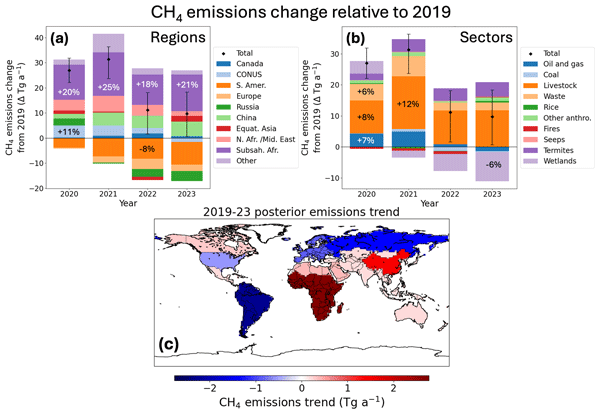
Drew C. Pendergrass, Daniel J. Jacob, Nicholas Balasus, Lucas Estrada, Daniel J. Varon, James D. East, Megan He, Todd A. Mooring, Elise Penn, Hannah Nesser, and John R. Worden
Atmos. Chem. Phys., 25, 14353–14369, https://doi.org/10.5194/acp-25-14353-2025, https://doi.org/10.5194/acp-25-14353-2025, 2025
Short summary
Short summary
We use satellite observations of atmospheric methane, a greenhouse gas, to calculate emissions from both human and natural sources. We find that methane emissions surged in 2020–2021 before declining in 2022–2023. We attribute the surge in large part to emissions from eastern Africa, which experienced large methane-generating floods. Wetland models underestimate emissions in that region, which has led some previous work to incorrectly attribute the African surge in methane emissions to livestock.
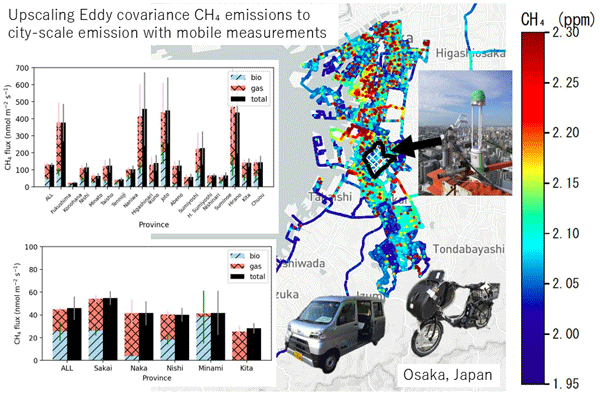
Masahito Ueyama, Taku Umezawa, Yukio Terao, Mark Lunt, and James Lawrence France
Atmos. Chem. Phys., 25, 12513–12534, https://doi.org/10.5194/acp-25-12513-2025, https://doi.org/10.5194/acp-25-12513-2025, 2025
Short summary
Short summary
Methane (CH4) emissions were measured in the megacity of Osaka, Japan, using mobile and eddy covariance methods. The CH4 emissions were much higher than those reported in local inventories, with natural gas contributing up to 74 % of the emissions. Several CH4 sources not accounted for in current inventories were identified. These results emphasize the need for more comprehensive emissions tracking in urban areas to enhance climate change mitigation efforts.
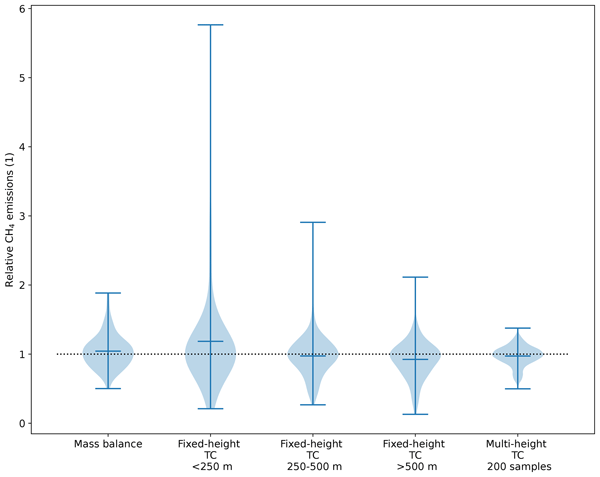
Mark F. Lunt, Stephen J. Harris, Jorg Hacker, Ian Joynes, Tim Robertson, Simon Thompson, and James L. France
Atmos. Meas. Tech., 18, 4413–4431, https://doi.org/10.5194/amt-18-4413-2025, https://doi.org/10.5194/amt-18-4413-2025, 2025
Short summary
Short summary
To ensure robust use of measurement-based approaches to estimate methane emissions from individual sites, it is important to validate the accuracy of the methods used in the field. By using co-emitted carbon dioxide, we evaluate the performance of one such quantification method at liquefied natural gas terminals. We further demonstrate the potential for a more efficient quantification approach via tracer correlation by considering the ratio of methane to carbon dioxide concentrations.
Judith Tettenborn, Daniel Zavala-Araiza, Daan Stroeken, Hossein Maazallahi, Carina van der Veen, Arjan Hensen, Ilona Velzeboer, Pim van den Bulk, Felix Vogel, Lawson Gillespie, Sebastien Ars, James France, David Lowry, Rebecca Fisher, and Thomas Röckmann
Atmos. Meas. Tech., 18, 3569–3584, https://doi.org/10.5194/amt-18-3569-2025, https://doi.org/10.5194/amt-18-3569-2025, 2025
Short summary
Short summary
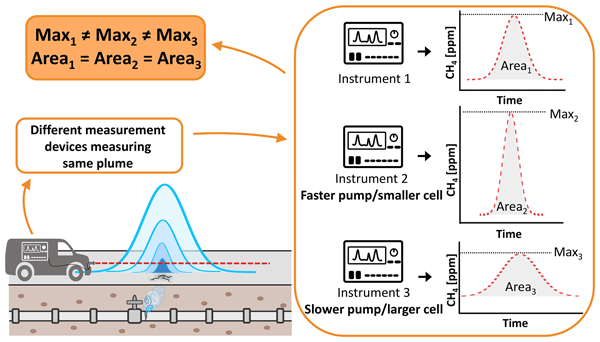
Measurements of methane with vehicle-based sensors are an effective method to identify and quantify leaks from urban gas distribution systems. We deliberately released methane in different environments and calibrated the response of different methane analysers when they transected the plumes in a vehicle. We derived an improved statistical function for consistent emission estimations using different instruments. Repeated transects reduce the uncertainty in emission rate estimates.
Lucas A. Estrada, Daniel J. Varon, Melissa Sulprizio, Hannah Nesser, Zichong Chen, Nicholas Balasus, Sarah E. Hancock, Megan He, James D. East, Todd A. Mooring, Alexander Oort Alonso, Joannes D. Maasakkers, Ilse Aben, Sabour Baray, Kevin W. Bowman, John R. Worden, Felipe J. Cardoso-Saldaña, Emily Reidy, and Daniel J. Jacob
Geosci. Model Dev., 18, 3311–3330, https://doi.org/10.5194/gmd-18-3311-2025, https://doi.org/10.5194/gmd-18-3311-2025, 2025
Short summary
Short summary
Reducing emissions of methane, a powerful greenhouse gas, is a top policy concern for mitigating anthropogenic climate change. The Integrated Methane Inversion (IMI) is an advanced, cloud-based software that translates satellite observations into actionable emissions data. Here we present IMI version 2.0 with vastly expanded capabilities. These updates enable a wider range of scientific and stakeholder applications from individual basin to global scales with continuous emissions monitoring.
Gerrit Kuhlmann, Foteini Stavropoulou, Stefan Schwietzke, Daniel Zavala-Araiza, Andrew Thorpe, Andreas Hueni, Lukas Emmenegger, Andreea Calcan, Thomas Röckmann, and Dominik Brunner
Atmos. Chem. Phys., 25, 5371–5385, https://doi.org/10.5194/acp-25-5371-2025, https://doi.org/10.5194/acp-25-5371-2025, 2025
Short summary
Short summary
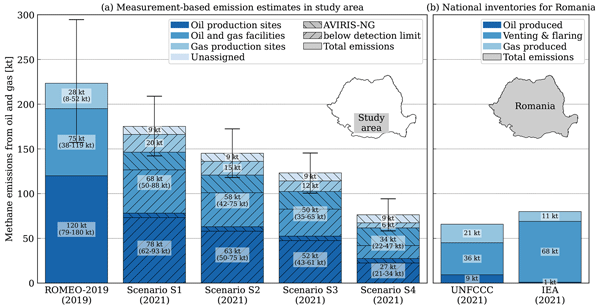
A measurement campaign in 2019 found that methane emissions from oil and gas in Romania were significantly higher than reported. In 2021, our follow-up campaign using airborne remote sensing showed a marked decreases in emissions by 20 %–60 % due to improved infrastructure. The study highlights the importance of measurement-based emission monitoring and illustrates the value of a multi-scale assessment integrating ground-based observations with large-scale airborne remote sensing campaigns.
Marielle Saunois, Adrien Martinez, Benjamin Poulter, Zhen Zhang, Peter A. Raymond, Pierre Regnier, Josep G. Canadell, Robert B. Jackson, Prabir K. Patra, Philippe Bousquet, Philippe Ciais, Edward J. Dlugokencky, Xin Lan, George H. Allen, David Bastviken, David J. Beerling, Dmitry A. Belikov, Donald R. Blake, Simona Castaldi, Monica Crippa, Bridget R. Deemer, Fraser Dennison, Giuseppe Etiope, Nicola Gedney, Lena Höglund-Isaksson, Meredith A. Holgerson, Peter O. Hopcroft, Gustaf Hugelius, Akihiko Ito, Atul K. Jain, Rajesh Janardanan, Matthew S. Johnson, Thomas Kleinen, Paul B. Krummel, Ronny Lauerwald, Tingting Li, Xiangyu Liu, Kyle C. McDonald, Joe R. Melton, Jens Mühle, Jurek Müller, Fabiola Murguia-Flores, Yosuke Niwa, Sergio Noce, Shufen Pan, Robert J. Parker, Changhui Peng, Michel Ramonet, William J. Riley, Gerard Rocher-Ros, Judith A. Rosentreter, Motoki Sasakawa, Arjo Segers, Steven J. Smith, Emily H. Stanley, Joël Thanwerdas, Hanqin Tian, Aki Tsuruta, Francesco N. Tubiello, Thomas S. Weber, Guido R. van der Werf, Douglas E. J. Worthy, Yi Xi, Yukio Yoshida, Wenxin Zhang, Bo Zheng, Qing Zhu, Qiuan Zhu, and Qianlai Zhuang
Earth Syst. Sci. Data, 17, 1873–1958, https://doi.org/10.5194/essd-17-1873-2025, https://doi.org/10.5194/essd-17-1873-2025, 2025
Short summary
Short summary
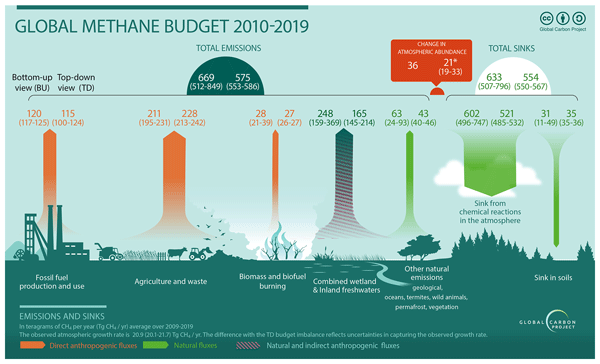
Methane (CH4) is the second most important human-influenced greenhouse gas in terms of climate forcing after carbon dioxide (CO2). A consortium of multi-disciplinary scientists synthesise and update the budget of the sources and sinks of CH4. This edition benefits from important progress in estimating emissions from lakes and ponds, reservoirs, and streams and rivers. For the 2010s decade, global CH4 emissions are estimated at 575 Tg CH4 yr-1, including ~65 % from anthropogenic sources.
Shutao Zhao, Yuzhong Zhang, Shuang Zhao, Xinlu Wang, and Daniel J. Varon
Atmos. Chem. Phys., 25, 4035–4052, https://doi.org/10.5194/acp-25-4035-2025, https://doi.org/10.5194/acp-25-4035-2025, 2025
Short summary
Short summary
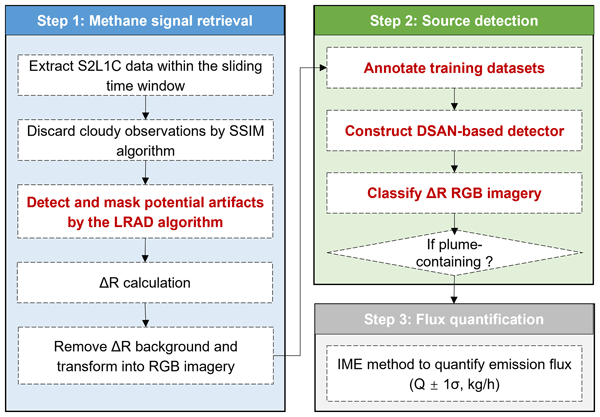
We target the challenge of detecting methane super-emitters in oil and gas fields, which is critical for mitigating climate change. Traditional satellite-based detectors struggle due to interference from complex surfaces. We developed a novel method using deep transfer learning that improves detection efficiency and accuracy by reducing artifacts and adapting methane knowledge to different regions. Application revealed significant methane emissions, demonstrating the potential of our method.
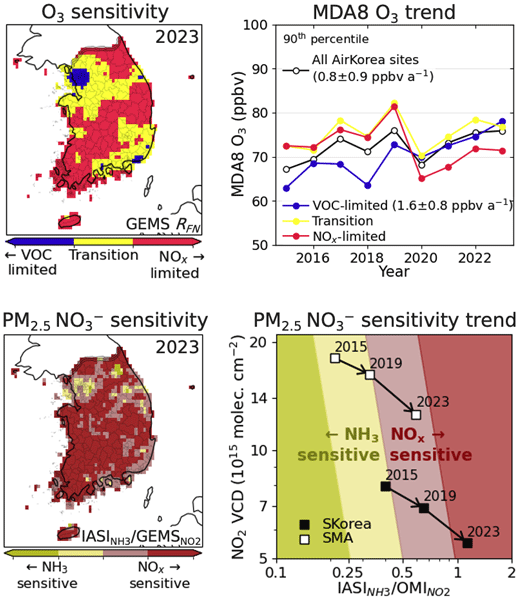
Yujin J. Oak, Daniel J. Jacob, Drew C. Pendergrass, Ruijun Dang, Nadia K. Colombi, Heesung Chong, Seoyoung Lee, Su Keun Kuk, and Jhoon Kim
Atmos. Chem. Phys., 25, 3233–3252, https://doi.org/10.5194/acp-25-3233-2025, https://doi.org/10.5194/acp-25-3233-2025, 2025
Short summary
Short summary
We analyze 2015–2023 air quality trends in South Korea using surface and satellite observations. Primary pollutants have decreased, consistent with emissions reductions. Surface O3 continues to increase and PM2.5 has decreased overall, but the nitrate component has not. O3 and PM2.5 nitrate depend on nonlinear responses from precursor emissions. Satellite data indicate a recent shift to NOx-sensitive O3 and nitrate formation, where further NOx reductions will benefit both O3 and PM2.5 pollution.
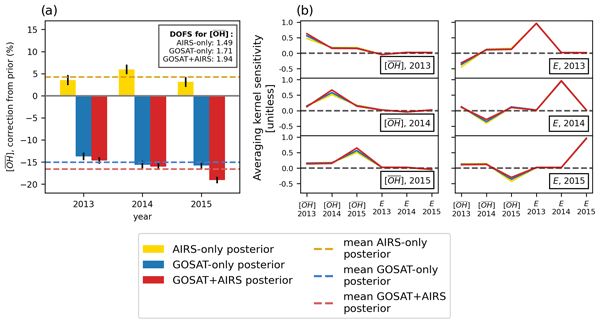
Elise Penn, Daniel J. Jacob, Zichong Chen, James D. East, Melissa P. Sulprizio, Lori Bruhwiler, Joannes D. Maasakkers, Hannah Nesser, Zhen Qu, Yuzhong Zhang, and John Worden
Atmos. Chem. Phys., 25, 2947–2965, https://doi.org/10.5194/acp-25-2947-2025, https://doi.org/10.5194/acp-25-2947-2025, 2025
Short summary
Short summary
The hydroxyl radical (OH) destroys many air pollutants, including methane. Global-mean OH cannot be directly measured, and thus it is inferred with the methyl chloroform (MCF) proxy. MCF is decreasing, and a replacement is needed. We use satellite observations of methane in two spectral ranges as a proxy for OH. We find shortwave infrared observations can characterize yearly OH and its seasonality but not the latitudinal distribution. Thermal infrared observations add little information.
Sarah E. Hancock, Daniel J. Jacob, Zichong Chen, Hannah Nesser, Aaron Davitt, Daniel J. Varon, Melissa P. Sulprizio, Nicholas Balasus, Lucas A. Estrada, María Cazorla, Laura Dawidowski, Sebastián Diez, James D. East, Elise Penn, Cynthia A. Randles, John Worden, Ilse Aben, Robert J. Parker, and Joannes D. Maasakkers
Atmos. Chem. Phys., 25, 797–817, https://doi.org/10.5194/acp-25-797-2025, https://doi.org/10.5194/acp-25-797-2025, 2025
Short summary
Short summary
We quantify 2021 methane emissions in South America at up to 25 km × 25 km resolution using satellite methane observations. We find a 55 % upward adjustment to anthropogenic emission inventories, including those reported to the UN Framework Convention on Climate Change under the Paris Agreement. Our estimates match inventories for Brazil, Bolivia, and Paraguay but are much higher for other countries. Livestock emissions (65 % of anthropogenic emissions) show the largest discrepancies.
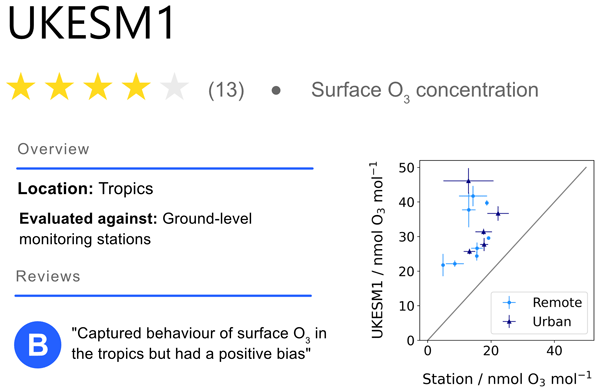
Flossie Brown, Gerd Folberth, Stephen Sitch, Paulo Artaxo, Marijn Bauters, Pascal Boeckx, Alexander W. Cheesman, Matteo Detto, Ninong Komala, Luciana Rizzo, Nestor Rojas, Ines dos Santos Vieira, Steven Turnock, Hans Verbeeck, and Alfonso Zambrano
Atmos. Chem. Phys., 24, 12537–12555, https://doi.org/10.5194/acp-24-12537-2024, https://doi.org/10.5194/acp-24-12537-2024, 2024
Short summary
Short summary
Ozone is a pollutant that is detrimental to human and plant health. Ozone monitoring sites in the tropics are limited, so models are often used to understand ozone exposure. We use measurements from the tropics to evaluate ozone from the UK Earth system model, UKESM1. UKESM1 is able to capture the pattern of ozone in the tropics, except in southeast Asia, although it systematically overestimates it at all sites. This work highlights that UKESM1 can capture seasonal and hourly variability.
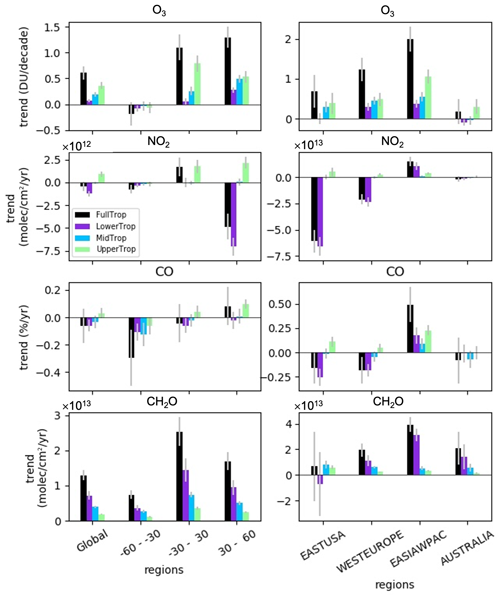
Yasin Elshorbany, Jerald R. Ziemke, Sarah Strode, Hervé Petetin, Kazuyuki Miyazaki, Isabelle De Smedt, Kenneth Pickering, Rodrigo J. Seguel, Helen Worden, Tamara Emmerichs, Domenico Taraborrelli, Maria Cazorla, Suvarna Fadnavis, Rebecca R. Buchholz, Benjamin Gaubert, Néstor Y. Rojas, Thiago Nogueira, Thérèse Salameh, and Min Huang
Atmos. Chem. Phys., 24, 12225–12257, https://doi.org/10.5194/acp-24-12225-2024, https://doi.org/10.5194/acp-24-12225-2024, 2024
Short summary
Short summary
We investigated tropospheric ozone spatial variability and trends from 2005 to 2019 and related those to ozone precursors on global and regional scales. We also investigate the spatiotemporal characteristics of the ozone formation regime in relation to ozone chemical sources and sinks. Our analysis is based on remote sensing products of the tropospheric column of ozone and its precursors, nitrogen dioxide, formaldehyde, and total column CO, as well as ozonesonde data and model simulations.
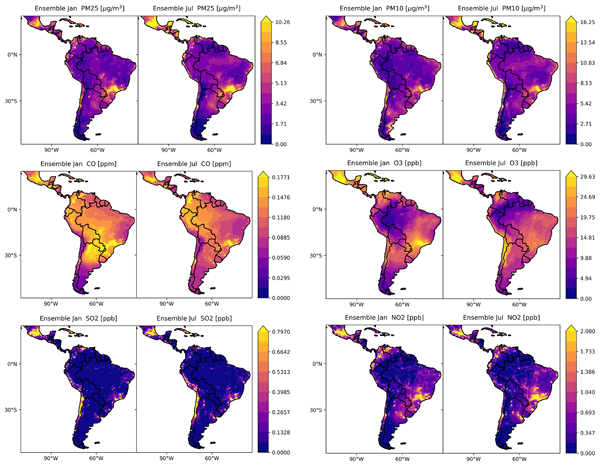
Jorge E. Pachón, Mariel A. Opazo, Pablo Lichtig, Nicolas Huneeus, Idir Bouarar, Guy Brasseur, Cathy W. Y. Li, Johannes Flemming, Laurent Menut, Camilo Menares, Laura Gallardo, Michael Gauss, Mikhail Sofiev, Rostislav Kouznetsov, Julia Palamarchuk, Andreas Uppstu, Laura Dawidowski, Nestor Y. Rojas, María de Fátima Andrade, Mario E. Gavidia-Calderón, Alejandro H. Delgado Peralta, and Daniel Schuch
Geosci. Model Dev., 17, 7467–7512, https://doi.org/10.5194/gmd-17-7467-2024, https://doi.org/10.5194/gmd-17-7467-2024, 2024
Short summary
Short summary
Latin America (LAC) has some of the most populated urban areas in the world, with high levels of air pollution. Air quality management in LAC has been traditionally focused on surveillance and building emission inventories. This study performed the first intercomparison and model evaluation in LAC, with interesting and insightful findings for the region. A multiscale modeling ensemble chain was assembled as a first step towards an air quality forecasting system.
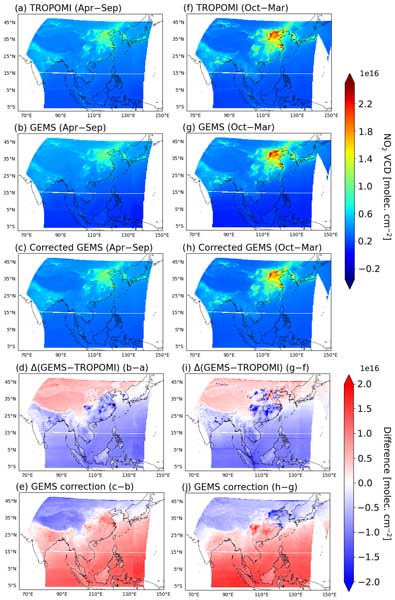
Yujin J. Oak, Daniel J. Jacob, Nicholas Balasus, Laura H. Yang, Heesung Chong, Junsung Park, Hanlim Lee, Gitaek T. Lee, Eunjo S. Ha, Rokjin J. Park, Hyeong-Ahn Kwon, and Jhoon Kim
Atmos. Meas. Tech., 17, 5147–5159, https://doi.org/10.5194/amt-17-5147-2024, https://doi.org/10.5194/amt-17-5147-2024, 2024
Short summary
Short summary
We present an improved NO2 product from GEMS by calibrating it to TROPOMI using machine learning and by reprocessing both satellite products to adopt common NO2 profiles. Our corrected GEMS product combines the high data density of GEMS with the accuracy of TROPOMI, supporting the combined use for analyses of East Asia air quality including emissions and chemistry. This method can be extended to other species and geostationary satellites including TEMPO and Sentinel-4.
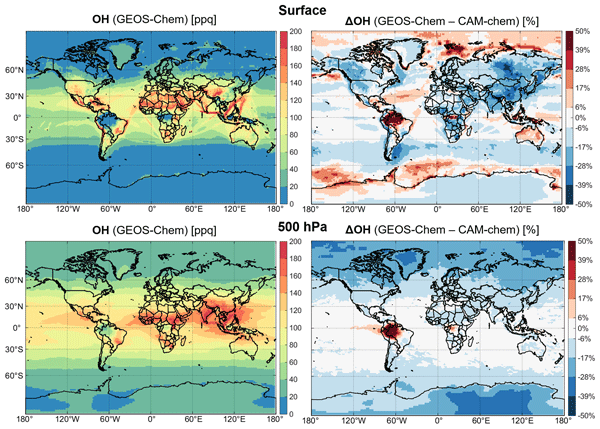
Haipeng Lin, Louisa K. Emmons, Elizabeth W. Lundgren, Laura Hyesung Yang, Xu Feng, Ruijun Dang, Shixian Zhai, Yunxiao Tang, Makoto M. Kelp, Nadia K. Colombi, Sebastian D. Eastham, Thibaud M. Fritz, and Daniel J. Jacob
Atmos. Chem. Phys., 24, 8607–8624, https://doi.org/10.5194/acp-24-8607-2024, https://doi.org/10.5194/acp-24-8607-2024, 2024
Short summary
Short summary
Tropospheric ozone is a major air pollutant, a greenhouse gas, and a major indicator of model skill. Global atmospheric chemistry models show large differences in simulations of tropospheric ozone, but isolating sources of differences is complicated by different model environments. By implementing the GEOS-Chem model side by side to CAM-chem within a common Earth system model, we identify and evaluate specific differences between the two models and their impacts on key chemical species.
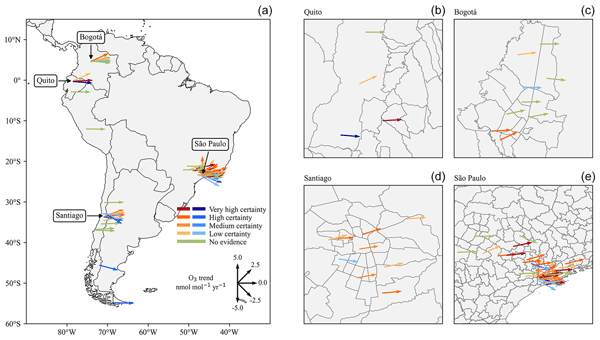
Rodrigo J. Seguel, Lucas Castillo, Charlie Opazo, Néstor Y. Rojas, Thiago Nogueira, María Cazorla, Mario Gavidia-Calderón, Laura Gallardo, René Garreaud, Tomás Carrasco-Escaff, and Yasin Elshorbany
Atmos. Chem. Phys., 24, 8225–8242, https://doi.org/10.5194/acp-24-8225-2024, https://doi.org/10.5194/acp-24-8225-2024, 2024
Short summary
Short summary
Trends of surface ozone were examined across South America. Our findings indicate that ozone trends in major South American cities either increase or remain steady, with no signs of decline. The upward trends can be attributed to chemical regimes that efficiently convert nitric oxide into nitrogen dioxide. Additionally, our results suggest a climate penalty for ozone driven by meteorological conditions that favor wildfire propagation in Chile and extensive heat waves in southern Brazil.
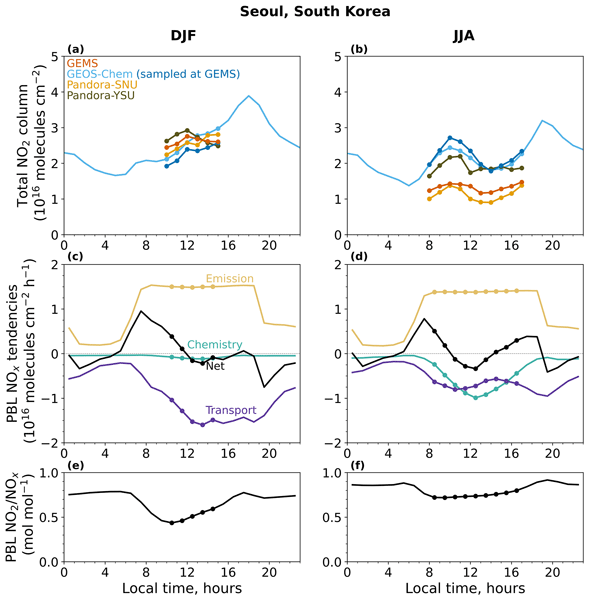
Laura Hyesung Yang, Daniel J. Jacob, Ruijun Dang, Yujin J. Oak, Haipeng Lin, Jhoon Kim, Shixian Zhai, Nadia K. Colombi, Drew C. Pendergrass, Ellie Beaudry, Viral Shah, Xu Feng, Robert M. Yantosca, Heesung Chong, Junsung Park, Hanlim Lee, Won-Jin Lee, Soontae Kim, Eunhye Kim, Katherine R. Travis, James H. Crawford, and Hong Liao
Atmos. Chem. Phys., 24, 7027–7039, https://doi.org/10.5194/acp-24-7027-2024, https://doi.org/10.5194/acp-24-7027-2024, 2024
Short summary
Short summary
The Geostationary Environment Monitoring Spectrometer (GEMS) provides hourly measurements of NO2. We use the chemical transport model to find how emissions, chemistry, and transport drive the changes in NO2 observed by GEMS at different times of the day. In winter, the chemistry plays a minor role, and high daytime emissions dominate the diurnal variation in NO2, balanced by transport. In summer, emissions, chemistry, and transport play an important role in shaping the diurnal variation in NO2.
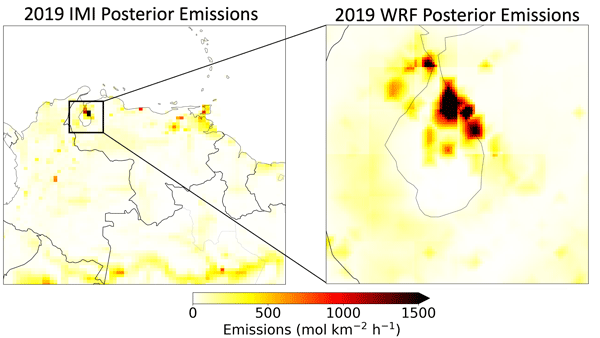
Brian Nathan, Joannes D. Maasakkers, Stijn Naus, Ritesh Gautam, Mark Omara, Daniel J. Varon, Melissa P. Sulprizio, Lucas A. Estrada, Alba Lorente, Tobias Borsdorff, Robert J. Parker, and Ilse Aben
Atmos. Chem. Phys., 24, 6845–6863, https://doi.org/10.5194/acp-24-6845-2024, https://doi.org/10.5194/acp-24-6845-2024, 2024
Short summary
Short summary
Venezuela's Lake Maracaibo region is notoriously hard to observe from space and features intensive oil exploitation, although production has strongly decreased in recent years. We estimate methane emissions using 2018–2020 TROPOMI satellite observations with national and regional transport models. Despite the production decrease, we find relatively constant emissions from Lake Maracaibo between 2018 and 2020, indicating that there could be large emissions from abandoned infrastructure.
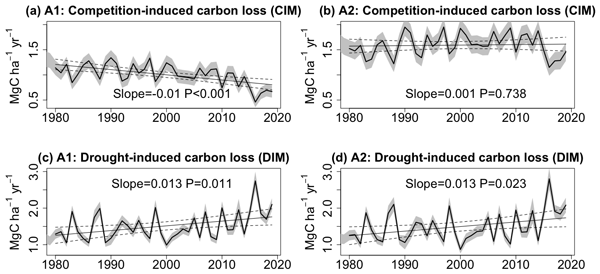
Yitong Yao, Philippe Ciais, Emilie Joetzjer, Wei Li, Lei Zhu, Yujie Wang, Christian Frankenberg, and Nicolas Viovy
Earth Syst. Dynam., 15, 763–778, https://doi.org/10.5194/esd-15-763-2024, https://doi.org/10.5194/esd-15-763-2024, 2024
Short summary
Short summary
Elevated CO2 concentration (eCO2) is critical for shaping the future path of forest carbon uptake, while uncertainties remain about concurrent carbon loss. Here, we found that eCO2 might amplify competition-induced carbon loss, while the extent of drought-induced carbon loss hinges on the balance between heightened biomass density and water-saving benefits. This is the first time that such carbon loss responses to ongoing climate change have been quantified separately over the Amazon rainforest.
Drew C. Pendergrass, Daniel J. Jacob, Yujin J. Oak, Jeewoo Lee, Minseok Kim, Jhoon Kim, Seoyoung Lee, Shixian Zhai, Hitoshi Irie, and Hong Liao
Earth Syst. Sci. Data Discuss., https://doi.org/10.5194/essd-2024-172, https://doi.org/10.5194/essd-2024-172, 2024
Preprint withdrawn
Short summary
Short summary
Fine particles suspended in the atmosphere are a major form of air pollution and an important public health burden. However, measurements of particulate matter are sparse in space and in places like East Asia monitors are established after regulatory policies to improve pollution have changed. In this paper, we use machine learning to fill in the gaps. We train an algorithm to predict pollution at the surface from the atmosphere’s opacity, then produce high resolution maps of data without gaps.
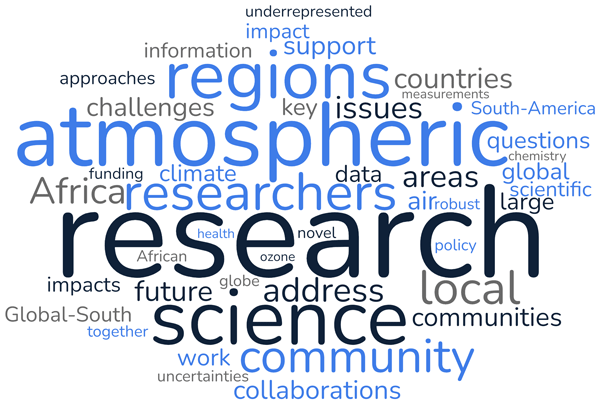
Rebecca M. Garland, Katye E. Altieri, Laura Dawidowski, Laura Gallardo, Aderiana Mbandi, Nestor Y. Rojas, and N'datchoh E. Touré
Atmos. Chem. Phys., 24, 5757–5764, https://doi.org/10.5194/acp-24-5757-2024, https://doi.org/10.5194/acp-24-5757-2024, 2024
Short summary
Short summary
This opinion piece focuses on two geographical areas in the Global South where the authors are based that are underrepresented in atmospheric science. This opinion provides context on common challenges and constraints, with suggestions on how the community can address these. The focus is on the strengths of atmospheric science research in these regions. It is these strengths, we believe, that highlight the critical role of Global South researchers in the future of atmospheric science research.
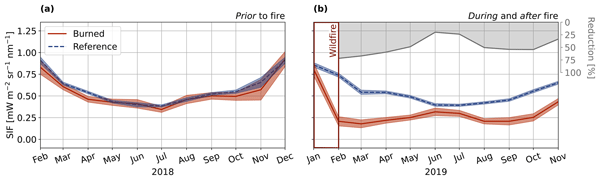
Juliëtte C. S. Anema, Klaas Folkert Boersma, Piet Stammes, Gerbrand Koren, William Woodgate, Philipp Köhler, Christian Frankenberg, and Jacqui Stol
Biogeosciences, 21, 2297–2311, https://doi.org/10.5194/bg-21-2297-2024, https://doi.org/10.5194/bg-21-2297-2024, 2024
Short summary
Short summary
To keep the Paris agreement goals within reach, negative emissions are necessary. They can be achieved with mitigation techniques, such as reforestation, which remove CO2 from the atmosphere. While governments have pinned their hopes on them, there is not yet a good set of tools to objectively determine whether negative emissions do what they promise. Here we show how satellite measurements of plant fluorescence are useful in detecting carbon uptake due to reforestation and vegetation regrowth.
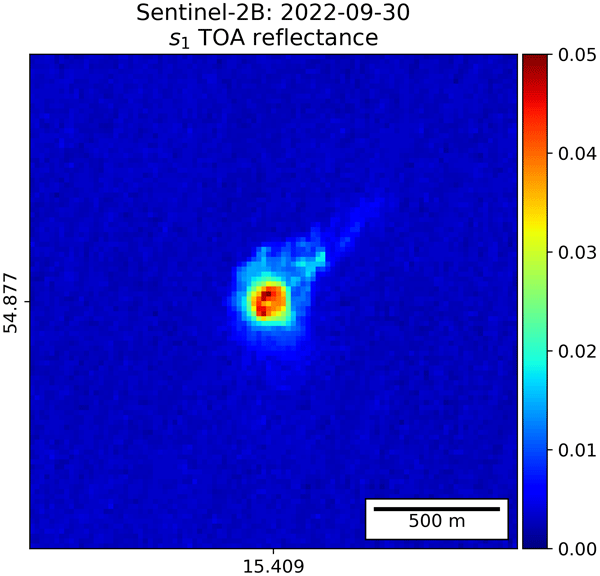
Matthieu Dogniaux, Joannes D. Maasakkers, Daniel J. Varon, and Ilse Aben
Atmos. Meas. Tech., 17, 2777–2787, https://doi.org/10.5194/amt-17-2777-2024, https://doi.org/10.5194/amt-17-2777-2024, 2024
Short summary
Short summary
We analyze Landsat 8 (L8) and Sentinel-2B (S-2B) observations of the 2022 Nord Stream 2 methane leak and show how challenging this case is for usual data analysis methods. We provide customized calibrations for this Nord Stream 2 case and assess that no firm conclusion can be drawn from L8 or S-2B single overpasses. However, if we opportunistically assume that L8 and S-2B results are independent, we find an averaged L8 and S-2B combined methane leak rate of 502 ± 464 t h−1.
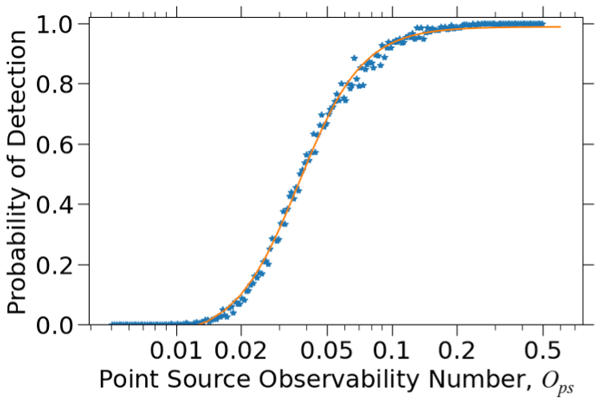
Jack H. Bruno, Dylan Jervis, Daniel J. Varon, and Daniel J. Jacob
Atmos. Meas. Tech., 17, 2625–2636, https://doi.org/10.5194/amt-17-2625-2024, https://doi.org/10.5194/amt-17-2625-2024, 2024
Short summary
Short summary
Methane is a potent greenhouse gas and a current high-priority target for short- to mid-term climate change mitigation. Detection of individual methane emitters from space has become possible in recent years, and the volume of data for this task has been rapidly growing, outpacing processing capabilities. We introduce an automated approach, U-Plume, which can detect and quantify emissions from individual methane sources in high-spatial-resolution satellite data.
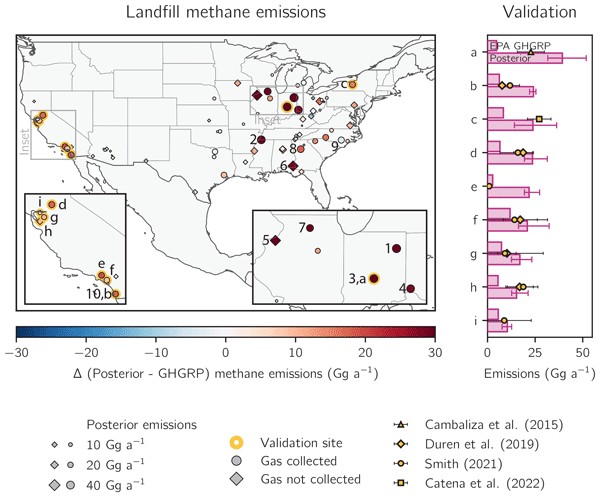
Hannah Nesser, Daniel J. Jacob, Joannes D. Maasakkers, Alba Lorente, Zichong Chen, Xiao Lu, Lu Shen, Zhen Qu, Melissa P. Sulprizio, Margaux Winter, Shuang Ma, A. Anthony Bloom, John R. Worden, Robert N. Stavins, and Cynthia A. Randles
Atmos. Chem. Phys., 24, 5069–5091, https://doi.org/10.5194/acp-24-5069-2024, https://doi.org/10.5194/acp-24-5069-2024, 2024
Short summary
Short summary
We quantify 2019 methane emissions in the contiguous US (CONUS) at a ≈ 25 km × 25 km resolution using satellite methane observations. We find a 13 % upward correction to the 2023 US Environmental Protection Agency (EPA) Greenhouse Gas Emissions Inventory (GHGI) for 2019, with large corrections to individual states, urban areas, and landfills. This may present a challenge for US climate policies and goals, many of which target significant reductions in methane emissions.
Russell Doughty, Yujie Wang, Jennifer Johnson, Nicholas Parazoo, Troy Magney, Zoe Pierrat, Xiangming Xiao, Luis Guanter, Philipp Köhler, Christian Frankenberg, Peter Somkuti, Shuang Ma, Yuanwei Qin, Sean Crowell, and Berrien Moore III
EGUsphere, https://doi.org/10.22541/essoar.168167172.20799710/v1, https://doi.org/10.22541/essoar.168167172.20799710/v1, 2024
Preprint archived
Short summary
Short summary
Here we present a novel model of global photosynthesis, ChloFluo, which uses spaceborne chlorophyll fluorescence to estimate the amount of photosynthetically active radiation absorbed by chlorophyll. Potential uses of our model are to advance our understanding of the timing and magnitude of photosynthesis, its effect on atmospheric carbon dioxide fluxes, and vegetation response to climate events and change.
Ke Liu, Yujie Wang, Troy S. Magney, and Christian Frankenberg
Biogeosciences, 21, 1501–1516, https://doi.org/10.5194/bg-21-1501-2024, https://doi.org/10.5194/bg-21-1501-2024, 2024
Short summary
Short summary
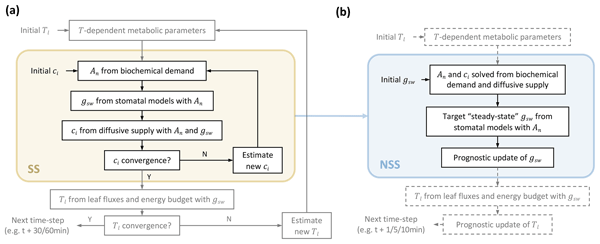
Stomata are pores on leaves that regulate gas exchange between plants and the atmosphere. Existing land models unrealistically assume stomata can jump between steady states when the environment changes. We implemented dynamic modeling to predict gradual stomatal responses at different scales. Results suggested that considering this effect on plant behavior patterns in diurnal cycles was important. Our framework also simplified simulations and can contribute to further efficiency improvements.
Emily Dowd, Alistair J. Manning, Bryn Orth-Lashley, Marianne Girard, James France, Rebecca E. Fisher, Dave Lowry, Mathias Lanoisellé, Joseph R. Pitt, Kieran M. Stanley, Simon O'Doherty, Dickon Young, Glen Thistlethwaite, Martyn P. Chipperfield, Emanuel Gloor, and Chris Wilson
Atmos. Meas. Tech., 17, 1599–1615, https://doi.org/10.5194/amt-17-1599-2024, https://doi.org/10.5194/amt-17-1599-2024, 2024
Short summary
Short summary
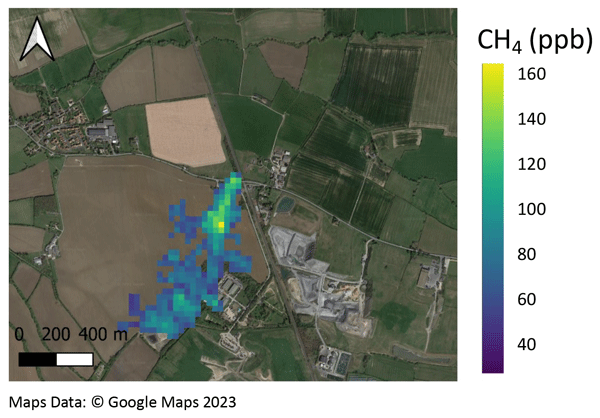
We provide the first validation of the satellite-derived emission estimates using surface-based mobile greenhouse gas surveys of an active gas leak detected near Cheltenham, UK. GHGSat’s emission estimates broadly agree with the surface-based mobile survey and steps were taken to fix the leak, highlighting the importance of satellite data in identifying emissions and helping to reduce our human impact on climate change.
Sebastian D. Eastham, Guillaume P. Chossière, Raymond L. Speth, Daniel J. Jacob, and Steven R. H. Barrett
Atmos. Chem. Phys., 24, 2687–2703, https://doi.org/10.5194/acp-24-2687-2024, https://doi.org/10.5194/acp-24-2687-2024, 2024
Short summary
Short summary
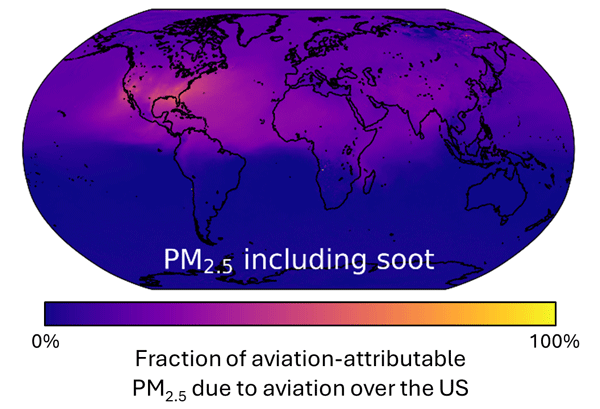
Emissions from aircraft are known to cause air quality impacts worldwide, but the scale and mechanisms of this impact are not well understood. This work uses high-resolution computational modeling of the atmosphere to show that air pollution changes from aviation are mostly the result of emissions during cruise (high-altitude) operations, that these impacts are related to how much non-aviation pollution is present, and that prior regional assessments have underestimated these impacts.
Kelvin H. Bates, Mathew J. Evans, Barron H. Henderson, and Daniel J. Jacob
Geosci. Model Dev., 17, 1511–1524, https://doi.org/10.5194/gmd-17-1511-2024, https://doi.org/10.5194/gmd-17-1511-2024, 2024
Short summary
Short summary
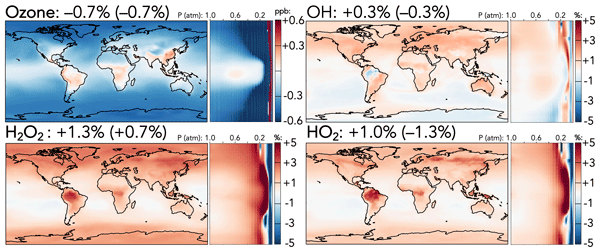
Accurate representation of rates and products of chemical reactions in atmospheric models is crucial for simulating concentrations of pollutants and climate forcers. We update the widely used GEOS-Chem atmospheric chemistry model with reaction parameters from recent compilations of experimental data and demonstrate the implications for key atmospheric chemical species. The updates decrease tropospheric CO mixing ratios and increase stratospheric nitrogen oxide mixing ratios, among other changes.
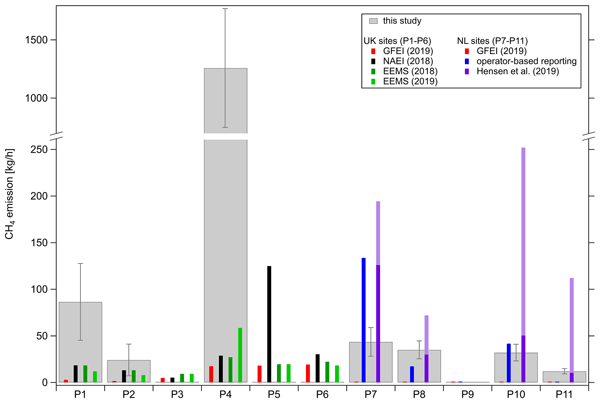
Magdalena Pühl, Anke Roiger, Alina Fiehn, Alan M. Gorchov Negron, Eric A. Kort, Stefan Schwietzke, Ignacio Pisso, Amy Foulds, James Lee, James L. France, Anna E. Jones, Dave Lowry, Rebecca E. Fisher, Langwen Huang, Jacob Shaw, Prudence Bateson, Stephen Andrews, Stuart Young, Pamela Dominutti, Tom Lachlan-Cope, Alexandra Weiss, and Grant Allen
Atmos. Chem. Phys., 24, 1005–1024, https://doi.org/10.5194/acp-24-1005-2024, https://doi.org/10.5194/acp-24-1005-2024, 2024
Short summary
Short summary
In April–May 2019 we carried out an airborne field campaign in the southern North Sea with the aim of studying methane emissions of offshore gas installations. We determined methane emissions from elevated methane measured downstream of the sampled installations. We compare our measured methane emissions with estimated methane emissions from national and global annual inventories. As a result, we find inconsistencies of inventories and large discrepancies between measurements and inventories.
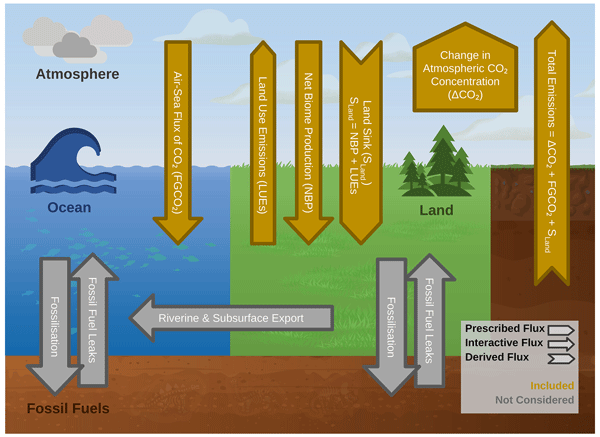
Lee de Mora, Ranjini Swaminathan, Richard P. Allan, Jerry C. Blackford, Douglas I. Kelley, Phil Harris, Chris D. Jones, Colin G. Jones, Spencer Liddicoat, Robert J. Parker, Tristan Quaife, Jeremy Walton, and Andrew Yool
Earth Syst. Dynam., 14, 1295–1315, https://doi.org/10.5194/esd-14-1295-2023, https://doi.org/10.5194/esd-14-1295-2023, 2023
Short summary
Short summary
We investigate the flux of carbon from the atmosphere into the land surface and ocean for multiple models and over a range of future scenarios. We did this by comparing simulations after the same change in the global-mean near-surface temperature. Using this method, we show that the choice of scenario can impact the carbon allocation to the land, ocean, and atmosphere. Scenarios with higher emissions reach the same warming levels sooner, but also with relatively more carbon in the atmosphere.
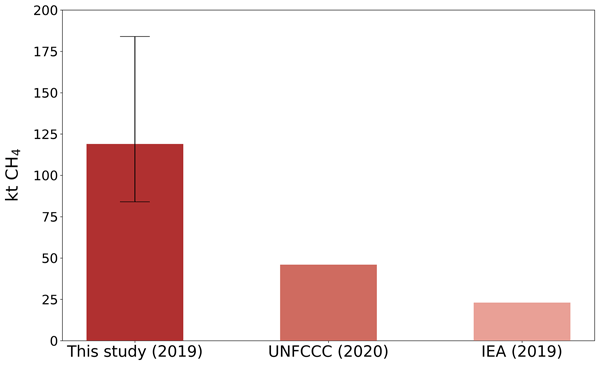
Foteini Stavropoulou, Katarina Vinković, Bert Kers, Marcel de Vries, Steven van Heuven, Piotr Korbeń, Martina Schmidt, Julia Wietzel, Pawel Jagoda, Jaroslav M. Necki, Jakub Bartyzel, Hossein Maazallahi, Malika Menoud, Carina van der Veen, Sylvia Walter, Béla Tuzson, Jonas Ravelid, Randulph Paulo Morales, Lukas Emmenegger, Dominik Brunner, Michael Steiner, Arjan Hensen, Ilona Velzeboer, Pim van den Bulk, Hugo Denier van der Gon, Antonio Delre, Maklawe Essonanawe Edjabou, Charlotte Scheutz, Marius Corbu, Sebastian Iancu, Denisa Moaca, Alin Scarlat, Alexandru Tudor, Ioana Vizireanu, Andreea Calcan, Magdalena Ardelean, Sorin Ghemulet, Alexandru Pana, Aurel Constantinescu, Lucian Cusa, Alexandru Nica, Calin Baciu, Cristian Pop, Andrei Radovici, Alexandru Mereuta, Horatiu Stefanie, Alexandru Dandocsi, Bas Hermans, Stefan Schwietzke, Daniel Zavala-Araiza, Huilin Chen, and Thomas Röckmann
Atmos. Chem. Phys., 23, 10399–10412, https://doi.org/10.5194/acp-23-10399-2023, https://doi.org/10.5194/acp-23-10399-2023, 2023
Short summary
Short summary
In this study, we quantify CH4 emissions from onshore oil production sites in Romania at source and facility level using a combination of ground- and drone-based measurement techniques. We show that the total CH4 emissions in our studied areas are much higher than the emissions reported to UNFCCC, and up to three-quarters of the detected emissions are related to operational venting. Our results suggest that oil and gas production infrastructure in Romania holds a massive mitigation potential.
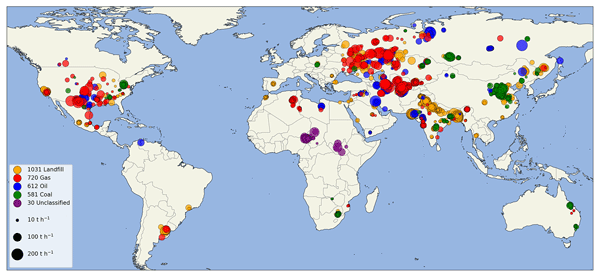
Berend J. Schuit, Joannes D. Maasakkers, Pieter Bijl, Gourav Mahapatra, Anne-Wil van den Berg, Sudhanshu Pandey, Alba Lorente, Tobias Borsdorff, Sander Houweling, Daniel J. Varon, Jason McKeever, Dylan Jervis, Marianne Girard, Itziar Irakulis-Loitxate, Javier Gorroño, Luis Guanter, Daniel H. Cusworth, and Ilse Aben
Atmos. Chem. Phys., 23, 9071–9098, https://doi.org/10.5194/acp-23-9071-2023, https://doi.org/10.5194/acp-23-9071-2023, 2023
Short summary
Short summary
Using two machine learning models, which were trained on TROPOMI methane satellite data, we detect 2974 methane plumes, so-called super-emitters, in 2021. We detect methane emissions globally related to urban areas or landfills, coal mining, and oil and gas production. Using our monitoring system, we identify 94 regions with frequent emissions. For 12 locations, we target high-resolution satellite instruments to enlarge and identify the exact infrastructure responsible for the emissions.
Drew C. Pendergrass, Daniel J. Jacob, Hannah Nesser, Daniel J. Varon, Melissa Sulprizio, Kazuyuki Miyazaki, and Kevin W. Bowman
Geosci. Model Dev., 16, 4793–4810, https://doi.org/10.5194/gmd-16-4793-2023, https://doi.org/10.5194/gmd-16-4793-2023, 2023
Short summary
Short summary
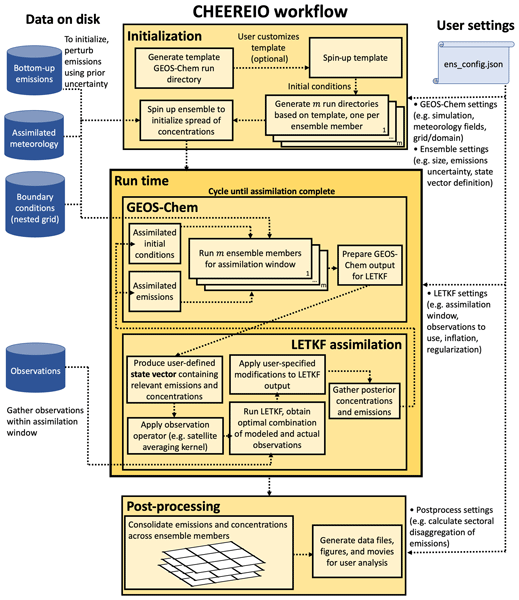
We have built a tool called CHEEREIO that allows scientists to use observations of pollutants or gases in the atmosphere, such as from satellites or surface stations, to update supercomputer models that simulate the Earth. CHEEREIO uses the difference between the model simulations of the atmosphere and real-world observations to come up with a good guess for the actual composition of our atmosphere, the true emissions of various pollutants, and whatever else they may want to study.
Nicholas Balasus, Daniel J. Jacob, Alba Lorente, Joannes D. Maasakkers, Robert J. Parker, Hartmut Boesch, Zichong Chen, Makoto M. Kelp, Hannah Nesser, and Daniel J. Varon
Atmos. Meas. Tech., 16, 3787–3807, https://doi.org/10.5194/amt-16-3787-2023, https://doi.org/10.5194/amt-16-3787-2023, 2023
Short summary
Short summary
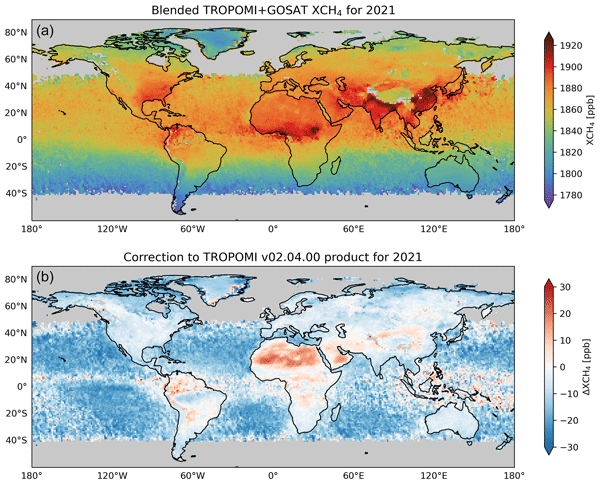
We use machine learning to remove biases in TROPOMI satellite observations of atmospheric methane, with GOSAT observations serving as a reference. We find that the TROPOMI biases relative to GOSAT are related to the presence of aerosols and clouds, the surface brightness, and the specific detector that makes the observation aboard TROPOMI. The resulting blended TROPOMI+GOSAT product is more reliable for quantifying methane emissions.
Sara M. Defratyka, James L. France, Rebecca E. Fisher, Dave Lowry, Julianne M. Fernandez, Semra Bakkaloglu, Camille Yver-Kwok, Jean-Daniel Paris, Philippe Bousquet, Tim Arnold, Chris Rennick, Jon Helmore, Nigel Yarrow, and Euan G. Nisbet
EGUsphere, https://doi.org/10.5194/egusphere-2023-1490, https://doi.org/10.5194/egusphere-2023-1490, 2023
Preprint archived
Short summary
Short summary
We are focused on verification of δ13CH4 measurements in near-source conditions and we have provided an insight into the impact of chosen calculation methods for determined isotopic signatures. Our study offers a step forward for establishing an unified, robust, and reliable analytical technique to determine δ13CH4 of methane sources. Our recommended analytical approach reduces biases and uncertainties coming from measurement conditions, data clustering and various available fitting methods.
Alice Drinkwater, Paul I. Palmer, Liang Feng, Tim Arnold, Xin Lan, Sylvia E. Michel, Robert Parker, and Hartmut Boesch
Atmos. Chem. Phys., 23, 8429–8452, https://doi.org/10.5194/acp-23-8429-2023, https://doi.org/10.5194/acp-23-8429-2023, 2023
Short summary
Short summary
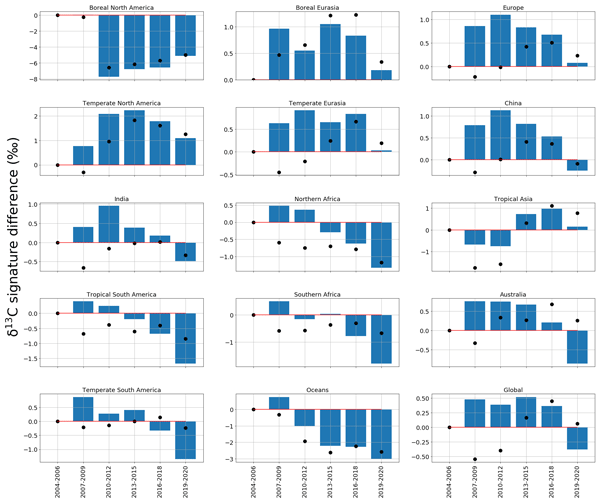
Changes in atmospheric methane over the last few decades are largely unexplained. Previous studies have proposed different hypotheses to explain short-term changes in atmospheric methane. We interpret observed changes in atmospheric methane and stable isotope source signatures (2004–2020). We argue that changes over this period are part of a large-scale shift from high-northern-latitude thermogenic energy emissions to tropical biogenic emissions, particularly from North Africa and South America.
Ruosi Liang, Yuzhong Zhang, Wei Chen, Peixuan Zhang, Jingran Liu, Cuihong Chen, Huiqin Mao, Guofeng Shen, Zhen Qu, Zichong Chen, Minqiang Zhou, Pucai Wang, Robert J. Parker, Hartmut Boesch, Alba Lorente, Joannes D. Maasakkers, and Ilse Aben
Atmos. Chem. Phys., 23, 8039–8057, https://doi.org/10.5194/acp-23-8039-2023, https://doi.org/10.5194/acp-23-8039-2023, 2023
Short summary
Short summary
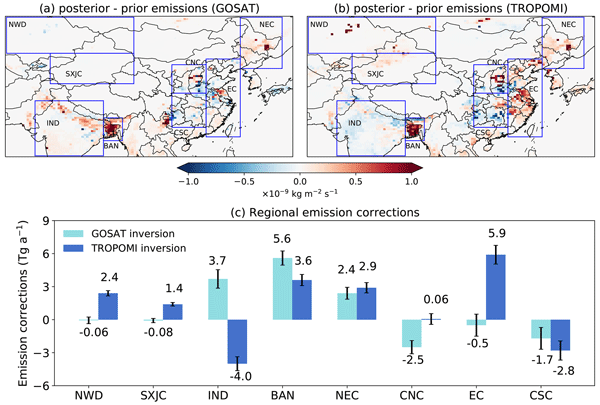
We compare and evaluate East Asian methane emissions inferred from different satellite observations (GOSAT and TROPOMI). The results show discrepancies over northern India and eastern China. Independent ground-based observations are more consistent with TROPOMI-derived emissions in northern India and GOSAT-derived emissions in eastern China.
Daniel J. Varon, Daniel J. Jacob, Benjamin Hmiel, Ritesh Gautam, David R. Lyon, Mark Omara, Melissa Sulprizio, Lu Shen, Drew Pendergrass, Hannah Nesser, Zhen Qu, Zachary R. Barkley, Natasha L. Miles, Scott J. Richardson, Kenneth J. Davis, Sudhanshu Pandey, Xiao Lu, Alba Lorente, Tobias Borsdorff, Joannes D. Maasakkers, and Ilse Aben
Atmos. Chem. Phys., 23, 7503–7520, https://doi.org/10.5194/acp-23-7503-2023, https://doi.org/10.5194/acp-23-7503-2023, 2023
Short summary
Short summary
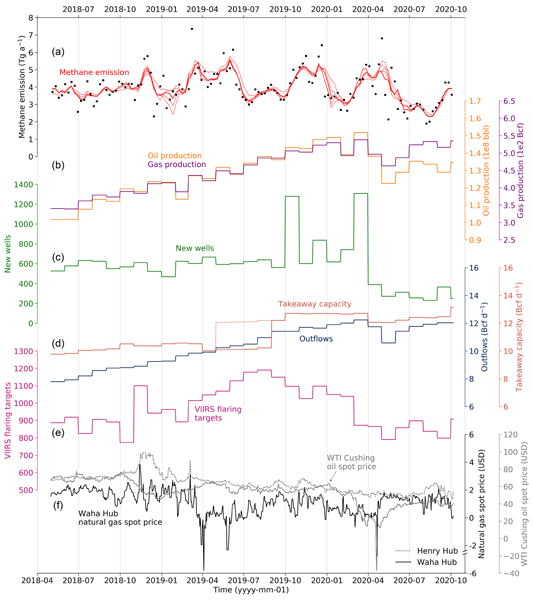
We use TROPOMI satellite observations to quantify weekly methane emissions from the US Permian oil and gas basin from May 2018 to October 2020. We find that Permian emissions are highly variable, with diverse economic and activity drivers. The most important drivers during our study period were new well development and natural gas price. Permian methane intensity averaged 4.6 % and decreased by 1 % per year.
Ruijun Dang, Daniel J. Jacob, Viral Shah, Sebastian D. Eastham, Thibaud M. Fritz, Loretta J. Mickley, Tianjia Liu, Yi Wang, and Jun Wang
Atmos. Chem. Phys., 23, 6271–6284, https://doi.org/10.5194/acp-23-6271-2023, https://doi.org/10.5194/acp-23-6271-2023, 2023
Short summary
Short summary
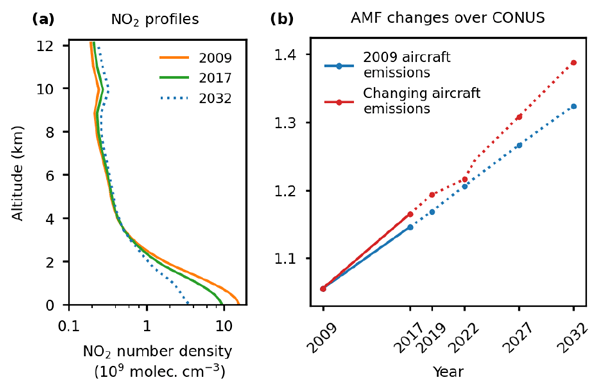
We use the GEOS-Chem model to better understand the magnitude and trend in free tropospheric NO2 over the contiguous US. Model underestimate of background NO2 is largely corrected by considering aerosol nitrate photolysis. Increase in aircraft emissions affects satellite retrievals by altering the NO2 shape factor, and this effect is expected to increase in future. We show the importance of properly accounting for the free tropospheric background in interpreting NO2 observations from space.
Zichong Chen, Daniel J. Jacob, Ritesh Gautam, Mark Omara, Robert N. Stavins, Robert C. Stowe, Hannah Nesser, Melissa P. Sulprizio, Alba Lorente, Daniel J. Varon, Xiao Lu, Lu Shen, Zhen Qu, Drew C. Pendergrass, and Sarah Hancock
Atmos. Chem. Phys., 23, 5945–5967, https://doi.org/10.5194/acp-23-5945-2023, https://doi.org/10.5194/acp-23-5945-2023, 2023
Short summary
Short summary
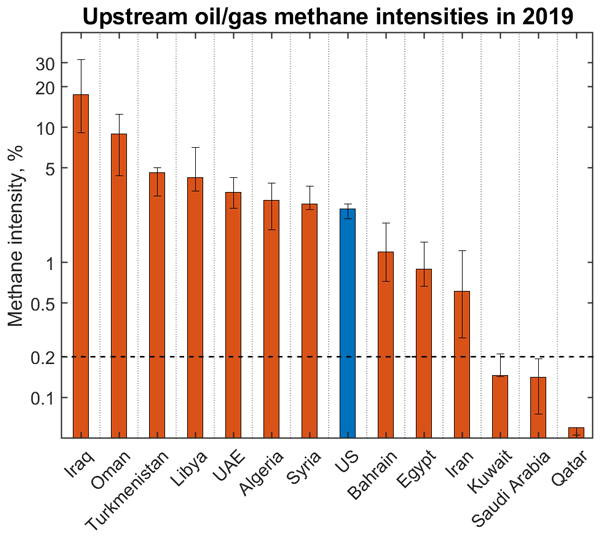
We quantify methane emissions from individual countries in the Middle East and North Africa by inverse analysis of 2019 TROPOMI satellite observations of atmospheric methane. We show that the ability to simply relate oil/gas emissions to activity metrics is compromised by stochastic nature of local infrastructure and management practices. We find that the industry target for oil/gas methane intensity is achievable through associated gas capture, modern infrastructure, and centralized operations.
Vincent Humphrey and Christian Frankenberg
Biogeosciences, 20, 1789–1811, https://doi.org/10.5194/bg-20-1789-2023, https://doi.org/10.5194/bg-20-1789-2023, 2023
Short summary
Short summary
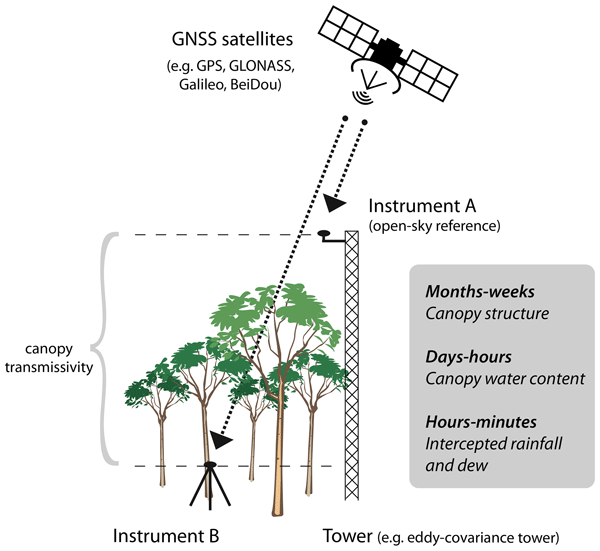
Microwave satellites can be used to monitor how vegetation biomass changes over time or how droughts affect the world's forests. However, such satellite data are still difficult to validate and interpret because of a lack of comparable field observations. Here, we present a remote sensing technique that uses the Global Navigation Satellite System (GNSS) as a makeshift radar, making it possible to observe canopy transmissivity at any existing environmental research site in a cost-efficient way.
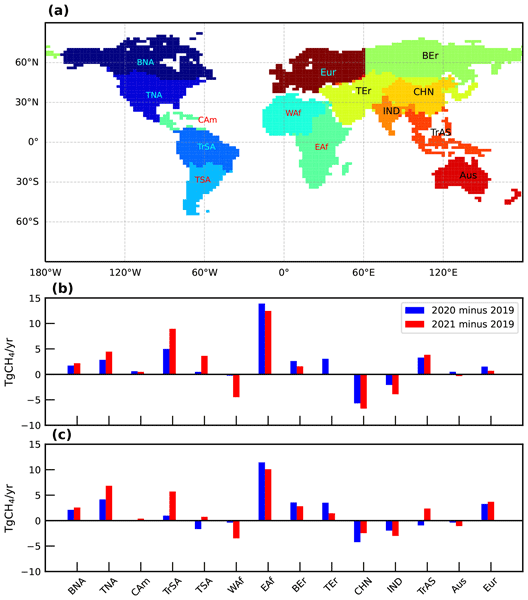
Liang Feng, Paul I. Palmer, Robert J. Parker, Mark F. Lunt, and Hartmut Bösch
Atmos. Chem. Phys., 23, 4863–4880, https://doi.org/10.5194/acp-23-4863-2023, https://doi.org/10.5194/acp-23-4863-2023, 2023
Short summary
Short summary
Our understanding of recent changes in atmospheric methane has defied explanation. Since 2007, the atmospheric growth of methane has accelerated to record-breaking values in 2020 and 2021. We use satellite observations of methane to show that (1) increasing emissions over the tropics are mostly responsible for these recent atmospheric changes, and (2) changes in the OH sink during the 2020 Covid-19 lockdown can explain up to 34% of changes in atmospheric methane for that year.
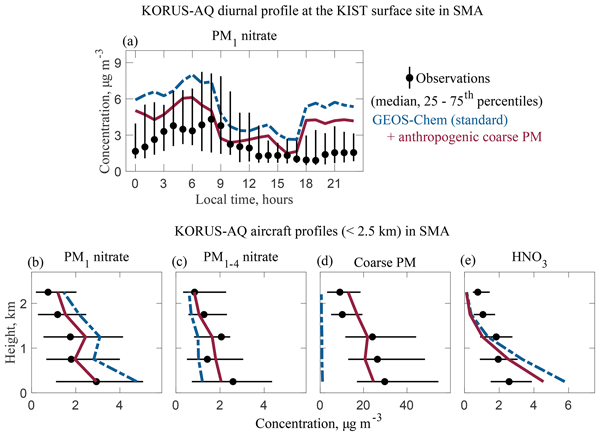
Shixian Zhai, Daniel J. Jacob, Drew C. Pendergrass, Nadia K. Colombi, Viral Shah, Laura Hyesung Yang, Qiang Zhang, Shuxiao Wang, Hwajin Kim, Yele Sun, Jin-Soo Choi, Jin-Soo Park, Gan Luo, Fangqun Yu, Jung-Hun Woo, Younha Kim, Jack E. Dibb, Taehyoung Lee, Jin-Seok Han, Bruce E. Anderson, Ke Li, and Hong Liao
Atmos. Chem. Phys., 23, 4271–4281, https://doi.org/10.5194/acp-23-4271-2023, https://doi.org/10.5194/acp-23-4271-2023, 2023
Short summary
Short summary
Anthropogenic fugitive dust in East Asia not only causes severe coarse particulate matter air pollution problems, but also affects fine particulate nitrate. Due to emission control efforts, coarse PM decreased steadily. We find that the decrease of coarse PM is a major driver for a lack of decrease of fine particulate nitrate, as it allows more nitric acid to form fine particulate nitrate. The continuing decrease of coarse PM requires more stringent ammonia and nitrogen oxides emission controls.
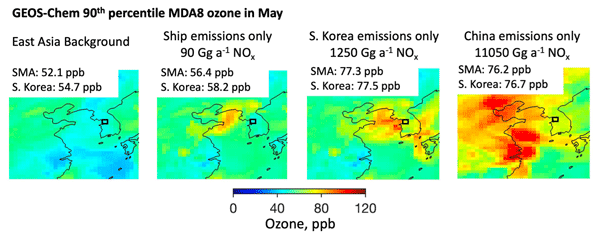
Nadia K. Colombi, Daniel J. Jacob, Laura Hyesung Yang, Shixian Zhai, Viral Shah, Stuart K. Grange, Robert M. Yantosca, Soontae Kim, and Hong Liao
Atmos. Chem. Phys., 23, 4031–4044, https://doi.org/10.5194/acp-23-4031-2023, https://doi.org/10.5194/acp-23-4031-2023, 2023
Short summary
Short summary
Surface ozone, detrimental to human and ecosystem health, is very high and increasing in South Korea. Using a global model of the atmosphere, we found that emissions from South Korea and China contribute equally to the high ozone observed. We found that in the absence of all anthropogenic emissions over East Asia, ozone is still very high, implying that the air quality standard in South Korea is not practically achievable unless this background external to East Asia can be decreased.
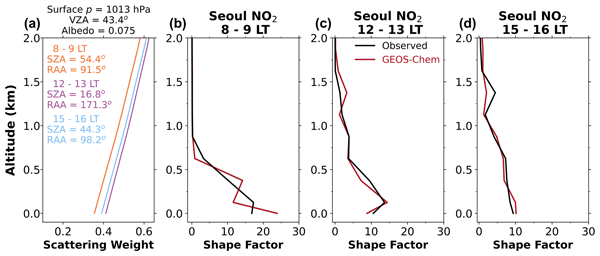
Laura Hyesung Yang, Daniel J. Jacob, Nadia K. Colombi, Shixian Zhai, Kelvin H. Bates, Viral Shah, Ellie Beaudry, Robert M. Yantosca, Haipeng Lin, Jared F. Brewer, Heesung Chong, Katherine R. Travis, James H. Crawford, Lok N. Lamsal, Ja-Ho Koo, and Jhoon Kim
Atmos. Chem. Phys., 23, 2465–2481, https://doi.org/10.5194/acp-23-2465-2023, https://doi.org/10.5194/acp-23-2465-2023, 2023
Short summary
Short summary
A geostationary satellite can now provide hourly NO2 vertical columns, and obtaining the NO2 vertical columns from space relies on NO2 vertical distribution from the chemical transport model (CTM). In this work, we update the CTM to better represent the chemistry environment so that the CTM can accurately provide NO2 vertical distribution. We also find that the changes in NO2 vertical distribution driven by a change in mixing depth play an important role in the NO2 column's diurnal variation.
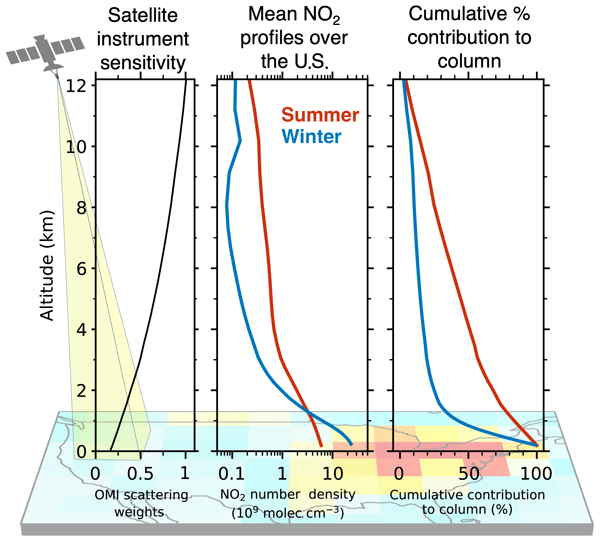
Viral Shah, Daniel J. Jacob, Ruijun Dang, Lok N. Lamsal, Sarah A. Strode, Stephen D. Steenrod, K. Folkert Boersma, Sebastian D. Eastham, Thibaud M. Fritz, Chelsea Thompson, Jeff Peischl, Ilann Bourgeois, Ilana B. Pollack, Benjamin A. Nault, Ronald C. Cohen, Pedro Campuzano-Jost, Jose L. Jimenez, Simone T. Andersen, Lucy J. Carpenter, Tomás Sherwen, and Mat J. Evans
Atmos. Chem. Phys., 23, 1227–1257, https://doi.org/10.5194/acp-23-1227-2023, https://doi.org/10.5194/acp-23-1227-2023, 2023
Short summary
Short summary
NOx in the free troposphere (above 2 km) affects global tropospheric chemistry and the retrieval and interpretation of satellite NO2 measurements. We evaluate free tropospheric NOx in global atmospheric chemistry models and find that recycling NOx from its reservoirs over the oceans is faster than that simulated in the models, resulting in increases in simulated tropospheric ozone and OH. Over the U.S., free tropospheric NO2 contributes the majority of the tropospheric NO2 column in summer.

Javier Gorroño, Daniel J. Varon, Itziar Irakulis-Loitxate, and Luis Guanter
Atmos. Meas. Tech., 16, 89–107, https://doi.org/10.5194/amt-16-89-2023, https://doi.org/10.5194/amt-16-89-2023, 2023
Short summary
Short summary
We present a methane flux rate retrieval methodology using the Sentinel-2 mission, validating the algorithm for different scenes and plumes. The detection limit is 1000–2000 kg h−1 for homogeneous scenes and temporally invariant surfaces and above 5000 kg h−1 for heterogeneous ones. Dominant quantification errors are wind-related or plume mask-related. For heterogeneous scenes, the surface structure underlying the methane plume can become a dominant source of uncertainty.
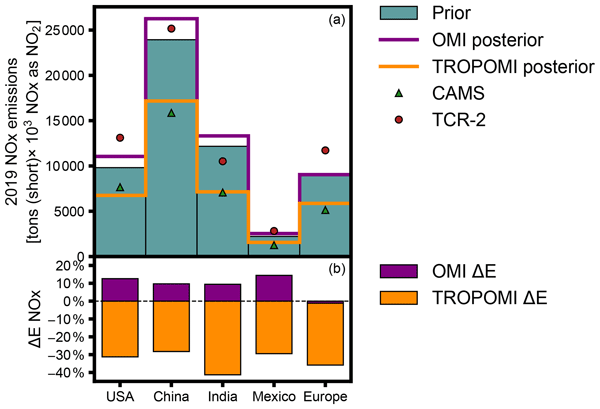
James D. East, Barron H. Henderson, Sergey L. Napelenok, Shannon N. Koplitz, Golam Sarwar, Robert Gilliam, Allen Lenzen, Daniel Q. Tong, R. Bradley Pierce, and Fernando Garcia-Menendez
Atmos. Chem. Phys., 22, 15981–16001, https://doi.org/10.5194/acp-22-15981-2022, https://doi.org/10.5194/acp-22-15981-2022, 2022
Short summary
Short summary
We present a framework that uses a computer model of air quality, along with air pollution data from satellite instruments, to estimate emissions of nitrogen oxides (NOx) across the Northern Hemisphere. The framework, which advances current methods to infer emissions from satellite observations, provides observationally constrained NOx estimates, including in regions of the world where emissions are highly uncertain, and can improve simulations of air pollutants relevant for health and policy.
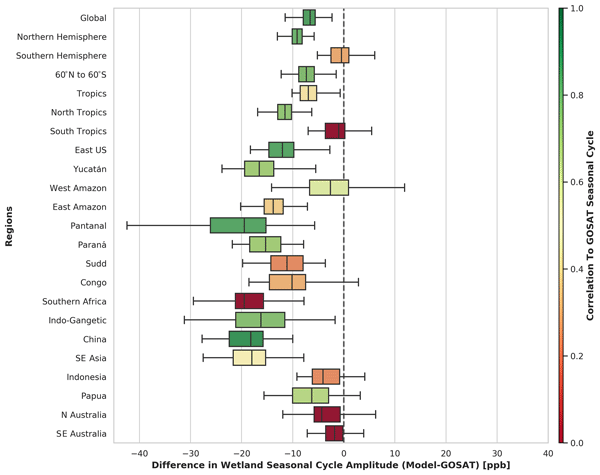
Robert J. Parker, Chris Wilson, Edward Comyn-Platt, Garry Hayman, Toby R. Marthews, A. Anthony Bloom, Mark F. Lunt, Nicola Gedney, Simon J. Dadson, Joe McNorton, Neil Humpage, Hartmut Boesch, Martyn P. Chipperfield, Paul I. Palmer, and Dai Yamazaki
Biogeosciences, 19, 5779–5805, https://doi.org/10.5194/bg-19-5779-2022, https://doi.org/10.5194/bg-19-5779-2022, 2022
Short summary
Short summary
Wetlands are the largest natural source of methane, one of the most important climate gases. The JULES land surface model simulates these emissions. We use satellite data to evaluate how well JULES reproduces the methane seasonal cycle over different tropical wetlands. It performs well for most regions; however, it struggles for some African wetlands influenced heavily by river flooding. We explain the reasons for these deficiencies and highlight how future development will improve these areas.
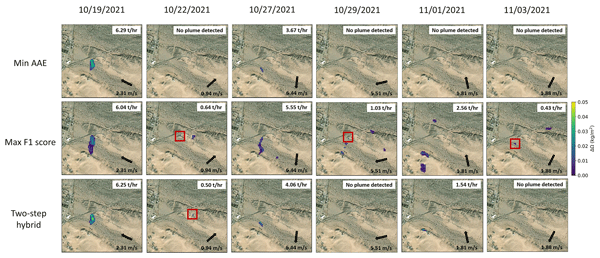
Zhan Zhang, Evan D. Sherwin, Daniel J. Varon, and Adam R. Brandt
Atmos. Meas. Tech., 15, 7155–7169, https://doi.org/10.5194/amt-15-7155-2022, https://doi.org/10.5194/amt-15-7155-2022, 2022
Short summary
Short summary
This work developed a multi-band–multi-pass–multi-comparison-date Sentinel-2 methane retrieval algorithm, and the method was calibrated by data from a controlled release test. To our knowledge, this is the first study that validates the performance of a Sentinel-2 methane detection algorithm by calibration with a ground-truth testing. It illustrates the potential for additional validation with systematic future experiments wherein algorithms can be tuned to meet different detection expectations.
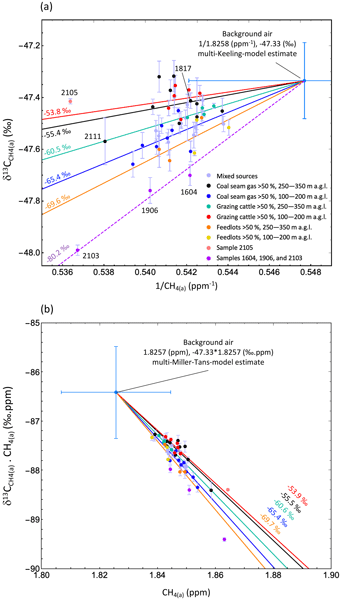
Bryce F. J. Kelly, Xinyi Lu, Stephen J. Harris, Bruno G. Neininger, Jorg M. Hacker, Stefan Schwietzke, Rebecca E. Fisher, James L. France, Euan G. Nisbet, David Lowry, Carina van der Veen, Malika Menoud, and Thomas Röckmann
Atmos. Chem. Phys., 22, 15527–15558, https://doi.org/10.5194/acp-22-15527-2022, https://doi.org/10.5194/acp-22-15527-2022, 2022
Short summary
Short summary
This study explores using the composition of methane of in-flight atmospheric air samples for greenhouse gas inventory verification. The air samples were collected above one of the largest coal seam gas production regions in the world. Adjacent to these gas fields are coal mines, Australia's largest cattle feedlot, and over 1 million grazing cattle. The results are also used to identify methane mitigation opportunities.
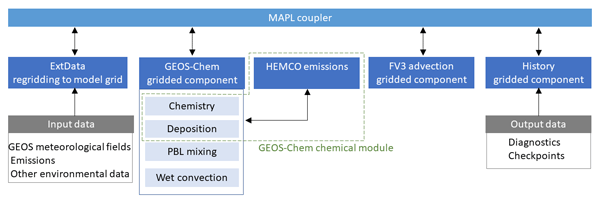
Randall V. Martin, Sebastian D. Eastham, Liam Bindle, Elizabeth W. Lundgren, Thomas L. Clune, Christoph A. Keller, William Downs, Dandan Zhang, Robert A. Lucchesi, Melissa P. Sulprizio, Robert M. Yantosca, Yanshun Li, Lucas Estrada, William M. Putman, Benjamin M. Auer, Atanas L. Trayanov, Steven Pawson, and Daniel J. Jacob
Geosci. Model Dev., 15, 8731–8748, https://doi.org/10.5194/gmd-15-8731-2022, https://doi.org/10.5194/gmd-15-8731-2022, 2022
Short summary
Short summary
Atmospheric chemistry models must be able to operate both online as components of Earth system models and offline as standalone models. The widely used GEOS-Chem model operates both online and offline, but the classic offline version is not suitable for massively parallel simulations. We describe a new generation of the offline high-performance GEOS-Chem (GCHP) that enables high-resolution simulations on thousands of cores, including on the cloud, with improved access, performance, and accuracy.
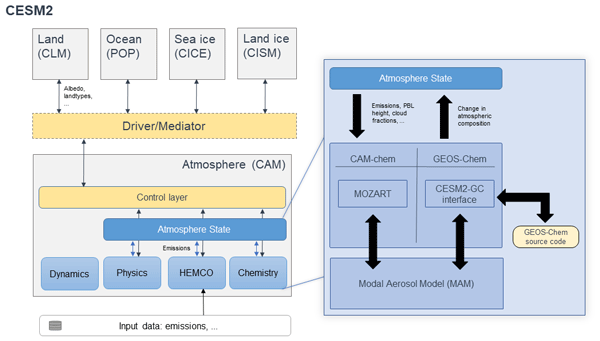
Thibaud M. Fritz, Sebastian D. Eastham, Louisa K. Emmons, Haipeng Lin, Elizabeth W. Lundgren, Steve Goldhaber, Steven R. H. Barrett, and Daniel J. Jacob
Geosci. Model Dev., 15, 8669–8704, https://doi.org/10.5194/gmd-15-8669-2022, https://doi.org/10.5194/gmd-15-8669-2022, 2022
Short summary
Short summary
We bring the state-of-the-science chemistry module GEOS-Chem into the Community Earth System Model (CESM). We show that some known differences between results from GEOS-Chem and CESM's CAM-chem chemistry module may be due to the configuration of model meteorology rather than inherent differences in the model chemistry. This is a significant step towards a truly modular Earth system model and allows two strong but currently separate research communities to benefit from each other's advances.
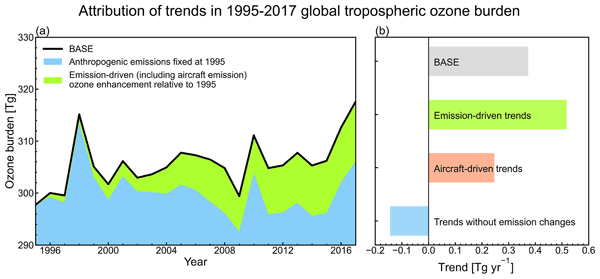
Haolin Wang, Xiao Lu, Daniel J. Jacob, Owen R. Cooper, Kai-Lan Chang, Ke Li, Meng Gao, Yiming Liu, Bosi Sheng, Kai Wu, Tongwen Wu, Jie Zhang, Bastien Sauvage, Philippe Nédélec, Romain Blot, and Shaojia Fan
Atmos. Chem. Phys., 22, 13753–13782, https://doi.org/10.5194/acp-22-13753-2022, https://doi.org/10.5194/acp-22-13753-2022, 2022
Short summary
Short summary
We report significant global tropospheric ozone increases in 1995–2017 based on extensive aircraft and ozonesonde observations. Using GEOS-Chem (Goddard Earth Observing System chemistry model) multi-decadal global simulations, we find that changes in global anthropogenic emissions, in particular the rapid increases in aircraft emissions, contribute significantly to the increases in tropospheric ozone and resulting radiative impact.

Yujie Wang and Christian Frankenberg
Biogeosciences, 19, 4705–4714, https://doi.org/10.5194/bg-19-4705-2022, https://doi.org/10.5194/bg-19-4705-2022, 2022
Short summary
Short summary
Plant hydraulics is often misrepresented in topical research. We highlight the commonly seen ambiguities and/or mistakes, with equations and figures to help visualize the potential biases. We recommend careful thinking when using or modifying existing plant hydraulic terms, methods, and models.
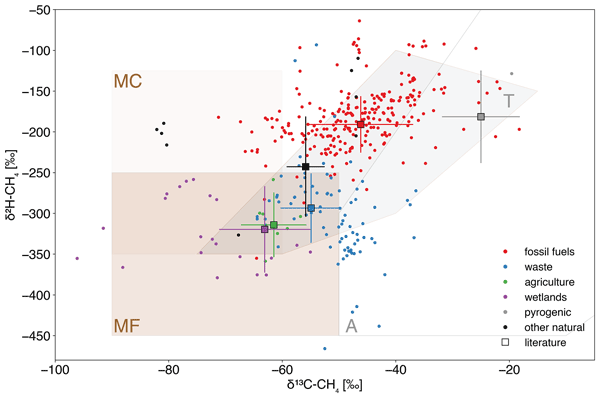
Malika Menoud, Carina van der Veen, Dave Lowry, Julianne M. Fernandez, Semra Bakkaloglu, James L. France, Rebecca E. Fisher, Hossein Maazallahi, Mila Stanisavljević, Jarosław Nęcki, Katarina Vinkovic, Patryk Łakomiec, Janne Rinne, Piotr Korbeń, Martina Schmidt, Sara Defratyka, Camille Yver-Kwok, Truls Andersen, Huilin Chen, and Thomas Röckmann
Earth Syst. Sci. Data, 14, 4365–4386, https://doi.org/10.5194/essd-14-4365-2022, https://doi.org/10.5194/essd-14-4365-2022, 2022
Short summary
Short summary
Emission sources of methane (CH4) can be distinguished with measurements of CH4 stable isotopes. We present new measurements of isotope signatures of various CH4 sources in Europe, mainly anthropogenic, sampled from 2017 to 2020. The present database also contains the most recent update of the global signature dataset from the literature. The dataset improves CH4 source attribution and the understanding of the global CH4 budget.
Yujie Wang and Christian Frankenberg
Biogeosciences Discuss., https://doi.org/10.5194/bg-2022-172, https://doi.org/10.5194/bg-2022-172, 2022
Revised manuscript not accepted
Short summary
Short summary
Leaf light absorption coefficient is often not measured along with leaf gas exchange, but assumed to be constant. This potentially causes biases in estimated photosynthetic capacity and modeled photosynthetic rates. We explored how leaf light absorption features and light source may impact the photosynthesis modeling, and found that the biases are dependent of model assumptions. Researchers need to be more cautious with these inaccurate assumptions in photosynthesis models.
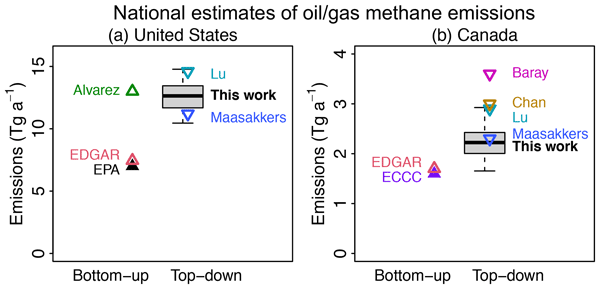
Lu Shen, Ritesh Gautam, Mark Omara, Daniel Zavala-Araiza, Joannes D. Maasakkers, Tia R. Scarpelli, Alba Lorente, David Lyon, Jianxiong Sheng, Daniel J. Varon, Hannah Nesser, Zhen Qu, Xiao Lu, Melissa P. Sulprizio, Steven P. Hamburg, and Daniel J. Jacob
Atmos. Chem. Phys., 22, 11203–11215, https://doi.org/10.5194/acp-22-11203-2022, https://doi.org/10.5194/acp-22-11203-2022, 2022
Short summary
Short summary
We use 22 months of TROPOMI satellite observations to quantity methane emissions from the oil (O) and natural gas (G) sector in the US and Canada at the scale of both individual basins as well as country-wide aggregates. We find that O/G-related methane emissions are underestimated in these inventories by 80 % for the US and 40 % for Canada, and 70 % of the underestimate in the US is from five O/G basins, including Permian, Haynesville, Anadarko, Eagle Ford, and Barnett.

Zichong Chen, Daniel J. Jacob, Hannah Nesser, Melissa P. Sulprizio, Alba Lorente, Daniel J. Varon, Xiao Lu, Lu Shen, Zhen Qu, Elise Penn, and Xueying Yu
Atmos. Chem. Phys., 22, 10809–10826, https://doi.org/10.5194/acp-22-10809-2022, https://doi.org/10.5194/acp-22-10809-2022, 2022
Short summary
Short summary
We quantify methane emissions in China and contributions from different sectors by inverse analysis of 2019 TROPOMI satellite observations of atmospheric methane. We find that anthropogenic methane emissions for China are underestimated in the national inventory. Our estimate of emissions indicates a small life-cycle loss rate, implying net climate benefits from the current
coal-to-gasenergy transition in China. However, this small loss rate can be misleading given China's high gas imports.
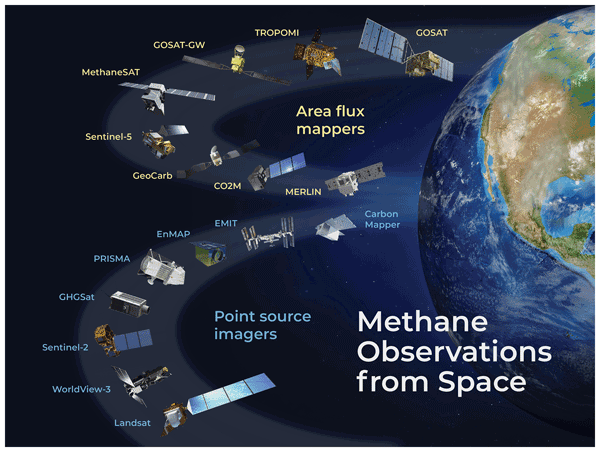
Daniel J. Jacob, Daniel J. Varon, Daniel H. Cusworth, Philip E. Dennison, Christian Frankenberg, Ritesh Gautam, Luis Guanter, John Kelley, Jason McKeever, Lesley E. Ott, Benjamin Poulter, Zhen Qu, Andrew K. Thorpe, John R. Worden, and Riley M. Duren
Atmos. Chem. Phys., 22, 9617–9646, https://doi.org/10.5194/acp-22-9617-2022, https://doi.org/10.5194/acp-22-9617-2022, 2022
Short summary
Short summary
We review the capability of satellite observations of atmospheric methane to quantify methane emissions on all scales. We cover retrieval methods, precision requirements, inverse methods for inferring emissions, source detection thresholds, and observations of system completeness. We show that current instruments already enable quantification of regional and national emissions including contributions from large point sources. Coverage and resolution will increase significantly in coming years.
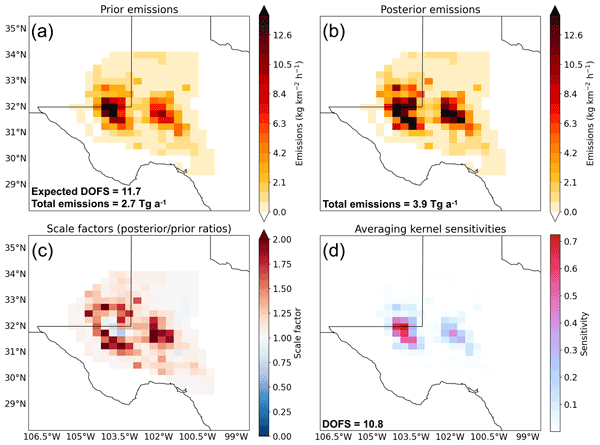
Daniel J. Varon, Daniel J. Jacob, Melissa Sulprizio, Lucas A. Estrada, William B. Downs, Lu Shen, Sarah E. Hancock, Hannah Nesser, Zhen Qu, Elise Penn, Zichong Chen, Xiao Lu, Alba Lorente, Ashutosh Tewari, and Cynthia A. Randles
Geosci. Model Dev., 15, 5787–5805, https://doi.org/10.5194/gmd-15-5787-2022, https://doi.org/10.5194/gmd-15-5787-2022, 2022
Short summary
Short summary
Reducing atmospheric methane emissions is critical to slow near-term climate change. Globally surveying satellite instruments like the TROPOspheric Monitoring Instrument (TROPOMI) have unique capabilities for monitoring atmospheric methane around the world. Here we present a user-friendly cloud-computing tool that enables researchers and stakeholders to quantify methane emissions across user-selected regions of interest using TROPOMI satellite observations.

Lady Mateus-Fontecha, Angela Vargas-Burbano, Rodrigo Jimenez, Nestor Y. Rojas, German Rueda-Saa, Dominik van Pinxteren, Manuela van Pinxteren, Khanneh Wadinga Fomba, and Hartmut Herrmann
Atmos. Chem. Phys., 22, 8473–8495, https://doi.org/10.5194/acp-22-8473-2022, https://doi.org/10.5194/acp-22-8473-2022, 2022
Short summary
Short summary
This study reports the chemical composition of regionally representative PM2.5 in an area densely populated and substantially industrialized, located in the inter-Andean valley, with the highest sugarcane yield in the world and where sugarcane is burned and harvested year round. We found that sugarcane burning is not portrayed as a distinguishable sample composition component. Instead, the composition analysis revealed multiple associations among sugarcane burning components and other sources.
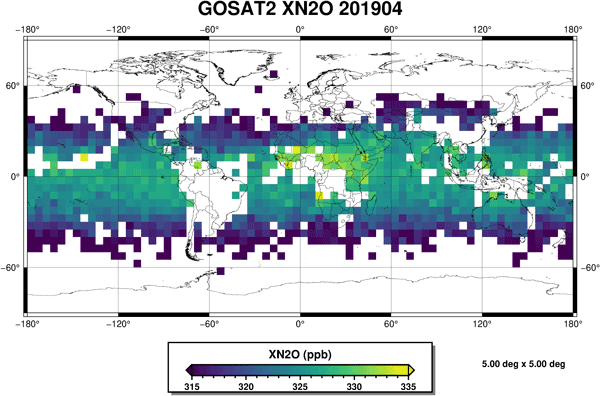
Stefan Noël, Maximilian Reuter, Michael Buchwitz, Jakob Borchardt, Michael Hilker, Oliver Schneising, Heinrich Bovensmann, John P. Burrows, Antonio Di Noia, Robert J. Parker, Hiroshi Suto, Yukio Yoshida, Matthias Buschmann, Nicholas M. Deutscher, Dietrich G. Feist, David W. T. Griffith, Frank Hase, Rigel Kivi, Cheng Liu, Isamu Morino, Justus Notholt, Young-Suk Oh, Hirofumi Ohyama, Christof Petri, David F. Pollard, Markus Rettinger, Coleen Roehl, Constantina Rousogenous, Mahesh Kumar Sha, Kei Shiomi, Kimberly Strong, Ralf Sussmann, Yao Té, Voltaire A. Velazco, Mihalis Vrekoussis, and Thorsten Warneke
Atmos. Meas. Tech., 15, 3401–3437, https://doi.org/10.5194/amt-15-3401-2022, https://doi.org/10.5194/amt-15-3401-2022, 2022
Short summary
Short summary
We present a new version (v3) of the GOSAT and GOSAT-2 FOCAL products.
In addition to an increased number of XCO2 data, v3 also includes products for XCH4 (full-physics and proxy), XH2O and the relative ratio of HDO to H2O (δD). For GOSAT-2, we also present first XCO and XN2O results. All FOCAL data products show reasonable spatial distribution and temporal variations and agree well with TCCON. Global XN2O maps show a gradient from the tropics to higher latitudes on the order of 15 ppb.
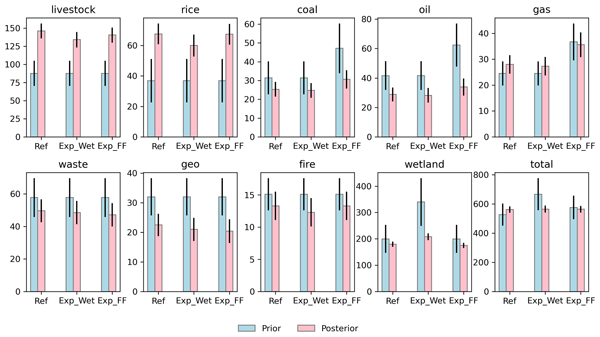
John R. Worden, Daniel H. Cusworth, Zhen Qu, Yi Yin, Yuzhong Zhang, A. Anthony Bloom, Shuang Ma, Brendan K. Byrne, Tia Scarpelli, Joannes D. Maasakkers, David Crisp, Riley Duren, and Daniel J. Jacob
Atmos. Chem. Phys., 22, 6811–6841, https://doi.org/10.5194/acp-22-6811-2022, https://doi.org/10.5194/acp-22-6811-2022, 2022
Short summary
Short summary
This paper is intended to accomplish two goals: 1) describe a new algorithm by which remotely sensed measurements of methane or other tracers can be used to not just quantify methane fluxes, but also attribute these fluxes to specific sources and regions and characterize their uncertainties, and 2) use this new algorithm to provide methane emissions by sector and country in support of the global stock take.
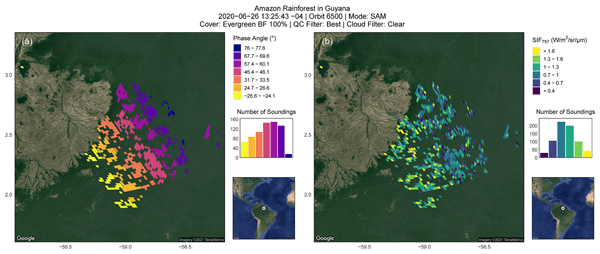
Russell Doughty, Thomas P. Kurosu, Nicholas Parazoo, Philipp Köhler, Yujie Wang, Ying Sun, and Christian Frankenberg
Earth Syst. Sci. Data, 14, 1513–1529, https://doi.org/10.5194/essd-14-1513-2022, https://doi.org/10.5194/essd-14-1513-2022, 2022
Short summary
Short summary
We describe and compare solar-induced chlorophyll fluorescence data produced by NASA from the Greenhouse Gases Observing Satellite (GOSAT) and the Orbiting Carbon Observatory-2 (OCO-2) and OCO-3 platforms.
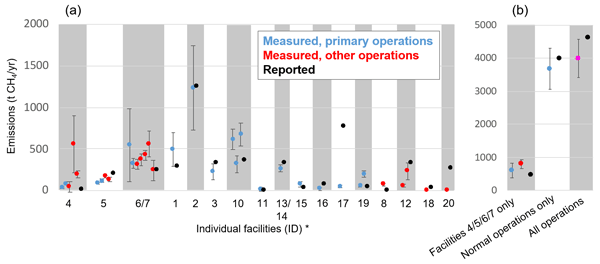
Amy Foulds, Grant Allen, Jacob T. Shaw, Prudence Bateson, Patrick A. Barker, Langwen Huang, Joseph R. Pitt, James D. Lee, Shona E. Wilde, Pamela Dominutti, Ruth M. Purvis, David Lowry, James L. France, Rebecca E. Fisher, Alina Fiehn, Magdalena Pühl, Stéphane J. B. Bauguitte, Stephen A. Conley, Mackenzie L. Smith, Tom Lachlan-Cope, Ignacio Pisso, and Stefan Schwietzke
Atmos. Chem. Phys., 22, 4303–4322, https://doi.org/10.5194/acp-22-4303-2022, https://doi.org/10.5194/acp-22-4303-2022, 2022
Short summary
Short summary
We measured CH4 emissions from 21 offshore oil and gas facilities in the Norwegian Sea in 2019. Measurements compared well with operator-reported emissions but were greatly underestimated when compared with a 2016 global fossil fuel inventory. This study demonstrates the need for up-to-date and accurate inventories for use in research and policy and the important benefits of best-practice reporting methods by operators. Airborne measurements are an effective tool to validate such inventories.
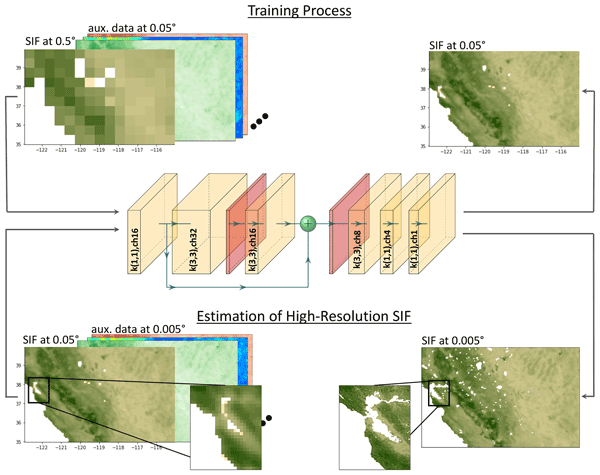
Johannes Gensheimer, Alexander J. Turner, Philipp Köhler, Christian Frankenberg, and Jia Chen
Biogeosciences, 19, 1777–1793, https://doi.org/10.5194/bg-19-1777-2022, https://doi.org/10.5194/bg-19-1777-2022, 2022
Short summary
Short summary
We develop a convolutional neural network, named SIFnet, that increases the spatial resolution of SIF from TROPOMI by a factor of 10 to a spatial resolution of 0.005°. SIFnet utilizes coarse SIF observations, together with a broad range of high-resolution auxiliary data. The insights gained from interpretable machine learning techniques allow us to make quantitative claims about the relationships between SIF and other common parameters related to photosynthesis.
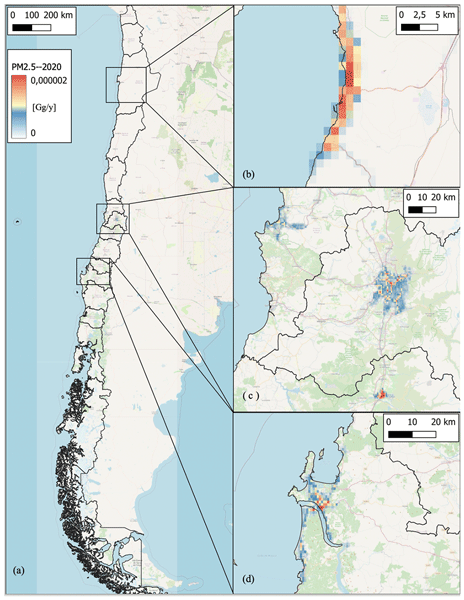
Mauricio Osses, Néstor Rojas, Cecilia Ibarra, Víctor Valdebenito, Ignacio Laengle, Nicolás Pantoja, Darío Osses, Kevin Basoa, Sebastián Tolvett, Nicolás Huneeus, Laura Gallardo, and Benjamín Gómez
Earth Syst. Sci. Data, 14, 1359–1376, https://doi.org/10.5194/essd-14-1359-2022, https://doi.org/10.5194/essd-14-1359-2022, 2022
Short summary
Short summary
This paper presents a detailed estimate of on-road vehicle emissions for Chile, between 1990–2020, and an analysis of emission trends for greenhouse gases and local pollutants. Data are disaggregated by type of vehicle and region at 0.01° × 0.01°. While the vehicle fleet grew 5-fold, CO2 emissions increased at a lower rate and local pollutants decreased. These trends can be explained by changes in improved vehicle technologies, better fuel quality and enforcement of emission standards.
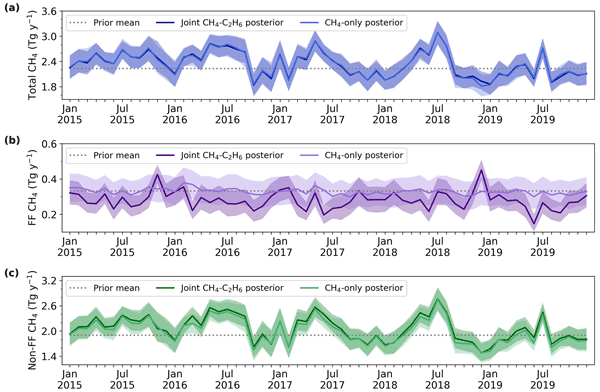
Alice E. Ramsden, Anita L. Ganesan, Luke M. Western, Matthew Rigby, Alistair J. Manning, Amy Foulds, James L. France, Patrick Barker, Peter Levy, Daniel Say, Adam Wisher, Tim Arnold, Chris Rennick, Kieran M. Stanley, Dickon Young, and Simon O'Doherty
Atmos. Chem. Phys., 22, 3911–3929, https://doi.org/10.5194/acp-22-3911-2022, https://doi.org/10.5194/acp-22-3911-2022, 2022
Short summary
Short summary
Quantifying methane emissions from different sources is a key focus of current research. We present a method for estimating sectoral methane emissions that uses ethane as a tracer for fossil fuel methane. By incorporating variable ethane : methane emission ratios into this model, we produce emissions estimates with improved uncertainty characterisation. This method will be particularly useful for studying methane emissions in areas with complex distributions of sources.
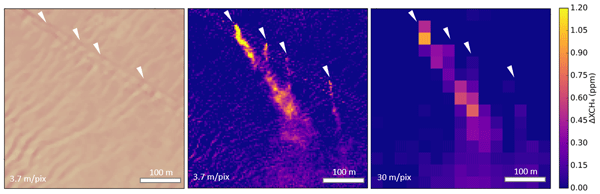
Elena Sánchez-García, Javier Gorroño, Itziar Irakulis-Loitxate, Daniel J. Varon, and Luis Guanter
Atmos. Meas. Tech., 15, 1657–1674, https://doi.org/10.5194/amt-15-1657-2022, https://doi.org/10.5194/amt-15-1657-2022, 2022
Short summary
Short summary
This study seeks to present the as-yet-unknown potential use of WorldView-3 for the mapping of methane point source emissions. The proposed retrieval methodology is based on the idea that the spectral channels not affected by methane can be used to predict the methane-affected band through regression analysis. The results show the precise location of 26 independent point emissions over different methane hotspot regions worldwide, which prove the game-changing potential that this mission entails.
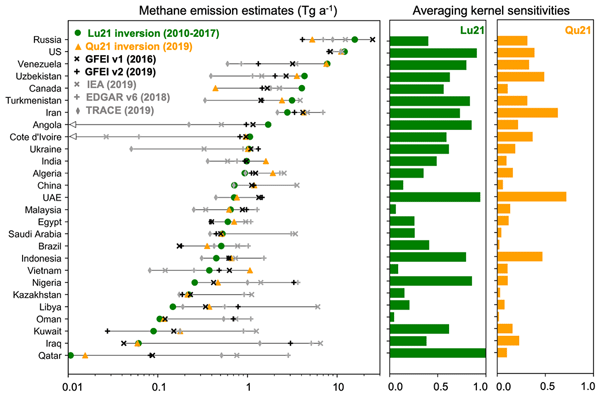
Tia R. Scarpelli, Daniel J. Jacob, Shayna Grossman, Xiao Lu, Zhen Qu, Melissa P. Sulprizio, Yuzhong Zhang, Frances Reuland, Deborah Gordon, and John R. Worden
Atmos. Chem. Phys., 22, 3235–3249, https://doi.org/10.5194/acp-22-3235-2022, https://doi.org/10.5194/acp-22-3235-2022, 2022
Short summary
Short summary
We present a spatially explicit version of the national inventories of oil, gas, and coal methane emissions as submitted by individual countries to the United Nations Framework Convention on Climate Change (UNFCCC) in 2021. We then use atmospheric modeling to compare our inventory emissions to atmospheric methane observations with the goal of identifying potential under- and overestimates of oil–gas methane emissions in the national inventories.

Drew C. Pendergrass, Shixian Zhai, Jhoon Kim, Ja-Ho Koo, Seoyoung Lee, Minah Bae, Soontae Kim, Hong Liao, and Daniel J. Jacob
Atmos. Meas. Tech., 15, 1075–1091, https://doi.org/10.5194/amt-15-1075-2022, https://doi.org/10.5194/amt-15-1075-2022, 2022
Short summary
Short summary
This paper uses a machine learning algorithm to infer high-resolution maps of particulate air quality in eastern China, Japan, and the Korean peninsula, using data from a geostationary satellite along with meteorology. We then perform an extensive evaluation of this inferred air quality and use it to diagnose trends in the region. We hope this paper and the associated data will be valuable to other scientists interested in epidemiology, air quality, remote sensing, and machine learning.
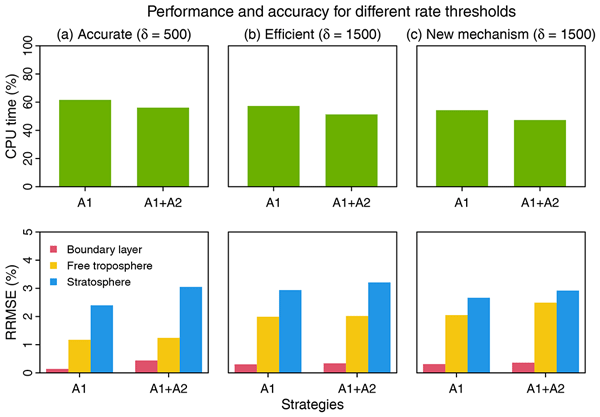
Lu Shen, Daniel J. Jacob, Mauricio Santillana, Kelvin Bates, Jiawei Zhuang, and Wei Chen
Geosci. Model Dev., 15, 1677–1687, https://doi.org/10.5194/gmd-15-1677-2022, https://doi.org/10.5194/gmd-15-1677-2022, 2022
Short summary
Short summary
The high computational cost of chemical integration is a long-standing limitation in global atmospheric chemistry models. Here we present an adaptive and efficient algorithm that can reduce the computational time of atmospheric chemistry by 50 % and maintain the error below 2 % for important species, inspired by machine learning clustering techniques and traditional asymptotic analysis ideas.
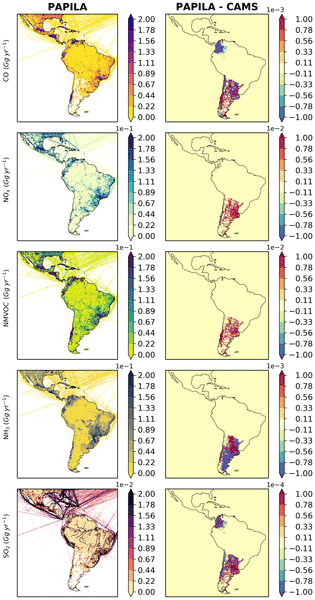
Paula Castesana, Melisa Diaz Resquin, Nicolás Huneeus, Enrique Puliafito, Sabine Darras, Darío Gómez, Claire Granier, Mauricio Osses Alvarado, Néstor Rojas, and Laura Dawidowski
Earth Syst. Sci. Data, 14, 271–293, https://doi.org/10.5194/essd-14-271-2022, https://doi.org/10.5194/essd-14-271-2022, 2022
Short summary
Short summary
This work presents the results of the first joint effort of South American and European researchers to generate regional maps of emissions. The PAPILA dataset is a collection of annual emission inventories of reactive gases (CO, NOx, NMVOCs, NH3, and SO2) from anthropogenic sources in the region for the period 2014–2016. This was developed on the basis of the CAMS-GLOB-ANT v4.1 dataset, enriching it with derived data from locally available emission inventories for Argentina, Chile, and Colombia.
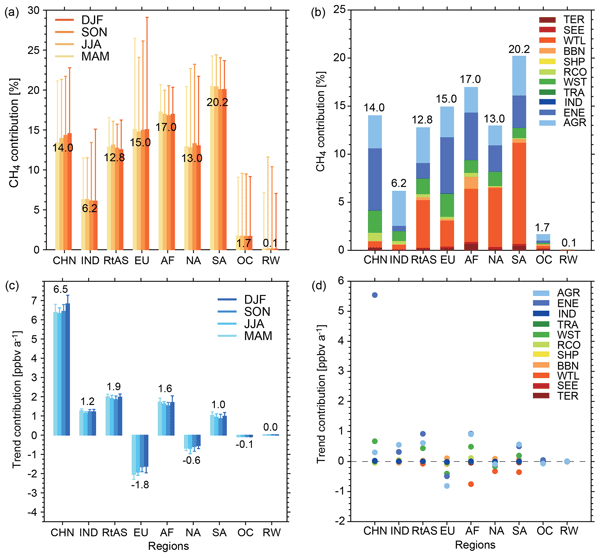
Haiyue Tan, Lin Zhang, Xiao Lu, Yuanhong Zhao, Bo Yao, Robert J. Parker, and Hartmut Boesch
Atmos. Chem. Phys., 22, 1229–1249, https://doi.org/10.5194/acp-22-1229-2022, https://doi.org/10.5194/acp-22-1229-2022, 2022
Short summary
Short summary
Methane is the second most important anthropogenic greenhouse gas. Understanding methane emissions and concentration growth over China in the past decade is important to support its mitigation. This study analyzes the contributions of methane emissions from different regions and sources over the globe to methane changes over China in 2007–2018. Our results show strong international transport influences and emphasize the need of intensive methane measurements covering eastern China.

Xiao Lu, Daniel J. Jacob, Haolin Wang, Joannes D. Maasakkers, Yuzhong Zhang, Tia R. Scarpelli, Lu Shen, Zhen Qu, Melissa P. Sulprizio, Hannah Nesser, A. Anthony Bloom, Shuang Ma, John R. Worden, Shaojia Fan, Robert J. Parker, Hartmut Boesch, Ritesh Gautam, Deborah Gordon, Michael D. Moran, Frances Reuland, Claudia A. Octaviano Villasana, and Arlyn Andrews
Atmos. Chem. Phys., 22, 395–418, https://doi.org/10.5194/acp-22-395-2022, https://doi.org/10.5194/acp-22-395-2022, 2022
Short summary
Short summary
We evaluate methane emissions and trends for 2010–2017 in the gridded national emission inventories for the United States, Canada, and Mexico by inversion of in situ and satellite methane observations. We find that anthropogenic methane emissions for all three countries are underestimated in the national inventories, largely driven by oil emissions. Anthropogenic methane emissions in the US peak in 2014, in contrast to the report of a steadily decreasing trend over 2010–2017 from the US EPA.
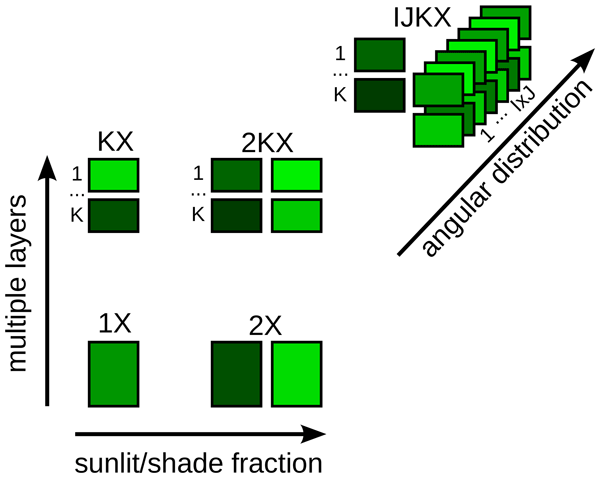
Yujie Wang and Christian Frankenberg
Biogeosciences, 19, 29–45, https://doi.org/10.5194/bg-19-29-2022, https://doi.org/10.5194/bg-19-29-2022, 2022
Short summary
Short summary
Modeling vegetation canopy is important in predicting whether the land remains a carbon sink to mitigate climate change in the near future. Vegetation canopy model complexity, however, impacts the model-predicted carbon and water fluxes as well as canopy fluorescence, even if the same suite of model inputs is used. Given the biases caused by canopy model complexity, we recommend not misusing parameters inverted using different models or assumptions.

Alexander J. Turner, Philipp Köhler, Troy S. Magney, Christian Frankenberg, Inez Fung, and Ronald C. Cohen
Biogeosciences, 18, 6579–6588, https://doi.org/10.5194/bg-18-6579-2021, https://doi.org/10.5194/bg-18-6579-2021, 2021
Short summary
Short summary
This work builds a high-resolution estimate (500 m) of gross primary productivity (GPP) over the US using satellite measurements of solar-induced chlorophyll fluorescence (SIF) from the TROPOspheric Monitoring Instrument (TROPOMI) between 2018 and 2020. We identify ecosystem-specific scaling factors for estimating gross primary productivity (GPP) from TROPOMI SIF. Extreme precipitation events drive four regional GPP anomalies that account for 28 % of year-to-year GPP differences across the US.
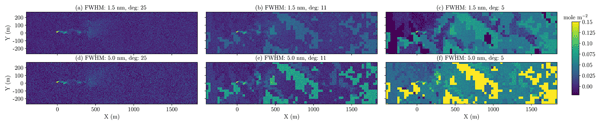
Siraput Jongaramrungruang, Georgios Matheou, Andrew K. Thorpe, Zhao-Cheng Zeng, and Christian Frankenberg
Atmos. Meas. Tech., 14, 7999–8017, https://doi.org/10.5194/amt-14-7999-2021, https://doi.org/10.5194/amt-14-7999-2021, 2021
Short summary
Short summary
This study shows how precision error and bias in column methane retrieval change with different instrument specifications and the impact of spectrally complex surface albedos on retrievals. We show how surface interferences can be mitigated with an optimal spectral resolution and a higher polynomial degree in a retrieval process. The findings can inform future satellite instrument designs to have robust observations capable of separating real CH4 plume enhancements from surface interferences.

Kelvin H. Bates, Daniel J. Jacob, Ke Li, Peter D. Ivatt, Mat J. Evans, Yingying Yan, and Jintai Lin
Atmos. Chem. Phys., 21, 18351–18374, https://doi.org/10.5194/acp-21-18351-2021, https://doi.org/10.5194/acp-21-18351-2021, 2021
Short summary
Short summary
Simple aromatic compounds (benzene, toluene, xylene) have complex gas-phase chemistry that is inconsistently represented in atmospheric models. We compile recent experimental and theoretical insights to develop a new mechanism for gas-phase aromatic oxidation that is sufficiently compact for use in multiscale models. We compare our new mechanism to chamber experiments and other mechanisms, and implement it in a global model to quantify the impacts of aromatic oxidation on tropospheric chemistry.
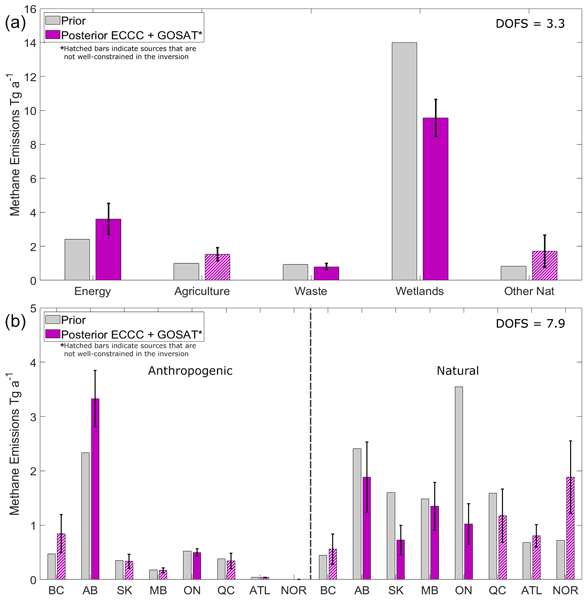
Sabour Baray, Daniel J. Jacob, Joannes D. Maasakkers, Jian-Xiong Sheng, Melissa P. Sulprizio, Dylan B. A. Jones, A. Anthony Bloom, and Robert McLaren
Atmos. Chem. Phys., 21, 18101–18121, https://doi.org/10.5194/acp-21-18101-2021, https://doi.org/10.5194/acp-21-18101-2021, 2021
Short summary
Short summary
We use 2010–2015 surface and satellite observations to disentangle methane from anthropogenic and natural sources in Canada. Using a chemical transport model (GEOS-Chem), the mismatch between modelled and observed methane concentrations can be used to infer emissions according to Bayesian statistics. Compared to prior knowledge, we show higher anthropogenic emissions attributed to energy and/or agriculture in Western Canada and lower natural emissions from Boreal wetlands.
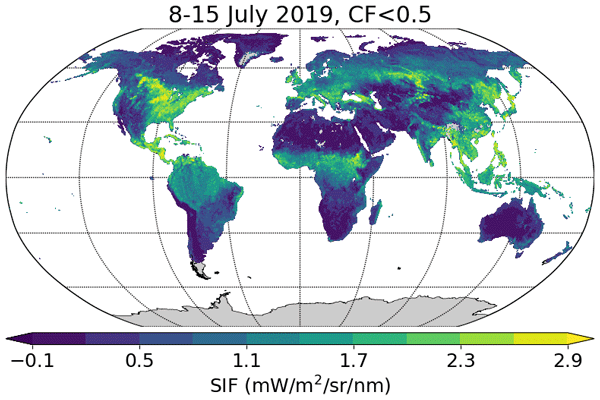
Luis Guanter, Cédric Bacour, Andreas Schneider, Ilse Aben, Tim A. van Kempen, Fabienne Maignan, Christian Retscher, Philipp Köhler, Christian Frankenberg, Joanna Joiner, and Yongguang Zhang
Earth Syst. Sci. Data, 13, 5423–5440, https://doi.org/10.5194/essd-13-5423-2021, https://doi.org/10.5194/essd-13-5423-2021, 2021
Short summary
Short summary
Sun-induced chlorophyll fluorescence (SIF) is an electromagnetic signal emitted by plants in the red and far-red parts of the spectrum. It has a functional link to photosynthesis and can be measured by satellite instruments, which makes it an important variable for the remote monitoring of the photosynthetic activity of vegetation ecosystems around the world. In this contribution we present a SIF dataset derived from the new Sentinel-5P TROPOMI missions.
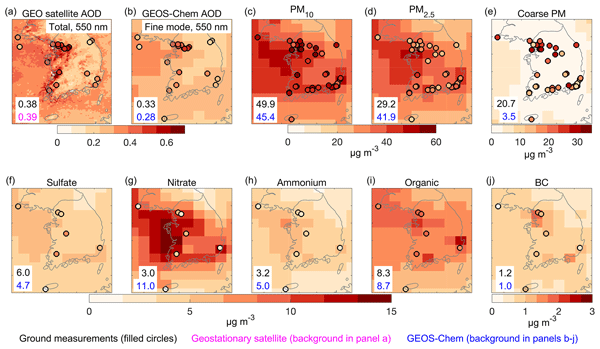
Shixian Zhai, Daniel J. Jacob, Jared F. Brewer, Ke Li, Jonathan M. Moch, Jhoon Kim, Seoyoung Lee, Hyunkwang Lim, Hyun Chul Lee, Su Keun Kuk, Rokjin J. Park, Jaein I. Jeong, Xuan Wang, Pengfei Liu, Gan Luo, Fangqun Yu, Jun Meng, Randall V. Martin, Katherine R. Travis, Johnathan W. Hair, Bruce E. Anderson, Jack E. Dibb, Jose L. Jimenez, Pedro Campuzano-Jost, Benjamin A. Nault, Jung-Hun Woo, Younha Kim, Qiang Zhang, and Hong Liao
Atmos. Chem. Phys., 21, 16775–16791, https://doi.org/10.5194/acp-21-16775-2021, https://doi.org/10.5194/acp-21-16775-2021, 2021
Short summary
Short summary
Geostationary satellite aerosol optical depth (AOD) has tremendous potential for monitoring surface fine particulate matter (PM2.5). Our study explored the physical relationship between AOD and PM2.5 by integrating data from surface networks, aircraft, and satellites with the GEOS-Chem chemical transport model. We quantitatively showed that accurate simulation of aerosol size distributions, boundary layer depths, relative humidity, coarse particles, and diurnal variations in PM2.5 are essential.

Yujie Wang, Philipp Köhler, Liyin He, Russell Doughty, Renato K. Braghiere, Jeffrey D. Wood, and Christian Frankenberg
Geosci. Model Dev., 14, 6741–6763, https://doi.org/10.5194/gmd-14-6741-2021, https://doi.org/10.5194/gmd-14-6741-2021, 2021
Short summary
Short summary
We present the first step in testing a new land model as part of a new Earth system model. Our model links plant hydraulics, stomatal optimization theory, and a comprehensive canopy radiation scheme. We compared model-predicted carbon and water fluxes to flux tower observations and model-predicted sun-induced chlorophyll fluorescence to satellite retrievals. Our model quantitatively predicted the carbon and water fluxes as well as the canopy fluorescence yield.
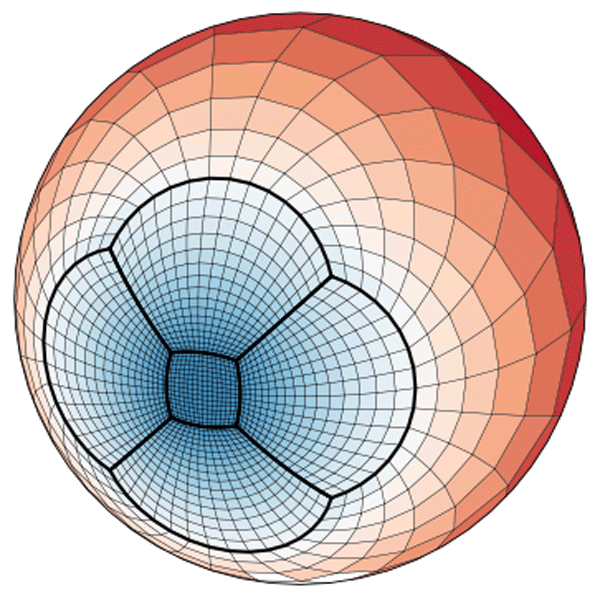
Liam Bindle, Randall V. Martin, Matthew J. Cooper, Elizabeth W. Lundgren, Sebastian D. Eastham, Benjamin M. Auer, Thomas L. Clune, Hongjian Weng, Jintai Lin, Lee T. Murray, Jun Meng, Christoph A. Keller, William M. Putman, Steven Pawson, and Daniel J. Jacob
Geosci. Model Dev., 14, 5977–5997, https://doi.org/10.5194/gmd-14-5977-2021, https://doi.org/10.5194/gmd-14-5977-2021, 2021
Short summary
Short summary
Atmospheric chemistry models like GEOS-Chem are versatile tools widely used in air pollution and climate studies. The simulations used in such studies can be very computationally demanding, and thus it is useful if the model can simulate a specific geographic region at a higher resolution than the rest of the globe. Here, we implement, test, and demonstrate a new variable-resolution capability in GEOS-Chem that is suitable for simulations conducted on supercomputers.
Cited articles
Agencia Nacional de Hidrocarburos: Mapa de infraestructura petrolera en Colombia, https://www.anh.gov.co/documents/14498/1357mapa_infraestructura_petrolera.pdf (last access: 19 May 2025), 2010.
Agencia Nacional de Minería: Fact Sheet: Coal–December 2023, https://mineriaencolombia.anm.gov.co/sites/default/files/2023-12/Fact Sheet Coal 12 2023.pdf (last access: 16 May 2025) 2023.
Agencia Nacional de Minería: Visor Geográfico Agencia Nacional de Minería ANM, https://www.anla.gov.co/eureka/geovisores-y-mapas/177-sistema-de-informacion (last access: 19 May 2025), 2024.
Ardila, A. V., Vargas-Burbano, A. C., Morales-Rincon, L. A., and Jimenez, R.: Comparison and critical review of Colombia's anthropogenic methane emissions inventory – Missing and underestimated sources (in Spanish), in: Proceedings of CASAP X (10th Colombian Congress and International Conference on Air Quality, Climate Change, and Public Health), Paper 007_1, https://casap.science/wp-content/uploads/2025/07/007_1_Ardila.pdf (last access: 3 June 2025), 2025a.
Ardila, A. V., González, C. M., Cifuentes, F., Rueda-Saa, G., and Jimenez, R.: Meteorological measurement and simulation datasets to understand the complex circulation over a tropical inter-Andean valley, Data in Brief, 60, 111614, https://doi.org/10.1016/j.dib.2025.111614, 2025b.
Balasus, N., Jacob, D. J., Lorente, A., Maasakkers, J. D., Parker, R. J., Boesch, H., Chen, Z., Kelp, M. M., Nesser, H., and Varon, D. J.: A blended TROPOMI+GOSAT satellite data product for atmospheric methane using machine learning to correct retrieval biases, Atmos. Meas. Tech., 16, 3787–3807, https://doi.org/10.5194/amt-16-3787-2023, 2023.
Balasus, N., Jacob, D. J., Bloom, A. A., East, J. D., Estrada, L. A., Hancock, S. E., He, M., Mooring, T. A., Turner, A. J., and Worden, J. R.: 2019–2024 trends in African livestock and wetland emissions as contributors to the global methane rise, EGUsphere [preprint], https://doi.org/10.5194/egusphere-2025-6251, 2026.
Borchardt, J., Harris, S. J., Hacker, J. M., Lunt, M., Krautwurst, S., Bai, M., Bösch, H., Bovensmann, H., Burrows, J. P., Chakravarty, S., Field, R. A., Gerilowski, K., Huhs, O., Junkermann, W., Kelly, B. F. J., Kumm, M., Lieff, W., McGrath, A., Murphy, A., Schindewolf, J., and Thoböll, J.: Insights into Elevated Methane Emissions from an Australian Open-Cut Coal Mine Using Two Independent Airborne Techniques, Environ. Sci. Technol. Lett., 12, 397–404, https://doi.org/10.1021/acs.estlett.4c01063, 2025.
Brasseur, G. P. and Jacob, D. J.: Modeling of Atmospheric Chemistry, Cambridge University Press, Cambridge, https://doi.org/10.1017/9781316544754, 2017.
Caicedo, Y. C., Garrido Galindo, A. P., Fuentes, I. M., and Vásquez, E. V.: Association of the chemical composition and nutritional value of forage resources in Colombia with methane emissions by enteric fermentation, Trop. Anim. Health Prod., 55, 84, https://doi.org/10.1007/s11250-023-03458-x, 2023.
Calderon-Cangrejo, N., Festa-Bianchet, S. A., Conrad, B. M., Tyner, D. R., Wilde, S. E., and Johnson, M. R.: Progress Toward a First Measurement-Based Oil and Gas Sector Methane Inventory for Colombia, EGU General Assembly 2025, Vienna, Austria, 27 Apr–2 May 2025, EGU25-13193, https://doi.org/10.5194/egusphere-egu25-13193, 2025.
Calisesi, Y., Soebijanta, V. T., and van Oss, R.: Regridding of remote soundings: Formulation and application to ozone profile comparison, J. Geophys. Res.-Atmos., 110, D23306, https://doi.org/10.1029/2005JD006122, 2005.
Carbon Mapper: Carbon Mapper CH4 Point Source Data Portal, https://data.carbonmapper.org/ (last access: 4 June 2025), 2023.
Cárdenas, L., Cañas-Álvarez, J. J., Vázquez, A., Boixadera, E., and Casal, J.: Analysis of domestic animal movements in Colombia (2006–2014) and their possible influence on the bovine brucellosis spread, Tropical Animal Health and Production, 51, 383–388, https://doi.org/10.1007/s11250-018-1701-9, 2019.
Caro, M. A. T., Vargas, R. D. S., and Otero, C. A. O.: Qualitative indicators for community water resilience in floodable areas: Agricultural pantry of La Mojana, Colombia, Economia agro-alimentare, https://doi.org/10.3280/ecag2023oa14638, 2023.
Castro-González, M. and Torres-Valdés, V.: Gases invernadero en aguas con bajo oxígeno en el reservorio eutrófico de Prado (Colombia), Revista de la Academia Colombiana de Ciencias Exactas, Físicas y Naturales, 39, 399–407, https://doi.org/10.18257/raccefyn.228, 2015.
Chen, Z., Jacob, D. J., Gautam, R., Omara, M., Stavins, R. N., Stowe, R. C., Nesser, H. O., Sulprizio, M. P., Lorente, A., Varon, D. J., Lu, X., Shen, L., Qu, Z., Pendergrass, D. C., and Hancock, S.: Satellite quantification of methane emissions and oil/gas methane intensities from individual countries in the Middle East and North Africa: implications for climate action, EGUsphere [preprint], https://doi.org/10.5194/egusphere-2022-1504, 2023.
Cheng, Y., Jiang, H., Zhang, X., Cui, J., Song, C., and Li, X.: Effects of coal rank on physicochemical properties of coal and on methane adsorption, Int. J. Coal Sci. Technol., 4, 129–146, https://doi.org/10.1007/s40789-017-0161-6, 2017.
CIPAV, FEDEGÁN, CIAT, Fondo Acción, The Nature Conservancy, World Bank, Ministerio de Agricultura y Desarrollo Rural, and Ministerio de Ambiente y Desarrollo Sostenible: Reporte Final: NAMA Bovina de Colombia, Centro para la Investigación en Sistemas Sostenibles de Producción Agropecuaria (CIPAV), https://cipav.org.co/wp-content/uploads/2021/10/Reporte-NAMA-Bovina-de-Colombia.pdf (last access: 19 May 2025), 2021.
Colligan, T., Poulter, B., and Quinn, C.: LPJ-EOSIM L2 Global Simulated Monthly Wetland Methane Flux V001, NASA Goddard Earth Sciences Data and Information Services Center (GES DISC) [data set], https://doi.org/10.5067/COMMUNITY/LPJ-EOSIM/LPJ_EOSIM_L2_MCH4E.001, 2024.
Crippa, M., Guizzardi, D., Banja, M., Solazzo, E., Muntean, M., Schaaf, E., and Pagani, F.: EDGAR v7 Greenhouse Gas Emissions [data set], European Commission, Joint Research Centre (JRC), Emissions Database for Global Atmospheric Research (EDGAR), https://edgar.jrc.ec.europa.eu/dataset_ghg70 (last access: 19 July 2024), 2022.
Crippa, M., Guizzardi, D., Pagani, F., Schiavina, M., Melchiorri, M., Pisoni, E., Graziosi, F., Muntean, M., Maes, J., Dijkstra, L., Van Damme, M., Clarisse, L., and Coheur, P.: Insights into the spatial distribution of global, national, and subnational greenhouse gas emissions in the Emissions Database for Global Atmospheric Research (EDGAR v8.0), Earth Syst. Sci. Data, 16, 2811–2830, https://doi.org/10.5194/essd-16-2811-2024, 2024.
DeLucia, N. J., Gomez-Casanovas, N., Boughton, E. H., and Bernacchi, C. J.: The Role of Management on Methane Emissions From Subtropical Wetlands Embedded in Agricultural Ecosystems, J. Geophys. Res.-Biogeo., 124, 2694–2708, https://doi.org/10.1029/2019JG005132, 2019.
Delwiche, K. B., Harrison, J. A., Maasakkers, J. D., Sulprizio, M. P., Worden, J., Jacob, D. J., and Sunderland, E. M.: Estimating Drivers and Pathways for Hydroelectric Reservoir Methane Emissions Using a New Mechanistic Model, J. Geophys. Res.-Biogeo., 127, e2022JG006908, https://doi.org/10.1029/2022JG006908, 2022.
Demarchi, J. J. A. A., Manella, M. Q., Primavesi, O., Frighetto, R., Romero, L., Berndt, A., and Lima, M.: Effect of Seasons on Enteric Methane Emissions from Cattle Grazing Urochloa brizantha, J. Agr. Sci., 8, p106, https://doi.org/10.5539/jas.v8n4p106, 2016.
Earthworks: Oil and Gas Pollution in Colombia – Earthworks SWIR Camera Footage, 2023.
Ecopetrol incrementó en 17% la producción de combustibles en sus refinerías en 2023: https://www.ecopetrol.com.co/wps/portal/Home/es/noticias (last access: 15 July 2026), 2024.
Environmental Investigation Agency: Crude Lies: Colombia's Oil Industry Hidden Impacts on People, Biodiversity, and Climate, Environmental Investigation Agency, https://eia.org/wp-content/uploads/2025/03/EIA_US_Colombia_Crude_Oil_Report_0325_ONLINE_FINAL.pdf (last access: 19 May 2025), 2025.
Estrada, L. A., Varon, D. J., Sulprizio, M., Nesser, H., Chen, Z., Balasus, N., Hancock, S. E., He, M., East, J. D., Mooring, T. A., Oort Alonso, A., Maasakkers, J. D., Aben, I., Baray, S., Bowman, K. W., Worden, J. R., Cardoso-Saldaña, F. J., Reidy, E., and Jacob, D. J.: Integrated Methane Inversion (IMI) 2.0: an improved research and stakeholder tool for monitoring total methane emissions with high resolution worldwide using TROPOMI satellite observations, Geosci. Model Dev., 18, 3311–3330, https://doi.org/10.5194/gmd-18-3311-2025, 2025.
Etiope, G., Ciotoli, G., Schwietzke, S., and Schoell, M.: Gridded maps of geological methane emissions and their isotopic signature, Earth Syst. Sci. Data, 11, 1–22, https://doi.org/10.5194/essd-11-1-2019, 2019.
Forster, P., Storelvmo, T., Armour, K., Collins, W., Dufresne, J.-L., Frame, D., Lunt, D. J., Mauritsen, T., Palmer, M. D., Watanabe, M., Wild, M., and Zhang, H.: The Earth’s Energy Budget, Climate Feedbacks, and Climate Sensitivity, in: Climate Change 2021: The Physical Science Basis. Contribution of Working Group I to the Sixth Assessment Report of the Intergovernmental Panel on Climate Change, edited by: Masson-Delmotte, V., Zhai, P., Pirani, A., Connors, S. L., Péan, C., Berger, S., Caud, N., Chen, Y., Goldfarb, L., Gomis, M. I., Huang, M., Leitzell, K., Lonnoy, E., Matthews, J. B. R., Maycock, T. K., Waterfield, T., Yelekçi, O., Yu, R., and Zhou, B., Cambridge University Press, Cambridge, United Kingdom and New York, NY, USA, 923–1054, https://doi.org/10.1017/9781009157896.009, 2021.
Frankenberg, C., Bar-On, Y. M., Yin, Y., Wennberg, P. O., Jacob, D. J., and Michalak, A. M.: Data Drought in the Humid Tropics: How to Overcome the Cloud Barrier in Greenhouse Gas Remote Sensing, Geophysical Research Letters, 51, e2024GL108791, https://doi.org/10.1029/2024GL108791, 2024.
Fung, I., John, J., Lerner, J., Matthews, E., Prather, M., Steele, L. P., and Fraser, P. J.: Three-dimensional model synthesis of the global methane cycle, J. Geophys. Res.-Atmos., 96, 13033–13065, https://doi.org/10.1029/91JD01247, 1991.
Garrido, A. P., Bernal, F. T., Fontanilla, J. D., Caicedo, Y. C., and Vélez-Pereira, A. M.: Assessment of livestock greenhouse gases in Colombia between 1995 and 2015, Heliyon, 8, https://doi.org/10.1016/j.heliyon.2022.e12262, 2022.
Global Methane Initiative (GMI): Colombia Coal Mine Methane Market Study, Global Methane Initiative, https://www.globalmethane.org/documents/Colombia CMM Market Study-2019.pdf (last access: 15 May 2025), 2019.
Gobierno de Colombia: Tercer Informe Bienal de Actualización ante la CMNUCC (BUR-3), Ministerio de Ambiente y Desarrollo Sostenible, https://unfccc.int/documents/424157 (last access: 15 May 2025), 2022.
Green, R. O., Thorpe, A. K., Brodrick, P. G., Chadwick, K. D., Lopez, A. J., Elder, C. D., Villanueva-Weeks, C., Fahlen, J. E., Coleman, R. W., Jensen, D., Bender, H. A., Vinckier, Q., Xiang, C., Olson-Duvall, W., Lundeen, S. R., and Thompson, D. R.: EMIT L2B Estimated Methane Plume Complexes 60 m V001, NASA Land Processes Distributed Active Archive Center (LP DAAC), https://doi.org/10.5067/EMIT/EMITL2BCH4PLM.001, 2023.
Hancock, S. E., Jacob, D. J., Chen, Z., Nesser, H., Davitt, A., Varon, D. J., Sulprizio, M. P., Balasus, N., Estrada, L. A., Cazorla, M., Dawidowski, L., Diez, S., East, J. D., Penn, E., Randles, C. A., Worden, J., Aben, I., Parker, R. J., and Maasakkers, J. D.: Satellite quantification of methane emissions from South American countries: a high-resolution inversion of TROPOMI and GOSAT observations, Atmos. Chem. Phys., 25, 797–817, https://doi.org/10.5194/acp-25-797-2025, 2025.
He, M., Jacob, D. J., Estrada, L. A., Varon, D. J., Sulprizio, M., Balasus, N., East, J. D., Penn, E., Pendergrass, D. C., Chen, Z., Mooring, T. A., Maasakkers, J. D., Brodrick, P. G., Frankenberg, C., Bowman, K. W., and Bruhwiler, L.: Attributing 2019–2024 methane growth using TROPOMI satellite observations, Science Advances, 12, eadz9007, https://doi.org/10.1126/sciadv.adz9007, 2026.
Heald, C. L., Jacob, D. J., Jones, D. B. A., Palmer, P. I., Logan, J. A., Streets, D. G., Sachse, G. W., Gille, J. C., Hoffman, R. N., and Nehrkorn, T.: Comparative inverse analysis of satellite (MOPITT) and aircraft (TRACE-P) observations to estimate Asian sources of carbon monoxide, J. Geophys. Res.-Atmos., 109, https://doi.org/10.1029/2004JD005185, 2004.
Hmiel, B., Petrenko, V. V., Dyonisius, M. N., Buizert, C., Smith, A. M., Place, P. F., Harth, C., Beaudette, R., Hua, Q., Yang, B., Vimont, I., Michel, S. E., Severinghaus, J. P., Etheridge, D., Bromley, T., Schmitt, J., Faïn, X., Weiss, R. F., and Dlugokencky, E.: Preindustrial 14CH4 indicates greater anthropogenic fossil CH4 emissions, Nature, 578, 409–412, https://doi.org/10.1038/s41586-020-1991-8, 2020.
Instituto de Hidrología, Meteorología y Estudios Ambientales (IDEAM): Factores de Emisión de Metano por Fermentación Entérica en Sistemas de Producción de Ganado Bovino en Colombia: Aplicación del Enfoque Tier 2, IDEAM, https://biocarbono.org/wp-content/uploads/2021/09/01-boletin-tecnico-factores-emision-metano-tier-2.pdf (last access: 15 May 2025), 2021a.
Instituto de Hidrología, Meteorología y Estudios Ambientales (IDEAM): Mapa de cobertura de la tierra de Colombia 2020: Metodología CORINE Land Cover adaptada a Colombia, Instituto de Hidrología, Meteorología y Estudios Ambientales (IDEAM), Colombia, 2021b.
IPCC: Chapter 7: Wetlands, in: 2019 Refinement to the 2006 IPCC Guidelines for National Greenhouse Gas Inventories, Volume 4: Agriculture, Forestry and Other Land Use, Intergovernmental Panel on Climate Change, Switzerland, https://www.ipcc-nggip.iges.or.jp/public/2019rf/pdf/4_Volume4/19R_V4_Ch07_Wetlands.pdf (last access: 15 May 2025), 2019.
Jacob, D. J., Turner, A. J., Maasakkers, J. D., Sheng, J., Sun, K., Liu, X., Chance, K., Aben, I., McKeever, J., and Frankenberg, C.: Satellite observations of atmospheric methane and their value for quantifying methane emissions, Atmos. Chem. Phys., 16, 14371–14396, https://doi.org/10.5194/acp-16-14371-2016, 2016.
Jacob, D. J., Varon, D. J., Cusworth, D. H., Dennison, P. E., Frankenberg, C., Gautam, R., Guanter, L., Kelley, J., McKeever, J., Ott, L. E., Poulter, B., Qu, Z., Thorpe, A. K., Worden, J. R., and Duren, R. M.: Quantifying methane emissions from the global scale down to point sources using satellite observations of atmospheric methane, Atmos. Chem. Phys., 22, 9617–9646, https://doi.org/10.5194/acp-22-9617-2022, 2022.
Jervis, D., Girard, M., MacLean, J.-P., Marshall, D., McKeever, J., Ramier, A., Strupler, M., Tarrant, E., Young, D., Maasakkers, J. D., Aben, I., and Scarpelli, T. R.: Global energy sector methane emissions estimated by using facility-level satellite observations, Science, https://doi.org/10.1126/science.adv3183, 2025.
Kholod, N., Evans, M., Pilcher, R. C., Roshchanka, V., Ruiz, F., Coté, M., and Collings, R.: Global methane emissions from coal mining to continue growing even with declining coal production, Journal of Cleaner Production, 256, 120489, https://doi.org/10.1016/j.jclepro.2020.120489, 2020.
Kirchgessner, D. A., Piccot, S. D., and Masemore, S. S.: An Improved Inventory of Methane Emissions from Coal Mining in the United States, J. Air Waste Manage., 50, 1904–1919, https://doi.org/10.1080/10473289.2000.10464227, 2000.
Lehner, B., Beames, P., Mulligan, M., Zarfl, C., De Felice, L., van Soesbergen, A., Thieme, M., Garcia de Leaniz, C., Anand, M., Belletti, B., Brauman, K. A., Januchowski-Hartley, S. R., Lyon, K., Mandle, L., Mazany-Wright, N., Messager, M. L., Pavelsky, T., Pekel, J.-F., Wang, J., Wen, Q., Wishart, M., Xing, T., Yang, X., and Higgins, J.: The Global Dam Watch database of river barrier and reservoir information for large-scale applications, Scientific Data, 11, 1069, https://doi.org/10.1038/s41597-024-03752-9, 2024.
Lehner, B., Anand, M., Fluet-Chouinard, E., Tan, F., Aires, F., Allen, G. H., Bousquet, P., Canadell, J. G., Davidson, N., Ding, M., Finlayson, C. M., Gumbricht, T., Hilarides, L., Hugelius, G., Jackson, R. B., Korver, M. C., Liu, L., McIntyre, P. B., Nagy, S., Olefeldt, D., Pavelsky, T. M., Pekel, J.-F., Poulter, B., Prigent, C., Wang, J., Worthington, T. A., Yamazaki, D., Zhang, X., and Thieme, M.: Mapping the world's inland surface waters: an upgrade to the Global Lakes and Wetlands Database (GLWD v2), Earth Syst. Sci. Data, 17, 2277–2329, https://doi.org/10.5194/essd-17-2277-2025, 2025.
Lorente, A., Borsdorff, T., Martinez-Velarte, M. C., and Landgraf, J.: Accounting for surface reflectance spectral features in TROPOMI methane retrievals, Atmos. Meas. Tech., 16, 1597–1608, https://doi.org/10.5194/amt-16-1597-2023, 2023.
Ma, S., Worden, J. R., Bloom, A. A., Zhang, Y., Poulter, B., Cusworth, D. H., Yin, Y., Pandey, S., Maasakkers, J. D., Lu, X., Shen, L., Sheng, J., Frankenberg, C., Miller, C. E., and Jacob, D. J.: Satellite Constraints on the Latitudinal Distribution and Temperature Sensitivity of Wetland Methane Emissions, AGU Advances, 2, e2021AV000408, https://doi.org/10.1029/2021AV000408, 2021.
Mariño-Martínez, J. E., Chanci-Bedoya, R. D., and González-Preciado, A. J.: Methane emissions from coal open pits in Colombia, DYNA, 87, 139–145, https://doi.org/10.15446/dyna.v87n214.84298, 2020.
Martin-Calvo, J. and Castañeda-Gomez, J.: Estimation of methane, carbon dioxide and organic compounds in the Doña Juana landfill in Bogotá, Colombia, Revista de Ciencias Ambientales, 55, 307–320, https://doi.org/10.15359/rca.55-2.16, 2021.
Miranda-González, A. and Banks, J.: A Methane Champion: Colombia becomes first South American country to regulate methane from oil and gas: https://www.catf.us/2022/02/methane-champion-south-america (last access: 3 February 2025), 2022.
Murguia-Flores, F., Arndt, S., Ganesan, A. L., Murray-Tortarolo, G., and Hornibrook, E. R. C.: Soil Methanotrophy Model (MeMo v1.0): a process-based model to quantify global uptake of atmospheric methane by soil, Geosci. Model Dev., 11, 2009–2032, https://doi.org/10.5194/gmd-11-2009-2018, 2018.
Murguia-Flores, F., Jaramillo, V. J., and Gallego-Sala, A.: Assessing Methane Emissions From Tropical Wetlands: Uncertainties From Natural Variability and Drivers at the Global Scale, Global Biogeochem. Cy., 37, e2022GB007601, https://doi.org/10.1029/2022GB007601, 2023.
Nesser, H., Jacob, D. J., Maasakkers, J. D., Lorente, A., Chen, Z., Lu, X., Shen, L., Qu, Z., Sulprizio, M. P., Winter, M., Ma, S., Bloom, A. A., Worden, J. R., Stavins, R. N., and Randles, C. A.: High-resolution US methane emissions inferred from an inversion of 2019 TROPOMI satellite data: contributions from individual states, urban areas, and landfills, Atmos. Chem. Phys., 24, 5069–5091, https://doi.org/10.5194/acp-24-5069-2024, 2024.
Omara, M., Gautam, R., O'Brien, M. A., Himmelberger, A., Franco, A., Meisenhelder, K., Hauser, G., Lyon, D. R., Chulakadabba, A., Miller, C. C., Franklin, J., Wofsy, S. C., and Hamburg, S. P.: Developing a spatially explicit global oil and gas infrastructure database for characterizing methane emission sources at high resolution, Earth Syst. Sci. Data, 15, 3761–3790, https://doi.org/10.5194/essd-15-3761-2023, 2023.
Parker, R. and Boesch, H.: University of Leicester GOSAT Proxy XCH4 v9.0, Centre for Environmental Data Analysis (CEDA), https://doi.org/10.5285/18EF8247F52A4CB6A14013F8235CC1EB, 2020.
Parker, R. J., Webb, A., Boesch, H., Somkuti, P., Barrio Guillo, R., Di Noia, A., Kalaitzi, N., Anand, J. S., Bergamaschi, P., Chevallier, F., Palmer, P. I., Feng, L., Deutscher, N. M., Feist, D. G., Griffith, D. W. T., Hase, F., Kivi, R., Morino, I., Notholt, J., Oh, Y.-S., Ohyama, H., Petri, C., Pollard, D. F., Roehl, C., Sha, M. K., Shiomi, K., Strong, K., Sussmann, R., Té, Y., Velazco, V. A., Warneke, T., Wennberg, P. O., and Wunch, D.: A decade of GOSAT Proxy satellite CH4 observations, Earth Syst. Sci. Data, 12, 3383–3412, https://doi.org/10.5194/essd-12-3383-2020, 2020.
Parodi, A., Valencia-Salazar, S., Loboguerrero, A. M., Martínez-Barón, D., Murgueitio, E., and Vázquez-Rowe, I.: The sustainable transformation of the Colombian cattle sector: Assessing its circularity, PLOS Climate, 1, e0000074, https://doi.org/10.1371/journal.pclm.0000074, 2022.
Parra, A. S. and Mora-Delgado, J.: Emission factors estimated from enteric methane of dairy cattle in Andean zone using the IPCC Tier-2 methodology, Agroforest. Syst., 93, 783–791, https://doi.org/10.1007/s10457-017-0177-3, 2019.
Penn, E., Jacob, D. J., Bon, D. M., Howell, K., O’Neill, K., Scarpelli, T. R., Chen, Z., Field, R. A., Karacan, C. Ö., Roy, E., and Cusworth, D. H.: Remote Sensing Enables Basin-Scale Inventories of Coal Mine Methane, Environ. Sci. Technol., 60, 14924–14933, https://doi.org/10.1021/acs.est.5c14976, 2026.
Ramirez-Contreras, N. E., Munar-Florez, D. A., Garcia-Nuñez, J. A., Mosquera-Montoya, M., and Faaij, A. P. C.: The GHG emissions and economic performance of the Colombian palm oil sector; current status and long-term perspectives, J. Clean. Prod., 258, 120757, https://doi.org/10.1016/j.jclepro.2020.120757, 2020.
Ramírez-Restrepo, C. A. and Vera-Infanzón, R. R.: Methane emissions of extensive grazing breeding herds in relation to the weaning and yearling stages in the Eastern Plains of Colombia, Revista de la Facultad de Medicina Veterinaria y de Zootecnia, 66, 111–130, https://doi.org/10.15446/rfmvz.v66n2.82429, 2019.
Ricaurte, L. F., Patiño, J. E., Zambrano, D. F. R., Arias-G, J. C., Acevedo, O., Aponte, C., Medina, R., González, M., Rojas, S., Flórez, C., Estupinan-Suarez, L. M., Jaramillo, Ú., Santos, A. C., Lasso, C. A., Nivia, A. A. D., Calle, S. R., Vélez, J. I., Acosta, J. H. C., Duque, S. R., Núñez-Avellaneda, M., Correa, I. D., Rodríguez-Rodríguez, J. A., Vilardy Q, S. P., Prieto-C, A., Rudas-Ll, A., Cleef, A. M., Finlayson, C. M., and Junk, W. J.: A Classification System for Colombian Wetlands: an Essential Step Forward in Open Environmental Policy-Making, Wetlands, 39, 971–990, https://doi.org/10.1007/s13157-019-01149-8, 2019.
Rijsdijk, P., Eskes, H., Dingemans, A., Boersma, K. F., Sekiya, T., Miyazaki, K., and Houweling, S.: Quantifying uncertainties in satellite NO2 superobservations for data assimilation and model evaluation, Geosci. Model Dev., 18, 483–509, https://doi.org/10.5194/gmd-18-483-2025, 2025.
Scarpelli, T. R., Jacob, D. J., Maasakkers, J. D., Sulprizio, M. P., Sheng, J.-X., Rose, K., Romeo, L., Worden, J. R., and Janssens-Maenhout, G.: A global gridded (0.1° × 0.1°) inventory of methane emissions from oil, gas, and coal exploitation based on national reports to the United Nations Framework Convention on Climate Change, Earth Syst. Sci. Data, 12, 563–575, https://doi.org/10.5194/essd-12-563-2020, 2020.
Scarpelli, T. R., Roy, E., Jacob, D. J., Sulprizio, M. P., Tate, R. D., and Cusworth, D. H.: Using new geospatial data and 2020 fossil fuel methane emissions for the Global Fuel Exploitation Inventory (GFEI) v3, Earth Syst. Sci. Data, 17, 7019–7033, https://doi.org/10.5194/essd-17-7019-2025, 2025.
Soued, C., Harrison, J. A., Mercier-Blais, S., et al.: Reservoir CO2 and CH4 emissions and their climate impact over the period 1900–2060, Nat. Geosci. 15, 700–705, https://doi.org/10.1038/s41561-022-01004-2, 2022.
Stanevich, I., Jones, D. B. A., Strong, K., Parker, R. J., Boesch, H., Wunch, D., Notholt, J., Petri, C., Warneke, T., Sussmann, R., Schneider, M., Hase, F., Kivi, R., Deutscher, N. M., Velazco, V. A., Walker, K. A., and Deng, F.: Characterizing model errors in chemical transport modeling of methane: impact of model resolution in versions v9-02 of GEOS-Chem and v35j of its adjoint model, Geosci. Model Dev., 13, 3839–3862, https://doi.org/10.5194/gmd-13-3839-2020, 2020.
Superintendencia de Servicios Públicos Domiciliarios (SSPD): Sistema Único de Información (SUI), https://sui.superservicios.gov.co (last access: 19 May 2025), 2025.
Unidad de Planeación Minero Energética (UPME): Informe sobre factores de emisión de carbono del sector minero energético colombiano, UPME, Bogotá, Colombia, https://www1.upme.gov.co/simco/Cifras-Sectoriales/EstudiosPublicaciones/Informe_factores_emision_carbon_21_09_2016.pdf (last access: 27 June 2025), 2016.
Unidad de Planeación Minero Energética (UPME): Carbón – Cifras Sectoriales, Unidad de Planeación Minero Energética (UPME), https://www1.upme.gov.co/simco/Cifras-Sectoriales/Paginas/carbon.aspx (last access: 12 May 2025), 2025.
Valverde, A., Roger, J., Gorroño, J., Irakulis-Loitxate, I., and Guanter, L.: Detecting methane emissions from palm oil mills with airborne and spaceborne imaging spectrometers, Environ. Res. Lett., 19, 124003, https://doi.org/10.1088/1748-9326/ad8806, 2024.
van der Werf, G. R., Randerson, J. T., Giglio, L., van Leeuwen, T. T., Chen, Y., Rogers, B. M., Mu, M., van Marle, M. J. E., Morton, D. C., Collatz, G. J., Yokelson, R. J., and Kasibhatla, P. S.: Global fire emissions estimates during 1997–2016, Earth Syst. Sci. Data, 9, 697–720, https://doi.org/10.5194/essd-9-697-2017, 2017.
Vargas, J. J., Pabón, M. L., and Carulla, J. E.: Methane production from four forages at three maturity stages in a ruminal in vitro system, Rev. Colomb. Cienc. Pec., 31, 120–129, https://doi.org/10.17533/udea.rccp.v31n2a05, 2018.
Varon, D. J., Jacob, D. J., Sulprizio, M., Estrada, L. A., Downs, W. B., Shen, L., Hancock, S. E., Nesser, H., Qu, Z., Penn, E., Chen, Z., Lu, X., Lorente, A., Tewari, A., and Randles, C. A.: Integrated Methane Inversion (IMI 1.0): a user-friendly, cloud-based facility for inferring high-resolution methane emissions from TROPOMI satellite observations, Geosci. Model Dev., 15, 5787–5805, https://doi.org/10.5194/gmd-15-5787-2022, 2022.
Varon, D. J., Jacob, D. J., Hmiel, B., Gautam, R., Lyon, D. R., Omara, M., Sulprizio, M., Shen, L., Pendergrass, D., Nesser, H., Qu, Z., Barkley, Z. R., Miles, N. L., Richardson, S. J., Davis, K. J., Pandey, S., Lu, X., Lorente, A., Borsdorff, T., Maasakkers, J. D., and Aben, I.: Continuous weekly monitoring of methane emissions from the Permian Basin by inversion of TROPOMI satellite observations, Atmos. Chem. Phys., 23, 7503–7520, https://doi.org/10.5194/acp-23-7503-2023, 2023.
Veefkind, J. P., Aben, I., McMullan, K., Förster, H., de Vries, J., Otter, G., Claas, J., Eskes, H. J., de Haan, J. F., Kleipool, Q., van Weele, M., Hasekamp, O., Hoogeveen, R., Landgraf, J., Snel, R., Tol, P., Ingmann, P., Voors, R., Kruizinga, B., Vink, R., Visser, H., and Levelt, P. F.: TROPOMI on the ESA Sentinel-5 Precursor: A GMES mission for global observations of the atmospheric composition for climate, air quality and ozone layer applications, Remote Sens. Environ., 120, 70–83, https://doi.org/10.1016/j.rse.2011.09.027, 2012.
Verkaik, J.: Evaluation of Colombian methane emissions combining WRF-Chem and TROPOMI, Master’s thesis, Wageningen University & Research, https://edepot.wur.nl/496227 (last access: 16 April 2025), 2019.
Wang, X., Jacob, D. J., Nesser, H., Balasus, N., Estrada, L. A., Sulprizio, M. P., Cusworth, D. H., Scarpelli, T. R., Chen, Z., East, J. D., and Varon, D. J.: Quantifying urban and landfill methane emissions in the United States using TROPOMI satellite data, Science Advances, 12, eadz9308, https://doi.org/10.1126/sciadv.adz9308, 2026a.
Wang, X., Sulprizio, M. P., Zhuge, Y., Martin, R. V., and Jacob, D. J.: Technical note: 12-km resolution capability for the global GEOS-Chem model of atmospheric composition, EGUsphere [preprint], https://doi.org/10.5194/egusphere-2025-5811, 2026b.
Worden, J. R., Cusworth, D. H., Qu, Z., Yin, Y., Zhang, Y., Bloom, A. A., Ma, S., Byrne, B. K., Scarpelli, T., Maasakkers, J. D., Crisp, D., Duren, R., and Jacob, D. J.: The 2019 methane budget and uncertainties at 1° resolution and each country through Bayesian integration of GOSAT total column methane data and a priori inventory estimates, Atmos. Chem. Phys., 22, 6811–6841, https://doi.org/10.5194/acp-22-6811-2022, 2022.
Zhang, B., Tian, H., Lu, C., Chen, G., Pan, S., Anderson, C., and Poulter, B.: Methane emissions from global wetlands: An assessment of the uncertainty associated with various wetland extent data sets, Atmos. Environ., 165, 310–321, https://doi.org/10.1016/j.atmosenv.2017.07.001, 2017.
Zhang, Z., Zimmermann, N. E., Kaplan, J. O., and Poulter, B.: Modeling spatiotemporal dynamics of global wetlands: comprehensive evaluation of a new sub-grid TOPMODEL parameterization and uncertainties, Biogeosciences, 13, 1387–1408, https://doi.org/10.5194/bg-13-1387-2016, 2016.
Zhang, Z., Zimmermann, N. E., Calle, L., Hurtt, G., Chatterjee, A., and Poulter, B.: Enhanced response of global wetland methane emissions to the 2015–2016 El Niño-Southern Oscillation event, Environ. Res. Lett., 13, 074009, https://doi.org/10.1088/1748-9326/aac939, 2018.
Zhang, Z., Poulter, B., Feldman, A. F., Ying, Q., Ciais, P., Peng, S., and Li, X.: Recent intensification of wetland methane feedback, Nat. Clim. Change, 13, 430–433, https://doi.org/10.1038/s41558-023-01629-0, 2023.
Short summary
We combined satellite observations with detailed national data to improve estimates of Colombia’s methane emissions. Our results show that total methane emissions are higher than reported, with the biggest differences from fossil fuels. This approach demonstrates how satellite data can make national greenhouse gas reporting more accurate and transparent under the Paris Agreement.
We combined satellite observations with detailed national data to improve estimates of...


Altmetrics
Final-revised paper
Preprint