Articles | Volume 24, issue 10
https://doi.org/10.5194/acp-24-5783-2024
© Author(s) 2024. This work is distributed under
the Creative Commons Attribution 4.0 License.
https://doi.org/10.5194/acp-24-5783-2024
© Author(s) 2024. This work is distributed under
the Creative Commons Attribution 4.0 License.
The characteristics of cloud macro-parameters caused by the seeder–feeder process inside clouds measured by millimeter-wave cloud radar in Xi'an, China

Huige Di
CORRESPONDING AUTHOR
School of Mechanical and Precision Instrument Engineering, Xi'an University of Technology, Xi'an 710048, China
Yun Yuan
School of Mechanical and Precision Instrument Engineering, Xi'an University of Technology, Xi'an 710048, China
Related authors
Qimeng Li, Huige Di, Ning Chen, Xiao Cheng, Jiaying Yang, Yun Yuan, Qing Yan, and Dengxin Hua
EGUsphere, https://doi.org/10.5194/egusphere-2025-5393, https://doi.org/10.5194/egusphere-2025-5393, 2025
This preprint is open for discussion and under review for Atmospheric Chemistry and Physics (ACP).
Short summary
Short summary
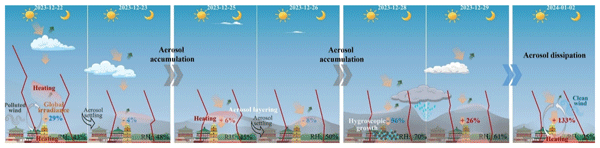
A severe winter haze event was observed with a Raman–Mie lidar, providing high-resolution profiles of the atmospheric vertical structure. By integrating collocated radiosonde and surface meteorological data, the key meteorological characteristics, influencing factors, and interaction mechanisms governing the formation and evolution of this haze event were analyzed. The solar radiation plays a significant role in haze development, with a strong coupling between aerosols and temperature.
Huige Di, Xinhong Wang, Ning Chen, Jing Guo, Wenhui Xin, Shichun Li, Yan Guo, Qing Yan, Yufeng Wang, and Dengxin Hua
Atmos. Meas. Tech., 17, 4183–4196, https://doi.org/10.5194/amt-17-4183-2024, https://doi.org/10.5194/amt-17-4183-2024, 2024
Short summary
Short summary
This study proposes an inversion method for atmospheric-aerosol or cloud microphysical parameters based on dual-wavelength lidar data. It is suitable for the inversion of uniformly mixed and single-property aerosol layers or small cloud droplets. For aerosol particles, the inversion range that this algorithm can achieve is 0.3–1.7 μm. For cloud droplets, it is 1.0–10 μm. This algorithm can quickly obtain the microphysical parameters of atmospheric particles and has better robustness.
Yun Yuan, Huige Di, Yuanyuan Liu, Tao Yang, Qimeng Li, Qing Yan, Wenhui Xin, Shichun Li, and Dengxin Hua
Atmos. Meas. Tech., 15, 4989–5006, https://doi.org/10.5194/amt-15-4989-2022, https://doi.org/10.5194/amt-15-4989-2022, 2022
Short summary
Short summary
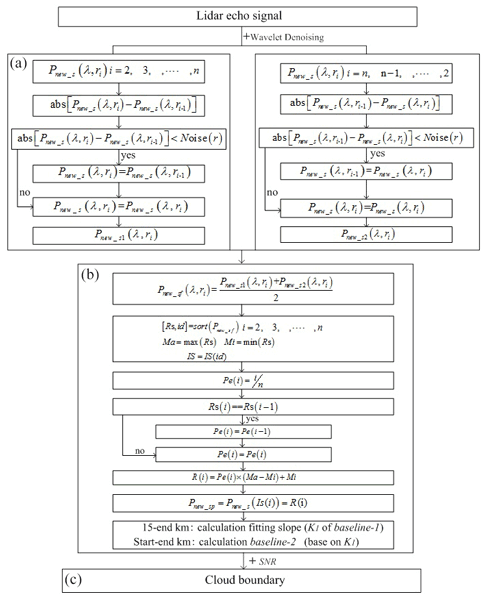
We put forward a new algorithm for joint observation of the cloud boundary by lidar and Ka-band millimetre-wave cloud radar. Cloud cover and boundary distribution characteristics are analysed from December 2020 to November 2021 in Xi'an. More than 34 % of clouds appear as a single layer every month. The maximum and minimum normalized cloud cover occurs in summer and winter, respectively. The study can provide more information on aerosol–cloud interactions and forecasting numerical models.
Huige Di, Yun Yuan, Qing Yan, Wenhui Xin, Shichun Li, Jun Wang, Yufeng Wang, Lei Zhang, and Dengxin Hua
Atmos. Meas. Tech., 15, 3555–3567, https://doi.org/10.5194/amt-15-3555-2022, https://doi.org/10.5194/amt-15-3555-2022, 2022
Short summary
Short summary
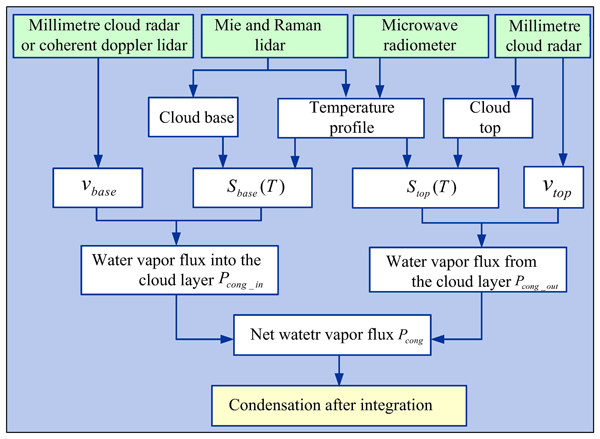
It is necessary to correctly evaluate the amount of cloud water resources in an area. Currently, there is a lack of effective observation methods for atmospheric column condensate evaluation. We propose a method for atmospheric column condensate by combining millimetre cloud radar, lidar and microwave radiometers. The method can realise determination of atmospheric column condensate. The variation of cloud before precipitation is considered, and the atmospheric column is deduced and obtained.
Guanglie Hong, Yu Dong, and Huige Di
Atmos. Meas. Tech. Discuss., https://doi.org/10.5194/amt-2022-69, https://doi.org/10.5194/amt-2022-69, 2022
Revised manuscript not accepted
Short summary
Short summary
According to the absorption spectrum characteristics of oxygen A-band, a comprehensive budget is made in connection with various errors. The main purpose is to select a group of detection wavelengths with excellent performance and small error to match the evaluated radar system model, so as to provide a reference idea for the actual establishment of the experimental system in the future.
Qimeng Li, Huige Di, Ning Chen, Xiao Cheng, Jiaying Yang, Yun Yuan, Qing Yan, and Dengxin Hua
EGUsphere, https://doi.org/10.5194/egusphere-2025-5393, https://doi.org/10.5194/egusphere-2025-5393, 2025
This preprint is open for discussion and under review for Atmospheric Chemistry and Physics (ACP).
Short summary
Short summary
A severe winter haze event was observed with a Raman–Mie lidar, providing high-resolution profiles of the atmospheric vertical structure. By integrating collocated radiosonde and surface meteorological data, the key meteorological characteristics, influencing factors, and interaction mechanisms governing the formation and evolution of this haze event were analyzed. The solar radiation plays a significant role in haze development, with a strong coupling between aerosols and temperature.
Huige Di, Xinhong Wang, Ning Chen, Jing Guo, Wenhui Xin, Shichun Li, Yan Guo, Qing Yan, Yufeng Wang, and Dengxin Hua
Atmos. Meas. Tech., 17, 4183–4196, https://doi.org/10.5194/amt-17-4183-2024, https://doi.org/10.5194/amt-17-4183-2024, 2024
Short summary
Short summary
This study proposes an inversion method for atmospheric-aerosol or cloud microphysical parameters based on dual-wavelength lidar data. It is suitable for the inversion of uniformly mixed and single-property aerosol layers or small cloud droplets. For aerosol particles, the inversion range that this algorithm can achieve is 0.3–1.7 μm. For cloud droplets, it is 1.0–10 μm. This algorithm can quickly obtain the microphysical parameters of atmospheric particles and has better robustness.
Yun Yuan, Huige Di, Yuanyuan Liu, Tao Yang, Qimeng Li, Qing Yan, Wenhui Xin, Shichun Li, and Dengxin Hua
Atmos. Meas. Tech., 15, 4989–5006, https://doi.org/10.5194/amt-15-4989-2022, https://doi.org/10.5194/amt-15-4989-2022, 2022
Short summary
Short summary
We put forward a new algorithm for joint observation of the cloud boundary by lidar and Ka-band millimetre-wave cloud radar. Cloud cover and boundary distribution characteristics are analysed from December 2020 to November 2021 in Xi'an. More than 34 % of clouds appear as a single layer every month. The maximum and minimum normalized cloud cover occurs in summer and winter, respectively. The study can provide more information on aerosol–cloud interactions and forecasting numerical models.
Huige Di, Yun Yuan, Qing Yan, Wenhui Xin, Shichun Li, Jun Wang, Yufeng Wang, Lei Zhang, and Dengxin Hua
Atmos. Meas. Tech., 15, 3555–3567, https://doi.org/10.5194/amt-15-3555-2022, https://doi.org/10.5194/amt-15-3555-2022, 2022
Short summary
Short summary
It is necessary to correctly evaluate the amount of cloud water resources in an area. Currently, there is a lack of effective observation methods for atmospheric column condensate evaluation. We propose a method for atmospheric column condensate by combining millimetre cloud radar, lidar and microwave radiometers. The method can realise determination of atmospheric column condensate. The variation of cloud before precipitation is considered, and the atmospheric column is deduced and obtained.
Guanglie Hong, Yu Dong, and Huige Di
Atmos. Meas. Tech. Discuss., https://doi.org/10.5194/amt-2022-69, https://doi.org/10.5194/amt-2022-69, 2022
Revised manuscript not accepted
Short summary
Short summary
According to the absorption spectrum characteristics of oxygen A-band, a comprehensive budget is made in connection with various errors. The main purpose is to select a group of detection wavelengths with excellent performance and small error to match the evaluated radar system model, so as to provide a reference idea for the actual establishment of the experimental system in the future.
Cited articles
Bergeron, T.: On the physics of clouds and precipitation, Proc. 5th Assembly UGGI, Lisbon, Portugal, 1935, 156–180 pp., 1935.
Braham, R. R.: Cirrus Cloud Seeding as a Trigger for Storm Development, J. Atmos. Sci., 24, 311–312, https://doi.org/10.1175/1520-0469(1967)024<0311:CCSAAT>2.0.CO;2, 1967.
Cheng, C. and Yi, F.: Falling Mixed-Phase Ice Virga and their Liquid Parent Cloud Layers as Observed by Ground-Based Lidars, Remote Sens.-Basel, 12, 2094, https://doi.org/10.3390/rs12132094, 2020.
Choularton, T. W. and Perry, S. J.: A model of the orographic enhancement of snowfall by the seeder-feeder mechanism, Q. J. Roy. Meteor. Soc., 112, 335–345, https://doi.org/10.1002/qj.49711247204, 1986.
Di, H., Yuan, Y., Yan, Q., Xin, W., Li, S., Wang, J., Wang, Y., Zhang, L., and Hua, D.: Determination of atmospheric column condensate using active and passive remote sensing technology, Atmos. Meas. Tech., 15, 3555–3567, https://doi.org/10.5194/amt-15-3555-2022, 2022.
Dong, X., Zhao, C., Huang, Z., Mai, R., Lv, F., Xue, X., Zhang, X., Hou, S., Yang, Y., Yang, Y., and Sun, Y.: Increase of precipitation by cloud seeding observed from a case study in November 2020 over Shijiazhuang, China, Atmos. Res., 262, 105766, https://doi.org/10.1016/j.atmosres.2021.105766, 2021.
Fernández-González, S., Valero, F., Sánchez, J. L., Gascón, E., López, L., García-Ortega, E., and Merino, A.: Analysis of a seeder-feeder and freezing drizzle event, J. Geophys. Res.-Atmos., 120, 3984–3999, https://doi.org/10.1002/2014jd022916, 2015.
French, J. R., Friedrich, K., Tessendorf, S. A., Rauber, R. M., Geerts, B., Rasmussen, R. M., Xue, L., Kunkel, M. L., and Blestrud, D. R.: Precipitation formation from orographic cloud seeding, P. Natl. Acad. Sci. USA, 115, 1168–1173, https://doi.org/10.1073/pnas.1716995115, 2018.
Geerts, B., Pokharel, B., and Kristovich, D. A. R.: Blowing Snow as a Natural Glaciogenic Cloud Seeding Mechanism, Mon. Weather Rev, 143, 5017–5033, https://doi.org/10.1175/MWR-D-15-0241.1, 2015.
Görsdorf, U., Lehmann, V., Bauer-Pfundstein, M., Peters, G., Vavriv, D., Vinogradov, V., and Volkov, V.: A 35-GHz Polarimetric Doppler Radar for Long-Term Observations of Cloud Parameters—Description of System and Data Processing, J. Atmos. Ocean. Tech., 32, 675–690, https://doi.org/10.1175/jtech-d-14-00066.1, 2015.
Hall, W. D. and Pruppacher, H. R.: The Survival of Ice Particles Falling from Cirrus Clouds in Subsaturated Air, J. Atmos. Sci., 33, 1995–2006, https://doi.org/10.1175/1520-0469(1976)033<1995:tsoipf>2.0.co;2, 1976.
He, Y., Yi, F., Liu, F., Yin, Z., Yi, Y., Zhou, J., Yu, C., and Zhang, Y.: Natural seeder-feeder process originating from mixed-phase clouds observed with polarization lidar and radiosonde at a mid-latitude plain site, J. Geophys. Res.-Atmos., 127, e2021JD036094, https://doi.org/10.1029/2021JD036094, 2022.
Heymsfield, A. J., Schmitt, C., and Bansemer, A.: Ice Cloud Particle Size Distributions and Pressure-Dependent Terminal Velocities from In Situ Observations at Temperatures from 0° to −86°C, J. Atmos. Sci., 70, 4123–4154, https://doi.org/10.1175/jas-d-12-0124.1, 2013.
Hill, F. F., Browning, K. A., and Bader, M. J.: Radar and Raingauge Observations of Orographic Rain over South Wales, Q. J. Roy. Meteor. Soc., 107, 643–670, https://doi.org/10.1002/qj.49710745312, 2007.
Hong, Y.: Research Progress of Stratiform Cloud Structure and Precipitation Mechanism and Discussion on Artificial Precipitation Problems, Clim. Environ. Res., 17, 937–950, https://doi.org/10.3878/j.issn.1006-9585.2012.06.31, 2012.
Hou, T., Lei, H., and Hu, Z.: A comparative study of the microstructure and precipitation mechanisms for two stratiform clouds in China, Atmos. Res., 96, 447–460, https://doi.org/10.1016/j.atmosres.2010.02.004, 2010.
Kollias, P., Albrecht, B. A., Lhermitte, R., and Savtchenko, A.: Radar observations of updrafts, downdrafts, and turbulence in fair-weather cumuli, J. Atmos. Sci., 58, 1750–1766, https://doi.org/10.1175/1520-0469(2001)058%3C1750:ROOUDA%3E2.0.CO;2, 2001.
Kollias, P., Albrecht, B. A., and Marks, F.: Why Mie? Accurate observations of vertical air velocities and raindrops using a cloud radar, B. Am. Meteorol. Soc., 83, 1471–1483, https://doi.org/10.1175/bams-83-10-1471, 2002.
Kollias, P., Rémillard, J., Luke, E., and Szyrmer, W.: Cloud radar Doppler spectra in drizzling stratiform clouds: 1. Forward modeling and remote sensing applications, J. Geophys. Res., 116, D13201, https://doi.org/10.1029/2010JD015237, 2011.
Korolev, A. and Isaac, G.: Phase transformation of mixed-phase clouds, Q. J. Roy. Meteor. Soc., 129, 19–38, https://doi.org/10.1256/qj.01.203, 2003.
Korolev, A. V., Isaac, G. A., and Hallett, J.: Ice particle habits in Arctic clouds, Geophys. Res. Lett., 26, 1299–1302, https://doi.org/10.1029/1999GL900232, 1999.
Korolev, A. V., Isaac, G. A., Cober, S. G., Strapp, J. W., and Hallett, J.: Microphysical characterization of mixed-phase clouds, Q. J. Roy. Meteor. Soc., 129, 39–65, https://doi.org/10.1256/qj.01.204, 2003.
Liu, L., Ding, H., Dong, X., Cao, J., and Su, T.: Applications of QC and Merged Doppler Spectral Density Data from Ka-Band Cloud Radar to Microphysics Retrieval and Comparison with Airplane in Situ Observation, Remote. Sens.-Basel, 11, 1595, https://doi.org/10.3390/rs11131595, 2019.
Locatelli, J. D., Hobbs, P. V., and Biswas, K. R.: Precipitation from Stratocumulus Clouds Affected by Fallstreaks and Artificial Seeding, J. Clim. Appl. Meteorol., 22, 1393–1403, https://doi.org/10.1175/1520-0450(1983)022<1393:PFSCAB>2.0.CO;2, 1983.
Lowenthal, D. H., Hallar, A. G., David, R. O., McCubbin, I. B., Borys, R. D., and Mace, G. G.: Mixed-phase orographic cloud microphysics during StormVEx and IFRACS, Atmos. Chem. Phys., 19, 5387–5401, https://doi.org/10.5194/acp-19-5387-2019, 2019.
Luke, E. P. and Kollias, P.: Separating Cloud and Drizzle Radar Moments during Precipitation Onset Using Doppler Spectra, J. Atmos. Ocean. Tech., 30, 1656–1671, https://doi.org/10.1175/jtech-d-11-00195.1, 2013.
Myagkov, A., Seifert, P., Wandinger, U., Bühl, J., and Engelmann, R.: Relationship between temperature and apparent shape of pristine ice crystals derived from polarimetric cloud radar observations during the ACCEPT campaign, Atmos. Meas. Tech., 9, 3739–3754, https://doi.org/10.5194/amt-9-3739-2016, 2016.
Proske, U., Bessenbacher, V., Dedekind, Z., Lohmann, U., and Neubauer, D.: How frequent is natural cloud seeding from ice cloud layers (< −35 °C) over Switzerland?, Atmos. Chem. Phys., 21, 5195–5216, https://doi.org/10.5194/acp-21-5195-2021, 2021.
Purdy, J. C., Austin, G. L., Seed, A. W., and Cluckie, I. D.: Radar evidence of orographic enhancement due to the seeder feeder mechanism, Meteorol. Appl., 12, 199–206, https://doi.org/10.1017/S1350482705001672, 2005.
Ramelli, F., Henneberger, J., David, R. O., Lauber, A., Pasquier, J. T., Wieder, J., Bühl, J., Seifert, P., Engelmann, R., Hervo, M., and Lohmann, U.: Influence of low-level blocking and turbulence on the microphysics of a mixed-phase cloud in an inner-Alpine valley, Atmos. Chem. Phys., 21, 5151–5172, https://doi.org/10.5194/acp-21-5151-2021, 2021.
Robichaud, A. J. and Austin, G. L.: On the Modelling of Warm Orographic Rain by the Seeder-Feeder Mechanism, Q. J. Roy. Meteor. Soc., 114, 967–988, https://doi.org/10.1002/qj.49711448207, 1988.
Seifert, P., Ansmann, A., Mattis, I., Althausen, D., Tesche, M., Wandinger, Ulla., Muller, D., and Pérez, C.: Lidar-based profiling of the tropospheric cloud–ice distribution to study the seeder-feeder mechanism and the role of Saharan dust as ice nuclei, Proceedings of the 8th International Symposium on Tropospheric Profiling, ISBN 978-90-6960-233-2, S01–O04–1 4, https://www.researchgate.net/publication/228607204 (last access: 16 October 2022), 2014.
Shupe, M. D.: A ground-based multisensory cloud phase classifier, Geophys. Res. Lett., 34, L22809, https://doi.org/10.1029/2007GL031008, 2007.
Shupe, M. D., Uttal, T., and Matrosov, S. Y.: Arctic Cloud Microphysics Retrievals from Surface-Based Remote Sensors at SHEBA, J. Appl. Meteorol., 44, 1544–1562, https://doi.org/10.1175/jam2297.1, 2005.
Shupe, M. D., Kollias, P., Persson, P. O. G., and McFarquhar, G. M.: Vertical motions in Arctic mixed-phase stratiform clouds, J. Atmos. Sci., 65, 1304–1322, https://doi.org/10.1175/2007JAS2479.1, 2008.
Tao, R., Zhao, K., Huang, H., Wen, L., Chen, H.: Snow Particle Size Distribution From a 2-D Video Disdrometer and Radar Snowfall Estimation in East China, IEEE T. Geosci. Remote, 59, 196–207, https://doi.org/10.1109/TGRS.2020.2990920, 2020.
Vassel, M., Ickes, L., Maturilli, M., and Hoose, C.: Classification of Arctic multilayer clouds using radiosonde and radar data in Svalbard, Atmos. Chem. Phys., 19, 5111–5126, https://doi.org/10.5194/acp-19-5111-2019, 2019.
Wang, H., Zhang D., Wang, W., Wang, J., Li, Y., Wang, S.: Microphysical characteristics of stratiform precipitation with embedded convection based on multisource data, Chin. J. Atmos. Sci., 46, 886–902, https://doi.org/10.3878/j.issn.1006-9895.2107.21043, 2022 (in Chinese).
Wang, Y., Kong, R., Cai, M., Zhou, Y., Song, C., Liu, S., Li, Q., Chen, H., and Zhao, C.: High small ice concentration in stratiform clouds over Eastern China based on aircraft observations: Habit properties and potential roles of secondary ice production, Atmos. Res., 281, 106495, https://doi.org/10.1016/j.atmosres.2022.106495, 2023.
Wei, T., Xia, H., Hu, J., Wang, C., Shangguan, M., Wang, L., Jia, M., and Dou, X.: Simultaneous wind and rainfall detection by power spectrum analysis using a VAD scanning coherent Doppler lidar, Opt. Express, 27, 31235, https://doi.org/10.1364/OE.27.031235, 2019.
Yuan, Y., Di, H., Liu, Y., Cheng, D., Chen, N., Yan, Q., and Hua, D.: Confidence and Error Analyses of the Radiosonde and Ka-Wavelength Cloud Radar for Detecting the Cloud Vertical Structure, Remote. Sens.-Basel, 14, 4462, https://doi.org/10.3390/rs14184462, 2022a.
Yuan, Y., Di, H., Liu, Y., Yang, T., Li, Q., Yan, Q., Xin, W., Li, S., and Hua, D.: Detection and analysis of cloud boundary in Xi'an, China, employing 35 GHz cloud radar aided by 1064 nm lidar, Atmos. Meas. Tech., 15, 4989–5006, https://doi.org/10.5194/amt-15-4989-2022, 2022b.
Yuan, Y., Di, H., Wang, K., Bai, S., Yan, Q., Cao, M., Zhang, Y., Wang, Y., and Hua, D.: Fine recognition technology of cloud phase based on multidimensional data, Acta Opt. Sin, 42, 268–278, https://doi.org/10.3788/AOS202242.1228002, 2022c.
Short summary
We observed the seeder–feeder process among double-layer clouds using a cloud radar and microwave radiometer. By defining the parameters of the seeding depth and seeding time of the upper cloud affecting the lower cloud, we find that the cloud particle terminal velocity is significantly enhanced during the seeder–feeder period, and the lower the height and thinner the thickness of the height difference between double-layer clouds, the lower the height and thicker the thickness of seeding depth.
We observed the seeder–feeder process among double-layer clouds using a cloud radar and...
Altmetrics
Final-revised paper
Preprint