
Articles | Volume 26, issue 2
https://doi.org/10.5194/acp-26-923-2026
© Author(s) 2026. This work is distributed under
the Creative Commons Attribution 4.0 License.
the Creative Commons Attribution 4.0 License.
https://doi.org/10.5194/acp-26-923-2026
© Author(s) 2026. This work is distributed under
the Creative Commons Attribution 4.0 License.
the Creative Commons Attribution 4.0 License.
Research article
| 
21 Jan 2026
Research article |
| 21 Jan 2026
| 21 Jan 2026
Profiling pollen and biomass burning particles over Payerne, Switzerland using laser-induced fluorescence lidar and in situ techniques during the 2023 PERICLES campaign
Marilena Gidarakou
Laser Remote Sensing Unit (LRSU), Physics Department, National Technical University of Athens, Zografou, Greece
Alexandros Papayannis
CORRESPONDING AUTHOR

Laser Remote Sensing Unit (LRSU), Physics Department, National Technical University of Athens, Zografou, Greece
Laboratory of Atmospheric Processes and Their Impacts, School of Architecture, Civil and Environmental Engineering, École Polytechnique Fédérale de Lausanne, Lausanne, Switzerland
Kunfeng Gao
Laboratory of Atmospheric Processes and Their Impacts, School of Architecture, Civil and Environmental Engineering, École Polytechnique Fédérale de Lausanne, Lausanne, Switzerland
now at: Institute for Atmospheric and Climate Science, ETH Zürich, Zurich, Switzerland
Panagiotis Gidarakos
Athena Research Center, Athens, Greece
Benoît Crouzy
Federal Office of Meteorology and Climatology MeteoSwiss, Payerne, Switzerland
Romanos Foskinis
Laboratory of Atmospheric Processes and Their Impacts, School of Architecture, Civil and Environmental Engineering, École Polytechnique Fédérale de Lausanne, Lausanne, Switzerland
Environmental Remote Sensing Laboratory, School of Architecture, Civil and Environmental Engineering, École Polytechnique Fédérale de Lausanne, Lausanne, Switzerland
Sophie Erb
Federal Office of Meteorology and Climatology MeteoSwiss, Payerne, Switzerland
Benjamin T. Brem
PSI Center for Energy and Environmental Sciences, Villigen PSI, Villigen, Switzerland
Cuiqi Zhang
Institute for Atmospheric and Climate Science, ETH Zürich, Zurich, Switzerland
Gian Lieberherr
Federal Office of Meteorology and Climatology MeteoSwiss, Payerne, Switzerland
Martine Collaud Coen
Federal Office of Meteorology and Climatology MeteoSwiss, Payerne, Switzerland
Branko Sikoparija
BioSense Institute – Research Institute for Information Technologies in Biosystems, University of Novi Sad, Novi Sad, Serbia
Zamin A. Kanji
Institute for Atmospheric and Climate Science, ETH Zürich, Zurich, Switzerland
Bernard Clot
Federal Office of Meteorology and Climatology MeteoSwiss, Payerne, Switzerland
Bertrand Calpini
Federal Office of Meteorology and Climatology MeteoSwiss, Payerne, Switzerland
Eugenia Giagka
Laser Remote Sensing Unit (LRSU), Physics Department, National Technical University of Athens, Zografou, Greece
Athanasios Nenes
CORRESPONDING AUTHOR
Laboratory of Atmospheric Processes and Their Impacts, School of Architecture, Civil and Environmental Engineering, École Polytechnique Fédérale de Lausanne, Lausanne, Switzerland
Centre for Studies of Air Quality and Climate Change, Institute of Chemical Engineering Sciences, Foundation for Research and Technology Hellas, Patras, Greece
Related authors
Ioannis Chaniotis, Paraskevi Georgakaki, Romanos Foskinis, Marilena Gidarakou, Maria Gini, Platon Patlakas, Konstantinos Eleftheriadis, Alexandros Papagiannis, Elissavet Bossioli, Nicole Clerx, Alexis Berne, Helena Flocas, and Athanasios Nenes
EGUsphere, https://doi.org/10.5194/egusphere-2026-4645, https://doi.org/10.5194/egusphere-2026-4645, 2026
This preprint is open for discussion and under review for Atmospheric Chemistry and Physics (ACP).
Short summary
Short summary
This study implements three secondary ice production mechanisms in the RAMS-ICLAMS model to better represent mixed-phase clouds. Validated against CHOPIN campaign data and for two characteristic alpine cloud formations, these mechanisms improve ice crystal concentrations, cloud structure, and reflectivity. However, opposing precipitation responses have been predicted, highlighting a non linear response, which aligns with independent previous findings.
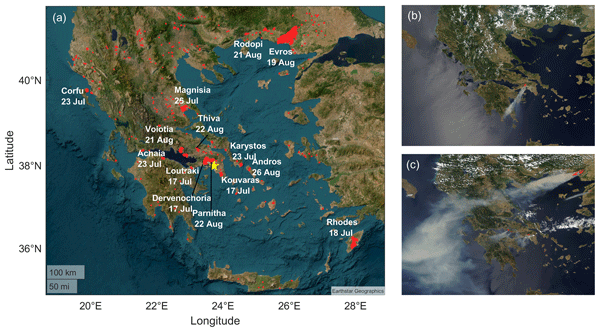
Marilena Gidarakou, Alexandros Papayannis, Maria Mylonaki, Eleni Kralli, Kostas Eleftheratos, Ilias Fountoulakis, Olga Zografou, Evangelia Diapouli, Maria I. Gini, Stergios Vratolis, Konstantinos Granakis, Konstantinos Eleftheriadis, Nikolaos Evangeliou, Christine Groot Zwaaftink, Eugenia Giagka, Marios-Andreas Zagklis, and Igor Veselovskii
Atmos. Chem. Phys., 26, 4313–4339, https://doi.org/10.5194/acp-26-4313-2026, https://doi.org/10.5194/acp-26-4313-2026, 2026
Short summary
Short summary
In summer 2023, Greece experienced one of its most intense wildfire seasons, with major fires across several regions. This study examines how smoke from two major fire events affected air quality and ultraviolet radiation in Athens using satellite images, modelling, and ground-based measurements to understand the optical and microphysical behavior of airborne particles.
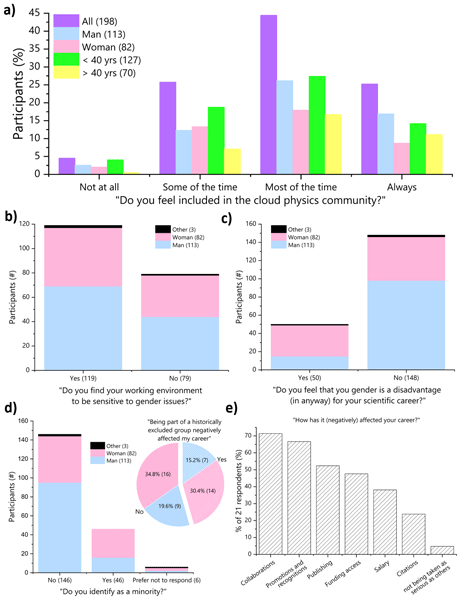
Luis A. Ladino, Karin Ardon-Dryer, Diana L. Pereira, Ulrike Proske, Zyanya Ramirez-Diaz, Antonia Velicu, and Zamin A. Kanji
Geosci. Commun., 9, 415–436, https://doi.org/10.5194/gc-9-415-2026, https://doi.org/10.5194/gc-9-415-2026, 2026
Short summary
Short summary
A survey and literature metadata analysis from the cloud physics community are used to investigate the state of diversity, equity and inclusion in the cloud physics community. We show the evolution of gender contributions to cloud physics and the inclusion of tropics-based scientists. The publication analysis reveals the rate of men and women dropping out of the field is not different, however, gender balance was better achieved when women led publications compared to men.
Romanos Foskinis, Anne-Claire Billault-Roux, Henrik Skov, Lise Lotte Sørensen, Sven-Erik Gryning, Athanasios Nenes, and Alexis Berne
Earth Syst. Sci. Data Discuss., https://doi.org/10.5194/essd-2026-549, https://doi.org/10.5194/essd-2026-549, 2026
Preprint under review for ESSD
Short summary
Short summary
We present a dataset collected with the WProf cloud radar during the CleanCloud Arctic Villum ExpeRiment campaign in northeast Greenland in spring 2024. It includes Doppler spectra, hydrometeor classification, and cloud observations that reveal the microphysical structure of Arctic clouds. The data show that multimodality, where different cloud particle populations coexist, is common and support studies of aerosol–cloud interactions and improvements in weather and climate models.
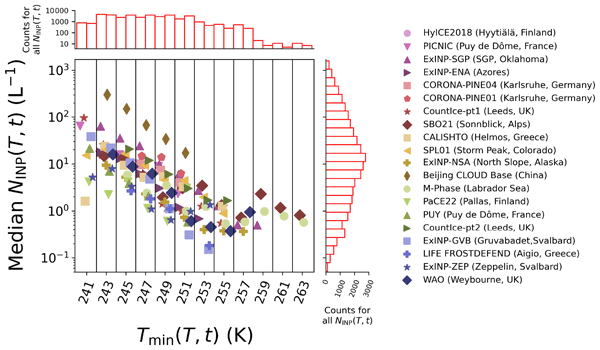
Ross J. Herbert, Larissa Lacher, Alexander Böhmländer, Mark D. Tarn, Antoine Canzi, Aidan Pantoya, Evelyn Freney, Kristina Höhler, Pia Bogert, Céline Planche, Ping Tian, Michael Adams, Sarah Barr, David Brus, Nicole Büttner, Martin Daily, Konstantinos Doulgeris, Konstantinos Eleftheriadis, Grant Forster, Romy Fösig, Dimitrios G. Georgakopoulos, Maria I. Gini, A. Gannet Hallar, Radovan Krejci, Elke Ludewig, Mauro Mazzola, Ian B. McCubbin, Athanasios Nenes, Tuukka Petäjä, Joseph Robinson, Franziska Vogel, Paul Zieger, Stephen Arnold, Kenneth S. Carslaw, Naruki Hiranuma, Ottmar Möhler, and Benjamin J. Murray
Earth Syst. Sci. Data, 18, 6465–6483, https://doi.org/10.5194/essd-18-6465-2026, https://doi.org/10.5194/essd-18-6465-2026, 2026
Short summary
Short summary
Ice formation in sub-zero clouds is influenced by airborne particles called ice-nucleating particles (INPs), whose concentrations vary substantially over short time and spatial scales. To assess the role of INPs in our climate, a comprehensive and consistent global dataset is essential. Our GloPINE model-ready dataset is a major step in this direction, comprising 36,000 measurements made using a single instrument design (PINE) over 70,000 hours of operation at 20 Northern Hemisphere sites.
Ioannis Chaniotis, Paraskevi Georgakaki, Romanos Foskinis, Marilena Gidarakou, Maria Gini, Platon Patlakas, Konstantinos Eleftheriadis, Alexandros Papagiannis, Elissavet Bossioli, Nicole Clerx, Alexis Berne, Helena Flocas, and Athanasios Nenes
EGUsphere, https://doi.org/10.5194/egusphere-2026-4645, https://doi.org/10.5194/egusphere-2026-4645, 2026
This preprint is open for discussion and under review for Atmospheric Chemistry and Physics (ACP).
Short summary
Short summary
This study implements three secondary ice production mechanisms in the RAMS-ICLAMS model to better represent mixed-phase clouds. Validated against CHOPIN campaign data and for two characteristic alpine cloud formations, these mechanisms improve ice crystal concentrations, cloud structure, and reflectivity. However, opposing precipitation responses have been predicted, highlighting a non linear response, which aligns with independent previous findings.
Magesh Mohan, Amy Sullivan, Emily Lill, Ilana Pollack, Alison Piasecki, Sarah Albertin, Ann Middlebrook, Wyndom Chace, Andrew Rollins, Carsten Warneke, Steven Brown, Lu Xu, Katherine Ball, John Crounse, Paul Wennberg, Stelios Kakavas, Spyros Pandis, Athanasios Nenes, and Rodney Weber
EGUsphere, https://doi.org/10.5194/egusphere-2026-4960, https://doi.org/10.5194/egusphere-2026-4960, 2026
This preprint is open for discussion and under review for Atmospheric Chemistry and Physics (ACP).
Short summary
Short summary
Atmospheric fine particles contain liquid water and can be highly acidic. The amount of water and the acidity affect how these particles impact human health, ecosystems, and climate. Flying an aircraft across the continental United States in summer 2023, with a focus on four North American cities, we measured the properties needed to model particle water and acidity. We found the particles were consistently strongly acidic, even within wildfire smoke, and verified the model against observations.
Arlett Díaz-Zurita, Simone Brunamonti, Alexander Haefele, Martine Collaud Coen, Giovanni Martucci, Benjamin Tobias Brem, Martin Gysel-Beer, Hassan Lyamani, Gloria Titos, Daniel Pérez-Ramírez, Christoph Hüglin, Lucas Alados-Arboledas, Alejandro Keller, Frank Gunther Wienhold, Maxime Hervo, and Francisco Navas-Guzmán
EGUsphere, https://doi.org/10.5194/egusphere-2026-4361, https://doi.org/10.5194/egusphere-2026-4361, 2026
Short summary
Short summary
This study provides a unique framework for assessing aerosol hygroscopicity by combining Raman lidar observations with vertically resolved in situ measurements from the balloon-borne Compact Backscatter Aerosol Detector coupled with Vaisala RS41 radiosondes and ground-based tandem nephelometers. The three approaches showed good agreement. Raman lidar identified more than 200 hygroscopic aerosol layers, constituting one of the largest datasets available for statistical investigations.
Lea Haberstock, Darrel Baumgardner, Dagen D. Hughes, Julie Legrand, Almuth Neuberger, Cuiqi Zhang, Zamin A. Kanji, Christian Maier, Ilona Riipinen, Radovan Krejci, and Paul Zieger
EGUsphere, https://doi.org/10.5194/egusphere-2026-3790, https://doi.org/10.5194/egusphere-2026-3790, 2026
This preprint is open for discussion and under review for Atmospheric Measurement Techniques (AMT).
Short summary
Short summary
Here, we present the characterization and first application of a new cloud spectrometer, the Ground-based Fog and Aerosol Spectrometer (GFAS). Besides particle number concentration and size, the GFAS also provides an indicator of particle morphology and composition. We present a new calibration routine and first laboratory and field measurements. Using the GFAS, we can show that cloud droplets are optically different compared to pure water droplets.
Konstantinos Matthaios Doulgeris, David Brus, Christian Maier, Naděžda Zikova, Kajal Julaha, Cuiqi Zhang, Zamin A. Kanji, Ville Kaikkonen, Harri Juttula, Eero Molkoselkä, Anssi Makynen, Mika Komppula, Sergej Sel, and Elke Ludewig
EGUsphere, https://doi.org/10.5194/egusphere-2026-3898, https://doi.org/10.5194/egusphere-2026-3898, 2026
Short summary
Short summary
Clouds are important for weather and climate, but measuring their cloud water droplets accurately is difficult. We compared seven instruments during a field campaign at a high mountain observatory under natural cloud conditions. We found that the way instruments are installed can strongly influence the measurements. Our results provide practical guidance for improving cloud observations and support more consistent measurements across the European ACTRIS research infrastructure.
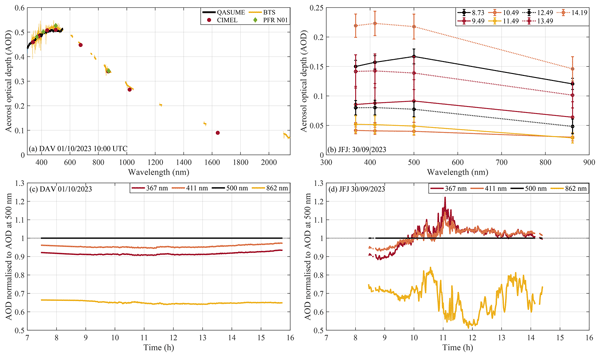
Akriti Masoom, Stelios Kazadzis, Robin Lewis Modini, Martin Gysel-Beer, Julian Gröbner, Martine Collaud Coen, Francisco Navas-Guzman, Natalia Kouremeti, Benjamin Tobias Brem, Nora Kristina Nowak, Giovanni Martucci, and Maxime Hervo
Atmos. Chem. Phys., 26, 10801–10834, https://doi.org/10.5194/acp-26-10801-2026, https://doi.org/10.5194/acp-26-10801-2026, 2026
Short summary
Short summary
This article aims at providing details on the spectral aerosol properties observed during 2023 Canadian wildfire plume transport and exploring the synergism between remote sensing and in situ measurements for investigating the cause of the occurrence of the observations of spectral aerosol properties.
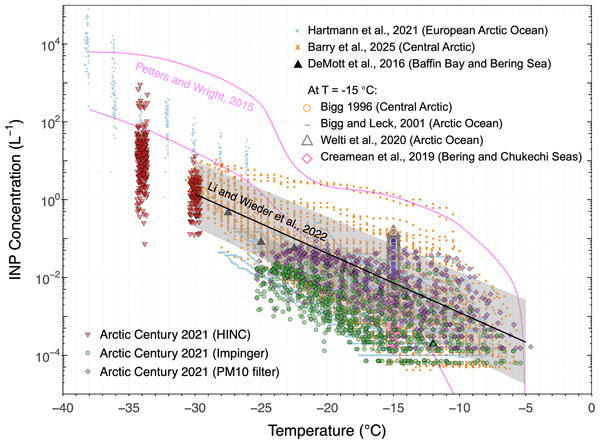
Guangyu Li, André Welti, Iris Thurnherr, Ulrike Lohmann, and Zamin A. Kanji
Atmos. Chem. Phys., 26, 10835–10859, https://doi.org/10.5194/acp-26-10835-2026, https://doi.org/10.5194/acp-26-10835-2026, 2026
Short summary
Short summary
This study presents ship-based measurements of summertime ice-nucleating particles (INPs) over the data-scarce Eurasian-Arctic Seas. We found that INPs are driven by both local and regional sources, with the highest levels observed near land and over ice-free waters. This study is highlighted for improving the understanding of INP abundance, sources, and their role in cloud processes in the rapidly warming Arctic.
Anouk Marsal, Fabrizia Cavalli, Elise Di Antonio, Stephan Houdier, Pamela Dominutti, Sophie Darfeuil, Jean-Luc Jaffrezo, Stéphane Sauvage, Jean-Philippe Putaud, Ian S. Mudway, Athanasios Nenes, Aikaterini Bougiatioti, Nikolaos Mihalopoulos, André S. H. Prévôt, Despina Paraskevopoulou, Ana Cvitešić Kušan, Sanja Frka, Ana Kroflič, Ajda Delić, Blanka Tariba Lovaković, Andreja Jurič, Carolina Molina, Daniele Contini, Maria Rachele Guascito, Mathilde Lintz, Davy Rousset, Hartmut Herrmann, Eduardo J. d. S. Souza, Frédéric Ledoux, Marc Fadel, Haoran Yu, Jianzhen Yu, Maria Teresa Baeza Romero, Maria Cerrato-Alvarez, Marloes F. van Os, Mathilde N. Delaval, Yamaris Mercedes Mena Cabrera, Nicole Trieu, Greg Evans, Nuria Galindo, Noelia Gómez-Sanchez, Hana Hlaváčková, Pavel Mikuška, Shrutika Kadam, Pourya Shahpoury, Purificación López-Mahía, Jorge Moreda-Piñeiro, Rico K. Y. Cheung, Markus Kalberer, Micol Introna, Sarah S. Steimer, Zhuoying Lin, Suzanne E. Paulson, Saima Iram, Svetlana Stevanovic, Thomas Audoux, Laurent Y. Alleman, Jianing Liu, Ting Fang, P. S. Ganesh Subramanian, Vishal Verma, Tuukka Petäjä, Xavier Querol, Gerard Hoek, Roy M. Harrison, and Gaëlle Uzu
EGUsphere, https://doi.org/10.5194/egusphere-2026-3918, https://doi.org/10.5194/egusphere-2026-3918, 2026
Short summary
Short summary
This collaborative work from 26 worldwide laboratories assessed the measurement of atmospheric particles' oxidative potential (OP) using a common protocol. OP is a metric designed to inform on particles’ harmful effects. Over half of the laboratories obtained satisfactory results, and some critical steps such as liquid handling and OP mathematical determination were identified. Recommendations for future measurements and interlaboratory comparisons are also provided.
Patrick C. Taylor, Armin Sorooshian, Rei Ueyama, Sebastian Schmidt, Ihab Abboud, Quincy Allison, Kevin Barry, Sebastian Becker, Holly A. Bender, Joseph R. Bennett, James B. Blair, Niklas Bohn, Linette Boisvert, Matthew D. Brown, Roelof Bruintjes, Anthony Bucholtz, Megan Buzanowicz, Brian Cairns, Filippo Calì Quaglia, Eduard Chemyakin, Bo Chen, Gao Chen, Hong Chen, Yu-Wen Chen, Zezhen Cheng, Swarup China, Dan Chirica, Yonghoon Choi, Peter Colarco, Brian Collister, Ewan Crosbie, Maurice J. Cross, Janet Daniels, Paul DeMott, Joshua P. DiGangi, Alcide Giorgio di Sarra, Glenn S. Diskin, Erica K. Dolinar, Eva-Lou Edwards, Samuel Ephraim, Nikolaos Evangeliou, Romanos Foskinis, Francesca Gallo, Lan Gao, José Luis Gómez-Amo, Daisy Gonzalez, Christine Groot Zwaaftink, Pawan Gupta, Ivan Heckman, Michael Hendrickson, Miguel Ricardo A. Hilario, Ken Hirata, Michelle Hofton, Andrew L. Holen, Ulas Im, Alia L. Khan, Ralph Kahn, Alexei V. Korolev, Sonia Kreidenweis, Thomas Krumpen, Nathan Kurtz, Leslie Lait, Bradley Lamkin, Jack Landy, Nurun Nahar Lata, Paul Lawson, Samuel LeBlanc, Sean Leavor, Jing Li, Thorsten Markus, Hal Maring, Andreas H. Massling, Camille Mavis, Flynn McGinnity, Kerry Meyer, Gabriel Mojica, Richard H. Moore, Parker Morris, Giovanni Muscari, Vikas Nataraja, Amin R. Nehrir, Athanasios Nenes, Edward P. Nowottnick, Matteo Ottaviani, Chelsea Parker, Ryan Patnaude, Michael Perez, Russell J. Perkins, Colten Peterson, Alek Petty, Stevie Phothisane, Chris Polashenski, Kerri A. Pratt, Kayla M. Preisler, John Prytherch, David Rabine, Jens Redemann, Ju-Mee Ryoo, Joseph S. Schlosser, Vanessa Selimovic, Michael A. Shook, Morgan Silverman, Henrik Skov, Alexander Smirnov, Cassidy Soloff, Amy Solomon, Snorre Stamnes, Azusa Takeishi, David R. Thompson, K. Lee Thornhill, Rachel Tilling, Michael Tjernström, Monica Tosco, Pedro C. Valdelomar, David Van Gilst, Jian Wang, Zhien Wang, Andrzej Wasilewski, Manfred Wendisch, Brent Wilder, Edward L. Winstead, Albert Wu, Peng Xian, Lauren M. Zamora, Jiaoshi Zhang, Lei Zhang, Lu Zhang, Luke Ziemba, and Paquita Zuidema
Earth Syst. Sci. Data Discuss., https://doi.org/10.5194/essd-2026-241, https://doi.org/10.5194/essd-2026-241, 2026
Preprint under review for ESSD
Short summary
Short summary
This article summarizes the data sets collected during the Arctic Radiation Cloud aerosol Sea ice Interaction eXperiment (ARCSIX), NASA's most comprehensive Arctic field campaign to date. The overarching goal was to quantify the contributions of surface, clouds, aerosol particles, and precipitation to summer sea ice melt. This paper describes the ARCSIX implementation including the flight strategy, instruments, complementary data sets, access, and usage details.
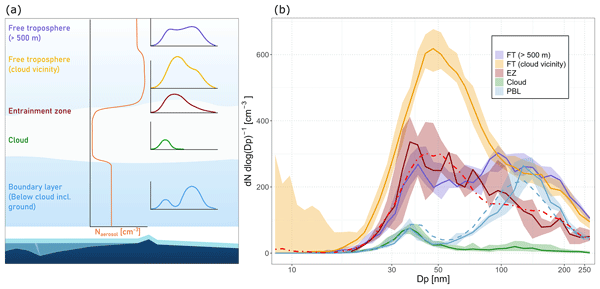
Roman Pohorsky, Heather Guy, Ian Morley Brooks, Lea Haberstock, Nicolas Fauré, Paul Zieger, Julia Kojoj, Sonja Murto, Radiance Calmer, Benjamin Heutte, Michael Lonardi, Erik Schurch Thomson, Michael Tjernström, Jessie Creamean, Athanasios Nenes, and Julia Schmale
Atmos. Chem. Phys., 26, 10331–10353, https://doi.org/10.5194/acp-26-10331-2026, https://doi.org/10.5194/acp-26-10331-2026, 2026
Short summary
Short summary
This study presents tethered-balloon observations above Arctic sea ice showing that enhanced aerosol concentrations above low-level clouds are commonly observed. A closure analysis demonstrates that entrainment of these aerosols is required to reproduce observed cloud droplet numbers. Simulations indicate that neglecting this source can bias longwave radiative forcing, highlighting the need for vertical aerosol observations and improved model representation of aerosol entrainment at cloud top.
Hailing Jia, David Neubauer, Yusuf Bhatti, Duncan Watson-Parris, Philip Stier, Johannes Quaas, Daniel Partridge, Ardit Arifi, Anne Kubin, Athanasios Nenes, Muhammed Irfan, Ulas Im, Carl Svenhag, Nick Schutgens, Bastiaan van Diedenhoven, Sylvaine Ferrachat, Ulrike Lohmann, Ina Tegen, Alice Henkes, Guangliang Fu, and Otto Hasekamp
EGUsphere, https://doi.org/10.5194/egusphere-2026-3275, https://doi.org/10.5194/egusphere-2026-3275, 2026
Short summary
Short summary
Tiny aerosol particles affect Earth’s climate by interacting with clouds and sunlight, but their impact remains uncertain. Combining climate model simulations and emulators, we explored millions of model variants across different aerosol and cloud settings to identify the causes of the uncertainty. We found that aerosol emissions and cloud convection are key contributors. Our work suggests that better integration of existing observations could help reduce these uncertainties in the future.
Gabriella Wallentin, Alexander Böhmländer, Ross Herbert, Heike Wex, Charlotte M. Beall, Pia Bogert, Zoé Brasseur, Jie Chen, Jessie M. Creamean, Paul J. DeMott, Oliver Eckermann, Kunfeng Gao, Xianda Gong, Silvia Henning, Naruki Hiranuma, Christina S. McCluskey, Christos Mitsios, Ottmar Möhler, Athanasios Nenes, Mark D. Tarn, Christian Tatzelt, Ping Tian, Yutaka Tobo, Franziska Vogel, André Welti, Elise Wilbourn, Jennifer Winstone, and Corinna Hoose
EGUsphere, https://doi.org/10.5194/egusphere-2026-4134, https://doi.org/10.5194/egusphere-2026-4134, 2026
This preprint is open for discussion and under review for Atmospheric Chemistry and Physics (ACP).
Short summary
Short summary
Ice nucleating particles (INPs) are aerosols essential for cloud ice formation in the temperature range -38 °C and 0 °C. Due to measurement challenges, the availability of observations of INPs remains scarce. This study applies machine learning to predict a global INP distribution using aerosol mass concentration reanalysis and observed INPs. This manuscript demonstrates that even with limited measurements, the occurrence of INPs can be estimated, following the spatial pattern of key aerosols.
Julian Weng, Yufang Hao, Benjamin T. Brem, Tianqu Cui, Peeyush Khare, Lubna Dada, Kaspar R. Daellenbach, Sophie Darfeuil, Gaëlle Uzu, Jean-Luc Jaffrezo, Martin Steinbacher, Stefan Reimann, Thaleia Gkraikou, Konstantina Oikonomou, Jean Sciare, Martine Collaud Coen, Claudia Mohr, Andre S. H. Prévôt, Martin Gysel-Beer, Imad El Haddad, and Patrik Winiger
EGUsphere, https://doi.org/10.5194/egusphere-2026-3660, https://doi.org/10.5194/egusphere-2026-3660, 2026
Short summary
Short summary
Long-term observations at the Jungfraujoch High Altitude Research Station show that, alongside air mass transport, sustained oxidative processing shaped by atmospheric water vapor plays a central role in driving aerosol loading and composition. Combining detailed aerosol chemical characterization with process-level insights, we provide important observational benchmarks for improving atmospheric model performance in the remote free troposphere, where uncertainties remain particularly high.
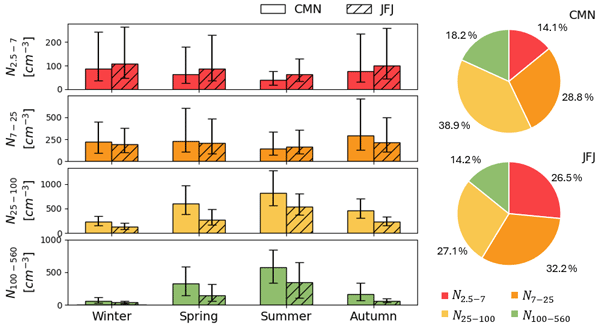
Martina Mazzini, Diego Aliaga, Janne Lamphilati, Martin Gysel-Beer, Benjamin Tobias Brem, Robin Lewis Modini, Dominic Heslin-Rees, Tareq Hussein, Marco Zanatta, Paolo Cristofanelli, Federico Bianchi, Markku Kulmala, and Angela Marinoni
Atmos. Chem. Phys., 26, 8893–8912, https://doi.org/10.5194/acp-26-8893-2026, https://doi.org/10.5194/acp-26-8893-2026, 2026
Short summary
Short summary
This study investigates particle number size distribution at two high-altitude European stations to better understand the mechanisms driving new particle formation (NPF) in the free troposphere. Interestingly, despite a consistently higher background of freshly nucleated particles at Jungfraujoch, NPF events were more frequent and intense at Monte Cimone, which also shows higher formation and growth rates, likely due to the proximity of the polluted planetary boundary layer from the Po Valley.
Samuel Ephraim, Paquita Zuidema, Aaron Bansemer, Lintong Cai, Markus Petters, Elise Rosky, Jefferson R. Snider, Zhien Wang, Sarah Woods, Kevin Barry, Theresa Campos, Owen Cruikshank, Sabine Eckhardt, Nikolaos Evangeliou, Romanos Foskinis, Jeffrey R. French, Bart Geerts, Coltin Grasmick, Silvia Henning, Varun Kumar, Andreas Massling, Camille Mavis, Greg M. McFarquhar, Athanasios Nenes, Gunnar Noer, Ryan Patnaude, Russell Perkins, Lise Lotte Sorensen, Henrik Skov, Tyler Tatro, Florian Tornow, and Lu Zhang
EGUsphere, https://doi.org/10.5194/egusphere-2026-2940, https://doi.org/10.5194/egusphere-2026-2940, 2026
Short summary
Short summary
The processes that establish how mixed-phase closed-cell clouds transition to more open cellular structures are poorly known. First-of-its kind aircraft observations document such a transition in the presence of anomalously high aerosol concentrations over the Nordic Seas at cloud temperatures < -15 °C. The reduces the drop size, discouraging riming. Eventually, ice precipitation produces surface cold pools that drive the convective transition, despite strong counteracting surface fluxes.
Kunfeng Gao, Romanos Foskinis, Marilena Gidarakou, Kalliopi Violaki, Guangyu Li, Benjamin Tobias Brem, Sophie Erb, Bernard Clot, Marie-José Graber, Branko Sikoparjja, Predrag Matavulj, Dusan Licina, Cuiqi Zhang, Benoît Crouzy, Alexandros Papayannis, Zamin A. Kanji, and Athanasios Nenes
EGUsphere, https://doi.org/10.5194/egusphere-2026-2699, https://doi.org/10.5194/egusphere-2026-2699, 2026
Short summary
Short summary
This study identified bioaerosols (>85%) as the dominant source for ice nucleating particles in mixed-phase clouds at a semi-rural site in central Europe, using a combination of in-situ, remote sensing and airmass modelling analysis. We developed a bioaerosol-aware ice nucleating particle parameterization that outperformed existing dust-only schemes across multiple field datasets. These findings improve representation of bioaerosol–cloud interactions and reduce uncertainty in climate feedback.
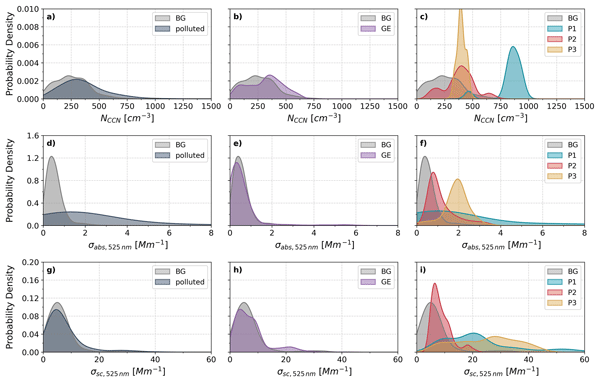
Joanna Alden, Nora Bergner, Benjamin Heutte, Lionel Favre, Mihnea Surdu, Julian Weng, Marta Augugliaro, Patrik Winiger, Berkay Dönmez, Roman Pohorsky, Radiance Calmer, Carmelle Chatterjee, Kalliopi Violaki, Athanasios Nenes, Luke Gregor, Silvia Henning, and Julia Schmale
Atmos. Chem. Phys., 26, 7165–7191, https://doi.org/10.5194/acp-26-7165-2026, https://doi.org/10.5194/acp-26-7165-2026, 2026
Short summary
Short summary
We studied sources, vertical dispersion and properties of aerosols in a Greenlandic fjord system and identified four main types: marine background, local anthropogenic, growth events, biomass burning (BB). Anthropogenic emissions increased absorption coefficients, BB significantly increased the cloud condensation number concentrations, growth events were very similar to background with regards to scattering coefficients. Aerosol properties and origins were distinct throughout the boundary layer.
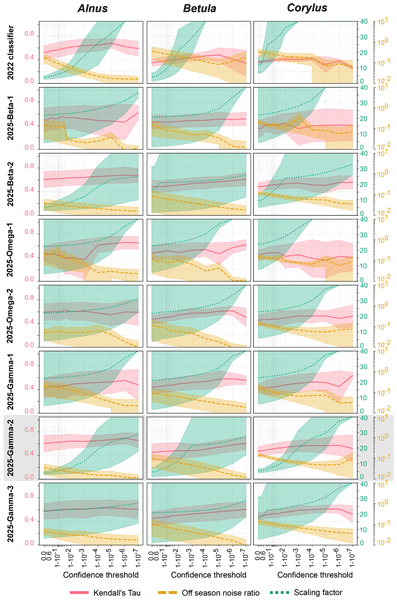
Marie-Pierre Meurville, Bernard Clot, Sophie Erb, Maria Lbadaoui-Darvas, Fiona Tummon, Gian-Duri Lieberherr, and Benoît Crouzy
Atmos. Meas. Tech., 19, 3427–3444, https://doi.org/10.5194/amt-19-3427-2026, https://doi.org/10.5194/amt-19-3427-2026, 2026
Short summary
Short summary
Our method evaluates how well automatic devices can classify pollen and other airborne particles in real time. Our goal is to compare different classification systems and understand their strengths and weaknesses. By developing this evaluation process, we aim to enhance the accuracy of bioaerosol forecasts. This research is essential for improving public health and helping people manage allergies more effectively.
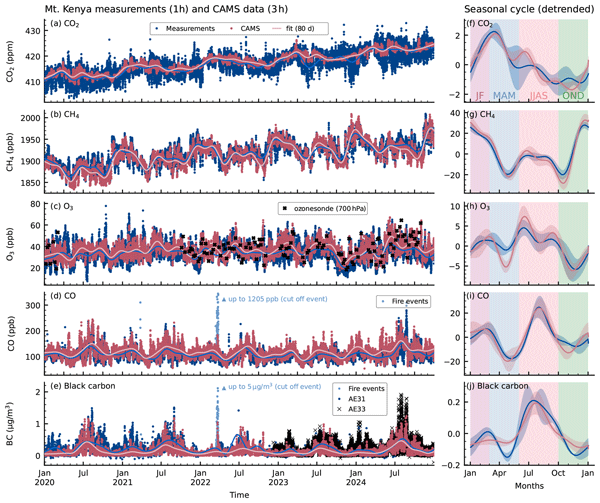
Leonie Bernet, Benjamin T. Brem, Nicolas Bukowiecki, Stephan Henne, Jörg Klausen, Mathew Mutuku, David Njiru, Patricia Nying'uro, Christoph Zellweger, and Martin Steinbacher
Atmos. Chem. Phys., 26, 6741–6762, https://doi.org/10.5194/acp-26-6741-2026, https://doi.org/10.5194/acp-26-6741-2026, 2026
Short summary
Short summary
Long-term atmospheric measurements are crucial to understanding climate change but remain scarce across Africa. We monitored atmospheric species at Mt. Kenya from 2020 to 2024. Our data reveal equatorial seasonal and daily variability and show that models miss local patterns. Emissions at Mt. Kenya mainly come from households, industry, and agriculture, though with large uncertainties. These findings stress the need for more ground stations to improve climate models and emission estimates.
Jian Xu, Junteng Wu, Mayur Gajanan Sapkal, Jim Grisillon, Shravan Deshmukh, Brice Temime Roussel, Julien Kammer, Nicolas Brun, Fabien Robert-Peillard, Beiping Luo, Judith Kleinheins, Silvia Henning, Bénédicte Picquet-Varrault, Edouard Pangui, Mathieu Cazaunau, Zamin A. Kanji, Claudia Marcolli, and Anne Monod
Aerosol Research Discuss., https://doi.org/10.5194/ar-2026-14, https://doi.org/10.5194/ar-2026-14, 2026
Preprint under review for AR
Short summary
Short summary
The study aimed to mimic the atmospheric behaviour of a semi-volatile organic compound in the presence of fine particles and at various relative humidities. The objective was to determine the influence of organic matter on humid particle growth. These results are essential for improving our understanding of cloud formation.
Marilena Gidarakou, Alexandros Papayannis, Maria Mylonaki, Eleni Kralli, Kostas Eleftheratos, Ilias Fountoulakis, Olga Zografou, Evangelia Diapouli, Maria I. Gini, Stergios Vratolis, Konstantinos Granakis, Konstantinos Eleftheriadis, Nikolaos Evangeliou, Christine Groot Zwaaftink, Eugenia Giagka, Marios-Andreas Zagklis, and Igor Veselovskii
Atmos. Chem. Phys., 26, 4313–4339, https://doi.org/10.5194/acp-26-4313-2026, https://doi.org/10.5194/acp-26-4313-2026, 2026
Short summary
Short summary
In summer 2023, Greece experienced one of its most intense wildfire seasons, with major fires across several regions. This study examines how smoke from two major fire events affected air quality and ultraviolet radiation in Athens using satellite images, modelling, and ground-based measurements to understand the optical and microphysical behavior of airborne particles.
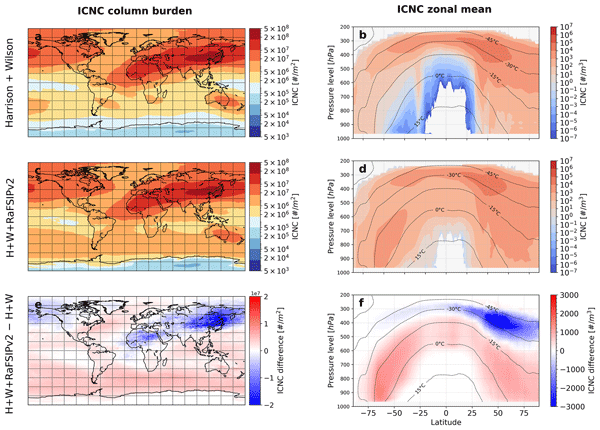
Montserrat Costa-Surós, María Gonçalves Ageitos, Marios Chatziparaschos, Paraskevi Georgakaki, Manu Anna Thomas, Gilbert Montané Pinto, Stelios Myriokefalitakis, Twan van Noije, Philippe Le Sager, Maria Kanakidou, Athanasios Nenes, and Carlos Pérez García-Pando
Atmos. Chem. Phys., 26, 2667–2690, https://doi.org/10.5194/acp-26-2667-2026, https://doi.org/10.5194/acp-26-2667-2026, 2026
Short summary
Short summary
Mixed-phase clouds play a key role in Earth’s climate but remain poorly represented in climate models. We improved their representation in the EC-Earth model by introducing an aerosol-sensitive scheme for ice formation and a machine-learning approach for secondary ice production. These advances produce more realistic cloud properties and radiative effects, highlighting that both processes are essential for reliable climate projections.
Jie Chen and Zamin A. Kanji
EGUsphere, https://doi.org/10.5194/egusphere-2025-6368, https://doi.org/10.5194/egusphere-2025-6368, 2026
Short summary
Short summary
Desert dust particles act as important seeds that enable cloud droplets to freeze. However, their ice formation ability is highly variable and difficult to represent in climate models. By analyzing previously published data, we found that both the measurement methods used and the way dust ages strongly influence its ice forming behavior. We developed new parameterizations that account for these effects, which are expected to improve the prediction of how dust impacts cloud formation and climate.
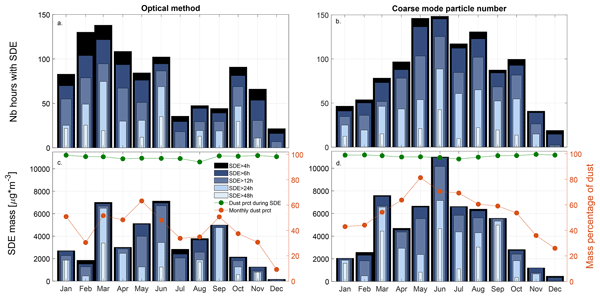
Martine Collaud Coen, Benjamin Tobias Brem, Martin Gysel-Beer, Robin Modini, Stephan Henne, Martin Steinbacher, Davide Putero, Maria I. Gini, and Kostantinos Eleftheriadis
Atmos. Chem. Phys., 26, 1623–1645, https://doi.org/10.5194/acp-26-1623-2026, https://doi.org/10.5194/acp-26-1623-2026, 2026
Short summary
Short summary
Saharan dust (SD) is transported over long distances by large-scale atmospheric circulation, reaching the Jungfraujoch high-altitude station 30 to 150 times per year. This study analyses the influence of instrument types on the SD detection using the single scattering albedo spectral dependence. This optical method is then compared to those based on size distribution and back-trajectories. The 23-year climatology of dust frequency and mass as well as the source sensitivity are also examined.
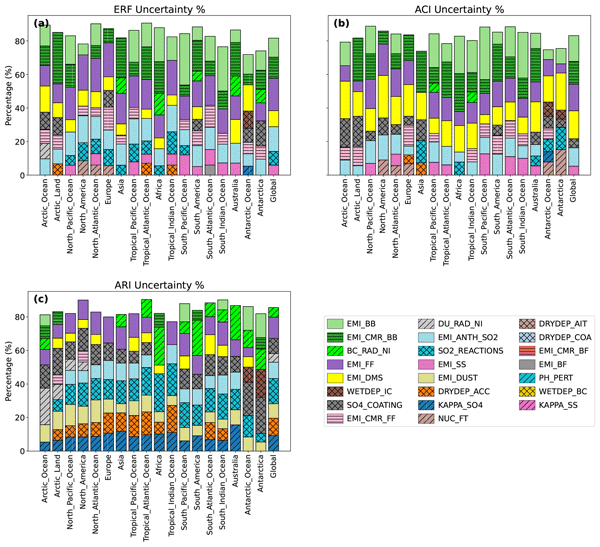
Yusuf A. Bhatti, Duncan Watson-Parris, Leighton A. Regayre, Hailing Jia, David Neubauer, Ulas Im, Carl Svenhag, Nick Schutgens, Athanasios Tsikerdekis, Athanasios Nenes, Muhammed Irfan, Bastiaan van Diedenhoven, Ardit Arifi, Guangliang Fu, and Otto P. Hasekamp
Atmos. Chem. Phys., 26, 269–293, https://doi.org/10.5194/acp-26-269-2026, https://doi.org/10.5194/acp-26-269-2026, 2026
Short summary
Short summary
Aerosols (small airborne particles) impact Earth's climate, but their extent is unknown. By running climate model simulations and using machine learning to emulate millions of additional variants with different settings, we found that natural emissions like sea spray and sulfur are key sources of uncertainty in climate predictions. Our work shows that understanding these natural processes better can help improve climate models and make future climate projections more accurate.
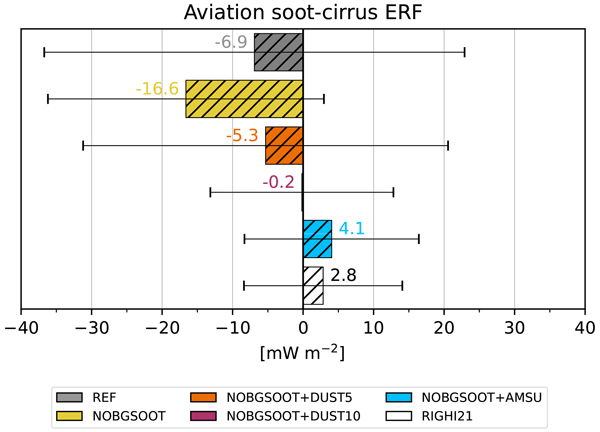
Mattia Righi, Baptiste Testa, Christof G. Beer, Johannes Hendricks, and Zamin A. Kanji
Atmos. Chem. Phys., 25, 18341–18353, https://doi.org/10.5194/acp-25-18341-2025, https://doi.org/10.5194/acp-25-18341-2025, 2025
Short summary
Short summary
The effective radiative forcing due to the effect of aviation soot on natural cirrus clouds is likely very small, thus confirming most previous studies, but for the first time with the support of laboratory measurements specifically targeting aviation soot and its ice nucleation ability.
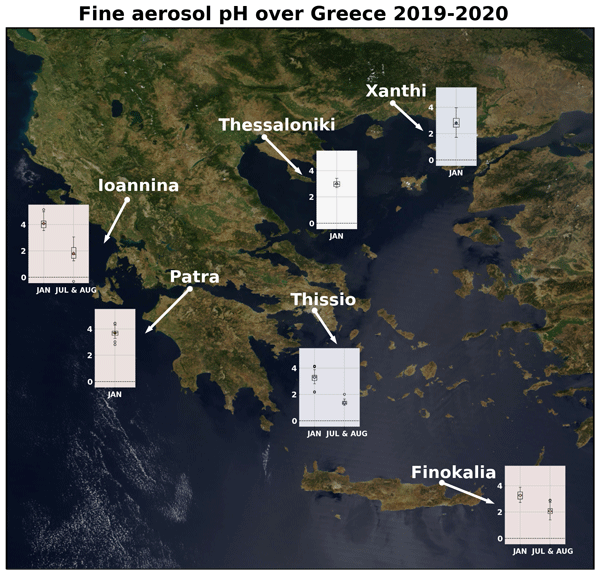
Anna Maria Neroladaki, Maria Tsagkaraki, Kyriaki Papoutsidaki, Kalliopi Tavernaraki, Filothei Boufidou, Pavlos Zarmpas, Irini Tsiodra, Eleni Liakakou, Aikaterini Bougiatioti, Giorgos Kouvarakis, Nikos Kalivitis, Christos Kaltsonoudis, Athanasios Karagioras, Dimitrios Balis, Konstantinos Michailidis, Konstantinos Kourtidis, Stelios Myriokefalitakis, Nikos Hatzianastassiou, Spyros N. Pandis, Athanasios Nenes, Nikolaos Mihalopoulos, and Maria Kanakidou
Atmos. Chem. Phys., 25, 17953–17971, https://doi.org/10.5194/acp-25-17953-2025, https://doi.org/10.5194/acp-25-17953-2025, 2025
Short summary
Short summary
Aerosol acidity affects aerosol composition and properties, and therefore climate, human health and ecosystems. We use summer and winter fine aerosol observations at 6 sites across Greece, and a thermodynamic model to calculate the spatial and seasonal variability of aerosol acidity. Aerosols were acidic to moderately acidic and more acidic during summer than winter. The importance of organics for aerosol acidity was small. Depending on location different factors controlled aerosol acidity.
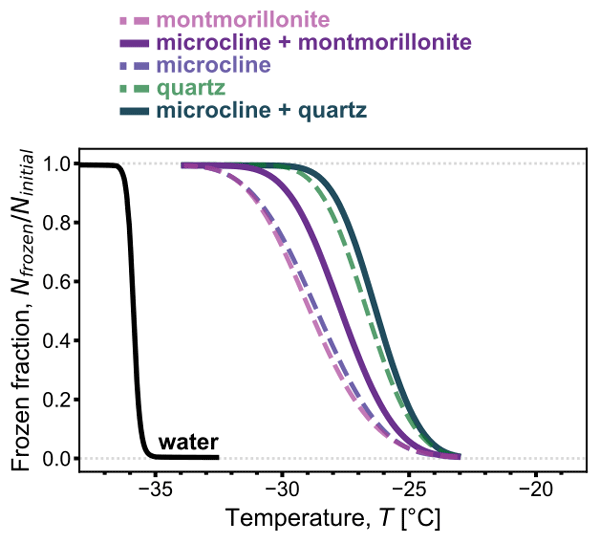
Nadia Shardt, Florin N. Isenrich, Julia Nette, Christopher Dreimol, Ning Ma, Zamin A. Kanji, Andrew J. deMello, and Claudia Marcolli
Atmos. Chem. Phys., 25, 17997–18014, https://doi.org/10.5194/acp-25-17997-2025, https://doi.org/10.5194/acp-25-17997-2025, 2025
Short summary
Short summary
In the atmosphere, minerals suspended in cloud droplets promote the formation of ice. We investigated ice formation in the presence of pure and binary mixtures of common minerals using a microfluidic device. The mineral with the best ability to initiate ice formation alone (that is, at the highest temperature) typically determined when ice formed in the binary mixture.
Maria P. Georgopoulou, Kalliopi Florou, Angeliki Matrali, Georgia Starida, Christos Kaltsonoudis, Athanasios Nenes, and Spyros N. Pandis
Atmos. Chem. Phys., 25, 15835–15855, https://doi.org/10.5194/acp-25-15835-2025, https://doi.org/10.5194/acp-25-15835-2025, 2025
Short summary
Short summary
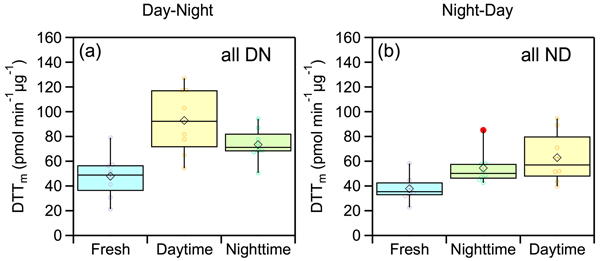
Residential biomass burning is an important wintertime source of aerosols. This study examined the complex diurnal aging cycles on biomass burning aerosol composition and oxidative potential, a key toxicity metric. Additional organic aerosol (OA) mass was produced after the two (day/night and night/day) cycles, varying from 35 to 90 % of the initial OA. The aging of the emissions led to a final oxidative potential increase of 60 % for both cycles.
Mayur G. Sapkal, Michael Rösch, and Zamin A. Kanji
Atmos. Meas. Tech., 18, 5649–5667, https://doi.org/10.5194/amt-18-5649-2025, https://doi.org/10.5194/amt-18-5649-2025, 2025
Short summary
Short summary
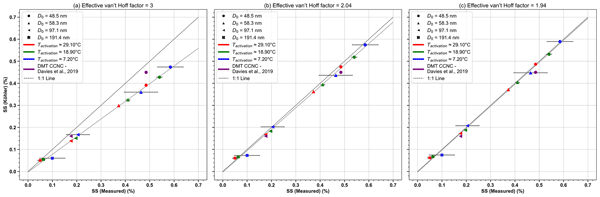
The newly developed Horizontal Cloud Condensation Nuclei Counter (HCCNC) is capable of generating supersaturation as low as 0.05 % at temperatures as low as 4 °C, allowing for the investigation of CCN activity of ammonium sulfate particles up to 200 nm diameter and ambient aerosol of larger diameter. The HCCNC could be used for low-temperature experiments where gas-phase partitioning into or out of the aerosol phase for semi-volatile compounds is relevant for CCN activity.
Marios Chatziparaschos, Stelios Myriokefalitakis, Nikos Kalivitis, Nikos Daskalakis, Athanasios Nenes, María Gonçalves Ageitos, Montserrat Costa-Surós, Carlos Pérez García-Pando, Mihalis Vrekoussis, and Maria Kanakidou
Atmos. Chem. Phys., 25, 9085–9111, https://doi.org/10.5194/acp-25-9085-2025, https://doi.org/10.5194/acp-25-9085-2025, 2025
Short summary
Short summary
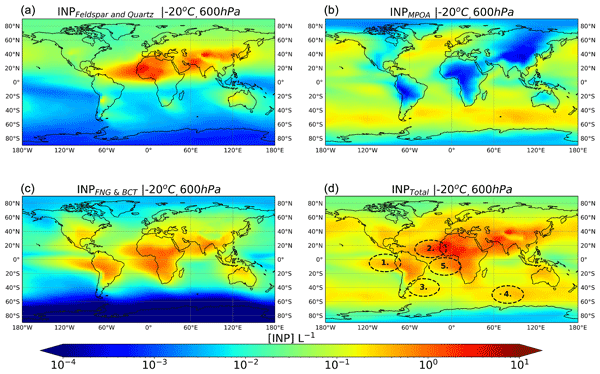
We show distinct seasonal and geographical patterns in the contributions of mineral dust, marine aerosol, and terrestrial biological particles to ice-nucleating particle (INP) concentrations that lead to atmospheric ice formation, a major source of uncertainty in climate projections. Bioaerosols are the major source of INPs at high temperatures, while mineral dust influences the global INP population at lower temperatures. These particles can satisfactorily reproduce INPs in a climate model.
Lubna Dada, Benjamin T. Brem, Lidia-Marta Amarandi-Netedu, Martine Collaud Coen, Nikolaos Evangeliou, Christoph Hueglin, Nora Nowak, Robin Modini, Martin Steinbacher, and Martin Gysel-Beer
Aerosol Research, 3, 315–336, https://doi.org/10.5194/ar-3-315-2025, https://doi.org/10.5194/ar-3-315-2025, 2025
Short summary
Short summary
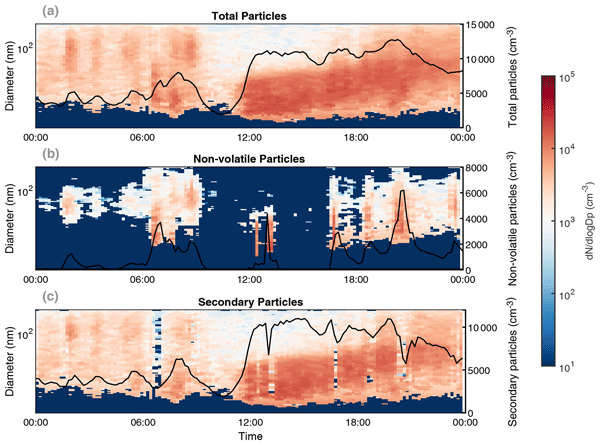
We investigated the sources of ultrafine particles (UFPs) in Payerne, Switzerland, highlighting the significant role of secondary processes in elevating UFP concentrations to levels comparable to urban areas. As the first study in rural midland Switzerland to analyze new particle formation events and secondary contributions, it offers key insights for air quality regulation and the role of agriculture in Switzerland and central Europe.
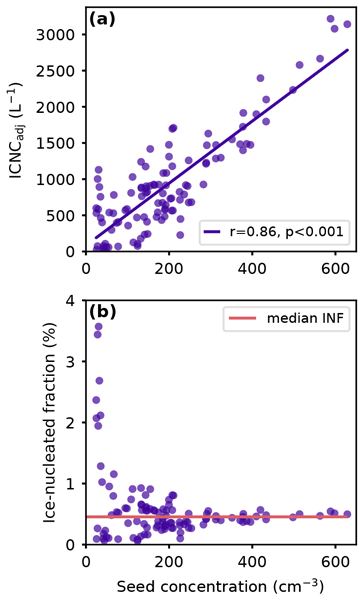
Anna J. Miller, Christopher Fuchs, Fabiola Ramelli, Huiying Zhang, Nadja Omanovic, Robert Spirig, Claudia Marcolli, Zamin A. Kanji, Ulrike Lohmann, and Jan Henneberger
Atmos. Chem. Phys., 25, 5387–5407, https://doi.org/10.5194/acp-25-5387-2025, https://doi.org/10.5194/acp-25-5387-2025, 2025
Short summary
Short summary
We analyzed the ability of silver iodide particles (a commonly used cloud-seeding agent) to form ice crystals in naturally occurring liquid clouds at −5 to −8 °C and found that only ≈ 0.1 %−1 % of particles nucleate ice, with a negative dependence on temperature. By contextualizing our results with previous laboratory studies, we help to bridge the gap between laboratory and field experiments, which also helps to inform future cloud-seeding projects.

Alexandre Bugnard, Martine Collaud Coen, Maxime Hervo, Daniel Leuenberger, Marco Arpagaus, and Samuel Monhart
Atmos. Meas. Tech., 18, 1039–1061, https://doi.org/10.5194/amt-18-1039-2025, https://doi.org/10.5194/amt-18-1039-2025, 2025
Short summary
Short summary
Temperature (T) and wind profiles were measured by a Doppler wind lidar and a microwave radiometer in Meiringen in a medium-sized Alpine valley. Ground-based T inversions and thermal winds were studied during the 10 months of the campaign. The comparison between the observations and the COSMO-1E model provides good model performance for monthly climatologies. T inversions are however frequently missed, and important differences for particular cases are found, especially for foehn events.
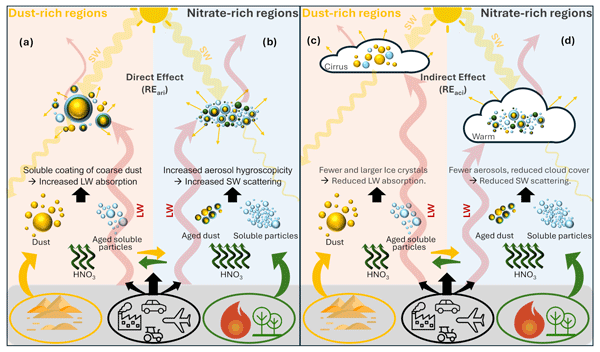
Alexandros Milousis, Klaus Klingmüller, Alexandra P. Tsimpidi, Jasper F. Kok, Maria Kanakidou, Athanasios Nenes, and Vlassis A. Karydis
Atmos. Chem. Phys., 25, 1333–1351, https://doi.org/10.5194/acp-25-1333-2025, https://doi.org/10.5194/acp-25-1333-2025, 2025
Short summary
Short summary
This study investigates the impact of dust on the global radiative effect of nitrate aerosols. The results indicate both positive and negative regional shortwave and longwave radiative effects due to aerosol–radiation interactions and cloud adjustments. The global average net REari and REaci of nitrate aerosols are −0.11 and +0.17 W m−2, respectively, mainly affecting the shortwave spectrum. Sensitivity simulations evaluated the influence of mineral dust composition and emissions on the results.
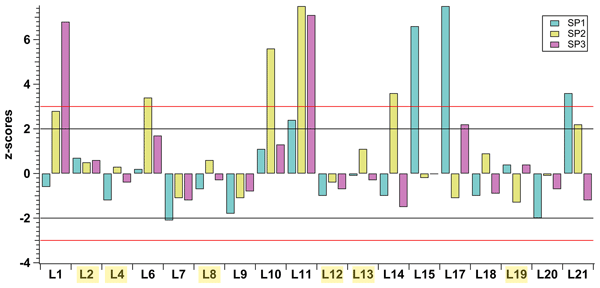
Pamela A. Dominutti, Jean-Luc Jaffrezo, Anouk Marsal, Takoua Mhadhbi, Rhabira Elazzouzi, Camille Rak, Fabrizia Cavalli, Jean-Philippe Putaud, Aikaterini Bougiatioti, Nikolaos Mihalopoulos, Despina Paraskevopoulou, Ian Mudway, Athanasios Nenes, Kaspar R. Daellenbach, Catherine Banach, Steven J. Campbell, Hana Cigánková, Daniele Contini, Greg Evans, Maria Georgopoulou, Manuella Ghanem, Drew A. Glencross, Maria Rachele Guascito, Hartmut Herrmann, Saima Iram, Maja Jovanović, Milena Jovašević-Stojanović, Markus Kalberer, Ingeborg M. Kooter, Suzanne E. Paulson, Anil Patel, Esperanza Perdrix, Maria Chiara Pietrogrande, Pavel Mikuška, Jean-Jacques Sauvain, Katerina Seitanidi, Pourya Shahpoury, Eduardo J. d. S. Souza, Sarah Steimer, Svetlana Stevanovic, Guillaume Suarez, P. S. Ganesh Subramanian, Battist Utinger, Marloes F. van Os, Vishal Verma, Xing Wang, Rodney J. Weber, Yuhan Yang, Xavier Querol, Gerard Hoek, Roy M. Harrison, and Gaëlle Uzu
Atmos. Meas. Tech., 18, 177–195, https://doi.org/10.5194/amt-18-177-2025, https://doi.org/10.5194/amt-18-177-2025, 2025
Short summary
Short summary
In this work, 20 labs worldwide collaborated to evaluate the measurement of air pollution's oxidative potential (OP), a key indicator of its harmful effects. The study aimed to identify disparities in the widely used OP dithiothreitol assay and assess the consistency of OP among labs using the same protocol. The results showed that half of the labs achieved acceptable results. However, variability was also found, highlighting the need for standardisation in OP procedures.
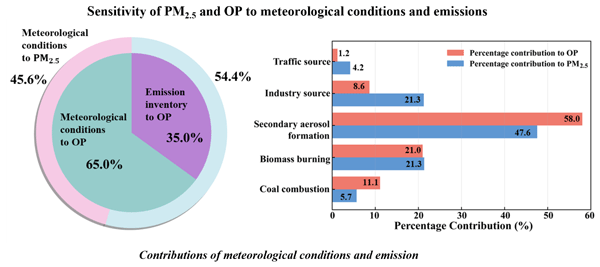
Jiemei Liu, Jesper H. Christensen, Zhuyun Ye, Shikui Dong, Camilla Geels, Jørgen Brandt, Athanasios Nenes, Yuan Yuan, and Ulas Im
Atmos. Chem. Phys., 24, 10849–10867, https://doi.org/10.5194/acp-24-10849-2024, https://doi.org/10.5194/acp-24-10849-2024, 2024
Short summary
Short summary
China was chosen as an example to conduct a quantitative analysis using the Danish Eulerian Hemispheric Model (DEHM) system with meteorological input from the Weather Research and Forecasting (WRF) model. Meteorological conditions and emission inventories contributed 46 % (65 %) and 54 % (35 %) to the variations in PM2.5 concentrations (oxidative potential – OP), respectively, highlighting secondary aerosol formation and biomass burning as the primary contributors to PM2.5 and OP levels.
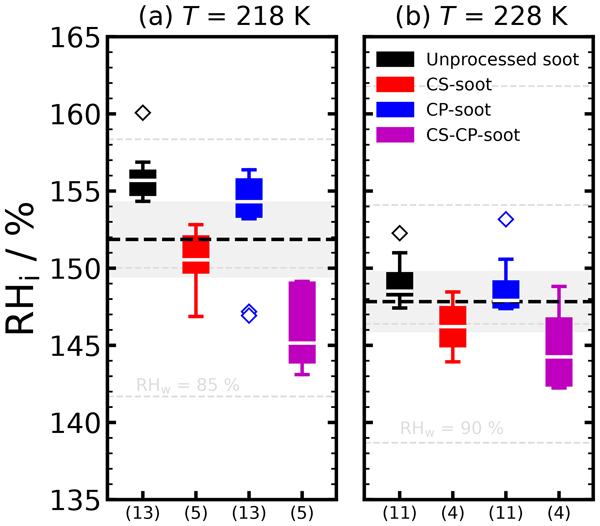
Baptiste Testa, Lukas Durdina, Jacinta Edebeli, Curdin Spirig, and Zamin A. Kanji
Atmos. Chem. Phys., 24, 10409–10424, https://doi.org/10.5194/acp-24-10409-2024, https://doi.org/10.5194/acp-24-10409-2024, 2024
Short summary
Short summary
Aviation soot residuals released from contrails can become compacted upon sublimation of the ice crystals, generating new voids in the aggregates where ice nucleation can occur. Here we show that contrail-processed soot is highly compact but that it remains unable to form ice at a relative humidity different from that required for the formation of background cirrus from the more ubiquitous aqueous solution droplets, suggesting that it will not perturb cirrus cloud formation via ice nucleation.
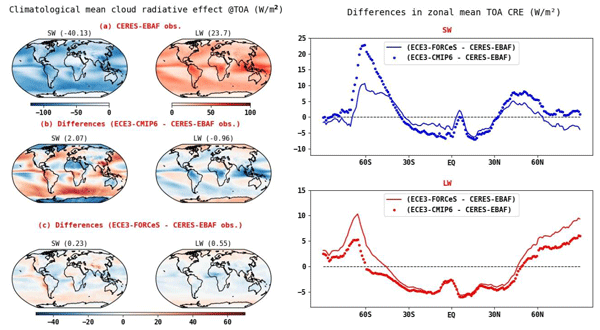
Manu Anna Thomas, Klaus Wyser, Shiyu Wang, Marios Chatziparaschos, Paraskevi Georgakaki, Montserrat Costa-Surós, Maria Gonçalves Ageitos, Maria Kanakidou, Carlos Pérez García-Pando, Athanasios Nenes, Twan van Noije, Philippe Le Sager, and Abhay Devasthale
Geosci. Model Dev., 17, 6903–6927, https://doi.org/10.5194/gmd-17-6903-2024, https://doi.org/10.5194/gmd-17-6903-2024, 2024
Short summary
Short summary
Aerosol–cloud interactions occur at a range of spatio-temporal scales. While evaluating recent developments in EC-Earth3-AerChem, this study aims to understand the extent to which the Twomey effect manifests itself at larger scales. We find a reduction in the warm bias over the Southern Ocean due to model improvements. While we see footprints of the Twomey effect at larger scales, the negative relationship between cloud droplet number and liquid water drives the shortwave radiative effect.
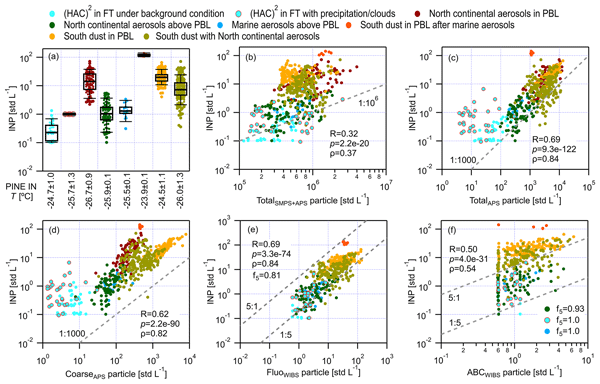
Kunfeng Gao, Franziska Vogel, Romanos Foskinis, Stergios Vratolis, Maria I. Gini, Konstantinos Granakis, Anne-Claire Billault-Roux, Paraskevi Georgakaki, Olga Zografou, Prodromos Fetfatzis, Alexis Berne, Alexandros Papayannis, Konstantinos Eleftheridadis, Ottmar Möhler, and Athanasios Nenes
Atmos. Chem. Phys., 24, 9939–9974, https://doi.org/10.5194/acp-24-9939-2024, https://doi.org/10.5194/acp-24-9939-2024, 2024
Short summary
Short summary
Ice nucleating particle (INP) concentrations are required for correct predictions of clouds and precipitation in a changing climate, but they are poorly constrained in climate models. We unravel source contributions to INPs in the eastern Mediterranean and find that biological particles are important, regardless of their origin. The parameterizations developed exhibit superior performance and enable models to consider biological-particle effects on INPs.
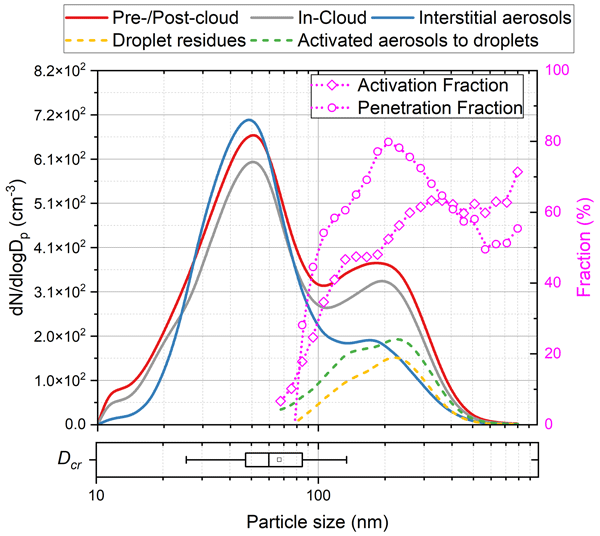
Romanos Foskinis, Ghislain Motos, Maria I. Gini, Olga Zografou, Kunfeng Gao, Stergios Vratolis, Konstantinos Granakis, Ville Vakkari, Kalliopi Violaki, Andreas Aktypis, Christos Kaltsonoudis, Zongbo Shi, Mika Komppula, Spyros N. Pandis, Konstantinos Eleftheriadis, Alexandros Papayannis, and Athanasios Nenes
Atmos. Chem. Phys., 24, 9827–9842, https://doi.org/10.5194/acp-24-9827-2024, https://doi.org/10.5194/acp-24-9827-2024, 2024
Short summary
Short summary
Analysis of modeling, in situ, and remote sensing measurements reveals the microphysical state of orographic clouds and their response to aerosol from the boundary layer and free troposphere. We show that cloud response to aerosol is robust, as predicted supersaturation and cloud droplet number levels agree with those determined from in-cloud measurements. The ability to determine if clouds are velocity- or aerosol-limited allows for novel model constraints and remote sensing products.
Olga Zografou, Maria Gini, Prodromos Fetfatzis, Konstantinos Granakis, Romanos Foskinis, Manousos Ioannis Manousakas, Fotios Tsopelas, Evangelia Diapouli, Eleni Dovrou, Christina N. Vasilakopoulou, Alexandros Papayannis, Spyros N. Pandis, Athanasios Nenes, and Konstantinos Eleftheriadis
Atmos. Chem. Phys., 24, 8911–8926, https://doi.org/10.5194/acp-24-8911-2024, https://doi.org/10.5194/acp-24-8911-2024, 2024
Short summary
Short summary
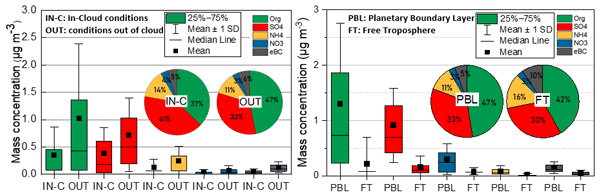
Characterization of PM1 and positive matrix factorization (PMF) source apportionment of organic and inorganic fractions were conducted at the high-altitude station (HAC)2. Cloud presence reduced PM1, affecting sulfate more than organics. Free-troposphere (FT) conditions showed more black carbon (eBC) than planetary boundary layer (PBL) conditions.
Timothy A. Sipkens, Joel C. Corbin, Brett Smith, Stéphanie Gagné, Prem Lobo, Benjamin T. Brem, Mark P. Johnson, and Gregory J. Smallwood
Atmos. Meas. Tech., 17, 4291–4302, https://doi.org/10.5194/amt-17-4291-2024, https://doi.org/10.5194/amt-17-4291-2024, 2024
Short summary
Short summary
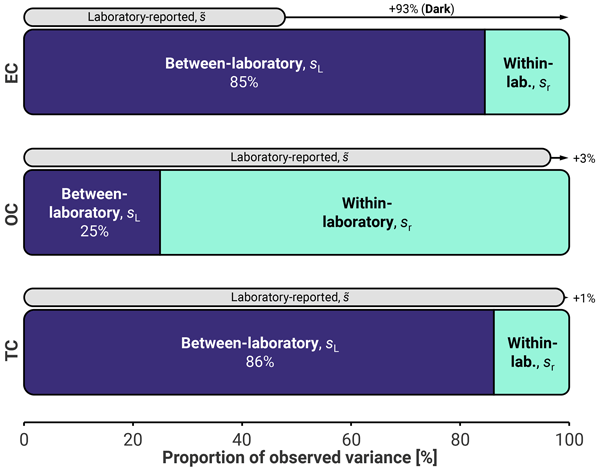
Carbonaceous particles, such as soot, contribute to climate forcing, air pollution, and human health impacts. Thermal–optical analysis is a calibration standard used to measure these particles, but significant differences have been observed in the measurements across identical instruments. We report on the reproducibility of these measurements for aircraft emissions, which range from 8.0 % of the nominal value for organic carbon to 17 % for elemental carbon.
Baptiste Testa, Lukas Durdina, Peter A. Alpert, Fabian Mahrt, Christopher H. Dreimol, Jacinta Edebeli, Curdin Spirig, Zachary C. J. Decker, Julien Anet, and Zamin A. Kanji
Atmos. Chem. Phys., 24, 4537–4567, https://doi.org/10.5194/acp-24-4537-2024, https://doi.org/10.5194/acp-24-4537-2024, 2024
Short summary
Short summary
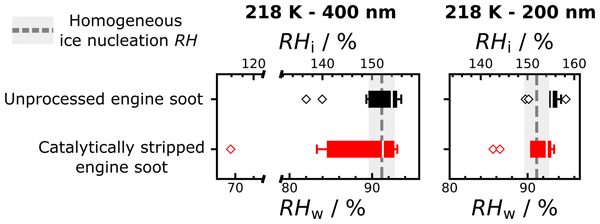
Laboratory experiments on the ice nucleation of real commercial aviation soot particles are investigated for their cirrus cloud formation potential. Our results show that aircraft-emitted soot in the upper troposphere will be poor ice-nucleating particles. Measuring the soot particle morphology and modifying their mixing state allow us to elucidate why these particles are ineffective at forming ice, in contrast to previously used soot surrogates.
Alexandros Milousis, Alexandra P. Tsimpidi, Holger Tost, Spyros N. Pandis, Athanasios Nenes, Astrid Kiendler-Scharr, and Vlassis A. Karydis
Geosci. Model Dev., 17, 1111–1131, https://doi.org/10.5194/gmd-17-1111-2024, https://doi.org/10.5194/gmd-17-1111-2024, 2024
Short summary
Short summary
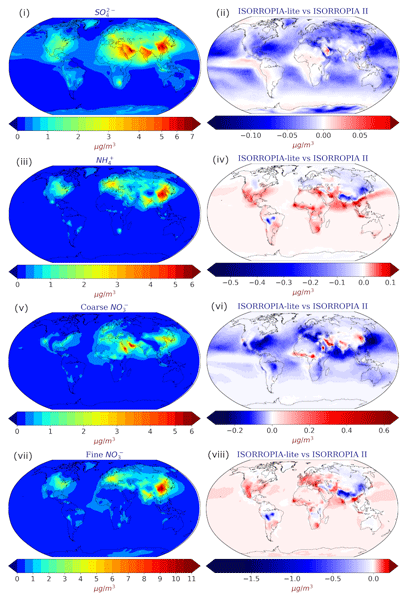
This study aims to evaluate the newly developed ISORROPIA-lite aerosol thermodynamic module within the EMAC model and explore discrepancies in global atmospheric simulations of aerosol composition and acidity by utilizing different aerosol phase states. Even though local differences were found in regions where the RH ranged from 20 % to 60 %, on a global scale the results are similar. Therefore, ISORROPIA-lite can be a reliable and computationally effective alternative to ISORROPIA II in EMAC.
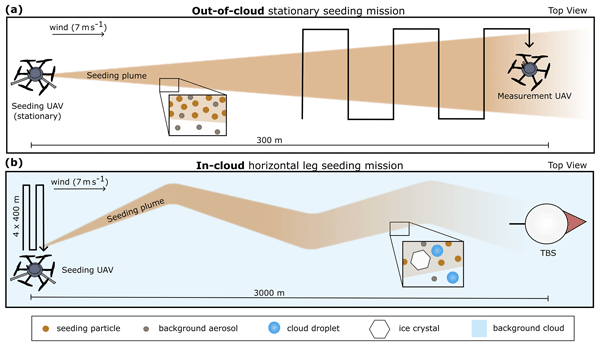
Anna J. Miller, Fabiola Ramelli, Christopher Fuchs, Nadja Omanovic, Robert Spirig, Huiying Zhang, Ulrike Lohmann, Zamin A. Kanji, and Jan Henneberger
Atmos. Meas. Tech., 17, 601–625, https://doi.org/10.5194/amt-17-601-2024, https://doi.org/10.5194/amt-17-601-2024, 2024
Short summary
Short summary
We present a method for aerosol and cloud research using two uncrewed aerial vehicles (UAVs). The UAVs have a propeller heating mechanism that allows flights in icing conditions, which has so far been a limitation for cloud research with UAVs. One UAV burns seeding flares, producing a plume of particles that causes ice formation in supercooled clouds. The second UAV measures aerosol size distributions and is used for measuring the seeding plume or for characterizing the boundary layer.
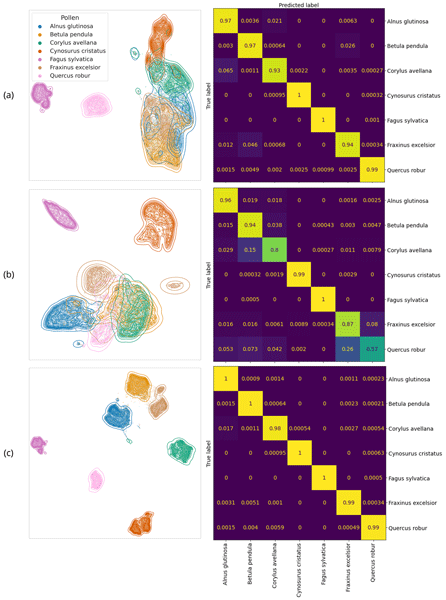
Sophie Erb, Elias Graf, Yanick Zeder, Simone Lionetti, Alexis Berne, Bernard Clot, Gian Lieberherr, Fiona Tummon, Pascal Wullschleger, and Benoît Crouzy
Atmos. Meas. Tech., 17, 441–451, https://doi.org/10.5194/amt-17-441-2024, https://doi.org/10.5194/amt-17-441-2024, 2024
Short summary
Short summary
In this study, we focus on an automatic bioaerosol measurement instrument and investigate the impact of using its fluorescence measurement for pollen identification. The fluorescence signal is used together with a pair of images from the same instrument to identify single pollen grains via neural networks. We test whether considering fluorescence as a supplementary input improves the pollen identification performance by comparing three different neural networks.
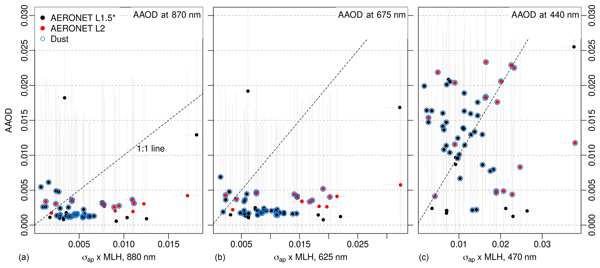
Alessandro Bigi, Giorgio Veratti, Elisabeth Andrews, Martine Collaud Coen, Lorenzo Guerrieri, Vera Bernardoni, Dario Massabò, Luca Ferrero, Sergio Teggi, and Grazia Ghermandi
Atmos. Chem. Phys., 23, 14841–14869, https://doi.org/10.5194/acp-23-14841-2023, https://doi.org/10.5194/acp-23-14841-2023, 2023
Short summary
Short summary
Atmospheric particles include compounds that play a key role in the greenhouse effect and air toxicity. Concurrent observations of these compounds by multiple instruments are presented, following deployment within an urban environment in the Po Valley, one of Europe's pollution hotspots. The study compares these data, highlighting the impact of ground emissions, mainly vehicular traffic and biomass burning, on the absorption of sun radiation and, ultimately, on climate change and air quality.
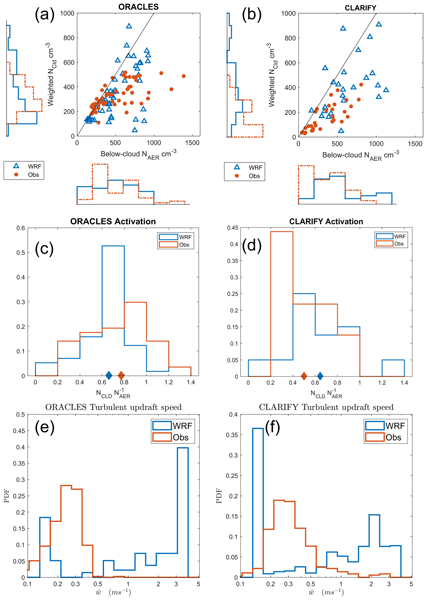
Calvin Howes, Pablo E. Saide, Hugh Coe, Amie Dobracki, Steffen Freitag, Jim M. Haywood, Steven G. Howell, Siddhant Gupta, Janek Uin, Mary Kacarab, Chongai Kuang, L. Ruby Leung, Athanasios Nenes, Greg M. McFarquhar, James Podolske, Jens Redemann, Arthur J. Sedlacek, Kenneth L. Thornhill, Jenny P. S. Wong, Robert Wood, Huihui Wu, Yang Zhang, Jianhao Zhang, and Paquita Zuidema
Atmos. Chem. Phys., 23, 13911–13940, https://doi.org/10.5194/acp-23-13911-2023, https://doi.org/10.5194/acp-23-13911-2023, 2023
Short summary
Short summary
To better understand smoke properties and its interactions with clouds, we compare the WRF-CAM5 model with observations from ORACLES, CLARIFY, and LASIC field campaigns in the southeastern Atlantic in August 2017. The model transports and mixes smoke well but does not fully capture some important processes. These include smoke chemical and physical aging over 4–12 days, smoke removal by rain, sulfate particle formation, aerosol activation into cloud droplets, and boundary layer turbulence.
Ghislain Motos, Gabriel Freitas, Paraskevi Georgakaki, Jörg Wieder, Guangyu Li, Wenche Aas, Chris Lunder, Radovan Krejci, Julie Thérèse Pasquier, Jan Henneberger, Robert Oscar David, Christoph Ritter, Claudia Mohr, Paul Zieger, and Athanasios Nenes
Atmos. Chem. Phys., 23, 13941–13956, https://doi.org/10.5194/acp-23-13941-2023, https://doi.org/10.5194/acp-23-13941-2023, 2023
Short summary
Short summary
Low-altitude clouds play a key role in regulating the climate of the Arctic, a region that suffers from climate change more than any other on the planet. We gathered meteorological and aerosol physical and chemical data over a year and utilized them for a parameterization that help us unravel the factors driving and limiting the efficiency of cloud droplet formation. We then linked this information to the sources of aerosol found during each season and to processes of cloud glaciation.
Stylianos Kakavas, Spyros N. Pandis, and Athanasios Nenes
Atmos. Chem. Phys., 23, 13555–13564, https://doi.org/10.5194/acp-23-13555-2023, https://doi.org/10.5194/acp-23-13555-2023, 2023
Short summary
Short summary
Water uptake from organic species in aerosol can affect the partitioning of semi-volatile inorganic compounds but are not considered in global and chemical transport models. We address this with a version of the PM-CAMx model that considers such organic water effects and use it to carry out 1-year aerosol simulations over the continental US. We show that such organic water impacts can increase dry PM1 levels by up to 2 μg m-3 when RH levels and PM1 concentrations are high.
Guangyu Li, Elise K. Wilbourn, Zezhen Cheng, Jörg Wieder, Allison Fagerson, Jan Henneberger, Ghislain Motos, Rita Traversi, Sarah D. Brooks, Mauro Mazzola, Swarup China, Athanasios Nenes, Ulrike Lohmann, Naruki Hiranuma, and Zamin A. Kanji
Atmos. Chem. Phys., 23, 10489–10516, https://doi.org/10.5194/acp-23-10489-2023, https://doi.org/10.5194/acp-23-10489-2023, 2023
Short summary
Short summary
In this work, we present results from an Arctic field campaign (NASCENT) in Ny-Ålesund, Svalbard, on the abundance, variability, physicochemical properties, and potential sources of ice-nucleating particles (INPs) relevant for mixed-phase cloud formation. This work improves the data coverage of Arctic INPs and aerosol properties, allowing for the validation of models predicting cloud microphysical and radiative properties of mixed-phase clouds in the rapidly warming Arctic.
Anne-Claire Billault-Roux, Paraskevi Georgakaki, Josué Gehring, Louis Jaffeux, Alfons Schwarzenboeck, Pierre Coutris, Athanasios Nenes, and Alexis Berne
Atmos. Chem. Phys., 23, 10207–10234, https://doi.org/10.5194/acp-23-10207-2023, https://doi.org/10.5194/acp-23-10207-2023, 2023
Short summary
Short summary
Secondary ice production plays a key role in clouds and precipitation. In this study, we analyze radar measurements from a snowfall event in the Jura Mountains. Complex signatures are observed, which reveal that ice crystals were formed through various processes. An analysis of multi-sensor data suggests that distinct ice multiplication processes were taking place. Both the methods used and the insights gained through this case study contribute to a better understanding of snowfall microphysics.
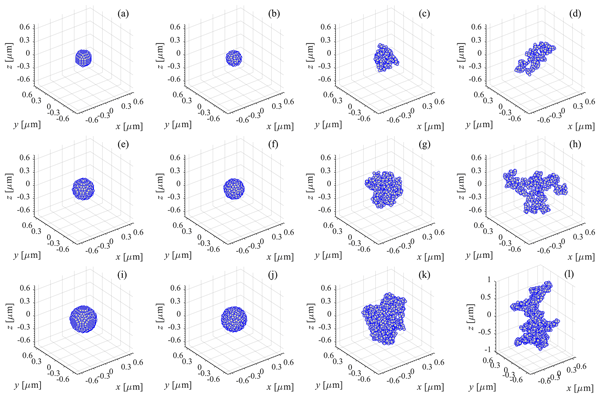
Carynelisa Haspel, Cuiqi Zhang, Martin J. Wolf, Daniel J. Cziczo, and Maor Sela
Atmos. Chem. Phys., 23, 10091–10115, https://doi.org/10.5194/acp-23-10091-2023, https://doi.org/10.5194/acp-23-10091-2023, 2023
Short summary
Short summary
Small particles, commonly termed aerosols, can be found throughout the atmosphere and come from both natural and anthropogenic sources. One important type of aerosol is black carbon (BC). In this study, we conducted laboratory measurements of light scattering by particles meant to mimic atmospheric BC and compared them to calculations of scattering. We find that it is likely that calculations underpredict the scattering by BC particles of certain polarizations of light in certain directions.
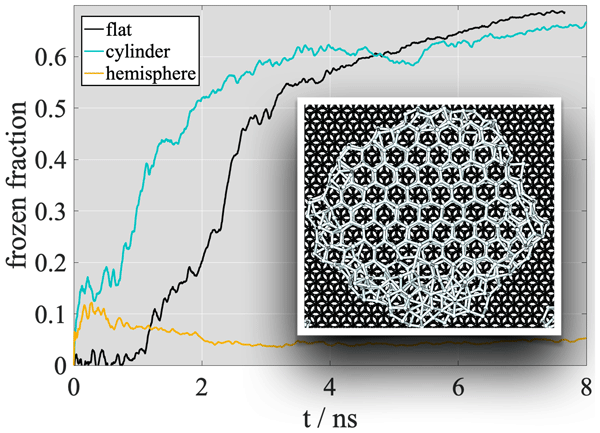
Mária Lbadaoui-Darvas, Ari Laaksonen, and Athanasios Nenes
Atmos. Chem. Phys., 23, 10057–10074, https://doi.org/10.5194/acp-23-10057-2023, https://doi.org/10.5194/acp-23-10057-2023, 2023
Short summary
Short summary
Heterogeneous ice nucleation is the main ice formation mechanism in clouds. The mechanism of different freezing modes is to date unknown, which results in large model biases. Experiments do not allow for direct observation of ice nucleation at its native resolution. This work uses first principles molecular simulations to determine the mechanism of the least-understood ice nucleation mode and link it to adsorption through a novel modeling framework that unites ice and droplet formation.
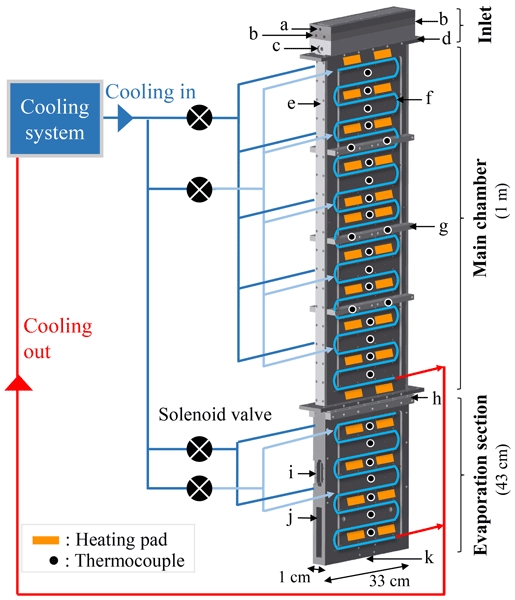
Dimitri Castarède, Zoé Brasseur, Yusheng Wu, Zamin A. Kanji, Markus Hartmann, Lauri Ahonen, Merete Bilde, Markku Kulmala, Tuukka Petäjä, Jan B. C. Pettersson, Berko Sierau, Olaf Stetzer, Frank Stratmann, Birgitta Svenningsson, Erik Swietlicki, Quynh Thu Nguyen, Jonathan Duplissy, and Erik S. Thomson
Atmos. Meas. Tech., 16, 3881–3899, https://doi.org/10.5194/amt-16-3881-2023, https://doi.org/10.5194/amt-16-3881-2023, 2023
Short summary
Short summary
Clouds play a key role in Earth’s climate by influencing the surface energy budget. Certain types of atmospheric aerosols, called ice-nucleating particles (INPs), induce the formation of ice in clouds and, thus, often initiate precipitation formation. The Portable Ice Nucleation Chamber 2 (PINCii) is a new instrument developed to study ice formation and to conduct ambient measurements of INPs, allowing us to investigate the sources and properties of the atmospheric aerosols that can act as INPs.
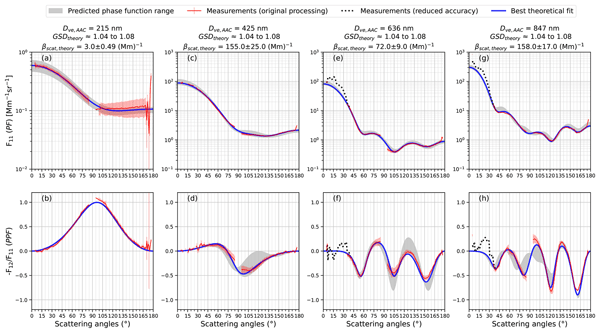
Alireza Moallemi, Robin L. Modini, Benjamin T. Brem, Barbara Bertozzi, Philippe Giaccari, and Martin Gysel-Beer
Atmos. Meas. Tech., 16, 3653–3678, https://doi.org/10.5194/amt-16-3653-2023, https://doi.org/10.5194/amt-16-3653-2023, 2023
Short summary
Short summary
Polarimetric data, i.e., the angular and polarization dependence of light scattering by aerosols, contain ample information on optical and microphysical properties. Retrieval of these properties is a central approach in aerosol remote sensing. We present a description, calibration, validation, and a first application of a new benchtop polar nephelometer, which provides in situ polarimetric measurements of an aerosol. Such data facilitate agreement between retrieval results and independent data.
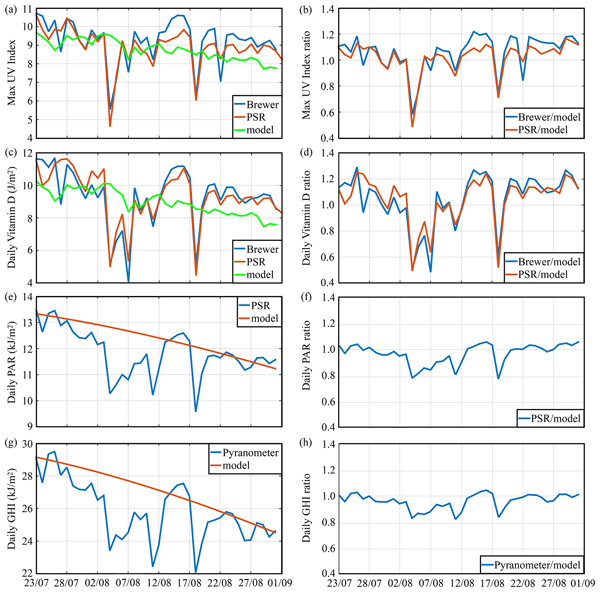
Akriti Masoom, Ilias Fountoulakis, Stelios Kazadzis, Ioannis-Panagiotis Raptis, Anna Kampouri, Basil E. Psiloglou, Dimitra Kouklaki, Kyriakoula Papachristopoulou, Eleni Marinou, Stavros Solomos, Anna Gialitaki, Dimitra Founda, Vasileios Salamalikis, Dimitris Kaskaoutis, Natalia Kouremeti, Nikolaos Mihalopoulos, Vassilis Amiridis, Andreas Kazantzidis, Alexandros Papayannis, Christos S. Zerefos, and Kostas Eleftheratos
Atmos. Chem. Phys., 23, 8487–8514, https://doi.org/10.5194/acp-23-8487-2023, https://doi.org/10.5194/acp-23-8487-2023, 2023
Short summary
Short summary
We analyse the spatial and temporal aerosol spectral optical properties during the extreme wildfires of August 2021 in Greece and assess their effects on air quality and solar radiation quantities related to health, agriculture, and energy. Different aerosol conditions are identified (pure smoke, pure dust, dust–smoke together); the largest impact on solar radiation quantities is found for cases with mixed dust–smoke aerosols. Such situations are expected to occur more frequently in the future.
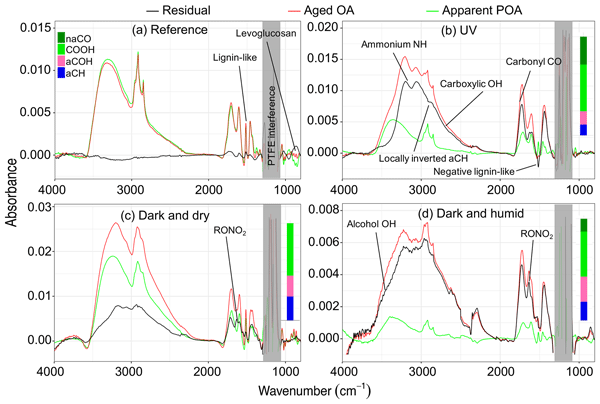
Amir Yazdani, Satoshi Takahama, John K. Kodros, Marco Paglione, Mauro Masiol, Stefania Squizzato, Kalliopi Florou, Christos Kaltsonoudis, Spiro D. Jorga, Spyros N. Pandis, and Athanasios Nenes
Atmos. Chem. Phys., 23, 7461–7477, https://doi.org/10.5194/acp-23-7461-2023, https://doi.org/10.5194/acp-23-7461-2023, 2023
Short summary
Short summary
Organic aerosols directly emitted from wood and pellet stove combustion are found to chemically transform (approximately 15 %–35 % by mass) under daytime aging conditions simulated in an environmental chamber. A new marker for lignin-like compounds is found to degrade at a different rate than previously identified biomass burning markers and can potentially provide indication of aging time in ambient samples.
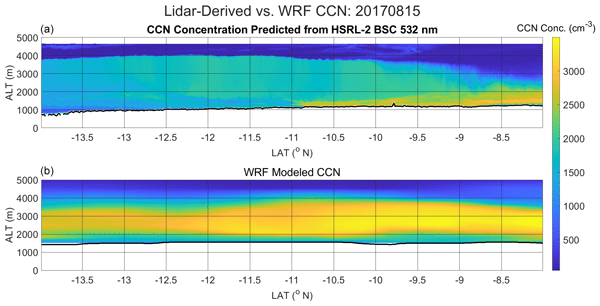
Emily D. Lenhardt, Lan Gao, Jens Redemann, Feng Xu, Sharon P. Burton, Brian Cairns, Ian Chang, Richard A. Ferrare, Chris A. Hostetler, Pablo E. Saide, Calvin Howes, Yohei Shinozuka, Snorre Stamnes, Mary Kacarab, Amie Dobracki, Jenny Wong, Steffen Freitag, and Athanasios Nenes
Atmos. Meas. Tech., 16, 2037–2054, https://doi.org/10.5194/amt-16-2037-2023, https://doi.org/10.5194/amt-16-2037-2023, 2023
Short summary
Short summary
Small atmospheric particles, such as smoke from wildfires or pollutants from human activities, impact cloud properties, and clouds have a strong influence on climate. To better understand the distributions of these particles, we develop relationships to derive their concentrations from remote sensing measurements from an instrument called a lidar. Our method is reliable for smoke particles, and similar steps can be taken to develop relationships for other particle types.
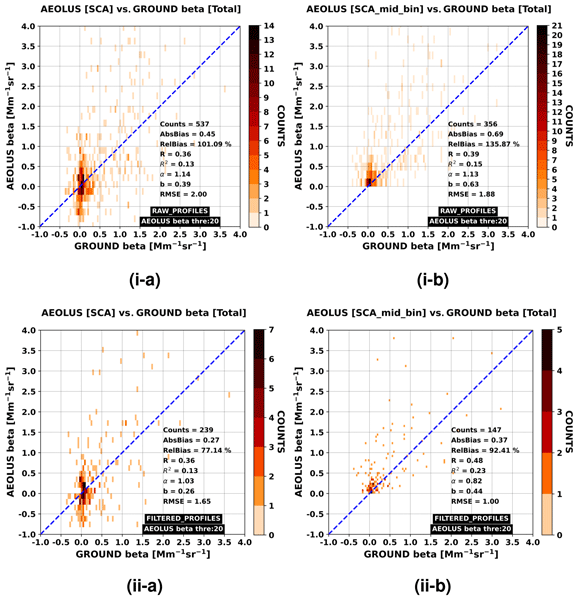
Antonis Gkikas, Anna Gialitaki, Ioannis Binietoglou, Eleni Marinou, Maria Tsichla, Nikolaos Siomos, Peristera Paschou, Anna Kampouri, Kalliopi Artemis Voudouri, Emmanouil Proestakis, Maria Mylonaki, Christina-Anna Papanikolaou, Konstantinos Michailidis, Holger Baars, Anne Grete Straume, Dimitris Balis, Alexandros Papayannis, Tomasso Parrinello, and Vassilis Amiridis
Atmos. Meas. Tech., 16, 1017–1042, https://doi.org/10.5194/amt-16-1017-2023, https://doi.org/10.5194/amt-16-1017-2023, 2023
Short summary
Short summary
We perform an assessment analysis of the Aeolus Standard Correct Algorithm (SCA) backscatter coefficient retrievals against reference observations acquired at three Greek lidar stations (Athens, Thessaloniki and Antikythera) of the PANACEA network. Overall, 43 cases are analysed, whereas specific aerosol scenarios in the vicinity of Antikythera island (SW Greece) are emphasised. All key Cal/Val aspects and recommendations, and the ongoing related activities, are thoroughly discussed.
Konstantinos Michailidis, Maria-Elissavet Koukouli, Dimitris Balis, J. Pepijn Veefkind, Martin de Graaf, Lucia Mona, Nikolaos Papagianopoulos, Gesolmina Pappalardo, Ioanna Tsikoudi, Vassilis Amiridis, Eleni Marinou, Anna Gialitaki, Rodanthi-Elisavet Mamouri, Argyro Nisantzi, Daniele Bortoli, Maria João Costa, Vanda Salgueiro, Alexandros Papayannis, Maria Mylonaki, Lucas Alados-Arboledas, Salvatore Romano, Maria Rita Perrone, and Holger Baars
Atmos. Chem. Phys., 23, 1919–1940, https://doi.org/10.5194/acp-23-1919-2023, https://doi.org/10.5194/acp-23-1919-2023, 2023
Short summary
Short summary
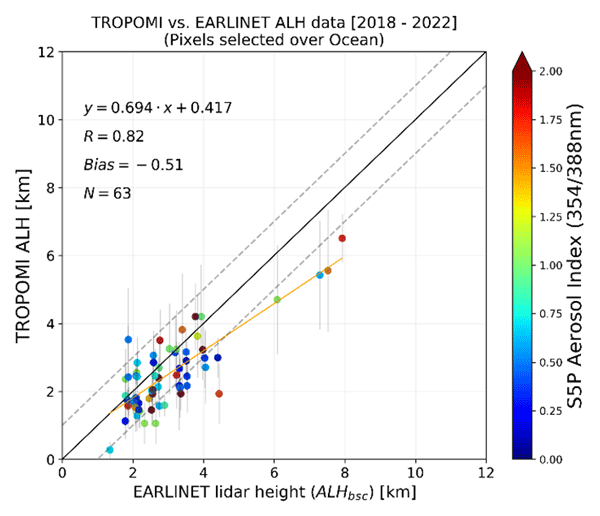
Comparisons with ground-based correlative lidar measurements constitute a key component in the validation of satellite aerosol products. This paper presents the validation of the TROPOMI aerosol layer height (ALH) product, using archived quality assured ground-based data from lidar stations that belong to the EARLINET network. Comparisons between the TROPOMI ALH and co-located EARLINET measurements show good agreement over the ocean.
Marios Chatziparaschos, Nikos Daskalakis, Stelios Myriokefalitakis, Nikos Kalivitis, Athanasios Nenes, María Gonçalves Ageitos, Montserrat Costa-Surós, Carlos Pérez García-Pando, Medea Zanoli, Mihalis Vrekoussis, and Maria Kanakidou
Atmos. Chem. Phys., 23, 1785–1801, https://doi.org/10.5194/acp-23-1785-2023, https://doi.org/10.5194/acp-23-1785-2023, 2023
Short summary
Short summary
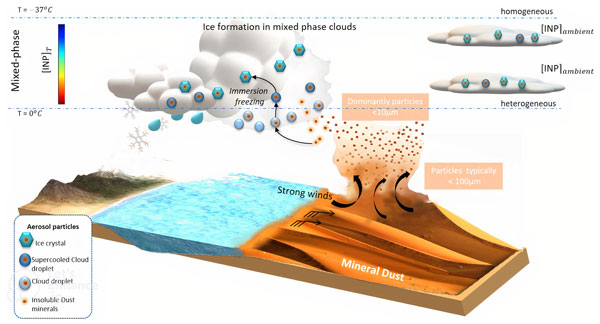
Ice formation is enabled by ice-nucleating particles (INP) at higher temperatures than homogeneous formation and can profoundly affect the properties of clouds. Our global model results show that K-feldspar is the most important contributor to INP concentrations globally, affecting mid-level mixed-phase clouds. However, quartz can significantly contribute and dominates the lowest and the highest altitudes of dust-derived INP, affecting mainly low-level and high-level mixed-phase clouds.
Simone Kotthaus, Juan Antonio Bravo-Aranda, Martine Collaud Coen, Juan Luis Guerrero-Rascado, Maria João Costa, Domenico Cimini, Ewan J. O'Connor, Maxime Hervo, Lucas Alados-Arboledas, María Jiménez-Portaz, Lucia Mona, Dominique Ruffieux, Anthony Illingworth, and Martial Haeffelin
Atmos. Meas. Tech., 16, 433–479, https://doi.org/10.5194/amt-16-433-2023, https://doi.org/10.5194/amt-16-433-2023, 2023
Short summary
Short summary
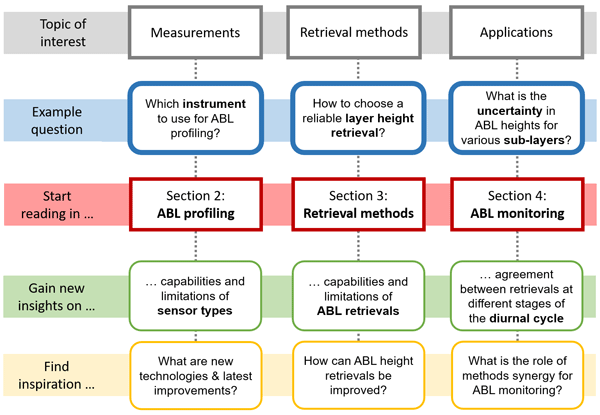
Profile observations of the atmospheric boundary layer now allow for layer heights and characteristics to be derived at high temporal and vertical resolution. With novel high-density ground-based remote-sensing measurement networks emerging, horizontal information content is also increasing. This review summarises the capabilities and limitations of various sensors and retrieval algorithms which need to be considered during the harmonisation of data products for high-impact applications.

Fabian Mahrt, Carolin Rösch, Kunfeng Gao, Christopher H. Dreimol, Maria A. Zawadowicz, and Zamin A. Kanji
Atmos. Chem. Phys., 23, 1285–1308, https://doi.org/10.5194/acp-23-1285-2023, https://doi.org/10.5194/acp-23-1285-2023, 2023
Short summary
Short summary
Major aerosol types emitted by biomass burning include soot, ash, and charcoal particles. Here, we investigated the ice nucleation activity of 400 nm size-selected particles of two different pyrolyis-derived charcoal types in the mixed phase and cirrus cloud regime. We find that ice nucleation is constrained to cirrus cloud conditions, takes place via pore condensation and freezing, and is largely governed by the particle porosity and mineral content.
Guangyu Li, Jörg Wieder, Julie T. Pasquier, Jan Henneberger, and Zamin A. Kanji
Atmos. Chem. Phys., 22, 14441–14454, https://doi.org/10.5194/acp-22-14441-2022, https://doi.org/10.5194/acp-22-14441-2022, 2022
Short summary
Short summary
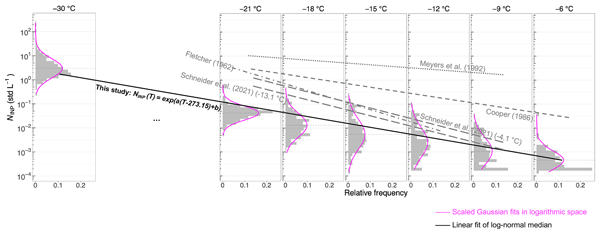
The concentration of ice-nucleating particles (INPs) is atmospherically relevant for primary ice formation in clouds. In this work, from 12 weeks of field measurement data in the Arctic, we developed a new parameterization to predict INP concentrations applicable for pristine background conditions based only on temperature. The INP parameterization could improve the cloud microphysical representation in climate models, aiding in Arctic climate predictions.
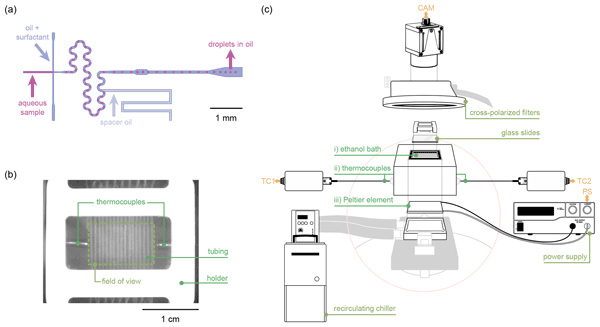
Florin N. Isenrich, Nadia Shardt, Michael Rösch, Julia Nette, Stavros Stavrakis, Claudia Marcolli, Zamin A. Kanji, Andrew J. deMello, and Ulrike Lohmann
Atmos. Meas. Tech., 15, 5367–5381, https://doi.org/10.5194/amt-15-5367-2022, https://doi.org/10.5194/amt-15-5367-2022, 2022
Short summary
Short summary
Ice nucleation in the atmosphere influences cloud properties and lifetimes. Microfluidic instruments have recently been used to investigate ice nucleation, but these instruments are typically made out of a polymer that contributes to droplet instability over extended timescales and relatively high temperature uncertainty. To address these drawbacks, we develop and validate a new microfluidic instrument that uses fluoropolymer tubing to extend droplet stability and improve temperature accuracy.

Jörg Wieder, Nikola Ihn, Claudia Mignani, Moritz Haarig, Johannes Bühl, Patric Seifert, Ronny Engelmann, Fabiola Ramelli, Zamin A. Kanji, Ulrike Lohmann, and Jan Henneberger
Atmos. Chem. Phys., 22, 9767–9797, https://doi.org/10.5194/acp-22-9767-2022, https://doi.org/10.5194/acp-22-9767-2022, 2022
Short summary
Short summary
Ice formation and its evolution in mixed-phase clouds are still uncertain. We evaluate the lidar retrieval of ice-nucleating particle concentration in dust-dominated and continental air masses over the Swiss Alps with in situ observations. A calibration factor to improve the retrieval from continental air masses is proposed. Ice multiplication factors are obtained with a new method utilizing remote sensing. Our results indicate that secondary ice production occurs at temperatures down to −30 °C.
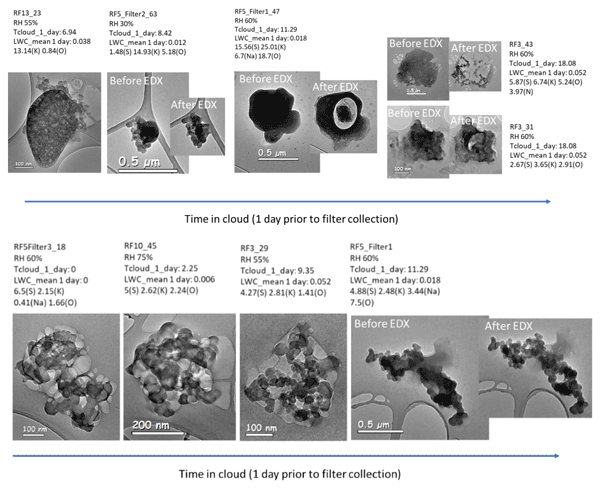
Caroline Dang, Michal Segal-Rozenhaimer, Haochi Che, Lu Zhang, Paola Formenti, Jonathan Taylor, Amie Dobracki, Sara Purdue, Pui-Shan Wong, Athanasios Nenes, Arthur Sedlacek III, Hugh Coe, Jens Redemann, Paquita Zuidema, Steven Howell, and James Haywood
Atmos. Chem. Phys., 22, 9389–9412, https://doi.org/10.5194/acp-22-9389-2022, https://doi.org/10.5194/acp-22-9389-2022, 2022
Short summary
Short summary
Transmission electron microscopy was used to analyze aged African smoke particles and how the smoke interacts with the marine atmosphere. We found that the volatility of organic aerosol increases with biomass burning plume age, that black carbon is often mixed with potassium salts and that the marine atmosphere can incorporate Na and Cl into smoke particles. Marine salts are more processed when mixed with smoke plumes, and there are interesting Cl-rich yet Na-absent marine particles.
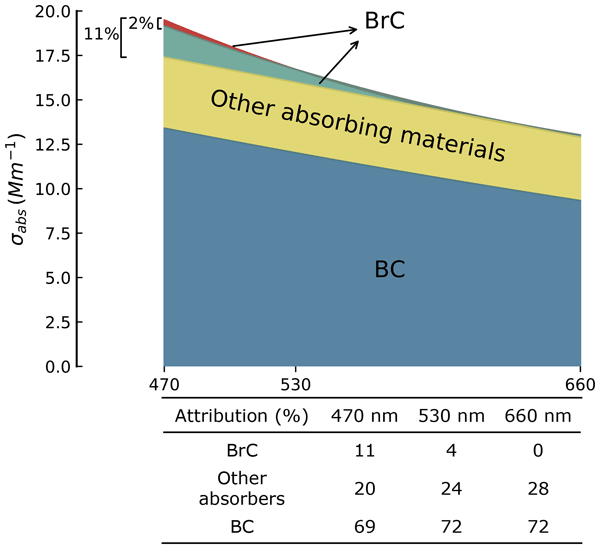
Lu Zhang, Michal Segal-Rozenhaimer, Haochi Che, Caroline Dang, Arthur J. Sedlacek III, Ernie R. Lewis, Amie Dobracki, Jenny P. S. Wong, Paola Formenti, Steven G. Howell, and Athanasios Nenes
Atmos. Chem. Phys., 22, 9199–9213, https://doi.org/10.5194/acp-22-9199-2022, https://doi.org/10.5194/acp-22-9199-2022, 2022
Short summary
Short summary
Widespread biomass burning (BB) events occur annually in Africa and contribute ~ 1 / 3 of global BB emissions, which contain a large family of light-absorbing organics, known as brown carbon (BrC), whose absorption of incident radiation is difficult to estimate, leading to large uncertainties in the global radiative forcing estimation. This study quantifies the BrC absorption of aged BB particles and highlights the potential presence of absorbing iron oxides in this climatically important region.
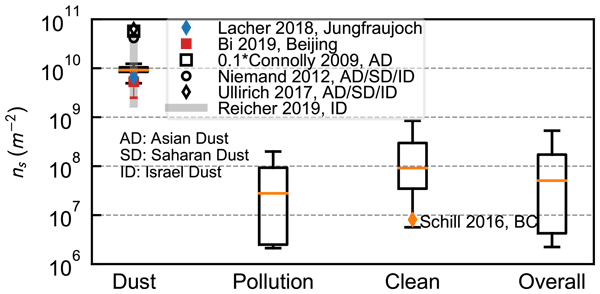
Cuiqi Zhang, Zhijun Wu, Jingchuan Chen, Jie Chen, Lizi Tang, Wenfei Zhu, Xiangyu Pei, Shiyi Chen, Ping Tian, Song Guo, Limin Zeng, Min Hu, and Zamin A. Kanji
Atmos. Chem. Phys., 22, 7539–7556, https://doi.org/10.5194/acp-22-7539-2022, https://doi.org/10.5194/acp-22-7539-2022, 2022
Short summary
Short summary
The immersion ice nucleation effectiveness of aerosols from multiple sources in the urban environment remains elusive. In this study, we demonstrate that the immersion ice-nucleating particle (INP) concentration increased dramatically during a dust event in an urban atmosphere. Pollutant aerosols, including inorganic salts formed through secondary transformation (SIA) and black carbon (BC), might not act as effective INPs under mixed-phase cloud conditions.
Cyril Brunner, Benjamin T. Brem, Martine Collaud Coen, Franz Conen, Martin Steinbacher, Martin Gysel-Beer, and Zamin A. Kanji
Atmos. Chem. Phys., 22, 7557–7573, https://doi.org/10.5194/acp-22-7557-2022, https://doi.org/10.5194/acp-22-7557-2022, 2022
Short summary
Short summary
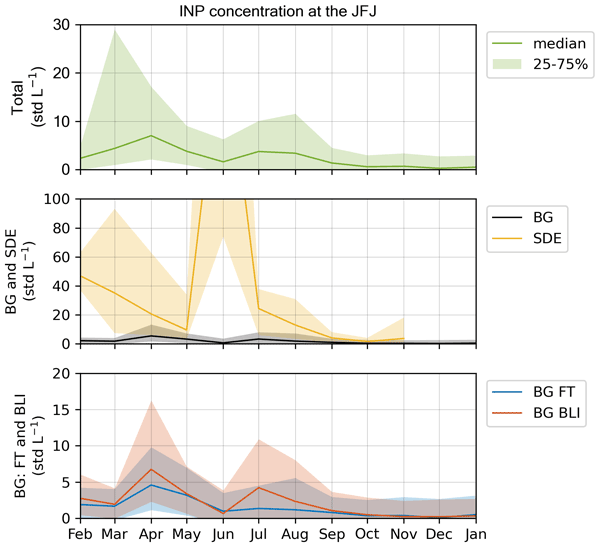
Microscopic particles called ice-nucleating particles (INPs) are essential for ice crystals to form in clouds. INPs are a tiny proportion of atmospheric aerosol, and their abundance is poorly constrained. We study how the concentration of INPs changes diurnally and seasonally at a mountaintop station in central Europe. Unsurprisingly, a diurnal cycle is only found when considering air masses that have had lower-altitude ground contact. The highest INP concentrations occur in spring.
Kunfeng Gao, Chong-Wen Zhou, Eszter J. Barthazy Meier, and Zamin A. Kanji
Atmos. Chem. Phys., 22, 5331–5364, https://doi.org/10.5194/acp-22-5331-2022, https://doi.org/10.5194/acp-22-5331-2022, 2022
Short summary
Short summary
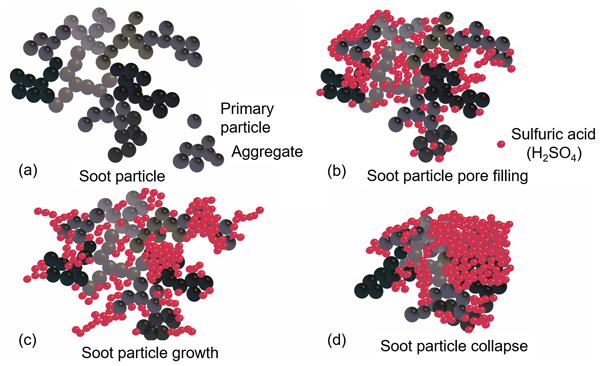
Incomplete combustion of fossil fuel produces carbonaceous particles called soot. These particles can affect cloud formation by acting as centres for droplet or ice formation. The atmospheric residence time of soot particles is of the order of days to weeks, which can result in them becoming coated by various trace species in the atmosphere such as acids. In this study, we quantify the cirrus cloud-forming ability of soot particles coated with the atmospherically ubiquitous sulfuric acid.
Zoé Brasseur, Dimitri Castarède, Erik S. Thomson, Michael P. Adams, Saskia Drossaart van Dusseldorp, Paavo Heikkilä, Kimmo Korhonen, Janne Lampilahti, Mikhail Paramonov, Julia Schneider, Franziska Vogel, Yusheng Wu, Jonathan P. D. Abbatt, Nina S. Atanasova, Dennis H. Bamford, Barbara Bertozzi, Matthew Boyer, David Brus, Martin I. Daily, Romy Fösig, Ellen Gute, Alexander D. Harrison, Paula Hietala, Kristina Höhler, Zamin A. Kanji, Jorma Keskinen, Larissa Lacher, Markus Lampimäki, Janne Levula, Antti Manninen, Jens Nadolny, Maija Peltola, Grace C. E. Porter, Pyry Poutanen, Ulrike Proske, Tobias Schorr, Nsikanabasi Silas Umo, János Stenszky, Annele Virtanen, Dmitri Moisseev, Markku Kulmala, Benjamin J. Murray, Tuukka Petäjä, Ottmar Möhler, and Jonathan Duplissy
Atmos. Chem. Phys., 22, 5117–5145, https://doi.org/10.5194/acp-22-5117-2022, https://doi.org/10.5194/acp-22-5117-2022, 2022
Short summary
Short summary
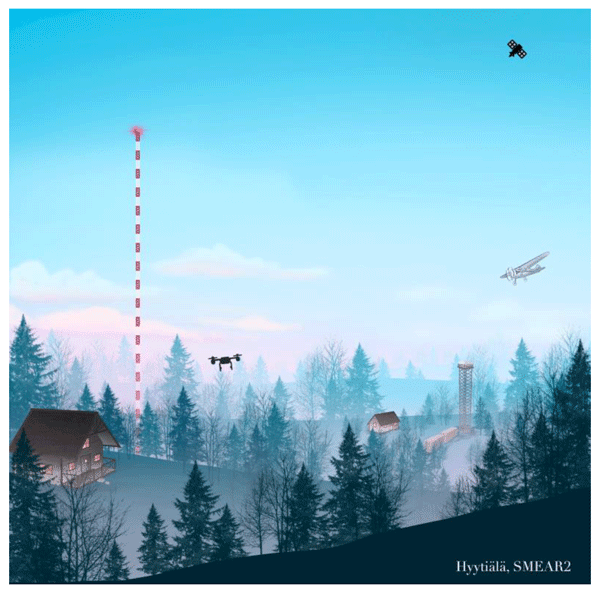
The present measurement report introduces the ice nucleation campaign organized in Hyytiälä, Finland, in 2018 (HyICE-2018). We provide an overview of the campaign settings, and we describe the measurement infrastructure and operating procedures used. In addition, we use results from ice nucleation instrument inter-comparison to show that the suite of these instruments deployed during the campaign reports consistent results.
Kunfeng Gao, Franz Friebel, Chong-Wen Zhou, and Zamin A. Kanji
Atmos. Chem. Phys., 22, 4985–5016, https://doi.org/10.5194/acp-22-4985-2022, https://doi.org/10.5194/acp-22-4985-2022, 2022
Short summary
Short summary
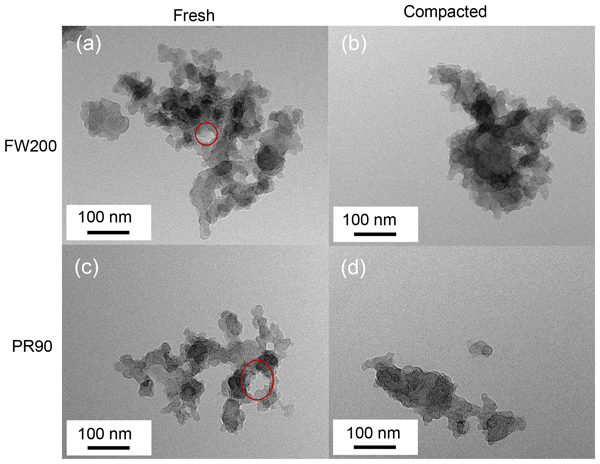
Soot particles impact cloud formation and radiative properties in the upper atmosphere where aircraft emit carbonaceous particles. We use cloud chambers to mimic the upper atmosphere temperature and humidity to test the influence of the morphology of the soot particles on ice cloud formation. For particles larger than 200 nm, the compacted (densified) samples have a higher affinity for ice crystal formation in the cirrus regime than the fluffy (un-compacted) soot particles of the same sample.
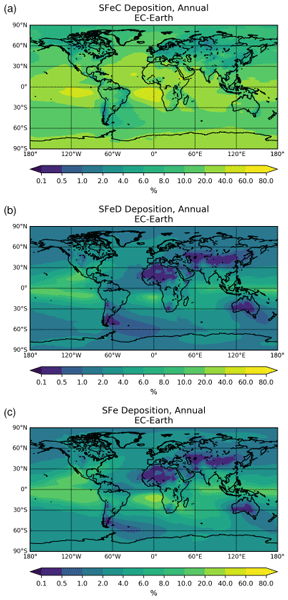
Stelios Myriokefalitakis, Elisa Bergas-Massó, María Gonçalves-Ageitos, Carlos Pérez García-Pando, Twan van Noije, Philippe Le Sager, Akinori Ito, Eleni Athanasopoulou, Athanasios Nenes, Maria Kanakidou, Maarten C. Krol, and Evangelos Gerasopoulos
Geosci. Model Dev., 15, 3079–3120, https://doi.org/10.5194/gmd-15-3079-2022, https://doi.org/10.5194/gmd-15-3079-2022, 2022
Short summary
Short summary
We here describe the implementation of atmospheric multiphase processes in the EC-Earth Earth system model. We provide global budgets of oxalate, sulfate, and iron-containing aerosols, along with an analysis of the links among atmospheric composition, aqueous-phase processes, and aerosol dissolution, supported by comparison to observations. This work is a first step towards an interactive calculation of the deposition of bioavailable atmospheric iron coupled to the model’s ocean component.
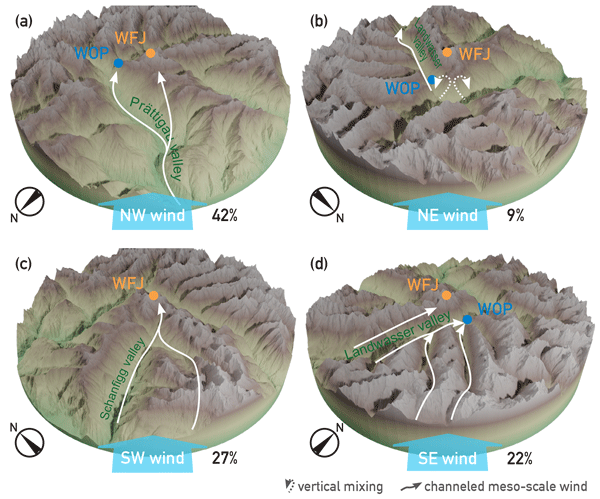
Jörg Wieder, Claudia Mignani, Mario Schär, Lucie Roth, Michael Sprenger, Jan Henneberger, Ulrike Lohmann, Cyril Brunner, and Zamin A. Kanji
Atmos. Chem. Phys., 22, 3111–3130, https://doi.org/10.5194/acp-22-3111-2022, https://doi.org/10.5194/acp-22-3111-2022, 2022
Short summary
Short summary
We investigate the variation in ice-nucleating particles (INPs) relevant for primary ice formation in mixed-phased clouds over the Alps based on simultaneous in situ observations at a mountaintop and a nearby high valley (1060 m height difference). In most cases, advection from the surrounding lower regions was responsible for changes in INP concentration, causing a diurnal cycle at the mountaintop. Our study underlines the importance of the planetary boundary layer as an INP reserve.
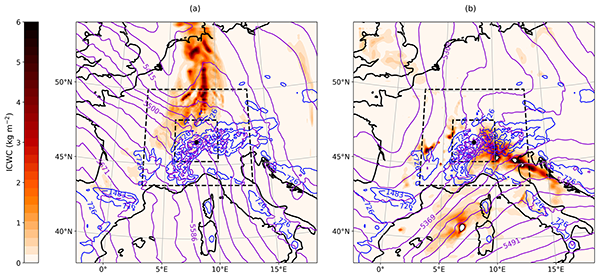
Paraskevi Georgakaki, Georgia Sotiropoulou, Étienne Vignon, Anne-Claire Billault-Roux, Alexis Berne, and Athanasios Nenes
Atmos. Chem. Phys., 22, 1965–1988, https://doi.org/10.5194/acp-22-1965-2022, https://doi.org/10.5194/acp-22-1965-2022, 2022
Short summary
Short summary
The modelling study focuses on the importance of ice multiplication processes in orographic mixed-phase clouds, which is one of the least understood cloud types in the climate system. We show that the consideration of ice seeding and secondary ice production through ice–ice collisional breakup is essential for correct predictions of precipitation in mountainous terrain, with important implications for radiation processes.
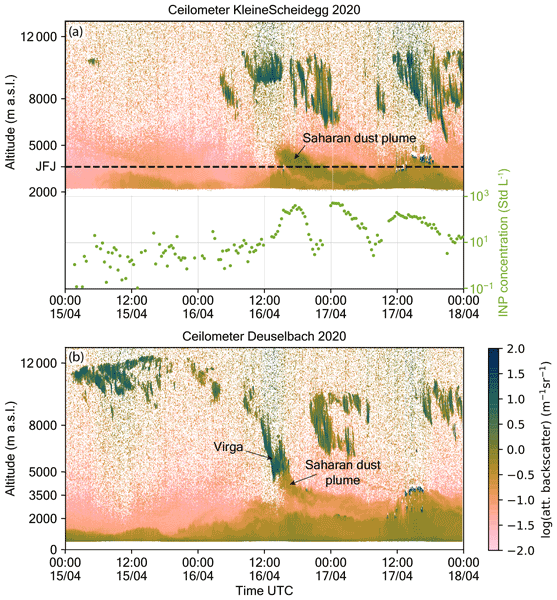
Cyril Brunner, Benjamin T. Brem, Martine Collaud Coen, Franz Conen, Maxime Hervo, Stephan Henne, Martin Steinbacher, Martin Gysel-Beer, and Zamin A. Kanji
Atmos. Chem. Phys., 21, 18029–18053, https://doi.org/10.5194/acp-21-18029-2021, https://doi.org/10.5194/acp-21-18029-2021, 2021
Short summary
Short summary
Special microscopic particles called ice-nucleating particles (INPs) are essential for ice crystals to form in the atmosphere. INPs are sparse and their atmospheric concentration and properties are not well understood. Mineral dust particles make up a significant fraction of INPs but how much remains unknown. Here, we address this knowledge gap by studying periods when mineral particles are present in large quantities at a mountaintop station in central Europe.
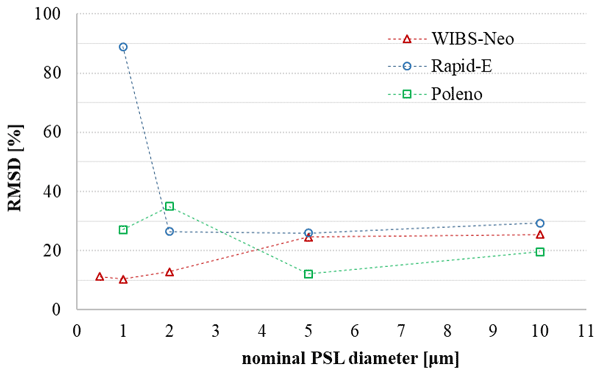
Gian Lieberherr, Kevin Auderset, Bertrand Calpini, Bernard Clot, Benoît Crouzy, Martin Gysel-Beer, Thomas Konzelmann, José Manzano, Andrea Mihajlovic, Alireza Moallemi, David O'Connor, Branko Sikoparija, Eric Sauvageat, Fiona Tummon, and Konstantina Vasilatou
Atmos. Meas. Tech., 14, 7693–7706, https://doi.org/10.5194/amt-14-7693-2021, https://doi.org/10.5194/amt-14-7693-2021, 2021
Short summary
Short summary
Today there is no standard procedure to validate bioaerosol and pollen monitors. Three instruments were tested, focusing on detecting particles of different sizes. Only one instrument was able to detect the smallest particles (0.5 µm Ø), whereas the others performed best at the largest tested particles (10 µm Ø). These results are the first step towards a standardised validation procedure. The need for a reference counting method for larger particles (pollen grains: 10–200 µm Ø) was emphasised.
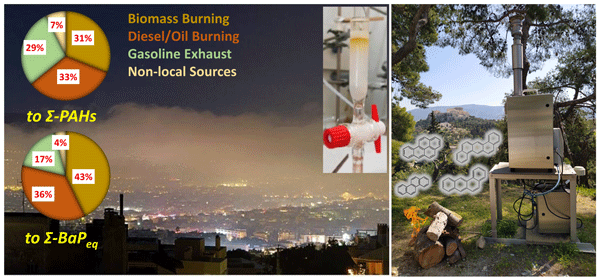
Irini Tsiodra, Georgios Grivas, Kalliopi Tavernaraki, Aikaterini Bougiatioti, Maria Apostolaki, Despina Paraskevopoulou, Alexandra Gogou, Constantine Parinos, Konstantina Oikonomou, Maria Tsagkaraki, Pavlos Zarmpas, Athanasios Nenes, and Nikolaos Mihalopoulos
Atmos. Chem. Phys., 21, 17865–17883, https://doi.org/10.5194/acp-21-17865-2021, https://doi.org/10.5194/acp-21-17865-2021, 2021
Short summary
Short summary
We analyze observations from year-long measurements at Athens, Greece. Nighttime wintertime PAH levels are 4 times higher than daytime, and wintertime values are 15 times higher than summertime. Biomass burning aerosol during wintertime pollution events is responsible for these significant wintertime enhancements and accounts for 43 % of the population exposure to PAH carcinogenic risk. Biomass burning poses additional health risks beyond those associated with the high PM levels that develop.
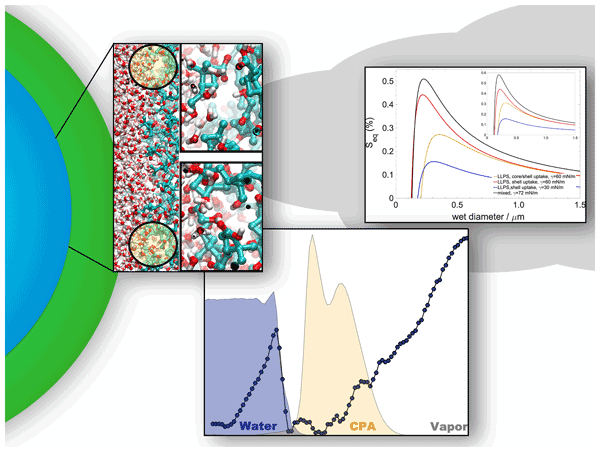
Mária Lbadaoui-Darvas, Satoshi Takahama, and Athanasios Nenes
Atmos. Chem. Phys., 21, 17687–17714, https://doi.org/10.5194/acp-21-17687-2021, https://doi.org/10.5194/acp-21-17687-2021, 2021
Short summary
Short summary
Aerosol–cloud interactions constitute the most uncertain contribution to climate change. The uptake kinetics of water by aerosol is a central process of cloud droplet formation, yet its molecular-scale mechanism is unknown. We use molecular simulations to study this process for phase-separated organic particles. Our results explain the increased cloud condensation activity of such particles and can be generalized over various compositions, thus possibly serving as a basis for future models.
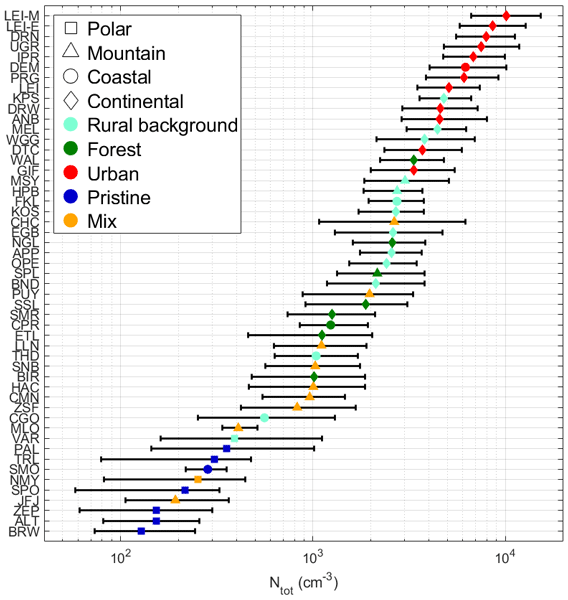
Clémence Rose, Martine Collaud Coen, Elisabeth Andrews, Yong Lin, Isaline Bossert, Cathrine Lund Myhre, Thomas Tuch, Alfred Wiedensohler, Markus Fiebig, Pasi Aalto, Andrés Alastuey, Elisabeth Alonso-Blanco, Marcos Andrade, Begoña Artíñano, Todor Arsov, Urs Baltensperger, Susanne Bastian, Olaf Bath, Johan Paul Beukes, Benjamin T. Brem, Nicolas Bukowiecki, Juan Andrés Casquero-Vera, Sébastien Conil, Konstantinos Eleftheriadis, Olivier Favez, Harald Flentje, Maria I. Gini, Francisco Javier Gómez-Moreno, Martin Gysel-Beer, Anna Gannet Hallar, Ivo Kalapov, Nikos Kalivitis, Anne Kasper-Giebl, Melita Keywood, Jeong Eun Kim, Sang-Woo Kim, Adam Kristensson, Markku Kulmala, Heikki Lihavainen, Neng-Huei Lin, Hassan Lyamani, Angela Marinoni, Sebastiao Martins Dos Santos, Olga L. Mayol-Bracero, Frank Meinhardt, Maik Merkel, Jean-Marc Metzger, Nikolaos Mihalopoulos, Jakub Ondracek, Marco Pandolfi, Noemi Pérez, Tuukka Petäjä, Jean-Eudes Petit, David Picard, Jean-Marc Pichon, Veronique Pont, Jean-Philippe Putaud, Fabienne Reisen, Karine Sellegri, Sangeeta Sharma, Gerhard Schauer, Patrick Sheridan, James Patrick Sherman, Andreas Schwerin, Ralf Sohmer, Mar Sorribas, Junying Sun, Pierre Tulet, Ville Vakkari, Pieter Gideon van Zyl, Fernando Velarde, Paolo Villani, Stergios Vratolis, Zdenek Wagner, Sheng-Hsiang Wang, Kay Weinhold, Rolf Weller, Margarita Yela, Vladimir Zdimal, and Paolo Laj
Atmos. Chem. Phys., 21, 17185–17223, https://doi.org/10.5194/acp-21-17185-2021, https://doi.org/10.5194/acp-21-17185-2021, 2021
Short summary
Short summary
Aerosol particles are a complex component of the atmospheric system the effects of which are among the most uncertain in climate change projections. Using data collected at 62 stations, this study provides the most up-to-date picture of the spatial distribution of particle number concentration and size distribution worldwide, with the aim of contributing to better representation of aerosols and their interactions with clouds in models and, therefore, better evaluation of their impact on climate.
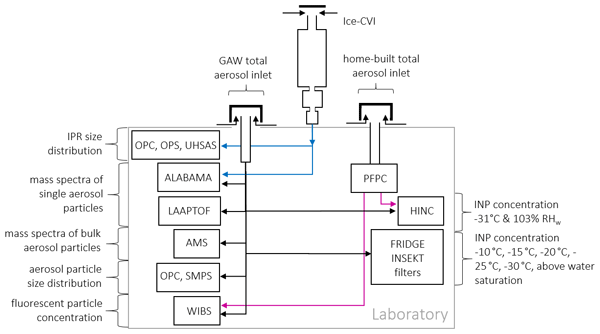
Larissa Lacher, Hans-Christian Clemen, Xiaoli Shen, Stephan Mertes, Martin Gysel-Beer, Alireza Moallemi, Martin Steinbacher, Stephan Henne, Harald Saathoff, Ottmar Möhler, Kristina Höhler, Thea Schiebel, Daniel Weber, Jann Schrod, Johannes Schneider, and Zamin A. Kanji
Atmos. Chem. Phys., 21, 16925–16953, https://doi.org/10.5194/acp-21-16925-2021, https://doi.org/10.5194/acp-21-16925-2021, 2021
Short summary
Short summary
We investigate ice-nucleating particle properties at Jungfraujoch during the 2017 joint INUIT/CLACE field campaign, to improve the knowledge about those rare particles in a cloud-relevant environment. By quantifying ice-nucleating particles in parallel to single-particle mass spectrometry measurements, we find that mineral dust and aged sea spray particles are potential candidates for ice-nucleating particles. Our findings are supported by ice residual analysis and source region modeling.
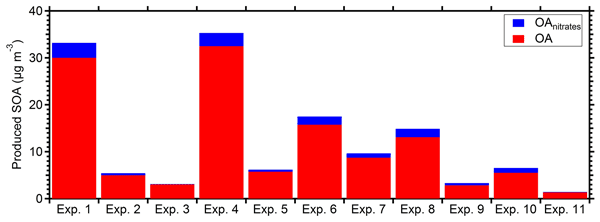
Spiro D. Jorga, Kalliopi Florou, Christos Kaltsonoudis, John K. Kodros, Christina Vasilakopoulou, Manuela Cirtog, Axel Fouqueau, Bénédicte Picquet-Varrault, Athanasios Nenes, and Spyros N. Pandis
Atmos. Chem. Phys., 21, 15337–15349, https://doi.org/10.5194/acp-21-15337-2021, https://doi.org/10.5194/acp-21-15337-2021, 2021
Short summary
Short summary
We test the hypothesis that significant secondary organic aerosol production can take place even during winter nights through the oxidation of the emitted organic vapors by the nitrate radicals produced during the reaction of ozone and nitrogen oxides. Our experiments, using as a starting point the ambient air of an urban area with high biomass burning activity, demonstrate that, even with sunlight, there is 20 %–70 % additional organic aerosol formed in a few hours.
Cited articles
Adamov, S., Lemonis, N., Clot, B., Crouzy, B., Gehrig, R., Graber, M.-J., Sallin, C., and Tummon, F.: On the measurement uncertainty of Hirst-type volumetric pollen and spore samplers, Aerobiologia, 40, 77–91, https://doi.org/10.1007/s10453-021-09724-5, 2024.
Albertine, J. M., Manning, W. J., DaCosta, M., Stinson, K. A., Muilenberg, M. L., and Rogers, C. A.: Projected Carbon Dioxide to Increase Grass Pollen and Allergen Exposure Despite Higher Ozone Levels, PLOS ONE, 9, e111712, https://doi.org/10.1371/journal.pone.0111712, 2014.
Beggs, P. J. (Ed.): Impacts of Climate Change on Allergens and Allergic Diseases, Cambridge University Press, Cambridge, https://doi.org/10.1017/CBO9781107272859, 2016.
Bellouin, N., Quaas, J., Gryspeerdt, E., Kinne, S., Stier, P., Watson-Parris, D., Boucher, O., Carslaw, K. S., Christensen, M., Daniau, A.-L., Dufresne, J.-L., Feingold, G., Fiedler, S., Forster, P., Gettelman, A., Haywood, J. M., Lohmann, U., Malavelle, F., Mauritsen, T., McCoy, D. T., Myhre, G., Mülmenstädt, J., Neubauer, D., Possner, A., Rugenstein, M., Sato, Y., Schulz, M., Schwartz, S. E., Sourdeval, O., Storelvmo, T., Toll, V., Winker, D., and Stevens, B.: Bounding Global Aerosol Radiative Forcing of Climate Change, Rev. Geophys., 58, e2019RG000660, https://doi.org/10.1029/2019RG000660, 2020.
Bjordal, J., Storelvmo, T., Alterskjær, K., and Carlsen, T.: Equilibrium climate sensitivity above 5 °C plausible due to state-dependent cloud feedback, Nat. Geosci., 13, https://doi.org/10.1038/s41561-020-00649-1, 2020.
Burton, S. P., Ferrare, R. A., Hostetler, C. A., Hair, J. W., Rogers, R. R., Obland, M. D., Butler, C. F., Cook, A. L., Harper, D. B., and Froyd, K. D.: Aerosol classification using airborne High Spectral Resolution Lidar measurements – methodology and examples, Atmos. Meas. Tech., 5, 73–98, https://doi.org/10.5194/amt-5-73-2012, 2012.
Buters, J. T. M., Antunes, C., Galveias, A., Bergmann, K. C., Thibaudon, M., Galán, C., Schmidt-Weber, C., and Oteros, J.: Pollen and spore monitoring in the world, Clin. Transl. Allergy, 8, 9, https://doi.org/10.1186/s13601-018-0197-8, 2018.
Chappuis, C., Tummon, F., Clot, B., Konzelmann, T., Calpini, B., and Crouzy, B.: Automatic pollen monitoring: first insights from hourly data, Aerobiologia, 36, 159–170, https://doi.org/10.1007/s10453-019-09619-6, 2020.
Chen, Y., Haywood, J., Wang, Y., Malavelle, F., Jordan, G., Partridge, D., Fieldsend, J., Leeuw, J., Schmidt, A., Cho, N., Oreopoulos, L., Platnick, S., Grosvenor, D., Field, P., and Lohmann, U.: Machine learning reveals climate forcing from aerosols is dominated by increased cloud cover, Nat. Geosci., 15, 1–6, https://doi.org/10.1038/s41561-022-00991-6, 2022.
Crouzy, B., Stella, M., Konzelmann, T., Calpini, B., and Clot, B.: All-optical automatic pollen identification: Towards an operational system, Atmos. Environ., 140, 202–212, https://doi.org/10.1016/j.atmosenv.2016.05.062, 2016.
Crouzy, B., Lieberherr, G., Tummon, F., and Clot, B.: False positives: handling them operationally for automatic pollen monitoring, Aerobiologia, 38, 429–432, https://doi.org/10.1007/s10453-022-09757-4, 2022.
Dada, L., Brem, B. T., Amarandi-Netedu, L.-M., Collaud Coen, M., Evangeliou, N., Hueglin, C., Nowak, N., Modini, R., Steinbacher, M., and Gysel-Beer, M.: Sources of ultrafine particles at a rural midland site in Switzerland, Aerosol Res., 3, 315–336, https://doi.org/10.5194/ar-3-315-2025, 2025.
D'Amato, G., Chong-Neto, H. J., Monge Ortega, O. P., Vitale, C., Ansotegui, I., Rosario, N., Haahtela, T., Galan, C., Pawankar, R., Murrieta-Aguttes, M., Cecchi, L., Bergmann, C., Ridolo, E., Ramon, G., Gonzalez Diaz, S., D'Amato, M., and Annesi-Maesano, I.: The effects of climate change on respiratory allergy and asthma induced by pollen and mold allergens, Allergy, 75, 2219–2228, https://doi.org/10.1111/all.14476, 2020.
David, R. O., Cascajo-Castresana, M., Brennan, K. P., Rösch, M., Els, N., Werz, J., Weichlinger, V., Boynton, L. S., Bogler, S., Borduas-Dedekind, N., Marcolli, C., and Kanji, Z. A.: Development of the DRoplet Ice Nuclei Counter Zurich (DRINCZ): validation and application to field-collected snow samples, Atmos. Meas. Tech., 12, 6865–6888, https://doi.org/10.5194/amt-12-6865-2019, 2019.
de Weger, L. A., Bergmann, K. C., Rantio-Lehtimäki, A., Dahl, Å., Buters, J., Déchamp, C., Belmonte, J., Thibaudon, M., Cecchi, L., Besancenot, J.-P., Galán, C., and Waisel, Y.: Impact of Pollen, in: Allergenic Pollen: A Review of the Production, Release, Distribution and Health Impacts, edited by: Sofiev, M. and Bergmann, K.-C., Springer Netherlands, Dordrecht, 161–215, https://doi.org/10.1007/978-94-007-4881-1_6, 2013.
Drinovec, L., Močnik, G., Zotter, P., Prévôt, A. S. H., Ruckstuhl, C., Coz, E., Rupakheti, M., Sciare, J., Müller, T., Wiedensohler, A., and Hansen, A. D. A.: The “dual-spot” Aethalometer: an improved measurement of aerosol black carbon with real-time loading compensation, Atmos. Meas. Tech., 8, 1965–1979, https://doi.org/10.5194/amt-8-1965-2015, 2015.
Dubovik, O., Sinyuk, A., Lapyonok, T., Holben, B. N., Mishchenko, M., Yang, P., Eck, T. F., Volten, H., Muñoz, O., Veihelmann, B., Van Der Zande, W. J., Leon, J., Sorokin, M., and Slutsker, I.: Application of spheroid models to account for aerosol particle nonsphericity in remote sensing of desert dust, J. Geophys. Res. Atmospheres, 111, 2005JD006619, https://doi.org/10.1029/2005JD006619, 2006.
Eleftheriadis, K., Vratolis, S., and Nyeki, S.: Aerosol black carbon in the European Arctic: Measurements at Zeppelin station, Ny-Ålesund, Svalbard from 1998–2007, Geophys. Res. Lett., 36, https://doi.org/10.1029/2008GL035741, 2009.
Fröhlich, R., Cubison, M. J., Slowik, J. G., Bukowiecki, N., Canonaco, F., Croteau, P. L., Gysel, M., Henne, S., Herrmann, E., Jayne, J. T., Steinbacher, M., Worsnop, D. R., Baltensperger, U., and Prévôt, A. S. H.: Fourteen months of on-line measurements of the non-refractory submicron aerosol at the Jungfraujoch (3580 m a.s.l.) – chemical composition, origins and organic aerosol sources, Atmos. Chem. Phys., 15, 11373–11398, https://doi.org/10.5194/acp-15-11373-2015, 2015.
Fröhlich-Nowoisky, J., Kampf, C. J., Weber, B., Huffman, J. A., Pöhlker, C., Andreae, M. O., Lang-Yona, N., Burrows, S. M., Gunthe, S. S., Elbert, W., Su, H., Hoor, P., Thines, E., Hoffmann, T., Després, V. R., and Pöschl, U.: Bioaerosols in the Earth system: Climate, health, and ecosystem interactions, Atmospheric Res., 182, 346–376, https://doi.org/10.1016/j.atmosres.2016.07.018, 2016.
Galán, C., Smith, M., Thibaudon, M., Frenguelli, G., Oteros, J., Gehrig, R., Berger, U., Clot, B., Brandao, R., and EAS QC Working Group: Pollen monitoring: minimum requirements and reproducibility of analysis, Aerobiologia, 30, 385–395, https://doi.org/10.1007/s10453-014-9335-5, 2014.
Gao, K., Vogel, F., Foskinis, R., Vratolis, S., Gini, M. I., Granakis, K., Billault-Roux, A.-C., Georgakaki, P., Zografou, O., Fetfatzis, P., Berne, A., Papayannis, A., Eleftheriadis, K., Möhler, O., and Nenes, A.: Biological and dust aerosols as sources of ice-nucleating particles in the eastern Mediterranean: source apportionment, atmospheric processing and parameterization, Atmos. Chem. Phys., 24, 9939–9974, https://doi.org/10.5194/acp-24-9939-2024, 2024.
Gao, K., Vogel, F., Foskinis, R., Vratolis, S., Gini, M. I., Granakis, K., Zografou, O., Fetfatzis, P., Papayannis, A., Möhler, O., Eleftheriadis, K., and Nenes, A.: On the drivers of ice nucleating particle diurnal variability in Eastern Mediterranean clouds, Npj Clim. Atmospheric Sci., 8, 1–15, https://doi.org/10.1038/s41612-024-00817-9, 2025.
Gast, B., Jimenez, C., Ansmann, A., Haarig, M., Engelmann, R., Fritzsch, F., Floutsi, A. A., Griesche, H., Ohneiser, K., Hofer, J., Radenz, M., Baars, H., Seifert, P., and Wandinger, U.: Invisible aerosol layers: improved lidar detection capabilities by means of laser-induced aerosol fluorescence, Atmos. Chem. Phys., 25, 3995–4011, https://doi.org/10.5194/acp-25-3995-2025, 2025.
Gautam, A. S., Kumar, S., Gautam, S., Singh, K., Ram, K., Siingh, D., Ambade, B., and Sharma, M.: Regional air quality: biomass burning impacts of SO2 emissions on air quality in the Himalayan region of Uttarakhand, India, Air Qual. Atmosphere Health, https://doi.org/10.1007/s11869-023-01426-w, 2023.
Gehrig, R., Maurer, F., and Schwierz, C.: Designing new automatically generated pollen calendars for the public in Switzerland, Aerobiologia, 34, 349–362, https://doi.org/10.1007/s10453-018-9518-6, 2018.
Gidarakou, M., Gao, K., Erb, S., Papayannis, A., Kanji, Z., Crouzy, B., Zhang, C., Lieberherr, G., Collaud Coen, M., and Nenes, A.: Data used in egusphere-2024-2586, Zenodo [data set], https://doi.org/10.5281/zenodo.17949725, 2025.
Glick, S., Gehrig, R., and Eeftens, M.: Multi-decade changes in pollen season onset, duration, and intensity: A concern for public health?, Sci. Total Environ., 781, 146382, https://doi.org/10.1016/j.scitotenv.2021.146382, 2021.
Hernandez, M., Perring, A. E., McCabe, K., Kok, G., Granger, G., and Baumgardner, D.: Chamber catalogues of optical and fluorescent signatures distinguish bioaerosol classes, Atmos. Meas. Tech., 9, 3283–3292, https://doi.org/10.5194/amt-9-3283-2016, 2016.
Hirst, J. M.: AN AUTOMATIC VOLUMETRIC SPORE TRAP, Ann. Appl. Biol., 39, 257–265, https://doi.org/10.1111/j.1744-7348.1952.tb00904.x, 1952.
Hu, Q., Goloub, P., Veselovskii, I., and Podvin, T.: The characterization of long-range transported North American biomass burning plumes: what can a multi-wavelength Mie–Raman-polarization-fluorescence lidar provide?, Atmos. Chem. Phys., 22, 5399–5414, https://doi.org/10.5194/acp-22-5399-2022, 2022.
Hueglin, C., Buchmann, B., Steinbacher, M., and Emmenegger, L.: The Swiss National Air Pollution Monitoring Network (NABEL) – Bridging Science and Environmental Policy, CHIMIA, 78, 722–727, https://doi.org/10.2533/chimia.2024.722, 2024.
Huffman, J. A., Perring, A. E., Savage, N. J., Clot, B., Crouzy, B., Tummon, F., Shoshanim, O., Damit, B., Schneider, J., Sivaprakasam, V., Zawadowicz, M. A., Crawford, I., Gallagher, M., Topping, D., Doughty, D. C., Hill, S. C., and Pan, Y.: Real-time sensing of bioaerosols: Review and current perspectives, Aerosol Sci. Technol., 54, 465–495, https://doi.org/10.1080/02786826.2019.1664724, 2020.
Immler, F., Engelbart, D., and Schrems, O.: Fluorescence from atmospheric aerosol detected by a lidar indicates biogenic particles in the lowermost stratosphere, Atmos. Chem. Phys., 5, 345–355, https://doi.org/10.5194/acp-5-345-2005, 2005.
IPCC (Intergovernmental Panel On Climate Change): Climate Change 2021 – The Physical Science Basis: Working Group I Contribution to the Sixth Assessment Report of the Intergovernmental Panel on Climate Change, 1st edn., Cambridge University Press, https://doi.org/10.1017/9781009157896, 2023.
Janicka, L., Stachlewska, I. S., Veselovskii, I., and Baars, H.: Temporal variations in optical and microphysical properties of mineral dust and biomass burning aerosol derived from daytime Raman lidar observations over Warsaw, Poland, Atmos. Environ., 169, 162–174, https://doi.org/10.1016/j.atmosenv.2017.09.022, 2017.
Kanji, Z. A., Ladino, L. A., Wex, H., Boose, Y., Burkert-Kohn, M., Cziczo, D. J., and Krämer, M.: Overview of Ice Nucleating Particles, Meteorol. Monogr., 58, 1.1–1.33, https://doi.org/10.1175/AMSMONOGRAPHS-D-16-0006.1, 2017.
Kanji, Z. A., Welti, A., Corbin, J. C., and Mensah, A. A.: Black Carbon Particles Do Not Matter for Immersion Mode Ice Nucleation, Geophys. Res. Lett., 47, e2019GL086764, https://doi.org/10.1029/2019GL086764, 2020.
Kaye, P. H., Stanley, W. R., Hirst, E., Foot, E. V., Baxter, K. L., and Barrington, S. J.: Single particle multichannel bio-aerosol fluorescence sensor, Opt. Express, 13, 3583, https://doi.org/10.1364/OPEX.13.003583, 2005.
Kelly, D., Geldenhuis, A., James, A., Penelope Holland, E., Plank, M. J., Brockie, R. E., Cowan, P. E., Harper, G. A., Lee, W. G., Maitland, M. J., Mark, A. F., Mills, J. A., Wilson, P. R., and Byrom, A. E.: Of mast and mean: differential-temperature cue makes mast seeding insensitive to climate change, Ecol. Lett., 16, 90–98, https://doi.org/10.1111/ele.12020, 2013.
Klett, J. D.: Lidar inversion with variable backscatter/extinction ratios, Appl. Opt., 24, 1638, https://doi.org/10.1364/AO.24.001638, 1985.
Lake, I. R., Jones, N. R., Agnew, M., Goodess, C. M., Giorgi, F., Hamaoui-Laguel, L., Semenov, M. A., Solomon, F., Storkey, J., Vautard, R., and Epstein, M. M.: Climate Change and Future Pollen Allergy in Europe, Environ. Health Perspect., 125, 385–391, https://doi.org/10.1289/EHP173, 2017.
Lohmann, U.: Anthropogenic Aerosol Influences on Mixed-Phase Clouds, Curr. Clim. Change Rep., 3, 32–44, https://doi.org/10.1007/s40641-017-0059-9, 2017.
Lohmann, U. and Lesins, G.: Stronger Constraints on the Anthropogenic Indirect Aerosol Effect, Science, 298, 1012–1015, https://doi.org/10.1126/science.1075405, 2002.
Lohmann, U., Henneberger, J., Henneberg, O., Fugal, J. P., Bühl, J., and Kanji, Z. A.: Persistence of orographic mixed-phase clouds, Geophys. Res. Lett., 43, 10512–10519, https://doi.org/10.1002/2016GL071036, 2016.
Luyten, A., Bürgler, A., Glick, S., Kwiatkowski, M., Gehrig, R., Beigi, M., Hartmann, K., and Eeftens, M.: Ambient pollen exposure and pollen allergy symptom severity in the EPOCHAL study, Allergy, 79, 1908–1920, https://doi.org/10.1111/all.16130, 2024.
Martikainen, M.-V., Tossavainen, T., Hannukka, N., and Roponen, M.: Pollen, respiratory viruses, and climate change: Synergistic effects on human health, Environ. Res., 219, 115149, https://doi.org/10.1016/j.envres.2022.115149, 2023.
Mikhailov, E. F., Pöhlker, M. L., Reinmuth-Selzle, K., Vlasenko, S. S., Krüger, O. O., Fröhlich-Nowoisky, J., Pöhlker, C., Ivanova, O. A., Kiselev, A. A., Kremper, L. A., and Pöschl, U.: Water uptake of subpollen aerosol particles: hygroscopic growth, cloud condensation nuclei activation, and liquid–liquid phase separation, Atmos. Chem. Phys., 21, 6999–7022, https://doi.org/10.5194/acp-21-6999-2021, 2021.
Miri, R., Pujol, O., Hu, Q., Goloub, P., Veselovskii, I., Podvin, T., and Ducos, F.: Innovative aerosol hygroscopic growth study from Mie–Raman–fluorescence lidar and microwave radiometer synergy, Atmos. Meas. Tech., 17, 3367–3375, https://doi.org/10.5194/amt-17-3367-2024, 2024.
Morris, C. E., Sands, D. C., Glaux, C., Samsatly, J., Asaad, S., Moukahel, A. R., Gonçalves, F. L. T., and Bigg, E. K.: Urediospores of rust fungi are ice nucleation active at >−10 °C and harbor ice nucleation active bacteria, Atmos. Chem. Phys., 13, 4223–4233, https://doi.org/10.5194/acp-13-4223-2013, 2013.
Murray, B. J., O'Sullivan, D., Atkinson, J. D., and Webb, M. E.: Ice nucleation by particles immersed in supercooled cloud droplets, Chem. Soc. Rev., 41, 6519, https://doi.org/10.1039/c2cs35200a, 2012.
Mylonaki, M., Papayannis, A., Anagnou, D., Veselovskii, I., Papanikolaou, C.-A., Kokkalis, P., Soupiona, O., Foskinis, R., Gidarakou, M., and Kralli, E.: Optical and Microphysical Properties of Aged Biomass Burning Aerosols and Mixtures, Based on 9-Year Multiwavelength Raman Lidar Observations in Athens, Greece, Remote Sens., 13, 3877, https://doi.org/10.3390/rs13193877, 2021.
Navas-Guzmán, F., Martucci, G., Collaud Coen, M., Granados-Muñoz, M. J., Hervo, M., Sicard, M., and Haefele, A.: Characterization of aerosol hygroscopicity using Raman lidar measurements at the EARLINET station of Payerne, Atmos. Chem. Phys., 19, 11651–11668, https://doi.org/10.5194/acp-19-11651-2019, 2019.
Nenes, A. and Seinfeld, J. H.: Parameterization of cloud droplet formation in global climate models, J. Geophys. Res. Atmospheres, 108, https://doi.org/10.1029/2002JD002911, 2003.
Nepomuceno Pereira, S., Preißler, J., Guerrero-Rascado, J. L., Silva, A. M., and Wagner, F.: Forest Fire Smoke Layers Observed in the Free Troposphere over Portugal with a Multiwavelength Raman Lidar: Optical and Microphysical Properties, Sci. World J., 2014, 1–11, https://doi.org/10.1155/2014/421838, 2014.
O'Connor, D. J., Lovera, P., Iacopino, D., O'Riordan, A., Healy, D. A., and Sodeau, J. R.: Using spectral analysis and fluorescence lifetimes to discriminate between grass and tree pollen for aerobiological applications, Anal. Methods, 6, 1633–1639, https://doi.org/10.1039/C3AY41093E, 2014.
Ortiz-Amezcua, P., Guerrero-Rascado, J. L., Granados-Muñoz, M. J., Benavent-Oltra, J. A., Böckmann, C., Samaras, S., Stachlewska, I. S., Janicka, Ł., Baars, H., Bohlmann, S., and Alados-Arboledas, L.: Microphysical characterization of long-range transported biomass burning particles from North America at three EARLINET stations, Atmos. Chem. Phys., 17, 5931–5946, https://doi.org/10.5194/acp-17-5931-2017, 2017.
O'Sullivan, D., Murray, B. J., Ross, J. F., Whale, T. F., Price, H. C., Atkinson, J. D., Umo, N. S., and Webb, M. E.: The relevance of nanoscale biological fragments for ice nucleation in clouds, Sci. Rep., 5, 8082, https://doi.org/10.1038/srep08082, 2015.
Oteros, J., Buters, J., Laven, G., Röseler, S., Wachter, R., Schmidt-Weber, C., and Hofmann, F.: Errors in determining the flow rate of Hirst-type pollen traps, Aerobiologia, 33, 201–210, https://doi.org/10.1007/s10453-016-9467-x, 2017.
Petters, M. D., Carrico, C. M., Kreidenweis, S. M., Prenni, A. J., DeMott, P. J., Collett Jr., J. L., and Moosmüller, H.: Cloud condensation nucleation activity of biomass burning aerosol, J. Geophys. Res. Atmospheres, 114, https://doi.org/10.1029/2009JD012353, 2009.
Pöhlker, C., Huffman, J. A., and Pöschl, U.: Autofluorescence of atmospheric bioaerosols – fluorescent biomolecules and potential interferences, Atmos. Meas. Tech., 5, 37–71, https://doi.org/10.5194/amt-5-37-2012, 2012.
Reichardt, J., Leinweber, R., and Schwebe, A.: Fluorescing aerosols and clouds: investigations of co-existence, EPJ Web Conf., 176, 05010, https://doi.org/10.1051/epjconf/201817605010, 2018.
Reichardt, J., Lauermann, F., and Behrendt, O.: Fluorescence spectra of atmospheric aerosols, Atmos. Chem. Phys., 25, 5857–5892, https://doi.org/10.5194/acp-25-5857-2025, 2025.
Richardson, S. C., Mytilinaios, M., Foskinis, R., Kyrou, C., Papayannis, A., Pyrri, I., Giannoutsou, E., and Adamakis, I. D. S.: Bioaerosol detection over Athens, Greece using the laser induced fluorescence technique, Sci. Total Environ., 696, 133906, https://doi.org/10.1016/j.scitotenv.2019.133906, 2019.
Rodell, M., Houser, P. R., Jambor, U., Gottschalck, J., Mitchell, K., Meng, C.-J., Arsenault, K., Cosgrove, B., Radakovich, J., Bosilovich, M., Entin, J. K., Walker, J. P., Lohmann, D., and Toll, D.: The Global Land Data Assimilation System, Bull. Am. Meteorol. Soc., 85, 381–394, https://doi.org/10.1175/BAMS-85-3-381, 2004.
Sabo, N. È., Popoviæ, A., and Ðorðeviæ, D.: Air Pollution by Pollen Grains of Anemophilous Species: Influence of Chemical and Meteorological Parameters, Water. Air. Soil Pollut., 226, 292, https://doi.org/10.1007/s11270-015-2549-5, 2015.
Saito, Y., Ichihara, K., Morishita, K., Uchiyama, K., Kobayashi, F., and Tomida, T.: Remote Detection of the Fluorescence Spectrum of Natural Pollens Floating in the Atmosphere Using a Laser-Induced-Fluorescence Spectrum (LIFS) Lidar, Remote Sens., 10, 1533, https://doi.org/10.3390/rs10101533, 2018.
Saito, Y., Hosokawa, T., and Shiraishi, K.: Collection of excitation-emission-matrix fluorescence of aerosol-candidate-substances and its application to fluorescence lidar monitoring, Appl. Opt., 61, 653–660, https://doi.org/10.1364/AO.445507, 2022.
Sauvageat, E., Zeder, Y., Auderset, K., Calpini, B., Clot, B., Crouzy, B., Konzelmann, T., Lieberherr, G., Tummon, F., and Vasilatou, K.: Real-time pollen monitoring using digital holography, Atmos. Meas. Tech., 13, 1539–1550, https://doi.org/10.5194/amt-13-1539-2020, 2020.
Savage, N. J., Krentz, C. E., Könemann, T., Han, T. T., Mainelis, G., Pöhlker, C., and Huffman, J. A.: Systematic characterization and fluorescence threshold strategies for the wideband integrated bioaerosol sensor (WIBS) using size-resolved biological and interfering particles, Atmos. Meas. Tech., 10, 4279–4302, https://doi.org/10.5194/amt-10-4279-2017, 2017.
Seinfeld, J. H., Bretherton, C., Carslaw, K. S., Coe, H., DeMott, P. J., Dunlea, E. J., Feingold, G., Ghan, S., Guenther, A. B., Kahn, R., Kraucunas, I., Kreidenweis, S. M., Molina, M. J., Nenes, A., Penner, J. E., Prather, K. A., Ramanathan, V., Ramaswamy, V., Rasch, P. J., Ravishankara, A. R., Rosenfeld, D., Stephens, G., and Wood, R.: Improving our fundamental understanding of the role of aerosol-cloud interactions in the climate system, Proc. Natl. Acad. Sci., 113, 5781–5790, https://doi.org/10.1073/pnas.1514043113, 2016.
Shahapure, K. R. and Nicholas, C.: Cluster Quality Analysis Using Silhouette Score, in: 2020 IEEE 7th International Conference on Data Science and Advanced Analytics (DSAA), 2020 IEEE 7th International Conference on Data Science and Advanced Analytics (DSAA), 747–748, https://doi.org/10.1109/DSAA49011.2020.00096, 2020.
Shutaywi, M. and Kachouie, N. N.: Silhouette Analysis for Performance Evaluation in Machine Learning with Applications to Clustering, Entropy, 23, 759, https://doi.org/10.3390/e23060759, 2021.
Stathopoulos, V. K., Evangeliou, N., Stohl, A., Vratolis, S., Matsoukas, C., and Eleftheriadis, K.: Large Circulation Patterns Strongly Modulate Long-Term Variability of Arctic Black Carbon Levels and Areas of Origin, Geophys. Res. Lett., 48, e2021GL092876, https://doi.org/10.1029/2021GL092876, 2021.
Stevens, B. and Feingold, G.: Untangling aerosol effects on clouds and precipitation in a buffered system, Nature, 461, 607–613, https://doi.org/10.1038/nature08281, 2009.
Sugimoto, N., Huang, Z., Nishizawa, T., Matsui, I., and Tatarov, B.: Fluorescence from atmospheric aerosols observed with a multi-channel lidar spectrometer, Opt. Express, 20, 20800, https://doi.org/10.1364/OE.20.020800, 2012.
Tummon, F., Bruffaerts, N., Celenk, S., Choël, M., Clot, B., Crouzy, B., Galán, C., Gilge, S., Hajkova, L., Mokin, V., O'Connor, D., Rodinkova, V., Sauliene, I., Sikoparija, B., Sofiev, M., Sozinova, O., Tesendic, D., and Vasilatou, K.: Towards standardisation of automatic pollen and fungal spore monitoring: best practises and guidelines, Aerobiologia, 40, 39–55, https://doi.org/10.1007/s10453-022-09755-6, 2024.
Veselovskii, I., Hu, Q., Goloub, P., Podvin, T., Korenskiy, M., Pujol, O., Dubovik, O., and Lopatin, A.: Combined use of Mie–Raman and fluorescence lidar observations for improving aerosol characterization: feasibility experiment, Atmos. Meas. Tech., 13, 6691–6701, https://doi.org/10.5194/amt-13-6691-2020, 2020.
Veselovskii, I., Hu, Q., Goloub, P., Podvin, T., Choël, M., Visez, N., and Korenskiy, M.: Mie–Raman–fluorescence lidar observations of aerosols during pollen season in the north of France, Atmos. Meas. Tech., 14, 4773–4786, https://doi.org/10.5194/amt-14-4773-2021, 2021.
Veselovskii, I., Hu, Q., Goloub, P., Podvin, T., Barchunov, B., and Korenskii, M.: Combining Mie–Raman and fluorescence observations: a step forward in aerosol classification with lidar technology, Atmos. Meas. Tech., 15, 4881–4900, https://doi.org/10.5194/amt-15-4881-2022, 2022a.
Veselovskii, I., Hu, Q., Ansmann, A., Goloub, P., Podvin, T., and Korenskiy, M.: Fluorescence lidar observations of wildfire smoke inside cirrus: a contribution to smoke–cirrus interaction research, Atmos. Chem. Phys., 22, 5209–5221, https://doi.org/10.5194/acp-22-5209-2022, 2022b.
Veselovskii, I., Kasianik, N., Korenskii, M., Hu, Q., Goloub, P., Podvin, T., and Liu, D.: Multiwavelength fluorescence lidar observations of smoke plumes, Atmos. Meas. Tech., 16, 2055–2065, https://doi.org/10.5194/amt-16-2055-2023, 2023.
Veselovskii, I., Hu, Q., Goloub, P., Podvin, T., Boissiere, W., Korenskiy, M., Kasianik, N., Khaykyn, S., and Miri, R.: Derivation of depolarization ratios of aerosol fluorescence and water vapor Raman backscatters from lidar measurements, Atmos. Meas. Tech., 17, 1023–1036, https://doi.org/10.5194/amt-17-1023-2024, 2024.
Veselovskii, I., Korenskiy, M., Kasianik, N., Barchunov, B., Hu, Q., Goloub, P., and Podvin, T.: Fluorescence properties of long-range-transported smoke: insights from five-channel lidar observations over Moscow during the 2023 wildfire season, Atmos. Chem. Phys., 25, 1603–1615, https://doi.org/10.5194/acp-25-1603-2025, 2025.
Violaki, K., Nenes, A., Tsagkaraki, M., Paglione, M., Jacquet, S., Sempéré, R., and Panagiotopoulos, C.: Bioaerosols and dust are the dominant sources of organic P in atmospheric particles, Npj Clim. Atmospheric Sci., 4, 1–7, https://doi.org/10.1038/s41612-021-00215-5, 2021.
Violaki, K., Panagiotopoulos, C., Avalos, C. E., Rossi, P., Abboud, E., Kanakidou, M., and Nenes, A.: Solid-state 31P NMR reveals the biological organophosphorus compounds as the dominant phosphorus species in Saharan dust aerosols, Commun. Earth Environ., 6, 1–7, https://doi.org/10.1038/s43247-025-02164-w, 2025.
Watson-Parris, D. and Smith, C. J.: Large uncertainty in future warming due to aerosol forcing, Nat. Clim. Change, 12, 1111–1113, https://doi.org/10.1038/s41558-022-01516-0, 2022.
Wilson, T. W., Ladino, L. A., Alpert, P. A., Breckels, M. N., Brooks, I. M., Browse, J., Burrows, S. M., Carslaw, K. S., Huffman, J. A., Judd, C., Kilthau, W. P., Mason, R. H., McFiggans, G., Miller, L. A., Nájera, J. J., Polishchuk, E., Rae, S., Schiller, C. L., Si, M., Temprado, J. V., Whale, T. F., Wong, J. P. S., Wurl, O., Yakobi-Hancock, J. D., Abbatt, J. P. D., Aller, J. Y., Bertram, A. K., Knopf, D. A., and Murray, B. J.: A marine biogenic source of atmospheric ice-nucleating particles, Nature, 525, 234–238, https://doi.org/10.1038/nature14986, 2015.
Zängl, G., Reinert, D., Rípodas, P., and Baldauf, M.: The ICON (ICOsahedral Non-hydrostatic) modelling framework of DWD and MPI-M: Description of the non-hydrostatic dynamical core, Q. J. R. Meteorol. Soc., 141, 563–579, https://doi.org/10.1002/qj.2378, 2015.
Zelnik-Manor, L. and Perona, P.: Self-tuning spectral clustering, in: Proceedings of the 18th International Conference on Neural Information Processing Systems (NIPS'04), MIT Press, Cambridge, MA, USA, 1601–1608, 2024.
Zemmer, F., Cristofori, A., Cristofolini, F., and Gottardini, E.: Aerobiology in alpine environments: Exploring pollen biodiversity and its impacts on human health, Sci. Total Environ., 955, 176908, https://doi.org/10.1016/j.scitotenv.2024.176908, 2024.
Ziska, L. H., Makra, L., Harry, S. K., Bruffaerts, N., Hendrickx, M., Coates, F., Saarto, A., Thibaudon, M., Oliver, G., Damialis, A., Charalampopoulos, A., Vokou, D., Heiðmarsson, S., Guðjohnsen, E., Bonini, M., Oh, J.-W., Sullivan, K., Ford, L., Brooks, G. D., Myszkowska, D., Severova, E., Gehrig, R., Ramón, G. D., Beggs, P. J., Knowlton, K., and Crimmins, A. R.: Temperature-related changes in airborne allergenic pollen abundance and seasonality across the northern hemisphere: a retrospective data analysis, Lancet Planet. Health, 3, e124–e131, https://doi.org/10.1016/S2542-5196(19)30015-4, 2019.
Zografou, O., Gini, M., Fetfatzis, P., Granakis, K., Foskinis, R., Manousakas, M. I., Tsopelas, F., Diapouli, E., Dovrou, E., Vasilakopoulou, C. N., Papayannis, A., Pandis, S. N., Nenes, A., and Eleftheriadis, K.: High-altitude aerosol chemical characterization and source identification: insights from the CALISHTO campaign, Atmos. Chem. Phys., 24, 8911–8926, https://doi.org/10.5194/acp-24-8911-2024, 2024.
Short summary
Vertical profiles of pollen and biomass burning particles were obtained at a semi-rural site at the MeteoSwiss station near Payerne (Switzerland) using a novel multi-channel elastic-fluorescence lidar system combined with in situ measurements during the spring 2023 wildfires and pollination season during the PERICLES (PayernE lidaR and Insitu detection of fluorescent bioaerosol and dust partiCLES and their cloud impacts) campaign.
Vertical profiles of pollen and biomass burning particles were obtained at a semi-rural site at...


Altmetrics
Final-revised paper
Preprint