
Articles | Volume 26, issue 22
https://doi.org/10.5194/acp-26-16895-2026
© Author(s) 2026. This work is distributed under
the Creative Commons Attribution 4.0 License.
https://doi.org/10.5194/acp-26-16895-2026
© Author(s) 2026. This work is distributed under
the Creative Commons Attribution 4.0 License.
Research article
| 
25 Nov 2026
Research article |
| 25 Nov 2026
Drivers of aerosol variability in the high Arctic: insights from integrated observations at Gruvebadet and Zeppelin (Ny-Ålesund)
Elena Barbaro
Institute of Polar Sciences, National Research Council of Italy (ISP-CNR), Venice, 30172, Italy
Francisco Ardini
Department of Chemistry and Industrial Chemistry, University of Genoa, 16146 Genoa, Italy
Silvia Becagli
Department of Chemistry “Ugo Schiff”, University of Florence, Sesto Fiorentino (FI), Italy
Stefano Bertinetti
Department of Analytical Chemistry, University of Torino, 10125 Torino, Italy
Federica Bruschi
Department of Chemistry, Biology and Biotechnology, University of Perugia, 06123 Perugia, Italy
Giulia Calzolai
National Institute for Nuclear Physics, INFN-Florence, Sesto Fiorentino, 50019, Italy
Alice Cavaliere
Institute of Polar Sciences, National Research Council of Italy (ISP-CNR), Venice, 30172, Italy
David Cappelletti
Department of Chemistry, Biology and Biotechnology, University of Perugia, 06123 Perugia, Italy
Institute of Polar Sciences, National Research Council of Italy (ISP-CNR), Venice, 30172, Italy
Stefano Crocchianti
Department of Chemistry, Biology and Biotechnology, University of Perugia, 06123 Perugia, Italy
Matteo Feltracco
CORRESPONDING AUTHOR

Department of Environmental Sciences, Informatics and Statistics, Ca' Foscari University of Venice, 30172, Venice, Italy
Italian National Agency for New Technologies, Energy and Sustainable Economic Development (ENEA), Casaccia Research Center, 00123, Rome, Italy
Institute of Polar Sciences, National Research Council of Italy (ISP-CNR), Venice, 30172, Italy
Andrea Gambaro
Department of Environmental Sciences, Informatics and Statistics, Ca' Foscari University of Venice, 30172, Venice, Italy
Institute of Polar Sciences, National Research Council of Italy (ISP-CNR), Venice, 30172, Italy
Fabio Giardi
National Institute for Nuclear Physics, INFN-Florence, Sesto Fiorentino, 50019, Italy
Stefania Gilardoni
Institute of Polar Sciences, National Research Council of Italy (ISP-CNR), Venice, 30172, Italy
Marco Grotti
Department of Chemistry and Industrial Chemistry, University of Genoa, 16146 Genoa, Italy
Dominic Heslin-Rees
Italian National Agency for New Technologies, Energy and Sustainable Economic Development (ENEA), Casaccia Research Center, 00123, Rome, Italy
Radovan Krejci
Department of Environmental Science, Stockholm University, Stockholm, Sweden
Mery Malandrino
Department of Analytical Chemistry, University of Torino, 10125 Torino, Italy
Matilde Mataloni
Department of Chemistry and Industrial Chemistry, University of Genoa, 16146 Genoa, Italy
Simonetta Montaguti
Institute of Atmospheric Sciences and Climate, National Research Council of Italy (ISAC-CNR), Bologna, 40129, Italy
Silvia Nava
Department of Physics and Astronomy, University of Florence, Sesto Fiorentino, 50019, Italy
National Institute for Nuclear Physics, INFN-Florence, Sesto Fiorentino, 50019, Italy
Marco Paglione
Institute of Atmospheric Sciences and Climate, National Research Council of Italy (ISAC-CNR), Bologna, 40129, Italy
Matteo Rinaldi
Institute of Atmospheric Sciences and Climate, National Research Council of Italy (ISAC-CNR), Bologna, 40129, Italy
Chiara Ripa
Institute of Polar Sciences, National Research Council of Italy (ISP-CNR), Venice, 30172, Italy
Mirko Severi
Department of Chemistry “Ugo Schiff”, University of Florence, Sesto Fiorentino (FI), Italy
Andrea Spolaor
Institute of Polar Sciences, National Research Council of Italy (ISP-CNR), Venice, 30172, Italy
Rita Traversi
Department of Chemistry “Ugo Schiff”, University of Florence, Sesto Fiorentino (FI), Italy
Hilde Uggerud
NILU, Kjeller, 2007, Norway
Giulio Verazzo
Institute of Polar Sciences, National Research Council of Italy (ISP-CNR), Venice, 30172, Italy
Massimiliano Vardè
Institute of Polar Sciences, National Research Council of Italy (ISP-CNR), Venice, 30172, Italy
Tessa Viglezio
Institute of Polar Sciences, National Research Council of Italy (ISP-CNR), Venice, 30172, Italy
Karl Espen Yttri
NILU, Kjeller, 2007, Norway
Wenche Aas
NILU, Kjeller, 2007, Norway
Mauro Mazzola
Institute of Polar Sciences, National Research Council of Italy (ISP-CNR), Venice, 30172, Italy
Related authors
João Gomes Ilha, Manoela Brum Poitevin Portella, Oscar Vilca Gomez, Filipe Gaudie Lindau, Mariusz Potocki, Elena Barbaro, Susan Kaspari, Carlo Barbante, Jefferson Cardia Simões, and Paul Andrew Mayewski
EGUsphere, https://doi.org/10.5194/egusphere-2026-4779, https://doi.org/10.5194/egusphere-2026-4779, 2026
Preprint archived
Short summary
Short summary
Glaciers preserve records of past climate, but melting is rapidly damaging this information. We examined a new ice core from the Quelccaya Ice Cap in Peru by comparing a variety of chemical markers and using statistical tools. We found that melting has altered the archive mainly where water accumulated and near a fracture, rather than throughout the core. Much of the ice still preserves valuable climate information. Our approach can help assess other threatened glacier records around the world.
Noah Liguori-Bills, Catherine E. Scott, Ken S. Carslaw, Natalie Kehrwald, Stijn Hantson, Susan Kaspari, Carlo Barbante, Elena Barbaro, Paolo Gabrielli, Roberta Zangrando, Lonnie G. Thompson, and Douglas S. Hamilton
EGUsphere, https://doi.org/10.5194/egusphere-2026-2728, https://doi.org/10.5194/egusphere-2026-2728, 2026
Short summary
Short summary
Ice cores preserve changes in landscape fires and human-caused combustion. In this study, we compared ice core data from every continent, except Oceania, to computer model simulations of fire. We found a large disagreement in the 1850 CE to 1980 CE black carbon ratio. After exploring changes in emissions, transport, and aerosol microphysical processes as potential reasons for this disagreement, our results suggested that fire emission input datasets for climate models are the primary cause.
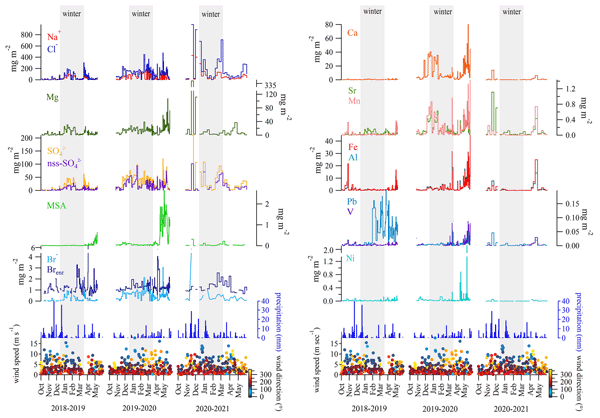
Azzurra Spagnesi, Elena Barbaro, Matteo Feltracco, Federico Scoto, Marco Vecchiato, Massimiliano Vardè, Mauro Mazzola, François Burgay, Federica Bruschi, Clara Jule Marie Hoppe, Allison Bailey, Andrea Gambaro, Carlo Barbante, and Andrea Spolaor
Atmos. Chem. Phys., 25, 16215–16232, https://doi.org/10.5194/acp-25-16215-2025, https://doi.org/10.5194/acp-25-16215-2025, 2025
Short summary
Short summary
Svalbard is ideal for studying how warming affects snow’s seasonal chemistry. By comparing the snow chemical composition of the 2019–2020 season with 2018–2019 and 2020–2021, we provide an overview of the seasonal and interannual variability of several chemical species on the Svalbard snowpack, furnishing insights into the interplay between short-term meteorological variability and the long-term climatic impacts of climate changes.
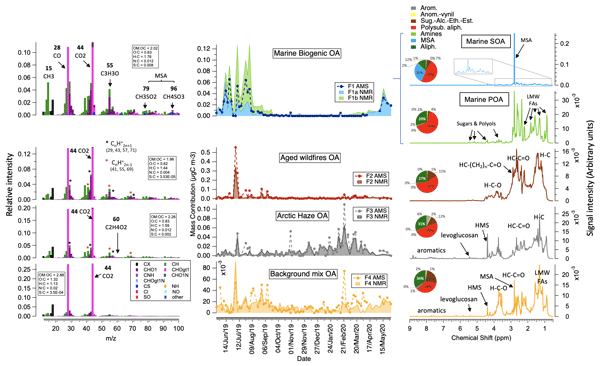
Marco Paglione, Yufang Hao, Stefano Decesari, Mara Russo, Karam Mansour, Mauro Mazzola, Diego Fellin, Andrea Mazzanti, Emilio Tagliavini, Manousos Ioannis Manousakas, Evangelia Diapouli, Elena Barbaro, Matteo Feltracco, Kaspar R. Daellenbach, and Matteo Rinaldi
Atmos. Chem. Phys., 25, 12853–12874, https://doi.org/10.5194/acp-25-12853-2025, https://doi.org/10.5194/acp-25-12853-2025, 2025
Short summary
Short summary
A year-long set of submicron aerosol samples (PM1) from Ny-Ålesund, Svalbard, was analyzed by proton nuclear magnetic resonance spectroscopy (H-NMR) and high-resolution time-of-flight aerosol mass spectrometry (HR-TOF-AMS) to characterize the organic fraction. Positive matrix factorization identified five organic aerosol sources. Winter–spring was dominated by Eurasian pollution and summer by marine biogenic aerosols, with occasional wildfire events.
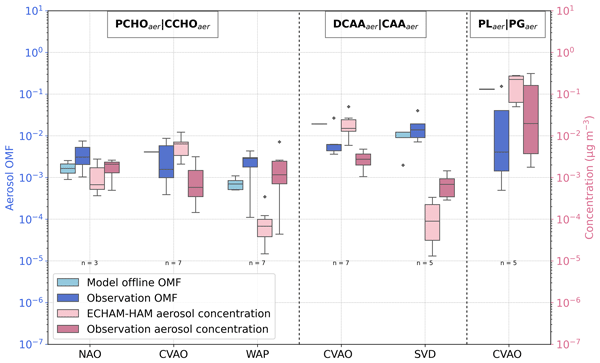
Anisbel Leon-Marcos, Moritz Zeising, Manuela van Pinxteren, Sebastian Zeppenfeld, Astrid Bracher, Elena Barbaro, Anja Engel, Matteo Feltracco, Ina Tegen, and Bernd Heinold
Geosci. Model Dev., 18, 4183–4213, https://doi.org/10.5194/gmd-18-4183-2025, https://doi.org/10.5194/gmd-18-4183-2025, 2025
Short summary
Short summary
This study represents the primary marine organic aerosol (PMOA) emissions, focusing on their sea–atmosphere transfer. Using the FESOM2.1–REcoM3 model, concentrations of key organic biomolecules were estimated and integrated into the ECHAM6.3–HAM2.3 aerosol–climate model. Results highlight the influence of marine biological activity and surface winds on PMOA emissions, with reasonably good agreement with observations improving aerosol representation in the southern oceans.

Elena Barbaro, Matteo Feltracco, Fabrizio De Blasi, Clara Turetta, Marta Radaelli, Warren Cairns, Giulio Cozzi, Giovanna Mazzi, Marco Casula, Jacopo Gabrieli, Carlo Barbante, and Andrea Gambaro
Atmos. Chem. Phys., 24, 2821–2835, https://doi.org/10.5194/acp-24-2821-2024, https://doi.org/10.5194/acp-24-2821-2024, 2024
Short summary
Short summary
The study analyzed a year of atmospheric aerosol composition at Col Margherita in the Italian Alps. Over 100 chemical markers were identified, including major ions, organic compounds, and trace elements. It revealed sources of aerosol, highlighted impacts of Saharan dust events, and showed anthropogenic pollution's influence despite the site's remoteness. Enrichment factors emphasized non-natural sources of trace elements. Source apportionment identified four key factors affecting the area.
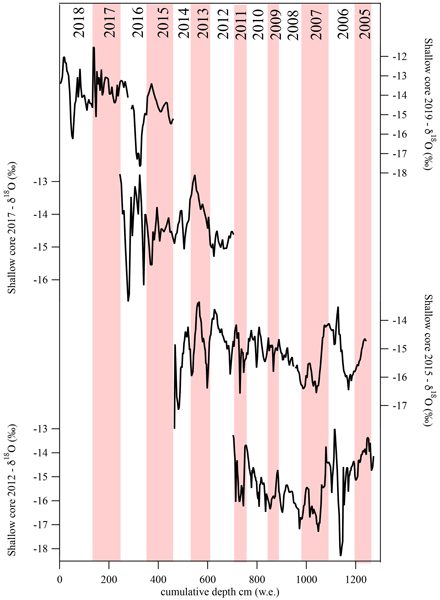
Andrea Spolaor, Federico Scoto, Catherine Larose, Elena Barbaro, Francois Burgay, Mats P. Bjorkman, David Cappelletti, Federico Dallo, Fabrizio de Blasi, Dmitry Divine, Giuliano Dreossi, Jacopo Gabrieli, Elisabeth Isaksson, Jack Kohler, Tonu Martma, Louise S. Schmidt, Thomas V. Schuler, Barbara Stenni, Clara Turetta, Bartłomiej Luks, Mathieu Casado, and Jean-Charles Gallet
The Cryosphere, 18, 307–320, https://doi.org/10.5194/tc-18-307-2024, https://doi.org/10.5194/tc-18-307-2024, 2024
Short summary
Short summary
We evaluate the impact of the increased snowmelt on the preservation of the oxygen isotope (δ18O) signal in firn records recovered from the top of the Holtedahlfonna ice field located in the Svalbard archipelago. Thanks to a multidisciplinary approach we demonstrate a progressive deterioration of the isotope signal in the firn core. We link the degradation of the δ18O signal to the increased occurrence and intensity of melt events associated with the rapid warming occurring in the archipelago.
Azzurra Spagnesi, Pascal Bohleber, Elena Barbaro, Matteo Feltracco, Fabrizio De Blasi, Giuliano Dreossi, Martin Stocker-Waldhuber, Daniela Festi, Jacopo Gabrieli, Andrea Gambaro, Andrea Fischer, and Carlo Barbante
EGUsphere, https://doi.org/10.5194/egusphere-2023-1625, https://doi.org/10.5194/egusphere-2023-1625, 2023
Preprint archived
Short summary
Short summary
We present new data from a 10 m ice core drilled in 2019 and a 8.4 m parallel ice core drilled in 2021 at the summit of Weißseespitze glacier. In a new combination of proxies, we discuss profiles of stable water isotopes, major ion chemistry as well as a full profile of microcharcoal and levoglucosan. We find that the chemical and isotopic signals are preserved, despite the ongoing surface mass loss. This is not be to expected considering what has been found at other glaciers at similar locations.
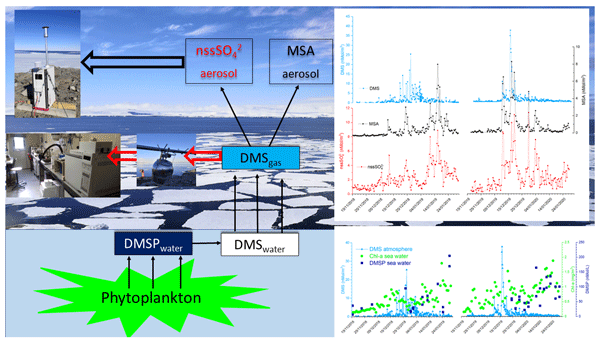
Silvia Becagli, Elena Barbaro, Simone Bonamano, Laura Caiazzo, Alcide di Sarra, Matteo Feltracco, Paolo Grigioni, Jost Heintzenberg, Luigi Lazzara, Michel Legrand, Alice Madonia, Marco Marcelli, Chiara Melillo, Daniela Meloni, Caterina Nuccio, Giandomenico Pace, Ki-Tae Park, Suzanne Preunkert, Mirko Severi, Marco Vecchiato, Roberta Zangrando, and Rita Traversi
Atmos. Chem. Phys., 22, 9245–9263, https://doi.org/10.5194/acp-22-9245-2022, https://doi.org/10.5194/acp-22-9245-2022, 2022
Short summary
Short summary
Measurements of phytoplanktonic dimethylsulfide and its oxidation products in the Antarctic atmosphere allow us to understand the role of the oceanic (sea ice melting, Chl α and dimethylsulfoniopropionate) and atmospheric (wind direction and speed, humidity, solar radiation and transport processes) factors in the biogenic aerosol formation, concentration and characteristic ratio between components in an Antarctic coastal site facing the polynya of the Ross Sea.
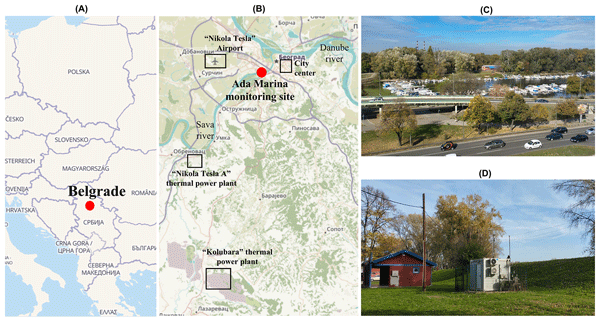
Bojana Petrović, Andres Alastuey, Karl Espen Yttri, Marco Pandolfi, Maja Jovanović, Bojan Radović, Renata Kovačević, Danka B. Stojanović, Miloš Davidović, Stephen M. Platt, Alena Bartonova, and Milena Jovašević-Stojanović
Atmos. Chem. Phys., 26, 14165–14184, https://doi.org/10.5194/acp-26-14165-2026, https://doi.org/10.5194/acp-26-14165-2026, 2026
Short summary
Short summary
Source apportionment based on daily levels of organic and elemental carbon, metals, ions, and organic tracers identified 7 factors, interpreted as anthropogenic and natural sources at both regional and local scales. Mitigation measures would reduce the biomass burning factor, which contributes 21 % to airborne particulate matter annually, primarily during the heating season. Two biogenic factors account for 20 %, the remaining 4 factors are influenced by both anthropogenic and natural sources.
Paolo Cristofanelli, Francesca Marcucci, Claudia Roberta Calidonna, Francescopiero Calzolari, Felice Dipace, Simonetta Montaguti, Fabrizio Roccato, Maurizio Busetto, Angela Marinoni, Davide Putero, Laura Renzi, Pamela Trisolino, Marco Zanatta, and Christoph Zellweger
EGUsphere, https://doi.org/10.5194/egusphere-2026-5833, https://doi.org/10.5194/egusphere-2026-5833, 2026
This preprint is open for discussion and under review for Atmospheric Measurement Techniques (AMT).
Short summary
Short summary
We compared six years of carbon dioxide and methane measurements from two nearby laboratories at the high mountain station on Mount Cimone, Italy. Both recorded similar long-term and seasonal changes, but hourly readings often differed beyond limits recommended by WMO. Sampling location, data selection and moisture removal contributed to these differences; human presence may also have played a role. Standardization of sampling and procedures can make greenhouse gas measurements more consistent.
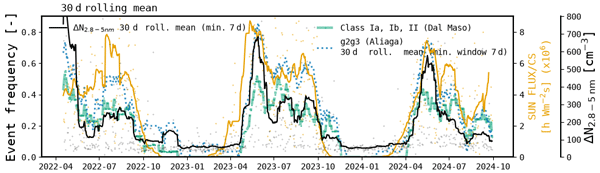
Dominic Heslin-Rees, Peter Tunved, Diego Aliaga, Janne Lampilahti, Ilona Riipinen, Annica M. L. Ekman, Ki-Tae Park, Martina Mazzini, Stefania Gilardoni, Roseline Thakur, Kihong Park, Young Jun Yoon, Kitack Lee, Mikko Sipilä, Mauro Mazzola, and Radovan Krejci
Aerosol Research, 4, 457–483, https://doi.org/10.5194/ar-4-457-2026, https://doi.org/10.5194/ar-4-457-2026, 2026
Short summary
Short summary
New particles form in the atmosphere and can influence the climate. We studied Arctic new particle formation (NPF) from 2022 to 2024 at the Zeppelin Observatory, on Svalbard. NPF occurs from April to November, peaking in late spring as sunlight increases. Some particles measured on-site grow large enough to seed clouds. Sunlight and existing aerosol particles strongly impact the likelihood of NPF, which mainly originates from marine regions, particularly the Greenland Sea.
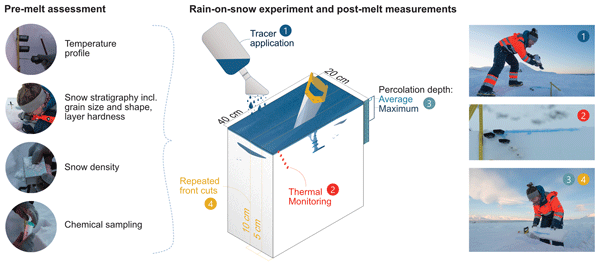
Dorothea Elisabeth Baur, Andrea Spolaor, Federico Scoto, and Elizabeth R. Thomas
The Cryosphere, 20, 5533–5558, https://doi.org/10.5194/tc-20-5533-2026, https://doi.org/10.5194/tc-20-5533-2026, 2026
Short summary
Short summary
The Arctic is warming rapidly, and winter rain-on-snow events are becoming more common. These events can alter snow layers and disturb climate information stored in glaciers. We studied how small rain-on-snow events affect snow structure and water isotopes near Ny-Ålesund, Svalbard. Field experiments show that meltwater flow creates complex features, but isotope changes remain confined to them, meaning seasonal climate signals can still be preserved where enough snow accumulates.
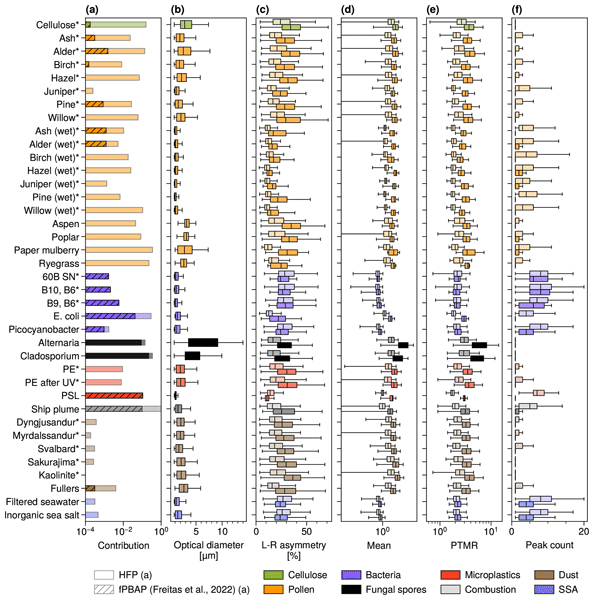
Aiden Jönsson, Jinglan Fu, Gabriel Pereira Freitas, Ian Crawford, Pavla Dagsson-Waldhauserová, Radovan Krejci, Yutaka Tobo, Karl Espen Yttri, and Paul Zieger
Atmos. Chem. Phys., 26, 13617–13643, https://doi.org/10.5194/acp-26-13617-2026, https://doi.org/10.5194/acp-26-13617-2026, 2026
Short summary
Short summary
Coarse-mode aerosols, like dust and bioaerosols, play important roles in environmental and climate processes. We measured fluorescence and morphological properties of key coarse-mode particle types, compared them with previous characterizations, and trained machine learning models with these data to classify unknown particles. This algorithm improves bioaerosol identification and successfully reproduces the annual bioaerosol cycle previously identified in a year of observations from Svalbard.
João Gomes Ilha, Manoela Brum Poitevin Portella, Oscar Vilca Gomez, Filipe Gaudie Lindau, Mariusz Potocki, Elena Barbaro, Susan Kaspari, Carlo Barbante, Jefferson Cardia Simões, and Paul Andrew Mayewski
EGUsphere, https://doi.org/10.5194/egusphere-2026-4779, https://doi.org/10.5194/egusphere-2026-4779, 2026
Preprint archived
Short summary
Short summary
Glaciers preserve records of past climate, but melting is rapidly damaging this information. We examined a new ice core from the Quelccaya Ice Cap in Peru by comparing a variety of chemical markers and using statistical tools. We found that melting has altered the archive mainly where water accumulated and near a fracture, rather than throughout the core. Much of the ice still preserves valuable climate information. Our approach can help assess other threatened glacier records around the world.
Liine Heikkinen, Rahul Ranjan, Sini Talvinen, Niels Behr, Sara M. Blichner, Maura Dewey, Lauri R. Ahonen, Mikael Ehn, Annica M. L. Ekman, Radovan Krejci, Tuukka Petäjä, Peter Tunved, and Ilona Riipinen
EGUsphere, https://doi.org/10.5194/egusphere-2026-5082, https://doi.org/10.5194/egusphere-2026-5082, 2026
Short summary
Short summary
The impacts of clouds on atmospheric particulate matter (PM) composition are not well understood. Here, we use a new method to infer these interactions as particle number size distributions with bimodal shapes serve as markers of chemical cloud processing. Using concurrent PM composition data from a boreal forest in Finland, we find cloud chemistry to enrich PM in sulfate, but no enhanced formation of organics was observed, despite the abundance of precursors emitted by the forest.

François Burgay, Haley Derrod, Tobias Erhardt, Federico Scoto, Delia Segato, Niccolò Maffezzoli, Federico Dallo, Daniele Zannoni, Azzurra Spagnesi, Helle-Astrid Kjær, Hubertus Fischer, Cristiano Varin, Carlo Barbante, and Andrea Spolaor
Clim. Past, 22, 1675–1689, https://doi.org/10.5194/cp-22-1675-2026, https://doi.org/10.5194/cp-22-1675-2026, 2026
Short summary
Short summary
Ice-core measurements from Greenland suggest that atmospheric iron deposition played a smaller role than previously thought in regulating marine productivity in the iron-limited North Pacific. Despite a strong increase in total iron deposition, the fraction of iron more likely to be available to phytoplankton rose only modestly, pointing to sea-ice extent and sedimentary iron remobilization as potentially more important factors during the last glacial transition.
Alexander Mattin, Simon J. Barker, V. Holly L. Winton, Andrea Burke, William Hutchison, Patrick J. Sugden, Kirstin Krüger, Alexa R. Van Eaton, Larry G. Mastin, Michael Sigl, Eric W. Wolff, Shuji Fujita, Kumiko Goto-Azuma, Ikumi Oyabu, Motohiro Hirabayashi, Anders Svensson, Magali Verkerk, Colin J. N. Wilson, Stephen B. Piva, Nels A. Iverson, Nelia W. Dunbar, Helle A. Kjær, Nancy A. N. Bertler, Mirko Severi, Andrei V. Kurbatov, and Dominic A. Winski
EGUsphere, https://doi.org/10.5194/egusphere-2026-3434, https://doi.org/10.5194/egusphere-2026-3434, 2026
This preprint is open for discussion and under review for Climate of the Past (CP).
Short summary
Short summary
This study presents evidence of the ~25.3 Ōruanui supereruption preserved in Antarctic ice cores. Glaciochemical signals and volcanic ash were identified across multiple sites, revealing regional differences in volcanic transport, deposition, and preservation. Combining ice core records with climate model simulations, we show the eruption likely caused substantial short-term global cooling and atmospheric change but was unlikely to trigger long-term climate shifts.
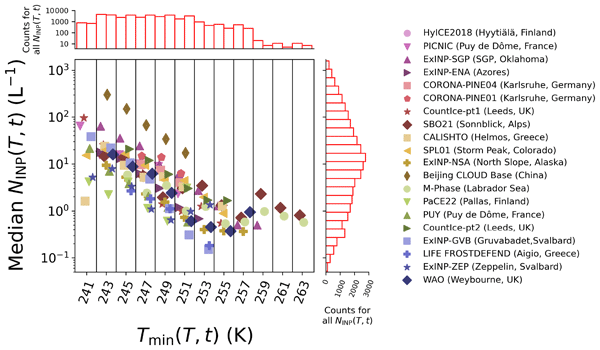
Ross J. Herbert, Larissa Lacher, Alexander Böhmländer, Mark D. Tarn, Antoine Canzi, Aidan Pantoya, Evelyn Freney, Kristina Höhler, Pia Bogert, Céline Planche, Ping Tian, Michael Adams, Sarah Barr, David Brus, Nicole Büttner, Martin Daily, Konstantinos Doulgeris, Konstantinos Eleftheriadis, Grant Forster, Romy Fösig, Dimitrios G. Georgakopoulos, Maria I. Gini, A. Gannet Hallar, Radovan Krejci, Elke Ludewig, Mauro Mazzola, Ian B. McCubbin, Athanasios Nenes, Tuukka Petäjä, Joseph Robinson, Franziska Vogel, Paul Zieger, Stephen Arnold, Kenneth S. Carslaw, Naruki Hiranuma, Ottmar Möhler, and Benjamin J. Murray
Earth Syst. Sci. Data, 18, 6465–6483, https://doi.org/10.5194/essd-18-6465-2026, https://doi.org/10.5194/essd-18-6465-2026, 2026
Short summary
Short summary
Ice formation in sub-zero clouds is influenced by airborne particles called ice-nucleating particles (INPs), whose concentrations vary substantially over short time and spatial scales. To assess the role of INPs in our climate, a comprehensive and consistent global dataset is essential. Our GloPINE model-ready dataset is a major step in this direction, comprising 36,000 measurements made using a single instrument design (PINE) over 70,000 hours of operation at 20 Northern Hemisphere sites.
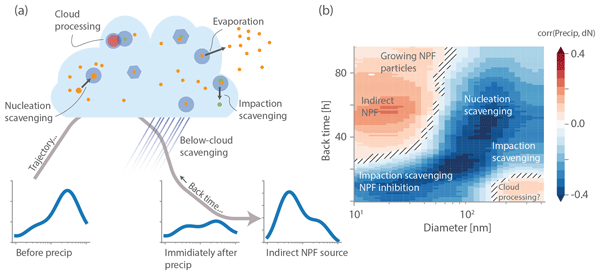
Sara M. Blichner, Theodore Khadir, Sini Talvinen, Paulo Artaxo, Liine Heikkinen, Harri Kokkola, Radovan Krejci, Muhammed Irfan, Twan van Noije, Tuukka Petäjä, Christopher Pöhlker, Øyvind Seland, Carl Svenhag, Antti Vartiainen, and Ilona Riipinen
Atmos. Chem. Phys., 26, 11281–11307, https://doi.org/10.5194/acp-26-11281-2026, https://doi.org/10.5194/acp-26-11281-2026, 2026
Short summary
Short summary
This study looks at how well climate models capture the impact of rain on particles that help form cloud droplets. Using data from three measurement stations and applying both a correlation analysis and a machine learning approach, we found that models often miss how new particles form after rain and struggle in cold environments. This matters because these particles influence cloud formation and climate.
Stephen M. Platt, Milos Davidović, Alena Bartonova, Željko Ćirović, Sabine Eckhardt, Nikolaos Evangeliou, Hans Gundersen, Maja Jovanović, Milena Jovašević-Stojanović, Griša Močnik, Bojana Petrović, Philipp Schneider, and Karl Espen Yttri
EGUsphere, https://doi.org/10.5194/egusphere-2026-1708, https://doi.org/10.5194/egusphere-2026-1708, 2026
Short summary
Short summary
We present year-round (2023 to 2025) carbonaceous aerosol measurements from Ada Marina, Belgrade, combining tracers, the aethalometer model, a new NNMF application, and FLEXPART. All methods show residential wood combustion is important, driving winter increases in eBC and OC, enhanced secondary OC, and brown carbon absorption. FLEXPART highlights regional transport within Serbia and the Pannonian Basin, with good model–observation agreement, underscoring the need to reduce RWC emissions.
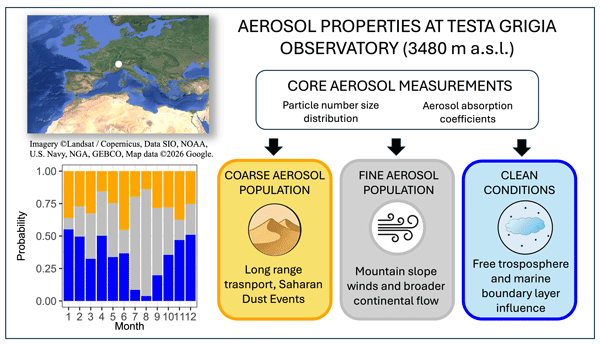
Stefania Gilardoni, Annachiara Bellini, Paolo Bonasoni, Henri Diémoz, Christian Gencarelli, Angela Marinoni, Eros Mariani, Luigi Mazari Villanova, Bruno Neininger, Mattia Perilli, Michael Sprenger, and Francesco Petracchini
Atmos. Chem. Phys., 26, 11135–11152, https://doi.org/10.5194/acp-26-11135-2026, https://doi.org/10.5194/acp-26-11135-2026, 2026
Short summary
Short summary
This study presents the first high-time-resolution aerosol data collected from the Testa Grigia Observatory (3,480 m) in the Italian Alps, from 2021 to 2023. We identified three transport pathways: Saharan Dust Events (SDE), which occurred with a frequency of 6 %, regional and long-range transported pollution (28 %), and clean air from the free troposphere. The timing of SDE, observed mainly in spring, and the mixing of dust particles with black carbon, enhance SDE impact on snow melting.
Lea Haberstock, Darrel Baumgardner, Dagen D. Hughes, Julie Legrand, Almuth Neuberger, Cuiqi Zhang, Zamin A. Kanji, Christian Maier, Ilona Riipinen, Radovan Krejci, and Paul Zieger
EGUsphere, https://doi.org/10.5194/egusphere-2026-3790, https://doi.org/10.5194/egusphere-2026-3790, 2026
This preprint is open for discussion and under review for Atmospheric Measurement Techniques (AMT).
Short summary
Short summary
Here, we present the characterization and first application of a new cloud spectrometer, the Ground-based Fog and Aerosol Spectrometer (GFAS). Besides particle number concentration and size, the GFAS also provides an indicator of particle morphology and composition. We present a new calibration routine and first laboratory and field measurements. Using the GFAS, we can show that cloud droplets are optically different compared to pure water droplets.
Noah Liguori-Bills, Catherine E. Scott, Ken S. Carslaw, Natalie Kehrwald, Stijn Hantson, Susan Kaspari, Carlo Barbante, Elena Barbaro, Paolo Gabrielli, Roberta Zangrando, Lonnie G. Thompson, and Douglas S. Hamilton
EGUsphere, https://doi.org/10.5194/egusphere-2026-2728, https://doi.org/10.5194/egusphere-2026-2728, 2026
Short summary
Short summary
Ice cores preserve changes in landscape fires and human-caused combustion. In this study, we compared ice core data from every continent, except Oceania, to computer model simulations of fire. We found a large disagreement in the 1850 CE to 1980 CE black carbon ratio. After exploring changes in emissions, transport, and aerosol microphysical processes as potential reasons for this disagreement, our results suggested that fire emission input datasets for climate models are the primary cause.
Francesco Paladini de Mendoza, Leonardo Langone, Alice Cavaliere, Gianmarco Ingrosso, Lorenzo Pasculli, Chiara Ripa, Mauro Mazzola, Manuel Bensi, Federico Giglio, Stefano Miserocchi, Tommaso Tesi, and Patrizia Giordano
Earth Syst. Sci. Data Discuss., https://doi.org/10.5194/essd-2026-501, https://doi.org/10.5194/essd-2026-501, 2026
Preprint under review for ESSD
Short summary
Short summary
This paper presents 5-years of continuous ocean observations from Arctic fjords and nearby deep waters around Svalbard. The dataset reveals strong seasonal changes, recurring inflows of warm Atlantic waters, and differences between glacier-influenced coastal areas and offshore environments. By providing openly accessible, high-quality measurements, the study supports research on climate change, ocean dynamics, glacier–ocean interactions, in a rapidly changing Arctic.
Aino Ovaska, Daniel Holmberg, Elio Rauth, Mansour Alghamdi, Paulo Artaxo, Eija Asmi, John Backman, Benjamin Bergmans, Matthew Boyer, Liezl Bredenkamp, Maurizio Busetto, Delano Campos De Oliveira, Juan Andrés Casquero-Vera, Darius Ceburnis, Tak Chan, Tommy Chan, Sebastien Conil, Daniele Contini, Suzanne Crumeyrolle, Valentin Duflot, Kostas Eleftheriadis, Johan Esveld, Ekaterina Ezhova, Markus Fiebig, Shahzad Gani, Olga Garmash, Francisco Gómez-Moreno, Roy M. Harrison, Andras Hoffer, Rakesh Hooda, Antti Hyvärinen, Tareq Hussein, Jorma Joutsensaari, Nikos Kalivitis, Heinz Kaminski, Jutta Kesti, Radovan Krejci, Adam Kristensson, Chongai Kuang, Markku Kulmala, Lauri Laakso, Ari Leskinen, Heikki Lihavainen, Andreas Massling, Maik Merkel, Steffen Noe, Jakub Ondracek, Noemí Perez, Jean-Eudes Petit, Tuukka Petäjä, Michael Pikridas, Christopher Pöhlker, Mira Pöhlker, Jean-Philippe Putaud, Ximeng Qi, Cristina Reche, Sergio Rodríguez, Petr Roztocil, Jean Sciare, Karine Sellegri, Dongjie Shang, Ashish Singh, Mikko Sipilä, Henrik Skov, Mar Sorribas, Tamanna Subba, Junying Sun, Peter Tunved, Ville Vakkari, Pieter G. Van Zyl, Aki Virkkula, Jens Voigtländer, Kay Weinhold, Alfred Wiedensohler, Hee-Jung Yoo, Putian Zhou, Kai Puolamäki, Tuomo Nieminen, Veli-Matti Kerminen, Victoria A. Sinclair, and Pauli Paasonen
Earth Syst. Sci. Data Discuss., https://doi.org/10.5194/essd-2026-415, https://doi.org/10.5194/essd-2026-415, 2026
Preprint under review for ESSD
Short summary
Short summary
All clouds form around aerosol particles, and their abundance influences cloud properties. In turn, clouds affect climate by changing how energy moves through the atmosphere, making them important for climate change. To better understand these interactions, we need accurate information on how many aerosol particles are in the atmosphere. Therefore, we have developed a new 21-year global dataset of particle concentrations relevant for cloud formation.
Martina Mazzini, Diego Aliaga, Janne Lamphilati, Martin Gysel-Beer, Benjamin Tobias Brem, Robin Lewis Modini, Dominic Heslin-Rees, Tareq Hussein, Marco Zanatta, Paolo Cristofanelli, Federico Bianchi, Markku Kulmala, and Angela Marinoni
Atmos. Chem. Phys., 26, 8893–8912, https://doi.org/10.5194/acp-26-8893-2026, https://doi.org/10.5194/acp-26-8893-2026, 2026
Short summary
Short summary
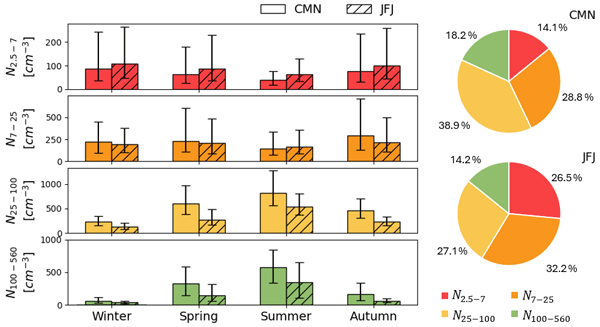
This study investigates particle number size distribution at two high-altitude European stations to better understand the mechanisms driving new particle formation (NPF) in the free troposphere. Interestingly, despite a consistently higher background of freshly nucleated particles at Jungfraujoch, NPF events were more frequent and intense at Monte Cimone, which also shows higher formation and growth rates, likely due to the proximity of the polluted planetary boundary layer from the Po Valley.
Agnese Petteni, Mathieu Casado, Christophe Leroy-Dos Santos, Amaelle Landais, Niels Dutrievoz, Cécile Agosta, Pete D. Akers, Joel Savarino, Andrea Spolaor, Massimo Frezzotti, and Barbara Stenni
The Cryosphere, 20, 3581–3598, https://doi.org/10.5194/tc-20-3581-2026, https://doi.org/10.5194/tc-20-3581-2026, 2026
Short summary
Short summary
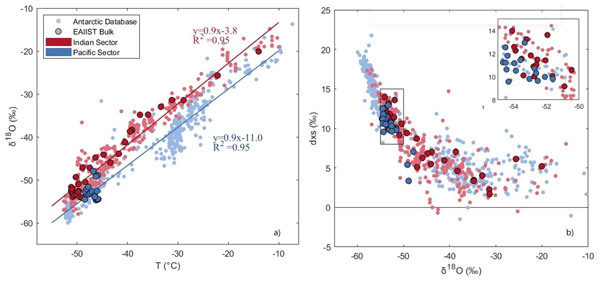
We investigated the isotopic composition of surface snow in a previously unexplored region of East Antarctica to understand how differences in air mass origin influence its variability. By comparing observations with model data, we validated the model and quantified the impact of post-depositional processes at the snow–atmosphere interface. Our results offer valuable insights for reconstructing past temperatures from ice cores.
Wenche Aas, Thérèse Salameh, Robert Wegener, Heidi Hellén, Jean-Luc Jaffrezo, Pontus Roldin, Elisabeth Alonso-Blanco, Andres Alastuey, Crist Amelynck, Jgor Arduini, Benjamin Bergmans, Marie Bertrand, Agnes Borbon, Efstratios Bourtsoukidis, Laetitia Bouvier, David Butterfield, Iris Buxbaum, Darius Ceburnis, Anja Claude, Augustin Colette, Aurélie Colomb, Sophie Darfeuil, James Dernie, Maximilien Desservettaz, Elías Díaz-Ramiro, Marvin Dufresne, René Dubus, Mario Duval, Marie Dury, Anna Font, Kirsten N. Fossum, Evelyn Freney, Gotzon Gangoiti, Yao Ge, Maria Carmen Gomez, Francisco J. Gómez-Moreno, Marie Gohy, Valérie Gros, Paul Hamer, Bryan Hellack, Hartmut Herrmann, Robert Holla, Adéla Holubová, Niels R. Jensen, Tuija Jokinen, Matthew Jones, Uwe Käfer, Lukas Kesper, Dieter Klemp, Dagmar Kubistin, Angela Marinoni, Martina Mazzini, Vy Ngoc Thuy Dinh, Jurgita Ovadnevaite, Tuukka Petäjä, Miguel Portillo-Estrada, Jitka Přívozníková, Jean-Philippe Putaud, Stefan Reimann, Laura Renzi, Veronique Riffault, Stuart Ritchie, Chris Robins, Begoña Artíñano Rodríguez de Torres, Laurent Poulain, Julian Rüdiger, Agnieszka Sanocka, Estibaliz Saez de Camara Oleaga, Niels Schoon, Roger Seco, Ivan Simmons, Leïla Simon, David Simpson, Sverre Solberg, Emmanuel Tison, August Thomasson, Svetlana Tsyro, Marsailidh Twigg, Toni Tykkä, Bert Verreyken, Ågot Watne, Katie Williams, Ana Maria Yáñez-Serrano, Karen Yeung, Ilona Ylivinkka, and Karl Espen Yttri
Atmos. Chem. Phys., 26, 8717–8751, https://doi.org/10.5194/acp-26-8717-2026, https://doi.org/10.5194/acp-26-8717-2026, 2026
Short summary
Short summary
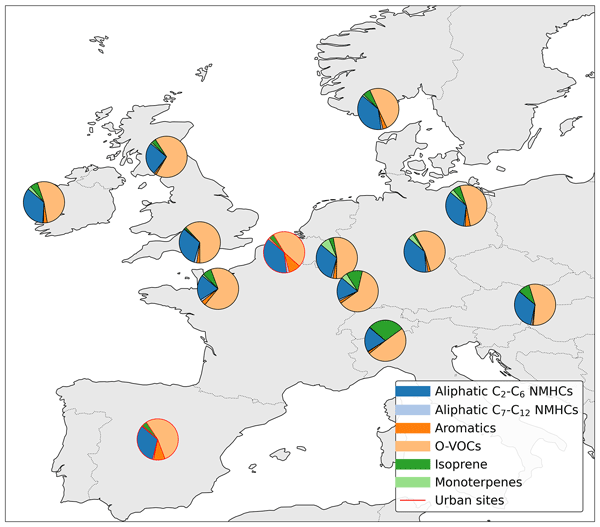
A one-week intensive measurement campaign during the 2022 European heatwave included monitoring of ozone, volatile organic compounds, aerosol chemical composition, and organic tracers to investigate air pollution sources. Results showed that emissions from vegetation and human activities contributed to peaks in ozone and secondary organic aerosol particles. Differences between measurements and model simulations underline the need for better characterization of sources and formation pathways.
Alexis Lamothe, Edouard Bard, Nicolas Thouveny, Ellyn Auriol, Mirko Severi, Rita Traversi, Martine De Angelis, Frank Wilhelms, Robert Mulvaney, Fawzi Zaidi, Georges Aumaitre, Karim Keddadouche, and Mélanie Baroni
Geochronology, 8, 351–371, https://doi.org/10.5194/gchron-8-351-2026, https://doi.org/10.5194/gchron-8-351-2026, 2026
Short summary
Short summary
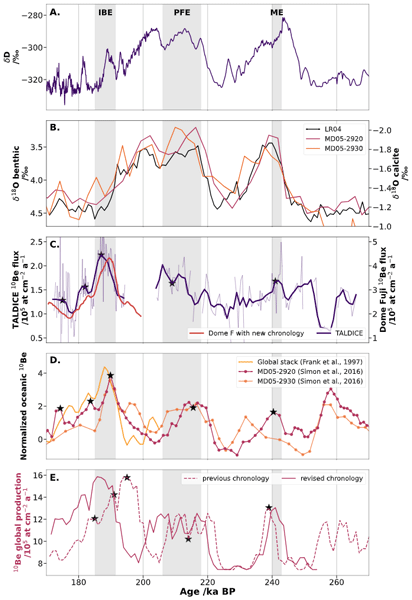
We studied changes in Earth's magnetic field between 170 000 and 270 000 years ago using beryllium data from Antarctic ice. Our results reveal three periods when the magnetic field weakened, including one major event with a rapid fall and gradual recovery. These findings help explain how Earth's magnetic field behaves during short-term disturbances and improve the timing of past climate and geological records.
Adrien Ooms, Mathieu Casado, Ghislain Picard, Laurent Arnaud, Maria Hörhold, Andrea Spolaor, Rita Traversi, Joel Savarino, Patrick Ginot, Pete Akers, Birthe Twarloh, and Valérie Masson-Delmotte
The Cryosphere, 20, 3235–3255, https://doi.org/10.5194/tc-20-3235-2026, https://doi.org/10.5194/tc-20-3235-2026, 2026
Short summary
Short summary
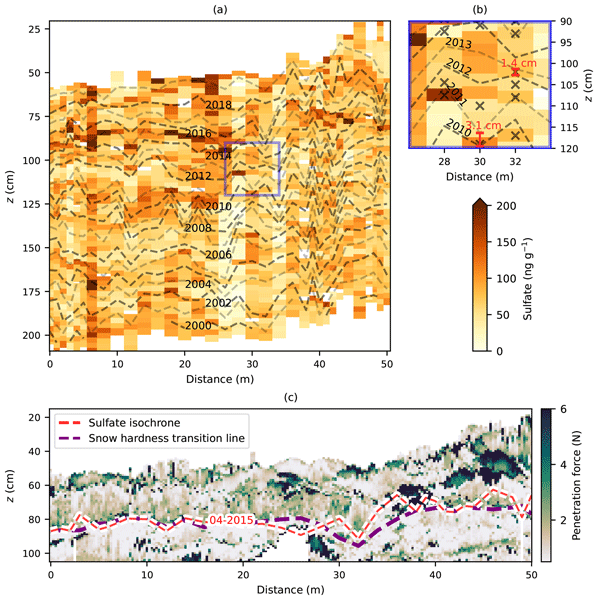
This work presents a new approach to the estimation of accumulation rates at Concordia Station, East-Antarctica, for the last 20 years, from a new data set of chemical tracers and snow micro-scale properties measured in a snow trench. Multi-annual and meter to decameter scale variability of accumulation rates are compared again in-situ measurements of surface laser scanner and stake farm, with very good agreement. This further constrains SMB estimation for Antarctica at high temporal resolution.
Nurun Nahar Lata, Trung Diep, Stefania Gilardoni, Mauro Mazzola, Zezhen Cheng, Ashfiqur Rahman, Mickey M. Rogers, Matthew Fraund, Matthew A. Marcus, Naruki Hiranuma, and Swarup China
Atmos. Chem. Phys., 26, 6611–6628, https://doi.org/10.5194/acp-26-6611-2026, https://doi.org/10.5194/acp-26-6611-2026, 2026
Short summary
Short summary
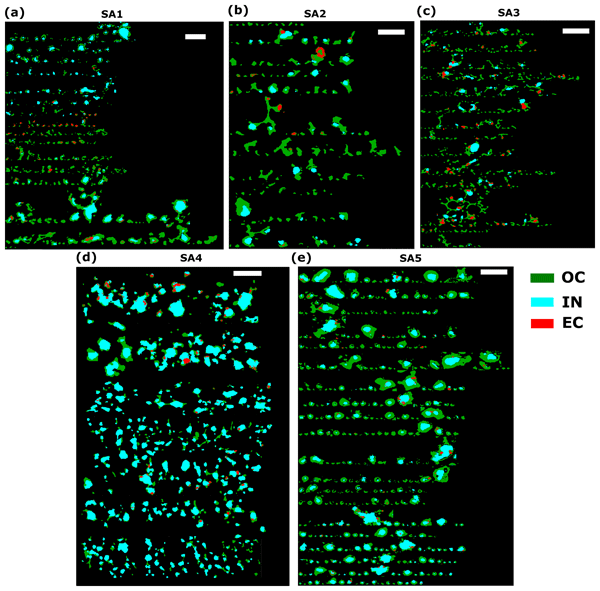
Ice in the Arctic clouds is initiated by rare particles, and their properties are not well understood due to atmospheric processing. By combining microscopy with freezing experiments, we found that both chemical composition and the thickness and morphological configuration of organic coatings influence ice formation. This finding highlights the importance of particle surface chemistry in cloud formation and offers new insights into how Arctic aerosols influence cloud formation.
Simone Pulimeno, Angelo Lupi, Vito Vitale, Claudia Frangipani, Carlos Toledano, Stelios Kazadzis, Natalia Kouremeti, Christoph Ritter, Sandra Graßl, Kerstin Stebel, Vitali Fioletov, Ihab Abboud, Sandra Blindheim, Lynn Ma, Norm O'Neill, Piotr Sobolewski, Pawan Gupta, Elena Lind, Thomas F. Eck, Antti Hyvärinen, Veijo Aaltonen, Rigel Kivi, Janae Csavina, Dmitry Kabanov, Sergey M. Sakerin, Olga R. Sidorova, Robert S. Stone, Hagen Telg, Laura Riihimaki, Raul R. Cordero, Martin Radenz, Ronny Engelmann, Michel Van Roozendal, Anatoli Chaikovsky, Philippe Goloub, Junji Hisamitsu, and Mauro Mazzola
Atmos. Chem. Phys., 26, 1809–1846, https://doi.org/10.5194/acp-26-1809-2026, https://doi.org/10.5194/acp-26-1809-2026, 2026
Short summary
Short summary
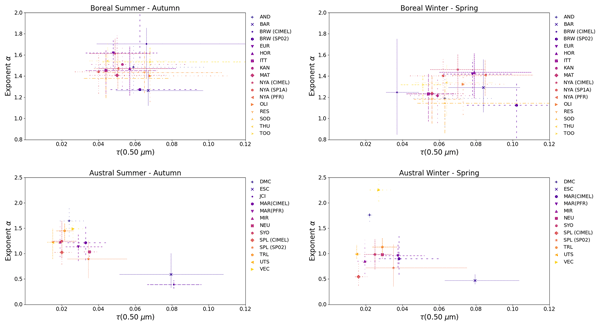
This study analyzed aerosols optical properties over the Arctic and Antarctic to measure them even during long periods of darkness. It found that pollution in the Arctic is decreasing, likely due to European emission regulations, while wildfires are becoming a more important source of particles. In Antarctica, particle levels are higher near the coast than inland, and vary by season. These results help us better understand how air pollution and climate are changing at the Earth’s poles.
Sara Herrero-Anta, Sabine Eckhardt, Nikolaos Evangeliou, Stefania Gilardoni, Sandra Graßl, Dominic Heslin-Rees, Stelios Kazadzis, Natalia Kouremeti, Radovan Krejci, David Mateos, Mauro Mazzola, Christoph Ritter, Roberto Román, Kerstin Stebel, and Tymon Zielinski
Atmos. Chem. Phys., 26, 1435–1457, https://doi.org/10.5194/acp-26-1435-2026, https://doi.org/10.5194/acp-26-1435-2026, 2026
Short summary
Short summary
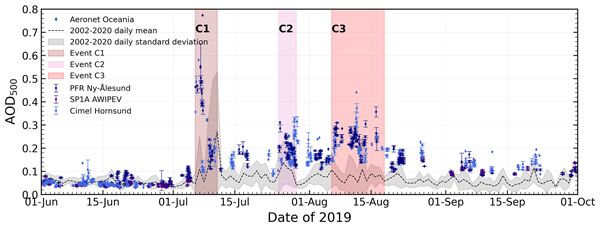
In summer 2019, unusually high aerosol concentrations were measured in the Arctic, extending through the troposphere and stratosphere up to 16 km. Using multiple instruments and models, aerosol particles were linked to wildfires, volcanic eruptions, and anthropogenic pollution. The aerosol consisted of spherical, fine-mode, weakly absorbing particles, which significantly reduced direct solar radiation. This combined approach improves understanding of Arctic aerosol events and climate processes.
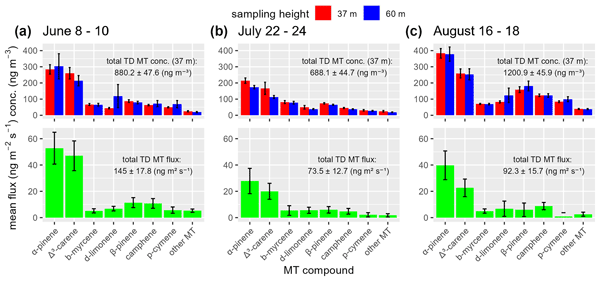
Ross C. Petersen, Thomas Holst, Cheng Wu, Radovan Krejci, Jeremy K. Chan, Claudia Mohr, and Janne Rinne
Atmos. Chem. Phys., 25, 17205–17236, https://doi.org/10.5194/acp-25-17205-2025, https://doi.org/10.5194/acp-25-17205-2025, 2025
Short summary
Short summary
Ecosystem-scale emissions of biogenic volatile organic compounds (BVOCs) are important for atmospheric chemistry. Here we investigate boreal BVOC fluxes from a forest in central Sweden. BVOC fluxes were measured above-canopy using proton-transfer-reaction mass spectrometry, while compound-specific monoterpene (MT) fluxes were assessed using a concentration gradient method. We also evaluate the impact of chemical degradation on observed sesquiterpene (SQT) and nighttime MT fluxes.
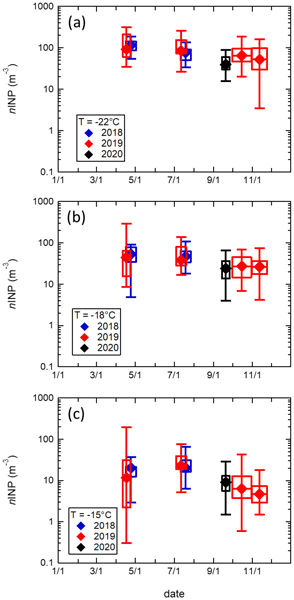
Matteo Rinaldi, Alessia Nicosia, Marco Paglione, Karam Mansour, Stefano Decesari, Mauro Mazzola, Gianni Santachiara, and Franco Belosi
Aerosol Research, 3, 535–556, https://doi.org/10.5194/ar-3-535-2025, https://doi.org/10.5194/ar-3-535-2025, 2025
Short summary
Short summary
This study presents atmospheric ice-nucleating particle (INP) data from the Gruvebadet observatory in Ny-Ålesund. A moderate summertime increase in INP levels is observed at -15 °C but not at other temperatures (-18 and -22 °C). Conversely, a marked seasonal evolution was observed for the contribution of super-micrometer INPs, which is at its maximum throughout summer up to early autumn. We show that marine biogenic INPs may be relevant in the Arctic during seasons of reduced sea ice coverage.
Azzurra Spagnesi, Elena Barbaro, Matteo Feltracco, Federico Scoto, Marco Vecchiato, Massimiliano Vardè, Mauro Mazzola, François Burgay, Federica Bruschi, Clara Jule Marie Hoppe, Allison Bailey, Andrea Gambaro, Carlo Barbante, and Andrea Spolaor
Atmos. Chem. Phys., 25, 16215–16232, https://doi.org/10.5194/acp-25-16215-2025, https://doi.org/10.5194/acp-25-16215-2025, 2025
Short summary
Short summary
Svalbard is ideal for studying how warming affects snow’s seasonal chemistry. By comparing the snow chemical composition of the 2019–2020 season with 2018–2019 and 2020–2021, we provide an overview of the seasonal and interannual variability of several chemical species on the Svalbard snowpack, furnishing insights into the interplay between short-term meteorological variability and the long-term climatic impacts of climate changes.
Marco Paglione, Yufang Hao, Stefano Decesari, Mara Russo, Karam Mansour, Mauro Mazzola, Diego Fellin, Andrea Mazzanti, Emilio Tagliavini, Manousos Ioannis Manousakas, Evangelia Diapouli, Elena Barbaro, Matteo Feltracco, Kaspar R. Daellenbach, and Matteo Rinaldi
Atmos. Chem. Phys., 25, 12853–12874, https://doi.org/10.5194/acp-25-12853-2025, https://doi.org/10.5194/acp-25-12853-2025, 2025
Short summary
Short summary
A year-long set of submicron aerosol samples (PM1) from Ny-Ålesund, Svalbard, was analyzed by proton nuclear magnetic resonance spectroscopy (H-NMR) and high-resolution time-of-flight aerosol mass spectrometry (HR-TOF-AMS) to characterize the organic fraction. Positive matrix factorization identified five organic aerosol sources. Winter–spring was dominated by Eurasian pollution and summer by marine biogenic aerosols, with occasional wildfire events.
Anisbel Leon-Marcos, Moritz Zeising, Manuela van Pinxteren, Sebastian Zeppenfeld, Astrid Bracher, Elena Barbaro, Anja Engel, Matteo Feltracco, Ina Tegen, and Bernd Heinold
Geosci. Model Dev., 18, 4183–4213, https://doi.org/10.5194/gmd-18-4183-2025, https://doi.org/10.5194/gmd-18-4183-2025, 2025
Short summary
Short summary
This study represents the primary marine organic aerosol (PMOA) emissions, focusing on their sea–atmosphere transfer. Using the FESOM2.1–REcoM3 model, concentrations of key organic biomolecules were estimated and integrated into the ECHAM6.3–HAM2.3 aerosol–climate model. Results highlight the influence of marine biological activity and surface winds on PMOA emissions, with reasonably good agreement with observations improving aerosol representation in the southern oceans.
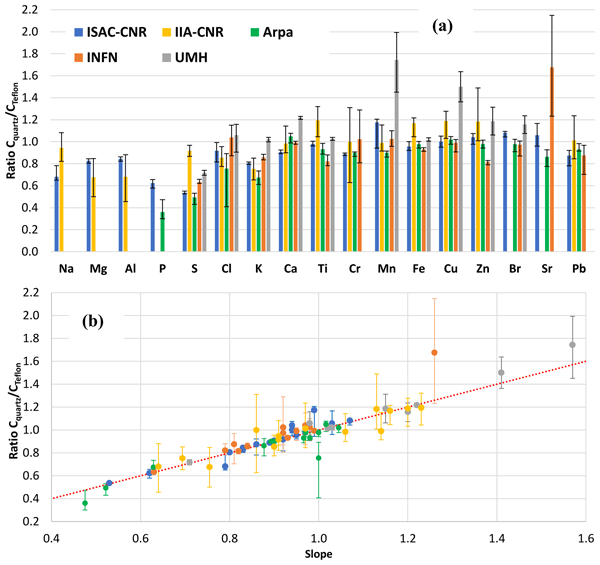
Florin Unga, Giulia Calzolai, Massimo Chiari, Eleonora Cuccia, Cristina Colombi, Mariolina Franciosa, Adelaide Dinoi, Eva Merico, Antonio Pennetta, Noelia Gómez-Sánchez, Caterina Mapelli, Salvatore Pareti, Cinzia Perrino, Eduardo Yubero, and Daniele Contini
Aerosol Research, 3, 405–415, https://doi.org/10.5194/ar-3-405-2025, https://doi.org/10.5194/ar-3-405-2025, 2025
Short summary
Short summary
This study evaluates the performance of energy-dispersive X-ray fluorescence (ED-XRF) on particulate matter (PM10) samples collected on quartz and Teflon filters through an inter-laboratory comparison. Detection limits were higher on quartz, but measurement repeatability was similar. Strong elemental correlations suggest that, with proper corrections, quartz filters can provide reliable results. These findings support their feasibility for ED-XRF analysis.
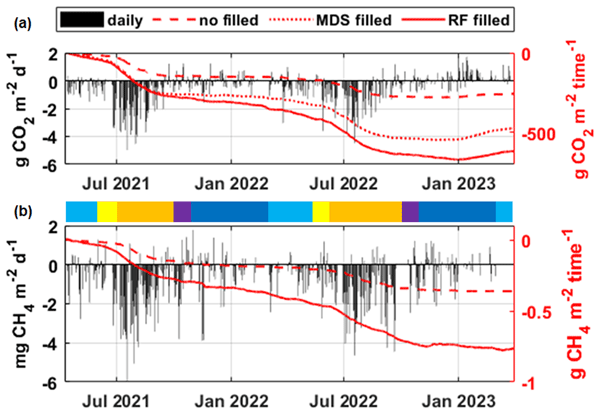
Antonio Donateo, Daniela Famulari, Donato Giovannelli, Arturo Mariani, Mauro Mazzola, Stefano Decesari, and Gianluca Pappaccogli
Biogeosciences, 22, 2889–2908, https://doi.org/10.5194/bg-22-2889-2025, https://doi.org/10.5194/bg-22-2889-2025, 2025
Short summary
Short summary
This study focuses on measurements of CO2 and CH4 turbulent fluxes in tundra ecosystems in the Svalbard islands over a 2-year period. Our results reveal dynamic interactions between climatic conditions and ecosystem activities such as photosynthesis and microbial activity. In summer, photosynthesis and microbial activity increase, leading to net carbon uptake and methane consumption. Wind influences soil drying and CH4 emissions. Thermal anomalies can reduce annual carbon uptake.
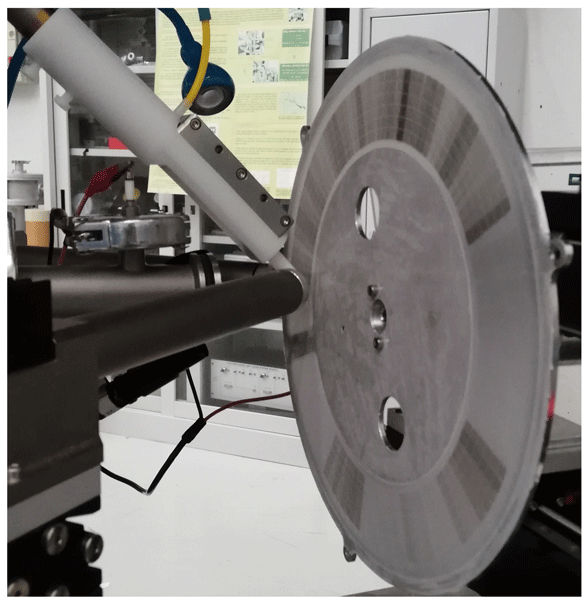
Silvia Nava, Roberta Vecchi, Paolo Prati, Vera Bernardoni, Laura Cadeo, Giulia Calzolai, Luca Carraresi, Carlo Cialdai, Massimo Chiari, Federica Crova, Alice Forello, Cosimo Fratticioli, Fabio Giardi, Marco Manetti, Dario Massabò, Federico Mazzei, Luca Repetto, Gianluigi Valli, Virginia Vernocchi, and Franco Lucarelli
Atmos. Meas. Tech., 18, 2137–2147, https://doi.org/10.5194/amt-18-2137-2025, https://doi.org/10.5194/amt-18-2137-2025, 2025
Short summary
Short summary
The new high-time-resolution sampler STRAS has been designed, developed and tested. It enables automatic sequential sampling of up to 168 hourly samples of PM10, PM2.5 or PM1. It has been conceived for subsequent elemental composition analysis (from Na to Pb) by particle-induced X-ray emission (PIXE), but optical techniques may also be applied to measure black and brown carbon. Its use combined with other high-temporal-resolution instrumentation can provide complete chemical speciation of aerosols on an hourly basis.
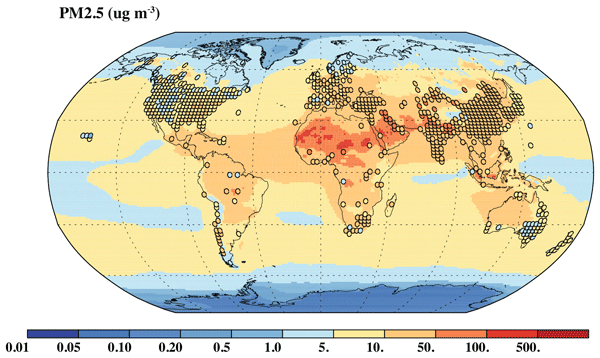
Natalie M. Mahowald, Longlei Li, Julius Vira, Marje Prank, Douglas S. Hamilton, Hitoshi Matsui, Ron L. Miller, P. Louis Lu, Ezgi Akyuz, Daphne Meidan, Peter Hess, Heikki Lihavainen, Christine Wiedinmyer, Jenny Hand, Maria Grazia Alaimo, Célia Alves, Andres Alastuey, Paulo Artaxo, Africa Barreto, Francisco Barraza, Silvia Becagli, Giulia Calzolai, Shankararaman Chellam, Ying Chen, Patrick Chuang, David D. Cohen, Cristina Colombi, Evangelia Diapouli, Gaetano Dongarra, Konstantinos Eleftheriadis, Johann Engelbrecht, Corinne Galy-Lacaux, Cassandra Gaston, Dario Gomez, Yenny González Ramos, Roy M. Harrison, Chris Heyes, Barak Herut, Philip Hopke, Christoph Hüglin, Maria Kanakidou, Zsofia Kertesz, Zbigniew Klimont, Katriina Kyllönen, Fabrice Lambert, Xiaohong Liu, Remi Losno, Franco Lucarelli, Willy Maenhaut, Beatrice Marticorena, Randall V. Martin, Nikolaos Mihalopoulos, Yasser Morera-Gómez, Adina Paytan, Joseph Prospero, Sergio Rodríguez, Patricia Smichowski, Daniela Varrica, Brenna Walsh, Crystal L. Weagle, and Xi Zhao
Atmos. Chem. Phys., 25, 4665–4702, https://doi.org/10.5194/acp-25-4665-2025, https://doi.org/10.5194/acp-25-4665-2025, 2025
Short summary
Short summary
Aerosol particles are an important part of the Earth system, but their concentrations are spatially and temporally heterogeneous, as well as being variable in size and composition. Here, we present a new compilation of PM2.5 and PM10 aerosol observations, focusing on the spatial variability across different observational stations, including composition, and demonstrate a method for comparing the data sets to model output.
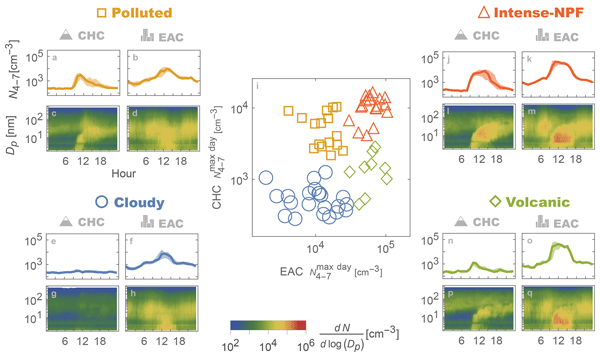
Diego Aliaga, Victoria A. Sinclair, Radovan Krejci, Marcos Andrade, Paulo Artaxo, Luis Blacutt, Runlong Cai, Samara Carbone, Yvette Gramlich, Liine Heikkinen, Dominic Heslin-Rees, Wei Huang, Veli-Matti Kerminen, Alkuin Maximilian Koenig, Markku Kulmala, Paolo Laj, Valeria Mardoñez-Balderrama, Claudia Mohr, Isabel Moreno, Pauli Paasonen, Wiebke Scholz, Karine Sellegri, Laura Ticona, Gaëlle Uzu, Fernando Velarde, Alfred Wiedensohler, Doug Worsnop, Cheng Wu, Chen Xuemeng, Qiaozhi Zha, and Federico Bianchi
Aerosol Research, 3, 15–44, https://doi.org/10.5194/ar-3-15-2025, https://doi.org/10.5194/ar-3-15-2025, 2025
Short summary
Short summary
This study examines new particle formation (NPF) in the Bolivian Andes at Chacaltaya mountain (CHC) and the urban El Alto–La Paz area (EAC). Days are clustered into four categories based on NPF intensity. Differences in particle size, precursor gases, and pollution levels are found. High NPF intensities increased Aitken mode particle concentrations at both sites, while volcanic influence selectively diminished NPF intensity at CHC but not EAC. This study highlights NPF dynamics in the Andes.
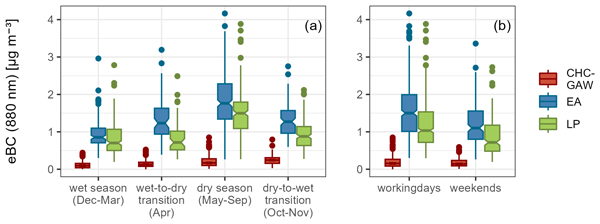
Valeria Mardoñez-Balderrama, Griša Močnik, Marco Pandolfi, Robin L. Modini, Fernando Velarde, Laura Renzi, Angela Marinoni, Jean-Luc Jaffrezo, Isabel Moreno R., Diego Aliaga, Federico Bianchi, Claudia Mohr, Martin Gysel-Beer, Patrick Ginot, Radovan Krejci, Alfred Wiedensohler, Gaëlle Uzu, Marcos Andrade, and Paolo Laj
Atmos. Chem. Phys., 24, 12055–12077, https://doi.org/10.5194/acp-24-12055-2024, https://doi.org/10.5194/acp-24-12055-2024, 2024
Short summary
Short summary
Levels of black carbon (BC) are scarcely reported in the Southern Hemisphere, especially in high-altitude conditions. This study provides insight into the concentration level, variability, and optical properties of BC in La Paz and El Alto and at the Chacaltaya Global Atmosphere Watch Station. Two methods of source apportionment of absorption were tested and compared showing traffic as the main contributor to absorption in the urban area, in addition to biomass and open waste burning.
Abigail S. Williams, Jeramy L. Dedrick, Lynn M. Russell, Florian Tornow, Israel Silber, Ann M. Fridlind, Benjamin Swanson, Paul J. DeMott, Paul Zieger, and Radovan Krejci
Atmos. Chem. Phys., 24, 11791–11805, https://doi.org/10.5194/acp-24-11791-2024, https://doi.org/10.5194/acp-24-11791-2024, 2024
Short summary
Short summary
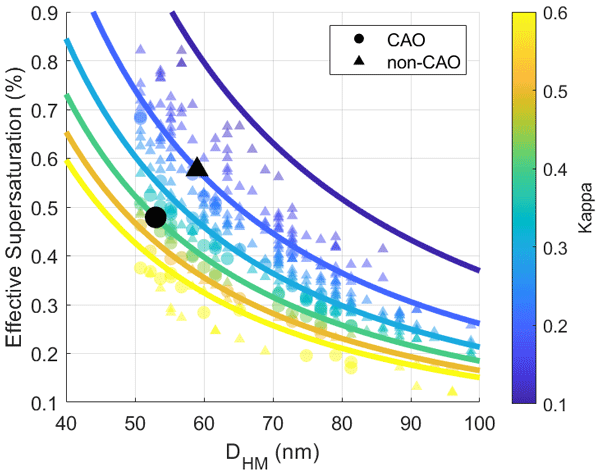
The measured aerosol size distribution modes reveal distinct properties characteristic of cold-air outbreaks in the Norwegian Arctic. We find higher sea spray number concentrations, smaller Hoppel minima, lower effective supersaturations, and accumulation-mode particle scavenging during cold-air outbreaks. These results advance our understanding of cold-air outbreak aerosol–cloud interactions in order to improve their accurate representation in models.
Luca Teruzzi, Andrea Spolaor, David Cappelletti, Claudio Artoni, and Marco A. C. Potenza
EGUsphere, https://doi.org/10.5194/egusphere-2024-2057, https://doi.org/10.5194/egusphere-2024-2057, 2024
Preprint archived
Short summary
Short summary
We present a novel probe to measure visible light penetration into the uppermost snow layers with high spatial resolution. The probe is designed to be lightweight and robust to be exploited in extreme environments, extrapolating to the UV region. Such experimental approach will allow to fill the gap in the current understanding of sunlight propagation through the snowpack, often based on numerical approaches, improving the understanding of those processes occurring in snow even in the UV region.
Rachael H. Rhodes, Yvan Bollet-Quivogne, Piers Barnes, Mirko Severi, and Eric W. Wolff
Clim. Past, 20, 2031–2043, https://doi.org/10.5194/cp-20-2031-2024, https://doi.org/10.5194/cp-20-2031-2024, 2024
Short summary
Short summary
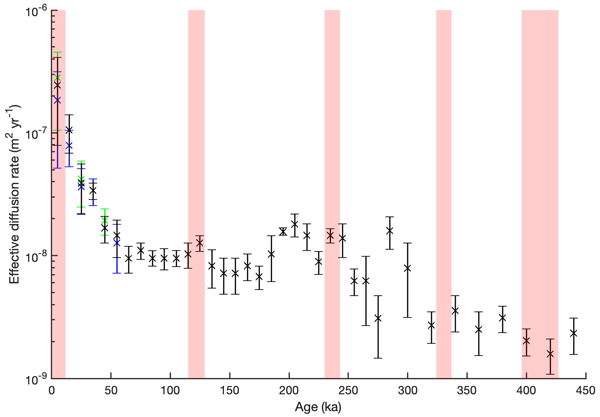
Some ionic components slowly move through glacier ice by diffusion, but the rate of this diffusion, its exact mechanism(s), and the factors that might influence it are poorly understood. In this study, we model how peaks in sulfate, deposited at Dome C on the Antarctic ice sheet after volcanic eruptions, change with depth and time. We find that the sulfate diffusion rate in ice is relatively fast in young ice near the surface, but the rate is markedly reduced over time.

Gabriel Pereira Freitas, Ben Kopec, Kouji Adachi, Radovan Krejci, Dominic Heslin-Rees, Karl Espen Yttri, Alun Hubbard, Jeffrey M. Welker, and Paul Zieger
Atmos. Chem. Phys., 24, 5479–5494, https://doi.org/10.5194/acp-24-5479-2024, https://doi.org/10.5194/acp-24-5479-2024, 2024
Short summary
Short summary
Bioaerosols can participate in ice formation within clouds. In the Arctic, where global warming manifests most, they may become more important as their sources prevail for longer periods of the year. We have directly measured bioaerosols within clouds for a full year at an Arctic mountain site using a novel combination of cloud particle sampling and single-particle techniques. We show that bioaerosols act as cloud seeds and may influence the presence of ice within clouds.
Tessa R. Vance, Nerilie J. Abram, Alison S. Criscitiello, Camilla K. Crockart, Aylin DeCampo, Vincent Favier, Vasileios Gkinis, Margaret Harlan, Sarah L. Jackson, Helle A. Kjær, Chelsea A. Long, Meredith K. Nation, Christopher T. Plummer, Delia Segato, Andrea Spolaor, and Paul T. Vallelonga
Clim. Past, 20, 969–990, https://doi.org/10.5194/cp-20-969-2024, https://doi.org/10.5194/cp-20-969-2024, 2024
Short summary
Short summary
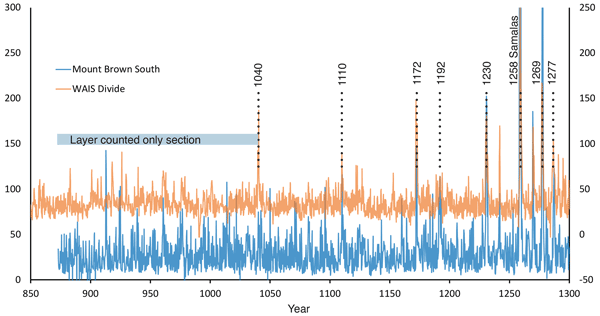
This study presents the chronologies from the new Mount Brown South ice cores from East Antarctica, which were developed by counting annual layers in the ice core data and aligning these to volcanic sulfate signatures. The uncertainty in the dating is quantified, and we discuss initial results from seasonal cycle analysis and mean annual concentrations. The chronologies will underpin the development of new proxy records for East Antarctica spanning the past millennium.
C. Isabel Moreno, Radovan Krejci, Jean-Luc Jaffrezo, Gaëlle Uzu, Andrés Alastuey, Marcos F. Andrade, Valeria Mardóñez, Alkuin Maximilian Koenig, Diego Aliaga, Claudia Mohr, Laura Ticona, Fernando Velarde, Luis Blacutt, Ricardo Forno, David N. Whiteman, Alfred Wiedensohler, Patrick Ginot, and Paolo Laj
Atmos. Chem. Phys., 24, 2837–2860, https://doi.org/10.5194/acp-24-2837-2024, https://doi.org/10.5194/acp-24-2837-2024, 2024
Short summary
Short summary
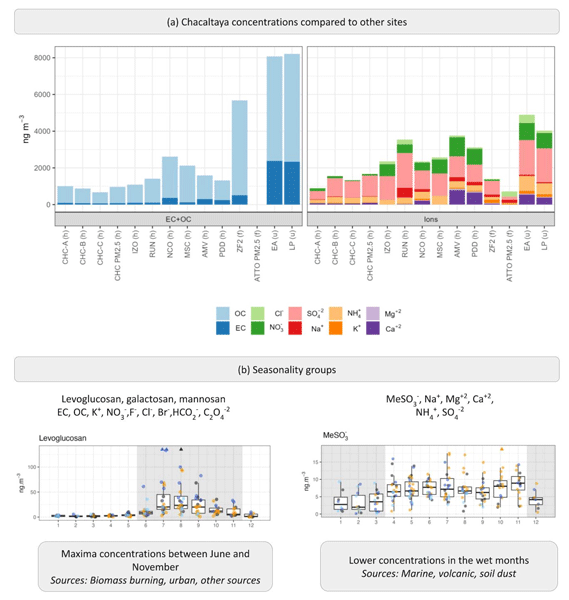
Aerosol chemical composition (ions, sugars, carbonaceous matter) from 2011 to 2020 was studied at Mt. Chacaltaya (5380 m a.s.l., Bolivian Andes). Minimum concentrations occur in the rainy season with maxima in the dry and transition seasons. The origins of the aerosol are located in a radius of hundreds of kilometers: nearby urban and rural areas, natural biogenic emissions, vegetation burning from Amazonia and Chaco, Pacific Ocean emissions, soil dust, and Peruvian volcanism.
Elena Barbaro, Matteo Feltracco, Fabrizio De Blasi, Clara Turetta, Marta Radaelli, Warren Cairns, Giulio Cozzi, Giovanna Mazzi, Marco Casula, Jacopo Gabrieli, Carlo Barbante, and Andrea Gambaro
Atmos. Chem. Phys., 24, 2821–2835, https://doi.org/10.5194/acp-24-2821-2024, https://doi.org/10.5194/acp-24-2821-2024, 2024
Short summary
Short summary
The study analyzed a year of atmospheric aerosol composition at Col Margherita in the Italian Alps. Over 100 chemical markers were identified, including major ions, organic compounds, and trace elements. It revealed sources of aerosol, highlighted impacts of Saharan dust events, and showed anthropogenic pollution's influence despite the site's remoteness. Enrichment factors emphasized non-natural sources of trace elements. Source apportionment identified four key factors affecting the area.
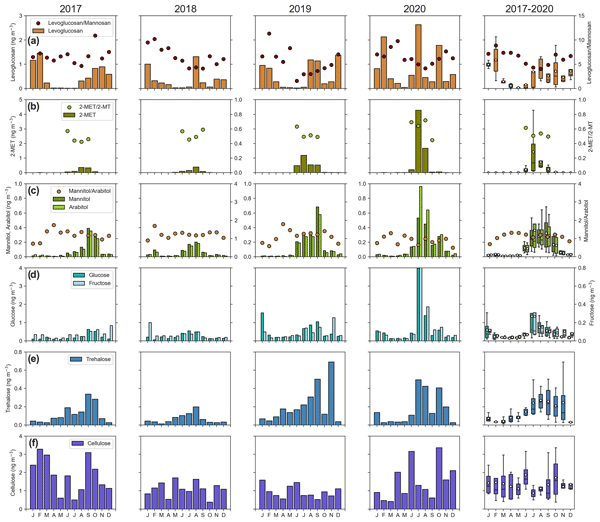
Karl Espen Yttri, Are Bäcklund, Franz Conen, Sabine Eckhardt, Nikolaos Evangeliou, Markus Fiebig, Anne Kasper-Giebl, Avram Gold, Hans Gundersen, Cathrine Lund Myhre, Stephen Matthew Platt, David Simpson, Jason D. Surratt, Sönke Szidat, Martin Rauber, Kjetil Tørseth, Martin Album Ytre-Eide, Zhenfa Zhang, and Wenche Aas
Atmos. Chem. Phys., 24, 2731–2758, https://doi.org/10.5194/acp-24-2731-2024, https://doi.org/10.5194/acp-24-2731-2024, 2024
Short summary
Short summary
We discuss carbonaceous aerosol (CA) observed at the high Arctic Zeppelin Observatory (2017 to 2020). We find that organic aerosol is a significant fraction of the Arctic aerosol, though less than sea salt aerosol and mineral dust, as well as non-sea-salt sulfate, originating mainly from anthropogenic sources in winter and from natural sources in summer, emphasizing the importance of wildfires for biogenic secondary organic aerosol and primary biological aerosol particles observed in the Arctic.
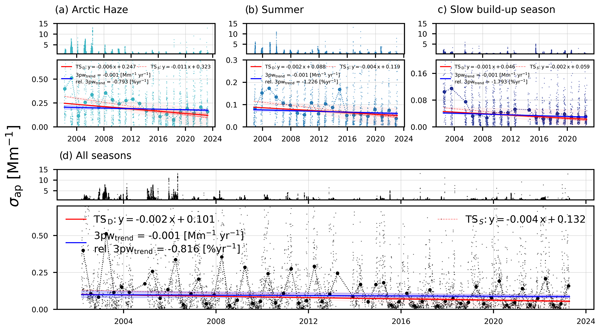
Dominic Heslin-Rees, Peter Tunved, Johan Ström, Roxana Cremer, Paul Zieger, Ilona Riipinen, Annica M. L. Ekman, Konstantinos Eleftheriadis, and Radovan Krejci
Atmos. Chem. Phys., 24, 2059–2075, https://doi.org/10.5194/acp-24-2059-2024, https://doi.org/10.5194/acp-24-2059-2024, 2024
Short summary
Short summary
Light-absorbing atmospheric particles (e.g. black carbon – BC) exert a warming effect on the Arctic climate. We show that the amount of particle light absorption decreased from 2002 to 2023. We conclude that in addition to reductions in emissions of BC, wet removal plays a role in the long-term reduction of BC in the Arctic, given the increase in surface precipitation experienced by air masses arriving at the site. The potential impact of biomass burning events is shown to have increased.
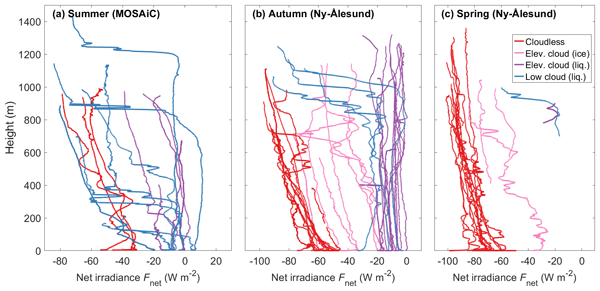
Michael Lonardi, Elisa F. Akansu, André Ehrlich, Mauro Mazzola, Christian Pilz, Matthew D. Shupe, Holger Siebert, and Manfred Wendisch
Atmos. Chem. Phys., 24, 1961–1978, https://doi.org/10.5194/acp-24-1961-2024, https://doi.org/10.5194/acp-24-1961-2024, 2024
Short summary
Short summary
Profiles of thermal-infrared irradiance were measured at two Arctic sites. The presence or lack of clouds influences the vertical structure of these observations. In particular, the cloud top region is a source of radiative energy that can promote cooling and mixing in the cloud layer. Simulations are used to further characterize how the amount of water in the cloud modifies this forcing. A case study additionally showcases the evolution of the radiation profiles in a dynamic atmosphere.
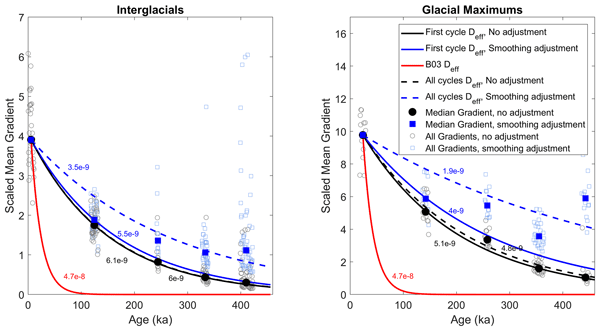
Tyler J. Fudge, Raphael Sauvage, Linh Vu, Benjamin H. Hills, Mirko Severi, and Edwin D. Waddington
Clim. Past, 20, 297–312, https://doi.org/10.5194/cp-20-297-2024, https://doi.org/10.5194/cp-20-297-2024, 2024
Short summary
Short summary
We use the oldest Antarctic ice core to estimate the rate of diffusion of sulfuric acid. Sulfuric acid is a marker of past volcanic activity and is critical in developing ice core timescales. The rate of diffusion is uncertain and is important to know, both for selecting future ice core locations and interpreting ice core records. We find the effective diffusivity of sulfate is 10 times smaller than previously estimated, indicating that the sulfuric acid signals will persist for longer.
Natalie M. Mahowald, Longlei Li, Julius Vira, Marje Prank, Douglas S. Hamilton, Hitoshi Matsui, Ron L. Miller, Louis Lu, Ezgi Akyuz, Daphne Meidan, Peter Hess, Heikki Lihavainen, Christine Wiedinmyer, Jenny Hand, Maria Grazia Alaimo, Célia Alves, Andres Alastuey, Paulo Artaxo, Africa Barreto, Francisco Barraza, Silvia Becagli, Giulia Calzolai, Shankarararman Chellam, Ying Chen, Patrick Chuang, David D. Cohen, Cristina Colombi, Evangelia Diapouli, Gaetano Dongarra, Konstantinos Eleftheriadis, Corinne Galy-Lacaux, Cassandra Gaston, Dario Gomez, Yenny González Ramos, Hannele Hakola, Roy M. Harrison, Chris Heyes, Barak Herut, Philip Hopke, Christoph Hüglin, Maria Kanakidou, Zsofia Kertesz, Zbiginiw Klimont, Katriina Kyllönen, Fabrice Lambert, Xiaohong Liu, Remi Losno, Franco Lucarelli, Willy Maenhaut, Beatrice Marticorena, Randall V. Martin, Nikolaos Mihalopoulos, Yasser Morera-Gomez, Adina Paytan, Joseph Prospero, Sergio Rodríguez, Patricia Smichowski, Daniela Varrica, Brenna Walsh, Crystal Weagle, and Xi Zhao
Earth Syst. Sci. Data Discuss., https://doi.org/10.5194/essd-2024-1, https://doi.org/10.5194/essd-2024-1, 2024
Preprint withdrawn
Short summary
Short summary
Aerosol particles can interact with incoming solar radiation and outgoing long wave radiation, change cloud properties, affect photochemistry, impact surface air quality, and when deposited impact surface albedo of snow and ice, and modulate carbon dioxide uptake by the land and ocean. Here we present a new compilation of aerosol observations including composition, a methodology for comparing the datasets to model output, and show the implications of these results using one model.
Arto Heitto, Cheng Wu, Diego Aliaga, Luis Blacutt, Xuemeng Chen, Yvette Gramlich, Liine Heikkinen, Wei Huang, Radovan Krejci, Paolo Laj, Isabel Moreno, Karine Sellegri, Fernando Velarde, Kay Weinhold, Alfred Wiedensohler, Qiaozhi Zha, Federico Bianchi, Marcos Andrade, Kari E. J. Lehtinen, Claudia Mohr, and Taina Yli-Juuti
Atmos. Chem. Phys., 24, 1315–1328, https://doi.org/10.5194/acp-24-1315-2024, https://doi.org/10.5194/acp-24-1315-2024, 2024
Short summary
Short summary
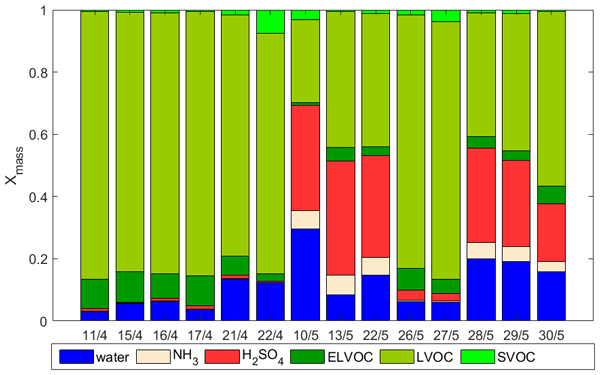
Particle growth at the Chacaltaya station in Bolivia was simulated based on measured vapor concentrations and ambient conditions. Major contributors to the simulated growth were low-volatility organic compounds (LVOCs). Also, sulfuric acid had major role when volcanic activity was occurring in the area. This study provides insight on nanoparticle growth at this high-altitude Southern Hemispheric site and hence contributes to building knowledge of early growth of atmospheric particles.
Andrea Spolaor, Federico Scoto, Catherine Larose, Elena Barbaro, Francois Burgay, Mats P. Bjorkman, David Cappelletti, Federico Dallo, Fabrizio de Blasi, Dmitry Divine, Giuliano Dreossi, Jacopo Gabrieli, Elisabeth Isaksson, Jack Kohler, Tonu Martma, Louise S. Schmidt, Thomas V. Schuler, Barbara Stenni, Clara Turetta, Bartłomiej Luks, Mathieu Casado, and Jean-Charles Gallet
The Cryosphere, 18, 307–320, https://doi.org/10.5194/tc-18-307-2024, https://doi.org/10.5194/tc-18-307-2024, 2024
Short summary
Short summary
We evaluate the impact of the increased snowmelt on the preservation of the oxygen isotope (δ18O) signal in firn records recovered from the top of the Holtedahlfonna ice field located in the Svalbard archipelago. Thanks to a multidisciplinary approach we demonstrate a progressive deterioration of the isotope signal in the firn core. We link the degradation of the δ18O signal to the increased occurrence and intensity of melt events associated with the rapid warming occurring in the archipelago.
Stefania Gilardoni, Dominic Heslin-Rees, Mauro Mazzola, Vito Vitale, Michael Sprenger, and Radovan Krejci
Atmos. Chem. Phys., 23, 15589–15607, https://doi.org/10.5194/acp-23-15589-2023, https://doi.org/10.5194/acp-23-15589-2023, 2023
Short summary
Short summary
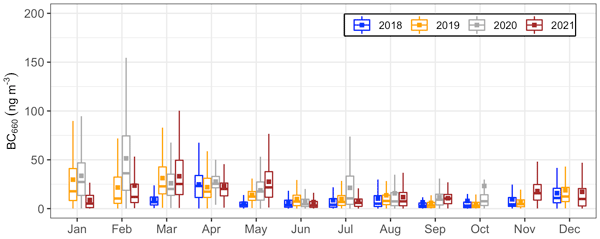
Models still fail in reproducing black carbon (BC) temporal variability in the Arctic. Analysis of equivalent BC concentrations in the European Arctic shows that BC seasonal variability is modulated by the efficiency of removal by precipitation during transport towards high latitudes. Short-term variability is controlled by synoptic-scale circulation patterns. The advection of warm air from lower latitudes is an effective pollution transport pathway during summer.
Barbara Harm-Altstädter, Konrad Bärfuss, Lutz Bretschneider, Martin Schön, Jens Bange, Ralf Käthner, Radovan Krejci, Mauro Mazzola, Kihong Park, Falk Pätzold, Alexander Peuker, Rita Traversi, Birgit Wehner, and Astrid Lampert
Aerosol Research, 1, 39–64, https://doi.org/10.5194/ar-1-39-2023, https://doi.org/10.5194/ar-1-39-2023, 2023
Short summary
Short summary
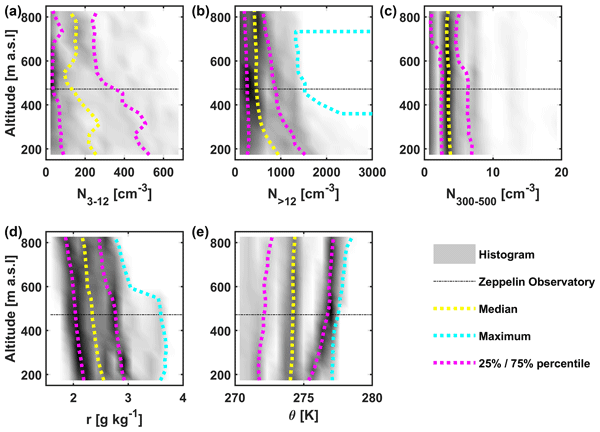
We present observations of aerosol particles and meteorological parameters in the horizontal and vertical distribution measured with uncrewed aerial systems in the Arctic. The field campaign was carried out during the snow melting season, when ultrafine aerosol particles (UFPs) with a size between 3 and 12 nm occurred frequently. A high variability of the measured UFPs was identified in the spatial scale, which was strongly associated with different atmospheric boundary layer properties.
Ghislain Motos, Gabriel Freitas, Paraskevi Georgakaki, Jörg Wieder, Guangyu Li, Wenche Aas, Chris Lunder, Radovan Krejci, Julie Thérèse Pasquier, Jan Henneberger, Robert Oscar David, Christoph Ritter, Claudia Mohr, Paul Zieger, and Athanasios Nenes
Atmos. Chem. Phys., 23, 13941–13956, https://doi.org/10.5194/acp-23-13941-2023, https://doi.org/10.5194/acp-23-13941-2023, 2023
Short summary
Short summary
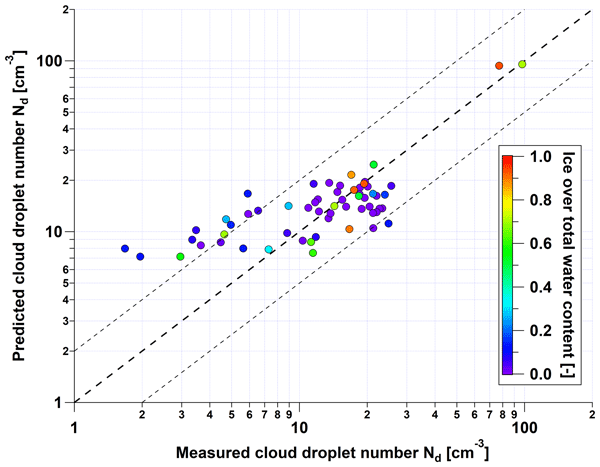
Low-altitude clouds play a key role in regulating the climate of the Arctic, a region that suffers from climate change more than any other on the planet. We gathered meteorological and aerosol physical and chemical data over a year and utilized them for a parameterization that help us unravel the factors driving and limiting the efficiency of cloud droplet formation. We then linked this information to the sources of aerosol found during each season and to processes of cloud glaciation.

Alice Cavaliere, Lorenzo Brilli, Bianca Patrizia Andreini, Federico Carotenuto, Beniamino Gioli, Tommaso Giordano, Marco Stefanelli, Carolina Vagnoli, Alessandro Zaldei, and Giovanni Gualtieri
Atmos. Meas. Tech., 16, 4723–4740, https://doi.org/10.5194/amt-16-4723-2023, https://doi.org/10.5194/amt-16-4723-2023, 2023
Short summary
Short summary
We assessed calibration models for two low-cost stations equipped with O3 and NO2 metal oxide sensors. Environmental parameters had improved accuracy in linear and black box models. Moreover, interpretability methods like SHapley Additive exPlanations helped identify the physical patterns and potential problems of these models in a field validation. Results showed both sensors performed well with the same linear model form, but unique coefficients were required for intersensor variability.
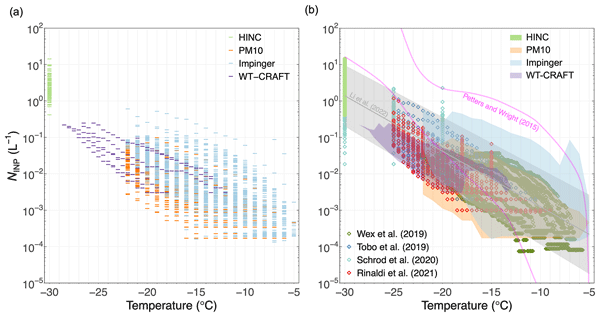
Guangyu Li, Elise K. Wilbourn, Zezhen Cheng, Jörg Wieder, Allison Fagerson, Jan Henneberger, Ghislain Motos, Rita Traversi, Sarah D. Brooks, Mauro Mazzola, Swarup China, Athanasios Nenes, Ulrike Lohmann, Naruki Hiranuma, and Zamin A. Kanji
Atmos. Chem. Phys., 23, 10489–10516, https://doi.org/10.5194/acp-23-10489-2023, https://doi.org/10.5194/acp-23-10489-2023, 2023
Short summary
Short summary
In this work, we present results from an Arctic field campaign (NASCENT) in Ny-Ålesund, Svalbard, on the abundance, variability, physicochemical properties, and potential sources of ice-nucleating particles (INPs) relevant for mixed-phase cloud formation. This work improves the data coverage of Arctic INPs and aerosol properties, allowing for the validation of models predicting cloud microphysical and radiative properties of mixed-phase clouds in the rapidly warming Arctic.
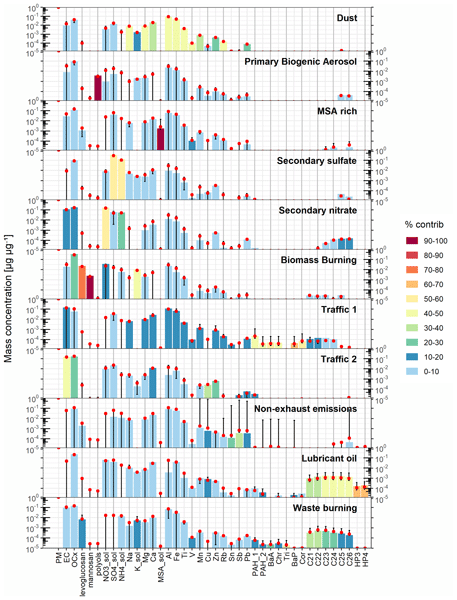
Valeria Mardoñez, Marco Pandolfi, Lucille Joanna S. Borlaza, Jean-Luc Jaffrezo, Andrés Alastuey, Jean-Luc Besombes, Isabel Moreno R., Noemi Perez, Griša Močnik, Patrick Ginot, Radovan Krejci, Vladislav Chrastny, Alfred Wiedensohler, Paolo Laj, Marcos Andrade, and Gaëlle Uzu
Atmos. Chem. Phys., 23, 10325–10347, https://doi.org/10.5194/acp-23-10325-2023, https://doi.org/10.5194/acp-23-10325-2023, 2023
Short summary
Short summary
La Paz and El Alto are two fast-growing, high-altitude Bolivian cities forming the second-largest metropolitan area in the country. The sources of particulate matter (PM) in this conurbation were not previously investigated. This study identified 11 main sources of PM, of which dust and vehicular emissions stand out as the main ones. The influence of regional biomass combustion and local waste combustion was also observed, with the latter being a major source of hazardous compounds.
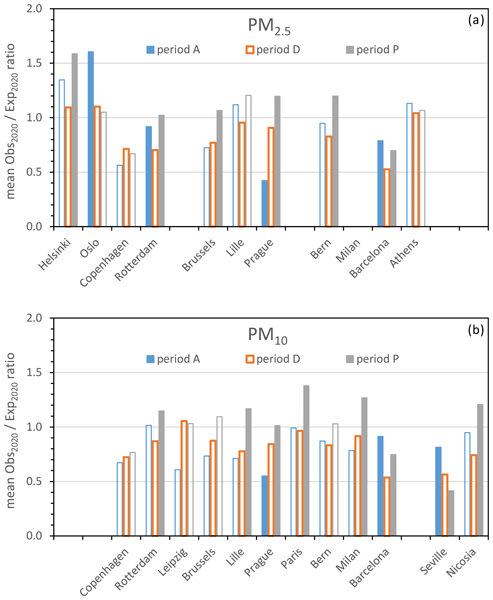
Jean-Philippe Putaud, Enrico Pisoni, Alexander Mangold, Christoph Hueglin, Jean Sciare, Michael Pikridas, Chrysanthos Savvides, Jakub Ondracek, Saliou Mbengue, Alfred Wiedensohler, Kay Weinhold, Maik Merkel, Laurent Poulain, Dominik van Pinxteren, Hartmut Herrmann, Andreas Massling, Claus Nordstroem, Andrés Alastuey, Cristina Reche, Noemí Pérez, Sonia Castillo, Mar Sorribas, Jose Antonio Adame, Tuukka Petaja, Katrianne Lehtipalo, Jarkko Niemi, Véronique Riffault, Joel F. de Brito, Augustin Colette, Olivier Favez, Jean-Eudes Petit, Valérie Gros, Maria I. Gini, Stergios Vratolis, Konstantinos Eleftheriadis, Evangelia Diapouli, Hugo Denier van der Gon, Karl Espen Yttri, and Wenche Aas
Atmos. Chem. Phys., 23, 10145–10161, https://doi.org/10.5194/acp-23-10145-2023, https://doi.org/10.5194/acp-23-10145-2023, 2023
Short summary
Short summary
Many European people are still exposed to levels of air pollution that can affect their health. COVID-19 lockdowns in 2020 were used to assess the impact of the reduction in human mobility on air pollution across Europe by comparing measurement data with values that would be expected if no lockdown had occurred. We show that lockdown measures did not lead to consistent decreases in the concentrations of fine particulate matter suspended in the air, and we investigate why.
Azzurra Spagnesi, Pascal Bohleber, Elena Barbaro, Matteo Feltracco, Fabrizio De Blasi, Giuliano Dreossi, Martin Stocker-Waldhuber, Daniela Festi, Jacopo Gabrieli, Andrea Gambaro, Andrea Fischer, and Carlo Barbante
EGUsphere, https://doi.org/10.5194/egusphere-2023-1625, https://doi.org/10.5194/egusphere-2023-1625, 2023
Preprint archived
Short summary
Short summary
We present new data from a 10 m ice core drilled in 2019 and a 8.4 m parallel ice core drilled in 2021 at the summit of Weißseespitze glacier. In a new combination of proxies, we discuss profiles of stable water isotopes, major ion chemistry as well as a full profile of microcharcoal and levoglucosan. We find that the chemical and isotopic signals are preserved, despite the ongoing surface mass loss. This is not be to expected considering what has been found at other glaciers at similar locations.
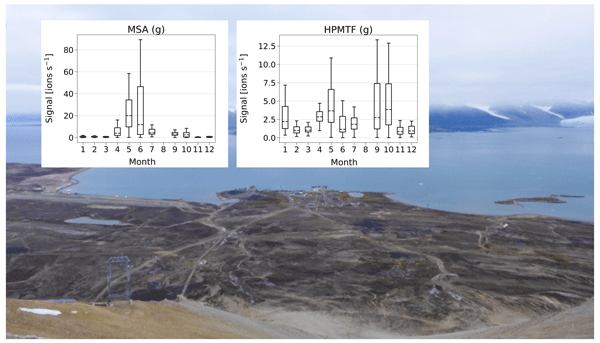
Karolina Siegel, Yvette Gramlich, Sophie L. Haslett, Gabriel Freitas, Radovan Krejci, Paul Zieger, and Claudia Mohr
Atmos. Chem. Phys., 23, 7569–7587, https://doi.org/10.5194/acp-23-7569-2023, https://doi.org/10.5194/acp-23-7569-2023, 2023
Short summary
Short summary
Hydroperoxymethyl thioformate (HPMTF) is a recently discovered oxidation product of dimethyl sulfide (DMS). We present a full year of concurrent gas- and particle-phase observations of HPMTF and other DMS oxidation products from the Arctic. We did not observe significant amounts of HPMTF in the particle phase but a good agreement between gas-phase HMPTF and methanesulfonic acid in the summer. Our study provides information about the relationship between HPMTF and other DMS oxidation products.
Antonio Donateo, Gianluca Pappaccogli, Daniela Famulari, Mauro Mazzola, Federico Scoto, and Stefano Decesari
Atmos. Chem. Phys., 23, 7425–7445, https://doi.org/10.5194/acp-23-7425-2023, https://doi.org/10.5194/acp-23-7425-2023, 2023
Short summary
Short summary
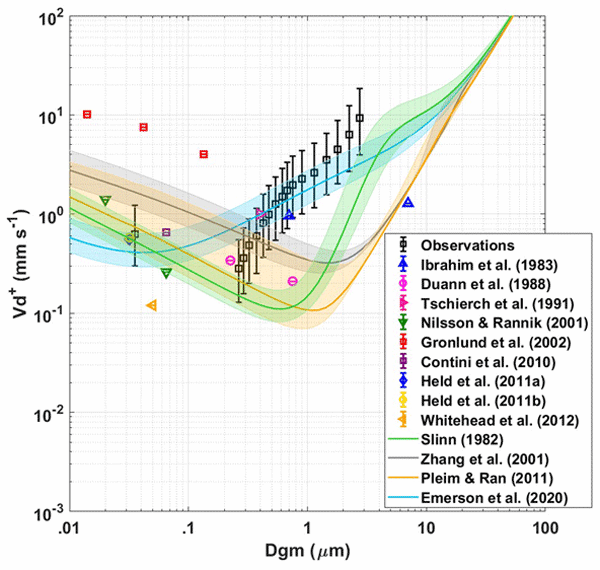
This work aims to measure the turbulent fluxes and the dry deposition velocity for size-segregated particles (from ultrafine to quasi-coarse range) at an Arctic site (Svalbard). Aiming to characterize the effect of surface properties on dry deposition, continuous observations were performed from the coldest months (on snow surface) to the snow melting period and throughout the summer (snow-free surface). A data fit of the deposition velocity as a function of particle diameters will be provided.
Emelie L. Graham, Cheng Wu, David M. Bell, Amelie Bertrand, Sophie L. Haslett, Urs Baltensperger, Imad El Haddad, Radovan Krejci, Ilona Riipinen, and Claudia Mohr
Atmos. Chem. Phys., 23, 7347–7362, https://doi.org/10.5194/acp-23-7347-2023, https://doi.org/10.5194/acp-23-7347-2023, 2023
Short summary
Short summary
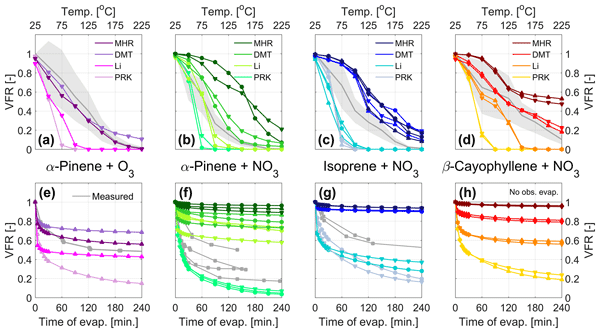
The volatility of an aerosol particle is an important parameter for describing its atmospheric lifetime. We studied the volatility of secondary organic aerosols from nitrate-initiated oxidation of three biogenic precursors with experimental methods and model simulations. We saw higher volatility than for the corresponding ozone system, and our simulations produced variable results with different parameterizations which warrant a re-evaluation of the treatment of the nitrate functional group.
Elizabeth R. Thomas, Diana O. Vladimirova, Dieter R. Tetzner, B. Daniel Emanuelsson, Nathan Chellman, Daniel A. Dixon, Hugues Goosse, Mackenzie M. Grieman, Amy C. F. King, Michael Sigl, Danielle G. Udy, Tessa R. Vance, Dominic A. Winski, V. Holly L. Winton, Nancy A. N. Bertler, Akira Hori, Chavarukonam M. Laluraj, Joseph R. McConnell, Yuko Motizuki, Kazuya Takahashi, Hideaki Motoyama, Yoichi Nakai, Franciéle Schwanck, Jefferson Cardia Simões, Filipe Gaudie Ley Lindau, Mirko Severi, Rita Traversi, Sarah Wauthy, Cunde Xiao, Jiao Yang, Ellen Mosely-Thompson, Tamara V. Khodzher, Ludmila P. Golobokova, and Alexey A. Ekaykin
Earth Syst. Sci. Data, 15, 2517–2532, https://doi.org/10.5194/essd-15-2517-2023, https://doi.org/10.5194/essd-15-2517-2023, 2023
Short summary
Short summary
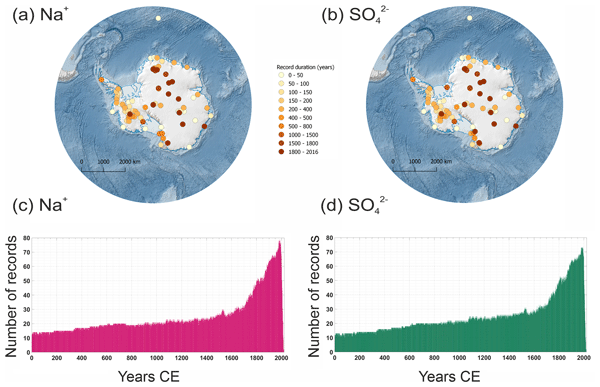
The concentration of sodium and sulfate measured in Antarctic ice cores is related to changes in both sea ice and winds. Here we have compiled a database of sodium and sulfate records from 105 ice core sites in Antarctica. The records span all, or part, of the past 2000 years. The records will improve our understanding of how winds and sea ice have changed in the past and how they have influenced the climate of Antarctica over the past 2000 years.
Yvette Gramlich, Karolina Siegel, Sophie L. Haslett, Gabriel Freitas, Radovan Krejci, Paul Zieger, and Claudia Mohr
Atmos. Chem. Phys., 23, 6813–6834, https://doi.org/10.5194/acp-23-6813-2023, https://doi.org/10.5194/acp-23-6813-2023, 2023
Short summary
Short summary
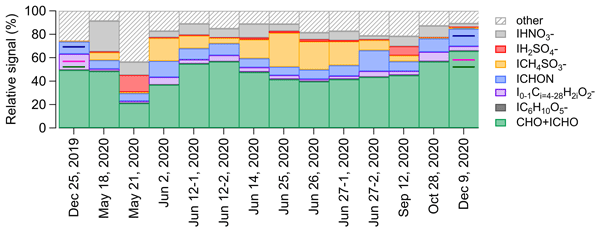
In this study, we investigate the chemical composition of aerosol particles forming clouds in the Arctic. During year-long observations at a mountain site on Svalbard, we find a large contribution of naturally derived aerosol particles in the fraction forming clouds in the summer. Our observations indicate that most aerosol particles can serve as cloud seeds in this remote environment.
Simone Ventisette, Samuele Baldini, Claudio Artoni, Silvia Becagli, Laura Caiazzo, Barbara Delmonte, Massimo Frezzotti, Raffaello Nardin, Joel Savarino, Mirko Severi, Andrea Spolaor, Barbara Stenni, and Rita Traversi
EGUsphere, https://doi.org/10.5194/egusphere-2023-393, https://doi.org/10.5194/egusphere-2023-393, 2023
Preprint archived
Short summary
Short summary
The paper reports the spatial variability of concentration and fluxes of chemical impurities in superficial snow over unexplored area of the East Antarctic ice sheet. Pinatubo and Puyehue-Cordón Caulle volcanic eruptions in non-sea salt sulfate and dust snow pits record were used to achieve the accumulation rates. Deposition (wet, dry and uptake from snow surface) and post deposition processes are constrained. These knowledges are fundamental in Antarctic ice cores stratigraphies interpretation.

Qiaozhi Zha, Wei Huang, Diego Aliaga, Otso Peräkylä, Liine Heikkinen, Alkuin Maximilian Koenig, Cheng Wu, Joonas Enroth, Yvette Gramlich, Jing Cai, Samara Carbone, Armin Hansel, Tuukka Petäjä, Markku Kulmala, Douglas Worsnop, Victoria Sinclair, Radovan Krejci, Marcos Andrade, Claudia Mohr, and Federico Bianchi
Atmos. Chem. Phys., 23, 4559–4576, https://doi.org/10.5194/acp-23-4559-2023, https://doi.org/10.5194/acp-23-4559-2023, 2023
Short summary
Short summary
We investigate the chemical composition of atmospheric cluster ions from January to May 2018 at the high-altitude research station Chacaltaya (5240 m a.s.l.) in the Bolivian Andes. With state-of-the-art mass spectrometers and air mass history analysis, the measured cluster ions exhibited distinct diurnal and seasonal patterns, some of which contributed to new particle formation. Our study will improve the understanding of atmospheric ions and their role in high-altitude new particle formation.
James Brean, David C. S. Beddows, Roy M. Harrison, Congbo Song, Peter Tunved, Johan Ström, Radovan Krejci, Eyal Freud, Andreas Massling, Henrik Skov, Eija Asmi, Angelo Lupi, and Manuel Dall'Osto
Atmos. Chem. Phys., 23, 2183–2198, https://doi.org/10.5194/acp-23-2183-2023, https://doi.org/10.5194/acp-23-2183-2023, 2023
Short summary
Short summary
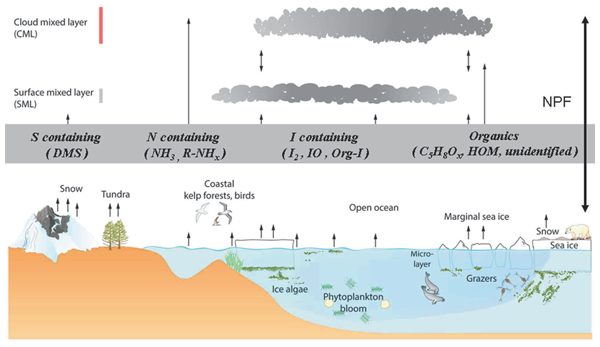
Our results emphasize how understanding the geographical variation in surface types across the Arctic is key to understanding secondary aerosol sources. We provide a harmonised analysis of new particle formation across the Arctic.
Martin Rauber, Gary Salazar, Karl Espen Yttri, and Sönke Szidat
Atmos. Meas. Tech., 16, 825–844, https://doi.org/10.5194/amt-16-825-2023, https://doi.org/10.5194/amt-16-825-2023, 2023
Short summary
Short summary
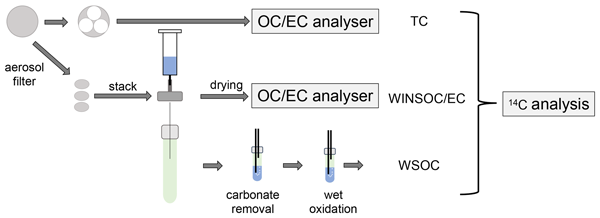
Carbon-containing aerosols from ambient air are analysed for radioactive isotope radiocarbon to determine the contribution from fossil-fuel emissions. Light-absorbing soot-like aerosols are isolated by water extraction and thermal separation. This separation is affected by artefacts, for which we developed a new correction method. The investigation of aerosols from the Arctic shows that our approach works well for such samples, where many artefacts are expected.
Niccolò Maffezzoli, Eliza Cook, Willem G. M. van der Bilt, Eivind N. Støren, Daniela Festi, Florian Muthreich, Alistair W. R. Seddon, François Burgay, Giovanni Baccolo, Amalie R. F. Mygind, Troels Petersen, Andrea Spolaor, Sebastiano Vascon, Marcello Pelillo, Patrizia Ferretti, Rafael S. dos Reis, Jefferson C. Simões, Yuval Ronen, Barbara Delmonte, Marco Viccaro, Jørgen Peder Steffensen, Dorthe Dahl-Jensen, Kerim H. Nisancioglu, and Carlo Barbante
The Cryosphere, 17, 539–565, https://doi.org/10.5194/tc-17-539-2023, https://doi.org/10.5194/tc-17-539-2023, 2023
Short summary
Short summary
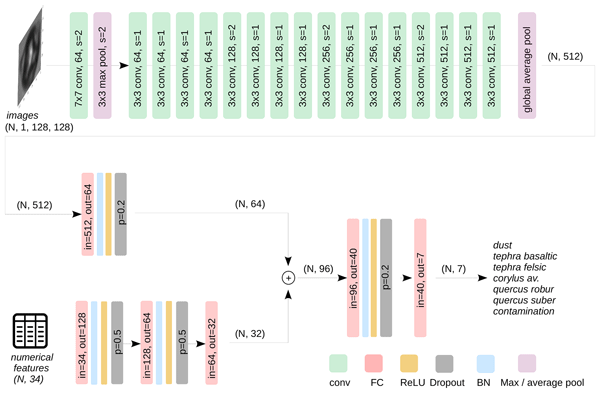
Multiple lines of research in ice core science are limited by manually intensive and time-consuming optical microscopy investigations for the detection of insoluble particles, from pollen grains to volcanic shards. To help overcome these limitations and support researchers, we present a novel methodology for the identification and autonomous classification of ice core insoluble particles based on flow image microscopy and neural networks.
François Burgay, Rafael Pedro Fernández, Delia Segato, Clara Turetta, Christopher S. Blaszczak-Boxe, Rachael H. Rhodes, Claudio Scarchilli, Virginia Ciardini, Carlo Barbante, Alfonso Saiz-Lopez, and Andrea Spolaor
The Cryosphere, 17, 391–405, https://doi.org/10.5194/tc-17-391-2023, https://doi.org/10.5194/tc-17-391-2023, 2023
Short summary
Short summary
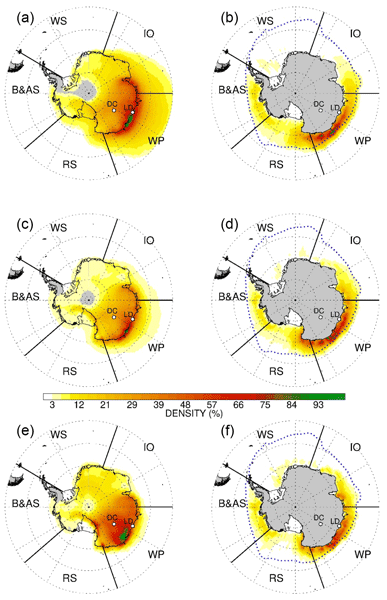
The paper presents the first ice-core record of bromine (Br) in the Antarctic plateau. By the observation of the ice core and the application of atmospheric chemical models, we investigate the behaviour of bromine after its deposition into the snowpack, with interest in the effect of UV radiation change connected to the formation of the ozone hole, the role of volcanic deposition, and the possible use of Br to reconstruct past sea ice changes from ice core collect in the inner Antarctic plateau.
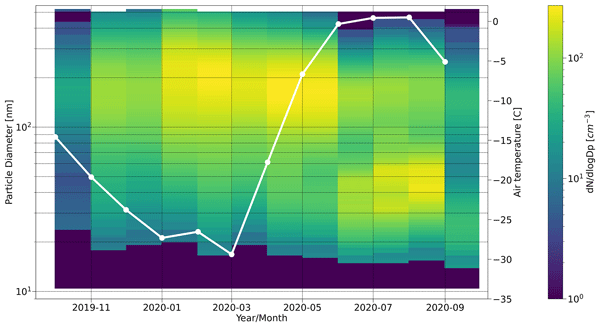
Matthew Boyer, Diego Aliaga, Jakob Boyd Pernov, Hélène Angot, Lauriane L. J. Quéléver, Lubna Dada, Benjamin Heutte, Manuel Dall'Osto, David C. S. Beddows, Zoé Brasseur, Ivo Beck, Silvia Bucci, Marina Duetsch, Andreas Stohl, Tiia Laurila, Eija Asmi, Andreas Massling, Daniel Charles Thomas, Jakob Klenø Nøjgaard, Tak Chan, Sangeeta Sharma, Peter Tunved, Radovan Krejci, Hans Christen Hansson, Federico Bianchi, Katrianne Lehtipalo, Alfred Wiedensohler, Kay Weinhold, Markku Kulmala, Tuukka Petäjä, Mikko Sipilä, Julia Schmale, and Tuija Jokinen
Atmos. Chem. Phys., 23, 389–415, https://doi.org/10.5194/acp-23-389-2023, https://doi.org/10.5194/acp-23-389-2023, 2023
Short summary
Short summary
The Arctic is a unique environment that is warming faster than other locations on Earth. We evaluate measurements of aerosol particles, which can influence climate, over the central Arctic Ocean for a full year and compare the data to land-based measurement stations across the Arctic. Our measurements show that the central Arctic has similarities to but also distinct differences from the stations further south. We note that this may change as the Arctic warms and sea ice continues to decline.
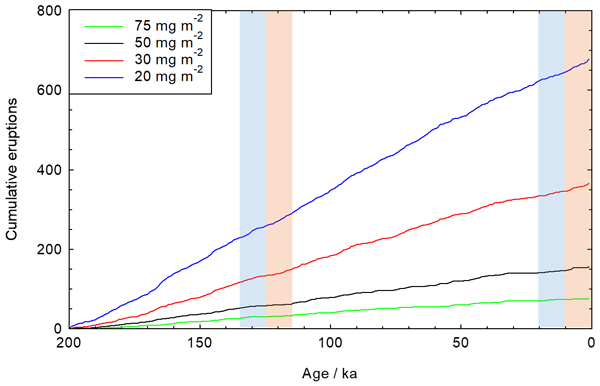
Eric W. Wolff, Andrea Burke, Laura Crick, Emily A. Doyle, Helen M. Innes, Sue H. Mahony, James W. B. Rae, Mirko Severi, and R. Stephen J. Sparks
Clim. Past, 19, 23–33, https://doi.org/10.5194/cp-19-23-2023, https://doi.org/10.5194/cp-19-23-2023, 2023
Short summary
Short summary
Large volcanic eruptions leave an imprint of a spike of sulfate deposition that can be measured in ice cores. Here we use a method that logs the number and size of large eruptions recorded in an Antarctic core in a consistent way through the last 200 000 years. The rate of recorded eruptions is variable but shows no trends. In particular, there is no increase in recorded eruptions during deglaciation periods. This is consistent with most recorded eruptions being from lower latitudes.
Xavier Giraud, Mélanie Baroni, and Rita Traversi
EGUsphere, https://doi.org/10.5194/egusphere-2022-1455, https://doi.org/10.5194/egusphere-2022-1455, 2023
Preprint archived
Short summary
Short summary
The snowpack in High Antarctic Plateau is an interface medium between the atmosphere and the firn, where past climate conditions are recorded. Originating mainly from oceanic sources, chlorine is deposited along with snow. We propose a mechanism implying the diffusion of HCl at the scale of snow grains, longing a few decades for its release to the Antarctic atmosphere. Based on this scenario, the fate of the anthropogenic 36Cl originating from the nuclear tests can be forcasted.
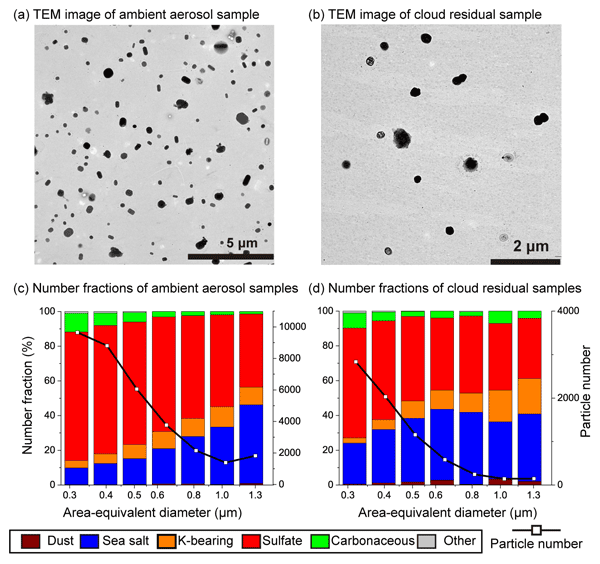
Kouji Adachi, Yutaka Tobo, Makoto Koike, Gabriel Freitas, Paul Zieger, and Radovan Krejci
Atmos. Chem. Phys., 22, 14421–14439, https://doi.org/10.5194/acp-22-14421-2022, https://doi.org/10.5194/acp-22-14421-2022, 2022
Short summary
Short summary
Ambient aerosol and cloud residual particles in the fine mode were collected at Zeppelin Observatory in Svalbard and were analyzed using transmission electron microscopy. Fractions of mineral dust and sea salt particles increased in cloud residual samples collected at ambient temperatures below 0 °C. This study highlights the variety of aerosol and cloud residual particle compositions and mixing states that influence or are influenced by aerosol–cloud interactions in Arctic low-level clouds.
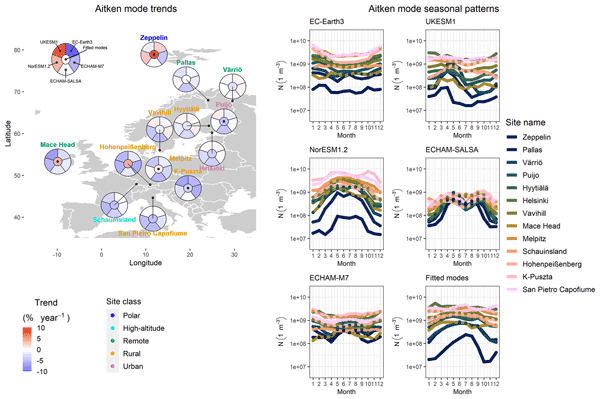
Ville Leinonen, Harri Kokkola, Taina Yli-Juuti, Tero Mielonen, Thomas Kühn, Tuomo Nieminen, Simo Heikkinen, Tuuli Miinalainen, Tommi Bergman, Ken Carslaw, Stefano Decesari, Markus Fiebig, Tareq Hussein, Niku Kivekäs, Radovan Krejci, Markku Kulmala, Ari Leskinen, Andreas Massling, Nikos Mihalopoulos, Jane P. Mulcahy, Steffen M. Noe, Twan van Noije, Fiona M. O'Connor, Colin O'Dowd, Dirk Olivie, Jakob B. Pernov, Tuukka Petäjä, Øyvind Seland, Michael Schulz, Catherine E. Scott, Henrik Skov, Erik Swietlicki, Thomas Tuch, Alfred Wiedensohler, Annele Virtanen, and Santtu Mikkonen
Atmos. Chem. Phys., 22, 12873–12905, https://doi.org/10.5194/acp-22-12873-2022, https://doi.org/10.5194/acp-22-12873-2022, 2022
Short summary
Short summary
We provide the first extensive comparison of detailed aerosol size distribution trends between in situ observations from Europe and five different earth system models. We investigated aerosol modes (nucleation, Aitken, and accumulation) separately and were able to show the differences between measured and modeled trends and especially their seasonal patterns. The differences in model results are likely due to complex effects of several processes instead of certain specific model features.
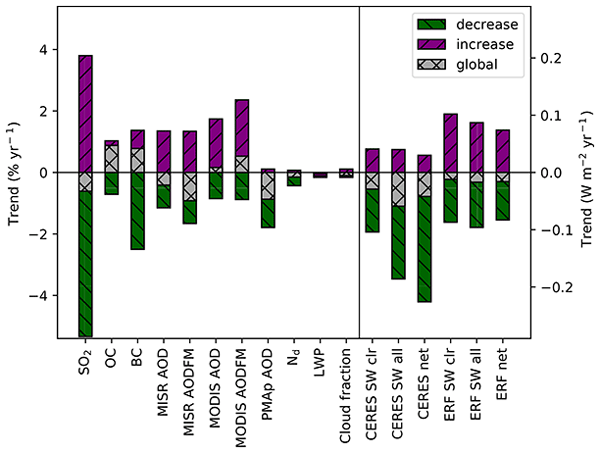
Johannes Quaas, Hailing Jia, Chris Smith, Anna Lea Albright, Wenche Aas, Nicolas Bellouin, Olivier Boucher, Marie Doutriaux-Boucher, Piers M. Forster, Daniel Grosvenor, Stuart Jenkins, Zbigniew Klimont, Norman G. Loeb, Xiaoyan Ma, Vaishali Naik, Fabien Paulot, Philip Stier, Martin Wild, Gunnar Myhre, and Michael Schulz
Atmos. Chem. Phys., 22, 12221–12239, https://doi.org/10.5194/acp-22-12221-2022, https://doi.org/10.5194/acp-22-12221-2022, 2022
Short summary
Short summary
Pollution particles cool climate and offset part of the global warming. However, they are washed out by rain and thus their effect responds quickly to changes in emissions. We show multiple datasets to demonstrate that aerosol emissions and their concentrations declined in many regions influenced by human emissions, as did the effects on clouds. Consequently, the cooling impact on the Earth energy budget became smaller. This change in trend implies a relative warming.
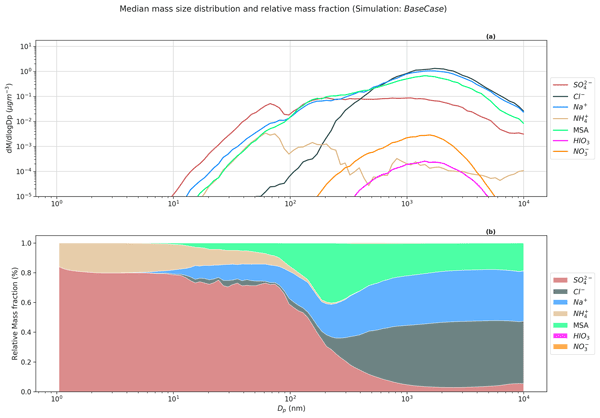
Carlton Xavier, Metin Baykara, Robin Wollesen de Jonge, Barbara Altstädter, Petri Clusius, Ville Vakkari, Roseline Thakur, Lisa Beck, Silvia Becagli, Mirko Severi, Rita Traversi, Radovan Krejci, Peter Tunved, Mauro Mazzola, Birgit Wehner, Mikko Sipilä, Markku Kulmala, Michael Boy, and Pontus Roldin
Atmos. Chem. Phys., 22, 10023–10043, https://doi.org/10.5194/acp-22-10023-2022, https://doi.org/10.5194/acp-22-10023-2022, 2022
Short summary
Short summary
The focus of this work is to study and improve our understanding of processes involved in the formation and growth of new particles in a remote Arctic marine environment. We run the 1D model ADCHEM along air mass trajectories arriving at Ny-Ålesund in May 2018. The model finds that ion-mediated H2SO4–NH3 nucleation can explain the observed new particle formation at Ny-Ålesund. The growth of particles is driven via H2SO4 condensation and formation of methane sulfonic acid in the aqueous phase.

Fabio Giardi, Silvia Nava, Giulia Calzolai, Giulia Pazzi, Massimo Chiari, Andrea Faggi, Bianca Patrizia Andreini, Chiara Collaveri, Elena Franchi, Guido Nincheri, Alessandra Amore, Silvia Becagli, Mirko Severi, Rita Traversi, and Franco Lucarelli
Atmos. Chem. Phys., 22, 9987–10005, https://doi.org/10.5194/acp-22-9987-2022, https://doi.org/10.5194/acp-22-9987-2022, 2022
Short summary
Short summary
The restriction measures adopted to contain the COVID-19 virus offered a unique opportunity to study urban particulate emissions in the near absence of traffic, which is one of the main emission sources in the urban environment. However, the drastic decrease in this source of particulate matter during the months of national lockdown did not lead to an equal decrease in the total particulate load. This is due to the inverse behavior shown by different sources, especially secondary sources.
Silvia Becagli, Elena Barbaro, Simone Bonamano, Laura Caiazzo, Alcide di Sarra, Matteo Feltracco, Paolo Grigioni, Jost Heintzenberg, Luigi Lazzara, Michel Legrand, Alice Madonia, Marco Marcelli, Chiara Melillo, Daniela Meloni, Caterina Nuccio, Giandomenico Pace, Ki-Tae Park, Suzanne Preunkert, Mirko Severi, Marco Vecchiato, Roberta Zangrando, and Rita Traversi
Atmos. Chem. Phys., 22, 9245–9263, https://doi.org/10.5194/acp-22-9245-2022, https://doi.org/10.5194/acp-22-9245-2022, 2022
Short summary
Short summary
Measurements of phytoplanktonic dimethylsulfide and its oxidation products in the Antarctic atmosphere allow us to understand the role of the oceanic (sea ice melting, Chl α and dimethylsulfoniopropionate) and atmospheric (wind direction and speed, humidity, solar radiation and transport processes) factors in the biogenic aerosol formation, concentration and characteristic ratio between components in an Antarctic coastal site facing the polynya of the Ross Sea.
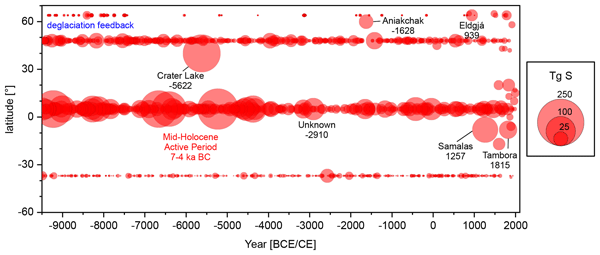
Michael Sigl, Matthew Toohey, Joseph R. McConnell, Jihong Cole-Dai, and Mirko Severi
Earth Syst. Sci. Data, 14, 3167–3196, https://doi.org/10.5194/essd-14-3167-2022, https://doi.org/10.5194/essd-14-3167-2022, 2022
Short summary
Short summary
Volcanism is a key driver of climate. Based on ice cores from Greenland and Antarctica, we reconstruct its climate impact potential over the Holocene. By aligning records on a well-dated chronology from Antarctica, we resolve long-standing inconsistencies in the dating of past volcanic eruptions. We reconstruct 850 eruptions (which, in total, injected 7410 Tg of sulfur in the stratosphere) and estimate how they changed the opacity of the atmosphere, a prerequisite for climate model simulations.
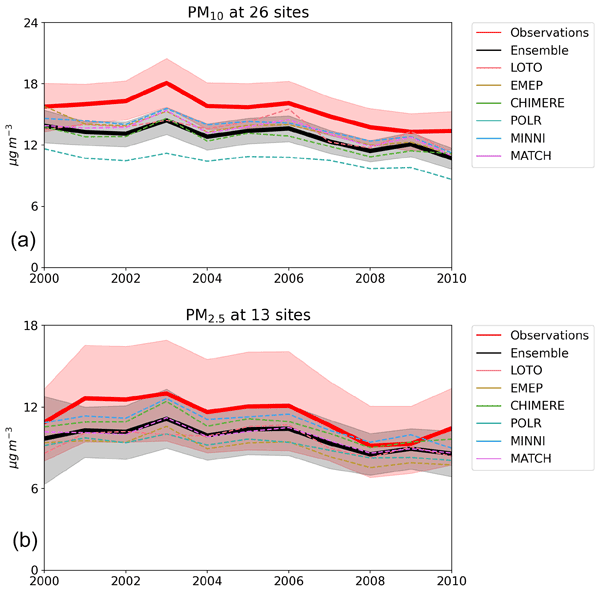
Svetlana Tsyro, Wenche Aas, Augustin Colette, Camilla Andersson, Bertrand Bessagnet, Giancarlo Ciarelli, Florian Couvidat, Kees Cuvelier, Astrid Manders, Kathleen Mar, Mihaela Mircea, Noelia Otero, Maria-Teresa Pay, Valentin Raffort, Yelva Roustan, Mark R. Theobald, Marta G. Vivanco, Hilde Fagerli, Peter Wind, Gino Briganti, Andrea Cappelletti, Massimo D'Isidoro, and Mario Adani
Atmos. Chem. Phys., 22, 7207–7257, https://doi.org/10.5194/acp-22-7207-2022, https://doi.org/10.5194/acp-22-7207-2022, 2022
Short summary
Short summary
Particulate matter (PM) air pollution causes adverse health effects. In Europe, the emissions caused by anthropogenic activities have been reduced in the last decades. To assess the efficiency of emission reductions in improving air quality, we have studied the evolution of PM pollution in Europe. Simulations with six air quality models and observational data indicate a decrease in PM concentrations by 10 % to 30 % across Europe from 2000 to 2010, which is mainly a result of emission reductions.
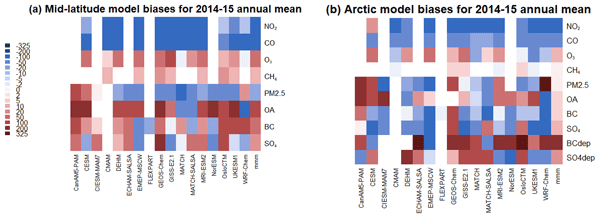
Cynthia H. Whaley, Rashed Mahmood, Knut von Salzen, Barbara Winter, Sabine Eckhardt, Stephen Arnold, Stephen Beagley, Silvia Becagli, Rong-You Chien, Jesper Christensen, Sujay Manish Damani, Xinyi Dong, Konstantinos Eleftheriadis, Nikolaos Evangeliou, Gregory Faluvegi, Mark Flanner, Joshua S. Fu, Michael Gauss, Fabio Giardi, Wanmin Gong, Jens Liengaard Hjorth, Lin Huang, Ulas Im, Yugo Kanaya, Srinath Krishnan, Zbigniew Klimont, Thomas Kühn, Joakim Langner, Kathy S. Law, Louis Marelle, Andreas Massling, Dirk Olivié, Tatsuo Onishi, Naga Oshima, Yiran Peng, David A. Plummer, Olga Popovicheva, Luca Pozzoli, Jean-Christophe Raut, Maria Sand, Laura N. Saunders, Julia Schmale, Sangeeta Sharma, Ragnhild Bieltvedt Skeie, Henrik Skov, Fumikazu Taketani, Manu A. Thomas, Rita Traversi, Kostas Tsigaridis, Svetlana Tsyro, Steven Turnock, Vito Vitale, Kaley A. Walker, Minqi Wang, Duncan Watson-Parris, and Tahya Weiss-Gibbons
Atmos. Chem. Phys., 22, 5775–5828, https://doi.org/10.5194/acp-22-5775-2022, https://doi.org/10.5194/acp-22-5775-2022, 2022
Short summary
Short summary
Air pollutants, like ozone and soot, play a role in both global warming and air quality. Atmospheric models are often used to provide information to policy makers about current and future conditions under different emissions scenarios. In order to have confidence in those simulations, in this study we compare simulated air pollution from 18 state-of-the-art atmospheric models to measured air pollution in order to assess how well the models perform.
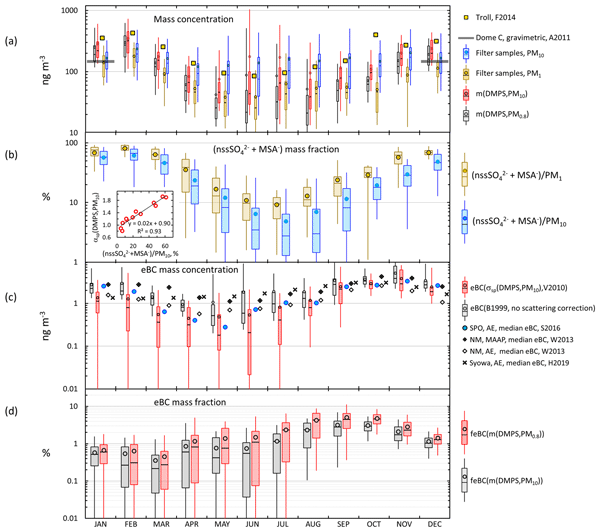
Aki Virkkula, Henrik Grythe, John Backman, Tuukka Petäjä, Maurizio Busetto, Christian Lanconelli, Angelo Lupi, Silvia Becagli, Rita Traversi, Mirko Severi, Vito Vitale, Patrick Sheridan, and Elisabeth Andrews
Atmos. Chem. Phys., 22, 5033–5069, https://doi.org/10.5194/acp-22-5033-2022, https://doi.org/10.5194/acp-22-5033-2022, 2022
Short summary
Short summary
Optical properties of surface aerosols at Dome C, Antarctica, in 2007–2013 and their potential source areas are presented. The equivalent black carbon (eBC) mass concentrations were compared with eBC measured at three other Antarctic sites: the South Pole (SPO) and two coastal sites, Neumayer and Syowa. Transport analysis suggests that South American BC emissions are the largest contributor to eBC at Dome C.

Christine D. Groot Zwaaftink, Wenche Aas, Sabine Eckhardt, Nikolaos Evangeliou, Paul Hamer, Mona Johnsrud, Arve Kylling, Stephen M. Platt, Kerstin Stebel, Hilde Uggerud, and Karl Espen Yttri
Atmos. Chem. Phys., 22, 3789–3810, https://doi.org/10.5194/acp-22-3789-2022, https://doi.org/10.5194/acp-22-3789-2022, 2022
Short summary
Short summary
We investigate causes of a poor-air-quality episode in northern Europe in October 2020 during which EU health limits for air quality were vastly exceeded. Such episodes may trigger measures to improve air quality. Analysis based on satellite observations, transport simulations, and surface observations revealed two sources of pollution. Emissions of mineral dust in Central Asia and biomass burning in Ukraine arrived almost simultaneously in Norway, and transport continued into the Arctic.
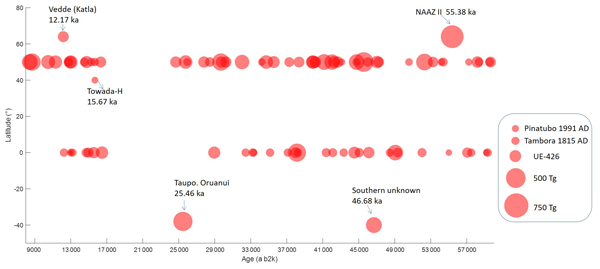
Jiamei Lin, Anders Svensson, Christine S. Hvidberg, Johannes Lohmann, Steffen Kristiansen, Dorthe Dahl-Jensen, Jørgen Peder Steffensen, Sune Olander Rasmussen, Eliza Cook, Helle Astrid Kjær, Bo M. Vinther, Hubertus Fischer, Thomas Stocker, Michael Sigl, Matthias Bigler, Mirko Severi, Rita Traversi, and Robert Mulvaney
Clim. Past, 18, 485–506, https://doi.org/10.5194/cp-18-485-2022, https://doi.org/10.5194/cp-18-485-2022, 2022
Short summary
Short summary
We employ acidity records from Greenland and Antarctic ice cores to estimate the emission strength, frequency and climatic forcing for large volcanic eruptions from the last half of the last glacial period. A total of 25 volcanic eruptions are found to be larger than any eruption in the last 2500 years, and we identify more eruptions than obtained from geological evidence. Towards the end of the glacial period, there is a notable increase in volcanic activity observed for Greenland.
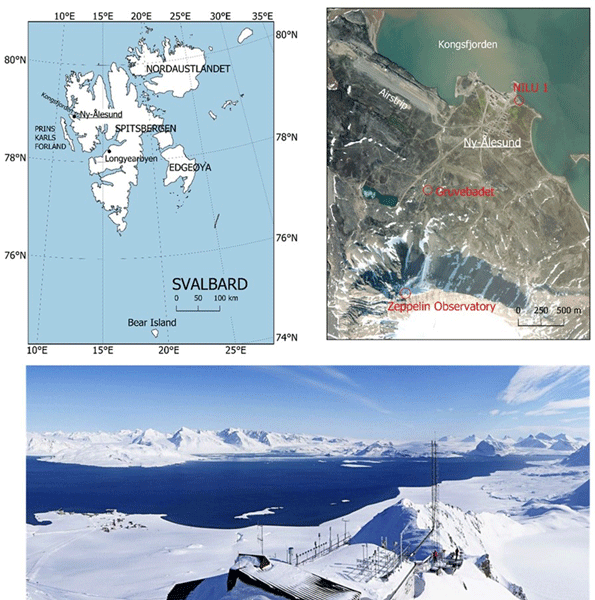
Stephen M. Platt, Øystein Hov, Torunn Berg, Knut Breivik, Sabine Eckhardt, Konstantinos Eleftheriadis, Nikolaos Evangeliou, Markus Fiebig, Rebecca Fisher, Georg Hansen, Hans-Christen Hansson, Jost Heintzenberg, Ove Hermansen, Dominic Heslin-Rees, Kim Holmén, Stephen Hudson, Roland Kallenborn, Radovan Krejci, Terje Krognes, Steinar Larssen, David Lowry, Cathrine Lund Myhre, Chris Lunder, Euan Nisbet, Pernilla B. Nizzetto, Ki-Tae Park, Christina A. Pedersen, Katrine Aspmo Pfaffhuber, Thomas Röckmann, Norbert Schmidbauer, Sverre Solberg, Andreas Stohl, Johan Ström, Tove Svendby, Peter Tunved, Kjersti Tørnkvist, Carina van der Veen, Stergios Vratolis, Young Jun Yoon, Karl Espen Yttri, Paul Zieger, Wenche Aas, and Kjetil Tørseth
Atmos. Chem. Phys., 22, 3321–3369, https://doi.org/10.5194/acp-22-3321-2022, https://doi.org/10.5194/acp-22-3321-2022, 2022
Short summary
Short summary
Here we detail the history of the Zeppelin Observatory, a unique global background site and one of only a few in the high Arctic. We present long-term time series of up to 30 years of atmospheric components and atmospheric transport phenomena. Many of these time series are important to our understanding of Arctic and global atmospheric composition change. Finally, we discuss the future of the Zeppelin Observatory and emerging areas of future research on the Arctic atmosphere.
Marjan Marbouti, Sehyun Jang, Silvia Becagli, Gabriel Navarro, Rita Traversi, Kitack Lee, Tuomo Nieminen, Lisa J. Beck, Markku Kulmala, Veli-Matti Kerminen, and Mikko Sipilä
Atmos. Chem. Phys. Discuss., https://doi.org/10.5194/acp-2022-52, https://doi.org/10.5194/acp-2022-52, 2022
Publication in ACP not foreseen
Short summary
Short summary
This research was done to understand and investigate the roles of Chl-a, PP and sea ice extent in controlling and producing the in-situ measured MSA, SA, HIO3, HOM and aerosol concentrations over the Greenland and Barents Seas. Our results provide strong support to the hypothesis that MSA, SA and small-particle concentrations in the Svalbard area are directly linked to ocean biological activity and sea ice melting during springtime.
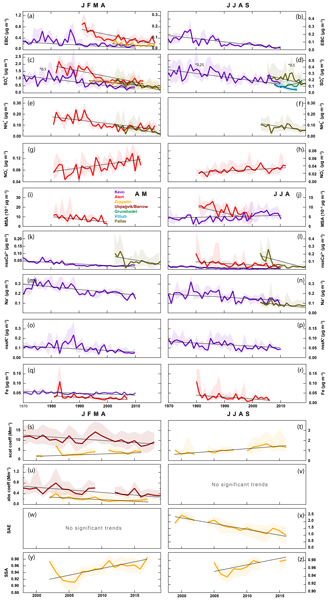
Julia Schmale, Sangeeta Sharma, Stefano Decesari, Jakob Pernov, Andreas Massling, Hans-Christen Hansson, Knut von Salzen, Henrik Skov, Elisabeth Andrews, Patricia K. Quinn, Lucia M. Upchurch, Konstantinos Eleftheriadis, Rita Traversi, Stefania Gilardoni, Mauro Mazzola, James Laing, and Philip Hopke
Atmos. Chem. Phys., 22, 3067–3096, https://doi.org/10.5194/acp-22-3067-2022, https://doi.org/10.5194/acp-22-3067-2022, 2022
Short summary
Short summary
Long-term data sets of Arctic aerosol properties from 10 stations across the Arctic provide evidence that anthropogenic influence on the Arctic atmospheric chemical composition has declined in winter, a season which is typically dominated by mid-latitude emissions. The number of significant trends in summer is smaller than in winter, and overall the pattern is ambiguous with some significant positive and negative trends. This reflects the mixed influence of natural and anthropogenic emissions.
Cited articles
Aas, W.: Heavy metals at Zeppelin mountain (Ny-Ålesund), CAMP, NILU, AMAP, EMEP, data hosted by EBAS at NILU [data set], https://doi.org/10.48597/AMMU-SUZ6, 2017–2025a.
Aas, W.: Heavy metals at Zeppelin mountain (Ny-Ålesund), EMEP, NILU, AMAP, and CAMP, data hosted by EBAS at NILU [data set], https://doi.org/10.48597/6PXH-3ESD, 2017–2025b.
Aas, W.: Inorganics in air and particle phase at Zeppelin mountain (Ny-Ålesund), AMAP, EUSAAR, EMEP, NILU, GAW-WDCA, and CAMP, data hosted by EBAS at NILU [data set], https://doi.org/10.48597/R38F-6XPS, 2021–2023.
Aas, W., Eckhardt, S., Evangeliou, Nikolaos, Duflot, V., Hjellbrekke, A., Platt, S. M., Solberg, S., and Yttri, K. E.: Monitoring of long-range transported air pollutants in Norway, Annual Report 2024, NILU, https://hdl.handle.net/11250/3135160 (last access: 18 November 2026), 2025.
Anderson, T. L. and Ogren, J. A.: Determining Aerosol Radiative Properties Using the TSI 3563 Integrating Nephelometer, Aerosol Sci. Tech., 29, 57–69, https://doi.org/10.1080/02786829808965551, 1998.
Anon, W. T. Sturges, W. T., and Barrie, L. A.: Stable lead isotope ratios in arctic aerosols: evidence for the origin of arctic air pollution, Atmos. Environ., 23, 2513–2519, https://doi.org/10.1016/0004-6981(89)90263-1, 1989.
Ardini, F., Bazzano, A., and Grotti, M.: Lead isotopic ratios in the Arctic environment, Environ. Chem., 17, 213–239, https://doi.org/10.1071/EN19227, 2020.
Arienzo, M. M., Legrand, M., Preunkert, S., Stohl, A., Chellman, N., Eckhardt, S., Gleason, K. E., and McConnell, J. R.: Alpine ice-core evidence of a large increase in vanadium and molybdenum pollution in Western Europe during the 20th century, J. Geophys. Res.-Atmos., 126, e2020JD033211, https://doi.org/10.1029/2020JD033211, 2021.
Asmerom, Y. and Jacobsen, S. B.: The Pb isotopic evolution of the Earth: inferences from river water suspended loads, Earth Planet. Sc. Lett., 115, 245–256, https://doi.org/10.1016/0012-821X(93)90225-X, 1993.
Asmi, E., Backman, J., Servomaa, H., Virkkula, A., Gini, M. I., Eleftheriadis, K., Müller, T., Ohata, S., Kondo, Y., and Hyvärinen, A.: Absorption instruments inter-comparison campaign at the Arctic Pallas station, Atmos. Meas. Tech., 14, 5397–5413, https://doi.org/10.5194/amt-14-5397-2021, 2021.
Barbaro, E., Kirchgeorg, T., Zangrando, R., Vecchiato, M., Piazza, R., Barbante, C., and Gambaro, A.: Sugars in Antarctic aerosol, Atmos. Environ., 118, 135–144, https://doi.org/10.1016/j.atmosenv.2015.07.047, 2015.
Barbaro, E., Feltracco, M., Ulgelmo, B., Spagnesi, A., Frassati, S., Mazzi, G., Spolaor, A., Barbante, C., and Gambaro, A.: First evidence of benzothiazoles in arctic aerosols: Seasonal trend and sources attribution, Sci. Total Environ., 957, 177722, https://doi.org/10.1016/j.scitotenv.2024.177722, 2024.
Barbaro, E., Traversi, R., Becagli, S., Severi, M., Ardini, F., Grotti, M., Calzolai, G., Giardi, F., Feltracco, M., Bertinetti, S., and Malandrino, M.: Drivers of aerosol variability in the high Arctic: insights from integrated observations at Gruvebadet and Zeppelin (Ny-Ålesund), IADC [data set], https://doi.org/10.71761/942bef94-6eb7-4c4a-a71b-4b534e808cf9, 2026.
Bauer, H., Claeys, M., Vermeylen, R., Schueller, E., Weinke, G., Berger, A., and Puxbaum, H.: Arabitol and mannitol as tracers for the quantification of airborne fungal spores, Atmos. Environ., 42, 588–593, https://doi.org/10.1016/j.atmosenv.2007.10.013, 2008.
Bazzano, A., Rivaro, P., Soggia, F., Ardini, F., and Grotti, M.: Anthropogenic and natural sources of particulate trace elements in the coastal marine environment of Kongsfjorden, Svalbard, Mar. Chem., 163, 28–35, https://doi.org/10.1016/j.marchem.2014.04.001, 2014.
Bazzano, A., Ardini, F., Becagli, S., Traversi, R., Udisti, R., Cappelletti, D., and Grotti, M.: Source assessment of atmospheric lead measured at Ny-Ålesund, Svalbard, Atmos. Environ., 113, 20–26, https://doi.org/10.1016/j.atmosenv.2015.04.053, 2015.
Bazzano, A., Cappelletti, D., Udisti, R., and Grotti, M.: Long-range transport of atmospheric lead reaching Ny-Ålesund: Inter-annual and seasonal variations of potential source areas, Atmos. Environ., 139, 11–19, https://doi.org/10.1016/j.atmosenv.2016.05.026, 2016.
Bazzano, A., Bertinetti, S., Ardini, F., Cappelletti, D., and Grotti, M.: Potential Source Areas for Atmospheric Lead Reaching Ny-Ålesund from 2010 to 2018, Atmosphere, 12, 388, https://doi.org/10.3390/atmos12030388, 2021.
Becagli, S., Ghedini, C., Peeters, S., Rottiers, A., Traversi, R., Udisti, R., Chiari, M., Jalba, A., Despiau, S., Dayan, U., and Temara, A.: MBAS (Methylene Blue Active Substances) and LAS (Linear Alkylbenzene Sulphonates) in Mediterranean coastal aerosols: Sources and transport processes, Atmos. Environ., 45, 6788–6801, https://doi.org/10.1016/j.atmosenv.2011.04.041, 2011.
Becagli, S., Amore, A., Caiazzo, L., Di Iorio, T. D., di Sarra, A., Lazzara, L., Marchese, C., Meloni, D., Mori, G., Muscari, G., Nuccio, C., Pace, G., Severi, M., and Traversi, R.: Biogenic aerosol in the Arctic from eight years of MSA data from Ny Ålesund (Svalbard Islands) and Thule (Greenland), Atmosphere, 10, 1–12, https://doi.org/10.3390/atmos10070349, 2019.
Becagli, S., Caiazzo, L., Di Iorio, T., di Sarra, A., Meloni, D., Muscari, G., Pace, G., Severi, M., and Traversi, R.: New insights on metals in the Arctic aerosol in a climate changing world, Sci. Total Environ., 741, 140511, https://doi.org/10.1016/j.scitotenv.2020.140511, 2020.
Bollhöfer, A. and Rosman, K. J. R.: Isotopic source signatures for atmospheric lead: the Southern Hemisphere, Geochem. Cosmochim. Acta, 64, 3251–3262, https://doi.org/10.1016/S0016-7037(00)00436-1, 2000.
Bollhöfer, A. and Rosman, K. J. R.: Isotopic source signatures for atmospheric lead: the Northern Hemisphere, Geochem. Cosmochim. Acta, 65, 1727–1740, https://doi.org/10.1016/S0016-7037(00)00630-X, 2001.
Bory, A. J.-M., Abouchami, W., Galer, S. J. G., Svensson, A., Christensen, J. N., and Biscaye, P. E.: A Chinese Imprint in Insoluble Pollutants Recently Deposited in Central Greenland As Indicated by Lead Isotopes, Environ. Sci. Technol., 48, 1451–1457, https://doi.org/10.1021/es4035655, 2014.
Caiazzo, L., Calzolai, G., Becagli, S., Severi, M., Amore, A., and Chiari, M.: Carbonaceous aerosol in Polar areas: First results and improvements of the sampling strategies, Atmosphere, 1–20, https://doi.org/10.3390/atmos12030320, 2021.
Campbell, J. L., Cureatz, D. J. T., Flannigan, E. L., Heirwegh, C. M., Maxwell, J. A., Russell, J. L., and Taylor, S. M.: The Guelph PIXE Software Package V, Nucl. Instrum. Meth. B, 499, 77–88, https://doi.org/10.1016/j.nimb.2021.05.004, 2021.
Cavalli, F., Viana, M., Yttri, K. E., Genberg, J., and Putaud, J.-P.: Toward a standardised thermal-optical protocol for measuring atmospheric organic and elemental carbon: the EUSAAR protocol, Atmos. Meas. Tech., 3, 79–89, https://doi.org/10.5194/amt-3-79-2010, 2010.
Chiari, M., Barone, S., Bombini, A., Calzolai, G., Carraresi, L., Castelli, L., Czelusniak, C., Fedi, M. E., Gelli, N., Giambi, F., Giardi, F., Giuntini, L., Lagomarsino, S., Liccioli, L., Lucarelli, F., Manetti, M., Massi, M., Mazzinghi, A., Nava, S., Ottanelli, P., Sciortino, S., Ruberto, C., Sodi, L., Taccetti, F., and Mandò, P. A.: LABEC, the INFN ion beam laboratory of nuclear techniques for environment and cultural heritage, Eur. Phys. J. Plus, 136, 472, https://doi.org/10.1140/epjp/s13360-021-01411-1, 2021.
Conca, E., Abollino, O., Giacomino, A., Buoso, S., Traversi, R., Becagli, S., Grotti, M., and Malandrino, M.: Source identification and temporal evolution of trace elements in PM10 collected near to Ny-Ålesund (Norwegian Arctic), Atmos. Environ., 203, 153–165, https://doi.org/10.1016/j.atmosenv.2019.02.001, 2019.
Esau, I. and Sorokina, S.: Climatology of the arctic planetary boundary layer, Atmospheric Turbulence, Meteorological Modeling and Aerodynamics, edited by: Lang, PR and Lombargo, FS, Nova Science Publishers, Inc., New York, 3–58, ISBN 978-1-60741-091-1, 2009.
Fabbri, D., Torri, C., Simoneit, B. R. T., Marynowski, L., Rushdi, A. I., and Fabiańska, M. J.: Levoglucosan and other cellulose and lignin markers in emissions from burning of Miocene lignites, Atmos. Environ., 43, 2286–2295, https://doi.org/10.1016/j.atmosenv.2009.01.030, 2009.
Feltracco, M., Barbaro, E., Tedeschi, S., Spolaor, A., Turetta, C., Vecchiato, M., Morabito, E., Zangrando, R., Barbante, C., and Gambaro, A.: Interannual variability of sugars in Arctic aerosol: Biomass burning and biogenic inputs, Sci. Total Environ., 706, https://doi.org/10.1016/j.scitotenv.2019.136089, 2020.
Feltracco, M., Barbaro, E., Spolaor, A., Vecchiato, M., Callegaro, A., Burgay, F., Vardè, M., Maffezzoli, N., Dallo, F., Scoto, F., Zangrando, R., Barbante, C., and Gambaro, A.: Year-round measurements of size-segregated low molecular weight organic acids in Arctic aerosol, Sci. Total Environ., 763, 142954, https://doi.org/10.1016/j.scitotenv.2020.142954, 2021.
Giannoni, M., Calzolai, G., Chiari, M., Cincinelli, A., Lucarelli, F., Martellini, T., and Nava, S.: A comparison between thermal-optical transmittance elemental carbon measured by different protocols in PM2.5 samples, Sci. Total Environ., 571, 195–205, https://doi.org/10.1016/j.scitotenv.2016.07.128, 2016.
Giardi, F., Becagli, S., Traversi, R., Frosini, D., Severi, M., Caiazzo, L., Ancillotti, C., Cappelletti, D., Moroni, B., Grotti, M., Bazzano, A., Lupi, A., Mazzola, M., Vitale, V., Abollino, O., Ferrero, L., Bolzacchini, E., Viola, A., and Udisti, R.: Size distribution and ion composition of aerosol collected at Ny-Ålesund in the spring–summer field campaign 2013, Rend. Lincei, 27, 47–58, https://doi.org/10.1007/s12210-016-0529-3, 2016.
Giardi, F., Calzolai, G., Nava, S., Chiari, M., Lucarelli, F., Fratticioli, C., Caiazzo, L., Cappelletti, D., Crocchianti, S., Becagli, S., Severi, M., and Traversi, R.: Tracing natural, anthropogenic, and biomass burning contributions to Arctic aerosol combining daily chemical characterization and receptor modeling analysis, Atmos. Environ. X, 28, 100388, https://doi.org/10.1016/j.aeaoa.2025.100388, 2025.
Gilardoni, S., Lupi, A., Mazzola, M., Michele, C. D., Moroni, B., Ferrero, L., Markuszewski, P., Rozwadowska, A., Krejci, R., Zieger, P., Tunved, P., Karlsson, L., Vratolis, S., Eleftheriadis, K., and Viola, A.: Atmospheric black carbon in Svalbard, Svalbard Integrated Arctic Earth Observing System, Zenodo, https://doi.org/10.5281/zenodo.4707201, 2020.
Gilardoni, S., Heslin-Rees, D., Mazzola, M., Vitale, V., Sprenger, M., and Krejci, R.: Drivers controlling black carbon temporal variability in the lower troposphere of the European Arctic, Atmos. Chem. Phys., 23, 15589–15607, https://doi.org/10.5194/acp-23-15589-2023, 2023.
Goldberg, E. D.: Minor Elements in Sea Water in: Chemical Oceanography, vol. 1, edited by: Riley, J. P. and Skirrow, G., Academic Press, New York/London, 163–196, https://doi.org/10.1002/iroh.19670520220, 1965.
Groot Zwaaftink, C. D., Grythe, H., Skov, H., and Stohl, A.: Substantial contribution of northern high-latitude sources to mineral dust in the Arctic, J. Geophys. Res.-Atmos., 121, 13678–13697, https://doi.org/10.1002/2016JD025482, 2016.
Grotti, M., Vecchio, M. A., Gobbato, D., Mataloni, M., and Ardini, F.: Precise determination of 204 Pb-based isotopic ratios in environmental samples by quadrupole inductively coupled plasma mass spectrometry, J. Anal. At. Spectrom., 38, 1057–1064, https://doi.org/10.1039/D2JA00424K, 2023.
Grotti, M., Ardini, F., Vecchio, M. A., Mataloni, M., Bertinetti, S., Bruschi, F., Moroni, B., Cappelletti, D., Hobin, K., and Vanhaecke, F.: New insights into the sources of atmospheric lead reaching the Arctic by isotopic analysis of PM10 atmospheric particles and resuspended soils, Atmos. Environ., 330, 120541, https://doi.org/10.1016/j.atmosenv.2024.120541, 2024.
Henderson, P. and Henderson, G. M.: The Cambridge Handbook of Earth Science Data, Cambridge University Press, 92–97, ISBN 9780521693172, 2009.
Huang, J. and Jaeglé, L.: Wintertime enhancements of sea salt aerosol in polar regions consistent with a sea ice source from blowing snow, Atmos. Chem. Phys., 17, 3699–3712, https://doi.org/10.5194/acp-17-3699-2017, 2017.
IPCC: Summary for Policymakers, in: Climate Change 2013: The Physical Science Basis. Contribution of Working Group I to the Fifth Assessment Report of the Intergovernmental Panel on Climate Change, edited by: Stocker, T. F., Qin, D., Plattner, G.-K., Tignor, M., Allen, S. K., Boschung, J., Nauels, A., Xia, Y., Bex, V., and Midgley, P. M., Cambridge, United Kingdom and New York, NY, USA, https://doi.org/10.1017/CBO9781107415324.004, 2013.
Jozef, G. C., Cassano, J. J., Dahlke, S., Dice, M., Cox, C. J., and de Boer, G.: An overview of the vertical structure of the atmospheric boundary layer in the central Arctic during MOSAiC, Atmos. Chem. Phys., 24, 1429–1450, https://doi.org/10.5194/acp-24-1429-2024, 2024.
Kyllönen, K., Vestenius, M., Anttila, P., Makkonen, U., Aurela, M., Wängberg, I., Nerentorp Mastromonaco, M., and Hakola, H.: Trends and source apportionment of atmospheric heavy metals at a subarctic site during 1996–2018, Atmos. Environ., 236, 117644, https://doi.org/10.1016/J.ATMOSENV.2020.117644, 2020.
Lunder Halvorsen, H., Aspmo Pfaffhuber, K., Nipen, M., Bohlin-Nizzetto, P., Flatlandsmo Berglen, T., Nikiforov, V., and Hartz, W. F.: Monitoring of environmental contaminants in air and precipitation, Annual report 2024, NILU, ISBN 9788242532176, https://hdl.handle.net/11250/5323542 (last access: 18 November 2026), 2025.
Mazzola, M., Busetto, M., Ferrero, L., Viola, A. P., and Cappelletti, D.: AGAP: an atmospheric gondola for aerosol profiling, Rend. Lincei, 27, 105–113, https://doi.org/10.1007/s12210-016-0514-x, 2016.
Mukai, H., Machida, T., Tanaka, A., Vera, Y. P., and Uematsu, M.: Lead isotope ratios in the urban air of eastern and central Russia, Atmos. Environ., 35, 2783–2793, https://doi.org/10.1016/S1352-2310(00)00341-1, 2001.
Müller, T., Henzing, J. S., de Leeuw, G., Wiedensohler, A., Alastuey, A., Angelov, H., Bizjak, M., Collaud Coen, M., Engström, J. E., Gruening, C., Hillamo, R., Hoffer, A., Imre, K., Ivanow, P., Jennings, G., Sun, J. Y., Kalivitis, N., Karlsson, H., Komppula, M., Laj, P., Li, S.-M., Lunder, C., Marinoni, A., Martins dos Santos, S., Moerman, M., Nowak, A., Ogren, J. A., Petzold, A., Pichon, J. M., Rodriquez, S., Sharma, S., Sheridan, P. J., Teinilä, K., Tuch, T., Viana, M., Virkkula, A., Weingartner, E., Wilhelm, R., and Wang, Y. Q.: Characterization and intercomparison of aerosol absorption photometers: result of two intercomparison workshops, Atmos. Meas. Tech., 4, 245–268, https://doi.org/10.5194/amt-4-245-2011, 2011.
NASA-FIRMS: https://firms.modaps.eosdis.nasa.gov/map/, last access: 4 August 2025.
Nayebare, S. R., Aburizaiza, O. S., Siddique, A., Carpenter, D. O., Hussain, M. M., Zeb, J., Aburiziza, A. J., and Khwaja, H. A.: Ambient air quality in the holy city of Makkah: A source apportionment with elemental enrichment factors (EFs) and factor analysis (PMF), Environ. Pollut., 243, 1791–1801, https://doi.org/10.1016/j.envpol.2018.09.086, 2018.
Ohata, S., Mori, T., Kondo, Y., Sharma, S., Hyvärinen, A., Andrews, E., Tunved, P., Asmi, E., Backman, J., Servomaa, H., Veber, D., Eleftheriadis, K., Vratolis, S., Krejci, R., Zieger, P., Koike, M., Kanaya, Y., Yoshida, A., Moteki, N., Zhao, Y., Tobo, Y., Matsushita, J., and Oshima, N.: Estimates of mass absorption cross sections of black carbon for filter-based absorption photometers in the Arctic, Atmos. Meas. Tech., 14, 6723–6748, https://doi.org/10.5194/amt-14-6723-2021, 2021.
Park, K.-T., Yoon, Y. J., Lee, K., Tunved,P., Krejci, R., Ström, J., Jang, E., Kang, H.J., Jang, S., Park, J., Lee, B. Y., Traversi, R., Becagli, S., and Hermansen, O.: Dimethyl sulfide-induced increase in cloud condensation nuclei in the Arctic atmosphere, Global Biogeochem. Cy., 35, e2021GB006969, https://doi.org/10.1029/2021GB006969, 2021.
Platt, S. M., Hov, Ø., Berg, T., Breivik, K., Eckhardt, S., Eleftheriadis, K., Evangeliou, N., Fiebig, M., Fisher, R., Hansen, G., Hansson, H.-C., Heintzenberg, J., Hermansen, O., Heslin-Rees, D., Holmén, K., Hudson, S., Kallenborn, R., Krejci, R., Krognes, T., Larssen, S., Lowry, D., Lund Myhre, C., Lunder, C., Nisbet, E., Nizzetto, P. B., Park, K.-T., Pedersen, C. A., Aspmo Pfaffhuber, K., Röckmann, T., Schmidbauer, N., Solberg, S., Stohl, A., Ström, J., Svendby, T., Tunved, P., Tørnkvist, K., van der Veen, C., Vratolis, S., Yoon, Y. J., Yttri, K. E., Zieger, P., Aas, W., and Tørseth, K.: Atmospheric composition in the European Arctic and 30 years of the Zeppelin Observatory, Ny-Ålesund, Atmos. Chem. Phys., 22, 3321–3369, https://doi.org/10.5194/acp-22-3321-2022, 2022.
Rader, F., Traversi, R., Severi, M., Becagli, S., Müller, K.-J., Nakoudi, K., and Ritter, C.: Overview of Aerosol Properties in the European Arctic in Spring 2019 Based on In Situ Measurements and Lidar Data, Atmosphere, 12, 271, https://doi.org/10.3390/atmos12020271, 2021.
Schmidl, C., Marr, I. L., Caseiro, A., Kotianová, P., Berner, A., Bauer, H., Kasper-Giebl, A., and Puxbaum, H.: Chemical characterisation of fine particle emissions from wood stove combustion of common woods growing in mid-European Alpine regions, Atmos. Environ., 42, 126–141, https://doi.org/10.1016/j.atmosenv.2007.09.028, 2008.
Serreze, M. C. and Barry, R. G.: Processes and impacts of Arctic amplification: A research synthesis, Global Planet. Change, 77, 85–96, https://doi.org/10.1016/j.gloplacha.2011.03.004, 2011.
Shotyk, W., Zheng, J., Krachler, M., Zdanowicz, C., Koerner, R., and Fisher, D.: Predominance of industrial Pb in recent snow (1994–2004) and ice (1842–1996) from Devon Island, Arctic Canada, Geophys. Res. Lett., 32, https://doi.org/10.1029/2005GL023860, 2005.
Simoneit, B. R. T.: A review of biomarker compounds as source indicators and tracers for air pollution, Environ. Sci. Pollut. R., 6, 159–169, https://doi.org/10.1007/bf02987621, 1999.
Singh, M., Kondo, Y., Ohata, S., Mori, T., Oshima, N., Hyvärinen, A., Backman, J., Asmi, E., Servomaa, H., Schnaiter, F.M., Andrews, E., Sharma, S., Eleftheriadis, K., Vratolis, H., Zhao, Y., Koike, M., Moteki, N., and Sinha, P. R.: Mass absorption cross section of black carbon for Aethalometer in the Arctic, Aerosol Sci. Tech., 58, 536–553, https://doi.org/10.1080/02786826.2024.2316173, 2024.
Spagnesi, A., Barbaro, E., Feltracco, M., Scoto, F., Vecchiato, M., Vardè, M., Mazzola, M., Burgay, F., Bruschi, F., Hoppe, C. J. M., Bailey, A., Gambaro, A., Barbante, C., and Spolaor, A.: Seasonal and interannual variability on the chemical composition of the Svalbard surface snowpack, Atmos. Chem. Phys., 25, 16215–16232, https://doi.org/10.5194/acp-25-16215-2025, 2025.
Statistics – Kings Bay – Ny-Ålesund Harbour: https://port.kingsbay.no/statistics/?portyear=2022, last access: 21 January 2025.
Stein, A. F., Draxler, R. R., Rolph, G. D., Stunder, B. J. B., Cohen, M. D., and Ngan, F.: NOAA's hysplit atmospheric transport and dispersion modeling system, B. Am. Meteorol. Soc., 96, 2059–2077, https://doi.org/10.1175/BAMS-D-14-00110.1, 2015.
Stohl, A.: Characteristics of atmospheric transport into the Arctic troposphere, J. Geophys. Res., 111, 2005JD006888, https://doi.org/10.1029/2005JD006888, 2006.
Ström, J., Engvall, A. C., Delbart, F., Krejci, R., and Treffeisen, R.: On small particles in the Arctic summer boundary layer: observations at two different heights near Ny-Ålesund, Svalbard, Tellus B, 61, 473–482, https://doi.org/10.1111/j.1600-0889.2008.00412.x, 2009.
Sturges, W. T. and Barrie, L. A.: Stable lead isotope ratios in arctic aerosols: evidence for the origin of arctic air pollution, Atmos. Environ., 23, 2513–2519, https://doi.org/10.1016/0004-6981(89)90263-1, 1967.
Sturges, W. T., Hopper, J. F., Barrie, L. A., and Schnell, R. C.: Stable lead isotope ratios in Alaskan arctic aerosols, Atmos. Environ. A-Gen., 27, 2865–2871, https://doi.org/10.1016/0960-1686(93)90317-R, 1993.
Traversi, R., Becagli, S., Severi, M., Caiazzo, L., Mazzola, M., Lupi, A., Fiebig, M., Hermansen, O., Krejci, R., and Unit, A. S.: Arctic haze in a climate changing world: the 2010–2020 trend (HAZECLIC) 4, Svalbard Integrated Arctic Earth Observing System, Longyearbyen, Zenodo, https://doi.org/10.5281/zenodo.4293826, 2021.
Tunved, P., Ström, J., and Krejci, R.: Arctic aerosol life cycle: linking aerosol size distributions observed between 2000 and 2010 with air mass transport and precipitation at Zeppelin station, Ny-Ålesund, Svalbard, Atmos. Chem. Phys., 13, 3643–3660, https://doi.org/10.5194/acp-13-3643-2013, 2013.
Turpin, B. J. and Lim, H.-J.: Species Contributions to PM2.5 Mass Concentrations: Revisiting Common Assumptions for Estimating Organic Mass, Aerosol Sci. Tech., 35, 602–610, https://doi.org/10.1080/02786820119445, 2001.
Udisti, R., Bazzano, A., Becagli, S., Bolzacchini, E., Caiazzo, L., Cappelletti, D., Ferrero, L., Frosini, D., Giardi, F., Grotti, M., Lupi, A., Malandrino, M., Mazzola, M., Moroni, B., Severi, M., Traversi, R., Viola, A., and Vitale, V.: Sulfate source apportionment in the Ny-Ålesund (Svalbard Islands) Arctic aerosol, Rend. Lincei, 27, 85–94, https://doi.org/10.1007/s12210-016-0517-7, 2016.
Udisti, R., Traversi, R., and Becagli, S.: Arctic Aerosols in: Physics and Chemistry of the Arctic Atmosphere, edited by: Kokhanovsky, A. A. and Tomasi, C., https://doi.org/10.1007/978-3-030-33566-3, 2020.
Wedepohl, K. H.: The composition of the continental crust, Geochim. Cosmochim. Acta, 59, 1217–1232, https://doi.org/10.1016/0016-7037(95)00038-2, 1995.
Wentworth, G. R., Murphy, J. G., Croft, B., Martin, R. V., Pierce, J. R., Côté, J.-S., Courchesne, I., Tremblay, J.-É., Gagnon, J., Thomas, J. L., Sharma, S., Toom-Sauntry, D., Chivulescu, A., Levasseur, M., and Abbatt, J. P. D.: Ammonia in the summertime Arctic marine boundary layer: sources, sinks, and implications, Atmos. Chem. Phys., 16, 1937–1953, https://doi.org/10.5194/acp-16-1937-2016, 2016.
Wong, M. Y., Rathod, S. D., Marino, R., Li, L., Howarth, R. W., Alastuey, A., Alaimo, M. G., Barraza, F., Carneiro, M. C., Chellam, S., Chen, Y. C., Cohen, D. D., Connelly, D., Dongarra, G., Gómez, D., Hand, J., Harrison, R. M., Hopke, P. K., Hueglin, C., Kuang, Y., Lambert, F., Liang, J., Losno, R., Maenhaut, W., Milando, C., Monteiro, M. I. C., Morera-Gómez, Y., Querol, X., Rodríguez, S., Smichowski, P., Varrica, D., Xiao, Y., Xu, Y., and Mahowald, N. M.: Anthropogenic Perturbations to the Atmospheric Molybdenum Cycle, Global Biogeochem. Cy., 35, e2020GB006787, https://doi.org/10.1029/2020GB006787, 2021.
Yttri, K.: Organic tracers at Zeppelin mountain (Ny-Ålesund), EMEP, ACTRIS, and GAW-WDCA, data hosted by EBAS at NILU [data set], https://doi.org/10.48597/ECGE-V26Y, 2021–2023.
Yttri, K. E., Bäcklund, A., Conen, F., Eckhardt, S., Evangeliou, N., Fiebig, M., Kasper-Giebl, A., Gold, A., Gundersen, H., Myhre, C. L., Platt, S. M., Simpson, D., Surratt, J. D., Szidat, S., Rauber, M., Tørseth, K., Ytre-Eide, M. A., Zhang, Z., and Aas, W.: Composition and sources of carbonaceous aerosol in the European Arctic at Zeppelin Observatory, Svalbard (2017 to 2020), Atmos. Chem. Phys., 24, 2731–2758, https://doi.org/10.5194/acp-24-2731-2024, 2024.
Yus-Díez, J., Bernardoni, V., Močnik, G., Alastuey, A., Ciniglia, D., Ivančič, M., Querol, X., Perez, N., Reche, C., Rigler, M., Vecchi, R., Valentini, S., and Pandolfi, M.: Determination of the multiple-scattering correction factor and its cross-sensitivity to scattering and wavelength dependence for different AE33 Aethalometer filter tapes: a multi-instrumental approach, Atmos. Meas. Tech., 14, 6335–6355, https://doi.org/10.5194/amt-14-6335-2021, 2021.
Zhan, J., Li, W., Chen, L., Lin, Q., and Gao, Y.: Anthropogenic influences on aerosols at Ny-Ålesund in the summer Arctic, Atmos. Pollut. Res., 8, 383–393, https://doi.org/10.1016/j.apr.2016.10.010, 2017.
Short summary
This study analyzes how Arctic atmospheric layering affects aerosol distribution by comparing data from the Gruvebadet (61 m) and Zeppelin (472 m) observatories in Svalbard. Results show consistent levels of human-made pollutants like sulfate at both heights, confirming long-range transport from Eurasia. Conversely, natural biogenic tracers were more concentrated at lower altitudes. By integrating chemical and meteorological data, the research highlights the need for multi-level monitoring.
This study analyzes how Arctic atmospheric layering affects aerosol distribution by comparing...


Altmetrics
Final-revised paper
Preprint