
Articles | Volume 26, issue 15
https://doi.org/10.5194/acp-26-10835-2026
© Author(s) 2026. This work is distributed under
the Creative Commons Attribution 4.0 License.
the Creative Commons Attribution 4.0 License.
https://doi.org/10.5194/acp-26-10835-2026
© Author(s) 2026. This work is distributed under
the Creative Commons Attribution 4.0 License.
the Creative Commons Attribution 4.0 License.
Research article
| 
04 Aug 2026
Research article |
| 04 Aug 2026
| 04 Aug 2026
Summertime ice-nucleating particle concentrations over the Eurasian-Arctic Seas

Institute for Atmospheric and Climate Science, ETH Zurich, Zurich, Switzerland
Laboratory for Microwave Spatial Intelligence and Cloud Platform, Deqing Academy of Satellite Applications, Huzhou, China
André Welti
Finnish Meteorological Institute, Helsinki, Finland
Iris Thurnherr
Institute for Atmospheric and Climate Science, ETH Zurich, Zurich, Switzerland
Ulrike Lohmann
Institute for Atmospheric and Climate Science, ETH Zurich, Zurich, Switzerland
Institute for Atmospheric and Climate Science, ETH Zurich, Zurich, Switzerland
Related authors
Kunfeng Gao, Romanos Foskinis, Marilena Gidarakou, Kalliopi Violaki, Guangyu Li, Benjamin Tobias Brem, Sophie Erb, Bernard Clot, Marie-José Graber, Branko Sikoparjja, Predrag Matavulj, Dusan Licina, Cuiqi Zhang, Benoît Crouzy, Alexandros Papayannis, Zamin A. Kanji, and Athanasios Nenes
EGUsphere, https://doi.org/10.5194/egusphere-2026-2699, https://doi.org/10.5194/egusphere-2026-2699, 2026
Short summary
Short summary
This study identified bioaerosols (>85%) as the dominant source for ice nucleating particles in mixed-phase clouds at a semi-rural site in central Europe, using a combination of in-situ, remote sensing and airmass modelling analysis. We developed a bioaerosol-aware ice nucleating particle parameterization that outperformed existing dust-only schemes across multiple field datasets. These findings improve representation of bioaerosol–cloud interactions and reduce uncertainty in climate feedback.
Ghislain Motos, Gabriel Freitas, Paraskevi Georgakaki, Jörg Wieder, Guangyu Li, Wenche Aas, Chris Lunder, Radovan Krejci, Julie Thérèse Pasquier, Jan Henneberger, Robert Oscar David, Christoph Ritter, Claudia Mohr, Paul Zieger, and Athanasios Nenes
Atmos. Chem. Phys., 23, 13941–13956, https://doi.org/10.5194/acp-23-13941-2023, https://doi.org/10.5194/acp-23-13941-2023, 2023
Short summary
Short summary
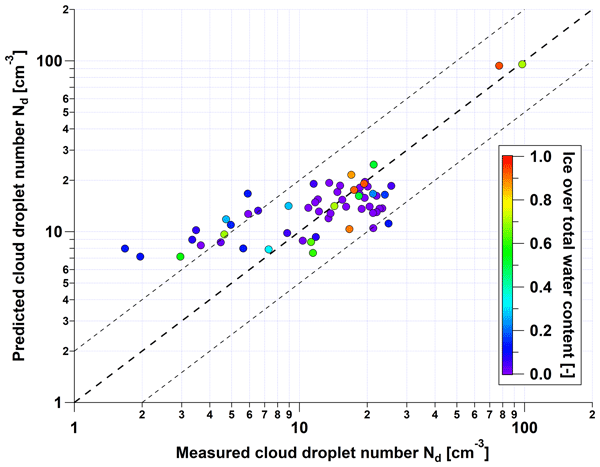
Low-altitude clouds play a key role in regulating the climate of the Arctic, a region that suffers from climate change more than any other on the planet. We gathered meteorological and aerosol physical and chemical data over a year and utilized them for a parameterization that help us unravel the factors driving and limiting the efficiency of cloud droplet formation. We then linked this information to the sources of aerosol found during each season and to processes of cloud glaciation.
Guangyu Li, Elise K. Wilbourn, Zezhen Cheng, Jörg Wieder, Allison Fagerson, Jan Henneberger, Ghislain Motos, Rita Traversi, Sarah D. Brooks, Mauro Mazzola, Swarup China, Athanasios Nenes, Ulrike Lohmann, Naruki Hiranuma, and Zamin A. Kanji
Atmos. Chem. Phys., 23, 10489–10516, https://doi.org/10.5194/acp-23-10489-2023, https://doi.org/10.5194/acp-23-10489-2023, 2023
Short summary
Short summary
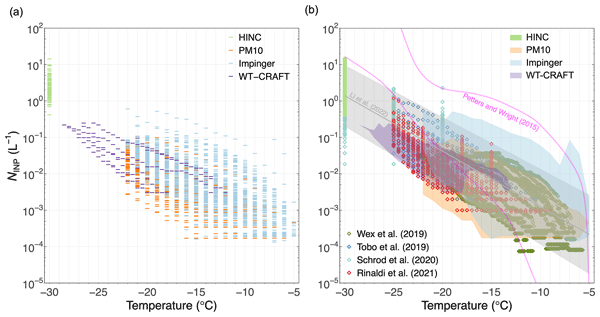
In this work, we present results from an Arctic field campaign (NASCENT) in Ny-Ålesund, Svalbard, on the abundance, variability, physicochemical properties, and potential sources of ice-nucleating particles (INPs) relevant for mixed-phase cloud formation. This work improves the data coverage of Arctic INPs and aerosol properties, allowing for the validation of models predicting cloud microphysical and radiative properties of mixed-phase clouds in the rapidly warming Arctic.
Guangyu Li, Jörg Wieder, Julie T. Pasquier, Jan Henneberger, and Zamin A. Kanji
Atmos. Chem. Phys., 22, 14441–14454, https://doi.org/10.5194/acp-22-14441-2022, https://doi.org/10.5194/acp-22-14441-2022, 2022
Short summary
Short summary
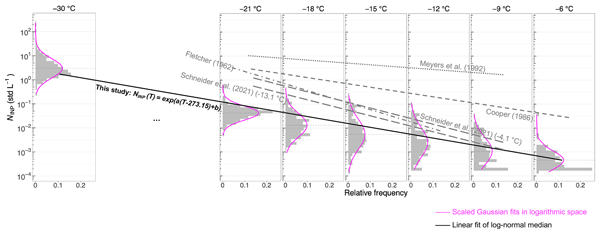
The concentration of ice-nucleating particles (INPs) is atmospherically relevant for primary ice formation in clouds. In this work, from 12 weeks of field measurement data in the Arctic, we developed a new parameterization to predict INP concentrations applicable for pristine background conditions based only on temperature. The INP parameterization could improve the cloud microphysical representation in climate models, aiding in Arctic climate predictions.
Mel Fülster, Ruzica Dadic, Iris Thurnherr, and Heini Wernli
EGUsphere, https://doi.org/10.5194/egusphere-2026-4721, https://doi.org/10.5194/egusphere-2026-4721, 2026
This preprint is open for discussion and under review for The Cryosphere (TC).
Short summary
Short summary
Winter-time fast ice extent and variability in McMurdo Sound is governed by strong wind events. We investigate the large scale atmospheric forcing leading to winter sea ice breakout events in McMurdo Sound from 2013–2024 using satellite-derived sea ice concentration data, weather station data and ERA-5 reanalysis data. Our results indicate that cyclones in the Ross Sea impact sea ice in McMurdo Sound indirectly through the barrier wind regime known as the Ross Ice Shelf air stream.
Luis A. Ladino, Karin Ardon-Dryer, Diana L. Pereira, Ulrike Proske, Zyanya Ramirez-Diaz, Antonia Velicu, and Zamin A. Kanji
Geosci. Commun., 9, 415–436, https://doi.org/10.5194/gc-9-415-2026, https://doi.org/10.5194/gc-9-415-2026, 2026
Short summary
Short summary
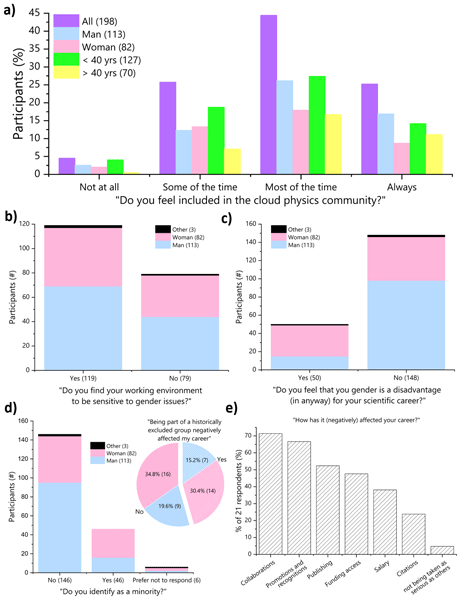
A survey and literature metadata analysis from the cloud physics community are used to investigate the state of diversity, equity and inclusion in the cloud physics community. We show the evolution of gender contributions to cloud physics and the inclusion of tropics-based scientists. The publication analysis reveals the rate of men and women dropping out of the field is not different, however, gender balance was better achieved when women led publications compared to men.
Germán Perez Fogwill and André Welti
EGUsphere, https://doi.org/10.5194/egusphere-2026-3971, https://doi.org/10.5194/egusphere-2026-3971, 2026
Short summary
Short summary
We studied how accurately droplet temperature can be assigned in the FrESH freezing instrument, because this strongly affects measurements of particles that trigger ice formation. Using temperature sensors, routine measurement data, and cooling experiments, we found that droplets are consistently warmer than the bath and that the combined temperature uncertainty is 0.43–0.44 °C. These results provide a practical correction and uncertainty estimate for routine measurements.
Lea Haberstock, Darrel Baumgardner, Dagen D. Hughes, Julie Legrand, Almuth Neuberger, Cuiqi Zhang, Zamin A. Kanji, Christian Maier, Ilona Riipinen, Radovan Krejci, and Paul Zieger
EGUsphere, https://doi.org/10.5194/egusphere-2026-3790, https://doi.org/10.5194/egusphere-2026-3790, 2026
This preprint is open for discussion and under review for Atmospheric Measurement Techniques (AMT).
Short summary
Short summary
Here, we present the characterization and first application of a new cloud spectrometer, the Ground-based Fog and Aerosol Spectrometer (GFAS). Besides particle number concentration and size, the GFAS also provides an indicator of particle morphology and composition. We present a new calibration routine and first laboratory and field measurements. Using the GFAS, we can show that cloud droplets are optically different compared to pure water droplets.
Konstantinos Matthaios Doulgeris, David Brus, Christian Maier, Naděžda Zikova, Kajal Julaha, Cuiqi Zhang, Zamin A. Kanji, Ville Kaikkonen, Harri Juttula, Eero Molkoselkä, Anssi Makynen, Mika Komppula, Sergej Sel, and Elke Ludewig
EGUsphere, https://doi.org/10.5194/egusphere-2026-3898, https://doi.org/10.5194/egusphere-2026-3898, 2026
Short summary
Short summary
Clouds are important for weather and climate, but measuring their cloud water droplets accurately is difficult. We compared seven instruments during a field campaign at a high mountain observatory under natural cloud conditions. We found that the way instruments are installed can strongly influence the measurements. Our results provide practical guidance for improving cloud observations and support more consistent measurements across the European ACTRIS research infrastructure.
Gabriella Wallentin, Alexander Böhmländer, Ross Herbert, Heike Wex, Charlotte M. Beall, Pia Bogert, Zoé Brasseur, Jie Chen, Jessie M. Creamean, Paul J. DeMott, Oliver Eckermann, Kunfeng Gao, Xianda Gong, Silvia Henning, Naruki Hiranuma, Christina S. McCluskey, Christos Mitsios, Ottmar Möhler, Athanasios Nenes, Mark D. Tarn, Christian Tatzelt, Ping Tian, Yutaka Tobo, Franziska Vogel, André Welti, Elise Wilbourn, Jennifer Winstone, and Corinna Hoose
EGUsphere, https://doi.org/10.5194/egusphere-2026-4134, https://doi.org/10.5194/egusphere-2026-4134, 2026
This preprint is open for discussion and under review for Atmospheric Chemistry and Physics (ACP).
Short summary
Short summary
Ice nucleating particles (INPs) are aerosols essential for cloud ice formation in the temperature range -38 °C and 0 °C. Due to measurement challenges, the availability of observations of INPs remains scarce. This study applies machine learning to predict a global INP distribution using aerosol mass concentration reanalysis and observed INPs. This manuscript demonstrates that even with limited measurements, the occurrence of INPs can be estimated, following the spatial pattern of key aerosols.
Hailing Jia, David Neubauer, Yusuf Bhatti, Duncan Watson-Parris, Philip Stier, Johannes Quaas, Daniel Partridge, Ardit Arifi, Anne Kubin, Athanasios Nenes, Muhammed Irfan, Ulas Im, Carl Svenhag, Nick Schutgens, Bastiaan van Diedenhoven, Sylvaine Ferrachat, Ulrike Lohmann, Ina Tegen, Alice Henkes, Guangliang Fu, and Otto Hasekamp
EGUsphere, https://doi.org/10.5194/egusphere-2026-3275, https://doi.org/10.5194/egusphere-2026-3275, 2026
Short summary
Short summary
Tiny aerosol particles affect Earth’s climate by interacting with clouds and sunlight, but their impact remains uncertain. Combining climate model simulations and emulators, we explored millions of model variants across different aerosol and cloud settings to identify the causes of the uncertainty. We found that aerosol emissions and cloud convection are key contributors. Our work suggests that better integration of existing observations could help reduce these uncertainties in the future.
Nikolaos Papaevangelou, Diego Villanueva, and Ulrike Lohmann
Atmos. Chem. Phys., 26, 9393–9412, https://doi.org/10.5194/acp-26-9393-2026, https://doi.org/10.5194/acp-26-9393-2026, 2026
Short summary
Short summary
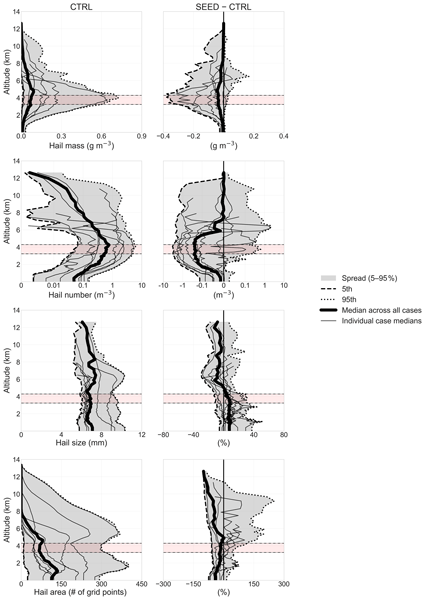
In this study, we investigate the impact of silver iodide (AgI) perturbations on eight hailstorms over Switzerland and southern Germany using the Consortium for Small-scale Modeling (COSMO) model. Generally, the impact of AgI seeding on hail is highly case-dependent and sensitive to the choice of tracking thresholds. However, in most cases, the mean hail size increases after seeding, while the hail-affected area decreases.
Huiying Zhang, Chia Rui Ong, Anurag Dipankar, Ulrike Lohmann, and Jan Henneberger
Atmos. Chem. Phys., 26, 8677–8693, https://doi.org/10.5194/acp-26-8677-2026, https://doi.org/10.5194/acp-26-8677-2026, 2026
Short summary
Short summary
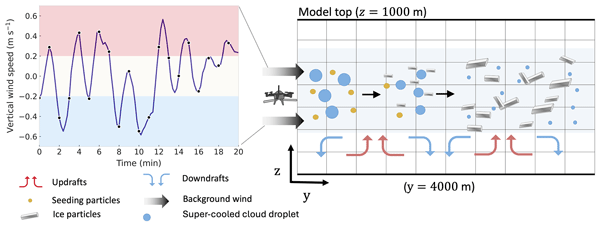
We used computer simulations to study cloud seeding. We discovered a 'self-lofting' mechanism whereby, as the seeded ice crystals grow, they release heat, generating an upward air current. This enables the ice plume to rise and spread vertically, even when the surrounding air is sinking. This is why seeded ice survives in unfavourable wind conditions. Our results demonstrate that this internal heating is essential for the effectiveness and validation of weather modification technologies.
Andrina Caratsch, Sylvaine Ferrachat, and Ulrike Lohmann
Geosci. Model Dev., 19, 5041–5070, https://doi.org/10.5194/gmd-19-5041-2026, https://doi.org/10.5194/gmd-19-5041-2026, 2026
Short summary
Short summary
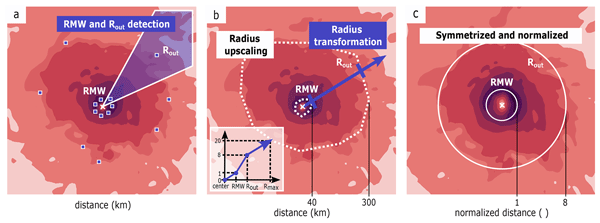
Tropical cyclones come in various size and shape, which smoothes out key storm features in composite analyses. To address this, we developed a compositing method that symmetrizes storms and better aligns their eyewalls and horizontal extents prior to compositing. This approach preserves mesoscale features in the composites, reduces within-group variance, and enhances the power of statistical testing. The method facilitates the investigation and understanding of tropical cyclone development.
Ryan Vella and Ulrike Lohmann
EGUsphere, https://doi.org/10.5194/egusphere-2026-2961, https://doi.org/10.5194/egusphere-2026-2961, 2026
Short summary
Short summary
The Atlantic Ocean's overturning circulation transports heat northward and may weaken under climate change. We show that this weakening redistributes natural dust and other particles across the atmosphere, altering cloud properties worldwide. Clouds become thinner in cold regions, reducing their ability to cool the planet. This produces a warming effect of about 0.84 watts per square metre that partially counteracts the cooling from a weaker circulation.
Kunfeng Gao, Romanos Foskinis, Marilena Gidarakou, Kalliopi Violaki, Guangyu Li, Benjamin Tobias Brem, Sophie Erb, Bernard Clot, Marie-José Graber, Branko Sikoparjja, Predrag Matavulj, Dusan Licina, Cuiqi Zhang, Benoît Crouzy, Alexandros Papayannis, Zamin A. Kanji, and Athanasios Nenes
EGUsphere, https://doi.org/10.5194/egusphere-2026-2699, https://doi.org/10.5194/egusphere-2026-2699, 2026
Short summary
Short summary
This study identified bioaerosols (>85%) as the dominant source for ice nucleating particles in mixed-phase clouds at a semi-rural site in central Europe, using a combination of in-situ, remote sensing and airmass modelling analysis. We developed a bioaerosol-aware ice nucleating particle parameterization that outperformed existing dust-only schemes across multiple field datasets. These findings improve representation of bioaerosol–cloud interactions and reduce uncertainty in climate feedback.
Jian Xu, Junteng Wu, Mayur Gajanan Sapkal, Jim Grisillon, Shravan Deshmukh, Brice Temime Roussel, Julien Kammer, Nicolas Brun, Fabien Robert-Peillard, Beiping Luo, Judith Kleinheins, Silvia Henning, Bénédicte Picquet-Varrault, Edouard Pangui, Mathieu Cazaunau, Zamin A. Kanji, Claudia Marcolli, and Anne Monod
Aerosol Research Discuss., https://doi.org/10.5194/ar-2026-14, https://doi.org/10.5194/ar-2026-14, 2026
Preprint under review for AR
Short summary
Short summary
The study aimed to mimic the atmospheric behaviour of a semi-volatile organic compound in the presence of fine particles and at various relative humidities. The objective was to determine the influence of organic matter on humid particle growth. These results are essential for improving our understanding of cloud formation.
Elena Bazo, Olga Ruiz-Galera, Lucas Alados-Arboledas, Alexander Böhmländer, Kristina Höhler, Najin Kim, Larissa Lacher, Ottmar Möhler, Frascisco José Olmo, German Perez Fogwill, Ana A. Piedehierro, Nsikanabasi Silas Umo, André Welti, Gloria Titos, and Alberto Cazorla
Atmos. Meas. Tech., 19, 2695–2713, https://doi.org/10.5194/amt-19-2695-2026, https://doi.org/10.5194/amt-19-2695-2026, 2026
Short summary
Short summary
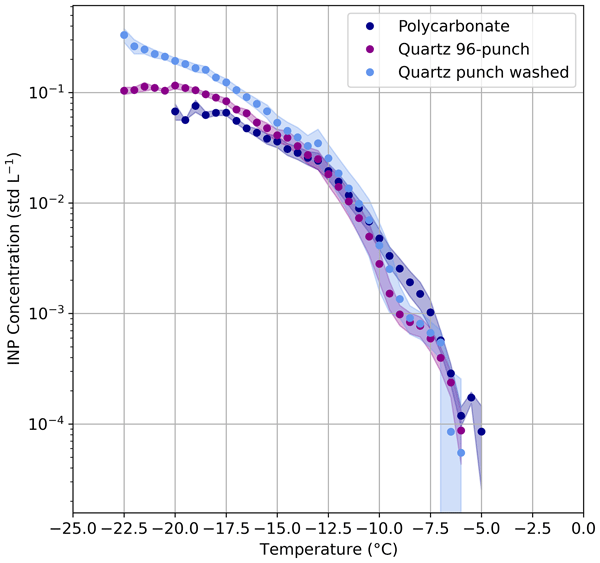
We evaluated different methods to obtain the ice nucleating particle (INP) concentration from ambient filters using GRAINS (GRAnada Ice Nuclei Spectrometer), the INP spectrometer at the Andalusian ObseRvatory of the Atmosphere (AGORA). We first characterized GRAINS and compared it to other INP devices. Then, we sampled polycarbonate and quartz filters for three months and tested three different particle extraction methods, finding general good agreement but that the INP concentration is systematically higher when using quartz filters.
Nadja Omanovic, Debora Bötticher, Christopher Fuchs, and Ulrike Lohmann
Atmos. Chem. Phys., 26, 5345–5353, https://doi.org/10.5194/acp-26-5345-2026, https://doi.org/10.5194/acp-26-5345-2026, 2026
Short summary
Short summary
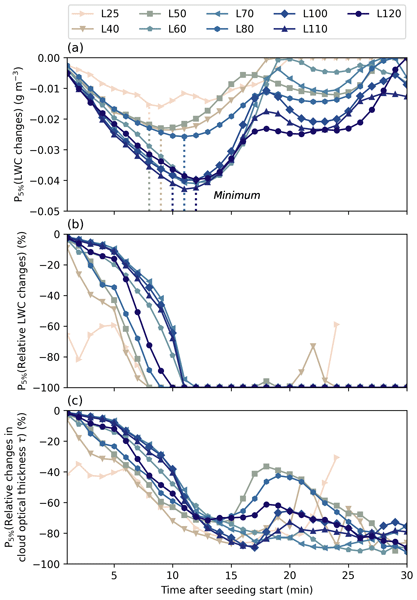
The interplay of liquid and ice particles in clouds is a crucial driver for forming rain over land. We use numerical simulations to evaluate how fast clouds can be glaciated through ice particles and how this depends on different initial states of the cloud. We find that the more water a cloud contains, the longer the glaciation takes while any additional turbulent mixing does not have a major impact.
Alena Dekhtyareva, Harald Sodemann, Tim Carlsen, Iris Thurnherr, Aina Johannessen, Andrew Seidl, David M. Chandler, Daniele Zannoni, Alexandra Touzeau, Marvin Kähnert, Astrid B. Gjelsvik, Franziska Hellmuth, Britta Schäfer, and Robert O. David
Earth Syst. Sci. Data, 18, 2573–2607, https://doi.org/10.5194/essd-18-2573-2026, https://doi.org/10.5194/essd-18-2573-2026, 2026
Short summary
Short summary
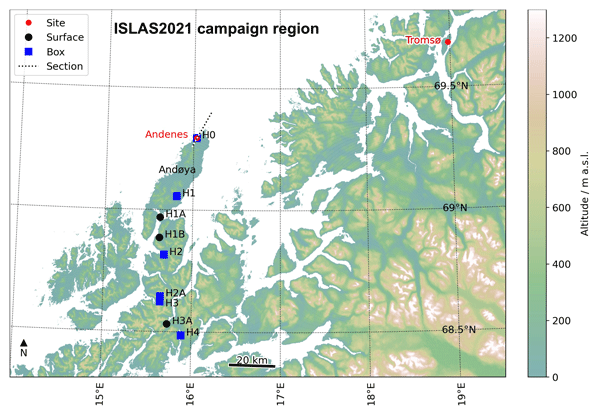
During a recent field campaign from 15 to 30 March 2021 at Andenes, Norway, we collected a set of observations that allows to better constrain how clouds and precipitation processes work. Frequent alternations between mid-latitude and arctic weather systems were encountered during the campaign. Our dataset is unique in combining measurements in both vapour and precipitation, aerosols, ice nucleating particles, and was made simultaneously at different elevations at a high latitude location.
Yichen Jia, Hendrik Andersen, David Neubauer, Ulrike Lohmann, Corinna Hoose, and Jan Cermak
EGUsphere, https://doi.org/10.5194/egusphere-2026-569, https://doi.org/10.5194/egusphere-2026-569, 2026
Short summary
Short summary
Understanding how ocean clouds respond to air pollution is important for climate projections. Using artificial intelligence and a climate model, we show that some model settings produce very high cloud cover, leaving little room for further cloud growth as pollution increases. This “headroom effect” can make cloud responses appear weak. Our results highlight the need to consider existing cloud conditions when interpreting how cloud cover responds to the environment.
Jie Chen and Zamin A. Kanji
EGUsphere, https://doi.org/10.5194/egusphere-2025-6368, https://doi.org/10.5194/egusphere-2025-6368, 2026
Short summary
Short summary
Desert dust particles act as important seeds that enable cloud droplets to freeze. However, their ice formation ability is highly variable and difficult to represent in climate models. By analyzing previously published data, we found that both the measurement methods used and the way dust ages strongly influence its ice forming behavior. We developed new parameterizations that account for these effects, which are expected to improve the prediction of how dust impacts cloud formation and climate.
Huiying Zhang, Fabiola Ramelli, Christopher Fuchs, Nadja Omanovic, Anna J. Miller, Robert Spirig, Zhaolong Wu, Yunpei Chu, Xia Li, Ulrike Lohmann, and Jan Henneberger
Atmos. Chem. Phys., 26, 1459–1481, https://doi.org/10.5194/acp-26-1459-2026, https://doi.org/10.5194/acp-26-1459-2026, 2026
Short summary
Short summary
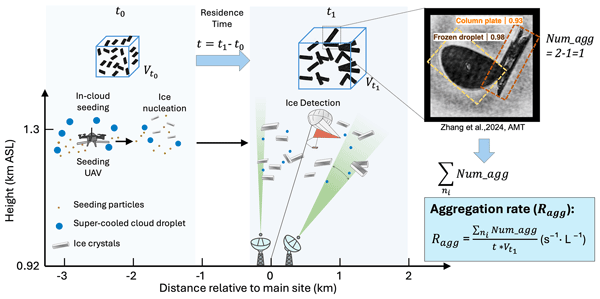
Ice crystals in clouds aggregate, shaping snow and rain, yet rates are hard to measure. Using cloud seeding, we sampled crystals downwind after known times. A deep-learning algorithm quantified aggregation by counting crystal components. Initial ice concentration was the main driver, confirmed by causal analysis, physics, and machine learning, though weaker than theory predicts. Temperature, size, and shape also mattered, while turbulence was negligible.
Marilena Gidarakou, Alexandros Papayannis, Kunfeng Gao, Panagiotis Gidarakos, Benoît Crouzy, Romanos Foskinis, Sophie Erb, Benjamin T. Brem, Cuiqi Zhang, Gian Lieberherr, Martine Collaud Coen, Branko Sikoparija, Zamin A. Kanji, Bernard Clot, Bertrand Calpini, Eugenia Giagka, and Athanasios Nenes
Atmos. Chem. Phys., 26, 923–945, https://doi.org/10.5194/acp-26-923-2026, https://doi.org/10.5194/acp-26-923-2026, 2026
Short summary
Short summary
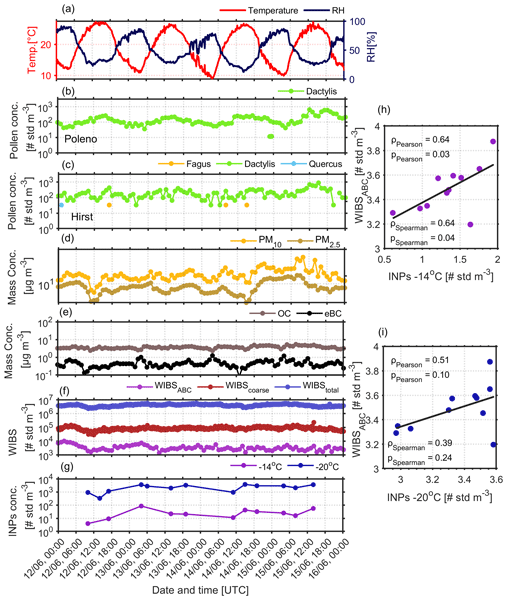
Vertical profiles of pollen and biomass burning particles were obtained at a semi-rural site at the MeteoSwiss station near Payerne (Switzerland) using a novel multi-channel elastic-fluorescence lidar system combined with in situ measurements during the spring 2023 wildfires and pollination season during the PERICLES (PayernE lidaR and Insitu detection of fluorescent bioaerosol and dust partiCLES and their cloud impacts) campaign.
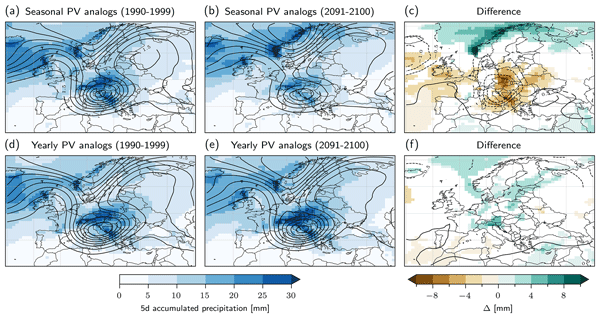
Jacopo Riboldi, Robin Noyelle, Ellina Agayar, Hanin Binder, Marc Federer, Katharina Hartmuth, Michael Sprenger, Iris Thurnherr, and Selvakumar Vishnupriya
Weather Clim. Dynam., 7, 65–87, https://doi.org/10.5194/wcd-7-65-2026, https://doi.org/10.5194/wcd-7-65-2026, 2026
Short summary
Short summary
Storm Boris led to record-breaking precipitation over central Europe in September 2024. By incorporating event-specific meteorological information, this work introduces a methodology to strengthen our comprehension of how global warming affects similar hazards. Furthermore, it contextualizes how the answer to the question "How will Boris-like storms change in a warmer climate?" depends on explicit and implicit methodological choices, with the aim to inform future attribution research.
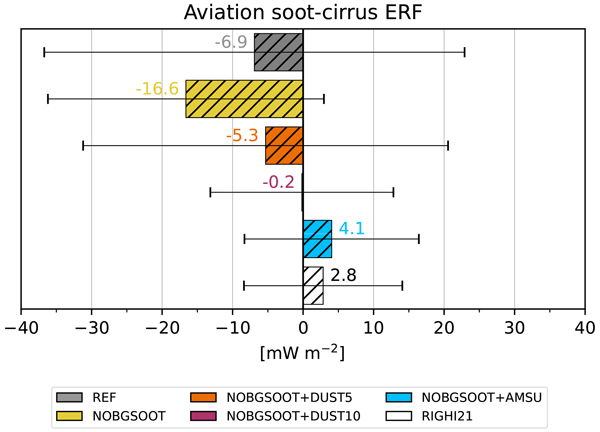
Mattia Righi, Baptiste Testa, Christof G. Beer, Johannes Hendricks, and Zamin A. Kanji
Atmos. Chem. Phys., 25, 18341–18353, https://doi.org/10.5194/acp-25-18341-2025, https://doi.org/10.5194/acp-25-18341-2025, 2025
Short summary
Short summary
The effective radiative forcing due to the effect of aviation soot on natural cirrus clouds is likely very small, thus confirming most previous studies, but for the first time with the support of laboratory measurements specifically targeting aviation soot and its ice nucleation ability.
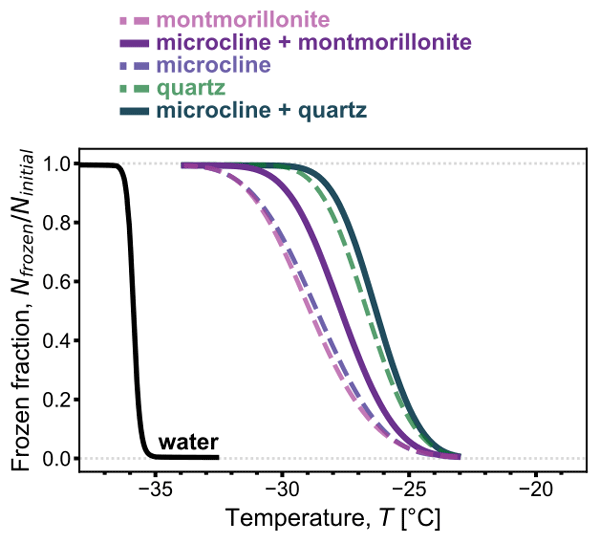
Nadia Shardt, Florin N. Isenrich, Julia Nette, Christopher Dreimol, Ning Ma, Zamin A. Kanji, Andrew J. deMello, and Claudia Marcolli
Atmos. Chem. Phys., 25, 17997–18014, https://doi.org/10.5194/acp-25-17997-2025, https://doi.org/10.5194/acp-25-17997-2025, 2025
Short summary
Short summary
In the atmosphere, minerals suspended in cloud droplets promote the formation of ice. We investigated ice formation in the presence of pure and binary mixtures of common minerals using a microfluidic device. The mineral with the best ability to initiate ice formation alone (that is, at the highest temperature) typically determined when ice formed in the binary mixture.
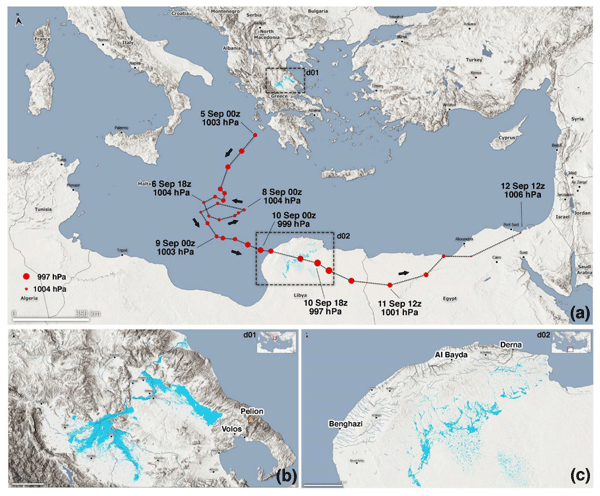
Emmanouil Flaounas, Stavros Dafis, Silvio Davolio, Davide Faranda, Christian Ferrarin, Katharina Hartmuth, Assaf Hochman, Aristeidis Koutroulis, Samira Khodayar, Mario Marcello Miglietta, Florian Pantillon, Platon Patlakas, Michael Sprenger, and Iris Thurnherr
Weather Clim. Dynam., 6, 1515–1538, https://doi.org/10.5194/wcd-6-1515-2025, https://doi.org/10.5194/wcd-6-1515-2025, 2025
Short summary
Short summary
Storm Daniel (2023) is one of the most catastrophic storms ever documented in the Mediterranean. Our results highlight the different dynamics and therefore the different predictability skill of precipitation, its extremes and impacts that have been produced in Greece and Libya, the two most affected countries. Our approach concerns an analysis of the storm by articulating dynamics, weather prediction, hydrological and oceanographic implications, climate extremes, and attribution theory.
Mayur G. Sapkal, Michael Rösch, and Zamin A. Kanji
Atmos. Meas. Tech., 18, 5649–5667, https://doi.org/10.5194/amt-18-5649-2025, https://doi.org/10.5194/amt-18-5649-2025, 2025
Short summary
Short summary
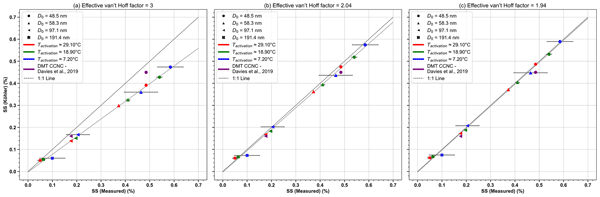
The newly developed Horizontal Cloud Condensation Nuclei Counter (HCCNC) is capable of generating supersaturation as low as 0.05 % at temperatures as low as 4 °C, allowing for the investigation of CCN activity of ammonium sulfate particles up to 200 nm diameter and ambient aerosol of larger diameter. The HCCNC could be used for low-temperature experiments where gas-phase partitioning into or out of the aerosol phase for semi-volatile compounds is relevant for CCN activity.
Christopher Fuchs, Fabiola Ramelli, Anna J. Miller, Nadja Omanovic, Robert Spirig, Huiying Zhang, Patric Seifert, Kevin Ohneiser, Ulrike Lohmann, and Jan Henneberger
Atmos. Chem. Phys., 25, 12177–12196, https://doi.org/10.5194/acp-25-12177-2025, https://doi.org/10.5194/acp-25-12177-2025, 2025
Short summary
Short summary
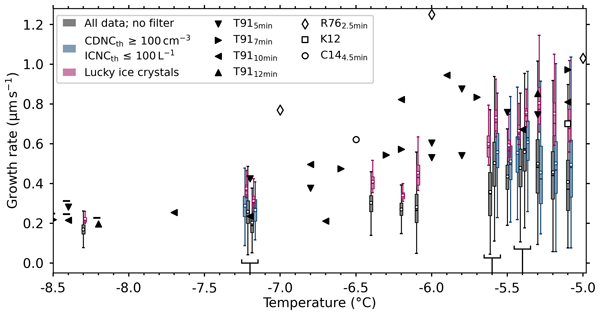
We quantify diffusional ice crystal growth in natural clouds using cloud seeding experiments. We report growth rates for 14 experiments between −5.1 °C and −8.3 °C and observe strong variations depending on the cloud characteristics. Comparing our growth rates to laboratory data, we found similar temperature-dependent trends, but the laboratory rates are higher. These data fill the gap in quantitative in situ observation of ice crystal growth, helping to validate models and laboratory experiments.
Killian P. Brennan, Iris Thurnherr, Michael Sprenger, and Heini Wernli
Nat. Hazards Earth Syst. Sci., 25, 3693–3712, https://doi.org/10.5194/nhess-25-3693-2025, https://doi.org/10.5194/nhess-25-3693-2025, 2025
Short summary
Short summary
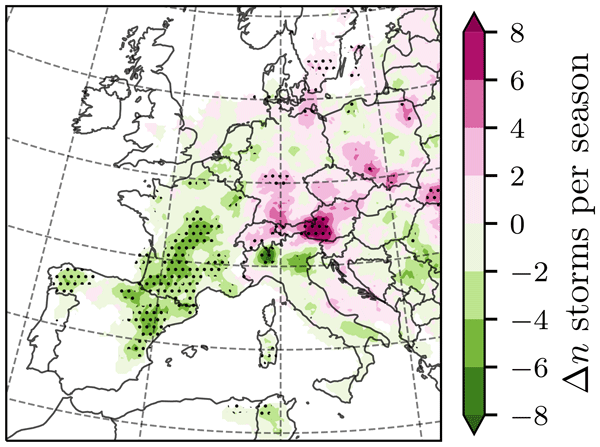
Hailstorms can cause severe damage to homes, crops, and infrastructure. Using high-resolution climate simulations, we tracked thousands of hailstorms across Europe to study future changes. Large hail will become more frequent, hail-covered areas will expand, and instances of extreme hail combined with heavy rain will double. These shifts could increase risks for communities and businesses, highlighting the need for better preparedness and adaptation.
Ari Laaksonen, Golnaz Roudsari, Ana A. Piedehierro, and André Welti
Atmos. Chem. Phys., 25, 11317–11332, https://doi.org/10.5194/acp-25-11317-2025, https://doi.org/10.5194/acp-25-11317-2025, 2025
Short summary
Short summary
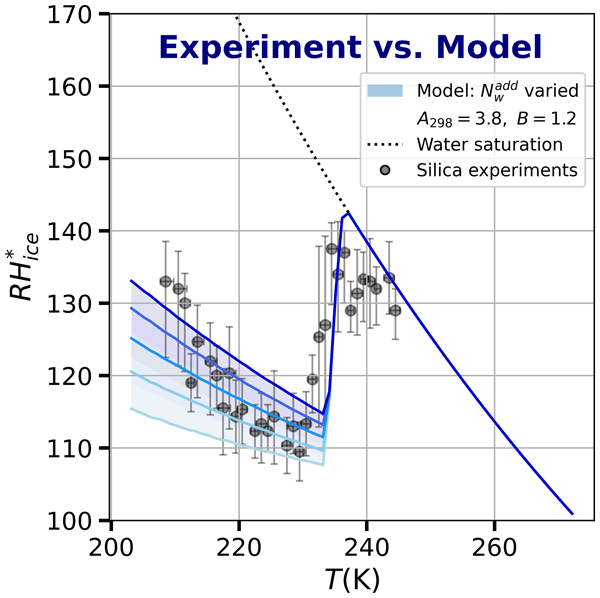
The mechanisms of ice nucleation at temperatures below 235 K have remained unclear for the past century. We suggest that ice nucleation is caused by the freezing of water adsorbed on aerosol surfaces. To test this hypothesis, we derived theoretical equations to predict the exact atmospheric conditions under which ice nucleation occurs. Our predictions agree well with experiments. The new theory thus provides a basis for an improved description of ice nucleation in the atmosphere.
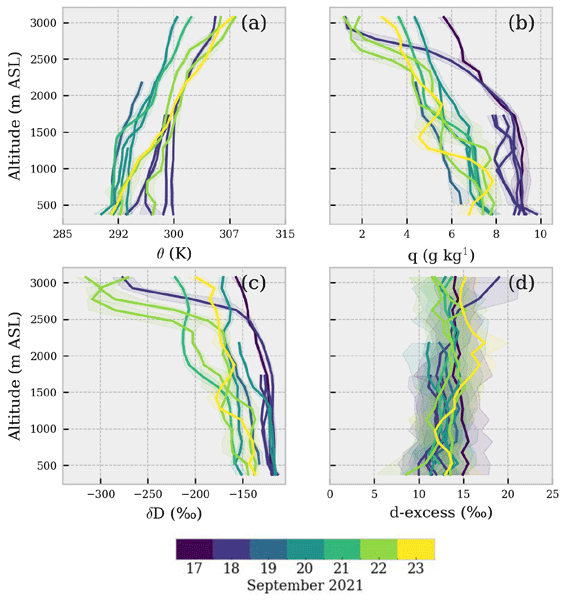
Daniele Zannoni, Hans Christian Steen-Larsen, Harald Sodemann, Iris Thurnherr, Cyrille Flamant, Patrick Chazette, Julien Totems, Martin Werner, and Myriam Raybaut
Atmos. Chem. Phys., 25, 9471–9495, https://doi.org/10.5194/acp-25-9471-2025, https://doi.org/10.5194/acp-25-9471-2025, 2025
Short summary
Short summary
High-resolution airborne observations reveal that mixing between the free troposphere and surface evapotranspiration flux primarily modulates the water vapor isotopic composition in the lower troposphere. Water vapor isotope structure variations occur on the scale of hundreds of meters, underlining the utility of stable isotopes for studying microscale atmospheric dynamics. This study also provides the basis for better validation of water vapor isotope remote sensing retrievals with surface observations.
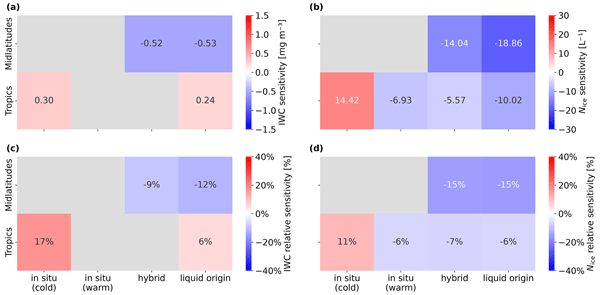
Kai Jeggle, David Neubauer, Hanin Binder, and Ulrike Lohmann
Atmos. Chem. Phys., 25, 7227–7243, https://doi.org/10.5194/acp-25-7227-2025, https://doi.org/10.5194/acp-25-7227-2025, 2025
Short summary
Short summary
This work uncovers the formation regimes of cirrus clouds and how dust particles influence their properties. By applying machine learning to a combination of satellite and reanalysis data, cirrus clouds are classified into different formation regimes. Depending on the regime, increasing dust aerosol concentrations can either decrease or increase the number of ice crystals. This challenges the idea of using cloud seeding to cool the planet, as it may unintentionally lead to warming instead.
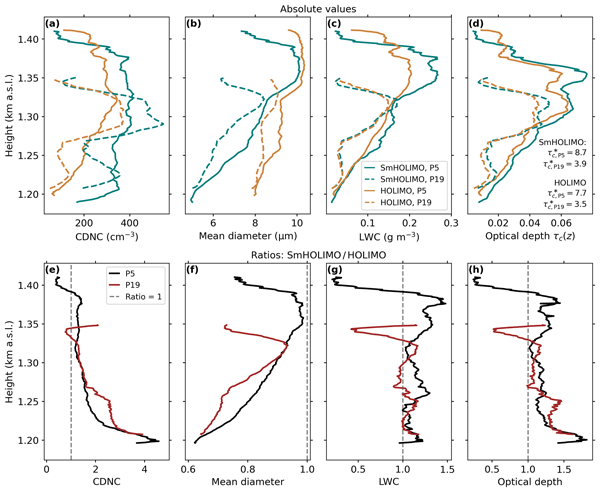
Christopher Fuchs, Fabiola Ramelli, David Schweizer, Ulrike Lohmann, and Jan Henneberger
Atmos. Meas. Tech., 18, 2969–2986, https://doi.org/10.5194/amt-18-2969-2025, https://doi.org/10.5194/amt-18-2969-2025, 2025
Short summary
Short summary
We present a new instrument based on digital in-line holography (SmHOLIMO) for in situ cloud measurements. SmHOLIMO is designed to specifically measure small cloud droplets with diameters > 3.7 μm. This way we retrieve accurate cloud droplet size distributions, which are crucial to understand the evolution and governing microphysical processes of a cloud. Results of a field study are compared to co-located measurements of a second holographic imager, microwave radiometer, and cloud radar.
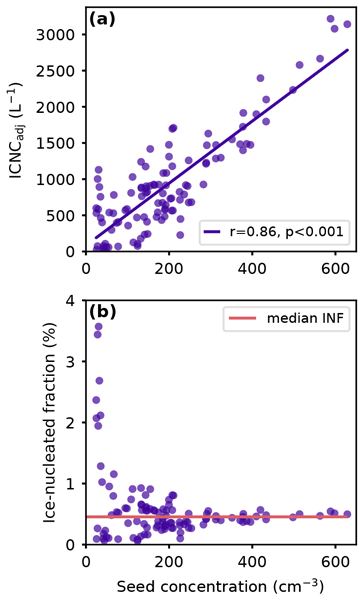
Anna J. Miller, Christopher Fuchs, Fabiola Ramelli, Huiying Zhang, Nadja Omanovic, Robert Spirig, Claudia Marcolli, Zamin A. Kanji, Ulrike Lohmann, and Jan Henneberger
Atmos. Chem. Phys., 25, 5387–5407, https://doi.org/10.5194/acp-25-5387-2025, https://doi.org/10.5194/acp-25-5387-2025, 2025
Short summary
Short summary
We analyzed the ability of silver iodide particles (a commonly used cloud-seeding agent) to form ice crystals in naturally occurring liquid clouds at −5 to −8 °C and found that only ≈ 0.1 %−1 % of particles nucleate ice, with a negative dependence on temperature. By contextualizing our results with previous laboratory studies, we help to bridge the gap between laboratory and field experiments, which also helps to inform future cloud-seeding projects.
Judith Kleinheins, Nadia Shardt, Ulrike Lohmann, and Claudia Marcolli
Atmos. Chem. Phys., 25, 881–903, https://doi.org/10.5194/acp-25-881-2025, https://doi.org/10.5194/acp-25-881-2025, 2025
Short summary
Short summary
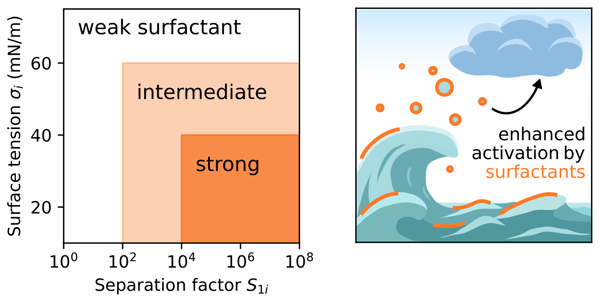
We model the cloud condensation nuclei (CCN) activation of sea spray aerosol particles with classical Köhler theory and with a new model approach that takes surface tension lowering into account. We categorize organic compounds into weak, intermediate, and strong surfactants, and we outline for which composition surface tension lowering is important. The results suggest that surface tension lowering allows sea spray aerosol particles in the Aitken mode to be a source of CCN in marine updraughts.
Olivia G. Norman, Colette L. Heald, Solomon Bililign, Pedro Campuzano-Jost, Hugh Coe, Marc N. Fiddler, Jaime R. Green, Jose L. Jimenez, Katharina Kaiser, Jin Liao, Ann M. Middlebrook, Benjamin A. Nault, John B. Nowak, Johannes Schneider, and André Welti
Atmos. Chem. Phys., 25, 771–795, https://doi.org/10.5194/acp-25-771-2025, https://doi.org/10.5194/acp-25-771-2025, 2025
Short summary
Short summary
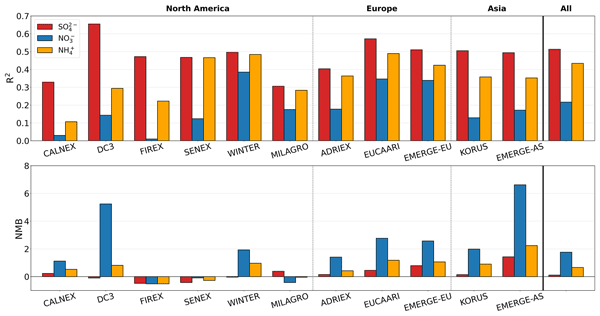
This study finds that one component of secondary inorganic aerosols, nitrate, is greatly overestimated by a global atmospheric chemistry model compared to observations from 11 flight campaigns. None of the loss and production pathways explored can explain the nitrate bias alone. The model’s inability to capture the variability in the observations remains and requires future investigation to avoid biases in policy-related studies (i.e., air quality, health, climate impacts of these aerosols).
Nadja Omanovic, Brigitta Goger, and Ulrike Lohmann
Atmos. Chem. Phys., 24, 14145–14175, https://doi.org/10.5194/acp-24-14145-2024, https://doi.org/10.5194/acp-24-14145-2024, 2024
Short summary
Short summary
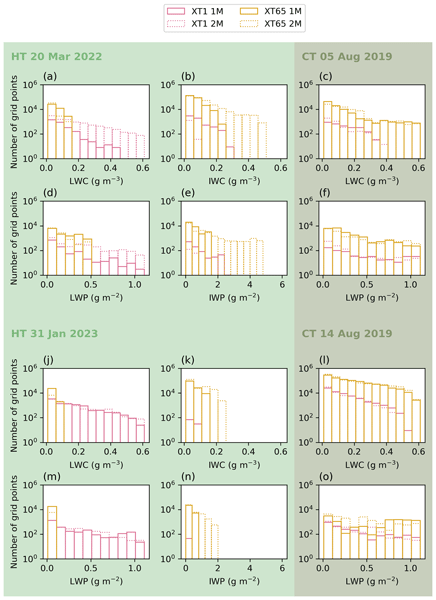
We evaluated the numerical weather model ICON in two horizontal resolutions with two bulk microphysics schemes over hilly and complex terrain in Switzerland and Austria, respectively. We focused on the model's ability to simulate mid-level clouds in summer and winter. By combining observational data from two different field campaigns, we show that an increase in the horizontal resolution and a more advanced cloud microphysics scheme is strongly beneficial for cloud representation.
Baptiste Testa, Lukas Durdina, Jacinta Edebeli, Curdin Spirig, and Zamin A. Kanji
Atmos. Chem. Phys., 24, 10409–10424, https://doi.org/10.5194/acp-24-10409-2024, https://doi.org/10.5194/acp-24-10409-2024, 2024
Short summary
Short summary
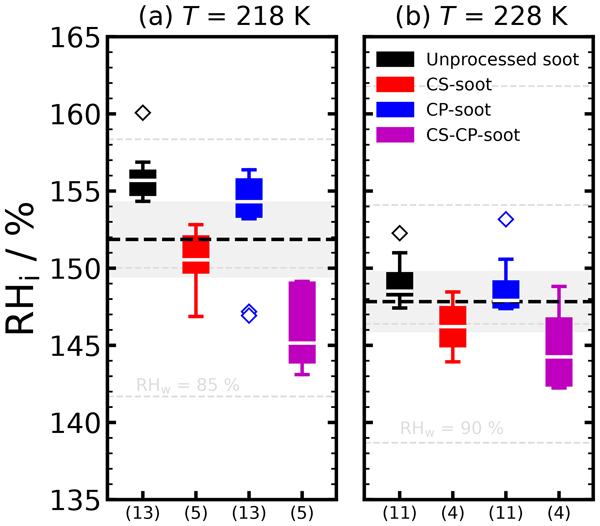
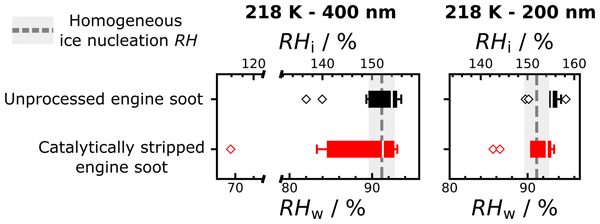
Aviation soot residuals released from contrails can become compacted upon sublimation of the ice crystals, generating new voids in the aggregates where ice nucleation can occur. Here we show that contrail-processed soot is highly compact but that it remains unable to form ice at a relative humidity different from that required for the formation of background cirrus from the more ubiquitous aqueous solution droplets, suggesting that it will not perturb cirrus cloud formation via ice nucleation.
Emilie Fons, Ann Kristin Naumann, David Neubauer, Theresa Lang, and Ulrike Lohmann
Atmos. Chem. Phys., 24, 8653–8675, https://doi.org/10.5194/acp-24-8653-2024, https://doi.org/10.5194/acp-24-8653-2024, 2024
Short summary
Short summary
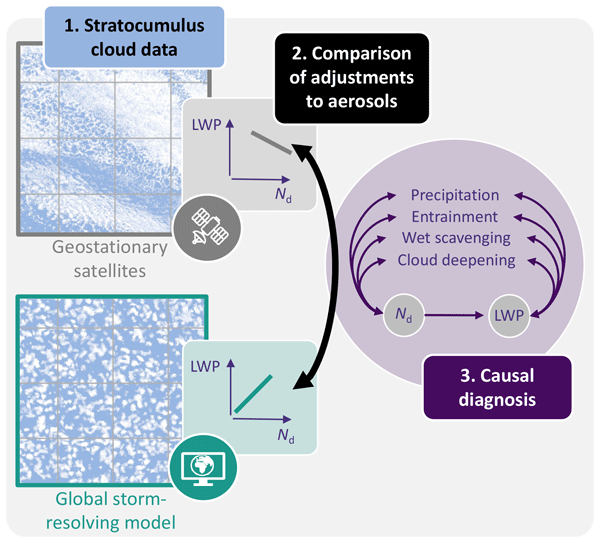
Aerosols can modify the liquid water path (LWP) of stratocumulus and, thus, their radiative effect. We compare storm-resolving model and satellite data that disagree on the sign of LWP adjustments and diagnose this discrepancy with causal inference. We find that strong precipitation, the absence of wet scavenging, and cloud deepening under a weak inversion contribute to positive LWP adjustments to aerosols in the model, despite weak negative effects from cloud-top entrainment enhancement.
Nadja Omanovic, Sylvaine Ferrachat, Christopher Fuchs, Jan Henneberger, Anna J. Miller, Kevin Ohneiser, Fabiola Ramelli, Patric Seifert, Robert Spirig, Huiying Zhang, and Ulrike Lohmann
Atmos. Chem. Phys., 24, 6825–6844, https://doi.org/10.5194/acp-24-6825-2024, https://doi.org/10.5194/acp-24-6825-2024, 2024
Short summary
Short summary
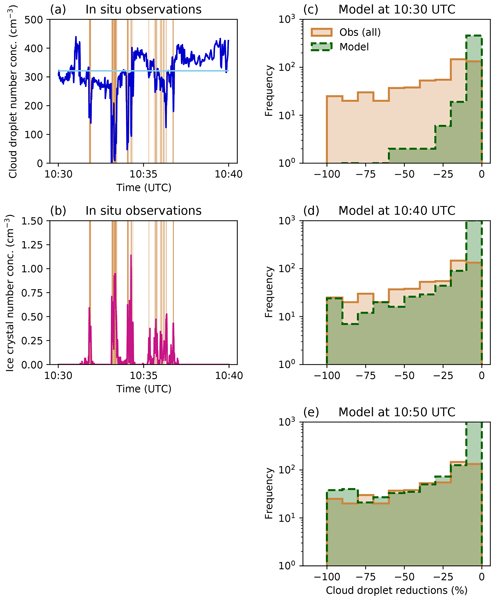
We present simulations with a high-resolution numerical weather prediction model to study the growth of ice crystals in low clouds following glaciogenic seeding. We show that the simulated ice crystals grow slower than observed and do not consume as many cloud droplets as measured in the field. This may have implications for forecasting precipitation, as the ice phase is crucial for precipitation at middle and high latitudes.
Ulrike Proske, Sylvaine Ferrachat, and Ulrike Lohmann
Atmos. Chem. Phys., 24, 5907–5933, https://doi.org/10.5194/acp-24-5907-2024, https://doi.org/10.5194/acp-24-5907-2024, 2024
Short summary
Short summary
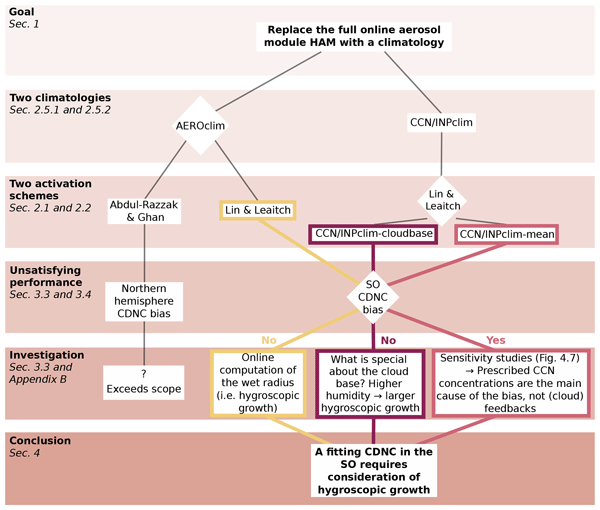
Climate models include treatment of aerosol particles because these influence clouds and radiation. Over time their representation has grown increasingly detailed. This complexity may hinder our understanding of model behaviour. Thus here we simplify the aerosol representation of our climate model by prescribing mean concentrations, which saves run time and helps to discover unexpected model behaviour. We conclude that simplifications provide a new perspective for model study and development.
Zane Dedekind, Ulrike Proske, Sylvaine Ferrachat, Ulrike Lohmann, and David Neubauer
Atmos. Chem. Phys., 24, 5389–5404, https://doi.org/10.5194/acp-24-5389-2024, https://doi.org/10.5194/acp-24-5389-2024, 2024
Short summary
Short summary
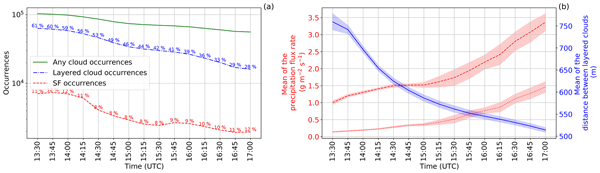
Ice particles precipitating into lower clouds from an upper cloud, the seeder–feeder process, can enhance precipitation. A numerical modeling study conducted in the Swiss Alps found that 48 % of observed clouds were overlapping, with the seeder–feeder process occurring in 10 % of these clouds. Inhibiting the seeder–feeder process reduced the surface precipitation and ice particle growth rates, which were further reduced when additional ice multiplication processes were included in the model.
Baptiste Testa, Lukas Durdina, Peter A. Alpert, Fabian Mahrt, Christopher H. Dreimol, Jacinta Edebeli, Curdin Spirig, Zachary C. J. Decker, Julien Anet, and Zamin A. Kanji
Atmos. Chem. Phys., 24, 4537–4567, https://doi.org/10.5194/acp-24-4537-2024, https://doi.org/10.5194/acp-24-4537-2024, 2024
Short summary
Short summary
Laboratory experiments on the ice nucleation of real commercial aviation soot particles are investigated for their cirrus cloud formation potential. Our results show that aircraft-emitted soot in the upper troposphere will be poor ice-nucleating particles. Measuring the soot particle morphology and modifying their mixing state allow us to elucidate why these particles are ineffective at forming ice, in contrast to previously used soot surrogates.
Esther S. Breuninger, Julie Tolu, Iris Thurnherr, Franziska Aemisegger, Aryeh Feinberg, Sylvain Bouchet, Jeroen E. Sonke, Véronique Pont, Heini Wernli, and Lenny H. E. Winkel
Atmos. Chem. Phys., 24, 2491–2510, https://doi.org/10.5194/acp-24-2491-2024, https://doi.org/10.5194/acp-24-2491-2024, 2024
Short summary
Short summary
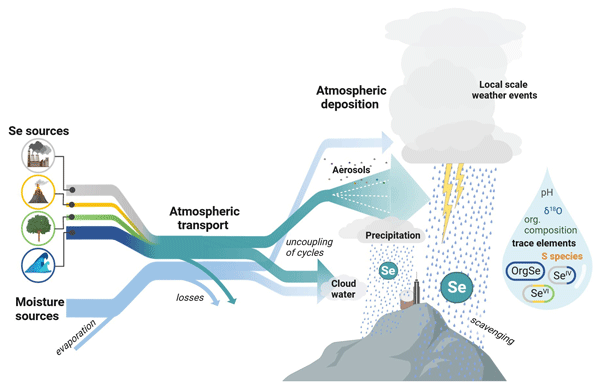
Atmospheric deposition is an important source of selenium (Se) and other health-relevant trace elements in surface environments. We found that the variability in elemental concentrations in atmospheric deposition reflects not only changes in emission sources but also weather conditions during atmospheric removal. Depending on the sources and if Se is derived more locally or from further away, the Se forms can be different, affecting the bioavailability of Se atmospherically supplied to soils.
Anna J. Miller, Fabiola Ramelli, Christopher Fuchs, Nadja Omanovic, Robert Spirig, Huiying Zhang, Ulrike Lohmann, Zamin A. Kanji, and Jan Henneberger
Atmos. Meas. Tech., 17, 601–625, https://doi.org/10.5194/amt-17-601-2024, https://doi.org/10.5194/amt-17-601-2024, 2024
Short summary
Short summary
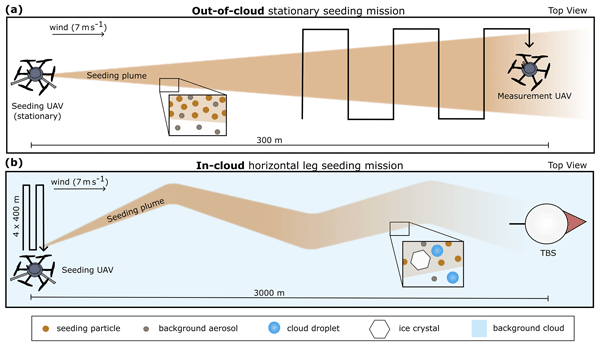
We present a method for aerosol and cloud research using two uncrewed aerial vehicles (UAVs). The UAVs have a propeller heating mechanism that allows flights in icing conditions, which has so far been a limitation for cloud research with UAVs. One UAV burns seeding flares, producing a plume of particles that causes ice formation in supercooled clouds. The second UAV measures aerosol size distributions and is used for measuring the seeding plume or for characterizing the boundary layer.
Ghislain Motos, Gabriel Freitas, Paraskevi Georgakaki, Jörg Wieder, Guangyu Li, Wenche Aas, Chris Lunder, Radovan Krejci, Julie Thérèse Pasquier, Jan Henneberger, Robert Oscar David, Christoph Ritter, Claudia Mohr, Paul Zieger, and Athanasios Nenes
Atmos. Chem. Phys., 23, 13941–13956, https://doi.org/10.5194/acp-23-13941-2023, https://doi.org/10.5194/acp-23-13941-2023, 2023
Short summary
Short summary
Low-altitude clouds play a key role in regulating the climate of the Arctic, a region that suffers from climate change more than any other on the planet. We gathered meteorological and aerosol physical and chemical data over a year and utilized them for a parameterization that help us unravel the factors driving and limiting the efficiency of cloud droplet formation. We then linked this information to the sources of aerosol found during each season and to processes of cloud glaciation.
Hannah C. Frostenberg, André Welti, Mikael Luhr, Julien Savre, Erik S. Thomson, and Luisa Ickes
Atmos. Chem. Phys., 23, 10883–10900, https://doi.org/10.5194/acp-23-10883-2023, https://doi.org/10.5194/acp-23-10883-2023, 2023
Short summary
Short summary
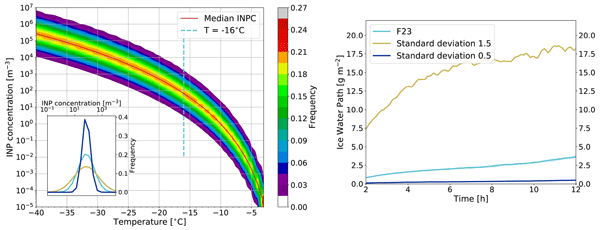
Observations show that ice-nucleating particle concentrations (INPCs) have a large variety and follow lognormal distributions for a given temperature. We introduce a new immersion freezing parameterization that applies this lognormal behavior. INPCs are drawn randomly from a temperature-dependent lognormal distribution. We then show that the ice content of the modeled Arctic stratocumulus cloud is highly sensitive to the probability of drawing large INPCs.
Guangyu Li, Elise K. Wilbourn, Zezhen Cheng, Jörg Wieder, Allison Fagerson, Jan Henneberger, Ghislain Motos, Rita Traversi, Sarah D. Brooks, Mauro Mazzola, Swarup China, Athanasios Nenes, Ulrike Lohmann, Naruki Hiranuma, and Zamin A. Kanji
Atmos. Chem. Phys., 23, 10489–10516, https://doi.org/10.5194/acp-23-10489-2023, https://doi.org/10.5194/acp-23-10489-2023, 2023
Short summary
Short summary
In this work, we present results from an Arctic field campaign (NASCENT) in Ny-Ålesund, Svalbard, on the abundance, variability, physicochemical properties, and potential sources of ice-nucleating particles (INPs) relevant for mixed-phase cloud formation. This work improves the data coverage of Arctic INPs and aerosol properties, allowing for the validation of models predicting cloud microphysical and radiative properties of mixed-phase clouds in the rapidly warming Arctic.
Bernhard M. Enz, Jan P. Engelmann, and Ulrike Lohmann
Geosci. Model Dev., 16, 5093–5112, https://doi.org/10.5194/gmd-16-5093-2023, https://doi.org/10.5194/gmd-16-5093-2023, 2023
Short summary
Short summary
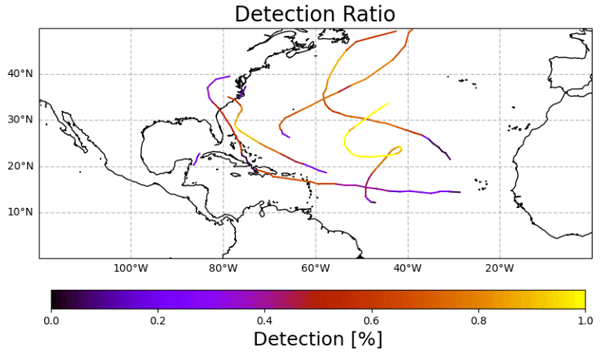
An algorithm to track tropical cyclones in model simulation data has been developed. The algorithm uses many combinations of varying parameter thresholds to detect weaker phases of tropical cyclones while still being resilient to false positives. It is shown that the algorithm performs well and adequately represents the tropical cyclone activity of the underlying simulation data. The impact of false positives on overall tropical cyclone activity is shown to be insignificant.
Dimitri Castarède, Zoé Brasseur, Yusheng Wu, Zamin A. Kanji, Markus Hartmann, Lauri Ahonen, Merete Bilde, Markku Kulmala, Tuukka Petäjä, Jan B. C. Pettersson, Berko Sierau, Olaf Stetzer, Frank Stratmann, Birgitta Svenningsson, Erik Swietlicki, Quynh Thu Nguyen, Jonathan Duplissy, and Erik S. Thomson
Atmos. Meas. Tech., 16, 3881–3899, https://doi.org/10.5194/amt-16-3881-2023, https://doi.org/10.5194/amt-16-3881-2023, 2023
Short summary
Short summary
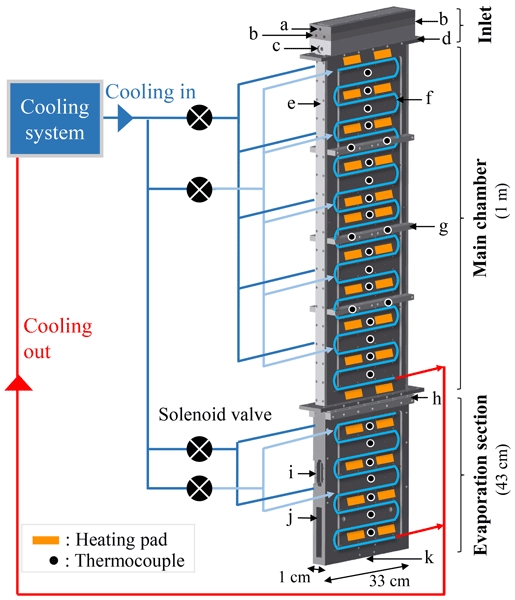
Clouds play a key role in Earth’s climate by influencing the surface energy budget. Certain types of atmospheric aerosols, called ice-nucleating particles (INPs), induce the formation of ice in clouds and, thus, often initiate precipitation formation. The Portable Ice Nucleation Chamber 2 (PINCii) is a new instrument developed to study ice formation and to conduct ambient measurements of INPs, allowing us to investigate the sources and properties of the atmospheric aerosols that can act as INPs.
Colin Tully, David Neubauer, Diego Villanueva, and Ulrike Lohmann
Atmos. Chem. Phys., 23, 7673–7698, https://doi.org/10.5194/acp-23-7673-2023, https://doi.org/10.5194/acp-23-7673-2023, 2023
Short summary
Short summary
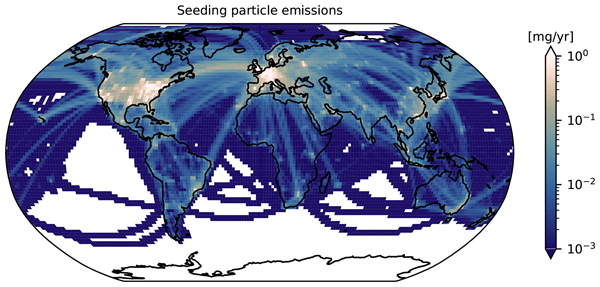
This study details the first attempt with a GCM to simulate a fully prognostic aerosol species specifically for cirrus climate intervention. The new approach is in line with the real-world delivery mechanism via aircraft. However, to achieve an appreciable signal from seeding, smaller particles were needed, and their mass emissions needed to be scaled by at least a factor of 100. These biases contributed to either overseeding or small and insignificant effects in response to seeding cirrus.
Joschka Pfeifer, Naser G. A. Mahfouz, Benjamin C. Schulze, Serge Mathot, Dominik Stolzenburg, Rima Baalbaki, Zoé Brasseur, Lucia Caudillo, Lubna Dada, Manuel Granzin, Xu-Cheng He, Houssni Lamkaddam, Brandon Lopez, Vladimir Makhmutov, Ruby Marten, Bernhard Mentler, Tatjana Müller, Antti Onnela, Maxim Philippov, Ana A. Piedehierro, Birte Rörup, Meredith Schervish, Ping Tian, Nsikanabasi S. Umo, Dongyu S. Wang, Mingyi Wang, Stefan K. Weber, André Welti, Yusheng Wu, Marcel Zauner-Wieczorek, Antonio Amorim, Imad El Haddad, Markku Kulmala, Katrianne Lehtipalo, Tuukka Petäjä, António Tomé, Sander Mirme, Hanna E. Manninen, Neil M. Donahue, Richard C. Flagan, Andreas Kürten, Joachim Curtius, and Jasper Kirkby
Atmos. Chem. Phys., 23, 6703–6718, https://doi.org/10.5194/acp-23-6703-2023, https://doi.org/10.5194/acp-23-6703-2023, 2023
Short summary
Short summary
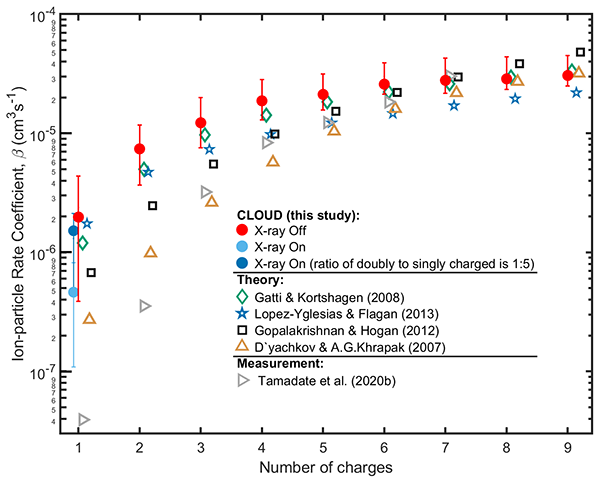
Attachment rate coefficients between ions and charged aerosol particles determine their lifetimes and may also influence cloud dynamics and aerosol processing. Here we present novel experiments that measure ion–aerosol attachment rate coefficients for multiply charged aerosol particles under atmospheric conditions in the CERN CLOUD chamber. Our results provide experimental discrimination between various theoretical models.
Lucía Caudillo, Mihnea Surdu, Brandon Lopez, Mingyi Wang, Markus Thoma, Steffen Bräkling, Angela Buchholz, Mario Simon, Andrea C. Wagner, Tatjana Müller, Manuel Granzin, Martin Heinritzi, Antonio Amorim, David M. Bell, Zoé Brasseur, Lubna Dada, Jonathan Duplissy, Henning Finkenzeller, Xu-Cheng He, Houssni Lamkaddam, Naser G. A. Mahfouz, Vladimir Makhmutov, Hanna E. Manninen, Guillaume Marie, Ruby Marten, Roy L. Mauldin, Bernhard Mentler, Antti Onnela, Tuukka Petäjä, Joschka Pfeifer, Maxim Philippov, Ana A. Piedehierro, Birte Rörup, Wiebke Scholz, Jiali Shen, Dominik Stolzenburg, Christian Tauber, Ping Tian, António Tomé, Nsikanabasi Silas Umo, Dongyu S. Wang, Yonghong Wang, Stefan K. Weber, André Welti, Marcel Zauner-Wieczorek, Urs Baltensperger, Richard C. Flagan, Armin Hansel, Jasper Kirkby, Markku Kulmala, Katrianne Lehtipalo, Douglas R. Worsnop, Imad El Haddad, Neil M. Donahue, Alexander L. Vogel, Andreas Kürten, and Joachim Curtius
Atmos. Chem. Phys., 23, 6613–6631, https://doi.org/10.5194/acp-23-6613-2023, https://doi.org/10.5194/acp-23-6613-2023, 2023
Short summary
Short summary
In this study, we present an intercomparison of four different techniques for measuring the chemical composition of nanoparticles. The intercomparison was performed based on the observed chemical composition, calculated volatility, and analysis of the thermograms. We found that the methods generally agree on the most important compounds that are found in the nanoparticles. However, they do see different parts of the organic spectrum. We suggest potential explanations for these differences.
Colin Tully, David Neubauer, and Ulrike Lohmann
Geosci. Model Dev., 16, 2957–2973, https://doi.org/10.5194/gmd-16-2957-2023, https://doi.org/10.5194/gmd-16-2957-2023, 2023
Short summary
Short summary
A new method to simulate deterministic ice nucleation processes based on the differential activated fraction was evaluated against a cumulative approach. Box model simulations of heterogeneous-only ice nucleation within cirrus suggest that the latter approach likely underpredicts the ice crystal number concentration. Longer simulations with a GCM show that choosing between these two approaches impacts ice nucleation competition within cirrus but leads to small and insignificant climate effects.
Zane Dedekind, Jacopo Grazioli, Philip H. Austin, and Ulrike Lohmann
Atmos. Chem. Phys., 23, 2345–2364, https://doi.org/10.5194/acp-23-2345-2023, https://doi.org/10.5194/acp-23-2345-2023, 2023
Short summary
Short summary
Simulations allowing ice particles to collide with one another producing more ice particles represented surface observations of ice particles accurately. An increase in ice particles formed through collisions was related to sharp changes in the wind direction and speed with height. Changes in wind speed and direction can therefore cause more enhanced collisions between ice particles and alter how fast and how much precipitation forms. Simulations were conducted with the atmospheric model COSMO.

Fabian Mahrt, Carolin Rösch, Kunfeng Gao, Christopher H. Dreimol, Maria A. Zawadowicz, and Zamin A. Kanji
Atmos. Chem. Phys., 23, 1285–1308, https://doi.org/10.5194/acp-23-1285-2023, https://doi.org/10.5194/acp-23-1285-2023, 2023
Short summary
Short summary
Major aerosol types emitted by biomass burning include soot, ash, and charcoal particles. Here, we investigated the ice nucleation activity of 400 nm size-selected particles of two different pyrolyis-derived charcoal types in the mixed phase and cirrus cloud regime. We find that ice nucleation is constrained to cirrus cloud conditions, takes place via pore condensation and freezing, and is largely governed by the particle porosity and mineral content.
Julie Thérèse Pasquier, Jan Henneberger, Fabiola Ramelli, Annika Lauber, Robert Oscar David, Jörg Wieder, Tim Carlsen, Rosa Gierens, Marion Maturilli, and Ulrike Lohmann
Atmos. Chem. Phys., 22, 15579–15601, https://doi.org/10.5194/acp-22-15579-2022, https://doi.org/10.5194/acp-22-15579-2022, 2022
Short summary
Short summary
It is important to understand how ice crystals and cloud droplets form in clouds, as their concentrations and sizes determine the exact radiative properties of the clouds. Normally, ice crystals form from aerosols, but we found evidence for the formation of additional ice crystals from the original ones over a large temperature range within Arctic clouds. In particular, additional ice crystals were formed during collisions of several ice crystals or during the freezing of large cloud droplets.
Guangyu Li, Jörg Wieder, Julie T. Pasquier, Jan Henneberger, and Zamin A. Kanji
Atmos. Chem. Phys., 22, 14441–14454, https://doi.org/10.5194/acp-22-14441-2022, https://doi.org/10.5194/acp-22-14441-2022, 2022
Short summary
Short summary
The concentration of ice-nucleating particles (INPs) is atmospherically relevant for primary ice formation in clouds. In this work, from 12 weeks of field measurement data in the Arctic, we developed a new parameterization to predict INP concentrations applicable for pristine background conditions based only on temperature. The INP parameterization could improve the cloud microphysical representation in climate models, aiding in Arctic climate predictions.
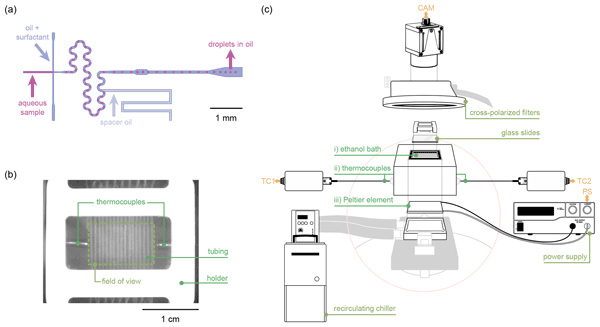
Florin N. Isenrich, Nadia Shardt, Michael Rösch, Julia Nette, Stavros Stavrakis, Claudia Marcolli, Zamin A. Kanji, Andrew J. deMello, and Ulrike Lohmann
Atmos. Meas. Tech., 15, 5367–5381, https://doi.org/10.5194/amt-15-5367-2022, https://doi.org/10.5194/amt-15-5367-2022, 2022
Short summary
Short summary
Ice nucleation in the atmosphere influences cloud properties and lifetimes. Microfluidic instruments have recently been used to investigate ice nucleation, but these instruments are typically made out of a polymer that contributes to droplet instability over extended timescales and relatively high temperature uncertainty. To address these drawbacks, we develop and validate a new microfluidic instrument that uses fluoropolymer tubing to extend droplet stability and improve temperature accuracy.
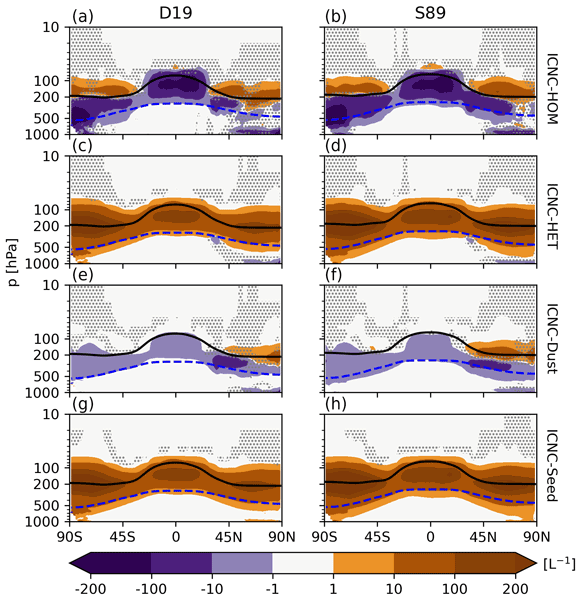
Colin Tully, David Neubauer, Nadja Omanovic, and Ulrike Lohmann
Atmos. Chem. Phys., 22, 11455–11484, https://doi.org/10.5194/acp-22-11455-2022, https://doi.org/10.5194/acp-22-11455-2022, 2022
Short summary
Short summary
The proposed geoengineering method, cirrus cloud thinning, was evaluated using a more physically based microphysics scheme coupled to a more realistic approach for calculating ice cloud fractions in the ECHAM-HAM GCM. Sensitivity tests reveal that using the new ice cloud fraction approach and increasing the critical ice saturation ratio for ice nucleation on seeding particles reduces warming from overseeding. However, this geoengineering method is unlikely to be feasible on a global scale.

Iris Thurnherr and Franziska Aemisegger
Atmos. Chem. Phys., 22, 10353–10373, https://doi.org/10.5194/acp-22-10353-2022, https://doi.org/10.5194/acp-22-10353-2022, 2022
Short summary
Short summary
Stable water isotopes in marine boundary layer vapour are strongly influenced by the strength of air–sea fluxes. Here, we investigate a distinct vapour isotope signal observed in the warm sector of Southern Ocean cyclones. Single-process air parcel models are used together with high-resolution isotope-enabled simulations with the weather prediction model COSMOiso to improve our understanding of the importance of air–sea fluxes for the moisture cycling in the context of extratropical cyclones.

Jörg Wieder, Nikola Ihn, Claudia Mignani, Moritz Haarig, Johannes Bühl, Patric Seifert, Ronny Engelmann, Fabiola Ramelli, Zamin A. Kanji, Ulrike Lohmann, and Jan Henneberger
Atmos. Chem. Phys., 22, 9767–9797, https://doi.org/10.5194/acp-22-9767-2022, https://doi.org/10.5194/acp-22-9767-2022, 2022
Short summary
Short summary
Ice formation and its evolution in mixed-phase clouds are still uncertain. We evaluate the lidar retrieval of ice-nucleating particle concentration in dust-dominated and continental air masses over the Swiss Alps with in situ observations. A calibration factor to improve the retrieval from continental air masses is proposed. Ice multiplication factors are obtained with a new method utilizing remote sensing. Our results indicate that secondary ice production occurs at temperatures down to −30 °C.
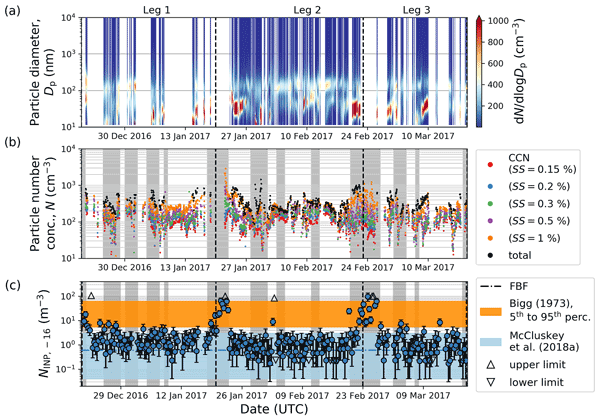
Christian Tatzelt, Silvia Henning, André Welti, Andrea Baccarini, Markus Hartmann, Martin Gysel-Beer, Manuela van Pinxteren, Robin L. Modini, Julia Schmale, and Frank Stratmann
Atmos. Chem. Phys., 22, 9721–9745, https://doi.org/10.5194/acp-22-9721-2022, https://doi.org/10.5194/acp-22-9721-2022, 2022
Short summary
Short summary
We present the abundance and origin of cloud-relevant aerosol particles in the preindustral-like conditions of the Southern Ocean (SO) during austral summer. Cloud condensation nuclei (CCN) and ice-nucleating particles (INP) were measured during a circum-Antarctic scientific cruise with in situ instrumentation and offline filter measurements, respectively. Transport processes were found to play an equally important role as local sources for both the CCN and INP population of the SO.
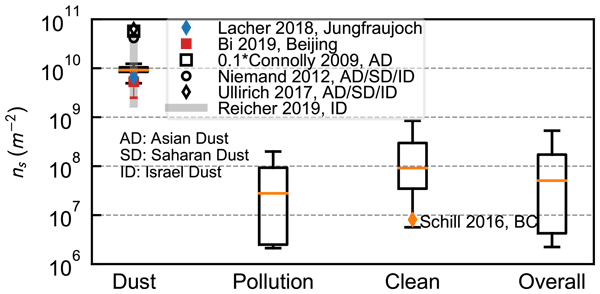
Cuiqi Zhang, Zhijun Wu, Jingchuan Chen, Jie Chen, Lizi Tang, Wenfei Zhu, Xiangyu Pei, Shiyi Chen, Ping Tian, Song Guo, Limin Zeng, Min Hu, and Zamin A. Kanji
Atmos. Chem. Phys., 22, 7539–7556, https://doi.org/10.5194/acp-22-7539-2022, https://doi.org/10.5194/acp-22-7539-2022, 2022
Short summary
Short summary
The immersion ice nucleation effectiveness of aerosols from multiple sources in the urban environment remains elusive. In this study, we demonstrate that the immersion ice-nucleating particle (INP) concentration increased dramatically during a dust event in an urban atmosphere. Pollutant aerosols, including inorganic salts formed through secondary transformation (SIA) and black carbon (BC), might not act as effective INPs under mixed-phase cloud conditions.
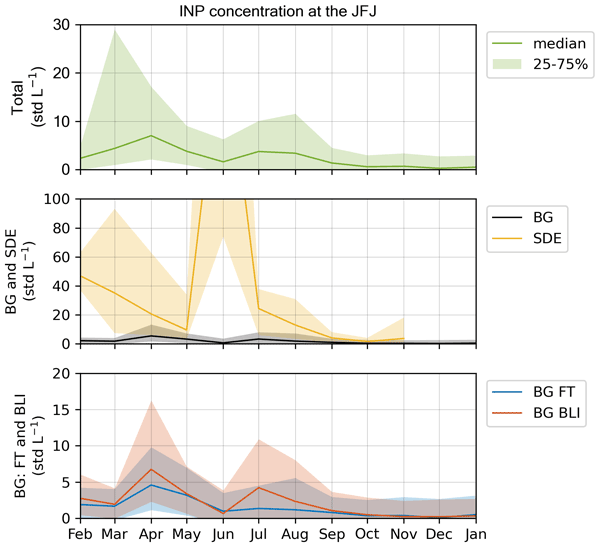
Cyril Brunner, Benjamin T. Brem, Martine Collaud Coen, Franz Conen, Martin Steinbacher, Martin Gysel-Beer, and Zamin A. Kanji
Atmos. Chem. Phys., 22, 7557–7573, https://doi.org/10.5194/acp-22-7557-2022, https://doi.org/10.5194/acp-22-7557-2022, 2022
Short summary
Short summary
Microscopic particles called ice-nucleating particles (INPs) are essential for ice crystals to form in clouds. INPs are a tiny proportion of atmospheric aerosol, and their abundance is poorly constrained. We study how the concentration of INPs changes diurnally and seasonally at a mountaintop station in central Europe. Unsurprisingly, a diurnal cycle is only found when considering air masses that have had lower-altitude ground contact. The highest INP concentrations occur in spring.
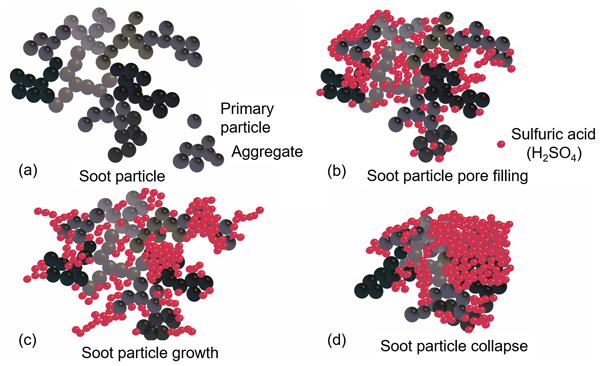
Kunfeng Gao, Chong-Wen Zhou, Eszter J. Barthazy Meier, and Zamin A. Kanji
Atmos. Chem. Phys., 22, 5331–5364, https://doi.org/10.5194/acp-22-5331-2022, https://doi.org/10.5194/acp-22-5331-2022, 2022
Short summary
Short summary
Incomplete combustion of fossil fuel produces carbonaceous particles called soot. These particles can affect cloud formation by acting as centres for droplet or ice formation. The atmospheric residence time of soot particles is of the order of days to weeks, which can result in them becoming coated by various trace species in the atmosphere such as acids. In this study, we quantify the cirrus cloud-forming ability of soot particles coated with the atmospherically ubiquitous sulfuric acid.
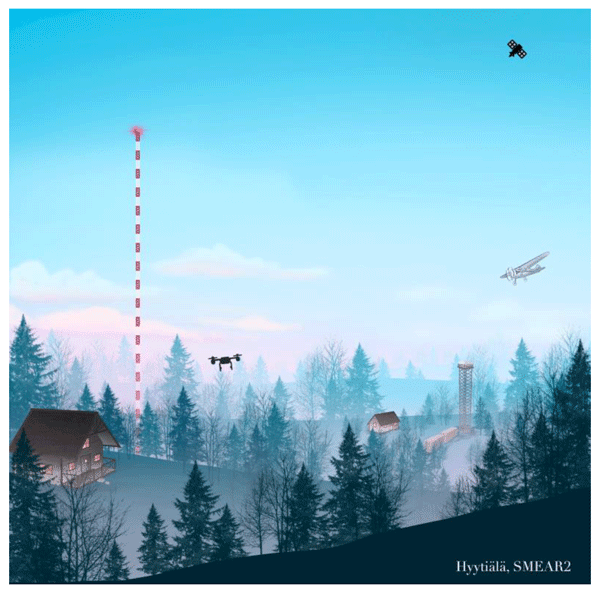
Zoé Brasseur, Dimitri Castarède, Erik S. Thomson, Michael P. Adams, Saskia Drossaart van Dusseldorp, Paavo Heikkilä, Kimmo Korhonen, Janne Lampilahti, Mikhail Paramonov, Julia Schneider, Franziska Vogel, Yusheng Wu, Jonathan P. D. Abbatt, Nina S. Atanasova, Dennis H. Bamford, Barbara Bertozzi, Matthew Boyer, David Brus, Martin I. Daily, Romy Fösig, Ellen Gute, Alexander D. Harrison, Paula Hietala, Kristina Höhler, Zamin A. Kanji, Jorma Keskinen, Larissa Lacher, Markus Lampimäki, Janne Levula, Antti Manninen, Jens Nadolny, Maija Peltola, Grace C. E. Porter, Pyry Poutanen, Ulrike Proske, Tobias Schorr, Nsikanabasi Silas Umo, János Stenszky, Annele Virtanen, Dmitri Moisseev, Markku Kulmala, Benjamin J. Murray, Tuukka Petäjä, Ottmar Möhler, and Jonathan Duplissy
Atmos. Chem. Phys., 22, 5117–5145, https://doi.org/10.5194/acp-22-5117-2022, https://doi.org/10.5194/acp-22-5117-2022, 2022
Short summary
Short summary
The present measurement report introduces the ice nucleation campaign organized in Hyytiälä, Finland, in 2018 (HyICE-2018). We provide an overview of the campaign settings, and we describe the measurement infrastructure and operating procedures used. In addition, we use results from ice nucleation instrument inter-comparison to show that the suite of these instruments deployed during the campaign reports consistent results.
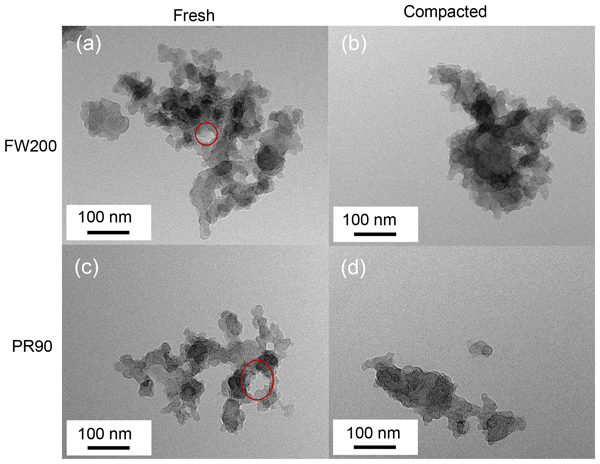
Kunfeng Gao, Franz Friebel, Chong-Wen Zhou, and Zamin A. Kanji
Atmos. Chem. Phys., 22, 4985–5016, https://doi.org/10.5194/acp-22-4985-2022, https://doi.org/10.5194/acp-22-4985-2022, 2022
Short summary
Short summary
Soot particles impact cloud formation and radiative properties in the upper atmosphere where aircraft emit carbonaceous particles. We use cloud chambers to mimic the upper atmosphere temperature and humidity to test the influence of the morphology of the soot particles on ice cloud formation. For particles larger than 200 nm, the compacted (densified) samples have a higher affinity for ice crystal formation in the cirrus regime than the fluffy (un-compacted) soot particles of the same sample.

Ulrike Proske, Sylvaine Ferrachat, David Neubauer, Martin Staab, and Ulrike Lohmann
Atmos. Chem. Phys., 22, 4737–4762, https://doi.org/10.5194/acp-22-4737-2022, https://doi.org/10.5194/acp-22-4737-2022, 2022
Short summary
Short summary
Cloud microphysical processes shape cloud properties and are therefore important to represent in climate models. Their parameterization has grown more complex, making the model results more difficult to interpret. Using sensitivity analysis we test how the global aerosol–climate model ECHAM-HAM reacts to changes to these parameterizations. The model is sensitive to the parameterization of ice crystal autoconversion but not to, e.g., self-collection, suggesting that it may be simplified.
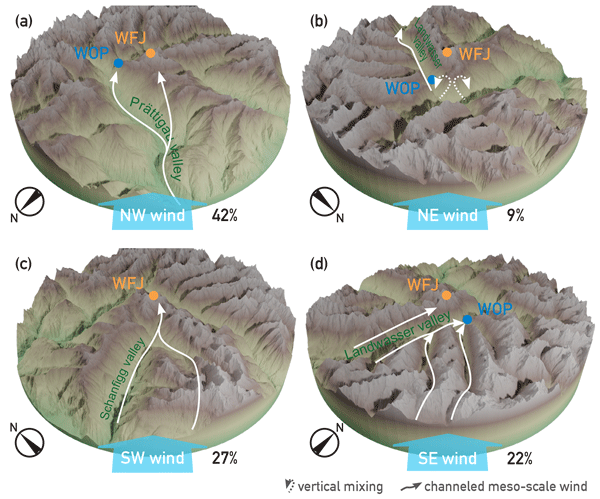
Jörg Wieder, Claudia Mignani, Mario Schär, Lucie Roth, Michael Sprenger, Jan Henneberger, Ulrike Lohmann, Cyril Brunner, and Zamin A. Kanji
Atmos. Chem. Phys., 22, 3111–3130, https://doi.org/10.5194/acp-22-3111-2022, https://doi.org/10.5194/acp-22-3111-2022, 2022
Short summary
Short summary
We investigate the variation in ice-nucleating particles (INPs) relevant for primary ice formation in mixed-phased clouds over the Alps based on simultaneous in situ observations at a mountaintop and a nearby high valley (1060 m height difference). In most cases, advection from the surrounding lower regions was responsible for changes in INP concentration, causing a diurnal cycle at the mountaintop. Our study underlines the importance of the planetary boundary layer as an INP reserve.
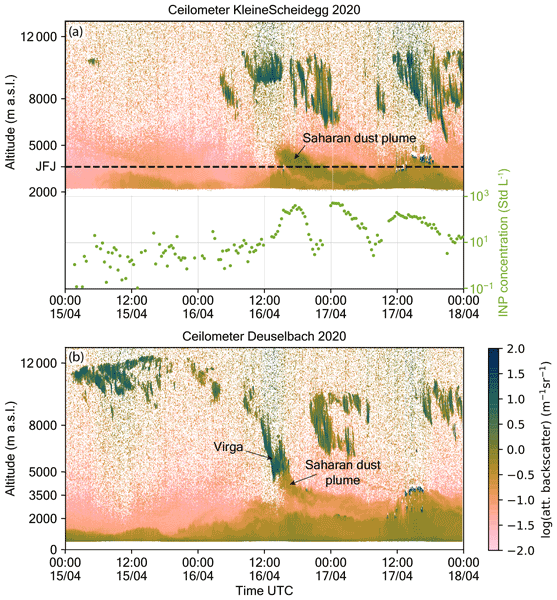
Cyril Brunner, Benjamin T. Brem, Martine Collaud Coen, Franz Conen, Maxime Hervo, Stephan Henne, Martin Steinbacher, Martin Gysel-Beer, and Zamin A. Kanji
Atmos. Chem. Phys., 21, 18029–18053, https://doi.org/10.5194/acp-21-18029-2021, https://doi.org/10.5194/acp-21-18029-2021, 2021
Short summary
Short summary
Special microscopic particles called ice-nucleating particles (INPs) are essential for ice crystals to form in the atmosphere. INPs are sparse and their atmospheric concentration and properties are not well understood. Mineral dust particles make up a significant fraction of INPs but how much remains unknown. Here, we address this knowledge gap by studying periods when mineral particles are present in large quantities at a mountaintop station in central Europe.
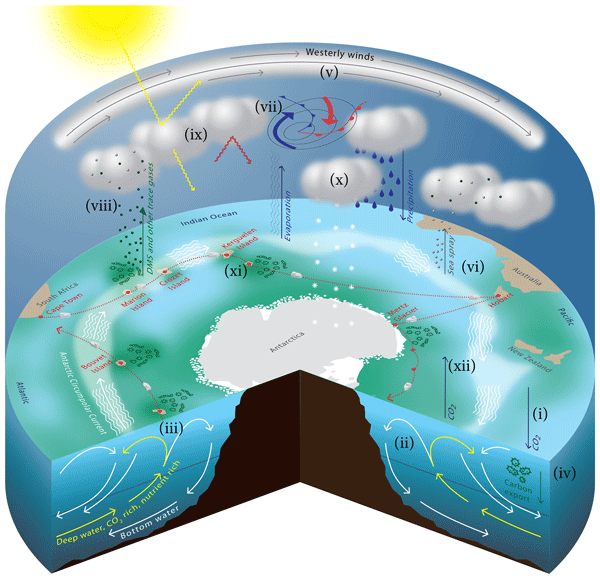
Sebastian Landwehr, Michele Volpi, F. Alexander Haumann, Charlotte M. Robinson, Iris Thurnherr, Valerio Ferracci, Andrea Baccarini, Jenny Thomas, Irina Gorodetskaya, Christian Tatzelt, Silvia Henning, Rob L. Modini, Heather J. Forrer, Yajuan Lin, Nicolas Cassar, Rafel Simó, Christel Hassler, Alireza Moallemi, Sarah E. Fawcett, Neil Harris, Ruth Airs, Marzieh H. Derkani, Alberto Alberello, Alessandro Toffoli, Gang Chen, Pablo Rodríguez-Ros, Marina Zamanillo, Pau Cortés-Greus, Lei Xue, Conor G. Bolas, Katherine C. Leonard, Fernando Perez-Cruz, David Walton, and Julia Schmale
Earth Syst. Dynam., 12, 1295–1369, https://doi.org/10.5194/esd-12-1295-2021, https://doi.org/10.5194/esd-12-1295-2021, 2021
Short summary
Short summary
The Antarctic Circumnavigation Expedition surveyed a large number of variables describing the dynamic state of ocean and atmosphere, freshwater cycle, atmospheric chemistry, ocean biogeochemistry, and microbiology in the Southern Ocean. To reduce the dimensionality of the dataset, we apply a sparse principal component analysis and identify temporal patterns from diurnal to seasonal cycles, as well as geographical gradients and
hotspotsof interaction. Code and data are open access.
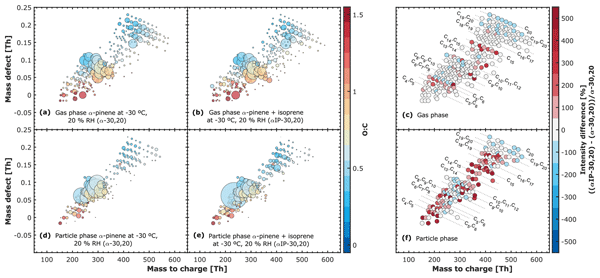
Lucía Caudillo, Birte Rörup, Martin Heinritzi, Guillaume Marie, Mario Simon, Andrea C. Wagner, Tatjana Müller, Manuel Granzin, Antonio Amorim, Farnoush Ataei, Rima Baalbaki, Barbara Bertozzi, Zoé Brasseur, Randall Chiu, Biwu Chu, Lubna Dada, Jonathan Duplissy, Henning Finkenzeller, Loïc Gonzalez Carracedo, Xu-Cheng He, Victoria Hofbauer, Weimeng Kong, Houssni Lamkaddam, Chuan P. Lee, Brandon Lopez, Naser G. A. Mahfouz, Vladimir Makhmutov, Hanna E. Manninen, Ruby Marten, Dario Massabò, Roy L. Mauldin, Bernhard Mentler, Ugo Molteni, Antti Onnela, Joschka Pfeifer, Maxim Philippov, Ana A. Piedehierro, Meredith Schervish, Wiebke Scholz, Benjamin Schulze, Jiali Shen, Dominik Stolzenburg, Yuri Stozhkov, Mihnea Surdu, Christian Tauber, Yee Jun Tham, Ping Tian, António Tomé, Steffen Vogt, Mingyi Wang, Dongyu S. Wang, Stefan K. Weber, André Welti, Wang Yonghong, Wu Yusheng, Marcel Zauner-Wieczorek, Urs Baltensperger, Imad El Haddad, Richard C. Flagan, Armin Hansel, Kristina Höhler, Jasper Kirkby, Markku Kulmala, Katrianne Lehtipalo, Ottmar Möhler, Harald Saathoff, Rainer Volkamer, Paul M. Winkler, Neil M. Donahue, Andreas Kürten, and Joachim Curtius
Atmos. Chem. Phys., 21, 17099–17114, https://doi.org/10.5194/acp-21-17099-2021, https://doi.org/10.5194/acp-21-17099-2021, 2021
Short summary
Short summary
We performed experiments in the CLOUD chamber at CERN at low temperatures to simulate new particle formation in the upper free troposphere (at −30 ºC and −50 ºC). We measured the particle and gas phase and found that most of the compounds present in the gas phase are detected as well in the particle phase. The major compounds in the particles are C8–10 and C18–20. Specifically, we showed that C5 and C15 compounds are detected in a mixed system with isoprene and α-pinene at −30 ºC, 20 % RH.
Larissa Lacher, Hans-Christian Clemen, Xiaoli Shen, Stephan Mertes, Martin Gysel-Beer, Alireza Moallemi, Martin Steinbacher, Stephan Henne, Harald Saathoff, Ottmar Möhler, Kristina Höhler, Thea Schiebel, Daniel Weber, Jann Schrod, Johannes Schneider, and Zamin A. Kanji
Atmos. Chem. Phys., 21, 16925–16953, https://doi.org/10.5194/acp-21-16925-2021, https://doi.org/10.5194/acp-21-16925-2021, 2021
Short summary
Short summary
We investigate ice-nucleating particle properties at Jungfraujoch during the 2017 joint INUIT/CLACE field campaign, to improve the knowledge about those rare particles in a cloud-relevant environment. By quantifying ice-nucleating particles in parallel to single-particle mass spectrometry measurements, we find that mineral dust and aged sea spray particles are potential candidates for ice-nucleating particles. Our findings are supported by ice residual analysis and source region modeling.
Zane Dedekind, Annika Lauber, Sylvaine Ferrachat, and Ulrike Lohmann
Atmos. Chem. Phys., 21, 15115–15134, https://doi.org/10.5194/acp-21-15115-2021, https://doi.org/10.5194/acp-21-15115-2021, 2021
Short summary
Short summary
The RACLETS campaign combined cloud and snow research to improve the understanding of precipitation formation in clouds. A numerical weather prediction model, COSMO, was used to assess the importance of ice crystal enhancement by ice–ice collisions for cloud properties. We found that the number of ice crystals increased by 1 to 3 orders of magnitude when ice–ice collisions were permitted to occur, reducing localized regions of high precipitation and, thereby, improving the model performance.
Cited articles
Ahmed, R., Prowse, T., Dibike, Y., Bonsal, B., and O’Neil, H.: Recent Trends in Freshwater Influx to the Arctic Ocean from Four Major Arctic-Draining Rivers, Water-Sui, 12, https://doi.org/10.3390/w12041189, 2020. a
Aksenov, Y., Popova, E. E., Yool, A., Nurser, A. G., Williams, T. D., Bertino, L., and Bergh, J.: On the future navigability of Arctic sea routes: High-resolution projections of the Arctic Ocean and sea ice, Mar. Policy, 75, 300–317, https://doi.org/10.1016/j.marpol.2015.12.027, 2017. a
Ardyna, M., Mundy, C. J., Mayot, N., Matthes, L. C., Oziel, L., Horvat, C., Leu, E., Assmy, P., Hill, V., Matrai, P. A., Gale, M., Melnikov, I. A., and Arrigo, K. R.: Under-Ice Phytoplankton Blooms: Shedding Light on the “Invisible” Part of Arctic Primary Production, Frontiers in Marine Science, 7, https://doi.org/10.3389/fmars.2020.608032, 2020. a
Barry, K. R., Hill, T. C. J., Moore, K. A., Douglas, T. A., Kreidenweis, S. M., DeMott, P. J., and Creamean, J. M.: Persistence and Potential Atmospheric Ramifications of Ice-Nucleating Particles Released from Thawing Permafrost, Environ. Sci. Technol., 57, 3505–3515, https://doi.org/10.1021/acs.est.2c06530, 2023. a
Barry, K. R., Hill, T. C. J., Kreidenweis, S. M., DeMott, P. J., Tobo, Y., and Creamean, J. M.: Bioaerosols as indicators of central Arctic ice nucleating particle sources, Atmos. Chem. Phys., 25, 11919–11933, https://doi.org/10.5194/acp-25-11919-2025, 2025. a, b, c, d
Beall, C. M., Lucero, D., Hill, T. C., DeMott, P. J., Stokes, M. D., and Prather, K. A.: Best practices for precipitation sample storage for offline studies of ice nucleation in marine and coastal environments, Atmos. Meas. Tech., 13, 6473–6486, https://doi.org/10.5194/amt-13-6473-2020, 2020. a
Becagli, S., Ghedini, C., Peeters, S., Rottiers, A., Traversi, R., Udisti, R., Chiari, M., Jalba, A., Despiau, S., Dayan, U., and Temara, A.: MBAS (Methylene Blue Active Substances) and LAS (Linear Alkylbenzene Sulphonates) in Mediterranean coastal aerosols: Sources and transport processes, Atmos. Environ., 45, 6788–6801, https://doi.org/10.1016/j.atmosenv.2011.04.041, 2011. a
Becagli, S., Amore, A., Caiazzo, L., Di Iorio, T., di Sarra, A., Lazzara, L., Marchese, C., Meloni, D., Mori, G., Muscari, G., Nuccio, C., Pace, G., Severi, M., and Traversi, R.: Biogenic Aerosol in the Arctic from Eight Years of MSA Data from Ny Ålesund (Svalbard Islands) and Thule (Greenland), Atmosphere-Basel, 10, https://doi.org/10.3390/atmos10070349, 2019. a
Bigg, E. K.: The formation of atmospheric ice crystals by the freezing of droplets, Q. J. Roy. Meteor. Soc., 79, 510–519, https://doi.org/10.1002/qj.49707934207, 1953. a
Bigg, E. K.: Ice forming nuclei in the high Arctic, Tellus B, 48, 223–233, https://doi.org/10.3402/tellusb.v48i2.15888, 1996. a, b, c, d
Bigg, E. K. and Leck, C.: Cloud-active particles over the central Arctic Ocean, J. Geophys. Res.-Atmos., 106, 32155–32166, https://doi.org/10.1029/1999JD901152, 2001. a, b, c, d
Browse, J., Carslaw, K. S., Mann, G. W., Birch, C. E., Arnold, S. R., and Leck, C.: The complex response of Arctic aerosol to sea-ice retreat, Atmos. Chem. Phys., 14, 7543–7557, https://doi.org/10.5194/acp-14-7543-2014, 2014. a
Conen, F., Stopelli, E., and Zimmermann, L.: Clues that decaying leaves enrich Arctic air with ice nucleating particles, Atmos. Environ., 129, 91–94, https://doi.org/10.1016/j.atmosenv.2016.01.027, 2016. a
Cornwell, G. C., Sultana, C. M., Prank, M., Cochran, R. E., Hill, T. C. J., Schill, G. P., DeMott, P. J., Mahowald, N., and Prather, K. A.: Ejection of Dust From the Ocean as a Potential Source of Marine Ice Nucleating Particles, J. Geophys. Res.-Atmos., 125, e2020JD033073, https://doi.org/10.1029/2020JD033073, 2020. a, b
Creamean, J. M., Kirpes, R. M., Pratt, K. A., Spada, N. J., Maahn, M., de Boer, G., Schnell, R. C., and China, S.: Marine and terrestrial influences on ice nucleating particles during continuous springtime measurements in an Arctic oilfield location, Atmos. Chem. Phys., 18, 18023–18042, https://doi.org/10.5194/acp-18-18023-2018, 2018. a, b
Creamean, J. M., Cross, J. N., Pickart, R., McRaven, L., Lin, P., Pacini, A., Hanlon, R., Schmale, D. G., Ceniceros, J., Aydell, T., Colombi, N., Bolger, E., and DeMott, P. J.: Ice nucleating particles carried from below a phytoplankton bloom to the Arctic atmosphere, Geophys. Res. Lett., 46, 8572–8581, https://doi.org/10.1029/2019GL083039, 2019. a, b, c, d, e
Creamean, J. M., Hill, T. C., DeMott, P. J., Uetake, J., Kreidenweis, S., and Douglas, T. A.: Thawing permafrost: an overlooked source of seeds for Arctic cloud formation, Environ. Res. Lett., 15, 084022, https://doi.org/10.1088/1748-9326/ab87d3, 2020. a, b
Creamean, J. M., Barry, K., Hill, T. C., Hume, C., DeMott, P. J., Shupe, M. D., Dahlke, S., Willmes, S., Schmale, J., Beck, I., Hoppe, C. J. M., Fong, A., Chamberlain, E., Bowman, J., Scharien, R., and Persson, O.: Annual cycle observations of aerosols capable of ice formation in central Arctic clouds, Nat. Commun., 13, 3537, https://doi.org/10.1038/s41467-022-31182-x, 2022. a
David, R. O., Cascajo-Castresana, M., Brennan, K. P., Rösch, M., Els, N., Werz, J., Weichlinger, V., Boynton, L. S., Bogler, S., Borduas-Dedekind, N., Marcolli, C., and Kanji, Z. A.: Development of the DRoplet Ice Nuclei Counter Zurich (DRINCZ): validation and application to field-collected snow samples, Atmos. Meas. Tech., 12, 6865–6888, https://doi.org/10.5194/amt-12-6865-2019, 2019. a, b
DeMott, P. J., Prenni, A. J., Liu, X., Kreidenweis, S. M., Petters, M. D., Twohy, C. H., Richardson, M. S., Eidhammer, T., and Rogers, D. C.: Predicting global atmospheric ice nuclei distributions and their impacts on climate, P. Natl. Acad. Sci. USA, 107, 11217–11222, https://doi.org/10.1073/pnas.0910818107, 2010. a
DeMott, P. J., Prenni, A. J., McMeeking, G. R., Sullivan, R. C., Petters, M. D., Tobo, Y., Niemand, M., Möhler, O., Snider, J. R., Wang, Z., and Kreidenweis, S. M.: Integrating laboratory and field data to quantify the immersion freezing ice nucleation activity of mineral dust particles, Atmos. Chem. Phys., 15, 393–409, https://doi.org/10.5194/acp-15-393-2015, 2015. a, b
DeMott, P. J., Hill, T. C. J., McCluskey, C. S., Prather, K. A., Collins, D. B., Sullivan, R. C., Ruppel, M. J., Mason, R. H., Irish, V. E., Lee, T., Hwang, C. Y., Rhee, T. S., Snider, J. R., McMeeking, G. R., Dhaniyala, S., Lewis, E. R., Wentzell, J. J. B., Abbatt, J., Lee, C., Sultana, C. M., Ault, A. P., Axson, J. L., Martinez, M. D., Venero, I., Santos-Figueroa, G., Stokes, M. D., Deane, G. B., Mayol-Bracero, O. L., Grassian, V. H., Bertram, T. H., Bertram, A. K., Moffett, B. F., and Franc, G. D.: Sea spray aerosol as a unique source of ice nucleating particles, P. Natl. Acad. Sci. USA, 113, 5797–5803, https://doi.org/10.1073/pnas.1514034112, 2016. a, b, c, d, e
Forster, P., Storelvmo, T., Armour, K., Collins, W., Dufresne, J.-L., Frame, D., Lunt, D., Mauritsen, T., Palmer, M., Watanabe, M., Wild, M., and Zhang, H.: The Earth’s energy budget, climate feedbacks, and climate sensitivity, Climate Change 2021: The Physical Science Basis. Contribution of Working Group I to the Sixth Assessment Report of the Intergovernmental Panel on Climate Change, https://doi.org/10.25455/wgtn.16869671, 2021. a
Gabric, A., Matrai, P., Jones, G., and Middleton, J.: The Nexus between Sea Ice and Polar Emissions of Marine Biogenic Aerosols, B. Am. Meteorol. Soc., 99, 61–81, https://doi.org/10.1175/BAMS-D-16-0254.1, 2018. a, b, c
Gabric, A. J., Qu, B., Matrai, P., and Hirst, A. C.: The simulated response of dimethylsulfide production in the Arctic Ocean to global warming, Tellus B, 57, 391–403, https://doi.org/10.3402/tellusb.v57i5.16564, 2005. a
Galindo, V., Levasseur, M., Mundy, C. J., Gosselin, M., Scarratt, M., Papakyriakou, T., Stefels, J., Gale, M. A., Éric Tremblay, J., and Lizotte, M.: Contrasted sensitivity of DMSP production to high light exposure in two Arctic under-ice blooms, J. Exp. Mar. Biol. Ecol., 475, 38–48, https://doi.org/10.1016/j.jembe.2015.11.009, 2016. a
Gilli, R. S., Karlen, C., Weber, M., Rüegg, J., Barmettler, K., Biester, H., Boivin, P., and Kretzschmar, R.: Speciation and Mobility of Mercury in Soils Contaminated by Legacy Emissions from a Chemical Factory in the Rhône Valley in Canton of Valais, Switzerland, Soil Systems, 2, https://doi.org/10.3390/soilsystems2030044, 2018. a
Hartmann, M., Adachi, K., Eppers, O., Haas, C., Herber, A., Holzinger, R., Hünerbein, A., Jäkel, E., Jentzsch, C., van Pinxteren, M., Wex, H., Willmes, S., and Stratmann, F.: Wintertime airborne measurements of ice nucleating particles in the high Arctic: A hint to a marine, biogenic source for ice nucleating particles, Geophys. Res. Lett., 47, e2020GL087770, https://doi.org/10.1029/2020GL087770, 2020. a
Hartmann, M., Gong, X., Kecorius, S., van Pinxteren, M., Vogl, T., Welti, A., Wex, H., Zeppenfeld, S., Herrmann, H., Wiedensohler, A., and Stratmann, F.: Terrestrial or marine – indications towards the origin of ice-nucleating particles during melt season in the European Arctic up to 83.7° N, Atmos. Chem. Phys., 21, 11613–11636, https://doi.org/10.5194/acp-21-11613-2021, 2021. a, b, c, d, e, f, g, h
Hersbach, H., Bell, B., Berrisford, P., Hirahara, S., Horányi, A., Muñoz-Sabater, J., Nicolas, J., Peubey, C., Radu, R., Schepers, D., Simmons, A., Soci, C., Abdalla, S., Abellan, X., Balsamo, G., Bechtold, P., Biavati, G., Bidlot, J., Bonavita, M., De Chiara, G., Dahlgren, P., Dee, D., Diamantakis, M., Dragani, R., Flemming, J., Forbes, R., Fuentes, M., Geer, A., Haimberger, L., Healy, S., Hogan, R. J., Hólm, E., Janisková, M., Keeley, S., Laloyaux, P., Lopez, P., Lupu, C., Radnoti, G., de Rosnay, P., Rozum, I., Vamborg, F., Villaume, S., and Thépaut, J.-N.: The ERA5 global reanalysis, Q. J. Roy. Meteor. Soc., 146, 1999–2049, https://doi.org/10.1002/qj.3803, 2020. a
Hiranuma, N., Brooks, S. D., Moffet, R. C., Glen, A., Laskin, A., Gilles, M. K., Liu, P., Macdonald, A. M., Strapp, J. W., and McFarquhar, G. M.: Chemical characterization of individual particles and residuals of cloud droplets and ice crystals collected on board research aircraft in the ISDAC 2008 study, J. Geophys. Res.-Atmos., 118, 6564–6579, https://doi.org/10.1002/jgrd.50484, 2013. a
Hoose, C. and Möhler, O.: Heterogeneous ice nucleation on atmospheric aerosols: a review of results from laboratory experiments, Atmos. Chem. Phys., 12, 9817–9854, https://doi.org/10.5194/acp-12-9817-2012, 2012. a
Hultman, J., Waldrop, M. P., Mackelprang, R., David, M. M., McFarland, J., Blazewicz, S. J., Harden, J., Turetsky, M. R., McGuire, A. D., Shah, M. B., VerBerkmoes, N. C., Lee, L. H., Mavrommatis, K., and Jansson, J. K.: Multi-omics of permafrost, active layer and thermokarst bog soil microbiomes, Nature, 521, 208–212, https://doi.org/10.1038/nature14238, 2015. a
Ickes, L., Porter, G. C. E., Wagner, R., Adams, M. P., Bierbauer, S., Bertram, A. K., Bilde, M., Christiansen, S., Ekman, A. M. L., Gorokhova, E., Höhler, K., Kiselev, A. A., Leck, C., Möhler, O., Murray, B. J., Schiebel, T., Ullrich, R., and Salter, M. E.: The ice-nucleating activity of Arctic sea surface microlayer samples and marine algal cultures, Atmos. Chem. Phys., 20, 11089–11117, https://doi.org/10.5194/acp-20-11089-2020, 2020. a
Inoue, J., Tobo, Y., Taketani, F., and Sato, K.: Oceanic Supply of Ice-Nucleating Particles and Its Effect on Ice Cloud Formation: A Case Study in the Arctic Ocean During a Cold-Air Outbreak in Early Winter, Geophys. Res. Lett., 48, e2021GL094646, https://doi.org/10.1029/2021GL094646, 2021. a
Intrieri, J. M., Fairall, C. W., Shupe, M. D., Persson, P. O. G., Andreas, E. L., Guest, P. S., and Moritz, R. E.: An annual cycle of Arctic surface cloud forcing at SHEBA, J. Geophys. Res.-Oceans, 107, SHE 13-1–SHE 13-14, https://doi.org/10.1029/2000JC000439, 2002. a
Irish, V. E., Hanna, S. J., Willis, M. D., China, S., Thomas, J. L., Wentzell, J. J. B., Cirisan, A., Si, M., Leaitch, W. R., Murphy, J. G., Abbatt, J. P. D., Laskin, A., Girard, E., and Bertram, A. K.: Ice nucleating particles in the marine boundary layer in the Canadian Arctic during summer 2014, Atmos. Chem. Phys., 19, 1027–1039, https://doi.org/10.5194/acp-19-1027-2019, 2019. a
Juhls, B., Overduin, P. P., Hölemann, J., Hieronymi, M., Matsuoka, A., Heim, B., and Fischer, J.: Dissolved organic matter at the fluvial–marine transition in the Laptev Sea using in situ data and ocean colour remote sensing, Biogeosciences, 16, 2693–2713, https://doi.org/10.5194/bg-16-2693-2019, 2019. a
Kirpes, R. M., Bonanno, D., May, N. W., Fraund, M., Barget, A. J., Moffet, R. C., Ault, A. P., and Pratt, K. A.: Wintertime Arctic sea spray aerosol composition controlled by sea ice lead microbiology, ACS Central Science, 5, 1760–1767, https://doi.org/10.1021/acscentsci.9b00541, 2019. a
Knopf, D., Alpert, P., Wang, B., and Aller, J.: Stimulation of ice nucleation by marine diatoms, Nat. Geosci., 4, 88–90, https://doi.org/10.1038/ngeo1037, 2011. a
Korolev, A., McFarquhar, G., Field, P. R., Franklin, C., Lawson, P., Wang, Z., Williams, E., Abel, S. J., Axisa, D., Borrmann, S., Crosier, J., Fugal, J., Krämer, M., Lohmann, U., Schlenczek, O., Schnaiter, M., and Wendisch, M.: Mixed-Phase Clouds: Progress and Challenges, Meteor. Mon., 58, 5.1–5.50, https://doi.org/10.1175/AMSMONOGRAPHS-D-17-0001.1, 2017. a
Lacher, L., Lohmann, U., Boose, Y., Zipori, A., Herrmann, E., Bukowiecki, N., Steinbacher, M., and Kanji, Z. A.: The Horizontal Ice Nucleation Chamber (HINC): INP measurements at conditions relevant for mixed-phase clouds at the High Altitude Research Station Jungfraujoch, Atmos. Chem. Phys., 17, 15199–15224, https://doi.org/10.5194/acp-17-15199-2017, 2017. a, b, c, d, e
Landwehr, S., Thurnherr, I., Cassar, N., Gysel-Beer, M., and Schmale, J.: Using global reanalysis data to quantify and correct airflow distortion bias in shipborne wind speed measurements, Atmos. Meas. Tech., 13, 3487–3506, https://doi.org/10.5194/amt-13-3487-2020, 2020. a
Lewis, E. R., Lewis, R., and Schwartz, S. E.: Sea salt aerosol production: mechanisms, methods, measurements, and models, vol. 152, American Geophysical Union, ISBN: 9780875904177, 2004. a
Li, G., Wieder, J., Pasquier, J. T., Henneberger, J., and Kanji, Z. A.: Predicting atmospheric background number concentration of ice-nucleating particles in the Arctic, Atmos. Chem. Phys., 22, 14441–14454, https://doi.org/10.5194/acp-22-14441-2022, 2022. a, b, c, d
Li, G., Wilbourn, E. K., Cheng, Z., Wieder, J., Fagerson, A., Henneberger, J., Motos, G., Traversi, R., Brooks, S. D., Mazzola, M., China, S., Nenes, A., Lohmann, U., Hiranuma, N., and Kanji, Z. A.: Physicochemical characterization and source apportionment of Arctic ice-nucleating particles observed in Ny-Ålesund in autumn 2019, Atmos. Chem. Phys., 23, 10489–10516, https://doi.org/10.5194/acp-23-10489-2023, 2023. a
Li, G., Welti, A., Rocchi, A., Fogwill, G. P., Dall'Osto, M., and Kanji, Z. A.: Terrestrial and marine sources of ice nucleating particles in the Eurasian Arctic, Faraday Discuss., 258, 94–119, https://doi.org/10.1039/d4fd00160e, 2025. a
Li, G., Welti, A., Thurnherr, I., Lohmann, U., and Kanji, Z.: Ice Nucleating Particle Concentrations over the Eurasian-Arctic Seas, ETH Zurich [data set], https://doi.org/10.3929/ethz-b-000717424, 2026. a
McCluskey, C. S., Ovadnevaite, J., Rinaldi, M., Atkinson, J., Belosi, F., Ceburnis, D., Marullo, S., Hill, T. C., Lohmann, U., Kanji, Z. A., O'Dowd, C., Kreidenweis, S. M., and DeMott, P. J.: Marine and Terrestrial Organic Ice-Nucleating Particles in Pristine Marine to Continentally Influenced Northeast Atlantic Air Masses, J. Geophys. Res.-Atmos., 123, 6196–6212, https://doi.org/10.1029/2017JD028033, 2018. a, b, c
Moallemi, A., Alberello, A., Thurnherr, I., Li, G., Kanji, Z. A., Bergamasco, F., Pohorsky, R., Nelli, F., Toffoli, A., and Schmale, J.: Links between atmospheric aerosols and sea state in the Arctic Ocean, Atmos. Environ., 338, 120844, https://doi.org/10.1016/j.atmosenv.2024.120844, 2024. a
Murray, B., O'Sullivan, D., Atkinson, J., and Webb, M.: Ice nucleation by particles immersed in supercooled cloud droplets, Chem. Soc. Rev., 41, 6519–6554, https://doi.org/10.1039/C2CS35200A, 2012. a
Murray, B. J., Carslaw, K. S., and Field, P. R.: Opinion: Cloud-phase climate feedback and the importance of ice-nucleating particles, Atmos. Chem. Phys., 21, 665–679, https://doi.org/10.5194/acp-21-665-2021, 2021. a, b, c
Niemand, M., Möhler, O., Vogel, B., Vogel, H., Hoose, C., Connolly, P., Klein, H., Bingemer, H., Demott, P., Skrotzki, J., and Leisner, T.: A particle-surface-area-based parameterization of immersion freezing on desert dust particles, J. Atmos. Sci., 69, 3077–3092, https://doi.org/10.1175/JAS-D-11-0249.1, 2012. a
Nieto-Caballero, M., Barry, K. R., Hill, T. C. J., Douglas, T. A., DeMott, P. J., Kreidenweis, S. M., and Creamean, J. M.: Airborne Bacteria over Thawing Permafrost Landscapes in the Arctic, Environ. Sci. Technol., 59, 9027–9036, https://doi.org/10.1021/acs.est.4c11774, 2025. a
Pantoya, A. D., Simonsen, S. R., Andrews, E., Burgener, R., Cox, C. J., de Boer, G., Thomas, B. D., and Hiranuma, N.: Multi-seasonal measurements of the ground-level atmospheric ice-nucleating particle abundance on the North Slope of Alaska, Aerosol Research, 3, 253–270, https://doi.org/10.5194/ar-3-253-2025, 2025. a
Perkins, R. J., Vazquez de Vasquez, M. G., Beasley, E. E., Hill, T. C. J., Stone, E. A., Allen, H. C., and DeMott, P. J.: Relating Structure and Ice Nucleation of Mixed Surfactant Systems Relevant to Sea Spray Aerosol, J. Phys. Chem. A, 124, 8806–8821, https://doi.org/10.1021/acs.jpca.0c05849, 2020. a
Porter, G. C. E., Adams, M. P., Brooks, I. M., Ickes, L., Karlsson, L., Leck, C., Salter, M. E., Schmale, J., Siegel, K., Sikora, S. N. F., Tarn, M. D., Vüllers, J., Wernli, H., Zieger, P., Zinke, J., and Murray, B. J.: Highly Active Ice-Nucleating Particles at the Summer North Pole, J. Geophys. Res.-Atmos., 127, e2021JD036059, https://doi.org/10.1029/2021JD036059, 2022. a, b
Rantanen, M., Karpechko, A. Y., Lipponen, A., Nordling, K., Hyvärinen, O., Ruosteenoja, K., Vihma, T., and Laaksonen, A.: The Arctic has warmed nearly four times faster than the globe since 1979, Communications Earth & Environment, 3, 168, https://doi.org/10.1038/s43247-022-00498-3, 2022. a
Rinaldi, M., Nicosia, A., Paglione, M., Mansour, K., Decesari, S., Mazzola, M., Santachiara, G., and Belosi, F.: Ice-nucleating particles at Ny-Ålesund: a study of condensation freezing by the Dynamic Filter Processing Chamber, Aerosol Research, 3, 535–556, https://doi.org/10.5194/ar-3-535-2025, 2025. a, b, c
Sanchez-Marroquin, A., Arnalds, O., Baustian-Dorsi, K. J., Browse, J., Dagsson-Waldhauserova, P., Harrison, A. D., Maters, E. C., Pringle, K. J., Vergara-Temprado, J., Burke, I. T., McQuaid, J. B., Carslaw, K. S., and Murray, B. J.: Iceland is an episodic source of atmospheric ice-nucleating particles relevant for mixed-phase clouds, Science Advances, 6, eaba8137, https://doi.org/10.1126/sciadv.aba8137, 2020. a
Šantl Temkiv, T., Lange, R., Beddows, D., Rauter, U., Pilgaard, S., Dall’Osto, M., Gunde-Cimerman, N., Massling, A., and Wex, H.: Biogenic sources of ice nucleating particles at the high Arctic site villum research station, Environ. Sci. Technol., 53, 10580–10590, https://doi.org/10.1021/acs.est.9b00991, 2019. a
Schmale, J., Zieger, P., and Ekman, A. M.: Aerosols in current and future Arctic climate, Nat. Clim. Change, 11, 95–105, https://doi.org/10.1038/s41558-020-00969-5, 2021. a, b, c
Serreze, M. C. and Barry, R. G.: Processes and impacts of Arctic amplification: A research synthesis, Global. Planet. Change, 77, 85–96, https://doi.org/10.1016/j.gloplacha.2011.03.004, 2011. a
Sprenger, M. and Wernli, H.: The LAGRANTO Lagrangian analysis tool – version 2.0, Geosci. Model Dev., 8, 2569–2586, https://doi.org/10.5194/gmd-8-2569-2015, 2015. a
Strong, C. and Rigor, I. G.: Arctic marginal ice zone trending wider in summer and narrower in winter, Geophys. Res. Lett., 40, 4864–4868, https://doi.org/10.1002/grl.50928, 2013. a
Tan, I. and Storelvmo, T.: Evidence of strong contributions from mixed-phase clouds to Arctic climate change, Geophys. Res. Lett., 46, 2894–2902, https://doi.org/10.1029/2018GL081871, 2019. a
Tobo, Y., Adachi, K., DeMott, P. J., Hill, T. C., Hamilton, D. S., Mahowald, N. M., Nagatsuka, N., Ohata, S., Uetake, J., Kondo, Y., and Koike, M.: Glacially sourced dust as a potentially significant source of ice nucleating particles, Nat. Geosci., 12, 253–258, https://doi.org/10.1038/s41561-019-0314-x, 2019. a, b, c, d
Tuerena, R. E., Mahaffey, C., Henley, S. F., de la Vega, C., Norman, L., Brand, T., Sanders, T., Debyser, M., Dähnke, K., Braun, J., and März, C.: Nutrient pathways and their susceptibility to past and future change in the Eurasian Arctic Ocean, Ambio, 51, 355–369, https://doi.org/10.1007/s13280-021-01673-0, 2022. a
Tunved, P., Ström, J., and Krejci, R.: Arctic aerosol life cycle: linking aerosol size distributions observed between 2000 and 2010 with air mass transport and precipitation at Zeppelin station, Ny-Ålesund, Svalbard, Atmos. Chem. Phys., 13, 3643–3660, https://doi.org/10.5194/acp-13-3643-2013, 2013. a
Vali, G.: Quantitative Evaluation of Experimental Results an the Heterogeneous Freezing Nucleation of Supercooled Liquids, J. Atmos. Sci., 28, 402–409, https://doi.org/10.1175/1520-0469(1971)028<0402:QEOERA>2.0.CO;2, 1971. a
Vali, G.: Revisiting the differential freezing nucleus spectra derived from drop-freezing experiments: methods of calculation, applications, and confidence limits, Atmos. Meas. Tech., 12, 1219–1231, https://doi.org/10.5194/amt-12-1219-2019, 2019. a
Vali, G., DeMott, P. J., Möhler, O., and Whale, T. F.: Technical Note: A proposal for ice nucleation terminology, Atmos. Chem. Phys., 15, 10263–10270, https://doi.org/10.5194/acp-15-10263-2015, 2015. a
Webster, M. A., Rigor, I. G., Perovich, D. K., Richter-Menge, J. A., Polashenski, C. M., and Light, B.: Seasonal evolution of melt ponds on Arctic sea ice, J. Geophys. Res.-Oceans, 120, 5968–5982, https://doi.org/10.1002/2015JC011030, 2015. a
Welti, A., Lüönd, F., Stetzer, O., and Lohmann, U.: Influence of particle size on the ice nucleating ability of mineral dusts, Atmos. Chem. Phys., 9, 6705–6715, https://doi.org/10.5194/acp-9-6705-2009, 2009. a
Welti, A., Bigg, E. K., DeMott, P. J., Gong, X., Hartmann, M., Harvey, M., Henning, S., Herenz, P., Hill, T. C. J., Hornblow, B., Leck, C., Löffler, M., McCluskey, C. S., Rauker, A. M., Schmale, J., Tatzelt, C., van Pinxteren, M., and Stratmann, F.: Ship-based measurements of ice nuclei concentrations over the Arctic, Atlantic, Pacific and Southern oceans, Atmos. Chem. Phys., 20, 15191–15206, https://doi.org/10.5194/acp-20-15191-2020, 2020. a, b, c
Wendisch, M., Macke, A., Ehrlich, A., Lüpkes, C., Mech, M., Chechin, D., Dethloff, K., Velasco, C. B., Bozem, H., Brückner, M., Clemen, H.-C., Crewell, S., Donth, T., Dupuy, R., Ebell, K., Egerer, U., Engelmann, R., Engler, C., Eppers, O., Gehrmann, M., Gong, X., Gottschalk, M., Gourbeyre, C., Griesche, H., Hartmann, J., Hartmann, M., Heinold, B., Herber, A., Herrmann, H., Heygster, G., Hoor, P., Jafariserajehlou, S., Jäkel, E., Järvinen, E., Jourdan, O., Kästner, U., Kecorius, S., Knudsen, E. M., Köllner, F., Kretzschmar, J., Lelli, L., Leroy, D., Maturilli, M., Mei, L., Mertes, S., Mioche, G., Neuber, R., Nicolaus, M., Nomokonova, T., Notholt, J., Palm, M., van Pinxteren, M., Quaas, J., Richter, P., Ruiz-Donoso, E., Schäfer, M., Schmieder, K., Schnaiter, M., Schneider, J., Schwarzenböck, A., Seifert, P., Shupe, M. D., Siebert, H., Spreen, G., Stapf, J., Stratmann, F., Vogl, T., Welti, A., Wex, H., Wiedensohler, A., Zanatta, M., and Zeppenfeld, S.: The Arctic Cloud Puzzle: Using ACLOUD/PASCAL Multiplatform Observations to Unravel the Role of Clouds and Aerosol Particles in Arctic Amplification, B. Am. Meteorol. Soc., 100, 841–871, https://doi.org/10.1175/BAMS-D-18-0072.1, 2019. a
Wernli, H. and Davies, H. C.: A Lagrangian-based analysis of extratropical cyclones. I: The method and some applications, Q. J. Roy. Meteor. Soc., 123, 467–489, https://doi.org/10.1002/qj.49712353811, 1997. a
Wex, H., Huang, L., Zhang, W., Hung, H., Traversi, R., Becagli, S., Sheesley, R. J., Moffett, C. E., Barrett, T. E., Bossi, R., Skov, H., Hünerbein, A., Lubitz, J., Löffler, M., Linke, O., Hartmann, M., Herenz, P., and Stratmann, F.: Annual variability of ice-nucleating particle concentrations at different Arctic locations, Atmos. Chem. Phys., 19, 5293–5311, https://doi.org/10.5194/acp-19-5293-2019, 2019. a, b, c
Wieber, C., Jensen, L. Z., Vergeynst, L., Meire, L., Juul-Pedersen, T., Finster, K., and Šantl-Temkiv, T.: Terrestrial runoff is an important source of biological ice-nucleating particles in Arctic marine systems, Atmos. Chem. Phys., 25, 3327–3346, https://doi.org/10.5194/acp-25-3327-2025, 2025. a
Wilson, T. W., Ladino, L. A., Alpert, P. A., Breckels, M. N., Brooks, I. M., Browse, J., Burrows, S. M., Carslaw, K. S., Huffman, J. A., Judd, C., Kilthau, W. P., Mason, R. H., McFiggans, G., Miller, L. A., Nájera, J. J., Polishchuk, E., Rae, S., Schiller, C. L., Si, M., Temprado, J. V., Whale, T. F., Wong, J. P. S., Wurl, O., Yakobi-Hancock, J. D., Abbatt, J. P. D., Aller, J. Y., Bertram, A. K., Knopf, D. A., and Murray, B. J.: A marine biogenic source of atmospheric ice-nucleating particles, Nature, 525, 234, https://doi.org/10.1038/nature14986, 2015. a, b, c
Yoshimori, M., Kawasaki, T., Abe-Ouchi, A., and Hasumi, H.: Arctic Amplification in the Past, Present, and Future: A Review for the Challenge to the Integrative Understanding of its Mechanism, J. Meteorol. Soc. Jpn. Ser. II, 103, 523–558, https://doi.org/10.2151/jmsj.2025-027, 2025. a
Short summary
This study presents ship-based measurements of summertime ice-nucleating particles (INPs) over the data-scarce Eurasian-Arctic Seas. We found that INPs are driven by both local and regional sources, with the highest levels observed near land and over ice-free waters. This study is highlighted for improving the understanding of INP abundance, sources, and their role in cloud processes in the rapidly warming Arctic.
This study presents ship-based measurements of summertime ice-nucleating particles (INPs) over...


Altmetrics
Final-revised paper
Preprint