
Articles | Volume 26, issue 15
https://doi.org/10.5194/acp-26-10767-2026
© Author(s) 2026. This work is distributed under
the Creative Commons Attribution 4.0 License.
the Creative Commons Attribution 4.0 License.
https://doi.org/10.5194/acp-26-10767-2026
© Author(s) 2026. This work is distributed under
the Creative Commons Attribution 4.0 License.
the Creative Commons Attribution 4.0 License.
Research article
| 
03 Aug 2026
Research article |
| 03 Aug 2026
| 03 Aug 2026
Long-term trends in reconstructed atmospheric aerosol load based on large-scale sunshine duration records since 1900
William Wandji Nyamsi
CORRESPONDING AUTHOR

Finnish Meteorological Institute, Kuopio, Finland
Finnish Meteorological Institute, Helsinki, Finland
Department of Physics, Faculty of Science, University of Yaoundé 1, P.O. Box 812 Yaoundé, Cameroon
Ville Leinonen
Department of Technical Physics, University of Eastern Finland, Kuopio, Finland
Aerosol Physics Laboratory, Tampere University, Tampere, Finland
Antti Lipponen
Finnish Meteorological Institute, Kuopio, Finland
Else van den Besselaar
Royal Netherlands Meteorological Institute, De Bilt, Netherlands
Santtu Mikkonen
Department of Technical Physics, University of Eastern Finland, Kuopio, Finland
Department of Environmental and Biological Sciences, University of Eastern Finland, Kuopio, Finland
Arturo Sanchez-Lorenzo
Department of Physics, University of Extremadura, Badajoz, Spain
Martin Wild
ETH Zurich, Institute for Atmospheric and Climate Science, Zurich, Switzerland
Doris Folini
ETH Zurich, Institute for Atmospheric and Climate Science, Zurich, Switzerland
Tero Mielonen
Finnish Meteorological Institute, Kuopio, Finland
Harri Kokkola
Finnish Meteorological Institute, Kuopio, Finland
Department of Technical Physics, University of Eastern Finland, Kuopio, Finland
Antti Kukkurainen
Finnish Meteorological Institute, Kuopio, Finland
Department of Technical Physics, University of Eastern Finland, Kuopio, Finland
Neus Sabater
Finnish Meteorological Institute, Kuopio, Finland
Rei Kudo
Japan Meteorological Agency, Tokyo, Japan
Ben Liley
National Institute of Water and Atmospheric Research to Earth Sciences, Wellington, New Zealand
now at: New Zealand Institute for Earth Science Limited, Lauder, New Zealand
Raghav Srinivasan
National Institute of Water and Atmospheric Research to Earth Sciences, Wellington, New Zealand
now at: New Zealand Institute for Earth Science Limited, Lauder, New Zealand
Bruce W. Forgan
Bureau of Meteorology, Docklands Vic 3008, Victoria, Australia
Alexandru Dumitrescu
Department of Climatology, Meteo Romania (National Meteorological Administration), Bucharest, Romania
Grzegorz Urban
Institute of Meteorology and Water Management, National Research Institute, Warsaw, Poland
Michał K. Kowalewski
Institute of Meteorology and Water Management, National Research Institute, Warsaw, Poland
Márcia Akemi Yamasoe
Departamento de Ciências Atmosféricas, Instituto de Astronomia, Geofísica e Ciências Atmosféricas, Universidade de São Paulo, 05508-090, São Paulo, Brazil
Nilton Évora do Rosário
Departamento de Ciências Ambientais, Universidade Federal de São Paulo, Diadema, São Paulo, Brazil
Dimitra Founda
Institute for Environmental Research & Sustainable Development, National Observatory of Athens, Athens, Greece
Stelios Kazadzis
Physikalisch-Meteorologisches Observatorium Davos, World Radiation Center, Davos, Switzerland
Veronica Manara
Department of Environmental Science and Policy, Università degli Studi di Milano, 20133 Milano, Italy
Derbetini A. Vondou
Department of Physics, Faculty of Science, University of Yaoundé 1, P.O. Box 812 Yaoundé, Cameroon
Christian Gueymard
Solar Consulting Services, Colebrook, NH, 03576, United States of America
Anders V. Lindfors
Finnish Meteorological Institute, Helsinki, Finland
Atsumu Ohmura
ETH Zurich, Institute for Atmospheric and Climate Science, Zurich, Switzerland
Antti Arola
Finnish Meteorological Institute, Kuopio, Finland
Related authors
William Wandji Nyamsi, Anders V. Lindfors, Angela Meyer, Antti Lipponen, and Antti Arola
Atmos. Meas. Tech., 19, 899–922, https://doi.org/10.5194/amt-19-899-2026, https://doi.org/10.5194/amt-19-899-2026, 2026
Short summary
Short summary
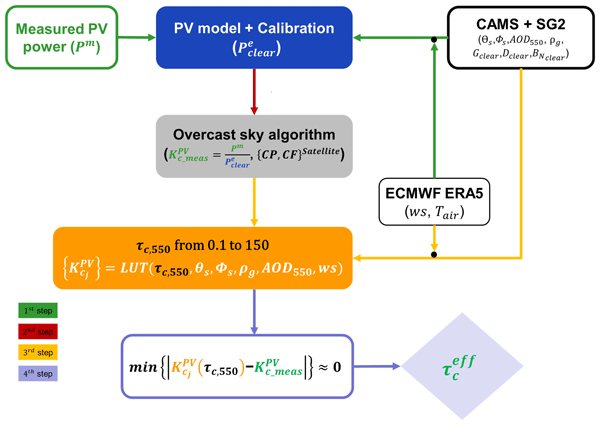
This paper proposes a new, fast and accurate method for estimating the cloud optical depth (τc) from photovoltaic (PV) power measurements under overcast sky conditions. The method performs very well with the European Centre for Medium-Range Weather Forecasts (ECMWF) products as inputs describing the state of the atmosphere. The method exhibits a better performance than published state-of-the-art methods when compared to ground and satellite-based τc retrievals serving as reference.
William Wandji Nyamsi, Yves-Marie Saint-Drenan, Antti Arola, and Lucien Wald
Atmos. Meas. Tech., 16, 2001–2036, https://doi.org/10.5194/amt-16-2001-2023, https://doi.org/10.5194/amt-16-2001-2023, 2023
Short summary
Short summary
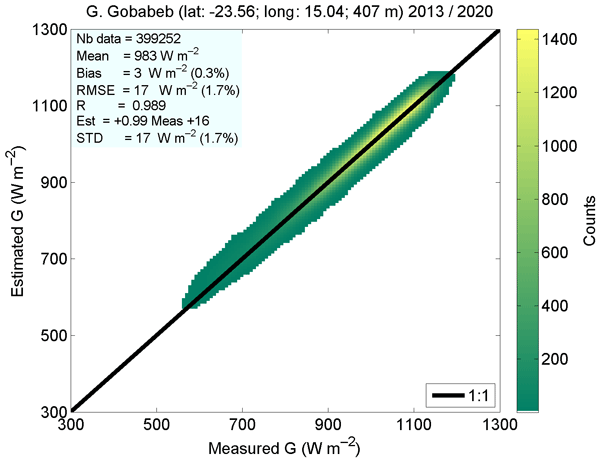
The McClear service provides estimates of surface solar irradiances in cloud-free conditions. By comparing McClear estimates to 1 min measurements performed in Sub-Saharan Africa and the Maldives Archipelago in the Indian Ocean, McClear accurately estimates global irradiance and tends to overestimate direct irrradiance. This work establishes a general overview of the performance of the McClear service.
Yueming Cheng, Tie Dai, Daisuke Goto, Keiya Yumimoto, Tomoaki Nishizawa, Rei Kudo, Min Zhao, Akiko Higurashi, Yoshitaka Jin, Atsushi Shimizu, Haoran Peng, Guangyu Shi, and Teruyuki Nakajima
Atmos. Chem. Phys., 26, 14671–14698, https://doi.org/10.5194/acp-26-14671-2026, https://doi.org/10.5194/acp-26-14671-2026, 2026
Short summary
Short summary
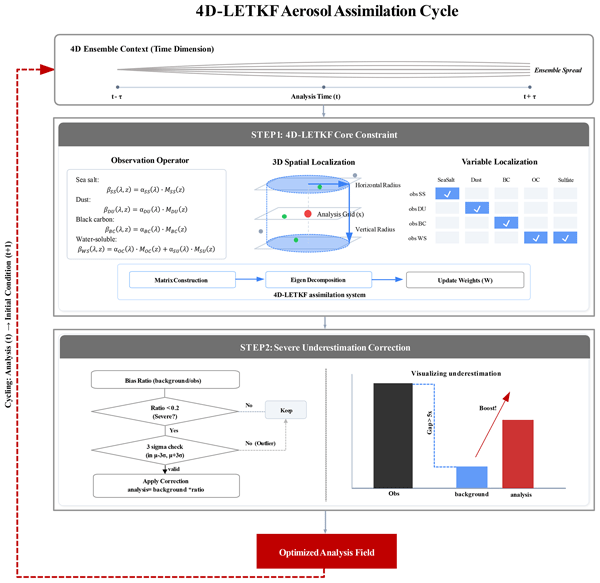
To understand how air pollution affects climate, we must know where different particles reside in the sky. We combined satellite lidar measurements of specific particle types with a numerical model to build a three-dimensional map of pollution over East Asia. Our method successfully located hidden layers of heat-absorbing soot high in the atmosphere that previous models missed. This greatly improves our ability to calculate how these particles trap sunlight and alter regional temperatures.
Theano Drosoglou, Athanasios Natsis, Dimitris Dimitriadis, Kyriakoula Papachristopoulou, Stelios Kazadzis, Angelos Georgakis, Kevin Kilchhofer, Grigorios Tsoumakas, and Vassilis Amiridis
EGUsphere, https://doi.org/10.5194/egusphere-2026-5862, https://doi.org/10.5194/egusphere-2026-5862, 2026
This preprint is open for discussion and under review for Atmospheric Measurement Techniques (AMT).
Short summary
Short summary
Better short-term forecasts of clouds can help improve solar energy planning, as clouds can change sunlight rapidly. We developed a deep learning model that learns how cloud patterns evolve from satellite images and compared it with established forecasting methods. The model produced more accurate forecasts, especially for changing cloud conditions, and remained useful for longer forecast periods. The results show its potential for improving short-term cloud and solar radiation forecasting.
Océane Soares, Sergey Khaykin, Sophie Godin-Beekmann, Artem Feofilov, Tetsu Sakai, Yoshita Jin, Isamu Morino, Ben Liley, and Richard Querel
EGUsphere, https://doi.org/10.5194/egusphere-2026-5639, https://doi.org/10.5194/egusphere-2026-5639, 2026
This preprint is open for discussion and under review for Atmospheric Chemistry and Physics (ACP).
Short summary
Short summary
Volcanic eruptions and extreme wildfires can send particles high into the atmosphere, where they can remain for months or even years. Using nearly two decades of satellite observations together with measurements from the ground, we compare major events and show that their impacts can last for very different lengths of time. Our results help explain what controls how long these particles remain in the atmosphere.
Neus Sabater, Pekka Kolmonen, Marika Honkanen, Antti Kukkurainen, Andreas Burkart, Tommaso Julitta, Shari Van Wittenberghe, Ella Kivimäki, Hannakaisa Lindqvist, and Antti Arola
Int. Arch. Photogramm. Remote Sens. Spatial Inf. Sci., XLVIII-M-12-2026, 69–75, https://doi.org/10.5194/isprs-archives-XLVIII-M-12-2026-69-2026, https://doi.org/10.5194/isprs-archives-XLVIII-M-12-2026-69-2026, 2026
Roberto Colombo, Béatrice Berthelot, Alireza Mahmoodi, Louis Sainte-Marie, Gwennaël Matot, Jorge Vicent Servera, Ornela Nanushi, Brice Mora, Mohamed Salah Djellali, Neus Sabater, Pekka Kolmonen, Timo H. Virtanen, Astrid M. Zimmermann, Pieter De Vis, Micol Rossini, Giulia Tagliabue, Pietro Chierichetti, Sergio Cogliati, Juliane Bendig, Bastian Siegmann, Uwe Rascher, Egor Prikaziuk, Christiaan van der Tol, Darren Ghent, Jasdeep Singh Anand, Tommaso Julitta, Matthias Drusch, Marco Celesti, Dirk Schüttemeyer, and Marin Tudoroiu
Int. Arch. Photogramm. Remote Sens. Spatial Inf. Sci., XLVIII-M-12-2026, 17–24, https://doi.org/10.5194/isprs-archives-XLVIII-M-12-2026-17-2026, https://doi.org/10.5194/isprs-archives-XLVIII-M-12-2026-17-2026, 2026
Georgia Charalampous, Konstantinos Fragkos, Ilias Fountoulakis, Kyriakoula Papachristopoulou, Anna Moustaka, Argyro Nisantzi, Diofantos Hadjimitsis, and Stelios Kazadzis
EGUsphere, https://doi.org/10.5194/egusphere-2026-6018, https://doi.org/10.5194/egusphere-2026-6018, 2026
This preprint is open for discussion and under review for Atmospheric Measurement Techniques (AMT).
Short summary
Short summary
Cyprus has very high levels of ultraviolet radiation from the Sun, so reliable daily forecasts help people protect their health. We compared two forecasting systems with measurements from five stations across the island. Both worked well on clear days but were less accurate when clouds were present. During a wildfire in July 2025, smoke cut the measured ultraviolet levels by about 40 percent, which the forecasts missed. Better cloud and smoke information is needed to improve forecasts.
Kanika Taneja, Silvia M. Calderón, Harri Kokkola, Juha Tonttila, Sami Romakkaniemi, Seethala Chellappan, Antti Arola, Antti Lipponen, Taina Yli-Juuti, Snehitha M. Kommula, Tuukka Petäjä, Markku Kulmala, and Tero Mielonen
EGUsphere, https://doi.org/10.5194/egusphere-2026-4750, https://doi.org/10.5194/egusphere-2026-4750, 2026
This preprint is open for discussion and under review for Atmospheric Chemistry and Physics (ACP).
Short summary
Short summary
Vegetation can cool the climate by releasing gases that form aerosols, which scatter sunlight and brighten clouds. To quantify this feedback in Finland and the United States, we combine field measurements of aerosols and satellite observations of clouds. It is essential to select near-ideal clouds; otherwise, cloud-related cooling is underestimated. Cloud cooling matched aerosol cooling at the clean site in Finland and was nearly three times stronger at the rural site in the United States.
Alexandru Dumitrescu
Geosci. Model Dev., 19, 8895–8913, https://doi.org/10.5194/gmd-19-8895-2026, https://doi.org/10.5194/gmd-19-8895-2026, 2026
Short summary
Short summary
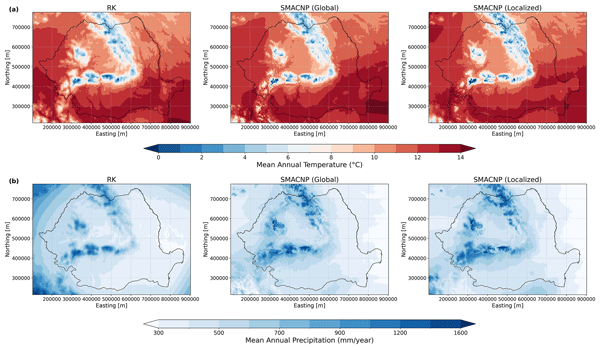
Accurate daily climate maps are essential for environmental monitoring, yet many regions lack dense weather-station networks. We developed a deep-learning method that converts sparse station measurements into high-resolution gridded temperature and precipitation fields over complex terrain. Tested over Romania, it outperforms traditional geostatistical interpolation by learning how topography shapes local climate, while providing reliable uncertainty estimates for each prediction.
Thomas F. Eck, Jeffrey S. Reid, Alexander Sinyuk, Pawan Gupta, Antti Arola, Ilya Slutsker, Brent N. Holben, Philippe Goloub, Oleg Dubovik, Joel S. Schafer, Mikhail G. Sorokin, Alexander Smirnov, Hongbin Yu, Dongchul Kim, Elena Lind, Jason Kraft, Elizabeth A. Reid, Aboubacry Diallo, Thierno Ndiaye, Africa Barreto, Sidi Baika, Lahouari Zeudmi-Sahraoui, Francisco Evora, Gael Dubois, Luc Blarel, Rachel T. Pinker, Isaac Abiodun Adimula, Jean Louis Rajot, Aliko Maman, Muguette Allegre, Cassandra Gaston, Peter Sealy, Edmund Blades, Rebecca Chewitt-Lucas, Ian Lau, David Barker, Adel Saad Alshihiween, Abdulrahman Alsaferan, Odbayar Mishigdorj, and Chogsom Jargalsaixan
EGUsphere, https://doi.org/10.5194/egusphere-2026-5531, https://doi.org/10.5194/egusphere-2026-5531, 2026
This preprint is open for discussion and under review for Atmospheric Chemistry and Physics (ACP).
Short summary
Short summary
The optical properties of airborne soil particles from major desert regions measured by ground based remote sensing retrievals are presented. The relative spectral absorption of these particles from the remote sensing data agree very well with absorption of soil dust samples measured in a laboratory. A large fraction of the optical effects were attributed to relatively small submicron sized dust particles which would also be more easily inhalable and therefore may impact human health.
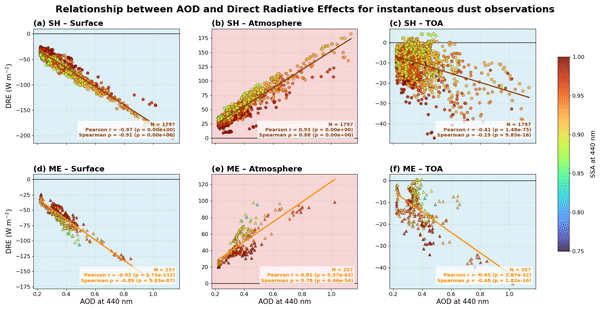
Georgia Charalampous, Konstantinos Fragkos, Ilias Fountoulakis, Kyriakoula Papachristopoulou, Anna Moustaka, Franco Marenco, Yevgeny Derimian, Argyro Nisantzi, Rodanthi-Elisavet Mamouri, Diofantos Hadjimitsis, and Stelios Kazadzis
Atmos. Meas. Tech., 19, 5753–5783, https://doi.org/10.5194/amt-19-5753-2026, https://doi.org/10.5194/amt-19-5753-2026, 2026
Short summary
Short summary
This study analyses seven years of dust events over Cyprus to identify their origin and quantify their impact on surface solar radiation. Most events originated from the Sahara. Dust reduces surface solar radiation, leading to surface cooling, while also causing atmospheric heating and cooling at the top of the atmosphere. Surface reductions in solar radiation reach about 5 %–15 % on average, with effects mainly controlled by dust amount.
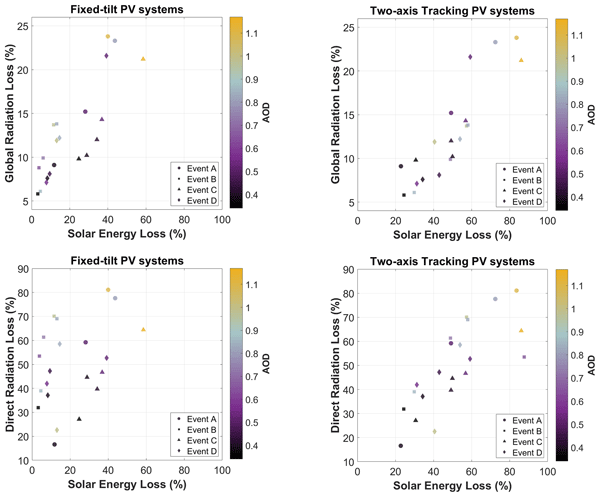
Dimitra Kouklaki, Georgia Charalampous, Anna Moustaka, Alkistis Papetta, Celia Herrero del Barrio, Rizos-Theodoros Chadoulis, S. Yeşer Aslanoğlu, Sara Herrero-Anta, Michail Mytilinaios, Nikolaos Papadimitriou, Katerina Anyfanti, Christos Spyrou, Daniela Meloni, Konstantinos Fragkos, Yevgeny Derimian, Tatiana Di Iorio, Rodanthi-Elisavet Mamouri, Vassilis Amiridis, Stavros Solomos, Stelios Kazadzis, and Ilias Fountoulakis
Atmos. Meas. Tech., 19, 5633–5657, https://doi.org/10.5194/amt-19-5633-2026, https://doi.org/10.5194/amt-19-5633-2026, 2026
Short summary
Short summary
In the present study we investigated how aerosols, and specifically dust, affect solar radiation and energy production by investigating several dust events across multiple sites in the Mediterranean Basin between 2021 and 2022 through ground-based observations and model simulations. The results revealed that dust can significantly attenuate solar radiation and, therefore, lead to considerable losses in solar power generation, specifically in the case of solar tracking systems.
Anna Moustaka, Kyriakoula Papachristopoulou, Georgia Charalampous, and Stelios Kazadzis
EGUsphere, https://doi.org/10.5194/egusphere-2026-4413, https://doi.org/10.5194/egusphere-2026-4413, 2026
Short summary
Short summary
Atmospheric particles affect how much sunlight reaches the Earth's surface, but their uncertainty is rarely considered in solar energy studies. We estimated this uncertainty from a global atmospheric dataset and examined its effect on sunlight reaching the ground between 2003 and 2024. The results improve confidence in solar energy assessments, particularly in dusty and polluted regions.
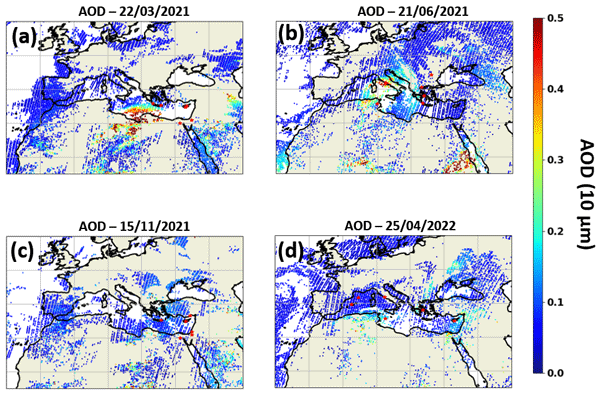
Alkistis Papetta, Celia Herrero del Barrio, S. Yeşer Aslanoğlu, Rizos-Theodoros Chadoulis, Georgia Charalampous, Sara Herrero-Anta, Dimitra Kouklaki, Michail Mytilinaios, Anna Moustaka, Emmanouil Proestakis, Vassilis Amiridis, Christos Spyrou, Antonis Gkikas, Michael Pikridas, Maria Kezoudi, Franco Marenco, Jean Sciare, Sophie Vandenbussche, Stavros Solomos, Stelios Kazadzis, and Ilias Fountoulakis
Atmos. Chem. Phys., 26, 12395–12434, https://doi.org/10.5194/acp-26-12395-2026, https://doi.org/10.5194/acp-26-12395-2026, 2026
Short summary
Short summary
We studied four major dust events from the Sahara and the Middle East over the Mediterranean. Saharan dust events exhibited coarser and more scattering particles, while Middle Eastern dust was finer and mixed with pollution. Differences in absorption could not be explained by mineralogy and are attributed to mixing.
Kate Smith, Alexandre Baron, Joshua Schwarz, Elizabeth Asher, Emrys Hall, Patrick Cullis, Alex Fritz, Hagen Telg, Ross Burgener, Bryan Thomas, Matthew Martinsen, David Nardini, Darryl Kuniyuki, Penny Smale, Ben Liley, Richard Querel, Krystian Kopka, Ian Crocker, Skyler Jordan, Michael Doneghey, Luke Longren, Stephanie Evan, Jerome Brioude, Jean-Marc Metzger, David Combemale, Cor Becker, Dwight Samuel, Cheryll Tjon A Ten, Mohammed Amierali, Christopher Wongsowidjojo, Dennis Rodrigues, George Paiman, Ankie Piters, Katrin Müller, and Troy Thornberry
Earth Syst. Sci. Data Discuss., https://doi.org/10.5194/essd-2026-644, https://doi.org/10.5194/essd-2026-644, 2026
Preprint under review for ESSD
Short summary
Short summary
Direct measurements of stratospheric aerosol are sparse, yet it plays an important role in Earth’s climate by scattering incoming solar radiation. The B2SAP network addresses this gap by regularly launching balloons carrying Portable Optical Particle Spectrometers (POPS) from 8 latitudinally diverse sites. The dataset provides vertical profiles of aerosol abundance and size distributions from the ground to 28 km, helping characterize global stratospheric aerosol abundance and variability.
Jianyu Zheng, Hongbin Yu, Chamara Rajapakse, Mian Chin, Michael Schulz, Yves Balkanski, Susanne E. Bauer, Huisheng Bian, Peter Colarco, Dongchul Kim, Ramiro Checa-Garcia, Yevgeny Derimian, Oleg Dubovik, Paul Ginoux, Zak Kipling, Jasper F. Kok, Harri Kokkola, Philippe Le Sager, Lei Li, Marianne Tronstad Lund, Gunnar Myhre, Hitoshi Matsui, Dirk J. L. Olivie, Samuel Remy, Oyvind Seland, Qianqian Song, Toshihiko Takemura, Qian Tan, Kostas Tsigaridis, Twan van Noije, David Winker, Bin Xie, Hua Zhang, Xindan Zhang, and Zhibo Zhang
EGUsphere, https://doi.org/10.5194/egusphere-2026-4322, https://doi.org/10.5194/egusphere-2026-4322, 2026
This preprint is open for discussion and under review for Atmospheric Chemistry and Physics (ACP).
Short summary
Short summary
Winds carry vast amounts of Saharan dust across the Atlantic Ocean, influencing climate, air quality, and ocean ecosystems. Within the Aerosol Comparisons between Observations and Models (AeroCom) project, we evaluated 17 numerical models against observations. Models deposit dust too quickly, so too little reaches the Caribbean. Better simulations require emitting larger particles, treating their non-spherical shapes, and capturing processes that keep dust aloft during transport.
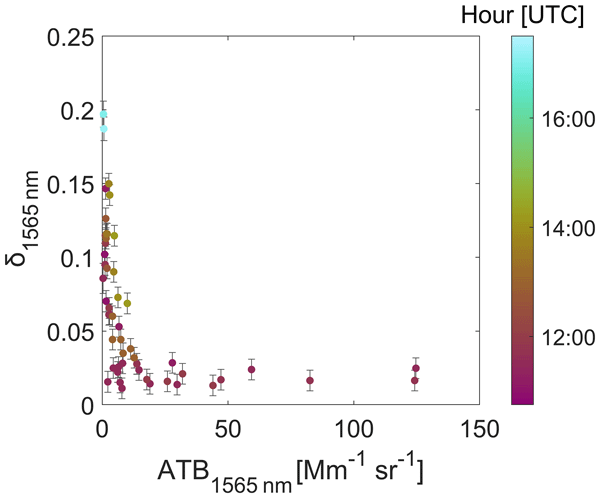
Maria Filioglou, Krista Luoma, Eija Asmi, Viet Le, Klaus Haikarainen, David Brus, Tero Mielonen, Mika Komppula, Annele Virtanen, Olli Sippula, Iida Pullinen, Angela Buchholz, Pasi Miettinen, Snehitha Kommula, Saara Peltokorpi, Liqing Hao, Kajar Köster, Annika Saarto, Sanna Pätsi, Pieter G. van Zyl, Liezl Bredenkamp, and Ville Vakkari
Atmos. Chem. Phys., 26, 11525–11542, https://doi.org/10.5194/acp-26-11525-2026, https://doi.org/10.5194/acp-26-11525-2026, 2026
Short summary
Short summary
This study explores how smoke and volcanic ash particles, alter the way light is scattered in the atmosphere. By using a ground‑based HALO Doppler lidar system, we observed clear differences in the depolarization ratio, a shape-relevant optical parameter, between fresh smoke, aged smoke, and volcanic ash. These findings show that HALO Doppler lidars can help identify particle types in the air and even provide estimates of smoke mass concentrations, improving assessments of air quality.
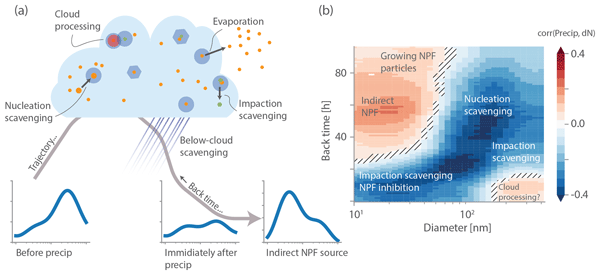
Sara M. Blichner, Theodore Khadir, Sini Talvinen, Paulo Artaxo, Liine Heikkinen, Harri Kokkola, Radovan Krejci, Muhammed Irfan, Twan van Noije, Tuukka Petäjä, Christopher Pöhlker, Øyvind Seland, Carl Svenhag, Antti Vartiainen, and Ilona Riipinen
Atmos. Chem. Phys., 26, 11281–11307, https://doi.org/10.5194/acp-26-11281-2026, https://doi.org/10.5194/acp-26-11281-2026, 2026
Short summary
Short summary
This study looks at how well climate models capture the impact of rain on particles that help form cloud droplets. Using data from three measurement stations and applying both a correlation analysis and a machine learning approach, we found that models often miss how new particles form after rain and struggle in cold environments. This matters because these particles influence cloud formation and climate.
Yannis Gschwind, Kyriaki Papachristopoulou, Jason N. S. Cole, Alkiviadis F. Bais, and Stelios Kazadzis
EGUsphere, https://doi.org/10.5194/egusphere-2026-4519, https://doi.org/10.5194/egusphere-2026-4519, 2026
Short summary
Short summary
The EarthCARE satellite, launched in 2024, measures aerosol, cloud, and precipitation properties, serving as input for radiative transfer models. Given its recent launch, validation is crucial. In this analysis, we validate the resulting surface irradiance against ground-based measurements and compare with estimates from geostationary satellites. Our study indicates that EarthCARE slightly underestimates surface irradiance. These early tests provide essential context for EarthCARE data users.
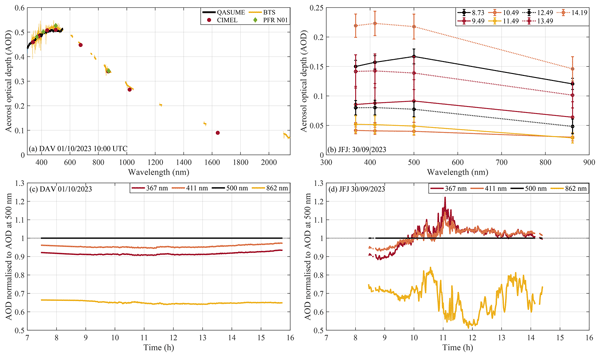
Akriti Masoom, Stelios Kazadzis, Robin Lewis Modini, Martin Gysel-Beer, Julian Gröbner, Martine Collaud Coen, Francisco Navas-Guzman, Natalia Kouremeti, Benjamin Tobias Brem, Nora Kristina Nowak, Giovanni Martucci, and Maxime Hervo
Atmos. Chem. Phys., 26, 10801–10834, https://doi.org/10.5194/acp-26-10801-2026, https://doi.org/10.5194/acp-26-10801-2026, 2026
Short summary
Short summary
This article aims at providing details on the spectral aerosol properties observed during 2023 Canadian wildfire plume transport and exploring the synergism between remote sensing and in situ measurements for investigating the cause of the occurrence of the observations of spectral aerosol properties.

Sophie Vandenbussche, Christodoulos Biskas, Maria-Elissavet Koukouli, Stelios Kazadzis, and Martine De Mazière
Atmos. Meas. Tech., 19, 4889–4922, https://doi.org/10.5194/amt-19-4889-2026, https://doi.org/10.5194/amt-19-4889-2026, 2026
Short summary
Short summary
Mineral dust aerosols are tiny particles uplifted by winds from deserts, which may be transported for long distances. They are climate forcers and affect human health and socio-economic sectors, making near-real-time and long-term monitoring essential. Here, we use satellite observations to retrieve global 3D distributions of dust aerosols. We present an updated and improved algorithm and its long-term consistent data since late 2007, with high potential for climate analyses and alert systems.
Gaurav Kumar, Masahiro Momoi, Monica Campanelli, Meritxell Garcia-Suñer, Natalia Kouremeti, Rei Kudo, Roberto Pedrós, and Víctor Estellés
EGUsphere, https://doi.org/10.5194/egusphere-2026-4267, https://doi.org/10.5194/egusphere-2026-4267, 2026
Short summary
Short summary
Aerosols are tiny particles suspended in the atmosphere, affecting the air quality and climate. Accurate aerosol measurements are thus important for understanding their effects. Sky radiometers are widely used instruments for the aerosol measurements. We developed a method to improve the calibration coefficients of sky radiometers, using the latest data-processing algorithm and an iterative procedure. The proposed method produced more accurate results, improving long-term aerosol monitoring.
Maria Christina Gatou, Antti Lipponen, Ari Leskinen, Petri Tiitta, Maria Filioglou, Xiaoxia Shang, Sanna Pätsi, Annika Saarto, Marjut Roponen, Elina Giannakaki, and Mika Komppula
EGUsphere, https://doi.org/10.5194/egusphere-2026-1806, https://doi.org/10.5194/egusphere-2026-1806, 2026
Short summary
Short summary
We investigate the pollen distribution at different heights using measurements from ground level up to 272 meters in eastern Finland. By combining optical pollen sensors with traditional monitoring methods and atmospheric model predictions, we examined how pollen concentrations vary with height. The results show that pollen concentrations decrease with altitude and that optical sensors combined with machine learning can identify dominant pollen types for continuous pollen monitoring.
Andrea Porcheddu, Ville Kolehmainen, Timo Lähivaara, Robert Levy, Yingxi Rona Shi, Hai Zhang, and Antti Lipponen
EGUsphere, https://doi.org/10.5194/egusphere-2026-1987, https://doi.org/10.5194/egusphere-2026-1987, 2026
Short summary
Short summary
We developed a new way to improve satellite measurements of atmospheric aerosols, which affect air quality and climate. By combining data from two geostationary satellites and using advanced machine learning methods that capture changes over time, we achieved more accurate and detailed results. This approach reduces errors in current satellite-based aerosol data and can better support monitoring and decision making related to air pollution and climate impacts.
Antti Lipponen, Jorge Lezaca, Yves-Marie Saint-Drenan, Marion Schroedter-Homscheidt, and Antti Arola
EGUsphere, https://doi.org/10.5194/egusphere-2026-2743, https://doi.org/10.5194/egusphere-2026-2743, 2026
Short summary
Short summary
We studied what causes errors in Copernicus Atmosphere Monitoring Service solar radiation data using explainable machine learning methods and ground-based observations. The analysis showed that cloud properties are the main source of errors, while aerosols and surface reflectance have smaller effects. The results improve understanding of the strengths and weaknesses of current models and can support future model development, forecasting and solar energy applications.
Nick Schutgens, Elisabeth J. Andrews, Antti Arola, Yusuf Bhatti, Guanliang Fu, Otto Hasekamp, Pekka Kolmonen, Antti Lipponen, Tero Mielonen, Leighton Reygare, and Andrew M. Sayer
EGUsphere, https://doi.org/10.5194/egusphere-2026-2656, https://doi.org/10.5194/egusphere-2026-2656, 2026
Short summary
Short summary
Aerosol are fine particles in the air that affect public health and the climate. We develop a new method to study aerosol through patterns (called autocorrelations) in their time-series. We show that autocorrelations are linked to aerosol deposition processes and contain information on the important but uncertain aerosol lifetime. Autocorrelations can be observed from satellites and we provide the first ever global climatology of aerosol autocorrelations.
Mizuo Kajino, Narihiro Orikasa, Rei Kudo, Atsushi Shimizu, Tomoaki Nishizawa, Yoshitaka Jin, Kazuo Osada, Satoko Kayaba, Tomoki Kajikawa, Rio Ishikawa, and Keiya Yumimoto
EGUsphere, https://doi.org/10.5194/egusphere-2026-1666, https://doi.org/10.5194/egusphere-2026-1666, 2026
Short summary
Short summary
Aerosol size distribution is important for understanding the climate impacts of aerosols; however, it is difficult to validate modeled size distributions. This study introduces a new method that compares physical variables, such as cloud condensation nuclei and light extinction coefficients, derived from size distribution measurements. Using data from Tsukuba, Japan, the method shows that the new model (v2.0) improves predictions of aerosol size distribution by about 17% compared to v1.0.
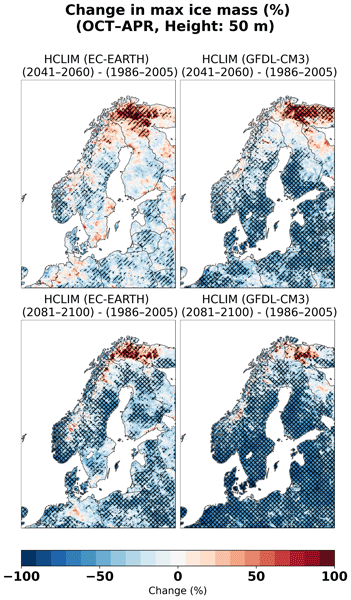
Oskari Rockas, Pia Isolähteenmäki, Marko Laine, Anders V. Lindfors, Karoliina Hämäläinen, and Anton Laakso
Nat. Hazards Earth Syst. Sci., 26, 1813–1834, https://doi.org/10.5194/nhess-26-1813-2026, https://doi.org/10.5194/nhess-26-1813-2026, 2026
Short summary
Short summary
When ice buildup occurs on an energy infrastructure such as a power transmission line or a wind turbine, this can cause disturbances in energy production and transmission efficiency. In our study, we assessed how atmospheric icing conditions will change in the future climate in northern Europe. Towards the end of the century, the climate projections suggest a mostly decreasing trend in ice accumulation. However, the northern parts of Fennoscandia can locally experience increasing amounts of ice.
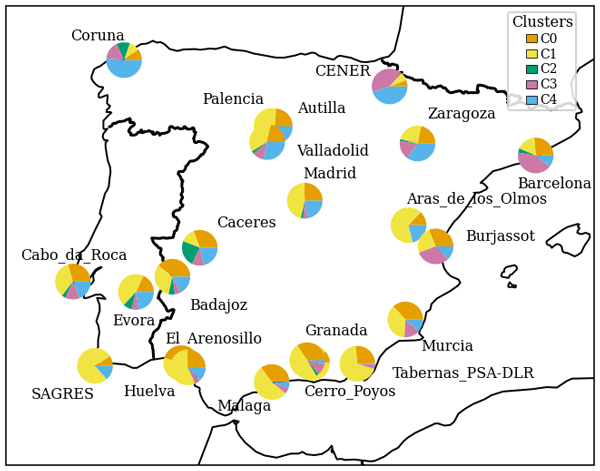
Nilton Évora do Rosário, Karla M. Longo, Pedro H. Toso, Saulo R. Freitas, Marcia A. Yamasoe, Luiz Flávio Rodrigues, Otavio Medeiros, Haroldo Campos Velho, Isilda da Cunha Menezes, and Ana Isabel Miranda
Geosci. Model Dev., 19, 2691–2716, https://doi.org/10.5194/gmd-19-2691-2026, https://doi.org/10.5194/gmd-19-2691-2026, 2026
Short summary
Short summary
This study maps aerosol regimes over the Iberian Peninsula using AERONET data and machine learning. Five types were identified, from Saharan dust to smoke, highlighting differences in particle size and absorption. Combining observations with model data improves aerosol representation in climate simulations, reducing uncertainties and enhancing understanding of regional air quality and climate impacts.
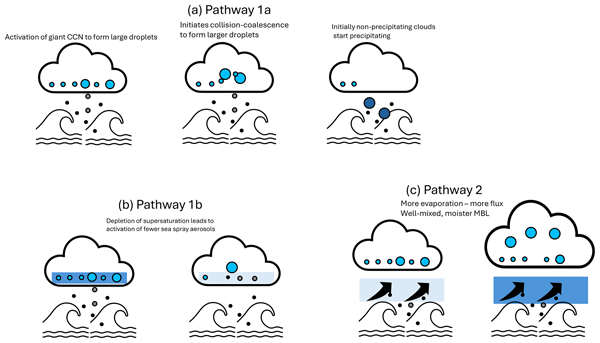
Vishnu Nair, Edward Gryspeerdt, Antti Arola, Antti Lipponen, and Timo Virtanen
Atmos. Chem. Phys., 26, 4049–4066, https://doi.org/10.5194/acp-26-4049-2026, https://doi.org/10.5194/acp-26-4049-2026, 2026
Short summary
Short summary
Surface winds affect clouds by generating sea salt aerosols and evaporating water from the ocean and transporting them to the cloud base. Previous studies analysed these processes using satellite snapshots; here we use observations of evolving clouds which capture feedbacks due to time-dependent adjustments of clouds to aerosol changes. We show that even though sea salt changes droplet sizes, evaporation from the ocean surface has a stronger impact on clouds, thus hiding the real aerosol effect.
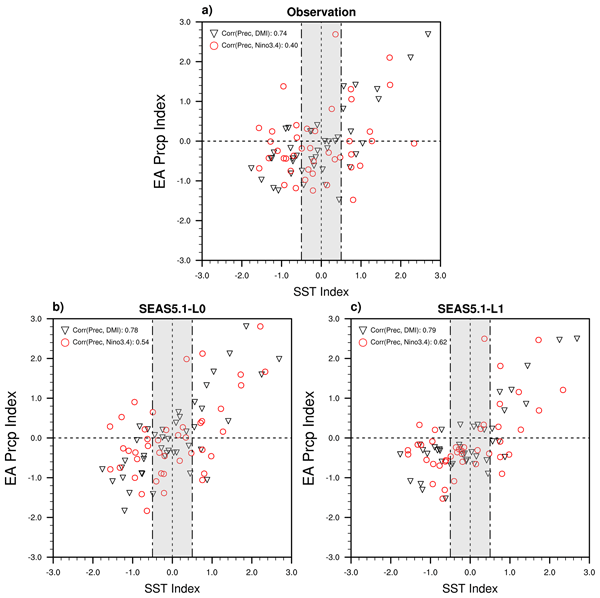
Hermann Ngueyon Nana, Roméo Stève Tanessong, Masilin Gudoshava, and Derbetini Appolinaire Vondou
Nat. Hazards Earth Syst. Sci., 26, 1269–1285, https://doi.org/10.5194/nhess-26-1269-2026, https://doi.org/10.5194/nhess-26-1269-2026, 2026
Short summary
Short summary
The results of this study reveal that the seasonal forecast model used here successfully reproduces the observed annual precipitation cycle and seasonal spatial pattern of rainfall over the region for both September and August initial conditions, with notably better skills for September, compared to August. In addition, the model effectively captures the teleconnections between rainfall and tropical sea surface temperature, including the Indian Ocean dipole and El Niño-Southern Oscillation.
Anna Moustaka, Antonis Gkikas, Stavros-Andreas Logothetis, Johannes Flemming, Samuel Rémy, Melanie Ades, Angela Benedetti, Kleareti Tourpali, Vassilis Amiridis, and Stelios Kazadzis
EGUsphere, https://doi.org/10.5194/egusphere-2026-1107, https://doi.org/10.5194/egusphere-2026-1107, 2026
This preprint is open for discussion and under review for Atmospheric Chemistry and Physics (ACP).
Short summary
Short summary
We examined how atmospheric aerosols have changed worldwide over the past two decades using a global atmospheric reanalysis together with ground-based observations. We found strong regional differences, with clear declines in some industrialized areas and increases in parts of South Asia and the Middle East. These long-term records help improve understanding of changes in climate and air quality.
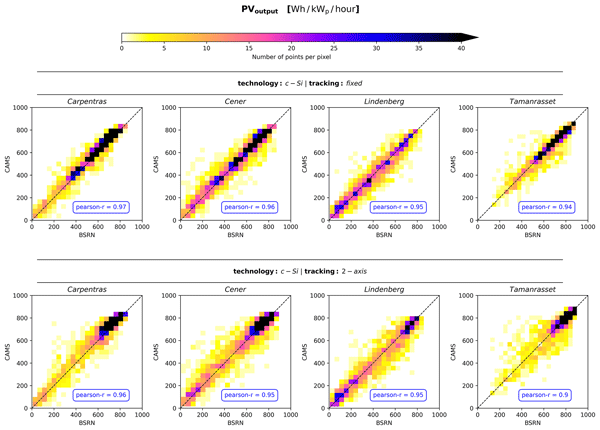
Nikolaos Papadimitriou, Ilias Fountoulakis, Antonis Gkikas, Kyriakoula Papachristopoulou, Andreas Kazantzidis, Stelios Kazadzis, Stefan Pfenninger, John Kapsomenakis, Kostas Eleftheratos, Athanassios A. Argiriou, Lionel Doppler, and Christos S. Zerefos
Atmos. Meas. Tech., 19, 1227–1244, https://doi.org/10.5194/amt-19-1227-2026, https://doi.org/10.5194/amt-19-1227-2026, 2026
Short summary
Short summary
We perform Photovoltaic (PV) power simulations with the Global Solar Energy Estimator and assess the uncertainty linked to the use of a diffuse fraction model. Validation is conducted under diverse atmospheric conditions, including cloudiness and aerosols, using input data from ground-based measurements and the Copernicus Atmosphere Monitoring Service (CAMS). Results indicate that simulations are reliable under most conditions, with overestimations occurring during intense dust events.
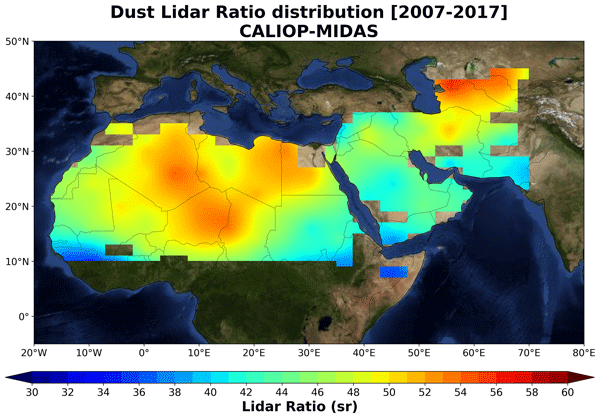
Anna Moustaka, Nikolaos Siomos, Stelios Kazadzis, Emmanouil Proestakis, Kalliopi Artemis Voudouri, Anton Lopatin, Oleg Dubovik, Kleareti Tourpali, Christos Zerefos, Vassilis Amiridis, and Antonis Gkikas
Atmos. Meas. Tech., 19, 1201–1225, https://doi.org/10.5194/amt-19-1201-2026, https://doi.org/10.5194/amt-19-1201-2026, 2026
Short summary
Short summary
North Africa and the Middle East are home to the world’s most active dust sources, but accurately monitoring airborne dust remains challenging. We combine active and passive satellite aerosol products to dynamically estimate dust lidar ratios over a 12-year period. The results reveal pronounced and physically meaningful regional variability, improving aerosol characterization and supporting climate and air-quality applications.
William Wandji Nyamsi, Anders V. Lindfors, Angela Meyer, Antti Lipponen, and Antti Arola
Atmos. Meas. Tech., 19, 899–922, https://doi.org/10.5194/amt-19-899-2026, https://doi.org/10.5194/amt-19-899-2026, 2026
Short summary
Short summary
This paper proposes a new, fast and accurate method for estimating the cloud optical depth (τc) from photovoltaic (PV) power measurements under overcast sky conditions. The method performs very well with the European Centre for Medium-Range Weather Forecasts (ECMWF) products as inputs describing the state of the atmosphere. The method exhibits a better performance than published state-of-the-art methods when compared to ground and satellite-based τc retrievals serving as reference.
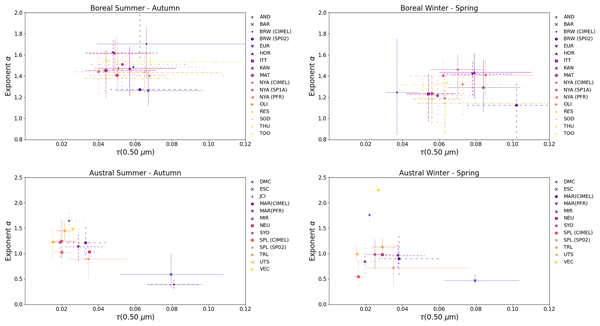
Simone Pulimeno, Angelo Lupi, Vito Vitale, Claudia Frangipani, Carlos Toledano, Stelios Kazadzis, Natalia Kouremeti, Christoph Ritter, Sandra Graßl, Kerstin Stebel, Vitali Fioletov, Ihab Abboud, Sandra Blindheim, Lynn Ma, Norm O'Neill, Piotr Sobolewski, Pawan Gupta, Elena Lind, Thomas F. Eck, Antti Hyvärinen, Veijo Aaltonen, Rigel Kivi, Janae Csavina, Dmitry Kabanov, Sergey M. Sakerin, Olga R. Sidorova, Robert S. Stone, Hagen Telg, Laura Riihimaki, Raul R. Cordero, Martin Radenz, Ronny Engelmann, Michel Van Roozendal, Anatoli Chaikovsky, Philippe Goloub, Junji Hisamitsu, and Mauro Mazzola
Atmos. Chem. Phys., 26, 1809–1846, https://doi.org/10.5194/acp-26-1809-2026, https://doi.org/10.5194/acp-26-1809-2026, 2026
Short summary
Short summary
This study analyzed aerosols optical properties over the Arctic and Antarctic to measure them even during long periods of darkness. It found that pollution in the Arctic is decreasing, likely due to European emission regulations, while wildfires are becoming a more important source of particles. In Antarctica, particle levels are higher near the coast than inland, and vary by season. These results help us better understand how air pollution and climate are changing at the Earth’s poles.
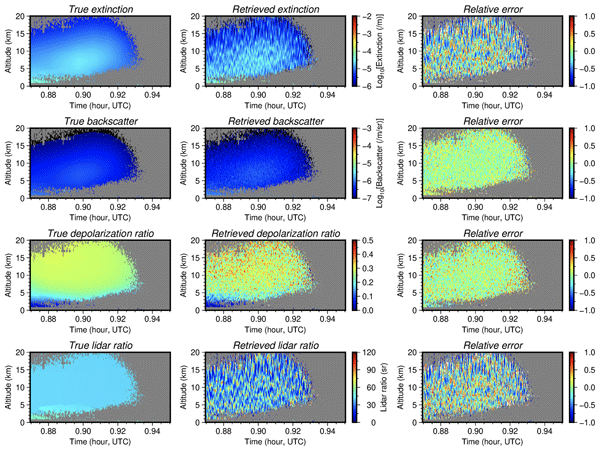
Tomoaki Nishizawa, Rei Kudo, Eiji Oikawa, Akiko Higurashi, Yoshitaka Jin, Nobuo Sugimoto, Kaori Sato, and Hajime Okamoto
Atmos. Meas. Tech., 19, 729–744, https://doi.org/10.5194/amt-19-729-2026, https://doi.org/10.5194/amt-19-729-2026, 2026
Short summary
Short summary
We developed algorithms to produce JAXA ATLID L2 aerosol products using ATLID L1 data. The algorithms estimate layer identifiers such as (1) aerosol or cloud layers, (2) particle optical properties at 355 nm, (3) particle type identifiers, and (4) planetary boundary layer height. We demonstrated the algorithm performance using the simulated ATLID L1 data and found the algorithm’s capability to provide valuable insights into the global distribution of aerosols and clouds.
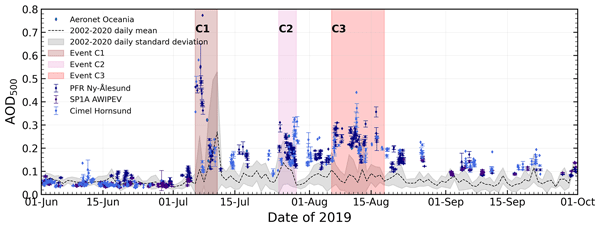
Sara Herrero-Anta, Sabine Eckhardt, Nikolaos Evangeliou, Stefania Gilardoni, Sandra Graßl, Dominic Heslin-Rees, Stelios Kazadzis, Natalia Kouremeti, Radovan Krejci, David Mateos, Mauro Mazzola, Christoph Ritter, Roberto Román, Kerstin Stebel, and Tymon Zielinski
Atmos. Chem. Phys., 26, 1435–1457, https://doi.org/10.5194/acp-26-1435-2026, https://doi.org/10.5194/acp-26-1435-2026, 2026
Short summary
Short summary
In summer 2019, unusually high aerosol concentrations were measured in the Arctic, extending through the troposphere and stratosphere up to 16 km. Using multiple instruments and models, aerosol particles were linked to wildfires, volcanic eruptions, and anthropogenic pollution. The aerosol consisted of spherical, fine-mode, weakly absorbing particles, which significantly reduced direct solar radiation. This combined approach improves understanding of Arctic aerosol events and climate processes.
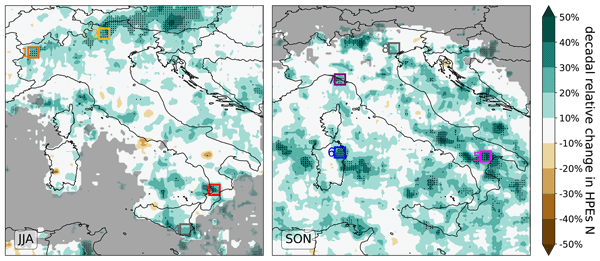
Francesco Cavalleri, Cristian Lussana, Francesca Viterbo, Michele Brunetti, Riccardo Bonanno, Veronica Manara, Matteo Lacavalla, and Maurizio Maugeri
Nat. Hazards Earth Syst. Sci., 26, 279–297, https://doi.org/10.5194/nhess-26-279-2026, https://doi.org/10.5194/nhess-26-279-2026, 2026
Short summary
Short summary
This study investigates hourly precipitation patterns and extremes across Italy using the MERIDA HRES reanalysis, a dataset that combines observations and weather models to reconstruct past atmospheric conditions. By analising 37 years of hourly data, the study identifies an increase in hourly extreme precipitation in Alpine areas during summer and southern coastal regions in autumn, providing insights into evolving precipitation patterns and supporting climate resilience planning.
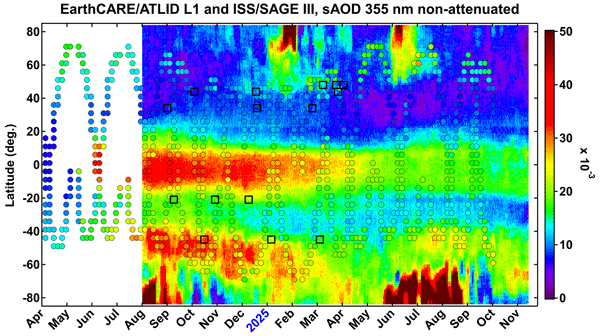
Sergey Khaykin, Michaël Sicard, Thierry Leblanc, Tetsu Sakai, Nickolay Balugin, Gwenaël Berthet, Stëphane Chevrier, Fernando Chouza, Artem Feofilov, Dominique Gantois, Sophie Godin-Beekmann, Arezki Haddouche, Yoshitaka Jin, Isamu Morino, Nicolas Kadygrov, Thomas Lecas, Ben Liley, Richard Querel, Ghasssan Taha, and Vladimir Yushkov
Atmos. Chem. Phys., 26, 607–622, https://doi.org/10.5194/acp-26-607-2026, https://doi.org/10.5194/acp-26-607-2026, 2026
Short summary
Short summary
In April 2024, the Ruang volcano in Indonesia sent large amounts of gas and particles high into the atmosphere, which then spread worldwide. Using the new European EarthCARE satellite and its advanced laser instrument ATLID (Atmospheric LIDar), together with ground and balloon observations, we tracked how these particles doubled levels in the tropics and spread into both hemispheres. The study shows ATLID’s power to reveal how eruptions can affect climate, clouds, and ozone for more than a year.
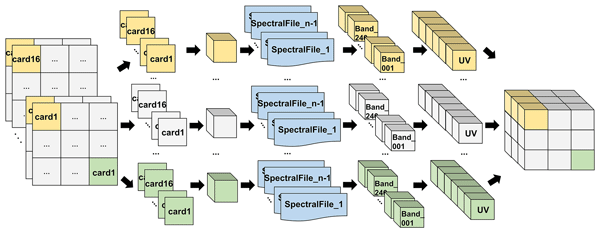
Qinghai Qi, Yuting Tan, Christian A. Gueymard, Martin Wild, Bo Hu, Wenmin Qin, Taowen Sun, Ming Zhang, and Lunche Wang
Earth Syst. Sci. Data, 17, 7271–7292, https://doi.org/10.5194/essd-17-7271-2025, https://doi.org/10.5194/essd-17-7271-2025, 2025
Short summary
Short summary
This research presents China's first long-term (1981–2023) hyperspectral ultraviolet radiation dataset with exceptional 0.5 nm spectral resolution. The spectral detail enables precise identification of UV absorption characteristics and atmospheric interactions previously obscured in conventional broadband measurements. These results provide new capabilities for monitoring ozone depletion, and optimizing solar energy systems across China's diverse climatic regions.

Angelos Karanikolas, Benjamin Torres, Masahiro Momoi, Marcos Herreras Giralda, Natalia Kouremeti, Julian Gröbner, Lionel Doppler, and Stelios Kazadzis
Atmos. Meas. Tech., 18, 7651–7677, https://doi.org/10.5194/amt-18-7651-2025, https://doi.org/10.5194/amt-18-7651-2025, 2025
Short summary
Short summary
Several techniques retrieve of the aerosol size distribution. The Generalized Retrieval of Atmosphere and Surface Properties algorithm can retrieve aerosol size distribution parameters using only aerosol optical depth (AOD) as input that is continuously observed by sun photometers worldwide. In this study, we apply the algorithm to AOD measured by sun photometers and spectroradiometers to assess the performance and limitations of such retrievals and investigate the effect of the spectral range.
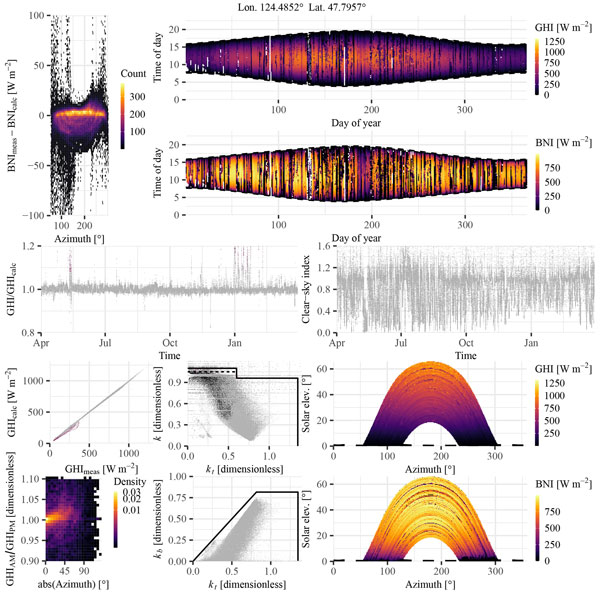
Yun Chen, Dazhi Yang, Chunlin Huang, Hongrong Shi, Adam R. Jensen, Xiang'ao Xia, Yves-Marie Saint-Drenan, Christian A. Gueymard, Martin János Mayer, and Yanbo Shen
Atmos. Meas. Tech., 18, 7315–7336, https://doi.org/10.5194/amt-18-7315-2025, https://doi.org/10.5194/amt-18-7315-2025, 2025
Short summary
Short summary
We tested two satellite-based irradiance datasets against both high- and low-accuracy ground-based measurements. The dataset is unique: it includes irradiance measurements from a new research-grade monitoring station in a rare climate, along with new satellite data from China's Fengyun-4B geostationary satellite. Findings suggest that using low-accuracy measurements as a reference for validation can be risky.
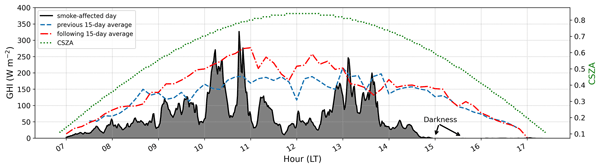
Jorge Rosas Santana, Gabriela Lima da Silva, Marcia Akemi Yamasoe, and Nilton Èvora do Rosario
Atmos. Chem. Phys., 25, 15935–15951, https://doi.org/10.5194/acp-25-15935-2025, https://doi.org/10.5194/acp-25-15935-2025, 2025
Short summary
Short summary
This study examines a rare event in São Paulo, Brazil, where wildfire smoke from South America mixed with clouds, causing midday darkness on 19 August 2019. Satellite data, surface measurements and air mass modeling tracked the smoke from fires in Brazil, Bolivia and Paraguay, transported to São Paulo within 2 d. The smoke–cloud interaction reduced surface irradiance to zero for 40 min and increased radiative efficiency by 7 %, highlighting impacts on air quality and radiation budget.
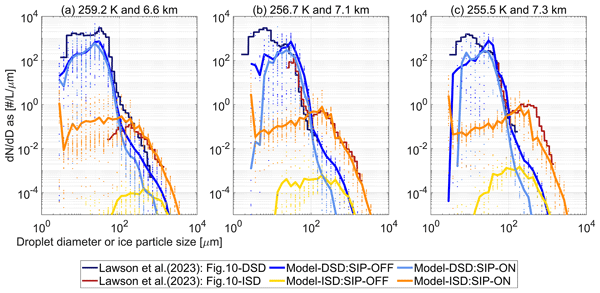
Silvia M. Calderón, Noora Hyttinen, Harri Kokkola, Tomi Raatikainen, R. Paul Lawson, and Sami Romakkaniemi
Atmos. Chem. Phys., 25, 14479–14500, https://doi.org/10.5194/acp-25-14479-2025, https://doi.org/10.5194/acp-25-14479-2025, 2025
Short summary
Short summary
Field campaigns suggest secondary ice production (SIP) from mm-sized supercooled droplets drives rapid glaciation and precipitation development in summer cumulus congestus clouds lacking ice-nucleating particles. Our large-eddy simulations with sectional aerosol–hydrometeor microphysics support this, reproducing observed size distributions and showing how SIP accelerates aggregation, enhancing surface precipitation.
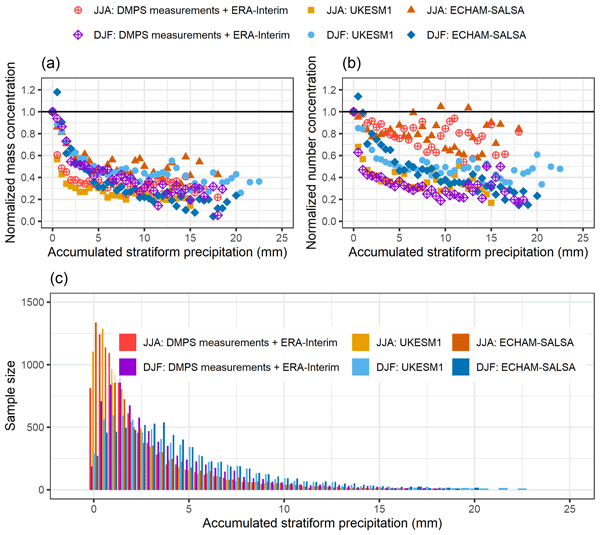
Sini Talvinen, Paul Kim, Emanuele Tovazzi, Eemeli Holopainen, Roxana Cremer, Thomas Kühn, Harri Kokkola, Zak Kipling, David Neubauer, João C. Teixeira, Alistair Sellar, Duncan Watson-Parris, Yang Yang, Jialei Zhu, Srinath Krishnan, Annele Virtanen, and Daniel G. Partridge
Atmos. Chem. Phys., 25, 14449–14478, https://doi.org/10.5194/acp-25-14449-2025, https://doi.org/10.5194/acp-25-14449-2025, 2025
Short summary
Short summary
Climate models struggle to predict how clouds and aerosols interact, affecting Earth’s energy balance. This study compares models to observations to see how they describe effects of clouds and rain on aerosols. While both models show similar overall trends, seasonal differences emerged. These, however, align with differences in key variables participating in cloud formation. The study provides insights on how to improve the representation of aerosol-cloud interactions in climate models.
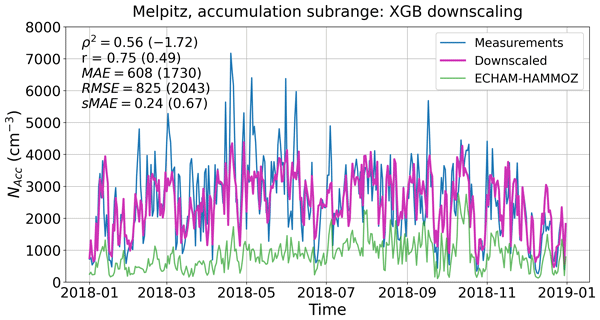
Antti Vartiainen, Santtu Mikkonen, Ville Leinonen, Tuukka Petäjä, Alfred Wiedensohler, Thomas Kühn, and Tuuli Miinalainen
Atmos. Meas. Tech., 18, 5763–5782, https://doi.org/10.5194/amt-18-5763-2025, https://doi.org/10.5194/amt-18-5763-2025, 2025
Short summary
Short summary
Global climate models, commonly used for climate predictions, struggle at capturing local-scale variations in air quality. We have used measurements of ultrafine particles (UFPs), a less understood air pollutant with potentially significant health implications, for training machine learning models that can substantially reduce the inaccuracy in UFP concentrations predicted by a climate model. This approach could aid epidemiological studies of ultrafine particles by extending exposure records.

Ilias Fountoulakis, Kyriaki Papachristopoulou, Stelios Kazadzis, Gregor Hülsen, Julian Gröbner, Ioannis-Panagiotis Raptis, Dimitra Kouklaki, Akriti Masoom, Natalia Kouremeti, Charalampos Kontoes, and Christos S. Zerefos
Geosci. Model Dev., 18, 7451–7473, https://doi.org/10.5194/gmd-18-7451-2025, https://doi.org/10.5194/gmd-18-7451-2025, 2025
Short summary
Short summary
The UVIOS2 model has been evaluated at Davos, Switzerland during the UVCIII campaign. The accuracy in the modelled UV indices has been assessed for different combinations of model inputs. A good overall agreement between UVIOS2 and the world reference spectroradiometer QASUME was found (average ratio of ~ 1 between the modelled and measured UV index), although the variability in the ratio can be large under cloudy conditions.

Antti Kukkurainen, Antti Mikkonen, Antti Arola, Antti Lipponen, Ville Kolehmainen, and Neus Sabater
Geosci. Model Dev., 18, 7529–7544, https://doi.org/10.5194/gmd-18-7529-2025, https://doi.org/10.5194/gmd-18-7529-2025, 2025
Short summary
Short summary
HAPI2LIBIS is a new software tool that enhances the capabilities of the radiative transfer model libRadtran. It simplifies high-wavelength-resolution simulations by using up-to-date molecular data from the HITRAN (High-Resolution Transmission Molecular Absorption) database and streamlining computations. This tool helps researchers analyze how gases interact with radiation in the Earth's atmosphere and at the surface, improving atmospheric studies and satellite observations and making detailed modeling more accurate and accessible.
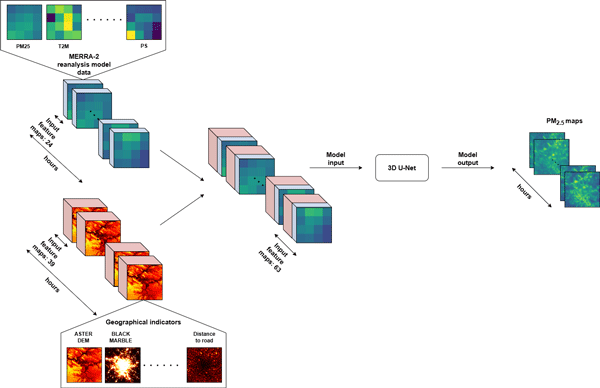
Andrea Porcheddu, Ville Kolehmainen, Timo Lähivaara, and Antti Lipponen
Atmos. Meas. Tech., 18, 4771–4789, https://doi.org/10.5194/amt-18-4771-2025, https://doi.org/10.5194/amt-18-4771-2025, 2025
Short summary
Short summary
This study proposes a novel machine learning method to estimate pollution levels (PM2.5) on urban areas at fine scale. Our model generates hourly PM2.5 maps with high spatial resolution, by combining satellite data, ground measurements, geophysical model data, and different geographical indicators. The model properly accounts for spatial and temporal variability of the urban pollution levels, and can be highly beneficial for air quality monitoring and health protection.
Xinyuan Hou, Kyriakoula Papachristopoulou, and Stelios Kazadzis
Atmos. Meas. Tech., 18, 4543–4557, https://doi.org/10.5194/amt-18-4543-2025, https://doi.org/10.5194/amt-18-4543-2025, 2025
Short summary
Short summary
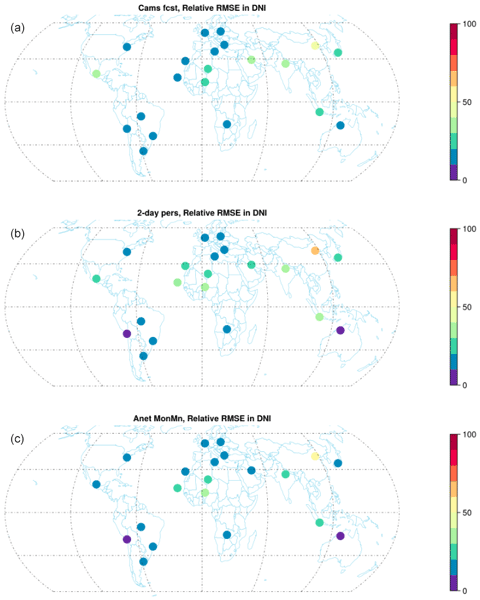
We analyzed aerosol ground measurements and model based aerosol optical depth (AOD) forecasts to study variations in AOD at different global sites. We compared day-ahead AOD forecast methods and assessed their impact on forecasting clear-sky direct normal irradiance (DNI). While none of the methods accurately forecast DNI within 5 %, most sites showed a DNI deviation within 20 %, especially at sites with urban-industrial aerosols.
Henri Oikarinen, Anni Hartikainen, Pauli Simonen, Miska Olin, Ukko-Ville Mäkinen, Petteri Marjanen, Laura Salo, Ville Silvonen, Sampsa Martikainen, Jussi Hoivala, Mika Ihalainen, Pasi Miettinen, Pasi Yli-Pirilä, Olli Sippula, Santtu Mikkonen, and Panu Karjalainen
Atmos. Meas. Tech., 18, 4271–4292, https://doi.org/10.5194/amt-18-4271-2025, https://doi.org/10.5194/amt-18-4271-2025, 2025
Short summary
Short summary
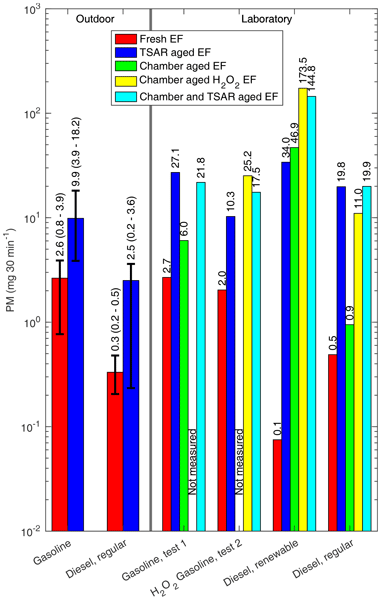
Fuel-operated auxiliary heaters are used in vehicles to provide extra heating to improve passenger comfort and vehicle functionality in cold climates. Currently heater emissions are not regulated as part of vehicle emissions, so this research was done to assess harmful gaseous and airborne particle emissions from them. Heaters were found to be major source of particles, especially when particles formed after combustion were accounted for, and large carbon monoxide emissions were also observed.
Hermann N. Nana, Masilin Gudoshava, Roméo S. Tanessong, Alain T. Tamoffo, and Derbetini A. Vondou
Weather Clim. Dynam., 6, 741–756, https://doi.org/10.5194/wcd-6-741-2025, https://doi.org/10.5194/wcd-6-741-2025, 2025
Short summary
Short summary
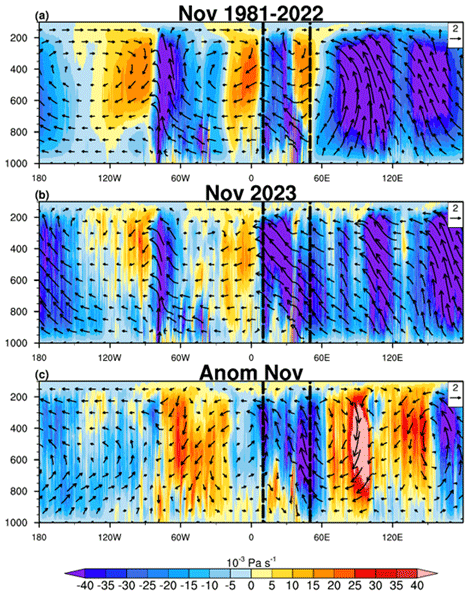
The results of this study show that extreme rainfall in November 2023 over Equatorial Africa was controlled by several factors, including strong sea-surface-temperature anomalies in the Niño-3.4, North Tropical Atlantic, Equatorial Atlantic and Indian Ocean Dipole regions; changes in zonal winds; the Walker circulation; the moisture flux and its divergence; and the easterly jets. The information we derive can be used to support risk assessment in the region and to improve our resilience to ongoing climate change.
Matti Niskanen, Aku Seppänen, Henri Oikarinen, Miska Olin, Panu Karjalainen, Santtu Mikkonen, and Kari Lehtinen
Geosci. Model Dev., 18, 2983–3001, https://doi.org/10.5194/gmd-18-2983-2025, https://doi.org/10.5194/gmd-18-2983-2025, 2025
Short summary
Short summary
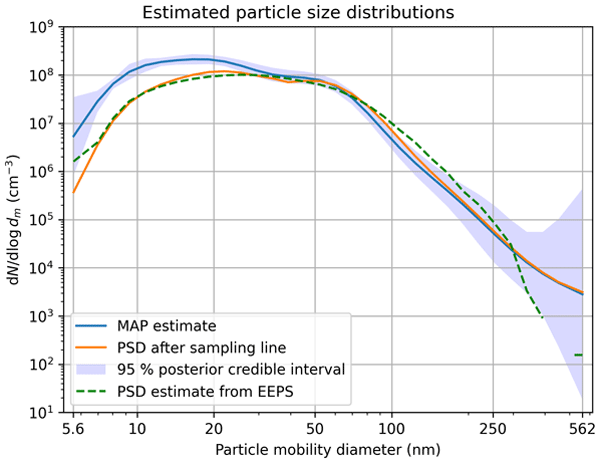
Particle size is a key factor determining the properties of aerosol particles which have a major influence on the climate and on human health. When measuring the particle sizes, however, sometimes the sampling lines that transfer the aerosol to the measurement device distort the size distribution, making the measurement unreliable. We propose a method to correct for the distortions and estimate the true particle sizes, improving measurement accuracy.
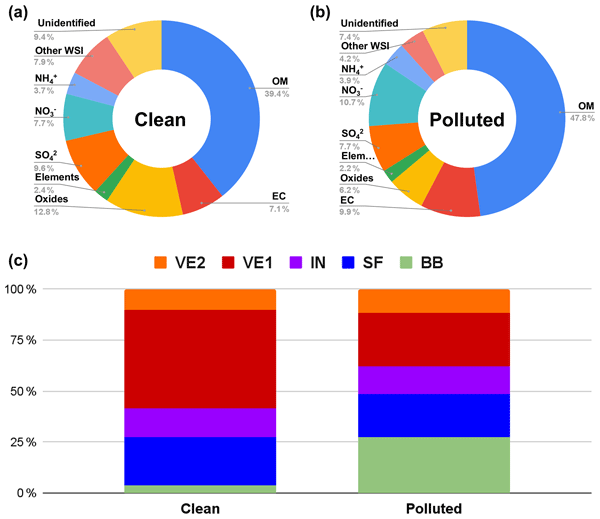
Guilherme Martins Pereira, Leonardo Yoshiaki Kamigauti, Rubens Fabio Pereira, Djacinto Monteiro dos Santos, Thayná da Silva Santos, José Vinicius Martins, Célia Alves, Cátia Gonçalves, Ismael Casotti Rienda, Nora Kováts, Thiago Nogueira, Luciana Rizzo, Paulo Artaxo, Regina Maura de Miranda, Marcia Akemi Yamasoe, Edmilson Dias de Freitas, Pérola de Castro Vasconcellos, and Maria de Fatima Andrade
Atmos. Chem. Phys., 25, 4587–4616, https://doi.org/10.5194/acp-25-4587-2025, https://doi.org/10.5194/acp-25-4587-2025, 2025
Short summary
Short summary
The chemical composition of fine particulate matter was studied in the megacity of São Paulo (Brazil) during a polluted period. Vehicular-related sources remain relevant; however, a high contribution of biomass burning was observed and correlated with sample ecotoxicity. Emerging biomass burning sources, such as forest fires and sugarcane-bagasse-based power plants, highlight the need for additional control measures alongside stricter rules concerning vehicular emissions.
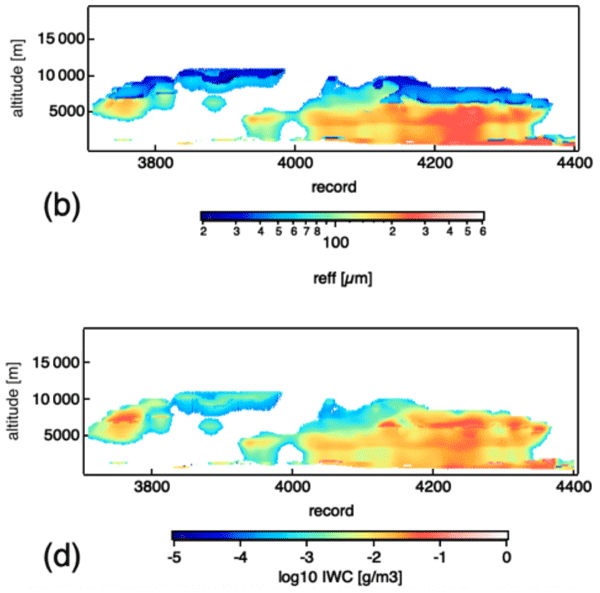
Kaori Sato, Hajime Okamoto, Tomoaki Nishizawa, Yoshitaka Jin, Takashi Y. Nakajima, Minrui Wang, Masaki Satoh, Woosub Roh, Hiroshi Ishimoto, and Rei Kudo
Atmos. Meas. Tech., 18, 1325–1338, https://doi.org/10.5194/amt-18-1325-2025, https://doi.org/10.5194/amt-18-1325-2025, 2025
Short summary
Short summary
This study introduces the JAXA EarthCARE Level 2 (L2) cloud product using satellite observations and simulated EarthCARE data. The outputs from the product feature a 3D global view of the dominant ice habit categories and corresponding microphysics. Habit and size distribution transitions from cloud to precipitation are quantified by the L2 cloud algorithms. With Doppler data, the products can be beneficial for further understanding of the coupling of cloud microphysics, radiation, and dynamics.
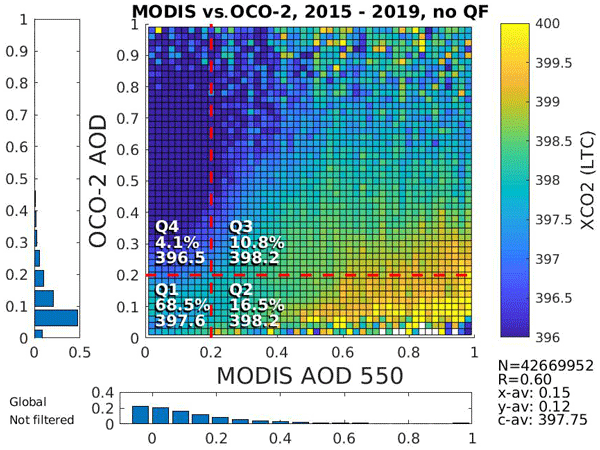
Timo H. Virtanen, Anu-Maija Sundström, Elli Suhonen, Antti Lipponen, Antti Arola, Christopher O'Dell, Robert R. Nelson, and Hannakaisa Lindqvist
Atmos. Meas. Tech., 18, 929–952, https://doi.org/10.5194/amt-18-929-2025, https://doi.org/10.5194/amt-18-929-2025, 2025
Short summary
Short summary
We find that small particles suspended in the air (aerosols) affect the satellite observations of carbon dioxide (CO2) made by the Orbiting Carbon Observatory-2 satellite instrument. Satellite estimates of CO2 appear to be too high for clean areas and too low for polluted areas. Our results show that CO2 and aerosols are often co-emitted, and this is partly masked out in the current retrievals. Correctly accounting for the aerosol effect is important for CO2 emission estimates by satellites.
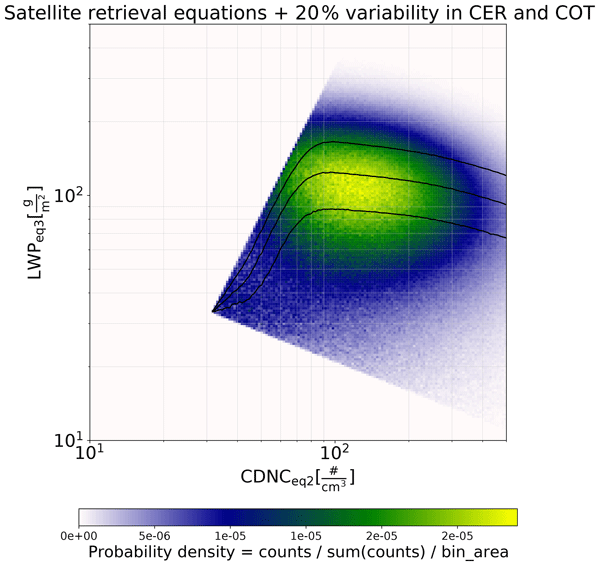
Harri Kokkola, Juha Tonttila, Silvia M. Calderón, Sami Romakkaniemi, Antti Lipponen, Aapo Peräkorpi, Tero Mielonen, Edward Gryspeerdt, Timo Henrik Virtanen, Pekka Kolmonen, and Antti Arola
Atmos. Chem. Phys., 25, 1533–1543, https://doi.org/10.5194/acp-25-1533-2025, https://doi.org/10.5194/acp-25-1533-2025, 2025
Short summary
Short summary
Understanding how atmospheric aerosols affect clouds is a scientific challenge. One question is how aerosols affects the amount of cloud water. We used a cloud-scale model to study these effects on marine clouds. The study showed that variations in cloud properties and instrument noise can cause bias in satellite-derived cloud water content. However, our results suggest that for similar weather conditions with well-defined aerosol concentrations, satellite data can reliably track these effects.
Mariya Petrenko, Ralph Kahn, Mian Chin, Susanne E. Bauer, Tommi Bergman, Huisheng Bian, Gabriele Curci, Ben Johnson, Johannes W. Kaiser, Zak Kipling, Harri Kokkola, Xiaohong Liu, Keren Mezuman, Tero Mielonen, Gunnar Myhre, Xiaohua Pan, Anna Protonotariou, Samuel Remy, Ragnhild Bieltvedt Skeie, Philip Stier, Toshihiko Takemura, Kostas Tsigaridis, Hailong Wang, Duncan Watson-Parris, and Kai Zhang
Atmos. Chem. Phys., 25, 1545–1567, https://doi.org/10.5194/acp-25-1545-2025, https://doi.org/10.5194/acp-25-1545-2025, 2025
Short summary
Short summary
We compared smoke plume simulations from 11 global models to each other and to satellite smoke amount observations aimed at constraining smoke source strength. In regions where plumes are thick and background aerosol is low, models and satellites compare well. However, the input emission inventory tends to underestimate in many places, and particle property and loss rate assumptions vary enormously among models, causing uncertainties that require systematic in situ measurements to resolve.
Sami D. Harni, Minna Aurela, Sanna Saarikoski, Jarkko V. Niemi, Harri Portin, Hanna Manninen, Ville Leinonen, Pasi Aalto, Phil K. Hopke, Tuukka Petäjä, Topi Rönkkö, and Hilkka Timonen
Atmos. Chem. Phys., 24, 12143–12160, https://doi.org/10.5194/acp-24-12143-2024, https://doi.org/10.5194/acp-24-12143-2024, 2024
Short summary
Short summary
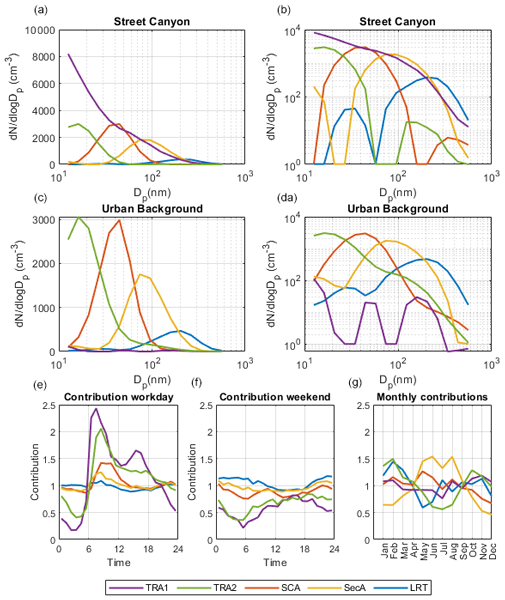
In this study, particle number size distribution data were used in a novel way in positive matrix factorization analysis to find aerosol source profiles in the area. Measurements were made in Helsinki at a street canyon and urban background sites between February 2015 and June 2019. Five different aerosol sources were identified. These sources underline the significance of traffic-related emissions in urban environments despite recent improvements in emission reduction technologies.

Angelos Karanikolas, Natalia Kouremeti, Monica Campanelli, Victor Estellés, Masahiro Momoi, Gaurav Kumar, Stephan Nyeki, and Stelios Kazadzis
Atmos. Meas. Tech., 17, 6085–6105, https://doi.org/10.5194/amt-17-6085-2024, https://doi.org/10.5194/amt-17-6085-2024, 2024
Short summary
Short summary
Different sun photometer networks use different instruments, post-processing algorithms and calibration protocols for aerosol optical depth (AOD) retrieval. Such differences can affect the homogeneity and comparability of their measurements. In this study, we assess the homogeneity between the sun photometer networks GAW-PFR and SKYNET, analysing common measurements during three campaigns between 2017–2021, and investigate the main cause of the differences.
Andrea Porcheddu, Ville Kolehmainen, Timo Lähivaara, and Antti Lipponen
Atmos. Meas. Tech., 17, 5747–5764, https://doi.org/10.5194/amt-17-5747-2024, https://doi.org/10.5194/amt-17-5747-2024, 2024
Short summary
Short summary
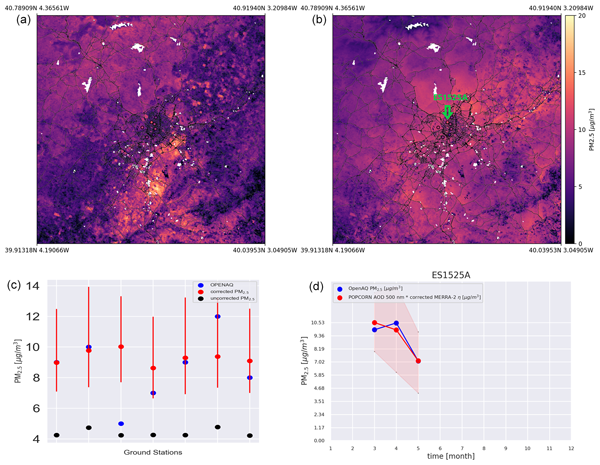
This study focuses on improving the accuracy of satellite-based PM2.5 retrieval, crucial for monitoring air quality and its impact on health. It employs machine learning to correct the AOD-to-PM2.5 conversion ratio using various data sources. The approach produces high-resolution PM2.5 estimates with improved accuracy. The method is flexible and can incorporate additional training data from different sources, making it a valuable tool for air quality monitoring and epidemiological studies.
Akriti Masoom, Stelios Kazadzis, Masimo Valeri, Ioannis-Panagiotis Raptis, Gabrielle Brizzi, Kyriakoula Papachristopoulou, Francesca Barnaba, Stefano Casadio, Axel Kreuter, and Fabrizio Niro
Atmos. Meas. Tech., 17, 5525–5549, https://doi.org/10.5194/amt-17-5525-2024, https://doi.org/10.5194/amt-17-5525-2024, 2024
Short summary
Short summary
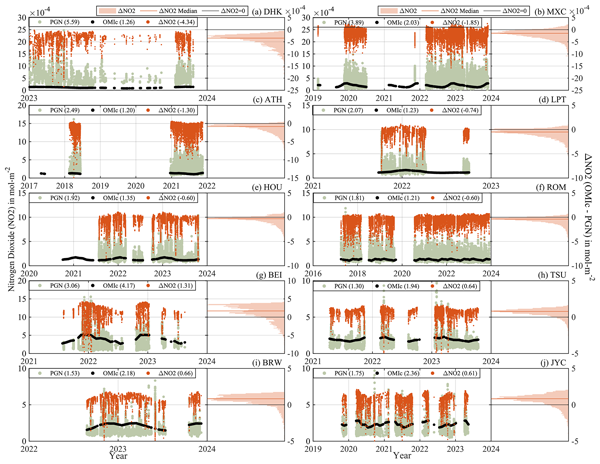
Aerosols, which have a wide impact on climate, radiative forcing, and human health, are widely represented by aerosol optical depth (AOD). AOD retrievals require Rayleigh scattering and atmospheric absorption (ozone, NO2, etc.) corrections. We analysed the NO2 (which has a high spatiotemporal variation) uncertainty impact on AOD retrievals using the synergy of co-located ground-based instruments with a long-term dataset at worldwide sites and found significant AOD over- or underestimations.
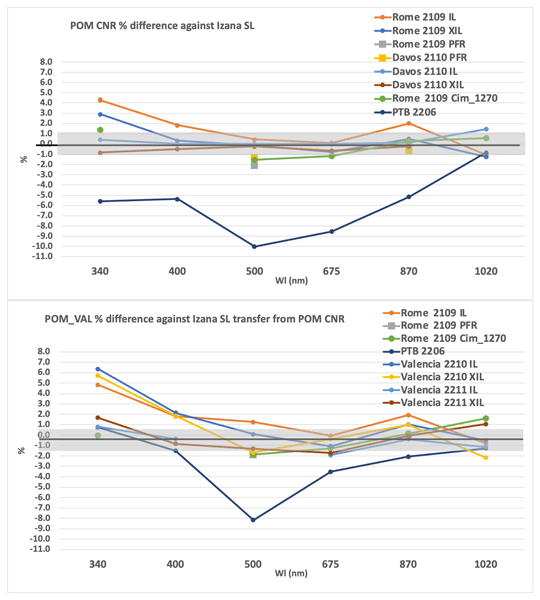
Monica Campanelli, Victor Estellés, Gaurav Kumar, Teruyuki Nakajima, Masahiro Momoi, Julian Gröbner, Stelios Kazadzis, Natalia Kouremeti, Angelos Karanikolas, Africa Barreto, Saulius Nevas, Kerstin Schwind, Philipp Schneider, Iiro Harju, Petri Kärhä, Henri Diémoz, Rei Kudo, Akihiro Uchiyama, Akihiro Yamazaki, Anna Maria Iannarelli, Gabriele Mevi, Annalisa Di Bernardino, and Stefano Casadio
Atmos. Meas. Tech., 17, 5029–5050, https://doi.org/10.5194/amt-17-5029-2024, https://doi.org/10.5194/amt-17-5029-2024, 2024
Short summary
Short summary
To retrieve columnar aerosol properties from sun photometers, some calibration factors are needed. The on-site calibrations, performed as frequently as possible to monitor changes in the machine conditions, allow operators to track and evaluate the calibration status on a continuous basis, reducing the data gaps incurred by the periodic shipments for performing centralized calibrations. The performance of the on-site calibration procedures was evaluated, providing very good results.
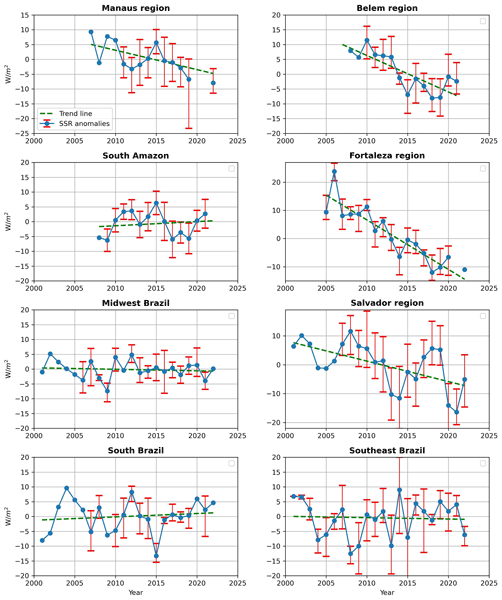
Lucas Ferreira Correa, Doris Folini, Boriana Chtirkova, and Martin Wild
Atmos. Chem. Phys., 24, 8797–8819, https://doi.org/10.5194/acp-24-8797-2024, https://doi.org/10.5194/acp-24-8797-2024, 2024
Short summary
Short summary
We investigated the causes of the decadal trends of solar radiation measured at 34 stations in Brazil in the first 2 decades of the 21st century. We observed strong negative trends in north and northeast Brazil associated with changes in both atmospheric absorption (anthropogenic) and cloud cover (natural). In other parts of the country no strong trends were observed as a result of competing effects. This provides a better understanding of the energy balance in the region.
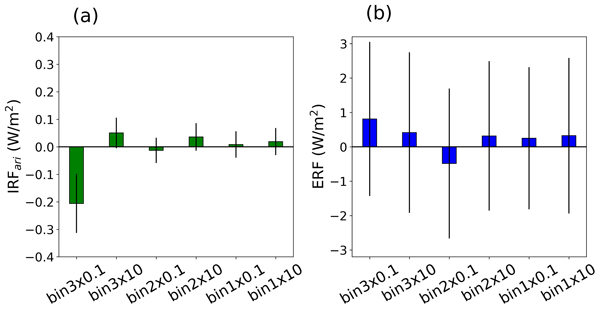
Muhammed Irfan, Thomas Kühn, Taina Yli-Juuti, Anton Laakso, Eemeli Holopainen, Douglas R. Worsnop, Annele Virtanen, and Harri Kokkola
Atmos. Chem. Phys., 24, 8489–8506, https://doi.org/10.5194/acp-24-8489-2024, https://doi.org/10.5194/acp-24-8489-2024, 2024
Short summary
Short summary
The study examines how the volatility of semi-volatile organic compounds affects secondary organic aerosol (SOA) formation and climate. Our simulations show that uncertainties in these volatilities influence aerosol mass and climate impacts. Accurate representation of these compounds in climate models is crucial for predicting global climate patterns.
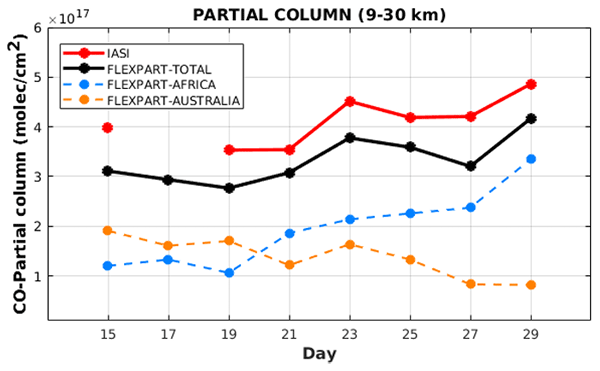
Nelson Bègue, Alexandre Baron, Gisèle Krysztofiak, Gwenaël Berthet, Corinna Kloss, Fabrice Jégou, Sergey Khaykin, Marion Ranaivombola, Tristan Millet, Thierry Portafaix, Valentin Duflot, Philippe Keckhut, Hélène Vérèmes, Guillaume Payen, Mahesh Kumar Sha, Pierre-François Coheur, Cathy Clerbaux, Michaël Sicard, Tetsu Sakai, Richard Querel, Ben Liley, Dan Smale, Isamu Morino, Osamu Uchino, Tomohiro Nagai, Penny Smale, John Robinson, and Hassan Bencherif
Atmos. Chem. Phys., 24, 8031–8048, https://doi.org/10.5194/acp-24-8031-2024, https://doi.org/10.5194/acp-24-8031-2024, 2024
Short summary
Short summary
During the 2020 austral summer, the pristine atmosphere of the southwest Indian Ocean basin experienced significant perturbations. Numerical models indicated that the lower-stratospheric aerosol content was influenced by the intense and persistent stratospheric aerosol layer generated during the 2019–2020 extreme Australian bushfire events. Ground-based observations at Réunion confirmed the simultaneous presence of African and Australian aerosol layers.
Hajime Okamoto, Kaori Sato, Tomoaki Nishizawa, Yoshitaka Jin, Takashi Nakajima, Minrui Wang, Masaki Satoh, Kentaroh Suzuki, Woosub Roh, Akira Yamauchi, Hiroaki Horie, Yuichi Ohno, Yuichiro Hagihara, Hiroshi Ishimoto, Rei Kudo, Takuji Kubota, and Toshiyuki Tanaka
Atmos. Meas. Tech. Discuss., https://doi.org/10.5194/amt-2024-101, https://doi.org/10.5194/amt-2024-101, 2024
Publication in AMT not foreseen
Short summary
Short summary
This article gives overviews of the JAXA L2 algorithms and products by Japanese science teams for EarthCARE. The algorithms provide corrected Doppler velocity, cloud particle shape and orientations, microphysics of clouds and aerosols, and radiative fluxes and heating rate. The retrievals by the algorithms are demonstrated and evaluated using NICAM/J-simulator outputs. The JAXA EarthCARE L2 products will bring new scientific knowledge about the clouds, aerosols, radiation and convections.
Junli Yang, Weijun Quan, Li Zhang, Jianglin Hu, Qiying Chen, and Martin Wild
Geosci. Model Dev. Discuss., https://doi.org/10.5194/gmd-2024-74, https://doi.org/10.5194/gmd-2024-74, 2024
Revised manuscript not accepted
Short summary
Short summary
Due to the difficulties involved in the measurements of the Downward long-wave irradiance (DnLWI), the numerical weather prediction (NWP) models have been developed to obtain the DnLWI indirectly. In this study, a long-term high time-resolution (1 min) observational dataset of the DnLWI in China was used to evaluate the radiation scheme in the CMA-MESO model over various underlying surfaces and climate zones.
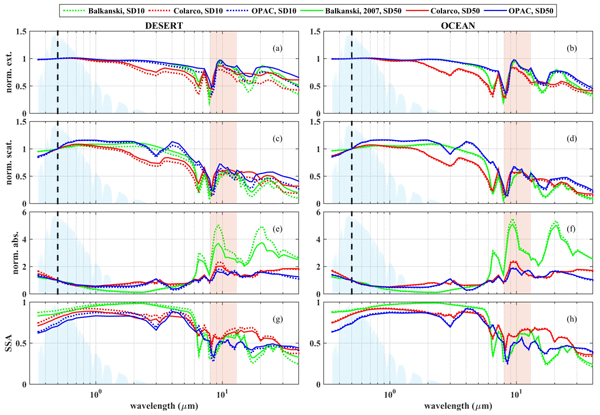
Ilias Fountoulakis, Alexandra Tsekeri, Stelios Kazadzis, Vassilis Amiridis, Angelos Nersesian, Maria Tsichla, Emmanouil Proestakis, Antonis Gkikas, Kyriakoula Papachristopoulou, Vasileios Barlakas, Claudia Emde, and Bernhard Mayer
Atmos. Chem. Phys., 24, 4915–4948, https://doi.org/10.5194/acp-24-4915-2024, https://doi.org/10.5194/acp-24-4915-2024, 2024
Short summary
Short summary
In our study we provide an assessment, through a sensitivity study, of the limitations of models to calculate the dust direct radiative effect (DRE) due to the underrepresentation of its size, refractive index (RI), and shape. Our results indicate the necessity of including more realistic sizes and RIs for dust particles in dust models, in order to derive better estimations of the dust direct radiative effects.
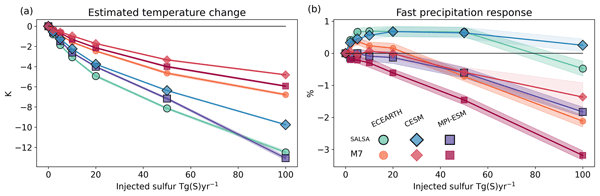
Anton Laakso, Daniele Visioni, Ulrike Niemeier, Simone Tilmes, and Harri Kokkola
Earth Syst. Dynam., 15, 405–427, https://doi.org/10.5194/esd-15-405-2024, https://doi.org/10.5194/esd-15-405-2024, 2024
Short summary
Short summary
This study is the second in a two-part series in which we explore the dependency of the impacts of stratospheric sulfur injections on both the model employed and the strategy of injection utilized. The study uncovers uncertainties associated with these techniques to cool climate, highlighting how the simulated climate impacts are dependent on both the selected model and the magnitude of the injections. We also show that estimating precipitation impacts of aerosol injection is a complex task.
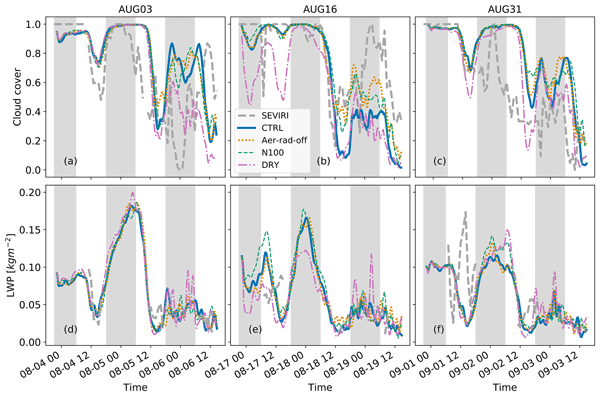
Alejandro Baró Pérez, Michael S. Diamond, Frida A.-M. Bender, Abhay Devasthale, Matthias Schwarz, Julien Savre, Juha Tonttila, Harri Kokkola, Hyunho Lee, David Painemal, and Annica M. L. Ekman
Atmos. Chem. Phys., 24, 4591–4610, https://doi.org/10.5194/acp-24-4591-2024, https://doi.org/10.5194/acp-24-4591-2024, 2024
Short summary
Short summary
We use a numerical model to study interactions between humid light-absorbing aerosol plumes, clouds, and radiation over the southeast Atlantic. We find that the warming produced by the aerosols reduces cloud cover, especially in highly polluted situations. Aerosol impacts on drizzle play a minor role. However, aerosol effects on cloud reflectivity and moisture-induced changes in cloud cover dominate the climatic response and lead to an overall cooling by the biomass burning plumes.
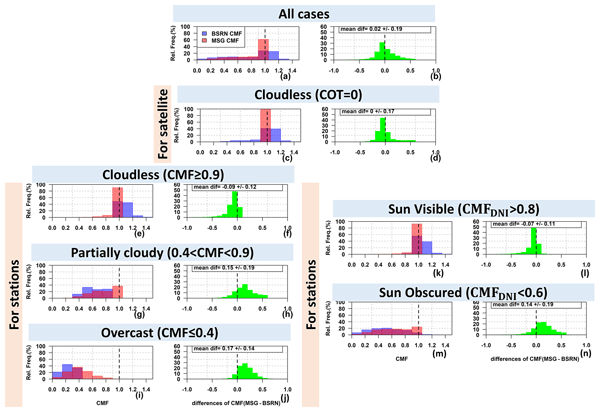
Kyriakoula Papachristopoulou, Ilias Fountoulakis, Alkiviadis F. Bais, Basil E. Psiloglou, Nikolaos Papadimitriou, Ioannis-Panagiotis Raptis, Andreas Kazantzidis, Charalampos Kontoes, Maria Hatzaki, and Stelios Kazadzis
Atmos. Meas. Tech., 17, 1851–1877, https://doi.org/10.5194/amt-17-1851-2024, https://doi.org/10.5194/amt-17-1851-2024, 2024
Short summary
Short summary
The upgraded systems SENSE2 and NextSENSE2 focus on improving the quality of solar nowcasting and forecasting. SENSE2 provides real-time estimates of solar irradiance across a wide region every 15 min. NextSENSE2 offers short-term forecasts of irradiance up to 3 h ahead. Evaluation with actual data showed that the instantaneous comparison yields the most discrepancies due to the uncertainties of cloud-related information and satellite versus ground-based spatial representativeness limitations.
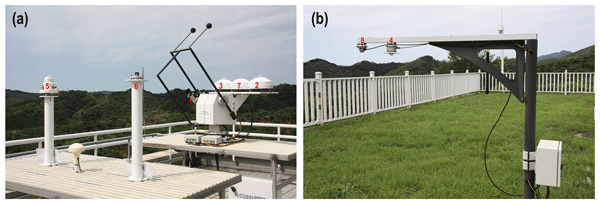
Weijun Quan, Zhenfa Wang, Lin Qiao, Xiangdong Zheng, Junli Jin, Yinruo Li, Xiaomei Yin, Zhiqiang Ma, and Martin Wild
Earth Syst. Sci. Data, 16, 961–983, https://doi.org/10.5194/essd-16-961-2024, https://doi.org/10.5194/essd-16-961-2024, 2024
Short summary
Short summary
Radiation components play important roles in various fields such as the Earth’s surface radiation budget, ecosystem productivity, and human health. In this study, a dataset consisting of quality-assured daily data of nine radiation components is presented based on the in situ measurements at the Shangdianzi regional GAW station in China during 2013–2022. The dataset can be applied in the validation of satellite products and numerical models and investigation of atmospheric radiation.
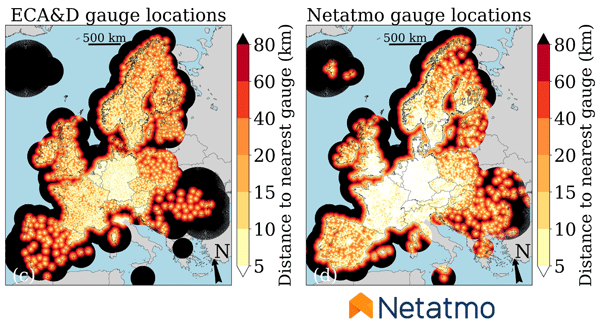
Aart Overeem, Hidde Leijnse, Gerard van der Schrier, Else van den Besselaar, Irene Garcia-Marti, and Lotte Wilhelmina de Vos
Hydrol. Earth Syst. Sci., 28, 649–668, https://doi.org/10.5194/hess-28-649-2024, https://doi.org/10.5194/hess-28-649-2024, 2024
Short summary
Short summary
Ground-based radar precipitation products typically need adjustment with rain gauge accumulations to achieve a reasonable accuracy. Crowdsourced rain gauge networks have a much higher density than conventional ones. Here, a 1-year personal weather station (PWS) gauge dataset is obtained. After quality control, the 1 h PWS gauge accumulations are merged with pan-European radar accumulations. The potential of crowdsourcing to improve radar precipitation products in (near) real time is confirmed.
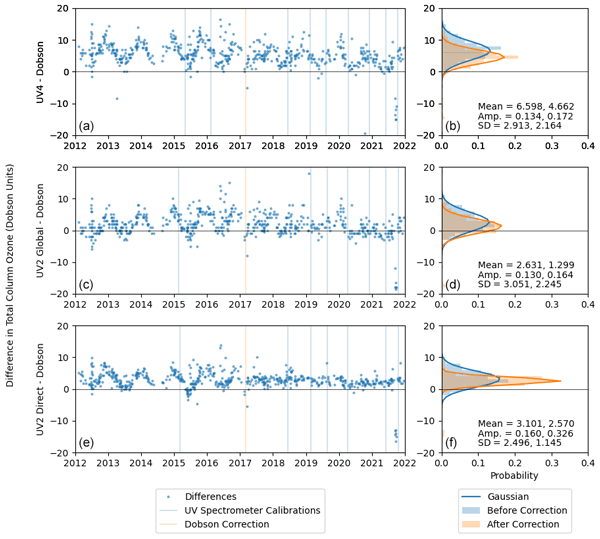
Alexander Geddes, Ben Liley, Richard McKenzie, Michael Kotkamp, and Richard Querel
Atmos. Meas. Tech., 17, 827–838, https://doi.org/10.5194/amt-17-827-2024, https://doi.org/10.5194/amt-17-827-2024, 2024
Short summary
Short summary
In this paper we describe a unique spectrometer that has been developed and tested over 10 years at Lauder, New Zealand. The spectrometer in question, UV2, makes alternating measurements of global UV and direct sun UV irradiance. After an assessment of the instrument performance, we compare the ozone and aerosol optical depth derived from UV2 to other independent measurements, finding excellent agreement suggesting that UV2 could supersede these measurements, particularly for ozone.
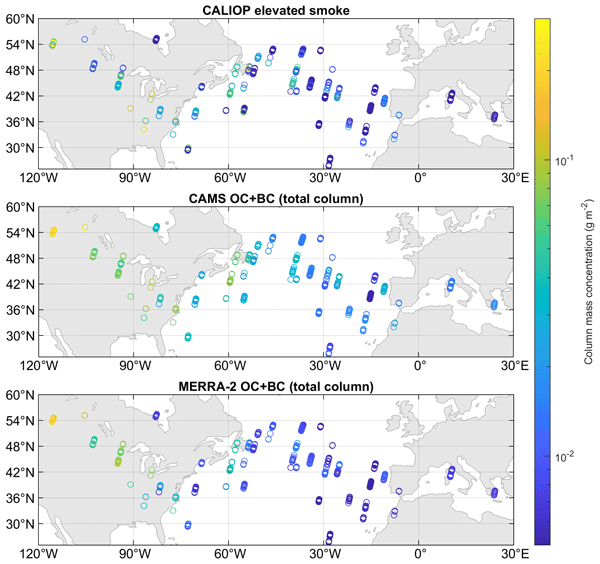
Xiaoxia Shang, Antti Lipponen, Maria Filioglou, Anu-Maija Sundström, Mark Parrington, Virginie Buchard, Anton S. Darmenov, Ellsworth J. Welton, Eleni Marinou, Vassilis Amiridis, Michael Sicard, Alejandro Rodríguez-Gómez, Mika Komppula, and Tero Mielonen
Atmos. Chem. Phys., 24, 1329–1344, https://doi.org/10.5194/acp-24-1329-2024, https://doi.org/10.5194/acp-24-1329-2024, 2024
Short summary
Short summary
In June 2019, smoke particles from a Canadian wildfire event were transported to Europe. The long-range-transported smoke plumes were monitored with a spaceborne lidar and reanalysis models. Based on the aerosol mass concentrations estimated from the observations, the reanalysis models had difficulties in reproducing the amount and location of the smoke aerosols during the transport event. Consequently, more spaceborne lidar missions are needed for reliable monitoring of aerosol plumes.
Julian Hofer, Patric Seifert, J. Ben Liley, Martin Radenz, Osamu Uchino, Isamu Morino, Tetsu Sakai, Tomohiro Nagai, and Albert Ansmann
Atmos. Chem. Phys., 24, 1265–1280, https://doi.org/10.5194/acp-24-1265-2024, https://doi.org/10.5194/acp-24-1265-2024, 2024
Short summary
Short summary
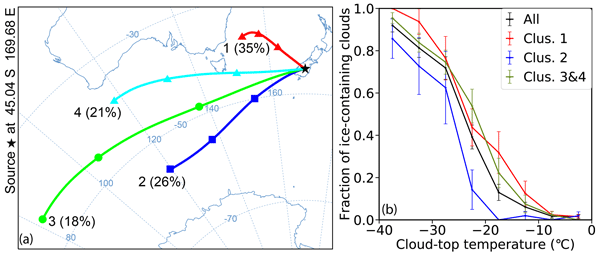
An 11-year dataset of polarization lidar observations from Lauder, New Zealand / Aotearoa, was used to distinguish the thermodynamic phase of natural clouds. The cloud dataset was separated to assess the impact of air mass origin on the frequency of heterogeneous ice formation. Ice formation efficiency in clouds above Lauder was found to be lower than in the polluted Northern Hemisphere midlatitudes but higher than in very clean and pristine environments, such as Punta Arenas in southern Chile.
Antonio Fernando Almansa, África Barreto, Natalia Kouremeti, Ramiro González, Akriti Masoom, Carlos Toledano, Julian Gröbner, Rosa Delia García, Yenny González, Stelios Kazadzis, Stéphane Victori, Óscar Álvarez, Fabrice Maupin, Virgilio Carreño, Victoria Eugenia Cachorro, and Emilio Cuevas
Atmos. Meas. Tech., 17, 659–675, https://doi.org/10.5194/amt-17-659-2024, https://doi.org/10.5194/amt-17-659-2024, 2024
Short summary
Short summary
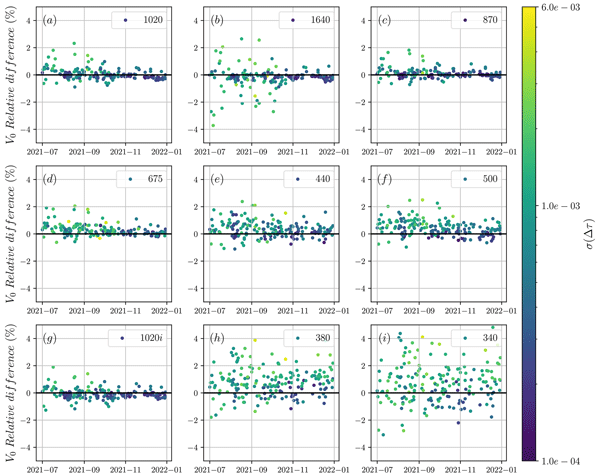
This paper applies sun photometer synergies to improve calibration transference between different sun photometers and also enhance their quality assurance and quality control. We have validated this technique using different instrumentation, the WMO-GAW and NASA-AERONET references, under different aerosol regimes using the standard Langley calibration method as a reference.
Kalle Nordling, Jukka-Pekka Keskinen, Sami Romakkaniemi, Harri Kokkola, Petri Räisänen, Antti Lipponen, Antti-Ilari Partanen, Jaakko Ahola, Juha Tonttila, Muzaffer Ege Alper, Hannele Korhonen, and Tomi Raatikainen
Atmos. Chem. Phys., 24, 869–890, https://doi.org/10.5194/acp-24-869-2024, https://doi.org/10.5194/acp-24-869-2024, 2024
Short summary
Short summary
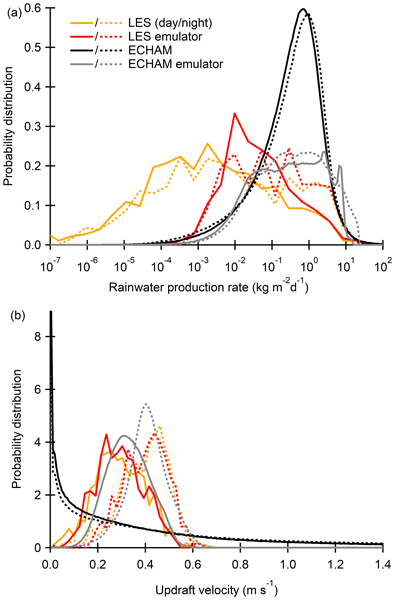
Our results show that the global model is stable and it provides meaningful results. This way we can include a physics-based presentation of sub-grid physics (physics which happens on a 100 m scale) in the global model, whose resolution is on a 100 km scale.
Markku Kulmala, Anna Lintunen, Hanna Lappalainen, Annele Virtanen, Chao Yan, Ekaterina Ezhova, Tuomo Nieminen, Ilona Riipinen, Risto Makkonen, Johanna Tamminen, Anu-Maija Sundström, Antti Arola, Armin Hansel, Kari Lehtinen, Timo Vesala, Tuukka Petäjä, Jaana Bäck, Tom Kokkonen, and Veli-Matti Kerminen
Atmos. Chem. Phys., 23, 14949–14971, https://doi.org/10.5194/acp-23-14949-2023, https://doi.org/10.5194/acp-23-14949-2023, 2023
Short summary
Short summary
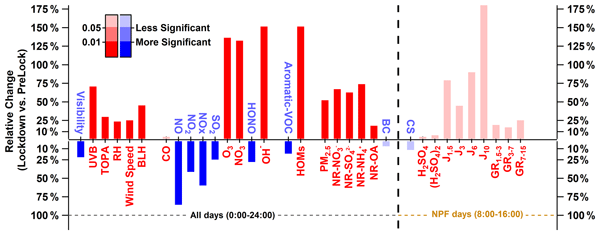
To be able to meet global grand challenges, we need comprehensive open data with proper metadata. In this opinion paper, we describe the SMEAR (Station for Measuring Earth surface – Atmosphere Relations) concept and include several examples (cases), such as new particle formation and growth, feedback loops and the effect of COVID-19, and what has been learned from these investigations. The future needs and the potential of comprehensive observations of the environment are summarized.
Ville Leinonen, Miska Olin, Sampsa Martikainen, Panu Karjalainen, and Santtu Mikkonen
Atmos. Meas. Tech., 16, 5075–5089, https://doi.org/10.5194/amt-16-5075-2023, https://doi.org/10.5194/amt-16-5075-2023, 2023
Short summary
Short summary
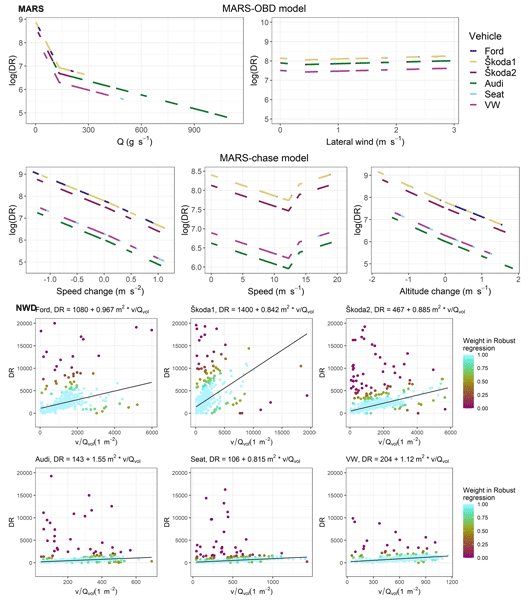
Emission factor calculation was studied to provide models that do not use traditional CO2-based calculation in exhaust plume analysis. Two types of models, one based on the physical dependency of dilution of the exhaust flow rate and speed and two based on the statistical, measured dependency of dilution of the exhaust flow rate, acceleration, speed, altitude change, and/or wind, were developed. These methods could possibly be extended to also calculate non-exhaust emissions in the future.
Óscar Alvárez, África Barreto, Omaira E. García, Frank Hase, Rosa D. García, Julian Gröbner, Sergio F. León-Luis, Eliezer Sepúlveda, Virgilio Carreño, Antonio Alcántara, Ramón Ramos, A. Fernando Almansa, Stelios Kazadzis, Noémie Taquet, Carlos Toledano, and Emilio Cuevas
Atmos. Meas. Tech., 16, 4861–4884, https://doi.org/10.5194/amt-16-4861-2023, https://doi.org/10.5194/amt-16-4861-2023, 2023
Short summary
Short summary
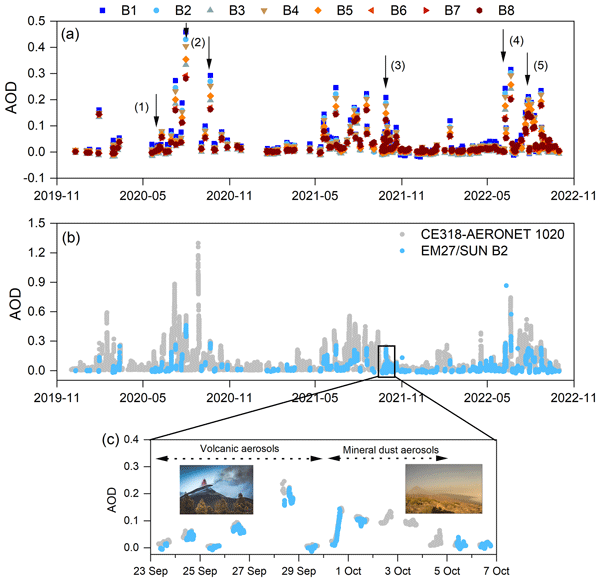
In this work, we have extended the capabilities of a portable Fourier transform infrared (FTIR) instrument, which was originally designed to provide high-quality greenhouse gas monitoring within COCCON (COllaborative Carbon Column Observing Network). The extension allows the spectrometer to now also provide coincidentally column-integrated aerosol information. This addition of a reference instrument to a global network will be utilised to enhance our understanding of atmospheric chemistry.
Vasiliki Daskalopoulou, Panagiotis I. Raptis, Alexandra Tsekeri, Vassilis Amiridis, Stelios Kazadzis, Zbigniew Ulanowski, Vassilis Charmandaris, Konstantinos Tassis, and William Martin
Atmos. Meas. Tech., 16, 4529–4550, https://doi.org/10.5194/amt-16-4529-2023, https://doi.org/10.5194/amt-16-4529-2023, 2023
Short summary
Short summary
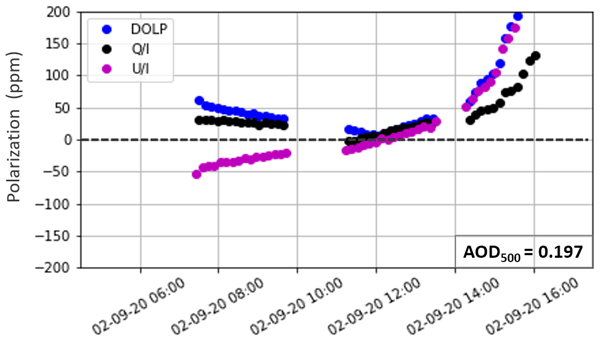
Atmospheric dust particles may present a preferential alignment due to their shape on long range transport. Since dust is abundant and plays a key role to global climate, the elusive observation of orientation will be a game changer to existing measurement techniques and the representation of particles in climate models. We utilize a specifically designed instrument, SolPol, and target the Sun from the ground for large polarization values under dusty conditions, a clear sign of orientation.
Julian Gröbner, Natalia Kouremeti, Gregor Hülsen, Ralf Zuber, Mario Ribnitzky, Saulius Nevas, Peter Sperfeld, Kerstin Schwind, Philipp Schneider, Stelios Kazadzis, África Barreto, Tom Gardiner, Kavitha Mottungan, David Medland, and Marc Coleman
Atmos. Meas. Tech., 16, 4667–4680, https://doi.org/10.5194/amt-16-4667-2023, https://doi.org/10.5194/amt-16-4667-2023, 2023
Short summary
Short summary
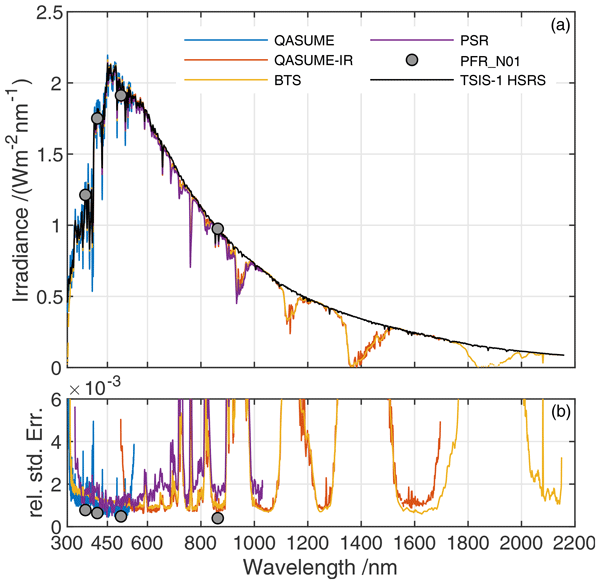
Spectral solar irradiance measurements traceable to the International System of Units (SI) allow for intercomparability between instruments and for their validation according to metrological standards. Here we also validate and reduce the uncertainties of the top-of-atmosphere TSIS-1 Hybrid Solar Reference Spectrum (HSRS). The management of large networks, e.g. AERONET or GAW-PFR, will benefit from reducing logistical overhead, improving their resilience and achieving metrological traceability.
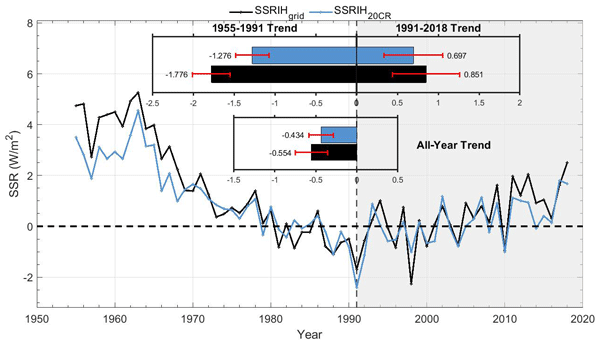
Boyang Jiao, Yucheng Su, Qingxiang Li, Veronica Manara, and Martin Wild
Earth Syst. Sci. Data, 15, 4519–4535, https://doi.org/10.5194/essd-15-4519-2023, https://doi.org/10.5194/essd-15-4519-2023, 2023
Short summary
Short summary
This paper develops an observational integrated and homogenized global-terrestrial (except for Antarctica) SSRIH station. This is interpolated into a 5° × 5° SSRIH grid and reconstructed into a long-term (1955–2018) global land (except for Antarctica) 5° × 2.5° SSR anomaly dataset (SSRIH20CR) by an improved partial convolutional neural network deep-learning method. SSRIH20CR yields trends of −1.276 W m−2 per decade over the dimming period and 0.697 W m−2 per decade over the brightening period.
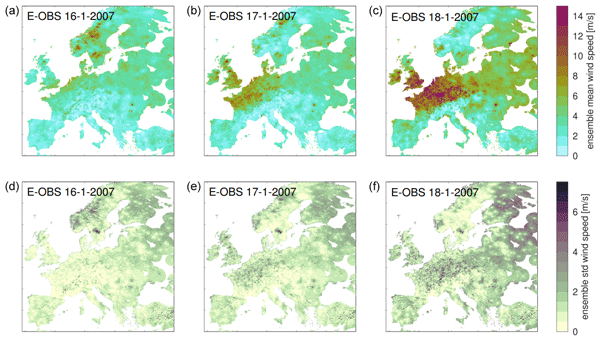
Jouke H. S. de Baar, Linh Nhat Luu, Gerard van der Schrier, Else J. M. van den Besselaar, and Irene Garcia-Marti
Adv. Sci. Res., 20, 91–95, https://doi.org/10.5194/asr-20-91-2023, https://doi.org/10.5194/asr-20-91-2023, 2023
Short summary
Short summary
In this work, we present the most recent updates in the E-OBS gridded data set for daily mean wind speed over Europe. The data set is provided as an ensemble of equally likely realisations. In addition, we make a preliminary study into possible causes of the observed terrestrial wind stilling effect, such as local changes in surface roughness length. As one of the results, we do observe a terrestrial wind stilling effect, however, the trend varies locally over Europe.
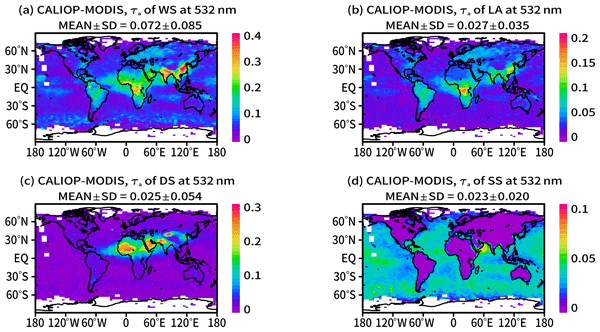
Rei Kudo, Akiko Higurashi, Eiji Oikawa, Masahiro Fujikawa, Hiroshi Ishimoto, and Tomoaki Nishizawa
Atmos. Meas. Tech., 16, 3835–3863, https://doi.org/10.5194/amt-16-3835-2023, https://doi.org/10.5194/amt-16-3835-2023, 2023
Short summary
Short summary
A synergistic retrieval method of aerosol components (water-soluble, light-absorbing, dust, and sea salt particles) from CALIOP and MODIS observations was developed. The total global 3-D distributions and those for each component showed good consistency with the CALIOP and MODIS official products and previous studies. The shortwave direct radiative effects of each component at the top and bottom of the atmosphere and for the heating rate were also consistent with previous studies.
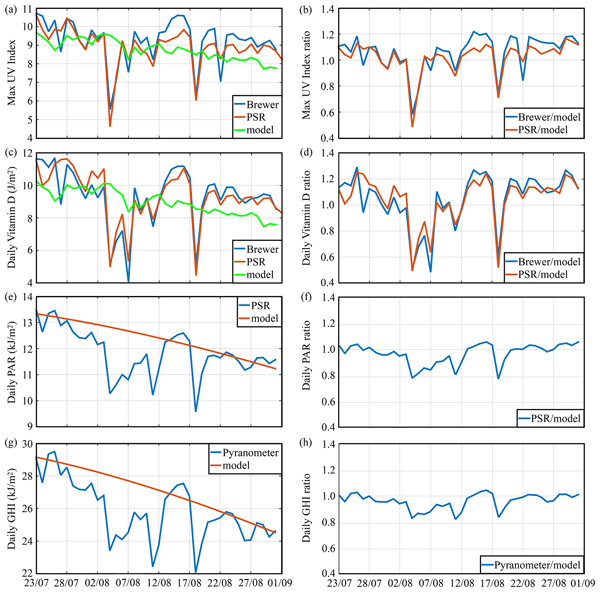
Akriti Masoom, Ilias Fountoulakis, Stelios Kazadzis, Ioannis-Panagiotis Raptis, Anna Kampouri, Basil E. Psiloglou, Dimitra Kouklaki, Kyriakoula Papachristopoulou, Eleni Marinou, Stavros Solomos, Anna Gialitaki, Dimitra Founda, Vasileios Salamalikis, Dimitris Kaskaoutis, Natalia Kouremeti, Nikolaos Mihalopoulos, Vassilis Amiridis, Andreas Kazantzidis, Alexandros Papayannis, Christos S. Zerefos, and Kostas Eleftheratos
Atmos. Chem. Phys., 23, 8487–8514, https://doi.org/10.5194/acp-23-8487-2023, https://doi.org/10.5194/acp-23-8487-2023, 2023
Short summary
Short summary
We analyse the spatial and temporal aerosol spectral optical properties during the extreme wildfires of August 2021 in Greece and assess their effects on air quality and solar radiation quantities related to health, agriculture, and energy. Different aerosol conditions are identified (pure smoke, pure dust, dust–smoke together); the largest impact on solar radiation quantities is found for cases with mixed dust–smoke aerosols. Such situations are expected to occur more frequently in the future.
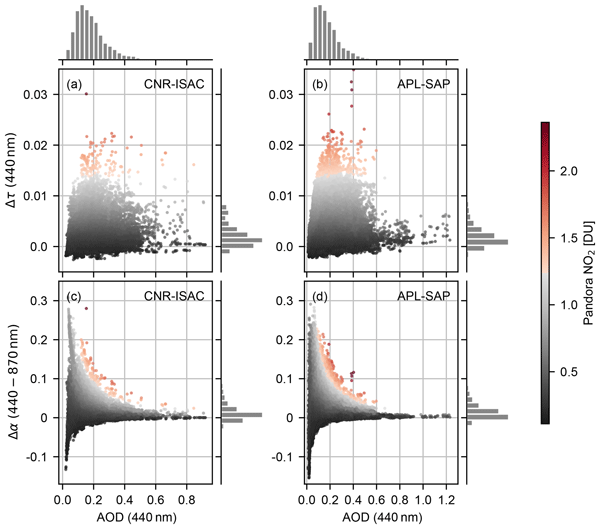
Theano Drosoglou, Ioannis-Panagiotis Raptis, Massimo Valeri, Stefano Casadio, Francesca Barnaba, Marcos Herreras-Giralda, Anton Lopatin, Oleg Dubovik, Gabriele Brizzi, Fabrizio Niro, Monica Campanelli, and Stelios Kazadzis
Atmos. Meas. Tech., 16, 2989–3014, https://doi.org/10.5194/amt-16-2989-2023, https://doi.org/10.5194/amt-16-2989-2023, 2023
Short summary
Short summary
Aerosol optical properties derived from sun photometers depend on the optical depth of trace gases absorbing solar radiation at specific spectral ranges. Various networks use satellite-based climatologies to account for this or neglect their effect. In this work, we evaluate the effect of NO2 absorption in aerosol retrievals from AERONET and SKYNET over two stations in Rome, Italy, with relatively high NO2 spatiotemporal variations, using NO2 data from the Pandora network and the TROPOMI sensor.
William Wandji Nyamsi, Yves-Marie Saint-Drenan, Antti Arola, and Lucien Wald
Atmos. Meas. Tech., 16, 2001–2036, https://doi.org/10.5194/amt-16-2001-2023, https://doi.org/10.5194/amt-16-2001-2023, 2023
Short summary
Short summary
The McClear service provides estimates of surface solar irradiances in cloud-free conditions. By comparing McClear estimates to 1 min measurements performed in Sub-Saharan Africa and the Maldives Archipelago in the Indian Ocean, McClear accurately estimates global irradiance and tends to overestimate direct irrradiance. This work establishes a general overview of the performance of the McClear service.
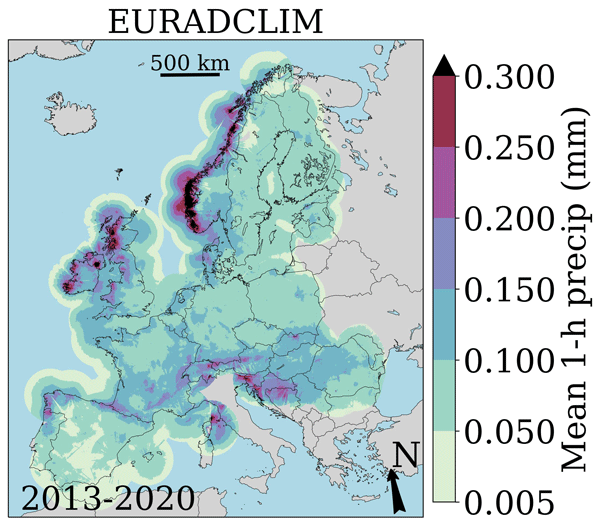
Aart Overeem, Else van den Besselaar, Gerard van der Schrier, Jan Fokke Meirink, Emiel van der Plas, and Hidde Leijnse
Earth Syst. Sci. Data, 15, 1441–1464, https://doi.org/10.5194/essd-15-1441-2023, https://doi.org/10.5194/essd-15-1441-2023, 2023
Short summary
Short summary
EURADCLIM is a new precipitation dataset covering a large part of Europe. It is based on weather radar data to provide local precipitation information every hour and combined with rain gauge data to obtain good precipitation estimates. EURADCLIM provides a much better reference for validation of weather model output and satellite precipitation datasets. It also allows for climate monitoring and better evaluation of extreme precipitation events and their impact (landslides, flooding).
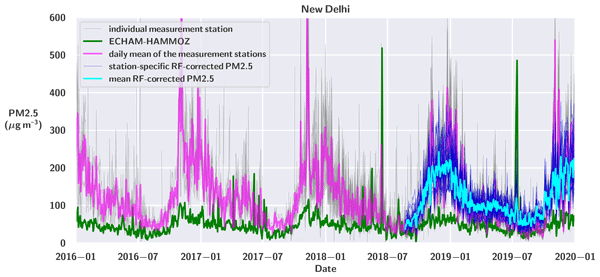
Tuuli Miinalainen, Harri Kokkola, Antti Lipponen, Antti-Pekka Hyvärinen, Vijay Kumar Soni, Kari E. J. Lehtinen, and Thomas Kühn
Atmos. Chem. Phys., 23, 3471–3491, https://doi.org/10.5194/acp-23-3471-2023, https://doi.org/10.5194/acp-23-3471-2023, 2023
Short summary
Short summary
We simulated the effects of aerosol emission mitigation on both global and regional radiative forcing and city-level air quality with a global-scale climate model. We used a machine learning downscaling approach to bias-correct the PM2.5 values obtained from the global model for the Indian megacity New Delhi. Our results indicate that aerosol mitigation could result in both improved air quality and less radiative heating for India.
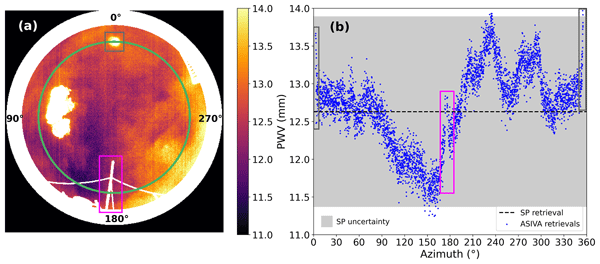
Elion Daniel Hack, Theotonio Pauliquevis, Henrique Melo Jorge Barbosa, Marcia Akemi Yamasoe, Dimitri Klebe, and Alexandre Lima Correia
Atmos. Meas. Tech., 16, 1263–1278, https://doi.org/10.5194/amt-16-1263-2023, https://doi.org/10.5194/amt-16-1263-2023, 2023
Short summary
Short summary
Water vapor is a key factor when seeking to understand fast-changing processes when clouds and storms form and develop. We show here how images from a calibrated infrared camera can be used to derive how much water vapor there is in the atmosphere at a given time. Comparing our results to an established technique, for a case of stable atmospheric conditions, we found an agreement within 2.8 %. Water vapor sky maps can be retrieved every few minutes, day or night, under partly cloudy skies.
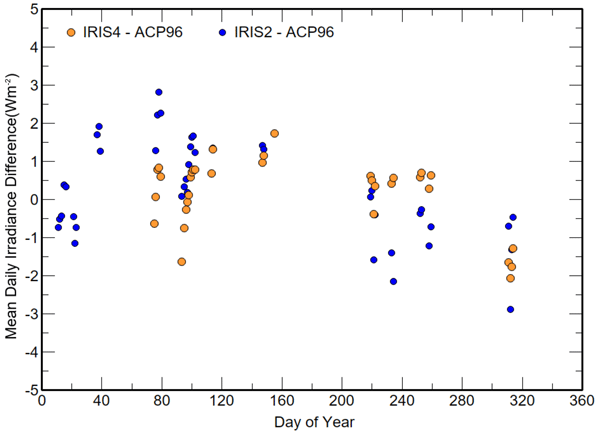
Bruce W. Forgan, Julian Gröbner, and Ibrahim Reda
Atmos. Meas. Tech., 16, 727–743, https://doi.org/10.5194/amt-16-727-2023, https://doi.org/10.5194/amt-16-727-2023, 2023
Short summary
Short summary
This paper investigates the Absolute Cavity Pyrgeometer (ACP) and its use in measuring atmospheric terrestrial irradiances traceable to the standard system of units (SI). This work fits into the objective of the Expert Team on Radiation References, established by the World Meteorological Organization (WMO), to develop and validate instrumentation that can be used as reference instruments for terrestrial radiation measurements.
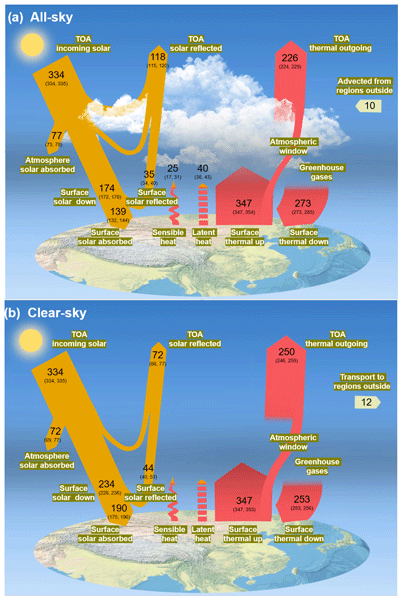
Qiuyan Wang, Hua Zhang, Su Yang, Qi Chen, Xixun Zhou, Bing Xie, Yuying Wang, Guangyu Shi, and Martin Wild
Atmos. Chem. Phys., 22, 15867–15886, https://doi.org/10.5194/acp-22-15867-2022, https://doi.org/10.5194/acp-22-15867-2022, 2022
Short summary
Short summary
The present-day land energy balance over East Asia is estimated for the first time. Results indicate that high aerosol loadings, clouds, and the Tibet Plateau (TP) over East Asia play vital roles in the shortwave budgets, while the TP is responsible for the longwave budgets during this regional energy budget assessment. This study provides a perspective to understand fully how the potential factors influence the diversifying regional energy budget assessments.

Kyriakoula Papachristopoulou, Ioannis-Panagiotis Raptis, Antonis Gkikas, Ilias Fountoulakis, Akriti Masoom, and Stelios Kazadzis
Atmos. Chem. Phys., 22, 15703–15727, https://doi.org/10.5194/acp-22-15703-2022, https://doi.org/10.5194/acp-22-15703-2022, 2022
Short summary
Short summary
Megacities' air quality is determined by atmospheric aerosols. We focus on changes over the last two decades in the 81 largest cities, using satellite data. European and American cities have lower aerosol compared to African and Asian cities. For European, North American and East Asian cities, aerosols are decreasing over time, especially in China and the US. In the remaining cities, aerosol loads are increasing, particularly in India.

Nilton Évora do Rosário, Elisa Thomé Sena, and Marcia Akemi Yamasoe
Atmos. Chem. Phys., 22, 15021–15033, https://doi.org/10.5194/acp-22-15021-2022, https://doi.org/10.5194/acp-22-15021-2022, 2022
Short summary
Short summary
The 2020 burning season in Brazil was marked by an atypically high number of fire spots across Pantanal, leading to high amounts of smoke within the biome. This study shows that smoke over Pantanal, usually a fraction of that over Amazonia, was higher and resulted mainly from fires in conservation and indigenous areas. It also contributes to highlighting Pantanal's 2020 burning season as the worst combination of a climate extreme scenario and inadequately enforced environmental regulations.
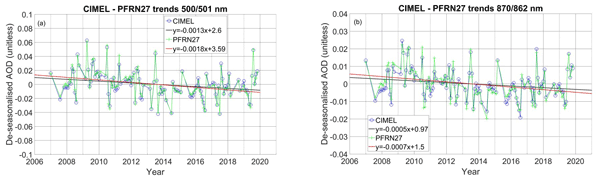
Angelos Karanikolas, Natalia Kouremeti, Julian Gröbner, Luca Egli, and Stelios Kazadzis
Atmos. Meas. Tech., 15, 5667–5680, https://doi.org/10.5194/amt-15-5667-2022, https://doi.org/10.5194/amt-15-5667-2022, 2022
Short summary
Short summary
The aim of this work is to investigate the limitations of calculating long-term trends of a parameter that quantifies the overall effect of atmospheric aerosols on the solar radiation. A main finding is that even instruments with good agreement between their observations can show significantly different linear trends. By calculating time-varying trends, the trend agreement is shown to improve. We also show that different methods of trend estimation can result in significant trend differences.
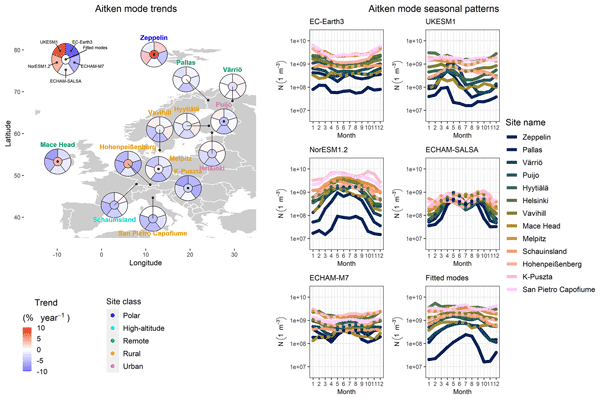
Ville Leinonen, Harri Kokkola, Taina Yli-Juuti, Tero Mielonen, Thomas Kühn, Tuomo Nieminen, Simo Heikkinen, Tuuli Miinalainen, Tommi Bergman, Ken Carslaw, Stefano Decesari, Markus Fiebig, Tareq Hussein, Niku Kivekäs, Radovan Krejci, Markku Kulmala, Ari Leskinen, Andreas Massling, Nikos Mihalopoulos, Jane P. Mulcahy, Steffen M. Noe, Twan van Noije, Fiona M. O'Connor, Colin O'Dowd, Dirk Olivie, Jakob B. Pernov, Tuukka Petäjä, Øyvind Seland, Michael Schulz, Catherine E. Scott, Henrik Skov, Erik Swietlicki, Thomas Tuch, Alfred Wiedensohler, Annele Virtanen, and Santtu Mikkonen
Atmos. Chem. Phys., 22, 12873–12905, https://doi.org/10.5194/acp-22-12873-2022, https://doi.org/10.5194/acp-22-12873-2022, 2022
Short summary
Short summary
We provide the first extensive comparison of detailed aerosol size distribution trends between in situ observations from Europe and five different earth system models. We investigated aerosol modes (nucleation, Aitken, and accumulation) separately and were able to show the differences between measured and modeled trends and especially their seasonal patterns. The differences in model results are likely due to complex effects of several processes instead of certain specific model features.
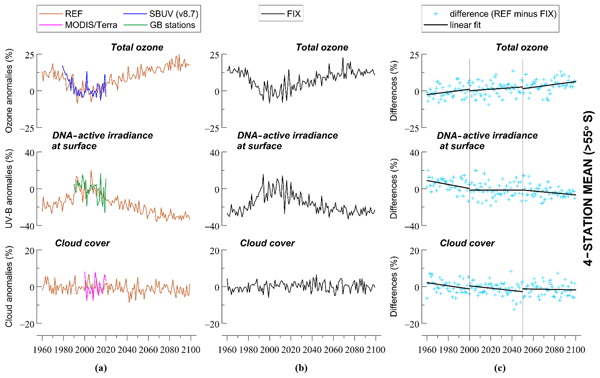
Kostas Eleftheratos, John Kapsomenakis, Ilias Fountoulakis, Christos S. Zerefos, Patrick Jöckel, Martin Dameris, Alkiviadis F. Bais, Germar Bernhard, Dimitra Kouklaki, Kleareti Tourpali, Scott Stierle, J. Ben Liley, Colette Brogniez, Frédérique Auriol, Henri Diémoz, Stana Simic, Irina Petropavlovskikh, Kaisa Lakkala, and Kostas Douvis
Atmos. Chem. Phys., 22, 12827–12855, https://doi.org/10.5194/acp-22-12827-2022, https://doi.org/10.5194/acp-22-12827-2022, 2022
Short summary
Short summary
We present the future evolution of DNA-active ultraviolet (UV) radiation in view of increasing greenhouse gases (GHGs) and decreasing ozone depleting substances (ODSs). It is shown that DNA-active UV radiation might increase after 2050 between 50° N–50° S due to GHG-induced reductions in clouds and ozone, something that is likely not to happen at high latitudes, where DNA-active UV radiation will continue its downward trend mainly due to stratospheric ozone recovery from the reduction in ODSs.
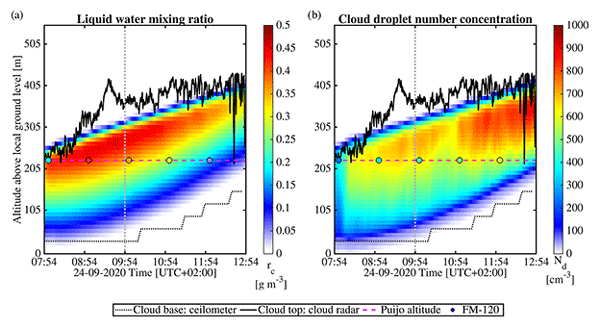
Silvia M. Calderón, Juha Tonttila, Angela Buchholz, Jorma Joutsensaari, Mika Komppula, Ari Leskinen, Liqing Hao, Dmitri Moisseev, Iida Pullinen, Petri Tiitta, Jian Xu, Annele Virtanen, Harri Kokkola, and Sami Romakkaniemi
Atmos. Chem. Phys., 22, 12417–12441, https://doi.org/10.5194/acp-22-12417-2022, https://doi.org/10.5194/acp-22-12417-2022, 2022
Short summary
Short summary
The spatial and temporal restrictions of observations and oversimplified aerosol representation in large eddy simulations (LES) limit our understanding of aerosol–stratocumulus interactions. In this closure study of in situ and remote sensing observations and outputs from UCLALES–SALSA, we have assessed the role of convective overturning and aerosol effects in two cloud events observed at the Puijo SMEAR IV station, Finland, a diurnal-high aerosol case and a nocturnal-low aerosol case.
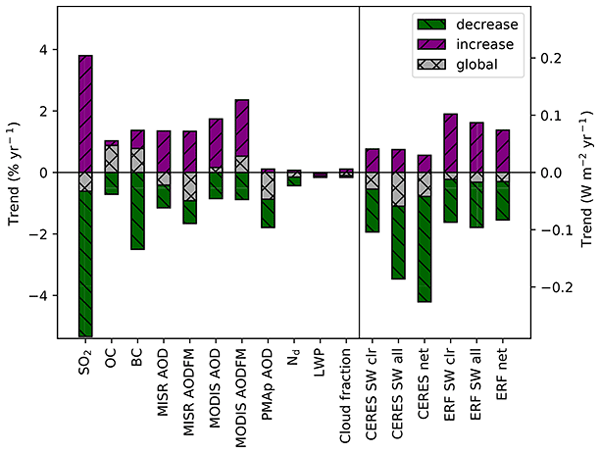
Johannes Quaas, Hailing Jia, Chris Smith, Anna Lea Albright, Wenche Aas, Nicolas Bellouin, Olivier Boucher, Marie Doutriaux-Boucher, Piers M. Forster, Daniel Grosvenor, Stuart Jenkins, Zbigniew Klimont, Norman G. Loeb, Xiaoyan Ma, Vaishali Naik, Fabien Paulot, Philip Stier, Martin Wild, Gunnar Myhre, and Michael Schulz
Atmos. Chem. Phys., 22, 12221–12239, https://doi.org/10.5194/acp-22-12221-2022, https://doi.org/10.5194/acp-22-12221-2022, 2022
Short summary
Short summary
Pollution particles cool climate and offset part of the global warming. However, they are washed out by rain and thus their effect responds quickly to changes in emissions. We show multiple datasets to demonstrate that aerosol emissions and their concentrations declined in many regions influenced by human emissions, as did the effects on clouds. Consequently, the cooling impact on the Earth energy budget became smaller. This change in trend implies a relative warming.
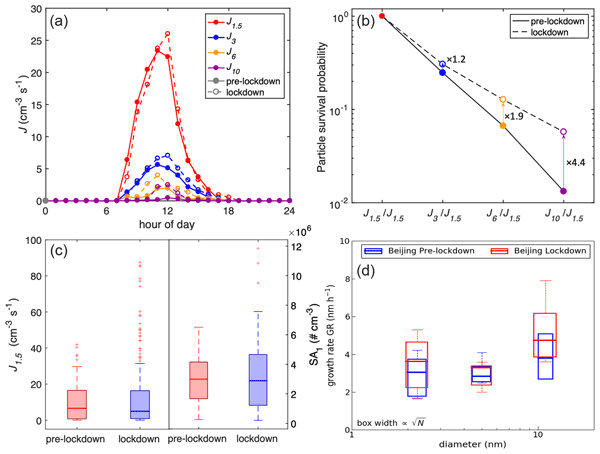
Chao Yan, Yicheng Shen, Dominik Stolzenburg, Lubna Dada, Ximeng Qi, Simo Hakala, Anu-Maija Sundström, Yishuo Guo, Antti Lipponen, Tom V. Kokkonen, Jenni Kontkanen, Runlong Cai, Jing Cai, Tommy Chan, Liangduo Chen, Biwu Chu, Chenjuan Deng, Wei Du, Xiaolong Fan, Xu-Cheng He, Juha Kangasluoma, Joni Kujansuu, Mona Kurppa, Chang Li, Yiran Li, Zhuohui Lin, Yiliang Liu, Yuliang Liu, Yiqun Lu, Wei Nie, Jouni Pulliainen, Xiaohui Qiao, Yonghong Wang, Yifan Wen, Ye Wu, Gan Yang, Lei Yao, Rujing Yin, Gen Zhang, Shaojun Zhang, Feixue Zheng, Ying Zhou, Antti Arola, Johanna Tamminen, Pauli Paasonen, Yele Sun, Lin Wang, Neil M. Donahue, Yongchun Liu, Federico Bianchi, Kaspar R. Daellenbach, Douglas R. Worsnop, Veli-Matti Kerminen, Tuukka Petäjä, Aijun Ding, Jingkun Jiang, and Markku Kulmala
Atmos. Chem. Phys., 22, 12207–12220, https://doi.org/10.5194/acp-22-12207-2022, https://doi.org/10.5194/acp-22-12207-2022, 2022
Short summary
Short summary
Atmospheric new particle formation (NPF) is a dominant source of atmospheric ultrafine particles. In urban environments, traffic emissions are a major source of primary pollutants, but their contribution to NPF remains under debate. During the COVID-19 lockdown, traffic emissions were significantly reduced, providing a unique chance to examine their relevance to NPF. Based on our comprehensive measurements, we demonstrate that traffic emissions alone are not able to explain the NPF in Beijing.
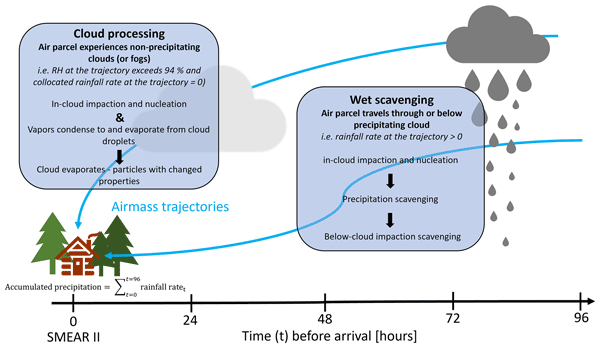
Sini Isokääntä, Paul Kim, Santtu Mikkonen, Thomas Kühn, Harri Kokkola, Taina Yli-Juuti, Liine Heikkinen, Krista Luoma, Tuukka Petäjä, Zak Kipling, Daniel Partridge, and Annele Virtanen
Atmos. Chem. Phys., 22, 11823–11843, https://doi.org/10.5194/acp-22-11823-2022, https://doi.org/10.5194/acp-22-11823-2022, 2022
Short summary
Short summary
This research employs air mass history analysis and observations to study how clouds and precipitation affect atmospheric aerosols during transport to a boreal forest site. The mass concentrations of studied chemical species showed exponential decrease as a function of accumulated rain along the air mass route. Our analysis revealed in-cloud sulfate formation, while no major changes in organic mass were seen. Most of the in-cloud-formed sulfate could be assigned to particle sizes above 200 nm.
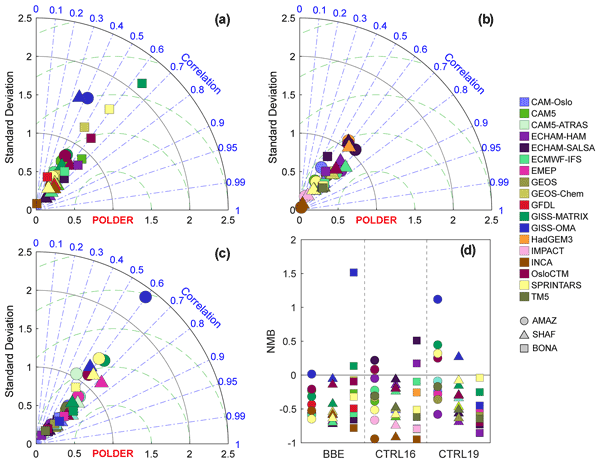
Qirui Zhong, Nick Schutgens, Guido van der Werf, Twan van Noije, Kostas Tsigaridis, Susanne E. Bauer, Tero Mielonen, Alf Kirkevåg, Øyvind Seland, Harri Kokkola, Ramiro Checa-Garcia, David Neubauer, Zak Kipling, Hitoshi Matsui, Paul Ginoux, Toshihiko Takemura, Philippe Le Sager, Samuel Rémy, Huisheng Bian, Mian Chin, Kai Zhang, Jialei Zhu, Svetlana G. Tsyro, Gabriele Curci, Anna Protonotariou, Ben Johnson, Joyce E. Penner, Nicolas Bellouin, Ragnhild B. Skeie, and Gunnar Myhre
Atmos. Chem. Phys., 22, 11009–11032, https://doi.org/10.5194/acp-22-11009-2022, https://doi.org/10.5194/acp-22-11009-2022, 2022
Short summary
Short summary
Aerosol optical depth (AOD) errors for biomass burning aerosol (BBA) are evaluated in 18 global models against satellite datasets. Notwithstanding biases in satellite products, they allow model evaluations. We observe large and diverse model biases due to errors in BBA. Further interpretations of AOD diversities suggest large biases exist in key processes for BBA which require better constraining. These results can contribute to further model improvement and development.
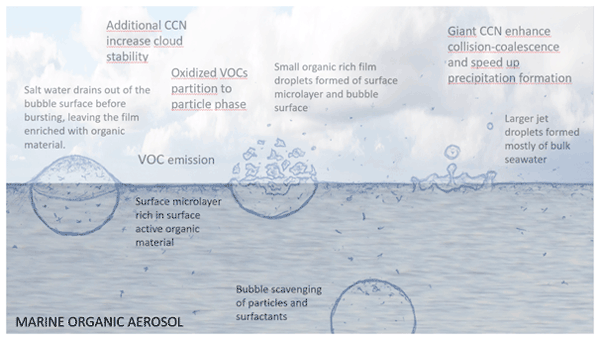
Marje Prank, Juha Tonttila, Jaakko Ahola, Harri Kokkola, Thomas Kühn, Sami Romakkaniemi, and Tomi Raatikainen
Atmos. Chem. Phys., 22, 10971–10992, https://doi.org/10.5194/acp-22-10971-2022, https://doi.org/10.5194/acp-22-10971-2022, 2022
Short summary
Short summary
Aerosols and clouds persist as the dominant sources of uncertainty in climate projections. In this modelling study, we investigate the role of marine aerosols in influencing the lifetime of low-level clouds. Our high resolution simulations show that sea spray can both extend and shorten the lifetime of the cloud layer depending on the model setup. The impact of the primary marine organics is relatively limited while secondary aerosol from monoterpenes can have larger impact.
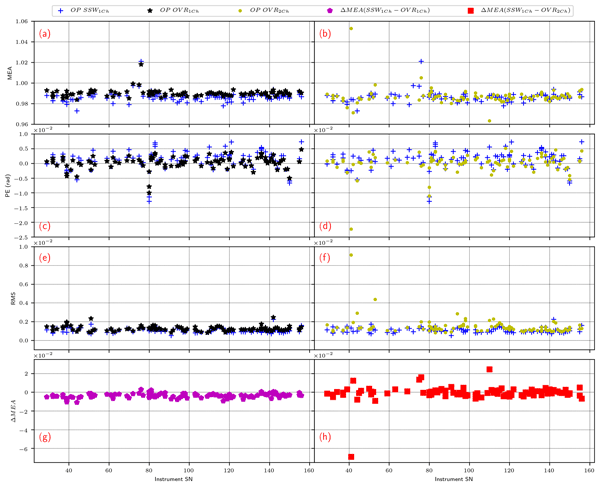
Carlos Alberti, Frank Hase, Matthias Frey, Darko Dubravica, Thomas Blumenstock, Angelika Dehn, Paolo Castracane, Gregor Surawicz, Roland Harig, Bianca C. Baier, Caroline Bès, Jianrong Bi, Hartmut Boesch, André Butz, Zhaonan Cai, Jia Chen, Sean M. Crowell, Nicholas M. Deutscher, Dragos Ene, Jonathan E. Franklin, Omaira García, David Griffith, Bruno Grouiez, Michel Grutter, Abdelhamid Hamdouni, Sander Houweling, Neil Humpage, Nicole Jacobs, Sujong Jeong, Lilian Joly, Nicholas B. Jones, Denis Jouglet, Rigel Kivi, Ralph Kleinschek, Morgan Lopez, Diogo J. Medeiros, Isamu Morino, Nasrin Mostafavipak, Astrid Müller, Hirofumi Ohyama, Paul I. Palmer, Mahesh Pathakoti, David F. Pollard, Uwe Raffalski, Michel Ramonet, Robbie Ramsay, Mahesh Kumar Sha, Kei Shiomi, William Simpson, Wolfgang Stremme, Youwen Sun, Hiroshi Tanimoto, Yao Té, Gizaw Mengistu Tsidu, Voltaire A. Velazco, Felix Vogel, Masataka Watanabe, Chong Wei, Debra Wunch, Marcia Yamasoe, Lu Zhang, and Johannes Orphal
Atmos. Meas. Tech., 15, 2433–2463, https://doi.org/10.5194/amt-15-2433-2022, https://doi.org/10.5194/amt-15-2433-2022, 2022
Short summary
Short summary
Space-borne greenhouse gas missions require ground-based validation networks capable of providing fiducial reference measurements. Here, considerable refinements of the calibration procedures for the COllaborative Carbon Column Observing Network (COCCON) are presented. Laboratory and solar side-by-side procedures for the characterization of the spectrometers have been refined and extended. Revised calibration factors for XCO2, XCO and XCH4 are provided, incorporating 47 new spectrometers.
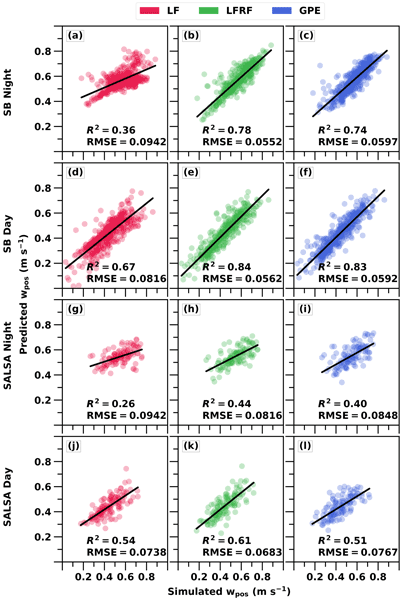
Jaakko Ahola, Tomi Raatikainen, Muzaffer Ege Alper, Jukka-Pekka Keskinen, Harri Kokkola, Antti Kukkurainen, Antti Lipponen, Jia Liu, Kalle Nordling, Antti-Ilari Partanen, Sami Romakkaniemi, Petri Räisänen, Juha Tonttila, and Hannele Korhonen
Atmos. Chem. Phys., 22, 4523–4537, https://doi.org/10.5194/acp-22-4523-2022, https://doi.org/10.5194/acp-22-4523-2022, 2022
Short summary
Short summary
Clouds are important for the climate, and cloud droplets have a significant role in cloud properties. Cloud droplets form when air rises and cools and water vapour condenses on small particles that can be natural or of anthropogenic origin. Currently, the updraft velocity, meaning how fast the air rises, is poorly represented in global climate models. In our study, we show three methods that will improve the depiction of updraft velocity and which properties are vital to updrafts.
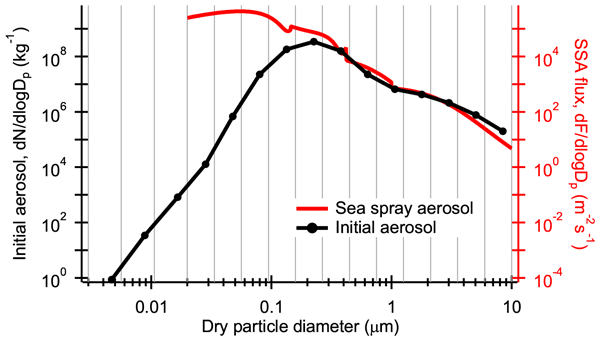
Tomi Raatikainen, Marje Prank, Jaakko Ahola, Harri Kokkola, Juha Tonttila, and Sami Romakkaniemi
Atmos. Chem. Phys., 22, 3763–3778, https://doi.org/10.5194/acp-22-3763-2022, https://doi.org/10.5194/acp-22-3763-2022, 2022
Short summary
Short summary
Mineral dust or similar ice-nucleating particles (INPs) are needed to initiate cloud droplet freezing at temperatures common in shallow clouds. In this work we examine how INPs that are released from the sea surface impact marine clouds. Our high-resolution simulations show that turbulent updraughts carry these particles effectively up to the clouds, where they initiate cloud droplet freezing. Sea surface INP emissions become more important with decreasing background dust INP concentrations.
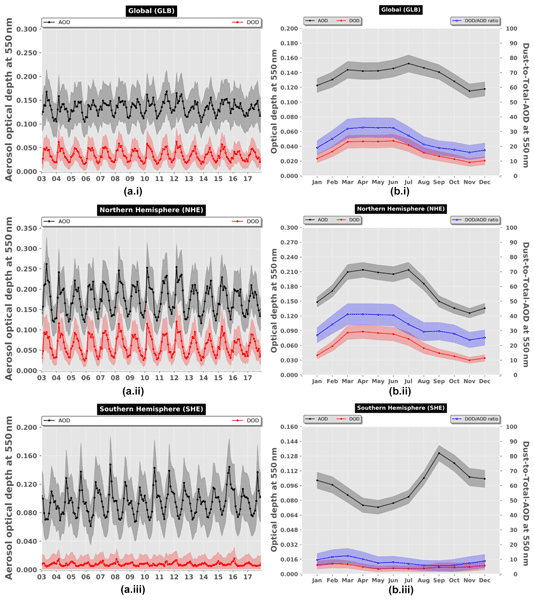
Antonis Gkikas, Emmanouil Proestakis, Vassilis Amiridis, Stelios Kazadzis, Enza Di Tomaso, Eleni Marinou, Nikos Hatzianastassiou, Jasper F. Kok, and Carlos Pérez García-Pando
Atmos. Chem. Phys., 22, 3553–3578, https://doi.org/10.5194/acp-22-3553-2022, https://doi.org/10.5194/acp-22-3553-2022, 2022
Short summary
Short summary
We present a comprehensive climatological analysis of dust optical depth (DOD) relying on the MIDAS dataset. MIDAS provides columnar mid-visible (550 nm) DOD at fine spatial resolution (0.1° × 0.1°) over a 15-year period (2003–2017). In the current study, the analysis is performed at various spatial (from regional to global) and temporal (from months to years) scales. More specifically, focus is given to specific regions hosting the major dust sources as well as downwind areas of the planet.

Monica Campanelli, Henri Diémoz, Anna Maria Siani, Alcide di Sarra, Anna Maria Iannarelli, Rei Kudo, Gabriele Fasano, Giampietro Casasanta, Luca Tofful, Marco Cacciani, Paolo Sanò, and Stefano Dietrich
Atmos. Meas. Tech., 15, 1171–1183, https://doi.org/10.5194/amt-15-1171-2022, https://doi.org/10.5194/amt-15-1171-2022, 2022
Short summary
Short summary
The aerosol optical depth (AOD) characteristics in an urban area of Rome were retrieved over a period of 11 years (2010–2020) to determine, for the first time, their effect on the incoming ultraviolet (UV) solar radiation. The surface forcing efficiency shows that the AOD is the primary parameter affecting the surface irradiance in Rome, and it is found to be greater for smaller zenith angles and for larger and more absorbing particles in the UV range (such as, e.g., mineral dust).
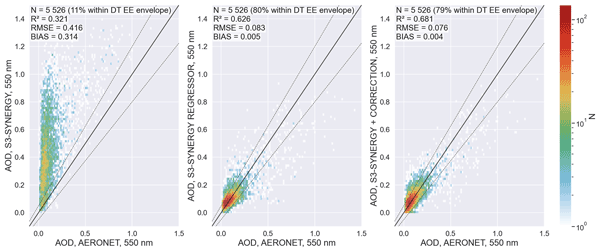
Antti Lipponen, Jaakko Reinvall, Arttu Väisänen, Henri Taskinen, Timo Lähivaara, Larisa Sogacheva, Pekka Kolmonen, Kari Lehtinen, Antti Arola, and Ville Kolehmainen
Atmos. Meas. Tech., 15, 895–914, https://doi.org/10.5194/amt-15-895-2022, https://doi.org/10.5194/amt-15-895-2022, 2022
Short summary
Short summary
We have developed a machine-learning-based model that can be used to correct the Sentinel-3 satellite-based aerosol parameter data of the Synergy data product. The strength of the model is that the original satellite data processing does not have to be carried out again but the correction can be carried out with the data already available. We show that the correction significantly improves the accuracy of the satellite aerosol parameters.

Anton Laakso, Ulrike Niemeier, Daniele Visioni, Simone Tilmes, and Harri Kokkola
Atmos. Chem. Phys., 22, 93–118, https://doi.org/10.5194/acp-22-93-2022, https://doi.org/10.5194/acp-22-93-2022, 2022
Short summary
Short summary
The use of different spatio-temporal sulfur injection strategies with different magnitudes to create an artificial reflective aerosol layer to cool the climate is studied using sectional and modal aerosol schemes in a climate model. There are significant differences in the results depending on the aerosol microphysical module used. Different spatio-temporal injection strategies have a significant impact on the magnitude and zonal distribution of radiative forcing and atmospheric dynamics.
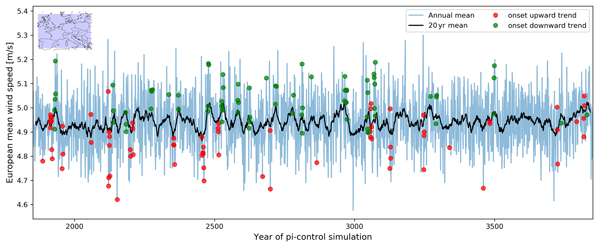
Jan Wohland, Doris Folini, and Bryn Pickering
Earth Syst. Dynam., 12, 1239–1251, https://doi.org/10.5194/esd-12-1239-2021, https://doi.org/10.5194/esd-12-1239-2021, 2021
Short summary
Short summary
Surface winds fluctuate. From around 1980 to 2010, surface onshore winds generally became weaker, and they have gained in strength since then. While these fluctuations are well known, we currently do not fully understand why they happen. To investigate the reasons, we use a large set of climate simulations with one model, a so-called large ensemble. We find that the observed long-term wind fluctuations occur naturally under current and future conditions and do not require a specific trigger.

Stavros-Andreas Logothetis, Vasileios Salamalikis, Antonis Gkikas, Stelios Kazadzis, Vassilis Amiridis, and Andreas Kazantzidis
Atmos. Chem. Phys., 21, 16499–16529, https://doi.org/10.5194/acp-21-16499-2021, https://doi.org/10.5194/acp-21-16499-2021, 2021
Short summary
Short summary
This study investigates the temporal trends of dust optical depth (DOD; 550 nm) on global, regional and seasonal scales over a 15-year period (2003–2017) using the MIDAS (ModIs Dust AeroSol) dataset. The findings of this study revealed that the DOD was increased across the central Sahara and the Arabian Peninsula, with opposite trends over the eastern and western Sahara, the Thar and Gobi deserts, in the Bodélé Depression, and in the southern Mediterranean.
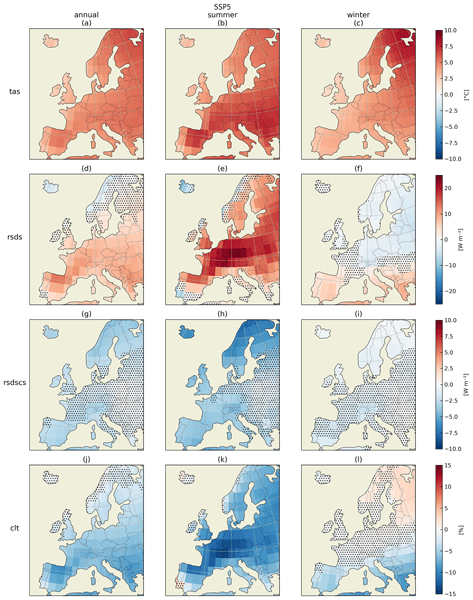
Xinyuan Hou, Martin Wild, Doris Folini, Stelios Kazadzis, and Jan Wohland
Earth Syst. Dynam., 12, 1099–1113, https://doi.org/10.5194/esd-12-1099-2021, https://doi.org/10.5194/esd-12-1099-2021, 2021
Short summary
Short summary
Solar photovoltaics (PV) matters for the carbon neutrality goal. We use climate scenarios to quantify climate risk for PV in Europe and find higher PV potential. The seasonal cycle of PV generation changes in most places. We find an increase in the spatial correlations of daily PV production, implying that PV power balancing through redistribution will be more difficult in the future. Thus, changes in the spatiotemporal structure of PV generation should be included in power system design.
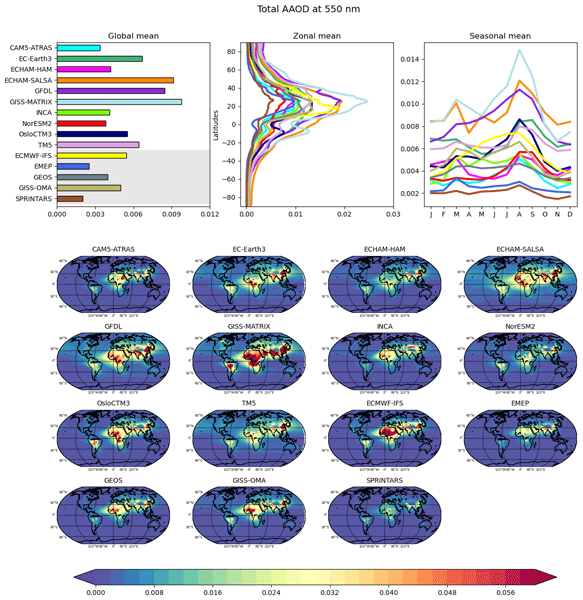
Maria Sand, Bjørn H. Samset, Gunnar Myhre, Jonas Gliß, Susanne E. Bauer, Huisheng Bian, Mian Chin, Ramiro Checa-Garcia, Paul Ginoux, Zak Kipling, Alf Kirkevåg, Harri Kokkola, Philippe Le Sager, Marianne T. Lund, Hitoshi Matsui, Twan van Noije, Dirk J. L. Olivié, Samuel Remy, Michael Schulz, Philip Stier, Camilla W. Stjern, Toshihiko Takemura, Kostas Tsigaridis, Svetlana G. Tsyro, and Duncan Watson-Parris
Atmos. Chem. Phys., 21, 15929–15947, https://doi.org/10.5194/acp-21-15929-2021, https://doi.org/10.5194/acp-21-15929-2021, 2021
Short summary
Short summary
Absorption of shortwave radiation by aerosols can modify precipitation and clouds but is poorly constrained in models. A total of 15 different aerosol models from AeroCom phase III have reported total aerosol absorption, and for the first time, 11 of these models have reported in a consistent experiment the contributions to absorption from black carbon, dust, and organic aerosol. Here, we document the model diversity in aerosol absorption.
Cited articles
Alexandersson, H.: A homogeneity test applied to precipitation data, Int. J. Climatol., 6, 661–675, https://doi.org/10.1002/joc.3370060607, 1986.
Antón, M., López, M., Vilaplana, J. M., Kroon, M., McPeters, R., Bañón, M., and Serrano, A.: Validation of OMI-TOMS and OMI-DOAS total ozone column using five Brewer spectroradiometers at the Iberian peninsula, J. Geophys. Res.-Atmos., 114, D14307, https://doi.org/10.1029/2009JD012003, 2009.
Antón, M., Vaquero, J. M., and Aparicio, A. J. P.: The controversial early brightening in the first half of 20th century: a contribution from pyrheliometer measurements in Madrid (Spain), Global Planet. Change, 115, 71–75, https://doi.org/10.1016/j.gloplacha.2014.01.013, 2014.
Antón, M., Roman, R., Sanchez-Lorenzo, A., Calbo, J., and Vaquero, J. M.: Variability analysis of the reconstructed daily global solar radiation under all-sky and cloud-free conditions in Madrid during the period 1887–1950, Atmos. Res., 191, 94–100, https://doi.org/10.1016/j.atmosres.2017.03.013, 2017.
Aparicio, A. J. P., Carrasco, V. M. S., Montero-Martín, J., Sanchez-Lorenzo, A., Costa, M. J., and Antón, M.: Analysis of sunshine duration and cloud cover trends in Lisbon for the period 1890–2018, Atmos. Res., 290, 106804, https://doi.org/10.1016/j.atmosres.2023.106804, 2023.
Baer, W. and Mueller, C.: Environmental aspects of Brazil's economic development (I). Luso-Braz. Rev., 32, 83–100, 1995.
Balis, D., Kroon, M., Koukouli, M. E., Brinksma, E. J., Labow, G., Veefkind, J. P., and McPeters, R. D.: Validation of Ozone Monitoring Instrument total ozone column measurements using Brewer and Dobson spectrophotometer ground-based observations, J. Geophys. Res., 112, D24S46, https://doi.org/10.1029/2007JD008796, 2007.
Bartlett, M. S.: Properties of sufficiency and statistical tests, P. Roy. Stat. Soc. A, 160, 268–282, 1937.
Bhartia, P. W.: OMI/Aura TOMS-Like Ozone, Aerosol Index, Cloud Radiance Fraction L3 1 day 1 degree x 1 degree V3, NASA Goddard Space Flight Center, Goddard Earth Sciences Data and Information Services Center (GES DISC) [data set], https://doi.org/10.5067/Aura/OMI/DATA3001, 2012.
Buishand, T. A.: Some methods for testing the homogeneity of rain fall records, J. Hydrol., 58, 11–27, https://doi.org/10.1016/0022-1694(82)90066-X, 1982.
Carlund, T., Landelius, T., and Josefsson, W.: Comparison and Uncertainty of Aerosol Optical Depth Estimates Derived from Spectral and Broadband Measurements, J. Appl. Meteorol., 42, 1598–1610, https://doi.org/10.1175/1520-0450(2003)042<1598:CAUOAO>2.0.CO;2, 2003.
Carslaw, K. S., Lee, L. A., Reddington, C. L., Pringle, K. J., Rap, A., Forster, P. M., Mann, G. W., Spracklen, D. V., Woodhouse, M. T., Regayre, L. A., and Pierce, J. R.: Large contribution of natural aerosols to uncertainty in indirect forcing, Nature, 503, 67–71, https://doi.org/10.1038/nature12674, 2013.
Dumitrescu, A., Gueymard, C. A., and Badescu, V.: Reconstruction of historical aerosol optical depth time series over Romania during summertime, Int. J. Climatol., 37, 4720–4732, https://doi.org/10.1002/joc.5118, 2017.
Efron, B.: Nonparametric Standard Errors and Confidence Intervals, Can. J. Stat., 9, 139-158. https://doi.org/10.2307/3314608, 1981.
Ekström, M., McTainsh, G. H., and Chappell, A.: Australian dust storms: Temporal trends and relationships with synoptic pressure distributions (1960–99), Int. J. Climatol., 24, 1581–1599, 2004.
Eltbaakh, Y. A., Ruslan, M. H., Alghoul, M. A., Othman, M. Y., and Sopian, K.: Issues concerning atmospheric tur- bidity indices, Renew. Sustain. Energ. Rev., 16, 6285–6294, https://doi.org/10.1016/j.rser.2012.05.034, 2012.
Emde, C., Buras-Schnell, R., Kylling, A., Mayer, B., Gasteiger, J., Hamann, U., Kylling, J., Richter, B., Pause, C., Dowling, T., and Bugliaro, L.: The libRadtran software package for radiative transfer calculations (version 2.0.1), Geosci. Model Dev., 9, 1647–1672, https://doi.org/10.5194/gmd-9-1647-2016, 2016.
Fernandes, A. J., Arbugeri, M., and Formiga, N.: The Brazilian Economy in the 1980s: The Lost Decade or wins? The consequences of the external debt crisis, inflation and the state crisis, Int. J. Innov. Educ. Res., 9, 173–184, https://doi.org/10.31686/ijier.vol9.iss6.3165, 2021.
Gelaro, R., McCarty, W., Suárez, M. J., Todling, R., Molod, A., Takacs, L., Randles, C. A., Darmenov, A., Bosilovich, M. G., Reichle, R., and Wargan, K.: The modern-era retrospective analysis for research and applications, version 2 (MERRA-2), J. Climate, 30, 5419–5454, https://doi.org/10.1175/JCLI-D-16-0758.1, 2017.
Global Modeling and Assimilation Office (GMAO): MERRA-2 tavg1_2d_aer_Nx: 2d,1-Hourly,Time-averaged,Single-Level,Assimilation,Aerosol Diagnostics V5.12.4, Greenbelt, MD, USA, Goddard Earth Sciences Data and Information Services Center (GES DISC) [data set], https://doi.org/10.5067/KLICLTZ8EM9D, 2015.
Gueymard, C.: Turbidity determination from broadband irradiance measurements: A detailed multicoefficient approach, J. Appl. Meteorol., 37, 414–435, 1998.
Gueymard, C. A.: Direct solar transmittance and irradiance predictions with broadband models. Part II: validation with high-quality measurements, Sol. Energ., 74, 381–395, https://doi.org/10.1016/S0038-092X(03)00196-8, 2003.
Gueymard, C. A.: A reevaluation of the solar constant based on a 42-year total solar irradiance time series and a reconciliation of spaceborne observations, Sol. Energ., 168, 2–9, https://doi.org/10.1016/j.solener.2018.04.001, 2018.
Gueymard, C. A. and Yang, D.: Worldwide validation of CAMS and MERRA-2 reanalysis aerosol optical depth products using 15 years of AERONET observations, Atmos. Environ., 225, 117216, https://doi.org/10.1016/j.atmosenv.2019.117216, 2020.
Hannak, L., Friedrich, K., Imbery, F., and Kaspar, F.: Comparison of manual and automatic daily sunshine duration measurements at German climate reference stations, Adv. Sci. Res., 16, 175–183, https://doi.org/10.5194/asr-16-175-2019, 2019.
Helmes, L. and Jaenicke, R.: Experimental verification of the determination of atmospheric turbidity from sunshine recorders, J. Clim. Appl. Meteorol., 23, 1350–1353, https://doi.org/10.1175/1520-0450(1984)023<1350:EVOTDO>2.0.CO;2, 1984.
Holben, B. N., Eck, T. F., Slutsker, I., Tanré, D., Buis, J. P., Setzer, A., Vermote, E., Reagan, J. A., Kaufman, Y. J., Nakajima, T., Lavenu, F., Jankowiak, I., and Smirnov, A.: AERONET – A Federated Instrument Network and Data Archive for Aerosol Characterization, Remote Sens. Environ., 66, 1–16, https://doi.org/10.1016/S0034-4257(98)00031-5, 1998.
Jaenicke, R. and Kasten, F.: Estimation of atmospheric turbidity from the burned traces of the Campbell-Stokes sunshine recorder, Appl. Optics, 17, 2617–2621, https://doi.org/10.1364/AO.17.002617, 1978.
Kazadzis, S., Founda, D., Psiloglou, B. E., Kambezidis, H., Mihalopoulos, N., Sanchez-Lorenzo, A., Meleti, C., Raptis, P. I., Pierros, F., and Nabat, P.: Long-term series and trends in surface solar radiation in Athens, Greece, Atmos. Chem. Phys., 18, 2395–2411, https://doi.org/10.5194/acp-18-2395-2018, 2018.
Kato, S., Ackerman, T., Mather, J., and Clothiaux, E.: The k-distribution method and correlatedk approximation for shortwave radiative transfer model, J. Quant. Spectrosc. Ra., 62, 109–121, https://doi.org/10.1016/S0022-4073(98)00075-2, 1999.
Klein Tank, A., Wijngaard, J., Können, G., Böhm, R., Demarée, G., Gocheva, A., Mileta, M., Pashiardis, S., Hejkrlik, L., Kern-Hansen, C., Heino, R., Bessemoulin, P., Müller-Westermeier, G., Tzanakou, M., Szalai, S., Pálsdóttir, T., Fitzgerald, D., Rubin, S., Capaldo, M., Maugeri, M., Leitass, A., Bukantis, A., Aberfeld, R., van Engelen, A. F. V., Forland, E., Mietus, M., Coelho, F., Mares, C., Razuvaev, V., Nieplova, E., Cegnar, T., Antonio López, J., Dahlström, B., Moberg, A., Kirchhofer, W., Ceylan, A., Pachaliuk, O., Alexander, L. V., and Petrovic, P.: Daily dataset of 20th-century surface air temperature and precipitation series for the European Climate Assessment, Int. J. Climatol., 22, 1441–1453, https://doi.org/10.1002/joc.773, 2002.
Kudo, R., Uchiyama, A., Ijima, O., Ohkawara, N., and Ohta, S.: Aerosol impact on the brightening in Japan, J. Geophys. Res., 117, D07208, https://doi.org/10.1029/2011JD017158, 2012.
Lachat, D. and Wehrli, C.: Dimming and brightening trends in direct solar irradiance from 1909 to 2010 over Davos, Switzerland: Proportions of aerosol and gaseous transmission, J. Geophys. Res.-Atmos., 118, 3285–3291, https://doi.org/10.1002/jgrd.50344, 2013.
Laine, M.: Introduction to Dynamic Linear Models for Time Series Analysis, in: Geodetic Time Series Analysis in Earth Sciences, Springer International Publishing, Cham, 139–156, https://doi.org/10.1007/978-3-030-21718-1_4, 2020.
Lamb, P. J., Leslie, L. M., Timmer, R. P., and Speer, M. S.: Multidecadal variability of eastern Australian dust and northern New Zealand sunshine: Associations with pacific climate system, J. Geophys. Res.-Atmos., 114, 1–12, https://doi.org/10.1029/2008JD011184, 2009.
Li, J., Liu, R., Liu, S. C., Shiu, C. J., Wang, J., and Zhang, Y.: Trends in aerosol optical depth in northern China retrieved from sunshine duration data, Geophys. Res. Lett., 43, 431–439, https://doi.org/10.1002/2015GL067111, 2016.
Ma, Q., Wang, K., He, Y., Su, L., Wu, Q., Liu, H., and Zhang, Y.: Homogenized century-long surface incident solar radiation over Japan, Earth Syst. Sci. Data, 14, 463–477, https://doi.org/10.5194/essd-14-463-2022, 2022.
Manara, V., Brunetti, M., Celozzi, A., Maugeri, M., Sanchez-Lorenzo, A., and Wild, M.: Detection of dimming/brightening in Italy from homogenized all-sky and clear-sky surface solar radiation records and underlying causes (1959–2013), Atmos. Chem. Phys., 16, 11145–11161, https://doi.org/10.5194/acp-16-11145-2016, 2016.
Matuszko, D.: Influence of cloudiness on sunshine duration, Int. J. Climatol., 32, 1527–1536, https://doi.org/10.1002/joc.2370, 2012.
Matuszko, D. and Węglarczyk, St.: Relationship between sunshine duration and air temperature and contemporary global warming, Int. J. Climatol., 35, 3640 – 3653, https://doi.org/10.1002/joc.4238, 2015.
Mayer, B. and Kylling, A.: Technical note: The libRadtran software package for radiative transfer calculations - description and examples of use, Atmos. Chem. Phys., 5, 1855–1877, https://doi.org/10.5194/acp-5-1855-2005, 2005.
McPeters, R., Kroon, M., Labow, G., Brinksma, E., Balis, D., Petropavlovskikh, I., Veefkind, J. P., Bhartia, P. K., and Levelt, P. F.: Validation of the Aura Ozone Monitoring Instrument total column ozone product, J. Geophys. Res.-Atmos., 113, D15S14, https://doi.org/10.1029/2007JD008802, 2008.
Molineaux, B., Ineichen, P., and O'Neil, N.: Equivalence of pyrheliometric and monochromatic aerosol optical depths at a single key wavelength, Appl. Optics, 37, 7008–7018, https://doi.org/10.1364/AO.37.007008, 1998.
Molod, A., Takacs, L., Suarez, M., and Bacmeister, J.: Development of the GEOS-5 atmospheric general circulation model: evolution from MERRA to MERRA2, Geosci. Model Dev., 8, 1339–1356, https://doi.org/10.5194/gmd-8-1339-2015, 2015.
Montero-Martín, J., Antón, M., Vaquero, J. M., Neto, J., and Sanchez-Lorenzo, A.: Early sunshine duration and cloud cover records in Coimbra (Portugal) for the period 1891–1950, Int. J. Climatol. 41, 4977–4986, https://doi.org/10.1002/joc.7111, 2021.
Montero-Martín, J., Antón, M., Vaquero, J. M., Román, R., Vaquero-Martinez, J., Aparicio, A. J. P., and Sanchez-Lorenzo, A.: Reconstruction of daily global solar radiation under all-sky and cloud-free conditions in Badajoz (Spain) since 1929, Int. J. Climatol., https://doi.org/10.1002/joc.8042, 2023.
Moseid, K. O., Schulz, M., Storelvmo, T., Julsrud, I. R., Olivié, D., Nabat, P., Wild, M., Cole, J. N. S., Takemura, T., Oshima, N., Bauer, S. E., and Gastineau, G.: Bias in CMIP6 models as compared to observed regional dimming and brightening, Atmos. Chem. Phys., 20, 16023–16040, https://doi.org/10.5194/acp-20-16023-2020, 2020.
Ohmura, A.: Observed long-term variations of solar irradiances at the Earth's surface, Space Sci. Rev., 125, 111–128, https://doi.org/10.1007/s11214-006-9050-9, 2006.
Ohmura, A. and Lang, H.: Secular variation of global radiation over Europe, in: Current Problems in Atmospheric Radiation, edited by: Lenoble, J. and Geleyn, J. F., Proceedings of the International Radiation Symposium 1988, 298–301, 1989.
Petris, G., Petrone, S., and Campagnoli, P.: Dynamic linear models with R, Springer, 31–84, https://doi.org/10.1007/b135794_2, 2009.
Pettitt, A. N.: A non-parametric approach to the change-point detection, J. Appl. Stat., 28, 126–135, https://doi.org/10.2307/2346729, 1979.
Poli, P., Hersbach, H., Dee, D. P., Berrisford, P., Simmons, A. J., Vitart, F., Laloyaux, P., Tan, D. G., Peubey, C., Thépaut, J. N., and Trémolet, Y.: ERA-20C: An atmospheric reanalysis of the twentieth century, J. Climate, 29, 4083–4097, https://doi.org/10.1175/JCLI-D-15-0556.1, 2016.
Qiu, J. H.: A method to determine atmospheric aerosol optical depth using total direct solar radiation, J. Atmos. Sci., 55, 744–757, https://doi.org/10.1175/1520-0469(1998)055<0744:AMTDAA>2.0.CO;2, 1998.
Qiu, J. H.: Broadband extinction method to determine atmospheric aerosol optical properties, Tellus B, 53, 72–82, https://doi.org/10.3402/tellusb.v53i1.16540, 2001.
Qiu, J.: Broadband extinction method to determine aerosol optical depth from accumulated direct solar radiation, J. Appl. Meteorol. 42, 1611–1625, https://doi. org/10.1175/1520-0450(2003)042<1611:BEMTDA>2.0.CO;2, 2003.
Randles, C. A., Da Silva, A. M., Buchard, V., Colarco, P. R., Darmenov, A., Govindaraju, R., Smirnov, A., Holben, B., Ferrare, R., Hair, J., and Shinozuka, Y.: The MERRA-2 aerosol reanalysis, 1980 onward. Part I: System description and data assimilation evaluation, J. Climate, 30, 6823–6850, https://doi.org/10.1175/JCLI-D-16-0609.1, 2017.
Rosenfeld, D., Sherwood, S., Wood, R., and Donner, L. J.: Climate Effects of Aerosol-Cloud Interactions, Science, 343, 379–380, https://doi.org/10.1126/science.1247490, 2014.
Russak, V., Kallisa, A., Jeveerb, A., Ohviril, H., and Teralc, H.: Changes in the spectral aerosol optical thickness in Estonia (1951–2004), Proc. Estonian Acad. Sci. Biol. Ecol., 56, 69–76, 2007.
Sanchez-Lorenzo, A. and Wild, M.: Decadal variations in estimated surface solar radiation over Switzerland since the late 19th century, Atmos. Chem. Phys., 12, 8635–8644, https://doi.org/10.5194/acp-12-8635-2012, 2012.
Sanchez-Lorenzo, A., Wild, M., Brunetti, M., Guijarro, J. A., Hakuba, M. Z., Calbó, J., Mystakidis, S., and Bartok, B.: Reassessment and update of long-term trends in downward surface shortwave radiation over Europe (1939–2012), J. Geophys. Res.-Atmos., 120, 9555–9569, https://doi.org/10.1002/2015JD023321, 2015.
Sanchez-Romero, A., Sanchez-Lorenzo, A., Calbó, J., González, J. A., and Azorin-Molina, C.: The signal of aerosol-induced changes in sunshine duration records: A review of the evidence, J. Geophys. Res.-Atmos., 119, 4657–4673, https://doi.org/10.1002/2013JD021393, 2014.
Sanchez-Romero, A., Sanchez-Lorenzo, A., González, J. A., and Calbó, J.: Reconstruction of long-term aerosol optical depth series with sunshine duration records, Geophys. Res. Lett., 43, 1296–1305, https://doi.org/10.1002/2015GL067543, 2016.
Sayer, A. M., Govaerts, Y., Kolmonen, P., Lipponen, A., Luffarelli, M., Mielonen, T., Patadia, F., Popp, T., Povey, A. C., Stebel, K., and Witek, M. L.: A review and framework for the evaluation of pixel-level uncertainty estimates in satellite aerosol remote sensing, Atmos. Meas. Tech., 13, 373–404, https://doi.org/10.5194/amt-13-373-2020, 2020.
Schilliger, L., Tetzlaff, A., Bourgeois, Q., Correa, L. F., and Wild, M.: An investigation on causes of the detected surface solar radiation brightening in europe using satellite data, J. Geophys. Res.-Atmos., 129, https://doi.org/10.1029/2024JD041101, 2024.
Smith, A., Lott, N., and Vose, R.: The Integrated Surface Database: Recent Developments and Partnerships, B. Am. Meteorol. Soc., 92, 704–708, https://doi.org/10.1175/2011BAMS3015.1, 2011.
Stanhill, G. and Moreshet, S.: Global radiation climate changes: The world network, Climatic Change, 21, 57–75, https://doi.org/10.1007/BF00143253, 1992.
Stevens, B.: Aerosols: Uncertain then, irrelevant now, Nature, 503, 47–48, https://doi.org/10.1038/503047a, 2013.
Storelvmo, T., Heede, U. K., Leirvik, T., Phillips, P. C. B., Arndt, P., and Wild, M.: Lethargic Response to Aerosol Emissions in Current Climate Models, Geophys. Res. Lett., 45, 9814–9823, https://doi.org/10.1029/2018GL078298, 2018.
The city of Zagreb: Archive from Croatian Radiotelevision, https://web.archive.org/web/20070117124718/http://www.hrt.hr/arhiv/hrvati_u_svijetu/upoznajte_hrvatsku/03_glavni_grad_hrvatske/zagreb_eng.html (last access: 1 November 2022), 2007.
Toreti, A., Kuglitsch, F. G., Xoplaki, E., Della-Marta, P., Aguilar, E., Prohom, M., and Luterbacher, J.: A note on the use of the standard normal homogeneity test (SNHT) to detect inhomogeneities in climatic time series, Int. J. Climatol., 31, 630–632, https://doi.org/10.1002/joc.2088, 2011.
Torres, O., Bhartia, P. K., Herman, J. R., Sinyuk, A., Ginoux, P., and Holben, B.: A long-term record of aerosol optical depth from TOMS observations and comparison to AERONET measurements, J. Atmos. Sci., 59, 398–413, https://doi.org/10.1175/1520-0469(2002)059<0398:ALTROA>2.0.CO;2, 2002.
Unsworth, M. H. and Monteith, J. L.: Aerosol and solar radiation in Britain, Q. J. Roy. Meteor. Soc., 98, 778–797, https://doi.org/10.1002/qj.49709841806, 1972.
Urban, G., Migała, K., and Pawliczek, P.: Sunshine duration and its variability in the main ridge of the Karkonosze Mountains in relation to atmospheric circulation, Theor. Appl. Climatol., 131, 1173–1189, https://doi.org/10.1007/s00704-017-2035-7, 2018.
Vetter, T. and Wechsung, F.: Direct aerosol effects during periods of solar dimming and brightening hidden in the regression residuals: Evidence from Potsdam measurements, J. Geophys. Res., 120, 11299–211305, https://doi.org/10.1002/2015JD023669, 2015.
Wandji Nyamsi, W. and Arola, A.: Historical reconstruction of past atmospheric aerosol load from sunshine duration measurements, Finnish Meteorological Institute [data set], https://doi.org/10.57707/fmi-b2share.14e58e89d157468ba155836a72878692, 2025.
Wandji Nyamsi, W., Espinar, B., Blanc, P., and Wald, L.: How close to detailed spectral calculations is the k-distribution method and correlated-k approximation of Kato et al. (1999) in each spectral interval?, Meteorol. Z., 23, 547–556, https://doi.org/10.1127/metz/2014/0607, 2014.
Wandji Nyamsi, W., Arola, A., Blanc, P., Lindfors, A. V., Cesnulyte, V., Pitkänen, M. R. A., and Wald, L.: Technical Note: A novel parameterization of the transmissivity due to ozone absorption in the k-distribution method and correlated-k approximation of Kato et al. (1999) over the UV band, Atmos. Chem. Phys., 15, 7449–7456, https://doi.org/10.5194/acp-15-7449-2015, 2015a.
Wandji Nyamsi, W., Espinar, B., Blanc, P., and Wald, L.: Estimating the photosynthetically active radiation under clear skies by means of a new approach, Adv. Sci. Res., 12, 5–10, https://doi.org/10.5194/asr-12-5-2015, 2015b.
Wandji Nyamsi, W., Pitkänen, M. R. A., Aoun, Y., Blanc, P., Heikkilä, A., Lakkala, K., Bernhard, G., Koskela, T., Lindfors, A. V., Arola, A., and Wald, L.: A new method for estimating UV fluxes at ground level in cloud-free conditions, Atmos. Meas. Tech., 10, 4965–4978, https://doi.org/10.5194/amt-10-4965-2017, 2017.
Wandji Nyamsi, W., Blanc, P., Augustine, J. A., Arola, A., and Wald, L.: A New Clear-Sky Method for Assessing Photosynthetically Active Radiation at the Surface Level, Atmosphere, 10, 219, https://doi.org/10.3390/atmos10040219, 2019.
Wandji Nyamsi, W., Lipponen, A., Sanchez-Lorenzo, A., Wild, M., and Arola, A.: A hybrid method for reconstructing the historical evolution of aerosol optical depth from sunshine duration measurements, Atmos. Meas. Tech., 13, 3061–3079, https://doi.org/10.5194/amt-13-3061-2020, 2020.
Wandji Nyamsi, W., Blanc, P., Dumortier, D., Mouangue, R., Arola, A., and Wald, L.: Using Copernicus Atmosphere Monitoring Service (CAMS) Products to Assess Illuminances at Ground Level under Cloudless Conditions, Atmosphere, 12, 643, https://doi.org/10.3390/atmos12050643, 2021.
Wandji Nyamsi, W., Leinonen, V., Mikkonen, S., and Arola, A.: Long-term trends in reconstructed atmospheric aerosol load based on large-scale sunshine duration records since 1900, Version v1, Finnish Meteorological Institute [data set], https://doi.org/10.57707/fmi-b2share.ae9691880b334499b112fe9d174187ab, 2025.
Wandji Nyamsi, W., Lindfors, A. V., Meyer, A., Lipponen, A., and Arola, A.: A new method for estimating cloud optical depth from photovoltaic power measurements, Atmos. Meas. Tech., 19, 899–922, https://doi.org/10.5194/amt-19-899-2026, 2026.
Washington, R., Todd, M., Middleton, N. J., and Goudie, A. S.: Dust-storm source areas determined by the total ozone monitoring spectrometer and surface observations, Ann. Assoc. Am. Geogr., 93, 297–313, https://doi.org/10.1111/1467-8306.9302003, 2003.
Wild, M.: Global dimming and brightening: A review, J. Geophys. Res.-Atmos., 114, D00D16, https://doi.org/10.1029/2008JD011470, 2009.
Wild, M.: Decadal Changes in Radiative Fluxes at Land and Ocean Surfaces and Their Relevance for Global Warming, WIRES Clim. Change, 7, 91–107, https://doi.org/10.1002/wcc.372, 2016.
Wild, M., Wacker, S., Yang, S., and Sanchez-Lorenzo, A.: Evidence for Clear-sky Dimming and Brightening in Central Europe, Geophys. Res. Lett., 48, e2020GL092216, https://doi.org/10.1029/2020GL092216, 2021.
Yamasoe, M. A., Rosário, N. M. É., Almeida, S. N. S. M., and Wild, M.: Fifty-six years of surface solar radiation and sunshine duration over São Paulo, Brazil: 1961–2016, Atmos. Chem. Phys., 21, 6593–6603, https://doi.org/10.5194/acp-21-6593-2021, 2021.
Yang, S., Wang, X., and Wild, M.: Causes of Dimming and Brightening in China Inferred from Homogenized Daily Clear-Sky and All-Sky in situ Surface Solar Radiation Records (1958–2016), J. Climate, 32, 5901–5913, https://doi.org/10.1175/JCLI-D-18-0666.1, 2019.
Short summary
Worldwide reconstructed historical aerosol load reveals that during the period of:
- 1900–1959: the atmosphere became cleaner in most European cities;
- 1960–1985: anthropogenic aerosols were responsible for the dimming phenomenon in Europe. AOD increased over Southeast Brazil and decreased noticeably over Japan while a small negative trend was found over Oceania;
- 1986–2015: generally, the atmosphere has become much cleaner everywhere after the reversal trend around 1980s mainly observed in Europe.
Worldwide reconstructed historical aerosol load reveals that during the period of:
- 1900–1959:...


Altmetrics
Final-revised paper
Preprint