
Articles | Volume 26, issue 11
https://doi.org/10.5194/acp-26-7803-2026
© Author(s) 2026. This work is distributed under
the Creative Commons Attribution 4.0 License.
the Creative Commons Attribution 4.0 License.
https://doi.org/10.5194/acp-26-7803-2026
© Author(s) 2026. This work is distributed under
the Creative Commons Attribution 4.0 License.
the Creative Commons Attribution 4.0 License.
Research article
| 
03 Jun 2026
Research article |
| 03 Jun 2026
| 03 Jun 2026
Geostationary observations of atmospheric ammonia over East Asia: spatio-temporal variations revealed by three years of FY-4B/GIIRS measurements
Mengya Sheng
School of Earth and Space Sciences, Peking University, Beijing 100871, China
Runyi Zhou
School of Earth and Space Sciences, Peking University, Beijing 100871, China
Jiancong Hua
School of Earth and Space Sciences, Peking University, Beijing 100871, China
Shan Han
School of Earth and Space Sciences, Peking University, Beijing 100871, China
Shangyi Liu
School of Earth and Space Sciences, Peking University, Beijing 100871, China
Lin Zhang
Laboratory for Climate and Ocean-Atmosphere Studies, Department of Atmospheric and Oceanic Sciences, School of Physics, Peking University, Beijing 100871, China
Wei Wang
Key Laboratory of Environmental Optics and Technology, Anhui Institute of Optics and Fine Mechanics, Chinese Academy of Sciences, Hefei 230031, China
Ruijun Dang
School of Earth and Space Sciences, Peking University, Beijing 100871, China
Hansen Cao
School of Environmental Science and Engineering, Southern University of Science and Technology, Shenzhen, Guangdong 518055, China
Zichong Chen
Hong Kong University of Science and Technology, Guangzhou 511400, China
Yixuan Gu
Jiangsu Key Laboratory of Atmospheric Environment Monitoring and Pollution Control, Collaborative Innovation Center of Atmospheric Environment and Equipment Technology, Joint International Research Laboratory of Climate and Environment Change, School of Environmental Science and Engineering, Nanjing University of Information Science and Technology, Nanjing 210044, China
Mingxu Liu
College of Environmental Sciences and Engineering, Peking University, Beijing 100871, China
Key Laboratory of Radiometric Calibration and Validation for Environmental Satellites, National Satellite Meteorological Center, China Meteorological Administration, Beijing 100081, China
Chengli Qi
Key Laboratory of Radiometric Calibration and Validation for Environmental Satellites, National Satellite Meteorological Center, China Meteorological Administration, Beijing 100081, China
Feng Lu
Key Laboratory of Radiometric Calibration and Validation for Environmental Satellites, National Satellite Meteorological Center, China Meteorological Administration, Beijing 100081, China
Changpei Han
Key Laboratory of Infrared Science and Technology, Shanghai Institute of Technical Physics, Chinese Academy of Sciences, Shanghai 200083, China
Mark W. Shephard
Environment and Climate Change Canada, Toronto, Ontario, M3H 5T4, Canada
Nadir Guendouz
LATMOS/IPSL, Sorbonne Université, UVSQ, CNRS, 75252 Paris, France
Camille Viatte
LATMOS/IPSL, Sorbonne Université, UVSQ, CNRS, 75252 Paris, France
Lieven Clarisse
Spectroscopy, Quantum Chemistry and Atmospheric Remote Sensing (SQUARES), Brussels Laboratory of the Universe (BLU-ULB), Université libre de Bruxelles (ULB), 1050 Brussels, Belgium
Martin Van Damme
Spectroscopy, Quantum Chemistry and Atmospheric Remote Sensing (SQUARES), Brussels Laboratory of the Universe (BLU-ULB), Université libre de Bruxelles (ULB), 1050 Brussels, Belgium
Royal Belgian Institute for Space Aeronomy, 1180 Brussels, Belgium
Cathy Clerbaux
LATMOS/IPSL, Sorbonne Université, UVSQ, CNRS, 75252 Paris, France
Spectroscopy, Quantum Chemistry and Atmospheric Remote Sensing (SQUARES), Brussels Laboratory of the Universe (BLU-ULB), Université libre de Bruxelles (ULB), 1050 Brussels, Belgium

School of Earth and Space Sciences, Peking University, Beijing 100871, China
Related authors
Shangyi Liu, Cathy Clerbaux, Anne Boynard, Mingjian Gu, Chengli Qi, Bruno Franco, Lieven Clarisse, Shan Han, Mengya Sheng, Nicolas Theys, and Zhao-Cheng Zeng
EGUsphere, https://doi.org/10.5194/egusphere-2026-5017, https://doi.org/10.5194/egusphere-2026-5017, 2026
This preprint is open for discussion and under review for Atmospheric Chemistry and Physics (ACP).
Short summary
Short summary
The March 2026 Tehran refinery explosions released massive amounts of toxic sulfur dioxide gas. We used multiple satellites to track this plume, discovering that intense fires pushed the pollution high into the atmosphere, causing it to travel across continents for days. Current air quality forecast models completely missed this major event. This highlights the urgent need to use advanced satellites to monitor pollution from armed conflicts to assess global climate risks.
Jiancong Hua, Runyi Zhou, Mengya Sheng, and Zhao-Cheng Zeng
Atmos. Meas. Tech., 19, 4013–4033, https://doi.org/10.5194/amt-19-4013-2026, https://doi.org/10.5194/amt-19-4013-2026, 2026
Short summary
Short summary
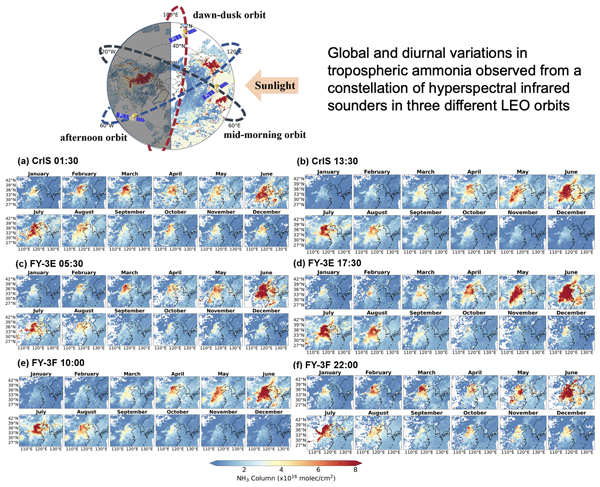
The diurnal cycle of NH3 remains under-constrained at a global scale. To address this gap, we construct an integrated constellation with hyperspectral infrared sounders in three different Low-Earth-Orbits to achieve quasi-geostationary-like global monitoring coverage of NH3 and provide six maps of global NH3 for every 4-hour in each day. This constellation has the potential to enhance the global climate-monitoring capacity of polar-orbiting meteorological satellites.
Shangyi Liu, Yingjun Zheng, Mengya Sheng, Lu Lee, Chengli Qi, Feng Lu, Bruno Franco, Lieven Clarisse, Cathy Clerbaux, Nicolas Theys, Jhoon Kim, and Zhao-Cheng Zeng
EGUsphere, https://doi.org/10.5194/egusphere-2026-1745, https://doi.org/10.5194/egusphere-2026-1745, 2026
Short summary
Short summary
Volcanic sulfur dioxide evolves rapidly after an eruption, which makes it challenging to monitor. Taking the 2024 Kanlaon eruption as a case study, we propose using a constellation of GEO and LEO satellites to track SO2 mass and layer height at high frequency. In particular, we present the first quantitative SO2 retrieval from a GEO hyperspectral infrared sounder (FY-4B/GIIRS). This research provides a vital blueprint for the future global monitoring of volcanic events.
Panxiang Zhang, Peng Zhang, Gang Ma, Rui Li, Lu Lee, Wenguang Bai, and Chengli Qi
Geosci. Model Dev., 19, 10077–10101, https://doi.org/10.5194/gmd-19-10077-2026, https://doi.org/10.5194/gmd-19-10077-2026, 2026
Short summary
Short summary
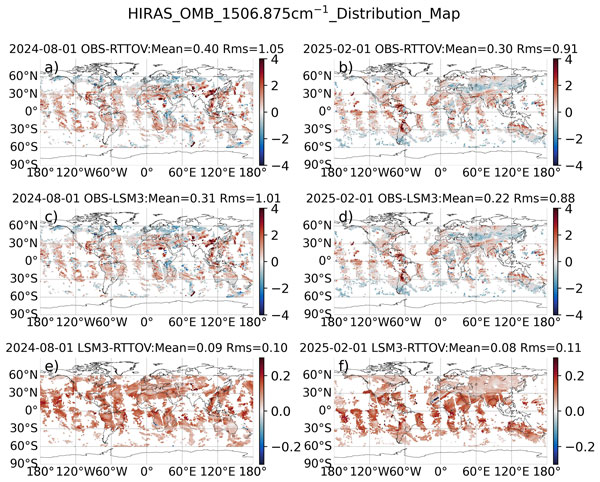
To enhance atmospheric transmittance accuracy in strong water vapor absorption bands, this study proposes an optimized scheme for the fast transmittance algorithm applied to the Hyperspectral Infrared Atmospheric Sounder-II. It introduces a transmittance threshold for sample selection and a weighted least squares regression with transmittance weighting. Validation against line-by-line models and observations shows significant improvements in forward model accuracy and stability at 6.7 μm.
Zhenze Liu, Jianhua Qi, Yuanzhe Ni, Xiaohuan Liu, Gang Yuan, and Mingxu Liu
EGUsphere, https://doi.org/10.5194/egusphere-2026-5674, https://doi.org/10.5194/egusphere-2026-5674, 2026
This preprint is open for discussion and under review for Atmospheric Chemistry and Physics (ACP).
Short summary
Short summary
Nitrate formation across China’s marginal seas exhibits strong regional heterogeneity, with a north-to-south transition from land-dominated to increasingly marine-influenced chemistry. Marine halogen chemistry substantially modifies nitrate production, whereas dimethyl sulfide has a smaller but measurable effect. Their combined impacts become nonlinear under enhanced marine emissions, highlighting the importance of coupled marine processes in coastal atmospheric chemistry.
Manon Hermans, Lieven Clarisse, Cathy Clerbaux, and Pierre Coheur
EGUsphere, https://doi.org/10.5194/egusphere-2026-4784, https://doi.org/10.5194/egusphere-2026-4784, 2026
This preprint is open for discussion and under review for Atmospheric Measurement Techniques (AMT).
Short summary
Short summary
As a component of polar stratospheric clouds, nitric acid trihydrate (NAT) particles play an important role in the formation of the ozone hole. This paper presents a method to quantitatively retrieve NAT from the infrared measurements of the IASI sounder. We derive an 18-year record of daily Antarctic NAT distributions, expressed in terms of optical depths, providing valuable insights into the chemistry of the polar night. The applicability of the method over the North Pole is also shown.
Dongchul Kim, Mian Chin, Hongbin Yu, Peter R. Colarco, Toshihiko Takemura, Paolo Tuccella, Paul Ginoux, Xiaohong Liu, Yang Shi, Hitoshi Matsui, Zhibo Zhang, Jianyu Zheng, Jasper F. Kok, Sophie Vandenbussche, Lieven Clarisse, Simon Whitburn, Virginie Capelle, Claudia Di Biagio, Paola Formenti, and Michael Schulz
EGUsphere, https://doi.org/10.5194/egusphere-2026-5264, https://doi.org/10.5194/egusphere-2026-5264, 2026
This preprint is open for discussion and under review for Atmospheric Chemistry and Physics (ACP).
Short summary
Short summary
The present AeroCom–AeroSat study addresses the gaps in the current state of DOD10 using satellite products, model simulations, an observation-constrained database. The analysis reveals substantial differences in DOD10 across satellite products and models, sometimes exceeding a factor of ten. Analysis with the laboratory measurements highlight the potential of combining shortwave and longwave remote sensing to advance dust compositions analysis through their distinct spectral sensitivities.
Lorenzo Fabris, Nicolas Theys, Lieven Clarisse, Bruno Franco, Mike Burton, Benjamin Esse, Jonas Vlietinck, Huan Yu, Hugues Brenot, Thomas Danckaert, and Michel Van Roozendael
EGUsphere, https://doi.org/10.5194/egusphere-2026-5282, https://doi.org/10.5194/egusphere-2026-5282, 2026
This preprint is open for discussion and under review for Atmospheric Chemistry and Physics (ACP).
Short summary
Short summary
In this study, we present the first global SO2 plume-height dataset from the TROPOspheric Monitoring Instrument (TROPOMI), covering 2018–2025. We evaluate the product against independent observations from the Infrared Atmospheric Sounding Interferometer (IASI) and SO2 height estimates from the PlumeTraj toolkit. Overall, the results show good agreement and highlight the complementarity of these approaches for monitoring SO2 emissions and their atmospheric and climatic impacts.
Jesse O. Bash, John T. Walker, Zhiyong Wu, Ian C. Rumsey, Ben Murphy, Christian Hogrefe, Kathleen M. Fahey, Havala O. T. Pye, Matthew R. Jones, K. Wyat Appel, Mark W. Shephard, Najwa I. Alnsour, and Karen E. Cady-Periera
Geosci. Model Dev., 19, 9377–9393, https://doi.org/10.5194/gmd-19-9377-2026, https://doi.org/10.5194/gmd-19-9377-2026, 2026
Short summary
Short summary
We applied a consistent modeling approach for both field and regional scales of multi-pollutants to evaluate the air-surface exchange processes contributing to regional air quality modeling biases when evaluated against observed network and satellite ammonia concentrations. This multi-resolution approach will serve the modeling and measurement community in their future development and generalization of air-surface exchange models utilizing flux, routine network and satellite observations.
Shangyi Liu, Cathy Clerbaux, Anne Boynard, Mingjian Gu, Chengli Qi, Bruno Franco, Lieven Clarisse, Shan Han, Mengya Sheng, Nicolas Theys, and Zhao-Cheng Zeng
EGUsphere, https://doi.org/10.5194/egusphere-2026-5017, https://doi.org/10.5194/egusphere-2026-5017, 2026
This preprint is open for discussion and under review for Atmospheric Chemistry and Physics (ACP).
Short summary
Short summary
The March 2026 Tehran refinery explosions released massive amounts of toxic sulfur dioxide gas. We used multiple satellites to track this plume, discovering that intense fires pushed the pollution high into the atmosphere, causing it to travel across continents for days. Current air quality forecast models completely missed this major event. This highlights the urgent need to use advanced satellites to monitor pollution from armed conflicts to assess global climate risks.

Lieven Clarisse, Bruno Franco, Lorenzo Fabris, Nicolas Theys, Juliette Hadji-Lazaro, Daniel Hurtmans, Cathy Clerbaux, and Pierre Coheur
Earth Syst. Sci. Data, 18, 6667–6706, https://doi.org/10.5194/essd-18-6667-2026, https://doi.org/10.5194/essd-18-6667-2026, 2026
Short summary
Short summary
We present a 19-year (2007–2026) global record of atmospheric sulphur dioxide (SO2) abundances and plume altitudes measured twice a day from space by the Infrared Atmospheric Sounding Interferometers (IASI). The first part of the paper covers the retrieval methodology and detailed comparisons with other satellite measurements. The second part presents an overview of the dataset, offering in particular an analysis of the temporal evolution and vertical distribution of volcanic SO2.
Lingze Meng, Ni Lu, Yixin Guo, Ziru Lan, Zhao-Cheng Zeng, Zichong Chen, Yuanhong Zhao, Zhuangmin Zhong, Tao Zhang, Duohong Chen, Xuejun Liu, Lin Zhang, and Junyu Zheng
EGUsphere, https://doi.org/10.5194/egusphere-2026-4773, https://doi.org/10.5194/egusphere-2026-4773, 2026
This preprint is open for discussion and under review for Atmospheric Chemistry and Physics (ACP).
Short summary
Short summary
Ammonia contributes to formation of health-damaging PM2.5 air pollution, but its emission estimations involve substantial uncertainties. Combining ground and satellite observations, a local inventory, and atmospheric modeling, we improved ammonia emissions in Guangdong, China. We found that current inventories overestimated agricultural emissions but underestimated non-agricultural emissions, especially in urban areas during the cool season, informing effective PM2.5 mitigation policy design.
Sarah Safieddine, Selviga Sinnathamby, Juliette Hadji-Lazaro, Marie Doutriaux-Boucher, Darren Ghent, Simon Whitburn, Lieven Clarisse, and Cathy Clerbaux
Earth Obs., 1, 59–75, https://doi.org/10.5194/eo-1-59-2026, https://doi.org/10.5194/eo-1-59-2026, 2026
Short summary
Short summary
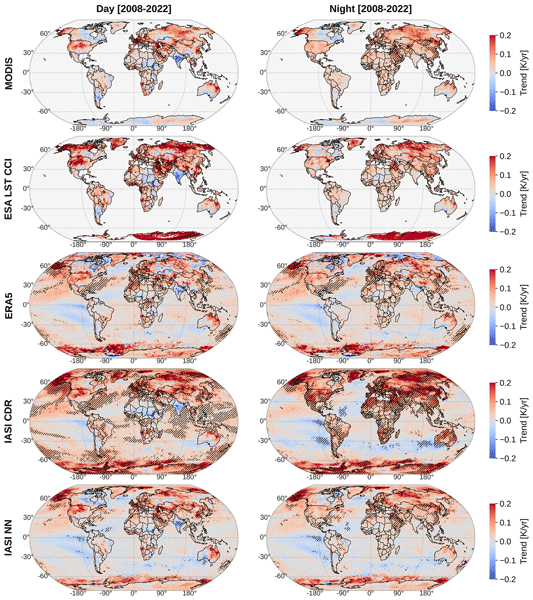
Land and sea surface temperatures, collectively called skin temperature (Tskin), are available from satellite measurements since few decades now and provide a holistic view of the Earth's climate system. Here we review 6 different datasets of Tskin to show that climate change signature is clear from the different datasets with notable exception, such as a significant cooling in India, parts of Africa and the Pacific.
Robert J. Parker, Michael P. Cartwright, Dan Orr, Lakshmi N. Bharathan, Neil Humpage, Alex J. Webb, Peter Somkuti, Hartmut Boesch, Antonio Di Noia, Hiroshi Suto, Matthias Buschmann, Nicholas M. Deutscher, David W. T. Griffith, Frank Hase, Rigel Kivi, Erin McGee, Isamu Morino, Hirofumi Ohyama, Christof Petri, John Robinson, Coleen M. Roehl, Mahesh Kumar Sha, Kei Shiomi, Kimberly Strong, Ralf Sussmann, Yao Té, Voltaire A. Velazco, Mihalis Vrekoussis, Wei Wang, Thorsten Warneke, Damien Weidmann, Debra Wunch, and Minqiang Zhou
Earth Syst. Sci. Data Discuss., https://doi.org/10.5194/essd-2026-625, https://doi.org/10.5194/essd-2026-625, 2026
Preprint under review for ESSD
Short summary
Short summary
Methane is a powerful greenhouse gas and its concentration in the atmosphere is rising rapidly. We present a new record of atmospheric methane measured from space by the Japanese GOSAT-2 satellite, covering 2019 to 2025. The measurements are processed identically to those from its predecessor GOSAT and checked against ground-based instruments around the world. Together the two satellites provide a continuous 17-year record that helps track where methane comes from and how quickly it is changing.
Jiayu Xu, Alain Clappier, Philippe Thunis, Xingpei Ye, Lu Li, and Lin Zhang
EGUsphere, https://doi.org/10.5194/egusphere-2026-4271, https://doi.org/10.5194/egusphere-2026-4271, 2026
This preprint is open for discussion and under review for Atmospheric Chemistry and Physics (ACP).
Short summary
Short summary
Fine particles remain a major threat to health across China. We ran year-round air quality simulations, halving emissions of ammonia, nitrogen oxides, and sulfur dioxide in turn. Reducing ammonia is most effective in winter, while reducing nitrogen oxides works better in spring and summer, with a clear east–west divide across the country. Cutting either gas could prevent about 200,000 premature deaths nationwide each year, supporting controls tailored to season and region.
Selviga Sinnathamby, Sarah Safieddine, Anne Boynard, Juliette Hadji-Lazaro, Solène Turquety, Simon Whitburn, Lieven Clarisse, Marie Doutriaux-Boucher, Pierre Coheur, and Cathy Clerbaux
EGUsphere, https://doi.org/10.5194/egusphere-2026-4393, https://doi.org/10.5194/egusphere-2026-4393, 2026
This preprint is open for discussion and under review for Atmospheric Chemistry and Physics (ACP).
Short summary
Short summary
South and East Asia have experienced contrasting air pollution changes over recent decades, with implications for regional surface temperature. Using satellite observations and CMIP6 simulations, we assess how pollutant trends relate to temperature changes and whether models reproduce these contrasts. While CMIP6 models capture some air pollution changes under certain scenarios, they fail to reproduce the regional temperature contrast, highlighting the need for extended historical simulations.
Simeng Li, Enrico Dammers, Beatriz Herrera, Arjo Segers, Mark W. Shephard, Martin Van Damme, Lieven Clarisse, Shelley van der Graaf, Roy Wichink Kruit, and Jan Willem Erisman
EGUsphere, https://doi.org/10.5194/egusphere-2026-4245, https://doi.org/10.5194/egusphere-2026-4245, 2026
This preprint is open for discussion and under review for Geoscientific Instrumentation, Methods and Data Systems (GI).
Short summary
Short summary
Ammonia from agriculture can harm ecosystems and air quality, but tracking emissions accurately is difficult. We developed a method combining in situ measurements and satellite observations to estimate ammonia emissions across the Netherlands. In situ measurement captures local detail while satellites provide broad coverage; combining both improves estimates. We also identified where new measurement stations would most improve emission monitoring, helping guide future network design.
Tao Xie, Xiaoyun Zhang, Wenmei Li, Yixiang Chen, Ping Wang, Piet Stammes, Gijsbert Tilstra, Olaf Tuinder, Maarten Sneep, and Feng Lu
Int. Arch. Photogramm. Remote Sens. Spatial Inf. Sci., XLIX-B3-2026, 1487–1492, https://doi.org/10.5194/isprs-archives-XLIX-B3-2026-1487-2026, https://doi.org/10.5194/isprs-archives-XLIX-B3-2026-1487-2026, 2026
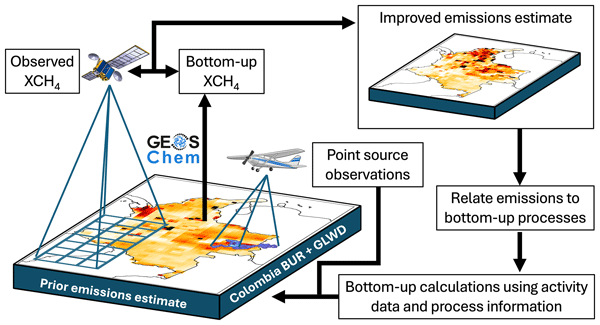
Sarah E. Hancock, Daniel J. Jacob, Rodrigo Jimenez, Andrés Ardila, Luis Morales-Rincon, Néstor Rojas, Lucas A. Estrada, Nicholas Balasus, James D. East, Melissa P. Sulprizio, Xiaolin Wang, James L. France, Lauren Potyk, Elise Penn, Zichong Chen, Daniel J. Varon, Christian Frankenberg, Marci Baranski, Andreea Calcan, and Robert J. Parker
Atmos. Chem. Phys., 26, 10455–10476, https://doi.org/10.5194/acp-26-10455-2026, https://doi.org/10.5194/acp-26-10455-2026, 2026
Short summary
Short summary
We combined satellite observations with detailed national data to improve estimates of Colombia’s methane emissions. Our results show that total methane emissions are higher than reported, with the biggest differences from fossil fuels. This approach demonstrates how satellite data can make national greenhouse gas reporting more accurate and transparent under the Paris Agreement.
Camille Viatte, Vincent Lécluse, Antoine Causse, Marion Delidais, Mélodie Chatain, Mathilde Bourlon, Ángel Luque-Lázaro, Jérôme Le Paih, Julie Cozic, and Guillaume Salque-Moreton
EGUsphere, https://doi.org/10.5194/egusphere-2026-3909, https://doi.org/10.5194/egusphere-2026-3909, 2026
Short summary
Short summary
Atmospheric ammonia (NH₃), mainly emitted by agriculture, contributes to fine particle pollution and impacts air quality, ecosystems, and climate. By comparing satellite (IASI) and ground-based observations across France, this study shows that satellites reliably monitor regional NH₃ variability and long-term trends, while surface measurements remain essential to capture local and short-term changes. Together, both observation systems provide complementary information for NH₃ monitoring.
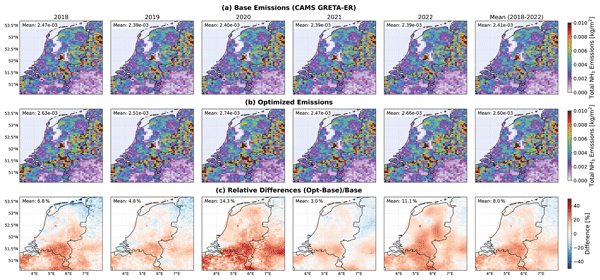
Tyler Wizenberg, Enrico Dammers, Arjo Segers, Mark W. Shephard, Pierre Coheur, Lieven Clarisse, Martin Van Damme, Henk Eskes, Roy Wichink Kruit, Shelley van der Graaf, and Martijn Schaap
Atmos. Chem. Phys., 26, 9589–9623, https://doi.org/10.5194/acp-26-9589-2026, https://doi.org/10.5194/acp-26-9589-2026, 2026
Short summary
Short summary
We combined five years of satellite data on ammonia and nitrogen dioxide concentrations with a regional model to better estimate nitrogen emissions and deposition in the Netherlands. This improved the accuracy of pollution maps and trends, especially in agricultural regions. Our approach helps identify when and where emissions are highest, supporting better air quality management and environmental protection by showing the benefits of using multiple complimentary satellite datasets together.
Jiancong Hua, Runyi Zhou, Mengya Sheng, and Zhao-Cheng Zeng
Atmos. Meas. Tech., 19, 4013–4033, https://doi.org/10.5194/amt-19-4013-2026, https://doi.org/10.5194/amt-19-4013-2026, 2026
Short summary
Short summary
The diurnal cycle of NH3 remains under-constrained at a global scale. To address this gap, we construct an integrated constellation with hyperspectral infrared sounders in three different Low-Earth-Orbits to achieve quasi-geostationary-like global monitoring coverage of NH3 and provide six maps of global NH3 for every 4-hour in each day. This constellation has the potential to enhance the global climate-monitoring capacity of polar-orbiting meteorological satellites.
Beatriz Herrera, Enrico Dammers, Martine De Maziere, Omaira Garcia, Michel Grutter, James W. Hannigan, Dylan B. A. Jones, Nicholas Jones, Emmanuel Mahieu, Maria Makarova, Kazuyuki Miyazaki, Isamu Morino, Isao Murata, Ivan Ortega, Mathias Palm, Anatoly Poverovskii, Takashi Sekiya, Dan Smale, Hannah Sill, Wolfgang Stremme, Ralf Sussmann, Geoffrey Toon, Corinne Vigouroux, Wei Wang, Tyler Wizenberg, and Kimberly Strong
EGUsphere, https://doi.org/10.5194/egusphere-2026-3138, https://doi.org/10.5194/egusphere-2026-3138, 2026
Short summary
Short summary
This work investigates how atmospheric ammonia changes over time using long-term observations and simulations at locations around the world. While its main sources are related to agriculture, wildfires, vehicles, and volcanoes also contribute. The results show that ammonia levels vary strongly during the day and across seasons, and are rising at most locations. These findings improve our understanding of air pollution and its impacts.
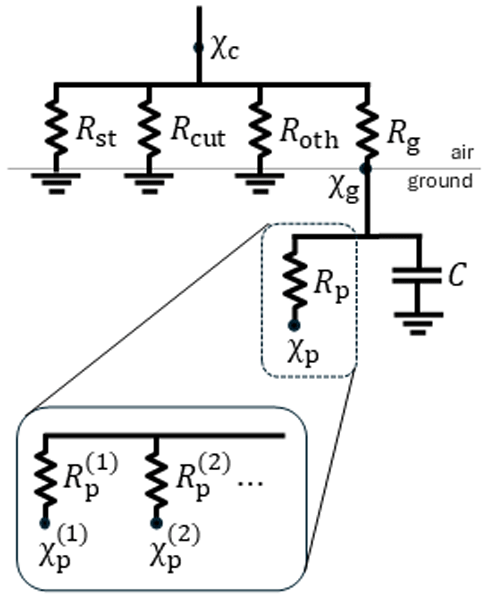
Michael Sitwell, Mark W. Shephard, and Shailesh K. Kharol
Geosci. Model Dev., 19, 4797–4815, https://doi.org/10.5194/gmd-19-4797-2026, https://doi.org/10.5194/gmd-19-4797-2026, 2026
Short summary
Short summary
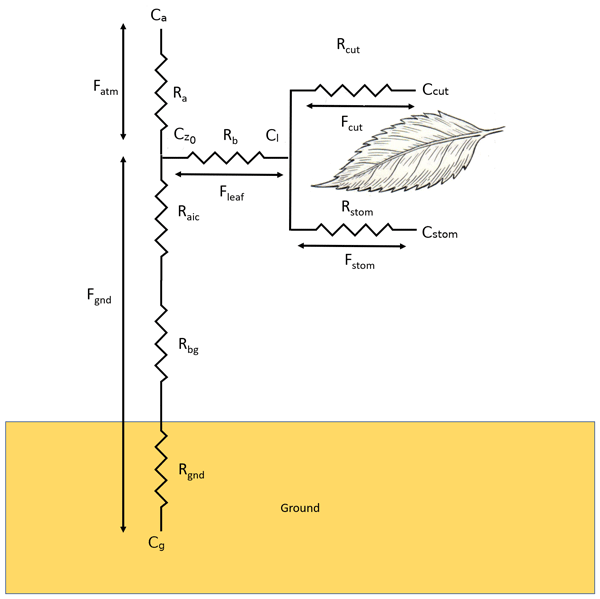
Bidirectional flux models give a unified model for emission and dry deposition, but few studies have been conducted in which satellite observations are used to refine the parameters in these models. A new bidirectional flux model for ammonia was developed that was designed specifically for use with satellite observations. Ammonia satellite observations were used to refine bidirectional flux model parameters, which improved the agreement of the model with ammonia surface observations.
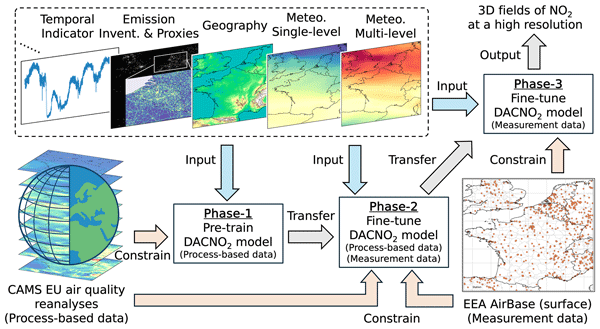
Wenfu Sun, Frederik Tack, Lieven Clarisse, and Michel Van Roozendael
Atmos. Chem. Phys., 26, 7741–7764, https://doi.org/10.5194/acp-26-7741-2026, https://doi.org/10.5194/acp-26-7741-2026, 2026
Short summary
Short summary
Accurate maps of nitrogen dioxide pollution at fine scales are essential for assessing air quality and protecting public health. We developed a machine learning model that produces daily high-resolution 3D nitrogen dioxide fields across Western Europe by combining large-scale atmospheric simulations with ground-based measurements. This approach outperforms traditional methods, especially over cities and complex terrain, and can enhance satellite-based air quality monitoring.
Xingpei Ye, Lin Zhang, Xiaolin Wang, Ni Lu, Sebastian Hickman, Guo Luo, and Alex T. Archibald
Atmos. Chem. Phys., 26, 6377–6390, https://doi.org/10.5194/acp-26-6377-2026, https://doi.org/10.5194/acp-26-6377-2026, 2026
Short summary
Short summary
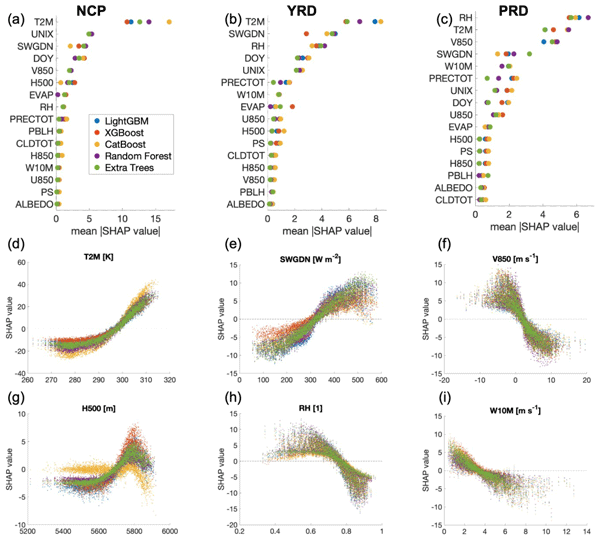
This study investigates how meteorology influences long-term surface ozone trends and pollution events across three major regions in eastern China using an explainable machine learning framework. The results show physically interpretable yet model-dependent ozone-meteorology relationships, highlighting both the potential and the limitations of explainable machine learning for process understanding in atmospheric chemistry.
Jean-François Müller, Trissevgeni Stavrakou, Bruno Franco, Lieven Clarisse, Crist Amelynck, Niels Schoon, Bert W. D. Verreyken, Beata Opacka, Corinne Vigouroux, Alex B. Guenther, Emmanuel Mahieu, Maria Makarova, and Kimberly Strong
Atmos. Chem. Phys., 26, 5375–5406, https://doi.org/10.5194/acp-26-5375-2026, https://doi.org/10.5194/acp-26-5375-2026, 2026
Short summary
Short summary
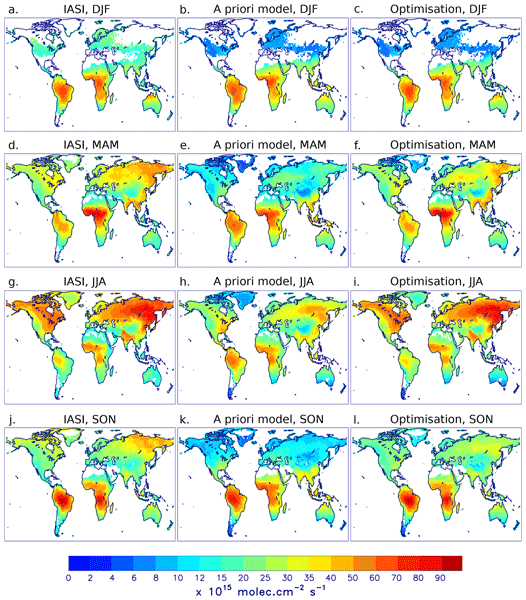
We use an atmospheric model and aircraft measurements to evaluate methanol measurements from satellite sensors. The spaceborne data are found to be too low over source regions. Next, we use the model and the bias-corrected satellite data to derive improved terrestrial emissions of methanol between 2008 and 2019, and we evaluate the results against aircraft and ground-based measurements. This work shows that biogenic emissions of methanol might be ~ 60 % larger than previously estimated.
Shangyi Liu, Yingjun Zheng, Mengya Sheng, Lu Lee, Chengli Qi, Feng Lu, Bruno Franco, Lieven Clarisse, Cathy Clerbaux, Nicolas Theys, Jhoon Kim, and Zhao-Cheng Zeng
EGUsphere, https://doi.org/10.5194/egusphere-2026-1745, https://doi.org/10.5194/egusphere-2026-1745, 2026
Short summary
Short summary
Volcanic sulfur dioxide evolves rapidly after an eruption, which makes it challenging to monitor. Taking the 2024 Kanlaon eruption as a case study, we propose using a constellation of GEO and LEO satellites to track SO2 mass and layer height at high frequency. In particular, we present the first quantitative SO2 retrieval from a GEO hyperspectral infrared sounder (FY-4B/GIIRS). This research provides a vital blueprint for the future global monitoring of volcanic events.
Oliver Schneising, Heinrich Bovensmann, Michael Buchwitz, Matthias Buschmann, Nicholas M. Deutscher, David W. T. Griffith, Jonas Hachmeister, Frank Hase, Laura T. Iraci, Rigel Kivi, Isamu Morino, Hirofumi Ohyama, Christof Petri, Maximilian Reuter, John Robinson, Coleen Roehl, Mahesh Kumar Sha, Kei Shiomi, Kimberly Strong, Ralf Sussmann, Yao Té, Voltaire A. Velazco, Mihalis Vrekoussis, Wei Wang, Thorsten Warneke, Damien Weidmann, Debra Wunch, Minqiang Zhou, and Hartmut Bösch
Atmos. Meas. Tech., 19, 2407–2435, https://doi.org/10.5194/amt-19-2407-2026, https://doi.org/10.5194/amt-19-2407-2026, 2026
Short summary
Short summary
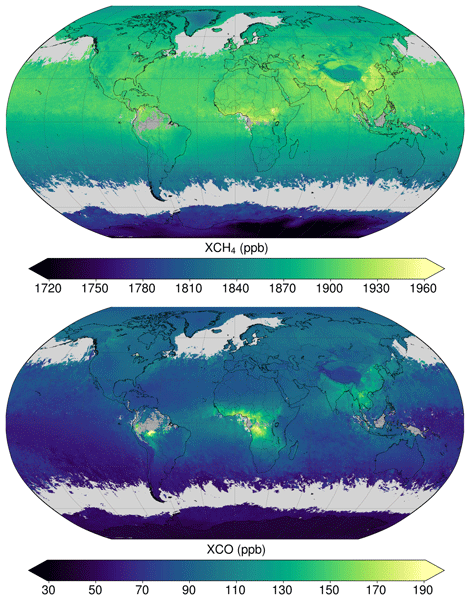
We present an improved version of the TROPOMI/WFMD (TROPOspheric Monitoring Instrument/Weighting Function Modified Differential) algorithm for the simultaneous retrieval of atmospheric methane and carbon monoxide from satellite observations. The updated data product combines higher data yield with better precision and accuracy, expanding its suitability for a wider range of scientific applications. These substantial advances are mainly due to refined quality filtering, enabling more reliable identification of cloudy scenes and mitigating specific aerosol-related issues.
Gunnar Myhre, Øivind Hodnebrog, Srinath Krishnan, Maria Sand, Marit Sandstad, Ragnhild B. Skeie, Lieven Clarisse, Bruno Franco, Dylan B. Millet, Kelley C. Wells, Alexander Archibald, Hannah N. Bryant, Alex T. Chaudhri, David S. Stevenson, Didier Hauglustaine, Michael Prather, J. Christopher Kaiser, Dirk J. L. Olivie, Michael Schulz, Oliver Wild, Ye Wang, Thérèse Salameh, Jason E. Williams, Philippe Le Sager, Fabien Paulot, Kostas Tsigaridis, and Haley E. Plaas
Geosci. Model Dev., 19, 2577–2591, https://doi.org/10.5194/gmd-19-2577-2026, https://doi.org/10.5194/gmd-19-2577-2026, 2026
Short summary
Short summary
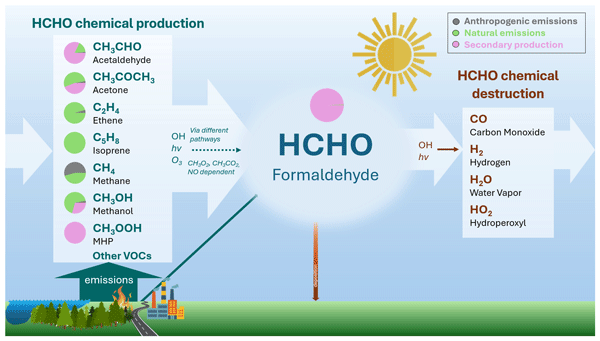
Volatile organic compounds (VOCs) affect air quality and climate, but their behavior in the atmosphere is still uncertain. We launched a global research effort to compare how different models represent these compounds and to improve their accuracy. By analyzing model results alongside observations and satellite data, we aim to better understand the atmospheric composition of these compounds.
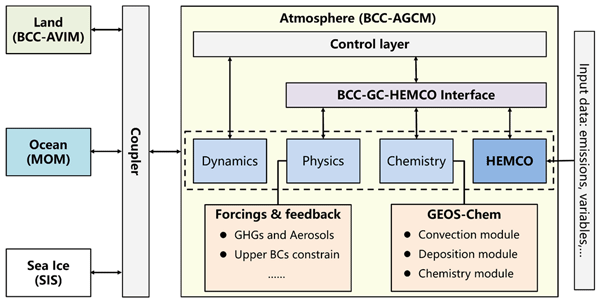
Ruize Sun, Xiao Lu, Haipeng Lin, Tongwen Wu, Xingpei Ye, Lu Shen, Xuan Wang, Haolin Wang, Jingyu Li, Ni Lu, Jiayin Su, Jie Zhang, Fang Zhang, Xiaoge Xin, Xiong Liu, Xiao Yang, and Lin Zhang
Geosci. Model Dev., 19, 2111–2136, https://doi.org/10.5194/gmd-19-2111-2026, https://doi.org/10.5194/gmd-19-2111-2026, 2026
Short summary
Short summary
We present the development of a global chemistry-climate coupled model BCC-GEOS-Chem v2.0, with improved representation of comprehensive troposphere-stratosphere chemistry and new capability to account for radiative-cloud feedbacks from short-lived climate forcers. The development of the BCC-GEOS-Chem v2.0 provides a useful framework for investigating climate–chemistry interactions and for future projections of global atmospheric chemistry
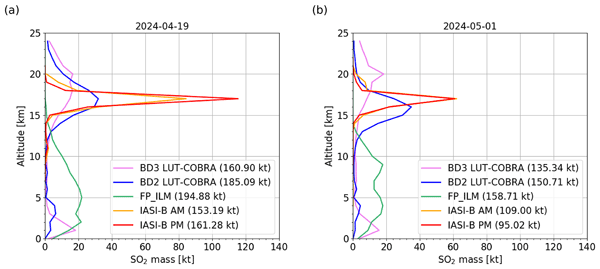
Lorenzo Fabris, Nicolas Theys, Lieven Clarisse, Bruno Franco, Jonas Vlietinck, Huan Yu, Hugues Brenot, Thomas Danckaert, Pascal Hedelt, and Michel Van Roozendael
Atmos. Meas. Tech., 19, 1801–1824, https://doi.org/10.5194/amt-19-1801-2026, https://doi.org/10.5194/amt-19-1801-2026, 2026
Short summary
Short summary
In this study, we developed an improved algorithm to retrieve the sulfur dioxide plume height and column density from the spectral band 2 of the TROPOspheric Monitoring Instrument onboard the Sentinel-5 Precursor satellite. We tested its sensitivity to various conditions and applied it to real volcanic eruptions. Overall, our approach shows high precision, accuracy, and sensitivity, and the results are consistent with other satellite measurements.
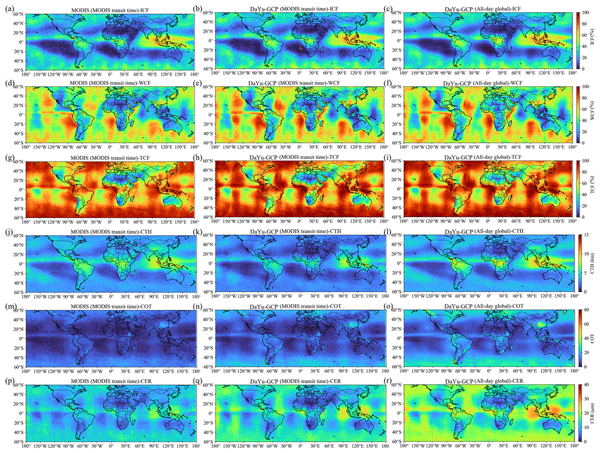
Lingxiao Zhao, Feng Zhang, Zhijun Zhao, Feng Lu, Jingwei Li, Bin Guo, and Wenwen Li
Earth Syst. Sci. Data, 18, 1813–1832, https://doi.org/10.5194/essd-18-1813-2026, https://doi.org/10.5194/essd-18-1813-2026, 2026
Short summary
Short summary
Clouds strongly influence Earth's energy balance and water cycle, yet global cloud datasets cannot provide both long time coverage and high detail in space and time. We created an open dataset of continuous, high-resolution cloud physical properties every three hours from 2000 to 2022. Independent evaluation shows stable accuracy over years, no clear day–night bias, and continuous spatiotemporal coverage. This dataset supports more reliable studies of clouds' roles in radiation and hydrology.
Zhaoyi Ren, Kei Kawai, Mingxu Liu, and Hitoshi Matsui
EGUsphere, https://doi.org/10.5194/egusphere-2025-6214, https://doi.org/10.5194/egusphere-2025-6214, 2026
Short summary
Short summary
This study uses a global climate-aerosol model to examine how Arctic-sourced dust, marine organic aerosols, and bioaerosols affect spatial and seasonal variability in ice nucleating particles in the Arctic. We also assess how these aerosols and their influence on ice nucleation change with Arctic warming. The findings highlight the need to represent multiple aerosol types and their temperature-dependent behavior when simulating ice formation in Arctic low-level clouds and their climate impacts.
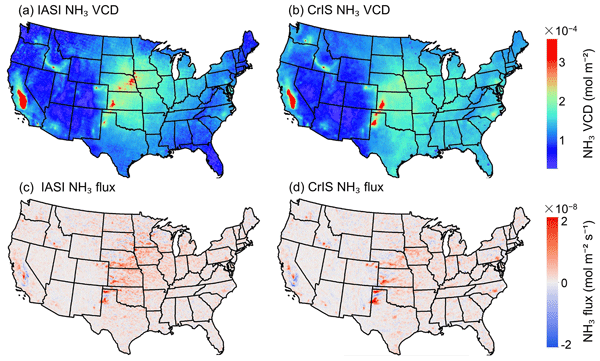
Zitong Li, Kang Sun, Kaiyu Guan, Sheng Wang, Bin Peng, Lieven Clarisse, Martin Van Damme, Pierre-François Coheur, Karen Cady-Pereira, Mark W. Shephard, Mark Zondlo, and Daniel Moore
Atmos. Chem. Phys., 26, 703–721, https://doi.org/10.5194/acp-26-703-2026, https://doi.org/10.5194/acp-26-703-2026, 2026
Short summary
Short summary
We estimate ammonia fluxes over the contiguous U.S. from 2008 to 2022 using a directional derivative approach applied to satellite observations from the Infrared Atmospheric Sounding Interferometer (IASI) and Cross-track Infrared Sounder (CrIS). The resulting flux estimates reveal pronounced seasonal and spatial patterns driven by agricultural activities and indicate substantial local deposition to surrounding vegetation, underscoring the need for improved monitoring and management strategies.
Debora Griffin, Colin Hempel, Chris McLinden, Shailesh Kumar Kharol, Colin Lee, Andre Fogal, Christopher Sioris, Mark Shephard, and Yuan You
Atmos. Meas. Tech., 18, 7497–7511, https://doi.org/10.5194/amt-18-7497-2025, https://doi.org/10.5194/amt-18-7497-2025, 2025
Short summary
Short summary
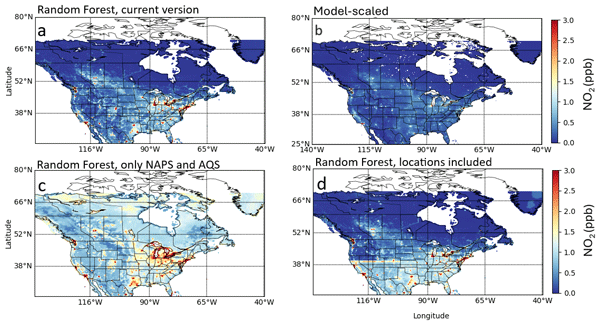
NO2 surface concentrations are obtained across North America using satellite data and machine learning, and compared to traditional approaches to determine surface NO2 from satellite observations.
Fan Sun, Yu Cui, Jiayin Su, Mark W. Shephard, Shailesh K. Kharol, Yifan Zhang, Xuejing Shi, Junqing Zhang, Huili Liu, Qitao Xiao, Xiao Lu, Zhao-Cheng Zeng, Timothy J. Griffis, and Cheng Hu
Atmos. Chem. Phys., 25, 17907–17932, https://doi.org/10.5194/acp-25-17907-2025, https://doi.org/10.5194/acp-25-17907-2025, 2025
Short summary
Short summary
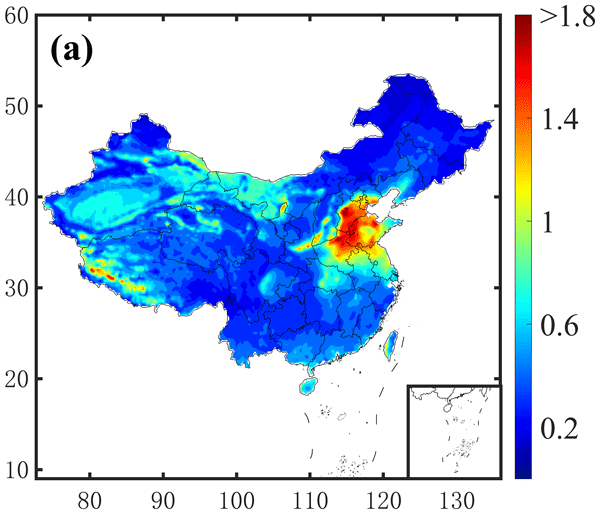
This study used satellite data and models to track ammonia concentration and dry deposition across China from 2013 to 2023. Ammonia levels rose sharply, especially in urban and farming regions, with the North China Plain showing the highest values. Human activity was the main driver of change. These findings highlight growing environmental risks and provide key insights for managing air quality and nitrogen pollution in one of the world's major emission hotspots.
Arno Keppens, Daan Hubert, José Granville, Oindrila Nath, Jean-Christopher Lambert, Catherine Wespes, Pierre-François Coheur, Cathy Clerbaux, Anne Boynard, Richard Siddans, Barry Latter, Brian Kerridge, Serena Di Pede, Pepijn Veefkind, Juan Cuesta, Gaelle Dufour, Klaus-Peter Heue, Melanie Coldewey-Egbers, Diego Loyola, Andrea Orfanoz-Cheuquelaf, Swathi Maratt Satheesan, Kai-Uwe Eichmann, Alexei Rozanov, Viktoria F. Sofieva, Jerald R. Ziemke, Antje Inness, Roeland Van Malderen, and Lars Hoffmann
Atmos. Meas. Tech., 18, 6893–6916, https://doi.org/10.5194/amt-18-6893-2025, https://doi.org/10.5194/amt-18-6893-2025, 2025
Short summary
Short summary
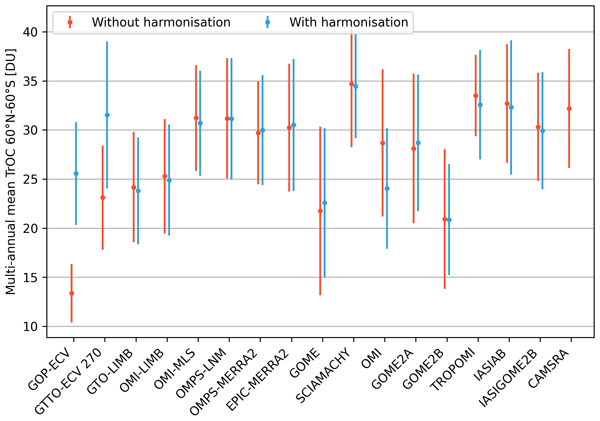
The first Tropospheric Ozone Assessment Report (TOAR) encountered discrepancies between several satellite sensors’ estimates of the distribution and change of ozone in the free troposphere. Therefore, contributing to the second TOAR, we harmonise as much as possible the observational perspective of sixteen tropospheric ozone products from satellites. This only partially accounts for the observed discrepancies, with a reduction of 10–40 % of the inter-product dispersion upon harmonisation.
Pramod Kumar, Grégoire Broquet, Didier Hauglustaine, Maureen Beaudor, Lieven Clarisse, Martin Van Damme, Pierre Coheur, Anne Cozic, Bo Zheng, Beatriz Revilla Romero, Antony Delavois, and Philippe Ciais
Atmos. Chem. Phys., 25, 12379–12407, https://doi.org/10.5194/acp-25-12379-2025, https://doi.org/10.5194/acp-25-12379-2025, 2025
Short summary
Short summary
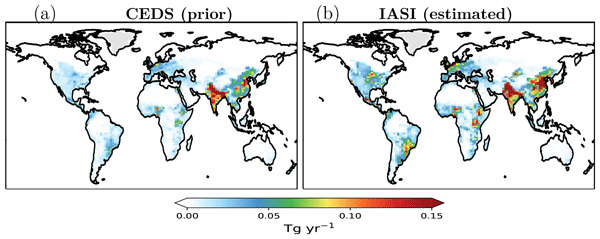
Global maps of the NH3 emissions over 2019–2022 are derived using IASI NH3 spaceborne observations, the LMDZ-INCA chemistry transport model at 1.27°×2.5° resolution, and the mass-balance approach. The average global NH3 emissions over the period are ~97 Tg NH3 yr-1, which is significantly higher than three reference inventories. The analysis provides confidence in the seasonal variability and regional budgets and provides new insights into NH3 emissions at global and regional scales.
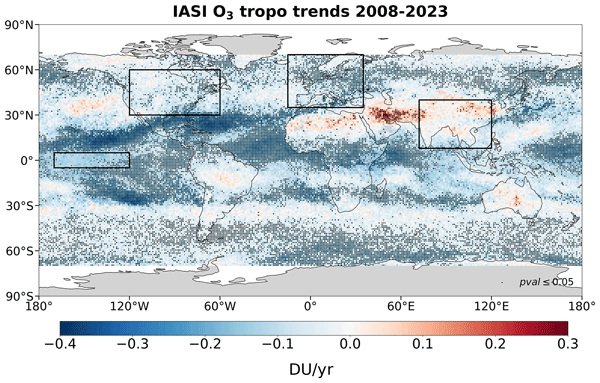
Anne Boynard, Catherine Wespes, Juliette Hadji-Lazaro, Selviga Sinnathamby, Daniel Hurtmans, Pierre-François Coheur, Marie Doutriaux-Boucher, Jacobus Onderwaater, Wolfgang Steinbrecht, Elyse A. Pennington, Kevin Bowman, and Cathy Clerbaux
Atmos. Chem. Phys., 25, 11719–11755, https://doi.org/10.5194/acp-25-11719-2025, https://doi.org/10.5194/acp-25-11719-2025, 2025
Short summary
Short summary
This study analyzes 16 years of global ozone data to assess its impact on air quality and climate. Using satellite measurements, we observed a global decrease in tropospheric ozone, particularly in tropical and European regions. The drop became more noticeable around 2020, partly due to reduced emissions during the pandemic. The study highlights the need for better data processing and integration to more accurately monitor ozone changes over time.
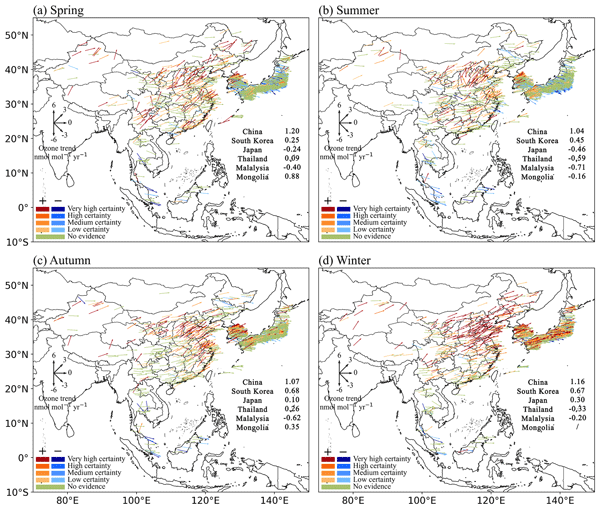
Ke Li, Rong Tan, Wenhao Qiao, Taegyung Lee, Yufen Wang, Danyuting Zhang, Minglong Tang, Wenqing Zhao, Yixuan Gu, Shaojia Fan, Jinqiang Zhang, Xiaopu Lyu, Likun Xue, Jianming Xu, Zhiqiang Ma, Mohd Talib Latif, Teerachai Amnuaylojaroen, Junsu Gil, Mee-Hye Lee, Juseon Bak, Joowan Kim, Hong Liao, Yugo Kanaya, Xiao Lu, Tatsuya Nagashima, and Ja-Ho Koo
Atmos. Chem. Phys., 25, 11575–11596, https://doi.org/10.5194/acp-25-11575-2025, https://doi.org/10.5194/acp-25-11575-2025, 2025
Short summary
Short summary
East Asia and Southeast Asia have been identified as a global hot spot, with the fastest ozone increase. This paper presents the most comprehensive observational review of ozone distributions and evolution over East Asia and Southeast Asia across different spatiotemporal scales in the past two decades, which will have important implications for assessing ozone impacts on public health and crop yields and for developing future ozone control strategies.
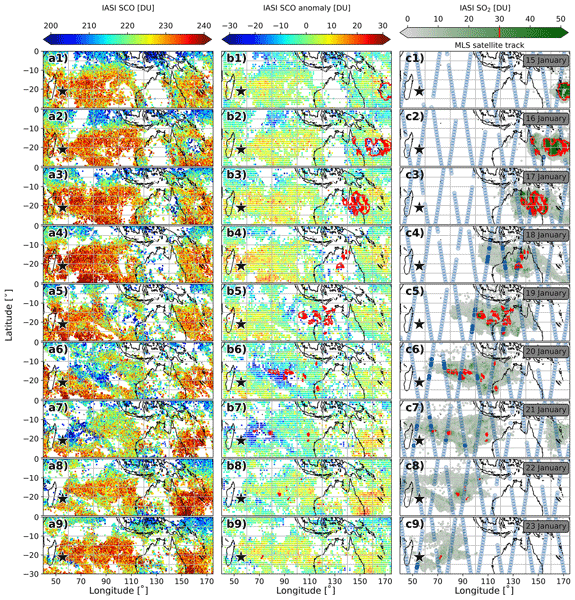
Tristan Millet, Hassan Bencherif, Thierry Portafaix, Nelson Bègue, Alexandre Baron, Valentin Duflot, Cathy Clerbaux, Pierre-François Coheur, Andrea Pazmiño, Michaël Sicard, Anne Boynard, Jean-Marc Metzger, Guillaume Payen, Nicolas Marquestaut, and Sophie Godin-Beekmann
Atmos. Chem. Phys., 25, 10887–10905, https://doi.org/10.5194/acp-25-10887-2025, https://doi.org/10.5194/acp-25-10887-2025, 2025
Short summary
Short summary
On 15 January 2022, the Hunga volcano erupted, releasing sulfur dioxide and water vapor into the stratosphere, impacting ozone levels over the Indian Ocean. Satellite data show the presence of a transient ozone depletion event related to the water vapor anomalies and sulfate aerosol clouds. Ozone reduction was confined to two distinct layers. On 21 January, the fifth percentile of total and stratospheric column ozone anomalies reached −18.6 and −14.5 DU, respectively.
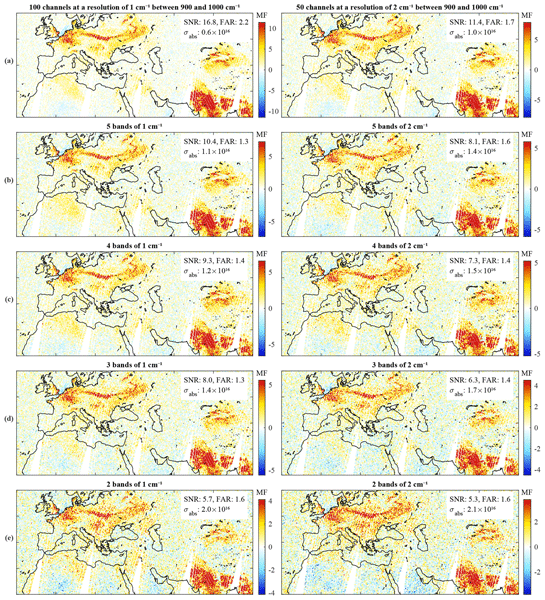
Lara Noppen, Lieven Clarisse, Frederik Tack, Thomas Ruhtz, Martin Van Damme, Michel Van Roozendael, Dirk Schuettemeyer, and Pierre Coheur
Atmos. Meas. Tech., 18, 4183–4205, https://doi.org/10.5194/amt-18-4183-2025, https://doi.org/10.5194/amt-18-4183-2025, 2025
Short summary
Short summary
Current infrared satellite sounders offer high spectral but low spatial resolution, limiting their ability to quantify atmospheric ammonia (NH3) at small scales. Through simulations and analysis of real data, we show that NH3 can be measured effectively from spectra with reduced resolution, either in a contiguous spectral range or in select well-chosen bands. This approach opens possibilities for the development of smaller dedicated instruments for observing NH3 at high spatial resolution.
Xiao Lu, Yiming Liu, Jiayin Su, Xiang Weng, Tabish Ansari, Yuqiang Zhang, Guowen He, Yuqi Zhu, Haolin Wang, Ganquan Zeng, Jingyu Li, Cheng He, Shuai Li, Teerachai Amnuaylojaroen, Tim Butler, Qi Fan, Shaojia Fan, Grant L. Forster, Meng Gao, Jianlin Hu, Yugo Kanaya, Mohd Talib Latif, Keding Lu, Philippe Nédélec, Peer Nowack, Bastien Sauvage, Xiaobin Xu, Lin Zhang, Ke Li, Ja-Ho Koo, and Tatsuya Nagashima
Atmos. Chem. Phys., 25, 7991–8028, https://doi.org/10.5194/acp-25-7991-2025, https://doi.org/10.5194/acp-25-7991-2025, 2025
Short summary
Short summary
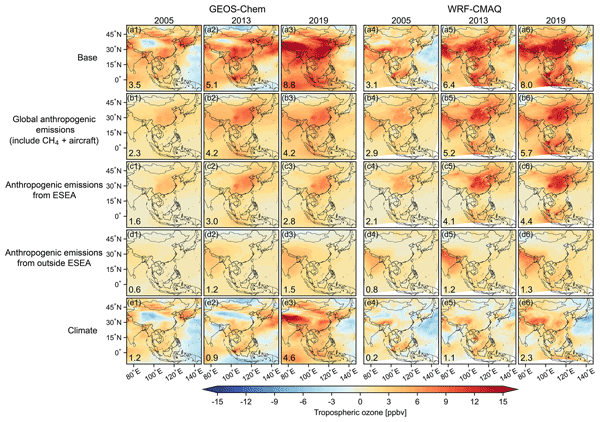
This study analyzes summertime ozone trends in East and Southeast Asia derived from a comprehensive observational database spanning from 1995 to 2019, incorporating aircraft observations, ozonesonde data, and measurements from 2500 surface sites. Multiple models are applied to attribute to changes in anthropogenic emissions and climate. The results highlight that increases in anthropogenic emissions are the primary driver of ozone increases both in the free troposphere and at the surface.
Antoine Ehret, Solène Turquety, Maya George, Juliette Hadji-Lazaro, and Cathy Clerbaux
Atmos. Chem. Phys., 25, 6365–6394, https://doi.org/10.5194/acp-25-6365-2025, https://doi.org/10.5194/acp-25-6365-2025, 2025
Short summary
Short summary
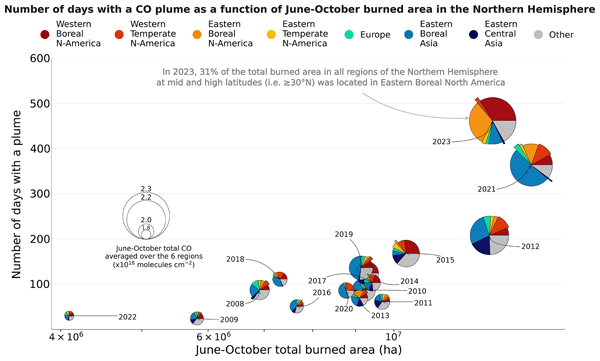
Biomass burning has a considerable effect on the chemical composition of the atmosphere and climate, due to the emission of trace gases and aerosols. We examine the relationship between fire variability and the values of carbon monoxide and aerosol optical depth observed by satellites. The observed increase in wildfires has led to a corresponding rise in the mean and extreme values of carbon monoxide and aerosol optical depth during the summer and early autumn across the Northern Hemisphere.
Mijie Pang, Jianbing Jin, Ting Yang, Xi Chen, Arjo Segers, Batjargal Buyantogtokh, Yixuan Gu, Jiandong Li, Hai Xiang Lin, Hong Liao, and Wei Han
Geosci. Model Dev., 18, 3781–3798, https://doi.org/10.5194/gmd-18-3781-2025, https://doi.org/10.5194/gmd-18-3781-2025, 2025
Short summary
Short summary
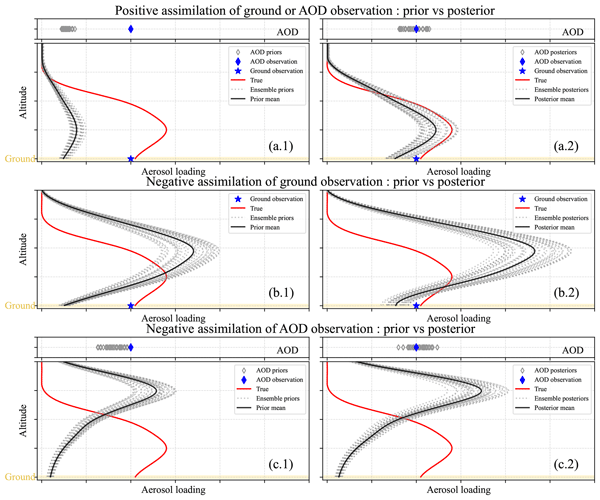
Aerosol data assimilation has gained popularity as it combines the advantages of modelling and observation. However, few studies have addressed the challenges in the prior vertical structure. Different observations are assimilated to examine the sensitivity of assimilation to vertical structure. Results show that assimilation can optimize the dust field in general. However, if the prior introduces an incorrect structure, the assimilation can significantly deteriorate the integrity of the aerosol profile.
Lucas A. Estrada, Daniel J. Varon, Melissa Sulprizio, Hannah Nesser, Zichong Chen, Nicholas Balasus, Sarah E. Hancock, Megan He, James D. East, Todd A. Mooring, Alexander Oort Alonso, Joannes D. Maasakkers, Ilse Aben, Sabour Baray, Kevin W. Bowman, John R. Worden, Felipe J. Cardoso-Saldaña, Emily Reidy, and Daniel J. Jacob
Geosci. Model Dev., 18, 3311–3330, https://doi.org/10.5194/gmd-18-3311-2025, https://doi.org/10.5194/gmd-18-3311-2025, 2025
Short summary
Short summary
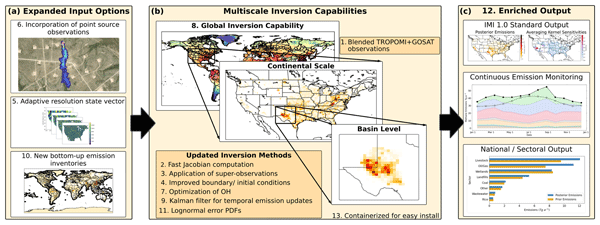
Reducing emissions of methane, a powerful greenhouse gas, is a top policy concern for mitigating anthropogenic climate change. The Integrated Methane Inversion (IMI) is an advanced, cloud-based software that translates satellite observations into actionable emissions data. Here we present IMI version 2.0 with vastly expanded capabilities. These updates enable a wider range of scientific and stakeholder applications from individual basin to global scales with continuous emissions monitoring.
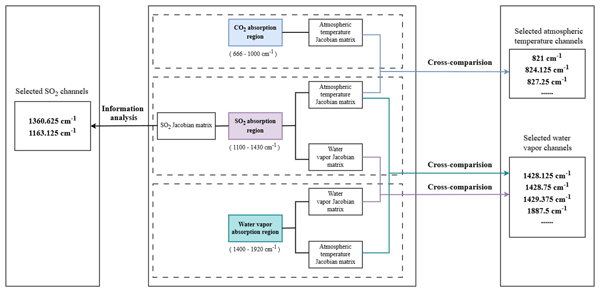
Xinyu Li, Lin Zhu, Hongfu Sun, Jun Li, Ximing Lv, Chengli Qi, and Huanhuan Yan
Atmos. Meas. Tech., 18, 2333–2352, https://doi.org/10.5194/amt-18-2333-2025, https://doi.org/10.5194/amt-18-2333-2025, 2025
Short summary
Short summary
This paper proposes a novel methodology for selecting sulfur-dioxide-sensitive channels from FY-3E/HIRAS-II hyperspectral IR atmospheric sensors to quantitatively monitor volcanic sulfur dioxide. This methodology considers the interference of atmospheric temperature, humidity, and surface temperature with sulfur dioxide detection and retrieval, laying the groundwork for developing a more accurate and flexible volcanic sulfur dioxide retrieval algorithm under different atmospheric conditions.
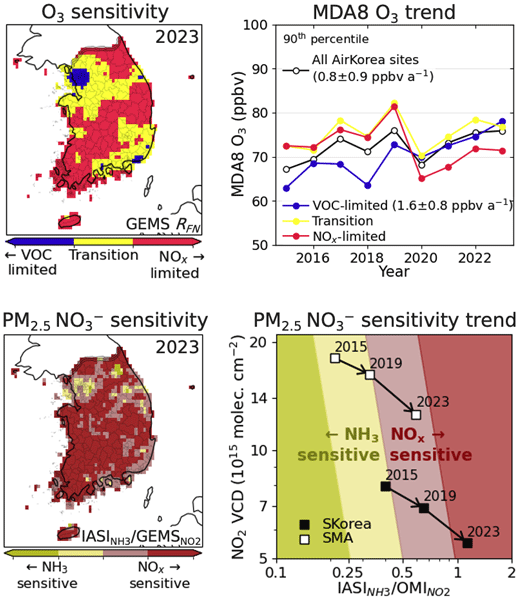
Yujin J. Oak, Daniel J. Jacob, Drew C. Pendergrass, Ruijun Dang, Nadia K. Colombi, Heesung Chong, Seoyoung Lee, Su Keun Kuk, and Jhoon Kim
Atmos. Chem. Phys., 25, 3233–3252, https://doi.org/10.5194/acp-25-3233-2025, https://doi.org/10.5194/acp-25-3233-2025, 2025
Short summary
Short summary
We analyze 2015–2023 air quality trends in South Korea using surface and satellite observations. Primary pollutants have decreased, consistent with emissions reductions. Surface O3 continues to increase and PM2.5 has decreased overall, but the nitrate component has not. O3 and PM2.5 nitrate depend on nonlinear responses from precursor emissions. Satellite data indicate a recent shift to NOx-sensitive O3 and nitrate formation, where further NOx reductions will benefit both O3 and PM2.5 pollution.
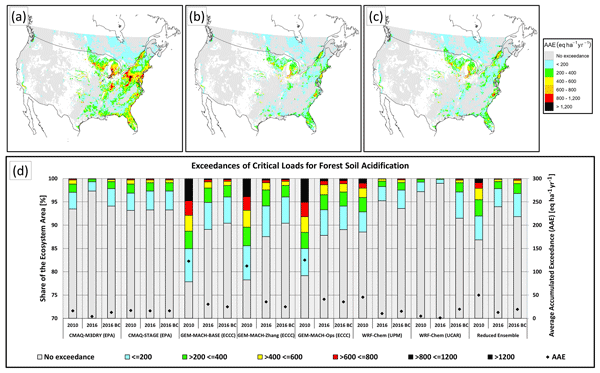
Paul A. Makar, Philip Cheung, Christian Hogrefe, Ayodeji Akingunola, Ummugulsum Alyuz, Jesse O. Bash, Michael D. Bell, Roberto Bellasio, Roberto Bianconi, Tim Butler, Hazel Cathcart, Olivia E. Clifton, Alma Hodzic, Ioannis Kioutsioukis, Richard Kranenburg, Aurelia Lupascu, Jason A. Lynch, Kester Momoh, Juan L. Perez-Camanyo, Jonathan Pleim, Young-Hee Ryu, Roberto San Jose, Donna Schwede, Thomas Scheuschner, Mark W. Shephard, Ranjeet S. Sokhi, and Stefano Galmarini
Atmos. Chem. Phys., 25, 3049–3107, https://doi.org/10.5194/acp-25-3049-2025, https://doi.org/10.5194/acp-25-3049-2025, 2025
Short summary
Short summary
The large range of sulfur and nitrogen deposition estimates from air quality models results in a large range of predicted impacts. We used models and deposition diagnostics to identify the processes controlling atmospheric sulfur and nitrogen deposition variability. Controlling factors included the uptake of gases and aerosols by hydrometeors, aerosol inorganic chemistry, particle dry deposition, ammonia bidirectional fluxes, gas deposition via plant cuticles and soil, and land use data.
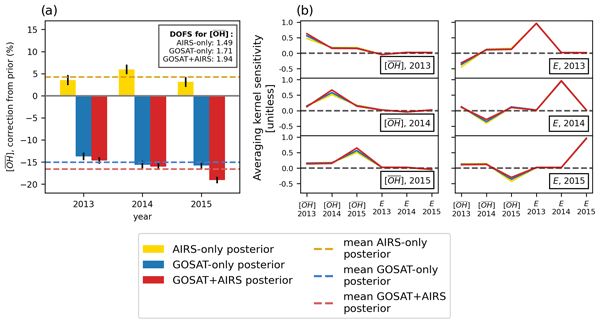
Elise Penn, Daniel J. Jacob, Zichong Chen, James D. East, Melissa P. Sulprizio, Lori Bruhwiler, Joannes D. Maasakkers, Hannah Nesser, Zhen Qu, Yuzhong Zhang, and John Worden
Atmos. Chem. Phys., 25, 2947–2965, https://doi.org/10.5194/acp-25-2947-2025, https://doi.org/10.5194/acp-25-2947-2025, 2025
Short summary
Short summary
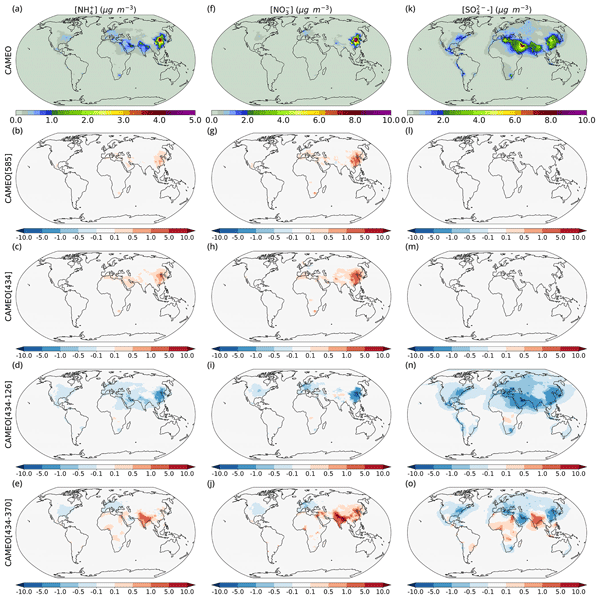
The hydroxyl radical (OH) destroys many air pollutants, including methane. Global-mean OH cannot be directly measured, and thus it is inferred with the methyl chloroform (MCF) proxy. MCF is decreasing, and a replacement is needed. We use satellite observations of methane in two spectral ranges as a proxy for OH. We find shortwave infrared observations can characterize yearly OH and its seasonality but not the latitudinal distribution. Thermal infrared observations add little information.
Maureen Beaudor, Didier Hauglustaine, Juliette Lathière, Martin Van Damme, Lieven Clarisse, and Nicolas Vuichard
Atmos. Chem. Phys., 25, 2017–2046, https://doi.org/10.5194/acp-25-2017-2025, https://doi.org/10.5194/acp-25-2017-2025, 2025
Short summary
Short summary
Agriculture is the biggest ammonia (NH3) source, impacting air quality, climate, and ecosystems. Because of food demand, NH3 emissions are projected to rise by 2100. Using a global model, we analyzed the impact of present and future NH3 emissions generated from a land model. Our results show improved ammonia patterns compared to a reference inventory. Future scenarios predict up to 70 % increase in global NH3 burden, with significant changes in radiative forcing that can greatly elevate N2O.
Sarah E. Hancock, Daniel J. Jacob, Zichong Chen, Hannah Nesser, Aaron Davitt, Daniel J. Varon, Melissa P. Sulprizio, Nicholas Balasus, Lucas A. Estrada, María Cazorla, Laura Dawidowski, Sebastián Diez, James D. East, Elise Penn, Cynthia A. Randles, John Worden, Ilse Aben, Robert J. Parker, and Joannes D. Maasakkers
Atmos. Chem. Phys., 25, 797–817, https://doi.org/10.5194/acp-25-797-2025, https://doi.org/10.5194/acp-25-797-2025, 2025
Short summary
Short summary
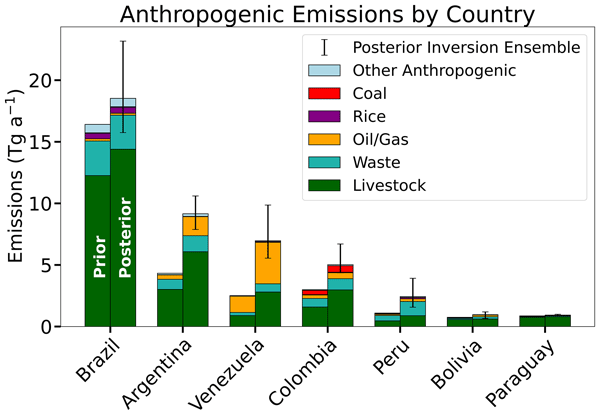
We quantify 2021 methane emissions in South America at up to 25 km × 25 km resolution using satellite methane observations. We find a 55 % upward adjustment to anthropogenic emission inventories, including those reported to the UN Framework Convention on Climate Change under the Paris Agreement. Our estimates match inventories for Brazil, Bolivia, and Paraguay but are much higher for other countries. Livestock emissions (65 % of anthropogenic emissions) show the largest discrepancies.
Mingxu Liu, Hitoshi Matsui, Douglas S. Hamilton, Sagar D. Rathod, Kara D. Lamb, and Natalie M. Mahowald
Atmos. Chem. Phys., 24, 13115–13127, https://doi.org/10.5194/acp-24-13115-2024, https://doi.org/10.5194/acp-24-13115-2024, 2024
Short summary
Short summary
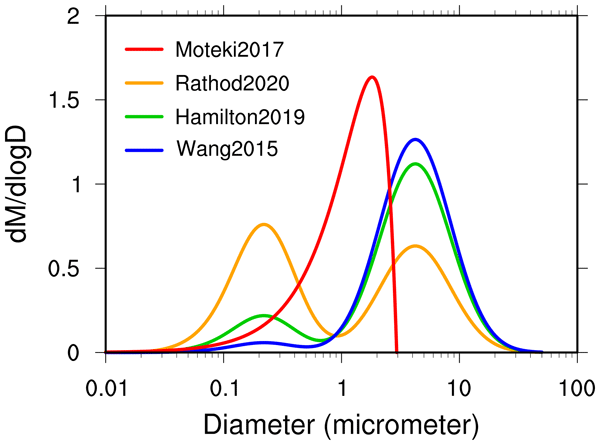
Atmospheric aerosol deposition provides bioavailable iron to promote marine primary production, yet the estimates of its fluxes remain highly uncertain. This study, by performing global aerosol simulations, demonstrates that iron-containing particle size upon emission is a critical factor in regulating soluble iron input to open oceans. Further observational constraints on this are needed to reduce modeling uncertainties.
Gérard Ancellet, Camille Viatte, Anne Boynard, François Ravetta, Jacques Pelon, Cristelle Cailteau-Fischbach, Pascal Genau, Julie Capo, Axel Roy, and Philippe Nédélec
Atmos. Chem. Phys., 24, 12963–12983, https://doi.org/10.5194/acp-24-12963-2024, https://doi.org/10.5194/acp-24-12963-2024, 2024
Short summary
Short summary
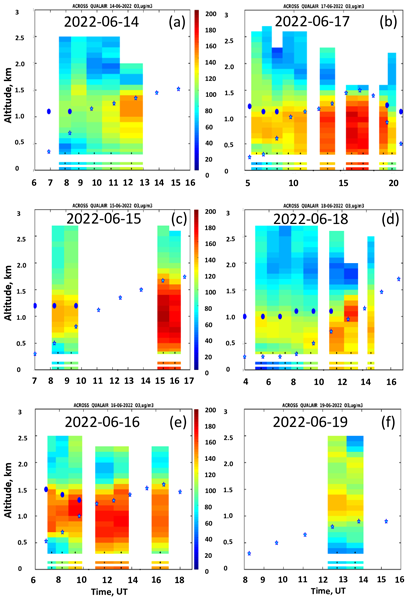
Characterization of ozone pollution in urban areas benefited from a measurement campaign in summer 2022 in the Paris region. The analysis is based on 21 d of lidar and aircraft observations. The main objective is an analysis of the sensitivity of ozone pollution to the micrometeorological processes in the urban atmospheric boundary layer and the transport of regional pollution. The paper also discusses to what extent satellite observations can track observed ozone plumes.
Kavitha Mottungan, Chayan Roychoudhury, Vanessa Brocchi, Benjamin Gaubert, Wenfu Tang, Mohammad Amin Mirrezaei, John McKinnon, Yafang Guo, David W. T. Griffith, Dietrich G. Feist, Isamu Morino, Mahesh K. Sha, Manvendra K. Dubey, Martine De Mazière, Nicholas M. Deutscher, Paul O. Wennberg, Ralf Sussmann, Rigel Kivi, Tae-Young Goo, Voltaire A. Velazco, Wei Wang, and Avelino F. Arellano Jr.
Atmos. Meas. Tech., 17, 5861–5885, https://doi.org/10.5194/amt-17-5861-2024, https://doi.org/10.5194/amt-17-5861-2024, 2024
Short summary
Short summary
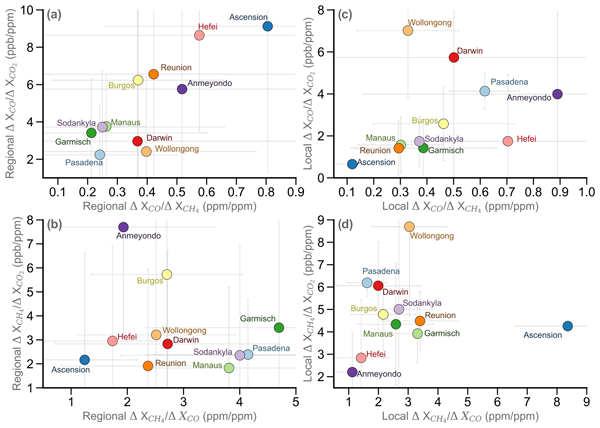
A combination of data analysis techniques is introduced to separate local and regional influences on observed levels of carbon dioxide, carbon monoxide, and methane from an established ground-based remote sensing network. We take advantage of the covariations in these trace gases to identify the dominant type of sources driving these levels. Applying these methods in conjunction with existing approaches to other datasets can better address uncertainties in identifying sources and sinks.
Jieying Ding, Ronald van der A, Henk Eskes, Enrico Dammers, Mark Shephard, Roy Wichink Kruit, Marc Guevara, and Leonor Tarrason
Atmos. Chem. Phys., 24, 10583–10599, https://doi.org/10.5194/acp-24-10583-2024, https://doi.org/10.5194/acp-24-10583-2024, 2024
Short summary
Short summary
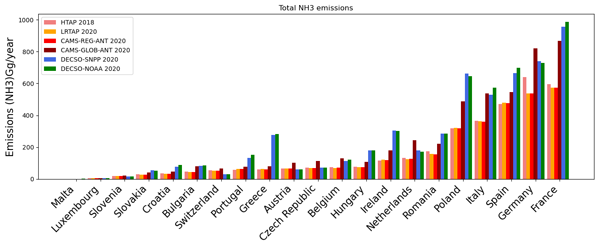
Here we applied the existing Daily Emissions Constrained by Satellite Observations (DECSO) inversion algorithm to NH3 observations from the CrIS satellite instrument to estimate NH3 emissions. As NH3 in the atmosphere is influenced by NOx, we implemented DECSO to estimate NOx and NH3 emissions simultaneously. The emissions are derived over Europe for 2020 at a spatial resolution of 0.2° using daily observations from CrIS and TROPOMI. Results are compared to bottom-up emission inventories.
Haipeng Lin, Louisa K. Emmons, Elizabeth W. Lundgren, Laura Hyesung Yang, Xu Feng, Ruijun Dang, Shixian Zhai, Yunxiao Tang, Makoto M. Kelp, Nadia K. Colombi, Sebastian D. Eastham, Thibaud M. Fritz, and Daniel J. Jacob
Atmos. Chem. Phys., 24, 8607–8624, https://doi.org/10.5194/acp-24-8607-2024, https://doi.org/10.5194/acp-24-8607-2024, 2024
Short summary
Short summary
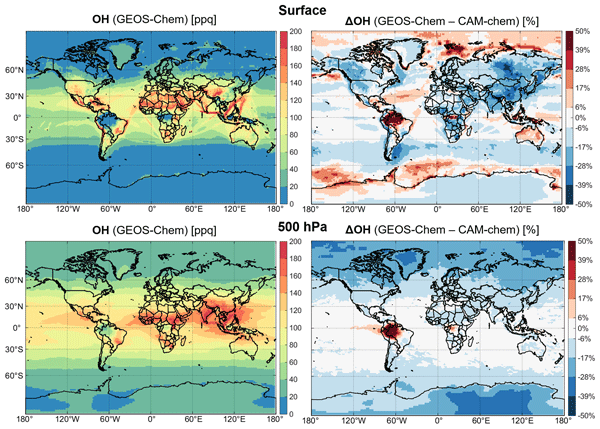
Tropospheric ozone is a major air pollutant, a greenhouse gas, and a major indicator of model skill. Global atmospheric chemistry models show large differences in simulations of tropospheric ozone, but isolating sources of differences is complicated by different model environments. By implementing the GEOS-Chem model side by side to CAM-chem within a common Earth system model, we identify and evaluate specific differences between the two models and their impacts on key chemical species.
Laura Hyesung Yang, Daniel J. Jacob, Ruijun Dang, Yujin J. Oak, Haipeng Lin, Jhoon Kim, Shixian Zhai, Nadia K. Colombi, Drew C. Pendergrass, Ellie Beaudry, Viral Shah, Xu Feng, Robert M. Yantosca, Heesung Chong, Junsung Park, Hanlim Lee, Won-Jin Lee, Soontae Kim, Eunhye Kim, Katherine R. Travis, James H. Crawford, and Hong Liao
Atmos. Chem. Phys., 24, 7027–7039, https://doi.org/10.5194/acp-24-7027-2024, https://doi.org/10.5194/acp-24-7027-2024, 2024
Short summary
Short summary
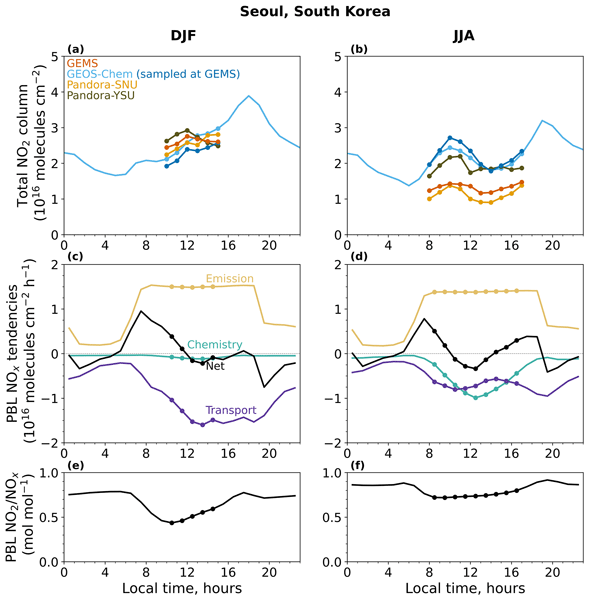
The Geostationary Environment Monitoring Spectrometer (GEMS) provides hourly measurements of NO2. We use the chemical transport model to find how emissions, chemistry, and transport drive the changes in NO2 observed by GEMS at different times of the day. In winter, the chemistry plays a minor role, and high daytime emissions dominate the diurnal variation in NO2, balanced by transport. In summer, emissions, chemistry, and transport play an important role in shaping the diurnal variation in NO2.
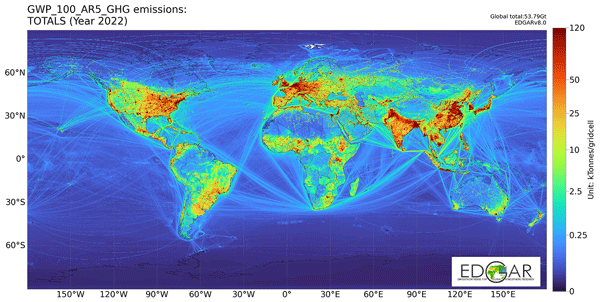
Monica Crippa, Diego Guizzardi, Federico Pagani, Marcello Schiavina, Michele Melchiorri, Enrico Pisoni, Francesco Graziosi, Marilena Muntean, Joachim Maes, Lewis Dijkstra, Martin Van Damme, Lieven Clarisse, and Pierre Coheur
Earth Syst. Sci. Data, 16, 2811–2830, https://doi.org/10.5194/essd-16-2811-2024, https://doi.org/10.5194/essd-16-2811-2024, 2024
Short summary
Short summary
Knowing where emissions occur is essential for planning effective emission reduction measures and atmospheric modelling. Disaggregating national emissions over high-resolution grids requires spatial proxies that contain information on the location of different emission sources. This work incorporates state-of-the-art spatial information to improve the spatial representation of global emissions with the Emissions Database for Global Atmospheric Research (EDGAR).
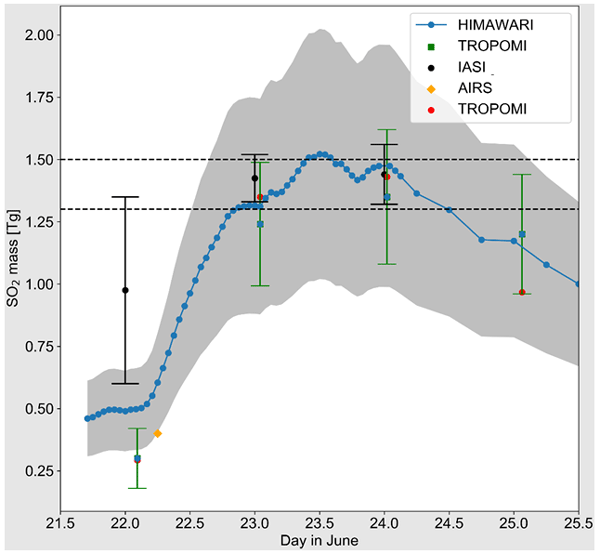
Jean-Paul Vernier, Thomas J. Aubry, Claudia Timmreck, Anja Schmidt, Lieven Clarisse, Fred Prata, Nicolas Theys, Andrew T. Prata, Graham Mann, Hyundeok Choi, Simon Carn, Richard Rigby, Susan C. Loughlin, and John A. Stevenson
Atmos. Chem. Phys., 24, 5765–5782, https://doi.org/10.5194/acp-24-5765-2024, https://doi.org/10.5194/acp-24-5765-2024, 2024
Short summary
Short summary
The 2019 Raikoke eruption (Kamchatka, Russia) generated one of the largest emissions of particles and gases into the stratosphere since the 1991 Mt. Pinatubo eruption. The Volcano Response (VolRes) initiative, an international effort, provided a platform for the community to share information about this eruption and assess its climate impact. The eruption led to a minor global surface cooling of 0.02 °C in 2020 which is negligible relative to warming induced by human greenhouse gas emissions.
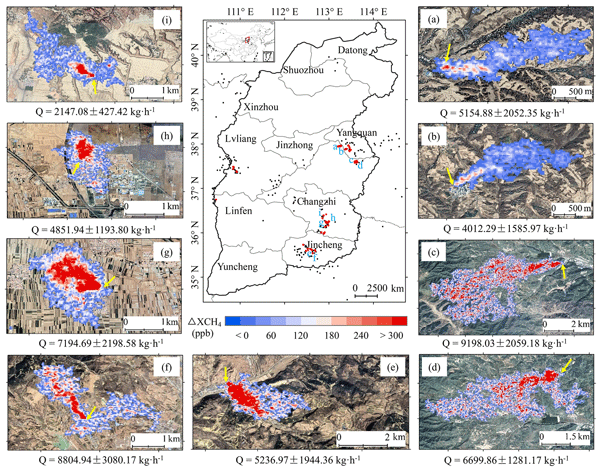
Zhonghua He, Ling Gao, Miao Liang, and Zhao-Cheng Zeng
Atmos. Meas. Tech., 17, 2937–2956, https://doi.org/10.5194/amt-17-2937-2024, https://doi.org/10.5194/amt-17-2937-2024, 2024
Short summary
Short summary
Using Gaofen-5B satellite data, this study detected 93 methane plume events from 32 coal mines in Shanxi, China, with emission rates spanning from 761.78 ± 185.00 to 12729.12 ± 4658.13 kg h-1, showing significant variability among sources. This study highlights Gaofen-5B’s capacity for monitoring large methane point sources, offering valuable support in reducing greenhouse gas emissions.
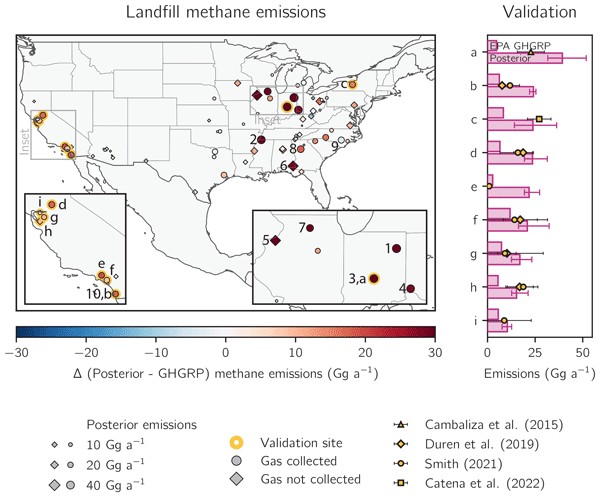
Hannah Nesser, Daniel J. Jacob, Joannes D. Maasakkers, Alba Lorente, Zichong Chen, Xiao Lu, Lu Shen, Zhen Qu, Melissa P. Sulprizio, Margaux Winter, Shuang Ma, A. Anthony Bloom, John R. Worden, Robert N. Stavins, and Cynthia A. Randles
Atmos. Chem. Phys., 24, 5069–5091, https://doi.org/10.5194/acp-24-5069-2024, https://doi.org/10.5194/acp-24-5069-2024, 2024
Short summary
Short summary
We quantify 2019 methane emissions in the contiguous US (CONUS) at a ≈ 25 km × 25 km resolution using satellite methane observations. We find a 13 % upward correction to the 2023 US Environmental Protection Agency (EPA) Greenhouse Gas Emissions Inventory (GHGI) for 2019, with large corrections to individual states, urban areas, and landfills. This may present a challenge for US climate policies and goals, many of which target significant reductions in methane emissions.
Bruno Franco, Lieven Clarisse, Nicolas Theys, Juliette Hadji-Lazaro, Cathy Clerbaux, and Pierre Coheur
Atmos. Chem. Phys., 24, 4973–5007, https://doi.org/10.5194/acp-24-4973-2024, https://doi.org/10.5194/acp-24-4973-2024, 2024
Short summary
Short summary
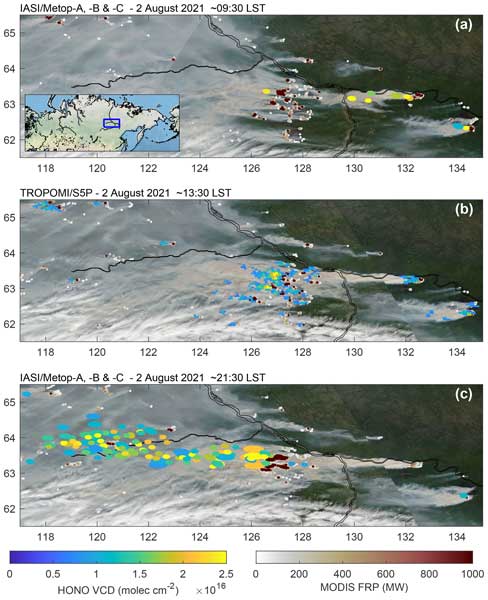
Using IASI global infrared measurements, we retrieve nitrous acid (HONO) in fire plumes from space. We detect large enhancements of pyrogenic HONO worldwide, especially from intense wildfires at Northern Hemisphere mid- and high latitudes. Predominance of IASI nighttime over daytime measurements sheds light on HONO's extended lifetime and secondary formation during long-range transport in smoke plumes. Our findings deepen the understanding of atmospheric HONO, crucial for air quality assessment.
Karen E. Cady-Pereira, Xuehui Guo, Rui Wang, April B. Leytem, Chase Calkins, Elizabeth Berry, Kang Sun, Markus Müller, Armin Wisthaler, Vivienne H. Payne, Mark W. Shephard, Mark A. Zondlo, and Valentin Kantchev
Atmos. Meas. Tech., 17, 15–36, https://doi.org/10.5194/amt-17-15-2024, https://doi.org/10.5194/amt-17-15-2024, 2024
Short summary
Short summary
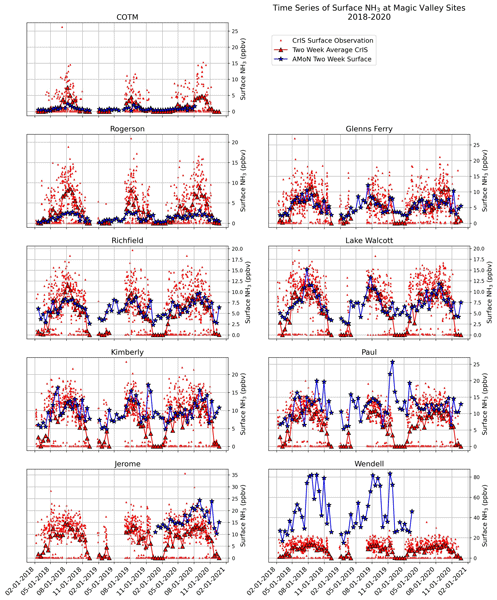
Ammonia is a significant precursor of PM2.5 particles and thus contributes to poor air quality in many regions. Furthermore, ammonia concentrations are rising due to the increase of large-scale, intensive agricultural activities. Here we evaluate satellite measurements of ammonia against aircraft and surface network data, and show that there are differences in magnitude, but the satellite data are spatially and temporally well correlated with the in situ data.
Camille Viatte, Nadir Guendouz, Clarisse Dufaux, Arjan Hensen, Daan Swart, Martin Van Damme, Lieven Clarisse, Pierre Coheur, and Cathy Clerbaux
Atmos. Chem. Phys., 23, 15253–15267, https://doi.org/10.5194/acp-23-15253-2023, https://doi.org/10.5194/acp-23-15253-2023, 2023
Short summary
Short summary
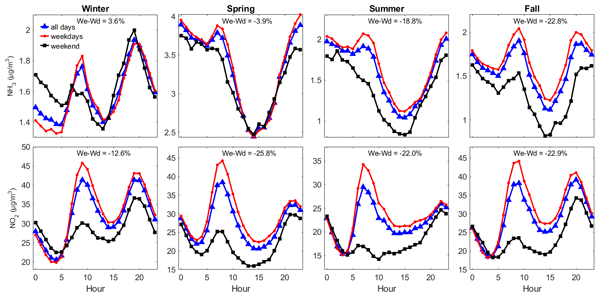
Ammonia (NH3) is an important air pollutant which, as a precursor of fine particulate matter, raises public health concerns. Models have difficulty predicting events of pollution associated with NH3 since ground-based observations of this gas are still relatively sparse and difficult to implement. We present the first relatively long (2.5 years) and continuous record of hourly NH3 concentrations in Paris to determine its temporal variabilities at different scales to unravel emission sources.
Lieven Clarisse, Bruno Franco, Martin Van Damme, Tommaso Di Gioacchino, Juliette Hadji-Lazaro, Simon Whitburn, Lara Noppen, Daniel Hurtmans, Cathy Clerbaux, and Pierre Coheur
Atmos. Meas. Tech., 16, 5009–5028, https://doi.org/10.5194/amt-16-5009-2023, https://doi.org/10.5194/amt-16-5009-2023, 2023
Short summary
Short summary
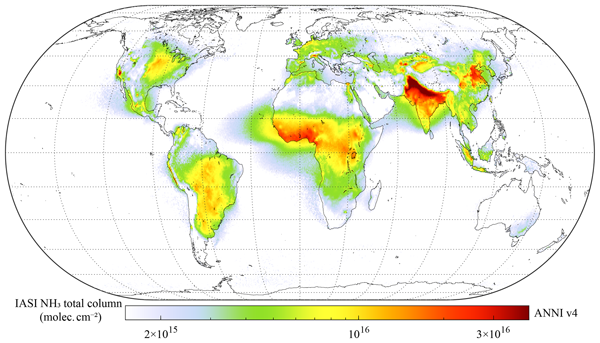
Ammonia is an important atmospheric pollutant. This article presents version 4 of the algorithm which retrieves ammonia abundances from the infrared measurements of the satellite sounder IASI. A measurement operator is introduced that can emulate the measurements (so-called averaging kernels) and measurement uncertainty is better characterized. Several other changes to the product itself are also documented, most of which improve the temporal consistency of the 2007–2022 IASI NH3 dataset.
Zhipeng Qu, David P. Donovan, Howard W. Barker, Jason N. S. Cole, Mark W. Shephard, and Vincent Huijnen
Atmos. Meas. Tech., 16, 4927–4946, https://doi.org/10.5194/amt-16-4927-2023, https://doi.org/10.5194/amt-16-4927-2023, 2023
Short summary
Short summary
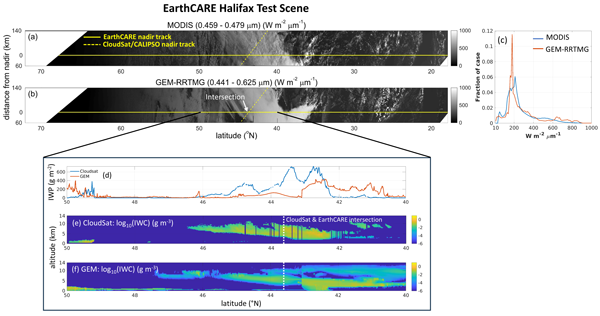
The EarthCARE satellite mission Level 2 algorithm development requires realistic 3D cloud and aerosol scenes along the satellite orbits. One of the best ways to produce these scenes is to use a high-resolution numerical weather prediction model to simulate atmospheric conditions at 250 m horizontal resolution. This paper describes the production and validation of three EarthCARE test scenes.
Rui Wang, Da Pan, Xuehui Guo, Kang Sun, Lieven Clarisse, Martin Van Damme, Pierre-François Coheur, Cathy Clerbaux, Melissa Puchalski, and Mark A. Zondlo
Atmos. Chem. Phys., 23, 13217–13234, https://doi.org/10.5194/acp-23-13217-2023, https://doi.org/10.5194/acp-23-13217-2023, 2023
Short summary
Short summary
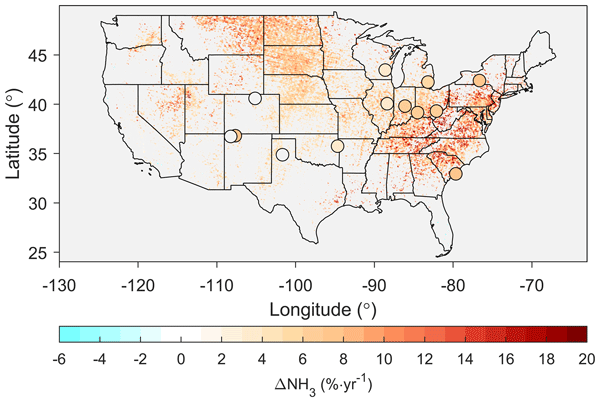
Ammonia (NH3) is a key precursor for fine particulate matter (PM2.5) and a primary form of reactive nitrogen, yet it has sparse ground measurements. We perform the first comprehensive comparison between ground observations and satellite retrievals in the US, demonstrating that satellite NH3 data can help fill spatial gaps in the current ground monitoring networks. Trend analyses using both datasets highlight increasing NH3 trends across the US, including the NH3 hotspots and urban areas.
Rimal Abeed, Camille Viatte, William C. Porter, Nikolaos Evangeliou, Cathy Clerbaux, Lieven Clarisse, Martin Van Damme, Pierre-François Coheur, and Sarah Safieddine
Atmos. Chem. Phys., 23, 12505–12523, https://doi.org/10.5194/acp-23-12505-2023, https://doi.org/10.5194/acp-23-12505-2023, 2023
Short summary
Short summary
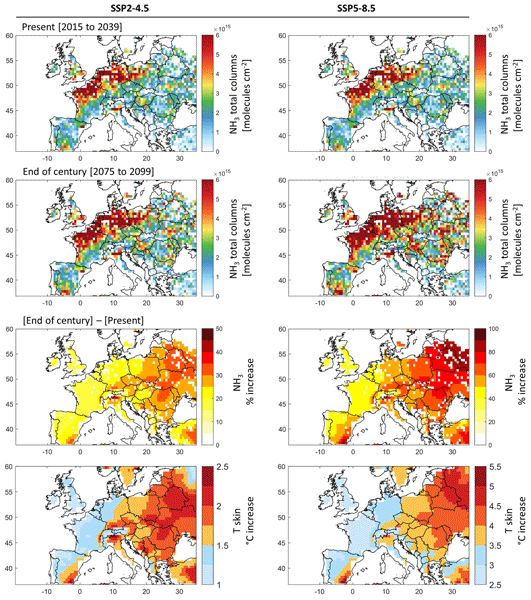
Ammonia emissions from agricultural activities will inevitably increase with the rise in population. We use a variety of datasets (satellite, reanalysis, and model simulation) to calculate the first regional map of ammonia emission potential during the start of the growing season in Europe. We then apply our developed method using a climate model to show the effect of the temperature increase on future ammonia columns under two possible climate scenarios.
Jason N. S. Cole, Howard W. Barker, Zhipeng Qu, Najda Villefranque, and Mark W. Shephard
Atmos. Meas. Tech., 16, 4271–4288, https://doi.org/10.5194/amt-16-4271-2023, https://doi.org/10.5194/amt-16-4271-2023, 2023
Short summary
Short summary
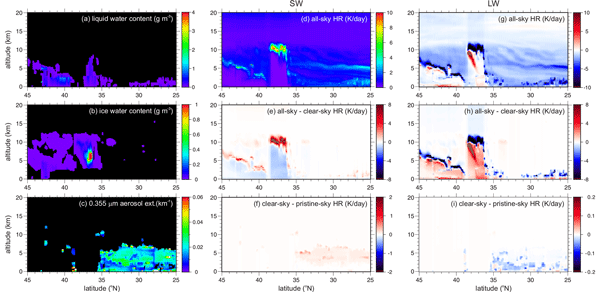
Measurements from the EarthCARE satellite mission will be used to retrieve profiles of cloud and aerosol properties. These retrievals are combined with auxiliary information about surface properties and atmospheric state, e.g., temperature and water vapor. This information allows computation of 1D and 3D solar and thermal radiative transfer for small domains, which are compared with coincident radiometer observations to continually assess EarthCARE retrievals.
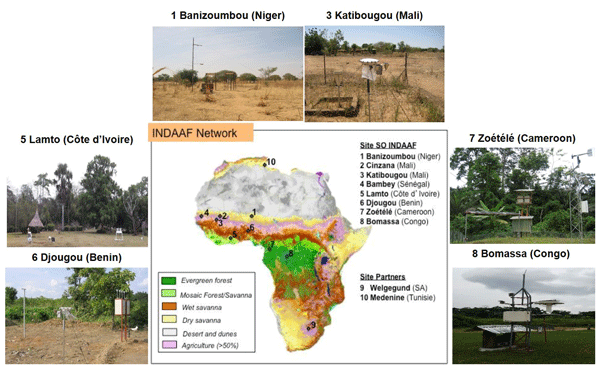
Money Ossohou, Jonathan Edward Hickman, Lieven Clarisse, Pierre-François Coheur, Martin Van Damme, Marcellin Adon, Véronique Yoboué, Eric Gardrat, Maria Dias Alvès, and Corinne Galy-Lacaux
Atmos. Chem. Phys., 23, 9473–9494, https://doi.org/10.5194/acp-23-9473-2023, https://doi.org/10.5194/acp-23-9473-2023, 2023
Short summary
Short summary
The updated analyses of ground-based concentrations and satellite total vertical columns of atmospheric ammonia help us to better understand 21st century ammonia dynamics in sub-Saharan Africa. We conclude that the drivers of trends are agriculture in the dry savanna of Katibougou, Mali; air temperature and agriculture in the wet savanna of Djougou, Benin, and Lamto, Côte d'Ivoire; and leaf area index, air temperature, residential, and agriculture in forests of Bomassa, Republic of Congo.
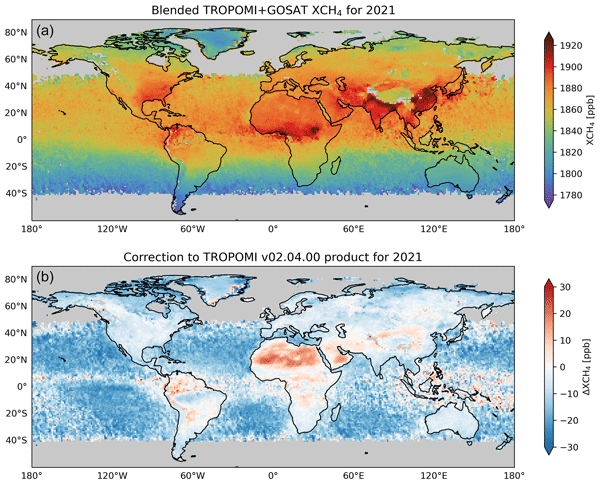
Nicholas Balasus, Daniel J. Jacob, Alba Lorente, Joannes D. Maasakkers, Robert J. Parker, Hartmut Boesch, Zichong Chen, Makoto M. Kelp, Hannah Nesser, and Daniel J. Varon
Atmos. Meas. Tech., 16, 3787–3807, https://doi.org/10.5194/amt-16-3787-2023, https://doi.org/10.5194/amt-16-3787-2023, 2023
Short summary
Short summary
We use machine learning to remove biases in TROPOMI satellite observations of atmospheric methane, with GOSAT observations serving as a reference. We find that the TROPOMI biases relative to GOSAT are related to the presence of aerosols and clouds, the surface brightness, and the specific detector that makes the observation aboard TROPOMI. The resulting blended TROPOMI+GOSAT product is more reliable for quantifying methane emissions.
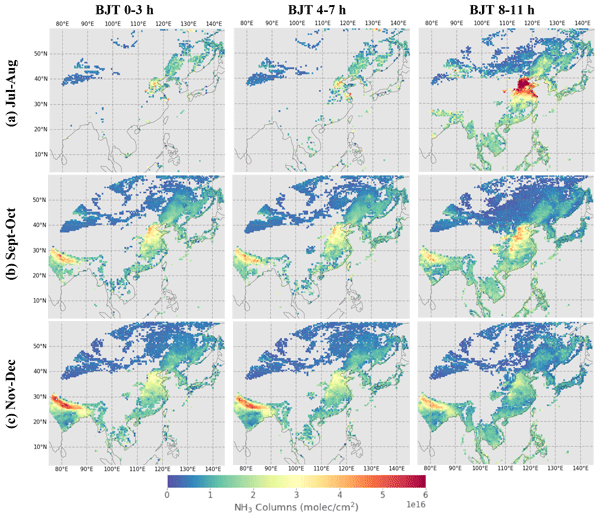
Zhao-Cheng Zeng, Lu Lee, Chengli Qi, Lieven Clarisse, and Martin Van Damme
Atmos. Meas. Tech., 16, 3693–3713, https://doi.org/10.5194/amt-16-3693-2023, https://doi.org/10.5194/amt-16-3693-2023, 2023
Short summary
Short summary
This study presents an NH3 retrieval algorithm based on the optimal estimation method for the Geostationary Interferometric Infrared Sounder (GIIRS) on board China’s FengYun-4B satellite (FY-4B/GIIRS). Retrieval results demonstrate the capability of FY-4B/GIIRS in capturing the diurnal NH3 changes in East Asia. This operational geostationary observation by FY-4B/GIIRS represents an important advancement over the twice-per-day observations provided by current low-Earth-orbit (LEO) instruments.
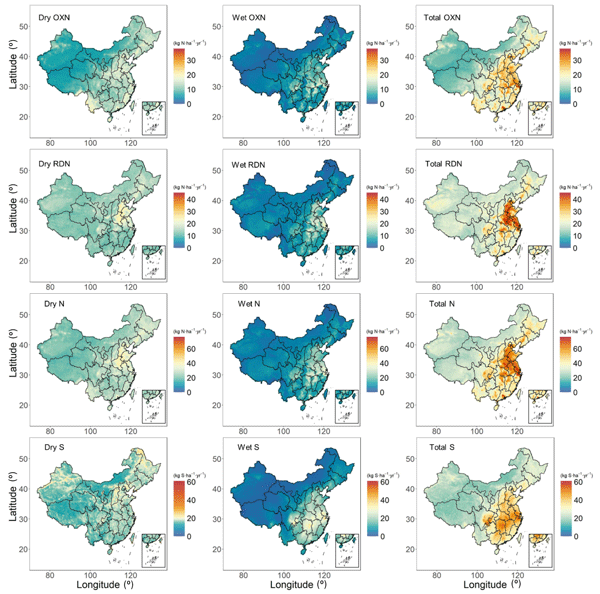
Kaiyue Zhou, Wen Xu, Lin Zhang, Mingrui Ma, Xuejun Liu, and Yu Zhao
Atmos. Chem. Phys., 23, 8531–8551, https://doi.org/10.5194/acp-23-8531-2023, https://doi.org/10.5194/acp-23-8531-2023, 2023
Short summary
Short summary
We developed a dataset of the long-term (2005–2020) variabilities of China’s nitrogen and sulfur deposition, with multiple statistical models that combine available observations and chemistry transport modeling. We demonstrated the strong impact of human activities and national pollution control actions on the spatiotemporal changes in deposition and indicated a relatively small benefit of emission abatement on deposition (and thereby ecological risk) for China compared to Europe and the USA.
Ruosi Liang, Yuzhong Zhang, Wei Chen, Peixuan Zhang, Jingran Liu, Cuihong Chen, Huiqin Mao, Guofeng Shen, Zhen Qu, Zichong Chen, Minqiang Zhou, Pucai Wang, Robert J. Parker, Hartmut Boesch, Alba Lorente, Joannes D. Maasakkers, and Ilse Aben
Atmos. Chem. Phys., 23, 8039–8057, https://doi.org/10.5194/acp-23-8039-2023, https://doi.org/10.5194/acp-23-8039-2023, 2023
Short summary
Short summary
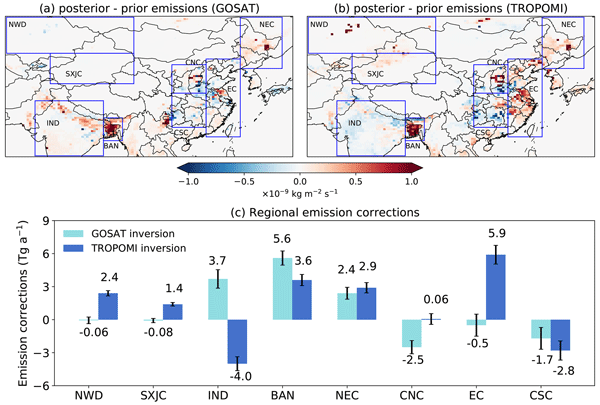
We compare and evaluate East Asian methane emissions inferred from different satellite observations (GOSAT and TROPOMI). The results show discrepancies over northern India and eastern China. Independent ground-based observations are more consistent with TROPOMI-derived emissions in northern India and GOSAT-derived emissions in eastern China.
Zhao-Cheng Zeng, Lu Lee, and Chengli Qi
Atmos. Meas. Tech., 16, 3059–3083, https://doi.org/10.5194/amt-16-3059-2023, https://doi.org/10.5194/amt-16-3059-2023, 2023
Short summary
Short summary
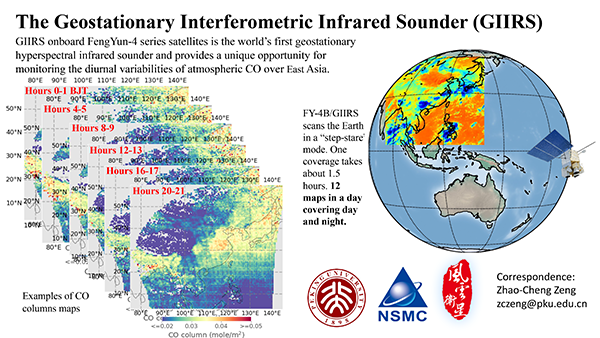
Observations from geostationary orbit provide contiguous coverage with a high temporal resolution, representing an important advancement over current low-Earth-orbit instruments. Using measurements from GIIRS on board China's FengYun satellite, the world’s first geostationary hyperspectral infrared sounder, we showed the first results of diurnal CO in eastern Asia from a geostationary orbit, which will have great potential in improving local and global air quality and climate research.
Ruijun Dang, Daniel J. Jacob, Viral Shah, Sebastian D. Eastham, Thibaud M. Fritz, Loretta J. Mickley, Tianjia Liu, Yi Wang, and Jun Wang
Atmos. Chem. Phys., 23, 6271–6284, https://doi.org/10.5194/acp-23-6271-2023, https://doi.org/10.5194/acp-23-6271-2023, 2023
Short summary
Short summary
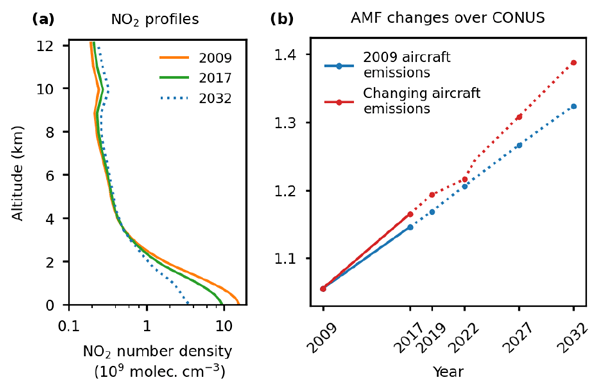
We use the GEOS-Chem model to better understand the magnitude and trend in free tropospheric NO2 over the contiguous US. Model underestimate of background NO2 is largely corrected by considering aerosol nitrate photolysis. Increase in aircraft emissions affects satellite retrievals by altering the NO2 shape factor, and this effect is expected to increase in future. We show the importance of properly accounting for the free tropospheric background in interpreting NO2 observations from space.
Zichong Chen, Daniel J. Jacob, Ritesh Gautam, Mark Omara, Robert N. Stavins, Robert C. Stowe, Hannah Nesser, Melissa P. Sulprizio, Alba Lorente, Daniel J. Varon, Xiao Lu, Lu Shen, Zhen Qu, Drew C. Pendergrass, and Sarah Hancock
Atmos. Chem. Phys., 23, 5945–5967, https://doi.org/10.5194/acp-23-5945-2023, https://doi.org/10.5194/acp-23-5945-2023, 2023
Short summary
Short summary
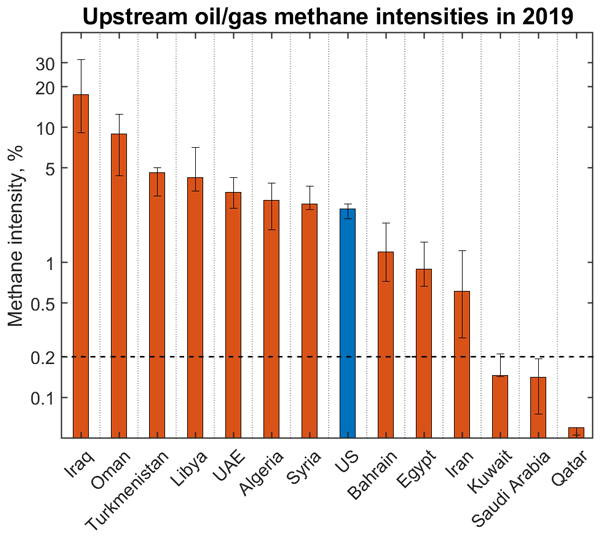
We quantify methane emissions from individual countries in the Middle East and North Africa by inverse analysis of 2019 TROPOMI satellite observations of atmospheric methane. We show that the ability to simply relate oil/gas emissions to activity metrics is compromised by stochastic nature of local infrastructure and management practices. We find that the industry target for oil/gas methane intensity is achievable through associated gas capture, modern infrastructure, and centralized operations.

Zhipeng Qu, Howard W. Barker, Jason N. S. Cole, and Mark W. Shephard
Atmos. Meas. Tech., 16, 2319–2331, https://doi.org/10.5194/amt-16-2319-2023, https://doi.org/10.5194/amt-16-2319-2023, 2023
Short summary
Short summary
This paper describes EarthCARE’s L2 product ACM-3D. It includes the scene construction algorithm (SCA) used to produce the indexes for reconstructing 3D atmospheric scene based on satellite nadir retrievals. It also provides the information about the buffer zone sizes of 3D assessment domains and the ranking scores for selecting the best 3D assessment domains. These output variables are needed to run 3D radiative transfer models for the radiative closure assessment of EarthCARE’s L2 retrievals.

Adrien Vu Van, Anne Boynard, Pascal Prunet, Dominique Jolivet, Olivier Lezeaux, Patrice Henry, Claude Camy-Peyret, Lieven Clarisse, Bruno Franco, Pierre-François Coheur, and Cathy Clerbaux
Atmos. Meas. Tech., 16, 2107–2127, https://doi.org/10.5194/amt-16-2107-2023, https://doi.org/10.5194/amt-16-2107-2023, 2023
Short summary
Short summary
With its near-real-time observations and good horizontal coverage, the Infrared Atmospheric Sounding Interferometer (IASI) instrument can contribute to the monitoring systems for a systematic and continuous detection of exceptional atmospheric events such as fires, anthropogenic pollution episodes, volcanic eruptions, or industrial releases. In this paper, a new approach is described for the detection and characterization of unexpected events in terms of trace gases using IASI radiance spectra.
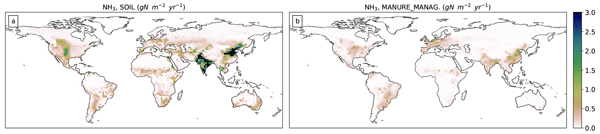
Maureen Beaudor, Nicolas Vuichard, Juliette Lathière, Nikolaos Evangeliou, Martin Van Damme, Lieven Clarisse, and Didier Hauglustaine
Geosci. Model Dev., 16, 1053–1081, https://doi.org/10.5194/gmd-16-1053-2023, https://doi.org/10.5194/gmd-16-1053-2023, 2023
Short summary
Short summary
Ammonia mainly comes from the agricultural sector, and its volatilization relies on environmental variables. Our approach aims at benefiting from an Earth system model framework to estimate it. By doing so, we represent a consistent spatial distribution of the emissions' response to environmental changes.
We greatly improved the seasonal cycle of emissions compared with previous work. In addition, our model includes natural soil emissions (that are rarely represented in modeling approaches).
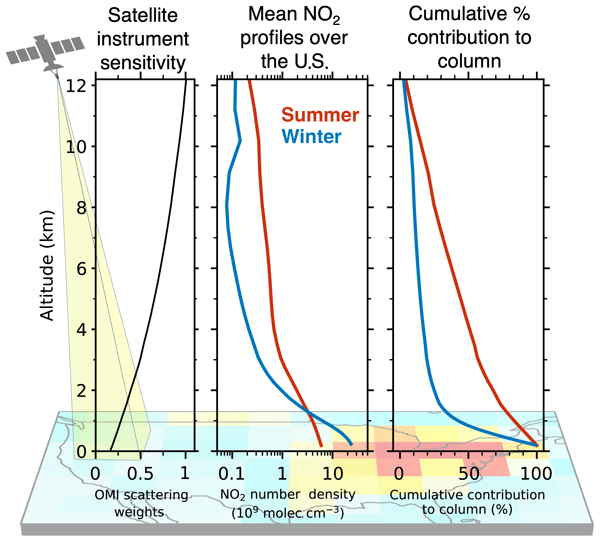
Viral Shah, Daniel J. Jacob, Ruijun Dang, Lok N. Lamsal, Sarah A. Strode, Stephen D. Steenrod, K. Folkert Boersma, Sebastian D. Eastham, Thibaud M. Fritz, Chelsea Thompson, Jeff Peischl, Ilann Bourgeois, Ilana B. Pollack, Benjamin A. Nault, Ronald C. Cohen, Pedro Campuzano-Jost, Jose L. Jimenez, Simone T. Andersen, Lucy J. Carpenter, Tomás Sherwen, and Mat J. Evans
Atmos. Chem. Phys., 23, 1227–1257, https://doi.org/10.5194/acp-23-1227-2023, https://doi.org/10.5194/acp-23-1227-2023, 2023
Short summary
Short summary
NOx in the free troposphere (above 2 km) affects global tropospheric chemistry and the retrieval and interpretation of satellite NO2 measurements. We evaluate free tropospheric NOx in global atmospheric chemistry models and find that recycling NOx from its reservoirs over the oceans is faster than that simulated in the models, resulting in increases in simulated tropospheric ozone and OH. Over the U.S., free tropospheric NO2 contributes the majority of the tropospheric NO2 column in summer.
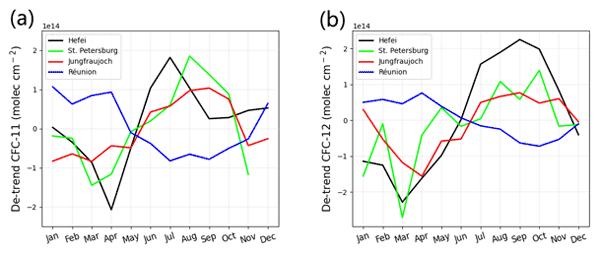
Xiangyu Zeng, Wei Wang, Cheng Liu, Changgong Shan, Yu Xie, Peng Wu, Qianqian Zhu, Minqiang Zhou, Martine De Mazière, Emmanuel Mahieu, Irene Pardo Cantos, Jamal Makkor, and Alexander Polyakov
Atmos. Meas. Tech., 15, 6739–6754, https://doi.org/10.5194/amt-15-6739-2022, https://doi.org/10.5194/amt-15-6739-2022, 2022
Short summary
Short summary
CFC-11 and CFC-12, which are classified as ozone-depleting substances, also have high global warming potentials. This paper describes obtaining the CFC-11 and CFC-12 total columns from the solar spectra based on ground-based Fourier transform infrared spectroscopy at Hefei, China. The seasonal variation and annual trend of the two gases are analyzed, and then the data are compared with other independent datasets.
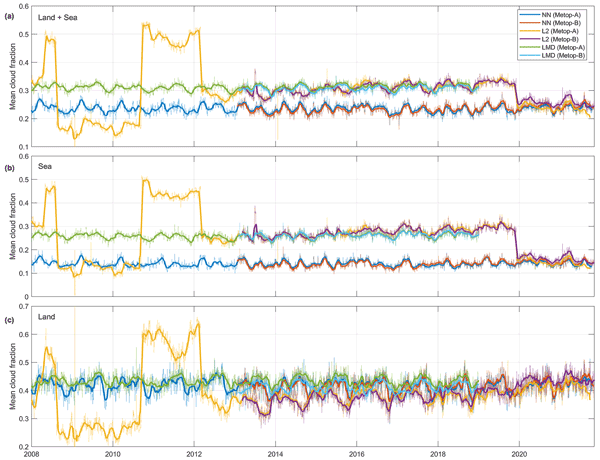
Simon Whitburn, Lieven Clarisse, Marc Crapeau, Thomas August, Tim Hultberg, Pierre François Coheur, and Cathy Clerbaux
Atmos. Meas. Tech., 15, 6653–6668, https://doi.org/10.5194/amt-15-6653-2022, https://doi.org/10.5194/amt-15-6653-2022, 2022
Short summary
Short summary
With more than 15 years of measurements, the IASI radiance dataset is becoming a reference climate data record. Its exploitation for satellite applications requires an accurate and unbiased detection of cloud scenes. Here, we present a new cloud detection algorithm for IASI that is both sensitive and consistent over time. It is based on the use of a neural network, relying on IASI radiance information only and taking as a reference the last version of the operational IASI L2 cloud product.
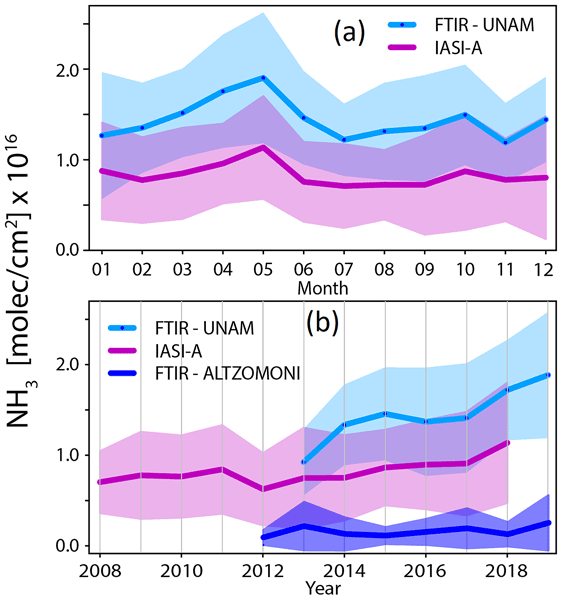
Beatriz Herrera, Alejandro Bezanilla, Thomas Blumenstock, Enrico Dammers, Frank Hase, Lieven Clarisse, Adolfo Magaldi, Claudia Rivera, Wolfgang Stremme, Kimberly Strong, Camille Viatte, Martin Van Damme, and Michel Grutter
Atmos. Chem. Phys., 22, 14119–14132, https://doi.org/10.5194/acp-22-14119-2022, https://doi.org/10.5194/acp-22-14119-2022, 2022
Short summary
Short summary
This work investigates atmospheric ammonia (NH3), a key trace gas with consequences for the environment and human health, in Mexico City. The results from the ground-based and satellite instruments show the variability and spatial distribution of NH3 over this region. NH3 in Mexico City has been increasing for the past 10 years and most of its sources are urban. This work contributes to a better understanding of NH3 sources and variability in urban and remote areas.
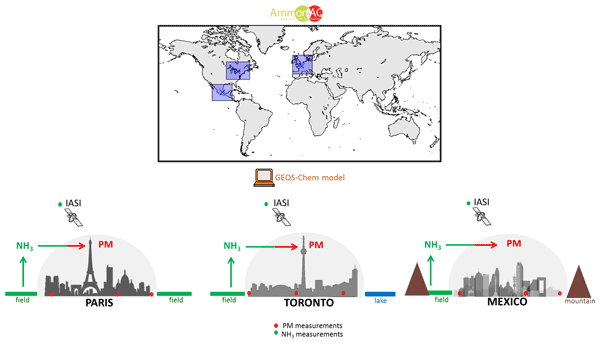
Camille Viatte, Rimal Abeed, Shoma Yamanouchi, William C. Porter, Sarah Safieddine, Martin Van Damme, Lieven Clarisse, Beatriz Herrera, Michel Grutter, Pierre-Francois Coheur, Kimberly Strong, and Cathy Clerbaux
Atmos. Chem. Phys., 22, 12907–12922, https://doi.org/10.5194/acp-22-12907-2022, https://doi.org/10.5194/acp-22-12907-2022, 2022
Short summary
Short summary
Large cities can experience high levels of fine particulate matter (PM2.5) pollution linked to ammonia (NH3) mainly emitted from agricultural activities. Using a combination of PM2.5 and NH3 measurements from in situ instruments, satellite infrared spectrometers, and atmospheric model simulations, we have demonstrated the role of NH3 and meteorological conditions on pollution events occurring over Paris, Toronto, and Mexico City.
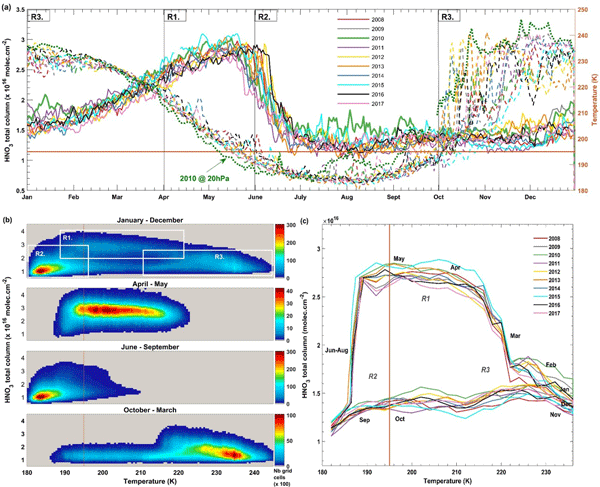
Catherine Wespes, Gaetane Ronsmans, Lieven Clarisse, Susan Solomon, Daniel Hurtmans, Cathy Clerbaux, and Pierre-François Coheur
Atmos. Chem. Phys., 22, 10993–11007, https://doi.org/10.5194/acp-22-10993-2022, https://doi.org/10.5194/acp-22-10993-2022, 2022
Short summary
Short summary
The first 10-year data record (2008–2017) of HNO3 total columns measured by the IASI-A/MetOp infrared sounder is exploited to monitor the relationship between the temperature decrease and the HNO3 loss observed each year in the Antarctic stratosphere during the polar night. We verify the recurrence of specific regimes in the cycle of IASI HNO3 and identify the day and the 50 hPa temperature (
drop temperature) corresponding to the onset of denitrification in Antarctic winter for each year.

Zichong Chen, Daniel J. Jacob, Hannah Nesser, Melissa P. Sulprizio, Alba Lorente, Daniel J. Varon, Xiao Lu, Lu Shen, Zhen Qu, Elise Penn, and Xueying Yu
Atmos. Chem. Phys., 22, 10809–10826, https://doi.org/10.5194/acp-22-10809-2022, https://doi.org/10.5194/acp-22-10809-2022, 2022
Short summary
Short summary
We quantify methane emissions in China and contributions from different sectors by inverse analysis of 2019 TROPOMI satellite observations of atmospheric methane. We find that anthropogenic methane emissions for China are underestimated in the national inventory. Our estimate of emissions indicates a small life-cycle loss rate, implying net climate benefits from the current
coal-to-gasenergy transition in China. However, this small loss rate can be misleading given China's high gas imports.
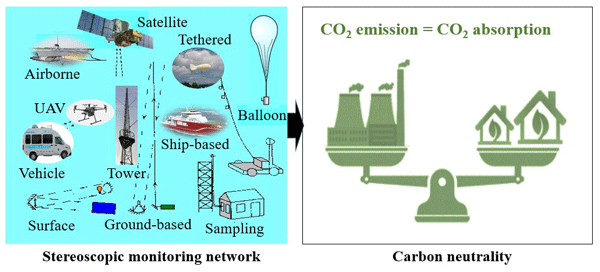
Youwen Sun, Hao Yin, Wei Wang, Changgong Shan, Justus Notholt, Mathias Palm, Ke Liu, Zhenyi Chen, and Cheng Liu
Atmos. Meas. Tech., 15, 4819–4834, https://doi.org/10.5194/amt-15-4819-2022, https://doi.org/10.5194/amt-15-4819-2022, 2022
Short summary
Short summary
This study summarizes an overview of the status and perspective of GHG monitoring in China. This study not only improves our understanding with respect to the status, advances, and challenges of GHG monitoring in China but also presents an outlook for further improving GHG monitoring capacity in China.

Nicolas Theys, Christophe Lerot, Hugues Brenot, Jeroen van Gent, Isabelle De Smedt, Lieven Clarisse, Mike Burton, Matthew Varnam, Catherine Hayer, Benjamin Esse, and Michel Van Roozendael
Atmos. Meas. Tech., 15, 4801–4817, https://doi.org/10.5194/amt-15-4801-2022, https://doi.org/10.5194/amt-15-4801-2022, 2022
Short summary
Short summary
Sulfur dioxide plume height after a volcanic eruption is an important piece of information for many different scientific studies and applications. Satellite UV retrievals are useful in this respect, but available algorithms have shown so far limited sensitivity to SO2 height. Here we present a new technique to improve the retrieval of SO2 plume height for SO2 columns as low as 5 DU. We demonstrate the algorithm using TROPOMI measurements and compare with other height estimates.
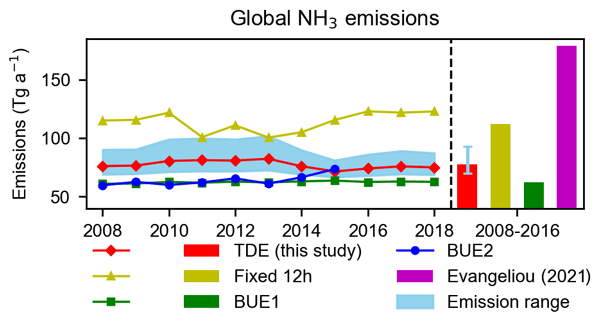
Zhenqi Luo, Yuzhong Zhang, Wei Chen, Martin Van Damme, Pierre-François Coheur, and Lieven Clarisse
Atmos. Chem. Phys., 22, 10375–10388, https://doi.org/10.5194/acp-22-10375-2022, https://doi.org/10.5194/acp-22-10375-2022, 2022
Short summary
Short summary
We quantify global ammonia (NH3) emissions over the period from 2008 to 2018 using an improved fast top-down method that incorporates Infrared Atmospheric
Sounding Interferometer (IASI) satellite observations and GEOS-Chem atmospheric chemical simulations. The top-down analysis finds a global total NH3 emission that is 30 % higher than the bottom-up estimate, largely reconciling a large discrepancy of more than a factor of 2 found in previous top-down studies using the same satellite data.
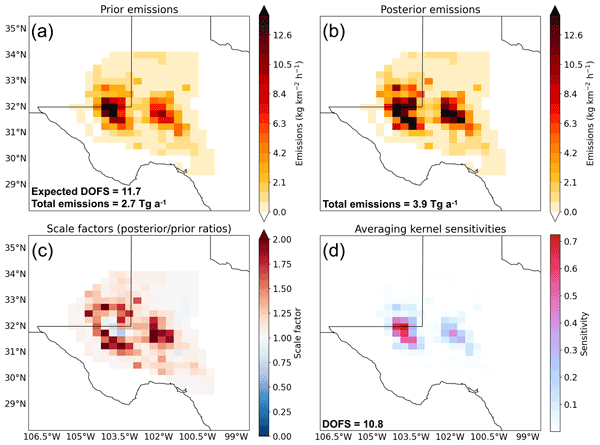
Daniel J. Varon, Daniel J. Jacob, Melissa Sulprizio, Lucas A. Estrada, William B. Downs, Lu Shen, Sarah E. Hancock, Hannah Nesser, Zhen Qu, Elise Penn, Zichong Chen, Xiao Lu, Alba Lorente, Ashutosh Tewari, and Cynthia A. Randles
Geosci. Model Dev., 15, 5787–5805, https://doi.org/10.5194/gmd-15-5787-2022, https://doi.org/10.5194/gmd-15-5787-2022, 2022
Short summary
Short summary
Reducing atmospheric methane emissions is critical to slow near-term climate change. Globally surveying satellite instruments like the TROPOspheric Monitoring Instrument (TROPOMI) have unique capabilities for monitoring atmospheric methane around the world. Here we present a user-friendly cloud-computing tool that enables researchers and stakeholders to quantify methane emissions across user-selected regions of interest using TROPOMI satellite observations.
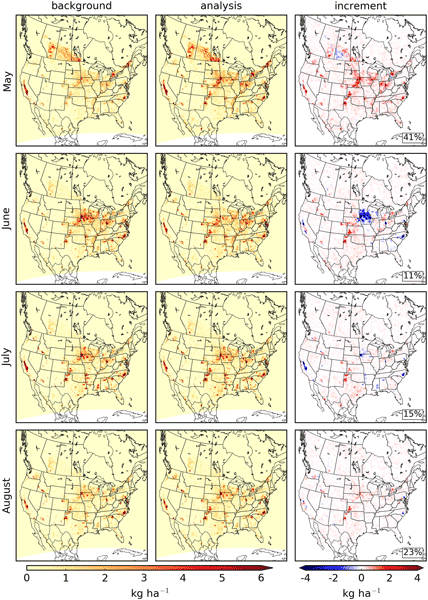
Michael Sitwell, Mark W. Shephard, Yves Rochon, Karen Cady-Pereira, and Enrico Dammers
Atmos. Chem. Phys., 22, 6595–6624, https://doi.org/10.5194/acp-22-6595-2022, https://doi.org/10.5194/acp-22-6595-2022, 2022
Short summary
Short summary
Observations of ammonia made using the satellite-borne CrIS instrument were used to improve the ammonia emissions used in the GEM-MACH model. These observations were used to refine estimates of the monthly mean ammonia emissions over North America for May to August 2016. The updated ammonia emissions reduced biases of GEM-MACH surface ammonia fields with surface observations and showed some improvements in the forecasting of species involved in inorganic particulate matter formation.
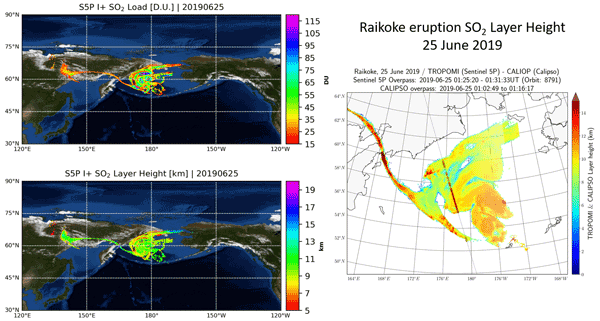
Maria-Elissavet Koukouli, Konstantinos Michailidis, Pascal Hedelt, Isabelle A. Taylor, Antje Inness, Lieven Clarisse, Dimitris Balis, Dmitry Efremenko, Diego Loyola, Roy G. Grainger, and Christian Retscher
Atmos. Chem. Phys., 22, 5665–5683, https://doi.org/10.5194/acp-22-5665-2022, https://doi.org/10.5194/acp-22-5665-2022, 2022
Short summary
Short summary
Volcanic eruptions eject large amounts of ash and trace gases into the atmosphere. The use of space-borne instruments enables the global monitoring of volcanic SO2 emissions in an economical and risk-free manner. The main aim of this paper is to present its extensive verification, accomplished within the ESA S5P+I: SO2LH project, over major recent volcanic eruptions, against collocated space-borne measurements, as well as assess its impact on the forecasts provided by CAMS.
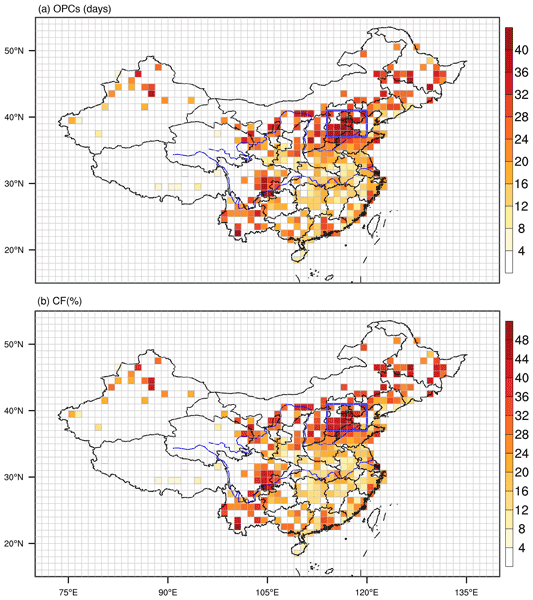
Pinya Wang, Yang Yang, Huimin Li, Lei Chen, Ruijun Dang, Daokai Xue, Baojie Li, Jianping Tang, L. Ruby Leung, and Hong Liao
Atmos. Chem. Phys., 22, 4705–4719, https://doi.org/10.5194/acp-22-4705-2022, https://doi.org/10.5194/acp-22-4705-2022, 2022
Short summary
Short summary
China is now suffering from both severe ozone (O3) pollution and heat events. We highlight that North China Plain is the hot spot of the co-occurrences of extremes in O3 and high temperatures in China. Such coupled extremes exhibit an increasing trend during 2014–2019 and will continue to increase until the middle of this century. And the coupled extremes impose more severe health impacts to human than O3 pollution occurring alone because of elevated O3 levels and temperatures.
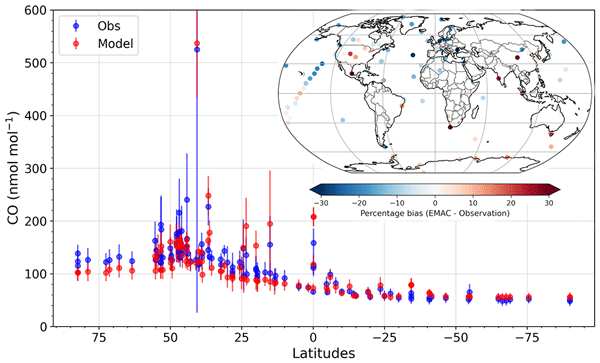
Andrea Pozzer, Simon F. Reifenberg, Vinod Kumar, Bruno Franco, Matthias Kohl, Domenico Taraborrelli, Sergey Gromov, Sebastian Ehrhart, Patrick Jöckel, Rolf Sander, Veronica Fall, Simon Rosanka, Vlassis Karydis, Dimitris Akritidis, Tamara Emmerichs, Monica Crippa, Diego Guizzardi, Johannes W. Kaiser, Lieven Clarisse, Astrid Kiendler-Scharr, Holger Tost, and Alexandra Tsimpidi
Geosci. Model Dev., 15, 2673–2710, https://doi.org/10.5194/gmd-15-2673-2022, https://doi.org/10.5194/gmd-15-2673-2022, 2022
Short summary
Short summary
A newly developed setup of the chemistry general circulation model EMAC (ECHAM5/MESSy for Atmospheric Chemistry) is evaluated here. A comprehensive organic degradation mechanism is used and coupled with a volatility base model.
The results show that the model reproduces most of the tracers and aerosols satisfactorily but shows discrepancies for oxygenated organic gases. It is also shown that this model configuration can be used for further research in atmospheric chemistry.
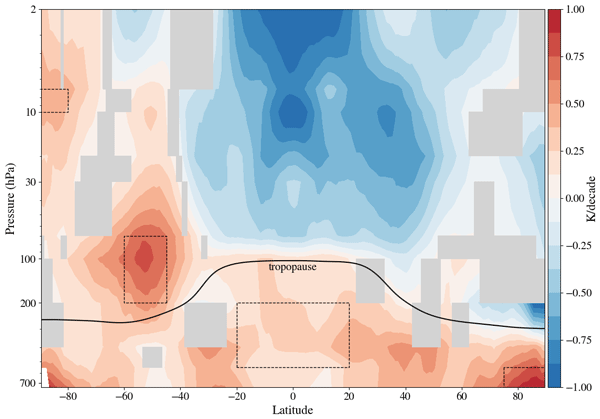
Marie Bouillon, Sarah Safieddine, Simon Whitburn, Lieven Clarisse, Filipe Aires, Victor Pellet, Olivier Lezeaux, Noëlle A. Scott, Marie Doutriaux-Boucher, and Cathy Clerbaux
Atmos. Meas. Tech., 15, 1779–1793, https://doi.org/10.5194/amt-15-1779-2022, https://doi.org/10.5194/amt-15-1779-2022, 2022
Short summary
Short summary
The IASI instruments have been observing Earth since 2007. We use a neural network to retrieve atmospheric temperatures. This new temperature data record is validated against other datasets and shows good agreement. We use this new dataset to compute trends over the 2008–2020 period. We found a warming of the troposphere, more important at the poles. In the stratosphere, we found that temperatures decrease everywhere except at the South Pole. The cooling is more pronounced at the South pole.
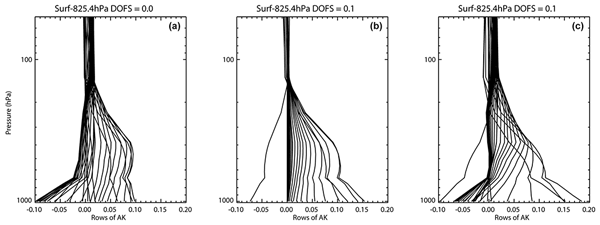
Vijay Natraj, Ming Luo, Jean-Francois Blavier, Vivienne H. Payne, Derek J. Posselt, Stanley P. Sander, Zhao-Cheng Zeng, Jessica L. Neu, Denis Tremblay, Longtao Wu, Jacola A. Roman, Yen-Hung Wu, and Leonard I. Dorsky
Atmos. Meas. Tech., 15, 1251–1267, https://doi.org/10.5194/amt-15-1251-2022, https://doi.org/10.5194/amt-15-1251-2022, 2022
Short summary
Short summary
High-fidelity monitoring and forecast of air quality and the hydrological cycle require understanding the vertical distribution of temperature, humidity, and trace gases at high spatiotemporal resolution. We describe a new instrument concept, called the JPL GEO-IR Sounder, that would provide this information for the first time from a single instrument platform. Simulations demonstrate the benefits of combining measurements from multiple wavelengths for this purpose from geostationary orbit.
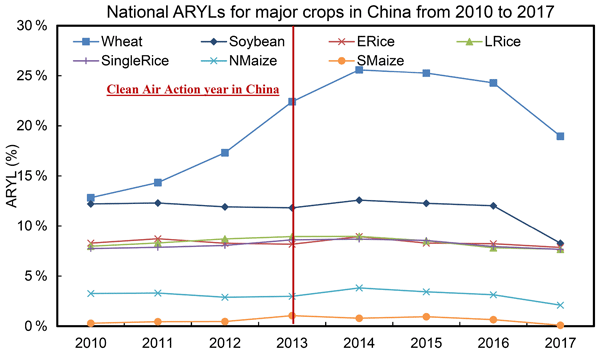
Dianyi Li, Drew Shindell, Dian Ding, Xiao Lu, Lin Zhang, and Yuqiang Zhang
Atmos. Chem. Phys., 22, 2625–2638, https://doi.org/10.5194/acp-22-2625-2022, https://doi.org/10.5194/acp-22-2625-2022, 2022
Short summary
Short summary
In this study, we applied chemical transport model simulation with the latest annual anthropogenic emission inventory to study the long-term trend of ozone-induced crop production losses from 2010 to 2017 in China. We find that overall the ozone-induced crop production loss in China is significant and the annual average economic losses for wheat, rice, maize, and soybean in China are USD 9.55 billion, USD 8.53 billion, USD 2.23 billion, and USD 1.16 billion respectively, over the 8 years.
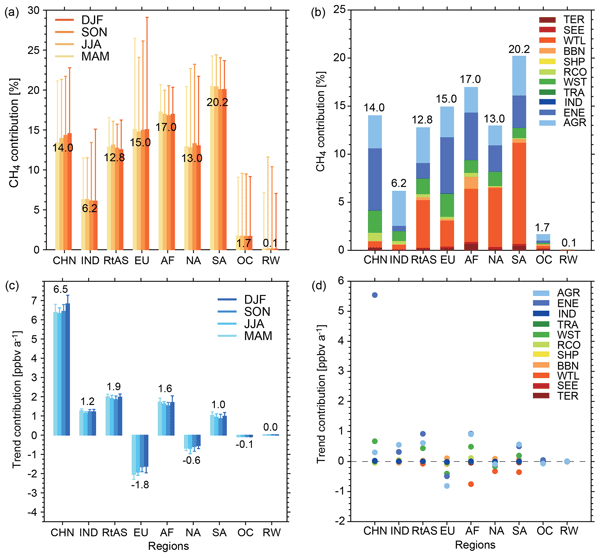
Haiyue Tan, Lin Zhang, Xiao Lu, Yuanhong Zhao, Bo Yao, Robert J. Parker, and Hartmut Boesch
Atmos. Chem. Phys., 22, 1229–1249, https://doi.org/10.5194/acp-22-1229-2022, https://doi.org/10.5194/acp-22-1229-2022, 2022
Short summary
Short summary
Methane is the second most important anthropogenic greenhouse gas. Understanding methane emissions and concentration growth over China in the past decade is important to support its mitigation. This study analyzes the contributions of methane emissions from different regions and sources over the globe to methane changes over China in 2007–2018. Our results show strong international transport influences and emphasize the need of intensive methane measurements covering eastern China.
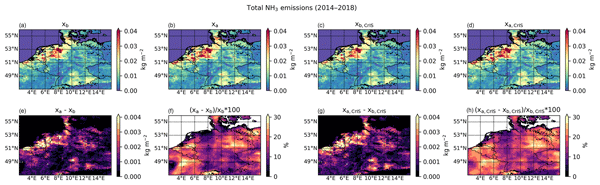
Shelley van der Graaf, Enrico Dammers, Arjo Segers, Richard Kranenburg, Martijn Schaap, Mark W. Shephard, and Jan Willem Erisman
Atmos. Chem. Phys., 22, 951–972, https://doi.org/10.5194/acp-22-951-2022, https://doi.org/10.5194/acp-22-951-2022, 2022
Short summary
Short summary
CrIS NH3 satellite observations are assimilated into the LOTOS-EUROS model using two different methods. In the first method the data are used to fit spatially varying NH3 emission time factors. In the second method a local ensemble transform Kalman filter is used. Compared to in situ observations, combining both methods led to the most significant improvements in the modeled concentrations and deposition, illustrating the usefulness of CrIS NH3 to improve the spatiotemporal distribution of NH3.
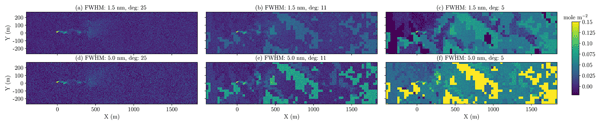
Siraput Jongaramrungruang, Georgios Matheou, Andrew K. Thorpe, Zhao-Cheng Zeng, and Christian Frankenberg
Atmos. Meas. Tech., 14, 7999–8017, https://doi.org/10.5194/amt-14-7999-2021, https://doi.org/10.5194/amt-14-7999-2021, 2021
Short summary
Short summary
This study shows how precision error and bias in column methane retrieval change with different instrument specifications and the impact of spectrally complex surface albedos on retrievals. We show how surface interferences can be mitigated with an optimal spectral resolution and a higher polynomial degree in a retrieval process. The findings can inform future satellite instrument designs to have robust observations capable of separating real CH4 plume enhancements from surface interferences.
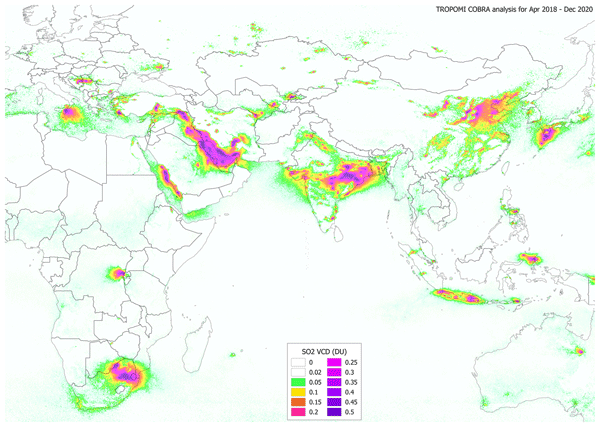
Nicolas Theys, Vitali Fioletov, Can Li, Isabelle De Smedt, Christophe Lerot, Chris McLinden, Nickolay Krotkov, Debora Griffin, Lieven Clarisse, Pascal Hedelt, Diego Loyola, Thomas Wagner, Vinod Kumar, Antje Innes, Roberto Ribas, François Hendrick, Jonas Vlietinck, Hugues Brenot, and Michel Van Roozendael
Atmos. Chem. Phys., 21, 16727–16744, https://doi.org/10.5194/acp-21-16727-2021, https://doi.org/10.5194/acp-21-16727-2021, 2021
Short summary
Short summary
We present a new algorithm to retrieve sulfur dioxide from space UV measurements. We apply the technique to high-resolution TROPOMI measurements and demonstrate the high sensitivity of the approach to weak SO2 emissions worldwide with an unprecedented limit of detection of 8 kt yr−1. This result has broad implications for atmospheric science studies dealing with improving emission inventories and identifying and quantifying missing sources, in the context of air quality and climate.
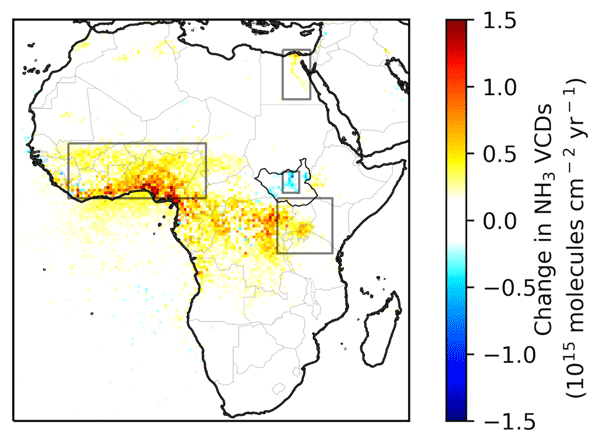
Jonathan E. Hickman, Niels Andela, Enrico Dammers, Lieven Clarisse, Pierre-François Coheur, Martin Van Damme, Courtney A. Di Vittorio, Money Ossohou, Corinne Galy-Lacaux, Kostas Tsigaridis, and Susanne E. Bauer
Atmos. Chem. Phys., 21, 16277–16291, https://doi.org/10.5194/acp-21-16277-2021, https://doi.org/10.5194/acp-21-16277-2021, 2021
Short summary
Short summary
Ammonia (NH3) gas emitted from soils and biomass burning contributes to particulate air pollution. We used satellite observations of the atmosphere over Africa to show that declines in NH3 concentrations over South Sudan's Sudd wetland in 2008–2017 are related to variation in wetland extent. We also find NH3 concentrations increased in West Africa as a result of biomass burning and increased in the Lake Victoria region, likely due to agricultural expansion and intensification.
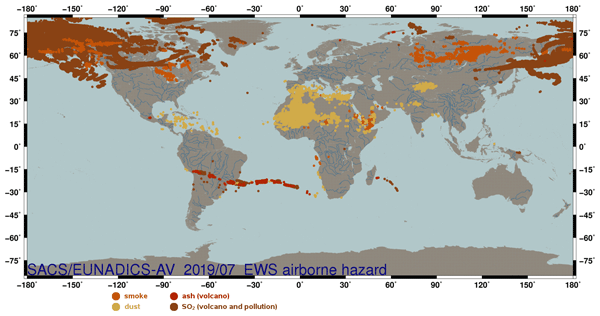
Hugues Brenot, Nicolas Theys, Lieven Clarisse, Jeroen van Gent, Daniel R. Hurtmans, Sophie Vandenbussche, Nikolaos Papagiannopoulos, Lucia Mona, Timo Virtanen, Andreas Uppstu, Mikhail Sofiev, Luca Bugliaro, Margarita Vázquez-Navarro, Pascal Hedelt, Michelle Maree Parks, Sara Barsotti, Mauro Coltelli, William Moreland, Simona Scollo, Giuseppe Salerno, Delia Arnold-Arias, Marcus Hirtl, Tuomas Peltonen, Juhani Lahtinen, Klaus Sievers, Florian Lipok, Rolf Rüfenacht, Alexander Haefele, Maxime Hervo, Saskia Wagenaar, Wim Som de Cerff, Jos de Laat, Arnoud Apituley, Piet Stammes, Quentin Laffineur, Andy Delcloo, Robertson Lennart, Carl-Herbert Rokitansky, Arturo Vargas, Markus Kerschbaum, Christian Resch, Raimund Zopp, Matthieu Plu, Vincent-Henri Peuch, Michel Van Roozendael, and Gerhard Wotawa
Nat. Hazards Earth Syst. Sci., 21, 3367–3405, https://doi.org/10.5194/nhess-21-3367-2021, https://doi.org/10.5194/nhess-21-3367-2021, 2021
Short summary
Short summary
The purpose of the EUNADICS-AV (European Natural Airborne Disaster Information and Coordination System for Aviation) prototype early warning system (EWS) is to develop the combined use of harmonised data products from satellite, ground-based and in situ instruments to produce alerts of airborne hazards (volcanic, dust, smoke and radionuclide clouds), satisfying the requirement of aviation air traffic management (ATM) stakeholders (https://cordis.europa.eu/project/id/723986).
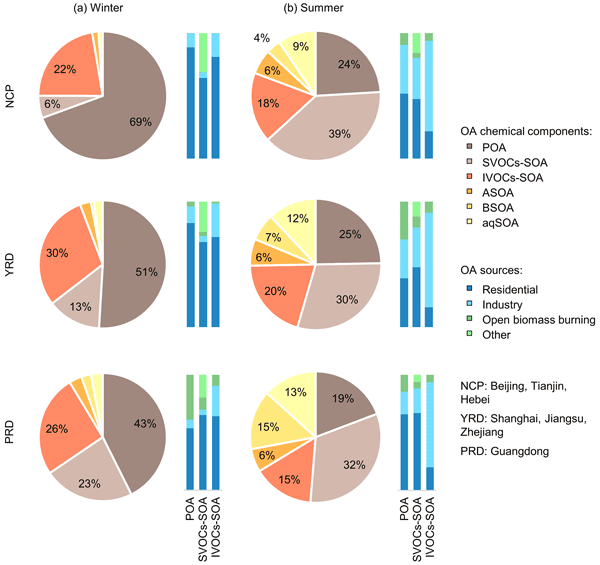
Ruqian Miao, Qi Chen, Manish Shrivastava, Youfan Chen, Lin Zhang, Jianlin Hu, Yan Zheng, and Keren Liao
Atmos. Chem. Phys., 21, 16183–16201, https://doi.org/10.5194/acp-21-16183-2021, https://doi.org/10.5194/acp-21-16183-2021, 2021
Short summary
Short summary
We apply process-based and observation-constrained schemes to simulate organic aerosol in China and conduct comprehensive model–observation comparisons. The results show that anthropogenic semivolatile and intermediate-volatility organic compounds (SVOCs and IVOCs) are the main sources of secondary organic aerosol (SOA) in polluted regions, for which the residential sector is perhaps the predominant contributor. The hydroxyl radical level is also important for SOA modeling in polluted regions.
Cited articles
Beer, R., Shephard, M. W., Kulawik, S. S., Clough, S. A., Eldering, A., Bowman, K. W., Sander, S. P., Fisher, B. M., Payne, V. H., Luo, M., Osterman, G. B., and Worden, J. R.: First satellite observations of lower tropospheric ammonia and methanol, Geophys. Res. Lett., 35, L09801, https://doi.org/10.1029/2008GL033642, 2008.
Behera, S. N., Sharma, M., Aneja, V. P., and Balasubramanian, R.: Ammonia in the atmosphere: a review on emission sources, atmospheric chemistry and deposition on terrestrial bodies, Environ. Sci. Pollut. R., 20, 8092–8131, https://doi.org/10.1007/s11356-013-2051-9, 2013.
Bobbink, R., Hicks, K., Galloway, J., Spranger, T., Alkemade, R., Ashmore, M., Bustamante, M., Cinderby, S., Davidson, E., Dentener, F., Emmett, B., Erisman, J.-W., Fenn, M., Gilliam, F., Nordin, A., Pardo, L., and De Vries, W.: Global assessment of nitrogen deposition effects on terrestrial plant diversity: A synthesis, Ecol. Appl., 20, 30–59, https://doi.org/10.1890/08-1140.1, 2010.
Cao, H., Henze, D. K., Shephard, M. W., Dammers, E., Cady-Pereira, K. E., Alvarado, M., Lonsdale, C., Luo, G., Yu, F., Zhu, L., Danielson, C. G., and Edgerton, E. S.: Inverse modeling of NH3 sources using CrIS remote sensing measurements, Environ. Res. Lett., 15, 104082, https://doi.org/10.1088/1748-9326/abb5cc, 2020.
Cao, H., Henze, D. K., Zhu, L., Shephard, M. W., Cady-Pereira, K., Dammers, E., and Capps, S. L.: 4D-Var inversion of European NH3 emissions using CrIS NH3 measurements and GEOS-Chem adjoint with bi-directional and uni-directional flux schemes, J. Geophys. Res.-Atmos., 127, e2021JD035687, https://doi.org/10.1029/2021JD035687, 2022.
Chang, Y., Zou, Z., Zhang, Y., Deng, C., Hu, J., Shi, Z., Dore, A. J., and Collett Jr., J. L.: Assessing contributions of agricultural and nonagricultural emissions to atmospheric ammonia in a Chinese megacity, Environ. Sci. Technol., 53, 1822–1833, https://doi.org/10.1021/acs.est.8b05984, 2019.
Chang, Y., Zhang, Y.-L., Kawichai, S., Wang, Q., Van Damme, M., Clarisse, L., Prapamontol, T., and Lehmann, M. F.: Convergent evidence for the pervasive but limited contribution of biomass burning to atmospheric ammonia in peninsular Southeast Asia, Atmos. Chem. Phys., 21, 7187–7198, https://doi.org/10.5194/acp-21-7187-2021, 2021.
Chen, F., Lao, Q., Li, Z., Chen, C., Zhou, X., and Zhang, S.: Monthly variations in the nitrogen isotope of ammonium in wet deposition in a tropical city of South China, Aerosol Air Qual. Res., 20, 1062–1069, https://doi.org/10.4209/aaqr.2019.06.0303, 2020.
Chen, J., Du, X., Liu, X., Xu, W., and Krol, M.: Estimation of ammonia emissions over China using IASI satellite-derived surface observations, Environ. Sci. Technol., 59, 9991–10000, https://doi.org/10.1021/acs.est.4c10878, 2025.
Chen, Y., Shen, H., Kaiser, J., Hu, Y., Capps, S. L., Zhao, S., Hakami, A., Shih, J.-S., Pavur, G. K., Turner, M. D., Henze, D. K., Resler, J., Nenes, A., Napelenok, S. L., Bash, J. O., Fahey, K. M., Carmichael, G. R., Chai, T., Clarisse, L., Coheur, P.-F., Van Damme, M., and Russell, A. G.: High-resolution hybrid inversion of IASI ammonia columns to constrain US ammonia emissions using the CMAQ adjoint model, Atmos. Chem. Phys., 21, 2067–2082, https://doi.org/10.5194/acp-21-2067-2021, 2021.
Clarisse, L., Clerbaux, C., Dentener, F., Hurtmans, D., and Coheur, P.-F.: Global ammonia distribution derived from infrared satellite observations, Nat. Geosci., 2, 479–483, https://doi.org/10.1038/ngeo551, 2009.
Clarisse, L., Shephard, M., Dentener, F., Hurtmans, D., Cady-Pereira, K., Karagulian, F., Van Damme, M., Clerbaux, C., and Coheur, P.-F.: Satellite monitoring of ammonia: A case study of the San Joaquin Valley, J. Geophys. Res., 115, D13302, https://doi.org/10.1029/2009JD013291, 2010.
Clarisse, L., Van Damme, M., Clerbaux, C., and Coheur, P.-F.: Tracking down global NH3 point sources with wind-adjusted superresolution, Atmos. Meas. Tech., 12, 5457–5473, https://doi.org/10.5194/amt-12-5457-2019, 2019.
Clarisse, L., Van Damme, M., Hurtmans, D., Franco, B., Clerbaux, C., and Coheur, P.-F.: The diel cycle of NH3 observed from the FY-4A Geostationary Interferometric Infrared Sounder (GIIRS), Geophys. Res. Lett., 48, e2021GL093010, https://doi.org/10.1029/2021GL093010, 2021.
Clarisse, L., Franco, B., Van Damme, M., Di Gioacchino, T., Hadji-Lazaro, J., Whitburn, S., Noppen, L., Hurtmans, D., Clerbaux, C., and Coheur, P.: The IASI NH3 version 4 product: averaging kernels and improved consistency, Atmos. Meas. Tech., 16, 5009–5028, https://doi.org/10.5194/amt-16-5009-2023, 2023.
Clerbaux, C., Boynard, A., Clarisse, L., George, M., Hadji-Lazaro, J., Herbin, H., Hurtmans, D., Pommier, M., Razavi, A., Turquety, S., Wespes, C., and Coheur, P.-F.: Monitoring of atmospheric composition using the thermal infrared IASI/MetOp sounder, Atmos. Chem. Phys., 9, 6041–6054, https://doi.org/10.5194/acp-9-6041-2009, 2009.
Dammers, E., Schaap, M., Haaima, M., Palm, M., Wichink Kruit, R. J., van Zanten, M. C., and Erisman, J. W.: Measuring atmospheric ammonia with remote sensing campaign: Part 1 – characterisation of vertical ammonia concentration profile in the centre of the Netherlands, Atmos. Environ., 169, 97–112, https://doi.org/10.1016/j.atmosenv.2017.08.067, 2017a.
Dammers, E., Shephard, M. W., Palm, M., Cady-Pereira, K., Capps, S., Lutsch, E., Strong, K., Hannigan, J. W., Ortega, I., Toon, G. C., Stremme, W., Grutter, M., Jones, N., Smale, D., Siemons, J., Hrpcek, K., Tremblay, D., Schaap, M., Notholt, J., and Erisman, J. W.: Validation of the CrIS fast physical NH3 retrieval with ground-based FTIR, Atmos. Meas. Tech., 10, 2645–2667, https://doi.org/10.5194/amt-10-2645-2017, 2017b.
Dammers, E., McLinden, C. A., Griffin, D., Shephard, M. W., Van Der Graaf, S., Lutsch, E., Schaap, M., Gainairu-Matz, Y., Fioletov, V., Van Damme, M., Whitburn, S., Clarisse, L., Cady-Pereira, K., Clerbaux, C., Coheur, P. F., and Erisman, J. W.: NH3 emissions from large point sources derived from CrIS and IASI satellite observations, Atmos. Chem. Phys., 19, 12261–12293, https://doi.org/10.5194/acp-19-12261-2019, 2019.
Ding, Y., Ren, G., Li, Q., Sun, X., and Zhou, B.: High-impact extreme weather and climate events in China: summer 2024 overview, Adv. Atmos. Sci., 41, 1123–1135, https://doi.org/10.1007/s00376-024-4462-6, 2024.
Gong, C., Tian, H., Liao, H., Pan, N., Pan, S., Ito, A., Jain, A. K., Kou-Giesbrecht, S., Joos, F., Sun, Q., Shi, H., Vuichard, N., Zhu, Q., Peng, C., Maggi, F., Tang, F. H. M., and Zaehle, S.: Global net climate effects of anthropogenic reactive nitrogen, Nature, 632, 557–563, https://doi.org/10.1038/s41586-024-07714-4, 2024.
Gu, M., Pan, Y., Walters, W. W., Sun, Q., Song, L., Fang, Y., and Xue, Y.: Vehicular emissions enhanced ammonia concentrations in winter mornings: insights from diurnal nitrogen isotopic signatures, Environ. Sci. Technol., 56, 1578–1585, https://doi.org/10.1021/acs.est.1c05884, 2022.
Guendouz, N., Viatte, C., Zeng, Z.-C., Boynard, A., Safieddine, S., Standfuss, C., Turquety, S., Van Damme, M., Clarisse, L., Coheur, P., Sheng, M., Armante, R., Prunet, P., and Clerbaux, C.: Monitoring atmospheric ammonia from geostationary orbit: Contributions of GIIRS-B and IRS remote sensors, J. Geophys. Res.-Atmos., 131, e2025JD046139, https://doi.org/10.1029/2025JD046139, 2026.
Guo, X., Clarisse, L., Wang, R., Van Damme, M., Whitburn, S., Coheur, P.-F., Clerbaux, C., Franco, B., Pan, D., Golston, L. M., Wendt, L., Sun, K., Tao, L., Miller, D., Mikoviny, T., Müller, M., Wisthaler, A., Tevlin, A. G., Murphy, J. G., Nowak, J. B., Roscioli, J. R., Volkamer, R., Kille, N., Neuman, J. A., Eilerman, S. J., Crawford, J. H., Yacovitch, T. I., Barrick, J. D., Scarino, A. J., and Zondlo, M. A.: Validation of IASI satellite ammonia observations at the pixel scale using in-situ vertical profiles, J. Geophys. Res.-Atmos., 126, e2020JD033475, https://doi.org/10.1029/2020JD033475, 2021.
He, Y., Pan, Y., Zhang, G., Ji, D., Tian, S., Xu, X., Zhang, R., and Wang, Y.: Tracking ammonia morning peak, sources and transport with 1 Hz measurements at a rural site in North China Plain, Atmos. Environ., 235, 117630, https://doi.org/10.1016/j.atmosenv.2020.117630, 2020.
Hersbach, H., Bell, B., Berrisford, P., Biavati, G., Horányi, A., Muñoz Sabater, J., Nicolas, J., Peubey, C., Radu, R., Rozum, I., Schepers, D., Simmons, A., Soci, C., Dee, D., and Thépaut, J.-N.: ERA5 hourly data on single levels from 1940 to present, Copernicus Climate Change Service (C3S) Climate Data Store (CDS), https://doi.org/10.24381/cds.adbb2d47, 2023.
Holmlund, K., Grandell, J., Schmetz, J., Stuhlmann, R., Bojkov, B., Munro, R., Lekouara, M., Coppens, D., Viticchie, B., August, T., Theodore, B., Watts, P., Dobber, M., Fowler, G., Bojinski, S., Schmid, A., Salonen, K., Tjemkes, S., Aminou, D., and Blythe, P.: Meteosat Third Generation (MTG): Continuation and innovation of observations from geostationary orbit, B. Am. Meteorol. Soc., 102, E990–E1015, https://doi.org/10.1175/BAMS-D-19-0304.1, 2021.
Hou, X. and Yu, X.: An ammonia emissions inventory for agricultural sources in Hefei, China, Atmos. Ocean. Sci. Lett., 13, 260–267, https://doi.org/10.1080/16742834.2020.1747355, 2020.
Hua, J., Zhou, R., Sheng, M., and Zeng, Z.-C.: Global and diurnal variations in tropospheric ammonia observed from a constellation of hyperspectral infrared sounders in three different LEO orbits, EGUsphere [preprint], https://doi.org/10.5194/egusphere-2026-746, 2026.
Huy, D. H., Thanh, L. T., Hien, T. T., Takenaka, N., and Huy, D. H.: Characteristics of ammonia gas and fine particulate ammonium from two distinct urban areas: Osaka, Japan, and Ho Chi Minh City, Vietnam, Environ. Sci. Pollut. R., 24, 8147–8163, https://doi.org/10.1007/s11356-017-8496-5, 2017.
Jang, J.-H., Hong, J., Kim, J. B., Park, S., Hwang, K., Kim, J., Kim, J. Y., Bae, G.-N., Kim, S., and Kim, K. H.: Influence of atmospheric ammonia on secondary inorganic aerosol formation in PM2.5 during spring 2024 in the Hongseong area, Republic of Korea, Atmos. Environ., 358, 121363, https://doi.org/10.1016/j.atmosenv.2025.121363, 2025.
Jongenelen, T., van Zanten, M., Dammers, E., Wichink Kruit, R., Hensen, A., Geers, L., and Erisman, J. W.: Validation and uncertainty quantification of three state-of-the-art ammonia surface exchange schemes using NH3 flux measurements in a dune ecosystem, Atmos. Chem. Phys., 25, 4943–4963, https://doi.org/10.5194/acp-25-4943-2025, 2025.
Kang, Y., Liu, M., Song, Y., Huang, X., Yao, H., Cai, X., Zhang, H., Kang, L., Liu, X., Yan, X., He, H., Zhang, Q., Shao, M., and Zhu, T.: High-resolution ammonia emissions inventories in China from 1980 to 2012, Atmos. Chem. Phys., 16, 2043–2058, https://doi.org/10.5194/acp-16-2043-2016, 2016.
Keller, C.-A., Knowland, K.-E., Duncan, B.-N., Liu, J., Anderson, D.-C., Das, S., Lucchesi, R.-A., Lundgren, E.-W., Nicely, J.-M., Nielsen, E., Ott, L.-E., Saunders, E., Strode, S.-A., Wales, P.-A., Jacob, D.-J., and Pawson, S.: Description of the NASA GEOS composition forecast modeling system GEOS-CF v1.0, J. Adv. Model. Earth Sy., 13, e2020MS002413, https://doi.org/10.1029/2020MS002413, 2021.
Kharol, S. K., Shephard, M. W., McLinden, C. A., Zhang, L., Sioris, C. E., O'Brien, J. M., Hakami, A., Murphy, J. G., van Donkelaar, A., and Martin, R. V.: Dry deposition of reactive nitrogen from satellite observations of ammonia and nitrogen dioxide over North America, Geophys. Res. Lett., 45, 1157–1166, https://doi.org/10.1002/2017GL075832, 2018.
Kim, J., Jeong, U., Ahn, M. H., Kim, J. H., Park, R. J., Lee, H., Song, C. H., Choi, Y. S., Lee, K. H., Yoo, J. M., Jeong, M. J., Park, S. K., Lee, K. M., Song, C. K., Kim, S. W., Kim, Y. J., Kim, S. W., Kim, M., Go, S., Liu, X., Chance, K., Miller, C. C., Al-Saadi, J., Veihelmann, B., Bhartia, P. K., Torres, O., Abad, G. G., Haffner, D. P., Ko, D. H., Lee, S. H., Woo, J. H., Chong, H., Park, S. S., Nicks, D., Choi, W. J., Moon, K. J., Cho, A., Yoon, J., Kim, S. kyun, Hong, H., Lee, K., Lee, H., Lee, S., Choi, M., Veefkind, P., Levelt, P. F., Edwards, D. P., Kang, M., Eo, M., Bak, J., Baek, K., Kwon, H. A., Yang, J., Park, J., Han, K. M., Kim, B. R., Shin, H. W., Choi, H., Lee, E., Chong, J., Cha, Y., Koo, J. H., Irie, H., Hayashida, S., Kasai, Y., Kanaya, Y., Liu, C., Lin, J., Crawford, J. H., Carmichael, G. R., Newchurch, M. J., Lefer, B. L., Herman, J. R., Swap, R. J., Lau, A. K. H., Kurosu, T. P., Jaross, G., Ahlers, B., Dobber, M., McElroy, C. T., and Choi, Y.: New era of air quality monitoring from space: Geostationary environment monitoring spectrometer (GEMS), B. Am. Meteorol. Soc., 101, E1–E22, https://doi.org/10.1175/BAMS-D-18-0013.1, 2020.
Kumar, P., Broquet, G., Hauglustaine, D., Beaudor, M., Clarisse, L., Van Damme, M., Coheur, P., Cozic, A., Zheng, B., Revilla Romero, B., Delavois, A., and Ciais, P.: Global atmospheric inversion of the anthropogenic NH3 emissions over 2019–2022 using the LMDZ-INCA chemistry transport model and the IASI NH3 observations, Atmos. Chem. Phys., 25, 12379–12407, https://doi.org/10.5194/acp-25-12379-2025, 2025.
Lan, Z., Lin, W., and Zhao, G.: Sources, variations, and effects on air quality of atmospheric ammonia, Curr. Pollut. Rep., 10, 40–53, https://doi.org/10.1007/s40726-023-00291-6, 2024.
Li, B., Chen, L., Shen, W., Jin, J., Wang, T., Wang, P., Yang, Y., and Liao, H.: Improved gridded ammonia emission inventory in China, Atmos. Chem. Phys., 21, 15883–15900, https://doi.org/10.5194/acp-21-15883-2021, 2021.
Li, M., Kurokawa, J., Zhang, Q., Woo, J.-H., Morikawa, T., Chatani, S., Lu, Z., Song, Y., Geng, G., Hu, H., Kim, J., Cooper, O. R., and McDonald, B. C.: MIXv2: a long-term mosaic emission inventory for Asia (2010–2017), Atmos. Chem. Phys., 24, 3925–3952, https://doi.org/10.5194/acp-24-3925-2024, 2024.
Li, Z., Sun, K., Guan, K., Wang, S., Peng, B., Clarisse, L., Van Damme, M., Coheur, P.-F., Cady-Pereira, K., Shephard, M. W., Zondlo, M., and Moore, D.: Ammonia emissions and depositions over the contiguous United States derived from IASI and CrIS using the directional derivative approach, Atmos. Chem. Phys., 26, 703–721, https://doi.org/10.5194/acp-26-703-2026, 2026.
Lin, Y.-C., Zhang, Y.-L., Fan, M.-Y., and Bao, M.: Heterogeneous formation of particulate nitrate under ammonium-rich regimes during the high-PM2.5 events in Nanjing, China, Atmos. Chem. Phys., 20, 3999–4011, https://doi.org/10.5194/acp-20-3999-2020, 2020.
Liu, L., Zhang, X., Wong, A. Y. H., Xu, W., Liu, X., Li, Y., Mi, H., Lu, X., Zhao, L., Wang, Z., Wu, X., and Wei, J.: Estimating global surface ammonia concentrations inferred from satellite retrievals, Atmos. Chem. Phys., 19, 12051–12066, https://doi.org/10.5194/acp-19-12051-2019, 2019.
Luo, X., Zhang, M., Ni, Y., and Shen, G.: Mitigation strategies for NH3 and N2O emissions in greenhouse agriculture: Insights into fertilizer management and nitrogen emission mechanisms, Environ. Technol. Innov., 37, 103995, https://doi.org/10.1016/j.eti.2024.103995, 2025.
Luo, Z., Zhang, Y., Chen, W., Van Damme, M., Coheur, P.-F., and Clarisse, L.: Estimating global ammonia (NH3) emissions based on IASI observations from 2008 to 2018, Atmos. Chem. Phys., 22, 10375–10388, https://doi.org/10.5194/acp-22-10375-2022, 2022.
Marais, E. A., Pandey, A. K., Van Damme, M., Clarisse, L., Coheur, P.-F., Shephard, M. W., Cady-Pereira, K. E., Misselbrook, T., Zhu, L., Luo, G., and Yu, F.: UK ammonia emissions estimated with satellite observations and GEOS-Chem, J. Geophys. Res.-Atmos., 126, e2021JD035237, https://doi.org/10.1029/2021JD035237, 2021.
Meng, Z., Xu, X., Lin, W., Ge, B., Xie, Y., Song, B., Jia, S., Zhang, R., Peng, W., Wang, Y., Cheng, H., Yang, W., and Zhao, H.: Role of ambient ammonia in particulate ammonium formation at a rural site in the North China Plain, Atmos. Chem. Phys., 18, 167–184, https://doi.org/10.5194/acp-18-167-2018, 2018.
Meng, Z. Y., Lin, W. L., Jiang, X. M., Yan, P., Wang, Y., Zhang, Y. M., Jia, X. F., and Yu, X. L.: Characteristics of atmospheric ammonia over Beijing, China, Atmos. Chem. Phys., 11, 6139–6151, https://doi.org/10.5194/acp-11-6139-2011, 2011.
Pai, S. J., Heald, C. L., and Murphy, J. G.: Exploring the global importance of atmospheric ammonia oxidation, ACS Earth Space Chem., 5, 1674–1685, https://doi.org/10.1021/acsearthspacechem.1c00021, 2021.
Saraswati, G. M. P., Sharma, S. K., Mandal, T. K., and Kotnala, R. K.: Simultaneous measurements of ambient NH3 and its relationship with other trace gases, PM2.5 and meteorological parameters over Delhi, India, MAPAN, 34, 55–69, https://doi.org/10.1007/s12647-018-0286-0, 2019.
Seinfeld, J. H. and Pandis, S. N.: Atmospheric chemistry and physics: from air pollution to climate change, 3rd edn., Wiley, Hoboken, NJ, 1152 pp., ISBN 978-1-118-94740-1, 2016.
Shephard, M. W. and Cady-Pereira, K. E.: Cross-track Infrared Sounder (CrIS) satellite observations of tropospheric ammonia, Atmos. Meas. Tech., 8, 1323–1336, https://doi.org/10.5194/amt-8-1323-2015, 2015.
Shephard, M. W., Cady-Pereira, K. E., Luo, M., Henze, D. K., Pinder, R. W., Walker, J. T., Rinsland, C. P., Bash, J. O., Zhu, L., Payne, V. H., and Clarisse, L.: TES ammonia retrieval strategy and global observations of the spatial and seasonal variability of ammonia, Atmos. Chem. Phys., 11, 10743–10763, https://doi.org/10.5194/acp-11-10743-2011, 2011.
Shephard, M. W., Dammers, E., Cady-Pereira, K. E., Kharol, S. K., Thompson, J., Gainariu-Matz, Y., Zhang, J., McLinden, C. A., Kovachik, A., Moran, M., Bittman, S., Sioris, C. E., Griffin, D., Alvarado, M. J., Lonsdale, C., Savic-Jovcic, V., and Zheng, Q.: Ammonia measurements from space with the Cross-track Infrared Sounder: characteristics and applications, Atmos. Chem. Phys., 20, 2277–2302, https://doi.org/10.5194/acp-20-2277-2020, 2020.
Shephard, M. W., Kharol, S. K., Dammers, E., Sioris, C. E., Bell, A., Jansen, R., Caron, J., Snel, R., Palombo, E., Cady-Pereira, K. E., McLinden, C. A., Lutsch, E., and Knuteson, R.: Infrared satellite detection limits for monitoring atmospheric ammonia, IEEE J. Sel. Top. Appl., 18, 10271–10291, https://doi.org/10.1109/JSTARS.2025.3557240, 2025.
Teng, X., Hu, Q., Zhang, L., Qi, J., Shi, J., Xie, H., Gao, H., and Yao, X.: Identification of major sources of atmospheric NH3 in an urban environment in northern China during wintertime, Environ. Sci. Technol., 51, 6839–6848, https://doi.org/10.1021/acs.est.7b00328, 2017.
Vadrevu, K. P., Lasko, K., Giglio, L., Schroeder, W., Biswas, S., and Justice, C.: Trends in Vegetation fires in South and Southeast Asian Countries, Sci. Rep.-UK, 9, 7422, https://doi.org/10.1038/s41598-019-43940-x, 2019.
Van Damme, M., Erisman, J. W., Clarisse, L., Dammers, E., Whitburn, S., Clerbaux, C., Dolman, A. J., and Coheur, P.-F.: Worldwide spatiotemporal atmospheric ammonia (NH3) columns variability revealed by satellite, Geophys. Res. Lett., 42, 8660–8668, https://doi.org/10.1002/2015GL065496, 2015.
Van Damme, M., Clarisse, L., Whitburn, S., Hadji-Lazaro, J., Hurtmans, D., Clerbaux, C., and Coheur, P.-F.: Industrial and agricultural ammonia point sources exposed, Nature, 564, 99–103, https://doi.org/10.1038/s41586-018-0747-1, 2018.
Van Damme, M., Clarisse, L., Franco, B., Sutton, M. A., Erisman, J. W., Wichink Kruit, R., van Zanten, M., Whitburn, S., Hadji-Lazaro, J., and Hurtmans, D.: Global, regional and national trends of atmospheric ammonia derived from a decadal (2008–2018) satellite record, Environ. Res. Lett., 16, 055017, https://doi.org/10.1088/1748-9326/abd5e0, 2021.
Wang, S., Nan, J., Shi, C., Fu, Q., Gao, S., Wang, D., Cui, H., Saiz-Lopez, A., and Zhou, B.: Atmospheric ammonia and its impacts on regional air quality over the megacity of Shanghai, China, Sci. Rep.-UK, 5, 15842, https://doi.org/10.1038/srep15842, 2015.
Wang, W., Tian, Y., Liu, C., Sun, Y., Liu, W., Xie, P., Liu, J., Xu, J., Morino, I., Velazco, V. A., Griffith, D. W. T., Notholt, J., and Warneke, T.: Investigating the performance of a greenhouse gas observatory in Hefei, China, Atmos. Meas. Tech., 10, 2627–2643, https://doi.org/10.5194/amt-10-2627-2017, 2017.
Wang, W., Liu, C., Clarisse, L., Van Damme, M., Coheur, P.-F., Xie, Y., Shan, C., Hu, Q., Sun, Y., and Jones, N.: Ground-based measurements of atmospheric NH3 by Fourier transform infrared spectrometry at Hefei and comparisons with IASI data, Atmos. Environ., 287, 119256, https://doi.org/10.1016/j.atmosenv.2022.119256, 2022.
Warner, J. X., Wei, Z., Strow, L. L., Dickerson, R. R., and Nowak, J. B.: The global tropospheric ammonia distribution as seen in the 13-year AIRS measurement record, Atmos. Chem. Phys., 16, 5467–5479, https://doi.org/10.5194/acp-16-5467-2016, 2016.
Whitburn, S., Van Damme, M., Clarisse, L., Bauduin, S., Heald, C. L., Hadji-Lazaro, J., Hurtmans, D., Zondlo, M. A., Clerbaux, C., and Coheur, P.-F.: A flexible and robust neural network IASI-NH3 retrieval algorithm, J. Geophys. Res.-Atmos., 121, 6581–6599, https://doi.org/10.1002/2016JD024828, 2016.
White, E., Shephard, M. W., Cady-Pereira, K. E., Kharol, S., Ford, S., Dammers, E., Chow, E., Thiessen, N., Tobin, D., Quinn, G., O'Brien, J., and Bash, J.: Accounting for non-detects in satellite retrievals: application using CrIS ammonia observations, Remote Sens.-Basel, 15, 2610, https://doi.org/10.3390/rs15102610, 2023.
Wunch, D., Toon, G. C., Blavier, J.-F. L., Washenfelder, R. A., Notholt, J., Connor, B. J., Griffith, D. W. T., Sherlock, V., and Wennberg, P. O.: The Total Carbon Column Observing Network, Philos. T. Roy. Soc. A, 369, 2087–2112, https://doi.org/10.1098/rsta.2010.0240, 2011.
Xu, J., Lu, M., Guo, Y., Zhang, L., Chen, Y., Liu, Z., Zhou, M., Lin, W., Pu, W., Ma, Z., Song, Y., Pan, Y., Liu, L., and Ji, D.: Summertime urban ammonia emissions may be substantially underestimated in Beijing, China, Environ. Sci. Technol., 57, 13124–13135, https://doi.org/10.1021/acs.est.3c05266, 2023.
Yang, J., Zhang, Z., Wei, C., Lu, F., and Guo, Q.: Introducing the new generation of Chinese geostationary weather satellites, Fengyun-4, B. Am. Meteorol. Soc., 98, 1637–1658, https://doi.org/10.1175/BAMS-D-16-0065.1, 2017.
Yang, X., He, J., and Wang, S.: Interannual variability of atmospheric ammonia over the Sichuan Basin, southwestern China: Trend, sources, and implications on particle matter control, Atmos. Res., 299, 107170, https://doi.org/10.1016/j.atmosres.2023.107170, 2024.
Zeng, Z.-C.: FengYun-4B/GIIRS FYGeoAIR NH3 retrievals from July 2022 to June 2025, Zenodo [data set], https://doi.org/10.5281/zenodo.17193848, 2025.
Zeng, Z.-C., Lee, L., Qi, C., Clarisse, L., and Van Damme, M.: Optimal estimation retrieval of tropospheric ammonia from the Geostationary Interferometric Infrared Sounder on board FengYun-4B, Atmos. Meas. Tech., 16, 3693–3713, https://doi.org/10.5194/amt-16-3693-2023, 2023a.
Zeng, Z.-C., Lee, L., and Qi, C.: Diurnal carbon monoxide observed from a geostationary infrared hyperspectral sounder: first result from GIIRS on board FengYun-4B, Atmos. Meas. Tech., 16, 3059–3083, https://doi.org/10.5194/amt-16-3059-2023, 2023b.
Zhang, L., Chen, Y., Zhao, Y., Henze, D. K., Zhu, L., Song, Y., Paulot, F., Liu, X., Pan, Y., Lin, Y., and Huang, B.: Agricultural ammonia emissions in China: reconciling bottom-up and top-down estimates, Atmos. Chem. Phys., 18, 339–355, https://doi.org/10.5194/acp-18-339-2018, 2018.
Zhang, Q., Pan, Y., He, Y., Zhao, Y., Zhu, L., Zhang, X., Xu, X., Ji, D., Gao, J., Tian, S., Gao, W., and Wang, Y.: Bias in ammonia emission inventory and implications on emission control of nitrogen oxides over North China Plain, Atmos. Environ., 214, 116869, https://doi.org/10.1016/j.atmosenv.2019.116869, 2019.
Zhou, X., Li, Y., Xiao, C., Chen, W., Mei, M., and Wang, G.: High-impact extreme weather and climate events in China: summer 2024 overview, Adv. Atmos. Sci., 42, 1064–1076, https://doi.org/10.1007/s00376-024-4462-6, 2025.
Short summary
Geostationary observations of NH3 provide an unprecedented opportunity to monitor spatial and temporal variations in emissions and their evolution throughout the day. Using 3 years of observations from FY-4B/GIIRS over East Asia, we demonstrated the enhanced capability of geostationary observations to identify emission sources and capture daytime variations associated with agricultural activities. This shows the potential of future geostationary satellites for monitoring air quality globally.
Geostationary observations of NH3 provide an unprecedented opportunity to monitor spatial and...


Altmetrics
Final-revised paper
Preprint