
Articles | Volume 26, issue 4
https://doi.org/10.5194/acp-26-3223-2026
© Author(s) 2026. This work is distributed under
the Creative Commons Attribution 4.0 License.
the Creative Commons Attribution 4.0 License.
https://doi.org/10.5194/acp-26-3223-2026
© Author(s) 2026. This work is distributed under
the Creative Commons Attribution 4.0 License.
the Creative Commons Attribution 4.0 License.
Research article
| 
03 Mar 2026
Research article |
| 03 Mar 2026
| 03 Mar 2026
Ice-nucleating particle depletion in the wintertime boundary layer in the pre-Alpine region during stratus cloud conditions

Leibniz Institute for Tropospheric Research, Leipzig, Germany
Markus Hartmann
Leibniz Institute for Tropospheric Research, Leipzig, Germany
Heike Wex
Leibniz Institute for Tropospheric Research, Leipzig, Germany
Patric Seifert
Leibniz Institute for Tropospheric Research, Leipzig, Germany
Anja Hardt
Leibniz Institute for Tropospheric Research, Leipzig, Germany
Anna Miller
Institute for Atmospheric and Climate Science, ETH Zurich, Zurich, Switzerland
Katharina Baudrexl
Deutscher Wetterdienst, Hohenpeißenberg, Germany
Werner Thomas
Deutscher Wetterdienst, Hohenpeißenberg, Germany
Veronika Ettrichrätz
Institute for Meteorology, Universität Leipzig, Leipzig, Germany
Maximilian Maahn
Institute for Meteorology, Universität Leipzig, Leipzig, Germany
Tom Gaudek
Leibniz Institute for Tropospheric Research, Leipzig, Germany
Willi Schimmel
Leibniz Institute for Tropospheric Research, Leipzig, Germany
Fabian Senf
Leibniz Institute for Tropospheric Research, Leipzig, Germany
Hannes Griesche
Leibniz Institute for Tropospheric Research, Leipzig, Germany
Martin Radenz
Leibniz Institute for Tropospheric Research, Leipzig, Germany
Jan Henneberger
Institute for Atmospheric and Climate Science, ETH Zurich, Zurich, Switzerland
Related authors
Gladiola Malollari, Albert Ansmann, Julian Hofer, Kevin Ohneiser, Ronny Engelmann, Fatbardh Sallaku, and Seit Shallari
EGUsphere, https://doi.org/DOI:10.20944/preprints202507.1175.v2, https://doi.org/DOI:10.20944/preprints202507.1175.v2, 2026
This preprint is open for discussion and under review for Atmospheric Chemistry and Physics (ACP).
Short summary
Short summary
For the first time, the seasonal aerosol vertical distribution of Albania is characterized using 15-year CALIPSO observations and one-year ground-based Raman lidar measurements. Seasonal air mass clusters are derived from a 10-year HYSPLIT backtrajectory analysis. Extinction coefficient, aerosol optical depth, and mass concentration profiles are shown for the total, dust, and nondust contributions. Both datasets reveal consistent vertical aerosol distributions.
Holger Baars, Moritz Haarig, Leonard König, Athena A. Floutsi, Elizaveta Basharova, Julian Hofer, Henriette Gebauer, Ronny Engelmann, Dietrich Althausen, Annett Skupin, Benedikt Gast, Felix Fritzsch, Kevin Ohneiser, Cristofer Jimenez, Tom Gaudek, Martin Radenz, Håvard Buholdt, Birgit Heese, Andi Klamt, Patric Seifert, David P. Donovan, Gerd-Jan van Zadelhoff, Sabur F. Abdullaev, Shohina K. Khalifaeva, Dilovar F. Nozirov, and Ulla Wandinger
Atmos. Meas. Tech., 19, 3831–3864, https://doi.org/10.5194/amt-19-3831-2026, https://doi.org/10.5194/amt-19-3831-2026, 2026
Short summary
Short summary
The satellite mission EarthCARE (Earth Cloud, Aerosol, and Radiation Explorer) was launched in May 2024 and has 4 unique instruments on board. We used ground-based PollyNET/ACTRIS (Aerosol, Clouds and Trace gases Research Infrastructure) profiling data to discuss the quality of EarthCARE’s lidar products based on case studies from different geographic locations. Our investigations revealed that the space-borne lidar instrument has remarkable profiling capabilities but currently also still some limitations, however, not preventing first scientific studies when quality checking the data intensively.
Audrey Teisseire, Patric Seifert, Kevin Ohneiser, Maximilian Maahn, Robert Spirig, and Jan Henneberger
Atmos. Meas. Tech., 19, 2897–2921, https://doi.org/10.5194/amt-19-2897-2026, https://doi.org/10.5194/amt-19-2897-2026, 2026
Short summary
Short summary
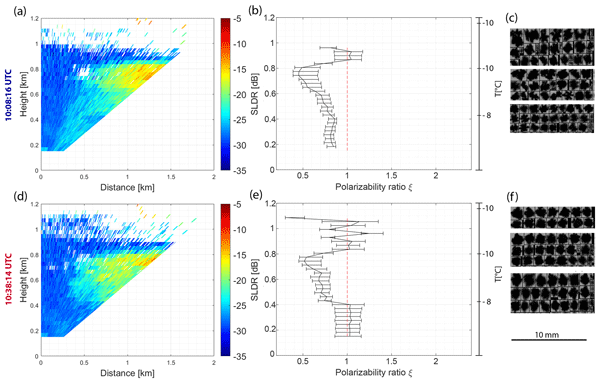
This study evaluates the vertical distribution of particle shape (VDPS) method for identifying particle shapes and riming/aggregation using in-situ and multi-frequency radar data from the CLOUDLAB campaign. Despite non-Rayleigh scattering effects, results show that the VDPS method using a Ka-band scanning cloud radar in slanted depolarization ratio (SLDR) mode is effective for hydrometeor classification.
Tom Gaudek, Cristofer Jimenez, Kevin Ohneiser, Christopher Fuchs, Jan Henneberger, Johannes Bühl, Andi Klamt, Albert Ansmann, Ronny Engelmann, and Patric Seifert
Atmos. Meas. Tech., 19, 2245–2263, https://doi.org/10.5194/amt-19-2245-2026, https://doi.org/10.5194/amt-19-2245-2026, 2026
Short summary
Short summary
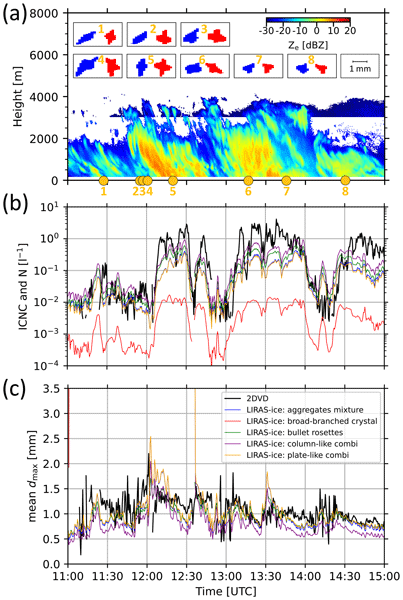
This study introduces the maximum diameter (Dmax) of precipitation particles measured by a two-dimensional video disdrometer (2DVD) as a novel parameter. Dmax is applied in a cloud seeding study during the Cloudlab campaign and, for the first time, in a MOSAiC (Multidisciplinary drifting Observatory for the Study of Arctic Climate) case to evaluate the LIRAS (LIdar RAdar Synergy )-ice remote-sensing retrieval of in-cloud ice crystal size and number. Both quantities agreed well with the 2DVD measurements under ideal conditions, highlighting the potential of Dmax for precipitation studies.
Kevin Ohneiser, Patric Seifert, Willi Schimmel, Fabian Senf, Tom Gaudek, Martin Radenz, Audrey Teisseire, Veronika Ettrichrätz, Teresa Vogl, Nina Maherndl, Nils Pfeifer, Jan Henneberger, Anna J. Miller, Nadja Omanovic, Christopher Fuchs, Huiying Zhang, Fabiola Ramelli, Robert Spirig, Anton Kötsche, Heike Kalesse-Los, Maximilian Maahn, Heather Corden, Alexis Berne, Majid Hajipour, Hannes Griesche, Julian Hofer, Ronny Engelmann, Annett Skupin, Albert Ansmann, and Holger Baars
Atmos. Chem. Phys., 25, 17363–17386, https://doi.org/10.5194/acp-25-17363-2025, https://doi.org/10.5194/acp-25-17363-2025, 2025
Short summary
Short summary
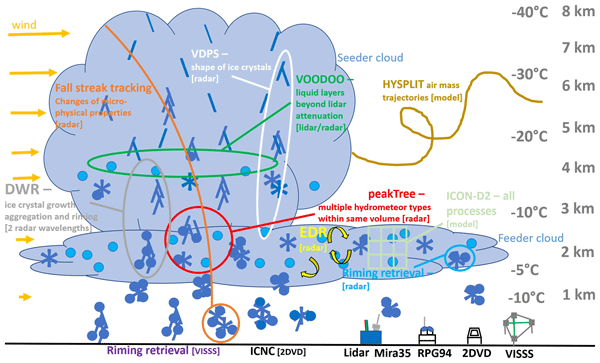
This study focuses on a seeder-feeder cloud system on 8 Jan 2024 in Eriswil, Switzerland. It is shown how the interaction of these cloud systems changes the cloud microphysical properties and the precipitation patterns. A big set of advanced remote-sensing techniques and retrieval algorithms are applied, so that a detailed view on the seeder-feeder cloud system is available. The gained knowledge can be used to improve weather models and weather forecasts.
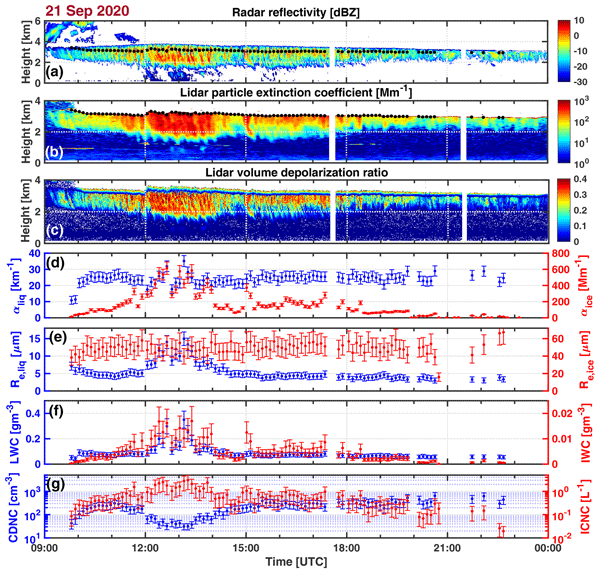
Cristofer Jimenez, Albert Ansmann, Kevin Ohneiser, Hannes Griesche, Ronny Engelmann, Martin Radenz, Julian Hofer, Dietrich Althausen, Daniel A. Knopf, Sandro Dahlke, Johannes Bühl, Holger Baars, Patric Seifert, and Ulla Wandinger
Atmos. Chem. Phys., 25, 12955–12981, https://doi.org/10.5194/acp-25-12955-2025, https://doi.org/10.5194/acp-25-12955-2025, 2025
Short summary
Short summary
We studied the water and ice phases of Arctic mixed-phase clouds (MPCs) using dual FOV polarization lidar and Doppler radar on board Polarstern during the MOSAiC expedition. Two long-lasting Arctic MPCs and year-round statistics show persistent droplet activation and dominant immersion freezing, indicating well-filled cloud condensation nuclei and ice-nucleating particle reservoirs. These findings help explain MPC longevity and may improve cloud life cycle representation in weather and climate models.
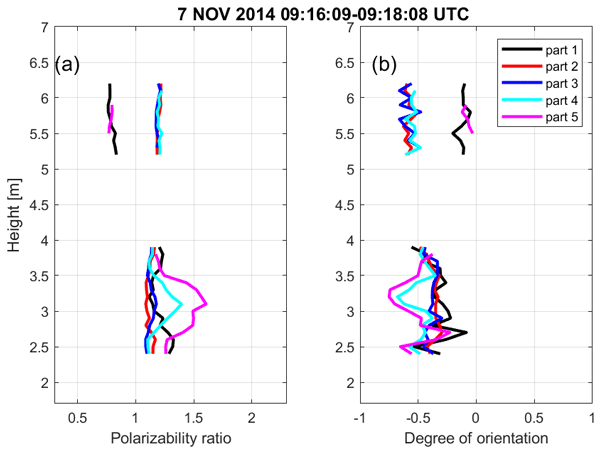
Majid Hajipour, Patric Seifert, Hannes Griesche, Kevin Ohneiser, and Martin Radenz
Atmos. Meas. Tech., 18, 5199–5222, https://doi.org/10.5194/amt-18-5199-2025, https://doi.org/10.5194/amt-18-5199-2025, 2025
Short summary
Short summary
This study presents an approach that enables the detection of the shape and orientation of multiple types of co-located hydrometeors in mixed-phase cloud systems. This information is key for improving the understanding of these clouds, as they do contain ice and liquid water simultaneously, making them relevant for the precipitation budget and radiative balance of the Earth's atmosphere. The retrieval is based on elevation scans of polarimetric cloud radars and can therefore be flexibly applied.
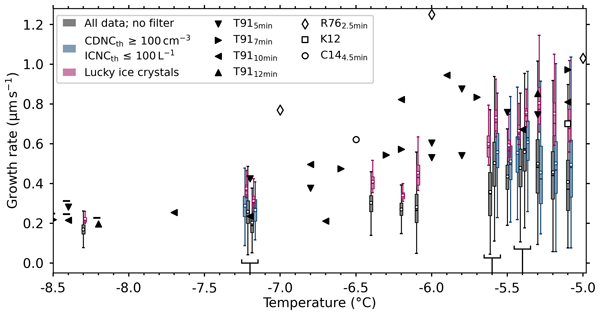
Christopher Fuchs, Fabiola Ramelli, Anna J. Miller, Nadja Omanovic, Robert Spirig, Huiying Zhang, Patric Seifert, Kevin Ohneiser, Ulrike Lohmann, and Jan Henneberger
Atmos. Chem. Phys., 25, 12177–12196, https://doi.org/10.5194/acp-25-12177-2025, https://doi.org/10.5194/acp-25-12177-2025, 2025
Short summary
Short summary
We quantify diffusional ice crystal growth in natural clouds using cloud seeding experiments. We report growth rates for 14 experiments between −5.1 °C and −8.3 °C and observe strong variations depending on the cloud characteristics. Comparing our growth rates to laboratory data, we found similar temperature-dependent trends, but the laboratory rates are higher. These data fill the gap in quantitative in situ observation of ice crystal growth, helping to validate models and laboratory experiments.
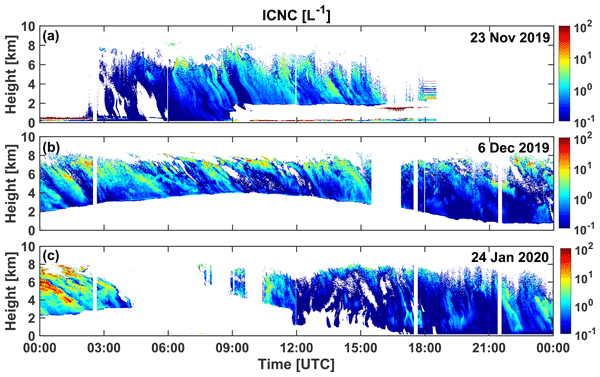
Albert Ansmann, Cristofer Jimenez, Johanna Roschke, Johannes Bühl, Kevin Ohneiser, Ronny Engelmann, Martin Radenz, Hannes Griesche, Julian Hofer, Dietrich Althausen, Daniel A. Knopf, Sandro Dahlke, Tom Gaudek, Patric Seifert, and Ulla Wandinger
Atmos. Chem. Phys., 25, 4847–4866, https://doi.org/10.5194/acp-25-4847-2025, https://doi.org/10.5194/acp-25-4847-2025, 2025
Short summary
Short summary
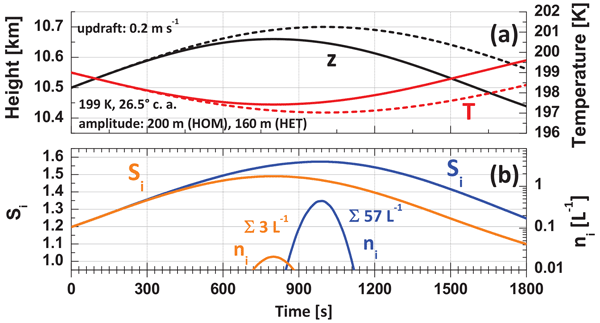
In this study, we focus on the potential impact of wildfire smoke on cirrus formation. For the first time, state-of-the-art aerosol and cirrus observations with lidar and radar, presented in this paper (Part 1 of a series of two articles), are closely linked to the comprehensive modeling of gravity-wave-induced ice nucleation in cirrus evolution processes, presented in a companion paper (Part 2). We found a clear impact of wildfire smoke on cirrus evolution.
Albert Ansmann, Cristofer Jimenez, Daniel A. Knopf, Johanna Roschke, Johannes Bühl, Kevin Ohneiser, and Ronny Engelmann
Atmos. Chem. Phys., 25, 4867–4884, https://doi.org/10.5194/acp-25-4867-2025, https://doi.org/10.5194/acp-25-4867-2025, 2025
Short summary
Short summary
In this study, we focus on the potential impact of wildfire smoke on cirrus formation. Aerosol and cirrus observations with lidar and radar during the MOSAiC (Multidisciplinary drifting Observatory for the Study of Arctic Climate) expedition, presented in the companion paper (Ansmann et al., 2025), are closely linked to comprehensive modeling of ice nucleation in cirrus evolution processes, presented in this article. A clear impact of wildfire smoke on cirrus formation was found.
Benedikt Gast, Cristofer Jimenez, Albert Ansmann, Moritz Haarig, Ronny Engelmann, Felix Fritzsch, Athena A. Floutsi, Hannes Griesche, Kevin Ohneiser, Julian Hofer, Martin Radenz, Holger Baars, Patric Seifert, and Ulla Wandinger
Atmos. Chem. Phys., 25, 3995–4011, https://doi.org/10.5194/acp-25-3995-2025, https://doi.org/10.5194/acp-25-3995-2025, 2025
Short summary
Short summary
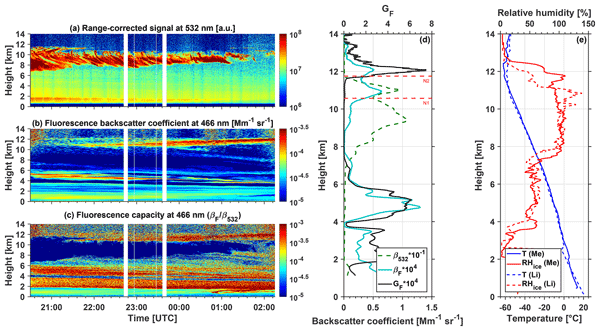
In this study, we discuss the enhanced detection capabilities of a fluorescence lidar in the case of optically thin aerosol layers in the upper troposphere and lower stratosphere (UTLS) region. Our results suggest that such thin aerosol layers are not so rare in the UTLS and can potentially trigger and impact cirrus cloud formation through heterogeneous ice nucleation. By altering the microphysical cloud properties, this could affect clouds' evolution and lifetime and thus their climate effect.
Yun He, Dongzhe Jing, Zhenping Yin, Kevin Ohneiser, and Fan Yi
Atmos. Chem. Phys., 24, 11431–11450, https://doi.org/10.5194/acp-24-11431-2024, https://doi.org/10.5194/acp-24-11431-2024, 2024
Short summary
Short summary
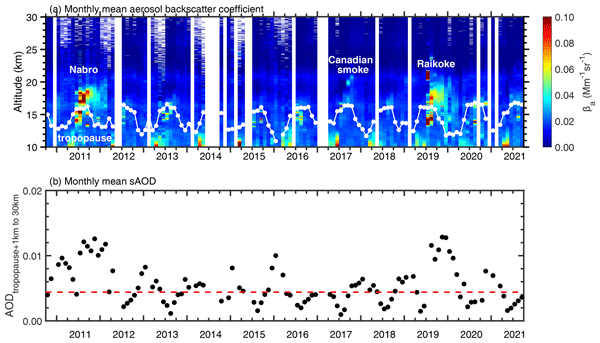
We present a long-term ground-based lidar observation of stratospheric aerosols at a mid-latitude site, Wuhan, in central China, from 2010 to 2021. We observed a stratospheric background period from 2013 to mid-2017, along with several perturbations from volcanic aerosols and wildfire-induced smoke. In summer, injected stratospheric aerosols are found to be captured by the Asian monsoon anticyclone, resulting in prolonged residence and regional transport in the mid-latitudes of East Asia.
Nadja Omanovic, Sylvaine Ferrachat, Christopher Fuchs, Jan Henneberger, Anna J. Miller, Kevin Ohneiser, Fabiola Ramelli, Patric Seifert, Robert Spirig, Huiying Zhang, and Ulrike Lohmann
Atmos. Chem. Phys., 24, 6825–6844, https://doi.org/10.5194/acp-24-6825-2024, https://doi.org/10.5194/acp-24-6825-2024, 2024
Short summary
Short summary
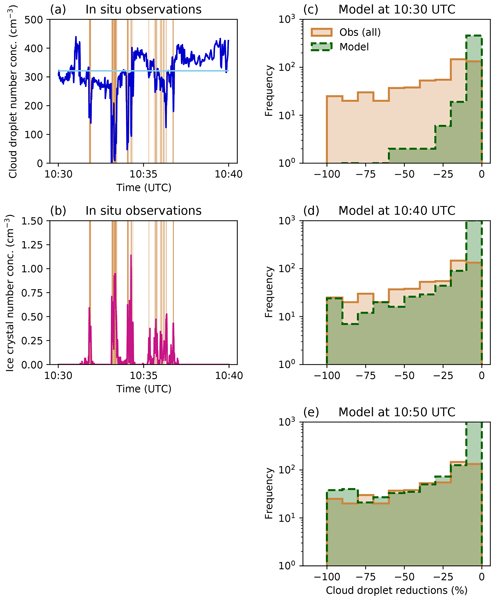
We present simulations with a high-resolution numerical weather prediction model to study the growth of ice crystals in low clouds following glaciogenic seeding. We show that the simulated ice crystals grow slower than observed and do not consume as many cloud droplets as measured in the field. This may have implications for forecasting precipitation, as the ice phase is crucial for precipitation at middle and high latitudes.
Rodanthi-Elisavet Mamouri, Albert Ansmann, Kevin Ohneiser, Daniel A. Knopf, Argyro Nisantzi, Johannes Bühl, Ronny Engelmann, Annett Skupin, Patric Seifert, Holger Baars, Dragos Ene, Ulla Wandinger, and Diofantos Hadjimitsis
Atmos. Chem. Phys., 23, 14097–14114, https://doi.org/10.5194/acp-23-14097-2023, https://doi.org/10.5194/acp-23-14097-2023, 2023
Short summary
Short summary
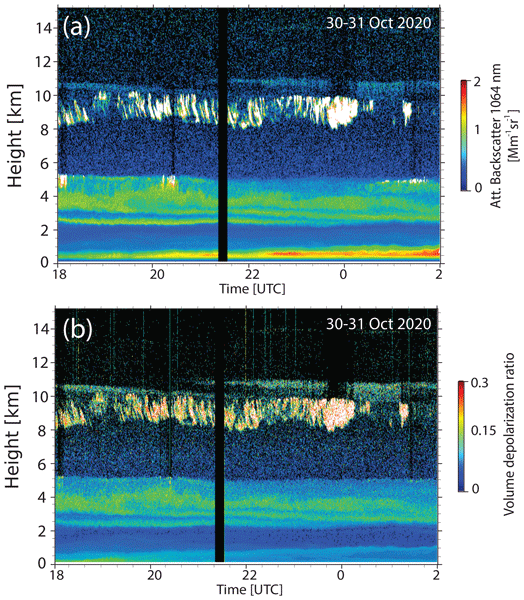
For the first time, rather clear evidence is found that wildfire smoke particles can trigger strong cirrus formation. This finding is of importance because intensive and large wildfires may occur increasingly often in the future as climate change proceeds. Based on lidar observations in Cyprus in autumn 2020, we provide detailed insight into the cirrus formation at the tropopause in the presence of aged wildfire smoke (here, 8–9 day old Californian wildfire smoke).
Albert Ansmann, Kevin Ohneiser, Ronny Engelmann, Martin Radenz, Hannes Griesche, Julian Hofer, Dietrich Althausen, Jessie M. Creamean, Matthew C. Boyer, Daniel A. Knopf, Sandro Dahlke, Marion Maturilli, Henriette Gebauer, Johannes Bühl, Cristofer Jimenez, Patric Seifert, and Ulla Wandinger
Atmos. Chem. Phys., 23, 12821–12849, https://doi.org/10.5194/acp-23-12821-2023, https://doi.org/10.5194/acp-23-12821-2023, 2023
Short summary
Short summary
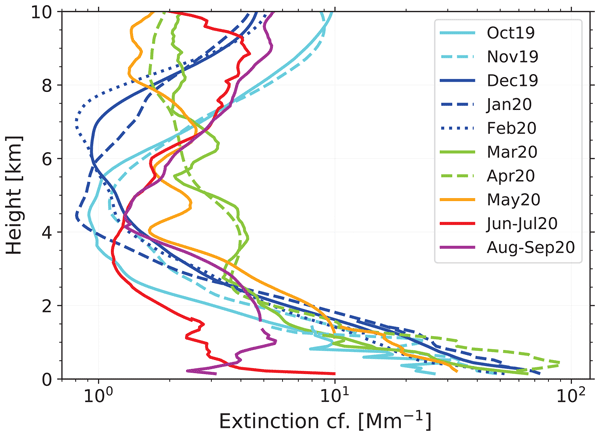
The 1-year MOSAiC (2019–2020) expedition with the German ice breaker Polarstern was the largest polar field campaign ever conducted. The Polarstern, with our lidar aboard, drifted with the pack ice north of 85° N for more than 7 months (October 2019 to mid-May 2020). We measured the full annual cycle of aerosol conditions in terms of aerosol optical and cloud-process-relevant properties. We observed a strong contrast between polluted winter and clean summer aerosol conditions.
Athena Augusta Floutsi, Holger Baars, Ronny Engelmann, Dietrich Althausen, Albert Ansmann, Stephanie Bohlmann, Birgit Heese, Julian Hofer, Thomas Kanitz, Moritz Haarig, Kevin Ohneiser, Martin Radenz, Patric Seifert, Annett Skupin, Zhenping Yin, Sabur F. Abdullaev, Mika Komppula, Maria Filioglou, Elina Giannakaki, Iwona S. Stachlewska, Lucja Janicka, Daniele Bortoli, Eleni Marinou, Vassilis Amiridis, Anna Gialitaki, Rodanthi-Elisavet Mamouri, Boris Barja, and Ulla Wandinger
Atmos. Meas. Tech., 16, 2353–2379, https://doi.org/10.5194/amt-16-2353-2023, https://doi.org/10.5194/amt-16-2353-2023, 2023
Short summary
Short summary
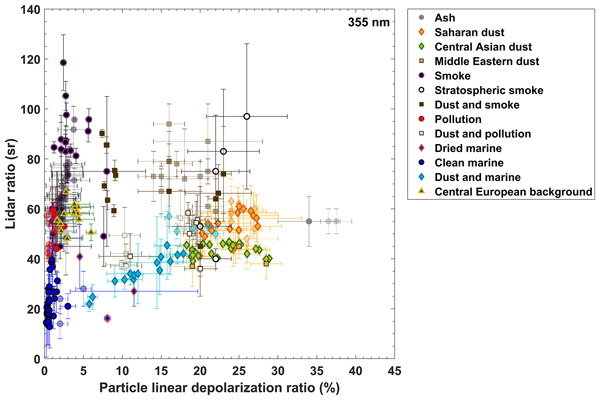
DeLiAn is a collection of lidar-derived aerosol intensive optical properties for several aerosol types, namely the particle linear depolarization ratio, the extinction-to-backscatter ratio (lidar ratio) and the Ångström exponent. The data collection is based on globally distributed, long-term, ground-based, multiwavelength, Raman and polarization lidar measurements and currently covers two wavelengths, 355 and 532 nm, for 13 aerosol categories ranging from basic aerosol types to mixtures.
Kevin Ohneiser, Albert Ansmann, Jonas Witthuhn, Hartwig Deneke, Alexandra Chudnovsky, Gregor Walter, and Fabian Senf
Atmos. Chem. Phys., 23, 2901–2925, https://doi.org/10.5194/acp-23-2901-2023, https://doi.org/10.5194/acp-23-2901-2023, 2023
Short summary
Short summary
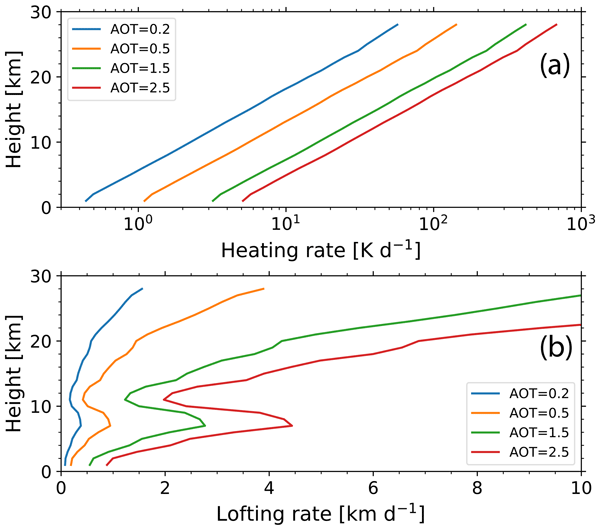
This study shows that smoke layers can reach the tropopause via the self-lofting effect within 3–7 d in the absence of pyrocumulonimbus convection if the
aerosol optical thickness is larger than approximately 2 for a longer time period. When reaching the stratosphere, wildfire smoke can sensitively influence the stratospheric composition on a hemispheric scale and thus can affect the Earth’s climate and the ozone layer.

Albert Ansmann, Kevin Ohneiser, Alexandra Chudnovsky, Daniel A. Knopf, Edwin W. Eloranta, Diego Villanueva, Patric Seifert, Martin Radenz, Boris Barja, Félix Zamorano, Cristofer Jimenez, Ronny Engelmann, Holger Baars, Hannes Griesche, Julian Hofer, Dietrich Althausen, and Ulla Wandinger
Atmos. Chem. Phys., 22, 11701–11726, https://doi.org/10.5194/acp-22-11701-2022, https://doi.org/10.5194/acp-22-11701-2022, 2022
Short summary
Short summary
For the first time we present a systematic study on the impact of wildfire smoke on ozone depletion in the Arctic (2020) and Antarctic stratosphere (2020, 2021). Two major fire events in Siberia and Australia were responsible for the observed record-breaking stratospheric smoke pollution. Our analyses were based on lidar observations of smoke parameters (Polarstern, Punta Arenas) and NDACC Arctic and Antarctic ozone profiles as well as on Antarctic OMI satellite observations of column ozone.

Bernd Heinold, Holger Baars, Boris Barja, Matthew Christensen, Anne Kubin, Kevin Ohneiser, Kerstin Schepanski, Nick Schutgens, Fabian Senf, Roland Schrödner, Diego Villanueva, and Ina Tegen
Atmos. Chem. Phys., 22, 9969–9985, https://doi.org/10.5194/acp-22-9969-2022, https://doi.org/10.5194/acp-22-9969-2022, 2022
Short summary
Short summary
The extreme 2019–2020 Australian wildfires produced massive smoke plumes lofted into the lower stratosphere by pyrocumulonimbus convection. Most climate models do not adequately simulate the injection height of such intense fires. By combining aerosol-climate modeling with prescribed pyroconvective smoke injection and lidar observations, this study shows the importance of the representation of the most extreme wildfire events for estimating the atmospheric energy budget.
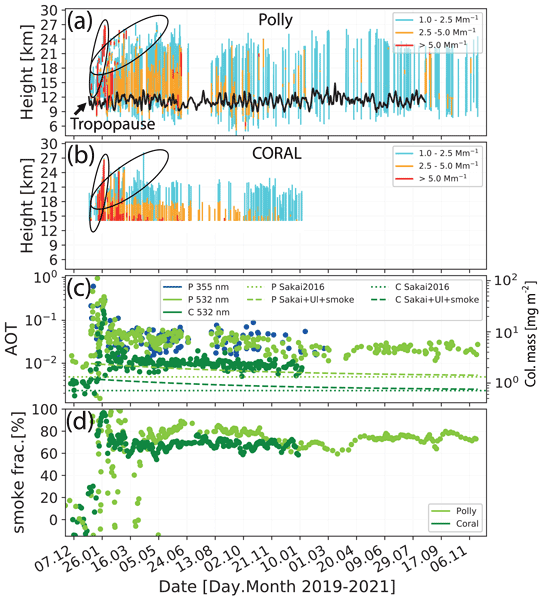
Kevin Ohneiser, Albert Ansmann, Bernd Kaifler, Alexandra Chudnovsky, Boris Barja, Daniel A. Knopf, Natalie Kaifler, Holger Baars, Patric Seifert, Diego Villanueva, Cristofer Jimenez, Martin Radenz, Ronny Engelmann, Igor Veselovskii, and Félix Zamorano
Atmos. Chem. Phys., 22, 7417–7442, https://doi.org/10.5194/acp-22-7417-2022, https://doi.org/10.5194/acp-22-7417-2022, 2022
Short summary
Short summary
We present and discuss 2 years of long-term lidar observations of the largest stratospheric perturbation by wildfire smoke ever observed. The smoke originated from the record-breaking Australian fires in 2019–2020 and affects climate conditions and even the ozone layer in the Southern Hemisphere. The obvious link between dense smoke occurrence in the stratosphere and strong ozone depletion found in the Arctic and in the Antarctic in 2020 can be regarded as a new aspect of climate change.
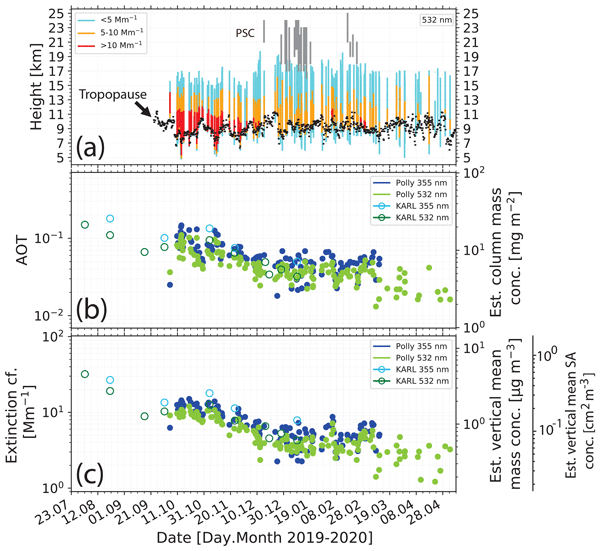
Kevin Ohneiser, Albert Ansmann, Alexandra Chudnovsky, Ronny Engelmann, Christoph Ritter, Igor Veselovskii, Holger Baars, Henriette Gebauer, Hannes Griesche, Martin Radenz, Julian Hofer, Dietrich Althausen, Sandro Dahlke, and Marion Maturilli
Atmos. Chem. Phys., 21, 15783–15808, https://doi.org/10.5194/acp-21-15783-2021, https://doi.org/10.5194/acp-21-15783-2021, 2021
Short summary
Short summary
The highlight of the lidar measurements during the 1-year MOSAiC (Multidisciplinary drifting Observatory for the Study of Arctic Climate) expedition of the German icebreaker Polarstern (October 2019–October 2020) was the detection of a persistent, 10 km deep Siberian wildfire smoke layer in the upper troposphere and lower stratosphere (UTLS) from about 7–8 km to 17–18 km height that could potentially have impacted the record-breaking ozone depletion over the Arctic in the spring of 2020.
Cristofer Jimenez, Albert Ansmann, Friederike Lipken, Julian Hofer, Alexandra Chudnovsky, Holger Baars, Volker Freudenthaler, Ronny Engelmann, Dietrich Althausen, Sabur Abdullozoda, Shohina Kh. Khalifaeva, Patric Seifert, and Ulla Wandinger
EGUsphere, https://doi.org/10.5194/egusphere-2026-5108, https://doi.org/10.5194/egusphere-2026-5108, 2026
This preprint is open for discussion and under review for Atmospheric Chemistry and Physics (ACP).
Short summary
Short summary
For the first time, a multiyear observational data set on the impact of fresh and aged (contaminated, hygroscopic) dust particles on cloud droplet formation processes is presented. The observations were performed at Dushanbe, Tajikistan, in the heart of the well known dust belt. A clear impact of hygroscopic dust particles on droplet formation during the dust season (April to October) was found, in agreement with respective global modeling results.
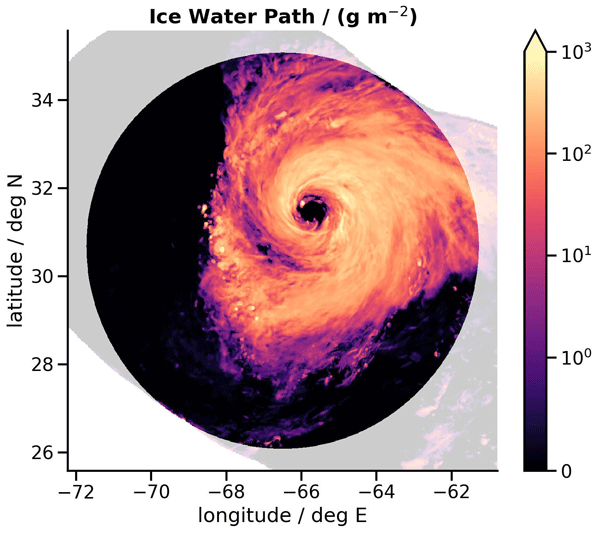
Fabian Senf and Roxana Cremer
Geosci. Model Dev., 19, 7705–7723, https://doi.org/10.5194/gmd-19-7705-2026, https://doi.org/10.5194/gmd-19-7705-2026, 2026
Short summary
Short summary
Computer models for hurricane prediction are increasingly detailed but require large computing resources. We developed a flexible approach that follows hurricanes, applying high-resolution simulations only where needed. This method reduces computing costs by up to an order of magnitude compared to conventional limited-area domains, while achieving resolutions down to 300 m. The approach enables more efficient hurricane research and improved understanding of tropical dynamics.
Julian Hofer, Holger Baars, Zhenping Yin, Andi Klamt, Martin Radenz, Leonard König, Athena A. Floutsi, Cristofer Jimenez, Moritz Haarig, Dietrich Althausen, Benedikt Gast, Håvard S. Buholdt, Nathan Skupin, Jonas Neumann, Sabur F. Abdullozoda, Abduvosit N. Makhmudov, Johannes Bühl, Ronny Engelmann, Ulla Wandinger, and Albert Ansmann
EGUsphere, https://doi.org/10.5194/egusphere-2026-3928, https://doi.org/10.5194/egusphere-2026-3928, 2026
This preprint is open for discussion and under review for Atmospheric Measurement Techniques (AMT).
Short summary
Short summary
A comparison of manually and automatically analyzed lidar profiles of aerosol optical properties is presented. The manual analysis was performed using a custom software in multiple analyses steps based on visual inspection of the lidar signals. The automatic analysis was performed using an automatic processing chain. The comparison shows good agreement and demonstrates the suitability of the automatic retrievals for various applications of aerosol optical property profiles.
Esha Semwal, Dietrich Althausen, Ronny Engelmann, Markus Hartmann, Heike Wex, Thomas Oppermann, and Moritz Haarig
EGUsphere, https://doi.org/10.5194/egusphere-2026-4446, https://doi.org/10.5194/egusphere-2026-4446, 2026
This preprint is open for discussion and under review for Atmospheric Measurement Techniques (AMT).
Short summary
Short summary
This study presents a new laboratory setup to measure the depolarization ratio of size-resolved aerosol particles in the exact backscattering direction. Measurements with different aerosol types showed that the system can distinguish spherical and non-spherical particles and captures the size dependence of the depolarization ratio. The developed setup is therefore well suited to provide reliable experimental data for improving light-scattering models and the interpretation of lidar observations.
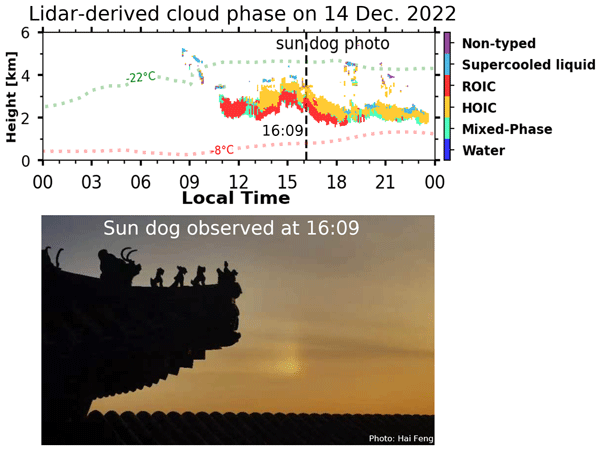
Zhaolong Wu, Patric Seifert, Yun He, Holger Baars, Cristofer Jimenez, Chengcai Li, Jing Li, Albert Ansmann, and Chuanfeng Zhao
Atmos. Chem. Phys., 26, 11491–11523, https://doi.org/10.5194/acp-26-11491-2026, https://doi.org/10.5194/acp-26-11491-2026, 2026
Short summary
Short summary
Using a full year of laser and radar observations in Beijing, this study shows when and where flat ice crystals tend to align horizontally instead of randomly, which suggests that flat ice crystals are most common in moderately cold, weakly turbulent clouds and often form below supercooled liquid water. This new finding can help weather and climate models better represent ice clouds.
Gladiola Malollari, Albert Ansmann, Julian Hofer, Kevin Ohneiser, Ronny Engelmann, Fatbardh Sallaku, and Seit Shallari
EGUsphere, https://doi.org/DOI:10.20944/preprints202507.1175.v2, https://doi.org/DOI:10.20944/preprints202507.1175.v2, 2026
This preprint is open for discussion and under review for Atmospheric Chemistry and Physics (ACP).
Short summary
Short summary
For the first time, the seasonal aerosol vertical distribution of Albania is characterized using 15-year CALIPSO observations and one-year ground-based Raman lidar measurements. Seasonal air mass clusters are derived from a 10-year HYSPLIT backtrajectory analysis. Extinction coefficient, aerosol optical depth, and mass concentration profiles are shown for the total, dust, and nondust contributions. Both datasets reveal consistent vertical aerosol distributions.
Georg Holger Müller, Athena Augusta Floutsi, Julian Hofer, Ronny Engelmann, Dietrich Althausen, Ulla Wandinger, Martin Radenz, Moritz Haarig, Sabur Fuzailovich Abdullaev, Shohina Kh. Khalifaeva, Albert Ansmann, and Holger Baars
EGUsphere, https://doi.org/10.5194/egusphere-2026-3390, https://doi.org/10.5194/egusphere-2026-3390, 2026
Short summary
Short summary
A five-year dataset of lidar measurements from Dushanbe, Tajikistan, was analyzed to investigate the annual dust cycle and intraanual variability in the region. The dataset consists of automatically processed data, including the separation of the dust and non-dust particle backscatter coefficient and enabling the calculation of monthly and seasonal dust mass concentration within the atmosphere. The study highlights the importance of continuous lidar measurements in the Central Asian region.
Junghwa Lee, Patric Seifert, Tempei Hashino, and Yign Noh
EGUsphere, https://doi.org/10.5194/egusphere-2026-3827, https://doi.org/10.5194/egusphere-2026-3827, 2026
This preprint is open for discussion and under review for Atmospheric Chemistry and Physics (ACP).
Short summary
Short summary
Cloud droplets form and grow along different paths. We track individual droplets in shallow-cumulus simulations using a Lagrangian cloud model to determine when they activate and whether they remain in moist cloud interiors or pass through drier cloud edges. Higher aerosol loading accelerates early activation and growth but reduces the number of droplets that grow large enough to become drizzle. These aerosol-driven changes should be detectable with Ka-band cloud-radar observations.
Gabriella Wallentin, Alexander Böhmländer, Ross Herbert, Heike Wex, Charlotte M. Beall, Pia Bogert, Zoé Brasseur, Jie Chen, Jessie M. Creamean, Paul J. DeMott, Oliver Eckermann, Kunfeng Gao, Xianda Gong, Silvia Henning, Naruki Hiranuma, Christina S. McCluskey, Christos Mitsios, Ottmar Möhler, Athanasios Nenes, Mark D. Tarn, Christian Tatzelt, Ping Tian, Yutaka Tobo, Franziska Vogel, André Welti, Elise Wilbourn, Jennifer Winstone, and Corinna Hoose
EGUsphere, https://doi.org/10.5194/egusphere-2026-4134, https://doi.org/10.5194/egusphere-2026-4134, 2026
This preprint is open for discussion and under review for Atmospheric Chemistry and Physics (ACP).
Short summary
Short summary
Ice nucleating particles (INPs) are aerosols essential for cloud ice formation in the temperature range -38 °C and 0 °C. Due to measurement challenges, the availability of observations of INPs remains scarce. This study applies machine learning to predict a global INP distribution using aerosol mass concentration reanalysis and observed INPs. This manuscript demonstrates that even with limited measurements, the occurrence of INPs can be estimated, following the spatial pattern of key aerosols.
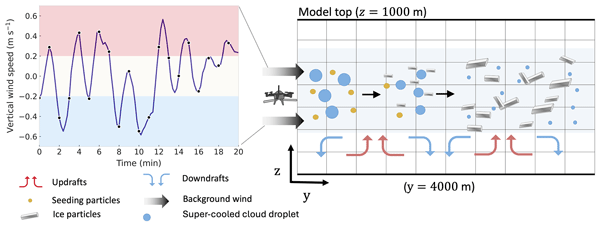
Huiying Zhang, Chia Rui Ong, Anurag Dipankar, Ulrike Lohmann, and Jan Henneberger
Atmos. Chem. Phys., 26, 8677–8693, https://doi.org/10.5194/acp-26-8677-2026, https://doi.org/10.5194/acp-26-8677-2026, 2026
Short summary
Short summary
We used computer simulations to study cloud seeding. We discovered a 'self-lofting' mechanism whereby, as the seeded ice crystals grow, they release heat, generating an upward air current. This enables the ice plume to rise and spread vertically, even when the surrounding air is sinking. This is why seeded ice survives in unfavourable wind conditions. Our results demonstrate that this internal heating is essential for the effectiveness and validation of weather modification technologies.
Lukas Pieper, Patric Seifert, Hannes Griesche, Albert Ansmann, George McCosh, Florian Ewald, and Stefan Kneifel
EGUsphere, https://doi.org/10.5194/egusphere-2026-3092, https://doi.org/10.5194/egusphere-2026-3092, 2026
This preprint is open for discussion and under review for Atmospheric Chemistry and Physics (ACP).
Short summary
Short summary
Using ground-based cloud Doppler radar observations and aerosol model data, a strong relationship between Saharan dust and enhanced turbulence in cirrus clouds over Europe was identified. Dust-infused cirrus formed mainly within moist, dust-laden air masses and showed strong correlation with in-cloud turbulence. The results provide a baseline observational overview on dust-turbulence-cirrus interactions, informing weather and climate models regarding possible methodological improvements.
Holger Baars, Moritz Haarig, Leonard König, Athena A. Floutsi, Elizaveta Basharova, Julian Hofer, Henriette Gebauer, Ronny Engelmann, Dietrich Althausen, Annett Skupin, Benedikt Gast, Felix Fritzsch, Kevin Ohneiser, Cristofer Jimenez, Tom Gaudek, Martin Radenz, Håvard Buholdt, Birgit Heese, Andi Klamt, Patric Seifert, David P. Donovan, Gerd-Jan van Zadelhoff, Sabur F. Abdullaev, Shohina K. Khalifaeva, Dilovar F. Nozirov, and Ulla Wandinger
Atmos. Meas. Tech., 19, 3831–3864, https://doi.org/10.5194/amt-19-3831-2026, https://doi.org/10.5194/amt-19-3831-2026, 2026
Short summary
Short summary
The satellite mission EarthCARE (Earth Cloud, Aerosol, and Radiation Explorer) was launched in May 2024 and has 4 unique instruments on board. We used ground-based PollyNET/ACTRIS (Aerosol, Clouds and Trace gases Research Infrastructure) profiling data to discuss the quality of EarthCARE’s lidar products based on case studies from different geographic locations. Our investigations revealed that the space-borne lidar instrument has remarkable profiling capabilities but currently also still some limitations, however, not preventing first scientific studies when quality checking the data intensively.
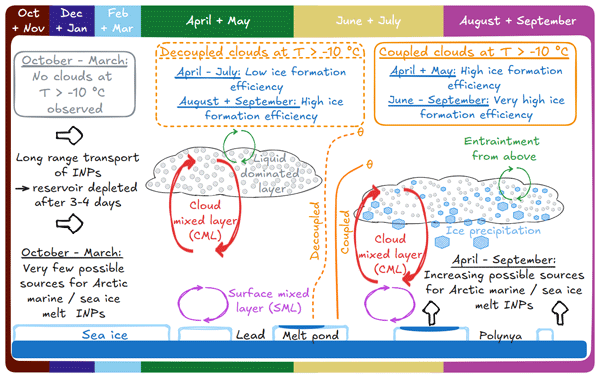
Hannes J. Griesche, Ronny Engelmann, Martin Radenz, Julian Hofer, Dietrich Althausen, Albert Ansmann, Kevin Barry, Jessie Creamean, Cristofer Jimenez, and Patric Seifert
Atmos. Chem. Phys., 26, 7141–7163, https://doi.org/10.5194/acp-26-7141-2026, https://doi.org/10.5194/acp-26-7141-2026, 2026
Short summary
Short summary
An annual cycle of mixed-phase ice-formation temperatures in the high Arctic is presented. Ship-based remote sensing with lidar and cloud radar from the MOSAiC (Multidisciplinary drifting Observatory for the Study of Arctic Climate) expedition was used to investigate the impact of surface processes on mixed-phase cloud properties. Surface mixed-layer cloud coupling was derived from radiosonde profiles. Combined with ice nucleating particle filter samples, sea ice concentration, and trajectory analysis an influence of surface processes on cloud properties was found.
Friederike Jakob, Martin Radenz, Holger Baars, Patric Seifert, and Ronny Engelmann
EGUsphere, https://doi.org/10.5194/egusphere-2026-2445, https://doi.org/10.5194/egusphere-2026-2445, 2026
Short summary
Short summary
Continuous water vapor mixing ratio profiles at Neumayer Station III, Antarctica during winter 2023 are presented. The observations reveal synoptic patterns governing moisture transport towards the Antarctic coast. Comparison with ER5 reanalysis data shows generally good agreement, but a dry bias of 10% in the lower troposphere. The bias depends on assimilation cycle, surface representation in ERA5, and synoptic conditions, suggesting uncertainties in boundary layer processes as a key causes.
David J. Simon, Jonas Schaefer, Jörg Hartmann, Benjamin Kirbus, Joshua Müller, Markus Hartmann, Bruno Wetzel, Laura Köhler, Anna-Marie Jörss, Kay Weinhold, Andreas Herber, Zsófia Jurányi, Silvia Henning, Gregory C. Roberts, Manfred Wendisch, Mira L. Pöhlker, and Frank Stratmann
EGUsphere, https://doi.org/10.5194/egusphere-2026-2215, https://doi.org/10.5194/egusphere-2026-2215, 2026
Short summary
Short summary
We investigate the occurrence of newly formed aerosol particles in the Arctic atmosphere by analyzing aerosol particle measurements conducted aboard a research aircraft in April 2024. We frequently detected newly formed particles at altitudes of up to 4 km, while many previous studies had predominantly found such particles close to the surface. Newly formed particles were associated with air mass transport from lower latitudes, the occurrence of clouds, as well as the presence of sea ice.
Audrey Teisseire, Patric Seifert, Kevin Ohneiser, Maximilian Maahn, Robert Spirig, and Jan Henneberger
Atmos. Meas. Tech., 19, 2897–2921, https://doi.org/10.5194/amt-19-2897-2026, https://doi.org/10.5194/amt-19-2897-2026, 2026
Short summary
Short summary
This study evaluates the vertical distribution of particle shape (VDPS) method for identifying particle shapes and riming/aggregation using in-situ and multi-frequency radar data from the CLOUDLAB campaign. Despite non-Rayleigh scattering effects, results show that the VDPS method using a Ka-band scanning cloud radar in slanted depolarization ratio (SLDR) mode is effective for hydrometeor classification.
Tom Gaudek, Cristofer Jimenez, Kevin Ohneiser, Christopher Fuchs, Jan Henneberger, Johannes Bühl, Andi Klamt, Albert Ansmann, Ronny Engelmann, and Patric Seifert
Atmos. Meas. Tech., 19, 2245–2263, https://doi.org/10.5194/amt-19-2245-2026, https://doi.org/10.5194/amt-19-2245-2026, 2026
Short summary
Short summary
This study introduces the maximum diameter (Dmax) of precipitation particles measured by a two-dimensional video disdrometer (2DVD) as a novel parameter. Dmax is applied in a cloud seeding study during the Cloudlab campaign and, for the first time, in a MOSAiC (Multidisciplinary drifting Observatory for the Study of Arctic Climate) case to evaluate the LIRAS (LIdar RAdar Synergy )-ice remote-sensing retrieval of in-cloud ice crystal size and number. Both quantities agreed well with the 2DVD measurements under ideal conditions, highlighting the potential of Dmax for precipitation studies.
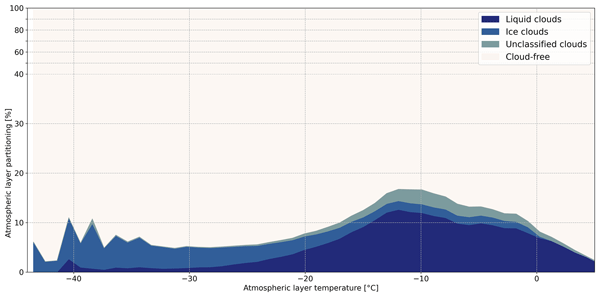
Jean Lac, Hélène Chepfer, Matthew D. Shupe, and Hannes Griesche
Atmos. Chem. Phys., 26, 4189–4213, https://doi.org/10.5194/acp-26-4189-2026, https://doi.org/10.5194/acp-26-4189-2026, 2026
Short summary
Short summary
Satellite observations show that Arctic spring experiences a rapid increase in liquid-containing clouds over sea ice. Our study shows that this transition is mostly driven by warmer temperatures in early spring than in late spring, favoring more liquid clouds formation, rather than a limited moisture source in early spring. It suggests that, in the future, this transition is likely to occur earlier in spring considering the rapid Arctic warming.
Johanna Roschke, Benedikt Gast, Martin Radenz, Albert Ansmann, Patric Seifert, George McCosh, and Heike Kalesse-Los
EGUsphere, https://doi.org/10.5194/egusphere-2026-718, https://doi.org/10.5194/egusphere-2026-718, 2026
Short summary
Short summary
This research introduces a new method that combines model simulations with satellite observations to attribute the influence of wildfire smoke on an airmass. By dynamically determining the height of smoke plumes, we overcome a key limitation of earlier fixed reception-height approaches. This advancement is crucial for improving our understanding of how wildfire emissions influence cloud formation and the broader Earth's climate system.
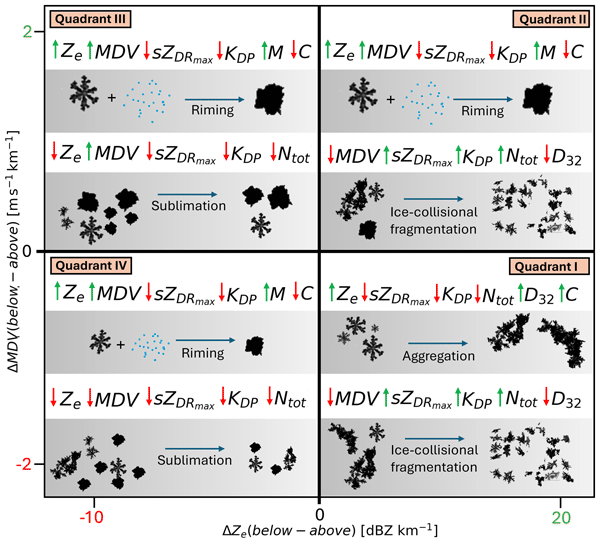
Anton Kötsche, Maximilian Maahn, Veronika Ettrichrätz, and Heike Kalesse-Los
Atmos. Chem. Phys., 26, 3277–3297, https://doi.org/10.5194/acp-26-3277-2026, https://doi.org/10.5194/acp-26-3277-2026, 2026
Short summary
Short summary
We studied how turbulence affects snowfall in the Colorado Rockies, focusing on a turbulent layer behind Gothic Mountain. Using radar and surface observations, we found turbulence enhances snow growth by causing snowflakes to stick and form extra ice via collisions. Liquid water at cold temperatures further boosts snow formation. This work shows how turbulence shapes mountain snowfall and demonstrates radar-based methods to study precipitation processes.
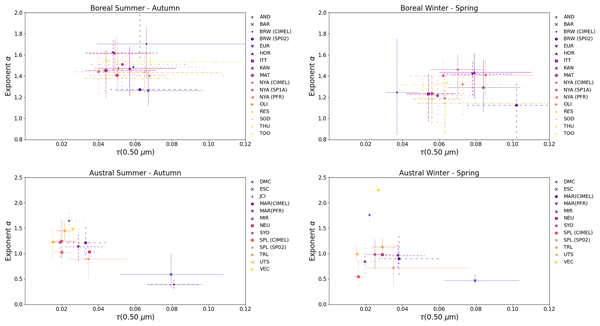
Simone Pulimeno, Angelo Lupi, Vito Vitale, Claudia Frangipani, Carlos Toledano, Stelios Kazadzis, Natalia Kouremeti, Christoph Ritter, Sandra Graßl, Kerstin Stebel, Vitali Fioletov, Ihab Abboud, Sandra Blindheim, Lynn Ma, Norm O'Neill, Piotr Sobolewski, Pawan Gupta, Elena Lind, Thomas F. Eck, Antti Hyvärinen, Veijo Aaltonen, Rigel Kivi, Janae Csavina, Dmitry Kabanov, Sergey M. Sakerin, Olga R. Sidorova, Robert S. Stone, Hagen Telg, Laura Riihimaki, Raul R. Cordero, Martin Radenz, Ronny Engelmann, Michel Van Roozendal, Anatoli Chaikovsky, Philippe Goloub, Junji Hisamitsu, and Mauro Mazzola
Atmos. Chem. Phys., 26, 1809–1846, https://doi.org/10.5194/acp-26-1809-2026, https://doi.org/10.5194/acp-26-1809-2026, 2026
Short summary
Short summary
This study analyzed aerosols optical properties over the Arctic and Antarctic to measure them even during long periods of darkness. It found that pollution in the Arctic is decreasing, likely due to European emission regulations, while wildfires are becoming a more important source of particles. In Antarctica, particle levels are higher near the coast than inland, and vary by season. These results help us better understand how air pollution and climate are changing at the Earth’s poles.
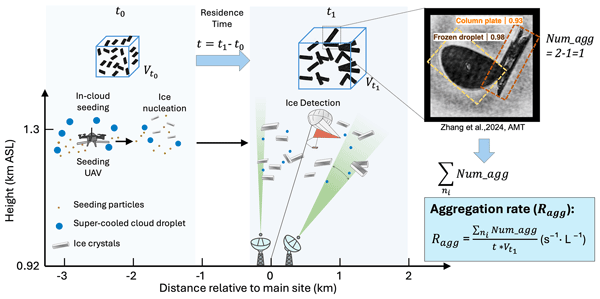
Huiying Zhang, Fabiola Ramelli, Christopher Fuchs, Nadja Omanovic, Anna J. Miller, Robert Spirig, Zhaolong Wu, Yunpei Chu, Xia Li, Ulrike Lohmann, and Jan Henneberger
Atmos. Chem. Phys., 26, 1459–1481, https://doi.org/10.5194/acp-26-1459-2026, https://doi.org/10.5194/acp-26-1459-2026, 2026
Short summary
Short summary
Ice crystals in clouds aggregate, shaping snow and rain, yet rates are hard to measure. Using cloud seeding, we sampled crystals downwind after known times. A deep-learning algorithm quantified aggregation by counting crystal components. Initial ice concentration was the main driver, confirmed by causal analysis, physics, and machine learning, though weaker than theory predicts. Temperature, size, and shape also mattered, while turbulence was negligible.
Kevin Ohneiser, Patric Seifert, Willi Schimmel, Fabian Senf, Tom Gaudek, Martin Radenz, Audrey Teisseire, Veronika Ettrichrätz, Teresa Vogl, Nina Maherndl, Nils Pfeifer, Jan Henneberger, Anna J. Miller, Nadja Omanovic, Christopher Fuchs, Huiying Zhang, Fabiola Ramelli, Robert Spirig, Anton Kötsche, Heike Kalesse-Los, Maximilian Maahn, Heather Corden, Alexis Berne, Majid Hajipour, Hannes Griesche, Julian Hofer, Ronny Engelmann, Annett Skupin, Albert Ansmann, and Holger Baars
Atmos. Chem. Phys., 25, 17363–17386, https://doi.org/10.5194/acp-25-17363-2025, https://doi.org/10.5194/acp-25-17363-2025, 2025
Short summary
Short summary
This study focuses on a seeder-feeder cloud system on 8 Jan 2024 in Eriswil, Switzerland. It is shown how the interaction of these cloud systems changes the cloud microphysical properties and the precipitation patterns. A big set of advanced remote-sensing techniques and retrieval algorithms are applied, so that a detailed view on the seeder-feeder cloud system is available. The gained knowledge can be used to improve weather models and weather forecasts.
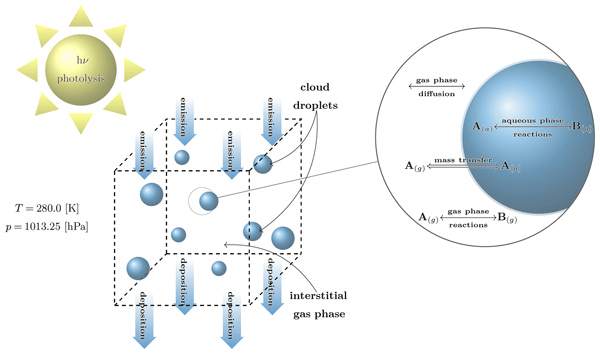
Levin Rug, Willi Schimmel, Fabian Hoffmann, and Oswald Knoth
Geosci. Model Dev., 18, 9039–9059, https://doi.org/10.5194/gmd-18-9039-2025, https://doi.org/10.5194/gmd-18-9039-2025, 2025
Short summary
Short summary
We present the Chemical Mechanism Integrator (Cminor) v1.0, a tool to predict concentrations of chemical compounds undergoing arbitrary reactions. Cminor is an advanced, open-source solver to model either combustion chemistry, or atmospheric chemistry and its direct influence on condensation of cloud droplets and the subsequent processing of aerosol. It uses the superdroplet idea, making it particularly feasible for coupling with such models, which is part of future work.
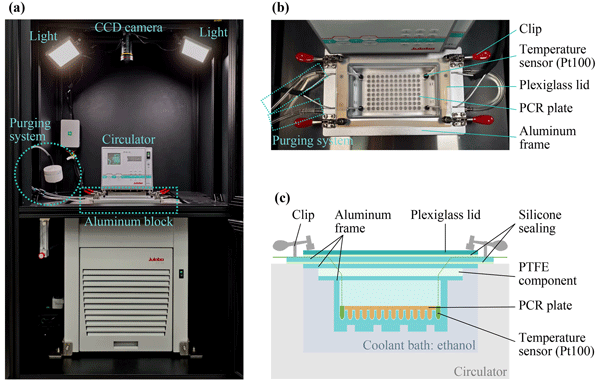
Kaiqi Wang, Kai Bi, Shuling Chen, Markus Hartmann, Zhijun Wu, Jiyu Gao, Xiaoyu Xu, Yuhan Cheng, Mengyu Huang, Yunbo Chen, Huiwen Xue, Bingbing Wang, Yaqiong Hu, Xiongying Zhang, Xincheng Ma, Ruijie Li, Ping Tian, Ottmar Möhler, Heike Wex, Frank Stratmann, Jie Chen, and Xianda Gong
Atmos. Meas. Tech., 18, 5823–5840, https://doi.org/10.5194/amt-18-5823-2025, https://doi.org/10.5194/amt-18-5823-2025, 2025
Short summary
Short summary
Understanding how ice forms in clouds is crucial for predicting weather and climate; however, accurately measuring the ice-nucleating particles that trigger ice formation remains challenging. We developed an advanced instrument called the Freezing Ice Nucleation Detection Analyzer. By refining temperature control, automating freezing detection, and rigorously testing, we demonstrated that this instrument can reliably measure immersion mode ice-nucleating particles across diverse conditions.
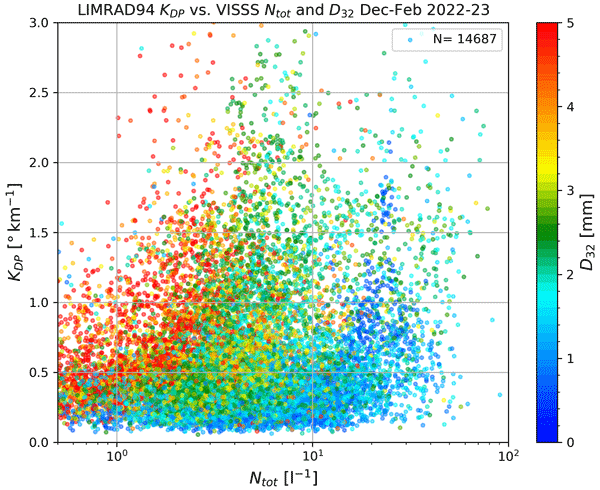
Anton Kötsche, Alexander Myagkov, Leonie von Terzi, Maximilian Maahn, Veronika Ettrichrätz, Teresa Vogl, Alexander Ryzhkov, Petar Bukovcic, Davide Ori, and Heike Kalesse-Los
Atmos. Chem. Phys., 25, 14045–14070, https://doi.org/10.5194/acp-25-14045-2025, https://doi.org/10.5194/acp-25-14045-2025, 2025
Short summary
Short summary
Our study combines radar observations of snow with snowfall camera observations on the ground to enhance our understanding of radar variables and snowfall properties. We found that values of an important radar variable (KDP) can be related to many different snow particle properties and number concentrations. We were able to constrain which particle sizes contribute to KDP by using computer models of snowflakes and showed which microphysical processes during snow formation can influence KDP.
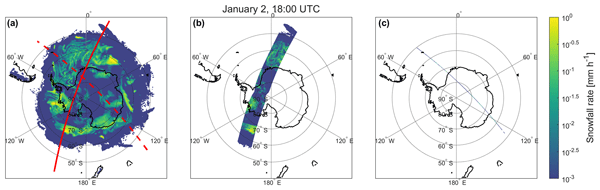
Filippo Emilio Scarsi, Alessandro Battaglia, Maximilian Maahn, and Stef Lhermitte
The Cryosphere, 19, 4875–4892, https://doi.org/10.5194/tc-19-4875-2025, https://doi.org/10.5194/tc-19-4875-2025, 2025
Short summary
Short summary
Snowfall measurements at high latitudes are crucial for estimating ice sheet mass balance. Spaceborne radar and radiometer missions help estimate snowfall but face uncertainties. This work evaluates uncertainties in snowfall estimates from a fixed near-nadir radar (CloudSat-like) and a conically scanning radar (WIVERN-like), showing that a WIVERN-like radar will provide better estimates than a CloudSat-like radar at smaller spatial and temporal scales.
Cristofer Jimenez, Albert Ansmann, Kevin Ohneiser, Hannes Griesche, Ronny Engelmann, Martin Radenz, Julian Hofer, Dietrich Althausen, Daniel A. Knopf, Sandro Dahlke, Johannes Bühl, Holger Baars, Patric Seifert, and Ulla Wandinger
Atmos. Chem. Phys., 25, 12955–12981, https://doi.org/10.5194/acp-25-12955-2025, https://doi.org/10.5194/acp-25-12955-2025, 2025
Short summary
Short summary
We studied the water and ice phases of Arctic mixed-phase clouds (MPCs) using dual FOV polarization lidar and Doppler radar on board Polarstern during the MOSAiC expedition. Two long-lasting Arctic MPCs and year-round statistics show persistent droplet activation and dominant immersion freezing, indicating well-filled cloud condensation nuclei and ice-nucleating particle reservoirs. These findings help explain MPC longevity and may improve cloud life cycle representation in weather and climate models.
Majid Hajipour, Patric Seifert, Hannes Griesche, Kevin Ohneiser, and Martin Radenz
Atmos. Meas. Tech., 18, 5199–5222, https://doi.org/10.5194/amt-18-5199-2025, https://doi.org/10.5194/amt-18-5199-2025, 2025
Short summary
Short summary
This study presents an approach that enables the detection of the shape and orientation of multiple types of co-located hydrometeors in mixed-phase cloud systems. This information is key for improving the understanding of these clouds, as they do contain ice and liquid water simultaneously, making them relevant for the precipitation budget and radiative balance of the Earth's atmosphere. The retrieval is based on elevation scans of polarimetric cloud radars and can therefore be flexibly applied.
Christopher Fuchs, Fabiola Ramelli, Anna J. Miller, Nadja Omanovic, Robert Spirig, Huiying Zhang, Patric Seifert, Kevin Ohneiser, Ulrike Lohmann, and Jan Henneberger
Atmos. Chem. Phys., 25, 12177–12196, https://doi.org/10.5194/acp-25-12177-2025, https://doi.org/10.5194/acp-25-12177-2025, 2025
Short summary
Short summary
We quantify diffusional ice crystal growth in natural clouds using cloud seeding experiments. We report growth rates for 14 experiments between −5.1 °C and −8.3 °C and observe strong variations depending on the cloud characteristics. Comparing our growth rates to laboratory data, we found similar temperature-dependent trends, but the laboratory rates are higher. These data fill the gap in quantitative in situ observation of ice crystal growth, helping to validate models and laboratory experiments.
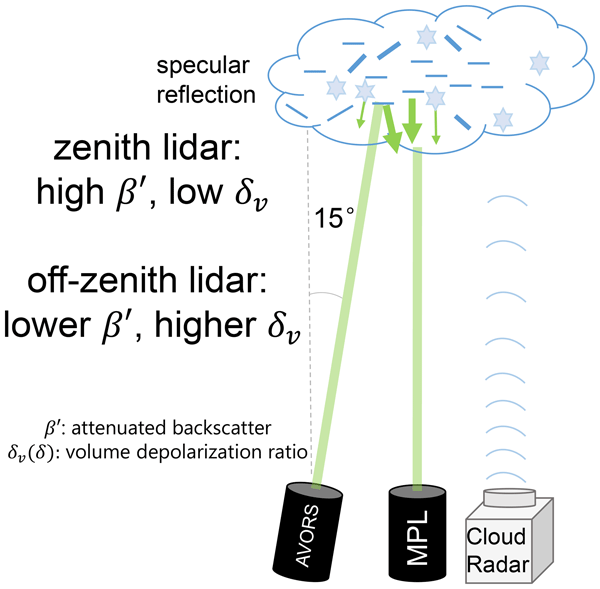
Zhaolong Wu, Patric Seifert, Yun He, Holger Baars, Haoran Li, Cristofer Jimenez, Chengcai Li, and Albert Ansmann
Atmos. Meas. Tech., 18, 3611–3634, https://doi.org/10.5194/amt-18-3611-2025, https://doi.org/10.5194/amt-18-3611-2025, 2025
Short summary
Short summary
This study introduces a novel method to detect horizontally oriented ice crystals (HOICs) using two ground-based polarization lidars at different zenith angles, based on a yearlong dataset collected in Beijing. Combined with cloud radar and reanalysis data, the fine categorization results reveal HOICs occur in calm winds and moderately cold temperatures and are influenced by turbulence near cloud bases. The results enhance our understanding of cloud processes and improve atmospheric models.
Hossein Panahifar, Maria Poutli, George Kotsias, Argyro Nisantzi, Silas Michaelides, Diofantos Hadjimitsis, Patric Seifert, Albert Ansmann, and Rodanthi-Elisavet Mamouri
Int. Arch. Photogramm. Remote Sens. Spatial Inf. Sci., XLVIII-G-2025, 1153–1158, https://doi.org/10.5194/isprs-archives-XLVIII-G-2025-1153-2025, https://doi.org/10.5194/isprs-archives-XLVIII-G-2025-1153-2025, 2025
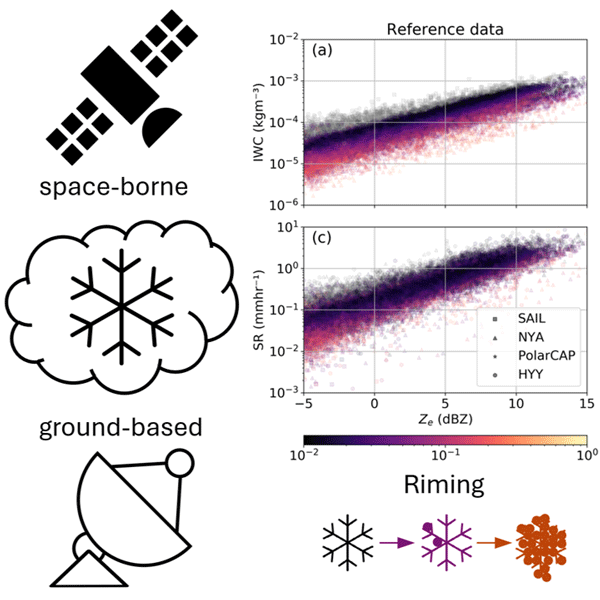
Nina Maherndl, Alessandro Battaglia, Anton Kötsche, and Maximilian Maahn
Atmos. Meas. Tech., 18, 3287–3304, https://doi.org/10.5194/amt-18-3287-2025, https://doi.org/10.5194/amt-18-3287-2025, 2025
Short summary
Short summary
Accurate measurements of ice water content (IWC) and snowfall rate (SR) are challenging due to high spatial variability and limitations of our measurement techniques. Here, we present a novel method to derive IWC and SR from W-band cloud radar observations, considering the degree of riming. We also investigate the use of the liquid water path (LWP) as a proxy for the occurrence of riming. LWP is easier to measure, so that the method can be applied to both ground-based and space-based instruments.
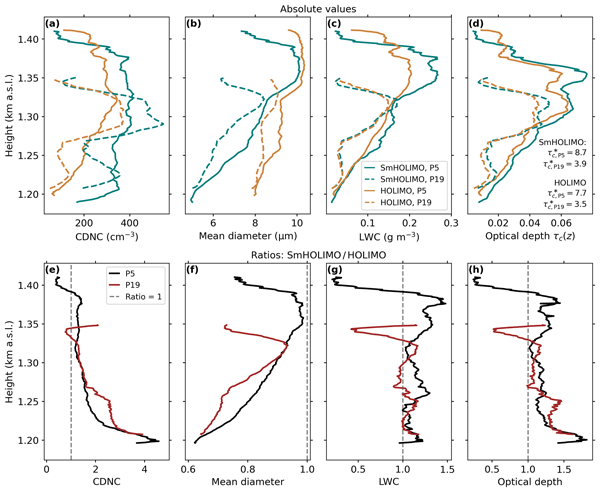
Christopher Fuchs, Fabiola Ramelli, David Schweizer, Ulrike Lohmann, and Jan Henneberger
Atmos. Meas. Tech., 18, 2969–2986, https://doi.org/10.5194/amt-18-2969-2025, https://doi.org/10.5194/amt-18-2969-2025, 2025
Short summary
Short summary
We present a new instrument based on digital in-line holography (SmHOLIMO) for in situ cloud measurements. SmHOLIMO is designed to specifically measure small cloud droplets with diameters > 3.7 μm. This way we retrieve accurate cloud droplet size distributions, which are crucial to understand the evolution and governing microphysical processes of a cloud. Results of a field study are compared to co-located measurements of a second holographic imager, microwave radiometer, and cloud radar.
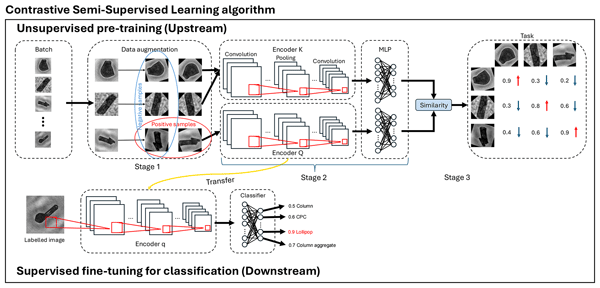
Yunpei Chu, Huiying Zhang, Xia Li, and Jan Henneberger
Atmos. Meas. Tech., 18, 2781–2801, https://doi.org/10.5194/amt-18-2781-2025, https://doi.org/10.5194/amt-18-2781-2025, 2025
Short summary
Short summary
Our study improves ice crystal shape classification, key for understanding weather and climate. By adding unsupervised pre-training before supervised classification, our algorithm reduces manual labeling effort while maintaining high accuracy. It outperforms fully supervised models across datasets of varying sizes and categories, showing strong generalization ability. This method improves ice crystal classification techniques, making it adaptable to different environmental datasets.
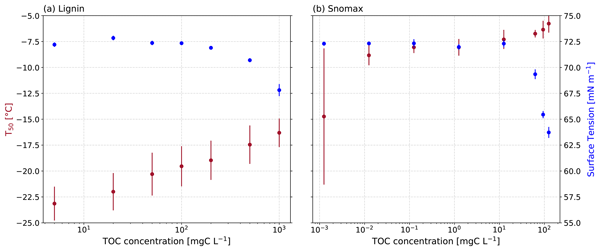
Kathleen A. Alden, Paul Bieber, Anna J. Miller, Nicole Link, Benjamin J. Murray, and Nadine Borduas-Dedekind
Atmos. Chem. Phys., 25, 6179–6195, https://doi.org/10.5194/acp-25-6179-2025, https://doi.org/10.5194/acp-25-6179-2025, 2025
Short summary
Short summary
Lignin and Snomax are surface-active macromolecules that show a relationship between increasing concentrations, decreasing surface tension, and increasing ice-nucleating ability. However, this relationship did not hold for agricultural soil extracts collected in the UK and Canada. To explain this difference, we propose that as the complexity of the sample increases, the hydrophobic interfaces in the bulk compete with the air–water interface.
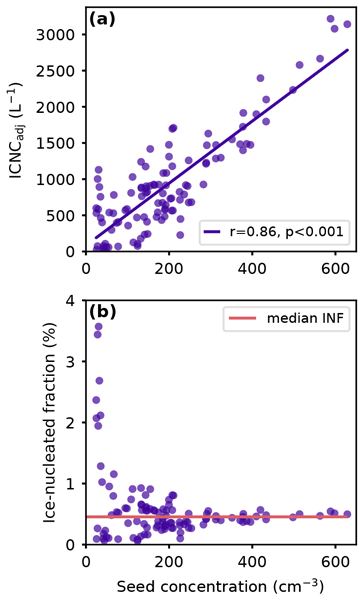
Anna J. Miller, Christopher Fuchs, Fabiola Ramelli, Huiying Zhang, Nadja Omanovic, Robert Spirig, Claudia Marcolli, Zamin A. Kanji, Ulrike Lohmann, and Jan Henneberger
Atmos. Chem. Phys., 25, 5387–5407, https://doi.org/10.5194/acp-25-5387-2025, https://doi.org/10.5194/acp-25-5387-2025, 2025
Short summary
Short summary
We analyzed the ability of silver iodide particles (a commonly used cloud-seeding agent) to form ice crystals in naturally occurring liquid clouds at −5 to −8 °C and found that only ≈ 0.1 %−1 % of particles nucleate ice, with a negative dependence on temperature. By contextualizing our results with previous laboratory studies, we help to bridge the gap between laboratory and field experiments, which also helps to inform future cloud-seeding projects.
Albert Ansmann, Cristofer Jimenez, Daniel A. Knopf, Johanna Roschke, Johannes Bühl, Kevin Ohneiser, and Ronny Engelmann
Atmos. Chem. Phys., 25, 4867–4884, https://doi.org/10.5194/acp-25-4867-2025, https://doi.org/10.5194/acp-25-4867-2025, 2025
Short summary
Short summary
In this study, we focus on the potential impact of wildfire smoke on cirrus formation. Aerosol and cirrus observations with lidar and radar during the MOSAiC (Multidisciplinary drifting Observatory for the Study of Arctic Climate) expedition, presented in the companion paper (Ansmann et al., 2025), are closely linked to comprehensive modeling of ice nucleation in cirrus evolution processes, presented in this article. A clear impact of wildfire smoke on cirrus formation was found.
Albert Ansmann, Cristofer Jimenez, Johanna Roschke, Johannes Bühl, Kevin Ohneiser, Ronny Engelmann, Martin Radenz, Hannes Griesche, Julian Hofer, Dietrich Althausen, Daniel A. Knopf, Sandro Dahlke, Tom Gaudek, Patric Seifert, and Ulla Wandinger
Atmos. Chem. Phys., 25, 4847–4866, https://doi.org/10.5194/acp-25-4847-2025, https://doi.org/10.5194/acp-25-4847-2025, 2025
Short summary
Short summary
In this study, we focus on the potential impact of wildfire smoke on cirrus formation. For the first time, state-of-the-art aerosol and cirrus observations with lidar and radar, presented in this paper (Part 1 of a series of two articles), are closely linked to the comprehensive modeling of gravity-wave-induced ice nucleation in cirrus evolution processes, presented in a companion paper (Part 2). We found a clear impact of wildfire smoke on cirrus evolution.
Dennis Niedermeier, Rasmus Hoffmann, Silvio Schmalfuss, Wiebke Frey, Fabian Senf, Olaf Hellmuth, Mira Pöhlker, and Frank Stratmann
Aerosol Research, 3, 219–230, https://doi.org/10.5194/ar-3-219-2025, https://doi.org/10.5194/ar-3-219-2025, 2025
Short summary
Short summary
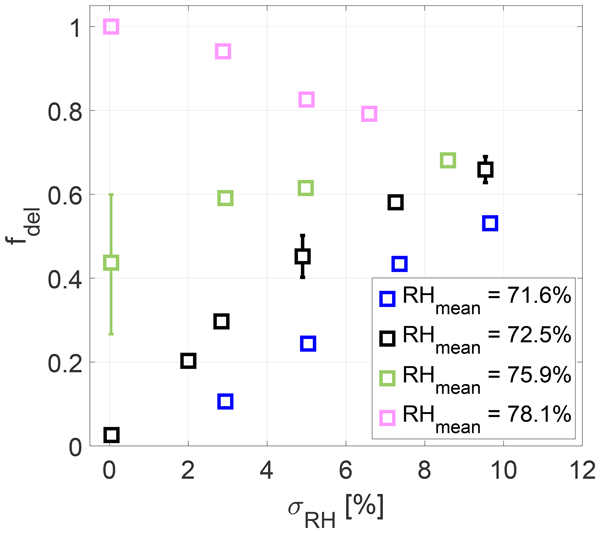
This study examines the deliquescence behavior of NaCl particles in a turbulent humidity field using the wind tunnel LACIS-T (Turbulent Leipzig Aerosol Cloud Interaction Simulator). The results show that turbulent relative humidity (RH) fluctuations affect the number of deliquesced particles, depending on the mean RH, strength of humidity fluctuations, and particle residence time. It turns out that, in addition to the mean RH, it is essential to consider humidity fluctuations and particle history when determining the phase state of the deliquescent particles.
Benedikt Gast, Cristofer Jimenez, Albert Ansmann, Moritz Haarig, Ronny Engelmann, Felix Fritzsch, Athena A. Floutsi, Hannes Griesche, Kevin Ohneiser, Julian Hofer, Martin Radenz, Holger Baars, Patric Seifert, and Ulla Wandinger
Atmos. Chem. Phys., 25, 3995–4011, https://doi.org/10.5194/acp-25-3995-2025, https://doi.org/10.5194/acp-25-3995-2025, 2025
Short summary
Short summary
In this study, we discuss the enhanced detection capabilities of a fluorescence lidar in the case of optically thin aerosol layers in the upper troposphere and lower stratosphere (UTLS) region. Our results suggest that such thin aerosol layers are not so rare in the UTLS and can potentially trigger and impact cirrus cloud formation through heterogeneous ice nucleation. By altering the microphysical cloud properties, this could affect clouds' evolution and lifetime and thus their climate effect.

André Ehrlich, Susanne Crewell, Andreas Herber, Marcus Klingebiel, Christof Lüpkes, Mario Mech, Sebastian Becker, Stephan Borrmann, Heiko Bozem, Matthias Buschmann, Hans-Christian Clemen, Elena De La Torre Castro, Henning Dorff, Regis Dupuy, Oliver Eppers, Florian Ewald, Geet George, Andreas Giez, Sarah Grawe, Christophe Gourbeyre, Jörg Hartmann, Evelyn Jäkel, Philipp Joppe, Olivier Jourdan, Zsófia Jurányi, Benjamin Kirbus, Johannes Lucke, Anna E. Luebke, Maximilian Maahn, Nina Maherndl, Christian Mallaun, Johanna Mayer, Stephan Mertes, Guillaume Mioche, Manuel Moser, Hanno Müller, Veronika Pörtge, Nils Risse, Greg Roberts, Sophie Rosenburg, Johannes Röttenbacher, Michael Schäfer, Jonas Schaefer, Andreas Schäfler, Imke Schirmacher, Johannes Schneider, Sabrina Schnitt, Frank Stratmann, Christian Tatzelt, Christiane Voigt, Andreas Walbröl, Anna Weber, Bruno Wetzel, Martin Wirth, and Manfred Wendisch
Earth Syst. Sci. Data, 17, 1295–1328, https://doi.org/10.5194/essd-17-1295-2025, https://doi.org/10.5194/essd-17-1295-2025, 2025
Short summary
Short summary
This paper provides an overview of the HALO–(AC)3 aircraft campaign data sets, the campaign-specific instrument operation, data processing, and data quality. The data set comprises in situ and remote sensing observations from three research aircraft: HALO, Polar 5, and Polar 6. All data are published in the PANGAEA database by instrument-separated data subsets. It is highlighted how the scientific analysis of the HALO–(AC)3 data benefits from the coordinated operation of three aircraft.
Audrey Teisseire, Anne-Claire Billault-Roux, Teresa Vogl, and Patric Seifert
Atmos. Meas. Tech., 18, 1499–1517, https://doi.org/10.5194/amt-18-1499-2025, https://doi.org/10.5194/amt-18-1499-2025, 2025
Short summary
Short summary
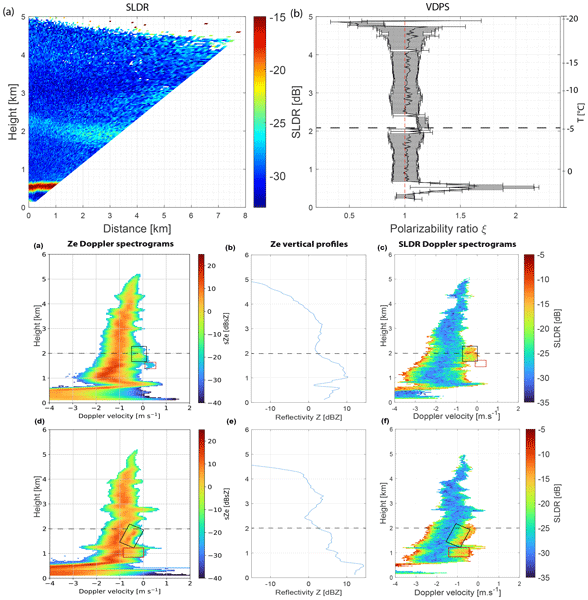
This study demonstrates the ability of a new method delivering the vertical distribution of particle shape to highlight riming and aggregation processes, identifying graupel and aggregates, respectively, as isometric particles. The distinction between these processes can be achieved using lidar or spectral techniques, as demonstrated in the case studies. The capability of the new method to identify rimed particles and aggregates without differentiating them can simplify statistical work.
Huiying Zhang, Xia Li, Fabiola Ramelli, Robert O. David, Julie Pasquier, and Jan Henneberger
Atmos. Meas. Tech., 17, 7109–7128, https://doi.org/10.5194/amt-17-7109-2024, https://doi.org/10.5194/amt-17-7109-2024, 2024
Short summary
Short summary
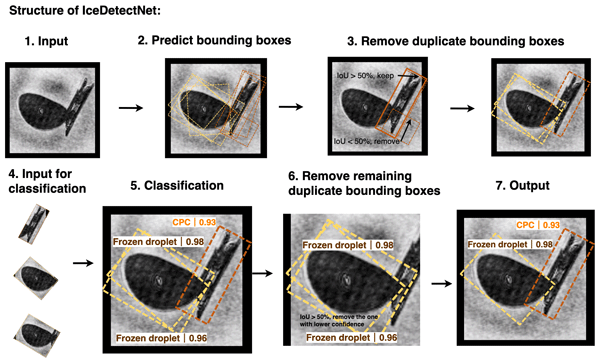
Our innovative IceDetectNet algorithm classifies each part of aggregated ice crystals, considering both their basic shape and physical processes. Trained on ice crystal images from the Arctic taken by a holographic camera, it correctly classifies over 92 % of the ice crystals. These more detailed insights into the components of aggregated ice crystals have the potential to improve our estimates of microphysical properties such as riming rate, aggregation rate, and ice water content.
Nina Maherndl, Manuel Moser, Imke Schirmacher, Aaron Bansemer, Johannes Lucke, Christiane Voigt, and Maximilian Maahn
Atmos. Chem. Phys., 24, 13935–13960, https://doi.org/10.5194/acp-24-13935-2024, https://doi.org/10.5194/acp-24-13935-2024, 2024
Short summary
Short summary
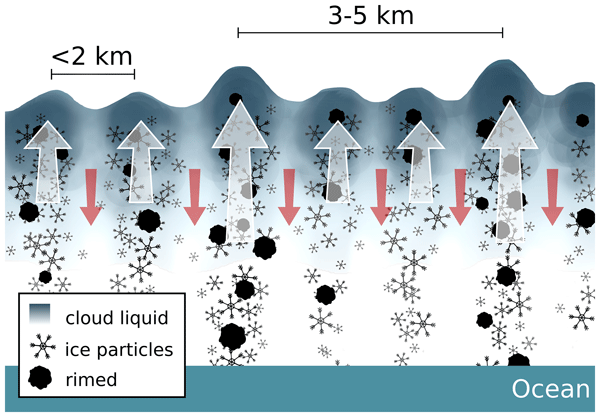
It is not clear why ice crystals in clouds occur in clusters. Here, airborne measurements of clouds in mid-latitudes and high latitudes are used to study the spatial variability of ice. Further, we investigate the influence of riming, which occurs when liquid droplets freeze onto ice crystals. We find that riming enhances the occurrence of ice clusters. In the Arctic, riming leads to ice clustering at spatial scales of 3–5 km. This is due to updrafts and not higher amounts of liquid water.
Florian Sauerland, Niels Souverijns, Anna Possner, Heike Wex, Preben Van Overmeiren, Alexander Mangold, Kwinten Van Weverberg, and Nicole van Lipzig
Atmos. Chem. Phys., 24, 13751–13768, https://doi.org/10.5194/acp-24-13751-2024, https://doi.org/10.5194/acp-24-13751-2024, 2024
Short summary
Short summary
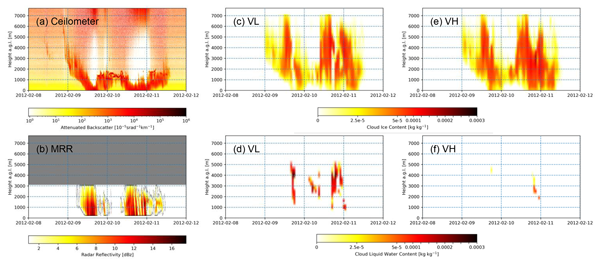
We use a regional climate model, COSMO-CLM², enhanced with a module resolving aerosol processes, to study Antarctic clouds. We prescribe different concentrations of ice-nucleating particles to our model to assess how these clouds respond to concentration changes, validating results with cloud and aerosol observations from the Princess Elisabeth Antarctica station. Our results show that aerosol–cloud interactions vary with temperature, providing valuable insights into Antarctic cloud dynamics.
Teresa Vogl, Martin Radenz, Fabiola Ramelli, Rosa Gierens, and Heike Kalesse-Los
Atmos. Meas. Tech., 17, 6547–6568, https://doi.org/10.5194/amt-17-6547-2024, https://doi.org/10.5194/amt-17-6547-2024, 2024
Short summary
Short summary
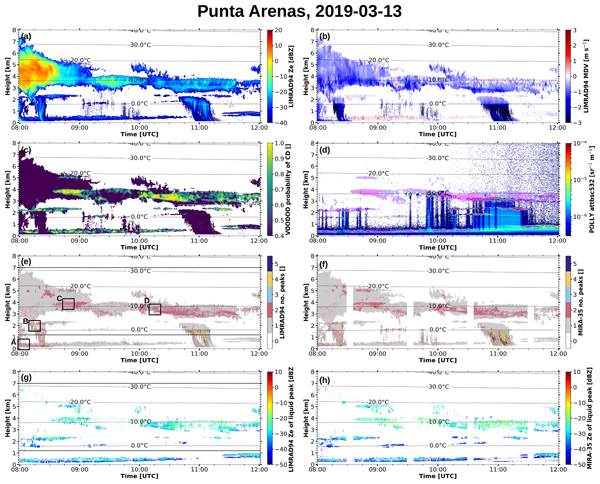
In this study, we present a toolkit of two Python algorithms to extract information from Doppler spectra measured by ground-based cloud radars. In these Doppler spectra, several peaks can be formed due to populations of droplets/ice particles with different fall velocities coexisting in the same measurement time and height. The two algorithms can detect peaks and assign them to certain particle types, such as small cloud droplets or fast-falling ice particles like graupel.
Andreas Walbröl, Hannes J. Griesche, Mario Mech, Susanne Crewell, and Kerstin Ebell
Atmos. Meas. Tech., 17, 6223–6245, https://doi.org/10.5194/amt-17-6223-2024, https://doi.org/10.5194/amt-17-6223-2024, 2024
Short summary
Short summary
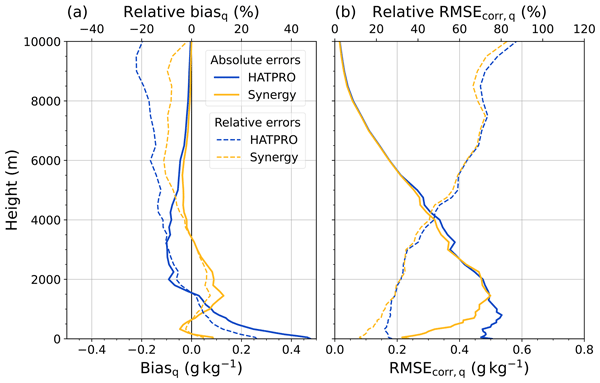
We developed retrievals of integrated water vapour (IWV), temperature profiles, and humidity profiles from ground-based passive microwave remote sensing measurements gathered during the MOSAiC expedition. We demonstrate and quantify the benefit of combining low- and high-frequency microwave radiometers to improve humidity profiling and IWV estimates by comparing the retrieved quantities to single-instrument retrievals and reference datasets (radiosondes).
Yun He, Dongzhe Jing, Zhenping Yin, Kevin Ohneiser, and Fan Yi
Atmos. Chem. Phys., 24, 11431–11450, https://doi.org/10.5194/acp-24-11431-2024, https://doi.org/10.5194/acp-24-11431-2024, 2024
Short summary
Short summary
We present a long-term ground-based lidar observation of stratospheric aerosols at a mid-latitude site, Wuhan, in central China, from 2010 to 2021. We observed a stratospheric background period from 2013 to mid-2017, along with several perturbations from volcanic aerosols and wildfire-induced smoke. In summer, injected stratospheric aerosols are found to be captured by the Asian monsoon anticyclone, resulting in prolonged residence and regional transport in the mid-latitudes of East Asia.
Zoé Brasseur, Julia Schneider, Janne Lampilahti, Ville Vakkari, Victoria A. Sinclair, Christina J. Williamson, Carlton Xavier, Dmitri Moisseev, Markus Hartmann, Pyry Poutanen, Markus Lampimäki, Markku Kulmala, Tuukka Petäjä, Katrianne Lehtipalo, Erik S. Thomson, Kristina Höhler, Ottmar Möhler, and Jonathan Duplissy
Atmos. Chem. Phys., 24, 11305–11332, https://doi.org/10.5194/acp-24-11305-2024, https://doi.org/10.5194/acp-24-11305-2024, 2024
Short summary
Short summary
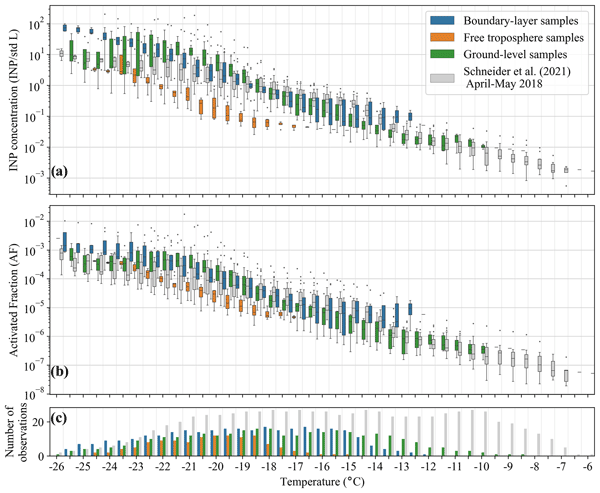
Ice-nucleating particles (INPs) strongly influence the formation of clouds by initiating the formation of ice crystals. However, very little is known about the vertical distribution of INPs in the atmosphere. Here, we present aircraft measurements of INP concentrations above the Finnish boreal forest. Results show that near-surface INPs are efficiently transported and mixed within the boundary layer and occasionally reach the free troposphere.
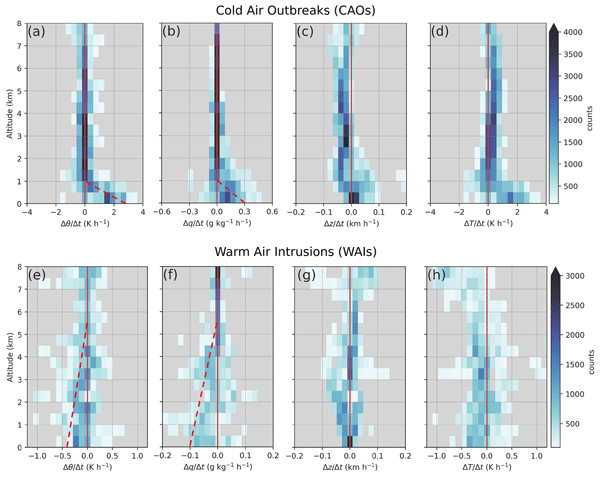
Manfred Wendisch, Susanne Crewell, André Ehrlich, Andreas Herber, Benjamin Kirbus, Christof Lüpkes, Mario Mech, Steven J. Abel, Elisa F. Akansu, Felix Ament, Clémantyne Aubry, Sebastian Becker, Stephan Borrmann, Heiko Bozem, Marlen Brückner, Hans-Christian Clemen, Sandro Dahlke, Georgios Dekoutsidis, Julien Delanoë, Elena De La Torre Castro, Henning Dorff, Regis Dupuy, Oliver Eppers, Florian Ewald, Geet George, Irina V. Gorodetskaya, Sarah Grawe, Silke Groß, Jörg Hartmann, Silvia Henning, Lutz Hirsch, Evelyn Jäkel, Philipp Joppe, Olivier Jourdan, Zsofia Jurányi, Michail Karalis, Mona Kellermann, Marcus Klingebiel, Michael Lonardi, Johannes Lucke, Anna E. Luebke, Maximilian Maahn, Nina Maherndl, Marion Maturilli, Bernhard Mayer, Johanna Mayer, Stephan Mertes, Janosch Michaelis, Michel Michalkov, Guillaume Mioche, Manuel Moser, Hanno Müller, Roel Neggers, Davide Ori, Daria Paul, Fiona M. Paulus, Christian Pilz, Felix Pithan, Mira Pöhlker, Veronika Pörtge, Maximilian Ringel, Nils Risse, Gregory C. Roberts, Sophie Rosenburg, Johannes Röttenbacher, Janna Rückert, Michael Schäfer, Jonas Schaefer, Vera Schemann, Imke Schirmacher, Jörg Schmidt, Sebastian Schmidt, Johannes Schneider, Sabrina Schnitt, Anja Schwarz, Holger Siebert, Harald Sodemann, Tim Sperzel, Gunnar Spreen, Bjorn Stevens, Frank Stratmann, Gunilla Svensson, Christian Tatzelt, Thomas Tuch, Timo Vihma, Christiane Voigt, Lea Volkmer, Andreas Walbröl, Anna Weber, Birgit Wehner, Bruno Wetzel, Martin Wirth, and Tobias Zinner
Atmos. Chem. Phys., 24, 8865–8892, https://doi.org/10.5194/acp-24-8865-2024, https://doi.org/10.5194/acp-24-8865-2024, 2024
Short summary
Short summary
The Arctic is warming faster than the rest of the globe. Warm-air intrusions (WAIs) into the Arctic may play an important role in explaining this phenomenon. Cold-air outbreaks (CAOs) out of the Arctic may link the Arctic climate changes to mid-latitude weather. In our article, we describe how to observe air mass transformations during CAOs and WAIs using three research aircraft instrumented with state-of-the-art remote-sensing and in situ measurement devices.
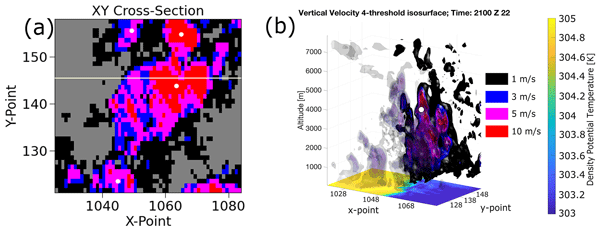
G. Alexander Sokolowsky, Sean W. Freeman, William K. Jones, Julia Kukulies, Fabian Senf, Peter J. Marinescu, Max Heikenfeld, Kelcy N. Brunner, Eric C. Bruning, Scott M. Collis, Robert C. Jackson, Gabrielle R. Leung, Nils Pfeifer, Bhupendra A. Raut, Stephen M. Saleeby, Philip Stier, and Susan C. van den Heever
Geosci. Model Dev., 17, 5309–5330, https://doi.org/10.5194/gmd-17-5309-2024, https://doi.org/10.5194/gmd-17-5309-2024, 2024
Short summary
Short summary
Building on previous analysis tools developed for atmospheric science, the original release of the Tracking and Object-Based Analysis (tobac) Python package, v1.2, was open-source, modular, and insensitive to the type of gridded input data. Here, we present the latest version of tobac, v1.5, which substantially improves scientific capabilities and computational efficiency from the previous version. These enhancements permit new uses for tobac in atmospheric science and potentially other fields.
Nadja Omanovic, Sylvaine Ferrachat, Christopher Fuchs, Jan Henneberger, Anna J. Miller, Kevin Ohneiser, Fabiola Ramelli, Patric Seifert, Robert Spirig, Huiying Zhang, and Ulrike Lohmann
Atmos. Chem. Phys., 24, 6825–6844, https://doi.org/10.5194/acp-24-6825-2024, https://doi.org/10.5194/acp-24-6825-2024, 2024
Short summary
Short summary
We present simulations with a high-resolution numerical weather prediction model to study the growth of ice crystals in low clouds following glaciogenic seeding. We show that the simulated ice crystals grow slower than observed and do not consume as many cloud droplets as measured in the field. This may have implications for forecasting precipitation, as the ice phase is crucial for precipitation at middle and high latitudes.
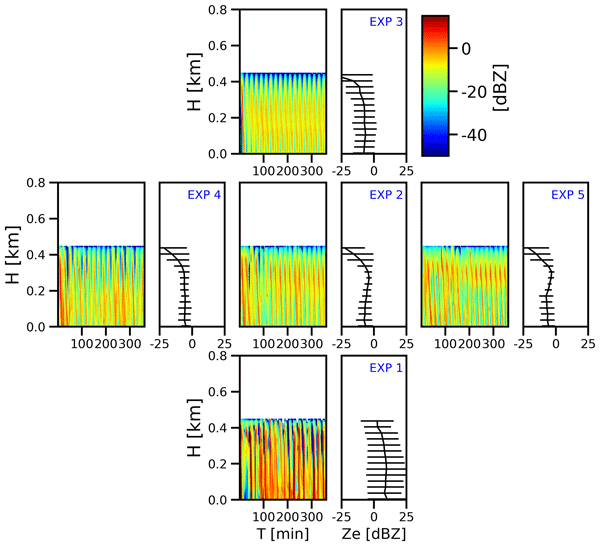
Junghwa Lee, Patric Seifert, Tempei Hashino, Maximilian Maahn, Fabian Senf, and Oswald Knoth
Atmos. Chem. Phys., 24, 5737–5756, https://doi.org/10.5194/acp-24-5737-2024, https://doi.org/10.5194/acp-24-5737-2024, 2024
Short summary
Short summary
Spectral bin model simulations of an idealized supercooled stratiform cloud were performed with the AMPS model for variable CCN and INP concentrations. We performed radar forward simulations with PAMTRA to transfer the simulations into radar observational space. The derived radar reflectivity factors were compared to observational studies of stratiform mixed-phase clouds. These studies report a similar response of the radar reflectivity factor to aerosol perturbations as we found in our study.
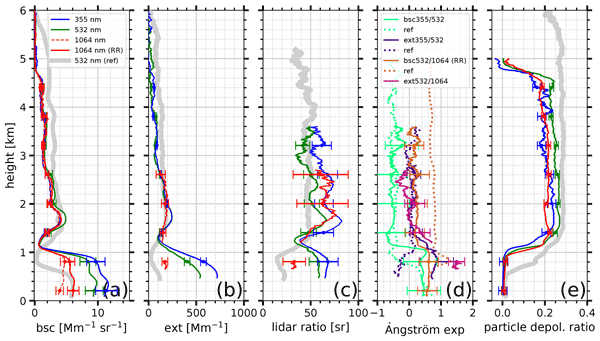
Henriette Gebauer, Athena Augusta Floutsi, Moritz Haarig, Martin Radenz, Ronny Engelmann, Dietrich Althausen, Annett Skupin, Albert Ansmann, Cordula Zenk, and Holger Baars
Atmos. Chem. Phys., 24, 5047–5067, https://doi.org/10.5194/acp-24-5047-2024, https://doi.org/10.5194/acp-24-5047-2024, 2024
Short summary
Short summary
Sulfate aerosol from the volcanic eruption at La Palma in 2021 was observed over Cabo Verde. We characterized the aerosol burden based on a case study of lidar and sun photometer observations. We compared the volcanic case to the typical background conditions (reference case) to quantify the volcanic pollution. We show the first ever measurements of the extinction coefficient, lidar ratio and depolarization ratio at 1064 nm for volcanic sulfate.
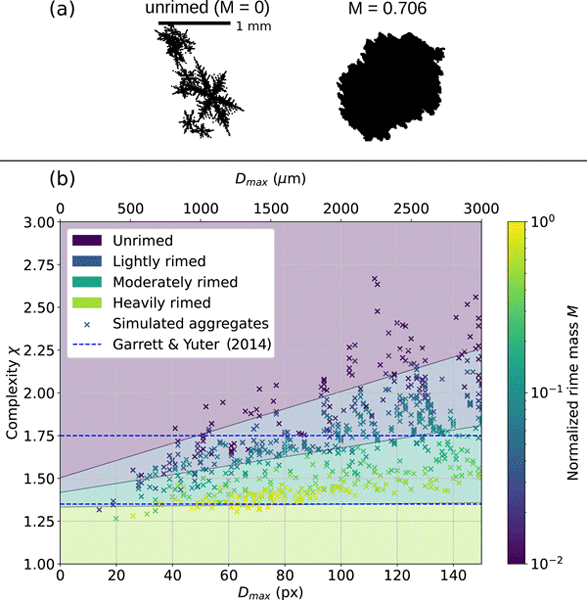
Nina Maherndl, Manuel Moser, Johannes Lucke, Mario Mech, Nils Risse, Imke Schirmacher, and Maximilian Maahn
Atmos. Meas. Tech., 17, 1475–1495, https://doi.org/10.5194/amt-17-1475-2024, https://doi.org/10.5194/amt-17-1475-2024, 2024
Short summary
Short summary
In some clouds, liquid water droplets can freeze onto ice crystals (riming). Riming leads to the formation of snowflakes. We show two ways to quantify riming using aircraft data collected in the Arctic. One aircraft had a cloud radar, while the other aircraft was measuring directly in cloud. The first method compares radar and direct observations. The second looks at snowflake shape. Both methods agree, except when there were gaps in the cloud. This improves our ability to understand riming.
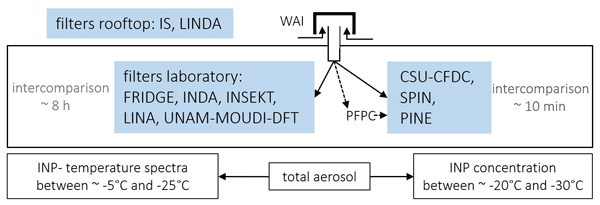
Larissa Lacher, Michael P. Adams, Kevin Barry, Barbara Bertozzi, Heinz Bingemer, Cristian Boffo, Yannick Bras, Nicole Büttner, Dimitri Castarede, Daniel J. Cziczo, Paul J. DeMott, Romy Fösig, Megan Goodell, Kristina Höhler, Thomas C. J. Hill, Conrad Jentzsch, Luis A. Ladino, Ezra J. T. Levin, Stephan Mertes, Ottmar Möhler, Kathryn A. Moore, Benjamin J. Murray, Jens Nadolny, Tatjana Pfeuffer, David Picard, Carolina Ramírez-Romero, Mickael Ribeiro, Sarah Richter, Jann Schrod, Karine Sellegri, Frank Stratmann, Benjamin E. Swanson, Erik S. Thomson, Heike Wex, Martin J. Wolf, and Evelyn Freney
Atmos. Chem. Phys., 24, 2651–2678, https://doi.org/10.5194/acp-24-2651-2024, https://doi.org/10.5194/acp-24-2651-2024, 2024
Short summary
Short summary
Aerosol particles that trigger ice formation in clouds are important for the climate system but are very rare in the atmosphere, challenging measurement techniques. Here we compare three cloud chambers and seven methods for collecting aerosol particles on filters for offline analysis at a mountaintop station. A general good agreement of the methods was found when sampling aerosol particles behind a whole air inlet, supporting their use for obtaining data that can be implemented in models.
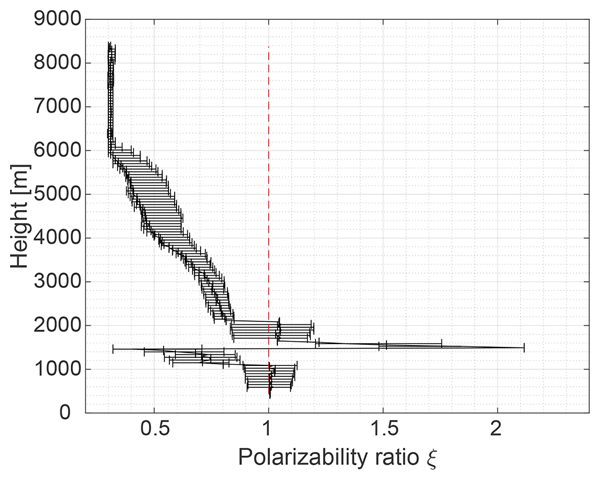
Audrey Teisseire, Patric Seifert, Alexander Myagkov, Johannes Bühl, and Martin Radenz
Atmos. Meas. Tech., 17, 999–1016, https://doi.org/10.5194/amt-17-999-2024, https://doi.org/10.5194/amt-17-999-2024, 2024
Short summary
Short summary
The vertical distribution of particle shape (VDPS) method, introduced in this study, aids in characterizing the density-weighted shape of cloud particles from scanning slanted linear depolarization ratio (SLDR)-mode cloud radar observations. The VDPS approach represents a new, versatile way to study microphysical processes by combining a spheroidal scattering model with real measurements of SLDR.
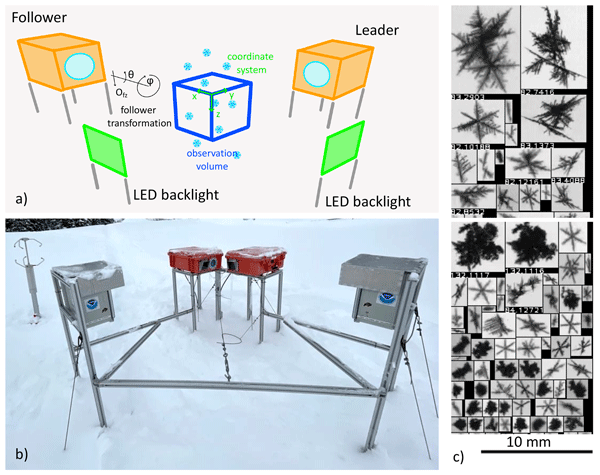
Maximilian Maahn, Dmitri Moisseev, Isabelle Steinke, Nina Maherndl, and Matthew D. Shupe
Atmos. Meas. Tech., 17, 899–919, https://doi.org/10.5194/amt-17-899-2024, https://doi.org/10.5194/amt-17-899-2024, 2024
Short summary
Short summary
The open-source Video In Situ Snowfall Sensor (VISSS) is a novel instrument for characterizing particle shape, size, and sedimentation velocity in snowfall. It combines a large observation volume with relatively high resolution and a design that limits wind perturbations. The open-source nature of the VISSS hardware and software invites the community to contribute to the development of the instrument, which has many potential applications in atmospheric science and beyond.
Julian Hofer, Patric Seifert, J. Ben Liley, Martin Radenz, Osamu Uchino, Isamu Morino, Tetsu Sakai, Tomohiro Nagai, and Albert Ansmann
Atmos. Chem. Phys., 24, 1265–1280, https://doi.org/10.5194/acp-24-1265-2024, https://doi.org/10.5194/acp-24-1265-2024, 2024
Short summary
Short summary
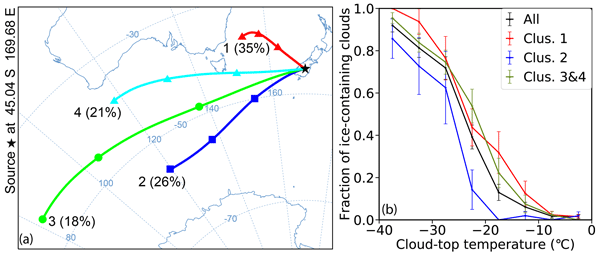
An 11-year dataset of polarization lidar observations from Lauder, New Zealand / Aotearoa, was used to distinguish the thermodynamic phase of natural clouds. The cloud dataset was separated to assess the impact of air mass origin on the frequency of heterogeneous ice formation. Ice formation efficiency in clouds above Lauder was found to be lower than in the polluted Northern Hemisphere midlatitudes but higher than in very clean and pristine environments, such as Punta Arenas in southern Chile.
Anna J. Miller, Fabiola Ramelli, Christopher Fuchs, Nadja Omanovic, Robert Spirig, Huiying Zhang, Ulrike Lohmann, Zamin A. Kanji, and Jan Henneberger
Atmos. Meas. Tech., 17, 601–625, https://doi.org/10.5194/amt-17-601-2024, https://doi.org/10.5194/amt-17-601-2024, 2024
Short summary
Short summary
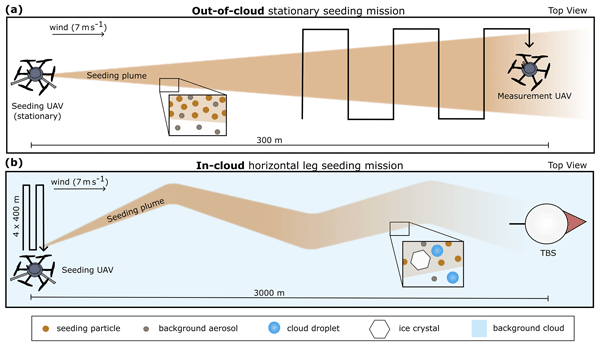
We present a method for aerosol and cloud research using two uncrewed aerial vehicles (UAVs). The UAVs have a propeller heating mechanism that allows flights in icing conditions, which has so far been a limitation for cloud research with UAVs. One UAV burns seeding flares, producing a plume of particles that causes ice formation in supercooled clouds. The second UAV measures aerosol size distributions and is used for measuring the seeding plume or for characterizing the boundary layer.
Hannes Jascha Griesche, Carola Barrientos-Velasco, Hartwig Deneke, Anja Hünerbein, Patric Seifert, and Andreas Macke
Atmos. Chem. Phys., 24, 597–612, https://doi.org/10.5194/acp-24-597-2024, https://doi.org/10.5194/acp-24-597-2024, 2024
Short summary
Short summary
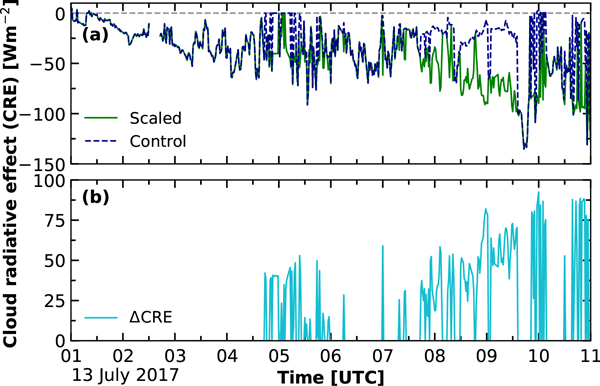
The Arctic is strongly affected by climate change and the role of clouds therein is not yet completely understood. Measurements from the Arctic expedition PS106 were used to simulate radiative fluxes with and without clouds at very low altitudes (below 165 m), and their radiative effect was calculated to be 54 Wm-2. The low heights of these clouds make them hard to observe. This study shows the importance of accurate measurements and simulations of clouds and gives suggestions for improvements.
Sebastian Zeppenfeld, Manuela van Pinxteren, Markus Hartmann, Moritz Zeising, Astrid Bracher, and Hartmut Herrmann
Atmos. Chem. Phys., 23, 15561–15587, https://doi.org/10.5194/acp-23-15561-2023, https://doi.org/10.5194/acp-23-15561-2023, 2023
Short summary
Short summary
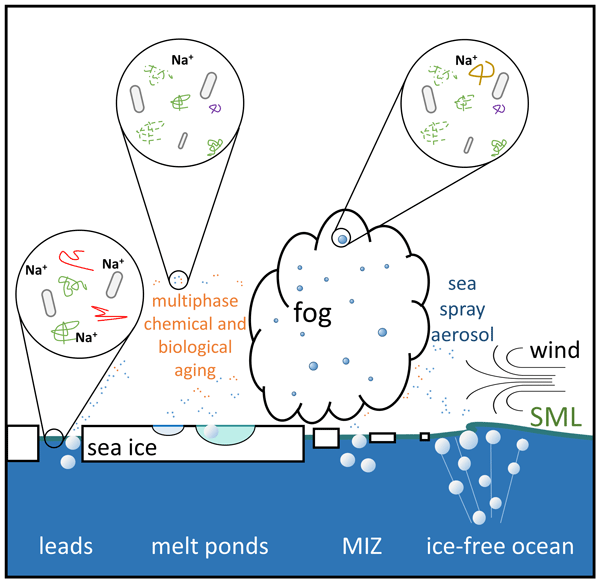
Marine carbohydrates are produced in the surface of the ocean, enter the atmophere as part of sea spray aerosol particles, and potentially contribute to the formation of fog and clouds. Here, we present the results of a sea–air transfer study of marine carbohydrates conducted in the high Arctic. Besides a chemo-selective transfer, we observed a quick atmospheric aging of carbohydrates, possibly as a result of both biotic and abiotic processes.
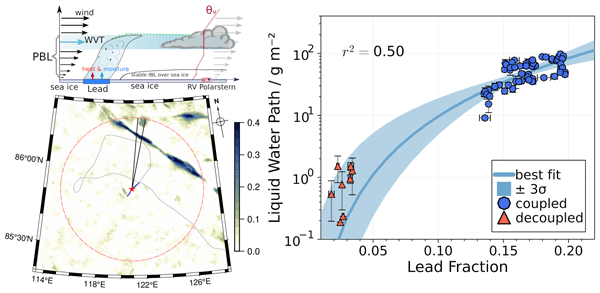
Pablo Saavedra Garfias, Heike Kalesse-Los, Luisa von Albedyll, Hannes Griesche, and Gunnar Spreen
Atmos. Chem. Phys., 23, 14521–14546, https://doi.org/10.5194/acp-23-14521-2023, https://doi.org/10.5194/acp-23-14521-2023, 2023
Short summary
Short summary
An important Arctic climate process is the release of heat fluxes from sea ice openings to the atmosphere that influence the clouds. The characterization of this process is the objective of this study. Using synergistic observations from the MOSAiC expedition, we found that single-layer cloud properties show significant differences when clouds are coupled or decoupled to the water vapour transport which is used as physical link between the upwind sea ice openings and the cloud under observation.
Rodanthi-Elisavet Mamouri, Albert Ansmann, Kevin Ohneiser, Daniel A. Knopf, Argyro Nisantzi, Johannes Bühl, Ronny Engelmann, Annett Skupin, Patric Seifert, Holger Baars, Dragos Ene, Ulla Wandinger, and Diofantos Hadjimitsis
Atmos. Chem. Phys., 23, 14097–14114, https://doi.org/10.5194/acp-23-14097-2023, https://doi.org/10.5194/acp-23-14097-2023, 2023
Short summary
Short summary
For the first time, rather clear evidence is found that wildfire smoke particles can trigger strong cirrus formation. This finding is of importance because intensive and large wildfires may occur increasingly often in the future as climate change proceeds. Based on lidar observations in Cyprus in autumn 2020, we provide detailed insight into the cirrus formation at the tropopause in the presence of aged wildfire smoke (here, 8–9 day old Californian wildfire smoke).
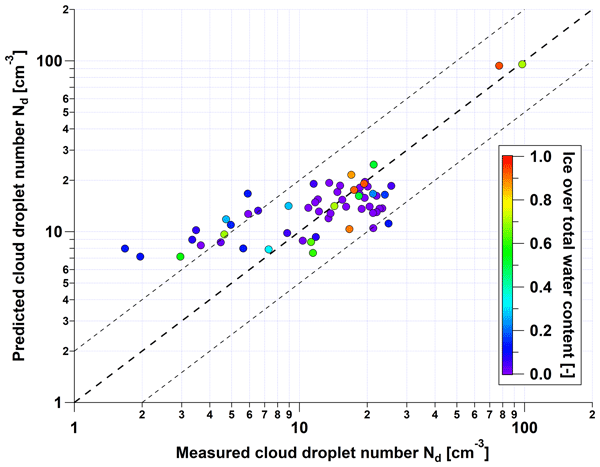
Ghislain Motos, Gabriel Freitas, Paraskevi Georgakaki, Jörg Wieder, Guangyu Li, Wenche Aas, Chris Lunder, Radovan Krejci, Julie Thérèse Pasquier, Jan Henneberger, Robert Oscar David, Christoph Ritter, Claudia Mohr, Paul Zieger, and Athanasios Nenes
Atmos. Chem. Phys., 23, 13941–13956, https://doi.org/10.5194/acp-23-13941-2023, https://doi.org/10.5194/acp-23-13941-2023, 2023
Short summary
Short summary
Low-altitude clouds play a key role in regulating the climate of the Arctic, a region that suffers from climate change more than any other on the planet. We gathered meteorological and aerosol physical and chemical data over a year and utilized them for a parameterization that help us unravel the factors driving and limiting the efficiency of cloud droplet formation. We then linked this information to the sources of aerosol found during each season and to processes of cloud glaciation.
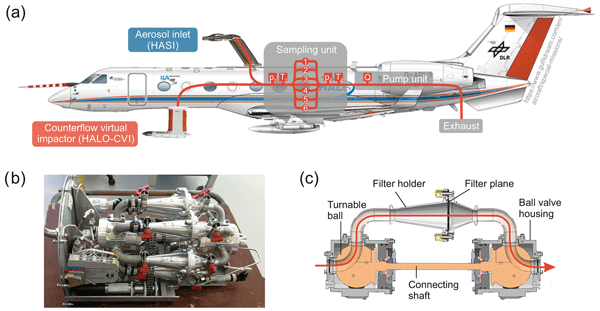
Sarah Grawe, Conrad Jentzsch, Jonas Schaefer, Heike Wex, Stephan Mertes, and Frank Stratmann
Atmos. Meas. Tech., 16, 4551–4570, https://doi.org/10.5194/amt-16-4551-2023, https://doi.org/10.5194/amt-16-4551-2023, 2023
Short summary
Short summary
Measurements of ice-nucleating particle (INP) concentrations are valuable for the simulation of cloud properties. In recent years, filter sampling in combination with offline INP measurements has become increasingly popular. However, most sampling is ground-based, and the vertical transport of INPs is not well quantified. The High-volume flow aERosol particle filter sAmpler (HERA) for applications on board aircraft was developed to expand the sparse dataset of INP concentrations at cloud level.
Albert Ansmann, Kevin Ohneiser, Ronny Engelmann, Martin Radenz, Hannes Griesche, Julian Hofer, Dietrich Althausen, Jessie M. Creamean, Matthew C. Boyer, Daniel A. Knopf, Sandro Dahlke, Marion Maturilli, Henriette Gebauer, Johannes Bühl, Cristofer Jimenez, Patric Seifert, and Ulla Wandinger
Atmos. Chem. Phys., 23, 12821–12849, https://doi.org/10.5194/acp-23-12821-2023, https://doi.org/10.5194/acp-23-12821-2023, 2023
Short summary
Short summary
The 1-year MOSAiC (2019–2020) expedition with the German ice breaker Polarstern was the largest polar field campaign ever conducted. The Polarstern, with our lidar aboard, drifted with the pack ice north of 85° N for more than 7 months (October 2019 to mid-May 2020). We measured the full annual cycle of aerosol conditions in terms of aerosol optical and cloud-process-relevant properties. We observed a strong contrast between polluted winter and clean summer aerosol conditions.
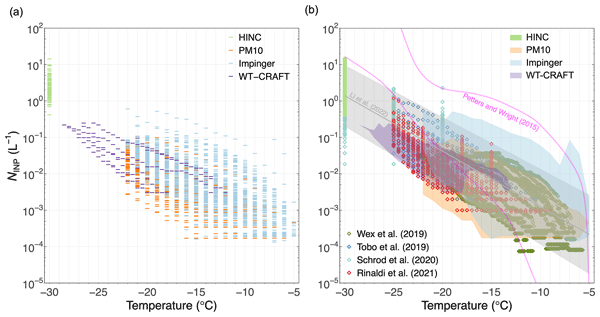
Guangyu Li, Elise K. Wilbourn, Zezhen Cheng, Jörg Wieder, Allison Fagerson, Jan Henneberger, Ghislain Motos, Rita Traversi, Sarah D. Brooks, Mauro Mazzola, Swarup China, Athanasios Nenes, Ulrike Lohmann, Naruki Hiranuma, and Zamin A. Kanji
Atmos. Chem. Phys., 23, 10489–10516, https://doi.org/10.5194/acp-23-10489-2023, https://doi.org/10.5194/acp-23-10489-2023, 2023
Short summary
Short summary
In this work, we present results from an Arctic field campaign (NASCENT) in Ny-Ålesund, Svalbard, on the abundance, variability, physicochemical properties, and potential sources of ice-nucleating particles (INPs) relevant for mixed-phase cloud formation. This work improves the data coverage of Arctic INPs and aerosol properties, allowing for the validation of models predicting cloud microphysical and radiative properties of mixed-phase clouds in the rapidly warming Arctic.
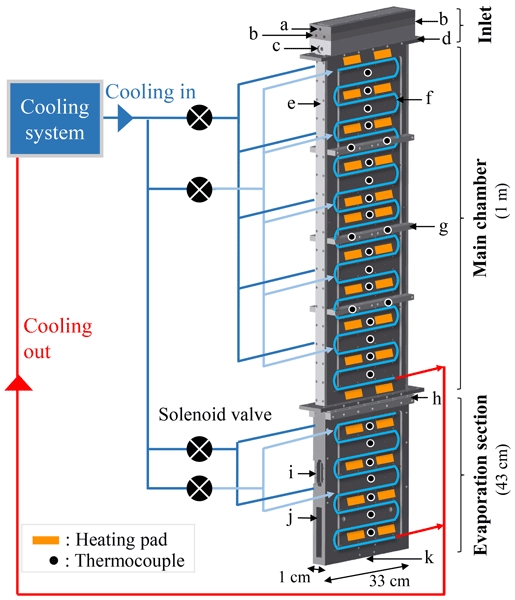
Dimitri Castarède, Zoé Brasseur, Yusheng Wu, Zamin A. Kanji, Markus Hartmann, Lauri Ahonen, Merete Bilde, Markku Kulmala, Tuukka Petäjä, Jan B. C. Pettersson, Berko Sierau, Olaf Stetzer, Frank Stratmann, Birgitta Svenningsson, Erik Swietlicki, Quynh Thu Nguyen, Jonathan Duplissy, and Erik S. Thomson
Atmos. Meas. Tech., 16, 3881–3899, https://doi.org/10.5194/amt-16-3881-2023, https://doi.org/10.5194/amt-16-3881-2023, 2023
Short summary
Short summary
Clouds play a key role in Earth’s climate by influencing the surface energy budget. Certain types of atmospheric aerosols, called ice-nucleating particles (INPs), induce the formation of ice in clouds and, thus, often initiate precipitation formation. The Portable Ice Nucleation Chamber 2 (PINCii) is a new instrument developed to study ice formation and to conduct ambient measurements of INPs, allowing us to investigate the sources and properties of the atmospheric aerosols that can act as INPs.
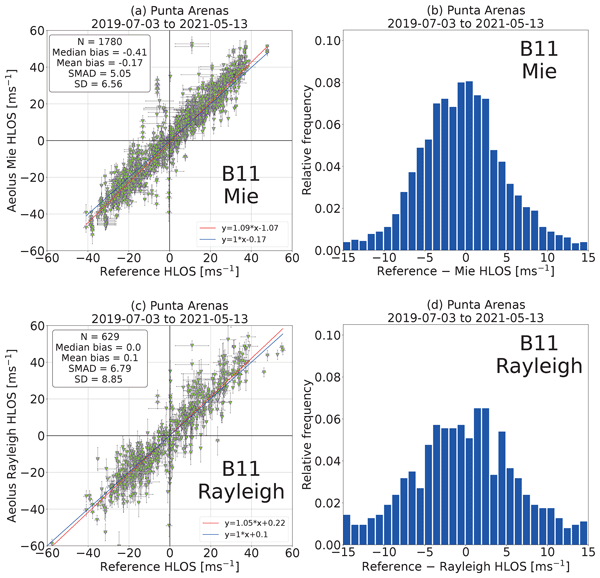
Holger Baars, Joshua Walchester, Elizaveta Basharova, Henriette Gebauer, Martin Radenz, Johannes Bühl, Boris Barja, Ulla Wandinger, and Patric Seifert
Atmos. Meas. Tech., 16, 3809–3834, https://doi.org/10.5194/amt-16-3809-2023, https://doi.org/10.5194/amt-16-3809-2023, 2023
Short summary
Short summary
In 2018, the Aeolus satellite of the European Space Agency (ESA) was launched to improve weather forecasts through global measurements of wind profiles. Given the novel lidar technique onboard, extensive validation efforts have been needed to verify the observations. For this reason, we performed long-term validation measurements in Germany and Chile. We found significant improvement in the data products due to a new algorithm version and can confirm the general validity of Aeolus observations.
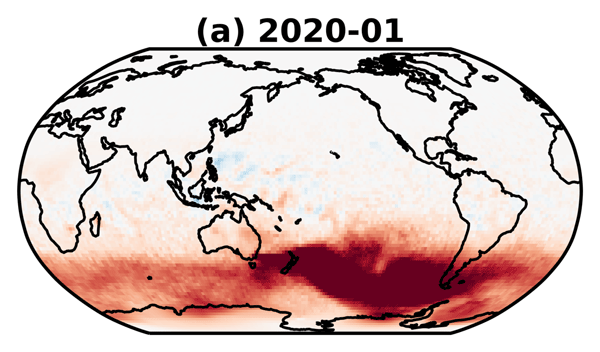
Fabian Senf, Bernd Heinold, Anne Kubin, Jason Müller, Roland Schrödner, and Ina Tegen
Atmos. Chem. Phys., 23, 8939–8958, https://doi.org/10.5194/acp-23-8939-2023, https://doi.org/10.5194/acp-23-8939-2023, 2023
Short summary
Short summary
Wildfire smoke is a significant source of airborne atmospheric particles that can absorb sunlight. Extreme fires in particular, such as those during the 2019–2020 Australian wildfire season (Black Summer fires), can considerably affect our climate system. In the present study, we investigate the various effects of Australian smoke using a global climate model to clarify how the Earth's atmosphere, including its circulation systems, adjusted to the extraordinary amount of Australian smoke.
Athena Augusta Floutsi, Holger Baars, Ronny Engelmann, Dietrich Althausen, Albert Ansmann, Stephanie Bohlmann, Birgit Heese, Julian Hofer, Thomas Kanitz, Moritz Haarig, Kevin Ohneiser, Martin Radenz, Patric Seifert, Annett Skupin, Zhenping Yin, Sabur F. Abdullaev, Mika Komppula, Maria Filioglou, Elina Giannakaki, Iwona S. Stachlewska, Lucja Janicka, Daniele Bortoli, Eleni Marinou, Vassilis Amiridis, Anna Gialitaki, Rodanthi-Elisavet Mamouri, Boris Barja, and Ulla Wandinger
Atmos. Meas. Tech., 16, 2353–2379, https://doi.org/10.5194/amt-16-2353-2023, https://doi.org/10.5194/amt-16-2353-2023, 2023
Short summary
Short summary
DeLiAn is a collection of lidar-derived aerosol intensive optical properties for several aerosol types, namely the particle linear depolarization ratio, the extinction-to-backscatter ratio (lidar ratio) and the Ångström exponent. The data collection is based on globally distributed, long-term, ground-based, multiwavelength, Raman and polarization lidar measurements and currently covers two wavelengths, 355 and 532 nm, for 13 aerosol categories ranging from basic aerosol types to mixtures.

Kevin C. H. Sze, Heike Wex, Markus Hartmann, Henrik Skov, Andreas Massling, Diego Villanueva, and Frank Stratmann
Atmos. Chem. Phys., 23, 4741–4761, https://doi.org/10.5194/acp-23-4741-2023, https://doi.org/10.5194/acp-23-4741-2023, 2023
Short summary
Short summary
Ice-nucleating particles (INPs) play an important role in cloud formation and thus in our climate. But little is known about the abundance and properties of INPs, especially in the Arctic, where the temperature increases almost 4 times as fast as that of the rest of the globe. We observe higher INP concentrations and more biological INPs in summer than in winter, likely from local sources. We also provide three equations for estimating INP concentrations in models at different times of the year.
Samuel Kwakye, Heike Kalesse-Los, Maximilian Maahn, Patric Seifert, Roel van Klink, Christian Wirth, and Johannes Quaas
Atmos. Meas. Tech. Discuss., https://doi.org/10.5194/amt-2023-69, https://doi.org/10.5194/amt-2023-69, 2023
Publication in AMT not foreseen
Short summary
Short summary
Insect numbers in the atmosphere can be calculated using polarimetric weather radar but they have to be identified and separated from other echoes, especially weather phenomena. Here, the separation is demonstrated using three machine-learning algorithms and insect count data from suction traps and the nature of radar measurements of different radar echoes is revealed. Random forest is the best separating algorithm and insect echoes radar measurements are distinct.
Veronika Ettrichrätz, Christian Beier, Klaus Keuler, and Katja Trachte
EGUsphere, https://doi.org/10.5194/egusphere-2023-552, https://doi.org/10.5194/egusphere-2023-552, 2023
Preprint archived
Short summary
Short summary
Will heavy precipitation increase under climate change by the end of this century? The analyses of 40 regional climate simulations for two climate scenarios show that large parts of northern, central, and eastern Europe will be affected by a robust increase in heavy and extreme precipitation, while southwestern Europe will rather experience a slight decrease. Both the increase and the affected areas can be up to twice as large in an extreme than in a more moderate greenhouse gas scenario.
Kevin Ohneiser, Albert Ansmann, Jonas Witthuhn, Hartwig Deneke, Alexandra Chudnovsky, Gregor Walter, and Fabian Senf
Atmos. Chem. Phys., 23, 2901–2925, https://doi.org/10.5194/acp-23-2901-2023, https://doi.org/10.5194/acp-23-2901-2023, 2023
Short summary
Short summary
This study shows that smoke layers can reach the tropopause via the self-lofting effect within 3–7 d in the absence of pyrocumulonimbus convection if the
aerosol optical thickness is larger than approximately 2 for a longer time period. When reaching the stratosphere, wildfire smoke can sensitively influence the stratospheric composition on a hemispheric scale and thus can affect the Earth’s climate and the ozone layer.
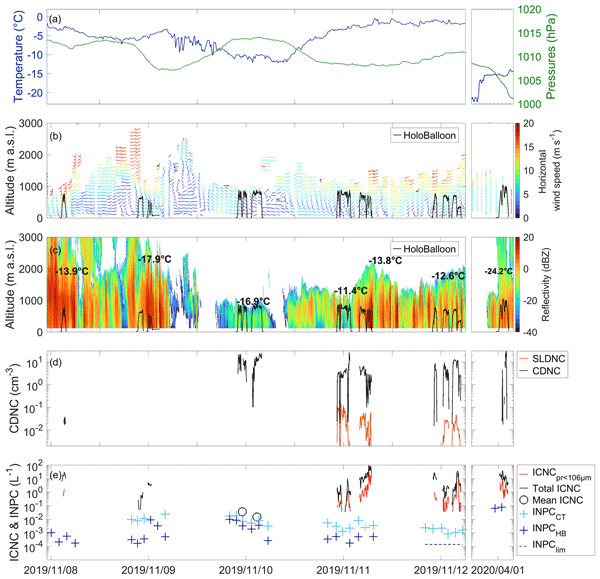
Julie Thérèse Pasquier, Jan Henneberger, Fabiola Ramelli, Annika Lauber, Robert Oscar David, Jörg Wieder, Tim Carlsen, Rosa Gierens, Marion Maturilli, and Ulrike Lohmann
Atmos. Chem. Phys., 22, 15579–15601, https://doi.org/10.5194/acp-22-15579-2022, https://doi.org/10.5194/acp-22-15579-2022, 2022
Short summary
Short summary
It is important to understand how ice crystals and cloud droplets form in clouds, as their concentrations and sizes determine the exact radiative properties of the clouds. Normally, ice crystals form from aerosols, but we found evidence for the formation of additional ice crystals from the original ones over a large temperature range within Arctic clouds. In particular, additional ice crystals were formed during collisions of several ice crystals or during the freezing of large cloud droplets.
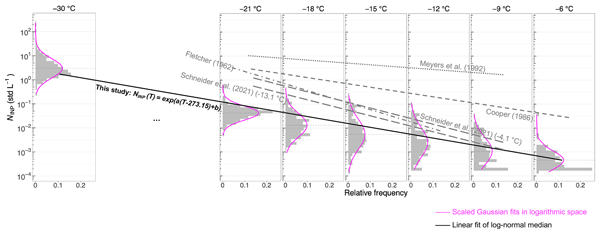
Guangyu Li, Jörg Wieder, Julie T. Pasquier, Jan Henneberger, and Zamin A. Kanji
Atmos. Chem. Phys., 22, 14441–14454, https://doi.org/10.5194/acp-22-14441-2022, https://doi.org/10.5194/acp-22-14441-2022, 2022
Short summary
Short summary
The concentration of ice-nucleating particles (INPs) is atmospherically relevant for primary ice formation in clouds. In this work, from 12 weeks of field measurement data in the Arctic, we developed a new parameterization to predict INP concentrations applicable for pristine background conditions based only on temperature. The INP parameterization could improve the cloud microphysical representation in climate models, aiding in Arctic climate predictions.
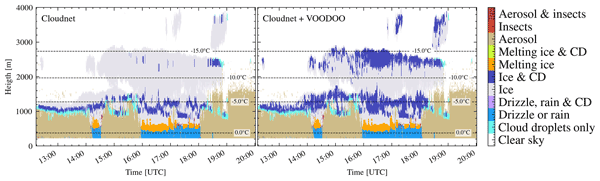
Willi Schimmel, Heike Kalesse-Los, Maximilian Maahn, Teresa Vogl, Andreas Foth, Pablo Saavedra Garfias, and Patric Seifert
Atmos. Meas. Tech., 15, 5343–5366, https://doi.org/10.5194/amt-15-5343-2022, https://doi.org/10.5194/amt-15-5343-2022, 2022
Short summary
Short summary
This study introduces the novel Doppler radar spectra-based machine learning approach VOODOO (reVealing supercOOled liquiD beyOnd lidar attenuatiOn). VOODOO is a powerful probability-based extension to the existing Cloudnet hydrometeor target classification, enabling the detection of liquid-bearing cloud layers beyond complete lidar attenuation via user-defined p* threshold. VOODOO performs best for (multi-layer) stratiform and deep mixed-phase clouds with liquid water path > 100 g m−2.
Albert Ansmann, Kevin Ohneiser, Alexandra Chudnovsky, Daniel A. Knopf, Edwin W. Eloranta, Diego Villanueva, Patric Seifert, Martin Radenz, Boris Barja, Félix Zamorano, Cristofer Jimenez, Ronny Engelmann, Holger Baars, Hannes Griesche, Julian Hofer, Dietrich Althausen, and Ulla Wandinger
Atmos. Chem. Phys., 22, 11701–11726, https://doi.org/10.5194/acp-22-11701-2022, https://doi.org/10.5194/acp-22-11701-2022, 2022
Short summary
Short summary
For the first time we present a systematic study on the impact of wildfire smoke on ozone depletion in the Arctic (2020) and Antarctic stratosphere (2020, 2021). Two major fire events in Siberia and Australia were responsible for the observed record-breaking stratospheric smoke pollution. Our analyses were based on lidar observations of smoke parameters (Polarstern, Punta Arenas) and NDACC Arctic and Antarctic ozone profiles as well as on Antarctic OMI satellite observations of column ozone.
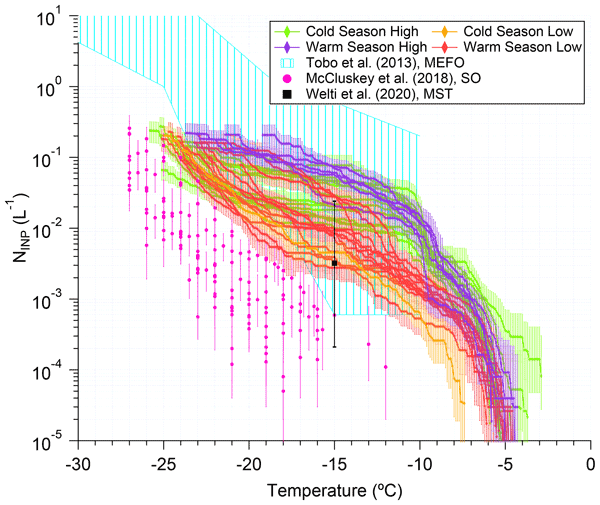
Xianda Gong, Martin Radenz, Heike Wex, Patric Seifert, Farnoush Ataei, Silvia Henning, Holger Baars, Boris Barja, Albert Ansmann, and Frank Stratmann
Atmos. Chem. Phys., 22, 10505–10525, https://doi.org/10.5194/acp-22-10505-2022, https://doi.org/10.5194/acp-22-10505-2022, 2022
Short summary
Short summary
The sources of ice-nucleating particles (INPs) are poorly understood in the Southern Hemisphere (SH). We studied INPs in the boundary layer in the southern Patagonia region. No seasonal cycle of INP concentrations was observed. The majority of INPs are biogenic particles, likely from local continental sources. The INP concentrations are higher when strong precipitation occurs. While previous studies focused on marine INP sources in SH, we point out the importance of continental sources of INPs.
Bernd Heinold, Holger Baars, Boris Barja, Matthew Christensen, Anne Kubin, Kevin Ohneiser, Kerstin Schepanski, Nick Schutgens, Fabian Senf, Roland Schrödner, Diego Villanueva, and Ina Tegen
Atmos. Chem. Phys., 22, 9969–9985, https://doi.org/10.5194/acp-22-9969-2022, https://doi.org/10.5194/acp-22-9969-2022, 2022
Short summary
Short summary
The extreme 2019–2020 Australian wildfires produced massive smoke plumes lofted into the lower stratosphere by pyrocumulonimbus convection. Most climate models do not adequately simulate the injection height of such intense fires. By combining aerosol-climate modeling with prescribed pyroconvective smoke injection and lidar observations, this study shows the importance of the representation of the most extreme wildfire events for estimating the atmospheric energy budget.

Jörg Wieder, Nikola Ihn, Claudia Mignani, Moritz Haarig, Johannes Bühl, Patric Seifert, Ronny Engelmann, Fabiola Ramelli, Zamin A. Kanji, Ulrike Lohmann, and Jan Henneberger
Atmos. Chem. Phys., 22, 9767–9797, https://doi.org/10.5194/acp-22-9767-2022, https://doi.org/10.5194/acp-22-9767-2022, 2022
Short summary
Short summary
Ice formation and its evolution in mixed-phase clouds are still uncertain. We evaluate the lidar retrieval of ice-nucleating particle concentration in dust-dominated and continental air masses over the Swiss Alps with in situ observations. A calibration factor to improve the retrieval from continental air masses is proposed. Ice multiplication factors are obtained with a new method utilizing remote sensing. Our results indicate that secondary ice production occurs at temperatures down to −30 °C.
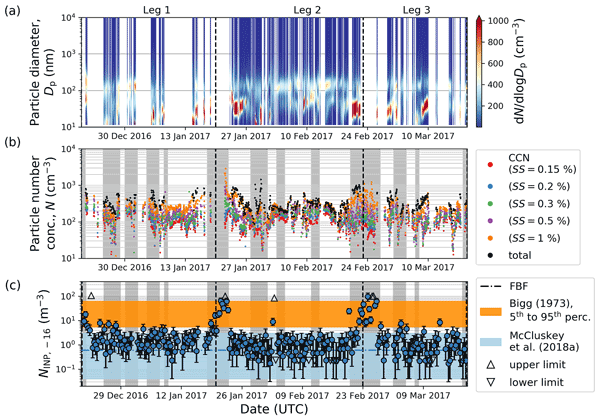
Christian Tatzelt, Silvia Henning, André Welti, Andrea Baccarini, Markus Hartmann, Martin Gysel-Beer, Manuela van Pinxteren, Robin L. Modini, Julia Schmale, and Frank Stratmann
Atmos. Chem. Phys., 22, 9721–9745, https://doi.org/10.5194/acp-22-9721-2022, https://doi.org/10.5194/acp-22-9721-2022, 2022
Short summary
Short summary
We present the abundance and origin of cloud-relevant aerosol particles in the preindustral-like conditions of the Southern Ocean (SO) during austral summer. Cloud condensation nuclei (CCN) and ice-nucleating particles (INP) were measured during a circum-Antarctic scientific cruise with in situ instrumentation and offline filter measurements, respectively. Transport processes were found to play an equally important role as local sources for both the CCN and INP population of the SO.

Carola Barrientos-Velasco, Hartwig Deneke, Anja Hünerbein, Hannes J. Griesche, Patric Seifert, and Andreas Macke
Atmos. Chem. Phys., 22, 9313–9348, https://doi.org/10.5194/acp-22-9313-2022, https://doi.org/10.5194/acp-22-9313-2022, 2022
Short summary
Short summary
This article describes an intercomparison of radiative fluxes and cloud properties from satellite, shipborne observations, and 1D radiative transfer simulations. The analysis focuses on research for PS106 expedition aboard the German research vessel, Polarstern. The results are presented in detailed case studies, time series for the PS106 cruise and extended to the central Arctic region. The findings illustrate the main periods of agreement and discrepancies of both points of view.
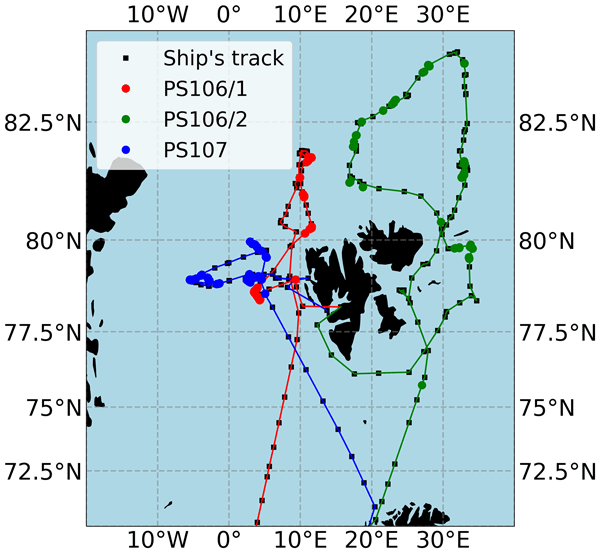
Philipp Richter, Mathias Palm, Christine Weinzierl, Hannes Griesche, Penny M. Rowe, and Justus Notholt
Earth Syst. Sci. Data, 14, 2767–2784, https://doi.org/10.5194/essd-14-2767-2022, https://doi.org/10.5194/essd-14-2767-2022, 2022
Short summary
Short summary
We present a dataset of cloud optical depths, effective radii and water paths from optically thin clouds observed in the Arctic around Svalbard. The data have been retrieved from infrared spectral radiance measured using a Fourier-transform infrared (FTIR) spectrometer. Besides a description of the measurements and retrieval technique, the data are put into context with results of corresponding measurements from microwave radiometer, lidar and cloud radar.
Kevin Ohneiser, Albert Ansmann, Bernd Kaifler, Alexandra Chudnovsky, Boris Barja, Daniel A. Knopf, Natalie Kaifler, Holger Baars, Patric Seifert, Diego Villanueva, Cristofer Jimenez, Martin Radenz, Ronny Engelmann, Igor Veselovskii, and Félix Zamorano
Atmos. Chem. Phys., 22, 7417–7442, https://doi.org/10.5194/acp-22-7417-2022, https://doi.org/10.5194/acp-22-7417-2022, 2022
Short summary
Short summary
We present and discuss 2 years of long-term lidar observations of the largest stratospheric perturbation by wildfire smoke ever observed. The smoke originated from the record-breaking Australian fires in 2019–2020 and affects climate conditions and even the ozone layer in the Southern Hemisphere. The obvious link between dense smoke occurrence in the stratosphere and strong ozone depletion found in the Arctic and in the Antarctic in 2020 can be regarded as a new aspect of climate change.
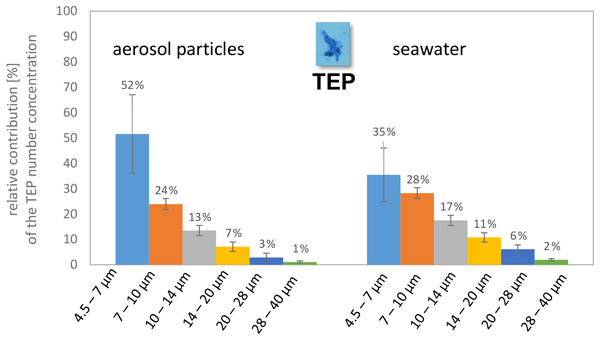
Manuela van Pinxteren, Tiera-Brandy Robinson, Sebastian Zeppenfeld, Xianda Gong, Enno Bahlmann, Khanneh Wadinga Fomba, Nadja Triesch, Frank Stratmann, Oliver Wurl, Anja Engel, Heike Wex, and Hartmut Herrmann
Atmos. Chem. Phys., 22, 5725–5742, https://doi.org/10.5194/acp-22-5725-2022, https://doi.org/10.5194/acp-22-5725-2022, 2022
Short summary
Short summary
A class of marine particles (transparent exopolymer particles, TEPs) that is ubiquitously found in the world oceans was measured for the first time in ambient marine aerosol particles and marine cloud waters in the tropical Atlantic Ocean. TEPs are likely to have good properties for influencing clouds. We show that TEPs are transferred from the ocean to the marine atmosphere via sea-spray formation and our results suggest that they can also form directly in aerosol particles and in cloud water.
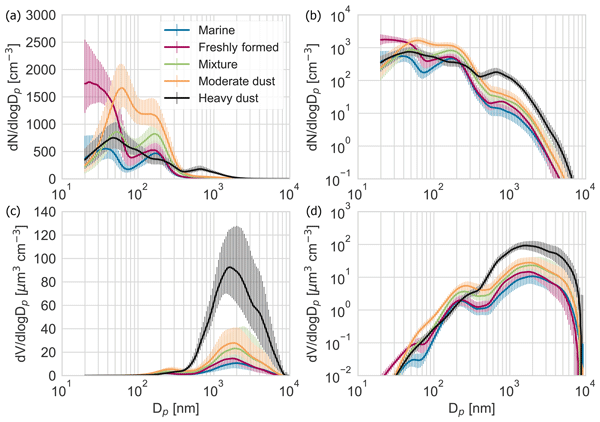
Xianda Gong, Heike Wex, Thomas Müller, Silvia Henning, Jens Voigtländer, Alfred Wiedensohler, and Frank Stratmann
Atmos. Chem. Phys., 22, 5175–5194, https://doi.org/10.5194/acp-22-5175-2022, https://doi.org/10.5194/acp-22-5175-2022, 2022
Short summary
Short summary
We conducted 10 yr measurements to characterize the atmospheric aerosol at Cabo Verde. An unsupervised machine learning algorithm, K-means, was implemented to study the aerosol types. Cloud condensation nuclei number concentrations during dust periods were 2.5 times higher than marine periods. The long-term data sets, together with the aerosol classification, can be used as a basis to improve understanding of annual cycles of aerosol, and aerosol-cloud interactions in the North Atlantic.
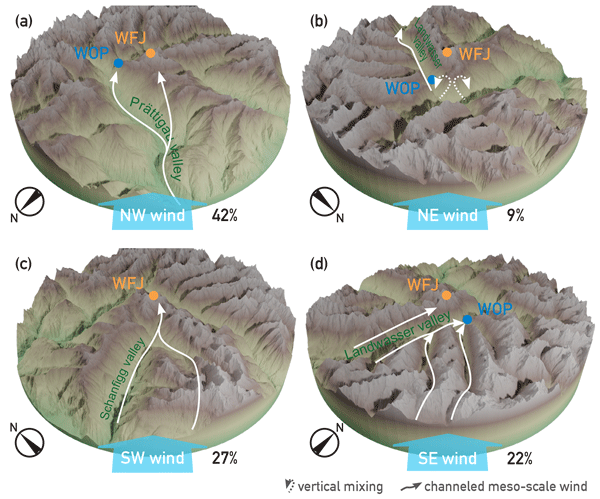
Jörg Wieder, Claudia Mignani, Mario Schär, Lucie Roth, Michael Sprenger, Jan Henneberger, Ulrike Lohmann, Cyril Brunner, and Zamin A. Kanji
Atmos. Chem. Phys., 22, 3111–3130, https://doi.org/10.5194/acp-22-3111-2022, https://doi.org/10.5194/acp-22-3111-2022, 2022
Short summary
Short summary
We investigate the variation in ice-nucleating particles (INPs) relevant for primary ice formation in mixed-phased clouds over the Alps based on simultaneous in situ observations at a mountaintop and a nearby high valley (1060 m height difference). In most cases, advection from the surrounding lower regions was responsible for changes in INP concentration, causing a diurnal cycle at the mountaintop. Our study underlines the importance of the planetary boundary layer as an INP reserve.
Rupert Holzinger, Oliver Eppers, Kouji Adachi, Heiko Bozem, Markus Hartmann, Andreas Herber, Makoto Koike, Dylan B. Millet, Nobuhiro Moteki, Sho Ohata, Frank Stratmann, and Atsushi Yoshida
Atmos. Chem. Phys. Discuss., https://doi.org/10.5194/acp-2022-95, https://doi.org/10.5194/acp-2022-95, 2022
Revised manuscript not accepted
Short summary
Short summary
In spring 2018 the research aircraft Polar 5 conducted flights in the Arctic atmosphere. The flight operation was from Station Nord in Greenland, 1700 km north of the Arctic Circle (81°43'N, 17°47'W). Using a mass spectrometer we measured more than 100 organic compounds in the air. We found a clear signature of natural organic compounds that are transported from forests to the high Arctic. These compounds have the potential to change the cloud cover and energy budget of the Arctic region.
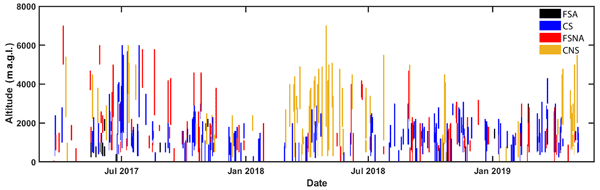
Birgit Heese, Athena Augusta Floutsi, Holger Baars, Dietrich Althausen, Julian Hofer, Alina Herzog, Silke Mewes, Martin Radenz, and Yoav Y. Schechner
Atmos. Chem. Phys., 22, 1633–1648, https://doi.org/10.5194/acp-22-1633-2022, https://doi.org/10.5194/acp-22-1633-2022, 2022
Short summary
Short summary
The aerosol distribution over Haifa, Israel, was measured for 2 years by a laser-based vertically resolved measurement technique called lidar. From these data, the aerosol types and their percentages of the observed aerosol mixtures were identified in terms of their size and shape. We found mostly desert dust from the surrounding deserts and sea salt from the close-by Mediterranean Sea. But aerosols from anthropogenic and industrial pollution from local and far away sources were also detected.

Teresa Vogl, Maximilian Maahn, Stefan Kneifel, Willi Schimmel, Dmitri Moisseev, and Heike Kalesse-Los
Atmos. Meas. Tech., 15, 365–381, https://doi.org/10.5194/amt-15-365-2022, https://doi.org/10.5194/amt-15-365-2022, 2022
Short summary
Short summary
We are using machine learning techniques, a type of artificial intelligence, to detect graupel formation in clouds. The measurements used as input to the machine learning framework were performed by cloud radars. Cloud radars are instruments located at the ground, emitting radiation with wavelenghts of a few millimeters vertically into the cloud and measuring the back-scattered signal. Our novel technique can be applied to different radar systems and different weather conditions.
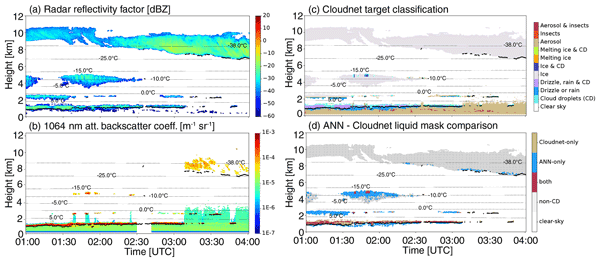
Heike Kalesse-Los, Willi Schimmel, Edward Luke, and Patric Seifert
Atmos. Meas. Tech., 15, 279–295, https://doi.org/10.5194/amt-15-279-2022, https://doi.org/10.5194/amt-15-279-2022, 2022
Short summary
Short summary
It is important to detect the vertical distribution of cloud droplets and ice in mixed-phase clouds. Here, an artificial neural network (ANN) previously developed for Arctic clouds is applied to a mid-latitudinal cloud radar data set. The performance of this technique is contrasted to the Cloudnet target classification. For thick/multi-layer clouds, the machine learning technique is better at detecting liquid than Cloudnet, but if lidar data are available Cloudnet is at least as good as the ANN.
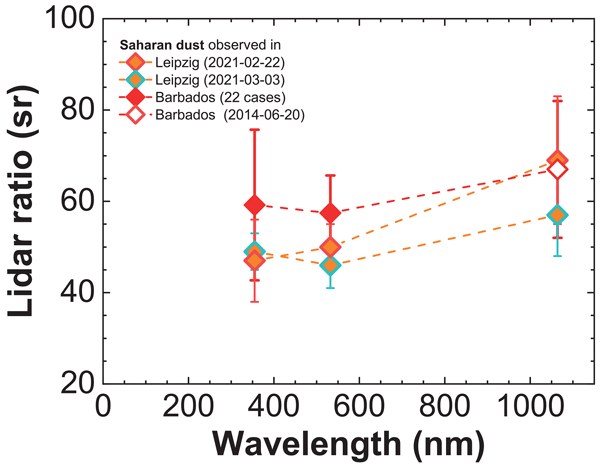
Moritz Haarig, Albert Ansmann, Ronny Engelmann, Holger Baars, Carlos Toledano, Benjamin Torres, Dietrich Althausen, Martin Radenz, and Ulla Wandinger
Atmos. Chem. Phys., 22, 355–369, https://doi.org/10.5194/acp-22-355-2022, https://doi.org/10.5194/acp-22-355-2022, 2022
Short summary
Short summary
The irregular shape of dust particles makes it difficult to treat them correctly in optical models. Atmospheric measurements of dust optical properties are therefore of great importance. The present study increases the space of observed parameters from 355 and 532 nm towards 1064 nm, which is of special importance for large dust particles. The lidar ratio influenced by mineralogy and the depolarization ratio influenced by shape are measured for the first time at all three wavelengths.
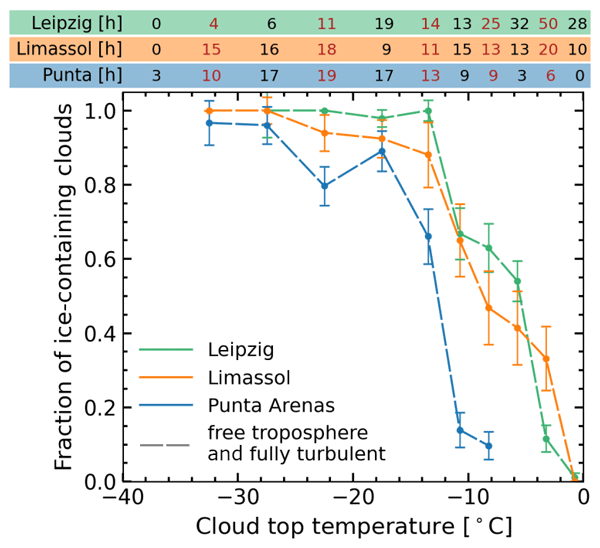
Martin Radenz, Johannes Bühl, Patric Seifert, Holger Baars, Ronny Engelmann, Boris Barja González, Rodanthi-Elisabeth Mamouri, Félix Zamorano, and Albert Ansmann
Atmos. Chem. Phys., 21, 17969–17994, https://doi.org/10.5194/acp-21-17969-2021, https://doi.org/10.5194/acp-21-17969-2021, 2021
Short summary
Short summary
This study brings together long-term ground-based remote-sensing observations of mixed-phase clouds at three key locations of aerosol–cloud interactions in the Northern and Southern Hemisphere midlatitudes. The findings contribute several new aspects on the nature of the excess of supercooled liquid clouds in the Southern Hemisphere, such as a long-term lidar-based estimate of ice-nucleating particle profiles as well as the effects of boundary layer coupling and gravity waves on ice formation.
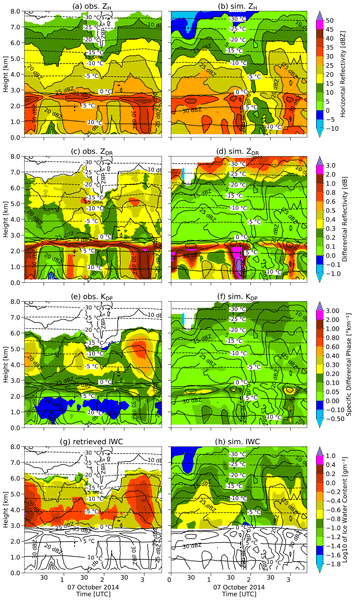
Silke Trömel, Clemens Simmer, Ulrich Blahak, Armin Blanke, Sabine Doktorowski, Florian Ewald, Michael Frech, Mathias Gergely, Martin Hagen, Tijana Janjic, Heike Kalesse-Los, Stefan Kneifel, Christoph Knote, Jana Mendrok, Manuel Moser, Gregor Köcher, Kai Mühlbauer, Alexander Myagkov, Velibor Pejcic, Patric Seifert, Prabhakar Shrestha, Audrey Teisseire, Leonie von Terzi, Eleni Tetoni, Teresa Vogl, Christiane Voigt, Yuefei Zeng, Tobias Zinner, and Johannes Quaas
Atmos. Chem. Phys., 21, 17291–17314, https://doi.org/10.5194/acp-21-17291-2021, https://doi.org/10.5194/acp-21-17291-2021, 2021
Short summary
Short summary
The article introduces the ACP readership to ongoing research in Germany on cloud- and precipitation-related process information inherent in polarimetric radar measurements, outlines pathways to inform atmospheric models with radar-based information, and points to remaining challenges towards an improved fusion of radar polarimetry and atmospheric modelling.
Kevin Ohneiser, Albert Ansmann, Alexandra Chudnovsky, Ronny Engelmann, Christoph Ritter, Igor Veselovskii, Holger Baars, Henriette Gebauer, Hannes Griesche, Martin Radenz, Julian Hofer, Dietrich Althausen, Sandro Dahlke, and Marion Maturilli
Atmos. Chem. Phys., 21, 15783–15808, https://doi.org/10.5194/acp-21-15783-2021, https://doi.org/10.5194/acp-21-15783-2021, 2021
Short summary
Short summary
The highlight of the lidar measurements during the 1-year MOSAiC (Multidisciplinary drifting Observatory for the Study of Arctic Climate) expedition of the German icebreaker Polarstern (October 2019–October 2020) was the detection of a persistent, 10 km deep Siberian wildfire smoke layer in the upper troposphere and lower stratosphere (UTLS) from about 7–8 km to 17–18 km height that could potentially have impacted the record-breaking ozone depletion over the Arctic in the spring of 2020.
Cited articles
Agresti, A. and Coull, B. A.: Approximate is Better than “Exact” for Interval Estimation of Binomial Proportions, The American Statistician, 52, 119–126, https://doi.org/10.1080/00031305.1998.10480550, 1998. a
Ávila, E. E., Castellano, N. E., Saunders, C. P. R., Bürgesser, R. E., and Aguirre Varela, G. G.: Initial stages of the riming process on ice crystals, Geophysical Research Letters, 36, https://doi.org/10.1029/2009GL037723, 2009. a
Bailey, M. P. and Hallett, J.: A Comprehensive Habit Diagram for Atmospheric Ice Crystals: Confirmation from the Laboratory, AIRS II, and Other Field Studies, Journal of the Atmospheric Sciences, 66, 2888–2899, https://doi.org/10.1175/2009JAS2883.1, 2009. a
Bergeron, T.: On the physics of clouds and precipitation, Proc. Fifth Assembly of the Int. Union of Geodesy and Geophysics, Lisbon, Portugal, IUGG, 156–178, 1935. a
Bessardon, G. E. Q., Fosu-Amankwah, K., Petersson, A., and Brooks, B. J.: Evaluation of Windsond S1H2 performance in Kumasi during the 2016 DACCIWA field campaign, Atmospheric Measurement Techniques, 12, 1311–1324, https://doi.org/10.5194/amt-12-1311-2019, 2019. a
Christner, B. C., Cai, R., Morris, C. E., McCarter, K. S., Foreman, C. M., Skidmore, M. L., Montross, S. N., and Sands, D. C.: Geographic, seasonal, and precipitation chemistry influence on the abundance and activity of biological ice nucleators in rain and snow, Proceedings of the National Academy of Sciences, 105, 18854–18859, https://doi.org/10.1073/pnas.0809816105, 2008. a
David, R. O., Cascajo-Castresana, M., Brennan, K. P., Rösch, M., Els, N., Werz, J., Weichlinger, V., Boynton, L. S., Bogler, S., Borduas-Dedekind, N., Marcolli, C., and Kanji, Z. A.: Development of the DRoplet Ice Nuclei Counter Zurich (DRINCZ): validation and application to field-collected snow samples, Atmospheric Measurement Techniques, 12, 6865–6888, https://doi.org/10.5194/amt-12-6865-2019, 2019. a
Findeisen, W.: Kolloid-meteorologische Vorgänge bei Niederschlagsbildung, Meteor. Z., 55, 121–133, 1938. a
Gong, X., Radenz, M., Wex, H., Seifert, P., Ataei, F., Henning, S., Baars, H., Barja, B., Ansmann, A., and Stratmann, F.: Significant continental source of ice-nucleating particles at the tip of Chile's southernmost Patagonia region, Atmospheric Chemistry and Physics, 22, 10505–10525, https://doi.org/10.5194/acp-22-10505-2022, 2022. a
Granwehr, T.: In Eriswil beobachten Forschende den Hochnebel, https://ethz.ch/content/dam/ethz/special-interest/usys/iac/iac-dam/documents/group/wolke/lohmann/Cloudlab-ETH-Medienberichte-20220228.pdf, last access: 23 October 2022. a
Griesche, H. J., Ohneiser, K., Seifert, P., Radenz, M., Engelmann, R., and Ansmann, A.: Contrasting ice formation in Arctic clouds: surface-coupled vs. surface-decoupled clouds, Atmospheric Chemistry and Physics, 21, 10357–10374, https://doi.org/10.5194/acp-21-10357-2021, 2021. a, b
Hallet, J. and Mossop, S. C.: Production of secondary ice particles during the riming process, Nature, 249, 26–28, 1974. a
Hartmann, M., Blunier, T., Brügger, S., Schmale, J., Schwikowski, M., Vogel, A., Wex, H., and Stratmann, F.: Variation of Ice Nucleating Particles in the European Arctic Over the Last Centuries, Geophysical Research Letters, 46, 4007–4016, https://doi.org/10.1029/2019GL082311, 2019. a, b
Hartmann, S., Niedermeier, D., Voigtländer, J., Clauss, T., Shaw, R. A., Wex, H., Kiselev, A., and Stratmann, F.: Homogeneous and heterogeneous ice nucleation at LACIS: operating principle and theoretical studies, Atmospheric Chemistry and Physics, 11, 1753–1767, https://doi.org/10.5194/acp-11-1753-2011, 2011. a
Henneberger, J., Ramelli, F., Spirig, R., Omanovic, N., Miller, A. J., Fuchs, C., Zhang, H., Bühl, J., Hervo, M., Kanji, Z. A., Ohneiser, K., Radenz, M., Rösch, M., Seifert, P., and Lohmann, U.: Seeding of Supercooled Low Stratus Clouds with a UAV to Study Microphysical Ice Processes: An Introduction to the CLOUDLAB Project, Bulletin of the American Meteorological Society, 104, E1962–E1979, https://doi.org/10.1175/BAMS-D-22-0178.1, 2023. a, b, c
Holden, M. A., Campbell, J. M., Meldrum, F. C., Murray, B. J., and Christenson, H. K.: Active sites for ice nucleation differ depending on nucleation mode, Proceedings of the National Academy of Sciences, 118, e2022859118, https://doi.org/10.1073/pnas.2022859118, 2021. a
Hoose, C. and Möhler, O.: Heterogeneous ice nucleation on atmospheric aerosols: a review of results from laboratory experiments, Atmospheric Chemistry and Physics, 12, 9817–9854, https://doi.org/10.5194/acp-12-9817-2012, 2012. a, b, c
HYSPLIT: HYSPLIT trajectory model, https://www.ready.noaa.gov/HYSPLIT.php, last access: 29 July 2025. a
Kanitz, T., Seifert, P., Ansmann, A., Engelmann, R., Althausen, D., Casiccia, C., and Rohwer, E. G.: Contrasting the impact of aerosols at northern and southern midlatitudes on heterogeneous ice formation, Geophysical Research Letters, 38, https://doi.org/10.1029/2011GL048532, 2011. a
Kanji, Z. A., Ladino, L. A., Wex, H., Boose, Y., Kohn, M., Cziczo, D., and Krämer, M.: Chapter 1: Overview of Ice Nucleating Particles, Meteor. Monogr., 58, 1.1–1.33,, https://doi.org/10.1175/AMSMONOGRAPHS-D-16-0006.1, 2017. a
Korolev, A. and Leisner, T.: Review of experimental studies of secondary ice production, Atmospheric Chemistry and Physics, 20, 11767–11797, https://doi.org/10.5194/acp-20-11767-2020, 2020. a
Lacher, L., Adams, M. P., Barry, K., Bertozzi, B., Bingemer, H., Boffo, C., Bras, Y., Büttner, N., Castarede, D., Cziczo, D. J., DeMott, P. J., Fösig, R., Goodell, M., Höhler, K., Hill, T. C. J., Jentzsch, C., Ladino, L. A., Levin, E. J. T., Mertes, S., Möhler, O., Moore, K. A., Murray, B. J., Nadolny, J., Pfeuffer, T., Picard, D., Ramírez-Romero, C., Ribeiro, M., Richter, S., Schrod, J., Sellegri, K., Stratmann, F., Swanson, B. E., Thomson, E. S., Wex, H., Wolf, M. J., and Freney, E.: The Puy de Dôme ICe Nucleation Intercomparison Campaign (PICNIC): comparison between online and offline methods in ambient air, Atmospheric Chemistry and Physics, 24, 2651–2678, https://doi.org/10.5194/acp-24-2651-2024, 2024. a
Libbrecht, K.: Crystal Growth in the Presence of Surface Melting and Impurities: An Explanation of Snow Crystal Growth Morphologies, arXiv, https://doi.org/10.48550/arXiv.0810.0689, 2008. a
Maahn, M., Moisseev, D., Steinke, I., Maherndl, N., and Shupe, M. D.: Introducing the Video In Situ Snowfall Sensor (VISSS), Atmospheric Measurement Techniques, 17, 899–919, https://doi.org/10.5194/amt-17-899-2024, 2024. a, b
Marcolli, C., Nagare, B., Welti, A., and Lohmann, U.: Ice nucleation efficiency of AgI: review and new insights, Atmospheric Chemistry and Physics, 16, 8915–8937, https://doi.org/10.5194/acp-16-8915-2016, 2016. a
Mülmenstädt, J., Sourdeval, O., Delanoë, J., and Quaas, J.: Frequency of occurrence of rain from liquid-, mixed-, and ice-phase clouds derived from A-Train satellite retrievals, Geophysical Research Letters, 42, 6502–6509, https://doi.org/10.1002/2015GL064604, 2015. a, b
Ohneiser, K., Seifert, P., Schimmel, W., Senf, F., Gaudek, T., Radenz, M., Teisseire, A., Ettrichrätz, V., Vogl, T., Maherndl, N., Pfeifer, N., Henneberger, J., Miller, A. J., Omanovic, N., Fuchs, C., Zhang, H., Ramelli, F., Spirig, R., Kötsche, A., Kalesse-Los, H., Maahn, M., Corden, H., Berne, A., Hajipour, M., Griesche, H., Hofer, J., Engelmann, R., Skupin, A., Ansmann, A., and Baars, H.: Impact of seeder-feeder cloud interaction on precipitation formation: a case study based on extensive remote-sensing, in situ and model data, Atmospheric Chemistry and Physics, 25, 17363–17386, https://doi.org/10.5194/acp-25-17363-2025, 2025a. a, b, c, d, e
Ohneiser, K., Hartmann, M., Wex, H., Seifert, P., Hardt, A., Miller, A., Baudrexl, K., Thomas, W., Ettrichrätz, V., Maahn, M., Gaudek, T., Schimmel, W., Senf, F., Griesche, H., Radenz, M., and Henneberger, J.: Dataset: PolarCAP/CLOUDLAB campaign in Eriswil, Switzerland, data from the INP contrast study in January and February 2024 used in the publication in ACP: Ice-nucleating particle depletion in the wintertime boundary layer in the pre-Alpine region during stratus cloud conditions, Zenodo [data set], https://doi.org/10.5281/zenodo.15721531, 2025b. a, b, c
Petters, M. D. and Wright, T. P.: Revisiting ice nucleation from precipitation samples, Geophysical Research Letters, 42, 8758–8766, https://doi.org/10.1002/2015gl065733, 2015. a
Pummer, B. G., Budke, C., Augustin-Bauditz, S., Niedermeier, D., Felgitsch, L., Kampf, C. J., Huber, R. G., Liedl, K. R., Loerting, T., Moschen, T., Schauperl, M., Tollinger, M., Morris, C. E., Wex, H., Grothe, H., Pöschl, U., Koop, T., and Fröhlich-Nowoisky, J.: Ice nucleation by water-soluble macromolecules, Atmospheric Chemistry and Physics, 15, 4077–4091, https://doi.org/10.5194/acp-15-4077-2015, 2015. a, b
Radenz, M., Bühl, J., Seifert, P., Baars, H., Engelmann, R., Barja González, B., Mamouri, R.-E., Zamorano, F., and Ansmann, A.: Hemispheric contrasts in ice formation in stratiform mixed-phase clouds: disentangling the role of aerosol and dynamics with ground-based remote sensing, Atmospheric Chemistry and Physics, 21, 17969–17994, https://doi.org/10.5194/acp-21-17969-2021, 2021. a, b, c, d
Rose, T., Crewell, S., Löhnert, U., and Simmer, C.: A network suitable microwave radiometer for operational monitoring of the cloudy atmosphere, Atmospheric Research, 75, 183–200, https://doi.org/10.1016/j.atmosres.2004.12.005, 2005. a
RPG: RPG94 measurement instrument, https://www.radiometer-physics.de/products/microwave-remote-sensing-instruments/fmcw-doppler-cloud-radar/, last access: 17 December 2024. a
Scherrer, S. C. and Appenzeller, C.: Fog and low stratus over the Swiss Plateau – a climatological study, International Journal of Climatology, 34, 678–686, https://doi.org/10.1002/joc.3714, 2014. a
Schönhuber, M., Lammer, G., and Randeu, W. L.: The 2D-Video-Distrometer, 3–31, Springer Berlin Heidelberg, Berlin, Heidelberg, ISBN 978-3-540-77655-0, https://doi.org/10.1007/978-3-540-77655-0_1, 2008. a
Seifert, A., Bachmann, V., Filipitsch, F., Förstner, J., Grams, C. M., Hoshyaripour, G. A., Quinting, J., Rohde, A., Vogel, H., Wagner, A., and Vogel, B.: Aerosol–cloud–radiation interaction during Saharan dust episodes: the dusty cirrus puzzle, Atmospheric Chemistry and Physics, 23, 6409–6430, https://doi.org/10.5194/acp-23-6409-2023, 2023. a
Stein, A. F., Draxler, R. R., Rolph, G. D., Stunder, B. J. B., Cohen, M. D., and Ngan, F.: NOAA's HYSPLIT Atmospheric Transport and Dispersion Modeling System, Bulletin of the American Meteorological Society, 96, 2059–2077, https://doi.org/10.1175/BAMS-D-14-00110.1, 2015. a
Sze, K. C. H., Wex, H., Hartmann, M., Skov, H., Massling, A., Villanueva, D., and Stratmann, F.: Ice-nucleating particles in northern Greenland: annual cycles, biological contribution and parameterizations, Atmospheric Chemistry and Physics, 23, 4741–4761, https://doi.org/10.5194/acp-23-4741-2023, 2023. a
Tobo, Y., Adachi, K., Kawai, K., Matsui, H., Ohata, S., Oshima, N., Kondo, Y., Hermansen, O., Uchida, M., Inoue, J., and Koike, M.: Surface warming in Svalbard may have led to increases in highly active ice-nucleating particles, Communications Earth & Environment, 5, 516, https://doi.org/10.1038/s43247-024-01677-0, 2024. a
Vali, G.: Quantitative evaluation of experimental results on heterogeneous freezing nucleation of supercooled liquids, Journal of the Atmospheric Sciences, 28, 402–409, https://doi.org/10.1175/1520-0469(1971)028<0402:qeoera>2.0.co;2, 1971. a
Wanner, H. and Furger, M.: The Bise – Climatology of a regional wind north of the Alps, Meteorology and Atmospheric Physics, 43, 105–115, https://doi.org/10.1007/BF01028113, 1990. a
Wegener, A.: Thermodynamik der Atmosphäre, Leipzig, J. A. Barth, 331 pp., 1911. a
Wiegner, M. and Geiß, A.: Aerosol profiling with the Jenoptik ceilometer CHM15kx, Atmospheric Measurement Techniques, 5, 1953–1964, https://doi.org/10.5194/amt-5-1953-2012, 2012. a
Short summary
This study highlights the efficiency of supercooled liquid-dominated stratus clouds to remove ice-nucleating particles (INPs). When within the planetary boundary layer (PBL), lower concentrations of INPs were measured under supercooled stratus conditions, compared to when the stratus cloud layers occurred at temperatures above freezing. Under supercooling conditions, the free-troposphere above the supercooled stratus covered PBL was found to be an additional potential source of INP.
This study highlights the efficiency of supercooled liquid-dominated stratus clouds to remove...


Altmetrics
Final-revised paper
Preprint