
Articles | Volume 26, issue 4
https://doi.org/10.5194/acp-26-3185-2026
© Author(s) 2026. This work is distributed under
the Creative Commons Attribution 4.0 License.
the Creative Commons Attribution 4.0 License.
https://doi.org/10.5194/acp-26-3185-2026
© Author(s) 2026. This work is distributed under
the Creative Commons Attribution 4.0 License.
the Creative Commons Attribution 4.0 License.
Research article
| 
03 Mar 2026
Research article |
| 03 Mar 2026
| 03 Mar 2026
Characteristics and processing of aqueous secondary organic aerosols during autumn in suburban Eastern China: role of aerosol liquid water, aerosol acidity, and photochemistry
Qiu Wang
School of Atmospheric Sciences, Nanjing University, Nanjing, 210023, China

School of Atmospheric Sciences, Nanjing University, Nanjing, 210023, China
National Observation and Research Station for Atmospheric Processes and Environmental Change in Yangtze River Delta, Nanjing, 210023, China
Frontiers Science Center for Critical Earth Material Cycling, Nanjing University, Nanjing, 210023, China
Weiqi Xu
State Key Laboratory of Atmospheric Environment and Extreme Meteorology, Institute of Atmospheric Physics, Chinese Academy of Sciences, Beijing 100029, China
Jinbo Wang
School of Atmospheric Sciences, Nanjing University, Nanjing, 210023, China
now at: National Satellite Meteorological Center, China Meteorological Administration, Beijing 100081, China
Dafeng Ge
School of Atmospheric Sciences, Nanjing University, Nanjing, 210023, China
Caijun Zhu
School of Atmospheric Sciences, Nanjing University, Nanjing, 210023, China
Chuanhua Ren
School of Atmospheric Sciences, Nanjing University, Nanjing, 210023, China
Jiaping Wang
School of Atmospheric Sciences, Nanjing University, Nanjing, 210023, China
National Observation and Research Station for Atmospheric Processes and Environmental Change in Yangtze River Delta, Nanjing, 210023, China
Qiaozhi Zha
School of Atmospheric Sciences, Nanjing University, Nanjing, 210023, China
National Observation and Research Station for Atmospheric Processes and Environmental Change in Yangtze River Delta, Nanjing, 210023, China
Ximeng Qi
School of Atmospheric Sciences, Nanjing University, Nanjing, 210023, China
National Observation and Research Station for Atmospheric Processes and Environmental Change in Yangtze River Delta, Nanjing, 210023, China
School of Atmospheric Sciences, Nanjing University, Nanjing, 210023, China
National Observation and Research Station for Atmospheric Processes and Environmental Change in Yangtze River Delta, Nanjing, 210023, China
Xuguang Chi
School of Atmospheric Sciences, Nanjing University, Nanjing, 210023, China
National Observation and Research Station for Atmospheric Processes and Environmental Change in Yangtze River Delta, Nanjing, 210023, China
Sijia Lou
School of Atmospheric Sciences, Nanjing University, Nanjing, 210023, China
National Observation and Research Station for Atmospheric Processes and Environmental Change in Yangtze River Delta, Nanjing, 210023, China
Frontiers Science Center for Critical Earth Material Cycling, Nanjing University, Nanjing, 210023, China
Xin Huang
School of Atmospheric Sciences, Nanjing University, Nanjing, 210023, China
National Observation and Research Station for Atmospheric Processes and Environmental Change in Yangtze River Delta, Nanjing, 210023, China
Frontiers Science Center for Critical Earth Material Cycling, Nanjing University, Nanjing, 210023, China
Aijun Ding
School of Atmospheric Sciences, Nanjing University, Nanjing, 210023, China
National Observation and Research Station for Atmospheric Processes and Environmental Change in Yangtze River Delta, Nanjing, 210023, China
Frontiers Science Center for Critical Earth Material Cycling, Nanjing University, Nanjing, 210023, China
Related authors
No articles found.
Jinpeng Lu, Sijia Lou, Wuke Wang, Jiankai Zhang, Ke Ding, Xin Huang, Yiquan Jiang, Tengyu Liu, Yawen Liu, Qingyan Xie, Lian Xue, Zilin Wang, Chen Zhou, Anbao Zhu, and Aijun Ding
EGUsphere, https://doi.org/10.5194/egusphere-2026-5104, https://doi.org/10.5194/egusphere-2026-5104, 2026
This preprint is open for discussion and under review for Atmospheric Chemistry and Physics (ACP).
Short summary
Short summary
The 2022 Hunga Tonga eruption injected sulfur gases and massive water vapor into the stratosphere. With observations and simulations, we assessed effects on the tropical quasi-biennial oscillation (QBO). Pollutants lingered over a year; the water-rich eruption notably altered QBO winds. Cooling from excess vapor and particles, concentrated south of 15° N, reshaped upper circulation and drove downward wind anomalies modulating the QBO, with April–October 2022 cooling causing more wind shifts.
Tinghan Zhang, Wei Du, Xinran Zhang, Janne Lampilahti, Chengfeng Liu, Zehao Zou, Men Xia, Qi Yuan, Qiaozhi Zha, Jing Cai, Yiyang Wang, Tom Kokkonen, Katrianne Lehtipalo, Tuukka Petäjä, Veli-Matti Kerminen, Chao Yan, Jingkun Jiang, Yongchun Liu, and Markku Kulmala
EGUsphere, https://doi.org/10.5194/egusphere-2026-5379, https://doi.org/10.5194/egusphere-2026-5379, 2026
This preprint is open for discussion and under review for Atmospheric Chemistry and Physics (ACP).
Short summary
Short summary
New particle formation (NPF) is an important source of atmospheric aerosols, but weak events are often overlooked by traditional classification. We applied continuous nanoparticle ranking and particle size distribution normalization to four-year observations from a Finnish boreal forest and the megacity of Beijing. The results show that NPF intensity is governed by source–sink competition and that particle formation and growth are not necessarily controlled by the same atmospheric conditions.
Lingfeng Li, Bo Qiu, Siwen Zhao, Xin Miao, Chaorong Chen, Jiuyi Chen, Yueyang Ni, Xin Huang, Haishan Chen, and Weidong Guo
Geosci. Model Dev., 19, 8447–8467, https://doi.org/10.5194/gmd-19-8447-2026, https://doi.org/10.5194/gmd-19-8447-2026, 2026
Short summary
Short summary
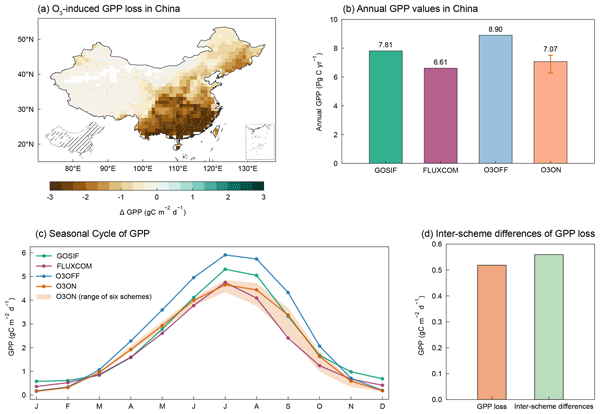
Ground-level ozone can reduce plant growth, but models represent this damage in different ways. We tested six approaches in the same vegetation model for China during the 2010s. They estimated that ozone reduced plant carbon uptake by 17 % to 27 %, averaging about 21 %. Approaches based on broader observations and leaf traits matched measurements more closely, while using leaf lifespan improved how the model represented the accumulation and decline of ozone damage.
Lindsay D. Yee, Emily B. Franklin, Robin J. Weber, Jessica Zhao, Tiger Zhang, Stephanie Xu, Isaac Santillan, Fangyuan Li, Coty N. Jen, Haofei Zhang, Yutong Liang, Gabriel Isaacman Van-Wertz, Rebecca A. Wernis, John Offenberg, Michael Lewandowski, Taekyu Joo, Masayuki Takeuchi, Gamze Eris, Weiqi Xu, Nga L. Ng, Yuzhi Chen, John E. Shilling, Mary Alice Upshur, Ariana Gray Bé, Regan J. Thomson, Franz M. Geiger, and Allen H. Goldstein
Atmos. Meas. Tech., 19, 5027–5049, https://doi.org/10.5194/amt-19-5027-2026, https://doi.org/10.5194/amt-19-5027-2026, 2026
Short summary
Short summary
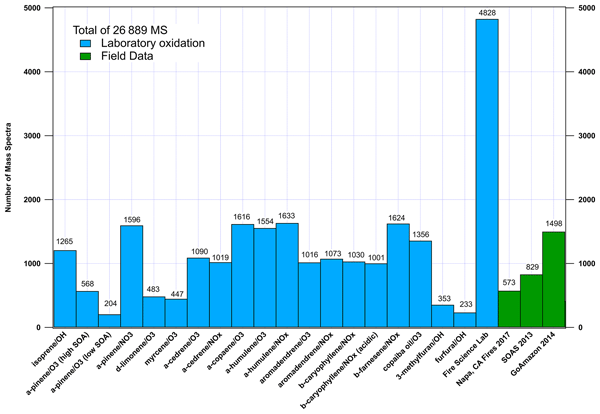
An open-access mass spectral database of identified and unidentified compounds in atmospheric and laboratory-generated organic aerosols is released to aid in future molecular discoveries in the environmental sciences. Identification of air pollution sources and origins is improved using the ~27,000 mass spectral records in the University of California Berkeley Goldstein Library of Organic Biogenic Environmental Spectra (UCB-GLOBES) database.
Mengrong Lu, Huilin Chen, Xun Zhang, Xuguang Chi, Chong Wei, Shuangxi Fang, Fenjuan Wang, Eleftherios Ioannidis, Friedemann Reum, Xinlu Wang, Prajal Pradhan, Wouter Peters, Klaus Hubacek, and Sander Houweling
EGUsphere, https://doi.org/10.5194/egusphere-2026-3879, https://doi.org/10.5194/egusphere-2026-3879, 2026
Short summary
Short summary
Effective methane mitigation requires accurate knowledge of the spatial and temporal distribution of sources and sinks. Using high-resolution atmospheric modeling and ground-based observations, we estimated methane emissions in East Asia, focusing on the Yangtze River Delta. Emissions are lower than most inventories suggest, but show a clear seasonal cycle, with summer peaks driven by rice cultivation and natural sources. This seasonality is critical for emission tracking and mitigation design.
Qihao Lin, Jiandong Wang, Chenxi Li, Dian Ding, Jiaping Wang, Wei Nie, Ximeng Qi, Yuliang Liu, Xuguang Chi, and Xin Huang
EGUsphere, https://doi.org/10.5194/egusphere-2026-3636, https://doi.org/10.5194/egusphere-2026-3636, 2026
Short summary
Short summary
We focused on nanoparticle growth because it affects climate and health. Current models often merge these particles with background aerosol populations, missing key details. We developed an improved model that explicitly tracks these particles from formation through subsequent growth. Our model matched observations better than standard approaches, captured early growth more realistically, and added minimal computational cost, making it promising for three-dimensional atmospheric simulations.
Aino Ovaska, Daniel Holmberg, Elio Rauth, Mansour Alghamdi, Paulo Artaxo, Eija Asmi, John Backman, Benjamin Bergmans, Matthew Boyer, Liezl Bredenkamp, Maurizio Busetto, Delano Campos De Oliveira, Juan Andrés Casquero-Vera, Darius Ceburnis, Tak Chan, Tommy Chan, Sebastien Conil, Daniele Contini, Suzanne Crumeyrolle, Valentin Duflot, Kostas Eleftheriadis, Johan Esveld, Ekaterina Ezhova, Markus Fiebig, Shahzad Gani, Olga Garmash, Francisco Gómez-Moreno, Roy M. Harrison, Andras Hoffer, Rakesh Hooda, Antti Hyvärinen, Tareq Hussein, Jorma Joutsensaari, Nikos Kalivitis, Heinz Kaminski, Jutta Kesti, Radovan Krejci, Adam Kristensson, Chongai Kuang, Markku Kulmala, Lauri Laakso, Ari Leskinen, Heikki Lihavainen, Andreas Massling, Maik Merkel, Steffen Noe, Jakub Ondracek, Noemí Perez, Jean-Eudes Petit, Tuukka Petäjä, Michael Pikridas, Christopher Pöhlker, Mira Pöhlker, Jean-Philippe Putaud, Ximeng Qi, Cristina Reche, Sergio Rodríguez, Petr Roztocil, Jean Sciare, Karine Sellegri, Dongjie Shang, Ashish Singh, Mikko Sipilä, Henrik Skov, Mar Sorribas, Tamanna Subba, Junying Sun, Peter Tunved, Ville Vakkari, Pieter G. Van Zyl, Aki Virkkula, Jens Voigtländer, Kay Weinhold, Alfred Wiedensohler, Hee-Jung Yoo, Putian Zhou, Kai Puolamäki, Tuomo Nieminen, Veli-Matti Kerminen, Victoria A. Sinclair, and Pauli Paasonen
Earth Syst. Sci. Data Discuss., https://doi.org/10.5194/essd-2026-415, https://doi.org/10.5194/essd-2026-415, 2026
Preprint under review for ESSD
Short summary
Short summary
All clouds form around aerosol particles, and their abundance influences cloud properties. In turn, clouds affect climate by changing how energy moves through the atmosphere, making them important for climate change. To better understand these interactions, we need accurate information on how many aerosol particles are in the atmosphere. Therefore, we have developed a new 21-year global dataset of particle concentrations relevant for cloud formation.
Jing Cai, Yongchun Liu, Feixue Zheng, Dian Ding, Wei Du, Liang Yuan, Yingjie Zou, Lazong Suolang, Rongxiang Lu, Wanwei Li, Chao Liu, Xiaolong Fan, Qiaozhi Zha, Mengxiao Luan, and Jiandong Wang
EGUsphere, https://doi.org/10.5194/egusphere-2026-4106, https://doi.org/10.5194/egusphere-2026-4106, 2026
Short summary
Short summary
Characterizing organic aerosol (OA) molecular composition, sources and toxicity in the North China Plain remains difficult. Through comprehensive online and offline measurements in Weifang, a representative medium-sized city, we identify combustion-derived OA with a moderate oxidation state as the key drivers of oxidative potential (OP). These insights are critical for health risk assessments amidst the region’s ongoing reduction in particulate mass due to emission controls.
Yi Zhang, Wei Zhou, Weiqi Xu, Yan Li, Yu Zhang, Zijun Zhang, Bojiang Su, Ning Zhang, Eleonora Aruffo, Junfeng Wang, Piero Di Carlo, Lanzhong Liu, Xiaole Pan, Zifa Wang, Douglas Worsnop, and Yele Sun
EGUsphere, https://doi.org/10.5194/egusphere-2026-3643, https://doi.org/10.5194/egusphere-2026-3643, 2026
Short summary
Short summary
We tracked OOMs that form haze and clouds at a forested mountain in southeastern China. Warm weather boosted natural emissions from plants, making them the primary source of these compounds. Conversely, cooler weather amplified the impact of pollution blowing in from other regions. Clouds also played a major role by washing away certain chemicals while transforming others. These interactions between weather, nature, and pollution offer crucial insights for improving climate models.
Maoyu Cao, Chao Yan, Yuliang Liu, Dafeng Ge, Junchao Yin, Yuanyuan Li, Tao Xu, Ziqian Wei, Jinbo Wang, Ying Zhang, Zhenning Wang, Valter Mickwitz, Ziheng Chen, Bisen Han, Jianxun Wang, Caijun Zhu, Ximeng Qi, Qiaozhi Zha, Xuguang Chi, Zhe Wang, Jian Zhao, Mikael Ehn, Wei Nie, Jingkun Jiang, and Aijun Ding
EGUsphere, https://doi.org/10.5194/egusphere-2026-3647, https://doi.org/10.5194/egusphere-2026-3647, 2026
Short summary
Short summary
Fine airborne particles affect air quality, human health, and climate, yet their molecular composition is difficult to measure. Using a newly characterized instrument that detects these molecules in real time, we carried out the first such study in an eastern Chinese city. We find that particle composition is shaped not only by molecules condensing from the air, but also by chemical reactions within the particles, with natural and human sources and regional transport all contributing.
Anbao Zhu, Xin Huang, Haiming Xu, Jiechun Deng, Lian Xue, Zilin Wang, Ke Ding, Tianshuai Li, and Aijun Ding
EGUsphere, https://doi.org/10.5194/egusphere-2026-3180, https://doi.org/10.5194/egusphere-2026-3180, 2026
Short summary
Short summary
Every spring, East Asian dust travels across the North Pacific. We investigated its effect on the North Pacific storm track using decades of data and a numerical model. We found that dust absorbs sunlight and warms the middle atmosphere, altering temperature patterns. This shifts the zone favorable for storm development poleward. These results highlight that natural dust meaningfully influences large-scale atmospheric circulation and should be considered in regional climate assessments.
Liwen Yang, Wei Nie, Mikael Ehn, Chao Yan, Lubna Dada, Yuliang Liu, Pontus Roldin, and Aijun Ding
Geosci. Model Dev., 19, 5155–5172, https://doi.org/10.5194/gmd-19-5155-2026, https://doi.org/10.5194/gmd-19-5155-2026, 2026
Short summary
Short summary
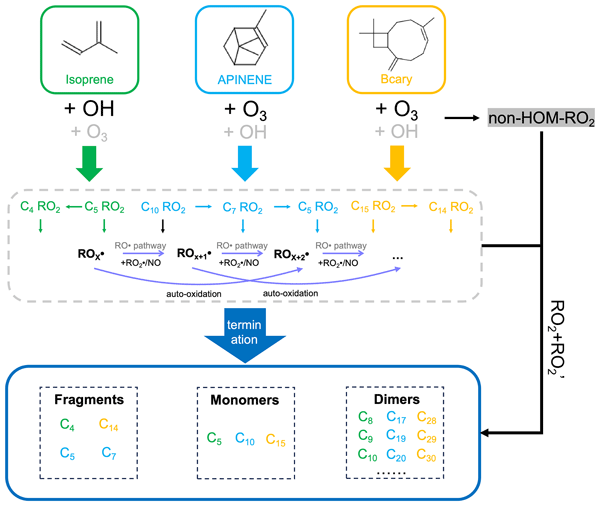
SIM-HOM (Sesquiterpene, Isoprene, and Monoterpene-derived Highly Oxygenated organic Molecules) is a mechanistic module simulating HOM formation from primary biogenic precursors. By providing quasi-molecular resolution, it quantifies the low-volatility compounds that drive secondary organic aerosol formation, robustly linking complex gas-phase chemistry to aerosol dynamics and climate impacts.
Yunsong Du, Fumo Yang, Sijia Lou, Baolei Lyu, Ran Huang, Guangming Shi, Yongtao Hu, Yan Jiang, and Nan Wang
Atmos. Chem. Phys., 26, 6223–6241, https://doi.org/10.5194/acp-26-6223-2026, https://doi.org/10.5194/acp-26-6223-2026, 2026
Short summary
Short summary
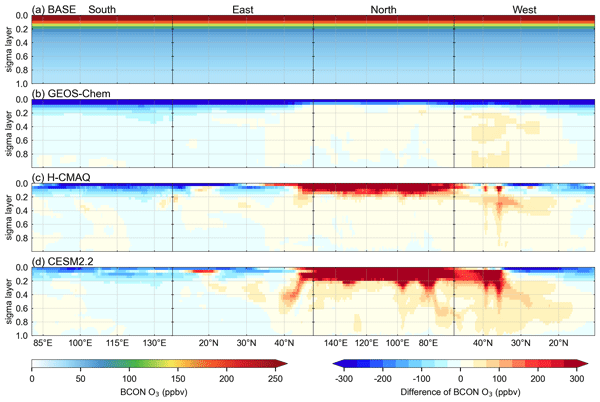
This study shows that using dynamically changing chemical boundary conditions is essential for accurately simulating summer ozone pollution in China. By integrating real-time global data, we improve model performance and reveal how large-scale weather patterns drive cross-border and stratospheric transport. These results support more reliable ozone forecasting and pollution mitigation.
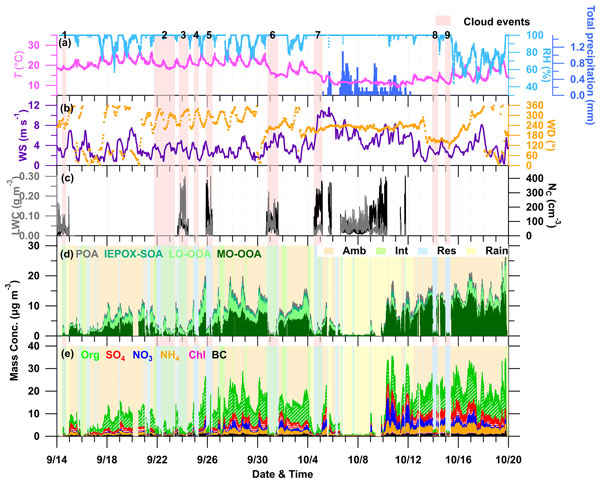
Yi Zhang, Weiqi Xu, Yan Li, Guohua Zhang, Dantong Liu, Ye Kuang, Yu Zhang, Wei Zhou, Xiaocong Peng, Bojiang Su, Weihong Huang, Zijun Zhang, Liu Yang, Yangzhou Wu, Siyuan Li, Shitong Zhao, Lanzhong Liu, Xiaole Pan, Zifa Wang, Xinhui Bi, Mikael Ehn, Douglas R. Worsnop, and Yele Sun
Atmos. Chem. Phys., 26, 5617–5634, https://doi.org/10.5194/acp-26-5617-2026, https://doi.org/10.5194/acp-26-5617-2026, 2026
Short summary
Short summary
This study explores how clouds influence the chemical composition of air particles through field research at a high-altitude station in southeastern China across different seasons. We found that different cloud types cause varying degrees of chemical changes in these particles. These findings enhance our understanding of the impact of clouds on air quality and contribute to improving climate models.

Ji Li, Xuguang Chi, Aijun Ding, Weimin Ju, Yongguang Zhang, Jing M. Chen, and Huilin Chen
Atmos. Meas. Tech., 19, 1763–1781, https://doi.org/10.5194/amt-19-1763-2026, https://doi.org/10.5194/amt-19-1763-2026, 2026
Short summary
Short summary
Accurate measurement of methane's isotopic fingerprint is crucial for identifying its sources. However, water vapor interference and instrument drift can cause significant errors, especially in humid air. This study evaluated two calibration methods and found that calibrating for individual methane isotopes with a water vapor correction provided accurate and stable results for both dry and humid air. This highlights the need for robust calibration to ensure reliable methane source attribution.
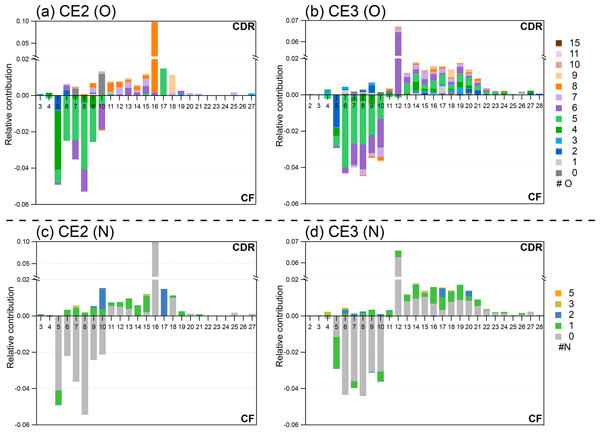
Yali Jin, Hao Luo, Siqi Tang, Shuhui Xue, Chengyu Nie, Xiaocong Peng, Yan Zheng, Weiqi Xu, Guohua Zhang, Xiaole Pan, Yele Sun, Qi Chen, Lanzhong Liu, and Defeng Zhao
Atmos. Chem. Phys., 26, 2813–2830, https://doi.org/10.5194/acp-26-2813-2026, https://doi.org/10.5194/acp-26-2813-2026, 2026
Short summary
Short summary
Cloud substantially changes the compositions organic aerosol. How cloud processing of organics occur on molecular level remains unclear. We found that compared with cloud free particles, organics in cloud contains more large molecules likely due to accretion reactions and has more nitrogen-containing compounds. We identify some new compounds formed in cloud. Such modifications of the organics in cloud can further change its physicochemical properties, and impact on climate and human health.

Wei Zhou, Liu Yang, Siqi Zeng, Yunping Kan, Lirong Yang, Weihong Zhang, Weijie Wang, Zijun Zhang, Yan Li, Weiqi Xu, Yucheng Gu, Yaozong Wang, Zhengyan Zuo, Jie Li, Zifa Wang, and Yele Sun
Atmos. Chem. Phys., 26, 2425–2441, https://doi.org/10.5194/acp-26-2425-2026, https://doi.org/10.5194/acp-26-2425-2026, 2026
Short summary
Short summary
Northwest China, situated in an arid and semi-arid climate region; air quality issues in this area have received less attention compared to other Chinese metropolitan clusters. This research identify a significant shift towards the coupling PM2.5 and O3 relationships over the past decade in northwest China, highlighting the great importance of urban terpenes and aromatic oxidation in secondary organic aerosol formation.
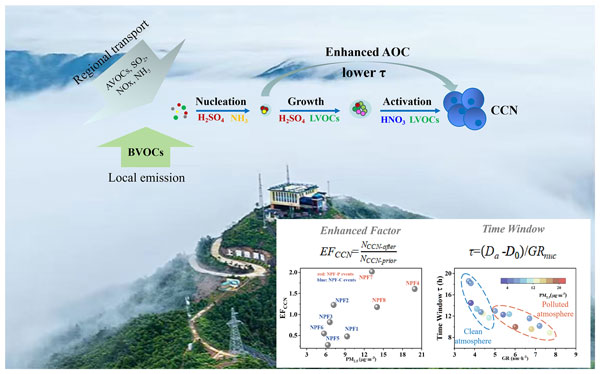
Weibin Zhu, Sai Shang, Jieqi Wang, Yunfei Wu, Zhaoze Deng, Liang Ran, Ye Kuang, Guiqian Tang, Xiangpeng Huang, Xiaole Pan, Lanzhong Liu, Weiqi Xu, Yele Sun, Bo Hu, Zifa Wang, and Zirui Liu
Atmos. Chem. Phys., 26, 1947–1965, https://doi.org/10.5194/acp-26-1947-2026, https://doi.org/10.5194/acp-26-1947-2026, 2026
Short summary
Short summary
NPF (new particle formation) is a key global CCN (cloud condensation nuclei) source, but its contribution at the polluted boundary-layer top remains unclear. Based on mountaintop observations in the Yangtze River Delta, we show that under polluted conditions, NPF at the boundary-layer top is enhanced and accelerates its conversion to CCN. Ammonia plays a key role, and a newly defined "Time Window" metric highlights the importance of oxidation-driven growth and regional transport in this process.
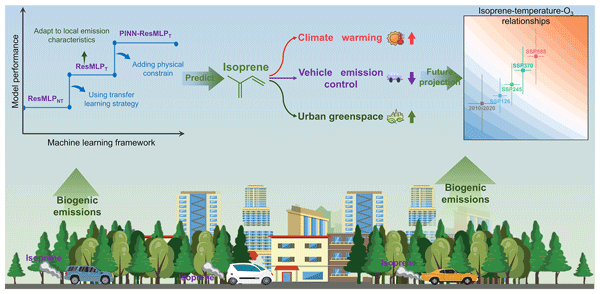
Song Liu, Xiaopu Lyu, Fumo Yang, Zongbo Shi, Xin Huang, Tengyu Liu, Hongli Wang, Mei Li, Jian Gao, Nan Chen, Guoliang Shi, Yu Zou, Chenglei Pei, Chengxu Tong, Xinyi Liu, Li Zhou, Alex B. Guenther, and Nan Wang
Atmos. Chem. Phys., 26, 635–646, https://doi.org/10.5194/acp-26-635-2026, https://doi.org/10.5194/acp-26-635-2026, 2026
Short summary
Short summary
We studied the invisible gas isoprene, which trees and vehicles release into the air and which can worsen urban smog. Using advanced computer learning trained on measurements from many cities, we uncovered how temperature, sunlight, and city greening shape isoprene levels. Comparing Hong Kong and London, we found climate warming boosts isoprene and future ozone pollution, but strong cuts in anthropogenic emission could limit this impact.
Aino Ovaska, Elio Rauth, Daniel Holmberg, Paulo Artaxo, John Backman, Benjamin Bergmans, Don Collins, Marco Aurélio Franco, Shahzad Gani, Roy M. Harrison, Rakesh K. Hooda, Tareq Hussein, Antti-Pekka Hyvärinen, Kerneels Jaars, Adam Kristensson, Markku Kulmala, Lauri Laakso, Ari Laaksonen, Nikolaos Mihalopoulos, Colin O'Dowd, Jakub Ondracek, Tuukka Petäjä, Kristina Plauškaitė, Mira Pöhlker, Ximeng Qi, Peter Tunved, Ville Vakkari, Alfred Wiedensohler, Kai Puolamäki, Tuomo Nieminen, Veli-Matti Kerminen, Victoria A. Sinclair, and Pauli Paasonen
Aerosol Research, 3, 589–618, https://doi.org/10.5194/ar-3-589-2025, https://doi.org/10.5194/ar-3-589-2025, 2025
Short summary
Short summary
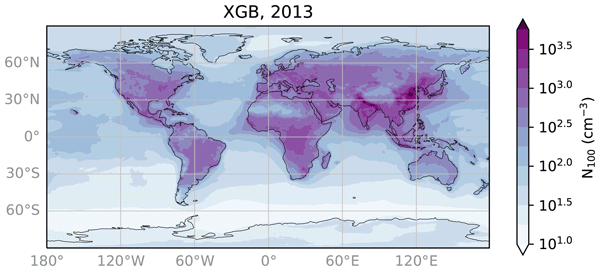
We trained machine learning models to estimate the number of aerosol particles large enough to form clouds and generated daily estimates for the entire globe. The models performed well in many continental regions but struggled in remote and marine areas. Still, this approach offers a way to quantify these particles in areas that lack direct measurements, helping us understand their influence on clouds and climate on a global scale.
Haoran Zhang, Chengchun Shi, Chuanyou Ying, Shengheng Weng, Erling Ni, Lanbu Zhao, Peiheng Yang, Keqin Tang, Xueyu Zhou, Chuanhua Ren, Xuguang Chi, Derong Zhou, Mengmeng Li, Nan Li, Tengyu Liu, and Xin Huang
Atmos. Chem. Phys., 25, 16797–16816, https://doi.org/10.5194/acp-25-16797-2025, https://doi.org/10.5194/acp-25-16797-2025, 2025
Short summary
Short summary
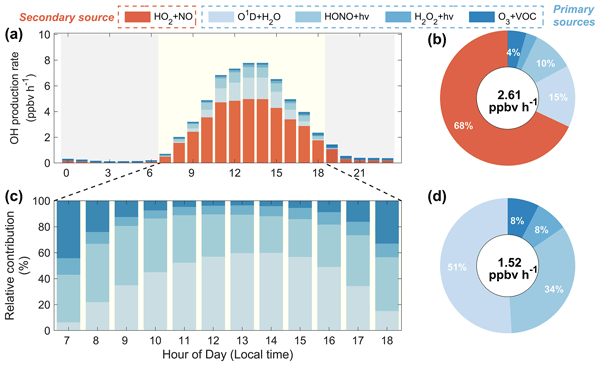
This study reports a unique diurnal pattern of nitrous acid (HONO), featuring higher concentrations around noon, based on one-month measurements in coastal Fujian, southeast China. Using an improved chemical transport model, we successfully reproduced the observed HONO levels and temporal variations. Further process analyses and sensitivity experiments quantified the formation mechanisms of HONO in coastal areas and shed light on its impact on the formation of OH radicals and ozone.
Junchao Yin, Yuliang Liu, Wei Nie, Chao Yan, Qiaozhi Zha, Yuanyuan Li, Dafeng Ge, Chong Liu, Caijun Zhu, Xuguang Chi, and Aijun Ding
Atmos. Chem. Phys., 25, 13279–13297, https://doi.org/10.5194/acp-25-13279-2025, https://doi.org/10.5194/acp-25-13279-2025, 2025
Short summary
Short summary
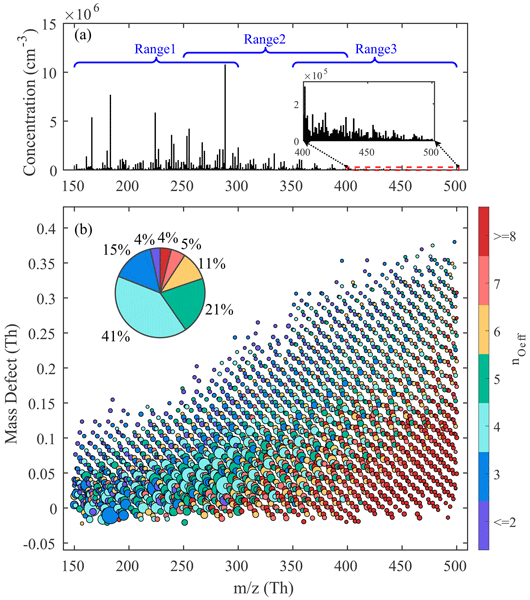
Atmospheric aerosols affect human health and climate change, yet understanding their formation remains challenging. We studied oxygenated organic molecules, key intermediates, in a complex urban environment in China. Using an advanced analytical method, we identified major chemical pathways and how environmental factors influence them. Our findings enhance the understanding of atmospheric chemistry, offering insights for better environmental and climate policies.
Wendell W. Walters, Masayuki Takeuchi, Danielle E. Blum, Gamze Eris, David Tanner, Weiqi Xu, Jean Rivera-Rios, Fobang Liu, Tianchang Xu, Greg Huey, Justin B. Min, Rodney Weber, Nga L. Ng, and Meredith G. Hastings
Atmos. Chem. Phys., 25, 10707–10730, https://doi.org/10.5194/acp-25-10707-2025, https://doi.org/10.5194/acp-25-10707-2025, 2025
Short summary
Short summary
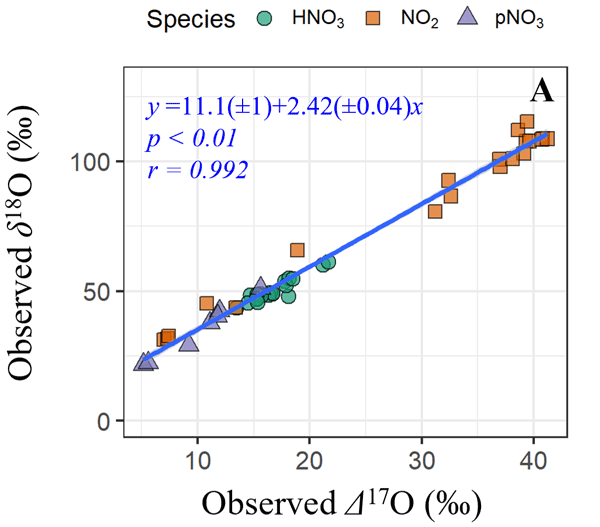
We studied how chemicals released from plants and pollution interact in the atmosphere, affecting air quality and climate. By combining laboratory experiments and chemistry models, we tracked unique chemical fingerprints to understand how nitrogen compounds transform to form particles in the air. Our findings help explain the role of these reactions in pollution and provide tools to improve predictions for cleaner air and better climate policies.
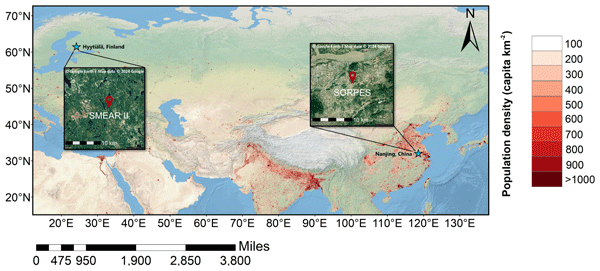
Tinghan Zhang, Ximeng Qi, Janne Lampilahti, Liangduo Chen, Xuguang Chi, Wei Nie, Xin Huang, Zehao Zou, Wei Du, Tom Kokkonen, Tuukka Petäjä, Katrianne Lehtipalo, Veli-Matti Kerminen, Aijun Ding, and Markku Kulmala
Atmos. Chem. Phys., 25, 10027–10048, https://doi.org/10.5194/acp-25-10027-2025, https://doi.org/10.5194/acp-25-10027-2025, 2025
Short summary
Short summary
By comparing air ions at two flagship sites – a boreal forest site in Finland and a megacity site in eastern China – we characterized ion concentrations and their roles in new particle formation (NPF) across contrasting environments. The ion-induced fraction was much higher in the clean boreal forest. However, earlier activation of charged particles and high ion-induced fraction during quiet NPF in the megacity site imply a non-negligible role for ion-induced NPF in polluted urban areas.
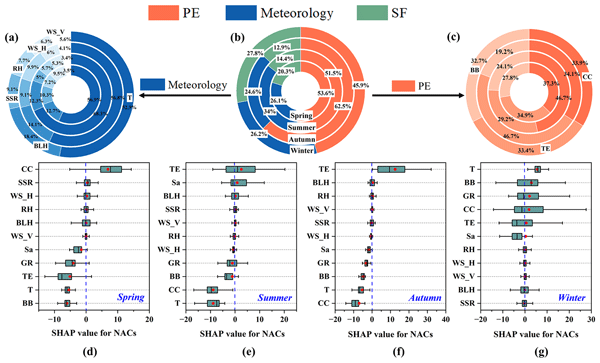
Min Li, Xinfeng Wang, Tianshuai Li, Yujia Wang, Yueru Jiang, Yujiao Zhu, Wei Nie, Rui Li, Jian Gao, Likun Xue, Qingzhu Zhang, and Wenxing Wang
Atmos. Chem. Phys., 25, 8407–8425, https://doi.org/10.5194/acp-25-8407-2025, https://doi.org/10.5194/acp-25-8407-2025, 2025
Short summary
Short summary
By integrating field measurements with an interpretable ensemble machine learning framework, we comprehensively identified key driving factors of nitro-aromatic compounds (NACs), demonstrated complex interrelationships, and quantified their contributions across different locations. This work provides a reliable modeling approach for recognizing causes of NAC pollution, enhances our understanding of variations of atmospheric NACs, and highlights the necessity of strengthening emission controls.
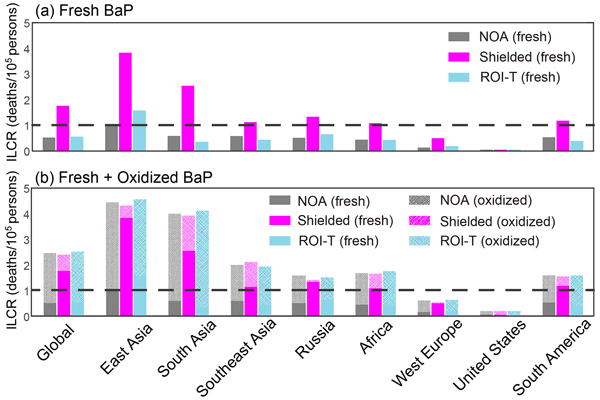
Sijia Lou, Manish Shrivastava, Alexandre Albinet, Sophie Tomaz, Deepchandra Srivastava, Olivier Favez, Huizhong Shen, and Aijun Ding
Atmos. Chem. Phys., 25, 8163–8183, https://doi.org/10.5194/acp-25-8163-2025, https://doi.org/10.5194/acp-25-8163-2025, 2025
Short summary
Short summary
Polycyclic aromatic hydrocarbons (PAHs), emitted from incomplete combustion, pose serious health risks due to their carcinogenic properties. This research demonstrates that viscous organic aerosol coatings significantly hinder PAH oxidation, with spatial distributions sensitive to the degradation modeling approach. Our findings emphasize the need for accurate modeling of PAH oxidation processes in risk assessments, considering both fresh and oxidized PAHs in evaluating human health risks.
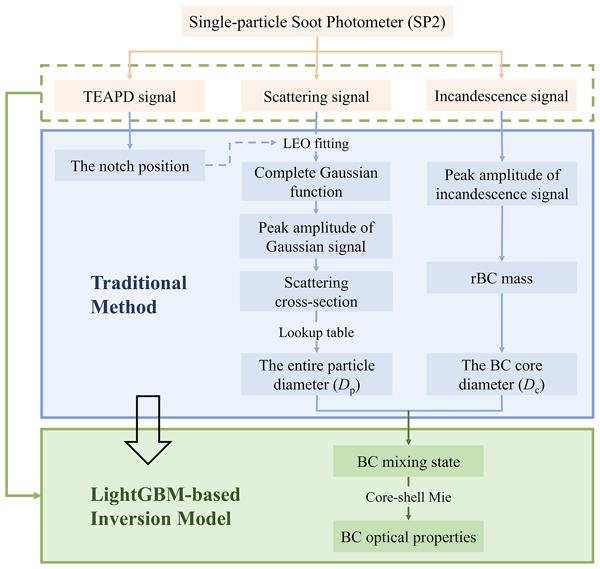
Zeyuan Tian, Jiandong Wang, Jiaping Wang, Chao Liu, Jia Xing, Jinbo Wang, Zhouyang Zhang, Yuzhi Jin, Sunan Shen, Bin Wang, Wei Nie, Xin Huang, and Aijun Ding
Atmos. Meas. Tech., 18, 1149–1162, https://doi.org/10.5194/amt-18-1149-2025, https://doi.org/10.5194/amt-18-1149-2025, 2025
Short summary
Short summary
The radiative effect of black carbon (BC) is substantially modulated by its mixing state, which is challenging to derive physically with a single-particle soot photometer. This study establishes a machine-learning-based inversion model which can accurately and efficiently acquire the BC mixing state. Compared to the widely used leading-edge-only method, our model utilizes a broader scattering signal coverage to more accurately capture diverse particle characteristics.
Yuzhi Jin, Jiandong Wang, Chao Liu, David C. Wong, Golam Sarwar, Kathleen M. Fahey, Shang Wu, Jiaping Wang, Jing Cai, Zeyuan Tian, Zhouyang Zhang, Jia Xing, Aijun Ding, and Shuxiao Wang
Atmos. Chem. Phys., 25, 2613–2630, https://doi.org/10.5194/acp-25-2613-2025, https://doi.org/10.5194/acp-25-2613-2025, 2025
Short summary
Short summary
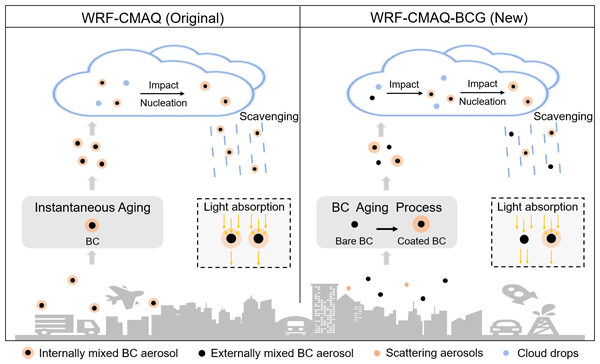
Black carbon (BC) affects climate and the environment, and its aging process alters its properties. Current models, like WRF-CMAQ, lack full accounting for it. We developed the WRF-CMAQ-BCG model to better represent BC aging by introducing bare and coated BC species and their conversion. The WRF-CMAQ-BCG model introduces the capability to simulate BC mixing states and bare and coated BC wet deposition, and it improves the accuracy of BC mass concentration and aerosol optics.
Zhouyang Zhang, Jiandong Wang, Jiaping Wang, Nicole Riemer, Chao Liu, Yuzhi Jin, Zeyuan Tian, Jing Cai, Yueyue Cheng, Ganzhen Chen, Bin Wang, Shuxiao Wang, and Aijun Ding
Atmos. Chem. Phys., 25, 1869–1881, https://doi.org/10.5194/acp-25-1869-2025, https://doi.org/10.5194/acp-25-1869-2025, 2025
Short summary
Short summary
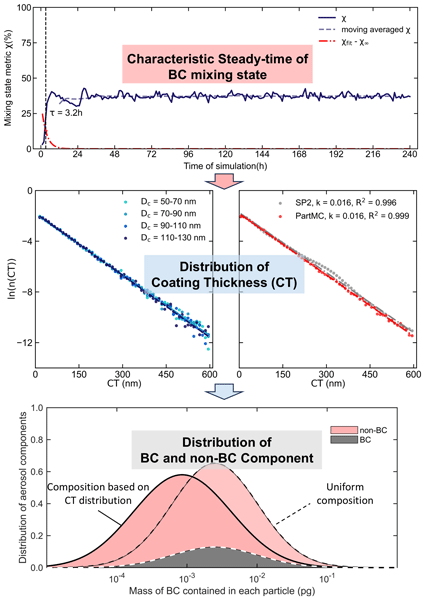
Black carbon (BC) exerts notable warming effects. We use a particle-resolved model to investigate the long-term behavior of the BC mixing state, revealing its compositions, coating thickness distribution, and optical properties all stabilize with a characteristic time of less than 1 d. This study can effectively simplify the description of the BC mixing state, which facilitates the precise assessment of the optical properties of BC aerosols in global and chemical transport models.
Ye Kuang, Jiangchuan Tao, Hanbing Xu, Li Liu, Pengfei Liu, Wanyun Xu, Weiqi Xu, Yele Sun, and Chunsheng Zhao
Atmos. Chem. Phys., 25, 1163–1174, https://doi.org/10.5194/acp-25-1163-2025, https://doi.org/10.5194/acp-25-1163-2025, 2025
Short summary
Short summary
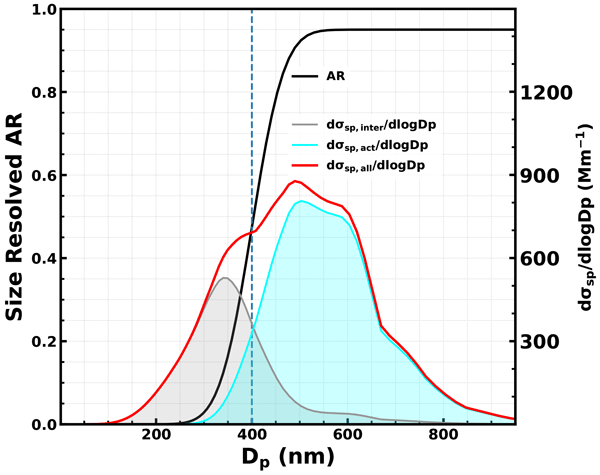
This study presents a novel optical framework to measure supersaturation, a fundamental parameter in cloud physics, by observing the scattering properties of particles that have or have not grown into cloud droplets. The technique offers high-resolution measurements, capturing essential fluctuations in supersaturation necessary for understanding cloud physics.
Diego Aliaga, Victoria A. Sinclair, Radovan Krejci, Marcos Andrade, Paulo Artaxo, Luis Blacutt, Runlong Cai, Samara Carbone, Yvette Gramlich, Liine Heikkinen, Dominic Heslin-Rees, Wei Huang, Veli-Matti Kerminen, Alkuin Maximilian Koenig, Markku Kulmala, Paolo Laj, Valeria Mardoñez-Balderrama, Claudia Mohr, Isabel Moreno, Pauli Paasonen, Wiebke Scholz, Karine Sellegri, Laura Ticona, Gaëlle Uzu, Fernando Velarde, Alfred Wiedensohler, Doug Worsnop, Cheng Wu, Chen Xuemeng, Qiaozhi Zha, and Federico Bianchi
Aerosol Research, 3, 15–44, https://doi.org/10.5194/ar-3-15-2025, https://doi.org/10.5194/ar-3-15-2025, 2025
Short summary
Short summary
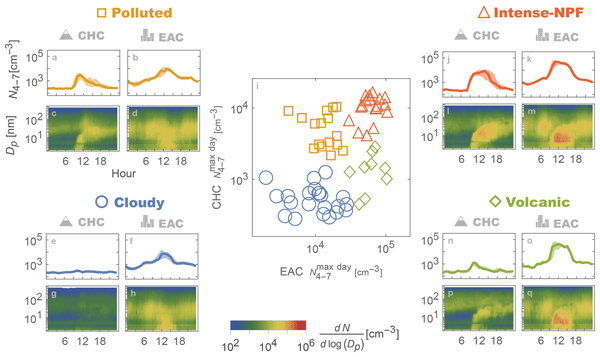
This study examines new particle formation (NPF) in the Bolivian Andes at Chacaltaya mountain (CHC) and the urban El Alto–La Paz area (EAC). Days are clustered into four categories based on NPF intensity. Differences in particle size, precursor gases, and pollution levels are found. High NPF intensities increased Aitken mode particle concentrations at both sites, while volcanic influence selectively diminished NPF intensity at CHC but not EAC. This study highlights NPF dynamics in the Andes.
Jinbo Wang, Jiaping Wang, Yuxuan Zhang, Tengyu Liu, Xuguang Chi, Xin Huang, Dafeng Ge, Shiyi Lai, Caijun Zhu, Lei Wang, Qiaozhi Zha, Ximeng Qi, Wei Nie, Congbin Fu, and Aijun Ding
Atmos. Chem. Phys., 24, 11063–11080, https://doi.org/10.5194/acp-24-11063-2024, https://doi.org/10.5194/acp-24-11063-2024, 2024
Short summary
Short summary
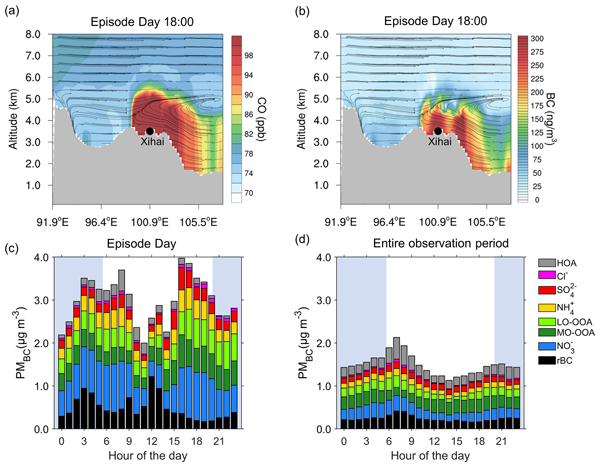
In this study, we found large spatial discrepancies in the physical and chemical properties of black carbon over the Tibetan Plateau (TP). Elevated anthropogenic emissions from low-altitude regions can significantly change the mass concentration, mixing state and chemical composition of black-carbon-containing aerosol in the TP region, further altering its light absorption ability. Our study emphasizes the vulnerability of remote plateau regions to intense anthropogenic influences.
Weiqi Xu, Ye Kuang, Wanyun Xu, Zhiqiang Zhang, Biao Luo, Xiaoyi Zhang, Jiangchuang Tao, Hongqin Qiao, Li Liu, and Yele Sun
Atmos. Chem. Phys., 24, 9387–9399, https://doi.org/10.5194/acp-24-9387-2024, https://doi.org/10.5194/acp-24-9387-2024, 2024
Short summary
Short summary
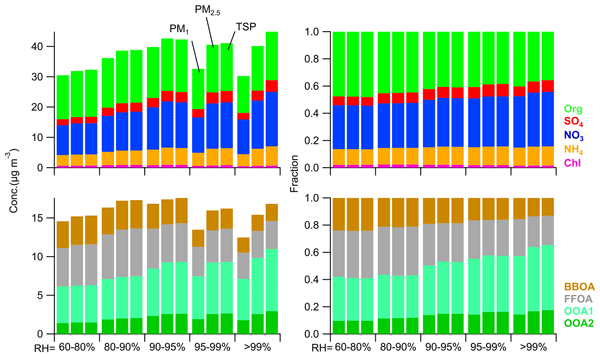
We deployed an advanced aerosol–fog sampling system at a rural site in the North China Plain to investigate impacts of aerosol hygroscopic growth and activation on the physicochemical properties of submicron aerosols. Observed results highlighted remarkably different aqueous processing of primary and secondary submicron aerosol components under distinct ambient relative humidity (RH) conditions and that RH levels significantly impact aerosol sampling through the aerosol swelling effect.
Jiangchuan Tao, Biao Luo, Weiqi Xu, Gang Zhao, Hanbin Xu, Biao Xue, Miaomiao Zhai, Wanyun Xu, Huarong Zhao, Sanxue Ren, Guangsheng Zhou, Li Liu, Ye Kuang, and Yele Sun
Atmos. Chem. Phys., 24, 9131–9154, https://doi.org/10.5194/acp-24-9131-2024, https://doi.org/10.5194/acp-24-9131-2024, 2024
Short summary
Short summary
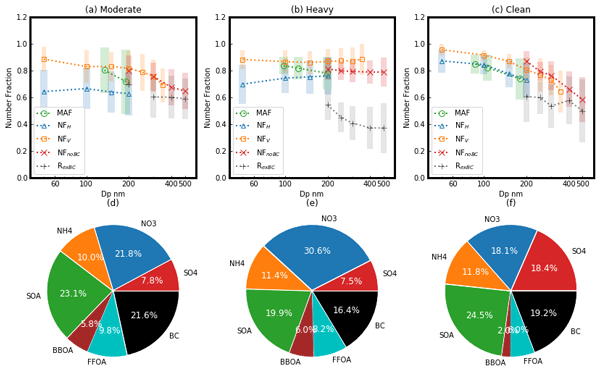
Using simultaneous measurements of DMA–CCNC, H(/V)TDMA, and DMA–SP2, impacts of primary emissions and secondary aerosol formations on changes in aerosol physicochemical properties were comprehensively investigated. It was found that intercomparisons among aerosol mixing-state parameters derived from different techniques can help us gain more insight into aerosol physical properties which, in turn, will aid the investigation of emission characteristics and secondary aerosol formation pathways.
Zijun Zhang, Weiqi Xu, Yi Zhang, Wei Zhou, Xiangyu Xu, Aodong Du, Yinzhou Zhang, Hongqin Qiao, Ye Kuang, Xiaole Pan, Zifa Wang, Xueling Cheng, Lanzhong Liu, Qingyan Fu, Douglas R. Worsnop, Jie Li, and Yele Sun
Atmos. Chem. Phys., 24, 8473–8488, https://doi.org/10.5194/acp-24-8473-2024, https://doi.org/10.5194/acp-24-8473-2024, 2024
Short summary
Short summary
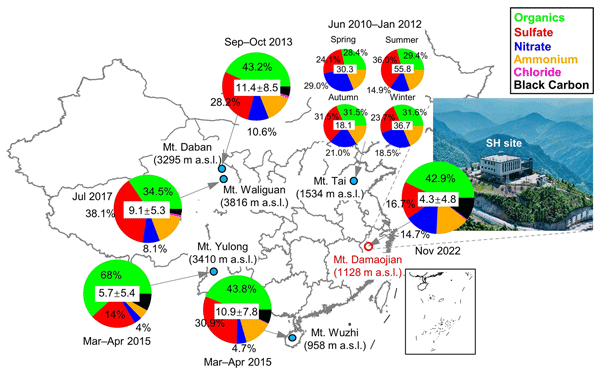
We investigated aerosol composition and sources and the interaction between secondary organic aerosol (SOA) and clouds at a regional mountain site in southeastern China. Clouds efficiently scavenge more oxidized SOA; however, cloud evaporation leads to the production of less oxidized SOA. The unexpectedly high presence of nitrate in aerosol particles indicates that nitrate formed in polluted areas has undergone interactions with clouds, significantly influencing the regional background site.
Wenxuan Hua, Sijia Lou, Xin Huang, Lian Xue, Ke Ding, Zilin Wang, and Aijun Ding
Atmos. Chem. Phys., 24, 6787–6807, https://doi.org/10.5194/acp-24-6787-2024, https://doi.org/10.5194/acp-24-6787-2024, 2024
Short summary
Short summary
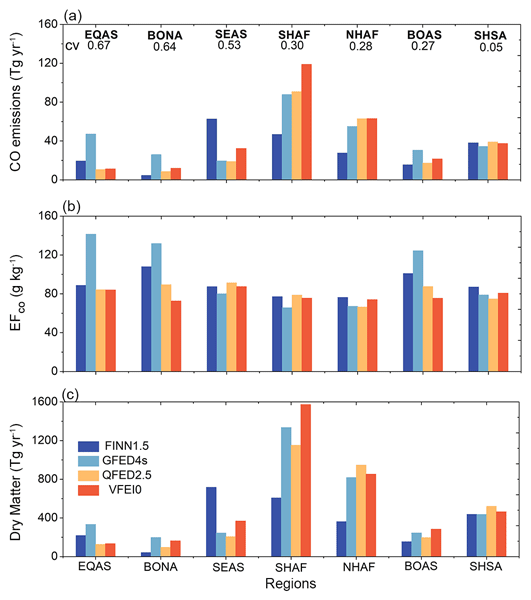
In this study, we diagnose uncertainties in carbon monoxide and organic carbon emissions from four inventories for seven major wildfire-prone regions. Uncertainties in vegetation classification methods, fire detection products, and cloud obscuration effects lead to bias in these biomass burning (BB) emission inventories. By comparing simulations with measurements, we provide certain inventory recommendations. Our study has implications for reducing uncertainties in emissions in further studies.
Zhiqiang Zhang, Ying Li, Haiyan Ran, Junling An, Yu Qu, Wei Zhou, Weiqi Xu, Weiwei Hu, Hongbin Xie, Zifa Wang, Yele Sun, and Manabu Shiraiwa
Atmos. Chem. Phys., 24, 4809–4826, https://doi.org/10.5194/acp-24-4809-2024, https://doi.org/10.5194/acp-24-4809-2024, 2024
Short summary
Short summary
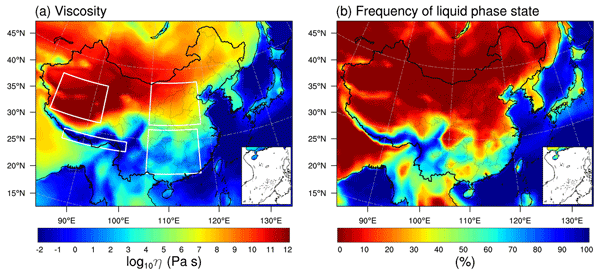
Secondary organic aerosols (SOAs) can exist in liquid, semi-solid, or amorphous solid states, which are rarely accounted for in current chemical transport models. We predict the phase state of SOA particles over China and find that in northwestern China SOA particles are mostly highly viscous or glassy solid. Our results indicate that the particle phase state should be considered in SOA formation in chemical transport models for more accurate prediction of SOA mass concentrations.
Markku Kulmala, Diego Aliaga, Santeri Tuovinen, Runlong Cai, Heikki Junninen, Chao Yan, Federico Bianchi, Yafang Cheng, Aijun Ding, Douglas R. Worsnop, Tuukka Petäjä, Katrianne Lehtipalo, Pauli Paasonen, and Veli-Matti Kerminen
Aerosol Research, 2, 49–58, https://doi.org/10.5194/ar-2-49-2024, https://doi.org/10.5194/ar-2-49-2024, 2024
Short summary
Short summary
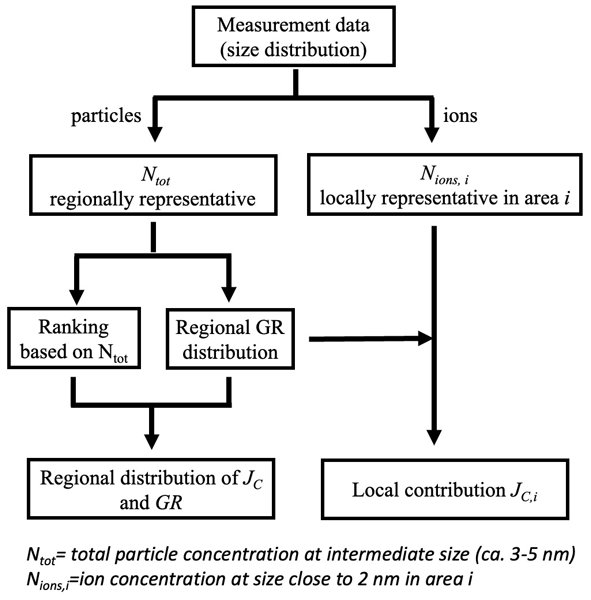
Atmospheric new particle formation (NPF), together with secondary production of particulate matter in the atmosphere, dominates aerosol particle number concentrations and submicron particle mass loads in many environments globally. In this opinion paper, we describe the paradigm shift to understand NPF in a continuous way instead of using traditional binary event–non-event analysis.
Yawen Liu, Yun Qian, Philip J. Rasch, Kai Zhang, Lai-yung Ruby Leung, Yuhang Wang, Minghuai Wang, Hailong Wang, Xin Huang, and Xiu-Qun Yang
Atmos. Chem. Phys., 24, 3115–3128, https://doi.org/10.5194/acp-24-3115-2024, https://doi.org/10.5194/acp-24-3115-2024, 2024
Short summary
Short summary
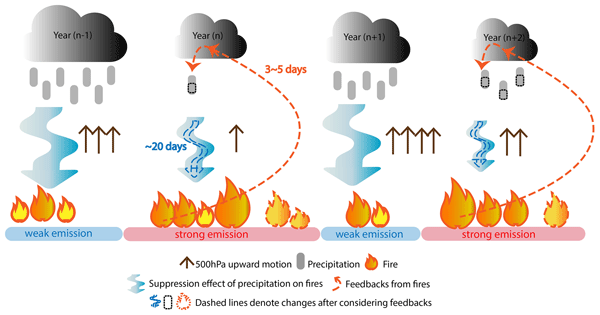
Fire management has long been a challenge. Here we report that spring-peak fire activity over southern Mexico and Central America (SMCA) has a distinct quasi-biennial signal by measuring multiple fire metrics. This signal is initially driven by quasi-biennial variability in precipitation and is further amplified by positive feedback of fire–precipitation interaction at short timescales. This work highlights the importance of fire–climate interactions in shaping fires on an interannual scale.
Yueyue Cheng, Chao Liu, Jiandong Wang, Jiaping Wang, Zhouyang Zhang, Li Chen, Dafeng Ge, Caijun Zhu, Jinbo Wang, and Aijun Ding
Atmos. Chem. Phys., 24, 3065–3078, https://doi.org/10.5194/acp-24-3065-2024, https://doi.org/10.5194/acp-24-3065-2024, 2024
Short summary
Short summary
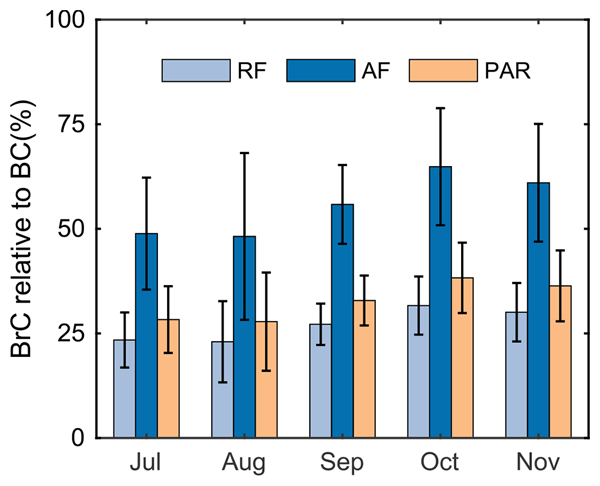
Brown carbon (BrC), a light-absorbing aerosol, plays a pivotal role in influencing global climate. However, assessing BrC radiative effects remains challenging because the required observational data are hardly accessible. Here we develop a new BrC radiative effect estimation method combining conventional observations and numerical models. Our findings reveal that BrC absorbs up to a third of the sunlight at 370 nm that black carbon does, highlighting its importance in aerosol radiative effects.
Shiyi Lai, Ximeng Qi, Xin Huang, Sijia Lou, Xuguang Chi, Liangduo Chen, Chong Liu, Yuliang Liu, Chao Yan, Mengmeng Li, Tengyu Liu, Wei Nie, Veli-Matti Kerminen, Tuukka Petäjä, Markku Kulmala, and Aijun Ding
Atmos. Chem. Phys., 24, 2535–2553, https://doi.org/10.5194/acp-24-2535-2024, https://doi.org/10.5194/acp-24-2535-2024, 2024
Short summary
Short summary
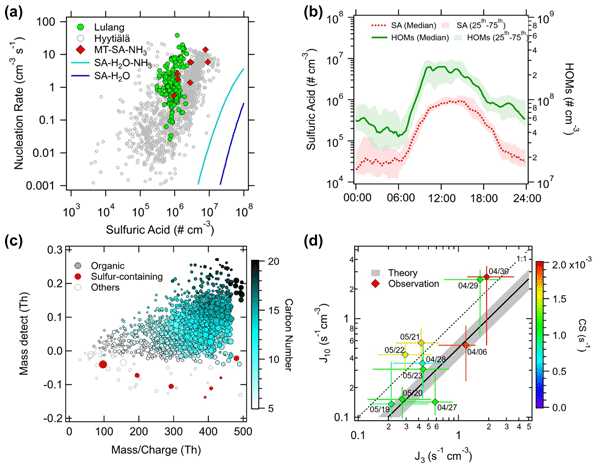
By combining in situ measurements and chemical transport modeling, this study investigates new particle formation (NPF) on the southeastern Tibetan Plateau. We found that the NPF was driven by the presence of biogenic gases and the transport of anthropogenic precursors. The NPF was vertically heterogeneous and shaped by the vertical mixing. This study highlights the importance of anthropogenic–biogenic interactions and meteorological dynamics in NPF in this climate-sensitive region.
Jing Cai, Juha Sulo, Yifang Gu, Sebastian Holm, Runlong Cai, Steven Thomas, Almuth Neuberger, Fredrik Mattsson, Marco Paglione, Stefano Decesari, Matteo Rinaldi, Rujing Yin, Diego Aliaga, Wei Huang, Yuanyuan Li, Yvette Gramlich, Giancarlo Ciarelli, Lauriane Quéléver, Nina Sarnela, Katrianne Lehtipalo, Nora Zannoni, Cheng Wu, Wei Nie, Juha Kangasluoma, Claudia Mohr, Markku Kulmala, Qiaozhi Zha, Dominik Stolzenburg, and Federico Bianchi
Atmos. Chem. Phys., 24, 2423–2441, https://doi.org/10.5194/acp-24-2423-2024, https://doi.org/10.5194/acp-24-2423-2024, 2024
Short summary
Short summary
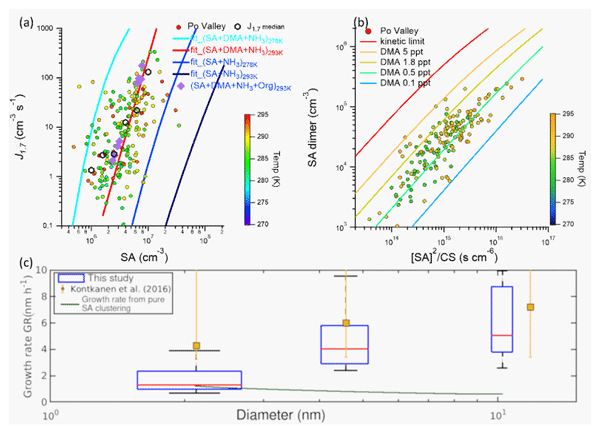
By combining field measurements, simulations and recent chamber experiments, we investigate new particle formation (NPF) and growth in the Po Valley, where both haze and frequent NPF occur. Our results show that sulfuric acid, ammonia and amines are the dominant NPF precursors there. A high NPF rate and a lower condensation sink lead to a greater survival probability for newly formed particles, highlighting the importance of gas-to-particle conversion for aerosol concentrations.
Shuzheng Guo, Chunxiang Ye, Weili Lin, Yi Chen, Limin Zeng, Xuena Yu, Jinhui Cui, Chong Zhang, Jing Duan, Haobin Zhong, Rujin Huang, Xuguang Chi, Wei Nie, and Aijun Ding
EGUsphere, https://doi.org/10.5194/egusphere-2024-262, https://doi.org/10.5194/egusphere-2024-262, 2024
Preprint archived
Short summary
Short summary
@Tibet field campaigns 2021 discovered surprisingly high levels and activity contributions of oxygenated volatile organic compounds on the southeast of the Tibetan Plateau, which suggests that OVOCs may play a larger role in the chemical reactions that occur in high-altitude regions than previously thought.
Ying Zhang, Duzitian Li, Xu-Cheng He, Wei Nie, Chenjuan Deng, Runlong Cai, Yuliang Liu, Yishuo Guo, Chong Liu, Yiran Li, Liangduo Chen, Yuanyuan Li, Chenjie Hua, Tingyu Liu, Zongcheng Wang, Jiali Xie, Lei Wang, Tuukka Petäjä, Federico Bianchi, Ximeng Qi, Xuguang Chi, Pauli Paasonen, Yongchun Liu, Chao Yan, Jingkun Jiang, Aijun Ding, and Markku Kulmala
Atmos. Chem. Phys., 24, 1873–1893, https://doi.org/10.5194/acp-24-1873-2024, https://doi.org/10.5194/acp-24-1873-2024, 2024
Short summary
Short summary
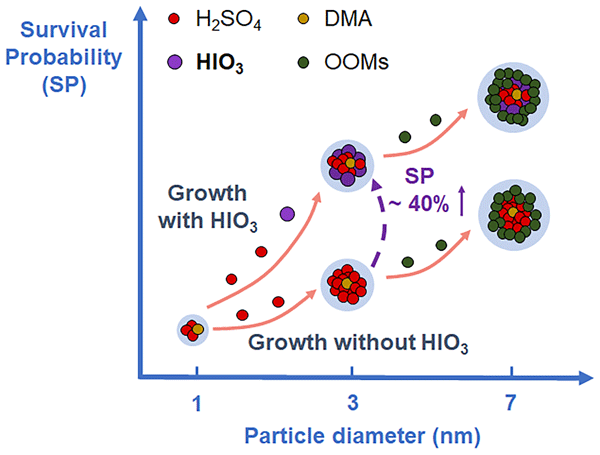
This study conducts a long-term observation of gaseous iodine oxoacids in two Chinese megacities, revealing their ubiquitous presence with peak concentrations (up to 0.1 pptv) in summer. Our analysis suggests a mix of terrestrial and marine sources for iodine. Additionally, iodic acid is identified as a notable contributor to sub-3 nm particle growth and particle survival probability.
Nan Wang, Hongyue Wang, Xin Huang, Xi Chen, Yu Zou, Tao Deng, Tingyuan Li, Xiaopu Lyu, and Fumo Yang
Atmos. Chem. Phys., 24, 1559–1570, https://doi.org/10.5194/acp-24-1559-2024, https://doi.org/10.5194/acp-24-1559-2024, 2024
Short summary
Short summary
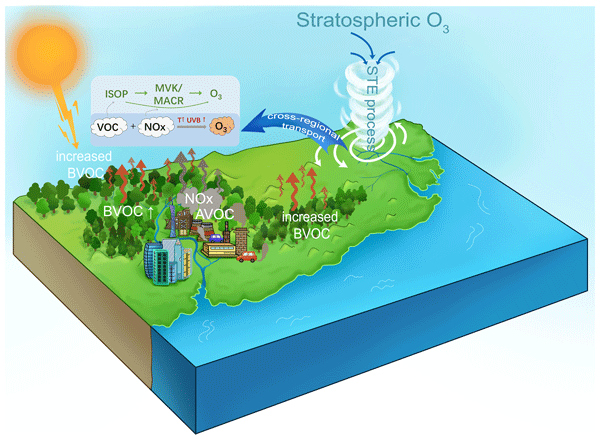
This study explores the influence of extreme-weather-induced natural processes on ozone pollution, which is often overlooked. By analyzing meteorological factors, natural emissions, chemistry pathways and atmospheric transport, we discovered that these natural processes could substantially exacerbate ozone pollution. The findings contribute to a deeper understanding of ozone pollution and offer valuable insights for controlling ozone pollution in the context of global warming.
Zhen Peng, Lili Lei, Zhe-Min Tan, Meigen Zhang, Aijun Ding, and Xingxia Kou
Atmos. Chem. Phys., 23, 14505–14520, https://doi.org/10.5194/acp-23-14505-2023, https://doi.org/10.5194/acp-23-14505-2023, 2023
Short summary
Short summary
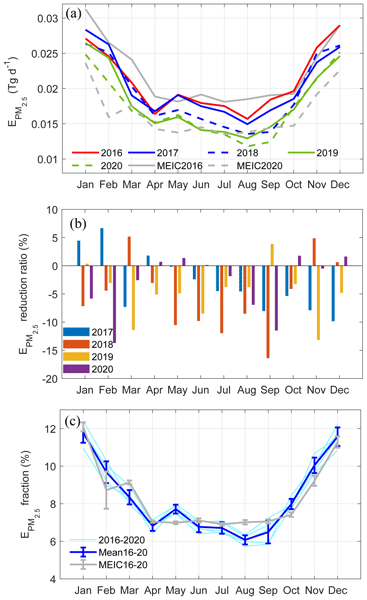
Annual PM2.5 emissions in China consistently decreased by about 3% to 5% from 2017 to 2020 with spatial variations and seasonal dependencies. High-temporal-resolution and dynamics-based PM2.5 emission estimates provide quantitative diurnal variations for each season. Significant reductions in PM2.5 emissions in the North China Plain and northeast of China in 2020 were caused by COVID-19.
Aodong Du, Jiaxing Sun, Hang Liu, Weiqi Xu, Wei Zhou, Yuting Zhang, Lei Li, Xubing Du, Yan Li, Xiaole Pan, Zifa Wang, and Yele Sun
Atmos. Chem. Phys., 23, 13597–13611, https://doi.org/10.5194/acp-23-13597-2023, https://doi.org/10.5194/acp-23-13597-2023, 2023
Short summary
Short summary
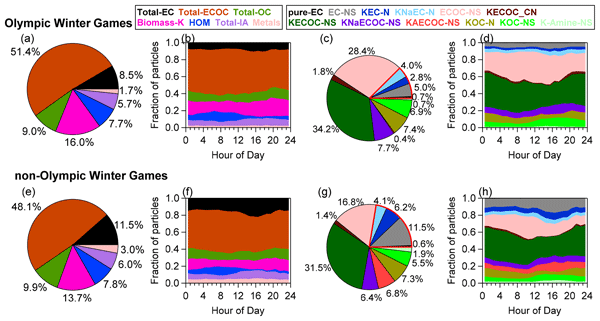
We characterized the impacts of emission controls on particle mixing state and density during the Beijing Olympic Winter Games using a SPAMS in tandem with a DMA and an AAC. OC and sulfate-containing particles increased, while those from primary emissions decreased. The effective particle densities increased and varied largely for different particles, highlighting the impacts of aging and formation processes on the changes of particle density and mixing state.
Chupeng Zhang, Shangfei Hai, Yang Gao, Yuhang Wang, Shaoqing Zhang, Lifang Sheng, Bin Zhao, Shuxiao Wang, Jingkun Jiang, Xin Huang, Xiaojing Shen, Junying Sun, Aura Lupascu, Manish Shrivastava, Jerome D. Fast, Wenxuan Cheng, Xiuwen Guo, Ming Chu, Nan Ma, Juan Hong, Qiaoqiao Wang, Xiaohong Yao, and Huiwang Gao
Atmos. Chem. Phys., 23, 10713–10730, https://doi.org/10.5194/acp-23-10713-2023, https://doi.org/10.5194/acp-23-10713-2023, 2023
Short summary
Short summary
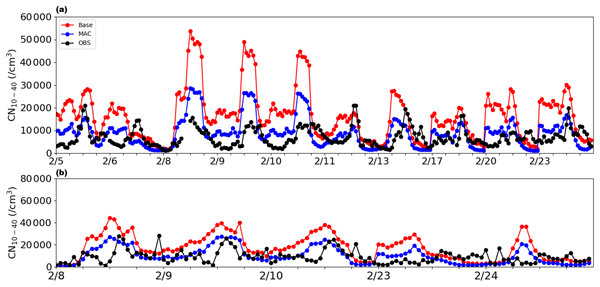
New particle formation is an important source of atmospheric particles, exerting critical influences on global climate. Numerical models are vital tools to understanding atmospheric particle evolution, which, however, suffer from large biases in simulating particle numbers. Here we improve the model chemical processes governing particle sizes and compositions. The improved model reveals substantial contributions of newly formed particles to climate through effects on cloud condensation nuclei.
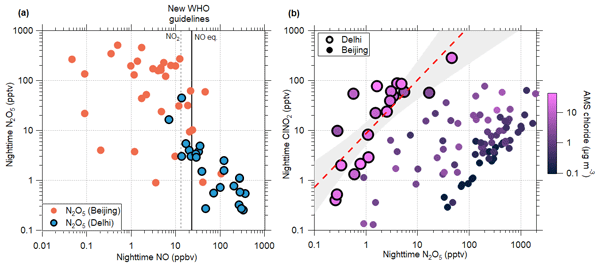
Sophie L. Haslett, David M. Bell, Varun Kumar, Jay G. Slowik, Dongyu S. Wang, Suneeti Mishra, Neeraj Rastogi, Atinderpal Singh, Dilip Ganguly, Joel Thornton, Feixue Zheng, Yuanyuan Li, Wei Nie, Yongchun Liu, Wei Ma, Chao Yan, Markku Kulmala, Kaspar R. Daellenbach, David Hadden, Urs Baltensperger, Andre S. H. Prevot, Sachchida N. Tripathi, and Claudia Mohr
Atmos. Chem. Phys., 23, 9023–9036, https://doi.org/10.5194/acp-23-9023-2023, https://doi.org/10.5194/acp-23-9023-2023, 2023
Short summary
Short summary
In Delhi, some aspects of daytime and nighttime atmospheric chemistry are inverted, and parodoxically, vehicle emissions may be limiting other forms of particle production. This is because the nighttime emissions of nitrogen oxide (NO) by traffic and biomass burning prevent some chemical processes that would otherwise create even more particles and worsen the urban haze.
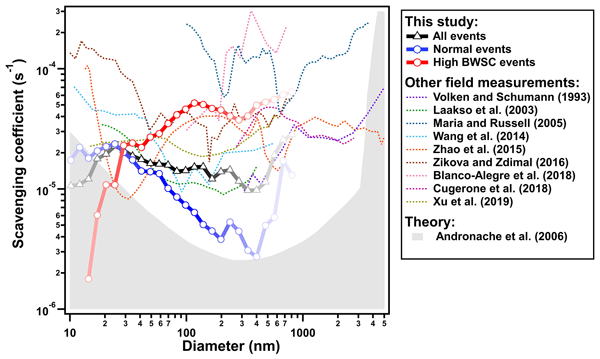
Guangdong Niu, Ximeng Qi, Liangduo Chen, Lian Xue, Shiyi Lai, Xin Huang, Jiaping Wang, Xuguang Chi, Wei Nie, Veli-Matti Kerminen, Tuukka Petäjä, Markku Kulmala, and Aijun Ding
Atmos. Chem. Phys., 23, 7521–7534, https://doi.org/10.5194/acp-23-7521-2023, https://doi.org/10.5194/acp-23-7521-2023, 2023
Short summary
Short summary
The reported below-cloud wet-scavenging coefficients (BWSCs) are much higher than theoretical data, but the reason remains unclear. Based on long-term observation, we find that air mass changing during rainfall events causes the overestimation of BWSCs. Thus, the discrepancy in BWSCs between observation and theory is not as large as currently believed. To obtain reasonable BWSCs and parameterizations from field observations, the effect of air mass changes needs to be considered.
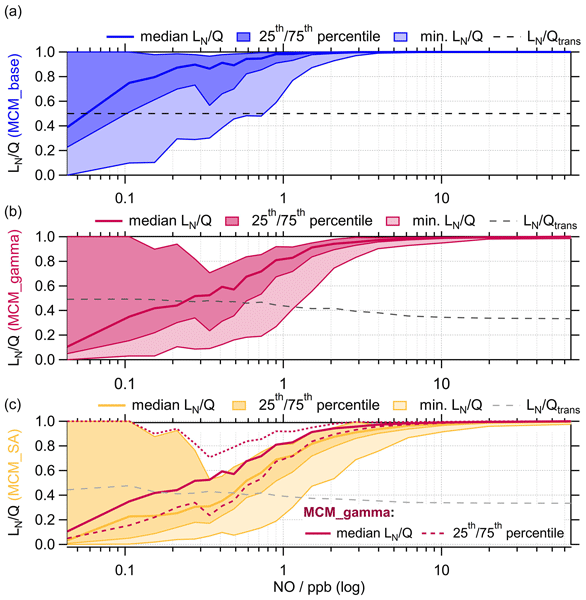
Joanna E. Dyson, Lisa K. Whalley, Eloise J. Slater, Robert Woodward-Massey, Chunxiang Ye, James D. Lee, Freya Squires, James R. Hopkins, Rachel E. Dunmore, Marvin Shaw, Jacqueline F. Hamilton, Alastair C. Lewis, Stephen D. Worrall, Asan Bacak, Archit Mehra, Thomas J. Bannan, Hugh Coe, Carl J. Percival, Bin Ouyang, C. Nicholas Hewitt, Roderic L. Jones, Leigh R. Crilley, Louisa J. Kramer, W. Joe F. Acton, William J. Bloss, Supattarachai Saksakulkrai, Jingsha Xu, Zongbo Shi, Roy M. Harrison, Simone Kotthaus, Sue Grimmond, Yele Sun, Weiqi Xu, Siyao Yue, Lianfang Wei, Pingqing Fu, Xinming Wang, Stephen R. Arnold, and Dwayne E. Heard
Atmos. Chem. Phys., 23, 5679–5697, https://doi.org/10.5194/acp-23-5679-2023, https://doi.org/10.5194/acp-23-5679-2023, 2023
Short summary
Short summary
The hydroxyl (OH) and closely coupled hydroperoxyl (HO2) radicals are vital for their role in the removal of atmospheric pollutants. In less polluted regions, atmospheric models over-predict HO2 concentrations. In this modelling study, the impact of heterogeneous uptake of HO2 onto aerosol surfaces on radical concentrations and the ozone production regime in Beijing in the summertime is investigated, and the implications for emissions policies across China are considered.
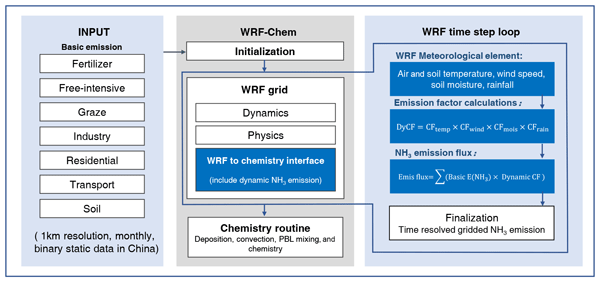
Chuanhua Ren, Xin Huang, Tengyu Liu, Yu Song, Zhang Wen, Xuejun Liu, Aijun Ding, and Tong Zhu
Geosci. Model Dev., 16, 1641–1659, https://doi.org/10.5194/gmd-16-1641-2023, https://doi.org/10.5194/gmd-16-1641-2023, 2023
Short summary
Short summary
Ammonia in the atmosphere has wide impacts on the ecological environment and air quality, and its emission from soil volatilization is highly sensitive to meteorology, making it challenging to be well captured in models. We developed a dynamic emission model capable of calculating ammonia emission interactively with meteorological and soil conditions. Such a coupling of soil emission with meteorology provides a better understanding of ammonia emission and its contribution to atmospheric aerosol.
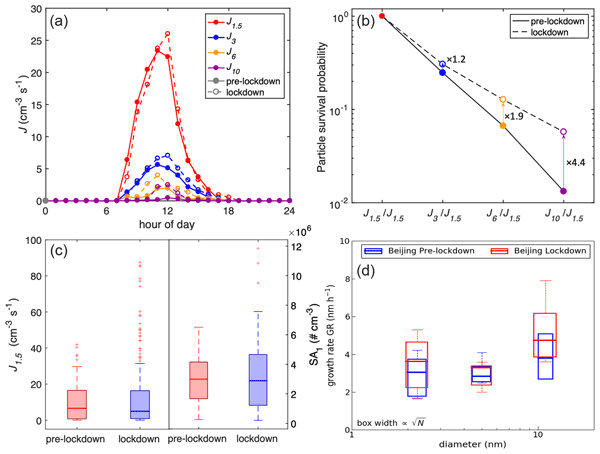
Chao Yan, Yicheng Shen, Dominik Stolzenburg, Lubna Dada, Ximeng Qi, Simo Hakala, Anu-Maija Sundström, Yishuo Guo, Antti Lipponen, Tom V. Kokkonen, Jenni Kontkanen, Runlong Cai, Jing Cai, Tommy Chan, Liangduo Chen, Biwu Chu, Chenjuan Deng, Wei Du, Xiaolong Fan, Xu-Cheng He, Juha Kangasluoma, Joni Kujansuu, Mona Kurppa, Chang Li, Yiran Li, Zhuohui Lin, Yiliang Liu, Yuliang Liu, Yiqun Lu, Wei Nie, Jouni Pulliainen, Xiaohui Qiao, Yonghong Wang, Yifan Wen, Ye Wu, Gan Yang, Lei Yao, Rujing Yin, Gen Zhang, Shaojun Zhang, Feixue Zheng, Ying Zhou, Antti Arola, Johanna Tamminen, Pauli Paasonen, Yele Sun, Lin Wang, Neil M. Donahue, Yongchun Liu, Federico Bianchi, Kaspar R. Daellenbach, Douglas R. Worsnop, Veli-Matti Kerminen, Tuukka Petäjä, Aijun Ding, Jingkun Jiang, and Markku Kulmala
Atmos. Chem. Phys., 22, 12207–12220, https://doi.org/10.5194/acp-22-12207-2022, https://doi.org/10.5194/acp-22-12207-2022, 2022
Short summary
Short summary
Atmospheric new particle formation (NPF) is a dominant source of atmospheric ultrafine particles. In urban environments, traffic emissions are a major source of primary pollutants, but their contribution to NPF remains under debate. During the COVID-19 lockdown, traffic emissions were significantly reduced, providing a unique chance to examine their relevance to NPF. Based on our comprehensive measurements, we demonstrate that traffic emissions alone are not able to explain the NPF in Beijing.
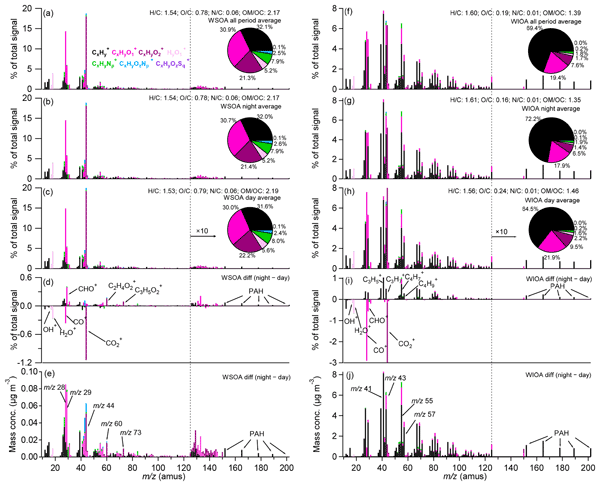
Zhiqiang Zhang, Yele Sun, Chun Chen, Bo You, Aodong Du, Weiqi Xu, Yan Li, Zhijie Li, Lu Lei, Wei Zhou, Jiaxing Sun, Yanmei Qiu, Lianfang Wei, Pingqing Fu, and Zifa Wang
Atmos. Chem. Phys., 22, 10409–10423, https://doi.org/10.5194/acp-22-10409-2022, https://doi.org/10.5194/acp-22-10409-2022, 2022
Short summary
Short summary
We present a comprehensive characterization of water-soluble organic aerosol and the first mass spectral characterization of water-insoluble organic aerosol in the cold season in Beijing by integrating online and offline aerosol mass spectrometer measurements. WSOA comprised dominantly secondary OA and showed large changes during the transition season from autumn to winter. WIOA was characterized by prominent hydrocarbon ions series, low oxidation states, and significant day–night differences.
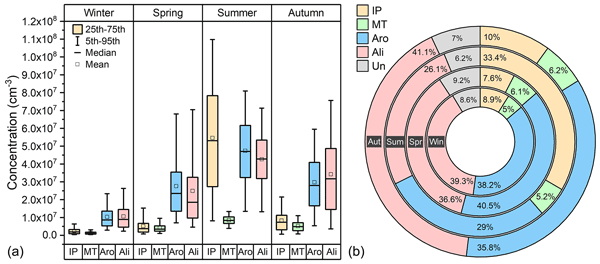
Yishuo Guo, Chao Yan, Yuliang Liu, Xiaohui Qiao, Feixue Zheng, Ying Zhang, Ying Zhou, Chang Li, Xiaolong Fan, Zhuohui Lin, Zemin Feng, Yusheng Zhang, Penggang Zheng, Linhui Tian, Wei Nie, Zhe Wang, Dandan Huang, Kaspar R. Daellenbach, Lei Yao, Lubna Dada, Federico Bianchi, Jingkun Jiang, Yongchun Liu, Veli-Matti Kerminen, and Markku Kulmala
Atmos. Chem. Phys., 22, 10077–10097, https://doi.org/10.5194/acp-22-10077-2022, https://doi.org/10.5194/acp-22-10077-2022, 2022
Short summary
Short summary
Gaseous oxygenated organic molecules (OOMs) are able to form atmospheric aerosols, which will impact on human health and climate change. Here, we find that OOMs in urban Beijing are dominated by anthropogenic sources, i.e. aromatic (29 %–41 %) and aliphatic (26 %–41 %) OOMs. They are also the main contributors to the condensational growth of secondary organic aerosols (SOAs). Therefore, the restriction on anthropogenic VOCs is crucial for the reduction of SOAs and haze formation.
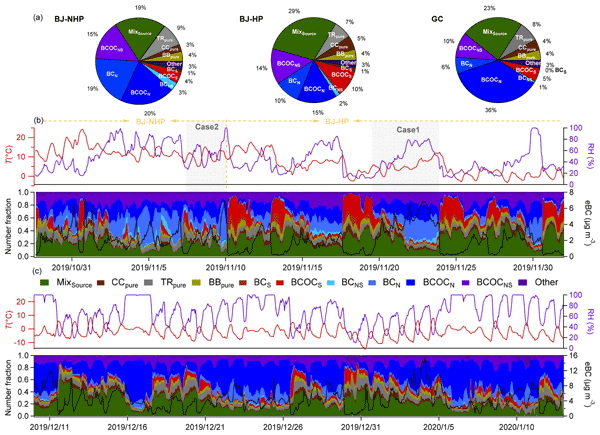
Jiaxing Sun, Yele Sun, Conghui Xie, Weiqi Xu, Chun Chen, Zhe Wang, Lei Li, Xubing Du, Fugui Huang, Yan Li, Zhijie Li, Xiaole Pan, Nan Ma, Wanyun Xu, Pingqing Fu, and Zifa Wang
Atmos. Chem. Phys., 22, 7619–7630, https://doi.org/10.5194/acp-22-7619-2022, https://doi.org/10.5194/acp-22-7619-2022, 2022
Short summary
Short summary
We analyzed the chemical composition and mixing state of BC-containing particles at urban and rural sites in winter in the North China Plain and evaluated their impact on light absorption enhancement. BC was dominantly mixed with organic carbon, nitrate, and sulfate, and the mixing state evolved significantly as a function of relative humidity (RH) at both sites. The absorption enhancement depended strongly on coated secondary inorganic aerosol and was up to ~1.3–1.4 during aging processes.
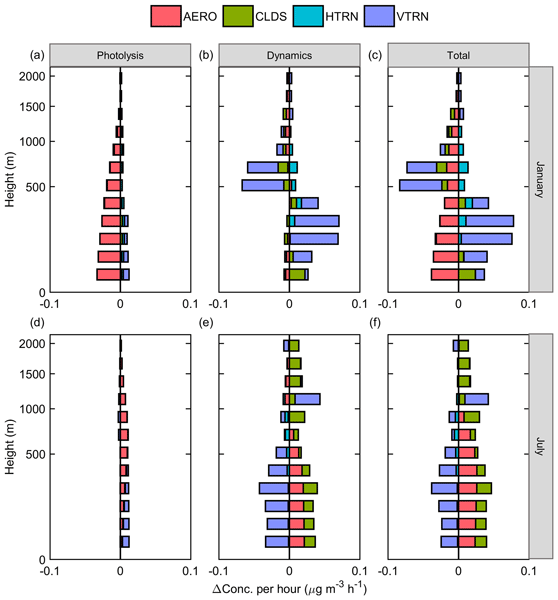
Jiandong Wang, Jia Xing, Shuxiao Wang, Rohit Mathur, Jiaping Wang, Yuqiang Zhang, Chao Liu, Jonathan Pleim, Dian Ding, Xing Chang, Jingkun Jiang, Peng Zhao, Shovan Kumar Sahu, Yuzhi Jin, David C. Wong, and Jiming Hao
Atmos. Chem. Phys., 22, 5147–5156, https://doi.org/10.5194/acp-22-5147-2022, https://doi.org/10.5194/acp-22-5147-2022, 2022
Short summary
Short summary
Aerosols reduce surface solar radiation and change the photolysis rate and planetary boundary layer stability. In this study, the online coupled meteorological and chemistry model was used to explore the detailed pathway of how aerosol direct effects affect secondary inorganic aerosol. The effects through the dynamics pathway act as an equally or even more important route compared with the photolysis pathway in affecting secondary aerosol concentration in both summer and winter.
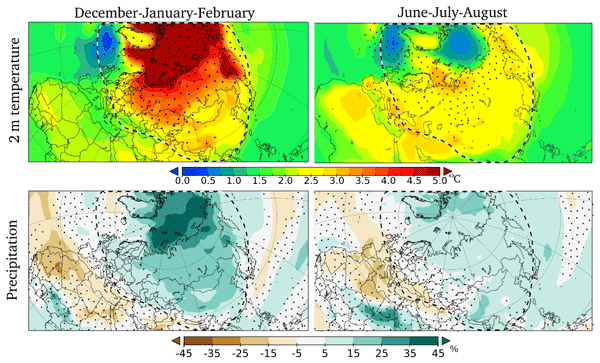
Hanna K. Lappalainen, Tuukka Petäjä, Timo Vihma, Jouni Räisänen, Alexander Baklanov, Sergey Chalov, Igor Esau, Ekaterina Ezhova, Matti Leppäranta, Dmitry Pozdnyakov, Jukka Pumpanen, Meinrat O. Andreae, Mikhail Arshinov, Eija Asmi, Jianhui Bai, Igor Bashmachnikov, Boris Belan, Federico Bianchi, Boris Biskaborn, Michael Boy, Jaana Bäck, Bin Cheng, Natalia Chubarova, Jonathan Duplissy, Egor Dyukarev, Konstantinos Eleftheriadis, Martin Forsius, Martin Heimann, Sirkku Juhola, Vladimir Konovalov, Igor Konovalov, Pavel Konstantinov, Kajar Köster, Elena Lapshina, Anna Lintunen, Alexander Mahura, Risto Makkonen, Svetlana Malkhazova, Ivan Mammarella, Stefano Mammola, Stephany Buenrostro Mazon, Outi Meinander, Eugene Mikhailov, Victoria Miles, Stanislav Myslenkov, Dmitry Orlov, Jean-Daniel Paris, Roberta Pirazzini, Olga Popovicheva, Jouni Pulliainen, Kimmo Rautiainen, Torsten Sachs, Vladimir Shevchenko, Andrey Skorokhod, Andreas Stohl, Elli Suhonen, Erik S. Thomson, Marina Tsidilina, Veli-Pekka Tynkkynen, Petteri Uotila, Aki Virkkula, Nadezhda Voropay, Tobias Wolf, Sayaka Yasunaka, Jiahua Zhang, Yubao Qiu, Aijun Ding, Huadong Guo, Valery Bondur, Nikolay Kasimov, Sergej Zilitinkevich, Veli-Matti Kerminen, and Markku Kulmala
Atmos. Chem. Phys., 22, 4413–4469, https://doi.org/10.5194/acp-22-4413-2022, https://doi.org/10.5194/acp-22-4413-2022, 2022
Short summary
Short summary
We summarize results during the last 5 years in the northern Eurasian region, especially from Russia, and introduce recent observations of the air quality in the urban environments in China. Although the scientific knowledge in these regions has increased, there are still gaps in our understanding of large-scale climate–Earth surface interactions and feedbacks. This arises from limitations in research infrastructures and integrative data analyses, hindering a comprehensive system analysis.
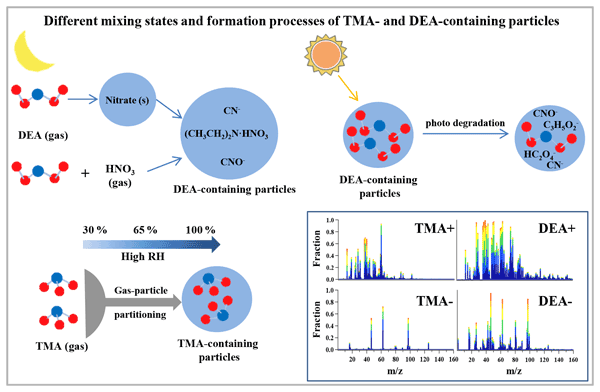
Qi En Zhong, Chunlei Cheng, Zaihua Wang, Lei Li, Mei Li, Dafeng Ge, Lei Wang, Yuanyuan Li, Wei Nie, Xuguang Chi, Aijun Ding, Suxia Yang, Duohong Chen, and Zhen Zhou
Atmos. Chem. Phys., 21, 17953–17967, https://doi.org/10.5194/acp-21-17953-2021, https://doi.org/10.5194/acp-21-17953-2021, 2021
Short summary
Short summary
Particulate amines play important roles in new particle formation, aerosol acidity, and hygroscopicity. Most of the field observations did not distinguish the different behavior of each type amine under the same ambient influencing factors. In this study, two amine-containing single particles exhibited different mixing states and disparate enrichment of secondary organics, which provide insight into the discriminated fates of organics during the formation and evolution processes.
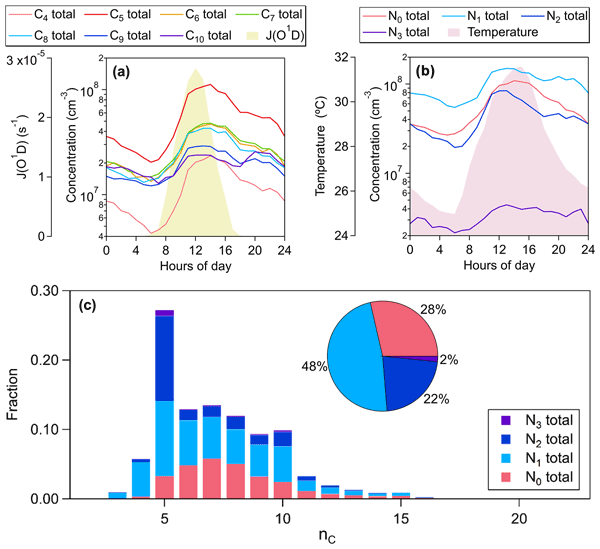
Yuliang Liu, Wei Nie, Yuanyuan Li, Dafeng Ge, Chong Liu, Zhengning Xu, Liangduo Chen, Tianyi Wang, Lei Wang, Peng Sun, Ximeng Qi, Jiaping Wang, Zheng Xu, Jian Yuan, Chao Yan, Yanjun Zhang, Dandan Huang, Zhe Wang, Neil M. Donahue, Douglas Worsnop, Xuguang Chi, Mikael Ehn, and Aijun Ding
Atmos. Chem. Phys., 21, 14789–14814, https://doi.org/10.5194/acp-21-14789-2021, https://doi.org/10.5194/acp-21-14789-2021, 2021
Short summary
Short summary
Oxygenated organic molecules (OOMs) are crucial intermediates linking volatile organic compounds to secondary organic aerosols. Using nitrate time-of-flight chemical ionization mass spectrometry in eastern China, we performed positive matrix factorization (PMF) on binned OOM mass spectra. We reconstructed over 1000 molecules from 14 derived PMF factors and identified about 72 % of the observed OOMs as organic nitrates, highlighting the decisive role of NOx in OOM formation in populated areas.
Cited articles
Canagaratna, M. R., Jayne, J. T., Jimenez, J. L., Allan, J. D., Alfarra, M. R., Zhang, Q., Onasch, T. B., Drewnick, F., Coe, H., Middlebrook, A., Delia, A., Williams, L. R., Trimborn, A. M., Northway, M. J., DeCarlo, P. F., Kolb, C. E., Davidovits, P., and Worsnop, D. R.: Chemical and microphysical characterization of ambient aerosols with the aerodyne aerosol mass spectrometer, Mass Spectrometry Reviews, 26, 185–222, https://doi.org/10.1002/mas.20115, 2007.
Canagaratna, M. R., Jimenez, J. L., Kroll, J. H., Chen, Q., Kessler, S. H., Massoli, P., Hildebrandt Ruiz, L., Fortner, E., Williams, L. R., Wilson, K. R., Surratt, J. D., Donahue, N. M., Jayne, J. T., and Worsnop, D. R.: Elemental ratio measurements of organic compounds using aerosol mass spectrometry: characterization, improved calibration, and implications, Atmos. Chem. Phys., 15, 253–272, https://doi.org/10.5194/acp-15-253-2015, 2015.
Chen, C., Zhang, H., Yan, W., Wu, N., Zhang, Q., and He, K.: Aerosol water content enhancement leads to changes in the major formation mechanisms of nitrate and secondary organic aerosols in winter over the North China Plain, Environmental Pollution, 287, 117625, https://doi.org/10.1016/j.envpol.2021.117625, 2021.
Chen, Q., Miao, R., Geng, G., Shrivastava, M., Dao, X., Xu, B., Sun, J., Zhang, X., Liu, M., Tang, G., Tang, Q., Hu, H., Huang, R.-J., Wang, H., Zheng, Y., Qin, Y., Guo, S., Hu, M., and Zhu, T.: Widespread 2013–2020 decreases and reduction challenges of organic aerosol in China, Nat. Commun., 15, 4465, https://doi.org/10.1038/s41467-024-48902-0, 2024.
Clegg, S. L., Brimblecombe, P., and Wexler, A. S.: Thermodynamic model of the system H+-
DeCarlo, P. F., Kimmel, J. R., Trimborn, A., Northway, M. J., Jayne, J. T., Aiken, A. C., Gonin, M., Fuhrer, K., Horvath, T., Docherty, K. S., Worsnop, D. R., and Jimenez, J. L.: Field-deployable, high-resolution, time-of-flight aerosol mass spectrometer, Anal. Chem., 78, 8281–8289, https://doi.org/10.1021/ac061249n, 2006.
DeCarlo, P. F., Ulbrich, I. M., Crounse, J., de Foy, B., Dunlea, E. J., Aiken, A. C., Knapp, D., Weinheimer, A. J., Campos, T., Wennberg, P. O., and Jimenez, J. L.: Investigation of the sources and processing of organic aerosol over the Central Mexican Plateau from aircraft measurements during MILAGRO, Atmos. Chem. Phys., 10, 5257–5280, https://doi.org/10.5194/acp-10-5257-2010, 2010.
Ding, A., Nie, W., Huang, X., Chi, X., Sun, J., Kerminen, V.-M., Xu, Z., Guo, W., Petäjä, T., Yang, X., Kulmala, M., and Fu, C.: Long-term observation of air pollution-weather/climate interactions at the SORPES station: a review and outlook, Front. Environ. Sci. Eng., 10, 15, https://doi.org/10.1007/s11783-016-0877-3, 2016.
Ding, A., Huang, X., Nie, W., Chi, X., Xu, Z., Zheng, L., Xu, Z., Xie, Y., Qi, X., Shen, Y., Sun, P., Wang, J., Wang, L., Sun, J., Yang, X.-Q., Qin, W., Zhang, X., Cheng, W., Liu, W., Pan, L., and Fu, C.: Significant reduction of PM2.5 in eastern China due to regional-scale emission control: evidence from SORPES in 2011–2018, Atmos. Chem. Phys., 19, 11791–11801, https://doi.org/10.5194/acp-19-11791-2019, 2019.
Dou, J., Liu, T., Ge, D., Zhang, Y., Yin, J., Wang, L., Liu, H., Li, D., Niu, G., Chen, L., Wang, J., Qi, X., Nie, W., Chi, X., Huang, X., and Ding, A.: In-situ secondary organic aerosol formation from ambient air in suburban eastern China: Substantially distinct characteristics between summer and winter, Atmospheric Environment, 356, 121295, https://doi.org/10.1016/j.atmosenv.2025.121295, 2025.
Duan, J., Huang, R.-J., Gu, Y., Lin, C., Zhong, H., Xu, W., Liu, Q., You, Y., Ovadnevaite, J., Ceburnis, D., Hoffmann, T., and O'Dowd, C.: Measurement report: Large contribution of biomass burning and aqueous-phase processes to the wintertime secondary organic aerosol formation in Xi'an, Northwest China, Atmos. Chem. Phys., 22, 10139–10153, https://doi.org/10.5194/acp-22-10139-2022, 2022.
Ervens, B., Turpin, B. J., and Weber, R. J.: Secondary organic aerosol formation in cloud droplets and aqueous particles (aqSOA): a review of laboratory, field and model studies, Atmos. Chem. Phys., 11, 11069–11102, https://doi.org/10.5194/acp-11-11069-2011, 2011.
Farmer, D. K., Matsunaga, A., Docherty, K. S., Surratt, J. D., Seinfeld, J. H., Ziemann, P. J., and Jimenez, J. L.: Response of an aerosol mass spectrometer to organonitrates and organosulfates and implications for atmospheric chemistry, Proc. Natl. Acad. Sci. U. S. A., 107, 6670–6675, https://doi.org/10.1073/pnas.0912340107, 2010.
Feng, Z., Liu, Y., Zheng, F., Yan, C., Fu, P., Zhang, Y., Lian, C., Wang, W., Cai, J., Du, W., Chu, B., Wang, Y., Kangasluoma, J., Bianchi, F., Petäjä, T., and Kulmala, M.: Highly oxidized organic aerosols in Beijing: Possible contribution of aqueous-phase chemistry, Atmospheric Environment, 273, 118971, https://doi.org/10.1016/j.atmosenv.2022.118971, 2022.
Freedman, M. A., Ott, E.-J. E., and Marak, K. E.: Role of pH in Aerosol Processes and Measurement Challenges, J. Phys. Chem. A, 123, 1275–1284, https://doi.org/10.1021/acs.jpca.8b10676, 2019.
Gilardoni, S., Massoli, P., Paglione, M., Giulianelli, L., Carbone, C., Rinaldi, M., Decesari, S., Sandrini, S., Costabile, F., Gobbi, G. P., Pietrogrande, M. C., Visentin, M., Scotto, F., Fuzzi, S., and Facchini, M. C.: Direct observation of aqueous secondary organic aerosol from biomass-burning emissions, Proc. Natl. Acad. Sci. U. S. A., 113, 10013–10018, https://doi.org/10.1073/pnas.1602212113, 2016.
Gu, Y., Huang, R.-J., Duan, J., Xu, W., Lin, C., Zhong, H., Wang, Y., Ni, H., Liu, Q., Xu, R., Wang, L., and Li, Y. J.: Multiple pathways for the formation of secondary organic aerosol in the North China Plain in summer, Atmos. Chem. Phys., 23, 5419–5433, https://doi.org/10.5194/acp-23-5419-2023, 2023.
Heald, C. L., Kroll, J. H., Jimenez, J. L., Docherty, K. S., DeCarlo, P. F., Aiken, A. C., Chen, Q., Martin, S. T., Farmer, D. K., and Artaxo, P.: A simplified description of the evolution of organic aerosol composition in the atmosphere, Geophysical Research Letters, 37, https://doi.org/10.1029/2010GL042737, 2010.
Hennigan, C. J., Bergin, M. H., Russell, A. G., Nenes, A., and Weber, R. J.: Gas/particle partitioning of water-soluble organic aerosol in Atlanta, Atmos. Chem. Phys., 9, 3613–3628, https://doi.org/10.5194/acp-9-3613-2009, 2009.
Hodas, N., Sullivan, A. P., Skog, K., Keutsch, F. N., Decesari, S., Facchini, M. C., Carlton, A. G., Laaksonen, A., and Turpin, B. J.: Aerosol Liquid Water Driven by Anthropogenic Nitrate: Implications for Lifetimes of Water-Soluble Organic Gases and Potential for Secondary Organic Aerosol Formation, Environ. Sci. Technol., 48, 11127–11136, https://doi.org/10.1021/es5025096, 2014.
Huang, R.-J., Zhang, Y., Bozzetti, C., Ho, K.-F., Cao, J.-J., Han, Y., Daellenbach, K. R., Slowik, J. G., Platt, S. M., Canonaco, F., Zotter, P., Wolf, R., Pieber, S. M., Bruns, E. A., Crippa, M., Ciarelli, G., Piazzalunga, A., Schwikowski, M., Abbaszade, G., Schnelle-Kreis, J., Zimmermann, R., An, Z., Szidat, S., Baltensperger, U., Haddad, I. E., and Prévôt, A. S. H.: High secondary aerosol contribution to particulate pollution during haze events in China, Nature, 514, 218–222, https://doi.org/10.1038/nature13774, 2014.
Huang, R.-J., Li, Y. J., Chen, Q., Zhang, Y., Lin, C., Chan, C. K., Yu, J. Z., de Gouw, J., Tong, S., Jiang, J., Wang, W., Ding, X., Wang, X., Ge, M., Zhou, W., Worsnop, D., Boy, M., Bilde, M., Dusek, U., Carlton, A. G., Hoffmann, T., McNeill, V. F., and Glasius, M.: Secondary organic aerosol in urban China: A distinct chemical regime for air pollution studies, Science, 389, eadq2840, https://doi.org/10.1126/science.adq2840, 2025.
Kanakidou, M., Seinfeld, J. H., Pandis, S. N., Barnes, I., Dentener, F. J., Facchini, M. C., Van Dingenen, R., Ervens, B., Nenes, A., Nielsen, C. J., Swietlicki, E., Putaud, J. P., Balkanski, Y., Fuzzi, S., Horth, J., Moortgat, G. K., Winterhalter, R., Myhre, C. E. L., Tsigaridis, K., Vignati, E., Stephanou, E. G., and Wilson, J.: Organic aerosol and global climate modelling: a review, Atmos. Chem. Phys., 5, 1053–1123, https://doi.org/10.5194/acp-5-1053-2005, 2005.
Kim, H., Collier, S., Ge, X., Xu, J., Sun, Y., Jiang, W., Wang, Y., Herckes, P., and Zhang, Q.: Chemical processing of water-soluble species and formation of secondary organic aerosol in fogs, Atmospheric Environment, 200, 158–166, https://doi.org/10.1016/j.atmosenv.2018.11.062, 2019.
Kuang, Y., He, Y., Xu, W., Yuan, B., Zhang, G., Ma, Z., Wu, C., Wang, C., Wang, S., Zhang, S., Tao, J., Ma, N., Su, H., Cheng, Y., Shao, M., and Sun, Y.: Photochemical Aqueous-Phase Reactions Induce Rapid Daytime Formation of Oxygenated Organic Aerosol on the North China Plain, Environ. Sci. Technol., 54, 3849–3860, https://doi.org/10.1021/acs.est.9b06836, 2020.
Lim, Y. B., Tan, Y., Perri, M. J., Seitzinger, S. P., and Turpin, B. J.: Aqueous chemistry and its role in secondary organic aerosol (SOA) formation, Atmos. Chem. Phys., 10, 10521–10539, https://doi.org/10.5194/acp-10-10521-2010, 2010.
Liu, H., Liu, T., Li, Y., Ge, A., Wang, L., Lai, S., Niu, G., Yin, J., Zhou, X., Liu, Y., Wang, J., Zha, Q., Qi, X., Nie, W., Chi, X., Lou, S., Huang, X., Zhang, Y., Song, W., Wang, X., and Ding, A.: Impacts of heatwaves on characteristics of atmospheric methylglyoxal in a suburban area in eastern China, Journal of Geophysical Research: Atmospheres, 130, e2025JD044284, https://doi.org/10.1029/2025JD044284, 2025.
Liu, R., Liu, T., Huang, X., Ren, C., Wang, L., Niu, G., Yu, C., Zhang, Y., Wang, J., Qi, X., Nie, W., Chi, X., and Ding, A.: Characteristics and sources of atmospheric ammonia at the SORPES station in the western yangtze river delta of China, Atmospheric Environment, 318, 120234, https://doi.org/10.1016/j.atmosenv.2023.120234, 2024.
Liu, T. and Wang, Q.: Data for “Characteristics and processing of aqueous secondary organic aerosols during autumn in suburban Eastern China: role of aerosol liquid water, aerosol acidity, and photochemistry”, Zenodo [data set], https://doi.org/10.5281/zenodo.18787018, 2026.
Liu, Z., Hu, B., Ji, D., Cheng, M., Gao, W., Shi, S., Xie, Y., Yang, S., Gao, M., Fu, H., Chen, J., and Wang, Y.: Characteristics of fine particle explosive growth events in beijing, China: Seasonal variation, chemical evolution pattern and formation mechanism, Science of The Total Environment, 687, 1073–1086, https://doi.org/10.1016/j.scitotenv.2019.06.068, 2019.
McNeill, V. F.: Aqueous organic chemistry in the atmosphere: Sources and chemical processing of organic aerosols, Environ. Sci. Technol., 49, 1237–1244, https://doi.org/10.1021/es5043707, 2015.
Ng, N. L., Canagaratna, M. R., Jimenez, J. L., Chhabra, P. S., Seinfeld, J. H., and Worsnop, D. R.: Changes in organic aerosol composition with aging inferred from aerosol mass spectra, Atmos. Chem. Phys., 11, 6465–6474, https://doi.org/10.5194/acp-11-6465-2011, 2011.
Nguyen, T. K. V., Zhang, Q., Jimenez, J. L., Pike, M., and Carlton, A. G.: Liquid water: Ubiquitous contributor to aerosol mass, Environ. Sci. Technol. Lett., 3, 257–263, https://doi.org/10.1021/acs.estlett.6b00167, 2016.
Paatero, P. and Tapper, U.: Positive matrix factorization: A non-negative factor model with optimal utilization of error estimates of data values, Environmetrics, 5, 111–126, https://doi.org/10.1002/env.3170050203, 1994.
Peng, J., Hu, M., Shang, D., Wu, Z., Du, Z., Tan, T., Wang, Y., Zhang, F., and Zhang, R.: Explosive secondary aerosol formation during severe haze in the north China plain, Environ. Sci. Technol., 55, 2189–2207, https://doi.org/10.1021/acs.est.0c07204, 2021.
Pye, H. O. T., Nenes, A., Alexander, B., Ault, A. P., Barth, M. C., Clegg, S. L., Collett Jr., J. L., Fahey, K. M., Hennigan, C. J., Herrmann, H., Kanakidou, M., Kelly, J. T., Ku, I.-T., McNeill, V. F., Riemer, N., Schaefer, T., Shi, G., Tilgner, A., Walker, J. T., Wang, T., Weber, R., Xing, J., Zaveri, R. A., and Zuend, A.: The acidity of atmospheric particles and clouds, Atmos. Chem. Phys., 20, 4809–4888, https://doi.org/10.5194/acp-20-4809-2020, 2020.
Rogers, M. J., Joo, T., Hass-Mitchell, T., Canagaratna, M. R., Campuzano-Jost, P., Sueper, D., Tran, M. N., Machesky, J. E., Roscioli, J. R., Jimenez, J. L., Krechmer, J. E., Lambe, A. T., Nault, B. A., and Gentner, D. R.: Humid summers promote urban aqueous-phase production of oxygenated organic aerosol in the northeastern united states, Geophysical Research Letters, 52, e2024GL112005, https://doi.org/10.1029/2024GL112005, 2025.
Seinfeld, J. H. and Pankow, J. F.: Organic atmospheric particulate material, Annu. Rev. Phys. Chem., 54, 121–140, https://doi.org/10.1146/annurev.physchem.54.011002.103756, 2003.
Sullivan, A. P., Hodas, N., Turpin, B. J., Skog, K., Keutsch, F. N., Gilardoni, S., Paglione, M., Rinaldi, M., Decesari, S., Facchini, M. C., Poulain, L., Herrmann, H., Wiedensohler, A., Nemitz, E., Twigg, M. M., and Collett Jr., J. L.: Evidence for ambient dark aqueous SOA formation in the Po Valley, Italy, Atmos. Chem. Phys., 16, 8095–8108, https://doi.org/10.5194/acp-16-8095-2016, 2016.
Sun, P., Nie, W., Chi, X., Xie, Y., Huang, X., Xu, Z., Qi, X., Xu, Z., Wang, L., Wang, T., Zhang, Q., and Ding, A.: Two years of online measurement of fine particulate nitrate in the western Yangtze River Delta: influences of thermodynamics and N2O5 hydrolysis, Atmos. Chem. Phys., 18, 17177–17190, https://doi.org/10.5194/acp-18-17177-2018, 2018.
Sun, W., Wang, D., Yao, L., Fu, H., Fu, Q., Wang, H., Li, Q., Wang, L., Yang, X., Xian, A., Wang, G., Xiao, H., and Chen, J.: Chemistry-triggered events of PM2.5 explosive growth during late autumn and winter in shanghai, China, Environmental Pollution, 254, 112864, https://doi.org/10.1016/j.envpol.2019.07.032, 2019.
Sun, Y., Du, W., Fu, P., Wang, Q., Li, J., Ge, X., Zhang, Q., Zhu, C., Ren, L., Xu, W., Zhao, J., Han, T., Worsnop, D. R., and Wang, Z.: Primary and secondary aerosols in Beijing in winter: sources, variations and processes, Atmos. Chem. Phys., 16, 8309–8329, https://doi.org/10.5194/acp-16-8309-2016, 2016.
Sun, Y. L., Zhang, Q., Anastasio, C., and Sun, J.: Insights into secondary organic aerosol formed via aqueous-phase reactions of phenolic compounds based on high resolution mass spectrometry, Atmos. Chem. Phys., 10, 4809–4822, https://doi.org/10.5194/acp-10-4809-2010, 2010.
Tilgner, A., Schaefer, T., Alexander, B., Barth, M., Collett Jr., J. L., Fahey, K. M., Nenes, A., Pye, H. O. T., Herrmann, H., and McNeill, V. F.: Acidity and the multiphase chemistry of atmospheric aqueous particles and clouds, Atmos. Chem. Phys., 21, 13483–13536, https://doi.org/10.5194/acp-21-13483-2021, 2021.
Ulbrich, I. M., Canagaratna, M. R., Zhang, Q., Worsnop, D. R., and Jimenez, J. L.: Interpretation of organic components from Positive Matrix Factorization of aerosol mass spectrometric data, Atmos. Chem. Phys., 9, 2891–2918, https://doi.org/10.5194/acp-9-2891-2009, 2009.
Wang, F., Lv, S., Liu, X., Lei, Y., Wu, C., Chen, Y., Zhang, F., and Wang, G.: Investigation into the differences and relationships between gasSOA and aqSOA in winter haze pollution on Chongming Island, Shanghai, based on VOCs observation, Environmental Pollution, 316, 120684, https://doi.org/10.1016/j.envpol.2022.120684, 2023.
Wang, J., Ge, X., Chen, Y., Shen, Y., Zhang, Q., Sun, Y., Xu, J., Ge, S., Yu, H., and Chen, M.: Highly time-resolved urban aerosol characteristics during springtime in Yangtze River Delta, China: insights from soot particle aerosol mass spectrometry, Atmos. Chem. Phys., 16, 9109–9127, https://doi.org/10.5194/acp-16-9109-2016, 2016.
Wang, J., Ye, J., Zhang, Q., Zhao, J., Wu, Y., Li, J., Liu, D., Li, W., Zhang, Y., Wu, C., Xie, C., Qin, Y., Lei, Y., Huang, X., Guo, J., Liu, P., Fu, P., Li, Y., Lee, H. C., Choi, H., Zhang, J., Liao, H., Chen, M., Sun, Y., Ge, X., Martin, S. T., and Jacob, D. J.: Aqueous production of secondary organic aerosol from fossil-fuel emissions in winter Beijing haze, Proc. Natl. Acad. Sci. U. S. A., 118, e2022179118, https://doi.org/10.1073/pnas.2022179118, 2021.
Wexler, A. S. and Clegg, S. L.: Atmospheric aerosol models for systems including the ions H+,
Wu, Y., Ge, X., Wang, J., Shen, Y., Ye, Z., Ge, S., Wu, Y., Yu, H., and Chen, M.: Responses of secondary aerosols to relative humidity and photochemical activities in an industrialized environment during late winter, Atmospheric Environment, 193, 66–78, https://doi.org/10.1016/j.atmosenv.2018.09.008, 2018.
Xian, J., Cui, S., Chen, X., Wang, J., Xiong, Y., Gu, C., Wang, Y., Zhang, Y., Li, H., Wang, J., and Ge, X.: Online chemical characterization of atmospheric fine secondary aerosols and organic nitrates in summer Nanjing, China, Atmospheric Research, 290, 106783, https://doi.org/10.1016/j.atmosres.2023.106783, 2023.
Xiao, Y., Hu, M., Li, X., Zong, T., Xu, N., Hu, S., Zeng, L., Chen, S., Song, Y., Guo, S., and Wu, Z.: Aqueous secondary organic aerosol formation attributed to phenols from biomass burning, Science of The Total Environment, 847, 157582, https://doi.org/10.1016/j.scitotenv.2022.157582, 2022.
Xu, W., Han, T., Du, W., Wang, Q., Chen, C., Zhao, J., Zhang, Y., Li, J., Fu, P., Wang, Z., Worsnop, D. R., and Sun, Y.: Effects of Aqueous-Phase and Photochemical Processing on Secondary Organic Aerosol Formation and Evolution in Beijing, China, Environ. Sci. Technol., 51, 762–770, https://doi.org/10.1021/acs.est.6b04498, 2017.
Xu, W., Sun, Y., Wang, Q., Zhao, J., Wang, J., Ge, X., Xie, C., Zhou, W., Du, W., Li, J., Fu, P., Wang, Z., Worsnop, D. R., and Coe, H.: Changes in Aerosol Chemistry From 2014 to 2016 in Winter in Beijing: Insights From High-Resolution Aerosol Mass Spectrometry, Journal of Geophysical Research: Atmospheres, 124, 1132–1147, https://doi.org/10.1029/2018JD029245, 2019.
Yasmeen, F., Sauret, N., Gal, J.-F., Maria, P.-C., Massi, L., Maenhaut, W., and Claeys, M.: Characterization of oligomers from methylglyoxal under dark conditions: a pathway to produce secondary organic aerosol through cloud processing during nighttime, Atmos. Chem. Phys., 10, 3803–3812, https://doi.org/10.5194/acp-10-3803-2010, 2010.
Zhao, J., Qiu, Y., Zhou, W., Xu, W., Wang, J., Zhang, Y., Li, L., Xie, C., Wang, Q., Du, W., Worsnop, D. R., Canagaratna, M. R., Zhou, L., Ge, X., Fu, P., Li, J., Wang, Z., Donahue, N. M., and Sun, Y.: Organic Aerosol Processing During Winter Severe Haze Episodes in Beijing, JGR Atmospheres, 124, 10248–10263, https://doi.org/10.1029/2019JD030832, 2019.
Zhou, J., Elser, M., Huang, R.-J., Krapf, M., Fröhlich, R., Bhattu, D., Stefenelli, G., Zotter, P., Bruns, E. A., Pieber, S. M., Ni, H., Wang, Q., Wang, Y., Zhou, Y., Chen, C., Xiao, M., Slowik, J. G., Brown, S., Cassagnes, L.-E., Daellenbach, K. R., Nussbaumer, T., Geiser, M., Prévôt, A. S. H., El-Haddad, I., Cao, J., Baltensperger, U., and Dommen, J.: Predominance of secondary organic aerosol to particle-bound reactive oxygen species activity in fine ambient aerosol, Atmos. Chem. Phys., 19, 14703–14720, https://doi.org/10.5194/acp-19-14703-2019, 2019.
Ziemann, P. J. and Atkinson, R.: Kinetics, products, and mechanisms of secondary organic aerosol formation, Chem. Soc. Rev., 41, 6582–6605, https://doi.org/10.1039/C2CS35122F, 2012.
Short summary
The sources and formation mechanisms of aqueous secondary organic aerosol (aqSOA) remain unclear. This study investigates the characteristics and processing of aqSOA in polluted suburban environments in Eastern China. The results highlight the critical roles of nitrate, aerosol liquid water, acidity, and photochemistry in aqSOA formation and contribute to an improved understanding of aqSOA formation in polluted environments.
The sources and formation mechanisms of aqueous secondary organic aerosol (aqSOA) remain...


Altmetrics
Final-revised paper
Preprint