
Articles | Volume 26, issue 3
https://doi.org/10.5194/acp-26-1889-2026
© Author(s) 2026. This work is distributed under
the Creative Commons Attribution 4.0 License.
the Creative Commons Attribution 4.0 License.
https://doi.org/10.5194/acp-26-1889-2026
© Author(s) 2026. This work is distributed under
the Creative Commons Attribution 4.0 License.
the Creative Commons Attribution 4.0 License.
Research article
| 
06 Feb 2026
Research article |
| 06 Feb 2026
| 06 Feb 2026
Why observed and modelled ozone production rates and sensitives differ, a case study at rural site in China

College of Environment and Climate, Institute for Environment and Climate Research, Guangdong-Hongkong-Macau Joint Laboratory of Collaborative Innovation for Environmental Quality, Jinan University, Guangzhou 511443, China
Bin Jiang
College of Environment and Climate, Institute for Environment and Climate Research, Guangdong-Hongkong-Macau Joint Laboratory of Collaborative Innovation for Environmental Quality, Jinan University, Guangzhou 511443, China
Bowen Zhong
College of Environment and Climate, Institute for Environment and Climate Research, Guangdong-Hongkong-Macau Joint Laboratory of Collaborative Innovation for Environmental Quality, Jinan University, Guangzhou 511443, China
Tao Zhang
Environmental Key Laboratory of Regional Air Quality Monitoring, Ministry of Ecology and Environment, Guangdong Ecological and Environmental Monitoring Center, Guangzhou 511443, China
Duohong Chen
Environmental Key Laboratory of Regional Air Quality Monitoring, Ministry of Ecology and Environment, Guangdong Ecological and Environmental Monitoring Center, Guangzhou 511443, China
Yuhong Zhai
Environmental Key Laboratory of Regional Air Quality Monitoring, Ministry of Ecology and Environment, Guangdong Ecological and Environmental Monitoring Center, Guangzhou 511443, China
Li Zhong
College of Environment and Climate, Institute for Environment and Climate Research, Guangdong-Hongkong-Macau Joint Laboratory of Collaborative Innovation for Environmental Quality, Jinan University, Guangzhou 511443, China
Zhijiong Huang
College of Environment and Climate, Institute for Environment and Climate Research, Guangdong-Hongkong-Macau Joint Laboratory of Collaborative Innovation for Environmental Quality, Jinan University, Guangzhou 511443, China
Junqing Luo
College of Environment and Climate, Institute for Environment and Climate Research, Guangdong-Hongkong-Macau Joint Laboratory of Collaborative Innovation for Environmental Quality, Jinan University, Guangzhou 511443, China
Minhui Deng
College of Environment and Climate, Institute for Environment and Climate Research, Guangdong-Hongkong-Macau Joint Laboratory of Collaborative Innovation for Environmental Quality, Jinan University, Guangzhou 511443, China
Mao Xiao
Sichuan Academy of Environmental Sciences, Chengdu 610041, China
Biogas Institute of Ministry of Agriculture and Rural Affairs, Chengdu 610041, China
Jianhui Jiang
Global Institute for Urban and Regional Sustainability, School of Ecological and Environmental Sciences, East China Normal University, Shanghai 200241, China
Institute of Eco-Chongming, East China Normal University, Shanghai 200241, China
Jing Li
College of Environment and Climate, Institute for Environment and Climate Research, Guangdong-Hongkong-Macau Joint Laboratory of Collaborative Innovation for Environmental Quality, Jinan University, Guangzhou 511443, China
Min Shao
CORRESPONDING AUTHOR
College of Environment and Climate, Institute for Environment and Climate Research, Guangdong-Hongkong-Macau Joint Laboratory of Collaborative Innovation for Environmental Quality, Jinan University, Guangzhou 511443, China
Related authors
Jun Zhou, Chunsheng Zhang, Aiming Liu, Bin Yuan, Yan Wang, Wenjie Wang, Jie-Ping Zhou, Yixin Hao, Xiao-Bing Li, Xianjun He, Xin Song, Yubin Chen, Suxia Yang, Shuchun Yang, Yanfeng Wu, Bin Jiang, Shan Huang, Junwen Liu, Yuwen Peng, Jipeng Qi, Minhui Deng, Bowen Zhong, Yibo Huangfu, and Min Shao
Atmos. Chem. Phys., 24, 9805–9826, https://doi.org/10.5194/acp-24-9805-2024, https://doi.org/10.5194/acp-24-9805-2024, 2024
Short summary
Short summary
In-depth understanding of the near-ground vertical variability in photochemical ozone (O3) formation is crucial for mitigating O3 pollution. Utilizing a self-built vertical observation system, a direct net photochemical O3 production rate detection system, and an observation-based model, we diagnosed the vertical distributions and formation mechanism of net photochemical O3 production rates and sensitivity in the Pearl River Delta region, one of the most O3-polluted areas in China.
Yixin Hao, Jun Zhou, Jie-Ping Zhou, Yan Wang, Suxia Yang, Yibo Huangfu, Xiao-Bing Li, Chunsheng Zhang, Aiming Liu, Yanfeng Wu, Yaqing Zhou, Shuchun Yang, Yuwen Peng, Jipeng Qi, Xianjun He, Xin Song, Yubin Chen, Bin Yuan, and Min Shao
Atmos. Chem. Phys., 23, 9891–9910, https://doi.org/10.5194/acp-23-9891-2023, https://doi.org/10.5194/acp-23-9891-2023, 2023
Short summary
Short summary
By employing an improved net photochemical ozone production rate (NPOPR) detection system based on the dual-channel reaction chamber technique, we measured the net photochemical ozone production rate in the Pearl River Delta in China. The photochemical ozone formation mechanisms in the reaction and reference chambers were investigated using the observation-data-constrained box model, which helped us to validate the NPOPR detection system and understand photochemical ozone formation mechanism.
Lingze Meng, Ni Lu, Yixin Guo, Ziru Lan, Zhao-Cheng Zeng, Zichong Chen, Yuanhong Zhao, Zhuangmin Zhong, Tao Zhang, Duohong Chen, Xuejun Liu, Lin Zhang, and Junyu Zheng
EGUsphere, https://doi.org/10.5194/egusphere-2026-4773, https://doi.org/10.5194/egusphere-2026-4773, 2026
This preprint is open for discussion and under review for Atmospheric Chemistry and Physics (ACP).
Short summary
Short summary
Ammonia contributes to formation of health-damaging PM2.5 air pollution, but its emission estimations involve substantial uncertainties. Combining ground and satellite observations, a local inventory, and atmospheric modeling, we improved ammonia emissions in Guangdong, China. We found that current inventories overestimated agricultural emissions but underestimated non-agricultural emissions, especially in urban areas during the cool season, informing effective PM2.5 mitigation policy design.
Shan Huang, Lina Wu, Yi Kuang, Yuan Liu, Weiwei Hu, Ye Kuang, Wei Li, Qicong Song, Yuwen Peng, Suxia Yang, Mingfu Cai, Duohong Chen, Dingli Yue, Wei Song, Bin Yuan, Xinming Wang, and Min Shao
EGUsphere, https://doi.org/10.5194/egusphere-2026-4552, https://doi.org/10.5194/egusphere-2026-4552, 2026
Short summary
Short summary
This study reports field measurements of particulate organonitrates in a mixed anthropogenic-biogenic subtropical atmosphere, revealing contrasting formation regimes between urban and rural sites. Daytime photochemistry and regional transport dominated urban organonitrates, while nighttime formation from anthropogenic precursors and refractory organic nitrate from biomass burning both contributed to rural organonitrates. Our findings improve understanding of organonitrate formation.
Ruqian Miao, Ruochong Xu, Shan Huang, Sihan Xiao, Hao Wang, Yan Zheng, Siyi Liu, Jingxian Li, Guannan Geng, Manish Shrivastava, Xu Dao, Claire Granier, Guy Brasseur, Vlassis A. Karydis, Alexandra P. Tsimpidi, Jianhui Jiang, Kaspar R. Daellenbach, Imad El Haddad, André S. H. Prévôt, and Qi Chen
EGUsphere, https://doi.org/10.5194/egusphere-2026-3160, https://doi.org/10.5194/egusphere-2026-3160, 2026
Short summary
Short summary
Primary and secondary organic aerosols (POA and SOA) have distinct climate and human health impacts. We develop an OA simulation framework resolving the full volatility spectrum of organic precursor emissions, which improves global POA and SOA characterization. Reassessing their global distributions and budgets, this study shows greater POA and SOA burdens than previous estimates and presents region-dependent OA sources and variability to guide health-oriented pollution mitigation strategies.
Aoxing Zhang, Tzung-May Fu, Yuhang Wang, Enyu Xiong, Wenlu Wu, Yumin Li, Lei Zhu, Wei Tao, Kelley C. Wells, Dylan B. Millet, Zhe Wang, Bin Yuan, Min Shao, Christophe Lerot, Thomas Danckaert, Ruixiong Zhang, and Kelvin H. Bates
Atmos. Chem. Phys., 26, 5123–5150, https://doi.org/10.5194/acp-26-5123-2026, https://doi.org/10.5194/acp-26-5123-2026, 2026
Short summary
Short summary
Glyoxal, a product of volatile organic compound oxidation, influences atmospheric oxidation and aerosol formation but is underestimated in models. By improving emissions, chemistry, and marine sources in GEOS-Chem, we better reproduce observed glyoxal over land and ocean, which strengthens global oxidation capacity and aerosol formation. The results highlight glyoxal's role as a proxy of atmospheric oxidation, and emphasize the needs of accurately representing glyoxal chemistry.
Pingyang Li, Boji Lin, Zhineng Cheng, Jing Li, Jun Li, Duohong Chen, Tao Zhang, Run Lin, Sanyuan Zhu, Jun Liu, Yujun Lin, Shizhen Zhao, Guangcai Zhong, Zhenchuan Niu, Ping Ding, and Gan Zhang
Atmos. Chem. Phys., 26, 5085–5122, https://doi.org/10.5194/acp-26-5085-2026, https://doi.org/10.5194/acp-26-5085-2026, 2026
Short summary
Short summary
Our study indicates fossil fuel CO2 (CO2ff) reductions in Chinese megacities via atmospheric Δ(14CO2) and δ(13CO2) measurements, driven by coal-to-gas transitions and combustion efficiency improvement. The 24-year record show steeper declined urban RCO/CO2ff ratios than inventory estimates, implying underestimation of efficiency improvements and CO reductions. Integrating top-down observations with inventories is critical to track policy-driven emission shifts and optimize co-benefit strategies.
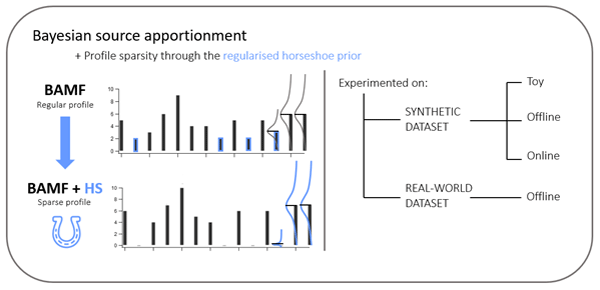
Marta Via, Jure Demšar, Yufang Hao, Manousos Manousakas, Anton Rusanen, Jianhui Jiang, Stuart K. Grange, Jean-Luc Jaffrezo, Vy Ngoc Thuy Dinh, Gaëlle Uzu, Griša Močnik, and Kaspar R. Daellenbach
Atmos. Meas. Tech., 19, 2175–2195, https://doi.org/10.5194/amt-19-2175-2026, https://doi.org/10.5194/amt-19-2175-2026, 2026
Short summary
Short summary
We introduce BAMF+HS (Bayesian Autocorrelated Matrix Factorisation+Horseshoe), an enhanced Bayesian receptor model for particulate matter (PM) source apportionment. By applying a regularised horseshoe prior to the chemical composition matrix, BAMF+HS enforces sparsity, filtering out irrelevant species and improving source separation. Tests on synthetic and real datasets show BAMF+HS consistently outperforms previous models in accuracy and clarity.
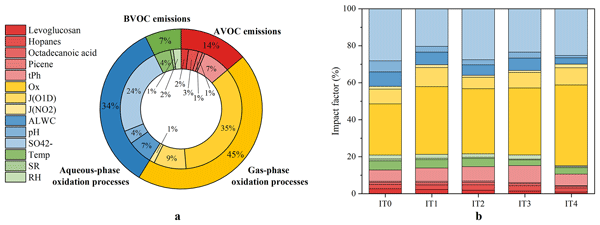
Yunfeng He, Xiang Ding, Quanfu He, Yuqing Zhang, Metin Baykara, Duohong Chen, Tao Zhang, Kong Yang, Junqi Wang, Qian Cheng, Hao Jiang, Zirui Wang, Ping Liu, Xinming Wang, and Michael Boy
Atmos. Chem. Phys., 26, 1093–1107, https://doi.org/10.5194/acp-26-1093-2026, https://doi.org/10.5194/acp-26-1093-2026, 2026
Short summary
Short summary
This study conducted long-term measurements of oxalic acid and molecular markers of primary anthropogenic emissions and secondary organic aerosols (SOA). We found that the reductions in anthropogenic precursors had limited impacts on SOA formation. The results highlight the increasing role of gas-phase oxidation under low-pollution conditions, emphasizing the need for effective ozone control strategies to mitigate SOA formation.
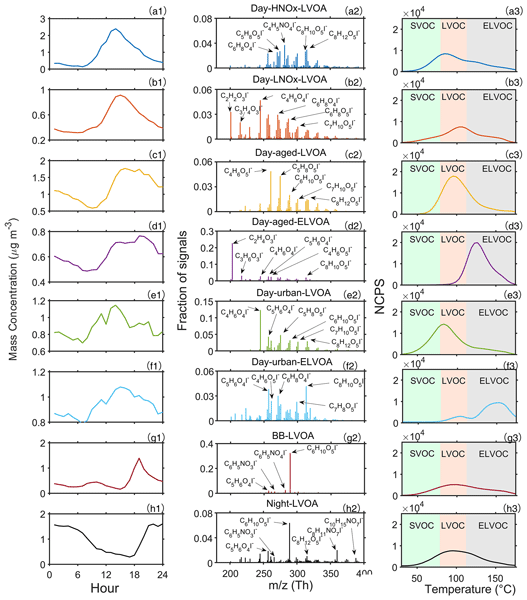
Mingfu Cai, Bin Yuan, Weiwei Hu, Ye Chenshuo, Shan Huang, Suxia Yang, Wei Chen, Yuwen Peng, Zhaoxiong Deng, Jun Zhao, Duohong Chen, Jiaren Sun, and Min Shao
Atmos. Chem. Phys., 26, 769–788, https://doi.org/10.5194/acp-26-769-2026, https://doi.org/10.5194/acp-26-769-2026, 2026
Short summary
Short summary
This study investigates how the formation and aging processes of secondary organic aerosol (SOA) influence the evolution of SOA volatility in downwind regions. Our results reveal that elevated NOₓ levels enhanced the daytime SOA volatility by modifying gas-particle partitioning, particularly through suppressing the production of low-volatility organic vapors. In contrast, photochemical aging was associated with reduced SOA volatility.
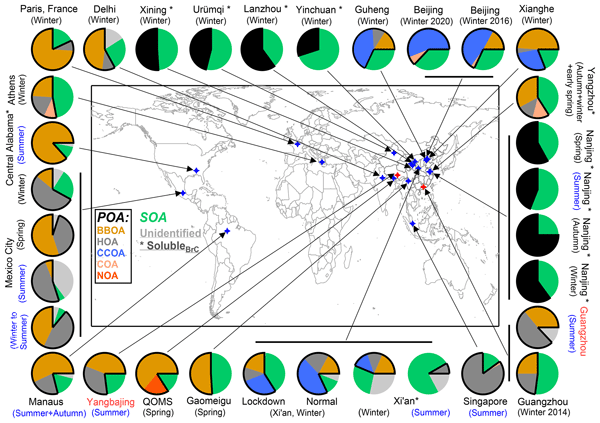
Wenhui Zhao, Weiwei Hu, Zhaoce Liu, Tianle Pan, Tingting Feng, Jun Wang, Yiyu Cai, Lin Liang, Shan Huang, Bin Yuan, Nan Ma, Min Shao, Guohua Zhang, Xinhui Bi, Xinming Wang, and Pengfei Yu
Atmos. Chem. Phys., 26, 135–154, https://doi.org/10.5194/acp-26-135-2026, https://doi.org/10.5194/acp-26-135-2026, 2026
Short summary
Short summary
Our study examined brown carbon – organic aerosols that absorb light – at the remote Tibet and urban Guangzhou. Field data showed Tibet’s brown carbon absorbs about 10 times less than Guangzhou’s, due to cleaner air. Yet, over 75 % of its light absorption still comes from primary emission, which causes over 98 % of its climate-warming effect in both places. This study advances understanding of brown carbon dynamics and its sources in diverse environments for global climate effects.
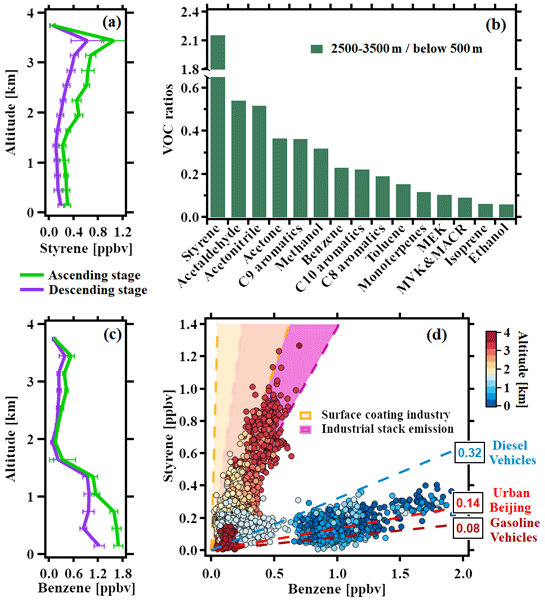
Yibo Huangfu, Ziyang Liu, Bin Yuan, Sihang Wang, Xianjun He, Wei Zhou, Fei Wang, Ping Tian, Wei Xiao, Yuanmou Du, Jiujiang Sheng, and Min Shao
Atmos. Chem. Phys., 25, 17613–17628, https://doi.org/10.5194/acp-25-17613-2025, https://doi.org/10.5194/acp-25-17613-2025, 2025
Short summary
Short summary
Severe air pollution over the North China Plain has posed significant threats to human health. Emerging evidence highlights the vital role of vertical pollutant transport in influencing surface air quality. In this study, we summarized the vertical profiles of key pollutants based on aircraft surveys up to 4000 m. The influence of regional transport on the vertical distribution patterns was analyzed, offering essential data for evaluating the impact of aloft pollutants on surface air quality.
Chujun Chen, Weihua Chen, Linhao Guo, Yongkang Wu, Xianzhong Duan, Xuemei Wang, and Min Shao
Atmos. Chem. Phys., 25, 15145–15169, https://doi.org/10.5194/acp-25-15145-2025, https://doi.org/10.5194/acp-25-15145-2025, 2025
Short summary
Short summary
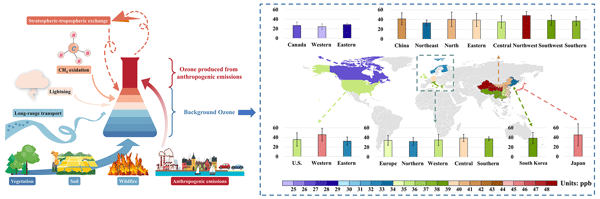
Background O3 forms the baseline level of O3 pollution, even without local human activities. This review examines how background O3 is defined and estimated, revealing significant variations across China, with higher level in the Northwest and lower in the Northeast region. Globally, China’s background O3 levels are medium-to-high and rising. The study calls for integrated estimation methods, international collaboration, and research on climate-ozone links to improve air quality strategies.
Yunfeng He, Xiang Ding, Quanfu He, Yuqing Zhang, Duohong Chen, Tao Zhang, Kong Yang, Junqi Wang, Qian Cheng, Hao Jiang, Zirui Wang, Ping Liu, Xinming Wang, and Michael Boy
Atmos. Chem. Phys., 25, 13729–13745, https://doi.org/10.5194/acp-25-13729-2025, https://doi.org/10.5194/acp-25-13729-2025, 2025
Short summary
Short summary
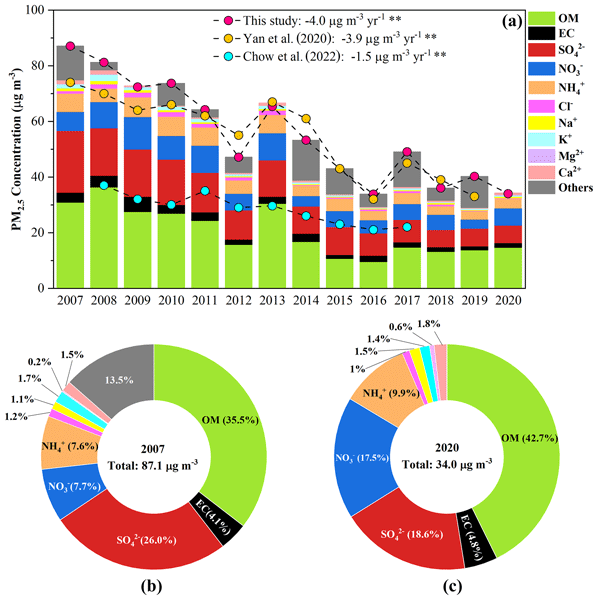
This study presented field measurements of PM2.5 and its chemical composition at a regional background site in the Pearl River Delta (PRD) from 2007 to 2020. As air quality improved, secondary species became more dominant. The changes in chemical composition led to the reductions in aerosol acidity, liquid water content and light extinction coefficient. Our results help to improve understanding of the secondary species formation under decreasing anthropogenic emissions.
Yuwen Peng, Bin Yuan, Sihang Wang, Xin Song, Zhe Peng, Wenjie Wang, Suxia Yang, Jipeng Qi, Xianjun He, Yibo Huangfu, Xiao-Bing Li, and Min Shao
Atmos. Chem. Phys., 25, 7037–7052, https://doi.org/10.5194/acp-25-7037-2025, https://doi.org/10.5194/acp-25-7037-2025, 2025
Short summary
Short summary
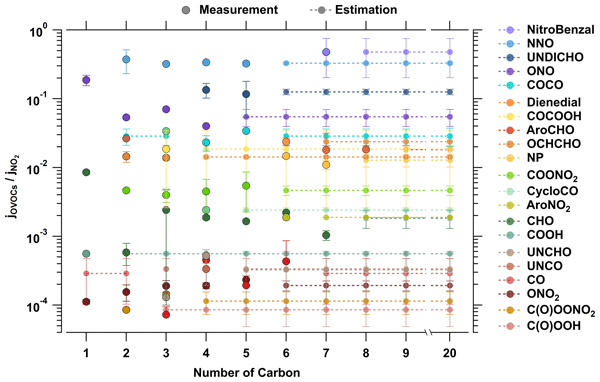
A structural-based parameterization for the photolysis rates of oxygenated volatile organic compounds (OVOCs) was integrated into an updated chemical mechanism. This method links photolysis rates to species' structure, bypassing limitations of insufficient quantum yield data. Box model results show that non-HCHO OVOCs, particularly multifunctional carbonyl compounds, significantly contribute to radical production, with alkene and aromatic oxidation products playing key roles.
Haofan Wang, Yuejin Li, Yiming Liu, Xiao Lu, Yang Zhang, Qi Fan, Chong Shen, Senchao Lai, Yan Zhou, Tao Zhang, and Dingli Yue
Atmos. Chem. Phys., 25, 5233–5250, https://doi.org/10.5194/acp-25-5233-2025, https://doi.org/10.5194/acp-25-5233-2025, 2025
Short summary
Short summary
This study explores how urban green spaces (UGSs) in Guangzhou influence ozone levels. By using advanced models, we found that natural emissions from these areas can significantly affect air quality. Our results suggest that the design and planning of UGSs should not only consider aesthetics and social factors but also their environmental impacts on air quality.
Ye Kuang, Biao Luo, Shan Huang, Junwen Liu, Weiwei Hu, Yuwen Peng, Duohong Chen, Dingli Yue, Wanyun Xu, Bin Yuan, and Min Shao
Atmos. Chem. Phys., 25, 3737–3752, https://doi.org/10.5194/acp-25-3737-2025, https://doi.org/10.5194/acp-25-3737-2025, 2025
Short summary
Short summary
This research reveals the potential importance of nighttime NO3 radical chemistry and aerosol water in the rapid formation of secondary brown carbon from diluted biomass burning emissions. The findings enhance our understanding of nighttime biomass burning evolution and its implications for climate and regional air quality, especially regarding interactions with background aerosol water and water-rich fogs and clouds.
Xiao-Bing Li, Bin Yuan, Yibo Huangfu, Suxia Yang, Xin Song, Jipeng Qi, Xianjun He, Sihang Wang, Yubin Chen, Qing Yang, Yongxin Song, Yuwen Peng, Guiqian Tang, Jian Gao, Dasa Gu, and Min Shao
Atmos. Chem. Phys., 25, 2459–2472, https://doi.org/10.5194/acp-25-2459-2025, https://doi.org/10.5194/acp-25-2459-2025, 2025
Short summary
Short summary
Online vertical gradient measurements of volatile organic compounds (VOCs), ozone, and NOx were conducted based on a 325 m tall tower in urban Beijing. Vertical changes in the concentrations, compositions, key drivers, and environmental impacts of VOCs were analyzed in this study. We find that VOC species display differentiated vertical variation patterns and distinct roles in contributing to photochemical ozone formation with increasing height in the urban planetary boundary layer.
Mingfu Cai, Chenshuo Ye, Bin Yuan, Shan Huang, E Zheng, Suxia Yang, Zelong Wang, Yi Lin, Tiange Li, Weiwei Hu, Wei Chen, Qicong Song, Wei Li, Yuwen Peng, Baoling Liang, Qibin Sun, Jun Zhao, Duohong Chen, Jiaren Sun, Zhiyong Yang, and Min Shao
Atmos. Chem. Phys., 24, 13065–13079, https://doi.org/10.5194/acp-24-13065-2024, https://doi.org/10.5194/acp-24-13065-2024, 2024
Short summary
Short summary
This study investigated the daytime secondary organic aerosol (SOA) formation in urban plumes. We observed a significant daytime SOA formation through gas–particle partitioning when the site was affected by urban plumes. A box model simulation indicated that urban pollutants (nitrogen oxide and volatile organic compounds) could enhance the oxidizing capacity, while the elevated volatile organic compounds were mainly responsible for promoting daytime SOA formation.
Lei Kong, Xiao Tang, Zifa Wang, Jiang Zhu, Jianjun Li, Huangjian Wu, Qizhong Wu, Huansheng Chen, Lili Zhu, Wei Wang, Bing Liu, Qian Wang, Duohong Chen, Yuepeng Pan, Jie Li, Lin Wu, and Gregory R. Carmichael
Earth Syst. Sci. Data, 16, 4351–4387, https://doi.org/10.5194/essd-16-4351-2024, https://doi.org/10.5194/essd-16-4351-2024, 2024
Short summary
Short summary
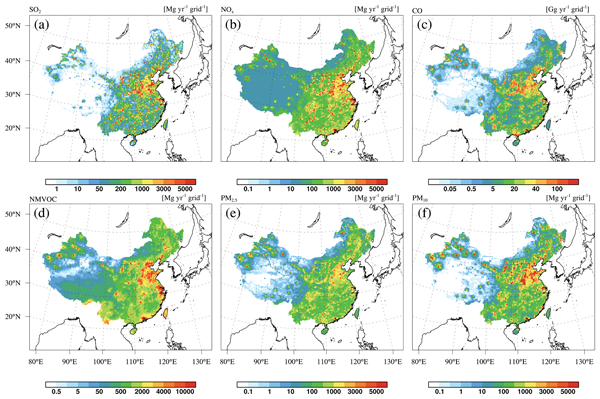
A new long-term inversed emission inventory for Chinese air quality (CAQIEI) is developed in this study, which contains constrained monthly emissions of NOx, SO2, CO, PM2.5, PM10, and NMVOCs in China from 2013 to 2020 with a horizontal resolution of 15 km. Emissions of different air pollutants and their changes during 2013–2020 were investigated and compared with previous emission inventories, which sheds new light on the complex variations of air pollutant emissions in China.
Jun Zhou, Chunsheng Zhang, Aiming Liu, Bin Yuan, Yan Wang, Wenjie Wang, Jie-Ping Zhou, Yixin Hao, Xiao-Bing Li, Xianjun He, Xin Song, Yubin Chen, Suxia Yang, Shuchun Yang, Yanfeng Wu, Bin Jiang, Shan Huang, Junwen Liu, Yuwen Peng, Jipeng Qi, Minhui Deng, Bowen Zhong, Yibo Huangfu, and Min Shao
Atmos. Chem. Phys., 24, 9805–9826, https://doi.org/10.5194/acp-24-9805-2024, https://doi.org/10.5194/acp-24-9805-2024, 2024
Short summary
Short summary
In-depth understanding of the near-ground vertical variability in photochemical ozone (O3) formation is crucial for mitigating O3 pollution. Utilizing a self-built vertical observation system, a direct net photochemical O3 production rate detection system, and an observation-based model, we diagnosed the vertical distributions and formation mechanism of net photochemical O3 production rates and sensitivity in the Pearl River Delta region, one of the most O3-polluted areas in China.
Sihang Wang, Bin Yuan, Xianjun He, Ru Cui, Xin Song, Yubin Chen, Caihong Wu, Chaomin Wang, Yibo Huangfu, Xiao-Bing Li, Boguang Wang, and Min Shao
Atmos. Chem. Phys., 24, 7101–7121, https://doi.org/10.5194/acp-24-7101-2024, https://doi.org/10.5194/acp-24-7101-2024, 2024
Short summary
Short summary
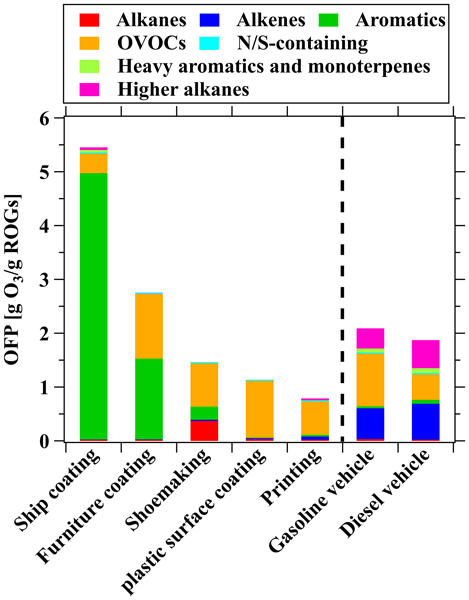
Emissions of reactive organic gases from industrial volatile chemical product sources are measured. There are large differences among these industrial sources. We show that oxygenated species account for significant contributions to reactive organic gas emissions, especially for industrial sources utilizing water-borne chemicals.
Qing Yang, Xiao-Bing Li, Bin Yuan, Xiaoxiao Zhang, Yibo Huangfu, Lei Yang, Xianjun He, Jipeng Qi, and Min Shao
Atmos. Chem. Phys., 24, 6865–6882, https://doi.org/10.5194/acp-24-6865-2024, https://doi.org/10.5194/acp-24-6865-2024, 2024
Short summary
Short summary
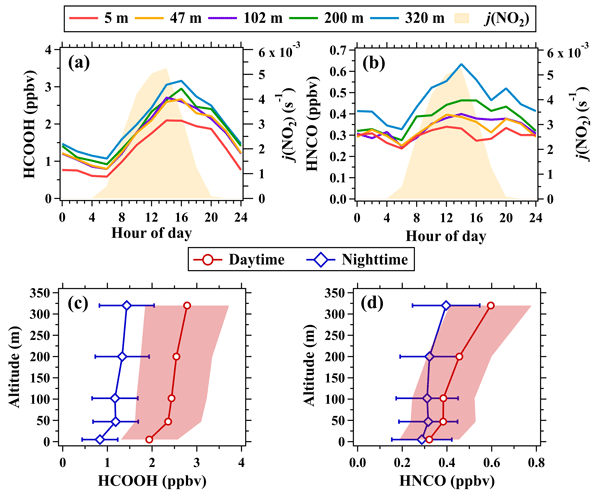
Online vertical gradient measurements of formic and isocyanic acids were made based on a 320 m tower in a megacity. Vertical variations and sources of the two acids were analyzed in this study. We find that formic and isocyanic acids exhibited positive vertical gradients and were mainly contributed by photochemical formations. The formation of formic and isocyanic acids was also significantly enhanced in urban regions aloft.
Wenjie Wang, Bin Yuan, Hang Su, Yafang Cheng, Jipeng Qi, Sihang Wang, Wei Song, Xinming Wang, Chaoyang Xue, Chaoqun Ma, Fengxia Bao, Hongli Wang, Shengrong Lou, and Min Shao
Atmos. Chem. Phys., 24, 4017–4027, https://doi.org/10.5194/acp-24-4017-2024, https://doi.org/10.5194/acp-24-4017-2024, 2024
Short summary
Short summary
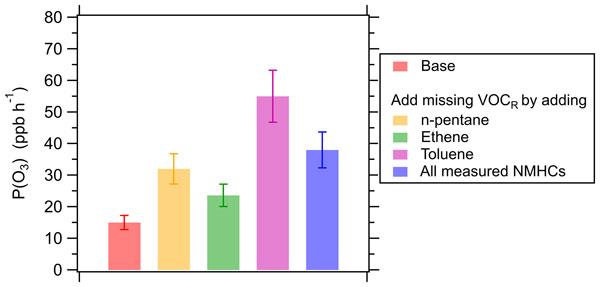
This study investigates the important role of unmeasured volatile organic compounds (VOCs) in ozone formation. Based on results in a megacity of China, we show that unmeasured VOCs can contribute significantly to ozone fomation and also influence the determination of ozone control strategy. Our results show that these unmeasured VOCs are mainly from human sources.
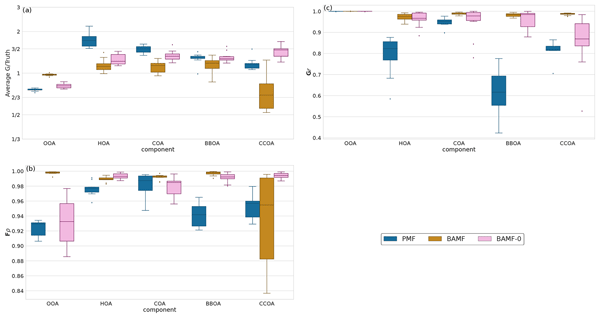
Anton Rusanen, Anton Björklund, Manousos I. Manousakas, Jianhui Jiang, Markku T. Kulmala, Kai Puolamäki, and Kaspar R. Daellenbach
Atmos. Meas. Tech., 17, 1251–1277, https://doi.org/10.5194/amt-17-1251-2024, https://doi.org/10.5194/amt-17-1251-2024, 2024
Short summary
Short summary
We present a Bayesian non-negative matrix factorization model that performs better on our test datasets than currently widely used models. Its advantages are better use of time information and providing a direct error estimation. We believe this could lead to better estimates of emission sources from measurements.
Yixin Hao, Jun Zhou, Jie-Ping Zhou, Yan Wang, Suxia Yang, Yibo Huangfu, Xiao-Bing Li, Chunsheng Zhang, Aiming Liu, Yanfeng Wu, Yaqing Zhou, Shuchun Yang, Yuwen Peng, Jipeng Qi, Xianjun He, Xin Song, Yubin Chen, Bin Yuan, and Min Shao
Atmos. Chem. Phys., 23, 9891–9910, https://doi.org/10.5194/acp-23-9891-2023, https://doi.org/10.5194/acp-23-9891-2023, 2023
Short summary
Short summary
By employing an improved net photochemical ozone production rate (NPOPR) detection system based on the dual-channel reaction chamber technique, we measured the net photochemical ozone production rate in the Pearl River Delta in China. The photochemical ozone formation mechanisms in the reaction and reference chambers were investigated using the observation-data-constrained box model, which helped us to validate the NPOPR detection system and understand photochemical ozone formation mechanism.
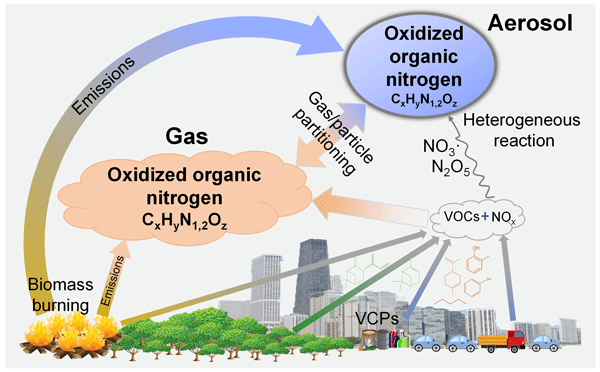
Yiyu Cai, Chenshuo Ye, Wei Chen, Weiwei Hu, Wei Song, Yuwen Peng, Shan Huang, Jipeng Qi, Sihang Wang, Chaomin Wang, Caihong Wu, Zelong Wang, Baolin Wang, Xiaofeng Huang, Lingyan He, Sasho Gligorovski, Bin Yuan, Min Shao, and Xinming Wang
Atmos. Chem. Phys., 23, 8855–8877, https://doi.org/10.5194/acp-23-8855-2023, https://doi.org/10.5194/acp-23-8855-2023, 2023
Short summary
Short summary
We studied the variability and molecular composition of ambient oxidized organic nitrogen (OON) in both gas and particle phases using a state-of-the-art online mass spectrometer in urban air. Biomass burning and secondary formation were found to be the two major sources of OON. Daytime nitrate radical chemistry for OON formation was more important than previously thought. Our results improved the understanding of the sources and molecular composition of OON in the polluted urban atmosphere.
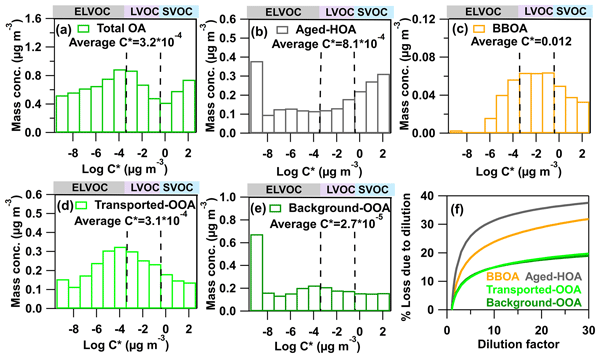
Tingting Feng, Yingkun Wang, Weiwei Hu, Ming Zhu, Wei Song, Wei Chen, Yanyan Sang, Zheng Fang, Wei Deng, Hua Fang, Xu Yu, Cheng Wu, Bin Yuan, Shan Huang, Min Shao, Xiaofeng Huang, Lingyan He, Young Ro Lee, Lewis Gregory Huey, Francesco Canonaco, Andre S. H. Prevot, and Xinming Wang
Atmos. Chem. Phys., 23, 611–636, https://doi.org/10.5194/acp-23-611-2023, https://doi.org/10.5194/acp-23-611-2023, 2023
Short summary
Short summary
To investigate the impact of aging processes on organic aerosols (OA), we conducted a comprehensive field study at a continental remote site using an on-line mass spectrometer. The results show that OA in the Chinese outflows were strongly influenced by upwind anthropogenic emissions. The aging processes can significantly decrease the OA volatility and result in a varied viscosity of OA under different circumstances, signifying the complex physiochemical properties of OA in aged plumes.
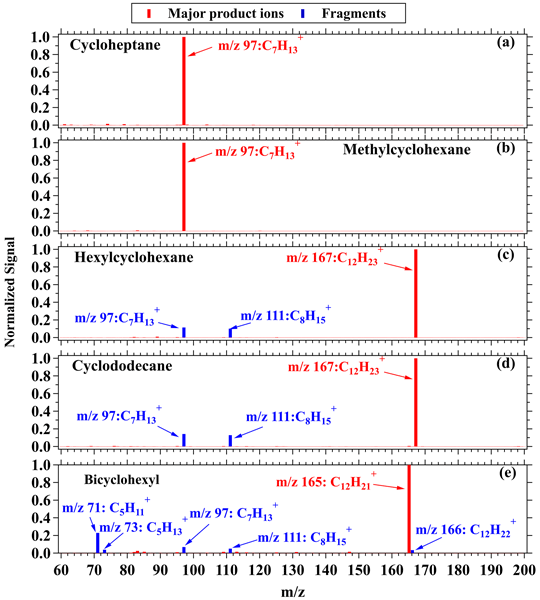
Yubin Chen, Bin Yuan, Chaomin Wang, Sihang Wang, Xianjun He, Caihong Wu, Xin Song, Yibo Huangfu, Xiao-Bing Li, Yijia Liao, and Min Shao
Atmos. Meas. Tech., 15, 6935–6947, https://doi.org/10.5194/amt-15-6935-2022, https://doi.org/10.5194/amt-15-6935-2022, 2022
Short summary
Short summary
In this study, we demonstrate that selective online measurements of cycloalkanes can be achieved using proton transfer reaction time-of-flight mass spectrometry with NO+ chemical ionization (NO+ PTR-ToF-MS), with fast response and low detection limits. Applications of this method in both urban air and emission sources will be shown.
Haichao Wang, Bin Yuan, E Zheng, Xiaoxiao Zhang, Jie Wang, Keding Lu, Chenshuo Ye, Lei Yang, Shan Huang, Weiwei Hu, Suxia Yang, Yuwen Peng, Jipeng Qi, Sihang Wang, Xianjun He, Yubin Chen, Tiange Li, Wenjie Wang, Yibo Huangfu, Xiaobing Li, Mingfu Cai, Xuemei Wang, and Min Shao
Atmos. Chem. Phys., 22, 14837–14858, https://doi.org/10.5194/acp-22-14837-2022, https://doi.org/10.5194/acp-22-14837-2022, 2022
Short summary
Short summary
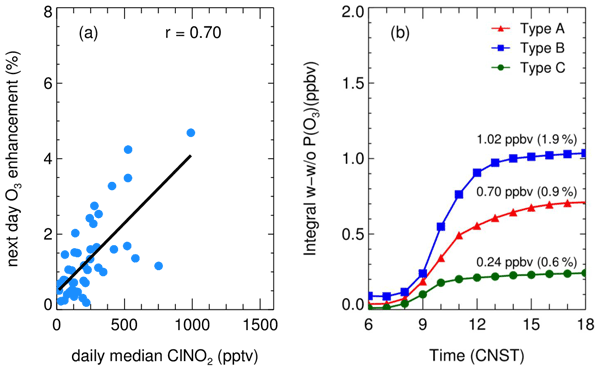
We present intensive field measurement of ClNO2 in the Pearl River Delta in 2019. Large variation in the level, formation, and atmospheric impacts of ClNO2 was found in different air masses. ClNO2 formation was limited by the particulate chloride (Cl−) and aerosol surface area. Our results reveal that Cl− originated from various anthropogenic emissions rather than sea sources and show minor contribution to the O3 pollution and photochemistry.
Marta Via, Gang Chen, Francesco Canonaco, Kaspar R. Daellenbach, Benjamin Chazeau, Hasna Chebaicheb, Jianhui Jiang, Hannes Keernik, Chunshui Lin, Nicolas Marchand, Cristina Marin, Colin O'Dowd, Jurgita Ovadnevaite, Jean-Eudes Petit, Michael Pikridas, Véronique Riffault, Jean Sciare, Jay G. Slowik, Leïla Simon, Jeni Vasilescu, Yunjiang Zhang, Olivier Favez, André S. H. Prévôt, Andrés Alastuey, and María Cruz Minguillón
Atmos. Meas. Tech., 15, 5479–5495, https://doi.org/10.5194/amt-15-5479-2022, https://doi.org/10.5194/amt-15-5479-2022, 2022
Short summary
Short summary
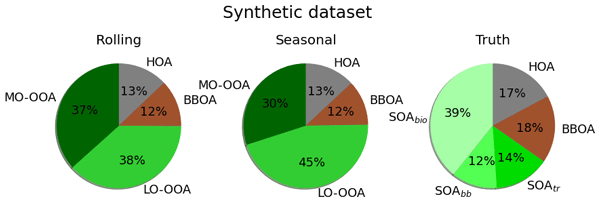
This work presents the differences resulting from two techniques (rolling and seasonal) of the positive matrix factorisation model that can be run for organic aerosol source apportionment. The current state of the art suggests that the rolling technique is more accurate, but no proof of its effectiveness has been provided yet. This paper tackles this issue in the context of a synthetic dataset and a multi-site real-world comparison.

Biao Luo, Ye Kuang, Shan Huang, Qicong Song, Weiwei Hu, Wei Li, Yuwen Peng, Duohong Chen, Dingli Yue, Bin Yuan, and Min Shao
Atmos. Chem. Phys., 22, 12401–12415, https://doi.org/10.5194/acp-22-12401-2022, https://doi.org/10.5194/acp-22-12401-2022, 2022
Short summary
Short summary
We performed comprehensive analysis on biomass burning organic aerosol (BBOA) size distributions, as well as mass scattering and absorption efficiencies, with an improved method of on-line quantification of brown carbon absorptions. Both BBOA volume size distribution and retrieved refractive index depend highly on combustion conditions represented by the black carbon content, which has significant implications for BBOA climate effect simulations.
Xiao-Bing Li, Bin Yuan, Sihang Wang, Chunlin Wang, Jing Lan, Zhijie Liu, Yongxin Song, Xianjun He, Yibo Huangfu, Chenglei Pei, Peng Cheng, Suxia Yang, Jipeng Qi, Caihong Wu, Shan Huang, Yingchang You, Ming Chang, Huadan Zheng, Wenda Yang, Xuemei Wang, and Min Shao
Atmos. Chem. Phys., 22, 10567–10587, https://doi.org/10.5194/acp-22-10567-2022, https://doi.org/10.5194/acp-22-10567-2022, 2022
Short summary
Short summary
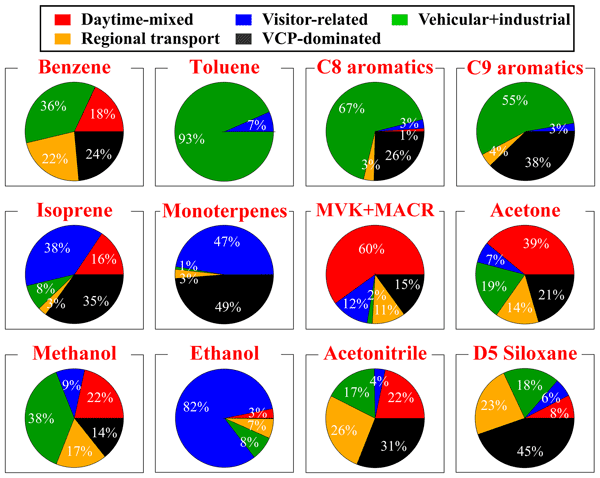
High-time-resolution measurements of volatile organic compounds (VOCs) were made using an online mass spectrometer at a 600 m tall tower in urban region. Compositions, temporal variations, and sources of VOCs were quantitatively investigated in this study. We find that VOC measurements in urban regions aloft could better characterize source characteristics of anthropogenic emissions. Our results could provide important implications in making future strategies for control of VOCs.
Sihang Wang, Bin Yuan, Caihong Wu, Chaomin Wang, Tiange Li, Xianjun He, Yibo Huangfu, Jipeng Qi, Xiao-Bing Li, Qing'e Sha, Manni Zhu, Shengrong Lou, Hongli Wang, Thomas Karl, Martin Graus, Zibing Yuan, and Min Shao
Atmos. Chem. Phys., 22, 9703–9720, https://doi.org/10.5194/acp-22-9703-2022, https://doi.org/10.5194/acp-22-9703-2022, 2022
Short summary
Short summary
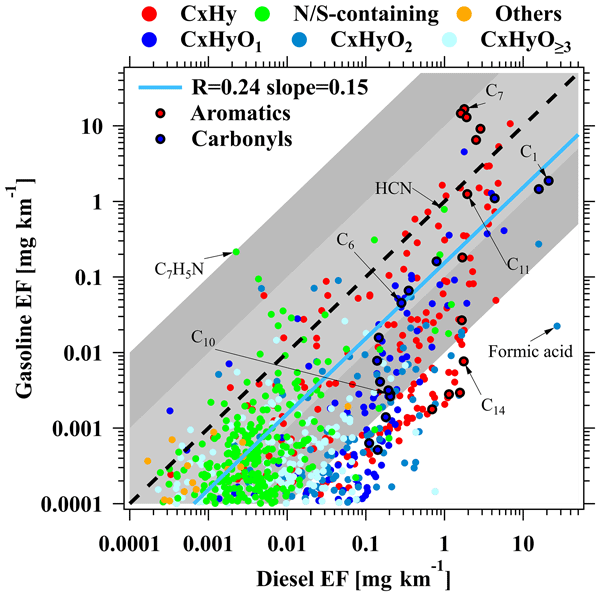
Volatile organic compound (VOC) emissions from vehicles are measured using online mass spectrometers. Differences between gasoline and diesel vehicles are observed with higher emission factors of most oxygenated VOCs (OVOCs) and heavier aromatics from diesel vehicles. A higher aromatics / toluene ratio could provide good indicators to distinguish emissions from both vehicle types. We show that OVOCs account for significant contributions to VOC emissions from vehicles, especially diesel vehicles.
Yihang Yu, Peng Cheng, Huirong Li, Wenda Yang, Baobin Han, Wei Song, Weiwei Hu, Xinming Wang, Bin Yuan, Min Shao, Zhijiong Huang, Zhen Li, Junyu Zheng, Haichao Wang, and Xiaofang Yu
Atmos. Chem. Phys., 22, 8951–8971, https://doi.org/10.5194/acp-22-8951-2022, https://doi.org/10.5194/acp-22-8951-2022, 2022
Short summary
Short summary
We have investigated the budget of HONO at an urban site in Guangzhou. Budget and comprehensive uncertainty analysis suggest that at such locations as ours, HONO direct emissions and NO + OH can become comparable or even surpass other HONO sources that typically receive greater attention and interest, such as the NO2 heterogeneous source and the unknown daytime photolytic source. Our findings emphasize the need to reduce the uncertainties of both conventional and novel HONO sources and sinks.
Qi Zhang, Shiguo Jia, Weihua Chen, Jingying Mao, Liming Yang, Padmaja Krishnan, Sayantan Sarkar, Min Shao, and Xuemei Wang
Atmos. Chem. Phys. Discuss., https://doi.org/10.5194/acp-2022-394, https://doi.org/10.5194/acp-2022-394, 2022
Revised manuscript not accepted
Short summary
Short summary
We use satellite data in the establishment of methylamines marine biological emission (MBE) inventory for the first time, which considers effects of actual marine environment on methylamines emission fluxes. MBE fluxes of monomethylamine and trimethylamines can be comparable with or even higher than that of terrestrial anthropogenic emissions , while for dimethylamines, the ocean acts as a sink. Wind and Chlorophyll-a were potentially the most important factors affecting MBE fluxes.
Chuan Ping Lee, Mihnea Surdu, David M. Bell, Josef Dommen, Mao Xiao, Xueqin Zhou, Andrea Baccarini, Stamatios Giannoukos, Günther Wehrle, Pascal André Schneider, Andre S. H. Prevot, Jay G. Slowik, Houssni Lamkaddam, Dongyu Wang, Urs Baltensperger, and Imad El Haddad
Atmos. Meas. Tech., 15, 3747–3760, https://doi.org/10.5194/amt-15-3747-2022, https://doi.org/10.5194/amt-15-3747-2022, 2022
Short summary
Short summary
Real-time detection of both the gas and particle phase is needed to elucidate the sources and chemical reaction pathways of organic vapors and particulate matter. The Dual-EESI was developed to measure gas- and particle-phase species to provide new insights into aerosol sources or formation mechanisms. After characterizing the relative gas and particle response factors of EESI via organic aerosol uptake experiments, the Dual-EESI is more sensitive toward gas-phase analyes.
Mingfu Cai, Shan Huang, Baoling Liang, Qibin Sun, Li Liu, Bin Yuan, Min Shao, Weiwei Hu, Wei Chen, Qicong Song, Wei Li, Yuwen Peng, Zelong Wang, Duohong Chen, Haobo Tan, Hanbin Xu, Fei Li, Xuejiao Deng, Tao Deng, Jiaren Sun, and Jun Zhao
Atmos. Chem. Phys., 22, 8117–8136, https://doi.org/10.5194/acp-22-8117-2022, https://doi.org/10.5194/acp-22-8117-2022, 2022
Short summary
Short summary
This study investigated the size dependence and diurnal variation in organic aerosol hygroscopicity, volatility, and cloud condensation nuclei (CCN) activity. We found that the physical properties of OA could vary in a large range at different particle sizes and affected the number concentration of CCN (NCCN) at all supersaturations. Our results highlight the importance of evaluating the atmospheric evolution processes of OA at different size ranges and their impact on climate effects.
Li Liu, Ye Kuang, Miaomiao Zhai, Biao Xue, Yao He, Jun Tao, Biao Luo, Wanyun Xu, Jiangchuan Tao, Changqin Yin, Fei Li, Hanbing Xu, Tao Deng, Xuejiao Deng, Haobo Tan, and Min Shao
Atmos. Chem. Phys., 22, 7713–7726, https://doi.org/10.5194/acp-22-7713-2022, https://doi.org/10.5194/acp-22-7713-2022, 2022
Short summary
Short summary
Using simultaneous measurements of a humidified nephelometer system and an aerosol chemical speciation monitor in winter in Guangzhou, the strongest scattering ability of more oxidized oxygenated organic aerosol (MOOA) among aerosol components considering their dry-state scattering ability and water uptake ability was revealed, leading to large impacts of MOOA on visibility degradation. This has important implications for visibility improvement in China and aerosol radiative effect simulation.
Suxia Yang, Bin Yuan, Yuwen Peng, Shan Huang, Wei Chen, Weiwei Hu, Chenglei Pei, Jun Zhou, David D. Parrish, Wenjie Wang, Xianjun He, Chunlei Cheng, Xiao-Bing Li, Xiaoyun Yang, Yu Song, Haichao Wang, Jipeng Qi, Baolin Wang, Chen Wang, Chaomin Wang, Zelong Wang, Tiange Li, E Zheng, Sihang Wang, Caihong Wu, Mingfu Cai, Chenshuo Ye, Wei Song, Peng Cheng, Duohong Chen, Xinming Wang, Zhanyi Zhang, Xuemei Wang, Junyu Zheng, and Min Shao
Atmos. Chem. Phys., 22, 4539–4556, https://doi.org/10.5194/acp-22-4539-2022, https://doi.org/10.5194/acp-22-4539-2022, 2022
Short summary
Short summary
We use a model constrained using observations to study the formation of nitrate aerosol in and downwind of a representative megacity. We found different contributions of various chemical reactions to ground-level nitrate concentrations between urban and suburban regions. We also show that controlling VOC emissions are effective for decreasing nitrate formation in both urban and regional environments, although VOCs are not direct precursors of nitrate aerosol.
Wenjie Wang, Bin Yuan, Yuwen Peng, Hang Su, Yafang Cheng, Suxia Yang, Caihong Wu, Jipeng Qi, Fengxia Bao, Yibo Huangfu, Chaomin Wang, Chenshuo Ye, Zelong Wang, Baolin Wang, Xinming Wang, Wei Song, Weiwei Hu, Peng Cheng, Manni Zhu, Junyu Zheng, and Min Shao
Atmos. Chem. Phys., 22, 4117–4128, https://doi.org/10.5194/acp-22-4117-2022, https://doi.org/10.5194/acp-22-4117-2022, 2022
Short summary
Short summary
From thorough measurements of numerous oxygenated volatile organic compounds, we show that their photodissociation can be important for radical production and ozone formation in the atmosphere. This effect was underestimated in previous studies, as measurements of them were lacking.
Xiajie Yang, Qiaoqiao Wang, Nan Ma, Weiwei Hu, Yang Gao, Zhijiong Huang, Junyu Zheng, Bin Yuan, Ning Yang, Jiangchuan Tao, Juan Hong, Yafang Cheng, and Hang Su
Atmos. Chem. Phys., 22, 3743–3762, https://doi.org/10.5194/acp-22-3743-2022, https://doi.org/10.5194/acp-22-3743-2022, 2022
Short summary
Short summary
We use the GEOS-Chem model with additional anthropogenic and biomass burning chlorine emissions combined with updated parameterizations for N2O5 + Cl chemistry to investigate the impacts of chlorine chemistry on air quality in China. Our study not only significantly improves the model's performance but also demonstrates the importance of non-sea-salt chlorine sources as well as an appropriate parameterization for N2O5 + Cl chemistry to the impact of chlorine chemistry in China.
Qi En Zhong, Chunlei Cheng, Zaihua Wang, Lei Li, Mei Li, Dafeng Ge, Lei Wang, Yuanyuan Li, Wei Nie, Xuguang Chi, Aijun Ding, Suxia Yang, Duohong Chen, and Zhen Zhou
Atmos. Chem. Phys., 21, 17953–17967, https://doi.org/10.5194/acp-21-17953-2021, https://doi.org/10.5194/acp-21-17953-2021, 2021
Short summary
Short summary
Particulate amines play important roles in new particle formation, aerosol acidity, and hygroscopicity. Most of the field observations did not distinguish the different behavior of each type amine under the same ambient influencing factors. In this study, two amine-containing single particles exhibited different mixing states and disparate enrichment of secondary organics, which provide insight into the discriminated fates of organics during the formation and evolution processes.
Cited articles
Baier, B. C., Brune, W. H., Lefer, B. L., Miller, D. O., and Martins, D. K.: Direct ozone production rate measurements and their use in assessing ozone source and receptor regions for Houston in 2013, Atmos. Environ., 114, 83–91, https://doi.org/10.1016/j.atmosenv.2015.05.033, 2015.
Baier, B. C., Brune, W. H., Miller, D. O., Blake, D., Long, R., Wisthaler, A., Cantrell, C., Fried, A., Heikes, B., Brown, S., McDuffie, E., Flocke, F., Apel, E., Kaser, L., and Weinheimer, A.: Higher measured than modeled ozone production at increased NOx levels in the Colorado Front Range, Atmos. Chem. Phys., 17, 11273–11292, https://doi.org/10.5194/acp-17-11273-2017, 2017.
Berndt, T., Mentler, B., Scholz, W., Fischer, L., Herrmann, H., Kulmala, M., and Hansel A.: Accretion product formation from Ozonolysis and OH radical reaction of α-Pinene: mechanistic insight and the influence of isoprene and ethylene, Environmental Science & Technology, 52, 11069–11077, https://doi.org/10.1021/acs.est.8b02210, 2018.
Cai, C., Geng, F., Tie, X., Yu, Q., and An, J.: Characteristics and source apportionment of VOCs measured in Shanghai, China, Atmos. Environ., 44, 5005–5014, https://doi.org/10.1016/j.atmosenv.2010.07.059, 2010.
Carter, W. P. L., A. Pierce J. A., Luo, D., and Malkina, I. L.: Environmental chamber study of maximum incremental reactivities of volatile organic-compounds, Atmos. Environ., 29, 2499, https://doi.org/10.1016/1352-2310(95)00149-S, 1995.
Cazorla, M. and Brune, W. H.: Measurement of Ozone Production Sensor, Atmos. Meas. Tech., 3, 545–555, https://doi.org/10.5194/amt-3-545-2010, 2010.
Cazorla, M., Brune, W. H., Ren, X., and Lefer, B.: Direct measurement of ozone production rates in Houston in 2009 and comparison with two estimation methods, Atmos. Chem. Phys., 12, 1203–1212, https://doi.org/10.5194/acp-12-1203-2012, 2012.
Chen, L., Liao, H., Zhu, J., Li, K., Bai, Y., Yue, X., Yang, Y., Hu, J., and Zhang, M.: Increases in ozone-related mortality in China over 2013–2030 attributed to historical ozone deterioration and future population aging, Science of The Total Environment, 858, 159972, https://doi.org/10.1016/j.scitotenv.2022.159972, 2023.
Chen, S., Wei, W., Wang, C., Wang, X., Zhou, C., and Cheng, S.: A modeling approach to dynamically estimating local photochemistry process and its contribution to surface O3 pollution, Journal of Environmental Management, 373, 123450, https://doi.org/10.1016/j.jenvman.2024.123450, 2025.
Chen, T., Xue, L., Zheng, P., Zhang, Y., Liu, Y., Sun, J., Han, G., Li, H., Zhang, X., Li, Y., Li, H., Dong, C., Xu, F., Zhang, Q., and Wang, W.: Volatile organic compounds and ozone air pollution in an oil production region in northern China, Atmos. Chem. Phys., 20, 7069–7086, https://doi.org/10.5194/acp-20-7069-2020, 2020a.
Chen, Y., Chi, S., Wang, Y., Guo, S., Zhang, C., Ye, C., and Lin, W.: Ozone production sensitivity in the highland city of Lhasa: a comparative analysis with Beijing, Air Quality, Atmosphere & Health, 1–11, https://doi.org/10.1007/s11869-024-01604-4, 2024.
Chen, Y., Yan, H., Yao, Y., Zeng, C., Gao, P., Zhuang, L., Fan, L., and Ye, D.: Relationships of ozone formation sensitivity with precursors emissions, meteorology and land use types, in Guangdong-Hong Kong-Macao Greater Bay Area, China, Journal of Environmental Sciences, 94, 1–13, https://doi.org/10.1016/j.jes.2020.04.005, 2020b.
Crounse, J. D., Knap, H. C., Ørnsø, K. B., Jørgensen, S., Paulot, F., Kjaergaard, H. G., and Wennberg, P. O.: Atmospheric Fate of Methacrolein. 1. Peroxy Radical Isomerization Following Addition of OH and O2, The Journal of Physical Chemistry A, 116, 5756–5762, https://doi.org/10.1021/jp211560u, 2012.
de Gouw, J., Middlebrook, A., Warneke, C., Goldan, P., Kuster, W., Roberts, J., Fehsenfeld, F., Worsnop, D., Canagaratna, M., and Pszenny, A.: Budget of organic carbon in a polluted atmosphere: Results from the New England Air Quality Study in 2002, Journal of Geophysical Research-Atmospheres, 110, D16305, https://doi.org/10.1029/2004JD005623, 2005.
Dyson, J. E., Whalley, L. K., Slater, E. J., Woodward-Massey, R., Ye, C., Lee, J. D., Squires, F., Hopkins, J. R., Dunmore, R. E., Shaw, M., Hamilton, J. F., Lewis, A. C., Worrall, S. D., Bacak, A., Mehra, A., Bannan, T. J., Coe, H., Percival, C. J., Ouyang, B., Hewitt, C. N., Jones, R. L., Crilley, L. R., Kramer, L. J., Acton, W. J. F., Bloss, W. J., Saksakulkrai, S., Xu, J., Shi, Z., Harrison, R. M., Kotthaus, S., Grimmond, S., Sun, Y., Xu, W., Yue, S., Wei, L., Fu, P., Wang, X., Arnold, S. R., and Heard, D. E.: Impact of HO2 aerosol uptake on radical levels and O3 production during summertime in Beijing, Atmos. Chem. Phys., 23, 5679–5697, https://doi.org/10.5194/acp-23-5679-2023, 2023.
Gilman, J. B., Kuster, W. C., Goldan, P. D., Herndon, S. C., Zahniser, M. S., Tucker, S. C., Brewer, W. A., Lerner, B. M., Williams, E. J., and Harley, R. A.: Measurements of volatile organic compounds during the 2006 TexAQS/GoMACCS campaign: Industrial influences, regional characteristics, and diurnal dependencies of the OH reactivity, Journal of Geophysical Research: Atmospheres, 114, https://doi.org/10.1029/2008jd011525, 2009.
Hao, Y., Zhou, J., Zhou, J.-P., Wang, Y., Yang, S., Huangfu, Y., Li, X.-B., Zhang, C., Liu, A., Wu, Y., Zhou, Y., Yang, S., Peng, Y., Qi, J., He, X., Song, X., Chen, Y., Yuan, B., and Shao, M.: Measuring and modeling investigation of the net photochemical ozone production rate via an improved dual-channel reaction chamber technique, Atmos. Chem. Phys., 23, 9891–9910, https://doi.org/10.5194/acp-23-9891-2023, 2023.
Huang, B., Gan, T., Pei, C., Li, M., Cheng, P., Chen, D., Cai, R., Wang, Y., Li, L., Huang, Z., Gao, W., Fu, Z., and Zhou, Z.: Size-segregated Characteristics and Formation Mechanisms of Water-soluble Inorganic Ions during Different Seasons in Heshan of Guangdong, China, Aerosol and Air Quality Research, 20, 1961–1973, https://doi.org/10.4209/aaqr.2019.11.0582, 2020.
Jeffries, H.: An experimental method for measuring the rate of synthesis, destruction, and transport of ozone in the lower atmosphere, PhD Thesis, Department of Environmental Science and Engineering, University of North Carolina at Chapel Hill, publication no. E.S.E. 285, 1971.
Jing, S., Duohong, C., Wang, C., Ridong, C., Yu-jun, L., Yongxi, H., Xin, Z., and Yan, Z.: Study on the Characteristics and Causes of Ozone Severe Pollution Days in Jiangmen City, China Environmental Science, 1–19, https://doi.org/10.19674/j.cnki.issn1000-6923.20241212.002, 2024.
Kanaya, Y., Hofzumahaus, A., Dorn, H.-P., Brauers, T., Fuchs, H., Holland, F., Rohrer, F., Bohn, B., Tillmann, R., Wegener, R., Wahner, A., Kajii, Y., Miyamoto, K., Nishida, S., Watanabe, K., Yoshino, A., Kubistin, D., Martinez, M., Rudolf, M., Harder, H., Berresheim, H., Elste, T., Plass-Dülmer, C., Stange, G., Kleffmann, J., Elshorbany, Y., and Schurath, U.: Comparisons of observed and modeled OH and HO2 concentrations during the ambient measurement period of the HOxComp field campaign, Atmos. Chem. Phys., 12, 2567–2585, https://doi.org/10.5194/acp-12-2567-2012, 2012.
Li, B., Gasser, T., Ciais, P., Piao, S., Tao, S., Balkanski, Y., Hauglustaine, D., Boisier, J.-P., Chen, Z., and Huang, M.: The contribution of China's emissions to global climate forcing, Nature, 531, 357–361, https://doi.org/10.1038/nature17165, 2016.
Li, K., Jacob, D. J., Liao, H., Shen, L., Zhang, Q., and Bates, K. H.: Anthropogenic drivers of 2013–2017 trends in summer surface ozone in China, Proceedings of the National Academy of Sciences, 116, 422–427, https://doi.org/10.1073/pnas.1812168116, 2019.
Li, K., Wang, X., Li, L., Wang, J., Liu, Y., Cheng, X., Xu, B., Wang, X., Yan, P., and Li, S.: Large variability of O3-precursor relationship during severe ozone polluted period in an industry-driven cluster city (Zibo) of North China Plain, Journal of Cleaner Production, 316, 128252, https://doi.org/10.1016/j.jclepro.2021.128252, 2021.
Lu, K., Zhang, Y., Su, H., Brauers, T., Chou, C. C., Hofzumahaus, A., Liu, S. C., Kita, K., Kondo, Y., and Shao, M.: Oxidant (O3 + NO2) production processes and formation regimes in Beijing, Journal of Geophysical Research: Atmospheres, 115, https://doi.org/10.1029/2009JD012714, 2010.
Luo, J., Zhang, T., Zhou, J., Jiang, B., Wang, Y., Zhai, Y., Tang, J., Wang, W., Liu, Y., Liu, Y., Chen, D., and Shao, M.: Source-specific ozone formation in the Pearl River Delta: Insights from direct measurement at two sites with distinct environmental characteristics, Environmental Pollution, 383, 126774, https://doi.org/10.1016/j.envpol.2025.126774, 2025.
Lyu, Y., Gao, Y., Pang, X., Sun, S., Luo, P., Cai, D., Qin, K., Wu, Z., and Wang, B.: Elucidating contributions of volatile organic compounds to ozone formation using random forest during COVID-19 pandemic: A case study in China, Environmental Pollution, 346, 123532, https://doi.org/10.1016/j.envpol.2024.123532, 2024.
Ma, W., Feng, Z., Zhan, J., Liu, Y., Liu, P., Liu, C., Ma, Q., Yang, K., Wang, Y., He, H., Kulmala, M., Mu, Y., and Liu, J.: Influence of photochemical loss of volatile organic compounds on understanding ozone formation mechanism, Atmos. Chem. Phys., 22, 4841–4851, https://doi.org/10.5194/acp-22-4841-2022, 2022.
Ma, W., Chen, X., Xia, M., Liu, Y., Wang, Y., Zhang, Y., Zheng, F., Zhan, J., Hua, C., and Wang, Z.: Reactive Chlorine Species Advancing the Atmospheric Oxidation Capacities of Inland Urban Environments, Environmental Science & Technology, 57, 14638-1-4647, https://doi.org/10.1021/acs.est.3c05169, 2023.
Mazaheri, M., Lin, W., Clifford, S., Yue, D., Zhai, Y., Xu, M., Rizza, V., and Morawska, L.: Characteristics of school children's personal exposure to ultrafine particles in Heshan, Pearl River Delta, China – A pilot study, Environment International, 132, 105134, https://doi.org/10.1016/j.envint.2019.105134, 2019.
Morino, Y., Sadanaga, Y., Sato, K., Sakamoto, Y., Muraoka, T., Miyatake, K., Li, J., and Kajii, Y.: Direct evaluation of the ozone production regime in smog chamber experiments, Atmos. Environ., 309, 119889, https://doi.org/10.1016/j.atmosenv.2023.119889, 2023.
Mousavinezhad, S., Choi, Y., Pouyaei, A., Ghahremanloo, M., and Nelson, D. L.: A comprehensive investigation of surface ozone pollution in China, 2015–2019: Separating the contributions from meteorology and precursor emissions, Atmospheric Research, 257, 105599, https://doi.org/10.1016/j.atmosres.2021.105599, 2021.
Pei, C. L., Xie, Y. T., Chen, X., Zhang, T., Qiu, X. N., Wang, Y., Wang, Z. H., and Li, M.: Analysis of a Typical Ozone Pollution Process in Guangzhou in Winter, Environmental Science, 43, 4305–4315, https://doi.org/10.13227/j.hjkx.202110168, 2022.
Qian, H., Xu, B., Xu, Z., Zou, Q., Zi, Q., Zuo, H., Zhang, F., Wei, J., Pei, X., and Zhou, W.: Anthropogenic Oxygenated Volatile Organic Compounds Dominate Atmospheric Oxidation Capacity and Ozone Production via Secondary Formation of Formaldehyde in the Urban Atmosphere, ACS ES&T Air, https://doi.org/10.1021/acsestair.4c00317, 2025.
Ren, X., Van Duin, D., Cazorla, M., Chen, S., Mao, J., Zhang, L., Brune, W. H., Flynn, J. H., Grossberg, N., and Lefer, B. L.: Atmospheric oxidation chemistry and ozone production: Results from SHARP 2009 in Houston, Texas, Journal of Geophysical Research: Atmospheres, 118, 5770–5780, https://doi.org/10.1002/jgrd.50342, 2013.
Sadanaga, Y., Kawasaki, S., Tanaka, Y., Kajii, Y., and Bandow, H.: New system for measuring the photochemical ozone production rate in the atmosphere, Environmental Science & Technology, 51, 2871–2878, https://doi.org/10.1021/acs.est.6b04639, 2017.
Sakamoto, Y., Sadanaga, Y., Li, J., Matsuoka, K., Takemura, M., Fujii, T., Nakagawa, M., Kohno, N., Nakashima, Y., and Sato, K.: Relative and absolute sensitivity analysis on ozone production in Tsukuba, a city in Japan, Environmental Science & Technology, 53, 13629–13635, https://doi.org/10.1021/acs.est.9b03542, 2019.
Seinfeld, J. H. and Pandis, S. N. (Eds.): Atmospheric Chemistry and Physics: From Air Pollution to Climate Change, John Wiley & Sons, Hoboken, ISBN 978-1-118-94740-1, 2016.
Sillman, S.: The relation between ozone, NOx and hydrocarbons in urban and polluted rural environments, Atmos. Environ., 33, 1821–1845, https://doi.org/10.1016/S1352-2310(98)00345-8, 1999.
Sklaveniti, S., Locoge, N., Stevens, P. S., Wood, E., Kundu, S., and Dusanter, S.: Development of an instrument for direct ozone production rate measurements: measurement reliability and current limitations, Atmos. Meas. Tech., 11, 741–761, https://doi.org/10.5194/amt-11-741-2018, 2018.
Sommariva, R., Cox, S., Martin, C., Borońska, K., Young, J., Jimack, P. K., Pilling, M. J., Matthaios, V. N., Nelson, B. S., Newland, M. J., Panagi, M., Bloss, W. J., Monks, P. S., and Rickard, A. R.: AtChem (version 1), an open-source box model for the Master Chemical Mechanism, Geosci. Model Dev., 13, 169–183, https://doi.org/10.5194/gmd-13-169-2020, 2020.
Song, K., Liu, R., Wang, Y., Liu, T., Wei, L., Wu, Y., Zheng, J., Wang, B., and Liu, S. C.: Observation-based analysis of ozone production sensitivity for two persistent ozone episodes in Guangdong, China, Atmos. Chem. Phys., 22, 8403–8416, https://doi.org/10.5194/acp-22-8403-2022, 2022.
Tan, Z., Fuchs, H., Lu, K., Hofzumahaus, A., Bohn, B., Broch, S., Dong, H., Gomm, S., Häseler, R., He, L., Holland, F., Li, X., Liu, Y., Lu, S., Rohrer, F., Shao, M., Wang, B., Wang, M., Wu, Y., Zeng, L., Zhang, Y., Wahner, A., and Zhang, Y.: Radical chemistry at a rural site (Wangdu) in the North China Plain: observation and model calculations of OH, HO2 and RO2 radicals, Atmos. Chem. Phys., 17, 663–690, https://doi.org/10.5194/acp-17-663-2017, 2017.
Tan, Z., Lu, K., Dong, H., Hu, M., Li, X., Liu, Y., Lu, S., Shao, M., Su, R., and Wang, H.: Explicit diagnosis of the local ozone production rate and the ozone-NOx-VOC sensitivities, Science Bulletin, 63, 1067–1076, https://doi.org/10.1016/j.scib.2018.07.001, 2018.
Tan, Z., Lu, K., Hofzumahaus, A., Fuchs, H., Bohn, B., Holland, F., Liu, Y., Rohrer, F., Shao, M., Sun, K., Wu, Y., Zeng, L., Zhang, Y., Zou, Q., Kiendler-Scharr, A., Wahner, A., and Zhang, Y.: Experimental budgets of OH, HO2, and RO2 radicals and implications for ozone formation in the Pearl River Delta in China 2014, Atmos. Chem. Phys., 19, 7129–7150, https://doi.org/10.5194/acp-19-7129-2019, 2019.
Tong, J., Hu, R., Hu, C., Liu, X., Cai, H., Lin, C., Zhong, L., Wang, J., and Xie, P.: Development of a net ozone production rate detection system based on dual-channel cavity ring-down spectroscopy, Journal of Environmental Sciences, 149, 419–430, https://doi.org/10.1016/j.jes.2024.01.035, 2025.
Wang, J., Zhang, Y., Wu, Z., Luo, S., Song, W., and Wang, X.: Ozone episodes during and after the 2018 Chinese National Day holidays in Guangzhou: Implications for the control of precursor VOCs, Journal of Environmental Sciences, 114, 322–333, https://doi.org/10.1016/j.jes.2021.09.009, 2022a.
Wang, P., Chen, Y., Hu, J., Zhang, H., and Ying, Q.: Attribution of tropospheric ozone to NOx and VOC emissions: considering ozone formation in the transition regime, Environmental Science & Technology, 53, 1404–1412, https://doi.org/10.1021/acs.est.8b05981, 2019.
Wang, R., Wang, L., Sun, J., Zhang, L., Li, Y., Li, K., Liu, B., Zhang, J., and Wang, Y.: Maximizing ozone control by spatial sensitivity-oriented mitigation strategy in the Pearl River Delta Region, China, Science of The Total Environment, 905, 166987, https://doi.org/10.1016/j.scitotenv.2023.166987, 2023.
Wang, S., Wu, R., Berndt, T., Ehn, M., and Wang, L.: Formation of highly oxidized radicals and multifunctional products from the atmospheric oxidation of Alkylbenzenes, Environmental Science & Technology, 51, 8442–8449, https://doi.org/10.1021/acs.est.7b02374, 2017a.
Wang, T., Xue, L., Brimblecombe, P., Lam, Y. F., Li, L., and Zhang, L.: Ozone pollution in China: A review of concentrations, meteorological influences, chemical precursors, and effects, Science of the Total Environment, 575, 1582–1596, https://doi.org/10.1016/j.scitotenv.2016.10.081, 2017b.
Wang, W., Yuan, B., Peng, Y., Su, H., Cheng, Y., Yang, S., Wu, C., Qi, J., Bao, F., Huangfu, Y., Wang, C., Ye, C., Wang, Z., Wang, B., Wang, X., Song, W., Hu, W., Cheng, P., Zhu, M., Zheng, J., and Shao, M.: Direct observations indicate photodegradable oxygenated volatile organic compounds (OVOCs) as larger contributors to radicals and ozone production in the atmosphere, Atmos. Chem. Phys., 22, 4117–4128, https://doi.org/10.5194/acp-22-4117-2022, 2022b.
Wang, W., Li, X., Cheng, Y., Parrish, D. D., Ni, R., Tan, Z., Liu, Y., Lu, S., Wu, Y., and Chen, S.: Ozone pollution mitigation strategy informed by long-term trends of atmospheric oxidation capacity, Nature Geoscience, 17, 20–25, https://doi.org/10.1038/s41561-023-01334-9, 2024a.
Wang, W., Yuan, B., Su, H., Cheng, Y., Qi, J., Wang, S., Song, W., Wang, X., Xue, C., Ma, C., Bao, F., Wang, H., Lou, S., and Shao, M.: A large role of missing volatile organic compound reactivity from anthropogenic emissions in ozone pollution regulation, Atmos. Chem. Phys., 24, 4017–4027, https://doi.org/10.5194/acp-24-4017-2024, 2024b.
Wang, Y., Chen, Y., Chi, S., Wang, J., Zhang, C., Lin, W., Zhao, W., and Ye, C.: Optimizing a twin-chamber system for direct ozone production rate measurement, Environmental Pollution, 348, 123837, https://doi.org/10.1016/j.envpol.2024.123837, 2024c.
Wei, N., Zhao, W., Yao, Y., Wang, H., Liu, Z., Xu, X., Rahman, M., Zhang, C., Fittschen, C., and Zhang, W.: Peroxy radical chemistry during ozone photochemical pollution season at a suburban site in the boundary of Jiangsu–Anhui–Shandong–Henan region, China, Science of the Total Environment, 904, 166355, https://doi.org/10.1016/j.scitotenv.2023.166355, 2023.
Whalley, L. K., Slater, E. J., Woodward-Massey, R., Ye, C., Lee, J. D., Squires, F., Hopkins, J. R., Dunmore, R. E., Shaw, M., Hamilton, J. F., Lewis, A. C., Mehra, A., Worrall, S. D., Bacak, A., Bannan, T. J., Coe, H., Percival, C. J., Ouyang, B., Jones, R. L., Crilley, L. R., Kramer, L. J., Bloss, W. J., Vu, T., Kotthaus, S., Grimmond, S., Sun, Y., Xu, W., Yue, S., Ren, L., Acton, W. J. F., Hewitt, C. N., Wang, X., Fu, P., and Heard, D. E.: Evaluating the sensitivity of radical chemistry and ozone formation to ambient VOCs and NOx in Beijing, Atmos. Chem. Phys., 21, 2125–2147, https://doi.org/10.5194/acp-21-2125-2021, 2021.
Woodward-Massey, R., Sommariva, R., Whalley, L. K., Cryer, D. R., Ingham, T., Bloss, W. J., Ball, S. M., Cox, S., Lee, J. D., Reed, C. P., Crilley, L. R., Kramer, L. J., Bandy, B. J., Forster, G. L., Reeves, C. E., Monks, P. S., and Heard, D. E.: Radical chemistry and ozone production at a UK coastal receptor site, Atmos. Chem. Phys., 23, 14393–14424, https://doi.org/10.5194/acp-23-14393-2023, 2023.
Wu, C., Wang, C., Wang, S., Wang, W., Yuan, B., Qi, J., Wang, B., Wang, H., Wang, C., Song, W., Wang, X., Hu, W., Lou, S., Ye, C., Peng, Y., Wang, Z., Huangfu, Y., Xie, Y., Zhu, M., Zheng, J., Wang, X., Jiang, B., Zhang, Z., and Shao, M.: Measurement report: Important contributions of oxygenated compounds to emissions and chemistry of volatile organic compounds in urban air, Atmos. Chem. Phys., 20, 14769–14785, https://doi.org/10.5194/acp-20-14769-2020, 2020.
Wu, S., Lee, H. J., Anderson, A., Liu, S., Kuwayama, T., Seinfeld, J. H., and Kleeman, M. J.: Direct measurements of ozone response to emissions perturbations in California, Atmos. Chem. Phys., 22, 4929–4949, https://doi.org/10.5194/acp-22-4929-2022, 2022.
Xu, D., Yuan, Z., Wang, M., Zhao, K., Liu, X., Duan, Y., Fu, Q., Wang, Q., Jing, S., and Wang, H.: Multi-factor reconciliation of discrepancies in ozone-precursor sensitivity retrieved from observation-and emission-based models, Environment International, 158, 106952, https://doi.org/10.1016/j.envint.2021.106952, 2022.
Yadav, P., Lal, S., Tripathi, S. N., Jain, V., and Mandal, T. K.: Role of sources of NMVOCs in O3, OH reactivity, and secondary organic aerosol formation over Delhi, Atmospheric Pollution Research, 15, 102082, https://doi.org/10.1016/j.apr.2024.102082, 2024.
Yang, M., Li, F., Huang, C., Tong, L., Dai, X., and Xiao, H.: VOC characteristics and their source apportionment in a coastal industrial area in the Yangtze River Delta, China, Journal of Environmental Sciences, 127, 483–494, https://doi.org/10.1016/j.jes.2022.05.041, 2023.
Yang, X., Lu, K., Ma, X., Gao, Y., Tan, Z., Wang, H., Chen, X., Li, X., Huang, X., He, L., Tang, M., Zhu, B., Chen, S., Dong, H., Zeng, L., and Zhang, Y.: Radical chemistry in the Pearl River Delta: observations and modeling of OH and HO2 radicals in Shenzhen in 2018, Atmos. Chem. Phys., 22, 12525–12542, https://doi.org/10.5194/acp-22-12525-2022, 2022.
Yang, Y., Shao, M., Keßel, S., Li, Y., Lu, K., Lu, S., Williams, J., Zhang, Y., Zeng, L., Nölscher, A. C., Wu, Y., Wang, X., and Zheng, J.: How the OH reactivity affects the ozone production efficiency: case studies in Beijing and Heshan, China, Atmos. Chem. Phys., 17, 7127–7142, https://doi.org/10.5194/acp-17-7127-2017, 2017.
Yu, D., Tan, Z., Lu, K., Ma, X., Li, X., Chen, S., Zhu, B., Lin, L., Li, Y., and Qiu, P.: An explicit study of local ozone budget and NOx-VOCs sensitivity in Shenzhen China, Atmos. Environ., 224, 117304, https://doi.org/10.1016/j.atmosenv.2020.117304, 2020.
Yuan, B., Shao, M., De Gouw, J., Parrish, D. D., Lu, S., Wang, M., Zeng, L., Zhang, Q., Song, Y., and Zhang, J.: Volatile organic compounds (VOCs) in urban air: How chemistry affects the interpretation of positive matrix factorization (PMF) analysis, Journal of Geophysical Research: Atmospheres, 117, https://doi.org/10.1029/2012jd018236, 2012.
Yuan, B., Hu, W. W., Shao, M., Wang, M., Chen, W. T., Lu, S. H., Zeng, L. M., and Hu, M.: VOC emissions, evolutions and contributions to SOA formation at a receptor site in eastern China, Atmos. Chem. Phys., 13, 8815–8832, https://doi.org/10.5194/acp-13-8815-2013, 2013.
Zhang, G., Yu, X., Yin, H., Feng, C., Ma, C., Sun, S., Cheng, H., Wang, S., Shang, K., and Liu, X.: Heatwave-amplified atmospheric oxidation in a multi-province border area in Xuzhou, China, Frontiers in Environmental Science, 12, 1496584, https://doi.org/10.3389/fenvs.2024.1496584, 2024.
Zhang, L., Brook, J. R., and Vet, R.: A revised parameterization for gaseous dry deposition in air-quality models, Atmos. Chem. Phys., 3, 2067–2082, https://doi.org/10.5194/acp-3-2067-2003, 2003.
Zhang, Y., Xue, L., Chen, T., Shen, H., Li, H., and Wang, W.: Development history of Observation-Based Model (OBM) and its application and prospect in atmospheric chemistry studies in China, Res. Environ. Sci, 35, 621–632, https://doi.org/10.13198/j.issn.1001-6929.2022.01.05, 2022.
Zheng, S., Xu, X., Zhang, Y., Wang, L., Yang, Y., Jin, S., and Yang, X.: Characteristics and sources of VOCs in urban and suburban environments in Shanghai, China, during the 2016 G20 summit, Atmospheric Pollution Research, 10, 1766–1779, https://doi.org/10.1016/j.apr.2019.07.008, 2019.
Zhou, J. and Shao, M.: junner15/Why observed and modelled ozone production rates and sensitives differ, a case study at a regional site in China (Data), Zenodo [data set], https://doi.org/10.5281/zenodo.18337922, 2026.
Zhou, J., Sato, K., Bai, Y., Fukusaki, Y., Kousa, Y., Ramasamy, S., Takami, A., Yoshino, A., Nakayama, T., Sadanaga, Y., Nakashima, Y., Li, J., Murano, K., Kohno, N., Sakamoto, Y., and Kajii, Y.: Kinetics and impacting factors of HO2 uptake onto submicron atmospheric aerosols during the 2019 Air QUAlity Study (AQUAS) in Yokohama, Japan , Atmos. Chem. Phys., 21, 12243–12260, https://doi.org/10.5194/acp-21-12243-2021, 2021.
Zhou, J., Wang, W., Wang, Y., Zhou, Z., Lv, X., Zhong, M., Zhong, B., Deng, M., Jiang, B., and Luo, J.: Intercomparison of measured and modelled photochemical ozone production rates: Suggestion of chemistry hypothesis regarding unmeasured VOCs, Science of The Total Environment, 951, 175290, https://doi.org/10.1016/j.scitotenv.2024.175290, 2024a.
Zhou, J., Zhang, C., Liu, A., Yuan, B., Wang, Y., Wang, W., Zhou, J.-P., Hao, Y., Li, X.-B., He, X., Song, X., Chen, Y., Yang, S., Yang, S., Wu, Y., Jiang, B., Huang, S., Liu, J., Peng, Y., Qi, J., Deng, M., Zhong, B., Huangfu, Y., and Shao, M.: Measurement report: Vertical and temporal variability in the near-surface ozone production rate and sensitivity in an urban area in the Pearl River Delta region, China, Atmos. Chem. Phys., 24, 9805–9826, https://doi.org/10.5194/acp-24-9805-2024, 2024b.
Short summary
We quantitatively assessed the P(O3)net simulation deficits and their impact on O3 formation sensitivity (OFS diagnosis) by comparing the measured and modelled P(O3)net. Unmeasured oxygenated VOCs (OVOCs) were the most effective compensating factor for the discrepancies in both P(O3)net and OFS. OFS exhibiting a diurnal shift dominated by the morning regime; prioritizing VOCs while co-controlling NOx is the most effective strategy for O3 pollution control in the PRD region.
We quantitatively assessed the P(O3)net simulation deficits and their impact on O3 formation...


Altmetrics
Final-revised paper
Preprint