
Articles | Volume 26, issue 20
https://doi.org/10.5194/acp-26-14769-2026
© Author(s) 2026. This work is distributed under
the Creative Commons Attribution 4.0 License.
the Creative Commons Attribution 4.0 License.
https://doi.org/10.5194/acp-26-14769-2026
© Author(s) 2026. This work is distributed under
the Creative Commons Attribution 4.0 License.
the Creative Commons Attribution 4.0 License.
Research article
| 
20 Oct 2026
Research article |
| 20 Oct 2026
| 20 Oct 2026
A new method to derive water vapor supersaturation at cumulus cloud base from in situ measurements

The Ocean and Atmosphere Technology Lab, Natonal Marine Science Centre, Southern Cross University, Coffs Harbour, Australia
Manfred Wendisch
Leipzig Institute for Meteorology, Leipzig University, Leipzig, Germany
Rachel Albrecht
Instituto de Astronomia, Geofísica e Ciências Atmosféricas, Universidade de São Paulo, São Paulo, Brazil
Daniel Harrison
The Ocean and Atmosphere Technology Lab, Natonal Marine Science Centre, Southern Cross University, Coffs Harbour, Australia
School of Geosciences, University of Sydney, Sydney, Australia
Related authors
Xiaoshen Sun, Chris Medcraft, Ramon Braga, Peter Butcherine, Zoran Ristovski, Steven Siems, Christian J. Sanders, and Daniel P. Harrison
EGUsphere, https://doi.org/10.5194/egusphere-2026-1729, https://doi.org/10.5194/egusphere-2026-1729, 2026
This preprint is open for discussion and under review for Atmospheric Measurement Techniques (AMT).
Short summary
Short summary
We propose a novel method to detect and track sea spray particles released during marine cloud brightening (MCB) over the Great Barrier Reef. Using aircraft measurements, we showed that these released particles can be separated from the research ship and aircraft exhaust and tracked as they spread horizontally and vertically. This improves our ability to trace added sea spray aerosols and supports future work on how they may affect clouds.
Lara S. Richards, Yi Huang, Michael A. Barnes, Chenhui Jin, Fadhlil R. Muhammad, Daniel P. Harrison, and Steven T. Siems
Weather Clim. Dynam., 7, 1977–1993, https://doi.org/10.5194/wcd-7-1977-2026, https://doi.org/10.5194/wcd-7-1977-2026, 2026
Short summary
Short summary
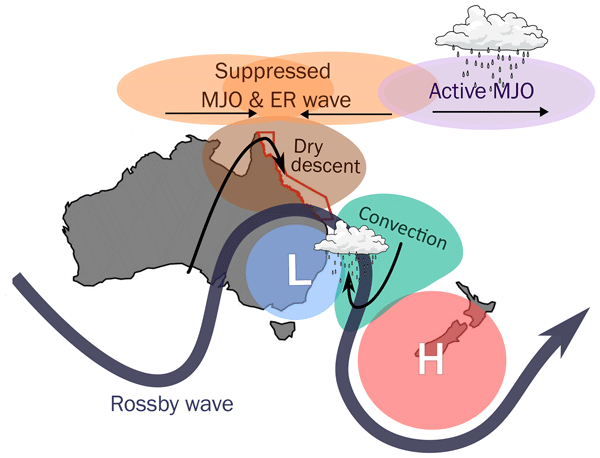
The doldrums are regions of light winds and relatively clear skies found in the tropics. They often occur during severe coral bleaching events on the Great Barrier Reef yet remain poorly understood. This study examines why the doldrums form and persist, identifying how both tropical and extratropical weather systems align to first form the doldrums and how the stalling of these weather systems prolongs the doldrums over the Great Barrier Reef.
Fiona Paulus, Joshua J. Müller, Benjamin Kirbus, Harald Sodemann, Lars van Gelder, Andreas Walbröl, Manfred Wendisch, and Roel A. J. Neggers
Atmos. Chem. Phys., 26, 13983–14014, https://doi.org/10.5194/acp-26-13983-2026, https://doi.org/10.5194/acp-26-13983-2026, 2026
Short summary
Short summary
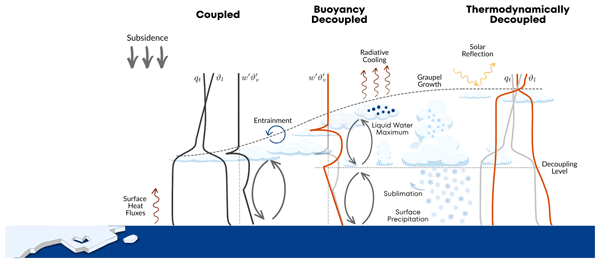
Cold Arctic air flowing from sea ice onto the warmer ocean waters rapidly warms, moistens, and forms clouds and precipitation. These events shape the Arctic climate but are difficult to observe and model. Particularly the role of large-scale sinking motion during these events is not fully understood. Using rare aircraft data and simulations to track an air mass for two days, we show that strong downward motion suppresses cloud growth, limits and delays precipitation, and reduces cloud lifetimes.
Juha Sulo, Magdalena Okuljar, Joel Alroe, Zijun Li, Eva Johanna Horchler, Luke Cravigan, Branka Miljevic, Luke Harrison, Daniel Harrison, and Zoran Ristovski
Aerosol Research, 4, 413–427, https://doi.org/10.5194/ar-4-413-2026, https://doi.org/10.5194/ar-4-413-2026, 2026
Short summary
Short summary
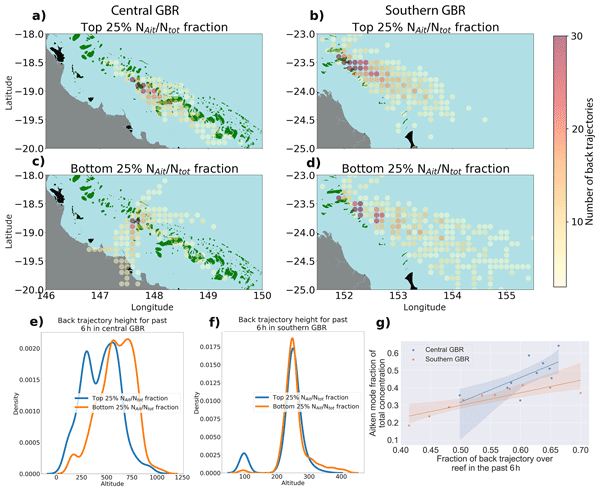
The Great Barrier Reef is the world’s largest coral reef system, and the air above it plays a role in cloud formation. Using direct measurements taken over several years, this study shows that although the reef has low aerosol concentrations, air that passes directly over coral reefs contains more very small particles, providing the first direct evidence that reefs add particles to the atmosphere. These locally produced particles make a measurable contribution to cloud formation over the reef.
Magdalena Okuljar, Juha Sulo, Joel Alroe, Zijun Li, Branka Miljevic, Daniel Harrison, and Zoran Ristovski
EGUsphere, https://doi.org/10.5194/egusphere-2026-4869, https://doi.org/10.5194/egusphere-2026-4869, 2026
Short summary
Short summary
The Great Barrier Reef is the largest coral reef system globally, yet the extent to which it contributes to local atmospheric particle loading remains poorly understood. This work focuses on particle formation processes observed during a six-week measurement campaign. Our results show that the reef ecosystem can influence local aerosol formation processes, with implications for regional cloud formation and climate feedbacks in marine ecosystems.
Carla M. A. Souza, Anne C. S. Mendonça, Hella van Asperen, Flávio A. F. D'Oliveira, Santiago Botía, Luís G. N. Martins, Denisi H. Hall, Raoni A. Santana, Gilberto Fisch, Leonardo R. Oliveira, Jailson R. Mata, Ranyelli Figueiredo, Rachel Albrecht, Bruno T. T. Portela, Carlos A. Quesada, and Cléo Q. Dias-Júnior
Atmos. Chem. Phys., 26, 10679–10694, https://doi.org/10.5194/acp-26-10679-2026, https://doi.org/10.5194/acp-26-10679-2026, 2026
Short summary
Short summary
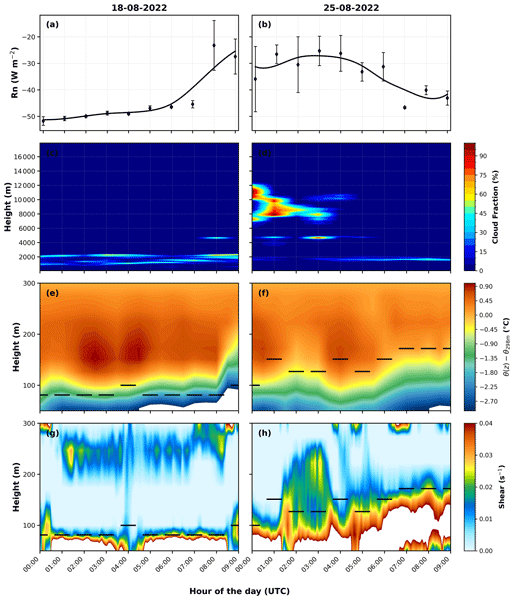
We investigated how the height of the nocturnal air layer (hn) above the Amazon forest changes over the year and how this influences gas measurements. Using two years of tower observations, we found that this layer is higher during wetter periods and much lower during dry periods linked to large climate events. hn can controls how gases accumulate or disperse at night, which affects how we interpret observations and improve weather and climate predictions.
Patrick C. Taylor, Armin Sorooshian, Rei Ueyama, Sebastian Schmidt, Ihab Abboud, Quincy Allison, Kevin Barry, Sebastian Becker, Holly A. Bender, Joseph R. Bennett, James B. Blair, Niklas Bohn, Linette Boisvert, Matthew D. Brown, Roelof Bruintjes, Anthony Bucholtz, Megan Buzanowicz, Brian Cairns, Filippo Calì Quaglia, Eduard Chemyakin, Bo Chen, Gao Chen, Hong Chen, Yu-Wen Chen, Zezhen Cheng, Swarup China, Dan Chirica, Yonghoon Choi, Peter Colarco, Brian Collister, Ewan Crosbie, Maurice J. Cross, Janet Daniels, Paul DeMott, Joshua P. DiGangi, Alcide Giorgio di Sarra, Glenn S. Diskin, Erica K. Dolinar, Eva-Lou Edwards, Samuel Ephraim, Nikolaos Evangeliou, Romanos Foskinis, Francesca Gallo, Lan Gao, José Luis Gómez-Amo, Daisy Gonzalez, Christine Groot Zwaaftink, Pawan Gupta, Ivan Heckman, Michael Hendrickson, Miguel Ricardo A. Hilario, Ken Hirata, Michelle Hofton, Andrew L. Holen, Ulas Im, Alia L. Khan, Ralph Kahn, Alexei V. Korolev, Sonia Kreidenweis, Thomas Krumpen, Nathan Kurtz, Leslie Lait, Bradley Lamkin, Jack Landy, Nurun Nahar Lata, Paul Lawson, Samuel LeBlanc, Sean Leavor, Jing Li, Thorsten Markus, Hal Maring, Andreas H. Massling, Camille Mavis, Flynn McGinnity, Kerry Meyer, Gabriel Mojica, Richard H. Moore, Parker Morris, Giovanni Muscari, Vikas Nataraja, Amin R. Nehrir, Athanasios Nenes, Edward P. Nowottnick, Matteo Ottaviani, Chelsea Parker, Ryan Patnaude, Michael Perez, Russell J. Perkins, Colten Peterson, Alek Petty, Stevie Phothisane, Chris Polashenski, Kerri A. Pratt, Kayla M. Preisler, John Prytherch, David Rabine, Jens Redemann, Ju-Mee Ryoo, Joseph S. Schlosser, Vanessa Selimovic, Michael A. Shook, Morgan Silverman, Henrik Skov, Alexander Smirnov, Cassidy Soloff, Amy Solomon, Snorre Stamnes, Azusa Takeishi, David R. Thompson, K. Lee Thornhill, Rachel Tilling, Michael Tjernström, Monica Tosco, Pedro C. Valdelomar, David Van Gilst, Jian Wang, Zhien Wang, Andrzej Wasilewski, Manfred Wendisch, Brent Wilder, Edward L. Winstead, Albert Wu, Peng Xian, Lauren M. Zamora, Jiaoshi Zhang, Lei Zhang, Lu Zhang, Luke Ziemba, and Paquita Zuidema
Earth Syst. Sci. Data Discuss., https://doi.org/10.5194/essd-2026-241, https://doi.org/10.5194/essd-2026-241, 2026
Preprint under review for ESSD
Short summary
Short summary
This article summarizes the data sets collected during the Arctic Radiation Cloud aerosol Sea ice Interaction eXperiment (ARCSIX), NASA's most comprehensive Arctic field campaign to date. The overarching goal was to quantify the contributions of surface, clouds, aerosol particles, and precipitation to summer sea ice melt. This paper describes the ARCSIX implementation including the flight strategy, instruments, complementary data sets, access, and usage details.
Xiaoshen Sun, Chris Medcraft, Ramon Braga, Peter Butcherine, Zoran Ristovski, Steven Siems, Christian J. Sanders, and Daniel P. Harrison
EGUsphere, https://doi.org/10.5194/egusphere-2026-1729, https://doi.org/10.5194/egusphere-2026-1729, 2026
This preprint is open for discussion and under review for Atmospheric Measurement Techniques (AMT).
Short summary
Short summary
We propose a novel method to detect and track sea spray particles released during marine cloud brightening (MCB) over the Great Barrier Reef. Using aircraft measurements, we showed that these released particles can be separated from the research ship and aircraft exhaust and tracked as they spread horizontally and vertically. This improves our ability to trace added sea spray aerosols and supports future work on how they may affect clouds.
Rebecca L. Jackson, Matthew T. Woodhouse, Mark Baird, Clothilde Langlais, Mathieu Mongin, Anthony Jones, Daniel Partridge, Luke Harrison, Johanna Horchler, Joel Alroe, Luke Cravigan, Zoran Ristovski, and Daniel P. Harrison
EGUsphere, https://doi.org/10.5194/egusphere-2026-2761, https://doi.org/10.5194/egusphere-2026-2761, 2026
Short summary
Short summary
ACCESS-EMS-GBR is a regional coupled atmosphere-ocean model of the Great Barrier Reef. It simulates aerosol and cloud processes in the atmosphere, plus hydrodynamics, biogeochemistry and ecological processes in the marine environment. Developed to assess the effects of Marine Cloud Brightening on coral bleaching, it is the first regional model able to simulate how aerosol emissions affect clouds, radiation and the underlying reef ecosystem and is ideal for a range of atmosphere-ocean studies.
Johannes Kainz, Daniel P. Harrison, and Fabian Hoffmann
Atmos. Chem. Phys., 26, 9443–9451, https://doi.org/10.5194/acp-26-9443-2026, https://doi.org/10.5194/acp-26-9443-2026, 2026
Short summary
Short summary
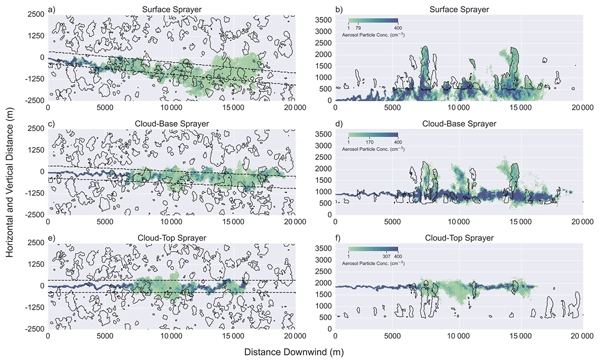
Marine Cloud Brightening (MCB) aims to counter global warming. It suggests to increase cloud reflectance by spraying aerosols from which additional cloud droplets can form. We demonstrate that MCB can be applied to cumulus clouds. The impact of aerosol particles released by a single aerosol sprayer using simulations is analyzed. The study draws conclusions on the optimal placement height of the sprayer to optimize aerosol transport, the ability to form new cloud droplets, and the area affected.
Aymeric Dziduch, Antoine Baudoux, Guillaume Mioche, Antoine Canzi, Benjamin Doiteau, Manuel Moser, Emma Järvinen, Étienne Vignon, Jean-Christophe Raut, Régis Dupuy, Christophe Gourbeyre, Jean-Luc Baray, Marie Monier, Frédéric Szczap, Guillaume Penide, Julien Delanoë, Odran Sourdeval, Alfons Schwarzenboeck, Stephan Mertes, Franz Martin Schnaiter, Christiane Voigt, Mario Mech, Susanne Crewell, Andreas Herber, Christof Lüpkes, André Ehrlich, Manfred Wendisch, and Olivier Jourdan
EGUsphere, https://doi.org/10.5194/egusphere-2026-3265, https://doi.org/10.5194/egusphere-2026-3265, 2026
This preprint is open for discussion and under review for Atmospheric Chemistry and Physics (ACP).
Short summary
Short summary
This study examines the microphysical properties and ice crystal habits of low-level Arctic mixed-phase clouds around Svalbard. Using airborne in situ observations from four campaigns, we show that cloud microphysical structure and ice crystal habits are influenced by weather conditions and surface type. These results provide quantitative observations to better understand low-level Arctic clouds, their ice formation processes, and their influence on the Arctic atmosphere and climate system.
Silke Groß, Florian Ewald, Bjorn Stevens, Martin Wirth, Georgios Dekoutsidis, André Ehrlich, Dimitra Kouklaki, Konstantin Krüger, Sophie Rosenburg, Lea Volkmer, Jonas von Bismark, Lutz Hirsch, Anna E. Luebke, Eleni Marinou, Bernhard Mayer, Montserrat Pinol Sole, Manfred Wendisch, Julia Windmiller, Vassilis Amiridis, Rob Koopman, Takuji Kubota, and Markus Rapp
Atmos. Meas. Tech., 19, 3933–3959, https://doi.org/10.5194/amt-19-3933-2026, https://doi.org/10.5194/amt-19-3933-2026, 2026
Short summary
Short summary
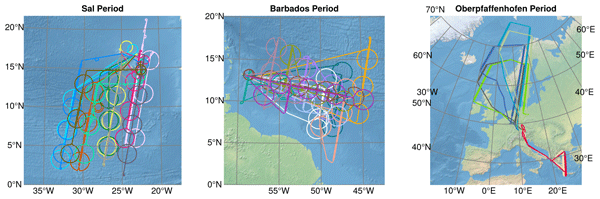
In May 2024 the joint European Space Agency (ESA) and the Japan Aerospace Exploration Agency (JAXA) mission EarthCARE was launched. A similar payload as on the satellite was set up on the German research aircraft HALO, and deployed during an extensive measurement campaign to validated the satellite. We present our instrumentation, the measurements, and its potential for the validation of EarthCARE. We show first validation results and assessments of the EarthCARE data quality.
David J. Simon, Jonas Schaefer, Jörg Hartmann, Benjamin Kirbus, Joshua Müller, Markus Hartmann, Bruno Wetzel, Laura Köhler, Anna-Marie Jörss, Kay Weinhold, Andreas Herber, Zsófia Jurányi, Silvia Henning, Gregory C. Roberts, Manfred Wendisch, Mira L. Pöhlker, and Frank Stratmann
EGUsphere, https://doi.org/10.5194/egusphere-2026-2215, https://doi.org/10.5194/egusphere-2026-2215, 2026
Short summary
Short summary
We investigate the occurrence of newly formed aerosol particles in the Arctic atmosphere by analyzing aerosol particle measurements conducted aboard a research aircraft in April 2024. We frequently detected newly formed particles at altitudes of up to 4 km, while many previous studies had predominantly found such particles close to the surface. Newly formed particles were associated with air mass transport from lower latitudes, the occurrence of clouds, as well as the presence of sea ice.
Sebastian Becker, Konrad Sebastian Schmidt, Hong Chen, Yu-Wen Chen, Kerry G. Meyer, Colten A. Peterson, and Manfred Wendisch
EGUsphere, https://doi.org/10.5194/egusphere-2026-2210, https://doi.org/10.5194/egusphere-2026-2210, 2026
Short summary
Short summary
The melt of Arctic sea ice depends on the radiation budget at the surface, which is largely controlled by the presence of clouds. This cloud radiative effect depends on both cloud properties and surface reflection. Comparing cloud properties from a satellite retrieval and surface reflection data assumed for this retrieval to aircraft measurements, it is found that the assumed surface reflection is too low, leading to a cooling effect of clouds on the surface although a warming effect is present.
Henning Dorff, Holger Siebert, Komal Navale, André Ehrlich, Joshua Müller, Michael Schäfer, Fan Wu, and Manfred Wendisch
Earth Syst. Sci. Data, 18, 2799–2817, https://doi.org/10.5194/essd-18-2799-2026, https://doi.org/10.5194/essd-18-2799-2026, 2026
Short summary
Short summary
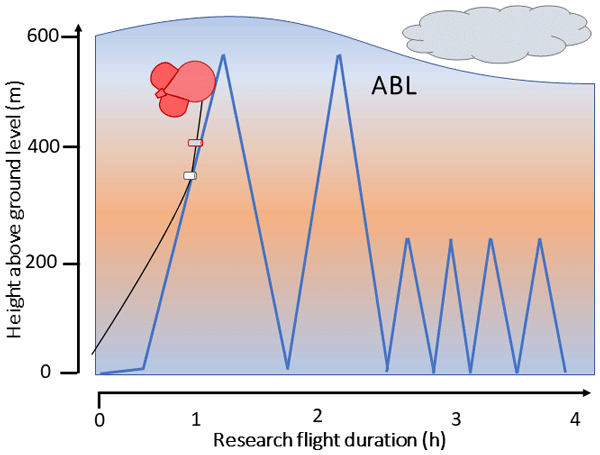
We present tethered-balloon measurements from BELUGA (Balloon-bornE moduLar Utility for profilinG the lower Atmosphere) at Villum Research Station (spring 2024), detailing instrumentation, data processing, and environmental conditions. The data stored in the PANGAEA database include instrument-separated subsets with frequent in situ profiling of thermodynamic, turbulence conditions, and thermal-infrared irradiances across the Arctic atmospheric boundary layer (ABL), supplemented by radiosondes. The data help examine transition events between Arctic ABL states.
Wenhui Zhao, Yi Huang, Steven Siems, and Daniel Harrison
EGUsphere, https://doi.org/10.5194/egusphere-2026-1251, https://doi.org/10.5194/egusphere-2026-1251, 2026
Short summary
Short summary
Using convection-permitting WRF simulations, this study examines how marine cloud brightening over the GBR depends on aerosol emission strength and spatial distribution. Densely spaced sources generate more uniform aerosol enhancements and stronger cloud microphysical responses than sparsely distributed sources, despite identical emissions. CDNC and optical depth increase strongly, indicating a dominant Twomey effect, while cloud water and coverage respond weakly.

Anna Weber, Benjamin Kirbus, Manfred Wendisch, and Bernhard Mayer
Atmos. Chem. Phys., 26, 3521–3540, https://doi.org/10.5194/acp-26-3521-2026, https://doi.org/10.5194/acp-26-3521-2026, 2026
Short summary
Short summary
Macrophysical and microphysical properties of clouds and their evolution during the initial phase of marine cold air outbreaks in the Arctic are studied with a focus on cloud thermodynamic phase partitioning and phase transitions. To this end, high-resolution quasi-Lagrangian observations of the hyperspectral and polarized imaging system specMACS during the HALO-(AC)3 campaign are combined with backward trajectories. Six cold air outbreaks with varying strengths are analyzed and compared.
Manuel Moser, Christiane Voigt, Oliver Eppers, Johannes Lucke, Elena De La Torre Castro, Johanna Mayer, Regis Dupuy, Guillaume Mioche, Olivier Jourdan, Hans-Christian Clemen, Johannes Schneider, Philipp Joppe, Stephan Mertes, Bruno Wetzel, Stephan Borrmann, Marcus Klingebiel, Mario Mech, Christof Lüpkes, Susanne Crewell, André Ehrlich, Andreas Herber, and Manfred Wendisch
Atmos. Chem. Phys., 26, 1867–1887, https://doi.org/10.5194/acp-26-1867-2026, https://doi.org/10.5194/acp-26-1867-2026, 2026
Short summary
Short summary
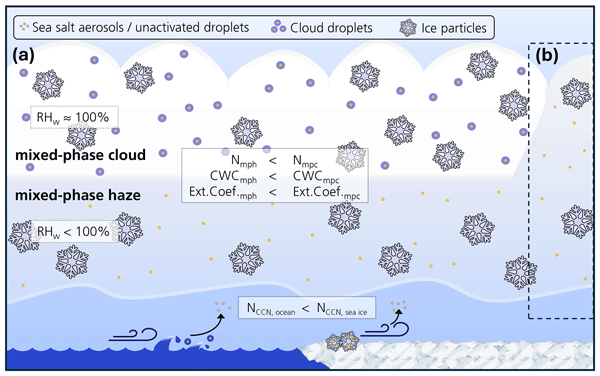
In this study we analyzed Arctic mixed-phase clouds using airborne in-situ measurements in spring 2022. Based on microphysical properties, we show that within these clouds a distinction must be made between classic mixed-phase clouds and a mixed-phase haze regime. Instead of supercooled droplets, the haze regime contains large wet sea salt aerosols. These findings improve our understanding of Arctic low-level cloud processes.

Lara S. Richards, Steven T. Siems, Yi Huang, Daniel P. Harrison, and Wenhui Zhao
Weather Clim. Dynam., 7, 109–127, https://doi.org/10.5194/wcd-7-109-2026, https://doi.org/10.5194/wcd-7-109-2026, 2026
Short summary
Short summary
By studying the variability of the trade winds during the Great Barrier Reef coral bleaching season, we show that ocean heating and a higher risk of coral bleaching are linked to the breakdown of the trade winds into either calm and clear conditions or a monsoon-like northerly flow. Years with mass coral bleaching are also associated with more "calm and clear" days in the warmest months and fewer strong trade wind days on the fringe months of the bleaching season.
Kevin Wolf, Evelyn Jäkel, André Ehrlich, Michael Schäfer, Hannes Feilhauer, Andreas Huth, and Manfred Wendisch
Biogeosciences, 22, 7797–7817, https://doi.org/10.5194/bg-22-7797-2025, https://doi.org/10.5194/bg-22-7797-2025, 2025
Short summary
Short summary
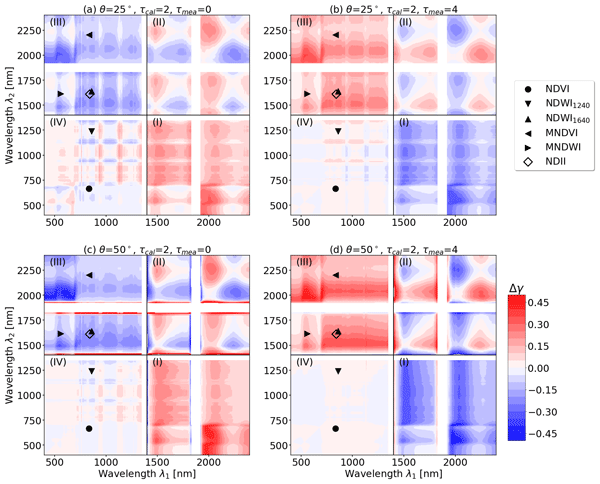
This paper presents combined atmosphere-vegetation radiative transfer simulations to systematically investigate cloud-induced biases in remotely sensed vegetation indices (VIs) derived from below-cloud measurements. The biases in VIs have been investigated for the general case of two-band VIs, and for the special cases of the normalized difference vegetation index (NDVI), the normalized difference water index (NDWI), and the enhanced vegetation index (EVI).
Manfred Wendisch, Benjamin Kirbus, Davide Ori, Matthew D. Shupe, Susanne Crewell, Harald Sodemann, and Vera Schemann
Atmos. Chem. Phys., 25, 15047–15076, https://doi.org/10.5194/acp-25-15047-2025, https://doi.org/10.5194/acp-25-15047-2025, 2025
Short summary
Short summary
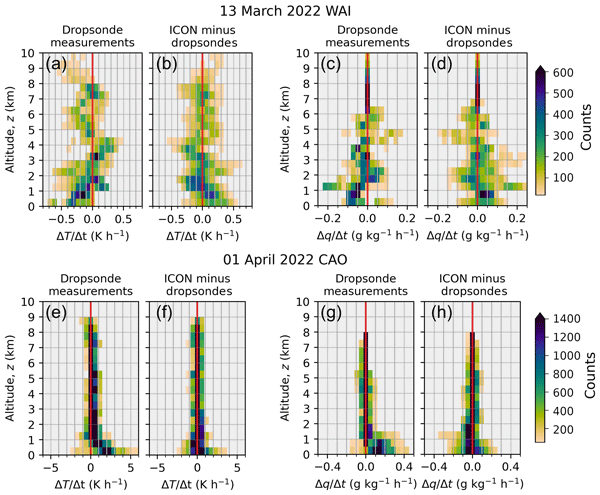
Aircraft observations of air parcels moving into and out of the Arctic are reported. From the data, heating and cooling as well as drying and moistening of the air masses along their way into and out of the Arctic could be measured for the first time. These data are used to evaluate if weather prediction models are able to accurately represent these air mass transformations. This work helps to model the future Arctic climate changes, which may have an impact for mid-latitude weather as well.
Michail Karalis, Gunilla Svensson, Manfred Wendisch, and Michael Tjernström
Atmos. Chem. Phys., 25, 13177–13198, https://doi.org/10.5194/acp-25-13177-2025, https://doi.org/10.5194/acp-25-13177-2025, 2025
Short summary
Short summary
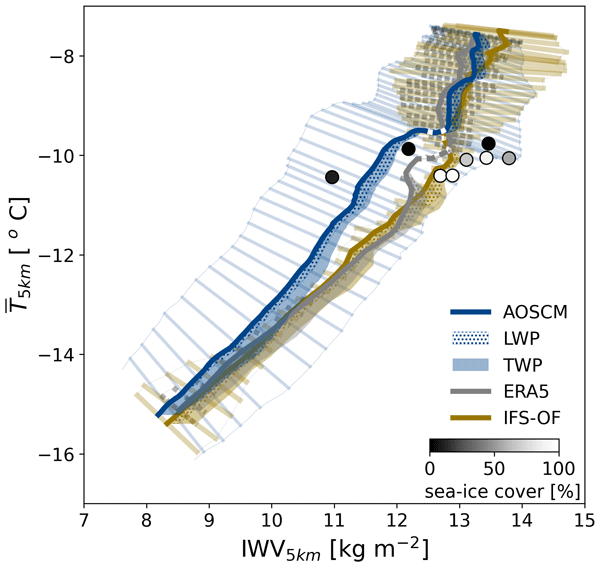
During the spring warm-air intrusion captured by HALO-(𝒜𝒞)3, the air mass demonstrated a column-like structure. We built a Lagrangian modeling framework using a single-column model (AOSCM) to simulate the air mass transformation. Comparing to observations, reanalysis, and forecast data, we found that the Lagrangian AOSCM can successfully reproduce the main features of the transformation. The Lagrangian AOSCM can be used for future model development to improve Arctic weather and climate prediction.
Camila da Cunha Lopes, Rachel Ifanger Albrecht, Douglas Messias Uba, Thiago Souza Biscaro, and Ivan Saraiva
Earth Syst. Sci. Data, 17, 5489–5505, https://doi.org/10.5194/essd-17-5489-2025, https://doi.org/10.5194/essd-17-5489-2025, 2025
Short summary
Short summary
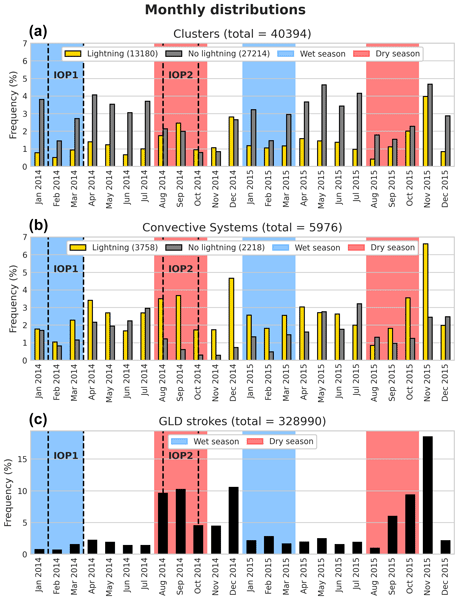
This study utilized observations collected during the Observations and Modeling of the Green Ocean Amazon (GoAmazon2014/5) experiment to create a database of storm and thunderstorm characteristics with weather radar and lightning measurements. These storms have different sizes and durations between the wet and dry seasons as well as throughout the day, with the most intense events occurring during the dry-season–wet-season transition. This database will be useful for future studies on Amazonian clouds.
Sebastian Becker, André Ehrlich, Michael Schäfer, and Manfred Wendisch
Atmos. Chem. Phys., 25, 12831–12842, https://doi.org/10.5194/acp-25-12831-2025, https://doi.org/10.5194/acp-25-12831-2025, 2025
Short summary
Short summary
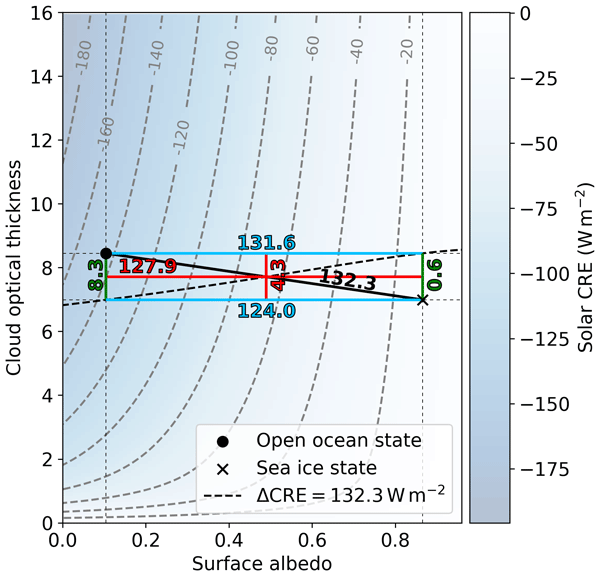
Clouds interact with solar radiation and can alter the surface temperature. The strength of this cloud impact is driven by cloud properties as well as solar elevation and surface reflection. As these dependencies are poorly represented in climate models, cloud, surface, and radiation observations are used to quantify the contributions of the drivers in the Arctic. It is shown that the weaker surface reflection dominates the stronger cooling effect of clouds over open ocean compared to sea ice.
Robert G. Ryan, Lilani Toms-Hardman, Alexander Smirnov, Daniel P. Harrison, and Robyn Schofield
Atmos. Chem. Phys., 25, 11183–11197, https://doi.org/10.5194/acp-25-11183-2025, https://doi.org/10.5194/acp-25-11183-2025, 2025
Short summary
Short summary
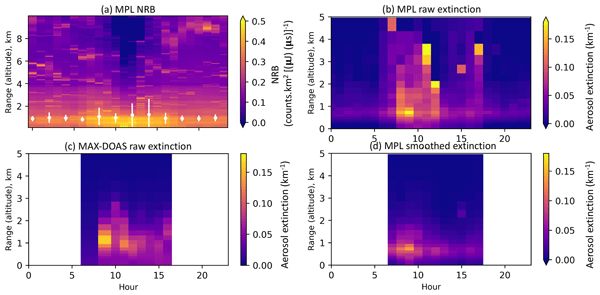
Measurements of aerosol vertical distribution are key for understanding how they interact with clouds and sunlight. Such measurements are currently lacking at the Great Barrier Reef, limiting our ability to validate climate models in this sensitive, ecologically rich environment. Here we use a range of techniques to quantify the vertical variation of aerosols above the Great Barrier Reef for the first time, using the comparison of techniques to also infer aerosol spatial variation.
Joshua J. Müller, Michael Schäfer, Sophie Rosenburg, André Ehrlich, and Manfred Wendisch
Atmos. Meas. Tech., 18, 4695–4708, https://doi.org/10.5194/amt-18-4695-2025, https://doi.org/10.5194/amt-18-4695-2025, 2025
Short summary
Short summary
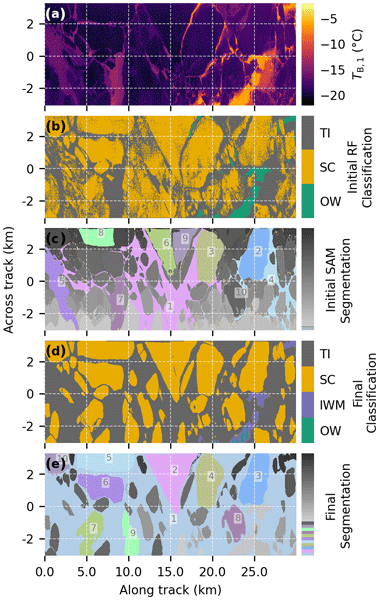
We retrieved high-resolution maps of Arctic surface temperature and type using an airborne thermal infrared imager during an Arctic aircraft campaign. Our study highlights small-scale surface variability, complementing satellite observations. Surface temperature was retrieved via radiative transfer simulations, while surface type was classified using machine learning. Additionally, we analysed segment sizes of each surface type, presenting results based on their distance from the sea-ice edge.
E. Johanna Horchler, Joel Alroe, Luke Harrison, Luke Cravigan, Daniel P. Harrison, and Zoran D. Ristovski
Atmos. Chem. Phys., 25, 10075–10087, https://doi.org/10.5194/acp-25-10075-2025, https://doi.org/10.5194/acp-25-10075-2025, 2025
Short summary
Short summary
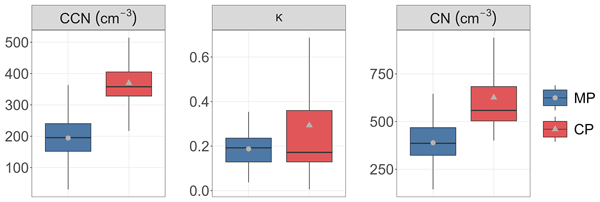
Aerosols play a role in global climate by interacting with incoming solar radiation and by taking up water vapour from the atmosphere to form clouds. Enhancing local-scale cloud cover can reduce sea surface temperatures. Coral bleaching events have increased in the Great Barrier Reef (GBR) as sea surface temperatures have risen. Our study found that the number of aerosols and the cloud-forming ability over the GBR increased if the aerosols were transported from inland Australia rather than the ocean.
Marcus Klingebiel, André Ehrlich, Micha Gryschka, Nils Risse, Nina Maherndl, Imke Schirmacher, Sophie Rosenburg, Sabine Hörnig, Manuel Moser, Evelyn Jäkel, Michael Schäfer, Hartwig Deneke, Mario Mech, Christiane Voigt, and Manfred Wendisch
Atmos. Chem. Phys., 25, 9787–9801, https://doi.org/10.5194/acp-25-9787-2025, https://doi.org/10.5194/acp-25-9787-2025, 2025
Short summary
Short summary
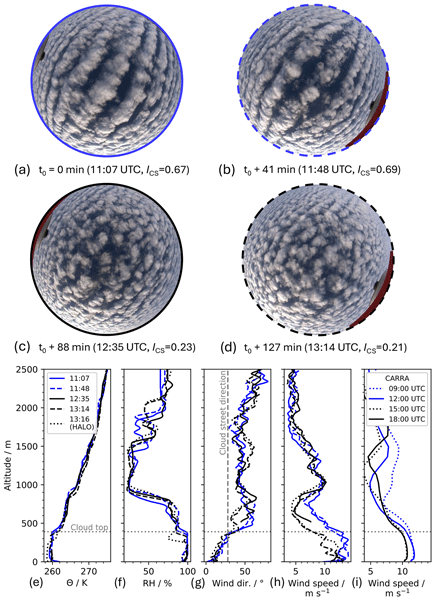
Our study is using aircraft measurements from the HALO-(𝒜𝒞)³ campaign to investigate the transition from organized Arctic cloud street structures to more scattered clouds, which we call isotropic cloud patterns. We show that lower wind speeds cause this transition. In addition, we look at the changes in the cloud coverage, the height of the clouds, the cloud particles, and the radiative properties.
Kevin Wolf, Evelyn Jäkel, André Ehrlich, Michael Schäfer, Hannes Feilhauer, Andreas Huth, Alexandra Weigelt, and Manfred Wendisch
Biogeosciences, 22, 2909–2933, https://doi.org/10.5194/bg-22-2909-2025, https://doi.org/10.5194/bg-22-2909-2025, 2025
Short summary
Short summary
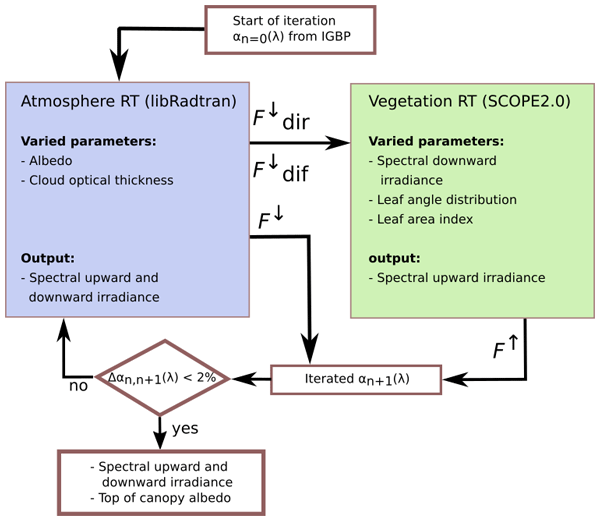
This paper reports an investigation of the influence of clouds on vegetation albedo using a coupled atmosphere–vegetation radiative transfer model. Both models are iteratively linked to simulate cloud–vegetation–radiation interactions over canopies more realistically. Solar, spectral, and broadband irradiances have been simulated under varying cloud conditions. The simulated irradiances were used to investigate the spectral and broadband effect of clouds on vegetation albedo.

André Ehrlich, Susanne Crewell, Andreas Herber, Marcus Klingebiel, Christof Lüpkes, Mario Mech, Sebastian Becker, Stephan Borrmann, Heiko Bozem, Matthias Buschmann, Hans-Christian Clemen, Elena De La Torre Castro, Henning Dorff, Regis Dupuy, Oliver Eppers, Florian Ewald, Geet George, Andreas Giez, Sarah Grawe, Christophe Gourbeyre, Jörg Hartmann, Evelyn Jäkel, Philipp Joppe, Olivier Jourdan, Zsófia Jurányi, Benjamin Kirbus, Johannes Lucke, Anna E. Luebke, Maximilian Maahn, Nina Maherndl, Christian Mallaun, Johanna Mayer, Stephan Mertes, Guillaume Mioche, Manuel Moser, Hanno Müller, Veronika Pörtge, Nils Risse, Greg Roberts, Sophie Rosenburg, Johannes Röttenbacher, Michael Schäfer, Jonas Schaefer, Andreas Schäfler, Imke Schirmacher, Johannes Schneider, Sabrina Schnitt, Frank Stratmann, Christian Tatzelt, Christiane Voigt, Andreas Walbröl, Anna Weber, Bruno Wetzel, Martin Wirth, and Manfred Wendisch
Earth Syst. Sci. Data, 17, 1295–1328, https://doi.org/10.5194/essd-17-1295-2025, https://doi.org/10.5194/essd-17-1295-2025, 2025
Short summary
Short summary
This paper provides an overview of the HALO–(AC)3 aircraft campaign data sets, the campaign-specific instrument operation, data processing, and data quality. The data set comprises in situ and remote sensing observations from three research aircraft: HALO, Polar 5, and Polar 6. All data are published in the PANGAEA database by instrument-separated data subsets. It is highlighted how the scientific analysis of the HALO–(AC)3 data benefits from the coordinated operation of three aircraft.
Manfred Wendisch, Susanne Crewell, André Ehrlich, Andreas Herber, Benjamin Kirbus, Christof Lüpkes, Mario Mech, Steven J. Abel, Elisa F. Akansu, Felix Ament, Clémantyne Aubry, Sebastian Becker, Stephan Borrmann, Heiko Bozem, Marlen Brückner, Hans-Christian Clemen, Sandro Dahlke, Georgios Dekoutsidis, Julien Delanoë, Elena De La Torre Castro, Henning Dorff, Regis Dupuy, Oliver Eppers, Florian Ewald, Geet George, Irina V. Gorodetskaya, Sarah Grawe, Silke Groß, Jörg Hartmann, Silvia Henning, Lutz Hirsch, Evelyn Jäkel, Philipp Joppe, Olivier Jourdan, Zsofia Jurányi, Michail Karalis, Mona Kellermann, Marcus Klingebiel, Michael Lonardi, Johannes Lucke, Anna E. Luebke, Maximilian Maahn, Nina Maherndl, Marion Maturilli, Bernhard Mayer, Johanna Mayer, Stephan Mertes, Janosch Michaelis, Michel Michalkov, Guillaume Mioche, Manuel Moser, Hanno Müller, Roel Neggers, Davide Ori, Daria Paul, Fiona M. Paulus, Christian Pilz, Felix Pithan, Mira Pöhlker, Veronika Pörtge, Maximilian Ringel, Nils Risse, Gregory C. Roberts, Sophie Rosenburg, Johannes Röttenbacher, Janna Rückert, Michael Schäfer, Jonas Schaefer, Vera Schemann, Imke Schirmacher, Jörg Schmidt, Sebastian Schmidt, Johannes Schneider, Sabrina Schnitt, Anja Schwarz, Holger Siebert, Harald Sodemann, Tim Sperzel, Gunnar Spreen, Bjorn Stevens, Frank Stratmann, Gunilla Svensson, Christian Tatzelt, Thomas Tuch, Timo Vihma, Christiane Voigt, Lea Volkmer, Andreas Walbröl, Anna Weber, Birgit Wehner, Bruno Wetzel, Martin Wirth, and Tobias Zinner
Atmos. Chem. Phys., 24, 8865–8892, https://doi.org/10.5194/acp-24-8865-2024, https://doi.org/10.5194/acp-24-8865-2024, 2024
Short summary
Short summary
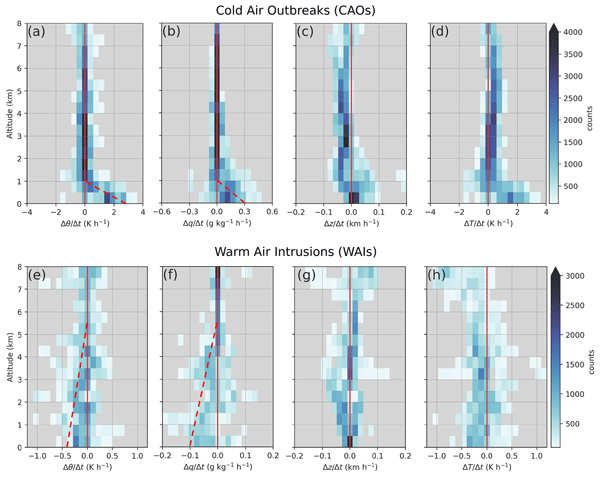
The Arctic is warming faster than the rest of the globe. Warm-air intrusions (WAIs) into the Arctic may play an important role in explaining this phenomenon. Cold-air outbreaks (CAOs) out of the Arctic may link the Arctic climate changes to mid-latitude weather. In our article, we describe how to observe air mass transformations during CAOs and WAIs using three research aircraft instrumented with state-of-the-art remote-sensing and in situ measurement devices.
Johannes Röttenbacher, André Ehrlich, Hanno Müller, Florian Ewald, Anna E. Luebke, Benjamin Kirbus, Robin J. Hogan, and Manfred Wendisch
Atmos. Chem. Phys., 24, 8085–8104, https://doi.org/10.5194/acp-24-8085-2024, https://doi.org/10.5194/acp-24-8085-2024, 2024
Short summary
Short summary
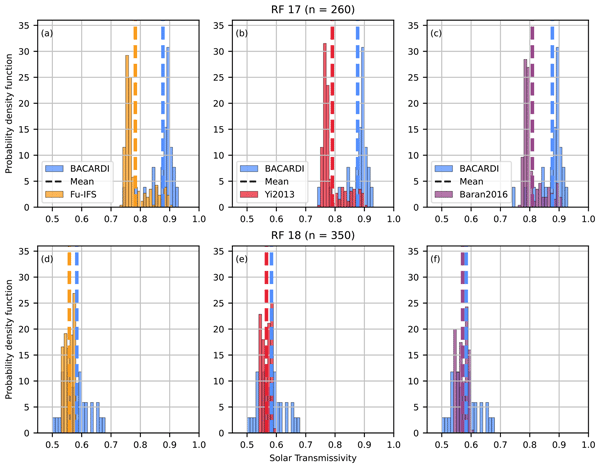
Weather prediction models simplify the physical processes related to light scattering by clouds consisting of complex ice crystals. Whether these simplifications are the cause for uncertainties in their prediction can be evaluated by comparing them with measurement data. Here we do this for Arctic ice clouds over sea ice using airborne measurements from two case studies. The model performs well for thick ice clouds but not so well for thin ones. This work can be used to improve the model.
Andreas Walbröl, Janosch Michaelis, Sebastian Becker, Henning Dorff, Kerstin Ebell, Irina Gorodetskaya, Bernd Heinold, Benjamin Kirbus, Melanie Lauer, Nina Maherndl, Marion Maturilli, Johanna Mayer, Hanno Müller, Roel A. J. Neggers, Fiona M. Paulus, Johannes Röttenbacher, Janna E. Rückert, Imke Schirmacher, Nils Slättberg, André Ehrlich, Manfred Wendisch, and Susanne Crewell
Atmos. Chem. Phys., 24, 8007–8029, https://doi.org/10.5194/acp-24-8007-2024, https://doi.org/10.5194/acp-24-8007-2024, 2024
Short summary
Short summary
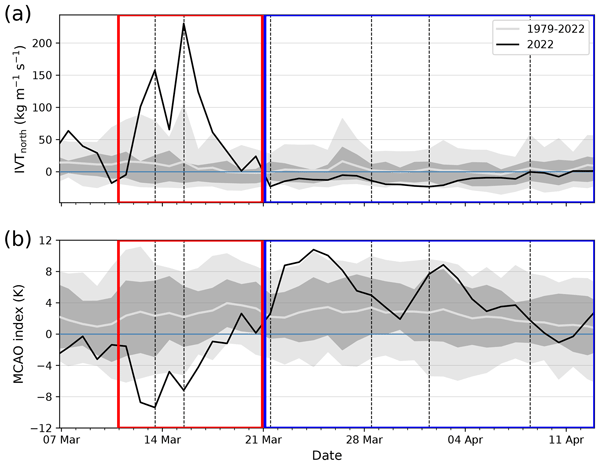
To support the interpretation of the data collected during the HALO-(AC)3 campaign, which took place in the North Atlantic sector of the Arctic from 7 March to 12 April 2022, we analyze how unusual the weather and sea ice conditions were with respect to the long-term climatology. From observations and ERA5 reanalysis, we found record-breaking warm air intrusions and a large variety of marine cold air outbreaks. Sea ice concentration was mostly within the climatological interquartile range.
Wenhui Zhao, Yi Huang, Steven Siems, Michael Manton, and Daniel Harrison
Atmos. Chem. Phys., 24, 5713–5736, https://doi.org/10.5194/acp-24-5713-2024, https://doi.org/10.5194/acp-24-5713-2024, 2024
Short summary
Short summary
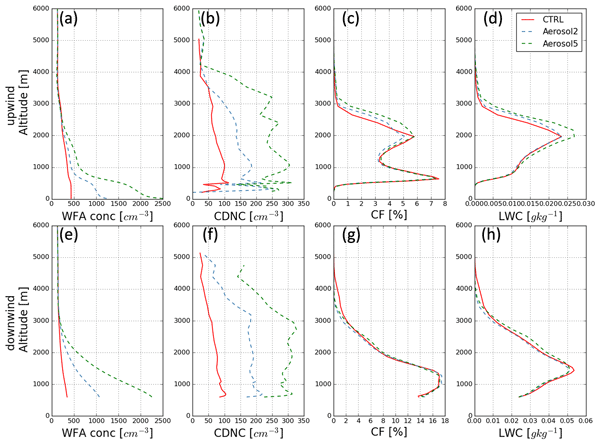
We studied how shallow clouds and rain behave over the Great Barrier Reef (GBR) using a detailed weather model. We found that the shape of the land, especially mountains, and particles in the air play big roles in influencing these clouds. Surprisingly, the sea's temperature had a smaller effect. Our research helps us understand the GBR's climate and how various factors can influence it, where the importance of the local cloud in thermal coral bleaching has recently been identified.
Hanno Müller, André Ehrlich, Evelyn Jäkel, Johannes Röttenbacher, Benjamin Kirbus, Michael Schäfer, Robin J. Hogan, and Manfred Wendisch
Atmos. Chem. Phys., 24, 4157–4175, https://doi.org/10.5194/acp-24-4157-2024, https://doi.org/10.5194/acp-24-4157-2024, 2024
Short summary
Short summary
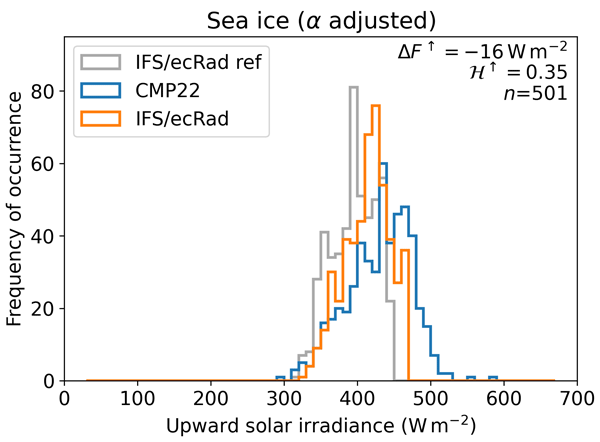
A weather model is used to compare solar radiation with measurements from an aircraft campaign in the Arctic. Model and observations agree on the downward radiation but show differences in the radiation reflected by the surface and the clouds, which in the model is too low above sea ice and too high above open ocean. The model–observation bias is reduced above open ocean by a realistic fraction of clouds and less cloud liquid water and above sea ice by less dark sea ice and more cloud droplets.
Benjamin Kirbus, Imke Schirmacher, Marcus Klingebiel, Michael Schäfer, André Ehrlich, Nils Slättberg, Johannes Lucke, Manuel Moser, Hanno Müller, and Manfred Wendisch
Atmos. Chem. Phys., 24, 3883–3904, https://doi.org/10.5194/acp-24-3883-2024, https://doi.org/10.5194/acp-24-3883-2024, 2024
Short summary
Short summary
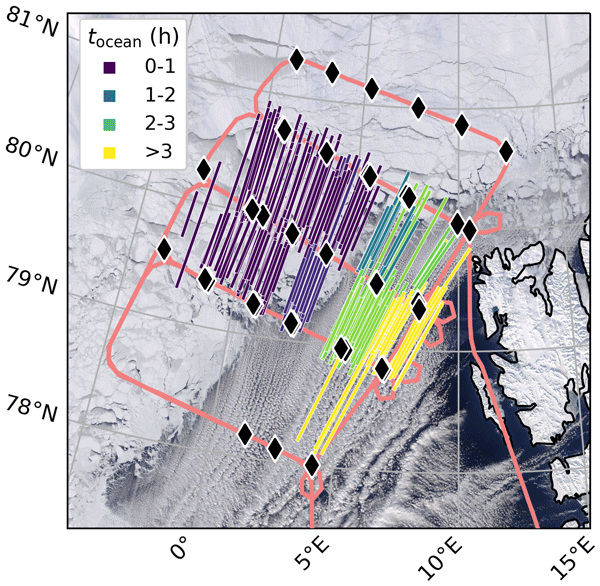
A research aircraft is used to track the changes in air temperature, moisture, and cloud properties for air that moves from cold Arctic sea ice onto warmer oceanic waters. The measurements are compared to two reanalysis models named ERA5 and CARRA. The biggest differences are found for air temperature over the sea ice and moisture over the ocean. CARRA data are more accurate than ERA5 because they better simulate the sea ice, the transition from sea ice to open ocean, and the forming clouds.
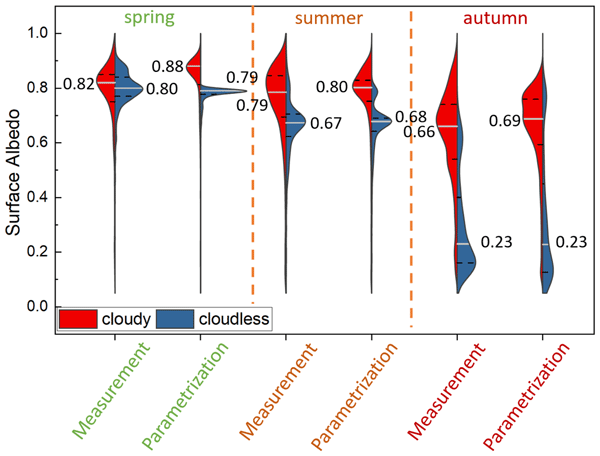
Evelyn Jäkel, Sebastian Becker, Tim R. Sperzel, Hannah Niehaus, Gunnar Spreen, Ran Tao, Marcel Nicolaus, Wolfgang Dorn, Annette Rinke, Jörg Brauchle, and Manfred Wendisch
The Cryosphere, 18, 1185–1205, https://doi.org/10.5194/tc-18-1185-2024, https://doi.org/10.5194/tc-18-1185-2024, 2024
Short summary
Short summary
The results of the surface albedo scheme of a coupled regional climate model were evaluated against airborne and ground-based measurements conducted in the European Arctic in different seasons between 2017 and 2022. We found a seasonally dependent bias between measured and modeled surface albedo for cloudless and cloudy situations. The strongest effects of the albedo model bias on the net irradiance were most apparent in the presence of optically thin clouds.
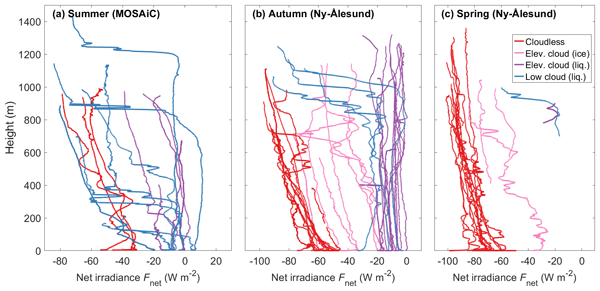
Michael Lonardi, Elisa F. Akansu, André Ehrlich, Mauro Mazzola, Christian Pilz, Matthew D. Shupe, Holger Siebert, and Manfred Wendisch
Atmos. Chem. Phys., 24, 1961–1978, https://doi.org/10.5194/acp-24-1961-2024, https://doi.org/10.5194/acp-24-1961-2024, 2024
Short summary
Short summary
Profiles of thermal-infrared irradiance were measured at two Arctic sites. The presence or lack of clouds influences the vertical structure of these observations. In particular, the cloud top region is a source of radiative energy that can promote cooling and mixing in the cloud layer. Simulations are used to further characterize how the amount of water in the cloud modifies this forcing. A case study additionally showcases the evolution of the radiation profiles in a dynamic atmosphere.
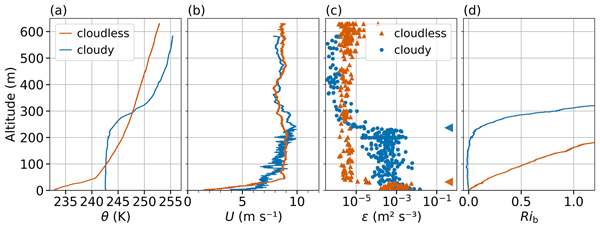
Elisa F. Akansu, Sandro Dahlke, Holger Siebert, and Manfred Wendisch
Atmos. Chem. Phys., 23, 15473–15489, https://doi.org/10.5194/acp-23-15473-2023, https://doi.org/10.5194/acp-23-15473-2023, 2023
Short summary
Short summary
The height of the mixing layer is an important measure of the surface-level distribution of energy or other substances. The experimental determination of this height is associated with large uncertainties, particularly under stable conditions that we often find during the polar night or in the presence of clouds. We present a reference method using turbulence measurements on a tethered balloon, which allows us to evaluate approaches based on radiosondes or surface observations.
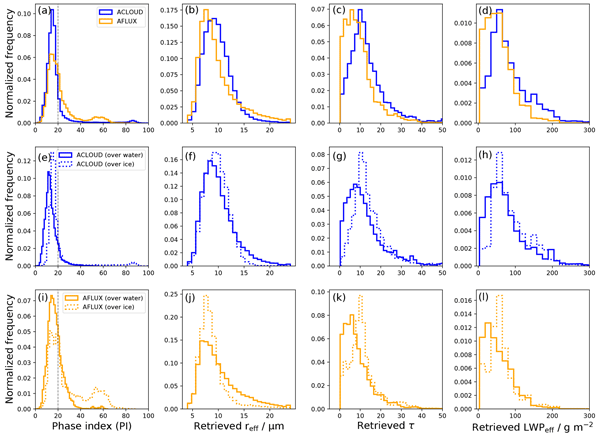
Marcus Klingebiel, André Ehrlich, Elena Ruiz-Donoso, Nils Risse, Imke Schirmacher, Evelyn Jäkel, Michael Schäfer, Kevin Wolf, Mario Mech, Manuel Moser, Christiane Voigt, and Manfred Wendisch
Atmos. Chem. Phys., 23, 15289–15304, https://doi.org/10.5194/acp-23-15289-2023, https://doi.org/10.5194/acp-23-15289-2023, 2023
Short summary
Short summary
In this study we explain how we use aircraft measurements from two Arctic research campaigns to identify cloud properties (like droplet size) over sea-ice and ice-free ocean. To make sure that our measurements make sense, we compare them with other observations. Our results show, e.g., larger cloud droplets in early summer than in spring. Moreover, the cloud droplets are also larger over ice-free ocean than compared to sea ice. In the future, our data can be used to improve climate models.
Imke Schirmacher, Pavlos Kollias, Katia Lamer, Mario Mech, Lukas Pfitzenmaier, Manfred Wendisch, and Susanne Crewell
Atmos. Meas. Tech., 16, 4081–4100, https://doi.org/10.5194/amt-16-4081-2023, https://doi.org/10.5194/amt-16-4081-2023, 2023
Short summary
Short summary
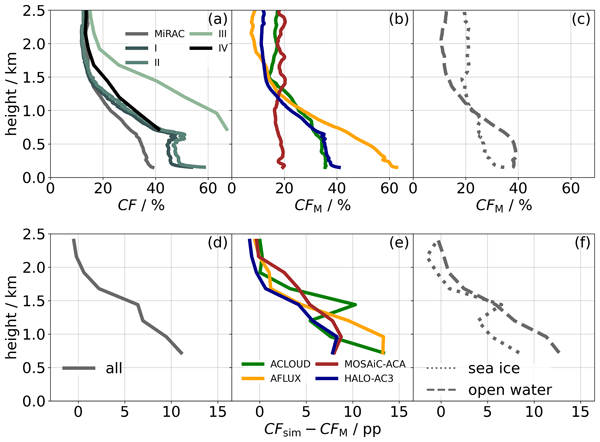
CloudSat’s relatively coarse spatial resolution, low sensitivity, and blind zone limit its assessment of Arctic low-level clouds, which affect the surface energy balance. We compare cloud fractions from CloudSat and finely resolved airborne radar observations to determine CloudSat’s limitations. Cloudsat overestimates cloud fractions above its blind zone, especially during cold-air outbreaks over open water, and misses a cloud fraction of 32 % and half of the precipitation inside its blind zone.
Olivia Linke, Johannes Quaas, Finja Baumer, Sebastian Becker, Jan Chylik, Sandro Dahlke, André Ehrlich, Dörthe Handorf, Christoph Jacobi, Heike Kalesse-Los, Luca Lelli, Sina Mehrdad, Roel A. J. Neggers, Johannes Riebold, Pablo Saavedra Garfias, Niklas Schnierstein, Matthew D. Shupe, Chris Smith, Gunnar Spreen, Baptiste Verneuil, Kameswara S. Vinjamuri, Marco Vountas, and Manfred Wendisch
Atmos. Chem. Phys., 23, 9963–9992, https://doi.org/10.5194/acp-23-9963-2023, https://doi.org/10.5194/acp-23-9963-2023, 2023
Short summary
Short summary
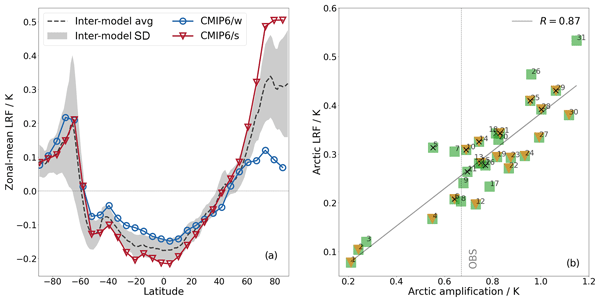
Lapse rate feedback (LRF) is a major driver of the Arctic amplification (AA) of climate change. It arises because the warming is stronger at the surface than aloft. Several processes can affect the LRF in the Arctic, such as the omnipresent temperature inversion. Here, we compare multimodel climate simulations to Arctic-based observations from a large research consortium to broaden our understanding of these processes, find synergy among them, and constrain the Arctic LRF and AA.
Manfred Wendisch, Johannes Stapf, Sebastian Becker, André Ehrlich, Evelyn Jäkel, Marcus Klingebiel, Christof Lüpkes, Michael Schäfer, and Matthew D. Shupe
Atmos. Chem. Phys., 23, 9647–9667, https://doi.org/10.5194/acp-23-9647-2023, https://doi.org/10.5194/acp-23-9647-2023, 2023
Short summary
Short summary
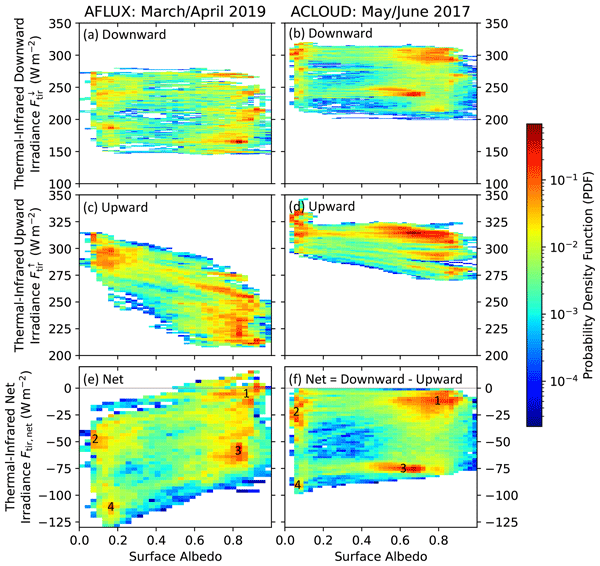
Atmospheric radiation measurements have been conducted during two field campaigns using research aircraft. The data are analyzed to see if the near-surface air in the Arctic is warmed or cooled if warm–humid air masses from the south enter the Arctic or cold–dry air moves from the north from the Arctic to mid-latitude areas. It is important to study these processes and to check if climate models represent them well. Otherwise it is not possible to reliably forecast the future Arctic climate.
Sophie Rosenburg, Charlotte Lange, Evelyn Jäkel, Michael Schäfer, André Ehrlich, and Manfred Wendisch
Atmos. Meas. Tech., 16, 3915–3930, https://doi.org/10.5194/amt-16-3915-2023, https://doi.org/10.5194/amt-16-3915-2023, 2023
Short summary
Short summary
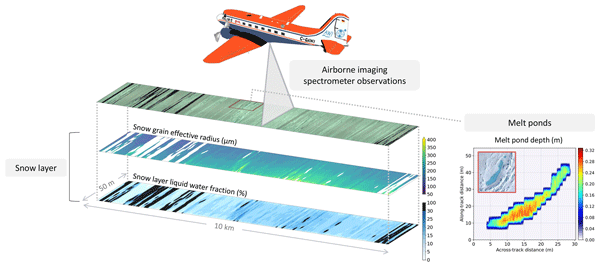
Snow layer melting and melt pond formation on Arctic sea ice are important seasonal processes affecting the surface reflection and energy budget. Sea ice reflectivity was surveyed by airborne imaging spectrometers in May–June 2017. Adapted retrieval approaches were applied to find snow layer liquid water fraction, snow grain effective radius, and melt pond depth. The retrievals show the potential and limitations of spectral airborne imaging to map melting snow layer and melt pond properties.
Manuel Moser, Christiane Voigt, Tina Jurkat-Witschas, Valerian Hahn, Guillaume Mioche, Olivier Jourdan, Régis Dupuy, Christophe Gourbeyre, Alfons Schwarzenboeck, Johannes Lucke, Yvonne Boose, Mario Mech, Stephan Borrmann, André Ehrlich, Andreas Herber, Christof Lüpkes, and Manfred Wendisch
Atmos. Chem. Phys., 23, 7257–7280, https://doi.org/10.5194/acp-23-7257-2023, https://doi.org/10.5194/acp-23-7257-2023, 2023
Short summary
Short summary
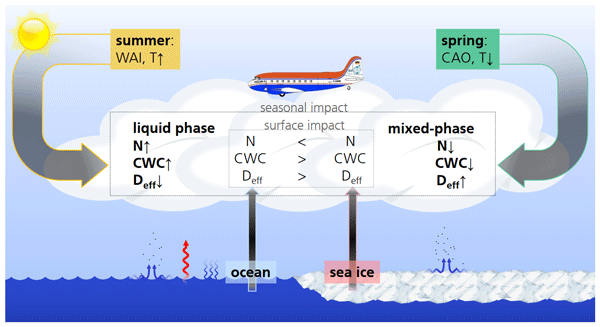
This study provides a comprehensive microphysical and thermodynamic phase analysis of low-level clouds in the northern Fram Strait, above the sea ice and the open ocean, during spring and summer. Using airborne in situ cloud data, we show that the properties of Arctic low-level clouds vary significantly with seasonal meteorological situations and surface conditions. The observations presented in this study can help one to assess the role of clouds in the Arctic climate system.
Sebastian Becker, André Ehrlich, Michael Schäfer, and Manfred Wendisch
Atmos. Chem. Phys., 23, 7015–7031, https://doi.org/10.5194/acp-23-7015-2023, https://doi.org/10.5194/acp-23-7015-2023, 2023
Short summary
Short summary
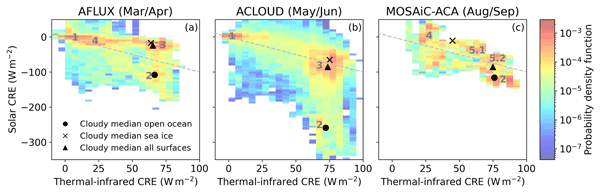
This study analyses the variability of the warming or cooling effect of clouds on the Arctic surface. Therefore, aircraft radiation measurements were performed over sea ice and open ocean during three seasonally different campaigns. It is found that clouds cool the open-ocean surface most strongly in summer. Over sea ice, clouds warm the surface in spring but have a neutral effect in summer. Due to the variable sea ice extent, clouds warm the surface during spring but cool it during late summer.
Dmitry G. Chechin, Christof Lüpkes, Jörg Hartmann, André Ehrlich, and Manfred Wendisch
Atmos. Chem. Phys., 23, 4685–4707, https://doi.org/10.5194/acp-23-4685-2023, https://doi.org/10.5194/acp-23-4685-2023, 2023
Short summary
Short summary
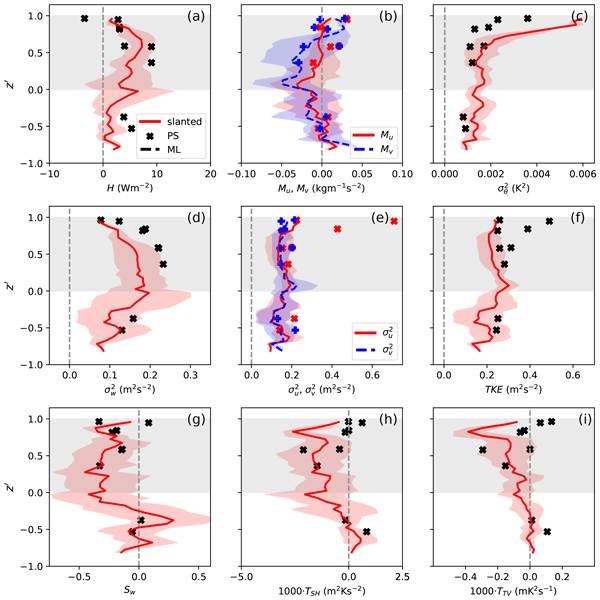
Clouds represent a very important component of the Arctic climate system, as they strongly reduce the amount of heat lost to space from the sea ice surface. Properties of clouds, as well as their persistence, strongly depend on the complex interaction of such small-scale properties as phase transitions, radiative transfer and turbulence. In this study we use airborne observations to learn more about the effect of clouds and radiative cooling on turbulence in comparison with other factors.
André Ehrlich, Martin Zöger, Andreas Giez, Vladyslav Nenakhov, Christian Mallaun, Rolf Maser, Timo Röschenthaler, Anna E. Luebke, Kevin Wolf, Bjorn Stevens, and Manfred Wendisch
Atmos. Meas. Tech., 16, 1563–1581, https://doi.org/10.5194/amt-16-1563-2023, https://doi.org/10.5194/amt-16-1563-2023, 2023
Short summary
Short summary
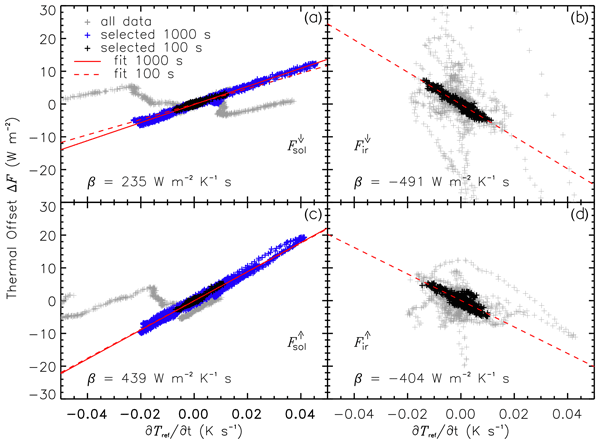
Measurements of the broadband radiative energy budget from aircraft are needed to study the effect of clouds, aerosol particles, and surface conditions on the Earth's energy budget. However, the moving aircraft introduces challenges to the instrument performance and post-processing of the data. This study introduces a new radiometer package, outlines a greatly simplifying method to correct thermal offsets, and provides exemplary measurements of solar and thermal–infrared irradiance.
Yunfan Liu, Hang Su, Siwen Wang, Chao Wei, Wei Tao, Mira L. Pöhlker, Christopher Pöhlker, Bruna A. Holanda, Ovid O. Krüger, Thorsten Hoffmann, Manfred Wendisch, Paulo Artaxo, Ulrich Pöschl, Meinrat O. Andreae, and Yafang Cheng
Atmos. Chem. Phys., 23, 251–272, https://doi.org/10.5194/acp-23-251-2023, https://doi.org/10.5194/acp-23-251-2023, 2023
Short summary
Short summary
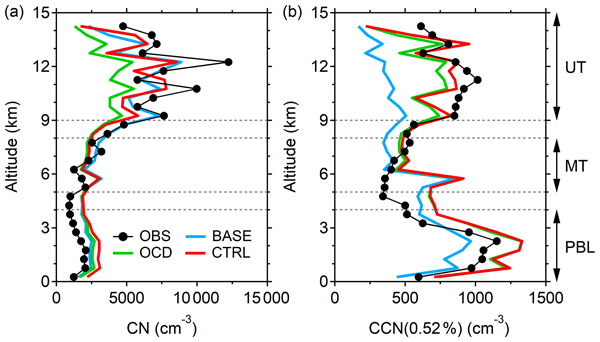
The origins of the abundant cloud condensation nuclei (CCN) in the upper troposphere (UT) of the Amazon remain unclear. With model developments of new secondary organic aerosol schemes and constrained by observation, we show that strong aerosol nucleation and condensation in the UT is triggered by biogenic organics, and organic condensation is key for UT CCN production. This UT CCN-producing mechanism may prevail over broader vegetation canopies and deserves emphasis in aerosol–climate feedback.
Sebastian Becker, André Ehrlich, Evelyn Jäkel, Tim Carlsen, Michael Schäfer, and Manfred Wendisch
Atmos. Meas. Tech., 15, 2939–2953, https://doi.org/10.5194/amt-15-2939-2022, https://doi.org/10.5194/amt-15-2939-2022, 2022
Short summary
Short summary
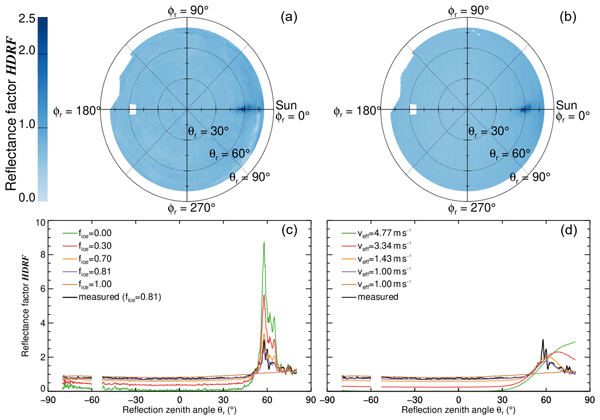
Airborne radiation measurements are used to characterize the solar directional reflection of a mixture of Arctic sea ice and open-ocean surfaces in the transition zone between both surface types. The mixture reveals reflection properties of both surface types. It is shown that the directional reflection of the mixture can be reconstructed from the directional reflection of the individual surfaces, accounting for the special conditions present in the transition zone.

Michael Schäfer, Kevin Wolf, André Ehrlich, Christoph Hallbauer, Evelyn Jäkel, Friedhelm Jansen, Anna Elizabeth Luebke, Joshua Müller, Jakob Thoböll, Timo Röschenthaler, Bjorn Stevens, and Manfred Wendisch
Atmos. Meas. Tech., 15, 1491–1509, https://doi.org/10.5194/amt-15-1491-2022, https://doi.org/10.5194/amt-15-1491-2022, 2022
Short summary
Short summary
The new airborne thermal infrared imager VELOX is introduced. It measures two-dimensional fields of spectral thermal infrared radiance or brightness temperature within the large atmospheric window. The technical specifications as well as necessary calibration and correction procedures are presented. Example measurements from the first field deployment are analysed with respect to cloud coverage and cloud top altitude.
Anna E. Luebke, André Ehrlich, Michael Schäfer, Kevin Wolf, and Manfred Wendisch
Atmos. Chem. Phys., 22, 2727–2744, https://doi.org/10.5194/acp-22-2727-2022, https://doi.org/10.5194/acp-22-2727-2022, 2022
Short summary
Short summary
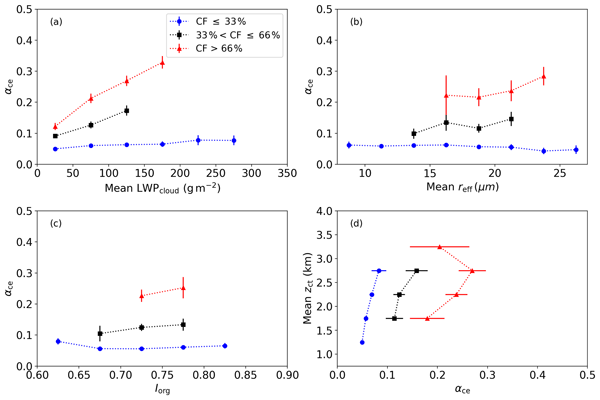
A combination of aircraft and satellite observations is used to show how the characteristics of tropical shallow clouds interact with incoming and outgoing energy. A complete depiction of these clouds is challenging to obtain, but such data are useful for understanding how models can correctly represent them. The amount of cloud is found to be the most important factor, while other cloud characteristics become increasingly impactful when more cloud is present.
Ramon Campos Braga, Barbara Ervens, Daniel Rosenfeld, Meinrat O. Andreae, Jan-David Förster, Daniel Fütterer, Lianet Hernández Pardo, Bruna A. Holanda, Tina Jurkat-Witschas, Ovid O. Krüger, Oliver Lauer, Luiz A. T. Machado, Christopher Pöhlker, Daniel Sauer, Christiane Voigt, Adrian Walser, Manfred Wendisch, Ulrich Pöschl, and Mira L. Pöhlker
Atmos. Chem. Phys., 21, 17513–17528, https://doi.org/10.5194/acp-21-17513-2021, https://doi.org/10.5194/acp-21-17513-2021, 2021
Short summary
Short summary
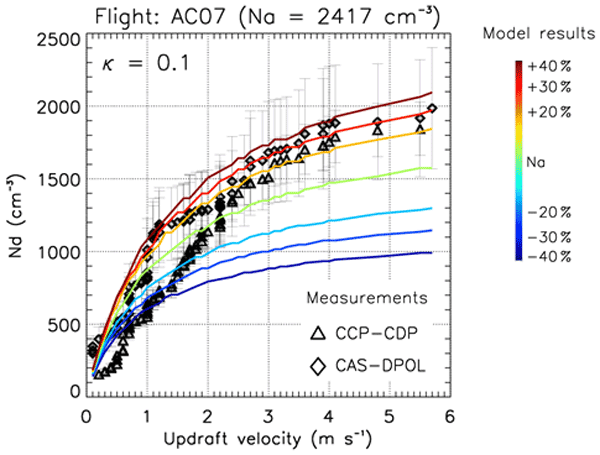
Interactions of aerosol particles with clouds represent a large uncertainty in estimates of climate change. Properties of aerosol particles control their ability to act as cloud condensation nuclei. Using aerosol measurements in the Amazon, we performed model studies to compare predicted and measured cloud droplet number concentrations at cloud bases. Our results confirm previous estimates of particle hygroscopicity in this region.
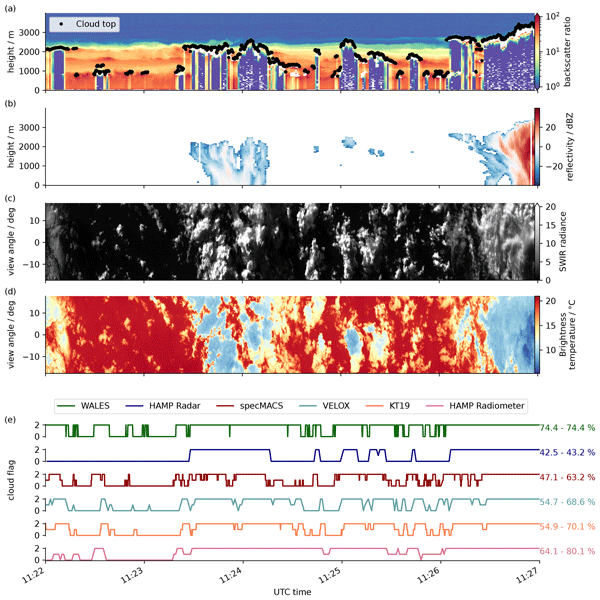
Heike Konow, Florian Ewald, Geet George, Marek Jacob, Marcus Klingebiel, Tobias Kölling, Anna E. Luebke, Theresa Mieslinger, Veronika Pörtge, Jule Radtke, Michael Schäfer, Hauke Schulz, Raphaela Vogel, Martin Wirth, Sandrine Bony, Susanne Crewell, André Ehrlich, Linda Forster, Andreas Giez, Felix Gödde, Silke Groß, Manuel Gutleben, Martin Hagen, Lutz Hirsch, Friedhelm Jansen, Theresa Lang, Bernhard Mayer, Mario Mech, Marc Prange, Sabrina Schnitt, Jessica Vial, Andreas Walbröl, Manfred Wendisch, Kevin Wolf, Tobias Zinner, Martin Zöger, Felix Ament, and Bjorn Stevens
Earth Syst. Sci. Data, 13, 5545–5563, https://doi.org/10.5194/essd-13-5545-2021, https://doi.org/10.5194/essd-13-5545-2021, 2021
Short summary
Short summary
The German research aircraft HALO took part in the research campaign EUREC4A in January and February 2020. The focus area was the tropical Atlantic east of the island of Barbados. We describe the characteristics of the 15 research flights, provide auxiliary information, derive combined cloud mask products from all instruments that observe clouds on board the aircraft, and provide code examples that help new users of the data to get started.
Cited articles
Baumgardner, D., Abel, S. J., Axisa, D., Cotton, R., Crosier, J., Field, P., Gurganus, C., Heymsfield, A., Korolev, A., Krämer, M., Lawson, P., McFarquhar, G., Ulanowski, Z., and Um, J.: Cloud Ice Properties: In Situ Measurement Challenges, Meteor. Mon., 58, https://doi.org/10.1175/amsmonographs-d-16-0011.1, 2017.
Bolton, D.: The computation of equivalent potential temperature, Mon. Weather Rev., 108, https://doi.org/10.1175/1520-0493(1980)108<1046:TCOEPT>2.0.CO;2, 1980.
Braga, R. C., Rosenfeld, D., Weigel, R., Jurkat, T., Andreae, M. O., Wendisch, M., Pöhlker, M. L., Klimach, T., Pöschl, U., Pöhlker, C., Voigt, C., Mahnke, C., Borrmann, S., Albrecht, R. I., Molleker, S., Vila, D. A., Machado, L. A. T., and Artaxo, P.: Comparing parameterized versus measured microphysical properties of tropical convective cloud bases during the ACRIDICON–CHUVA campaign, Atmos. Chem. Phys., 17, 7365–7386, https://doi.org/10.5194/acp-17-7365-2017, 2017a.
Braga, R. C., Rosenfeld, D., Weigel, R., Jurkat, T., Andreae, M. O., Wendisch, M., Pöschl, U., Voigt, C., Mahnke, C., Borrmann, S., Albrecht, R. I., Molleker, S., Vila, D. A., Machado, L. A. T., and Grulich, L.: Further evidence for CCN aerosol concentrations determining the height of warm rain and ice initiation in convective clouds over the Amazon basin, Atmos. Chem. Phys., 17, 14433–14456, https://doi.org/10.5194/acp-17-14433-2017, 2017b.
Braga, R. C., Ervens, B., Rosenfeld, D., Andreae, M. O., Förster, J.-D., Fütterer, D., Hernández Pardo, L., Holanda, B. A., Jurkat-Witschas, T., Krüger, O. O., Lauer, O., Machado, L. A. T., Pöhlker, C., Sauer, D., Voigt, C., Walser, A., Wendisch, M., Pöschl, U., and Pöhlker, M. L.: Cloud droplet formation at the base of tropical convective clouds: closure between modeling and measurement results of ACRIDICON–CHUVA, Atmos. Chem. Phys., 21, 17513–17528, https://doi.org/10.5194/acp-21-17513-2021, 2021a.
Braga, R. C., Rosenfeld, D., Krüger, O. O., Ervens, B., Holanda, B. A., Wendisch, M., Krisna, T., Pöschl, U., Andreae, M. O., Voigt, C., and Pöhlker, M. L.: Linear relationship between effective radius and precipitation water content near the top of convective clouds: measurement results from ACRIDICON–CHUVA campaign, Atmos. Chem. Phys., 21, 14079–14088, https://doi.org/10.5194/acp-21-14079-2021, 2021b.
Ervens, B., Cubison, M. J., Andrews, E., Feingold, G., Ogren, J. A., Jimenez, J. L., Quinn, P. K., Bates, T. S., Wang, J., Zhang, Q., Coe, H., Flynn, M., and Allan, J. D.: CCN predictions using simplified assumptions of organic aerosol composition and mixing state: a synthesis from six different locations, Atmos. Chem. Phys., 10, 4795–4807, https://doi.org/10.5194/acp-10-4795-2010, 2010.
Faber, S., French, J. R., and Jackson, R.: Laboratory and in-flight evaluation of measurement uncertainties from a commercial Cloud Droplet Probe (CDP), Atmos. Meas. Tech., 11, 3645–3659, https://doi.org/10.5194/amt-11-3645-2018, 2018.
Feingold, G. and Heymsfield, A. J.: Parameterizations of condensational growth of droplets for use in general circulation models, J. Atmos. Sci., 49, 2325–2342, https://doi.org/10.1175/1520-0469(1992)049<2325:POCGOD>2.0.CO;2, 1992.
Ghan, S. J., Abdul-Razzak, H., Nenes, A., Ming, Y., Liu, X., Ovchinnikov, M., Shipway, B., Meskhidze, N., Xu, J., and Shi, X.: Droplet nucleation: Physically-based parameterizations and comparative evaluation, J. Adv. Model. Earth Sy., 3, https://doi.org/10.1029/2011ms000074, 2011.
Joint Committee for Guides in Metrology: Evaluation of measurement data – Supplement 1 to the “Guide to the expression of uncertainty in measurement” – Propagation of distributions using a Monte Carlo method, Evaluation, JCGM, 101, https://doi.org/10.59161/JCGM101-2008, 2008.
Kaufmann, S., Voigt, C., Heller, R., Jurkat-Witschas, T., Krämer, M., Rolf, C., Zöger, M., Giez, A., Buchholz, B., Ebert, V., Thornberry, T., and Schumann, U.: Intercomparison of midlatitude tropospheric and lower-stratospheric water vapor measurements and comparison to ECMWF humidity data, Atmos. Chem. Phys., 18, 16729–16745, https://doi.org/10.5194/acp-18-16729-2018, 2018.
Khain, A. P. and Pinsky, M.: Warm microphysical processes, in: Physical Processes in Clouds and Cloud Modeling, Chap. 5, Cambridge University Press, Cambridge, UK, 151–343, https://doi.org/10.1017/9781139049481.006, 2018.
Khain, A. P., Beheng, K. D., Heymsfield, A., Korolev, A., Krichak, S. O., Levin, Z., Pinsky, M., Phillips, V., Prabhakaran, T., Teller, A., van den Heever, S. C., and Yano, J. I.: Representation of microphysical processes in cloud-resolving models: Spectral (bin) microphysics versus bulk parameterization, Rev. Geophys., 53, 247–322, https://doi.org/10.1002/2014RG000468, 2015.
Kleinheins, J., Shardt, N., Lohmann, U., and Marcolli, C.: The surface tension and cloud condensation nuclei (CCN) activation of sea spray aerosol particles, Atmos. Chem. Phys., 25, 881–903, https://doi.org/10.5194/acp-25-881-2025, 2025.
Köhler, H.: The nucleus in and the growth of hygroscopic droplets, T. Faraday Soc., 32, 1152–1161, 1936.
Konwar, M., Maheskumar, R. S., Kulkarni, J. R., Freud, E., Goswami, B. N., and Rosenfeld, D.: Aerosol control on depth of warm rain in convective clouds, J. Geophys. Res.-Atmos., 117, 1–10, https://doi.org/10.1029/2012JD017585, 2012.
Korolev, A. V. and Mazin, I. P.: Supersaturation of Water Vapor in Clouds, J. Atmos. Sci., 60, 2957–2974, https://doi.org/10.1175/1520-0469(2003)060<2957:SOWVIC>2.0.CO;2, 2003.
Kulkarni, G., Mei, F., Shilling, J. E., Wang, J., Reveggino, R. P., Flynn, C., Zelenyuk, A., and Fast, J.: Cloud Condensation Nuclei Closure Study Using Airborne Measurements Over the Southern Great Plains, J. Geophys. Res.-Atmos., 128, https://doi.org/10.1029/2022JD037964, 2023.
Lance, S., Brock, C. A., Rogers, D., and Gordon, J. A.: Water droplet calibration of the Cloud Droplet Probe (CDP) and in-flight performance in liquid, ice and mixed-phase clouds during ARCPAC, Atmos. Meas. Tech., 3, 1683–1706, https://doi.org/10.5194/amt-3-1683-2010, 2010.
Lance, S.: Coincidence errors in a cloud droplet probe (CDP) and a cloud and aerosol spectrometer (CAS), and the improved performance of a modified CDP, J. Atmos. Ocean. Tech., 29, 1532–1541, https://doi.org/10.1175/JTECH-D-11-00208.1, 2012.
Mallaun, C., Giez, A., and Baumann, R.: Calibration of 3-D wind measurements on a single-engine research aircraft, Atmos. Meas. Tech., 8, 3177–3196, https://doi.org/10.5194/amt-8-3177-2015, 2015.
Masson-Delmotte, V., Zhai, P., Pirani, A., Connors, S. L., Péan, C., Berger, S., Caud, N., Chen, Y., Goldfarb, L., Gomis, M. I., Huang, M., Leitzell, K., Lonnoy, E., Matthews, J. B. R., Maycock, T. K., Waterfield, T., Yelekçi, O., Yu, R., and Zhou, B. (Eds.): IPCC 2021: Climate Change 2021: The Physical Science Basis, Contribution of Working Group I to the Sixth Assessment Report of the Intergovernmental Panel on Climate Change, Cambridge University Press, Cambridge, UK, and New York, NY, USA, https://doi.org/10.1017/9781009157896, 2021.
Namdari, S., Dmitrovic, S., Chen, G., Choi, Y., Crosbie, E., DiGangi, J. P., Diskin, G. S., Ferrare, R. A., Hair, J. W., Kirschler, S., Nowak, J. B., Thornhill, K. L., Voigt, C., Vömel, H., Zeng, X., and Sorooshian, A.: Intercomparison of wind speed, temperature, and humidity data between dropsondes and aircraft in situ measurements, Atmos. Meas. Tech., 18, 4325–4345, https://doi.org/10.5194/amt-18-4325-2025, 2025.
Petters, M. D. and Kreidenweis, S. M.: A single parameter representation of hygroscopic growth and cloud condensation nucleus activity, Atmos. Chem. Phys., 7, 1961–1971, https://doi.org/10.5194/acp-7-1961-2007, 2007.
Pinsky, M., Khain, A., Mazin, I., and Korolev, A.: Analytical estimation of droplet concentration at cloud base, J. Geophys. Res.-Atmos., 117, 1–14, https://doi.org/10.1029/2012JD017753, 2012.
Pöhlker, M. L., Pöhlker, C., Ditas, F., Klimach, T., Hrabe de Angelis, I., Araújo, A., Brito, J., Carbone, S., Cheng, Y., Chi, X., Ditz, R., Gunthe, S. S., Kesselmeier, J., Könemann, T., Lavrič, J. V., Martin, S. T., Mikhailov, E., Moran-Zuloaga, D., Rose, D., Saturno, J., Su, H., Thalman, R., Walter, D., Wang, J., Wolff, S., Barbosa, H. M. J., Artaxo, P., Andreae, M. O., and Pöschl, U.: Long-term observations of cloud condensation nuclei in the Amazon rain forest – Part 1: Aerosol size distribution, hygroscopicity, and new model parametrizations for CCN prediction, Atmos. Chem. Phys., 16, 15709–15740, https://doi.org/10.5194/acp-16-15709-2016, 2016.
Pöhlker, M. L., Zhang, M., Campos Braga, R., Krüger, O. O., Pöschl, U., and Ervens, B.: Aitken mode particles as CCN in aerosol- and updraft-sensitive regimes of cloud droplet formation, Atmos. Chem. Phys., 21, 11723–11740, https://doi.org/10.5194/acp-21-11723-2021, 2021.
Reutter, P., Su, H., Trentmann, J., Simmel, M., Rose, D., Gunthe, S. S., Wernli, H., Andreae, M. O., and Pöschl, U.: Aerosol- and updraft-limited regimes of cloud droplet formation: influence of particle number, size and hygroscopicity on the activation of cloud condensation nuclei (CCN), Atmos. Chem. Phys., 9, 7067–7080, https://doi.org/10.5194/acp-9-7067-2009, 2009.
Rissler, J., Swietlicki, E., Zhou, J., Roberts, G., Andreae, M. O., Gatti, L. V., and Artaxo, P.: Physical properties of the sub-micrometer aerosol over the Amazon rain forest during the wet-to-dry season transition – comparison of modeled and measured CCN concentrations, Atmos. Chem. Phys., 4, 2119–2143, https://doi.org/10.5194/acp-4-2119-2004, 2004.
Roberts, G. C. and Nenes, a.: A Continuous-Flow Streamwise Thermal-Gradient CCN Chamber for Atmospheric Measurements, Aerosol Sci. Tech., 39, 206–221, https://doi.org/10.1080/027868290913988, 2005.
Rogers, R. R. and Yau, M. K.: A short course of cloud physics, 3rd Edn., Library of Congress, Oxford, UK, ISBN 978-0-7506-3215-7, 1989.
Romps, D. M., Latimer, K., Zhu, Q., Jurkat-Witschas, T., Mahnke, C., Prabhakaran, T., Weigel, R., and Wendisch, M.: Air pollution unable to intensify storms via warm-phase invigoration, Geophys. Res. Lett., 50, e2022GL100409, https://doi.org/10.1029/2022GL100409, 2023.
Romps, D. M.: A method for calculating reliable supersaturation reveals low values in tropical rainy-season clouds, J. Atmos. Sci., 82, 1517–1527, https://doi.org/10.1175/JAS-D-24-0265.1, 2025.
Rose, D., Gunthe, S. S., Mikhailov, E., Frank, G. P., Dusek, U., Andreae, M. O., and Pöschl, U.: Calibration and measurement uncertainties of a continuous-flow cloud condensation nuclei counter (DMT-CCNC): CCN activation of ammonium sulfate and sodium chloride aerosol particles in theory and experiment, Atmos. Chem. Phys., 8, 1153–1179, https://doi.org/10.5194/acp-8-1153-2008, 2008.
Rosenfeld, D., Liu, G., Yu, X., Zhu, Y., Dai, J., Xu, X., and Yue, Z.: High-resolution (375 m) cloud microstructure as seen from the NPP/VIIRS satellite imager, Atmos. Chem. Phys., 14, 2479–2496, https://doi.org/10.5194/acp-14-2479-2014, 2014.
Rosenfeld, D., Zheng, Y., Hashimshoni, E., Pöhlker, M. L., Jefferson, A., Pöhlker, C., Yu, X., Zhu, Y., Liu, G., Yue, Z., Fischman, B., Li, Z., Giguzin, D., Goren, T., Artaxo, P., Barbosa, H. M. J., Pöschl, U., and Andreae, M. O.: Satellite retrieval of cloud condensation nuclei concentrations by using clouds as CCN chambers, P. Natl. Acad. Sci. USA, 113, 5828–5834, https://doi.org/10.1073/pnas.1514044113, 2016.
Squires, P.: The growth of cloud drops by condensation. I. General characteristics, Aust. J. Chem., 5, https://doi.org/10.1071/CH9520059, 1952.
Stevens, B., Ament, F., Bony, S., Crewell, S., Ewald, F., Gross, S., Hansen, A., Hirsch, L., Jacob, M., Kölling, T., Konow, H., Mayer, B., Wendisch, M., Wirth, M., Wolf, K., Bakan, S., Bauer-Pfundstein, M., Brueck, M., Delanoë, J., Ehrlich, A., Farrell, D., Forde, M., Gödde, F., Grob, H., Hagen, M., Jäkel, E., Jansen, F., Klepp, C., Klingebiel, M., Mech, M., Peters, G., Rapp, M., Wing, A. A., and Zinner, T.: A high-altitude long-range aircraft configured as a cloud observatory: The NARVAL expeditions, B. Am. Meteorol. Soc., 100, 1061–1077, https://doi.org/10.1175/BAMS-D-18-0198.1, 2019.
Twomey, S.: The nuclei of natural cloud formation part II: The supersaturation in natural clouds and the variation of cloud droplet concentration, Geofisica Pura e Applicata, 43, 243–249, https://doi.org/10.1007/BF01993560, 1959.
Varghese, M. and Prabhakaran, T. V.: Reconciling observed and predicted droplet concentration at the Indian summer monsoon cloud base, Sci. Total Environ., 973, https://doi.org/10.1016/j.scitotenv.2025.179077, 2025.
Wang, J., Lee, Y.-N., Daum, P. H., Jayne, J., and Alexander, M. L.: Effects of aerosol organics on cloud condensation nucleus (CCN) concentration and first indirect aerosol effect, Atmos. Chem. Phys., 8, 6325–6339, https://doi.org/10.5194/acp-8-6325-2008, 2008.
Wendisch, M., Pöschl, U., Andreae, M. O., Machado, L. A. T., Albrecht, R., Schlager, H., Rosenfeld, D., Martin, S. T., Abdelmonem, A., Afchine, A., Araùjo, A., Artaxo, P., Aufmhoff, H., Barbosa, H. M. J., Borrmann, S., Braga, R., Buchholz, B., Cecchini, M. A., Costa, A., Curtius, J., Dollner, M., Dorf, M., Dreiling, V., Ebert, V., Ehrlich, A., Ewald, F., Fisch, G., Fix, A., Frank, F., Fütterer, D., Heckl, C., Heidelberg, F., Hüneke, T., Jäkel, E., Järvinen, E., Jurkat, T., Kanter, S., Kästner, U., Kenntner, M., Kesselmeier, J., Klimach, T., Knecht, M., Kohl, R., Kölling, T., Krämer, M., Krüger, M., Krisna, T. C., Lavric, J. V., Longo, K., Mahnke, C., Manzi, A. O., Mayer, B., Mertes, S., Minikin, A., Molleker, S., Münch, S., Nillius, B., Pfeilsticker, K., Pöhlker, C., Roiger, A., Rose, D., Rosenow, D., Sauer, D., Schnaiter, M., Schneider, J., Schulz, C., de Souza, R. A. F., Spanu, A., Stock, P., Vila, D., Voigt, C., Walser, A., Walter, D., Weigel, R., Weinzierl, B., Werner, F., Yamasoe, M. A., Ziereis, H., Zinner, T., and Zöger, M.: The ACRIDICON-CHUVA campaign: Studying tropical deep convective clouds and precipitation over Amazonia using the new German research aircraft HALO, B. Am. Meteorol. Soc., 160128144638003, https://doi.org/10.1175/BAMS-D-14-00255.1, 2016.
Zheng, Y. and Rosenfeld, D.: Linear relation between convective cloud base height and updrafts and application to satellite retrievals, Geophys. Res. Lett., 42, 6485–6491, https://doi.org/10.1002/2015GL064809, 2015.
Short summary
We introduce a new thermodynamic framework to derive water vapor supersaturation at warm cumulus cloud base from in situ measurements. The framework describes the local transition between saturated thermodynamic states as an adiabatic and reversible process under quasi-isobaric conditions, in which the latent energy released during condensation is partitioned between changes in internal energy and water-vapor expansion work.
We introduce a new thermodynamic framework to derive water vapor supersaturation at warm cumulus...


Altmetrics
Final-revised paper
Preprint