
Articles | Volume 26, issue 18
https://doi.org/10.5194/acp-26-13121-2026
© Author(s) 2026. This work is distributed under
the Creative Commons Attribution 4.0 License.
the Creative Commons Attribution 4.0 License.
https://doi.org/10.5194/acp-26-13121-2026
© Author(s) 2026. This work is distributed under
the Creative Commons Attribution 4.0 License.
the Creative Commons Attribution 4.0 License.
Research article
| 
17 Sep 2026
Research article |
| 17 Sep 2026
| 17 Sep 2026
Enhanced nocturnal N2O5-ClNO2 chemistry in Delhi under reduced NO conditions
Yijing Chen
State Key Laboratory of Regional Environment and Sustainability, School of Environment, Tsinghua University, Beijing, 100084, China
Department of Chemistry and Molecular Biology, University of Gothenburg, Gothenburg, 40530, Sweden

Department of Chemistry and Molecular Biology, University of Gothenburg, Gothenburg, 40530, Sweden
Epameinondas Tsiligiannis
Department of Chemistry and Molecular Biology, University of Gothenburg, Gothenburg, 40530, Sweden
Ravi Kant Pathak
Department of Chemistry and Molecular Biology, University of Gothenburg, Gothenburg, 40530, Sweden
Indo-Gangetic Plains Centre for Air Research and Education (IGP-CARE), Hamirpur, Uttar Pradesh, 210301, India
Jan B. C. Pettersson
Department of Chemistry and Molecular Biology, University of Gothenburg, Gothenburg, 40530, Sweden
Harsh Raj Mishra
Department of Chemistry and Molecular Biology, University of Gothenburg, Gothenburg, 40530, Sweden
Indo-Gangetic Plains Centre for Air Research and Education (IGP-CARE), Hamirpur, Uttar Pradesh, 210301, India
present address: School of Earth and Atmospheric Sciences, Queensland University of Technology, Queensland, 4001, Brisbane, Australia
Gazala Habib
Transportation Research and Injury Prevention Centre, Indian Institute of Technology Delhi, New Delhi, 110016, India
Geetam Tiwari
Department of Civil Engineering, Indian Institute of Technology Delhi, New Delhi, 110016, India
Kebin He
State Key Laboratory of Regional Environment and Sustainability, School of Environment, Tsinghua University, Beijing, 100084, China
Jingkun Jiang
CORRESPONDING AUTHOR
State Key Laboratory of Regional Environment and Sustainability, School of Environment, Tsinghua University, Beijing, 100084, China
Department of Chemistry and Molecular Biology, University of Gothenburg, Gothenburg, 40530, Sweden
Related authors
Xiaoxiao Li, Yijing Chen, Yuyang Li, Runlong Cai, Yiran Li, Chenjuan Deng, Jin Wu, Chao Yan, Hairong Cheng, Yongchun Liu, Markku Kulmala, Jiming Hao, James N. Smith, and Jingkun Jiang
Atmos. Chem. Phys., 23, 14801–14812, https://doi.org/10.5194/acp-23-14801-2023, https://doi.org/10.5194/acp-23-14801-2023, 2023
Short summary
Short summary
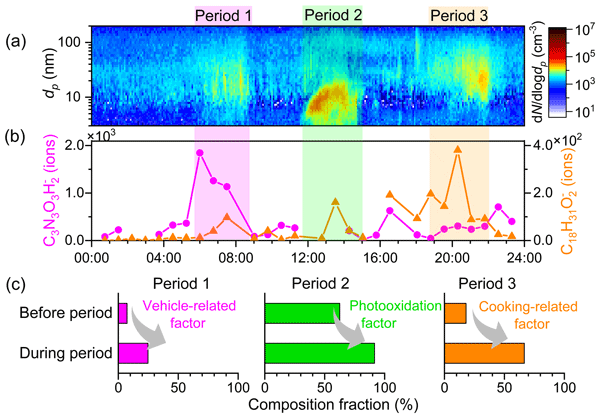
Near-continuous measurements show the composition, sources, and seasonal variations of ultrafine particles (UFPs) in urban Beijing. Vehicle and cooking emissions and new particle formation are the main sources of UFPs, and aqueous/heterogeneous processes increase UFP mode diameters. UFPs are the highest in winter due to the highest primary particle emission rates and new particle formation rates, and CHO fractions are the highest in summer due to the strongest photooxidation.
Tinghan Zhang, Wei Du, Xinran Zhang, Janne Lampilahti, Chengfeng Liu, Zehao Zou, Men Xia, Qi Yuan, Qiaozhi Zha, Jing Cai, Yiyang Wang, Tom Kokkonen, Katrianne Lehtipalo, Tuukka Petäjä, Veli-Matti Kerminen, Chao Yan, Jingkun Jiang, Yongchun Liu, and Markku Kulmala
EGUsphere, https://doi.org/10.5194/egusphere-2026-5379, https://doi.org/10.5194/egusphere-2026-5379, 2026
This preprint is open for discussion and under review for Atmospheric Chemistry and Physics (ACP).
Short summary
Short summary
New particle formation (NPF) is an important source of atmospheric aerosols, but weak events are often overlooked by traditional classification. We applied continuous nanoparticle ranking and particle size distribution normalization to four-year observations from a Finnish boreal forest and the megacity of Beijing. The results show that NPF intensity is governed by source–sink competition and that particle formation and growth are not necessarily controlled by the same atmospheric conditions.
Yarê Baker, Veronica Geretti, Sungah Kang, Rongrong Wu, Hui Wang, Quanfu He, Thorsten Hohaus, Annika Zanders, Mathias Bachner, Cheng Wu, Thomas J. Bannan, Simon P. O'Meara, Aristeides Voliotis, Mattias Hallquist, Gordon McFiggans, Sören R. Zorn, and Thomas F. Mentel
EGUsphere, https://doi.org/10.5194/egusphere-2026-4788, https://doi.org/10.5194/egusphere-2026-4788, 2026
Short summary
Short summary
Highly oxygenated molecules (HOMs) are important contributors to global organic aerosol production. The production of HOMs is based on the reaction pathways of peroxy radicals (RO2). In this work we systematically varied available RO2 reaction partners in a-pinene photooxidation experiments in an atmospheric simulation chamber. The results show which factors impact HOM formation and volatility and offer a mechanistic framework for interpreting laboratory and atmospheric observations.
Dan Liang, Hongxing Zhang, Zhenchuan Niu, Sen Wang, Weijian Zhou, Xuxiang Li, Jingjing Jia, Yifan Tao, Guowei Wang, Xue Feng, Wanyu Liu, Zhao Jin, Yongming Han, Xuefeng Lu, Jan B. C. Pettersson, and Xiangrui Kong
EGUsphere, https://doi.org/10.5194/egusphere-2026-4203, https://doi.org/10.5194/egusphere-2026-4203, 2026
This preprint is open for discussion and under review for Atmospheric Chemistry and Physics (ACP).
Short summary
Short summary
Cities dominate global CO2 emissions, yet observational evidence linking changes to climate policies is scarce. We studied Beijing and Xi’an from 2020 to 2024, measuring CO2 fluxes and tree-ring radiocarbon to quantify emissions and trace fossil sources. We find a sustained decline in urban emissions, driven by decreasing fossil fuel combustion. This is linked to structural shifts in energy and transport. These results prove that climate policies produce measurable atmospheric responses.
Maoyu Cao, Chao Yan, Yuliang Liu, Dafeng Ge, Junchao Yin, Yuanyuan Li, Tao Xu, Ziqian Wei, Jinbo Wang, Ying Zhang, Zhenning Wang, Valter Mickwitz, Ziheng Chen, Bisen Han, Jianxun Wang, Caijun Zhu, Ximeng Qi, Qiaozhi Zha, Xuguang Chi, Zhe Wang, Jian Zhao, Mikael Ehn, Wei Nie, Jingkun Jiang, and Aijun Ding
EGUsphere, https://doi.org/10.5194/egusphere-2026-3647, https://doi.org/10.5194/egusphere-2026-3647, 2026
Short summary
Short summary
Fine airborne particles affect air quality, human health, and climate, yet their molecular composition is difficult to measure. Using a newly characterized instrument that detects these molecules in real time, we carried out the first such study in an eastern Chinese city. We find that particle composition is shaped not only by molecules condensing from the air, but also by chemical reactions within the particles, with natural and human sources and regional transport all contributing.
Hengjia Ou, Yao Li, Yuqing Sha, Hui Zhou, Jingkun Jiang, and Kunpeng Chen
EGUsphere, https://doi.org/10.5194/egusphere-2026-3255, https://doi.org/10.5194/egusphere-2026-3255, 2026
Short summary
Short summary
We studied the kinetic relaxation in the formation of Criegee intermediates (CIs) from sesquiterpene ozonolysis. We found that the formation rate constant of sesquiterpene-derived CIs is initially unstable but gradually approaches a plateau that equals the rate constant of sesquiterpene ozonolysis. Our findings demonstrate that neglecting this kinetic relaxation may substantially overestimate the rate of sesquiterpene-derived CI formation and thus the CI-driven atmospheric oxidation capacity.
Linyu Gao, Stella E. I. Manavi, Claudia Mohr, Junwei Song, Cheng Wu, Thomas Leisner, Spyros N. Pandis, and Harald Saathoff
Atmos. Chem. Phys., 26, 8875–8892, https://doi.org/10.5194/acp-26-8875-2026, https://doi.org/10.5194/acp-26-8875-2026, 2026
Short summary
Short summary
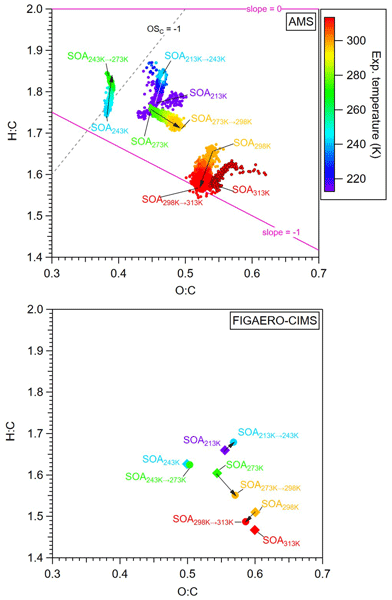
We investigate how temperature (213–313K) affects secondary organic aerosol (SOA) particles derived from isoprene and α-pinene mixtures. Isoprene's suppression on α-pinene dimer formation varied with temperatures. Particles formed at higher temperatures are more oxidized yet more volatile than those formed at lower temperatures and then warmed. This work highlights the need to consider both temperature and biogenic vapor interaction to accurately describe SOA formation, aging, and global burden.
Leo Håkansson, Epameinondas Tsiligiannis, and Cheng Wu
Atmos. Meas. Tech., 19, 3083–3094, https://doi.org/10.5194/amt-19-3083-2026, https://doi.org/10.5194/amt-19-3083-2026, 2026
Short summary
Short summary
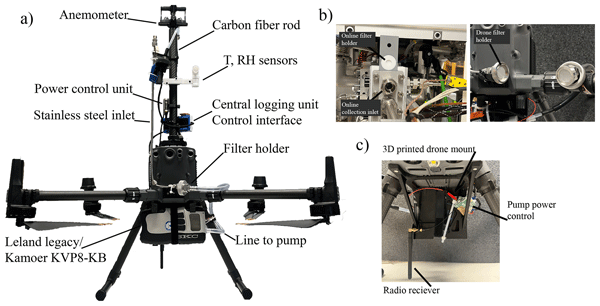
We developed a drone-based platform to collect air particles at different heights and analyze their chemical composition using advanced mass spectrometry techniques. The system offers a flexible and low-cost way to reliably measure detailed chemical information on particles in areas that traditional instruments cannot reach, providing new opportunities to study how the lower atmosphere changes and how airborne particles form and evolve.
Xiangrui Kong, Yongjian Lian, Shuai Jiang, and Jan B. C. Pettersson
Atmos. Chem. Phys., 26, 6083–6095, https://doi.org/10.5194/acp-26-6083-2026, https://doi.org/10.5194/acp-26-6083-2026, 2026
Short summary
Short summary
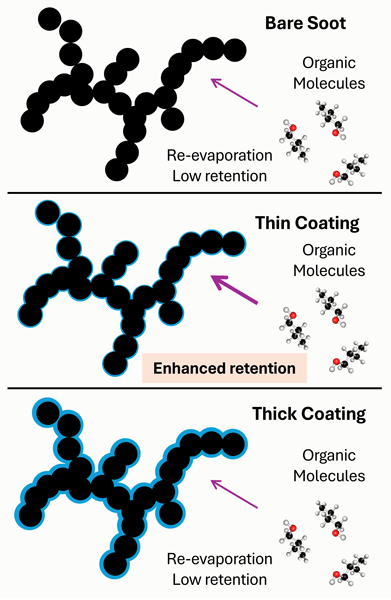
This study examines how organic films on soot particles influence how alcohol vapors are taken up and released. Laboratory measurements and computer simulations show that very thin organic coatings unexpectedly trap alcohols by forming stable surface layers, while thicker coatings favor faster release. The results reveal that particle surface structure strongly controls pollutant aging in the atmosphere, with important implications for air quality, cloud formation, and climate.
Yishuo Guo, Chao Yan, Chang Li, Chenjuan Deng, Ying Zhang, Ying Zhou, Haotian Zheng, Yueqi Jiang, Xin Chen, Wei Ma, Nina Sarnela, Zhuohui Lin, Chenjie Hua, Xiaolong Fan, Feixue Zheng, Zemin Feng, Zongcheng Wang, Yusheng Zhang, Jingkun Jiang, Bin Zhao, Markku Kulmala, and Yongchun Liu
Atmos. Chem. Phys., 26, 3467–3487, https://doi.org/10.5194/acp-26-3467-2026, https://doi.org/10.5194/acp-26-3467-2026, 2026
Short summary
Short summary
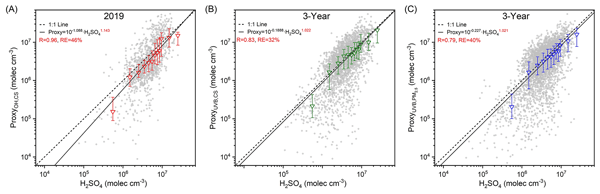
Gaseous sulfuric acid (H2SO4) is a key precursor in atmospheric cluster formation. Measurement challenges hinder its widespread observation. We conducted a three-year continuous measurement of H2SO4 in urban Beijing during 2019–2021, characterize its interannual, seasonal, and diurnal variations, and derives proxies to estimate its concentration. These proxies and parameters therein could be applicable at diverse sites and thus provide H2SO4 concentration covering many regions worldwide.
Ruilin Wan, Guangjie Zheng, Yuyang Li, Xiaolin Duan, Jingkun Jiang, and Kebin He
Atmos. Chem. Phys., 26, 1795–1807, https://doi.org/10.5194/acp-26-1795-2026, https://doi.org/10.5194/acp-26-1795-2026, 2026
Short summary
Short summary
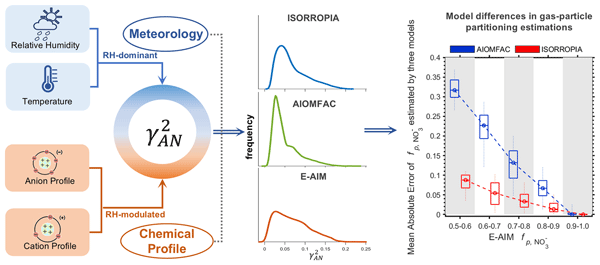
Semi-volatile NH4NO3 is a major component of atmospheric aerosols, and the activity coefficient of NH4NO3 is a key parameter in its estimations. Here we show different thermodynamic models differed in the NH4NO3 non-ideality representations, resulting in discrepancies in nitrate gas–particle partitioning predictions. The driving factors of chemical profiles and meteorological conditions are also investigated. This discrepancy can be an important source of uncertainty in air quality predictions.
Ross C. Petersen, Thomas Holst, Cheng Wu, Radovan Krejci, Jeremy K. Chan, Claudia Mohr, and Janne Rinne
Atmos. Chem. Phys., 25, 17205–17236, https://doi.org/10.5194/acp-25-17205-2025, https://doi.org/10.5194/acp-25-17205-2025, 2025
Short summary
Short summary
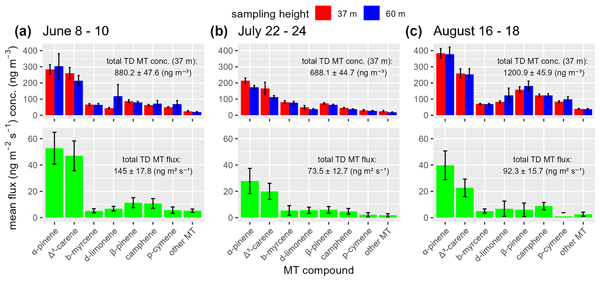
Ecosystem-scale emissions of biogenic volatile organic compounds (BVOCs) are important for atmospheric chemistry. Here we investigate boreal BVOC fluxes from a forest in central Sweden. BVOC fluxes were measured above-canopy using proton-transfer-reaction mass spectrometry, while compound-specific monoterpene (MT) fluxes were assessed using a concentration gradient method. We also evaluate the impact of chemical degradation on observed sesquiterpene (SQT) and nighttime MT fluxes.
Jiaqi Jin, Runlong Cai, Yiliang Liu, Gan Yang, Yueyang Li, Chuang Li, Lei Yao, Jingkun Jiang, Xiuhui Zhang, and Lin Wang
Atmos. Chem. Phys., 25, 17125–17138, https://doi.org/10.5194/acp-25-17125-2025, https://doi.org/10.5194/acp-25-17125-2025, 2025
Short summary
Short summary
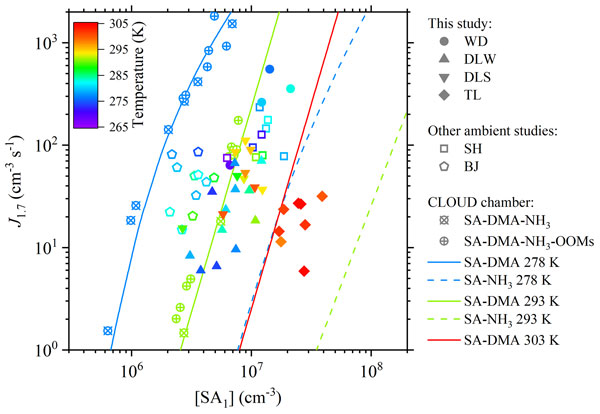
Based on observed atmospheric new particle formation events at multiple sites in eastern China, we find that sulfuric acid and dimethylamine can explain the observed atmospheric nucleation and the differences in the nucleation intensity among campaigns can be largely attributed to temperature and precursor concentrations. Our results also show that oxygenated organic molecules can make a great contribution to the initial growth of freshly nucleated particles in the real atmosphere.
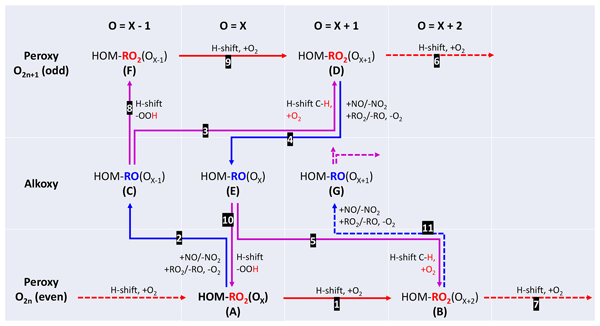
Sungah Kang, Jürgen Wildt, Iida Pullinen, Luc Vereecken, Cheng Wu, Andreas Wahner, Sören R. Zorn, and Thomas F. Mentel
Atmos. Chem. Phys., 25, 15715–15740, https://doi.org/10.5194/acp-25-15715-2025, https://doi.org/10.5194/acp-25-15715-2025, 2025
Short summary
Short summary
Highly oxygenated organic molecules by atmospheric oxidation of plant emitted monoterpenes are important components in secondary organic aerosol formation. Autoxidation of organic peroxy radicals is one important pathway of their formation. We show that isomerization of highly oxygenated alkoxy radicals leads to highly oxygenated peroxy radicals that continue the autoxidation chain. Alkoxy-peroxy steps may dominate the formation of highly oxygenated molecules at high nitrogen oxide levels.
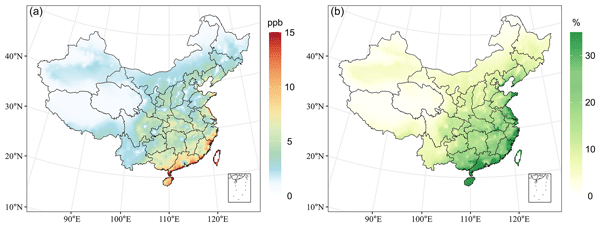
Zhenyu Luo, Li Peng, Zhaofeng Lv, Junchao Zhao, Tingkun He, Wen Yi, Yongyue Wang, Kebin He, and Huan Liu
Atmos. Chem. Phys., 25, 13635–13649, https://doi.org/10.5194/acp-25-13635-2025, https://doi.org/10.5194/acp-25-13635-2025, 2025
Short summary
Short summary
This study explores how shipping emissions affect ozone pollution in China. By combining atmospheric simulation and machine learning, we show that shipping emissions increase ozone levels by an average of 3.5 ppb nationwide, with large differences depending on location and season. Our findings highlight that controlling shipping emissions together with land-based sources is critical for improving air quality.
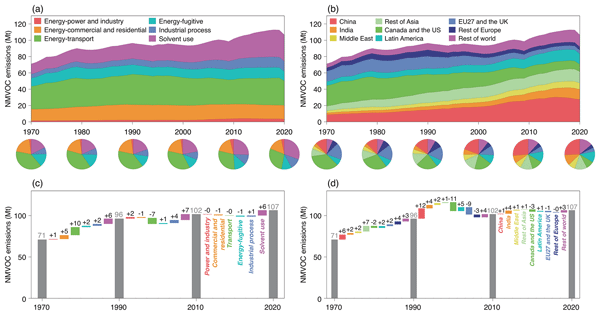
Ruochong Xu, Hanchen Ma, Jingxian Li, Dan Tong, Liu Yan, Lanyuan Wang, Xinying Qin, Qingyang Xiao, Xizhe Yan, Hanwen Hu, Yujia Fu, Nana Wu, Huaxuan Wang, Yuexuanzi Wang, Xiaodong Liu, Guannan Geng, Kebin He, and Qiang Zhang
Atmos. Chem. Phys., 25, 12675–12700, https://doi.org/10.5194/acp-25-12675-2025, https://doi.org/10.5194/acp-25-12675-2025, 2025
Short summary
Short summary
In this study, we developed a new global emission inventory for non-methane volatile organic compounds (NMVOC) for the period of 1970–2020, with a focus on improving the representation of NMVOC-emission-related technologies. Our analysis revealed that activity growth, technology advancements, and policy-driven emission controls were key driving forces of NMVOC emission changes, but their roles were different across sectors and regions.
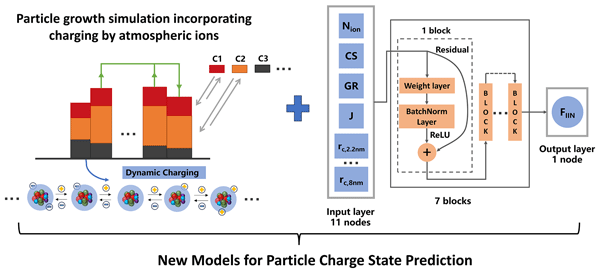
Pan Wang, Yue Zhao, Jiandong Wang, Veli-Matti Kerminen, Jingkun Jiang, and Chenxi Li
Atmos. Chem. Phys., 25, 7431–7446, https://doi.org/10.5194/acp-25-7431-2025, https://doi.org/10.5194/acp-25-7431-2025, 2025
Short summary
Short summary
We developed a numerical model to investigate the evolution of the charge state of newly formed atmospheric particles. Based on the simulation results, we successfully employed neural networks to predict particle charge states and estimate ion-induced nucleation rates. This study provides new insights into the dynamics of particle charging and introduces advanced methods for evaluating ion-induced nucleation in atmospheric research.
Xiaolin Duan, Guangjie Zheng, Chuchu Chen, Qiang Zhang, and Kebin He
Atmos. Chem. Phys., 25, 3919–3928, https://doi.org/10.5194/acp-25-3919-2025, https://doi.org/10.5194/acp-25-3919-2025, 2025
Short summary
Short summary
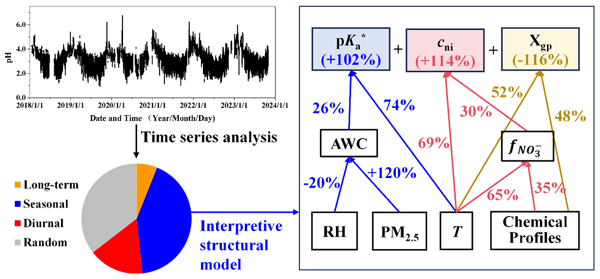
Aerosol acidity is an important parameter in atmospheric chemistry, while its driving factors, especially chemical profiles versus meteorological conditions, are not yet fully understood. Here, we established a hierarchical quantitative analysis framework to understand the driving factors of aerosol acidity on different timescales. Its application in Changzhou, China, revealed distinct driving factors and corresponding mechanisms of aerosol acidity from annual trends to random residuals.
Shuwen Guo, Xuan Zheng, Xiao He, Lewei Zeng, Liqiang He, Xian Wu, Yifei Dai, Zihao Huang, Ting Chen, Shupei Xiao, Yan You, Sheng Xiang, Shaojun Zhang, Jingkun Jiang, and Ye Wu
Atmos. Chem. Phys., 25, 2695–2705, https://doi.org/10.5194/acp-25-2695-2025, https://doi.org/10.5194/acp-25-2695-2025, 2025
Short summary
Short summary
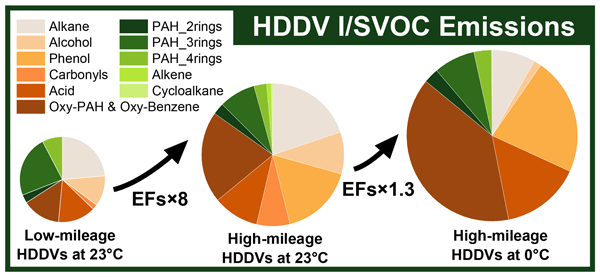
We considered two potential influencing factors of heavy-duty diesel vehicle emissions that are rarely mentioned in the literature: cumulative mileage and ambient temperatures. The results suggest that prolonged use of heavy-duty diesel vehicles and low ambient temperatures leads to reduced engine combustion efficiency, which in turn increases tailpipe emissions significantly.
Wen Yi, Xiaotong Wang, Tingkun He, Huan Liu, Zhenyu Luo, Zhaofeng Lv, and Kebin He
Earth Syst. Sci. Data, 17, 277–292, https://doi.org/10.5194/essd-17-277-2025, https://doi.org/10.5194/essd-17-277-2025, 2025
Short summary
Short summary
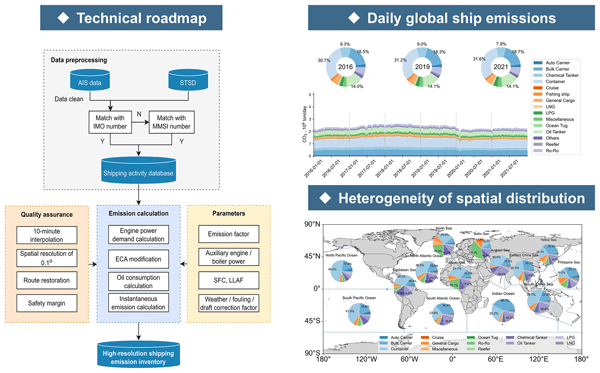
This study presents a detailed global dataset on ship emissions, covering the years 2013 and 2016–2021, using advanced modeling techniques. The dataset includes emissions data for four types of greenhouse gases and five types of air pollutants. The data, available for research, offer valuable insights into ship emission spatiotemporal patterns by vessel type and age, providing a solid data foundation for fine-scale scientific research and shipping emission mitigation.
Diego Aliaga, Victoria A. Sinclair, Radovan Krejci, Marcos Andrade, Paulo Artaxo, Luis Blacutt, Runlong Cai, Samara Carbone, Yvette Gramlich, Liine Heikkinen, Dominic Heslin-Rees, Wei Huang, Veli-Matti Kerminen, Alkuin Maximilian Koenig, Markku Kulmala, Paolo Laj, Valeria Mardoñez-Balderrama, Claudia Mohr, Isabel Moreno, Pauli Paasonen, Wiebke Scholz, Karine Sellegri, Laura Ticona, Gaëlle Uzu, Fernando Velarde, Alfred Wiedensohler, Doug Worsnop, Cheng Wu, Chen Xuemeng, Qiaozhi Zha, and Federico Bianchi
Aerosol Research, 3, 15–44, https://doi.org/10.5194/ar-3-15-2025, https://doi.org/10.5194/ar-3-15-2025, 2025
Short summary
Short summary
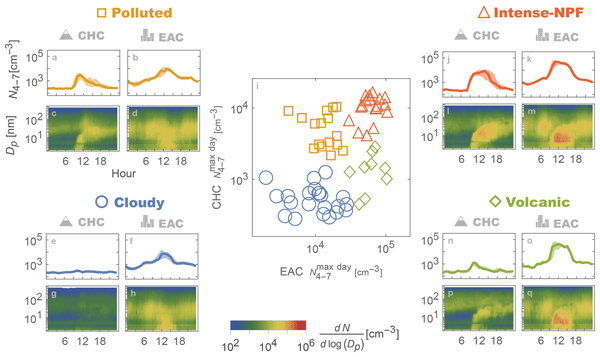
This study examines new particle formation (NPF) in the Bolivian Andes at Chacaltaya mountain (CHC) and the urban El Alto–La Paz area (EAC). Days are clustered into four categories based on NPF intensity. Differences in particle size, precursor gases, and pollution levels are found. High NPF intensities increased Aitken mode particle concentrations at both sites, while volcanic influence selectively diminished NPF intensity at CHC but not EAC. This study highlights NPF dynamics in the Andes.
Zhaojin An, Rujing Yin, Xinyan Zhao, Xiaoxiao Li, Yuyang Li, Yi Yuan, Junchen Guo, Yiqi Zhao, Xue Li, Dandan Li, Yaowei Li, Dongbin Wang, Chao Yan, Kebin He, Douglas R. Worsnop, Frank N. Keutsch, and Jingkun Jiang
Atmos. Chem. Phys., 24, 13793–13810, https://doi.org/10.5194/acp-24-13793-2024, https://doi.org/10.5194/acp-24-13793-2024, 2024
Short summary
Short summary
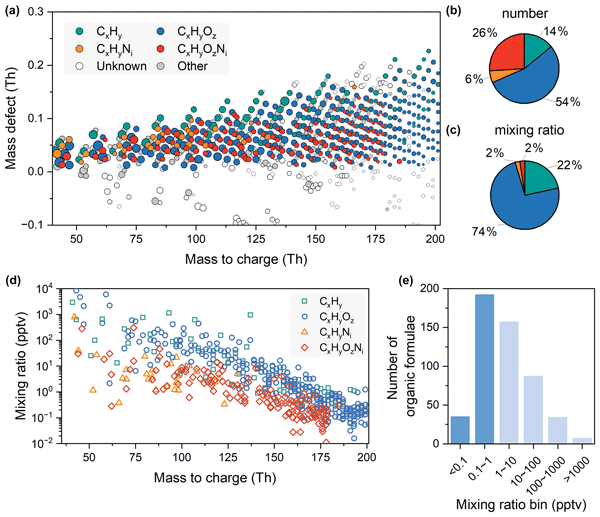
Online Vocus-PTR measurements show the compositions and seasonal variations in organic vapors in urban Beijing. With enhanced sensitivity and mass resolution, various species at a level of sub-parts per trillion (ppt) and organics with multiple oxygens (≥ 3) were observed. The fast photooxidation process in summer leads to an increase in both concentration and proportion of organics with multiple oxygens, while, in other seasons, the variations in them could be influenced by mixed sources.
Liu Yan, Qiang Zhang, Bo Zheng, and Kebin He
Earth Syst. Sci. Data, 16, 4497–4509, https://doi.org/10.5194/essd-16-4497-2024, https://doi.org/10.5194/essd-16-4497-2024, 2024
Short summary
Short summary
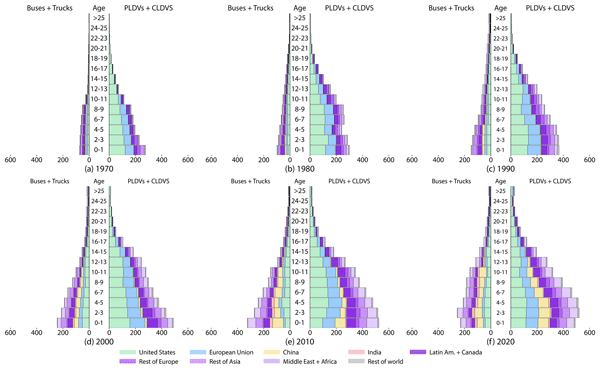
A new database of fuel-, vehicle-type-, and age-specific CO2 emissions from global on-road vehicles from 1970 to 2020 is developed with the fleet turnover model built in this study. Based on this database, the evolution of the global vehicle stock over 50 years is analyzed, the dominant emission contributors by vehicle and fuel type are identified, and the age distribution of on-road CO2 emissions is characterized further.
Liyuan Zhou, Qianyun Liu, Christian M. Salvador, Michael Le Breton, Mattias Hallquist, Jian Zhen Yu, Chak K. Chan, and Åsa M. Hallquist
Atmos. Chem. Phys., 24, 11045–11061, https://doi.org/10.5194/acp-24-11045-2024, https://doi.org/10.5194/acp-24-11045-2024, 2024
Short summary
Short summary
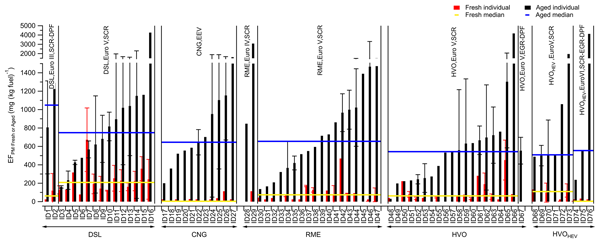
Our research on city bus emissions reveals that alternative fuels (compressed natural gas and biofuels) reduce fresh particle emissions compared to diesel. However, all fuels lead to secondary air pollution. Aiming at guiding better environmental policies, we studied 76 buses using advanced emission measurement techniques. This work sheds light on the complex effects of bus fuels on urban air quality, emphasizing the need for comprehensive evaluations of future transportation technologies.
Jiewen Shen, Bin Zhao, Shuxiao Wang, An Ning, Yuyang Li, Runlong Cai, Da Gao, Biwu Chu, Yang Gao, Manish Shrivastava, Jingkun Jiang, Xiuhui Zhang, and Hong He
Atmos. Chem. Phys., 24, 10261–10278, https://doi.org/10.5194/acp-24-10261-2024, https://doi.org/10.5194/acp-24-10261-2024, 2024
Short summary
Short summary
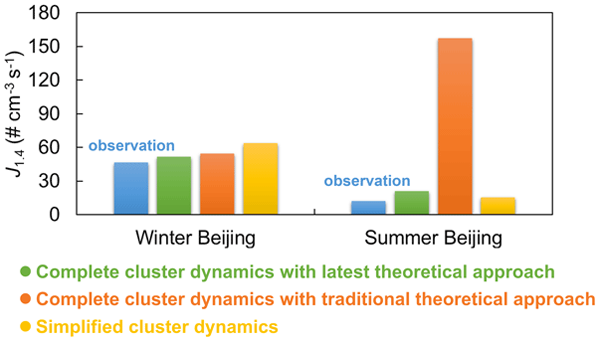
We extensively compare various cluster-dynamics-based parameterizations for sulfuric acid–dimethylamine nucleation and identify a newly developed parameterization derived from Atmospheric Cluster Dynamic Code (ACDC) simulations as being the most reliable one. This study offers a valuable reference for developing parameterizations of other nucleation systems and is meaningful for the accurate quantification of the environmental and climate impacts of new particle formation.
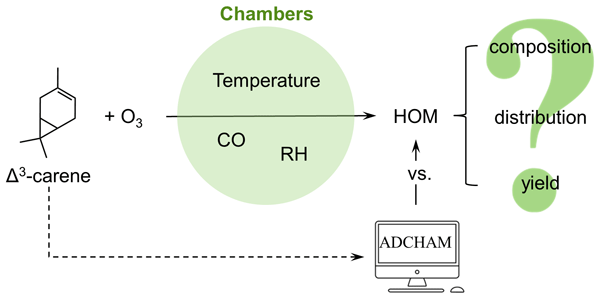
Yuanyuan Luo, Ditte Thomsen, Emil Mark Iversen, Pontus Roldin, Jane Tygesen Skønager, Linjie Li, Michael Priestley, Henrik B. Pedersen, Mattias Hallquist, Merete Bilde, Marianne Glasius, and Mikael Ehn
Atmos. Chem. Phys., 24, 9459–9473, https://doi.org/10.5194/acp-24-9459-2024, https://doi.org/10.5194/acp-24-9459-2024, 2024
Short summary
Short summary
∆3-carene is abundantly emitted from vegetation, but its atmospheric oxidation chemistry has received limited attention. We explored highly oxygenated organic molecule (HOM) formation from ∆3-carene ozonolysis in chambers and investigated the impact of temperature and relative humidity on HOM formation. Our findings provide new insights into ∆3-carene oxidation pathways and their potential to impact atmospheric aerosols.
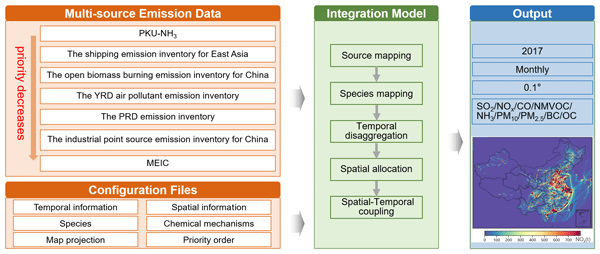
Nana Wu, Guannan Geng, Ruochong Xu, Shigan Liu, Xiaodong Liu, Qinren Shi, Ying Zhou, Yu Zhao, Huan Liu, Yu Song, Junyu Zheng, Qiang Zhang, and Kebin He
Earth Syst. Sci. Data, 16, 2893–2915, https://doi.org/10.5194/essd-16-2893-2024, https://doi.org/10.5194/essd-16-2893-2024, 2024
Short summary
Short summary
The commonly used method for developing large-scale air pollutant emission datasets for China faces challenges due to limited availability of detailed parameter information. In this study, we develop an efficient integrated framework to gather such information by harmonizing seven heterogeneous inventories from five research institutions. Emission characterizations are analyzed and validated, demonstrating that the dataset provides more accurate emission magnitudes and spatiotemporal patterns.
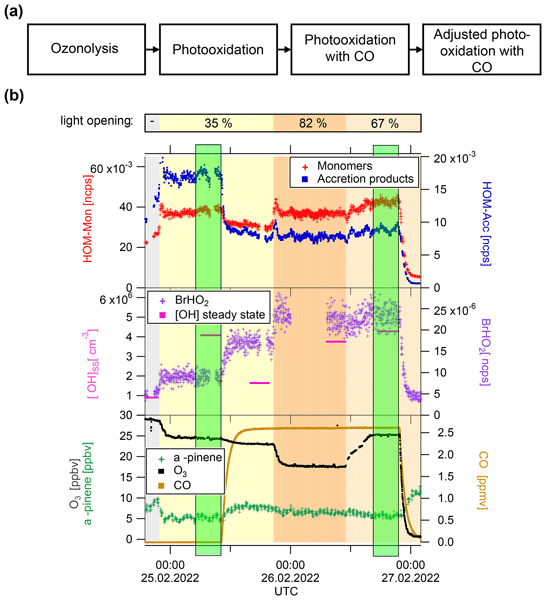
Yarê Baker, Sungah Kang, Hui Wang, Rongrong Wu, Jian Xu, Annika Zanders, Quanfu He, Thorsten Hohaus, Till Ziehm, Veronica Geretti, Thomas J. Bannan, Simon P. O'Meara, Aristeidis Voliotis, Mattias Hallquist, Gordon McFiggans, Sören R. Zorn, Andreas Wahner, and Thomas F. Mentel
Atmos. Chem. Phys., 24, 4789–4807, https://doi.org/10.5194/acp-24-4789-2024, https://doi.org/10.5194/acp-24-4789-2024, 2024
Short summary
Short summary
Highly oxygenated organic molecules are important contributors to secondary organic aerosol. Their yield depends on detailed atmospheric chemical composition. One important parameter is the ratio of hydroperoxy radicals to organic peroxy radicals (HO2/RO2), and we show that higher HO2/RO2 ratios lower the secondary organic aerosol yield. This is of importance as laboratory studies are often biased towards organic peroxy radicals.
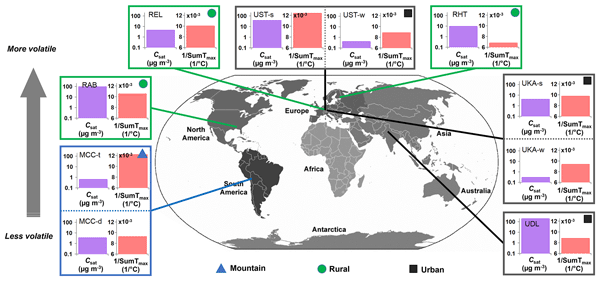
Wei Huang, Cheng Wu, Linyu Gao, Yvette Gramlich, Sophie L. Haslett, Joel Thornton, Felipe D. Lopez-Hilfiker, Ben H. Lee, Junwei Song, Harald Saathoff, Xiaoli Shen, Ramakrishna Ramisetty, Sachchida N. Tripathi, Dilip Ganguly, Feng Jiang, Magdalena Vallon, Siegfried Schobesberger, Taina Yli-Juuti, and Claudia Mohr
Atmos. Chem. Phys., 24, 2607–2624, https://doi.org/10.5194/acp-24-2607-2024, https://doi.org/10.5194/acp-24-2607-2024, 2024
Short summary
Short summary
We present distinct molecular composition and volatility of oxygenated organic aerosol particles in different rural, urban, and mountain environments. We do a comprehensive investigation of the relationship between the chemical composition and volatility of oxygenated organic aerosol particles across different systems and environments. This study provides implications for volatility descriptions of oxygenated organic aerosol particles in different model frameworks.
Jing Cai, Juha Sulo, Yifang Gu, Sebastian Holm, Runlong Cai, Steven Thomas, Almuth Neuberger, Fredrik Mattsson, Marco Paglione, Stefano Decesari, Matteo Rinaldi, Rujing Yin, Diego Aliaga, Wei Huang, Yuanyuan Li, Yvette Gramlich, Giancarlo Ciarelli, Lauriane Quéléver, Nina Sarnela, Katrianne Lehtipalo, Nora Zannoni, Cheng Wu, Wei Nie, Juha Kangasluoma, Claudia Mohr, Markku Kulmala, Qiaozhi Zha, Dominik Stolzenburg, and Federico Bianchi
Atmos. Chem. Phys., 24, 2423–2441, https://doi.org/10.5194/acp-24-2423-2024, https://doi.org/10.5194/acp-24-2423-2024, 2024
Short summary
Short summary
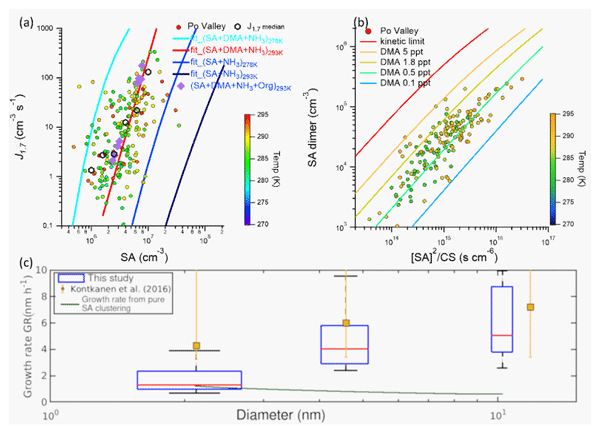
By combining field measurements, simulations and recent chamber experiments, we investigate new particle formation (NPF) and growth in the Po Valley, where both haze and frequent NPF occur. Our results show that sulfuric acid, ammonia and amines are the dominant NPF precursors there. A high NPF rate and a lower condensation sink lead to a greater survival probability for newly formed particles, highlighting the importance of gas-to-particle conversion for aerosol concentrations.
Ying Zhang, Duzitian Li, Xu-Cheng He, Wei Nie, Chenjuan Deng, Runlong Cai, Yuliang Liu, Yishuo Guo, Chong Liu, Yiran Li, Liangduo Chen, Yuanyuan Li, Chenjie Hua, Tingyu Liu, Zongcheng Wang, Jiali Xie, Lei Wang, Tuukka Petäjä, Federico Bianchi, Ximeng Qi, Xuguang Chi, Pauli Paasonen, Yongchun Liu, Chao Yan, Jingkun Jiang, Aijun Ding, and Markku Kulmala
Atmos. Chem. Phys., 24, 1873–1893, https://doi.org/10.5194/acp-24-1873-2024, https://doi.org/10.5194/acp-24-1873-2024, 2024
Short summary
Short summary
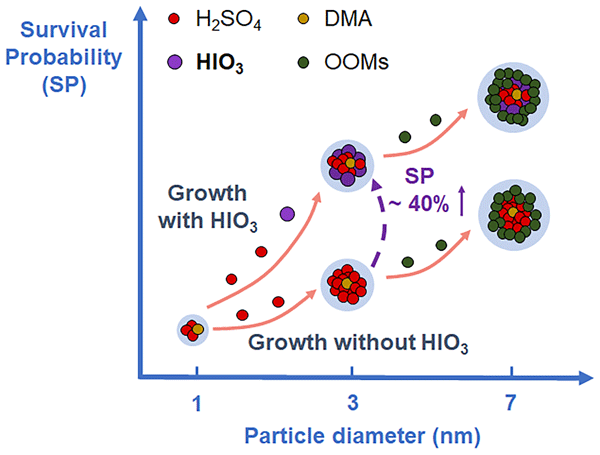
This study conducts a long-term observation of gaseous iodine oxoacids in two Chinese megacities, revealing their ubiquitous presence with peak concentrations (up to 0.1 pptv) in summer. Our analysis suggests a mix of terrestrial and marine sources for iodine. Additionally, iodic acid is identified as a notable contributor to sub-3 nm particle growth and particle survival probability.
Arto Heitto, Cheng Wu, Diego Aliaga, Luis Blacutt, Xuemeng Chen, Yvette Gramlich, Liine Heikkinen, Wei Huang, Radovan Krejci, Paolo Laj, Isabel Moreno, Karine Sellegri, Fernando Velarde, Kay Weinhold, Alfred Wiedensohler, Qiaozhi Zha, Federico Bianchi, Marcos Andrade, Kari E. J. Lehtinen, Claudia Mohr, and Taina Yli-Juuti
Atmos. Chem. Phys., 24, 1315–1328, https://doi.org/10.5194/acp-24-1315-2024, https://doi.org/10.5194/acp-24-1315-2024, 2024
Short summary
Short summary
Particle growth at the Chacaltaya station in Bolivia was simulated based on measured vapor concentrations and ambient conditions. Major contributors to the simulated growth were low-volatility organic compounds (LVOCs). Also, sulfuric acid had major role when volcanic activity was occurring in the area. This study provides insight on nanoparticle growth at this high-altitude Southern Hemispheric site and hence contributes to building knowledge of early growth of atmospheric particles.
Xiaoxiao Li, Yijing Chen, Yuyang Li, Runlong Cai, Yiran Li, Chenjuan Deng, Jin Wu, Chao Yan, Hairong Cheng, Yongchun Liu, Markku Kulmala, Jiming Hao, James N. Smith, and Jingkun Jiang
Atmos. Chem. Phys., 23, 14801–14812, https://doi.org/10.5194/acp-23-14801-2023, https://doi.org/10.5194/acp-23-14801-2023, 2023
Short summary
Short summary
Near-continuous measurements show the composition, sources, and seasonal variations of ultrafine particles (UFPs) in urban Beijing. Vehicle and cooking emissions and new particle formation are the main sources of UFPs, and aqueous/heterogeneous processes increase UFP mode diameters. UFPs are the highest in winter due to the highest primary particle emission rates and new particle formation rates, and CHO fractions are the highest in summer due to the strongest photooxidation.
Mark Joseph Campmier, Jonathan Gingrich, Saumya Singh, Nisar Baig, Shahzad Gani, Adithi Upadhya, Pratyush Agrawal, Meenakshi Kushwaha, Harsh Raj Mishra, Ajay Pillarisetti, Sreekanth Vakacherla, Ravi Kant Pathak, and Joshua S. Apte
Atmos. Meas. Tech., 16, 4357–4374, https://doi.org/10.5194/amt-16-4357-2023, https://doi.org/10.5194/amt-16-4357-2023, 2023
Short summary
Short summary
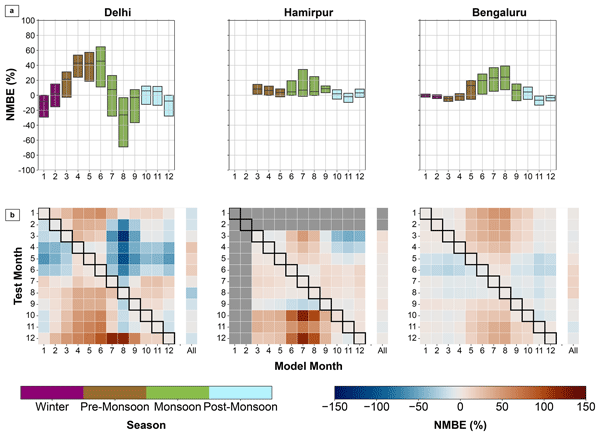
We studied a low-cost air pollution sensor called PurpleAir PA-II in three different locations in India (Delhi, Hamirpur, and Bangalore) to characterize its performance. We compared its signal to more expensive reference sensors and found that the PurpleAir sensor was precise but inaccurate without calibration. We created a custom calibration equation for each location, which improved the accuracy of the PurpleAir sensor, and found that calibrations should be adjusted for different seasons.
Chupeng Zhang, Shangfei Hai, Yang Gao, Yuhang Wang, Shaoqing Zhang, Lifang Sheng, Bin Zhao, Shuxiao Wang, Jingkun Jiang, Xin Huang, Xiaojing Shen, Junying Sun, Aura Lupascu, Manish Shrivastava, Jerome D. Fast, Wenxuan Cheng, Xiuwen Guo, Ming Chu, Nan Ma, Juan Hong, Qiaoqiao Wang, Xiaohong Yao, and Huiwang Gao
Atmos. Chem. Phys., 23, 10713–10730, https://doi.org/10.5194/acp-23-10713-2023, https://doi.org/10.5194/acp-23-10713-2023, 2023
Short summary
Short summary
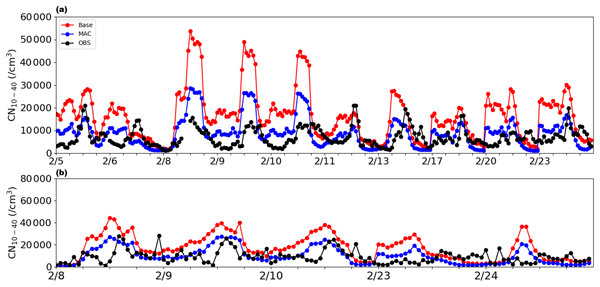
New particle formation is an important source of atmospheric particles, exerting critical influences on global climate. Numerical models are vital tools to understanding atmospheric particle evolution, which, however, suffer from large biases in simulating particle numbers. Here we improve the model chemical processes governing particle sizes and compositions. The improved model reveals substantial contributions of newly formed particles to climate through effects on cloud condensation nuclei.
Dimitri Castarède, Zoé Brasseur, Yusheng Wu, Zamin A. Kanji, Markus Hartmann, Lauri Ahonen, Merete Bilde, Markku Kulmala, Tuukka Petäjä, Jan B. C. Pettersson, Berko Sierau, Olaf Stetzer, Frank Stratmann, Birgitta Svenningsson, Erik Swietlicki, Quynh Thu Nguyen, Jonathan Duplissy, and Erik S. Thomson
Atmos. Meas. Tech., 16, 3881–3899, https://doi.org/10.5194/amt-16-3881-2023, https://doi.org/10.5194/amt-16-3881-2023, 2023
Short summary
Short summary
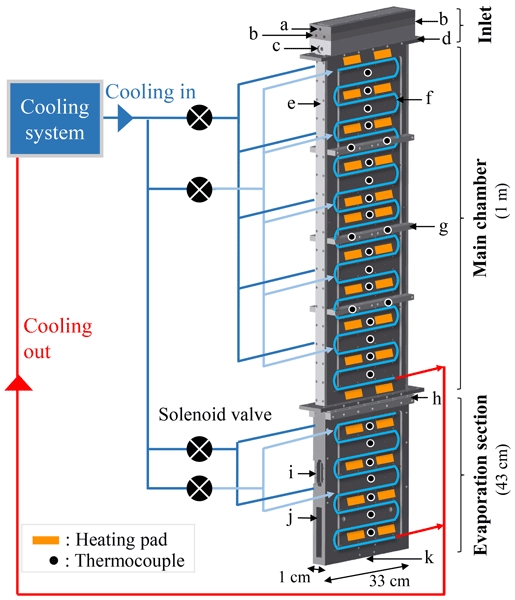
Clouds play a key role in Earth’s climate by influencing the surface energy budget. Certain types of atmospheric aerosols, called ice-nucleating particles (INPs), induce the formation of ice in clouds and, thus, often initiate precipitation formation. The Portable Ice Nucleation Chamber 2 (PINCii) is a new instrument developed to study ice formation and to conduct ambient measurements of INPs, allowing us to investigate the sources and properties of the atmospheric aerosols that can act as INPs.
Yuyang Li, Jiewen Shen, Bin Zhao, Runlong Cai, Shuxiao Wang, Yang Gao, Manish Shrivastava, Da Gao, Jun Zheng, Markku Kulmala, and Jingkun Jiang
Atmos. Chem. Phys., 23, 8789–8804, https://doi.org/10.5194/acp-23-8789-2023, https://doi.org/10.5194/acp-23-8789-2023, 2023
Short summary
Short summary
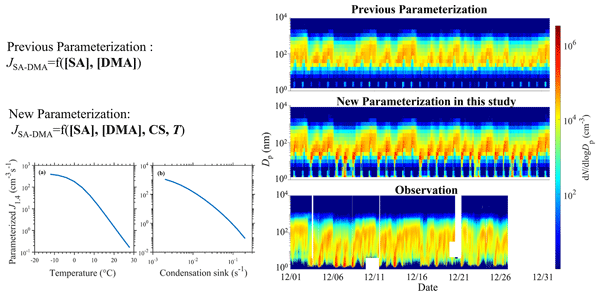
We set up a new parameterization for 1.4 nm particle formation rates from sulfuric acid–dimethylamine (SA–DMA) nucleation, fully including the effects of coagulation scavenging and cluster stability. Incorporating the new parameterization into 3-D chemical transport models, we achieved better consistencies between simulation results and observation data. This new parameterization provides new insights into atmospheric nucleation simulations and its effects on atmospheric pollution or health.
Emelie L. Graham, Cheng Wu, David M. Bell, Amelie Bertrand, Sophie L. Haslett, Urs Baltensperger, Imad El Haddad, Radovan Krejci, Ilona Riipinen, and Claudia Mohr
Atmos. Chem. Phys., 23, 7347–7362, https://doi.org/10.5194/acp-23-7347-2023, https://doi.org/10.5194/acp-23-7347-2023, 2023
Short summary
Short summary
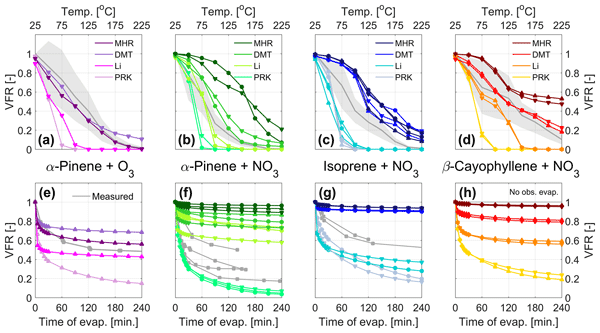
The volatility of an aerosol particle is an important parameter for describing its atmospheric lifetime. We studied the volatility of secondary organic aerosols from nitrate-initiated oxidation of three biogenic precursors with experimental methods and model simulations. We saw higher volatility than for the corresponding ozone system, and our simulations produced variable results with different parameterizations which warrant a re-evaluation of the treatment of the nitrate functional group.
Chenxi Li, Yuyang Li, Xiaoxiao Li, Runlong Cai, Yaxin Fan, Xiaohui Qiao, Rujing Yin, Chao Yan, Yishuo Guo, Yongchun Liu, Jun Zheng, Veli-Matti Kerminen, Markku Kulmala, Huayun Xiao, and Jingkun Jiang
Atmos. Chem. Phys., 23, 6879–6896, https://doi.org/10.5194/acp-23-6879-2023, https://doi.org/10.5194/acp-23-6879-2023, 2023
Short summary
Short summary
New particle formation and growth in polluted environments are not fully understood despite intensive research. We applied a cluster dynamics–multicomponent sectional model to simulate the new particle formation events observed in Beijing, China. The simulation approximately captures how the events evolve. Further diagnosis shows that the oxygenated organic molecules may have been under-detected, and modulating their abundance leads to significantly improved simulation–observation agreement.
Yishuo Guo, Chenjuan Deng, Aino Ovaska, Feixue Zheng, Chenjie Hua, Junlei Zhan, Yiran Li, Jin Wu, Zongcheng Wang, Jiali Xie, Ying Zhang, Tingyu Liu, Yusheng Zhang, Boying Song, Wei Ma, Yongchun Liu, Chao Yan, Jingkun Jiang, Veli-Matti Kerminen, Men Xia, Tuomo Nieminen, Wei Du, Tom Kokkonen, and Markku Kulmala
Atmos. Chem. Phys., 23, 6663–6690, https://doi.org/10.5194/acp-23-6663-2023, https://doi.org/10.5194/acp-23-6663-2023, 2023
Short summary
Short summary
Using the comprehensive datasets, we investigated the long-term variations of air pollutants during winter in Beijing from 2019 to 2022 and analyzed the characteristics of atmospheric pollution cocktail during different short-term special events (e.g., Beijing Winter Olympics, COVID lockdown and Chinese New Year) associated with substantial emission reductions. Our results are useful in planning more targeted and sustainable long-term pollution control plans.
Rujing Yin, Xiaoxiao Li, Chao Yan, Runlong Cai, Ying Zhou, Juha Kangasluoma, Nina Sarnela, Janne Lampilahti, Tuukka Petäjä, Veli-Matti Kerminen, Federico Bianchi, Markku Kulmala, and Jingkun Jiang
Atmos. Chem. Phys., 23, 5279–5296, https://doi.org/10.5194/acp-23-5279-2023, https://doi.org/10.5194/acp-23-5279-2023, 2023
Short summary
Short summary
Atmospheric cluster ions are important constituents in the atmosphere. However, the quantitative research on their compositions is still limited, especially in urban environments. Here we demonstrate the feasibility of an in situ quantification method of cluster ions measured by a high-resolution mass spectrometer and reveal their governing factors, sources, and sinks in urban Beijing through quantitative analysis of cluster ions, reagent ions, neutral molecules, and condensation sink.

Qiaozhi Zha, Wei Huang, Diego Aliaga, Otso Peräkylä, Liine Heikkinen, Alkuin Maximilian Koenig, Cheng Wu, Joonas Enroth, Yvette Gramlich, Jing Cai, Samara Carbone, Armin Hansel, Tuukka Petäjä, Markku Kulmala, Douglas Worsnop, Victoria Sinclair, Radovan Krejci, Marcos Andrade, Claudia Mohr, and Federico Bianchi
Atmos. Chem. Phys., 23, 4559–4576, https://doi.org/10.5194/acp-23-4559-2023, https://doi.org/10.5194/acp-23-4559-2023, 2023
Short summary
Short summary
We investigate the chemical composition of atmospheric cluster ions from January to May 2018 at the high-altitude research station Chacaltaya (5240 m a.s.l.) in the Bolivian Andes. With state-of-the-art mass spectrometers and air mass history analysis, the measured cluster ions exhibited distinct diurnal and seasonal patterns, some of which contributed to new particle formation. Our study will improve the understanding of atmospheric ions and their role in high-altitude new particle formation.
Philip T. M. Carlsson, Luc Vereecken, Anna Novelli, François Bernard, Steven S. Brown, Bellamy Brownwood, Changmin Cho, John N. Crowley, Patrick Dewald, Peter M. Edwards, Nils Friedrich, Juliane L. Fry, Mattias Hallquist, Luisa Hantschke, Thorsten Hohaus, Sungah Kang, Jonathan Liebmann, Alfred W. Mayhew, Thomas Mentel, David Reimer, Franz Rohrer, Justin Shenolikar, Ralf Tillmann, Epameinondas Tsiligiannis, Rongrong Wu, Andreas Wahner, Astrid Kiendler-Scharr, and Hendrik Fuchs
Atmos. Chem. Phys., 23, 3147–3180, https://doi.org/10.5194/acp-23-3147-2023, https://doi.org/10.5194/acp-23-3147-2023, 2023
Short summary
Short summary
The investigation of the night-time oxidation of the most abundant hydrocarbon, isoprene, in chamber experiments shows the importance of reaction pathways leading to epoxy products, which could enhance particle formation, that have so far not been accounted for. The chemical lifetime of organic nitrates from isoprene is long enough for the majority to be further oxidized the next day by daytime oxidants.

Jing Cai, Kaspar R. Daellenbach, Cheng Wu, Yan Zheng, Feixue Zheng, Wei Du, Sophie L. Haslett, Qi Chen, Markku Kulmala, and Claudia Mohr
Atmos. Meas. Tech., 16, 1147–1165, https://doi.org/10.5194/amt-16-1147-2023, https://doi.org/10.5194/amt-16-1147-2023, 2023
Short summary
Short summary
We introduce the offline application of FIGAERO-CIMS by analyzing Teflon and quartz filter samples that were collected at a typical urban site in Beijing with the deposition time varying from 30 min to 24 h. This method provides a feasible, simple, and quantitative way to investigate the molecular composition and volatility of OA compounds by using FIGAERO-CIMS to analyze offline samples.
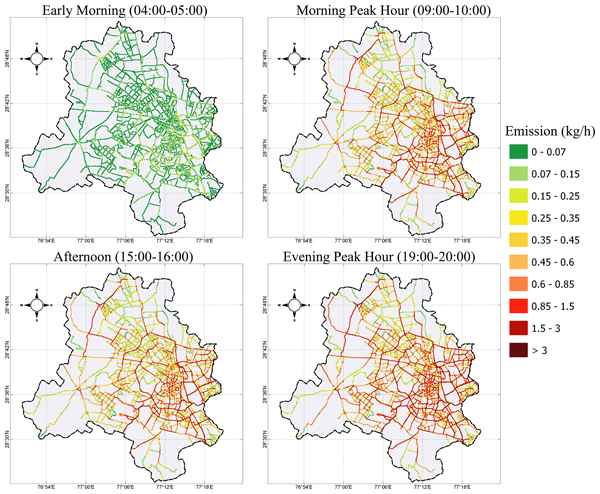
Akash Biswal, Vikas Singh, Leeza Malik, Geetam Tiwari, Khaiwal Ravindra, and Suman Mor
Earth Syst. Sci. Data, 15, 661–680, https://doi.org/10.5194/essd-15-661-2023, https://doi.org/10.5194/essd-15-661-2023, 2023
Short summary
Short summary
This paper presents detailed emission estimates of on-road traffic exhaust emissions of nine major pollutants for Delhi. We use advanced traffic data and emission factors as a function of speed to estimate emissions for each hour and 100 m × 100 m spatial resolution. We examine the source contribution according to the vehicle, fuel, road and Euro types to identify the most polluting vehicles. These data are useful for high-resolution air quality modelling for developing suitable strategies.
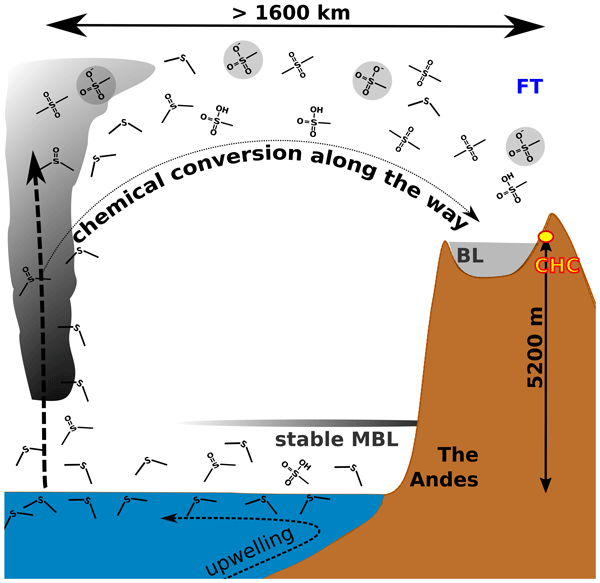
Wiebke Scholz, Jiali Shen, Diego Aliaga, Cheng Wu, Samara Carbone, Isabel Moreno, Qiaozhi Zha, Wei Huang, Liine Heikkinen, Jean Luc Jaffrezo, Gaelle Uzu, Eva Partoll, Markus Leiminger, Fernando Velarde, Paolo Laj, Patrick Ginot, Paolo Artaxo, Alfred Wiedensohler, Markku Kulmala, Claudia Mohr, Marcos Andrade, Victoria Sinclair, Federico Bianchi, and Armin Hansel
Atmos. Chem. Phys., 23, 895–920, https://doi.org/10.5194/acp-23-895-2023, https://doi.org/10.5194/acp-23-895-2023, 2023
Short summary
Short summary
Dimethyl sulfide (DMS), emitted from the ocean, is the most abundant biogenic sulfur emission into the atmosphere. OH radicals, among others, can oxidize DMS to sulfuric and methanesulfonic acid, which are relevant for aerosol formation. We quantified DMS and nearly all DMS oxidation products with novel mass spectrometric instruments for gas and particle phase at the high mountain station Chacaltaya (5240 m a.s.l.) in the Bolivian Andes in free tropospheric air after long-range transport.
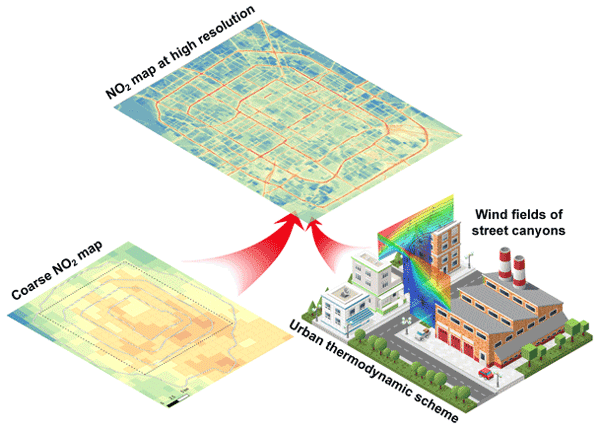
Zhaofeng Lv, Zhenyu Luo, Fanyuan Deng, Xiaotong Wang, Junchao Zhao, Lucheng Xu, Tingkun He, Yingzhi Zhang, Huan Liu, and Kebin He
Atmos. Chem. Phys., 22, 15685–15702, https://doi.org/10.5194/acp-22-15685-2022, https://doi.org/10.5194/acp-22-15685-2022, 2022
Short summary
Short summary
This study developed a hybrid model, CMAQ-RLINE_URBAN, to predict the urban NO2 concentrations at a high spatial resolution. To estimate the influence of various street canyons on the dispersion of air pollutants, a new parameterization scheme was established based on computational fluid dynamics and machine learning methods. This work created a new method to identify the characteristics of vehicle-related air pollution at both city and street scales simultaneously and accurately.
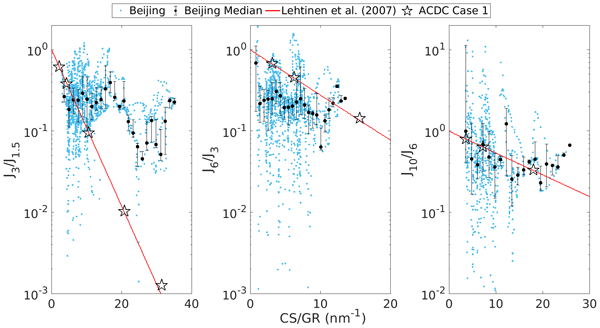
Santeri Tuovinen, Runlong Cai, Veli-Matti Kerminen, Jingkun Jiang, Chao Yan, Markku Kulmala, and Jenni Kontkanen
Atmos. Chem. Phys., 22, 15071–15091, https://doi.org/10.5194/acp-22-15071-2022, https://doi.org/10.5194/acp-22-15071-2022, 2022
Short summary
Short summary
We compare observed survival probabilities of atmospheric particles from Beijing, China, with survival probabilities based on analytical formulae and model simulations. We find observed survival probabilities under polluted conditions at smaller sizes to be higher, while at larger sizes they are lower than or similar to theoretical survival probabilities. Uncertainties in condensation sink and growth rate are unlikely to explain higher-than-predicted survival probabilities at smaller sizes.
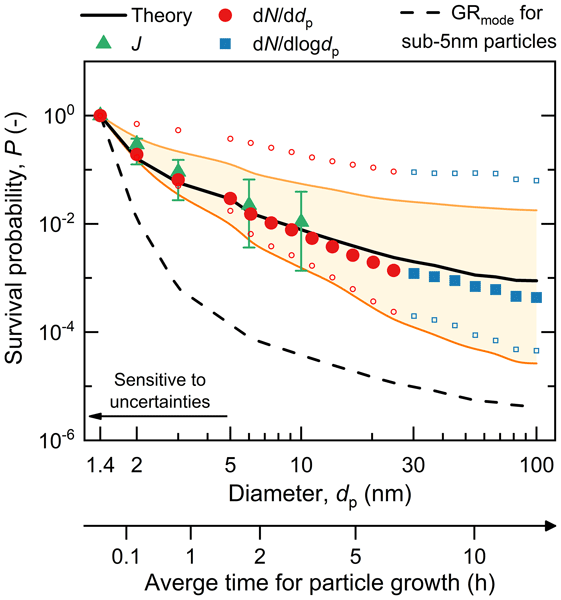
Runlong Cai, Chenjuan Deng, Dominik Stolzenburg, Chenxi Li, Junchen Guo, Veli-Matti Kerminen, Jingkun Jiang, Markku Kulmala, and Juha Kangasluoma
Atmos. Chem. Phys., 22, 14571–14587, https://doi.org/10.5194/acp-22-14571-2022, https://doi.org/10.5194/acp-22-14571-2022, 2022
Short summary
Short summary
The survival probability of new particles is the key parameter governing their influences on the atmosphere and climate, yet the knowledge of particle survival in the atmosphere is rather limited. We propose methods to compute the size-resolved particle survival probability and validate them using simulations and measurements from diverse environments. Using these methods, we could explain particle survival from the cluster size to the cloud condensation nuclei size.
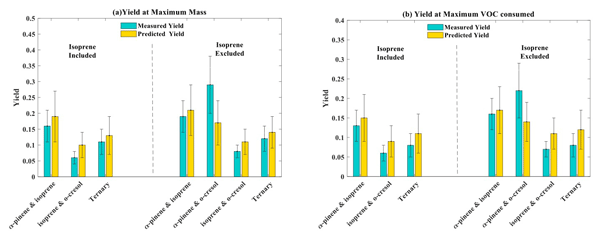
Aristeidis Voliotis, Mao Du, Yu Wang, Yunqi Shao, M. Rami Alfarra, Thomas J. Bannan, Dawei Hu, Kelly L. Pereira, Jaqueline F. Hamilton, Mattias Hallquist, Thomas F. Mentel, and Gordon McFiggans
Atmos. Chem. Phys., 22, 14147–14175, https://doi.org/10.5194/acp-22-14147-2022, https://doi.org/10.5194/acp-22-14147-2022, 2022
Short summary
Short summary
Mixing experiments are crucial and highly beneficial for our understanding of atmospheric chemical interactions. However, interpretation quickly becomes complex, and both the experimental design and evaluation need to be scrutinised carefully. Advanced online and offline compositional measurements can reveal substantial additional information to aid in the interpretation of yield data, including components uniquely found in mixtures and property changes in SOA formed from mixtures of VOCs.
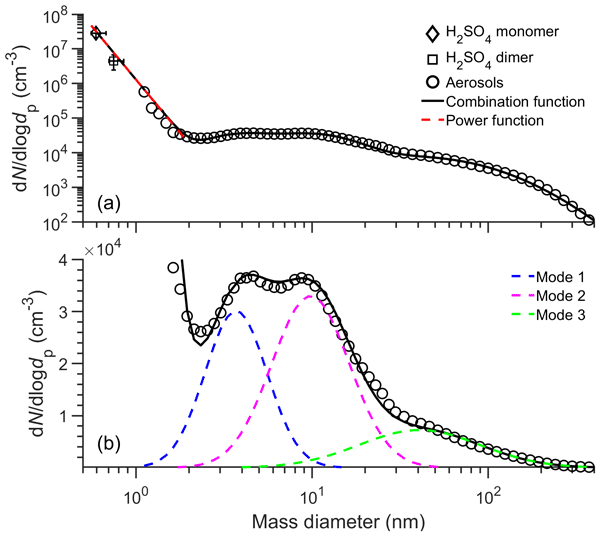
Chenjuan Deng, Yiran Li, Chao Yan, Jin Wu, Runlong Cai, Dongbin Wang, Yongchun Liu, Juha Kangasluoma, Veli-Matti Kerminen, Markku Kulmala, and Jingkun Jiang
Atmos. Chem. Phys., 22, 13569–13580, https://doi.org/10.5194/acp-22-13569-2022, https://doi.org/10.5194/acp-22-13569-2022, 2022
Short summary
Short summary
The size distributions of urban atmospheric particles convey important information on their origins and impacts. This study investigates the characteristics of typical particle size distributions and key gaseous precursors in the long term in urban Beijing. A fitting function is proposed to represent and help interpret size distribution including particles and gaseous precursors. In addition to NPF (new particle formation) as the major source, vehicles can emit sub-3 nm particles as well
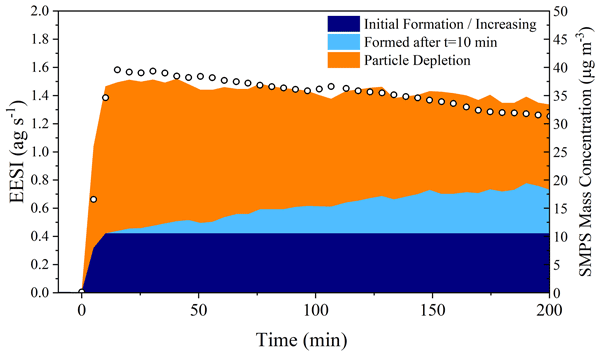
David M. Bell, Cheng Wu, Amelie Bertrand, Emelie Graham, Janne Schoonbaert, Stamatios Giannoukos, Urs Baltensperger, Andre S. H. Prevot, Ilona Riipinen, Imad El Haddad, and Claudia Mohr
Atmos. Chem. Phys., 22, 13167–13182, https://doi.org/10.5194/acp-22-13167-2022, https://doi.org/10.5194/acp-22-13167-2022, 2022
Short summary
Short summary
A series of studies designed to investigate the evolution of organic aerosol were performed in an atmospheric simulation chamber, using a common oxidant found at night (NO3). The chemical composition steadily changed from its initial composition via different chemical reactions that were taking place inside of the aerosol particle. These results show that the composition of organic aerosol steadily changes during its lifetime in the atmosphere.
Chao Yan, Yicheng Shen, Dominik Stolzenburg, Lubna Dada, Ximeng Qi, Simo Hakala, Anu-Maija Sundström, Yishuo Guo, Antti Lipponen, Tom V. Kokkonen, Jenni Kontkanen, Runlong Cai, Jing Cai, Tommy Chan, Liangduo Chen, Biwu Chu, Chenjuan Deng, Wei Du, Xiaolong Fan, Xu-Cheng He, Juha Kangasluoma, Joni Kujansuu, Mona Kurppa, Chang Li, Yiran Li, Zhuohui Lin, Yiliang Liu, Yuliang Liu, Yiqun Lu, Wei Nie, Jouni Pulliainen, Xiaohui Qiao, Yonghong Wang, Yifan Wen, Ye Wu, Gan Yang, Lei Yao, Rujing Yin, Gen Zhang, Shaojun Zhang, Feixue Zheng, Ying Zhou, Antti Arola, Johanna Tamminen, Pauli Paasonen, Yele Sun, Lin Wang, Neil M. Donahue, Yongchun Liu, Federico Bianchi, Kaspar R. Daellenbach, Douglas R. Worsnop, Veli-Matti Kerminen, Tuukka Petäjä, Aijun Ding, Jingkun Jiang, and Markku Kulmala
Atmos. Chem. Phys., 22, 12207–12220, https://doi.org/10.5194/acp-22-12207-2022, https://doi.org/10.5194/acp-22-12207-2022, 2022
Short summary
Short summary
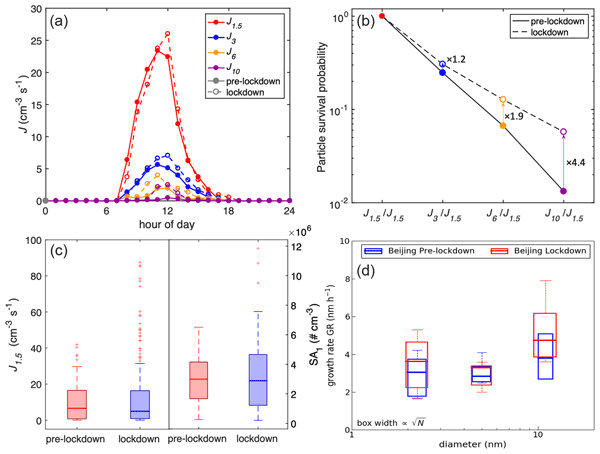
Atmospheric new particle formation (NPF) is a dominant source of atmospheric ultrafine particles. In urban environments, traffic emissions are a major source of primary pollutants, but their contribution to NPF remains under debate. During the COVID-19 lockdown, traffic emissions were significantly reduced, providing a unique chance to examine their relevance to NPF. Based on our comprehensive measurements, we demonstrate that traffic emissions alone are not able to explain the NPF in Beijing.
Mengying Li, Shaocai Yu, Xue Chen, Zhen Li, Yibo Zhang, Zhe Song, Weiping Liu, Pengfei Li, Xiaoye Zhang, Meigen Zhang, Yele Sun, Zirui Liu, Caiping Sun, Jingkun Jiang, Shuxiao Wang, Benjamin N. Murphy, Kiran Alapaty, Rohit Mathur, Daniel Rosenfeld, and John H. Seinfeld
Atmos. Chem. Phys., 22, 11845–11866, https://doi.org/10.5194/acp-22-11845-2022, https://doi.org/10.5194/acp-22-11845-2022, 2022
Short summary
Short summary
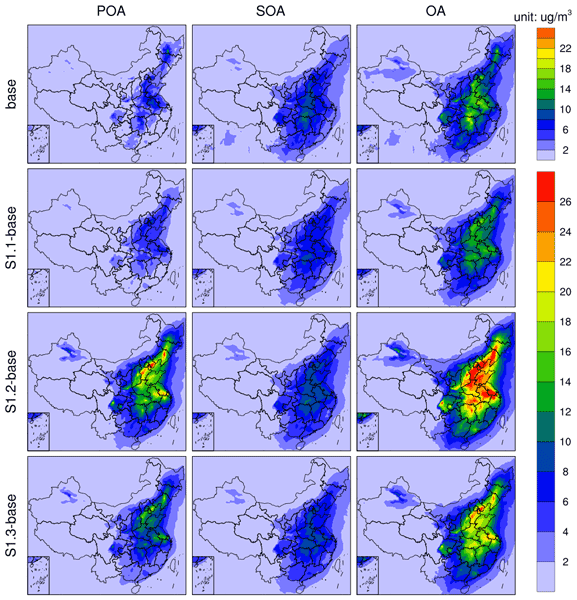
This study constructed an emission inventory of condensable particulate matter (CPM) in China with a focus on organic aerosols (OAs), based on collected CPM emission information. The results show that OA emissions are enhanced twofold for the years 2014 and 2017 after the inclusion of CPM in the new inventory. Sensitivity cases demonstrated the significant contributions of CPM emissions from stationary combustion and mobile sources to primary, secondary, and total OA concentrations.
Runlong Cai, Ella Häkkinen, Chao Yan, Jingkun Jiang, Markku Kulmala, and Juha Kangasluoma
Atmos. Chem. Phys., 22, 11529–11541, https://doi.org/10.5194/acp-22-11529-2022, https://doi.org/10.5194/acp-22-11529-2022, 2022
Short summary
Short summary
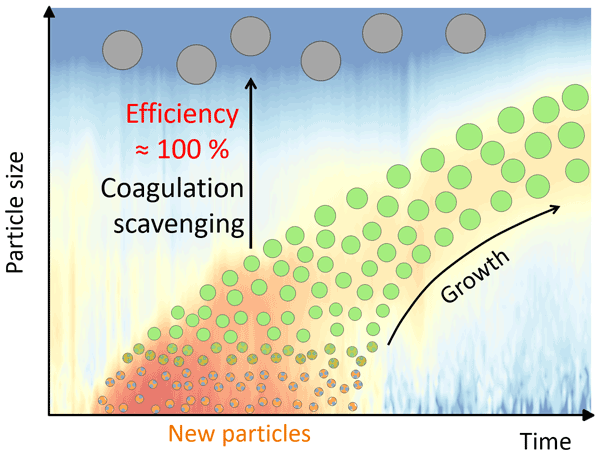
The influences of new particle formation on the climate and air quality are governed by particle survival, which has been under debate due to uncertainties in the coagulation sink. Here we measure the coagulation coefficient of sub-10 nm particles and demonstrate that collisions between the freshly nucleated and background particles can effectively lead to coagulation. We further show that the effective coagulation sink is consistent with the new particle formation measured in urban Beijing.
Yawen Kong, Bo Zheng, Qiang Zhang, and Kebin He
Atmos. Chem. Phys., 22, 10769–10788, https://doi.org/10.5194/acp-22-10769-2022, https://doi.org/10.5194/acp-22-10769-2022, 2022
Short summary
Short summary
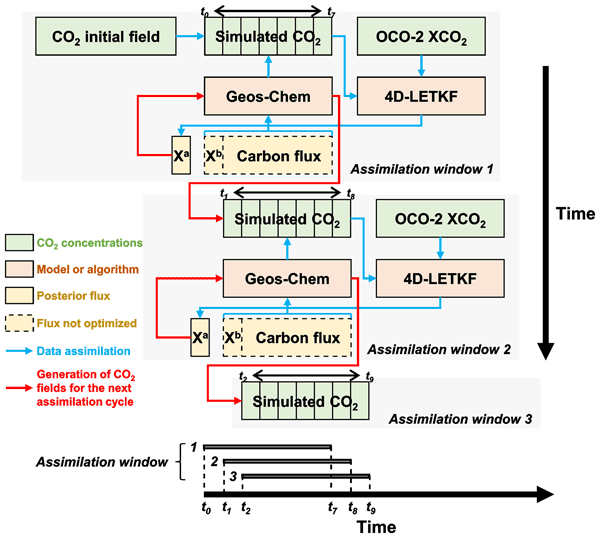
We developed a Bayesian atmospheric inversion system based on the 4D local ensemble transform Kalman filter (4D-LETKF) algorithm coupled with GEOS-Chem from the latest Orbiting Carbon Observatory-2 (OCO-2) V10r XCO2 retrievals. This is the first adaptation of 4D-LETKF to an OCO-2-based global carbon inversion system. We inferred global gridded carbon fluxes and investigated their magnitudes, variations, and partitioning schemes to understand the global and regional carbon budgets for 2015–2020.
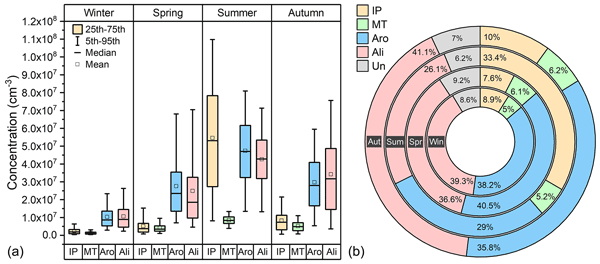
Yishuo Guo, Chao Yan, Yuliang Liu, Xiaohui Qiao, Feixue Zheng, Ying Zhang, Ying Zhou, Chang Li, Xiaolong Fan, Zhuohui Lin, Zemin Feng, Yusheng Zhang, Penggang Zheng, Linhui Tian, Wei Nie, Zhe Wang, Dandan Huang, Kaspar R. Daellenbach, Lei Yao, Lubna Dada, Federico Bianchi, Jingkun Jiang, Yongchun Liu, Veli-Matti Kerminen, and Markku Kulmala
Atmos. Chem. Phys., 22, 10077–10097, https://doi.org/10.5194/acp-22-10077-2022, https://doi.org/10.5194/acp-22-10077-2022, 2022
Short summary
Short summary
Gaseous oxygenated organic molecules (OOMs) are able to form atmospheric aerosols, which will impact on human health and climate change. Here, we find that OOMs in urban Beijing are dominated by anthropogenic sources, i.e. aromatic (29 %–41 %) and aliphatic (26 %–41 %) OOMs. They are also the main contributors to the condensational growth of secondary organic aerosols (SOAs). Therefore, the restriction on anthropogenic VOCs is crucial for the reduction of SOAs and haze formation.
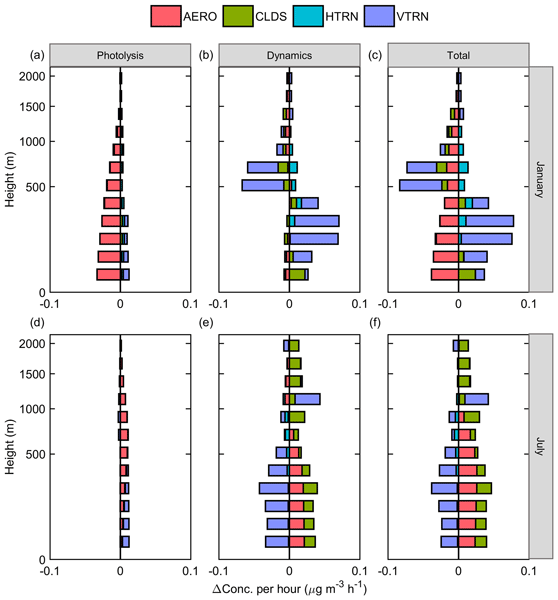
Jiandong Wang, Jia Xing, Shuxiao Wang, Rohit Mathur, Jiaping Wang, Yuqiang Zhang, Chao Liu, Jonathan Pleim, Dian Ding, Xing Chang, Jingkun Jiang, Peng Zhao, Shovan Kumar Sahu, Yuzhi Jin, David C. Wong, and Jiming Hao
Atmos. Chem. Phys., 22, 5147–5156, https://doi.org/10.5194/acp-22-5147-2022, https://doi.org/10.5194/acp-22-5147-2022, 2022
Short summary
Short summary
Aerosols reduce surface solar radiation and change the photolysis rate and planetary boundary layer stability. In this study, the online coupled meteorological and chemistry model was used to explore the detailed pathway of how aerosol direct effects affect secondary inorganic aerosol. The effects through the dynamics pathway act as an equally or even more important route compared with the photolysis pathway in affecting secondary aerosol concentration in both summer and winter.
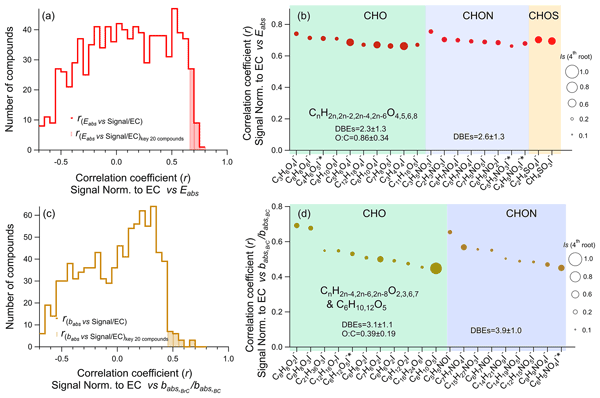
Jing Cai, Cheng Wu, Jiandong Wang, Wei Du, Feixue Zheng, Simo Hakala, Xiaolong Fan, Biwu Chu, Lei Yao, Zemin Feng, Yongchun Liu, Yele Sun, Jun Zheng, Chao Yan, Federico Bianchi, Markku Kulmala, Claudia Mohr, and Kaspar R. Daellenbach
Atmos. Chem. Phys., 22, 1251–1269, https://doi.org/10.5194/acp-22-1251-2022, https://doi.org/10.5194/acp-22-1251-2022, 2022
Short summary
Short summary
This study investigates the connection between organic aerosol (OA) molecular composition and particle absorptive properties in autumn in Beijing. We find that the molecular properties of OA compounds in different episodes influence particle light absorption properties differently: the light absorption enhancement of black carbon and light absorption coefficient of brown carbon were mostly related to more oxygenated OA (low C number and four O atoms) and aromatics/nitro-aromatics, respectively.
Cited articles
Acharja, P., Ghude, S. D., Sinha, B., Barth, M., Govardhan, G., Kulkarni, R., Sinha, V., Kumar, R., Ali, K., Gultepe, I., Petit, J.-E., and Rajeevan, M. N.: Thermodynamical framework for effective mitigation of high aerosol loading in the Indo-Gangetic Plain during winter, Sci. Rep., 13, 13667, https://doi.org/10.1038/s41598-023-40657-w, 2023.
Aggarwal, S., Bansal, P., Wang, Y., Jorga, S., Macgregor, G., Rohner, U., Bannan, T., Salter, M., Zieger, P., Mohr, C., and Lopez-Hilfiker, F.: Identifying key parameters that affect sensitivity of flow tube chemical ionization mass spectrometers, Atmos. Meas. Tech., 18, 4227–4247, https://doi.org/10.5194/amt-18-4227-2025, 2025.
Ahern, A. T., Goldberger, L., Jahl, L., Thornton, J., and Sullivan, R. C.: Production of N2O5 and ClNO2 through nocturnal processing of biomass-burning aerosol, Environ. Sci. Technol., 52, 550–559, https://doi.org/10.1021/acs.est.7b04386, 2018.
Ayres, B. R., Allen, H. M., Draper, D. C., Brown, S. S., Wild, R. J., Jimenez, J. L., Day, D. A., Campuzano-Jost, P., Hu, W., de Gouw, J., Koss, A., Cohen, R. C., Duffey, K. C., Romer, P., Baumann, K., Edgerton, E., Takahama, S., Thornton, J. A., Lee, B. H., Lopez-Hilfiker, F. D., Mohr, C., Wennberg, P. O., Nguyen, T. B., Teng, A., Goldstein, A. H., Olson, K., and Fry, J. L.: Organic nitrate aerosol formation via NO3 + biogenic volatile organic compounds in the southeastern United States, Atmos. Chem. Phys., 15, 13377–13392, https://doi.org/10.5194/acp-15-13377-2015, 2015.
Bannan, T. J., Booth, A. M., Bacak, A., Muller, J. B. A., Leather, K. E., Le Breton, M., Jones, B., Young, D., Coe, H., Allan, J., Visser, S., Slowik, J. G., Furger, M., Prévôt, A. S. H., Lee, J., Dunmore, R. E., Hopkins, J. R., Hamilton, J. F., Lewis, A. C., Whalley, L. K., Sharp, T., Stone, D., Heard, D. E., Fleming, Z. L., Leigh, R., Shallcross, D. E., and Percival, C. J.: The first UK measurements of nitryl chloride using a chemical ionization mass spectrometer in central London in the summer of 2012, and an investigation of the role of Cl atom oxidation, J. Geophys. Res.-Atmos., 120, 5638–5657, https://doi.org/10.1002/2014jd022629, 2015.
Behnke, W., George, C., Scheer, V., and Zetzsch, C.: Production and decay of ClNO2from the reaction of gaseous N2O5 with NaCl solution: Bulk and aerosol experiments, J. Geophys. Res.-Atmos., 102, 3795–3804, https://doi.org/10.1029/96JD03057, 1997.
Beig, G.: SAFAR-Delhi-2010: Development of high resolution emission inventory for National Capital Region Delhi, Special Scientific Report SAFAR-2010-A, Ministry of Earth Sciences, Government of India/Indian Institute of Tropical Meteorology (IITM), Pune, India, 2010.
Beig, G.: SAFAR-Delhi-2018: SAFAR-High Resolution Emission Inventory of Megacity Delhi 2018, Special Scientific Report SAFAR-Delhi-2018-A, ISSN 0252-1075, Ministry of Earth Sciences, Government of India/Indian Institute of Tropical Meteorology (IITM), Pune, India, 2018.
Bertram, T. H. and Thornton, J. A.: Toward a general parameterization of N2O5 reactivity on aqueous particles: the competing effects of particle liquid water, nitrate and chloride, Atmos. Chem. Phys., 9, 8351–8363, https://doi.org/10.5194/acp-9-8351-2009, 2009.
Brown, S. S. and Stutz, J.: Nighttime radical observations and chemistry, Chem. Soc. Rev., 41, 6405–6447, https://doi.org/10.1039/C2CS35181A, 2012.
Bryant, D. J., Nelson, B. S., Swift, S. J., Budisulistiorini, S. H., Drysdale, W. S., Vaughan, A. R., Newland, M. J., Hopkins, J. R., Cash, J. M., Langford, B., Nemitz, E., Acton, W. J. F., Hewitt, C. N., Mandal, T., Gurjar, B. R., Shivani, Gadi, R., Lee, J. D., Rickard, A. R., and Hamilton, J. F.: Biogenic and anthropogenic sources of isoprene and monoterpenes and their secondary organic aerosol in Delhi, India, Atmos. Chem. Phys., 23, 61–83, https://doi.org/10.5194/acp-23-61-2023, 2023.
Burkholder, J., Sander, S., Abbatt, J., Barker, J., Cappa, C., Crounse, J., Dibble, T., Huie, R., Kolb, C., and Kurylo, M.: Chemical kinetics and photochemical data for use in atmospheric studies, evaluation Number 19 (JPL Publication 19-5), Jet Propulsion Laboratory, Pasadena, CA, USA, https://science.jpl.nasa.gov/documents/1487/NASA-JPL_Evaluation_19-5.pdf (last access: 15 September 2026), 2020.
Chen, K., Mayorga, R., Raeofy, N., Lum, M., Woods, M., Bahreini, R., Zhang, H., and Lin, Y.-H.: Effects of nitrate radical levels and pre-existing particles on secondary brown carbon formation from nighttime oxidation of furan, ACS Earth and Space Chemistry, 6, 2709–2721, https://doi.org/10.1021/acsearthspacechem.2c00244, 2022a.
Chen, X., Xia, M., Wang, W., Yun, H., Yue, D., and Wang, T.: Fast near-surface ClNO2 production and its impact on O3 formation during a heavy pollution event in South China, Sci. Total Environ., 858, 159998, https://doi.org/10.1016/j.scitotenv.2022.159998, 2023.
Chen, X., Jiang, Y., Zong, Z., Wang, Y., Sun, W., Wang, Y., Xia, M., Guan, L., Liu, P., Zhang, C., Chen, J., Mu, Y., and Wang, T.: Atmospheric reactive halogens reshaped by the clean energy policy and agricultural activity in a rural area of the north China plain, Environ. Sci. Technol., 59, 12775–12785, https://doi.org/10.1021/acs.est.4c13986, 2025a.
Chen, Y., Wang, Y., Nenes, A., Wild, O., Song, S., Hu, D., Liu, D., He, J., Hildebrandt Ruiz, L., Apte, J. S., Gunthe, S. S., and Liu, P.: Ammonium chloride associated aerosol liquid water enhances haze in Delhi, India, Environ. Sci. Technol., 56, 7163–7173, https://doi.org/10.1021/acs.est.2c00650, 2022b.
Chen, Y., Xia, M., Zhang, J., Tsiligiannis, E., Wu, C., Yan, C., Cai, R., Zheng, G., Li, Y., Guo, J., An, Z., Li, Y., Zhao, X., Qu, Q., Hua, C., Wang, Z., Wang, S., Liu, Y., Cao, L., He, K., Kulmala, M., Hallquist, M., Wang, T., Worsnop, D., and Jiang, J.: Chloramine chemistry as a missing link in atmospheric chlorine cycling, Science Advances, 11, eadv4298, https://doi.org/10.1126/sciadv.adv4298, 2025b.
Dalton, E. Z., Hoffmann, E. H., Schaefer, T., Tilgner, A., Herrmann, H., and Raff, J. D.: Daytime atmospheric halogen cycling through aqueous-phase oxygen atom chemistry, J. Am. Chem. Soc., 145, 15652–15657, https://doi.org/10.1021/jacs.3c03112, 2023.
Dentener, F. J. and Crutzen, P. J.: Reaction of N2O5 on tropospheric aerosols: Impact on the global distributions of NOx, O3, and OH, J. Geophys. Res.-Atmos., 98, 7149–7163, https://doi.org/10.1029/92JD02979, 1993.
Dunlea, E. J. and Ravishankara, A.: Measurement of the rate coefficient for the reaction of O(1D) with H2O and re-evaluation of the atmospheric OH production rate, Phys. Chem. Chem. Phys., 6, 3333–3340, 2004.
Eger, P. G., Friedrich, N., Schuladen, J., Shenolikar, J., Fischer, H., Tadic, I., Harder, H., Martinez, M., Rohloff, R., Tauer, S., Drewnick, F., Fachinger, F., Brooks, J., Darbyshire, E., Sciare, J., Pikridas, M., Lelieveld, J., and Crowley, J. N.: Shipborne measurements of ClNO2 in the Mediterranean Sea and around the Arabian Peninsula during summer, Atmos. Chem. Phys., 19, 12121–12140, https://doi.org/10.5194/acp-19-12121-2019, 2019.
Evans, M. J. and Jacob, D. J.: Impact of new laboratory studies of N2O5 hydrolysis on global model budgets of tropospheric nitrogen oxides, ozone, and OH, Geophys. Res. Lett., 32, L09813, https://doi.org/10.1029/2005GL022469, 2005.
Fauré, N., Chen, J., Artiglia, L., Ammann, M., Bartels-Rausch, T., Kanji, Z. A., Wang, S., Pettersson, J. B. C., Thomson, E. S., Gladich, I., and Kong, X.: Formation of sodium chloride on the surface of sulfate-rich Gobi desert salt in response to water adsorption, ACS ES&T Air, 1, 1373–1382, https://doi.org/10.1021/acsestair.4c00092, 2024.
Faxon, C., Bean, J., and Ruiz, L.: Inland Concentrations of Cl2 and ClNO2 in Southeast Texas Suggest Chlorine Chemistry Significantly Contributes to Atmospheric Reactivity, Atmosphere, 6, 1487–1506, https://doi.org/10.3390/atmos6101487, 2015.
Finlayson-Pitts, B. J., Ezell, M. J., and Pitts, J. N.: Formation of chemically active chlorine compounds by reactions of atmospheric NaCl particles with gaseous N2O5 and ClONO2, Nature, 337, 241–244, https://doi.org/10.1038/337241a0, 1989.
Gani, S., Bhandari, S., Patel, K., Seraj, S., Soni, P., Arub, Z., Habib, G., Hildebrandt Ruiz, L., and Apte, J. S.: Particle number concentrations and size distribution in a polluted megacity: the Delhi Aerosol Supersite study, Atmos. Chem. Phys., 20, 8533–8549, https://doi.org/10.5194/acp-20-8533-2020, 2020.
Gunthe, S. S., Liu, P., Panda, U., Raj, S. S., Sharma, A., Darbyshire, E., Reyes-Villegas, E., Allan, J., Chen, Y., Wang, X., Song, S., Pöhlker, M. L., Shi, L., Wang, Y., Kommula, S. M., Liu, T., Ravikrishna, R., McFiggans, G., Mickley, L. J., Martin, S. T., Pöschl, U., Andreae, M. O., and Coe, H.: Enhanced aerosol particle growth sustained by high continental chlorine emission in India, Nat. Geosci., 14, 77–84, https://doi.org/10.1038/s41561-020-00677-x, 2021.
Haslett, S. L., Bell, D. M., Kumar, V., Slowik, J. G., Wang, D. S., Mishra, S., Rastogi, N., Singh, A., Ganguly, D., Thornton, J., Zheng, F., Li, Y., Nie, W., Liu, Y., Ma, W., Yan, C., Kulmala, M., Daellenbach, K. R., Hadden, D., Baltensperger, U., Prevot, A. S. H., Tripathi, S. N., and Mohr, C.: Nighttime NO emissions strongly suppress chlorine and nitrate radical formation during the winter in Delhi, Atmos. Chem. Phys., 23, 9023–9036, https://doi.org/10.5194/acp-23-9023-2023, 2023.
Huang, W., Saathoff, H., Shen, X., Ramisetty, R., Leisner, T., and Mohr, C.: Chemical Characterization of Highly Functionalized Organonitrates Contributing to Night-Time Organic Aerosol Mass Loadings and Particle Growth, Environ. Sci. Technol., 53, 1165–1174, https://doi.org/10.1021/acs.est.8b05826, 2019.
Huang, W., Wu, C., Gao, L., Gramlich, Y., Haslett, S. L., Thornton, J., Lopez-Hilfiker, F. D., Lee, B. H., Song, J., Saathoff, H., Shen, X., Ramisetty, R., Tripathi, S. N., Ganguly, D., Jiang, F., Vallon, M., Schobesberger, S., Yli-Juuti, T., and Mohr, C.: Variation in chemical composition and volatility of oxygenated organic aerosol in different rural, urban, and mountain environments, Atmos. Chem. Phys., 24, 2607–2624, https://doi.org/10.5194/acp-24-2607-2024, 2024.
Jahl, L. G., Bowers, B. B., Jahn, L. G., Thornton, J. A., and Sullivan, R. C.: Response of the reaction probability of N2O5 with authentic biomass-burning aerosol to high relative humidity, ACS Earth and Space Chemistry, 5, 2587–2598, https://doi.org/10.1021/acsearthspacechem.1c00227, 2021.
Jahn, L. G., McPherson, K. N., and Hildebrandt Ruiz, L.: Effects of relative humidity and photoaging on the formation, composition, and aging of ethylbenzene SOA: Insights from chamber experiments on chlorine radical-initiated oxidation of ethylbenzene, ACS Earth and Space Chemistry, 8, 675–688, https://doi.org/10.1021/acsearthspacechem.3c00279, 2024.
Jenks, O. J., DeVault, M. P., Ziola, A. C., Morris, M. A., Schueneman, M. K., Stark, H., Jimenez, J. L., Ziemann, P. J., and de Gouw, J. A.: Investigation of gas-phase products from the NO3 radical oxidation of Δ-3-carene, ACS Earth and Space Chemistry, 7, 1097–1106, https://doi.org/10.1021/acsearthspacechem.3c00020, 2023.
Jiang, J., Carter, W. P. L., Cocker III, D. R., and Barsanti, K. C.: Development and evaluation of a detailed mechanism for gas-phase atmospheric reactions of furans, ACS Earth and Space Chemistry, 4, 1254–1268, https://doi.org/10.1021/acsearthspacechem.0c00058, 2020.
Jimenez, J. L., Canagaratna, M. R., Donahue, N. M., Prevot, A. S. H., Zhang, Q., Kroll, J. H., DeCarlo, P. F., Allan, J. D., Coe, H., Ng, N. L., Aiken, A. C., Docherty, K. S., Ulbrich, I. M., Grieshop, A. P., Robinson, A. L., Duplissy, J., Smith, J. D., Wilson, K. R., Lanz, V. A., Hueglin, C., Sun, Y. L., Tian, J., Laaksonen, A., Raatikainen, T., Rautiainen, J., Vaattovaara, P., Ehn, M., Kulmala, M., Tomlinson, J. M., Collins, D. R., Cubison, M. J., E., Dunlea, J., Huffman, J. A., Onasch, T. B., Alfarra, M. R., Williams, P. I., Bower, K., Kondo, Y., Schneider, J., Drewnick, F., Borrmann, S., Weimer, S., Demerjian, K., Salcedo, D., Cottrell, L., Griffin, R., Takami, A., Miyoshi, T., Hatakeyama, S., Shimono, A., Sun, J. Y., Zhang, Y. M., Dzepina, K., Kimmel, J. R., Sueper, D., Jayne, J. T., Herndon, S. C., Trimborn, A. M., Williams, L. R., Wood, E. C., Middlebrook, A. M., Kolb, C. E., Baltensperger, U., and Worsnop, D. R.: Evolution of organic aerosols in the atmosphere, Science, 326, 1525–1529, https://doi.org/10.1126/science.1180353, 2009.
Joo, T., Rivera-Rios, J. C., Takeuchi, M., Alvarado, M. J., and Ng, N. L.: Secondary organic aerosol formation from reaction of 3-methylfuran with nitrate radicals, ACS Earth and Space Chemistry, 3, 922–934, https://doi.org/10.1021/acsearthspacechem.9b00068, 2019.
Kashyap, P., Kumar, A., Kumar, R. P., and Kumar, K.: Biogenic and anthropogenic isoprene emissions in the subtropical urban atmosphere of Delhi, Atmos. Pollut. Res., 10, 1691–1698, https://doi.org/10.1016/j.apr.2019.07.004, 2019.
Kenagy, H. S., Heald, C. L., Tahsini, N., Goss, M. B., and Kroll, J. H.: Can we achieve atmospheric chemical environments in the laboratory? An integrated model-measurement approach to chamber SOA studies, Science Advances, 10, eado1482, https://doi.org/10.1126/sciadv.ado1482, 2024.
Kercher, J. P., Riedel, T. P., and Thornton, J. A.: Chlorine activation by N2O5: simultaneous, in situ detection of ClNO2 and N2O5 by chemical ionization mass spectrometry, Atmos. Meas. Tech., 2, 193–204, https://doi.org/10.5194/amt-2-193-2009, 2009.
Kumar, V., Giannoukos, S., Haslett, S. L., Tong, Y., Singh, A., Bertrand, A., Lee, C. P., Wang, D. S., Bhattu, D., Stefenelli, G., Dave, J. S., Puthussery, J. V., Qi, L., Vats, P., Rai, P., Casotto, R., Satish, R., Mishra, S., Pospisilova, V., Mohr, C., Bell, D. M., Ganguly, D., Verma, V., Rastogi, N., Baltensperger, U., Tripathi, S. N., Prévôt, A. S. H., and Slowik, J. G.: Highly time-resolved chemical speciation and source apportionment of organic aerosol components in Delhi, India, using extractive electrospray ionization mass spectrometry, Atmos. Chem. Phys., 22, 7739–7761, https://doi.org/10.5194/acp-22-7739-2022, 2022.
Le Breton, M., Hallquist, Å. M., Pathak, R. K., Simpson, D., Wang, Y., Johansson, J., Zheng, J., Yang, Y., Shang, D., Wang, H., Liu, Q., Chan, C., Wang, T., Bannan, T. J., Priestley, M., Percival, C. J., Shallcross, D. E., Lu, K., Guo, S., Hu, M., and Hallquist, M.: Chlorine oxidation of VOCs at a semi-rural site in Beijing: significant chlorine liberation from ClNO2 and subsequent gas- and particle-phase Cl–VOC production, Atmos. Chem. Phys., 18, 13013–13030, https://doi.org/10.5194/acp-18-13013-2018, 2018a.
Le Breton, M., Wang, Y., Hallquist, Å. M., Pathak, R. K., Zheng, J., Yang, Y., Shang, D., Glasius, M., Bannan, T. J., Liu, Q., Chan, C. K., Percival, C. J., Zhu, W., Lou, S., Topping, D., Wang, Y., Yu, J., Lu, K., Guo, S., Hu, M., and Hallquist, M.: Online gas- and particle-phase measurements of organosulfates, organosulfonates and nitrooxy organosulfates in Beijing utilizing a FIGAERO ToF-CIMS, Atmos. Chem. Phys., 18, 10355–10371, https://doi.org/10.5194/acp-18-10355-2018, 2018b.
Li, M., Xia, M., Lin, C., Jiang, Y., Sun, W., Wang, Y., Zhang, Y., He, M., and Wang, T.: Mechanistic insights into chloroacetic acid production from atmospheric multiphase volatile organic compound–chlorine chemistry, Atmos. Chem. Phys., 25, 3753–3764, https://doi.org/10.5194/acp-25-3753-2025, 2025.
Lim, Y. B. and Ziemann, P. J.: Chemistry of secondary organic aerosol formation from OH radical-initiated reactions of linear, branched, and cyclic alkanes in the presence of NOx, Aerosol Sci. Tech., 43, 604–619, https://doi.org/10.1080/02786820902802567, 2009.
Liu, X., Qu, H., Huey, L. G., Wang, Y., Sjostedt, S., Zeng, L., Lu, K., Wu, Y., Hu, M., Shao, M., Zhu, T., and Zhang, Y.: High levels of daytime molecular chlorine and nitryl chloride at a rural site on the North China Plain, Environ. Sci. Technol., 51, 9588–9595, https://doi.org/10.1021/acs.est.7b03039, 2017.
Ljungström, E. and Hallquist, M.: Nitrate radical formation rates in scandinavia, Atmos. Environ., 30, 2925–2932, https://doi.org/10.1016/1352-2310(96)00006-4, 1996.
Lopez-Hilfiker, F. D., Mohr, C., Ehn, M., Rubach, F., Kleist, E., Wildt, J., Mentel, Th. F., Lutz, A., Hallquist, M., Worsnop, D., and Thornton, J. A.: A novel method for online analysis of gas and particle composition: description and evaluation of a Filter Inlet for Gases and AEROsols (FIGAERO), Atmos. Meas. Tech., 7, 983–1001, https://doi.org/10.5194/amt-7-983-2014, 2014.
Ma, W., Chen, X., Xia, M., Liu, Y., Wang, Y., Zhang, Y., Zheng, F., Zhan, J., Hua, C., Wang, Z., Wang, W., Fu, P., Kulmala, M., and Liu, Y.: Reactive chlorine species advancing the atmospheric oxidation capacities of inland urban environments, Environ. Sci. Technol., 57, 14638–14647, https://doi.org/10.1021/acs.est.3c05169, 2023.
Margerum, D. W., Schurter, L. M., Hobson, J., and Moore, E. E.: Water chlorination chemistry: Nonmetal redox kinetics of chloramine and nitrite ion, Environ. Sci. Technol., 28, 331–337, 1994.
McNamara, S. M., Raso, A. R. W., Wang, S., Thanekar, S., Boone, E. J., Kolesar, K. R., Peterson, P. K., Simpson, W. R., Fuentes, J. D., Shepson, P. B., and Pratt, K. A.: Springtime nitrogen oxide-influenced chlorine chemistry in the coastal Arctic, Environ. Sci. Technol., 53, 8057–8067, https://doi.org/10.1021/acs.est.9b01797, 2019.
McNamara, S. M., Kolesar, K. R., Wang, S., Kirpes, R. M., May, N. W., Gunsch, M. J., Cook, R. D., Fuentes, J. D., Hornbrook, R. S., Apel, E. C., China, S., Laskin, A., and Pratt, K. A.: Observation of road salt aerosol driving inland wintertime atmospheric chlorine chemistry, ACS Central Science, 6, 684–694, https://doi.org/10.1021/acscentsci.9b00994, 2020.
Meidan, D., Brown, S. S., Sinha, V., and Rudich, Y.: Nocturnal atmospheric oxidative processes in the Indo-Gangetic plain and their variation during the COVID-19 lockdowns, Geophys. Res. Lett., 49, e2021GL097472, https://doi.org/10.1029/2021GL097472, 2022.
Mielke, L. H., Stutz, J., Tsai, C., Hurlock, S. C., Roberts, J. M., Veres, P. R., Froyd, K. D., Hayes, P. L., Cubison, M. J., Jimenez, J. L., Washenfelder, R. A., Young, C. J., Gilman, J. B., Gouw, J. A., Flynn, J. H., Grossberg, N., Lefer, B. L., Liu, J., Weber, R. J., and Osthoff, H. D.: Heterogeneous formation of nitryl chloride and its role as a nocturnal NOx reservoir species during CalNex‐LA 2010, J. Geophys. Res.-Atmos., 118, 10638–10652, https://doi.org/10.1002/jgrd.50783, 2013.
Mishra, S., Sinha, V., Hakkim, H., Awasthi, A., Ghude, S. D., Soni, V. K., Nigam, N., Sinha, B., and Rajeevan, M. N.: Reactive chlorine-, sulfur-, and nitrogen-containing volatile organic compounds impact atmospheric chemistry in the megacity of Delhi during both clean and extremely polluted seasons, Atmos. Chem. Phys., 24, 13129–13150, https://doi.org/10.5194/acp-24-13129-2024, 2024.
Nelson, B. S., Stewart, G. J., Drysdale, W. S., Newland, M. J., Vaughan, A. R., Dunmore, R. E., Edwards, P. M., Lewis, A. C., Hamilton, J. F., Acton, W. J., Hewitt, C. N., Crilley, L. R., Alam, M. S., Şahin, Ü. A., Beddows, D. C. S., Bloss, W. J., Slater, E., Whalley, L. K., Heard, D. E., Cash, J. M., Langford, B., Nemitz, E., Sommariva, R., Cox, S., Shivani, Gadi, R., Gurjar, B. R., Hopkins, J. R., Rickard, A. R., and Lee, J. D.: In situ ozone production is highly sensitive to volatile organic compounds in Delhi, India, Atmos. Chem. Phys., 21, 13609–13630, https://doi.org/10.5194/acp-21-13609-2021, 2021.
Noxon, J. F., Norton, R. B., and Marovich, E.: NO3 in the troposphere, Geophys. Res. Lett., 7, 125–128, https://doi.org/10.1029/GL007i002p00125, 1980.
Ogrizek, M., Kroflič, A., and Šala, M.: Critical review on the development of analytical techniques for the elemental analysis of airborne particulate matter, Trends in Environmental Analytical Chemistry, 33, e00155, https://doi.org/10.1016/j.teac.2022.e00155, 2022.
Osthoff, H. D., Roberts, J. M., Ravishankara, A. R., Williams, E. J., Lerner, B. M., Sommariva, R., Bates, T. S., Coffman, D., Quinn, P. K., Dibb, J. E., Stark, H., Burkholder, J. B., Talukdar, R. K., Meagher, J., Fehsenfeld, F. C., and Brown, S. S.: High levels of nitryl chloride in the polluted subtropical marine boundary layer, Nat. Geosci., 1, 324–328, https://doi.org/10.1038/ngeo177, 2008.
Patel, A., Reddy, M. C., Zhang, B., Swain, B., Pandithurai, G., Andreae, M. O., Martin, S. T., Liu, P., and Gunthe, S. S.: Linking anthropogenic chlorine emissions to regional air quality in India, npj Clean Air, 2, 23, https://doi.org/10.1038/s44407-026-00066-5, 2026.
Peng, X., Wang, W., Xia, M., Chen, H., Ravishankara, A. R., Li, Q., Saiz-Lopez, A., Liu, P., Zhang, F., Zhang, C., Xue, L., Wang, X., George, C., Wang, J., Mu, Y., Chen, J., and Wang, T.: An unexpected large continental source of reactive bromine and chlorine with significant impact on wintertime air quality, Nat. Sci. Rev., 8, nwaa304, https://doi.org/10.1093/nsr/nwaa304, 2021.
Phillips, G. J., Tang, M. J., Thieser, J., Brickwedde, B., Schuster, G., Bohn, B., Lelieveld, J., and Crowley, J. N.: Significant concentrations of nitryl chloride observed in rural continental Europe associated with the influence of sea salt chloride and anthropogenic emissions, Geophys. Res. Lett., 39, L10811, https://doi.org/10.1029/2012gl051912, 2012.
Priestley, M., le Breton, M., Bannan, T. J., Worrall, S. D., Bacak, A., Smedley, A. R. D., Reyes-Villegas, E., Mehra, A., Allan, J., Webb, A. R., Shallcross, D. E., Coe, H., and Percival, C. J.: Observations of organic and inorganic chlorinated compounds and their contribution to chlorine radical concentrations in an urban environment in northern Europe during the wintertime, Atmos. Chem. Phys., 18, 13481–13493, https://doi.org/10.5194/acp-18-13481-2018, 2018.
Raff, J. D., Njegic, B., Chang, W. L., Gordon, M. S., Dabdub, D., Gerber, R. B., and Finlayson-Pitts, B. J.: Chlorine activation indoors and outdoors via surface-mediated reactions of nitrogen oxides with hydrogen chloride, P. Natl. Acad. Sci. USA, 106, 13647–13654, https://doi.org/10.1073/pnas.0904195106, 2009.
Rai, P., Furger, M., El Haddad, I., Kumar, V., Wang, L., Singh, A., Dixit, K., Bhattu, D., Petit, J.-E., Ganguly, D., Rastogi, N., Baltensperger, U., Tripathi, S. N., Slowik, J. G., and Prévôt, A. S. H.: Real-time measurement and source apportionment of elements in Delhi's atmosphere, Sci. Total Environ., 742, 140332, https://doi.org/10.1016/j.scitotenv.2020.140332, 2020.
Riedel, T. P., Bertram, T. H., Crisp, T. A., Williams, E. J., Lerner, B. M., Vlasenko, A., Li, S. M., Gilman, J., de Gouw, J., Bon, D. M., Wagner, N. L., Brown, S. S., and Thornton, J. A.: Nitryl chloride and molecular chlorine in the coastal marine boundary layer, Environ. Sci. Technol., 46, 10463–10470, https://doi.org/10.1021/es204632r, 2012.
Sahu, S. K., Mangaraj, P., and Beig, G.: Decadal growth in emission load of major air pollutants in Delhi, Earth Syst. Sci. Data, 15, 3183–3202, https://doi.org/10.5194/essd-15-3183-2023, 2023.
Simpson, W. R., Brown, S. S., Saiz-Lopez, A., Thornton, J. A., and Glasow, R.: Tropospheric halogen chemistry: Sources, cycling, and impacts, Chem. Rev., 115, 4035–4062, https://doi.org/10.1021/cr5006638, 2015.
Soni, M., Sander, R., Sahu, L. K., Taraborrelli, D., Liu, P., Patel, A., Girach, I. A., Pozzer, A., Gunthe, S. S., and Ojha, N.: Comprehensive multiphase chlorine chemistry in the box model CAABA/MECCA: implications for atmospheric oxidative capacity, Atmos. Chem. Phys., 23, 15165–15180, https://doi.org/10.5194/acp-23-15165-2023, 2023.
Tham, Y. J., Wang, Z., Li, Q., Yun, H., Wang, W., Wang, X., Xue, L., Lu, K., Ma, N., Bohn, B., Li, X., Kecorius, S., Größ, J., Shao, M., Wiedensohler, A., Zhang, Y., and Wang, T.: Significant concentrations of nitryl chloride sustained in the morning: investigations of the causes and impacts on ozone production in a polluted region of northern China, Atmos. Chem. Phys., 16, 14959–14977, https://doi.org/10.5194/acp-16-14959-2016, 2016.
Tham, Y. J., Wang, Z., Li, Q., Wang, W., Wang, X., Lu, K., Ma, N., Yan, C., Kecorius, S., Wiedensohler, A., Zhang, Y., and Wang, T.: Heterogeneous N2O5 uptake coefficient and production yield of ClNO2 in polluted northern China: roles of aerosol water content and chemical composition, Atmos. Chem. Phys., 18, 13155–13171, https://doi.org/10.5194/acp-18-13155-2018, 2018.
Thornton, J. A. and Abbatt, J. P. D.: N2O5 reaction on submicron sea salt aerosol: Kinetics, products, and the effect of surface active organics, J. Phys. Chem. A, 109, 10004–10012, https://doi.org/10.1021/jp054183t, 2005.
Thornton, J. A., Braban, C. F., and Abbatt, J. P. D.: N2O5 hydrolysis on sub-micron organic aerosols: the effect of relative humidity, particle phase, and particle size, Phys. Chem. Chem. Phys., 5, 4593–4603, https://doi.org/10.1039/B307498F, 2003.
Thornton, J. A., Kercher, J. P., Riedel, T. P., Wagner, N. L., Cozic, J., Holloway, J. S., Dube, W. P., Wolfe, G. M., Quinn, P. K., Middlebrook, A. M., Alexander, B., and Brown, S. S.: A large atomic chlorine source inferred from mid-continental reactive nitrogen chemistry, Nature, 464, 271–274, https://doi.org/10.1038/nature08905, 2010.
Trebs, I., Bohn, B., Ammann, C., Rummel, U., Blumthaler, M., Königstedt, R., Meixner, F. X., Fan, S., and Andreae, M. O.: Relationship between the NO2 photolysis frequency and the solar global irradiance, Atmos. Meas. Tech., 2, 725–739, https://doi.org/10.5194/amt-2-725-2009, 2009.
Unga, F., Calzolai, G., Chiari, M., Cuccia, E., Colombi, C., Franciosa, M., Dinoi, A., Merico, E., Pennetta, A., Gómez-Sánchez, N., Mapelli, C., Pareti, S., Perrino, C., Yubero, E., and Contini, D.: Determination of aerosol composition by ED-XRF on Teflon and quartz substrates: potentialities and limits, Aerosol Res., 3, 405–415, https://doi.org/10.5194/ar-3-405-2025, 2025.
Wang, C., Liggio, J., Wentzell, J. J. B., Jorga, S., Folkerson, A., and Abbatt, J. P. D.: Chloramines as an important photochemical source of chlorine atoms in the urban atmosphere, P. Natl. Acad. Sci. USA, 120, e2220889120, https://doi.org/10.1073/pnas.2220889120, 2023a.
Wang, D. S. and Hildebrandt Ruiz, L.: Chlorine-initiated oxidation of n-alkanes under high-NOx conditions: insights into secondary organic aerosol composition and volatility using a FIGAERO–CIMS, Atmos. Chem. Phys., 18, 15535–15553, https://doi.org/10.5194/acp-18-15535-2018, 2018.
Wang, D. S., Masoud, C. G., Modi, M., and Hildebrandt Ruiz, L.: Isoprene-chlorine oxidation in the presence of NOx and implications for urban atmospheric chemistry, Environ. Sci. Technol., 56, 9251–9264, https://doi.org/10.1021/acs.est.1c07048, 2022.
Wang, H., Lu, K., Chen, X., Zhu, Q., Chen, Q., Guo, S., Jiang, M., Li, X., Shang, D., Tan, Z., Wu, Y., Wu, Z., Zou, Q., Zheng, Y., Zeng, L., Zhu, T., Hu, M., and Zhang, Y.: High N2O5 concentrations observed in urban Beijing: Implications of a large nitrate formation pathway, Environ. Sci. Tech. Lett., 4, 416–420, https://doi.org/10.1021/acs.estlett.7b00341, 2017.
Wang, H., Wang, H., Lu, X., Lu, K., Zhang, L., Tham, Y. J., Shi, Z., Aikin, K., Fan, S., Brown, S. S., and Zhang, Y.: Increased night-time oxidation over China despite widespread decrease across the globe, Nat. Geosci., 16, 217–223, https://doi.org/10.1038/s41561-022-01122-x, 2023b.
Wang, J., Wang, H., Tham, Y. J., Ming, L., Zheng, Z., Fang, G., Sun, C., Ling, Z., Zhao, J., and Fan, S.: Measurement report: Atmospheric nitrate radical chemistry in the South China Sea influenced by the urban outflow of the Pearl River Delta, Atmos. Chem. Phys., 24, 977–992, https://doi.org/10.5194/acp-24-977-2024, 2024.
Wang, L., Slowik, J. G., Tripathi, N., Bhattu, D., Rai, P., Kumar, V., Vats, P., Satish, R., Baltensperger, U., Ganguly, D., Rastogi, N., Sahu, L. K., Tripathi, S. N., and Prévôt, A. S. H.: Source characterization of volatile organic compounds measured by proton-transfer-reaction time-of-flight mass spectrometers in Delhi, India, Atmos. Chem. Phys., 20, 9753–9770, https://doi.org/10.5194/acp-20-9753-2020, 2020.
Wang, T., Brown, S. S., Dubé, W. P., Tham, Y. J., Zha, Q., Xue, L., Poon, S., Wang, Z., Blake, D. R., Tsui, W., and Parrish, D. D.: Observations of nitryl chloride and modeling its source and effect on ozone in the planetary boundary layer of southern China, J. Geophys. Res.-Atmos., 121, 2457–2475, https://doi.org/10.1002/2015jd024566, 2016.
Wang, X., Jacob, D. J., Eastham, S. D., Sulprizio, M. P., Zhu, L., Chen, Q., Alexander, B., Sherwen, T., Evans, M. J., Lee, B. H., Haskins, J. D., Lopez-Hilfiker, F. D., Thornton, J. A., Huey, G. L., and Liao, H.: The role of chlorine in global tropospheric chemistry, Atmos. Chem. Phys., 19, 3981–4003, https://doi.org/10.5194/acp-19-3981-2019, 2019.
Wängberg, I., Etzkorn, T., Barnes, I., Platt, U., and Becker, K. H.: Absolute determination of the temperature behavior of the NO2 + NO3 + (M) ↔ N2O5 + (M) equilibrium, J. Phys. Chem. A, 101, 9694–9698, https://doi.org/10.1021/jp972203o, 1997.
Xia, M., Peng, X., Wang, W., Yu, C., Sun, P., Li, Y., Liu, Y., Xu, Z., Wang, Z., Xu, Z., Nie, W., Ding, A., and Wang, T.: Significant production of ClNO2 and possible source of Cl2 from N2O5 uptake at a suburban site in eastern China, Atmos. Chem. Phys., 20, 6147–6158, https://doi.org/10.5194/acp-20-6147-2020, 2020.
Xia, M., Peng, X., Wang, W., Yu, C., Wang, Z., Tham, Y. J., Chen, J., Chen, H., Mu, Y., Zhang, C., Liu, P., Xue, L., Wang, X., Gao, J., Li, H., and Wang, T.: Winter ClNO2 formation in the region of fresh anthropogenic emissions: seasonal variability and insights into daytime peaks in northern China, Atmos. Chem. Phys., 21, 15985–16000, https://doi.org/10.5194/acp-21-15985-2021, 2021.
Xia, M., Jiang, Y., Dai, J., Liu, Y., Yan, C., Kulmala, M., and Wang, T.: Chlorine activation in marine air: Insights from chemical budgets of molecular chlorine and hypochlorous acid, J. Geophys. Res.-Atmos., 130, e2024JD042568, https://doi.org/10.1029/2024JD042568, 2025.
Xu, T., Takeuchi, M., Rivera-Rios, J. C., and Ng, N. L.: Multigeneration Chemistry in Secondary Organic Aerosol Formation from Nitrate Radical Oxidation of Isoprene, ACS Earth and Space Chemistry, 9, 411–423, https://doi.org/10.1021/acsearthspacechem.4c00417, 2025.
Yan, C., Tham, Y. J., Nie, W., Xia, M., Wang, H., Guo, Y., Ma, W., Zhan, J., Hua, C., Li, Y., Deng, C., Li, Y., Zheng, F., Chen, X., Li, Q., Zhang, G., Mahajan, A. S., Cuevas, C. A., Huang, D. D., Wang, Z., Sun, Y., Saiz-Lopez, A., Bianchi, F., Kerminen, V.-M., Worsnop, D. R., Donahue, N. M., Jiang, J., Liu, Y., Ding, A., and Kulmala, M.: Increasing contribution of nighttime nitrogen chemistry to wintertime haze formation in Beijing observed during COVID-19 lockdowns, Nat. Geosci., https://doi.org/10.1038/s41561-023-01285-1, 2023.
Yan, Y., Wang, S., Zhu, J., Guo, Y., Tang, G., Liu, B., An, X., Wang, Y., and Zhou, B.: Vertically increased NO3 radical in the nocturnal boundary layer, Sci. Total Environ., 763, 142969, https://doi.org/10.1016/j.scitotenv.2020.142969, 2021.
Yang, X., Wang, Q., Ma, N., Hu, W., Gao, Y., Huang, Z., Zheng, J., Yuan, B., Yang, N., Tao, J., Hong, J., Cheng, Y., and Su, H.: The impact of chlorine chemistry combined with heterogeneous N2O5 reactions on air quality in China, Atmos. Chem. Phys., 22, 3743–3762, https://doi.org/10.5194/acp-22-3743-2022, 2022.
Ye, C., Yuan, B., Lin, Y., Wang, Z., Hu, W., Li, T., Chen, W., Wu, C., Wang, C., Huang, S., Qi, J., Wang, B., Wang, C., Song, W., Wang, X., Zheng, E., Krechmer, J. E., Ye, P., Zhang, Z., Wang, X., Worsnop, D. R., and Shao, M.: Chemical characterization of oxygenated organic compounds in the gas phase and particle phase using iodide CIMS with FIGAERO in urban air, Atmos. Chem. Phys., 21, 8455–8478, https://doi.org/10.5194/acp-21-8455-2021, 2021.
Zhang, T., Zuo, P., Chen, Y., Liu, T., Zeng, L., Lin, W., and Ye, C.: Measurement report: Variations and environmental impacts of atmospheric N2O5 concentrations in urban Beijing during the 2022 Winter Olympics, Atmos. Chem. Phys., 25, 16331–16346, https://doi.org/10.5194/acp-25-16331-2025, 2025.
Zhou, W., Zhao, J., Ouyang, B., Mehra, A., Xu, W., Wang, Y., Bannan, T. J., Worrall, S. D., Priestley, M., Bacak, A., Chen, Q., Xie, C., Wang, Q., Wang, J., Du, W., Zhang, Y., Ge, X., Ye, P., Lee, J. D., Fu, P., Wang, Z., Worsnop, D., Jones, R., Percival, C. J., Coe, H., and Sun, Y.: Production of N2O5 and ClNO2 in summer in urban Beijing, China, Atmos. Chem. Phys., 18, 11581–11597, https://doi.org/10.5194/acp-18-11581-2018, 2018.
Short summary
This work extends current understanding of atmospheric chemistry across different NO regimes in Delhi. Field measurements during the early springtime of 2023 show enhanced nighttime production of N2O5 and ClNO2, driven by decreased NO and high particulate chloride concentrations. The inert particulate chloride can be efficiently activated to photolabile gases with the reduction of NO, and contributes to secondary pollution by enhancing atmospheric organics oxidation in Delhi.
This work extends current understanding of atmospheric chemistry across different NO regimes in...


Altmetrics
Final-revised paper
Preprint