
Articles | Volume 25, issue 23
https://doi.org/10.5194/acp-25-17629-2025
© Author(s) 2025. This work is distributed under
the Creative Commons Attribution 4.0 License.
the Creative Commons Attribution 4.0 License.
https://doi.org/10.5194/acp-25-17629-2025
© Author(s) 2025. This work is distributed under
the Creative Commons Attribution 4.0 License.
the Creative Commons Attribution 4.0 License.
Research article
| 
04 Dec 2025
Research article |
| 04 Dec 2025
| 04 Dec 2025
Abundance of volatile organic compounds and their role in ozone pollution management: evidence from multi-platform observations and model representation during the 2021–2022 field campaign in Hong Kong
Xueying Liu
Division of Environment and Sustainability, The Hong Kong University of Science and Technology, Kowloon, Hong Kong SAR, China
Yeqi Huang
Division of Environment and Sustainability, The Hong Kong University of Science and Technology, Kowloon, Hong Kong SAR, China
Yao Chen
Division of Environment and Sustainability, The Hong Kong University of Science and Technology, Kowloon, Hong Kong SAR, China
Xin Feng
Division of Environment and Sustainability, The Hong Kong University of Science and Technology, Kowloon, Hong Kong SAR, China
Jiading Li
Division of Environment and Sustainability, The Hong Kong University of Science and Technology, Kowloon, Hong Kong SAR, China
Yang Xu
Division of Environment and Sustainability, The Hong Kong University of Science and Technology, Kowloon, Hong Kong SAR, China
Department of Chemistry, The Hong Kong University of Science and Technology, Kowloon, Hong Kong SAR, China
Division of Environment and Sustainability, The Hong Kong University of Science and Technology, Kowloon, Hong Kong SAR, China
Hao Sun
Division of Environment and Sustainability, The Hong Kong University of Science and Technology, Kowloon, Hong Kong SAR, China
Zhi Ning
Division of Environment and Sustainability, The Hong Kong University of Science and Technology, Kowloon, Hong Kong SAR, China
Jianzhen Yu
Division of Environment and Sustainability, The Hong Kong University of Science and Technology, Kowloon, Hong Kong SAR, China
Department of Chemistry, The Hong Kong University of Science and Technology, Kowloon, Hong Kong SAR, China
Wing Sze Chow
Department of Chemistry, The Hong Kong University of Science and Technology, Kowloon, Hong Kong SAR, China
Changqing Lin
Key Laboratory of Environmental Optics and Technology, Anhui Institute of Optics and Fine Mechanics, Hefei Institutes of Physical Science, Chinese Academy of Sciences, Hefei, China
Yan Xiang
Information Materials and Intelligent Sensing Laboratory of Anhui Province, Institutes of Physical Science and Information Technology, Anhui University, Hefei, China
Tianshu Zhang
Key Laboratory of Environmental Optics and Technology, Anhui Institute of Optics and Fine Mechanics, Hefei Institutes of Physical Science, Chinese Academy of Sciences, Hefei, China
Institute of Environment, Hefei Comprehensive National Science Center, Hefei, China
Claire Granier
NOAA Chemical Sciences Laboratory/CIRES, University of Colorado, Boulder, CO, USA
Laboratoire d'Aerologie, CNRS, University of Toulouse UPS, Toulouse, France
Guy Brasseur
Environmental Modeling Group, Max Planck Institute for Meteorology, Hamburg, Germany
Atmospheric Chemistry Observation & Modeling Laboratory, National Center for Atmospheric Research, Boulder, CO, USA

Division of Environment and Sustainability, The Hong Kong University of Science and Technology, Kowloon, Hong Kong SAR, China
Division of Environment and Sustainability, The Hong Kong University of Science and Technology, Kowloon, Hong Kong SAR, China
Department of Mathematics, The Hong Kong University of Science and Technology, Kowloon, Hong Kong SAR, China
Related authors
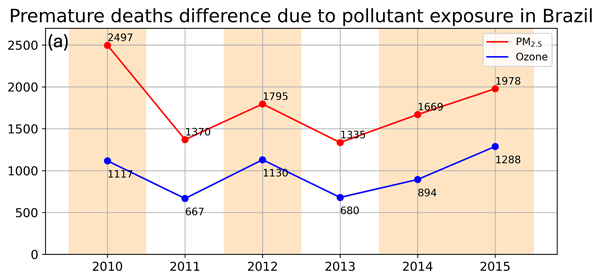
Leo T. H. Ng, Jia Mao, Xueying Liu, Shixian Zhai, Dominic Fawcett, Stephen Sitch, Luiz E. O. C. Aragao, and Amos P. K. Tai
Atmos. Chem. Phys., 26, 11835–11855, https://doi.org/10.5194/acp-26-11835-2026, https://doi.org/10.5194/acp-26-11835-2026, 2026
Short summary
Short summary
Wildfires in the Amazon worsen air pollution and threaten public health, yet the role of droughts in amplifying these effects is poorly understood. Using satellite data and atmospheric modeling, we assessed how droughts intensified fire emissions and pollution in the Brazilian Amazon from 2010–2015. During drought years, fires contributed up to 76 % of harmful particles and raised premature deaths by up to 24 %. These results stress the need for fire management that accounts for drought risks.
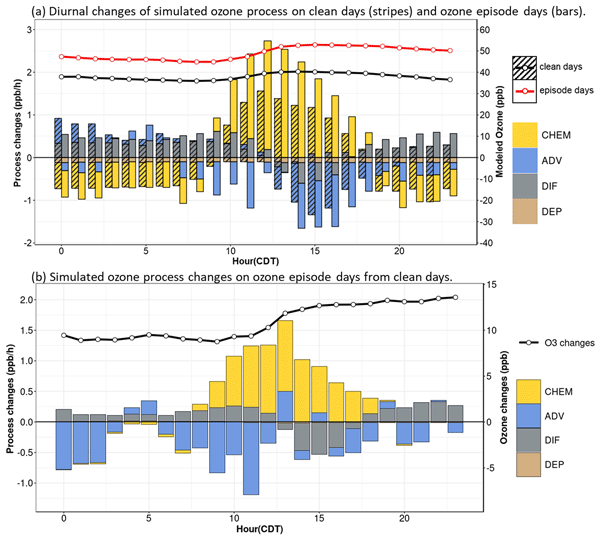
Wei Li, Yuxuan Wang, Xueying Liu, Ehsan Soleimanian, Travis Griggs, James Flynn, and Paul Walter
Atmos. Chem. Phys., 23, 13685–13699, https://doi.org/10.5194/acp-23-13685-2023, https://doi.org/10.5194/acp-23-13685-2023, 2023
Short summary
Short summary
This study examined high offshore ozone events in Galveston Bay and the Gulf of Mexico, using boat data and WRF–CAMx modeling during the TRACER-AQ 2021 field campaign. On average, high ozone is caused by chemistry due to the regional transport of volatile organic compounds and downwind advection of NOx from the ship channel. Two case studies show advection of ozone can be another process leading to high ozone, and accurate wind prediction is crucial for air quality forecasting in coastal areas.
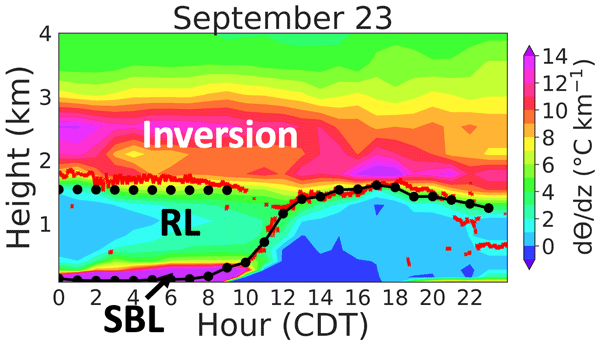
Xueying Liu, Yuxuan Wang, Shailaja Wasti, Wei Li, Ehsan Soleimanian, James Flynn, Travis Griggs, Sergio Alvarez, John T. Sullivan, Maurice Roots, Laurence Twigg, Guillaume Gronoff, Timothy Berkoff, Paul Walter, Mark Estes, Johnathan W. Hair, Taylor Shingler, Amy Jo Scarino, Marta Fenn, and Laura Judd
Geosci. Model Dev., 16, 5493–5514, https://doi.org/10.5194/gmd-16-5493-2023, https://doi.org/10.5194/gmd-16-5493-2023, 2023
Short summary
Short summary
With a comprehensive suite of ground-based and airborne remote sensing measurements during the 2021 TRacking Aerosol Convection ExpeRiment – Air Quality (TRACER-AQ) campaign in Houston, this study evaluates the simulation of the planetary boundary layer (PBL) height and the ozone vertical profile by a high-resolution (1.33 km) 3-D photochemical model Weather Research and Forecasting-driven GEOS-Chem (WRF-GC).
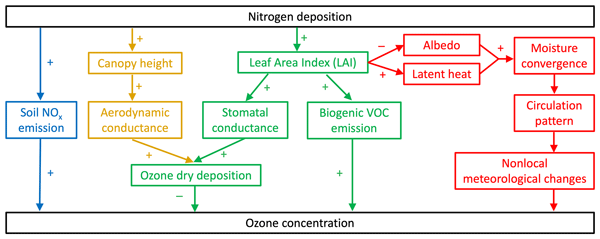
Xueying Liu, Amos P. K. Tai, and Ka Ming Fung
Atmos. Chem. Phys., 21, 17743–17758, https://doi.org/10.5194/acp-21-17743-2021, https://doi.org/10.5194/acp-21-17743-2021, 2021
Short summary
Short summary
With the rising food need, more intense agricultural activities will cause substantial perturbations to the nitrogen cycle, aggravating surface air pollution and imposing stress on terrestrial ecosystems. We studied how these ecosystem changes may modify biosphere–atmosphere exchanges, and further exert secondary effects on air quality, and demonstrated a link between agricultural activities and ozone air quality via the modulation of vegetation and soil biogeochemistry by nitrogen deposition.
Xiangde Xu, Wenyue Cai, Tianliang Zhao, Changjun Yang, Kai Meng, Chong Wu, Na Dong, Yueqing Li, Shunjiu Wang, Wenqing Liu, Tianshu Zhang, Ga Zhuo, Shengjun Zhang, Bin Chen, Chunsong Lu, Jinghua Chen, Kai Yang, and Jianming Xu
Atmos. Chem. Phys., 26, 13581–13593, https://doi.org/10.5194/acp-26-13581-2026, https://doi.org/10.5194/acp-26-13581-2026, 2026
Short summary
Short summary
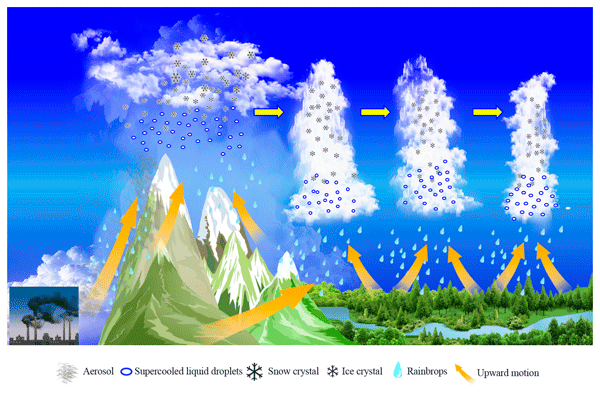
Using satellite and comprehensive ground-based observations, we identify pronounced ice-cloud activation associated with transported exogenous aerosols. Under different large-scale atmospheric circulation regimes, ice-phase cloud activated over Mount Qomolangma (MQ) can be efficiently transported downstream through distinct pathways, exerting a pronounced ice crystal seeding effect on cloud–precipitation conversion.
Chao Yu, Lin Zheng, Yujue Wang, Meijing Guo, Xu Yu, Yuqi Guo, Sisi Song, Kyoung-Soon Jang, Xiaohong Yao, Jian Zhen Yu, and Huiwang Gao
Atmos. Chem. Phys., 26, 13175–13188, https://doi.org/10.5194/acp-26-13175-2026, https://doi.org/10.5194/acp-26-13175-2026, 2026
Short summary
Short summary
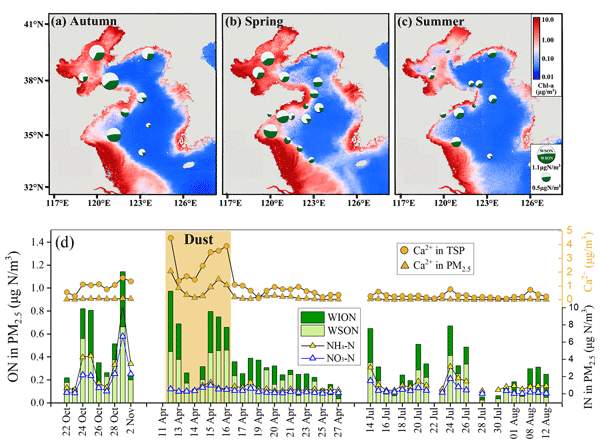
Atmospheric organic nitrogen is an important fraction in marine aerosols, and plays vital roles in organic aerosol absorption and maintaining primary productivity in the open ocean. However, abundance or sources of aerosol organic nitrogen remain unclear in the marine boundary layer. Here, we found that anthropogenic secondary pollutants and dust drove the organic nitrogen formation and the light absorption by organic aerosols over East Asian marginal seas.
Leo T. H. Ng, Jia Mao, Xueying Liu, Shixian Zhai, Dominic Fawcett, Stephen Sitch, Luiz E. O. C. Aragao, and Amos P. K. Tai
Atmos. Chem. Phys., 26, 11835–11855, https://doi.org/10.5194/acp-26-11835-2026, https://doi.org/10.5194/acp-26-11835-2026, 2026
Short summary
Short summary
Wildfires in the Amazon worsen air pollution and threaten public health, yet the role of droughts in amplifying these effects is poorly understood. Using satellite data and atmospheric modeling, we assessed how droughts intensified fire emissions and pollution in the Brazilian Amazon from 2010–2015. During drought years, fires contributed up to 76 % of harmful particles and raised premature deaths by up to 24 %. These results stress the need for fire management that accounts for drought risks.
Qiongqiong Wang, Zhongliang Huang, Zongjun Li, Shuihui Zhu, Liping Qiao, Min Zhou, Dandan Huang, Hongli Wang, Qingyan Fu, Kezheng Liao, and Jian Zhen Yu
EGUsphere, https://doi.org/10.5194/egusphere-2026-4766, https://doi.org/10.5194/egusphere-2026-4766, 2026
Short summary
Short summary
Brown carbon (BrC) is a poorly understood carbonaceous aerosol component that significantly affects climate and air quality. We examined the sources and secondary formation of BrC based on long-term field measurements of bihourly BrC and a suite of organic and elemental tracers in urban Shanghai. Seasonal contrast of source contributions and complexity of secondary formation and evolution was observed. This study offers a scientific basis for BrC mitigation and urban air quality improvement.
Anouk Marsal, Fabrizia Cavalli, Elise Di Antonio, Stephan Houdier, Pamela Dominutti, Sophie Darfeuil, Jean-Luc Jaffrezo, Stéphane Sauvage, Jean-Philippe Putaud, Ian S. Mudway, Athanasios Nenes, Aikaterini Bougiatioti, Nikolaos Mihalopoulos, André S. H. Prévôt, Despina Paraskevopoulou, Ana Cvitešić Kušan, Sanja Frka, Ana Kroflič, Ajda Delić, Blanka Tariba Lovaković, Andreja Jurič, Carolina Molina, Daniele Contini, Maria Rachele Guascito, Mathilde Lintz, Davy Rousset, Hartmut Herrmann, Eduardo J. d. S. Souza, Frédéric Ledoux, Marc Fadel, Haoran Yu, Jianzhen Yu, Maria Teresa Baeza Romero, Maria Cerrato-Alvarez, Marloes F. van Os, Mathilde N. Delaval, Yamaris Mercedes Mena Cabrera, Nicole Trieu, Greg Evans, Nuria Galindo, Noelia Gómez-Sanchez, Hana Hlaváčková, Pavel Mikuška, Shrutika Kadam, Pourya Shahpoury, Purificación López-Mahía, Jorge Moreda-Piñeiro, Rico K. Y. Cheung, Markus Kalberer, Micol Introna, Sarah S. Steimer, Zhuoying Lin, Suzanne E. Paulson, Saima Iram, Svetlana Stevanovic, Thomas Audoux, Laurent Y. Alleman, Jianing Liu, Ting Fang, P. S. Ganesh Subramanian, Vishal Verma, Tuukka Petäjä, Xavier Querol, Gerard Hoek, Roy M. Harrison, and Gaëlle Uzu
EGUsphere, https://doi.org/10.5194/egusphere-2026-3918, https://doi.org/10.5194/egusphere-2026-3918, 2026
Short summary
Short summary
This collaborative work from 26 worldwide laboratories assessed the measurement of atmospheric particles' oxidative potential (OP) using a common protocol. OP is a metric designed to inform on particles’ harmful effects. Over half of the laboratories obtained satisfactory results, and some critical steps such as liquid handling and OP mathematical determination were identified. Recommendations for future measurements and interlaboratory comparisons are also provided.
Maoyu Cao, Chao Yan, Yuliang Liu, Dafeng Ge, Junchao Yin, Yuanyuan Li, Tao Xu, Ziqian Wei, Jinbo Wang, Ying Zhang, Zhenning Wang, Valter Mickwitz, Ziheng Chen, Bisen Han, Jianxun Wang, Caijun Zhu, Ximeng Qi, Qiaozhi Zha, Xuguang Chi, Zhe Wang, Jian Zhao, Mikael Ehn, Wei Nie, Jingkun Jiang, and Aijun Ding
EGUsphere, https://doi.org/10.5194/egusphere-2026-3647, https://doi.org/10.5194/egusphere-2026-3647, 2026
Short summary
Short summary
Fine airborne particles affect air quality, human health, and climate, yet their molecular composition is difficult to measure. Using a newly characterized instrument that detects these molecules in real time, we carried out the first such study in an eastern Chinese city. We find that particle composition is shaped not only by molecules condensing from the air, but also by chemical reactions within the particles, with natural and human sources and regional transport all contributing.
Cong Cao, Wei Chen, Xu Yu, Wing Hei Marco Wong, Ningning Sun, Kun Zhang, Weicong Cheng, Jianping Gan, and Jian Zhen Yu
EGUsphere, https://doi.org/10.5194/egusphere-2026-3750, https://doi.org/10.5194/egusphere-2026-3750, 2026
Short summary
Short summary
Coastal waters receive reactive nitrogen from the air, but its chemical forms are poorly known. We collected fine airborne particles during a research cruise in the Guangdong–Hong Kong–Macau Greater Bay Area and compared them with samples from urban Hong Kong. Nitrogen over the ocean differed from urban nitrogen, with more chemically reduced forms. Fine-particle nitrogen deposition to coastal waters was not negligible, suggesting possible effects on nutrient supply and marine ecosystems.
Ruqian Miao, Ruochong Xu, Shan Huang, Sihan Xiao, Hao Wang, Yan Zheng, Siyi Liu, Jingxian Li, Guannan Geng, Manish Shrivastava, Xu Dao, Claire Granier, Guy Brasseur, Vlassis A. Karydis, Alexandra P. Tsimpidi, Jianhui Jiang, Kaspar R. Daellenbach, Imad El Haddad, André S. H. Prévôt, and Qi Chen
EGUsphere, https://doi.org/10.5194/egusphere-2026-3160, https://doi.org/10.5194/egusphere-2026-3160, 2026
Short summary
Short summary
Primary and secondary organic aerosols (POA and SOA) have distinct climate and human health impacts. We develop an OA simulation framework resolving the full volatility spectrum of organic precursor emissions, which improves global POA and SOA characterization. Reassessing their global distributions and budgets, this study shows greater POA and SOA burdens than previous estimates and presents region-dependent OA sources and variability to guide health-oriented pollution mitigation strategies.
Aoxing Zhang, Tzung-May Fu, Yuhang Wang, Enyu Xiong, Wenlu Wu, Yumin Li, Lei Zhu, Wei Tao, Kelley C. Wells, Dylan B. Millet, Zhe Wang, Bin Yuan, Min Shao, Christophe Lerot, Thomas Danckaert, Ruixiong Zhang, and Kelvin H. Bates
Atmos. Chem. Phys., 26, 5123–5150, https://doi.org/10.5194/acp-26-5123-2026, https://doi.org/10.5194/acp-26-5123-2026, 2026
Short summary
Short summary
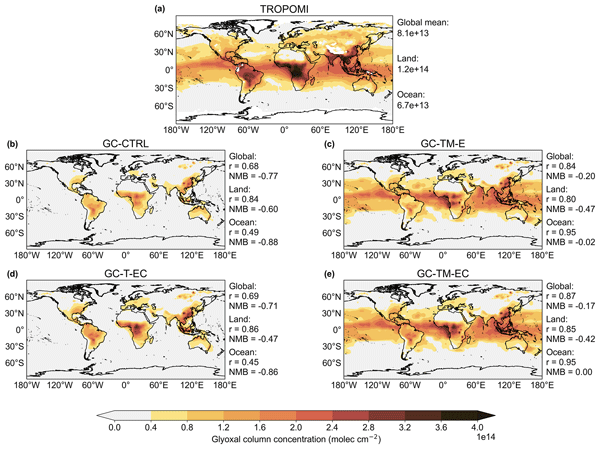
Glyoxal, a product of volatile organic compound oxidation, influences atmospheric oxidation and aerosol formation but is underestimated in models. By improving emissions, chemistry, and marine sources in GEOS-Chem, we better reproduce observed glyoxal over land and ocean, which strengthens global oxidation capacity and aerosol formation. The results highlight glyoxal's role as a proxy of atmospheric oxidation, and emphasize the needs of accurately representing glyoxal chemistry.
Biao Zhou, Kun Zhang, Qiongqiong Wang, Jiqi Zhu, Li Li, and Jian Zhen Yu
Atmos. Chem. Phys., 26, 3589–3606, https://doi.org/10.5194/acp-26-3589-2026, https://doi.org/10.5194/acp-26-3589-2026, 2026
Short summary
Short summary
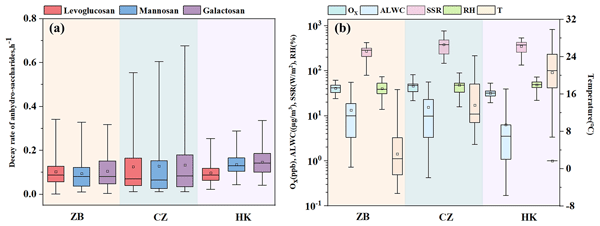
Anhydro-saccharides are key organic markers for biomass burning, but their decay rates and driving factors in real ambient environments remain unclear. This study conducted an online field measurement of PM₂.₅-bound saccharides in three eastern Chinese cities. Daytime levoglucosan decay rates were calculated, and the driving factors were investigated using a machine learning model. Findings of this study offers a strong scientific basis to support air pollution management.
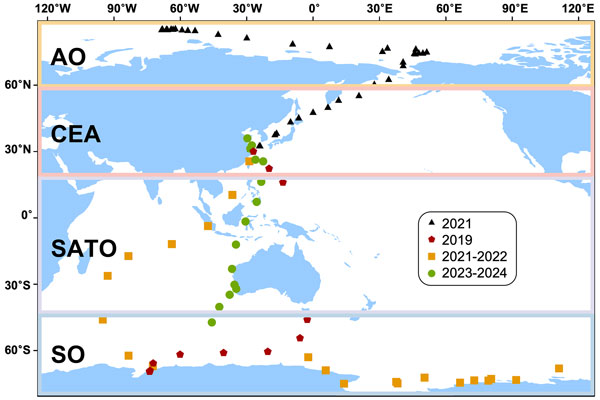
Ningning Sun, Xu Yu, Jian Zhen Yu, Bo Zhang, Yilan Li, Ye Hu, Zhe Li, Zhenlou Chen, and Guitao Shi
Atmos. Chem. Phys., 26, 1699–1712, https://doi.org/10.5194/acp-26-1699-2026, https://doi.org/10.5194/acp-26-1699-2026, 2026
Short summary
Short summary
Atmospheric particles over the ocean contain organic nitrogen, affecting climate and ecosystems. This first pole-to-pole study of marine air reveals a strong latitudinal divide, with higher concentrations in the polluted Northern Hemisphere. A key discovery is that air influenced by Antarctic sea ice is enriched in organic nitrogen, revealing a major natural source. Our new dataset improves climate models by clarifying how human emissions and natural processes shape the atmosphere.
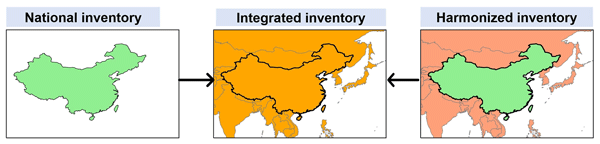
Yijuan Zhang, Guy Brasseur, Maria Kanakidou, Claire Granier, Nikos Daskalakis, Alexandros Panagiotis Poulidis, Kun Qu, and Mihalis Vrekoussis
Geosci. Model Dev., 19, 217–237, https://doi.org/10.5194/gmd-19-217-2026, https://doi.org/10.5194/gmd-19-217-2026, 2026
Short summary
Short summary
A new inventory of anthropogenic emissions, the China INtegrated Emission Inventory (CINEI), was developed in this study to better represent emission sectors, chemical speciation and spatiotemporal variations in China. Compared to simulations driven by global inventories, CINEI demonstrated better numerical modeling performance in ozone and its precursors (nitrogen dioxide and carbon monoxide). This study provides valuable insights for designing ozone mitigation strategies.
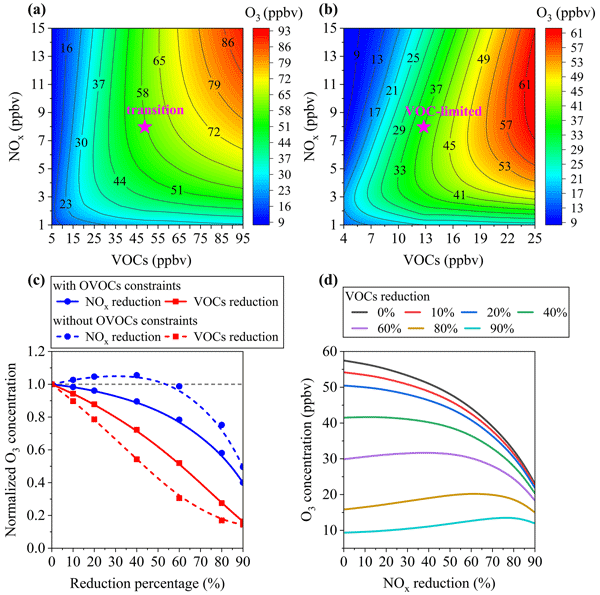
Lirong Hui, Yi Chen, Xin Feng, Hao Sun, Jia Guo, Yang Xu, Yao Chen, Penggang Zheng, Dasa Gu, and Zhe Wang
Atmos. Chem. Phys., 25, 18355–18371, https://doi.org/10.5194/acp-25-18355-2025, https://doi.org/10.5194/acp-25-18355-2025, 2025
Short summary
Short summary
This study finds that oxygenated organic gases play a much greater role in ozone pollution than previously known. Based on detailed air measurements and modeling, the research shows these gases strongly influence radicals and ozone formation. Overlooking them may lead to ineffective policies. The findings highlight the need for better measurement of these gases to improve pollution forecasts and support smarter air quality strategies.
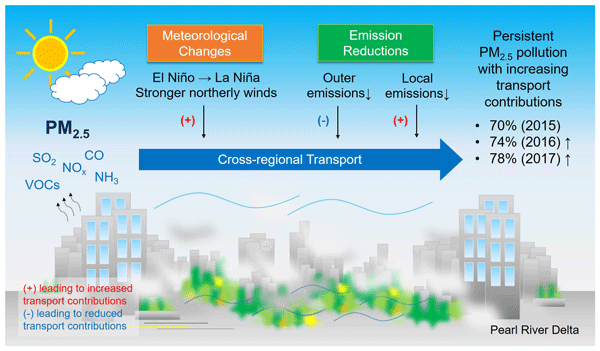
Kun Qu, Xuesong Wang, Yu Yan, Xipeng Jin, Ling-Yan He, Xiao-Feng Huang, Xuhui Cai, Jin Shen, Zimu Peng, Teng Xiao, Mihalis Vrekoussis, Maria Kanakidou, Guy P. Brasseur, Nikos Daskalakis, Limin Zeng, and Yuanhang Zhang
Atmos. Chem. Phys., 25, 16983–17007, https://doi.org/10.5194/acp-25-16983-2025, https://doi.org/10.5194/acp-25-16983-2025, 2025
Short summary
Short summary
Persistent cold-season PM2.5 pollution in a South China region during 2015–2017 was studied to assess the roles of drastic meteorological and emission changes. We found that meteorological variations, induced by a transition from El Niño to La Niña, were the main cause of persistent pollution, as stronger northerly winds enhanced pollutant transport into the region. In contrast, the effect of rapid emission reductions was limited. Recommendations for air quality improvement were also proposed.
Wanliang Zhang, Chao Ren, Edward Yan Yung Ng, Michael Mau Fung Wong, and Jimmy Chi Hung Fung
Geosci. Model Dev., 18, 7781–7813, https://doi.org/10.5194/gmd-18-7781-2025, https://doi.org/10.5194/gmd-18-7781-2025, 2025
Short summary
Short summary
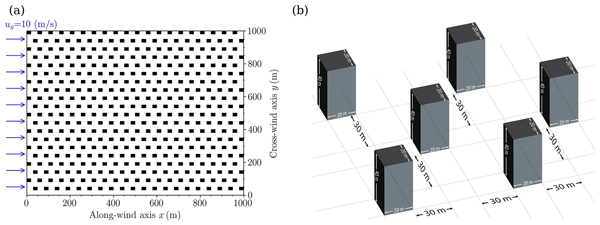
This study focuses on improving the accuracy of numerical weather prediction (NWP) model particularly in urbanized areas. We coupled a recently validated boundary layer model with a building effect model within an NWP. Validation has been performed under idealized atmospheric conditions by benchmarking the coupled model with a fine-scale numerical model. Subsequently, the improvements and limitations are investigated aided by observations in real case simulations.
Shubin Li, Yujue Wang, Yiwen Zhang, Yizhe Yi, Yuchen Wang, Yuqi Guo, Chao Yu, Yue Jiang, Jinhui Shi, Chao Zhang, Jialei Zhu, Wei Hu, Jianzhen Yu, Xiaohong Yao, Huiwang Gao, and Min Hu
Atmos. Chem. Phys., 25, 12585–12598, https://doi.org/10.5194/acp-25-12585-2025, https://doi.org/10.5194/acp-25-12585-2025, 2025
Short summary
Short summary
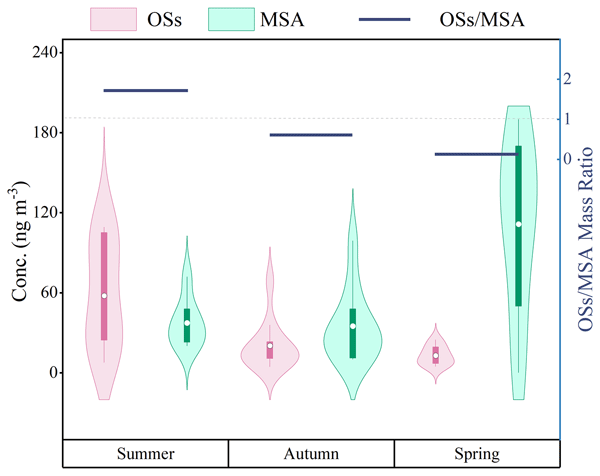
Organosulfates (OSs) are an unrecognized and potentially important component in marine organic aerosols. In this study, we quantified and characterized the OSs over East Asian marginal seas. The chemical nature and spatiotemporal distribution of OSs were modified by the joint influence of marine emissions and transported terrestrial pollutants. The results highlight the vital roles of OSs in shaping organic aerosol formation and sulfur cycle during summer in the marine boundary layer.
Donger Lai, Yanxin Bai, Zijing Zhang, Pui-Kin So, Yong Jie Li, Ying-Lung Steve Tse, Ying-Yeung Yeung, Thomas Schaefer, Hartmut Herrmann, Jian Zhen Yu, Yuchen Wang, and Man Nin Chan
Atmos. Chem. Phys., 25, 12569–12584, https://doi.org/10.5194/acp-25-12569-2025, https://doi.org/10.5194/acp-25-12569-2025, 2025
Short summary
Short summary
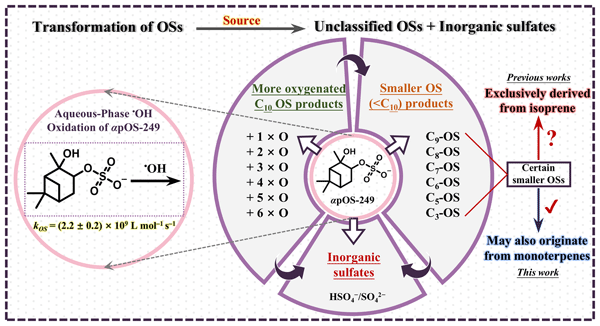
Aqueous-phase •OH oxidation can potentially act as an important atmospheric sink for α-pinene-derived organosulfates (OSs). Such oxidation can also generate a variety of new OS products, and can be as a potential source for some atmospheric OSs with previously unknown origins.
Xu Yu, Min Zhou, Shuhui Zhu, Liping Qiao, Jinjian Li, Yingge Ma, Zijing Zhang, Kezheng Liao, Hongli Wang, and Jian Zhen Yu
Atmos. Chem. Phys., 25, 9061–9074, https://doi.org/10.5194/acp-25-9061-2025, https://doi.org/10.5194/acp-25-9061-2025, 2025
Short summary
Short summary
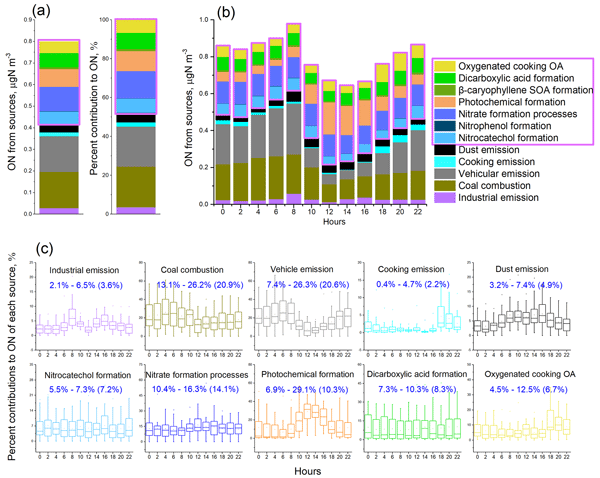
Online measurements of bulk aerosol organic nitrogen (ON), in conjunction with a comprehensive array of source markers, have revealed five emission sources and five potentially significant formation processes of nitrogenous organic aerosols. This study provides a first quantitative source analysis of ON aerosol and valuable observational evidence of secondary ON aerosol formation through NH3 and NOx chemistries.
Ge Yu, Yueya Wang, Zhe Wang, and Xiaoming Shi
Atmos. Chem. Phys., 25, 7527–7542, https://doi.org/10.5194/acp-25-7527-2025, https://doi.org/10.5194/acp-25-7527-2025, 2025
Short summary
Short summary
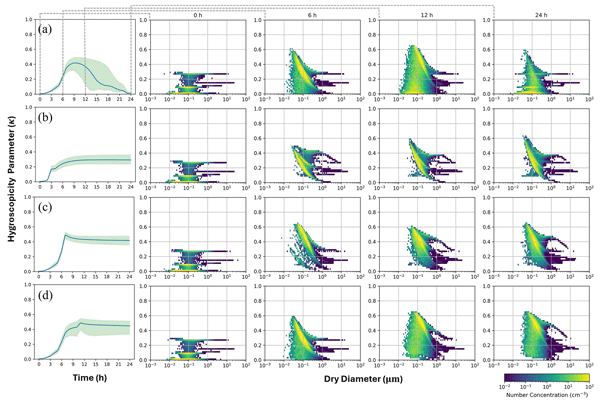
Studying the cloud-forming capacity of aerosols is crucial in climate research. The PartMC model can provide detailed particle information and help these studies. This model is integrated with the ideal meteorological Cloud Model 1 (CM1) to simulate the aerosols at cloud-forming locations. Significant changes are revealed in the hygroscopicity distribution of aerosols within ascending air parcels. Additionally, different ascent times also affect aerosol aging processes.
Chengli Ji, Qiankai Jin, Feilong Li, Yuyang Liu, Zhicheng Wang, Jiajia Mao, Xiaoyu Ren, Yan Xiang, Wanlin Jian, Zhenyi Chen, and Peitao Zhao
Atmos. Meas. Tech., 18, 3179–3191, https://doi.org/10.5194/amt-18-3179-2025, https://doi.org/10.5194/amt-18-3179-2025, 2025
Short summary
Short summary
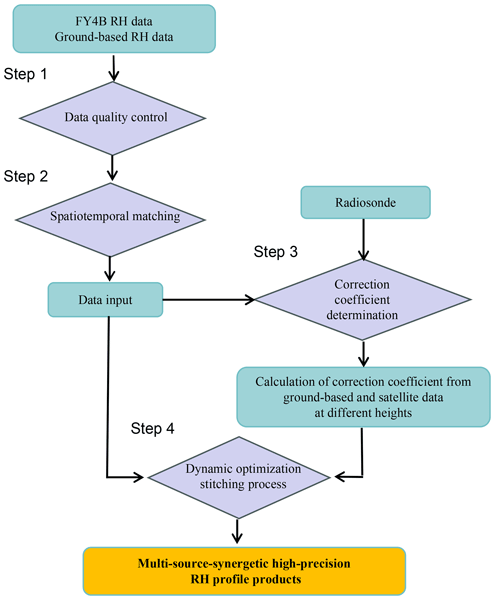
This study presents the humidity measurements with a synergistic algorithm combining Raman lidar, microwave radiometer, and satellite. The results from 47 sites in China show the best correlation over 0.9 concerning the radiosonde measurements. This validates the relative humidity (RH) accuracy with various data integrations. Three representative sites present the different seasonal characteristics, indicating the geographic and height influences on the RH vertical distribution.
Xiao-Bing Li, Bin Yuan, Yibo Huangfu, Suxia Yang, Xin Song, Jipeng Qi, Xianjun He, Sihang Wang, Yubin Chen, Qing Yang, Yongxin Song, Yuwen Peng, Guiqian Tang, Jian Gao, Dasa Gu, and Min Shao
Atmos. Chem. Phys., 25, 2459–2472, https://doi.org/10.5194/acp-25-2459-2025, https://doi.org/10.5194/acp-25-2459-2025, 2025
Short summary
Short summary
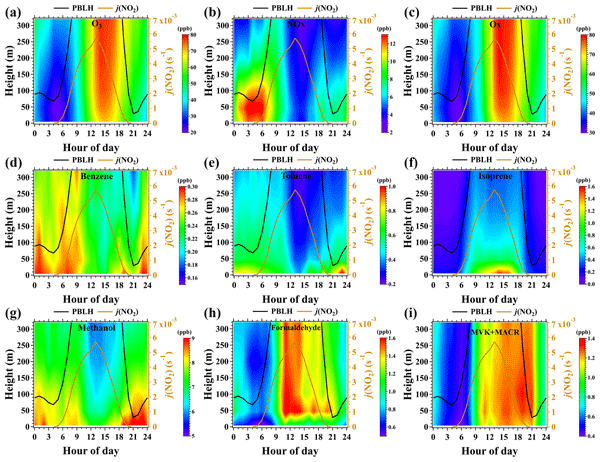
Online vertical gradient measurements of volatile organic compounds (VOCs), ozone, and NOx were conducted based on a 325 m tall tower in urban Beijing. Vertical changes in the concentrations, compositions, key drivers, and environmental impacts of VOCs were analyzed in this study. We find that VOC species display differentiated vertical variation patterns and distinct roles in contributing to photochemical ozone formation with increasing height in the urban planetary boundary layer.

Guangqiang Fan, Yibin Fu, Juntao Huo, Yan Xiang, Tianshu Zhang, Wenqing Liu, and Zhi Ning
Atmos. Meas. Tech., 18, 443–453, https://doi.org/10.5194/amt-18-443-2025, https://doi.org/10.5194/amt-18-443-2025, 2025
Short summary
Short summary
Our research introduces a differential absorption lidar system for monitoring tropospheric ozone, utilizing a single CO2 Raman cell. This technology enables the acquisition of high-resolution vertical ozone profiles from 0.3 to 4 km, essential for understanding air quality and climate impacts.
Jianing Dai, Guy P. Brasseur, Mihalis Vrekoussis, Maria Kanakidou, Kun Qu, Yijuan Zhang, Hongliang Zhang, and Tao Wang
Atmos. Chem. Phys., 24, 12943–12962, https://doi.org/10.5194/acp-24-12943-2024, https://doi.org/10.5194/acp-24-12943-2024, 2024
Short summary
Short summary
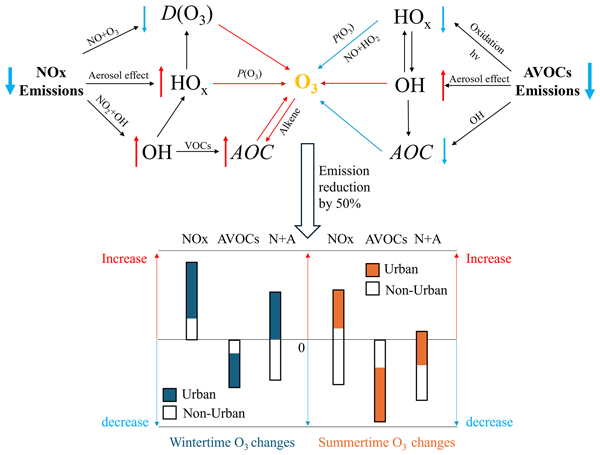
This paper employs a regional chemical transport model to quantify the sensitivity of air pollutants and photochemical parameters to specified emission reductions in China for representative winter and summer conditions. The study provides insights into further air quality control in China with reduced primary emissions.
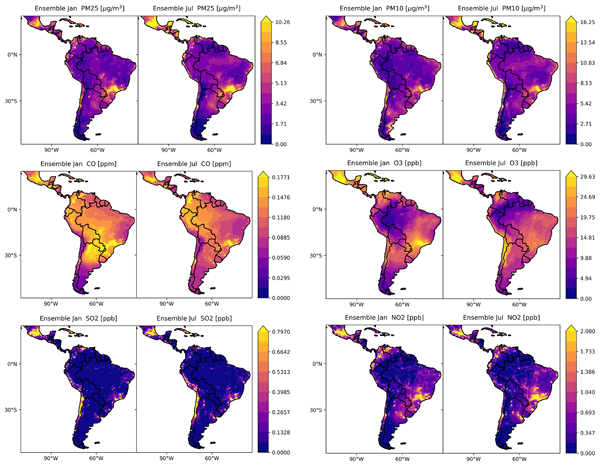
Jorge E. Pachón, Mariel A. Opazo, Pablo Lichtig, Nicolas Huneeus, Idir Bouarar, Guy Brasseur, Cathy W. Y. Li, Johannes Flemming, Laurent Menut, Camilo Menares, Laura Gallardo, Michael Gauss, Mikhail Sofiev, Rostislav Kouznetsov, Julia Palamarchuk, Andreas Uppstu, Laura Dawidowski, Nestor Y. Rojas, María de Fátima Andrade, Mario E. Gavidia-Calderón, Alejandro H. Delgado Peralta, and Daniel Schuch
Geosci. Model Dev., 17, 7467–7512, https://doi.org/10.5194/gmd-17-7467-2024, https://doi.org/10.5194/gmd-17-7467-2024, 2024
Short summary
Short summary
Latin America (LAC) has some of the most populated urban areas in the world, with high levels of air pollution. Air quality management in LAC has been traditionally focused on surveillance and building emission inventories. This study performed the first intercomparison and model evaluation in LAC, with interesting and insightful findings for the region. A multiscale modeling ensemble chain was assembled as a first step towards an air quality forecasting system.
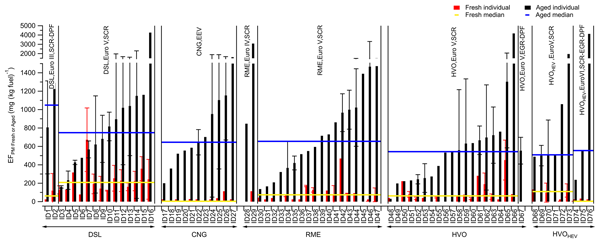
Liyuan Zhou, Qianyun Liu, Christian M. Salvador, Michael Le Breton, Mattias Hallquist, Jian Zhen Yu, Chak K. Chan, and Åsa M. Hallquist
Atmos. Chem. Phys., 24, 11045–11061, https://doi.org/10.5194/acp-24-11045-2024, https://doi.org/10.5194/acp-24-11045-2024, 2024
Short summary
Short summary
Our research on city bus emissions reveals that alternative fuels (compressed natural gas and biofuels) reduce fresh particle emissions compared to diesel. However, all fuels lead to secondary air pollution. Aiming at guiding better environmental policies, we studied 76 buses using advanced emission measurement techniques. This work sheds light on the complex effects of bus fuels on urban air quality, emphasizing the need for comprehensive evaluations of future transportation technologies.
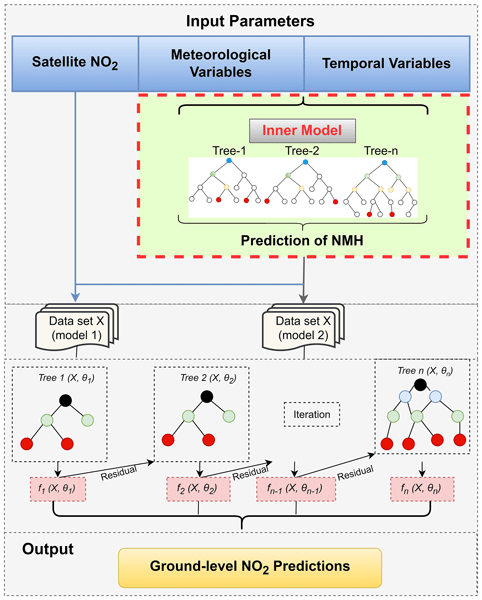
Naveed Ahmad, Changqing Lin, Alexis K. H. Lau, Jhoon Kim, Tianshu Zhang, Fangqun Yu, Chengcai Li, Ying Li, Jimmy C. H. Fung, and Xiang Qian Lao
Atmos. Chem. Phys., 24, 9645–9665, https://doi.org/10.5194/acp-24-9645-2024, https://doi.org/10.5194/acp-24-9645-2024, 2024
Short summary
Short summary
This study developed a nested machine learning model to convert the GEMS NO2 column measurements into ground-level concentrations across China. The model directly incorporates the NO2 mixing height (NMH) into the methodological framework. The study underscores the importance of considering NMH when estimating ground-level NO2 from satellite column measurements and highlights the significant advantages of new-generation geostationary satellites in air quality monitoring.
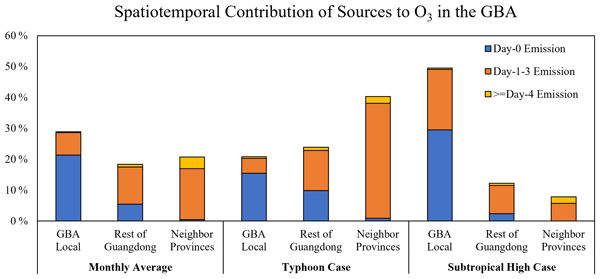
Yiang Chen, Xingcheng Lu, and Jimmy C. H. Fung
Atmos. Chem. Phys., 24, 8847–8864, https://doi.org/10.5194/acp-24-8847-2024, https://doi.org/10.5194/acp-24-8847-2024, 2024
Short summary
Short summary
This study investigates the contribution of pollutants from different emitting periods to ozone episodes over the Greater Bay Area. The analysis reveals the variation in major spatiotemporal contributors to the O3 pollution under the influence of typhoons and subtropical high pressure. Through temporal contribution analysis, our work offers a new perspective on the evolution of O3 pollution and can aid in developing effective and timely control policies under unfavorable weather conditions.
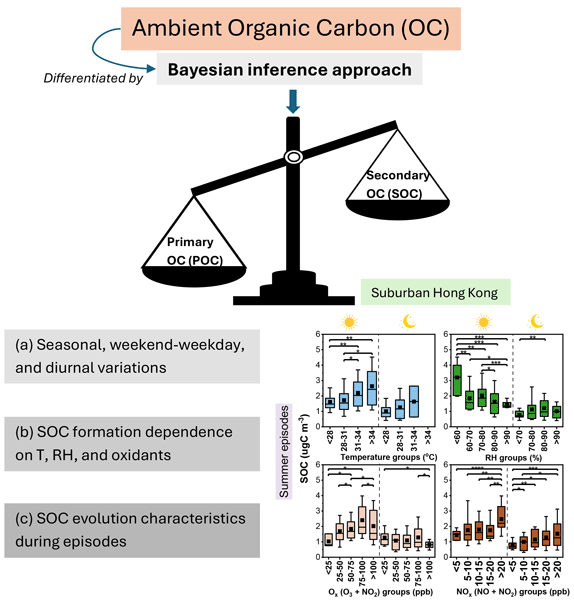
Shan Wang, Kezheng Liao, Zijing Zhang, Yuk Ying Cheng, Qiongqiong Wang, Hanzhe Chen, and Jian Zhen Yu
Atmos. Chem. Phys., 24, 5803–5821, https://doi.org/10.5194/acp-24-5803-2024, https://doi.org/10.5194/acp-24-5803-2024, 2024
Short summary
Short summary
In this work, hourly primary and secondary organic carbon were estimated by a novel Bayesian inference approach in suburban Hong Kong. Their multi-temporal-scale variations and evolution characteristics during PM2.5 episodes were examined. The methodology could serve as a guide for other locations with similar monitoring capabilities. The observation-based results are helpful for understanding the evolving nature of secondary organic aerosols and refining the accuracy of model simulations.
Bjorn Stevens, Stefan Adami, Tariq Ali, Hartwig Anzt, Zafer Aslan, Sabine Attinger, Jaana Bäck, Johanna Baehr, Peter Bauer, Natacha Bernier, Bob Bishop, Hendryk Bockelmann, Sandrine Bony, Guy Brasseur, David N. Bresch, Sean Breyer, Gilbert Brunet, Pier Luigi Buttigieg, Junji Cao, Christelle Castet, Yafang Cheng, Ayantika Dey Choudhury, Deborah Coen, Susanne Crewell, Atish Dabholkar, Qing Dai, Francisco Doblas-Reyes, Dale Durran, Ayoub El Gaidi, Charlie Ewen, Eleftheria Exarchou, Veronika Eyring, Florencia Falkinhoff, David Farrell, Piers M. Forster, Ariane Frassoni, Claudia Frauen, Oliver Fuhrer, Shahzad Gani, Edwin Gerber, Debra Goldfarb, Jens Grieger, Nicolas Gruber, Wilco Hazeleger, Rolf Herken, Chris Hewitt, Torsten Hoefler, Huang-Hsiung Hsu, Daniela Jacob, Alexandra Jahn, Christian Jakob, Thomas Jung, Christopher Kadow, In-Sik Kang, Sarah Kang, Karthik Kashinath, Katharina Kleinen-von Königslöw, Daniel Klocke, Uta Kloenne, Milan Klöwer, Chihiro Kodama, Stefan Kollet, Tobias Kölling, Jenni Kontkanen, Steve Kopp, Michal Koran, Markku Kulmala, Hanna Lappalainen, Fakhria Latifi, Bryan Lawrence, June Yi Lee, Quentin Lejeun, Christian Lessig, Chao Li, Thomas Lippert, Jürg Luterbacher, Pekka Manninen, Jochem Marotzke, Satoshi Matsouoka, Charlotte Merchant, Peter Messmer, Gero Michel, Kristel Michielsen, Tomoki Miyakawa, Jens Müller, Ramsha Munir, Sandeep Narayanasetti, Ousmane Ndiaye, Carlos Nobre, Achim Oberg, Riko Oki, Tuba Özkan-Haller, Tim Palmer, Stan Posey, Andreas Prein, Odessa Primus, Mike Pritchard, Julie Pullen, Dian Putrasahan, Johannes Quaas, Krishnan Raghavan, Venkatachalam Ramaswamy, Markus Rapp, Florian Rauser, Markus Reichstein, Aromar Revi, Sonakshi Saluja, Masaki Satoh, Vera Schemann, Sebastian Schemm, Christina Schnadt Poberaj, Thomas Schulthess, Cath Senior, Jagadish Shukla, Manmeet Singh, Julia Slingo, Adam Sobel, Silvina Solman, Jenna Spitzer, Philip Stier, Thomas Stocker, Sarah Strock, Hang Su, Petteri Taalas, John Taylor, Susann Tegtmeier, Georg Teutsch, Adrian Tompkins, Uwe Ulbrich, Pier-Luigi Vidale, Chien-Ming Wu, Hao Xu, Najibullah Zaki, Laure Zanna, Tianjun Zhou, and Florian Ziemen
Earth Syst. Sci. Data, 16, 2113–2122, https://doi.org/10.5194/essd-16-2113-2024, https://doi.org/10.5194/essd-16-2113-2024, 2024
Short summary
Short summary
To manage Earth in the Anthropocene, new tools, new institutions, and new forms of international cooperation will be required. Earth Virtualization Engines is proposed as an international federation of centers of excellence to empower all people to respond to the immense and urgent challenges posed by climate change.
Adrien Deroubaix, Marco Vountas, Benjamin Gaubert, Maria Dolores Andrés Hernández, Stephan Borrmann, Guy Brasseur, Bruna Holanda, Yugo Kanaya, Katharina Kaiser, Flora Kluge, Ovid Oktavian Krüger, Inga Labuhn, Michael Lichtenstern, Klaus Pfeilsticker, Mira Pöhlker, Hans Schlager, Johannes Schneider, Guillaume Siour, Basudev Swain, Paolo Tuccella, Kameswara S. Vinjamuri, Mihalis Vrekoussis, Benjamin Weyland, and John P. Burrows
EGUsphere, https://doi.org/10.5194/egusphere-2024-516, https://doi.org/10.5194/egusphere-2024-516, 2024
Preprint archived
Short summary
Short summary
This study assesses atmospheric composition using air quality models during aircraft campaigns in Europe and Asia, focusing on carbonaceous aerosols and trace gases. While carbon monoxide is well modeled, other pollutants have moderate to weak agreement with observations. Wind speed modeling is reliable for identifying pollution plumes, where models tend to overestimate concentrations. This highlights challenges in accurately modeling aerosol and trace gas composition, particularly in cities.
Adrien Deroubaix, Marco Vountas, Benjamin Gaubert, Maria Dolores Andrés Hernández, Stephan Borrmann, Guy Brasseur, Bruna Holanda, Yugo Kanaya, Katharina Kaiser, Flora Kluge, Ovid Oktavian Krüger, Inga Labuhn, Michael Lichtenstern, Klaus Pfeilsticker, Mira Pöhlker, Hans Schlager, Johannes Schneider, Guillaume Siour, Basudev Swain, Paolo Tuccella, Kameswara S. Vinjamuri, Mihalis Vrekoussis, Benjamin Weyland, and John P. Burrows
EGUsphere, https://doi.org/10.5194/egusphere-2024-521, https://doi.org/10.5194/egusphere-2024-521, 2024
Preprint archived
Short summary
Short summary
This study explores the proportional relationships between carbonaceous aerosols (black and organic carbon) and trace gases using airborne measurements from two campaigns in Europe and East Asia. Differences between regions were found, but air quality models struggled to reproduce them accurately. We show that these proportional relationships can help to constrain models and can be used to infer aerosol concentrations from satellite observations of trace gases, especially in urban areas.
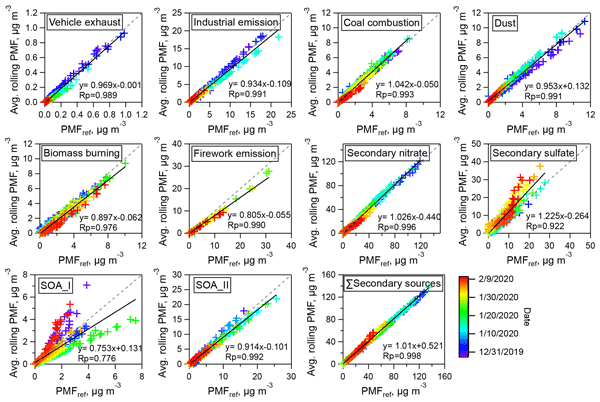
Qiongqiong Wang, Shuhui Zhu, Shan Wang, Cheng Huang, Yusen Duan, and Jian Zhen Yu
Atmos. Chem. Phys., 24, 475–486, https://doi.org/10.5194/acp-24-475-2024, https://doi.org/10.5194/acp-24-475-2024, 2024
Short summary
Short summary
We investigated short-term source apportionment of PM2.5 utilizing rolling positive matrix factorization (PMF) and online PM chemical speciation data, which included source-specific organic tracers collected over a period of 37 d during the winter of 2019–2020 in suburban Shanghai, China. The findings highlight that by imposing constraints on the primary source profiles, short-term PMF analysis successfully replicated both the individual primary sources and the total secondary sources.
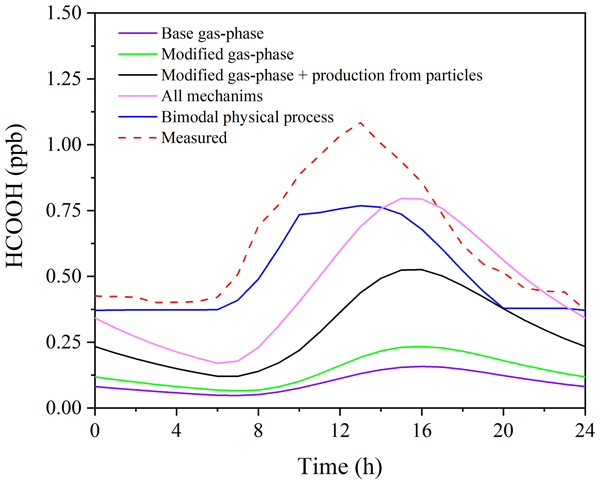
Yifan Jiang, Men Xia, Zhe Wang, Penggang Zheng, Yi Chen, and Tao Wang
Atmos. Chem. Phys., 23, 14813–14828, https://doi.org/10.5194/acp-23-14813-2023, https://doi.org/10.5194/acp-23-14813-2023, 2023
Short summary
Short summary
This study provides the first estimate of high rates of formic acid (HCOOH) production from the photochemical aging of real ambient particles and demonstrates the potential importance of this pathway in the formation of HCOOH under ambient conditions. Incorporating this pathway significantly improved the performance of a widely used chemical model. Our solution irradiation experiments demonstrated the importance of nitrate photolysis in HCOOH production via the production of oxidants.
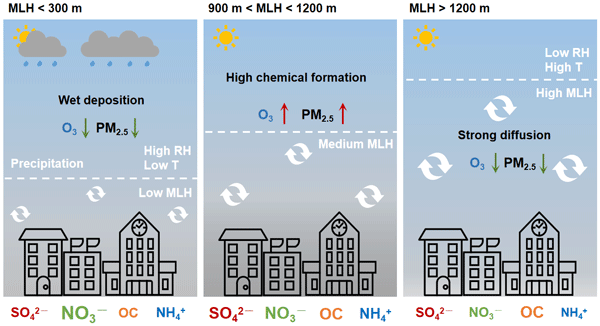
Jiaqi Wang, Jian Gao, Fei Che, Xin Yang, Yuanqin Yang, Lei Liu, Yan Xiang, and Haisheng Li
Atmos. Chem. Phys., 23, 14715–14733, https://doi.org/10.5194/acp-23-14715-2023, https://doi.org/10.5194/acp-23-14715-2023, 2023
Short summary
Short summary
Regional-scale observations of surface O3, PM2.5 and its major chemical species, mixing layer height (MLH), and other meteorological parameters were made in the North China Plain during summer. Unlike the cold season, synchronized increases in MDA8 O3 and PM2.5 under medium MLH conditions have been witnessed. The increasing trend of PM2.5 was associated with enhanced secondary chemical formation. The correlation between MLH and secondary air pollutants should be treated with care in hot seasons.
Jianing Dai, Guy P. Brasseur, Mihalis Vrekoussis, Maria Kanakidou, Kun Qu, Yijuan Zhang, Hongliang Zhang, and Tao Wang
Atmos. Chem. Phys., 23, 14127–14158, https://doi.org/10.5194/acp-23-14127-2023, https://doi.org/10.5194/acp-23-14127-2023, 2023
Short summary
Short summary
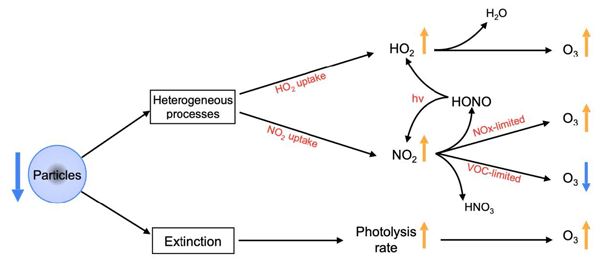
In this study, we used a regional chemical transport model to characterize the different parameters of atmospheric oxidative capacity in recent chemical environments in China. These parameters include the production and destruction rates of ozone and other oxidants, the ozone production efficiency, the OH reactivity, and the length of the reaction chain responsible for the formation of ozone and ROx. They are also affected by the aerosol burden in the atmosphere.
Wei Li, Yuxuan Wang, Xueying Liu, Ehsan Soleimanian, Travis Griggs, James Flynn, and Paul Walter
Atmos. Chem. Phys., 23, 13685–13699, https://doi.org/10.5194/acp-23-13685-2023, https://doi.org/10.5194/acp-23-13685-2023, 2023
Short summary
Short summary
This study examined high offshore ozone events in Galveston Bay and the Gulf of Mexico, using boat data and WRF–CAMx modeling during the TRACER-AQ 2021 field campaign. On average, high ozone is caused by chemistry due to the regional transport of volatile organic compounds and downwind advection of NOx from the ship channel. Two case studies show advection of ozone can be another process leading to high ozone, and accurate wind prediction is crucial for air quality forecasting in coastal areas.
Ting Yang, Yu Xu, Qing Ye, Yi-Jia Ma, Yu-Chen Wang, Jian-Zhen Yu, Yu-Sen Duan, Chen-Xi Li, Hong-Wei Xiao, Zi-Yue Li, Yue Zhao, and Hua-Yun Xiao
Atmos. Chem. Phys., 23, 13433–13450, https://doi.org/10.5194/acp-23-13433-2023, https://doi.org/10.5194/acp-23-13433-2023, 2023
Short summary
Short summary
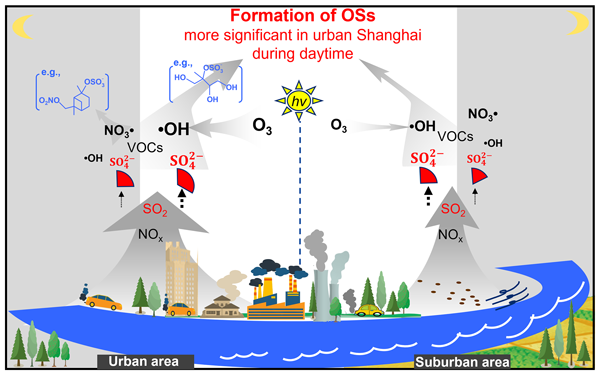
In this study, 130 OS species were quantified in ambient fine particulate matter (PM2.5) collected in urban and suburban Shanghai (East China) in the summer of 2021. The daytime OS formation was concretized based on the interactions among OSs, ultraviolet (UV), ozone (O3), and sulfate. Our finding provides field evidence for the influence of photochemical process and anthropogenic sulfate on OS formation and has important implications for the mitigation of organic particulate pollution.
Xueying Liu, Yuxuan Wang, Shailaja Wasti, Wei Li, Ehsan Soleimanian, James Flynn, Travis Griggs, Sergio Alvarez, John T. Sullivan, Maurice Roots, Laurence Twigg, Guillaume Gronoff, Timothy Berkoff, Paul Walter, Mark Estes, Johnathan W. Hair, Taylor Shingler, Amy Jo Scarino, Marta Fenn, and Laura Judd
Geosci. Model Dev., 16, 5493–5514, https://doi.org/10.5194/gmd-16-5493-2023, https://doi.org/10.5194/gmd-16-5493-2023, 2023
Short summary
Short summary
With a comprehensive suite of ground-based and airborne remote sensing measurements during the 2021 TRacking Aerosol Convection ExpeRiment – Air Quality (TRACER-AQ) campaign in Houston, this study evaluates the simulation of the planetary boundary layer (PBL) height and the ozone vertical profile by a high-resolution (1.33 km) 3-D photochemical model Weather Research and Forecasting-driven GEOS-Chem (WRF-GC).
Eliane Gomes Alves, Raoni Aquino Santana, Cléo Quaresma Dias-Júnior, Santiago Botía, Tyeen Taylor, Ana Maria Yáñez-Serrano, Jürgen Kesselmeier, Efstratios Bourtsoukidis, Jonathan Williams, Pedro Ivo Lembo Silveira de Assis, Giordane Martins, Rodrigo de Souza, Sérgio Duvoisin Júnior, Alex Guenther, Dasa Gu, Anywhere Tsokankunku, Matthias Sörgel, Bruce Nelson, Davieliton Pinto, Shujiro Komiya, Diogo Martins Rosa, Bettina Weber, Cybelli Barbosa, Michelle Robin, Kenneth J. Feeley, Alvaro Duque, Viviana Londoño Lemos, Maria Paula Contreras, Alvaro Idarraga, Norberto López, Chad Husby, Brett Jestrow, and Iván Mauricio Cely Toro
Atmos. Chem. Phys., 23, 8149–8168, https://doi.org/10.5194/acp-23-8149-2023, https://doi.org/10.5194/acp-23-8149-2023, 2023
Short summary
Short summary
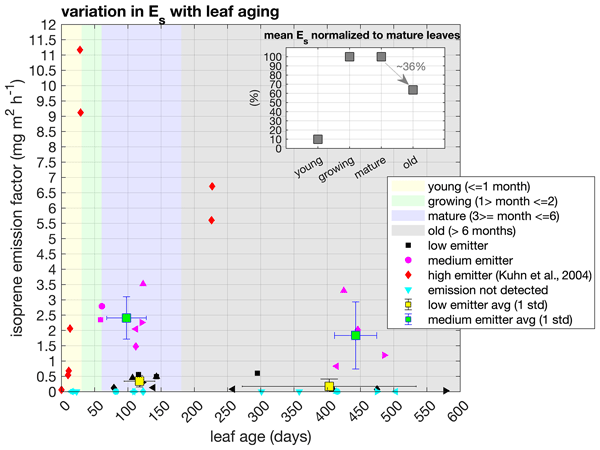
Isoprene is emitted mainly by plants and can influence atmospheric chemistry and air quality. But, there are uncertainties in model emission estimates and follow-up atmospheric processes. In our study, with long-term observational datasets of isoprene and biological and environmental factors from central Amazonia, we show that isoprene emission estimates could be improved when biological processes were mechanistically incorporated into the model.
Kun Qu, Xuesong Wang, Xuhui Cai, Yu Yan, Xipeng Jin, Mihalis Vrekoussis, Maria Kanakidou, Guy P. Brasseur, Jin Shen, Teng Xiao, Limin Zeng, and Yuanhang Zhang
Atmos. Chem. Phys., 23, 7653–7671, https://doi.org/10.5194/acp-23-7653-2023, https://doi.org/10.5194/acp-23-7653-2023, 2023
Short summary
Short summary
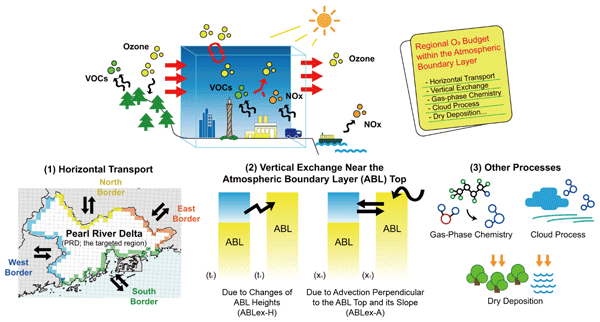
Basic understandings of ozone processes, especially transport and chemistry, are essential to support ozone pollution control, but studies often have different views on their relative importance. We developed a method to quantify their contributions in the ozone mass and concentration budgets based on the WRF-CMAQ model. Results in a polluted region highlight the differences between two budgets. For future studies, two budgets are both needed to fully understand the effects of ozone processes.
Shuhui Zhu, Min Zhou, Liping Qiao, Dan Dan Huang, Qiongqiong Wang, Shan Wang, Yaqin Gao, Shengao Jing, Qian Wang, Hongli Wang, Changhong Chen, Cheng Huang, and Jian Zhen Yu
Atmos. Chem. Phys., 23, 7551–7568, https://doi.org/10.5194/acp-23-7551-2023, https://doi.org/10.5194/acp-23-7551-2023, 2023
Short summary
Short summary
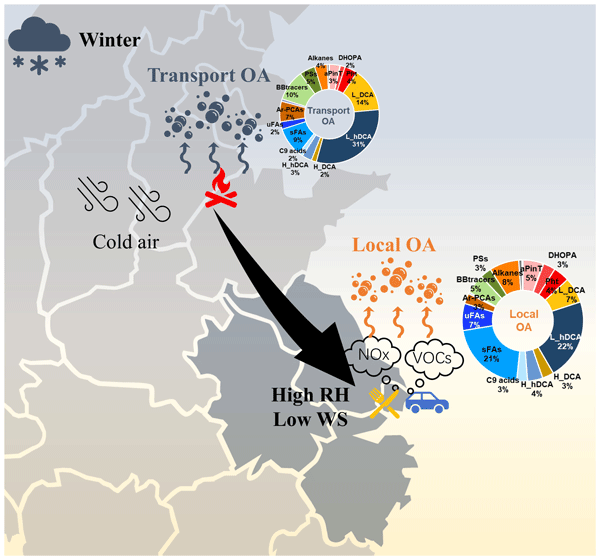
Organic aerosol (OA) is increasingly important in urban PM2.5 pollution as inorganic ions are becoming lower. We investigated the chemical characteristics of OA during nine episodes in Shanghai. The availability of bi-hourly measured molecular markers revealed that the control of local urban sources such as vehicular and cooking emissions lessened the severity of local episodes. Regional control of precursors and biomass burning would reduce PM2.5 episodes influenced by regional transport.
Zhouxing Zou, Qianjie Chen, Men Xia, Qi Yuan, Yi Chen, Yanan Wang, Enyu Xiong, Zhe Wang, and Tao Wang
Atmos. Chem. Phys., 23, 7057–7074, https://doi.org/10.5194/acp-23-7057-2023, https://doi.org/10.5194/acp-23-7057-2023, 2023
Short summary
Short summary
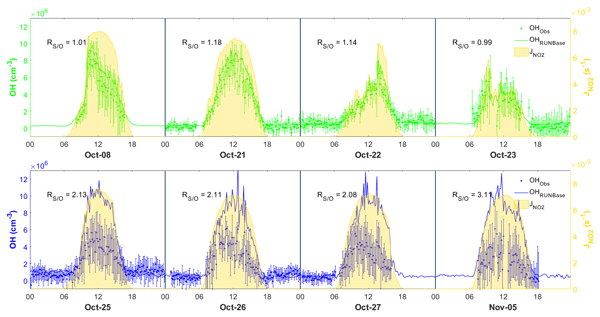
We present OH observation and model simulation results at a coastal site in Hong Kong. The model predicted the OH concentration under high-NOx well but overpredicted it under low-NOx conditions. This implies an insufficient understanding of OH chemistry under low-NOx conditions. We show evidence of missing OH sinks as a possible cause of the overprediction.

Yuting Wang, Yong-Feng Ma, Domingo Muñoz-Esparza, Jianing Dai, Cathy Wing Yi Li, Pablo Lichtig, Roy Chun-Wang Tsang, Chun-Ho Liu, Tao Wang, and Guy Pierre Brasseur
Atmos. Chem. Phys., 23, 5905–5927, https://doi.org/10.5194/acp-23-5905-2023, https://doi.org/10.5194/acp-23-5905-2023, 2023
Short summary
Short summary
Air quality in urban areas is difficult to simulate in coarse-resolution models. This work exploits the WRF (Weather Research and Forecasting) model coupled with a large-eddy simulation (LES) component and online chemistry to perform high-resolution (33.3 m) simulations of air quality in a large city. The evaluation of the simulations with observations shows that increased model resolution improves the representation of the chemical species near the pollution sources.
Mengjiao Jiang, Yaoting Li, Weiji Hu, Yinshan Yang, Guy Brasseur, and Xi Zhao
Atmos. Chem. Phys., 23, 4545–4557, https://doi.org/10.5194/acp-23-4545-2023, https://doi.org/10.5194/acp-23-4545-2023, 2023
Short summary
Short summary
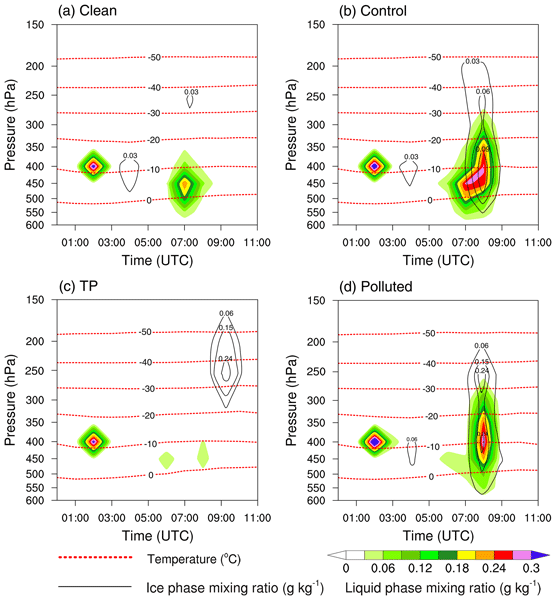
Relatively clean background aerosol over the Tibetan Plateau makes the study of aerosol–cloud–precipitation interactions distinctive. A convection on 24 July 2014 in Naqu was selected using the Weather Research Forecasting (WRF) model, including the Thompson aerosol-aware microphysical scheme. Our study uses a compromise approach to the limited observations. We show that the transformation of cloud water to graupel and the development of convective clouds are favored in a polluted situation.
Rui Li, Kun Zhang, Qing Li, Liumei Yang, Shunyao Wang, Zhiqiang Liu, Xiaojuan Zhang, Hui Chen, Yanan Yi, Jialiang Feng, Qiongqiong Wang, Ling Huang, Wu Wang, Yangjun Wang, Jian Zhen Yu, and Li Li
Atmos. Chem. Phys., 23, 3065–3081, https://doi.org/10.5194/acp-23-3065-2023, https://doi.org/10.5194/acp-23-3065-2023, 2023
Short summary
Short summary
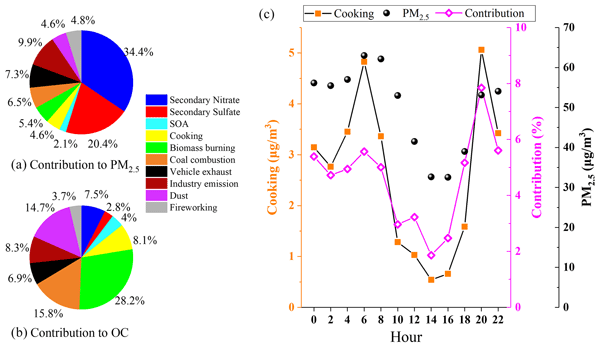
Molecular markers in organic aerosol (OA) provide specific source information on PM2.5, and the contribution of cooking emissions to OA is significant, especially in urban environments. This study investigates the variation in concentrations and oxidative degradation of fatty acids and corresponding oxidation products in ambient air, which can be a guide for the refinement of aerosol source apportionment and provide scientific support for the development of emission source control policies.
Haochen Sun, Jimmy C. H. Fung, Yiang Chen, Zhenning Li, Dehao Yuan, Wanying Chen, and Xingcheng Lu
Geosci. Model Dev., 15, 8439–8452, https://doi.org/10.5194/gmd-15-8439-2022, https://doi.org/10.5194/gmd-15-8439-2022, 2022
Short summary
Short summary
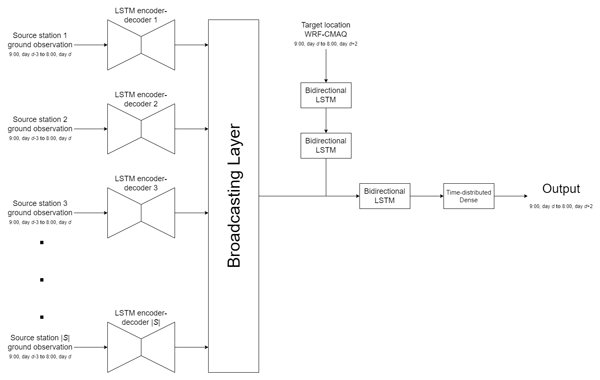
This study developed a novel deep-learning layer, the broadcasting layer, to build an end-to-end LSTM-based deep-learning model for regional air pollution forecast. By combining the ground observation, WRF-CMAQ simulation, and the broadcasting LSTM deep-learning model, forecast accuracy has been significantly improved when compared to other methods. The broadcasting layer and its variants can also be applied in other research areas to supersede the traditional numerical interpolation methods.
Wing Sze Chow, Kezheng Liao, X. H. Hilda Huang, Ka Fung Leung, Alexis K. H. Lau, and Jian Zhen Yu
Atmos. Chem. Phys., 22, 11557–11577, https://doi.org/10.5194/acp-22-11557-2022, https://doi.org/10.5194/acp-22-11557-2022, 2022
Short summary
Short summary
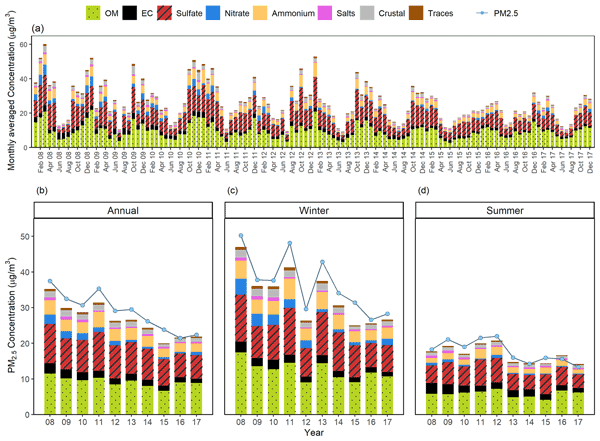
Long-term monitoring data of PM2.5 chemical composition provide essential information for evaluation and planning of control measures. Here we present a 10-year (2008–2017) time series of PM2.5, its major components, and select source markers in an urban site in Hong Kong. The dataset verified the success of local vehicular emission control measures as well as reduction of sulfate and regional sources such as industrial and coal combustion and crop residue burning emissions over the decade.
Qiongqiong Wang, Shan Wang, Yuk Ying Cheng, Hanzhe Chen, Zijing Zhang, Jinjian Li, Dasa Gu, Zhe Wang, and Jian Zhen Yu
Atmos. Chem. Phys., 22, 11239–11253, https://doi.org/10.5194/acp-22-11239-2022, https://doi.org/10.5194/acp-22-11239-2022, 2022
Short summary
Short summary
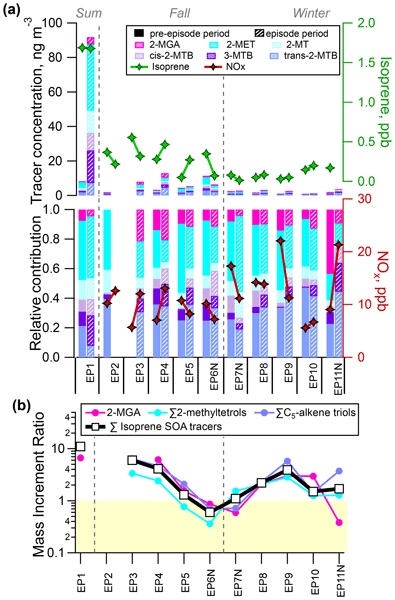
Secondary organic aerosol (SOA) is often enhanced during fine-particulate-matter (PM2.5) episodes. We examined bi-hourly measurements of SOA molecular tracers in suburban Hong Kong during 11 city-wide PM2.5 episodes. The tracers showed regional characteristics for both anthropogenic and biogenic SOA as well as biomass-burning-derived SOA. Multiple tracers of the same precursor revealed the dominance of low-NOx formation pathways for isoprene SOA and less-aged monoterpene SOA during winter.
Yishuo Guo, Chao Yan, Yuliang Liu, Xiaohui Qiao, Feixue Zheng, Ying Zhang, Ying Zhou, Chang Li, Xiaolong Fan, Zhuohui Lin, Zemin Feng, Yusheng Zhang, Penggang Zheng, Linhui Tian, Wei Nie, Zhe Wang, Dandan Huang, Kaspar R. Daellenbach, Lei Yao, Lubna Dada, Federico Bianchi, Jingkun Jiang, Yongchun Liu, Veli-Matti Kerminen, and Markku Kulmala
Atmos. Chem. Phys., 22, 10077–10097, https://doi.org/10.5194/acp-22-10077-2022, https://doi.org/10.5194/acp-22-10077-2022, 2022
Short summary
Short summary
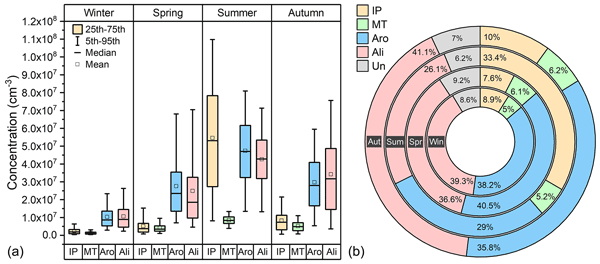
Gaseous oxygenated organic molecules (OOMs) are able to form atmospheric aerosols, which will impact on human health and climate change. Here, we find that OOMs in urban Beijing are dominated by anthropogenic sources, i.e. aromatic (29 %–41 %) and aliphatic (26 %–41 %) OOMs. They are also the main contributors to the condensational growth of secondary organic aerosols (SOAs). Therefore, the restriction on anthropogenic VOCs is crucial for the reduction of SOAs and haze formation.
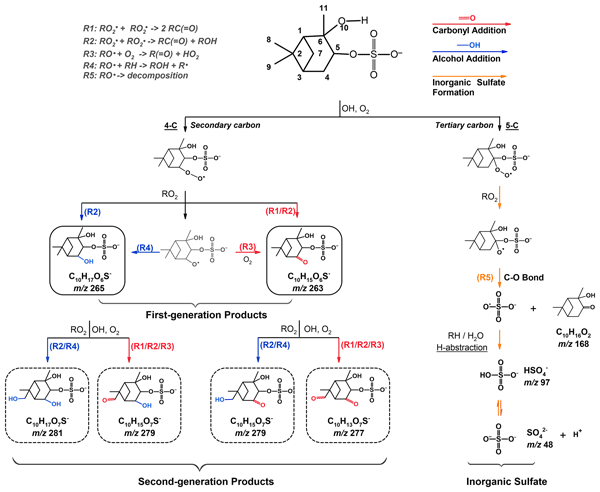
Rongshuang Xu, Sze In Madeleine Ng, Wing Sze Chow, Yee Ka Wong, Yuchen Wang, Donger Lai, Zhongping Yao, Pui-Kin So, Jian Zhen Yu, and Man Nin Chan
Atmos. Chem. Phys., 22, 5685–5700, https://doi.org/10.5194/acp-22-5685-2022, https://doi.org/10.5194/acp-22-5685-2022, 2022
Short summary
Short summary
To date, while over a hundred organosulfates (OSs) have been detected in atmospheric aerosols, many of them are still unidentified, with unknown precursors and formation processes. We found the heterogeneous OH oxidation of an α-pinene-derived organosulfate (C10H17O5SNa, αpOS-249, αpOS-249) can proceed at an efficient rate and transform into more oxygenated OSs, which have been commonly detected in atmospheric aerosols and α-pinene-derived SOA in chamber studies.
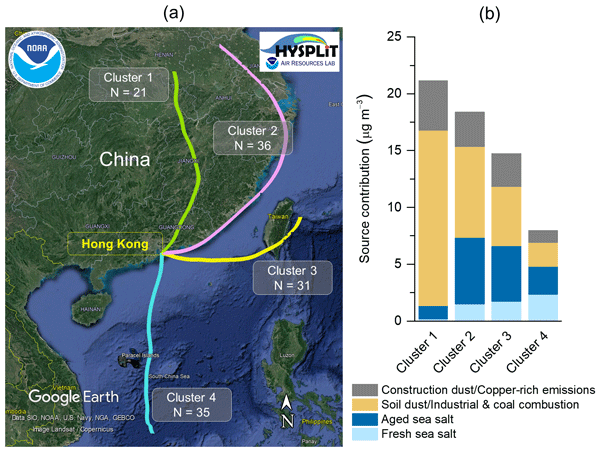
Yee Ka Wong, Kin Man Liu, Claisen Yeung, Kenneth K. M. Leung, and Jian Zhen Yu
Atmos. Chem. Phys., 22, 5017–5031, https://doi.org/10.5194/acp-22-5017-2022, https://doi.org/10.5194/acp-22-5017-2022, 2022
Short summary
Short summary
Coarse particulate matter (PM) has been shown to cause adverse health impacts, but compared to PM2.5, the source of coarse PM is less studied through field measurements. We collected chemical composition data for coarse PM in Hong Kong for a 1-year period. Using statistical models, we found that regional transport of fugitive dust is responsible for the elevated coarse PM. This work sets an example of how field measurements can be effectively utilized for evidence-based policymaking.
Xueying Liu, Amos P. K. Tai, and Ka Ming Fung
Atmos. Chem. Phys., 21, 17743–17758, https://doi.org/10.5194/acp-21-17743-2021, https://doi.org/10.5194/acp-21-17743-2021, 2021
Short summary
Short summary
With the rising food need, more intense agricultural activities will cause substantial perturbations to the nitrogen cycle, aggravating surface air pollution and imposing stress on terrestrial ecosystems. We studied how these ecosystem changes may modify biosphere–atmosphere exchanges, and further exert secondary effects on air quality, and demonstrated a link between agricultural activities and ozone air quality via the modulation of vegetation and soil biogeochemistry by nitrogen deposition.
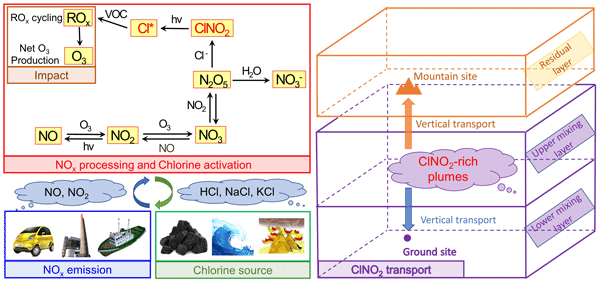
Men Xia, Xiang Peng, Weihao Wang, Chuan Yu, Zhe Wang, Yee Jun Tham, Jianmin Chen, Hui Chen, Yujing Mu, Chenglong Zhang, Pengfei Liu, Likun Xue, Xinfeng Wang, Jian Gao, Hong Li, and Tao Wang
Atmos. Chem. Phys., 21, 15985–16000, https://doi.org/10.5194/acp-21-15985-2021, https://doi.org/10.5194/acp-21-15985-2021, 2021
Short summary
Short summary
ClNO2 is an important precursor of chlorine radical that affects photochemistry. However, its production and impact are not well understood. Our study presents field observations of ClNO2 at three sites in northern China. These observations provide new insights into nighttime processes that produce ClNO2 and the significant impact of ClNO2 on secondary pollutions during daytime. The results improve the understanding of photochemical pollution in the lower part of the atmosphere.
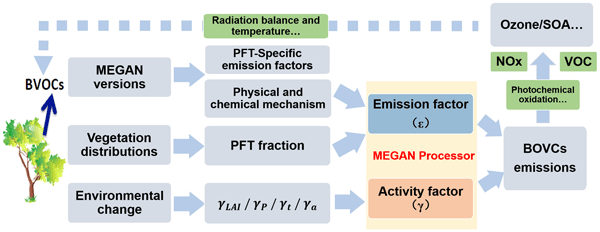
Mingshuai Zhang, Chun Zhao, Yuhan Yang, Qiuyan Du, Yonglin Shen, Shengfu Lin, Dasa Gu, Wenjing Su, and Cheng Liu
Geosci. Model Dev., 14, 6155–6175, https://doi.org/10.5194/gmd-14-6155-2021, https://doi.org/10.5194/gmd-14-6155-2021, 2021
Short summary
Short summary
Biogenic volatile organic compounds (BVOCs) can influence atmospheric chemistry and secondary pollutant formation. This study examines the performance of different versions of the Model of Emissions of Gases and Aerosols from Nature (MEGAN) in modeling BVOCs and ozone and their sensitivities to vegetation distributions over eastern China. The results suggest more accurate vegetation distribution and measurements of BVOC emission fluxes are needed to reduce the uncertainties.
Cited articles
Acdan, J. J. M., Pierce, R. B., Dickens, A. F., Adelman, Z., and Nergui, T.: Examining TROPOMI formaldehyde to nitrogen dioxide ratios in the Lake Michigan region: implications for ozone exceedances, Atmos. Chem. Phys., 23, 7867–7885, https://doi.org/10.5194/acp-23-7867-2023, 2023.
Adedeji, A. R., Andrews, S. J., Rowlinson, M. J., Evans, M. J., Lewis, A. C., Hashimoto, S., Mukai, H., Tanimoto, H., Tohjima, Y., and Saito, T.: Measurement report: Assessment of Asian emissions of ethane and propane with a chemistry transport model based on observations from the island of Hateruma, Atmos. Chem. Phys., 23, 9229–9244, https://doi.org/10.5194/acp-23-9229-2023, 2023.
Appel, K. W., Bash, J. O., Fahey, K. M., Foley, K. M., Gilliam, R. C., Hogrefe, C., Hutzell, W. T., Kang, D., Mathur, R., Murphy, B. N., Napelenok, S. L., Nolte, C. G., Pleim, J. E., Pouliot, G. A., Pye, H. O. T., Ran, L., Roselle, S. J., Sarwar, G., Schwede, D. B., Sidi, F. I., Spero, T. L., and Wong, D. C.: The Community Multiscale Air Quality (CMAQ) model versions 5.3 and 5.3.1: system updates and evaluation, Geosci. Model Dev., 14, 2867–2897, https://doi.org/10.5194/gmd-14-2867-2021, 2021.
Bates, K. H., Jacob, D. J., Li, K., Ivatt, P. D., Evans, M. J., Yan, Y., and Lin, J.: Development and evaluation of a new compact mechanism for aromatic oxidation in atmospheric models, Atmos. Chem. Phys., 21, 18351–18374, https://doi.org/10.5194/acp-21-18351-2021, 2021.
Bates, K. H., Evans, M. J., Henderson, B. H., and Jacob, D. J.: Impacts of updated reaction kinetics on the global GEOS-Chem simulation of atmospheric chemistry, Geosci. Model Dev., 17, 1511–1524, https://doi.org/10.5194/gmd-17-1511-2024, 2024.
Beaudry, E., Jacob, D. J., Bates, K. H., Zhai, S., Yang, L. H., Pendergrass, D. C., Colombi, N., Simpson, I. J., Wisthaler, A., Hopkins, J. R., and Li, K.: Ethanol and Methanol in South Korea and China: Evidence for Large Anthropogenic Emissions Missing from Current Inventories, ACS Es&t Air, 2, 456–465, 2025.
Brewer, J. F., Millet, D. B., Wells, K. C., Payne, V. H., Kulawik, S., Vigouroux, C., Cady-Pereira, K. E., Pernak, R., and Zhou, M.: Space-based observations of tropospheric ethane map emissions from fossil fuel extraction, Nat. Commun., 15, 7829, https://doi.org/10.1038/s41467-024-52247-z, 2024.
Carter, W. P. L.: Updated Maximum Incremental Reactivity Scale and Hydrocarbon Bin Reactivities for Regulatory Applications, Prepared for California Air Resources Board Contract 07-339, https://ww2.arb.ca.gov/sites/default/files/barcu/regact/2009/mir2009/mir10.pdf (last access: 1 December 2025), 2010.
Chan, L. Y., Chan, C. Y., Liu, H. Y., Christopher, S., Oltmans, S. J., and Harris, J. M.: A case study on the biomass burning in Southeast Asia and enhancement of tropospheric ozone over Hong Kong, Geophysical Research Letters, 27, 1479–1482, 2000.
Che, W., Frey, H. C., Fung, J. C., Ning, Z., Qu, H., Lo, H. K., Chen, L., Wong, T. W., Wong, M. K., Lee, O. C., and Carruthers, D.: PRAISE-HK: A personalized real-time air quality informatics system for citizen participation in exposure and health risk management, Sustainable Cities and Society, 54, 101986, https://doi.org/10.1016/j.scs.2019.101986, 2020.
Chen, Q., Miao, R., Geng, G., Shrivastava, M., Dao, X., Xu, B., Sun, J., Zhang, X., Liu, M., Tang, G., and Tang, Q.: Widespread 2013–2020 decreases and reduction challenges of organic aerosol in China, Nature Communications, 15, 4465, https://doi.org/10.1038/s41467-024-48902-0, 2024.
Chen, W. T., Shao, M., Lu, S. H., Wang, M., Zeng, L. M., Yuan, B., and Liu, Y.: Understanding primary and secondary sources of ambient carbonyl compounds in Beijing using the PMF model, Atmos. Chem. Phys., 14, 3047–3062, https://doi.org/10.5194/acp-14-3047-2014, 2014.
Chen, X., Millet, D. B., Singh, H. B., Wisthaler, A., Apel, E. C., Atlas, E. L., Blake, D. R., Bourgeois, I., Brown, S. S., Crounse, J. D., de Gouw, J. A., Flocke, F. M., Fried, A., Heikes, B. G., Hornbrook, R. S., Mikoviny, T., Min, K.-E., Müller, M., Neuman, J. A., O'Sullivan, D. W., Peischl, J., Pfister, G. G., Richter, D., Roberts, J. M., Ryerson, T. B., Shertz, S. R., Thompson, C. R., Treadaway, V., Veres, P. R., Walega, J., Warneke, C., Washenfelder, R. A., Weibring, P., and Yuan, B.: On the sources and sinks of atmospheric VOCs: an integrated analysis of recent aircraft campaigns over North America, Atmos. Chem. Phys., 19, 9097–9123, https://doi.org/10.5194/acp-19-9097-2019, 2019.
Chen, Y., Lu, X., and Fung, J. C. H.: Spatiotemporal source apportionment of ozone pollution over the Greater Bay Area, Atmos. Chem. Phys., 24, 8847–8864, https://doi.org/10.5194/acp-24-8847-2024, 2024.
Coggon, M. M., Gkatzelis, G. I., McDonald, B. C., Gilman, J. B., Schwantes, R. H., Abuhassan, N., Aikin, K. C., Arend, M. F., Berkoff, T. A., Brown, S. S., and Campos, T. L.: Volatile chemical product emissions enhance ozone and modulate urban chemistry, Proceedings of the National Academy of Sciences, 118, e2026653118, https://doi.org/10.1073/pnas.2026653118, 2021.
Cui, L., Zhang, Z., Huang, Y., Lee, S. C., Blake, D. R., Ho, K. F., Wang, B., Gao, Y., Wang, X. M., and Louie, P. K. K.: Measuring OVOCs and VOCs by PTR-MS in an urban roadside microenvironment of Hong Kong: relative humidity and temperature dependence, and field intercomparisons, Atmos. Meas. Tech., 9, 5763–5779, https://doi.org/10.5194/amt-9-5763-2016, 2016.
Douros, J., Eskes, H., van Geffen, J., Boersma, K. F., Compernolle, S., Pinardi, G., Blechschmidt, A.-M., Peuch, V.-H., Colette, A., and Veefkind, P.: Comparing Sentinel-5P TROPOMI NO2 column observations with the CAMS regional air quality ensemble, Geosci. Model Dev., 16, 509–534, https://doi.org/10.5194/gmd-16-509-2023, 2023.
Eskes, H., van Geffen, J., Sneep, M., Veefkind, P., Niemeijer, S., and Zehner, C.: S5P Nitrogen Dioxide v02.03.01 intermediate reprocessing on the S5P-PAL system: Readme file, https://data-portal.s5p-pal.com/product-docs/no2/PAL_reprocessing_NO2_v02.03.01_20211215.pdf (last access: 1 December 2025), 2021.
Feng, X., Guo, J., Wang, Z., Gu, D., Ho, K. F., Chen, Y., Liao, K., Cheung, V. T., Louie, P. K., Leung, K. K., and Yu, J. Z.: Investigation of the multi-year trend of surface ozone and ozone-precursor relationship in Hong Kong, Atmospheric Environment, 315, 120139, https://doi.org/10.1016/j.atmosenv.2023.120139, 2023.
Ferracci, V., Heimann, I., Abraham, N. L., Pyle, J. A., and Archibald, A. T.: Global modelling of the total OH reactivity: investigations on the “missing” OH sink and its atmospheric implications, Atmos. Chem. Phys., 18, 7109–7129, https://doi.org/10.5194/acp-18-7109-2018, 2018.
Gao, Y., Li, R., Wang, F., Wu, C., Zhang, F., Li, Y., Huo, J., Chen, J., Cui, H., Fu, Q., and Wang, G.: A Newly Discovered Ozone Formation Mechanism Observed in a Coastal Island of East China, ACS ES&T Air, https://doi.org/10.1021/acsestair.4c00082 (last access: 3 December 2025), 2024.
Ge, Y., Solberg, S., Heal, M. R., Reimann, S., van Caspel, W., Hellack, B., Salameh, T., and Simpson, D.: Evaluation of modelled versus observed non-methane volatile organic compounds at European Monitoring and Evaluation Programme sites in Europe, Atmos. Chem. Phys., 24, 7699–7729, https://doi.org/10.5194/acp-24-7699-2024, 2024.
Goldberg, D. L., Harkey, M., de Foy, B., Judd, L., Johnson, J., Yarwood, G., and Holloway, T.: Evaluating NOx emissions and their effect on O3 production in Texas using TROPOMI NO2 and HCHO, Atmos. Chem. Phys., 22, 10875–10900, https://doi.org/10.5194/acp-22-10875-2022, 2022.
Guenther, A. B., Jiang, X., Heald, C. L., Sakulyanontvittaya, T., Duhl, T., Emmons, L. K., and Wang, X.: The Model of Emissions of Gases and Aerosols from Nature version 2.1 (MEGAN2.1): an extended and updated framework for modeling biogenic emissions, Geosci. Model Dev., 5, 1471–1492, https://doi.org/10.5194/gmd-5-1471-2012, 2012.
Guo, H., So, K. L., Simpson, I. J., Barletta, B., Meinardi, S., and Blake, D. R.: C1–C8 volatile organic compounds in the atmosphere of Hong Kong: overview of atmospheric processing and source apportionment, Atmospheric Environment, 41, 1456–1472, 2007.
Ha, E. S., Park, R. J., Kwon, H.-A., Lee, G. T., Lee, S. D., Shin, S., Lee, D.-W., Hong, H., Lerot, C., De Smedt, I., Danckaert, T., Hendrick, F., and Irie, H.: First evaluation of the GEMS glyoxal products against TROPOMI and ground-based measurements, Atmos. Meas. Tech., 17, 6369–6384, https://doi.org/10.5194/amt-17-6369-2024, 2024.
Ho, K. F., Lee, S. C., Ho, W. K., Blake, D. R., Cheng, Y., Li, Y. S., Ho, S. S. H., Fung, K., Louie, P. K. K., and Park, D.: Vehicular emission of volatile organic compounds (VOCs) from a tunnel study in Hong Kong, Atmos. Chem. Phys., 9, 7491–7504, https://doi.org/10.5194/acp-9-7491-2009, 2009.
Jin, X., Fiore, A., Boersma, K. F., De Smedt, I., and Valin, L.: Inferring Changes in Summertime Surface Ozone–NOx–VOC Chemistry over U.S. Urban Areas from Two Decades of Satellite and Ground-Based Observations, Environ. Sci. Technol., 54, 6518–6529, https://doi.org/10.1021/acs.est.9b07785, 2020.
Jin, X., Fiore, A. M., Murray, L. T., Valin, L. C., Lamsal, L. N., Duncan, B., Folkert Boersma, K., De Smedt, I., Abad, G. G., Chance, K., and Tonnesen, G. S.: Evaluating a space-based indicator of surface ozone-NOx-VOC sensitivity over midlatitude source regions and application to decadal trends, Journal of Geophysical Research: Atmospheres, 122, 10–439, 2017.
Karl, T., Striednig, M., Graus, M., Hammerle, A., and Wohlfahrt, G.: Urban flux measurements reveal a large pool of oxygenated volatile organic compound emissions, P. Natl. Acad. Sci. USA, 115, 1186–1191, 2018.
Kim, H., Park, R. J., Kim, S., Brune, W. H., Diskin, G. S., Fried, A., Hall, S. R., Weinheimer, A. J., Wennberg, P., Wisthaler, A., Blake, D. R., and Ullmann, K.: Observed versus simulated OH reactivity during KORUS-AQ campaign: Implications for emission inventory and chemical environment in East Asia, Elem. Sci. Anth., 10, 00030, https://doi.org/10.1525/elementa.2022.00030, 2022.
Lee, Y. C., Chan, K. L., and Wenig, M. O.: Springtime warming and biomass burning causing ozone episodes in South and Southwest China, Air Quality, Atmosphere & Health, 12, 919–931, 2019.
Lerot, C., Hendrick, F., Van Roozendael, M., Alvarado, L. M. A., Richter, A., De Smedt, I., Theys, N., Vlietinck, J., Yu, H., Van Gent, J., Stavrakou, T., Müller, J.-F., Valks, P., Loyola, D., Irie, H., Kumar, V., Wagner, T., Schreier, S. F., Sinha, V., Wang, T., Wang, P., and Retscher, C.: Glyoxal tropospheric column retrievals from TROPOMI – multi-satellite intercomparison and ground-based validation, Atmos. Meas. Tech., 14, 7775–7807, https://doi.org/10.5194/amt-14-7775-2021, 2021.
Li, K., Jacob, D. J., Liao, H., Qiu, Y., Shen, L., Zhai, S., Bates, K. H., Sulprizio, M. P., Song, S., Lu, X., Zhang, Q., Zheng, B., Zhang, Y., Zhang, J., Lee, H. C., and Kuk, S. K.: Ozone pollution in the North China Plain spreading into the latewinter haze season, P. Natl. Acad. Sci. USA, 118, e2015797118, https://doi.org/10.1073/pnas.2015797118, 2021.
Li, M., Zhang, Q., Streets, D. G., He, K. B., Cheng, Y. F., Emmons, L. K., Huo, H., Kang, S. C., Lu, Z., Shao, M., Su, H., Yu, X., and Zhang, Y.: Mapping Asian anthropogenic emissions of non-methane volatile organic compounds to multiple chemical mechanisms, Atmos. Chem. Phys., 14, 5617–5638, https://doi.org/10.5194/acp-14-5617-2014, 2014.
Li, R., Xu, M., Li, M., Chen, Z., Zhao, N., Gao, B., and Yao, Q.: Identifying the spatiotemporal variations in ozone formation regimes across China from 2005 to 2019 based on polynomial simulation and causality analysis, Atmos. Chem. Phys., 21, 15631–15646, https://doi.org/10.5194/acp-21-15631-2021, 2021.
Li, W., Wang, Y., Liu, X., Soleimanian, E., Griggs, T., Flynn, J., and Walter, P.: Understanding offshore high-ozone events during TRACER-AQ 2021 in Houston: insights from WRF–CAMx photochemical modeling, Atmos. Chem. Phys., 23, 13685–13699, https://doi.org/10.5194/acp-23-13685-2023, 2023.
Liu, Y., Shao, M., Lu, S., Chang, C.-C., Wang, J.-L., and Chen, G.: Volatile Organic Compound (VOC) measurements in the Pearl River Delta (PRD) region, China, Atmos. Chem. Phys., 8, 1531–1545, https://doi.org/10.5194/acp-8-1531-2008, 2008.
Liu, Q., Gao, Y., Huang, W., Ling, Z., Wang, Z., and Wang, X.: Carbonyl compounds in the atmosphere: a review of abundance, source and their contributions to O3 and SOA formation, Atmos. Res., 274, 106184, https://doi.org/10.1016/j.atmosres.2022.106184, 2022.
Liu, X., Wang, Y., Wasti, S., Lee, T., Li, W., Zhou, S., Flynn, J., Sheesley, R. J., Usenko, S., and Liu, F.: Impacts of anthropogenic emissions and meteorology on spring ozone differences in San Antonio, Texas between 2017 and 2021, Science of The Total Environment, 914, 169693, https://doi.org/10.1016/j.scitotenv.2023.169693, 2024. Liu, X., Shipborne OVOC measurements over Hong Kong waters during 2021–2022, DataSpace@HKUST [data set], https://doi.org/10.14711/dataset/HFRZ8M, 2025.
Luecken, D. J., Yarwood, G., and Hutzell, W. T.: Multipollutant modeling of ozone, reactive nitrogen and HAPs across the continental US with CMAQ-CB6, Atmos. Environ., 201, 62–72, https://doi.org/10.1016/j.atmosenv.2018.11.060, 2019.
Lyu, X., Guo, H., Simpson, I. J., Meinardi, S., Louie, P. K. K., Ling, Z., Wang, Y., Liu, M., Luk, C. W. Y., Wang, N., and Blake, D. R.: Effectiveness of replacing catalytic converters in LPG-fueled vehicles in Hong Kong, Atmos. Chem. Phys., 16, 6609–6626, https://doi.org/10.5194/acp-16-6609-2016, 2016.
Mai, Y., Cheung, V., Louie, P. K., Leung, K., Fung, J. C., Lau, A. K., Blake, D. R., and Gu, D.: Characterization and source apportionment of volatile organic compounds in Hong Kong: A 5-year study for three different archetypical sites, Journal of Environmental Sciences, 151, 424–440, 2025.
Mo, X., Gong, D., Liu, Y., Li, J., Zhao, Y., Zhao, W., Shen, J., Liao, T., Wang, H., and Wang, B.: Ground-based formaldehyde across the Pearl River Delta: a snapshot and meta-analysis study, Atmos. Environ., 309, 119935 https://doi.org/10.1016/j.atmosenv.2023.119935, 2023.
Mo, Z., Shao, M., and Lu, S.: Compilation of a source profile database for hydrocarbon and OVOC emissions in China, Atmospheric Environment, 143, 209–217, 2016.
Ou, J., Guo, H., Zheng, J., Cheung, K., Louie, P. K., Ling, Z., and Wang, D.: Concentrations and sources of non-methane hydrocarbons (NMHCs) from 2005 to 2013 in Hong Kong: A multi-year real-time data analysis, Atmospheric Environment, 103, 196–206, 2015.
Ou, J., Zheng, J., Yuan, Z., Guan, D., Huang, Z., Yu, F., Shao, M., and Louie, P. K.: Reconciling discrepancies in the source characterization of VOCs between emission inventories and receptor modeling, Science of the Total Environment, 628, 697–706, 2018.
Ouyang, S., Deng, T., Liu, R., Chen, J., He, G., Leung, J. C.-H., Wang, N., and Liu, S. C.: Impact of a subtropical high and a typhoon on a severe ozone pollution episode in the Pearl River Delta, China, Atmos. Chem. Phys., 22, 10751–10767, https://doi.org/10.5194/acp-22-10751-2022, 2022.
Ren, J., Guo, F., and Xie, S.: Diagnosing ozone–NOx–VOC sensitivity and revealing causes of ozone increases in China based on 2013–2021 satellite retrievals, Atmos. Chem. Phys., 22, 15035–15047, https://doi.org/10.5194/acp-22-15035-2022, 2022.
Rowlinson, M. J., Evans, M. J., Carpenter, L. J., Read, K. A., Punjabi, S., Adedeji, A., Fakes, L., Lewis, A., Richmond, B., Passant, N., Murrells, T., Henderson, B., Bates, K. H., and Helmig, D.: Revising VOC emissions speciation improves the simulation of global background ethane and propane, Atmos. Chem. Phys., 24, 8317–8342, https://doi.org/10.5194/acp-24-8317-2024, 2024.
Seltzer, K. M., Pennington, E., Rao, V., Murphy, B. N., Strum, M., Isaacs, K. K., and Pye, H. O. T.: Reactive organic carbon emissions from volatile chemical products, Atmos. Chem. Phys., 21, 5079–5100, https://doi.org/10.5194/acp-21-5079-2021, 2021.
She, Y., Li, J., Lyu, X., Guo, H., Qin, M., Xie, X., Gong, K., Ye, F., Mao, J., Huang, L., and Hu, J.: Current status of model predictions of volatile organic compounds and impacts on surface ozone predictions during summer in China, Atmos. Chem. Phys., 24, 219–233, https://doi.org/10.5194/acp-24-219-2024, 2024.
Souri, A. H., Kumar, R., Chong, H., Golbazi, M., Knowland, K. E., Geddes, J., and Johnson, M. S.: Decoupling in the vertical shape of HCHO during a sea breeze event: The effect on trace gas satellite retrievals and column-to-surface translation, Atmos. Environ., 309, 119929, https://doi.org/10.1016/j.atmosenv.2023.119929, 2023.
Souri, A. H., González Abad, G., Wolfe, G. M., Verhoelst, T., Vigouroux, C., Pinardi, G., Compernolle, S., Langerock, B., Duncan, B. N., and Johnson, M. S.: Feasibility of robust estimates of ozone production rates using a synergy of satellite observations, ground-based remote sensing, and models, Atmos. Chem. Phys., 25, 2061–2086, https://doi.org/10.5194/acp-25-2061-2025, 2025.
Stavrakou, T., Müller, J. F., Peeters, J., Razavi, A., Clarisse, L., Clerbaux, C., Coheur, P. F., Hurtmans, D., De Mazière, M., Vigouroux, C., and Deutscher, N. M.: Satellite evidence for a large source of formic acid from boreal and tropical forests, Nature Geoscience, 5, 26–30, 2012.
Sun, H., Gu, D., Feng, X., Wang, Z., Cao, X., Sun, M., Ning, Z., Zheng, P., Mai, Y., Xu, Z., and Chan, W.M.: Cruise observation of ambient volatile organic compounds over Hong Kong coastal water, Atmospheric Environment, 323, 120387, https://doi.org/10.1016/j.atmosenv.2024.120387, 2024.
Sun, L., Wong, K. C., Wei, P., Ye, S., Huang, H., Yang, F., Westerdahl, D., Louie, P. K., Luk, C. W., and Ning, Z.: Development and application of a next generation air sensor network for the Hong Kong marathon 2015 air quality monitoring, Sensors, 16, 211, https://doi.org/10.3390/s16020211, 2016.
Tonnesen, G. S. and Dennis, R. L.: Analysis of radical propagation efficiency to assess ozone sensitivity to hydrocarbons and NOx: 2. Long-lived species as indicators of ozone concentration sensitivity, J. Geophys. Res., 105, 9227–9241, https://doi.org/10.1029/1999JD900372, 2000.
Travis, K. R., Nault, B. A., Crawford, J. H., Bates, K. H., Blake, D. R., Cohen, R. C., Fried, A., Hall, S. R., Huey, L. G., Lee, Y. R., Meinardi, S., Min, K.-E., Simpson, I. J., and Ullman, K.: Impact of improved representation of volatile organic compound emissions and production of NOx reservoirs on modeled urban ozone production, Atmos. Chem. Phys., 24, 9555–9572, https://doi.org/10.5194/acp-24-9555-2024, 2024.
Turner, A. J., Frankenberg, C., and Kort, E. A.: Interpreting contemporary trends in atmospheric methane, P. Natl. Acad. Sci. USA, 116, 2805–2813, https://doi.org/10.1073/pnas.1814297116, 2019.
Veefkind, J. P., Aben, I., McMullan, K., Förster, H., De Vries, J., Otter, G., Claas, J., Eskes, H. J., De Haan, J. F., Kleipool, Q., and Van Weele, M.: TROPOMI on the ESA Sentinel-5 Precursor: A GMES mission for global observations of the atmospheric composition for climate, air quality and ozone layer applications, Remote sensing of environment, 120, 70–83, 2012.
von Schneidemesser, E., McDonald, B. C., Denier van der Gon, H., Crippa, M., Guizzardi, D., Borbon, A., Dominutti, P., Huang, G., Jansens-Maenhout, G., Li, M., and Ou-Yang, C.F.: Comparing urban anthropogenic NMVOC measurements with representation in emission inventories – A global perspective, Journal of Geophysical Research: Atmospheres, 128, 2022JD037906, https://doi.org/10.1029/2022JD037906, 2023.
Wang, S., Yuan, B., He, X., Cui, R., Song, X., Chen, Y., Wu, C., Wang, C., Huangfu, Y., Li, X.-B., Wang, B., and Shao, M.: Emission characteristics of reactive organic gases (ROGs) from industrial volatile chemical products (VCPs) in the Pearl River Delta (PRD), China, Atmos. Chem. Phys., 24, 7101–7121, https://doi.org/10.5194/acp-24-7101-2024, 2024.
Wang, T., Dai, J., Lam, K. S., Nan Poon, C., and Brasseur, G. P.: Twenty-Five Years of Lower Tropospheric Ozone Observations in Tropical East Asia: The Influence of Emissions and Weather Patterns, Geophys. Res. Lett., 46, 11463–11470, https://doi.org/10.1029/2019GL084459, 2019.
Wang, W., van der A, R., Ding, J., van Weele, M., and Cheng, T.: Spatial and temporal changes of the ozone sensitivity in China based on satellite and ground-based observations, Atmos. Chem. Phys., 21, 7253–7269, https://doi.org/10.5194/acp-21-7253-2021, 2021.
Wang, W., Yuan, B., Peng, Y., Su, H., Cheng, Y., Yang, S., Wu, C., Qi, J., Bao, F., Huangfu, Y., Wang, C., Ye, C., Wang, Z., Wang, B., Wang, X., Song, W., Hu, W., Cheng, P., Zhu, M., Zheng, J., and Shao, M.: Direct observations indicate photodegradable oxygenated volatile organic compounds (OVOCs) as larger contributors to radicals and ozone production in the atmosphere, Atmos. Chem. Phys., 22, 4117–4128, https://doi.org/10.5194/acp-22-4117-2022, 2022a.
Wang, W., Parrish, D. D., Wang, S., Bao, F., Ni, R., Li, X., Yang, S., Wang, H., Cheng, Y., and Su, H.: Long-term trend of ozone pollution in China during 2014–2020: distinct seasonal and spatial characteristics and ozone sensitivity, Atmos. Chem. Phys., 22, 8935–8949, https://doi.org/10.5194/acp-22-8935-2022, 2022b.
Wang, W., Li, X., Cheng, Y., Parrish, D. D., Ni, R., Tan, Z., Liu, Y., Lu, S., Wu, Y., Chen, S., Lu, K., Hu, M., Zeng, L., Shao, M., Huang, C., Tian, X., Leung, K. M., Chen, L., Fan, M., Zhang, Q., Rohrer, F., Wahner, A., Pöschl, U., Su, H., and Zhang, Y.: Ozone pollution mitigation strategy informed by long-term trends of atmospheric oxidation capacity, Nat. Geosci., 17, 20–25, https://doi.org/10.1038/s41561-023-01334-9, 2024a.
Wang, W., Yuan, B., Su, H., Cheng, Y., Qi, J., Wang, S., Song, W., Wang, X., Xue, C., Ma, C., Bao, F., Wang, H., Lou, S., and Shao, M.: A large role of missing volatile organic compound reactivity from anthropogenic emissions in ozone pollution regulation, Atmos. Chem. Phys., 24, 4017–4027, https://doi.org/10.5194/acp-24-4017-2024, 2024b.
Wang, Y., Zhao, Y., Liu, Y., Jiang, Y., Zheng, B., Xing, J., Liu, Y., Wang, S., and Nielsen, C.P.: Sustained emission reductions have restrained the ozone pollution over China, Nature Geoscience, 16, 967–974, 2023a.
Wang, Y., Ma, Y.-F., Muñoz-Esparza, D., Dai, J., Li, C. W. Y., Lichtig, P., Tsang, R. C.-W., Liu, C.-H., Wang, T., and Brasseur, G. P.: Coupled mesoscale–microscale modeling of air quality in a polluted city using WRF-LES-Chem, Atmos. Chem. Phys., 23, 5905–5927, https://doi.org/10.5194/acp-23-5905-2023, 2023b.
Wang, Y., Huang, J., Zhao, B., Du, Y., Huang, L., Lai, D., Su, Q., Manomaiphiboon, K., and Li, L.: Full-Volatility Reactive Organic Carbon Emissions from Volatile Chemical Products in Mainland China, ACS ES&T Air, 1, 1541–1553, 2024.
Wells, K. C., Millet, D. B., Payne, V. H., Vigouroux, C., Aquino, C. A. B., De Mazière, M., De Gouw, J. A., Graus, M., Kurosu, T., Warneke, C., and Wisthaler, A.: Next-generation isoprene measurements from space: detecting daily variability at high resolution, Journal of Geophysical Research: Atmospheres, 127, 2021JD036181, https://doi.org/10.1029/2021JD036181, 2022.
Whalley, L. K., Slater, E. J., Woodward-Massey, R., Ye, C., Lee, J. D., Squires, F., Hopkins, J. R., Dunmore, R. E., Shaw, M., Hamilton, J. F., Lewis, A. C., Mehra, A., Worrall, S. D., Bacak, A., Bannan, T. J., Coe, H., Percival, C. J., Ouyang, B., Jones, R. L., Crilley, L. R., Kramer, L. J., Bloss, W. J., Vu, T., Kotthaus, S., Grimmond, S., Sun, Y., Xu, W., Yue, S., Ren, L., Acton, W. J. F., Hewitt, C. N., Wang, X., Fu, P., and Heard, D. E.: Evaluating the sensitivity of radical chemistry and ozone formation to ambient VOCs and NOx in Beijing, Atmos. Chem. Phys., 21, 2125–2147, https://doi.org/10.5194/acp-21-2125-2021, 2021.
Wisthaler, A., Apel, E. C., Bossmeyer, J., Hansel, A., Junkermann, W., Koppmann, R., Meier, R., Müller, K., Solomon, S. J., Steinbrecher, R., Tillmann, R., and Brauers, T.: Technical Note: Intercomparison of formaldehyde measurements at the atmosphere simulation chamber SAPHIR, Atmos. Chem. Phys., 8, 2189–2200, https://doi.org/10.5194/acp-8-2189-2008, 2008.
Xu, Y., Feng, X., Chen, Y., Zheng, P., Hui, L., Chen, Y., Yu, J. Z., and Wang, Z.: Development of an enhanced method for atmospheric carbonyls and characterizing their roles in photochemistry in subtropical Hong Kong, Science of The Total Environment, 896, 165135, https://doi.org/10.1016/j.scitotenv.2023.165135, 2023.
Yang, L. H., Jacob, D. J., Lin, H., Dang, R., Bates, K. H., East, J. D., Travis, K. R., Pendergrass, D. C., and Murray, L. T.: Assessment of hydrogen's climate impact is affected by model OH biases, Geophysical Research Letters, 52, e2024GL112445, https://doi.org/10.1029/2024GL112445, 2025.
Zeren, Y., Guo, H., Lyu, X., Jiang, F., Wang, Y., Liu, X., Zeng, L., Li, M., and Li, L.: An Ozone “Pool” in South China: Investigations on Atmospheric Dynamics and Photochemical Processes Over the Pearl River Estuary, J. Geophys. Res., 124, 12340–12355, https://doi.org/10.1029/2019jd030833, 2019.
Zhang, R., Zhang, Y., Lin, H., Feng, X., Fu, T. M., and Wang, Y.: NOx emission reduction and recovery during COVID-19 in East China, Atmosphere, 11, 433, https://doi.org/10.3390/atmos11040433, 2020.
Zhang, Y., Xue, L., Dong, C., Wang, T., Mellouki, A., Zhang, Q., and Wang, W.: Gaseous carbonyls in China's atmosphere: Tempo-spatial distributions, sources, photochemical formation, and impact on air quality, Atmospheric Environment, 214, 116863, https://doi.org/10.1016/j.atmosenv.2019.116863, 2019.
Zhang, Y., Yin, D., Wang, S., Li, S., Yuan, B., Shao, M., Li, H., Tan, Q., Li, Q., Zhang, Y., and Tang, G.: Comprehensive Evaluation of Simulation Performance of Nonmethane Hydrocarbons (NMHCs) and Oxygenated VOCs in China Using a Three-Dimensional Numerical Model, ACS ES&T Air, https://doi.org/10.1021/acsestair.5c00066, 2025.
Zhao, Y., Zheng, B., Saunois, M., Ciais, P., Hegglin, M. I., Lu, S., Li, Y., and Bousquet, P.: Air pollution modulates trends and variability of the global methane budget, Nature, 1–7, https://doi.org/10.1038/s41586-025-09004-z, 2025.
Zhu, Q., Schwantes, R. H., Coggon, M., Harkins, C., Schnell, J., He, J., Pye, H. O. T., Li, M., Baker, B., Moon, Z., Ahmadov, R., Pfannerstill, E. Y., Place, B., Wooldridge, P., Schulze, B. C., Arata, C., Bucholtz, A., Seinfeld, J. H., Warneke, C., Stockwell, C. E., Xu, L., Zuraski, K., Robinson, M. A., Neuman, J. A., Veres, P. R., Peischl, J., Brown, S. S., Goldstein, A. H., Cohen, R. C., and McDonald, B. C.: A better representation of volatile organic compound chemistry in WRF-Chem and its impact on ozone over Los Angeles, Atmos. Chem. Phys., 24, 5265–5286, https://doi.org/10.5194/acp-24-5265-2024, 2024.
Zhu, Y., Chan, K. L., Lam, Y. F., Horbanski, M., Pöhler, D., Boll, J., Lipkowitsch, I., Ye, S., and Wenig, M.: Analysis of spatial and temporal patterns of on-road NO2 concentrations in Hong Kong, Atmos. Meas. Tech., 11, 6719–6734, https://doi.org/10.5194/amt-11-6719-2018, 2018.
Short summary
Volatile organic compounds (VOCs) affect ozone formation and air quality. However, our understanding is limited due to insufficient measurements, especially for oxygenated VOCs. This study combines land, ship, and satellite data in Hong Kong, showing that oxygenated VOCs make up a significant portion of total VOCs. Despite their importance, many are underestimated in current models. These findings highlight the need to improve VOC representation in models to enhance air quality management.
Volatile organic compounds (VOCs) affect ozone formation and air quality. However, our...


Altmetrics
Final-revised paper
Preprint