Articles | Volume 25, issue 23
https://doi.org/10.5194/acp-25-17501-2025
© Author(s) 2025. This work is distributed under
the Creative Commons Attribution 4.0 License.

https://doi.org/10.5194/acp-25-17501-2025
© Author(s) 2025. This work is distributed under
the Creative Commons Attribution 4.0 License.
Using geostationary-satellite-derived sub-daily fire radiative power variability versus prescribed diurnal cycles to assess the impact of African fires on tropospheric ozone
Haolin Wang
School of Atmospheric Sciences, Sun Yat-sen University, and Southern Marine Science and Engineering Guangdong Laboratory (Zhuhai), Zhuhai, China
School of GeoSciences, University of Edinburgh, Edinburgh, UK
William Maslanka
Department of Geography, King's College London, London, UK
National Centre for Earth Observation, King's College London, London, UK
Leverhulme Centre for Wildfires, Environment and Society, King's College London, London, UK
School of GeoSciences, University of Edinburgh, Edinburgh, UK
National Centre for Earth Observation, University of Edinburgh, Edinburgh, UK
Martin J. Wooster
Department of Geography, King's College London, London, UK
National Centre for Earth Observation, King's College London, London, UK
Leverhulme Centre for Wildfires, Environment and Society, King's College London, London, UK
Haofan Wang
School of Atmospheric Sciences, Sun Yat-sen University, and Southern Marine Science and Engineering Guangdong Laboratory (Zhuhai), Zhuhai, China
School of GeoSciences, University of Edinburgh, Edinburgh, UK
National Centre for Earth Observation, University of Edinburgh, Edinburgh, UK
Liang Feng
School of GeoSciences, University of Edinburgh, Edinburgh, UK
National Centre for Earth Observation, University of Edinburgh, Edinburgh, UK
Department of Civil and Environmental Engineering, University of California, Irvine, CA, USA
School of Atmospheric Sciences, Sun Yat-sen University, and Southern Marine Science and Engineering Guangdong Laboratory (Zhuhai), Zhuhai, China
Shaojia Fan
CORRESPONDING AUTHOR
School of Atmospheric Sciences, Sun Yat-sen University, and Southern Marine Science and Engineering Guangdong Laboratory (Zhuhai), Zhuhai, China
Related authors
Jingyu Li, Haolin Wang, Qi Fan, and Xiao Lu
Atmos. Chem. Phys., 25, 12983–13006, https://doi.org/10.5194/acp-25-12983-2025, https://doi.org/10.5194/acp-25-12983-2025, 2025
Short summary
Short summary
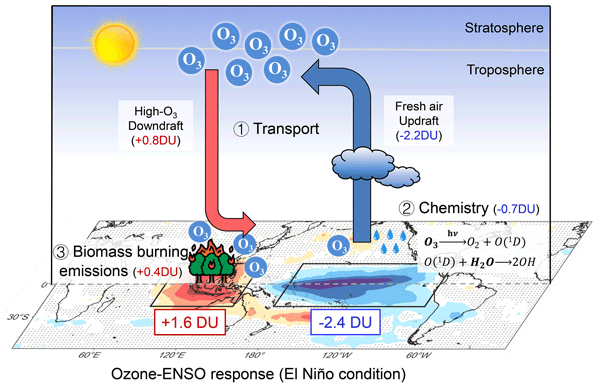
We use multiple global chemical models to quantify processes contributing to the ozone response to ENSO (El Niño–Southern Oscillation). We find that changes in transport patterns are the dominant factor in the overall ozone–ENSO responses, with the opposing effects of chemical depletion and increased biomass burning on ozone largely offsetting each other. Models consistently project an increase in tropical ozone–ENSO response associated with strengthening anomalous circulation and more abundant water vapor with global warming.
Ruize Sun, Xiao Lu, Haipeng Lin, Tongwen Wu, Xingpei Ye, Lu Shen, Xuan Wang, Haolin Wang, Jingyu Li, Ni Lu, Jiayin Su, Jie Zhang, Fang Zhang, Xiaoge Xin, Xiong Liu, and Lin Zhang
EGUsphere, https://doi.org/10.5194/egusphere-2025-3829, https://doi.org/10.5194/egusphere-2025-3829, 2025
This preprint is open for discussion and under review for Geoscientific Model Development (GMD).
Short summary
Short summary
We present the development of a global chemistry-climate coupled model BCC-GEOS-Chem v2.0, with improved representation of comprehensive troposphere-stratosphere chemistry and new capability to account for radiative-cloud feedbacks from short-lived climate forcers. The development of the BCC-GEOS-Chem v2.0 provides a powerful tool to study climate-chemistry interactions and for future projection of global atmospheric chemistry and regional air quality.
Xiao Lu, Yiming Liu, Jiayin Su, Xiang Weng, Tabish Ansari, Yuqiang Zhang, Guowen He, Yuqi Zhu, Haolin Wang, Ganquan Zeng, Jingyu Li, Cheng He, Shuai Li, Teerachai Amnuaylojaroen, Tim Butler, Qi Fan, Shaojia Fan, Grant L. Forster, Meng Gao, Jianlin Hu, Yugo Kanaya, Mohd Talib Latif, Keding Lu, Philippe Nédélec, Peer Nowack, Bastien Sauvage, Xiaobin Xu, Lin Zhang, Ke Li, Ja-Ho Koo, and Tatsuya Nagashima
Atmos. Chem. Phys., 25, 7991–8028, https://doi.org/10.5194/acp-25-7991-2025, https://doi.org/10.5194/acp-25-7991-2025, 2025
Short summary
Short summary
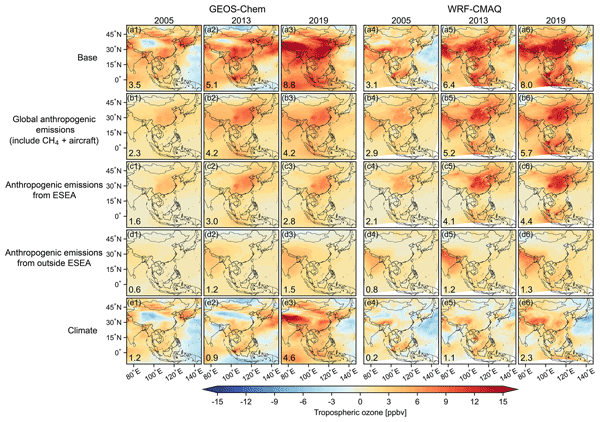
This study analyzes summertime ozone trends in East and Southeast Asia derived from a comprehensive observational database spanning from 1995 to 2019, incorporating aircraft observations, ozonesonde data, and measurements from 2500 surface sites. Multiple models are applied to attribute to changes in anthropogenic emissions and climate. The results highlight that increases in anthropogenic emissions are the primary driver of ozone increases both in the free troposphere and at the surface.
Shuai Li, Haolin Wang, and Xiao Lu
Atmos. Chem. Phys., 25, 2725–2743, https://doi.org/10.5194/acp-25-2725-2025, https://doi.org/10.5194/acp-25-2725-2025, 2025
Short summary
Short summary
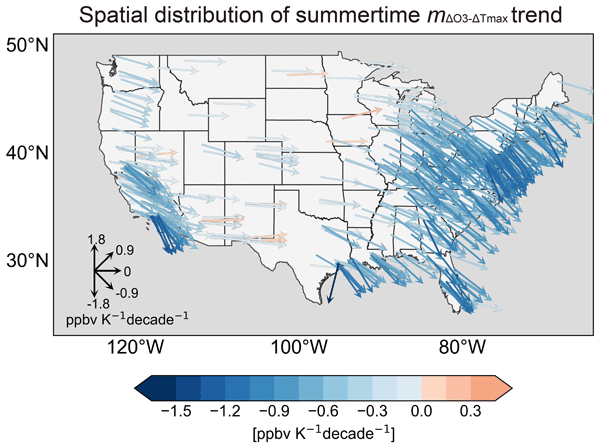
Summertime ozone–temperature sensitivity has decreased by 50 % from 3.0 ppbv per K in 1990 to 1.5 ppb per K in 2021 in the US. GEOS-Chem simulations show that anthropogenic nitrogen oxide emission reduction is the dominant driver of ozone–temperature sensitivity decline by influencing both temperature direct and temperature indirect processes. Reduced ozone–temperature sensitivity has decreased ozone enhancement from low to high temperatures by an average of 6.8 ppbv across the US.
Yiming Wang, Haolin Wang, Yujie Qin, Xinqi Xu, Guowen He, Nanxi Liu, Shengjie Miao, Xiao Lu, Haichao Wang, and Shaojia Fan
Atmos. Chem. Phys., 24, 2267–2285, https://doi.org/10.5194/acp-24-2267-2024, https://doi.org/10.5194/acp-24-2267-2024, 2024
Short summary
Short summary
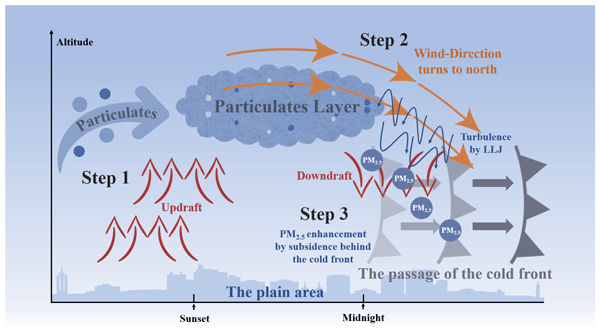
We conducted a vertical measurement of winter PM2.5 using a mobile multi-lidar system in four cities. Combined with the surface PM2.5 data, the ERA5 reanalysis data, and GEOS-Chem simulations during Dec 2018–Feb 2019, we found that transport nocturnal PM2.5 enhancement by subsidence (T-NPES) events widely occurred with high frequencies in plains regions in eastern China but happened less often in basin regions like Xi’an and Chengdu. We propose a conceptual model of the T-NPES events.
Haofan Wang, Jiaxin Qiu, Yiming Liu, Qi Fan, Xiao Lu, Yang Zhang, Kai Wu, Ao Shen, Yifei Xu, Yinbao Jin, Yuqi Zhu, Jiayin Sun, and Haolin Wang
EGUsphere, https://doi.org/10.5194/egusphere-2023-1309, https://doi.org/10.5194/egusphere-2023-1309, 2023
Preprint withdrawn
Short summary
Short summary
This tool improves existing methods by providing temporal and species allocation modules and enabling emission file generation in advance for any time period. The tool is also capable of vertical plane distribution for high altitude emissions and accurately tracks road-related emissions, an area overlooked by other tools. It utilizes 50 % of the CPU capacity for efficient parallel processing during allocation.
Cheng He, Xiao Lu, Haolin Wang, Haichao Wang, Yan Li, Guowen He, Yuanping He, Yurun Wang, Youlang Zhang, Yiming Liu, Qi Fan, and Shaojia Fan
Atmos. Chem. Phys., 22, 15243–15261, https://doi.org/10.5194/acp-22-15243-2022, https://doi.org/10.5194/acp-22-15243-2022, 2022
Short summary
Short summary
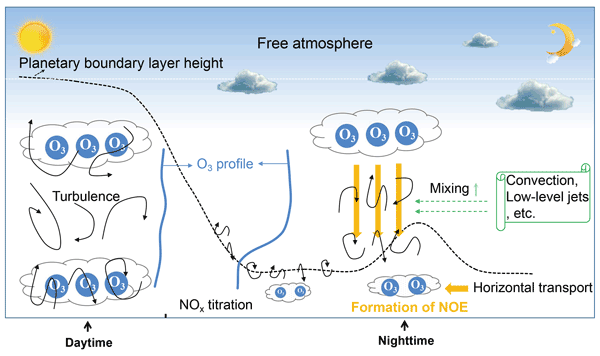
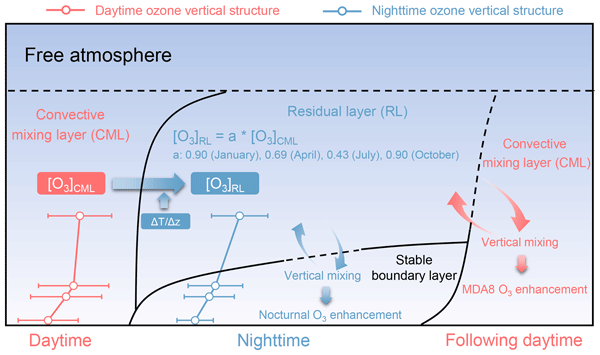
We report that nocturnal ozone enhancement (NOE) events are observed at a high annual frequency of 41 % over 800 sites in China in 2014–2019 (about 50 % higher than that over Europe or the US). High daytime ozone provides a rich ozone source in the nighttime residual layer, determining the overall high frequency of NOE events in China, and enhanced atmospheric mixing then triggers NOE events by allowing the ozone-rich air in the residual layer to be mixed into the nighttime boundary layer.
Haolin Wang, Xiao Lu, Daniel J. Jacob, Owen R. Cooper, Kai-Lan Chang, Ke Li, Meng Gao, Yiming Liu, Bosi Sheng, Kai Wu, Tongwen Wu, Jie Zhang, Bastien Sauvage, Philippe Nédélec, Romain Blot, and Shaojia Fan
Atmos. Chem. Phys., 22, 13753–13782, https://doi.org/10.5194/acp-22-13753-2022, https://doi.org/10.5194/acp-22-13753-2022, 2022
Short summary
Short summary
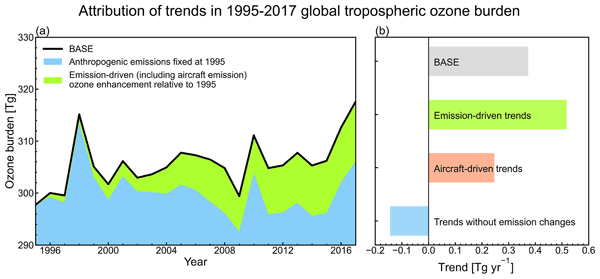
We report significant global tropospheric ozone increases in 1995–2017 based on extensive aircraft and ozonesonde observations. Using GEOS-Chem (Goddard Earth Observing System chemistry model) multi-decadal global simulations, we find that changes in global anthropogenic emissions, in particular the rapid increases in aircraft emissions, contribute significantly to the increases in tropospheric ozone and resulting radiative impact.
Xiao Lu, Daniel J. Jacob, Haolin Wang, Joannes D. Maasakkers, Yuzhong Zhang, Tia R. Scarpelli, Lu Shen, Zhen Qu, Melissa P. Sulprizio, Hannah Nesser, A. Anthony Bloom, Shuang Ma, John R. Worden, Shaojia Fan, Robert J. Parker, Hartmut Boesch, Ritesh Gautam, Deborah Gordon, Michael D. Moran, Frances Reuland, Claudia A. Octaviano Villasana, and Arlyn Andrews
Atmos. Chem. Phys., 22, 395–418, https://doi.org/10.5194/acp-22-395-2022, https://doi.org/10.5194/acp-22-395-2022, 2022
Short summary
Short summary
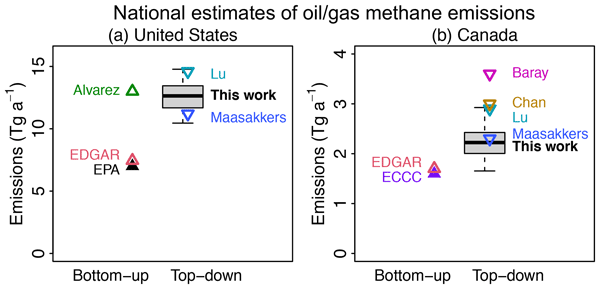
We evaluate methane emissions and trends for 2010–2017 in the gridded national emission inventories for the United States, Canada, and Mexico by inversion of in situ and satellite methane observations. We find that anthropogenic methane emissions for all three countries are underestimated in the national inventories, largely driven by oil emissions. Anthropogenic methane emissions in the US peak in 2014, in contrast to the report of a steadily decreasing trend over 2010–2017 from the US EPA.
Samantha Petch, Liang Feng, Paul I. Palmer, Robert P. King, Tristan Quaife, and Keith Haines
Biogeosciences, 22, 7031–7051, https://doi.org/10.5194/bg-22-7031-2025, https://doi.org/10.5194/bg-22-7031-2025, 2025
Short summary
Short summary
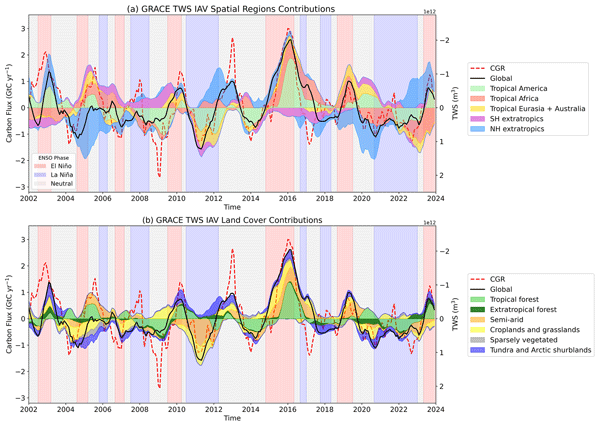
The growth rate of atmospheric CO2 varies year to year, mainly due to land ecosystems. Understanding factors controlling the land carbon uptake is crucial. Our study examines the link between terrestrial water storage and the CO2 growth rate from 2002–2023, revealing a strong negative correlation. We highlight the key role of tropical forests, especially in tropical America, and assess how regional contributions shift over time.
Shihan Sun, Paul I. Palmer, Richard Siddans, Brian J. Kerridge, Lucy Ventress, Achim Edtbauer, Akima Ringsdorf, Eva Y. Pfannerstill, and Jonathan Williams
Atmos. Chem. Phys., 25, 15801–15818, https://doi.org/10.5194/acp-25-15801-2025, https://doi.org/10.5194/acp-25-15801-2025, 2025
Short summary
Short summary
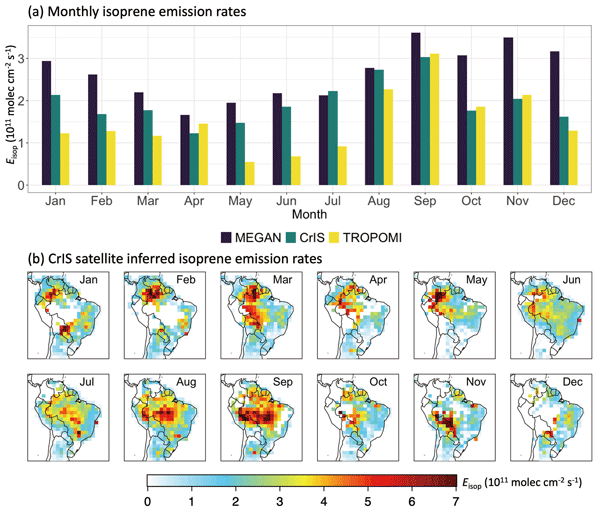
Isoprene released by plants can impact atmospheric chemistry and climate. The Amazon rainforest is a major source of isoprene. We derived isoprene emissions using satellite retrievals of isoprene columns and a chemical transport model. We evaluated our isoprene emission estimates using ground-based isoprene observations and satellite retrievals of formaldehyde. We found that using satellite retrievals of isoprene can help us better understand isoprene emissions over the Amazon.
Chlöe N. Schooling, Paul I. Palmer, Auke Visser, and Nicolas Bousserez
Atmos. Chem. Phys., 25, 15631–15652, https://doi.org/10.5194/acp-25-15631-2025, https://doi.org/10.5194/acp-25-15631-2025, 2025
Short summary
Short summary
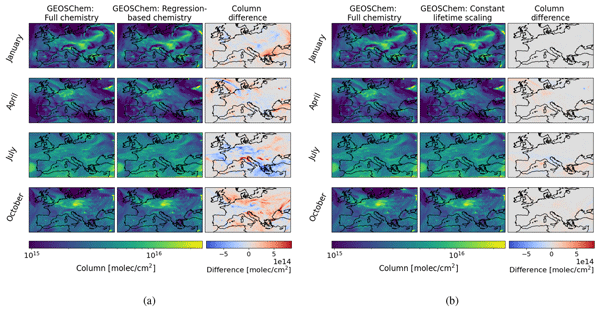
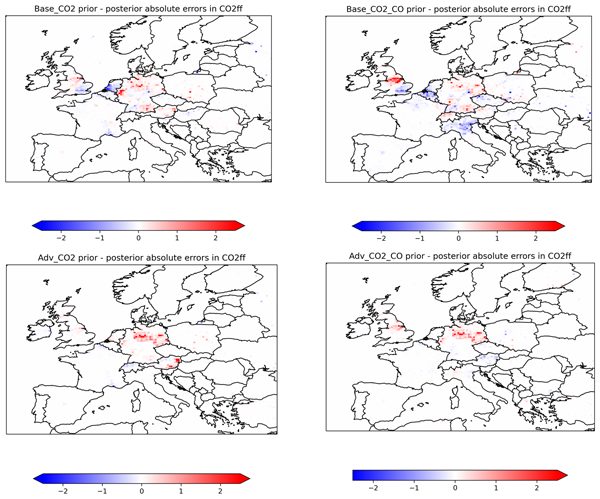
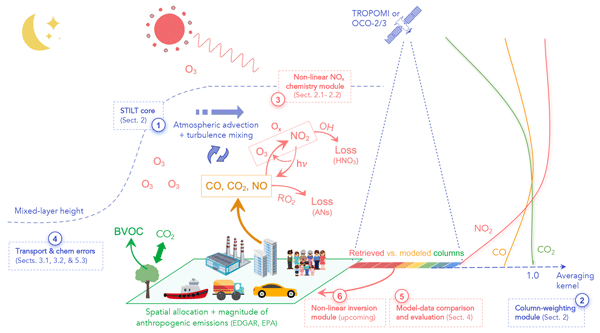
This study presents a new method to estimate fossil fuel CO2 (ffCO2) emissions by modelling NOx chemistry. Our regression models predict NOx chemical rates and NO2 : NO ratios with R² values above 0.95 using meteorological inputs. Incorporating these regressions reduces computational time compared to traditional methods and enables integration into model inversion frameworks. This scalable approach supports global emissions monitoring and climate change mitigation efforts.
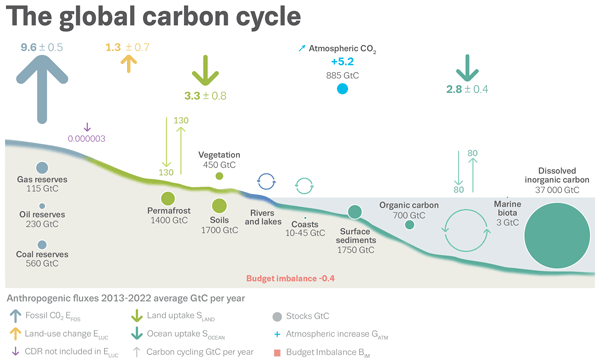
Pierre Friedlingstein, Michael O'Sullivan, Matthew W. Jones, Robbie M. Andrew, Dorothee C. E. Bakker, Judith Hauck, Peter Landschützer, Corinne Le Quéré, Hongmei Li, Ingrid T. Luijkx, Glen P. Peters, Wouter Peters, Julia Pongratz, Clemens Schwingshackl, Stephen Sitch, Josep G. Canadell, Philippe Ciais, Kjetil Aas, Simone R. Alin, Peter Anthoni, Leticia Barbero, Nicholas R. Bates, Nicolas Bellouin, Alice Benoit-Cattin, Carla F. Berghoff, Raffaele Bernardello, Laurent Bopp, Ida B. M. Brasika, Matthew A. Chamberlain, Naveen Chandra, Frédéric Chevallier, Louise P. Chini, Nathan O. Collier, Thomas H. Colligan, Margot Cronin, Laique Djeutchouang, Xinyu Dou, Matt P. Enright, Kazutaka Enyo, Michael Erb, Wiley Evans, Richard A. Feely, Liang Feng, Daniel J. Ford, Adrianna Foster, Filippa Fransner, Thomas Gasser, Marion Gehlen, Thanos Gkritzalis, Jefferson Goncalves De Souza, Giacomo Grassi, Luke Gregor, Nicolas Gruber, Bertrand Guenet, Özgür Gürses, Kirsty Harrington, Ian Harris, Jens Heinke, George C. Hurtt, Yosuke Iida, Tatiana Ilyina, Akihiko Ito, Andrew R. Jacobson, Atul K. Jain, Tereza Jarníková, Annika Jersild, Fei Jiang, Steve D. Jones, Etsushi Kato, Ralph F. Keeling, Kees Klein Goldewijk, Jürgen Knauer, Yawen Kong, Jan Ivar Korsbakken, Charles Koven, Taro Kunimitsu, Xin Lan, Junjie Liu, Zhiqiang Liu, Zhu Liu, Claire Lo Monaco, Lei Ma, Gregg Marland, Patrick C. McGuire, Galen A. McKinley, Joe Melton, Natalie Monacci, Erwan Monier, Eric J. Morgan, David R. Munro, Jens D. Müller, Shin-Ichiro Nakaoka, Lorna R. Nayagam, Yosuke Niwa, Tobias Nutzel, Are Olsen, Abdirahman M. Omar, Naiqing Pan, Sudhanshu Pandey, Denis Pierrot, Zhangcai Qin, Pierre A. G. Regnier, Gregor Rehder, Laure Resplandy, Alizée Roobaert, Thais M. Rosan, Christian Rödenbeck, Jörg Schwinger, Ingunn Skjelvan, T. Luke Smallman, Victoria Spada, Mohanan G. Sreeush, Qing Sun, Adrienne J. Sutton, Colm Sweeney, Didier Swingedouw, Roland Séférian, Shintaro Takao, Hiroaki Tatebe, Hanqin Tian, Xiangjun Tian, Bronte Tilbrook, Hiroyuki Tsujino, Francesco Tubiello, Erik van Ooijen, Guido van der Werf, Sebastiaan J. van de Velde, Anthony Walker, Rik Wanninkhof, Xiaojuan Yang, Wenping Yuan, Xu Yue, and Jiye Zeng
Earth Syst. Sci. Data Discuss., https://doi.org/10.5194/essd-2025-659, https://doi.org/10.5194/essd-2025-659, 2025
Preprint under review for ESSD
Short summary
Short summary
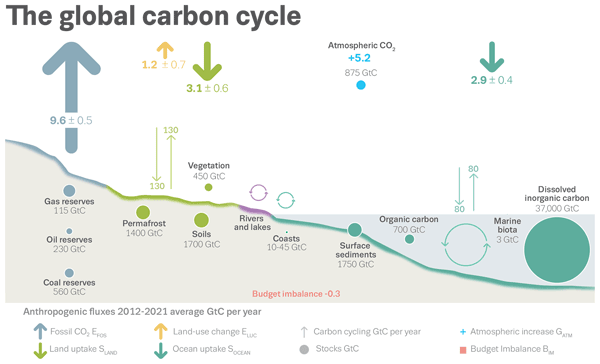
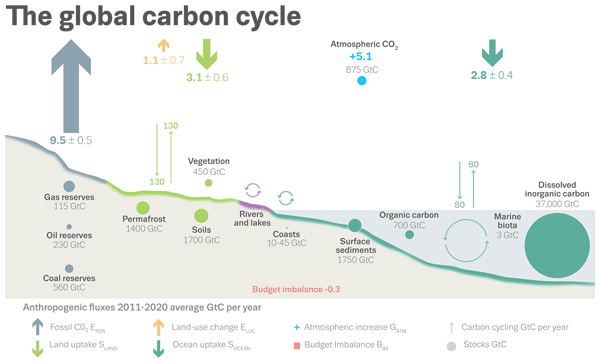
The Global Carbon Budget 2025 describes the methodology, main results, and datasets used to quantify the anthropogenic emissions of carbon dioxide (CO2) and their partitioning among the atmosphere, land ecosystems, and the ocean over the historical period (1750–2025). These living datasets are updated every year to provide the highest transparency and traceability in the reporting of CO2, the key driver of climate change.
William Michael Maslanka, Martin John Wooster, Zixia Liu, and Jiangping He
EGUsphere, https://doi.org/10.5194/egusphere-2025-4486, https://doi.org/10.5194/egusphere-2025-4486, 2025
This preprint is open for discussion and under review for Biogeosciences (BG).
Short summary
Short summary
We created a new independent method that uses only near real time satellite data to estimate how much carbon is emitted from landscape fires in the high latitudes. Our estimates are similar, but smaller, than estimates using modelled data, based on laboratory experiments and observations of burned area. This provides the first clear picture of fire emissions across high-latitude regions and will help us better understand the role of wildfires in climate change now and in the future.
Liang Feng, Paul I. Palmer, Luke Smallman, Jingfeng Xiao, Paolo Cristofanelli, Ove Hermansen, John Lee, Casper Labuschagne, Simonetta Montaguti, Steffen M. Noe, Stephen M. Platt, Xinrong Ren, Martin Steinbacher, and Irène Xueref-Remy
Atmos. Chem. Phys., 25, 13053–13076, https://doi.org/10.5194/acp-25-13053-2025, https://doi.org/10.5194/acp-25-13053-2025, 2025
Short summary
Short summary
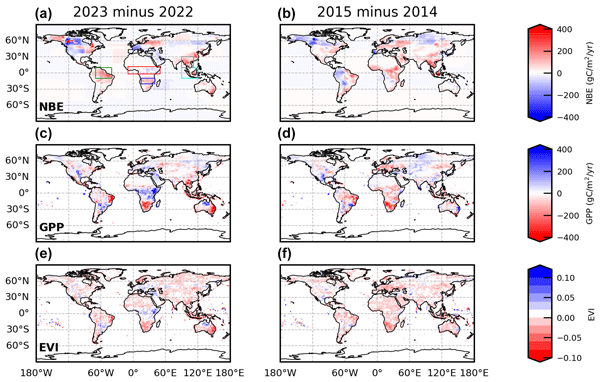
The year 2023 saw unexpectedly large global atmospheric CO2 growth. Satellite data reveal a role for increased tropical emissions. Larger emissions over eastern Brazil can be explained by warmer temperatures, which has led to exceptional drought, while hydrological changes play more of a role in emission increases elsewhere in the tropics. Broadly, we find that this situation continues into 2024.
Jingyu Li, Haolin Wang, Qi Fan, and Xiao Lu
Atmos. Chem. Phys., 25, 12983–13006, https://doi.org/10.5194/acp-25-12983-2025, https://doi.org/10.5194/acp-25-12983-2025, 2025
Short summary
Short summary
We use multiple global chemical models to quantify processes contributing to the ozone response to ENSO (El Niño–Southern Oscillation). We find that changes in transport patterns are the dominant factor in the overall ozone–ENSO responses, with the opposing effects of chemical depletion and increased biomass burning on ozone largely offsetting each other. Models consistently project an increase in tropical ozone–ENSO response associated with strengthening anomalous circulation and more abundant water vapor with global warming.
Ke Li, Rong Tan, Wenhao Qiao, Taegyung Lee, Yufen Wang, Danyuting Zhang, Minglong Tang, Wenqing Zhao, Yixuan Gu, Shaojia Fan, Jinqiang Zhang, Xiaopu Lyu, Likun Xue, Jianming Xu, Zhiqiang Ma, Mohd Talib Latif, Teerachai Amnuaylojaroen, Junsu Gil, Mee-Hye Lee, Juseon Bak, Joowan Kim, Hong Liao, Yugo Kanaya, Xiao Lu, Tatsuya Nagashima, and Ja-Ho Koo
Atmos. Chem. Phys., 25, 11575–11596, https://doi.org/10.5194/acp-25-11575-2025, https://doi.org/10.5194/acp-25-11575-2025, 2025
Short summary
Short summary
East Asia and Southeast Asia have been identified as a global hot spot, with the fastest ozone increase. This paper presents the most comprehensive observational review of ozone distributions and evolution over East Asia and Southeast Asia across different spatiotemporal scales in the past two decades, which will have important implications for assessing ozone impacts on public health and crop yields and for developing future ozone control strategies.
Sihong Zhu, Mengchu Tao, Zhaonan Cai, Yi Liu, Liang Feng, Pubu Sangmu, Zhongshui Yu, and Junji Cao
Atmos. Chem. Phys., 25, 9843–9857, https://doi.org/10.5194/acp-25-9843-2025, https://doi.org/10.5194/acp-25-9843-2025, 2025
Short summary
Short summary
Methane (CH4) emissions can be transported into the upper troposphere (UT) via the Asian monsoon anticyclone (AMA), driving CH4 enhancements. Whether emissions or upward transport is the dominant factor remains debated. We analyzed UT CH4 variability with AMA dynamics, finding strong ties between CH4 distribution and the AMA's east–west oscillation. When centered near 80° E, vertical transport largely enhances CH4 anomalies, with circulation effects 1–2 times greater than those of emissions.
Ruize Sun, Xiao Lu, Haipeng Lin, Tongwen Wu, Xingpei Ye, Lu Shen, Xuan Wang, Haolin Wang, Jingyu Li, Ni Lu, Jiayin Su, Jie Zhang, Fang Zhang, Xiaoge Xin, Xiong Liu, and Lin Zhang
EGUsphere, https://doi.org/10.5194/egusphere-2025-3829, https://doi.org/10.5194/egusphere-2025-3829, 2025
This preprint is open for discussion and under review for Geoscientific Model Development (GMD).
Short summary
Short summary
We present the development of a global chemistry-climate coupled model BCC-GEOS-Chem v2.0, with improved representation of comprehensive troposphere-stratosphere chemistry and new capability to account for radiative-cloud feedbacks from short-lived climate forcers. The development of the BCC-GEOS-Chem v2.0 provides a powerful tool to study climate-chemistry interactions and for future projection of global atmospheric chemistry and regional air quality.
Xiao Lu, Yiming Liu, Jiayin Su, Xiang Weng, Tabish Ansari, Yuqiang Zhang, Guowen He, Yuqi Zhu, Haolin Wang, Ganquan Zeng, Jingyu Li, Cheng He, Shuai Li, Teerachai Amnuaylojaroen, Tim Butler, Qi Fan, Shaojia Fan, Grant L. Forster, Meng Gao, Jianlin Hu, Yugo Kanaya, Mohd Talib Latif, Keding Lu, Philippe Nédélec, Peer Nowack, Bastien Sauvage, Xiaobin Xu, Lin Zhang, Ke Li, Ja-Ho Koo, and Tatsuya Nagashima
Atmos. Chem. Phys., 25, 7991–8028, https://doi.org/10.5194/acp-25-7991-2025, https://doi.org/10.5194/acp-25-7991-2025, 2025
Short summary
Short summary
This study analyzes summertime ozone trends in East and Southeast Asia derived from a comprehensive observational database spanning from 1995 to 2019, incorporating aircraft observations, ozonesonde data, and measurements from 2500 surface sites. Multiple models are applied to attribute to changes in anthropogenic emissions and climate. The results highlight that increases in anthropogenic emissions are the primary driver of ozone increases both in the free troposphere and at the surface.
Fan Sun, Yu Cui, Jiayin Su, Yifan Zhang, Xuejing Shi, Junqing Zhang, Huili Liu, Qitao Xiao, Xiao Lu, Zhao-Cheng Zeng, Timothy J. Griffis, and Cheng Hu
EGUsphere, https://doi.org/10.5194/egusphere-2025-3090, https://doi.org/10.5194/egusphere-2025-3090, 2025
Short summary
Short summary
This study used satellite data and models to track ammonia concentration and dry deposition across China from 2013 to 2023. Ammonia levels rose sharply, especially in urban and farming regions, with the North China Plain showing the highest values. Human activity was the main driver of change. These findings highlight growing environmental risks and provide key insights for managing air quality and nitrogen pollution in one of the world’s major emission hotspots.
Zhenda Sun, Hao Yin, Zhongfeng Pan, Chongyang Li, Xiao Lu, Ke Liu, Youwen Sun, and Cheng Liu
Atmos. Chem. Phys., 25, 6823–6842, https://doi.org/10.5194/acp-25-6823-2025, https://doi.org/10.5194/acp-25-6823-2025, 2025
Short summary
Short summary
This study investigates the variability and driving forces of transboundary CO transport flux over the Tibetan Plateau from May 2018 to April 2024. During this period, external CO influx increased by 2.86 Tg yr-1, while internal efflux slightly declined by 1.70 Tg yr-1. The rising influx in recent years is likely linked to the rapid increase in CO concentrations from South Asia.
Haofan Wang, Yuejin Li, Yiming Liu, Xiao Lu, Yang Zhang, Qi Fan, Chong Shen, Senchao Lai, Yan Zhou, Tao Zhang, and Dingli Yue
Atmos. Chem. Phys., 25, 5233–5250, https://doi.org/10.5194/acp-25-5233-2025, https://doi.org/10.5194/acp-25-5233-2025, 2025
Short summary
Short summary
This study explores how urban green spaces (UGSs) in Guangzhou influence ozone levels. By using advanced models, we found that natural emissions from these areas can significantly affect air quality. Our results suggest that the design and planning of UGSs should not only consider aesthetics and social factors but also their environmental impacts on air quality.
Zhu Deng, Philippe Ciais, Liting Hu, Adrien Martinez, Marielle Saunois, Rona L. Thompson, Kushal Tibrewal, Wouter Peters, Brendan Byrne, Giacomo Grassi, Paul I. Palmer, Ingrid T. Luijkx, Zhu Liu, Junjie Liu, Xuekun Fang, Tengjiao Wang, Hanqin Tian, Katsumasa Tanaka, Ana Bastos, Stephen Sitch, Benjamin Poulter, Clément Albergel, Aki Tsuruta, Shamil Maksyutov, Rajesh Janardanan, Yosuke Niwa, Bo Zheng, Joël Thanwerdas, Dmitry Belikov, Arjo Segers, and Frédéric Chevallier
Earth Syst. Sci. Data, 17, 1121–1152, https://doi.org/10.5194/essd-17-1121-2025, https://doi.org/10.5194/essd-17-1121-2025, 2025
Short summary
Short summary
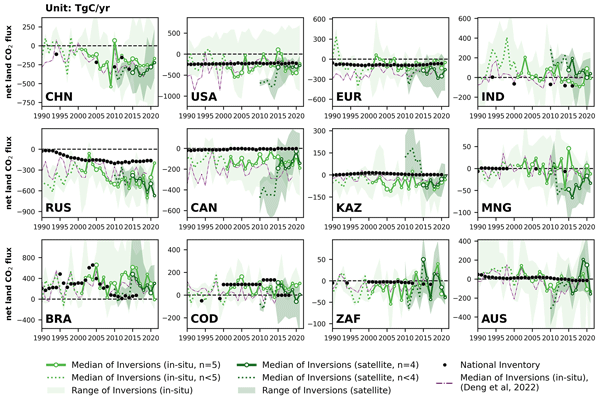
This study reconciles national greenhouse gas (GHG) inventories with updated atmospheric inversion results to evaluate discrepancies for three principal GHG fluxes at the national level. Compared to our previous study, new satellite-based CO2 inversions were included and an updated mask of managed lands was used, improving agreement for Brazil and Canada. The proposed methodology can be regularly applied as a check to assess the gap between top-down inversions and bottom-up inventories.
Pierre Friedlingstein, Michael O'Sullivan, Matthew W. Jones, Robbie M. Andrew, Judith Hauck, Peter Landschützer, Corinne Le Quéré, Hongmei Li, Ingrid T. Luijkx, Are Olsen, Glen P. Peters, Wouter Peters, Julia Pongratz, Clemens Schwingshackl, Stephen Sitch, Josep G. Canadell, Philippe Ciais, Robert B. Jackson, Simone R. Alin, Almut Arneth, Vivek Arora, Nicholas R. Bates, Meike Becker, Nicolas Bellouin, Carla F. Berghoff, Henry C. Bittig, Laurent Bopp, Patricia Cadule, Katie Campbell, Matthew A. Chamberlain, Naveen Chandra, Frédéric Chevallier, Louise P. Chini, Thomas Colligan, Jeanne Decayeux, Laique M. Djeutchouang, Xinyu Dou, Carolina Duran Rojas, Kazutaka Enyo, Wiley Evans, Amanda R. Fay, Richard A. Feely, Daniel J. Ford, Adrianna Foster, Thomas Gasser, Marion Gehlen, Thanos Gkritzalis, Giacomo Grassi, Luke Gregor, Nicolas Gruber, Özgür Gürses, Ian Harris, Matthew Hefner, Jens Heinke, George C. Hurtt, Yosuke Iida, Tatiana Ilyina, Andrew R. Jacobson, Atul K. Jain, Tereza Jarníková, Annika Jersild, Fei Jiang, Zhe Jin, Etsushi Kato, Ralph F. Keeling, Kees Klein Goldewijk, Jürgen Knauer, Jan Ivar Korsbakken, Xin Lan, Siv K. Lauvset, Nathalie Lefèvre, Zhu Liu, Junjie Liu, Lei Ma, Shamil Maksyutov, Gregg Marland, Nicolas Mayot, Patrick C. McGuire, Nicolas Metzl, Natalie M. Monacci, Eric J. Morgan, Shin-Ichiro Nakaoka, Craig Neill, Yosuke Niwa, Tobias Nützel, Lea Olivier, Tsuneo Ono, Paul I. Palmer, Denis Pierrot, Zhangcai Qin, Laure Resplandy, Alizée Roobaert, Thais M. Rosan, Christian Rödenbeck, Jörg Schwinger, T. Luke Smallman, Stephen M. Smith, Reinel Sospedra-Alfonso, Tobias Steinhoff, Qing Sun, Adrienne J. Sutton, Roland Séférian, Shintaro Takao, Hiroaki Tatebe, Hanqin Tian, Bronte Tilbrook, Olivier Torres, Etienne Tourigny, Hiroyuki Tsujino, Francesco Tubiello, Guido van der Werf, Rik Wanninkhof, Xuhui Wang, Dongxu Yang, Xiaojuan Yang, Zhen Yu, Wenping Yuan, Xu Yue, Sönke Zaehle, Ning Zeng, and Jiye Zeng
Earth Syst. Sci. Data, 17, 965–1039, https://doi.org/10.5194/essd-17-965-2025, https://doi.org/10.5194/essd-17-965-2025, 2025
Short summary
Short summary
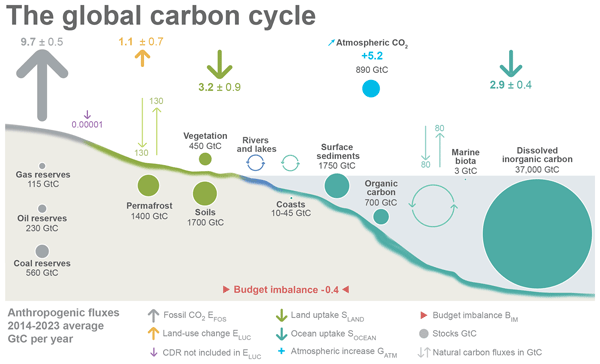
The Global Carbon Budget 2024 describes the methodology, main results, and datasets used to quantify the anthropogenic emissions of carbon dioxide (CO2) and their partitioning among the atmosphere, land ecosystems, and the ocean over the historical period (1750–2024). These living datasets are updated every year to provide the highest transparency and traceability in the reporting of CO2, the key driver of climate change.
Shuai Li, Haolin Wang, and Xiao Lu
Atmos. Chem. Phys., 25, 2725–2743, https://doi.org/10.5194/acp-25-2725-2025, https://doi.org/10.5194/acp-25-2725-2025, 2025
Short summary
Short summary
Summertime ozone–temperature sensitivity has decreased by 50 % from 3.0 ppbv per K in 1990 to 1.5 ppb per K in 2021 in the US. GEOS-Chem simulations show that anthropogenic nitrogen oxide emission reduction is the dominant driver of ozone–temperature sensitivity decline by influencing both temperature direct and temperature indirect processes. Reduced ozone–temperature sensitivity has decreased ozone enhancement from low to high temperatures by an average of 6.8 ppbv across the US.
Alexander Kurganskiy, Liang Feng, Neil Humpage, Paul I. Palmer, A. Jerome P. Woodwark, Stamatia Doniki, and Damien Weidmann
EGUsphere, https://doi.org/10.5194/egusphere-2025-94, https://doi.org/10.5194/egusphere-2025-94, 2025
Short summary
Short summary
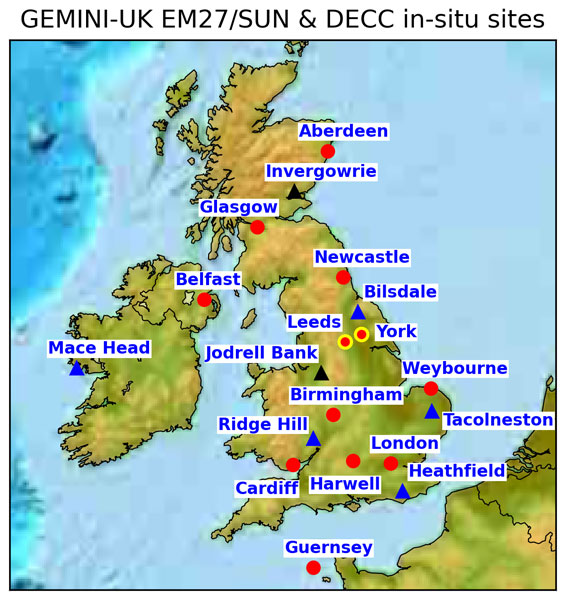
This study introduces GEMINI-UK, the first UK-wide network using ground-based instruments to monitor net fluxes of CO2 and methane. By simulating its performance, we show that GEMINI-UK will significantly reduce uncertainties in these flux estimates, complementing data from existing tall towers and future satellite missions. The network will strengthen the UK's ability to track greenhouse gases, evaluate climate policies, and meet net-zero goals.
Petri Clusius, Metin Baykara, Carlton Xavier, Putian Zhou, Juniper Tyree, Benjamin Foreback, Mikko Äijälä, Frans Graeffe, Tuukka Petäjä, Markku Kulmala, Pauli Paasonen, Paul I. Palmer, and Michael Boy
EGUsphere, https://doi.org/10.5194/egusphere-2025-39, https://doi.org/10.5194/egusphere-2025-39, 2025
Short summary
Short summary
Cloud condensation nuclei are necessary to form clouds, and their size distribution affects cloud properties and therefore Earth’s energy budget. This study modelled the origins of cloud condensation nuclei at SMEAR II, Hyytiälä, Finland, and found that primary emissions and new particle formation separately contribute to more than half of the condensation nuclei, but they suppress each other, leading to current concentrations. Largest condensation nuclei originated mostly from emissions.
Farrer Owsley-Brown, Martin J. Wooster, Mark J. Grosvenor, and Yanan Liu
Atmos. Meas. Tech., 17, 6247–6264, https://doi.org/10.5194/amt-17-6247-2024, https://doi.org/10.5194/amt-17-6247-2024, 2024
Short summary
Short summary
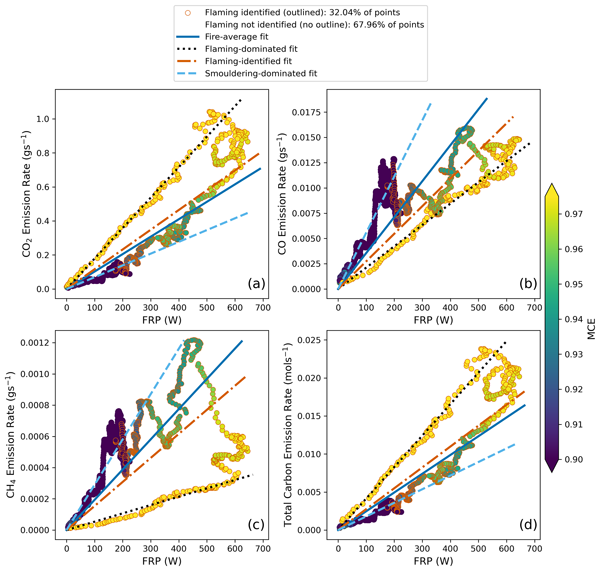
Landscape fires produce vast amounts of smoke, affecting the atmosphere locally and globally. Whether a fire is flaming or smouldering strongly impacts the rate at which smoke is produced as well as its composition. This study tested two methods to determine these combustion phases in laboratory fires and compared them to the smoke emitted. One of these methods improved estimates of smoke emission significantly. This suggests potential for improvement in global emission estimates.
Zhu Ran, Yanan Hu, Yuanzhe Li, Xiaoya Gao, Can Ye, Shuai Li, Xiao Lu, Yongming Luo, Sasho Gligorovski, and Jiangping Liu
Atmos. Chem. Phys., 24, 11943–11954, https://doi.org/10.5194/acp-24-11943-2024, https://doi.org/10.5194/acp-24-11943-2024, 2024
Short summary
Short summary
We report enhanced formation of nitrous acid (HONO) and NOx (NO + NO2) triggered by iron ions during photolysis of neonicotinoid insecticides at the air–water interface. This novel previously overlooked source of atmospheric HONO and NOx may be an important contribution to the global nitrogen cycle and affects atmospheric oxidizing capacity and climate change.
Siting Li, Yiming Liu, Yuqi Zhu, Yinbao Jin, Yingying Hong, Ao Shen, Yifei Xu, Haofan Wang, Haichao Wang, Xiao Lu, Shaojia Fan, and Qi Fan
Atmos. Chem. Phys., 24, 11521–11544, https://doi.org/10.5194/acp-24-11521-2024, https://doi.org/10.5194/acp-24-11521-2024, 2024
Short summary
Short summary
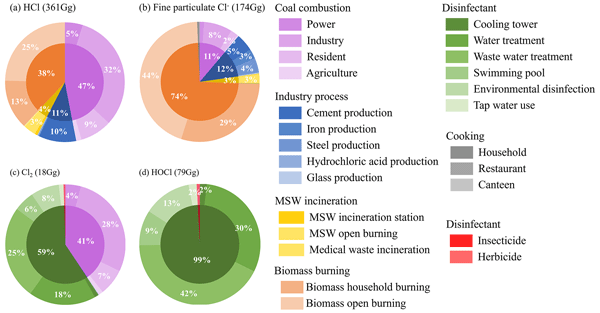
This study establishes an inventory of anthropogenic chlorine emissions in China in 2019 with expanded species (HCl, Cl-, Cl2, HOCl) and sources (41 specific sources). The inventory is validated by a modeling study against the observations. This study enhances the understanding of anthropogenic chlorine emissions in the atmosphere, identifies key sources, and provides scientific support for pollution control and climate change.
Ingrid Super, Tia Scarpelli, Arjan Droste, and Paul I. Palmer
Geosci. Model Dev., 17, 7263–7284, https://doi.org/10.5194/gmd-17-7263-2024, https://doi.org/10.5194/gmd-17-7263-2024, 2024
Short summary
Short summary
Monitoring greenhouse gas emission reductions requires a combination of models and observations, as well as an initial emission estimate. Each component provides information with a certain level of certainty and is weighted to yield the most reliable estimate of actual emissions. We describe efforts for estimating the uncertainty in the initial emission estimate, which significantly impacts the outcome. Hence, a good uncertainty estimate is key for obtaining reliable information on emissions.
Neil Humpage, Hartmut Boesch, William Okello, Jia Chen, Florian Dietrich, Mark F. Lunt, Liang Feng, Paul I. Palmer, and Frank Hase
Atmos. Meas. Tech., 17, 5679–5707, https://doi.org/10.5194/amt-17-5679-2024, https://doi.org/10.5194/amt-17-5679-2024, 2024
Short summary
Short summary
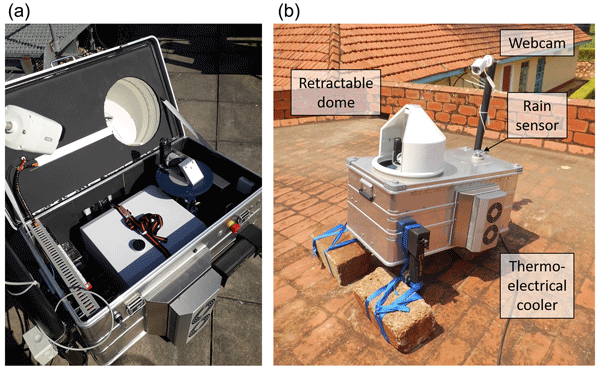
We used a Bruker EM27/SUN spectrometer within an automated weatherproof enclosure to measure greenhouse gas column concentrations over a 3-month period in Jinja, Uganda. The portability of the EM27/SUN allows us to evaluate satellite and model data in locations not covered by traditional validation networks. This is of particular value in tropical Africa, where extensive terrestrial ecosystems are a significant store of carbon and play a key role in the atmospheric budgets of CO2 and CH4.
Tia R. Scarpelli, Paul I. Palmer, Mark Lunt, Ingrid Super, and Arjan Droste
Atmos. Chem. Phys., 24, 10773–10791, https://doi.org/10.5194/acp-24-10773-2024, https://doi.org/10.5194/acp-24-10773-2024, 2024
Short summary
Short summary
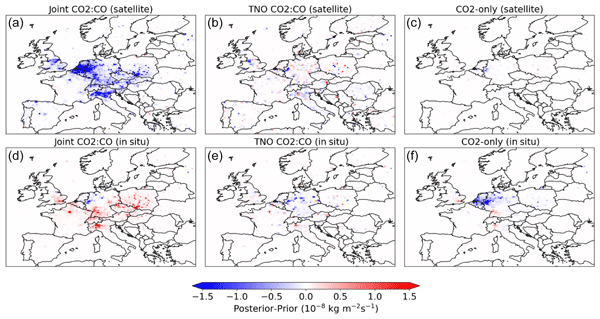
Under the Paris Agreement, countries must track their anthropogenic greenhouse gas emissions. This study describes a method to determine self-consistent estimates for combustion emissions and natural fluxes of CO2 from atmospheric data. We report consistent estimates inferred using this approach from satellite data and ground-based data over Europe, suggesting that satellite data can be used to determine national anthropogenic CO2 emissions for countries where ground-based CO2 data are absent.
Hannah Nesser, Daniel J. Jacob, Joannes D. Maasakkers, Alba Lorente, Zichong Chen, Xiao Lu, Lu Shen, Zhen Qu, Melissa P. Sulprizio, Margaux Winter, Shuang Ma, A. Anthony Bloom, John R. Worden, Robert N. Stavins, and Cynthia A. Randles
Atmos. Chem. Phys., 24, 5069–5091, https://doi.org/10.5194/acp-24-5069-2024, https://doi.org/10.5194/acp-24-5069-2024, 2024
Short summary
Short summary
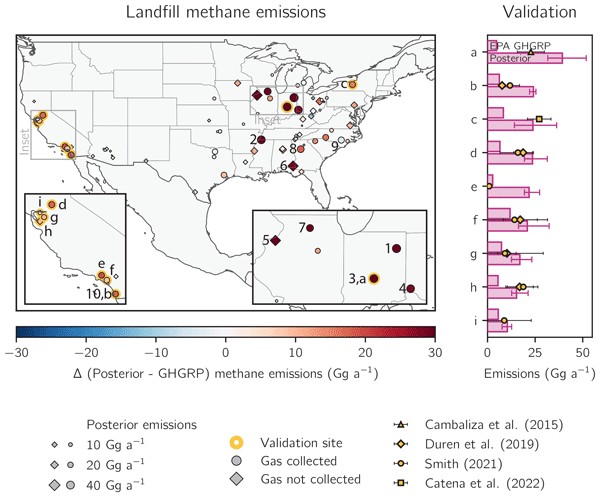
We quantify 2019 methane emissions in the contiguous US (CONUS) at a ≈ 25 km × 25 km resolution using satellite methane observations. We find a 13 % upward correction to the 2023 US Environmental Protection Agency (EPA) Greenhouse Gas Emissions Inventory (GHGI) for 2019, with large corrections to individual states, urban areas, and landfills. This may present a challenge for US climate policies and goals, many of which target significant reductions in methane emissions.
Margaret R. Marvin, Paul I. Palmer, Fei Yao, Mohd Talib Latif, and Md Firoz Khan
Atmos. Chem. Phys., 24, 3699–3715, https://doi.org/10.5194/acp-24-3699-2024, https://doi.org/10.5194/acp-24-3699-2024, 2024
Short summary
Short summary
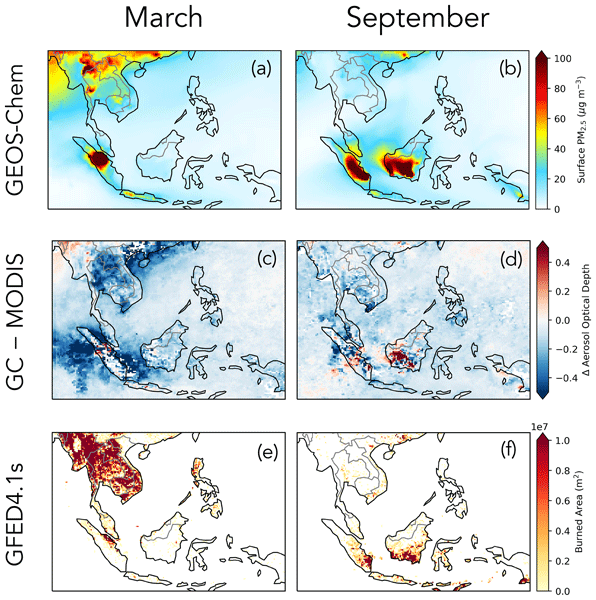
We use an atmospheric chemistry model to investigate aerosols emitted from fire activity across Southeast Asia. We find that the limited nature of measurements in this region leads to large uncertainties that significantly hinder the model representation of these aerosols and their impacts on air quality. As a result, the number of monthly attributable deaths is underestimated by as many as 4500, particularly in March at the peak of the mainland burning season.
Zhiheng Liao, Meng Gao, Jinqiang Zhang, Jiaren Sun, Jiannong Quan, Xingcan Jia, Yubing Pan, and Shaojia Fan
Atmos. Chem. Phys., 24, 3541–3557, https://doi.org/10.5194/acp-24-3541-2024, https://doi.org/10.5194/acp-24-3541-2024, 2024
Short summary
Short summary
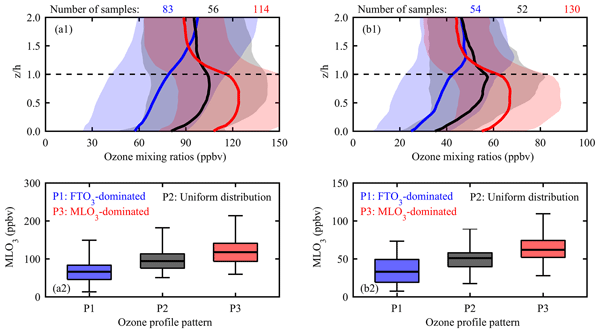
This study collected 1897 ozonesondes from two Chinese megacities (Beijing and Hong Kong) in 2000–2022 to investigate the climatological vertical heterogeneity of lower-tropospheric ozone distribution with a mixing-layer-height-referenced (h-referenced) vertical coordinate system. This vertical coordinate system highlighted O3 stratification features existing at the mixing layer–free troposphere interface and provided a better understanding of O3 pollution in urban regions.
Yiming Wang, Haolin Wang, Yujie Qin, Xinqi Xu, Guowen He, Nanxi Liu, Shengjie Miao, Xiao Lu, Haichao Wang, and Shaojia Fan
Atmos. Chem. Phys., 24, 2267–2285, https://doi.org/10.5194/acp-24-2267-2024, https://doi.org/10.5194/acp-24-2267-2024, 2024
Short summary
Short summary
We conducted a vertical measurement of winter PM2.5 using a mobile multi-lidar system in four cities. Combined with the surface PM2.5 data, the ERA5 reanalysis data, and GEOS-Chem simulations during Dec 2018–Feb 2019, we found that transport nocturnal PM2.5 enhancement by subsidence (T-NPES) events widely occurred with high frequencies in plains regions in eastern China but happened less often in basin regions like Xi’an and Chengdu. We propose a conceptual model of the T-NPES events.
Jie Wang, Haichao Wang, Yee Jun Tham, Lili Ming, Zelong Zheng, Guizhen Fang, Cuizhi Sun, Zhenhao Ling, Jun Zhao, and Shaojia Fan
Atmos. Chem. Phys., 24, 977–992, https://doi.org/10.5194/acp-24-977-2024, https://doi.org/10.5194/acp-24-977-2024, 2024
Short summary
Short summary
Many works report NO3 chemistry in inland regions while less target marine regions. We measured N2O5 and related species on a typical island and found intensive nighttime chemistry and rapid NO3 loss. NO contributed significantly to NO3 loss despite its sub-ppbv level, suggesting nocturnal NO3 reactions would be largely enhanced once free from NO emissions in the open ocean. This highlights the strong influences of urban outflow on downward marine areas in terms of nighttime chemistry.
Yinbao Jin, Yiming Liu, Xiao Lu, Xiaoyang Chen, Ao Shen, Haofan Wang, Yinping Cui, Yifei Xu, Siting Li, Jian Liu, Ming Zhang, Yingying Ma, and Qi Fan
Atmos. Chem. Phys., 24, 367–395, https://doi.org/10.5194/acp-24-367-2024, https://doi.org/10.5194/acp-24-367-2024, 2024
Short summary
Short summary
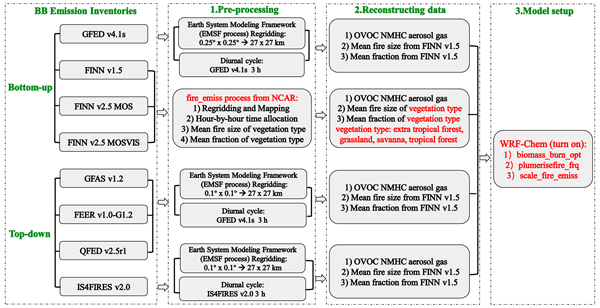
This study aims to address these issues by evaluating eight independent biomass burning (BB) emission inventories (GFED, FINN1.5, FINN2.5 MOS, FINN2.5 MOSVIS, GFAS, FEER, QFED, and IS4FIRES) using the WRF-Chem model and analyzing their impact on aerosol optical properties (AOPs) and direct radiative forcing (DRF) during wildfire events in peninsular Southeast Asia (PSEA) that occurred in March 2019.
Pierre Friedlingstein, Michael O'Sullivan, Matthew W. Jones, Robbie M. Andrew, Dorothee C. E. Bakker, Judith Hauck, Peter Landschützer, Corinne Le Quéré, Ingrid T. Luijkx, Glen P. Peters, Wouter Peters, Julia Pongratz, Clemens Schwingshackl, Stephen Sitch, Josep G. Canadell, Philippe Ciais, Robert B. Jackson, Simone R. Alin, Peter Anthoni, Leticia Barbero, Nicholas R. Bates, Meike Becker, Nicolas Bellouin, Bertrand Decharme, Laurent Bopp, Ida Bagus Mandhara Brasika, Patricia Cadule, Matthew A. Chamberlain, Naveen Chandra, Thi-Tuyet-Trang Chau, Frédéric Chevallier, Louise P. Chini, Margot Cronin, Xinyu Dou, Kazutaka Enyo, Wiley Evans, Stefanie Falk, Richard A. Feely, Liang Feng, Daniel J. Ford, Thomas Gasser, Josefine Ghattas, Thanos Gkritzalis, Giacomo Grassi, Luke Gregor, Nicolas Gruber, Özgür Gürses, Ian Harris, Matthew Hefner, Jens Heinke, Richard A. Houghton, George C. Hurtt, Yosuke Iida, Tatiana Ilyina, Andrew R. Jacobson, Atul Jain, Tereza Jarníková, Annika Jersild, Fei Jiang, Zhe Jin, Fortunat Joos, Etsushi Kato, Ralph F. Keeling, Daniel Kennedy, Kees Klein Goldewijk, Jürgen Knauer, Jan Ivar Korsbakken, Arne Körtzinger, Xin Lan, Nathalie Lefèvre, Hongmei Li, Junjie Liu, Zhiqiang Liu, Lei Ma, Greg Marland, Nicolas Mayot, Patrick C. McGuire, Galen A. McKinley, Gesa Meyer, Eric J. Morgan, David R. Munro, Shin-Ichiro Nakaoka, Yosuke Niwa, Kevin M. O'Brien, Are Olsen, Abdirahman M. Omar, Tsuneo Ono, Melf Paulsen, Denis Pierrot, Katie Pocock, Benjamin Poulter, Carter M. Powis, Gregor Rehder, Laure Resplandy, Eddy Robertson, Christian Rödenbeck, Thais M. Rosan, Jörg Schwinger, Roland Séférian, T. Luke Smallman, Stephen M. Smith, Reinel Sospedra-Alfonso, Qing Sun, Adrienne J. Sutton, Colm Sweeney, Shintaro Takao, Pieter P. Tans, Hanqin Tian, Bronte Tilbrook, Hiroyuki Tsujino, Francesco Tubiello, Guido R. van der Werf, Erik van Ooijen, Rik Wanninkhof, Michio Watanabe, Cathy Wimart-Rousseau, Dongxu Yang, Xiaojuan Yang, Wenping Yuan, Xu Yue, Sönke Zaehle, Jiye Zeng, and Bo Zheng
Earth Syst. Sci. Data, 15, 5301–5369, https://doi.org/10.5194/essd-15-5301-2023, https://doi.org/10.5194/essd-15-5301-2023, 2023
Short summary
Short summary
The Global Carbon Budget 2023 describes the methodology, main results, and data sets used to quantify the anthropogenic emissions of carbon dioxide (CO2) and their partitioning among the atmosphere, land ecosystems, and the ocean over the historical period (1750–2023). These living datasets are updated every year to provide the highest transparency and traceability in the reporting of CO2, the key driver of climate change.
Dien Wu, Joshua L. Laughner, Junjie Liu, Paul I. Palmer, John C. Lin, and Paul O. Wennberg
Geosci. Model Dev., 16, 6161–6185, https://doi.org/10.5194/gmd-16-6161-2023, https://doi.org/10.5194/gmd-16-6161-2023, 2023
Short summary
Short summary
To balance computational expenses and chemical complexity in extracting emission signals from tropospheric NO2 columns, we propose a simplified non-linear Lagrangian chemistry transport model and assess its performance against TROPOMI v2 over power plants and cities. Using this model, we then discuss how NOx chemistry affects the relationship between NOx and CO2 emissions and how studying NO2 columns helps quantify modeled biases in wind directions and prior emissions.
Guowen He, Cheng He, Haofan Wang, Xiao Lu, Chenglei Pei, Xiaonuan Qiu, Chenxi Liu, Yiming Wang, Nanxi Liu, Jinpu Zhang, Lei Lei, Yiming Liu, Haichao Wang, Tao Deng, Qi Fan, and Shaojia Fan
Atmos. Chem. Phys., 23, 13107–13124, https://doi.org/10.5194/acp-23-13107-2023, https://doi.org/10.5194/acp-23-13107-2023, 2023
Short summary
Short summary
We analyze nighttime ozone in the lower boundary layer (up to 500 m) from the 2017–2019 measurements at the Canton Tower and the WRF-CMAQ model. We identify a strong ability of the residual layer to store daytime ozone in the convective mixing layer, investigate the chemical and meteorological factors controlling nighttime ozone in the residual layer, and quantify the contribution of nighttime ozone in the residual layer to both the nighttime and the following day’s surface ozone air quality.
Roland Vernooij, Tom Eames, Jeremy Russell-Smith, Cameron Yates, Robin Beatty, Jay Evans, Andrew Edwards, Natasha Ribeiro, Martin Wooster, Tercia Strydom, Marcos Vinicius Giongo, Marco Assis Borges, Máximo Menezes Costa, Ana Carolina Sena Barradas, Dave van Wees, and Guido R. Van der Werf
Earth Syst. Dynam., 14, 1039–1064, https://doi.org/10.5194/esd-14-1039-2023, https://doi.org/10.5194/esd-14-1039-2023, 2023
Short summary
Short summary
Savannas account for over half of global landscape fire emissions. Although environmental and fuel conditions affect the ratio of species the fire emits, these dynamics have not been implemented in global models. We measured CO2, CO, CH4, and N2O emission factors (EFs), fuel parameters, and fire severity proxies during 129 individual fires. We identified EF patterns and trained models to estimate EFs of these species based on satellite observations, reducing the estimation error by 60–85 %.
Matthew J. McGrath, Ana Maria Roxana Petrescu, Philippe Peylin, Robbie M. Andrew, Bradley Matthews, Frank Dentener, Juraj Balkovič, Vladislav Bastrikov, Meike Becker, Gregoire Broquet, Philippe Ciais, Audrey Fortems-Cheiney, Raphael Ganzenmüller, Giacomo Grassi, Ian Harris, Matthew Jones, Jürgen Knauer, Matthias Kuhnert, Guillaume Monteil, Saqr Munassar, Paul I. Palmer, Glen P. Peters, Chunjing Qiu, Mart-Jan Schelhaas, Oksana Tarasova, Matteo Vizzarri, Karina Winkler, Gianpaolo Balsamo, Antoine Berchet, Peter Briggs, Patrick Brockmann, Frédéric Chevallier, Giulia Conchedda, Monica Crippa, Stijn N. C. Dellaert, Hugo A. C. Denier van der Gon, Sara Filipek, Pierre Friedlingstein, Richard Fuchs, Michael Gauss, Christoph Gerbig, Diego Guizzardi, Dirk Günther, Richard A. Houghton, Greet Janssens-Maenhout, Ronny Lauerwald, Bas Lerink, Ingrid T. Luijkx, Géraud Moulas, Marilena Muntean, Gert-Jan Nabuurs, Aurélie Paquirissamy, Lucia Perugini, Wouter Peters, Roberto Pilli, Julia Pongratz, Pierre Regnier, Marko Scholze, Yusuf Serengil, Pete Smith, Efisio Solazzo, Rona L. Thompson, Francesco N. Tubiello, Timo Vesala, and Sophia Walther
Earth Syst. Sci. Data, 15, 4295–4370, https://doi.org/10.5194/essd-15-4295-2023, https://doi.org/10.5194/essd-15-4295-2023, 2023
Short summary
Short summary
Accurate estimation of fluxes of carbon dioxide from the land surface is essential for understanding future impacts of greenhouse gas emissions on the climate system. A wide variety of methods currently exist to estimate these sources and sinks. We are continuing work to develop annual comparisons of these diverse methods in order to clarify what they all actually calculate and to resolve apparent disagreement, in addition to highlighting opportunities for increased understanding.
Haofan Wang, Jiaxin Qiu, Yiming Liu, Qi Fan, Xiao Lu, Yang Zhang, Kai Wu, Ao Shen, Yifei Xu, Yinbao Jin, Yuqi Zhu, Jiayin Sun, and Haolin Wang
EGUsphere, https://doi.org/10.5194/egusphere-2023-1309, https://doi.org/10.5194/egusphere-2023-1309, 2023
Preprint withdrawn
Short summary
Short summary
This tool improves existing methods by providing temporal and species allocation modules and enabling emission file generation in advance for any time period. The tool is also capable of vertical plane distribution for high altitude emissions and accurately tracks road-related emissions, an area overlooked by other tools. It utilizes 50 % of the CPU capacity for efficient parallel processing during allocation.
Alice Drinkwater, Paul I. Palmer, Liang Feng, Tim Arnold, Xin Lan, Sylvia E. Michel, Robert Parker, and Hartmut Boesch
Atmos. Chem. Phys., 23, 8429–8452, https://doi.org/10.5194/acp-23-8429-2023, https://doi.org/10.5194/acp-23-8429-2023, 2023
Short summary
Short summary
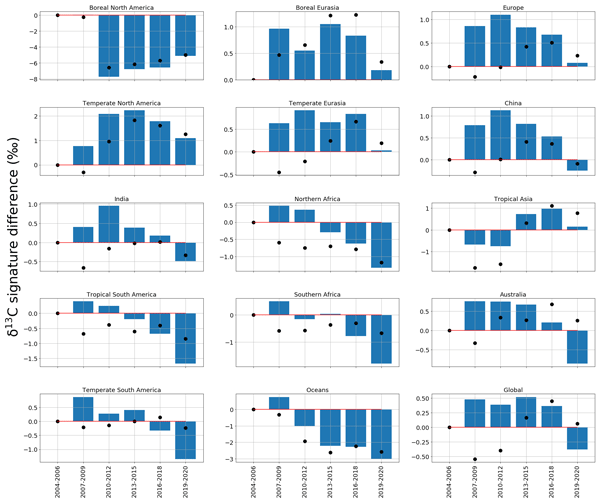
Changes in atmospheric methane over the last few decades are largely unexplained. Previous studies have proposed different hypotheses to explain short-term changes in atmospheric methane. We interpret observed changes in atmospheric methane and stable isotope source signatures (2004–2020). We argue that changes over this period are part of a large-scale shift from high-northern-latitude thermogenic energy emissions to tropical biogenic emissions, particularly from North Africa and South America.
Hejun Hu, Haichao Wang, Keding Lu, Jie Wang, Zelong Zheng, Xuezhen Xu, Tianyu Zhai, Xiaorui Chen, Xiao Lu, Wenxing Fu, Xin Li, Limin Zeng, Min Hu, Yuanhang Zhang, and Shaojia Fan
Atmos. Chem. Phys., 23, 8211–8223, https://doi.org/10.5194/acp-23-8211-2023, https://doi.org/10.5194/acp-23-8211-2023, 2023
Short summary
Short summary
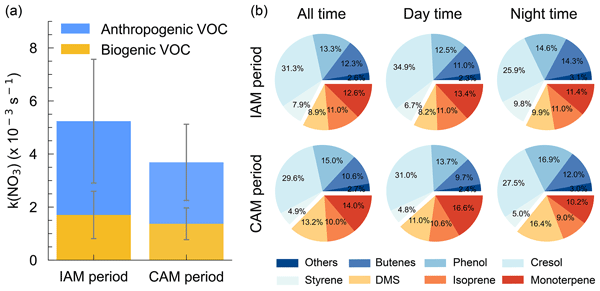
Nitrate radical chemistry is critical to the degradation of volatile organic compounds (VOCs) and secondary organic aerosol formation. This work investigated the level, seasonal variation, and trend of nitrate radical reactivity towards volatile organic compounds (kNO3) in Beijing. We show the key role of isoprene and styrene in regulating seasonal variation in kNO3 and rebuild a long-term record of kNO3 based on the reported VOC measurements.
Daniel J. Varon, Daniel J. Jacob, Benjamin Hmiel, Ritesh Gautam, David R. Lyon, Mark Omara, Melissa Sulprizio, Lu Shen, Drew Pendergrass, Hannah Nesser, Zhen Qu, Zachary R. Barkley, Natasha L. Miles, Scott J. Richardson, Kenneth J. Davis, Sudhanshu Pandey, Xiao Lu, Alba Lorente, Tobias Borsdorff, Joannes D. Maasakkers, and Ilse Aben
Atmos. Chem. Phys., 23, 7503–7520, https://doi.org/10.5194/acp-23-7503-2023, https://doi.org/10.5194/acp-23-7503-2023, 2023
Short summary
Short summary
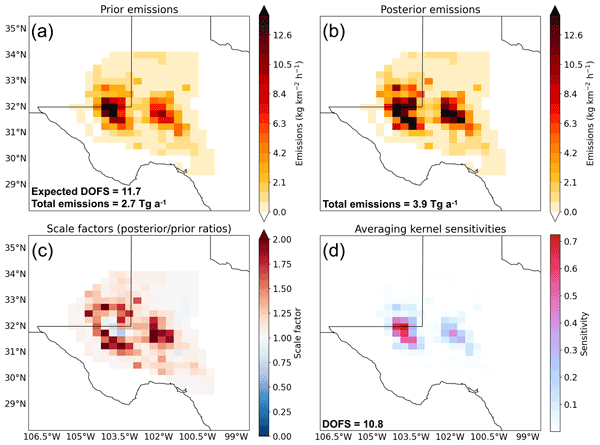
We use TROPOMI satellite observations to quantify weekly methane emissions from the US Permian oil and gas basin from May 2018 to October 2020. We find that Permian emissions are highly variable, with diverse economic and activity drivers. The most important drivers during our study period were new well development and natural gas price. Permian methane intensity averaged 4.6 % and decreased by 1 % per year.
Thomas E. Taylor, Christopher W. O'Dell, David Baker, Carol Bruegge, Albert Chang, Lars Chapsky, Abhishek Chatterjee, Cecilia Cheng, Frédéric Chevallier, David Crisp, Lan Dang, Brian Drouin, Annmarie Eldering, Liang Feng, Brendan Fisher, Dejian Fu, Michael Gunson, Vance Haemmerle, Graziela R. Keller, Matthäus Kiel, Le Kuai, Thomas Kurosu, Alyn Lambert, Joshua Laughner, Richard Lee, Junjie Liu, Lucas Mandrake, Yuliya Marchetti, Gregory McGarragh, Aronne Merrelli, Robert R. Nelson, Greg Osterman, Fabiano Oyafuso, Paul I. Palmer, Vivienne H. Payne, Robert Rosenberg, Peter Somkuti, Gary Spiers, Cathy To, Brad Weir, Paul O. Wennberg, Shanshan Yu, and Jia Zong
Atmos. Meas. Tech., 16, 3173–3209, https://doi.org/10.5194/amt-16-3173-2023, https://doi.org/10.5194/amt-16-3173-2023, 2023
Short summary
Short summary
NASA's Orbiting Carbon Observatory 2 and 3 (OCO-2 and OCO-3, respectively) provide complementary spatiotemporal coverage from a sun-synchronous and precession orbit, respectively. Estimates of total column carbon dioxide (XCO2) derived from the two sensors using the same retrieval algorithm show broad consistency over a 2.5-year overlapping time record. This suggests that data from the two satellites may be used together for scientific analysis.
Zichong Chen, Daniel J. Jacob, Ritesh Gautam, Mark Omara, Robert N. Stavins, Robert C. Stowe, Hannah Nesser, Melissa P. Sulprizio, Alba Lorente, Daniel J. Varon, Xiao Lu, Lu Shen, Zhen Qu, Drew C. Pendergrass, and Sarah Hancock
Atmos. Chem. Phys., 23, 5945–5967, https://doi.org/10.5194/acp-23-5945-2023, https://doi.org/10.5194/acp-23-5945-2023, 2023
Short summary
Short summary
We quantify methane emissions from individual countries in the Middle East and North Africa by inverse analysis of 2019 TROPOMI satellite observations of atmospheric methane. We show that the ability to simply relate oil/gas emissions to activity metrics is compromised by stochastic nature of local infrastructure and management practices. We find that the industry target for oil/gas methane intensity is achievable through associated gas capture, modern infrastructure, and centralized operations.
Liang Feng, Paul I. Palmer, Robert J. Parker, Mark F. Lunt, and Hartmut Bösch
Atmos. Chem. Phys., 23, 4863–4880, https://doi.org/10.5194/acp-23-4863-2023, https://doi.org/10.5194/acp-23-4863-2023, 2023
Short summary
Short summary
Our understanding of recent changes in atmospheric methane has defied explanation. Since 2007, the atmospheric growth of methane has accelerated to record-breaking values in 2020 and 2021. We use satellite observations of methane to show that (1) increasing emissions over the tropics are mostly responsible for these recent atmospheric changes, and (2) changes in the OH sink during the 2020 Covid-19 lockdown can explain up to 34% of changes in atmospheric methane for that year.
Kun Wang, Chao Gao, Kai Wu, Kaiyun Liu, Haofan Wang, Mo Dan, Xiaohui Ji, and Qingqing Tong
Geosci. Model Dev., 16, 1961–1973, https://doi.org/10.5194/gmd-16-1961-2023, https://doi.org/10.5194/gmd-16-1961-2023, 2023
Short summary
Short summary
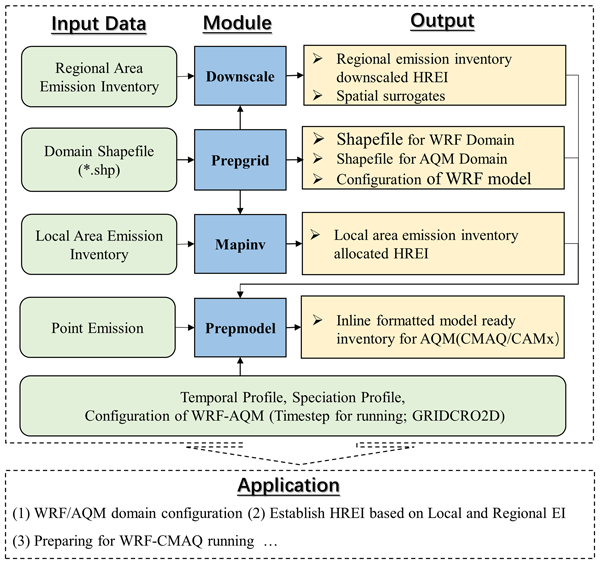
This study establishes an easy-to-use and integrated framework for a model-ready emission inventory for the Weather Research and Forecasting (WRF)–Air Quality Numerical Model (AQM). A free tool called the ISAT (Inventory Spatial Allocation Tool) was developed based on this framework. ISAT helps users complete the workflow from the WRF nested-domain configuration to a model-ready emission inventory for AQM with a regional emission inventory and a shapefile for the target region.
Ana Maria Roxana Petrescu, Chunjing Qiu, Matthew J. McGrath, Philippe Peylin, Glen P. Peters, Philippe Ciais, Rona L. Thompson, Aki Tsuruta, Dominik Brunner, Matthias Kuhnert, Bradley Matthews, Paul I. Palmer, Oksana Tarasova, Pierre Regnier, Ronny Lauerwald, David Bastviken, Lena Höglund-Isaksson, Wilfried Winiwarter, Giuseppe Etiope, Tuula Aalto, Gianpaolo Balsamo, Vladislav Bastrikov, Antoine Berchet, Patrick Brockmann, Giancarlo Ciotoli, Giulia Conchedda, Monica Crippa, Frank Dentener, Christine D. Groot Zwaaftink, Diego Guizzardi, Dirk Günther, Jean-Matthieu Haussaire, Sander Houweling, Greet Janssens-Maenhout, Massaer Kouyate, Adrian Leip, Antti Leppänen, Emanuele Lugato, Manon Maisonnier, Alistair J. Manning, Tiina Markkanen, Joe McNorton, Marilena Muntean, Gabriel D. Oreggioni, Prabir K. Patra, Lucia Perugini, Isabelle Pison, Maarit T. Raivonen, Marielle Saunois, Arjo J. Segers, Pete Smith, Efisio Solazzo, Hanqin Tian, Francesco N. Tubiello, Timo Vesala, Guido R. van der Werf, Chris Wilson, and Sönke Zaehle
Earth Syst. Sci. Data, 15, 1197–1268, https://doi.org/10.5194/essd-15-1197-2023, https://doi.org/10.5194/essd-15-1197-2023, 2023
Short summary
Short summary
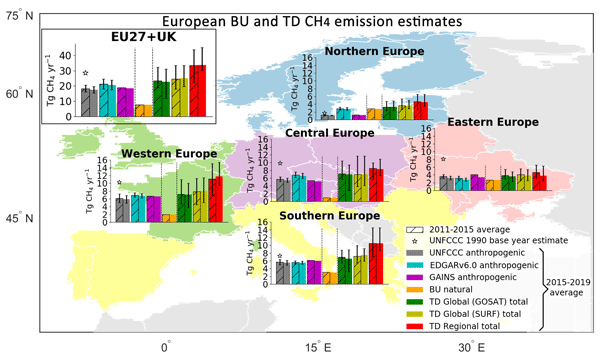
This study updates the state-of-the-art scientific overview of CH4 and N2O emissions in the EU27 and UK in Petrescu et al. (2021a). Yearly updates are needed to improve the different respective approaches and to inform on the development of formal verification systems. It integrates the most recent emission inventories, process-based model and regional/global inversions, comparing them with UNFCCC national GHG inventories, in support to policy to facilitate real-time verification procedures.
Hannah M. Nguyen, Jiangping He, and Martin J. Wooster
Atmos. Chem. Phys., 23, 2089–2118, https://doi.org/10.5194/acp-23-2089-2023, https://doi.org/10.5194/acp-23-2089-2023, 2023
Short summary
Short summary
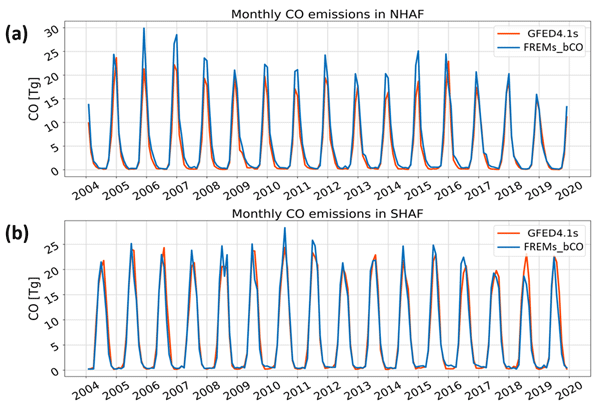
This work presents novel advances in the estimation of open biomass burning emissions via the first fully "top-down" approach to exploit satellite-derived observations of fire radiative power and carbon monoxide over Africa. We produce a 16-year record of fire-generated CO emissions and dry matter consumed per unit area for Africa and evaluate these emissions estimates through their use in an atmospheric model, whose simulation output is then compared to independent satellite observations of CO.
Kai Wu, Paul I. Palmer, Dien Wu, Denis Jouglet, Liang Feng, and Tom Oda
Atmos. Meas. Tech., 16, 581–602, https://doi.org/10.5194/amt-16-581-2023, https://doi.org/10.5194/amt-16-581-2023, 2023
Short summary
Short summary
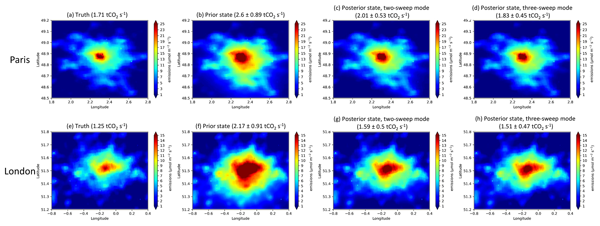
We evaluate the theoretical ability of the upcoming MicroCarb satellite to estimate urban CO2 emissions over Paris and London. We explore the relative performance of alternative two-sweep and three-sweep city observing modes and take into account the impacts of cloud cover and urban biological CO2 fluxes. Our results find both the two-sweep and three-sweep observing modes are able to reduce prior flux errors by 20 %–40 % depending on the prevailing wind direction and cloud coverage.
Robert J. Parker, Chris Wilson, Edward Comyn-Platt, Garry Hayman, Toby R. Marthews, A. Anthony Bloom, Mark F. Lunt, Nicola Gedney, Simon J. Dadson, Joe McNorton, Neil Humpage, Hartmut Boesch, Martyn P. Chipperfield, Paul I. Palmer, and Dai Yamazaki
Biogeosciences, 19, 5779–5805, https://doi.org/10.5194/bg-19-5779-2022, https://doi.org/10.5194/bg-19-5779-2022, 2022
Short summary
Short summary
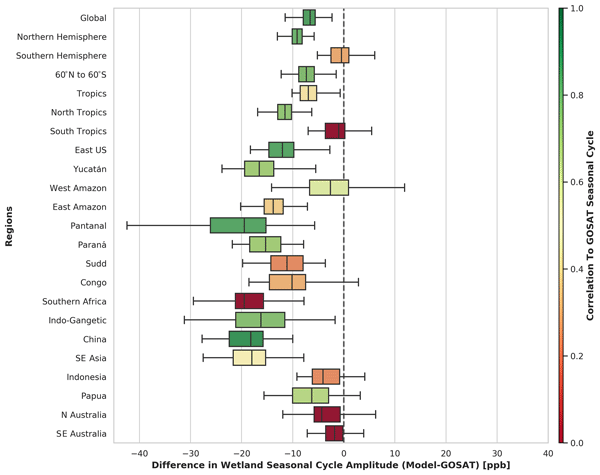
Wetlands are the largest natural source of methane, one of the most important climate gases. The JULES land surface model simulates these emissions. We use satellite data to evaluate how well JULES reproduces the methane seasonal cycle over different tropical wetlands. It performs well for most regions; however, it struggles for some African wetlands influenced heavily by river flooding. We explain the reasons for these deficiencies and highlight how future development will improve these areas.
Cheng He, Xiao Lu, Haolin Wang, Haichao Wang, Yan Li, Guowen He, Yuanping He, Yurun Wang, Youlang Zhang, Yiming Liu, Qi Fan, and Shaojia Fan
Atmos. Chem. Phys., 22, 15243–15261, https://doi.org/10.5194/acp-22-15243-2022, https://doi.org/10.5194/acp-22-15243-2022, 2022
Short summary
Short summary
We report that nocturnal ozone enhancement (NOE) events are observed at a high annual frequency of 41 % over 800 sites in China in 2014–2019 (about 50 % higher than that over Europe or the US). High daytime ozone provides a rich ozone source in the nighttime residual layer, determining the overall high frequency of NOE events in China, and enhanced atmospheric mixing then triggers NOE events by allowing the ozone-rich air in the residual layer to be mixed into the nighttime boundary layer.
Dien Wu, Junjie Liu, Paul O. Wennberg, Paul I. Palmer, Robert R. Nelson, Matthäus Kiel, and Annmarie Eldering
Atmos. Chem. Phys., 22, 14547–14570, https://doi.org/10.5194/acp-22-14547-2022, https://doi.org/10.5194/acp-22-14547-2022, 2022
Short summary
Short summary
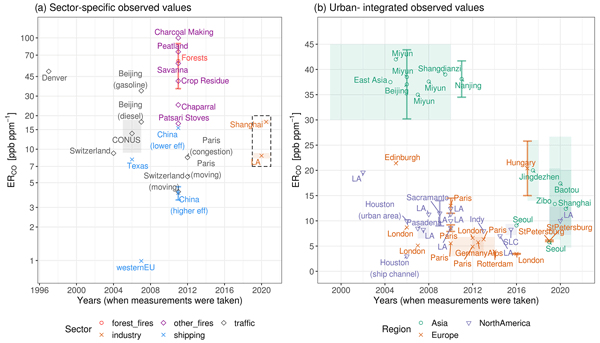
Prior studies have derived the combustion efficiency for a region/city using observed CO2 and CO. We further zoomed into the urban domain and accounted for factors affecting the calculation of spatially resolved combustion efficiency from two satellites. The intra-city variability in combustion efficiency was linked to heavy industry within Shanghai and LA without relying on emission inventories. Such an approach can be applied when analyzing data from future geostationary satellites.
Pierre Friedlingstein, Michael O'Sullivan, Matthew W. Jones, Robbie M. Andrew, Luke Gregor, Judith Hauck, Corinne Le Quéré, Ingrid T. Luijkx, Are Olsen, Glen P. Peters, Wouter Peters, Julia Pongratz, Clemens Schwingshackl, Stephen Sitch, Josep G. Canadell, Philippe Ciais, Robert B. Jackson, Simone R. Alin, Ramdane Alkama, Almut Arneth, Vivek K. Arora, Nicholas R. Bates, Meike Becker, Nicolas Bellouin, Henry C. Bittig, Laurent Bopp, Frédéric Chevallier, Louise P. Chini, Margot Cronin, Wiley Evans, Stefanie Falk, Richard A. Feely, Thomas Gasser, Marion Gehlen, Thanos Gkritzalis, Lucas Gloege, Giacomo Grassi, Nicolas Gruber, Özgür Gürses, Ian Harris, Matthew Hefner, Richard A. Houghton, George C. Hurtt, Yosuke Iida, Tatiana Ilyina, Atul K. Jain, Annika Jersild, Koji Kadono, Etsushi Kato, Daniel Kennedy, Kees Klein Goldewijk, Jürgen Knauer, Jan Ivar Korsbakken, Peter Landschützer, Nathalie Lefèvre, Keith Lindsay, Junjie Liu, Zhu Liu, Gregg Marland, Nicolas Mayot, Matthew J. McGrath, Nicolas Metzl, Natalie M. Monacci, David R. Munro, Shin-Ichiro Nakaoka, Yosuke Niwa, Kevin O'Brien, Tsuneo Ono, Paul I. Palmer, Naiqing Pan, Denis Pierrot, Katie Pocock, Benjamin Poulter, Laure Resplandy, Eddy Robertson, Christian Rödenbeck, Carmen Rodriguez, Thais M. Rosan, Jörg Schwinger, Roland Séférian, Jamie D. Shutler, Ingunn Skjelvan, Tobias Steinhoff, Qing Sun, Adrienne J. Sutton, Colm Sweeney, Shintaro Takao, Toste Tanhua, Pieter P. Tans, Xiangjun Tian, Hanqin Tian, Bronte Tilbrook, Hiroyuki Tsujino, Francesco Tubiello, Guido R. van der Werf, Anthony P. Walker, Rik Wanninkhof, Chris Whitehead, Anna Willstrand Wranne, Rebecca Wright, Wenping Yuan, Chao Yue, Xu Yue, Sönke Zaehle, Jiye Zeng, and Bo Zheng
Earth Syst. Sci. Data, 14, 4811–4900, https://doi.org/10.5194/essd-14-4811-2022, https://doi.org/10.5194/essd-14-4811-2022, 2022
Short summary
Short summary
The Global Carbon Budget 2022 describes the datasets and methodology used to quantify the anthropogenic emissions of carbon dioxide (CO2) and their partitioning among the atmosphere, the land ecosystems, and the ocean. These living datasets are updated every year to provide the highest transparency and traceability in the reporting of CO2, the key driver of climate change.
Haolin Wang, Xiao Lu, Daniel J. Jacob, Owen R. Cooper, Kai-Lan Chang, Ke Li, Meng Gao, Yiming Liu, Bosi Sheng, Kai Wu, Tongwen Wu, Jie Zhang, Bastien Sauvage, Philippe Nédélec, Romain Blot, and Shaojia Fan
Atmos. Chem. Phys., 22, 13753–13782, https://doi.org/10.5194/acp-22-13753-2022, https://doi.org/10.5194/acp-22-13753-2022, 2022
Short summary
Short summary
We report significant global tropospheric ozone increases in 1995–2017 based on extensive aircraft and ozonesonde observations. Using GEOS-Chem (Goddard Earth Observing System chemistry model) multi-decadal global simulations, we find that changes in global anthropogenic emissions, in particular the rapid increases in aircraft emissions, contribute significantly to the increases in tropospheric ozone and resulting radiative impact.
Lu Shen, Ritesh Gautam, Mark Omara, Daniel Zavala-Araiza, Joannes D. Maasakkers, Tia R. Scarpelli, Alba Lorente, David Lyon, Jianxiong Sheng, Daniel J. Varon, Hannah Nesser, Zhen Qu, Xiao Lu, Melissa P. Sulprizio, Steven P. Hamburg, and Daniel J. Jacob
Atmos. Chem. Phys., 22, 11203–11215, https://doi.org/10.5194/acp-22-11203-2022, https://doi.org/10.5194/acp-22-11203-2022, 2022
Short summary
Short summary
We use 22 months of TROPOMI satellite observations to quantity methane emissions from the oil (O) and natural gas (G) sector in the US and Canada at the scale of both individual basins as well as country-wide aggregates. We find that O/G-related methane emissions are underestimated in these inventories by 80 % for the US and 40 % for Canada, and 70 % of the underestimate in the US is from five O/G basins, including Permian, Haynesville, Anadarko, Eagle Ford, and Barnett.
Zichong Chen, Daniel J. Jacob, Hannah Nesser, Melissa P. Sulprizio, Alba Lorente, Daniel J. Varon, Xiao Lu, Lu Shen, Zhen Qu, Elise Penn, and Xueying Yu
Atmos. Chem. Phys., 22, 10809–10826, https://doi.org/10.5194/acp-22-10809-2022, https://doi.org/10.5194/acp-22-10809-2022, 2022
Short summary
Short summary
We quantify methane emissions in China and contributions from different sectors by inverse analysis of 2019 TROPOMI satellite observations of atmospheric methane. We find that anthropogenic methane emissions for China are underestimated in the national inventory. Our estimate of emissions indicates a small life-cycle loss rate, implying net climate benefits from the current
coal-to-gasenergy transition in China. However, this small loss rate can be misleading given China's high gas imports.
Daniel J. Varon, Daniel J. Jacob, Melissa Sulprizio, Lucas A. Estrada, William B. Downs, Lu Shen, Sarah E. Hancock, Hannah Nesser, Zhen Qu, Elise Penn, Zichong Chen, Xiao Lu, Alba Lorente, Ashutosh Tewari, and Cynthia A. Randles
Geosci. Model Dev., 15, 5787–5805, https://doi.org/10.5194/gmd-15-5787-2022, https://doi.org/10.5194/gmd-15-5787-2022, 2022
Short summary
Short summary
Reducing atmospheric methane emissions is critical to slow near-term climate change. Globally surveying satellite instruments like the TROPOspheric Monitoring Instrument (TROPOMI) have unique capabilities for monitoring atmospheric methane around the world. Here we present a user-friendly cloud-computing tool that enables researchers and stakeholders to quantify methane emissions across user-selected regions of interest using TROPOMI satellite observations.
Roland Vernooij, Patrik Winiger, Martin Wooster, Tercia Strydom, Laurent Poulain, Ulrike Dusek, Mark Grosvenor, Gareth J. Roberts, Nick Schutgens, and Guido R. van der Werf
Atmos. Meas. Tech., 15, 4271–4294, https://doi.org/10.5194/amt-15-4271-2022, https://doi.org/10.5194/amt-15-4271-2022, 2022
Short summary
Short summary
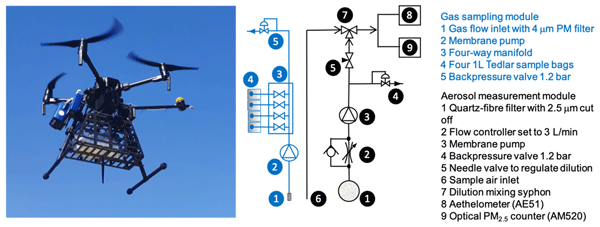
Landscape fires are a substantial emitter of greenhouse gases and aerosols. Previous studies have indicated savanna emission factors to be highly variable. Improving fire emission estimates, and understanding future climate- and human-induced changes in fire regimes, requires in situ measurements. We present a drone-based method that enables the collection of a large amount of high-quality emission factor measurements that do not have the biases of aircraft or surface measurements.
Selena Georgiou, Edward T. A. Mitchard, Bart Crezee, Paul I. Palmer, Greta C. Dargie, Sofie Sjögersten, Corneille E. N. Ewango, Ovide B. Emba, Joseph T. Kanyama, Pierre Bola, Jean-Bosco N. Ndjango, Nicholas T. Girkin, Yannick E. Bocko, Suspense A. Ifo, and Simon L. Lewis
EGUsphere, https://doi.org/10.5194/egusphere-2022-580, https://doi.org/10.5194/egusphere-2022-580, 2022
Preprint archived
Short summary
Short summary
Two major vegetation types, hardwood trees and palms, overlay the Central Congo Basin peatland complex, each dominant in different locations. We investigated the influence of terrain and climatological variables on their distribution, using a regression model, and found elevation and seasonal rainfall and temperature contribute significantly. There are indications of an optimal range of net water input for palm swamp to dominate, above and below which hardwood swamp dominates.
Chenhong Zhou, Fan Wang, Yike Guo, Cheng Liu, Dongsheng Ji, Yuesi Wang, Xiaobin Xu, Xiao Lu, Yan Wang, Gregory Carmichael, and Meng Gao
Earth Syst. Sci. Data Discuss., https://doi.org/10.5194/essd-2022-187, https://doi.org/10.5194/essd-2022-187, 2022
Manuscript not accepted for further review
Short summary
Short summary
We develop an eXtreme Gradient Boosting (XGBoost) model integrating high-resolution meteorological data, satellite retrievals of trace gases, etc. to provide reconstructed daily ground-level O3 over 2005–2021 in China. It can facilitate climatological, ecological, and health research. The dataset is freely available at Zenodo (https://zenodo.org/record/6507706#.Yo8hKujP13g; Zhou, 2022).
Pierre Friedlingstein, Matthew W. Jones, Michael O'Sullivan, Robbie M. Andrew, Dorothee C. E. Bakker, Judith Hauck, Corinne Le Quéré, Glen P. Peters, Wouter Peters, Julia Pongratz, Stephen Sitch, Josep G. Canadell, Philippe Ciais, Rob B. Jackson, Simone R. Alin, Peter Anthoni, Nicholas R. Bates, Meike Becker, Nicolas Bellouin, Laurent Bopp, Thi Tuyet Trang Chau, Frédéric Chevallier, Louise P. Chini, Margot Cronin, Kim I. Currie, Bertrand Decharme, Laique M. Djeutchouang, Xinyu Dou, Wiley Evans, Richard A. Feely, Liang Feng, Thomas Gasser, Dennis Gilfillan, Thanos Gkritzalis, Giacomo Grassi, Luke Gregor, Nicolas Gruber, Özgür Gürses, Ian Harris, Richard A. Houghton, George C. Hurtt, Yosuke Iida, Tatiana Ilyina, Ingrid T. Luijkx, Atul Jain, Steve D. Jones, Etsushi Kato, Daniel Kennedy, Kees Klein Goldewijk, Jürgen Knauer, Jan Ivar Korsbakken, Arne Körtzinger, Peter Landschützer, Siv K. Lauvset, Nathalie Lefèvre, Sebastian Lienert, Junjie Liu, Gregg Marland, Patrick C. McGuire, Joe R. Melton, David R. Munro, Julia E. M. S. Nabel, Shin-Ichiro Nakaoka, Yosuke Niwa, Tsuneo Ono, Denis Pierrot, Benjamin Poulter, Gregor Rehder, Laure Resplandy, Eddy Robertson, Christian Rödenbeck, Thais M. Rosan, Jörg Schwinger, Clemens Schwingshackl, Roland Séférian, Adrienne J. Sutton, Colm Sweeney, Toste Tanhua, Pieter P. Tans, Hanqin Tian, Bronte Tilbrook, Francesco Tubiello, Guido R. van der Werf, Nicolas Vuichard, Chisato Wada, Rik Wanninkhof, Andrew J. Watson, David Willis, Andrew J. Wiltshire, Wenping Yuan, Chao Yue, Xu Yue, Sönke Zaehle, and Jiye Zeng
Earth Syst. Sci. Data, 14, 1917–2005, https://doi.org/10.5194/essd-14-1917-2022, https://doi.org/10.5194/essd-14-1917-2022, 2022
Short summary
Short summary
The Global Carbon Budget 2021 describes the data sets and methodology used to quantify the emissions of carbon dioxide and their partitioning among the atmosphere, land, and ocean. These living data are updated every year to provide the highest transparency and traceability in the reporting of CO2, the key driver of climate change.
Carlos Alberti, Frank Hase, Matthias Frey, Darko Dubravica, Thomas Blumenstock, Angelika Dehn, Paolo Castracane, Gregor Surawicz, Roland Harig, Bianca C. Baier, Caroline Bès, Jianrong Bi, Hartmut Boesch, André Butz, Zhaonan Cai, Jia Chen, Sean M. Crowell, Nicholas M. Deutscher, Dragos Ene, Jonathan E. Franklin, Omaira García, David Griffith, Bruno Grouiez, Michel Grutter, Abdelhamid Hamdouni, Sander Houweling, Neil Humpage, Nicole Jacobs, Sujong Jeong, Lilian Joly, Nicholas B. Jones, Denis Jouglet, Rigel Kivi, Ralph Kleinschek, Morgan Lopez, Diogo J. Medeiros, Isamu Morino, Nasrin Mostafavipak, Astrid Müller, Hirofumi Ohyama, Paul I. Palmer, Mahesh Pathakoti, David F. Pollard, Uwe Raffalski, Michel Ramonet, Robbie Ramsay, Mahesh Kumar Sha, Kei Shiomi, William Simpson, Wolfgang Stremme, Youwen Sun, Hiroshi Tanimoto, Yao Té, Gizaw Mengistu Tsidu, Voltaire A. Velazco, Felix Vogel, Masataka Watanabe, Chong Wei, Debra Wunch, Marcia Yamasoe, Lu Zhang, and Johannes Orphal
Atmos. Meas. Tech., 15, 2433–2463, https://doi.org/10.5194/amt-15-2433-2022, https://doi.org/10.5194/amt-15-2433-2022, 2022
Short summary
Short summary
Space-borne greenhouse gas missions require ground-based validation networks capable of providing fiducial reference measurements. Here, considerable refinements of the calibration procedures for the COllaborative Carbon Column Observing Network (COCCON) are presented. Laboratory and solar side-by-side procedures for the characterization of the spectrometers have been refined and extended. Revised calibration factors for XCO2, XCO and XCH4 are provided, incorporating 47 new spectrometers.
Zhu Deng, Philippe Ciais, Zitely A. Tzompa-Sosa, Marielle Saunois, Chunjing Qiu, Chang Tan, Taochun Sun, Piyu Ke, Yanan Cui, Katsumasa Tanaka, Xin Lin, Rona L. Thompson, Hanqin Tian, Yuanzhi Yao, Yuanyuan Huang, Ronny Lauerwald, Atul K. Jain, Xiaoming Xu, Ana Bastos, Stephen Sitch, Paul I. Palmer, Thomas Lauvaux, Alexandre d'Aspremont, Clément Giron, Antoine Benoit, Benjamin Poulter, Jinfeng Chang, Ana Maria Roxana Petrescu, Steven J. Davis, Zhu Liu, Giacomo Grassi, Clément Albergel, Francesco N. Tubiello, Lucia Perugini, Wouter Peters, and Frédéric Chevallier
Earth Syst. Sci. Data, 14, 1639–1675, https://doi.org/10.5194/essd-14-1639-2022, https://doi.org/10.5194/essd-14-1639-2022, 2022
Short summary
Short summary
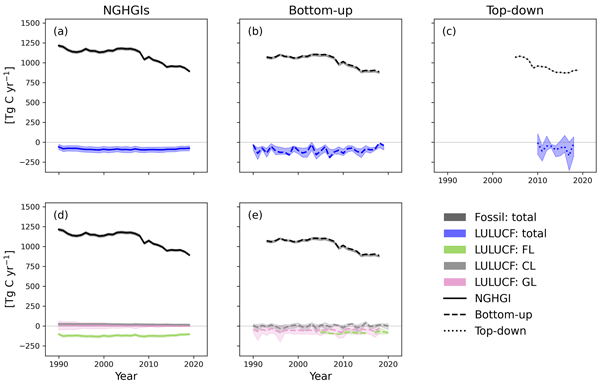
In support of the global stocktake of the Paris Agreement on climate change, we proposed a method for reconciling the results of global atmospheric inversions with data from UNFCCC national greenhouse gas inventories (NGHGIs). Here, based on a new global harmonized database that we compiled from the UNFCCC NGHGIs and a comprehensive framework presented in this study to process the results of inversions, we compared their results of carbon dioxide (CO2), methane (CH4), and nitrous oxide (N2O).
Tia R. Scarpelli, Daniel J. Jacob, Shayna Grossman, Xiao Lu, Zhen Qu, Melissa P. Sulprizio, Yuzhong Zhang, Frances Reuland, Deborah Gordon, and John R. Worden
Atmos. Chem. Phys., 22, 3235–3249, https://doi.org/10.5194/acp-22-3235-2022, https://doi.org/10.5194/acp-22-3235-2022, 2022
Short summary
Short summary
We present a spatially explicit version of the national inventories of oil, gas, and coal methane emissions as submitted by individual countries to the United Nations Framework Convention on Climate Change (UNFCCC) in 2021. We then use atmospheric modeling to compare our inventory emissions to atmospheric methane observations with the goal of identifying potential under- and overestimates of oil–gas methane emissions in the national inventories.
Dianyi Li, Drew Shindell, Dian Ding, Xiao Lu, Lin Zhang, and Yuqiang Zhang
Atmos. Chem. Phys., 22, 2625–2638, https://doi.org/10.5194/acp-22-2625-2022, https://doi.org/10.5194/acp-22-2625-2022, 2022
Short summary
Short summary
In this study, we applied chemical transport model simulation with the latest annual anthropogenic emission inventory to study the long-term trend of ozone-induced crop production losses from 2010 to 2017 in China. We find that overall the ozone-induced crop production loss in China is significant and the annual average economic losses for wheat, rice, maize, and soybean in China are USD 9.55 billion, USD 8.53 billion, USD 2.23 billion, and USD 1.16 billion respectively, over the 8 years.
Douglas P. Finch, Paul I. Palmer, and Tianran Zhang
Atmos. Meas. Tech., 15, 721–733, https://doi.org/10.5194/amt-15-721-2022, https://doi.org/10.5194/amt-15-721-2022, 2022
Short summary
Short summary
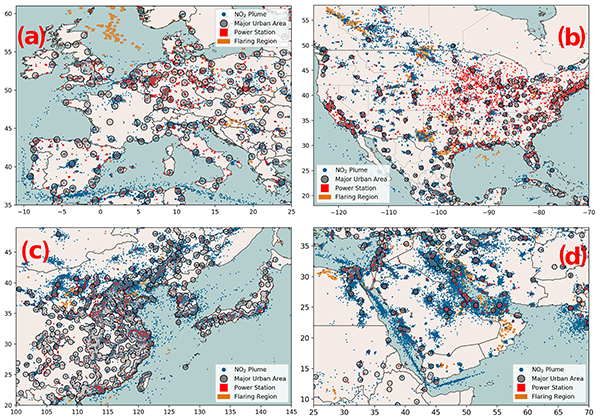
We developed a machine learning model to detect plumes of nitrogen dioxide satellite observations over 2 years. We find over 310 000 plumes, mainly over cities, industrial regions, and areas of oil and gas production. Our model performs well in comparison to other datasets and in some cases finds emissions that are not included in other datasets. This method could be used to help locate and measure emission hotspots across the globe and help inform climate policies.
Haichao Wang, Chao Peng, Xuan Wang, Shengrong Lou, Keding Lu, Guicheng Gan, Xiaohong Jia, Xiaorui Chen, Jun Chen, Hongli Wang, Shaojia Fan, Xinming Wang, and Mingjin Tang
Atmos. Chem. Phys., 22, 1845–1859, https://doi.org/10.5194/acp-22-1845-2022, https://doi.org/10.5194/acp-22-1845-2022, 2022
Short summary
Short summary
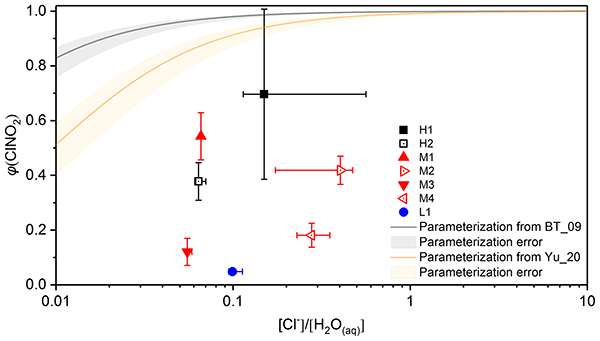
Via combining laboratory and modeling work, we found that heterogeneous reaction of N2O5 with saline mineral dust aerosol could be an important source of tropospheric ClNO2 in inland regions.
Thomas E. Taylor, Christopher W. O'Dell, David Crisp, Akhiko Kuze, Hannakaisa Lindqvist, Paul O. Wennberg, Abhishek Chatterjee, Michael Gunson, Annmarie Eldering, Brendan Fisher, Matthäus Kiel, Robert R. Nelson, Aronne Merrelli, Greg Osterman, Frédéric Chevallier, Paul I. Palmer, Liang Feng, Nicholas M. Deutscher, Manvendra K. Dubey, Dietrich G. Feist, Omaira E. García, David W. T. Griffith, Frank Hase, Laura T. Iraci, Rigel Kivi, Cheng Liu, Martine De Mazière, Isamu Morino, Justus Notholt, Young-Suk Oh, Hirofumi Ohyama, David F. Pollard, Markus Rettinger, Matthias Schneider, Coleen M. Roehl, Mahesh Kumar Sha, Kei Shiomi, Kimberly Strong, Ralf Sussmann, Yao Té, Voltaire A. Velazco, Mihalis Vrekoussis, Thorsten Warneke, and Debra Wunch
Earth Syst. Sci. Data, 14, 325–360, https://doi.org/10.5194/essd-14-325-2022, https://doi.org/10.5194/essd-14-325-2022, 2022
Short summary
Short summary
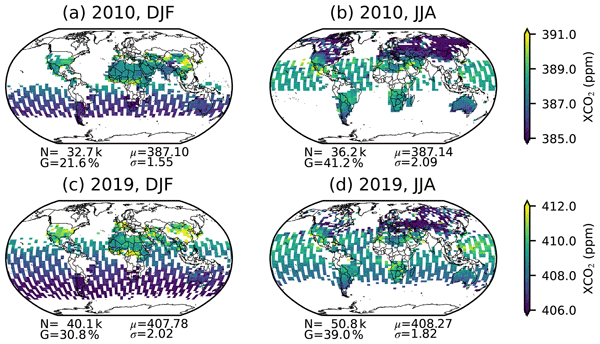
We provide an analysis of an 11-year record of atmospheric carbon dioxide (CO2) concentrations derived using an optimal estimation retrieval algorithm on measurements made by the GOSAT satellite. The new product (version 9) shows improvement over the previous version (v7.3) as evaluated against independent estimates of CO2 from ground-based sensors and atmospheric inversion systems. We also compare the new GOSAT CO2 values to collocated estimates from NASA's Orbiting Carbon Observatory-2.
Haiyue Tan, Lin Zhang, Xiao Lu, Yuanhong Zhao, Bo Yao, Robert J. Parker, and Hartmut Boesch
Atmos. Chem. Phys., 22, 1229–1249, https://doi.org/10.5194/acp-22-1229-2022, https://doi.org/10.5194/acp-22-1229-2022, 2022
Short summary
Short summary
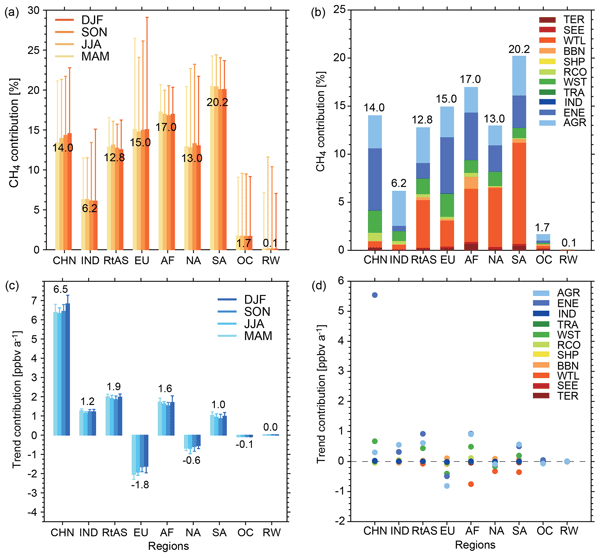
Methane is the second most important anthropogenic greenhouse gas. Understanding methane emissions and concentration growth over China in the past decade is important to support its mitigation. This study analyzes the contributions of methane emissions from different regions and sources over the globe to methane changes over China in 2007–2018. Our results show strong international transport influences and emphasize the need of intensive methane measurements covering eastern China.
Xiao Lu, Daniel J. Jacob, Haolin Wang, Joannes D. Maasakkers, Yuzhong Zhang, Tia R. Scarpelli, Lu Shen, Zhen Qu, Melissa P. Sulprizio, Hannah Nesser, A. Anthony Bloom, Shuang Ma, John R. Worden, Shaojia Fan, Robert J. Parker, Hartmut Boesch, Ritesh Gautam, Deborah Gordon, Michael D. Moran, Frances Reuland, Claudia A. Octaviano Villasana, and Arlyn Andrews
Atmos. Chem. Phys., 22, 395–418, https://doi.org/10.5194/acp-22-395-2022, https://doi.org/10.5194/acp-22-395-2022, 2022
Short summary
Short summary
We evaluate methane emissions and trends for 2010–2017 in the gridded national emission inventories for the United States, Canada, and Mexico by inversion of in situ and satellite methane observations. We find that anthropogenic methane emissions for all three countries are underestimated in the national inventories, largely driven by oil emissions. Anthropogenic methane emissions in the US peak in 2014, in contrast to the report of a steadily decreasing trend over 2010–2017 from the US EPA.
Xinqi Xu, Jielan Xie, Yuman Li, Shengjie Miao, and Shaojia Fan
Atmos. Chem. Phys., 22, 139–153, https://doi.org/10.5194/acp-22-139-2022, https://doi.org/10.5194/acp-22-139-2022, 2022
Short summary
Short summary
The effect of meteorological elements on the three-dimensional distribution structure of particles was studied by making vehicle-based multi-lidar observations in the western Guangdong–Hong Kong–Macao Greater Bay Area of China. Results showed that distribution of particles was closely related to horizontal wind speed and direction, vertical wind speed, and temperature. A model for meteorological elements affecting the vertical distribution of urban particles was offered in this study.
Youwen Sun, Hao Yin, Xiao Lu, Justus Notholt, Mathias Palm, Cheng Liu, Yuan Tian, and Bo Zheng
Atmos. Chem. Phys., 21, 18589–18608, https://doi.org/10.5194/acp-21-18589-2021, https://doi.org/10.5194/acp-21-18589-2021, 2021
Short summary
Short summary
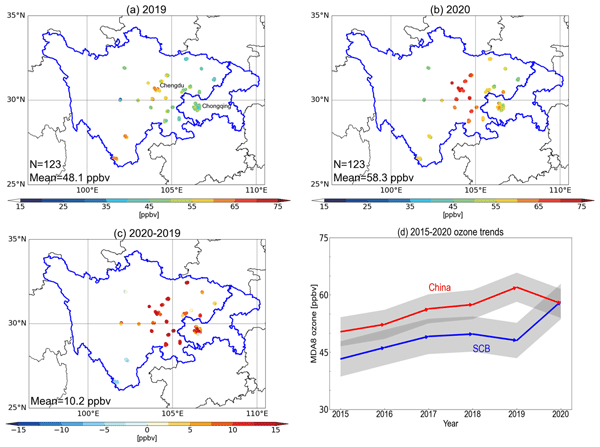
This study uses high-resolution nested-grid GEOS-Chem simulation, the eXtreme Gradient Boosting (XGBoost) machine learning method, and the exposure–response relationship to determine the drivers and evaluate the health risks of the unexpected surface O3 enhancements over the Sichuan Basin in 2020. These unexpected O3 enhancements were induced by meteorological anomalies and caused dramatically high health risks.
Mark F. Lunt, Alistair J. Manning, Grant Allen, Tim Arnold, Stéphane J.-B. Bauguitte, Hartmut Boesch, Anita L. Ganesan, Aoife Grant, Carole Helfter, Eiko Nemitz, Simon J. O'Doherty, Paul I. Palmer, Joseph R. Pitt, Chris Rennick, Daniel Say, Kieran M. Stanley, Ann R. Stavert, Dickon Young, and Matt Rigby
Atmos. Chem. Phys., 21, 16257–16276, https://doi.org/10.5194/acp-21-16257-2021, https://doi.org/10.5194/acp-21-16257-2021, 2021
Short summary
Short summary
We present an evaluation of the UK's methane emissions between 2013 and 2020 using a network of tall tower measurement sites. We find emissions that are consistent in both magnitude and trend with the UK's reported emissions, with a declining trend driven by a decrease in emissions from England. The impact of various components of the modelling set-up on these findings are explored through a number of sensitivity studies.
Mehliyar Sadiq, Paul I. Palmer, Mark F. Lunt, Liang Feng, Ingrid Super, Stijn N. C. Dellaert, and Hugo A. C. Denier van der Gon
Atmos. Chem. Phys. Discuss., https://doi.org/10.5194/acp-2021-816, https://doi.org/10.5194/acp-2021-816, 2021
Publication in ACP not foreseen
Short summary
Short summary
We make use of high-resolution emission inventory of CO2 and co-emitted tracers, satellite measurements, together with nested atmospheric transport model simulation, to investigate how reactive trace gases such as nitrogen dioxide and carbon monoxide can be used as proxies to determine the combustion contribution to atmospheric CO2 over Europe. We find stronger correlation in ratios of nitrogen dioxide and carbon dioxide between emission and satellite observed and modelled column concentration.
Zhen Qu, Daniel J. Jacob, Lu Shen, Xiao Lu, Yuzhong Zhang, Tia R. Scarpelli, Hannah Nesser, Melissa P. Sulprizio, Joannes D. Maasakkers, A. Anthony Bloom, John R. Worden, Robert J. Parker, and Alba L. Delgado
Atmos. Chem. Phys., 21, 14159–14175, https://doi.org/10.5194/acp-21-14159-2021, https://doi.org/10.5194/acp-21-14159-2021, 2021
Short summary
Short summary
The recent launch of TROPOMI offers an unprecedented opportunity to quantify the methane budget from a top-down perspective. We use TROPOMI and the more mature GOSAT methane observations to estimate methane emissions and get consistent global budgets. However, TROPOMI shows biases over regions where surface albedo is small and provides less information for the coarse-resolution inversion due to the larger error correlations and spatial variations in the number of observations.
Antoine Berchet, Espen Sollum, Rona L. Thompson, Isabelle Pison, Joël Thanwerdas, Grégoire Broquet, Frédéric Chevallier, Tuula Aalto, Adrien Berchet, Peter Bergamaschi, Dominik Brunner, Richard Engelen, Audrey Fortems-Cheiney, Christoph Gerbig, Christine D. Groot Zwaaftink, Jean-Matthieu Haussaire, Stephan Henne, Sander Houweling, Ute Karstens, Werner L. Kutsch, Ingrid T. Luijkx, Guillaume Monteil, Paul I. Palmer, Jacob C. A. van Peet, Wouter Peters, Philippe Peylin, Elise Potier, Christian Rödenbeck, Marielle Saunois, Marko Scholze, Aki Tsuruta, and Yuanhong Zhao
Geosci. Model Dev., 14, 5331–5354, https://doi.org/10.5194/gmd-14-5331-2021, https://doi.org/10.5194/gmd-14-5331-2021, 2021
Short summary
Short summary
We present here the Community Inversion Framework (CIF) to help rationalize development efforts and leverage the strengths of individual inversion systems into a comprehensive framework. The CIF is a programming protocol to allow various inversion bricks to be exchanged among researchers.
The ensemble of bricks makes a flexible, transparent and open-source Python-based tool. We describe the main structure and functionalities and demonstrate it in a simple academic case.
Youwen Sun, Hao Yin, Cheng Liu, Emmanuel Mahieu, Justus Notholt, Yao Té, Xiao Lu, Mathias Palm, Wei Wang, Changgong Shan, Qihou Hu, Min Qin, Yuan Tian, and Bo Zheng
Atmos. Chem. Phys., 21, 11759–11779, https://doi.org/10.5194/acp-21-11759-2021, https://doi.org/10.5194/acp-21-11759-2021, 2021
Short summary
Short summary
The variability, sources, and transport of ethane (C2H6) over eastern China from 2015 to 2020 were studied using ground-based Fourier transform infrared (FTIR) spectroscopy and GEOS-Chem simulations. C2H6 variability is driven by both meteorological and emission factors. The reduction in C2H6 in recent years over eastern China points to air quality improvement in China.
Meng Gao, Yang Yang, Hong Liao, Bin Zhu, Yuxuan Zhang, Zirui Liu, Xiao Lu, Chen Wang, Qiming Zhou, Yuesi Wang, Qiang Zhang, Gregory R. Carmichael, and Jianlin Hu
Atmos. Chem. Phys., 21, 11405–11421, https://doi.org/10.5194/acp-21-11405-2021, https://doi.org/10.5194/acp-21-11405-2021, 2021
Short summary
Short summary
Light absorption and radiative forcing of black carbon (BC) is influenced by both BC itself and its interactions with other aerosol chemical compositions. In this study, we used the online coupled WRF-Chem model to examine how emission control measures during the Asian-Pacific Economic Cooperation (APEC) conference affect the mixing state and light absorption of BC and the associated implications for BC-PBL interactions.
Caterina Mogno, Paul I. Palmer, Christoph Knote, Fei Yao, and Timothy J. Wallington
Atmos. Chem. Phys., 21, 10881–10909, https://doi.org/10.5194/acp-21-10881-2021, https://doi.org/10.5194/acp-21-10881-2021, 2021
Short summary
Short summary
We use a 3-D atmospheric chemistry model to investigate how seasonal emissions sources and meteorological conditions affect the surface distribution of fine particulate matter (PM2.5) and organic aerosol (OA) over the Indo-Gangetic Plain. We find that all seasonal mean values of PM2.5 still exceed safe air quality levels, with human emissions contributing to PM2.5 all year round, open fires during post- and pre-monsoon, and biogenic emissions during monsoon. OA contributes up to 30 % to PM2.5.
Youwen Sun, Hao Yin, Yuan Cheng, Qianggong Zhang, Bo Zheng, Justus Notholt, Xiao Lu, Cheng Liu, Yuan Tian, and Jianguo Liu
Atmos. Chem. Phys., 21, 9201–9222, https://doi.org/10.5194/acp-21-9201-2021, https://doi.org/10.5194/acp-21-9201-2021, 2021
Short summary
Short summary
We quantified the variability, source, and transport of urban CO over the Himalayas and Tibetan Plateau (HTP) by using measurement, model simulation, and the analysis of meteorological fields. Urban CO over the HTP is dominated by anthropogenic and biomass burning emissions from local, South Asia and East Asia, and oxidation sources. The decreasing trends in surface CO since 2015 in most cities over the HTP are attributed to the reduction in local and transported CO emissions in recent years.
Youwen Sun, Hao Yin, Cheng Liu, Lin Zhang, Yuan Cheng, Mathias Palm, Justus Notholt, Xiao Lu, Corinne Vigouroux, Bo Zheng, Wei Wang, Nicholas Jones, Changong Shan, Min Qin, Yuan Tian, Qihou Hu, Fanhao Meng, and Jianguo Liu
Atmos. Chem. Phys., 21, 6365–6387, https://doi.org/10.5194/acp-21-6365-2021, https://doi.org/10.5194/acp-21-6365-2021, 2021
Short summary
Short summary
This study mapped the drivers of HCHO variability from 2015 to 2019 over eastern China. Hydroxyl (OH) radical production rates from HCHO photolysis were evaluated. The relative contributions of emitted and photochemical sources to the observed HCHO abundance were analyzed. Contributions of various emission sources and geographical regions to the observed HCHO summertime enhancements were determined.
Xiao Lu, Daniel J. Jacob, Yuzhong Zhang, Joannes D. Maasakkers, Melissa P. Sulprizio, Lu Shen, Zhen Qu, Tia R. Scarpelli, Hannah Nesser, Robert M. Yantosca, Jianxiong Sheng, Arlyn Andrews, Robert J. Parker, Hartmut Boesch, A. Anthony Bloom, and Shuang Ma
Atmos. Chem. Phys., 21, 4637–4657, https://doi.org/10.5194/acp-21-4637-2021, https://doi.org/10.5194/acp-21-4637-2021, 2021
Short summary
Short summary
We use an analytical solution to the Bayesian inverse problem to quantitatively compare and combine the information from satellite and in situ observations, and to estimate global methane budget and their trends over the 2010–2017 period. We find that satellite and in situ observations are to a large extent complementary in the inversion for estimating global methane budget, and reveal consistent corrections of regional anthropogenic and wetland methane emissions relative to the prior inventory.
Joannes D. Maasakkers, Daniel J. Jacob, Melissa P. Sulprizio, Tia R. Scarpelli, Hannah Nesser, Jianxiong Sheng, Yuzhong Zhang, Xiao Lu, A. Anthony Bloom, Kevin W. Bowman, John R. Worden, and Robert J. Parker
Atmos. Chem. Phys., 21, 4339–4356, https://doi.org/10.5194/acp-21-4339-2021, https://doi.org/10.5194/acp-21-4339-2021, 2021
Short summary
Short summary
We use 2010–2015 GOSAT satellite observations of atmospheric methane over North America in a high-resolution inversion to estimate methane emissions. We find general consistency with the gridded EPA inventory but higher oil and gas production emissions, with oil production emissions twice as large as in the latest EPA Greenhouse Gas Inventory. We find lower wetland emissions than predicted by WetCHARTs and a small increasing trend in the eastern US, apparently related to unconventional oil/gas.
Yuzhong Zhang, Daniel J. Jacob, Xiao Lu, Joannes D. Maasakkers, Tia R. Scarpelli, Jian-Xiong Sheng, Lu Shen, Zhen Qu, Melissa P. Sulprizio, Jinfeng Chang, A. Anthony Bloom, Shuang Ma, John Worden, Robert J. Parker, and Hartmut Boesch
Atmos. Chem. Phys., 21, 3643–3666, https://doi.org/10.5194/acp-21-3643-2021, https://doi.org/10.5194/acp-21-3643-2021, 2021
Short summary
Short summary
We use 2010–2018 satellite observations of atmospheric methane to interpret the factors controlling atmospheric methane and its accelerating increase during the period. The 2010–2018 increase in global methane emissions is driven by tropical and boreal wetlands and tropical livestock (South Asia, Africa, Brazil), with an insignificant positive trend in emissions from the fossil fuel sector. The peak methane growth rates in 2014–2015 are also contributed by low OH and high fire emissions.
Zhongjing Jiang, Jing Li, Xiao Lu, Cheng Gong, Lin Zhang, and Hong Liao
Atmos. Chem. Phys., 21, 2601–2613, https://doi.org/10.5194/acp-21-2601-2021, https://doi.org/10.5194/acp-21-2601-2021, 2021
Short summary
Short summary
This study demonstrates that the intensity of the western Pacific subtropical high (WPSH), a major synoptic pattern in the northern Pacific during summer, can induce a dipole change in surface ozone pollution over eastern China. Ozone concentration increases in the north and decreases in the south during the strong WPSH phase, and vice versa. The change in chemical processes associated with the WPSH change plays a decisive role, whereas the natural emission of ozone precursors accounts for ~ 30 %.
Margaret R. Marvin, Paul I. Palmer, Barry G. Latter, Richard Siddans, Brian J. Kerridge, Mohd Talib Latif, and Md Firoz Khan
Atmos. Chem. Phys., 21, 1917–1935, https://doi.org/10.5194/acp-21-1917-2021, https://doi.org/10.5194/acp-21-1917-2021, 2021
Short summary
Short summary
We use an atmospheric chemistry model in combination with satellite and surface observations to investigate how biomass burning affects tropospheric ozone over Southeast Asia during its fire seasons. We find that nitrogen oxides from biomass burning were responsible for about 30 % of the regional ozone formation potential, and we estimate that ozone from biomass burning caused more than 400 excess premature deaths in Southeast Asia during the peak burning months of March and September 2014.
James D. Lee, Will S. Drysdale, Doug P. Finch, Shona E. Wilde, and Paul I. Palmer
Atmos. Chem. Phys., 20, 15743–15759, https://doi.org/10.5194/acp-20-15743-2020, https://doi.org/10.5194/acp-20-15743-2020, 2020
Short summary
Short summary
Efforts to prevent the COVID-19 virus spreading across the globe have included travel restrictions and the closure of workplaces, leading to a significant drop in emissions of primary air pollutants. This provides for a unique opportunity to examine how air pollutant concentrations respond to an abrupt and prolonged reduction. We examine how NO2 and O3 have been affected at several urban measurement sites in the UK. We look at the change in NO2 compared to previous years and the effect on O3.
Robert J. Parker, Alex Webb, Hartmut Boesch, Peter Somkuti, Rocio Barrio Guillo, Antonio Di Noia, Nikoleta Kalaitzi, Jasdeep S. Anand, Peter Bergamaschi, Frederic Chevallier, Paul I. Palmer, Liang Feng, Nicholas M. Deutscher, Dietrich G. Feist, David W. T. Griffith, Frank Hase, Rigel Kivi, Isamu Morino, Justus Notholt, Young-Suk Oh, Hirofumi Ohyama, Christof Petri, David F. Pollard, Coleen Roehl, Mahesh K. Sha, Kei Shiomi, Kimberly Strong, Ralf Sussmann, Yao Té, Voltaire A. Velazco, Thorsten Warneke, Paul O. Wennberg, and Debra Wunch
Earth Syst. Sci. Data, 12, 3383–3412, https://doi.org/10.5194/essd-12-3383-2020, https://doi.org/10.5194/essd-12-3383-2020, 2020
Short summary
Short summary
This work presents the latest release of the University of Leicester GOSAT methane data and acts as the definitive description of this dataset. We detail the processing, validation and evaluation involved in producing these data and highlight its many applications. With now over a decade of global atmospheric methane observations, this dataset has helped, and will continue to help, us better understand the global methane budget and investigate how it may respond to a future changing climate.
Pierre Friedlingstein, Michael O'Sullivan, Matthew W. Jones, Robbie M. Andrew, Judith Hauck, Are Olsen, Glen P. Peters, Wouter Peters, Julia Pongratz, Stephen Sitch, Corinne Le Quéré, Josep G. Canadell, Philippe Ciais, Robert B. Jackson, Simone Alin, Luiz E. O. C. Aragão, Almut Arneth, Vivek Arora, Nicholas R. Bates, Meike Becker, Alice Benoit-Cattin, Henry C. Bittig, Laurent Bopp, Selma Bultan, Naveen Chandra, Frédéric Chevallier, Louise P. Chini, Wiley Evans, Liesbeth Florentie, Piers M. Forster, Thomas Gasser, Marion Gehlen, Dennis Gilfillan, Thanos Gkritzalis, Luke Gregor, Nicolas Gruber, Ian Harris, Kerstin Hartung, Vanessa Haverd, Richard A. Houghton, Tatiana Ilyina, Atul K. Jain, Emilie Joetzjer, Koji Kadono, Etsushi Kato, Vassilis Kitidis, Jan Ivar Korsbakken, Peter Landschützer, Nathalie Lefèvre, Andrew Lenton, Sebastian Lienert, Zhu Liu, Danica Lombardozzi, Gregg Marland, Nicolas Metzl, David R. Munro, Julia E. M. S. Nabel, Shin-Ichiro Nakaoka, Yosuke Niwa, Kevin O'Brien, Tsuneo Ono, Paul I. Palmer, Denis Pierrot, Benjamin Poulter, Laure Resplandy, Eddy Robertson, Christian Rödenbeck, Jörg Schwinger, Roland Séférian, Ingunn Skjelvan, Adam J. P. Smith, Adrienne J. Sutton, Toste Tanhua, Pieter P. Tans, Hanqin Tian, Bronte Tilbrook, Guido van der Werf, Nicolas Vuichard, Anthony P. Walker, Rik Wanninkhof, Andrew J. Watson, David Willis, Andrew J. Wiltshire, Wenping Yuan, Xu Yue, and Sönke Zaehle
Earth Syst. Sci. Data, 12, 3269–3340, https://doi.org/10.5194/essd-12-3269-2020, https://doi.org/10.5194/essd-12-3269-2020, 2020
Short summary
Short summary
The Global Carbon Budget 2020 describes the data sets and methodology used to quantify the emissions of carbon dioxide and their partitioning among the atmosphere, land, and ocean. These living data are updated every year to provide the highest transparency and traceability in the reporting of CO2, the key driver of climate change.
Cited articles
Akagi, S. K., Yokelson, R. J., Wiedinmyer, C., Alvarado, M. J., Reid, J. S., Karl, T., Crounse, J. D., and Wennberg, P. O.: Emission factors for open and domestic biomass burning for use in atmospheric models, Atmos. Chem. Phys., 11, 4039–4072, https://doi.org/10.5194/acp-11-4039-2011, 2011.
Amos, H. M., Jacob, D. J., Holmes, C. D., Fisher, J. A., Wang, Q., Yantosca, R. M., Corbitt, E. S., Galarneau, E., Rutter, A. P., Gustin, M. S., Steffen, A., Schauer, J. J., Graydon, J. A., Louis, V. L. St., Talbot, R. W., Edgerton, E. S., Zhang, Y., and Sunderland, E. M.: Gas-particle partitioning of atmospheric Hg(II) and its effect on global mercury deposition, Atmos. Chem. Phys., 12, 591–603, https://doi.org/10.5194/acp-12-591-2012, 2012.
Andela, N., Kaiser, J. W., van der Werf, G. R., and Wooster, M. J.: New fire diurnal cycle characterizations to improve fire radiative energy assessments made from MODIS observations, Atmos. Chem. Phys., 15, 8831–8846, https://doi.org/10.5194/acp-15-8831-2015, 2015.
Andreae, M. O. and Merlet, P.: Emission of trace gases and aerosols from biomass burning, Global Biogeochemical Cycles, 15, 955–966, https://doi.org/10.1029/2000GB001382, 2001.
Andreae, M. O.: Emission of trace gases and aerosols from biomass burning – an updated assessment, Atmos. Chem. Phys., 19, 8523–8546, https://doi.org/10.5194/acp-19-8523-2019, 2019.
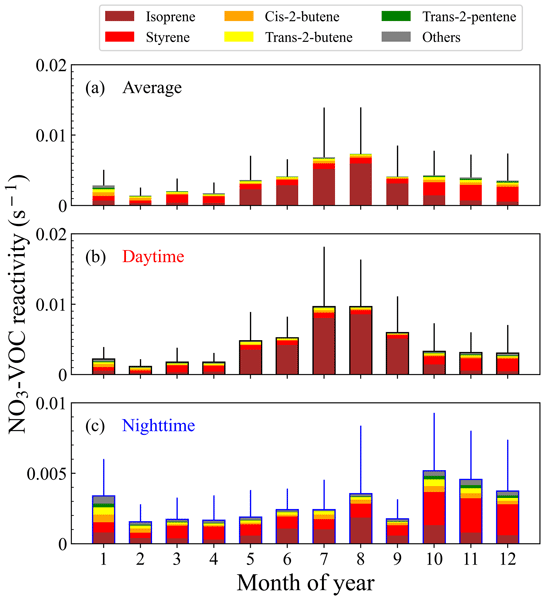
Archibald, S., Staver, A. C., and Levin, S. A.: Evolution of human-driven fire regimes in Africa, Proceedings of the National Academy of Sciences, 109, 847–852, https://doi.org/10.1073/pnas.1118648109, 2012.
Archibald, S., Lehmann, C. E. R., Gómez-Dans, J. L., and Bradstock, R. A.: Defining pyromes and global syndromes of fire regimes, Proceedings of the National Academy of Sciences, 110, 6442–6447, https://doi.org/10.1073/pnas.1211466110, 2013.
Bian, H. and Prather, M. J.: Fast-J2: Accurate Simulation of Stratospheric Photolysis in Global Chemical Models, Journal of Atmospheric Chemistry, 41, 281–296, https://doi.org/10.1023/A:1014980619462, 2002.
Bourgeois, I., Peischl, J., Neuman, J. A., Brown, S. S., Thompson, C. R., Aikin, K. C., Allen, H. M., Angot, H., Apel, E. C., Baublitz, C. B., Brewer, J. F., Campuzano-Jost, P., Commane, R., Crounse, J. D., Daube, B. C., DiGangi, J. P., Diskin, G. S., Emmons, L. K., Fiore, A. M., Gkatzelis, G. I., Hills, A., Hornbrook, R. S., Huey, L. G., Jimenez, J. L., Kim, M., Lacey, F., McKain, K., Murray, L. T., Nault, B. A., Parrish, D. D., Ray, E., Sweeney, C., Tanner, D., Wofsy, S. C., and Ryerson, T. B.: Large contribution of biomass burning emissions to ozone throughout the global remote troposphere, Proceedings of the National Academy of Sciences, 118, e2109628118, https://doi.org/10.1073/pnas.2109628118, 2021.
Bowman, D. M. J. S., Kolden, C. A., Abatzoglou, J. T., Johnston, F. H., van der Werf, G. R., and Flannigan, M.: Vegetation fires in the Anthropocene, Nature Reviews Earth & Environment, 1, 500–515, https://doi.org/10.1038/s43017-020-0085-3, 2020.
Burkholder, J. B., Sander, S. P., Abbatt, J., Barker, J. R., Huie, R. E., Kolb, C. E., Kurylo, M. J., Orkin, V. L., Wilmouth, D. M., and Wine, P. H.: Chemical kinetics and photochemical data for use in atmospheric studies, Evaluation No. 18, Tech. Rep. JPL Publication 15-10, Jet Propulsion Laboratory, Pasadena, CA, https://jpldataeval.jpl.nasa.gov/pdf/JPL_Publication_15-10.pdf (last access: 28 November 2025), 2015.
Carter, T. S., Heald, C. L., Jimenez, J. L., Campuzano-Jost, P., Kondo, Y., Moteki, N., Schwarz, J. P., Wiedinmyer, C., Darmenov, A. S., da Silva, A. M., and Kaiser, J. W.: How emissions uncertainty influences the distribution and radiative impacts of smoke from fires in North America, Atmos. Chem. Phys., 20, 2073–2097, https://doi.org/10.5194/acp-20-2073-2020, 2020.
Cooper, O. R., Schultz, M. G., Schröder, S., Chang, K.-L., Gaudel, A., Benítez, G. C., Cuevas, E., Fröhlich, M., Galbally, I. E., Molloy, S., Kubistin, D., Lu, X., McClure-Begley, A., Nédélec, P., O'Brien, J., Oltmans, S. J., Petropavlovskikh, I., Ries, L., Senik, I., Sjöberg, K., Solberg, S., Spain, G. T., Spangl, W., Steinbacher, M., Tarasick, D., Thouret, V., and Xu, X.: Multi-decadal surface ozone trends at globally distributed remote locations, Elementa: Science of the Anthropocene, 8, https://doi.org/10.1525/elementa.420, 2020.
Copernicus Sentinel-5P: (processed by ESA), TROPOMI Level 2 Tropospheric Ozone products, Version 01, European Space Agency [data set], https://doi.org/10.5270/S5P-8aqg6um, 2019.
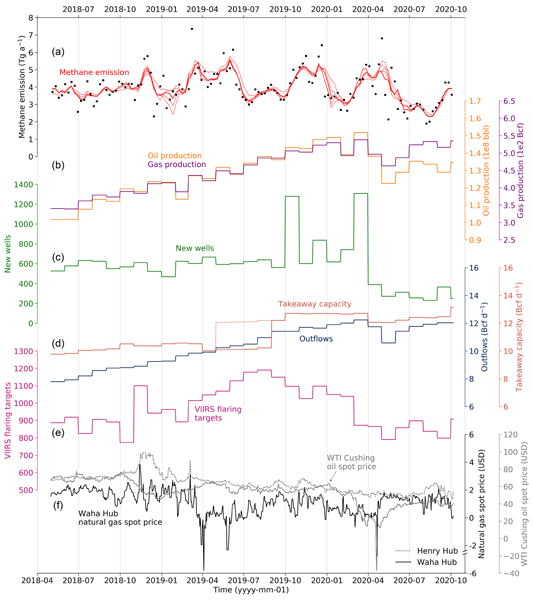
Copernicus Sentinel-5P: (processed by ESA), TROPOMI Level 2 Carbon Monoxide total column products, Version 02, European Space Agency [data set], https://doi.org/10.5270/S5P-bj3nry0, 2021a.
Copernicus Sentinel-5P: (processed by ESA), TROPOMI Level 2 Nitrogen Dioxide total column products, Version 02, European Space Agency [data set], https://doi.org/10.5270/S5P-9bnp8q8, 2021b.
Duncan, B. N., Martin, R. V., Staudt, A. C., Yevich, R., and Logan, J. A.: Interannual and seasonal variability of biomass burning emissions constrained by satellite observations, Journal of Geophysical Research: Atmospheres, 108, ACH 1-1–ACH 1-22, https://doi.org/10.1029/2002JD002378, 2003.
Eastham, S. D., Weisenstein, D. K., and Barrett, S. R. H.: Development and evaluation of the unified tropospheric–stratospheric chemistry extension (UCX) for the global chemistry-transport model GEOS-Chem, Atmospheric Environment, 89, 52–63, https://doi.org/10.1016/j.atmosenv.2014.02.001, 2014.
Edwards, D. P., Emmons, L. K., Gille, J. C., Chu, A., Attié, J.-L., Giglio, L., Wood, S. W., Haywood, J., Deeter, M. N., Massie, S. T., Ziskin, D. C., and Drummond, J. R.: Satellite-observed pollution from Southern Hemisphere biomass burning, Journal of Geophysical Research: Atmospheres, 111, https://doi.org/10.1029/2005JD006655, 2006.
Fiore, A. M., Dentener, F. J., Wild, O., Cuvelier, C., Schultz, M. G., Hess, P., Textor, C., Schulz, M., Doherty, R. M., Horowitz, L. W., MacKenzie, I. A., Sanderson, M. G., Shindell, D. T., Stevenson, D. S., Szopa, S., Van Dingenen, R., Zeng, G., Atherton, C., Bergmann, D., Bey, I., Carmichael, G., Collins, W. J., Duncan, B. N., Faluvegi, G., Folberth, G., Gauss, M., Gong, S., Hauglustaine, D., Holloway, T., Isaksen, I. S. A., Jacob, D. J., Jonson, J. E., Kaminski, J. W., Keating, T. J., Lupu, A., Marmer, E., Montanaro, V., Park, R. J., Pitari, G., Pringle, K. J., Pyle, J. A., Schroeder, S., Vivanco, M. G., Wind, P., Wojcik, G., Wu, S., and Zuber, A.: Multimodel estimates of intercontinental source-receptor relationships for ozone pollution, Journal of Geophysical Research: Atmospheres, 114, https://doi.org/10.1029/2008JD010816, 2009.
Fischer, E. V., Jacob, D. J., Yantosca, R. M., Sulprizio, M. P., Millet, D. B., Mao, J., Paulot, F., Singh, H. B., Roiger, A., Ries, L., Talbot, R. W., Dzepina, K., and Pandey Deolal, S.: Atmospheric peroxyacetyl nitrate (PAN): a global budget and source attribution, Atmos. Chem. Phys., 14, 2679–2698, https://doi.org/10.5194/acp-14-2679-2014, 2014.
Freeborn, P. H., Wooster, M. J., Roberts, G., Malamud, B. D., and Xu, W.: Development of a virtual active fire product for Africa through a synthesis of geostationary and polar orbiting satellite data, Remote Sensing of Environment, 113, 1700–1711, https://doi.org/10.1016/j.rse.2009.03.013, 2009.
Gaudel, A., Cooper, O. R., Ancellet, G., Barret, B., Boynard, A., Burrows, J. P., Clerbaux, C., Coheur, P.-F., Cuesta, J., Cuevas, E., Doniki, S., Dufour, G., Ebojie, F., Foret, G., Garcia, O., Granados-Muñoz, M. J., Hannigan, J. W., Hase, F., Hassler, B., Huang, G., Hurtmans, D., Jaffe, D., Jones, N., Kalabokas, P., Kerridge, B., Kulawik, S., Latter, B., Leblanc, T., Le Flochmoën, E., Lin, W., Liu, J., Liu, X., Mahieu, E., McClure-Begley, A., Neu, J. L., Osman, M., Palm, M., Petetin, H., Petropavlovskikh, I., Querel, R., Rahpoe, N., Rozanov, A., Schultz, M. G., Schwab, J., Siddans, R., Smale, D., Steinbacher, M., Tanimoto, H., Tarasick, D. W., Thouret, V., Thompson, A. M., Trickl, T., Weatherhead, E., Wespes, C., Worden, H. M., Vigouroux, C., Xu, X., Zeng, G., and Ziemke, J.: Tropospheric Ozone Assessment Report: Present-day distribution and trends of tropospheric ozone relevant to climate and global atmospheric chemistry model evaluation, Elementa: Science of the Anthropocene, 6, https://doi.org/10.1525/elementa.291, 2018.
Giglio, L., Boschetti, L., Roy, D. P., Humber, M. L., and Justice, C. O.: The Collection 6 MODIS burned area mapping algorithm and product, Remote Sensing of Environment, 217, 72–85, https://doi.org/10.1016/j.rse.2018.08.005, 2018.
Guenther, A. B., Jiang, X., Heald, C. L., Sakulyanontvittaya, T., Duhl, T., Emmons, L. K., and Wang, X.: The Model of Emissions of Gases and Aerosols from Nature version 2.1 (MEGAN2.1): an extended and updated framework for modeling biogenic emissions, Geosci. Model Dev., 5, 1471–1492, https://doi.org/10.5194/gmd-5-1471-2012, 2012.
Heald, C. L., Jacob, D. J., Palmer, P. I., Evans, M. J., Sachse, G. W., Singh, H. B., and Blake, D. R.: Biomass burning emission inventory with daily resolution: Application to aircraft observations of Asian outflow, Journal of Geophysical Research: Atmospheres, 108, https://doi.org/10.1029/2002JD003082, 2003.
Holanda, B. A., Franco, M. A., Walter, D., Artaxo, P., Carbone, S., Cheng, Y., Chowdhury, S., Ditas, F., Gysel-Beer, M., Klimach, T., Kremper, L. A., Krüger, O. O., Lavric, J. V., Lelieveld, J., Ma, C., Machado, L. A. T., Modini, R. L., Morais, F. G., Pozzer, A., Saturno, J., Su, H., Wendisch, M., Wolff, S., Pöhlker, M. L., Andreae, M. O., Pöschl, U., and Pöhlker, C.: African biomass burning affects aerosol cycling over the Amazon, Communications Earth & Environment, 4, 154, https://doi.org/10.1038/s43247-023-00795-5, 2023.
Holmes, C. D., Bertram, T. H., Confer, K. L., Graham, K. A., Ronan, A. C., Wirks, C. K., and Shah, V.: The Role of Clouds in the Tropospheric NO Cycle: A New Modeling Approach for Cloud Chemistry and Its Global Implications, Geophysical Research Letters, 46, 4980–4990, https://doi.org/10.1029/2019GL081990, 2019.
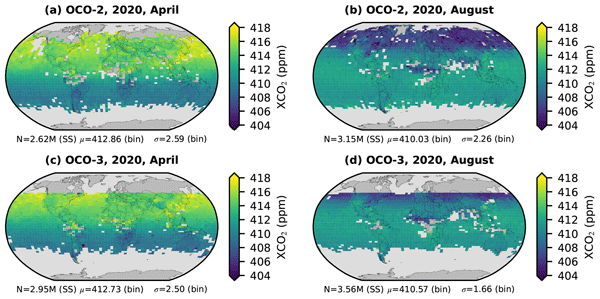
Hua, W., Lou, S., Huang, X., Xue, L., Ding, K., Wang, Z., and Ding, A.: Diagnosing uncertainties in global biomass burning emission inventories and their impact on modeled air pollutants, Atmos. Chem. Phys., 24, 6787–6807, https://doi.org/10.5194/acp-24-6787-2024, 2024.
Hubert, D., Heue, K.-P., Lambert, J.-C., Verhoelst, T., Allaart, M., Compernolle, S., Cullis, P. D., Dehn, A., Félix, C., Johnson, B. J., Keppens, A., Kollonige, D. E., Lerot, C., Loyola, D., Maata, M., Mitro, S., Mohamad, M., Piters, A., Romahn, F., Selkirk, H. B., da Silva, F. R., Stauffer, R. M., Thompson, A. M., Veefkind, J. P., Vömel, H., Witte, J. C., and Zehner, C.: TROPOMI tropospheric ozone column data: geophysical assessment and comparison to ozonesondes, GOME-2B and OMI, Atmos. Meas. Tech., 14, 7405–7433, https://doi.org/10.5194/amt-14-7405-2021, 2021.
Hudman, R. C., Moore, N. E., Mebust, A. K., Martin, R. V., Russell, A. R., Valin, L. C., and Cohen, R. C.: Steps towards a mechanistic model of global soil nitric oxide emissions: implementation and space based-constraints, Atmos. Chem. Phys., 12, 7779–7795, https://doi.org/10.5194/acp-12-7779-2012, 2012.
Ichoku, C.: African Biomass Burning and Its Atmospheric Impacts, Oxford University Press, https://doi.org/10.1093/acrefore/9780190228620.013.523, 2020.
IPCC: Changing State of the Climate System, in: Climate Change 2021 – The Physical Science Basis: Working Group I Contribution to the Sixth Assessment Report of the Intergovernmental Panel on Climate Change, edited by: Intergovernmental Panel on Climate, C., Cambridge University Press, Cambridge, 287–422 pp., https://doi.org/10.1017/9781009157896, 2023.
IUPAC: Task group on atmospheric chemical kinetic data evaluation by International Union of Pure and Applied Chemistry (IUPAC): http://iupac.pole-ether.fr/ (last access: 30 May 2022), 2013.
Jacob, D. J.: Heterogeneous chemistry and tropospheric ozone, Atmospheric Environment, 34, 2131–2159, https://doi.org/10.1016/S1352-2310(99)00462-8, 2000.
Jaffe, D. A. and Wigder, N. L.: Ozone production from wildfires: A critical review, Atmospheric Environment, 51, 1–10, https://doi.org/10.1016/j.atmosenv.2011.11.063, 2012.
Jiang, Y., Zhou, L., and Raghavendra, A.: Observed changes in fire patterns and possible drivers over Central Africa, Environmental Research Letters, 15, 0940b0948, https://doi.org/10.1088/1748-9326/ab9db2, 2020.
Jin, X., Fiore, A., Boersma, K. F., Smedt, I. D., and Valin, L.: Inferring Changes in Summertime Surface Ozone–NOx–VOC Chemistry over U.S. Urban Areas from Two Decades of Satellite and Ground-Based Observations, Environmental Science & Technology, 54, 6518–6529, https://doi.org/10.1021/acs.est.9b07785, 2020.
Jin, Y., Liu, Y., Lu, X., Chen, X., Shen, A., Wang, H., Cui, Y., Xu, Y., Li, S., Liu, J., Zhang, M., Ma, Y., and Fan, Q.: Measurement report: Assessing the impacts of emission uncertainty on aerosol optical properties and radiative forcing from biomass burning in peninsular Southeast Asia, Atmos. Chem. Phys., 24, 367–395, https://doi.org/10.5194/acp-24-367-2024, 2024.
Jourdain, L., Worden, H. M., Worden, J. R., Bowman, K., Li, Q., Eldering, A., Kulawik, S. S., Osterman, G., Boersma, K. F., Fisher, B., Rinsland, C. P., Beer, R., and Gunson, M.: Tropospheric vertical distribution of tropical Atlantic ozone observed by TES during the northern African biomass burning season, Geophysical Research Letters, 34, https://doi.org/10.1029/2006GL028284, 2007.
Kaiser, J. W., Heil, A., Andreae, M. O., Benedetti, A., Chubarova, N., Jones, L., Morcrette, J.-J., Razinger, M., Schultz, M. G., Suttie, M., and van der Werf, G. R.: Biomass burning emissions estimated with a global fire assimilation system based on observed fire radiative power, Biogeosciences, 9, 527–554, https://doi.org/10.5194/bg-9-527-2012, 2012.
Keller, C. A., Long, M. S., Yantosca, R. M., Da Silva, A. M., Pawson, S., and Jacob, D. J.: HEMCO v1.0: a versatile, ESMF-compliant component for calculating emissions in atmospheric models, Geosci. Model Dev., 7, 1409–1417, https://doi.org/10.5194/gmd-7-1409-2014, 2014.
Kelley, D. I., Bistinas, I., Whitley, R., Burton, C., Marthews, T. R., and Dong, N.: How contemporary bioclimatic and human controls change global fire regimes, Nature Climate Change, 9, 690–696, https://doi.org/10.1038/s41558-019-0540-7, 2019.
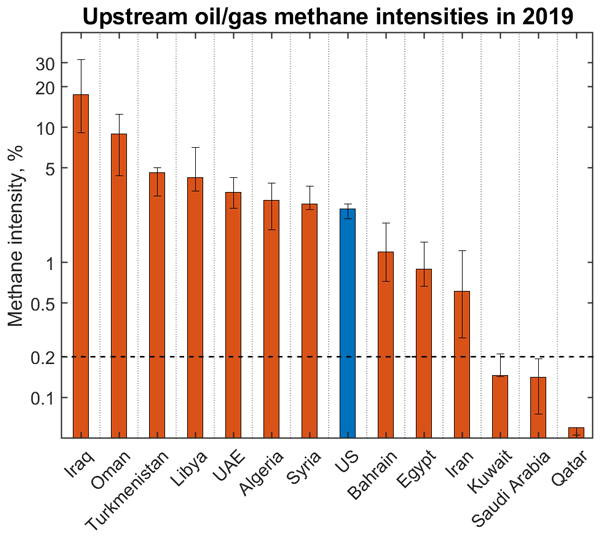
Koppmann, R., von Czapiewski, K., and Reid, J. S.: A review of biomass burning emissions, part I: gaseous emissions of carbon monoxide, methane, volatile organic compounds, and nitrogen containing compounds, Atmos. Chem. Phys. Discuss., 5, 10455–10516, https://doi.org/10.5194/acpd-5-10455-2005, 2005.
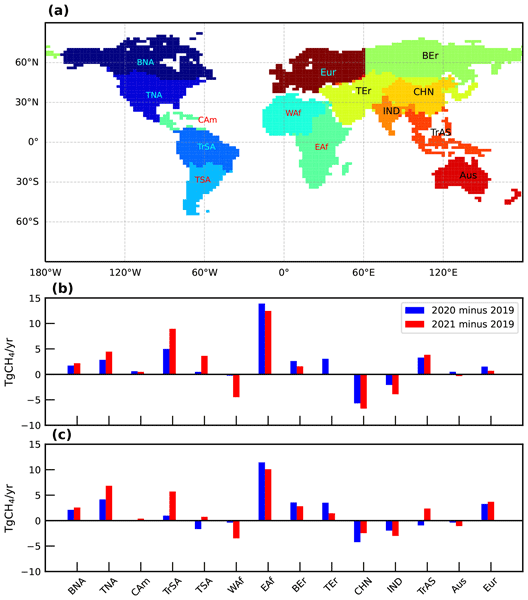
Landgraf, J., aan de Brugh, J., Scheepmaker, R., Borsdorff, T., Hu, H., Houweling, S., Butz, A., Aben, I., and Hasekamp, O.: Carbon monoxide total column retrievals from TROPOMI shortwave infrared measurements, Atmos. Meas. Tech., 9, 4955–4975, https://doi.org/10.5194/amt-9-4955-2016, 2016.
Lavorel, S., Flannigan, M. D., Lambin, E. F., and Scholes, M. C.: Vulnerability of land systems to fire: Interactions among humans, climate, the atmosphere, and ecosystems, Mitigation and Adaptation Strategies for Global Change, 12, 33–53, https://doi.org/10.1007/s11027-006-9046-5, 2007.
Li, F., Zhang, X., Roy, D. P., and Kondragunta, S.: Estimation of biomass-burning emissions by fusing the fire radiative power retrievals from polar-orbiting and geostationary satellites across the conterminous United States, Atmospheric Environment, 211, 274–287, https://doi.org/10.1016/j.atmosenv.2019.05.017, 2019.
Lin, J.-T. and McElroy, M. B.: Impacts of boundary layer mixing on pollutant vertical profiles in the lower troposphere: Implications to satellite remote sensing, Atmospheric Environment, 44, 1726–1739, https://doi.org/10.1016/j.atmosenv.2010.02.009, 2010.
Lin, S.-J. and Rood, R. B.: Multidimensional Flux-Form Semi-Lagrangian Transport Schemes, Monthly Weather Review, 124, 2046–2070, https://doi.org/10.1175/1520-0493(1996)124<2046:MFFSLT>2.0.CO;2, 1996.
Liu, H., Jacob, D. J., Bey, I., and Yantosca, R. M.: Constraints from 210Pb and 7Be on wet deposition and transport in a global three-dimensional chemical tracer model driven by assimilated meteorological fields, Journal of Geophysical Research: Atmospheres, 106, 12109–12128, https://doi.org/10.1029/2000JD900839, 2001.
Lu, K., Guo, S., Tan, Z., Wang, H., Shang, D., Liu, Y., Li, X., Wu, Z., Hu, M., and Zhang, Y.: Exploring atmospheric free-radical chemistry in China: the self-cleansing capacity and the formation of secondary air pollution, National Science Review, 6, 579–594, https://doi.org/10.1093/nsr/nwy073, 2019a.
Lu, X., Zhang, L., and Shen, L.: Meteorology and Climate Influences on Tropospheric Ozone: a Review of Natural Sources, Chemistry, and Transport Patterns, Current Pollution Reports, 5, 238–260, https://doi.org/10.1007/s40726-019-00118-3, 2019b.
Lu, X., Liu, Y., Su, J., Weng, X., Ansari, T., Zhang, Y., He, G., Zhu, Y., Wang, H., Zeng, G., Li, J., He, C., Li, S., Amnuaylojaroen, T., Butler, T., Fan, Q., Fan, S., Forster, G. L., Gao, M., Hu, J., Kanaya, Y., Latif, M. T., Lu, K., Nédélec, P., Nowack, P., Sauvage, B., Xu, X., Zhang, L., Li, K., Koo, J.-H., and Nagashima, T.: Tropospheric ozone trends and attributions over East and Southeast Asia in 1995–2019: an integrated assessment using statistical methods, machine learning models, and multiple chemical transport models, Atmos. Chem. Phys., 25, 7991–8028, https://doi.org/10.5194/acp-25-7991-2025, 2025.
Marufu, L., Dentener, F., Lelieveld, J., Andreae, M. O., and Helas, G.: Photochemistry of the African troposphere: Influence of biomass-burning emissions, Journal of Geophysical Research: Atmospheres, 105, 14513–14530, https://doi.org/10.1029/1999JD901055, 2000.
Marvin, M. R., Palmer, P. I., Yao, F., Latif, M. T., and Khan, M. F.: Uncertainties from biomass burning aerosols in air quality models obscure public health impacts in Southeast Asia, Atmos. Chem. Phys., 24, 3699–3715, https://doi.org/10.5194/acp-24-3699-2024, 2024.
Mota, B. and Wooster, M. J.: A new top-down approach for directly estimating biomass burning emissions and fuel consumption rates and totals from geostationary satellite fire radiative power (FRP), Remote Sensing of Environment, 206, 45–62, https://doi.org/10.1016/j.rse.2017.12.016, 2018.
Mu, M., Randerson, J. T., van der Werf, G. R., Giglio, L., Kasibhatla, P., Morton, D., Collatz, G. J., DeFries, R. S., Hyer, E. J., Prins, E. M., Griffith, D. W. T., Wunch, D., Toon, G. C., Sherlock, V., and Wennberg, P. O.: Daily and 3-hourly variability in global fire emissions and consequences for atmospheric model predictions of carbon monoxide, Journal of Geophysical Research: Atmospheres, 116, https://doi.org/10.1029/2011JD016245, 2011.
Murray, L. T., Jacob, D. J., Logan, J. A., Hudman, R. C., and Koshak, W. J.: Optimized regional and interannual variability of lightning in a global chemical transport model constrained by LIS/OTD satellite data, Journal of Geophysical Research: Atmospheres, 117, https://doi.org/10.1029/2012JD017934, 2012.
Nédélec, P., Blot, R., Boulanger, D., Athier, G., Cousin, J.-M., Gautron, B., Petzold, A., Volz-Thomas, A., and Thouret, V.: Instrumentation on commercial aircraft for monitoring the atmospheric composition on a global scale: the IAGOS system, technical overview of ozone and carbon monoxide measurements, Tellus B: Chemical and Physical Meteorology, 67, 27791, https://doi.org/10.3402/tellusb.v67.27791, 2015.
Nguyen, H. M. and Wooster, M. J.: Advances in the estimation of high Spatio-temporal resolution pan-African top-down biomass burning emissions made using geostationary fire radiative power (FRP) and MAIAC aerosol optical depth (AOD) data, Remote Sensing of Environment, 248, 111971, https://doi.org/10.1016/j.rse.2020.111971, 2020.
Nguyen, H. M., He, J., and Wooster, M. J.: Biomass burning CO, PM and fuel consumption per unit burned area estimates derived across Africa using geostationary SEVIRI fire radiative power and Sentinel-5P CO data, Atmos. Chem. Phys., 23, 2089–2118, https://doi.org/10.5194/acp-23-2089-2023, 2023.
O'Rourke, P. R., Smith, S. J., Mott, A., Ahsan, H., McDuffie, E. E., Crippa, M., Klimont, S., McDonald, B., Z., W., Nicholson, M. B., Feng, L., and Hoesly, R. M.: CEDS v-2021-04-21 Emission Data 1975-2019 (Version Apr-21-2021), https://data.pnnl.gov/dataset/CEDS-4-21-21 (last access: 28 November 2025), 2021.
Pan, X., Ichoku, C., Chin, M., Bian, H., Darmenov, A., Colarco, P., Ellison, L., Kucsera, T., da Silva, A., Wang, J., Oda, T., and Cui, G.: Six global biomass burning emission datasets: intercomparison and application in one global aerosol model, Atmos. Chem. Phys., 20, 969–994, https://doi.org/10.5194/acp-20-969-2020, 2020.
Parrington, M., Palmer, P. I., Lewis, A. C., Lee, J. D., Rickard, A. R., Di Carlo, P., Taylor, J. W., Hopkins, J. R., Punjabi, S., Oram, D. E., Forster, G., Aruffo, E., Moller, S. J., Bauguitte, S. J.-B., Allan, J. D., Coe, H., and Leigh, R. J.: Ozone photochemistry in boreal biomass burning plumes, Atmos. Chem. Phys., 13, 7321–7341, https://doi.org/10.5194/acp-13-7321-2013, 2013.
Petetin, H., Jeoffrion, M., Sauvage, B., Athier, G., Blot, R., Boulanger, D., Clark, H., Cousin, J.-M., Gheusi, F., Nedelec, P., Steinbacher, M., and Thouret, V.: Representativeness of the IAGOS airborne measurements in the lower troposphere, Elementa: Science of the Anthropocene, 6, https://doi.org/10.1525/elementa.280, 2018.
Petrenko, M., Kahn, R., Chin, M., and Limbacher, J.: Refined Use of Satellite Aerosol Optical Depth Snapshots to Constrain Biomass Burning Emissions in the GOCART Model, Journal of Geophysical Research: Atmospheres, 122, 10983–911004, https://doi.org/10.1002/2017JD026693, 2017.
Porter, W. C. and Heald, C. L.: The mechanisms and meteorological drivers of the summertime ozone–temperature relationship, Atmos. Chem. Phys., 19, 13367–13381, https://doi.org/10.5194/acp-19-13367-2019, 2019.
Pound, R. J., Sherwen, T., Helmig, D., Carpenter, L. J., and Evans, M. J.: Influences of oceanic ozone deposition on tropospheric photochemistry, Atmos. Chem. Phys., 20, 4227–4239, https://doi.org/10.5194/acp-20-4227-2020, 2020.
Randerson, J. T., Van Der Werf, G. R., Giglio, L., Collatz, G. J., and Kasibhatla, P. S.: Global Fire Emissions Database, Version 4.1 (GFEDv4), in: ORNL Distributed Active Archive Center, https://doi.org/10.3334/ornldaac/1293, 2017.
Real, E., Orlandi, E., Law, K. S., Fierli, F., Josset, D., Cairo, F., Schlager, H., Borrmann, S., Kunkel, D., Volk, C. M., McQuaid, J. B., Stewart, D. J., Lee, J., Lewis, A. C., Hopkins, J. R., Ravegnani, F., Ulanovski, A., and Liousse, C.: Cross-hemispheric transport of central African biomass burning pollutants: implications for downwind ozone production, Atmos. Chem. Phys., 10, 3027–3046, https://doi.org/10.5194/acp-10-3027-2010, 2010.
Reddington, C. L., Spracklen, D. V., Artaxo, P., Ridley, D. A., Rizzo, L. V., and Arana, A.: Analysis of particulate emissions from tropical biomass burning using a global aerosol model and long-term surface observations, Atmos. Chem. Phys., 16, 11083–11106, https://doi.org/10.5194/acp-16-11083-2016, 2016.
Reid, J. S., Koppmann, R., Eck, T. F., and Eleuterio, D. P.: A review of biomass burning emissions part II: intensive physical properties of biomass burning particles, Atmos. Chem. Phys., 5, 799–825, https://doi.org/10.5194/acp-5-799-2005, 2005.
Reid, J. S., Hyer, E. J., Prins, E. M., Westphal, D. L., Zhang, J., Wang, J., Christopher, S. A., Curtis, C. A., Schmidt, C. C., Eleuterio, D. P., Richardson, K. A., and Hoffman, J. P.: Global Monitoring and Forecasting of Biomass-Burning Smoke: Description of and Lessons From the Fire Locating and Modeling of Burning Emissions (FLAMBE) Program, IEEE Journal of Selected Topics in Applied Earth Observations and Remote Sensing, 2, 144–162, https://doi.org/10.1109/JSTARS.2009.2027443, 2009.
Rémy, S., Veira, A., Paugam, R., Sofiev, M., Kaiser, J. W., Marenco, F., Burton, S. P., Benedetti, A., Engelen, R. J., Ferrare, R., and Hair, J. W.: Two global data sets of daily fire emission injection heights since 2003, Atmos. Chem. Phys., 17, 2921–2942, https://doi.org/10.5194/acp-17-2921-2017, 2017.
Seiler, W., and Crutzen, P. J.: Estimates of gross and net fluxes of carbon between the biosphere and the atmosphere from biomass burning, Climatic Change, 2, 207–247, https://doi.org/10.1007/BF00137988, 1980.
Sinha, P., Jaeglé, L., Hobbs, P. V., and Liang, Q.: Transport of biomass burning emissions from southern Africa, Journal of Geophysical Research: Atmospheres, 109, https://doi.org/10.1029/2004JD005044, 2004.
Staufer, J., Staehelin, J., Stübi, R., Peter, T., Tummon, F., and Thouret, V.: Trajectory matching of ozonesondes and MOZAIC measurements in the UTLS – Part 1: Method description and application at Payerne, Switzerland, Atmos. Meas. Tech., 6, 3393–3406, https://doi.org/10.5194/amt-6-3393-2013, 2013.
Staufer, J., Staehelin, J., Stübi, R., Peter, T., Tummon, F., and Thouret, V.: Trajectory matching of ozonesondes and MOZAIC measurements in the UTLS – Part 2: Application to the global ozonesonde network, Atmos. Meas. Tech., 7, 241–266, https://doi.org/10.5194/amt-7-241-2014, 2014.
Stauffer, R. M., Thompson, A. M., Kollonige, D. E., Tarasick, D. W., Van Malderen, R., Smit, H. G. J., Vömel, H., Morris, G. A., Johnson, B. J., Cullis, P. D., Stübi, R., Davies, J., and Yan, M. M.: An Examination of the Recent Stability of Ozonesonde Global Network Data, Earth and Space Science, 9, e2022EA002459, https://doi.org/10.1029/2022EA002459, 2022.
Sterling, C. W., Johnson, B. J., Oltmans, S. J., Smit, H. G. J., Jordan, A. F., Cullis, P. D., Hall, E. G., Thompson, A. M., and Witte, J. C.: Homogenizing and estimating the uncertainty in NOAA's long-term vertical ozone profile records measured with the electrochemical concentration cell ozonesonde, Atmos. Meas. Tech., 11, 3661–3687, https://doi.org/10.5194/amt-11-3661-2018, 2018.
Sun, S., Palmer, P. I., Siddans, R., Kerridge, B. J., Ventress, L., Edtbauer, A., Ringsdorf, A., Pfannerstill, E. Y., and Williams, J.: Seasonal isoprene emission estimates over tropical South America inferred from satellite observations of isoprene, EGUsphere [preprint], https://doi.org/10.5194/egusphere-2025-778, 2025.
Swap, R. J., Annegarn, H. J., Suttles, J. T., King, M. D., Platnick, S., Privette, J. L., and Scholes, R. J.: Africa burning: A thematic analysis of the Southern African Regional Science Initiative (SAFARI 2000), Journal of Geophysical Research: Atmospheres, 108, https://doi.org/10.1029/2003JD003747, 2003.
Tang, W., Emmons, L. K., Buchholz, R. R., Wiedinmyer, C., Schwantes, R. H., He, C., Kumar, R., Pfister, G. G., Worden, H. M., Hornbrook, R. S., Apel, E. C., Tilmes, S., Gaubert, B., Martinez-Alonso, S.-E., Lacey, F., Holmes, C. D., Diskin, G. S., Bourgeois, I., Peischl, J., Ryerson, T. B., Hair, J. W., Weinheimer, A. J., Montzka, D. D., Tyndall, G. S., and Campos, T. L.: Effects of Fire Diurnal Variation and Plume Rise on U.S. Air Quality During FIREX-AQ and WE-CAN Based on the Multi-Scale Infrastructure for Chemistry and Aerosols (MUSICAv0), Journal of Geophysical Research: Atmospheres, 127, e2022JD036650, https://doi.org/10.1029/2022JD036650, 2022.
Thompson, A. M., Witte, J. C., Sterling, C., Jordan, A., Johnson, B. J., Oltmans, S. J., Fujiwara, M., Vömel, H., Allaart, M., Piters, A., Coetzee, G. J. R., Posny, F., Corrales, E., Diaz, J. A., Félix, C., Komala, N., Lai, N., Ahn Nguyen, H. T., Maata, M., Mani, F., Zainal, Z., Ogino, S.-y., Paredes, F., Penha, T. L. B., da Silva, F. R., Sallons-Mitro, S., Selkirk, H. B., Schmidlin, F. J., Stübi, R., and Thiongo, K.: First Reprocessing of Southern Hemisphere Additional Ozonesondes (SHADOZ) Ozone Profiles (1998–2016): 2. Comparisons With Satellites and Ground-Based Instruments, Journal of Geophysical Research: Atmospheres, 122, 13000–013025, https://doi.org/10.1002/2017JD027406, 2017.
Thompson, A. M., Stauffer, R. M., Wargan, K., Witte, J. C., Kollonige, D. E., and Ziemke, J. R.: Regional and Seasonal Trends in Tropical Ozone From SHADOZ Profiles: Reference for Models and Satellite Products, Journal of Geophysical Research: Atmospheres, 126, e2021JD034691, https://doi.org/10.1029/2021JD034691, 2021.
Thouret, V., Marenco, A., Logan, J. A., Nédélec, P., and Grouhel, C.: Comparisons of ozone measurements from the MOZAIC airborne program and the ozone sounding network at eight locations, Journal of Geophysical Research: Atmospheres, 103, 25695–25720, https://doi.org/10.1029/98JD02243, 1998.
Travis, K. R., Jacob, D. J., Fisher, J. A., Kim, P. S., Marais, E. A., Zhu, L., Yu, K., Miller, C. C., Yantosca, R. M., Sulprizio, M. P., Thompson, A. M., Wennberg, P. O., Crounse, J. D., St. Clair, J. M., Cohen, R. C., Laughner, J. L., Dibb, J. E., Hall, S. R., Ullmann, K., Wolfe, G. M., Pollack, I. B., Peischl, J., Neuman, J. A., and Zhou, X.: Why do models overestimate surface ozone in the Southeast United States?, Atmos. Chem. Phys., 16, 13561–13577, https://doi.org/10.5194/acp-16-13561-2016, 2016.
Trollope, W. S. W., Trollope, L. A., Potgieter, A. L. F., and Zambatis, N.: SAFARI-92 characterization of biomass and fire behavior in the small experimental burns in the Kruger National Park, Journal of Geophysical Research: Atmospheres, 101, 23531–23539, https://doi.org/10.1029/96JD00691, 1996.
Valks, P., Hao, N., Gimeno Garcia, S., Loyola, D., Dameris, M., Jöckel, P., and Delcloo, A.: Tropical tropospheric ozone column retrieval for GOME-2, Atmos. Meas. Tech., 7, 2513–2530, https://doi.org/10.5194/amt-7-2513-2014, 2014.
Valks, P. J. M., Koelemeijer, R. B. A., van Weele, M., van Velthoven, P., Fortuin, J. P. F., and Kelder, H.: Variability in tropical tropospheric ozone: Analysis with Global Ozone Monitoring Experiment observations and a global model, Journal of Geophysical Research: Atmospheres, 108, https://doi.org/10.1029/2002JD002894, 2003.
van der Werf, G. R., Randerson, J. T., Giglio, L., van Leeuwen, T. T., Chen, Y., Rogers, B. M., Mu, M., van Marle, M. J. E., Morton, D. C., Collatz, G. J., Yokelson, R. J., and Kasibhatla, P. S.: Global fire emissions estimates during 1997–2016, Earth Syst. Sci. Data, 9, 697–720, https://doi.org/10.5194/essd-9-697-2017, 2017.
van Geffen, J., Boersma, K. F., Eskes, H., Sneep, M., ter Linden, M., Zara, M., and Veefkind, J. P.: S5P TROPOMI NO2 slant column retrieval: method, stability, uncertainties and comparisons with OMI, Atmos. Meas. Tech., 13, 1315–1335, https://doi.org/10.5194/amt-13-1315-2020, 2020.
Veefkind, J. P., Aben, I., McMullan, K., Förster, H., de Vries, J., Otter, G., Claas, J., Eskes, H. J., de Haan, J. F., Kleipool, Q., van Weele, M., Hasekamp, O., Hoogeveen, R., Landgraf, J., Snel, R., Tol, P., Ingmann, P., Voors, R., Kruizinga, B., Vink, R., Visser, H., and Levelt, P. F.: TROPOMI on the ESA Sentinel-5 Precursor: A GMES mission for global observations of the atmospheric composition for climate, air quality and ozone layer applications, Remote Sensing of Environment, 120, 70–83, https://doi.org/10.1016/j.rse.2011.09.027, 2012.
Vidot, J., Landgraf, J., Hasekamp, O. P., Butz, A., Galli, A., Tol, P., and Aben, I.: Carbon monoxide from shortwave infrared reflectance measurements: A new retrieval approach for clear sky and partially cloudy atmospheres, Remote Sensing of Environment, 120, 255–266, https://doi.org/10.1016/j.rse.2011.09.032, 2012.
von Danckelman, A.: Cloud conditions in South-West Africa, Meteorologische Zeitschrift, 18, 341–348, https://doi.org/10.1127/0941-2948/2009/355, 2009.
Walker, X. J., Baltzer, J. L., Cumming, S. G., Day, N. J., Ebert, C., Goetz, S., Johnstone, J. F., Potter, S., Rogers, B. M., Schuur, E. A. G., Turetsky, M. R., and Mack, M. C.: Increasing wildfires threaten historic carbon sink of boreal forest soils, Nature, 572, 520–523, https://doi.org/10.1038/s41586-019-1474-y, 2019.
Wang, H., Lu, X., Jacob, D. J., Cooper, O. R., Chang, K.-L., Li, K., Gao, M., Liu, Y., Sheng, B., Wu, K., Wu, T., Zhang, J., Sauvage, B., Nédélec, P., Blot, R., and Fan, S.: Global tropospheric ozone trends, attributions, and radiative impacts in 1995–2017: an integrated analysis using aircraft (IAGOS) observations, ozonesonde, and multi-decadal chemical model simulations, Atmos. Chem. Phys., 22, 13753–13782, https://doi.org/10.5194/acp-22-13753-2022, 2022.
Wang, H., Wang, H., Lu, X., Lu, K., Zhang, L., Tham, Y. J., Shi, Z., Aikin, K., Fan, S., Brown, S. S., and Zhang, Y.: Increased night-time oxidation over China despite widespread decrease across the globe, Nature Geoscience, 16, 217–223, https://doi.org/10.1038/s41561-022-01122-x, 2023.
Wang, H., Lu, X., Palmer, P. I., Zhang, L., Lu, K., Li, K., Nagashima, T., Koo, J.-H., Tanimoto, H., Wang, H., Gao, M., He, C., Wu, K., Fan, S., and Zhang, Y.: Deciphering decadal urban ozone trends from historical records since 1980, National Science Review, 11, https://doi.org/10.1093/nsr/nwae369, 2024.
Wang, Y., Li, K., Chen, X., Yang, Z., Tang, M., Campos, P. M. D., Yang, Y., Yue, X., and Liao, H.: Revisiting the high tropospheric ozone over southern Africa: role of biomass burning and anthropogenic emissions, Atmos. Chem. Phys., 25, 4455–4475, https://doi.org/10.5194/acp-25-4455-2025, 2025.
Wesely, M. L.: Parameterization of surface resistances to gaseous dry deposition in regional-scale numerical models, Atmospheric Environment (1967), 23, 1293–1304, https://doi.org/10.1016/0004-6981(89)90153-4, 1989.
Winkler, H., Formenti, P., Esterhuyse, D. J., Swap, R. J., Helas, G., Annegarn, H. J., and Andreae, M. O.: Evidence for large-scale transport of biomass burning aerosols from sunphotometry at a remote South African site, Atmospheric Environment, 42, 5569–5578, https://doi.org/10.1016/j.atmosenv.2008.03.031, 2008.
Witte, J. C., Thompson, A. M., Smit, H. G. J., Fujiwara, M., Posny, F., Coetzee, G. J. R., Northam, E. T., Johnson, B. J., Sterling, C. W., Mohamad, M., Ogino, S.-Y., Jordan, A., and da Silva, F. R.: First reprocessing of Southern Hemisphere ADditional OZonesondes (SHADOZ) profile records (1998–2015): 1. Methodology and evaluation, Journal of Geophysical Research: Atmospheres, 122, 6611–6636, https://doi.org/10.1002/2016JD026403, 2017.
Witte, J. C., Thompson, A. M., Smit, H. G. J., Vömel, H., Posny, F., and Stübi, R.: First Reprocessing of Southern Hemisphere ADditional OZonesondes Profile Records: 3. Uncertainty in Ozone Profile and Total Column, Journal of Geophysical Research: Atmospheres, 123, 3243–3268, https://doi.org/10.1002/2017JD027791, 2018.
Wooster, M. J., Roberts, G., Freeborn, P. H., Xu, W., Govaerts, Y., Beeby, R., He, J., Lattanzio, A., Fisher, D., and Mullen, R.: LSA SAF Meteosat FRP products – Part 1: Algorithms, product contents, and analysis, Atmos. Chem. Phys., 15, 13217–13239, https://doi.org/10.5194/acp-15-13217-2015, 2015.
Wooster, M. J., Roberts, G. J., Giglio, L., Roy, D. P., Freeborn, P. H., Boschetti, L., Justice, C., Ichoku, C., Schroeder, W., Davies, D., Smith, A. M. S., Setzer, A., Csiszar, I., Strydom, T., Frost, P., Zhang, T., Xu, W., de Jong, M. C., Johnston, J. M., Ellison, L., Vadrevu, K., Sparks, A. M., Nguyen, H., McCarty, J., Tanpipat, V., Schmidt, C., and San-Miguel-Ayanz, J.: Satellite remote sensing of active fires: History and current status, applications and future requirements, Remote Sensing of Environment, 267, 112694, https://doi.org/10.1016/j.rse.2021.112694, 2021.
WRAP: Western Regional Air Partnership, Development of 2000–04 Baseline Period and 2018 Projection Year Emission Inventories, Prepared by Air Sciences, Inc. Project No. 178-8, 2005.
Xu, L., Crounse, J. D., Vasquez, K. T., Allen, H., Wennberg, P. O., Bourgeois, I., Brown, S. S., Campuzano-Jost, P., Coggon, M. M., Crawford, J. H., DiGangi, J. P., Diskin, G. S., Fried, A., Gargulinski, E. M., Gilman, J. B., Gkatzelis, G. I., Guo, H., Hair, J. W., Hall, S. R., Halliday, H. A., Hanisco, T. F., Hannun, R. A., Holmes, C. D., Huey, L. G., Jimenez, J. L., Lamplugh, A., Lee, Y. R., Liao, J., Lindaas, J., Neuman, J. A., Nowak, J. B., Peischl, J., Peterson, D. A., Piel, F., Richter, D., Rickly, P. S., Robinson, M. A., Rollins, A. W., Ryerson, T. B., Sekimoto, K., Selimovic, V., Shingler, T., Soja, A. J., Clair, J. M. S., Tanner, D. J., Ullmann, K., Veres, P. R., Walega, J., Warneke, C., Washenfelder, R. A., Weibring, P., Wisthaler, A., Wolfe, G. M., Womack, C. C., and Yokelson, R. J.: Ozone chemistry in western U.S. wildfire plumes, Science Advances, 7, eabl3648, https://doi.org/10.1126/sciadv.abl3648, 2021.
Xu, R., Ye, T., Yue, X., Yang, Z., Yu, W., Zhang, Y., Bell, M. L., Morawska, L., Yu, P., Zhang, Y., Wu, Y., Liu, Y., Johnston, F., Lei, Y., Abramson, M. J., Guo, Y., and Li, S.: Global population exposure to landscape fire air pollution from 2000 to 2019, Nature, 621, 521–529, https://doi.org/10.1038/s41586-023-06398-6, 2023.
Xu, W. and Wooster, M. J.: Sentinel-3 SLSTR active fire (AF) detection and FRP daytime product - Algorithm description and global intercomparison to MODIS, VIIRS and landsat AF data, Science of Remote Sensing, 7, 100087, https://doi.org/10.1016/j.srs.2023.100087, 2023.
Zhang, L., Gong, S., Padro, J., and Barrie, L.: A size-segregated particle dry deposition scheme for an atmospheric aerosol module, Atmospheric Environment, 35, 549–560, https://doi.org/10.1016/S1352-2310(00)00326-5, 2001.
Zhang, L., Jacob, D. J., Liu, X., Logan, J. A., Chance, K., Eldering, A., and Bojkov, B. R.: Intercomparison methods for satellite measurements of atmospheric composition: application to tropospheric ozone from TES and OMI, Atmos. Chem. Phys., 10, 4725–4739, https://doi.org/10.5194/acp-10-4725-2010, 2010.
Zhu, L., Val Martin, M., Gatti, L. V., Kahn, R., Hecobian, A., and Fischer, E. V.: Development and implementation of a new biomass burning emissions injection height scheme (BBEIH v1.0) for the GEOS-Chem model (v9-01-01), Geosci. Model Dev., 11, 4103–4116, https://doi.org/10.5194/gmd-11-4103-2018, 2018.
Ziemke, J. R., Chandra, S., Duncan, B. N., Froidevaux, L., Bhartia, P. K., Levelt, P. F., and Waters, J. W.: Tropospheric ozone determined from Aura OMI and MLS: Evaluation of measurements and comparison with the Global Modeling Initiative's Chemical Transport Model, Journal of Geophysical Research: Atmospheres, 111, https://doi.org/10.1029/2006JD007089, 2006.
Ziemke, J. R., Chandra, S., Duncan, B. N., Schoeberl, M. R., Torres, O., Damon, M. R., and Bhartia, P. K.: Recent biomass burning in the tropics and related changes in tropospheric ozone, Geophysical Research Letters, 36, L15819, https://doi.org/10.1029/2009GL039303, 2009.
Ziemke, J. R., Oman, L. D., Strode, S. A., Douglass, A. R., Olsen, M. A., McPeters, R. D., Bhartia, P. K., Froidevaux, L., Labow, G. J., Witte, J. C., Thompson, A. M., Haffner, D. P., Kramarova, N. A., Frith, S. M., Huang, L.-K., Jaross, G. R., Seftor, C. J., Deland, M. T., and Taylor, S. L.: Trends in global tropospheric ozone inferred from a composite record of TOMS/OMI/MLS/OMPS satellite measurements and the MERRA-2 GMI simulation , Atmos. Chem. Phys., 19, 3257–3269, https://doi.org/10.5194/acp-19-3257-2019, 2019.
Short summary
We examine the impact of diurnally varying African biomass burning (BB) emissions on tropospheric ozone using GEOS-Chem simulations with a high-resolution satellite-derived emission inventory. Compared to coarser temporal resolutions, incorporating diurnal variations leads to significant changes in surface ozone and atmospheric oxidation capacity. Our findings highlight the importance of accurately representing BB emission timing in chemical transport models to improve ozone predictions.
We examine the impact of diurnally varying African biomass burning (BB) emissions on...
Altmetrics
Final-revised paper
Preprint