Articles | Volume 24, issue 10
https://doi.org/10.5194/acp-24-6375-2024
© Author(s) 2024. This work is distributed under
the Creative Commons Attribution 4.0 License.
https://doi.org/10.5194/acp-24-6375-2024
© Author(s) 2024. This work is distributed under
the Creative Commons Attribution 4.0 License.
Direct observational evidence from space of the effect of CO2 increase on longwave spectral radiances: the unique role of high-spectral-resolution measurements

João Teixeira
CORRESPONDING AUTHOR
Jet Propulsion Laboratory, California Institute of Technology, Pasadena, California 91109, USA
R. Chris Wilson
Jet Propulsion Laboratory, California Institute of Technology, Pasadena, California 91109, USA
Heidar Th. Thrastarson
Jet Propulsion Laboratory, California Institute of Technology, Pasadena, California 91109, USA
Related authors
Siyu Zhao, Rong Fu, Kelly Núñez Ocasio, Robert Nystrom, Cenlin He, Jiaying Zhang, Xianan Jiang, and Joao Teixeira
Atmos. Chem. Phys., 25, 17301–17318, https://doi.org/10.5194/acp-25-17301-2025, https://doi.org/10.5194/acp-25-17301-2025, 2025
Short summary
Short summary
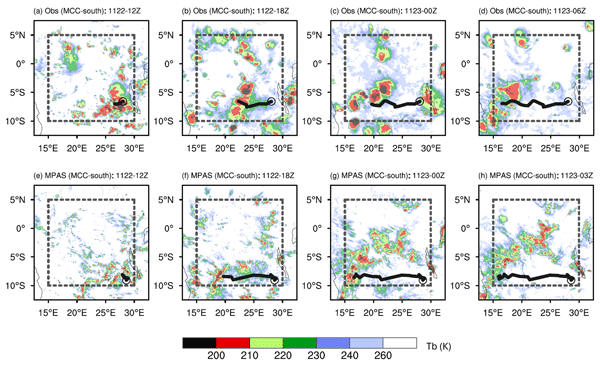
The Congo Basin has frequent organized thunderstorms producing much of the region’s rainfall, yet their development remains unclear due to limited data. Using a high-resolution global model, it shows the long-lasting storm is significantly linked to and supported by vertical wind shear up to 400 km ahead, with the mid-level jet stream playing a role in maintaining the shear. The findings highlight the value of such model in data-sparse regions for examining storms and their impacts.
Tim Trent, Marc Schröder, Shu-Peng Ho, Steffen Beirle, Ralf Bennartz, Eva Borbas, Christian Borger, Helene Brogniez, Xavier Calbet, Elisa Castelli, Gilbert P. Compo, Wesley Ebisuzaki, Ulrike Falk, Frank Fell, John Forsythe, Hans Hersbach, Misako Kachi, Shinya Kobayashi, Robert E. Kursinski, Diego Loyola, Zhengzao Luo, Johannes K. Nielsen, Enzo Papandrea, Laurence Picon, Rene Preusker, Anthony Reale, Lei Shi, Laura Slivinski, Joao Teixeira, Tom Vonder Haar, and Thomas Wagner
Atmos. Chem. Phys., 24, 9667–9695, https://doi.org/10.5194/acp-24-9667-2024, https://doi.org/10.5194/acp-24-9667-2024, 2024
Short summary
Short summary
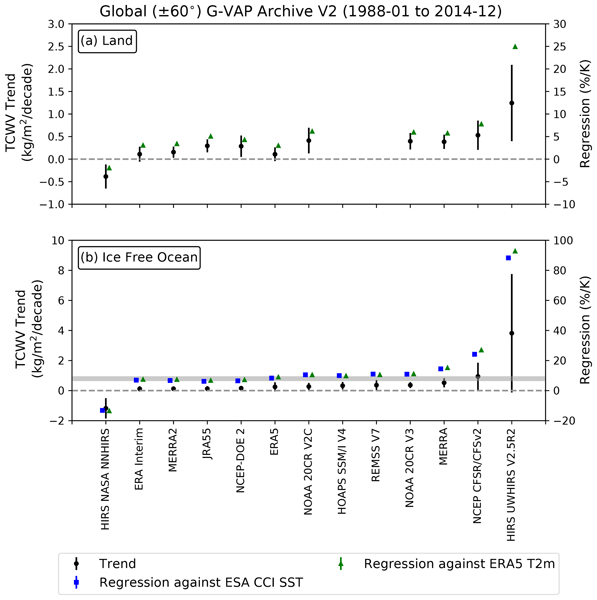
In a warmer future, water vapour will spend more time in the atmosphere, changing global rainfall patterns. In this study, we analysed the performance of 28 water vapour records between 1988 and 2014. We find sensitivity to surface warming generally outside expected ranges, attributed to breakpoints in individual record trends and differing representations of climate variability. The implication is that longer records are required for high confidence in assessing climate trends.
Maria J. Chinita, Mikael Witte, Marcin J. Kurowski, Joao Teixeira, Kay Suselj, Georgios Matheou, and Peter Bogenschutz
Geosci. Model Dev., 16, 1909–1924, https://doi.org/10.5194/gmd-16-1909-2023, https://doi.org/10.5194/gmd-16-1909-2023, 2023
Short summary
Short summary
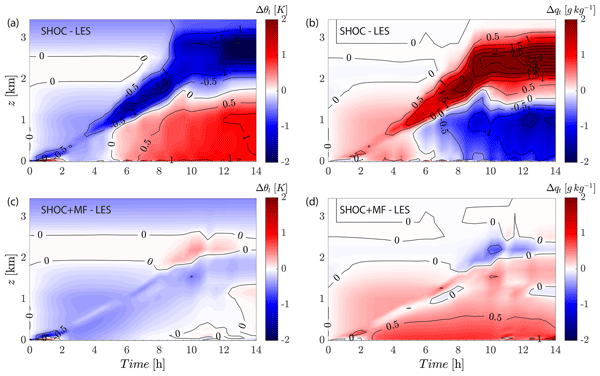
Low clouds are one of the largest sources of uncertainty in climate prediction. In this paper, we introduce the first version of the unified turbulence and shallow convection parameterization named SHOC+MF developed to improve the representation of shallow cumulus clouds in the Simple Cloud-Resolving E3SM Atmosphere Model (SCREAM). Here, we also show promising preliminary results in a single-column model framework for two benchmark cases of shallow cumulus convection.
Siyu Zhao, Rong Fu, Kelly Núñez Ocasio, Robert Nystrom, Cenlin He, Jiaying Zhang, Xianan Jiang, and Joao Teixeira
Atmos. Chem. Phys., 25, 17301–17318, https://doi.org/10.5194/acp-25-17301-2025, https://doi.org/10.5194/acp-25-17301-2025, 2025
Short summary
Short summary
The Congo Basin has frequent organized thunderstorms producing much of the region’s rainfall, yet their development remains unclear due to limited data. Using a high-resolution global model, it shows the long-lasting storm is significantly linked to and supported by vertical wind shear up to 400 km ahead, with the mid-level jet stream playing a role in maintaining the shear. The findings highlight the value of such model in data-sparse regions for examining storms and their impacts.
Tim Trent, Marc Schröder, Shu-Peng Ho, Steffen Beirle, Ralf Bennartz, Eva Borbas, Christian Borger, Helene Brogniez, Xavier Calbet, Elisa Castelli, Gilbert P. Compo, Wesley Ebisuzaki, Ulrike Falk, Frank Fell, John Forsythe, Hans Hersbach, Misako Kachi, Shinya Kobayashi, Robert E. Kursinski, Diego Loyola, Zhengzao Luo, Johannes K. Nielsen, Enzo Papandrea, Laurence Picon, Rene Preusker, Anthony Reale, Lei Shi, Laura Slivinski, Joao Teixeira, Tom Vonder Haar, and Thomas Wagner
Atmos. Chem. Phys., 24, 9667–9695, https://doi.org/10.5194/acp-24-9667-2024, https://doi.org/10.5194/acp-24-9667-2024, 2024
Short summary
Short summary
In a warmer future, water vapour will spend more time in the atmosphere, changing global rainfall patterns. In this study, we analysed the performance of 28 water vapour records between 1988 and 2014. We find sensitivity to surface warming generally outside expected ranges, attributed to breakpoints in individual record trends and differing representations of climate variability. The implication is that longer records are required for high confidence in assessing climate trends.
Maria J. Chinita, Mikael Witte, Marcin J. Kurowski, Joao Teixeira, Kay Suselj, Georgios Matheou, and Peter Bogenschutz
Geosci. Model Dev., 16, 1909–1924, https://doi.org/10.5194/gmd-16-1909-2023, https://doi.org/10.5194/gmd-16-1909-2023, 2023
Short summary
Short summary
Low clouds are one of the largest sources of uncertainty in climate prediction. In this paper, we introduce the first version of the unified turbulence and shallow convection parameterization named SHOC+MF developed to improve the representation of shallow cumulus clouds in the Simple Cloud-Resolving E3SM Atmosphere Model (SCREAM). Here, we also show promising preliminary results in a single-column model framework for two benchmark cases of shallow cumulus convection.
Cited articles
AIRS project: AIRS/Aqua L1B Infrared (IR) geolocated and calibrated radiances V005, Goddard Earth Sciences Data and Information Services Center (GES DISC) [data set], Greenbelt, MD, USA, https://doi.org/10.5067/YZEXEVN4JGGJ, 2007.
AIRS Science Team and Teixeira, J.: AIRS/Aqua L2 Standard Physical Retrieval (AIRS+AMSU) V006, Goddard Earth Sciences Data and Information Services Center (GES DISC), Greenbelt, MD, USA, https://doi.org/10.5067/Aqua/AIRS/DATA201, 2013.
Archer, D. and Pierrehumbert, R. (Eds.): The warming papers: The scientific foundation for the climate change forecast, John Wiley & Sons, New York, USA, 432 pp., ISBN: 978-1-405-19616-1, 2011.
Aumann, H. H., Chahine, M. T., Gautier, C., Goldberg, M. D., Kalnay, E., McMillin, L. M., Revercomb, H., Rosenkranz, P. W., Smith, W. L., Staelin, D. H., Strow, L. L., and Susskind, J.: AIRS/AMSU/HSB on the Aqua mission: design, science objectives, data products, and processing systems, IEEE T. Geosci. Remote, 41, 253–264, https://doi.org/10.1109/TGRS.2002.808356, 2003.
Aumann, H. H., Broberg, S., Elliott, D., Gaiser, S., and Gregorich, D.: Three years of atmospheric infrared sounder radiometric calibration validation using sea surface temperatures, J. Geophys. Res.-Atmos., 111, D16S90, https://doi.org/10.1029/2005JD006822, 2006.
Brindley, H. E. and Bantges, R. J.: The spectral signature of recent climate change, Current Climate Change Reports, 2, 112–126, https://doi.org/10.1007/s40641-016-0039-5, 2016.
Chahine, M. T., Pagano, T. S., Aumann, H. H., Atlas, R., Barnet, C., Blaisdell, J., Chen, L., Divakarla, M., Fetzer, E. J., Goldberg, M., and Gautier, C.: AIRS: Improving weather forecasting and providing new data on greenhouse gases, B. Am. Meteorol. Soc., 87, 911–926, https://doi.org/10.1175/BAMS-87-7-911, 2006.
Crisp, D., Atlas, R. M., Breon, F. M., Brown, L. R., Burrows, J. P., Ciais, P., Connor, B. J., Doney, S. C., Fung, I. Y., Jacob, D. J., and Miller, C. E.: The orbiting carbon observatory (OCO) mission, Adv. Space Res., 34, 700–709, https://doi.org/10.1016/j.asr.2003.08.062, 2004.
De Longueville, H., Clarisse, L., Whitburn, S., Franco, B., Bauduin, S., Clerbaux, C., Camy-Peyret, C., and Coheur, P.-F.: Identification of short and long-lived atmospheric trace gases from IASI space observations, Geophys. Res. Lett., 48, e2020GL091742, https://doi.org/10.1029/2020GL091742, 2021.
DeSouza-Machado, S., Strow, L. L., Motteler, H., and Hannon, S.: kCARTA: a fast pseudo line-by-line radiative transfer algorithm with analytic Jacobians, fluxes, nonlocal thermodynamic equilibrium, and scattering for the infrared, Atmos. Meas. Tech., 13, 323–339, https://doi.org/10.5194/amt-13-323-2020, 2020.
Hansen, J., Lacis, A., Rind, D., Russell, G., Stone, P., Fung, I., Ruedy, R., and Lerner, J.: Climate sensitivity: analysis of feedback mechanisms, in: Climate Processes and Climate Sensitivity, AGU Geophysical Monograph 29, edited by: Hansen, J. E. and Takahashi, T., American Geophysical Union, Washington D.C., USA, Maurice Ewing, 5, 130–163, https://doi.org/10.1029/GM029p0130, 1984.
Harries, J. E., Brindley, H. E., Sagoo, P. J., and Bantges, R. J.: Increases in greenhouse forcing inferred from the outgoing longwave radiation spectra of the Earth in 1970 and 1997, Nature, 410, 355–357, https://doi.org/10.1038/35066553, 2001.
Huang, X., Chen, X., Fan, C., Kato, S., Loeb, N., Bosilovich, M., Ham, S.-H., Rose, F. G., and Strow, L. L.: A synopsis of AIRS global-mean clear-sky radiance trends from 2003 to 2020, J. Geophys. Res.-Atmos., 127, e2022JD037598, https://doi.org/10.1029/2022JD037598, 2022.
Huang, Y., Tan, X., and Xia, Y.: Inhomogeneous radiative forcing of homogeneous greenhouse gases, J. Geophys. Res.-Atmos., 121, 2780–2789, https://doi.org/10.1002/2015JD024569, 2016.
Kiehl, J. T.: Satellite detection of effects due to increased atmospheric carbon dioxide, Science, 222, 504–506, https://doi.org/10.1126/science.222.4623.504, 1983.
Manabe, S. and Wetherald, R. T.: Thermal equilibrium of the atmosphere with a given distribution of relative humidity, J. Atmos. Sci., 24, 241–259, https://doi.org/10.1175/1520-0469(1964)021<0361:TEOTAW>2.0.CO;2, 1967.
Manabe, S. and Wetherald, R. T.: The effects of doubling the CO2 concentration on the climate of a general circulation model, J. Atmos. Sci., 32, 3–15, https://doi.org/10.1175/1520-0469(1975)032<0003:TEODTC>2.0.CO;2, 1975.
Milstein, A. B. and Blackwell, W. J.: Neural network temperature and moisture retrieval algorithm validation for AIRS/AMSU and CrIS/ATMS, J. Geophys. Res.-Atmos., 121, 1414–1430, https://doi.org/10.1002/2015JD024008, 2016.
Mlynczak, M. G., Daniels, T. S., Kratz, D. P., Feldman, D. R., Collins, W. D., Mlawer, E. J., Alvarado, M. J., Lawler, J. E., Anderson, L. W., Fahey, D. W., and Hunt, L. A.: The spectroscopic foundation of radiative forcing of climate by carbon dioxide, Geophys. Res. Lett., 43, 5318–5325, https://doi.org/10.1002/2016GL068837, 2016.
Pagano, T. S., Aumann, H. H., Hagan, D. E., and Overoye, K.: Prelaunch and in-flight radiometric calibration of the Atmospheric Infrared Sounder (AIRS), IEEE T. Geosci. Remote, 41, 265–273, https://doi.org/10.1109/TGRS.2002.808324, 2003.
Parkinson, C. L.: Aqua: An Earth-observing satellite mission to examine water and other climate variables, IEEE T. Geosci. Remote, 41, 173–183, https://doi.org/10.1109/TGRS.2002.808319, 2003.
Plass, G. N.: The influence of the 15 µ carbon-dioxide band on the atmospheric infra-red cooling rate, Q. J. Roy. Meteor. Soc., 82, 310–324, https://doi.org/10.1002/qj.49708235307, 1956.
Raghuraman, S. P., Paynter, D., Ramaswamy, V., Menzel, R., and Huang, X.: Greenhouse gas forcing and climate feedback signatures identified in hyperspectral infrared satellite observations, Geophys. Res. Lett., 50, e2023GL103947, https://doi.org/10.1029/2023GL103947, 2023.
Ramanathan, V.: The greenhouse theory of climate change: a test by an inadvertent global experiment, Science, 240, 293–299, https://doi.org/10.1126/science.240.4850.293, 1988.
Ramaswamy, V., Collins, W., Haywood, J., Lean, J., Mahowald, N., Myhre, G., Naik, V., Shine, K. P., Soden, B., Stenchikov, G., and Storelvmo, T.: Radiative Forcing of Climate: The Historical Evolution of the Radiative Forcing Concept, the Forcing Agents and their Quantification, and Applications, Meteor. Mon., 59, 14.1–14.101, https://doi.org/10.1175/AMSMONOGRAPHS-D-19-0001.1, 2018.
Rosenkranz, P. W.: Retrieval of temperature and moisture profiles from AMSU-A and AMSU-B measurements, IEEE T. Geosci. Remote, 39, 2429–2435, https://doi.org/10.1109/36.964979, 2001.
Smith, N. and Barnet, C. D.: CLIMCAPS observing capability for temperature, moisture, and trace gases from AIRS/AMSU and CrIS/ATMS, Atmos. Meas. Tech., 13, 4437–4459, https://doi.org/10.5194/amt-13-4437-2020, 2020.
Strow, L. L. and DeSouza-Machado, S.: Establishment of AIRS climate-level radiometric stability using radiance anomaly retrievals of minor gases and sea surface temperature, Atmos. Meas. Tech., 13, 4619–4644, https://doi.org/10.5194/amt-13-4619-2020, 2020.
Strow, L. L., Motteler, H. E., Benson, R. G., Hannon, S. E., and De Souza-Machado, S.: Fast computation of monochromatic infrared atmospheric transmittances using compressed look-up tables, J. Quant. Spectrosc. Ra., 59, 481–493, https://doi.org/10.1016/S0022-4073(97)00169-6, 1998.
Strow, L. L., DeSouza-Machado, S., Motteler, H., and Hannon, S.: kCARTA, version SRCv1.18, GitHub [code], https://github.com/sergio66/kcarta_gen (last access: 10 May 2024), 2022.
Susskind, J., Barnet, C. D., and Blaisdell, J. M.: Retrieval of atmospheric and surface parameters from AIRS/AMSU/HSB data in the presence of clouds, IEEE T. Geosci. Remote, 41, 390–409, https://doi.org/10.1109/TGRS.2002.808236, 2003.
Thoning, K. W., Tans, P. P., and Komhyr, W. D.: Atmospheric carbon dioxide at Mauna Loa Observatory: 2. Analysis of the NOAA GMCC data 1974–1985, J. Geophys. Res., 94, 8549–8565, https://doi.org/10.1029/JD094iD06p08549, 1989.
Tobin, D. C., Revercomb, H. E., Knuteson, R. O., Best, F. A., Smith, W. L., Ciganovich, N. N., Dedecker, R. G., Dutcher, S., Ellington, S. D., Garcia, R. K., Howell, H. B., LaPorte, D. D., Mango, S. A., Pagano, T. S., Taylor, J. K., van Delst, P., Vinson, K. H., and Werner, M. W.: Radiometric and spectral validation of Atmospheric Infrared Sounder observations with the aircraft-based Scanning High-Resolution Interferometer Sounder, J. Geophys. Res., 111, D09S02, https://doi.org/10.1029/2005JD006094, 2006.
Whitburn, S., Clarisse, L., Bouillon, M., Safieddine, S., George, M., Dewitte, S., De Longueville, H., Coheur, P. F., and Clerbaux, C.: Trends in spectrally resolved outgoing longwave radiation from 10 years of satellite measurements, npj Climate and Atmospheric Science, 4, 48, https://doi.org/10.1038/s41612-021-00205-7, 2021.
Executive editor
The core element of climate change is the sensitivity of the Earth's climate system to the balance between incoming solar radiation and outgoing terrestrial radiation at the top of the atmosphere. CO2 is one of the key atmospheric parameters controlling the outgoing longwave radiation. In this paper, hyper-spectral satellite data of the outgoing long wave radiation from a decade of observations are successfully used for the first time to disentangle the radiative effect of CO2 increase from those of other relevant parameters such as temperature and water vapour variations. The paper demonstrates convincingly that the observed radiative changes agree excellently with theoretical predictions of outgoing long wave radiation changes due to the observed CO2 increase. While solely based on observations from space, these results confirm a fundamental theoretical underpinning of the science of global warming.
The core element of climate change is the sensitivity of the Earth's climate system to the...
Short summary
This paper presents direct evidence from space (solely based on observations) that CO2 increase leads to the theoretically expected effects on longwave spectral radiances. This is achieved by using a methodology that allows us to isolate the CO2 effects from the temperature and water vapor effects. By searching for ensembles of temperature and water vapor profiles that are similar to each other but have different values of CO2, it is possible to estimate the direct effects of CO2 on the spectra.
This paper presents direct evidence from space (solely based on observations) that CO2 increase...
Altmetrics
Final-revised paper
Preprint