
Articles | Volume 26, issue 10
https://doi.org/10.5194/acp-26-7235-2026
© Author(s) 2026. This work is distributed under
the Creative Commons Attribution 4.0 License.
the Creative Commons Attribution 4.0 License.
https://doi.org/10.5194/acp-26-7235-2026
© Author(s) 2026. This work is distributed under
the Creative Commons Attribution 4.0 License.
the Creative Commons Attribution 4.0 License.
Research article
| 
27 May 2026
Research article |
| 27 May 2026
| 27 May 2026
Marine carbohydrates and other sea spray aerosol constituents across altitudes in the lower troposphere of Ny-Ålesund, Svalbard
Sebastian Zeppenfeld
CORRESPONDING AUTHOR

Atmospheric Chemistry Department (ACD), Leibniz Institute for Tropospheric Research (TROPOS), Leipzig, Germany
Jonas Schaefer
Atmospheric Microphysics (AMP) Department, Leibniz Institute for Tropospheric Research (TROPOS), Leipzig, Germany
Christian Pilz
Atmospheric Microphysics (AMP) Department, Leibniz Institute for Tropospheric Research (TROPOS), Leipzig, Germany
Kerstin Ebell
Institute for Geophysics and Meteorology, University of Cologne, Cologne, Germany
Moritz Zeising
Alfred Wegener Institute Helmholtz Centre for Polar and Marine Research, Bremerhaven, Germany
Frank Stratmann
Atmospheric Microphysics (AMP) Department, Leibniz Institute for Tropospheric Research (TROPOS), Leipzig, Germany
Holger Siebert
Atmospheric Microphysics (AMP) Department, Leibniz Institute for Tropospheric Research (TROPOS), Leipzig, Germany
Birgit Wehner
Atmospheric Microphysics (AMP) Department, Leibniz Institute for Tropospheric Research (TROPOS), Leipzig, Germany
Matthias Wietz
Alfred Wegener Institute Helmholtz Centre for Polar and Marine Research, Bremerhaven, Germany
Max Planck Institute for Marine Microbiology, Bremen, Germany
Institute for Chemistry and Biology of the Marine Environment, University of Oldenburg, Oldenburg, Germany
Astrid Bracher
Alfred Wegener Institute Helmholtz Centre for Polar and Marine Research, Bremerhaven, Germany
Institute of Environmental Physics, University of Bremen, Bremen, Germany
Manuela van Pinxteren
Atmospheric Chemistry Department (ACD), Leibniz Institute for Tropospheric Research (TROPOS), Leipzig, Germany
Related authors
Megan Malpas, Floortje van den Heuvel, Rachael H. Rhodes, Xin Yang, Shaun Miller, Manuela van Pinxteren, Sebastian Zeppenfeld, and Markus M. Frey
EGUsphere, https://doi.org/10.5194/egusphere-2026-5047, https://doi.org/10.5194/egusphere-2026-5047, 2026
Short summary
Short summary
We investigated a type of aerosol that facilitates the formation of ice in clouds, to understand whether snow on sea ice lifted by strong winds in the Arctic could be a source of this aerosol. We did not observe increases in the concentration of this aerosol during these strong wind events; however, we did observe the formation of ice on aerosol at warmer temperatures. We conclude that aerosol released during strong winds is influenced by both snow sublimation and transport from lower latitudes.
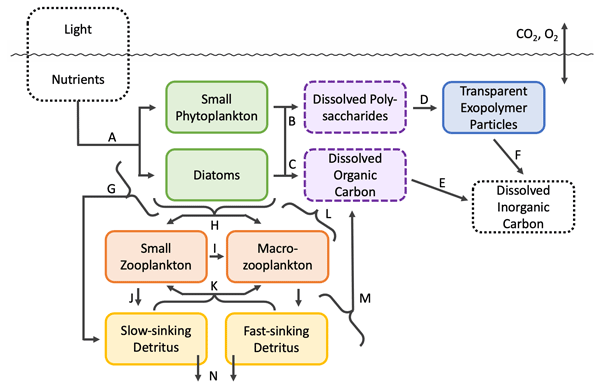
Moritz Zeising, Laurent Oziel, Silke Thoms, Özgür Gürses, Judith Hauck, Bernd Heinold, Svetlana N. Losa, Manuela van Pinxteren, Christoph Völker, Sebastian Zeppenfeld, and Astrid Bracher
Geosci. Model Dev., 19, 2077–2109, https://doi.org/10.5194/gmd-19-2077-2026, https://doi.org/10.5194/gmd-19-2077-2026, 2026
Short summary
Short summary
We assess the implementation of additional organic carbon pathways into a global setup of a numerical model, which simulates the ocean circulation, sea ice, and biogeochemical processes. With a focus on the Arctic Ocean, this model tracks the temporal and spatial dynamics of phytoplankton, exudation of organic carbon, and its aggregation to so-called transparent exopolymer particles. We evaluate the simulation using measurements from ship-based and remote-sensing campaigns in the Arctic Ocean.
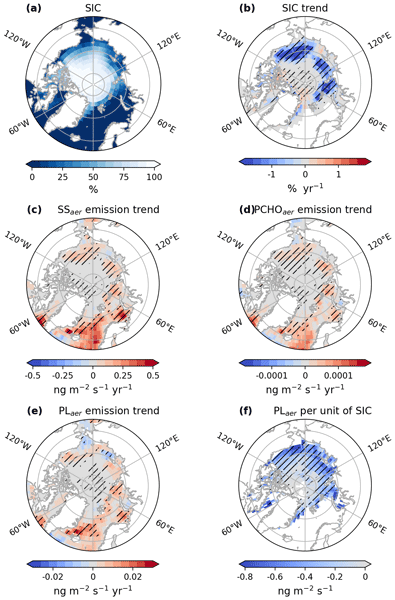
Anisbel Leon-Marcos, Manuela van Pinxteren, Sebastian Zeppenfeld, Moritz Zeising, Astrid Bracher, Laurent Oziel, Ina Tegen, and Bernd Heinold
Atmos. Chem. Phys., 26, 1109–1144, https://doi.org/10.5194/acp-26-1109-2026, https://doi.org/10.5194/acp-26-1109-2026, 2026
Short summary
Short summary
This study combines modelled ocean surface concentrations of major marine organic groups with the aerosol-climate model ECHAM-HAM to quantify species-resolved primary marine organic aerosol emissions from 1990 to 2019. Strong seasonality appears, driven by productivity and summer sea-ice loss. Emissions and burdens rise over time, with regional differences across the Arctic and aerosol species.
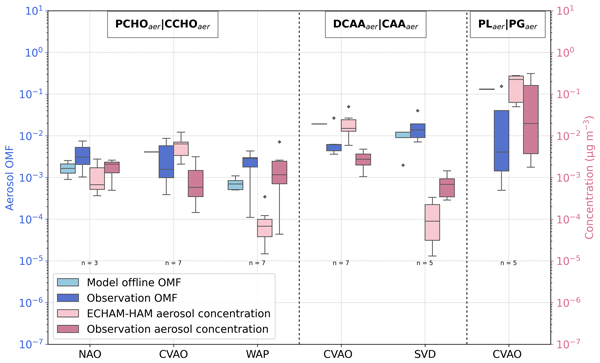
Anisbel Leon-Marcos, Moritz Zeising, Manuela van Pinxteren, Sebastian Zeppenfeld, Astrid Bracher, Elena Barbaro, Anja Engel, Matteo Feltracco, Ina Tegen, and Bernd Heinold
Geosci. Model Dev., 18, 4183–4213, https://doi.org/10.5194/gmd-18-4183-2025, https://doi.org/10.5194/gmd-18-4183-2025, 2025
Short summary
Short summary
This study represents the primary marine organic aerosol (PMOA) emissions, focusing on their sea–atmosphere transfer. Using the FESOM2.1–REcoM3 model, concentrations of key organic biomolecules were estimated and integrated into the ECHAM6.3–HAM2.3 aerosol–climate model. Results highlight the influence of marine biological activity and surface winds on PMOA emissions, with reasonably good agreement with observations improving aerosol representation in the southern oceans.
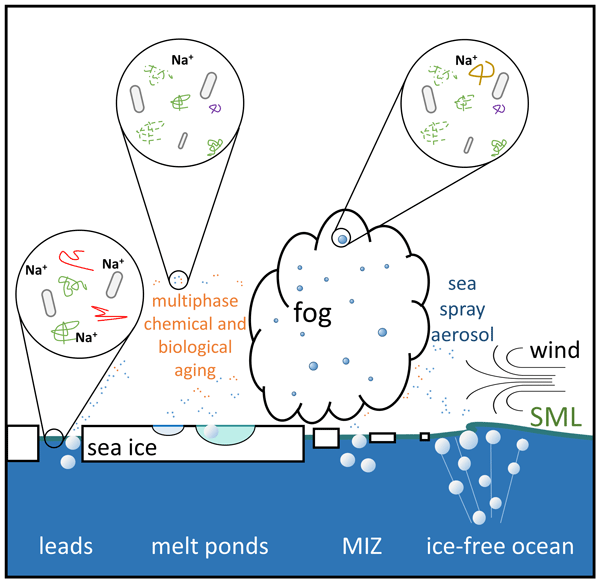
Sebastian Zeppenfeld, Manuela van Pinxteren, Markus Hartmann, Moritz Zeising, Astrid Bracher, and Hartmut Herrmann
Atmos. Chem. Phys., 23, 15561–15587, https://doi.org/10.5194/acp-23-15561-2023, https://doi.org/10.5194/acp-23-15561-2023, 2023
Short summary
Short summary
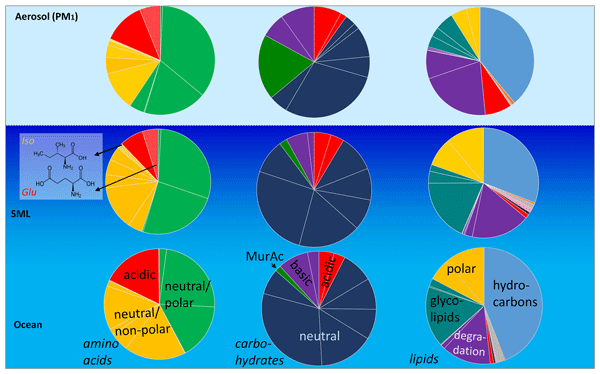
Marine carbohydrates are produced in the surface of the ocean, enter the atmophere as part of sea spray aerosol particles, and potentially contribute to the formation of fog and clouds. Here, we present the results of a sea–air transfer study of marine carbohydrates conducted in the high Arctic. Besides a chemo-selective transfer, we observed a quick atmospheric aging of carbohydrates, possibly as a result of both biotic and abiotic processes.
Manuela van Pinxteren, Sebastian Zeppenfeld, Khanneh Wadinga Fomba, Nadja Triesch, Sanja Frka, and Hartmut Herrmann
Atmos. Chem. Phys., 23, 6571–6590, https://doi.org/10.5194/acp-23-6571-2023, https://doi.org/10.5194/acp-23-6571-2023, 2023
Short summary
Short summary
Important marine organic carbon compounds were identified in the Atlantic Ocean and marine aerosol particles. These compounds were strongly enriched in the atmosphere. Their enrichment was, however, not solely explained via sea-to-air transfer but also via atmospheric in situ formation. The identified compounds constituted about 50 % of the organic carbon on the aerosol particles, and a pronounced coupling between ocean and atmosphere for this oligotrophic region could be concluded.
Manuela van Pinxteren, Tiera-Brandy Robinson, Sebastian Zeppenfeld, Xianda Gong, Enno Bahlmann, Khanneh Wadinga Fomba, Nadja Triesch, Frank Stratmann, Oliver Wurl, Anja Engel, Heike Wex, and Hartmut Herrmann
Atmos. Chem. Phys., 22, 5725–5742, https://doi.org/10.5194/acp-22-5725-2022, https://doi.org/10.5194/acp-22-5725-2022, 2022
Short summary
Short summary
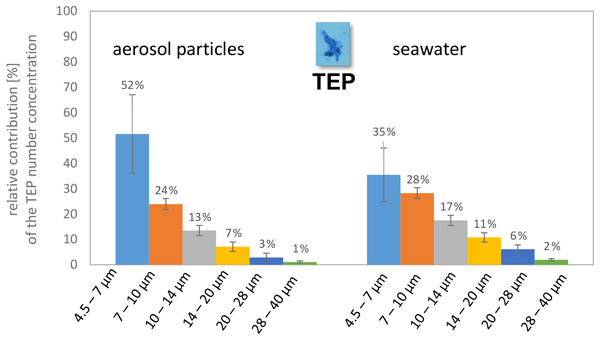
A class of marine particles (transparent exopolymer particles, TEPs) that is ubiquitously found in the world oceans was measured for the first time in ambient marine aerosol particles and marine cloud waters in the tropical Atlantic Ocean. TEPs are likely to have good properties for influencing clouds. We show that TEPs are transferred from the ocean to the marine atmosphere via sea-spray formation and our results suggest that they can also form directly in aerosol particles and in cloud water.
Nabil Deabji, Khanneh Wadinga Fomba, Souad El Hajjaji, Abdelwahid Mellouki, Laurent Poulain, Sebastian Zeppenfeld, and Hartmut Herrmann
Atmos. Chem. Phys., 21, 18147–18174, https://doi.org/10.5194/acp-21-18147-2021, https://doi.org/10.5194/acp-21-18147-2021, 2021
Short summary
Short summary
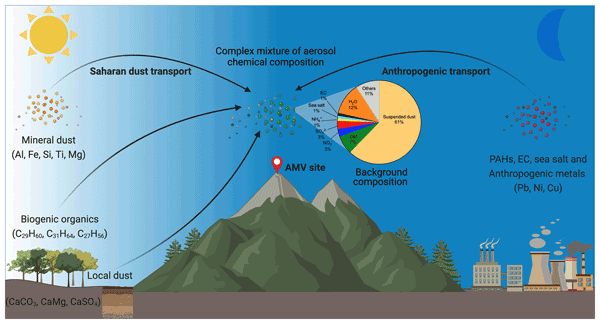
Mountain and high-altitude sites provide representative data for the lower free troposphere, various pathways for aerosol interactions, and changing boundary layer heights useful in understanding atmospheric composition. However, only few studies exist in African regions despite diversity in both natural and anthropogenic emissions. This study provides detailed atmospheric studies in the northern African high-altitude region.
Theresa Mathes, Ian Brooks, Sonja Murto, Michael Tjernström, Julia Kojoj, Paul Zieger, John Prytherch, Birgit Wehner, and Andreas Held
Atmos. Chem. Phys., 26, 14507–14530, https://doi.org/10.5194/acp-26-14507-2026, https://doi.org/10.5194/acp-26-14507-2026, 2026
Short summary
Short summary
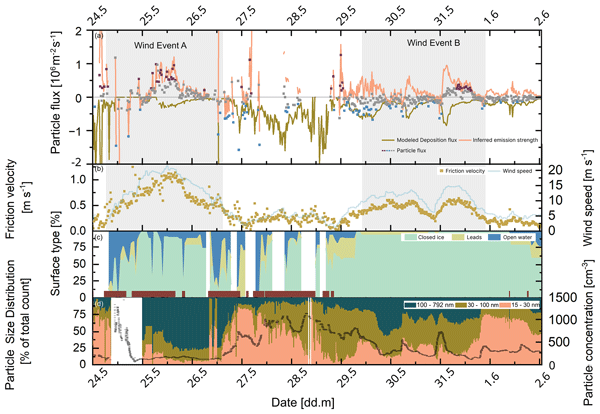
The Arctic is warming faster than the global average, affecting key climate processes. We investigated the exchange of particles between the surface and the atmosphere in the High Arctic over a period of five weeks using eddy covariance measurements. While ice surfaces primarily act as a sink, strong winds can also cause particles to be released, a process likely linked to blowing snow. These results enhance our understanding of particle sources and facilitate more precise climate modelling.
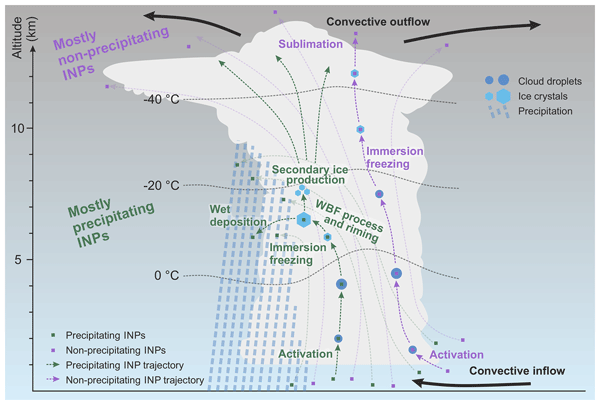
Jonas Schaefer, Sarah Grawe, Hans-Christian Clemen, Stephan Mertes, Johannes Schneider, Bruno Wetzel, Daniel Sauer, Jennifer Wolf, Laura Tomsche, Johanna Mayer, Roland Schrödner, Silvia Henning, Tina Jurkat-Witschas, Christiane Voigt, Helmut Ziereis, Theresa Harlaß, Mira Pöhlker, and Frank Stratmann
Atmos. Chem. Phys., 26, 12505–12520, https://doi.org/10.5194/acp-26-12505-2026, https://doi.org/10.5194/acp-26-12505-2026, 2026
Short summary
Short summary
Ice-nucleating particles (INP) are aerosol particles important for ice formation in clouds droplets and thereby influence climate. This study uses airborne measurements over Europe to show how INP are transported through thunderstorms. We show which particles are washed out and which are are transported into the higher troposphere, where they can again affect cloud ice formation. The findings improve understanding of atmospheric particle distribution and help refine climate models.
Megan Malpas, Floortje van den Heuvel, Rachael H. Rhodes, Xin Yang, Shaun Miller, Manuela van Pinxteren, Sebastian Zeppenfeld, and Markus M. Frey
EGUsphere, https://doi.org/10.5194/egusphere-2026-5047, https://doi.org/10.5194/egusphere-2026-5047, 2026
Short summary
Short summary
We investigated a type of aerosol that facilitates the formation of ice in clouds, to understand whether snow on sea ice lifted by strong winds in the Arctic could be a source of this aerosol. We did not observe increases in the concentration of this aerosol during these strong wind events; however, we did observe the formation of ice on aerosol at warmer temperatures. We conclude that aerosol released during strong winds is influenced by both snow sublimation and transport from lower latitudes.
Salem Ibrahim Salem, Andre Valente, Shubha Sathyendranath, Andrei Chuprin, Théo Renard, Jaime Pitarch, Ruth Airs, Moreno Ana, Maria-Manuel Angelico, David Antoine, Robert Arnone, Florinda Artuso, Paulo O. Oliveira, William Balch, Kathryn Barker, Ray Barlow, Simon Bélanger, Marco Bellacicco, Jean-François Berthon, Şükrü Beşiktepe, Francesco Bignami, Yngve Borsheim, Astrid Bracher, Federica Braga, Vittorio Brando, Robert J. W. Brewin, Vanda Brotas, Elisabetta Canuti, Francisco P. Chavez, Andrés Cianca, Hervé Claustre, Lesley Clementson, Simone Colella, Raul Costa, Cristina Nunes, Richard Crout, Emmanuel Devred, Annalisa Di Cicco, Federico Falcini, Ivan Farace, Afonso Ferreira, Scott Freeman, Robert Frouin, Carlos García-Soto, Isabella Giardina, Stuart W. Gibb, Arthur Gleason, Ralf Goericke, Richard Gould, Michael Grant, Nathalie Guillocheau, Hiroto Higa, Stanford B. Hooker, Chuamin Hu, Joji Ishizaka, Thomas Jackson, Mati Kahru, Milton Kampel, Bokyung Kim, Holger Klein, Piotr Kowalczuk, Susanne Kratzer, Raphael Kudela, Antonia Lai, Rosario Lavezza, Jesus Ledesma, Huiwon Lee, Steven Lohrenz, Hubert Loisel, Vivian Lutz, Antonio Mannino, Francesca Margiotta, Victor Martinez-Vicente, Salvatore Marullo, Luca Massi, Patricia Matrai, Atsushi Matsuoka, David McKee, Chiara Melillo, Carlos B. Mendes, Brian G. Mitchell, Tiffany Moisan, Enrique Montes, Frank Muller-Karger, Aimee Neeley, Michael Novak, Leonie O'Dowd, Michael Ondrusek, Emanuele Organelli, Heeyoon Park, Trevor Platt, Francesca Polonelli, Alex Poulton, Mariella Ragni, Michel Repecaud, Maurizio Ribera d’Alcalà, Tamara Rodriguez-Ramos, Rüdiger Röttgers, Manuel Ruiz-Villarreal, Michela Sammartino, Rosalia Santoleri, Gian Marco Scarpa, Thomas Schroeder, Valeria Segura, Timothy Smyth, Denise Smythe-Wright, Heidi M. Sosik, Joanna Stoń-Egiert, Malcolm Taberner, Jing Tan, Rob Thomas, Crystal Thomas, Gavin Tilstone, Andreia Tracana, Michael Twardowski, Vincenzo Vellucci, Gianluca Volpe, Kenneth Voss, Jeremy Werdell, Marcel Wernand, Bozena Wojtasiewicz, Simon Wright, Sunmi Yang, Giuseppe Zibordi, Maria Laura Zoffoli, and Steve Groom
Earth Syst. Sci. Data Discuss., https://doi.org/10.5194/essd-2026-539, https://doi.org/10.5194/essd-2026-539, 2026
Preprint under review for ESSD
Short summary
Short summary
This paper presents the fourth version of the ESA Ocean Colour Climate Change Initiative global in situ bio-optical database. The updated compilation combines observations from many international data sources collected between 1996 and 2025 and includes major expansions in coverage and variables. The dataset provides a consistent reference for validating satellite ocean-colour products and supports algorithm development and long-term climate studies.
Malte Schuchard, Konrad Bärfuss, Lutz Bretschneider, Thomas Conrath, Andreas Held, Ralf Käthner, Mona Kellermann, Astrid Lampert, Theresa Mathes, Joshua Müller, Christian Pilz, Andreas Schlerf, Holger Siebert, Birgit Wehner, and Barbara Harm-Altstädter
Earth Syst. Sci. Data Discuss., https://doi.org/10.5194/essd-2026-411, https://doi.org/10.5194/essd-2026-411, 2026
Preprint under review for ESSD
Short summary
Short summary
This article combines measurements from an uncrewed aerial system, a tethered balloon system and a surface flux gradient system to study aerosol particles and meteorological parameters at the Arctic site Ny-Ålesund, Svalbard, in spring 2024. The vertical and horizontal observations from the ground to 1.3 kilometres above sea level show strong aerosol variability in correlation with specific meteorological conditions, providing a valuable basis for understanding Arctic aerosol processes.

Asta C. Heidemann, Alexander Hayward, Philipp Assmy, Atreya Basu, Astrid Bracher, Giulia Castellani, Giacomo Ditullio, Katarzyna Dragańska-Deja, Amane Fujiwara, Glaucia Moreira Fragoso, Jacob Høyer, Jiwoon Hwang, Morten Iversen, Anabel von Jackowski, Thomas Juul-Pedersen, Piotr Kowalczuk, Youngju Lee, Maria A. van Leeuwe, Atsushi Matsuoka, Alenya Merz, Christopher John Mundy, Else Ostermann, Ilka Peeken, Matt Pinkerton, Joanna Stoń-Egiert, Jacqueline Stefels, Antonia U. Thielecke, Gaëlle Veyssiere, Hongyan Xi, Eun Jin Yang, and Rafael Gonçalves-Araujo
Earth Syst. Sci. Data, 18, 5505–5529, https://doi.org/10.5194/essd-18-5505-2026, https://doi.org/10.5194/essd-18-5505-2026, 2026
Short summary
Short summary
Algal pigments are widely used to quantify algal biomass and composition. These organisms form the basis of marine food webs and are vital for the wider ecosystem. Here, we present a pan-Arctic dataset of algal pigments, containing 10 798 measurements collected between 2000 and 2024. This publicly available dataset represents an international collaborative effort and provides an important resource for assessing environmental change and advancing future Arctic ecological and modelling studies.
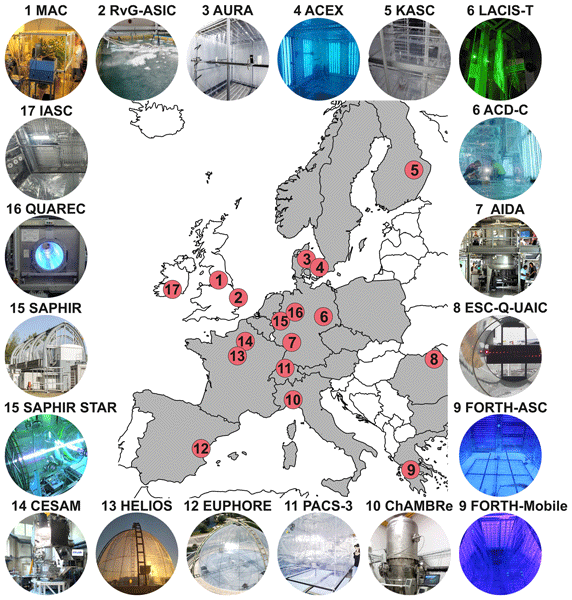
Hendrik Fuchs, Niklas Illmann, Amalia Muñoz, Mila Ródenas, Bénédicte Picquet-Varrault, M. Rami Alfarra, Cecilia Arsene, Iustinian G. Bejan, David M. Bell, Merete Bilde, Alexander Böhmländer, Mixtli Campos-Pineda, Mathieu Cazaunau, Patrice Coll, Véronique Daële, Claudia Di Biagio, Michael Flynn, Paola Formenti, Hartmut Herrmann, Kristina Höhler, Thorsten Hohaus, Matthew S. Johnson, Eija Juurola, Niku Kivekäs, Jan Kaiser, Christos Kaltsonoudis, Paolo Laj, Dario Massabò, Federico Mazzei, Gordon McFiggans, Max R. McGillen, Abdelwahid Mellouki, Peter Mettke, Ottmar Möhler, Falk Mothes, Dennis Niedermeier, Anna Novelli, Romeo I. Olariu, Spyros N. Pandis, Iulia Patroescu-Klotz, Rosa Maria Petracca Altieri, Paolo Prati, Claudiu Roman, Albert A. Ruth, Harald Saathoff, Silvio Schmalfuß, Frank Stratmann, Virginia Vernocchi, Aristeidis Voliotis, Jens Voigtländer, Annele Virtanen, Andreas Wahner, Robert Wagner, John Wenger, Sören Zorn, Peter Wiesen, and Jean-Francois Doussin
Atmos. Meas. Tech., 19, 4165–4199, https://doi.org/10.5194/amt-19-4165-2026, https://doi.org/10.5194/amt-19-4165-2026, 2026
Short summary
Short summary
Atmospheric simulation chambers enable experiments to be conducted under controlled conditions, improving our understanding of, and ability to predict, changes in the composition of the atmosphere. This is important for assessing air quality and its effects on human health, climate, the environment, and the economy. This paper describes the chambers of the European ACTRIS research infrastructure and discusses topics and directions that can be addressed in future chamber experiments.
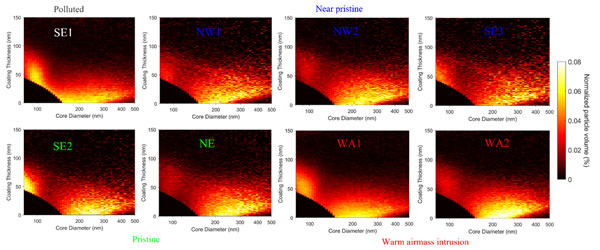
Babu Suja Arun, Thomas Müller, Mira L. Pöhlker, Andreas Held, Christopher Pöhlker, Manuela van Pinxteren, Yifan Yang, Sabine Lüchtrath, Andreas Walbröl, Janna E. Rückert, Philipp Oehlke, Maik Merkel, and Birgit Wehner
Atmos. Chem. Phys., 26, 7287–7310, https://doi.org/10.5194/acp-26-7287-2026, https://doi.org/10.5194/acp-26-7287-2026, 2026
Short summary
Short summary
Black carbon (BC) aerosols absorb solar radiation and perturb the Arctic energy budget, yet in-situ studies of their microphysical properties and mixing state in the Arctic remain scarce. Based on observations from a shipborne expedition in the Arctic Ocean, we found substantial BC concentrations and showed that warm airmass intrusions enhanced BC levels. Aged BC exhibited enhanced light absorption. These findings will help improve the representation of BC in climate models.
David J. Simon, Jonas Schaefer, Jörg Hartmann, Benjamin Kirbus, Joshua Müller, Markus Hartmann, Bruno Wetzel, Laura Köhler, Anna-Marie Jörss, Kay Weinhold, Andreas Herber, Zsófia Jurányi, Silvia Henning, Gregory C. Roberts, Manfred Wendisch, Mira L. Pöhlker, and Frank Stratmann
EGUsphere, https://doi.org/10.5194/egusphere-2026-2215, https://doi.org/10.5194/egusphere-2026-2215, 2026
Short summary
Short summary
We investigate the occurrence of newly formed aerosol particles in the Arctic atmosphere by analyzing aerosol particle measurements conducted aboard a research aircraft in April 2024. We frequently detected newly formed particles at altitudes of up to 4 km, while many previous studies had predominantly found such particles close to the surface. Newly formed particles were associated with air mass transport from lower latitudes, the occurrence of clouds, as well as the presence of sea ice.
Shravan Deshmukh, Laurent Poulain, Birgit Wehner, Silvia Henning, Hartmut Herrmann, and Mira Pöhlker
EGUsphere, https://doi.org/10.5194/egusphere-2026-1992, https://doi.org/10.5194/egusphere-2026-1992, 2026
Short summary
Short summary
Improved representation of aerosol hygroscopicity is critical for understanding how atmospheric particles influence cloud formation, climate, air quality, and human health. This work advances understanding of aerosol hygroscopicity by connecting laboratory measurements of organic aerosol properties with ambient observations through an explainable machine learning framework.
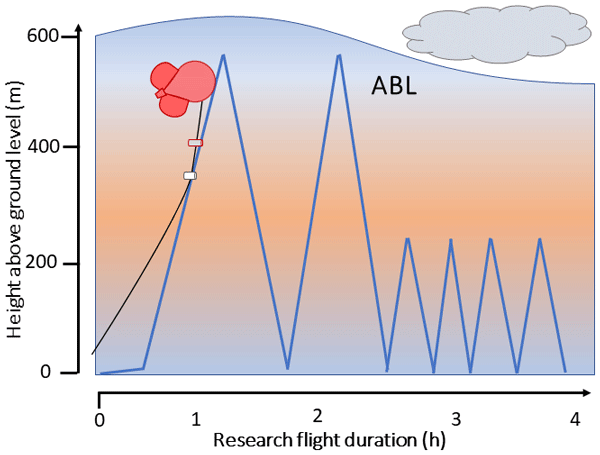
Henning Dorff, Holger Siebert, Komal Navale, André Ehrlich, Joshua Müller, Michael Schäfer, Fan Wu, and Manfred Wendisch
Earth Syst. Sci. Data, 18, 2799–2817, https://doi.org/10.5194/essd-18-2799-2026, https://doi.org/10.5194/essd-18-2799-2026, 2026
Short summary
Short summary
We present tethered-balloon measurements from BELUGA (Balloon-bornE moduLar Utility for profilinG the lower Atmosphere) at Villum Research Station (spring 2024), detailing instrumentation, data processing, and environmental conditions. The data stored in the PANGAEA database include instrument-separated subsets with frequent in situ profiling of thermodynamic, turbulence conditions, and thermal-infrared irradiances across the Arctic atmospheric boundary layer (ABL), supplemented by radiosondes. The data help examine transition events between Arctic ABL states.
Wiebke Frey, Silvio Schmalfuß, Frank Stratmann, and Dennis Niedermeier
Earth Syst. Sci. Data, 18, 2305–2318, https://doi.org/10.5194/essd-18-2305-2026, https://doi.org/10.5194/essd-18-2305-2026, 2026
Short summary
Short summary
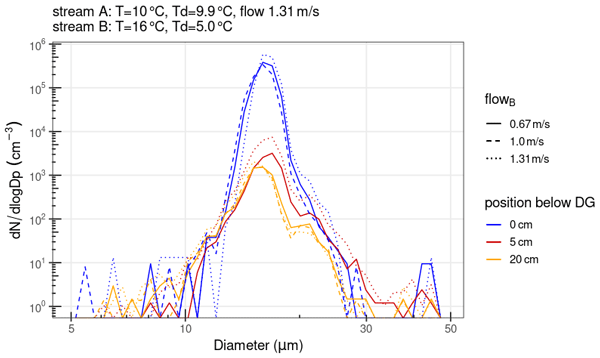
In order to gain a better understanding on the impact of entrainment on cloud droplet size distributions, water droplets were sprayed into the mixing plane of a turbulent wind tunnel, where two separately conditioned air streams are combined. One air stream resembling 'in cloud' conditions (with relative humidity close to saturation) and one air stream resembling 'out of cloud' conditions, which are dryer and warmer. The paper describes the data set and outlines future use examples.
Olenka Jibaja Valderrama, Daniele Scheres Firak, Thomas Schaefer, Manuela van Pinxteren, Khanneh Wadinga Fomba, and Hartmut Herrmann
Biogeosciences, 23, 1965–1985, https://doi.org/10.5194/bg-23-1965-2026, https://doi.org/10.5194/bg-23-1965-2026, 2026
Short summary
Short summary
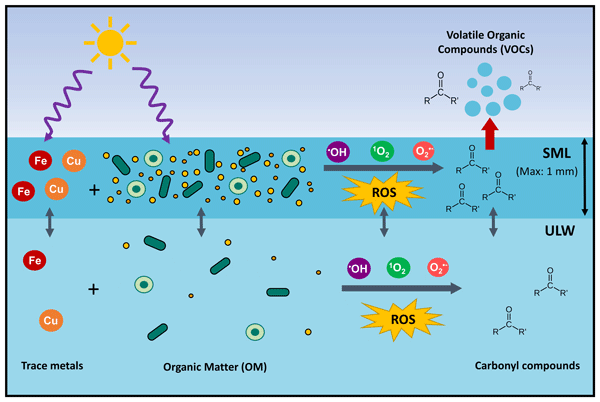
The present study explores the influence of biological activity in the photochemistry of the sea-surface microlayer (SML) and its implications for the emission of volatile organic compounds (VOCs) to the marine atmosphere. Experimental evidence of enhanced photochemical activity of carbonyl compounds in the SML is provided, particularly in periods of higher biological productivity, thereby offering new insights to integrate biological processes and photochemistry in the air-sea boundary.
Moritz Zeising, Laurent Oziel, Silke Thoms, Özgür Gürses, Judith Hauck, Bernd Heinold, Svetlana N. Losa, Manuela van Pinxteren, Christoph Völker, Sebastian Zeppenfeld, and Astrid Bracher
Geosci. Model Dev., 19, 2077–2109, https://doi.org/10.5194/gmd-19-2077-2026, https://doi.org/10.5194/gmd-19-2077-2026, 2026
Short summary
Short summary
We assess the implementation of additional organic carbon pathways into a global setup of a numerical model, which simulates the ocean circulation, sea ice, and biogeochemical processes. With a focus on the Arctic Ocean, this model tracks the temporal and spatial dynamics of phytoplankton, exudation of organic carbon, and its aggregation to so-called transparent exopolymer particles. We evaluate the simulation using measurements from ship-based and remote-sensing campaigns in the Arctic Ocean.

Amavi Silva, Surandokht Nikzad, Theresa Barthelmeß, Anja Engel, Hartmut Herrmann, Manuela van Pinxteren, Kai Wirtz, Oliver Wurl, and Markus Schartau
Biogeosciences, 23, 1697–1718, https://doi.org/10.5194/bg-23-1697-2026, https://doi.org/10.5194/bg-23-1697-2026, 2026
Short summary
Short summary
We conducted the first meta-analysis combining marine and freshwater studies to understand organic matter enrichment in the surface microlayer. Nitrogen-rich, particulate compounds are often enriched, with patterns varying by multiple factors. We recommend tracking both absolute concentrations and normalized enrichment patterns to better assess ecological conditions. Our study also introduces improved statistical methods for analyzing and comparing surface microlayer data.

Ehsan Mehdipour, Hongyan Xi, Alexander Barth, Aida Alvera-Azcárate, Adalbert Wilhelm, and Astrid Bracher
Geosci. Model Dev., 19, 1619–1643, https://doi.org/10.5194/gmd-19-1619-2026, https://doi.org/10.5194/gmd-19-1619-2026, 2026
Short summary
Short summary
Phytoplankton are vital for marine ecosystems and nutrient cycling, detectable by optical satellites. Data gaps caused by clouds and other non-optimal conditions limit comprehensive analyses like trend monitoring. This study evaluated DINCAE and DINEOF gap-filling methods for reconstructing chlorophyll a datasets, including total chlorophyll a and five major phytoplankton groups. Both methods showed robust reconstruction capabilities, aiding pattern detection and long-term ocean colour analysis.
Anisbel Leon-Marcos, Manuela van Pinxteren, Sebastian Zeppenfeld, Moritz Zeising, Astrid Bracher, Laurent Oziel, Ina Tegen, and Bernd Heinold
Atmos. Chem. Phys., 26, 1109–1144, https://doi.org/10.5194/acp-26-1109-2026, https://doi.org/10.5194/acp-26-1109-2026, 2026
Short summary
Short summary
This study combines modelled ocean surface concentrations of major marine organic groups with the aerosol-climate model ECHAM-HAM to quantify species-resolved primary marine organic aerosol emissions from 1990 to 2019. Strong seasonality appears, driven by productivity and summer sea-ice loss. Emissions and burdens rise over time, with regional differences across the Arctic and aerosol species.
Kaiqi Wang, Kai Bi, Shuling Chen, Markus Hartmann, Zhijun Wu, Jiyu Gao, Xiaoyu Xu, Yuhan Cheng, Mengyu Huang, Yunbo Chen, Huiwen Xue, Bingbing Wang, Yaqiong Hu, Xiongying Zhang, Xincheng Ma, Ruijie Li, Ping Tian, Ottmar Möhler, Heike Wex, Frank Stratmann, Jie Chen, and Xianda Gong
Atmos. Meas. Tech., 18, 5823–5840, https://doi.org/10.5194/amt-18-5823-2025, https://doi.org/10.5194/amt-18-5823-2025, 2025
Short summary
Short summary
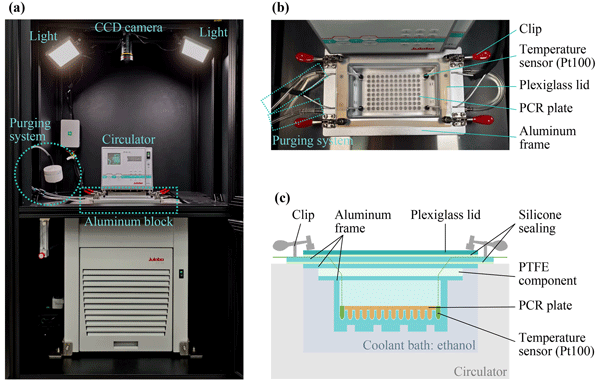
Understanding how ice forms in clouds is crucial for predicting weather and climate; however, accurately measuring the ice-nucleating particles that trigger ice formation remains challenging. We developed an advanced instrument called the Freezing Ice Nucleation Detection Analyzer. By refining temperature control, automating freezing detection, and rigorously testing, we demonstrated that this instrument can reliably measure immersion mode ice-nucleating particles across diverse conditions.
Hongyan Xi, Marine Bretagnon, Ehsan Mehdipour, Julien Demaria, Antoine Mangin, and Astrid Bracher
State Planet, 6-osr9, 7, https://doi.org/10.5194/sp-6-osr9-7-2025, https://doi.org/10.5194/sp-6-osr9-7-2025, 2025
Short summary
Short summary
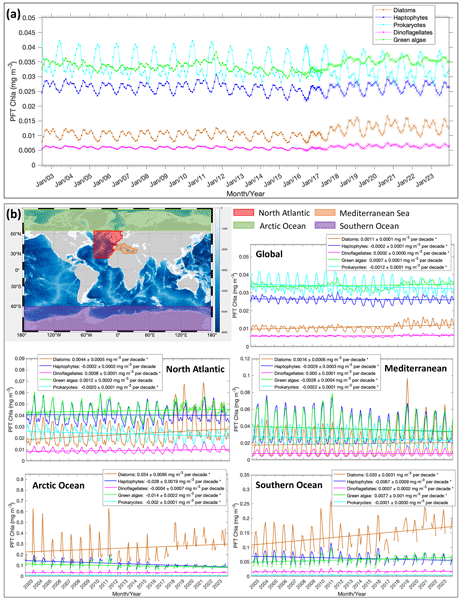
To better understand the marine phytoplankton variability on different scales in both space and time, this study proposes a machine-learning-based scheme to provide continuous and consistent long-term observations of various phytoplankton groups from space on a global scale, which enables time series analysis for further trend and anomaly investigations. This study provides an essential ocean variable to help assess the ocean health in the biogeochemical aspect.
Theresa Mathes, Heather Guy, John Prytherch, Julia Kojoj, Ian Brooks, Sonja Murto, Paul Zieger, Birgit Wehner, Michael Tjernström, and Andreas Held
Atmos. Chem. Phys., 25, 8455–8474, https://doi.org/10.5194/acp-25-8455-2025, https://doi.org/10.5194/acp-25-8455-2025, 2025
Short summary
Short summary
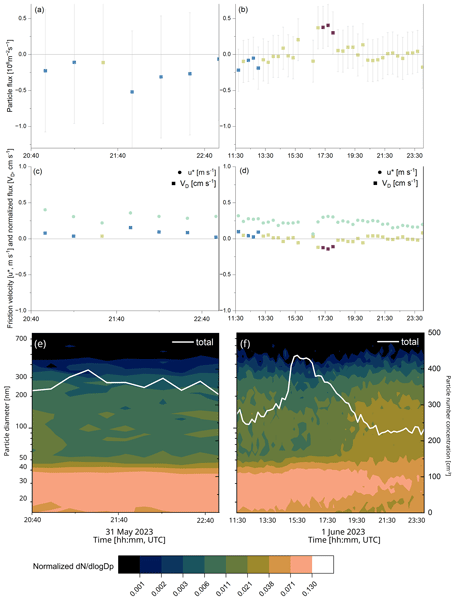
The Arctic is warming faster than the global average and an investigation of aerosol–cloud–sea ice interactions is crucial for studying its climate system. During the ARTofMELT Expedition 2023, particle and sensible heat fluxes were measured over different surfaces. Wide lead surfaces acted as particle sources, with the strongest sensible heat fluxes, while closed ice surfaces acted as particle sinks. In this study, methods to measure these interactions are improved, enhancing our understanding of Arctic climate processes.
Zsófia Jurányi, Christof Lüpkes, Frank Stratmann, Jörg Hartmann, Jonas Schaefer, Anna-Marie Jörss, Alexander Schulz, Bruno Wetzel, David Simon, Eduard Gebhard, Maximilian Stöhr, Paula Hofmann, Dirk Kalmbach, Sarah Grawe, Manfred Wendisch, and Andreas Herber
Atmos. Meas. Tech., 18, 3477–3494, https://doi.org/10.5194/amt-18-3477-2025, https://doi.org/10.5194/amt-18-3477-2025, 2025
Short summary
Short summary
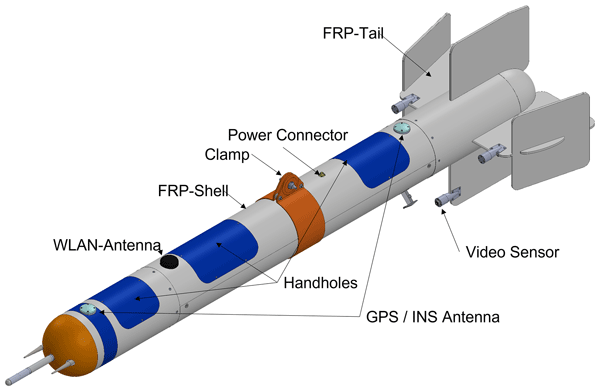
Understanding the lowest layers of the atmosphere is crucial for climate research, especially in the Arctic. Our study introduces the T-Bird, an aircraft-towed platform designed to measure turbulence and aerosol properties at extremely low altitudes. Traditional aircraft cannot access this region, making the T-Bird a breakthrough for capturing critical atmospheric data. Its first deployment over the Arctic demonstrated its potential to improve our understanding of polar processes.
Kerstin Ebell, Christian Buhren, Rosa Gierens, Giovanni Chellini, Melanie Lauer, Andreas Walbröl, Sandro Dahlke, Pavel Krobot, and Mario Mech
Atmos. Chem. Phys., 25, 7315–7342, https://doi.org/10.5194/acp-25-7315-2025, https://doi.org/10.5194/acp-25-7315-2025, 2025
Short summary
Short summary
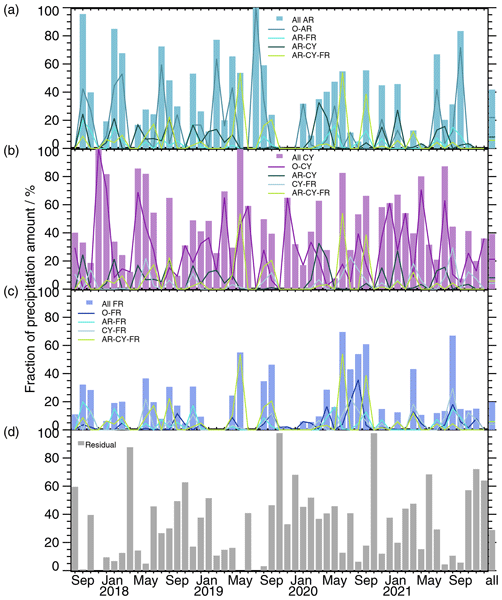
Ground-based observations of precipitation are rare in the Arctic. Since 2017, additional temporally highly resolved precipitation measurements have been carried out by a precipitation gauge and an optical precipitation sensor at Ny-Ålesund, Svalbard. These new data facilitate the distinction between liquid and solid precipitation. Using reanalysis data, we also find that water vapor transport contributes strongly to precipitation and especially to extreme precipitation events.
Anisbel Leon-Marcos, Moritz Zeising, Manuela van Pinxteren, Sebastian Zeppenfeld, Astrid Bracher, Elena Barbaro, Anja Engel, Matteo Feltracco, Ina Tegen, and Bernd Heinold
Geosci. Model Dev., 18, 4183–4213, https://doi.org/10.5194/gmd-18-4183-2025, https://doi.org/10.5194/gmd-18-4183-2025, 2025
Short summary
Short summary
This study represents the primary marine organic aerosol (PMOA) emissions, focusing on their sea–atmosphere transfer. Using the FESOM2.1–REcoM3 model, concentrations of key organic biomolecules were estimated and integrated into the ECHAM6.3–HAM2.3 aerosol–climate model. Results highlight the influence of marine biological activity and surface winds on PMOA emissions, with reasonably good agreement with observations improving aerosol representation in the southern oceans.
Dennis Niedermeier, Rasmus Hoffmann, Silvio Schmalfuss, Wiebke Frey, Fabian Senf, Olaf Hellmuth, Mira Pöhlker, and Frank Stratmann
Aerosol Research, 3, 219–230, https://doi.org/10.5194/ar-3-219-2025, https://doi.org/10.5194/ar-3-219-2025, 2025
Short summary
Short summary
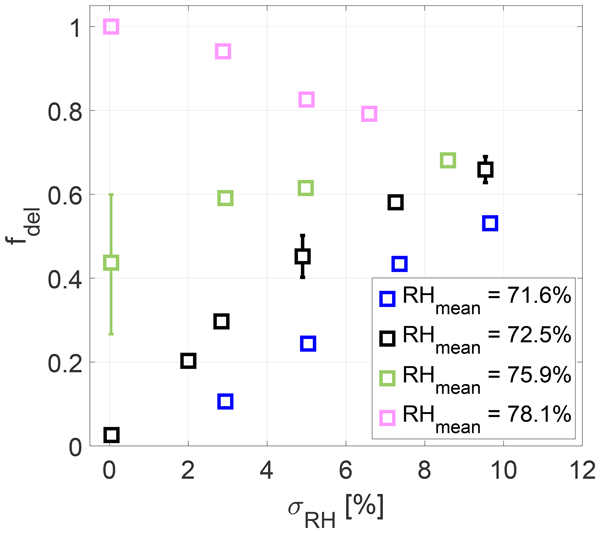
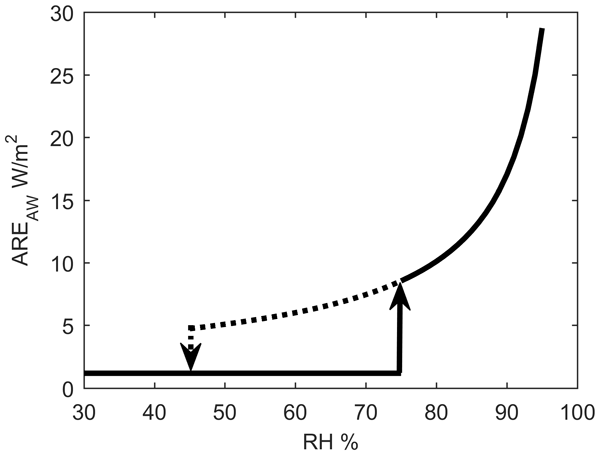
This study examines the deliquescence behavior of NaCl particles in a turbulent humidity field using the wind tunnel LACIS-T (Turbulent Leipzig Aerosol Cloud Interaction Simulator). The results show that turbulent relative humidity (RH) fluctuations affect the number of deliquesced particles, depending on the mean RH, strength of humidity fluctuations, and particle residence time. It turns out that, in addition to the mean RH, it is essential to consider humidity fluctuations and particle history when determining the phase state of the deliquescent particles.
Denghui Ji, Mathias Palm, Matthias Buschmann, Kerstin Ebell, Marion Maturilli, Xiaoyu Sun, and Justus Notholt
Atmos. Chem. Phys., 25, 3889–3904, https://doi.org/10.5194/acp-25-3889-2025, https://doi.org/10.5194/acp-25-3889-2025, 2025
Short summary
Short summary
Our study explores how certain aerosols, like sea salt, affect infrared heat radiation in the Arctic, potentially speeding up warming. We used advanced technology to measure aerosol composition and found that these particles grow with humidity, significantly increasing their heat-trapping effect in the infrared region, especially in winter. Our findings suggest these aerosols could be a key factor in Arctic warming, emphasizing the importance of understanding aerosols for climate prediction.

André Ehrlich, Susanne Crewell, Andreas Herber, Marcus Klingebiel, Christof Lüpkes, Mario Mech, Sebastian Becker, Stephan Borrmann, Heiko Bozem, Matthias Buschmann, Hans-Christian Clemen, Elena De La Torre Castro, Henning Dorff, Regis Dupuy, Oliver Eppers, Florian Ewald, Geet George, Andreas Giez, Sarah Grawe, Christophe Gourbeyre, Jörg Hartmann, Evelyn Jäkel, Philipp Joppe, Olivier Jourdan, Zsófia Jurányi, Benjamin Kirbus, Johannes Lucke, Anna E. Luebke, Maximilian Maahn, Nina Maherndl, Christian Mallaun, Johanna Mayer, Stephan Mertes, Guillaume Mioche, Manuel Moser, Hanno Müller, Veronika Pörtge, Nils Risse, Greg Roberts, Sophie Rosenburg, Johannes Röttenbacher, Michael Schäfer, Jonas Schaefer, Andreas Schäfler, Imke Schirmacher, Johannes Schneider, Sabrina Schnitt, Frank Stratmann, Christian Tatzelt, Christiane Voigt, Andreas Walbröl, Anna Weber, Bruno Wetzel, Martin Wirth, and Manfred Wendisch
Earth Syst. Sci. Data, 17, 1295–1328, https://doi.org/10.5194/essd-17-1295-2025, https://doi.org/10.5194/essd-17-1295-2025, 2025
Short summary
Short summary
This paper provides an overview of the HALO–(AC)3 aircraft campaign data sets, the campaign-specific instrument operation, data processing, and data quality. The data set comprises in situ and remote sensing observations from three research aircraft: HALO, Polar 5, and Polar 6. All data are published in the PANGAEA database by instrument-separated data subsets. It is highlighted how the scientific analysis of the HALO–(AC)3 data benefits from the coordinated operation of three aircraft.
Andreas Walbröl, Hannes J. Griesche, Mario Mech, Susanne Crewell, and Kerstin Ebell
Atmos. Meas. Tech., 17, 6223–6245, https://doi.org/10.5194/amt-17-6223-2024, https://doi.org/10.5194/amt-17-6223-2024, 2024
Short summary
Short summary
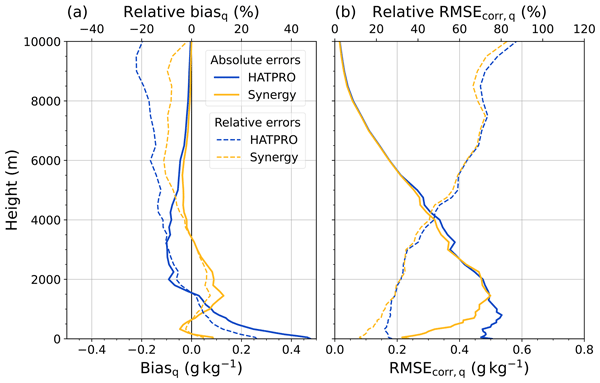
We developed retrievals of integrated water vapour (IWV), temperature profiles, and humidity profiles from ground-based passive microwave remote sensing measurements gathered during the MOSAiC expedition. We demonstrate and quantify the benefit of combining low- and high-frequency microwave radiometers to improve humidity profiling and IWV estimates by comparing the retrieved quantities to single-instrument retrievals and reference datasets (radiosondes).
Manfred Wendisch, Susanne Crewell, André Ehrlich, Andreas Herber, Benjamin Kirbus, Christof Lüpkes, Mario Mech, Steven J. Abel, Elisa F. Akansu, Felix Ament, Clémantyne Aubry, Sebastian Becker, Stephan Borrmann, Heiko Bozem, Marlen Brückner, Hans-Christian Clemen, Sandro Dahlke, Georgios Dekoutsidis, Julien Delanoë, Elena De La Torre Castro, Henning Dorff, Regis Dupuy, Oliver Eppers, Florian Ewald, Geet George, Irina V. Gorodetskaya, Sarah Grawe, Silke Groß, Jörg Hartmann, Silvia Henning, Lutz Hirsch, Evelyn Jäkel, Philipp Joppe, Olivier Jourdan, Zsofia Jurányi, Michail Karalis, Mona Kellermann, Marcus Klingebiel, Michael Lonardi, Johannes Lucke, Anna E. Luebke, Maximilian Maahn, Nina Maherndl, Marion Maturilli, Bernhard Mayer, Johanna Mayer, Stephan Mertes, Janosch Michaelis, Michel Michalkov, Guillaume Mioche, Manuel Moser, Hanno Müller, Roel Neggers, Davide Ori, Daria Paul, Fiona M. Paulus, Christian Pilz, Felix Pithan, Mira Pöhlker, Veronika Pörtge, Maximilian Ringel, Nils Risse, Gregory C. Roberts, Sophie Rosenburg, Johannes Röttenbacher, Janna Rückert, Michael Schäfer, Jonas Schaefer, Vera Schemann, Imke Schirmacher, Jörg Schmidt, Sebastian Schmidt, Johannes Schneider, Sabrina Schnitt, Anja Schwarz, Holger Siebert, Harald Sodemann, Tim Sperzel, Gunnar Spreen, Bjorn Stevens, Frank Stratmann, Gunilla Svensson, Christian Tatzelt, Thomas Tuch, Timo Vihma, Christiane Voigt, Lea Volkmer, Andreas Walbröl, Anna Weber, Birgit Wehner, Bruno Wetzel, Martin Wirth, and Tobias Zinner
Atmos. Chem. Phys., 24, 8865–8892, https://doi.org/10.5194/acp-24-8865-2024, https://doi.org/10.5194/acp-24-8865-2024, 2024
Short summary
Short summary
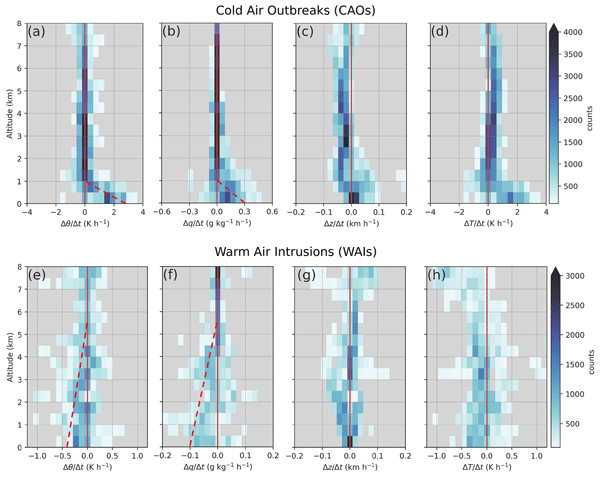
The Arctic is warming faster than the rest of the globe. Warm-air intrusions (WAIs) into the Arctic may play an important role in explaining this phenomenon. Cold-air outbreaks (CAOs) out of the Arctic may link the Arctic climate changes to mid-latitude weather. In our article, we describe how to observe air mass transformations during CAOs and WAIs using three research aircraft instrumented with state-of-the-art remote-sensing and in situ measurement devices.
Andreas Walbröl, Janosch Michaelis, Sebastian Becker, Henning Dorff, Kerstin Ebell, Irina Gorodetskaya, Bernd Heinold, Benjamin Kirbus, Melanie Lauer, Nina Maherndl, Marion Maturilli, Johanna Mayer, Hanno Müller, Roel A. J. Neggers, Fiona M. Paulus, Johannes Röttenbacher, Janna E. Rückert, Imke Schirmacher, Nils Slättberg, André Ehrlich, Manfred Wendisch, and Susanne Crewell
Atmos. Chem. Phys., 24, 8007–8029, https://doi.org/10.5194/acp-24-8007-2024, https://doi.org/10.5194/acp-24-8007-2024, 2024
Short summary
Short summary
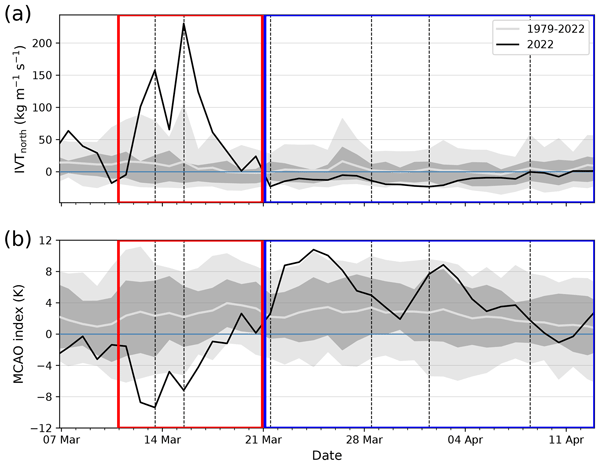
To support the interpretation of the data collected during the HALO-(AC)3 campaign, which took place in the North Atlantic sector of the Arctic from 7 March to 12 April 2022, we analyze how unusual the weather and sea ice conditions were with respect to the long-term climatology. From observations and ERA5 reanalysis, we found record-breaking warm air intrusions and a large variety of marine cold air outbreaks. Sea ice concentration was mostly within the climatological interquartile range.
Johanna S. Seidel, Alexei A. Kiselev, Alice Keinert, Frank Stratmann, Thomas Leisner, and Susan Hartmann
Atmos. Chem. Phys., 24, 5247–5263, https://doi.org/10.5194/acp-24-5247-2024, https://doi.org/10.5194/acp-24-5247-2024, 2024
Short summary
Short summary
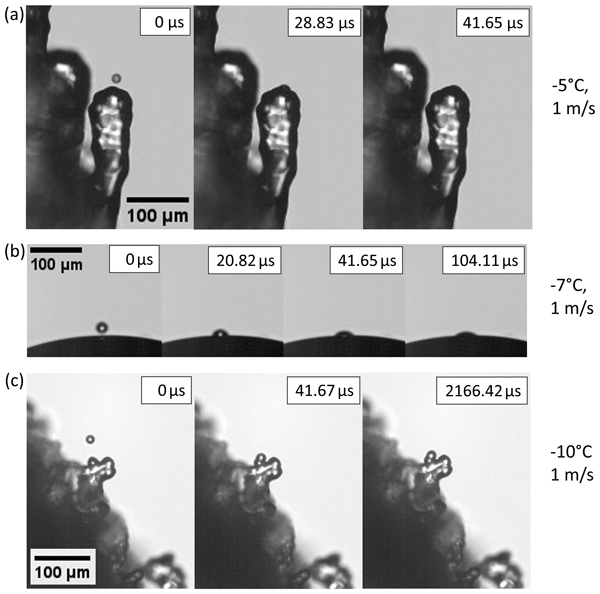
Clouds often contain several thousand times more ice crystals than aerosol particles catalyzing ice formation. This phenomenon, commonly known as ice multiplication, is often explained by secondary ice formation due to the collisions between falling ice particles and droplets. In this study, we mimic this riming process. Contrary to earlier experiments, we found no efficient ice multiplication, which fundamentally questions the importance of the rime-splintering mechanism.
Larissa Lacher, Michael P. Adams, Kevin Barry, Barbara Bertozzi, Heinz Bingemer, Cristian Boffo, Yannick Bras, Nicole Büttner, Dimitri Castarede, Daniel J. Cziczo, Paul J. DeMott, Romy Fösig, Megan Goodell, Kristina Höhler, Thomas C. J. Hill, Conrad Jentzsch, Luis A. Ladino, Ezra J. T. Levin, Stephan Mertes, Ottmar Möhler, Kathryn A. Moore, Benjamin J. Murray, Jens Nadolny, Tatjana Pfeuffer, David Picard, Carolina Ramírez-Romero, Mickael Ribeiro, Sarah Richter, Jann Schrod, Karine Sellegri, Frank Stratmann, Benjamin E. Swanson, Erik S. Thomson, Heike Wex, Martin J. Wolf, and Evelyn Freney
Atmos. Chem. Phys., 24, 2651–2678, https://doi.org/10.5194/acp-24-2651-2024, https://doi.org/10.5194/acp-24-2651-2024, 2024
Short summary
Short summary
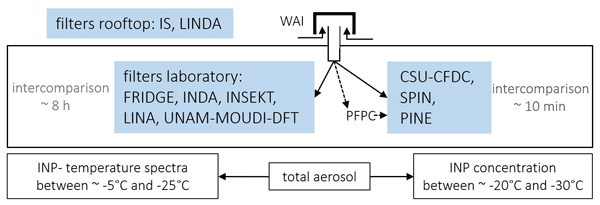
Aerosol particles that trigger ice formation in clouds are important for the climate system but are very rare in the atmosphere, challenging measurement techniques. Here we compare three cloud chambers and seven methods for collecting aerosol particles on filters for offline analysis at a mountaintop station. A general good agreement of the methods was found when sampling aerosol particles behind a whole air inlet, supporting their use for obtaining data that can be implemented in models.
Michael Lonardi, Elisa F. Akansu, André Ehrlich, Mauro Mazzola, Christian Pilz, Matthew D. Shupe, Holger Siebert, and Manfred Wendisch
Atmos. Chem. Phys., 24, 1961–1978, https://doi.org/10.5194/acp-24-1961-2024, https://doi.org/10.5194/acp-24-1961-2024, 2024
Short summary
Short summary
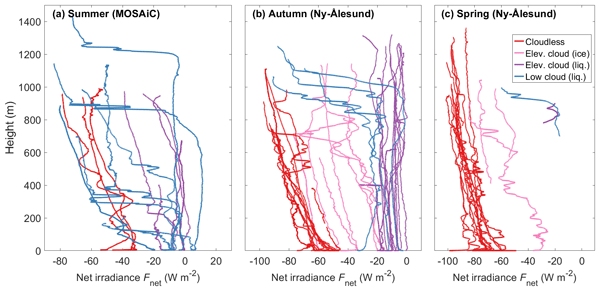
Profiles of thermal-infrared irradiance were measured at two Arctic sites. The presence or lack of clouds influences the vertical structure of these observations. In particular, the cloud top region is a source of radiative energy that can promote cooling and mixing in the cloud layer. Simulations are used to further characterize how the amount of water in the cloud modifies this forcing. A case study additionally showcases the evolution of the radiation profiles in a dynamic atmosphere.
Sebastian Zeppenfeld, Manuela van Pinxteren, Markus Hartmann, Moritz Zeising, Astrid Bracher, and Hartmut Herrmann
Atmos. Chem. Phys., 23, 15561–15587, https://doi.org/10.5194/acp-23-15561-2023, https://doi.org/10.5194/acp-23-15561-2023, 2023
Short summary
Short summary
Marine carbohydrates are produced in the surface of the ocean, enter the atmophere as part of sea spray aerosol particles, and potentially contribute to the formation of fog and clouds. Here, we present the results of a sea–air transfer study of marine carbohydrates conducted in the high Arctic. Besides a chemo-selective transfer, we observed a quick atmospheric aging of carbohydrates, possibly as a result of both biotic and abiotic processes.
Elisa F. Akansu, Sandro Dahlke, Holger Siebert, and Manfred Wendisch
Atmos. Chem. Phys., 23, 15473–15489, https://doi.org/10.5194/acp-23-15473-2023, https://doi.org/10.5194/acp-23-15473-2023, 2023
Short summary
Short summary
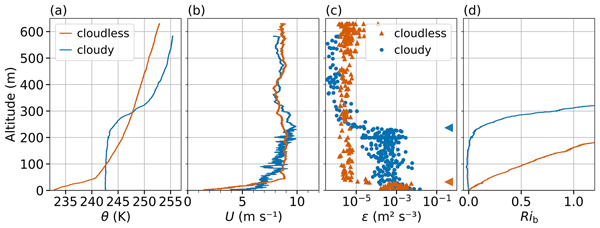
The height of the mixing layer is an important measure of the surface-level distribution of energy or other substances. The experimental determination of this height is associated with large uncertainties, particularly under stable conditions that we often find during the polar night or in the presence of clouds. We present a reference method using turbulence measurements on a tethered balloon, which allows us to evaluate approaches based on radiosondes or surface observations.
Ulrike Egerer, Holger Siebert, Olaf Hellmuth, and Lise Lotte Sørensen
Atmos. Chem. Phys., 23, 15365–15373, https://doi.org/10.5194/acp-23-15365-2023, https://doi.org/10.5194/acp-23-15365-2023, 2023
Short summary
Short summary
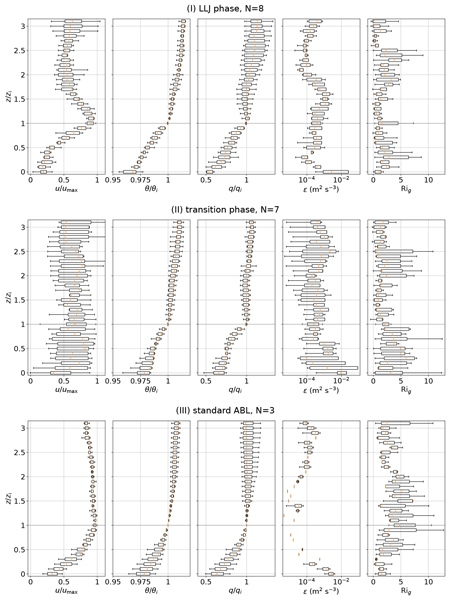
Low-level jets (LLJs) are strong winds near the surface and occur frequently in the Arctic in stable conditions. Using tethered-balloon profile measurements in Greenland, we analyze a multi-hour period with an LLJ that later weakens and finally collapses. Increased shear-induced turbulence at the LLJ bounds mostly does not reach the ground until the LLJ collapses. Our findings support the hypothesis that a passive tracer can be advected with an LLJ and mixed down when the LLJ collapses.
Giovanni Chellini, Rosa Gierens, Kerstin Ebell, Theresa Kiszler, Pavel Krobot, Alexander Myagkov, Vera Schemann, and Stefan Kneifel
Earth Syst. Sci. Data, 15, 5427–5448, https://doi.org/10.5194/essd-15-5427-2023, https://doi.org/10.5194/essd-15-5427-2023, 2023
Short summary
Short summary
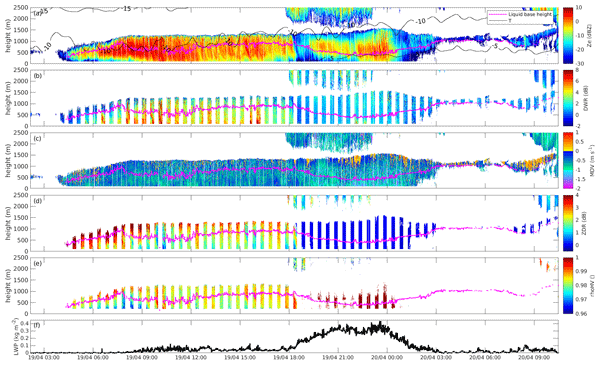
We present a comprehensive quality-controlled dataset of remote sensing observations of low-level mixed-phase clouds (LLMPCs) taken at the high Arctic site of Ny-Ålesund, Svalbard, Norway. LLMPCs occur frequently in the Arctic region, and substantially warm the surface. However, our understanding of microphysical processes in these clouds is incomplete. This dataset includes a comprehensive set of variables which allow for extensive investigation of such processes in LLMPCs at the site.
Barbara Harm-Altstädter, Konrad Bärfuss, Lutz Bretschneider, Martin Schön, Jens Bange, Ralf Käthner, Radovan Krejci, Mauro Mazzola, Kihong Park, Falk Pätzold, Alexander Peuker, Rita Traversi, Birgit Wehner, and Astrid Lampert
Aerosol Research, 1, 39–64, https://doi.org/10.5194/ar-1-39-2023, https://doi.org/10.5194/ar-1-39-2023, 2023
Short summary
Short summary
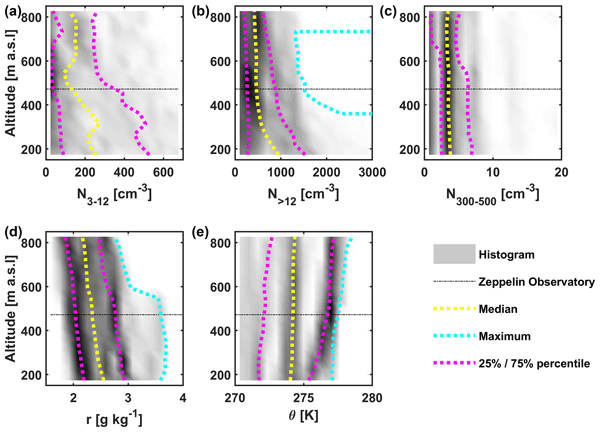
We present observations of aerosol particles and meteorological parameters in the horizontal and vertical distribution measured with uncrewed aerial systems in the Arctic. The field campaign was carried out during the snow melting season, when ultrafine aerosol particles (UFPs) with a size between 3 and 12 nm occurred frequently. A high variability of the measured UFPs was identified in the spatial scale, which was strongly associated with different atmospheric boundary layer properties.
Aleksandra Cherkasheva, Rustam Manurov, Piotr Kowalczuk, Alexandra N. Loginova, Monika Zabłocka, and Astrid Bracher
EGUsphere, https://doi.org/10.5194/egusphere-2023-2495, https://doi.org/10.5194/egusphere-2023-2495, 2023
Preprint archived
Short summary
Short summary
We aimed to improve the quality of regional Greenland Sea primary production estimates. Seventy two versions of primary production model setups were tested against field data. Best performing models had local biomass and light absorption profiles. Thus by using local parametrizations for these parameters we can improve Arctic primary production model performance. Annual Greenland Sea basin estimates are larger than previously reported.
Sarah Grawe, Conrad Jentzsch, Jonas Schaefer, Heike Wex, Stephan Mertes, and Frank Stratmann
Atmos. Meas. Tech., 16, 4551–4570, https://doi.org/10.5194/amt-16-4551-2023, https://doi.org/10.5194/amt-16-4551-2023, 2023
Short summary
Short summary
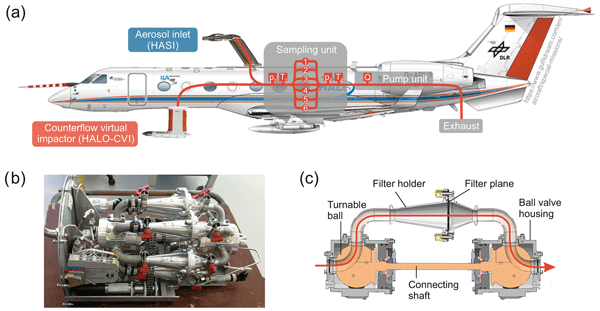
Measurements of ice-nucleating particle (INP) concentrations are valuable for the simulation of cloud properties. In recent years, filter sampling in combination with offline INP measurements has become increasingly popular. However, most sampling is ground-based, and the vertical transport of INPs is not well quantified. The High-volume flow aERosol particle filter sAmpler (HERA) for applications on board aircraft was developed to expand the sparse dataset of INP concentrations at cloud level.
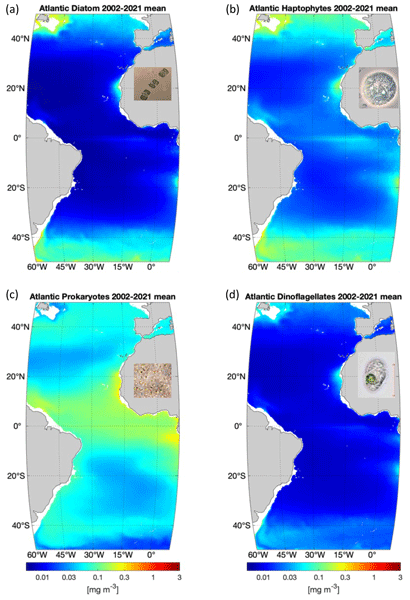
Hongyan Xi, Marine Bretagnon, Svetlana N. Losa, Vanda Brotas, Mara Gomes, Ilka Peeken, Leonardo M. A. Alvarado, Antoine Mangin, and Astrid Bracher
State Planet, 1-osr7, 5, https://doi.org/10.5194/sp-1-osr7-5-2023, https://doi.org/10.5194/sp-1-osr7-5-2023, 2023
Short summary
Short summary
Continuous monitoring of phytoplankton groups using satellite data is crucial for understanding global ocean phytoplankton variability on different scales in both space and time. This study focuses on four important phytoplankton groups in the Atlantic Ocean to investigate their trend, anomaly and phenological characteristics both over the whole region and at subscales. This study paves the way to promote potentially important ocean monitoring indicators to help sustain the ocean health.
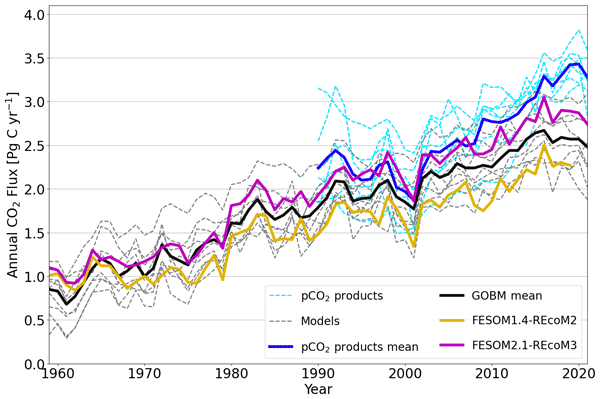
Özgür Gürses, Laurent Oziel, Onur Karakuş, Dmitry Sidorenko, Christoph Völker, Ying Ye, Moritz Zeising, Martin Butzin, and Judith Hauck
Geosci. Model Dev., 16, 4883–4936, https://doi.org/10.5194/gmd-16-4883-2023, https://doi.org/10.5194/gmd-16-4883-2023, 2023
Short summary
Short summary
This paper assesses the biogeochemical model REcoM3 coupled to the ocean–sea ice model FESOM2.1. The model can be used to simulate the carbon uptake or release of the ocean on timescales of several hundred years. A detailed analysis of the nutrients, ocean productivity, and ecosystem is followed by the carbon cycle. The main conclusion is that the model performs well when simulating the observed mean biogeochemical state and variability and is comparable to other ocean–biogeochemical models.
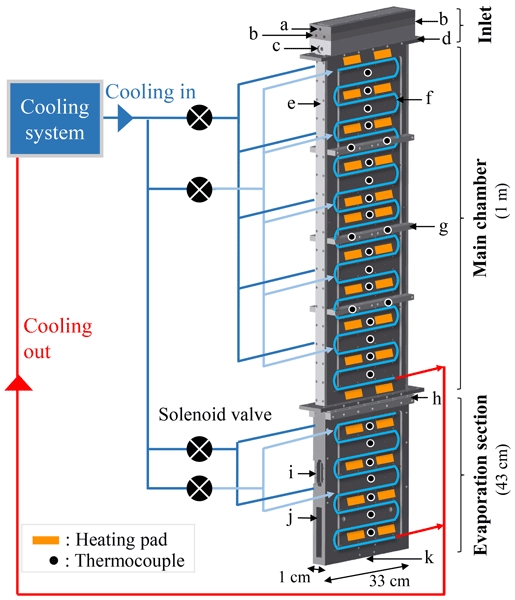
Dimitri Castarède, Zoé Brasseur, Yusheng Wu, Zamin A. Kanji, Markus Hartmann, Lauri Ahonen, Merete Bilde, Markku Kulmala, Tuukka Petäjä, Jan B. C. Pettersson, Berko Sierau, Olaf Stetzer, Frank Stratmann, Birgitta Svenningsson, Erik Swietlicki, Quynh Thu Nguyen, Jonathan Duplissy, and Erik S. Thomson
Atmos. Meas. Tech., 16, 3881–3899, https://doi.org/10.5194/amt-16-3881-2023, https://doi.org/10.5194/amt-16-3881-2023, 2023
Short summary
Short summary
Clouds play a key role in Earth’s climate by influencing the surface energy budget. Certain types of atmospheric aerosols, called ice-nucleating particles (INPs), induce the formation of ice in clouds and, thus, often initiate precipitation formation. The Portable Ice Nucleation Chamber 2 (PINCii) is a new instrument developed to study ice formation and to conduct ambient measurements of INPs, allowing us to investigate the sources and properties of the atmospheric aerosols that can act as INPs.
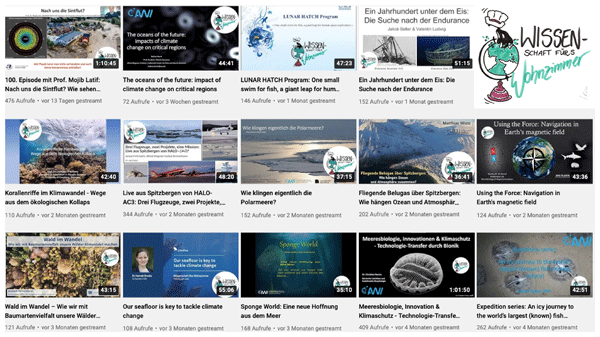
Nicolas Stoll, Matthias Wietz, Stephan Juricke, Franziska Pausch, Corina Peter, Miriam Seifert, Jana C. Massing, Moritz Zeising, Rebecca A. McPherson, Melissa Käß, and Björn Suckow
Polarforschung, 91, 31–43, https://doi.org/10.5194/polf-91-31-2023, https://doi.org/10.5194/polf-91-31-2023, 2023
Short summary
Short summary
Global crises, such as climate change and the COVID-19 pandemic, show the importance of communicating science to the public. We introduce the YouTube channel "Wissenschaft fürs Wohnzimmer", which livestreams presentations on climate-related topics weekly and is accessible to all. The project encourages interaction between scientists and the public and has been running successfully for over 2 years. We present the concept, what we have learnt, and the challenges after 100 streamed episodes.
Manuela van Pinxteren, Sebastian Zeppenfeld, Khanneh Wadinga Fomba, Nadja Triesch, Sanja Frka, and Hartmut Herrmann
Atmos. Chem. Phys., 23, 6571–6590, https://doi.org/10.5194/acp-23-6571-2023, https://doi.org/10.5194/acp-23-6571-2023, 2023
Short summary
Short summary
Important marine organic carbon compounds were identified in the Atlantic Ocean and marine aerosol particles. These compounds were strongly enriched in the atmosphere. Their enrichment was, however, not solely explained via sea-to-air transfer but also via atmospheric in situ formation. The identified compounds constituted about 50 % of the organic carbon on the aerosol particles, and a pronounced coupling between ocean and atmosphere for this oligotrophic region could be concluded.
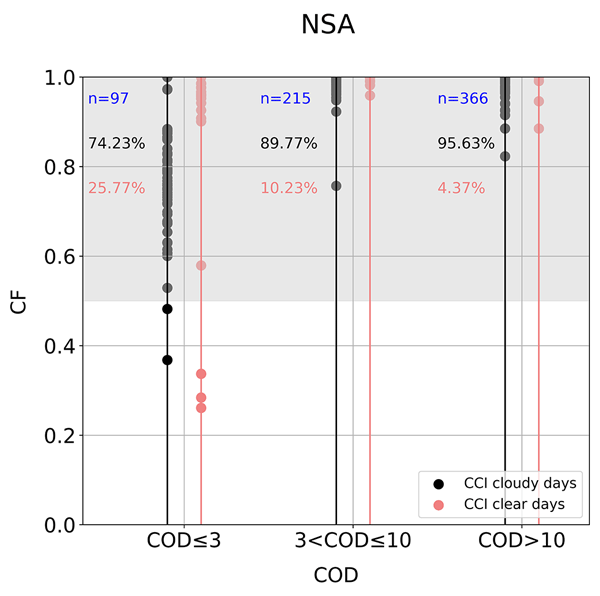
Kameswara S. Vinjamuri, Marco Vountas, Luca Lelli, Martin Stengel, Matthew D. Shupe, Kerstin Ebell, and John P. Burrows
Atmos. Meas. Tech., 16, 2903–2918, https://doi.org/10.5194/amt-16-2903-2023, https://doi.org/10.5194/amt-16-2903-2023, 2023
Short summary
Short summary
Clouds play an important role in Arctic amplification. Cloud data from ground-based sites are valuable but cannot represent the whole Arctic. Therefore the use of satellite products is a measure to cover the entire Arctic. However, the quality of such cloud measurements from space is not well known. The paper discusses the differences and commonalities between satellite and ground-based measurements. We conclude that the satellite dataset, with a few exceptions, can be used in the Arctic.

Ulrike Egerer, John J. Cassano, Matthew D. Shupe, Gijs de Boer, Dale Lawrence, Abhiram Doddi, Holger Siebert, Gina Jozef, Radiance Calmer, Jonathan Hamilton, Christian Pilz, and Michael Lonardi
Atmos. Meas. Tech., 16, 2297–2317, https://doi.org/10.5194/amt-16-2297-2023, https://doi.org/10.5194/amt-16-2297-2023, 2023
Short summary
Short summary
This paper describes how measurements from a small uncrewed aircraft system can be used to estimate the vertical turbulent heat energy exchange between different layers in the atmosphere. This is particularly important for the atmosphere in the Arctic, as turbulent exchange in this region is often suppressed but is still important to understand how the atmosphere interacts with sea ice. We present three case studies from the MOSAiC field campaign in Arctic sea ice in 2020.

Kevin C. H. Sze, Heike Wex, Markus Hartmann, Henrik Skov, Andreas Massling, Diego Villanueva, and Frank Stratmann
Atmos. Chem. Phys., 23, 4741–4761, https://doi.org/10.5194/acp-23-4741-2023, https://doi.org/10.5194/acp-23-4741-2023, 2023
Short summary
Short summary
Ice-nucleating particles (INPs) play an important role in cloud formation and thus in our climate. But little is known about the abundance and properties of INPs, especially in the Arctic, where the temperature increases almost 4 times as fast as that of the rest of the globe. We observe higher INP concentrations and more biological INPs in summer than in winter, likely from local sources. We also provide three equations for estimating INP concentrations in models at different times of the year.
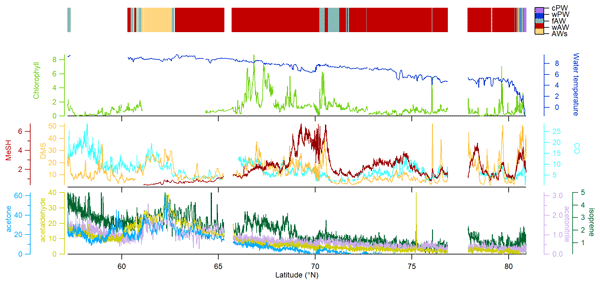
Valérie Gros, Bernard Bonsang, Roland Sarda-Estève, Anna Nikolopoulos, Katja Metfies, Matthias Wietz, and Ilka Peeken
Biogeosciences, 20, 851–867, https://doi.org/10.5194/bg-20-851-2023, https://doi.org/10.5194/bg-20-851-2023, 2023
Short summary
Short summary
The oceans are both sources and sinks for trace gases important for atmospheric chemistry and marine ecology. Here, we quantified selected trace gases (including the biological metabolites dissolved dimethyl sulfide, methanethiol and isoprene) along a 2500 km transect from the North Atlantic to the Arctic Ocean. In the context of phytoplankton and bacterial communities, our study suggests that methanethiol (rarely measured before) might substantially influence ocean–atmosphere cycling.
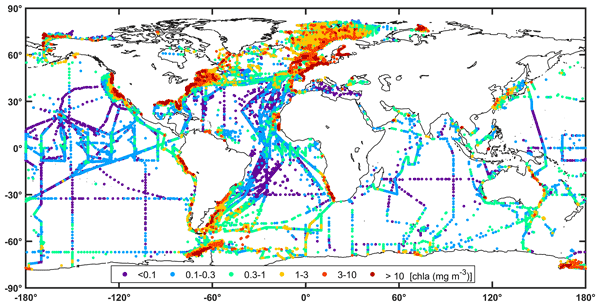
André Valente, Shubha Sathyendranath, Vanda Brotas, Steve Groom, Michael Grant, Thomas Jackson, Andrei Chuprin, Malcolm Taberner, Ruth Airs, David Antoine, Robert Arnone, William M. Balch, Kathryn Barker, Ray Barlow, Simon Bélanger, Jean-François Berthon, Şükrü Beşiktepe, Yngve Borsheim, Astrid Bracher, Vittorio Brando, Robert J. W. Brewin, Elisabetta Canuti, Francisco P. Chavez, Andrés Cianca, Hervé Claustre, Lesley Clementson, Richard Crout, Afonso Ferreira, Scott Freeman, Robert Frouin, Carlos García-Soto, Stuart W. Gibb, Ralf Goericke, Richard Gould, Nathalie Guillocheau, Stanford B. Hooker, Chuamin Hu, Mati Kahru, Milton Kampel, Holger Klein, Susanne Kratzer, Raphael Kudela, Jesus Ledesma, Steven Lohrenz, Hubert Loisel, Antonio Mannino, Victor Martinez-Vicente, Patricia Matrai, David McKee, Brian G. Mitchell, Tiffany Moisan, Enrique Montes, Frank Muller-Karger, Aimee Neeley, Michael Novak, Leonie O'Dowd, Michael Ondrusek, Trevor Platt, Alex J. Poulton, Michel Repecaud, Rüdiger Röttgers, Thomas Schroeder, Timothy Smyth, Denise Smythe-Wright, Heidi M. Sosik, Crystal Thomas, Rob Thomas, Gavin Tilstone, Andreia Tracana, Michael Twardowski, Vincenzo Vellucci, Kenneth Voss, Jeremy Werdell, Marcel Wernand, Bozena Wojtasiewicz, Simon Wright, and Giuseppe Zibordi
Earth Syst. Sci. Data, 14, 5737–5770, https://doi.org/10.5194/essd-14-5737-2022, https://doi.org/10.5194/essd-14-5737-2022, 2022
Short summary
Short summary
A compiled set of in situ data is vital to evaluate the quality of ocean-colour satellite data records. Here we describe the global compilation of bio-optical in situ data (spanning from 1997 to 2021) used for the validation of the ocean-colour products from the ESA Ocean Colour Climate Change Initiative (OC-CCI). The compilation merges and harmonizes several in situ data sources into a simple format that could be used directly for the evaluation of satellite-derived ocean-colour data.
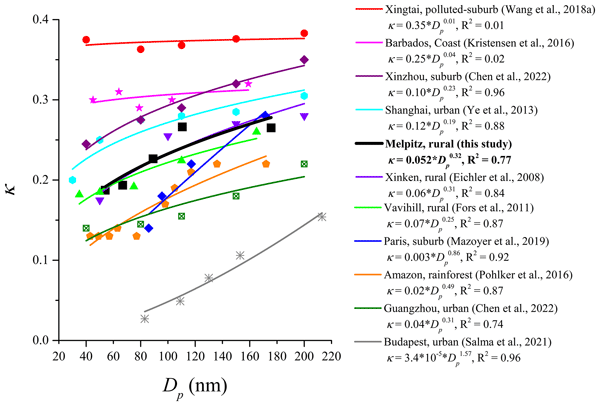
Yuan Wang, Silvia Henning, Laurent Poulain, Chunsong Lu, Frank Stratmann, Yuying Wang, Shengjie Niu, Mira L. Pöhlker, Hartmut Herrmann, and Alfred Wiedensohler
Atmos. Chem. Phys., 22, 15943–15962, https://doi.org/10.5194/acp-22-15943-2022, https://doi.org/10.5194/acp-22-15943-2022, 2022
Short summary
Short summary
Aerosol particle activation affects cloud, precipitation, radiation, and thus the global climate. Its long-term measurements are important but still scarce. In this study, more than 4 years of measurements at a central European station were analyzed. The overall characteristics and seasonal changes of aerosol particle activation are summarized. The power-law fit between particle hygroscopicity factor and diameter was recommended for predicting cloud
condensation nuclei number concentration.
Christian Pilz, Sebastian Düsing, Birgit Wehner, Thomas Müller, Holger Siebert, Jens Voigtländer, and Michael Lonardi
Atmos. Meas. Tech., 15, 6889–6905, https://doi.org/10.5194/amt-15-6889-2022, https://doi.org/10.5194/amt-15-6889-2022, 2022
Short summary
Short summary
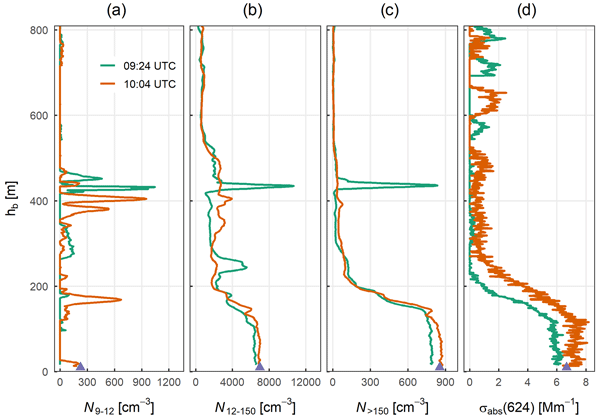
Tethered balloon observations are highly valuable for aerosol studies in the lowest part of the atmosphere. This study presents a newly developed platform called CAMP with four aerosol instruments for balloon-borne measurements in the Arctic. Laboratory characterizations and evaluations of the instruments and results of a first field deployment are shown. A case study highlights CAMP's capabilities and the importance of airborne aerosol studies for interpretation of ground-based observations.
Fraser King, George Duffy, Lisa Milani, Christopher G. Fletcher, Claire Pettersen, and Kerstin Ebell
Atmos. Meas. Tech., 15, 6035–6050, https://doi.org/10.5194/amt-15-6035-2022, https://doi.org/10.5194/amt-15-6035-2022, 2022
Short summary
Short summary
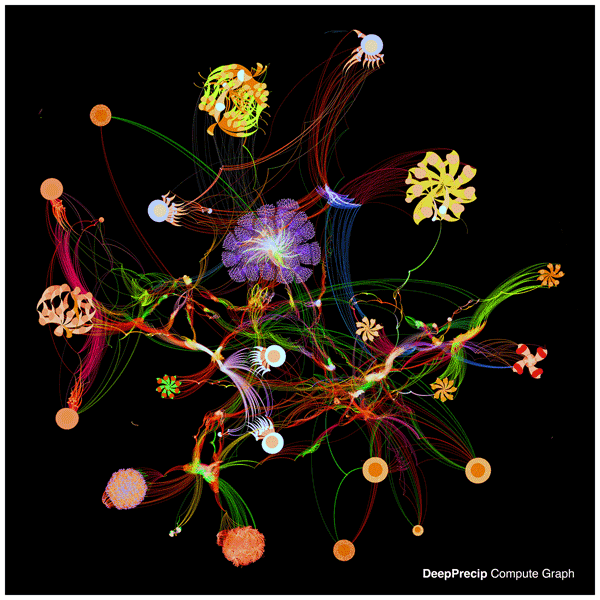
Under warmer global temperatures, precipitation patterns are expected to shift substantially, with critical impact on the global water-energy budget. In this work, we develop a deep learning model for predicting snow and rain accumulation based on surface radar observations of the lower atmosphere. Our model demonstrates improved skill over traditional methods and provides new insights into the regions of the atmosphere that provide the most significant contributions to high model accuracy.
Xianda Gong, Martin Radenz, Heike Wex, Patric Seifert, Farnoush Ataei, Silvia Henning, Holger Baars, Boris Barja, Albert Ansmann, and Frank Stratmann
Atmos. Chem. Phys., 22, 10505–10525, https://doi.org/10.5194/acp-22-10505-2022, https://doi.org/10.5194/acp-22-10505-2022, 2022
Short summary
Short summary
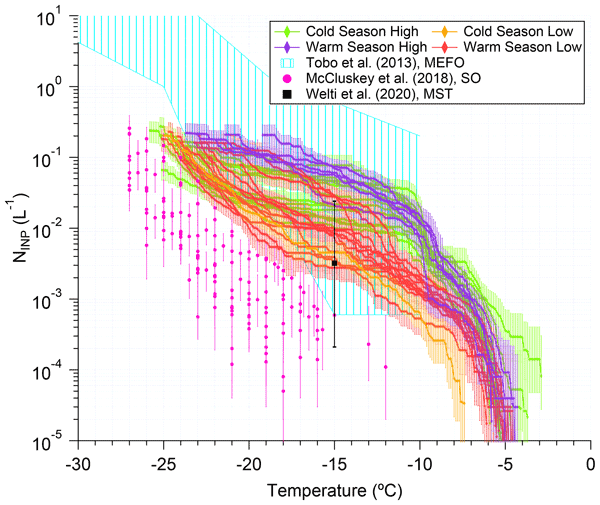
The sources of ice-nucleating particles (INPs) are poorly understood in the Southern Hemisphere (SH). We studied INPs in the boundary layer in the southern Patagonia region. No seasonal cycle of INP concentrations was observed. The majority of INPs are biogenic particles, likely from local continental sources. The INP concentrations are higher when strong precipitation occurs. While previous studies focused on marine INP sources in SH, we point out the importance of continental sources of INPs.
Carlton Xavier, Metin Baykara, Robin Wollesen de Jonge, Barbara Altstädter, Petri Clusius, Ville Vakkari, Roseline Thakur, Lisa Beck, Silvia Becagli, Mirko Severi, Rita Traversi, Radovan Krejci, Peter Tunved, Mauro Mazzola, Birgit Wehner, Mikko Sipilä, Markku Kulmala, Michael Boy, and Pontus Roldin
Atmos. Chem. Phys., 22, 10023–10043, https://doi.org/10.5194/acp-22-10023-2022, https://doi.org/10.5194/acp-22-10023-2022, 2022
Short summary
Short summary
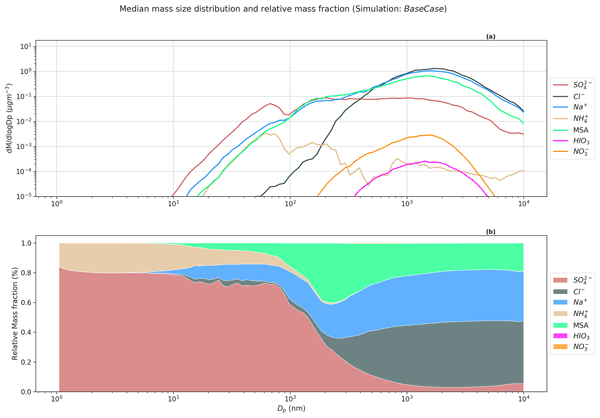
The focus of this work is to study and improve our understanding of processes involved in the formation and growth of new particles in a remote Arctic marine environment. We run the 1D model ADCHEM along air mass trajectories arriving at Ny-Ålesund in May 2018. The model finds that ion-mediated H2SO4–NH3 nucleation can explain the observed new particle formation at Ny-Ålesund. The growth of particles is driven via H2SO4 condensation and formation of methane sulfonic acid in the aqueous phase.
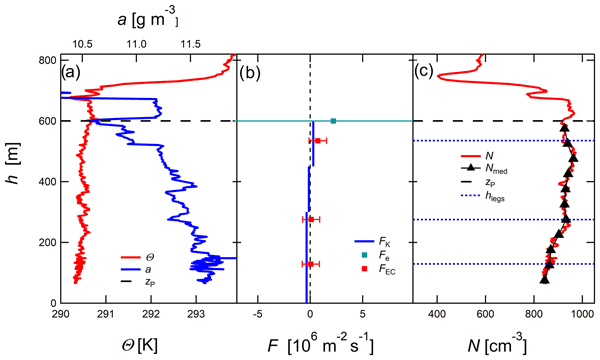
Janine Lückerath, Andreas Held, Holger Siebert, Michel Michalkow, and Birgit Wehner
Atmos. Chem. Phys., 22, 10007–10021, https://doi.org/10.5194/acp-22-10007-2022, https://doi.org/10.5194/acp-22-10007-2022, 2022
Short summary
Short summary
Three different methods were applied to estimate the vertical aerosol particle flux in the marine boundary layer (MBL) and between the MBL and free troposphere. For the first time, aerosol fluxes derived from these three methods were estimated and compared using airborne aerosol measurements using data from the ACORES field campaign in the northeastern Atlantic Ocean in July 2017. The amount of fluxes was small and directed up and down for different cases, but the methods were applicable.
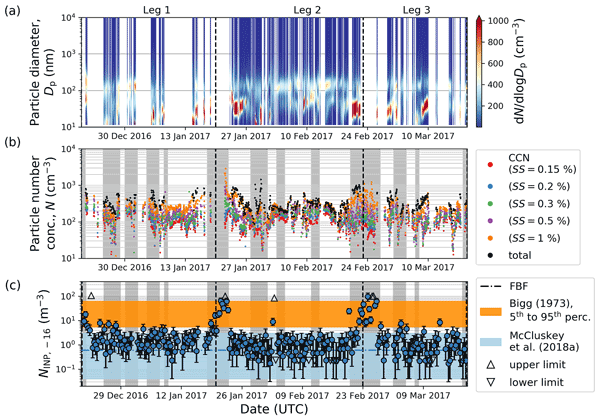
Christian Tatzelt, Silvia Henning, André Welti, Andrea Baccarini, Markus Hartmann, Martin Gysel-Beer, Manuela van Pinxteren, Robin L. Modini, Julia Schmale, and Frank Stratmann
Atmos. Chem. Phys., 22, 9721–9745, https://doi.org/10.5194/acp-22-9721-2022, https://doi.org/10.5194/acp-22-9721-2022, 2022
Short summary
Short summary
We present the abundance and origin of cloud-relevant aerosol particles in the preindustral-like conditions of the Southern Ocean (SO) during austral summer. Cloud condensation nuclei (CCN) and ice-nucleating particles (INP) were measured during a circum-Antarctic scientific cruise with in situ instrumentation and offline filter measurements, respectively. Transport processes were found to play an equally important role as local sources for both the CCN and INP population of the SO.
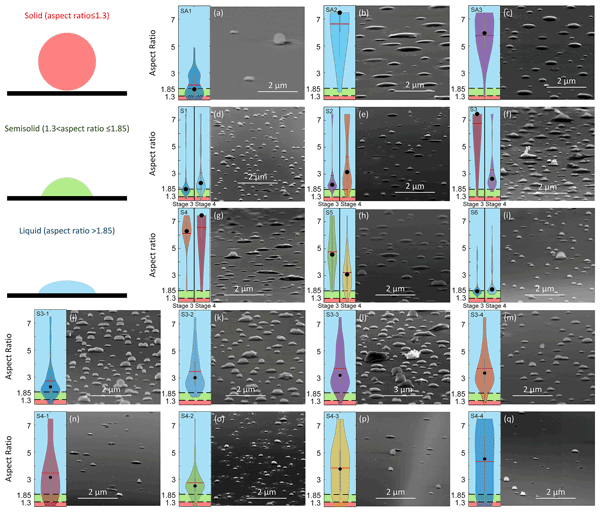
Zezhen Cheng, Megan Morgenstern, Bo Zhang, Matthew Fraund, Nurun Nahar Lata, Rhenton Brimberry, Matthew A. Marcus, Lynn Mazzoleni, Paulo Fialho, Silvia Henning, Birgit Wehner, Claudio Mazzoleni, and Swarup China
Atmos. Chem. Phys., 22, 9033–9057, https://doi.org/10.5194/acp-22-9033-2022, https://doi.org/10.5194/acp-22-9033-2022, 2022
Short summary
Short summary
We observed a high abundance of liquid and internally mixed particles in samples collected in the North Atlantic free troposphere during summer. We also found several solid and semisolid particles for different emission sources and transport patterns. Our results suggest that considering the mixing state, emission source, and transport patterns of particles is necessary to estimate their phase state in the free troposphere, which is critical for predicting their effects on climate.

Jakub L. Nowak, Robert Grosz, Wiebke Frey, Dennis Niedermeier, Jędrzej Mijas, Szymon P. Malinowski, Linda Ort, Silvio Schmalfuß, Frank Stratmann, Jens Voigtländer, and Tadeusz Stacewicz
Atmos. Meas. Tech., 15, 4075–4089, https://doi.org/10.5194/amt-15-4075-2022, https://doi.org/10.5194/amt-15-4075-2022, 2022
Short summary
Short summary
A high-resolution infrared hygrometer (FIRH) was adapted to measure humidity and its rapid fluctuations in turbulence inside a moist-air wind tunnel LACIS-T where two air streams of different temperature and humidity are mixed. The measurement was achieved from outside the tunnel through its glass windows and provided an agreement with a reference dew-point hygrometer placed inside. The characterization of humidity complements previous investigations of velocity and temperature fields.

Lady Mateus-Fontecha, Angela Vargas-Burbano, Rodrigo Jimenez, Nestor Y. Rojas, German Rueda-Saa, Dominik van Pinxteren, Manuela van Pinxteren, Khanneh Wadinga Fomba, and Hartmut Herrmann
Atmos. Chem. Phys., 22, 8473–8495, https://doi.org/10.5194/acp-22-8473-2022, https://doi.org/10.5194/acp-22-8473-2022, 2022
Short summary
Short summary
This study reports the chemical composition of regionally representative PM2.5 in an area densely populated and substantially industrialized, located in the inter-Andean valley, with the highest sugarcane yield in the world and where sugarcane is burned and harvested year round. We found that sugarcane burning is not portrayed as a distinguishable sample composition component. Instead, the composition analysis revealed multiple associations among sugarcane burning components and other sources.
Giovanni Chellini and Kerstin Ebell
Atmos. Meas. Tech. Discuss., https://doi.org/10.5194/amt-2022-22, https://doi.org/10.5194/amt-2022-22, 2022
Preprint withdrawn
Short summary
Short summary
Moisture inversions (MIs), i.e. atmospheric layers where specific humidity increases with height, are frequent in the Arctic. This study assesses the capability of two satellite instruments, IASI and AIRS, and one reanalysis, ERA5, to detect MIs at an Arctic site. The comparison with radiosonde data shows that humidity profiles from IASI and AIRS severely underestimate the occurrence of MIs. On the other hand, MI characteristics in ERA5 are comparable to those in the radiosonde data.
Manuela van Pinxteren, Tiera-Brandy Robinson, Sebastian Zeppenfeld, Xianda Gong, Enno Bahlmann, Khanneh Wadinga Fomba, Nadja Triesch, Frank Stratmann, Oliver Wurl, Anja Engel, Heike Wex, and Hartmut Herrmann
Atmos. Chem. Phys., 22, 5725–5742, https://doi.org/10.5194/acp-22-5725-2022, https://doi.org/10.5194/acp-22-5725-2022, 2022
Short summary
Short summary
A class of marine particles (transparent exopolymer particles, TEPs) that is ubiquitously found in the world oceans was measured for the first time in ambient marine aerosol particles and marine cloud waters in the tropical Atlantic Ocean. TEPs are likely to have good properties for influencing clouds. We show that TEPs are transferred from the ocean to the marine atmosphere via sea-spray formation and our results suggest that they can also form directly in aerosol particles and in cloud water.
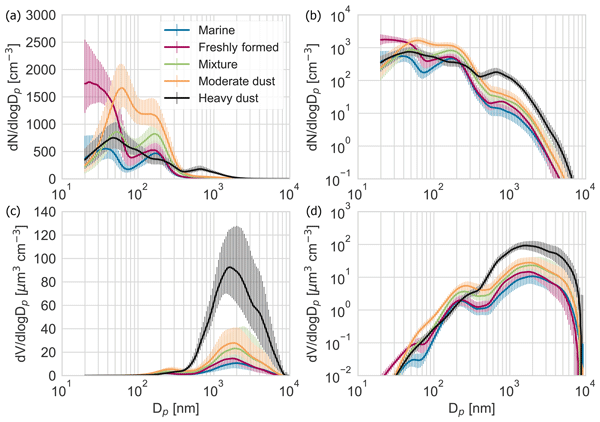
Xianda Gong, Heike Wex, Thomas Müller, Silvia Henning, Jens Voigtländer, Alfred Wiedensohler, and Frank Stratmann
Atmos. Chem. Phys., 22, 5175–5194, https://doi.org/10.5194/acp-22-5175-2022, https://doi.org/10.5194/acp-22-5175-2022, 2022
Short summary
Short summary
We conducted 10 yr measurements to characterize the atmospheric aerosol at Cabo Verde. An unsupervised machine learning algorithm, K-means, was implemented to study the aerosol types. Cloud condensation nuclei number concentrations during dust periods were 2.5 times higher than marine periods. The long-term data sets, together with the aerosol classification, can be used as a basis to improve understanding of annual cycles of aerosol, and aerosol-cloud interactions in the North Atlantic.
Rupert Holzinger, Oliver Eppers, Kouji Adachi, Heiko Bozem, Markus Hartmann, Andreas Herber, Makoto Koike, Dylan B. Millet, Nobuhiro Moteki, Sho Ohata, Frank Stratmann, and Atsushi Yoshida
Atmos. Chem. Phys. Discuss., https://doi.org/10.5194/acp-2022-95, https://doi.org/10.5194/acp-2022-95, 2022
Revised manuscript not accepted
Short summary
Short summary
In spring 2018 the research aircraft Polar 5 conducted flights in the Arctic atmosphere. The flight operation was from Station Nord in Greenland, 1700 km north of the Arctic Circle (81°43'N, 17°47'W). Using a mass spectrometer we measured more than 100 organic compounds in the air. We found a clear signature of natural organic compounds that are transported from forests to the high Arctic. These compounds have the potential to change the cloud cover and energy budget of the Arctic region.
M. A. Soppa, D. A. Dinh, B. Silva, F. Steinmetz, L. Alvarado, and A. Bracher
Int. Arch. Photogramm. Remote Sens. Spatial Inf. Sci., XLVI-1-W1-2021, 69–72, https://doi.org/10.5194/isprs-archives-XLVI-1-W1-2021-69-2022, https://doi.org/10.5194/isprs-archives-XLVI-1-W1-2021-69-2022, 2022
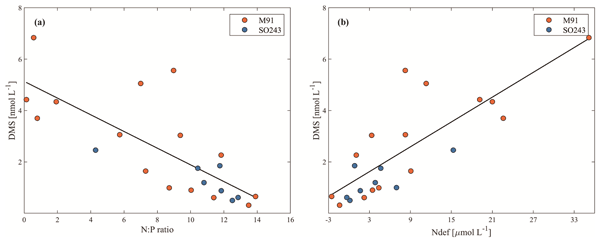
Yanan Zhao, Dennis Booge, Christa A. Marandino, Cathleen Schlundt, Astrid Bracher, Elliot L. Atlas, Jonathan Williams, and Hermann W. Bange
Biogeosciences, 19, 701–714, https://doi.org/10.5194/bg-19-701-2022, https://doi.org/10.5194/bg-19-701-2022, 2022
Short summary
Short summary
We present here, for the first time, simultaneously measured dimethylsulfide (DMS) seawater concentrations and DMS atmospheric mole fractions from the Peruvian upwelling region during two cruises in December 2012 and October 2015. Our results indicate low oceanic DMS concentrations and atmospheric DMS molar fractions in surface waters and the atmosphere, respectively. In addition, the Peruvian upwelling region was identified as an insignificant source of DMS emissions during both periods.
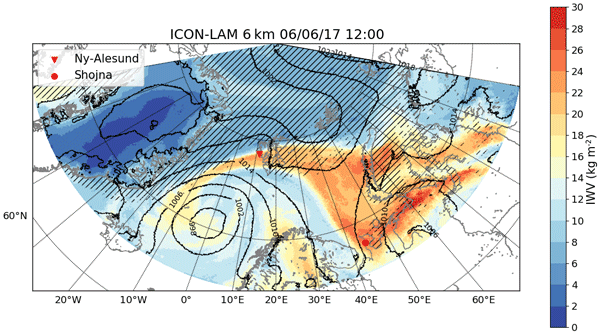
Hélène Bresson, Annette Rinke, Mario Mech, Daniel Reinert, Vera Schemann, Kerstin Ebell, Marion Maturilli, Carolina Viceto, Irina Gorodetskaya, and Susanne Crewell
Atmos. Chem. Phys., 22, 173–196, https://doi.org/10.5194/acp-22-173-2022, https://doi.org/10.5194/acp-22-173-2022, 2022
Short summary
Short summary
Arctic warming is pronounced, and one factor in this is the poleward atmospheric transport of heat and moisture. This study assesses the 4D structure of an Arctic moisture intrusion event which occurred in June 2017. For the first time, high-resolution pan-Arctic ICON simulations are performed and compared with global models, reanalysis, and observations. Results show the added value of high resolution in the event representation and the impact of the intrusion on the surface energy fluxes.
Nabil Deabji, Khanneh Wadinga Fomba, Souad El Hajjaji, Abdelwahid Mellouki, Laurent Poulain, Sebastian Zeppenfeld, and Hartmut Herrmann
Atmos. Chem. Phys., 21, 18147–18174, https://doi.org/10.5194/acp-21-18147-2021, https://doi.org/10.5194/acp-21-18147-2021, 2021
Short summary
Short summary
Mountain and high-altitude sites provide representative data for the lower free troposphere, various pathways for aerosol interactions, and changing boundary layer heights useful in understanding atmospheric composition. However, only few studies exist in African regions despite diversity in both natural and anthropogenic emissions. This study provides detailed atmospheric studies in the northern African high-altitude region.
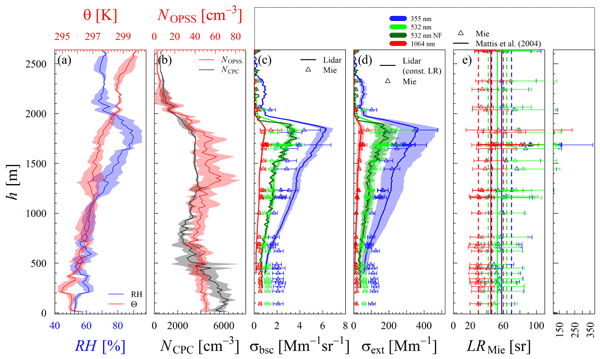
Sebastian Düsing, Albert Ansmann, Holger Baars, Joel C. Corbin, Cyrielle Denjean, Martin Gysel-Beer, Thomas Müller, Laurent Poulain, Holger Siebert, Gerald Spindler, Thomas Tuch, Birgit Wehner, and Alfred Wiedensohler
Atmos. Chem. Phys., 21, 16745–16773, https://doi.org/10.5194/acp-21-16745-2021, https://doi.org/10.5194/acp-21-16745-2021, 2021
Short summary
Short summary
The work deals with optical properties of aerosol particles in dried and atmospheric states. Based on two measurement campaigns in the rural background of central Europe, different measurement approaches were compared with each other, such as modeling based on Mie theory and direct in situ or remote sensing measurements. Among others, it was shown that the aerosol extinction-to-backscatter ratio is relative humidity dependent, and refinement with respect to the model input parameters is needed.
Cited articles
Aas, W., Berglen, T. F., Eckhardt, S., Fiebig, M., Solberg, S., and Yttri, K. E.: Monitoring of long-range transported air pollutants in Norway – Annual Report 2021, NILU, ISBN 978-82-425-3088-2, 2022.
Aas, W., Eckhardt, S., Solberg, S., and Yttri, K. E.: Monitoring of long-range transported air pollutants in Norway. Annual Report 2022, NILU, ISBN 978-82-425-3122-3, 2023.
Akansu, E. F., Dahlke, S., Siebert, H., and Wendisch, M.: Evaluation of methods to determine the surface mixing layer height of the atmospheric boundary layer in the central Arctic during polar night and transition to polar day in cloudless and cloudy conditions, Atmos. Chem. Phys., 23, 15473–15489, https://doi.org/10.5194/acp-23-15473-2023, 2023.
Aller, J. Y., Kuznetsova, M. R., Jahns, C. J., and Kemp, P. F.: The sea surface microlayer as a source of viral and bacterial enrichment in marine aerosols, J. Aerosol. Sci., 36, 801–812, https://doi.org/10.1016/j.jaerosci.2004.10.012, 2005.
Aller, J. Y., Radway, J. C., Kilthau, W. P., Bothe, D. W., Wilson, T. W., Vaillancourt, R. D., Quinn, P. K., Coffman, D. J., Murray, B. J., and Knopf, D. A.: Size-resolved characterization of the polysaccharidic and proteinaceous components of sea spray aerosol, Atmos. Environ., 154, 331–347, https://doi.org/10.1016/j.atmosenv.2017.01.053, 2017.
Alpert, P. A., Kilthau, W. P., O'Brien, R. E., Moffet, R. C., Gilles, M. K., Wang, B., Laskin, A., Aller, J. Y., and Knopf, D. A.: Ice-nucleating agents in sea spray aerosol identified and quantified with a holistic multimodal freezing model, Sci. Adv., 8, eabq6842, https://doi.org/10.1126/sciadv.abq6842, 2022.
Aluwihare, L. I., Repeta, D. J., and Chen, R. F.: A major biopolymeric component to dissolved organic carbon in surface sea water, Nature, 387, 166–169, https://doi.org/10.1038/387166a0, 1997.
Amore, A., Giardi, F., Becagli, S., Caiazzo, L., Mazzola, M., Severi, M., and Traversi, R.: Source apportionment of sulphate in the High Arctic by a 10 yr-long record from Gruvebadet Observatory (Ny-Ålesund, Svalbard Islands), Atmos. Environ., 270, 118890, https://doi.org/10.1016/j.atmosenv.2021.118890, 2022.
Angle, K., Grassian, V. H., and Ault, A. P.: The rapid acidification of sea spray aerosols, Phys. Today, 75, 58–59, https://doi.org/10.1063/PT.3.4926, 2022.
Angle, K. J., Crocker, D. R., Simpson, R. M. C., Mayer, K. J., Garofalo, L. A., Moore, A. N., Garcia, S. L. M., Or, V. W., Srinivasan, S., Farhan, M., Sauer, J. S., Lee, C., Pothier, M. A., Farmer, D. K., Martz, T. R., Bertram, T. H., Cappa, C. D., Prather, K. A., and Grassian, V. H.: Acidity across the interface from the ocean surface to sea spray aerosol, P. Natl. Acad. Sci., 118, 1–6, https://doi.org/10.1073/pnas.2018397118, 2021.
Arnosti, C., Wietz, M., Brinkhoff, T., Hehemann, J.-H., Probandt, D., Zeugner, L., and Amann, R.: The Biogeochemistry of Marine Polysaccharides: Sources, Inventories, and Bacterial Drivers of the Carbohydrate Cycle, Ann. Rev. Mar. Sci., 13, 81–108, https://doi.org/10.1146/annurev-marine-032020-012810, 2021.
Assmy, P., Cecilie Kvernvik, A., Hop, H., Hoppe, C. J. M., Chierici, M., David T., D., Duarte, P., Fransson, A., García, L. M., Patuła, W., Kwaśniewski, S., Maturilli, M., Pavlova, O., Tatarek, A., Wiktor, J. M., Wold, A., Wolf, K. K. E., and Bailey, A.: Seasonal plankton dynamics in Kongsfjorden during two years of contrasting environmental conditions, Prog. Oceanogr., 213, 102996, https://doi.org/10.1016/j.pocean.2023.102996, 2023.
Avcı, B., Krüger, K., Fuchs, B. M., Teeling, H., and Amann, R. I.: Polysaccharide niche partitioning of distinct Polaribacter clades during North Sea spring algal blooms, ISME J., 14, 1369–1383, https://doi.org/10.1038/s41396-020-0601-y, 2020.
Barthelmeß, T., Cristi, A., Deppeler, S., Safi, K., Sellegri, K., Law, C. S., and Engel, A.: Pronounced Diel Cycling of Dissolved Carbohydrates and Amino Acids in the Surface Ocean and across Diverse Regimes, Environ. Sci. Technol., 59, 419–429, https://doi.org/10.1021/acs.est.4c00491, 2025.
Becker, S., Tebben, J., Coffinet, S., Wiltshire, K., Iversen, M. H., Harder, T., Hinrichs, K.-U., and Hehemann, J.-H.: Laminarin is a major molecule in the marine carbon cycle, P. Natl. Acad. Sci., 117, 6599–6607, https://doi.org/10.1073/pnas.1917001117, 2020.
Bianco, A., Deguillaume, L., Chaumerliac, N., Vaïtilingom, M., Wang, M., Delort, A.-M., and Bridoux, M. C.: Effect of endogenous microbiota on the molecular composition of cloud water: a study by Fourier-transform ion cyclotron resonance mass spectrometry (FT-ICR MS), Sci. Rep., 9, 1–12, https://doi.org/10.1038/s41598-019-44149-8, 2019.
Bischof, K., Convey, P., Duarte, P., Gattuso, J.-P., Granberg, M., Hop, H., Hoppe, C., Jiménez, C., Lisitsyn, L., Martinez, B., Roleda, M. Y., Thor, P., Wiktor, J. M., and Gabrielsen, G. W.: Kongsfjorden as Harbinger of the Future Arctic: Knowns, Unknowns and Research Priorities, in: The Ecosystem of Kongsfjorden, Svalbard, edited by: Hop, H. and Wiencke, C., Springer International Publishing, Cham, 537–562, https://doi.org/10.1007/978-3-319-46425-1_14, 2019.
Bivand, R., Pebesma, E., and Gomez-Rubio, V.: Applied spatial data analysis with R, Springer, https://doi.org/10.1007/978-1-4614-7618-4, 2013.
Bivand, R., Keitt, T., and Rowlingson, B.: rgdal: Bindings for the “Geospatial” Data Abstraction Library, R package version 1.5-32, https://cran.r-project.org/package=rgdal (last access: 30 May 2023), 2022.
Borch, N. H. and Kirchman, D. L.: Concentration and composition of dissolved combined neutral sugars (polysaccharides) in seawater determined by HPLC-PAD, Mar. Chem., 57, 85–95, https://doi.org/10.1016/S0304-4203(97)00002-9, 1997.
Brownrigg, M. R.: Package `mapdata', R package version 2.3.1, CRAN, https://doi.org/10.32614/CRAN.package.mapdata, 2013.
Brownrigg, M. R.: maps: Draw Geographical Maps, R package version 3.4.2, CRAN, https://doi.org/10.32614/CRAN.package.maps, 2023.
Browse, J., Carslaw, K. S., Mann, G. W., Birch, C. E., Arnold, S. R., and Leck, C.: The complex response of Arctic aerosol to sea-ice retreat, Atmos. Chem. Phys., 14, 7543–7557, https://doi.org/10.5194/acp-14-7543-2014, 2014.
Burns, W. G., Marchetti, A., and Ziervogel, K.: Enhanced formation of transparent exopolymer particles (TEP) under turbulence during phytoplankton growth, J. Plankton Res., 41, 349–361, https://doi.org/10.1093/plankt/fbz018, 2019.
Burrows, S. M., Ogunro, O., Frossard, A. A., Russell, L. M., Rasch, P. J., and Elliott, S. M.: A physically based framework for modeling the organic fractionation of sea spray aerosol from bubble film Langmuir equilibria, Atmos. Chem. Phys., 14, 13601–13629, https://doi.org/10.5194/acp-14-13601-2014, 2014.
Cai, Q., Wang, J., Beletsky, D., Overland, J., Ikeda, M., and Wan, L.: Accelerated decline of summer Arctic sea ice during 1850–2017 and the amplified Arctic warming during the recent decades, Environ. Res. Lett., 16, 034015, https://doi.org/10.1088/1748-9326/abdb5f, 2021.
Carlton, A. G., Wiedinmyer, C., and Kroll, J. H.: A review of Secondary Organic Aerosol (SOA) formation from isoprene, Atmos. Chem. Phys., 9, 4987–5005, https://doi.org/10.5194/acp-9-4987-2009, 2009.
Carslaw, D. C. and Ropkins, K.: openair – An R package for air quality data analysis, Environ. Modell. Softw., 27–28, 52–61, https://doi.org/10.32614/CRAN.package.openair, 2012.
Chang, L., Song, S., Feng, G., Zhang, Y., and Gao, G.: Assessment of the Uncertainties in Arctic Low-Level Temperature Inversion Characteristics in Radio Occultation Observations, IEEE T. Geosci. Remote, 55, 1793–1803, https://doi.org/10.1109/TGRS.2016.2633461, 2017.
Chi, J. W., Li, W. J., Zhang, D. Z., Zhang, J. C., Lin, Y. T., Shen, X. J., Sun, J. Y., Chen, J. M., Zhang, X. Y., Zhang, Y. M., and Wang, W. X.: Sea salt aerosols as a reactive surface for inorganic and organic acidic gases in the Arctic troposphere, Atmos. Chem. Phys., 15, 11341–11353, https://doi.org/10.5194/acp-15-11341-2015, 2015.
Compiano, A.-M., Romano, J.-C., Garabetian, F., Laborde, P., and de la Giraudièrea, I.: Monosaccharide composition of particulate hydrolysable sugar fraction in surface microlayers from brackish and marine waters, Mar. Chem., 42, 237–251, https://doi.org/10.1016/0304-4203(93)90015-G, 1993.
Crahan, K. K., Hegg, D., Covert, D. S., and Jonsson, H.: An exploration of aqueous oxalic acid production in the coastal marine atmosphere, Atmos. Environ., 38, 3757–3764, https://doi.org/10.1016/j.atmosenv.2004.04.009, 2004.
Creamean, J. M., de Boer, G., Telg, H., Mei, F., Dexheimer, D., Shupe, M. D., Solomon, A., and McComiskey, A.: Assessing the vertical structure of Arctic aerosols using balloon-borne measurements, Atmos. Chem. Phys., 21, 1737–1757, https://doi.org/10.5194/acp-21-1737-2021, 2021.
Croft, B., Lohmann, U., Martin, R. V., Stier, P., Wurzler, S., Feichter, J., Posselt, R., and Ferrachat, S.: Aerosol size-dependent below-cloud scavenging by rain and snow in the ECHAM5-HAM, Atmos. Chem. Phys., 9, 4653–4675, https://doi.org/10.5194/acp-9-4653-2009, 2009.
Cunliffe, M. and Wurl, O.: Guide to best practices to study the ocean's surface, J. Mar. Biol. Assoc. UK, 118 pp., https://doi.org/10.25607/OBP-1512, 2014.
Dahms, A. S.: 3-Deoxy-D-pentulosonic acid aldolase and its role in a new pathway of D-xylose degradation, Biochem. Bioph. Res. Co., 60, 1433–1439, https://doi.org/10.1016/0006-291X(74)90358-1, 1974.
Dekhtyareva, A., Holmén, K., Maturilli, M., Hermansen, O., and Graversen, R.: Effect of seasonal mesoscale and microscale meteorological conditions in Ny-Ålesund on results of monitoring of long-range transported pollution, Polar Res., 2018.
DeMott, P. J., Hill, T. C. J., McCluskey, C. S., Prather, K. A., Collins, D. B., Sullivan, R. C., Ruppel, M. J., Mason, R. H., Irish, V. E., Lee, T., Hwang, C. Y., Rhee, T. S., Snider, J. R., McMeeking, G. R., Dhaniyala, S., Lewis, E. R., Wentzell, J. J. B., Abbatt, J., Lee, C., Sultana, C. M., Ault, A. P., Axson, J. L., Martinez, M. D., Venero, I., Santos-Figueroa, G., Stokes, M. D., Deane, G. B., Mayol-Bracero, O. L., Grassian, V. H., Bertram, T. H., Bertram, A. K., Moffett, B. F., and Franc, G. D.: Sea spray aerosol as a unique source of ice nucleating particles, P. Natl. Acad. Sci., 113, 5797–5803, https://doi.org/10.1073/pnas.1514034112, 2016.
Dusek, U., Frank, G. P., Hildebrandt, L., Curtius, J., Schneider, J., Walter, S., Chand, D., Drewnick, F., Hings, S., Jung, D., Borrmann, S., and Andreae, M. O.: Size Matters More Than Chemistry for Cloud-Nucleating Ability of Aerosol Particles, Science, 312, 1375–1378, https://doi.org/10.1126/science.1125261, 2006.
Ebell, K. and Ritter, C.: HATPRO microwave radiometer measurements at AWIPEV, Ny-Ålesund (2019–2021), PANGAEA [data set], https://doi.org/10.1594/PANGAEA.943004, 2022.
Ebell, K., Maturilli, M., Ritter, C., and O'Connor, E.: Custom collection of classification, and ice water content data from Ny-Ålesund between 27 Sep and 12 Nov 2021, ACTRIS Cloud Remote Sensing Data Centre Unit (CLU), https://doi.org/10.60656/5598100185854c01, 2025.
Egerer, U., Ehrlich, A., Gottschalk, M., Griesche, H., Neggers, R. A. J., Siebert, H., and Wendisch, M.: Case study of a humidity layer above Arctic stratocumulus and potential turbulent coupling with the cloud top, Atmos. Chem. Phys., 21, 6347–6364, https://doi.org/10.5194/acp-21-6347-2021, 2021.
Egerer, U., Siebert, H., Hellmuth, O., and Sørensen, L. L.: The role of a low-level jet for stirring the stable atmospheric surface layer in the Arctic, Atmos. Chem. Phys., 23, 15365–15373, https://doi.org/10.5194/acp-23-15365-2023, 2023.
Engel, A.: Distribution of transparent exopolymer particles (TEP) in the northeast Atlantic Ocean and their potential significance for aggregation processes, Deep-Sea Res. Pt. I, 51, 83–92, https://doi.org/10.1016/j.dsr.2003.09.001, 2004.
Engel, A. and Händel, N.: A novel protocol for determining the concentration and composition of sugars in particulate and in high molecular weight dissolved organic matter (HMW-DOM) in seawater, Mar. Chem., 127, 180–191, https://doi.org/10.1016/j.marchem.2011.09.004, 2011.
Engel, A. and Galgani, L.: The organic sea-surface microlayer in the upwelling region off the coast of Peru and potential implications for air–sea exchange processes, Biogeosciences, 13, 989–1007, https://doi.org/10.5194/bg-13-989-2016, 2016.
Engel, A., Thoms, S., Riebesell, U., Rochelle-Newall, E., and Zondervan, I.: Polysaccharide aggregation as a potential sink of marine dissolved organic carbon, Nature, 428, 929–932, https://doi.org/10.1038/nature02453, 2004.
Engel, A., Harlay, J., Piontek, J., and Chou, L.: Contribution of combined carbohydrates to dissolved and particulate organic carbon after the spring bloom in the northern Bay of Biscay (North-Eastern Atlantic Ocean), Cont. Shelf Res., 45, 42–53, https://doi.org/10.1016/j.csr.2012.05.016, 2012.
Ervens, B. and Amato, P.: The global impact of bacterial processes on carbon mass, Atmos. Chem. Phys., 20, 1777–1794, https://doi.org/10.5194/acp-20-1777-2020, 2020.
Esau, I. and Repina, I.: Wind Climate in Kongsfjorden, Svalbard, and Attribution of Leading Wind Driving Mechanisms through Turbulence-Resolving Simulations, Adv. Meteorol., 2012, 568454, https://doi.org/10.1155/2012/568454, 2012.
Fabiano, M., Povero, P., and Danovaro, R.: Distribution and composition of particulate organic matter in the Ross Sea (Antarctica), Polar Biol., 13, 525–533, https://doi.org/10.1007/BF00236394, 1993.
Facchini, M. C., Rinaldi, M., Decesari, S., Carbone, C., Finessi, E., Mircea, M., Fuzzi, S., Ceburnis, D., Flanagan, R., Nilsson, E. D., Leeuw, G. de, Martino, M., Woeltjen, J., and O'Dowd, C. D.: Primary submicron marine aerosol dominated by insoluble organic colloids and aggregates, Geophys. Res. Lett., 35, 1–5, https://doi.org/10.1029/2008GL034210, 2008.
Farmer, D. K., Cappa, C. D., and Kreidenweis, S. M.: Atmospheric Processes and Their Controlling Influence on Cloud Condensation Nuclei Activity, Chem. Rev., 115, 4199–4217, https://doi.org/10.1021/cr5006292, 2015.
Farmer, D. K., Boedicker, E. K., and DeBolt, H. M.: Dry Deposition of Atmospheric Aerosols: Approaches, Observations, and Mechanisms, Annu. Rev. Phys. Chem., 72, 375–397, https://doi.org/10.1146/annurev-physchem-090519-034936, 2021.
Feltracco, M., Barbaro, E., Hoppe, C. J. M., Wolf, K. K. E., Spolaor, A., Layton, R., Keuschnig, C., Barbante, C., Gambaro, A., and Larose, C.: Airborne bacteria and particulate chemistry capture Phytoplankton bloom dynamics in an Arctic fjord, Atmos. Environ., 256, 118458, https://doi.org/10.1016/j.atmosenv.2021.118458, 2021.
Fomba, K. W., Müller, K., van Pinxteren, D., Poulain, L., van Pinxteren, M., and Herrmann, H.: Long-term chemical characterization of tropical and marine aerosols at the Cape Verde Atmospheric Observatory (CVAO) from 2007 to 2011, Atmos. Chem. Phys., 14, 8883–8904, https://doi.org/10.5194/acp-14-8883-2014, 2014.
Francis, J. A. and Wu, B.: Why has no new record-minimum Arctic sea-ice extent occurred since September 2012?, Environ. Res. Lett., 15, 114034, https://doi.org/10.1088/1748-9326/abc047, 2020.
Freud, E., Krejci, R., Tunved, P., Leaitch, R., Nguyen, Q. T., Massling, A., Skov, H., and Barrie, L.: Pan-Arctic aerosol number size distributions: seasonality and transport patterns, Atmos. Chem. Phys., 17, 8101–8128, https://doi.org/10.5194/acp-17-8101-2017, 2017.
Furukawa, T. and Takahashi, Y.: Oxalate metal complexes in aerosol particles: implications for the hygroscopicity of oxalate-containing particles, Atmos. Chem. Phys., 11, 4289–4301, https://doi.org/10.5194/acp-11-4289-2011, 2011.
Gantt, B., Meskhidze, N., Facchini, M. C., Rinaldi, M., Ceburnis, D., and O'Dowd, C. D.: Wind speed dependent size-resolved parameterization for the organic mass fraction of sea spray aerosol, Atmos. Chem. Phys., 11, 8777–8790, https://doi.org/10.5194/acp-11-8777-2011, 2011.
Gao, Q., Leck, C., Rauschenberg, C., and Matrai, P. A.: On the chemical dynamics of extracellular polysaccharides in the high Arctic surface microlayer, Ocean Sci., 8, 401–418, https://doi.org/10.5194/os-8-401-2012, 2012.
Gierens, R., Kneifel, S., Shupe, M. D., Ebell, K., Maturilli, M., and Löhnert, U.: Low-level mixed-phase clouds in a complex Arctic environment, Atmos. Chem. Phys., 20, 3459–3481, https://doi.org/10.5194/acp-20-3459-2020, 2020.
Goldberg, S. J., Carlson, C. A., Brzezinski, M., Nelson, N. B., and Siegel, D. A.: Systematic removal of neutral sugars within dissolved organic matter across ocean basins, Geophys. Res. Lett., 38, 1–7, https://doi.org/10.1029/2011GL048620, 2011.
Grawe, S., Jentzsch, C., Schaefer, J., Wex, H., Mertes, S., and Stratmann, F.: Next-generation ice-nucleating particle sampling on board aircraft: characterization of the High-volume flow aERosol particle filter sAmpler (HERA), Atmos. Meas. Tech., 16, 4551–4570, https://doi.org/10.5194/amt-16-4551-2023, 2023.
Grolemund, G. and Wickham, H.: Dates and Times Made Easy with lubridate, J. Stat. Softw., 40, 1–25, 2011.
Grosse, J., Nöthig, E.-M., Torres-Valdés, S., and Engel, A.: Summertime Amino Acid and Carbohydrate Patterns in Particulate and Dissolved Organic Carbon Across Fram Strait, Front. Mar. Sci., 8, https://doi.org/10.3389/fmars.2021.684675, 2021.
Guo, T., Li, K., Zhu, Y., Gao, H., and Yao, X.: Concentration and size distribution of particulate oxalate in marine and coastal atmospheres – Implication for the increased importance of oxalate in nanometer atmospheric particles, Atmos. Environ., 142, 19–31, https://doi.org/10.1016/j.atmosenv.2016.07.026, 2016.
Gürses, Ö., Oziel, L., Karakuş, O., Sidorenko, D., Völker, C., Ye, Y., Zeising, M., Butzin, M., and Hauck, J.: Ocean biogeochemistry in the coupled ocean–sea ice–biogeochemistry model FESOM2.1–REcoM3, Geosci. Model Dev., 16, 4883–4936, https://doi.org/10.5194/gmd-16-4883-2023, 2023.
Haddrell, A. E. and Thomas, R. J.: Aerobiology: Experimental Considerations, Observations, and Future Tools, Appl. Environ. Microbiol., 83, 1–15, https://doi.org/10.1128/AEM.00809-17, 2017.
Hansell, D. A.: Recalcitrant Dissolved Organic Carbon Fractions, Annu. Rev. Mar. Sci., 5, 421–445, https://doi.org/10.1146/annurev-marine-120710-100757, 2013.
Hara, K., Yamagata, S., Yamanouchi, T., Sato, K., Herber, A., Iwasaka, Y., Nagatani, M., and Nakata, H.: Mixing states of individual aerosol particles in spring Arctic troposphere during ASTAR 2000 campaign, J. Geophys. Res.-Atmos., 108, 1–12, https://doi.org/10.1029/2002JD002513, 2003.
Hartmann, S., Schrödner, R., Hassett, B. T., Hartmann, M., van Pinxteren, M., Fomba, K. W., Stratmann, F., Herrmann, H., Pöhlker, M., and Zeppenfeld, S.: Polysaccharides-Important Constituents of Ice-Nucleating Particles of Marine Origin, Environ. Sci. Technol., 59, 5098–5108, https://doi.org/10.1021/acs.est.4c08014, 2025.
Hasenecz, E., Jayarathne, T., Pendergraft, M. A., Santander, M. V., Mayer, K. J., Sauer, J., Lee, C., Gibson, W. S., Kruse, S. M., Malfatti, F., Prather, K. A., and Stone, E. A.: Marine bacteria affect saccharide enrichment in sea spray aerosol during a phytoplankton bloom, ACS Earth Space Chem., 4, 1638–1649, https://doi.org/10.1021/acsearthspacechem.0c00167, 2020.
Hasenecz, E. S., Kaluarachchi, C. P., Lee, H. D., Tivanski, A. V., and Stone, E. A.: Saccharide Transfer to Sea Spray Aerosol Enhanced by Surface Activity, Calcium, and Protein Interactions, ACS Earth Space Chem., 3, 2539–2548, https://doi.org/10.1021/acsearthspacechem.9b00197, 2019.
Herrmann, H., Tilgner, A., Barzaghi, P., Majdik, Z., Gligorovski, S., Poulain, L., and Monod, A.: Towards a more detailed description of tropospheric aqueous phase organic chemistry: CAPRAM 3.0, Atmos. Environ., 39, 4351–4363, https://doi.org/10.1016/j.atmosenv.2005.02.016, 2005.
Heutte, B., Bergner, N., Angot, H., Pernov, J. B., Dada, L., Mirrielees, J. A., Beck, I., Baccarini, A., Boyer, M., Creamean, J. M., Daellenbach, K. R., El Haddad, I., Frey, M. M., Henning, S., Laurila, T., Moschos, V., Petäjä, T., Pratt, K. A., Quéléver, L. L. J., Shupe, M. D., Zieger, P., Jokinen, T., and Schmale, J.: Observations of high-time-resolution and size-resolved aerosol chemical composition and microphysics in the central Arctic: implications for climate-relevant particle properties, Atmos. Chem. Phys., 25, 2207–2241, https://doi.org/10.5194/acp-25-2207-2025, 2025.
Hijmans, R. J.: raster: Geographic Data Analysis and Modeling, R package version 3.6-26, CRAN, https://doi.org/10.32614/CRAN.package.raster, 2023.
Hill, T. C. J., Malfatti, F., McCluskey, C. S., Schill, G. P., Santander, M. V., Moore, K. A., Rauker, A. M., Perkins, R. J., Celussi, M., Levin, E. J. T., Suski, K. J., Cornwell, G. C., Lee, C., Negro, P. D., Kreidenweis, S. M., Prather, K. A., and DeMott, P. J.: Resolving the controls over the production and emission of ice-nucleating particles in sea spray, Environ. Sci.-Atmos., https://doi.org/10.1039/D2EA00154C, 2023.
Hoffman, E. J. and Duce, R. A.: Factors influencing the organic carbon content of marine aerosols: A laboratory study, J. Geophys. Res., 81, 3667–3670, https://doi.org/10.1029/JC081i021p03667, 1976.
Hogan, R. J., Mittermaier, M. P., and Illingworth, A. J.: The Retrieval of Ice Water Content from Radar Reflectivity Factor and Temperature and Its Use in Evaluating a Mesoscale Model, J. Appl. Meteorol. Clim., 45, 301–317, https://doi.org/10.1175/JAM2340.1, 2006.
Hoppel, W. A., Frick, G. M., and Fitzgerald, J. W.: Surface source function for sea-salt aerosol and aerosol dry deposition to the ocean surface, J. Geophys. Res.-Atmos., 107, AAC 7-1–AAC 7-17, https://doi.org/10.1029/2001JD002014, 2002.
Illingworth, A. J., Hogan, R. J., O'Connor, E. J., Bouniol, D., Brooks, M. E., Delanoé, J., Donovan, D. P., Eastment, J. D., Gaussiat, N., Goddard, J. W. F., Haeffelin, M., Baltink, H. K., Krasnov, O. A., Pelon, J., Piriou, J.-M., Protat, A., Russchenberg, H. W. J., Seifert, A., Tompkins, A. M., Zadelhoff, G.-J. van, Vinit, F., Willén, U., Wilson, D. R., and Wrench, C. L.: Cloudnet: Continuous Evaluation of Cloud Profiles in Seven Operational Models Using Ground-Based Observations, B. Am. Meteorol. Soc., 88, 883–898, https://doi.org/10.1175/BAMS-88-6-883, 2007.
Ittekkot, V., Brockmann, U., Michaelis, W., and Degens, E. T.: Dissolved free and combined carbohydrates during a phytoplankton bloom in the northern North Sea, Mar. Ecol. Prog. Ser., 4, 299–305, 1981.
Jayarathne, T., Sultana, C. M., Lee, C., Malfatti, F., Cox, J. L., Pendergraft, M. A., Moore, K. A., Azam, F., Tivanski, A. V., Cappa, C. D., Bertram, T. H., Grassian, V. H., Prather, K. A., and Stone, E. A.: Enrichment of Saccharides and Divalent Cations in Sea Spray Aerosol During Two Phytoplankton Blooms, Environ. Sci. Technol., 50, 11511–11520, https://doi.org/10.1021/acs.est.6b02988, 2016.
Jensen, L. Z., Glasius, M., Gryning, S.-E., Massling, A., Finster, K., and Šantl-Temkiv, T.: Seasonal Variation of the Atmospheric Bacterial Community in the Greenlandic High Arctic Is Influenced by Weather Events and Local and Distant Sources, Front. Microbiol., 13, https://doi.org/10.3389/fmicb.2022.909980, 2022.
Kang, H., Jung, C. H., Lee, B. Y., Krejci, R., Heslin-Rees, D., Aas, W., and Yoon, Y. J.: Aerosol hygroscopicity influenced by seasonal chemical composition variations in the Arctic region, J. Aerosol. Sci., 106551, https://doi.org/10.1016/j.jaerosci.2025.106551, 2025.
Kanji, Z. A., Ladino, L. A., Wex, H., Boose, Y., Burkert-Kohn, M., Cziczo, D. J., and Krämer, M.: Overview of Ice Nucleating Particles, Meteor. Mon., 58, 1.1–1.33, https://doi.org/10.1175/AMSMONOGRAPHS-D-16-0006.1, 2017.
Karl, M., Leck, C., Rad, F. M., Bäcklund, A., Lopez-Aparicio, S., and Heintzenberg, J.: New insights in sources of the sub-micrometre aerosol at Mt. Zeppelin observatory (Spitsbergen) in the year 2015, Tellus B, 71, 1613143, https://doi.org/10.1080/16000889.2019.1613143, 2019.
Kawamura, K. and Bikkina, S.: A review of dicarboxylic acids and related compounds in atmospheric aerosols: Molecular distributions, sources and transformation, Atmos. Res., 170, 140–160, https://doi.org/10.1016/j.atmosres.2015.11.018, 2016.
Kawamura, K., Kasukabe, H., and Barrie, L. A.: Source and reaction pathways of dicarboxylic acids, ketoacids and dicarbonyls in arctic aerosols: One year of observations, Atmos. Environ., 30, 1709–1722, https://doi.org/10.1016/1352-2310(95)00395-9, 1996a.
Kawamura, K., Sempéré, R., Imai, Y., Fujii, Y., and Hayashi, M.: Water soluble dicarboxylic acids and related compounds in Antarctic aerosols, J. Geophys. Res.-Atmos., 101, 18721–18728, https://doi.org/10.1029/96JD01541, 1996b.
Keene, W. C., Pszenny, A. A. P., Galloway, J. N., and Hawley, M. E.: Sea-salt corrections and interpretation of constituent ratios in marine precipitation, J. Geophys. Res., 91, 6647–6658, https://doi.org/10.1029/JD091iD06p06647, 1986.
Keene, W. C., Long, M. S., Reid, J. S., Frossard, A. A., Kieber, D. J., Maben, J. R., Russell, L. M., Kinsey, J. D., Quinn, P. K., and Bates, T. S.: Factors That Modulate Properties of Primary Marine Aerosol Generated From Ambient Seawater on Ships at Sea, J. Geophys. Res.-Atmos., 122, 11961–11990, https://doi.org/10.1002/2017JD026872, 2017.
Kerminen, V.-M., Teinilä, K., Hillamo, R., and Mäkelä, T.: Size-segregated chemistry of particulate dicarboxylic acids in the Arctic atmosphere, Atmos. Environ., 33, 2089–2100, https://doi.org/10.1016/S1352-2310(98)00350-1, 1999.
Khadem, H. E.: Carbohydrate Chemistry: Monosaccharides and Their Oligomers, Elsevier, 267 p., ISBN 978-0-12-236870-7, 2012.
Kharbush, J. J., Close, H. G., Van Mooy, B. A. S., Arnosti, C., Smittenberg, R. H., Le Moigne, F. A. C., Mollenhauer, G., Scholz-Böttcher, B., Obreht, I., Koch, B. P., Becker, K., Iversen, M. H., and Mohr, W.: Particulate Organic Carbon Deconstructed: Molecular and Chemical Composition of Particulate Organic Carbon in the Ocean, Front. Mar. Sci., 7, 518, https://doi.org/10.3389/fmars.2020.00518, 2020.
Kirchman, D. L., Meon, B., Ducklow, H. W., Carlson, C. A., Hansell, D. A., and Steward, G. F.: Glucose fluxes and concentrations of dissolved combined neutral sugars (polysaccharides) in the Ross Sea and Polar Front Zone, Antarctica, Deep-Sea Res. Pt. II, 48, 4179–4197, https://doi.org/10.1016/S0967-0645(01)00085-6, 2001.
Klein, A. M., Bohannan, B. J. M., Jaffe, D. A., Levin, D. A., and Green, J. L.: Molecular Evidence for Metabolically Active Bacteria in the Atmosphere, Front. Microbiol., 7, 772, https://doi.org/10.3389/fmicb.2016.00772, 2016.
Köllner, F., Schneider, J., Willis, M. D., Klimach, T., Helleis, F., Bozem, H., Kunkel, D., Hoor, P., Burkart, J., Leaitch, W. R., Aliabadi, A. A., Abbatt, J. P. D., Herber, A. B., and Borrmann, S.: Particulate trimethylamine in the summertime Canadian high Arctic lower troposphere, Atmos. Chem. Phys., 17, 13747–13766, https://doi.org/10.5194/acp-17-13747-2017, 2017.
Leck, C., Gao, Q., Mashayekhy Rad, F., and Nilsson, U.: Size-resolved atmospheric particulate polysaccharides in the high summer Arctic, Atmos. Chem. Phys., 13, 12573–12588, https://doi.org/10.5194/acp-13-12573-2013, 2013.
Leon-Marcos, A., Zeising, M., van Pinxteren, M., Zeppenfeld, S., Bracher, A., Barbaro, E., Engel, A., Feltracco, M., Tegen, I., and Heinold, B.: Modelling emission and transport of key components of primary marine organic aerosol using the global aerosol–climate model ECHAM6.3–HAM2.3, Geosci. Model Dev., 18, 4183–4213, https://doi.org/10.5194/gmd-18-4183-2025, 2025.
Li, J., Han, Z., Fu, P., Yao, X., and Liang, M.: Seasonal characteristics of emission, distribution, and radiative effect of marine organic aerosols over the western Pacific Ocean: an investigation with a coupled regional climate aerosol model, Atmos. Chem. Phys., 24, 3129–3161, https://doi.org/10.5194/acp-24-3129-2024, 2024.
Lohmann, U. and Feichter, J.: Global indirect aerosol effects: a review, Atmos. Chem. Phys., 5, 715–737, https://doi.org/10.5194/acp-5-715-2005, 2005.
Macke, A. and Flores, H.: The Expeditions PS106/1 and 2 of the Research Vessel POLARSTERN to the Arctic Ocean in 2017, Bremerhaven, Germany, 171, https://doi.org/10.2312/BzPM_0719_2018, 2018.
Madry, W. L., Toon, O. B., and O'Dowd, C. D.: Modeled optical thickness of sea-salt aerosol, J. Geophys. Res.-Atmos., 116, https://doi.org/10.1029/2010JD014691, 2011.
Malfatti, F., Lee, C., Tinta, T., Pendergraft, M. A., Celussi, M., Zhou, Y., Sultana, C. M., Rotter, A., Axson, J. L., Collins, D. B., Santander, M. V., Anides Morales, A. L., Aluwihare, L. I., Riemer, N., Grassian, V. H., Azam, F., and Prather, K. A.: Detection of Active Microbial Enzymes in Nascent Sea Spray Aerosol: Implications for Atmospheric Chemistry and Climate, Environ. Sci. Technol. Lett., 6, 171–177, https://doi.org/10.1021/acs.estlett.8b00699, 2019.
Manders, A. M. M., Schaap, M., Querol, X., Albert, M. F. M. A., Vercauteren, J., Kuhlbusch, T. A. J., and Hoogerbrugge, R.: Sea salt concentrations across the European continent, Atmos. Environ., 44, 2434–2442, https://doi.org/10.1016/j.atmosenv.2010.03.028, 2010.
Matulová, M., Husárová, S., Capek, P., Sancelme, M., and Delort, A.-M.: Biotransformation of Various Saccharides and Production of Exopolymeric Substances by Cloud-Borne Bacillus sp. 3B6, Environ. Sci. Technol., 48, 14238–14247, https://doi.org/10.1021/es501350s, 2014.
Maturilli, M.: Continuous meteorological observations at station Ny-Ålesund (2011-08 et seq), Alfred Wegener Institute – Research Unit Potsdam, PANGAEA [data set], https://doi.org/10.1594/PANGAEA.914979, 2020.
Maturilli, M., Herber, A., and König-Langlo, G.: Climatology and time series of surface meteorology in Ny-Ålesund, Svalbard, Earth Syst. Sci. Data, 5, 155–163, https://doi.org/10.5194/essd-5-155-2013, 2013.
Maturilli, M., Herber, A., and König-Langlo, G.: Surface radiation climatology for Ny-Ålesund, Svalbard (78.9° N), basic observations for trend detection, Theor. Appl. Climatol., 120, 331–339, https://doi.org/10.1007/s00704-014-1173-4, 2015.
Mayot, N., Matrai, P., Ellingsen, I. H., Steele, M., Johnson, K., Riser, S. C., and Swift, D.: Assessing Phytoplankton Activities in the Seasonal Ice Zone of the Greenland Sea Over an Annual Cycle, J. Geophys. Res.-Oceans, 123, 8004–8025, https://doi.org/10.1029/2018JC014271, 2018.
McNeill, V. F.: Aqueous Organic Chemistry in the Atmosphere: Sources and Chemical Processing of Organic Aerosols, Environ. Sci. Technol., 49, 1237–1244, https://doi.org/10.1021/es5043707, 2015.
Mirrielees, J. A., Kirpes, R. M., Costa, E. J., Porter, G. C. E., Murray, B. J., Lata, N. N., Boschi, V., China, S., Grannas, A. M., Ault, A. P., Matrai, P. A., and Pratt, K. A.: Marine aerosol generation experiments in the High Arctic during summertime, Elementa: Sci. Anthropocene, 12, 00134, https://doi.org/10.1525/elementa.2023.00134, 2024.
Müller, K., Lehmann, S., van Pinxteren, D., Gnauk, T., Niedermeier, N., Wiedensohler, A., and Herrmann, H.: Particle characterization at the Cape Verde atmospheric observatory during the 2007 RHaMBLe intensive, Atmos. Chem. Phys., 10, 2709–2721, https://doi.org/10.5194/acp-10-2709-2010, 2010.
Neuwirth, E.: RColorBrewer: ColorBrewer Palettes, R package version 1.1-3, CRAN, https://doi.org/10.32614/CRAN.package.RColorBrewer, 2022.
Nomokonova, T., Ebell, K., Löhnert, U., Maturilli, M., Ritter, C., and O'Connor, E.: Statistics on clouds and their relation to thermodynamic conditions at Ny-Ålesund using ground-based sensor synergy, Atmos. Chem. Phys., 19, 4105–4126, https://doi.org/10.5194/acp-19-4105-2019, 2019.
O'Dowd, C. D. and de Leeuw, G.: Marine aerosol production: a review of the current knowledge, Philos. Trans. A. Math. Phys. Eng. Sci., 365, 1753–1774, https://doi.org/10.1098/rsta.2007.2043, 2007.
O'Dowd, C. D., Smith, M. H., Consterdine, I. E., and Lowe, J. A.: Marine aerosol, sea-salt, and the marine sulphur cycle: a short review, Atmos. Environ., 31, 73–80, https://doi.org/10.1016/S1352-2310(96)00106-9, 1997.
Ooki, A., Uematsu, M., Miura, K., and Nakae, S.: Sources of sodium in atmospheric fine particles, Atmos. Environ., 36, 4367–4374, https://doi.org/10.1016/S1352-2310(02)00341-2, 2002.
Orellana, M. V. and Leck, C.: Chapter 9 – Marine Microgels, in: Biogeochemistry of Marine Dissolved Organic Matter (Second Edition), edited by: Hansell, D. A. and Carlson, C. A., Academic Press, Boston, 451–480, https://doi.org/10.1016/B978-0-12-405940-5.00009-1, 2015.
Orellana, M. V., Matrai, P. A., Leck, C., Rauschenberg, C. D., Lee, A. M., and Coz, E.: Marine microgels as a source of cloud condensation nuclei in the high Arctic, P. Natl. Acad. Sci., 108, 13612–13617, https://doi.org/10.1073/pnas.1102457108, 2011.
Oziel, L., Schourup-Kristensen, V., Wekerle, C., and Hauck, J.: The Pan-Arctic Continental Slope as an Intensifying Conveyer Belt for Nutrients in the Central Arctic Ocean (1985–2015), Global Biogeochem. Cy., 36, e2021GB007268, https://doi.org/10.1029/2021GB007268, 2022.
Panagiotopoulos, C. and Sempéré, R.: Analytical methods for the determination of sugars in marine samples: A historical perspective and future directions, Limnol. Oceanograph.-Meth., 3, 419–454, https://doi.org/10.4319/lom.2005.3.419, 2005.
Penner, J. E., Andreae, M. O., Annegarn, H., Barrie, L., Feichter, J., Hegg, D., Jayaraman, A., Leaitch, R., Murphy, D., Nganga, J., and Pitari, G.: Aerosols, their Direct and Indirect Effects, Climate Change 2001: The Scientific Basis: Contribution of Working Group I to the Third Assessment Report of the Intergovernmental Panel on Climate Change, 289–348, https://www.ipcc.ch/site/assets/uploads/2018/03/TAR-05.pdf ((last access: 10 January 2025), 2001.
Pierce, D.: ncdf4: Interface to Unidata netCDF (Version 4 or Earlier) Format Data, R package version 1.22, CRAN, https://cirrus.ucsd.edu/~pierce/ncdf/ (last access: 22 April 2025), 2023.
Pilinis, C., Pandis, S. N., and Seinfeld, J. H.: Sensitivity of direct climate forcing by atmospheric aerosols to aerosol size and composition, J. Geophys. Res., 100, 18739–18754, https://doi.org/10.1029/95JD02119, 1995.
Pilz, C., Düsing, S., Wehner, B., Müller, T., Siebert, H., Voigtländer, J., and Lonardi, M.: CAMP: an instrumented platform for balloon-borne aerosol particle studies in the lower atmosphere, Atmos. Meas. Tech., 15, 6889–6905, https://doi.org/10.5194/amt-15-6889-2022, 2022.
Pilz, C., Lonardi, M., Egerer, U., Siebert, H., Ehrlich, A., Heymsfield, A. J., Schmitt, C. G., Shupe, M. D., Wehner, B., and Wendisch, M.: Profile observations of the Arctic atmospheric boundary layer with the BELUGA tethered balloon during MOSAiC, Sci. Data, 10, 534, https://doi.org/10.1038/s41597-023-02423-5, 2023.
Pilz, C., Cassano, J. J., de Boer, G., Kirbus, B., Lonardi, M., Pöhlker, M., Shupe, M. D., Siebert, H., Wendisch, M., and Wehner, B.: Tethered balloon measurements reveal enhanced aerosol occurrence aloft interacting with Arctic low-level clouds, Elementa: Sci. Anthropocene, 12, 00120, https://doi.org/10.1525/elementa.2023.00120, 2024.
Platt, S. M., Hov, Ø., Berg, T., Breivik, K., Eckhardt, S., Eleftheriadis, K., Evangeliou, N., Fiebig, M., Fisher, R., Hansen, G., Hansson, H.-C., Heintzenberg, J., Hermansen, O., Heslin-Rees, D., Holmén, K., Hudson, S., Kallenborn, R., Krejci, R., Krognes, T., Larssen, S., Lowry, D., Lund Myhre, C., Lunder, C., Nisbet, E., Nizzetto, P. B., Park, K.-T., Pedersen, C. A., Aspmo Pfaffhuber, K., Röckmann, T., Schmidbauer, N., Solberg, S., Stohl, A., Ström, J., Svendby, T., Tunved, P., Tørnkvist, K., van der Veen, C., Vratolis, S., Yoon, Y. J., Yttri, K. E., Zieger, P., Aas, W., and Tørseth, K.: Atmospheric composition in the European Arctic and 30 years of the Zeppelin Observatory, Ny-Ålesund, Atmos. Chem. Phys., 22, 3321–3369, https://doi.org/10.5194/acp-22-3321-2022, 2022.
Porter, G. C. E., Adams, M. P., Brooks, I. M., Ickes, L., Karlsson, L., Leck, C., Salter, M. E., Schmale, J., Siegel, K., Sikora, S. N. F., Tarn, M. D., Vüllers, J., Wernli, H., Zieger, P., Zinke, J., and Murray, B. J.: Highly Active Ice-Nucleating Particles at the Summer North Pole, J. Geophys. Res.-Atmos., 127, e2021JD036059, https://doi.org/10.1029/2021JD036059, 2022.
Quinn, P. K., Collins, D. B., Grassian, V. H., Prather, K. A., and Bates, T. S.: Chemistry and Related Properties of Freshly Emitted Sea Spray Aerosol, Chem. Rev., 115, 4383–4399, https://doi.org/10.1021/cr500713g, 2015.
Ramasamy, K. P., Mahawar, L., Rajasabapathy, R., Rajeshwari, K., Miceli, C., and Pucciarelli, S.: Comprehensive insights on environmental adaptation strategies in Antarctic bacteria and biotechnological applications of cold adapted molecules, Front. Microbiol., 14, https://doi.org/10.3389/fmicb.2023.1197797, 2023.
Rinaldi, M., Decesari, S., Carbone, C., Finessi, E., Fuzzi, S., Ceburnis, D., O'Dowd, C. D., Sciare, J., Burrows, J. P., Vrekoussis, M., Ervens, B., Tsigaridis, K., and Facchini, M. C.: Evidence of a natural marine source of oxalic acid and a possible link to glyoxal, J. Geophys. Res.-Atmos., 116, https://doi.org/10.1029/2011JD015659, 2011.
Robinson, T.-B., Stolle, C., and Wurl, O.: Depth is relative: the importance of depth for transparent exopolymer particles in the near-surface environment, Ocean Sci., 15, 1653–1666, https://doi.org/10.5194/os-15-1653-2019, 2019a.
Robinson, T.-B., Wurl, O., Bahlmann, E., Jürgens, K., and Stolle, C.: Rising bubbles enhance the gelatinous nature of the air–sea interface, Limnol. Oceanogr., 64, 2358–2372, https://doi.org/10.1002/lno.11188, 2019b.
Rocchi, A., von Jackowski, A., Welti, A., Li, G., Kanji, Z. A., Povazhnyy, V., Engel, A., Schmale, J., Nenes, A., Berdalet, E., Simó, R., and Dall'Osto, M.: Glucose Enhances Salinity-Driven Sea Spray Aerosol Production in Eastern Arctic Waters, Environ. Sci. Technol., 58, 8748–8759, https://doi.org/10.1021/acs.est.4c02826, 2024.
Russell, L. M., Hawkins, L. N., Frossard, A. A., Quinn, P. K., and Bates, T. S.: Carbohydrate-like composition of submicron atmospheric particles and their production from ocean bubble bursting, Proc. Natl. Acad. Sci. USA, 107, 6652–6657, https://doi.org/10.1073/pnas.0908905107, 2010.
Sander, R., Keene, W. C., Pszenny, A. A. P., Arimoto, R., Ayers, G. P., Baboukas, E., Cainey, J. M., Crutzen, P. J., Duce, R. A., Hönninger, G., Huebert, B. J., Maenhaut, W., Mihalopoulos, N., Turekian, V. C., and Van Dingenen, R.: Inorganic bromine in the marine boundary layer: a critical review, Atmos. Chem. Phys., 3, 1301–1336, https://doi.org/10.5194/acp-3-1301-2003, 2003.
Šantl-Temkiv, T., Gosewinkel, U., Starnawski, P., Lever, M., and Finster, K.: Aeolian dispersal of bacteria in southwest Greenland: their sources, abundance, diversity and physiological states, FEMS Microbiol. Ecol., 94, https://doi.org/10.1093/femsec/fiy031, 2018.
Šantl-Temkiv, T., Amato, P., Casamayor, E. O., Lee, P. K. H., and Pointing, S. B.: Microbial ecology of the atmosphere, FEMS Microbiol. Rev., 46, fuac009, https://doi.org/10.1093/femsre/fuac009, 2022.
Schartau, M., Engel, A., Schröter, J., Thoms, S., Völker, C., and Wolf-Gladrow, D.: Modelling carbon overconsumption and the formation of extracellular particulate organic carbon, Biogeosciences, 4, 433–454, https://doi.org/10.5194/bg-4-433-2007, 2007.
Schill, S. R., Burrows, S. M., Hasenecz, E. S., Stone, E. A., and Bertram, T. H.: The Impact of Divalent Cations on the Enrichment of Soluble Saccharides in Primary Sea Spray Aerosol, Atmosphere, 9, 476, https://doi.org/10.3390/atmos9120476, 2018.
Schmale, J., Zieger, P., and Ekman, A. M. L.: Aerosols in current and future Arctic climate, Nat. Clim. Change, 11, 95–105, https://doi.org/10.1038/s41558-020-00969-5, 2021.
Schmale, J., Sharma, S., Decesari, S., Pernov, J., Massling, A., Hansson, H.-C., von Salzen, K., Skov, H., Andrews, E., Quinn, P. K., Upchurch, L. M., Eleftheriadis, K., Traversi, R., Gilardoni, S., Mazzola, M., Laing, J., and Hopke, P.: Pan-Arctic seasonal cycles and long-term trends of aerosol properties from 10 observatories, Atmos. Chem. Phys., 22, 3067–3096, https://doi.org/10.5194/acp-22-3067-2022, 2022.
Sharma, S., Barrie, L. a., Magnusson, E., Brattström, G., Leaitch, W. R., Steffen, A., and Landsberger, S.: A Factor and Trends Analysis of Multidecadal Lower Tropospheric Observations of Arctic Aerosol Composition, Black Carbon, Ozone, and Mercury at Alert, Canada, J. Geophys. Res.-Atmos., 124, 14133–14161, https://doi.org/10.1029/2019JD030844, 2019.
Shestakova, A. A., Chechin, D. G., Lüpkes, C., Hartmann, J., and Maturilli, M.: The foehn effect during easterly flow over Svalbard, Atmos. Chem. Phys., 22, 1529–1548, https://doi.org/10.5194/acp-22-1529-2022, 2022.
Simon, D. J., Hartmann, J., Schaefer, J., Zeppenfeld, S., Lüpkes, C., Hartmann, M., Wetzel, B., Heinold, B., Jurányi, Z., Schulz, A., Köhler, L., Jörss, A.-M., Herber, A., Henning, S., Pöhlker, M. L., Roberts, G. C., and Stratmann, F.: Turbulent aerosol fluxes from airborne measurements over the Arctic Ocean, Geophys. Res. Lett., 52, e2025GL117094, https://doi.org/10.1029/2025GL117094, 2025
Sinreich, R., Coburn, S., Dix, B., and Volkamer, R.: Ship-based detection of glyoxal over the remote tropical Pacific Ocean, Atmos. Chem. Phys., 10, 11359–11371, https://doi.org/10.5194/acp-10-11359-2010, 2010.
Sorooshian, A., Lu, M.-L., Brechtel, F. J., Jonsson, H., Feingold, G., Flagan, R. C., and Seinfeld, J. H.: On the Source of Organic Acid Aerosol Layers above Clouds, Environ. Sci. Technol., 41, 4647–4654, https://doi.org/10.1021/es0630442, 2007.
Stein, A. F., Draxler, R. R., Rolph, G. D., Stunder, B. J. B., Cohen, M. D., and Ngan, F.: NOAA's HYSPLIT Atmospheric Transport and Dispersion Modeling System, Bull. Amer. Meteor. Soc., 96, 2059–2077, https://doi.org/10.1175/BAMS-D-14-00110.1, 2015.
Struthers, H., Ekman, A. M. L., Glantz, P., Iversen, T., Kirkevåg, A., Mårtensson, E. M., Seland, Ø., and Nilsson, E. D.: The effect of sea ice loss on sea salt aerosol concentrations and the radiative balance in the Arctic, Atmos. Chem. Phys., 11, 3459–3477, https://doi.org/10.5194/acp-11-3459-2011, 2011.
Su, B., Bi, X., Zhang, Z., Liang, Y., Song, C., Wang, T., Hu, Y., Li, L., Zhou, Z., Yan, J., Wang, X., and Zhang, G.: Enrichment of calcium in sea spray aerosol: insights from bulk measurements and individual particle analysis during the R/V Xuelong cruise in the summertime in Ross Sea, Antarctica, Atmos. Chem. Phys., 23, 10697–10711, https://doi.org/10.5194/acp-23-10697-2023, 2023.
Theodosi, C., Im, U., Bougiatioti, A., Zarmpas, P., Yenigun, O., and Mihalopoulos, N.: Aerosol chemical composition over Istanbul, Sci. Total Environ., 408, 2482–2491, https://doi.org/10.1016/j.scitotenv.2010.02.039, 2010.
Thyng, K., Greene, C. A., Hetland, R. D., Zimmerle, H. M., and DiMarco, S.: True colors of oceanography: Guidelines for effective and accurate colormap selection, Oceanography, 3, https://doi.org/10.5670/oceanog.2016.66, 2016.
Tilgner, A. and Herrmann, H.: Radical-driven carbonyl-to-acid conversion and acid degradation in tropospheric aqueous systems studied by CAPRAM, Atmos. Environ., 44, 5415–5422, https://doi.org/10.1016/j.atmosenv.2010.07.050, 2010.
Tørseth, K., Aas, W., Breivik, K., Fjæraa, A. M., Fiebig, M., Hjellbrekke, A. G., Lund Myhre, C., Solberg, S., and Yttri, K. E.: Introduction to the European Monitoring and Evaluation Programme (EMEP) and observed atmospheric composition change during 1972–2009, Atmos. Chem. Phys., 12, 5447–5481, https://doi.org/10.5194/acp-12-5447-2012, 2012.
Trainic, M., Koren, I., Sharoni, S., Frada, M., Segev, L., Rudich, Y., and Vardi, A.: Infection Dynamics of a Bloom-Forming Alga and Its Virus Determine Airborne Coccolith Emission from Seawater, iScience, 6, 327–335, https://doi.org/10.1016/j.isci.2018.07.017, 2018.
Triesch, N., van Pinxteren, M., Engel, A., and Herrmann, H.: Concerted measurements of free amino acids at the Cabo Verde islands: high enrichments in submicron sea spray aerosol particles and cloud droplets, Atmos. Chem. Phys., 21, 163–181, https://doi.org/10.5194/acp-21-163-2021, 2021.
Turekian, V. C., Macko, S. A., and Keene, W. C.: Concentrations, isotopic compositions, and sources of size-resolved, particulate organic carbon and oxalate in near-surface marine air at Bermuda during spring, J. Geophys. Res.-Atmos., 108, https://doi.org/10.1029/2002JD002053, 2003.
van de Poll, W. H., Maat, D. S., Fischer, P., Visser, R. J. W., Brussaard, C. P. D., and Buma, A. G. J.: Solar radiation and solar radiation driven cycles in warming and freshwater discharge control seasonal and inter-annual phytoplankton chlorophyll a and taxonomic composition in a high Arctic fjord (Kongsfjorden, Spitsbergen), Limnol. Oceanogr., 66, 1221–1236, https://doi.org/10.1002/lno.11677, 2021.
van Pinxteren, M., Müller, C., Iinuma, Y., Stolle, C., and Herrmann, H.: Chemical Characterization of Dissolved Organic Compounds from Coastal Sea Surface Microlayers (Baltic Sea, Germany), Environ. Sci. Technology, 46, 10455–10462, https://doi.org/10.1021/es204492b, 2012.
van Pinxteren, M., Barthel, S., Fomba, K. W., Müller, K., Von Tümpling, W., and Herrmann, H.: The influence of environmental drivers on the enrichment of organic carbon in the sea surface microlayer and in submicron aerosol particles – measurements from the Atlantic Ocean, Elem. Sci. Anth., 5, 1–21, https://doi.org/10.1525/elementa.225, 2017.
van Pinxteren, M., Robinson, T.-B., Zeppenfeld, S., Gong, X., Bahlmann, E., Fomba, K. W., Triesch, N., Stratmann, F., Wurl, O., Engel, A., Wex, H., and Herrmann, H.: High number concentrations of transparent exopolymer particles in ambient aerosol particles and cloud water – a case study at the tropical Atlantic Ocean, Atmos. Chem. Phys., 22, 5725–5742, https://doi.org/10.5194/acp-22-5725-2022, 2022.
van Pinxteren, M., Zeppenfeld, S., Fomba, K. W., Triesch, N., Frka, S., and Herrmann, H.: Amino acids, carbohydrates, and lipids in the tropical oligotrophic Atlantic Ocean: sea-to-air transfer and atmospheric in situ formation, Atmos. Chem. Phys., 23, 6571–6590, https://doi.org/10.5194/acp-23-6571-2023, 2023.
Veron, F.: Ocean Spray, Annu. Rev. Fluid Mech., 47, 507–538, https://doi.org/10.1146/annurev-fluid-010814-014651, 2015.
Vihtakari, M.: PlotSvalbard: PlotSvalbard – Plot research data from Svalbard on maps, R package version 0.9 2, GitHub, https://github.com/MikkoVihtakari/PlotSvalbard (last access: 14 August 2024), 2020.
Warneck, P.: In-cloud chemistry opens pathway to the formation of oxalic acid in the marine atmosphere, Atmos. Environ., 37, 2423–2427, https://doi.org/10.1016/S1352-2310(03)00136-5, 2003.
Wendisch, M., Brückner, M., Burrows, J. P., Crewell, S., Dethloff, K., Ebell, K., Lüpkes, C., Macke, A., Notholt, J., and Quaas, J.: Understanding causes and effects of rapid warming in the Arctic, Eos, 98, https://doi.org/10.1029/2017EO064803, 2017.
Wendisch, M., Macke, A., Ehrlich, A., Lüpkes, C., Mech, M., Chechin, D., Dethloff, K., Barientos, C., Bozem, H., Brückner, M., Clemen, H.-C., Crewell, S., Donth, T., Dupuy, R., Ebell, K., Egerer, U., Engelmann, R., Engler, C., Eppers, O., Gehrmann, M., Gong, X., Gottschalk, M., Gourbeyre, C., Griesche, H., Hartmann, J., Hartmann, M., Heinold, B., Herber, A., Herrmann, H., Heygster, G., Hoor, P., Jafariserajehlou, S., Jäkel, E., Järvinen, E., Jourdan, O., Kästner, U., Kecorius, S., Knudsen, E. M., Köllner, F., Kretzschmar, J., Lelli, L., Leroy, D., Maturilli, M., Mei, L., Mertes, S., Mioche, G., Neuber, R., Nicolaus, M., Nomokonova, T., Notholt, J., Palm, M., van Pinxteren, M., Quaas, J., Richter, P., Ruiz-Donoso, E., Schäfer, M., Schmieder, K., Schnaiter, M., Schneider, J., Schwarzenböck, A., Seifert, P., Shupe, M. D., Siebert, H., Spreen, G., Stapf, J., Stratmann, F., Vogl, T., Welti, A., Wex, H., Wiedensohler, A., Zanatta, M., and Zeppenfeld, S.: The Arctic Cloud Puzzle: Using ACLOUD/PASCAL Multi-Platform Observations to Unravel the Role of Clouds and Aerosol Particles in Arctic Amplification, Bull. Amer. Meteor. Soc., https://doi.org/10.1175/BAMS-D-18-0072.1, 2018.
Wendisch, M., Brückner, M., Crewell, S., et al.: Atmospheric and Surface Processes, and Feedback Mechanisms Determining Arctic Amplification: A Review of First Results and Prospects of the (AC)3 Project, Bull. Amer. Meteor. Soc., 104, E208–E242, https://doi.org/10.1175/BAMS-D-21-0218.1, 2023.
White, W. H.: Chemical markers for sea salt in IMPROVE aerosol data, Atmos. Environ., 42, 261–274, https://doi.org/10.1016/j.atmosenv.2007.09.040, 2008.
Wickham, H.: Reshaping Data with the reshape Package, J. Stat. Softw., 21, 1–20, 2007.
Wickham, H.: ggplot2: Elegant Graphics for Data Analysis, Springer-Verlag, New York, https://doi.org/10.1007/978-3-319-24277-4_2, 2016.
Wickham, H., François, R., Henry, L., Müller, K., and Vaughan, D.: dplyr: A Grammar of Data Manipulation, R package version 1.1.4, CRAN, https://doi.org/10.32614/CRAN.package.dplyr, 2023a.
Wickham, H., Pedersen, T. L., and Seidel, D.: scales: Scale Functions for Visualization, R package version 1.3.0, 2023b.
Wietz, M., Engel, A., Ramondenc, S., Niwano, M., von Appen, W.-J., Priest, T., von Jackowski, A., Metfies, K., Bienhold, C., and Boetius, A.: The Arctic summer microbiome across Fram Strait: Depth, longitude, and substrate concentrations structure microbial diversity in the euphotic zone, Environ. Microbiol., 26, e16568, https://doi.org/10.1111/1462-2920.16568, 2024.
Wietz, M., van Pinxteren, M., Freese, H. M., Spröer, C., and Zeppenfeld, S.: Seasonal connectivity of microbes and carbohydrates between ocean, atmosphere, and cryosphere in Kongsfjorden (Svalbard, Arctic Ocean), bioRxiv [preprint], https://doi.org/10.64898/2025.12.01.691664, 2025.
Willis, M. D., Leaitch, W. R., and Abbatt, J. P. D.: Processes Controlling the Composition and Abundance of Arctic Aerosol, Rev. Geophys., 56, 621–671, https://doi.org/10.1029/2018RG000602, 2018.
Wong, J. P. S., Tsagkaraki, M., Tsiodra, I., Mihalopoulos, N., Violaki, K., Kanakidou, M., Sciare, J., Nenes, A., and Weber, R. J.: Effects of Atmospheric Processing on the Oxidative Potential of Biomass Burning Organic Aerosols, Environ. Sci. Technol., 53, 6747–6756, https://doi.org/10.1021/acs.est.9b01034, 2019.
Wurl, O. and Holmes, M.: The gelatinous nature of the sea-surface microlayer, Mar. Chem., 110, 89–97, https://doi.org/10.1016/j.marchem.2008.02.009, 2008.
Xu, W., Ovadnevaite, J., Fossum, K. N., Lin, C., Huang, R.-J., Ceburnis, D., and O'Dowd, C.: Sea spray as an obscured source for marine cloud nuclei, Nat. Geosci., 15, 282–286, https://doi.org/10.1038/s41561-022-00917-2, 2022.
Yang, C., Zhou, S., Zhang, C., Yu, M., Cao, F., and Zhang, Y.: Atmospheric Chemistry of Oxalate: Insight Into the Role of Relative Humidity and Aerosol Acidity From High-Resolution Observation, J. Geophys. Res.-Atmos., 127, e2021JD035364, https://doi.org/10.1029/2021JD035364, 2022.
Yttri, K. E., Bäcklund, A., Conen, F., Eckhardt, S., Evangeliou, N., Fiebig, M., Kasper-Giebl, A., Gold, A., Gundersen, H., Myhre, C. L., Platt, S. M., Simpson, D., Surratt, J. D., Szidat, S., Rauber, M., Tørseth, K., Ytre-Eide, M. A., Zhang, Z., and Aas, W.: Composition and sources of carbonaceous aerosol in the European Arctic at Zeppelin Observatory, Svalbard (2017 to 2020), Atmos. Chem. Phys., 24, 2731–2758, https://doi.org/10.5194/acp-24-2731-2024, 2024.
Yu, H., Kaufman, Y. J., Chin, M., Feingold, G., Remer, L. A., Anderson, T. L., Balkanski, Y., Bellouin, N., Boucher, O., Christopher, S., DeCola, P., Kahn, R., Koch, D., Loeb, N., Reddy, M. S., Schulz, M., Takemura, T., and Zhou, M.: A review of measurement-based assessments of the aerosol direct radiative effect and forcing, Atmos. Chem. Phys., 6, 613–666, https://doi.org/10.5194/acp-6-613-2006, 2006.
Zäncker, B., Cunliffe, M., and Engel, A.: Eukaryotic community composition in the sea surface microlayer across an east–west transect in the Mediterranean Sea, Biogeosciences, 18, 2107–2118, https://doi.org/10.5194/bg-18-2107-2021, 2021.
Zeising, M., Oziel, L., Thoms, S., Gürses, Ö., Hauck, J., Heinold, B., Losa, S. N., van Pinxteren, M., Völker, C., Zeppenfeld, S., and Bracher, A.: Assessment of transparent exopolymer particles in the Arctic Ocean implemented into the coupled ocean–sea ice–biogeochemistry model FESOM2.1–REcoM3, Geosci. Model Dev., 19, 2077–2109, https://doi.org/10.5194/gmd-19-2077-2026, 2026.
Zeppenfeld, S. and Schmidt, L.: Dissolved and particulate carbohydrates and inorganic ions in the sea surface microlayer and bulk water of Kongsfjorden (Autumn 2021/Spring 2022), PANGAEA [data set], https://doi.org/10.1594/PANGAEA.982606, 2025.
Zeppenfeld, S., van Pinxteren, M., Engel, A., and Herrmann, H.: A protocol for quantifying mono- and polysaccharides in seawater and related saline matrices by electro-dialysis (ED) – combined with HPAEC-PAD, Ocean Sci., 16, 817–830, https://doi.org/10.5194/os-16-817-2020, 2020.
Zeppenfeld, S., van Pinxteren, M., van Pinxteren, D., Wex, H., Berdalet, E., Vaqué, D., Dall'Osto, M., and Herrmann, H.: Aerosol Marine Primary Carbohydrates and Atmospheric Transformation in the Western Antarctic Peninsula, ACS Earth Space Chem., 5, 1032–1047, https://doi.org/10.1021/acsearthspacechem.0c00351, 2021.
Zeppenfeld, S., van Pinxteren, M., Hartmann, M., Zeising, M., Bracher, A., and Herrmann, H.: Marine carbohydrates in Arctic aerosol particles and fog – diversity of oceanic sources and atmospheric transformations, Atmos. Chem. Phys., 23, 15561–15587, https://doi.org/10.5194/acp-23-15561-2023, 2023.
Zeppenfeld, S., Schaefer, J., van Pinxteren, M., and Schmidt, L.: Marine combined carbohydrates and inorganic ions in atmospheric total suspended particles across altitudes in the lower troposphere of Ny-Ålesund, Svalbard, PANGAEA [data set], https://doi.org/10.1594/PANGAEA.982703, 2025.
Zhou, S., Gonzalez, L., Leithead, A., Finewax, Z., Thalman, R., Vlasenko, A., Vagle, S., Miller, L. A., Li, S.-M., Bureekul, S., Furutani, H., Uematsu, M., Volkamer, R., and Abbatt, J.: Formation of gas-phase carbonyls from heterogeneous oxidation of polyunsaturated fatty acids at the air–water interface and of the sea surface microlayer, Atmos. Chem. Phys., 14, 1371–1384, https://doi.org/10.5194/acp-14-1371-2014, 2014.
Zhu, B., Sun-Waterhouse, D., and You, L.: Insights into the mechanisms underlying the degradation of xylooligosaccharides in UV/H2O2 system, Carbohyd. Polym., 317, 121091, https://doi.org/10.1016/j.carbpol.2023.121091, 2023.
Zhu, Y.-S., Connolly, A., Guyon, A., and FitzGerald, R. J.: Solubilisation of calcium and magnesium from the marine red algae Lithothamnion calcareum, Int. J. Food Sci. Tech., 49, 1600–1606, https://doi.org/10.1111/ijfs.12459, 2014.
Short summary
Sea spray aerosol transports inorganic salts and carbohydrates from the ocean into the atmosphere. In this field study conducted in Svalbard, we found that carbohydrates reach elevated altitudes that are relevant for cloud formation and properties.
Sea spray aerosol transports inorganic salts and carbohydrates from the ocean into the...


Altmetrics
Final-revised paper
Preprint