
Articles | Volume 26, issue 7
https://doi.org/10.5194/acp-26-4685-2026
© Author(s) 2026. This work is distributed under
the Creative Commons Attribution 4.0 License.
the Creative Commons Attribution 4.0 License.
https://doi.org/10.5194/acp-26-4685-2026
© Author(s) 2026. This work is distributed under
the Creative Commons Attribution 4.0 License.
the Creative Commons Attribution 4.0 License.
Research article
| 
09 Apr 2026
Research article |
| 09 Apr 2026
| 09 Apr 2026
Natural and anthropogenic influence on tropospheric ozone variability over the Tropical Atlantic unveiled by satellite, reanalyses and in situ observations
Sachiko Okamoto
CORRESPONDING AUTHOR

Univ Paris Est Créteil and Université de Paris Cité, CNRS, LISA, 94010 Créteil, France
now at: National Institute for Environmental Studies, Tsukuba, 350-8506, Japan
Univ Paris Est Créteil and Université de Paris Cité, CNRS, LISA, 94010 Créteil, France
Gaëlle Dufour
Université de Paris Cité and Univ Paris Est Créteil, CNRS, LISA, 75013 Paris, France
Maxim Eremenko
Univ Paris Est Créteil and Université de Paris Cité, CNRS, LISA, 94010 Créteil, France
Kazuyuki Miyazaki
Jet Propulsion Laboratory (JPL), California Institute of Technology, Pasadena, 91109 CA, USA
Cathy Boonne
Institut Pierre Simon Laplace (IPSL), AERIS data centre, Paris, 75252, France
Hiroshi Tanimoto
National Institute for Environmental Studies, Tsukuba, 350-8506, Japan
Jeff Peischl
NOAA Chemical Sciences Laboratory, Boulder, CO, 80305, USA
Chelsea Thompson
NOAA Chemical Sciences Laboratory, Boulder, CO, 80305, USA
Related authors
Sachiko Okamoto, Gérard Ancellet, Sophie Godin-Beekmann, and Renaud Bodichon
Earth Syst. Sci. Data, 18, 5939–5950, https://doi.org/10.5194/essd-18-5939-2026, https://doi.org/10.5194/essd-18-5939-2026, 2026
Short summary
Short summary
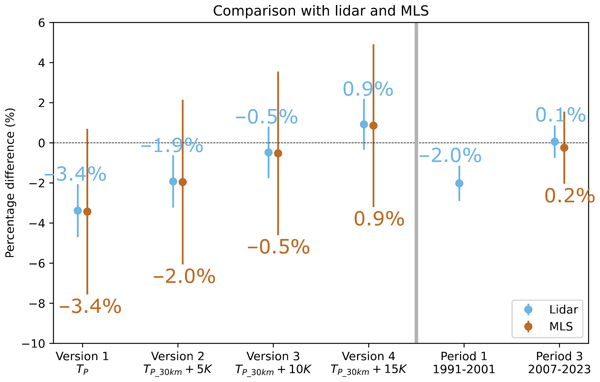
The ozone sounding data from the electrochemical concentration cell (ECC) at the Haute Provence Observatory (OHP) for the period 1991–2020 were homogenized in 2022 using the recommendations of the ECC data quality assessment committee. Comparisons with lidar and satellite observations show that the ECC pump temperature measurements for the period 2002–2007 need to be corrected in addition to the 2022 homogenization. This correction improves the consistency of the ECC ozone dataset at the OHP.
Yange Deng, Hiroshi Tanimoto, Kohei Ikeda, Sohiko Kameyama, Sachiko Okamoto, Jinyoung Jung, Young Jun Yoon, Eun Jin Yang, and Sung-Ho Kang
Atmos. Chem. Phys., 24, 6339–6357, https://doi.org/10.5194/acp-24-6339-2024, https://doi.org/10.5194/acp-24-6339-2024, 2024
Short summary
Short summary
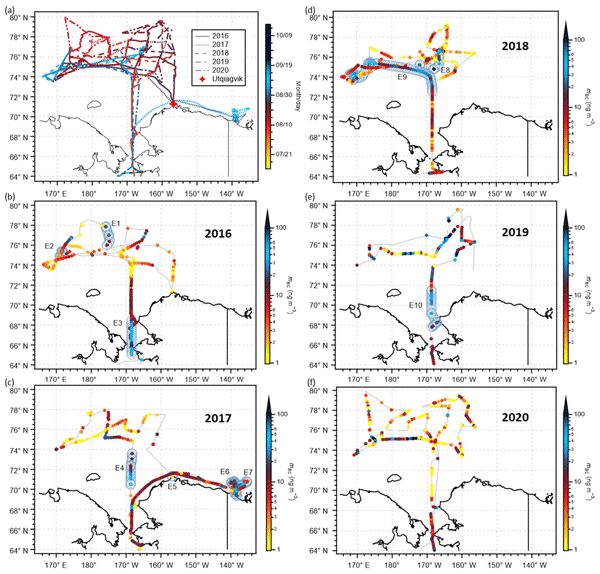
Black carbon (BC) aerosols play important roles in Arctic climate change, yet they are not well understood because of limited observational data. We observed BC mass concentrations (mBC) in the western Arctic Ocean during summer and early autumn 2016–2020. The mean mBC in 2019 was much higher than in other years. Biomass burning was likely the dominant BC source. Boreal fire BC transport occurring near the surface and/or in the mid-troposphere contributed to high-BC events in the Arctic Ocean.
Sachiko Okamoto, Juan Cuesta, Matthias Beekmann, Gaëlle Dufour, Maxim Eremenko, Kazuyuki Miyazaki, Cathy Boonne, Hiroshi Tanimoto, and Hajime Akimoto
Atmos. Chem. Phys., 23, 7399–7423, https://doi.org/10.5194/acp-23-7399-2023, https://doi.org/10.5194/acp-23-7399-2023, 2023
Short summary
Short summary
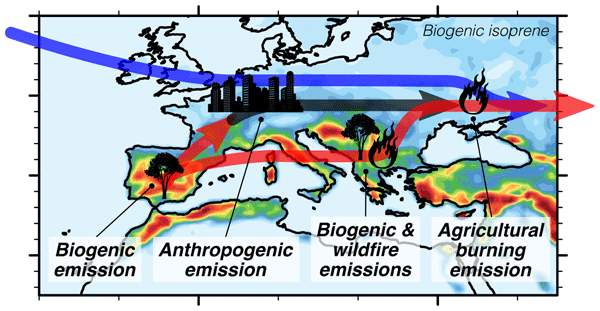
We present a detailed analysis of the daily evolution of the lowermost tropospheric ozone documented by IASI+GOME2 multispectral satellite observations and that of its precursors from TCR-2 tropospheric chemistry reanalysis. It reveals that the ozone outbreak across Europe in July 2017 was produced during favorable condition for photochemical production of ozone and was associated with multiple sources of ozone precursors: biogenic, anthropogenic, and biomass burning emissions.
Hyunkwang Lim, Tamaki Fujinawa, Takafumi Sugita, Satoshi Inomata, Hiroshi Tanimoto, Christoph Mahnke, Andreas Petzold, Ulrich Bundke, Yugo Kanaya, Yasuko Kasai, Tomohiro O. Sato, Sang Seo Park, Minseok Kim, Yun Gon Lee, and Ukkyo Jeong
EGUsphere, https://doi.org/10.5194/egusphere-2026-4968, https://doi.org/10.5194/egusphere-2026-4968, 2026
This preprint is open for discussion and under review for Atmospheric Measurement Techniques (AMT).
Short summary
Short summary
Satellite measurements of nitrogen dioxide can be biased when the assumed vertical distribution of pollution does not match reality. We combined satellite, aircraft, and ground-based observations near major Asian airports and found that using aircraft-measured profiles generally reduced this bias. However, improvements varied by location, showing that spatial representativeness and other retrieval uncertainties also remain important.
Sachiko Okamoto, Gérard Ancellet, Sophie Godin-Beekmann, and Renaud Bodichon
Earth Syst. Sci. Data, 18, 5939–5950, https://doi.org/10.5194/essd-18-5939-2026, https://doi.org/10.5194/essd-18-5939-2026, 2026
Short summary
Short summary
The ozone sounding data from the electrochemical concentration cell (ECC) at the Haute Provence Observatory (OHP) for the period 1991–2020 were homogenized in 2022 using the recommendations of the ECC data quality assessment committee. Comparisons with lidar and satellite observations show that the ECC pump temperature measurements for the period 2002–2007 need to be corrected in addition to the 2022 homogenization. This correction improves the consistency of the ECC ozone dataset at the OHP.
Ishir Dutta, Colette L. Heald, Ilann Bourgeois, John D. Crounse, Eric J. Hintsa, Fred L. Moore, and Jeff Peischl
Atmos. Chem. Phys., 26, 11875–11891, https://doi.org/10.5194/acp-26-11875-2026, https://doi.org/10.5194/acp-26-11875-2026, 2026
Short summary
Short summary
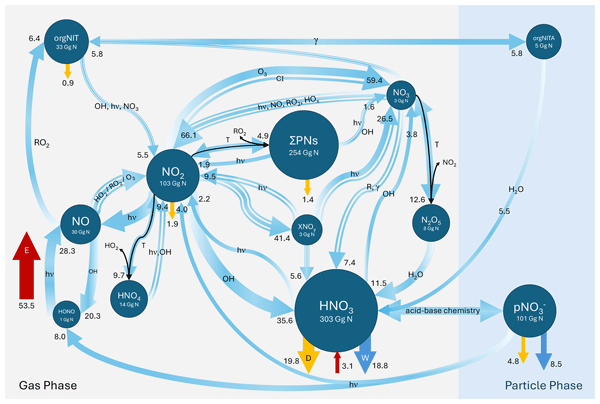
This study presents a global budget of tropospheric reactive oxidized nitrogen (NOy) based on the GEOS‑Chem chemical transport model evaluated against ATom aircraft observations. In addition to burdens, deposition, and lifetimes, we detail the magnitudes of the chemical fluxes governing cycling between NOy species, including uncertain heterogeneous processes such as aerosol nitrate photolysis and organic nitrate hydrolysis.
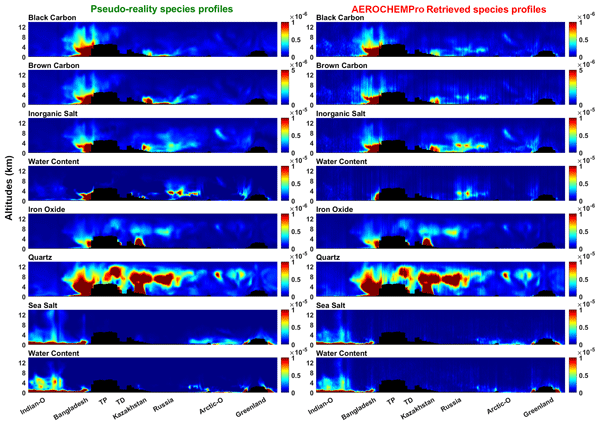
Abou Bakr Merdji, Juan Cuesta, Fazzal Qayyum, Anton Lopatin, Oleg Dubovik, Durgesh Nandan Piyush, Laaziz El Amraoui, Paolo Di Girolamo, and Charles R. Trepte
Atmos. Meas. Tech., 19, 4669–4701, https://doi.org/10.5194/amt-19-4669-2026, https://doi.org/10.5194/amt-19-4669-2026, 2026
Short summary
Short summary
This study presents a novel satellite approach to retrieve the vertical distribution of aerosol chemical species in the atmosphere. By combining spaceborne LIDAR and polarimetric observations, it distinguishes major natural and anthropogenic chemical particle species and their optical properties. Tests with realistic simulations show accurate retrieval of dust, pollution, and sea salt layers, enhancing global monitoring of aerosols relevant to air quality and climate.
Beatriz Herrera, Enrico Dammers, Martine De Maziere, Omaira Garcia, Michel Grutter, James W. Hannigan, Dylan B. A. Jones, Nicholas Jones, Emmanuel Mahieu, Maria Makarova, Kazuyuki Miyazaki, Isamu Morino, Isao Murata, Ivan Ortega, Mathias Palm, Anatoly Poverovskii, Takashi Sekiya, Dan Smale, Hannah Sill, Wolfgang Stremme, Ralf Sussmann, Geoffrey Toon, Corinne Vigouroux, Wei Wang, Tyler Wizenberg, and Kimberly Strong
EGUsphere, https://doi.org/10.5194/egusphere-2026-3138, https://doi.org/10.5194/egusphere-2026-3138, 2026
Short summary
Short summary
This work investigates how atmospheric ammonia changes over time using long-term observations and simulations at locations around the world. While its main sources are related to agriculture, wildfires, vehicles, and volcanoes also contribute. The results show that ammonia levels vary strongly during the day and across seasons, and are rising at most locations. These findings improve our understanding of air pollution and its impacts.
Hantao Wang, Marc L. Serre, Kazuyuki Miyazaki, Juan Cuesta, Jerry R. Ziemke, and J. Jason West
EGUsphere, https://doi.org/10.5194/egusphere-2026-2812, https://doi.org/10.5194/egusphere-2026-2812, 2026
This preprint is open for discussion and under review for Atmospheric Chemistry and Physics (ACP).
Short summary
Short summary
Ground-level ozone poses a significant health risk, yet ground monitors are sparse and satellites lack surface sensitivity. Here we develop a framework to infer surface ozone directly from satellite observations. By leveraging vertical profiles from balloons and aircraft and using chemical reanalysis vertical ratios, we significantly improved the accuracy of ozone estimates. Our 2005–2022 global dataset provides a valuable ground-level ozone background field for regions lacking ground networks.
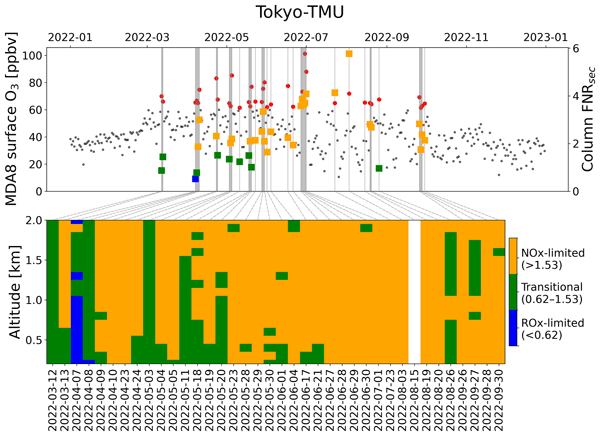
Nguyen Doan Thien Chi, Hiroshi Tanimoto, Satoshi Inomata, Kohei Ikeda, Yange Deng, Royston Uning, Tamaki Fujinawa, Astrid Müller, Masatomo Fujiwara, Shungo Kato, and Hisahiro Takashima
Atmos. Chem. Phys., 26, 8275–8294, https://doi.org/10.5194/acp-26-8275-2026, https://doi.org/10.5194/acp-26-8275-2026, 2026
Short summary
Short summary
Pandora ground-based spectrometers have been widely utilized in atmospheric studies, but their application to ozone sensitivity research has been limited. This study demonstrates the use of Pandora observations, in combination with a chemical transport model, to enhance sensitivity analysis. Our findings provide additional insights into atmospheric chemistry, particularly ozone formation processes, using Pandora measurements that are openly available to the global scientific community.
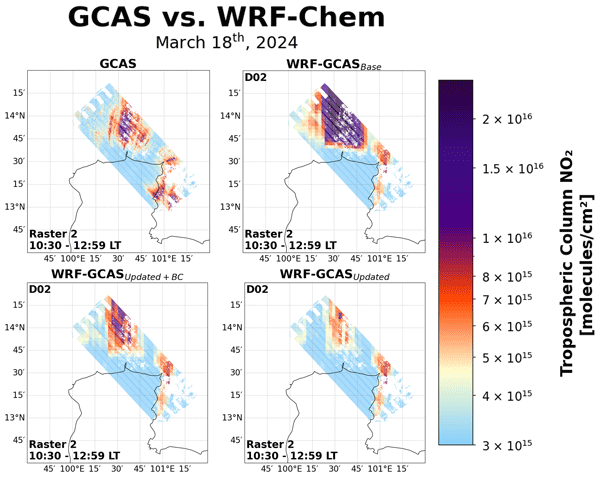
Julianna A. Christopoulos, Pablo E. Saide, Manas R. Mohanty, Nattamon Maneenoi, Jhoon Kim, Laura Judd, Katherine R. Travis, Savitri Garivait, Agapol Junpen, Kazuyuki Miyazaki, Jinkyul Choi, Takashi Sekiya, David Peterson, Theodore M. McHardy, Nicholas Gapp, Jason M. St. Clair, Erin Delaria, Glenn M. Wolfe, Abby Sebol, Alessandro Franchin, Changmin Cho, Morgan L. Silverman, and James H. Crawford
Atmos. Chem. Phys., 26, 8021–8050, https://doi.org/10.5194/acp-26-8021-2026, https://doi.org/10.5194/acp-26-8021-2026, 2026
Short summary
Short summary
Air quality in rapidly growing cities is difficult to model because emissions vary during the day and are often poorly constrained. We demonstrate a methodology for constraining urban emissions using hourly satellite observations combined with high-resolution air quality modeling in Bangkok. We find that emissions inventories likely overestimate nitrogen dioxide emissions, and that updated emissions improve agreement between the model and independent aircraft and ground-based observations.
Duseong S. Jo, John J. Orlando, Rebecca H. Schwantes, Louisa K. Emmons, Rebecca S. Hornbrook, Eric C. Apel, Alan J. Hills, Kirk Ullmann, L. Gregory Huey, Claire Granier, Chelsea R. Thompson, and Jeff Peischl
EGUsphere, https://doi.org/10.5194/egusphere-2026-1868, https://doi.org/10.5194/egusphere-2026-1868, 2026
Short summary
Short summary
C4-C6 alkane hydrocarbons are important precursors of air pollution, but most global atmospheric chemistry models represent them using a single lumped surrogate compound, limiting detailed simulation of their oxidation products. We developed a new chemical mechanism that explicitly treats individual C4-C6 alkane species in a global model. This explicit treatment substantially changes the simulated budgets of key oxygenated compounds such as methyl ethyl ketone.
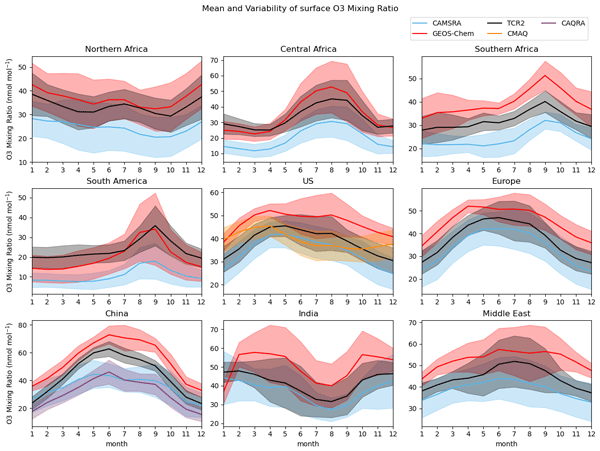
Dylan B. A. Jones, Lucas Prates, Zhen Qu, William Y. Y. Cheng, Kazuyuki Miyazaki, Takashi Sekiya, Antje Inness, Rajesh Kumar, Xiao Tang, Helen Worden, Gerbrand Koren, and Vincent Huijnen
Atmos. Chem. Phys., 26, 6655–6682, https://doi.org/10.5194/acp-26-6655-2026, https://doi.org/10.5194/acp-26-6655-2026, 2026
Short summary
Short summary
We evaluate five chemical reanalysis products to assess their potential to provide useful information on tropospheric ozone variability. We find that the reanalyses produce consistent information on ozone variations in the free troposphere, but have large discrepancies at the surface. The results suggests that improvements in the reanalyses are needed to better exploit the assimilated observations to enhance the utility of the reanalysis products at the surface.
Jinkyul Choi, Kazuyuki Miyazaki, Takashi Sekiya, Jinhyeok Yu, Shin-Ya Ogino, Henk Eskes, Pieter Rijdijk, Ryan Bennett, Anke Roiger, Leon Knez, Glenn S. Diskin, Jason A. Miech, Joshua P. DiGangi, Yonghoon Choi, Alessandro Franchin, Changmin Cho, Eric C. Apel, Louisa K. Emmons, Nattamon Maneenoi, Jason M. St. Clair, Reem A. Hannun, Glenn M. Wolfe, Erin Delaria, Abby Sebol, Donald R. Blake, Monica Crippa, Rachel M. Hoesly, Steven J. Smith, Jung-Hun Woo, Le Kuai, and Ronald Macatangay
EGUsphere, https://doi.org/10.5194/egusphere-2026-2380, https://doi.org/10.5194/egusphere-2026-2380, 2026
Short summary
Short summary
Asia produces half of the world's air pollution, yet emission estimates from different sources disagree widely. We assimilated satellite observations of six pollutant species to correct both concentrations and emissions. Aircraft measurements from a 2024 NASA campaign across four Asian countries confirmed the improvements. Our results reveal underreported emissions in some countries, overestimated vegetation emissions, unresolved fire estimates, and weather control on cross-border pollution.
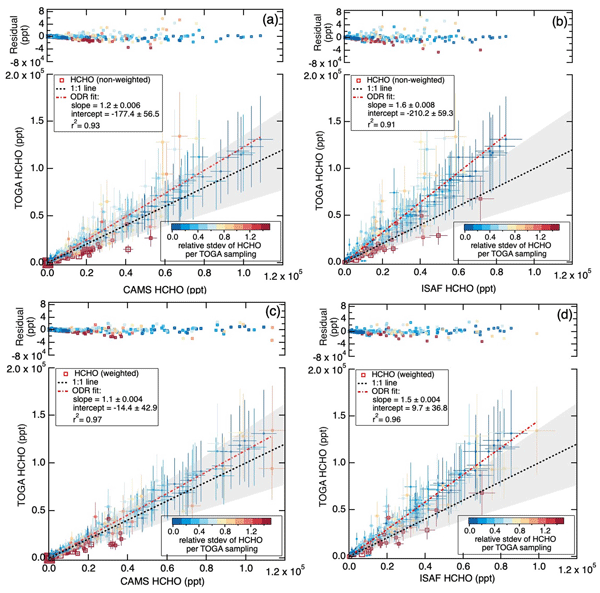
Daun Jeong, Rebecca S. Hornbrook, Alan J. Hills, Glenn Diskin, Hannah S. Halliday, Joshua P. DiGangi, Alan Fried, Dirk Richter, James Walega, Petter Weibring, Thomas F. Hanisco, Glenn M. Wolfe, Jason St. Clair, Jeff Peischl, Armin Wisthaler, Tomas Mikoviny, John B. Nowak, Felix Piel, Laura Tomsche, Christopher D. Holmes, Amber Soja, Emily Gargulinski, James H. Crawford, Jack Dibb, Carsten Warneke, Joshua Schwarz, and Eric C. Apel
Atmos. Meas. Tech., 19, 2985–3000, https://doi.org/10.5194/amt-19-2985-2026, https://doi.org/10.5194/amt-19-2985-2026, 2026
Short summary
Short summary
Formaldehyde is an important atmospheric species that is present at all times throughout the troposphere. Accurately measuring formaldehyde is necessary for understanding key atmospheric chemical cycles. We describe here the first wide-scale demonstration of the gas chromatographic mass spectrometric (GC/MS) technique (NSF NCAR TOGA-TOF (National Science Foundation - National Center for Atmospheric Research - Trace Organic Gas Analyzer with Time-of-Flight mass spectrometer)) for quantifying formaldehyde in the atmosphere and we show this technique to be highly sensitive and selective.
Takashi Sekiya, Kazuyuki Miyazaki, Henk Eskes, Pieter Rijsdijk, Kengo Sudo, and Yugo Kanaya
EGUsphere, https://doi.org/10.5194/egusphere-2026-1681, https://doi.org/10.5194/egusphere-2026-1681, 2026
Short summary
Short summary
This study evaluates the synergistic effects of satellite aerosol optical depth (AOD) and trace gas data assimilation on aerosol composition analyses. The simultaneous data assimilation (DA) improved the PM2.5 model biases in Northeast Asia compared to conventional DA run that separately assimilate AOD satellite observations. This coupled aerosol and trace gas DA framework offers significant advantages for improving global aerosol composition analyses.
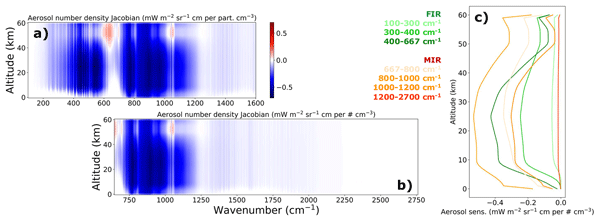
Pasquale Sellitto, Maxim Eremenko, Paola Formenti, Perla Alalam, Michael Höpfner, and Claudia Di Biagio
Atmos. Meas. Tech., 19, 2751–2762, https://doi.org/10.5194/amt-19-2751-2026, https://doi.org/10.5194/amt-19-2751-2026, 2026
Short summary
Short summary
The Far-infrared Outgoing Radiation Understanding and Monitoring (FORUM) mission will bring the first satellite instrument capable of observing the Earth's far infrared (FIR) spectra with a high spectral resolution. FORUM will crucially contribute to water vapour, clouds and surface observations. We found that FORUM will provide also a significant sensitivity to dust aerosol, especially in cases of large burdens of mid-to-long-range transported plumes of dust in the free and upper troposphere.
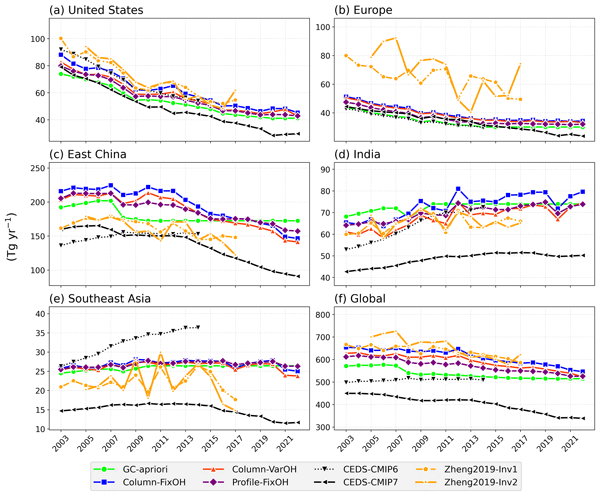
Zhaojun Tang, Panpan Yang, Kazuyuki Miyazaki, John Worden, Helen Worden, Daven K. Henze, Dylan B. A. Jones, and Zhe Jiang
Atmos. Chem. Phys., 26, 5531–5551, https://doi.org/10.5194/acp-26-5531-2026, https://doi.org/10.5194/acp-26-5531-2026, 2026
Short summary
Short summary
We provide a quantitative analysis of global CO emissions and drivers of atmospheric CO trends in 2003–2022, using GEOS-Chem adjoint model constrained by satellite CO measurements. Our results indicate a substantial decline in global anthropogenic CO emissions of 14 %–17 % over the two-decade period, as well as an important offsetting effect from biomass burning emissions on atmospheric CO decline driven by anthropogenic reductions, primarily attributable to extreme wildfire events in 2021.
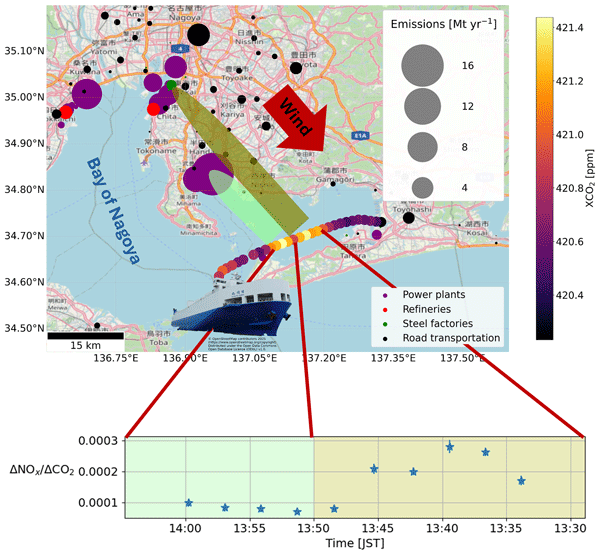
Vincent Enders, Astrid Müller, Matthias Max Frey, Frank Hase, Ralph Kleinschek, Marvin Knapp, Benedikt Löw, Isamu Morino, Shin-Ichiro Nakaoka, Hideki Nara, Hiroshi Tanimoto, Sanam N. Vardag, Karolin Voss, and André Butz
Atmos. Meas. Tech., 19, 2633–2655, https://doi.org/10.5194/amt-19-2633-2026, https://doi.org/10.5194/amt-19-2633-2026, 2026
Short summary
Short summary
We have deployed two spectrometers on a ship traveling along the coast of Japan. By that, we were able to repeatedly measure the greenhouse gas and air pollutant emissions of power plants, large industrial facilities, and cities. Using the ratios between the different gases, we are able to identify sources based on their unique signature. In addition, we are able to show that spectrometers can be operated on a ship, while still fulfilling the high standards of land-based observation networks.
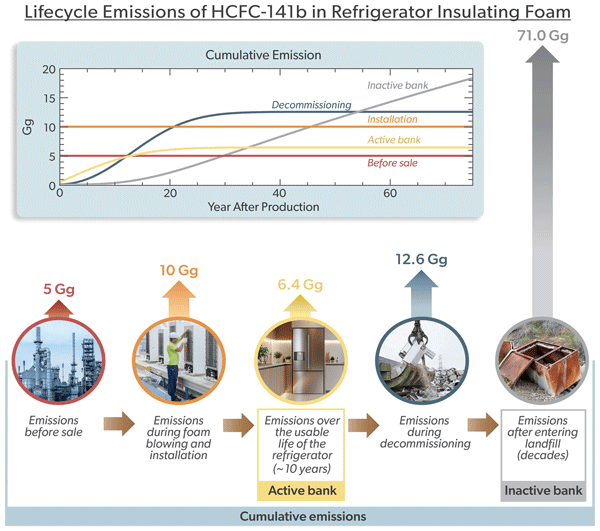
Helen Walter-Terrinoni, John S. Daniel, Chelsea R. Thompson, and Luke M. Western
Atmos. Chem. Phys., 26, 1193–1210, https://doi.org/10.5194/acp-26-1193-2026, https://doi.org/10.5194/acp-26-1193-2026, 2026
Short summary
Short summary
This study presents a new bottom-up model to estimate emissions and banks of long-lived ozone-depleting substances. It is applied here to HCFC-141b. Calculated global emission trends are qualitatively consistent with atmospheric observations from 1990–2017. However, they diverge after 2017, suggesting either a growing additional source or a model deficiency. The easily recoverable portion of the bank is projected to be smaller than previously estimated, impacting future recovery feasibility.
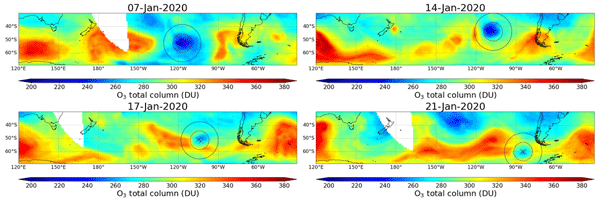
Redha Belhadji, Pasquale Sellitto, Maxim Eremenko, Silvia Bucci, Tran M. Nguyet, Martin Schwell, and Bernard Legras
Atmos. Meas. Tech., 18, 7465–7476, https://doi.org/10.5194/amt-18-7465-2025, https://doi.org/10.5194/amt-18-7465-2025, 2025
Short summary
Short summary
The 2019–2020 Australian wildfires triggered massive Pyro-cumulonimbus clouds, injecting smoke aerosols into the stratosphere and forming a self-sustaining vortex that reached 35 km altitude. This vortex created a transient ozone mini-hole. Using satellite and ground-based observations, we tracked a 30–40 % initial ozone depletion, which decayed to ~7 % within a month. These findings highlight the impact of extreme wildfires on stratospheric dynamics and ozone composition.
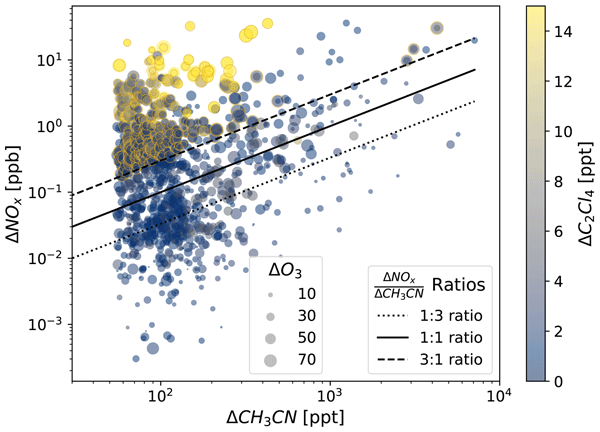
Joseph O. Palmo, Colette L. Heald, Donald R. Blake, Ilann Bourgeois, Matthew Coggon, Jeff Collett, Frank Flocke, Alan Fried, Georgios Gkatzelis, Samuel Hall, Lu Hu, Jose L. Jimenez, Pedro Campuzano-Jost, I-Ting Ku, Benjamin Nault, Brett Palm, Jeff Peischl, Ilana Pollack, Amy Sullivan, Joel Thornton, Carsten Warneke, Armin Wisthaler, and Lu Xu
Atmos. Chem. Phys., 25, 17107–17124, https://doi.org/10.5194/acp-25-17107-2025, https://doi.org/10.5194/acp-25-17107-2025, 2025
Short summary
Short summary
This study investigates ozone production within wildfire smoke plumes as they age, using both aircraft observations and models. We find that the chemical environment and resulting ozone production within smoke changes as plumes evolve, with implications for climate and public health.
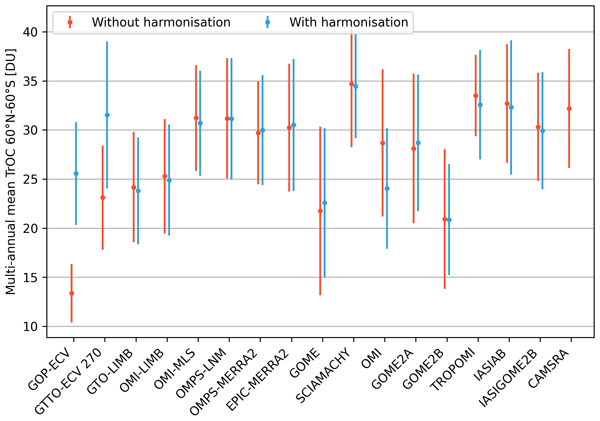
Arno Keppens, Daan Hubert, José Granville, Oindrila Nath, Jean-Christopher Lambert, Catherine Wespes, Pierre-François Coheur, Cathy Clerbaux, Anne Boynard, Richard Siddans, Barry Latter, Brian Kerridge, Serena Di Pede, Pepijn Veefkind, Juan Cuesta, Gaelle Dufour, Klaus-Peter Heue, Melanie Coldewey-Egbers, Diego Loyola, Andrea Orfanoz-Cheuquelaf, Swathi Maratt Satheesan, Kai-Uwe Eichmann, Alexei Rozanov, Viktoria F. Sofieva, Jerald R. Ziemke, Antje Inness, Roeland Van Malderen, and Lars Hoffmann
Atmos. Meas. Tech., 18, 6893–6916, https://doi.org/10.5194/amt-18-6893-2025, https://doi.org/10.5194/amt-18-6893-2025, 2025
Short summary
Short summary
The first Tropospheric Ozone Assessment Report (TOAR) encountered discrepancies between several satellite sensors’ estimates of the distribution and change of ozone in the free troposphere. Therefore, contributing to the second TOAR, we harmonise as much as possible the observational perspective of sixteen tropospheric ozone products from satellites. This only partially accounts for the observed discrepancies, with a reduction of 10–40 % of the inter-product dispersion upon harmonisation.
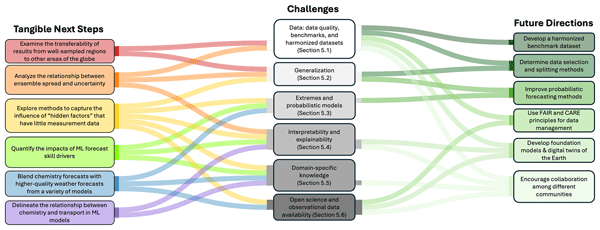
Sebastian H. M. Hickman, Makoto M. Kelp, Paul T. Griffiths, Kelsey Doerksen, Kazuyuki Miyazaki, Elyse A. Pennington, Gerbrand Koren, Fernando Iglesias-Suarez, Martin G. Schultz, Kai-Lan Chang, Owen R. Cooper, Alex Archibald, Roberto Sommariva, David Carlson, Hantao Wang, J. Jason West, and Zhenze Liu
Geosci. Model Dev., 18, 8777–8800, https://doi.org/10.5194/gmd-18-8777-2025, https://doi.org/10.5194/gmd-18-8777-2025, 2025
Short summary
Short summary
Machine learning is being more widely used across environmental and climate science. This work reviews the use of machine learning in tropospheric ozone research, focusing on three main application areas in which significant progress has been made. Common challenges in using machine learning across the three areas are highlighted, and future directions for the field are indicated.
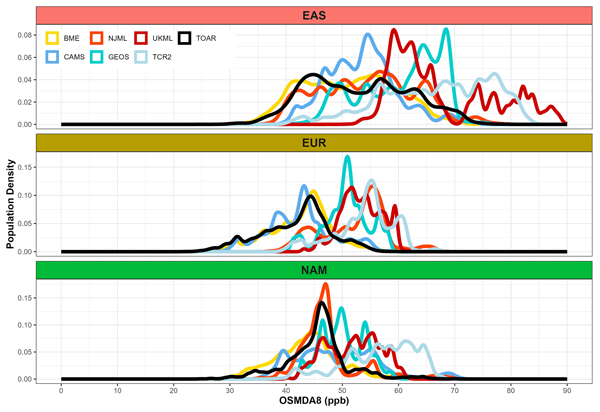
Hantao Wang, Kazuyuki Miyazaki, Haitong Zhe Sun, Zhen Qu, Xiang Liu, Antje Inness, Martin Schultz, Sabine Schröder, Marc Serre, and J. Jason West
Atmos. Chem. Phys., 25, 15969–15990, https://doi.org/10.5194/acp-25-15969-2025, https://doi.org/10.5194/acp-25-15969-2025, 2025
Short summary
Short summary
We compare six datasets of global ground-level ozone, developed using geostatistical, machine learning, or reanalysis methods. The datasets show important differences from one another in ozone magnitude, greater than 5 ppb, and trends, globally and regionally. Compared with measurements, performance varies among datasets, and most overestimate ozone, particularly at lower concentrations. These differences among datasets highlight uncertainties for applications to health and other impacts.
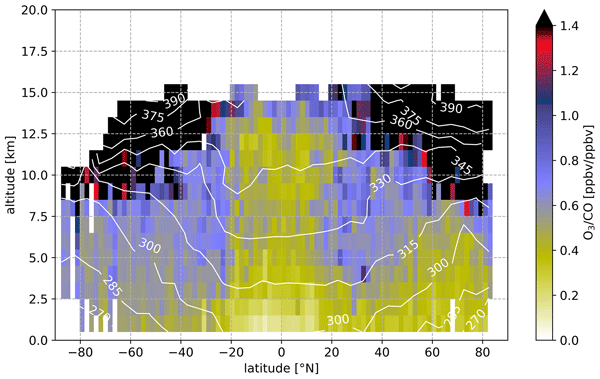
Linda Ort, Andrea Pozzer, Peter Hoor, Florian Obersteiner, Andreas Zahn, Thomas B. Ryerson, Chelsea R. Thompson, Jeff Peischl, Róisín Commane, Bruce Daube, Ilann Bourgeois, Jos Lelieveld, and Horst Fischer
Atmos. Chem. Phys., 25, 14987–15007, https://doi.org/10.5194/acp-25-14987-2025, https://doi.org/10.5194/acp-25-14987-2025, 2025
Short summary
Short summary
This study investigates the role of lightning emissions on the O3–CO ratio in the northern subtropics. We used in situ observations and a global circulation model to show an effect of up to 40 % onto the subtropical O3–CO ratio by tropical air masses transported via the Hadley cell. This influence of lightning emissions and its photochemistry has a global effect on trace and greenhouse gases and needs to be considered for global chemical distributions.
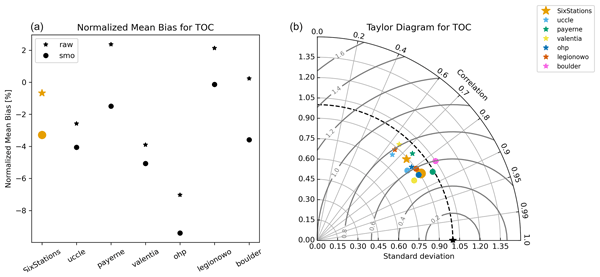
Gaëlle Dufour, Maxim Eremenko, Juan Cuesta, Gérard Ancellet, Michael Gill, Eliane Maillard Barras, and Roeland Van Malderen
Atmos. Meas. Tech., 18, 5049–5070, https://doi.org/10.5194/amt-18-5049-2025, https://doi.org/10.5194/amt-18-5049-2025, 2025
Short summary
Short summary
Tropospheric ozone from the three Infrared Atmospheric Sounding Interferometer (IASI) instruments is very consistent (<1 %). The validation against homogenized ozone sondes reveals an overall good agreement with slight biases (3 %–6 %) in tropospheric ozone and a possible temporal drift, but this is difficult to assess due to the limited number of sites. No specific trends are estimated for the tropospheric ozone column for the period 2008–2022, but persistent negative trends are observed in the lower troposphere.
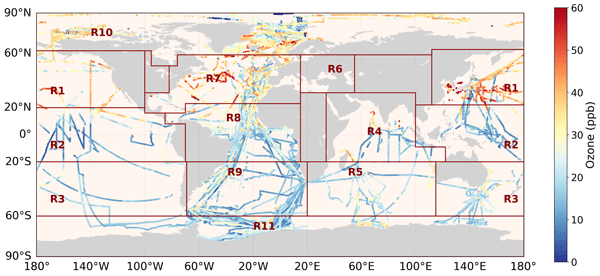
Yugo Kanaya, Roberto Sommariva, Alfonso Saiz-Lopez, Andrea Mazzeo, Theodore K. Koenig, Kaori Kawana, James E. Johnson, Aurélie Colomb, Pierre Tulet, Suzie Molloy, Ian E. Galbally, Rainer Volkamer, Anoop Mahajan, John W. Halfacre, Paul B. Shepson, Julia Schmale, Hélène Angot, Byron Blomquist, Matthew D. Shupe, Detlev Helmig, Junsu Gil, Meehye Lee, Sean C. Coburn, Ivan Ortega, Gao Chen, James Lee, Kenneth C. Aikin, David D. Parrish, John S. Holloway, Thomas B. Ryerson, Ilana B. Pollack, Eric J. Williams, Brian M. Lerner, Andrew J. Weinheimer, Teresa Campos, Frank M. Flocke, J. Ryan Spackman, Ilann Bourgeois, Jeff Peischl, Chelsea R. Thompson, Ralf M. Staebler, Amir A. Aliabadi, Wanmin Gong, Roeland Van Malderen, Anne M. Thompson, Ryan M. Stauffer, Debra E. Kollonige, Juan Carlos Gómez Martin, Masatomo Fujiwara, Katie Read, Matthew Rowlinson, Keiichi Sato, Junichi Kurokawa, Yoko Iwamoto, Fumikazu Taketani, Hisahiro Takashima, Mónica Navarro-Comas, Marios Panagi, and Martin G. Schultz
Earth Syst. Sci. Data, 17, 4901–4932, https://doi.org/10.5194/essd-17-4901-2025, https://doi.org/10.5194/essd-17-4901-2025, 2025
Short summary
Short summary
The first comprehensive dataset of tropospheric ozone over oceans/polar regions is presented, including 77 ship/buoy and 48 aircraft campaign observations (1977–2022, 0–5000 m altitude), supplemented by ozonesonde and surface data. Air masses isolated from land for 72+ hours are systematically selected as essentially oceanic. Among the 11 global regions, they show daytime decreases of 11–16 % in the tropics, while near-zero depletions are rare, unlike in the Arctic, implying different mechanisms.
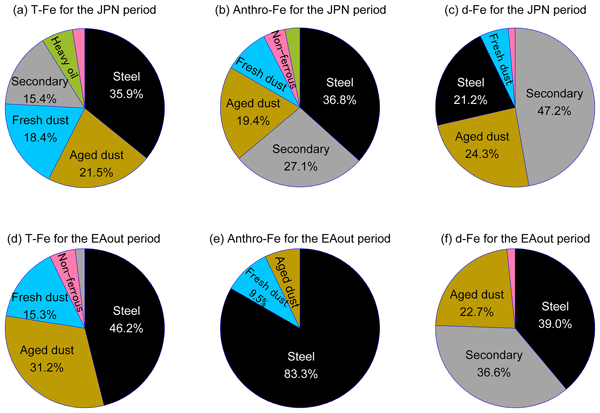
Kohei Sakata, Shotaro Takano, Atsushi Matsuki, Yasuo Takeichi, Hiroshi Tanimoto, Aya Sakaguchi, Minako Kurisu, and Yoshio Takahashi
Atmos. Chem. Phys., 25, 11087–11107, https://doi.org/10.5194/acp-25-11087-2025, https://doi.org/10.5194/acp-25-11087-2025, 2025
Short summary
Short summary
Deposition of aerosol iron (Fe) into the ocean stimulates primary production and influences the global carbon cycle, although the factors governing the aerosol Fe solubility remain uncertain. Our observations in Japan revealed that both mineral dust and anthropogenic aerosols are significant sources of dissolved Fe, and that atmospheric chemical weathering enhances their solubility. This finding is expected to play a crucial role in estimating the supply of dissolved iron to the ocean.
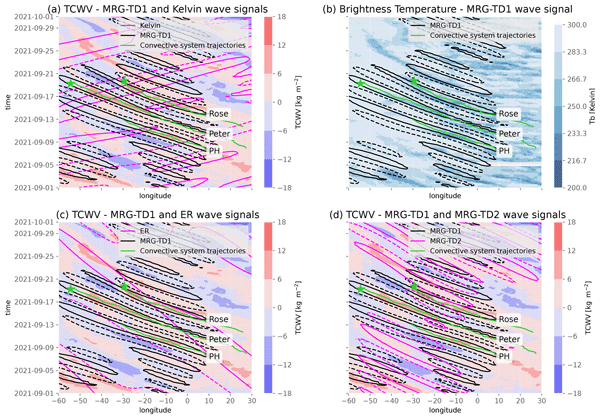
Tanguy Jonville, Maurus Borne, Cyrille Flamant, Juan Cuesta, Olivier Bock, Pierre Bosser, Christophe Lavaysse, Andreas Fink, and Peter Knippertz
Atmos. Chem. Phys., 25, 9765–9786, https://doi.org/10.5194/acp-25-9765-2025, https://doi.org/10.5194/acp-25-9765-2025, 2025
Short summary
Short summary
Tropical waves structure the atmosphere. Four types of tropical waves (equatorial Rossby – ER, Kelvin, MRG-TD1, and MRG-TD2 – mixed Rossby gravity–tropical depressions) are studied using filters, satellite measurements, and in situ data from the Clouds–Atmosphere Dynamics–Dust Interaction in West Africa (CADDIWA) campaign held in September 2021 in Cabo Verde. ER waves impact temperature and humidity above 2500 m, MRG-TD1 around 3500 m, and MRG-TD2 around 2000 m. Interactions between these waves favor tropical cyclone formation.
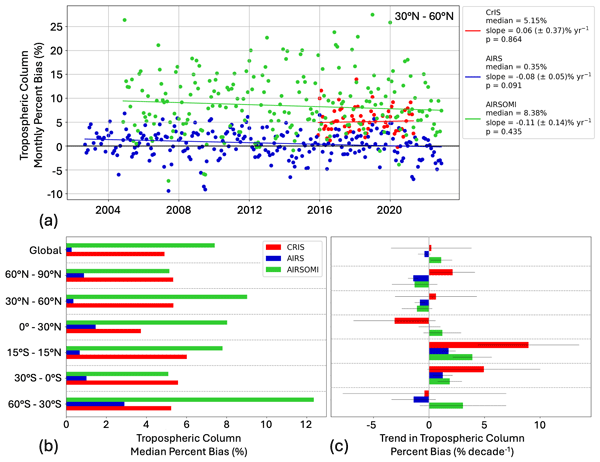
Elyse A. Pennington, Gregory B. Osterman, Vivienne H. Payne, Kazuyuki Miyazaki, Kevin W. Bowman, and Jessica L. Neu
Atmos. Chem. Phys., 25, 8533–8552, https://doi.org/10.5194/acp-25-8533-2025, https://doi.org/10.5194/acp-25-8533-2025, 2025
Short summary
Short summary
Tropospheric ozone is a harmful pollutant and powerful greenhouse gas. For satellite products to accurately quantify trends in tropospheric ozone, they must have a low bias compared to a reliable source of data. This study compares three NASA satellite products to ozonesonde data. They have low global measurement bias and thus can be used to detect global tropospheric ozone trends, but the measurement bias should be considered in certain regions and time periods.
Kazuyuki Miyazaki, Yuliya Marchetti, James Montgomery, Steven Lu, and Kevin Bowman
Atmos. Chem. Phys., 25, 8507–8532, https://doi.org/10.5194/acp-25-8507-2025, https://doi.org/10.5194/acp-25-8507-2025, 2025
Short summary
Short summary
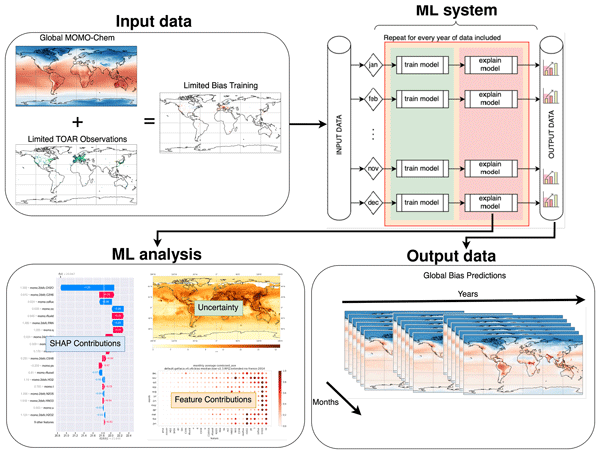
This study employs explainable machine learning to analyze the causes of significant biases in surface ozone estimates from chemical reanalysis. By analyzing global observations and chemical reanalysis outputs, key bias drivers, such as meteorological conditions and precursor emissions, were identified. This provides actionable insights to improve chemical transport models, observation systems, and emissions inventories, ultimately enhancing ozone reanalysis for better air pollution management.
Suvarna Fadnavis, Yasin Elshorbany, Jerald Ziemke, Brice Barret, Alexandru Rap, P. R. Satheesh Chandran, Richard J. Pope, Vijay Sagar, Domenico Taraborrelli, Eric Le Flochmoen, Juan Cuesta, Catherine Wespes, Folkert Boersma, Isolde Glissenaar, Isabelle De Smedt, Michel Van Roozendael, Hervé Petetin, and Isidora Anglou
Atmos. Chem. Phys., 25, 8229–8254, https://doi.org/10.5194/acp-25-8229-2025, https://doi.org/10.5194/acp-25-8229-2025, 2025
Short summary
Short summary
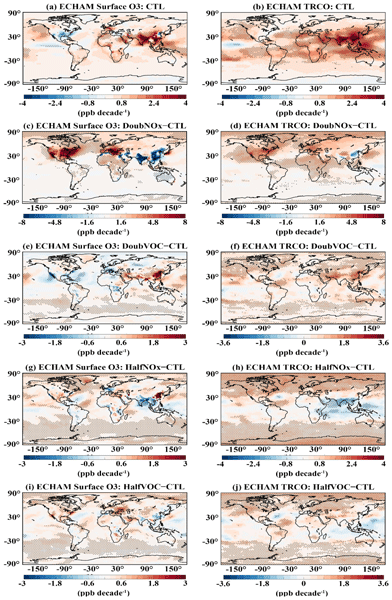
Satellites and model simulations show enhancement in tropospheric ozone, which is highly impacted by human-produced nitrous oxides compared to volatile organic compounds. The increased amount of ozone enhances ozone radiative forcing. The ozone enhancement and associated radiative forcing are the highest over South and East Asia. The emissions of nitrous oxides show a higher influence on shifting ozone photochemical regimes than volatile organic compounds.
Rimal Abeed, Audrey Fortems-Cheiney, Grégoire Broquet, Robin Plauchu, Isabelle Pison, Antoine Berchet, Elise Potier, Bo Zheng, Gaëlle Dufour, Adriana Coman, Dilek Savas, Guillaume Siour, Henk Eskes, Beatriz Revilla-Romero, Antony Delavois, and Philippe Ciais
EGUsphere, https://doi.org/10.5194/egusphere-2025-3329, https://doi.org/10.5194/egusphere-2025-3329, 2025
Preprint archived
Short summary
Short summary
We investigate changes in air pollution from nitrogen oxides NOx (=NO+NO2) across Eastern China from 2019 to 2021, using a satellite-based modelling approach. Our results show a drop in pollution in 2020 in most provinces, and along the China-Mongolia-Russia Economic Corridor. The analysis also captures emission variations during the Lunar New Year. By estimating emissions at the provincial level, the study provides insights into how major events and policy measures influence local air quality.
Yosuke Niwa, Yasunori Tohjima, Yukio Terao, Tazu Saeki, Akihiko Ito, Taku Umezawa, Kyohei Yamada, Motoki Sasakawa, Toshinobu Machida, Shin-Ichiro Nakaoka, Hideki Nara, Hiroshi Tanimoto, Hitoshi Mukai, Yukio Yoshida, Shinji Morimoto, Shinya Takatsuji, Kazuhiro Tsuboi, Yousuke Sawa, Hidekazu Matsueda, Kentaro Ishijima, Ryo Fujita, Daisuke Goto, Xin Lan, Kenneth Schuldt, Michal Heliasz, Tobias Biermann, Lukasz Chmura, Jarsolaw Necki, Irène Xueref-Remy, and Damiano Sferlazzo
Atmos. Chem. Phys., 25, 6757–6785, https://doi.org/10.5194/acp-25-6757-2025, https://doi.org/10.5194/acp-25-6757-2025, 2025
Short summary
Short summary
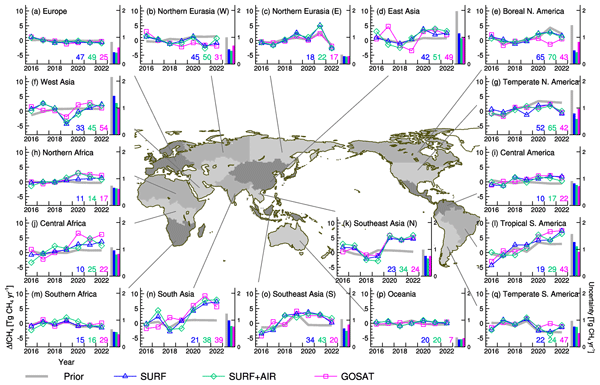
This study estimated regional and sectoral emission contributions to the unprecedented surge of atmospheric methane for 2020–2022. The methane is the second most important greenhouse gas, and its emissions reduction is urgently required to mitigate global warming. Numerical modeling-based estimates with three different sets of atmospheric observations consistently suggested large contributions of biogenic emissions from South Asia and Southeast Asia to the surge of atmospheric methane.
Johannes Heuser, Claudia Di Biagio, Jérôme Yon, Mathieu Cazaunau, Antonin Bergé, Edouard Pangui, Marco Zanatta, Laura Renzi, Angela Marinoni, Satoshi Inomata, Chenjie Yu, Vera Bernardoni, Servanne Chevaillier, Daniel Ferry, Paolo Laj, Michel Maillé, Dario Massabò, Federico Mazzei, Gael Noyalet, Hiroshi Tanimoto, Brice Temime-Roussel, Roberta Vecchi, Virginia Vernocchi, Paola Formenti, Bénédicte Picquet-Varrault, and Jean-François Doussin
Atmos. Chem. Phys., 25, 6407–6428, https://doi.org/10.5194/acp-25-6407-2025, https://doi.org/10.5194/acp-25-6407-2025, 2025
Short summary
Short summary
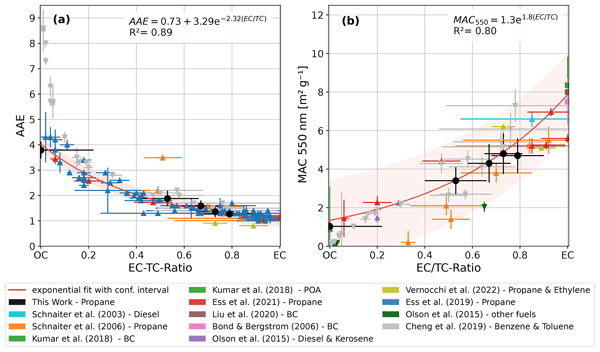
The spectral optical properties of combustion soot aerosols with varying black (BC) and brown carbon (BrC) content were studied in an atmospheric simulation chamber. Measurements of the mass spectral absorption cross section (MAC), supplemented by literature data, allowed us to establish a generalised exponential relationship between the spectral absorption and the elemental-to-total-carbon ratio (EC / TC) in soot. This relationship can provide a useful tool for modelling the properties of soot.
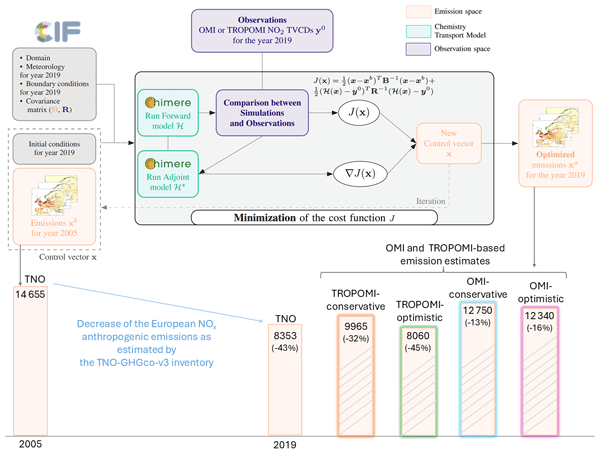
Audrey Fortems-Cheiney, Grégoire Broquet, Elise Potier, Antoine Berchet, Isabelle Pison, Adrien Martinez, Robin Plauchu, Rimal Abeed, Aurélien Sicsik-Paré, Gaelle Dufour, Adriana Coman, Dilek Savas, Guillaume Siour, Henk Eskes, Hugo A. C. Denier van der Gon, and Stijn N. C. Dellaert
Atmos. Chem. Phys., 25, 6047–6068, https://doi.org/10.5194/acp-25-6047-2025, https://doi.org/10.5194/acp-25-6047-2025, 2025
Short summary
Short summary
This study assesses the potential of the Ozone Monitoring Instrument (OMI) and the TROPOspheric Monitoring Instrument (TROPOMI) satellite observations to inform about the decrease in anthropogenic emissions of nitrogen oxides (NOx) in 2019 compared with 2005 at regional to national scales in Europe. Both the OMI and TROPOMI inversions show decreases in European NOx anthropogenic emission budgets in 2019 compared to 2005 but with different magnitudes.
Mukesh Rai, Kazuyuki Miyazaki, Vivienne Payne, Bin Guan, and Duane Waliser
EGUsphere, https://doi.org/10.5194/egusphere-2025-399, https://doi.org/10.5194/egusphere-2025-399, 2025
Preprint archived
Short summary
Short summary
This study introduces a novel method for quantifying extreme events of trace gas air pollutants by leveraging a tropospheric chemical reanalysis data set. The analysis revealed that while extreme events are infrequent, they contribute substantially (60 %) to the total transport of pollutants. This finding underscores the critical role of long-range transport events in determining global and regional air quality.
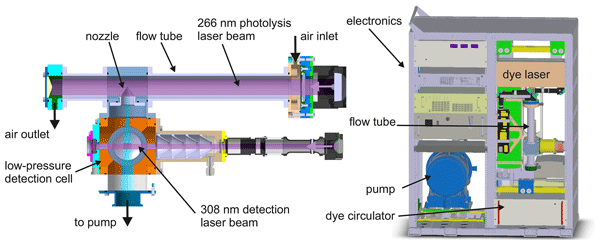
Hendrik Fuchs, Aaron Stainsby, Florian Berg, René Dubus, Michelle Färber, Andreas Hofzumahaus, Frank Holland, Kelvin H. Bates, Steven S. Brown, Matthew M. Coggon, Glenn S. Diskin, Georgios I. Gkatzelis, Christopher M. Jernigan, Jeff Peischl, Michael A. Robinson, Andrew W. Rollins, Nell B. Schafer, Rebecca H. Schwantes, Chelsea E. Stockwell, Patrick R. Veres, Carsten Warneke, Eleanor M. Waxman, Lu Xu, Kristen Zuraski, Andreas Wahner, and Anna Novelli
Atmos. Meas. Tech., 18, 881–895, https://doi.org/10.5194/amt-18-881-2025, https://doi.org/10.5194/amt-18-881-2025, 2025
Short summary
Short summary
Significant improvements have been made to the instruments used to measure OH reactivity, which is equivalent to the sum of air pollutant concentrations. Accurate and precise measurements with a high time resolution have been achieved, allowing use on aircraft, as demonstrated during flights in the USA.
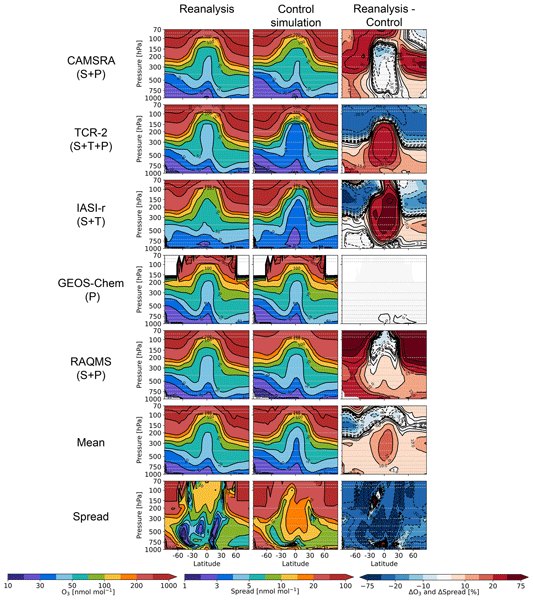
Takashi Sekiya, Emanuele Emili, Kazuyuki Miyazaki, Antje Inness, Zhen Qu, R. Bradley Pierce, Dylan Jones, Helen Worden, William Y. Y. Cheng, Vincent Huijnen, and Gerbrand Koren
Atmos. Chem. Phys., 25, 2243–2268, https://doi.org/10.5194/acp-25-2243-2025, https://doi.org/10.5194/acp-25-2243-2025, 2025
Short summary
Short summary
Five global chemical reanalysis datasets were used to assess the relative impacts of assimilating satellite ozone and its precursor measurements on tropospheric ozone analyses for 2010. The multiple reanalysis system comparison allows an evaluation of the dependency of the impacts on different reanalysis systems. The results suggested the importance of satellite ozone and its precursor measurements for improving ozone analysis in the whole troposphere, with varying magnitudes among the systems.
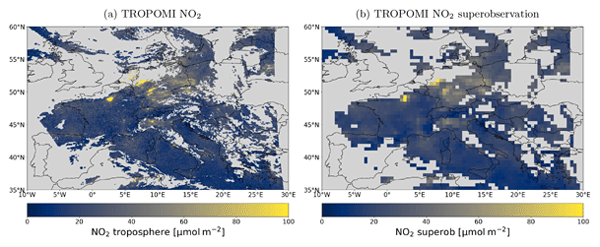
Pieter Rijsdijk, Henk Eskes, Arlene Dingemans, K. Folkert Boersma, Takashi Sekiya, Kazuyuki Miyazaki, and Sander Houweling
Geosci. Model Dev., 18, 483–509, https://doi.org/10.5194/gmd-18-483-2025, https://doi.org/10.5194/gmd-18-483-2025, 2025
Short summary
Short summary
Clustering high-resolution satellite observations into superobservations improves model validation and data assimilation applications. In our paper, we derive quantitative uncertainties for satellite NO2 column observations based on knowledge of the retrievals, including a detailed analysis of spatial error correlations and representativity errors. The superobservations and uncertainty estimates are tested in a global chemical data assimilation system and are found to improve the forecasts.
Chelsea E. Stockwell, Matthew M. Coggon, Rebecca H. Schwantes, Colin Harkins, Bert Verreyken, Congmeng Lyu, Qindan Zhu, Lu Xu, Jessica B. Gilman, Aaron Lamplugh, Jeff Peischl, Michael A. Robinson, Patrick R. Veres, Meng Li, Andrew W. Rollins, Kristen Zuraski, Sunil Baidar, Shang Liu, Toshihiro Kuwayama, Steven S. Brown, Brian C. McDonald, and Carsten Warneke
Atmos. Chem. Phys., 25, 1121–1143, https://doi.org/10.5194/acp-25-1121-2025, https://doi.org/10.5194/acp-25-1121-2025, 2025
Short summary
Short summary
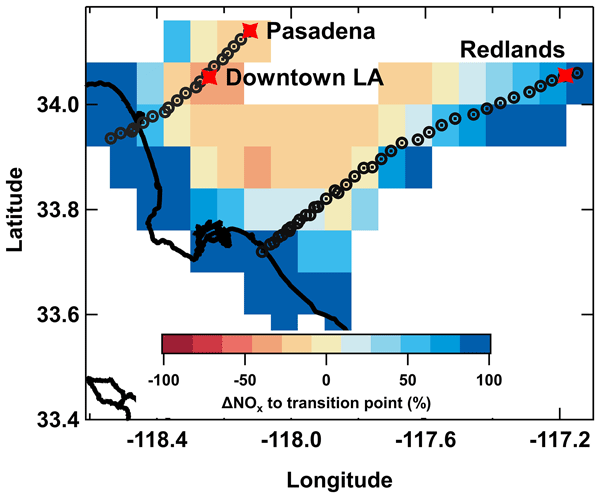
In urban areas, emissions from everyday products like paints, cleaners, and personal care products, along with non-traditional sources such as cooking, are increasingly important and impact air quality. This study uses a box model to evaluate how these emissions impact ozone in the Los Angeles Basin and quantifies the impact of gaseous cooking emissions. Accurate representation of these and other anthropogenic sources in inventories is crucial for informing effective air quality policies.
Fernando Chouza, Thierry Leblanc, Patrick Wang, Steven S. Brown, Kristen Zuraski, Wyndom Chace, Caroline C. Womack, Jeff Peischl, John Hair, Taylor Shingler, and John Sullivan
Atmos. Meas. Tech., 18, 405–419, https://doi.org/10.5194/amt-18-405-2025, https://doi.org/10.5194/amt-18-405-2025, 2025
Short summary
Short summary
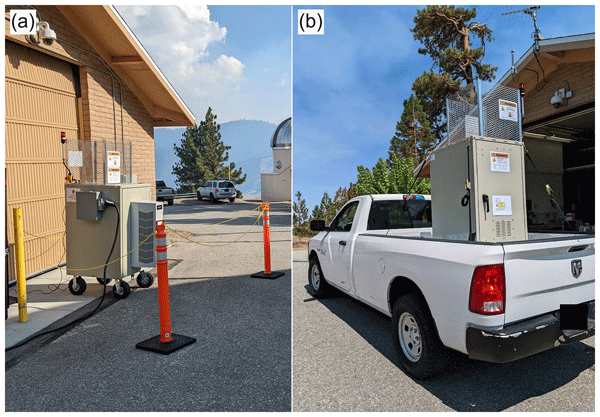
The JPL lidar group developed the SMOL (Small Mobile Ozone Lidar), an affordable ozone differential absorption lidar (DIAL) system covering all altitudes from 200 m to 10 km a.g.l. The comparison with airborne in situ and lidar measurements shows very good agreement. An additional comparison with nearby surface ozone measuring instruments indicates unbiased measurements by the SMOL lidars down to 200 m a.g.l.
Gregory P. Schill, Karl D. Froyd, Daniel M. Murphy, Christina J. Williamson, Charles A. Brock, Tomás Sherwen, Mat J. Evans, Eric A. Ray, Eric C. Apel, Rebecca S. Hornbrook, Alan J. Hills, Jeff Peischl, Thomas B. Ryerson, Chelsea R. Thompson, Ilann Bourgeois, Donald R. Blake, Joshua P. DiGangi, and Glenn S. Diskin
Atmos. Chem. Phys., 25, 45–71, https://doi.org/10.5194/acp-25-45-2025, https://doi.org/10.5194/acp-25-45-2025, 2025
Short summary
Short summary
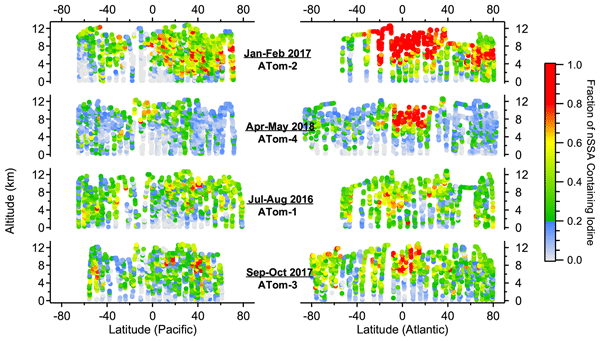
Using single-particle mass spectrometry, we show that trace concentrations of bromine and iodine are ubiquitous in remote tropospheric aerosol and suggest that aerosols are an important part of the global reactive iodine budget. Comparisons to a global climate model with detailed iodine chemistry are favorable in the background atmosphere; however, the model cannot replicate our measurements near the ocean surface, in biomass burning plumes, and in the stratosphere.
Yasin Elshorbany, Jerald R. Ziemke, Sarah Strode, Hervé Petetin, Kazuyuki Miyazaki, Isabelle De Smedt, Kenneth Pickering, Rodrigo J. Seguel, Helen Worden, Tamara Emmerichs, Domenico Taraborrelli, Maria Cazorla, Suvarna Fadnavis, Rebecca R. Buchholz, Benjamin Gaubert, Néstor Y. Rojas, Thiago Nogueira, Thérèse Salameh, and Min Huang
Atmos. Chem. Phys., 24, 12225–12257, https://doi.org/10.5194/acp-24-12225-2024, https://doi.org/10.5194/acp-24-12225-2024, 2024
Short summary
Short summary
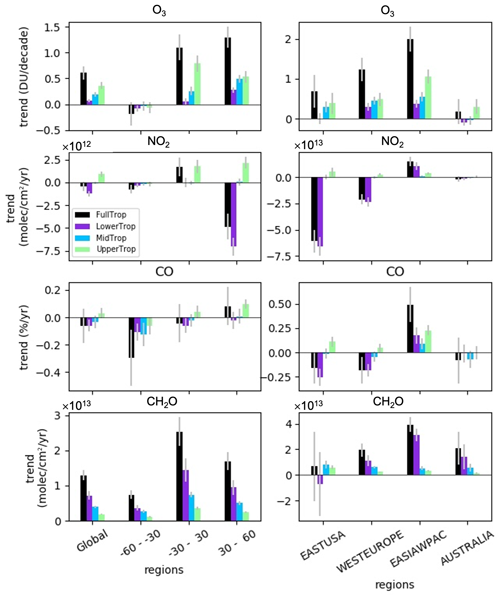
We investigated tropospheric ozone spatial variability and trends from 2005 to 2019 and related those to ozone precursors on global and regional scales. We also investigate the spatiotemporal characteristics of the ozone formation regime in relation to ozone chemical sources and sinks. Our analysis is based on remote sensing products of the tropospheric column of ozone and its precursors, nitrogen dioxide, formaldehyde, and total column CO, as well as ozonesonde data and model simulations.
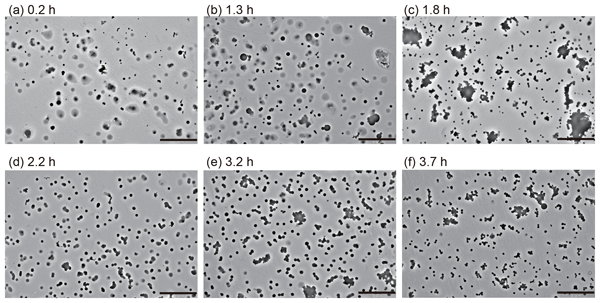
Kouji Adachi, Jack E. Dibb, Joseph M. Katich, Joshua P. Schwarz, Hongyu Guo, Pedro Campuzano-Jost, Jose L. Jimenez, Jeff Peischl, Christopher D. Holmes, and James Crawford
Atmos. Chem. Phys., 24, 10985–11004, https://doi.org/10.5194/acp-24-10985-2024, https://doi.org/10.5194/acp-24-10985-2024, 2024
Short summary
Short summary
We examined aerosol particles from wildfires and identified tarballs (TBs) from the Fire Influence on Regional to Global Environments and Air Quality (FIREX-AQ) campaign. This study reveals the compositions, abundance, sizes, and mixing states of TBs and shows that TBs formed as the smoke aged for up to 5 h. This study provides measurements of TBs from various biomass-burning events and ages, enhancing our knowledge of TB emissions and our understanding of their climate impact.
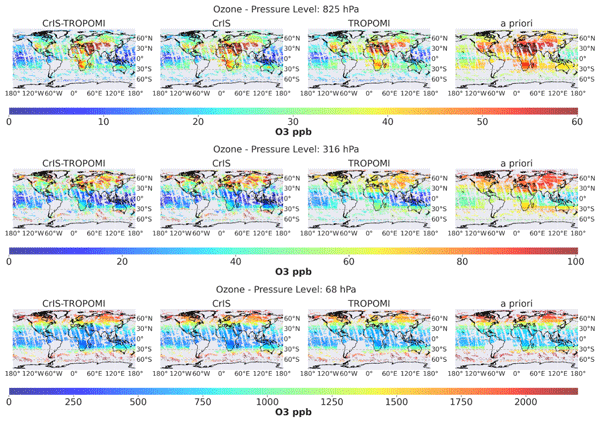
Edward Malina, Kevin W. Bowman, Valentin Kantchev, Le Kuai, Thomas P. Kurosu, Kazuyuki Miyazaki, Vijay Natraj, Gregory B. Osterman, Fabiano Oyafuso, and Matthew D. Thill
Atmos. Meas. Tech., 17, 5341–5371, https://doi.org/10.5194/amt-17-5341-2024, https://doi.org/10.5194/amt-17-5341-2024, 2024
Short summary
Short summary
Characterizing the distribution of ozone in the atmosphere is a challenging problem, with current Earth observation satellites using either thermal infrared (TIR) or ultraviolet (UV) instruments, sensitive to different portions of the atmosphere, making it difficult to gain a full picture. In this work, we combine measurements from the TIR and UV instruments Suomi NPP CrIS and Sentinel-5P/TROPOMI to improve sensitivity through the whole atmosphere and improve knowledge of ozone distribution.
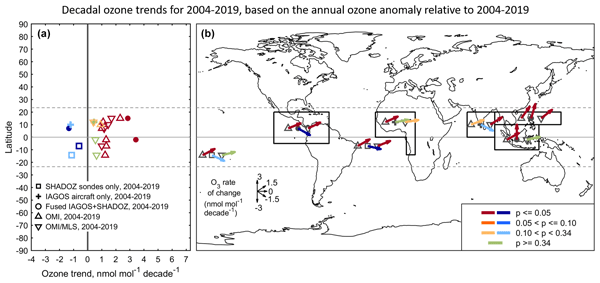
Audrey Gaudel, Ilann Bourgeois, Meng Li, Kai-Lan Chang, Jerald Ziemke, Bastien Sauvage, Ryan M. Stauffer, Anne M. Thompson, Debra E. Kollonige, Nadia Smith, Daan Hubert, Arno Keppens, Juan Cuesta, Klaus-Peter Heue, Pepijn Veefkind, Kenneth Aikin, Jeff Peischl, Chelsea R. Thompson, Thomas B. Ryerson, Gregory J. Frost, Brian C. McDonald, and Owen R. Cooper
Atmos. Chem. Phys., 24, 9975–10000, https://doi.org/10.5194/acp-24-9975-2024, https://doi.org/10.5194/acp-24-9975-2024, 2024
Short summary
Short summary
The study examines tropical tropospheric ozone changes. In situ data from 1994–2019 display increased ozone, notably over India, Southeast Asia, and Malaysia and Indonesia. Sparse in situ data limit trend detection for the 15-year period. In situ and satellite data, with limited sampling, struggle to consistently detect trends. Continuous observations are vital over the tropical Pacific Ocean, Indian Ocean, western Africa, and South Asia for accurate ozone trend estimation in these regions.
Andrew O. Langford, Raul J. Alvarez II, Kenneth C. Aikin, Sunil Baidar, W. Alan Brewer, Steven S. Brown, Matthew M. Coggan, Patrick D. Cullis, Jessica Gilman, Georgios I. Gkatzelis, Detlev Helmig, Bryan J. Johnson, K. Emma Knowland, Rajesh Kumar, Aaron D. Lamplugh, Audra McClure-Begley, Brandi J. McCarty, Ann M. Middlebrook, Gabriele Pfister, Jeff Peischl, Irina Petropavlovskikh, Pamela S. Rickley, Andrew W. Rollins, Scott P. Sandberg, Christoph J. Senff, and Carsten Warneke
EGUsphere, https://doi.org/10.5194/egusphere-2024-1938, https://doi.org/10.5194/egusphere-2024-1938, 2024
Preprint withdrawn
Short summary
Short summary
High ozone (O3) formed by reactions of nitrogen oxides (NOx) and volatile organic compounds (VOCs) can harm human health and welfare. High O3 is usually associated with hot summer days, but under certain conditions, high O3 can also form under winter conditions. In this study, we describe a high O3 event that occurred in Colorado during the COVID-19 quarantine that was caused in part by the decrease in traffic, and in part by a shallow inversion created by descent of stratospheric air.
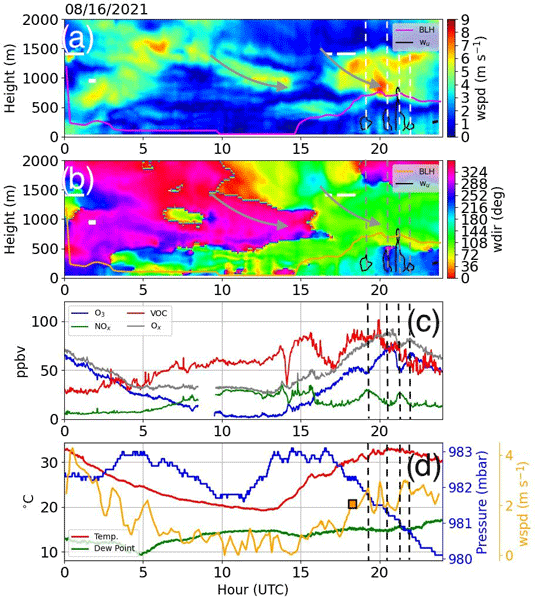
Edward J. Strobach, Sunil Baidar, Brian J. Carroll, Steven S. Brown, Kristen Zuraski, Matthew Coggon, Chelsea E. Stockwell, Lu Xu, Yelena L. Pichugina, W. Alan Brewer, Carsten Warneke, Jeff Peischl, Jessica Gilman, Brandi McCarty, Maxwell Holloway, and Richard Marchbanks
Atmos. Chem. Phys., 24, 9277–9307, https://doi.org/10.5194/acp-24-9277-2024, https://doi.org/10.5194/acp-24-9277-2024, 2024
Short summary
Short summary
Large-scale weather patterns are isolated from local patterns to study the impact that different weather scales have on air quality measurements. While impacts from large-scale meteorology were evaluated by separating ozone (O3) exceedance (>70 ppb) and non-exceedance (<70 ppb) days, we developed a technique that allows direct comparisons of small temporal variations between chemical and dynamics measurements under rapid dynamical transitions.
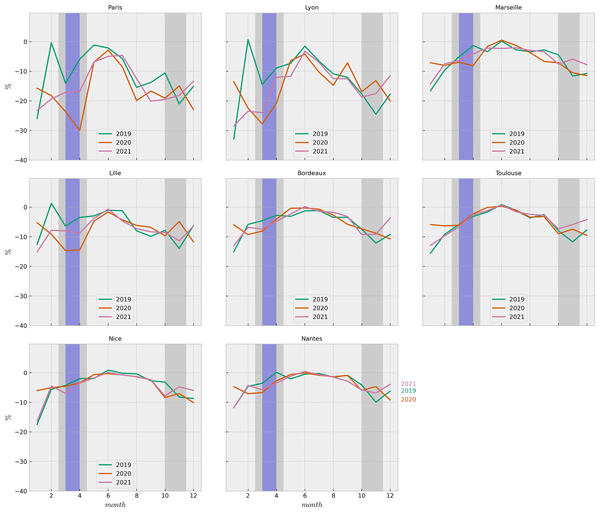
Robin Plauchu, Audrey Fortems-Cheiney, Grégoire Broquet, Isabelle Pison, Antoine Berchet, Elise Potier, Gaëlle Dufour, Adriana Coman, Dilek Savas, Guillaume Siour, and Henk Eskes
Atmos. Chem. Phys., 24, 8139–8163, https://doi.org/10.5194/acp-24-8139-2024, https://doi.org/10.5194/acp-24-8139-2024, 2024
Short summary
Short summary
This study uses the Community Inversion Framework and CHIMERE model to assess the potential of TROPOMI-S5P PAL NO2 tropospheric column data to estimate NOx emissions in France (2019–2021). Results show a 3 % decrease in average emissions compared to the 2016 CAMS-REG/INS, lower than the 14 % decrease from CITEPA. The study highlights challenges in capturing emission anomalies due to limited data coverage and error levels but shows promise for local inventory improvements.
Yange Deng, Hiroshi Tanimoto, Kohei Ikeda, Sohiko Kameyama, Sachiko Okamoto, Jinyoung Jung, Young Jun Yoon, Eun Jin Yang, and Sung-Ho Kang
Atmos. Chem. Phys., 24, 6339–6357, https://doi.org/10.5194/acp-24-6339-2024, https://doi.org/10.5194/acp-24-6339-2024, 2024
Short summary
Short summary
Black carbon (BC) aerosols play important roles in Arctic climate change, yet they are not well understood because of limited observational data. We observed BC mass concentrations (mBC) in the western Arctic Ocean during summer and early autumn 2016–2020. The mean mBC in 2019 was much higher than in other years. Biomass burning was likely the dominant BC source. Boreal fire BC transport occurring near the surface and/or in the mid-troposphere contributed to high-BC events in the Arctic Ocean.
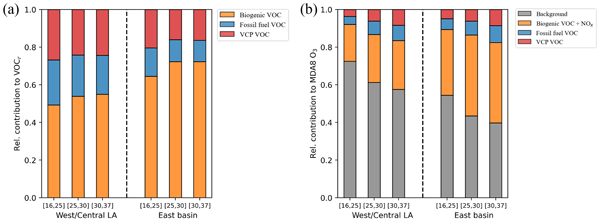
Qindan Zhu, Rebecca H. Schwantes, Matthew Coggon, Colin Harkins, Jordan Schnell, Jian He, Havala O. T. Pye, Meng Li, Barry Baker, Zachary Moon, Ravan Ahmadov, Eva Y. Pfannerstill, Bryan Place, Paul Wooldridge, Benjamin C. Schulze, Caleb Arata, Anthony Bucholtz, John H. Seinfeld, Carsten Warneke, Chelsea E. Stockwell, Lu Xu, Kristen Zuraski, Michael A. Robinson, J. Andrew Neuman, Patrick R. Veres, Jeff Peischl, Steven S. Brown, Allen H. Goldstein, Ronald C. Cohen, and Brian C. McDonald
Atmos. Chem. Phys., 24, 5265–5286, https://doi.org/10.5194/acp-24-5265-2024, https://doi.org/10.5194/acp-24-5265-2024, 2024
Short summary
Short summary
Volatile organic compounds (VOCs) fuel the production of air pollutants like ozone and particulate matter. The representation of VOC chemistry remains challenging due to its complexity in speciation and reactions. Here, we develop a chemical mechanism, RACM2B-VCP, that better represents VOC chemistry in urban areas such as Los Angeles. We also discuss the contribution of VOCs emitted from volatile chemical products and other anthropogenic sources to total VOC reactivity and O3.
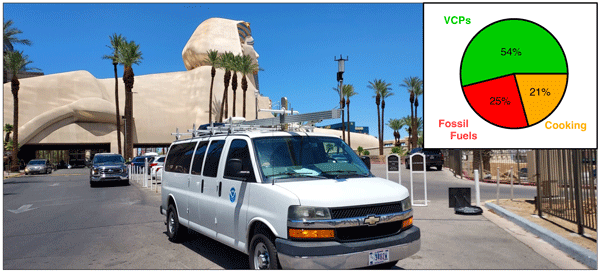
Matthew M. Coggon, Chelsea E. Stockwell, Lu Xu, Jeff Peischl, Jessica B. Gilman, Aaron Lamplugh, Henry J. Bowman, Kenneth Aikin, Colin Harkins, Qindan Zhu, Rebecca H. Schwantes, Jian He, Meng Li, Karl Seltzer, Brian McDonald, and Carsten Warneke
Atmos. Chem. Phys., 24, 4289–4304, https://doi.org/10.5194/acp-24-4289-2024, https://doi.org/10.5194/acp-24-4289-2024, 2024
Short summary
Short summary
Residential and commercial cooking emits pollutants that degrade air quality. Here, ambient observations show that cooking is an important contributor to anthropogenic volatile organic compounds (VOCs) emitted in Las Vegas, NV. These emissions are not fully presented in air quality models, and more work may be needed to quantify emissions from important sources, such as commercial restaurants.
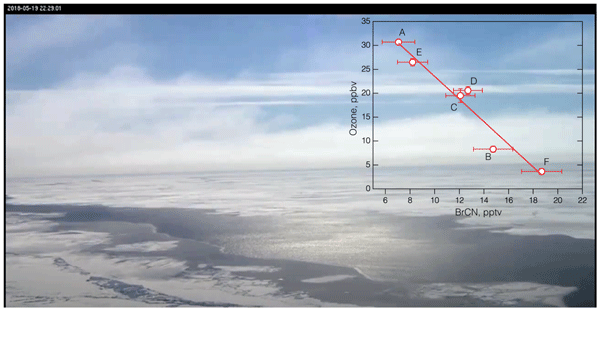
James M. Roberts, Siyuan Wang, Patrick R. Veres, J. Andrew Neuman, Michael A. Robinson, Ilann Bourgeois, Jeff Peischl, Thomas B. Ryerson, Chelsea R. Thompson, Hannah M. Allen, John D. Crounse, Paul O. Wennberg, Samuel R. Hall, Kirk Ullmann, Simone Meinardi, Isobel J. Simpson, and Donald Blake
Atmos. Chem. Phys., 24, 3421–3443, https://doi.org/10.5194/acp-24-3421-2024, https://doi.org/10.5194/acp-24-3421-2024, 2024
Short summary
Short summary
We measured cyanogen bromide (BrCN) in the troposphere for the first time. BrCN is a product of the same active bromine chemistry that destroys ozone and removes mercury in polar surface environments and is a previously unrecognized sink for active Br compounds. BrCN has an apparent lifetime against heterogeneous loss in the range 1–10 d, so it serves as a cumulative marker of Br-radical chemistry. Accounting for BrCN chemistry is an important part of understanding polar Br cycling.
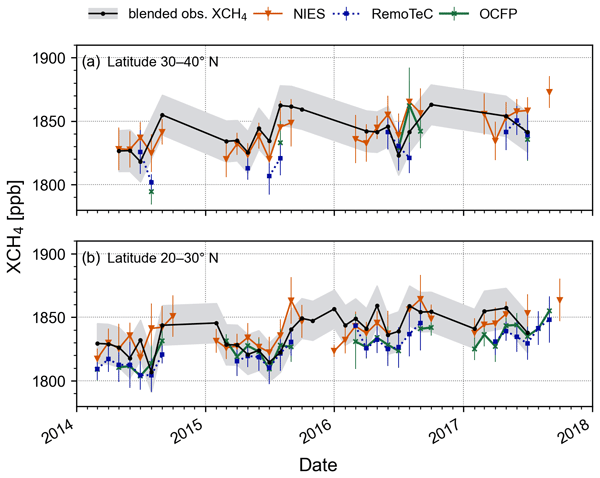
Astrid Müller, Hiroshi Tanimoto, Takafumi Sugita, Prabir K. Patra, Shin-ichiro Nakaoka, Toshinobu Machida, Isamu Morino, André Butz, and Kei Shiomi
Atmos. Meas. Tech., 17, 1297–1316, https://doi.org/10.5194/amt-17-1297-2024, https://doi.org/10.5194/amt-17-1297-2024, 2024
Short summary
Short summary
Satellite CH4 observations with high accuracy are needed to understand changes in atmospheric CH4 concentrations. But over oceans, reference data are limited. We combine various ship and aircraft observations with the help of atmospheric chemistry models to derive observation-based column-averaged mixing ratios of CH4 (obs. XCH4). We discuss three different approaches and demonstrate the applicability of the new reference dataset for carbon cycle studies and satellite evaluation.
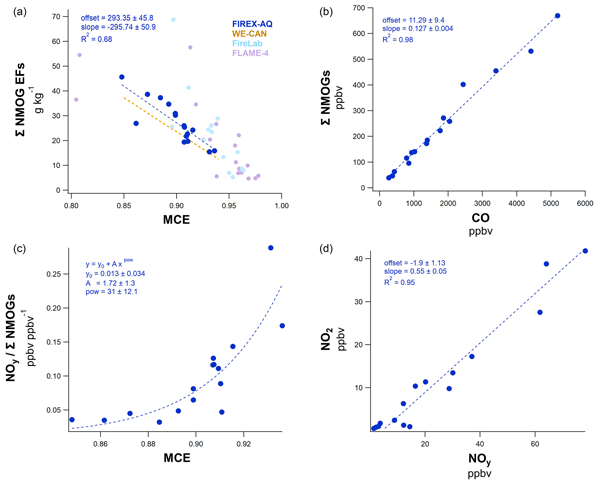
Georgios I. Gkatzelis, Matthew M. Coggon, Chelsea E. Stockwell, Rebecca S. Hornbrook, Hannah Allen, Eric C. Apel, Megan M. Bela, Donald R. Blake, Ilann Bourgeois, Steven S. Brown, Pedro Campuzano-Jost, Jason M. St. Clair, James H. Crawford, John D. Crounse, Douglas A. Day, Joshua P. DiGangi, Glenn S. Diskin, Alan Fried, Jessica B. Gilman, Hongyu Guo, Johnathan W. Hair, Hannah S. Halliday, Thomas F. Hanisco, Reem Hannun, Alan Hills, L. Gregory Huey, Jose L. Jimenez, Joseph M. Katich, Aaron Lamplugh, Young Ro Lee, Jin Liao, Jakob Lindaas, Stuart A. McKeen, Tomas Mikoviny, Benjamin A. Nault, J. Andrew Neuman, John B. Nowak, Demetrios Pagonis, Jeff Peischl, Anne E. Perring, Felix Piel, Pamela S. Rickly, Michael A. Robinson, Andrew W. Rollins, Thomas B. Ryerson, Melinda K. Schueneman, Rebecca H. Schwantes, Joshua P. Schwarz, Kanako Sekimoto, Vanessa Selimovic, Taylor Shingler, David J. Tanner, Laura Tomsche, Krystal T. Vasquez, Patrick R. Veres, Rebecca Washenfelder, Petter Weibring, Paul O. Wennberg, Armin Wisthaler, Glenn M. Wolfe, Caroline C. Womack, Lu Xu, Katherine Ball, Robert J. Yokelson, and Carsten Warneke
Atmos. Chem. Phys., 24, 929–956, https://doi.org/10.5194/acp-24-929-2024, https://doi.org/10.5194/acp-24-929-2024, 2024
Short summary
Short summary
This study reports emissions of gases and particles from wildfires. These emissions are related to chemical proxies that can be measured by satellite and incorporated into models to improve predictions of wildfire impacts on air quality and climate.
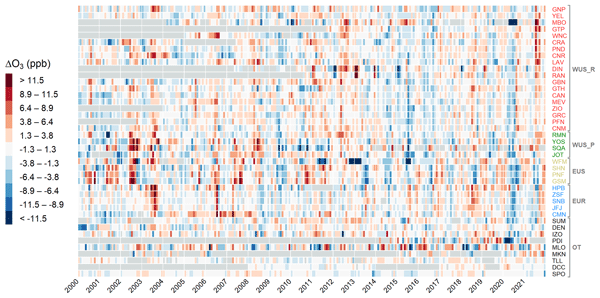
Davide Putero, Paolo Cristofanelli, Kai-Lan Chang, Gaëlle Dufour, Gregory Beachley, Cédric Couret, Peter Effertz, Daniel A. Jaffe, Dagmar Kubistin, Jason Lynch, Irina Petropavlovskikh, Melissa Puchalski, Timothy Sharac, Barkley C. Sive, Martin Steinbacher, Carlos Torres, and Owen R. Cooper
Atmos. Chem. Phys., 23, 15693–15709, https://doi.org/10.5194/acp-23-15693-2023, https://doi.org/10.5194/acp-23-15693-2023, 2023
Short summary
Short summary
We investigated the impact of societal restriction measures during the COVID-19 pandemic on surface ozone at 41 high-elevation sites worldwide. Negative ozone anomalies were observed for spring and summer 2020 for all of the regions considered. In 2021, negative anomalies continued for Europe and partially for the eastern US, while western US sites showed positive anomalies due to wildfires. IASI satellite data and the Carbon Monitor supported emission reductions as a cause of the anomalies.
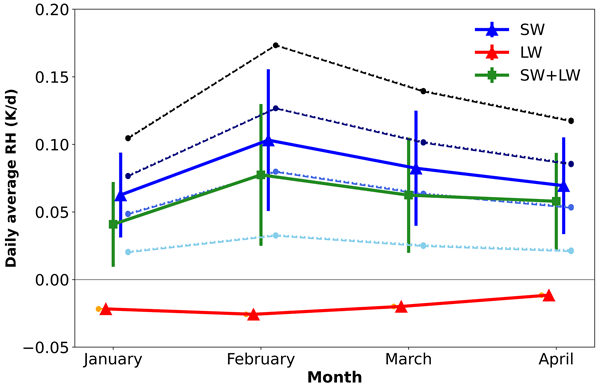
Pasquale Sellitto, Redha Belhadji, Juan Cuesta, Aurélien Podglajen, and Bernard Legras
Atmos. Chem. Phys., 23, 15523–15535, https://doi.org/10.5194/acp-23-15523-2023, https://doi.org/10.5194/acp-23-15523-2023, 2023
Short summary
Short summary
Record-breaking wildfires ravaged south-eastern Australia during the fire season 2019–2020. These fires injected a smoke plume in the stratosphere, which dispersed over the whole Southern Hemisphere and interacted with solar and terrestrial radiation. A number of detached smoke bubbles were also observed emanating from this plume and ascending quickly to over 35 km altitude. Here we study how absorption of radiation generated ascending motion of both the the hemispheric plume and the vortices.
Wenfu Tang, Louisa K. Emmons, Helen M. Worden, Rajesh Kumar, Cenlin He, Benjamin Gaubert, Zhonghua Zheng, Simone Tilmes, Rebecca R. Buchholz, Sara-Eva Martinez-Alonso, Claire Granier, Antonin Soulie, Kathryn McKain, Bruce C. Daube, Jeff Peischl, Chelsea Thompson, and Pieternel Levelt
Geosci. Model Dev., 16, 6001–6028, https://doi.org/10.5194/gmd-16-6001-2023, https://doi.org/10.5194/gmd-16-6001-2023, 2023
Short summary
Short summary
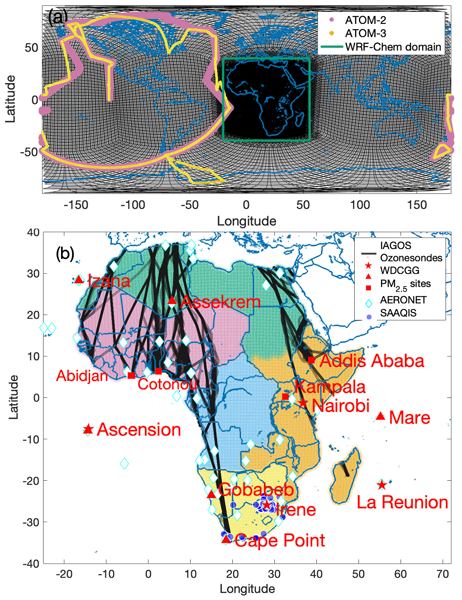
The new MUSICAv0 model enables the study of atmospheric chemistry across all relevant scales. We develop a MUSICAv0 grid for Africa. We evaluate MUSICAv0 with observations and compare it with a previously used model – WRF-Chem. Overall, the performance of MUSICAv0 is comparable to WRF-Chem. Based on model–satellite discrepancies, we find that future field campaigns in an eastern African region (30°E–45°E, 5°S–5°N) could substantially improve the predictive skill of air quality models.
Drew C. Pendergrass, Daniel J. Jacob, Hannah Nesser, Daniel J. Varon, Melissa Sulprizio, Kazuyuki Miyazaki, and Kevin W. Bowman
Geosci. Model Dev., 16, 4793–4810, https://doi.org/10.5194/gmd-16-4793-2023, https://doi.org/10.5194/gmd-16-4793-2023, 2023
Short summary
Short summary
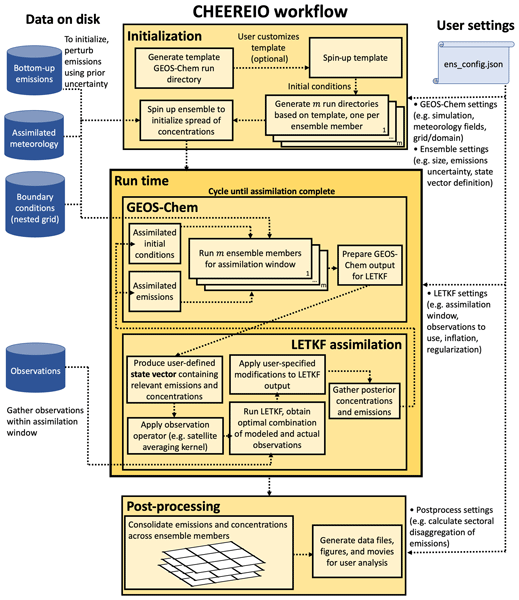
We have built a tool called CHEEREIO that allows scientists to use observations of pollutants or gases in the atmosphere, such as from satellites or surface stations, to update supercomputer models that simulate the Earth. CHEEREIO uses the difference between the model simulations of the atmosphere and real-world observations to come up with a good guess for the actual composition of our atmosphere, the true emissions of various pollutants, and whatever else they may want to study.
Adedayo R. Adedeji, Stephen J. Andrews, Matthew J. Rowlinson, Mathew J. Evans, Alastair C. Lewis, Shigeru Hashimoto, Hitoshi Mukai, Hiroshi Tanimoto, Yasunori Tohjima, and Takuya Saito
Atmos. Chem. Phys., 23, 9229–9244, https://doi.org/10.5194/acp-23-9229-2023, https://doi.org/10.5194/acp-23-9229-2023, 2023
Short summary
Short summary
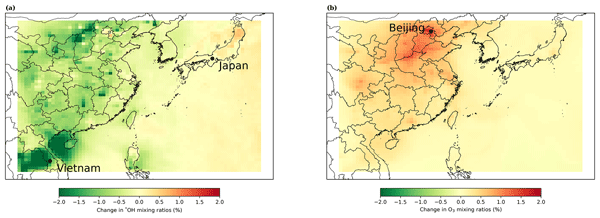
We use the GEOS-Chem model to interpret observations of CO, C2H6, C3H8, NOx, NOy and O3 made from Hateruma Island in 2018. The model captures many synoptic-scale events and the seasonality of most pollutants at the site but underestimates C2H6 and C3H8 during the winter. These underestimates are unlikely to be reconciled by increases in biomass burning emissions but could be reconciled by increasing the Asian anthropogenic source of C2H6 and C3H8 by factors of around 2 and 3, respectively.
Sachiko Okamoto, Juan Cuesta, Matthias Beekmann, Gaëlle Dufour, Maxim Eremenko, Kazuyuki Miyazaki, Cathy Boonne, Hiroshi Tanimoto, and Hajime Akimoto
Atmos. Chem. Phys., 23, 7399–7423, https://doi.org/10.5194/acp-23-7399-2023, https://doi.org/10.5194/acp-23-7399-2023, 2023
Short summary
Short summary
We present a detailed analysis of the daily evolution of the lowermost tropospheric ozone documented by IASI+GOME2 multispectral satellite observations and that of its precursors from TCR-2 tropospheric chemistry reanalysis. It reveals that the ozone outbreak across Europe in July 2017 was produced during favorable condition for photochemical production of ozone and was associated with multiple sources of ozone precursors: biogenic, anthropogenic, and biomass burning emissions.
Michail Mytilinaios, Sara Basart, Sergio Ciamprone, Juan Cuesta, Claudio Dema, Enza Di Tomaso, Paola Formenti, Antonis Gkikas, Oriol Jorba, Ralph Kahn, Carlos Pérez García-Pando, Serena Trippetta, and Lucia Mona
Atmos. Chem. Phys., 23, 5487–5516, https://doi.org/10.5194/acp-23-5487-2023, https://doi.org/10.5194/acp-23-5487-2023, 2023
Short summary
Short summary
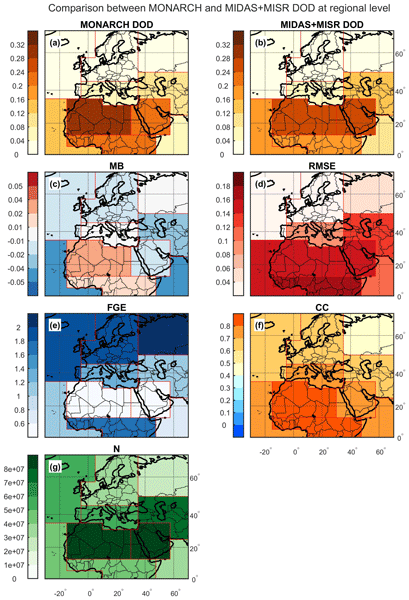
Multiscale Online Non-hydrostatic AtmospheRe CHemistry model (MONARCH) dust reanalysis provides a high-resolution 3D reconstruction of past dust conditions, allowing better quantification of climate and socioeconomic dust impacts. We assess the performance of the reanalysis needed to reproduce dust optical depth using dust-related products retrieved from satellite and ground-based observations and show that it reproduces the spatial distribution and seasonal variability of atmospheric dust well.

Jagat S. H. Bisht, Prabir K. Patra, Masayuki Takigawa, Takashi Sekiya, Yugo Kanaya, Naoko Saitoh, and Kazuyuki Miyazaki
Geosci. Model Dev., 16, 1823–1838, https://doi.org/10.5194/gmd-16-1823-2023, https://doi.org/10.5194/gmd-16-1823-2023, 2023
Short summary
Short summary
In this study, we estimated CH4 fluxes using an advanced 4D-LETKF method. The system was tested and optimized using observation system simulation experiments (OSSEs), where a known surface emission distribution is retrieved from synthetic observations. The availability of satellite measurements has increased, and there are still many missions focused on greenhouse gas observations that have not yet launched. The technique being referred to has the potential to improve estimates of CH4 fluxes.
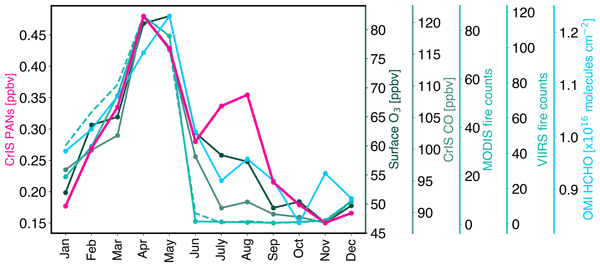
Madison J. Shogrin, Vivienne H. Payne, Susan S. Kulawik, Kazuyuki Miyazaki, and Emily V. Fischer
Atmos. Chem. Phys., 23, 2667–2682, https://doi.org/10.5194/acp-23-2667-2023, https://doi.org/10.5194/acp-23-2667-2023, 2023
Short summary
Short summary
We evaluate the spatiotemporal variability of peroxy acyl nitrates (PANs), important photochemical pollutants, over Mexico City using satellite observations. PANs exhibit a seasonal cycle that maximizes in spring. Wildfires contribute to observed interannual variability, and the satellite indicates several areas of frequent outflow. Recent changes in NOx emissions are not accompanied by changes in PANs. This work demonstrates analysis approaches that can be applied to other megacities.
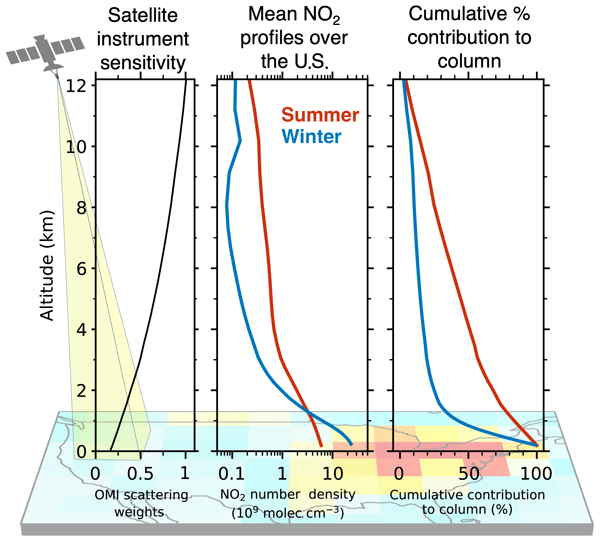
Viral Shah, Daniel J. Jacob, Ruijun Dang, Lok N. Lamsal, Sarah A. Strode, Stephen D. Steenrod, K. Folkert Boersma, Sebastian D. Eastham, Thibaud M. Fritz, Chelsea Thompson, Jeff Peischl, Ilann Bourgeois, Ilana B. Pollack, Benjamin A. Nault, Ronald C. Cohen, Pedro Campuzano-Jost, Jose L. Jimenez, Simone T. Andersen, Lucy J. Carpenter, Tomás Sherwen, and Mat J. Evans
Atmos. Chem. Phys., 23, 1227–1257, https://doi.org/10.5194/acp-23-1227-2023, https://doi.org/10.5194/acp-23-1227-2023, 2023
Short summary
Short summary
NOx in the free troposphere (above 2 km) affects global tropospheric chemistry and the retrieval and interpretation of satellite NO2 measurements. We evaluate free tropospheric NOx in global atmospheric chemistry models and find that recycling NOx from its reservoirs over the oceans is faster than that simulated in the models, resulting in increases in simulated tropospheric ozone and OH. Over the U.S., free tropospheric NO2 contributes the majority of the tropospheric NO2 column in summer.
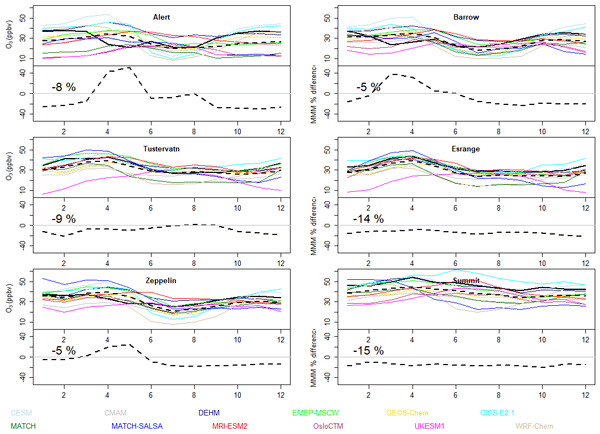
Cynthia H. Whaley, Kathy S. Law, Jens Liengaard Hjorth, Henrik Skov, Stephen R. Arnold, Joakim Langner, Jakob Boyd Pernov, Garance Bergeron, Ilann Bourgeois, Jesper H. Christensen, Rong-You Chien, Makoto Deushi, Xinyi Dong, Peter Effertz, Gregory Faluvegi, Mark Flanner, Joshua S. Fu, Michael Gauss, Greg Huey, Ulas Im, Rigel Kivi, Louis Marelle, Tatsuo Onishi, Naga Oshima, Irina Petropavlovskikh, Jeff Peischl, David A. Plummer, Luca Pozzoli, Jean-Christophe Raut, Tom Ryerson, Ragnhild Skeie, Sverre Solberg, Manu A. Thomas, Chelsea Thompson, Kostas Tsigaridis, Svetlana Tsyro, Steven T. Turnock, Knut von Salzen, and David W. Tarasick
Atmos. Chem. Phys., 23, 637–661, https://doi.org/10.5194/acp-23-637-2023, https://doi.org/10.5194/acp-23-637-2023, 2023
Short summary
Short summary
This study summarizes recent research on ozone in the Arctic, a sensitive and rapidly warming region. We find that the seasonal cycles of near-surface atmospheric ozone are variable depending on whether they are near the coast, inland, or at high altitude. Several global model simulations were evaluated, and we found that because models lack some of the ozone chemistry that is important for the coastal Arctic locations, they do not accurately simulate ozone there.
Hao Guo, Clare M. Flynn, Michael J. Prather, Sarah A. Strode, Stephen D. Steenrod, Louisa Emmons, Forrest Lacey, Jean-Francois Lamarque, Arlene M. Fiore, Gus Correa, Lee T. Murray, Glenn M. Wolfe, Jason M. St. Clair, Michelle Kim, John Crounse, Glenn Diskin, Joshua DiGangi, Bruce C. Daube, Roisin Commane, Kathryn McKain, Jeff Peischl, Thomas B. Ryerson, Chelsea Thompson, Thomas F. Hanisco, Donald Blake, Nicola J. Blake, Eric C. Apel, Rebecca S. Hornbrook, James W. Elkins, Eric J. Hintsa, Fred L. Moore, and Steven C. Wofsy
Atmos. Chem. Phys., 23, 99–117, https://doi.org/10.5194/acp-23-99-2023, https://doi.org/10.5194/acp-23-99-2023, 2023
Short summary
Short summary
We have prepared a unique and unusual result from the recent ATom aircraft mission: a measurement-based derivation of the production and loss rates of ozone and methane over the ocean basins. These are the key products of chemistry models used in assessments but have thus far lacked observational metrics. It also shows the scales of variability of atmospheric chemical rates and provides a major challenge to the atmospheric models.
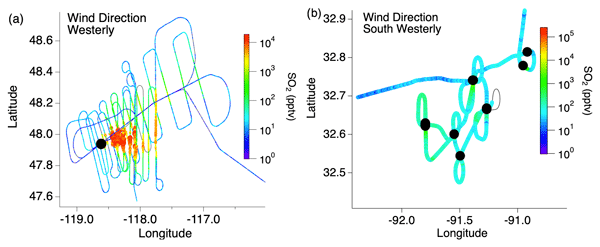
Pamela S. Rickly, Hongyu Guo, Pedro Campuzano-Jost, Jose L. Jimenez, Glenn M. Wolfe, Ryan Bennett, Ilann Bourgeois, John D. Crounse, Jack E. Dibb, Joshua P. DiGangi, Glenn S. Diskin, Maximilian Dollner, Emily M. Gargulinski, Samuel R. Hall, Hannah S. Halliday, Thomas F. Hanisco, Reem A. Hannun, Jin Liao, Richard Moore, Benjamin A. Nault, John B. Nowak, Jeff Peischl, Claire E. Robinson, Thomas Ryerson, Kevin J. Sanchez, Manuel Schöberl, Amber J. Soja, Jason M. St. Clair, Kenneth L. Thornhill, Kirk Ullmann, Paul O. Wennberg, Bernadett Weinzierl, Elizabeth B. Wiggins, Edward L. Winstead, and Andrew W. Rollins
Atmos. Chem. Phys., 22, 15603–15620, https://doi.org/10.5194/acp-22-15603-2022, https://doi.org/10.5194/acp-22-15603-2022, 2022
Short summary
Short summary
Biomass burning sulfur dioxide (SO2) emission factors range from 0.27–1.1 g kg-1 C. Biomass burning SO2 can quickly form sulfate and organosulfur, but these pathways are dependent on liquid water content and pH. Hydroxymethanesulfonate (HMS) appears to be directly emitted from some fire sources but is not the sole contributor to the organosulfur signal. It is shown that HMS and organosulfur chemistry may be an important S(IV) reservoir with the fate dependent on the surrounding conditions.
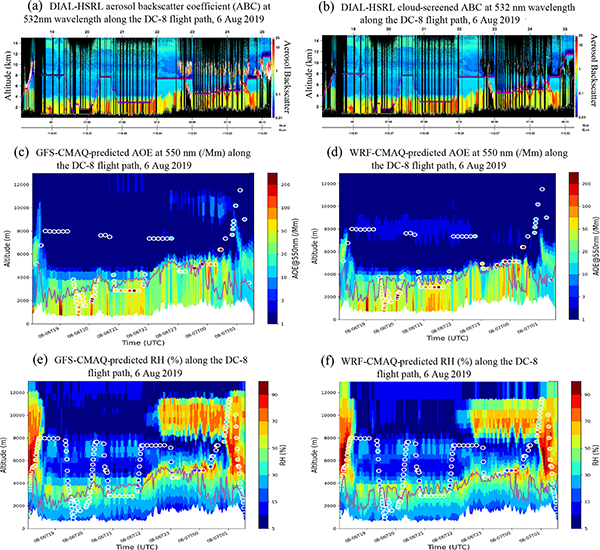
Youhua Tang, Patrick C. Campbell, Pius Lee, Rick Saylor, Fanglin Yang, Barry Baker, Daniel Tong, Ariel Stein, Jianping Huang, Ho-Chun Huang, Li Pan, Jeff McQueen, Ivanka Stajner, Jose Tirado-Delgado, Youngsun Jung, Melissa Yang, Ilann Bourgeois, Jeff Peischl, Tom Ryerson, Donald Blake, Joshua Schwarz, Jose-Luis Jimenez, James Crawford, Glenn Diskin, Richard Moore, Johnathan Hair, Greg Huey, Andrew Rollins, Jack Dibb, and Xiaoyang Zhang
Geosci. Model Dev., 15, 7977–7999, https://doi.org/10.5194/gmd-15-7977-2022, https://doi.org/10.5194/gmd-15-7977-2022, 2022
Short summary
Short summary
This paper compares two meteorological datasets for driving a regional air quality model: a regional meteorological model using WRF (WRF-CMAQ) and direct interpolation from an operational global model (GFS-CMAQ). In the comparison with surface measurements and aircraft data in summer 2019, these two methods show mixed performance depending on the corresponding meteorological settings. Direct interpolation is found to be a viable method to drive air quality models.
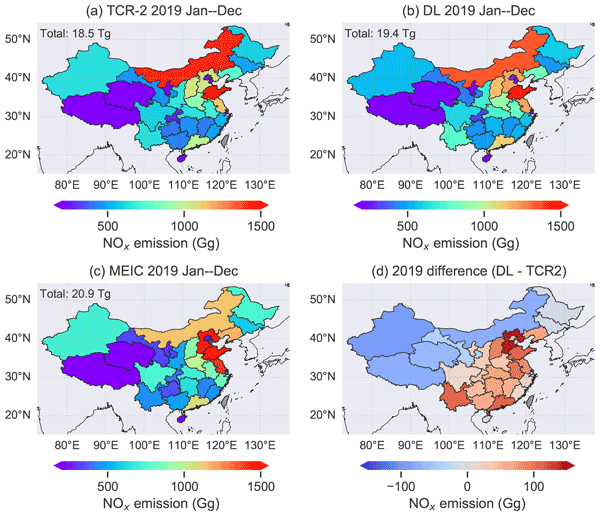
Tai-Long He, Dylan B. A. Jones, Kazuyuki Miyazaki, Kevin W. Bowman, Zhe Jiang, Xiaokang Chen, Rui Li, Yuxiang Zhang, and Kunna Li
Atmos. Chem. Phys., 22, 14059–14074, https://doi.org/10.5194/acp-22-14059-2022, https://doi.org/10.5194/acp-22-14059-2022, 2022
Short summary
Short summary
We use a deep-learning (DL) model to estimate Chinese NOx emissions by combining satellite analysis and in situ measurements. Our results are consistent with conventional analyses of Chinese NOx emissions. Comparison with mobility data shows that the DL model has a better capability to capture changes in NOx. We analyse Chinese NOx emissions during the COVID-19 pandemic lockdown period. Our results illustrate the potential use of DL as a complementary tool for conventional air quality studies.
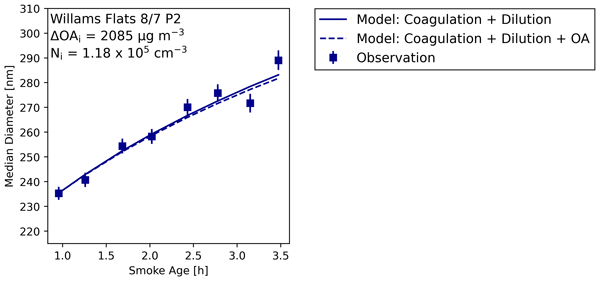
Nicole A. June, Anna L. Hodshire, Elizabeth B. Wiggins, Edward L. Winstead, Claire E. Robinson, K. Lee Thornhill, Kevin J. Sanchez, Richard H. Moore, Demetrios Pagonis, Hongyu Guo, Pedro Campuzano-Jost, Jose L. Jimenez, Matthew M. Coggon, Jonathan M. Dean-Day, T. Paul Bui, Jeff Peischl, Robert J. Yokelson, Matthew J. Alvarado, Sonia M. Kreidenweis, Shantanu H. Jathar, and Jeffrey R. Pierce
Atmos. Chem. Phys., 22, 12803–12825, https://doi.org/10.5194/acp-22-12803-2022, https://doi.org/10.5194/acp-22-12803-2022, 2022
Short summary
Short summary
The evolution of organic aerosol composition and size is uncertain due to variability within and between smoke plumes. We examine the impact of plume concentration on smoke evolution from smoke plumes sampled by the NASA DC-8 during FIREX-AQ. We find that observed organic aerosol and size distribution changes are correlated to plume aerosol mass concentrations. Additionally, coagulation explains the majority of the observed growth.
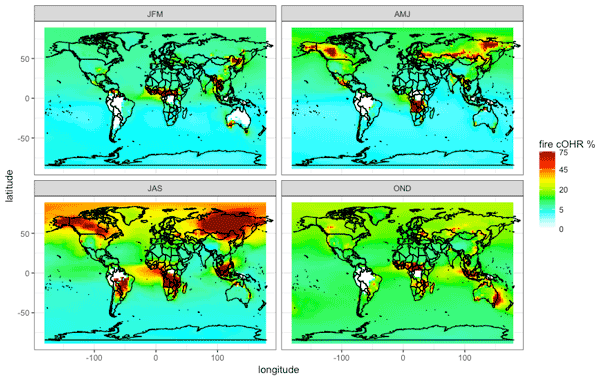
Therese S. Carter, Colette L. Heald, Jesse H. Kroll, Eric C. Apel, Donald Blake, Matthew Coggon, Achim Edtbauer, Georgios Gkatzelis, Rebecca S. Hornbrook, Jeff Peischl, Eva Y. Pfannerstill, Felix Piel, Nina G. Reijrink, Akima Ringsdorf, Carsten Warneke, Jonathan Williams, Armin Wisthaler, and Lu Xu
Atmos. Chem. Phys., 22, 12093–12111, https://doi.org/10.5194/acp-22-12093-2022, https://doi.org/10.5194/acp-22-12093-2022, 2022
Short summary
Short summary
Fires emit many gases which can contribute to smog and air pollution. However, the amount and properties of these chemicals are not well understood, so this work updates and expands their representation in a global atmospheric model, including by adding new chemicals. We confirm that this updated representation generally matches measurements taken in several fire regions. We then show that fires provide ~15 % of atmospheric reactivity globally and more than 75 % over fire source regions.
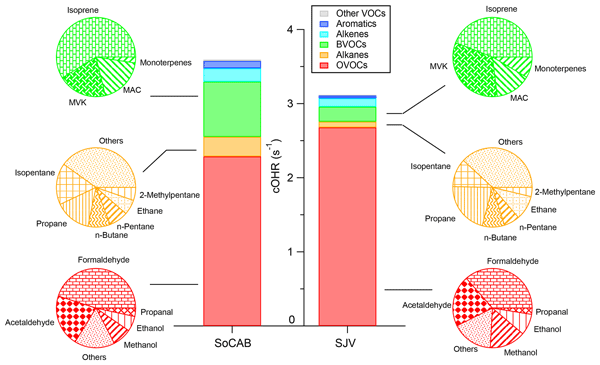
Shang Liu, Barbara Barletta, Rebecca S. Hornbrook, Alan Fried, Jeff Peischl, Simone Meinardi, Matthew Coggon, Aaron Lamplugh, Jessica B. Gilman, Georgios I. Gkatzelis, Carsten Warneke, Eric C. Apel, Alan J. Hills, Ilann Bourgeois, James Walega, Petter Weibring, Dirk Richter, Toshihiro Kuwayama, Michael FitzGibbon, and Donald Blake
Atmos. Chem. Phys., 22, 10937–10954, https://doi.org/10.5194/acp-22-10937-2022, https://doi.org/10.5194/acp-22-10937-2022, 2022
Short summary
Short summary
California’s ozone persistently exceeds the air quality standards. We studied the spatial distribution of volatile organic compounds (VOCs) that produce ozone over the most polluted regions in California using aircraft measurements. We find that the oxygenated VOCs have the highest ozone formation potential. Spatially, biogenic VOCs are important during high ozone episodes in the South Coast Air Basin, while dairy emissions may be critical for ozone production in San Joaquin Valley.
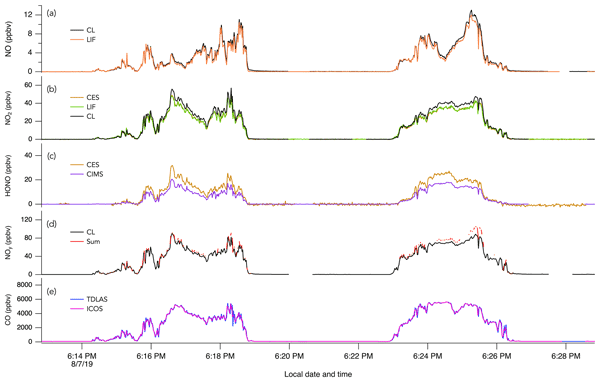
Ilann Bourgeois, Jeff Peischl, J. Andrew Neuman, Steven S. Brown, Hannah M. Allen, Pedro Campuzano-Jost, Matthew M. Coggon, Joshua P. DiGangi, Glenn S. Diskin, Jessica B. Gilman, Georgios I. Gkatzelis, Hongyu Guo, Hannah A. Halliday, Thomas F. Hanisco, Christopher D. Holmes, L. Gregory Huey, Jose L. Jimenez, Aaron D. Lamplugh, Young Ro Lee, Jakob Lindaas, Richard H. Moore, Benjamin A. Nault, John B. Nowak, Demetrios Pagonis, Pamela S. Rickly, Michael A. Robinson, Andrew W. Rollins, Vanessa Selimovic, Jason M. St. Clair, David Tanner, Krystal T. Vasquez, Patrick R. Veres, Carsten Warneke, Paul O. Wennberg, Rebecca A. Washenfelder, Elizabeth B. Wiggins, Caroline C. Womack, Lu Xu, Kyle J. Zarzana, and Thomas B. Ryerson
Atmos. Meas. Tech., 15, 4901–4930, https://doi.org/10.5194/amt-15-4901-2022, https://doi.org/10.5194/amt-15-4901-2022, 2022
Short summary
Short summary
Understanding fire emission impacts on the atmosphere is key to effective air quality management and requires accurate measurements. We present a comparison of airborne measurements of key atmospheric species in ambient air and in fire smoke. We show that most instruments performed within instrument uncertainties. In some cases, further work is needed to fully characterize instrument performance. Comparing independent measurements using different techniques is important to assess their accuracy.
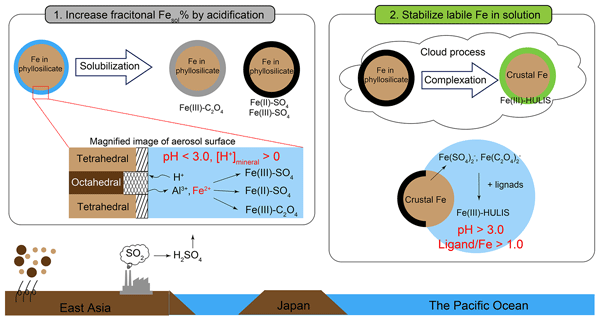
Kohei Sakata, Minako Kurisu, Yasuo Takeichi, Aya Sakaguchi, Hiroshi Tanimoto, Yusuke Tamenori, Atsushi Matsuki, and Yoshio Takahashi
Atmos. Chem. Phys., 22, 9461–9482, https://doi.org/10.5194/acp-22-9461-2022, https://doi.org/10.5194/acp-22-9461-2022, 2022
Short summary
Short summary
Iron (Fe) species in size-fractionated aerosol particles collected in the western Pacific Ocean were determined to identify factors controlling fractional Fe solubility. We found that labile Fe was mainly present in submicron aerosol particles, and the Fe species were ferric organic complexes combined with humic-like substances (Fe(III)-HULIS). The Fe(III)-HULIS was formed by atmospheric processes. Thus, atmospheric processes play a significant role in controlling Fe solubility.
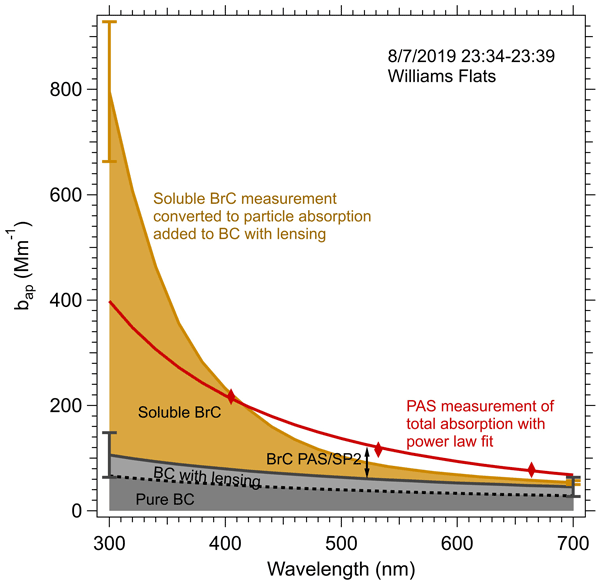
Linghan Zeng, Jack Dibb, Eric Scheuer, Joseph M. Katich, Joshua P. Schwarz, Ilann Bourgeois, Jeff Peischl, Tom Ryerson, Carsten Warneke, Anne E. Perring, Glenn S. Diskin, Joshua P. DiGangi, John B. Nowak, Richard H. Moore, Elizabeth B. Wiggins, Demetrios Pagonis, Hongyu Guo, Pedro Campuzano-Jost, Jose L. Jimenez, Lu Xu, and Rodney J. Weber
Atmos. Chem. Phys., 22, 8009–8036, https://doi.org/10.5194/acp-22-8009-2022, https://doi.org/10.5194/acp-22-8009-2022, 2022
Short summary
Short summary
Wildfires emit aerosol particles containing brown carbon material that affects visibility and global climate and is toxic. Brown carbon is poorly characterized due to measurement limitations, and its evolution in the atmosphere is not well known. We report on aircraft measurements of brown carbon from large wildfires in the western United States. We compare two methods for measuring brown carbon and study the evolution of brown carbon in the smoke as it moved away from the burning regions.
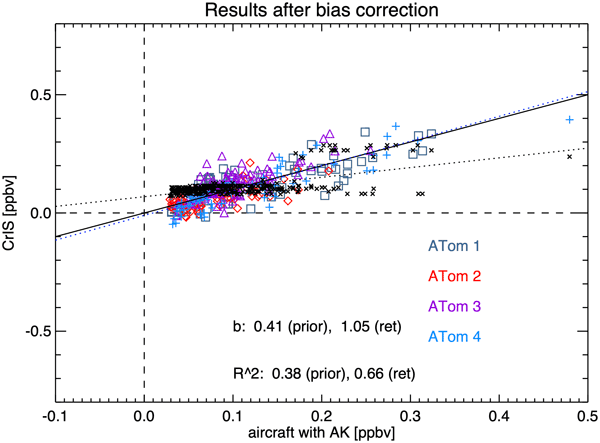
Vivienne H. Payne, Susan S. Kulawik, Emily V. Fischer, Jared F. Brewer, L. Gregory Huey, Kazuyuki Miyazaki, John R. Worden, Kevin W. Bowman, Eric J. Hintsa, Fred Moore, James W. Elkins, and Julieta Juncosa Calahorrano
Atmos. Meas. Tech., 15, 3497–3511, https://doi.org/10.5194/amt-15-3497-2022, https://doi.org/10.5194/amt-15-3497-2022, 2022
Short summary
Short summary
We compare new satellite measurements of peroxyacetyl nitrate (PAN) with reference aircraft measurements from two different instruments flown on the same platform. While there is a systematic difference between the two aircraft datasets, both show the same large-scale distribution of PAN and the discrepancy between aircraft datasets is small compared to the satellite uncertainties. The satellite measurements show skill in capturing large-scale variations in PAN.
Hao Xu, Urumu Tsunogai, Fumiko Nakagawa, Keiichi Sato, and Hiroshi Tanimoto
Atmos. Chem. Phys. Discuss., https://doi.org/10.5194/acp-2021-1099, https://doi.org/10.5194/acp-2021-1099, 2022
Revised manuscript not accepted
Short summary
Short summary
Using triple oxygen isotopic composition (Δ17O) of ozone as a new tracer, we estimated the absolute concentrations of stratospheric ozone supplied through stratosphere-troposphere transport in the troposphere. We observed the diurnal variations in the Δ17O of ozone, which could have affected studies (field measurements, atmospheric modeling) using Δ17O to constrain atmospheric chemical paths. Our study provides an important basis for a better understanding of ozone behavior in the troposphere.
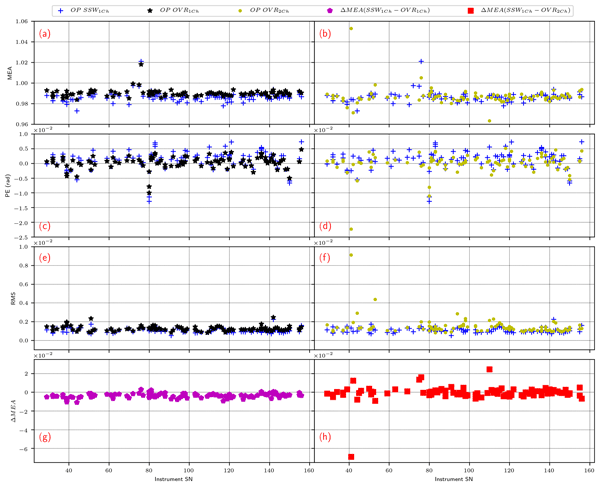
Carlos Alberti, Frank Hase, Matthias Frey, Darko Dubravica, Thomas Blumenstock, Angelika Dehn, Paolo Castracane, Gregor Surawicz, Roland Harig, Bianca C. Baier, Caroline Bès, Jianrong Bi, Hartmut Boesch, André Butz, Zhaonan Cai, Jia Chen, Sean M. Crowell, Nicholas M. Deutscher, Dragos Ene, Jonathan E. Franklin, Omaira García, David Griffith, Bruno Grouiez, Michel Grutter, Abdelhamid Hamdouni, Sander Houweling, Neil Humpage, Nicole Jacobs, Sujong Jeong, Lilian Joly, Nicholas B. Jones, Denis Jouglet, Rigel Kivi, Ralph Kleinschek, Morgan Lopez, Diogo J. Medeiros, Isamu Morino, Nasrin Mostafavipak, Astrid Müller, Hirofumi Ohyama, Paul I. Palmer, Mahesh Pathakoti, David F. Pollard, Uwe Raffalski, Michel Ramonet, Robbie Ramsay, Mahesh Kumar Sha, Kei Shiomi, William Simpson, Wolfgang Stremme, Youwen Sun, Hiroshi Tanimoto, Yao Té, Gizaw Mengistu Tsidu, Voltaire A. Velazco, Felix Vogel, Masataka Watanabe, Chong Wei, Debra Wunch, Marcia Yamasoe, Lu Zhang, and Johannes Orphal
Atmos. Meas. Tech., 15, 2433–2463, https://doi.org/10.5194/amt-15-2433-2022, https://doi.org/10.5194/amt-15-2433-2022, 2022
Short summary
Short summary
Space-borne greenhouse gas missions require ground-based validation networks capable of providing fiducial reference measurements. Here, considerable refinements of the calibration procedures for the COllaborative Carbon Column Observing Network (COCCON) are presented. Laboratory and solar side-by-side procedures for the characterization of the spectrometers have been refined and extended. Revised calibration factors for XCO2, XCO and XCH4 are provided, incorporating 47 new spectrometers.
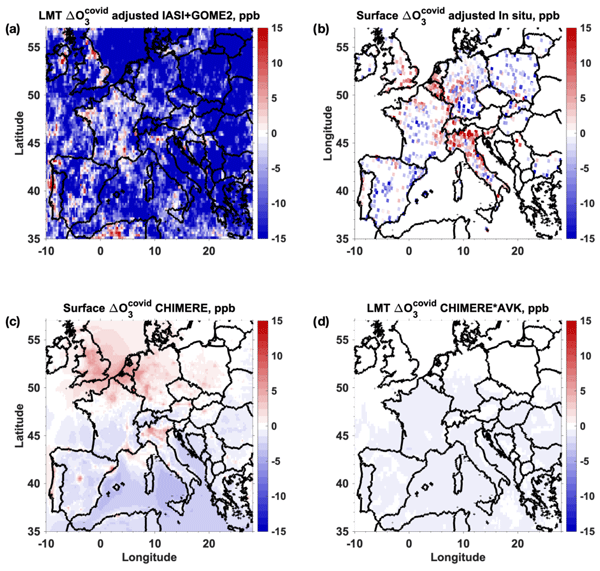
Juan Cuesta, Lorenzo Costantino, Matthias Beekmann, Guillaume Siour, Laurent Menut, Bertrand Bessagnet, Tony C. Landi, Gaëlle Dufour, and Maxim Eremenko
Atmos. Chem. Phys., 22, 4471–4489, https://doi.org/10.5194/acp-22-4471-2022, https://doi.org/10.5194/acp-22-4471-2022, 2022
Short summary
Short summary
We present the first comprehensive study integrating satellite observations of near-surface ozone pollution, surface in situ measurements, and a chemistry-transport model for quantifying the role of anthropogenic emission reductions during the COVID-19 lockdown in spring 2020. It confirms the occurrence of a net enhancement of ozone in central Europe and a reduction elsewhere, except for some hotspots, linked with the reduction of precursor emissions from Europe and the Northern Hemisphere.
Glenn M. Wolfe, Thomas F. Hanisco, Heather L. Arkinson, Donald R. Blake, Armin Wisthaler, Tomas Mikoviny, Thomas B. Ryerson, Ilana Pollack, Jeff Peischl, Paul O. Wennberg, John D. Crounse, Jason M. St. Clair, Alex Teng, L. Gregory Huey, Xiaoxi Liu, Alan Fried, Petter Weibring, Dirk Richter, James Walega, Samuel R. Hall, Kirk Ullmann, Jose L. Jimenez, Pedro Campuzano-Jost, T. Paul Bui, Glenn Diskin, James R. Podolske, Glen Sachse, and Ronald C. Cohen
Atmos. Chem. Phys., 22, 4253–4275, https://doi.org/10.5194/acp-22-4253-2022, https://doi.org/10.5194/acp-22-4253-2022, 2022
Short summary
Short summary
Smoke plumes are chemically complex. This work combines airborne observations of smoke plume composition with a photochemical model to probe the production of ozone and the fate of reactive gases in the outflow of a large wildfire. Model–measurement comparisons illustrate how uncertain emissions and chemical processes propagate into simulated chemical evolution. Results provide insight into how this system responds to perturbations, which can help guide future observation and modeling efforts.

Takashi Sekiya, Kazuyuki Miyazaki, Henk Eskes, Kengo Sudo, Masayuki Takigawa, and Yugo Kanaya
Atmos. Meas. Tech., 15, 1703–1728, https://doi.org/10.5194/amt-15-1703-2022, https://doi.org/10.5194/amt-15-1703-2022, 2022
Short summary
Short summary
This study gives a systematic comparison of TROPOMI version 1.2 and OMI QA4ECV tropospheric NO2 column through global chemical data assimilation (DA) integration for April–May 2018. DA performance is controlled by measurement sensitivities, retrieval errors, and coverage. Due to reduced errors in TROPOMI, agreements against assimilated and independent observations were improved by TROPOMI DA compared to OMI DA. These results demonstrate that TROPOMI DA improves global analyses of NO2 and ozone.
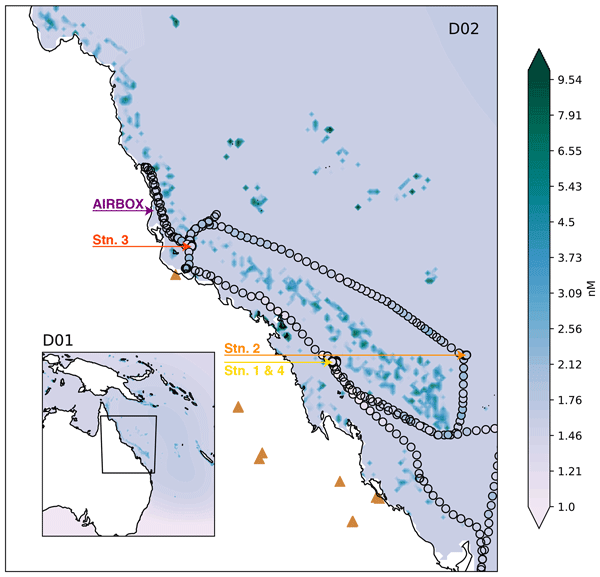
Sonya L. Fiddes, Matthew T. Woodhouse, Steve Utembe, Robyn Schofield, Simon P. Alexander, Joel Alroe, Scott D. Chambers, Zhenyi Chen, Luke Cravigan, Erin Dunne, Ruhi S. Humphries, Graham Johnson, Melita D. Keywood, Todd P. Lane, Branka Miljevic, Yuko Omori, Alain Protat, Zoran Ristovski, Paul Selleck, Hilton B. Swan, Hiroshi Tanimoto, Jason P. Ward, and Alastair G. Williams
Atmos. Chem. Phys., 22, 2419–2445, https://doi.org/10.5194/acp-22-2419-2022, https://doi.org/10.5194/acp-22-2419-2022, 2022
Short summary
Short summary
Coral reefs have been found to produce the climatically relevant chemical compound dimethyl sulfide (DMS). It has been suggested that corals can modify their environment via the production of DMS. We use an atmospheric chemistry model to test this theory at a regional scale for the first time. We find that it is unlikely that coral-reef-derived DMS has an influence over local climate, in part due to the proximity to terrestrial and anthropogenic aerosol sources.
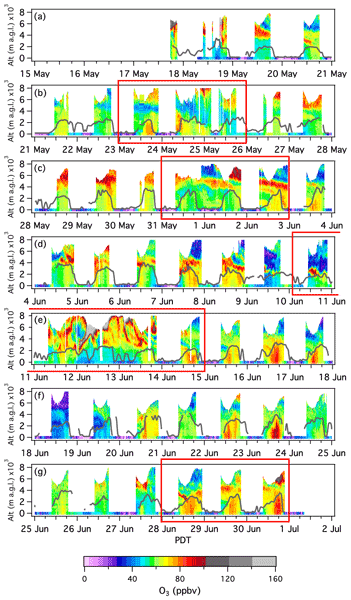
Andrew O. Langford, Christoph J. Senff, Raul J. Alvarez II, Ken C. Aikin, Sunil Baidar, Timothy A. Bonin, W. Alan Brewer, Jerome Brioude, Steven S. Brown, Joel D. Burley, Dani J. Caputi, Stephen A. Conley, Patrick D. Cullis, Zachary C. J. Decker, Stéphanie Evan, Guillaume Kirgis, Meiyun Lin, Mariusz Pagowski, Jeff Peischl, Irina Petropavlovskikh, R. Bradley Pierce, Thomas B. Ryerson, Scott P. Sandberg, Chance W. Sterling, Ann M. Weickmann, and Li Zhang
Atmos. Chem. Phys., 22, 1707–1737, https://doi.org/10.5194/acp-22-1707-2022, https://doi.org/10.5194/acp-22-1707-2022, 2022
Short summary
Short summary
The Fires, Asian, and Stratospheric Transport–Las Vegas Ozone Study (FAST-LVOS) combined lidar, aircraft, and in situ measurements with global models to investigate the contributions of stratospheric intrusions, regional and Asian pollution, and wildfires to background ozone in the southwestern US during May and June 2017 and demonstrated that these processes contributed to background ozone levels that exceeded 70 % of the US National Ambient Air Quality Standard during the 6-week campaign.
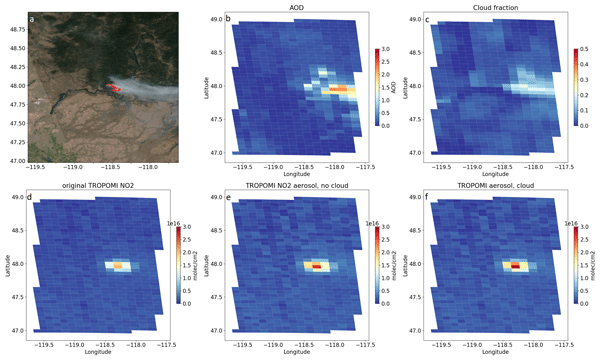
Debora Griffin, Chris A. McLinden, Enrico Dammers, Cristen Adams, Chelsea E. Stockwell, Carsten Warneke, Ilann Bourgeois, Jeff Peischl, Thomas B. Ryerson, Kyle J. Zarzana, Jake P. Rowe, Rainer Volkamer, Christoph Knote, Natalie Kille, Theodore K. Koenig, Christopher F. Lee, Drew Rollins, Pamela S. Rickly, Jack Chen, Lukas Fehr, Adam Bourassa, Doug Degenstein, Katherine Hayden, Cristian Mihele, Sumi N. Wren, John Liggio, Ayodeji Akingunola, and Paul Makar
Atmos. Meas. Tech., 14, 7929–7957, https://doi.org/10.5194/amt-14-7929-2021, https://doi.org/10.5194/amt-14-7929-2021, 2021
Short summary
Short summary
Satellite-derived NOx emissions from biomass burning are estimated with TROPOMI observations. Two common emission estimation methods are applied, and sensitivity tests with model output were performed to determine the accuracy of these methods. The effect of smoke aerosols on TROPOMI NO2 columns is estimated and compared to aircraft observations from four different aircraft campaigns measuring biomass burning plumes in 2018 and 2019 in North America.
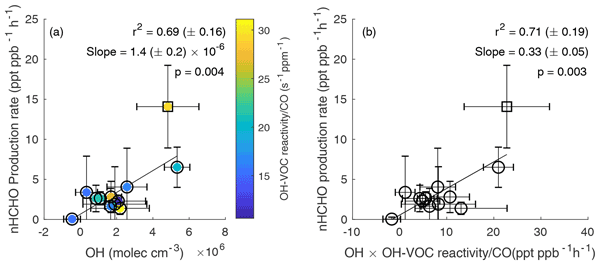
Jin Liao, Glenn M. Wolfe, Reem A. Hannun, Jason M. St. Clair, Thomas F. Hanisco, Jessica B. Gilman, Aaron Lamplugh, Vanessa Selimovic, Glenn S. Diskin, John B. Nowak, Hannah S. Halliday, Joshua P. DiGangi, Samuel R. Hall, Kirk Ullmann, Christopher D. Holmes, Charles H. Fite, Anxhelo Agastra, Thomas B. Ryerson, Jeff Peischl, Ilann Bourgeois, Carsten Warneke, Matthew M. Coggon, Georgios I. Gkatzelis, Kanako Sekimoto, Alan Fried, Dirk Richter, Petter Weibring, Eric C. Apel, Rebecca S. Hornbrook, Steven S. Brown, Caroline C. Womack, Michael A. Robinson, Rebecca A. Washenfelder, Patrick R. Veres, and J. Andrew Neuman
Atmos. Chem. Phys., 21, 18319–18331, https://doi.org/10.5194/acp-21-18319-2021, https://doi.org/10.5194/acp-21-18319-2021, 2021
Short summary
Short summary
Formaldehyde (HCHO) is an important oxidant precursor and affects the formation of O3 and other secondary pollutants in wildfire plumes. We disentangle the processes controlling HCHO evolution from wildfire plumes sampled by NASA DC-8 during FIREX-AQ. We find that OH abundance rather than normalized OH reactivity is the main driver of fire-to-fire variability in HCHO secondary production and estimate an effective HCHO yield per volatile organic compound molecule oxidized in wildfire plumes.
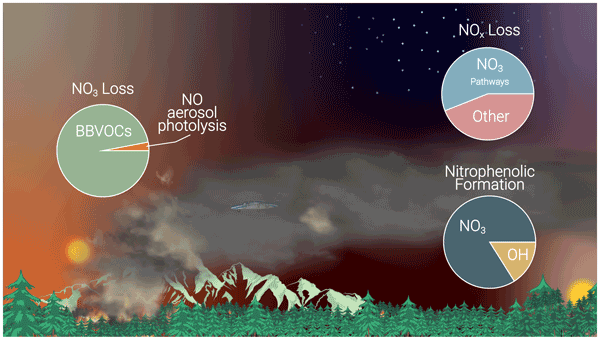
Zachary C. J. Decker, Michael A. Robinson, Kelley C. Barsanti, Ilann Bourgeois, Matthew M. Coggon, Joshua P. DiGangi, Glenn S. Diskin, Frank M. Flocke, Alessandro Franchin, Carley D. Fredrickson, Georgios I. Gkatzelis, Samuel R. Hall, Hannah Halliday, Christopher D. Holmes, L. Gregory Huey, Young Ro Lee, Jakob Lindaas, Ann M. Middlebrook, Denise D. Montzka, Richard Moore, J. Andrew Neuman, John B. Nowak, Brett B. Palm, Jeff Peischl, Felix Piel, Pamela S. Rickly, Andrew W. Rollins, Thomas B. Ryerson, Rebecca H. Schwantes, Kanako Sekimoto, Lee Thornhill, Joel A. Thornton, Geoffrey S. Tyndall, Kirk Ullmann, Paul Van Rooy, Patrick R. Veres, Carsten Warneke, Rebecca A. Washenfelder, Andrew J. Weinheimer, Elizabeth Wiggins, Edward Winstead, Armin Wisthaler, Caroline Womack, and Steven S. Brown
Atmos. Chem. Phys., 21, 16293–16317, https://doi.org/10.5194/acp-21-16293-2021, https://doi.org/10.5194/acp-21-16293-2021, 2021
Short summary
Short summary
To understand air quality impacts from wildfires, we need an accurate picture of how wildfire smoke changes chemically both day and night as sunlight changes the chemistry of smoke. We present a chemical analysis of wildfire smoke as it changes from midday through the night. We use aircraft observations from the FIREX-AQ field campaign with a chemical box model. We find that even under sunlight typical
nighttimechemistry thrives and controls the fate of key smoke plume chemical processes.

Gaëlle Dufour, Didier Hauglustaine, Yunjiang Zhang, Maxim Eremenko, Yann Cohen, Audrey Gaudel, Guillaume Siour, Mathieu Lachatre, Axel Bense, Bertrand Bessagnet, Juan Cuesta, Jerry Ziemke, Valérie Thouret, and Bo Zheng
Atmos. Chem. Phys., 21, 16001–16025, https://doi.org/10.5194/acp-21-16001-2021, https://doi.org/10.5194/acp-21-16001-2021, 2021
Short summary
Short summary
The IASI observations and the LMDZ-OR-INCA model simulations show negative ozone trends in the Central East China region in the lower free (3–6 km column) and the upper free (6–9 km column) troposphere. Sensitivity studies from the model show that the Chinese anthropogenic emissions contribute to more than 50 % in the trend. The reduction in NOx emissions that has occurred since 2013 in China seems to lead to a decrease in ozone in the free troposphere, contrary to the increase at the surface.
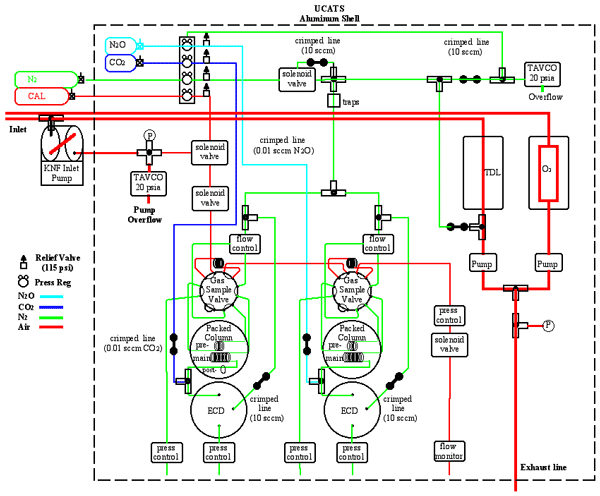
Eric J. Hintsa, Fred L. Moore, Dale F. Hurst, Geoff S. Dutton, Bradley D. Hall, J. David Nance, Ben R. Miller, Stephen A. Montzka, Laura P. Wolton, Audra McClure-Begley, James W. Elkins, Emrys G. Hall, Allen F. Jordan, Andrew W. Rollins, Troy D. Thornberry, Laurel A. Watts, Chelsea R. Thompson, Jeff Peischl, Ilann Bourgeois, Thomas B. Ryerson, Bruce C. Daube, Yenny Gonzalez Ramos, Roisin Commane, Gregory W. Santoni, Jasna V. Pittman, Steven C. Wofsy, Eric Kort, Glenn S. Diskin, and T. Paul Bui
Atmos. Meas. Tech., 14, 6795–6819, https://doi.org/10.5194/amt-14-6795-2021, https://doi.org/10.5194/amt-14-6795-2021, 2021
Short summary
Short summary
We built UCATS to study atmospheric chemistry and transport. It has measured trace gases including CFCs, N2O, SF6, CH4, CO, and H2 with gas chromatography, as well as ozone and water vapor. UCATS has been part of missions to study the tropical tropopause; transport of air into the stratosphere; greenhouse gases, transport, and chemistry in the troposphere; and ozone chemistry, on both piloted and unmanned aircraft. Its design, capabilities, and some results are shown and described here.
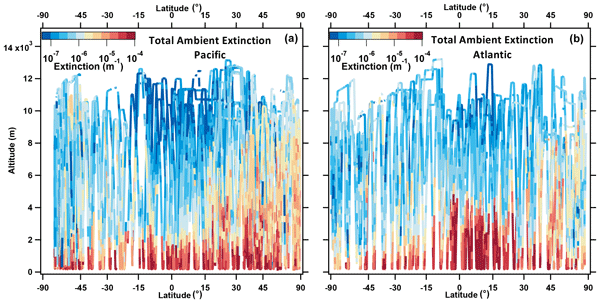
Charles A. Brock, Karl D. Froyd, Maximilian Dollner, Christina J. Williamson, Gregory Schill, Daniel M. Murphy, Nicholas J. Wagner, Agnieszka Kupc, Jose L. Jimenez, Pedro Campuzano-Jost, Benjamin A. Nault, Jason C. Schroder, Douglas A. Day, Derek J. Price, Bernadett Weinzierl, Joshua P. Schwarz, Joseph M. Katich, Siyuan Wang, Linghan Zeng, Rodney Weber, Jack Dibb, Eric Scheuer, Glenn S. Diskin, Joshua P. DiGangi, ThaoPaul Bui, Jonathan M. Dean-Day, Chelsea R. Thompson, Jeff Peischl, Thomas B. Ryerson, Ilann Bourgeois, Bruce C. Daube, Róisín Commane, and Steven C. Wofsy
Atmos. Chem. Phys., 21, 15023–15063, https://doi.org/10.5194/acp-21-15023-2021, https://doi.org/10.5194/acp-21-15023-2021, 2021
Short summary
Short summary
The Atmospheric Tomography Mission was an airborne study that mapped the chemical composition of the remote atmosphere. From this, we developed a comprehensive description of aerosol properties that provides a unique, global-scale dataset against which models can be compared. The data show the polluted nature of the remote atmosphere in the Northern Hemisphere and quantify the contributions of sea salt, dust, soot, biomass burning particles, and pollution particles to the haziness of the sky.
Cited articles
Andela, N. and van der Werf, G. R.: Recent trends in African fires driven by cropland expansion and El Niño to La Niña transition, Nat. Clim. Change, 4, 791–795, https://doi.org/10.1038/NCLIMATE2313, 2014.
Atkinson, R.: Atmospheric chemistry of VOCs and NOx, Atmos. Environ., 34, 2063–2101, https://doi.org/10.1016/S1352-2310(99)00460-4, 2000.
Ávila, E. E., Bürgesser, R. E., Castellano, N. E., Collier, A. B., Compagnucci, R. H., and Hughes, A. R. W.: Correlations between deep convection and lightning activity on a global scale, J. Atmos. Sol.-Terr. Phy., 72, 1114–1121, https://doi.org/10.1016/j.jastp.2010.07.019, 2010.
Bourgeois, I., Peischl, J., Neuman, J. A., Brown, S. S., Thompson, C. R., Aikin, K. C., Allen, H. M., Angot, H., Apel, E. C., Baublitz, C. B., Brewer, J. F., Campuzano-Jost, P., Commane, R., Crounse, J. D., Daube, B. C., DiGangi, J. P., Diskin, G. S., Emmons, L. K., Fiore, A. M., Gkatzelis, G. I., Hills, A., Hornbrook, R. S., Huey, L. G., Jimenez, J. L., Kim, M., Lacey, F., McKain, K., Murray, L. T., Nault, B. A., Parrish, D. D., Ray, E., Sweeney, C., Tanner, D., Wofsy, S. C., and Ryerson, T. B.: Large contribution of biomass burning emissions to ozone throughout the global remote troposphere, P. Natl. Acad. Sci. USA, 118, e2109628118, https://doi.org/10.1073/pnas.2109628118, 2021.
Cai, Z., Liu, Y., Liu, X., Chance, K., Nowlan, C. R., Lang, R., Munro, R., and Suleiman, R.: Characterization and correction of Global Ozone Monitoring Experiment 2 ultraviolet measurements and application to ozone profile retrievals, J. Geophys. Res., 117, D07305, https://doi.org/10.1029/2011JD017096, 2012.
Colombi, N., Miyazaki, K., Bowman, K. W., Neu, J. L., and Jacob, D. J.: A new methodology for inferring surface ozone from multispectral satellite measurements, Environ. Res. Lett., 16, 105005, https://doi.org/10.1088/1748-9326/ac243d, 2021.
Crutzen, P. J., Lawrence, M. G., and Pöschl, U.: On the background photochemistry of tropospheric ozone, Tellus B, 51, 123, https://doi.org/10.3402/tellusb.v51i1.16264, 1999.
Cuesta, J., Eremenko, M., Liu, X., Dufour, G., Cai, Z., Höpfner, M., von Clarmann, T., Sellitto, P., Foret, G., Gaubert, B., Beekmann, M., Orphal, J., Chance, K., Spurr, R., and Flaud, J.-M.: Satellite observation of lowermost tropospheric ozone by multispectral synergism of IASI thermal infrared and GOME-2 ultraviolet measurements over Europe, Atmos. Chem. Phys., 13, 9675–9693, https://doi.org/10.5194/acp-13-9675-2013, 2013.
Cuesta, J., Kanaya, Y., Takigawa, M., Dufour, G., Eremenko, M., Foret, G., Miyazaki, K., and Beekmann, M.: Transboundary ozone pollution across East Asia: daily evolution and photochemical production analysed by IASI + GOME2 multispectral satellite observations and models, Atmos. Chem. Phys., 18, 9499–9525, https://doi.org/10.5194/acp-18-9499-2018, 2018.
Cuesta, J., Costantino, L., Beekmann, M., Siour, G., Menut, L., Bessagnet, B., Landi, T. C., Dufour, G., and Eremenko, M.: Ozone pollution during the COVID-19 lockdown in the spring of 2020 over Europe, analysed from satellite observations, in situ measurements, and models, Atmos. Chem. Phys., 22, 4471–4489, https://doi.org/10.5194/acp-22-4471-2022, 2022.
Das, S. S., Ratnam, M. V., Uma, K. N., Subrahmanyam, K. V., Girach, I. A., Patra, A. K., Aneesh, S., Suneeth, K. V., Kumar, K. K., Kesarkar, A. P., Sijikumar, S., and Ramkumar, G.: Influence of tropical cyclones on tropospheric ozone: possible implications, Atmos. Chem. Phys., 16, 4837–4847, https://doi.org/10.5194/acp-16-4837-2016, 2016.
Dee, D. P., Uppala, S. M., Simmons, A. J., Berrisford, P., Poli, P., Kobayashi, S., Andrae, U., Balmaseda, M. A., Balsamo, G., Bauer, P., Bechtold, P., Beljaars, A. C. M., van de Berg, L., Bidlot, J., Bormann, N., Delsol, C., Dragani, R., Fuentes, M., Geer, A. J., Haimberger, L., Healy, S. B., Hersbach, H., Hólm, E. V., Isaksen, L., Kållberg, P., Köhler, M., Matricardi, M., Mcnally, A. P., Monge-Sanz, B. M., Morcrette, J.-J., Park, B.-K., Peubey, C., de Rosnay, P., Tavolato, C., Thépaut, J.-N., and Vitart, F.: The ERA-Interim reanalysis: configuration and performance of the data assimilation system, Q. J. Roy. Meteor. Soc., 137, 553–597, https://doi.org/10.1002/qj.828, 2011.
Dowden, R. L., Brundell, J. B., and Rodger, C. J.: VHF lightning location by time of group arrival (TOGA) at multiple site, J. Atmos. Sol.-Terr. Phy., 64, 817–830, https://doi.org/10.1016/S1364-6826(02)00085-8, 2002.
Dufour, G., Eremenko, M., Griesfeller, A., Barret, B., LeFlochmoën, E., Clerbaux, C., Hadji-Lazaro, J., Coheur, P.-F., and Hurtmans, D.: Validation of three different scientific ozone products retrieved from IASI spectra using ozonesondes, Atmos. Meas. Tech., 5, 611–630, https://doi.org/10.5194/amt-5-611-2012, 2012.
Elshorbany, Y., Ziemke, J. R., Strode, S., Petetin, H., Miyazaki, K., De Smedt, I., Pickering, K., Seguel, R. J., Worden, H., Emmerichs, T., Taraborrelli, D., Cazorla, M., Fadnavis, S., Buchholz, R. R., Gaubert, B., Rojas, N. Y., Nogueira, T., Salameh, T., and Huang, M.: Tropospheric ozone precursors: global and regional distributions, trends, and variability, Atmos. Chem. Phys., 24, 12225–12257, https://doi.org/10.5194/acp-24-12225-2024, 2024.
Eremenko, M., Dufour, G., Foret, G., Keim, C., Orphal, J., Beekmann, M., Bergametti, G., and Flaud, J.-M.: Tropospheric ozone distributions over Europe during the heat wave in July 2007 observed from infrared nadir spectra recorded by IASI, Geophys. Res. Lett., 35, L18805, https://doi.org/10.1029/2008GL034803, 2008.
Falk, S., Vollsnes, A. V., Eriksen, A. B., Stordal, F., and Koren Berntsen, T.: Technical note: Quality assessment of ozone reanalysis products and gap-filling over subarctic Europe for vegetation risk mapping, Atmos. Chem. Phys., 21, 15647–15661, https://doi.org/10.5194/acp-21-15647-2021, 2021.
Fishman, J. and Larsen, J. C.: Distribution of total ozone and stratospheric ozone in the tropics: Implications for the distribution of tropospheric ozone, J. Geophys. Res., 92, 6627–6634, https://doi.org/10.1029/JD092iD06p06627, 1987.
Fishman, J. J., Hoell Jr., M., Bendura, R. D., McNeal, R. J., and Kirchhoff, V. W. J. H.: NASA GTE TRACE A experiment (September–October 1992): Overview, J. Geophys. Res., 101, 23865–23879, https://doi.org/10.1029/96JD00123, 1996.
Flemming, J., Huijnen, V., Arteta, J., Bechtold, P., Beljaars, A., Blechschmidt, A.-M., Diamantakis, M., Engelen, R. J., Gaudel, A., Inness, A., Jones, L., Josse, B., Katragkou, E., Marecal, V., Peuch, V.-H., Richter, A., Schultz, M. G., Stein, O., and Tsikerdekis, A.: Tropospheric chemistry in the Integrated Forecasting System of ECMWF, Geosci. Model Dev., 8, 975–1003, https://doi.org/10.5194/gmd-8-975-2015, 2015.
Fu, D., Kulawik, S. S., Miyazaki, K., Bowman, K. W., Worden, J. R., Eldering, A., Livesey, N. J., Teixeira, J., Irion, F. W., Herman, R. L., Osterman, G. B., Liu, X., Levelt, P. F., Thompson, A. M., and Luo, M.: Retrievals of tropospheric ozone profiles from the synergism of AIRS and OMI: methodology and validation, Atmos. Meas. Tech., 11, 5587–5605, https://doi.org/10.5194/amt-11-5587-2018, 2018.
Gaudel, A., Bourgeois, I., Li, M., Chang, K.-L., Ziemke, J., Sauvage, B., Stauffer, R. M., Thompson, A. M., Kollonige, D. E., Smith, N., Hubert, D., Keppens, A., Cuesta, J., Heue, K.-P., Veefkind, P., Aikin, K., Peischl, J., Thompson, C. R., Ryerson, T. B., Frost, G. J., McDonald, B. C., and Cooper, O. R.: Tropical tropospheric ozone distribution and trends from in situ and satellite data, Atmos. Chem. Phys., 24, 9975–10000, https://doi.org/10.5194/acp-24-9975-2024, 2024.
Gelaro, R., McCarty, W., Suárez, M. J., Todling, R., Molod, A., Takacs, L., Randles, C. A., Darmenov, A., Bosilovich, M. G., Reichle, R., Wargan, K., Coy, L., Cullather, R., Draper, C., Akella, S., Buchard, V., Conaty, A., da Silva, A. M., Gu, W., Kim, G.-K., Koster, R., Lucchesi, R., Merkova, D., Nielsen, J. E., Partyka, G., Pawson, S., Putman, W., Rienecker, M., Schubert, S. D., Sienkiewicz, M., and Zhao, B.: The Modern-Era Retrospective Analysis for Research and Applications, Version 2 (MERRA-2), J. Climate, 30, 5419–5454, https://doi.org/10.1175/JCLI-D-16-0758.1, 2017.
Gettelman, A., de F. Forster, P. M., Fujiwara, M., Fu, Q., Vömel, H., Gohar, L. K., Johanson, C., and Ammerman, M.: Radiation balance of the tropical tropopause layer, J. Geophys. Res., 109, D07103, https://doi.org/10.1029/2003JD004190, 2004.
Giglio, L., Schroeder, W., and Justice, C. O.: The collection 6 MODIS active fire detection algorithm and fire products, Remote Sens. Environ., 178, 31–41, https://doi.org/10.1016/j.rse.2016.02.054, 2016.
Granier, C., Lamarque, J. F., Mieville, A., Muller, J. F., Olivier, J., Orlando, J., Peters, J., Petron, G., Tyndall, G., and Wallens, S.: POET, a database of surface emissions of ozone precursors GEIA-ACCENT documentation https://eccad.aeris-data.fr (last access: 8 April 2026), 2005.
Granier, C., Bessagnet, B., Bond, T., D'Angiola, A., van der Gon, H. D., Frost, G. J., Heil, A., Kaiser, J. W., Kinne, S., Klimont, Z., Kloster, S., Lamarque, J.-F., Liousse, C., Masui, T., Meleux, F., Mieville, A., Ohara, T., Raut, J.-C., Riahi, K., Schultz, M. G., Smith, S. J., Thompson, A., van Aardenne, J., van der Werf, G. R., and van Vuuren, D. P.: Evolution of anthropogenic and biomass burning emissions of air pollutants at global and regional scales during the 1980–2010 period, Climate Change, 109, 163–190, https://doi.org/10.1007/s10584-011-0154-1, 2011.
Guenther, A., Karl, T., Harley, P., Wiedinmyer, C., Palmer, P. I., and Geron, C.: Estimates of global terrestrial isoprene emissions using MEGAN (Model of Emissions of Gases and Aerosols from Nature), Atmos. Chem. Phys., 6, 3181–3210, https://doi.org/10.5194/acp-6-3181-2006, 2006.
Hersbach, H., Bell, B., Berrisford, P., Hirahara, S., Horányi, A., Muñoz-Sabater, J., Nicolas, J., Peubey, C., Radu, R., Schepers, D., Simmons, A., Soci, C., Abdalla, S., Abellan, X., Balsamo, G., Bechtold, P., Biavati, G., Bidlot, J., Bonavita, M., De Chiara, G., Dahlgren, P., Dee, D., Diamantakis, M., Dragani, R., Flemming, J., Forbes, R., Fuentes, M., Geer, A., Haimberger, L., Healy, S., Hogan, R. J., Hólm, E., Janisková, M., Keeley, S., Laloyaux, P., Lopez, P., Lupu, C., Radnoti, G., de Rosnay, P., Rozum, I., Vamborg, F., Villaume, S., and Thépaut, J. N.: The ERA5 global reanalysis, Q. J. Roy. Meteor. Soc., 146, 1999–2049, https://doi.org/10.1002/qj.3803, 2020.
Huijnen, V., Miyazaki, K., Flemming, J., Inness, A., Sekiya, T., and Schultz, M. G.: An intercomparison of tropospheric ozone reanalysis products from CAMS, CAMS interim, TCR-1, and TCR-2, Geosci. Model Dev., 13, 1513–1544, https://doi.org/10.5194/gmd-13-1513-2020, 2020.
Hurtmans, D., Coheur, P.-F., Wespes, C., Clarisse, L., Scharf, O., Clerbaux, C., Hadji-Lazaro, J., George, M., and Turquety, S.: FORLI radiative transfer and retrieval code for IASI, J. Quant. Spectrosc. Ra., 113, 1391–1408, https://doi.org/10.1016/j.jqsrt.2012.02.036, 2012.
Inness, A., Ades, M., Agustí-Panareda, A., Barré, J., Benedictow, A., Blechschmidt, A.-M., Dominguez, J. J., Engelen, R., Eskes, H., Flemming, J., Huijnen, V., Jones, L., Kipling, Z., Massart, S., Parrington, M., Peuch, V.-H., Razinger, M., Remy, S., Schulz, M., and Suttie, M.: The CAMS reanalysis of atmospheric composition, Atmos. Chem. Phys., 19, 3515–3556, https://doi.org/10.5194/acp-19-3515-2019, 2019.
Janssens-Maenhout, G., Crippa, M., Guizzardi, D., Dentener, F., Muntean, M., Pouliot, G., Keating, T., Zhang, Q., Kurokawa, J., Wankmüller, R., Denier van der Gon, H., Kuenen, J. J. P., Klimont, Z., Frost, G., Darras, S., Koffi, B., and Li, M.: HTAP_v2.2: a mosaic of regional and global emission grid maps for 2008 and 2010 to study hemispheric transport of air pollution, Atmos. Chem. Phys., 15, 11411–11432, https://doi.org/10.5194/acp-15-11411-2015, 2015.
Kaiser, J. W., Heil, A., Andreae, M. O., Benedetti, A., Chubarova, N., Jones, L., Morcrette, J.-J., Razinger, M., Schultz, M. G., Suttie, M., and van der Werf, G. R.: Biomass burning emissions estimated with a global fire assimilation system based on observed fire radiative power, Biogeosciences, 9, 527–554, https://doi.org/10.5194/bg-9-527-2012, 2012.
Kaplan, J. O. and Lau, K. H.-K.: The WGLC global gridded lightning climatology and time series, Earth Syst. Sci. Data, 13, 3219–3237, https://doi.org/10.5194/essd-13-3219-2021, 2021.
Kaplan, J. O. and Lau, K. H.-K.: The WWLLN Global Lightning Climatology and timeseries (WGLC) (v2022.0.0), Zenodo [data set], https://doi.org/10.5281/zenodo.6007052, 2022.
Krishnamurti, T. N., Sinha, M. C., Kanamitsu, M., Oosterhof, D., Fuelberg, H., Chatfield, R., Jacob, D. J., and Logan, J.: Passive tracer transport relevant to the TRACE A experiment, J. Geophys. Res., 101, 23889–23907, https://doi.org/10.1029/95JD02419, 1996.
Lacima, A., Petetin, H., Soret, A., Bowdalo, D., Jorba, O., Chen, Z., Méndez Turrubiates, R. F., Achebak, H., Ballester, J., and Pérez García-Pando, C.: Long-term evaluation of surface air pollution in CAMSRA and MERRA-2 global reanalyses over Europe (2003–2020), Geosci. Model Dev., 16, 2689–2718, https://doi.org/10.5194/gmd-16-2689-2023, 2023.
Lahoz, W. A. and Schneider, P.: Data assimilation: making sense of Earth Observation, Front. Environ. Sci., 2, https://doi.org/10.3389/fenvs.2014.00016, 2014.
Lannuque, V., Sauvage, B., Barret, B., Clark, H., Athier, G., Boulanger, D., Cammas, J.-P., Cousin, J.-M., Fontaine, A., Le Flochmoën, E., Nédélec, P., Petetin, H., Pfaffenzeller, I., Rohs, S., Smit, H. G. J., Wolff, P., and Thouret, V.: Origins and characterization of CO and O3 in the African upper troposphere, Atmos. Chem. Phys., 21, 14535–14555, https://doi.org/10.5194/acp-21-14535-2021, 2021.
Liebmann, B. and Smith, C. A.: Description of a Complete (Interpolated) Outgoing Longwave Radiation Dataset, B. Am. Meteorol. Soc., 77, 1275–1277, 1996.
Liu, X., Bhartia, P. K., Chance, K., Spurr, R. J. D., and Kurosu, T. P.: Ozone profile retrievals from the Ozone Monitoring Instrument, Atmos. Chem. Phys., 10, 2521–2537, https://doi.org/10.5194/acp-10-2521-2010, 2010.
Meijer, E. W., van Velthoven, P. F. J., Brunner, D. W., Huntrieser, H., and Kelder, H.: Improvement and evaluation of the parameterisation of nitrogen oxide production by lightning, Phys. Chem. Earth (C), 26, 577–583, https://doi.org/10.1016/S1464-1917(01)00050-2, 2001.
Miyazaki, K., Eskes, H. J., and Sudo, K.: A tropospheric chemistry reanalysis for the years 2005–2012 based on an assimilation of OMI, MLS, TES, and MOPITT satellite data, Atmos. Chem. Phys., 15, 8315–8348, https://doi.org/10.5194/acp-15-8315-2015, 2015.
Miyazaki, K., Bowman, K., Sekiya, T., Eskes, H., Boersma, F., Worden, H., Livesey, N., Payne, V. H., Sudo, K., Kanaya, Y., Takigawa, M., and Ogochi, K.: Chemical Reanalysis Products, Jet Propulsion Laboratory [data set], https://doi.org/10.25966/9qgv-fe81, 2019.
Miyazaki, K., Bowman, K., Sekiya, T., Eskes, H., Boersma, F., Worden, H., Livesey, N., Payne, V. H., Sudo, K., Kanaya, Y., Takigawa, M., and Ogochi, K.: Updated tropospheric chemistry reanalysis and emission estimates, TCR-2, for 2005–2018, Earth Syst. Sci. Data, 12, 2223–2259, https://doi.org/10.5194/essd-12-2223-2020, 2020.
Miyazaki, K., Eskes, H., Sudo, K., Boersma, K. F., Bowman, K., and Kanaya, Y.: Decadal changes in global surface NOx emissions from multi-constituent satellite data assimilation, Atmos. Chem. Phys., 17, 807–837, https://doi.org/10.5194/acp-17-807-2017, 2017.
Monks, P. S., Archibald, A. T., Colette, A., Cooper, O., Coyle, M., Derwent, R., Fowler, D., Granier, C., Law, K. S., Mills, G. E., Stevenson, D. S., Tarasova, O., Thouret, V., von Schneidemesser, E., Sommariva, R., Wild, O., and Williams, M. L.: Tropospheric ozone and its precursors from the urban to the global scale from air quality to short-lived climate forcer, Atmos. Chem. Phys., 15, 8889–8973, https://doi.org/10.5194/acp-15-8889-2015, 2015.
Moxim, W. J. and Levy II, H.: A model analysis of the tropical South Atlantic Ocean tropospheric ozone maximum: The interaction of transport and chemistry, J. Geophys. Res., 105, 17393–17415, https://doi.org/10.1029/2000JD900175, 2000.
Nicholson, S. E.: The ITCZ and the Seasonal Cycle over Equatorial Africa, B. Am. Meteorol. Soc., 99, 337–348, https://doi.org/10.1175/BAMS-D-16-0287.1, 2018.
Nussbaumer, C. M., Fischer, H., Lelieveld, J., and Pozzer, A.: What controls ozone sensitivity in the upper tropical troposphere?, Atmos. Chem. Phys., 23, 12651–12669, https://doi.org/10.5194/acp-23-12651-2023, 2023.
Okamoto, S., Cuesta, J., Beekmann, M., Dufour, G., Eremenko, M., Miyazaki, K., Boonne, C., Tanimoto, H., and Akimoto, H.: Impact of different sources of precursors on an ozone pollution outbreak over Europe analysed with IASI + GOME2 multispectral satellite observations and model simulations, Atmos. Chem. Phys., 23, 7399–7423, https://doi.org/10.5194/acp-23-7399-2023, 2023.
Olivier, J., Peters, J., Granier, C., Petron, G., Muller J. F., and Wallens, S.: Present and future surface emissions of atmospheric compounds GEIA-ACCENT documentation POET report #2, EU project EVK2-1999-00011, 2003.
Ott, L. E., Pickering, K. E., Stenchikov, G. L., Allen, D. J., DeCaria, A. J., Ridley, B., Lin, R.-F., Lang, S., and Tao, W.-K.: Production of lightning NOx and its vertical distribution calculated from three-dimensional cloud-scale chemical transport model simulations, J. Geophys. Res., 115, D04301, https://doi.org/10.1029/2009JD011880, 2010.
Park, M., Randel, W. J., Gettelman, A., Massie, S. T., and Jiang, J. H.: Transport above the Asian summer monsoon anticyclone inferred from Aura Microwave Limb Sounder tracers, J. Geophys. Res., 112, D16309, https://doi.org/10.1029/2006JD008294, 2007.
Park, S., Son, S. W., Jung, M. Il, Park, J., and Park, S. S.: Evaluation of tropospheric ozone reanalyses with independent ozonesonde observations in East Asia, Geosci. Lett., 7, https://doi.org/10.1186/s40562-020-00161-9, 2020.
Pereira, G., Longo, K. M., Freitas, S. R., Mataveli, G., Oliveira, V. J., Santos, P. R., Rodrigues, L. F., and Cardozo, F. S.: Improving the south America wildfires smoke estimates: Integration of polar-orbiting and geostationary satellite fire products in the Brazilian biomass burning emission model (3BEM), Atmos. Environ., 273, 118954, https://doi.org/10.1016/j.atmosenv.2022.118954, 2022.
Petzold, A., Thouret, V., Gerbig, C., Zahn, A., Brenninkmeijer, C. A. M., Gallagher, M., Hermann, M., Pontaud, M., Ziereis, H., Boulanger, D., Marshall, J., Nédélec, P., Smit, H. G. J., Friess, U., Flaud, J.-M., Wahner, A., Cammas, J.-P., Volz-Thomas, A., and IAGOS TEAM: Global-scale atmosphere monitoring by in-service aircraft – current achievements and future prospects of the European Research Infrastructure IAGOS, Tellus B, 6, 1–24, https://doi.org/10.3402/tellusb.v67.28452, 2015.
Pickering, K. E., Thompson, A. M., Wang, Y., Tao, W.-K., McNamara, D. P., Kirchhoff, V. W. J. H., Heikes, B. G., Sachse, G. W., Bradshaw, J. D., Gregory, G. L., and Blake, D. R.: Convective transport of biomass burning emissions over Brazil during TRACE A, J. Geophys. Res., 101, 23993–24012, https://doi.org/10.1029/96JD00346, 1996.
Pickering, K. E., Wang, Y., Tao, W.-K., Price, C., and Müller, J.-F.: Vertical distributions of lightning NOx for use in regional and global chemical transport models, J. Geophys. Res., 103, 31203–31216, https://doi.org/10.1029/98JD02651, 1998.
Price, C. and Rind, D.: A simple lightning parameterization for calculating global lightning distributions, J. Geophys. Res., 97, 9919–9933, https://doi.org/10.1029/92JD00719, 1992.
Randerson, J. T., van der Werf, G. R., Giglio, L., Collatz, G. J., and Kasibhatla, P. S.: Global Fire Emissions Database, Version 4.1 (GFEDv4), ORNL Distributed Active Archive Center [data set], https://doi.org/10.3334/ORNLDAAC/1293, 2018.
Ray, E. A.: ATom: Back Trajectories and Influences of Air Parcels Along Flight Track, 2016–2018, ORNL Distributed Active Archive Center [data set], https://doi.org/10.3334/ORNLDAAC/1889, 2021.
Roberts, G., Wooster, M. J., and Lagoudakis, E.: Annual and diurnal african biomass burning temporal dynamics, Biogeosciences, 6, 849–866, https://doi.org/10.5194/bg-6-849-2009, 2009.
Ryu, Y.-H. and Min, S.-K.: Long-term evaluation of atmospheric composition reanalyses from CAMS, TCR-2, and MERRA-2 over South Korea: Insights into applications, implications, and limitations, Atmos. Environ., 246, 118062, https://doi.org/10.1016/j.atmosenv.2020.118062, 2021.
Sauvage, B., Thouret, V., Cammas, J.-P., Gheusi, F., Athier, G., and Nédélec, P.: Tropospheric ozone over Equatorial Africa: regional aspects from the MOZAIC data, Atmos. Chem. Phys., 5, 311–335, https://doi.org/10.5194/acp-5-311-2005, 2005.
Sauvage, B., Martin, R. V., van Donkelaar, A., and Ziemke, J. R.: Quantification of the factors controlling tropical tropospheric ozone and the South Atlantic maximum, J. Geophys. Res.-Atmos., 112, D11309, https://doi.org/10.1029/2006JD008008, 2007a.
Sauvage, B., Thouret, V., Cammas, J.-P., Brioude, J., Nédélec, P., and Mari C.: Meridional ozone gradients in the African upper troposphere, Geophys. Res. Lett., 34, L03817, https://doi.org/10.1029/2006GL028542, 2007b.
Schumann, U. and Huntrieser, H.: The global lightning-induced nitrogen oxides source, Atmos. Chem. Phys., 7, 3823–3907, https://doi.org/10.5194/acp-7-3823-2007, 2007.
Sindelarova, K., Granier, C., Bouarar, I., Guenther, A., Tilmes, S., Stavrakou, T., Müller, J.-F., Kuhn, U., Stefani, P., and Knorr, W.: Global data set of biogenic VOC emissions calculated by the MEGAN model over the last 30 years, Atmos. Chem. Phys., 14, 9317–9341, https://doi.org/10.5194/acp-14-9317-2014, 2014.
Sindelarova, K., Markova, J., Simpson, D., Huszar, P., Karlicky, J., Darras, S., and Granier, C.: High-resolution biogenic global emission inventory for the time period 2000–2019 for air quality modelling, Earth Syst. Sci. Data, 14, 251–270, https://doi.org/10.5194/essd-14-251-2022, 2022.
Spurr, R. J. D.: VLIDORT: A linearized pseudo-spherical vector discrete ordinate radiative transfer code for forward model and retrieval studies in multilayer multiple scattering media, J. Quant. Spectrosc. Ra., 102, 316–342, https://doi.org/10.1016/j.jqsrt.2006.05.005, 2006.
Stein, O., Schultz, M. G., Bouarar, I., Clark, H., Huijnen, V., Gaudel, A., George, M., and Clerbaux, C.: On the wintertime low bias of Northern Hemisphere carbon monoxide found in global model simulations, Atmos. Chem. Phys., 14, 9295–9316, https://doi.org/10.5194/acp-14-9295-2014, 2014.
Stiller, G. P., von Clarmann, T., Funke, B., Glatthor, N., Hase, F., Höpfner, M., and Linden, A.: Sensitivity of trace gas abundances retrievals from infrared limb emission spectra to simplifying approximations in radiative transfer modelling, J. Quant. Spectrosc. Ra., 72, 249–280, https://doi.org/10.1016/S0022-4073(01)00123-6, 2002.
Stroppiana, D., Brivio, P. A., Grégoire, J.-M., Liousse, C., Guillaume, B., Granier, C., Mieville, A., Chin, M., and Pétron, G.: Comparison of global inventories of CO emissions from biomass burning derived from remotely sensed data, Atmos. Chem. Phys., 10, 12173–12189, https://doi.org/10.5194/acp-10-12173-2010, 2010.
Swap, R. J., Annegarn, H. J., Suttles, J. T., Haywood, J., Helmlinger, M. C., Hely, C., Hobbs, P. V., Holben, B. N., Ji, J., King, M. D., Landmann, T., Maenhaut, W., Otter, L., Pak, B., Piketh, S. J., Plantnick, S., Privette, J., Roy, D., Thompson, A. M., Ward, D., and Yokelson, R.: The Southern African Regional Science Initiative (SAFARI 2000): overview of the dry season field campaign, S. Afr. J. Sci., 98, 125–130, 2002.
Szopa, S., Naik, V., Adhikary, B., Artaxo, P., Berntsen, T., Collins, W. D., Fuzzi, S., Gallardo, L., Kiendler-Scharr, A., Klimont, Z., Liao, H., Unger, N., and Zanis, P.: Short-Lived Climate Forcers, in: Climate Change 2021: The Physical Science Basis. Contribution of Working Group I to the Sixth Assessment Report of the Intergovernmental Panel on Climate Change, edited by: Masson-Delmotte, V., Zhai, P., Pirani, A., Connors, S. L., Péan, C., Berger, S., Caud, N., Chen, Y., Goldfarb, L., Gomis, M. I., Huang, M., Leitzell, K., Lonnoy, E., Matthews, J. B. R., Maycock, T. K., Waterfield, T., Yelekçi, O., Yu, R., and Zhou, B., Cambridge University Press, Cambridge, United Kingdom and New York, NY, USA, 817–922, https://doi.org/10.1017/9781009157896.008, 2021.
Thompson, A. M., Pickering, K. E., McNamara, D. P., Schoeberl, M. R., Hudson, R. D., Kim, J. H., Browell, E. V., Kirchhoff, V. W. J. H., and Nganga, D.: Where did tropospheric ozone over southern Africa and the tropical Atlantic come from in October 1992? Insights from TOMS, GTE TRACE A, and SAFARI 1992, J. Geophys. Res., 101, 24251–24278, https://doi.org/10.1029/96JD01463, 1996.
Thompson, A. M., Doddridge, B. G., Witte, J. C., Hudson, R. D., Luke, W. T., Johnson, J. E., Johnson, B. J., Oltmans, S. J., and Weller, R.: A tropical Atlantic Paradox: Shipboard and satellite views of a tropospheric ozone maximum and wave-one in January–February 1999, Geophys. Res. Lett., 27, 3317–3320, https://doi.org/10.1029/1999GL011273, 2000.
Thompson, A. M., Witte, J. C., Oltmans, S. J., Schmidlin, F. J., Logan, J. A., Fujiwara, M., Kirchhoff, V. W. J. H., Posny, F., Coetzee, G. J. R., Hoegger, B., Kawakami, S., Ogawa, T., Fortuin, J. P. F., and Kelder, H. M.: Southern Hemisphere Additional Ozonesondes (SHADOZ) 1998–2000 tropical ozone climatology 2. Tropospheric variability and the zonal wave-one, J. Geophys. Res., 108, 8241, https://doi.org/10.1029/2002JD002241, 2003.
Thompson, A. M., Witte, J. C., Sterling, C., Jordan, A., Johnson, B. J., Oltmans, S. J., Fujiwara, M., Vömel, H., Allaart, M., Piters, A., Coetzee, G. J. R., Posny, F., Corrales, E., Andres Diaz, J., Félix, C., Komala, N., Lai, N., Ahn Nguyen, H. T., Maata, M., Mani, F., Zainal, Z., Ogino, S., Paredes, F., Penha, T. L. B., Raimundo da Silva, F., Sallons-Mitro, S., Selkirk, H. B., Schmidlin, F. J., Stübi, R., and Thiongo, K.: First reprocessing of Southern Hemisphere Additional Ozonesondes (SHADOZ) ozone profiles (1998–2016): 2. Comparisons with satellites and ground-based instruments. J. Geophys. Res.-Atmos., 122, 13000–13025, https://doi.org/10.1002/2017JD027406, 2017.
Thompson, A. M., Stauffer, R. M., Wargan, K., Witte, J. C., Kollonige, D. E., and Ziemke, J. R.: Regional and seasonal trends in tropical ozone from SHADOZ profiles: Reference for models and satellite products. J. Geophys. Res.-Atmos., 126, e2021JD034691, https://doi.org/10.1029/2021JD034691, 2021.
Thompson, C. R., Wofsy, S. C., Prather, M. J., Newman, P. A., Hanisco, T. F., Ryerson, T. B., Fahey, D. W., Apel, E. C., Brock, C. A., Brune, W. H., Froyd, K., Katich, J. M., Nicely, J. M., Peischl, J., Ray, E., Veres, P. R., Wang, S., Allen, H. M., Asher, E., Bian, H., Blake, D., Bourgeois, I., Budney, J., Bui, T. P., Butler, A., Campuzano-Jost, P., Chang, C., Chin, M., Commane, R., Correa, G., Crounse, J. D., Daube, B., Dibb, J. E., DiGangi, J. P., Diskin, G. S., Dollner, M., Elkins, J. W., Fiore, A. M., Flynn, C. M., Guo, H., Hall, S. R., Hannun, R. A., Hills, A., Hintsa, E. J., Hodzic, A., Hornbrook, R. S., Huey, L. G., Jimenez, J. L., Keeling, R. F., Kim, M. J., Kupc, A., Lacey, F., Lait, L. R., Lamarque, J.-F., Liu, J., McKain, K., Meinardi, S., Miller, D. O., Montzka, S. A., Moore, F. L., Morgan, E. J., Murphy, D. M., Murray, L. T., Nault, B. A., Neuman, J. A., Nguyen, L., Gonzalez, Y., Rollins, A., Rosenlof, K., Sargent, M., Schill, G., Schwarz, J. P., Clair, J. M. S., Steenrod, S. D., Stephens, B. B., Strahan, S. E., Strode, S. A., Sweeney, C., Thames, A. B., Ullmann, K., Wagner, N., Weber, R., Weinzierl, B., Wennberg, P. O., Williamson, C. J., Wolfe, G. M., and Zeng, L.: The NASA Atmospheric Tomography (ATom) Mission: Imaging the Chemistry of the Global Atmosphere, B. Am. Meteorol. Soc., 103, E761–E790, https://doi.org/10.1175/BAMS-D-20-0315.1, 2022.
Tsivlidou, M., Sauvage, B., Bennouna, Y., Blot, R., Boulanger, D., Clark, H., Le Flochmoën, E., Nédélec, P., Thouret, V., Wolff, P., and Barret, B.: Tropical tropospheric ozone and carbon monoxide distributions: characteristics, origins, and control factors, as seen by IAGOS and IASI, Atmos. Chem. Phys., 23, 14039–14063, https://doi.org/10.5194/acp-23-14039-2023, 2023.
van der Werf, G. R., Randerson, J. T., Giglio, L., Collatz, G. J., Kasibhatla, P. S., and Arellano Jr., A. F.: Interannual variability in global biomass burning emissions from 1997 to 2004, Atmos. Chem. Phys., 6, 3423–3441, https://doi.org/10.5194/acp-6-3423-2006, 2006.
van der Werf, G. R., Randerson, J. T., Giglio, L., van Leeuwen, T. T., Chen, Y., Rogers, B. M., Mu, M., van Marle, M. J. E., Morton, D. C., Collatz, G. J., Yokelson, R. J., and Kasibhatla, P. S.: Global fire emissions estimates during 1997–2016, Earth Syst. Sci. Data, 9, 697–720, https://doi.org/10.5194/essd-9-697-2017, 2017.
Watanabe, S., Hajima, T., Sudo, K., Nagashima, T., Takemura, T., Okajima, H., Nozawa, T., Kawase, H., Abe, M., Yokohata, T., Ise, T., Sato, H., Kato, E., Takata, K., Emori, S., and Kawamiya, M.: MIROC-ESM 2010: model description and basic results of CMIP5-20c3m experiments, Geosci. Model Dev., 4, 845–872, https://doi.org/10.5194/gmd-4-845-2011, 2011.
Weller, R., Lilischkis, R., Schrems, O., Neuber, R., and Wessel, S.: Vertical ozone distribution in the marine atmosphere over the central Atlantic Ocean (56° S–50° N), J. Geophys. Res., 101, 1387–1399, https://doi.org/10.1029/95JD02838, 1996.
Yamasoe, M. A., Sauvage, B., Thouret, V., Nédélec, P., Le Flochmoen, E., and Barret, B.: Analysis of tropospheric ozone and carbon monoxide profiles over South America based on MOZAIC/IAGOS database and model simulations, Tellus B, 67, 27884, https://doi.org/10.3402/tellusb.v67.27884, 2015.
Yienger, J. J. and Levy II, H.: Empirical model of global soil-biogenic NOx emissions, J. Geophys. Res., 100, 11447–11464, https://doi.org/10.1029/95JD00370, 1995.
Young, P. J., Archibald, A. T., Bowman, K. W., Lamarque, J.-F., Naik, V., Stevenson, D. S., Tilmes, S., Voulgarakis, A., Wild, O., Bergmann, D., Cameron-Smith, P., Cionni, I., Collins, W. J., Dalsøren, S. B., Doherty, R. M., Eyring, V., Faluvegi, G., Horowitz, L. W., Josse, B., Lee, Y. H., MacKenzie, I. A., Nagashima, T., Plummer, D. A., Righi, M., Rumbold, S. T., Skeie, R. B., Shindell, D. T., Strode, S. A., Sudo, K., Szopa, S., and Zeng, G.: Pre-industrial to end 21st century projections of tropospheric ozone from the Atmospheric Chemistry and Climate Model Intercomparison Project (ACCMIP), Atmos. Chem. Phys., 13, 2063–2090, https://doi.org/10.5194/acp-13-2063-2013, 2013.
Zhang, Y., Li, J., Li, J., Pan, X., Wang, W., Zhu, L., Wang, Z., Chen, X., Yang, W., and Wang, Z.: An intercomparison of ozone taken from the Copernicus atmosphere monitoring service and the second Modern-Era retrospective analysis for research and applications over China during 2018 and 2019, J. Environ. Sci., 114, 514–525, https://doi.org/10.1016/j.jes.2022.01.045, 2022.
Zheng, B., Chevallier, F., Ciais, P., Yin, Y., and Wang, Y.: On the role of the flaming to smoldering transition in the seasonal cycle of African fire emissions. Geophys. Res. Lett., 45, 11998–12007, https://doi.org/10.1029/2018GL079092, 2018.
Short summary
We analyse the distribution of tropospheric ozone over the Atlantic during February and October 2017 using a multispectral satellite synergism called IASI+GOME2, two chemistry reanalysis products and in situ airborne measurements. It reveals that a significant overestimation of two chemistry reanalysis products of lowermost troposphere ozone over the Atlantic in the Northern Hemisphere due to the overestimations of ozone precursors from anthropogenic sources from North America.
We analyse the distribution of tropospheric ozone over the Atlantic during February and October...


Altmetrics
Final-revised paper
Preprint