
Articles | Volume 26, issue 21
https://doi.org/10.5194/acp-26-15479-2026
© Author(s) 2026. This work is distributed under
the Creative Commons Attribution 4.0 License.
the Creative Commons Attribution 4.0 License.
https://doi.org/10.5194/acp-26-15479-2026
© Author(s) 2026. This work is distributed under
the Creative Commons Attribution 4.0 License.
the Creative Commons Attribution 4.0 License.
Research article
| 
04 Nov 2026
Research article |
| 04 Nov 2026
| 04 Nov 2026
Evidence for Hunga-Tonga eruption influence on the anomalously strong Northern-Hemisphere stratospheric polar vortex in 2024/2025

Institute of Meteorology and Climatology, BOKU University, Vienna, Austria
Matthias Stocker
Wegener Center for Climate and Global Change, University of Graz, Graz, Austria
Alistair Bell
Institute of Applied Physics, Microwave Physics, University of Bern, Bern, Switzerland
Bruno Lehner
Institute of Meteorology and Climatology, BOKU University, Vienna, Austria
Jessica Kult-Herdin
Institute of Meteorology and Climatology, BOKU University, Vienna, Austria
Gabriel Chiodo
Instituto de Geociencias (IGEO), CSIC-UCM, Madrid, Spain
Timofei Sukhodolov
Physikalisch-Meteorologisches Observatorium Davos/World Radiation Center (PMOD/WRC), Davos, Switzerland
Eugene Rozanov
Physikalisch-Meteorologisches Observatorium Davos/World Radiation Center (PMOD/WRC), Davos, Switzerland
Ozone Layer and Upper Atmosphere Research Laboratory, Saint Petersburg State University, Saint Petersburg, Russian Federation
deceased
Gunter Stober
Institute of Applied Physics, Microwave Physics, University of Bern, Bern, Switzerland
Harald E. Rieder
Institute of Meteorology and Climatology, BOKU University, Vienna, Austria
Related authors
Dominika Hájková, Aleš Kuchař, and Petr Šácha
EGUsphere, https://doi.org/10.5194/egusphere-2026-5319, https://doi.org/10.5194/egusphere-2026-5319, 2026
Short summary
Short summary
Stratospheric polar vortex is one the most important parts of the winter stratospheric circulation. Its stability is hard to simulate and differs between general circulation models. Here, we show how the intermodel differences of parameterized orographic gravity wave drag influence propagation and breaking of resolved planetary waves; and consequently how it is connected to vortex stability. For this we use the geometry of polar vortex, potential vorticity as well as northern annular mode index.
Katharina Perny, Timofei Sukhodolov, Ales Kuchar, Pavle Arsenovic, Bernadette Rosati, Christoph Brühl, Sandip S. Dhomse, Andrin Jörimann, Anton Laakso, Graham Mann, Ulrike Niemeier, Giovanni Pitari, Ilaria Quaglia, Takashi Sekiya, Kengo Sudo, Claudia Timmreck, Simone Tilmes, Daniele Visioni, and Harald E. Rieder
Atmos. Chem. Phys., 26, 10997–11025, https://doi.org/10.5194/acp-26-10997-2026, https://doi.org/10.5194/acp-26-10997-2026, 2026
Short summary
Short summary
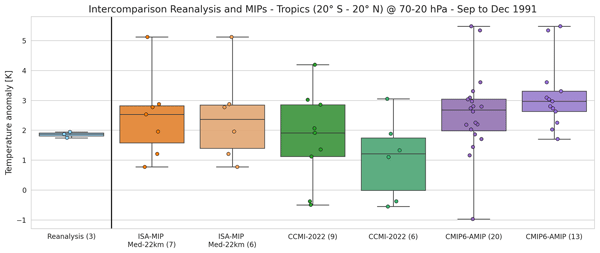
Major volcanic eruptions, such as the one of Mt. Pinatubo in 1991, can inject large amounts of sulfur dioxide into the stratosphere. The resulting aerosol cloud affects stratospheric temperature and thereby middle atmospheric dynamics and chemistry. Here we investigate similarities and differences across an ensemble of climate models in reproducing the stratospheric temperature signal following the Mt. Pinatubo eruption.
Chaim I. Garfinkel, David Avisar, Wenjuan Huo, Ales Kuchar, Shoshiro Minobe, Scott Osprey, Katharina Perny, and Jonathon S. Wright
EGUsphere, https://doi.org/10.5194/egusphere-2026-3738, https://doi.org/10.5194/egusphere-2026-3738, 2026
Short summary
Short summary
Whether tropical volcanic eruptions lead to a circulation response in winter is still unclear. We re-evaluate this effect using large ensembles from eight separate models with only one time-varying external forcing: volcanic aerosols. We find that 75 % of models simulate the previously proposed effect, but that the signal requires at least 30 eruptions before it emerges robustly from the noise. Furthermore, we demonstrate that the El Niño signal differs from natural El Niño events.
Christoph Jacobi, Ales Kuchar, Manfred Ern, Toralf Renkwitz, Ralph Latteck, and Jorge L. Chau
Adv. Radio Sci., 24, 15–28, https://doi.org/10.5194/ars-24-15-2026, https://doi.org/10.5194/ars-24-15-2026, 2026
Short summary
Short summary
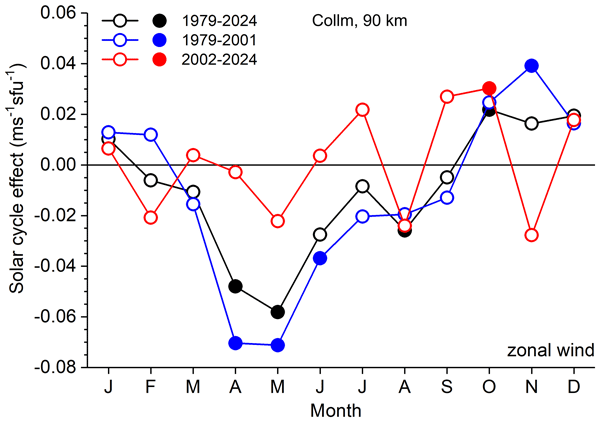
Analyses of more than four decades (1979–2024) of mean horizontal winds in the mesopause region at about 90 km altitude show long-term trends and an influence of the 11-year solar cycle. After the 1990s, both linear trends and the solar cycle effect change and strongly weaken, indicating a change in dynamics or solar forcing. Gravity wave proxies also show a solar cycle effect, which decreases after the 1990s.
Yunqian Zhu, Hideharu Akiyoshi, Valentina Aquila, Elizabeth Asher, Ewa M. Bednarz, Slimane Bekki, Christoph Brühl, Amy H. Butler, Parker Case, Simon Chabrillat, Gabriel Chiodo, Margot Clyne, Peter R. Colarco, Sandip Dhomse, Lola Falletti, Eric Fleming, Ben Johnson, Andrin Jörimann, Mahesh Kovilakam, Gerbrand Koren, Ales Kuchar, Nicolas Lebas, Qing Liang, Cheng-Cheng Liu, Graham Mann, Michael Manyin, Marion Marchand, Olaf Morgenstern, Paul Newman, Luke D. Oman, Freja F. Østerstrøm, Yifeng Peng, David Plummer, Ilaria Quaglia, William Randel, Samuel Rémy, Takashi Sekiya, Stephen Steenrod, Timofei Sukhodolov, Simone Tilmes, Kostas Tsigaridis, Rei Ueyama, Daniele Visioni, Xinyue Wang, Shingo Watanabe, Yousuke Yamashita, Pengfei Yu, Wandi Yu, Jun Zhang, and Zhihong Zhuo
Geosci. Model Dev., 18, 5487–5512, https://doi.org/10.5194/gmd-18-5487-2025, https://doi.org/10.5194/gmd-18-5487-2025, 2025
Short summary
Short summary
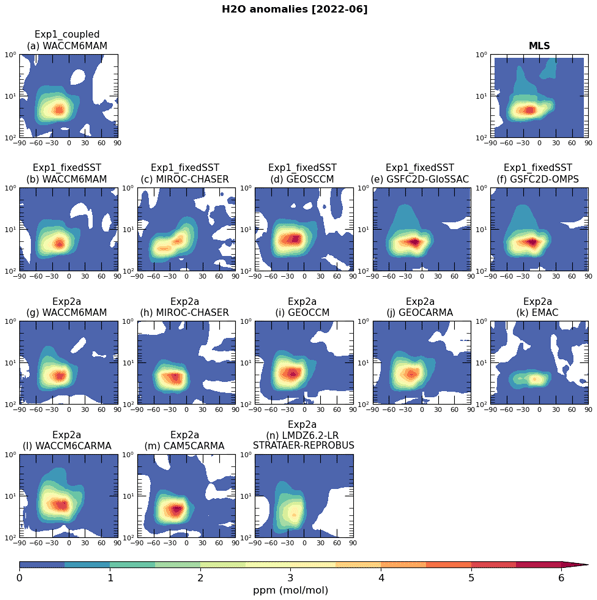
To understand the climate impact of the 2022 Hunga volcanic eruption, we developed a climate model–observation comparison project. The paper describes the protocols and models that participate in the experiments. We designed several experiments to achieve our goals of this activity: (1) to evaluate the climate model performance and (2) to understand the Earth system responses to this eruption.
Ales Kuchar, Gunter Stober, Dimitry Pokhotelov, Huixin Liu, Han-Li Liu, Manfred Ern, Damian Murphy, Diego Janches, Tracy Moffat-Griffin, Nicholas Mitchell, and Christoph Jacobi
EGUsphere, https://doi.org/10.5194/egusphere-2025-2827, https://doi.org/10.5194/egusphere-2025-2827, 2025
Short summary
Short summary
We studied how the healing of the Antarctic ozone layer is affecting winds high above the South Pole. Using ground-based radar, satellite data, and computer models, we found that winds in the upper atmosphere have become stronger over the past two decades. These changes appear to be linked to shifts in the lower atmosphere caused by ozone recovery. Our results show that human efforts to repair the ozone layer are also influencing climate patterns far above Earth’s surface.
Christoph Jacobi, Khalil Karami, Ales Kuchar, Manfred Ern, Toralf Renkwitz, Ralph Latteck, and Jorge L. Chau
Adv. Radio Sci., 23, 21–31, https://doi.org/10.5194/ars-23-21-2025, https://doi.org/10.5194/ars-23-21-2025, 2025
Short summary
Short summary
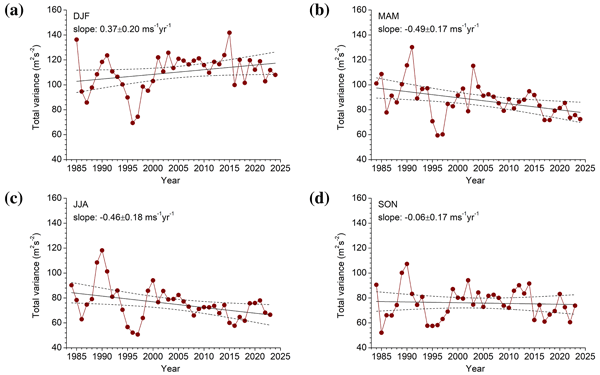
Half-hourly mean winds have been obtained using ground-based low-frequency and very high frequency radio observations of the mesopause region at Collm, Germany, since 1984. Long-term changes of wind variances, which are proxies for short-period atmospheric gravity waves, have been analysed. Gravity wave amplitudes increase with time in winter, but mainly decrease in summer. The trends are consistent with mean wind changes according to wave theory.
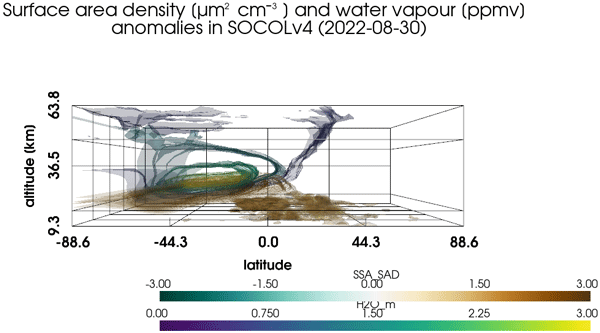
Ales Kuchar, Timofei Sukhodolov, Gabriel Chiodo, Andrin Jörimann, Jessica Kult-Herdin, Eugene Rozanov, and Harald H. Rieder
Atmos. Chem. Phys., 25, 3623–3634, https://doi.org/10.5194/acp-25-3623-2025, https://doi.org/10.5194/acp-25-3623-2025, 2025
Short summary
Short summary
In January 2022, the Hunga Tonga–Hunga Ha'apai (HTHH) volcano erupted, sending massive amounts of water vapour into the atmosphere. This event had a significant impact on stratospheric and lower-mesospheric chemical composition. Two years later, stratospheric conditions were disturbed during so-called sudden stratospheric warmings. Here we simulate a novel pathway by which this water-rich eruption may have contributed to conditions during these events and consequently impacted the surface climate.
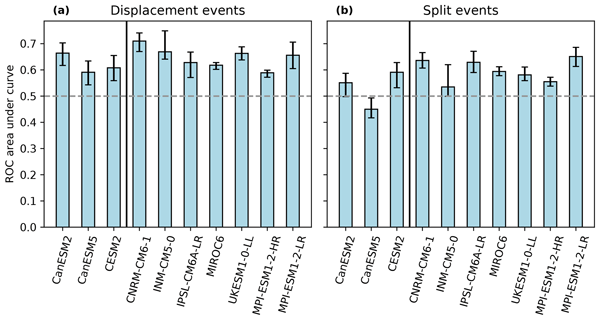
Ales Kuchar, Maurice Öhlert, Roland Eichinger, and Christoph Jacobi
Weather Clim. Dynam., 5, 895–912, https://doi.org/10.5194/wcd-5-895-2024, https://doi.org/10.5194/wcd-5-895-2024, 2024
Short summary
Short summary
Exploring the polar vortex's impact on climate, the study evaluates model simulations against the ERA5 reanalysis data. Revelations about model discrepancies in simulating disruptive stratospheric warmings and vortex behavior highlight the need for refined model simulations of past climate. By enhancing our understanding of these dynamics, the research contributes to more reliable climate projections of the polar vortex with the impact on surface climate.
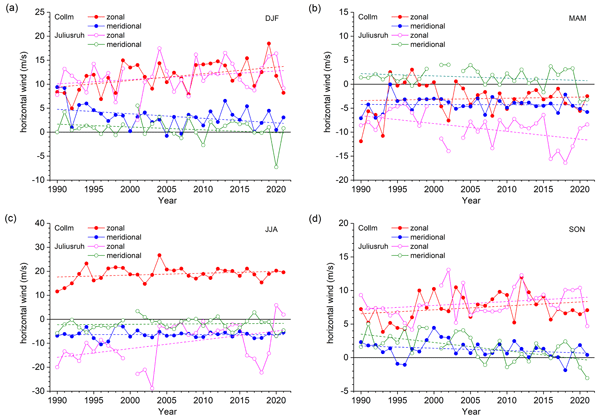
Christoph Jacobi, Ales Kuchar, Toralf Renkwitz, and Juliana Jaen
Adv. Radio Sci., 21, 111–121, https://doi.org/10.5194/ars-21-111-2023, https://doi.org/10.5194/ars-21-111-2023, 2023
Short summary
Short summary
Middle atmosphere long-term changes show the signature of climate change. We analyse 43 years of mesopause region horizontal winds obtained at two sites in Germany. We observe mainly positive trends of the zonal prevailing wind throughout the year, while the meridional winds tend to decrease in magnitude in both summer and winter. Furthermore, there is a change in long-term trends around the late 1990s, which is most clearly visible in summer winds.
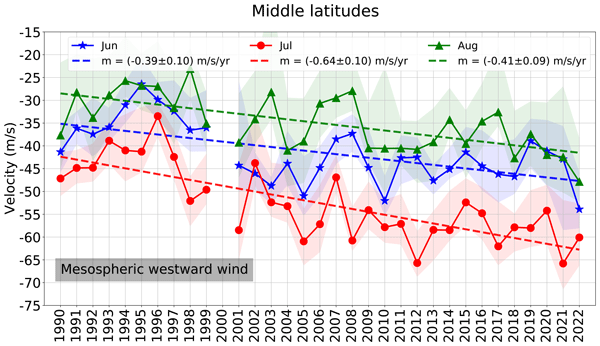
Juliana Jaen, Toralf Renkwitz, Huixin Liu, Christoph Jacobi, Robin Wing, Aleš Kuchař, Masaki Tsutsumi, Njål Gulbrandsen, and Jorge L. Chau
Atmos. Chem. Phys., 23, 14871–14887, https://doi.org/10.5194/acp-23-14871-2023, https://doi.org/10.5194/acp-23-14871-2023, 2023
Short summary
Short summary
Investigation of winds is important to understand atmospheric dynamics. In the summer mesosphere and lower thermosphere, there are three main wind flows: the mesospheric westward, the mesopause southward (equatorward), and the lower-thermospheric eastward wind. Combining almost 2 decades of measurements from different radars, we study the trend, their interannual oscillations, and the effects of the geomagnetic activity over these wind maxima.
Roland Eichinger, Sebastian Rhode, Hella Garny, Peter Preusse, Petr Pisoft, Aleš Kuchař, Patrick Jöckel, Astrid Kerkweg, and Bastian Kern
Geosci. Model Dev., 16, 5561–5583, https://doi.org/10.5194/gmd-16-5561-2023, https://doi.org/10.5194/gmd-16-5561-2023, 2023
Short summary
Short summary
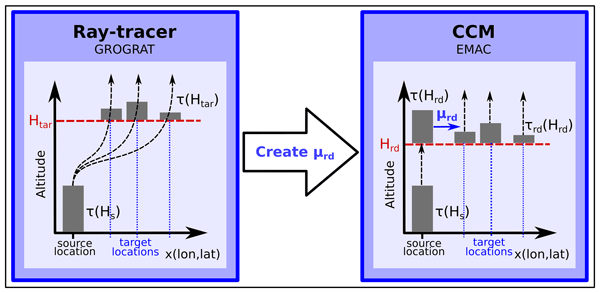
The columnar approach of gravity wave (GW) schemes results in dynamical model biases, but parallel decomposition makes horizontal GW propagation computationally unfeasible. In the global model EMAC, we approximate it by GW redistribution at one altitude using tailor-made redistribution maps generated with a ray tracer. More spread-out GW drag helps reconcile the model with observations and close the 60°S GW gap. Polar vortex dynamics are improved, enhancing climate model credibility.
Gunter Stober, Alan Liu, Alexander Kozlovsky, Zishun Qiao, Ales Kuchar, Christoph Jacobi, Chris Meek, Diego Janches, Guiping Liu, Masaki Tsutsumi, Njål Gulbrandsen, Satonori Nozawa, Mark Lester, Evgenia Belova, Johan Kero, and Nicholas Mitchell
Atmos. Meas. Tech., 15, 5769–5792, https://doi.org/10.5194/amt-15-5769-2022, https://doi.org/10.5194/amt-15-5769-2022, 2022
Short summary
Short summary
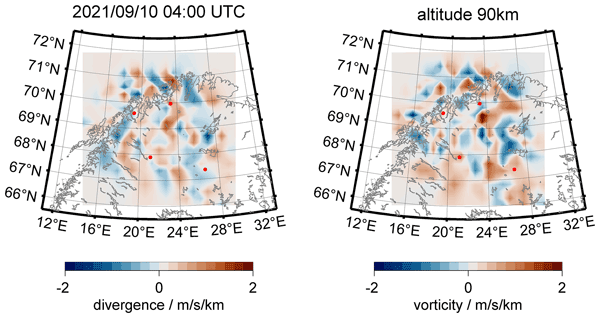
Precise and accurate measurements of vertical winds at the mesosphere and lower thermosphere are rare. Although meteor radars have been used for decades to observe horizontal winds, their ability to derive reliable vertical wind measurements was always questioned. In this article, we provide mathematical concepts to retrieve mathematically and physically consistent solutions, which are compared to the state-of-the-art non-hydrostatic model UA-ICON.
Ales Kuchar, Petr Sacha, Roland Eichinger, Christoph Jacobi, Petr Pisoft, and Harald Rieder
EGUsphere, https://doi.org/10.5194/egusphere-2022-474, https://doi.org/10.5194/egusphere-2022-474, 2022
Preprint archived
Short summary
Short summary
We focus on the impact of small-scale orographic gravity waves (OGWs) above the Himalayas. The interaction of GWs with the large-scale circulation in the stratosphere is not still well understood and can have implications on climate projections. We use a chemistry-climate model to show that these strong OGW events are associated with anomalously increased upward planetary-scale waves and in turn affect the circumpolar circulation and have the potential to alter ozone variability as well.
Guochun Shi, V. Lynn Harvey, Hanli Liu, Nicholas Pedatella, and Gunter Stober
EGUsphere, https://doi.org/10.5194/egusphere-2026-5705, https://doi.org/10.5194/egusphere-2026-5705, 2026
This preprint is open for discussion and under review for Atmospheric Chemistry and Physics (ACP).
Short summary
Short summary
We examined how major wintertime disruptions of the Arctic atmosphere affect the downward transport of nitric oxide. Using satellite observations and a whole-atmosphere model, we found that large-scale waves repeatedly organize nitric oxide into distinct regions and that this transport differs between split and displaced polar vortices. The results improve understanding of how atmospheric dynamics control chemical transport between the upper atmosphere and stratosphere.
Sean M. Davis, William T. Ball, Yue Jia, Gabriel Chiodo, Justin A. Alsing, James Keeble, Hideharu Akiyoshi, Carlo Arosio, Ewa M. Bednarz, Andreas Chrysanthou, Melanie Coldewey-Egbers, Robert Damadeo, Sandip Dhomse, Mohamadou A. Diallo, Simone Dietmuller, Roland Eichinger, Stacey Frith, Birgit Hassler, Michaela I. Hegglin, Daan Hubert, Patrick Jöckel, Béatrice Josse, Natalya Kramarova, Diego Loyola, Eliane Maillard Barras, Marion Marchand, Olaf Morgenstern, David Plummer, Robert W. Portmann, Karen H. Rosenlof, Alexei Rozanov, Viktoria F. Sofieva, Johannes Staehelin, Timofei Sukhodolov, Kleareti Tourpali, Ronald J. Van der A, H. J. Ray Wang, Krzysztof Wargan, Shingo Watanabe, Mark Weber, Jeannette D. Wild, Yousuke Yamashita, and Jerry Ziemke
Atmos. Chem. Phys., 26, 13817–13843, https://doi.org/10.5194/acp-26-13817-2026, https://doi.org/10.5194/acp-26-13817-2026, 2026
Short summary
Short summary
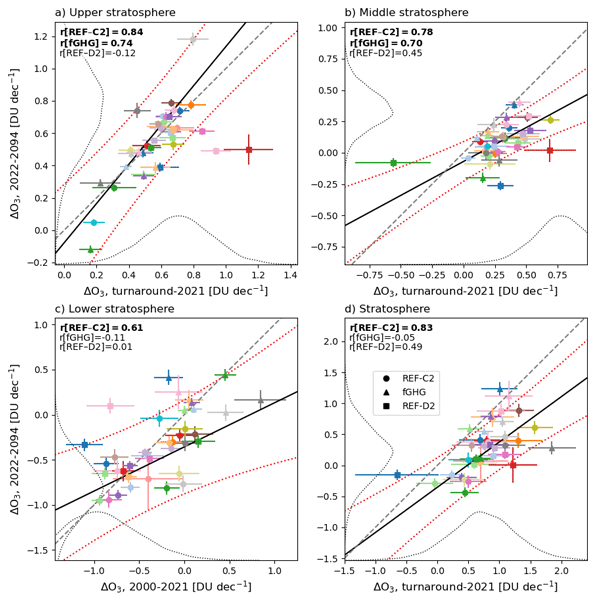
This study investigates tropical ozone changes in models and satellite observations to determine how well they agree and whether observations can constrain model projections. At some levels, satellite records disagree significantly on the magnitude of ozone changes. While early and late 21st century trends are correlated across models, suggesting a potential emergent constraint, the spread in observations means they are unable to provide guidance on the credibility of model projections.

Daniele Visioni, Alan Robock, Alistair Duffey, Matthew Henry, Haruki Hirasawa, Walker Raymond Lee, Cindy Wang, Kelsey Roberts, Shingo Watanabe, Michelle Simões Reboita, Masahiro Sugiyama, Ben Kravitz, Jim Haywood, Simone Tilmes, Frédéric K. Bonou, Jack Chen, Timofei Sukhodolov, Sandro Vattioni, Andrin Jörimann, Diego Villanueva, Ryan Vella, Paul Farron, Ewa Bednarz, Ulrike Niemeier, Colleen Golja, and Juan A. Añel
Geosci. Model Dev., 19, 8469–8499, https://doi.org/10.5194/gmd-19-8469-2026, https://doi.org/10.5194/gmd-19-8469-2026, 2026
Short summary
Short summary
The Geoengineering Model Intercomparison Project is a coordinated international model intercomparison effort aiming to provide robust experimental protocols for simulations of various Solar Radiation Modification (SRM) methods. In this manuscript, we describe a list of novel experiments decided by the community, to be run by climate models to better understand sources of uncertainty in SRM. We also show and discuss some preliminary results from a few climate models.
Dominika Hájková, Aleš Kuchař, and Petr Šácha
EGUsphere, https://doi.org/10.5194/egusphere-2026-5319, https://doi.org/10.5194/egusphere-2026-5319, 2026
Short summary
Short summary
Stratospheric polar vortex is one the most important parts of the winter stratospheric circulation. Its stability is hard to simulate and differs between general circulation models. Here, we show how the intermodel differences of parameterized orographic gravity wave drag influence propagation and breaking of resolved planetary waves; and consequently how it is connected to vortex stability. For this we use the geometry of polar vortex, potential vorticity as well as northern annular mode index.
Simone Brunamonti, Yann Poltera, Gonzague Romanens, Alex Weitnauer, Philipp Scheidegger, Adrianos Filinis, Alistair Bell, Giovanni Martucci, Frank Gunther Wienhold, Thomas Peter, Peter Oelsner, Ruud Dirksen, Alexander Haefele, Lukas Emmenegger, Gunter Stober, and Béla Tuzson
EGUsphere, https://doi.org/10.5194/egusphere-2026-4762, https://doi.org/10.5194/egusphere-2026-4762, 2026
Short summary
Short summary
Accurate measurements of the concentration of water vapor in the upper atmosphere are essential for reliable climate predictions. We investigated the performance of a new lightweight (less than 4 kg) hygrometer, based on laser absorption spectroscopy, in a series of atmospheric test flights using weather balloons, reaching up to 35 km altitude. The results demonstrate the high accuracy and suitability of this technique for applications in long-term climate monitoring and atmospheric research.
Andrin Jörimann, Timofei Sukhodolov, Simone Tilmes, David Plummer, Shingo Watanabe, Hideharu Akiyoshi, Gabriel Chiodo, Daniele Visioni, Sandro Vattioni, Eugene Rozanov, Ewa Monika Bednarz, Béatrice Josse, Yousuke Yamashita, and Thomas Peter
Atmos. Chem. Phys., 26, 11207–11234, https://doi.org/10.5194/acp-26-11207-2026, https://doi.org/10.5194/acp-26-11207-2026, 2026
Short summary
Short summary
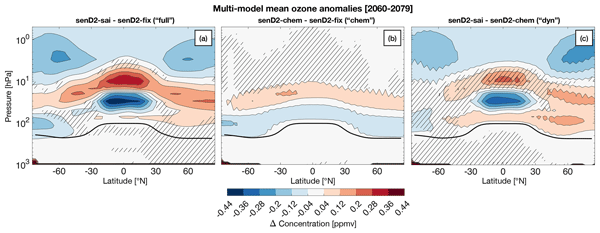
We study a future scenario where artificial stratospheric aerosol injections counter medium climate change, to understand possible negative side effects like ozone depletion. The injected aerosol layer is implemented uniformly in five climate models, which eliminates some uncertainty from model-specific aerosol evolution. The models agree well on where and how key thermodynamical (heating, circulation) and chemical processes change, however, the strength of the changes varies considerably.
Katharina Perny, Timofei Sukhodolov, Ales Kuchar, Pavle Arsenovic, Bernadette Rosati, Christoph Brühl, Sandip S. Dhomse, Andrin Jörimann, Anton Laakso, Graham Mann, Ulrike Niemeier, Giovanni Pitari, Ilaria Quaglia, Takashi Sekiya, Kengo Sudo, Claudia Timmreck, Simone Tilmes, Daniele Visioni, and Harald E. Rieder
Atmos. Chem. Phys., 26, 10997–11025, https://doi.org/10.5194/acp-26-10997-2026, https://doi.org/10.5194/acp-26-10997-2026, 2026
Short summary
Short summary
Major volcanic eruptions, such as the one of Mt. Pinatubo in 1991, can inject large amounts of sulfur dioxide into the stratosphere. The resulting aerosol cloud affects stratospheric temperature and thereby middle atmospheric dynamics and chemistry. Here we investigate similarities and differences across an ensemble of climate models in reproducing the stratospheric temperature signal following the Mt. Pinatubo eruption.
Chaim I. Garfinkel, David Avisar, Wenjuan Huo, Ales Kuchar, Shoshiro Minobe, Scott Osprey, Katharina Perny, and Jonathon S. Wright
EGUsphere, https://doi.org/10.5194/egusphere-2026-3738, https://doi.org/10.5194/egusphere-2026-3738, 2026
Short summary
Short summary
Whether tropical volcanic eruptions lead to a circulation response in winter is still unclear. We re-evaluate this effect using large ensembles from eight separate models with only one time-varying external forcing: volcanic aerosols. We find that 75 % of models simulate the previously proposed effect, but that the signal requires at least 30 eruptions before it emerges robustly from the noise. Furthermore, we demonstrate that the El Niño signal differs from natural El Niño events.
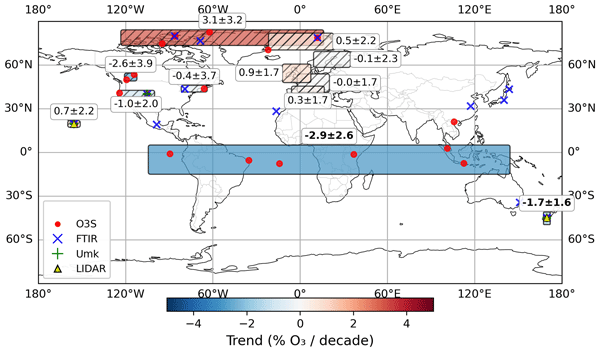
Louis Mirallie, Eliane Maillard Barras, Caroline Jonas, Corinne Vigouroux, Roeland Van Malderen, Irina Petropavlovskikh, Sophie Godin-Beekmann, Thierry Leblanc, Wolfgang Steinbrecht, Antoine Vadès, Rolf Ruefenacht, Alexander Haefele, Gunter Stober, Peter Effertz, Julian Gröbner, Gerard Ancellet, María Cazorla, Petra Duff, Matthias M. Frey, Michael Gill, James W. Hannigan, Nicholas Jones, Rigel Kivi, Raphael Köhler, Bogumil Kois, Debra E. Kollonige, Emmanuel Mahieu, Glen McConville, Johan Mellqvist, Gary Morris, Isao Murata, Tomoo Nagahama, Gerald E. Nedoluha, Shin-Ya Ogino, Richard Querel, Ryan M. Stauffer, Wolfgang Stremme, Kimberly Strong, Ralf Sussmann, Anne M. Thompson, and Yana Virolainen
Atmos. Chem. Phys., 26, 10303–10330, https://doi.org/10.5194/acp-26-10303-2026, https://doi.org/10.5194/acp-26-10303-2026, 2026
Short summary
Short summary
We present regional Bayesian composites of ground-based ozone partial column records. Defining coherent regions using a CAMS (Copernicus Atmosphere Monitoring Service) representativeness study, we merge five instrument types using the BASIC (Ball et al., 2017) algorithm, reducing trend uncertainties by 9.4 % compared to a weighted mean. Results confirm upper stratospheric recovery, predominantly negative middle stratospheric trends, while lower stratospheric trends remain mostly non-significant.
Loretta Pearl Poku, Gunter Stober, Diego Janches, Brian Fuller, Daniel O’Connor, Leandro Maslov, Eric Marderwald, Jose Luis Hormaechea, and Marcelo Colazo
EGUsphere, https://doi.org/10.5194/egusphere-2026-2287, https://doi.org/10.5194/egusphere-2026-2287, 2026
This preprint is open for discussion and under review for Atmospheric Measurement Techniques (AMT).
Short summary
Short summary
SAAMER-NOVA is the first imaging meteor radar network at high southern latitudes, located in the southern tip of the Andes. We present 3D tomographic wind retrievals at the MLT, altitude-time wind plots, and keogram plots revealing large-scale dynamics and multiple atmospheric waves. Its strategic location, rectangular-triangle arrangement, and angular diversity provide robust, continuous measurements. Performance is demonstrated by capturing Q2DW spatial characteristics and GW residuals.
Christoph Jacobi, Ales Kuchar, Manfred Ern, Toralf Renkwitz, Ralph Latteck, and Jorge L. Chau
Adv. Radio Sci., 24, 15–28, https://doi.org/10.5194/ars-24-15-2026, https://doi.org/10.5194/ars-24-15-2026, 2026
Short summary
Short summary
Analyses of more than four decades (1979–2024) of mean horizontal winds in the mesopause region at about 90 km altitude show long-term trends and an influence of the 11-year solar cycle. After the 1990s, both linear trends and the solar cycle effect change and strongly weaken, indicating a change in dynamics or solar forcing. Gravity wave proxies also show a solar cycle effect, which decreases after the 1990s.
Gunter Stober, Hanli Liu, Zishun Qiao, Kaoru Sato, Loretta Pearl Poku, Witali Krochin, Alan Liu, Alexander Kozlovsky, Diego Janches, Jie Zeng, Wen Yi, Masaki Tsutsumi, Njål Gulbrandsen, Satonori Nozawa, Mark Lester, Johan Kero, and Nicholas Mitchell
EGUsphere, https://doi.org/10.5194/egusphere-2026-3156, https://doi.org/10.5194/egusphere-2026-3156, 2026
Short summary
Short summary
Vertical winds are a crucial atmospheric parameter in the mesosphere/lower thermosphere and are connected to adiabatic heating and cooling of the atmosphere. Mesospheric temperatures are affected by the vertical transport driven by a pole-to-pole circulation with upwelling in the summer hemisphere and downwelling in the winter hemisphere. We present results based on a new retrieval technique for the seasonal climatological vertical winds and an intercomparison to current state-of-the-art models.
Witali Krochin, Axel Murk, and Gunter Stober
EGUsphere, https://doi.org/10.5194/egusphere-2026-2364, https://doi.org/10.5194/egusphere-2026-2364, 2026
This preprint is open for discussion and under review for Annales Geophysicae (ANGEO).
Short summary
Short summary
This manuscript presents measurements of the microwave emission spectra of oxygen. These spectra depend strongly on the geomagnetic field, since oxygen's magnetic dipole couples to it what produces measurable spectral shifts. The interaction is analyzed in detail, including observation geometry and polarization. Using the relation between magnetic field and spectral characteristics, a method is proposed for remote monitoring of geomagnetic variations.
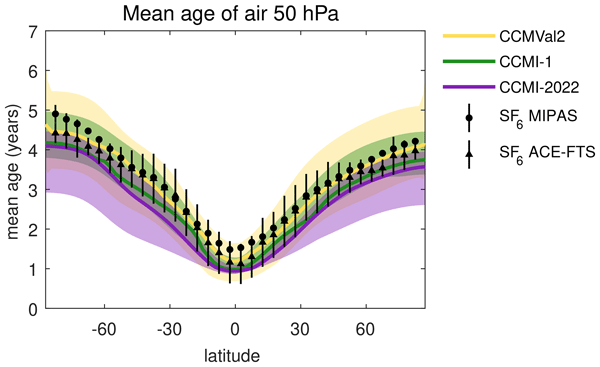
Marta Abalos, Thomas Birner, Andreas Chrysanthou, Sean Davis, Alvaro de la Cámara, Sandip Dhomse, Hella Garny, Michaela I. Hegglin, Daan Hubert, Oksana Ivaniha, James Keeble, Marianna Linz, Daniele Minganti, Jessica Neu, David Plummer, Laura Saunders, Kasturi Shah, Gabriele Stiller, Kleareti Tourpali, Darryn Waugh, Nathan Luke Abraham, Hideharu Akiyoshi, Martyn P. Chipperfield, Patrick Jöckel, Béatrice Josse, Marion Marchand, Patrick Martineau, Olaf Morgenstern, Timofei Sukhodolov, Shingo Watanabe, and Yousuke Yamashita
Atmos. Chem. Phys., 26, 5249–5291, https://doi.org/10.5194/acp-26-5249-2026, https://doi.org/10.5194/acp-26-5249-2026, 2026
Short summary
Short summary
Accurate representation of stratospheric transport in Chemistry-Climate Models is essential for reliable climate projections. This study evaluates three generations of models using observational data and reanalyses, identifying persistent biases and their potential causes. Some biases persist or even worsen in newer models. These findings highlight key limitations and inform efforts to improve models and advance understanding through process-based studies and enhanced observations.
Loretta Pearl Poku, Gunter Stober, Witali Krochin, Alan Liu, Alexander Kozlovsky, Diego Janches, Jie Zeng, Wen Yi, Masaki Tsutsumi, Njål Gulbrandsen, Satonori Nozawa, Mark Lester, Johan Kero, and Nicholas Mitchell
EGUsphere, https://doi.org/10.5194/egusphere-2025-6377, https://doi.org/10.5194/egusphere-2025-6377, 2026
Short summary
Short summary
This study presents 3D spatially resolved wind fields in the MLT using advanced retrieval techniques. Specifically, a novel SVVP method in spherical coordinates to enhance the physical consistency of wind retrievals compared to the conventional VVP method in plane geometry and the 3DVAR+DIV method. The SVVP provides a robust framework for future MLT dynamics studies, and the 3DVAR+DIV retrieval is beneficial for high-resolution case studies due to its ability to capture small-scale variability.
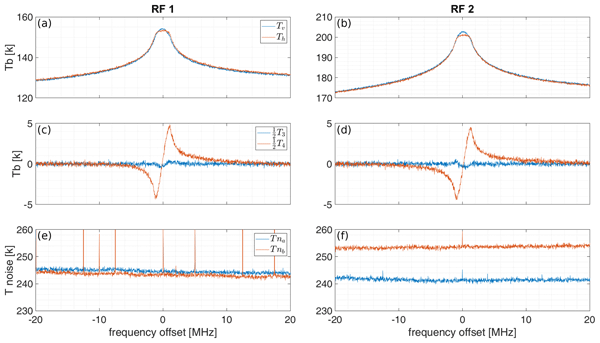
Witali Krochin, Axel Murk, Andres Luder, and Gunter Stober
Atmos. Meas. Tech., 19, 2103–2123, https://doi.org/10.5194/amt-19-2103-2026, https://doi.org/10.5194/amt-19-2103-2026, 2026
Short summary
Short summary
In this manuscript a new fully polarimetric radiometer for ground-based temperature sounding, TEMPERA-C (Campaign Temperature Radiometer), is presented. The advantages of the fully polarimetric approach are discussed, and a fully polarimetric calibration method is described in detail. The final measurements and the continuous series of temperature retrievals from the high altitude research station on the Jungfraujoch are also shown in this manuscript.
Klemens Hocke, Wenyue Wang, Leonie Bernet, Alistair Bell, and Christian Mätzler
EGUsphere, https://doi.org/10.5194/egusphere-2026-989, https://doi.org/10.5194/egusphere-2026-989, 2026
Preprint archived
Short summary
Short summary
We analyse observations of the tropospheric water radiometer (TROWARA) which monitored integrated water vapour (IWV) above Bern from 1995 to 2025. The relative IWV increase is 5.1 %/decade. Evaluation of coincident IWV data from ERA5 (reanalysis of European Centre for Medium-Range Weather Forecasts) gives a trend of 3.7 %/decade. The positive IWV trends are possibly due to the warming climate in Switzerland over the past decades.
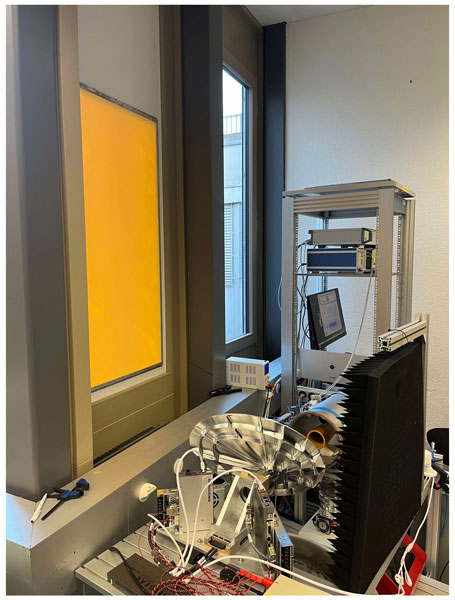
Adrianos Filinis, Alistair Bell, Axel Murk, and Gunter Stober
Atmos. Meas. Tech., 19, 1783–1799, https://doi.org/10.5194/amt-19-1783-2026, https://doi.org/10.5194/amt-19-1783-2026, 2026
Short summary
Short summary
Water vapor is an essential climate variable in the Earth's atmosphere and plays an important role in the radiative balance, serving as the most significant greenhouse gas in the upper troposphere. Hence, high-quality and continuous measurements are required. In this paper, we present the breadboard design of a newly developed radiometer, which will retrieve vertical profiles of middle atmospheric water vapor.
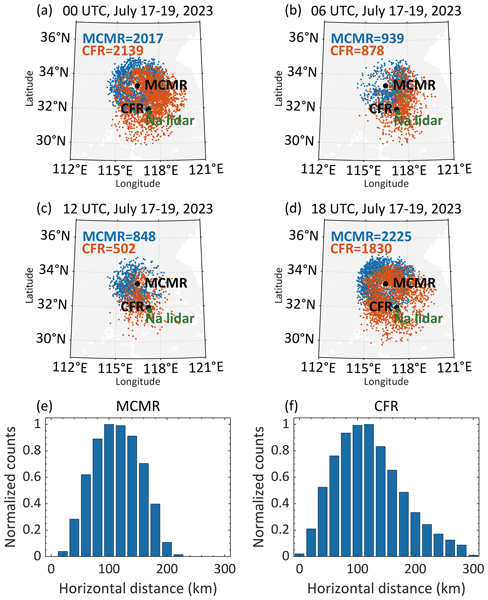
Chao Ban, Xin Fang, Wen Yi, Jie Zeng, Gunter Stober, Weilin Pan, Tao Li, and Xianghui Xue
Atmos. Meas. Tech., 19, 1697–1709, https://doi.org/10.5194/amt-19-1697-2026, https://doi.org/10.5194/amt-19-1697-2026, 2026
Short summary
Short summary
This paper presents an intercomparison of zonal winds observed by a sodium fluorescence lidar and three types of meteor radars – a multistatic meteor radar, a conventional monostatic radar, and a forward remote receiver – located near Hefei, China. The multistatic meteor radar shows the best agreement with the lidar measurements, confirming the reliability of its wind retrievals in the mesosphere and lower thermosphere and highlighting its potential for future atmospheric dynamics studies.
Florian Günzkofer, Anders Tjulin, Gang Lu, Hanli Liu, and Gunter Stober
EGUsphere, https://doi.org/10.5194/egusphere-2026-823, https://doi.org/10.5194/egusphere-2026-823, 2026
Short summary
Short summary
Incoherent scatter radars (ISRs) are an important measurement tool for space weather research. However, ISR measurements require previous knowledge of the state of the ionosphere, especially the ratio of atomic oxygen ions (O+) to electrons. We present ISR measurements during the May 2024 "Mothers' Day Storm" and apply data assimilation-based O+ ratios, which should result in more accurate ISR measurements. The advantages and disadvantages of our method are compared to those of other approaches.
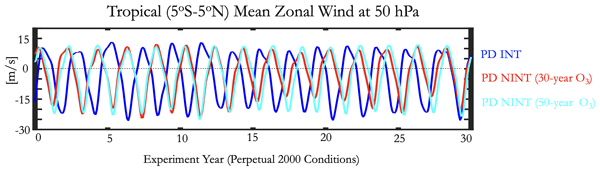
Clara Orbe, Alison Ming, Gabriel Chiodo, Michael Prather, Mohamadou Diallo, Qi Tang, Andreas Chrysanthou, Hiroaki Naoe, Xin Zhou, Irina Thaler, Dillon Elsbury, Ewa Bednarz, Jonathon S. Wright, Aaron Match, Shingo Watanabe, James Anstey, Tobias Kerzenmacher, Stefan Versick, Marion Marchand, Feng Li, and James Keeble
Geosci. Model Dev., 19, 773–794, https://doi.org/10.5194/gmd-19-773-2026, https://doi.org/10.5194/gmd-19-773-2026, 2026
Short summary
Short summary
The quasi-biennial oscillation (QBO) is the main source of wind fluctuations in the tropical stratosphere, which can couple to surface climate. However, models do a poor job of simulating the QBO in the lower stratosphere, for reasons that remain unclear. One possibility is that models do not completely represent how ozone influences the QBO-associated wind variations. Here we propose a multi-model framework for assessing how ozone influences the QBO in recent past and future climates.
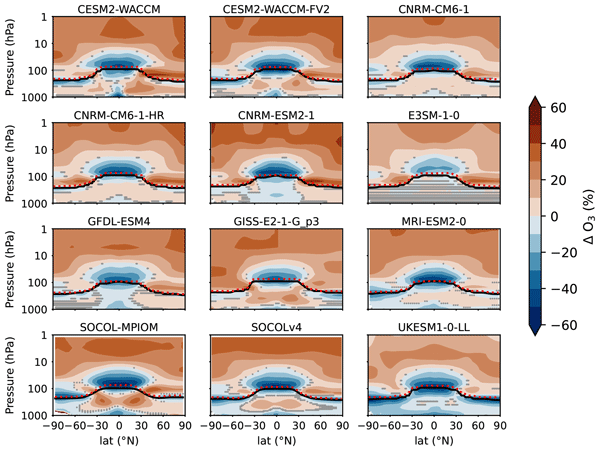
Jingyu Wang, Gabriel Chiodo, Blanca Ayarzagüena, William T. Ball, Mohamadou Diallo, Birgit Hassler, James Keeble, Peer Nowack, Clara Orbe, Sandro Vattioni, and Timofei Sukhodolov
Atmos. Chem. Phys., 25, 17819–17844, https://doi.org/10.5194/acp-25-17819-2025, https://doi.org/10.5194/acp-25-17819-2025, 2025
Short summary
Short summary
We analyzed the ozone response under elevated CO2 using the data from CMIP6 DECK experiments. We then examined the relations between ozone response and changes in temperature and circulation to identify the drivers of ozone change. The climate feedback of ozone is investigated through offline calculations and by comparing models with and without interactive chemistry. We find that ozone–climate interactions are important for Earth system models and thus should be considered in future model development.
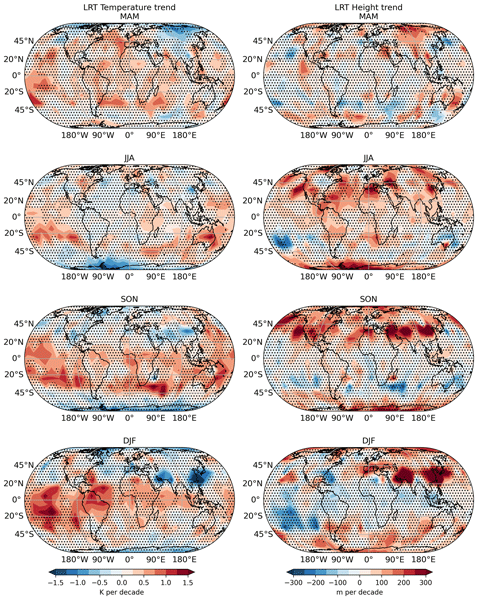
Florian Ladstädter, Matthias Stocker, Sebastian Scher, and Andrea K. Steiner
Atmos. Chem. Phys., 25, 16053–16062, https://doi.org/10.5194/acp-25-16053-2025, https://doi.org/10.5194/acp-25-16053-2025, 2025
Short summary
Short summary
The tropopause, the boundary between the lower and upper atmosphere, is a sensitive marker of climate change. We studied changes in tropopause height and temperature over the past two decades using precise satellite observations. We found warming in the tropics and rising tropopause heights in many regions, especially over Asia and the Middle East. These changes reflect how both atmospheric layers are responding to climate change and highlight the need for continued satellite monitoring.
Miriam Sinnhuber, Christina Arras, Stefan Bender, Bernd Funke, Hanli Liu, Daniel R. Marsh, Thomas Reddmann, Eugene Rozanov, Timofei Sukhodolov, Monika E. Szelag, and Jan Maik Wissing
Atmos. Chem. Phys., 25, 14719–14734, https://doi.org/10.5194/acp-25-14719-2025, https://doi.org/10.5194/acp-25-14719-2025, 2025
Short summary
Short summary
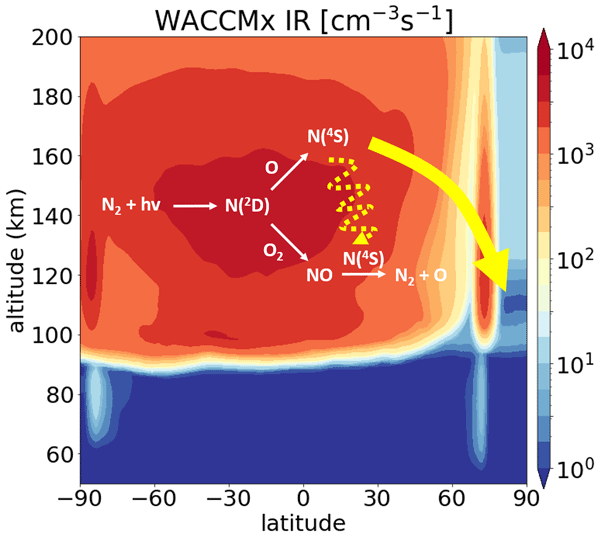
Nitric oxide in the upper atmosphere varies with solar activity. Observations show that this starts a chain of processes affecting the ozone layer and climate system. This is often underestimated in models. We compare five models which show large differences in simulated NO. Analysis of these discrepancies identify two processes which interact with each other: the balance between atomic and molecular oxygen in the thermosphere, and a poleward - downward transport in the winter thermosphere.

Andrin Jörimann, Timofei Sukhodolov, Beiping Luo, Gabriel Chiodo, Graham Mann, and Thomas Peter
Geosci. Model Dev., 18, 6023–6041, https://doi.org/10.5194/gmd-18-6023-2025, https://doi.org/10.5194/gmd-18-6023-2025, 2025
Short summary
Short summary
Aerosol particles in the stratosphere affect our climate. Climate models therefore need an accurate description of their properties and evolution. Satellites measure how strongly aerosol particles extinguish light passing through the stratosphere. We describe a method to use such aerosol extinction data to retrieve the number and sizes of the aerosol particles and calculate their optical effects. The resulting data sets for models are validated against ground-based and balloon observations.
Yunqian Zhu, Hideharu Akiyoshi, Valentina Aquila, Elizabeth Asher, Ewa M. Bednarz, Slimane Bekki, Christoph Brühl, Amy H. Butler, Parker Case, Simon Chabrillat, Gabriel Chiodo, Margot Clyne, Peter R. Colarco, Sandip Dhomse, Lola Falletti, Eric Fleming, Ben Johnson, Andrin Jörimann, Mahesh Kovilakam, Gerbrand Koren, Ales Kuchar, Nicolas Lebas, Qing Liang, Cheng-Cheng Liu, Graham Mann, Michael Manyin, Marion Marchand, Olaf Morgenstern, Paul Newman, Luke D. Oman, Freja F. Østerstrøm, Yifeng Peng, David Plummer, Ilaria Quaglia, William Randel, Samuel Rémy, Takashi Sekiya, Stephen Steenrod, Timofei Sukhodolov, Simone Tilmes, Kostas Tsigaridis, Rei Ueyama, Daniele Visioni, Xinyue Wang, Shingo Watanabe, Yousuke Yamashita, Pengfei Yu, Wandi Yu, Jun Zhang, and Zhihong Zhuo
Geosci. Model Dev., 18, 5487–5512, https://doi.org/10.5194/gmd-18-5487-2025, https://doi.org/10.5194/gmd-18-5487-2025, 2025
Short summary
Short summary
To understand the climate impact of the 2022 Hunga volcanic eruption, we developed a climate model–observation comparison project. The paper describes the protocols and models that participate in the experiments. We designed several experiments to achieve our goals of this activity: (1) to evaluate the climate model performance and (2) to understand the Earth system responses to this eruption.
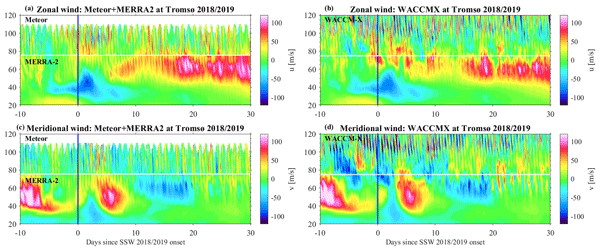
Guochun Shi, Hanli Liu, Masaki Tsutsumi, Njål Gulbrandsen, Alexander Kozlovsky, Dimitry Pokhotelov, Mark Lester, Christoph Jacobi, Kun Wu, and Gunter Stober
Atmos. Chem. Phys., 25, 9403–9430, https://doi.org/10.5194/acp-25-9403-2025, https://doi.org/10.5194/acp-25-9403-2025, 2025
Short summary
Short summary
Concerns about climate change are growing due to its widespread impacts, including rising temperatures, extreme weather events, and disruptions to ecosystems. To address these challenges, urgent global action is needed to monitor the distribution of trace gases and understand their effects on the atmosphere.
Ales Kuchar, Gunter Stober, Dimitry Pokhotelov, Huixin Liu, Han-Li Liu, Manfred Ern, Damian Murphy, Diego Janches, Tracy Moffat-Griffin, Nicholas Mitchell, and Christoph Jacobi
EGUsphere, https://doi.org/10.5194/egusphere-2025-2827, https://doi.org/10.5194/egusphere-2025-2827, 2025
Short summary
Short summary
We studied how the healing of the Antarctic ozone layer is affecting winds high above the South Pole. Using ground-based radar, satellite data, and computer models, we found that winds in the upper atmosphere have become stronger over the past two decades. These changes appear to be linked to shifts in the lower atmosphere caused by ozone recovery. Our results show that human efforts to repair the ozone layer are also influencing climate patterns far above Earth’s surface.
Arthur Gauthier, Claudia Borries, Alexander Kozlovsky, Diego Janches, Peter Brown, Denis Vida, Christoph Jacobi, Damian Murphy, Masaki Tsutsumi, Njål Gulbrandsen, Satonori Nozawa, Mark Lester, Johan Kero, Nicholas Mitchell, Tracy Moffat-Griffin, and Gunter Stober
Ann. Geophys., 43, 427–440, https://doi.org/10.5194/angeo-43-427-2025, https://doi.org/10.5194/angeo-43-427-2025, 2025
Short summary
Short summary
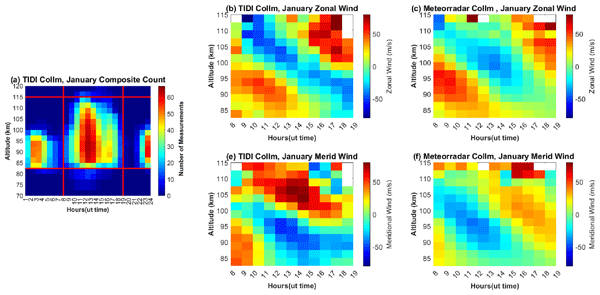
This study focuses on a TIMED Doppler Interferometer (TIDI)–meteor radar (MR) comparison of zonal and meridional winds and their dependence on local time and latitude. The correlation calculation between TIDI wind measurements and MR winds shows good agreement. A TIDI–MR seasonal comparison and analysis of the altitude–latitude dependence for winds are performed. TIDI reproduces the mean circulation well when compared with MRs and may be a useful lower boundary for general circulation models.
Florian Günzkofer, Gunter Stober, Johan Kero, David R. Themens, Anders Tjulin, Njål Gulbrandsen, Masaki Tsutsumi, and Claudia Borries
Ann. Geophys., 43, 331–348, https://doi.org/10.5194/angeo-43-331-2025, https://doi.org/10.5194/angeo-43-331-2025, 2025
Short summary
Short summary
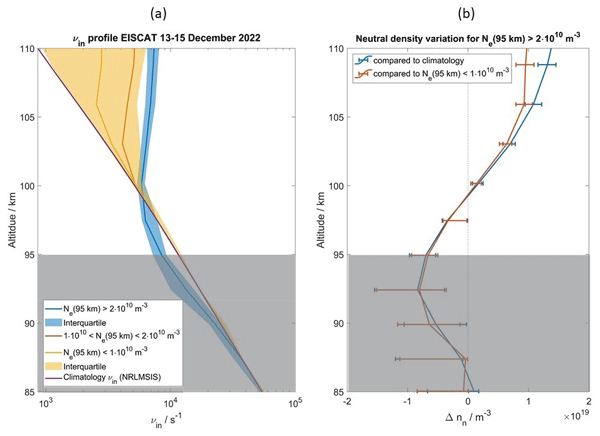
The Earth’s magnetic field is not closed at high latitudes. Electrically charged particles can penetrate the Earth’s atmosphere, deposit their energy, and heat the local atmosphere–ionosphere. This presumably causes an upwelling of the neutral atmosphere, which affects the atmosphere–ionosphere coupling. We apply a new analysis technique to infer the atmospheric density from incoherent scatter radar measurements. We identify signs of particle precipitation impact on the neutral atmosphere.
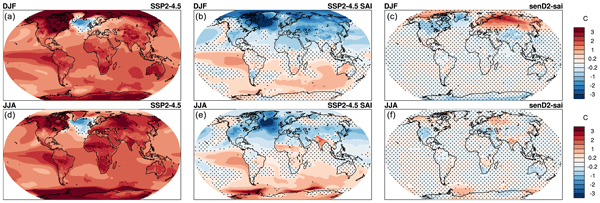
Simone Tilmes, Ewa M. Bednarz, Andrin Jörimann, Daniele Visioni, Douglas E. Kinnison, Gabriel Chiodo, and David Plummer
Atmos. Chem. Phys., 25, 6001–6023, https://doi.org/10.5194/acp-25-6001-2025, https://doi.org/10.5194/acp-25-6001-2025, 2025
Short summary
Short summary
In this paper, we describe the details of a new multi-model intercomparison experiment to assess the effects of Stratospheric Aerosol Intervention (SAI) on stratospheric chemistry and dynamics and, therefore, ozone. Second, we discuss the advantages and differences of the more constrained experiment compared to fully interactive model experiments. This way, we advance the process-level understanding of the drivers of SAI-induced atmospheric responses.
Christoph Jacobi, Khalil Karami, Ales Kuchar, Manfred Ern, Toralf Renkwitz, Ralph Latteck, and Jorge L. Chau
Adv. Radio Sci., 23, 21–31, https://doi.org/10.5194/ars-23-21-2025, https://doi.org/10.5194/ars-23-21-2025, 2025
Short summary
Short summary
Half-hourly mean winds have been obtained using ground-based low-frequency and very high frequency radio observations of the mesopause region at Collm, Germany, since 1984. Long-term changes of wind variances, which are proxies for short-period atmospheric gravity waves, have been analysed. Gravity wave amplitudes increase with time in winter, but mainly decrease in summer. The trends are consistent with mean wind changes according to wave theory.
Alistair Bell, Axel Murk, and Gunter Stober
EGUsphere, https://doi.org/10.5194/egusphere-2025-1396, https://doi.org/10.5194/egusphere-2025-1396, 2025
Short summary
Short summary
Increases in middle atmospheric water vapour from the 2022 Hunga eruption have been measured worldwide. This study uses remote sensing measurements at two latitudes and accurate radiative transfer modeling to show significant long-wave heating effects. Though minimal at the surface, the water vapour enhancement can alter middle-atmospheric dynamics, potentially affecting ozone chemistry and weather patterns.
Ales Kuchar, Timofei Sukhodolov, Gabriel Chiodo, Andrin Jörimann, Jessica Kult-Herdin, Eugene Rozanov, and Harald H. Rieder
Atmos. Chem. Phys., 25, 3623–3634, https://doi.org/10.5194/acp-25-3623-2025, https://doi.org/10.5194/acp-25-3623-2025, 2025
Short summary
Short summary
In January 2022, the Hunga Tonga–Hunga Ha'apai (HTHH) volcano erupted, sending massive amounts of water vapour into the atmosphere. This event had a significant impact on stratospheric and lower-mesospheric chemical composition. Two years later, stratospheric conditions were disturbed during so-called sudden stratospheric warmings. Here we simulate a novel pathway by which this water-rich eruption may have contributed to conditions during these events and consequently impacted the surface climate.
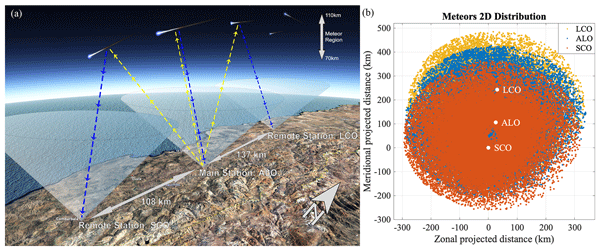
Zishun Qiao, Alan Z. Liu, Gunter Stober, Javier Fuentes, Fabio Vargas, Christian L. Adami, and Iain M. Reid
Atmos. Meas. Tech., 18, 1091–1104, https://doi.org/10.5194/amt-18-1091-2025, https://doi.org/10.5194/amt-18-1091-2025, 2025
Short summary
Short summary
This paper describes the installation of the Chilean Observation Network De Meteor Radars (CONDOR) and its initial results. The routine winds are point-to-point comparable to the co-located lidar winds. The retrievals of spatially resolved horizontal wind fields and vertical winds are also facilitated, benefiting from the extensive meteor detections. The successful deployment and maintenance of CONDOR provide 24/7 and state-of-the-art wind measurements to the research community.
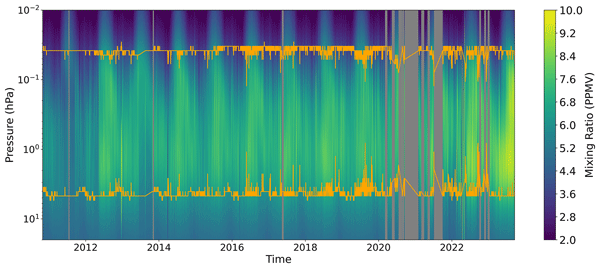
Alistair Bell, Eric Sauvageat, Gunter Stober, Klemens Hocke, and Axel Murk
Atmos. Meas. Tech., 18, 555–567, https://doi.org/10.5194/amt-18-555-2025, https://doi.org/10.5194/amt-18-555-2025, 2025
Short summary
Short summary
Hardware and software developments have been made on a 22 GHz microwave radiometer for the measurement of middle-atmospheric water vapour near Bern, Switzerland. Previous measurements dating back to 2010 have been re-calibrated and an improved optimal estimation retrieval performed on these measurements, giving a 13-year dataset. Measurements made with new and improved instrumental hardware are used to correct previous measurements, which show better agreement than the non-corrected dataset.
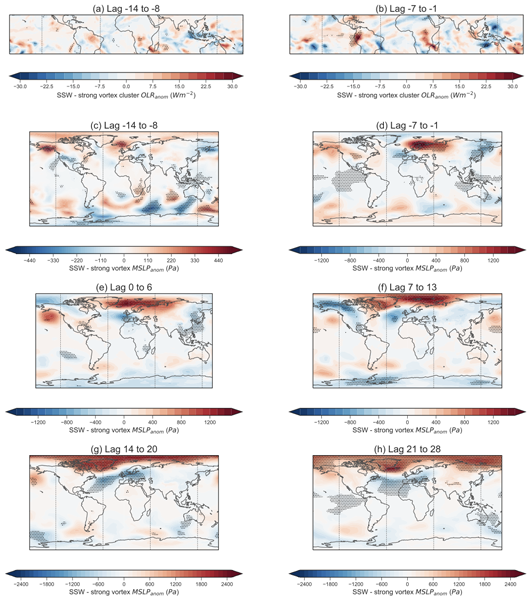
Rachel W.-Y. Wu, Gabriel Chiodo, Inna Polichtchouk, and Daniela I. V. Domeisen
Atmos. Chem. Phys., 24, 12259–12275, https://doi.org/10.5194/acp-24-12259-2024, https://doi.org/10.5194/acp-24-12259-2024, 2024
Short summary
Short summary
Strong variations in the strength of the stratospheric polar vortex can profoundly affect surface weather extremes; therefore, accurately predicting the stratosphere can improve surface weather forecasts. The research reveals how uncertainty in the stratosphere is linked to the troposphere. The findings suggest that refining models to better represent the identified sources and impact regions in the troposphere is likely to improve the prediction of the stratosphere and its surface impacts.
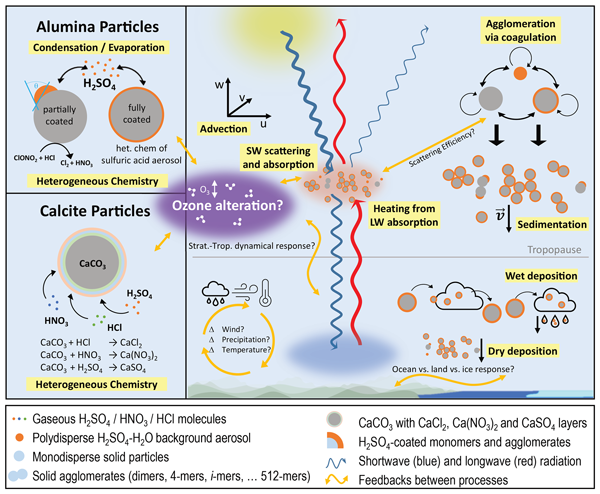
Sandro Vattioni, Rahel Weber, Aryeh Feinberg, Andrea Stenke, John A. Dykema, Beiping Luo, Georgios A. Kelesidis, Christian A. Bruun, Timofei Sukhodolov, Frank N. Keutsch, Thomas Peter, and Gabriel Chiodo
Geosci. Model Dev., 17, 7767–7793, https://doi.org/10.5194/gmd-17-7767-2024, https://doi.org/10.5194/gmd-17-7767-2024, 2024
Short summary
Short summary
We quantified impacts and efficiency of stratospheric solar climate intervention via solid particle injection. Microphysical interactions of solid particles with the sulfur cycle were interactively coupled to the heterogeneous chemistry scheme and the radiative transfer code of an aerosol–chemistry–climate model. Compared to injection of SO2 we only find a stronger cooling efficiency for solid particles when normalizing to the aerosol load but not when normalizing to the injection rate.
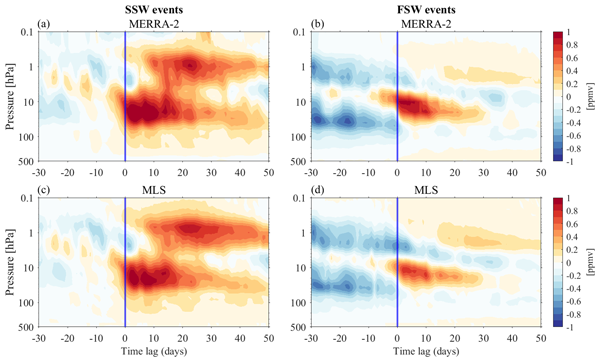
Guochun Shi, Witali Krochin, Eric Sauvageat, and Gunter Stober
Atmos. Chem. Phys., 24, 10187–10207, https://doi.org/10.5194/acp-24-10187-2024, https://doi.org/10.5194/acp-24-10187-2024, 2024
Short summary
Short summary
Here we investigated ozone anomalies over polar regions during sudden stratospheric and final stratospheric warming with ground-based microwave radiometers at polar latitudes compared with reanalysis and satellite data. The underlying dynamical and chemical mechanisms are responsible for the observed ozone anomalies in both events. Our research sheds light on these processes, emphasizing the need for a deeper understanding of these processes for more accurate climate modeling and forecasting.
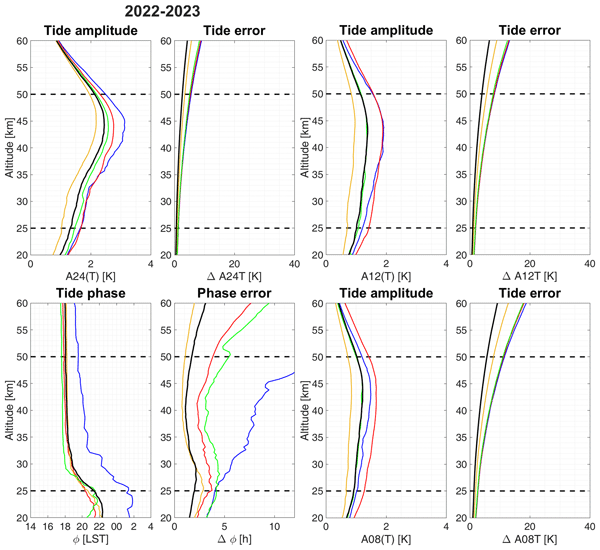
Witali Krochin, Axel Murk, and Gunter Stober
Atmos. Meas. Tech., 17, 5015–5028, https://doi.org/10.5194/amt-17-5015-2024, https://doi.org/10.5194/amt-17-5015-2024, 2024
Short summary
Short summary
Atmospheric tides are global-scale oscillations with periods of a fraction of a day. Their observation in the middle atmosphere is challenging and rare, as it requires continuous measurements with a high temporal resolution. In this paper, temperature time series of a ground-based microwave radiometer were analyzed with a spectral filter to derive thermal tide amplitudes and phases in an altitude range of 25–50 km at the geographical locations of Payerne and Bern (Switzerland).
Ales Kuchar, Maurice Öhlert, Roland Eichinger, and Christoph Jacobi
Weather Clim. Dynam., 5, 895–912, https://doi.org/10.5194/wcd-5-895-2024, https://doi.org/10.5194/wcd-5-895-2024, 2024
Short summary
Short summary
Exploring the polar vortex's impact on climate, the study evaluates model simulations against the ERA5 reanalysis data. Revelations about model discrepancies in simulating disruptive stratospheric warmings and vortex behavior highlight the need for refined model simulations of past climate. By enhancing our understanding of these dynamics, the research contributes to more reliable climate projections of the polar vortex with the impact on surface climate.
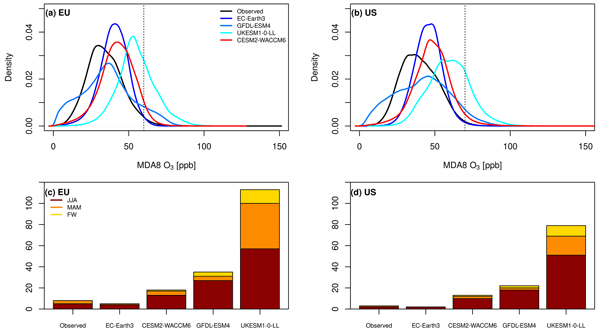
Christoph Staehle, Harald E. Rieder, Arlene M. Fiore, and Jordan L. Schnell
Atmos. Chem. Phys., 24, 5953–5969, https://doi.org/10.5194/acp-24-5953-2024, https://doi.org/10.5194/acp-24-5953-2024, 2024
Short summary
Short summary
Chemistry–climate models show biases compared to surface ozone observations and thus require bias correction for impact studies and the assessment of air quality changes. We compare the performance of commonly used correction techniques for model outputs available via CMIP6. While all methods can reduce model biases, better results are obtained from more complex approaches. Thus, our study suggests broader use of these techniques in studies seeking to inform air quality management and policy.
Sandro Vattioni, Andrea Stenke, Beiping Luo, Gabriel Chiodo, Timofei Sukhodolov, Elia Wunderlin, and Thomas Peter
Geosci. Model Dev., 17, 4181–4197, https://doi.org/10.5194/gmd-17-4181-2024, https://doi.org/10.5194/gmd-17-4181-2024, 2024
Short summary
Short summary
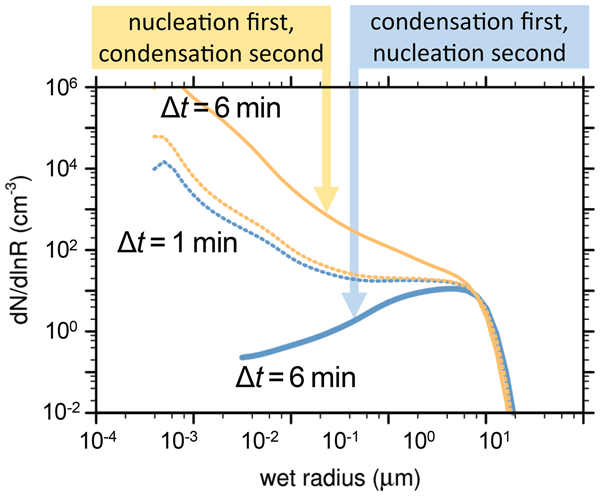
We investigate the sensitivity of aerosol size distributions in the presence of strong SO2 injections for climate interventions or after volcanic eruptions to the call sequence and frequency of the routines for nucleation and condensation in sectional aerosol models with operator splitting. Using the aerosol–chemistry–climate model SOCOL-AERv2, we show that the radiative and chemical outputs are sensitive to these settings at high H2SO4 supersaturations and how to obtain reliable results.

Christina V. Brodowsky, Timofei Sukhodolov, Gabriel Chiodo, Valentina Aquila, Slimane Bekki, Sandip S. Dhomse, Michael Höpfner, Anton Laakso, Graham W. Mann, Ulrike Niemeier, Giovanni Pitari, Ilaria Quaglia, Eugene Rozanov, Anja Schmidt, Takashi Sekiya, Simone Tilmes, Claudia Timmreck, Sandro Vattioni, Daniele Visioni, Pengfei Yu, Yunqian Zhu, and Thomas Peter
Atmos. Chem. Phys., 24, 5513–5548, https://doi.org/10.5194/acp-24-5513-2024, https://doi.org/10.5194/acp-24-5513-2024, 2024
Short summary
Short summary
The aerosol layer is an essential part of the climate system. We characterize the sulfur budget in a volcanically quiescent (background) setting, with a special focus on the sulfate aerosol layer using, for the first time, a multi-model approach. The aim is to identify weak points in the representation of the atmospheric sulfur budget in an intercomparison of nine state-of-the-art coupled global circulation models.
Gunter Stober, Sharon L. Vadas, Erich Becker, Alan Liu, Alexander Kozlovsky, Diego Janches, Zishun Qiao, Witali Krochin, Guochun Shi, Wen Yi, Jie Zeng, Peter Brown, Denis Vida, Neil Hindley, Christoph Jacobi, Damian Murphy, Ricardo Buriti, Vania Andrioli, Paulo Batista, John Marino, Scott Palo, Denise Thorsen, Masaki Tsutsumi, Njål Gulbrandsen, Satonori Nozawa, Mark Lester, Kathrin Baumgarten, Johan Kero, Evgenia Belova, Nicholas Mitchell, Tracy Moffat-Griffin, and Na Li
Atmos. Chem. Phys., 24, 4851–4873, https://doi.org/10.5194/acp-24-4851-2024, https://doi.org/10.5194/acp-24-4851-2024, 2024
Short summary
Short summary
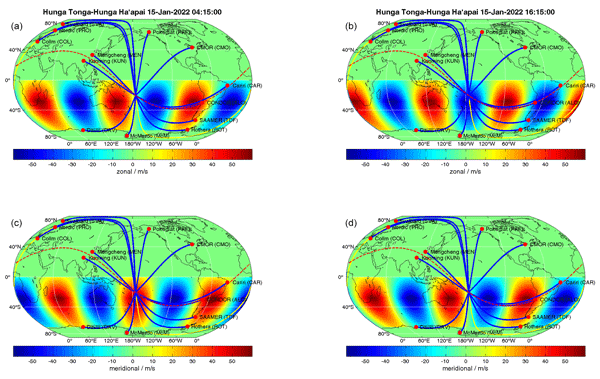
On 15 January 2022, the Hunga Tonga-Hunga Ha‘apai volcano exploded in a vigorous eruption, causing many atmospheric phenomena reaching from the surface up to space. In this study, we investigate how the mesospheric winds were affected by the volcanogenic gravity waves and estimated their propagation direction and speed. The interplay between model and observations permits us to gain new insights into the vertical coupling through atmospheric gravity waves.
Florian Günzkofer, Gunter Stober, Dimitry Pokhotelov, Yasunobu Miyoshi, and Claudia Borries
Atmos. Meas. Tech., 16, 5897–5907, https://doi.org/10.5194/amt-16-5897-2023, https://doi.org/10.5194/amt-16-5897-2023, 2023
Short summary
Short summary
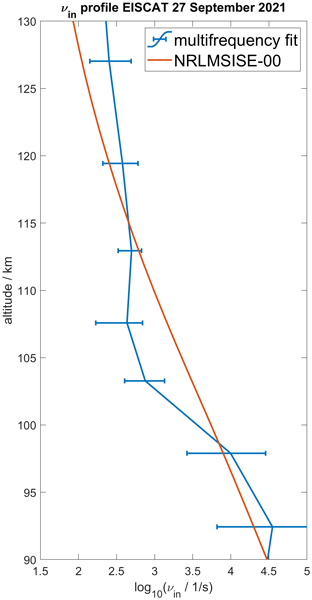
Electric currents in the ionosphere can impact both satellite and ground-based infrastructure. These currents depend strongly on the collisions of ions and neutral particles. Measuring ion–neutral collisions is often only possible via certain assumptions. The direct measurement of ion–neutral collision frequencies is possible with multifrequency incoherent scatter radar measurements. This paper presents one analysis method of such measurements and discusses its advantages and disadvantages.
Juliana Jaen, Toralf Renkwitz, Huixin Liu, Christoph Jacobi, Robin Wing, Aleš Kuchař, Masaki Tsutsumi, Njål Gulbrandsen, and Jorge L. Chau
Atmos. Chem. Phys., 23, 14871–14887, https://doi.org/10.5194/acp-23-14871-2023, https://doi.org/10.5194/acp-23-14871-2023, 2023
Short summary
Short summary
Investigation of winds is important to understand atmospheric dynamics. In the summer mesosphere and lower thermosphere, there are three main wind flows: the mesospheric westward, the mesopause southward (equatorward), and the lower-thermospheric eastward wind. Combining almost 2 decades of measurements from different radars, we study the trend, their interannual oscillations, and the effects of the geomagnetic activity over these wind maxima.
Christoph Jacobi, Ales Kuchar, Toralf Renkwitz, and Juliana Jaen
Adv. Radio Sci., 21, 111–121, https://doi.org/10.5194/ars-21-111-2023, https://doi.org/10.5194/ars-21-111-2023, 2023
Short summary
Short summary
Middle atmosphere long-term changes show the signature of climate change. We analyse 43 years of mesopause region horizontal winds obtained at two sites in Germany. We observe mainly positive trends of the zonal prevailing wind throughout the year, while the meridional winds tend to decrease in magnitude in both summer and winter. Furthermore, there is a change in long-term trends around the late 1990s, which is most clearly visible in summer winds.
Franziska Zilker, Timofei Sukhodolov, Gabriel Chiodo, Marina Friedel, Tatiana Egorova, Eugene Rozanov, Jan Sedlacek, Svenja Seeber, and Thomas Peter
Atmos. Chem. Phys., 23, 13387–13411, https://doi.org/10.5194/acp-23-13387-2023, https://doi.org/10.5194/acp-23-13387-2023, 2023
Short summary
Short summary
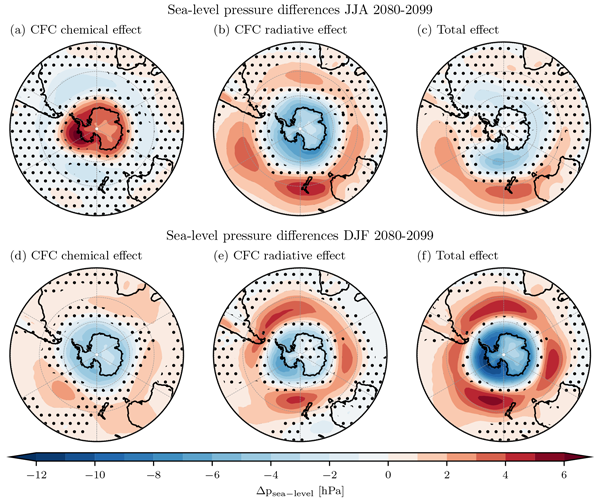
The Montreal Protocol (MP) has successfully reduced the Antarctic ozone hole by banning chlorofluorocarbons (CFCs) that destroy the ozone layer. Moreover, CFCs are strong greenhouse gases (GHGs) that would have strengthened global warming. In this study, we investigate the surface weather and climate in a world without the MP at the end of the 21st century, disentangling ozone-mediated and GHG impacts of CFCs. Overall, we avoided 1.7 K global surface warming and a poleward shift in storm tracks.
Florian Günzkofer, Dimitry Pokhotelov, Gunter Stober, Ingrid Mann, Sharon L. Vadas, Erich Becker, Anders Tjulin, Alexander Kozlovsky, Masaki Tsutsumi, Njål Gulbrandsen, Satonori Nozawa, Mark Lester, Evgenia Belova, Johan Kero, Nicholas J. Mitchell, and Claudia Borries
Ann. Geophys., 41, 409–428, https://doi.org/10.5194/angeo-41-409-2023, https://doi.org/10.5194/angeo-41-409-2023, 2023
Short summary
Short summary
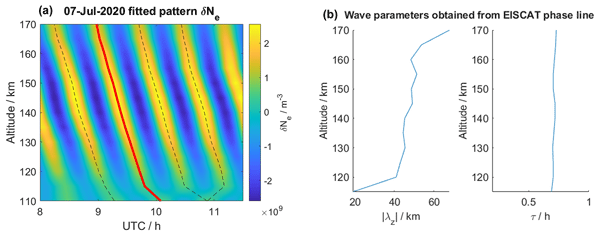
Gravity waves (GWs) are waves in Earth's atmosphere and can be observed as cloud ripples. Under certain conditions, these waves can propagate up into the ionosphere. Here, they can cause ripples in the ionosphere plasma, observable as oscillations of the plasma density. Therefore, GWs contribute to the ionospheric variability, making them relevant for space weather prediction. Additionally, the behavior of these waves allows us to draw conclusions about the atmosphere at these altitudes.
Roland Eichinger, Sebastian Rhode, Hella Garny, Peter Preusse, Petr Pisoft, Aleš Kuchař, Patrick Jöckel, Astrid Kerkweg, and Bastian Kern
Geosci. Model Dev., 16, 5561–5583, https://doi.org/10.5194/gmd-16-5561-2023, https://doi.org/10.5194/gmd-16-5561-2023, 2023
Short summary
Short summary
The columnar approach of gravity wave (GW) schemes results in dynamical model biases, but parallel decomposition makes horizontal GW propagation computationally unfeasible. In the global model EMAC, we approximate it by GW redistribution at one altitude using tailor-made redistribution maps generated with a ray tracer. More spread-out GW drag helps reconcile the model with observations and close the 60°S GW gap. Polar vortex dynamics are improved, enhancing climate model credibility.
Gabriel Chiodo, Marina Friedel, Svenja Seeber, Daniela Domeisen, Andrea Stenke, Timofei Sukhodolov, and Franziska Zilker
Atmos. Chem. Phys., 23, 10451–10472, https://doi.org/10.5194/acp-23-10451-2023, https://doi.org/10.5194/acp-23-10451-2023, 2023
Short summary
Short summary
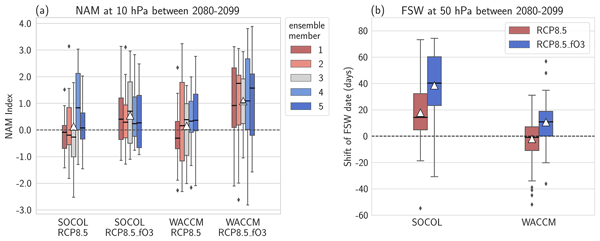
Stratospheric ozone protects the biosphere from harmful UV radiation. Anthropogenic activity has led to a reduction in the ozone layer in the recent past, but thanks to the implementation of the Montreal Protocol, the ozone layer is projected to recover. In this study, we show that projected future changes in Arctic ozone abundances during springtime will influence stratospheric climate and thereby actively modulate large-scale circulation changes in the Northern Hemisphere.
Marina Friedel, Gabriel Chiodo, Timofei Sukhodolov, James Keeble, Thomas Peter, Svenja Seeber, Andrea Stenke, Hideharu Akiyoshi, Eugene Rozanov, David Plummer, Patrick Jöckel, Guang Zeng, Olaf Morgenstern, and Béatrice Josse
Atmos. Chem. Phys., 23, 10235–10254, https://doi.org/10.5194/acp-23-10235-2023, https://doi.org/10.5194/acp-23-10235-2023, 2023
Short summary
Short summary
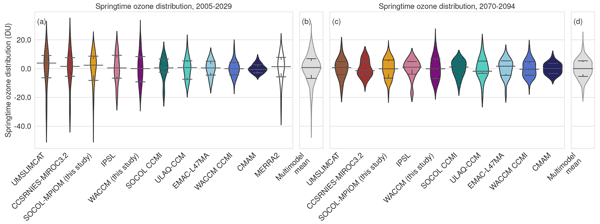
Previously, it has been suggested that springtime Arctic ozone depletion might worsen in the coming decades due to climate change, which might counteract the effect of reduced ozone-depleting substances. Here, we show with different chemistry–climate models that springtime Arctic ozone depletion will likely decrease in the future. Further, we explain why models show a large spread in the projected development of Arctic ozone depletion and use the model spread to constrain future projections.
Guochun Shi, Witali Krochin, Eric Sauvageat, and Gunter Stober
Atmos. Chem. Phys., 23, 9137–9159, https://doi.org/10.5194/acp-23-9137-2023, https://doi.org/10.5194/acp-23-9137-2023, 2023
Short summary
Short summary
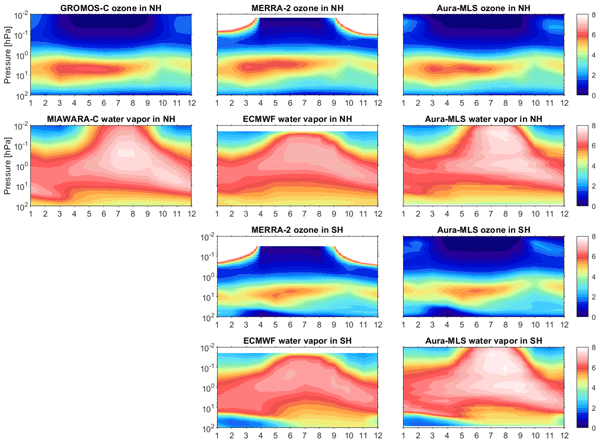
We present the interannual and climatological behavior of ozone and water vapor from microwave radiometers in the Arctic.
By defining a virtual conjugate latitude station in the Southern Hemisphere, we investigate altitude-dependent interhemispheric differences and estimate the ascent and descent rates of water vapor in both hemispheres. Ozone and water vapor measurements will create a deeper understanding of the evolution of middle atmospheric ozone and water vapor.

Tatiana Egorova, Jan Sedlacek, Timofei Sukhodolov, Arseniy Karagodin-Doyennel, Franziska Zilker, and Eugene Rozanov
Atmos. Chem. Phys., 23, 5135–5147, https://doi.org/10.5194/acp-23-5135-2023, https://doi.org/10.5194/acp-23-5135-2023, 2023
Short summary
Short summary
This paper describes the climate and atmosphere benefits of the Montreal Protocol, simulated with the state-of-the-art Earth system model SOCOLv4.0. We have added to and confirmed the previous studies by showing that without the Montreal Protocol by the end of the 21st century there would be a dramatic reduction in the ozone layer as well as substantial perturbation of the essential climate variables in the troposphere caused by the warming from increasing ozone-depleting substances.
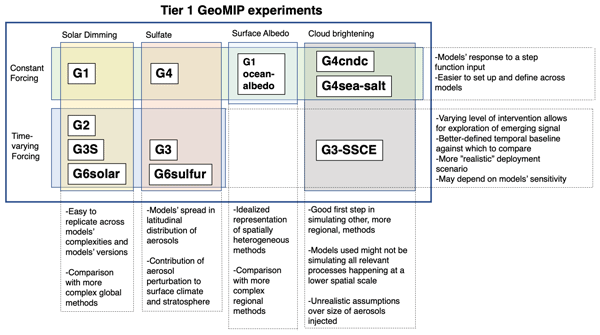
Daniele Visioni, Ben Kravitz, Alan Robock, Simone Tilmes, Jim Haywood, Olivier Boucher, Mark Lawrence, Peter Irvine, Ulrike Niemeier, Lili Xia, Gabriel Chiodo, Chris Lennard, Shingo Watanabe, John C. Moore, and Helene Muri
Atmos. Chem. Phys., 23, 5149–5176, https://doi.org/10.5194/acp-23-5149-2023, https://doi.org/10.5194/acp-23-5149-2023, 2023
Short summary
Short summary
Geoengineering indicates methods aiming to reduce the temperature of the planet by means of reflecting back a part of the incoming radiation before it reaches the surface or allowing more of the planetary radiation to escape into space. It aims to produce modelling experiments that are easy to reproduce and compare with different climate models, in order to understand the potential impacts of these techniques. Here we assess its past successes and failures and talk about its future.
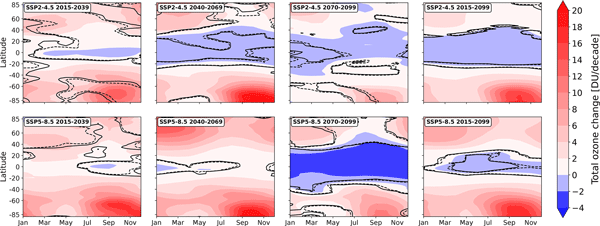
Arseniy Karagodin-Doyennel, Eugene Rozanov, Timofei Sukhodolov, Tatiana Egorova, Jan Sedlacek, and Thomas Peter
Atmos. Chem. Phys., 23, 4801–4817, https://doi.org/10.5194/acp-23-4801-2023, https://doi.org/10.5194/acp-23-4801-2023, 2023
Short summary
Short summary
The future ozone evolution in SOCOLv4 simulations under SSP2-4.5 and SSP5-8.5 scenarios has been assessed for the period 2015–2099 and subperiods using the DLM approach. The SOCOLv4 projects a decline in tropospheric ozone in the 2030s in SSP2-4.5 and in the 2060s in SSP5-8.5. The stratospheric ozone increase is ~3 times higher in SSP5-8.5, confirming the important role of GHGs in ozone evolution. We also showed that tropospheric ozone strongly impacts the total column in the tropics.
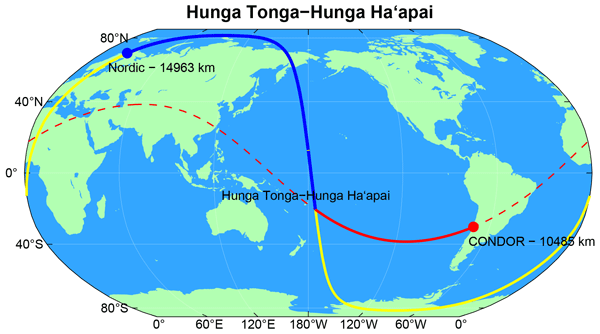
Gunter Stober, Alan Liu, Alexander Kozlovsky, Zishun Qiao, Witali Krochin, Guochun Shi, Johan Kero, Masaki Tsutsumi, Njål Gulbrandsen, Satonori Nozawa, Mark Lester, Kathrin Baumgarten, Evgenia Belova, and Nicholas Mitchell
Ann. Geophys., 41, 197–208, https://doi.org/10.5194/angeo-41-197-2023, https://doi.org/10.5194/angeo-41-197-2023, 2023
Short summary
Short summary
The Hunga Tonga–Hunga Ha‘apai volcanic eruption was one of the most vigorous volcanic explosions in the last centuries. The eruption launched many atmospheric waves traveling around the Earth. In this study, we identify these volcanic waves at the edge of space in the mesosphere/lower-thermosphere, leveraging wind observations conducted with multi-static meteor radars in northern Europe and with the Chilean Observation Network De Meteor Radars (CONDOR).
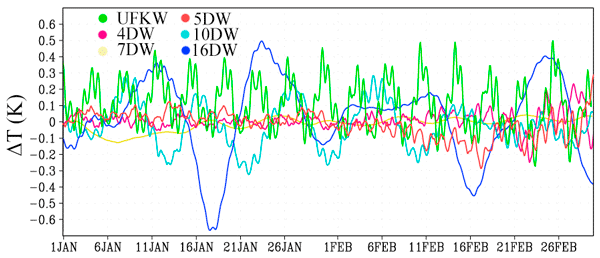
Andrey V. Koval, Olga N. Toptunova, Maxim A. Motsakov, Ksenia A. Didenko, Tatiana S. Ermakova, Nikolai M. Gavrilov, and Eugene V. Rozanov
Atmos. Chem. Phys., 23, 4105–4114, https://doi.org/10.5194/acp-23-4105-2023, https://doi.org/10.5194/acp-23-4105-2023, 2023
Short summary
Short summary
Periodic changes in all hydrodynamic parameters are constantly observed in the atmosphere. The amplitude of these fluctuations increases with height due to a decrease in the atmospheric density. In the upper layers of the atmosphere, waves are the dominant form of motion. We use a model of the general circulation of the atmosphere to study the contribution to the formation of the dynamic and temperature regimes of the middle and upper atmosphere made by different global-scale atmospheric waves.
Pragya Vishwakarma, Julien Delanoë, Susana Jorquera, Pauline Martinet, Frederic Burnet, Alistair Bell, and Jean-Charles Dupont
Atmos. Meas. Tech., 16, 1211–1237, https://doi.org/10.5194/amt-16-1211-2023, https://doi.org/10.5194/amt-16-1211-2023, 2023
Short summary
Short summary
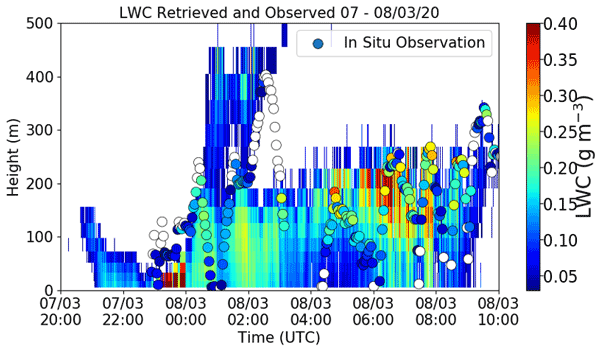
Cloud observations are necessary to characterize the cloud properties at local and global scales. The observations must be translated to cloud geophysical parameters. This paper presents the estimation of liquid water content (LWC) using radar and microwave radiometer (MWR) measurements. Liquid water path from MWR scales LWC and retrieves the scaling factor (ln a). The retrievals are compared with in situ observations. A climatology of ln a is built to estimate LWC using only radar information.
Ilaria Quaglia, Claudia Timmreck, Ulrike Niemeier, Daniele Visioni, Giovanni Pitari, Christina Brodowsky, Christoph Brühl, Sandip S. Dhomse, Henning Franke, Anton Laakso, Graham W. Mann, Eugene Rozanov, and Timofei Sukhodolov
Atmos. Chem. Phys., 23, 921–948, https://doi.org/10.5194/acp-23-921-2023, https://doi.org/10.5194/acp-23-921-2023, 2023
Short summary
Short summary
The last very large explosive volcanic eruption we have measurements for is the eruption of Mt. Pinatubo in 1991. It is therefore often used as a benchmark for climate models' ability to reproduce these kinds of events. Here, we compare available measurements with the results from multiple experiments conducted with climate models interactively simulating the aerosol cloud formation.

Arseniy Karagodin-Doyennel, Eugene Rozanov, Timofei Sukhodolov, Tatiana Egorova, Jan Sedlacek, William Ball, and Thomas Peter
Atmos. Chem. Phys., 22, 15333–15350, https://doi.org/10.5194/acp-22-15333-2022, https://doi.org/10.5194/acp-22-15333-2022, 2022
Short summary
Short summary
Applying the dynamic linear model, we confirm near-global ozone recovery (55°N–55°S) in the mesosphere, upper and middle stratosphere, and a steady increase in the troposphere. We also show that modern chemistry–climate models (CCMs) like SOCOLv4 may reproduce the observed trend distribution of lower stratospheric ozone, despite exhibiting a lower magnitude and statistical significance. The obtained ozone trend pattern in SOCOLv4 is generally consistent with observations and reanalysis datasets.
Marina Friedel, Gabriel Chiodo, Andrea Stenke, Daniela I. V. Domeisen, and Thomas Peter
Atmos. Chem. Phys., 22, 13997–14017, https://doi.org/10.5194/acp-22-13997-2022, https://doi.org/10.5194/acp-22-13997-2022, 2022
Short summary
Short summary
In spring, winds the Arctic stratosphere change direction – an event called final stratospheric warming (FSW). Here, we examine whether the interannual variability in Arctic stratospheric ozone impacts the timing of the FSW. We find that Arctic ozone shifts the FSW to earlier and later dates in years with high and low ozone via the absorption of UV light. The modulation of the FSW by ozone has consequences for surface climate in ozone-rich years, which may result in better seasonal predictions.
Nora Bergner, Marina Friedel, Daniela I. V. Domeisen, Darryn Waugh, and Gabriel Chiodo
Atmos. Chem. Phys., 22, 13915–13934, https://doi.org/10.5194/acp-22-13915-2022, https://doi.org/10.5194/acp-22-13915-2022, 2022
Short summary
Short summary
Polar vortex extremes, particularly situations with an unusually weak cyclonic circulation in the stratosphere, can influence the surface climate in the spring–summer time in the Southern Hemisphere. Using chemistry-climate models and observations, we evaluate the robustness of the surface impacts. While models capture the general surface response, they do not show the observed climate patterns in midlatitude regions, which we trace back to biases in the models' circulations.
Gunter Stober, Alan Liu, Alexander Kozlovsky, Zishun Qiao, Ales Kuchar, Christoph Jacobi, Chris Meek, Diego Janches, Guiping Liu, Masaki Tsutsumi, Njål Gulbrandsen, Satonori Nozawa, Mark Lester, Evgenia Belova, Johan Kero, and Nicholas Mitchell
Atmos. Meas. Tech., 15, 5769–5792, https://doi.org/10.5194/amt-15-5769-2022, https://doi.org/10.5194/amt-15-5769-2022, 2022
Short summary
Short summary
Precise and accurate measurements of vertical winds at the mesosphere and lower thermosphere are rare. Although meteor radars have been used for decades to observe horizontal winds, their ability to derive reliable vertical wind measurements was always questioned. In this article, we provide mathematical concepts to retrieve mathematically and physically consistent solutions, which are compared to the state-of-the-art non-hydrostatic model UA-ICON.
Alistair Bell, Pauline Martinet, Olivier Caumont, Frédéric Burnet, Julien Delanoë, Susana Jorquera, Yann Seity, and Vinciane Unger
Atmos. Meas. Tech., 15, 5415–5438, https://doi.org/10.5194/amt-15-5415-2022, https://doi.org/10.5194/amt-15-5415-2022, 2022
Short summary
Short summary
Cloud radars and microwave radiometers offer the potential to improve fog forecasts when assimilated into a high-resolution model. As this process can be complex, a retrieval of model variables is sometimes made as a first step. In this work, results from a 1D-Var algorithm for the retrieval of temperature, humidity and cloud liquid water content are presented. The algorithm is applied first to a synthetic dataset and then to a dataset of real measurements from a recent field campaign.
Ales Kuchar, Petr Sacha, Roland Eichinger, Christoph Jacobi, Petr Pisoft, and Harald Rieder
EGUsphere, https://doi.org/10.5194/egusphere-2022-474, https://doi.org/10.5194/egusphere-2022-474, 2022
Preprint archived
Short summary
Short summary
We focus on the impact of small-scale orographic gravity waves (OGWs) above the Himalayas. The interaction of GWs with the large-scale circulation in the stratosphere is not still well understood and can have implications on climate projections. We use a chemistry-climate model to show that these strong OGW events are associated with anomalously increased upward planetary-scale waves and in turn affect the circumpolar circulation and have the potential to alter ozone variability as well.
Irina Mironova, Miriam Sinnhuber, Galina Bazilevskaya, Mark Clilverd, Bernd Funke, Vladimir Makhmutov, Eugene Rozanov, Michelle L. Santee, Timofei Sukhodolov, and Thomas Ulich
Atmos. Chem. Phys., 22, 6703–6716, https://doi.org/10.5194/acp-22-6703-2022, https://doi.org/10.5194/acp-22-6703-2022, 2022
Short summary
Short summary
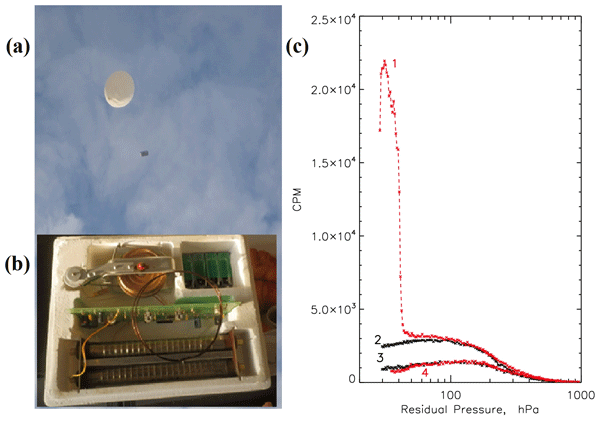
From balloon measurements, we detected unprecedented, extremely powerful, electron precipitation over the middle latitudes. The robustness of this event is confirmed by satellite observations of electron fluxes and chemical composition, as well as by ground-based observations of the radio signal propagation. The applied chemistry–climate model shows the almost complete destruction of ozone in the mesosphere over the region where high-energy electrons were observed.
Witali Krochin, Francisco Navas-Guzmán, David Kuhl, Axel Murk, and Gunter Stober
Atmos. Meas. Tech., 15, 2231–2249, https://doi.org/10.5194/amt-15-2231-2022, https://doi.org/10.5194/amt-15-2231-2022, 2022
Short summary
Short summary
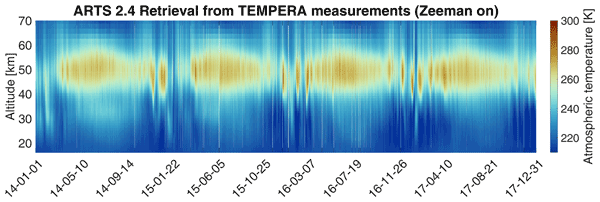
This study leverages atmospheric temperature measurements performed with a ground-based radiometer making use of data that was collected during a 4-year observational campaign applying a new retrieval algorithm that improves the maximal altitude range from 45 to 55 km. The measurements are validated against two independent data sets, MERRA2 reanalysis data and the meteorological analysis of NAVGEM-HA.
Sumanta Sarkhel, Gunter Stober, Jorge L. Chau, Steven M. Smith, Christoph Jacobi, Subarna Mondal, Martin G. Mlynczak, and James M. Russell III
Ann. Geophys., 40, 179–190, https://doi.org/10.5194/angeo-40-179-2022, https://doi.org/10.5194/angeo-40-179-2022, 2022
Short summary
Short summary
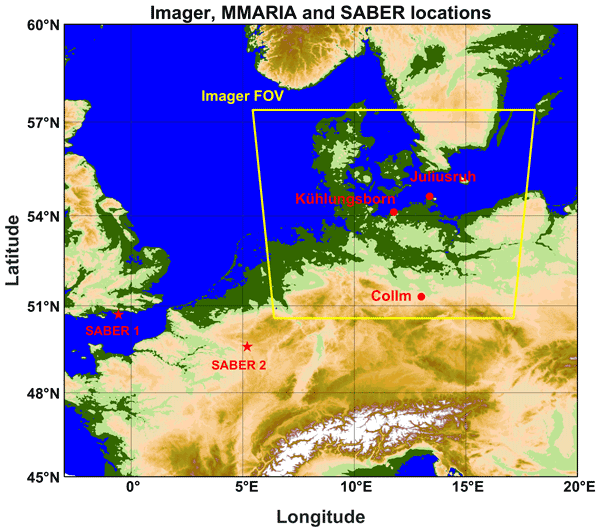
A rare gravity wave event was observed on the night of 25 April 2017 over northern Germany. An all-sky airglow imager recorded an upward-propagating wave at different altitudes in mesosphere with a prominent wave front above 91 km and faintly observed below. Based on wind and satellite-borne temperature profiles close to the event location, we have found the presence of a leaky thermal duct layer in 85–91 km. The appearance of this duct layer caused the wave amplitudes to diminish below 91 km.
Debra K. Weisenstein, Daniele Visioni, Henning Franke, Ulrike Niemeier, Sandro Vattioni, Gabriel Chiodo, Thomas Peter, and David W. Keith
Atmos. Chem. Phys., 22, 2955–2973, https://doi.org/10.5194/acp-22-2955-2022, https://doi.org/10.5194/acp-22-2955-2022, 2022
Short summary
Short summary
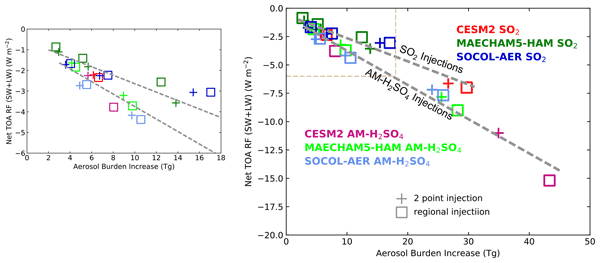
This paper explores a potential method of geoengineering that could be used to slow the rate of change of climate over decadal scales. We use three climate models to explore how injections of accumulation-mode sulfuric acid aerosol change the large-scale stratospheric particle size distribution and radiative forcing response for the chosen scenarios. Radiative forcing per unit sulfur injected and relative to the change in aerosol burden is larger with particulate than with SO2 injections.

Christoph Jacobi, Friederike Lilienthal, Dmitry Korotyshkin, Evgeny Merzlyakov, and Gunter Stober
Adv. Radio Sci., 19, 185–193, https://doi.org/10.5194/ars-19-185-2021, https://doi.org/10.5194/ars-19-185-2021, 2021
Short summary
Short summary
We compare winds and tidal amplitudes in the upper mesosphere/lower thermosphere region for cases with disturbed and undisturbed geomagnetic conditions. The zonal winds in both the mesosphere and lower thermosphere tend to be weaker during disturbed conditions. The summer equatorward meridional wind jet is weaker for disturbed geomagnetic conditions. The effect of geomagnetic variability on tidal amplitudes, except for the semidiurnal tide, is relatively small.
Kseniia Golubenko, Eugene Rozanov, Gennady Kovaltsov, Ari-Pekka Leppänen, Timofei Sukhodolov, and Ilya Usoskin
Geosci. Model Dev., 14, 7605–7620, https://doi.org/10.5194/gmd-14-7605-2021, https://doi.org/10.5194/gmd-14-7605-2021, 2021
Short summary
Short summary
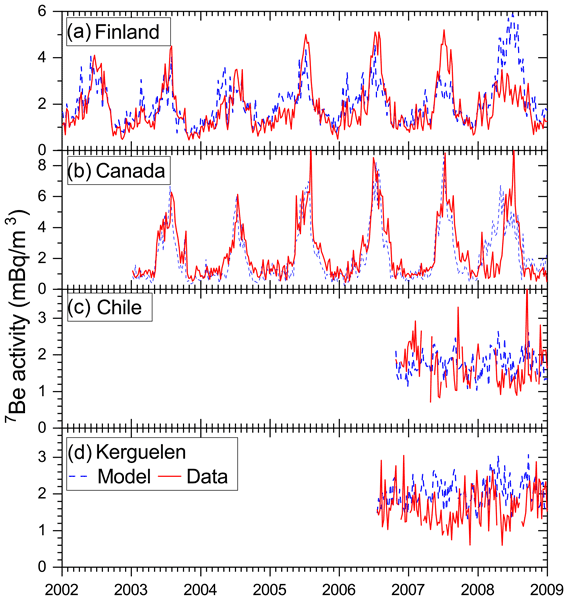
A new full 3-D time-dependent model, based on SOCOL-AERv2, of beryllium atmospheric production, transport, and deposition has been developed and validated using directly measured data. The model is recommended to be used in studies related to, e.g., atmospheric dynamical patterns, extreme solar particle storms, long-term solar activity reconstruction from cosmogenic proxy data, and solar–terrestrial relations.
Cited articles
Abalos, M., Birner, T., Chrysanthou, A., Davis, S., de la Cámara, A., Dhomse, S., Garny, H., Hegglin, M. I., Hubert, D., Ivaniha, O., Keeble, J., Linz, M., Minganti, D., Neu, J., Plummer, D., Saunders, L., Shah, K., Stiller, G., Tourpali, K., Waugh, D., Abraham, N. L., Akiyoshi, H., Chipperfield, M. P., Jöckel, P., Josse, B., Marchand, M., Martineau, P., Morgenstern, O., Sukhodolov, T., Watanabe, S., and Yamashita, Y.: Evaluation of stratospheric transport in three generations of Chemistry-Climate Models, Atmos. Chem. Phys., 26, 5249–5291, https://doi.org/10.5194/acp-26-5249-2026, 2026. a
Andrews, D. G. and McIntyre, M. E.: JR Holton, and CB Leovy, 1987: Middle Atmosphere Dynamics, Academic Press Inc. (London) Ltd., ISBN 0-12-058575-8, 1987. a
APARC: The Hunga Volcanic Eruption Atmospheric Impacts Report, APARC Report 11, World Climate Research Programme (WCRP), wCRP Report 10/2025, https://doi.org/10.34734/FZJ-2025-05237, 2025. a, b, c
Arsenovic, P., Damiani, A., Rozanov, E., Funke, B., Stenke, A., and Peter, T.: Reactive nitrogen (NOy) and ozone responses to energetic electron precipitation during Southern Hemisphere winter, Atmos. Chem. Phys., 19, 9485–9494, https://doi.org/10.5194/acp-19-9485-2019, 2019. a
Bednarz, E. M., Butler, A. H., Wang, X., Zhuo, Z., Yu, W., Stenchikov, G., Toohey, M., and Zhu, Y.: Indirect climate impacts of the Hunga eruption, Atmos. Chem. Phys., 26, 197–215, https://doi.org/10.5194/acp-26-197-2026, 2026. a, b, c
Bell, A., Murk, A., and Stober, G.: Radiative impact of increased middle atmospheric water vapour in the aftermath of the Hunga 2022 volcanic eruption at two locations in the Northern Hemisphere, EGUsphere [preprint], https://doi.org/10.5194/egusphere-2025-1396, 2025. a
Bittner, M., Schmidt, H., Timmreck, C., and Sienz, F.: Using a large ensemble of simulations to assess the Northern Hemisphere stratospheric dynamical response to tropical volcanic eruptions and its uncertainty, Geophys. Res. Lett., 43, 9324–9332, https://doi.org/10.1002/2016GL070587, 2016a. a
Bittner, M., Timmreck, C., Schmidt, H., Toohey, M., and Krüger, K.: The impact of wave-mean flow interaction on the Northern Hemisphere polar vortex after tropical volcanic eruptions, J. Geophys. Res.-Atmos., 121, 5281–5297, https://doi.org/10.1002/2015JD024603, 2016b. a
Bloxam, K. and Huang, Y.: Radiative Relaxation Time Scales Quantified from Sudden Stratospheric Warmings, J. Atmos. Sci., 78, 269–286, https://doi.org/10.1175/JAS-D-20-0015.1, 2021. a, b, c
Brasseur, G. P. and Solomon, S.: Aeronomy of the middle atmosphere: Chemistry and physics of the stratosphere and mesosphere, Vol. 32, Springer Science & Business Media, ISBN 978-1-4020-3284-4, 2005. a
Charney, J. G. and Drazin, P. G.: Propagation of planetary-scale disturbances from the lower into the upper atmosphere, J. Geophys. Res., 66, 83–109, 1961. a
Clough, S. A. and Iacono, M. J.: Line-by-line calculation of atmospheric fluxes and cooling rates: 2. Application to carbon dioxide, ozone, methane, nitrous oxide and the halocarbons, J. Geophys. Res.-Atmos., 100, 16519–16535, 1995. a
Dacie, S., Kluft, L., Schmidt, H., Stevens, B., Buehler, S. A., Nowack, P. J., Dietmüller, S., Abraham, N. L., and Birner, T.: A 1D RCE Study of Factors Affecting the Tropical Tropopause Layer and Surface Climate, J. Climate, 32, 6769–6782, https://doi.org/10.1175/JCLI-D-18-0778.1, 2019. a
Davis, S. M., Rosenlof, K. H., Hassler, B., Hurst, D. F., Read, W. G., Vömel, H., Selkirk, H., Fujiwara, M., and Damadeo, R.: The Stratospheric Water and Ozone Satellite Homogenized (SWOOSH) database: a long-term database for climate studies, Earth Syst. Sci. Data, 8, 461–490, https://doi.org/10.5194/essd-8-461-2016, 2016a. a
Davis, S. M., Rosenlof, K. H., Hassler, B., Hurst, D. F., Read, W. G., Vömel, H., Selkirk, H., Fujiwara, M., and Damadeo, R.: The Stratospheric Water and Ozone Satellite Homogenized (SWOOSH) database: a long-term database for climate studies, Earth Syst. Sci. Data, 8, 461–490, https://doi.org/10.5194/essd-8-461-2016, 2016b. a
De Mazière, M., Thompson, A. M., Kurylo, M. J., Wild, J. D., Bernhard, G., Blumenstock, T., Braathen, G. O., Hannigan, J. W., Lambert, J.-C., Leblanc, T., McGee, T. J., Nedoluha, G., Petropavlovskikh, I., Seckmeyer, G., Simon, P. C., Steinbrecht, W., and Strahan, S. E.: The Network for the Detection of Atmospheric Composition Change (NDACC): history, status and perspectives, Atmos. Chem. Phys., 18, 4935–4964, https://doi.org/10.5194/acp-18-4935-2018, 2018. a
Dietmüller, S., Eichinger, R., Garny, H., Birner, T., Boenisch, H., Pitari, G., Mancini, E., Visioni, D., Stenke, A., Revell, L., Rozanov, E., Plummer, D. A., Scinocca, J., Jöckel, P., Oman, L., Deushi, M., Kiyotaka, S., Kinnison, D. E., Garcia, R., Morgenstern, O., Zeng, G., Stone, K. A., and Schofield, R.: Quantifying the effect of mixing on the mean age of air in CCMVal-2 and CCMI-1 models, Atmos. Chem. Phys., 18, 6699–6720, https://doi.org/10.5194/acp-18-6699-2018, 2018. a
Evan, S., Brioude, J., Rosenlof, K. H., Gao, R.-S., Portmann, R. W., Zhu, Y., Volkamer, R., Lee, C. F., Metzger, J.-M., Lamy, K., Walter, P., Alvarez, S. L., Flynn, J. H., Asher, E., Todt, M., Davis, S. M., Thornberry, T., Vömel, H., Wienhold, F. G., Stauffer, R. M., Millán, L., Santee, M. L., Froidevaux, L., and Read, W. G.: Rapid ozone depletion after humidification of the stratosphere by the Hunga Tonga Eruption, Science, 382, eadg2551, https://doi.org/10.1126/science.adg2551, 2023. a
Fleming, E. L., Newman, P. A., Liang, Q., and Oman, L. D.: Stratospheric Temperature and Ozone Impacts of the Hunga Tonga-Hunga Ha'apai Water Vapor Injection, J. Geophys. Res.-Atmos., 129, e2023JD039298, https://doi.org/10.1029/2023JD039298, 2024. a, b, c
Funke, B., López-Puertas, M., Stiller, G. P., and von Clarmann, T.: Mesospheric and stratospheric NOy produced by energetic particle precipitation during 2002–2012, J. Geophys. Res.-Atmos., 119, 4429–4446, https://doi.org/10.1002/2013JD021404, 2014. a
Gelaro, R., McCarty, W., Suárez, M. J., Todling, R., Molod, A., Takacs, L., Randles, C. A., Darmenov, A., Bosilovich, M. G., Reichle, R., Wargan, K., Coy, L., Cullather, R., Draper, C., Akella, S., Buchard, V., Conaty, A., da Silva, A. M., Gu, W., Kim, G.-K., Koster, R., Lucchesi, R., Merkova, D., Nielsen, J. E., Partyka, G., Pawson, S., Putman, W., Rienecker, M., Schubert, S. D., Sienkiewicz, M., and Zhao, B.: The Modern-Era Retrospective Analysis for Research and Applications, Version 2 (MERRA-2), J. Climate, 30, 5419–5454, https://doi.org/10.1175/JCLI-D-16-0758.1, 2017. a
Haase, S., Fricke, J., Kruschke, T., Wahl, S., and Matthes, K.: Sensitivity of the Southern Hemisphere circumpolar jet response to Antarctic ozone depletion: prescribed versus interactive chemistry, Atmos. Chem. Phys., 20, 14043–14061, https://doi.org/10.5194/acp-20-14043-2020, 2020. a
Himes, M. D., Kramarova, N. A., Wargan, K., Davis, S. M., and Jaross, G.: Continuing the MLS water vapor record with OMPS LP using neural networks, Atmos. Meas. Tech., 19, 3601–3624, https://doi.org/10.5194/amt-19-3601-2026, 2026. a
Imanova, A., Egorova, T., Zubov, V., Mironov, A., Polyakov, A., Nerobelov, G., and Rozanov, E.: Seasonal Cycle of the Total Ozone Content over Southern High Latitudes in the CCM SOCOLv3, Atmosphere, 16, https://doi.org/10.3390/atmos16101172, 2025. a
Jenkins, S., Smith, C., Allen, M., and Grainger, R.: Tonga eruption increases chance of temporary surface temperature anomaly above 1.5 °C, Nat. Clim. Change, 13, 127–129, 2023. a
Joshi, M. M., Charlton, A. J., and Scaife, A. A.: On the influence of stratospheric water vapor changes on the tropospheric circulation, Geophys. Res. Lett., 33, https://doi.org/10.1029/2006GL025983, 2006. a
Jucker, M.: Scaling of Eliassen-Palm flux vectors, Atmos. Sci. Lett., 22, e1020, https://doi.org/10.1002/asl.1020, 2021. a
Keeble, J., Braesicke, P., Abraham, N. L., Roscoe, H. K., and Pyle, J. A.: The impact of polar stratospheric ozone loss on Southern Hemisphere stratospheric circulation and climate, Atmos. Chem. Phys., 14, 13705–13717, https://doi.org/10.5194/acp-14-13705-2014, 2014. a
Kluft, L., Dacie, S., Buehler, S. A., Schmidt, H., and Stevens, B.: Re-Examining the First Climate Models: Climate Sensitivity of a Modern Radiative–Convective Equilibrium Model, J. Climate, 32, 8111–8125, https://doi.org/10.1175/JCLI-D-18-0774.1, 2019. a
Knowland, K. E., Wales, P. A., Wargan, K., Weir, B., Pawson, S., Damadeo, R., and Flittner, D.: Stratospheric Water Vapor Beyond NASA's Aura MLS: Assimilating SAGE III/ISS Profiles for a Continued Climate Record, Geophys. Res. Lett., 52, e2024GL112610, https://doi.org/10.1029/2024GL112610, 2025. a
Kramarova, N. and Lait, L. R.: NASA Ozone Watch: 2025 Antarctic MERRA-2 Wind, https://ozonewatch.gsfc.nasa.gov/meteorology/ozone_2024_MERRA2_NH.html (last access: 19 December 2025), 2025. a
Kroll, C. A. and Schmidt, A.: Indirect stratospheric moisture increase after a Pinatubo-magnitude eruption can be comparable to direct increase after 2022 Hunga, Commun. Earth Environ., 5, 497, https://doi.org/10.1038/s43247-024-01651-w, 2024. a
Kroll, C. A., Dacie, S., Azoulay, A., Schmidt, H., and Timmreck, C.: The impact of volcanic eruptions of different magnitude on stratospheric water vapor in the tropics, Atmos. Chem. Phys., 21, 6565–6591, https://doi.org/10.5194/acp-21-6565-2021, 2021. a
Kuchar, A.: Accompanying data to “Modulation of the Northern polar vortex by the Hunga Tonga-Hunga Ha'apai eruption and associated surface response” and “Was the strengthening of the Northern polar vortex in 2024/2025 associated with the Hunga Tonga eruption?”, Mendeley Data [data set], https://doi.org/10.17632/hb3whw3nfr.2, 2026. a
Kuchar, A., Sukhodolov, T., Chiodo, G., Jörimann, A., Kult-Herdin, J., Rozanov, E., and Rieder, H. H.: Modulation of the northern polar vortex by the Hunga Tonga–Hunga Ha'apai eruption and the associated surface response, Atmos. Chem. Phys., 25, 3623–3634, https://doi.org/10.5194/acp-25-3623-2025, 2025. a, b, c, d, e, f, g, h, i
Kuchar, A., Lehner, B., and Kult-Herdin, J.: boku-met/HTHH_strengthening: First release of our code repository related to HT-induced SPV strengthening, Zenodo [code], https://doi.org/10.5281/zenodo.21514652, 2026. a
Lawrence, Z. D., Perlwitz, J., Butler, A. H., Manney, G. L., Newman, P. A., Lee, S. H., and Nash, E. R.: The Remarkably Strong Arctic Stratospheric Polar Vortex of Winter 2020: Links to Record-Breaking Arctic Oscillation and Ozone Loss, J. Geophys. Res.-Atmos., 125, e2020JD033271, https://doi.org/10.1029/2020JD033271, 2020. a
Lee, S. H., Butler, A. H., and Manney, G. L.: Two major sudden stratospheric warmings during winter 2023/2024, Weather, 80, 45–53, https://doi.org/10.1002/wea.7656, 2025. a, b
Livesey, N., Read, W., Wagner, P., Santee, M., Froidevaux, L., Schwartz, M., Lambert, A., Millan, L., Werner, F., Pumphrey, H., Manney, G., Fuller, R., Jarnot, R., Knosp, B., and Vuu, B. C.: Earth Observing System (EOS) Aura Microwave Limb Sounder (MLS) Version 6.0x Level-2 and Level-3 data quality and description document, https://doi.org/10.5067/AURA/MLS/DOC/v6_dataqualitydocument, 2026. a
Manney, G. L., Santee, M. L., Rex, M., Livesey, N. J., Pitts, M. C., Veefkind, P., Nash, E. R., Wohltmann, I., Lehmann, R., Froidevaux, L., Poole, L. R., Schoeberl, M. R., Haffner, D. P., Davies, J., Dorokhov, V., Gernandt, H., Johnson, B., Kivi, R., Kyrö, E., Larsen, N., Levelt, P. F., Makshtas, A., McElroy, C. T., Nakajima, H., Parrondo, M. C., Tarasick, D. W., von der Gathen, P., Walker, K. A., and Zinoviev, N. S.: Unprecedented Arctic ozone loss in 2011, Nature, 478, 469–475, https://doi.org/10.1038/nature10556, 2011. a
Manzini, E., Steil, B., Brühl, C., Giorgetta, M. A., and Krüger, K.: A new interactive chemistry-climate model: 2. Sensitivity of the middle atmosphere to ozone depletion and increase in greenhouse gases and implications for recent stratospheric cooling, J. Geophys. Res.-Atmos., 108, https://doi.org/10.1029/2002JD002977, 2003. a
Matthias, V., Dörnbrack, A., and Stober, G.: The extraordinarily strong and cold polar vortex in the early northern winter 2015/2016, Geophys. Res. Lett., 43, 12287–12294, https://doi.org/10.1002/2016GL071676, 2016. a
Maycock, A. C., Joshi, M. M., Shine, K. P., and Scaife, A. A.: The Circulation Response to Idealized Changes in Stratospheric Water Vapor, J. Climate, 26, 545–561, https://doi.org/10.1175/JCLI-D-12-00155.1, 2013. a
Millán, L., Santee, M. L., Lambert, A., Livesey, N. J., Werner, F., Schwartz, M. J., Pumphrey, H. C., Manney, G. L., Wang, Y., Su, H., Wu, L., Read, W. G., and Froidevaux, L.: The Hunga Tonga-Hunga Ha'apai Hydration of the Stratosphere, Geophys. Res. Lett., 49, e2022GL099381, https://doi.org/10.1029/2022GL099381, 2022. a
Millán, L., Read, W. G., Santee, M. L., Lambert, A., Manney, G. L., Neu, J. L., Pitts, M. C., Werner, F., Livesey, N. J., and Schwartz, M. J.: The Evolution of the Hunga Hydration in a Moistening Stratosphere, Geophys. Res. Lett., 51, e2024GL110841, https://doi.org/10.1029/2024GL110841, 2024. a, b
Newman, P. A., Nash, E. R., and Rosenfield, J. E.: What controls the temperature of the Arctic stratosphere during the spring?, J. Geophys. Res.-Atmos., 106, 19999–20010, https://doi.org/10.1029/2000JD000061, 2001. a
Niemeier, U., Wallis, S., Timmreck, C., van Pham, T., and von Savigny, C.: How the Hunga Tonga—Hunga Ha'apai Water Vapor Cloud Impacts Its Transport Through the Stratosphere: Dynamical and Radiative Effects, Geophys. Res. Lett., 50, e2023GL106482, https://doi.org/10.1029/2023GL106482, 2023. a
Plumb, R. A.: On the seasonal cycle of stratospheric planetary waves, Pure Appl. Geophys., 130, 233–242, 1989. a
Proud, S. R., Prata, A. T., and Schmauß, S.: The January 2022 eruption of Hunga Tonga-Hunga Ha'apai volcano reached the mesosphere, Science, 378, 554–557, https://doi.org/10.1126/science.abo4076, 2022. a
Randel, W. J., Podglajen, A., and Wu, F.: Stratospheric Transit Time Distributions Derived From Satellite Water Vapor Measurements, J. Geophys. Res.-Atmos., 129, e2024JD041595, https://doi.org/10.1029/2024JD041595, 2024a. a
Randel, W. J., Wang, X., Starr, J., Garcia, R. R., and Kinnison, D.: Long-Term Temperature Impacts of the Hunga Volcanic Eruption in the Stratosphere and Above, Geophys. Res. Lett., 51, e2024GL111500, https://doi.org/10.1029/2024GL111500, 2024b. a, b
Rieder, H., Kult-Herdin, J., Polvani, L. M., Solomon, S., and Kuchar, A.: Are springtime Arctic ozone columns predictable from wintertime conditions?, Front. Earth Sci., 13, 1610651, https://doi.org/10.3389/feart.2025.1610651, 2025. a
Rupp, P., Spaeth, J., and Birner, T.: A spread-versus-error framework to reliably quantify the potential for subseasonal windows of forecast opportunity, Weather Clim. Dynam., 7, 767–785, https://doi.org/10.5194/wcd-7-767-2026, 2026. a
Salawitch, R. J., Smith, J. B., Selkirk, H., Wargan, K., Chipperfield, M. P., Hossaini, R., Levelt, P. F., Livesey, N. J., McBride, L. A., Millán, L. F., Moyer, E., Santee, M. L., Schoeberl, M. R., Solomon, S., Stone, K., and Worden, H. M.: The Imminent Data Desert: The Future of Stratospheric Monitoring in a Rapidly Changing World, B. Am. Meteorol. Soc., 106, E540–E563, https://doi.org/10.1175/BAMS-D-23-0281.1, 2025. a
Schoeberl, M. R., Wang, Y., Ueyama, R., Dessler, A., Taha, G., and Yu, W.: The Estimated Climate Impact of the Hunga Tonga-Hunga Ha'apai Eruption Plume, Geophys. Res. Lett., 50, e2023GL104634, https://doi.org/10.1029/2023GL104634, 2023. a
Schoeberl, M. R., Toohey, M., Wang, Y., and Ueyama, R.: Stratospheric Injection Lifetimes, J. Geophys. Res.-Atmos., 130, e2025JD043928, https://doi.org/10.1029/2025JD043928, 2025. a
Scott, R. and Haynes, P.: The seasonal cycle of planetary waves in the winter stratosphere, J. Atmos. Sci., 59, 803–822, 2002. a
Seabrook, M., Smith, D. M., Dunstone, N. J., Eade, R., Hermanson, L., Scaife, A. A., and Hardiman, S. C.: Opposite Impacts of Interannual and Decadal Pacific Variability in the Extratropics, Geophys. Res. Lett., 50, e2022GL101226, https://doi.org/10.1029/2022GL101226, 2023. a
Seppälä, A., Kalakoski, N., Verronen, P. T., Marsh, D. R., Karpechko, A. Y., and Szelag, M. E.: Polar mesospheric ozone loss initiates downward coupling of solar signal in the Northern Hemisphere, Nat. Commun., 16, 748, https://doi.org/10.1038/s41467-025-55966-z, 2025. a
Stenchikov, G., Ukhov, A., and Osipov, S.: Modeling the Radiative Forcing and Atmospheric Temperature Perturbations Caused by the 2022 Hunga Volcano Explosion, J. Geophys. Res.-Atmos., 130, e2024JD041940, https://doi.org/10.1029/2024JD041940, 2025. a
Stenke, A., Schraner, M., Rozanov, E., Egorova, T., Luo, B., and Peter, T.: The SOCOL version 3.0 chemistry–climate model: description, evaluation, and implications from an advanced transport algorithm, Geosci. Model Dev., 6, 1407–1427, https://doi.org/10.5194/gmd-6-1407-2013, 2013. a
Stocker, M., Steiner, A. K., Ladstädter, F., Foelsche, U., and Randel, W. J.: Strong persistent cooling of the stratosphere after the Hunga eruption, Commun. Earth Environ., 5, 450, https://doi.org/10.1038/s43247-024-01620-3, 2024. a
Sukhodolov, T., Egorova, T., Stenke, A., Ball, W. T., Brodowsky, C., Chiodo, G., Feinberg, A., Friedel, M., Karagodin-Doyennel, A., Peter, T., Sedlacek, J., Vattioni, S., and Rozanov, E.: Atmosphere–ocean–aerosol–chemistry–climate model SOCOLv4.0: description and evaluation, Geosci. Model Dev., 14, 5525–5560, https://doi.org/10.5194/gmd-14-5525-2021, 2021. a, b, c, d
Vömel, H., Evan, S., and Tully, M.: Water vapor injection into the stratosphere by Hunga Tonga-Hunga Ha'apai, Science, 377, 1444–1447, https://doi.org/10.1126/science.abq2299, 2022. a
Waters, J. W., Froidevaux, L., Harwood, R. S., Jarnot, R. F., Pickett, H. M., Read, W. G., Siegel, P. H., Cofield, R. E., Filipiak, M. J., Flower, D. A., Holden, J. R., Lau, G. K., Livesey, N. J., Manney, G. L., Pumphrey, H. C., Santee, M. L., Wu, D. L., Cuddy, D. T., Lay, R. R., Loo, M. S., Perun, V. S., Schwartz, M. J., Stek, P. C., Thurstans, R. P., Boyles, M. A., Chandra, K. M., Chavez, M. C., Gun-Shing Chen and Chudasama, B. V., Dodge, R., Fuller, R. A., Girard, M. A., Jiang, J. H., Jiang, Y., Knosp, B. W., LaBelle, R. C., Lam, J. C., Lee, K. A., Miller, D., Oswald, J. E., Patel, N. C., Pukala, D. M., Quintero, O., Scaff, D. M., Van Snyder, W., Tope, M. C., Wagner, P. A., and Walch, M. J.: The earth observing system microwave limb sounder (EOS MLS) on the Aura satellite, IEEE T. Geosci. Remote Sens., 44, 1075–1092, 2006. a
Young, P. J., Butler, A. H., Calvo, N., Haimberger, L., Kushner, P. J., Marsh, D. R., Randel, W. J., and Rosenlof, K. H.: Agreement in late twentieth century Southern Hemisphere stratospheric temperature trends in observations and CCMVal-2, CMIP3, and CMIP5 models, J. Geophys. Res.-Atmos., 118, 605–613, https://doi.org/10.1002/jgrd.50126, 2013. a
Zhou, X., Dhomse, S. S., Feng, W., Mann, G., Heddell, S., Pumphrey, H., Kerridge, B. J., Latter, B., Siddans, R., Ventress, L., Querel, R., Smale, P., Asher, E., Hall, E. G., Bekki, S., and Chipperfield, M. P.: Antarctic Vortex Dehydration in 2023 as a Substantial Removal Pathway for Hunga Tonga-Hunga Ha'apai Water Vapor, Geophys. Res. Lett., 51, e2023GL107630, https://doi.org/10.1029/2023GL107630, 2024. a, b
Zhu, Y., Akiyoshi, H., Aquila, V., Asher, E., Bednarz, E. M., Bekki, S., Brühl, C., Butler, A. H., Case, P., Chabrillat, S., Chiodo, G., Clyne, M., Colarco, P. R., Dhomse, S., Falletti, L., Fleming, E., Johnson, B., Jörimann, A., Kovilakam, M., Koren, G., Kuchar, A., Lebas, N., Liang, Q., Liu, C.-C., Mann, G., Manyin, M., Marchand, M., Morgenstern, O., Newman, P., Oman, L. D., Østerstrøm, F. F., Peng, Y., Plummer, D., Quaglia, I., Randel, W., Rémy, S., Sekiya, T., Steenrod, S., Sukhodolov, T., Tilmes, S., Tsigaridis, K., Ueyama, R., Visioni, D., Wang, X., Watanabe, S., Yamashita, Y., Yu, P., Yu, W., Zhang, J., and Zhuo, Z.: Hunga Tonga–Hunga Ha′apai Volcano Impact Model Observation Comparison (HTHH-MOC) project: experiment protocol and model descriptions, Geosci. Model Dev., 18, 5487–5512, https://doi.org/10.5194/gmd-18-5487-2025, 2025. a
Zhuo, Z., Wang, X., Zhu, Y., Yu, W., Bednarz, E. M., Fleming, E., Colarco, P. R., Watanabe, S., Plummer, D., Stenchikov, G., Randel, W., Bourassa, A., Aquila, V., Sekiya, T., Schoeberl, M. R., Tilmes, S., Zhang, J., Kushner, P. J., and Pausata, F. S. R.: Comparing multi-model ensemble simulations with observations and decadal projections of upper atmospheric variations following the Hunga eruption, Atmos. Chem. Phys., 25, 13161–13176, https://doi.org/10.5194/acp-25-13161-2025, 2025. a, b
Short summary
We investigated why the Northern Hemisphere winter polar vortex became unusually strong in the winter of 2024/2025. Using satellite and reanalysis datasets, and model simulations, we found that extra water erupted high in the atmosphere by the 2022 Hunga Tonga eruption led to cooling of polar latitudes of the upper atmosphere, helping the winds aloft intensify. This link suggests such volcanic eruptions can shape winters in the upper atmosphere for several years.
We investigated why the Northern Hemisphere winter polar vortex became unusually strong in the...


Altmetrics
Final-revised paper
Preprint