
Articles | Volume 26, issue 20
https://doi.org/10.5194/acp-26-15161-2026
© Author(s) 2026. This work is distributed under
the Creative Commons Attribution 4.0 License.
the Creative Commons Attribution 4.0 License.
https://doi.org/10.5194/acp-26-15161-2026
© Author(s) 2026. This work is distributed under
the Creative Commons Attribution 4.0 License.
the Creative Commons Attribution 4.0 License.
Research article
| 
28 Oct 2026
Research article |
| 28 Oct 2026
| 28 Oct 2026
Volatile organic compounds and their role in secondary aerosol chemistry in a cold and dark urban environment
James R. Campbell
CORRESPONDING AUTHOR

Geophysical Institute and Department of Chemistry and Biochemistry, University of Alaska Fairbanks, Fairbanks, Alaska 99775, United States
Brice Temime-Roussel
Aix Marseille Univ, CNRS, LCE, Marseille, France
Barbara D'Anna
Aix Marseille Univ, CNRS, LCE, Marseille, France
Kathy S. Law
LATMOS/IPSL, Sorbonne Université, UVSQ, CNRS, Paris, France
Weihang Zhang
LATMOS/IPSL, Sorbonne Université, UVSQ, CNRS, Paris, France
Rodney J. Weber
School of Earth and Atmospheric Sciences, Georgia Institute of Technology, Atlanta, Georgia 30332, United States
Michael Battaglia Jr.
School of Earth and Atmospheric Sciences, Georgia Institute of Technology, Atlanta, Georgia 30332, United States
present address: U.S. Army DEVCOM CBC, Aberdeen Proving Ground, Maryland 21010, United States
Kayane K. Dingilian
School of Earth and Atmospheric Sciences, Georgia Institute of Technology, Atlanta, Georgia 30332, United States
present address: Division of Chemistry and Chemical Engineering, California Institute of Technology, Pasadena, California 91125, United States
Meeta Cesler-Maloney
Geophysical Institute and Department of Chemistry and Biochemistry, University of Alaska Fairbanks, Fairbanks, Alaska 99775, United States
Jason M. St. Clair
Atmospheric Chemistry and Dynamics Laboratory, NASA Goddard Space Flight Center, Greenbelt, Maryland 20771, United States
Joint Center for Earth Systems Technology, University of Maryland Baltimore County, Baltimore, Maryland 21228, United States
Benjamin Chazeau
Aix Marseille Univ, CNRS, LCE, Marseille, France
Jingqiu Mao
Geophysical Institute and Department of Chemistry and Biochemistry, University of Alaska Fairbanks, Fairbanks, Alaska 99775, United States
Related authors
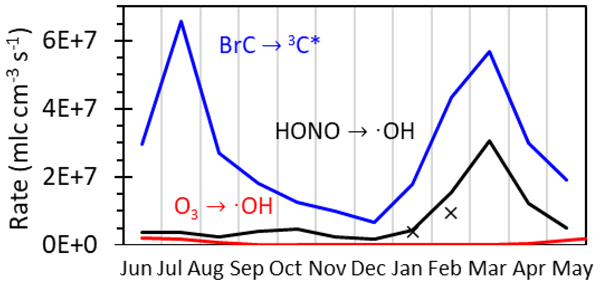
Laura M. D. Heinlein, Junwei He, Michael Oluwatoyin Sunday, Fangzhou Guo, James Campbell, Allison Moon, Sukriti Kapur, Ting Fang, Kasey Edwards, Meeta Cesler-Maloney, Alyssa J. Burns, Jack Dibb, William Simpson, Manabu Shiraiwa, Becky Alexander, Jingqiu Mao, James H. Flynn III, Jochen Stutz, and Cort Anastasio
Atmos. Chem. Phys., 25, 9561–9581, https://doi.org/10.5194/acp-25-9561-2025, https://doi.org/10.5194/acp-25-9561-2025, 2025
Short summary
Short summary
High-latitude cities like Fairbanks, Alaska, experience severe wintertime pollution episodes. While conventional wisdom holds that oxidation is slow under these conditions, field measurements find oxidized products in particles. To explore this, we measured oxidants in aqueous extracts of winter particles from Fairbanks. We find high concentrations of oxidants during illumination experiments, indicating that particle photochemistry can be significant even in high latitudes during winter.
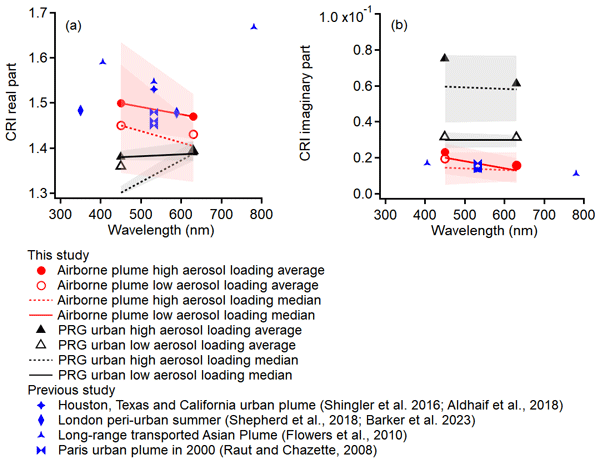
Chenjie Yu, Ludovico Di Antonio, Peter F. DeCarlo, Benjamin A. Nault, Alejandra Velazquez-Garcia, Eleonora Aruffo, Piero Di Carlo, Cyrielle Denjean, Sarah Tinorua, Thierry Bourrianne, Diana L. Pereira, Kevin Tu, Edouard Pangui, Mathieu Cazaunau, Astrid Bauville, Noël Grand, Antonin Bergé, Claudia Di Biagio, Aline Gratien, Matthias Beekmann, Guillaume Siour, Gilles Foret, Barbara D'Anna, Julien Kammer, Huihui Wu, Christopher Cantrell, Paola Formenti, and Vincent Michoud
Atmos. Chem. Phys., 26, 15055–15079, https://doi.org/10.5194/acp-26-15055-2026, https://doi.org/10.5194/acp-26-15055-2026, 2026
Short summary
Short summary
Coordinated ground-based and airborne measurements in Paris revealed urban-to-downwind aerosol differences over transport times of 2–6 h. Downwind organic aerosol was more oxidized, and aerosols exhibited higher single-scattering albedo, higher real and lower imaginary refractive indices, and stronger wavelength dependence of absorption. These findings highlight the need to represent evolving aerosol properties in atmospheric models and remote-sensing retrievals.
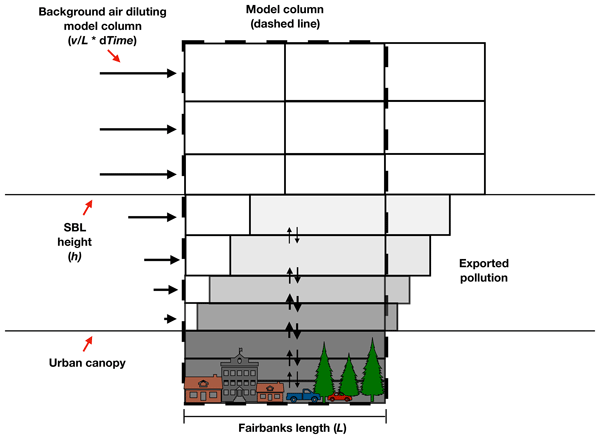
Jochen Stutz, Jonas Kuhn, Sol Cooperdock, Sarah Johnson, Fangzhou Guo, James H. Flynn, Meeta Cesler-Maloney, and William R. Simpson
Atmos. Chem. Phys., 26, 14345–14365, https://doi.org/10.5194/acp-26-14345-2026, https://doi.org/10.5194/acp-26-14345-2026, 2026
Short summary
Short summary
Northern cities often experience periods of wintertime air pollution, which are associated with surface temperature inversions and weak winds. In Fairbanks, Alaska, pollutants accumulate in a 20–40 m high surface layer with SO2 and NO2 mixing ratios of up to 35 and 65 ppb, respectively. This surface pollution is caused by the balance of emissions, chemistry, and inefficient mixing with clean background air. This balance has to be considered for air pollution mitigation strategies.
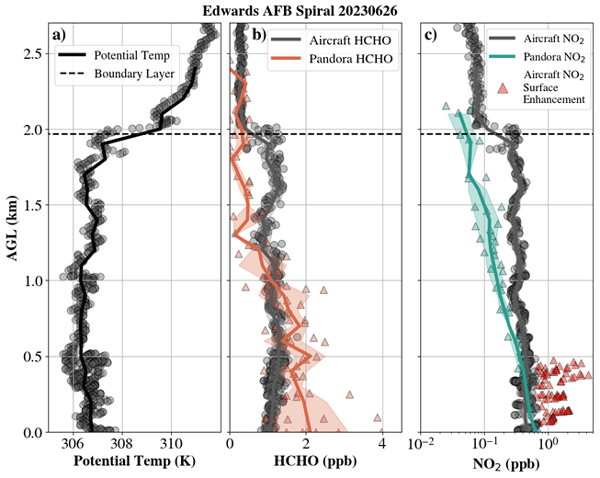
Abby Sebol, Glenn M. Wolfe, Timothy Canty, Jason St. Clair, Erin Delaria, Jennifer Kaiser, Nidhi Desai, Andrew Rollins, Eleanor Waxman, Kristen Zuraski, Bryan Place, Apoorva Pandey, Akanksha Singh, Allison Ring, Charles Gatebe, and Jonathan Dean-Day
Atmos. Meas. Tech., 19, 5539–5552, https://doi.org/10.5194/amt-19-5539-2026, https://doi.org/10.5194/amt-19-5539-2026, 2026
Short summary
Short summary
Ground-based spectrometers measuring HCHO and NO2 were compared to airborne in situ observations in the Summer 2023. Total column HCHO is within uncertainty, but with high biases near the surface. NO2 results are highly sensitive to the viewing angle of the ground monitor which must be considered during validation studies. Spectrometers in NYC show good agreement with a geostationary satellite on clear-sky days. Further quantified uncertainty for the monitors is necessary.
Magesh Mohan, Amy Sullivan, Emily Lill, Ilana Pollack, Alison Piasecki, Sarah Albertin, Ann Middlebrook, Wyndom Chace, Andrew Rollins, Carsten Warneke, Steven Brown, Lu Xu, Katherine Ball, John Crounse, Paul Wennberg, Stelios Kakavas, Spyros Pandis, Athanasios Nenes, and Rodney Weber
EGUsphere, https://doi.org/10.5194/egusphere-2026-4960, https://doi.org/10.5194/egusphere-2026-4960, 2026
Short summary
Short summary
Atmospheric fine particles contain liquid water and can be highly acidic. The amount of water and the acidity affect how these particles impact human health, ecosystems, and climate. Flying an aircraft across the continental United States in summer 2023, with a focus on four North American cities, we measured the properties needed to model particle water and acidity. We found the particles were consistently strongly acidic, even within wildfire smoke, and verified the model against observations.
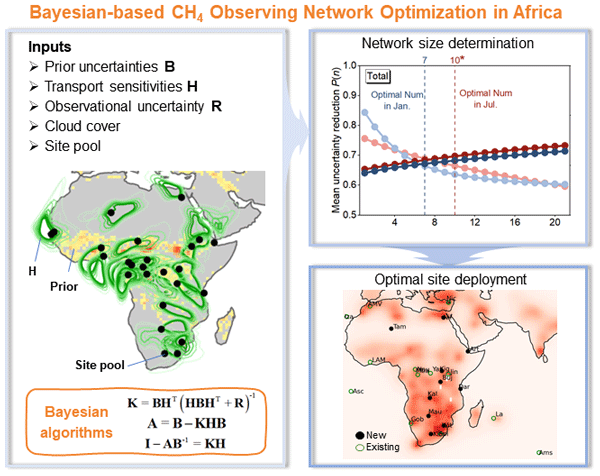
Hui Li, Philippe Ciais, Frédéric Chevallier, Bo Zheng, Paul I. Palmer, Frank Hase, Morgan Lopez, Elsa M. Ordway, Shushi Peng, Danielle Monteverde, Michel Ramonet, Jason M. St. Clair, Le Bienfaiteur Sagang, and Benjamin Poulter
Atmos. Chem. Phys., 26, 11893–11908, https://doi.org/10.5194/acp-26-11893-2026, https://doi.org/10.5194/acp-26-11893-2026, 2026
Short summary
Short summary
We studied how to best place methane monitoring instruments across Africa to better understand where emissions come from. Because observations can overlap in what they detect, adding more sites does not always improve results equally. Using a statistical approach, we identified both the ideal number and locations of sites (ten new sites can reduce emission uncertainty by over 65 % for total African CH4). Our results help guide cost-effective monitoring strategies in regions with limited data.
Apoorva Pandey, Bryan K. Place, Thomas F. Hanisco, Jong-Uk Park, Elena S. Lind, Jason M. St. Clair, Erin R. Delaria, Glenn M. Wolfe, Ronaldo Lopez, Paul V. Zimba, and K. Lee Thornhill
EGUsphere, https://doi.org/10.5194/egusphere-2026-3479, https://doi.org/10.5194/egusphere-2026-3479, 2026
Short summary
Short summary
The burden and vertical distribution of formaldehyde affects air quality and health. Pandora ground instruments observe formaldehyde in the lower atmosphere using scattered sunlight. The quality of these continuous daytime measurements needs evaluation. We compared these measurements with aircraft observations at four U.S. East Coast sites and found strong agreement at all comparison sites. We also improved the Pandora algorithm to better capture the vertical distribution of formaldehyde.
David Wilmouth, Jennifer Hare, Laila Howar, Ross Salawitch, Eric Hintsa, Jessica Smith, David Sayres, James Anderson, Jason St. Clair, Erin Delaria, Reem Hannun, Thomas Hanisco, Daniel Czizco, Xiaoli Shen, Cameron Homeyer, Michelle Santee, T. Paul Bui, Paul Newman, Frank Keutsch, and Kenneth Bowman
EGUsphere, https://doi.org/10.5194/egusphere-2026-3480, https://doi.org/10.5194/egusphere-2026-3480, 2026
Short summary
Short summary
Inorganic chlorine chemistry in the stratosphere is extensively examined over two summers using high precision in situ aircraft data and satellite data. Measured values both agree and enable refinement to current understanding. Chlorine measurements obtained under perturbed stratospheric conditions of enhanced water vapor from convective storms or aged organic aerosol from wildfires do not appear significantly different from chlorine measurements obtained in the background stratosphere.
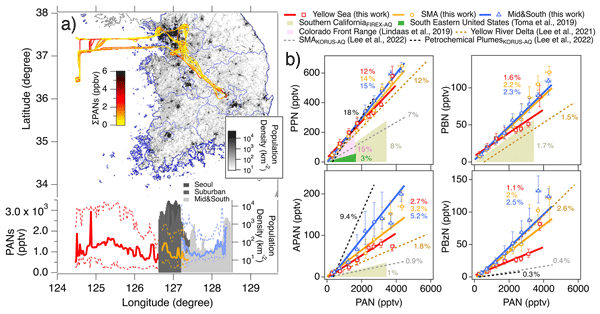
Young Ro Lee, Linda Arterburn, Masayuki Takeuchi, David J. Tanner, James M. Roberts, Behrooz Roozitalab, Daun Jeong, Alan J. Hills, Rebecca S. Hornbrook, Eric C. Apel, Simone Meinardi, Barbara Barletta, Nicola J. Blake, Donald R. Blake, Saewung Kim, Wojciech Wojnowski, Felix Piel, Armin Wisthaler, Katherine Ball, John D. Crounse, Paul O. Wennberg, Jason Miech, Yonghoon Choi, Joshua P. DiGangi, Glenn S. Diskin, Abby Sebol, Erin R. Delaria, Reem A. Hannun, Jason M. St. Clair, Glenn M. Wolfe, Changmin Cho, Courtney Owen, Kirk Lesko, Alessandro Franchin, Edward L. Winstead, Luke D. Ziemba, Richard Moore, Elizabeth B. Wiggins, Guy Symonds, Dongwook Kim, Douglas A. Day, Pedro Campuzano-Jost, Jose L. Jimenez, Kirk Ullmann, Samuel R. Hall, James H. Crawford, and L. Gregory Huey
Atmos. Chem. Phys., 26, 8695–8715, https://doi.org/10.5194/acp-26-8695-2026, https://doi.org/10.5194/acp-26-8695-2026, 2026
Short summary
Short summary
We flew a large variety of instruments on the NASA DC-8 research aircraft to measure pollution over South Korea in the winter of 2024. This works focuses on acyl peroxynitrates (PANs for short) which are formed by chemistry in air. We found high levels of PANs often associated with industrial emissions of pollutants such as ethanol and ethylene oxide. This work helps to understand how to reduce pollution of this sort.
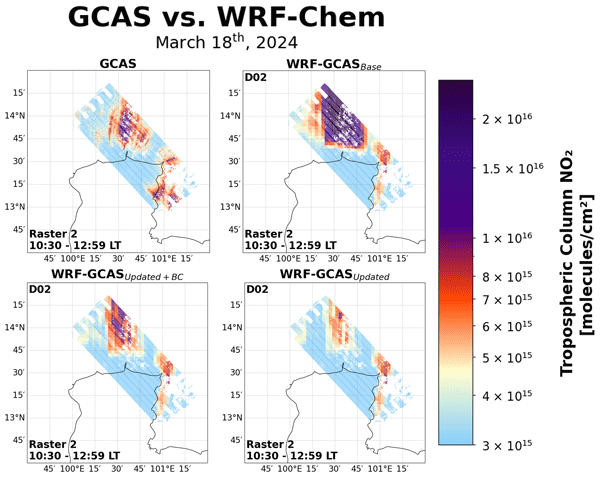
Julianna A. Christopoulos, Pablo E. Saide, Manas R. Mohanty, Nattamon Maneenoi, Jhoon Kim, Laura Judd, Katherine R. Travis, Savitri Garivait, Agapol Junpen, Kazuyuki Miyazaki, Jinkyul Choi, Takashi Sekiya, David Peterson, Theodore M. McHardy, Nicholas Gapp, Jason M. St. Clair, Erin Delaria, Glenn M. Wolfe, Abby Sebol, Alessandro Franchin, Changmin Cho, Morgan L. Silverman, and James H. Crawford
Atmos. Chem. Phys., 26, 8021–8050, https://doi.org/10.5194/acp-26-8021-2026, https://doi.org/10.5194/acp-26-8021-2026, 2026
Short summary
Short summary
Air quality in rapidly growing cities is difficult to model because emissions vary during the day and are often poorly constrained. We demonstrate a methodology for constraining urban emissions using hourly satellite observations combined with high-resolution air quality modeling in Bangkok. We find that emissions inventories likely overestimate nitrogen dioxide emissions, and that updated emissions improve agreement between the model and independent aircraft and ground-based observations.
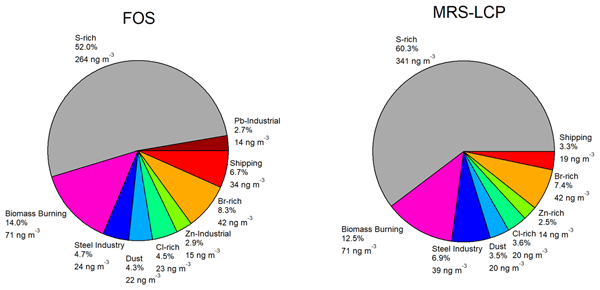
Mathilde Brezins, Benjamin Chazeau, Nicolas Marchand, Amandine Durand, Grégory Gille, Romain Bourjot, Andre S. H. Prévôt, Jean-Luc Jaffrezo, Gaëlle Uzu, and Barbara D'Anna
Aerosol Research, 4, 231–254, https://doi.org/10.5194/ar-4-231-2026, https://doi.org/10.5194/ar-4-231-2026, 2026
Short summary
Short summary
The Marseille–Fos basin faces high anthropogenic pressure from industry and maritime and road transport combined with specific weather conditions that further degrade air quality. Our study focuses on fine metallic pollution, which can penetrate deep into the lungs and cause harmful effects. Using 1 year of measurements at two sites, we identified 10 main pollution sources, half directly linked to human activities, highlighting clear risks for the environment and public health.
Yuxuan Ren, Randall V. Martin, Jhao-Hong Chen, Christopher R. Oxford, Brent J. Williams, Rodney J. Weber, and Lu Xu
EGUsphere, https://doi.org/10.5194/egusphere-2026-2663, https://doi.org/10.5194/egusphere-2026-2663, 2026
Short summary
Short summary
Understanding the composition of organic aerosol is limited by sparse global measurements. Instead of deploying many instruments worldwide, we developed a method that uses a single mass spectrometer in the laboratory to analyze particles routinely collected on filters from globally distributed locations. The method captures water-soluble components and enables estimation of ambient concentrations. It offers a practical way to support broader and more consistent monitoring across global networks.
Jinkyul Choi, Kazuyuki Miyazaki, Takashi Sekiya, Jinhyeok Yu, Shin-Ya Ogino, Henk Eskes, Pieter Rijdijk, Ryan Bennett, Anke Roiger, Leon Knez, Glenn S. Diskin, Jason A. Miech, Joshua P. DiGangi, Yonghoon Choi, Alessandro Franchin, Changmin Cho, Eric C. Apel, Louisa K. Emmons, Nattamon Maneenoi, Jason M. St. Clair, Reem A. Hannun, Glenn M. Wolfe, Erin Delaria, Abby Sebol, Donald R. Blake, Monica Crippa, Rachel M. Hoesly, Steven J. Smith, Jung-Hun Woo, Le Kuai, and Ronald Macatangay
EGUsphere, https://doi.org/10.5194/egusphere-2026-2380, https://doi.org/10.5194/egusphere-2026-2380, 2026
Short summary
Short summary
Asia produces half of the world's air pollution, yet emission estimates from different sources disagree widely. We assimilated satellite observations of six pollutant species to correct both concentrations and emissions. Aircraft measurements from a 2024 NASA campaign across four Asian countries confirmed the improvements. Our results reveal underreported emissions in some countries, overestimated vegetation emissions, unresolved fire estimates, and weather control on cross-border pollution.
Changmin Cho, Alessandro Franchin, Frank Flocke, Kirk Lesko, Courtney Owen, Samuel R. Hall, Kirk Ullmann, Eric C. Apel, Alan J. Hills, Rebecca S. Hornbrook, Behrooz Roozitalab, Daun Jeong, Glenn S. Diskin, Yonghoon Choi, Joshua P. DiGangi, Jason Miech, Glenn M. Wolfe, Thomas F. Hanisco, Jason M. St. Clair, Jin Liao, Erin R. Delaria, Abby Sebol, Reem A. Hannun, Paul O. Wennberg, Katherine Ball, Young Ro Lee, L. Gregory Huey, David J. Tanner, Linda Arterburn, Donald R. Blake, Nicola J. Blake, Barbara Barletta, Simone Meinardi, Kyung-Eun Min, Heejoo Kang, Woohui Nam, Armin Wisthaler, Felix Piel, Wojciech Wojnowski, Jack Dibb, and James Crawford
Atmos. Chem. Phys., 26, 6097–6116, https://doi.org/10.5194/acp-26-6097-2026, https://doi.org/10.5194/acp-26-6097-2026, 2026
Short summary
Short summary
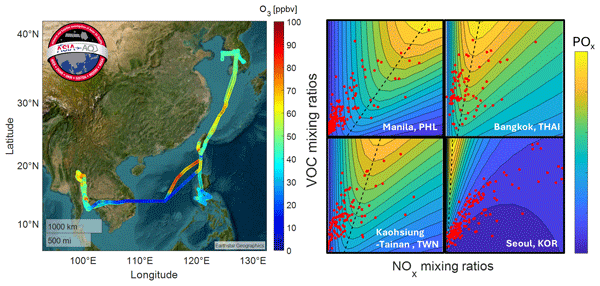
Ozone pollution is a challenge in Asian cities due to its nonlinear response to precursor controls. Using aircraft measurements, we examined how ozone production depends on nitrogen oxides and volatile organic compounds using a new isopleth-based approach. Ozone production is limited by nitrogen oxides in Metro Manila and Tainan–Kaohsiung, mixed in Bangkok, and limited by volatile organic compounds in Seoul. These results inform city-specific control strategies to reduce ozone in urban areas.
Jian Xu, Junteng Wu, Mayur Gajanan Sapkal, Jim Grisillon, Shravan Deshmukh, Brice Temime Roussel, Julien Kammer, Nicolas Brun, Fabien Robert-Peillard, Beiping Luo, Judith Kleinheins, Silvia Henning, Bénédicte Picquet-Varrault, Edouard Pangui, Mathieu Cazaunau, Zamin A. Kanji, Claudia Marcolli, and Anne Monod
Aerosol Research Discuss., https://doi.org/10.5194/ar-2026-14, https://doi.org/10.5194/ar-2026-14, 2026
Revised manuscript under review for AR
Short summary
Short summary
The study aimed to mimic the atmospheric behaviour of a semi-volatile organic compound in the presence of fine particles and at various relative humidities. The objective was to determine the influence of organic matter on humid particle growth. These results are essential for improving our understanding of cloud formation.
Daun Jeong, Rebecca S. Hornbrook, Alan J. Hills, Glenn Diskin, Hannah S. Halliday, Joshua P. DiGangi, Alan Fried, Dirk Richter, James Walega, Petter Weibring, Thomas F. Hanisco, Glenn M. Wolfe, Jason St. Clair, Jeff Peischl, Armin Wisthaler, Tomas Mikoviny, John B. Nowak, Felix Piel, Laura Tomsche, Christopher D. Holmes, Amber Soja, Emily Gargulinski, James H. Crawford, Jack Dibb, Carsten Warneke, Joshua Schwarz, and Eric C. Apel
Atmos. Meas. Tech., 19, 2985–3000, https://doi.org/10.5194/amt-19-2985-2026, https://doi.org/10.5194/amt-19-2985-2026, 2026
Short summary
Short summary
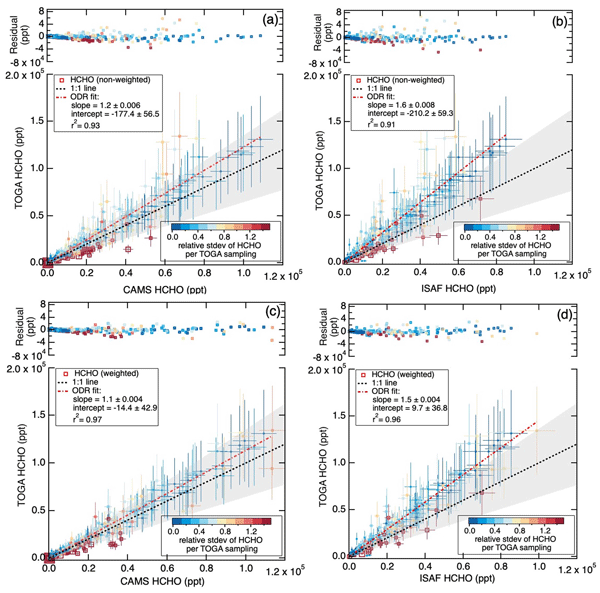
Formaldehyde is an important atmospheric species that is present at all times throughout the troposphere. Accurately measuring formaldehyde is necessary for understanding key atmospheric chemical cycles. We describe here the first wide-scale demonstration of the gas chromatographic mass spectrometric (GC/MS) technique (NSF NCAR TOGA-TOF (National Science Foundation - National Center for Atmospheric Research - Trace Organic Gas Analyzer with Time-of-Flight mass spectrometer)) for quantifying formaldehyde in the atmosphere and we show this technique to be highly sensitive and selective.
Lifei Yin, Yiqi Zheng, Bin Bai, Bingqing Zhang, Rachel F. Silvern, Jingqiu Mao, Loretta J. Mickley, and Pengfei Liu
Atmos. Chem. Phys., 26, 5901–5923, https://doi.org/10.5194/acp-26-5901-2026, https://doi.org/10.5194/acp-26-5901-2026, 2026
Short summary
Short summary
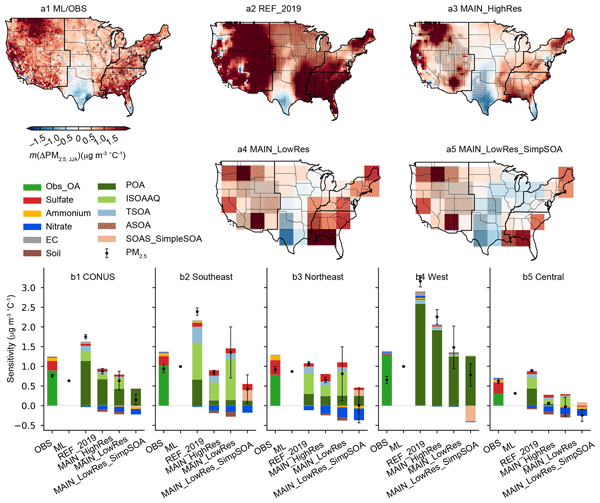
This study improves GEOS-Chem simulations of PM2.5–temperature sensitivity and identifies key processes driving regional variability across the US. We show that chemical production dominates in the east, primary emissions in the west, and transport processes affect interannual variability. Results highlight the need for accurate temperature-dependent process representation in air quality models.
Quentin Gunti, Benjamin Chazeau, Brice Temime-Roussel, Irène Xueref-Remy, Alexandre Armengaud, Henri Wortham, and Barbara D'Anna
Atmos. Chem. Phys., 26, 2893–2919, https://doi.org/10.5194/acp-26-2893-2026, https://doi.org/10.5194/acp-26-2893-2026, 2026
Short summary
Short summary
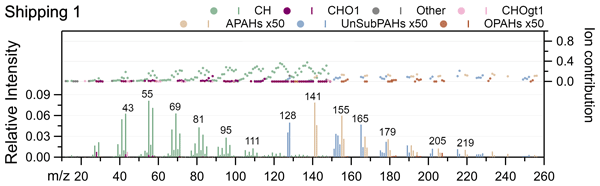
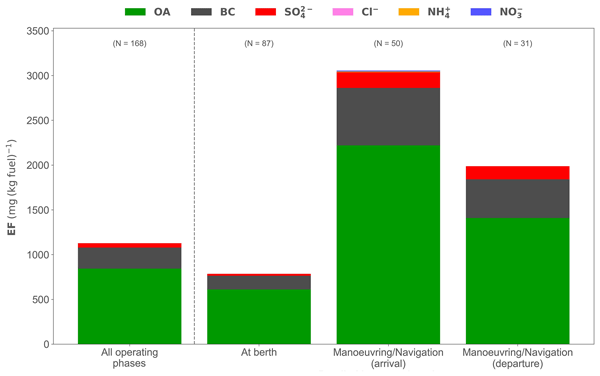
A measurement campaign in Toulon's port in 2021 showed a strong decrease in sulfur-related emissions after IMO2020, while black carbon, organics and polycyclic aromatic hydrocarbons (PAHs) remained at previous levels, as confirmed by their emission factors. Source analysis indicated that ships contributed notably to organic aerosol and alkylated PAHs, and dominated ultrafine particles. These results support continued monitoring as the Mediterranean becomes a sulfur emission control area in 2025.

Benjamin W. Clouser, Carly C. KleinStern, Adrien Desmoulin, Clare E. Singer, Jason M. St. Clair, Thomas F. Hanisco, David S. Sayres, and Elisabeth J. Moyer
Atmos. Meas. Tech., 19, 1147–1163, https://doi.org/10.5194/amt-19-1147-2026, https://doi.org/10.5194/amt-19-1147-2026, 2026
Short summary
Short summary
Water molecules comes in several varieties, of which H216O is the most common. These varieties behave differently enough under freezing to create strong changes in the ratio of heavy to light water molecules. Here we compare observations of these ratios from satellites and high-altitude airborne instruments. These observations provide information about how air reaches the upper parts of the atmosphere, so it is important to reconcile difference between different modes of observations.
Jan-Lukas Tirpitz, Nathaniel Brockway, Santo Fedele Colosimo, Robert Spurr, Matt Christi, Samuel Hall, Kirk Ullmann, Vijay Natraj, Nicolas Theys, Johnathan Hair, Taylor Shingler, Rodney Weber, Ruchen Zhu, Jack Dibb, Richard Moore, Elizabeth Wiggins, and Jochen Stutz
EGUsphere, https://doi.org/10.5194/egusphere-2025-5541, https://doi.org/10.5194/egusphere-2025-5541, 2026
Short summary
Short summary
This study applies a novel remote sensing algorithm to airborne radiation measurements performed in wildfire plumes, to retrieve the absorptive properties of biomass burning aerosols. The results provide new insights on the magnitude, wavelength dependence, and atmospheric aging of the imaginary refractive index, volume absorption cross-section, and single scattering albedo of the smoke particles. Furthermore, potential and limitations of the applied method are discussed.
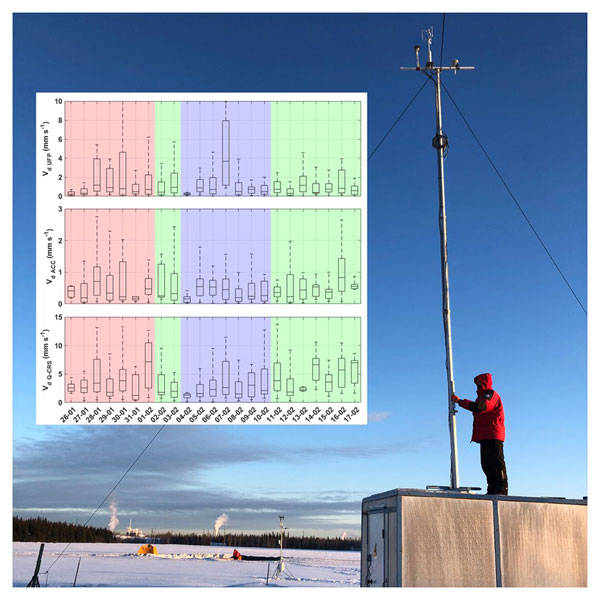
Antonio Donateo, Gianluca Pappaccogli, Federico Scoto, Maurizio Busetto, Francesca L. Lovisco, Natalie Brett, Douglas Keller, Brice Barret, Elsa Dieudonné, Roman Pohorsky, Andrea Baccarini, Slimane Bekki, Jean-Christophe Raut, Julia Schmale, Kathy S. Law, Steve R. Arnold, Javier G. Fochesatto, William R. Simpson, and Stefano Decesari
Atmos. Chem. Phys., 25, 18129–18156, https://doi.org/10.5194/acp-25-18129-2025, https://doi.org/10.5194/acp-25-18129-2025, 2025
Short summary
Short summary
A study in Fairbanks, Alaska, measured winter aerosol fluxes on snow. Both emission and deposition occurred, with larger particles settling faster. Weather influenced dispersion and deposition, while wind-driven turbulence enhanced deposition despite stable conditions. Results show aerosol accumulation in snow impacts pollution and snowmelt. Findings help improve aerosol models and pollution studies in cold cities.
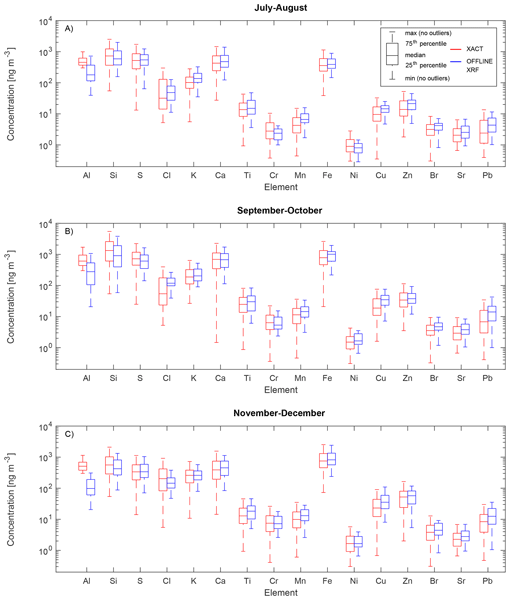
Laura Cadeo, Beatrice Biffi, Benjamin Chazeau, Cristina Colombi, Rosario Cosenza, Eleonora Cuccia, Manousos-Ioannis Manousakas, Kaspar R. Daellenbach, André S. H. Prévôt, and Roberta Vecchi
Atmos. Meas. Tech., 18, 6435–6448, https://doi.org/10.5194/amt-18-6435-2025, https://doi.org/10.5194/amt-18-6435-2025, 2025
Short summary
Short summary
This study presents the deployment of the Xact® 625i Ambient Metals Monitor in Milan (Po Valley, Italy) and its performance in measuring particulate matter elemental composition at a high temporal resolution. Our findings demonstrate strong agreement between online and offline X-ray fluorescence analyses, underscoring the potential of advanced monitoring technologies for air quality research.
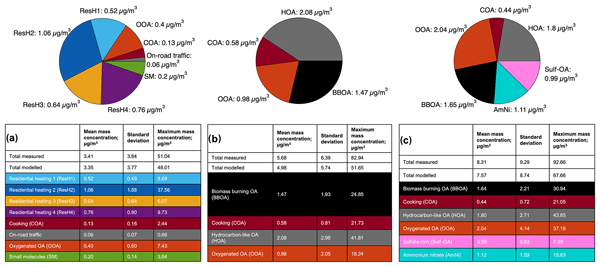
Amna Ijaz, Brice Temime-Roussel, Benjamin Chazeau, Sarah Albertin, Stephen R. Arnold, Brice Barret, Slimane Bekki, Natalie Brett, Meeta Cesler-Maloney, Elsa Dieudonne, Kayane K. Dingilian, Javier G. Fochesatto, Jingqiu Mao, Allison Moon, Joel Savarino, William Simpson, Rodney J. Weber, Kathy S. Law, and Barbara D'Anna
Atmos. Chem. Phys., 25, 11789–11811, https://doi.org/10.5194/acp-25-11789-2025, https://doi.org/10.5194/acp-25-11789-2025, 2025
Short summary
Short summary
Fairbanks is among the most polluted cities, with the highest particulate matter (PM) levels in the US during winters. Highly time-resolved measurements of the submicron PM found residential heating with wood and oil and hydrocarbon-like organics from traffic, as well as sulfur-containing aerosol, to be the key pollution sources. Remarkable differences existed between complementary instruments, warranting the deployment of multiple tools at sites, with wide-ranging influences.
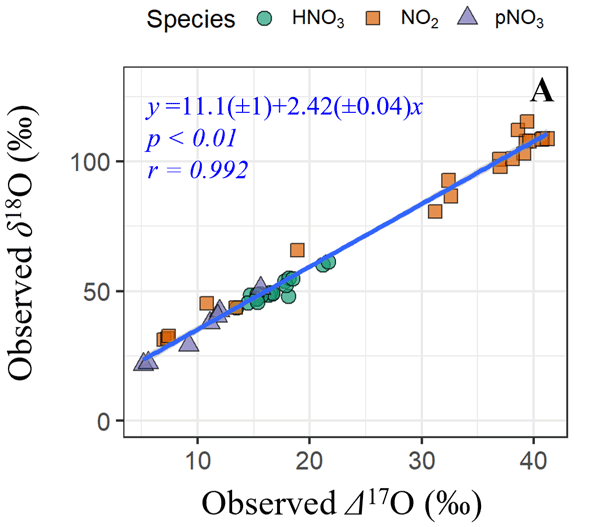
Wendell W. Walters, Masayuki Takeuchi, Danielle E. Blum, Gamze Eris, David Tanner, Weiqi Xu, Jean Rivera-Rios, Fobang Liu, Tianchang Xu, Greg Huey, Justin B. Min, Rodney Weber, Nga L. Ng, and Meredith G. Hastings
Atmos. Chem. Phys., 25, 10707–10730, https://doi.org/10.5194/acp-25-10707-2025, https://doi.org/10.5194/acp-25-10707-2025, 2025
Short summary
Short summary
We studied how chemicals released from plants and pollution interact in the atmosphere, affecting air quality and climate. By combining laboratory experiments and chemistry models, we tracked unique chemical fingerprints to understand how nitrogen compounds transform to form particles in the air. Our findings help explain the role of these reactions in pollution and provide tools to improve predictions for cleaner air and better climate policies.
Marwa Shahin, Julien Kammer, Brice Temime-Roussel, and Barbara D'Anna
Atmos. Chem. Phys., 25, 10267–10292, https://doi.org/10.5194/acp-25-10267-2025, https://doi.org/10.5194/acp-25-10267-2025, 2025
Short summary
Short summary
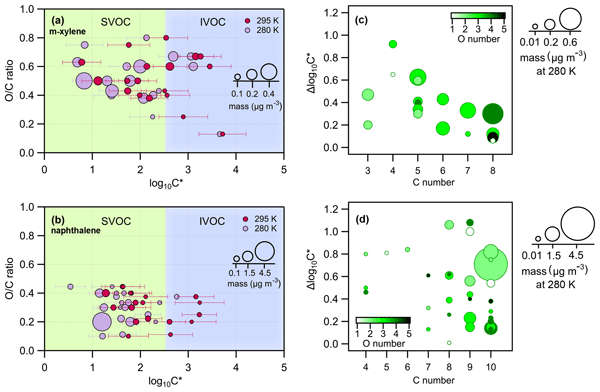
Air pollution and climate change are influenced by tiny airborne particles called aerosols. This study explores how pollutants from urban sources, as m-xylene and naphthalene, form new particles in the atmosphere under different conditions. Using advanced techniques, we show how temperature and nitrogen oxides affect the formation and behavior of these particles. Our findings will improve our understanding of secondary organic particle and air quality models.
Laura M. D. Heinlein, Junwei He, Michael Oluwatoyin Sunday, Fangzhou Guo, James Campbell, Allison Moon, Sukriti Kapur, Ting Fang, Kasey Edwards, Meeta Cesler-Maloney, Alyssa J. Burns, Jack Dibb, William Simpson, Manabu Shiraiwa, Becky Alexander, Jingqiu Mao, James H. Flynn III, Jochen Stutz, and Cort Anastasio
Atmos. Chem. Phys., 25, 9561–9581, https://doi.org/10.5194/acp-25-9561-2025, https://doi.org/10.5194/acp-25-9561-2025, 2025
Short summary
Short summary
High-latitude cities like Fairbanks, Alaska, experience severe wintertime pollution episodes. While conventional wisdom holds that oxidation is slow under these conditions, field measurements find oxidized products in particles. To explore this, we measured oxidants in aqueous extracts of winter particles from Fairbanks. We find high concentrations of oxidants during illumination experiments, indicating that particle photochemistry can be significant even in high latitudes during winter.
Manon Rocco, Julien Kammer, Mathieu Santonja, Brice Temime-Roussel, Cassandra Saignol, Caroline Lecareux, Etienne Quivet, Henri Wortham, and Elena Ormeño
Biogeosciences, 22, 3661–3680, https://doi.org/10.5194/bg-22-3661-2025, https://doi.org/10.5194/bg-22-3661-2025, 2025
Short summary
Short summary
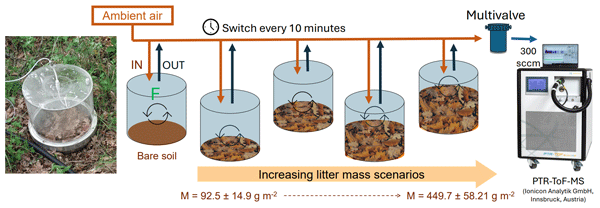
Soil emissions of biogenic volatile organic compounds (BVOCs) play a significant role in ecosystems, yet the impact of litter accumulation on these emissions is often overlooked, particularly in Mediterranean deciduous forests. A study in downy oak forest identified over 135 BVOCs, with many being absorbed by the soil, while others were emitted and increased with litter biomass. This underscores the critical role of litter and microbial activity in shaping soil BVOC dynamics under a changing climate.
Lise Le Berre, Brice Temime-Roussel, Grazia Maria Lanzafame, Barbara D'Anna, Nicolas Marchand, Stéphane Sauvage, Marvin Dufresne, Liselotte Tinel, Thierry Leonardis, Joel Ferreira de Brito, Alexandre Armengaud, Grégory Gille, Ludovic Lanzi, Romain Bourjot, and Henri Wortham
Atmos. Chem. Phys., 25, 6575–6605, https://doi.org/10.5194/acp-25-6575-2025, https://doi.org/10.5194/acp-25-6575-2025, 2025
Short summary
Short summary
A summer campaign in a Mediterranean port examined pollution caused by ships. Two stations in the port measured pollution levels and captured over 350 ship plumes to study their chemical composition. Results showed that pollution levels, such as ultra-fine particles, were higher in the port than in the city and offer strong support to improve emission inventories. These findings may also serve as reference to assess the benefits of a sulfur Emission Control Area in the Mediterranean in 2025.
Johannes Heuser, Claudia Di Biagio, Jérôme Yon, Mathieu Cazaunau, Antonin Bergé, Edouard Pangui, Marco Zanatta, Laura Renzi, Angela Marinoni, Satoshi Inomata, Chenjie Yu, Vera Bernardoni, Servanne Chevaillier, Daniel Ferry, Paolo Laj, Michel Maillé, Dario Massabò, Federico Mazzei, Gael Noyalet, Hiroshi Tanimoto, Brice Temime-Roussel, Roberta Vecchi, Virginia Vernocchi, Paola Formenti, Bénédicte Picquet-Varrault, and Jean-François Doussin
Atmos. Chem. Phys., 25, 6407–6428, https://doi.org/10.5194/acp-25-6407-2025, https://doi.org/10.5194/acp-25-6407-2025, 2025
Short summary
Short summary
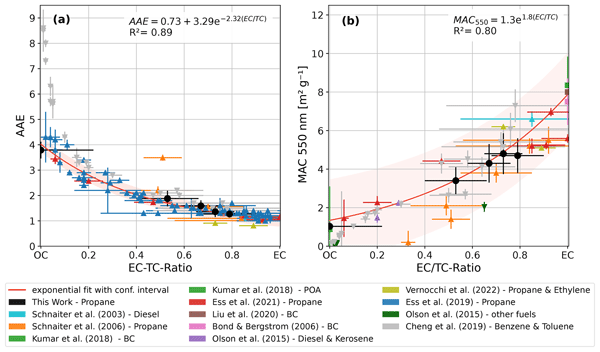
The spectral optical properties of combustion soot aerosols with varying black (BC) and brown carbon (BrC) content were studied in an atmospheric simulation chamber. Measurements of the mass spectral absorption cross section (MAC), supplemented by literature data, allowed us to establish a generalised exponential relationship between the spectral absorption and the elemental-to-total-carbon ratio (EC / TC) in soot. This relationship can provide a useful tool for modelling the properties of soot.
Jianyu Lin, Tie Dai, Lifang Sheng, Weihang Zhang, Shangfei Hai, and Yawen Kong
Geosci. Model Dev., 18, 2231–2248, https://doi.org/10.5194/gmd-18-2231-2025, https://doi.org/10.5194/gmd-18-2231-2025, 2025
Short summary
Short summary
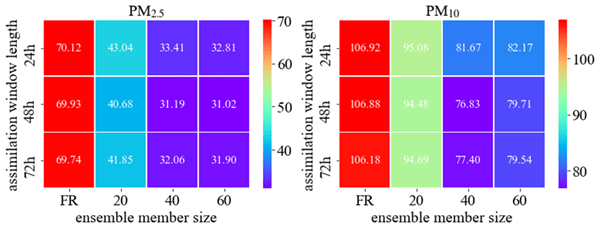
The effectiveness of this assimilation system and its sensitivity to the ensemble member size and length of the assimilation window are investigated. This study advances our understanding of the selection of basic parameters in the four-dimensional local ensemble transform Kalman filter assimilation system and the performance of ensemble simulation in a particulate-matter-polluted environment.
Roman Pohorsky, Andrea Baccarini, Natalie Brett, Brice Barret, Slimane Bekki, Gianluca Pappaccogli, Elsa Dieudonné, Brice Temime-Roussel, Barbara D'Anna, Meeta Cesler-Maloney, Antonio Donateo, Stefano Decesari, Kathy S. Law, William R. Simpson, Javier Fochesatto, Steve R. Arnold, and Julia Schmale
Atmos. Chem. Phys., 25, 3687–3715, https://doi.org/10.5194/acp-25-3687-2025, https://doi.org/10.5194/acp-25-3687-2025, 2025
Short summary
Short summary
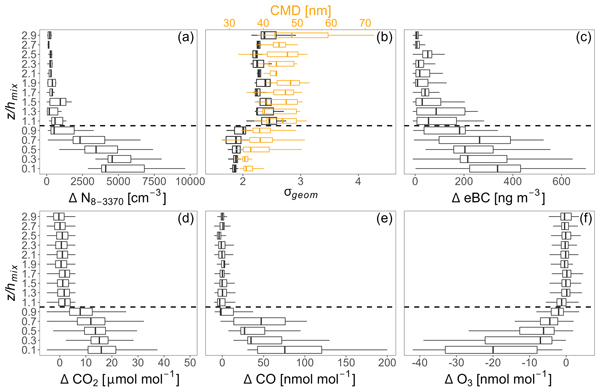
This study presents an analysis of vertical measurements of pollution in an Alaskan city during winter. It investigates the relationship between the atmospheric structure and the layering of aerosols and trace gases. Results indicate an overall very shallow surface mixing layer. The height of this layer is strongly influenced by a local shallow wind. The study also provides information on the pollution chemical composition at different altitudes, including pollution signatures from power plants.
Soo-Jin Park, Lya Lugon, Oscar Jacquot, Youngseob Kim, Alexia Baudic, Barbara D'Anna, Ludovico Di Antonio, Claudia Di Biagio, Fabrice Dugay, Olivier Favez, Véronique Ghersi, Aline Gratien, Julien Kammer, Jean-Eudes Petit, Olivier Sanchez, Myrto Valari, Jérémy Vigneron, and Karine Sartelet
Atmos. Chem. Phys., 25, 3363–3387, https://doi.org/10.5194/acp-25-3363-2025, https://doi.org/10.5194/acp-25-3363-2025, 2025
Short summary
Short summary
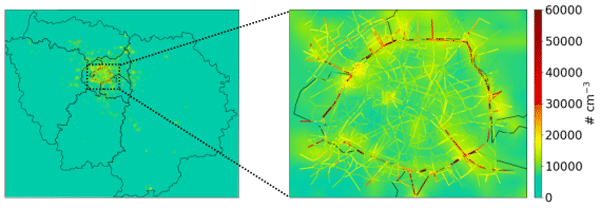
To accurately represent the population exposure to outdoor concentrations of pollutants of interest to health (NO2, PM2.5, black carbon, and ultrafine particles), multi-scale modelling down to the street scale is set up and evaluated using measurements from field campaigns. An exposure scaling factor is defined, allowing regional-scale simulations to be corrected to evaluate population exposure. Urban heterogeneities strongly influence NO2, black carbon, and ultrafine particles but less strongly PM2.5.
Ludovico Di Antonio, Claudia Di Biagio, Paola Formenti, Aline Gratien, Vincent Michoud, Christopher Cantrell, Astrid Bauville, Antonin Bergé, Mathieu Cazaunau, Servanne Chevaillier, Manuela Cirtog, Patrice Coll, Barbara D'Anna, Joel F. de Brito, David O. De Haan, Juliette R. Dignum, Shravan Deshmukh, Olivier Favez, Pierre-Marie Flaud, Cecile Gaimoz, Lelia N. Hawkins, Julien Kammer, Brigitte Language, Franck Maisonneuve, Griša Močnik, Emilie Perraudin, Jean-Eudes Petit, Prodip Acharja, Laurent Poulain, Pauline Pouyes, Eva Drew Pronovost, Véronique Riffault, Kanuri I. Roundtree, Marwa Shahin, Guillaume Siour, Eric Villenave, Pascal Zapf, Gilles Foret, Jean-François Doussin, and Matthias Beekmann
Atmos. Chem. Phys., 25, 3161–3189, https://doi.org/10.5194/acp-25-3161-2025, https://doi.org/10.5194/acp-25-3161-2025, 2025
Short summary
Short summary
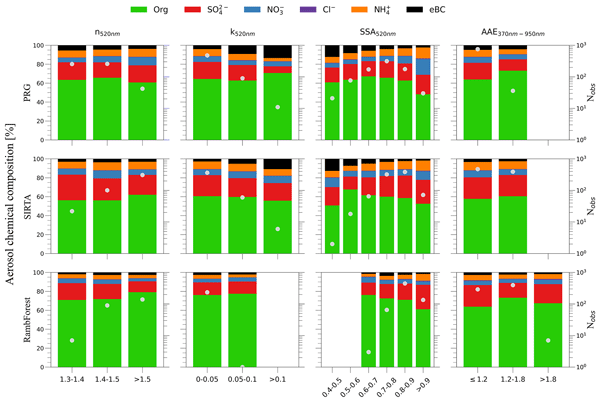
The spectral complex refractive index (CRI) and single scattering albedo were retrieved from submicron aerosol measurements at three sites within the greater Paris area during the ACROSS field campaign (June–July 2022). Measurements revealed urban emission impact on surrounding areas. CRI full period averages at 520 nm were 1.41 – 0.037i (urban), 1.52 – 0.038i (peri-urban), and 1.50 – 0.025i (rural). Organic aerosols dominated the aerosol mass and contributed up to 22 % of absorption at 370 nm.
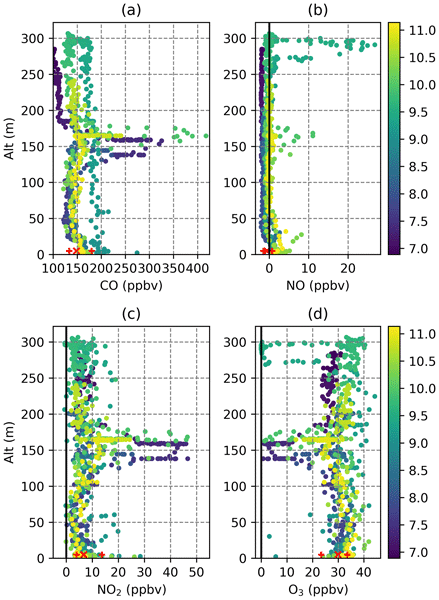
Brice Barret, Patrice Medina, Natalie Brett, Roman Pohorsky, Kathy S. Law, Slimane Bekki, Gilberto J. Fochesatto, Julia Schmale, Steve R. Arnold, Andrea Baccarini, Maurizio Busetto, Meeta Cesler-Maloney, Barbara D'Anna, Stefano Decesari, Jingqiu Mao, Gianluca Pappaccogli, Joel Savarino, Federico Scoto, and William R. Simpson
Atmos. Meas. Tech., 18, 1163–1184, https://doi.org/10.5194/amt-18-1163-2025, https://doi.org/10.5194/amt-18-1163-2025, 2025
Short summary
Short summary
The Fairbanks area experiences severe pollution episodes in winter because of enhanced emissions of pollutants trapped near the surface by strong temperature inversions. Low-cost sensors were deployed on board a car and a tethered balloon to measure the concentrations of gaseous pollutants (CO, O3, and NOx) in Fairbanks during winter 2022. Data calibration with reference measurements and machine learning methods enabled us to document pollution at the surface and power plant plumes aloft.
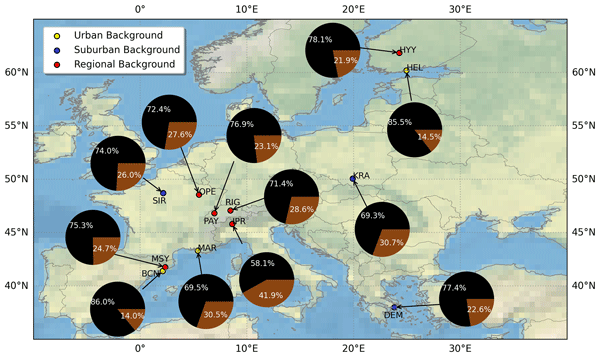
Hector Navarro-Barboza, Jordi Rovira, Vincenzo Obiso, Andrea Pozzer, Marta Via, Andres Alastuey, Xavier Querol, Noemi Perez, Marjan Savadkoohi, Gang Chen, Jesus Yus-Díez, Matic Ivancic, Martin Rigler, Konstantinos Eleftheriadis, Stergios Vratolis, Olga Zografou, Maria Gini, Benjamin Chazeau, Nicolas Marchand, Andre S. H. Prevot, Kaspar Dallenbach, Mikael Ehn, Krista Luoma, Tuukka Petäjä, Anna Tobler, Jaroslaw Necki, Minna Aurela, Hilkka Timonen, Jarkko Niemi, Olivier Favez, Jean-Eudes Petit, Jean-Philippe Putaud, Christoph Hueglin, Nicolas Pascal, Aurélien Chauvigné, Sébastien Conil, Marco Pandolfi, and Oriol Jorba
Atmos. Chem. Phys., 25, 2667–2694, https://doi.org/10.5194/acp-25-2667-2025, https://doi.org/10.5194/acp-25-2667-2025, 2025
Short summary
Short summary
Brown carbon (BrC) absorbs ultraviolet (UV) and visible light, influencing climate. This study explores BrC's imaginary refractive index (k) using data from 12 European sites. Residential emissions are a major organic aerosol (OA) source in winter, while secondary organic aerosol (SOA) dominates in summer. Source-specific k values were derived, improving model accuracy. The findings highlight BrC's climate impact and emphasize source-specific constraints in atmospheric models.
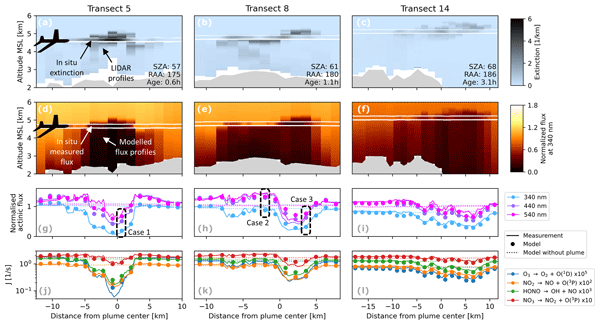
Jan-Lukas Tirpitz, Santo Fedele Colosimo, Nathaniel Brockway, Robert Spurr, Matt Christi, Samuel Hall, Kirk Ullmann, Johnathan Hair, Taylor Shingler, Rodney Weber, Jack Dibb, Richard Moore, Elizabeth Wiggins, Vijay Natraj, Nicolas Theys, and Jochen Stutz
Atmos. Chem. Phys., 25, 1989–2015, https://doi.org/10.5194/acp-25-1989-2025, https://doi.org/10.5194/acp-25-1989-2025, 2025
Short summary
Short summary
We combine plume composition data from the 2019 NASA FIREX-AQ campaign with state-of-the-art radiative transfer modeling techniques to calculate distributions of actinic flux and photolysis frequencies in a wildfire plume. Excellent agreement of the model and observations demonstrates the applicability of this approach to constrain photochemistry in such plumes. We identify limiting factors for the modeling accuracy and discuss spatial and spectral features of the distributions.
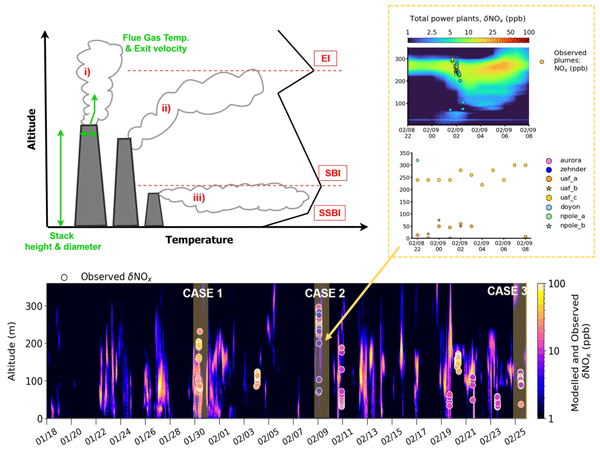
Natalie Brett, Kathy S. Law, Steve R. Arnold, Javier G. Fochesatto, Jean-Christophe Raut, Tatsuo Onishi, Robert Gilliam, Kathleen Fahey, Deanna Huff, George Pouliot, Brice Barret, Elsa Dieudonné, Roman Pohorsky, Julia Schmale, Andrea Baccarini, Slimane Bekki, Gianluca Pappaccogli, Federico Scoto, Stefano Decesari, Antonio Donateo, Meeta Cesler-Maloney, William Simpson, Patrice Medina, Barbara D'Anna, Brice Temime-Roussel, Joel Savarino, Sarah Albertin, Jingqiu Mao, Becky Alexander, Allison Moon, Peter F. DeCarlo, Vanessa Selimovic, Robert Yokelson, and Ellis S. Robinson
Atmos. Chem. Phys., 25, 1063–1104, https://doi.org/10.5194/acp-25-1063-2025, https://doi.org/10.5194/acp-25-1063-2025, 2025
Short summary
Short summary
Processes influencing dispersion of local anthropogenic pollution in Arctic wintertime are investigated with Lagrangian dispersion modelling. Simulated power plant plume rise that considers temperature inversion layers improves results compared to observations (interior Alaska). Modelled surface concentrations are improved by representation of vertical mixing and emission estimates. Large increases in diesel vehicle emissions at temperatures reaching −35°C are required to reproduce observed NOx.
Pamela A. Dominutti, Jean-Luc Jaffrezo, Anouk Marsal, Takoua Mhadhbi, Rhabira Elazzouzi, Camille Rak, Fabrizia Cavalli, Jean-Philippe Putaud, Aikaterini Bougiatioti, Nikolaos Mihalopoulos, Despina Paraskevopoulou, Ian Mudway, Athanasios Nenes, Kaspar R. Daellenbach, Catherine Banach, Steven J. Campbell, Hana Cigánková, Daniele Contini, Greg Evans, Maria Georgopoulou, Manuella Ghanem, Drew A. Glencross, Maria Rachele Guascito, Hartmut Herrmann, Saima Iram, Maja Jovanović, Milena Jovašević-Stojanović, Markus Kalberer, Ingeborg M. Kooter, Suzanne E. Paulson, Anil Patel, Esperanza Perdrix, Maria Chiara Pietrogrande, Pavel Mikuška, Jean-Jacques Sauvain, Katerina Seitanidi, Pourya Shahpoury, Eduardo J. d. S. Souza, Sarah Steimer, Svetlana Stevanovic, Guillaume Suarez, P. S. Ganesh Subramanian, Battist Utinger, Marloes F. van Os, Vishal Verma, Xing Wang, Rodney J. Weber, Yuhan Yang, Xavier Querol, Gerard Hoek, Roy M. Harrison, and Gaëlle Uzu
Atmos. Meas. Tech., 18, 177–195, https://doi.org/10.5194/amt-18-177-2025, https://doi.org/10.5194/amt-18-177-2025, 2025
Short summary
Short summary
In this work, 20 labs worldwide collaborated to evaluate the measurement of air pollution's oxidative potential (OP), a key indicator of its harmful effects. The study aimed to identify disparities in the widely used OP dithiothreitol assay and assess the consistency of OP among labs using the same protocol. The results showed that half of the labs achieved acceptable results. However, variability was also found, highlighting the need for standardisation in OP procedures.
Jin Liao, Glenn M. Wolfe, Alexander E. Kotsakis, Julie M. Nicely, Jason M. St. Clair, Thomas F. Hanisco, Gonzalo González Abad, Caroline R. Nowlan, Zolal Ayazpour, Isabelle De Smedt, Eric C. Apel, and Rebecca S. Hornbrook
Atmos. Meas. Tech., 18, 1–16, https://doi.org/10.5194/amt-18-1-2025, https://doi.org/10.5194/amt-18-1-2025, 2025
Short summary
Short summary
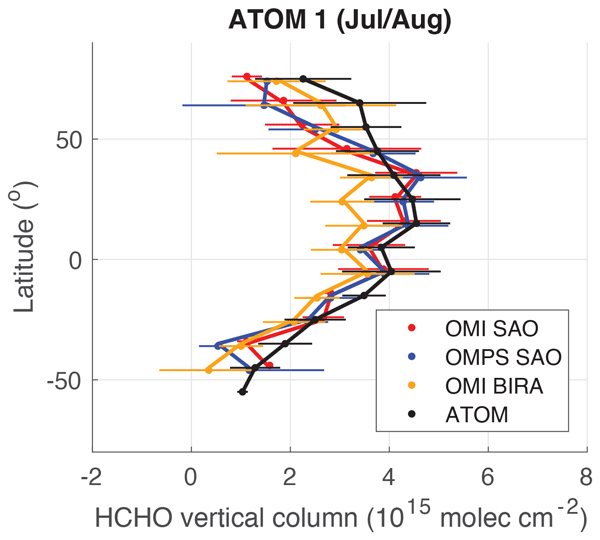
Validation of satellite HCHO over the remote marine regions is relatively low, and modeled HCHO in these regions is usually added as a global satellite HCHO background. This paper intercompares three satellite HCHO retrievals and validates them against in situ observations from the NASA ATom mission. All retrievals are correlated with ATom-integrated columns over remote oceans, with OMI SAO (v004) showing the best agreement. A persistent low bias is found in all retrievals at high latitudes.
Bryan N. Duncan, Daniel C. Anderson, Arlene M. Fiore, Joanna Joiner, Nickolay A. Krotkov, Can Li, Dylan B. Millet, Julie M. Nicely, Luke D. Oman, Jason M. St. Clair, Joshua D. Shutter, Amir H. Souri, Sarah A. Strode, Brad Weir, Glenn M. Wolfe, Helen M. Worden, and Qindan Zhu
Atmos. Chem. Phys., 24, 13001–13023, https://doi.org/10.5194/acp-24-13001-2024, https://doi.org/10.5194/acp-24-13001-2024, 2024
Short summary
Short summary
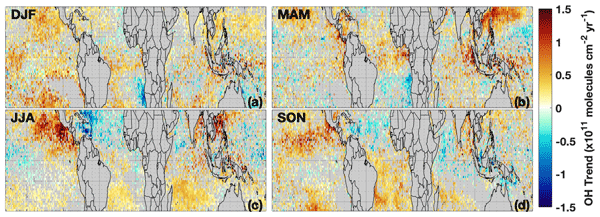
Trace gases emitted to or formed within the atmosphere may be chemically or physically removed from the atmosphere. One trace gas, the hydroxyl radical (OH), is responsible for initiating the chemical removal of many trace gases, including some greenhouse gases. Despite its importance, scientists have not been able to adequately measure OH. In this opinion piece, we discuss promising new methods to indirectly constrain OH using satellite data of trace gases that control the abundance of OH.
T. Nash Skipper, Emma L. D'Ambro, Forwood C. Wiser, V. Faye McNeill, Rebecca H. Schwantes, Barron H. Henderson, Ivan R. Piletic, Colleen B. Baublitz, Jesse O. Bash, Andrew R. Whitehill, Lukas C. Valin, Asher P. Mouat, Jennifer Kaiser, Glenn M. Wolfe, Jason M. St. Clair, Thomas F. Hanisco, Alan Fried, Bryan K. Place, and Havala O.T. Pye
Atmos. Chem. Phys., 24, 12903–12924, https://doi.org/10.5194/acp-24-12903-2024, https://doi.org/10.5194/acp-24-12903-2024, 2024
Short summary
Short summary
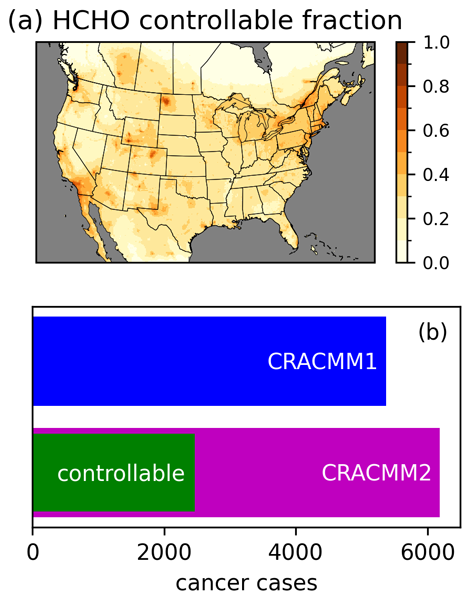
We develop the Community Regional Atmospheric Chemistry Multiphase Mechanism (CRACMM) version 2 to improve predictions of formaldehyde in ambient air compared to satellite-, aircraft-, and ground-based observations. With the updated chemistry, we estimate the cancer risk from inhalation exposure to ambient formaldehyde across the contiguous USA and predict that 40 % of this risk is controllable through reductions in anthropogenic emissions of nitrogen oxides and reactive organic carbon.
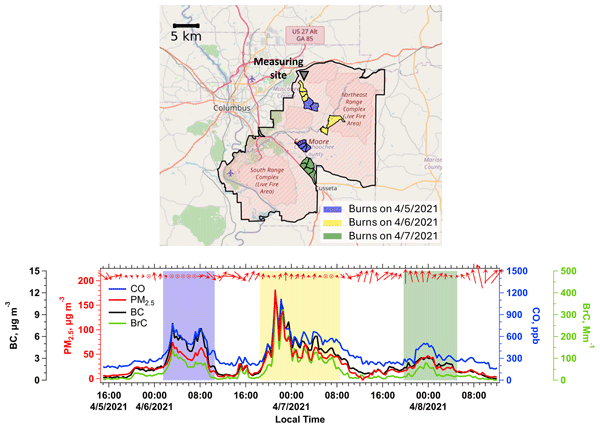
Rime El Asmar, Zongrun Li, David J. Tanner, Yongtao Hu, Susan O'Neill, L. Gregory Huey, M. Talat Odman, and Rodney J. Weber
Atmos. Chem. Phys., 24, 12749–12773, https://doi.org/10.5194/acp-24-12749-2024, https://doi.org/10.5194/acp-24-12749-2024, 2024
Short summary
Short summary
Prescribed burning is an important method for managing ecosystems and preventing wildfires. However, smoke from prescribed fires can have a significant impact on air quality. Here, using a network of fixed sites and sampling throughout an extended prescribed burning period in 2 different years, we characterize emissions and evolutions of up to 8 h of PM2.5 mass, black carbon (BC), and brown carbon (BrC) in smoke from burning of forested lands in the southeastern USA.
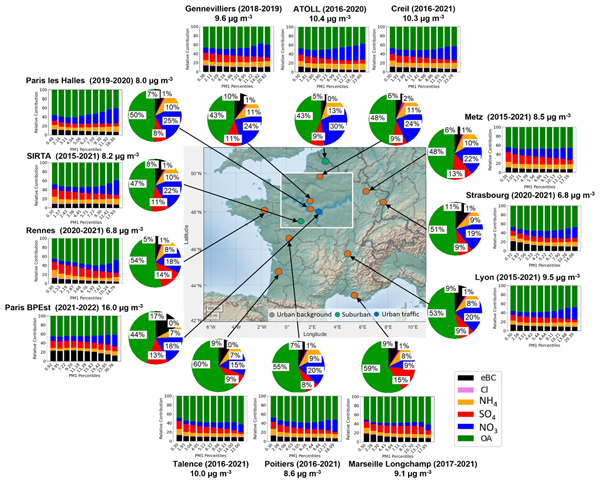
Hasna Chebaicheb, Joel F. de Brito, Tanguy Amodeo, Florian Couvidat, Jean-Eudes Petit, Emmanuel Tison, Gregory Abbou, Alexia Baudic, Mélodie Chatain, Benjamin Chazeau, Nicolas Marchand, Raphaële Falhun, Florie Francony, Cyril Ratier, Didier Grenier, Romain Vidaud, Shouwen Zhang, Gregory Gille, Laurent Meunier, Caroline Marchand, Véronique Riffault, and Olivier Favez
Earth Syst. Sci. Data, 16, 5089–5109, https://doi.org/10.5194/essd-16-5089-2024, https://doi.org/10.5194/essd-16-5089-2024, 2024
Short summary
Short summary
Long-term (2015–2021) quasi-continuous measurements have been obtained at 13 French urban sites using online mass spectrometry, to acquire the comprehensive chemical composition of submicron particulate matter. The results show their spatial and temporal differences and confirm the predominance of organics in France (40–60 %). These measurements can be used for many future studies, such as trend and epidemiological analyses, or comparisons with chemical transport models.
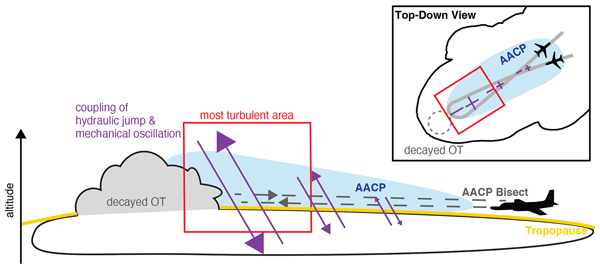
Andrea E. Gordon, Cameron R. Homeyer, Jessica B. Smith, Rei Ueyama, Jonathan M. Dean-Day, Elliot L. Atlas, Kate Smith, Jasna V. Pittman, David S. Sayres, David M. Wilmouth, Apoorva Pandey, Jason M. St. Clair, Thomas F. Hanisco, Jennifer Hare, Reem A. Hannun, Steven Wofsy, Bruce C. Daube, and Stephen Donnelly
Atmos. Chem. Phys., 24, 7591–7608, https://doi.org/10.5194/acp-24-7591-2024, https://doi.org/10.5194/acp-24-7591-2024, 2024
Short summary
Short summary
In situ airborne observations of ongoing tropopause-overshooting convection and an above-anvil cirrus plume from the 31 May 2022 flight of the Dynamics and Chemistry of the Summer Stratosphere (DCOTSS) field campaign are examined. Upper troposphere and lower stratosphere composition changes are evaluated along with possible contributing dynamical and physical processes. Measurements reveal multiple changes in air mass composition and stratospheric hydration throughout the flight.
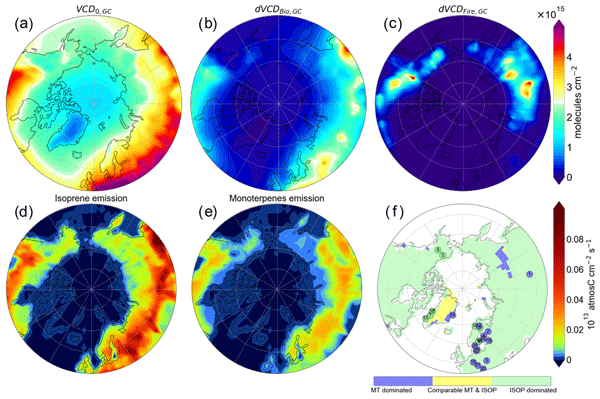
Tianlang Zhao, Jingqiu Mao, Zolal Ayazpour, Gonzalo González Abad, Caroline R. Nowlan, and Yiqi Zheng
Atmos. Chem. Phys., 24, 6105–6121, https://doi.org/10.5194/acp-24-6105-2024, https://doi.org/10.5194/acp-24-6105-2024, 2024
Short summary
Short summary
HCHO variability is a key tracer in understanding VOC emissions in response to climate change. We investigate the role of methane oxidation and biogenic and wildfire emissions in HCHO interannual variability over northern high latitudes in summer, emphasizing wildfires as a key driver of HCHO interannual variability in Alaska, Siberia and northern Canada using satellite HCHO and SIF retrievals and then GEOS-Chem model. We show SIF is a tool to understand biogenic HCHO variability in this region.
Alice Maison, Lya Lugon, Soo-Jin Park, Alexia Baudic, Christopher Cantrell, Florian Couvidat, Barbara D'Anna, Claudia Di Biagio, Aline Gratien, Valérie Gros, Carmen Kalalian, Julien Kammer, Vincent Michoud, Jean-Eudes Petit, Marwa Shahin, Leila Simon, Myrto Valari, Jérémy Vigneron, Andrée Tuzet, and Karine Sartelet
Atmos. Chem. Phys., 24, 6011–6046, https://doi.org/10.5194/acp-24-6011-2024, https://doi.org/10.5194/acp-24-6011-2024, 2024
Short summary
Short summary
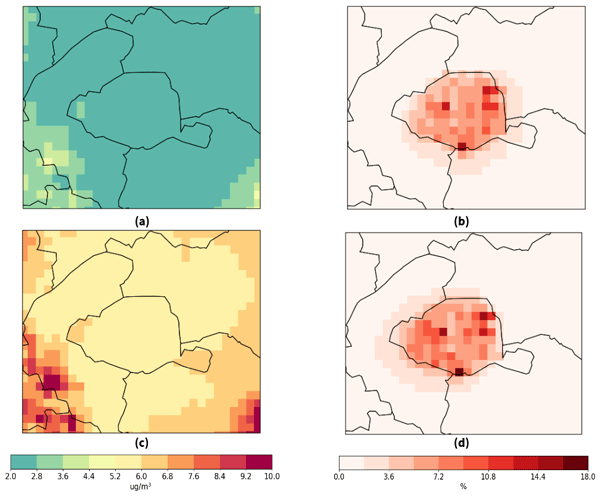
This study presents the development of a bottom-up inventory of urban tree biogenic emissions. Emissions are computed for each tree based on their location and characteristics and are integrated in the regional air quality model WRF-CHIMERE. The impact of these biogenic emissions on air quality is quantified for June–July 2022. Over Paris city, urban trees increase the concentrations of particulate organic matter by 4.6 %, of PM2.5 by 0.6 %, and of ozone by 1.0 % on average over 2 months.
Julie Camman, Benjamin Chazeau, Nicolas Marchand, Amandine Durand, Grégory Gille, Ludovic Lanzi, Jean-Luc Jaffrezo, Henri Wortham, and Gaëlle Uzu
Atmos. Chem. Phys., 24, 3257–3278, https://doi.org/10.5194/acp-24-3257-2024, https://doi.org/10.5194/acp-24-3257-2024, 2024
Short summary
Short summary
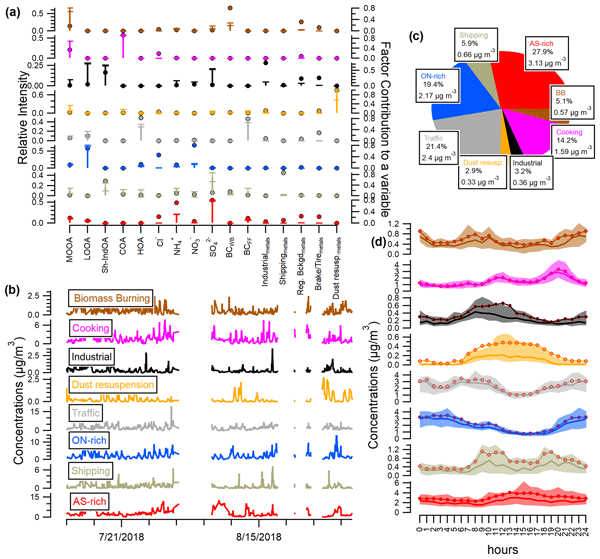
Fine particle (PM1) pollution is a major health issue in the city of Marseille, which is subject to numerous pollution sources. Sampling carried out during the summer enabled a fine characterization of the PM1 sources and their oxidative potential, a promising new metric as a proxy for health impact. PM1 came mainly from combustion sources, secondary ammonium sulfate, and organic nitrate, while the oxidative potential of PM1 came from these sources and from resuspended dust in the atmosphere.
Evangelia Kostenidou, Baptiste Marques, Brice Temime-Roussel, Yao Liu, Boris Vansevenant, Karine Sartelet, and Barbara D'Anna
Atmos. Chem. Phys., 24, 2705–2729, https://doi.org/10.5194/acp-24-2705-2024, https://doi.org/10.5194/acp-24-2705-2024, 2024
Short summary
Short summary
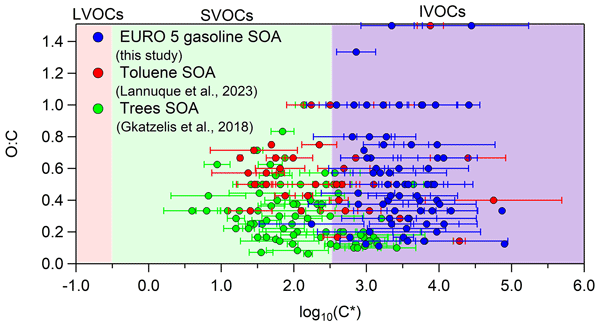
Secondary organic aerosol (SOA) from gasoline vehicles can be a significant source of particulate matter in urban areas. Here the chemical composition of secondary volatile organic compounds and SOA produced by photo-oxidation of Euro 5 gasoline vehicle emissions was studied. The volatility of the SOA formed was calculated. Except for the temperature and the concentration of the aerosol, additional parameters may play a role in the gas-to-particle partitioning.
Sarah Albertin, Joël Savarino, Slimane Bekki, Albane Barbero, Roberto Grilli, Quentin Fournier, Irène Ventrillard, Nicolas Caillon, and Kathy Law
Atmos. Chem. Phys., 24, 1361–1388, https://doi.org/10.5194/acp-24-1361-2024, https://doi.org/10.5194/acp-24-1361-2024, 2024
Short summary
Short summary
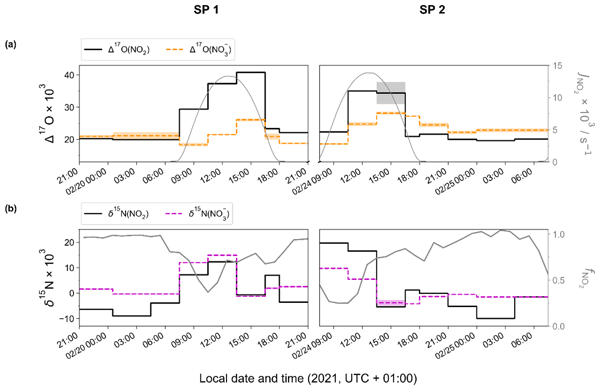
This study reports the first simultaneous records of oxygen (Δ17O) and nitrogen (δ15N) isotopes in nitrogen dioxide (NO2) and nitrate (NO3−). These data are combined with atmospheric observations to explore sub-daily N reactive chemistry and quantify N fractionation effects in an Alpine winter city. The results highlight the necessity of using Δ17O and δ15N in both NO2 and NO3− to avoid biased estimations of NOx sources and fates from NO3− isotopic records in urban winter environments.
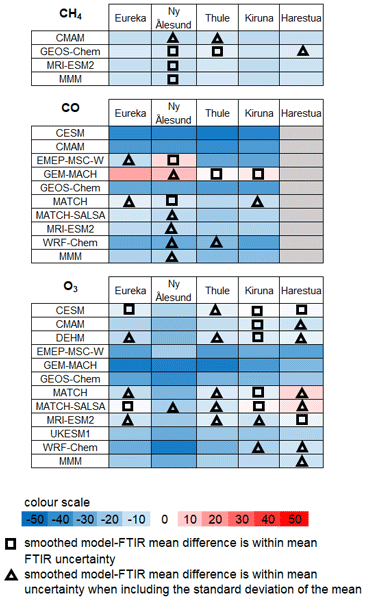
Victoria A. Flood, Kimberly Strong, Cynthia H. Whaley, Kaley A. Walker, Thomas Blumenstock, James W. Hannigan, Johan Mellqvist, Justus Notholt, Mathias Palm, Amelie N. Röhling, Stephen Arnold, Stephen Beagley, Rong-You Chien, Jesper Christensen, Makoto Deushi, Srdjan Dobricic, Xinyi Dong, Joshua S. Fu, Michael Gauss, Wanmin Gong, Joakim Langner, Kathy S. Law, Louis Marelle, Tatsuo Onishi, Naga Oshima, David A. Plummer, Luca Pozzoli, Jean-Christophe Raut, Manu A. Thomas, Svetlana Tsyro, and Steven Turnock
Atmos. Chem. Phys., 24, 1079–1118, https://doi.org/10.5194/acp-24-1079-2024, https://doi.org/10.5194/acp-24-1079-2024, 2024
Short summary
Short summary
It is important to understand the composition of the Arctic atmosphere and how it is changing. Atmospheric models provide simulations that can inform policy. This study examines simulations of CH4, CO, and O3 by 11 models. Model performance is assessed by comparing results matched in space and time to measurements from five high-latitude ground-based infrared spectrometers. This work finds that models generally underpredict the concentrations of these gases in the Arctic troposphere.
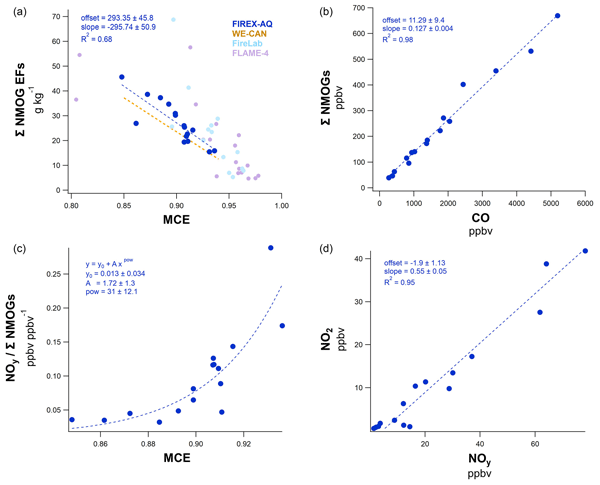
Georgios I. Gkatzelis, Matthew M. Coggon, Chelsea E. Stockwell, Rebecca S. Hornbrook, Hannah Allen, Eric C. Apel, Megan M. Bela, Donald R. Blake, Ilann Bourgeois, Steven S. Brown, Pedro Campuzano-Jost, Jason M. St. Clair, James H. Crawford, John D. Crounse, Douglas A. Day, Joshua P. DiGangi, Glenn S. Diskin, Alan Fried, Jessica B. Gilman, Hongyu Guo, Johnathan W. Hair, Hannah S. Halliday, Thomas F. Hanisco, Reem Hannun, Alan Hills, L. Gregory Huey, Jose L. Jimenez, Joseph M. Katich, Aaron Lamplugh, Young Ro Lee, Jin Liao, Jakob Lindaas, Stuart A. McKeen, Tomas Mikoviny, Benjamin A. Nault, J. Andrew Neuman, John B. Nowak, Demetrios Pagonis, Jeff Peischl, Anne E. Perring, Felix Piel, Pamela S. Rickly, Michael A. Robinson, Andrew W. Rollins, Thomas B. Ryerson, Melinda K. Schueneman, Rebecca H. Schwantes, Joshua P. Schwarz, Kanako Sekimoto, Vanessa Selimovic, Taylor Shingler, David J. Tanner, Laura Tomsche, Krystal T. Vasquez, Patrick R. Veres, Rebecca Washenfelder, Petter Weibring, Paul O. Wennberg, Armin Wisthaler, Glenn M. Wolfe, Caroline C. Womack, Lu Xu, Katherine Ball, Robert J. Yokelson, and Carsten Warneke
Atmos. Chem. Phys., 24, 929–956, https://doi.org/10.5194/acp-24-929-2024, https://doi.org/10.5194/acp-24-929-2024, 2024
Short summary
Short summary
This study reports emissions of gases and particles from wildfires. These emissions are related to chemical proxies that can be measured by satellite and incorporated into models to improve predictions of wildfire impacts on air quality and climate.
Meeta Cesler-Maloney, William Simpson, Jonas Kuhn, Jochen Stutz, Jennie Thomas, Tjarda Roberts, Deanna Huff, and Sol Cooperdock
EGUsphere, https://doi.org/10.5194/egusphere-2023-3082, https://doi.org/10.5194/egusphere-2023-3082, 2024
Preprint archived
Short summary
Short summary
We used a one-dimensional model to simulate how pollution in Fairbanks, Alaska, accumulates in shallow layers near the ground when temperature inversions are present. We find pollution accumulates in a 20 m to 50 m thick layer. The model agrees with observations of SO2 pollution using only home heating emissions sources, which shows that ground-based sources dominate sulfur pollution in downtown Fairbanks. Air residence times in downtown are only a few hours, limiting chemical transformations.
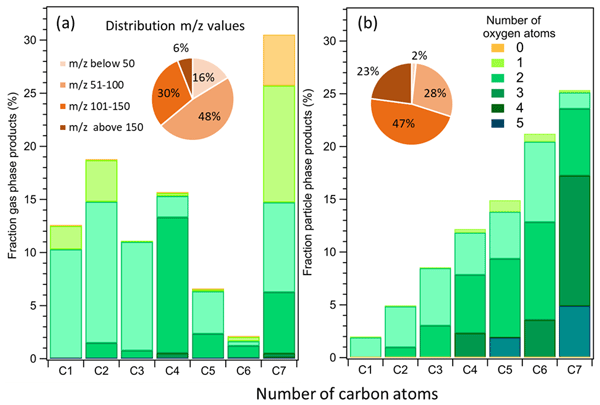
Victor Lannuque, Barbara D'Anna, Evangelia Kostenidou, Florian Couvidat, Alvaro Martinez-Valiente, Philipp Eichler, Armin Wisthaler, Markus Müller, Brice Temime-Roussel, Richard Valorso, and Karine Sartelet
Atmos. Chem. Phys., 23, 15537–15560, https://doi.org/10.5194/acp-23-15537-2023, https://doi.org/10.5194/acp-23-15537-2023, 2023
Short summary
Short summary
Large uncertainties remain in understanding secondary organic aerosol (SOA) formation from toluene oxidation. In this study, speciation measurements in gaseous and particulate phases were carried out, providing partitioning and volatility data on individual toluene SOA components at different temperatures. A new detailed oxidation mechanism was developed to improve modeled speciation, and effects of different processes involved in gas–particle partitioning at the molecular scale are explored.
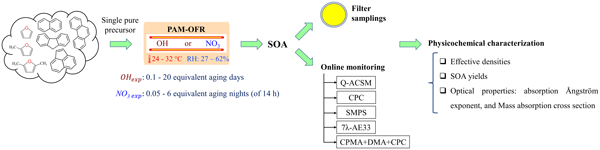
Abd El Rahman El Mais, Barbara D'Anna, Luka Drinovec, Andrew T. Lambe, Zhe Peng, Jean-Eudes Petit, Olivier Favez, Selim Aït-Aïssa, and Alexandre Albinet
Atmos. Chem. Phys., 23, 15077–15096, https://doi.org/10.5194/acp-23-15077-2023, https://doi.org/10.5194/acp-23-15077-2023, 2023
Short summary
Short summary
Polycyclic aromatic hydrocarbons (PAHS) and furans are key precursors of secondary organic aerosols (SOAs) related to biomass burning emissions. We evaluated and compared the formation yields, and the physical and light absorption properties, of laboratory-generated SOAs from the oxidation of such compounds for both, day- and nighttime reactivities. The results illustrate that PAHs are large SOA precursors and may contribute significantly to the biomass burning brown carbon in the atmosphere.
Yiqi Zheng, Larry W. Horowitz, Raymond Menzel, David J. Paynter, Vaishali Naik, Jingyi Li, and Jingqiu Mao
Atmos. Chem. Phys., 23, 8993–9007, https://doi.org/10.5194/acp-23-8993-2023, https://doi.org/10.5194/acp-23-8993-2023, 2023
Short summary
Short summary
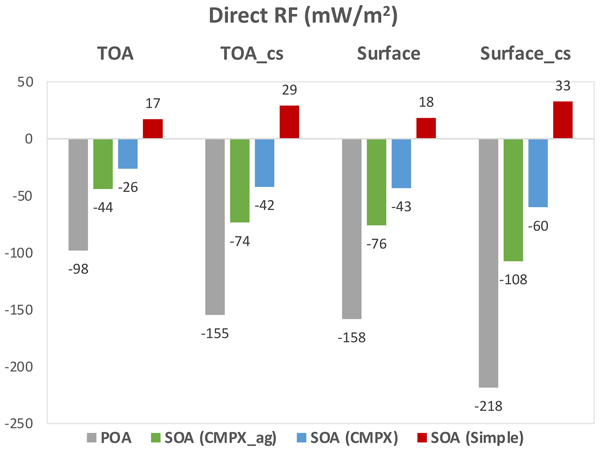
Biogenic secondary organic aerosols (SOAs) account for a large fraction of fine aerosol at the global scale. Using long-term measurements and a climate model, we investigate anthropogenic impacts on biogenic SOA at both decadal and centennial timescales. Results show that despite reductions in biogenic precursor emissions, SOA has been strongly amplified by anthropogenic emissions since the preindustrial era and exerts a cooling radiative forcing.
Emma L. Yates, Laura T. Iraci, Susan S. Kulawik, Ju-Mee Ryoo, Josette E. Marrero, Caroline L. Parworth, Jason M. St. Clair, Thomas F. Hanisco, Thao Paul V. Bui, Cecilia S. Chang, and Jonathan M. Dean-Day
Earth Syst. Sci. Data, 15, 2375–2389, https://doi.org/10.5194/essd-15-2375-2023, https://doi.org/10.5194/essd-15-2375-2023, 2023
Short summary
Short summary
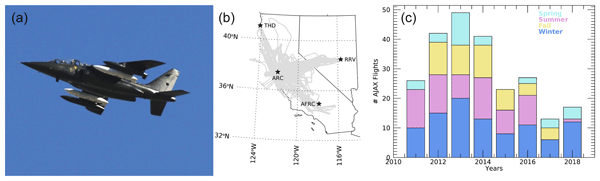
The Alpha Jet Atmospheric eXperiment (AJAX) flew scientific flights between 2011 and 2018 providing measurements of carbon dioxide, methane, ozone, formaldehyde, water vapor and meteorological parameters over California and Nevada, USA. AJAX was a multi-year, multi-objective, multi-instrument program with a variety of sampling strategies resulting in an extensive dataset of interest to a wide variety of users. AJAX measurements have been published at https://asdc.larc.nasa.gov/project/AJAX.
Eleftherios Ioannidis, Kathy S. Law, Jean-Christophe Raut, Louis Marelle, Tatsuo Onishi, Rachel M. Kirpes, Lucia M. Upchurch, Thomas Tuch, Alfred Wiedensohler, Andreas Massling, Henrik Skov, Patricia K. Quinn, and Kerri A. Pratt
Atmos. Chem. Phys., 23, 5641–5678, https://doi.org/10.5194/acp-23-5641-2023, https://doi.org/10.5194/acp-23-5641-2023, 2023
Short summary
Short summary
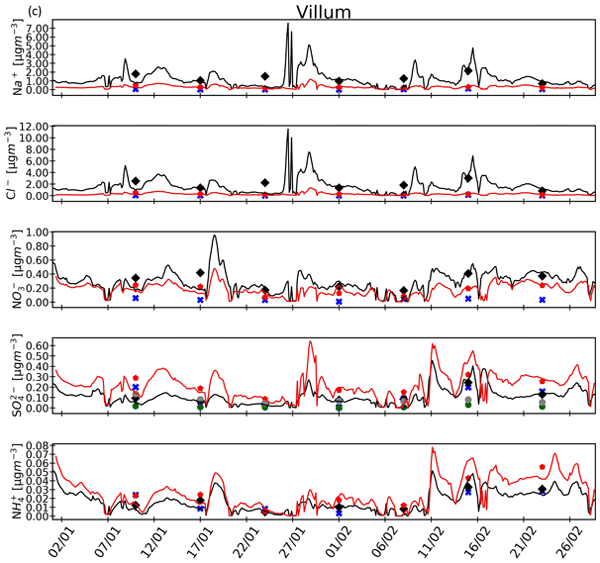
Remote and local anthropogenic emissions contribute to wintertime Arctic haze, with enhanced aerosol concentrations, but natural sources, which also contribute, are less well studied. Here, modelled wintertime sea-spray aerosols are improved in WRF-Chem over the wider Arctic by including updated wind speed and temperature-dependent treatments. As a result, anthropogenic nitrate aerosols are also improved. Open leads are confirmed to be the main source of sea-spray aerosols over northern Alaska.
Cynthia H. Whaley, Kathy S. Law, Jens Liengaard Hjorth, Henrik Skov, Stephen R. Arnold, Joakim Langner, Jakob Boyd Pernov, Garance Bergeron, Ilann Bourgeois, Jesper H. Christensen, Rong-You Chien, Makoto Deushi, Xinyi Dong, Peter Effertz, Gregory Faluvegi, Mark Flanner, Joshua S. Fu, Michael Gauss, Greg Huey, Ulas Im, Rigel Kivi, Louis Marelle, Tatsuo Onishi, Naga Oshima, Irina Petropavlovskikh, Jeff Peischl, David A. Plummer, Luca Pozzoli, Jean-Christophe Raut, Tom Ryerson, Ragnhild Skeie, Sverre Solberg, Manu A. Thomas, Chelsea Thompson, Kostas Tsigaridis, Svetlana Tsyro, Steven T. Turnock, Knut von Salzen, and David W. Tarasick
Atmos. Chem. Phys., 23, 637–661, https://doi.org/10.5194/acp-23-637-2023, https://doi.org/10.5194/acp-23-637-2023, 2023
Short summary
Short summary
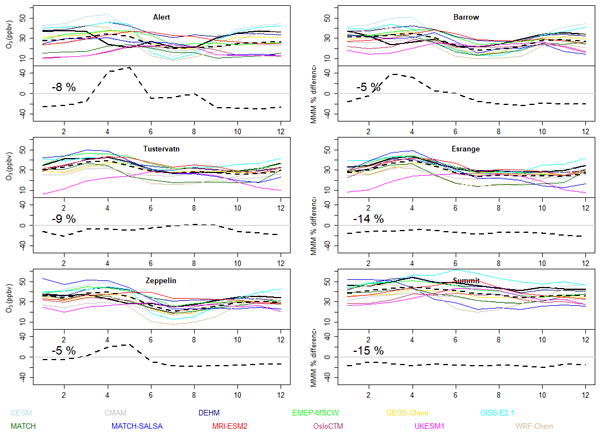
This study summarizes recent research on ozone in the Arctic, a sensitive and rapidly warming region. We find that the seasonal cycles of near-surface atmospheric ozone are variable depending on whether they are near the coast, inland, or at high altitude. Several global model simulations were evaluated, and we found that because models lack some of the ozone chemistry that is important for the coastal Arctic locations, they do not accurately simulate ozone there.
Hao Guo, Clare M. Flynn, Michael J. Prather, Sarah A. Strode, Stephen D. Steenrod, Louisa Emmons, Forrest Lacey, Jean-Francois Lamarque, Arlene M. Fiore, Gus Correa, Lee T. Murray, Glenn M. Wolfe, Jason M. St. Clair, Michelle Kim, John Crounse, Glenn Diskin, Joshua DiGangi, Bruce C. Daube, Roisin Commane, Kathryn McKain, Jeff Peischl, Thomas B. Ryerson, Chelsea Thompson, Thomas F. Hanisco, Donald Blake, Nicola J. Blake, Eric C. Apel, Rebecca S. Hornbrook, James W. Elkins, Eric J. Hintsa, Fred L. Moore, and Steven C. Wofsy
Atmos. Chem. Phys., 23, 99–117, https://doi.org/10.5194/acp-23-99-2023, https://doi.org/10.5194/acp-23-99-2023, 2023
Short summary
Short summary
We have prepared a unique and unusual result from the recent ATom aircraft mission: a measurement-based derivation of the production and loss rates of ozone and methane over the ocean basins. These are the key products of chemistry models used in assessments but have thus far lacked observational metrics. It also shows the scales of variability of atmospheric chemical rates and provides a major challenge to the atmospheric models.
Pamela S. Rickly, Hongyu Guo, Pedro Campuzano-Jost, Jose L. Jimenez, Glenn M. Wolfe, Ryan Bennett, Ilann Bourgeois, John D. Crounse, Jack E. Dibb, Joshua P. DiGangi, Glenn S. Diskin, Maximilian Dollner, Emily M. Gargulinski, Samuel R. Hall, Hannah S. Halliday, Thomas F. Hanisco, Reem A. Hannun, Jin Liao, Richard Moore, Benjamin A. Nault, John B. Nowak, Jeff Peischl, Claire E. Robinson, Thomas Ryerson, Kevin J. Sanchez, Manuel Schöberl, Amber J. Soja, Jason M. St. Clair, Kenneth L. Thornhill, Kirk Ullmann, Paul O. Wennberg, Bernadett Weinzierl, Elizabeth B. Wiggins, Edward L. Winstead, and Andrew W. Rollins
Atmos. Chem. Phys., 22, 15603–15620, https://doi.org/10.5194/acp-22-15603-2022, https://doi.org/10.5194/acp-22-15603-2022, 2022
Short summary
Short summary
Biomass burning sulfur dioxide (SO2) emission factors range from 0.27–1.1 g kg-1 C. Biomass burning SO2 can quickly form sulfate and organosulfur, but these pathways are dependent on liquid water content and pH. Hydroxymethanesulfonate (HMS) appears to be directly emitted from some fire sources but is not the sole contributor to the organosulfur signal. It is shown that HMS and organosulfur chemistry may be an important S(IV) reservoir with the fate dependent on the surrounding conditions.
Marta Via, Gang Chen, Francesco Canonaco, Kaspar R. Daellenbach, Benjamin Chazeau, Hasna Chebaicheb, Jianhui Jiang, Hannes Keernik, Chunshui Lin, Nicolas Marchand, Cristina Marin, Colin O'Dowd, Jurgita Ovadnevaite, Jean-Eudes Petit, Michael Pikridas, Véronique Riffault, Jean Sciare, Jay G. Slowik, Leïla Simon, Jeni Vasilescu, Yunjiang Zhang, Olivier Favez, André S. H. Prévôt, Andrés Alastuey, and María Cruz Minguillón
Atmos. Meas. Tech., 15, 5479–5495, https://doi.org/10.5194/amt-15-5479-2022, https://doi.org/10.5194/amt-15-5479-2022, 2022
Short summary
Short summary
This work presents the differences resulting from two techniques (rolling and seasonal) of the positive matrix factorisation model that can be run for organic aerosol source apportionment. The current state of the art suggests that the rolling technique is more accurate, but no proof of its effectiveness has been provided yet. This paper tackles this issue in the context of a synthetic dataset and a multi-site real-world comparison.
Ilann Bourgeois, Jeff Peischl, J. Andrew Neuman, Steven S. Brown, Hannah M. Allen, Pedro Campuzano-Jost, Matthew M. Coggon, Joshua P. DiGangi, Glenn S. Diskin, Jessica B. Gilman, Georgios I. Gkatzelis, Hongyu Guo, Hannah A. Halliday, Thomas F. Hanisco, Christopher D. Holmes, L. Gregory Huey, Jose L. Jimenez, Aaron D. Lamplugh, Young Ro Lee, Jakob Lindaas, Richard H. Moore, Benjamin A. Nault, John B. Nowak, Demetrios Pagonis, Pamela S. Rickly, Michael A. Robinson, Andrew W. Rollins, Vanessa Selimovic, Jason M. St. Clair, David Tanner, Krystal T. Vasquez, Patrick R. Veres, Carsten Warneke, Paul O. Wennberg, Rebecca A. Washenfelder, Elizabeth B. Wiggins, Caroline C. Womack, Lu Xu, Kyle J. Zarzana, and Thomas B. Ryerson
Atmos. Meas. Tech., 15, 4901–4930, https://doi.org/10.5194/amt-15-4901-2022, https://doi.org/10.5194/amt-15-4901-2022, 2022
Short summary
Short summary
Understanding fire emission impacts on the atmosphere is key to effective air quality management and requires accurate measurements. We present a comparison of airborne measurements of key atmospheric species in ambient air and in fire smoke. We show that most instruments performed within instrument uncertainties. In some cases, further work is needed to fully characterize instrument performance. Comparing independent measurements using different techniques is important to assess their accuracy.
Boris D. Belan, Gerard Ancellet, Irina S. Andreeva, Pavel N. Antokhin, Viktoria G. Arshinova, Mikhail Y. Arshinov, Yurii S. Balin, Vladimir E. Barsuk, Sergei B. Belan, Dmitry G. Chernov, Denis K. Davydov, Alexander V. Fofonov, Georgii A. Ivlev, Sergei N. Kotel'nikov, Alexander S. Kozlov, Artem V. Kozlov, Katharine Law, Andrey V. Mikhal'chishin, Igor A. Moseikin, Sergei V. Nasonov, Philippe Nédélec, Olesya V. Okhlopkova, Sergei E. Ol'kin, Mikhail V. Panchenko, Jean-Daniel Paris, Iogannes E. Penner, Igor V. Ptashnik, Tatyana M. Rasskazchikova, Irina K. Reznikova, Oleg A. Romanovskii, Alexander S. Safatov, Denis E. Savkin, Denis V. Simonenkov, Tatyana K. Sklyadneva, Gennadii N. Tolmachev, Semyon V. Yakovlev, and Polina N. Zenkova
Atmos. Meas. Tech., 15, 3941–3967, https://doi.org/10.5194/amt-15-3941-2022, https://doi.org/10.5194/amt-15-3941-2022, 2022
Short summary
Short summary
The change of the global climate is most pronounced in the Arctic, where the air temperature increases faster than the global average. This is associated with an increase in the concentration of greenhouse gases in the atmosphere. It is important to study how the air composition in the Arctic changes in the changing climate. Thus this integrated experiment was carried out to measure the composition of the troposphere in the Russian sector of the Arctic from on board the aircraft laboratory.
Junteng Wu, Nicolas Brun, Juan Miguel González-Sánchez, Badr R'Mili, Brice Temime Roussel, Sylvain Ravier, Jean-Louis Clément, and Anne Monod
Atmos. Meas. Tech., 15, 3859–3874, https://doi.org/10.5194/amt-15-3859-2022, https://doi.org/10.5194/amt-15-3859-2022, 2022
Short summary
Short summary
This work quantified and tentatively identified the organic impurities on ammonium sulfate aerosols generated in the laboratory. They are likely low volatile and high mass molecules containing oxygen, nitrogen, and/or sulfur. Our results show that these organic impurities likely originate from the commercial AS crystals. It is recommended to use AS seeds with caution, especially when small particles are used, in terms of AS purity and water purity when aqueous solutions are used for atomization.
Linghan Zeng, Jack Dibb, Eric Scheuer, Joseph M. Katich, Joshua P. Schwarz, Ilann Bourgeois, Jeff Peischl, Tom Ryerson, Carsten Warneke, Anne E. Perring, Glenn S. Diskin, Joshua P. DiGangi, John B. Nowak, Richard H. Moore, Elizabeth B. Wiggins, Demetrios Pagonis, Hongyu Guo, Pedro Campuzano-Jost, Jose L. Jimenez, Lu Xu, and Rodney J. Weber
Atmos. Chem. Phys., 22, 8009–8036, https://doi.org/10.5194/acp-22-8009-2022, https://doi.org/10.5194/acp-22-8009-2022, 2022
Short summary
Short summary
Wildfires emit aerosol particles containing brown carbon material that affects visibility and global climate and is toxic. Brown carbon is poorly characterized due to measurement limitations, and its evolution in the atmosphere is not well known. We report on aircraft measurements of brown carbon from large wildfires in the western United States. We compare two methods for measuring brown carbon and study the evolution of brown carbon in the smoke as it moved away from the burning regions.
Tianlang Zhao, Jingqiu Mao, William R. Simpson, Isabelle De Smedt, Lei Zhu, Thomas F. Hanisco, Glenn M. Wolfe, Jason M. St. Clair, Gonzalo González Abad, Caroline R. Nowlan, Barbara Barletta, Simone Meinardi, Donald R. Blake, Eric C. Apel, and Rebecca S. Hornbrook
Atmos. Chem. Phys., 22, 7163–7178, https://doi.org/10.5194/acp-22-7163-2022, https://doi.org/10.5194/acp-22-7163-2022, 2022
Short summary
Short summary
Monitoring formaldehyde (HCHO) can help us understand Arctic vegetation change. Here, we compare satellite data and model and show that Alaska summertime HCHO is largely dominated by a background from methane oxidation during mild wildfire years and is dominated by wildfire (largely from direct emission of fire) during strong fire years. Consequently, it is challenging to use satellite HCHO to study vegetation change in the Arctic region.
Cynthia H. Whaley, Rashed Mahmood, Knut von Salzen, Barbara Winter, Sabine Eckhardt, Stephen Arnold, Stephen Beagley, Silvia Becagli, Rong-You Chien, Jesper Christensen, Sujay Manish Damani, Xinyi Dong, Konstantinos Eleftheriadis, Nikolaos Evangeliou, Gregory Faluvegi, Mark Flanner, Joshua S. Fu, Michael Gauss, Fabio Giardi, Wanmin Gong, Jens Liengaard Hjorth, Lin Huang, Ulas Im, Yugo Kanaya, Srinath Krishnan, Zbigniew Klimont, Thomas Kühn, Joakim Langner, Kathy S. Law, Louis Marelle, Andreas Massling, Dirk Olivié, Tatsuo Onishi, Naga Oshima, Yiran Peng, David A. Plummer, Olga Popovicheva, Luca Pozzoli, Jean-Christophe Raut, Maria Sand, Laura N. Saunders, Julia Schmale, Sangeeta Sharma, Ragnhild Bieltvedt Skeie, Henrik Skov, Fumikazu Taketani, Manu A. Thomas, Rita Traversi, Kostas Tsigaridis, Svetlana Tsyro, Steven Turnock, Vito Vitale, Kaley A. Walker, Minqi Wang, Duncan Watson-Parris, and Tahya Weiss-Gibbons
Atmos. Chem. Phys., 22, 5775–5828, https://doi.org/10.5194/acp-22-5775-2022, https://doi.org/10.5194/acp-22-5775-2022, 2022
Short summary
Short summary
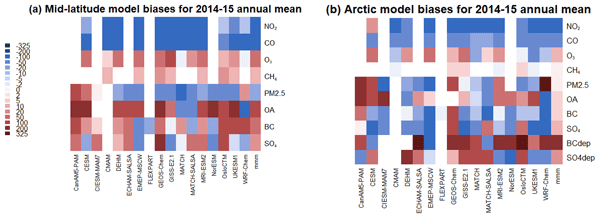
Air pollutants, like ozone and soot, play a role in both global warming and air quality. Atmospheric models are often used to provide information to policy makers about current and future conditions under different emissions scenarios. In order to have confidence in those simulations, in this study we compare simulated air pollution from 18 state-of-the-art atmospheric models to measured air pollution in order to assess how well the models perform.
Glenn M. Wolfe, Thomas F. Hanisco, Heather L. Arkinson, Donald R. Blake, Armin Wisthaler, Tomas Mikoviny, Thomas B. Ryerson, Ilana Pollack, Jeff Peischl, Paul O. Wennberg, John D. Crounse, Jason M. St. Clair, Alex Teng, L. Gregory Huey, Xiaoxi Liu, Alan Fried, Petter Weibring, Dirk Richter, James Walega, Samuel R. Hall, Kirk Ullmann, Jose L. Jimenez, Pedro Campuzano-Jost, T. Paul Bui, Glenn Diskin, James R. Podolske, Glen Sachse, and Ronald C. Cohen
Atmos. Chem. Phys., 22, 4253–4275, https://doi.org/10.5194/acp-22-4253-2022, https://doi.org/10.5194/acp-22-4253-2022, 2022
Short summary
Short summary
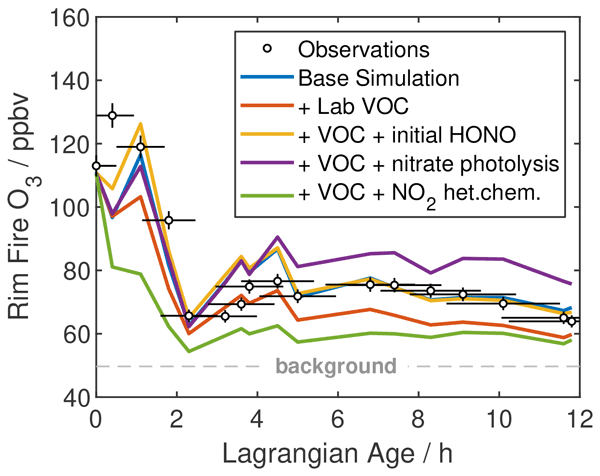
Smoke plumes are chemically complex. This work combines airborne observations of smoke plume composition with a photochemical model to probe the production of ozone and the fate of reactive gases in the outflow of a large wildfire. Model–measurement comparisons illustrate how uncertain emissions and chemical processes propagate into simulated chemical evolution. Results provide insight into how this system responds to perturbations, which can help guide future observation and modeling efforts.
Jin Liao, Glenn M. Wolfe, Reem A. Hannun, Jason M. St. Clair, Thomas F. Hanisco, Jessica B. Gilman, Aaron Lamplugh, Vanessa Selimovic, Glenn S. Diskin, John B. Nowak, Hannah S. Halliday, Joshua P. DiGangi, Samuel R. Hall, Kirk Ullmann, Christopher D. Holmes, Charles H. Fite, Anxhelo Agastra, Thomas B. Ryerson, Jeff Peischl, Ilann Bourgeois, Carsten Warneke, Matthew M. Coggon, Georgios I. Gkatzelis, Kanako Sekimoto, Alan Fried, Dirk Richter, Petter Weibring, Eric C. Apel, Rebecca S. Hornbrook, Steven S. Brown, Caroline C. Womack, Michael A. Robinson, Rebecca A. Washenfelder, Patrick R. Veres, and J. Andrew Neuman
Atmos. Chem. Phys., 21, 18319–18331, https://doi.org/10.5194/acp-21-18319-2021, https://doi.org/10.5194/acp-21-18319-2021, 2021
Short summary
Short summary
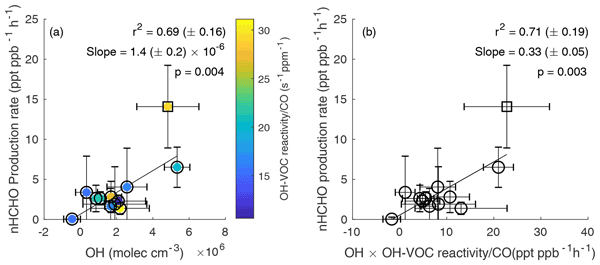
Formaldehyde (HCHO) is an important oxidant precursor and affects the formation of O3 and other secondary pollutants in wildfire plumes. We disentangle the processes controlling HCHO evolution from wildfire plumes sampled by NASA DC-8 during FIREX-AQ. We find that OH abundance rather than normalized OH reactivity is the main driver of fire-to-fire variability in HCHO secondary production and estimate an effective HCHO yield per volatile organic compound molecule oxidized in wildfire plumes.
Amir H. Souri, Kelly Chance, Juseon Bak, Caroline R. Nowlan, Gonzalo González Abad, Yeonjin Jung, David C. Wong, Jingqiu Mao, and Xiong Liu
Atmos. Chem. Phys., 21, 18227–18245, https://doi.org/10.5194/acp-21-18227-2021, https://doi.org/10.5194/acp-21-18227-2021, 2021
Short summary
Short summary
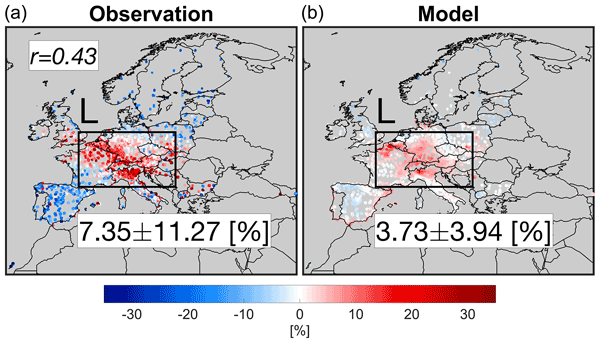
The global pandemic is believed to have an impact on emissions of air pollutants such as nitrogen dioxide (NO2) and formaldehyde (HCHO). This study quantifies the changes in the amount of NOx and VOC emissions via state-of-the-art inverse modeling technique using satellite observations during the lockdown 2020 with respect to a baseline over Europe, which in turn, it permits unraveling atmospheric processes being responsible for ozone formation in a less cloudy month.
Boris Vansevenant, Cédric Louis, Corinne Ferronato, Ludovic Fine, Patrick Tassel, Pascal Perret, Evangelia Kostenidou, Brice Temime-Roussel, Barbara D'Anna, Karine Sartelet, Véronique Cerezo, and Yao Liu
Atmos. Meas. Tech., 14, 7627–7655, https://doi.org/10.5194/amt-14-7627-2021, https://doi.org/10.5194/amt-14-7627-2021, 2021
Short summary
Short summary
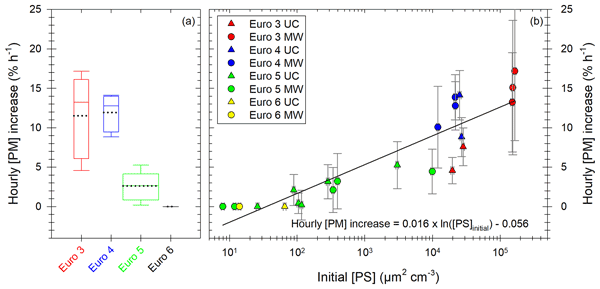
A new method was developed to correct wall losses of particles on Teflon walls using a new environmental chamber. It was applied to experiments with six diesel vehicles (Euro 3 to 6), tested on a chassis dynamometer. Emissions of particles and precursors were obtained under urban and motorway conditions. The chamber experiments help understand the role of physical processes in diesel particle evolutions in the dark. These results can be applied to situations such as tunnels or winter rush hours.
Cited articles
Aoki, N., Inomata, S., and Tanimoto, H.: Detection of C1–C5 alkyl nitrates by proton transfer reaction time-of-flight mass spectrometry, Int. J. Mass Spectrom., 263, 12–21, https://doi.org/10.1016/j.ijms.2006.11.018, 2007.
Baudic, A., Gros, V., Sauvage, S., Locoge, N., Sanchez, O., Sarda-Estève, R., Kalogridis, C., Petit, J.-E., Bonnaire, N., Baisnée, D., Favez, O., Albinet, A., Sciare, J., and Bonsang, B.: Seasonal variability and source apportionment of volatile organic compounds (VOCs) in the Paris megacity (France), Atmos. Chem. Phys., 16, 11961–11989, https://doi.org/10.5194/acp-16-11961-2016, 2016.
Boyce, S. D. and Hoffmann, M. R.: Kinetics and mechanism of the formation of hydroxymethanesulfonic acid at low pH, J. Phys. Chem., 88, 4740–4746, https://doi.org/10.1021/j150664a059, 1984.
Brett, N., Law, K. S., Arnold, S. R., Fochesatto, J. G., Raut, J.-C., Onishi, T., Gilliam, R., Fahey, K., Huff, D., Pouliot, G., Barret, B., Dieudonné, E., Pohorsky, R., Schmale, J., Baccarini, A., Bekki, S., Pappaccogli, G., Scoto, F., Decesari, S., Donateo, A., Cesler-Maloney, M., Simpson, W., Medina, P., D'Anna, B., Temime-Roussel, B., Savarino, J., Albertin, S., Mao, J., Alexander, B., Moon, A., DeCarlo, P. F., Selimovic, V., Yokelson, R., and Robinson, E. S.: Investigating processes influencing simulation of local Arctic wintertime anthropogenic pollution in Fairbanks, Alaska, during ALPACA-2022, Atmos. Chem. Phys., 25, 1063–1104, https://doi.org/10.5194/acp-25-1063-2025, 2025.
Brown, P., Watts, P., Märk, T. D., and Mayhew, C. A.: Proton transfer reaction mass spectrometry investigations on the effects of reduced electric field and reagent ion internal energy on product ion branching ratios for a series of saturated alcohols, Int. J. Mass Spectrom., 294, 103–111, https://doi.org/10.1016/j.ijms.2010.05.028, 2010.
Buhr, K., van Ruth, S., and Delahunty, C.: Analysis of volatile flavour compounds by Proton Transfer Reaction-Mass Spectrometry: fragmentation patterns and discrimination between isobaric and isomeric compounds, Int. J. Mass Spectrom., 221, 1–7, https://doi.org/10.1016/S1387-3806(02)00896-5, 2002.
Campbell, J., Temime-Roussel, B., D'Anna, B., Law, K., Zhang, W., Weber, R., Battaglia Jr., M., Dingilian, K., Cesler-Maloney, M., St Clair, J., Chazeau, B., and Mao, J.: Online gas-phase PTR-ToF-MS data in wintertime Fairbanks, Alaska during the Alaska Layered Pollution and Chemical Analysis (ALPACA) campaign 2022, Arctic Data Center [data set], https://doi.org/10.18739/A2G44HS98, 2026.
Campbell, J. R., Battaglia, M., Dingilian, K., Cesler-Maloney, M., St Clair, J. M., Hanisco, T. F., Robinson, E., DeCarlo, P., Simpson, W., Nenes, A., Weber, R. J., and Mao, J.: Source and Chemistry of Hydroxymethanesulfonate (HMS) in Fairbanks, Alaska, Environ. Sci. Technol., acs.est.2c00410, https://doi.org/10.1021/acs.est.2c00410, 2022.
Campbell, J. R., Michael Battaglia Jr., Dingilian, K. K., Cesler-Maloney, M., Simpson, W. R., Robinson, E. S., DeCarlo, P. F., Temime-Roussel, B., D'Anna, B., Holen, A. L., Wu, J., Pratt, K. A., Dibb, J. E., Nenes, A., Weber, R. J., and Mao, J.: Enhanced aqueous formation and neutralization of fine atmospheric particles driven by extreme cold, Sci. Adv., 10, eado4373, https://doi.org/10.1126/sciadv.ado4373, 2024.
Canonaco, F., Crippa, M., Slowik, J. G., Baltensperger, U., and Prévôt, A. S. H.: SoFi, an IGOR-based interface for the efficient use of the generalized multilinear engine (ME-2) for the source apportionment: ME-2 application to aerosol mass spectrometer data, Atmos. Meas. Tech., 6, 3649–3661, https://doi.org/10.5194/amt-6-3649-2013, 2013.
Cao, Y., Zhao, H., Zhang, S., Wu, X., Anderson, J. E., Shen, W., Wallington, T. J., and Wu, Y.: Impacts of ethanol blended fuels and cold temperature on VOC emissions from gasoline vehicles in China, Environ. Pollut., 348, 123869, https://doi.org/10.1016/j.envpol.2024.123869, 2024.
Cappellin, L., Karl, T., Probst, M., Ismailova, O., Winkler, P. M., Soukoulis, C., Aprea, E., Märk, T. D., Gasperi, F., and Biasioli, F.: On Quantitative Determination of Volatile Organic Compound Concentrations Using Proton Transfer Reaction Time-of-Flight Mass Spectrometry, Environ. Sci. Technol., 46, 2283–2290, https://doi.org/10.1021/es203985t, 2012.
Cesler-Maloney, M., Simpson, W. R., Miles, T., Mao, J., Law, K. S., and Roberts, T. J.: Differences in Ozone and Particulate Matter Between Ground Level and 20 m Aloft are Frequent During Wintertime Surface-Based Temperature Inversions in Fairbanks, Alaska, J. Geophys. Res.-Atmos., 127, e2021JD036215, https://doi.org/10.1029/2021JD036215, 2022.
Cofer, W. R., Collins, V. G., and Talbot, R. W.: Improved aqueous scrubber for collection of soluble atmospheric trace gases, Environ. Sci. Technol., 19, 557–560, https://doi.org/10.1021/es00136a012, 1985.
Coggon, M. M., Lim, C. Y., Koss, A. R., Sekimoto, K., Yuan, B., Gilman, J. B., Hagan, D. H., Selimovic, V., Zarzana, K. J., Brown, S. S., Roberts, J. M., Müller, M., Yokelson, R., Wisthaler, A., Krechmer, J. E., Jimenez, J. L., Cappa, C., Kroll, J. H., de Gouw, J., and Warneke, C.: OH chemistry of non-methane organic gases (NMOGs) emitted from laboratory and ambient biomass burning smoke: evaluating the influence of furans and oxygenated aromatics on ozone and secondary NMOG formation, Atmos. Chem. Phys., 19, 14875–14899, https://doi.org/10.5194/acp-19-14875-2019, 2019.
Coggon, M. M., Stockwell, C. E., Claflin, M. S., Pfannerstill, E. Y., Xu, L., Gilman, J. B., Marcantonio, J., Cao, C., Bates, K., Gkatzelis, G. I., Lamplugh, A., Katz, E. F., Arata, C., Apel, E. C., Hornbrook, R. S., Piel, F., Majluf, F., Blake, D. R., Wisthaler, A., Canagaratna, M., Lerner, B. M., Goldstein, A. H., Mak, J. E., and Warneke, C.: Identifying and correcting interferences to PTR-ToF-MS measurements of isoprene and other urban volatile organic compounds, Atmos. Meas. Tech., 17, 801–825, https://doi.org/10.5194/amt-17-801-2024, 2024.
de Gouw, J. and Warneke, C.: Measurements of volatile organic compounds in the earth's atmosphere using proton-transfer-reaction mass spectrometry, Mass Spectrom. Rev., 26, 223–257, https://doi.org/10.1002/mas.20119, 2007.
Dingilian, K., Hebert, E., Battaglia, M. Jr., Campbell, J. R., Cesler-Maloney, M., Simpson, W., St. Clair, J. M., Dibb, J., Temime-Roussel, B., D'Anna, B., Moon, A., Alexander, B., Yang, Y., Nenes, A., Mao, J., and Weber, R. J.: Hydroxymethanesulfonate and Sulfur(IV) in Fairbanks Winter During the ALPACA Study, ACS EST Air, https://doi.org/10.1021/acsestair.4c00012, 2024a.
Dingilian, K., Hebert, E., Battaglia, M., Campbell, J., Cesler-Maloney, M., Simpson, W., St. Clair, J., Dibb, J., Temime-Roussel, B., D'Anna, B., Moon, A., Alexander, B., Yang, Y., Nenes, A., Mao, J., and Weber, R.: Hydroxymethanesulfonate and Sulfur (IV) in Fairbanks Winter During the Alaskan Layered Pollution and Chemical Analysis (ALPACA) Study, 2022, Arctic Data Center [data set], https://doi.org/10.18739/A2VD6P65Q, 2024b.
Duncianu, M., David, M., Kartigueyane, S., Cirtog, M., Doussin, J.-F., and Picquet-Varrault, B.: Measurement of alkyl and multifunctional organic nitrates by proton-transfer-reaction mass spectrometry, Atmos. Meas. Tech., 10, 1445–1463, https://doi.org/10.5194/amt-10-1445-2017, 2017.
Eliason, T. L., Aloisio, S., Donaldson, D. J., Cziczo, D. J., and Vaida, V.: Processing of unsaturated organic acid films and aerosols by ozone, Atmos. Environ., 37, 2207–2219, https://doi.org/10.1016/S1352-2310(03)00149-3, 2003.
Ellis, A. M. and Mayhew, C. A.: Proton Transfer Reaction Mass Spectrometry: Principles and Applications, John Wiley & Sons Ltd, ISBN 978-1-118-68357-6, 2014.
EPA: Fuel Trends Report: Gasoline 2006–2016, Office of Transportation and Air Quality, U.S. Environmental Protection Agency, https://nepis.epa.gov/Exe/ZyPDF.cgi?Dockey=P100T5J6.pdf (last access: 19 August 2026), 2017.
Ferrarese, C., Franzetti, J., Selleri, T., and Suarez-Bertoa, R.: VOC emissions from Euro 6 vehicles, Environ. Sci. Eur., 36, 27, https://doi.org/10.1186/s12302-024-00854-4, 2024.
George, I. J., Hays, M. D., Herrington, J. S., Preston, W., Snow, R., Faircloth, J., George, B. J., Long, T., and Baldauf, R. W.: Effects of Cold Temperature and Ethanol Content on VOC Emissions from Light-Duty Gasoline Vehicles, Environ. Sci. Technol., 49, 13067–13074, https://doi.org/10.1021/acs.est.5b04102, 2015.
Gkatzelis, G. I., Coggon, M. M., McDonald, B. C., Peischl, J., Gilman, J. B., Aikin, K. C., Robinson, M. A., Canonaco, F., Prevot, A. S. H., Trainer, M., and Warneke, C.: Observations Confirm that Volatile Chemical Products Are a Major Source of Petrochemical Emissions in U.S. Cities, Environ. Sci. Technol., 55, 4332–4343, https://doi.org/10.1021/acs.est.0c05471, 2021.
Grosjean, D., Swanson, R. D., and Ellis, C.: Carbonyls in Los Angeles air: Contribution of direct emissions and photochemistry, Sci. Total Environ., 29, 65–85, https://doi.org/10.1016/0048-9697(83)90034-7, 1983.
Gueneron, M., Erickson, M. H., VanderSchelden, G. S., and Jobson, B. T.: PTR-MS fragmentation patterns of gasoline hydrocarbons, Int. J. Mass Spectrom., 379, 97–109, https://doi.org/10.1016/j.ijms.2015.01.001, 2015.
Guenther, A., Hewitt, C. N., Erickson, D., Fall, R., Geron, C., Graedel, T., Harley, P., Klinger, L., Lerdau, M., Mckay, W. A., Pierce, T., Scholes, B., Steinbrecher, R., Tallamraju, R., Taylor, J., and Zimmerman, P.: A global model of natural volatile organic compound emissions, J. Geophys. Res.-Atmos., 100, 8873–8892, https://doi.org/10.1029/94JD02950, 1995.
Hansel, A. and Wisthaler, A.: A method for real-time detection of PAN, PPN and MPAN in ambient air, Geophys. Res. Lett., 27, 895–898, https://doi.org/10.1029/1999GL010989, 2000.
Hays, M. D., Preston, W., George, B. J., George, I. J., Snow, R., Faircloth, J., Long, T., Baldauf, R. W., and McDonald, J.: Temperature and Driving Cycle Significantly Affect Carbonaceous Gas and Particle Matter Emissions from Diesel Trucks, Energy Fuels, 31, 11034–11042, https://doi.org/10.1021/acs.energyfuels.7b01446, 2017.
Heald, C. L., Goldstein, A. H., Allan, J. D., Aiken, A. C., Apel, E., Atlas, E. L., Baker, A. K., Bates, T. S., Beyersdorf, A. J., Blake, D. R., Campos, T., Coe, H., Crounse, J. D., DeCarlo, P. F., de Gouw, J. A., Dunlea, E. J., Flocke, F. M., Fried, A., Goldan, P., Griffin, R. J., Herndon, S. C., Holloway, J. S., Holzinger, R., Jimenez, J. L., Junkermann, W., Kuster, W. C., Lewis, A. C., Meinardi, S., Millet, D. B., Onasch, T., Polidori, A., Quinn, P. K., Riemer, D. D., Roberts, J. M., Salcedo, D., Sive, B., Swanson, A. L., Talbot, R., Warneke, C., Weber, R. J., Weibring, P., Wennberg, P. O., Worsnop, D. R., Wittig, A. E., Zhang, R., Zheng, J., and Zheng, W.: Total observed organic carbon (TOOC) in the atmosphere: a synthesis of North American observations, Atmos. Chem. Phys., 8, 2007–2025, https://doi.org/10.5194/acp-8-2007-2008, 2008.
Heald, C. L., Gouw, J. de, Goldstein, A. H., Guenther, A. B., Hayes, P. L., Hu, W., Isaacman-VanWertz, G., Jimenez, J. L., Keutsch, F. N., Koss, A. R., Misztal, P. K., Rappenglück, B., Roberts, J. M., Stevens, P. S., Washenfelder, R. A., Warneke, C., and Young, C. J.: Contrasting Reactive Organic Carbon Observations in the Southeast United States (SOAS) and Southern California (CalNex), Environ. Sci. Technol., 54, 14923–14935, https://doi.org/10.1021/acs.est.0c05027, 2020.
Holen, A. L., Wu, J., Forshee, L., Dingilian, K. K., Selimovic, V., Battaglia, M. A., Robinson, E. S., Cysneiros De Carvalho, K., Ketcherside, D. T., Campbell, J. R., Moon, A., Alexander, B., Simpson, W. R., Mao, J., Hu, L., Williams, B. J., DeCarlo, P. F., Weber, R. J., and Pratt, K. A.: Quantifying Contributions of Sulfate, Hydroxymethanesulfonate, and Additional S(IV) Compounds to Wintertime Aerosol Particles, ACS EST Air, acsestair.5c00232, https://doi.org/10.1021/acsestair.5c00232, 2025.
Huang, W., Yu, X., Deng, H., Chen, B., Cheng, P., Yang, W., Li, M., Yuan, B., Wang, M., and Gong, Y.: Strong Seasonal Transition and Complex Sources of Volatile Organic Compounds at an Urban Site in Guangzhou, China, J. Geophys. Res.-Atmos., 129, e2024JD040890, https://doi.org/10.1029/2024JD040890, 2024.
Ijaz, A., Temime-Roussel, B., Kammer, J., Mao, J., Simpson, W., Law, K. S., and D'Anna, B.: In situ measurements of gas–particle partitioning of organic compounds in Fairbanks, Faraday Discuss., https://doi.org/10.1039/D4FD00175C, 2025a.
Ijaz, A., Temime-Roussel, B., Chazeau, B., Albertin, S., Arnold, S. R., Barret, B., Bekki, S., Brett, N., Cesler-Maloney, M., Dieudonne, E., Dingilian, K. K., Fochesatto, J. G., Mao, J., Moon, A., Savarino, J., Simpson, W., Weber, R. J., Law, K. S., and D'Anna, B.: Complementary aerosol mass spectrometry elucidates sources of wintertime submicron particle pollution in Fairbanks, Alaska, during ALPACA 2022, Atmos. Chem. Phys., 25, 11789–11811, https://doi.org/10.5194/acp-25-11789-2025, 2025b.
Ji, Z., Bao, Z., Chen, H., Zhang, P., Luo, D., Wu, H., Geng, L., Cao, J., and Yan, X.: Overview of the Generation Mechanism, Influence Factors, and Control Technologies of NH3 Emissions from Road Transport Vehicles, Environ. Sci. Technol., https://doi.org/10.1021/acs.est.5c11764, 2025.
Ketcherside, D., Yokelson, R. J., Selimovic, V., Robinson, E. S., Cesler-Maloney, M., Holen, A. L., Wu, J., Temime-Roussel, B., Ijaz, A., Kuhn, J., Moon, A., Pappaccogli, G., Carvalho, K. C. D., Decesari, S., Alexander, B., Williams, B. J., D'Anna, B., Stutz, J., Pratt, K. A., DeCarlo, P. F., Mao, J., Simpson, W. R., Hopke, P. K., and Hu, L.: Wintertime Abundance and Sources of Key Trace Gas and Particle Species in Fairbanks, Alaska, J. Geophys. Res.-Atmos., https://doi.org/10.1029/2025JD043677, 2025.
Kossover, R.: Association between Air Quality and Hospital Visits – Fairbanks, 2003–2008, https://dec.alaska.gov/media/7528/epibulletinfbxpm25hospital.pdf (last access: 5 September 2026), 2010.
Kotchenruther, R. A.: Source apportionment of PM 2.5 at multiple Northwest U.S. sites: Assessing regional winter wood smoke impacts from residential wood combustion, Atmos. Environ., 142, 210–219, https://doi.org/10.1016/j.atmosenv.2016.07.048, 2016.
Languille, B., Gros, V., Petit, J.-E., Honoré, C., Baudic, A., Perrussel, O., Foret, G., Michoud, V., Truong, F., Bonnaire, N., Sarda-Estève, R., Delmotte, M., Feron, A., Maisonneuve, F., Gaimoz, C., Formenti, P., Kotthaus, S., Haeffelin, M., and Favez, O.: Wood burning: A major source of Volatile Organic Compounds during wintertime in the Paris region, Sci. Total Environ., 711, 135055, https://doi.org/10.1016/j.scitotenv.2019.135055, 2020.
Lannuque, V., D'Anna, B., Kostenidou, E., Couvidat, F., Martinez-Valiente, A., Eichler, P., Wisthaler, A., Müller, M., Temime-Roussel, B., Valorso, R., and Sartelet, K.: Gas–particle partitioning of toluene oxidation products: an experimental and modeling study, Atmos. Chem. Phys., 23, 15537–15560, https://doi.org/10.5194/acp-23-15537-2023, 2023.
Legreid, G., Lööv, J. B., Staehelin, J., Hueglin, C., Hill, M., Buchmann, B., Prevot, A. S. H., and Reimann, S.: Oxygenated volatile organic compounds (OVOCs) at an urban background site in Zürich (Europe): Seasonal variation and source allocation, Atmos. Environ., 41, 8409–8423, https://doi.org/10.1016/j.atmosenv.2007.07.026, 2007.
Li, J., Xie, S. D., Zeng, L. M., Li, L. Y., Li, Y. Q., and Wu, R. R.: Characterization of ambient volatile organic compounds and their sources in Beijing, before, during, and after Asia-Pacific Economic Cooperation China 2014, Atmos. Chem. Phys., 15, 7945–7959, https://doi.org/10.5194/acp-15-7945-2015, 2015.
Li, K., Li, J., Tong, S., Wang, W., Huang, R.-J., and Ge, M.: Characteristics of wintertime VOCs in suburban and urban Beijing: concentrations, emission ratios, and festival effects, Atmos. Chem. Phys., 19, 8021–8036, https://doi.org/10.5194/acp-19-8021-2019, 2019.
Li, S., Liu, D., Wu, Y., Hu, K., Jiang, X., Tian, P., Sheng, J., Pan, B., and Zhao, D.: Aging effects on residential biomass burning emissions under quasi-real atmospheric conditions, Environ. Pollut., 337, 122615, https://doi.org/10.1016/j.envpol.2023.122615, 2023.
Liu, X., Wang, Y., Zhu, R., Wei, Y., and Hu, J.: Complex temperature dependence of vehicular emissions: Evidence from a global meta-analysis, Environ. Res., 237, 116890, https://doi.org/10.1016/j.envres.2023.116890, 2023.
Marques, B., Kostenidou, E., Valiente, A. M., Vansevenant, B., Sarica, T., Fine, L., Temime-Roussel, B., Tassel, P., Perret, P., Liu, Y., Sartelet, K., Ferronato, C., and D'Anna, B.: Detailed Speciation of Non-Methane Volatile Organic Compounds in Exhaust Emissions from Diesel and Gasoline Euro 5 Vehicles Using Online and Offline Measurements, Toxics, 10, 184, https://doi.org/10.3390/toxics10040184, 2022.
McDonald, B. C., De Gouw, J. A., Gilman, J. B., Jathar, S. H., Akherati, A., Cappa, C. D., Jimenez, J. L., Lee-Taylor, J., Hayes, P. L., McKeen, S. A., Cui, Y. Y., Kim, S.-W., Gentner, D. R., Isaacman-VanWertz, G., Goldstein, A. H., Harley, R. A., Frost, G. J., Roberts, J. M., Ryerson, T. B., and Trainer, M.: Volatile chemical products emerging as largest petrochemical source of urban organic emissions, Science, 359, 760–764, https://doi.org/10.1126/science.aaq0524, 2018.
Mehra, A., Wang, Y., Krechmer, J. E., Lambe, A., Majluf, F., Morris, M. A., Priestley, M., Bannan, T. J., Bryant, D. J., Pereira, K. L., Hamilton, J. F., Rickard, A. R., Newland, M. J., Stark, H., Croteau, P., Jayne, J. T., Worsnop, D. R., Canagaratna, M. R., Wang, L., and Coe, H.: Evaluation of the chemical composition of gas- and particle-phase products of aromatic oxidation, Atmos. Chem. Phys., 20, 9783–9803, https://doi.org/10.5194/acp-20-9783-2020, 2020.
Millet, D. B., Donahue, N. M., Pandis, S. N., Polidori, A., Stanier, C. O., Turpin, B. J., and Goldstein, A. H.: Atmospheric volatile organic compound measurements during the Pittsburgh Air Quality Study: Results, interpretation, and quantification of primary and secondary contributions, J. Geophys. Res.-Atmos., 110, https://doi.org/10.1029/2004JD004601, 2005.
Moon, A., Jongebloed, U., Dingilian, K. K., Schauer, A. J., Chan, Y.-C., Cesler-Maloney, M., Simpson, W. R., Weber, R. J., Tsiang, L., Yazbeck, F., Zhai, S., Wedum, A., Turner, A. J., Albertin, S., Bekki, S., Savarino, J., Gribanov, K., Pratt, K. A., Costa, E. J., Anastasio, C., Sunday, M. O., Heinlein, L. M. D., Mao, J., and Alexander, B.: Primary Sulfate Is the Dominant Source of Particulate Sulfate during Winter in Fairbanks, Alaska, ACS EST Air, https://doi.org/10.1021/acsestair.3c00023, 2023.
Nattinger, K. C.: Temporal And Spatial Trends Of Fine Particulate Matter Composition In Fairbanks, Alaska, https://scholarworks.alaska.edu/cgi/viewcontent.cgi?article=1065&context=uaf_grad_chem_biochem (last access: 5 September 2026), 2016.
Norris, G., Duvall, R., Brown, S., and Bai, S.: Positive Matrix Factorization (PMF) 5.0 Fundamentals and User Guide, https://www.epa.gov/sites/default/files/2015-02/documents/pmf_5.0_user_guide.pdf (last access: 5 September 2026), 2014.
Nuvolone, D., Petri, D., and Voller, F.: The effects of ozone on human health, Environ. Sci. Pollut. Res., 25, 8074–8088, https://doi.org/10.1007/s11356-017-9239-3, 2018.
Orsini, D. A., Ma, Y., Sullivan, A., Sierau, B., Baumann, K., and Weber, R. J.: Refinements to the particle-into-liquid sampler (PILS) for ground and airborne measurements of water soluble aerosol composition, Atmos. Environ., 37, 1243–1259, https://doi.org/10.1016/S1352-2310(02)01015-4, 2003.
Paatero, P.: The Multilinear Engine: A Table-Driven, Least Squares Program for Solving Multilinear Problems, including the n-Way Parallel Factor Analysis Model, J. Comput. Graph. Stat., 8, 854–888, https://doi.org/10.2307/1390831, 1999.
Paatero, P. and Hopke, P. K.: Discarding or downweighting high-noise variables in factor analytic models, Anal. Chim. Acta, 490, 277–289, https://doi.org/10.1016/S0003-2670(02)01643-4, 2003.
Pagonis, D., Sekimoto, K., and de Gouw, J.: A Library of Proton-Transfer Reactions of H3O+ Ions Used for Trace Gas Detection, J. Am. Soc. Mass Spectrom., 30, 1330–1335, https://doi.org/10.1007/s13361-019-02209-3, 2019.
Patokoski, J., Ruuskanen, T. M., Hellén, H., Taipale, R., Grönholm, T., Kajos, M. K., Petäjä, T., Hakola, H., Kulmala, M., and Rinne, J.: Winter to spring transition and diurnal variation of VOCs in Finland at an urban background site and a rural site, Boreal Environ. Res., 19, http://hdl.handle.net/10138/165174, 2014.
Paulot, F., Wunch, D., Crounse, J. D., Toon, G. C., Millet, D. B., DeCarlo, P. F., Vigouroux, C., Deutscher, N. M., González Abad, G., Notholt, J., Warneke, T., Hannigan, J. W., Warneke, C., de Gouw, J. A., Dunlea, E. J., De Mazière, M., Griffith, D. W. T., Bernath, P., Jimenez, J. L., and Wennberg, P. O.: Importance of secondary sources in the atmospheric budgets of formic and acetic acids, Atmos. Chem. Phys., 11, 1989–2013, https://doi.org/10.5194/acp-11-1989-2011, 2011.
Pope III, C. A. and Dockery, D. W.: Health Effects of Fine Particulate Air Pollution: Lines that Connect, J. Air Waste Manage., 56, 709–742, https://doi.org/10.1080/10473289.2006.10464485, 2006.
Rao, Z., Chen, Z., Liang, H., Huang, L., and Huang, D.: Carbonyl compounds over urban Beijing: Concentrations on haze and non-haze days and effects on radical chemistry, Atmos. Environ., 124, 207–216, https://doi.org/10.1016/j.atmosenv.2015.06.050, 2016.
Rivellini, L.-H., Jorga, S., Wang, Y., Lee, A. K. Y., Murphy, J. G., Chan, A. W., and Abbatt, J. P. D.: Sources of Wintertime Atmospheric Organic Pollutants in a Large Canadian City: Insights from Particle and Gas Phase Measurements, ACS EST Air, 1, 690–703, https://doi.org/10.1021/acsestair.4c00039, 2024.
Sadeghi, B., Pouyaei, A., Choi, Y., and Rappenglueck, B.: Influence of seasonal variability on source characteristics of VOCs at Houston industrial area, Atmos. Environ., 277, 119077, https://doi.org/10.1016/j.atmosenv.2022.119077, 2022.
Schwartz, J., Laden, F., and Zanobetti, A.: The concentration-response relation between PM(2.5) and daily deaths, Environ. Health Perspect., 110, 1025–1029, https://doi.org/10.1289/ehp.021101025, 2002.
Seinfeld, J. H. and Pandis, S. N.: Atmospheric Chemistry and Physics: From Air Pollution to Climate Change, John Wiley & Sons, Hoboken, ISBN 978-1-118-94740-1, 2016.
Sekimoto, K., Li, S.-M., Yuan, B., Koss, A., Coggon, M., Warneke, C., and De Gouw, J.: Calculation of the sensitivity of proton-transfer-reaction mass spectrometry (PTR-MS) for organic trace gases using molecular properties, Int. J. Mass Spectrom., 421, 71–94, https://doi.org/10.1016/j.ijms.2017.04.006, 2017.
Sharma, N., Agarwal, A. K., Eastwood, P., Gupta, T., and Singh, A. P. (Eds.): Air Pollution and Control, Springer Singapore, Singapore, https://doi.org/10.1007/978-981-10-7185-0, 2018.
Simpson, W., Cesler-Maloney, M., and Hoskins-Chaddon, R.: Gas and meteorological measurements at the CTC site and Birch Hill in Fairbanks, Alaska, during the ALPACA-2022 field study, Arctic Data Center [data set], https://doi.org/10.18739/A27D2Q87W, 2023.
Simpson, W. R., Mao, J., Fochesatto, G. J., Law, K. S., DeCarlo, P. F., Schmale, J., Pratt, K. A., Arnold, S. R., Stutz, J., Dibb, J. E., Creamean, J. M., Weber, R. J., Williams, B. J., Alexander, B., Hu, L., Yokelson, R. J., Shiraiwa, M., Decesari, S., Anastasio, C., D'Anna, B., Gilliam, R. C., Nenes, A., St. Clair, J. M., Trost, B., Flynn, J. H., Savarino, J., Conner, L. D., Kettle, N., Heeringa, K. M., Albertin, S., Baccarini, A., Barret, B., Battaglia, M. A., Bekki, S., Brado, T. J., Brett, N., Brus, D., Campbell, J. R., Cesler-Maloney, M., Cooperdock, S., Cysneiros de Carvalho, K., Delbarre, H., DeMott, P. J., Dennehy, C. J. S., Dieudonné, E., Dingilian, K. K., Donateo, A., Doulgeris, K. M., Edwards, K. C., Fahey, K., Fang, T., Guo, F., Heinlein, L. M. D., Holen, A. L., Huff, D., Ijaz, A., Johnson, S., Kapur, S., Ketcherside, D. T., Levin, E., Lill, E., Moon, A. R., Onishi, T., Pappaccogli, G., Perkins, R., Pohorsky, R., Raut, J.-C., Ravetta, F., Roberts, T., Robinson, E. S., Scoto, F., Selimovic, V., Sunday, M. O., Temime-Roussel, B., Tian, X., Wu, J., and Yang, Y.: Overview of the Alaskan Layered Pollution and Chemical Analysis (ALPACA) Field Experiment, ACS EST Air, 1, 200–222, https://doi.org/10.1021/acsestair.3c00076, 2024.
Slowik, J. G., Vlasenko, A., McGuire, M., Evans, G. J., and Abbatt, J. P. D.: Simultaneous factor analysis of organic particle and gas mass spectra: AMS and PTR-MS measurements at an urban site, Atmos. Chem. Phys., 10, 1969–1988, https://doi.org/10.5194/acp-10-1969-2010, 2010.
Song, S., Gao, M., Xu, W., Sun, Y., Worsnop, D. R., Jayne, J. T., Zhang, Y., Zhu, L., Li, M., Zhou, Z., Cheng, C., Lv, Y., Wang, Y., Peng, W., Xu, X., Lin, N., Wang, Y., Wang, S., Munger, J. W., Jacob, D. J., and McElroy, M. B.: Possible heterogeneous chemistry of hydroxymethanesulfonate (HMS) in northern China winter haze, Atmos. Chem. Phys., 19, 1357–1371, https://doi.org/10.5194/acp-19-1357-2019, 2019.
St. Clair, J. M., Swanson, A. K., Bailey, S. A., Wolfe, G. M., Marrero, J. E., Iraci, L. T., Hagopian, J. G., and Hanisco, T. F.: A new non-resonant laser-induced fluorescence instrument for the airborne in situ measurement of formaldehyde, Atmos. Meas. Tech., 10, 4833–4844, https://doi.org/10.5194/amt-10-4833-2017, 2017.
Suarez-Bertoa, R., Selleri, T., Gioria, R., Melas, A. D., Ferrarese, C., Franzetti, J., Arlitt, B., Nagura, N., Hanada, T., and Giechaskiel, B.: Real-Time Measurements of Formaldehyde Emissions from Modern Vehicles, Energies, 15, 7680, https://doi.org/10.3390/en15207680, 2022.
Vlasenko, A., Macdonald, A. M., Sjostedt, S. J., and Abbatt, J. P. D.: Formaldehyde measurements by Proton transfer reaction – Mass Spectrometry (PTR-MS): correction for humidity effects, Atmos. Meas. Tech., 3, 1055–1062, https://doi.org/10.5194/amt-3-1055-2010, 2010.
Wærsted, E. G., Sundvor, I., Denby, B. R., and Mu, Q.: Quantification of temperature dependence of NO emissions from road traffic in Norway using air quality modelling and monitoring data, Atmos. Environ. X, 13, 100160, https://doi.org/10.1016/j.aeaoa.2022.100160, 2022.
Wang, L., Slowik, J. G., Tripathi, N., Bhattu, D., Rai, P., Kumar, V., Vats, P., Satish, R., Baltensperger, U., Ganguly, D., Rastogi, N., Sahu, L. K., Tripathi, S. N., and Prévôt, A. S. H.: Source characterization of volatile organic compounds measured by proton-transfer-reaction time-of-flight mass spectrometers in Delhi, India, Atmos. Chem. Phys., 20, 9753–9770, https://doi.org/10.5194/acp-20-9753-2020, 2020.
Wang, L., Slowik, J. G., Tong, Y., Duan, J., Gu, Y., Rai, P., Qi, L., Stefenelli, G., Baltensperger, U., Huang, R.-J., Cao, J., and Prévôt, A. S. H.: Characteristics of wintertime VOCs in urban Beijing: Composition and source apportionment, Atmos. Environ. X, 9, 100100, https://doi.org/10.1016/j.aeaoa.2020.100100, 2021.
Wang, L., Slowik, J. G., Klein, F., Stefenelli, G., Pospisilova, V., Tong, Y., Baltensperger, U., and Prévôt, A. S. H.: Characteristics of oxygenated volatile organic compounds in Zurich, Switzerland: Sources, composition, and implication for secondary aerosol formation, Chemosphere, 368, 143686, https://doi.org/10.1016/j.chemosphere.2024.143686, 2024.
Wang, S., Yuan, B., Wu, C., Wang, C., Li, T., He, X., Huangfu, Y., Qi, J., Li, X.-B., Sha, Q., Zhu, M., Lou, S., Wang, H., Karl, T., Graus, M., Yuan, Z., and Shao, M.: Oxygenated volatile organic compounds (VOCs) as significant but varied contributors to VOC emissions from vehicles, Atmos. Chem. Phys., 22, 9703–9720, https://doi.org/10.5194/acp-22-9703-2022, 2022.
Ward, T., Trost, B., Conner, J., Flanagan, J., and Jayanty, R. K. M.: Source Apportionment of PM2.5 in a Subarctic Airshed – Fairbanks, Alaska, Aerosol Air Qual. Res., 12, 536–543, https://doi.org/10.4209/aaqr.2011.11.0208, 2012.
Yano, Y., Morris, S. S., Salerno, C., Schlapia, A. M., and Stichick, M.: Impact of a new gasoline benzene regulation on ambient air pollutants in Anchorage, Alaska, Atmos. Environ., 132, 276–282, https://doi.org/10.1016/j.atmosenv.2016.02.039, 2016.
Zhang, W., Brett, N., Law, K. S., Temime-Roussel, B., D'Anna, B., Onishi, T., Raut, J.-C., Bekki, S., Barret, B., Arnold, S. R., Savarino, J., Yokelson, R. J., Hu, L., Huff, D., Mao, J., Campbell, J., Pappaccogli, G., Pohorsky, R., Schmale, J., and Simpson, W. R.: Exploring factors influencing sources and distributions of aromatics in an Arctic winter urban environment, ES&T Air, in press, 2026.
Zhao, J. and Zhang, R.: Proton transfer reaction rate constants between hydronium ion (H3O+) and volatile organic compounds, Atmos. Environ., 38, 2177–2185, https://doi.org/10.1016/j.atmosenv.2004.01.019, 2004.
Zhou, L., Xiong, Y., Sera, F., Vicedo-Cabrera, A. M., Abrutzky, R., Guo, Y., Tong, S., Coelho, M. de S. Z. S., Saldiva, P. H. N., Lavigne, E., Correa, P. M., Ortega, N. V., Osorio, S., Roye, D., Kyselý, J., Orru, H., Maasikmets, M., Jaakkola, J. J. K., Ryti, N., Pascal, M., Huber, V., Breitner-Busch, S., Schneider, A., Katsouyanni, K., Samoli, E., Entezari, A., Mayvaneh, F., Goodman, P., Zeka, A., Raz, R., Scortichini, M., Stafoggia, M., Honda, Y., Hashizume, M., Ng, C. F. S., Alahmad, B., Diaz, M. H., Arellano, E. E. F., Overcenco, A., Klompmaker, J., Rao, S., Carrasco, G., Seposo, X., Chua, P. L. C., Silva, S. das N. P. da, Madureira, J., Holobaca, I.-H., Scovronick, N., Garland, R. M., Kim, H., Lee, W., Tobias, A., Íñiguez, C., Forsberg, B., Ragettli, M. S., Guo, Y. L., Pan, S.-C., Li, S., Masselot, P., Colistro, V., Bell, M., Zanobetti, A., Schwartz, J., Dang, T. N., Dung, D. V., Gasparrini, A., Huang, Y., and Kan, H.: Associations of ambient exposure to benzene, toluene, ethylbenzene, and xylene with daily mortality: a multicountry time-series study in 757 global locations, The Lancet Planetary Health, 9, https://doi.org/10.1016/j.lanplh.2025.101306, 2025.
Ziemann, P. J. and Atkinson, R.: Kinetics, products, and mechanisms of secondary organic aerosol formation, Chem. Soc. Rev., 41, 6582, https://doi.org/10.1039/c2cs35122f, 2012.
Short summary
Fairbanks, Alaska experiences episodes of high concentrations of PM2.5 pollution in the wintertime. The sources and mixing ratios of gas-phase pollution, and the extent to which it affects the formation of PM2.5, are not well understood. Here, we examine the sources of gas-phase species measured in wintertime Fairbanks. We compare these results with other PM2.5 measurements to determine how various sources can affect the formation of PM2.5 pollution.
Fairbanks, Alaska experiences episodes of high concentrations of PM2.5 pollution in the...


Altmetrics
Final-revised paper
Preprint